window.__IS_SSR__=true
window.__INITIAL_STATE__={
"attachmentsReducer": {
"audio_0": {
"type": "attachments",
"id": "audio_0",
"imgSizes": {
"kqedFullSize": {
"file": "https://ww2.kqed.org/news/wp-content/themes/KQED-unified/img/audio_bgs/background0.jpg"
}
}
},
"audio_1": {
"type": "attachments",
"id": "audio_1",
"imgSizes": {
"kqedFullSize": {
"file": "https://ww2.kqed.org/news/wp-content/themes/KQED-unified/img/audio_bgs/background1.jpg"
}
}
},
"audio_2": {
"type": "attachments",
"id": "audio_2",
"imgSizes": {
"kqedFullSize": {
"file": "https://ww2.kqed.org/news/wp-content/themes/KQED-unified/img/audio_bgs/background2.jpg"
}
}
},
"audio_3": {
"type": "attachments",
"id": "audio_3",
"imgSizes": {
"kqedFullSize": {
"file": "https://ww2.kqed.org/news/wp-content/themes/KQED-unified/img/audio_bgs/background3.jpg"
}
}
},
"audio_4": {
"type": "attachments",
"id": "audio_4",
"imgSizes": {
"kqedFullSize": {
"file": "https://ww2.kqed.org/news/wp-content/themes/KQED-unified/img/audio_bgs/background4.jpg"
}
}
},
"placeholder": {
"type": "attachments",
"id": "placeholder",
"imgSizes": {
"thumbnail": {
"file": "https://cdn.kqed.org/wp-content/uploads/2024/12/KQED-Default-Image-816638274-2000x1333-1-160x107.jpg",
"width": 160,
"height": 107,
"mimeType": "image/jpeg"
},
"medium": {
"file": "https://cdn.kqed.org/wp-content/uploads/2024/12/KQED-Default-Image-816638274-2000x1333-1-800x533.jpg",
"width": 800,
"height": 533,
"mimeType": "image/jpeg"
},
"medium_large": {
"file": "https://cdn.kqed.org/wp-content/uploads/2024/12/KQED-Default-Image-816638274-2000x1333-1-768x512.jpg",
"width": 768,
"height": 512,
"mimeType": "image/jpeg"
},
"large": {
"file": "https://cdn.kqed.org/wp-content/uploads/2024/12/KQED-Default-Image-816638274-2000x1333-1-1020x680.jpg",
"width": 1020,
"height": 680,
"mimeType": "image/jpeg"
},
"1536x1536": {
"file": "https://cdn.kqed.org/wp-content/uploads/2024/12/KQED-Default-Image-816638274-2000x1333-1-1536x1024.jpg",
"width": 1536,
"height": 1024,
"mimeType": "image/jpeg"
},
"fd-lrg": {
"file": "https://cdn.kqed.org/wp-content/uploads/2024/12/KQED-Default-Image-816638274-2000x1333-1-1536x1024.jpg",
"width": 1536,
"height": 1024,
"mimeType": "image/jpeg"
},
"fd-med": {
"file": "https://cdn.kqed.org/wp-content/uploads/2024/12/KQED-Default-Image-816638274-2000x1333-1-1020x680.jpg",
"width": 1020,
"height": 680,
"mimeType": "image/jpeg"
},
"fd-sm": {
"file": "https://cdn.kqed.org/wp-content/uploads/2024/12/KQED-Default-Image-816638274-2000x1333-1-800x533.jpg",
"width": 800,
"height": 533,
"mimeType": "image/jpeg"
},
"post-thumbnail": {
"file": "https://cdn.kqed.org/wp-content/uploads/2024/12/KQED-Default-Image-816638274-2000x1333-1-672x372.jpg",
"width": 672,
"height": 372,
"mimeType": "image/jpeg"
},
"twentyfourteen-full-width": {
"file": "https://cdn.kqed.org/wp-content/uploads/2024/12/KQED-Default-Image-816638274-2000x1333-1-1038x576.jpg",
"width": 1038,
"height": 576,
"mimeType": "image/jpeg"
},
"xxsmall": {
"file": "https://cdn.kqed.org/wp-content/uploads/2024/12/KQED-Default-Image-816638274-2000x1333-1-160x107.jpg",
"width": 160,
"height": 107,
"mimeType": "image/jpeg"
},
"xsmall": {
"file": "https://cdn.kqed.org/wp-content/uploads/2024/12/KQED-Default-Image-816638274-2000x1333-1-672x372.jpg",
"width": 672,
"height": 372,
"mimeType": "image/jpeg"
},
"small": {
"file": "https://cdn.kqed.org/wp-content/uploads/2024/12/KQED-Default-Image-816638274-2000x1333-1-672x372.jpg",
"width": 672,
"height": 372,
"mimeType": "image/jpeg"
},
"xlarge": {
"file": "https://cdn.kqed.org/wp-content/uploads/2024/12/KQED-Default-Image-816638274-2000x1333-1-1020x680.jpg",
"width": 1020,
"height": 680,
"mimeType": "image/jpeg"
},
"full-width": {
"file": "https://cdn.kqed.org/wp-content/uploads/2024/12/KQED-Default-Image-816638274-2000x1333-1-1920x1280.jpg",
"width": 1920,
"height": 1280,
"mimeType": "image/jpeg"
},
"guest-author-32": {
"file": "https://cdn.kqed.org/wp-content/uploads/2025/01/KQED-Default-Image-816638274-1333x1333-1-160x160.jpg",
"width": 32,
"height": 32,
"mimeType": "image/jpeg"
},
"guest-author-50": {
"file": "https://cdn.kqed.org/wp-content/uploads/2025/01/KQED-Default-Image-816638274-1333x1333-1-160x160.jpg",
"width": 50,
"height": 50,
"mimeType": "image/jpeg"
},
"guest-author-64": {
"file": "https://cdn.kqed.org/wp-content/uploads/2025/01/KQED-Default-Image-816638274-1333x1333-1-160x160.jpg",
"width": 64,
"height": 64,
"mimeType": "image/jpeg"
},
"guest-author-96": {
"file": "https://cdn.kqed.org/wp-content/uploads/2025/01/KQED-Default-Image-816638274-1333x1333-1-160x160.jpg",
"width": 96,
"height": 96,
"mimeType": "image/jpeg"
},
"guest-author-128": {
"file": "https://cdn.kqed.org/wp-content/uploads/2025/01/KQED-Default-Image-816638274-1333x1333-1-160x160.jpg",
"width": 128,
"height": 128,
"mimeType": "image/jpeg"
},
"detail": {
"file": "https://cdn.kqed.org/wp-content/uploads/2025/01/KQED-Default-Image-816638274-1333x1333-1-160x160.jpg",
"width": 160,
"height": 160,
"mimeType": "image/jpeg"
},
"kqedFullSize": {
"file": "https://cdn.kqed.org/wp-content/uploads/2024/12/KQED-Default-Image-816638274-2000x1333-1.jpg",
"width": 2000,
"height": 1333
}
}
},
"science_419844": {
"type": "attachments",
"id": "science_419844",
"meta": {
"index": "attachments_1716263798",
"site": "science",
"id": "419844",
"found": true
},
"parent": 419763,
"imgSizes": {
"twentyfourteen-full-width": {
"file": "https://ww2.kqed.org/app/uploads/sites/35/2015/12/IMG_4776-1038x576.jpg",
"width": 1038,
"mimeType": "image/jpeg",
"height": 576
},
"thumbnail": {
"file": "https://ww2.kqed.org/app/uploads/sites/35/2015/12/IMG_4776-400x267.jpg",
"width": 400,
"mimeType": "image/jpeg",
"height": 267
},
"fd-sm": {
"file": "https://ww2.kqed.org/app/uploads/sites/35/2015/12/IMG_4776-960x640.jpg",
"width": 960,
"mimeType": "image/jpeg",
"height": 640
},
"post-thumbnail": {
"file": "https://ww2.kqed.org/app/uploads/sites/35/2015/12/IMG_4776-672x372.jpg",
"width": 672,
"mimeType": "image/jpeg",
"height": 372
},
"kqedFullSize": {
"file": "https://ww2.kqed.org/app/uploads/sites/35/2015/12/IMG_4776-e1450730559943.jpg",
"width": 1920,
"height": 1280
},
"large": {
"file": "https://ww2.kqed.org/app/uploads/sites/35/2015/12/IMG_4776-1440x960.jpg",
"width": 1440,
"mimeType": "image/jpeg",
"height": 960
},
"guest-author-96": {
"file": "https://ww2.kqed.org/app/uploads/sites/35/2015/12/IMG_4776-96x96.jpg",
"width": 96,
"mimeType": "image/jpeg",
"height": 96
},
"medium": {
"file": "https://ww2.kqed.org/app/uploads/sites/35/2015/12/IMG_4776-800x533.jpg",
"width": 800,
"mimeType": "image/jpeg",
"height": 533
},
"guest-author-64": {
"file": "https://ww2.kqed.org/app/uploads/sites/35/2015/12/IMG_4776-64x64.jpg",
"width": 64,
"mimeType": "image/jpeg",
"height": 64
},
"guest-author-32": {
"file": "https://ww2.kqed.org/app/uploads/sites/35/2015/12/IMG_4776-32x32.jpg",
"width": 32,
"mimeType": "image/jpeg",
"height": 32
},
"fd-lrg": {
"file": "https://ww2.kqed.org/app/uploads/sites/35/2015/12/IMG_4776-1920x1280.jpg",
"width": 1920,
"mimeType": "image/jpeg",
"height": 1280
},
"fd-med": {
"file": "https://ww2.kqed.org/app/uploads/sites/35/2015/12/IMG_4776-1180x787.jpg",
"width": 1180,
"mimeType": "image/jpeg",
"height": 787
},
"detail": {
"file": "https://ww2.kqed.org/app/uploads/sites/35/2015/12/IMG_4776-75x75.jpg",
"width": 75,
"mimeType": "image/jpeg",
"height": 75
},
"medium_large": {
"file": "https://ww2.kqed.org/app/uploads/sites/35/2015/12/IMG_4776-768x512.jpg",
"width": 768,
"mimeType": "image/jpeg",
"height": 512
},
"guest-author-128": {
"file": "https://ww2.kqed.org/app/uploads/sites/35/2015/12/IMG_4776-128x128.jpg",
"width": 128,
"mimeType": "image/jpeg",
"height": 128
}
},
"publishDate": 1450401765,
"modified": 1450476089,
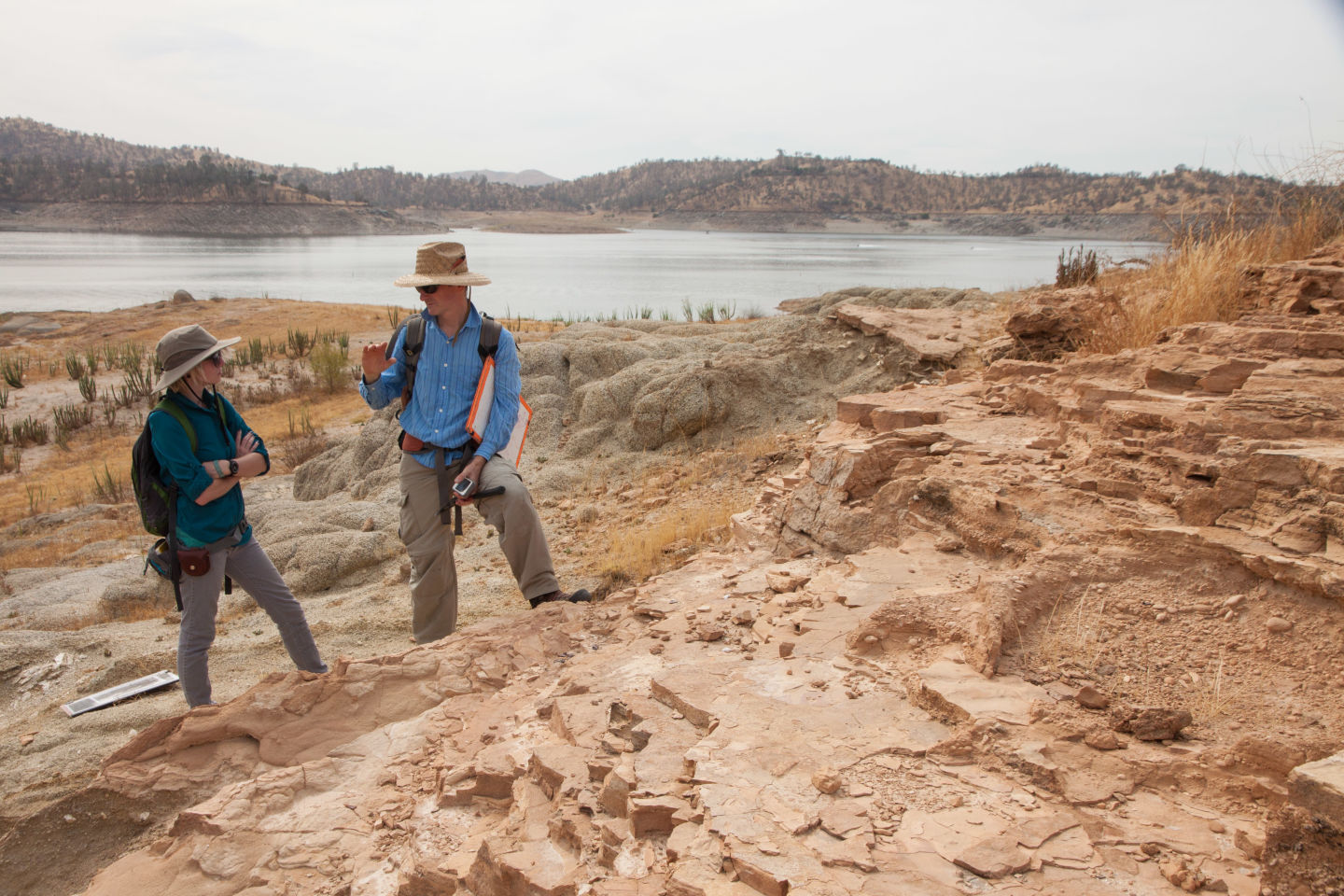
"caption": "Freso State geologist Chris Pluhar and his student Wynter Erickson hope these rocks, normally underwater in Millerton Lake, will reveal clues about the geological history of the Sierra Nevada.",
"description": "Freso State geologist Chris Pluhar and his student Wynter Erickson hope these rocks, normally underwater in Millerton Lake, will reveal clues about the geological history of the Sierra Nevada.",
"title": "drought geology",
"credit": "Kerry Klein/KQED",
"status": "inherit",
"isLoading": false,
"fetchFailed": false
},
"science_403812": {
"type": "attachments",
"id": "science_403812",
"meta": {
"index": "attachments_1716263798",
"site": "science",
"id": "403812",
"found": true
},
"parent": 403809,
"imgSizes": {
"twentyfourteen-full-width": {
"file": "https://ww2.kqed.org/app/uploads/sites/35/2015/12/bellagaia-1038x576.jpg",
"width": 1038,
"mimeType": "image/jpeg",
"height": 576
},
"thumbnail": {
"file": "https://ww2.kqed.org/app/uploads/sites/35/2015/12/bellagaia-400x225.jpg",
"width": 400,
"mimeType": "image/jpeg",
"height": 225
},
"fd-sm": {
"file": "https://ww2.kqed.org/app/uploads/sites/35/2015/12/bellagaia-960x540.jpg",
"width": 960,
"mimeType": "image/jpeg",
"height": 540
},
"post-thumbnail": {
"file": "https://ww2.kqed.org/app/uploads/sites/35/2015/12/bellagaia-672x372.jpg",
"width": 672,
"mimeType": "image/jpeg",
"height": 372
},
"kqedFullSize": {
"file": "https://ww2.kqed.org/app/uploads/sites/35/2015/12/bellagaia.jpg",
"width": 1200,
"height": 675
},
"fd-med": {
"file": "https://ww2.kqed.org/app/uploads/sites/35/2015/12/bellagaia-1180x664.jpg",
"width": 1180,
"mimeType": "image/jpeg",
"height": 664
},
"guest-author-96": {
"file": "https://ww2.kqed.org/app/uploads/sites/35/2015/12/bellagaia-96x96.jpg",
"width": 96,
"mimeType": "image/jpeg",
"height": 96
},
"medium": {
"file": "https://ww2.kqed.org/app/uploads/sites/35/2015/12/bellagaia-800x450.jpg",
"width": 800,
"mimeType": "image/jpeg",
"height": 450
},
"guest-author-64": {
"file": "https://ww2.kqed.org/app/uploads/sites/35/2015/12/bellagaia-64x64.jpg",
"width": 64,
"mimeType": "image/jpeg",
"height": 64
},
"detail": {
"file": "https://ww2.kqed.org/app/uploads/sites/35/2015/12/bellagaia-75x75.jpg",
"width": 75,
"mimeType": "image/jpeg",
"height": 75
},
"guest-author-32": {
"file": "https://ww2.kqed.org/app/uploads/sites/35/2015/12/bellagaia-32x32.jpg",
"width": 32,
"mimeType": "image/jpeg",
"height": 32
},
"guest-author-128": {
"file": "https://ww2.kqed.org/app/uploads/sites/35/2015/12/bellagaia-128x128.jpg",
"width": 128,
"mimeType": "image/jpeg",
"height": 128
}
},
"publishDate": 1449686604,
"modified": 1449719624,
"caption": "Ocean currents in the Mediterranean Sea are visualized from satellite data. Such images, used in the \"Beautiful Earth\" performance by the Bella Gaia Ensemble, can communicate in ways not possible in a dry scientific paper.",
"description": "Ocean currents in the Mediterranean Sea are visualized from satellite data. Such images, used in the \"Beautiful Earth\" performance by the Bella Gaia Ensemble, can communicate in ways not possible in a dry scientific paper.",
"title": "AGU meeting",
"credit": "NASA/Bella Gaia",
"status": "inherit",
"isLoading": false,
"fetchFailed": false
},
"science_365350": {
"type": "attachments",
"id": "science_365350",
"meta": {
"index": "attachments_1716263798",
"site": "science",
"id": "365350",
"found": true
},
"parent": 364990,
"imgSizes": {
"twentyfourteen-full-width": {
"file": "https://ww2.kqed.org/app/uploads/sites/35/2015/11/3254475503_19a31aff6c_o-1038x576.jpg",
"width": 1038,
"mimeType": "image/jpeg",
"height": 576
},
"thumbnail": {
"file": "https://ww2.kqed.org/app/uploads/sites/35/2015/11/3254475503_19a31aff6c_o-400x300.jpg",
"width": 400,
"mimeType": "image/jpeg",
"height": 300
},
"fd-sm": {
"file": "https://ww2.kqed.org/app/uploads/sites/35/2015/11/3254475503_19a31aff6c_o-960x720.jpg",
"width": 960,
"mimeType": "image/jpeg",
"height": 720
},
"post-thumbnail": {
"file": "https://ww2.kqed.org/app/uploads/sites/35/2015/11/3254475503_19a31aff6c_o-672x372.jpg",
"width": 672,
"mimeType": "image/jpeg",
"height": 372
},
"kqedFullSize": {
"file": "https://ww2.kqed.org/app/uploads/sites/35/2015/11/3254475503_19a31aff6c_o.jpg",
"width": 2592,
"height": 1944
},
"large": {
"file": "https://ww2.kqed.org/app/uploads/sites/35/2015/11/3254475503_19a31aff6c_o-1440x1080.jpg",
"width": 1440,
"mimeType": "image/jpeg",
"height": 1080
},
"guest-author-96": {
"file": "https://ww2.kqed.org/app/uploads/sites/35/2015/11/3254475503_19a31aff6c_o-96x96.jpg",
"width": 96,
"mimeType": "image/jpeg",
"height": 96
},
"medium": {
"file": "https://ww2.kqed.org/app/uploads/sites/35/2015/11/3254475503_19a31aff6c_o-800x600.jpg",
"width": 800,
"mimeType": "image/jpeg",
"height": 600
},
"guest-author-64": {
"file": "https://ww2.kqed.org/app/uploads/sites/35/2015/11/3254475503_19a31aff6c_o-64x64.jpg",
"width": 64,
"mimeType": "image/jpeg",
"height": 64
},
"guest-author-32": {
"file": "https://ww2.kqed.org/app/uploads/sites/35/2015/11/3254475503_19a31aff6c_o-32x32.jpg",
"width": 32,
"mimeType": "image/jpeg",
"height": 32
},
"fd-lrg": {
"file": "https://ww2.kqed.org/app/uploads/sites/35/2015/11/3254475503_19a31aff6c_o-1920x1440.jpg",
"width": 1920,
"mimeType": "image/jpeg",
"height": 1440
},
"fd-med": {
"file": "https://ww2.kqed.org/app/uploads/sites/35/2015/11/3254475503_19a31aff6c_o-1180x885.jpg",
"width": 1180,
"mimeType": "image/jpeg",
"height": 885
},
"detail": {
"file": "https://ww2.kqed.org/app/uploads/sites/35/2015/11/3254475503_19a31aff6c_o-75x75.jpg",
"width": 75,
"mimeType": "image/jpeg",
"height": 75
},
"guest-author-128": {
"file": "https://ww2.kqed.org/app/uploads/sites/35/2015/11/3254475503_19a31aff6c_o-128x128.jpg",
"width": 128,
"mimeType": "image/jpeg",
"height": 128
}
},
"publishDate": 1447888933,
"modified": 1447889111,
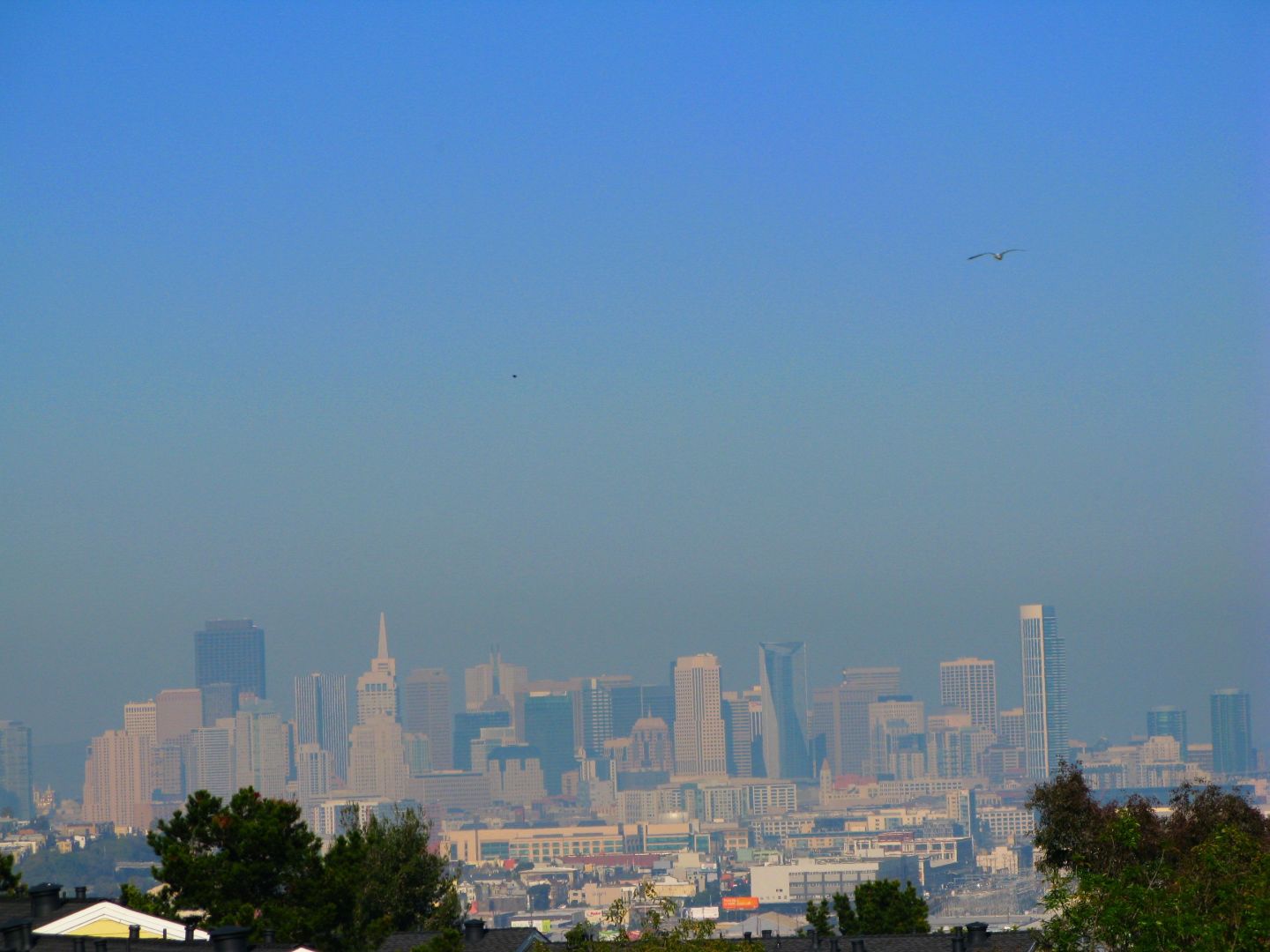
"caption": "Smog over downtown San Francisco, February 2009.",
"description": "Smog over downtown San Francisco, February 2009.",
"title": "Smog",
"credit": "Jerome Paz/flickr Creative Commons",
"status": "inherit",
"isLoading": false,
"fetchFailed": false
},
"science_341359": {
"type": "attachments",
"id": "science_341359",
"meta": {
"index": "attachments_1716263798",
"site": "science",
"id": "341359",
"found": true
},
"parent": 0,
"imgSizes": {
"thumbnail": {
"file": "https://ww2.kqed.org/app/uploads/sites/35/2015/11/5984807021_bcae4c8f4e_o-400x241.jpg",
"width": 400,
"mimeType": "image/jpeg",
"height": 241
},
"post-thumbnail": {
"file": "https://ww2.kqed.org/app/uploads/sites/35/2015/11/5984807021_bcae4c8f4e_o-672x372.jpg",
"width": 672,
"mimeType": "image/jpeg",
"height": 372
},
"kqedFullSize": {
"file": "https://ww2.kqed.org/app/uploads/sites/35/2015/11/5984807021_bcae4c8f4e_o.jpg",
"width": 878,
"height": 529
},
"guest-author-96": {
"file": "https://ww2.kqed.org/app/uploads/sites/35/2015/11/5984807021_bcae4c8f4e_o-96x96.jpg",
"width": 96,
"mimeType": "image/jpeg",
"height": 96
},
"medium": {
"file": "https://ww2.kqed.org/app/uploads/sites/35/2015/11/5984807021_bcae4c8f4e_o-800x482.jpg",
"width": 800,
"mimeType": "image/jpeg",
"height": 482
},
"guest-author-64": {
"file": "https://ww2.kqed.org/app/uploads/sites/35/2015/11/5984807021_bcae4c8f4e_o-64x64.jpg",
"width": 64,
"mimeType": "image/jpeg",
"height": 64
},
"detail": {
"file": "https://ww2.kqed.org/app/uploads/sites/35/2015/11/5984807021_bcae4c8f4e_o-75x75.jpg",
"width": 75,
"mimeType": "image/jpeg",
"height": 75
},
"guest-author-32": {
"file": "https://ww2.kqed.org/app/uploads/sites/35/2015/11/5984807021_bcae4c8f4e_o-32x32.jpg",
"width": 32,
"mimeType": "image/jpeg",
"height": 32
},
"guest-author-128": {
"file": "https://ww2.kqed.org/app/uploads/sites/35/2015/11/5984807021_bcae4c8f4e_o-128x128.jpg",
"width": 128,
"mimeType": "image/jpeg",
"height": 128
}
},
"publishDate": 1446676229,
"modified": 1446676530,
"caption": "Salmonella invade cultured human cells.",
"description": null,
"title": "microbes",
"credit": "Rocky Mountain Laboratories/NIAID/NIH",
"status": "inherit",
"isLoading": false,
"fetchFailed": false
},
"science_317773": {
"type": "attachments",
"id": "science_317773",
"meta": {
"index": "attachments_1716263798",
"site": "science",
"id": "317773",
"found": true
},
"parent": 317772,
"imgSizes": {
"twentyfourteen-full-width": {
"file": "https://ww2.kqed.org/app/uploads/sites/35/2015/10/Stanislaus-channel-1038x576.jpg",
"width": 1038,
"mimeType": "image/jpeg",
"height": 576
},
"thumbnail": {
"file": "https://ww2.kqed.org/app/uploads/sites/35/2015/10/Stanislaus-channel-400x225.jpg",
"width": 400,
"mimeType": "image/jpeg",
"height": 225
},
"fd-sm": {
"file": "https://ww2.kqed.org/app/uploads/sites/35/2015/10/Stanislaus-channel-960x541.jpg",
"width": 960,
"mimeType": "image/jpeg",
"height": 541
},
"post-thumbnail": {
"file": "https://ww2.kqed.org/app/uploads/sites/35/2015/10/Stanislaus-channel-672x372.jpg",
"width": 672,
"mimeType": "image/jpeg",
"height": 372
},
"kqedFullSize": {
"file": "https://ww2.kqed.org/app/uploads/sites/35/2015/10/Stanislaus-channel.jpg",
"width": 1300,
"height": 732
},
"fd-med": {
"file": "https://ww2.kqed.org/app/uploads/sites/35/2015/10/Stanislaus-channel-1180x664.jpg",
"width": 1180,
"mimeType": "image/jpeg",
"height": 664
},
"guest-author-96": {
"file": "https://ww2.kqed.org/app/uploads/sites/35/2015/10/Stanislaus-channel-96x96.jpg",
"width": 96,
"mimeType": "image/jpeg",
"height": 96
},
"medium": {
"file": "https://ww2.kqed.org/app/uploads/sites/35/2015/10/Stanislaus-channel-800x450.jpg",
"width": 800,
"mimeType": "image/jpeg",
"height": 450
},
"guest-author-64": {
"file": "https://ww2.kqed.org/app/uploads/sites/35/2015/10/Stanislaus-channel-64x64.jpg",
"width": 64,
"mimeType": "image/jpeg",
"height": 64
},
"detail": {
"file": "https://ww2.kqed.org/app/uploads/sites/35/2015/10/Stanislaus-channel-75x75.jpg",
"width": 75,
"mimeType": "image/jpeg",
"height": 75
},
"guest-author-32": {
"file": "https://ww2.kqed.org/app/uploads/sites/35/2015/10/Stanislaus-channel-32x32.jpg",
"width": 32,
"mimeType": "image/jpeg",
"height": 32
},
"guest-author-128": {
"file": "https://ww2.kqed.org/app/uploads/sites/35/2015/10/Stanislaus-channel-128x128.jpg",
"width": 128,
"mimeType": "image/jpeg",
"height": 128
}
},
"publishDate": 1445449347,
"modified": 1445458832,
"caption": "The basic configuration of mountain rivers, like the Stanislaus River near Avery in the Sierra Nevada, is shaped by rare storm events that move the largest minivan-sized boulders in this view.",
"description": null,
"title": "Stanislaus-channel",
"credit": "Andrew Alden/KQED",
"status": "inherit",
"isLoading": false,
"fetchFailed": false
},
"quest_81281": {
"type": "attachments",
"id": "quest_81281",
"meta": {
"index": "attachments_1716263798",
"site": "quest",
"id": "81281",
"found": true
},
"parent": 17441,
"imgSizes": {
"twentyfourteen-full-width": {
"file": "https://ww2.kqed.org/app/uploads/sites/39/2015/11/QUEST_904_HAYWARD_posterframe-1038x576.jpeg",
"width": 1038,
"mimeType": "image/jpeg",
"height": 576
},
"thumbnail": {
"file": "https://ww2.kqed.org/app/uploads/sites/39/2015/11/QUEST_904_HAYWARD_posterframe-400x225.jpeg",
"width": 400,
"mimeType": "image/jpeg",
"height": 225
},
"fd-sm": {
"file": "https://ww2.kqed.org/app/uploads/sites/39/2015/11/QUEST_904_HAYWARD_posterframe-960x540.jpeg",
"width": 960,
"mimeType": "image/jpeg",
"height": 540
},
"post-thumbnail": {
"file": "https://ww2.kqed.org/app/uploads/sites/39/2015/11/QUEST_904_HAYWARD_posterframe-672x372.jpeg",
"width": 672,
"mimeType": "image/jpeg",
"height": 372
},
"kqedFullSize": {
"file": "https://ww2.kqed.org/app/uploads/sites/39/2015/11/QUEST_904_HAYWARD_posterframe-e1444163122305.jpeg",
"width": 800,
"height": 450
},
"large": {
"file": "https://ww2.kqed.org/app/uploads/sites/39/2015/11/QUEST_904_HAYWARD_posterframe-1440x810.jpeg",
"width": 1440,
"mimeType": "image/jpeg",
"height": 810
},
"guest-author-96": {
"file": "https://ww2.kqed.org/app/uploads/sites/39/2015/11/QUEST_904_HAYWARD_posterframe-96x96.jpeg",
"width": 96,
"mimeType": "image/jpeg",
"height": 96
},
"medium": {
"file": "https://ww2.kqed.org/app/uploads/sites/39/2015/11/QUEST_904_HAYWARD_posterframe-800x450.jpeg",
"width": 800,
"mimeType": "image/jpeg",
"height": 450
},
"guest-author-64": {
"file": "https://ww2.kqed.org/app/uploads/sites/39/2015/11/QUEST_904_HAYWARD_posterframe-64x64.jpeg",
"width": 64,
"mimeType": "image/jpeg",
"height": 64
},
"guest-author-32": {
"file": "https://ww2.kqed.org/app/uploads/sites/39/2015/11/QUEST_904_HAYWARD_posterframe-32x32.jpeg",
"width": 32,
"mimeType": "image/jpeg",
"height": 32
},
"fd-lrg": {
"file": "https://ww2.kqed.org/app/uploads/sites/39/2015/11/QUEST_904_HAYWARD_posterframe-1920x1081.jpeg",
"width": 1920,
"mimeType": "image/jpeg",
"height": 1081
},
"fd-med": {
"file": "https://ww2.kqed.org/app/uploads/sites/39/2015/11/QUEST_904_HAYWARD_posterframe-1180x664.jpeg",
"width": 1180,
"mimeType": "image/jpeg",
"height": 664
},
"detail": {
"file": "https://ww2.kqed.org/app/uploads/sites/39/2015/11/QUEST_904_HAYWARD_posterframe-75x75.jpeg",
"width": 75,
"mimeType": "image/jpeg",
"height": 75
},
"guest-author-128": {
"file": "https://ww2.kqed.org/app/uploads/sites/39/2015/11/QUEST_904_HAYWARD_posterframe-128x128.jpeg",
"width": 128,
"mimeType": "image/jpeg",
"height": 128
}
},
"publishDate": 1444163078,
"modified": 1444163117,
"caption": "Damage to a building in San Lorenzo after the 1868 earthquake on the Hayward Fault. ",
"description": null,
"title": "QUEST_904_HAYWARD_posterframe",
"credit": "Credit: Hayward Historical Society",
"status": "inherit",
"isLoading": false,
"fetchFailed": false
},
"science_296187": {
"type": "attachments",
"id": "science_296187",
"meta": {
"index": "attachments_1716263798",
"site": "science",
"id": "296187",
"found": true
},
"parent": 296186,
"imgSizes": {
"twentyfourteen-full-width": {
"file": "https://ww2.kqed.org/app/uploads/sites/35/2015/10/dropcoverholdon-1038x576.jpg",
"width": 1038,
"mimeType": "image/jpeg",
"height": 576
},
"thumbnail": {
"file": "https://ww2.kqed.org/app/uploads/sites/35/2015/10/dropcoverholdon-400x225.jpg",
"width": 400,
"mimeType": "image/jpeg",
"height": 225
},
"fd-sm": {
"file": "https://ww2.kqed.org/app/uploads/sites/35/2015/10/dropcoverholdon-960x541.jpg",
"width": 960,
"mimeType": "image/jpeg",
"height": 541
},
"post-thumbnail": {
"file": "https://ww2.kqed.org/app/uploads/sites/35/2015/10/dropcoverholdon-672x372.jpg",
"width": 672,
"mimeType": "image/jpeg",
"height": 372
},
"kqedFullSize": {
"file": "https://ww2.kqed.org/app/uploads/sites/35/2015/10/dropcoverholdon.jpg",
"width": 1200,
"height": 676
},
"fd-med": {
"file": "https://ww2.kqed.org/app/uploads/sites/35/2015/10/dropcoverholdon-1180x665.jpg",
"width": 1180,
"mimeType": "image/jpeg",
"height": 665
},
"guest-author-96": {
"file": "https://ww2.kqed.org/app/uploads/sites/35/2015/10/dropcoverholdon-96x96.jpg",
"width": 96,
"mimeType": "image/jpeg",
"height": 96
},
"medium": {
"file": "https://ww2.kqed.org/app/uploads/sites/35/2015/10/dropcoverholdon-800x451.jpg",
"width": 800,
"mimeType": "image/jpeg",
"height": 451
},
"guest-author-64": {
"file": "https://ww2.kqed.org/app/uploads/sites/35/2015/10/dropcoverholdon-64x64.jpg",
"width": 64,
"mimeType": "image/jpeg",
"height": 64
},
"detail": {
"file": "https://ww2.kqed.org/app/uploads/sites/35/2015/10/dropcoverholdon-75x75.jpg",
"width": 75,
"mimeType": "image/jpeg",
"height": 75
},
"guest-author-32": {
"file": "https://ww2.kqed.org/app/uploads/sites/35/2015/10/dropcoverholdon-32x32.jpg",
"width": 32,
"mimeType": "image/jpeg",
"height": 32
},
"guest-author-128": {
"file": "https://ww2.kqed.org/app/uploads/sites/35/2015/10/dropcoverholdon-128x128.jpg",
"width": 128,
"mimeType": "image/jpeg",
"height": 128
}
},
"publishDate": 1444238833,
"modified": 1444262234,
"caption": "Participants in the Loma Prieta 25 symposium, held in Oakland last year, stopped their plenary session at 10:15 a.m. to drop, cover and hold on.",
"description": null,
"title": "dropcoverholdon",
"credit": "Andrew Alden/KQED",
"status": "inherit",
"isLoading": false,
"fetchFailed": false
},
"science_271961": {
"type": "attachments",
"id": "science_271961",
"meta": {
"index": "attachments_1716263798",
"site": "science",
"id": "271961",
"found": true
},
"parent": 271875,
"imgSizes": {
"thumbnail": {
"file": "https://ww2.kqed.org/app/uploads/sites/35/2015/09/pufferfishdenticles-400x225.jpg",
"width": 400,
"mimeType": "image/jpeg",
"height": 225
},
"fd-sm": {
"file": "https://ww2.kqed.org/app/uploads/sites/35/2015/09/pufferfishdenticles-960x540.jpg",
"width": 960,
"mimeType": "image/jpeg",
"height": 540
},
"post-thumbnail": {
"file": "https://ww2.kqed.org/app/uploads/sites/35/2015/09/pufferfishdenticles-672x372.jpg",
"width": 672,
"mimeType": "image/jpeg",
"height": 372
},
"kqedFullSize": {
"file": "https://ww2.kqed.org/app/uploads/sites/35/2015/09/pufferfishdenticles.jpg",
"width": 1016,
"height": 572
},
"guest-author-96": {
"file": "https://ww2.kqed.org/app/uploads/sites/35/2015/09/pufferfishdenticles-96x96.jpg",
"width": 96,
"mimeType": "image/jpeg",
"height": 96
},
"medium": {
"file": "https://ww2.kqed.org/app/uploads/sites/35/2015/09/pufferfishdenticles-800x450.jpg",
"width": 800,
"mimeType": "image/jpeg",
"height": 450
},
"guest-author-64": {
"file": "https://ww2.kqed.org/app/uploads/sites/35/2015/09/pufferfishdenticles-64x64.jpg",
"width": 64,
"mimeType": "image/jpeg",
"height": 64
},
"detail": {
"file": "https://ww2.kqed.org/app/uploads/sites/35/2015/09/pufferfishdenticles-75x75.jpg",
"width": 75,
"mimeType": "image/jpeg",
"height": 75
},
"guest-author-32": {
"file": "https://ww2.kqed.org/app/uploads/sites/35/2015/09/pufferfishdenticles-32x32.jpg",
"width": 32,
"mimeType": "image/jpeg",
"height": 32
},
"guest-author-128": {
"file": "https://ww2.kqed.org/app/uploads/sites/35/2015/09/pufferfishdenticles-128x128.jpg",
"width": 128,
"mimeType": "image/jpeg",
"height": 128
}
},
"publishDate": 1443064870,
"modified": 1443064901,
"caption": "These spikes, called denticles, serve a defensive purpose on the skin of a pufferfish, although they probably evolved to streamline fish as they swim. Denticles appear to have been the first place where enamel appeared, long before it became part of teeth.",
"description": null,
"title": "pufferfishdenticles",
"credit": "\u003ca href=\"https://www.flickr.com/photos/seafan/\">Seafan\u003c/a>/Flickr",
"status": "inherit",
"isLoading": false,
"fetchFailed": false
},
"science_244969": {
"type": "attachments",
"id": "science_244969",
"meta": {
"index": "attachments_1716263798",
"site": "science",
"id": "244969",
"found": true
},
"parent": 244968,
"imgSizes": {
"thumbnail": {
"file": "https://ww2.kqed.org/app/uploads/sites/35/2015/09/dickinsonia-400x225.jpg",
"width": 400,
"mimeType": "image/jpeg",
"height": 225
},
"post-thumbnail": {
"file": "https://ww2.kqed.org/app/uploads/sites/35/2015/09/dickinsonia-672x372.jpg",
"width": 672,
"mimeType": "image/jpeg",
"height": 372
},
"kqedFullSize": {
"file": "https://ww2.kqed.org/app/uploads/sites/35/2015/09/dickinsonia.jpg",
"width": 825,
"height": 464
},
"guest-author-96": {
"file": "https://ww2.kqed.org/app/uploads/sites/35/2015/09/dickinsonia-96x96.jpg",
"width": 96,
"mimeType": "image/jpeg",
"height": 96
},
"medium": {
"file": "https://ww2.kqed.org/app/uploads/sites/35/2015/09/dickinsonia-800x450.jpg",
"width": 800,
"mimeType": "image/jpeg",
"height": 450
},
"guest-author-64": {
"file": "https://ww2.kqed.org/app/uploads/sites/35/2015/09/dickinsonia-64x64.jpg",
"width": 64,
"mimeType": "image/jpeg",
"height": 64
},
"detail": {
"file": "https://ww2.kqed.org/app/uploads/sites/35/2015/09/dickinsonia-75x75.jpg",
"width": 75,
"mimeType": "image/jpeg",
"height": 75
},
"guest-author-32": {
"file": "https://ww2.kqed.org/app/uploads/sites/35/2015/09/dickinsonia-32x32.jpg",
"width": 32,
"mimeType": "image/jpeg",
"height": 32
},
"guest-author-128": {
"file": "https://ww2.kqed.org/app/uploads/sites/35/2015/09/dickinsonia-128x128.jpg",
"width": 128,
"mimeType": "image/jpeg",
"height": 128
}
},
"publishDate": 1441861221,
"modified": 1441901633,
"caption": "The fossil organism \u003ci>Dickinsonia\u003c/i>, shown here in a specimen from Russia's White Sea region, was widespread during the Ediacaran Period just before the dawn of hard-bodied fossils in the Cambrian Period, 542 million years ago.",
"description": null,
"title": "dickinsonia",
"credit": "\u003ca href=\"https://www.flickr.com/photos/mattcyp88/\">Mattycyp88\u003c/a>/Flickr",
"status": "inherit",
"isLoading": false,
"fetchFailed": false
},
"science_216657": {
"type": "attachments",
"id": "science_216657",
"meta": {
"index": "attachments_1716263798",
"site": "science",
"id": "216657",
"found": true
},
"parent": 216656,
"imgSizes": {
"thumbnail": {
"file": "https://ww2.kqed.org/app/uploads/sites/35/2015/08/davenport-terrace-400x225.jpg",
"width": 400,
"mimeType": "image/jpeg",
"height": 225
},
"fd-sm": {
"file": "https://ww2.kqed.org/app/uploads/sites/35/2015/08/davenport-terrace-960x540.jpg",
"width": 960,
"mimeType": "image/jpeg",
"height": 540
},
"post-thumbnail": {
"file": "https://ww2.kqed.org/app/uploads/sites/35/2015/08/davenport-terrace-672x372.jpg",
"width": 672,
"mimeType": "image/jpeg",
"height": 372
},
"kqedFullSize": {
"file": "https://ww2.kqed.org/app/uploads/sites/35/2015/08/davenport-terrace.jpg",
"width": 1000,
"height": 563
},
"guest-author-96": {
"file": "https://ww2.kqed.org/app/uploads/sites/35/2015/08/davenport-terrace-96x96.jpg",
"width": 96,
"mimeType": "image/jpeg",
"height": 96
},
"medium": {
"file": "https://ww2.kqed.org/app/uploads/sites/35/2015/08/davenport-terrace-800x450.jpg",
"width": 800,
"mimeType": "image/jpeg",
"height": 450
},
"guest-author-64": {
"file": "https://ww2.kqed.org/app/uploads/sites/35/2015/08/davenport-terrace-64x64.jpg",
"width": 64,
"mimeType": "image/jpeg",
"height": 64
},
"detail": {
"file": "https://ww2.kqed.org/app/uploads/sites/35/2015/08/davenport-terrace-75x75.jpg",
"width": 75,
"mimeType": "image/jpeg",
"height": 75
},
"guest-author-32": {
"file": "https://ww2.kqed.org/app/uploads/sites/35/2015/08/davenport-terrace-32x32.jpg",
"width": 32,
"mimeType": "image/jpeg",
"height": 32
},
"guest-author-128": {
"file": "https://ww2.kqed.org/app/uploads/sites/35/2015/08/davenport-terrace-128x128.jpg",
"width": 128,
"mimeType": "image/jpeg",
"height": 128
}
},
"publishDate": 1440608618,
"modified": 1440641830,
"caption": "This prominent marine terrace south of Davenport, is one of several well-known terraces in the Santa Cruz area. It marks the high sea level of 84,000 years ago, but it's also been uplifted by tectonic activity since that time. ",
"description": null,
"title": "davenport-terrace",
"credit": "Andrew Alden/KQED",
"status": "inherit",
"isLoading": false,
"fetchFailed": false
},
"science_206208": {
"type": "attachments",
"id": "science_206208",
"meta": {
"index": "attachments_1716263798",
"site": "science",
"id": "206208",
"found": true
},
"parent": 206195,
"imgSizes": {
"twentyfourteen-full-width": {
"file": "https://ww2.kqed.org/app/uploads/sites/35/2015/08/ViaDanPonti-e1440434454425-1038x576.jpg",
"width": 1038,
"mimeType": "image/jpeg",
"height": 576
},
"thumbnail": {
"file": "https://ww2.kqed.org/app/uploads/sites/35/2015/08/ViaDanPonti-e1440434454425-400x225.jpg",
"width": 400,
"mimeType": "image/jpeg",
"height": 225
},
"fd-sm": {
"file": "https://ww2.kqed.org/app/uploads/sites/35/2015/08/ViaDanPonti-e1440434454425-960x540.jpg",
"width": 960,
"mimeType": "image/jpeg",
"height": 540
},
"post-thumbnail": {
"file": "https://ww2.kqed.org/app/uploads/sites/35/2015/08/ViaDanPonti-e1440434454425-672x372.jpg",
"width": 672,
"mimeType": "image/jpeg",
"height": 372
},
"kqedFullSize": {
"file": "https://ww2.kqed.org/app/uploads/sites/35/2015/08/ViaDanPonti-e1440434454425.jpg",
"width": 1280,
"height": 720
},
"fd-med": {
"file": "https://ww2.kqed.org/app/uploads/sites/35/2015/08/ViaDanPonti-e1440434454425-1180x664.jpg",
"width": 1180,
"mimeType": "image/jpeg",
"height": 664
},
"guest-author-96": {
"file": "https://ww2.kqed.org/app/uploads/sites/35/2015/08/ViaDanPonti-e1440434454425-96x96.jpg",
"width": 96,
"mimeType": "image/jpeg",
"height": 96
},
"medium": {
"file": "https://ww2.kqed.org/app/uploads/sites/35/2015/08/ViaDanPonti-e1440434454425-800x450.jpg",
"width": 800,
"mimeType": "image/jpeg",
"height": 450
},
"guest-author-64": {
"file": "https://ww2.kqed.org/app/uploads/sites/35/2015/08/ViaDanPonti-e1440434454425-64x64.jpg",
"width": 64,
"mimeType": "image/jpeg",
"height": 64
},
"detail": {
"file": "https://ww2.kqed.org/app/uploads/sites/35/2015/08/ViaDanPonti-e1440434454425-75x75.jpg",
"width": 75,
"mimeType": "image/jpeg",
"height": 75
},
"guest-author-32": {
"file": "https://ww2.kqed.org/app/uploads/sites/35/2015/08/ViaDanPonti-e1440434454425-32x32.jpg",
"width": 32,
"mimeType": "image/jpeg",
"height": 32
},
"guest-author-128": {
"file": "https://ww2.kqed.org/app/uploads/sites/35/2015/08/ViaDanPonti-e1440434454425-128x128.jpg",
"width": 128,
"mimeType": "image/jpeg",
"height": 128
}
},
"publishDate": 1440180566,
"modified": 1440184747,
"caption": "The quake in wine country caused unusually extensive surface ruptures for a magnitude 6.",
"description": null,
"title": "Napa Quake",
"credit": "Dan Ponti/USGS",
"status": "inherit",
"isLoading": false,
"fetchFailed": false
},
"science_210834": {
"type": "attachments",
"id": "science_210834",
"meta": {
"index": "attachments_1716263798",
"site": "science",
"id": "210834",
"found": true
},
"parent": 208826,
"imgSizes": {
"twentyfourteen-full-width": {
"file": "https://ww2.kqed.org/app/uploads/sites/35/2015/08/ShakeAlert_M8test-979x576.png",
"width": 979,
"mimeType": "image/png",
"height": 576
},
"thumbnail": {
"file": "https://ww2.kqed.org/app/uploads/sites/35/2015/08/ShakeAlert_M8test-400x254.png",
"width": 400,
"mimeType": "image/png",
"height": 254
},
"fd-sm": {
"file": "https://ww2.kqed.org/app/uploads/sites/35/2015/08/ShakeAlert_M8test-960x609.png",
"width": 960,
"mimeType": "image/png",
"height": 609
},
"post-thumbnail": {
"file": "https://ww2.kqed.org/app/uploads/sites/35/2015/08/ShakeAlert_M8test-672x372.png",
"width": 672,
"mimeType": "image/png",
"height": 372
},
"kqedFullSize": {
"file": "https://ww2.kqed.org/app/uploads/sites/35/2015/08/ShakeAlert_M8test.png",
"width": 979,
"height": 621
},
"guest-author-96": {
"file": "https://ww2.kqed.org/app/uploads/sites/35/2015/08/ShakeAlert_M8test-96x96.png",
"width": 96,
"mimeType": "image/png",
"height": 96
},
"medium": {
"file": "https://ww2.kqed.org/app/uploads/sites/35/2015/08/ShakeAlert_M8test-800x507.png",
"width": 800,
"mimeType": "image/png",
"height": 507
},
"guest-author-64": {
"file": "https://ww2.kqed.org/app/uploads/sites/35/2015/08/ShakeAlert_M8test-64x64.png",
"width": 64,
"mimeType": "image/png",
"height": 64
},
"detail": {
"file": "https://ww2.kqed.org/app/uploads/sites/35/2015/08/ShakeAlert_M8test-75x75.png",
"width": 75,
"mimeType": "image/png",
"height": 75
},
"guest-author-32": {
"file": "https://ww2.kqed.org/app/uploads/sites/35/2015/08/ShakeAlert_M8test-32x32.png",
"width": 32,
"mimeType": "image/png",
"height": 32
},
"guest-author-128": {
"file": "https://ww2.kqed.org/app/uploads/sites/35/2015/08/ShakeAlert_M8test-128x128.png",
"width": 128,
"mimeType": "image/png",
"height": 128
}
},
"publishDate": 1440366577,
"modified": 1440366698,
"caption": "A test of the ShakeAlert system depicts a fictional 8.0 quake, with an estimate of shaking intensity and countdown until it starts.",
"description": "A test of the ShakeAlert system depicts a fictional 8.0 quake, with an estimate of shaking intensity and countdown until it starts.",
"title": "ShakeAlert_M8test",
"credit": "CISN",
"status": "inherit",
"isLoading": false,
"fetchFailed": false
}
},
"audioPlayerReducer": {
"postId": "stream_live",
"isPaused": true,
"isPlaying": false,
"pfsActive": false,
"pledgeModalIsOpen": true,
"playerDrawerIsOpen": false,
"liveAudioPlayStartedAt": 0,
"liveAudioPlayContext": ""
},
"authorsReducer": {
"amy-miller": {
"type": "authors",
"id": "209",
"meta": {
"index": "authors_1716337520",
"id": "209",
"found": true
},
"name": "Amy Miller",
"firstName": "Amy",
"lastName": "Miller",
"slug": "amy-miller",
"email": "amiller@kqed.org",
"display_author_email": false,
"staff_mastheads": [],
"title": "KQED Contributor",
"bio": "Amy Miller is a documentary filmmaker and the Supervising Producer and Partner at Spine Films, a boutique production company specializing in science, natural history and art content. Prior to joining the Spine team, she worked at KQED as the Series Producer of “QUEST”, a multimedia science and environment series. She was also a staff producer for two other KQED series, “SPARK” and “Independent View.” For her work in television, she’s earned multiple honors including ten Emmy awards and two AAAS Kavli Science Journalism awards. Feature Producer/ Director credits include “Saving Otter 501” for PBS NATURE and “Let All the Stories Be Told” which aired as part of KQED’s “Truly California” series.",
"avatar": "https://secure.gravatar.com/avatar/963dd539bdd471f0b1d216d37fbb0e99ad5f79840a7b70b5d50e9bddfe6ae154?s=600&d=blank&r=g",
"twitter": null,
"bluesky": null,
"facebook": null,
"instagram": null,
"linkedin": null,
"sites": [
{
"site": "arts",
"roles": [
"subscriber"
]
},
{
"site": "news",
"roles": [
"subscriber"
]
},
{
"site": "science",
"roles": [
"editor"
]
},
{
"site": "quest",
"roles": [
"subscriber"
]
}
],
"headData": {
"title": "Amy Miller | KQED",
"description": "KQED Contributor",
"ogImgSrc": "https://secure.gravatar.com/avatar/963dd539bdd471f0b1d216d37fbb0e99ad5f79840a7b70b5d50e9bddfe6ae154?s=600&d=blank&r=g",
"twImgSrc": "https://secure.gravatar.com/avatar/963dd539bdd471f0b1d216d37fbb0e99ad5f79840a7b70b5d50e9bddfe6ae154?s=600&d=blank&r=g"
},
"isLoading": false,
"link": "/author/amy-miller"
},
"cmiller": {
"type": "authors",
"id": "221",
"meta": {
"index": "authors_1716337520",
"id": "221",
"found": true
},
"name": "Craig Miller",
"firstName": "Craig",
"lastName": "Miller",
"slug": "cmiller",
"email": "craig@voxterra.net",
"display_author_email": false,
"staff_mastheads": [
"science"
],
"title": "Editor Emeritus, Science",
"bio": "Craig is a former KQED Science editor, specializing in weather, climate, water & energy issues, with a little seismology thrown in just to shake things up. Prior to that, he launched and led the station's award-winning multimedia project, Climate Watch. Craig is also an accomplished writer/producer of television documentaries, with a focus on natural resource issues.",
"avatar": "https://secure.gravatar.com/avatar/b91661df645e001a9cafe0861fa685f9?s=600&d=blank&r=g",
"twitter": "voxterra",
"facebook": null,
"instagram": null,
"linkedin": null,
"sites": [
{
"site": "news",
"roles": [
"author"
]
},
{
"site": "futureofyou",
"roles": [
"editor"
]
},
{
"site": "stateofhealth",
"roles": [
"author"
]
},
{
"site": "science",
"roles": [
"editor"
]
},
{
"site": "quest",
"roles": [
"editor"
]
}
],
"headData": {
"title": "Craig Miller | KQED",
"description": "Editor Emeritus, Science",
"ogImgSrc": "https://secure.gravatar.com/avatar/b91661df645e001a9cafe0861fa685f9?s=600&d=blank&r=g",
"twImgSrc": "https://secure.gravatar.com/avatar/b91661df645e001a9cafe0861fa685f9?s=600&d=blank&r=g"
},
"isLoading": false,
"link": "/author/cmiller"
},
"andrew-alden": {
"type": "authors",
"id": "6228",
"meta": {
"index": "authors_1716337520",
"id": "6228",
"found": true
},
"name": "Andrew Alden",
"firstName": "Andrew",
"lastName": "Alden",
"slug": "andrew-alden",
"email": "alden@andrew-alden.com",
"display_author_email": false,
"staff_mastheads": [],
"title": null,
"bio": "Andrew Alden earned his geology degree at the University of New Hampshire and moved back to the Bay Area to work at the U.S. Geological Survey for six years. He has \u003ca href=\"http://geology.about.com/\">written on geology for About.com\u003c/a> since its founding in 1997. In 2007, he started the Oakland Geology blog, which won recognition as \"Best of the East Bay\" from the \u003ci>East Bay Express\u003c/i> in 2010. In writing about geology in the Bay Area and surroundings, he hopes to share some of the useful and pleasurable insights that geologists give us—not just facts about the deep past, but an attitude that might be called the \u003ci>deep present\u003c/i>.\r\n\r\nRead his \u003ca href=\"http://science.kqed.org/quest/author/andrew-alden/\">previous contributions\u003c/a> to \u003ca href=\"http://http://science.kqed.org/quest/\">QUEST\u003c/a>, a project dedicated to exploring the Science of Sustainability.",
"avatar": "https://secure.gravatar.com/avatar/9eaa0afc32f98c5fc7ce634437334a64?s=600&d=blank&r=g",
"twitter": null,
"facebook": null,
"instagram": null,
"linkedin": null,
"sites": [
{
"site": "science",
"roles": [
"author"
]
},
{
"site": "quest",
"roles": [
"subscriber"
]
}
],
"headData": {
"title": "Andrew Alden | KQED",
"description": null,
"ogImgSrc": "https://secure.gravatar.com/avatar/9eaa0afc32f98c5fc7ce634437334a64?s=600&d=blank&r=g",
"twImgSrc": "https://secure.gravatar.com/avatar/9eaa0afc32f98c5fc7ce634437334a64?s=600&d=blank&r=g"
},
"isLoading": false,
"link": "/author/andrew-alden"
},
"dpotter": {
"type": "authors",
"id": "6609",
"meta": {
"index": "authors_1716337520",
"id": "6609",
"found": true
},
"name": "Daniel Potter",
"firstName": "Daniel",
"lastName": "Potter",
"slug": "dpotter",
"email": "dpotter@kqed.org",
"display_author_email": false,
"staff_mastheads": [],
"title": "KQED Contributor",
"bio": "Daniel Potter is a reporter for KQED Science. Before that, he worked at Nashville Public Radio for six years. He’s gathered tape for The New York Times, contributed to a growing list of podcasts, and done national features for NPR on everything from bats to meningitis. He tweets at @hellodanpo.",
"avatar": "https://secure.gravatar.com/avatar/59396b9ad9c672dd4cd1d3e453425f12?s=600&d=blank&r=g",
"twitter": "hellodanpo",
"facebook": null,
"instagram": null,
"linkedin": null,
"sites": [
{
"site": "futureofyou",
"roles": [
"author"
]
},
{
"site": "science",
"roles": []
}
],
"headData": {
"title": "Daniel Potter | KQED",
"description": "KQED Contributor",
"ogImgSrc": "https://secure.gravatar.com/avatar/59396b9ad9c672dd4cd1d3e453425f12?s=600&d=blank&r=g",
"twImgSrc": "https://secure.gravatar.com/avatar/59396b9ad9c672dd4cd1d3e453425f12?s=600&d=blank&r=g"
},
"isLoading": false,
"link": "/author/dpotter"
},
"kklein": {
"type": "authors",
"id": "11092",
"meta": {
"index": "authors_1716337520",
"id": "11092",
"found": true
},
"name": "Kerry Klein",
"firstName": "Kerry",
"lastName": "Klein",
"slug": "kklein",
"email": "kklein@kqed.org",
"display_author_email": false,
"staff_mastheads": [],
"title": null,
"bio": "Kerry Klein is a radio and print reporter based in Fresno. A geologist by training, she worked in the mining and geothermal energy industries before attending the Science Communication program at the University of California, Santa Cruz. Her work has appeared on Valley Public Radio, the San Jose Mercury News, the Salinas Californian and Slate, on topics ranging from drought and agriculture to space and roadkill. You can follow her on Twitter @einekleinekerry.",
"avatar": "https://secure.gravatar.com/avatar/b9e5d93e72b009b963ce5f1b5f68ecbd?s=600&d=blank&r=g",
"twitter": null,
"facebook": null,
"instagram": null,
"linkedin": null,
"sites": [
{
"site": "news",
"roles": [
"author"
]
},
{
"site": "science",
"roles": [
"author"
]
}
],
"headData": {
"title": "Kerry Klein | KQED",
"description": null,
"ogImgSrc": "https://secure.gravatar.com/avatar/b9e5d93e72b009b963ce5f1b5f68ecbd?s=600&d=blank&r=g",
"twImgSrc": "https://secure.gravatar.com/avatar/b9e5d93e72b009b963ce5f1b5f68ecbd?s=600&d=blank&r=g"
},
"isLoading": false,
"link": "/author/kklein"
}
},
"pagesReducer": {
"science_category_geology": {
"type": "terms",
"id": "science_38",
"meta": {
"index": "terms_1716263798",
"site": "science",
"id": "38",
"score": 13.559036
},
"featImg": null,
"name": "Geology",
"description": null,
"taxonomy": "category",
"headData": {
"twImgId": null,
"twTitle": null,
"ogTitle": null,
"ogImgId": null,
"twDescription": null,
"description": null,
"title": "Geology Archives | KQED Science",
"ogDescription": null
},
"ttid": 40,
"slug": "geology",
"isLoading": false,
"title": "Geology",
"pageMeta": {
"site": "science",
"WpPageTemplate": "page-topic-editorial",
"currentPage": 7
},
"blocks": [
{
"blockName": "kqed/post-list",
"attrs": {
"layout": "cardArticle2",
"query": "posts/science?category=geology",
"seeMore": false,
"paginated": true,
"page": 7
}
},
{
"blockName": "kqed/ad"
}
]
}
},
"pfsSessionReducer": {},
"postsReducer": {
"stream_live": {
"type": "live",
"id": "stream_live",
"audioUrl": "https://hls.kqed.org/hls/kqed_app/playlist.m3u8",
"title": "Live Stream",
"excerpt": "Live Stream information currently unavailable.",
"link": "/radio",
"featImg": "",
"label": {
"name": "KQED Live",
"link": "/"
}
},
"stream_kqedNewscast": {
"type": "posts",
"id": "stream_kqedNewscast",
"audioUrl": "https://www.kqed.org/.stream/anon/radio/RDnews/newscast.mp3?_=1",
"title": "KQED Newscast",
"featImg": "",
"label": {
"name": "88.5 FM",
"link": "/"
}
},
"science_419763": {
"type": "posts",
"id": "science_419763",
"meta": {
"index": "posts_1716263798",
"site": "science",
"id": "419763",
"score": null,
"sort": [
1450706404000
]
},
"parent": 0,
"labelTerm": {
"site": "science"
},
"blocks": [],
"publishDate": 1450706404,
"format": "audio",
"title": "Drought Could Help Reveal Secrets of Sierra's Origins",
"headTitle": "Drought Could Help Reveal Secrets of Sierra’s Origins | KQED",
"content": "\u003cp>A few miles northeast of Fresno, Chris Pluhar walks through a field pockmarked with little holes. It’s dry, scrubby and surrounded by rolling brown hills. You’d never know that in a normal year, where he’s standing would be under 20 feet of water. It’s usually a part of Millerton Lake, a major but rapidly shrinking reservoir in the Sierra foothills.\u003c/p>\n\u003cp>“Rather than being in a lake, which is how it’s shown on the map, we’re standing in the middle of a grassland,” says Pluhar, who teaches geology at Fresno State University. “We were here about three weeks ago and since then, a few new islands have popped up.”\u003c/p>\n\u003caside class=\"pullquote alignright\">‘The Sierra Nevada is a highly studied mountain range, and yet us scientists can’t agree on some of the most basic things—like did it uplift recently or not?’\u003ccite>Chris Pluhar, Fresno State University\u003c/cite>\u003c/aside>\n\u003cp>Right now, Millerton’s filled to about a third of its total capacity. The high water line scars the hillside far above Pluhar’s head, and some boat ramps lead to nowhere.\u003c/p>\n\u003cp>While most people overlooking Millerton would see only a shriveled reservoir, Pluhar saw an opportunity: he could study rocks revealed for the first time in years.\u003c/p>\n\u003cp>“This is kind of virgin territory for mapping,” he says. “If you look at the U.S., it’s mapped all across the country except for places like this.”\u003c/p>\n\u003cp>[ad fullwidth]\u003c/p>\n\u003cp>Pluhar studies tectonics—the process by which geologic plates pull apart and jam together to form ridges and mountains—and he’s interested in what these rocks can tell him about the Sierra Nevada. So he brought along a student to help figure it out.\u003c/p>\n\u003cp>Wynter Erickson is mapping this area for her senior thesis—a process that involves tracking the boundaries between rock layers and measuring how much they’ve tilted.\u003c/p>\n\u003cp>“You kind of just get in your own little world while everyone’s on their speedboats,” she says. “It’s awesome.”\u003c/p>\n\u003cp>These geologists are piecing together pre-history. Some of the rocks here formed more than 100 million years ago, long before the Sierra began to rise. Pluhar hopes Erickson’s measurements will help answer an important question: when did the mountains grow to their current size? And how quickly?\u003c/p>\n\u003cfigure id=\"attachment_419846\" class=\"wp-caption alignright\" style=\"max-width: 800px\">\u003cimg loading=\"lazy\" decoding=\"async\" class=\"wp-image-419846 size-medium\" src=\"http://ww2.kqed.org/science/wp-content/uploads/sites/35/2015/12/IMG_4785-800x533.jpg\" alt=\"Fresno State student Wynter Erickson uses a compass to measure how much ancient volcanic rocks underneath Millerton Lake have tilted.\" width=\"800\" height=\"533\" srcset=\"https://cdn.kqed.org/wp-content/uploads/sites/35/2015/12/IMG_4785-800x533.jpg 800w, https://cdn.kqed.org/wp-content/uploads/sites/35/2015/12/IMG_4785-400x267.jpg 400w, https://cdn.kqed.org/wp-content/uploads/sites/35/2015/12/IMG_4785-768x512.jpg 768w, https://cdn.kqed.org/wp-content/uploads/sites/35/2015/12/IMG_4785-1440x960.jpg 1440w, https://cdn.kqed.org/wp-content/uploads/sites/35/2015/12/IMG_4785-1920x1280.jpg 1920w, https://cdn.kqed.org/wp-content/uploads/sites/35/2015/12/IMG_4785-1180x787.jpg 1180w, https://cdn.kqed.org/wp-content/uploads/sites/35/2015/12/IMG_4785-960x640.jpg 960w\" sizes=\"(max-width: 800px) 100vw, 800px\">\u003cfigcaption class=\"wp-caption-text\">Erickson uses a compass to measure how much ancient volcanic rocks underneath Millerton Lake have tilted. \u003ccite>(Kerry Klein/KQED)\u003c/cite>\u003c/figcaption>\u003c/figure>\n\u003cp>“The Sierra Nevada is a highly studied mountain range,” says Pluhar, “and yet us scientists \u003ca href=\"http://arstechnica.com/science/2015/05/mountain-mystery-the-stop-and-go-growth-of-the-sierra-nevada/3/\" target=\"_blank\" rel=\"noopener\">can’t agree on some of the most basic things\u003c/a>—like did it uplift recently or not?”\u003c/p>\n\u003cp>The Sierra is a jumble of sediments transported from the deep ocean and piled up on top of the continent, with scars of granite and lava from defunct volcanoes. Its history is complex, and it’s not easy to figure out what happened when.\u003c/p>\n\u003cp>There’s no telling if this one little part of the foothills will resolve a big, longstanding scientific debate. But one thing is certain: now is the time to investigate.\u003c/p>\n\u003cp>“We’re probably, overall statewide, \u003ca href=\"http://ww2.kqed.org/news/2015/05/14/california-drought-pictures-reservoirs-rivers\" target=\"_blank\" rel=\"noopener\">about half of what we would normally see in reservoir storage\u003c/a>” for this time of year, says Jay Lund, director of the Center for Watershed Sciences at UC Davis. “Some of the reservoirs are the lowest that they’ve ever been.”\u003c/p>\n\u003cp>As worrisome as that is, Lund says it does present some rare opportunities.\u003c/p>\n\u003cp>“You get to see what used to be in the reservoir before they filled it,” he says, like relics and building foundations from towns submerged long ago. “And there are sometimes\u003ca href=\"http://ww2.kqed.org/news/2015/09/21/lake-county-cracks-down-on-looting-of-native-american-artifacts\" target=\"_blank\" rel=\"noopener\"> old Indian artifacts around the state.\u003c/a>”\u003c/p>\n\u003cp>Lund also says drought years are the best time to perform maintenance and repairs on dams.\u003c/p>\n\u003cfigure id=\"attachment_419847\" class=\"wp-caption alignleft\" style=\"max-width: 408px\">\u003ca href=\"http://ww2.kqed.org/science/wp-content/uploads/sites/35/2015/12/IMG_4761-e1450478782261.jpg\" rel=\"attachment wp-att-419847\">\u003cimg loading=\"lazy\" decoding=\"async\" class=\" wp-image-419847\" src=\"http://ww2.kqed.org/science/wp-content/uploads/sites/35/2015/12/IMG_4761-e1450478782261-800x653.jpg\" alt=\"Pluhar consults a mapping app to find the contact between two rock layers.\" width=\"408\" height=\"333\" srcset=\"https://cdn.kqed.org/wp-content/uploads/sites/35/2015/12/IMG_4761-e1450478782261-800x653.jpg 800w, https://cdn.kqed.org/wp-content/uploads/sites/35/2015/12/IMG_4761-e1450478782261-400x326.jpg 400w, https://cdn.kqed.org/wp-content/uploads/sites/35/2015/12/IMG_4761-e1450478782261-768x626.jpg 768w, https://cdn.kqed.org/wp-content/uploads/sites/35/2015/12/IMG_4761-e1450478782261-1440x1175.jpg 1440w, https://cdn.kqed.org/wp-content/uploads/sites/35/2015/12/IMG_4761-e1450478782261-1920x1566.jpg 1920w, https://cdn.kqed.org/wp-content/uploads/sites/35/2015/12/IMG_4761-e1450478782261-1180x962.jpg 1180w, https://cdn.kqed.org/wp-content/uploads/sites/35/2015/12/IMG_4761-e1450478782261-960x783.jpg 960w\" sizes=\"(max-width: 408px) 100vw, 408px\">\u003c/a>\u003cfigcaption class=\"wp-caption-text\">Pluhar consults a mapping app to find the contact between two rock layers. \u003ccite>(Kerry Klein/KQED)\u003c/cite>\u003c/figcaption>\u003c/figure>\n\u003cp>He’s hopeful that an El Niño winter will top up the state’s thirsty reservoirs. But he’s quick to point out that high water levels wouldn’t mean all of the state’s water worries are over.\u003c/p>\n\u003cp>“For long droughts, it’s groundwater which is really by far the largest reservoir for California,” he says—like the over-pumped aquifer underlying the Central Valley. “It’ll take a very very long time, if ever, for those groundwater levels to recover.”\u003c/p>\n\u003cp>It’s hard to find an upside when farms are going fallow and thousands of people are out of drinking water. But back in the parched basin of Millerton Lake, Wynter Erickson is excited that she’s in the right place at the right time to make something good of the drought.\u003c/p>\n\u003cp>“I think it’s so cool because if we do get our El Niño year, it’s not going to be available to map anymore,” she says. “So I think it’s pretty incredible that we get to do this research.”\u003c/p>\n\u003cp>\u003c/p>\n\u003cp>By the time she and Pluhar finish their maps, their field site will once again be at the bottom of a lake—at least, one can hope.\u003c/p>\n\n",
"stats": {
"hasVideo": false,
"hasChartOrMap": false,
"hasAudio": false,
"hasPolis": false,
"wordCount": 920,
"hasGoogleForm": false,
"hasGallery": false,
"hasHearkenModule": false,
"iframeSrcs": [],
"paragraphCount": 23
},
"modified": 1704930903,
"excerpt": "The low water in Millerton Lake, northeast of Fresno, reveals ancient geology that may help scientists solve mysteries of the Sierra.",
"headData": {
"twImgId": "",
"twTitle": "",
"ogTitle": "",
"ogImgId": "",
"twDescription": "",
"description": "The low water in Millerton Lake, northeast of Fresno, reveals ancient geology that may help scientists solve mysteries of the Sierra.",
"title": "Drought Could Help Reveal Secrets of Sierra's Origins | KQED",
"ogDescription": "",
"schema": {
"@context": "https://schema.org",
"@type": "Article",
"headline": "Drought Could Help Reveal Secrets of Sierra's Origins",
"datePublished": "2015-12-21T06:00:04-08:00",
"dateModified": "2024-01-10T15:55:03-08:00",
"image": "https://cdn.kqed.org/wp-content/uploads/2020/02/KQED-OG-Image@1x.png"
}
},
"guestAuthors": [],
"slug": "drought-could-help-reveal-secrets-of-sierras-origins",
"status": "publish",
"audioUrl": "http://www.kqed.org/.stream/anon/radio//2015/12/WEBDroughtGeologyKlein151221.mp3",
"sticky": false,
"path": "/science/419763/drought-could-help-reveal-secrets-of-sierras-origins",
"audioTrackLength": null,
"parsedContent": [
{
"type": "contentString",
"content": "\u003cdiv class=\"post-body\">\u003cp>\u003cp>A few miles northeast of Fresno, Chris Pluhar walks through a field pockmarked with little holes. It’s dry, scrubby and surrounded by rolling brown hills. You’d never know that in a normal year, where he’s standing would be under 20 feet of water. It’s usually a part of Millerton Lake, a major but rapidly shrinking reservoir in the Sierra foothills.\u003c/p>\n\u003cp>“Rather than being in a lake, which is how it’s shown on the map, we’re standing in the middle of a grassland,” says Pluhar, who teaches geology at Fresno State University. “We were here about three weeks ago and since then, a few new islands have popped up.”\u003c/p>\n\u003caside class=\"pullquote alignright\">‘The Sierra Nevada is a highly studied mountain range, and yet us scientists can’t agree on some of the most basic things—like did it uplift recently or not?’\u003ccite>Chris Pluhar, Fresno State University\u003c/cite>\u003c/aside>\n\u003cp>Right now, Millerton’s filled to about a third of its total capacity. The high water line scars the hillside far above Pluhar’s head, and some boat ramps lead to nowhere.\u003c/p>\n\u003cp>While most people overlooking Millerton would see only a shriveled reservoir, Pluhar saw an opportunity: he could study rocks revealed for the first time in years.\u003c/p>\n\u003cp>“This is kind of virgin territory for mapping,” he says. “If you look at the U.S., it’s mapped all across the country except for places like this.”\u003c/p>\n\u003cp>\u003c/p>\u003c/div>",
"attributes": {
"named": {},
"numeric": []
}
},
{
"type": "component",
"content": "",
"name": "ad",
"attributes": {
"named": {
"label": "fullwidth"
},
"numeric": [
"fullwidth"
]
}
},
{
"type": "contentString",
"content": "\u003cdiv class=\"post-body\">\u003cp>\u003c/p>\n\u003cp>Pluhar studies tectonics—the process by which geologic plates pull apart and jam together to form ridges and mountains—and he’s interested in what these rocks can tell him about the Sierra Nevada. So he brought along a student to help figure it out.\u003c/p>\n\u003cp>Wynter Erickson is mapping this area for her senior thesis—a process that involves tracking the boundaries between rock layers and measuring how much they’ve tilted.\u003c/p>\n\u003cp>“You kind of just get in your own little world while everyone’s on their speedboats,” she says. “It’s awesome.”\u003c/p>\n\u003cp>These geologists are piecing together pre-history. Some of the rocks here formed more than 100 million years ago, long before the Sierra began to rise. Pluhar hopes Erickson’s measurements will help answer an important question: when did the mountains grow to their current size? And how quickly?\u003c/p>\n\u003cfigure id=\"attachment_419846\" class=\"wp-caption alignright\" style=\"max-width: 800px\">\u003cimg loading=\"lazy\" decoding=\"async\" class=\"wp-image-419846 size-medium\" src=\"http://ww2.kqed.org/science/wp-content/uploads/sites/35/2015/12/IMG_4785-800x533.jpg\" alt=\"Fresno State student Wynter Erickson uses a compass to measure how much ancient volcanic rocks underneath Millerton Lake have tilted.\" width=\"800\" height=\"533\" srcset=\"https://cdn.kqed.org/wp-content/uploads/sites/35/2015/12/IMG_4785-800x533.jpg 800w, https://cdn.kqed.org/wp-content/uploads/sites/35/2015/12/IMG_4785-400x267.jpg 400w, https://cdn.kqed.org/wp-content/uploads/sites/35/2015/12/IMG_4785-768x512.jpg 768w, https://cdn.kqed.org/wp-content/uploads/sites/35/2015/12/IMG_4785-1440x960.jpg 1440w, https://cdn.kqed.org/wp-content/uploads/sites/35/2015/12/IMG_4785-1920x1280.jpg 1920w, https://cdn.kqed.org/wp-content/uploads/sites/35/2015/12/IMG_4785-1180x787.jpg 1180w, https://cdn.kqed.org/wp-content/uploads/sites/35/2015/12/IMG_4785-960x640.jpg 960w\" sizes=\"(max-width: 800px) 100vw, 800px\">\u003cfigcaption class=\"wp-caption-text\">Erickson uses a compass to measure how much ancient volcanic rocks underneath Millerton Lake have tilted. \u003ccite>(Kerry Klein/KQED)\u003c/cite>\u003c/figcaption>\u003c/figure>\n\u003cp>“The Sierra Nevada is a highly studied mountain range,” says Pluhar, “and yet us scientists \u003ca href=\"http://arstechnica.com/science/2015/05/mountain-mystery-the-stop-and-go-growth-of-the-sierra-nevada/3/\" target=\"_blank\" rel=\"noopener\">can’t agree on some of the most basic things\u003c/a>—like did it uplift recently or not?”\u003c/p>\n\u003cp>The Sierra is a jumble of sediments transported from the deep ocean and piled up on top of the continent, with scars of granite and lava from defunct volcanoes. Its history is complex, and it’s not easy to figure out what happened when.\u003c/p>\n\u003cp>There’s no telling if this one little part of the foothills will resolve a big, longstanding scientific debate. But one thing is certain: now is the time to investigate.\u003c/p>\n\u003cp>“We’re probably, overall statewide, \u003ca href=\"http://ww2.kqed.org/news/2015/05/14/california-drought-pictures-reservoirs-rivers\" target=\"_blank\" rel=\"noopener\">about half of what we would normally see in reservoir storage\u003c/a>” for this time of year, says Jay Lund, director of the Center for Watershed Sciences at UC Davis. “Some of the reservoirs are the lowest that they’ve ever been.”\u003c/p>\n\u003cp>As worrisome as that is, Lund says it does present some rare opportunities.\u003c/p>\n\u003cp>“You get to see what used to be in the reservoir before they filled it,” he says, like relics and building foundations from towns submerged long ago. “And there are sometimes\u003ca href=\"http://ww2.kqed.org/news/2015/09/21/lake-county-cracks-down-on-looting-of-native-american-artifacts\" target=\"_blank\" rel=\"noopener\"> old Indian artifacts around the state.\u003c/a>”\u003c/p>\n\u003cp>Lund also says drought years are the best time to perform maintenance and repairs on dams.\u003c/p>\n\u003cfigure id=\"attachment_419847\" class=\"wp-caption alignleft\" style=\"max-width: 408px\">\u003ca href=\"http://ww2.kqed.org/science/wp-content/uploads/sites/35/2015/12/IMG_4761-e1450478782261.jpg\" rel=\"attachment wp-att-419847\">\u003cimg loading=\"lazy\" decoding=\"async\" class=\" wp-image-419847\" src=\"http://ww2.kqed.org/science/wp-content/uploads/sites/35/2015/12/IMG_4761-e1450478782261-800x653.jpg\" alt=\"Pluhar consults a mapping app to find the contact between two rock layers.\" width=\"408\" height=\"333\" srcset=\"https://cdn.kqed.org/wp-content/uploads/sites/35/2015/12/IMG_4761-e1450478782261-800x653.jpg 800w, https://cdn.kqed.org/wp-content/uploads/sites/35/2015/12/IMG_4761-e1450478782261-400x326.jpg 400w, https://cdn.kqed.org/wp-content/uploads/sites/35/2015/12/IMG_4761-e1450478782261-768x626.jpg 768w, https://cdn.kqed.org/wp-content/uploads/sites/35/2015/12/IMG_4761-e1450478782261-1440x1175.jpg 1440w, https://cdn.kqed.org/wp-content/uploads/sites/35/2015/12/IMG_4761-e1450478782261-1920x1566.jpg 1920w, https://cdn.kqed.org/wp-content/uploads/sites/35/2015/12/IMG_4761-e1450478782261-1180x962.jpg 1180w, https://cdn.kqed.org/wp-content/uploads/sites/35/2015/12/IMG_4761-e1450478782261-960x783.jpg 960w\" sizes=\"(max-width: 408px) 100vw, 408px\">\u003c/a>\u003cfigcaption class=\"wp-caption-text\">Pluhar consults a mapping app to find the contact between two rock layers. \u003ccite>(Kerry Klein/KQED)\u003c/cite>\u003c/figcaption>\u003c/figure>\n\u003cp>He’s hopeful that an El Niño winter will top up the state’s thirsty reservoirs. But he’s quick to point out that high water levels wouldn’t mean all of the state’s water worries are over.\u003c/p>\n\u003cp>“For long droughts, it’s groundwater which is really by far the largest reservoir for California,” he says—like the over-pumped aquifer underlying the Central Valley. “It’ll take a very very long time, if ever, for those groundwater levels to recover.”\u003c/p>\n\u003cp>It’s hard to find an upside when farms are going fallow and thousands of people are out of drinking water. But back in the parched basin of Millerton Lake, Wynter Erickson is excited that she’s in the right place at the right time to make something good of the drought.\u003c/p>\n\u003cp>“I think it’s so cool because if we do get our El Niño year, it’s not going to be available to map anymore,” she says. “So I think it’s pretty incredible that we get to do this research.”\u003c/p>\n\u003cp>\u003c/p>\n\u003cp>By the time she and Pluhar finish their maps, their field site will once again be at the bottom of a lake—at least, one can hope.\u003c/p>\n\n\u003c/div>\u003c/p>",
"attributes": {
"named": {},
"numeric": []
}
}
],
"link": "/science/419763/drought-could-help-reveal-secrets-of-sierras-origins",
"authors": [
"11092"
],
"categories": [
"science_46",
"science_31",
"science_35",
"science_38",
"science_40",
"science_43",
"science_98"
],
"tags": [
"science_572",
"science_218",
"science_1196",
"science_109"
],
"featImg": "science_419844",
"label": "science"
},
"science_403809": {
"type": "posts",
"id": "science_403809",
"meta": {
"index": "posts_1716263798",
"site": "science",
"id": "403809",
"score": null,
"sort": [
1449765028000
]
},
"parent": 0,
"labelTerm": {
"site": "science"
},
"blocks": [],
"publishDate": 1449765028,
"format": "standard",
"title": "World Scientists Gather in San Francisco, and You Can Join Them",
"headTitle": "World Scientists Gather in San Francisco, and You Can Join Them | KQED",
"content": "\u003cp>All of next week, San Francisco’s Moscone Center will host a gigantic meeting for more than 20,000 scientists who study geophysics. It’s the annual conference of the American Geophysical Union (AGU), a gathering of substantial brain power and insight into our home planet.\u003c/p>\n\u003cp>Media people from all over the world, including KQED Science, will be on hand to pick out the nuggets. And science lovers can participate in a range of public events encompassing art, hacking and climate change.\u003c/p>\n\u003cp>Two free public events are up this Sunday, with a lecture on energy and environment that won’t get you down, and a family event for all ages.\u003c/p>\n\u003cp>First is a free lecture from noon to 1 p.m. by Richard Alley, the bearded, gung-ho host of the PBS Series “Earth: The Operator’s Manual.” His talk is titled “\u003ca href=\"http://fallmeeting.agu.org/2015/public-events/\" target=\"_blank\" rel=\"noopener\">Ice Cores to Smart Phones: The Good News on Energy, the Environment, and Our Future\u003c/a>,” and he will affirm that “the science, engineering, and design that gave us smart phones can also give us an economical, sustainable energy system that can power everyone almost forever.”\u003c/p>\n\u003cfigure id=\"attachment_403811\" class=\"wp-caption alignright\" style=\"max-width: 600px\">\u003ca href=\"http://ww2.kqed.org/science/wp-content/uploads/sites/35/2015/12/bellagaia-kristin-hoffman.jpg\">\u003cimg loading=\"lazy\" decoding=\"async\" class=\"size-full wp-image-403811\" src=\"http://ww2.kqed.org/science/wp-content/uploads/sites/35/2015/12/bellagaia-kristin-hoffman.jpg\" alt=\"Bella Gaia\" width=\"600\" height=\"520\" srcset=\"https://cdn.kqed.org/wp-content/uploads/sites/35/2015/12/bellagaia-kristin-hoffman.jpg 600w, https://cdn.kqed.org/wp-content/uploads/sites/35/2015/12/bellagaia-kristin-hoffman-400x347.jpg 400w\" sizes=\"(max-width: 600px) 100vw, 600px\">\u003c/a>\u003cfigcaption class=\"wp-caption-text\">Kristin Hoffmann performs in front of a geophysical display as part of “Beautiful Earth” by the Bella Gaia Ensemble. \u003ccite>(Bella Gaia)\u003c/cite>\u003c/figcaption>\u003c/figure>\n\u003cp>Then from 1 to 5 p.m. is the \u003ca href=\"http://education.agu.org/education-activities-at-agu-meetings/exploration-station/\" target=\"_blank\" rel=\"noopener\">Exploration Station\u003c/a>, a free, four-hour program to welcome young thinkers into the world of science. Working scientists will be on hand to explain the science of the atmosphere, the Earth, the electromagnetic spectrum, the poles and space. Boy Scouts and Girl Scouts can work on merit badges, and younger kids have their own special activities, like pop rockets.\u003c/p>\n\u003cp>[ad fullwidth]\u003c/p>\n\u003cp>On Tuesday the 15th, there’s the Thriving Earth Exchange, a loosely organized effort to bring scientists and community leaders together in hacker-type projects aimed at “challenges related to natural resources, climate change, or natural hazards.” A \u003ca href=\"http://fallmeeting.agu.org/2015/event/thriving-earth-exchange-partnerships-for-solutions-science/\" target=\"_blank\" rel=\"noopener\">free networking event\u003c/a> from 5 to 7 p.m. will feature 5-minute “lightning talks” about partnerships that are succeeding right now. You can join ongoing projects, find collaborators and get inspiration from community science leaders. Maybe your city can take part in the next wave of projects, starting here.\u003c/p>\n\u003cp>Finally, on Thursday night, December 17, it’s a performance at Herbst Theater of “Beautiful Earth” by the \u003ca href=\"http://www.bellagaia.com/events.html\" target=\"_blank\" rel=\"noopener\">Bella Gaia Ensemble\u003c/a>, fresh from the climate talks in Paris. This performance combines NASA imagery, dance and world music to induce the “overview effect” experienced by astronauts as they gaze upon Earth from above. A panel discussion including AGU scientists will follow.\u003c/p>\n\u003cp>\u003cstrong>What Is Geophysics All About?\u003c/strong>\u003c/p>\n\u003cp>Where the precision and insight of laboratory physics meets the real-world complexity of the Earth, sea and air, that’s geophysics. It’s exploring things that are invisible — the interior of planets (including our own), the activity of the ocean, the behavior of winds and weather, the energetic phenomena of outer space.\u003c/p>\n\u003cfigure id=\"attachment_403810\" class=\"wp-caption alignnone\" style=\"max-width: 718px\">\u003ca href=\"http://ww2.kqed.org/science/wp-content/uploads/sites/35/2015/12/EPIC-earth-18-dec-2015.jpg\">\u003cimg loading=\"lazy\" decoding=\"async\" class=\"size-full wp-image-403810\" src=\"http://ww2.kqed.org/science/wp-content/uploads/sites/35/2015/12/EPIC-earth-18-dec-2015.jpg\" alt=\"Earth, 8 Dec 2015\" width=\"718\" height=\"598\" srcset=\"https://cdn.kqed.org/wp-content/uploads/sites/35/2015/12/EPIC-earth-18-dec-2015.jpg 718w, https://cdn.kqed.org/wp-content/uploads/sites/35/2015/12/EPIC-earth-18-dec-2015-400x333.jpg 400w\" sizes=\"(max-width: 718px) 100vw, 718px\">\u003c/a>\u003cfigcaption class=\"wp-caption-text\">DSCOVR image of Earth from December 8. \u003ccite>(NASA)\u003c/cite>\u003c/figcaption>\u003c/figure>\n\u003cp>The AGU is the world’s largest scientific body devoted to this field. The annual AGU Fall Meeting has been held in San Francisco since 1968, a year before Woodstock, when hippies still ruled the Haight.\u003c/p>\n\u003cp>Back then the big excitement was about the new theory of plate tectonics. In the mid-1980s, when I first attended the AGU meeting at the Bill Graham Auditorium (where the Grateful Dead used to play), the big excitement was about modeling the Earth’s interior with supercomputers.\u003c/p>\n\u003cp>These days, the most important science being presented at AGU is about the world’s climate — past, present and future. And this year’s gathering, coming as it does on the heels of the Paris climate meetings, will get special attention from the media and public.\u003c/p>\n\u003cp>\u003ca href=\"https://fallmeeting.agu.org/2015/media-center/press-conferences/\" target=\"_blank\" rel=\"noopener\">Press conferences next week\u003c/a> will feature new developments in many fields, including these:\u003c/p>\n\u003cul>\n\u003cli>The first scientific results from NASA’s new \u003ca href=\"http://epic.gsfc.nasa.gov/\" target=\"_blank\" rel=\"noopener\">DSCOVR satellite\u003c/a>, which images the whole Earth every day\u003c/li>\n\u003cli>The newest XPRIZE contest, targeting ocean technology\u003c/li>\n\u003cli>The state of Arctic and Antarctic ice\u003c/li>\n\u003cli>Earthquake hazards in the Himalaya after the April 24 Nepal quake\u003c/li>\n\u003cli>Forecasts of heat stress in large cities with the coming warmer climate\u003c/li>\n\u003cli>The currently unfolding El Niño event\u003c/li>\n\u003cli>The future of San Francisco’s famous fog\u003c/li>\n\u003c/ul>\n\u003cp>Now is the time for all of us to learn more about climate science. And scientists themselves are doing more outreach to the public, whether it’s by posting on Twitter, putting up videos on YouTube, maintaining Facebook pages or writing any number of climate-related blogs.\u003c/p>\n\u003cp>The AGU meeting is a prime place for scientists to interact in person. Morning coffee breaks and afternoon beer breaks allow people to loosen up and mix more freely, surrounded by thousands of poster presentations with their authors standing by. An early-morning 5K run always draws a crowd. Student mixers and honors ceremonies punctuate the week.\u003c/p>\n\u003cp>\u003c/p>\n\u003cp>Amid the fun, the point of the AGU meeting is to awaken, exercise and sharpen scientific minds in ways that the lab, the library and the Internet cannot provide.\u003c/p>\n\n",
"stats": {
"hasVideo": false,
"hasChartOrMap": false,
"hasAudio": false,
"hasPolis": false,
"wordCount": 871,
"hasGoogleForm": false,
"hasGallery": false,
"hasHearkenModule": false,
"iframeSrcs": [],
"paragraphCount": 18
},
"modified": 1704930947,
"excerpt": "If a scientific conference could ever be called sparkling, this one would be it. Check out events for all ages, including art, hacking, and climate science.",
"headData": {
"twImgId": "",
"twTitle": "",
"ogTitle": "",
"ogImgId": "",
"twDescription": "",
"description": "If a scientific conference could ever be called sparkling, this one would be it. Check out events for all ages, including art, hacking, and climate science.",
"title": "World Scientists Gather in San Francisco, and You Can Join Them | KQED",
"ogDescription": "",
"schema": {
"@context": "https://schema.org",
"@type": "Article",
"headline": "World Scientists Gather in San Francisco, and You Can Join Them",
"datePublished": "2015-12-10T08:30:28-08:00",
"dateModified": "2024-01-10T15:55:47-08:00",
"image": "https://cdn.kqed.org/wp-content/uploads/2020/02/KQED-OG-Image@1x.png"
}
},
"guestAuthors": [],
"slug": "world-scientists-gather-in-san-francisco-and-you-can-join-them",
"status": "publish",
"sticky": false,
"path": "/science/403809/world-scientists-gather-in-san-francisco-and-you-can-join-them",
"audioTrackLength": null,
"parsedContent": [
{
"type": "contentString",
"content": "\u003cdiv class=\"post-body\">\u003cp>\u003cp>All of next week, San Francisco’s Moscone Center will host a gigantic meeting for more than 20,000 scientists who study geophysics. It’s the annual conference of the American Geophysical Union (AGU), a gathering of substantial brain power and insight into our home planet.\u003c/p>\n\u003cp>Media people from all over the world, including KQED Science, will be on hand to pick out the nuggets. And science lovers can participate in a range of public events encompassing art, hacking and climate change.\u003c/p>\n\u003cp>Two free public events are up this Sunday, with a lecture on energy and environment that won’t get you down, and a family event for all ages.\u003c/p>\n\u003cp>First is a free lecture from noon to 1 p.m. by Richard Alley, the bearded, gung-ho host of the PBS Series “Earth: The Operator’s Manual.” His talk is titled “\u003ca href=\"http://fallmeeting.agu.org/2015/public-events/\" target=\"_blank\" rel=\"noopener\">Ice Cores to Smart Phones: The Good News on Energy, the Environment, and Our Future\u003c/a>,” and he will affirm that “the science, engineering, and design that gave us smart phones can also give us an economical, sustainable energy system that can power everyone almost forever.”\u003c/p>\n\u003cfigure id=\"attachment_403811\" class=\"wp-caption alignright\" style=\"max-width: 600px\">\u003ca href=\"http://ww2.kqed.org/science/wp-content/uploads/sites/35/2015/12/bellagaia-kristin-hoffman.jpg\">\u003cimg loading=\"lazy\" decoding=\"async\" class=\"size-full wp-image-403811\" src=\"http://ww2.kqed.org/science/wp-content/uploads/sites/35/2015/12/bellagaia-kristin-hoffman.jpg\" alt=\"Bella Gaia\" width=\"600\" height=\"520\" srcset=\"https://cdn.kqed.org/wp-content/uploads/sites/35/2015/12/bellagaia-kristin-hoffman.jpg 600w, https://cdn.kqed.org/wp-content/uploads/sites/35/2015/12/bellagaia-kristin-hoffman-400x347.jpg 400w\" sizes=\"(max-width: 600px) 100vw, 600px\">\u003c/a>\u003cfigcaption class=\"wp-caption-text\">Kristin Hoffmann performs in front of a geophysical display as part of “Beautiful Earth” by the Bella Gaia Ensemble. \u003ccite>(Bella Gaia)\u003c/cite>\u003c/figcaption>\u003c/figure>\n\u003cp>Then from 1 to 5 p.m. is the \u003ca href=\"http://education.agu.org/education-activities-at-agu-meetings/exploration-station/\" target=\"_blank\" rel=\"noopener\">Exploration Station\u003c/a>, a free, four-hour program to welcome young thinkers into the world of science. Working scientists will be on hand to explain the science of the atmosphere, the Earth, the electromagnetic spectrum, the poles and space. Boy Scouts and Girl Scouts can work on merit badges, and younger kids have their own special activities, like pop rockets.\u003c/p>\n\u003cp>\u003c/p>\u003c/div>",
"attributes": {
"named": {},
"numeric": []
}
},
{
"type": "component",
"content": "",
"name": "ad",
"attributes": {
"named": {
"label": "fullwidth"
},
"numeric": [
"fullwidth"
]
}
},
{
"type": "contentString",
"content": "\u003cdiv class=\"post-body\">\u003cp>\u003c/p>\n\u003cp>On Tuesday the 15th, there’s the Thriving Earth Exchange, a loosely organized effort to bring scientists and community leaders together in hacker-type projects aimed at “challenges related to natural resources, climate change, or natural hazards.” A \u003ca href=\"http://fallmeeting.agu.org/2015/event/thriving-earth-exchange-partnerships-for-solutions-science/\" target=\"_blank\" rel=\"noopener\">free networking event\u003c/a> from 5 to 7 p.m. will feature 5-minute “lightning talks” about partnerships that are succeeding right now. You can join ongoing projects, find collaborators and get inspiration from community science leaders. Maybe your city can take part in the next wave of projects, starting here.\u003c/p>\n\u003cp>Finally, on Thursday night, December 17, it’s a performance at Herbst Theater of “Beautiful Earth” by the \u003ca href=\"http://www.bellagaia.com/events.html\" target=\"_blank\" rel=\"noopener\">Bella Gaia Ensemble\u003c/a>, fresh from the climate talks in Paris. This performance combines NASA imagery, dance and world music to induce the “overview effect” experienced by astronauts as they gaze upon Earth from above. A panel discussion including AGU scientists will follow.\u003c/p>\n\u003cp>\u003cstrong>What Is Geophysics All About?\u003c/strong>\u003c/p>\n\u003cp>Where the precision and insight of laboratory physics meets the real-world complexity of the Earth, sea and air, that’s geophysics. It’s exploring things that are invisible — the interior of planets (including our own), the activity of the ocean, the behavior of winds and weather, the energetic phenomena of outer space.\u003c/p>\n\u003cfigure id=\"attachment_403810\" class=\"wp-caption alignnone\" style=\"max-width: 718px\">\u003ca href=\"http://ww2.kqed.org/science/wp-content/uploads/sites/35/2015/12/EPIC-earth-18-dec-2015.jpg\">\u003cimg loading=\"lazy\" decoding=\"async\" class=\"size-full wp-image-403810\" src=\"http://ww2.kqed.org/science/wp-content/uploads/sites/35/2015/12/EPIC-earth-18-dec-2015.jpg\" alt=\"Earth, 8 Dec 2015\" width=\"718\" height=\"598\" srcset=\"https://cdn.kqed.org/wp-content/uploads/sites/35/2015/12/EPIC-earth-18-dec-2015.jpg 718w, https://cdn.kqed.org/wp-content/uploads/sites/35/2015/12/EPIC-earth-18-dec-2015-400x333.jpg 400w\" sizes=\"(max-width: 718px) 100vw, 718px\">\u003c/a>\u003cfigcaption class=\"wp-caption-text\">DSCOVR image of Earth from December 8. \u003ccite>(NASA)\u003c/cite>\u003c/figcaption>\u003c/figure>\n\u003cp>The AGU is the world’s largest scientific body devoted to this field. The annual AGU Fall Meeting has been held in San Francisco since 1968, a year before Woodstock, when hippies still ruled the Haight.\u003c/p>\n\u003cp>Back then the big excitement was about the new theory of plate tectonics. In the mid-1980s, when I first attended the AGU meeting at the Bill Graham Auditorium (where the Grateful Dead used to play), the big excitement was about modeling the Earth’s interior with supercomputers.\u003c/p>\n\u003cp>These days, the most important science being presented at AGU is about the world’s climate — past, present and future. And this year’s gathering, coming as it does on the heels of the Paris climate meetings, will get special attention from the media and public.\u003c/p>\n\u003cp>\u003ca href=\"https://fallmeeting.agu.org/2015/media-center/press-conferences/\" target=\"_blank\" rel=\"noopener\">Press conferences next week\u003c/a> will feature new developments in many fields, including these:\u003c/p>\n\u003cul>\n\u003cli>The first scientific results from NASA’s new \u003ca href=\"http://epic.gsfc.nasa.gov/\" target=\"_blank\" rel=\"noopener\">DSCOVR satellite\u003c/a>, which images the whole Earth every day\u003c/li>\n\u003cli>The newest XPRIZE contest, targeting ocean technology\u003c/li>\n\u003cli>The state of Arctic and Antarctic ice\u003c/li>\n\u003cli>Earthquake hazards in the Himalaya after the April 24 Nepal quake\u003c/li>\n\u003cli>Forecasts of heat stress in large cities with the coming warmer climate\u003c/li>\n\u003cli>The currently unfolding El Niño event\u003c/li>\n\u003cli>The future of San Francisco’s famous fog\u003c/li>\n\u003c/ul>\n\u003cp>Now is the time for all of us to learn more about climate science. And scientists themselves are doing more outreach to the public, whether it’s by posting on Twitter, putting up videos on YouTube, maintaining Facebook pages or writing any number of climate-related blogs.\u003c/p>\n\u003cp>The AGU meeting is a prime place for scientists to interact in person. Morning coffee breaks and afternoon beer breaks allow people to loosen up and mix more freely, surrounded by thousands of poster presentations with their authors standing by. An early-morning 5K run always draws a crowd. Student mixers and honors ceremonies punctuate the week.\u003c/p>\n\u003cp>\u003c/p>\n\u003cp>Amid the fun, the point of the AGU meeting is to awaken, exercise and sharpen scientific minds in ways that the lab, the library and the Internet cannot provide.\u003c/p>\n\n\u003c/div>\u003c/p>",
"attributes": {
"named": {},
"numeric": []
}
}
],
"link": "/science/403809/world-scientists-gather-in-san-francisco-and-you-can-join-them",
"authors": [
"6228"
],
"categories": [
"science_31",
"science_32",
"science_38"
],
"tags": [
"science_5183"
],
"featImg": "science_403812",
"label": "science"
},
"science_364990": {
"type": "posts",
"id": "science_364990",
"meta": {
"index": "posts_1716263798",
"site": "science",
"id": "364990",
"score": null,
"sort": [
1447948596000
]
},
"parent": 0,
"labelTerm": {
"site": "science"
},
"blocks": [],
"publishDate": 1447948596,
"format": "standard",
"title": "CO2: Earth Passes Into 'Uncharted Territory'",
"headTitle": "CO2: Earth Passes Into ‘Uncharted Territory’ | KQED",
"content": "\u003cp>This week, \u003ca href=\"https://scripps.ucsd.edu/programs/keelingcurve/\" target=\"_blank\" rel=\"noopener\">you can watch\u003c/a> as Earth passes a threshold not seen for at least a million years. The concentration of carbon dioxide in the air will rise above 400 parts per million. And scientists predict neither you nor your children will ever see it go below 400 ppm again.\u003c/p>\n\u003cp>The World Meteorological Organization (WMO) said on Monday that this year’s El Niño combined with global warming puts the world “\u003ca href=\"https://www.wmo.int/media/content/el-ni%C3%B1o-expected-strengthen-further-high-impacts-unprecedented-preparation\" target=\"_blank\" rel=\"noopener\">in uncharted territory\u003c/a>.”\u003c/p>\n\u003cp>“This naturally occurring El Niño event and human induced climate change may interact and modify each other in ways which we have \u003ca href=\"https://www.wmo.int/media/content/weather-reports-future-0\" target=\"_blank\" rel=\"noopener\">never before experienced\u003c/a>,” said WMO Secretary-General Michel Jarraud.\u003c/p>\n\u003cp>\u003cstrong>‘An Icon of Climate Change’\u003c/strong>\u003c/p>\n\u003cp>When scientists talk about atmospheric CO\u003csub>2\u003c/sub>, their yardstick is the so-called Keeling curve. It’s the record of the air’s composition, made each day at a station run by the \u003ca href=\"http://scrippsco2.ucsd.edu/\" target=\"_blank\" rel=\"noopener\">Scripps Institution of Oceanography\u003c/a> in the pure air high on Mauna Loa volcano, in Hawaii.\u003c/p>\n\u003cfigure id=\"attachment_364994\" class=\"wp-caption alignright\" style=\"max-width: 800px\">\u003ca href=\"http://ww2.kqed.org/science/wp-content/uploads/sites/35/2015/11/CO2-this-week.png\">\u003cimg loading=\"lazy\" decoding=\"async\" class=\"size-medium wp-image-364994\" src=\"http://ww2.kqed.org/science/wp-content/uploads/sites/35/2015/11/CO2-this-week-800x480.png\" alt=\"CO2 at Mauna Loa this week\" width=\"800\" height=\"480\" srcset=\"https://cdn.kqed.org/wp-content/uploads/sites/35/2015/11/CO2-this-week-800x480.png 800w, https://cdn.kqed.org/wp-content/uploads/sites/35/2015/11/CO2-this-week-400x240.png 400w, https://cdn.kqed.org/wp-content/uploads/sites/35/2015/11/CO2-this-week-960x576.png 960w, https://cdn.kqed.org/wp-content/uploads/sites/35/2015/11/CO2-this-week.png 1000w\" sizes=\"(max-width: 800px) 100vw, 800px\">\u003c/a>\u003cfigcaption class=\"wp-caption-text\">This week’s carbon dioxide readings at the Mauna Loa Observatory are updated every day. As they rise above the 400 parts-per-million threshold, scientists warn that they will not return to it in our lifetimes. \u003ccite>(Scripps/UC San Diego)\u003c/cite>\u003c/figcaption>\u003c/figure>\n\u003cp>Ralph Keeling, the custodian of the CO\u003csub>2\u003c/sub> record, made his prediction last week in \u003ca href=\"https://scripps.ucsd.edu/programs/keelingcurve/2015/10/21/is-this-the-last-year-below-400/\" target=\"_blank\" rel=\"noopener\">a blog post on the Keeling Curve website\u003c/a>.\u003c/p>\n\u003cp>[ad fullwidth]\u003c/p>\n\u003cp>The Keeling curve was started in 1958 under the direction of Keeling’s father, Charles David “Dave” Keeling. Today it’s the longest series of such measurements in the world. It was named a \u003ca href=\"http://www.acs.org/content/acs/en/education/whatischemistry/landmarks/landmarksdirectory.html\" target=\"_blank\" rel=\"noopener\">National Historic Chemical Landmark\u003c/a> this year.\u003c/p>\n\u003cp>The Keeling curve is an icon of climate change. What does it show?\u003c/p>\n\u003cp>In the 1960s, Dave Keeling’s measurements showed that the CO\u003csub>2\u003c/sub> level in the air was rising steadily. That long-term increase is the mark of human influence. It comes overwhelmingly \u003ca href=\"http://www.esrl.noaa.gov/gmd/ccgg/trends/ff.html\" target=\"_blank\" rel=\"noopener\">from the fossil fuels we burn\u003c/a> — largely to generate electricity, but also to smelt metals, produce cement, run motors and so on. Other smaller sources of CO\u003csub>2\u003c/sub> are from humans cutting down forests and from large-scale mechanical farming, which removes most of the carbon-rich humus contained in soil.\u003c/p>\n\u003cp>Since the 1960s, the long-term increase in CO\u003csub>2\u003c/sub> has sped up. A little over half of the CO\u003csub>2\u003c/sub> we produce is absorbed by the ocean and by growing plants. The rest stays in the air and acts as a greenhouse gas.\u003c/p>\n\u003cfigure id=\"attachment_365502\" class=\"wp-caption alignright\" style=\"max-width: 640px\">\u003ca href=\"http://ww2.kqed.org/science/wp-content/uploads/sites/35/2015/11/mauna-loa2.jpg\">\u003cimg loading=\"lazy\" decoding=\"async\" class=\"size-full wp-image-365502\" src=\"http://ww2.kqed.org/science/wp-content/uploads/sites/35/2015/11/mauna-loa2.jpg\" alt=\"NOAA's Mauna Loa Observatory on Hawaii, a small collection of buildings where scientists take key measurements on air and sunlight.\" width=\"640\" height=\"480\" srcset=\"https://cdn.kqed.org/wp-content/uploads/sites/35/2015/11/mauna-loa2.jpg 640w, https://cdn.kqed.org/wp-content/uploads/sites/35/2015/11/mauna-loa2-400x300.jpg 400w\" sizes=\"(max-width: 640px) 100vw, 640px\">\u003c/a>\u003cfigcaption class=\"wp-caption-text\">NOAA’s Mauna Loa Observatory on Hawaii, a small collection of buildings where scientists take key measurements on air and sunlight. \u003ccite>(NOAA)\u003c/cite>\u003c/figcaption>\u003c/figure>\n\u003cp>If CO\u003csub>2\u003c/sub> weren’t a greenhouse gas, we might welcome it for promoting plant growth. But because it is one, higher CO\u003csub>2\u003c/sub> levels will make Earth steadily warmer until either human ingenuity or geology can bring them back down.\u003c/p>\n\u003cp>What led to Ralph Keeling’s prediction, and the significance of this week? That stems from another of Dave Keeling’s early discoveries — the CO\u003csub>2\u003c/sub> curve also goes through a yearly cycle, rising to a peak around May and falling to a low around October.\u003c/p>\n\u003cp>The yearly cycle is a signal of natural life. Plants absorb CO\u003csub>2\u003c/sub> from the air during the growing season, then release it as they are eaten or die back. Because most of Earth’s land area is in the northern hemisphere, the yearly cycle is dominated by the seasons in the north.\u003c/p>\n\u003cp>But this year we have \u003ca href=\"https://wunderground.atavist.com/el-nino-forecast\" target=\"_blank\" rel=\"noopener\">a record-breaking El Niño\u003c/a> in the cycle, triggering drought in the tropics and hampering plant growth there, and fueling widespread forest fires that pour CO\u003csub>2\u003c/sub> into the air. The forest grows back, but not in time for next summer.\u003c/p>\n\u003cfigure id=\"attachment_364992\" class=\"wp-caption alignleft\" style=\"max-width: 398px\">\u003ca href=\"http://ww2.kqed.org/science/wp-content/uploads/sites/35/2015/11/CO2-two-years.png\">\u003cimg loading=\"lazy\" decoding=\"async\" class=\" wp-image-364992\" src=\"http://ww2.kqed.org/science/wp-content/uploads/sites/35/2015/11/CO2-two-years-800x454.png\" alt=\"CO2 at L+Mauna Loa, 2014-2015\" width=\"398\" height=\"226\" srcset=\"https://cdn.kqed.org/wp-content/uploads/sites/35/2015/11/CO2-two-years-800x454.png 800w, https://cdn.kqed.org/wp-content/uploads/sites/35/2015/11/CO2-two-years-400x227.png 400w, https://cdn.kqed.org/wp-content/uploads/sites/35/2015/11/CO2-two-years.png 900w\" sizes=\"(max-width: 398px) 100vw, 398px\">\u003c/a>\u003cfigcaption class=\"wp-caption-text\">Atmospheric CO\u003csub>2\u003c/sub> at the Mauna Loa Observatory in the last two years. \u003ccite>(Scripps/UC San Diego)\u003c/cite>\u003c/figcaption>\u003c/figure>\n\u003cp>So Ralph Keeling predicts the annual summer dip won’t bring readings back down into the 390s, as it did in 2014 and 2015.\u003c/p>\n\u003cp>“Will daily values at Mauna Loa ever fall below 400 ppm again in our lifetimes?” Keeling asked. “I’m prepared to project that they won’t, making the current values the last time the Mauna Loa record will produce numbers in the 300s.”\u003c/p>\n\u003cp>Meanwhile the stubborn long-term climb caused by humans shows no sign of slackening.\u003c/p>\n\u003cp>\u003cstrong>Change Can Happen, But Are We Willing?\u003cbr>\n\u003c/strong>\u003cbr>\nIn the 1700s, before coal began to be burned for industrial processes, CO\u003csub>2\u003c/sub> was at about 280 ppm.\u003c/p>\n\u003cp>The long-term upward trend has never gone down since the Keeling measurements began. The only way to make the climb stop is to burn less carbon and, at the same time, fix more carbon. Burning less means changing our economic system severely and rapidly. It can be done, but the change will be profound.\u003c/p>\n\u003cfigure id=\"attachment_364991\" class=\"wp-caption alignright\" style=\"max-width: 492px\">\u003ca href=\"http://ww2.kqed.org/science/wp-content/uploads/sites/35/2015/11/CO2-since-1958.png\">\u003cimg loading=\"lazy\" decoding=\"async\" class=\" wp-image-364991\" src=\"http://ww2.kqed.org/science/wp-content/uploads/sites/35/2015/11/CO2-since-1958-800x480.png\" alt=\"Full record from Mauna Loa\" width=\"492\" height=\"295\" srcset=\"https://cdn.kqed.org/wp-content/uploads/sites/35/2015/11/CO2-since-1958-800x480.png 800w, https://cdn.kqed.org/wp-content/uploads/sites/35/2015/11/CO2-since-1958-400x240.png 400w, https://cdn.kqed.org/wp-content/uploads/sites/35/2015/11/CO2-since-1958-960x576.png 960w, https://cdn.kqed.org/wp-content/uploads/sites/35/2015/11/CO2-since-1958.png 1000w\" sizes=\"(max-width: 492px) 100vw, 492px\">\u003c/a>\u003cfigcaption class=\"wp-caption-text\">Rise in atmospheric CO2 at the Mauna Loa Observatory since March 1958. \u003ccite>(Scripps/UC San Diego)\u003c/cite>\u003c/figcaption>\u003c/figure>\n\u003cp>Fixing more carbon is a project with many options, most of which involve burying CO\u003csub>2\u003c/sub> underground. One promising frontier is working with the natural carbon cycle to increase the world’s biomass. Restoring the soil, by reforming our farming practices, could help turn the Keeling curve back toward 400 and below, once again. That, too, would be a profound change.\u003c/p>\n\u003cp>Eventually, geology will take care of the atmosphere through the \u003ci>really\u003c/i> long-term carbon cycle. First the ocean will stir excess CO\u003csub>2\u003c/sub> throughout its deepest waters. That will take on the order of 1,000 years.\u003c/p>\n\u003cp>Second, the erosion of rocks will fertilize the sea with dissolved carbon minerals, which plankton will use to make their microscopic shells, which will fall to the seafloor as the plankton die and be buried. It’s a roundabout system, but that’s how the Earth works. That will take many thousands of years.\u003c/p>\n\u003cp>\u003c/p>\n\u003cp>We probably can’t wait that long.\u003c/p>\n\n",
"stats": {
"hasVideo": false,
"hasChartOrMap": false,
"hasAudio": false,
"hasPolis": false,
"wordCount": 990,
"hasGoogleForm": false,
"hasGallery": false,
"hasHearkenModule": false,
"iframeSrcs": [],
"paragraphCount": 25
},
"modified": 1704931032,
"excerpt": "Very soon, we will stop seeing carbon dioxide at levels below 400 parts per million -- essentially forever.",
"headData": {
"twImgId": "",
"twTitle": "",
"ogTitle": "",
"ogImgId": "",
"twDescription": "",
"description": "Very soon, we will stop seeing carbon dioxide at levels below 400 parts per million -- essentially forever.",
"title": "CO2: Earth Passes Into 'Uncharted Territory' | KQED",
"ogDescription": "",
"schema": {
"@context": "https://schema.org",
"@type": "Article",
"headline": "CO2: Earth Passes Into 'Uncharted Territory'",
"datePublished": "2015-11-19T07:56:36-08:00",
"dateModified": "2024-01-10T15:57:12-08:00",
"image": "https://cdn.kqed.org/wp-content/uploads/2020/02/KQED-OG-Image@1x.png"
}
},
"guestAuthors": [],
"slug": "co2-earth-passes-into-uncharted-territory",
"status": "publish",
"sticky": false,
"path": "/science/364990/co2-earth-passes-into-uncharted-territory",
"audioTrackLength": null,
"parsedContent": [
{
"type": "contentString",
"content": "\u003cdiv class=\"post-body\">\u003cp>\u003cp>This week, \u003ca href=\"https://scripps.ucsd.edu/programs/keelingcurve/\" target=\"_blank\" rel=\"noopener\">you can watch\u003c/a> as Earth passes a threshold not seen for at least a million years. The concentration of carbon dioxide in the air will rise above 400 parts per million. And scientists predict neither you nor your children will ever see it go below 400 ppm again.\u003c/p>\n\u003cp>The World Meteorological Organization (WMO) said on Monday that this year’s El Niño combined with global warming puts the world “\u003ca href=\"https://www.wmo.int/media/content/el-ni%C3%B1o-expected-strengthen-further-high-impacts-unprecedented-preparation\" target=\"_blank\" rel=\"noopener\">in uncharted territory\u003c/a>.”\u003c/p>\n\u003cp>“This naturally occurring El Niño event and human induced climate change may interact and modify each other in ways which we have \u003ca href=\"https://www.wmo.int/media/content/weather-reports-future-0\" target=\"_blank\" rel=\"noopener\">never before experienced\u003c/a>,” said WMO Secretary-General Michel Jarraud.\u003c/p>\n\u003cp>\u003cstrong>‘An Icon of Climate Change’\u003c/strong>\u003c/p>\n\u003cp>When scientists talk about atmospheric CO\u003csub>2\u003c/sub>, their yardstick is the so-called Keeling curve. It’s the record of the air’s composition, made each day at a station run by the \u003ca href=\"http://scrippsco2.ucsd.edu/\" target=\"_blank\" rel=\"noopener\">Scripps Institution of Oceanography\u003c/a> in the pure air high on Mauna Loa volcano, in Hawaii.\u003c/p>\n\u003cfigure id=\"attachment_364994\" class=\"wp-caption alignright\" style=\"max-width: 800px\">\u003ca href=\"http://ww2.kqed.org/science/wp-content/uploads/sites/35/2015/11/CO2-this-week.png\">\u003cimg loading=\"lazy\" decoding=\"async\" class=\"size-medium wp-image-364994\" src=\"http://ww2.kqed.org/science/wp-content/uploads/sites/35/2015/11/CO2-this-week-800x480.png\" alt=\"CO2 at Mauna Loa this week\" width=\"800\" height=\"480\" srcset=\"https://cdn.kqed.org/wp-content/uploads/sites/35/2015/11/CO2-this-week-800x480.png 800w, https://cdn.kqed.org/wp-content/uploads/sites/35/2015/11/CO2-this-week-400x240.png 400w, https://cdn.kqed.org/wp-content/uploads/sites/35/2015/11/CO2-this-week-960x576.png 960w, https://cdn.kqed.org/wp-content/uploads/sites/35/2015/11/CO2-this-week.png 1000w\" sizes=\"(max-width: 800px) 100vw, 800px\">\u003c/a>\u003cfigcaption class=\"wp-caption-text\">This week’s carbon dioxide readings at the Mauna Loa Observatory are updated every day. As they rise above the 400 parts-per-million threshold, scientists warn that they will not return to it in our lifetimes. \u003ccite>(Scripps/UC San Diego)\u003c/cite>\u003c/figcaption>\u003c/figure>\n\u003cp>Ralph Keeling, the custodian of the CO\u003csub>2\u003c/sub> record, made his prediction last week in \u003ca href=\"https://scripps.ucsd.edu/programs/keelingcurve/2015/10/21/is-this-the-last-year-below-400/\" target=\"_blank\" rel=\"noopener\">a blog post on the Keeling Curve website\u003c/a>.\u003c/p>\n\u003cp>\u003c/p>\u003c/div>",
"attributes": {
"named": {},
"numeric": []
}
},
{
"type": "component",
"content": "",
"name": "ad",
"attributes": {
"named": {
"label": "fullwidth"
},
"numeric": [
"fullwidth"
]
}
},
{
"type": "contentString",
"content": "\u003cdiv class=\"post-body\">\u003cp>\u003c/p>\n\u003cp>The Keeling curve was started in 1958 under the direction of Keeling’s father, Charles David “Dave” Keeling. Today it’s the longest series of such measurements in the world. It was named a \u003ca href=\"http://www.acs.org/content/acs/en/education/whatischemistry/landmarks/landmarksdirectory.html\" target=\"_blank\" rel=\"noopener\">National Historic Chemical Landmark\u003c/a> this year.\u003c/p>\n\u003cp>The Keeling curve is an icon of climate change. What does it show?\u003c/p>\n\u003cp>In the 1960s, Dave Keeling’s measurements showed that the CO\u003csub>2\u003c/sub> level in the air was rising steadily. That long-term increase is the mark of human influence. It comes overwhelmingly \u003ca href=\"http://www.esrl.noaa.gov/gmd/ccgg/trends/ff.html\" target=\"_blank\" rel=\"noopener\">from the fossil fuels we burn\u003c/a> — largely to generate electricity, but also to smelt metals, produce cement, run motors and so on. Other smaller sources of CO\u003csub>2\u003c/sub> are from humans cutting down forests and from large-scale mechanical farming, which removes most of the carbon-rich humus contained in soil.\u003c/p>\n\u003cp>Since the 1960s, the long-term increase in CO\u003csub>2\u003c/sub> has sped up. A little over half of the CO\u003csub>2\u003c/sub> we produce is absorbed by the ocean and by growing plants. The rest stays in the air and acts as a greenhouse gas.\u003c/p>\n\u003cfigure id=\"attachment_365502\" class=\"wp-caption alignright\" style=\"max-width: 640px\">\u003ca href=\"http://ww2.kqed.org/science/wp-content/uploads/sites/35/2015/11/mauna-loa2.jpg\">\u003cimg loading=\"lazy\" decoding=\"async\" class=\"size-full wp-image-365502\" src=\"http://ww2.kqed.org/science/wp-content/uploads/sites/35/2015/11/mauna-loa2.jpg\" alt=\"NOAA's Mauna Loa Observatory on Hawaii, a small collection of buildings where scientists take key measurements on air and sunlight.\" width=\"640\" height=\"480\" srcset=\"https://cdn.kqed.org/wp-content/uploads/sites/35/2015/11/mauna-loa2.jpg 640w, https://cdn.kqed.org/wp-content/uploads/sites/35/2015/11/mauna-loa2-400x300.jpg 400w\" sizes=\"(max-width: 640px) 100vw, 640px\">\u003c/a>\u003cfigcaption class=\"wp-caption-text\">NOAA’s Mauna Loa Observatory on Hawaii, a small collection of buildings where scientists take key measurements on air and sunlight. \u003ccite>(NOAA)\u003c/cite>\u003c/figcaption>\u003c/figure>\n\u003cp>If CO\u003csub>2\u003c/sub> weren’t a greenhouse gas, we might welcome it for promoting plant growth. But because it is one, higher CO\u003csub>2\u003c/sub> levels will make Earth steadily warmer until either human ingenuity or geology can bring them back down.\u003c/p>\n\u003cp>What led to Ralph Keeling’s prediction, and the significance of this week? That stems from another of Dave Keeling’s early discoveries — the CO\u003csub>2\u003c/sub> curve also goes through a yearly cycle, rising to a peak around May and falling to a low around October.\u003c/p>\n\u003cp>The yearly cycle is a signal of natural life. Plants absorb CO\u003csub>2\u003c/sub> from the air during the growing season, then release it as they are eaten or die back. Because most of Earth’s land area is in the northern hemisphere, the yearly cycle is dominated by the seasons in the north.\u003c/p>\n\u003cp>But this year we have \u003ca href=\"https://wunderground.atavist.com/el-nino-forecast\" target=\"_blank\" rel=\"noopener\">a record-breaking El Niño\u003c/a> in the cycle, triggering drought in the tropics and hampering plant growth there, and fueling widespread forest fires that pour CO\u003csub>2\u003c/sub> into the air. The forest grows back, but not in time for next summer.\u003c/p>\n\u003cfigure id=\"attachment_364992\" class=\"wp-caption alignleft\" style=\"max-width: 398px\">\u003ca href=\"http://ww2.kqed.org/science/wp-content/uploads/sites/35/2015/11/CO2-two-years.png\">\u003cimg loading=\"lazy\" decoding=\"async\" class=\" wp-image-364992\" src=\"http://ww2.kqed.org/science/wp-content/uploads/sites/35/2015/11/CO2-two-years-800x454.png\" alt=\"CO2 at L+Mauna Loa, 2014-2015\" width=\"398\" height=\"226\" srcset=\"https://cdn.kqed.org/wp-content/uploads/sites/35/2015/11/CO2-two-years-800x454.png 800w, https://cdn.kqed.org/wp-content/uploads/sites/35/2015/11/CO2-two-years-400x227.png 400w, https://cdn.kqed.org/wp-content/uploads/sites/35/2015/11/CO2-two-years.png 900w\" sizes=\"(max-width: 398px) 100vw, 398px\">\u003c/a>\u003cfigcaption class=\"wp-caption-text\">Atmospheric CO\u003csub>2\u003c/sub> at the Mauna Loa Observatory in the last two years. \u003ccite>(Scripps/UC San Diego)\u003c/cite>\u003c/figcaption>\u003c/figure>\n\u003cp>So Ralph Keeling predicts the annual summer dip won’t bring readings back down into the 390s, as it did in 2014 and 2015.\u003c/p>\n\u003cp>“Will daily values at Mauna Loa ever fall below 400 ppm again in our lifetimes?” Keeling asked. “I’m prepared to project that they won’t, making the current values the last time the Mauna Loa record will produce numbers in the 300s.”\u003c/p>\n\u003cp>Meanwhile the stubborn long-term climb caused by humans shows no sign of slackening.\u003c/p>\n\u003cp>\u003cstrong>Change Can Happen, But Are We Willing?\u003cbr>\n\u003c/strong>\u003cbr>\nIn the 1700s, before coal began to be burned for industrial processes, CO\u003csub>2\u003c/sub> was at about 280 ppm.\u003c/p>\n\u003cp>The long-term upward trend has never gone down since the Keeling measurements began. The only way to make the climb stop is to burn less carbon and, at the same time, fix more carbon. Burning less means changing our economic system severely and rapidly. It can be done, but the change will be profound.\u003c/p>\n\u003cfigure id=\"attachment_364991\" class=\"wp-caption alignright\" style=\"max-width: 492px\">\u003ca href=\"http://ww2.kqed.org/science/wp-content/uploads/sites/35/2015/11/CO2-since-1958.png\">\u003cimg loading=\"lazy\" decoding=\"async\" class=\" wp-image-364991\" src=\"http://ww2.kqed.org/science/wp-content/uploads/sites/35/2015/11/CO2-since-1958-800x480.png\" alt=\"Full record from Mauna Loa\" width=\"492\" height=\"295\" srcset=\"https://cdn.kqed.org/wp-content/uploads/sites/35/2015/11/CO2-since-1958-800x480.png 800w, https://cdn.kqed.org/wp-content/uploads/sites/35/2015/11/CO2-since-1958-400x240.png 400w, https://cdn.kqed.org/wp-content/uploads/sites/35/2015/11/CO2-since-1958-960x576.png 960w, https://cdn.kqed.org/wp-content/uploads/sites/35/2015/11/CO2-since-1958.png 1000w\" sizes=\"(max-width: 492px) 100vw, 492px\">\u003c/a>\u003cfigcaption class=\"wp-caption-text\">Rise in atmospheric CO2 at the Mauna Loa Observatory since March 1958. \u003ccite>(Scripps/UC San Diego)\u003c/cite>\u003c/figcaption>\u003c/figure>\n\u003cp>Fixing more carbon is a project with many options, most of which involve burying CO\u003csub>2\u003c/sub> underground. One promising frontier is working with the natural carbon cycle to increase the world’s biomass. Restoring the soil, by reforming our farming practices, could help turn the Keeling curve back toward 400 and below, once again. That, too, would be a profound change.\u003c/p>\n\u003cp>Eventually, geology will take care of the atmosphere through the \u003ci>really\u003c/i> long-term carbon cycle. First the ocean will stir excess CO\u003csub>2\u003c/sub> throughout its deepest waters. That will take on the order of 1,000 years.\u003c/p>\n\u003cp>Second, the erosion of rocks will fertilize the sea with dissolved carbon minerals, which plankton will use to make their microscopic shells, which will fall to the seafloor as the plankton die and be buried. It’s a roundabout system, but that’s how the Earth works. That will take many thousands of years.\u003c/p>\n\u003cp>\u003c/p>\n\u003cp>We probably can’t wait that long.\u003c/p>\n\n\u003c/div>\u003c/p>",
"attributes": {
"named": {},
"numeric": []
}
}
],
"link": "/science/364990/co2-earth-passes-into-uncharted-territory",
"authors": [
"6228"
],
"categories": [
"science_31",
"science_38"
],
"tags": [
"science_1852",
"science_1404",
"science_194",
"science_556"
],
"featImg": "science_365350",
"label": "science"
},
"science_341056": {
"type": "posts",
"id": "science_341056",
"meta": {
"index": "posts_1716263798",
"site": "science",
"id": "341056",
"score": null,
"sort": [
1446732046000
]
},
"parent": 0,
"labelTerm": {
"site": "science"
},
"blocks": [],
"publishDate": 1446732046,
"format": "standard",
"title": "What's Left to Discover About Microbes? Pretty Much Everything",
"headTitle": "What’s Left to Discover About Microbes? Pretty Much Everything | KQED",
"content": "\u003cp>Last week a group of 48 scientists, in the prestigious journal Science, urged America to \u003ca href=\"http://www.sciencemag.org/content/350/6260/507.full\">launch a national project to study microbes\u003c/a>. The next day, eminent scientists commenting in Nature, a journal of like prestige, said \u003ca href=\"http://www.nature.com/news/microbiology-create-a-global-microbiome-effort-1.18636\">we should launch a \u003ci>worldwide\u003c/i> effort\u003c/a> to study microbes.\u003c/p>\n\u003caside class=\"pullquote alignright\">‘We will never escape our microbial cradle.’\u003ccite>David Montgomery and Anne Biklé\u003c/cite>\u003c/aside>\n\u003cp>This is not a farfetched idea. If you put all life on Earth upon a scale, the weight of microbes would exceed all the rest put together. Microbes are within us and around us. We cannot survive without them.\u003c/p>\n\u003cp>In “\u003ca href=\"http://books.wwnorton.com/books/The-Hidden-Half-of-Nature/\" target=\"_blank\" rel=\"noopener\">The Hidden Half of Nature\u003c/a>,” geologist David Montgomery and biologist Anne Biklé underscore the importance of microbes. “Consider the many microbial landscapes composing our bodies, from the river valley of our gut, to forests of hair, dry toenail deserts, and the skies of our eyes. These places have a multitude of interacting inhabitants and are as dynamic as any other ecosystem on Earth.”\u003c/p>\n\u003cp>\u003cb>Microbes: From Curiosities to Powerhouses\u003c/b>\u003c/p>\n\u003cp>The invisible world of microbes was unknown until the 1600s, when Antonie van Leeuwenhoek devised a powerful microscope. Whatever he put under its lens — rainwater, the plaque from his teeth, cheese — he found it teeming with “animalcules,” tiny living things.\u003c/p>\n\u003cp>[ad fullwidth]\u003c/p>\n\u003cp>In the 1800s, Louis Pasteur showed that microbes called yeasts are essential for fermenting wine and beer. He proved that microbes are responsible for souring milk and decomposing meat. Sterilization and isolation of pure microbial cultures were great advances in feeding the world.\u003c/p>\n\u003cfigure id=\"attachment_341360\" class=\"wp-caption alignleft\" style=\"max-width: 419px\">\u003ca href=\"http://ww2.kqed.org/science/wp-content/uploads/sites/35/2015/11/microbiome-study-1.jpg\">\u003cimg loading=\"lazy\" decoding=\"async\" class=\" wp-image-341360\" src=\"http://ww2.kqed.org/science/wp-content/uploads/sites/35/2015/11/microbiome-study-1-800x450.jpg\" alt=\"Microbiologist Amy Charkowski and graduate student Abdulah Harris observe the microscopic view of an alfalfa sprout root that has been experimentally contaminated with Salmonella. The microbes show up green or blue on the screen.\" width=\"419\" height=\"235\" srcset=\"https://cdn.kqed.org/wp-content/uploads/sites/35/2015/11/microbiome-study-1-800x450.jpg 800w, https://cdn.kqed.org/wp-content/uploads/sites/35/2015/11/microbiome-study-1-400x225.jpg 400w, https://cdn.kqed.org/wp-content/uploads/sites/35/2015/11/microbiome-study-1-960x540.jpg 960w, https://cdn.kqed.org/wp-content/uploads/sites/35/2015/11/microbiome-study-1.jpg 1000w\" sizes=\"(max-width: 419px) 100vw, 419px\">\u003c/a>\u003cfigcaption class=\"wp-caption-text\">Microbiologist Amy Charkowski of the University of Wisconsin-Madison and graduate student Abdulah Harris observe the microscopic view of an alfalfa sprout root that has been experimentally contaminated with Salmonella. The microbes show up green or blue on the screen. \u003ccite>(Scott Bauer/U.S. Dept Agriculture)\u003c/cite>\u003c/figcaption>\u003c/figure>\n\u003cp>Later we learned that other microbes have the power to cause disease. This time, sterile practices and isolation revolutionized medicine.\u003c/p>\n\u003cp>Given this history, many people think of microbes only as germs to be eradicated. But recent research shows that communities of diverse microbes form invisible ecosystems, called microbiomes, supporting the ecosystems of the visible world — forests, lakes, agricultural fields and us.\u003c/p>\n\u003cp>In my own field of geology, we’ve learned that microbes are crucial agents in weathering rocks, depositing ores and preserving fossils. We’ve learned that microbes, the oldest form of life, were responsible for putting oxygen in the atmosphere over 2 billion years ago. “We will never escape our microbial cradle,” Montgomery and Biklé write.\u003c/p>\n\u003cp>Everywhere we look, we find a dizzying expanse of microbial mystery. Our very life — soil productivity, human health, global climate and more — is intimately tied to this universe of microbiomes.\u003c/p>\n\u003cp>\u003cb>Studying Our ‘Microbial Cradle’\u003c/b>\u003c/p>\n\u003cp>We know as much about microbes today as we knew about the sky before telescopes. Our current tools for sequencing DNA, familiar for solving crimes and studying our ancestries, are the equivalent of Leeuwenhoek’s first microscope.\u003c/p>\n\u003cfigure id=\"attachment_341366\" class=\"wp-caption alignright\" style=\"max-width: 640px\">\u003ca href=\"http://ww2.kqed.org/science/wp-content/uploads/sites/35/2015/11/5927204872_5a6d669faf_o.jpg\">\u003cimg loading=\"lazy\" decoding=\"async\" class=\"size-full wp-image-341366\" src=\"http://ww2.kqed.org/science/wp-content/uploads/sites/35/2015/11/5927204872_5a6d669faf_o.jpg\" alt=\"This scanning electron micrograph shows MRSA, methicillin-resistant Staphylococcus aureus bacteria (the yellow, round items), killing and escaping from a human white cell. \" width=\"640\" height=\"611\" srcset=\"https://cdn.kqed.org/wp-content/uploads/sites/35/2015/11/5927204872_5a6d669faf_o.jpg 640w, https://cdn.kqed.org/wp-content/uploads/sites/35/2015/11/5927204872_5a6d669faf_o-400x382.jpg 400w, https://cdn.kqed.org/wp-content/uploads/sites/35/2015/11/5927204872_5a6d669faf_o-32x32.jpg 32w\" sizes=\"(max-width: 640px) 100vw, 640px\">\u003c/a>\u003cfigcaption class=\"wp-caption-text\">This scanning electron micrograph shows MRSA, methicillin-resistant Staphylococcus aureus bacteria (the yellow, round items), killing and escaping from a human white cell. \u003ccite>(NIAID)\u003c/cite>\u003c/figcaption>\u003c/figure>\n\u003cp>When we turn those tools upon ordinary soil, we find it swarming with genetic material, but we recognize less than 1 percent of it. The same is true of the microbiome inside the human gut. The same is true of seawater.\u003c/p>\n\u003cp>The authors of \u003ca href=\"http://www.sciencemag.org/content/350/6260/507.full\">the Science paper\u003c/a>, therefore, propose “an interdisciplinary Unified Microbiome Initiative to discover and advance tools to understand and harness the capabilities of Earth’s microbial ecosystems.”\u003c/p>\n\u003cp>For example, better technologies could tell us what specific genes do, sequence the DNA of individual microbes, decode the “chemical conversations” in microbial communities and experiment on lab-based microbiomes.\u003c/p>\n\u003cp>\u003cb>Improve Health, Replenish Soil\u003c/b>\u003c/p>\n\u003cp>It’s likely the first targets of this microbiome research will center on human health. Montgomery and Biklé say the proposed initiative will help us better understand “the unintended scrambling of the human microbiome through drugs like antibiotics, low-fiber diets, and other factors.”\u003c/p>\n\u003cp>Replenishing the world’s soil is another worthy target that can help us draw down the greenhouse gases from the atmosphere. The carbon sequestered in soils outweighs all the living mass in plants and animals. Thus increasing the organic matter in soil will rely on learning to work well with microbes.\u003c/p>\n\u003cp>Success in those fields will help us meet the greater challenge of the oceans. It’s a virtually infinite space filled with species we’ve barely begun to count, plus free-floating genes that can move between microbial species. It has evolved for billions of years. You could call the ocean Earth’s gut. As geology, biology and climatology converge in the study of the past and present ocean, microbiome studies will have a scientific payoff for centuries to come.\u003c/p>\n\u003cp>\u003c/p>\n\u003cp>“We and the planet will be a lot better off the sooner we embrace and work with, rather than against, microbiomes,” Montgomery and Biklé say. “It may be our best way yet of gaining headway on some of humanity’s long-standing conflicts with the natural world of which we are a part.”\u003c/p>\n\n",
"stats": {
"hasVideo": false,
"hasChartOrMap": false,
"hasAudio": false,
"hasPolis": false,
"wordCount": 884,
"hasGoogleForm": false,
"hasGallery": false,
"hasHearkenModule": false,
"iframeSrcs": [],
"paragraphCount": 22
},
"modified": 1704931087,
"excerpt": "Scientists call for a sustained, national program to explore and better understand the hidden world of microbes.",
"headData": {
"twImgId": "",
"twTitle": "",
"ogTitle": "",
"ogImgId": "",
"twDescription": "",
"description": "Scientists call for a sustained, national program to explore and better understand the hidden world of microbes.",
"title": "What's Left to Discover About Microbes? Pretty Much Everything | KQED",
"ogDescription": "",
"schema": {
"@context": "https://schema.org",
"@type": "Article",
"headline": "What's Left to Discover About Microbes? Pretty Much Everything",
"datePublished": "2015-11-05T06:00:46-08:00",
"dateModified": "2024-01-10T15:58:07-08:00",
"image": "https://cdn.kqed.org/wp-content/uploads/2020/02/KQED-OG-Image@1x.png"
}
},
"guestAuthors": [],
"slug": "whats-left-to-discover-about-microbes-pretty-much-everything",
"status": "publish",
"sticky": false,
"path": "/science/341056/whats-left-to-discover-about-microbes-pretty-much-everything",
"audioTrackLength": null,
"parsedContent": [
{
"type": "contentString",
"content": "\u003cdiv class=\"post-body\">\u003cp>\u003cp>Last week a group of 48 scientists, in the prestigious journal Science, urged America to \u003ca href=\"http://www.sciencemag.org/content/350/6260/507.full\">launch a national project to study microbes\u003c/a>. The next day, eminent scientists commenting in Nature, a journal of like prestige, said \u003ca href=\"http://www.nature.com/news/microbiology-create-a-global-microbiome-effort-1.18636\">we should launch a \u003ci>worldwide\u003c/i> effort\u003c/a> to study microbes.\u003c/p>\n\u003caside class=\"pullquote alignright\">‘We will never escape our microbial cradle.’\u003ccite>David Montgomery and Anne Biklé\u003c/cite>\u003c/aside>\n\u003cp>This is not a farfetched idea. If you put all life on Earth upon a scale, the weight of microbes would exceed all the rest put together. Microbes are within us and around us. We cannot survive without them.\u003c/p>\n\u003cp>In “\u003ca href=\"http://books.wwnorton.com/books/The-Hidden-Half-of-Nature/\" target=\"_blank\" rel=\"noopener\">The Hidden Half of Nature\u003c/a>,” geologist David Montgomery and biologist Anne Biklé underscore the importance of microbes. “Consider the many microbial landscapes composing our bodies, from the river valley of our gut, to forests of hair, dry toenail deserts, and the skies of our eyes. These places have a multitude of interacting inhabitants and are as dynamic as any other ecosystem on Earth.”\u003c/p>\n\u003cp>\u003cb>Microbes: From Curiosities to Powerhouses\u003c/b>\u003c/p>\n\u003cp>The invisible world of microbes was unknown until the 1600s, when Antonie van Leeuwenhoek devised a powerful microscope. Whatever he put under its lens — rainwater, the plaque from his teeth, cheese — he found it teeming with “animalcules,” tiny living things.\u003c/p>\n\u003cp>\u003c/p>\u003c/div>",
"attributes": {
"named": {},
"numeric": []
}
},
{
"type": "component",
"content": "",
"name": "ad",
"attributes": {
"named": {
"label": "fullwidth"
},
"numeric": [
"fullwidth"
]
}
},
{
"type": "contentString",
"content": "\u003cdiv class=\"post-body\">\u003cp>\u003c/p>\n\u003cp>In the 1800s, Louis Pasteur showed that microbes called yeasts are essential for fermenting wine and beer. He proved that microbes are responsible for souring milk and decomposing meat. Sterilization and isolation of pure microbial cultures were great advances in feeding the world.\u003c/p>\n\u003cfigure id=\"attachment_341360\" class=\"wp-caption alignleft\" style=\"max-width: 419px\">\u003ca href=\"http://ww2.kqed.org/science/wp-content/uploads/sites/35/2015/11/microbiome-study-1.jpg\">\u003cimg loading=\"lazy\" decoding=\"async\" class=\" wp-image-341360\" src=\"http://ww2.kqed.org/science/wp-content/uploads/sites/35/2015/11/microbiome-study-1-800x450.jpg\" alt=\"Microbiologist Amy Charkowski and graduate student Abdulah Harris observe the microscopic view of an alfalfa sprout root that has been experimentally contaminated with Salmonella. The microbes show up green or blue on the screen.\" width=\"419\" height=\"235\" srcset=\"https://cdn.kqed.org/wp-content/uploads/sites/35/2015/11/microbiome-study-1-800x450.jpg 800w, https://cdn.kqed.org/wp-content/uploads/sites/35/2015/11/microbiome-study-1-400x225.jpg 400w, https://cdn.kqed.org/wp-content/uploads/sites/35/2015/11/microbiome-study-1-960x540.jpg 960w, https://cdn.kqed.org/wp-content/uploads/sites/35/2015/11/microbiome-study-1.jpg 1000w\" sizes=\"(max-width: 419px) 100vw, 419px\">\u003c/a>\u003cfigcaption class=\"wp-caption-text\">Microbiologist Amy Charkowski of the University of Wisconsin-Madison and graduate student Abdulah Harris observe the microscopic view of an alfalfa sprout root that has been experimentally contaminated with Salmonella. The microbes show up green or blue on the screen. \u003ccite>(Scott Bauer/U.S. Dept Agriculture)\u003c/cite>\u003c/figcaption>\u003c/figure>\n\u003cp>Later we learned that other microbes have the power to cause disease. This time, sterile practices and isolation revolutionized medicine.\u003c/p>\n\u003cp>Given this history, many people think of microbes only as germs to be eradicated. But recent research shows that communities of diverse microbes form invisible ecosystems, called microbiomes, supporting the ecosystems of the visible world — forests, lakes, agricultural fields and us.\u003c/p>\n\u003cp>In my own field of geology, we’ve learned that microbes are crucial agents in weathering rocks, depositing ores and preserving fossils. We’ve learned that microbes, the oldest form of life, were responsible for putting oxygen in the atmosphere over 2 billion years ago. “We will never escape our microbial cradle,” Montgomery and Biklé write.\u003c/p>\n\u003cp>Everywhere we look, we find a dizzying expanse of microbial mystery. Our very life — soil productivity, human health, global climate and more — is intimately tied to this universe of microbiomes.\u003c/p>\n\u003cp>\u003cb>Studying Our ‘Microbial Cradle’\u003c/b>\u003c/p>\n\u003cp>We know as much about microbes today as we knew about the sky before telescopes. Our current tools for sequencing DNA, familiar for solving crimes and studying our ancestries, are the equivalent of Leeuwenhoek’s first microscope.\u003c/p>\n\u003cfigure id=\"attachment_341366\" class=\"wp-caption alignright\" style=\"max-width: 640px\">\u003ca href=\"http://ww2.kqed.org/science/wp-content/uploads/sites/35/2015/11/5927204872_5a6d669faf_o.jpg\">\u003cimg loading=\"lazy\" decoding=\"async\" class=\"size-full wp-image-341366\" src=\"http://ww2.kqed.org/science/wp-content/uploads/sites/35/2015/11/5927204872_5a6d669faf_o.jpg\" alt=\"This scanning electron micrograph shows MRSA, methicillin-resistant Staphylococcus aureus bacteria (the yellow, round items), killing and escaping from a human white cell. \" width=\"640\" height=\"611\" srcset=\"https://cdn.kqed.org/wp-content/uploads/sites/35/2015/11/5927204872_5a6d669faf_o.jpg 640w, https://cdn.kqed.org/wp-content/uploads/sites/35/2015/11/5927204872_5a6d669faf_o-400x382.jpg 400w, https://cdn.kqed.org/wp-content/uploads/sites/35/2015/11/5927204872_5a6d669faf_o-32x32.jpg 32w\" sizes=\"(max-width: 640px) 100vw, 640px\">\u003c/a>\u003cfigcaption class=\"wp-caption-text\">This scanning electron micrograph shows MRSA, methicillin-resistant Staphylococcus aureus bacteria (the yellow, round items), killing and escaping from a human white cell. \u003ccite>(NIAID)\u003c/cite>\u003c/figcaption>\u003c/figure>\n\u003cp>When we turn those tools upon ordinary soil, we find it swarming with genetic material, but we recognize less than 1 percent of it. The same is true of the microbiome inside the human gut. The same is true of seawater.\u003c/p>\n\u003cp>The authors of \u003ca href=\"http://www.sciencemag.org/content/350/6260/507.full\">the Science paper\u003c/a>, therefore, propose “an interdisciplinary Unified Microbiome Initiative to discover and advance tools to understand and harness the capabilities of Earth’s microbial ecosystems.”\u003c/p>\n\u003cp>For example, better technologies could tell us what specific genes do, sequence the DNA of individual microbes, decode the “chemical conversations” in microbial communities and experiment on lab-based microbiomes.\u003c/p>\n\u003cp>\u003cb>Improve Health, Replenish Soil\u003c/b>\u003c/p>\n\u003cp>It’s likely the first targets of this microbiome research will center on human health. Montgomery and Biklé say the proposed initiative will help us better understand “the unintended scrambling of the human microbiome through drugs like antibiotics, low-fiber diets, and other factors.”\u003c/p>\n\u003cp>Replenishing the world’s soil is another worthy target that can help us draw down the greenhouse gases from the atmosphere. The carbon sequestered in soils outweighs all the living mass in plants and animals. Thus increasing the organic matter in soil will rely on learning to work well with microbes.\u003c/p>\n\u003cp>Success in those fields will help us meet the greater challenge of the oceans. It’s a virtually infinite space filled with species we’ve barely begun to count, plus free-floating genes that can move between microbial species. It has evolved for billions of years. You could call the ocean Earth’s gut. As geology, biology and climatology converge in the study of the past and present ocean, microbiome studies will have a scientific payoff for centuries to come.\u003c/p>\n\u003cp>\u003c/p>\n\u003cp>“We and the planet will be a lot better off the sooner we embrace and work with, rather than against, microbiomes,” Montgomery and Biklé say. “It may be our best way yet of gaining headway on some of humanity’s long-standing conflicts with the natural world of which we are a part.”\u003c/p>\n\n\u003c/div>\u003c/p>",
"attributes": {
"named": {},
"numeric": []
}
}
],
"link": "/science/341056/whats-left-to-discover-about-microbes-pretty-much-everything",
"authors": [
"6228"
],
"categories": [
"science_30",
"science_31",
"science_38"
],
"tags": [
"science_194"
],
"featImg": "science_341359",
"label": "science"
},
"science_317772": {
"type": "posts",
"id": "science_317772",
"meta": {
"index": "posts_1716263798",
"site": "science",
"id": "317772",
"score": null,
"sort": [
1445518819000
]
},
"parent": 0,
"labelTerm": {
"site": "science"
},
"blocks": [],
"publishDate": 1445518819,
"format": "standard",
"title": "Strong El Niño May Bring Extreme Weather Events",
"headTitle": "Strong El Niño May Bring Extreme Weather Events | KQED",
"content": "\u003cp>Last week’s \u003ca href=\"http://www.latimes.com/local/lanow/la-me-ln-rain-mudslides-los-angeles-20151015-story.html\">devastating mudslides\u003c/a> in Southern California may foreshadow the kind of winter we’re in for this year, with a very strong El Niño warming the Pacific Ocean.\u003c/p>\n\u003cp>The last severe El Niño winter in 1997-’98 produced some 18,000 landslides in the Bay Area. Maps and computer models made then are paying dividends today as emergency planners use them to forecast what a similar winter in the next few months could do.\u003c/p>\n\u003cp>Already trees are being trimmed, streambeds cleared and stormwater drains cleaned out in response to the threat of rare, extreme rainfall.\u003c/p>\n\u003cp>\u003cstrong>Strong Rains Mean Geologic Dangers\u003c/strong>\u003c/p>\n\u003cp>Before the last strong El Niño, the U.S. Geological Survey in Menlo Park studied how it might affect the Bay Area. The resulting \u003ca href=\"http://pubs.usgs.gov/of/1997/of97-745/\">San Francisco Bay Region Landslide Folio\u003c/a> of 1997 was used by emergency planners that stormy winter as they managed thousands of landslides.\u003c/p>\n\u003cp>[ad fullwidth]\u003c/p>\n\u003cp>That hard-won knowledge will serve us again this winter, \u003ca href=\"http://www.noaanews.noaa.gov/stories2015/101515-noaa-strong-el-nino-sets-the-stage-for-2015-2016-winter-weather.html\">which promises to be a wet one\u003c/a>.\u003c/p>\n\u003cfigure id=\"attachment_318396\" class=\"wp-caption alignright\" style=\"max-width: 540px\">\u003ca href=\"http://ww2.kqed.org/science/wp-content/uploads/sites/35/2015/10/7943567466_5c7fe16e6a_k.jpg\">\u003cimg loading=\"lazy\" decoding=\"async\" class=\" wp-image-318396\" src=\"http://ww2.kqed.org/science/wp-content/uploads/sites/35/2015/10/7943567466_5c7fe16e6a_k-800x532.jpg\" alt=\"Torrential rains from El Niño created mudslides that destroyed homes along the Southern California coast on January 23, 1995. \" width=\"540\" height=\"359\" srcset=\"https://cdn.kqed.org/wp-content/uploads/sites/35/2015/10/7943567466_5c7fe16e6a_k-800x532.jpg 800w, https://cdn.kqed.org/wp-content/uploads/sites/35/2015/10/7943567466_5c7fe16e6a_k-400x266.jpg 400w, https://cdn.kqed.org/wp-content/uploads/sites/35/2015/10/7943567466_5c7fe16e6a_k-1440x957.jpg 1440w, https://cdn.kqed.org/wp-content/uploads/sites/35/2015/10/7943567466_5c7fe16e6a_k-1920x1276.jpg 1920w, https://cdn.kqed.org/wp-content/uploads/sites/35/2015/10/7943567466_5c7fe16e6a_k-1180x784.jpg 1180w, https://cdn.kqed.org/wp-content/uploads/sites/35/2015/10/7943567466_5c7fe16e6a_k-960x638.jpg 960w, https://cdn.kqed.org/wp-content/uploads/sites/35/2015/10/7943567466_5c7fe16e6a_k.jpg 2048w\" sizes=\"(max-width: 540px) 100vw, 540px\">\u003c/a>\u003cfigcaption class=\"wp-caption-text\">Torrential rains from El Niño created mudslides that destroyed homes along the Southern California coast on January 23, 1995. \u003ccite>(Bob Nichols/USDA)\u003c/cite>\u003c/figcaption>\u003c/figure>\n\u003cp>In the Bay Area, great rainstorms make geological trouble in two ways. First, they wash loose dirt and rocks downhill and create mudflows.\u003c/p>\n\u003cp>Second, after weeks of heavy rain the ground becomes saturated until \u003ca href=\"http://ww2.kqed.org/quest/2011/03/31/landslide-season/\">whole hillsides give way in landslides\u003c/a>. When geologists inspected the hillsides above Southern California highways last week and said they were okay, this kind of slope failure is what they were checking for.\u003c/p>\n\u003cp>Together, these land movements move large amounts of rock and soil downhill toward the stream valleys, where the floodwaters can take over and wash it away.\u003c/p>\n\u003cp>This year’s El Niño is one of the strongest on record, and NOAA scientists say the Bay Area is likely to get more rain than normal this winter. Add to that the odds of an \u003ca href=\"http://ww2.kqed.org/quest/2012/11/01/watching-the-atmospheric-rivers-flow/\">atmospheric river event\u003c/a>, and we might see some 1,000-year events this winter in individual watersheds.\u003c/p>\n\u003cp>\u003cstrong>What Is a 1,000-Year Event?\u003c/strong>\u003c/p>\n\u003cp>Weather scientists are calling the epic rainfall events that hit Los Angeles last week, and \u003ca href=\"http://water.usgs.gov/floods/events/2015/Joaquin/HolmesQA.html\">flooded South Carolina\u003c/a> earlier this month, “1,000-year events.”\u003c/p>\n\u003cp>The term “1,000-year event” is often misunderstood. Scientists understand it as shorthand for an event with a 1-in-1,000 chance of happening in any given year. So it’s a statement about odds, not a length of time.\u003c/p>\n\u003caside class=\"pullquote alignleft\">‘The 1,000-year probability assumes the future will be like the past. That assumption is no longer true.’\u003c/aside>\n\u003cp>Think of a gambling game with a set of three 10-sided dice. A “1,000-year event” is the same as the odds of rolling a triple-10 — you’d never expect one but you know it could always happen, even twice in a row.\u003c/p>\n\u003cp>The event might be limited to a specific locality or a span of time, such as a 1-hour or 24-hour rainfall total. Last week in Southern California, 3.38 inches of rain fell on a rain gauge in Leona Valley within the span of an hour. The National Weather Service called it a 1,000-year event, one that was limited to one rain gauge and one hour.\u003c/p>\n\u003cp>And yet a 1,000-year event, large or small, is momentous and historic. Geologists are interested in these events because that’s when streams and rivers turn into the Incredible Hulk and do some of their most important work. That’s when geology comes to life.\u003c/p>\n\u003cp>Large flows of dense, mud-charged stormwater can bulldoze anything in their path. They can burst dams. It is 1,000-year floods that dig out and renew riverbeds after many years of silting up. Over a million years of geologic time, it’s a thousand 1,000-year events — not ordinary rains — that sculpt our landscape into its basic shape.\u003c/p>\n\u003cp>If your local streambed \u003ca href=\"https://oaklandgeology.wordpress.com/2015/10/19/two-lessons-about-floods/\">has supersize boulders in it\u003c/a>, 1,000-year events wake them up for a rare roll downstream. If you can listen beneath the roar of the river, you might hear the \u003ca href=\"http://ww2.kqed.org/quest/2013/02/07/geological-sounds/\">geological sound\u003c/a> they make as they tumble underneath the water like giant marbles.\u003c/p>\n\u003cp>\u003cstrong>The Odds Are High\u003c/strong>\u003c/p>\n\u003cp>Nothing makes 1,000-year events a sure thing. But the historically strong El Niño and the ever-present threat of a “Pineapple Express” atmospheric river event will make them much more likely this winter.\u003c/p>\n\u003cp>If an earthquake happens to add significant ground shaking to those things, the effects may truly be biblical. Earthquakes not only produce \u003ca href=\"http://ww2.kqed.org/quest/2012/11/08/earthquake-landslides-a-widespread-hazard/\">widespread landslides\u003c/a> on their own, but also \u003ca href=\"https://oaklandgeology.wordpress.com/2014/09/08/after-oaklands-big-one-expect-a-rush-of-water/\">shake groundwater out of the hills into streams\u003c/a> for weeks afterward.\u003c/p>\n\u003cp>Finally, we have the the complex effects of global warming. The “1,000-year” probability assumes things don’t change, and the future will be like the past. That assumption is no longer true — the future will be warmer and probably more unstable than the past. Climate change is slowly loading those 10-sided dice.\u003c/p>\n\u003cp>\u003c/p>\n\u003cp>In brief, keep your eyes and ears open this coming winter. The authorities will have up-to-the-minute advice as the El Niño storms loom and the rain falls.\u003c/p>\n\n",
"stats": {
"hasVideo": false,
"hasChartOrMap": false,
"hasAudio": false,
"hasPolis": false,
"wordCount": 904,
"hasGoogleForm": false,
"hasGallery": false,
"hasHearkenModule": false,
"iframeSrcs": [],
"paragraphCount": 25
},
"modified": 1704931155,
"excerpt": "The strong El Niño this winter may create extreme events that flood our streams and rivers.",
"headData": {
"twImgId": "",
"twTitle": "",
"ogTitle": "",
"ogImgId": "",
"twDescription": "",
"description": "The strong El Niño this winter may create extreme events that flood our streams and rivers.",
"title": "Strong El Niño May Bring Extreme Weather Events | KQED",
"ogDescription": "",
"schema": {
"@context": "https://schema.org",
"@type": "Article",
"headline": "Strong El Niño May Bring Extreme Weather Events",
"datePublished": "2015-10-22T06:00:19-07:00",
"dateModified": "2024-01-10T15:59:15-08:00",
"image": "https://cdn.kqed.org/wp-content/uploads/2020/02/KQED-OG-Image@1x.png"
}
},
"guestAuthors": [],
"slug": "strong-el-nino-may-bring-extreme-weather-events",
"status": "publish",
"sticky": false,
"path": "/science/317772/strong-el-nino-may-bring-extreme-weather-events",
"audioTrackLength": null,
"parsedContent": [
{
"type": "contentString",
"content": "\u003cdiv class=\"post-body\">\u003cp>\u003cp>Last week’s \u003ca href=\"http://www.latimes.com/local/lanow/la-me-ln-rain-mudslides-los-angeles-20151015-story.html\">devastating mudslides\u003c/a> in Southern California may foreshadow the kind of winter we’re in for this year, with a very strong El Niño warming the Pacific Ocean.\u003c/p>\n\u003cp>The last severe El Niño winter in 1997-’98 produced some 18,000 landslides in the Bay Area. Maps and computer models made then are paying dividends today as emergency planners use them to forecast what a similar winter in the next few months could do.\u003c/p>\n\u003cp>Already trees are being trimmed, streambeds cleared and stormwater drains cleaned out in response to the threat of rare, extreme rainfall.\u003c/p>\n\u003cp>\u003cstrong>Strong Rains Mean Geologic Dangers\u003c/strong>\u003c/p>\n\u003cp>Before the last strong El Niño, the U.S. Geological Survey in Menlo Park studied how it might affect the Bay Area. The resulting \u003ca href=\"http://pubs.usgs.gov/of/1997/of97-745/\">San Francisco Bay Region Landslide Folio\u003c/a> of 1997 was used by emergency planners that stormy winter as they managed thousands of landslides.\u003c/p>\n\u003cp>\u003c/p>\u003c/div>",
"attributes": {
"named": {},
"numeric": []
}
},
{
"type": "component",
"content": "",
"name": "ad",
"attributes": {
"named": {
"label": "fullwidth"
},
"numeric": [
"fullwidth"
]
}
},
{
"type": "contentString",
"content": "\u003cdiv class=\"post-body\">\u003cp>\u003c/p>\n\u003cp>That hard-won knowledge will serve us again this winter, \u003ca href=\"http://www.noaanews.noaa.gov/stories2015/101515-noaa-strong-el-nino-sets-the-stage-for-2015-2016-winter-weather.html\">which promises to be a wet one\u003c/a>.\u003c/p>\n\u003cfigure id=\"attachment_318396\" class=\"wp-caption alignright\" style=\"max-width: 540px\">\u003ca href=\"http://ww2.kqed.org/science/wp-content/uploads/sites/35/2015/10/7943567466_5c7fe16e6a_k.jpg\">\u003cimg loading=\"lazy\" decoding=\"async\" class=\" wp-image-318396\" src=\"http://ww2.kqed.org/science/wp-content/uploads/sites/35/2015/10/7943567466_5c7fe16e6a_k-800x532.jpg\" alt=\"Torrential rains from El Niño created mudslides that destroyed homes along the Southern California coast on January 23, 1995. \" width=\"540\" height=\"359\" srcset=\"https://cdn.kqed.org/wp-content/uploads/sites/35/2015/10/7943567466_5c7fe16e6a_k-800x532.jpg 800w, https://cdn.kqed.org/wp-content/uploads/sites/35/2015/10/7943567466_5c7fe16e6a_k-400x266.jpg 400w, https://cdn.kqed.org/wp-content/uploads/sites/35/2015/10/7943567466_5c7fe16e6a_k-1440x957.jpg 1440w, https://cdn.kqed.org/wp-content/uploads/sites/35/2015/10/7943567466_5c7fe16e6a_k-1920x1276.jpg 1920w, https://cdn.kqed.org/wp-content/uploads/sites/35/2015/10/7943567466_5c7fe16e6a_k-1180x784.jpg 1180w, https://cdn.kqed.org/wp-content/uploads/sites/35/2015/10/7943567466_5c7fe16e6a_k-960x638.jpg 960w, https://cdn.kqed.org/wp-content/uploads/sites/35/2015/10/7943567466_5c7fe16e6a_k.jpg 2048w\" sizes=\"(max-width: 540px) 100vw, 540px\">\u003c/a>\u003cfigcaption class=\"wp-caption-text\">Torrential rains from El Niño created mudslides that destroyed homes along the Southern California coast on January 23, 1995. \u003ccite>(Bob Nichols/USDA)\u003c/cite>\u003c/figcaption>\u003c/figure>\n\u003cp>In the Bay Area, great rainstorms make geological trouble in two ways. First, they wash loose dirt and rocks downhill and create mudflows.\u003c/p>\n\u003cp>Second, after weeks of heavy rain the ground becomes saturated until \u003ca href=\"http://ww2.kqed.org/quest/2011/03/31/landslide-season/\">whole hillsides give way in landslides\u003c/a>. When geologists inspected the hillsides above Southern California highways last week and said they were okay, this kind of slope failure is what they were checking for.\u003c/p>\n\u003cp>Together, these land movements move large amounts of rock and soil downhill toward the stream valleys, where the floodwaters can take over and wash it away.\u003c/p>\n\u003cp>This year’s El Niño is one of the strongest on record, and NOAA scientists say the Bay Area is likely to get more rain than normal this winter. Add to that the odds of an \u003ca href=\"http://ww2.kqed.org/quest/2012/11/01/watching-the-atmospheric-rivers-flow/\">atmospheric river event\u003c/a>, and we might see some 1,000-year events this winter in individual watersheds.\u003c/p>\n\u003cp>\u003cstrong>What Is a 1,000-Year Event?\u003c/strong>\u003c/p>\n\u003cp>Weather scientists are calling the epic rainfall events that hit Los Angeles last week, and \u003ca href=\"http://water.usgs.gov/floods/events/2015/Joaquin/HolmesQA.html\">flooded South Carolina\u003c/a> earlier this month, “1,000-year events.”\u003c/p>\n\u003cp>The term “1,000-year event” is often misunderstood. Scientists understand it as shorthand for an event with a 1-in-1,000 chance of happening in any given year. So it’s a statement about odds, not a length of time.\u003c/p>\n\u003caside class=\"pullquote alignleft\">‘The 1,000-year probability assumes the future will be like the past. That assumption is no longer true.’\u003c/aside>\n\u003cp>Think of a gambling game with a set of three 10-sided dice. A “1,000-year event” is the same as the odds of rolling a triple-10 — you’d never expect one but you know it could always happen, even twice in a row.\u003c/p>\n\u003cp>The event might be limited to a specific locality or a span of time, such as a 1-hour or 24-hour rainfall total. Last week in Southern California, 3.38 inches of rain fell on a rain gauge in Leona Valley within the span of an hour. The National Weather Service called it a 1,000-year event, one that was limited to one rain gauge and one hour.\u003c/p>\n\u003cp>And yet a 1,000-year event, large or small, is momentous and historic. Geologists are interested in these events because that’s when streams and rivers turn into the Incredible Hulk and do some of their most important work. That’s when geology comes to life.\u003c/p>\n\u003cp>Large flows of dense, mud-charged stormwater can bulldoze anything in their path. They can burst dams. It is 1,000-year floods that dig out and renew riverbeds after many years of silting up. Over a million years of geologic time, it’s a thousand 1,000-year events — not ordinary rains — that sculpt our landscape into its basic shape.\u003c/p>\n\u003cp>If your local streambed \u003ca href=\"https://oaklandgeology.wordpress.com/2015/10/19/two-lessons-about-floods/\">has supersize boulders in it\u003c/a>, 1,000-year events wake them up for a rare roll downstream. If you can listen beneath the roar of the river, you might hear the \u003ca href=\"http://ww2.kqed.org/quest/2013/02/07/geological-sounds/\">geological sound\u003c/a> they make as they tumble underneath the water like giant marbles.\u003c/p>\n\u003cp>\u003cstrong>The Odds Are High\u003c/strong>\u003c/p>\n\u003cp>Nothing makes 1,000-year events a sure thing. But the historically strong El Niño and the ever-present threat of a “Pineapple Express” atmospheric river event will make them much more likely this winter.\u003c/p>\n\u003cp>If an earthquake happens to add significant ground shaking to those things, the effects may truly be biblical. Earthquakes not only produce \u003ca href=\"http://ww2.kqed.org/quest/2012/11/08/earthquake-landslides-a-widespread-hazard/\">widespread landslides\u003c/a> on their own, but also \u003ca href=\"https://oaklandgeology.wordpress.com/2014/09/08/after-oaklands-big-one-expect-a-rush-of-water/\">shake groundwater out of the hills into streams\u003c/a> for weeks afterward.\u003c/p>\n\u003cp>Finally, we have the the complex effects of global warming. The “1,000-year” probability assumes things don’t change, and the future will be like the past. That assumption is no longer true — the future will be warmer and probably more unstable than the past. Climate change is slowly loading those 10-sided dice.\u003c/p>\n\u003cp>\u003c/p>\n\u003cp>In brief, keep your eyes and ears open this coming winter. The authorities will have up-to-the-minute advice as the El Niño storms loom and the rain falls.\u003c/p>\n\n\u003c/div>\u003c/p>",
"attributes": {
"named": {},
"numeric": []
}
}
],
"link": "/science/317772/strong-el-nino-may-bring-extreme-weather-events",
"authors": [
"6228"
],
"categories": [
"science_31",
"science_38",
"science_98"
],
"tags": [
"science_2227",
"science_371",
"science_2114"
],
"featImg": "science_317773",
"label": "science"
},
"quest_17441": {
"type": "posts",
"id": "quest_17441",
"meta": {
"index": "posts_1716263798",
"site": "quest",
"id": "17441",
"score": null,
"sort": [
1444827600000
]
},
"parent": 0,
"labelTerm": {
"site": "quest"
},
"blocks": [],
"publishDate": 1444827600,
"format": "video",
"disqusTitle": "The Hayward Fault: Overdue for Disaster",
"title": "The Hayward Fault: Overdue for Disaster",
"headTitle": "QUEST | KQED Science",
"content": "\u003cp>Every year around this time, millions of people around the world participate in \u003ca href=\"http://www.shakeout.org/california/\" target=\"_blank\">The Great California ShakeOut\u003c/a>. It's an opportunity for communities to think about one very unpleasant fact: big earthquakes can and do happen.\u003c/p>\n\u003cp>The ShakeOut happens this month because here in California, it's \"\u003ca href=\"http://ww2.kqed.org/science/2015/10/08/its-earthquake-season-join-californias-great-shakeout/\" target=\"_blank\">Earthquake Season\u003c/a>.\" October 17 marks the anniversary of the \u003ca href=\"http://pubs.usgs.gov/dds/dds-29/\" target=\"_blank\">Loma Prieta earthquake\u003c/a>, which shook Northern California in 1989, killing 63 people and causing an estimated $6 billion in damage.\u003c/p>\n\u003cfigure id=\"attachment_84599\" class=\"wp-caption aligncenter\" style=\"max-width: 1400px\">\u003cimg class=\"size-full wp-image-84599\" src=\"http://ww2.kqed.org/quest/wp-content/uploads/sites/39/2015/10/USGS_LomaPrieta_Marina.jpg\" alt=\"The Marina District of San Francisco was hit hard by the Loma Prieta earthquake.\" width=\"1400\" height=\"936\" srcset=\"https://ww2.kqed.org/app/uploads/sites/39/2015/10/USGS_LomaPrieta_Marina.jpg 1400w, https://ww2.kqed.org/app/uploads/sites/39/2015/10/USGS_LomaPrieta_Marina-400x267.jpg 400w, https://ww2.kqed.org/app/uploads/sites/39/2015/10/USGS_LomaPrieta_Marina-800x535.jpg 800w, https://ww2.kqed.org/app/uploads/sites/39/2015/10/USGS_LomaPrieta_Marina-1180x789.jpg 1180w, https://ww2.kqed.org/app/uploads/sites/39/2015/10/USGS_LomaPrieta_Marina-960x642.jpg 960w\" sizes=\"(max-width: 1400px) 100vw, 1400px\">\u003cfigcaption class=\"wp-caption-text\">The Marina District of San Francisco was hit hard by the Loma Prieta earthquake. \u003ccite>(Credit: U.S. Geological Survey)\u003c/cite>\u003c/figcaption>\u003c/figure>\n\u003cp>But there’s another big earthquake anniversary in October that people don’t hear much about. It predated the 1906 quake by nearly 40 years.\u003c/p>\n\u003cp>On October 21, 1868, a magnitude 7.0 earthquake occurred on the \u003ca href=\"http://seismo.berkeley.edu/hayward/hayward_fault.html\" target=\"_blank\">Hayward Fault\u003c/a> in the East Bay. A lesser-known cousin of the \u003ca href=\"http://www.sanandreasfault.org/\" target=\"_blank\">San Andreas Fault\u003c/a>, the Hayward Fault is a crack in the earth’s crust up to 20 miles deep that stretches roughly 70 miles from San Pablo Bay in the north to Fremont and Milpitas at its southernmost end.\u003c/p>\n\u003cp>[contextly_auto_sidebar id=\"Idr82IP0vOAXDXScpJEacfwcmzIgFdSX\"]\u003c/p>\n\u003cp>In 1868, the towns of Hayward, San Leandro and Fremont were hardest hit. Luckily, the area had a population of only about 1000 people at the time. Still, 30 people died in the 1868 earthquake and hundreds of buildings from the East Bay to San Francisco to Gilroy were destroyed.\u003c/p>\n\u003cfigure id=\"attachment_84601\" class=\"wp-caption aligncenter\" style=\"max-width: 640px\">\u003cimg class=\"size-large wp-image-84601\" src=\"http://ww2.kqed.org/quest/wp-content/uploads/sites/39/2015/10/Bancroft_mill_v1227-1440x960.jpg\" alt=\"A flour mill destroyed by an earthquake on the Hayward Fault on October 21, 1868.\" width=\"640\" height=\"427\" srcset=\"https://ww2.kqed.org/app/uploads/sites/39/2015/10/Bancroft_mill_v1227-1440x960.jpg 1440w, https://ww2.kqed.org/app/uploads/sites/39/2015/10/Bancroft_mill_v1227-400x267.jpg 400w, https://ww2.kqed.org/app/uploads/sites/39/2015/10/Bancroft_mill_v1227-800x533.jpg 800w, https://ww2.kqed.org/app/uploads/sites/39/2015/10/Bancroft_mill_v1227-1180x787.jpg 1180w, https://ww2.kqed.org/app/uploads/sites/39/2015/10/Bancroft_mill_v1227-960x640.jpg 960w, https://ww2.kqed.org/app/uploads/sites/39/2015/10/Bancroft_mill_v1227.jpg 1536w\" sizes=\"(max-width: 640px) 100vw, 640px\">\u003cfigcaption class=\"wp-caption-text\">A flour mill destroyed by an earthquake on the Hayward Fault on October 21, 1868. \u003ccite>(Credit: The Bancroft Library)\u003c/cite>\u003c/figcaption>\u003c/figure>\n\u003cp>Research has shown that the last five big earthquakes on the Hayward Fault back to the year 1315 have occurred on average every 140 years. It has now been 147 years since the last big one.\u003c/p>\n\u003cp>[ad fullwidth]\u003c/p>\n\u003cp>And today, more than 2.5 million people live within a stone’s throw of the Hayward Fault, including in densely populated areas like downtown Oakland. According to the \u003ca href=\"http://www.wgcep.org/UCERF3\" target=\"_blank\">U.S. Geological Survey’s 2015 statewide earthquake forecast\u003c/a>, for every year that passes without a significant seismic event, the chance of another massive earthquake on the Hayward Fault increases.\u003c/p>\n\u003cp>“It’s constantly moving, little amounts every year,” says Tom Brocher, a senior seismologist at the USGS in Menlo Park. “And it’s allowing the Earth to move very slowly without creating large earthquakes. The problem is it’s not moving enough. And so we’ll still have big earthquakes on the Hayward Fault to make up the difference.”\u003c/p>\n\u003cfigure id=\"attachment_84603\" class=\"wp-caption alignright\" style=\"max-width: 800px\">\u003cimg class=\"wp-image-84603 size-medium\" src=\"http://ww2.kqed.org/quest/wp-content/uploads/sites/39/2015/10/Hayward-fault-USGS_pagesized-800x1035.jpg\" alt=\"The Hayward Fault runs through much of the East Bay.\" width=\"800\" height=\"1035\" srcset=\"https://ww2.kqed.org/app/uploads/sites/39/2015/10/Hayward-fault-USGS_pagesized-800x1035.jpg 800w, https://ww2.kqed.org/app/uploads/sites/39/2015/10/Hayward-fault-USGS_pagesized-400x518.jpg 400w, https://ww2.kqed.org/app/uploads/sites/39/2015/10/Hayward-fault-USGS_pagesized-1180x1527.jpg 1180w, https://ww2.kqed.org/app/uploads/sites/39/2015/10/Hayward-fault-USGS_pagesized-960x1242.jpg 960w, https://ww2.kqed.org/app/uploads/sites/39/2015/10/Hayward-fault-USGS_pagesized.jpg 1224w\" sizes=\"(max-width: 800px) 100vw, 800px\">\u003cfigcaption class=\"wp-caption-text\">The Hayward Fault runs through much of the East Bay. \u003ccite>(Credit: U.S. Geological Survey)\u003c/cite>\u003c/figcaption>\u003c/figure>\n\u003cp>Over the last decade, paleoseismologists (geologists who study ancient earthquakes) at the USGS have been digging trenches across the Hayward Fault, peering into tectonic time in order to find evidence of fossil earthquakes. Once found, they are able to radiocarbon date the quakes to determine the magnitudes and dates they occurred.\u003c/p>\n\u003cp>They dug one trench near the Fremont BART station where they were able to find evidence of 12 major earthquakes on the Hayward Fault over the last 2,000 years. Their conclusion: the Bay Area is overdue for another big one on the Hayward Fault.\u003c/p>\n\u003cp>In March, the USGS updated its California earthquake forecast report. According to the report, there’s a greater chance of a very large (magnitude 7.5 or greater) earthquake on the Hayward fault that was previously thought. The chance of that occurring in the next 30 years is 3.6 percent, which seems pretty low, but the probability is up 93.7 percent from the prior forecast seven years ago. It’s also more likely that there will be a 6.7 or greater earthquake on the Hayward fault in the next 30 years, with a probability of 14.4 percent, up 1.2 percent from the prior forecast.\u003c/p>\n\u003cp>Should we be more worried now? Andrew Alden, a geologist who runs the \u003ca href=\"https://oaklandgeology.wordpress.com/about/\" target=\"_blank\">Oakland Geology\u003c/a> blog, doesn’t think so.\u003c/p>\n\u003cp>“The state of the Earth’s crust is hardly different from what it was seven years ago when the USGS issued its previous forecast,” he wrote recently. “It’s we who have changed our knowledge and models have progressed.”\u003c/p>\n\u003cp>Alden is referring in part to new technology that has been employed recently to deepen our understanding of tectonic activity. In May, UC Berkeley seismologist \u003ca href=\"http://www.rsmas.miami.edu/users/echaussard/SiteNew/Welcome.html\" target=\"_blank\">Estelle Chaussard\u003c/a> published an \u003ca href=\"http://ww2.kqed.org/science/2015/05/28/two-faults-could-make-one-big-earthquake/\" target=\"_blank\">earthquake model \u003c/a>that provides the clearest picture yet of the relationship between the Hayward Fault and the Calaveras Fault, which lies just south of the Hayward Fault and runs from San Jose past Hollister.\u003c/p>\n\u003cp>Using a satellite-based imaging technique that very accurately surveys the ground, combined with high-resolution photography, Chaussard was able to detect the exact zones where the ground near the Hayward and Calaveras faults have been creeping.\u003c/p>\n\u003cp>The upshot? An end-to-end rupture of the Hayward Fault could cause an earthquake of magnitude 7.5. If that happened, there’s a high probability that the quake could continue onto the Calaveras Fault, causing it to rupture and raising the magnitude to around 7.8, spreading the devastation through the entire South Bay.\u003c/p>\n\u003cp>Needless to say, these types of events will be devastating to the 7 million people who live and work in the Bay Area. And the cost could easily reach upwards of $200 billion.\u003c/p>\n\u003cp>Stanford geophysicist Mary Lou Zoback specializes in risk and catastrophe modeling. The picture she paints of the Bay Area after a major earthquake on the Hayward Fault is nothing less than terrifying.\u003c/p>\n\u003cp>“Roadways will be shut down, the soft, water-saturated sandy deposits along the margin of the bay where we have airports and approaches to bridges, they’re likely to liquefy, ripping apart the roads,” she says. “We can we assume transportation networks will be completely disrupted and destroyed. Water will likely be shut down. There will be fires because gas lines will rupture. There won’t be enough water to fight the fires. Power will be down. Communications will be down. I often say it would be a lot like Katrina but here, we’d be speaking 150 languages as well.”\u003c/p>\n\u003cp>There’s nothing anyone can do to prevent earthquakes or even to predict them. So why do we need to know all this scary stuff?\u003c/p>\n\u003cp>“How quickly we recover from the earthquake,” says Brocher, “is determined by how well we’ve prepared for it.”\u003c/p>\n\u003cp>Earthquake scientists and disaster officials recommend that every household prepare a quake plan, get \u003ca href=\"http://www.sf72.org/supplies\" target=\"_blank\">a kit to survive \u003c/a>for three days after a major earthquake and make sure the buildings you live and work in are reinforced and safe.\u003c/p>\n\u003cp> \u003c/p>\n\u003cp>[ad floatright]\u003c/p>\n\u003cp> \u003c/p>\n\n",
"disqusIdentifier": "17441 http://science.kqed.org/quest/video/the-hayward-fault-predictable-peril/",
"disqusUrl": "https://ww2.kqed.org/quest/2015/10/14/the-hayward-fault-predictable-peril/",
"stats": {
"hasVideo": false,
"hasChartOrMap": false,
"hasAudio": false,
"hasPolis": false,
"wordCount": 1139,
"hasGoogleForm": false,
"hasGallery": false,
"hasHearkenModule": false,
"iframeSrcs": [],
"paragraphCount": 25
},
"modified": 1471475551,
"excerpt": "Research has shown that the last five big earthquakes on the Hayward Fault back to the year 1315 have occurred on average every 140 years. It has now been 147 years since the last big one.",
"headData": {
"twImgId": "",
"twTitle": "",
"ogTitle": "",
"ogImgId": "",
"twDescription": "",
"description": "Research has shown that the last five big earthquakes on the Hayward Fault back to the year 1315 have occurred on average every 140 years. It has now been 147 years since the last big one.",
"title": "The Hayward Fault: Overdue for Disaster | KQED",
"ogDescription": "",
"schema": {
"@context": "https://schema.org",
"@type": "Article",
"headline": "The Hayward Fault: Overdue for Disaster",
"datePublished": "2015-10-14T06:00:00-07:00",
"dateModified": "2016-08-17T16:12:31-07:00",
"image": "https://cdn.kqed.org/wp-content/uploads/2020/02/KQED-OG-Image@1x.png"
}
},
"guestAuthors": [],
"slug": "the-hayward-fault-predictable-peril",
"status": "publish",
"videoEmbed": "https://youtu.be/GhFMtCmHc9c",
"path": "/quest/17441/the-hayward-fault-predictable-peril",
"audioTrackLength": null,
"parsedContent": [
{
"type": "contentString",
"content": "\u003cdiv class=\"post-body\">\u003cp>\u003cp>Every year around this time, millions of people around the world participate in \u003ca href=\"http://www.shakeout.org/california/\" target=\"_blank\">The Great California ShakeOut\u003c/a>. It's an opportunity for communities to think about one very unpleasant fact: big earthquakes can and do happen.\u003c/p>\n\u003cp>The ShakeOut happens this month because here in California, it's \"\u003ca href=\"http://ww2.kqed.org/science/2015/10/08/its-earthquake-season-join-californias-great-shakeout/\" target=\"_blank\">Earthquake Season\u003c/a>.\" October 17 marks the anniversary of the \u003ca href=\"http://pubs.usgs.gov/dds/dds-29/\" target=\"_blank\">Loma Prieta earthquake\u003c/a>, which shook Northern California in 1989, killing 63 people and causing an estimated $6 billion in damage.\u003c/p>\n\u003cfigure id=\"attachment_84599\" class=\"wp-caption aligncenter\" style=\"max-width: 1400px\">\u003cimg class=\"size-full wp-image-84599\" src=\"http://ww2.kqed.org/quest/wp-content/uploads/sites/39/2015/10/USGS_LomaPrieta_Marina.jpg\" alt=\"The Marina District of San Francisco was hit hard by the Loma Prieta earthquake.\" width=\"1400\" height=\"936\" srcset=\"https://ww2.kqed.org/app/uploads/sites/39/2015/10/USGS_LomaPrieta_Marina.jpg 1400w, https://ww2.kqed.org/app/uploads/sites/39/2015/10/USGS_LomaPrieta_Marina-400x267.jpg 400w, https://ww2.kqed.org/app/uploads/sites/39/2015/10/USGS_LomaPrieta_Marina-800x535.jpg 800w, https://ww2.kqed.org/app/uploads/sites/39/2015/10/USGS_LomaPrieta_Marina-1180x789.jpg 1180w, https://ww2.kqed.org/app/uploads/sites/39/2015/10/USGS_LomaPrieta_Marina-960x642.jpg 960w\" sizes=\"(max-width: 1400px) 100vw, 1400px\">\u003cfigcaption class=\"wp-caption-text\">The Marina District of San Francisco was hit hard by the Loma Prieta earthquake. \u003ccite>(Credit: U.S. Geological Survey)\u003c/cite>\u003c/figcaption>\u003c/figure>\n\u003cp>But there’s another big earthquake anniversary in October that people don’t hear much about. It predated the 1906 quake by nearly 40 years.\u003c/p>\n\u003cp>On October 21, 1868, a magnitude 7.0 earthquake occurred on the \u003ca href=\"http://seismo.berkeley.edu/hayward/hayward_fault.html\" target=\"_blank\">Hayward Fault\u003c/a> in the East Bay. A lesser-known cousin of the \u003ca href=\"http://www.sanandreasfault.org/\" target=\"_blank\">San Andreas Fault\u003c/a>, the Hayward Fault is a crack in the earth’s crust up to 20 miles deep that stretches roughly 70 miles from San Pablo Bay in the north to Fremont and Milpitas at its southernmost end.\u003c/p>\n\u003cp>[contextly_auto_sidebar id=\"Idr82IP0vOAXDXScpJEacfwcmzIgFdSX\"]\u003c/p>\n\u003cp>In 1868, the towns of Hayward, San Leandro and Fremont were hardest hit. Luckily, the area had a population of only about 1000 people at the time. Still, 30 people died in the 1868 earthquake and hundreds of buildings from the East Bay to San Francisco to Gilroy were destroyed.\u003c/p>\n\u003cfigure id=\"attachment_84601\" class=\"wp-caption aligncenter\" style=\"max-width: 640px\">\u003cimg class=\"size-large wp-image-84601\" src=\"http://ww2.kqed.org/quest/wp-content/uploads/sites/39/2015/10/Bancroft_mill_v1227-1440x960.jpg\" alt=\"A flour mill destroyed by an earthquake on the Hayward Fault on October 21, 1868.\" width=\"640\" height=\"427\" srcset=\"https://ww2.kqed.org/app/uploads/sites/39/2015/10/Bancroft_mill_v1227-1440x960.jpg 1440w, https://ww2.kqed.org/app/uploads/sites/39/2015/10/Bancroft_mill_v1227-400x267.jpg 400w, https://ww2.kqed.org/app/uploads/sites/39/2015/10/Bancroft_mill_v1227-800x533.jpg 800w, https://ww2.kqed.org/app/uploads/sites/39/2015/10/Bancroft_mill_v1227-1180x787.jpg 1180w, https://ww2.kqed.org/app/uploads/sites/39/2015/10/Bancroft_mill_v1227-960x640.jpg 960w, https://ww2.kqed.org/app/uploads/sites/39/2015/10/Bancroft_mill_v1227.jpg 1536w\" sizes=\"(max-width: 640px) 100vw, 640px\">\u003cfigcaption class=\"wp-caption-text\">A flour mill destroyed by an earthquake on the Hayward Fault on October 21, 1868. \u003ccite>(Credit: The Bancroft Library)\u003c/cite>\u003c/figcaption>\u003c/figure>\n\u003cp>Research has shown that the last five big earthquakes on the Hayward Fault back to the year 1315 have occurred on average every 140 years. It has now been 147 years since the last big one.\u003c/p>\n\u003cp>\u003c/p>\u003c/div>",
"attributes": {
"named": {},
"numeric": []
}
},
{
"type": "component",
"content": "",
"name": "ad",
"attributes": {
"named": {
"label": "fullwidth"
},
"numeric": [
"fullwidth"
]
}
},
{
"type": "contentString",
"content": "\u003cdiv class=\"post-body\">\u003cp>\u003c/p>\n\u003cp>And today, more than 2.5 million people live within a stone’s throw of the Hayward Fault, including in densely populated areas like downtown Oakland. According to the \u003ca href=\"http://www.wgcep.org/UCERF3\" target=\"_blank\">U.S. Geological Survey’s 2015 statewide earthquake forecast\u003c/a>, for every year that passes without a significant seismic event, the chance of another massive earthquake on the Hayward Fault increases.\u003c/p>\n\u003cp>“It’s constantly moving, little amounts every year,” says Tom Brocher, a senior seismologist at the USGS in Menlo Park. “And it’s allowing the Earth to move very slowly without creating large earthquakes. The problem is it’s not moving enough. And so we’ll still have big earthquakes on the Hayward Fault to make up the difference.”\u003c/p>\n\u003cfigure id=\"attachment_84603\" class=\"wp-caption alignright\" style=\"max-width: 800px\">\u003cimg class=\"wp-image-84603 size-medium\" src=\"http://ww2.kqed.org/quest/wp-content/uploads/sites/39/2015/10/Hayward-fault-USGS_pagesized-800x1035.jpg\" alt=\"The Hayward Fault runs through much of the East Bay.\" width=\"800\" height=\"1035\" srcset=\"https://ww2.kqed.org/app/uploads/sites/39/2015/10/Hayward-fault-USGS_pagesized-800x1035.jpg 800w, https://ww2.kqed.org/app/uploads/sites/39/2015/10/Hayward-fault-USGS_pagesized-400x518.jpg 400w, https://ww2.kqed.org/app/uploads/sites/39/2015/10/Hayward-fault-USGS_pagesized-1180x1527.jpg 1180w, https://ww2.kqed.org/app/uploads/sites/39/2015/10/Hayward-fault-USGS_pagesized-960x1242.jpg 960w, https://ww2.kqed.org/app/uploads/sites/39/2015/10/Hayward-fault-USGS_pagesized.jpg 1224w\" sizes=\"(max-width: 800px) 100vw, 800px\">\u003cfigcaption class=\"wp-caption-text\">The Hayward Fault runs through much of the East Bay. \u003ccite>(Credit: U.S. Geological Survey)\u003c/cite>\u003c/figcaption>\u003c/figure>\n\u003cp>Over the last decade, paleoseismologists (geologists who study ancient earthquakes) at the USGS have been digging trenches across the Hayward Fault, peering into tectonic time in order to find evidence of fossil earthquakes. Once found, they are able to radiocarbon date the quakes to determine the magnitudes and dates they occurred.\u003c/p>\n\u003cp>They dug one trench near the Fremont BART station where they were able to find evidence of 12 major earthquakes on the Hayward Fault over the last 2,000 years. Their conclusion: the Bay Area is overdue for another big one on the Hayward Fault.\u003c/p>\n\u003cp>In March, the USGS updated its California earthquake forecast report. According to the report, there’s a greater chance of a very large (magnitude 7.5 or greater) earthquake on the Hayward fault that was previously thought. The chance of that occurring in the next 30 years is 3.6 percent, which seems pretty low, but the probability is up 93.7 percent from the prior forecast seven years ago. It’s also more likely that there will be a 6.7 or greater earthquake on the Hayward fault in the next 30 years, with a probability of 14.4 percent, up 1.2 percent from the prior forecast.\u003c/p>\n\u003cp>Should we be more worried now? Andrew Alden, a geologist who runs the \u003ca href=\"https://oaklandgeology.wordpress.com/about/\" target=\"_blank\">Oakland Geology\u003c/a> blog, doesn’t think so.\u003c/p>\n\u003cp>“The state of the Earth’s crust is hardly different from what it was seven years ago when the USGS issued its previous forecast,” he wrote recently. “It’s we who have changed our knowledge and models have progressed.”\u003c/p>\n\u003cp>Alden is referring in part to new technology that has been employed recently to deepen our understanding of tectonic activity. In May, UC Berkeley seismologist \u003ca href=\"http://www.rsmas.miami.edu/users/echaussard/SiteNew/Welcome.html\" target=\"_blank\">Estelle Chaussard\u003c/a> published an \u003ca href=\"http://ww2.kqed.org/science/2015/05/28/two-faults-could-make-one-big-earthquake/\" target=\"_blank\">earthquake model \u003c/a>that provides the clearest picture yet of the relationship between the Hayward Fault and the Calaveras Fault, which lies just south of the Hayward Fault and runs from San Jose past Hollister.\u003c/p>\n\u003cp>Using a satellite-based imaging technique that very accurately surveys the ground, combined with high-resolution photography, Chaussard was able to detect the exact zones where the ground near the Hayward and Calaveras faults have been creeping.\u003c/p>\n\u003cp>The upshot? An end-to-end rupture of the Hayward Fault could cause an earthquake of magnitude 7.5. If that happened, there’s a high probability that the quake could continue onto the Calaveras Fault, causing it to rupture and raising the magnitude to around 7.8, spreading the devastation through the entire South Bay.\u003c/p>\n\u003cp>Needless to say, these types of events will be devastating to the 7 million people who live and work in the Bay Area. And the cost could easily reach upwards of $200 billion.\u003c/p>\n\u003cp>Stanford geophysicist Mary Lou Zoback specializes in risk and catastrophe modeling. The picture she paints of the Bay Area after a major earthquake on the Hayward Fault is nothing less than terrifying.\u003c/p>\n\u003cp>“Roadways will be shut down, the soft, water-saturated sandy deposits along the margin of the bay where we have airports and approaches to bridges, they’re likely to liquefy, ripping apart the roads,” she says. “We can we assume transportation networks will be completely disrupted and destroyed. Water will likely be shut down. There will be fires because gas lines will rupture. There won’t be enough water to fight the fires. Power will be down. Communications will be down. I often say it would be a lot like Katrina but here, we’d be speaking 150 languages as well.”\u003c/p>\n\u003cp>There’s nothing anyone can do to prevent earthquakes or even to predict them. So why do we need to know all this scary stuff?\u003c/p>\n\u003cp>“How quickly we recover from the earthquake,” says Brocher, “is determined by how well we’ve prepared for it.”\u003c/p>\n\u003cp>Earthquake scientists and disaster officials recommend that every household prepare a quake plan, get \u003ca href=\"http://www.sf72.org/supplies\" target=\"_blank\">a kit to survive \u003c/a>for three days after a major earthquake and make sure the buildings you live and work in are reinforced and safe.\u003c/p>\n\u003cp> \u003c/p>\n\u003cp>\u003c/p>\u003c/div>",
"attributes": {
"named": {},
"numeric": []
}
},
{
"type": "component",
"content": "",
"name": "ad",
"attributes": {
"named": {
"label": "floatright"
},
"numeric": [
"floatright"
]
}
},
{
"type": "contentString",
"content": "\u003cdiv class=\"post-body\">\u003cp>\u003c/p>\n\u003cp> \u003c/p>\n\n\u003c/div>\u003c/p>",
"attributes": {
"named": {},
"numeric": []
}
}
],
"link": "/quest/17441/the-hayward-fault-predictable-peril",
"authors": [
"209"
],
"categories": [
"quest_11",
"quest_3422",
"quest_3233"
],
"tags": [
"quest_907",
"quest_13386",
"quest_13200",
"quest_1325",
"quest_13387",
"quest_2530",
"quest_3048",
"quest_3071"
],
"featImg": "quest_81281",
"label": "quest"
},
"science_296186": {
"type": "posts",
"id": "science_296186",
"meta": {
"index": "posts_1716263798",
"site": "science",
"id": "296186",
"score": null,
"sort": [
1444309219000
]
},
"parent": 0,
"labelTerm": {
"site": "science"
},
"blocks": [],
"publishDate": 1444309219,
"format": "standard",
"title": "It's 'Earthquake Season': Join California's Great ShakeOut",
"headTitle": "It’s ‘Earthquake Season’: Join California’s Great ShakeOut | KQED",
"content": "\u003cp>One week from today, on Oct. 15, more than 10 million Californians will stop what they’re doing and take part in an earthquake exercise. The event is called \u003ca href=\"http://www.shakeout.org/california/\">The Great California ShakeOut\u003c/a>, and it will help save a bunch of people a lot of trouble some day.\u003c/p>\n\u003cp>Even in California, people have trouble thinking about earthquakes. We can slide into a kind of mental paralysis — we know it’s good to prepare, but when we think about the massive devastation of a major quake, it seems like too much to handle.\u003c/p>\n\u003cp>\u003cb>Here’s the Drill\u003c/b>\u003c/p>\n\u003cp>The answer is: don’t think. When the ground starts to shake — not just a jiggle, but a real earthquake — the experts want you to take three actions without thinking about it:\u003c/p>\n\u003cp>\u003ca href=\"http://www.shakeout.org/california/dropcoverholdon/\">Drop. Cover. Hold on.\u003c/a>\u003c/p>\n\u003cp>[ad fullwidth]\u003c/p>\n\u003cp>“Drop” means get down, not up. A big earthquake will knock you down, so get down first. Stay down.\u003c/p>\n\u003cp>“Cover” means cover your head and neck, or get yourself underneath a table or a desk — whatever will protect you from falling things. A big quake won’t let you stand up and stagger somewhere else.\u003c/p>\n\u003cp>“Hold on” means grab that table or desk and don’t let go until the shaking stops.\u003c/p>\n\u003cp>That’s what ShakeOut participants will do on 10/15, at 10:15 in the morning. When you practice, hold on for a whole minute. That may seem like forever, but a major earthquake shakes hard for at least that long.\u003c/p>\n\u003cp>These three actions give you the best chance of coming through a quake uninjured. Experience has shown that, in California, it’s not collapsing buildings that cause most injuries; it’s large household objects, flying and toppling. Stay injury-free, and everything that follows is easier.\u003c/p>\n\u003cp>\u003cb>Is That All?\u003c/b>\u003c/p>\n\u003cp>“Drop, cover and hold on” should be as automatic as putting on a seatbelt. It’s simple enough for schoolkids, who are big participants in the ShakeOut drill. If you have children in school, do the drill yourself wherever you are. That can start important family conversations later.\u003c/p>\n\u003cfigure id=\"attachment_296188\" class=\"wp-caption alignright\" style=\"max-width: 399px\">\u003ca href=\"http://ww2.kqed.org/science/wp-content/uploads/sites/35/2015/10/2008EQprobabilities.jpg\">\u003cimg loading=\"lazy\" decoding=\"async\" class=\" wp-image-296188\" src=\"http://ww2.kqed.org/science/wp-content/uploads/sites/35/2015/10/2008EQprobabilities.jpg\" alt=\"Bay Area earthquake probabilities\" width=\"399\" height=\"540\" srcset=\"https://cdn.kqed.org/wp-content/uploads/sites/35/2015/10/2008EQprobabilities.jpg 534w, https://cdn.kqed.org/wp-content/uploads/sites/35/2015/10/2008EQprobabilities-400x541.jpg 400w\" sizes=\"(max-width: 399px) 100vw, 399px\">\u003c/a>\u003cfigcaption class=\"wp-caption-text\">Major earthquake faults in the Bay Area with their odds of producing a magnitude 6.7 quake in the next 30 years. \u003ccite>(U.S. Geological Survey)\u003c/cite>\u003c/figcaption>\u003c/figure>\n\u003cp>Aren’t there more details? Of course. The \u003ca href=\"http://www.earthquakecountry.info/\">Earthquake Country Alliance\u003c/a> has a page with \u003ca href=\"http://www.earthquakecountry.info/roots/step5.html\">instructions for special cases\u003c/a>: if you’re driving, if you’re in a wheelchair, and so on.\u003c/p>\n\u003cp>That page is Step Five of the \u003ca href=\"http://www.earthquakecountry.info/roots/steps.html\">Seven Steps to Earthquake Safety\u003c/a>, but it may be the best starting point for exploring earthquake preparedness. If you worry about dealing with the aftermath, you can go forward to Step Six. If your thoughts turn instead to preparing in advance, you can visit the earlier steps.\u003c/p>\n\u003cp>The “drop-cover-hold on” drill is appropriate for any location you spend time in: your workplace, the places you go for entertainment, even your church. Keep it simple. Spread the word.\u003c/p>\n\u003cp>\u003cb>What Are the Odds?\u003c/b>\u003c/p>\n\u003cp>The Bay Area has \u003ca href=\"http://ww2.kqed.org/science/2014/10/16/new-paper-outlines-updated-look-hazards-on-san-andreas-fault-system/\">about a dozen seismic faults\u003c/a> that are capable of giving the whole region a damaging shake. When scientists add up the odds from each fault, they estimate the Bay Area has a two-in-three chance of suffering a major, magnitude 6.7 quake during the next 30 years.\u003c/p>\n\u003cp>News outlets fixate on the biggest possible earthquakes. That’s natural for them. But the U.S. Geological Survey’s latest estimate for the whole Bay Area is that we can expect about eight magnitude 5 quakes each decade, and about one magnitude 6 quake every 30 years.\u003c/p>\n\u003cp>Magnitude 5 and 6 earthquakes are called moderate events. The threat they pose is like the threat from a fender-bender in your car: it won’t kill you but you still want to avoid it. Think of the magnitude 6.0 \u003ca href=\"http://ww2.kqed.org/news/2014/08/24/quake-rolls-through-bay-area/\">Napa earthquake of August 24, 2014\u003c/a> as typical.\u003c/p>\n\u003cp>\u003cb>What Else Should I Know?\u003c/b>\u003c/p>\n\u003cp>Dealing with earthquakes doesn’t require much science knowledge, but it’s worth knowing a few facts.\u003c/p>\n\u003col>\n\u003cli>Large earthquakes come \u003ca href=\"http://www.usgs.gov/faq/categories/9828/3289\">in a distinct sequence\u003c/a>: the brief thump of P waves, the short rattle of S waves, then the long, violent shaking of surface waves.\u003c/li>\n\u003cli>\u003ca href=\"http://earthquake.usgs.gov/learn/glossary/?term=aftershocks\">Aftershocks\u003c/a> follow every significant earthquake. If they happen at shallow depths, they can do more damage locally than the main shock.\u003c/li>\n\u003cli>\u003ca href=\"http://earthquake.usgs.gov/learn/topics/megaqk_facts_fantasy.php\">There’s no earthquake weather, no relationship to the Moon and planets, no earthquake season.\u003c/a>\u003c/li>\n\u003c/ol>\n\u003cp>\u003c/p>\n\u003cp>Even if quakes have no season, October is earthquake month for Bay Area old-timers. It goes back to 1989, the year of the Loma Prieta earthquake, when, on October 17, at 5:04 p.m., \u003ci>everyone\u003c/i> got a taste of what happens in a large seismic event. Ask any old-timer about it.\u003c/p>\n\n",
"stats": {
"hasVideo": false,
"hasChartOrMap": false,
"hasAudio": false,
"hasPolis": false,
"wordCount": 814,
"hasGoogleForm": false,
"hasGallery": false,
"hasHearkenModule": false,
"iframeSrcs": [],
"paragraphCount": 24
},
"modified": 1704931216,
"excerpt": "At 10:15 a.m. on 10/15, join 10 million Californians as we pretend a major earthquake is happening and take three actions to protect ourselves. Do you know what they are?",
"headData": {
"twImgId": "",
"twTitle": "",
"ogTitle": "",
"ogImgId": "",
"twDescription": "",
"description": "At 10:15 a.m. on 10/15, join 10 million Californians as we pretend a major earthquake is happening and take three actions to protect ourselves. Do you know what they are?",
"title": "It's 'Earthquake Season': Join California's Great ShakeOut | KQED",
"ogDescription": "",
"schema": {
"@context": "https://schema.org",
"@type": "Article",
"headline": "It's 'Earthquake Season': Join California's Great ShakeOut",
"datePublished": "2015-10-08T06:00:19-07:00",
"dateModified": "2024-01-10T16:00:16-08:00",
"image": "https://cdn.kqed.org/wp-content/uploads/2020/02/KQED-OG-Image@1x.png"
}
},
"guestAuthors": [],
"slug": "its-earthquake-season-join-californias-great-shakeout",
"status": "publish",
"sticky": false,
"path": "/science/296186/its-earthquake-season-join-californias-great-shakeout",
"audioTrackLength": null,
"parsedContent": [
{
"type": "contentString",
"content": "\u003cdiv class=\"post-body\">\u003cp>\u003cp>One week from today, on Oct. 15, more than 10 million Californians will stop what they’re doing and take part in an earthquake exercise. The event is called \u003ca href=\"http://www.shakeout.org/california/\">The Great California ShakeOut\u003c/a>, and it will help save a bunch of people a lot of trouble some day.\u003c/p>\n\u003cp>Even in California, people have trouble thinking about earthquakes. We can slide into a kind of mental paralysis — we know it’s good to prepare, but when we think about the massive devastation of a major quake, it seems like too much to handle.\u003c/p>\n\u003cp>\u003cb>Here’s the Drill\u003c/b>\u003c/p>\n\u003cp>The answer is: don’t think. When the ground starts to shake — not just a jiggle, but a real earthquake — the experts want you to take three actions without thinking about it:\u003c/p>\n\u003cp>\u003ca href=\"http://www.shakeout.org/california/dropcoverholdon/\">Drop. Cover. Hold on.\u003c/a>\u003c/p>\n\u003cp>\u003c/p>\u003c/div>",
"attributes": {
"named": {},
"numeric": []
}
},
{
"type": "component",
"content": "",
"name": "ad",
"attributes": {
"named": {
"label": "fullwidth"
},
"numeric": [
"fullwidth"
]
}
},
{
"type": "contentString",
"content": "\u003cdiv class=\"post-body\">\u003cp>\u003c/p>\n\u003cp>“Drop” means get down, not up. A big earthquake will knock you down, so get down first. Stay down.\u003c/p>\n\u003cp>“Cover” means cover your head and neck, or get yourself underneath a table or a desk — whatever will protect you from falling things. A big quake won’t let you stand up and stagger somewhere else.\u003c/p>\n\u003cp>“Hold on” means grab that table or desk and don’t let go until the shaking stops.\u003c/p>\n\u003cp>That’s what ShakeOut participants will do on 10/15, at 10:15 in the morning. When you practice, hold on for a whole minute. That may seem like forever, but a major earthquake shakes hard for at least that long.\u003c/p>\n\u003cp>These three actions give you the best chance of coming through a quake uninjured. Experience has shown that, in California, it’s not collapsing buildings that cause most injuries; it’s large household objects, flying and toppling. Stay injury-free, and everything that follows is easier.\u003c/p>\n\u003cp>\u003cb>Is That All?\u003c/b>\u003c/p>\n\u003cp>“Drop, cover and hold on” should be as automatic as putting on a seatbelt. It’s simple enough for schoolkids, who are big participants in the ShakeOut drill. If you have children in school, do the drill yourself wherever you are. That can start important family conversations later.\u003c/p>\n\u003cfigure id=\"attachment_296188\" class=\"wp-caption alignright\" style=\"max-width: 399px\">\u003ca href=\"http://ww2.kqed.org/science/wp-content/uploads/sites/35/2015/10/2008EQprobabilities.jpg\">\u003cimg loading=\"lazy\" decoding=\"async\" class=\" wp-image-296188\" src=\"http://ww2.kqed.org/science/wp-content/uploads/sites/35/2015/10/2008EQprobabilities.jpg\" alt=\"Bay Area earthquake probabilities\" width=\"399\" height=\"540\" srcset=\"https://cdn.kqed.org/wp-content/uploads/sites/35/2015/10/2008EQprobabilities.jpg 534w, https://cdn.kqed.org/wp-content/uploads/sites/35/2015/10/2008EQprobabilities-400x541.jpg 400w\" sizes=\"(max-width: 399px) 100vw, 399px\">\u003c/a>\u003cfigcaption class=\"wp-caption-text\">Major earthquake faults in the Bay Area with their odds of producing a magnitude 6.7 quake in the next 30 years. \u003ccite>(U.S. Geological Survey)\u003c/cite>\u003c/figcaption>\u003c/figure>\n\u003cp>Aren’t there more details? Of course. The \u003ca href=\"http://www.earthquakecountry.info/\">Earthquake Country Alliance\u003c/a> has a page with \u003ca href=\"http://www.earthquakecountry.info/roots/step5.html\">instructions for special cases\u003c/a>: if you’re driving, if you’re in a wheelchair, and so on.\u003c/p>\n\u003cp>That page is Step Five of the \u003ca href=\"http://www.earthquakecountry.info/roots/steps.html\">Seven Steps to Earthquake Safety\u003c/a>, but it may be the best starting point for exploring earthquake preparedness. If you worry about dealing with the aftermath, you can go forward to Step Six. If your thoughts turn instead to preparing in advance, you can visit the earlier steps.\u003c/p>\n\u003cp>The “drop-cover-hold on” drill is appropriate for any location you spend time in: your workplace, the places you go for entertainment, even your church. Keep it simple. Spread the word.\u003c/p>\n\u003cp>\u003cb>What Are the Odds?\u003c/b>\u003c/p>\n\u003cp>The Bay Area has \u003ca href=\"http://ww2.kqed.org/science/2014/10/16/new-paper-outlines-updated-look-hazards-on-san-andreas-fault-system/\">about a dozen seismic faults\u003c/a> that are capable of giving the whole region a damaging shake. When scientists add up the odds from each fault, they estimate the Bay Area has a two-in-three chance of suffering a major, magnitude 6.7 quake during the next 30 years.\u003c/p>\n\u003cp>News outlets fixate on the biggest possible earthquakes. That’s natural for them. But the U.S. Geological Survey’s latest estimate for the whole Bay Area is that we can expect about eight magnitude 5 quakes each decade, and about one magnitude 6 quake every 30 years.\u003c/p>\n\u003cp>Magnitude 5 and 6 earthquakes are called moderate events. The threat they pose is like the threat from a fender-bender in your car: it won’t kill you but you still want to avoid it. Think of the magnitude 6.0 \u003ca href=\"http://ww2.kqed.org/news/2014/08/24/quake-rolls-through-bay-area/\">Napa earthquake of August 24, 2014\u003c/a> as typical.\u003c/p>\n\u003cp>\u003cb>What Else Should I Know?\u003c/b>\u003c/p>\n\u003cp>Dealing with earthquakes doesn’t require much science knowledge, but it’s worth knowing a few facts.\u003c/p>\n\u003col>\n\u003cli>Large earthquakes come \u003ca href=\"http://www.usgs.gov/faq/categories/9828/3289\">in a distinct sequence\u003c/a>: the brief thump of P waves, the short rattle of S waves, then the long, violent shaking of surface waves.\u003c/li>\n\u003cli>\u003ca href=\"http://earthquake.usgs.gov/learn/glossary/?term=aftershocks\">Aftershocks\u003c/a> follow every significant earthquake. If they happen at shallow depths, they can do more damage locally than the main shock.\u003c/li>\n\u003cli>\u003ca href=\"http://earthquake.usgs.gov/learn/topics/megaqk_facts_fantasy.php\">There’s no earthquake weather, no relationship to the Moon and planets, no earthquake season.\u003c/a>\u003c/li>\n\u003c/ol>\n\u003cp>\u003c/p>\n\u003cp>Even if quakes have no season, October is earthquake month for Bay Area old-timers. It goes back to 1989, the year of the Loma Prieta earthquake, when, on October 17, at 5:04 p.m., \u003ci>everyone\u003c/i> got a taste of what happens in a large seismic event. Ask any old-timer about it.\u003c/p>\n\n\u003c/div>\u003c/p>",
"attributes": {
"named": {},
"numeric": []
}
}
],
"link": "/science/296186/its-earthquake-season-join-californias-great-shakeout",
"authors": [
"6228"
],
"categories": [
"science_32",
"science_37",
"science_38",
"science_40"
],
"tags": [
"science_427"
],
"featImg": "science_296187",
"label": "science"
},
"science_271875": {
"type": "posts",
"id": "science_271875",
"meta": {
"index": "posts_1716263798",
"site": "science",
"id": "271875",
"score": null,
"sort": [
1443531630000
]
},
"parent": 0,
"labelTerm": {
"site": "science"
},
"blocks": [],
"publishDate": 1443531630,
"format": "standard",
"title": "From Fish Skin to Our Teeth: Tracing the Origin of Enamel",
"headTitle": "From Fish Skin to Our Teeth: Tracing the Origin of Enamel | KQED",
"content": "\u003cp>We all stare at our teeth in the mirror, but when biologists brush their teeth they wonder how these unusual parts of our skeletons evolved. Now, a study combining the anatomy of fossils and the genomes of modern species argues that teeth have their roots in the skins of ancient fish.\u003c/p>\n\u003caside class=\"alignright\">New study argues that teeth have their roots in the skins of ancient fish.\u003c/aside>\n\u003cp>\u003ca href=\"http://www.nature.com/nature/journal/vaop/ncurrent/full/nature15259.html\">A new paper\u003c/a> published this week in the journal \u003ca href=\"http://www.nature.com/nature/current_issue.html\">Nature\u003c/a> may provide an answer. Researchers at Sweden’s Uppsala University and the Chinese Academy of Sciences in Beijing searched for clues in fossils of an ancient line of fish that were the ancestors of the tetrapods, and in the genomes of those species’ closest living relatives.\u003c/p>\n\u003cp>Fish have these mineralized tissues, too, but some have them in two places — in their teeth and in spines on their skin, known as denticles. These account for the texture of shark skin, rough when stroked in one direction and smooth in the other.\u003c/p>\n\u003cp>Between teeth and denticles, enamel presents a confusing set of clues. Modern bony fishes have teeth but no denticles, and their teeth are capped with a substance called acrodin instead of enamel. \u003ca href=\"https://en.wikipedia.org/wiki/Chondrichthyes\">Sharks and rays\u003c/a>, the oldest major class of living fishes, have both teeth and denticles, but they’re capped with a substance called enameloid instead of enamel.\u003c/p>\n\u003cfigure id=\"attachment_271878\" class=\"wp-caption alignnone\" style=\"max-width: 800px\">\u003ca href=\"http://ww2.kqed.org/science/wp-content/uploads/sites/35/2015/09/sharkscales.png\">\u003cimg loading=\"lazy\" decoding=\"async\" class=\"size-medium wp-image-271878\" src=\"http://ww2.kqed.org/science/wp-content/uploads/sites/35/2015/09/sharkscales-800x450.png\" alt=\"Shark denticles\" width=\"800\" height=\"450\" srcset=\"https://cdn.kqed.org/wp-content/uploads/sites/35/2015/09/sharkscales-800x450.png 800w, https://cdn.kqed.org/wp-content/uploads/sites/35/2015/09/sharkscales-400x225.png 400w, https://cdn.kqed.org/wp-content/uploads/sites/35/2015/09/sharkscales-1180x664.png 1180w, https://cdn.kqed.org/wp-content/uploads/sites/35/2015/09/sharkscales-960x540.png 960w, https://cdn.kqed.org/wp-content/uploads/sites/35/2015/09/sharkscales.png 1258w\" sizes=\"(max-width: 800px) 100vw, 800px\">\u003c/a>\u003cfigcaption class=\"wp-caption-text\">Electron micrograph showing denticles on the skin of a lemon shark. They contain enameloid, a mineralized tissue that evolved independently of enamel. \u003ccite>(Pascal Deynat/Wikimedia)\u003c/cite>\u003c/figcaption>\u003c/figure>\n\u003cp>Things get interesting in the handful of species between these two groups. The \u003ca href=\"http://vertebrates.si.edu/fishes/coelacanth/coelacanth_wider.html\">coelacanths\u003c/a>, an ancient line of lobe-finned fishes related to the tetrapods, have true enamel everywhere.\u003c/p>\n\u003cp>[ad fullwidth]\u003c/p>\n\u003cp>The paper’s authors zeroed in on a primitive bony fish called the \u003ca href=\"https://en.wikipedia.org/wiki/Gar\">gar\u003c/a>. Unlike other bony fish or sharks, its denticles contain an enamel-like substance called ganoin.\u003c/p>\n\u003cp>The gar’s genome, which was sequenced earlier this year, contains several of the key genes responsible for building enamel. Moreover, these genes are expressed in the skin, so the authors conclude that ganoin and enamel are the same stuff.\u003c/p>\n\u003cp>Sharks have no such enamel-making genes, and neither do modern bony fishes. The gene evidence suggests that somewhere between the rise of sharks and the modern bony fishes, fish must have evolved and then lost the ability to make enamel while the tetrapods and coelacanths and gars retained it.\u003c/p>\n\u003cp>Next, the researchers checked that hypothesis against the fossil record. To trace the stages in enamel evolution, they inspected fossils of three species of ancestral bony fish dating from late in the Silurian Period (about 425 million years ago).\u003c/p>\n\u003cp>\u003ci>Lophosteus\u003c/i>, a species found in Swedish rocks, had no enamel at all. \u003ci>Andreolepis,\u003c/i> also from Sweden, had enamel only on the denticles behind its head, not on its teeth or head denticles. And \u003ci>Psarolepis\u003c/i>, from China, had enamel everywhere \u003ci>but\u003c/i> its teeth.\u003c/p>\n\u003cfigure id=\"attachment_271877\" class=\"wp-caption alignnone\" style=\"max-width: 782px\">\u003ca href=\"http://ww2.kqed.org/science/wp-content/uploads/sites/35/2015/09/enamel-evolution.png\">\u003cimg loading=\"lazy\" decoding=\"async\" class=\"size-full wp-image-271877\" src=\"http://ww2.kqed.org/science/wp-content/uploads/sites/35/2015/09/enamel-evolution.png\" alt=\"Evolution of enamel\" width=\"782\" height=\"441\" srcset=\"https://cdn.kqed.org/wp-content/uploads/sites/35/2015/09/enamel-evolution.png 782w, https://cdn.kqed.org/wp-content/uploads/sites/35/2015/09/enamel-evolution-400x226.png 400w\" sizes=\"(max-width: 782px) 100vw, 782px\">\u003c/a>\u003cfigcaption class=\"wp-caption-text\">Scenario for the evolution of enamel. Sharks and rays (chondrichthyans) diverged from the evolutionary line before enamel appeared, and tetrapods and modern fish (teleosts) diverged afterward. \u003ccite>(Tatjana Haitina/Nature)\u003c/cite>\u003c/figcaption>\u003c/figure>\n\u003cp>The authors conclude that the first true enamel evolved in the skin before it spread to the head and then to the mouth. As the tetrapods evolved, climbing onto the land, they kept those enamel teeth and lost their denticles. The bony fishes lost their enamel, evolving newer tooth materials, and kept their denticles.\u003c/p>\n\u003cp>What are denticles for? Current thinking is that they serve to streamline the skin, helping fish cut through the water. Some modern fish use them as defensive weapons, analogous to the quills of a porcupine.\u003c/p>\n\u003cp>\u003c/p>\n\u003cp>But once teeth arose in the earliest fish, the skin and the teeth must have gone separate evolutionary ways. The paper’s authors suggest that humans, like other tetrapods, have lost all ability to grow sharklike spines from our skins, but traces of that history may be found in our genes.\u003c/p>\n\n",
"stats": {
"hasVideo": false,
"hasChartOrMap": false,
"hasAudio": false,
"hasPolis": false,
"wordCount": 658,
"hasGoogleForm": false,
"hasGallery": false,
"hasHearkenModule": false,
"iframeSrcs": [],
"paragraphCount": 15
},
"modified": 1704931259,
"excerpt": "Enamel probably first evolved on the skins of ancient fish before it moved to teeth -- and stayed there.",
"headData": {
"twImgId": "",
"twTitle": "",
"ogTitle": "",
"ogImgId": "",
"twDescription": "",
"description": "Enamel probably first evolved on the skins of ancient fish before it moved to teeth -- and stayed there.",
"title": "From Fish Skin to Our Teeth: Tracing the Origin of Enamel | KQED",
"ogDescription": "",
"schema": {
"@context": "https://schema.org",
"@type": "Article",
"headline": "From Fish Skin to Our Teeth: Tracing the Origin of Enamel",
"datePublished": "2015-09-29T06:00:30-07:00",
"dateModified": "2024-01-10T16:00:59-08:00",
"image": "https://cdn.kqed.org/wp-content/uploads/2020/02/KQED-OG-Image@1x.png"
}
},
"guestAuthors": [],
"slug": "from-fish-skin-to-our-teeth-tracing-the-origin-of-enamel",
"status": "publish",
"sticky": false,
"path": "/science/271875/from-fish-skin-to-our-teeth-tracing-the-origin-of-enamel",
"audioTrackLength": null,
"parsedContent": [
{
"type": "contentString",
"content": "\u003cdiv class=\"post-body\">\u003cp>\u003cp>We all stare at our teeth in the mirror, but when biologists brush their teeth they wonder how these unusual parts of our skeletons evolved. Now, a study combining the anatomy of fossils and the genomes of modern species argues that teeth have their roots in the skins of ancient fish.\u003c/p>\n\u003caside class=\"alignright\">New study argues that teeth have their roots in the skins of ancient fish.\u003c/aside>\n\u003cp>\u003ca href=\"http://www.nature.com/nature/journal/vaop/ncurrent/full/nature15259.html\">A new paper\u003c/a> published this week in the journal \u003ca href=\"http://www.nature.com/nature/current_issue.html\">Nature\u003c/a> may provide an answer. Researchers at Sweden’s Uppsala University and the Chinese Academy of Sciences in Beijing searched for clues in fossils of an ancient line of fish that were the ancestors of the tetrapods, and in the genomes of those species’ closest living relatives.\u003c/p>\n\u003cp>Fish have these mineralized tissues, too, but some have them in two places — in their teeth and in spines on their skin, known as denticles. These account for the texture of shark skin, rough when stroked in one direction and smooth in the other.\u003c/p>\n\u003cp>Between teeth and denticles, enamel presents a confusing set of clues. Modern bony fishes have teeth but no denticles, and their teeth are capped with a substance called acrodin instead of enamel. \u003ca href=\"https://en.wikipedia.org/wiki/Chondrichthyes\">Sharks and rays\u003c/a>, the oldest major class of living fishes, have both teeth and denticles, but they’re capped with a substance called enameloid instead of enamel.\u003c/p>\n\u003cfigure id=\"attachment_271878\" class=\"wp-caption alignnone\" style=\"max-width: 800px\">\u003ca href=\"http://ww2.kqed.org/science/wp-content/uploads/sites/35/2015/09/sharkscales.png\">\u003cimg loading=\"lazy\" decoding=\"async\" class=\"size-medium wp-image-271878\" src=\"http://ww2.kqed.org/science/wp-content/uploads/sites/35/2015/09/sharkscales-800x450.png\" alt=\"Shark denticles\" width=\"800\" height=\"450\" srcset=\"https://cdn.kqed.org/wp-content/uploads/sites/35/2015/09/sharkscales-800x450.png 800w, https://cdn.kqed.org/wp-content/uploads/sites/35/2015/09/sharkscales-400x225.png 400w, https://cdn.kqed.org/wp-content/uploads/sites/35/2015/09/sharkscales-1180x664.png 1180w, https://cdn.kqed.org/wp-content/uploads/sites/35/2015/09/sharkscales-960x540.png 960w, https://cdn.kqed.org/wp-content/uploads/sites/35/2015/09/sharkscales.png 1258w\" sizes=\"(max-width: 800px) 100vw, 800px\">\u003c/a>\u003cfigcaption class=\"wp-caption-text\">Electron micrograph showing denticles on the skin of a lemon shark. They contain enameloid, a mineralized tissue that evolved independently of enamel. \u003ccite>(Pascal Deynat/Wikimedia)\u003c/cite>\u003c/figcaption>\u003c/figure>\n\u003cp>Things get interesting in the handful of species between these two groups. The \u003ca href=\"http://vertebrates.si.edu/fishes/coelacanth/coelacanth_wider.html\">coelacanths\u003c/a>, an ancient line of lobe-finned fishes related to the tetrapods, have true enamel everywhere.\u003c/p>\n\u003cp>\u003c/p>\u003c/div>",
"attributes": {
"named": {},
"numeric": []
}
},
{
"type": "component",
"content": "",
"name": "ad",
"attributes": {
"named": {
"label": "fullwidth"
},
"numeric": [
"fullwidth"
]
}
},
{
"type": "contentString",
"content": "\u003cdiv class=\"post-body\">\u003cp>\u003c/p>\n\u003cp>The paper’s authors zeroed in on a primitive bony fish called the \u003ca href=\"https://en.wikipedia.org/wiki/Gar\">gar\u003c/a>. Unlike other bony fish or sharks, its denticles contain an enamel-like substance called ganoin.\u003c/p>\n\u003cp>The gar’s genome, which was sequenced earlier this year, contains several of the key genes responsible for building enamel. Moreover, these genes are expressed in the skin, so the authors conclude that ganoin and enamel are the same stuff.\u003c/p>\n\u003cp>Sharks have no such enamel-making genes, and neither do modern bony fishes. The gene evidence suggests that somewhere between the rise of sharks and the modern bony fishes, fish must have evolved and then lost the ability to make enamel while the tetrapods and coelacanths and gars retained it.\u003c/p>\n\u003cp>Next, the researchers checked that hypothesis against the fossil record. To trace the stages in enamel evolution, they inspected fossils of three species of ancestral bony fish dating from late in the Silurian Period (about 425 million years ago).\u003c/p>\n\u003cp>\u003ci>Lophosteus\u003c/i>, a species found in Swedish rocks, had no enamel at all. \u003ci>Andreolepis,\u003c/i> also from Sweden, had enamel only on the denticles behind its head, not on its teeth or head denticles. And \u003ci>Psarolepis\u003c/i>, from China, had enamel everywhere \u003ci>but\u003c/i> its teeth.\u003c/p>\n\u003cfigure id=\"attachment_271877\" class=\"wp-caption alignnone\" style=\"max-width: 782px\">\u003ca href=\"http://ww2.kqed.org/science/wp-content/uploads/sites/35/2015/09/enamel-evolution.png\">\u003cimg loading=\"lazy\" decoding=\"async\" class=\"size-full wp-image-271877\" src=\"http://ww2.kqed.org/science/wp-content/uploads/sites/35/2015/09/enamel-evolution.png\" alt=\"Evolution of enamel\" width=\"782\" height=\"441\" srcset=\"https://cdn.kqed.org/wp-content/uploads/sites/35/2015/09/enamel-evolution.png 782w, https://cdn.kqed.org/wp-content/uploads/sites/35/2015/09/enamel-evolution-400x226.png 400w\" sizes=\"(max-width: 782px) 100vw, 782px\">\u003c/a>\u003cfigcaption class=\"wp-caption-text\">Scenario for the evolution of enamel. Sharks and rays (chondrichthyans) diverged from the evolutionary line before enamel appeared, and tetrapods and modern fish (teleosts) diverged afterward. \u003ccite>(Tatjana Haitina/Nature)\u003c/cite>\u003c/figcaption>\u003c/figure>\n\u003cp>The authors conclude that the first true enamel evolved in the skin before it spread to the head and then to the mouth. As the tetrapods evolved, climbing onto the land, they kept those enamel teeth and lost their denticles. The bony fishes lost their enamel, evolving newer tooth materials, and kept their denticles.\u003c/p>\n\u003cp>What are denticles for? Current thinking is that they serve to streamline the skin, helping fish cut through the water. Some modern fish use them as defensive weapons, analogous to the quills of a porcupine.\u003c/p>\n\u003cp>\u003c/p>\n\u003cp>But once teeth arose in the earliest fish, the skin and the teeth must have gone separate evolutionary ways. The paper’s authors suggest that humans, like other tetrapods, have lost all ability to grow sharklike spines from our skins, but traces of that history may be found in our genes.\u003c/p>\n\n\u003c/div>\u003c/p>",
"attributes": {
"named": {},
"numeric": []
}
}
],
"link": "/science/271875/from-fish-skin-to-our-teeth-tracing-the-origin-of-enamel",
"authors": [
"6228"
],
"categories": [
"science_30",
"science_38"
],
"tags": [
"science_116",
"science_248",
"science_349",
"science_2606"
],
"featImg": "science_271961",
"label": "science"
},
"science_244968": {
"type": "posts",
"id": "science_244968",
"meta": {
"index": "posts_1716263798",
"site": "science",
"id": "244968",
"score": null,
"sort": [
1441995494000
]
},
"parent": 0,
"labelTerm": {
"site": "science"
},
"blocks": [],
"publishDate": 1441995494,
"format": "standard",
"title": "Mass Extinctions: The Case of the Vanishing Ediacarans",
"headTitle": "Mass Extinctions: The Case of the Vanishing Ediacarans | KQED",
"content": "\u003cp>Unlike the Earth’s “Big Five” great mass extinctions, scientists now think \u003ca href=\"http://rspb.royalsocietypublishing.org/content/282/1814/20151003\">the first mass extinction\u003c/a>, during the Ediacaran Period, may be like the “Sixth Extinction” happening today.\u003c/p>\n\u003cp>Evolution was the culprit of the first extinction, they conclude. The earlier seafloor creatures disappeared because new neighbors moved in and ruined their habitat.\u003c/p>\n\u003cp>Many mass extinctions, including all of the Big Five, are generally blamed on global catastrophes of one sort or another: great volcanic eruptions, oceanic stagnations or cosmic impacts. In those cases \u003ca href=\"http://ww2.kqed.org/science/2015/04/16/fossil-study-detects-another-mass-extinction-in-the-deep-past/\">we have physical evidence of those causes\u003c/a> besides the fossils themselves.\u003c/p>\n\u003cp>But many others are simply mysterious. Fossil records only show that one set of organisms suddenly gave way to a new and different set. And for the first mass extinction, about 542 million years ago at the beginning of the Cambrian Period, fossils are all we have.\u003c/p>\n\u003cp>The earliest fossils representing most modern animal groups — mollusks, arthropods, jellyfish and so on — appear in rocks from near the beginning of the Cambrian Period. For many years researchers knew of no older fossils.\u003c/p>\n\u003cp>[ad fullwidth]\u003c/p>\n\u003cp>But within the last few decades they’ve discovered rare fossils of strange, soft-bodied organisms known as the Ediacaran (rhymes with “saccharine”) biota. The arrival of Cambrian species must have meant a wave of death for the Ediacarans, which left no descendants as far as we can tell.\u003c/p>\n\u003cp>We don’t know whether the Ediacaran creatures were animals, plants, giant one-celled organisms, something like fungi or entirely different forms of life that no longer exist on Earth. They seem to have been soft things that waved fronds in the water or sat on the seafloor, absorbing nutrients passively. Still, they were the earliest complex, multicelled living things we know of.\u003c/p>\n\u003cfigure id=\"attachment_244970\" class=\"wp-caption alignnone\" style=\"max-width: 600px\">\u003ca href=\"http://ww2.kqed.org/science/wp-content/uploads/sites/35/2015/09/Ediac-Tweedt.jpg\">\u003cimg loading=\"lazy\" decoding=\"async\" class=\"size-full wp-image-244970\" src=\"http://ww2.kqed.org/science/wp-content/uploads/sites/35/2015/09/Ediac-Tweedt.jpg\" alt=\"Swartpuntia\" width=\"600\" height=\"621\" srcset=\"https://cdn.kqed.org/wp-content/uploads/sites/35/2015/09/Ediac-Tweedt.jpg 600w, https://cdn.kqed.org/wp-content/uploads/sites/35/2015/09/Ediac-Tweedt-400x414.jpg 400w, https://cdn.kqed.org/wp-content/uploads/sites/35/2015/09/Ediac-Tweedt-32x32.jpg 32w\" sizes=\"(max-width: 600px) 100vw, 600px\">\u003c/a>\u003cfigcaption class=\"wp-caption-text\">Fossil of the Ediacaran creature \u003ci>Swartpuntia\u003c/i>, from southern Namibia. It stood upright and consisted of a central stalk with several fins. \u003ccite>(Sarah Tweedt/Smithsonian Institution)\u003c/cite>\u003c/figcaption>\u003c/figure>\n\u003cp>The case of the vanishing Ediacarans has inspired a range of extinction hypotheses. One tempting explanation, called “biotic replacement,” is straight out of Darwin: the new organisms just out-competed the old ones, like gladiators over lions, in the evolutionary struggle for existence.\u003c/p>\n\u003cp>It’s tempting because the early Cambrian species were equipped with hard parts — shells outside or skeletons inside — that surely gave them advantages over the wispy Ediacarans.\u003c/p>\n\u003cp>But nailing down the Darwinian case, for this or any other mass extinction, has been hard because the evidence is so slim. That’s where the \u003ca href=\"http://rspb.royalsocietypublishing.org/content/282/1814/20151003\">new paper\u003c/a>, in the journal \u003ca href=\"http://rspb.royalsocietypublishing.org/\">Proceedings of the Royal Society B\u003c/a>, advances the conversation. A U.S.-Canadian team of 11 authors led by Simon Darroch, of Vanderbilt University, intensively studied fossil beds in southern Namibia that date from the last million years or so of the Ediacaran Period.\u003c/p>\n\u003cp>Darroch’s team set out to compare the fossil community at the Namibian locality to those at other, older Ediacaran sites. They found the diversity of species was significantly higher at older deposits in Russia, Newfoundland and Australia, which suggested that Ediacaran species were gradually losing ground in the days before their extinction.\u003c/p>\n\u003cp>They analyzed the sediments preserved along with the fossils and found nothing chemically or physically hostile to life, just signs of a quiet, shallow seafloor with a steady supply of oxygen. There was nothing that would have dissolved fossils away. They searched a large area for fossils and were confident that few if any species remained undiscovered.\u003c/p>\n\u003cfigure id=\"attachment_244971\" class=\"wp-caption alignnone\" style=\"max-width: 650px\">\u003ca href=\"http://ww2.kqed.org/science/wp-content/uploads/sites/35/2015/09/Darroch-Namibia.jpg\">\u003cimg loading=\"lazy\" decoding=\"async\" class=\"size-full wp-image-244971\" src=\"http://ww2.kqed.org/science/wp-content/uploads/sites/35/2015/09/Darroch-Namibia.jpg\" alt=\"Darroch in Namibia\" width=\"650\" height=\"433\" srcset=\"https://cdn.kqed.org/wp-content/uploads/sites/35/2015/09/Darroch-Namibia.jpg 650w, https://cdn.kqed.org/wp-content/uploads/sites/35/2015/09/Darroch-Namibia-400x266.jpg 400w\" sizes=\"(max-width: 650px) 100vw, 650px\">\u003c/a>\u003cfigcaption class=\"wp-caption-text\">Simon Darroch collecting Ediacaran fossils at Swartpunt Farm in Namibia. \u003ccite>(Sarah Tweedt/Smithsonian Institution)\u003c/cite>\u003c/figcaption>\u003c/figure>\n\u003cp>But the rocks also have evidence that new species of animals with hard shells, the so-called small shelly fauna that dominated the earliest Cambrian seas, were digging up the seafloor — something Ediacarans could not do. The new species were making burrows and living in them, for the first time in Earth’s history. Darroch refers to them as “ecosystem engineers.”\u003c/p>\n\u003cp>Darroch suggests that the Ediacarans “were slowly marginalized by newly evolving members of the Cambrian evolutionary fauna, which would have competed for resources,” mixing up the seafloor sediment and disturbing the Ediacaran lifestyle.\u003c/p>\n\u003cp>Darroch concludes in the paper that “the first mass extinction of complex life may have been largely biologically mediated — ultimately caused by a combination of evolutionary innovation, ecosystem engineering and biological interactions — making this event unique” compared to the “Big Five.”\u003c/p>\n\u003cp>\u003c/p>\n\u003cp>But maybe it’s not unique, just the first example. One could argue the wave of extinctions going on today is caused by the same threefold combination, with the Anthropocene naked ape in the role of the Cambrian small shelly fauna. The evolutionary innovation stems from our large brains and opposable thumbs. The ecosystem engineering is everything we do from building dams to planting crops. And the biological interactions we have with other species are conflicts that we usually win.\u003c/p>\n\n",
"stats": {
"hasVideo": false,
"hasChartOrMap": false,
"hasAudio": false,
"hasPolis": false,
"wordCount": 829,
"hasGoogleForm": false,
"hasGallery": false,
"hasHearkenModule": false,
"iframeSrcs": [],
"paragraphCount": 18
},
"modified": 1704931323,
"excerpt": "The earliest great extinction event appears, uniquely, to be caused by evolution rather than catastrophe.",
"headData": {
"twImgId": "",
"twTitle": "",
"ogTitle": "",
"ogImgId": "",
"twDescription": "",
"description": "The earliest great extinction event appears, uniquely, to be caused by evolution rather than catastrophe.",
"title": "Mass Extinctions: The Case of the Vanishing Ediacarans | KQED",
"ogDescription": "",
"schema": {
"@context": "https://schema.org",
"@type": "Article",
"headline": "Mass Extinctions: The Case of the Vanishing Ediacarans",
"datePublished": "2015-09-11T11:18:14-07:00",
"dateModified": "2024-01-10T16:02:03-08:00",
"image": "https://cdn.kqed.org/wp-content/uploads/2020/02/KQED-OG-Image@1x.png"
}
},
"guestAuthors": [],
"slug": "mass-extinctions-the-case-of-the-vanishing-ediacarans",
"status": "publish",
"sticky": false,
"path": "/science/244968/mass-extinctions-the-case-of-the-vanishing-ediacarans",
"audioTrackLength": null,
"parsedContent": [
{
"type": "contentString",
"content": "\u003cdiv class=\"post-body\">\u003cp>\u003cp>Unlike the Earth’s “Big Five” great mass extinctions, scientists now think \u003ca href=\"http://rspb.royalsocietypublishing.org/content/282/1814/20151003\">the first mass extinction\u003c/a>, during the Ediacaran Period, may be like the “Sixth Extinction” happening today.\u003c/p>\n\u003cp>Evolution was the culprit of the first extinction, they conclude. The earlier seafloor creatures disappeared because new neighbors moved in and ruined their habitat.\u003c/p>\n\u003cp>Many mass extinctions, including all of the Big Five, are generally blamed on global catastrophes of one sort or another: great volcanic eruptions, oceanic stagnations or cosmic impacts. In those cases \u003ca href=\"http://ww2.kqed.org/science/2015/04/16/fossil-study-detects-another-mass-extinction-in-the-deep-past/\">we have physical evidence of those causes\u003c/a> besides the fossils themselves.\u003c/p>\n\u003cp>But many others are simply mysterious. Fossil records only show that one set of organisms suddenly gave way to a new and different set. And for the first mass extinction, about 542 million years ago at the beginning of the Cambrian Period, fossils are all we have.\u003c/p>\n\u003cp>The earliest fossils representing most modern animal groups — mollusks, arthropods, jellyfish and so on — appear in rocks from near the beginning of the Cambrian Period. For many years researchers knew of no older fossils.\u003c/p>\n\u003cp>\u003c/p>\u003c/div>",
"attributes": {
"named": {},
"numeric": []
}
},
{
"type": "component",
"content": "",
"name": "ad",
"attributes": {
"named": {
"label": "fullwidth"
},
"numeric": [
"fullwidth"
]
}
},
{
"type": "contentString",
"content": "\u003cdiv class=\"post-body\">\u003cp>\u003c/p>\n\u003cp>But within the last few decades they’ve discovered rare fossils of strange, soft-bodied organisms known as the Ediacaran (rhymes with “saccharine”) biota. The arrival of Cambrian species must have meant a wave of death for the Ediacarans, which left no descendants as far as we can tell.\u003c/p>\n\u003cp>We don’t know whether the Ediacaran creatures were animals, plants, giant one-celled organisms, something like fungi or entirely different forms of life that no longer exist on Earth. They seem to have been soft things that waved fronds in the water or sat on the seafloor, absorbing nutrients passively. Still, they were the earliest complex, multicelled living things we know of.\u003c/p>\n\u003cfigure id=\"attachment_244970\" class=\"wp-caption alignnone\" style=\"max-width: 600px\">\u003ca href=\"http://ww2.kqed.org/science/wp-content/uploads/sites/35/2015/09/Ediac-Tweedt.jpg\">\u003cimg loading=\"lazy\" decoding=\"async\" class=\"size-full wp-image-244970\" src=\"http://ww2.kqed.org/science/wp-content/uploads/sites/35/2015/09/Ediac-Tweedt.jpg\" alt=\"Swartpuntia\" width=\"600\" height=\"621\" srcset=\"https://cdn.kqed.org/wp-content/uploads/sites/35/2015/09/Ediac-Tweedt.jpg 600w, https://cdn.kqed.org/wp-content/uploads/sites/35/2015/09/Ediac-Tweedt-400x414.jpg 400w, https://cdn.kqed.org/wp-content/uploads/sites/35/2015/09/Ediac-Tweedt-32x32.jpg 32w\" sizes=\"(max-width: 600px) 100vw, 600px\">\u003c/a>\u003cfigcaption class=\"wp-caption-text\">Fossil of the Ediacaran creature \u003ci>Swartpuntia\u003c/i>, from southern Namibia. It stood upright and consisted of a central stalk with several fins. \u003ccite>(Sarah Tweedt/Smithsonian Institution)\u003c/cite>\u003c/figcaption>\u003c/figure>\n\u003cp>The case of the vanishing Ediacarans has inspired a range of extinction hypotheses. One tempting explanation, called “biotic replacement,” is straight out of Darwin: the new organisms just out-competed the old ones, like gladiators over lions, in the evolutionary struggle for existence.\u003c/p>\n\u003cp>It’s tempting because the early Cambrian species were equipped with hard parts — shells outside or skeletons inside — that surely gave them advantages over the wispy Ediacarans.\u003c/p>\n\u003cp>But nailing down the Darwinian case, for this or any other mass extinction, has been hard because the evidence is so slim. That’s where the \u003ca href=\"http://rspb.royalsocietypublishing.org/content/282/1814/20151003\">new paper\u003c/a>, in the journal \u003ca href=\"http://rspb.royalsocietypublishing.org/\">Proceedings of the Royal Society B\u003c/a>, advances the conversation. A U.S.-Canadian team of 11 authors led by Simon Darroch, of Vanderbilt University, intensively studied fossil beds in southern Namibia that date from the last million years or so of the Ediacaran Period.\u003c/p>\n\u003cp>Darroch’s team set out to compare the fossil community at the Namibian locality to those at other, older Ediacaran sites. They found the diversity of species was significantly higher at older deposits in Russia, Newfoundland and Australia, which suggested that Ediacaran species were gradually losing ground in the days before their extinction.\u003c/p>\n\u003cp>They analyzed the sediments preserved along with the fossils and found nothing chemically or physically hostile to life, just signs of a quiet, shallow seafloor with a steady supply of oxygen. There was nothing that would have dissolved fossils away. They searched a large area for fossils and were confident that few if any species remained undiscovered.\u003c/p>\n\u003cfigure id=\"attachment_244971\" class=\"wp-caption alignnone\" style=\"max-width: 650px\">\u003ca href=\"http://ww2.kqed.org/science/wp-content/uploads/sites/35/2015/09/Darroch-Namibia.jpg\">\u003cimg loading=\"lazy\" decoding=\"async\" class=\"size-full wp-image-244971\" src=\"http://ww2.kqed.org/science/wp-content/uploads/sites/35/2015/09/Darroch-Namibia.jpg\" alt=\"Darroch in Namibia\" width=\"650\" height=\"433\" srcset=\"https://cdn.kqed.org/wp-content/uploads/sites/35/2015/09/Darroch-Namibia.jpg 650w, https://cdn.kqed.org/wp-content/uploads/sites/35/2015/09/Darroch-Namibia-400x266.jpg 400w\" sizes=\"(max-width: 650px) 100vw, 650px\">\u003c/a>\u003cfigcaption class=\"wp-caption-text\">Simon Darroch collecting Ediacaran fossils at Swartpunt Farm in Namibia. \u003ccite>(Sarah Tweedt/Smithsonian Institution)\u003c/cite>\u003c/figcaption>\u003c/figure>\n\u003cp>But the rocks also have evidence that new species of animals with hard shells, the so-called small shelly fauna that dominated the earliest Cambrian seas, were digging up the seafloor — something Ediacarans could not do. The new species were making burrows and living in them, for the first time in Earth’s history. Darroch refers to them as “ecosystem engineers.”\u003c/p>\n\u003cp>Darroch suggests that the Ediacarans “were slowly marginalized by newly evolving members of the Cambrian evolutionary fauna, which would have competed for resources,” mixing up the seafloor sediment and disturbing the Ediacaran lifestyle.\u003c/p>\n\u003cp>Darroch concludes in the paper that “the first mass extinction of complex life may have been largely biologically mediated — ultimately caused by a combination of evolutionary innovation, ecosystem engineering and biological interactions — making this event unique” compared to the “Big Five.”\u003c/p>\n\u003cp>\u003c/p>\n\u003cp>But maybe it’s not unique, just the first example. One could argue the wave of extinctions going on today is caused by the same threefold combination, with the Anthropocene naked ape in the role of the Cambrian small shelly fauna. The evolutionary innovation stems from our large brains and opposable thumbs. The ecosystem engineering is everything we do from building dams to planting crops. And the biological interactions we have with other species are conflicts that we usually win.\u003c/p>\n\n\u003c/div>\u003c/p>",
"attributes": {
"named": {},
"numeric": []
}
}
],
"link": "/science/244968/mass-extinctions-the-case-of-the-vanishing-ediacarans",
"authors": [
"6228"
],
"categories": [
"science_38"
],
"tags": [
"science_116",
"science_349"
],
"featImg": "science_244969",
"label": "science"
},
"science_216656": {
"type": "posts",
"id": "science_216656",
"meta": {
"index": "posts_1716263798",
"site": "science",
"id": "216656",
"score": null,
"sort": [
1440696923000
]
},
"parent": 0,
"labelTerm": {},
"blocks": [],
"publishDate": 1440696923,
"format": "standard",
"title": "California's Coast Gives Clues to Changing Sea Level",
"headTitle": "California’s Coast Gives Clues to Changing Sea Level | KQED",
"content": "\u003cp>As you drive along the California coast on Highway 1, in many places you’ll see wide flat areas that are elevated above the sea. These are famous among geologists, who’ve mapped these marine terraces up and down the entire west coast.\u003c/p>\n\u003cp>Each marine terrace is a record of sea level during the past. Just as sea level rises today as the world’s glaciers melt, previous changes in the polar ice caps have raised and lowered the sea by hundreds of feet.\u003c/p>\n\u003cp>Whenever the sea level remained steady for a few thousand years, the pounding surf had the leisure to cut into the shoreline. As the waves churned the sea cliffs into sand, they carved away the rocks as deep as they could reach and left a level surface behind.\u003c/p>\n\u003cfigure id=\"attachment_217485\" class=\"wp-caption alignright\" style=\"max-width: 509px\">\u003ca href=\"http://ww2.kqed.org/science/wp-content/uploads/sites/35/2015/08/Marine-terrace.jpg\">\u003cimg loading=\"lazy\" decoding=\"async\" class=\"wp-image-217485 size-full\" src=\"http://ww2.kqed.org/science/wp-content/uploads/sites/35/2015/08/Marine-terrace.jpg\" alt=\"A visual representation of marine terrace formation.\" width=\"509\" height=\"421\" srcset=\"https://cdn.kqed.org/wp-content/uploads/sites/35/2015/08/Marine-terrace.jpg 509w, https://cdn.kqed.org/wp-content/uploads/sites/35/2015/08/Marine-terrace-400x331.jpg 400w\" sizes=\"(max-width: 509px) 100vw, 509px\">\u003c/a>\u003cfigcaption class=\"wp-caption-text\">A visual representation of coastal marine terraces. \u003ccite>(University of Maryland)\u003c/cite>\u003c/figcaption>\u003c/figure>\n\u003cp>Sea level is on scientists’ minds these days as we keep a nervous eye on global warming. A rising sea threatens many places with a slow-motion Katrina. But geologists have always paid attention to this fundamental piece of information in order to visualize the deep past.\u003c/p>\n\u003cp>Imagine the landscape 120,000 years ago, during a warm interglacial period, when the ocean covered today’s coast some 40 feet deep.\u003c/p>\n\u003cp>[ad fullwidth]\u003c/p>\n\u003cp>Imagine later, during the Last Glacial Maximum around 20,000 years ago, when the seas were drawn down by more than 300 feet.\u003c/p>\n\u003cp>The coast was far to the west, and the area between must have been a wide grassland—a “California Serengeti”—roamed by mammoths, sabertooth cats and other Ice Age animals.\u003c/p>\n\u003cp>Compared to those extremes, today’s inches-per-century changes in sea level may seem minor, but they matter a great deal. Consider the Delta, all of which is essentially at sea level.\u003c/p>\n\u003cp>Today, many of the islands in the Delta are actually below sea level because their peaty soils, turned into farms, are shrinking from exposure to the air.\u003c/p>\n\u003cp>As seas rise and push against the levees protecting the Delta, inches matter.\u003c/p>\n\u003cp>[contextly_sidebar id=”sVbHc2H4i4wJlImNXXYOHHZkTE8tG1l6”]Rising seas are partly caused by climate change and partly by the oceanic winds, which push water against the shore in some places and away from it in others. Geological forces also move the land up and down in different places, which—when combined with changing sea levels—leads to the creation of marine terraces.\u003c/p>\n\u003cp>These vertical motions of the land are the topic of a new paper detailing how Ice Age changes affected California’s sea level during the last 120,000 years.\u003c/p>\n\u003cp>Authors \u003ca href=\"http://www.geol.ucsb.edu/faculty/simms/Site/Welcome.html\">Alex Simms\u003c/a> of UC Santa Barbara, along with French scientist \u003ca href=\"http://www.ipgp.fr/en/user/941\">Hélène Rouby\u003c/a> and \u003ca href=\"http://people.rses.anu.edu.au/lambeck_k/index.php\">Kurt Lambeck\u003c/a> of the Australian National University, \u003ca href=\"http://gsabulletin.gsapubs.org/content/early/2015/07/29/B31299.1.abstract\">published their findings last month\u003c/a> in the \u003ca href=\"http://gsabulletin.gsapubs.org/\">Geological Society of America Bulletin\u003c/a>.\u003c/p>\n\u003cp>Data from marine terraces all over the world has been assembled into a \u003ca href=\"https://commons.wikimedia.org/wiki/File:Post-Glacial_Sea_Level.png\">geological record of sea level\u003c/a>. And in places where these terraces vary from the global curve, the data also allows us to deduce vertical movements of the land.\u003c/p>\n\u003cp>In California, that’s important because our whole coastline is tectonically active. The coast north of Cape Mendocino is part of the \u003ca href=\"http://science.kqed.org/quest/2012/02/16/our-corner-of-cascadia/\">Cascadia subduction zone\u003c/a>.\u003c/p>\n\u003cp>The central coast is affected by pressures acting across the San Andreas fault system. And in southern California and Mexico, the coast responds to the forces opening up the Gulf of California.\u003c/p>\n\u003cfigure id=\"attachment_216658\" class=\"wp-caption alignnone\" style=\"max-width: 800px\">\u003ca href=\"http://ww2.kqed.org/science/wp-content/uploads/sites/35/2015/08/shellbeach-terrace.jpg\">\u003cimg loading=\"lazy\" decoding=\"async\" class=\"wp-image-216658 size-medium\" src=\"http://ww2.kqed.org/science/wp-content/uploads/sites/35/2015/08/shellbeach-terrace-800x599.jpg\" alt=\"Marine terrace at Shell Beach\" width=\"800\" height=\"599\" srcset=\"https://cdn.kqed.org/wp-content/uploads/sites/35/2015/08/shellbeach-terrace.jpg 800w, https://cdn.kqed.org/wp-content/uploads/sites/35/2015/08/shellbeach-terrace-400x300.jpg 400w\" sizes=\"(max-width: 800px) 100vw, 800px\">\u003c/a>\u003cfigcaption class=\"wp-caption-text\">This well-developed marine terrace near Shell Beach in Sonoma County has two large rock pinnacles that were once “sea stacks” like those seen offshore today. \u003ccite>(Andrew Alden/KQED)\u003c/cite>\u003c/figcaption>\u003c/figure>\n\u003cp>A lot happens when an ice age starts or ends. Research tells us that when the last ice age ended about 12,000 years ago, the Earth’s crust was affected in several ways.\u003c/p>\n\u003cp>Ice caps no longer pushed the crust down, so it slowly sprang back over thousands of years (and continues today in far northern regions).\u003c/p>\n\u003cp>The gravitational force of the ice no longer pulled the sea toward it. As the land rose, the gravity of the newly risen crust pulled the sea back again.\u003c/p>\n\u003cp>The extra water in the rising sea weighed down the crust along the coast and pushed down the seafloor globally. These and many more-subtle \u003ca href=\"http://sealevel.colorado.edu/faq#n3113\">glacio-isostatic adjustments\u003c/a> are not simple to calculate, but in the last decade they have been adopted by all serious scientists working on sea level.\u003c/p>\n\u003cp>Simms’ team looked at three sets of marine terraces between Washington and Baja California with ages of 120,000, 105,000 and 84,000 years. They estimated the glacio-isostatic effects during those years, and found they made a difference of as much as 65 feet in sea level, depending on the time and location.\u003c/p>\n\u003cp>At Santa Cruz, the results appeared to show that the terraces were rising three times faster than the rest of California. Simms concluded that a study published in 2001 probably gave one of the terraces an incorrect age, and that other studies from 1968 and 2006 had gotten it right. Instead of rising 1.3 millimeters per year, it appears that Santa Cruz has been rising about as fast as its neighbors at 0.3 millimeter per year.\u003c/p>\n\u003cp>Beyond the deep details of working science, these results matter to the rest of us because everything affects what will happen to sea level in the next century.\u003c/p>\n\u003cp>The tide gauge at Fort Point in San Francisco has recorded about 8 inches of sea-level rise since 1900.\u003c/p>\n\u003cp>Simms says the rise appears to be a combination of ocean warming and glacial melting, as seen elsewhere in the world, but it also includes the effect of changes in Pacific wind patterns that have been piling up water against the west coast.\u003c/p>\n\u003cp>\u003c/p>\n\u003cp>Simms’ paper shows that long-term uplift of the land is smaller than these changes. But all the numbers need to be as accurate as possible.\u003c/p>\n\n",
"stats": {
"hasVideo": false,
"hasChartOrMap": false,
"hasAudio": false,
"hasPolis": false,
"wordCount": 1000,
"hasGoogleForm": false,
"hasGallery": false,
"hasHearkenModule": false,
"iframeSrcs": [],
"paragraphCount": 28
},
"modified": 1704931387,
"excerpt": "A fresh look at our distinctive marine terraces shows how both the sea and the West Coast are rising.",
"headData": {
"twImgId": "",
"twTitle": "",
"ogTitle": "",
"ogImgId": "",
"twDescription": "",
"description": "A fresh look at our distinctive marine terraces shows how both the sea and the West Coast are rising.",
"title": "California's Coast Gives Clues to Changing Sea Level | KQED",
"ogDescription": "",
"schema": {
"@context": "https://schema.org",
"@type": "Article",
"headline": "California's Coast Gives Clues to Changing Sea Level",
"datePublished": "2015-08-27T10:35:23-07:00",
"dateModified": "2024-01-10T16:03:07-08:00",
"image": "https://cdn.kqed.org/wp-content/uploads/2020/02/KQED-OG-Image@1x.png"
}
},
"guestAuthors": [],
"slug": "californias-coast-gives-clues-to-changing-sea-level",
"status": "publish",
"sourceUrl": "https://ww2.kqed.org/science/",
"sticky": false,
"source": "KQED Science",
"path": "/science/216656/californias-coast-gives-clues-to-changing-sea-level",
"audioTrackLength": null,
"parsedContent": [
{
"type": "contentString",
"content": "\u003cdiv class=\"post-body\">\u003cp>\u003cp>As you drive along the California coast on Highway 1, in many places you’ll see wide flat areas that are elevated above the sea. These are famous among geologists, who’ve mapped these marine terraces up and down the entire west coast.\u003c/p>\n\u003cp>Each marine terrace is a record of sea level during the past. Just as sea level rises today as the world’s glaciers melt, previous changes in the polar ice caps have raised and lowered the sea by hundreds of feet.\u003c/p>\n\u003cp>Whenever the sea level remained steady for a few thousand years, the pounding surf had the leisure to cut into the shoreline. As the waves churned the sea cliffs into sand, they carved away the rocks as deep as they could reach and left a level surface behind.\u003c/p>\n\u003cfigure id=\"attachment_217485\" class=\"wp-caption alignright\" style=\"max-width: 509px\">\u003ca href=\"http://ww2.kqed.org/science/wp-content/uploads/sites/35/2015/08/Marine-terrace.jpg\">\u003cimg loading=\"lazy\" decoding=\"async\" class=\"wp-image-217485 size-full\" src=\"http://ww2.kqed.org/science/wp-content/uploads/sites/35/2015/08/Marine-terrace.jpg\" alt=\"A visual representation of marine terrace formation.\" width=\"509\" height=\"421\" srcset=\"https://cdn.kqed.org/wp-content/uploads/sites/35/2015/08/Marine-terrace.jpg 509w, https://cdn.kqed.org/wp-content/uploads/sites/35/2015/08/Marine-terrace-400x331.jpg 400w\" sizes=\"(max-width: 509px) 100vw, 509px\">\u003c/a>\u003cfigcaption class=\"wp-caption-text\">A visual representation of coastal marine terraces. \u003ccite>(University of Maryland)\u003c/cite>\u003c/figcaption>\u003c/figure>\n\u003cp>Sea level is on scientists’ minds these days as we keep a nervous eye on global warming. A rising sea threatens many places with a slow-motion Katrina. But geologists have always paid attention to this fundamental piece of information in order to visualize the deep past.\u003c/p>\n\u003cp>Imagine the landscape 120,000 years ago, during a warm interglacial period, when the ocean covered today’s coast some 40 feet deep.\u003c/p>\n\u003cp>\u003c/p>\u003c/div>",
"attributes": {
"named": {},
"numeric": []
}
},
{
"type": "component",
"content": "",
"name": "ad",
"attributes": {
"named": {
"label": "fullwidth"
},
"numeric": [
"fullwidth"
]
}
},
{
"type": "contentString",
"content": "\u003cdiv class=\"post-body\">\u003cp>\u003c/p>\n\u003cp>Imagine later, during the Last Glacial Maximum around 20,000 years ago, when the seas were drawn down by more than 300 feet.\u003c/p>\n\u003cp>The coast was far to the west, and the area between must have been a wide grassland—a “California Serengeti”—roamed by mammoths, sabertooth cats and other Ice Age animals.\u003c/p>\n\u003cp>Compared to those extremes, today’s inches-per-century changes in sea level may seem minor, but they matter a great deal. Consider the Delta, all of which is essentially at sea level.\u003c/p>\n\u003cp>Today, many of the islands in the Delta are actually below sea level because their peaty soils, turned into farms, are shrinking from exposure to the air.\u003c/p>\n\u003cp>As seas rise and push against the levees protecting the Delta, inches matter.\u003c/p>\n\u003cp>\u003c/p>\u003cp>\u003c/p>\u003cp>Rising seas are partly caused by climate change and partly by the oceanic winds, which push water against the shore in some places and away from it in others. Geological forces also move the land up and down in different places, which—when combined with changing sea levels—leads to the creation of marine terraces.\u003c/p>\n\u003cp>These vertical motions of the land are the topic of a new paper detailing how Ice Age changes affected California’s sea level during the last 120,000 years.\u003c/p>\n\u003cp>Authors \u003ca href=\"http://www.geol.ucsb.edu/faculty/simms/Site/Welcome.html\">Alex Simms\u003c/a> of UC Santa Barbara, along with French scientist \u003ca href=\"http://www.ipgp.fr/en/user/941\">Hélène Rouby\u003c/a> and \u003ca href=\"http://people.rses.anu.edu.au/lambeck_k/index.php\">Kurt Lambeck\u003c/a> of the Australian National University, \u003ca href=\"http://gsabulletin.gsapubs.org/content/early/2015/07/29/B31299.1.abstract\">published their findings last month\u003c/a> in the \u003ca href=\"http://gsabulletin.gsapubs.org/\">Geological Society of America Bulletin\u003c/a>.\u003c/p>\n\u003cp>Data from marine terraces all over the world has been assembled into a \u003ca href=\"https://commons.wikimedia.org/wiki/File:Post-Glacial_Sea_Level.png\">geological record of sea level\u003c/a>. And in places where these terraces vary from the global curve, the data also allows us to deduce vertical movements of the land.\u003c/p>\n\u003cp>In California, that’s important because our whole coastline is tectonically active. The coast north of Cape Mendocino is part of the \u003ca href=\"http://science.kqed.org/quest/2012/02/16/our-corner-of-cascadia/\">Cascadia subduction zone\u003c/a>.\u003c/p>\n\u003cp>The central coast is affected by pressures acting across the San Andreas fault system. And in southern California and Mexico, the coast responds to the forces opening up the Gulf of California.\u003c/p>\n\u003cfigure id=\"attachment_216658\" class=\"wp-caption alignnone\" style=\"max-width: 800px\">\u003ca href=\"http://ww2.kqed.org/science/wp-content/uploads/sites/35/2015/08/shellbeach-terrace.jpg\">\u003cimg loading=\"lazy\" decoding=\"async\" class=\"wp-image-216658 size-medium\" src=\"http://ww2.kqed.org/science/wp-content/uploads/sites/35/2015/08/shellbeach-terrace-800x599.jpg\" alt=\"Marine terrace at Shell Beach\" width=\"800\" height=\"599\" srcset=\"https://cdn.kqed.org/wp-content/uploads/sites/35/2015/08/shellbeach-terrace.jpg 800w, https://cdn.kqed.org/wp-content/uploads/sites/35/2015/08/shellbeach-terrace-400x300.jpg 400w\" sizes=\"(max-width: 800px) 100vw, 800px\">\u003c/a>\u003cfigcaption class=\"wp-caption-text\">This well-developed marine terrace near Shell Beach in Sonoma County has two large rock pinnacles that were once “sea stacks” like those seen offshore today. \u003ccite>(Andrew Alden/KQED)\u003c/cite>\u003c/figcaption>\u003c/figure>\n\u003cp>A lot happens when an ice age starts or ends. Research tells us that when the last ice age ended about 12,000 years ago, the Earth’s crust was affected in several ways.\u003c/p>\n\u003cp>Ice caps no longer pushed the crust down, so it slowly sprang back over thousands of years (and continues today in far northern regions).\u003c/p>\n\u003cp>The gravitational force of the ice no longer pulled the sea toward it. As the land rose, the gravity of the newly risen crust pulled the sea back again.\u003c/p>\n\u003cp>The extra water in the rising sea weighed down the crust along the coast and pushed down the seafloor globally. These and many more-subtle \u003ca href=\"http://sealevel.colorado.edu/faq#n3113\">glacio-isostatic adjustments\u003c/a> are not simple to calculate, but in the last decade they have been adopted by all serious scientists working on sea level.\u003c/p>\n\u003cp>Simms’ team looked at three sets of marine terraces between Washington and Baja California with ages of 120,000, 105,000 and 84,000 years. They estimated the glacio-isostatic effects during those years, and found they made a difference of as much as 65 feet in sea level, depending on the time and location.\u003c/p>\n\u003cp>At Santa Cruz, the results appeared to show that the terraces were rising three times faster than the rest of California. Simms concluded that a study published in 2001 probably gave one of the terraces an incorrect age, and that other studies from 1968 and 2006 had gotten it right. Instead of rising 1.3 millimeters per year, it appears that Santa Cruz has been rising about as fast as its neighbors at 0.3 millimeter per year.\u003c/p>\n\u003cp>Beyond the deep details of working science, these results matter to the rest of us because everything affects what will happen to sea level in the next century.\u003c/p>\n\u003cp>The tide gauge at Fort Point in San Francisco has recorded about 8 inches of sea-level rise since 1900.\u003c/p>\n\u003cp>Simms says the rise appears to be a combination of ocean warming and glacial melting, as seen elsewhere in the world, but it also includes the effect of changes in Pacific wind patterns that have been piling up water against the west coast.\u003c/p>\n\u003cp>\u003c/p>\n\u003cp>Simms’ paper shows that long-term uplift of the land is smaller than these changes. But all the numbers need to be as accurate as possible.\u003c/p>\n\n\u003c/div>\u003c/p>",
"attributes": {
"named": {},
"numeric": []
}
}
],
"link": "/science/216656/californias-coast-gives-clues-to-changing-sea-level",
"authors": [
"6228"
],
"series": [
"science_2625"
],
"categories": [
"science_2631",
"science_31",
"science_35",
"science_38",
"science_98"
],
"tags": [
"science_603",
"science_556",
"science_206"
],
"featImg": "science_216657",
"label": "source_science_216656"
},
"science_206195": {
"type": "posts",
"id": "science_206195",
"meta": {
"index": "posts_1716263798",
"site": "science",
"id": "206195",
"score": null,
"sort": [
1440421221000
]
},
"parent": 0,
"labelTerm": {
"site": "science"
},
"blocks": [],
"publishDate": 1440421221,
"format": "audio",
"title": "One Year After Napa Quake, Scientists Still Puzzled by Mysterious Fault",
"headTitle": "One Year After Napa Quake, Scientists Still Puzzled by Mysterious Fault | KQED",
"content": "\u003cp>\u003cb>Listen to the story:\u003c/b>\u003cbr>\nhttp://www.kqed.org/.stream/anon/radio/science/2015/08/20150824ScienceNapaQuake.mp3\u003cbr>\nThe deadly earthquake last year in the south Napa Valley was the Bay Area’s most destructive in a generation. It injured more than 200 people and wreaked hundreds of millions of dollars in damages.\u003c/p>\n\u003cp>Among those rushing to the scene that morning were geologists hoping to better understand the workings of the West Napa fault zone, which, until then, some had simply written off.\u003c/p>\n\u003cp>Ben Brooks, a geophysicist with the U.S. Geological Survey, says when the earthquake woke him at 3:30 a.m., he went to check on his son. “My little six-year-old,” Brooks says, “who asked if there was going to be a volcano afterwards.”\u003c/p>\n\u003caside class=\"pullquote alignleft\">‘What we’re concerned with now, after the quake, is what’s the long-term history of the fault.’\u003ccite> Tim Dawson,engineering geologist\u003c/cite>\u003c/aside>\n\u003cp>Brooks hustled down to his office in Menlo Park to grab a truck, and some laser-scanning gear, called “lidar,” for light detection and ranging.\u003c/p>\n\u003cp>By driving hundreds of miles around Napa over the next few days, at around 10 miles per hour, Brooks and his colleagues were able to gather a detailed snapshot of the topography.\u003c/p>\n\u003cp>[ad fullwidth]\u003c/p>\n\u003cp>Some parts of the West Napa fault shifted suddenly during the magnitude 6 earthquake, but others crept gradually in a phenomenon called after-slip, moving about a foot over a few weeks.\u003c/p>\n\u003cp>“Between us,” says Brooks, “we’re calling it a one-month earthquake.”\u003c/p>\n\u003cfigure id=\"attachment_206303\" class=\"wp-caption alignright\" style=\"max-width: 800px\">\u003ca href=\"http://ww2.kqed.org/science/wp-content/uploads/sites/35/2015/08/Dawson.jpg\">\u003cimg loading=\"lazy\" decoding=\"async\" class=\"size-medium wp-image-206303\" src=\"http://ww2.kqed.org/science/wp-content/uploads/sites/35/2015/08/Dawson-800x600.jpg\" alt=\"Tim Dawson, an engineering geologist with the California Geological Survey, hops into a trench to look for hints of the fault that shook Napa last year.\" width=\"800\" height=\"600\" srcset=\"https://cdn.kqed.org/wp-content/uploads/sites/35/2015/08/Dawson-800x600.jpg 800w, https://cdn.kqed.org/wp-content/uploads/sites/35/2015/08/Dawson-400x300.jpg 400w, https://cdn.kqed.org/wp-content/uploads/sites/35/2015/08/Dawson-1180x885.jpg 1180w, https://cdn.kqed.org/wp-content/uploads/sites/35/2015/08/Dawson-960x720.jpg 960w, https://cdn.kqed.org/wp-content/uploads/sites/35/2015/08/Dawson.jpg 1333w\" sizes=\"(max-width: 800px) 100vw, 800px\">\u003c/a>\u003cfigcaption class=\"wp-caption-text\">Tim Dawson, an engineering geologist with the California Geological Survey, hops into a trench to look for hints of the fault that shook Napa last year. \u003ccite>(Daniel Potter/KQED)\u003c/cite>\u003c/figcaption>\u003c/figure>\n\u003cp>\u003cstrong>Surprises and Curiosities\u003cbr>\n\u003c/strong>\u003cbr>\nOne striking hallmark of the \u003ca href=\"http://earthquake.usgs.gov/earthquakes/eventpage/nc72282711\">South Napa earthquake\u003c/a> has been a crack roughly eight miles long, visible in pavement and in vineyards where the vine rows suddenly zigzag. Since the quake, Ponti says mapping by a NASA jet has suggested the crack runs another five miles farther south, toward the salt marshes near American Canyon.\u003c/p>\n\u003cp>Part of what makes the fault zone a mystery is that it has multiple strands running parallel through the same area. And they might not break along the same pattern in another earthquake, Ponti says.\u003c/p>\n\u003cp>Tim Dawson, an engineering geologist for the California Geological Survey, has been among those digging trenches around 10 feet deep along the fault trace over the last year, looking for buried clues.\u003c/p>\n\u003cp>“What we’re concerned with now, after the quake, is what’s the long-term history of the fault,” he says. “So we want to develop these records of when the last earthquake was, prior to the earthquake last summer, and how often they occur.”\u003c/p>\n\u003cp>Such a history helps to inform future expectations, and Dawson says new fault maps out next year could affect where planners choose to permit housing and other development.\u003c/p>\n\u003cfigure id=\"attachment_206710\" class=\"wp-caption alignleft\" style=\"max-width: 451px\">\u003ca href=\"http://ww2.kqed.org/science/wp-content/uploads/sites/35/2015/08/RS11867_454118094-sfi.jpg\">\u003cimg loading=\"lazy\" decoding=\"async\" class=\" wp-image-206710\" src=\"http://ww2.kqed.org/science/wp-content/uploads/sites/35/2015/08/RS11867_454118094-sfi.jpg\" alt=\"Nicholas George looks under a buckled highway just outside of Napa, California after a 6.1 Earthquake struck the area on August 24, 2014. More than 80 people were injured after the quake caused fires, significant structure damage, water main breaks, and power outages throughout the region. \" width=\"451\" height=\"309\" srcset=\"https://cdn.kqed.org/wp-content/uploads/sites/35/2015/08/RS11867_454118094-sfi.jpg 525w, https://cdn.kqed.org/wp-content/uploads/sites/35/2015/08/RS11867_454118094-sfi-400x274.jpg 400w\" sizes=\"(max-width: 451px) 100vw, 451px\">\u003c/a>\u003cfigcaption class=\"wp-caption-text\">Nicholas George looks under a buckled highway just outside of Napa, California after a 6.1 Earthquake struck the area on August 24, 2014. \u003ccite>(Josh Edelson/AFP/Getty Images)\u003c/cite>\u003c/figcaption>\u003c/figure>\n\u003cp>Curiously, trenching studies so far haven’t turned up much evidence of quakes in the last few thousand years. One effort did find evidence that quakes occurred much further back in time—millions of years, says Carol Prentice with the USGS.\u003c/p>\n\u003cp>“Perhaps back in geologic time this fault was more active—produced more frequent and perhaps larger earthquakes—and now there’s been some kind of change,” Prentice says. “Perhaps the slip has moved onto a different fault, and on this particular fault, perhaps now we’re only seeing magnitude 6 earthquakes, and very infrequent earthquakes.”\u003c/p>\n\u003cp>Or maybe not. In order to figure it out, scientists have to keep digging.\u003c/p>\n\u003cp>Professor Gareth Funning of the University of California, Riverside, has been watching the region around the West Napa fault zone for years. Until last year’s quake, he says, it was such a bit player that he felt comfortable just leaving it out of his analysis.\u003c/p>\n\u003cp>That makes the after-slip all the more puzzling. If the West Napa fault is capable of substantial, rapid after-slip, Funning says, it could also be capable of creep, or gradual movement of a fault unaccompanied by any big quake.\u003c/p>\n\u003cp>“In which case,” he asks, “shouldn’t we have been able to see it creeping through the areas where it subsequently slipped?”\u003c/p>\n\u003cp>But if there are any signs of movement before the quake happened, Funning says he hasn’t found them.\u003c/p>\n\u003cfigure id=\"attachment_206307\" class=\"wp-caption alignright\" style=\"max-width: 380px\">\u003ca href=\"http://ww2.kqed.org/science/wp-content/uploads/sites/35/2015/08/USGS-map.png\">\u003cimg loading=\"lazy\" decoding=\"async\" class=\" wp-image-206307\" src=\"http://ww2.kqed.org/science/wp-content/uploads/sites/35/2015/08/USGS-map.png\" alt=\"The red star marks the quake's epicenter in this USGS map, with solid yellow lines marking measurable surface faulting, including more than two months of afterslip. \" width=\"380\" height=\"560\" srcset=\"https://cdn.kqed.org/wp-content/uploads/sites/35/2015/08/USGS-map.png 540w, https://cdn.kqed.org/wp-content/uploads/sites/35/2015/08/USGS-map-400x590.png 400w\" sizes=\"(max-width: 380px) 100vw, 380px\">\u003c/a>\u003cfigcaption class=\"wp-caption-text\">The red star marks the quake’s epicenter in this USGS map, with solid yellow lines marking measurable surface faulting, including more than two months of afterslip. \u003ccite>(USGS)\u003c/cite>\u003c/figcaption>\u003c/figure>\n\u003cp>More over-flights have been underway this month, to monitor the subtly shifting terrain and compare it to predictions. That’s especially important to homeowners in Browns Valley, where the fault rupture went right under some foundations.\u003c/p>\n\u003cp>“We’re going to also be picking up some areas where there’s damage to the levees in the Sacramento River Delta area back at the time of the earthquake, so we’re trying to understand that,” says USGS research geophysicist Ken Hudnut, who first forecast how the fault would continue to slip in the aftermath of the quake last year.\u003c/p>\n\u003cp>\u003cstrong>Can We Have a Seven-Point-O?\u003c/strong>\u003c/p>\n\u003cp>This is not the first time an earthquake in the area has had people \u003ca href=\"http://napavalleyregister.com/news/local/powerful-earthquake-faults-threaten-napa-on-sides/article_d2b1792e-9f5c-5d96-992f-5b42b1e14d55.html\">rattled\u003c/a>. Fifteen years ago, a magnitude 5 quake centered around \u003ca href=\"http://earthquake.usgs.gov/earthquakes/states/events/2000_09_03.php\">Yountville\u003c/a> toppled chimneys and injured dozens of people.\u003c/p>\n\u003cp>“And that was a little bit of a wake-up call for this area, because it did damage in Napa, and now we’ve had this six,” says USGS geologist David Schwartz. “You have to just sit back and ask the question, ‘Well, we had a five and a six, can we have a seven?’ And I don’t think we can rule that out as a possibility.”\u003c/p>\n\u003cp>\u003c/p>\n\u003cp>A seven is a major earthquake. It would be just a notch stronger than the deadly 1989 \u003ca href=\"http://earthquake.usgs.gov/earthquakes/states/events/1989_10_18.php\">Loma Prieta\u003c/a> earthquake.\u003c/p>\n\n",
"stats": {
"hasVideo": false,
"hasChartOrMap": false,
"hasAudio": true,
"hasPolis": false,
"wordCount": 1059,
"hasGoogleForm": false,
"hasGallery": false,
"hasHearkenModule": false,
"iframeSrcs": [],
"paragraphCount": 27
},
"modified": 1704931404,
"excerpt": "In the year since the deadly South Napa earthquake, geologists have been digging in - sometimes literally - trying to better understand the puzzling West Napa fault zone.",
"headData": {
"twImgId": "",
"twTitle": "",
"ogTitle": "",
"ogImgId": "",
"twDescription": "",
"description": "In the year since the deadly South Napa earthquake, geologists have been digging in - sometimes literally - trying to better understand the puzzling West Napa fault zone.",
"title": "One Year After Napa Quake, Scientists Still Puzzled by Mysterious Fault | KQED",
"ogDescription": "",
"schema": {
"@context": "https://schema.org",
"@type": "Article",
"headline": "One Year After Napa Quake, Scientists Still Puzzled by Mysterious Fault",
"datePublished": "2015-08-24T06:00:21-07:00",
"dateModified": "2024-01-10T16:03:24-08:00",
"image": "https://cdn.kqed.org/wp-content/uploads/2020/02/KQED-OG-Image@1x.png"
}
},
"guestAuthors": [],
"slug": "one-year-after-napa-quake-scientists-still-puzzled-by-mysterious-fault",
"status": "publish",
"sticky": false,
"path": "/science/206195/one-year-after-napa-quake-scientists-still-puzzled-by-mysterious-fault",
"audioUrl": "http://www.kqed.org/.stream/anon/radio/science/2015/08/20150824ScienceNapaQuake.mp3",
"audioDuration": null,
"audioTrackLength": null,
"parsedContent": [
{
"type": "contentString",
"content": "\u003cdiv class=\"post-body\">\u003cp>\u003cp>\u003cb>Listen to the story:\u003c/b>\u003cbr>\nhttp://www.kqed.org/.stream/anon/radio/science/2015/08/20150824ScienceNapaQuake.mp3\u003cbr>\nThe deadly earthquake last year in the south Napa Valley was the Bay Area’s most destructive in a generation. It injured more than 200 people and wreaked hundreds of millions of dollars in damages.\u003c/p>\n\u003cp>Among those rushing to the scene that morning were geologists hoping to better understand the workings of the West Napa fault zone, which, until then, some had simply written off.\u003c/p>\n\u003cp>Ben Brooks, a geophysicist with the U.S. Geological Survey, says when the earthquake woke him at 3:30 a.m., he went to check on his son. “My little six-year-old,” Brooks says, “who asked if there was going to be a volcano afterwards.”\u003c/p>\n\u003caside class=\"pullquote alignleft\">‘What we’re concerned with now, after the quake, is what’s the long-term history of the fault.’\u003ccite> Tim Dawson,engineering geologist\u003c/cite>\u003c/aside>\n\u003cp>Brooks hustled down to his office in Menlo Park to grab a truck, and some laser-scanning gear, called “lidar,” for light detection and ranging.\u003c/p>\n\u003cp>By driving hundreds of miles around Napa over the next few days, at around 10 miles per hour, Brooks and his colleagues were able to gather a detailed snapshot of the topography.\u003c/p>\n\u003cp>\u003c/p>\u003c/div>",
"attributes": {
"named": {},
"numeric": []
}
},
{
"type": "component",
"content": "",
"name": "ad",
"attributes": {
"named": {
"label": "fullwidth"
},
"numeric": [
"fullwidth"
]
}
},
{
"type": "contentString",
"content": "\u003cdiv class=\"post-body\">\u003cp>\u003c/p>\n\u003cp>Some parts of the West Napa fault shifted suddenly during the magnitude 6 earthquake, but others crept gradually in a phenomenon called after-slip, moving about a foot over a few weeks.\u003c/p>\n\u003cp>“Between us,” says Brooks, “we’re calling it a one-month earthquake.”\u003c/p>\n\u003cfigure id=\"attachment_206303\" class=\"wp-caption alignright\" style=\"max-width: 800px\">\u003ca href=\"http://ww2.kqed.org/science/wp-content/uploads/sites/35/2015/08/Dawson.jpg\">\u003cimg loading=\"lazy\" decoding=\"async\" class=\"size-medium wp-image-206303\" src=\"http://ww2.kqed.org/science/wp-content/uploads/sites/35/2015/08/Dawson-800x600.jpg\" alt=\"Tim Dawson, an engineering geologist with the California Geological Survey, hops into a trench to look for hints of the fault that shook Napa last year.\" width=\"800\" height=\"600\" srcset=\"https://cdn.kqed.org/wp-content/uploads/sites/35/2015/08/Dawson-800x600.jpg 800w, https://cdn.kqed.org/wp-content/uploads/sites/35/2015/08/Dawson-400x300.jpg 400w, https://cdn.kqed.org/wp-content/uploads/sites/35/2015/08/Dawson-1180x885.jpg 1180w, https://cdn.kqed.org/wp-content/uploads/sites/35/2015/08/Dawson-960x720.jpg 960w, https://cdn.kqed.org/wp-content/uploads/sites/35/2015/08/Dawson.jpg 1333w\" sizes=\"(max-width: 800px) 100vw, 800px\">\u003c/a>\u003cfigcaption class=\"wp-caption-text\">Tim Dawson, an engineering geologist with the California Geological Survey, hops into a trench to look for hints of the fault that shook Napa last year. \u003ccite>(Daniel Potter/KQED)\u003c/cite>\u003c/figcaption>\u003c/figure>\n\u003cp>\u003cstrong>Surprises and Curiosities\u003cbr>\n\u003c/strong>\u003cbr>\nOne striking hallmark of the \u003ca href=\"http://earthquake.usgs.gov/earthquakes/eventpage/nc72282711\">South Napa earthquake\u003c/a> has been a crack roughly eight miles long, visible in pavement and in vineyards where the vine rows suddenly zigzag. Since the quake, Ponti says mapping by a NASA jet has suggested the crack runs another five miles farther south, toward the salt marshes near American Canyon.\u003c/p>\n\u003cp>Part of what makes the fault zone a mystery is that it has multiple strands running parallel through the same area. And they might not break along the same pattern in another earthquake, Ponti says.\u003c/p>\n\u003cp>Tim Dawson, an engineering geologist for the California Geological Survey, has been among those digging trenches around 10 feet deep along the fault trace over the last year, looking for buried clues.\u003c/p>\n\u003cp>“What we’re concerned with now, after the quake, is what’s the long-term history of the fault,” he says. “So we want to develop these records of when the last earthquake was, prior to the earthquake last summer, and how often they occur.”\u003c/p>\n\u003cp>Such a history helps to inform future expectations, and Dawson says new fault maps out next year could affect where planners choose to permit housing and other development.\u003c/p>\n\u003cfigure id=\"attachment_206710\" class=\"wp-caption alignleft\" style=\"max-width: 451px\">\u003ca href=\"http://ww2.kqed.org/science/wp-content/uploads/sites/35/2015/08/RS11867_454118094-sfi.jpg\">\u003cimg loading=\"lazy\" decoding=\"async\" class=\" wp-image-206710\" src=\"http://ww2.kqed.org/science/wp-content/uploads/sites/35/2015/08/RS11867_454118094-sfi.jpg\" alt=\"Nicholas George looks under a buckled highway just outside of Napa, California after a 6.1 Earthquake struck the area on August 24, 2014. More than 80 people were injured after the quake caused fires, significant structure damage, water main breaks, and power outages throughout the region. \" width=\"451\" height=\"309\" srcset=\"https://cdn.kqed.org/wp-content/uploads/sites/35/2015/08/RS11867_454118094-sfi.jpg 525w, https://cdn.kqed.org/wp-content/uploads/sites/35/2015/08/RS11867_454118094-sfi-400x274.jpg 400w\" sizes=\"(max-width: 451px) 100vw, 451px\">\u003c/a>\u003cfigcaption class=\"wp-caption-text\">Nicholas George looks under a buckled highway just outside of Napa, California after a 6.1 Earthquake struck the area on August 24, 2014. \u003ccite>(Josh Edelson/AFP/Getty Images)\u003c/cite>\u003c/figcaption>\u003c/figure>\n\u003cp>Curiously, trenching studies so far haven’t turned up much evidence of quakes in the last few thousand years. One effort did find evidence that quakes occurred much further back in time—millions of years, says Carol Prentice with the USGS.\u003c/p>\n\u003cp>“Perhaps back in geologic time this fault was more active—produced more frequent and perhaps larger earthquakes—and now there’s been some kind of change,” Prentice says. “Perhaps the slip has moved onto a different fault, and on this particular fault, perhaps now we’re only seeing magnitude 6 earthquakes, and very infrequent earthquakes.”\u003c/p>\n\u003cp>Or maybe not. In order to figure it out, scientists have to keep digging.\u003c/p>\n\u003cp>Professor Gareth Funning of the University of California, Riverside, has been watching the region around the West Napa fault zone for years. Until last year’s quake, he says, it was such a bit player that he felt comfortable just leaving it out of his analysis.\u003c/p>\n\u003cp>That makes the after-slip all the more puzzling. If the West Napa fault is capable of substantial, rapid after-slip, Funning says, it could also be capable of creep, or gradual movement of a fault unaccompanied by any big quake.\u003c/p>\n\u003cp>“In which case,” he asks, “shouldn’t we have been able to see it creeping through the areas where it subsequently slipped?”\u003c/p>\n\u003cp>But if there are any signs of movement before the quake happened, Funning says he hasn’t found them.\u003c/p>\n\u003cfigure id=\"attachment_206307\" class=\"wp-caption alignright\" style=\"max-width: 380px\">\u003ca href=\"http://ww2.kqed.org/science/wp-content/uploads/sites/35/2015/08/USGS-map.png\">\u003cimg loading=\"lazy\" decoding=\"async\" class=\" wp-image-206307\" src=\"http://ww2.kqed.org/science/wp-content/uploads/sites/35/2015/08/USGS-map.png\" alt=\"The red star marks the quake's epicenter in this USGS map, with solid yellow lines marking measurable surface faulting, including more than two months of afterslip. \" width=\"380\" height=\"560\" srcset=\"https://cdn.kqed.org/wp-content/uploads/sites/35/2015/08/USGS-map.png 540w, https://cdn.kqed.org/wp-content/uploads/sites/35/2015/08/USGS-map-400x590.png 400w\" sizes=\"(max-width: 380px) 100vw, 380px\">\u003c/a>\u003cfigcaption class=\"wp-caption-text\">The red star marks the quake’s epicenter in this USGS map, with solid yellow lines marking measurable surface faulting, including more than two months of afterslip. \u003ccite>(USGS)\u003c/cite>\u003c/figcaption>\u003c/figure>\n\u003cp>More over-flights have been underway this month, to monitor the subtly shifting terrain and compare it to predictions. That’s especially important to homeowners in Browns Valley, where the fault rupture went right under some foundations.\u003c/p>\n\u003cp>“We’re going to also be picking up some areas where there’s damage to the levees in the Sacramento River Delta area back at the time of the earthquake, so we’re trying to understand that,” says USGS research geophysicist Ken Hudnut, who first forecast how the fault would continue to slip in the aftermath of the quake last year.\u003c/p>\n\u003cp>\u003cstrong>Can We Have a Seven-Point-O?\u003c/strong>\u003c/p>\n\u003cp>This is not the first time an earthquake in the area has had people \u003ca href=\"http://napavalleyregister.com/news/local/powerful-earthquake-faults-threaten-napa-on-sides/article_d2b1792e-9f5c-5d96-992f-5b42b1e14d55.html\">rattled\u003c/a>. Fifteen years ago, a magnitude 5 quake centered around \u003ca href=\"http://earthquake.usgs.gov/earthquakes/states/events/2000_09_03.php\">Yountville\u003c/a> toppled chimneys and injured dozens of people.\u003c/p>\n\u003cp>“And that was a little bit of a wake-up call for this area, because it did damage in Napa, and now we’ve had this six,” says USGS geologist David Schwartz. “You have to just sit back and ask the question, ‘Well, we had a five and a six, can we have a seven?’ And I don’t think we can rule that out as a possibility.”\u003c/p>\n\u003cp>\u003c/p>\n\u003cp>A seven is a major earthquake. It would be just a notch stronger than the deadly 1989 \u003ca href=\"http://earthquake.usgs.gov/earthquakes/states/events/1989_10_18.php\">Loma Prieta\u003c/a> earthquake.\u003c/p>\n\n\u003c/div>\u003c/p>",
"attributes": {
"named": {},
"numeric": []
}
}
],
"link": "/science/206195/one-year-after-napa-quake-scientists-still-puzzled-by-mysterious-fault",
"authors": [
"6609"
],
"categories": [
"science_38",
"science_40",
"science_43"
],
"tags": [
"science_257"
],
"featImg": "science_206208",
"label": "science"
},
"science_208826": {
"type": "posts",
"id": "science_208826",
"meta": {
"index": "posts_1716263798",
"site": "science",
"id": "208826",
"score": null,
"sort": [
1440378016000
]
},
"parent": 0,
"labelTerm": {
"site": "science"
},
"blocks": [],
"publishDate": 1440378016,
"format": "standard",
"title": "Dude, Where's My Earthquake Warning System?",
"headTitle": "Dude, Where’s My Earthquake Warning System? | KQED",
"content": "\u003cp>One year ago, in the pre-dawn hours of a Sunday morning, thousands of people were jounced out of their beds when a magnitude-6 earthquake struck the Napa Valley. The shaking claimed at least one life, injured more than 200, and brought down whole sections of buildings in Napa and Vallejo.\u003c/p>\n\u003cp>[soundcloud url=”https://api.soundcloud.com/tracks/220655309″ params=”color=ff5500&auto_play=false&hide_related=false&show_comments=true&show_user=true&show_reposts=false” width=”100%” height=”166″ iframe=”true” /]\u003c/p>\n\u003cp>For years Californians have been hoping for some kind of warning system that would provide even a few seconds to prepare. Japan has it. Mexico has it. But don’t expect to see it in California for a while.\u003c/p>\n\u003cp>“It’s a big project,” says Jennifer Strauss. She and her coleagues at UC Berkeley’s \u003ca href=\"http://seismo.berkeley.edu/\">seismology lab \u003c/a>working with several universities, and state and federal agencies on \u003ca href=\"http://www.shakealert.org/\">ShakeAlert\u003c/a>, the prototype system for California’s first statewide warning system for earthquakes.\u003c/p>\n\u003cp>“That’s the goal of the ShakeAlert project for all of us involved,” says Strauss. “We want it to be just a thing that everybody has in their daily life as part of preparedness and safety.\u003c/p>\n\u003cp>[ad fullwidth]\u003c/p>\n\u003cp>But two years after state lawmakers passed a law authorizing the project, we are far from that goal.\u003c/p>\n\u003cp>\u003cstrong>Obstacle 1: Getting the Word Out\u003c/strong>\u003c/p>\n\u003cp>“The technology is getting here,” she says, “but it’s figuring out how to move beyond the academic exercise of, ‘Is this scientifically possible?’ and moving into the realm of, how do you get an alert to people?”\u003c/p>\n\u003cp>That’s proving to be the bigger challenge. The “Amber alert” model, where it instantly goes to everybody’s cell phone turns out to be more of a technical challenge with earthquakes.\u003c/p>\n\u003cp>A nearer-term goal is getting an operational version into hospitals and businesses where even a few seconds notice could save lives, not to mention millions of dollars.\u003c/p>\n\u003cp>\u003cstrong>Obstacle 2: Money\u003c/strong>\u003c/p>\n\u003cp>Building out the system is estimated to cost at least $80 million. That seems like a trivial sum given that a magnitude-6 quake in Napa caused five times that in damage. But Senator Alex Padilla’s bill from 2013 didn’t provide any government funding. Some federal assistance has trickled in, and state officials are looking for private partners to help fund the system.\u003c/p>\n\u003cp>For now, ShakeAlert remains in its beta phase, being tested by selected institutions. A program installed on personal computers includes a \u003ca href=\"https://www.youtube.com/watch?v=KO3qeqAvLcA\">visual and audio alert\u003c/a> (“Earthquake! Earthquake!”), announces how intense the shaking is likely to be, and provides a countdown in seconds. When the earth moved in the Napa Valley, testers in Berkeley got about ten seconds of warning before the first rumbles arrived. The farther from the epicenter, the more notice it provides.\u003c/p>\n\u003cfigure id=\"attachment_210836\" class=\"wp-caption alignnone\" style=\"max-width: 800px\">\u003ca href=\"http://ww2.kqed.org/science/wp-content/uploads/sites/35/2015/08/RS14567_NapaQuake-qut.jpg\">\u003cimg loading=\"lazy\" decoding=\"async\" class=\"size-medium wp-image-210836\" src=\"http://ww2.kqed.org/science/wp-content/uploads/sites/35/2015/08/RS14567_NapaQuake-qut-800x600.jpg\" alt='ShakeAlert offered about 10 seconds of warning to testers in the East Bay. Those \"right on top\" of the epicenter would likely have less warning.' width=\"800\" height=\"600\" srcset=\"https://cdn.kqed.org/wp-content/uploads/sites/35/2015/08/RS14567_NapaQuake-qut-800x600.jpg 800w, https://cdn.kqed.org/wp-content/uploads/sites/35/2015/08/RS14567_NapaQuake-qut-400x300.jpg 400w, https://cdn.kqed.org/wp-content/uploads/sites/35/2015/08/RS14567_NapaQuake-qut-1440x1080.jpg 1440w, https://cdn.kqed.org/wp-content/uploads/sites/35/2015/08/RS14567_NapaQuake-qut.jpg 1920w, https://cdn.kqed.org/wp-content/uploads/sites/35/2015/08/RS14567_NapaQuake-qut-1180x885.jpg 1180w, https://cdn.kqed.org/wp-content/uploads/sites/35/2015/08/RS14567_NapaQuake-qut-960x720.jpg 960w\" sizes=\"(max-width: 800px) 100vw, 800px\">\u003c/a>\u003cfigcaption class=\"wp-caption-text\">ShakeAlert offered about 10 seconds of warning to testers in the East Bay. Those “right on top” of the epicenter would likely have less warning. \u003ccite>(Erol Kalkan / USGS)\u003c/cite>\u003c/figcaption>\u003c/figure>\n\u003cp>\u003cstrong>Obstacle 3: Accuracy\u003c/strong>\u003c/p>\n\u003cp>But it’s not perfect. As it stands right now, Strauss says ShakeAlert is about 90 percent accurate — that is about one in ten alerts may be a false alarm.\u003c/p>\n\u003cp>“You don’t want an alert going out and have no shaking, as much as you don’t want shaking with no alert,” warns Timothy Strack, who chairs the state’s \u003ca href=\"http://www.seismic.ca.gov/\">Seismic Safety Commission\u003c/a>, and is on the steering committee for the warning system. He says even 90 percent reliability probably won’t pass muster with policymakers who will need to sign off on the system.\u003c/p>\n\u003cp>“We can’t have that with an early warning system for earthquake because we need the system to have credibility so if it alerts, it’s coming,” he says.\u003c/p>\n\u003cp>Eliminating false alarms is just one of multiple technical challenges yet to be overcome. Strauss says the number of sensors around the state, now numbering about 400, needs to more than double in order to provide a reliable system.\u003c/p>\n\u003cp>“In California the geography, compounded with where we like to put all our people, makes this very tricky,” says Strauss. “You need very fast telemetry, you need very fast processing speed, you need very fast communications in order to warn people who are sitting directly on top of a fault.”\u003c/p>\n\u003cp>\u003cstrong>Obstacle 4: Bureaucracy\u003c/strong>\u003c/p>\n\u003cp>Every Californian knows it’s coming, the Big One or “a” big one. They just don’t know when. Nor does anyone seem to know when a workable statewide warning system will be ready for prime time.\u003c/p>\n\u003cp>“I wish I could guess,” says Strack.\u003c/p>\n\u003cp>“We need to take that next step to engaging the public and local government, water districts, to see what they really feel is best for an early warning system.”\u003c/p>\n\u003cp>\u003c/p>\n\u003cp>Strack says that day when all Californians can have it on their cell phones: we’re no closer to that than when the Napa quake struck, one year ago.\u003c/p>\n\n",
"stats": {
"hasVideo": false,
"hasChartOrMap": false,
"hasAudio": false,
"hasPolis": false,
"wordCount": 878,
"hasGoogleForm": false,
"hasGallery": false,
"hasHearkenModule": false,
"iframeSrcs": [],
"paragraphCount": 26
},
"modified": 1704931406,
"excerpt": "Japan has it. Mexico has it. But as KQED Science Editor Craig Miller reports, don't look for it anytime soon in California.",
"headData": {
"twImgId": "",
"twTitle": "",
"ogTitle": "",
"ogImgId": "",
"twDescription": "",
"description": "Japan has it. Mexico has it. But as KQED Science Editor Craig Miller reports, don't look for it anytime soon in California.",
"title": "Dude, Where's My Earthquake Warning System? | KQED",
"ogDescription": "",
"schema": {
"@context": "https://schema.org",
"@type": "Article",
"headline": "Dude, Where's My Earthquake Warning System?",
"datePublished": "2015-08-23T18:00:16-07:00",
"dateModified": "2024-01-10T16:03:26-08:00",
"image": "https://cdn.kqed.org/wp-content/uploads/2020/02/KQED-OG-Image@1x.png"
}
},
"guestAuthors": [],
"slug": "dude-wheres-my-earthquake-warning-system",
"status": "publish",
"sticky": false,
"path": "/science/208826/dude-wheres-my-earthquake-warning-system",
"audioTrackLength": null,
"parsedContent": [
{
"type": "contentString",
"content": "\u003cdiv class=\"post-body\">\u003cp>\u003cp>One year ago, in the pre-dawn hours of a Sunday morning, thousands of people were jounced out of their beds when a magnitude-6 earthquake struck the Napa Valley. The shaking claimed at least one life, injured more than 200, and brought down whole sections of buildings in Napa and Vallejo.\u003c/p>\n\u003cp>\u003c/p>\u003cp>\u003cdiv class='utils-parseShortcode-shortcodes-__shortcodes__shortcodeWrapper'>\n \u003ciframe width='”100%”' height='”166″'\n scrolling='no' frameborder='no'\n src='https://w.soundcloud.com/player/?url=”https://api.soundcloud.com/tracks/220655309″&visual=true&”color=ff5500&auto_play=false&hide_related=false&show_comments=true&show_user=true&show_reposts=false”'\n title='”https://api.soundcloud.com/tracks/220655309″'>\n \u003c/iframe>\n \u003c/div>\u003c/p>\u003cp>\u003c/p>\n\u003cp>For years Californians have been hoping for some kind of warning system that would provide even a few seconds to prepare. Japan has it. Mexico has it. But don’t expect to see it in California for a while.\u003c/p>\n\u003cp>“It’s a big project,” says Jennifer Strauss. She and her coleagues at UC Berkeley’s \u003ca href=\"http://seismo.berkeley.edu/\">seismology lab \u003c/a>working with several universities, and state and federal agencies on \u003ca href=\"http://www.shakealert.org/\">ShakeAlert\u003c/a>, the prototype system for California’s first statewide warning system for earthquakes.\u003c/p>\n\u003cp>“That’s the goal of the ShakeAlert project for all of us involved,” says Strauss. “We want it to be just a thing that everybody has in their daily life as part of preparedness and safety.\u003c/p>\n\u003cp>\u003c/p>\u003c/div>",
"attributes": {
"named": {},
"numeric": []
}
},
{
"type": "component",
"content": "",
"name": "ad",
"attributes": {
"named": {
"label": "fullwidth"
},
"numeric": [
"fullwidth"
]
}
},
{
"type": "contentString",
"content": "\u003cdiv class=\"post-body\">\u003cp>\u003c/p>\n\u003cp>But two years after state lawmakers passed a law authorizing the project, we are far from that goal.\u003c/p>\n\u003cp>\u003cstrong>Obstacle 1: Getting the Word Out\u003c/strong>\u003c/p>\n\u003cp>“The technology is getting here,” she says, “but it’s figuring out how to move beyond the academic exercise of, ‘Is this scientifically possible?’ and moving into the realm of, how do you get an alert to people?”\u003c/p>\n\u003cp>That’s proving to be the bigger challenge. The “Amber alert” model, where it instantly goes to everybody’s cell phone turns out to be more of a technical challenge with earthquakes.\u003c/p>\n\u003cp>A nearer-term goal is getting an operational version into hospitals and businesses where even a few seconds notice could save lives, not to mention millions of dollars.\u003c/p>\n\u003cp>\u003cstrong>Obstacle 2: Money\u003c/strong>\u003c/p>\n\u003cp>Building out the system is estimated to cost at least $80 million. That seems like a trivial sum given that a magnitude-6 quake in Napa caused five times that in damage. But Senator Alex Padilla’s bill from 2013 didn’t provide any government funding. Some federal assistance has trickled in, and state officials are looking for private partners to help fund the system.\u003c/p>\n\u003cp>For now, ShakeAlert remains in its beta phase, being tested by selected institutions. A program installed on personal computers includes a \u003ca href=\"https://www.youtube.com/watch?v=KO3qeqAvLcA\">visual and audio alert\u003c/a> (“Earthquake! Earthquake!”), announces how intense the shaking is likely to be, and provides a countdown in seconds. When the earth moved in the Napa Valley, testers in Berkeley got about ten seconds of warning before the first rumbles arrived. The farther from the epicenter, the more notice it provides.\u003c/p>\n\u003cfigure id=\"attachment_210836\" class=\"wp-caption alignnone\" style=\"max-width: 800px\">\u003ca href=\"http://ww2.kqed.org/science/wp-content/uploads/sites/35/2015/08/RS14567_NapaQuake-qut.jpg\">\u003cimg loading=\"lazy\" decoding=\"async\" class=\"size-medium wp-image-210836\" src=\"http://ww2.kqed.org/science/wp-content/uploads/sites/35/2015/08/RS14567_NapaQuake-qut-800x600.jpg\" alt='ShakeAlert offered about 10 seconds of warning to testers in the East Bay. Those \"right on top\" of the epicenter would likely have less warning.' width=\"800\" height=\"600\" srcset=\"https://cdn.kqed.org/wp-content/uploads/sites/35/2015/08/RS14567_NapaQuake-qut-800x600.jpg 800w, https://cdn.kqed.org/wp-content/uploads/sites/35/2015/08/RS14567_NapaQuake-qut-400x300.jpg 400w, https://cdn.kqed.org/wp-content/uploads/sites/35/2015/08/RS14567_NapaQuake-qut-1440x1080.jpg 1440w, https://cdn.kqed.org/wp-content/uploads/sites/35/2015/08/RS14567_NapaQuake-qut.jpg 1920w, https://cdn.kqed.org/wp-content/uploads/sites/35/2015/08/RS14567_NapaQuake-qut-1180x885.jpg 1180w, https://cdn.kqed.org/wp-content/uploads/sites/35/2015/08/RS14567_NapaQuake-qut-960x720.jpg 960w\" sizes=\"(max-width: 800px) 100vw, 800px\">\u003c/a>\u003cfigcaption class=\"wp-caption-text\">ShakeAlert offered about 10 seconds of warning to testers in the East Bay. Those “right on top” of the epicenter would likely have less warning. \u003ccite>(Erol Kalkan / USGS)\u003c/cite>\u003c/figcaption>\u003c/figure>\n\u003cp>\u003cstrong>Obstacle 3: Accuracy\u003c/strong>\u003c/p>\n\u003cp>But it’s not perfect. As it stands right now, Strauss says ShakeAlert is about 90 percent accurate — that is about one in ten alerts may be a false alarm.\u003c/p>\n\u003cp>“You don’t want an alert going out and have no shaking, as much as you don’t want shaking with no alert,” warns Timothy Strack, who chairs the state’s \u003ca href=\"http://www.seismic.ca.gov/\">Seismic Safety Commission\u003c/a>, and is on the steering committee for the warning system. He says even 90 percent reliability probably won’t pass muster with policymakers who will need to sign off on the system.\u003c/p>\n\u003cp>“We can’t have that with an early warning system for earthquake because we need the system to have credibility so if it alerts, it’s coming,” he says.\u003c/p>\n\u003cp>Eliminating false alarms is just one of multiple technical challenges yet to be overcome. Strauss says the number of sensors around the state, now numbering about 400, needs to more than double in order to provide a reliable system.\u003c/p>\n\u003cp>“In California the geography, compounded with where we like to put all our people, makes this very tricky,” says Strauss. “You need very fast telemetry, you need very fast processing speed, you need very fast communications in order to warn people who are sitting directly on top of a fault.”\u003c/p>\n\u003cp>\u003cstrong>Obstacle 4: Bureaucracy\u003c/strong>\u003c/p>\n\u003cp>Every Californian knows it’s coming, the Big One or “a” big one. They just don’t know when. Nor does anyone seem to know when a workable statewide warning system will be ready for prime time.\u003c/p>\n\u003cp>“I wish I could guess,” says Strack.\u003c/p>\n\u003cp>“We need to take that next step to engaging the public and local government, water districts, to see what they really feel is best for an early warning system.”\u003c/p>\n\u003cp>\u003c/p>\n\u003cp>Strack says that day when all Californians can have it on their cell phones: we’re no closer to that than when the Napa quake struck, one year ago.\u003c/p>\n\n\u003c/div>\u003c/p>",
"attributes": {
"named": {},
"numeric": []
}
}
],
"link": "/science/208826/dude-wheres-my-earthquake-warning-system",
"authors": [
"221"
],
"categories": [
"science_89",
"science_38",
"science_40",
"science_43"
],
"tags": [
"science_2677",
"science_1841"
],
"featImg": "science_210834",
"label": "science"
}
},
"podcastsReducer": {
"isFetching": false,
"fetchFailed": false,
"hasFetched": false,
"podcasts": {}
},
"radioProgramsReducer": {
"isFetching": false,
"fetchFailed": false,
"hasFetched": false,
"radioPrograms": {}
},
"radioSearchSegmentsReducer": {},
"programsReducer": {
"all-things-considered": {
"id": "all-things-considered",
"title": "All Things Considered",
"info": "Every weekday, \u003cem>All Things Considered\u003c/em> hosts Robert Siegel, Audie Cornish, Ari Shapiro, and Kelly McEvers present the program's trademark mix of news, interviews, commentaries, reviews, and offbeat features. Michel Martin hosts on the weekends.",
"airtime": "MON-FRI 1pm-2pm, 4:30pm-6:30pm\u003cbr />SAT-SUN 5pm-6pm",
"imageSrc": "https://cdn.kqed.org/wp-content/uploads/2024/04/All-Things-Considered-Podcast-Tile-360x360-1.jpg",
"officialWebsiteLink": "https://www.npr.org/programs/all-things-considered/",
"meta": {
"site": "news",
"source": "npr"
},
"link": "/radio/program/all-things-considered"
},
"american-suburb-podcast": {
"id": "american-suburb-podcast",
"title": "American Suburb: The Podcast",
"tagline": "The flip side of gentrification, told through one town",
"info": "Gentrification is changing cities across America, forcing people from neighborhoods they have long called home. Call them the displaced. Now those priced out of the Bay Area are looking for a better life in an unlikely place. American Suburb follows this migration to one California town along the Delta, 45 miles from San Francisco. But is this once sleepy suburb ready for them?",
"imageSrc": "https://cdn.kqed.org/wp-content/uploads/2024/04/American-Suburb-Podcast-Tile-703x703-1.jpg",
"officialWebsiteLink": "/news/series/american-suburb-podcast",
"meta": {
"site": "news",
"source": "kqed",
"order": 19
},
"link": "/news/series/american-suburb-podcast/",
"subscribe": {
"npr": "https://rpb3r.app.goo.gl/RBrW",
"apple": "https://itunes.apple.com/WebObjects/MZStore.woa/wa/viewPodcast?mt=2&id=1287748328",
"tuneIn": "https://tunein.com/radio/American-Suburb-p1086805/",
"rss": "https://ww2.kqed.org/news/series/american-suburb-podcast/feed/podcast",
"google": "https://podcasts.google.com/feed/aHR0cHM6Ly9mZWVkcy5tZWdhcGhvbmUuZm0vS1FJTkMzMDExODgxNjA5"
}
},
"baycurious": {
"id": "baycurious",
"title": "Bay Curious",
"tagline": "Exploring the Bay Area, one question at a time",
"info": "KQED’s new podcast, Bay Curious, gets to the bottom of the mysteries — both profound and peculiar — that give the Bay Area its unique identity. And we’ll do it with your help! You ask the questions. You decide what Bay Curious investigates. And you join us on the journey to find the answers.",
"imageSrc": "https://cdn.kqed.org/wp-content/uploads/2024/04/Bay-Curious-Podcast-Tile-703x703-1.jpg",
"imageAlt": "KQED Bay Curious",
"officialWebsiteLink": "/news/series/baycurious",
"meta": {
"site": "news",
"source": "kqed",
"order": 3
},
"link": "/podcasts/baycurious",
"subscribe": {
"apple": "https://podcasts.apple.com/us/podcast/bay-curious/id1172473406",
"npr": "https://www.npr.org/podcasts/500557090/bay-curious",
"rss": "https://ww2.kqed.org/news/category/bay-curious-podcast/feed/podcast",
"amazon": "https://music.amazon.com/podcasts/9a90d476-aa04-455d-9a4c-0871ed6216d4/bay-curious",
"stitcher": "https://www.stitcher.com/podcast/kqed/bay-curious",
"spotify": "https://open.spotify.com/show/6O76IdmhixfijmhTZLIJ8k"
}
},
"bbc-world-service": {
"id": "bbc-world-service",
"title": "BBC World Service",
"info": "The day's top stories from BBC News compiled twice daily in the week, once at weekends.",
"airtime": "MON-FRI 9pm-10pm, TUE-FRI 1am-2am",
"imageSrc": "https://cdn.kqed.org/wp-content/uploads/2024/04/BBC-World-Service-Podcast-Tile-360x360-1.jpg",
"officialWebsiteLink": "https://www.bbc.co.uk/sounds/play/live:bbc_world_service",
"meta": {
"site": "news",
"source": "BBC World Service"
},
"link": "/radio/program/bbc-world-service",
"subscribe": {
"apple": "https://itunes.apple.com/us/podcast/global-news-podcast/id135067274?mt=2",
"tuneIn": "https://tunein.com/radio/BBC-World-Service-p455581/",
"rss": "https://podcasts.files.bbci.co.uk/p02nq0gn.rss"
}
},
"californiareport": {
"id": "californiareport",
"title": "The California Report",
"tagline": "California, day by day",
"info": "KQED’s statewide radio news program providing daily coverage of issues, trends and public policy decisions.",
"imageSrc": "https://cdn.kqed.org/wp-content/uploads/2024/04/The-California-Report-Podcast-Tile-703x703-1.jpg",
"imageAlt": "KQED The California Report",
"officialWebsiteLink": "/californiareport",
"meta": {
"site": "news",
"source": "kqed",
"order": 8
},
"link": "/californiareport",
"subscribe": {
"apple": "https://podcasts.apple.com/us/podcast/kqeds-the-california-report/id79681292",
"amazon": "https://music.amazon.com/podcasts/26099305-72af-4542-9dde-ac1807fe36d5/kqed-s-the-california-report",
"npr": "https://www.npr.org/podcasts/432285393/the-california-report",
"stitcher": "https://www.stitcher.com/podcast/kqedfm-kqeds-the-california-report-podcast-8838",
"rss": "https://ww2.kqed.org/news/tag/tcram/feed/podcast"
}
},
"californiareportmagazine": {
"id": "californiareportmagazine",
"title": "The California Report Magazine",
"tagline": "Your state, your stories",
"info": "Every week, The California Report Magazine takes you on a road trip for the ears: to visit the places and meet the people who make California unique. The in-depth storytelling podcast from the California Report.",
"airtime": "FRI 4:30pm-5pm, 6:30pm-7pm, 11pm-11:30pm",
"imageSrc": "https://cdn.kqed.org/wp-content/uploads/2024/04/The-California-Report-Magazine-Podcast-Tile-703x703-1.jpg",
"imageAlt": "KQED The California Report Magazine",
"officialWebsiteLink": "/californiareportmagazine",
"meta": {
"site": "news",
"source": "kqed",
"order": 10
},
"link": "/californiareportmagazine",
"subscribe": {
"apple": "https://podcasts.apple.com/us/podcast/the-california-report-magazine/id1314750545",
"google": "https://podcasts.google.com/feed/aHR0cHM6Ly9mZWVkcy5tZWdhcGhvbmUuZm0vS1FJTkM3NjkwNjk1OTAz",
"npr": "https://www.npr.org/podcasts/564733126/the-california-report-magazine",
"stitcher": "https://www.stitcher.com/podcast/kqed/the-california-report-magazine",
"rss": "https://ww2.kqed.org/news/tag/tcrmag/feed/podcast"
}
},
"city-arts": {
"id": "city-arts",
"title": "City Arts & Lectures",
"info": "A one-hour radio program to hear celebrated writers, artists and thinkers address contemporary ideas and values, often discussing the creative process. Please note: tapes or transcripts are not available",
"imageSrc": "https://ww2.kqed.org/radio/wp-content/uploads/sites/50/2018/05/cityartsandlecture-300x300.jpg",
"officialWebsiteLink": "https://www.cityarts.net/",
"airtime": "SUN 1pm-2pm, TUE 10pm, WED 1am",
"meta": {
"site": "news",
"source": "City Arts & Lectures"
},
"link": "https://www.cityarts.net",
"subscribe": {
"tuneIn": "https://tunein.com/radio/City-Arts-and-Lectures-p692/",
"rss": "https://www.cityarts.net/feed/"
}
},
"closealltabs": {
"id": "closealltabs",
"title": "Close All Tabs",
"tagline": "Your irreverent guide to the trends redefining our world",
"info": "Close All Tabs breaks down how digital culture shapes our world through thoughtful insights and irreverent humor.",
"imageSrc": "https://cdn.kqed.org/wp-content/uploads/2025/02/CAT_2_Tile-scaled.jpg",
"imageAlt": "KQED Close All Tabs",
"officialWebsiteLink": "/podcasts/closealltabs",
"meta": {
"site": "news",
"source": "kqed",
"order": 1
},
"link": "/podcasts/closealltabs",
"subscribe": {
"apple": "https://podcasts.apple.com/us/podcast/close-all-tabs/id214663465",
"rss": "https://feeds.megaphone.fm/KQINC6993880386",
"amazon": "https://music.amazon.com/podcasts/92d9d4ac-67a3-4eed-b10a-fb45d45b1ef2/close-all-tabs",
"spotify": "https://open.spotify.com/show/6LAJFHnGK1pYXYzv6SIol6?si=deb0cae19813417c"
}
},
"code-switch-life-kit": {
"id": "code-switch-life-kit",
"title": "Code Switch / Life Kit",
"info": "\u003cem>Code Switch\u003c/em>, which listeners will hear in the first part of the hour, has fearless and much-needed conversations about race. Hosted by journalists of color, the show tackles the subject of race head-on, exploring how it impacts every part of society — from politics and pop culture to history, sports and more.\u003cbr />\u003cbr />\u003cem>Life Kit\u003c/em>, which will be in the second part of the hour, guides you through spaces and feelings no one prepares you for — from finances to mental health, from workplace microaggressions to imposter syndrome, from relationships to parenting. The show features experts with real world experience and shares their knowledge. Because everyone needs a little help being human.\u003cbr />\u003cbr />\u003ca href=\"https://www.npr.org/podcasts/510312/codeswitch\">\u003cem>Code Switch\u003c/em> offical site and podcast\u003c/a>\u003cbr />\u003ca href=\"https://www.npr.org/lifekit\">\u003cem>Life Kit\u003c/em> offical site and podcast\u003c/a>\u003cbr />",
"airtime": "SUN 9pm-10pm",
"imageSrc": "https://cdn.kqed.org/wp-content/uploads/2024/04/Code-Switch-Life-Kit-Podcast-Tile-360x360-1.jpg",
"meta": {
"site": "radio",
"source": "npr"
},
"link": "/radio/program/code-switch-life-kit",
"subscribe": {
"apple": "https://podcasts.apple.com/podcast/1112190608?mt=2&at=11l79Y&ct=nprdirectory",
"google": "https://podcasts.google.com/feed/aHR0cHM6Ly93d3cubnByLm9yZy9yc3MvcG9kY2FzdC5waHA_aWQ9NTEwMzEy",
"spotify": "https://open.spotify.com/show/3bExJ9JQpkwNhoHvaIIuyV",
"rss": "https://feeds.npr.org/510312/podcast.xml"
}
},
"commonwealth-club": {
"id": "commonwealth-club",
"title": "Commonwealth Club of California Podcast",
"info": "The Commonwealth Club of California is the nation's oldest and largest public affairs forum. As a non-partisan forum, The Club brings to the public airwaves diverse viewpoints on important topics. The Club's weekly radio broadcast - the oldest in the U.S., dating back to 1924 - is carried across the nation on public radio stations and is now podcasting. Our website archive features audio of our recent programs, as well as selected speeches from our long and distinguished history. This podcast feed is usually updated twice a week and is always un-edited.",
"airtime": "THU 10pm, FRI 1am",
"imageSrc": "https://cdn.kqed.org/wp-content/uploads/2024/04/Commonwealth-Club-Podcast-Tile-360x360-1.jpg",
"officialWebsiteLink": "https://www.commonwealthclub.org/podcasts",
"meta": {
"site": "news",
"source": "Commonwealth Club of California"
},
"link": "/radio/program/commonwealth-club",
"subscribe": {
"apple": "https://itunes.apple.com/us/podcast/commonwealth-club-of-california-podcast/id976334034?mt=2",
"google": "https://podcasts.google.com/feed/aHR0cDovL3d3dy5jb21tb253ZWFsdGhjbHViLm9yZy9hdWRpby9wb2RjYXN0L3dlZWtseS54bWw",
"tuneIn": "https://tunein.com/radio/Commonwealth-Club-of-California-p1060/"
}
},
"forum": {
"id": "forum",
"title": "Forum",
"tagline": "The conversation starts here",
"info": "KQED’s live call-in program discussing local, state, national and international issues, as well as in-depth interviews.",
"airtime": "MON-FRI 9am-11am, 10pm-11pm",
"imageSrc": "https://cdn.kqed.org/wp-content/uploads/2024/04/Forum-Podcast-Tile-703x703-1.jpg",
"imageAlt": "KQED Forum with Mina Kim and Alexis Madrigal",
"officialWebsiteLink": "/forum",
"meta": {
"site": "news",
"source": "kqed",
"order": 9
},
"link": "/forum",
"subscribe": {
"apple": "https://podcasts.apple.com/us/podcast/kqeds-forum/id73329719",
"google": "https://podcasts.google.com/feed/aHR0cHM6Ly9mZWVkcy5tZWdhcGhvbmUuZm0vS1FJTkM5NTU3MzgxNjMz",
"npr": "https://www.npr.org/podcasts/432307980/forum",
"stitcher": "https://www.stitcher.com/podcast/kqedfm-kqeds-forum-podcast",
"rss": "https://feeds.megaphone.fm/KQINC9557381633"
}
},
"freakonomics-radio": {
"id": "freakonomics-radio",
"title": "Freakonomics Radio",
"info": "Freakonomics Radio is a one-hour award-winning podcast and public-radio project hosted by Stephen Dubner, with co-author Steve Levitt as a regular guest. It is produced in partnership with WNYC.",
"imageSrc": "https://ww2.kqed.org/news/wp-content/uploads/sites/10/2018/05/freakonomicsRadio.png",
"officialWebsiteLink": "http://freakonomics.com/",
"airtime": "SUN 1am-2am, SAT 3pm-4pm",
"meta": {
"site": "radio",
"source": "WNYC"
},
"link": "/radio/program/freakonomics-radio",
"subscribe": {
"npr": "https://rpb3r.app.goo.gl/4s8b",
"apple": "https://itunes.apple.com/us/podcast/freakonomics-radio/id354668519",
"tuneIn": "https://tunein.com/podcasts/WNYC-Podcasts/Freakonomics-Radio-p272293/",
"rss": "https://feeds.feedburner.com/freakonomicsradio"
}
},
"fresh-air": {
"id": "fresh-air",
"title": "Fresh Air",
"info": "Hosted by Terry Gross, \u003cem>Fresh Air from WHYY\u003c/em> is the Peabody Award-winning weekday magazine of contemporary arts and issues. One of public radio's most popular programs, Fresh Air features intimate conversations with today's biggest luminaries.",
"airtime": "MON-FRI 7pm-8pm",
"imageSrc": "https://cdn.kqed.org/wp-content/uploads/2024/04/Fresh-Air-Podcast-Tile-360x360-1.jpg",
"officialWebsiteLink": "https://www.npr.org/programs/fresh-air/",
"meta": {
"site": "radio",
"source": "npr"
},
"link": "/radio/program/fresh-air",
"subscribe": {
"npr": "https://rpb3r.app.goo.gl/4s8b",
"apple": "https://itunes.apple.com/WebObjects/MZStore.woa/wa/viewPodcast?s=143441&mt=2&id=214089682&at=11l79Y&ct=nprdirectory",
"tuneIn": "https://tunein.com/radio/Fresh-Air-p17/",
"rss": "https://feeds.npr.org/381444908/podcast.xml"
}
},
"here-and-now": {
"id": "here-and-now",
"title": "Here & Now",
"info": "A live production of NPR and WBUR Boston, in collaboration with stations across the country, Here & Now reflects the fluid world of news as it's happening in the middle of the day, with timely, in-depth news, interviews and conversation. Hosted by Robin Young, Jeremy Hobson and Tonya Mosley.",
"airtime": "MON-THU 11am-12pm",
"imageSrc": "https://cdn.kqed.org/wp-content/uploads/2024/04/Here-And-Now-Podcast-Tile-360x360-1.jpg",
"officialWebsiteLink": "http://www.wbur.org/hereandnow",
"meta": {
"site": "news",
"source": "npr"
},
"link": "/radio/program/here-and-now",
"subsdcribe": {
"apple": "https://itunes.apple.com/WebObjects/MZStore.woa/wa/viewPodcast?mt=2&id=426698661",
"tuneIn": "https://tunein.com/radio/Here--Now-p211/",
"rss": "https://feeds.npr.org/510051/podcast.xml"
}
},
"hidden-brain": {
"id": "hidden-brain",
"title": "Hidden Brain",
"info": "Shankar Vedantam uses science and storytelling to reveal the unconscious patterns that drive human behavior, shape our choices and direct our relationships.",
"imageSrc": "https://ww2.kqed.org/radio/wp-content/uploads/sites/50/2018/05/hiddenbrain.jpg",
"officialWebsiteLink": "https://www.npr.org/series/423302056/hidden-brain",
"airtime": "SUN 7pm-8pm",
"meta": {
"site": "news",
"source": "NPR"
},
"link": "/radio/program/hidden-brain",
"subscribe": {
"apple": "https://itunes.apple.com/us/podcast/hidden-brain/id1028908750?mt=2",
"tuneIn": "https://tunein.com/podcasts/Science-Podcasts/Hidden-Brain-p787503/",
"rss": "https://feeds.npr.org/510308/podcast.xml"
}
},
"how-i-built-this": {
"id": "how-i-built-this",
"title": "How I Built This with Guy Raz",
"info": "Guy Raz dives into the stories behind some of the world's best known companies. How I Built This weaves a narrative journey about innovators, entrepreneurs and idealists—and the movements they built.",
"imageSrc": "https://ww2.kqed.org/news/wp-content/uploads/sites/10/2018/05/howIBuiltThis.png",
"officialWebsiteLink": "https://www.npr.org/podcasts/510313/how-i-built-this",
"airtime": "SUN 7:30pm-8pm",
"meta": {
"site": "news",
"source": "npr"
},
"link": "/radio/program/how-i-built-this",
"subscribe": {
"npr": "https://rpb3r.app.goo.gl/3zxy",
"apple": "https://itunes.apple.com/us/podcast/how-i-built-this-with-guy-raz/id1150510297?mt=2",
"tuneIn": "https://tunein.com/podcasts/Arts--Culture-Podcasts/How-I-Built-This-p910896/",
"rss": "https://feeds.npr.org/510313/podcast.xml"
}
},
"hyphenacion": {
"id": "hyphenacion",
"title": "Hyphenación",
"tagline": "Where conversation and cultura meet",
"info": "What kind of no sabo word is Hyphenación? For us, it’s about living within a hyphenation. Like being a third-gen Mexican-American from the Texas border now living that Bay Area Chicano life. Like Xorje! Each week we bring together a couple of hyphenated Latinos to talk all about personal life choices: family, careers, relationships, belonging … everything is on the table. ",
"imageSrc": "https://cdn.kqed.org/wp-content/uploads/2025/03/Hyphenacion_FinalAssets_PodcastTile.png",
"imageAlt": "KQED Hyphenación",
"officialWebsiteLink": "/podcasts/hyphenacion",
"meta": {
"site": "news",
"source": "kqed",
"order": 15
},
"link": "/podcasts/hyphenacion",
"subscribe": {
"apple": "https://podcasts.apple.com/us/podcast/hyphenaci%C3%B3n/id1191591838",
"spotify": "https://open.spotify.com/show/2p3Fifq96nw9BPcmFdIq0o?si=39209f7b25774f38",
"youtube": "https://www.youtube.com/c/kqedarts",
"amazon": "https://music.amazon.com/podcasts/6c3dd23c-93fb-4aab-97ba-1725fa6315f1/hyphenaci%C3%B3n",
"rss": "https://feeds.megaphone.fm/KQINC2275451163"
}
},
"jerrybrown": {
"id": "jerrybrown",
"title": "The Political Mind of Jerry Brown",
"tagline": "Lessons from a lifetime in politics",
"info": "The Political Mind of Jerry Brown brings listeners the wisdom of the former Governor, Mayor, and presidential candidate. Scott Shafer interviewed Brown for more than 40 hours, covering the former governor's life and half-century in the political game – and Brown has some lessons he'd like to share. ",
"imageSrc": "https://cdn.kqed.org/wp-content/uploads/2024/04/The-Political-Mind-of-Jerry-Brown-Podcast-Tile-703x703-1.jpg",
"imageAlt": "KQED The Political Mind of Jerry Brown",
"officialWebsiteLink": "/podcasts/jerrybrown",
"meta": {
"site": "news",
"source": "kqed",
"order": 18
},
"link": "/podcasts/jerrybrown",
"subscribe": {
"npr": "https://www.npr.org/podcasts/790253322/the-political-mind-of-jerry-brown",
"apple": "https://itunes.apple.com/us/podcast/id1492194549",
"rss": "https://ww2.kqed.org/news/series/jerrybrown/feed/podcast/",
"tuneIn": "http://tun.in/pjGcK",
"stitcher": "https://www.stitcher.com/podcast/kqed/the-political-mind-of-jerry-brown",
"spotify": "https://open.spotify.com/show/54C1dmuyFyKMFttY6X2j6r?si=K8SgRCoISNK6ZbjpXrX5-w",
"amazon": "https://music.amazon.com/podcasts/44420f75-3b0e-4301-ab3b-16da6b09e543/the-political-mind-of-jerry-brown"
}
},
"latino-usa": {
"id": "latino-usa",
"title": "Latino USA",
"airtime": "MON 1am-2am, SUN 6pm-7pm",
"info": "Latino USA, the radio journal of news and culture, is the only national, English-language radio program produced from a Latino perspective.",
"imageSrc": "https://ww2.kqed.org/radio/wp-content/uploads/sites/50/2018/04/latinoUsa.jpg",
"officialWebsiteLink": "http://latinousa.org/",
"meta": {
"site": "news",
"source": "npr"
},
"link": "/radio/program/latino-usa",
"subscribe": {
"npr": "https://rpb3r.app.goo.gl/xtTd",
"apple": "https://itunes.apple.com/WebObjects/MZStore.woa/wa/viewPodcast?s=143441&mt=2&id=79681317&at=11l79Y&ct=nprdirectory",
"tuneIn": "https://tunein.com/radio/Latino-USA-p621/",
"rss": "https://feeds.npr.org/510016/podcast.xml"
}
},
"marketplace": {
"id": "marketplace",
"title": "Marketplace",
"info": "Our flagship program, helmed by Kai Ryssdal, examines what the day in money delivered, through stories, conversations, newsworthy numbers and more. Updated Monday through Friday at about 3:30 p.m. PT.",
"airtime": "MON-FRI 4pm-4:30pm, MON-WED 6:30pm-7pm",
"imageSrc": "https://cdn.kqed.org/wp-content/uploads/2024/04/Marketplace-Podcast-Tile-360x360-1.jpg",
"officialWebsiteLink": "https://www.marketplace.org/",
"meta": {
"site": "news",
"source": "American Public Media"
},
"link": "/radio/program/marketplace",
"subscribe": {
"apple": "https://itunes.apple.com/WebObjects/MZStore.woa/wa/viewPodcast?s=143441&mt=2&id=201853034&at=11l79Y&ct=nprdirectory",
"tuneIn": "https://tunein.com/radio/APM-Marketplace-p88/",
"rss": "https://feeds.publicradio.org/public_feeds/marketplace-pm/rss/rss"
}
},
"masters-of-scale": {
"id": "masters-of-scale",
"title": "Masters of Scale",
"info": "Masters of Scale is an original podcast in which LinkedIn co-founder and Greylock Partner Reid Hoffman sets out to describe and prove theories that explain how great entrepreneurs take their companies from zero to a gazillion in ingenious fashion.",
"airtime": "Every other Wednesday June 12 through October 16 at 8pm (repeats Thursdays at 2am)",
"imageSrc": "https://cdn.kqed.org/wp-content/uploads/2024/04/Masters-of-Scale-Podcast-Tile-360x360-1.jpg",
"officialWebsiteLink": "https://mastersofscale.com/",
"meta": {
"site": "radio",
"source": "WaitWhat"
},
"link": "/radio/program/masters-of-scale",
"subscribe": {
"apple": "http://mastersofscale.app.link/",
"rss": "https://rss.art19.com/masters-of-scale"
}
},
"mindshift": {
"id": "mindshift",
"title": "MindShift",
"tagline": "A podcast about the future of learning and how we raise our kids",
"info": "The MindShift podcast explores the innovations in education that are shaping how kids learn. Hosts Ki Sung and Katrina Schwartz introduce listeners to educators, researchers, parents and students who are developing effective ways to improve how kids learn. We cover topics like how fed-up administrators are developing surprising tactics to deal with classroom disruptions; how listening to podcasts are helping kids develop reading skills; the consequences of overparenting; and why interdisciplinary learning can engage students on all ends of the traditional achievement spectrum. This podcast is part of the MindShift education site, a division of KQED News. KQED is an NPR/PBS member station based in San Francisco. You can also visit the MindShift website for episodes and supplemental blog posts or tweet us \u003ca href=\"https://twitter.com/MindShiftKQED\">@MindShiftKQED\u003c/a> or visit us at \u003ca href=\"/mindshift\">MindShift.KQED.org\u003c/a>",
"imageSrc": "https://cdn.kqed.org/wp-content/uploads/2024/04/Mindshift-Podcast-Tile-703x703-1.jpg",
"imageAlt": "KQED MindShift: How We Will Learn",
"officialWebsiteLink": "/mindshift/",
"meta": {
"site": "news",
"source": "kqed",
"order": 12
},
"link": "/podcasts/mindshift",
"subscribe": {
"apple": "https://podcasts.apple.com/us/podcast/mindshift-podcast/id1078765985",
"google": "https://podcasts.google.com/feed/aHR0cHM6Ly9mZWVkcy5tZWdhcGhvbmUuZm0vS1FJTkM1NzY0NjAwNDI5",
"npr": "https://www.npr.org/podcasts/464615685/mind-shift-podcast",
"stitcher": "https://www.stitcher.com/podcast/kqed/stories-teachers-share",
"spotify": "https://open.spotify.com/show/0MxSpNYZKNprFLCl7eEtyx"
}
},
"morning-edition": {
"id": "morning-edition",
"title": "Morning Edition",
"info": "\u003cem>Morning Edition\u003c/em> takes listeners around the country and the world with multi-faceted stories and commentaries every weekday. Hosts Steve Inskeep, David Greene and Rachel Martin bring you the latest breaking news and features to prepare you for the day.",
"airtime": "MON-FRI 3am-9am",
"imageSrc": "https://cdn.kqed.org/wp-content/uploads/2024/04/Morning-Edition-Podcast-Tile-360x360-1.jpg",
"officialWebsiteLink": "https://www.npr.org/programs/morning-edition/",
"meta": {
"site": "news",
"source": "npr"
},
"link": "/radio/program/morning-edition"
},
"onourwatch": {
"id": "onourwatch",
"title": "On Our Watch",
"tagline": "Deeply-reported investigative journalism",
"info": "For decades, the process for how police police themselves has been inconsistent – if not opaque. In some states, like California, these proceedings were completely hidden. After a new police transparency law unsealed scores of internal affairs files, our reporters set out to examine these cases and the shadow world of police discipline. On Our Watch brings listeners into the rooms where officers are questioned and witnesses are interrogated to find out who this system is really protecting. Is it the officers, or the public they've sworn to serve?",
"imageSrc": "https://cdn.kqed.org/wp-content/uploads/2024/04/On-Our-Watch-Podcast-Tile-703x703-1.jpg",
"imageAlt": "On Our Watch from NPR and KQED",
"officialWebsiteLink": "/podcasts/onourwatch",
"meta": {
"site": "news",
"source": "kqed",
"order": 11
},
"link": "/podcasts/onourwatch",
"subscribe": {
"apple": "https://podcasts.apple.com/podcast/id1567098962",
"google": "https://podcasts.google.com/feed/aHR0cHM6Ly9mZWVkcy5ucHIub3JnLzUxMDM2MC9wb2RjYXN0LnhtbD9zYz1nb29nbGVwb2RjYXN0cw",
"npr": "https://rpb3r.app.goo.gl/onourwatch",
"spotify": "https://open.spotify.com/show/0OLWoyizopu6tY1XiuX70x",
"tuneIn": "https://tunein.com/radio/On-Our-Watch-p1436229/",
"stitcher": "https://www.stitcher.com/show/on-our-watch",
"rss": "https://feeds.npr.org/510360/podcast.xml"
}
},
"on-the-media": {
"id": "on-the-media",
"title": "On The Media",
"info": "Our weekly podcast explores how the media 'sausage' is made, casts an incisive eye on fluctuations in the marketplace of ideas, and examines threats to the freedom of information and expression in America and abroad. For one hour a week, the show tries to lift the veil from the process of \"making media,\" especially news media, because it's through that lens that we see the world and the world sees us",
"airtime": "SUN 2pm-3pm, MON 12am-1am",
"imageSrc": "https://ww2.kqed.org/radio/wp-content/uploads/sites/50/2018/04/onTheMedia.png",
"officialWebsiteLink": "https://www.wnycstudios.org/shows/otm",
"meta": {
"site": "news",
"source": "wnyc"
},
"link": "/radio/program/on-the-media",
"subscribe": {
"apple": "https://itunes.apple.com/us/podcast/on-the-media/id73330715?mt=2",
"tuneIn": "https://tunein.com/radio/On-the-Media-p69/",
"rss": "http://feeds.wnyc.org/onthemedia"
}
},
"pbs-newshour": {
"id": "pbs-newshour",
"title": "PBS NewsHour",
"info": "Analysis, background reports and updates from the PBS NewsHour putting today's news in context.",
"airtime": "MON-FRI 3pm-4pm",
"imageSrc": "https://cdn.kqed.org/wp-content/uploads/2024/04/PBS-News-Hour-Podcast-Tile-360x360-1.jpg",
"officialWebsiteLink": "https://www.pbs.org/newshour/",
"meta": {
"site": "news",
"source": "pbs"
},
"link": "/radio/program/pbs-newshour",
"subscribe": {
"apple": "https://itunes.apple.com/us/podcast/pbs-newshour-full-show/id394432287?mt=2",
"tuneIn": "https://tunein.com/radio/PBS-NewsHour---Full-Show-p425698/",
"rss": "https://www.pbs.org/newshour/feeds/rss/podcasts/show"
}
},
"perspectives": {
"id": "perspectives",
"title": "Perspectives",
"tagline": "KQED's series of daily listener commentaries since 1991",
"info": "KQED's series of daily listener commentaries since 1991.",
"imageSrc": "https://cdn.kqed.org/wp-content/uploads/2025/01/Perspectives_Tile_Final.jpg",
"imageAlt": "KQED Perspectives",
"officialWebsiteLink": "/perspectives/",
"meta": {
"site": "radio",
"source": "kqed",
"order": 14
},
"link": "/perspectives",
"subscribe": {
"apple": "https://podcasts.apple.com/us/podcast/id73801135",
"npr": "https://www.npr.org/podcasts/432309616/perspectives",
"rss": "https://ww2.kqed.org/perspectives/category/perspectives/feed/",
"google": "https://podcasts.google.com/feed/aHR0cHM6Ly93dzIua3FlZC5vcmcvcGVyc3BlY3RpdmVzL2NhdGVnb3J5L3BlcnNwZWN0aXZlcy9mZWVkLw"
}
},
"planet-money": {
"id": "planet-money",
"title": "Planet Money",
"info": "The economy explained. Imagine you could call up a friend and say, Meet me at the bar and tell me what's going on with the economy. Now imagine that's actually a fun evening.",
"airtime": "SUN 3pm-4pm",
"imageSrc": "https://ww2.kqed.org/radio/wp-content/uploads/sites/50/2018/04/planetmoney.jpg",
"officialWebsiteLink": "https://www.npr.org/sections/money/",
"meta": {
"site": "news",
"source": "npr"
},
"link": "/radio/program/planet-money",
"subscribe": {
"npr": "https://rpb3r.app.goo.gl/M4f5",
"apple": "https://itunes.apple.com/us/podcast/planet-money/id290783428?mt=2",
"tuneIn": "https://tunein.com/podcasts/Business--Economics-Podcasts/Planet-Money-p164680/",
"rss": "https://feeds.npr.org/510289/podcast.xml"
}
},
"politicalbreakdown": {
"id": "politicalbreakdown",
"title": "Political Breakdown",
"tagline": "Politics from a personal perspective",
"info": "Political Breakdown is a new series that explores the political intersection of California and the nation. Each week hosts Scott Shafer and Marisa Lagos are joined with a new special guest to unpack politics -- with personality — and offer an insider’s glimpse at how politics happens.",
"airtime": "THU 6:30pm-7pm",
"imageSrc": "https://cdn.kqed.org/wp-content/uploads/2024/04/Political-Breakdown-2024-Podcast-Tile-703x703-1.jpg",
"imageAlt": "KQED Political Breakdown",
"officialWebsiteLink": "/podcasts/politicalbreakdown",
"meta": {
"site": "radio",
"source": "kqed",
"order": 5
},
"link": "/podcasts/politicalbreakdown",
"subscribe": {
"apple": "https://podcasts.apple.com/us/podcast/political-breakdown/id1327641087",
"amazon": "https://music.amazon.com/podcasts/e0c2d153-ad36-4c8d-901d-f1da6a724824/political-breakdown",
"npr": "https://www.npr.org/podcasts/572155894/political-breakdown",
"stitcher": "https://www.stitcher.com/podcast/kqed/political-breakdown",
"spotify": "https://open.spotify.com/show/07RVyIjIdk2WDuVehvBMoN",
"rss": "https://ww2.kqed.org/news/tag/political-breakdown/feed/podcast"
}
},
"possible": {
"id": "possible",
"title": "Possible",
"info": "Possible is hosted by entrepreneur Reid Hoffman and writer Aria Finger. Together in Possible, Hoffman and Finger lead enlightening discussions about building a brighter collective future. The show features interviews with visionary guests like Trevor Noah, Sam Altman and Janette Sadik-Khan. Possible paints an optimistic portrait of the world we can create through science, policy, business, art and our shared humanity. It asks: What if everything goes right for once? How can we get there? Each episode also includes a short fiction story generated by advanced AI GPT-4, serving as a thought-provoking springboard to speculate how humanity could leverage technology for good.",
"airtime": "SUN 2pm",
"imageSrc": "https://cdn.kqed.org/wp-content/uploads/2024/04/Possible-Podcast-Tile-360x360-1.jpg",
"officialWebsiteLink": "https://www.possible.fm/",
"meta": {
"site": "news",
"source": "Possible"
},
"link": "/radio/program/possible",
"subscribe": {
"apple": "https://podcasts.apple.com/us/podcast/possible/id1677184070",
"spotify": "https://open.spotify.com/show/730YpdUSNlMyPQwNnyjp4k"
}
},
"pri-the-world": {
"id": "pri-the-world",
"title": "PRI's The World: Latest Edition",
"info": "Each weekday, host Marco Werman and his team of producers bring you the world's most interesting stories in an hour of radio that reminds us just how small our planet really is.",
"airtime": "MON-FRI 2pm-3pm",
"imageSrc": "https://cdn.kqed.org/wp-content/uploads/2024/04/The-World-Podcast-Tile-360x360-1.jpg",
"officialWebsiteLink": "https://www.pri.org/programs/the-world",
"meta": {
"site": "news",
"source": "PRI"
},
"link": "/radio/program/pri-the-world",
"subscribe": {
"apple": "https://itunes.apple.com/us/podcast/pris-the-world-latest-edition/id278196007?mt=2",
"tuneIn": "https://tunein.com/podcasts/News--Politics-Podcasts/PRIs-The-World-p24/",
"rss": "http://feeds.feedburner.com/pri/theworld"
}
},
"radiolab": {
"id": "radiolab",
"title": "Radiolab",
"info": "A two-time Peabody Award-winner, Radiolab is an investigation told through sounds and stories, and centered around one big idea. In the Radiolab world, information sounds like music and science and culture collide. Hosted by Jad Abumrad and Robert Krulwich, the show is designed for listeners who demand skepticism, but appreciate wonder. WNYC Studios is the producer of other leading podcasts including Freakonomics Radio, Death, Sex & Money, On the Media and many more.",
"airtime": "SUN 12am-1am, SAT 2pm-3pm",
"imageSrc": "https://ww2.kqed.org/radio/wp-content/uploads/sites/50/2018/04/radiolab1400.png",
"officialWebsiteLink": "https://www.wnycstudios.org/shows/radiolab/",
"meta": {
"site": "science",
"source": "WNYC"
},
"link": "/radio/program/radiolab",
"subscribe": {
"apple": "https://itunes.apple.com/us/podcast/radiolab/id152249110?mt=2",
"tuneIn": "https://tunein.com/radio/RadioLab-p68032/",
"rss": "https://feeds.wnyc.org/radiolab"
}
},
"reveal": {
"id": "reveal",
"title": "Reveal",
"info": "Created by The Center for Investigative Reporting and PRX, Reveal is public radios first one-hour weekly radio show and podcast dedicated to investigative reporting. Credible, fact based and without a partisan agenda, Reveal combines the power and artistry of driveway moment storytelling with data-rich reporting on critically important issues. The result is stories that inform and inspire, arming our listeners with information to right injustices, hold the powerful accountable and improve lives.Reveal is hosted by Al Letson and showcases the award-winning work of CIR and newsrooms large and small across the nation. In a radio and podcast market crowded with choices, Reveal focuses on important and often surprising stories that illuminate the world for our listeners.",
"airtime": "SAT 4pm-5pm",
"imageSrc": "https://ww2.kqed.org/radio/wp-content/uploads/sites/50/2018/04/reveal300px.png",
"officialWebsiteLink": "https://www.revealnews.org/episodes/",
"meta": {
"site": "news",
"source": "npr"
},
"link": "/radio/program/reveal",
"subscribe": {
"apple": "https://itunes.apple.com/us/podcast/reveal/id886009669",
"tuneIn": "https://tunein.com/radio/Reveal-p679597/",
"rss": "http://feeds.revealradio.org/revealpodcast"
}
},
"rightnowish": {
"id": "rightnowish",
"title": "Rightnowish",
"tagline": "Art is where you find it",
"info": "Rightnowish digs into life in the Bay Area right now… ish. Journalist Pendarvis Harshaw takes us to galleries painted on the sides of liquor stores in West Oakland. We'll dance in warehouses in the Bayview, make smoothies with kids in South Berkeley, and listen to classical music in a 1984 Cutlass Supreme in Richmond. Every week, Pen talks to movers and shakers about how the Bay Area shapes what they create, and how they shape the place we call home.",
"imageSrc": "https://cdn.kqed.org/wp-content/uploads/2024/04/Rightnowish-Podcast-Tile-500x500-1.jpg",
"imageAlt": "KQED Rightnowish with Pendarvis Harshaw",
"officialWebsiteLink": "/podcasts/rightnowish",
"meta": {
"site": "arts",
"source": "kqed",
"order": 16
},
"link": "/podcasts/rightnowish",
"subscribe": {
"npr": "https://www.npr.org/podcasts/721590300/rightnowish",
"rss": "https://ww2.kqed.org/arts/programs/rightnowish/feed/podcast",
"apple": "https://podcasts.apple.com/us/podcast/rightnowish/id1482187648",
"stitcher": "https://www.stitcher.com/podcast/kqed/rightnowish",
"google": "https://podcasts.google.com/feed/aHR0cHM6Ly9mZWVkcy5tZWdhcGhvbmUuZm0vS1FJTkMxMjU5MTY3NDc4",
"spotify": "https://open.spotify.com/show/7kEJuafTzTVan7B78ttz1I"
}
},
"science-friday": {
"id": "science-friday",
"title": "Science Friday",
"info": "Science Friday is a weekly science talk show, broadcast live over public radio stations nationwide. Each week, the show focuses on science topics that are in the news and tries to bring an educated, balanced discussion to bear on the scientific issues at hand. Panels of expert guests join host Ira Flatow, a veteran science journalist, to discuss science and to take questions from listeners during the call-in portion of the program.",
"airtime": "FRI 11am-1pm",
"imageSrc": "https://cdn.kqed.org/wp-content/uploads/2024/04/Science-Friday-Podcast-Tile-360x360-1.jpg",
"officialWebsiteLink": "https://www.wnycstudios.org/shows/science-friday",
"meta": {
"site": "news",
"source": "npr"
},
"link": "/radio/program/science-friday",
"subscribe": {
"apple": "https://itunes.apple.com/WebObjects/MZStore.woa/wa/viewPodcast?s=143441&mt=2&id=73329284&at=11l79Y&ct=nprdirectory",
"tuneIn": "https://tunein.com/radio/Science-Friday-p394/",
"rss": "http://feeds.wnyc.org/science-friday"
}
},
"snap-judgment": {
"id": "snap-judgment",
"title": "Snap Judgment",
"tagline": "Real stories with killer beats",
"info": "The Snap Judgment radio show and podcast mixes real stories with killer beats to produce cinematic, dramatic radio. Snap's musical brand of storytelling dares listeners to see the world through the eyes of another. This is storytelling... with a BEAT!! Snap first aired on public radio stations nationwide in July 2010. Today, Snap Judgment airs on over 450 public radio stations and is brought to the airwaves by KQED & PRX.",
"airtime": "SAT 1pm-2pm, 9pm-10pm",
"imageSrc": "https://cdn.kqed.org/wp-content/uploads/2024/05/Snap-Judgment-Podcast-Tile-703x703-1.jpg",
"imageAlt": "KQED Snap Judgment",
"officialWebsiteLink": "https://snapjudgment.org",
"meta": {
"site": "arts",
"source": "kqed",
"order": 4
},
"link": "https://snapjudgment.org",
"subscribe": {
"apple": "https://podcasts.apple.com/us/podcast/snap-judgment/id283657561",
"npr": "https://www.npr.org/podcasts/449018144/snap-judgment",
"stitcher": "https://www.pandora.com/podcast/snap-judgment/PC:241?source=stitcher-sunset",
"spotify": "https://open.spotify.com/show/3Cct7ZWmxHNAtLgBTqjC5v",
"rss": "https://snap.feed.snapjudgment.org/"
}
},
"soldout": {
"id": "soldout",
"title": "SOLD OUT: Rethinking Housing in America",
"tagline": "A new future for housing",
"info": "Sold Out: Rethinking Housing in America",
"imageSrc": "https://cdn.kqed.org/wp-content/uploads/2024/04/Sold-Out-Podcast-Tile-703x703-1.jpg",
"imageAlt": "KQED Sold Out: Rethinking Housing in America",
"officialWebsiteLink": "/podcasts/soldout",
"meta": {
"site": "news",
"source": "kqed",
"order": 13
},
"link": "/podcasts/soldout",
"subscribe": {
"npr": "https://www.npr.org/podcasts/911586047/s-o-l-d-o-u-t-a-new-future-for-housing",
"apple": "https://podcasts.apple.com/us/podcast/introducing-sold-out-rethinking-housing-in-america/id1531354937",
"rss": "https://feeds.megaphone.fm/soldout",
"spotify": "https://open.spotify.com/show/38dTBSk2ISFoPiyYNoKn1X",
"stitcher": "https://www.stitcher.com/podcast/kqed/sold-out-rethinking-housing-in-america",
"tunein": "https://tunein.com/radio/SOLD-OUT-Rethinking-Housing-in-America-p1365871/"
}
},
"spooked": {
"id": "spooked",
"title": "Spooked",
"tagline": "True-life supernatural stories",
"info": "",
"imageSrc": "https://cdn.kqed.org/wp-content/uploads/2024/10/Spooked-Podcast-Tile-703x703-1.jpg",
"imageAlt": "KQED Spooked",
"officialWebsiteLink": "https://spookedpodcast.org/",
"meta": {
"site": "news",
"source": "kqed",
"order": 7
},
"link": "https://spookedpodcast.org/",
"subscribe": {
"apple": "https://podcasts.apple.com/us/podcast/spooked/id1279361017",
"npr": "https://www.npr.org/podcasts/549547848/snap-judgment-presents-spooked",
"spotify": "https://open.spotify.com/show/76571Rfl3m7PLJQZKQIGCT",
"rss": "https://feeds.simplecast.com/TBotaapn"
}
},
"tech-nation": {
"id": "tech-nation",
"title": "Tech Nation Radio Podcast",
"info": "Tech Nation is a weekly public radio program, hosted by Dr. Moira Gunn. Founded in 1993, it has grown from a simple interview show to a multi-faceted production, featuring conversations with noted technology and science leaders, and a weekly science and technology-related commentary.",
"airtime": "FRI 10pm",
"imageSrc": "https://cdn.kqed.org/wp-content/uploads/2024/04/Tech-Nation-Radio-Podcast-Tile-360x360-1.jpg",
"officialWebsiteLink": "http://technation.podomatic.com/",
"meta": {
"site": "science",
"source": "Tech Nation Media"
},
"link": "/radio/program/tech-nation",
"subscribe": {
"rss": "https://technation.podomatic.com/rss2.xml"
}
},
"ted-radio-hour": {
"id": "ted-radio-hour",
"title": "TED Radio Hour",
"info": "The TED Radio Hour is a journey through fascinating ideas, astonishing inventions, fresh approaches to old problems, and new ways to think and create.",
"airtime": "SUN 3pm-4pm, SAT 10pm-11pm",
"imageSrc": "https://ww2.kqed.org/radio/wp-content/uploads/sites/50/2018/04/tedRadioHour.jpg",
"officialWebsiteLink": "https://www.npr.org/programs/ted-radio-hour/?showDate=2018-06-22",
"meta": {
"site": "news",
"source": "npr"
},
"link": "/radio/program/ted-radio-hour",
"subscribe": {
"npr": "https://rpb3r.app.goo.gl/8vsS",
"apple": "https://itunes.apple.com/WebObjects/MZStore.woa/wa/viewPodcast?s=143441&mt=2&id=523121474&at=11l79Y&ct=nprdirectory",
"tuneIn": "https://tunein.com/radio/TED-Radio-Hour-p418021/",
"rss": "https://feeds.npr.org/510298/podcast.xml"
}
},
"thebay": {
"id": "thebay",
"title": "The Bay",
"tagline": "Local news to keep you rooted",
"info": "Host Devin Katayama walks you through the biggest story of the day with reporters and newsmakers.",
"imageSrc": "https://cdn.kqed.org/wp-content/uploads/2024/04/The-Bay-Podcast-Tile-703x703-1.jpg",
"imageAlt": "KQED The Bay",
"officialWebsiteLink": "/podcasts/thebay",
"meta": {
"site": "radio",
"source": "kqed",
"order": 2
},
"link": "/podcasts/thebay",
"subscribe": {
"apple": "https://podcasts.apple.com/us/podcast/the-bay/id1350043452",
"amazon": "https://music.amazon.com/podcasts/d800ea4c-7a2c-42f2-b861-edaf78a5db0b/the-bay",
"npr": "https://www.npr.org/podcasts/586725995/the-bay",
"stitcher": "https://www.stitcher.com/podcast/kqed/the-bay",
"spotify": "https://open.spotify.com/show/4BIKBKIujizLHlIlBNaAqQ",
"rss": "https://feeds.megaphone.fm/KQINC8259786327"
}
},
"thelatest": {
"id": "thelatest",
"title": "The Latest",
"tagline": "Trusted local news in real time",
"info": "",
"imageSrc": "https://cdn.kqed.org/wp-content/uploads/2025/05/The-Latest-2025-Podcast-Tile-703x703-1.jpg",
"imageAlt": "KQED The Latest",
"officialWebsiteLink": "/thelatest",
"meta": {
"site": "news",
"source": "kqed",
"order": 6
},
"link": "/thelatest",
"subscribe": {
"apple": "https://podcasts.apple.com/us/podcast/the-latest-from-kqed/id1197721799",
"npr": "https://www.npr.org/podcasts/1257949365/the-latest-from-k-q-e-d",
"spotify": "https://open.spotify.com/show/5KIIXMgM9GTi5AepwOYvIZ?si=bd3053fec7244dba",
"rss": "https://feeds.megaphone.fm/KQINC9137121918"
}
},
"theleap": {
"id": "theleap",
"title": "The Leap",
"tagline": "What if you closed your eyes, and jumped?",
"info": "Stories about people making dramatic, risky changes, told by award-winning public radio reporter Judy Campbell.",
"imageSrc": "https://cdn.kqed.org/wp-content/uploads/2024/04/The-Leap-Podcast-Tile-703x703-1.jpg",
"imageAlt": "KQED The Leap",
"officialWebsiteLink": "/podcasts/theleap",
"meta": {
"site": "news",
"source": "kqed",
"order": 17
},
"link": "/podcasts/theleap",
"subscribe": {
"apple": "https://podcasts.apple.com/us/podcast/the-leap/id1046668171",
"npr": "https://www.npr.org/podcasts/447248267/the-leap",
"stitcher": "https://www.stitcher.com/podcast/kqed/the-leap",
"spotify": "https://open.spotify.com/show/3sSlVHHzU0ytLwuGs1SD1U",
"rss": "https://ww2.kqed.org/news/programs/the-leap/feed/podcast"
}
},
"the-moth-radio-hour": {
"id": "the-moth-radio-hour",
"title": "The Moth Radio Hour",
"info": "Since its launch in 1997, The Moth has presented thousands of true stories, told live and without notes, to standing-room-only crowds worldwide. Moth storytellers stand alone, under a spotlight, with only a microphone and a roomful of strangers. The storyteller and the audience embark on a high-wire act of shared experience which is both terrifying and exhilarating. Since 2008, The Moth podcast has featured many of our favorite stories told live on Moth stages around the country. For information on all of our programs and live events, visit themoth.org.",
"airtime": "SAT 8pm-9pm and SUN 11am-12pm",
"imageSrc": "https://ww2.kqed.org/radio/wp-content/uploads/sites/50/2018/04/theMoth.jpg",
"officialWebsiteLink": "https://themoth.org/",
"meta": {
"site": "arts",
"source": "prx"
},
"link": "/radio/program/the-moth-radio-hour",
"subscribe": {
"apple": "https://itunes.apple.com/us/podcast/the-moth-podcast/id275699983?mt=2",
"tuneIn": "https://tunein.com/radio/The-Moth-p273888/",
"rss": "http://feeds.themoth.org/themothpodcast"
}
},
"the-new-yorker-radio-hour": {
"id": "the-new-yorker-radio-hour",
"title": "The New Yorker Radio Hour",
"info": "The New Yorker Radio Hour is a weekly program presented by the magazine's editor, David Remnick, and produced by WNYC Studios and The New Yorker. Each episode features a diverse mix of interviews, profiles, storytelling, and an occasional burst of humor inspired by the magazine, and shaped by its writers, artists, and editors. This isn't a radio version of a magazine, but something all its own, reflecting the rich possibilities of audio storytelling and conversation. Theme music for the show was composed and performed by Merrill Garbus of tUnE-YArDs.",
"airtime": "SAT 10am-11am",
"imageSrc": "https://cdn.kqed.org/wp-content/uploads/2024/04/The-New-Yorker-Podcast-Tile-360x360-1.jpg",
"officialWebsiteLink": "https://www.wnycstudios.org/shows/tnyradiohour",
"meta": {
"site": "arts",
"source": "WNYC"
},
"link": "/radio/program/the-new-yorker-radio-hour",
"subscribe": {
"apple": "https://itunes.apple.com/us/podcast/id1050430296",
"tuneIn": "https://tunein.com/podcasts/WNYC-Podcasts/New-Yorker-Radio-Hour-p803804/",
"rss": "https://feeds.feedburner.com/newyorkerradiohour"
}
},
"the-sam-sanders-show": {
"id": "the-sam-sanders-show",
"title": "The Sam Sanders Show",
"info": "One of public radio's most dynamic voices, Sam Sanders helped launch The NPR Politics Podcast and hosted NPR's hit show It's Been A Minute. Now, the award-winning host returns with something brand new, The Sam Sanders Show. Every week, Sam Sanders and friends dig into the culture that shapes our lives: what's driving the biggest trends, how artists really think, and even the memes you can't stop scrolling past. Sam is beloved for his way of unpacking the world and bringing you up close to fresh currents and engaging conversations. The Sam Sanders Show is smart, funny and always a good time.",
"airtime": "FRI 12-1pm AND SAT 11am-12pm",
"imageSrc": "https://cdn.kqed.org/wp-content/uploads/2025/11/The-Sam-Sanders-Show-Podcast-Tile-400x400-1.jpg",
"officialWebsiteLink": "https://www.kcrw.com/shows/the-sam-sanders-show/latest",
"meta": {
"site": "arts",
"source": "KCRW"
},
"link": "https://www.kcrw.com/shows/the-sam-sanders-show/latest",
"subscribe": {
"rss": "https://feed.cdnstream1.com/zjb/feed/download/ac/28/59/ac28594c-e1d0-4231-8728-61865cdc80e8.xml"
}
},
"the-splendid-table": {
"id": "the-splendid-table",
"title": "The Splendid Table",
"info": "\u003cem>The Splendid Table\u003c/em> hosts our nation's conversations about cooking, sustainability and food culture.",
"imageSrc": "https://cdn.kqed.org/wp-content/uploads/2024/04/The-Splendid-Table-Podcast-Tile-360x360-1.jpg",
"officialWebsiteLink": "https://www.splendidtable.org/",
"airtime": "SUN 10-11 pm",
"meta": {
"site": "radio",
"source": "npr"
},
"link": "/radio/program/the-splendid-table"
},
"this-american-life": {
"id": "this-american-life",
"title": "This American Life",
"info": "This American Life is a weekly public radio show, heard by 2.2 million people on more than 500 stations. Another 2.5 million people download the weekly podcast. It is hosted by Ira Glass, produced in collaboration with Chicago Public Media, delivered to stations by PRX The Public Radio Exchange, and has won all of the major broadcasting awards.",
"airtime": "SAT 12pm-1pm, 7pm-8pm",
"imageSrc": "https://ww2.kqed.org/radio/wp-content/uploads/sites/50/2018/04/thisAmericanLife.png",
"officialWebsiteLink": "https://www.thisamericanlife.org/",
"meta": {
"site": "news",
"source": "wbez"
},
"link": "/radio/program/this-american-life",
"subscribe": {
"apple": "https://itunes.apple.com/WebObjects/MZStore.woa/wa/viewPodcast?s=143441&mt=2&id=201671138&at=11l79Y&ct=nprdirectory",
"rss": "https://www.thisamericanlife.org/podcast/rss.xml"
}
},
"tinydeskradio": {
"id": "tinydeskradio",
"title": "Tiny Desk Radio",
"info": "We're bringing the best of Tiny Desk to the airwaves, only on public radio.",
"airtime": "SUN 8pm and SAT 9pm",
"imageSrc": "https://cdn.kqed.org/wp-content/uploads/2025/04/300x300-For-Member-Station-Logo-Tiny-Desk-Radio-@2x.png",
"officialWebsiteLink": "https://www.npr.org/series/g-s1-52030/tiny-desk-radio",
"meta": {
"site": "news",
"source": "npr"
},
"link": "/radio/program/tinydeskradio",
"subscribe": {
"rss": "https://feeds.npr.org/g-s1-52030/rss.xml"
}
},
"wait-wait-dont-tell-me": {
"id": "wait-wait-dont-tell-me",
"title": "Wait Wait... Don't Tell Me!",
"info": "Peter Sagal and Bill Kurtis host the weekly NPR News quiz show alongside some of the best and brightest news and entertainment personalities.",
"airtime": "SUN 10am-11am, SAT 11am-12pm, SAT 6pm-7pm",
"imageSrc": "https://cdn.kqed.org/wp-content/uploads/2024/04/Wait-Wait-Podcast-Tile-300x300-1.jpg",
"officialWebsiteLink": "https://www.npr.org/programs/wait-wait-dont-tell-me/",
"meta": {
"site": "news",
"source": "npr"
},
"link": "/radio/program/wait-wait-dont-tell-me",
"subscribe": {
"npr": "https://rpb3r.app.goo.gl/Xogv",
"apple": "https://itunes.apple.com/WebObjects/MZStore.woa/wa/viewPodcast?s=143441&mt=2&id=121493804&at=11l79Y&ct=nprdirectory",
"tuneIn": "https://tunein.com/radio/Wait-Wait-Dont-Tell-Me-p46/",
"rss": "https://feeds.npr.org/344098539/podcast.xml"
}
},
"weekend-edition-saturday": {
"id": "weekend-edition-saturday",
"title": "Weekend Edition Saturday",
"info": "Weekend Edition Saturday wraps up the week's news and offers a mix of analysis and features on a wide range of topics, including arts, sports, entertainment, and human interest stories. The two-hour program is hosted by NPR's Peabody Award-winning Scott Simon.",
"airtime": "SAT 5am-10am",
"imageSrc": "https://cdn.kqed.org/wp-content/uploads/2024/04/Weekend-Edition-Podcast-Tile-360x360-1.jpg",
"officialWebsiteLink": "https://www.npr.org/programs/weekend-edition-saturday/",
"meta": {
"site": "news",
"source": "npr"
},
"link": "/radio/program/weekend-edition-saturday"
},
"weekend-edition-sunday": {
"id": "weekend-edition-sunday",
"title": "Weekend Edition Sunday",
"info": "Weekend Edition Sunday features interviews with newsmakers, artists, scientists, politicians, musicians, writers, theologians and historians. The program has covered news events from Nelson Mandela's 1990 release from a South African prison to the capture of Saddam Hussein.",
"airtime": "SUN 5am-10am",
"imageSrc": "https://cdn.kqed.org/wp-content/uploads/2024/04/Weekend-Edition-Podcast-Tile-360x360-1.jpg",
"officialWebsiteLink": "https://www.npr.org/programs/weekend-edition-sunday/",
"meta": {
"site": "news",
"source": "npr"
},
"link": "/radio/program/weekend-edition-sunday"
}
},
"racesReducer": {},
"racesGenElectionReducer": {},
"racesGenElection2026Reducer": {},
"racesGeneralEl2026Reducer": {},
"radioSchedulesReducer": {},
"listsReducer": {
"posts/science?category=geology": {
"isFetching": false,
"latestQuery": {
"from": 72,
"size": 12
},
"vitalsOnly": false,
"totalRequested": 12,
"isLoading": false,
"isLoadingMore": true,
"total": {
"value": 311,
"relation": "eq"
},
"items": [
"science_419763",
"science_403809",
"science_364990",
"science_341056",
"science_317772",
"quest_17441",
"science_296186",
"science_271875",
"science_244968",
"science_216656",
"science_206195",
"science_208826"
],
"complete": true
}
},
"recallGuideReducer": {
"intros": {},
"policy": {},
"candidates": {}
},
"savedArticleReducer": {
"articles": [],
"status": {}
},
"newslettersReducer": {
"isFetching": false,
"fetchFailed": false,
"hasFetched": false,
"newsletters": {},
"isSubscribing": false,
"isUnsubscribing": false,
"subscribedNewsletters": {}
},
"termsReducer": {
"about": {
"name": "About",
"type": "terms",
"id": "about",
"slug": "about",
"link": "/about",
"taxonomy": "site"
},
"arts": {
"name": "Arts & Culture",
"grouping": [
"arts",
"pop",
"trulyca"
],
"description": "KQED Arts provides daily in-depth coverage of the Bay Area's music, art, film, performing arts, literature and arts news, as well as cultural commentary and criticism.",
"type": "terms",
"id": "arts",
"slug": "arts",
"link": "/arts",
"taxonomy": "site"
},
"artschool": {
"name": "Art School",
"parent": "arts",
"type": "terms",
"id": "artschool",
"slug": "artschool",
"link": "/artschool",
"taxonomy": "site"
},
"bayareabites": {
"name": "KQED food",
"grouping": [
"food",
"bayareabites",
"checkplease"
],
"parent": "food",
"type": "terms",
"id": "bayareabites",
"slug": "bayareabites",
"link": "/food",
"taxonomy": "site"
},
"bayareahiphop": {
"name": "Bay Area Hiphop",
"type": "terms",
"id": "bayareahiphop",
"slug": "bayareahiphop",
"link": "/bayareahiphop",
"taxonomy": "site"
},
"campaign21": {
"name": "Campaign 21",
"type": "terms",
"id": "campaign21",
"slug": "campaign21",
"link": "/campaign21",
"taxonomy": "site"
},
"careers": {
"name": "Careers",
"type": "terms",
"id": "careers",
"slug": "careers",
"link": "/careers",
"taxonomy": "site"
},
"checkplease": {
"name": "KQED food",
"grouping": [
"food",
"bayareabites",
"checkplease"
],
"parent": "food",
"type": "terms",
"id": "checkplease",
"slug": "checkplease",
"link": "/food",
"taxonomy": "site"
},
"education": {
"name": "Education",
"grouping": [
"education"
],
"type": "terms",
"id": "education",
"slug": "education",
"link": "/education",
"taxonomy": "site"
},
"elections": {
"name": "Elections",
"type": "terms",
"id": "elections",
"slug": "elections",
"link": "/elections",
"taxonomy": "site"
},
"events": {
"name": "Events",
"type": "terms",
"id": "events",
"slug": "events",
"link": "/events",
"taxonomy": "site"
},
"event": {
"name": "Event",
"alias": "events",
"type": "terms",
"id": "event",
"slug": "event",
"link": "/event",
"taxonomy": "site"
},
"filmschoolshorts": {
"name": "Film School Shorts",
"type": "terms",
"id": "filmschoolshorts",
"slug": "filmschoolshorts",
"link": "/filmschoolshorts",
"taxonomy": "site"
},
"food": {
"name": "KQED food",
"grouping": [
"food",
"bayareabites",
"checkplease"
],
"type": "terms",
"id": "food",
"slug": "food",
"link": "/food",
"taxonomy": "site"
},
"forum": {
"name": "Forum",
"relatedContentQuery": "posts/forum?",
"parent": "news",
"type": "terms",
"id": "forum",
"slug": "forum",
"link": "/forum",
"taxonomy": "site"
},
"futureofyou": {
"name": "Future of You",
"grouping": [
"science",
"futureofyou"
],
"parent": "science",
"type": "terms",
"id": "futureofyou",
"slug": "futureofyou",
"link": "/futureofyou",
"taxonomy": "site"
},
"jpepinheart": {
"name": "KQED food",
"relatedContentQuery": "posts/food,bayareabites,checkplease",
"parent": "food",
"type": "terms",
"id": "jpepinheart",
"slug": "jpepinheart",
"link": "/food",
"taxonomy": "site"
},
"liveblog": {
"name": "Live Blog",
"type": "terms",
"id": "liveblog",
"slug": "liveblog",
"link": "/liveblog",
"taxonomy": "site"
},
"livetv": {
"name": "Live TV",
"parent": "tv",
"type": "terms",
"id": "livetv",
"slug": "livetv",
"link": "/livetv",
"taxonomy": "site"
},
"lowdown": {
"name": "The Lowdown",
"relatedContentQuery": "posts/lowdown?",
"parent": "news",
"type": "terms",
"id": "lowdown",
"slug": "lowdown",
"link": "/lowdown",
"taxonomy": "site"
},
"mindshift": {
"name": "Mindshift",
"parent": "news",
"description": "MindShift explores the future of education by highlighting the innovative – and sometimes counterintuitive – ways educators and parents are helping all children succeed.",
"type": "terms",
"id": "mindshift",
"slug": "mindshift",
"link": "/mindshift",
"taxonomy": "site"
},
"news": {
"name": "News",
"grouping": [
"news",
"forum"
],
"type": "terms",
"id": "news",
"slug": "news",
"link": "/news",
"taxonomy": "site"
},
"newsletters": {
"name": "newsletters",
"type": "terms",
"id": "newsletters",
"slug": "newsletters",
"link": "/newsletters",
"taxonomy": "site"
},
"perspectives": {
"name": "Perspectives",
"parent": "radio",
"type": "terms",
"id": "perspectives",
"slug": "perspectives",
"link": "/perspectives",
"taxonomy": "site"
},
"podcasts": {
"name": "Podcasts",
"type": "terms",
"id": "podcasts",
"slug": "podcasts",
"link": "/podcasts",
"taxonomy": "site"
},
"pop": {
"name": "Pop",
"parent": "arts",
"type": "terms",
"id": "pop",
"slug": "pop",
"link": "/pop",
"taxonomy": "site"
},
"pressroom": {
"name": "Pressroom",
"type": "terms",
"id": "pressroom",
"slug": "pressroom",
"link": "/pressroom",
"taxonomy": "site"
},
"quest": {
"name": "Quest",
"parent": "science",
"type": "terms",
"id": "quest",
"slug": "quest",
"link": "/quest",
"taxonomy": "site"
},
"radio": {
"name": "Radio",
"grouping": [
"forum",
"perspectives"
],
"description": "Listen to KQED Public Radio – home of Forum and The California Report – on 88.5 FM in San Francisco, 89.3 FM in Sacramento, 88.3 FM in Santa Rosa and 88.1 FM in Martinez.",
"type": "terms",
"id": "radio",
"slug": "radio",
"link": "/radio",
"taxonomy": "site"
},
"root": {
"name": "KQED",
"image": "https://ww2.kqed.org/app/uploads/2020/02/KQED-OG-Image@1x.png",
"imageWidth": 1200,
"imageHeight": 630,
"headData": {
"title": "KQED | News, Radio, Podcasts, TV | Public Media for Northern California",
"description": "KQED provides public radio, television, and independent reporting on issues that matter to the Bay Area. We’re the NPR and PBS member station for Northern California."
},
"type": "terms",
"id": "root",
"slug": "root",
"link": "/root",
"taxonomy": "site"
},
"science": {
"name": "Science",
"grouping": [
"science",
"futureofyou"
],
"description": "KQED Science brings you award-winning science and environment coverage from the Bay Area and beyond.",
"type": "terms",
"id": "science",
"slug": "science",
"link": "/science",
"taxonomy": "site"
},
"stateofhealth": {
"name": "State of Health",
"parent": "science",
"type": "terms",
"id": "stateofhealth",
"slug": "stateofhealth",
"link": "/stateofhealth",
"taxonomy": "site"
},
"support": {
"name": "Support",
"type": "terms",
"id": "support",
"slug": "support",
"link": "/support",
"taxonomy": "site"
},
"thedolist": {
"name": "The Do List",
"parent": "arts",
"type": "terms",
"id": "thedolist",
"slug": "thedolist",
"link": "/thedolist",
"taxonomy": "site"
},
"trulyca": {
"name": "Truly CA",
"grouping": [
"arts",
"pop",
"trulyca"
],
"parent": "arts",
"type": "terms",
"id": "trulyca",
"slug": "trulyca",
"link": "/trulyca",
"taxonomy": "site"
},
"tv": {
"name": "TV",
"type": "terms",
"id": "tv",
"slug": "tv",
"link": "/tv",
"taxonomy": "site"
},
"voterguide": {
"name": "Voter Guide",
"parent": "elections",
"alias": "elections",
"type": "terms",
"id": "voterguide",
"slug": "voterguide",
"link": "/voterguide",
"taxonomy": "site"
},
"guiaelectoral": {
"name": "Guia Electoral",
"parent": "elections",
"alias": "elections",
"type": "terms",
"id": "guiaelectoral",
"slug": "guiaelectoral",
"link": "/guiaelectoral",
"taxonomy": "site"
},
"science_category_geology": {
"isLoading": true
},
"science_38": {
"type": "terms",
"id": "science_38",
"meta": {
"index": "terms_1716263798",
"site": "science",
"id": "38",
"found": true
},
"relationships": {},
"featImg": null,
"name": "Geology",
"description": null,
"taxonomy": "category",
"headData": {
"twImgId": null,
"twTitle": null,
"ogTitle": null,
"ogImgId": null,
"twDescription": null,
"description": null,
"title": "Geology Archives | KQED Science",
"ogDescription": null
},
"ttid": 40,
"slug": "geology",
"isLoading": false,
"link": "/science/category/geology"
},
"source_science_216656": {
"type": "terms",
"id": "source_science_216656",
"meta": {
"override": true
},
"name": "KQED Science",
"link": "https://ww2.kqed.org/science/",
"isLoading": false
},
"science_46": {
"type": "terms",
"id": "science_46",
"meta": {
"index": "terms_1716263798",
"site": "science",
"id": "46",
"found": true
},
"relationships": {},
"featImg": null,
"name": "Audio",
"description": null,
"taxonomy": "category",
"headData": {
"twImgId": null,
"twTitle": null,
"ogTitle": null,
"ogImgId": null,
"twDescription": null,
"description": null,
"title": "Audio Archives | KQED Science",
"ogDescription": null
},
"ttid": 48,
"slug": "audio",
"isLoading": false,
"link": "/science/category/audio"
},
"science_31": {
"type": "terms",
"id": "science_31",
"meta": {
"index": "terms_1716263798",
"site": "science",
"id": "31",
"found": true
},
"relationships": {},
"featImg": null,
"name": "Climate",
"description": null,
"taxonomy": "category",
"headData": {
"twImgId": null,
"twTitle": null,
"ogTitle": null,
"ogImgId": null,
"twDescription": null,
"description": null,
"title": "Climate Archives | KQED Science",
"ogDescription": null
},
"ttid": 33,
"slug": "climate",
"isLoading": false,
"link": "/science/category/climate"
},
"science_35": {
"type": "terms",
"id": "science_35",
"meta": {
"index": "terms_1716263798",
"site": "science",
"id": "35",
"found": true
},
"relationships": {},
"featImg": null,
"name": "Environment",
"description": null,
"taxonomy": "category",
"headData": {
"twImgId": null,
"twTitle": null,
"ogTitle": null,
"ogImgId": null,
"twDescription": null,
"description": null,
"title": "Environment Archives | KQED Science",
"ogDescription": null
},
"ttid": 37,
"slug": "environment",
"isLoading": false,
"link": "/science/category/environment"
},
"science_40": {
"type": "terms",
"id": "science_40",
"meta": {
"index": "terms_1716263798",
"site": "science",
"id": "40",
"found": true
},
"relationships": {},
"featImg": null,
"name": "News",
"description": null,
"taxonomy": "category",
"headData": {
"twImgId": null,
"twTitle": null,
"ogTitle": null,
"ogImgId": null,
"twDescription": null,
"description": null,
"title": "News Archives | KQED Science",
"ogDescription": null
},
"ttid": 42,
"slug": "news",
"isLoading": false,
"link": "/science/category/news"
},
"science_43": {
"type": "terms",
"id": "science_43",
"meta": {
"index": "terms_1716263798",
"site": "science",
"id": "43",
"found": true
},
"relationships": {},
"featImg": null,
"name": "Radio",
"description": null,
"taxonomy": "category",
"headData": {
"twImgId": null,
"twTitle": null,
"ogTitle": null,
"ogImgId": null,
"twDescription": null,
"description": null,
"title": "Radio Archives | KQED Science",
"ogDescription": null
},
"ttid": 45,
"slug": "radio",
"isLoading": false,
"link": "/science/category/radio"
},
"science_98": {
"type": "terms",
"id": "science_98",
"meta": {
"index": "terms_1716263798",
"site": "science",
"id": "98",
"found": true
},
"relationships": {},
"featImg": null,
"name": "Water",
"description": null,
"taxonomy": "category",
"headData": {
"twImgId": null,
"twTitle": null,
"ogTitle": null,
"ogImgId": null,
"twDescription": null,
"description": null,
"title": "Water Archives | KQED Science",
"ogDescription": null
},
"ttid": 102,
"slug": "water",
"isLoading": false,
"link": "/science/category/water"
},
"science_572": {
"type": "terms",
"id": "science_572",
"meta": {
"index": "terms_1716263798",
"site": "science",
"id": "572",
"found": true
},
"relationships": {},
"featImg": null,
"name": "drought",
"description": null,
"taxonomy": "tag",
"headData": {
"twImgId": null,
"twTitle": null,
"ogTitle": null,
"ogImgId": null,
"twDescription": null,
"description": null,
"title": "drought Archives | KQED Science",
"ogDescription": null
},
"ttid": 578,
"slug": "drought",
"isLoading": false,
"link": "/science/tag/drought"
},
"science_218": {
"type": "terms",
"id": "science_218",
"meta": {
"index": "terms_1716263798",
"site": "science",
"id": "218",
"found": true
},
"relationships": {},
"featImg": null,
"name": "geology",
"description": null,
"taxonomy": "tag",
"headData": {
"twImgId": null,
"twTitle": null,
"ogTitle": null,
"ogImgId": null,
"twDescription": null,
"description": null,
"title": "geology Archives | KQED Science",
"ogDescription": null
},
"ttid": 222,
"slug": "geology-2",
"isLoading": false,
"link": "/science/tag/geology-2"
},
"science_1196": {
"type": "terms",
"id": "science_1196",
"meta": {
"index": "terms_1716263798",
"site": "science",
"id": "1196",
"found": true
},
"relationships": {},
"featImg": null,
"name": "reservoirs",
"description": null,
"taxonomy": "tag",
"headData": {
"twImgId": null,
"twTitle": null,
"ogTitle": null,
"ogImgId": null,
"twDescription": null,
"description": null,
"title": "reservoirs Archives | KQED Science",
"ogDescription": null
},
"ttid": 1205,
"slug": "reservoirs",
"isLoading": false,
"link": "/science/tag/reservoirs"
},
"science_109": {
"type": "terms",
"id": "science_109",
"meta": {
"index": "terms_1716263798",
"site": "science",
"id": "109",
"found": true
},
"relationships": {},
"featImg": null,
"name": "sierra nevada",
"description": null,
"taxonomy": "tag",
"headData": {
"twImgId": null,
"twTitle": null,
"ogTitle": null,
"ogImgId": null,
"twDescription": null,
"description": null,
"title": "sierra nevada Archives | KQED Science",
"ogDescription": null
},
"ttid": 113,
"slug": "sierra-nevada",
"isLoading": false,
"link": "/science/tag/sierra-nevada"
},
"science_32": {
"type": "terms",
"id": "science_32",
"meta": {
"index": "terms_1716263798",
"site": "science",
"id": "32",
"found": true
},
"relationships": {},
"featImg": null,
"name": "Education",
"description": null,
"taxonomy": "category",
"headData": {
"twImgId": null,
"twTitle": null,
"ogTitle": null,
"ogImgId": null,
"twDescription": null,
"description": null,
"title": "Education Archives | KQED Science",
"ogDescription": null
},
"ttid": 34,
"slug": "education",
"isLoading": false,
"link": "/science/category/education"
},
"science_5183": {
"type": "terms",
"id": "science_5183",
"meta": {
"index": "terms_1716263798",
"site": "science",
"id": "5183",
"found": true
},
"relationships": {},
"featImg": null,
"name": "San Francisco",
"description": null,
"taxonomy": "tag",
"headData": {
"twImgId": null,
"twTitle": null,
"ogTitle": null,
"ogImgId": null,
"twDescription": null,
"description": null,
"title": "San Francisco Archives | KQED Science",
"ogDescription": null
},
"ttid": 5183,
"slug": "san-francisco",
"isLoading": false,
"link": "/science/tag/san-francisco"
},
"science_1852": {
"type": "terms",
"id": "science_1852",
"meta": {
"index": "terms_1716263798",
"site": "science",
"id": "1852",
"found": true
},
"relationships": {},
"featImg": null,
"name": "atmosphere",
"description": null,
"taxonomy": "tag",
"headData": {
"twImgId": null,
"twTitle": null,
"ogTitle": null,
"ogImgId": null,
"twDescription": null,
"description": null,
"title": "atmosphere Archives | KQED Science",
"ogDescription": null
},
"ttid": 1863,
"slug": "atmosphere",
"isLoading": false,
"link": "/science/tag/atmosphere"
},
"science_1404": {
"type": "terms",
"id": "science_1404",
"meta": {
"index": "terms_1716263798",
"site": "science",
"id": "1404",
"found": true
},
"relationships": {},
"featImg": null,
"name": "carbon dioxide",
"description": null,
"taxonomy": "tag",
"headData": {
"twImgId": null,
"twTitle": null,
"ogTitle": null,
"ogImgId": null,
"twDescription": null,
"description": null,
"title": "carbon dioxide Archives | KQED Science",
"ogDescription": null
},
"ttid": 1413,
"slug": "carbon-dioxide",
"isLoading": false,
"link": "/science/tag/carbon-dioxide"
},
"science_194": {
"type": "terms",
"id": "science_194",
"meta": {
"index": "terms_1716263798",
"site": "science",
"id": "194",
"found": true
},
"relationships": {},
"featImg": null,
"name": "climate change",
"description": null,
"taxonomy": "tag",
"headData": {
"twImgId": null,
"twTitle": null,
"ogTitle": null,
"ogImgId": null,
"twDescription": null,
"description": null,
"title": "climate change Archives | KQED Science",
"ogDescription": null
},
"ttid": 198,
"slug": "climate-change",
"isLoading": false,
"link": "/science/tag/climate-change"
},
"science_556": {
"type": "terms",
"id": "science_556",
"meta": {
"index": "terms_1716263798",
"site": "science",
"id": "556",
"found": true
},
"relationships": {},
"featImg": null,
"name": "global warming",
"description": null,
"taxonomy": "tag",
"headData": {
"twImgId": null,
"twTitle": null,
"ogTitle": null,
"ogImgId": null,
"twDescription": null,
"description": null,
"title": "global warming Archives | KQED Science",
"ogDescription": null
},
"ttid": 562,
"slug": "global-warming",
"isLoading": false,
"link": "/science/tag/global-warming"
},
"science_30": {
"type": "terms",
"id": "science_30",
"meta": {
"index": "terms_1716263798",
"site": "science",
"id": "30",
"found": true
},
"relationships": {},
"featImg": null,
"name": "Biology",
"description": null,
"taxonomy": "category",
"headData": {
"twImgId": null,
"twTitle": null,
"ogTitle": null,
"ogImgId": null,
"twDescription": null,
"description": null,
"title": "Biology Archives | KQED Science",
"ogDescription": null
},
"ttid": 32,
"slug": "biology",
"isLoading": false,
"link": "/science/category/biology"
},
"science_2227": {
"type": "terms",
"id": "science_2227",
"meta": {
"index": "terms_1716263798",
"site": "science",
"id": "2227",
"found": true
},
"relationships": {},
"featImg": null,
"name": "atmospheric river",
"description": null,
"taxonomy": "tag",
"headData": {
"twImgId": null,
"twTitle": null,
"ogTitle": null,
"ogImgId": null,
"twDescription": null,
"description": null,
"title": "atmospheric river Archives | KQED Science",
"ogDescription": null
},
"ttid": 2239,
"slug": "atmospheric-river",
"isLoading": false,
"link": "/science/tag/atmospheric-river"
},
"science_371": {
"type": "terms",
"id": "science_371",
"meta": {
"index": "terms_1716263798",
"site": "science",
"id": "371",
"found": true
},
"relationships": {},
"featImg": null,
"name": "el nino",
"description": null,
"taxonomy": "tag",
"headData": {
"twImgId": null,
"twTitle": null,
"ogTitle": null,
"ogImgId": null,
"twDescription": null,
"description": null,
"title": "el nino Archives | KQED Science",
"ogDescription": null
},
"ttid": 377,
"slug": "el-nino",
"isLoading": false,
"link": "/science/tag/el-nino"
},
"science_2114": {
"type": "terms",
"id": "science_2114",
"meta": {
"index": "terms_1716263798",
"site": "science",
"id": "2114",
"found": true
},
"relationships": {},
"featImg": null,
"name": "flooding",
"description": null,
"taxonomy": "tag",
"headData": {
"twImgId": null,
"twTitle": null,
"ogTitle": null,
"ogImgId": null,
"twDescription": null,
"description": null,
"title": "flooding Archives | KQED Science",
"ogDescription": null
},
"ttid": 2125,
"slug": "flooding",
"isLoading": false,
"link": "/science/tag/flooding"
},
"quest_11": {
"type": "terms",
"id": "quest_11",
"meta": {
"index": "terms_1716263798",
"site": "quest",
"id": "11",
"found": true
},
"relationships": {},
"featImg": null,
"name": "Geology",
"description": null,
"taxonomy": "category",
"headData": {
"twImgId": null,
"twTitle": null,
"ogTitle": null,
"ogImgId": null,
"twDescription": null,
"description": null,
"title": "Geology Archives | KQED Arts",
"ogDescription": null
},
"ttid": 12,
"slug": "geology",
"isLoading": false,
"link": "/quest/category/geology"
},
"quest_3422": {
"type": "terms",
"id": "quest_3422",
"meta": {
"index": "terms_1716263798",
"site": "quest",
"id": "3422",
"found": true
},
"relationships": {},
"featImg": null,
"name": "Television",
"description": null,
"taxonomy": "category",
"headData": {
"twImgId": null,
"twTitle": null,
"ogTitle": null,
"ogImgId": null,
"twDescription": null,
"description": null,
"title": "Television Archives | KQED Arts",
"ogDescription": null
},
"ttid": 3448,
"slug": "television",
"isLoading": false,
"link": "/quest/category/television"
},
"quest_3233": {
"type": "terms",
"id": "quest_3233",
"meta": {
"index": "terms_1716263798",
"site": "quest",
"id": "3233",
"found": true
},
"relationships": {},
"featImg": null,
"name": "Video",
"description": null,
"taxonomy": "category",
"headData": {
"twImgId": null,
"twTitle": null,
"ogTitle": null,
"ogImgId": null,
"twDescription": null,
"description": null,
"title": "Video Archives | KQED Arts",
"ogDescription": null
},
"ttid": 3252,
"slug": "video",
"isLoading": false,
"link": "/quest/category/video"
},
"quest_907": {
"type": "terms",
"id": "quest_907",
"meta": {
"index": "terms_1716263798",
"site": "quest",
"id": "907",
"found": true
},
"relationships": {},
"featImg": null,
"name": "earthquake",
"description": null,
"taxonomy": "tag",
"headData": {
"twImgId": null,
"twTitle": null,
"ogTitle": null,
"ogImgId": null,
"twDescription": null,
"description": null,
"title": "earthquake Archives | KQED Arts",
"ogDescription": null
},
"ttid": 912,
"slug": "earthquake",
"isLoading": false,
"link": "/quest/tag/earthquake"
},
"quest_13386": {
"type": "terms",
"id": "quest_13386",
"meta": {
"index": "terms_1716263798",
"site": "quest",
"id": "13386",
"found": true
},
"relationships": {},
"featImg": null,
"name": "earthquake prediction",
"description": null,
"taxonomy": "tag",
"headData": {
"twImgId": null,
"twTitle": null,
"ogTitle": null,
"ogImgId": null,
"twDescription": null,
"description": null,
"title": "earthquake prediction Archives | KQED Arts",
"ogDescription": null
},
"ttid": 13394,
"slug": "earthquake-prediction",
"isLoading": false,
"link": "/quest/tag/earthquake-prediction"
},
"quest_13200": {
"type": "terms",
"id": "quest_13200",
"meta": {
"index": "terms_1716263798",
"site": "quest",
"id": "13200",
"found": true
},
"relationships": {},
"featImg": null,
"name": "Geology",
"description": null,
"taxonomy": "tag",
"headData": {
"twImgId": null,
"twTitle": null,
"ogTitle": null,
"ogImgId": null,
"twDescription": null,
"description": null,
"title": "Geology Archives | KQED Arts",
"ogDescription": null
},
"ttid": 1212,
"slug": "geology",
"isLoading": false,
"link": "/quest/tag/geology"
},
"quest_1325": {
"type": "terms",
"id": "quest_1325",
"meta": {
"index": "terms_1716263798",
"site": "quest",
"id": "1325",
"found": true
},
"relationships": {},
"featImg": null,
"name": "hayward fault",
"description": null,
"taxonomy": "tag",
"headData": {
"twImgId": null,
"twTitle": null,
"ogTitle": null,
"ogImgId": null,
"twDescription": null,
"description": null,
"title": "hayward fault Archives | KQED Arts",
"ogDescription": null
},
"ttid": 1335,
"slug": "hayward-fault",
"isLoading": false,
"link": "/quest/tag/hayward-fault"
},
"quest_13387": {
"type": "terms",
"id": "quest_13387",
"meta": {
"index": "terms_1716263798",
"site": "quest",
"id": "13387",
"found": true
},
"relationships": {},
"featImg": null,
"name": "historic earthquakes",
"description": null,
"taxonomy": "tag",
"headData": {
"twImgId": null,
"twTitle": null,
"ogTitle": null,
"ogImgId": null,
"twDescription": null,
"description": null,
"title": "historic earthquakes Archives | KQED Arts",
"ogDescription": null
},
"ttid": 13395,
"slug": "historic-earthquakes",
"isLoading": false,
"link": "/quest/tag/historic-earthquakes"
},
"quest_2530": {
"type": "terms",
"id": "quest_2530",
"meta": {
"index": "terms_1716263798",
"site": "quest",
"id": "2530",
"found": true
},
"relationships": {},
"featImg": null,
"name": "Science",
"description": null,
"taxonomy": "tag",
"headData": {
"twImgId": null,
"twTitle": null,
"ogTitle": null,
"ogImgId": null,
"twDescription": null,
"description": null,
"title": "Science Archives | KQED Arts",
"ogDescription": null
},
"ttid": 2546,
"slug": "science",
"isLoading": false,
"link": "/quest/tag/science"
},
"quest_3048": {
"type": "terms",
"id": "quest_3048",
"meta": {
"index": "terms_1716263798",
"site": "quest",
"id": "3048",
"found": true
},
"relationships": {},
"featImg": null,
"name": "usgs",
"description": null,
"taxonomy": "tag",
"headData": {
"twImgId": null,
"twTitle": null,
"ogTitle": null,
"ogImgId": null,
"twDescription": null,
"description": null,
"title": "usgs Archives | KQED Arts",
"ogDescription": null
},
"ttid": 3065,
"slug": "usgs",
"isLoading": false,
"link": "/quest/tag/usgs"
},
"quest_3071": {
"type": "terms",
"id": "quest_3071",
"meta": {
"index": "terms_1716263798",
"site": "quest",
"id": "3071",
"found": true
},
"relationships": {},
"featImg": null,
"name": "video",
"description": null,
"taxonomy": "tag",
"headData": {
"twImgId": null,
"twTitle": null,
"ogTitle": null,
"ogImgId": null,
"twDescription": null,
"description": null,
"title": "video Archives | KQED Arts",
"ogDescription": null
},
"ttid": 3088,
"slug": "tag-video",
"isLoading": false,
"link": "/quest/tag/tag-video"
},
"science_37": {
"type": "terms",
"id": "science_37",
"meta": {
"index": "terms_1716263798",
"site": "science",
"id": "37",
"found": true
},
"relationships": {},
"featImg": null,
"name": "Events",
"description": null,
"taxonomy": "category",
"headData": {
"twImgId": null,
"twTitle": null,
"ogTitle": null,
"ogImgId": null,
"twDescription": null,
"description": null,
"title": "Events Archives | KQED Science",
"ogDescription": null
},
"ttid": 39,
"slug": "events",
"isLoading": false,
"link": "/science/category/events"
},
"science_427": {
"type": "terms",
"id": "science_427",
"meta": {
"index": "terms_1716263798",
"site": "science",
"id": "427",
"found": true
},
"relationships": {},
"featImg": null,
"name": "earthquakes",
"description": null,
"taxonomy": "tag",
"headData": {
"twImgId": null,
"twTitle": null,
"ogTitle": null,
"ogImgId": null,
"twDescription": null,
"description": null,
"title": "earthquakes Archives | KQED Science",
"ogDescription": null
},
"ttid": 433,
"slug": "earthquakes",
"isLoading": false,
"link": "/science/tag/earthquakes"
},
"science_116": {
"type": "terms",
"id": "science_116",
"meta": {
"index": "terms_1716263798",
"site": "science",
"id": "116",
"found": true
},
"relationships": {},
"featImg": null,
"name": "evolution",
"description": null,
"taxonomy": "tag",
"headData": {
"twImgId": null,
"twTitle": null,
"ogTitle": null,
"ogImgId": null,
"twDescription": null,
"description": null,
"title": "evolution Archives | KQED Science",
"ogDescription": null
},
"ttid": 120,
"slug": "evolution",
"isLoading": false,
"link": "/science/tag/evolution"
},
"science_248": {
"type": "terms",
"id": "science_248",
"meta": {
"index": "terms_1716263798",
"site": "science",
"id": "248",
"found": true
},
"relationships": {},
"featImg": null,
"name": "fish",
"description": null,
"taxonomy": "tag",
"headData": {
"twImgId": null,
"twTitle": null,
"ogTitle": null,
"ogImgId": null,
"twDescription": null,
"description": null,
"title": "fish Archives | KQED Science",
"ogDescription": null
},
"ttid": 252,
"slug": "fish",
"isLoading": false,
"link": "/science/tag/fish"
},
"science_349": {
"type": "terms",
"id": "science_349",
"meta": {
"index": "terms_1716263798",
"site": "science",
"id": "349",
"found": true
},
"relationships": {},
"featImg": null,
"name": "fossils",
"description": null,
"taxonomy": "tag",
"headData": {
"twImgId": null,
"twTitle": null,
"ogTitle": null,
"ogImgId": null,
"twDescription": null,
"description": null,
"title": "fossils Archives | KQED Science",
"ogDescription": null
},
"ttid": 355,
"slug": "fossils",
"isLoading": false,
"link": "/science/tag/fossils"
},
"science_2606": {
"type": "terms",
"id": "science_2606",
"meta": {
"index": "terms_1716263798",
"site": "science",
"id": "2606",
"found": true
},
"relationships": {},
"featImg": null,
"name": "sharks",
"description": null,
"taxonomy": "tag",
"headData": {
"twImgId": null,
"twTitle": null,
"ogTitle": null,
"ogImgId": null,
"twDescription": null,
"description": null,
"title": "sharks Archives | KQED Science",
"ogDescription": null
},
"ttid": 2618,
"slug": "sharks",
"isLoading": false,
"link": "/science/tag/sharks"
},
"science_2625": {
"type": "terms",
"id": "science_2625",
"meta": {
"index": "terms_1716263798",
"site": "science",
"id": "2625",
"found": true
},
"relationships": {},
"featImg": null,
"name": "PBS and the BBC present 'Big Blue Live'",
"description": "[caption id=\"attachment_149123\" align=\"aligncenter\" width=\"800\"] (Craig Miller/KQED)[/caption]\r\n\r\nFrom breaching humpback whales to fuzzy sea otters, great white sharks, kelp forests and an underwater canyon deeper than the Grand Canyon, Monterey Bay is one of the world's most amazing ocean destinations. In an unprecedented collaboration, PBS and the BBC presented \"\u003ca href=\"http://www.pbs.org/big-blue-live/home/\">Big Blue Live\u003c/a>,\" a three-night live broadcast that aired on KQED 9 at 8 pm Aug. 31 to Sept. 2, 2015 and featured the majestic marine life of Monterey Bay. \r\n\r\nAnchored from open-air studios at the Monterey Bay Aquarium and aboard research ships on the bay, scientists, filmmakers and other experts came together to document the extraordinary rejuvenation of the once-endangered and now thriving ecosystem of the Monterey Bay National Marine Sanctuary for viewers in the United States and Europe. Over the past decade, KQED has told many of the stories of this remarkable area on television, radio and the web.\r\n\r\nAlthough the Big Blue Live event is now over, you can \u003ca href=\"http://video.kqed.org/program/big-blue-live/\">watch all 3 episodes online through the entire month of September\u003c/a>:\r\n\r\nFeatured Stories",
"taxonomy": "series",
"headData": {
"twImgId": null,
"twTitle": null,
"ogTitle": null,
"ogImgId": null,
"twDescription": null,
"description": "[caption id=\"attachment_149123\" align=\"aligncenter\" width=\"800\"] (Craig Miller/KQED)[/caption] From breaching humpback whales to fuzzy sea otters, great white sharks, kelp forests and an underwater canyon deeper than the Grand Canyon, Monterey Bay is one of the world's most amazing ocean destinations. In an unprecedented collaboration, PBS and the BBC presented \"Big Blue Live,\" a three-night live broadcast that aired on KQED 9 at 8 pm Aug. 31 to Sept. 2, 2015 and featured the majestic marine life of Monterey Bay. Anchored from open-air studios at the Monterey Bay Aquarium and aboard research ships on the bay, scientists, filmmakers and other experts came together to document the extraordinary rejuvenation of the once-endangered and now thriving ecosystem of the Monterey Bay National Marine Sanctuary for viewers in the United States and Europe. Over the past decade, KQED has told many of the stories of this remarkable area on television, radio and the web. Although the Big Blue Live event is now over, you can watch all 3 episodes online through the entire month of September: Featured Stories",
"title": "PBS and the BBC present 'Big Blue Live' Archives | KQED Science",
"ogDescription": null
},
"ttid": 2637,
"slug": "big-blue-live",
"isLoading": false,
"link": "/science/series/big-blue-live"
},
"science_2631": {
"type": "terms",
"id": "science_2631",
"meta": {
"index": "terms_1716263798",
"site": "science",
"id": "2631",
"found": true
},
"relationships": {},
"featImg": null,
"name": "BBL",
"description": null,
"taxonomy": "category",
"headData": {
"twImgId": null,
"twTitle": null,
"ogTitle": null,
"ogImgId": null,
"twDescription": null,
"description": null,
"title": "BBL Archives | KQED Science",
"ogDescription": null
},
"ttid": 2643,
"slug": "bbl",
"isLoading": false,
"link": "/science/category/bbl"
},
"science_603": {
"type": "terms",
"id": "science_603",
"meta": {
"index": "terms_1716263798",
"site": "science",
"id": "603",
"found": true
},
"relationships": {},
"featImg": null,
"name": "climate change impacts",
"description": null,
"taxonomy": "tag",
"headData": {
"twImgId": null,
"twTitle": null,
"ogTitle": null,
"ogImgId": null,
"twDescription": null,
"description": null,
"title": "climate change impacts Archives | KQED Science",
"ogDescription": null
},
"ttid": 609,
"slug": "climate-change-impacts",
"isLoading": false,
"link": "/science/tag/climate-change-impacts"
},
"science_206": {
"type": "terms",
"id": "science_206",
"meta": {
"index": "terms_1716263798",
"site": "science",
"id": "206",
"found": true
},
"relationships": {},
"featImg": null,
"name": "sea level rise",
"description": null,
"taxonomy": "tag",
"headData": {
"twImgId": null,
"twTitle": null,
"ogTitle": null,
"ogImgId": null,
"twDescription": null,
"description": null,
"title": "sea level rise Archives | KQED Science",
"ogDescription": null
},
"ttid": 210,
"slug": "sea-level-rise",
"isLoading": false,
"link": "/science/tag/sea-level-rise"
},
"science_257": {
"type": "terms",
"id": "science_257",
"meta": {
"index": "terms_1716263798",
"site": "science",
"id": "257",
"found": true
},
"relationships": {},
"featImg": null,
"name": "earthquake",
"description": null,
"taxonomy": "tag",
"headData": {
"twImgId": null,
"twTitle": null,
"ogTitle": null,
"ogImgId": null,
"twDescription": null,
"description": null,
"title": "earthquake Archives | KQED Science",
"ogDescription": null
},
"ttid": 261,
"slug": "earthquake",
"isLoading": false,
"link": "/science/tag/earthquake"
},
"science_89": {
"type": "terms",
"id": "science_89",
"meta": {
"index": "terms_1716263798",
"site": "science",
"id": "89",
"found": true
},
"relationships": {},
"featImg": null,
"name": "Engineering",
"description": null,
"taxonomy": "category",
"headData": {
"twImgId": null,
"twTitle": null,
"ogTitle": null,
"ogImgId": null,
"twDescription": null,
"description": null,
"title": "Engineering Archives | KQED Science",
"ogDescription": null
},
"ttid": 92,
"slug": "engineering",
"isLoading": false,
"link": "/science/category/engineering"
},
"science_2677": {
"type": "terms",
"id": "science_2677",
"meta": {
"index": "terms_1716263798",
"site": "science",
"id": "2677",
"found": true
},
"relationships": {},
"featImg": null,
"name": "ShakeAlert",
"description": null,
"taxonomy": "tag",
"headData": {
"twImgId": null,
"twTitle": null,
"ogTitle": null,
"ogImgId": null,
"twDescription": null,
"description": null,
"title": "ShakeAlert Archives | KQED Science",
"ogDescription": null
},
"ttid": 2689,
"slug": "shakealert",
"isLoading": false,
"link": "/science/tag/shakealert"
},
"science_1841": {
"type": "terms",
"id": "science_1841",
"meta": {
"index": "terms_1716263798",
"site": "science",
"id": "1841",
"found": true
},
"relationships": {},
"featImg": null,
"name": "south napa earthquake",
"description": null,
"taxonomy": "tag",
"headData": {
"twImgId": null,
"twTitle": null,
"ogTitle": null,
"ogImgId": null,
"twDescription": null,
"description": null,
"title": "south napa earthquake Archives | KQED Science",
"ogDescription": null
},
"ttid": 1852,
"slug": "south-napa-earthquake",
"isLoading": false,
"link": "/science/tag/south-napa-earthquake"
}
},
"userPermissionsReducer": {
"wpLoggedIn": false
},
"eventsReducer": {},
"fssReducer": {},
"tvDailyScheduleReducer": {},
"tvWeeklyScheduleReducer": {},
"tvPrimetimeScheduleReducer": {},
"tvMonthlyScheduleReducer": {},
"userAccountReducer": {
"user": {
"email": null,
"emailStatus": "EMAIL_UNVALIDATED",
"loggedStatus": "LOGGED_OUT",
"loggingChecked": false,
"articles": [],
"firstName": null,
"lastName": null,
"phoneNumber": null,
"fetchingMembership": false,
"membershipError": false,
"memberships": [
{
"id": null,
"startDate": null,
"firstName": null,
"lastName": null,
"familyNumber": null,
"memberNumber": null,
"memberSince": null,
"expirationDate": null,
"pfsEligible": false,
"isSustaining": false,
"membershipLevel": "Prospect",
"membershipStatus": "Non Member",
"lastGiftDate": null,
"renewalDate": null,
"lastDonationAmount": null
}
]
},
"authModal": {
"isOpen": false,
"view": "LANDING_VIEW"
},
"error": null
},
"youthMediaReducer": {},
"checkPleaseReducer": {
"filterData": {
"region": {
"key": "Restaurant Region",
"filters": [
"Any Region"
]
},
"cuisine": {
"key": "Restaurant Cuisine",
"filters": [
"Any Cuisine"
]
}
},
"restaurantDataById": {},
"restaurantIdsSorted": [],
"error": null
},
"userAgentReducer": {
"userAgent": "Mozilla/5.0 AppleWebKit/537.36 (KHTML, like Gecko; compatible; ClaudeBot/1.0; +claudebot@anthropic.com)",
"isBot": true
},
"requestOutcomesReducer": {
"notFound": []
},
"navPromosReducer": {
"isFetching": false,
"fetchFailed": false,
"hasFetched": true,
"promos": {
"news": {
"name": "2026 Voter Guide",
"link": "/voterguide",
"imageURL": "https://cdn.kqed.org/wp-content/uploads/2026/10/Nav-News-Nov2026ElectionCoverage@2x-7bd4aad4.png",
"description": "Get informed in minutes with our Voter Guide for California’s November 3 election."
},
"podcasts-radio": {},
"video-tv": {},
"events": {},
"support": {}
}
}
}