window.__IS_SSR__=true
window.__INITIAL_STATE__={
"attachmentsReducer": {
"audio_0": {
"type": "attachments",
"id": "audio_0",
"imgSizes": {
"kqedFullSize": {
"file": "https://ww2.kqed.org/news/wp-content/themes/KQED-unified/img/audio_bgs/background0.jpg"
}
}
},
"audio_1": {
"type": "attachments",
"id": "audio_1",
"imgSizes": {
"kqedFullSize": {
"file": "https://ww2.kqed.org/news/wp-content/themes/KQED-unified/img/audio_bgs/background1.jpg"
}
}
},
"audio_2": {
"type": "attachments",
"id": "audio_2",
"imgSizes": {
"kqedFullSize": {
"file": "https://ww2.kqed.org/news/wp-content/themes/KQED-unified/img/audio_bgs/background2.jpg"
}
}
},
"audio_3": {
"type": "attachments",
"id": "audio_3",
"imgSizes": {
"kqedFullSize": {
"file": "https://ww2.kqed.org/news/wp-content/themes/KQED-unified/img/audio_bgs/background3.jpg"
}
}
},
"audio_4": {
"type": "attachments",
"id": "audio_4",
"imgSizes": {
"kqedFullSize": {
"file": "https://ww2.kqed.org/news/wp-content/themes/KQED-unified/img/audio_bgs/background4.jpg"
}
}
},
"placeholder": {
"type": "attachments",
"id": "placeholder",
"imgSizes": {
"thumbnail": {
"file": "https://cdn.kqed.org/wp-content/uploads/2024/12/KQED-Default-Image-816638274-2000x1333-1-160x107.jpg",
"width": 160,
"height": 107,
"mimeType": "image/jpeg"
},
"medium": {
"file": "https://cdn.kqed.org/wp-content/uploads/2024/12/KQED-Default-Image-816638274-2000x1333-1-800x533.jpg",
"width": 800,
"height": 533,
"mimeType": "image/jpeg"
},
"medium_large": {
"file": "https://cdn.kqed.org/wp-content/uploads/2024/12/KQED-Default-Image-816638274-2000x1333-1-768x512.jpg",
"width": 768,
"height": 512,
"mimeType": "image/jpeg"
},
"large": {
"file": "https://cdn.kqed.org/wp-content/uploads/2024/12/KQED-Default-Image-816638274-2000x1333-1-1020x680.jpg",
"width": 1020,
"height": 680,
"mimeType": "image/jpeg"
},
"1536x1536": {
"file": "https://cdn.kqed.org/wp-content/uploads/2024/12/KQED-Default-Image-816638274-2000x1333-1-1536x1024.jpg",
"width": 1536,
"height": 1024,
"mimeType": "image/jpeg"
},
"fd-lrg": {
"file": "https://cdn.kqed.org/wp-content/uploads/2024/12/KQED-Default-Image-816638274-2000x1333-1-1536x1024.jpg",
"width": 1536,
"height": 1024,
"mimeType": "image/jpeg"
},
"fd-med": {
"file": "https://cdn.kqed.org/wp-content/uploads/2024/12/KQED-Default-Image-816638274-2000x1333-1-1020x680.jpg",
"width": 1020,
"height": 680,
"mimeType": "image/jpeg"
},
"fd-sm": {
"file": "https://cdn.kqed.org/wp-content/uploads/2024/12/KQED-Default-Image-816638274-2000x1333-1-800x533.jpg",
"width": 800,
"height": 533,
"mimeType": "image/jpeg"
},
"post-thumbnail": {
"file": "https://cdn.kqed.org/wp-content/uploads/2024/12/KQED-Default-Image-816638274-2000x1333-1-672x372.jpg",
"width": 672,
"height": 372,
"mimeType": "image/jpeg"
},
"twentyfourteen-full-width": {
"file": "https://cdn.kqed.org/wp-content/uploads/2024/12/KQED-Default-Image-816638274-2000x1333-1-1038x576.jpg",
"width": 1038,
"height": 576,
"mimeType": "image/jpeg"
},
"xxsmall": {
"file": "https://cdn.kqed.org/wp-content/uploads/2024/12/KQED-Default-Image-816638274-2000x1333-1-160x107.jpg",
"width": 160,
"height": 107,
"mimeType": "image/jpeg"
},
"xsmall": {
"file": "https://cdn.kqed.org/wp-content/uploads/2024/12/KQED-Default-Image-816638274-2000x1333-1-672x372.jpg",
"width": 672,
"height": 372,
"mimeType": "image/jpeg"
},
"small": {
"file": "https://cdn.kqed.org/wp-content/uploads/2024/12/KQED-Default-Image-816638274-2000x1333-1-672x372.jpg",
"width": 672,
"height": 372,
"mimeType": "image/jpeg"
},
"xlarge": {
"file": "https://cdn.kqed.org/wp-content/uploads/2024/12/KQED-Default-Image-816638274-2000x1333-1-1020x680.jpg",
"width": 1020,
"height": 680,
"mimeType": "image/jpeg"
},
"full-width": {
"file": "https://cdn.kqed.org/wp-content/uploads/2024/12/KQED-Default-Image-816638274-2000x1333-1-1920x1280.jpg",
"width": 1920,
"height": 1280,
"mimeType": "image/jpeg"
},
"guest-author-32": {
"file": "https://cdn.kqed.org/wp-content/uploads/2025/01/KQED-Default-Image-816638274-1333x1333-1-160x160.jpg",
"width": 32,
"height": 32,
"mimeType": "image/jpeg"
},
"guest-author-50": {
"file": "https://cdn.kqed.org/wp-content/uploads/2025/01/KQED-Default-Image-816638274-1333x1333-1-160x160.jpg",
"width": 50,
"height": 50,
"mimeType": "image/jpeg"
},
"guest-author-64": {
"file": "https://cdn.kqed.org/wp-content/uploads/2025/01/KQED-Default-Image-816638274-1333x1333-1-160x160.jpg",
"width": 64,
"height": 64,
"mimeType": "image/jpeg"
},
"guest-author-96": {
"file": "https://cdn.kqed.org/wp-content/uploads/2025/01/KQED-Default-Image-816638274-1333x1333-1-160x160.jpg",
"width": 96,
"height": 96,
"mimeType": "image/jpeg"
},
"guest-author-128": {
"file": "https://cdn.kqed.org/wp-content/uploads/2025/01/KQED-Default-Image-816638274-1333x1333-1-160x160.jpg",
"width": 128,
"height": 128,
"mimeType": "image/jpeg"
},
"detail": {
"file": "https://cdn.kqed.org/wp-content/uploads/2025/01/KQED-Default-Image-816638274-1333x1333-1-160x160.jpg",
"width": 160,
"height": 160,
"mimeType": "image/jpeg"
},
"kqedFullSize": {
"file": "https://cdn.kqed.org/wp-content/uploads/2024/12/KQED-Default-Image-816638274-2000x1333-1.jpg",
"width": 2000,
"height": 1333
}
}
},
"science_1669351": {
"type": "attachments",
"id": "science_1669351",
"meta": {
"index": "attachments_1716263798",
"site": "science",
"id": "1669351",
"found": true
},
"parent": 1669344,
"imgSizes": {
"small": {
"file": "https://ww2.kqed.org/app/uploads/sites/35/2017/05/NAPA_quake-520x390.jpg",
"width": 520,
"mimeType": "image/jpeg",
"height": 390
},
"twentyfourteen-full-width": {
"file": "https://ww2.kqed.org/app/uploads/sites/35/2017/05/NAPA_quake-768x576.jpg",
"width": 768,
"mimeType": "image/jpeg",
"height": 576
},
"thumbnail": {
"file": "https://ww2.kqed.org/app/uploads/sites/35/2017/05/NAPA_quake-160x120.jpg",
"width": 160,
"mimeType": "image/jpeg",
"height": 120
},
"post-thumbnail": {
"file": "https://ww2.kqed.org/app/uploads/sites/35/2017/05/NAPA_quake-672x372.jpg",
"width": 672,
"mimeType": "image/jpeg",
"height": 372
},
"xsmall": {
"file": "https://ww2.kqed.org/app/uploads/sites/35/2017/05/NAPA_quake-375x281.jpg",
"width": 375,
"mimeType": "image/jpeg",
"height": 281
},
"kqedFullSize": {
"file": "https://ww2.kqed.org/app/uploads/sites/35/2017/05/NAPA_quake.jpg",
"width": 768,
"height": 576
},
"guest-author-50": {
"file": "https://ww2.kqed.org/app/uploads/sites/35/2017/05/NAPA_quake-50x50.jpg",
"width": 50,
"mimeType": "image/jpeg",
"height": 50
},
"guest-author-96": {
"file": "https://ww2.kqed.org/app/uploads/sites/35/2017/05/NAPA_quake-96x96.jpg",
"width": 96,
"mimeType": "image/jpeg",
"height": 96
},
"guest-author-64": {
"file": "https://ww2.kqed.org/app/uploads/sites/35/2017/05/NAPA_quake-64x64.jpg",
"width": 64,
"mimeType": "image/jpeg",
"height": 64
},
"guest-author-32": {
"file": "https://ww2.kqed.org/app/uploads/sites/35/2017/05/NAPA_quake-32x32.jpg",
"width": 32,
"mimeType": "image/jpeg",
"height": 32
},
"detail": {
"file": "https://ww2.kqed.org/app/uploads/sites/35/2017/05/NAPA_quake-150x150.jpg",
"width": 150,
"mimeType": "image/jpeg",
"height": 150
},
"medium_large": {
"file": "https://ww2.kqed.org/app/uploads/sites/35/2017/05/NAPA_quake-768x576.jpg",
"width": 768,
"mimeType": "image/jpeg",
"height": 576
},
"guest-author-128": {
"file": "https://ww2.kqed.org/app/uploads/sites/35/2017/05/NAPA_quake-128x128.jpg",
"width": 128,
"mimeType": "image/jpeg",
"height": 128
},
"xxsmall": {
"file": "https://ww2.kqed.org/app/uploads/sites/35/2017/05/NAPA_quake-240x180.jpg",
"width": 240,
"mimeType": "image/jpeg",
"height": 180
}
},
"publishDate": 1495823941,
"modified": 1495824052,
"caption": "The 6.0-magnitude earthquake that shook Napa and surrounding communities in August 2014 was the largest to hit the Bay Area in 25 years. ",
"description": null,
"title": "NAPA_quake",
"credit": "Craig Miller/KQED",
"status": "inherit",
"isLoading": false,
"fetchFailed": false
},
"science_1924998": {
"type": "attachments",
"id": "science_1924998",
"meta": {
"index": "attachments_1716263798",
"site": "science",
"id": "1924998",
"found": true
},
"parent": 1924994,
"imgSizes": {
"small": {
"file": "https://ww2.kqed.org/app/uploads/sites/35/2018/06/15minutesaftercreditNASA-520x222.jpg",
"width": 520,
"mimeType": "image/jpeg",
"height": 222
},
"twentyfourteen-full-width": {
"file": "https://ww2.kqed.org/app/uploads/sites/35/2018/06/15minutesaftercreditNASA-1038x576.jpg",
"width": 1038,
"mimeType": "image/jpeg",
"height": 576
},
"thumbnail": {
"file": "https://ww2.kqed.org/app/uploads/sites/35/2018/06/15minutesaftercreditNASA-160x68.jpg",
"width": 160,
"mimeType": "image/jpeg",
"height": 68
},
"fd-sm": {
"file": "https://ww2.kqed.org/app/uploads/sites/35/2018/06/15minutesaftercreditNASA-960x410.jpg",
"width": 960,
"mimeType": "image/jpeg",
"height": 410
},
"post-thumbnail": {
"file": "https://ww2.kqed.org/app/uploads/sites/35/2018/06/15minutesaftercreditNASA-672x372.jpg",
"width": 672,
"mimeType": "image/jpeg",
"height": 372
},
"xsmall": {
"file": "https://ww2.kqed.org/app/uploads/sites/35/2018/06/15minutesaftercreditNASA-375x160.jpg",
"width": 375,
"mimeType": "image/jpeg",
"height": 160
},
"kqedFullSize": {
"file": "https://ww2.kqed.org/app/uploads/sites/35/2018/06/15minutesaftercreditNASA.jpg",
"width": 2800,
"height": 1196
},
"large": {
"file": "https://ww2.kqed.org/app/uploads/sites/35/2018/06/15minutesaftercreditNASA-1020x436.jpg",
"width": 1020,
"mimeType": "image/jpeg",
"height": 436
},
"xlarge": {
"file": "https://ww2.kqed.org/app/uploads/sites/35/2018/06/15minutesaftercreditNASA-1180x504.jpg",
"width": 1180,
"mimeType": "image/jpeg",
"height": 504
},
"complete_open_graph": {
"file": "https://ww2.kqed.org/app/uploads/sites/35/2018/06/15minutesaftercreditNASA-1200x513.jpg",
"width": 1200,
"mimeType": "image/jpeg",
"height": 513
},
"guest-author-50": {
"file": "https://ww2.kqed.org/app/uploads/sites/35/2018/06/15minutesaftercreditNASA-50x50.jpg",
"width": 50,
"mimeType": "image/jpeg",
"height": 50
},
"guest-author-96": {
"file": "https://ww2.kqed.org/app/uploads/sites/35/2018/06/15minutesaftercreditNASA-96x96.jpg",
"width": 96,
"mimeType": "image/jpeg",
"height": 96
},
"medium": {
"file": "https://ww2.kqed.org/app/uploads/sites/35/2018/06/15minutesaftercreditNASA-800x342.jpg",
"width": 800,
"mimeType": "image/jpeg",
"height": 342
},
"guest-author-64": {
"file": "https://ww2.kqed.org/app/uploads/sites/35/2018/06/15minutesaftercreditNASA-64x64.jpg",
"width": 64,
"mimeType": "image/jpeg",
"height": 64
},
"guest-author-32": {
"file": "https://ww2.kqed.org/app/uploads/sites/35/2018/06/15minutesaftercreditNASA-32x32.jpg",
"width": 32,
"mimeType": "image/jpeg",
"height": 32
},
"fd-lrg": {
"file": "https://ww2.kqed.org/app/uploads/sites/35/2018/06/15minutesaftercreditNASA-1920x820.jpg",
"width": 1920,
"mimeType": "image/jpeg",
"height": 820
},
"fd-med": {
"file": "https://ww2.kqed.org/app/uploads/sites/35/2018/06/15minutesaftercreditNASA-1180x504.jpg",
"width": 1180,
"mimeType": "image/jpeg",
"height": 504
},
"full-width": {
"file": "https://ww2.kqed.org/app/uploads/sites/35/2018/06/15minutesaftercreditNASA-1920x820.jpg",
"width": 1920,
"mimeType": "image/jpeg",
"height": 820
},
"detail": {
"file": "https://ww2.kqed.org/app/uploads/sites/35/2018/06/15minutesaftercreditNASA-150x150.jpg",
"width": 150,
"mimeType": "image/jpeg",
"height": 150
},
"medium_large": {
"file": "https://ww2.kqed.org/app/uploads/sites/35/2018/06/15minutesaftercreditNASA-768x328.jpg",
"width": 768,
"mimeType": "image/jpeg",
"height": 328
},
"guest-author-128": {
"file": "https://ww2.kqed.org/app/uploads/sites/35/2018/06/15minutesaftercreditNASA-128x128.jpg",
"width": 128,
"mimeType": "image/jpeg",
"height": 128
},
"xxsmall": {
"file": "https://ww2.kqed.org/app/uploads/sites/35/2018/06/15minutesaftercreditNASA-240x103.jpg",
"width": 240,
"mimeType": "image/jpeg",
"height": 103
}
},
"publishDate": 1527985659,
"modified": 1527985830,
"caption": "Photo of Pluto shot by New Horizons moments after its closest flyby in 2015.",
"description": null,
"title": "Pluto close-up",
"credit": "NASA",
"status": "inherit",
"isLoading": false,
"fetchFailed": false
},
"science_1925183": {
"type": "attachments",
"id": "science_1925183",
"meta": {
"index": "attachments_1716263798",
"site": "science",
"id": "1925183",
"found": true
},
"parent": 1925169,
"imgSizes": {
"small": {
"file": "https://ww2.kqed.org/app/uploads/sites/35/2018/06/Izmit_eart3_USGS-520x390.jpg",
"width": 520,
"mimeType": "image/jpeg",
"height": 390
},
"thumbnail": {
"file": "https://ww2.kqed.org/app/uploads/sites/35/2018/06/Izmit_eart3_USGS-160x120.jpg",
"width": 160,
"mimeType": "image/jpeg",
"height": 120
},
"post-thumbnail": {
"file": "https://ww2.kqed.org/app/uploads/sites/35/2018/06/Izmit_eart3_USGS-640x372.jpg",
"width": 640,
"mimeType": "image/jpeg",
"height": 372
},
"xsmall": {
"file": "https://ww2.kqed.org/app/uploads/sites/35/2018/06/Izmit_eart3_USGS-375x281.jpg",
"width": 375,
"mimeType": "image/jpeg",
"height": 281
},
"kqedFullSize": {
"file": "https://ww2.kqed.org/app/uploads/sites/35/2018/06/Izmit_eart3_USGS.jpg",
"width": 640,
"height": 480
},
"guest-author-50": {
"file": "https://ww2.kqed.org/app/uploads/sites/35/2018/06/Izmit_eart3_USGS-50x50.jpg",
"width": 50,
"mimeType": "image/jpeg",
"height": 50
},
"guest-author-96": {
"file": "https://ww2.kqed.org/app/uploads/sites/35/2018/06/Izmit_eart3_USGS-96x96.jpg",
"width": 96,
"mimeType": "image/jpeg",
"height": 96
},
"guest-author-64": {
"file": "https://ww2.kqed.org/app/uploads/sites/35/2018/06/Izmit_eart3_USGS-64x64.jpg",
"width": 64,
"mimeType": "image/jpeg",
"height": 64
},
"detail": {
"file": "https://ww2.kqed.org/app/uploads/sites/35/2018/06/Izmit_eart3_USGS-150x150.jpg",
"width": 150,
"mimeType": "image/jpeg",
"height": 150
},
"guest-author-32": {
"file": "https://ww2.kqed.org/app/uploads/sites/35/2018/06/Izmit_eart3_USGS-32x32.jpg",
"width": 32,
"mimeType": "image/jpeg",
"height": 32
},
"guest-author-128": {
"file": "https://ww2.kqed.org/app/uploads/sites/35/2018/06/Izmit_eart3_USGS-128x128.jpg",
"width": 128,
"mimeType": "image/jpeg",
"height": 128
},
"xxsmall": {
"file": "https://ww2.kqed.org/app/uploads/sites/35/2018/06/Izmit_eart3_USGS-240x180.jpg",
"width": 240,
"mimeType": "image/jpeg",
"height": 180
}
},
"publishDate": 1528142844,
"modified": 1528142986,
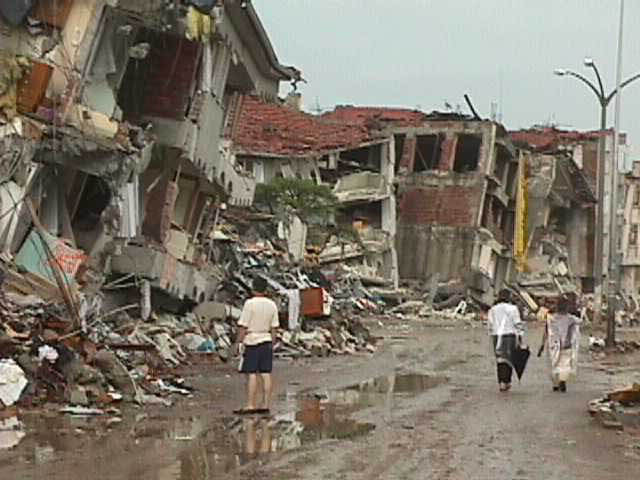
"caption": "The magnitude 7.6 Izmit quake in 1999 killed 17,000 people in Turkey.",
"description": "The magnitude 7.6 Izmit quake in 1999 killed 17,000 people in Turkey.",
"title": "Izmit_eart3_USGS",
"credit": "USGS",
"status": "inherit",
"isLoading": false,
"fetchFailed": false
},
"science_1922612": {
"type": "attachments",
"id": "science_1922612",
"meta": {
"index": "attachments_1716263798",
"site": "science",
"id": "1922612",
"found": true
},
"parent": 1922600,
"imgSizes": {
"small": {
"file": "https://ww2.kqed.org/app/uploads/sites/35/2018/04/1024px-Aftermath_of_San_Francisco_earthquake_1906-520x309.jpeg",
"width": 520,
"mimeType": "image/jpeg",
"height": 309
},
"twentyfourteen-full-width": {
"file": "https://ww2.kqed.org/app/uploads/sites/35/2018/04/1024px-Aftermath_of_San_Francisco_earthquake_1906-1024x576.jpeg",
"width": 1024,
"mimeType": "image/jpeg",
"height": 576
},
"thumbnail": {
"file": "https://ww2.kqed.org/app/uploads/sites/35/2018/04/1024px-Aftermath_of_San_Francisco_earthquake_1906-160x95.jpeg",
"width": 160,
"mimeType": "image/jpeg",
"height": 95
},
"fd-sm": {
"file": "https://ww2.kqed.org/app/uploads/sites/35/2018/04/1024px-Aftermath_of_San_Francisco_earthquake_1906-960x570.jpeg",
"width": 960,
"mimeType": "image/jpeg",
"height": 570
},
"post-thumbnail": {
"file": "https://ww2.kqed.org/app/uploads/sites/35/2018/04/1024px-Aftermath_of_San_Francisco_earthquake_1906-672x372.jpeg",
"width": 672,
"mimeType": "image/jpeg",
"height": 372
},
"xsmall": {
"file": "https://ww2.kqed.org/app/uploads/sites/35/2018/04/1024px-Aftermath_of_San_Francisco_earthquake_1906-375x223.jpeg",
"width": 375,
"mimeType": "image/jpeg",
"height": 223
},
"kqedFullSize": {
"file": "https://ww2.kqed.org/app/uploads/sites/35/2018/04/1024px-Aftermath_of_San_Francisco_earthquake_1906.jpeg",
"width": 1024,
"height": 608
},
"large": {
"file": "https://ww2.kqed.org/app/uploads/sites/35/2018/04/1024px-Aftermath_of_San_Francisco_earthquake_1906-1020x606.jpeg",
"width": 1020,
"mimeType": "image/jpeg",
"height": 606
},
"guest-author-50": {
"file": "https://ww2.kqed.org/app/uploads/sites/35/2018/04/1024px-Aftermath_of_San_Francisco_earthquake_1906-50x50.jpeg",
"width": 50,
"mimeType": "image/jpeg",
"height": 50
},
"guest-author-96": {
"file": "https://ww2.kqed.org/app/uploads/sites/35/2018/04/1024px-Aftermath_of_San_Francisco_earthquake_1906-96x96.jpeg",
"width": 96,
"mimeType": "image/jpeg",
"height": 96
},
"medium": {
"file": "https://ww2.kqed.org/app/uploads/sites/35/2018/04/1024px-Aftermath_of_San_Francisco_earthquake_1906-800x475.jpeg",
"width": 800,
"mimeType": "image/jpeg",
"height": 475
},
"guest-author-64": {
"file": "https://ww2.kqed.org/app/uploads/sites/35/2018/04/1024px-Aftermath_of_San_Francisco_earthquake_1906-64x64.jpeg",
"width": 64,
"mimeType": "image/jpeg",
"height": 64
},
"guest-author-32": {
"file": "https://ww2.kqed.org/app/uploads/sites/35/2018/04/1024px-Aftermath_of_San_Francisco_earthquake_1906-32x32.jpeg",
"width": 32,
"mimeType": "image/jpeg",
"height": 32
},
"detail": {
"file": "https://ww2.kqed.org/app/uploads/sites/35/2018/04/1024px-Aftermath_of_San_Francisco_earthquake_1906-150x150.jpeg",
"width": 150,
"mimeType": "image/jpeg",
"height": 150
},
"medium_large": {
"file": "https://ww2.kqed.org/app/uploads/sites/35/2018/04/1024px-Aftermath_of_San_Francisco_earthquake_1906-768x456.jpeg",
"width": 768,
"mimeType": "image/jpeg",
"height": 456
},
"guest-author-128": {
"file": "https://ww2.kqed.org/app/uploads/sites/35/2018/04/1024px-Aftermath_of_San_Francisco_earthquake_1906-128x128.jpeg",
"width": 128,
"mimeType": "image/jpeg",
"height": 128
},
"xxsmall": {
"file": "https://ww2.kqed.org/app/uploads/sites/35/2018/04/1024px-Aftermath_of_San_Francisco_earthquake_1906-240x143.jpeg",
"width": 240,
"mimeType": "image/jpeg",
"height": 143
}
},
"publishDate": 1523688609,
"modified": 1529364119,
"caption": "Aftermath of the 1906 earthquake in San Francisco. ",
"description": "https://commons.wikimedia.org/wiki/File:Aftermath_of_San_Francisco_earthquake,_1906.jpg\n",
"title": "1024px-Aftermath_of_San_Francisco_earthquake,_1906",
"credit": "Arnold Genthe/public domain",
"status": "inherit",
"isLoading": false,
"fetchFailed": false
},
"science_1922866": {
"type": "attachments",
"id": "science_1922866",
"meta": {
"index": "attachments_1716263798",
"site": "science",
"id": "1922866",
"found": true
},
"parent": 1922856,
"imgSizes": {
"small": {
"file": "https://ww2.kqed.org/app/uploads/sites/35/2018/04/aafg0013471-520x350.jpg",
"width": 520,
"mimeType": "image/jpeg",
"height": 350
},
"thumbnail": {
"file": "https://ww2.kqed.org/app/uploads/sites/35/2018/04/aafg0013471-160x108.jpg",
"width": 160,
"mimeType": "image/jpeg",
"height": 108
},
"post-thumbnail": {
"file": "https://ww2.kqed.org/app/uploads/sites/35/2018/04/aafg0013471-672x372.jpg",
"width": 672,
"mimeType": "image/jpeg",
"height": 372
},
"xsmall": {
"file": "https://ww2.kqed.org/app/uploads/sites/35/2018/04/aafg0013471-375x252.jpg",
"width": 375,
"mimeType": "image/jpeg",
"height": 252
},
"kqedFullSize": {
"file": "https://ww2.kqed.org/app/uploads/sites/35/2018/04/aafg0013471.jpg",
"width": 800,
"height": 538
},
"guest-author-50": {
"file": "https://ww2.kqed.org/app/uploads/sites/35/2018/04/aafg0013471-50x50.jpg",
"width": 50,
"mimeType": "image/jpeg",
"height": 50
},
"guest-author-96": {
"file": "https://ww2.kqed.org/app/uploads/sites/35/2018/04/aafg0013471-96x96.jpg",
"width": 96,
"mimeType": "image/jpeg",
"height": 96
},
"medium": {
"file": "https://ww2.kqed.org/app/uploads/sites/35/2018/04/aafg0013471-800x538.jpg",
"width": 800,
"mimeType": "image/jpeg",
"height": 538
},
"guest-author-64": {
"file": "https://ww2.kqed.org/app/uploads/sites/35/2018/04/aafg0013471-64x64.jpg",
"width": 64,
"mimeType": "image/jpeg",
"height": 64
},
"guest-author-32": {
"file": "https://ww2.kqed.org/app/uploads/sites/35/2018/04/aafg0013471-32x32.jpg",
"width": 32,
"mimeType": "image/jpeg",
"height": 32
},
"detail": {
"file": "https://ww2.kqed.org/app/uploads/sites/35/2018/04/aafg0013471-150x150.jpg",
"width": 150,
"mimeType": "image/jpeg",
"height": 150
},
"medium_large": {
"file": "https://ww2.kqed.org/app/uploads/sites/35/2018/04/aafg0013471-768x516.jpg",
"width": 768,
"mimeType": "image/jpeg",
"height": 516
},
"guest-author-128": {
"file": "https://ww2.kqed.org/app/uploads/sites/35/2018/04/aafg0013471-128x128.jpg",
"width": 128,
"mimeType": "image/jpeg",
"height": 128
},
"xxsmall": {
"file": "https://ww2.kqed.org/app/uploads/sites/35/2018/04/aafg0013471-240x161.jpg",
"width": 240,
"mimeType": "image/jpeg",
"height": 161
}
},
"publishDate": 1524162483,
"modified": 1524162509,
"caption": "Aftermath of the 1994 Northridge earthquake in Southern California.",
"description": null,
"title": "aafg0013471",
"credit": "David Butow/Corbis via Getty Images",
"status": "inherit",
"isLoading": false,
"fetchFailed": false
},
"science_22449": {
"type": "attachments",
"id": "science_22449",
"meta": {
"index": "attachments_1716263798",
"site": "science",
"id": "22449",
"found": true
},
"parent": 22398,
"imgSizes": {
"kqedFullSize": {
"file": "https://ww2.kqed.org/app/uploads/sites/35/2014/10/cypress-viaduct.jpeg",
"width": 758,
"height": 512
}
},
"publishDate": 1412985820,
"modified": 1524066915,
"caption": "The Cypress viaduct in Oakland collapsed in the Loma Prieta earthquake. ",
"description": "Side view of support-column failure and collapsed upper deck, Cypress viaduct. [H.G. Wilshire, U.S. Geological Survey]",
"title": "cypress viaduct",
"credit": "H.G. Wilshire/U.S. Geological Survey",
"status": "inherit",
"isLoading": false,
"fetchFailed": false
},
"science_1921654": {
"type": "attachments",
"id": "science_1921654",
"meta": {
"index": "attachments_1716263798",
"site": "science",
"id": "1921654",
"found": true
},
"parent": 1921653,
"imgSizes": {
"small": {
"file": "https://ww2.kqed.org/app/uploads/sites/35/2018/03/GettyImages-473065264-1-520x266.jpg",
"width": 520,
"mimeType": "image/jpeg",
"height": 266
},
"thumbnail": {
"file": "https://ww2.kqed.org/app/uploads/sites/35/2018/03/GettyImages-473065264-1-160x82.jpg",
"width": 160,
"mimeType": "image/jpeg",
"height": 82
},
"fd-sm": {
"file": "https://ww2.kqed.org/app/uploads/sites/35/2018/03/GettyImages-473065264-1-960x491.jpg",
"width": 960,
"mimeType": "image/jpeg",
"height": 491
},
"post-thumbnail": {
"file": "https://ww2.kqed.org/app/uploads/sites/35/2018/03/GettyImages-473065264-1-672x372.jpg",
"width": 672,
"mimeType": "image/jpeg",
"height": 372
},
"xsmall": {
"file": "https://ww2.kqed.org/app/uploads/sites/35/2018/03/GettyImages-473065264-1-375x192.jpg",
"width": 375,
"mimeType": "image/jpeg",
"height": 192
},
"kqedFullSize": {
"file": "https://ww2.kqed.org/app/uploads/sites/35/2018/03/GettyImages-473065264-1.jpg",
"width": 1024,
"height": 524
},
"large": {
"file": "https://ww2.kqed.org/app/uploads/sites/35/2018/03/GettyImages-473065264-1-1020x522.jpg",
"width": 1020,
"mimeType": "image/jpeg",
"height": 522
},
"guest-author-50": {
"file": "https://ww2.kqed.org/app/uploads/sites/35/2018/03/GettyImages-473065264-1-50x50.jpg",
"width": 50,
"mimeType": "image/jpeg",
"height": 50
},
"guest-author-96": {
"file": "https://ww2.kqed.org/app/uploads/sites/35/2018/03/GettyImages-473065264-1-96x96.jpg",
"width": 96,
"mimeType": "image/jpeg",
"height": 96
},
"medium": {
"file": "https://ww2.kqed.org/app/uploads/sites/35/2018/03/GettyImages-473065264-1-800x409.jpg",
"width": 800,
"mimeType": "image/jpeg",
"height": 409
},
"guest-author-64": {
"file": "https://ww2.kqed.org/app/uploads/sites/35/2018/03/GettyImages-473065264-1-64x64.jpg",
"width": 64,
"mimeType": "image/jpeg",
"height": 64
},
"guest-author-32": {
"file": "https://ww2.kqed.org/app/uploads/sites/35/2018/03/GettyImages-473065264-1-32x32.jpg",
"width": 32,
"mimeType": "image/jpeg",
"height": 32
},
"detail": {
"file": "https://ww2.kqed.org/app/uploads/sites/35/2018/03/GettyImages-473065264-1-150x150.jpg",
"width": 150,
"mimeType": "image/jpeg",
"height": 150
},
"medium_large": {
"file": "https://ww2.kqed.org/app/uploads/sites/35/2018/03/GettyImages-473065264-1-768x393.jpg",
"width": 768,
"mimeType": "image/jpeg",
"height": 393
},
"guest-author-128": {
"file": "https://ww2.kqed.org/app/uploads/sites/35/2018/03/GettyImages-473065264-1-128x128.jpg",
"width": 128,
"mimeType": "image/jpeg",
"height": 128
},
"xxsmall": {
"file": "https://ww2.kqed.org/app/uploads/sites/35/2018/03/GettyImages-473065264-1-240x123.jpg",
"width": 240,
"mimeType": "image/jpeg",
"height": 123
}
},
"publishDate": 1521829566,
"modified": 1528409749,
"caption": "NASA’s Curiosity rover, pictured here, has found potential building blocks of life on the red planet. Experts describe the findings as “breakthroughs in astrobiology.”",
"description": null,
"title": "Curiosity Self-Portrait at 'Mojave' on Mount Sharp",
"credit": "NASA/JPL-Caltech/MSSS/Getty Images",
"status": "inherit",
"isLoading": false,
"fetchFailed": false
},
"science_1921468": {
"type": "attachments",
"id": "science_1921468",
"meta": {
"index": "attachments_1716263798",
"site": "science",
"id": "1921468",
"found": true
},
"parent": 1921467,
"imgSizes": {
"small": {
"file": "https://ww2.kqed.org/app/uploads/sites/35/2018/03/GettyImages-72274461-520x351.jpg",
"width": 520,
"mimeType": "image/jpeg",
"height": 351
},
"twentyfourteen-full-width": {
"file": "https://ww2.kqed.org/app/uploads/sites/35/2018/03/GettyImages-72274461-1038x576.jpg",
"width": 1038,
"mimeType": "image/jpeg",
"height": 576
},
"thumbnail": {
"file": "https://ww2.kqed.org/app/uploads/sites/35/2018/03/GettyImages-72274461-160x108.jpg",
"width": 160,
"mimeType": "image/jpeg",
"height": 108
},
"fd-sm": {
"file": "https://ww2.kqed.org/app/uploads/sites/35/2018/03/GettyImages-72274461-960x647.jpg",
"width": 960,
"mimeType": "image/jpeg",
"height": 647
},
"post-thumbnail": {
"file": "https://ww2.kqed.org/app/uploads/sites/35/2018/03/GettyImages-72274461-672x372.jpg",
"width": 672,
"mimeType": "image/jpeg",
"height": 372
},
"xsmall": {
"file": "https://ww2.kqed.org/app/uploads/sites/35/2018/03/GettyImages-72274461-375x253.jpg",
"width": 375,
"mimeType": "image/jpeg",
"height": 253
},
"kqedFullSize": {
"file": "https://ww2.kqed.org/app/uploads/sites/35/2018/03/GettyImages-72274461.jpg",
"width": 2900,
"height": 1955
},
"large": {
"file": "https://ww2.kqed.org/app/uploads/sites/35/2018/03/GettyImages-72274461-1020x688.jpg",
"width": 1020,
"mimeType": "image/jpeg",
"height": 688
},
"xlarge": {
"file": "https://ww2.kqed.org/app/uploads/sites/35/2018/03/GettyImages-72274461-1180x795.jpg",
"width": 1180,
"mimeType": "image/jpeg",
"height": 795
},
"guest-author-50": {
"file": "https://ww2.kqed.org/app/uploads/sites/35/2018/03/GettyImages-72274461-50x50.jpg",
"width": 50,
"mimeType": "image/jpeg",
"height": 50
},
"guest-author-96": {
"file": "https://ww2.kqed.org/app/uploads/sites/35/2018/03/GettyImages-72274461-96x96.jpg",
"width": 96,
"mimeType": "image/jpeg",
"height": 96
},
"medium": {
"file": "https://ww2.kqed.org/app/uploads/sites/35/2018/03/GettyImages-72274461-800x539.jpg",
"width": 800,
"mimeType": "image/jpeg",
"height": 539
},
"guest-author-64": {
"file": "https://ww2.kqed.org/app/uploads/sites/35/2018/03/GettyImages-72274461-64x64.jpg",
"width": 64,
"mimeType": "image/jpeg",
"height": 64
},
"guest-author-32": {
"file": "https://ww2.kqed.org/app/uploads/sites/35/2018/03/GettyImages-72274461-32x32.jpg",
"width": 32,
"mimeType": "image/jpeg",
"height": 32
},
"fd-lrg": {
"file": "https://ww2.kqed.org/app/uploads/sites/35/2018/03/GettyImages-72274461-1920x1294.jpg",
"width": 1920,
"mimeType": "image/jpeg",
"height": 1294
},
"fd-med": {
"file": "https://ww2.kqed.org/app/uploads/sites/35/2018/03/GettyImages-72274461-1180x795.jpg",
"width": 1180,
"mimeType": "image/jpeg",
"height": 795
},
"full-width": {
"file": "https://ww2.kqed.org/app/uploads/sites/35/2018/03/GettyImages-72274461-1920x1294.jpg",
"width": 1920,
"mimeType": "image/jpeg",
"height": 1294
},
"detail": {
"file": "https://ww2.kqed.org/app/uploads/sites/35/2018/03/GettyImages-72274461-150x150.jpg",
"width": 150,
"mimeType": "image/jpeg",
"height": 150
},
"medium_large": {
"file": "https://ww2.kqed.org/app/uploads/sites/35/2018/03/GettyImages-72274461-768x518.jpg",
"width": 768,
"mimeType": "image/jpeg",
"height": 518
},
"guest-author-128": {
"file": "https://ww2.kqed.org/app/uploads/sites/35/2018/03/GettyImages-72274461-128x128.jpg",
"width": 128,
"mimeType": "image/jpeg",
"height": 128
},
"xxsmall": {
"file": "https://ww2.kqed.org/app/uploads/sites/35/2018/03/GettyImages-72274461-240x162.jpg",
"width": 240,
"mimeType": "image/jpeg",
"height": 162
}
},
"publishDate": 1521567897,
"modified": 1521568649,
"caption": "Farmers bag their crop of harvested corn beneath a watchtower at the Hushan Great Wall, 24 October 2006. New research using corn syrup aims to show how plate tectonics created the sea floor over billions of years.",
"description": null,
"title": "Farmers bag their crop of harvested corn",
"credit": "Frederic J. Brown/AFP/Getty Images",
"status": "inherit",
"isLoading": false,
"fetchFailed": false
},
"science_1920832": {
"type": "attachments",
"id": "science_1920832",
"meta": {
"index": "attachments_1716263798",
"site": "science",
"id": "1920832",
"found": true
},
"parent": 1920819,
"imgSizes": {
"small": {
"file": "https://ww2.kqed.org/app/uploads/sites/35/2018/03/GettyImages-492064822-520x307.jpg",
"width": 520,
"mimeType": "image/jpeg",
"height": 307
},
"twentyfourteen-full-width": {
"file": "https://ww2.kqed.org/app/uploads/sites/35/2018/03/GettyImages-492064822-1038x576.jpg",
"width": 1038,
"mimeType": "image/jpeg",
"height": 576
},
"thumbnail": {
"file": "https://ww2.kqed.org/app/uploads/sites/35/2018/03/GettyImages-492064822-160x94.jpg",
"width": 160,
"mimeType": "image/jpeg",
"height": 94
},
"fd-sm": {
"file": "https://ww2.kqed.org/app/uploads/sites/35/2018/03/GettyImages-492064822-960x566.jpg",
"width": 960,
"mimeType": "image/jpeg",
"height": 566
},
"post-thumbnail": {
"file": "https://ww2.kqed.org/app/uploads/sites/35/2018/03/GettyImages-492064822-672x372.jpg",
"width": 672,
"mimeType": "image/jpeg",
"height": 372
},
"xsmall": {
"file": "https://ww2.kqed.org/app/uploads/sites/35/2018/03/GettyImages-492064822-375x221.jpg",
"width": 375,
"mimeType": "image/jpeg",
"height": 221
},
"kqedFullSize": {
"file": "https://ww2.kqed.org/app/uploads/sites/35/2018/03/GettyImages-492064822.jpg",
"width": 4652,
"height": 2745
},
"large": {
"file": "https://ww2.kqed.org/app/uploads/sites/35/2018/03/GettyImages-492064822-1020x602.jpg",
"width": 1020,
"mimeType": "image/jpeg",
"height": 602
},
"xlarge": {
"file": "https://ww2.kqed.org/app/uploads/sites/35/2018/03/GettyImages-492064822-1180x696.jpg",
"width": 1180,
"mimeType": "image/jpeg",
"height": 696
},
"guest-author-50": {
"file": "https://ww2.kqed.org/app/uploads/sites/35/2018/03/GettyImages-492064822-50x50.jpg",
"width": 50,
"mimeType": "image/jpeg",
"height": 50
},
"guest-author-96": {
"file": "https://ww2.kqed.org/app/uploads/sites/35/2018/03/GettyImages-492064822-96x96.jpg",
"width": 96,
"mimeType": "image/jpeg",
"height": 96
},
"medium": {
"file": "https://ww2.kqed.org/app/uploads/sites/35/2018/03/GettyImages-492064822-800x472.jpg",
"width": 800,
"mimeType": "image/jpeg",
"height": 472
},
"guest-author-64": {
"file": "https://ww2.kqed.org/app/uploads/sites/35/2018/03/GettyImages-492064822-64x64.jpg",
"width": 64,
"mimeType": "image/jpeg",
"height": 64
},
"guest-author-32": {
"file": "https://ww2.kqed.org/app/uploads/sites/35/2018/03/GettyImages-492064822-32x32.jpg",
"width": 32,
"mimeType": "image/jpeg",
"height": 32
},
"fd-lrg": {
"file": "https://ww2.kqed.org/app/uploads/sites/35/2018/03/GettyImages-492064822-1920x1133.jpg",
"width": 1920,
"mimeType": "image/jpeg",
"height": 1133
},
"fd-med": {
"file": "https://ww2.kqed.org/app/uploads/sites/35/2018/03/GettyImages-492064822-1180x696.jpg",
"width": 1180,
"mimeType": "image/jpeg",
"height": 696
},
"full-width": {
"file": "https://ww2.kqed.org/app/uploads/sites/35/2018/03/GettyImages-492064822-1920x1133.jpg",
"width": 1920,
"mimeType": "image/jpeg",
"height": 1133
},
"detail": {
"file": "https://ww2.kqed.org/app/uploads/sites/35/2018/03/GettyImages-492064822-150x150.jpg",
"width": 150,
"mimeType": "image/jpeg",
"height": 150
},
"medium_large": {
"file": "https://ww2.kqed.org/app/uploads/sites/35/2018/03/GettyImages-492064822-768x453.jpg",
"width": 768,
"mimeType": "image/jpeg",
"height": 453
},
"guest-author-128": {
"file": "https://ww2.kqed.org/app/uploads/sites/35/2018/03/GettyImages-492064822-128x128.jpg",
"width": 128,
"mimeType": "image/jpeg",
"height": 128
},
"xxsmall": {
"file": "https://ww2.kqed.org/app/uploads/sites/35/2018/03/GettyImages-492064822-240x142.jpg",
"width": 240,
"mimeType": "image/jpeg",
"height": 142
}
},
"publishDate": 1520448517,
"modified": 1520448741,
"caption": "Part of Treasure Island is sinking rapidly. Combined with sea level rise, this means there's a severe risk some areas will be underwater by the end of the century.",
"description": null,
"title": "Treasure Island",
"credit": "Josh Edelson/AFP/Getty Images",
"status": "inherit",
"isLoading": false,
"fetchFailed": false
},
"science_1919523": {
"type": "attachments",
"id": "science_1919523",
"meta": {
"index": "attachments_1716263798",
"site": "science",
"id": "1919523",
"found": true
},
"parent": 1919522,
"imgSizes": {
"small": {
"file": "https://ww2.kqed.org/app/uploads/sites/35/2018/02/jason-czapla-a73b44eb3c17eb5a1fcc4dd5836ae046b02221a9-520x390.jpg",
"width": 520,
"mimeType": "image/jpeg",
"height": 390
},
"twentyfourteen-full-width": {
"file": "https://ww2.kqed.org/app/uploads/sites/35/2018/02/jason-czapla-a73b44eb3c17eb5a1fcc4dd5836ae046b02221a9-1038x576.jpg",
"width": 1038,
"mimeType": "image/jpeg",
"height": 576
},
"thumbnail": {
"file": "https://ww2.kqed.org/app/uploads/sites/35/2018/02/jason-czapla-a73b44eb3c17eb5a1fcc4dd5836ae046b02221a9-160x120.jpg",
"width": 160,
"mimeType": "image/jpeg",
"height": 120
},
"fd-sm": {
"file": "https://ww2.kqed.org/app/uploads/sites/35/2018/02/jason-czapla-a73b44eb3c17eb5a1fcc4dd5836ae046b02221a9-960x720.jpg",
"width": 960,
"mimeType": "image/jpeg",
"height": 720
},
"post-thumbnail": {
"file": "https://ww2.kqed.org/app/uploads/sites/35/2018/02/jason-czapla-a73b44eb3c17eb5a1fcc4dd5836ae046b02221a9-672x372.jpg",
"width": 672,
"mimeType": "image/jpeg",
"height": 372
},
"xsmall": {
"file": "https://ww2.kqed.org/app/uploads/sites/35/2018/02/jason-czapla-a73b44eb3c17eb5a1fcc4dd5836ae046b02221a9-375x281.jpg",
"width": 375,
"mimeType": "image/jpeg",
"height": 281
},
"kqedFullSize": {
"file": "https://ww2.kqed.org/app/uploads/sites/35/2018/02/jason-czapla-a73b44eb3c17eb5a1fcc4dd5836ae046b02221a9.jpg",
"width": 3580,
"height": 2685
},
"large": {
"file": "https://ww2.kqed.org/app/uploads/sites/35/2018/02/jason-czapla-a73b44eb3c17eb5a1fcc4dd5836ae046b02221a9-1020x765.jpg",
"width": 1020,
"mimeType": "image/jpeg",
"height": 765
},
"xlarge": {
"file": "https://ww2.kqed.org/app/uploads/sites/35/2018/02/jason-czapla-a73b44eb3c17eb5a1fcc4dd5836ae046b02221a9-1180x885.jpg",
"width": 1180,
"mimeType": "image/jpeg",
"height": 885
},
"guest-author-50": {
"file": "https://ww2.kqed.org/app/uploads/sites/35/2018/02/jason-czapla-a73b44eb3c17eb5a1fcc4dd5836ae046b02221a9-50x50.jpg",
"width": 50,
"mimeType": "image/jpeg",
"height": 50
},
"guest-author-96": {
"file": "https://ww2.kqed.org/app/uploads/sites/35/2018/02/jason-czapla-a73b44eb3c17eb5a1fcc4dd5836ae046b02221a9-96x96.jpg",
"width": 96,
"mimeType": "image/jpeg",
"height": 96
},
"medium": {
"file": "https://ww2.kqed.org/app/uploads/sites/35/2018/02/jason-czapla-a73b44eb3c17eb5a1fcc4dd5836ae046b02221a9-800x600.jpg",
"width": 800,
"mimeType": "image/jpeg",
"height": 600
},
"guest-author-64": {
"file": "https://ww2.kqed.org/app/uploads/sites/35/2018/02/jason-czapla-a73b44eb3c17eb5a1fcc4dd5836ae046b02221a9-64x64.jpg",
"width": 64,
"mimeType": "image/jpeg",
"height": 64
},
"guest-author-32": {
"file": "https://ww2.kqed.org/app/uploads/sites/35/2018/02/jason-czapla-a73b44eb3c17eb5a1fcc4dd5836ae046b02221a9-32x32.jpg",
"width": 32,
"mimeType": "image/jpeg",
"height": 32
},
"fd-lrg": {
"file": "https://ww2.kqed.org/app/uploads/sites/35/2018/02/jason-czapla-a73b44eb3c17eb5a1fcc4dd5836ae046b02221a9-1920x1440.jpg",
"width": 1920,
"mimeType": "image/jpeg",
"height": 1440
},
"fd-med": {
"file": "https://ww2.kqed.org/app/uploads/sites/35/2018/02/jason-czapla-a73b44eb3c17eb5a1fcc4dd5836ae046b02221a9-1180x885.jpg",
"width": 1180,
"mimeType": "image/jpeg",
"height": 885
},
"full-width": {
"file": "https://ww2.kqed.org/app/uploads/sites/35/2018/02/jason-czapla-a73b44eb3c17eb5a1fcc4dd5836ae046b02221a9-1920x1440.jpg",
"width": 1920,
"mimeType": "image/jpeg",
"height": 1440
},
"detail": {
"file": "https://ww2.kqed.org/app/uploads/sites/35/2018/02/jason-czapla-a73b44eb3c17eb5a1fcc4dd5836ae046b02221a9-150x150.jpg",
"width": 150,
"mimeType": "image/jpeg",
"height": 150
},
"medium_large": {
"file": "https://ww2.kqed.org/app/uploads/sites/35/2018/02/jason-czapla-a73b44eb3c17eb5a1fcc4dd5836ae046b02221a9-768x576.jpg",
"width": 768,
"mimeType": "image/jpeg",
"height": 576
},
"guest-author-128": {
"file": "https://ww2.kqed.org/app/uploads/sites/35/2018/02/jason-czapla-a73b44eb3c17eb5a1fcc4dd5836ae046b02221a9-128x128.jpg",
"width": 128,
"mimeType": "image/jpeg",
"height": 128
},
"xxsmall": {
"file": "https://ww2.kqed.org/app/uploads/sites/35/2018/02/jason-czapla-a73b44eb3c17eb5a1fcc4dd5836ae046b02221a9-240x180.jpg",
"width": 240,
"mimeType": "image/jpeg",
"height": 180
}
},
"publishDate": 1517858094,
"modified": 1517858094,
"caption": null,
"description": "Jason Czapla, principal engineer for Controlled Thermal Resources, surveys the site where the company's Hell's Kitchen Plant will be built.",
"title": "Jason Czapla, principal engineer for Controlled Thermal Resources, surveys the site where the company's Hell's Kitchen Plant will be built.",
"credit": null,
"status": "inherit",
"isLoading": false,
"fetchFailed": false
},
"science_1172249": {
"type": "attachments",
"id": "science_1172249",
"meta": {
"index": "attachments_1716263798",
"site": "science",
"id": "1172249",
"found": true
},
"parent": 0,
"imgSizes": {
"small": {
"file": "https://ww2.kqed.org/app/uploads/sites/35/2016/11/GettyImages-89161079-520x347.jpg",
"width": 520,
"mimeType": "image/jpeg",
"height": 347
},
"twentyfourteen-full-width": {
"file": "https://ww2.kqed.org/app/uploads/sites/35/2016/11/GettyImages-89161079-1024x576.jpg",
"width": 1024,
"mimeType": "image/jpeg",
"height": 576
},
"thumbnail": {
"file": "https://ww2.kqed.org/app/uploads/sites/35/2016/11/GettyImages-89161079-160x107.jpg",
"width": 160,
"mimeType": "image/jpeg",
"height": 107
},
"fd-sm": {
"file": "https://ww2.kqed.org/app/uploads/sites/35/2016/11/GettyImages-89161079-960x640.jpg",
"width": 960,
"mimeType": "image/jpeg",
"height": 640
},
"post-thumbnail": {
"file": "https://ww2.kqed.org/app/uploads/sites/35/2016/11/GettyImages-89161079-672x372.jpg",
"width": 672,
"mimeType": "image/jpeg",
"height": 372
},
"xsmall": {
"file": "https://ww2.kqed.org/app/uploads/sites/35/2016/11/GettyImages-89161079-375x250.jpg",
"width": 375,
"mimeType": "image/jpeg",
"height": 250
},
"kqedFullSize": {
"file": "https://ww2.kqed.org/app/uploads/sites/35/2016/11/GettyImages-89161079.jpg",
"width": 1024,
"height": 683
},
"large": {
"file": "https://ww2.kqed.org/app/uploads/sites/35/2016/11/GettyImages-89161079-1020x680.jpg",
"width": 1020,
"mimeType": "image/jpeg",
"height": 680
},
"guest-author-50": {
"file": "https://ww2.kqed.org/app/uploads/sites/35/2016/11/GettyImages-89161079-50x50.jpg",
"width": 50,
"mimeType": "image/jpeg",
"height": 50
},
"guest-author-96": {
"file": "https://ww2.kqed.org/app/uploads/sites/35/2016/11/GettyImages-89161079-96x96.jpg",
"width": 96,
"mimeType": "image/jpeg",
"height": 96
},
"medium": {
"file": "https://ww2.kqed.org/app/uploads/sites/35/2016/11/GettyImages-89161079-800x534.jpg",
"width": 800,
"mimeType": "image/jpeg",
"height": 534
},
"guest-author-64": {
"file": "https://ww2.kqed.org/app/uploads/sites/35/2016/11/GettyImages-89161079-64x64.jpg",
"width": 64,
"mimeType": "image/jpeg",
"height": 64
},
"guest-author-32": {
"file": "https://ww2.kqed.org/app/uploads/sites/35/2016/11/GettyImages-89161079-32x32.jpg",
"width": 32,
"mimeType": "image/jpeg",
"height": 32
},
"detail": {
"file": "https://ww2.kqed.org/app/uploads/sites/35/2016/11/GettyImages-89161079-150x150.jpg",
"width": 150,
"mimeType": "image/jpeg",
"height": 150
},
"medium_large": {
"file": "https://ww2.kqed.org/app/uploads/sites/35/2016/11/GettyImages-89161079-768x512.jpg",
"width": 768,
"mimeType": "image/jpeg",
"height": 512
},
"guest-author-128": {
"file": "https://ww2.kqed.org/app/uploads/sites/35/2016/11/GettyImages-89161079-128x128.jpg",
"width": 128,
"mimeType": "image/jpeg",
"height": 128
},
"xxsmall": {
"file": "https://ww2.kqed.org/app/uploads/sites/35/2016/11/GettyImages-89161079-240x160.jpg",
"width": 240,
"mimeType": "image/jpeg",
"height": 160
}
},
"publishDate": 1479497700,
"modified": 1515112958,
"caption": "California brown pelicans fly near offshore oil rigs after sunset on July 21, 2009, near Santa Barbara, California. ",
"description": null,
"title": "Offshore Drilling Could Return To California If Lawmakers Approve Budget",
"credit": "David McNew/Getty Images",
"status": "inherit",
"isLoading": false,
"fetchFailed": false
}
},
"audioPlayerReducer": {
"postId": "stream_live",
"isPaused": true,
"isPlaying": false,
"pfsActive": false,
"pledgeModalIsOpen": true,
"playerDrawerIsOpen": false,
"liveAudioPlayStartedAt": 0,
"liveAudioPlayContext": ""
},
"authorsReducer": {
"byline_science_1925744": {
"type": "authors",
"id": "byline_science_1925744",
"meta": {
"override": true
},
"slug": "byline_science_1925744",
"name": "The Associated Press",
"isLoading": false
},
"byline_science_1923693": {
"type": "authors",
"id": "byline_science_1923693",
"meta": {
"override": true
},
"slug": "byline_science_1923693",
"name": "Merrit Kennedy\u003cbr />NPR",
"isLoading": false
},
"byline_science_1922856": {
"type": "authors",
"id": "byline_science_1922856",
"meta": {
"override": true
},
"slug": "byline_science_1922856",
"name": "Alastair Bland\u003cbr />Water Deeply",
"isLoading": false
},
"byline_science_1921653": {
"type": "authors",
"id": "byline_science_1921653",
"meta": {
"override": true
},
"slug": "byline_science_1921653",
"name": "Marcia Dunn\u003cbr />The Associated Press",
"isLoading": false
},
"byline_science_1921467": {
"type": "authors",
"id": "byline_science_1921467",
"meta": {
"override": true
},
"slug": "byline_science_1921467",
"name": "Jennifer Mcdermott\u003cbr />The Associated Press",
"isLoading": false
},
"byline_science_1919522": {
"type": "authors",
"id": "byline_science_1919522",
"meta": {
"override": true
},
"slug": "byline_science_1919522",
"name": "Benjamin Purper\u003c/br>KVCR",
"isLoading": false
},
"byline_science_1918627": {
"type": "authors",
"id": "byline_science_1918627",
"meta": {
"override": true
},
"slug": "byline_science_1918627",
"name": "\u003cstrong>Merrit Kennedy, NPR\u003c/strong>",
"isLoading": false
},
"cmiller": {
"type": "authors",
"id": "221",
"meta": {
"index": "authors_1716337520",
"id": "221",
"found": true
},
"name": "Craig Miller",
"firstName": "Craig",
"lastName": "Miller",
"slug": "cmiller",
"email": "craig@voxterra.net",
"display_author_email": false,
"staff_mastheads": [
"science"
],
"title": "Editor Emeritus, Science",
"bio": "Craig is a former KQED Science editor, specializing in weather, climate, water & energy issues, with a little seismology thrown in just to shake things up. Prior to that, he launched and led the station's award-winning multimedia project, Climate Watch. Craig is also an accomplished writer/producer of television documentaries, with a focus on natural resource issues.",
"avatar": "https://secure.gravatar.com/avatar/b91661df645e001a9cafe0861fa685f9?s=600&d=blank&r=g",
"twitter": "voxterra",
"facebook": null,
"instagram": null,
"linkedin": null,
"sites": [
{
"site": "news",
"roles": [
"author"
]
},
{
"site": "futureofyou",
"roles": [
"editor"
]
},
{
"site": "stateofhealth",
"roles": [
"author"
]
},
{
"site": "science",
"roles": [
"editor"
]
},
{
"site": "quest",
"roles": [
"editor"
]
}
],
"headData": {
"title": "Craig Miller | KQED",
"description": "Editor Emeritus, Science",
"ogImgSrc": "https://secure.gravatar.com/avatar/b91661df645e001a9cafe0861fa685f9?s=600&d=blank&r=g",
"twImgSrc": "https://secure.gravatar.com/avatar/b91661df645e001a9cafe0861fa685f9?s=600&d=blank&r=g"
},
"isLoading": false,
"link": "/author/cmiller"
},
"katsnow": {
"type": "authors",
"id": "235",
"meta": {
"index": "authors_1716337520",
"id": "235",
"found": true
},
"name": "Katrin Snow",
"firstName": "Katrin",
"lastName": "Snow",
"slug": "katsnow",
"email": "ksnow@kqed.org",
"display_author_email": true,
"staff_mastheads": [
"science"
],
"title": "Senior Editor",
"bio": "Kat started in radio in 1985 at KMUN in Astoria, Oregon, where the Columbia River meets the sea. She worked several years protecting monarch butterfly habitat in California with the Xerces Society, an invertebrate conservation organization, before a love for radio news drew her back into journalism. Kat came to KQED in 2002, and before that was a reporter and news director at KUER in Salt Lake City, covering the state legislature, the environment and health. Kat coaches reporters and others in embodied narration and public speaking. She is a certified teacher of Soul Motion®, a conscious dance practice, and can sometimes be found in the Mojave desert or the Eastern Sierra.",
"avatar": "https://secure.gravatar.com/avatar/fa6bf8a74a2692973a5484e64ebd2b52?s=600&d=blank&r=g",
"twitter": "cosmologicalkat",
"facebook": null,
"instagram": null,
"linkedin": null,
"sites": [
{
"site": "arts",
"roles": [
"contributor"
]
},
{
"site": "news",
"roles": [
"editor"
]
},
{
"site": "futureofyou",
"roles": [
"editor"
]
},
{
"site": "science",
"roles": [
"editor"
]
}
],
"headData": {
"title": "Katrin Snow | KQED",
"description": "Senior Editor",
"ogImgSrc": "https://secure.gravatar.com/avatar/fa6bf8a74a2692973a5484e64ebd2b52?s=600&d=blank&r=g",
"twImgSrc": "https://secure.gravatar.com/avatar/fa6bf8a74a2692973a5484e64ebd2b52?s=600&d=blank&r=g"
},
"isLoading": false,
"link": "/author/katsnow"
},
"dpotter": {
"type": "authors",
"id": "6609",
"meta": {
"index": "authors_1716337520",
"id": "6609",
"found": true
},
"name": "Daniel Potter",
"firstName": "Daniel",
"lastName": "Potter",
"slug": "dpotter",
"email": "dpotter@kqed.org",
"display_author_email": false,
"staff_mastheads": [],
"title": "KQED Contributor",
"bio": "Daniel Potter is a reporter for KQED Science. Before that, he worked at Nashville Public Radio for six years. He’s gathered tape for The New York Times, contributed to a growing list of podcasts, and done national features for NPR on everything from bats to meningitis. He tweets at @hellodanpo.",
"avatar": "https://secure.gravatar.com/avatar/59396b9ad9c672dd4cd1d3e453425f12?s=600&d=blank&r=g",
"twitter": "hellodanpo",
"facebook": null,
"instagram": null,
"linkedin": null,
"sites": [
{
"site": "futureofyou",
"roles": [
"author"
]
},
{
"site": "science",
"roles": []
}
],
"headData": {
"title": "Daniel Potter | KQED",
"description": "KQED Contributor",
"ogImgSrc": "https://secure.gravatar.com/avatar/59396b9ad9c672dd4cd1d3e453425f12?s=600&d=blank&r=g",
"twImgSrc": "https://secure.gravatar.com/avatar/59396b9ad9c672dd4cd1d3e453425f12?s=600&d=blank&r=g"
},
"isLoading": false,
"link": "/author/dpotter"
},
"mpeterson": {
"type": "authors",
"id": "11223",
"meta": {
"index": "authors_1716337520",
"id": "11223",
"found": true
},
"name": "Molly Peterson",
"firstName": "Molly",
"lastName": "Peterson",
"slug": "mpeterson",
"email": "mpeterson@kqed.org",
"display_author_email": false,
"staff_mastheads": [],
"title": null,
"bio": "Molly Peterson reports for KQED science and news on climate change, catastrophe and risk. Previously she was environment correspondent at Southern California Public Radio. Her work has also appeared at The New York Times, The Guardian, on NPR, at High Country News, on Code Switch, and other national outlets. She has been honored with awards from Public Radio News Directors Incorporated, Investigative Reporters and Editors, the Society for Professional Journalists, the Los Angeles Press Club, and RTNDA Edward R. Murrow awards, among others.",
"avatar": "https://secure.gravatar.com/avatar/7908e2807131f776cc8165c649530b05?s=600&d=blank&r=g",
"twitter": "Mollydacious",
"facebook": null,
"instagram": "https://www.instagram.com/radiomolly/",
"linkedin": null,
"sites": [
{
"site": "news",
"roles": [
"subscriber"
]
},
{
"site": "futureofyou",
"roles": [
"editor"
]
},
{
"site": "science",
"roles": [
"editor"
]
}
],
"headData": {
"title": "Molly Peterson | KQED",
"description": null,
"ogImgSrc": "https://secure.gravatar.com/avatar/7908e2807131f776cc8165c649530b05?s=600&d=blank&r=g",
"twImgSrc": "https://secure.gravatar.com/avatar/7908e2807131f776cc8165c649530b05?s=600&d=blank&r=g"
},
"isLoading": false,
"link": "/author/mpeterson"
}
},
"pagesReducer": {
"science_category_geology": {
"type": "terms",
"id": "science_38",
"meta": {
"index": "terms_1716263798",
"site": "science",
"id": "38",
"score": 13.559078
},
"featImg": null,
"name": "Geology",
"description": null,
"taxonomy": "category",
"headData": {
"twImgId": null,
"twTitle": null,
"ogTitle": null,
"ogImgId": null,
"twDescription": null,
"description": null,
"title": "Geology Archives | KQED Science",
"ogDescription": null
},
"ttid": 40,
"slug": "geology",
"isLoading": false,
"title": "Geology",
"pageMeta": {
"site": "science",
"WpPageTemplate": "page-topic-editorial",
"currentPage": 4
},
"blocks": [
{
"blockName": "kqed/post-list",
"attrs": {
"layout": "cardArticle2",
"query": "posts/science?category=geology",
"seeMore": false,
"paginated": true,
"page": 4
}
},
{
"blockName": "kqed/ad"
}
]
}
},
"pfsSessionReducer": {},
"postsReducer": {
"stream_live": {
"type": "live",
"id": "stream_live",
"audioUrl": "https://hls.kqed.org/hls/kqed_app/playlist.m3u8",
"title": "Live Stream",
"excerpt": "Live Stream information currently unavailable.",
"link": "/radio",
"featImg": "",
"label": {
"name": "KQED Live",
"link": "/"
}
},
"stream_kqedNewscast": {
"type": "posts",
"id": "stream_kqedNewscast",
"audioUrl": "https://www.kqed.org/.stream/anon/radio/RDnews/newscast.mp3?_=1",
"title": "KQED Newscast",
"featImg": "",
"label": {
"name": "88.5 FM",
"link": "/"
}
},
"science_1925744": {
"type": "posts",
"id": "science_1925744",
"meta": {
"index": "posts_1716263798",
"site": "science",
"id": "1925744",
"score": null,
"sort": [
1528931117000
]
},
"parent": 0,
"labelTerm": {},
"blocks": [],
"publishDate": 1528931117,
"format": "standard",
"title": "Study Says 2014 Napa Quake May Be Linked to Groundwater Changes",
"headTitle": "Study Says 2014 Napa Quake May Be Linked to Groundwater Changes | KQED",
"content": "\u003cp>Research suggests the magnitude 6.0 earthquake that rocked California wine country in August 2014 may have been caused by an expansion of Earth’s crust due to seasonally receding groundwater under the Napa and Sonoma valleys.[contextly_sidebar id=”pOVj347X5q7IhDpu0fPbnrLlFztdObfd”]\u003c/p>\n\u003cp>The vineyard-filled valleys flank the West Napa Fault, which produced the quake that killed one person, injured several hundred and caused more than $500 million in losses.\u003c/p>\n\u003cp>The study \u003ca href=\"https://agupubs.onlinelibrary.wiley.com/doi/10.1029/2017JB015420\" target=\"_blank\" rel=\"noopener\">recently published in\u003c/a> the American Geophysical Union’s Journal of Geophysical Research: Solid Earth suggests land between the valleys is stretched each summer as groundwater levels fall beneath the valleys and the ground in the valleys sinks and contracts.\u003c/p>\n\u003cp>The amount of the horizontal stretching measured is tiny — about 3 millimeters (0.12 inch) — but enough to stress faults, according to the researchers.\u003c/p>\n\u003cp>“We think it’s more of a localized effect, something related to the groundwater system. We don’t know if it is groundwater pumping specifically, or something related to how the natural aquifer system works, or a combination,” said lead author Meredith Kraner, formerly of the Department of Geosciences at Stony Brook University in New York and now with the University of Nevada, Reno.\u003c/p>\n\u003cfigure id=\"attachment_1925746\" class=\"wp-caption aligncenter\" style=\"max-width: 374px\">\u003cimg loading=\"lazy\" decoding=\"async\" class=\" wp-image-1925746\" src=\"https://ww2.kqed.org/science/wp-content/uploads/sites/35/2018/06/2017JB015420R-South-Napa-Quake-Fig1-map-768x976.jpg\" alt=\"\" width=\"374\" height=\"475\" srcset=\"https://cdn.kqed.org/wp-content/uploads/sites/35/2018/06/2017JB015420R-South-Napa-Quake-Fig1-map-768x976.jpg 768w, https://cdn.kqed.org/wp-content/uploads/sites/35/2018/06/2017JB015420R-South-Napa-Quake-Fig1-map-768x976-160x203.jpg 160w, https://cdn.kqed.org/wp-content/uploads/sites/35/2018/06/2017JB015420R-South-Napa-Quake-Fig1-map-768x976-240x305.jpg 240w, https://cdn.kqed.org/wp-content/uploads/sites/35/2018/06/2017JB015420R-South-Napa-Quake-Fig1-map-768x976-375x477.jpg 375w, https://cdn.kqed.org/wp-content/uploads/sites/35/2018/06/2017JB015420R-South-Napa-Quake-Fig1-map-768x976-520x661.jpg 520w\" sizes=\"(max-width: 374px) 100vw, 374px\">\u003cfigcaption class=\"wp-caption-text\">A star marks the epicenter of the 2014 South Napa earthquake and the black traces the West Napa Fault. Contraction in the Sonoma and Napa Valley groundwater subbasins, outlined in green, pulls on the Earth’s crust, contributing to stress on the fault and potentially triggering the 2014 earthquake, according to a new study. \u003ccite>(AGU Journal of Geophysical Research: Solid Earth)\u003c/cite>\u003c/figcaption>\u003c/figure>\n\u003cp>Co-authors were William E. Holt of Stony Brook University and Adrian A. Borsa of the Scripps Institution of Oceanography at the University of California, San Diego.\u003c/p>\n\u003cp>[ad fullwidth]\u003c/p>\n\u003cp>The early morning Napa quake on Aug. 24, was the largest to hit the San Francisco Bay Area since the magnitude 6.9 Loma Prieta earthquake of Oct. 17, 1989.[contextly_sidebar id=”m5qXbekQ4HiCPDuaxNoFfvUyApxxKHV9″]\u003c/p>\n\u003cp>It left 8 miles of surface rupture and damaged many historical masonry buildings and older residences, according to the U.S. Geological Survey.\u003c/p>\n\u003cp>\u003c/p>\n\u003cp>“The weight of groundwater flexes the Earth’s crust, and changes in groundwater have been associated with earthquakes around the world,” the study said. “For example, the unloading of water weight as the Sierra Nevada snowpack melts each spring has been connected to increased frequency of earthquakes in the summer in California.”\u003c/p>\n\n",
"stats": {
"hasVideo": false,
"hasChartOrMap": false,
"hasAudio": false,
"hasPolis": false,
"wordCount": 411,
"hasGoogleForm": false,
"hasGallery": false,
"hasHearkenModule": false,
"iframeSrcs": [],
"paragraphCount": 11
},
"modified": 1704927804,
"excerpt": "New research suggests the magnitude 6.0 earthquake that rocked California wine country in August 2014 may have been caused by seasonally receding groundwater under the Napa and Sonoma valleys.",
"headData": {
"twImgId": "",
"twTitle": "",
"ogTitle": "",
"ogImgId": "",
"twDescription": "",
"description": "New research suggests the magnitude 6.0 earthquake that rocked California wine country in August 2014 may have been caused by seasonally receding groundwater under the Napa and Sonoma valleys.",
"title": "Study Says 2014 Napa Quake May Be Linked to Groundwater Changes | KQED",
"ogDescription": "",
"schema": {
"@context": "https://schema.org",
"@type": "Article",
"headline": "Study Says 2014 Napa Quake May Be Linked to Groundwater Changes",
"datePublished": "2018-06-13T16:05:17-07:00",
"dateModified": "2024-01-10T15:03:24-08:00",
"image": "https://cdn.kqed.org/wp-content/uploads/2020/02/KQED-OG-Image@1x.png"
}
},
"guestAuthors": [],
"slug": "study-2014-napa-quake-may-be-linked-to-groundwater-changes",
"status": "publish",
"nprByline": "The Associated Press",
"sticky": false,
"source": "Events",
"path": "/science/1925744/study-2014-napa-quake-may-be-linked-to-groundwater-changes",
"audioTrackLength": null,
"parsedContent": [
{
"type": "contentString",
"content": "\u003cdiv class=\"post-body\">\u003cp>\u003cp>Research suggests the magnitude 6.0 earthquake that rocked California wine country in August 2014 may have been caused by an expansion of Earth’s crust due to seasonally receding groundwater under the Napa and Sonoma valleys.\u003c/p>\u003cp>\u003c/p>\u003cp>\u003c/p>\n\u003cp>The vineyard-filled valleys flank the West Napa Fault, which produced the quake that killed one person, injured several hundred and caused more than $500 million in losses.\u003c/p>\n\u003cp>The study \u003ca href=\"https://agupubs.onlinelibrary.wiley.com/doi/10.1029/2017JB015420\" target=\"_blank\" rel=\"noopener\">recently published in\u003c/a> the American Geophysical Union’s Journal of Geophysical Research: Solid Earth suggests land between the valleys is stretched each summer as groundwater levels fall beneath the valleys and the ground in the valleys sinks and contracts.\u003c/p>\n\u003cp>The amount of the horizontal stretching measured is tiny — about 3 millimeters (0.12 inch) — but enough to stress faults, according to the researchers.\u003c/p>\n\u003cp>“We think it’s more of a localized effect, something related to the groundwater system. We don’t know if it is groundwater pumping specifically, or something related to how the natural aquifer system works, or a combination,” said lead author Meredith Kraner, formerly of the Department of Geosciences at Stony Brook University in New York and now with the University of Nevada, Reno.\u003c/p>\n\u003cfigure id=\"attachment_1925746\" class=\"wp-caption aligncenter\" style=\"max-width: 374px\">\u003cimg loading=\"lazy\" decoding=\"async\" class=\" wp-image-1925746\" src=\"https://ww2.kqed.org/science/wp-content/uploads/sites/35/2018/06/2017JB015420R-South-Napa-Quake-Fig1-map-768x976.jpg\" alt=\"\" width=\"374\" height=\"475\" srcset=\"https://cdn.kqed.org/wp-content/uploads/sites/35/2018/06/2017JB015420R-South-Napa-Quake-Fig1-map-768x976.jpg 768w, https://cdn.kqed.org/wp-content/uploads/sites/35/2018/06/2017JB015420R-South-Napa-Quake-Fig1-map-768x976-160x203.jpg 160w, https://cdn.kqed.org/wp-content/uploads/sites/35/2018/06/2017JB015420R-South-Napa-Quake-Fig1-map-768x976-240x305.jpg 240w, https://cdn.kqed.org/wp-content/uploads/sites/35/2018/06/2017JB015420R-South-Napa-Quake-Fig1-map-768x976-375x477.jpg 375w, https://cdn.kqed.org/wp-content/uploads/sites/35/2018/06/2017JB015420R-South-Napa-Quake-Fig1-map-768x976-520x661.jpg 520w\" sizes=\"(max-width: 374px) 100vw, 374px\">\u003cfigcaption class=\"wp-caption-text\">A star marks the epicenter of the 2014 South Napa earthquake and the black traces the West Napa Fault. Contraction in the Sonoma and Napa Valley groundwater subbasins, outlined in green, pulls on the Earth’s crust, contributing to stress on the fault and potentially triggering the 2014 earthquake, according to a new study. \u003ccite>(AGU Journal of Geophysical Research: Solid Earth)\u003c/cite>\u003c/figcaption>\u003c/figure>\n\u003cp>Co-authors were William E. Holt of Stony Brook University and Adrian A. Borsa of the Scripps Institution of Oceanography at the University of California, San Diego.\u003c/p>\n\u003cp>\u003c/p>\u003c/div>",
"attributes": {
"named": {},
"numeric": []
}
},
{
"type": "component",
"content": "",
"name": "ad",
"attributes": {
"named": {
"label": "fullwidth"
},
"numeric": [
"fullwidth"
]
}
},
{
"type": "contentString",
"content": "\u003cdiv class=\"post-body\">\u003cp>\u003c/p>\n\u003cp>The early morning Napa quake on Aug. 24, was the largest to hit the San Francisco Bay Area since the magnitude 6.9 Loma Prieta earthquake of Oct. 17, 1989.\u003c/p>\u003cp>\u003c/p>\u003cp>\u003c/p>\n\u003cp>It left 8 miles of surface rupture and damaged many historical masonry buildings and older residences, according to the U.S. Geological Survey.\u003c/p>\n\u003cp>\u003c/p>\n\u003cp>“The weight of groundwater flexes the Earth’s crust, and changes in groundwater have been associated with earthquakes around the world,” the study said. “For example, the unloading of water weight as the Sierra Nevada snowpack melts each spring has been connected to increased frequency of earthquakes in the summer in California.”\u003c/p>\n\n\u003c/div>\u003c/p>",
"attributes": {
"named": {},
"numeric": []
}
}
],
"link": "/science/1925744/study-2014-napa-quake-may-be-linked-to-groundwater-changes",
"authors": [
"byline_science_1925744"
],
"categories": [
"science_35",
"science_37",
"science_38",
"science_40",
"science_98"
],
"tags": [
"science_572",
"science_257",
"science_192",
"science_3370",
"science_490"
],
"featImg": "science_1669351",
"label": "source_science_1925744"
},
"science_1924994": {
"type": "posts",
"id": "science_1924994",
"meta": {
"index": "posts_1716263798",
"site": "science",
"id": "1924994",
"score": null,
"sort": [
1528204315000
]
},
"parent": 0,
"labelTerm": {
"site": "science"
},
"blocks": [],
"publishDate": 1528204315,
"format": "audio",
"title": "NASA Probe Awakens, Heads Toward Mysterious Space Rock",
"headTitle": "NASA Probe Awakens, Heads Toward Mysterious Space Rock | KQED",
"content": "\u003cp>An ancient space rock that may hold clues about\u003cb> \u003c/b>the formation of the solar system will be the next destination for New Horizons, the NASA probe that flew past Pluto three years ago.\u003c/p>\n\u003caside class=\"pullquote alignright\">‘While we do have some notions of things we might see, we really expect to be surprised.’\u003ccite>Jeff Moore, New Horizons researcher\u003c/cite>\u003c/aside>\n\u003cp>NASA reestablished its connection with New Horizons overnight Monday. Since the Pluto flyby, the probe has continued to sail through space; it spent the last six months conserving power in hibernation mode. New Horizons captivated space fans in 2015 with detailed photos of Pluto’s frozen nitrogen surface, which features \u003ca href=\"https://news.nationalgeographic.com/2018/05/pluto-dunes-methane-winds-new-horizons-space-science/\">dunes\u003c/a> of methane sand and a giant formation in the shape of a heart.\u003c/p>\n\u003cfigure id=\"attachment_1925201\" class=\"wp-caption alignright\" style=\"max-width: 800px\">\u003ca href=\"https://ww2.kqed.org/science/wp-content/uploads/sites/35/2018/06/PlutoHeart.jpg\">\u003cimg loading=\"lazy\" decoding=\"async\" class=\"wp-image-1925201 size-medium\" src=\"https://ww2.kqed.org/science/wp-content/uploads/sites/35/2018/06/PlutoHeart-800x800.jpg\" alt=\"\" width=\"800\" height=\"800\" srcset=\"https://cdn.kqed.org/wp-content/uploads/sites/35/2018/06/PlutoHeart-800x800.jpg 800w, https://cdn.kqed.org/wp-content/uploads/sites/35/2018/06/PlutoHeart-160x160.jpg 160w, https://cdn.kqed.org/wp-content/uploads/sites/35/2018/06/PlutoHeart-768x768.jpg 768w, https://cdn.kqed.org/wp-content/uploads/sites/35/2018/06/PlutoHeart-960x960.jpg 960w, https://cdn.kqed.org/wp-content/uploads/sites/35/2018/06/PlutoHeart-240x240.jpg 240w, https://cdn.kqed.org/wp-content/uploads/sites/35/2018/06/PlutoHeart-375x375.jpg 375w, https://cdn.kqed.org/wp-content/uploads/sites/35/2018/06/PlutoHeart-520x520.jpg 520w, https://cdn.kqed.org/wp-content/uploads/sites/35/2018/06/PlutoHeart-32x32.jpg 32w, https://cdn.kqed.org/wp-content/uploads/sites/35/2018/06/PlutoHeart-50x50.jpg 50w, https://cdn.kqed.org/wp-content/uploads/sites/35/2018/06/PlutoHeart-64x64.jpg 64w, https://cdn.kqed.org/wp-content/uploads/sites/35/2018/06/PlutoHeart-96x96.jpg 96w, https://cdn.kqed.org/wp-content/uploads/sites/35/2018/06/PlutoHeart-128x128.jpg 128w, https://cdn.kqed.org/wp-content/uploads/sites/35/2018/06/PlutoHeart-150x150.jpg 150w, https://cdn.kqed.org/wp-content/uploads/sites/35/2018/06/PlutoHeart.jpg 1000w\" sizes=\"(max-width: 800px) 100vw, 800px\">\u003c/a>\u003cfigcaption class=\"wp-caption-text\">The large formation in the shape of a heart on Pluto’s surface is made of frozen nitrogen. \u003ccite>(NASA)\u003c/cite>\u003c/figcaption>\u003c/figure>\n\u003cp>The probe—which runs, fittingly, on plutonium—is now about 40 times as \u003ca href=\"http://pluto.jhuapl.edu/Mission/Where-is-New-Horizons/index.php\">far away\u003c/a> as the sun. In the next few months, it will start pointing its cameras at the upcoming target—a county-sized object nicknamed Ultima Thule. Over fall, the team will fine-tune plans for a flyby, and if all goes well, New Horizons will make its closest approach overnight this New Year’s Eve.\u003c/p>\n\u003cp>Scientists like Jeff Moore—who heads the mission’s geology and geophysics imaging team—are already making \u003ca href=\"https://www.nasa.gov/feature/spend-next-new-year-s-eve-with-new-horizons\">plans\u003c/a> to celebrate. “It’ll probably be the most interesting New Year I’ll have ever attended,” he said on his lunch break at NASA Ames Research Center in Mountain View.\u003c/p>\n\u003cp>Moore, who has a white goatee and was wearing a shirt reading “When I was your age, Pluto was a planet,” says Ultima Thule might not be just one object, but two space rocks orbiting each other—or possibly fused together.\u003c/p>\n\u003cfigure id=\"attachment_1924997\" class=\"wp-caption alignleft\" style=\"max-width: 640px\">\u003ca href=\"https://ww2.kqed.org/science/wp-content/uploads/sites/35/2018/06/CharonCreditNASA.jpg\">\u003cimg loading=\"lazy\" decoding=\"async\" class=\"wp-image-1924997 size-large\" src=\"https://ww2.kqed.org/science/wp-content/uploads/sites/35/2018/06/CharonCreditNASA-1020x1020.jpg\" alt=\"\" width=\"640\" height=\"640\" srcset=\"https://cdn.kqed.org/wp-content/uploads/sites/35/2018/06/CharonCreditNASA-1020x1020.jpg 1020w, https://cdn.kqed.org/wp-content/uploads/sites/35/2018/06/CharonCreditNASA-160x160.jpg 160w, https://cdn.kqed.org/wp-content/uploads/sites/35/2018/06/CharonCreditNASA-800x800.jpg 800w, https://cdn.kqed.org/wp-content/uploads/sites/35/2018/06/CharonCreditNASA-768x768.jpg 768w, https://cdn.kqed.org/wp-content/uploads/sites/35/2018/06/CharonCreditNASA-1200x1200.jpg 1200w, https://cdn.kqed.org/wp-content/uploads/sites/35/2018/06/CharonCreditNASA-1180x1180.jpg 1180w, https://cdn.kqed.org/wp-content/uploads/sites/35/2018/06/CharonCreditNASA-960x960.jpg 960w, https://cdn.kqed.org/wp-content/uploads/sites/35/2018/06/CharonCreditNASA-240x240.jpg 240w, https://cdn.kqed.org/wp-content/uploads/sites/35/2018/06/CharonCreditNASA-375x375.jpg 375w, https://cdn.kqed.org/wp-content/uploads/sites/35/2018/06/CharonCreditNASA-520x520.jpg 520w, https://cdn.kqed.org/wp-content/uploads/sites/35/2018/06/CharonCreditNASA-32x32.jpg 32w, https://cdn.kqed.org/wp-content/uploads/sites/35/2018/06/CharonCreditNASA-50x50.jpg 50w, https://cdn.kqed.org/wp-content/uploads/sites/35/2018/06/CharonCreditNASA-64x64.jpg 64w, https://cdn.kqed.org/wp-content/uploads/sites/35/2018/06/CharonCreditNASA-96x96.jpg 96w, https://cdn.kqed.org/wp-content/uploads/sites/35/2018/06/CharonCreditNASA-128x128.jpg 128w, https://cdn.kqed.org/wp-content/uploads/sites/35/2018/06/CharonCreditNASA-150x150.jpg 150w, https://cdn.kqed.org/wp-content/uploads/sites/35/2018/06/CharonCreditNASA.jpg 1800w\" sizes=\"(max-width: 640px) 100vw, 640px\">\u003c/a>\u003cfigcaption class=\"wp-caption-text\">Pluto’s moon Charon, as seen by New Horizons. \u003ccite>(NASA)\u003c/cite>\u003c/figcaption>\u003c/figure>\n\u003cp>“While we do have some notions of things we might see, we really expect to be surprised. We were certainly surprised when we flew past the Pluto system—we saw many things which we didn’t anticipate.”\u003c/p>\n\u003cp>[ad fullwidth]\u003c/p>\n\u003cp>Indeed. Among them were valleys carved by nitrogen glaciers, hints of a liquid water ocean beneath Pluto’s cold surface, and a mountain on the moon Charon that is weirdly sunken into the surrounding crust, as if it has a moat.\u003c/p>\n\u003cp>“Of course, being a ‘2001: A Space Odyssey\u003cem>‘\u003c/em> fan, I suggested we name it Kubrick Mons,” Moore said. That name was \u003ca href=\"https://www.iau.org/news/pressreleases/detail/iau1803/\">officially\u003c/a> approved by the International Astronomical Union in April.\u003c/p>\n\u003cp>\u003cstrong>Ultima Thule\u003c/strong>\u003c/p>\n\u003cp>The IAU has not yet officially signed off on the nickname Ultima Thule for the space rock; its proper name is 2014 MU69. “It’s a Norse saying for beyond the farthest frontiers,” said Alan Stern, the mission’s principal investigator.\u003c/p>\n\u003cp>At 20 to 30 miles across, Ultima Thule is bigger than San Francisco. What it’s shaped like and what it’s made of are unclear, but it’s been sitting in cold storage in a distant part of the solar system called the Kuiper Belt. That means it could give scientists new clues about the raw pieces that the planets formed from more than four billion years ago.\u003c/p>\n\u003cp>“The Kuiper Belt really is the equivalent of an archaeological dig into the history of our solar system,” Stern said. “Because it’s so far away, and sunlight is so weak out there, temperatures are very low, almost absolute zero, and that promotes the preservation of pristine material.”\u003c/p>\n\u003cfigure id=\"attachment_1924999\" class=\"wp-caption alignright\" style=\"max-width: 640px\">\u003ca href=\"https://ww2.kqed.org/science/wp-content/uploads/sites/35/2018/06/NHcreditNASA.jpg\">\u003cimg loading=\"lazy\" decoding=\"async\" class=\"wp-image-1924999 size-large\" src=\"https://ww2.kqed.org/science/wp-content/uploads/sites/35/2018/06/NHcreditNASA-1020x774.jpg\" alt=\"\" width=\"640\" height=\"486\" srcset=\"https://cdn.kqed.org/wp-content/uploads/sites/35/2018/06/NHcreditNASA-1020x774.jpg 1020w, https://cdn.kqed.org/wp-content/uploads/sites/35/2018/06/NHcreditNASA-160x121.jpg 160w, https://cdn.kqed.org/wp-content/uploads/sites/35/2018/06/NHcreditNASA-800x607.jpg 800w, https://cdn.kqed.org/wp-content/uploads/sites/35/2018/06/NHcreditNASA-768x583.jpg 768w, https://cdn.kqed.org/wp-content/uploads/sites/35/2018/06/NHcreditNASA-1200x911.jpg 1200w, https://cdn.kqed.org/wp-content/uploads/sites/35/2018/06/NHcreditNASA-1180x896.jpg 1180w, https://cdn.kqed.org/wp-content/uploads/sites/35/2018/06/NHcreditNASA-960x729.jpg 960w, https://cdn.kqed.org/wp-content/uploads/sites/35/2018/06/NHcreditNASA-240x182.jpg 240w, https://cdn.kqed.org/wp-content/uploads/sites/35/2018/06/NHcreditNASA-375x285.jpg 375w, https://cdn.kqed.org/wp-content/uploads/sites/35/2018/06/NHcreditNASA-520x395.jpg 520w, https://cdn.kqed.org/wp-content/uploads/sites/35/2018/06/NHcreditNASA.jpg 1847w\" sizes=\"(max-width: 640px) 100vw, 640px\">\u003c/a>\u003cfigcaption class=\"wp-caption-text\">New Horizons before its launch in 2006. \u003ccite>(NASA)\u003c/cite>\u003c/figcaption>\u003c/figure>\n\u003cp>To Stern’s coauthor on a \u003ca href=\"https://www.amazon.com/Chasing-New-Horizons-Inside-Mission/dp/1250098963\">new book\u003c/a> about New Horizons, astrobiologist David Grinspoon, it’s like trying to figure out what primordial building blocks our young solar system started with, based on what’s left on the playroom floor.\u003c/p>\n\u003cp>“It’s like if the planets were made out of some sort of big giant box of Legos, and it was sort of messy and then nobody really cleaned up afterwards—you could go find the bits that didn’t become planets and examine them,” Grinspoon said.\u003c/p>\n\u003cp>\u003c/p>\n\u003cp>But while fans of New Horizons are counting down toward New Year’s, they’ll have to be patient a little longer. Because it takes several hours for the probe’s signals to traverse the billions of miles of space between the Kuiper Belt and Earth, Moore expects we’ll be well into New Year’s Day, 2019, before we know how the flyby went.\u003c/p>\n\n",
"stats": {
"hasVideo": false,
"hasChartOrMap": false,
"hasAudio": false,
"hasPolis": false,
"wordCount": 794,
"hasGoogleForm": false,
"hasGallery": false,
"hasHearkenModule": false,
"iframeSrcs": [],
"paragraphCount": 17
},
"modified": 1704927851,
"excerpt": "NASA probe famous for sending photos of Pluto now headed to mysterious object in a distant area of the solar system known as the Kuiper Belt.",
"headData": {
"twImgId": "",
"twTitle": "",
"ogTitle": "",
"ogImgId": "",
"twDescription": "",
"description": "NASA probe famous for sending photos of Pluto now headed to mysterious object in a distant area of the solar system known as the Kuiper Belt.",
"title": "NASA Probe Awakens, Heads Toward Mysterious Space Rock | KQED",
"ogDescription": "",
"schema": {
"@context": "https://schema.org",
"@type": "Article",
"headline": "NASA Probe Awakens, Heads Toward Mysterious Space Rock",
"datePublished": "2018-06-05T06:11:55-07:00",
"dateModified": "2024-01-10T15:04:11-08:00",
"image": "https://cdn.kqed.org/wp-content/uploads/2020/02/KQED-OG-Image@1x.png"
}
},
"guestAuthors": [],
"slug": "nasa-probe-awakens-heads-toward-mysterious-space-rock",
"status": "publish",
"audioUrl": "https://www.kqed.org/.stream/anon/radio/tcr/2018/06/PotterNewHorizonsTCRAM180605.mp3",
"sticky": false,
"path": "/science/1924994/nasa-probe-awakens-heads-toward-mysterious-space-rock",
"audioTrackLength": null,
"parsedContent": [
{
"type": "contentString",
"content": "\u003cdiv class=\"post-body\">\u003cp>\u003cp>An ancient space rock that may hold clues about\u003cb> \u003c/b>the formation of the solar system will be the next destination for New Horizons, the NASA probe that flew past Pluto three years ago.\u003c/p>\n\u003caside class=\"pullquote alignright\">‘While we do have some notions of things we might see, we really expect to be surprised.’\u003ccite>Jeff Moore, New Horizons researcher\u003c/cite>\u003c/aside>\n\u003cp>NASA reestablished its connection with New Horizons overnight Monday. Since the Pluto flyby, the probe has continued to sail through space; it spent the last six months conserving power in hibernation mode. New Horizons captivated space fans in 2015 with detailed photos of Pluto’s frozen nitrogen surface, which features \u003ca href=\"https://news.nationalgeographic.com/2018/05/pluto-dunes-methane-winds-new-horizons-space-science/\">dunes\u003c/a> of methane sand and a giant formation in the shape of a heart.\u003c/p>\n\u003cfigure id=\"attachment_1925201\" class=\"wp-caption alignright\" style=\"max-width: 800px\">\u003ca href=\"https://ww2.kqed.org/science/wp-content/uploads/sites/35/2018/06/PlutoHeart.jpg\">\u003cimg loading=\"lazy\" decoding=\"async\" class=\"wp-image-1925201 size-medium\" src=\"https://ww2.kqed.org/science/wp-content/uploads/sites/35/2018/06/PlutoHeart-800x800.jpg\" alt=\"\" width=\"800\" height=\"800\" srcset=\"https://cdn.kqed.org/wp-content/uploads/sites/35/2018/06/PlutoHeart-800x800.jpg 800w, https://cdn.kqed.org/wp-content/uploads/sites/35/2018/06/PlutoHeart-160x160.jpg 160w, https://cdn.kqed.org/wp-content/uploads/sites/35/2018/06/PlutoHeart-768x768.jpg 768w, https://cdn.kqed.org/wp-content/uploads/sites/35/2018/06/PlutoHeart-960x960.jpg 960w, https://cdn.kqed.org/wp-content/uploads/sites/35/2018/06/PlutoHeart-240x240.jpg 240w, https://cdn.kqed.org/wp-content/uploads/sites/35/2018/06/PlutoHeart-375x375.jpg 375w, https://cdn.kqed.org/wp-content/uploads/sites/35/2018/06/PlutoHeart-520x520.jpg 520w, https://cdn.kqed.org/wp-content/uploads/sites/35/2018/06/PlutoHeart-32x32.jpg 32w, https://cdn.kqed.org/wp-content/uploads/sites/35/2018/06/PlutoHeart-50x50.jpg 50w, https://cdn.kqed.org/wp-content/uploads/sites/35/2018/06/PlutoHeart-64x64.jpg 64w, https://cdn.kqed.org/wp-content/uploads/sites/35/2018/06/PlutoHeart-96x96.jpg 96w, https://cdn.kqed.org/wp-content/uploads/sites/35/2018/06/PlutoHeart-128x128.jpg 128w, https://cdn.kqed.org/wp-content/uploads/sites/35/2018/06/PlutoHeart-150x150.jpg 150w, https://cdn.kqed.org/wp-content/uploads/sites/35/2018/06/PlutoHeart.jpg 1000w\" sizes=\"(max-width: 800px) 100vw, 800px\">\u003c/a>\u003cfigcaption class=\"wp-caption-text\">The large formation in the shape of a heart on Pluto’s surface is made of frozen nitrogen. \u003ccite>(NASA)\u003c/cite>\u003c/figcaption>\u003c/figure>\n\u003cp>The probe—which runs, fittingly, on plutonium—is now about 40 times as \u003ca href=\"http://pluto.jhuapl.edu/Mission/Where-is-New-Horizons/index.php\">far away\u003c/a> as the sun. In the next few months, it will start pointing its cameras at the upcoming target—a county-sized object nicknamed Ultima Thule. Over fall, the team will fine-tune plans for a flyby, and if all goes well, New Horizons will make its closest approach overnight this New Year’s Eve.\u003c/p>\n\u003cp>Scientists like Jeff Moore—who heads the mission’s geology and geophysics imaging team—are already making \u003ca href=\"https://www.nasa.gov/feature/spend-next-new-year-s-eve-with-new-horizons\">plans\u003c/a> to celebrate. “It’ll probably be the most interesting New Year I’ll have ever attended,” he said on his lunch break at NASA Ames Research Center in Mountain View.\u003c/p>\n\u003cp>Moore, who has a white goatee and was wearing a shirt reading “When I was your age, Pluto was a planet,” says Ultima Thule might not be just one object, but two space rocks orbiting each other—or possibly fused together.\u003c/p>\n\u003cfigure id=\"attachment_1924997\" class=\"wp-caption alignleft\" style=\"max-width: 640px\">\u003ca href=\"https://ww2.kqed.org/science/wp-content/uploads/sites/35/2018/06/CharonCreditNASA.jpg\">\u003cimg loading=\"lazy\" decoding=\"async\" class=\"wp-image-1924997 size-large\" src=\"https://ww2.kqed.org/science/wp-content/uploads/sites/35/2018/06/CharonCreditNASA-1020x1020.jpg\" alt=\"\" width=\"640\" height=\"640\" srcset=\"https://cdn.kqed.org/wp-content/uploads/sites/35/2018/06/CharonCreditNASA-1020x1020.jpg 1020w, https://cdn.kqed.org/wp-content/uploads/sites/35/2018/06/CharonCreditNASA-160x160.jpg 160w, https://cdn.kqed.org/wp-content/uploads/sites/35/2018/06/CharonCreditNASA-800x800.jpg 800w, https://cdn.kqed.org/wp-content/uploads/sites/35/2018/06/CharonCreditNASA-768x768.jpg 768w, https://cdn.kqed.org/wp-content/uploads/sites/35/2018/06/CharonCreditNASA-1200x1200.jpg 1200w, https://cdn.kqed.org/wp-content/uploads/sites/35/2018/06/CharonCreditNASA-1180x1180.jpg 1180w, https://cdn.kqed.org/wp-content/uploads/sites/35/2018/06/CharonCreditNASA-960x960.jpg 960w, https://cdn.kqed.org/wp-content/uploads/sites/35/2018/06/CharonCreditNASA-240x240.jpg 240w, https://cdn.kqed.org/wp-content/uploads/sites/35/2018/06/CharonCreditNASA-375x375.jpg 375w, https://cdn.kqed.org/wp-content/uploads/sites/35/2018/06/CharonCreditNASA-520x520.jpg 520w, https://cdn.kqed.org/wp-content/uploads/sites/35/2018/06/CharonCreditNASA-32x32.jpg 32w, https://cdn.kqed.org/wp-content/uploads/sites/35/2018/06/CharonCreditNASA-50x50.jpg 50w, https://cdn.kqed.org/wp-content/uploads/sites/35/2018/06/CharonCreditNASA-64x64.jpg 64w, https://cdn.kqed.org/wp-content/uploads/sites/35/2018/06/CharonCreditNASA-96x96.jpg 96w, https://cdn.kqed.org/wp-content/uploads/sites/35/2018/06/CharonCreditNASA-128x128.jpg 128w, https://cdn.kqed.org/wp-content/uploads/sites/35/2018/06/CharonCreditNASA-150x150.jpg 150w, https://cdn.kqed.org/wp-content/uploads/sites/35/2018/06/CharonCreditNASA.jpg 1800w\" sizes=\"(max-width: 640px) 100vw, 640px\">\u003c/a>\u003cfigcaption class=\"wp-caption-text\">Pluto’s moon Charon, as seen by New Horizons. \u003ccite>(NASA)\u003c/cite>\u003c/figcaption>\u003c/figure>\n\u003cp>“While we do have some notions of things we might see, we really expect to be surprised. We were certainly surprised when we flew past the Pluto system—we saw many things which we didn’t anticipate.”\u003c/p>\n\u003cp>\u003c/p>\u003c/div>",
"attributes": {
"named": {},
"numeric": []
}
},
{
"type": "component",
"content": "",
"name": "ad",
"attributes": {
"named": {
"label": "fullwidth"
},
"numeric": [
"fullwidth"
]
}
},
{
"type": "contentString",
"content": "\u003cdiv class=\"post-body\">\u003cp>\u003c/p>\n\u003cp>Indeed. Among them were valleys carved by nitrogen glaciers, hints of a liquid water ocean beneath Pluto’s cold surface, and a mountain on the moon Charon that is weirdly sunken into the surrounding crust, as if it has a moat.\u003c/p>\n\u003cp>“Of course, being a ‘2001: A Space Odyssey\u003cem>‘\u003c/em> fan, I suggested we name it Kubrick Mons,” Moore said. That name was \u003ca href=\"https://www.iau.org/news/pressreleases/detail/iau1803/\">officially\u003c/a> approved by the International Astronomical Union in April.\u003c/p>\n\u003cp>\u003cstrong>Ultima Thule\u003c/strong>\u003c/p>\n\u003cp>The IAU has not yet officially signed off on the nickname Ultima Thule for the space rock; its proper name is 2014 MU69. “It’s a Norse saying for beyond the farthest frontiers,” said Alan Stern, the mission’s principal investigator.\u003c/p>\n\u003cp>At 20 to 30 miles across, Ultima Thule is bigger than San Francisco. What it’s shaped like and what it’s made of are unclear, but it’s been sitting in cold storage in a distant part of the solar system called the Kuiper Belt. That means it could give scientists new clues about the raw pieces that the planets formed from more than four billion years ago.\u003c/p>\n\u003cp>“The Kuiper Belt really is the equivalent of an archaeological dig into the history of our solar system,” Stern said. “Because it’s so far away, and sunlight is so weak out there, temperatures are very low, almost absolute zero, and that promotes the preservation of pristine material.”\u003c/p>\n\u003cfigure id=\"attachment_1924999\" class=\"wp-caption alignright\" style=\"max-width: 640px\">\u003ca href=\"https://ww2.kqed.org/science/wp-content/uploads/sites/35/2018/06/NHcreditNASA.jpg\">\u003cimg loading=\"lazy\" decoding=\"async\" class=\"wp-image-1924999 size-large\" src=\"https://ww2.kqed.org/science/wp-content/uploads/sites/35/2018/06/NHcreditNASA-1020x774.jpg\" alt=\"\" width=\"640\" height=\"486\" srcset=\"https://cdn.kqed.org/wp-content/uploads/sites/35/2018/06/NHcreditNASA-1020x774.jpg 1020w, https://cdn.kqed.org/wp-content/uploads/sites/35/2018/06/NHcreditNASA-160x121.jpg 160w, https://cdn.kqed.org/wp-content/uploads/sites/35/2018/06/NHcreditNASA-800x607.jpg 800w, https://cdn.kqed.org/wp-content/uploads/sites/35/2018/06/NHcreditNASA-768x583.jpg 768w, https://cdn.kqed.org/wp-content/uploads/sites/35/2018/06/NHcreditNASA-1200x911.jpg 1200w, https://cdn.kqed.org/wp-content/uploads/sites/35/2018/06/NHcreditNASA-1180x896.jpg 1180w, https://cdn.kqed.org/wp-content/uploads/sites/35/2018/06/NHcreditNASA-960x729.jpg 960w, https://cdn.kqed.org/wp-content/uploads/sites/35/2018/06/NHcreditNASA-240x182.jpg 240w, https://cdn.kqed.org/wp-content/uploads/sites/35/2018/06/NHcreditNASA-375x285.jpg 375w, https://cdn.kqed.org/wp-content/uploads/sites/35/2018/06/NHcreditNASA-520x395.jpg 520w, https://cdn.kqed.org/wp-content/uploads/sites/35/2018/06/NHcreditNASA.jpg 1847w\" sizes=\"(max-width: 640px) 100vw, 640px\">\u003c/a>\u003cfigcaption class=\"wp-caption-text\">New Horizons before its launch in 2006. \u003ccite>(NASA)\u003c/cite>\u003c/figcaption>\u003c/figure>\n\u003cp>To Stern’s coauthor on a \u003ca href=\"https://www.amazon.com/Chasing-New-Horizons-Inside-Mission/dp/1250098963\">new book\u003c/a> about New Horizons, astrobiologist David Grinspoon, it’s like trying to figure out what primordial building blocks our young solar system started with, based on what’s left on the playroom floor.\u003c/p>\n\u003cp>“It’s like if the planets were made out of some sort of big giant box of Legos, and it was sort of messy and then nobody really cleaned up afterwards—you could go find the bits that didn’t become planets and examine them,” Grinspoon said.\u003c/p>\n\u003cp>\u003c/p>\n\u003cp>But while fans of New Horizons are counting down toward New Year’s, they’ll have to be patient a little longer. Because it takes several hours for the probe’s signals to traverse the billions of miles of space between the Kuiper Belt and Earth, Moore expects we’ll be well into New Year’s Day, 2019, before we know how the flyby went.\u003c/p>\n\n\u003c/div>\u003c/p>",
"attributes": {
"named": {},
"numeric": []
}
}
],
"link": "/science/1924994/nasa-probe-awakens-heads-toward-mysterious-space-rock",
"authors": [
"6609"
],
"categories": [
"science_28",
"science_89",
"science_38",
"science_43"
],
"tags": [
"science_3370",
"science_5191",
"science_577"
],
"featImg": "science_1924998",
"label": "science"
},
"science_1925169": {
"type": "posts",
"id": "science_1925169",
"meta": {
"index": "posts_1716263798",
"site": "science",
"id": "1925169",
"score": null,
"sort": [
1528143611000
]
},
"parent": 0,
"labelTerm": {},
"blocks": [],
"publishDate": 1528143611,
"format": "audio",
"title": "Looks Like Another Dead End for Earthquake Prediction",
"headTitle": "Looks Like Another Dead End for Earthquake Prediction | KQED",
"content": "\u003cp>Scientists have long held out hope that major earthquakes might be predictable from their “foreshocks” — the smaller tremors that often occur right before a major quake. But a new study suggests that the foreshock theory is, well, shaky.\u003c/p>\n\u003cp>In particular, some scientists thought tremors that preceded a 1999 \u003ca href=\"https://en.wikipedia.org/wiki/1999_%C4%B0zmit_earthquake\" target=\"_blank\" rel=\"noopener\">earthquake near Izmit, Turkey\u003c/a> might prove that foreshocks are warnings of bigger quakes to come, due to the way geologic events played out miles below the surface. But new and expanded analysis of seismographic data from that magnitude 7.6 event shows no connection.\u003c/p>\n\u003cp>“We found that the foreshocks — the earthquakes that preceded it — were no different than ordinary earthquakes,” says geophysicist Bill Ellsworth, who \u003ca href=\"https://news.stanford.edu/press/view/21149\" target=\"_blank\" rel=\"noopener\">led the study\u003c/a> for Stanford. “There were no characteristics that impending signs of an earthquake about to happen.”\u003c/p>\n\u003cp>“It seems to reiterate the standard position,” says \u003ca href=\"https://websites.pmc.ucsc.edu/~seisweb/emily_brodsky/\" target=\"_blank\" rel=\"noopener\">Emily Brodsky\u003c/a>, who studies earthquake prediction at UC Santa Cruz.” Brodsky points out that while about half of big earthquakes have “observable foreshocks,” only about 5 percent of earthquakes turn out to be foreshocks. (The trouble with any precursor quakes is that you never know if they’re foreshocks — that is, related to the main shock — until the dust clears.)\u003c/p>\n\u003cp>“This has been the quandary for some time,” says Brodsky. “This study reinforces that quandary by once again finding no specific attribute of the foreshocks that can distinguish them in real time.”\u003c/p>\n\u003cp>[ad fullwidth]\u003c/p>\n\u003cp>This kind of quake prediction is distinct from current efforts to provide “\u003ca href=\"https://www.kqed.org/science/1922600/112-years-after-the-san-francisco-earthquake-an-app-to-give-warning\" target=\"_blank\" rel=\"noopener\">early warning\u003c/a>” of impending quakes. The latter is based on technology picking up the “P-wave,” or primary wave that precedes the shaking and instantaneously transmitting a warning seconds before that shaking arrives at your location.\u003c/p>\n\u003cp>“For us to ‘predict’ something will follow, we need to see a sequence of events like this before all earthquakes. We do not,” adds Richard Allen, who heads the Berkeley Seismology Lab at UC Berkeley.”\u003c/p>\n\u003cp>“What that leaves is a very interesting scientific question about the process by which an earthquake starts,” offers Richard Allen, who heads the Berkeley Seismology Lab at UC Berkeley. “Does it start with slow slip that grows and may generate foreshocks? ‘No it does not,’ says this study.”\u003c/p>\n\u003cp>Ellsworth says studying faultlines has given us much better knowledge of where quakes are likely to occur and even how strong they might be — but this latest study leaves doubt that foreshocks can tell us when.\u003c/p>\n\u003cp>“We know that small earthquakes are symptoms of conditions that are favorable for occurrence of larger earthquakes,” he says. “We just don’t know when those small earthquakes say the larger one will occur.”\u003c/p>\n\u003cp>Therefore he says, the key is for communities to be truly prepared for the big event, whenever it happens.\u003c/p>\n\u003cp>\u003c/p>\n\u003cp>The joint study by scientists at Stanford and in Turkey at Boğaziçi University’s Kandilli Observatory and Earthquake Research Institute was published online Monday in the journal \u003ca href=\"https://www.nature.com/ngeo/\" target=\"_blank\" rel=\"noopener\">Nature Geoscience\u003c/a>.\u003c/p>\n\n",
"stats": {
"hasVideo": false,
"hasChartOrMap": false,
"hasAudio": false,
"hasPolis": false,
"wordCount": 529,
"hasGoogleForm": false,
"hasGallery": false,
"hasHearkenModule": false,
"iframeSrcs": [],
"paragraphCount": 14
},
"modified": 1704927856,
"excerpt": "Geologists were hoping the data from a 1999 earthquake in Turkey would provide hints of a connection between smaller quakes and larger ones.",
"headData": {
"twImgId": "",
"twTitle": "",
"ogTitle": "",
"ogImgId": "",
"twDescription": "",
"description": "Geologists were hoping the data from a 1999 earthquake in Turkey would provide hints of a connection between smaller quakes and larger ones.",
"title": "Looks Like Another Dead End for Earthquake Prediction | KQED",
"ogDescription": "",
"schema": {
"@context": "https://schema.org",
"@type": "Article",
"headline": "Looks Like Another Dead End for Earthquake Prediction",
"datePublished": "2018-06-04T13:20:11-07:00",
"dateModified": "2024-01-10T15:04:16-08:00",
"image": "https://cdn.kqed.org/wp-content/uploads/2020/02/KQED-OG-Image@1x.png"
}
},
"guestAuthors": [],
"slug": "can-foreshocks-predict-larger-earthquakes-dont-count-on-it",
"status": "publish",
"audioUrl": "https://www.kqed.org/.stream/anon/radio/tcr/2018/06/ForeshockQuakesMiller180604.mp3",
"sticky": false,
"source": "Geology",
"path": "/science/1925169/can-foreshocks-predict-larger-earthquakes-dont-count-on-it",
"audioDuration": 116000,
"audioTrackLength": null,
"parsedContent": [
{
"type": "contentString",
"content": "\u003cdiv class=\"post-body\">\u003cp>\u003cp>Scientists have long held out hope that major earthquakes might be predictable from their “foreshocks” — the smaller tremors that often occur right before a major quake. But a new study suggests that the foreshock theory is, well, shaky.\u003c/p>\n\u003cp>In particular, some scientists thought tremors that preceded a 1999 \u003ca href=\"https://en.wikipedia.org/wiki/1999_%C4%B0zmit_earthquake\" target=\"_blank\" rel=\"noopener\">earthquake near Izmit, Turkey\u003c/a> might prove that foreshocks are warnings of bigger quakes to come, due to the way geologic events played out miles below the surface. But new and expanded analysis of seismographic data from that magnitude 7.6 event shows no connection.\u003c/p>\n\u003cp>“We found that the foreshocks — the earthquakes that preceded it — were no different than ordinary earthquakes,” says geophysicist Bill Ellsworth, who \u003ca href=\"https://news.stanford.edu/press/view/21149\" target=\"_blank\" rel=\"noopener\">led the study\u003c/a> for Stanford. “There were no characteristics that impending signs of an earthquake about to happen.”\u003c/p>\n\u003cp>“It seems to reiterate the standard position,” says \u003ca href=\"https://websites.pmc.ucsc.edu/~seisweb/emily_brodsky/\" target=\"_blank\" rel=\"noopener\">Emily Brodsky\u003c/a>, who studies earthquake prediction at UC Santa Cruz.” Brodsky points out that while about half of big earthquakes have “observable foreshocks,” only about 5 percent of earthquakes turn out to be foreshocks. (The trouble with any precursor quakes is that you never know if they’re foreshocks — that is, related to the main shock — until the dust clears.)\u003c/p>\n\u003cp>“This has been the quandary for some time,” says Brodsky. “This study reinforces that quandary by once again finding no specific attribute of the foreshocks that can distinguish them in real time.”\u003c/p>\n\u003cp>\u003c/p>\u003c/div>",
"attributes": {
"named": {},
"numeric": []
}
},
{
"type": "component",
"content": "",
"name": "ad",
"attributes": {
"named": {
"label": "fullwidth"
},
"numeric": [
"fullwidth"
]
}
},
{
"type": "contentString",
"content": "\u003cdiv class=\"post-body\">\u003cp>\u003c/p>\n\u003cp>This kind of quake prediction is distinct from current efforts to provide “\u003ca href=\"https://www.kqed.org/science/1922600/112-years-after-the-san-francisco-earthquake-an-app-to-give-warning\" target=\"_blank\" rel=\"noopener\">early warning\u003c/a>” of impending quakes. The latter is based on technology picking up the “P-wave,” or primary wave that precedes the shaking and instantaneously transmitting a warning seconds before that shaking arrives at your location.\u003c/p>\n\u003cp>“For us to ‘predict’ something will follow, we need to see a sequence of events like this before all earthquakes. We do not,” adds Richard Allen, who heads the Berkeley Seismology Lab at UC Berkeley.”\u003c/p>\n\u003cp>“What that leaves is a very interesting scientific question about the process by which an earthquake starts,” offers Richard Allen, who heads the Berkeley Seismology Lab at UC Berkeley. “Does it start with slow slip that grows and may generate foreshocks? ‘No it does not,’ says this study.”\u003c/p>\n\u003cp>Ellsworth says studying faultlines has given us much better knowledge of where quakes are likely to occur and even how strong they might be — but this latest study leaves doubt that foreshocks can tell us when.\u003c/p>\n\u003cp>“We know that small earthquakes are symptoms of conditions that are favorable for occurrence of larger earthquakes,” he says. “We just don’t know when those small earthquakes say the larger one will occur.”\u003c/p>\n\u003cp>Therefore he says, the key is for communities to be truly prepared for the big event, whenever it happens.\u003c/p>\n\u003cp>\u003c/p>\n\u003cp>The joint study by scientists at Stanford and in Turkey at Boğaziçi University’s Kandilli Observatory and Earthquake Research Institute was published online Monday in the journal \u003ca href=\"https://www.nature.com/ngeo/\" target=\"_blank\" rel=\"noopener\">Nature Geoscience\u003c/a>.\u003c/p>\n\n\u003c/div>\u003c/p>",
"attributes": {
"named": {},
"numeric": []
}
}
],
"link": "/science/1925169/can-foreshocks-predict-larger-earthquakes-dont-count-on-it",
"authors": [
"221"
],
"categories": [
"science_38",
"science_40"
],
"tags": [
"science_529",
"science_427",
"science_3370",
"science_550"
],
"featImg": "science_1925183",
"label": "source_science_1925169"
},
"science_1923693": {
"type": "posts",
"id": "science_1923693",
"meta": {
"index": "posts_1716263798",
"site": "science",
"id": "1923693",
"score": null,
"sort": [
1525880338000
]
},
"parent": 0,
"labelTerm": {
"site": "science"
},
"blocks": [],
"publishDate": 1525880338,
"format": "standard",
"title": "Days, Weeks, Years? Scientists Say Hawaii Volcano Eruption Has No End In Sight",
"headTitle": "Days, Weeks, Years? Scientists Say Hawaii Volcano Eruption Has No End In Sight | KQED",
"content": "\u003cp>The eruption at Hawaii’s Kilauea volcano continues. The lava has \u003ca href=\"http://www.hawaiicounty.gov/active-alerts\">now destroyed at least\u003c/a> 35 structures and covered the equivalent of more than 75 football fields.\u003c/p>\n\u003cp>Scientists have been tracking this event since it started last week — but there are still big unanswered questions, the biggest of which is when it will end.\u003c/p>\n\u003cp>The Kilauea volcano on Hawaii’s Big Island has been erupting for more than 30 years. Lava levels in the Pu’u O’o crater and the volcano’s summit rose in recent weeks, says Wendy Stovall, a volcanologist \u003ca href=\"https://www.usgs.gov/staff-profiles/wendy-stovall?qt-staff_profile_science_products=3#qt-staff_profile_science_products\">with the U.S. Geological Survey\u003c/a>. They were “inflating like a balloon, because magma was getting backed up from below,” she says.\u003c/p>\n\u003cp>Then last week, the magma at Pu’u O’o plummeted. “The whole bottom of the crater floor dropped out and the magma completely drained away from that system,” says Stovall.\u003c/p>\n\u003cp>Scientists don’t know what started this latest event, but there are two possibilities, says Stovall: “Either there’s an increase in magma supply, or something blocked the system, something blocked the pathway out of the system.”\u003c/p>\n\u003cp>[ad fullwidth]\u003c/p>\n\u003cp>In other words, suddenly more molten rock shot up from deep inside the Earth, or there was a clog. Whatever the cause, the pressurized magma had to go somewhere. It turned away from the crater, heading underground, flowing into spaces between the rocks along what’s known as the volcano’s East Rift Zone.\u003c/p>\n\u003cp>That set off a series of earthquakes, including a 6.9 magnitude temblor that hit on Friday and could be felt across the island. Stovall said that by tracking the earthquakes and deformations in the ground, they could see the direction the magma was heading.\u003c/p>\n\u003cp>“Honestly it was pretty frightening to see where the magma was going,” says Stovall. That’s because it was headed toward a lush residential area — Leilani Estates, where more than 1,700 people were ordered to evacuate. Video \u003ca href=\"https://www.facebook.com/350778808336211/videos/1692083604205718/\">posted on social media by Demian Barrios\u003c/a> shows flaming lava gushing out, destroying a road.\u003c/p>\n\u003cp>Here’s why the lava rips apart the ground, says \u003ca href=\"https://denison.edu/people/erik-klemetti\">Denison University volcanologist Erik Klemetti\u003c/a>: “It’s like a leaky pipe or a burst pipe, where the magma is moving down the conduit system and it just reaches a point where the pressure builds enough that you start cracking the surface above.”\u003c/p>\n\u003cp>There are now at least 12 of these fissures in the ground as of Tuesday in and around Leilani Estates, according to \u003ca href=\"http://www.hawaiicounty.gov/active-alerts\">Hawaii’s civil defense\u003c/a>.\u003c/p>\n\u003cp>Scientists are tracking earthquakes and the composition of gas coming out of the cracks in the ground, which hints at whether the eruption will intensify. But what will happen longer-term is much more difficult to predict, says Bill Chadwick, a \u003ca href=\"https://www.pmel.noaa.gov/eoi/staff/chadwick.html\">volcanologist at NOAA\u003c/a>.\u003c/p>\n\u003cp>“We can’t really peer through the ground and see it exactly in all its details and intricacies,” Chadwick says. Scientists can’t predict when this eruption will end. “It could last days, weeks, years. All that’s possible. It’s hard to say, unfortunately.”\u003c/p>\n\u003cp>This makes it unique compared with other natural hazards like hurricanes or tornadoes, where there is a clear endpoint, Stovall says.\u003c/p>\n\u003cp>“Volcanoes will build up pressure, and then they’ll release that pressure in eruption, and then they’ll pause,” says Stovall. “And then they’ll build up pressure again and release the pressure in another eruption and then they’ll pause again.”\u003c/p>\n\u003cp>Stovall adds: “As long as there’s magma supplying the system we’re expecting more of the same to happen.”\u003c/p>\n\u003cp>The uncertainty makes it extremely difficult for the residents of Leilani Estates to know what their future holds, which worries Klemetti.\u003c/p>\n\u003cp>“When a house today might look like it’s perfectly safe, it might get taken out by a lava flow five years from now if the eruption keeps on going,” he says.\u003c/p>\n\u003cp>At the same time, it provides what Stovall calls a once-in-a-lifetime research opportunity for scientists. “The things that we will learn in the wake of this eruption will change the way we see volcanoes for the future.”\u003c/p>\n\u003cp>\u003c/p>\n\u003cp>Scientists are trying to gather as much data as possible, and Stovall says that the information they obtain has the potential to change their understanding of how this volcano functions — which could help keep neighboring communities safe in the future.\u003c/p>\n\u003cdiv class=\"fullattribution\">Copyright 2018 NPR. To see more, visit http://www.npr.org/.\u003cimg decoding=\"async\" src=\"https://www.google-analytics.com/__utm.gif?utmac=UA-5828686-4&utmdt=Days%2C+Weeks%2C+Years%3F+Scientists+Say+Hawaii+Volcano+Eruption+Has+No+End+In+Sight&utme=8(APIKey)9(MDAxOTAwOTE4MDEyMTkxMDAzNjczZDljZA004)\">\u003c/div>\n\n",
"stats": {
"hasVideo": false,
"hasChartOrMap": false,
"hasAudio": false,
"hasPolis": false,
"wordCount": 784,
"hasGoogleForm": false,
"hasGallery": false,
"hasHearkenModule": false,
"iframeSrcs": [],
"paragraphCount": 21
},
"modified": 1704927922,
"excerpt": "Scientists are closely tracking the eruption at Hawaii's Kilauea volcano. But there's still a lot that they don't know about the eruption — most notably, when it's going to be over.",
"headData": {
"twImgId": "",
"twTitle": "",
"ogTitle": "",
"ogImgId": "",
"twDescription": "",
"description": "Scientists are closely tracking the eruption at Hawaii's Kilauea volcano. But there's still a lot that they don't know about the eruption — most notably, when it's going to be over.",
"title": "Days, Weeks, Years? Scientists Say Hawaii Volcano Eruption Has No End In Sight | KQED",
"ogDescription": "",
"schema": {
"@context": "https://schema.org",
"@type": "Article",
"headline": "Days, Weeks, Years? Scientists Say Hawaii Volcano Eruption Has No End In Sight",
"datePublished": "2018-05-09T08:38:58-07:00",
"dateModified": "2024-01-10T15:05:22-08:00",
"image": "https://cdn.kqed.org/wp-content/uploads/2020/02/KQED-OG-Image@1x.png"
}
},
"guestAuthors": [],
"slug": "days-weeks-years-scientists-say-hawaii-volcano-eruption-has-no-end-in-sight",
"status": "publish",
"nprApiLink": "http://api.npr.org/query?id=609503580&apiKey=MDAxOTAwOTE4MDEyMTkxMDAzNjczZDljZA004",
"nprStoryDate": "Tue, 08 May 2018 18:04:00 -0400",
"nprLastModifiedDate": "Wed, 09 May 2018 10:07:11 -0400",
"nprHtmlLink": "https://www.npr.org/sections/thetwo-way/2018/05/08/609503580/days-weeks-years-scientists-say-hawaiis-erupting-volcano-has-no-end-in-sight?ft=nprml&f=609503580",
"nprAudio": "https://ondemand.npr.org/anon.npr-mp3/npr/me/2018/05/20180509_me_days_weeks_years_scientists_say_hawaiis_erupting_volcano_has_no_end_in_sight.mp3?orgId=1&topicId=1007&d=167&p=3&story=609503580&ft=nprml&f=609503580",
"nprImageAgency": "U.S. Geological Survey via AP",
"nprAudioM3u": "http://api.npr.org/m3u/1609650317-824101.m3u?orgId=1&topicId=1007&d=167&p=3&story=609503580&ft=nprml&f=609503580",
"nprStoryId": "609503580",
"nprByline": "Merrit Kennedy\u003cbr />NPR",
"sticky": false,
"audioTrackLength": 168,
"nprRetrievedStory": "1",
"nprPubDate": "Wed, 09 May 2018 10:35:00 -0400",
"path": "/science/1923693/days-weeks-years-scientists-say-hawaii-volcano-eruption-has-no-end-in-sight",
"audioUrl": "https://ondemand.npr.org/anon.npr-mp3/npr/me/2018/05/20180509_me_days_weeks_years_scientists_say_hawaiis_erupting_volcano_has_no_end_in_sight.mp3?orgId=1&topicId=1007&d=167&p=3&story=609503580&ft=nprml&f=609503580",
"parsedContent": [
{
"type": "contentString",
"content": "\u003cdiv class=\"post-body\">\u003cp>\u003cp>The eruption at Hawaii’s Kilauea volcano continues. The lava has \u003ca href=\"http://www.hawaiicounty.gov/active-alerts\">now destroyed at least\u003c/a> 35 structures and covered the equivalent of more than 75 football fields.\u003c/p>\n\u003cp>Scientists have been tracking this event since it started last week — but there are still big unanswered questions, the biggest of which is when it will end.\u003c/p>\n\u003cp>The Kilauea volcano on Hawaii’s Big Island has been erupting for more than 30 years. Lava levels in the Pu’u O’o crater and the volcano’s summit rose in recent weeks, says Wendy Stovall, a volcanologist \u003ca href=\"https://www.usgs.gov/staff-profiles/wendy-stovall?qt-staff_profile_science_products=3#qt-staff_profile_science_products\">with the U.S. Geological Survey\u003c/a>. They were “inflating like a balloon, because magma was getting backed up from below,” she says.\u003c/p>\n\u003cp>Then last week, the magma at Pu’u O’o plummeted. “The whole bottom of the crater floor dropped out and the magma completely drained away from that system,” says Stovall.\u003c/p>\n\u003cp>Scientists don’t know what started this latest event, but there are two possibilities, says Stovall: “Either there’s an increase in magma supply, or something blocked the system, something blocked the pathway out of the system.”\u003c/p>\n\u003cp>\u003c/p>\u003c/div>",
"attributes": {
"named": {},
"numeric": []
}
},
{
"type": "component",
"content": "",
"name": "ad",
"attributes": {
"named": {
"label": "fullwidth"
},
"numeric": [
"fullwidth"
]
}
},
{
"type": "contentString",
"content": "\u003cdiv class=\"post-body\">\u003cp>\u003c/p>\n\u003cp>In other words, suddenly more molten rock shot up from deep inside the Earth, or there was a clog. Whatever the cause, the pressurized magma had to go somewhere. It turned away from the crater, heading underground, flowing into spaces between the rocks along what’s known as the volcano’s East Rift Zone.\u003c/p>\n\u003cp>That set off a series of earthquakes, including a 6.9 magnitude temblor that hit on Friday and could be felt across the island. Stovall said that by tracking the earthquakes and deformations in the ground, they could see the direction the magma was heading.\u003c/p>\n\u003cp>“Honestly it was pretty frightening to see where the magma was going,” says Stovall. That’s because it was headed toward a lush residential area — Leilani Estates, where more than 1,700 people were ordered to evacuate. Video \u003ca href=\"https://www.facebook.com/350778808336211/videos/1692083604205718/\">posted on social media by Demian Barrios\u003c/a> shows flaming lava gushing out, destroying a road.\u003c/p>\n\u003cp>Here’s why the lava rips apart the ground, says \u003ca href=\"https://denison.edu/people/erik-klemetti\">Denison University volcanologist Erik Klemetti\u003c/a>: “It’s like a leaky pipe or a burst pipe, where the magma is moving down the conduit system and it just reaches a point where the pressure builds enough that you start cracking the surface above.”\u003c/p>\n\u003cp>There are now at least 12 of these fissures in the ground as of Tuesday in and around Leilani Estates, according to \u003ca href=\"http://www.hawaiicounty.gov/active-alerts\">Hawaii’s civil defense\u003c/a>.\u003c/p>\n\u003cp>Scientists are tracking earthquakes and the composition of gas coming out of the cracks in the ground, which hints at whether the eruption will intensify. But what will happen longer-term is much more difficult to predict, says Bill Chadwick, a \u003ca href=\"https://www.pmel.noaa.gov/eoi/staff/chadwick.html\">volcanologist at NOAA\u003c/a>.\u003c/p>\n\u003cp>“We can’t really peer through the ground and see it exactly in all its details and intricacies,” Chadwick says. Scientists can’t predict when this eruption will end. “It could last days, weeks, years. All that’s possible. It’s hard to say, unfortunately.”\u003c/p>\n\u003cp>This makes it unique compared with other natural hazards like hurricanes or tornadoes, where there is a clear endpoint, Stovall says.\u003c/p>\n\u003cp>“Volcanoes will build up pressure, and then they’ll release that pressure in eruption, and then they’ll pause,” says Stovall. “And then they’ll build up pressure again and release the pressure in another eruption and then they’ll pause again.”\u003c/p>\n\u003cp>Stovall adds: “As long as there’s magma supplying the system we’re expecting more of the same to happen.”\u003c/p>\n\u003cp>The uncertainty makes it extremely difficult for the residents of Leilani Estates to know what their future holds, which worries Klemetti.\u003c/p>\n\u003cp>“When a house today might look like it’s perfectly safe, it might get taken out by a lava flow five years from now if the eruption keeps on going,” he says.\u003c/p>\n\u003cp>At the same time, it provides what Stovall calls a once-in-a-lifetime research opportunity for scientists. “The things that we will learn in the wake of this eruption will change the way we see volcanoes for the future.”\u003c/p>\n\u003cp>\u003c/p>\n\u003cp>Scientists are trying to gather as much data as possible, and Stovall says that the information they obtain has the potential to change their understanding of how this volcano functions — which could help keep neighboring communities safe in the future.\u003c/p>\n\u003cdiv class=\"fullattribution\">Copyright 2018 NPR. To see more, visit http://www.npr.org/.\u003cimg decoding=\"async\" src=\"https://www.google-analytics.com/__utm.gif?utmac=UA-5828686-4&utmdt=Days%2C+Weeks%2C+Years%3F+Scientists+Say+Hawaii+Volcano+Eruption+Has+No+End+In+Sight&utme=8(APIKey)9(MDAxOTAwOTE4MDEyMTkxMDAzNjczZDljZA004)\">\u003c/div>\n\n\u003c/div>\u003c/p>",
"attributes": {
"named": {},
"numeric": []
}
}
],
"link": "/science/1923693/days-weeks-years-scientists-say-hawaii-volcano-eruption-has-no-end-in-sight",
"authors": [
"byline_science_1923693"
],
"categories": [
"science_38"
],
"tags": [
"science_944"
],
"label": "science"
},
"science_1922600": {
"type": "posts",
"id": "science_1922600",
"meta": {
"index": "posts_1716263798",
"site": "science",
"id": "1922600",
"score": null,
"sort": [
1524751419000
]
},
"parent": 0,
"labelTerm": {},
"blocks": [],
"publishDate": 1524751419,
"format": "audio",
"title": "Earthquake App That Gives Up to 30-Second Warning May Be Available This Year",
"headTitle": "Earthquake App That Gives Up to 30-Second Warning May Be Available This Year | KQED",
"content": "\u003cp>When the 1906 earthquake hit San Francisco, “the hills rolled like great billows and cracked open,” \u003ca href=\"https://www.npr.org/templates/story/story.php?storyId=5334623\">according to\u003c/a> one Australian immigrant’s account. Almost a minute of violent shaking shocked northern Californians. But like all quakes, that quake announced it was coming, even if people couldn’t harness the information fast enough.\u003c/p>\n\u003cp>Now, scientists from a broad consortium, including the U.S. Geological Survey, Caltech, and U.C. Berkeley, are seeking to use that principle as bedrock for an early warning system for the West Coast.\u003c/p>\n\u003caside class=\"pullquote alignright\">‘Our motto is by every means available.’\u003ccite>Robert de Groot, USGS\u003c/cite>\u003c/aside>\n\u003cp>\u003ca href=\"https://www.shakealert.org/\">ShakeAlert \u003c/a>has been sending alerts to selected users in California for six years. This year, proponents say the still-developing system is on track to meet its goal of beginning limited public notifications. Two years into a pilot phase, ShakeAlert is partnering with universities, private companies, and the City of Los Angeles to test sounds, messages, pathways and locations where people could hear alerts. At least one mobile app will become publicly available later this year.\u003c/p>\n\u003cp>“Our motto is by every means available,” says Robert de Groot, ShakeAlert’s national coordinator for communication, education, and outreach. “We hope that you get the message from many places at once so you’ll know what to do.”\u003c/p>\n\u003cp>ShakeAlert is founded on a network of sensors: fully built out, more than 1,600 seismometers networked with redundant servers will stretch across Washington, Oregon and California. By the end of this year, California’s sensors will be 75 percent complete; they’re particularly dense in Southern California, where hundreds of faults are capable of delivering earthquakes of magnitude 6.0 or higher.\u003c/p>\n\u003cp>[ad fullwidth]\u003c/p>\n\u003cp>The data they capture comes when earthquakes give us a little notice: they release energy, like a wave.\u003c/p>\n\u003cp>“If you snap your finger like this, you actually model a fault,” de Groot says.\u003c/p>\n\u003cp>That snap is the fast moving and harnessable signal of impending shaking. “It’s called a P-wave, it’s traveling something on the order of about four miles per second. And that reaches the surface first.” More destructive S-waves follow.\u003c/p>\n\u003cp>ShakeAlert’s algorithms, still under development, use P-wave speed, location, and intensity, among other factors, to predict where the shaking will be the worst. Once alerts are set, the goal is to send them without human intervention or review, so that they move fast.\u003c/p>\n\u003cp>[contextly_sidebar id=”2Y1PcCVfHQ7dBADcuLytxOgzGnrZQkjJ”]A Santa-Monica based company called Early Warning Labs has developed an app aimed at alerting the general public. I saw it work firsthand with founder Josh Bashioum in Santa Monica on April 5, when a 5.3 quake centered near the Channel Islands shook Los Angeles County.\u003c/p>\n\u003cp>“We had weak shaking,” Bashioum said, consulting the app after the fact. “We were really close to the earthquake … it was off the coast, it was actually out in the ocean.”\u003c/p>\n\u003cp>\u003ca href=\"https://earlywarninglabs.com/mobile-app/\">The app QuakeAlert\u003c/a> offered beta testers between around 10 and 30 seconds warning, and an audible text-based alert punctuated with a horn sound.\u003c/p>\n\u003cp>That’s valuable because a UCLA study has found that about half of injuries caused during the 1994 Northridge quake stemmed from falling items above victims. With at least ten seconds notice, QuakeAlert message recipients had enough time to move away from dangerous areas, and drop, cover, and hold on, as the app and emergency officials advise.\u003c/p>\n\u003cfigure id=\"attachment_1922615\" class=\"wp-caption alignright\" style=\"max-width: 260px\">\u003ca href=\"https://ww2.kqed.org/science/wp-content/uploads/sites/35/2018/04/April5.jpg\">\u003cimg loading=\"lazy\" decoding=\"async\" class=\"wp-image-1922615\" src=\"https://ww2.kqed.org/science/wp-content/uploads/sites/35/2018/04/April5-160x280.jpg\" alt=\"image from app QuakeAlert depicting April 5quake\" width=\"260\" height=\"455\" srcset=\"https://cdn.kqed.org/wp-content/uploads/sites/35/2018/04/April5-160x280.jpg 160w, https://cdn.kqed.org/wp-content/uploads/sites/35/2018/04/April5-686x1200.jpg 686w, https://cdn.kqed.org/wp-content/uploads/sites/35/2018/04/April5-240x420.jpg 240w, https://cdn.kqed.org/wp-content/uploads/sites/35/2018/04/April5-375x656.jpg 375w, https://cdn.kqed.org/wp-content/uploads/sites/35/2018/04/April5-520x910.jpg 520w, https://cdn.kqed.org/wp-content/uploads/sites/35/2018/04/April5.jpg 744w\" sizes=\"(max-width: 260px) 100vw, 260px\">\u003c/a>\u003cfigcaption class=\"wp-caption-text\">When a quake originated near the Channel Islands on April 5, Early Warning Labs’ QuakeAlert notified beta users of the app. \u003ccite>(QuakeAlert)\u003c/cite>\u003c/figcaption>\u003c/figure>\n\u003cp>Soon enough after the quake, Bashioum’s phone was blowing up with normal text messages reporting how fast his app QuakeAlert worked. “Yeah, we gotta follow up with some customers, definitely,” he said, sounding pleased.\u003c/p>\n\u003cp>QuakeAlert will be free: it’ll go public sometime this summer.\u003c/p>\n\u003cp>But Bashioum warns that the app is a “best effort” solution. “We can’t guarantee the delivery of millions of these notifications when the infrastructure just can’t support it,” he says. “I mean there’s only so much we can do as a tech company to influence that.”\u003c/p>\n\u003cp>USGS’s de Groot acknowledges the problem.\u003c/p>\n\u003cp>“There currently is nothing fast enough to get the alert out in a way that we would like it,” he says. Moving alerts through the federal Integrated Public Alert and Warning System, like AmberAlerts and weather warnings, takes three to seven seconds, eating up the notice that ShakeAlert could offer. The pipeline phone companies can offer for sending simultaneous mobile push notifications is limited; messages could be tiered, but that’s not easily automated.\u003c/p>\n\u003cp>Cell broadcast is another alternative, says de Groot. “So for example, an earthquake happened in a particular region. You know which cell towers are in the affected areas and you just send a broadcasted message to everyone within those those that the area of those cell towers,” he says. “And what it will essentially tell them is earthquake, earthquake, expect shaking: drop cover and move on.”\u003c/p>\n\u003cp>[contextly_sidebar id=”WFM15a1f1Fq6SB9f5NmdyjIEnOOYkosX”]It wasn’t that long ago that earthquake prediction was the stuff of blockbuster fantasy: in the 2015 film \u003cem>San Andreas\u003c/em>, Paul Giamatti played a fictional seismologist who developed a warning system before a (\u003ca href=\"https://gizmodo.com/fact-checking-san-andreas-with-a-seismologist-1707828757\">scientifically impossible\u003c/a>) quake.\u003c/p>\n\u003cfigure id=\"attachment_1922609\" class=\"wp-caption alignright\" style=\"max-width: 401px\">\u003ca href=\"https://ww2.kqed.org/science/wp-content/uploads/sites/35/2018/04/SanAndreas2JasinBolandWarnerBrosEnt.jpeg\">\u003cimg loading=\"lazy\" decoding=\"async\" class=\"wp-image-1922609\" src=\"https://ww2.kqed.org/science/wp-content/uploads/sites/35/2018/04/SanAndreas2JasinBolandWarnerBrosEnt-800x533.jpeg\" alt=\"Paul Giamatti as a seismologist in San Andreas\" width=\"401\" height=\"267\" srcset=\"https://cdn.kqed.org/wp-content/uploads/sites/35/2018/04/SanAndreas2JasinBolandWarnerBrosEnt-800x533.jpeg 800w, https://cdn.kqed.org/wp-content/uploads/sites/35/2018/04/SanAndreas2JasinBolandWarnerBrosEnt-160x107.jpeg 160w, https://cdn.kqed.org/wp-content/uploads/sites/35/2018/04/SanAndreas2JasinBolandWarnerBrosEnt-768x511.jpeg 768w, https://cdn.kqed.org/wp-content/uploads/sites/35/2018/04/SanAndreas2JasinBolandWarnerBrosEnt-1020x679.jpeg 1020w, https://cdn.kqed.org/wp-content/uploads/sites/35/2018/04/SanAndreas2JasinBolandWarnerBrosEnt-1200x799.jpeg 1200w, https://cdn.kqed.org/wp-content/uploads/sites/35/2018/04/SanAndreas2JasinBolandWarnerBrosEnt-1180x786.jpeg 1180w, https://cdn.kqed.org/wp-content/uploads/sites/35/2018/04/SanAndreas2JasinBolandWarnerBrosEnt-960x639.jpeg 960w, https://cdn.kqed.org/wp-content/uploads/sites/35/2018/04/SanAndreas2JasinBolandWarnerBrosEnt-240x160.jpeg 240w, https://cdn.kqed.org/wp-content/uploads/sites/35/2018/04/SanAndreas2JasinBolandWarnerBrosEnt-375x250.jpeg 375w, https://cdn.kqed.org/wp-content/uploads/sites/35/2018/04/SanAndreas2JasinBolandWarnerBrosEnt-520x346.jpeg 520w, https://cdn.kqed.org/wp-content/uploads/sites/35/2018/04/SanAndreas2JasinBolandWarnerBrosEnt.jpeg 1502w\" sizes=\"(max-width: 401px) 100vw, 401px\">\u003c/a>\u003cfigcaption class=\"wp-caption-text\">Paul Giamatti’s fictional seismologist figured out how to predict quakes in the 2015 film San Andreas. \u003ccite>(Jasin Boland/Warner Brothers Entertainment)\u003c/cite>\u003c/figcaption>\u003c/figure>\n\u003cp>ShakeAlert’s architects won’t guess publicly when the federally-funded system will be ready to distribute its own alert. But they’re welcoming partners who want to use California as a living laboratory for real-life applications of the system.\u003c/p>\n\u003cp>The City of Los Angeles has signed on. Los Angeles Mayor Eric Garcetti has promised to deploy an earthquake early-warning system “to every corner of this city — in schools, at businesses, even on your smartphone.”\u003c/p>\n\u003cp>At his annual State of the City address, he said, “It will give you a head start when an earthquake is coming — precious seconds that save lives. This same technology will stop trains in their tracks, bring elevators to a halt, and even trigger backup generators, so you don’t get stuck in the dark.”\u003c/p>\n\u003cp>Bashioum’s Early Warning Labs is doing \u003ca href=\"https://earlywarninglabs.com/old/services/\">some\u003c/a> of that work, including testing alerts that broadcast through fire alarms. He believes public testing and deployment will spur demand for better warning systems.\u003c/p>\n\u003cp>[ad floatright]\u003c/p>\n\u003cp>“I think that’s really what’s going to drive this, is when people start saying ‘Wait, why doesn’t our building have this? Why doesn’t the hospital I’m getting heart surgery at have this?”\u003c/p>\n\n",
"stats": {
"hasVideo": false,
"hasChartOrMap": false,
"hasAudio": false,
"hasPolis": false,
"wordCount": 1163,
"hasGoogleForm": false,
"hasGallery": false,
"hasHearkenModule": false,
"iframeSrcs": [],
"paragraphCount": 27
},
"modified": 1704927966,
"excerpt": "Scientists are hoping to create an early warning system for earthquakes on the West Coast. ",
"headData": {
"twImgId": "",
"twTitle": "",
"ogTitle": "",
"ogImgId": "",
"twDescription": "",
"description": "Scientists are hoping to create an early warning system for earthquakes on the West Coast. ",
"title": "Earthquake App That Gives Up to 30-Second Warning May Be Available This Year | KQED",
"ogDescription": "",
"schema": {
"@context": "https://schema.org",
"@type": "Article",
"headline": "Earthquake App That Gives Up to 30-Second Warning May Be Available This Year",
"datePublished": "2018-04-26T07:03:39-07:00",
"dateModified": "2024-01-10T15:06:06-08:00",
"image": "https://cdn.kqed.org/wp-content/uploads/2020/02/KQED-OG-Image@1x.png"
}
},
"guestAuthors": [],
"slug": "112-years-after-the-san-francisco-earthquake-an-app-to-give-warning",
"status": "publish",
"audioUrl": "https://www.kqed.org/.stream/anon/radio/science/2018/04/PetersonEarlyQuakeWarning.mp3",
"sticky": false,
"source": "Earthquakes",
"path": "/science/1922600/112-years-after-the-san-francisco-earthquake-an-app-to-give-warning",
"audioTrackLength": null,
"parsedContent": [
{
"type": "contentString",
"content": "\u003cdiv class=\"post-body\">\u003cp>\u003cp>When the 1906 earthquake hit San Francisco, “the hills rolled like great billows and cracked open,” \u003ca href=\"https://www.npr.org/templates/story/story.php?storyId=5334623\">according to\u003c/a> one Australian immigrant’s account. Almost a minute of violent shaking shocked northern Californians. But like all quakes, that quake announced it was coming, even if people couldn’t harness the information fast enough.\u003c/p>\n\u003cp>Now, scientists from a broad consortium, including the U.S. Geological Survey, Caltech, and U.C. Berkeley, are seeking to use that principle as bedrock for an early warning system for the West Coast.\u003c/p>\n\u003caside class=\"pullquote alignright\">‘Our motto is by every means available.’\u003ccite>Robert de Groot, USGS\u003c/cite>\u003c/aside>\n\u003cp>\u003ca href=\"https://www.shakealert.org/\">ShakeAlert \u003c/a>has been sending alerts to selected users in California for six years. This year, proponents say the still-developing system is on track to meet its goal of beginning limited public notifications. Two years into a pilot phase, ShakeAlert is partnering with universities, private companies, and the City of Los Angeles to test sounds, messages, pathways and locations where people could hear alerts. At least one mobile app will become publicly available later this year.\u003c/p>\n\u003cp>“Our motto is by every means available,” says Robert de Groot, ShakeAlert’s national coordinator for communication, education, and outreach. “We hope that you get the message from many places at once so you’ll know what to do.”\u003c/p>\n\u003cp>ShakeAlert is founded on a network of sensors: fully built out, more than 1,600 seismometers networked with redundant servers will stretch across Washington, Oregon and California. By the end of this year, California’s sensors will be 75 percent complete; they’re particularly dense in Southern California, where hundreds of faults are capable of delivering earthquakes of magnitude 6.0 or higher.\u003c/p>\n\u003cp>\u003c/p>\u003c/div>",
"attributes": {
"named": {},
"numeric": []
}
},
{
"type": "component",
"content": "",
"name": "ad",
"attributes": {
"named": {
"label": "fullwidth"
},
"numeric": [
"fullwidth"
]
}
},
{
"type": "contentString",
"content": "\u003cdiv class=\"post-body\">\u003cp>\u003c/p>\n\u003cp>The data they capture comes when earthquakes give us a little notice: they release energy, like a wave.\u003c/p>\n\u003cp>“If you snap your finger like this, you actually model a fault,” de Groot says.\u003c/p>\n\u003cp>That snap is the fast moving and harnessable signal of impending shaking. “It’s called a P-wave, it’s traveling something on the order of about four miles per second. And that reaches the surface first.” More destructive S-waves follow.\u003c/p>\n\u003cp>ShakeAlert’s algorithms, still under development, use P-wave speed, location, and intensity, among other factors, to predict where the shaking will be the worst. Once alerts are set, the goal is to send them without human intervention or review, so that they move fast.\u003c/p>\n\u003cp>\u003c/p>\u003cp>\u003c/p>\u003cp>A Santa-Monica based company called Early Warning Labs has developed an app aimed at alerting the general public. I saw it work firsthand with founder Josh Bashioum in Santa Monica on April 5, when a 5.3 quake centered near the Channel Islands shook Los Angeles County.\u003c/p>\n\u003cp>“We had weak shaking,” Bashioum said, consulting the app after the fact. “We were really close to the earthquake … it was off the coast, it was actually out in the ocean.”\u003c/p>\n\u003cp>\u003ca href=\"https://earlywarninglabs.com/mobile-app/\">The app QuakeAlert\u003c/a> offered beta testers between around 10 and 30 seconds warning, and an audible text-based alert punctuated with a horn sound.\u003c/p>\n\u003cp>That’s valuable because a UCLA study has found that about half of injuries caused during the 1994 Northridge quake stemmed from falling items above victims. With at least ten seconds notice, QuakeAlert message recipients had enough time to move away from dangerous areas, and drop, cover, and hold on, as the app and emergency officials advise.\u003c/p>\n\u003cfigure id=\"attachment_1922615\" class=\"wp-caption alignright\" style=\"max-width: 260px\">\u003ca href=\"https://ww2.kqed.org/science/wp-content/uploads/sites/35/2018/04/April5.jpg\">\u003cimg loading=\"lazy\" decoding=\"async\" class=\"wp-image-1922615\" src=\"https://ww2.kqed.org/science/wp-content/uploads/sites/35/2018/04/April5-160x280.jpg\" alt=\"image from app QuakeAlert depicting April 5quake\" width=\"260\" height=\"455\" srcset=\"https://cdn.kqed.org/wp-content/uploads/sites/35/2018/04/April5-160x280.jpg 160w, https://cdn.kqed.org/wp-content/uploads/sites/35/2018/04/April5-686x1200.jpg 686w, https://cdn.kqed.org/wp-content/uploads/sites/35/2018/04/April5-240x420.jpg 240w, https://cdn.kqed.org/wp-content/uploads/sites/35/2018/04/April5-375x656.jpg 375w, https://cdn.kqed.org/wp-content/uploads/sites/35/2018/04/April5-520x910.jpg 520w, https://cdn.kqed.org/wp-content/uploads/sites/35/2018/04/April5.jpg 744w\" sizes=\"(max-width: 260px) 100vw, 260px\">\u003c/a>\u003cfigcaption class=\"wp-caption-text\">When a quake originated near the Channel Islands on April 5, Early Warning Labs’ QuakeAlert notified beta users of the app. \u003ccite>(QuakeAlert)\u003c/cite>\u003c/figcaption>\u003c/figure>\n\u003cp>Soon enough after the quake, Bashioum’s phone was blowing up with normal text messages reporting how fast his app QuakeAlert worked. “Yeah, we gotta follow up with some customers, definitely,” he said, sounding pleased.\u003c/p>\n\u003cp>QuakeAlert will be free: it’ll go public sometime this summer.\u003c/p>\n\u003cp>But Bashioum warns that the app is a “best effort” solution. “We can’t guarantee the delivery of millions of these notifications when the infrastructure just can’t support it,” he says. “I mean there’s only so much we can do as a tech company to influence that.”\u003c/p>\n\u003cp>USGS’s de Groot acknowledges the problem.\u003c/p>\n\u003cp>“There currently is nothing fast enough to get the alert out in a way that we would like it,” he says. Moving alerts through the federal Integrated Public Alert and Warning System, like AmberAlerts and weather warnings, takes three to seven seconds, eating up the notice that ShakeAlert could offer. The pipeline phone companies can offer for sending simultaneous mobile push notifications is limited; messages could be tiered, but that’s not easily automated.\u003c/p>\n\u003cp>Cell broadcast is another alternative, says de Groot. “So for example, an earthquake happened in a particular region. You know which cell towers are in the affected areas and you just send a broadcasted message to everyone within those those that the area of those cell towers,” he says. “And what it will essentially tell them is earthquake, earthquake, expect shaking: drop cover and move on.”\u003c/p>\n\u003cp>\u003c/p>\u003cp>\u003c/p>\u003cp>It wasn’t that long ago that earthquake prediction was the stuff of blockbuster fantasy: in the 2015 film \u003cem>San Andreas\u003c/em>, Paul Giamatti played a fictional seismologist who developed a warning system before a (\u003ca href=\"https://gizmodo.com/fact-checking-san-andreas-with-a-seismologist-1707828757\">scientifically impossible\u003c/a>) quake.\u003c/p>\n\u003cfigure id=\"attachment_1922609\" class=\"wp-caption alignright\" style=\"max-width: 401px\">\u003ca href=\"https://ww2.kqed.org/science/wp-content/uploads/sites/35/2018/04/SanAndreas2JasinBolandWarnerBrosEnt.jpeg\">\u003cimg loading=\"lazy\" decoding=\"async\" class=\"wp-image-1922609\" src=\"https://ww2.kqed.org/science/wp-content/uploads/sites/35/2018/04/SanAndreas2JasinBolandWarnerBrosEnt-800x533.jpeg\" alt=\"Paul Giamatti as a seismologist in San Andreas\" width=\"401\" height=\"267\" srcset=\"https://cdn.kqed.org/wp-content/uploads/sites/35/2018/04/SanAndreas2JasinBolandWarnerBrosEnt-800x533.jpeg 800w, https://cdn.kqed.org/wp-content/uploads/sites/35/2018/04/SanAndreas2JasinBolandWarnerBrosEnt-160x107.jpeg 160w, https://cdn.kqed.org/wp-content/uploads/sites/35/2018/04/SanAndreas2JasinBolandWarnerBrosEnt-768x511.jpeg 768w, https://cdn.kqed.org/wp-content/uploads/sites/35/2018/04/SanAndreas2JasinBolandWarnerBrosEnt-1020x679.jpeg 1020w, https://cdn.kqed.org/wp-content/uploads/sites/35/2018/04/SanAndreas2JasinBolandWarnerBrosEnt-1200x799.jpeg 1200w, https://cdn.kqed.org/wp-content/uploads/sites/35/2018/04/SanAndreas2JasinBolandWarnerBrosEnt-1180x786.jpeg 1180w, https://cdn.kqed.org/wp-content/uploads/sites/35/2018/04/SanAndreas2JasinBolandWarnerBrosEnt-960x639.jpeg 960w, https://cdn.kqed.org/wp-content/uploads/sites/35/2018/04/SanAndreas2JasinBolandWarnerBrosEnt-240x160.jpeg 240w, https://cdn.kqed.org/wp-content/uploads/sites/35/2018/04/SanAndreas2JasinBolandWarnerBrosEnt-375x250.jpeg 375w, https://cdn.kqed.org/wp-content/uploads/sites/35/2018/04/SanAndreas2JasinBolandWarnerBrosEnt-520x346.jpeg 520w, https://cdn.kqed.org/wp-content/uploads/sites/35/2018/04/SanAndreas2JasinBolandWarnerBrosEnt.jpeg 1502w\" sizes=\"(max-width: 401px) 100vw, 401px\">\u003c/a>\u003cfigcaption class=\"wp-caption-text\">Paul Giamatti’s fictional seismologist figured out how to predict quakes in the 2015 film San Andreas. \u003ccite>(Jasin Boland/Warner Brothers Entertainment)\u003c/cite>\u003c/figcaption>\u003c/figure>\n\u003cp>ShakeAlert’s architects won’t guess publicly when the federally-funded system will be ready to distribute its own alert. But they’re welcoming partners who want to use California as a living laboratory for real-life applications of the system.\u003c/p>\n\u003cp>The City of Los Angeles has signed on. Los Angeles Mayor Eric Garcetti has promised to deploy an earthquake early-warning system “to every corner of this city — in schools, at businesses, even on your smartphone.”\u003c/p>\n\u003cp>At his annual State of the City address, he said, “It will give you a head start when an earthquake is coming — precious seconds that save lives. This same technology will stop trains in their tracks, bring elevators to a halt, and even trigger backup generators, so you don’t get stuck in the dark.”\u003c/p>\n\u003cp>Bashioum’s Early Warning Labs is doing \u003ca href=\"https://earlywarninglabs.com/old/services/\">some\u003c/a> of that work, including testing alerts that broadcast through fire alarms. He believes public testing and deployment will spur demand for better warning systems.\u003c/p>\n\u003cp>\u003c/p>\u003c/div>",
"attributes": {
"named": {},
"numeric": []
}
},
{
"type": "component",
"content": "",
"name": "ad",
"attributes": {
"named": {
"label": "floatright"
},
"numeric": [
"floatright"
]
}
},
{
"type": "contentString",
"content": "\u003cdiv class=\"post-body\">\u003cp>\u003c/p>\n\u003cp>“I think that’s really what’s going to drive this, is when people start saying ‘Wait, why doesn’t our building have this? Why doesn’t the hospital I’m getting heart surgery at have this?”\u003c/p>\n\n\u003c/div>\u003c/p>",
"attributes": {
"named": {},
"numeric": []
}
}
],
"link": "/science/1922600/112-years-after-the-san-francisco-earthquake-an-app-to-give-warning",
"authors": [
"11223"
],
"categories": [
"science_32",
"science_89",
"science_35",
"science_38",
"science_40",
"science_42",
"science_43"
],
"tags": [
"science_427",
"science_3370",
"science_813",
"science_309"
],
"featImg": "science_1922612",
"label": "source_science_1922600"
},
"science_1922856": {
"type": "posts",
"id": "science_1922856",
"meta": {
"index": "posts_1716263798",
"site": "science",
"id": "1922856",
"score": null,
"sort": [
1524171627000
]
},
"parent": 0,
"labelTerm": {},
"blocks": [],
"publishDate": 1524171627,
"format": "standard",
"title": "How California Water Suppliers Are Getting Earthquake-Ready",
"headTitle": "How California Water Suppliers Are Getting Earthquake-Ready | KQED",
"content": "\u003cp>\u003cspan class=\"start\">As is often \u003c/span>said, it’s not a matter of if, but of when, a large earthquake strikes the heart of one of California’s most densely populated regions. State officials and local agencies know the clock is ticking, and mile by mile, pipe by pipe, work crews are replacing or retrofitting water lines throughout much of the Los Angeles and San Francisco Bay areas. Upgrades have also been made in the Sacramento-San Joaquin Delta, the heart of the state’s water distribution system, where potential levee ruptures have made water officials uneasy for decades.[contextly_sidebar id=”eCyZJgsECfXTErNlRtmykxjLXaQjXZXR”]\u003c/p>\n\u003cp>The San Andreas Fault, which generated the 1906 (\u003cspan class=\"caps\">7.9\u003c/span> magnitude) and the 1989 (\u003cspan class=\"caps\">6.9\u003c/span> magnitude) Bay Area earthquakes, could potentially produce a quake greater than \u003cspan class=\"caps\">8.0.\u003c/span> However, the Hayward Fault is widely considered the greater threat at this moment in geologic time. Scientists consider a \u003cspan class=\"caps\">7.0\u003c/span> magnitude quake to be the largest likely to occur on the Hayward Fault, an offshoot of the San Andreas that runs through San Jose, Oakland, Berkeley and Richmond. The Hayward Fault hasn’t slipped significantly since 1868, and experts say it’s overdue for the proverbial “Big One.”\u003c/p>\n\u003cp>In the historical and global context, \u003cspan class=\"caps\">7.0\u003c/span> isn’t huge, but if it strikes a heavily populated area, the damage could be significant. About 5,000 water connections that cross the Hayward Fault, as well as several critical water mains, could potentially be sheared in half by a powerful temblor, according to Richard Sykes, director of natural resources for the East Bay Municipal Utility District. That’s just within East Bay \u003cspan class=\"caps\">MUD\u003c/span>’s service area. San Francisco’s water supply, sourced from Hetch Hetchy Reservoir in Yosemite National Park, also travels through large pipes that cross major East Bay fault zones. Several of its reservoirs, including Crystal Springs, San Andreas and Calaveras, sit literally on the San Andreas and Calaveras faults, with the water actually contained within the linear depressions created by these tectonic plate boundaries.\u003c/p>\n\u003cp>“It’s sort of a joke here that two of our reservoirs are named after faults,” said Steven Ritchie, the San Francisco Public Utilities Commission’s assistant general manager for water.\u003c/p>\n\u003cp>[contextly_sidebar id=”WuFTiINrd9wn9bgSlpCxrEE9cPxlt4ro”]To protect the water supply of their collective 4 million customers, both East Bay \u003cspan class=\"caps\">MUD\u003c/span> and the San Francisco \u003cspan class=\"caps\">PUC\u003c/span> have protected their water mains with clever engineering systems that allow the earth to shift around the pipes, which range from 6 to 9ft in diameter, without damaging them. One of the San Francisco \u003cspan class=\"caps\">PUC\u003c/span>’s major pipes is fitted with ball joints and slip joints that allow the steel-lined tube to shift and move without breaking.\u003c/p>\n\u003cp>[ad fullwidth]\u003c/p>\n\u003cp>San Francisco \u003cspan class=\"caps\">PUC\u003c/span>’s ongoing upgrades are part of the $\u003cspan class=\"caps\">4.8\u003c/span> billion Regional Management Program, of which a key element is major seismic upgrades.\u003c/p>\n\u003cp>Among East Bay \u003cspan class=\"caps\">MUD\u003c/span>’s major supply pipes, critical sections in high-risk fault zones have been retrofitted so they can shift and flex within spacious concrete tunnels.\u003c/p>\n\u003cp>“The pipe is on rollers so that when that offset occurs, it can move with the shifting earth,” said Andrea Pook, an East Bay \u003cspan class=\"caps\">MUD\u003c/span> spokesperson, referring to a 2,000ft section of pipeline bored through the East Bay Hills.\u003c/p>\n\u003cp>“That tunnel could actually shear, but without shearing the pipe itself,” Sykes added.\u003c/p>\n\u003cp>For the unlikely event that the main water line is ruptured, East Bay \u003cspan class=\"caps\">MUD\u003c/span>keeps a six-month supply of reservoir water ready on the west side of the hills.\u003c/p>\n\u003cp>In Southern California, the Metropolitan Water District also has a six-month backup supply of water at hand, stored in reservoirs on the west side of the San Andreas Fault.[contextly_sidebar id=”epfspCdbJrK0CccGJFSslKijOVxyIufO”]\u003c/p>\n\u003cp>“That will buy us time to make any necessary repairs,” said Gordon Johnson, Metropolitan’s chief engineer.\u003c/p>\n\u003cp>He said his district began seriously seismically upgrading reservoirs, dams and various structures following the San Fernando earthquake of 1971, an early morning \u003cspan class=\"caps\">6.7\u003c/span> magnitude quake that tore the region apart, killing 64 people and destroying freeways, sewer lines and thousands of buildings.\u003c/p>\n\u003cp>Now, he said, the agency – which delivers water to about 12 million people – is working on strengthening canals, aqueducts and pipelines. The district, in conjunction with the California Department of Water Resources and the City of Los Angeles, has formed a “seismic task force” that is currently identifying weak spots in the local water supply system and developing emergency response plans.\u003c/p>\n\u003cp>The preparations include stockpiling repair equipment and materials near likely rupture locations on numerous local faults. And two projects now in the works aim to seismically protect the Colorado River Aqueduct, as well as a 7ft-wide pipe that delivers treated water to several million people north of Long Beach.\u003c/p>\n\u003cp>The federal government also has its eye on California and its shifting tectonic plates. The \u003cspan class=\"caps\">U.S.\u003c/span> Bureau of Reclamation has seismically retrofitted seven dams, according to Steve Melavic, the agency’s mid-Pacific region chief engineer. More upgrades, he said, are in the works.\u003c/p>\n\u003cp>[contextly_sidebar id=”B8EwpisdAimFkWYYr3VFxGpG3jLdGX1k”]Meanwhile, the California Division of Safety of Dams has mandated extensive upgrades to dams. Over the past two decades, inspections by the state agency – a branch of the Department of Water Resources – have resulted in dam owners spending more than $\u003cspan class=\"caps\">1.5\u003c/span> billion on repairing and upgrading dams to protect them from seismic risks, according to Erin Mellon, a spokesperson with the Department of Water Resources. Experts with her agency were unavailable for a phone interview, and questions sent via email about seismic upgrades in the Sacramento-San Joaquin Delta were not answered.\u003c/p>\n\u003cp>According to Sykes at East Bay \u003cspan class=\"caps\">MUD\u003c/span>, the Department of Water Resources has provided his district with a $35 million grant to upgrade Delta levees that specifically protect the Mokelumne Aqueduct, which passes through the estuary. Sykes said upgrades to levees are generally made in accordance to the standards of the \u003cspan class=\"caps\">U.S.\u003c/span> Army Corps of Engineers.\u003c/p>\n\u003cp>At the University of California, Los Angeles, Scott Brandenberg, a professor in the Department of Civil and Environmental Engineering, has extensively studied the delta and its levees. He said the earthen barriers, which protect and contain more than 1,000 maze-like miles of critical water supply channels, are not threatened as much by the Hayward and San Andreas faults as they are by more localized ones like the Dunnigan Hills Fault, the Gordon Valley Fault and the Midland Fault.\u003c/p>\n\u003cp>“These faults wouldn’t be capable of producing a \u003cspan class=\"caps\">7.8\u003c/span> earthquake, like the San Andreas, but they could still cause strong shaking and serious damage,” he said.\u003c/p>\n\u003cp>One or more levee ruptures in the Delta could potentially flood freshwater supplies with saltwater – which would be a disaster for the state. These levees are vulnerable for a variety of reasons. For one, Brandenberg said, many were built on peat, which is soft and can become more so during an earthquake. In places, the levees are built of sand, which can essentially liquefy during intense shaking.\u003c/p>\n\u003cp>“I don’t think any improvements to these levees have made them earthquake-proof,” he said.\u003c/p>\n\u003cp>All in all, he said, the system is very fragile. In fact, the Delta’s vulnerability to earthquake damage is among the main arguments for building the \u003ca href=\"https://www.newsdeeply.com/water/articles/2018/03/09/california-fish-experts-delta-tunnels-could-help-save-native-species\" target=\"_blank\" rel=\"nofollow noopener\">controversial Delta tunnels\u003c/a>. This system would move water under the Delta and connect it to the pumps at the south edge.\u003c/p>\n\u003cp class=\"fin\">“It’s much easier to protect and maintain a system like that,” Brandenberg said.\u003c/p>\n\u003cp>[ad floatright]\u003c/p>\n\u003cp>\u003ci>\u003cspan style=\"font-weight: 400\">This article originally appeared on \u003c/span>\u003c/i>\u003ca href=\"https://mail.kqed.org/owa/redir.aspx?C=9e4bb0e1a7d74f24ba4684ef2533053d&URL=https%3a%2f%2fwww.newsdeeply.com%2fwater\" target=\"_blank\" rel=\"noopener\">\u003ci>\u003cspan style=\"font-weight: 400\">Water Deeply\u003c/span>\u003c/i>\u003c/a>\u003ci>\u003cspan style=\"font-weight: 400\">, and you can find it \u003c/span>\u003c/i>\u003ca href=\"https://www.newsdeeply.com/water/articles/2018/04/19/how-california-water-suppliers-are-getting-earthquake-ready\" target=\"_blank\" rel=\"noopener\">\u003ci>\u003cspan style=\"font-weight: 400\">here\u003c/span>\u003c/i>\u003c/a>\u003ci>\u003cspan style=\"font-weight: 400\">. For important news about the California drought, you can \u003c/span>\u003c/i>\u003ca href=\"http://waterdeeply.us5.list-manage.com/subscribe?u=8b78e9a34ff7443ec1e8c62c6&id=2947becb78\">\u003ci>\u003cspan style=\"font-weight: 400\">sign up\u003c/span>\u003c/i>\u003c/a>\u003ci>\u003cspan style=\"font-weight: 400\"> to the Water Deeply email list.\u003c/span>\u003c/i>\u003c/p>\n\n",
"stats": {
"hasVideo": false,
"hasChartOrMap": false,
"hasAudio": false,
"hasPolis": false,
"wordCount": 1351,
"hasGoogleForm": false,
"hasGallery": false,
"hasHearkenModule": false,
"iframeSrcs": [],
"paragraphCount": 26
},
"modified": 1704927982,
"excerpt": "The state's water suppliers have been working to reform key infrastructure, but vulnerabilities remain.",
"headData": {
"twImgId": "",
"twTitle": "",
"ogTitle": "",
"ogImgId": "",
"twDescription": "",
"description": "The state's water suppliers have been working to reform key infrastructure, but vulnerabilities remain.",
"title": "How California Water Suppliers Are Getting Earthquake-Ready | KQED",
"ogDescription": "",
"schema": {
"@context": "https://schema.org",
"@type": "Article",
"headline": "How California Water Suppliers Are Getting Earthquake-Ready",
"datePublished": "2018-04-19T14:00:27-07:00",
"dateModified": "2024-01-10T15:06:22-08:00",
"image": "https://cdn.kqed.org/wp-content/uploads/2020/02/KQED-OG-Image@1x.png"
}
},
"guestAuthors": [],
"slug": "how-california-water-suppliers-are-getting-earthquake-ready",
"status": "publish",
"nprByline": "Alastair Bland\u003cbr />Water Deeply",
"sticky": false,
"source": "Water",
"path": "/science/1922856/how-california-water-suppliers-are-getting-earthquake-ready",
"audioTrackLength": null,
"parsedContent": [
{
"type": "contentString",
"content": "\u003cdiv class=\"post-body\">\u003cp>\u003cp>\u003cspan class=\"start\">As is often \u003c/span>said, it’s not a matter of if, but of when, a large earthquake strikes the heart of one of California’s most densely populated regions. State officials and local agencies know the clock is ticking, and mile by mile, pipe by pipe, work crews are replacing or retrofitting water lines throughout much of the Los Angeles and San Francisco Bay areas. Upgrades have also been made in the Sacramento-San Joaquin Delta, the heart of the state’s water distribution system, where potential levee ruptures have made water officials uneasy for decades.\u003c/p>\u003cp>\u003c/p>\u003cp>\u003c/p>\n\u003cp>The San Andreas Fault, which generated the 1906 (\u003cspan class=\"caps\">7.9\u003c/span> magnitude) and the 1989 (\u003cspan class=\"caps\">6.9\u003c/span> magnitude) Bay Area earthquakes, could potentially produce a quake greater than \u003cspan class=\"caps\">8.0.\u003c/span> However, the Hayward Fault is widely considered the greater threat at this moment in geologic time. Scientists consider a \u003cspan class=\"caps\">7.0\u003c/span> magnitude quake to be the largest likely to occur on the Hayward Fault, an offshoot of the San Andreas that runs through San Jose, Oakland, Berkeley and Richmond. The Hayward Fault hasn’t slipped significantly since 1868, and experts say it’s overdue for the proverbial “Big One.”\u003c/p>\n\u003cp>In the historical and global context, \u003cspan class=\"caps\">7.0\u003c/span> isn’t huge, but if it strikes a heavily populated area, the damage could be significant. About 5,000 water connections that cross the Hayward Fault, as well as several critical water mains, could potentially be sheared in half by a powerful temblor, according to Richard Sykes, director of natural resources for the East Bay Municipal Utility District. That’s just within East Bay \u003cspan class=\"caps\">MUD\u003c/span>’s service area. San Francisco’s water supply, sourced from Hetch Hetchy Reservoir in Yosemite National Park, also travels through large pipes that cross major East Bay fault zones. Several of its reservoirs, including Crystal Springs, San Andreas and Calaveras, sit literally on the San Andreas and Calaveras faults, with the water actually contained within the linear depressions created by these tectonic plate boundaries.\u003c/p>\n\u003cp>“It’s sort of a joke here that two of our reservoirs are named after faults,” said Steven Ritchie, the San Francisco Public Utilities Commission’s assistant general manager for water.\u003c/p>\n\u003cp>\u003c/p>\u003cp>\u003c/p>\u003cp>To protect the water supply of their collective 4 million customers, both East Bay \u003cspan class=\"caps\">MUD\u003c/span> and the San Francisco \u003cspan class=\"caps\">PUC\u003c/span> have protected their water mains with clever engineering systems that allow the earth to shift around the pipes, which range from 6 to 9ft in diameter, without damaging them. One of the San Francisco \u003cspan class=\"caps\">PUC\u003c/span>’s major pipes is fitted with ball joints and slip joints that allow the steel-lined tube to shift and move without breaking.\u003c/p>\n\u003cp>\u003c/p>\u003c/div>",
"attributes": {
"named": {},
"numeric": []
}
},
{
"type": "component",
"content": "",
"name": "ad",
"attributes": {
"named": {
"label": "fullwidth"
},
"numeric": [
"fullwidth"
]
}
},
{
"type": "contentString",
"content": "\u003cdiv class=\"post-body\">\u003cp>\u003c/p>\n\u003cp>San Francisco \u003cspan class=\"caps\">PUC\u003c/span>’s ongoing upgrades are part of the $\u003cspan class=\"caps\">4.8\u003c/span> billion Regional Management Program, of which a key element is major seismic upgrades.\u003c/p>\n\u003cp>Among East Bay \u003cspan class=\"caps\">MUD\u003c/span>’s major supply pipes, critical sections in high-risk fault zones have been retrofitted so they can shift and flex within spacious concrete tunnels.\u003c/p>\n\u003cp>“The pipe is on rollers so that when that offset occurs, it can move with the shifting earth,” said Andrea Pook, an East Bay \u003cspan class=\"caps\">MUD\u003c/span> spokesperson, referring to a 2,000ft section of pipeline bored through the East Bay Hills.\u003c/p>\n\u003cp>“That tunnel could actually shear, but without shearing the pipe itself,” Sykes added.\u003c/p>\n\u003cp>For the unlikely event that the main water line is ruptured, East Bay \u003cspan class=\"caps\">MUD\u003c/span>keeps a six-month supply of reservoir water ready on the west side of the hills.\u003c/p>\n\u003cp>In Southern California, the Metropolitan Water District also has a six-month backup supply of water at hand, stored in reservoirs on the west side of the San Andreas Fault.\u003c/p>\u003cp>\u003c/p>\u003cp>\u003c/p>\n\u003cp>“That will buy us time to make any necessary repairs,” said Gordon Johnson, Metropolitan’s chief engineer.\u003c/p>\n\u003cp>He said his district began seriously seismically upgrading reservoirs, dams and various structures following the San Fernando earthquake of 1971, an early morning \u003cspan class=\"caps\">6.7\u003c/span> magnitude quake that tore the region apart, killing 64 people and destroying freeways, sewer lines and thousands of buildings.\u003c/p>\n\u003cp>Now, he said, the agency – which delivers water to about 12 million people – is working on strengthening canals, aqueducts and pipelines. The district, in conjunction with the California Department of Water Resources and the City of Los Angeles, has formed a “seismic task force” that is currently identifying weak spots in the local water supply system and developing emergency response plans.\u003c/p>\n\u003cp>The preparations include stockpiling repair equipment and materials near likely rupture locations on numerous local faults. And two projects now in the works aim to seismically protect the Colorado River Aqueduct, as well as a 7ft-wide pipe that delivers treated water to several million people north of Long Beach.\u003c/p>\n\u003cp>The federal government also has its eye on California and its shifting tectonic plates. The \u003cspan class=\"caps\">U.S.\u003c/span> Bureau of Reclamation has seismically retrofitted seven dams, according to Steve Melavic, the agency’s mid-Pacific region chief engineer. More upgrades, he said, are in the works.\u003c/p>\n\u003cp>\u003c/p>\u003cp>\u003c/p>\u003cp>Meanwhile, the California Division of Safety of Dams has mandated extensive upgrades to dams. Over the past two decades, inspections by the state agency – a branch of the Department of Water Resources – have resulted in dam owners spending more than $\u003cspan class=\"caps\">1.5\u003c/span> billion on repairing and upgrading dams to protect them from seismic risks, according to Erin Mellon, a spokesperson with the Department of Water Resources. Experts with her agency were unavailable for a phone interview, and questions sent via email about seismic upgrades in the Sacramento-San Joaquin Delta were not answered.\u003c/p>\n\u003cp>According to Sykes at East Bay \u003cspan class=\"caps\">MUD\u003c/span>, the Department of Water Resources has provided his district with a $35 million grant to upgrade Delta levees that specifically protect the Mokelumne Aqueduct, which passes through the estuary. Sykes said upgrades to levees are generally made in accordance to the standards of the \u003cspan class=\"caps\">U.S.\u003c/span> Army Corps of Engineers.\u003c/p>\n\u003cp>At the University of California, Los Angeles, Scott Brandenberg, a professor in the Department of Civil and Environmental Engineering, has extensively studied the delta and its levees. He said the earthen barriers, which protect and contain more than 1,000 maze-like miles of critical water supply channels, are not threatened as much by the Hayward and San Andreas faults as they are by more localized ones like the Dunnigan Hills Fault, the Gordon Valley Fault and the Midland Fault.\u003c/p>\n\u003cp>“These faults wouldn’t be capable of producing a \u003cspan class=\"caps\">7.8\u003c/span> earthquake, like the San Andreas, but they could still cause strong shaking and serious damage,” he said.\u003c/p>\n\u003cp>One or more levee ruptures in the Delta could potentially flood freshwater supplies with saltwater – which would be a disaster for the state. These levees are vulnerable for a variety of reasons. For one, Brandenberg said, many were built on peat, which is soft and can become more so during an earthquake. In places, the levees are built of sand, which can essentially liquefy during intense shaking.\u003c/p>\n\u003cp>“I don’t think any improvements to these levees have made them earthquake-proof,” he said.\u003c/p>\n\u003cp>All in all, he said, the system is very fragile. In fact, the Delta’s vulnerability to earthquake damage is among the main arguments for building the \u003ca href=\"https://www.newsdeeply.com/water/articles/2018/03/09/california-fish-experts-delta-tunnels-could-help-save-native-species\" target=\"_blank\" rel=\"nofollow noopener\">controversial Delta tunnels\u003c/a>. This system would move water under the Delta and connect it to the pumps at the south edge.\u003c/p>\n\u003cp class=\"fin\">“It’s much easier to protect and maintain a system like that,” Brandenberg said.\u003c/p>\n\u003cp>\u003c/p>\u003c/div>",
"attributes": {
"named": {},
"numeric": []
}
},
{
"type": "component",
"content": "",
"name": "ad",
"attributes": {
"named": {
"label": "floatright"
},
"numeric": [
"floatright"
]
}
},
{
"type": "contentString",
"content": "\u003cdiv class=\"post-body\">\u003cp>\u003c/p>\n\u003cp>\u003ci>\u003cspan style=\"font-weight: 400\">This article originally appeared on \u003c/span>\u003c/i>\u003ca href=\"https://mail.kqed.org/owa/redir.aspx?C=9e4bb0e1a7d74f24ba4684ef2533053d&URL=https%3a%2f%2fwww.newsdeeply.com%2fwater\" target=\"_blank\" rel=\"noopener\">\u003ci>\u003cspan style=\"font-weight: 400\">Water Deeply\u003c/span>\u003c/i>\u003c/a>\u003ci>\u003cspan style=\"font-weight: 400\">, and you can find it \u003c/span>\u003c/i>\u003ca href=\"https://www.newsdeeply.com/water/articles/2018/04/19/how-california-water-suppliers-are-getting-earthquake-ready\" target=\"_blank\" rel=\"noopener\">\u003ci>\u003cspan style=\"font-weight: 400\">here\u003c/span>\u003c/i>\u003c/a>\u003ci>\u003cspan style=\"font-weight: 400\">. For important news about the California drought, you can \u003c/span>\u003c/i>\u003ca href=\"http://waterdeeply.us5.list-manage.com/subscribe?u=8b78e9a34ff7443ec1e8c62c6&id=2947becb78\">\u003ci>\u003cspan style=\"font-weight: 400\">sign up\u003c/span>\u003c/i>\u003c/a>\u003ci>\u003cspan style=\"font-weight: 400\"> to the Water Deeply email list.\u003c/span>\u003c/i>\u003c/p>\n\n\u003c/div>\u003c/p>",
"attributes": {
"named": {},
"numeric": []
}
}
],
"link": "/science/1922856/how-california-water-suppliers-are-getting-earthquake-ready",
"authors": [
"byline_science_1922856"
],
"categories": [
"science_35",
"science_37",
"science_38",
"science_40",
"science_98"
],
"tags": [
"science_5178",
"science_257",
"science_192",
"science_271",
"science_201"
],
"featImg": "science_1922866",
"label": "source_science_1922856"
},
"science_1922795": {
"type": "posts",
"id": "science_1922795",
"meta": {
"index": "posts_1716263798",
"site": "science",
"id": "1922795",
"score": null,
"sort": [
1524066970000
]
},
"parent": 0,
"labelTerm": {},
"blocks": [],
"publishDate": 1524066970,
"format": "standard",
"title": "Hayward Fault Is More Dangerous Than We Knew",
"headTitle": "Hayward Fault Is More Dangerous Than We Knew | KQED",
"content": "\u003cp>A \u003ca href=\"https://pubs.er.usgs.gov/publication/fs20183016\" target=\"_blank\" rel=\"noopener\">new report\u003c/a> from the U.S. Geological Survey says a major earthquake on the Oakland section of the Hayward fault could kill hundreds of people and injure thousands.\u003c/p>\n\u003cp>The USGS report out today examined what could happen in the likely scenario of a 7.0 quake. Similar large earthquakes have occurred on the Hayward fault every 100-220 years for nearly two millennia, and last happened 150 years ago.\u003c/p>\n\u003cp>The scenario imagines an earthquake centered in Oakland, happening at 4:18 p.m. on the same day as the 1906 San Francisco earthquake: today, April 18.\u003c/p>\n\u003cp>The quake ruptures the fault for 52 miles, from Fremont to the middle of San Pablo Bay. It causes violent shaking from Richmond to Fremont, killing 800 people from building and structural collapse and damage, and injuring 18,000 people.\u003c/p>\n\u003cp>In the scenario, roughly 2,500 people need to be rescued from collapsed buildings, and 22,000 people are trapped in elevators.\u003c/p>\n\u003cp>[ad fullwidth]\u003c/p>\n\u003cp>Scientists also ran the scenario imagining people using the \u003ca href=\"https://www.shakealert.org/\" target=\"_blank\" rel=\"noopener\">ShakeAlert\u003c/a> emergency early warning system and found that if people actually “Drop, Cover, and Hold On” as many as 1,500 non-fatal injuries can be prevented.\u003c/p>\n\u003cp class=\"p2\">The violent shaking causes soils along the San Francisco Bay to become slippery, moving like liquid, and causes landslides in the hills and mountains surrounding the bay, especially the East Bay hills.\u003c/p>\n\u003cp>East Bay residents could lose water supplies for 6 weeks, and this disruption would also hamper firefighters, who could face some 400 fires from ruptured gas and electricity pipes all over the Bay Area. Thousands of people could be left homeless from the fires.\u003c/p>\n\u003cp>The report recommends three top priorities to reduce the fatalities and damages from this kind of disaster: replace old and brittle water pipes, enhance building codes, and adopt and use the \u003ca href=\"https://www.shakealert.org/\">ShakeAlert\u003c/a> early warning system.\u003c/p>\n\u003cp>\u003c/p>\n\u003cp>“People are willing to pay more for better building codes,” Andrew Michael, geophysicist with the U.S.G.S. Earthquake Science Center in Menlo Park, said to KQED’s Forum. “I think the important thing is for people to become informed and become engaged in the process to help inform policy.”\u003c/p>\n\u003cfigure id=\"attachment_1922810\" class=\"wp-caption aligncenter\" style=\"max-width: 800px\">\u003cimg loading=\"lazy\" decoding=\"async\" class=\"wp-image-1922810 size-medium\" src=\"https://ww2.kqed.org/science/wp-content/uploads/sites/35/2018/04/usgs_map01_caption-800x839.jpg\" alt=\"\" width=\"800\" height=\"839\" srcset=\"https://cdn.kqed.org/wp-content/uploads/sites/35/2018/04/usgs_map01_caption.jpg 800w, https://cdn.kqed.org/wp-content/uploads/sites/35/2018/04/usgs_map01_caption-160x168.jpg 160w, https://cdn.kqed.org/wp-content/uploads/sites/35/2018/04/usgs_map01_caption-768x805.jpg 768w, https://cdn.kqed.org/wp-content/uploads/sites/35/2018/04/usgs_map01_caption-240x252.jpg 240w, https://cdn.kqed.org/wp-content/uploads/sites/35/2018/04/usgs_map01_caption-375x393.jpg 375w, https://cdn.kqed.org/wp-content/uploads/sites/35/2018/04/usgs_map01_caption-520x545.jpg 520w\" sizes=\"(max-width: 800px) 100vw, 800px\">\u003cfigcaption class=\"wp-caption-text\">A USGS map illustrating potential damage from a strong quake on the Hayward fault. \u003ccite>(U.S. Geological Survey)\u003c/cite>\u003c/figcaption>\u003c/figure>\n\u003caside class=\"aligncenter\">\n\u003ch3>\u003ca href=\"http://www.earthquakecountry.org/sevensteps/\">7 Steps to Earthquake Safety\u003c/a>\u003c/h3>\n\u003cp>\u003cimg decoding=\"async\" src=\"https://ww2.kqed.org/science/wp-content/uploads/sites/35/2018/04/step6wideicon.png\" alt=\"\">\u003cbr>\nLearn how to prepare at home using the 7 Steps to Earthquake Safety from the guidebook “\u003ca href=\"https://pubs.usgs.gov/gip/2005/15/\">Putting Down Roots in Earthquake Country\u003c/a>,” written for different areas of the country and in several languages.\u003c/p>\n\u003cul>\n\u003cli>\u003ca href=\"https://www.earthquakecountry.org/step1\">Secure your space\u003c/a>\u003c/li>\n\u003cli>\u003ca href=\"https://www.earthquakecountry.org/step2\">Create a disaster plan\u003c/a>\u003c/li>\n\u003cli>\u003ca href=\"https://www.earthquakecountry.org/step3\">Organize disaster supplies\u003c/a>\u003c/li>\n\u003cli>\u003ca href=\"https://www.earthquakecountry.org/step4\">Minimize financial hardship\u003c/a>\u003c/li>\n\u003cli>\u003ca href=\"https://www.earthquakecountry.org/step5/\">Drop, Cover, and Hold On\u003c/a>\u003c/li>\n\u003cli>\u003ca href=\"https://www.earthquakecountry.org/step6/\">Improve safety after earthquakes\u003c/a>\u003c/li>\n\u003cli>\u003ca href=\"https://www.earthquakecountry.org/step7/\">Restore daily life \u003c/a>\u003c/li>\n\u003c/ul>\n\u003c/aside>\n\n",
"stats": {
"hasVideo": false,
"hasChartOrMap": false,
"hasAudio": false,
"hasPolis": false,
"wordCount": 451,
"hasGoogleForm": false,
"hasGallery": false,
"hasHearkenModule": false,
"iframeSrcs": [],
"paragraphCount": 12
},
"modified": 1704927987,
"excerpt": "A new report from the U.S. Geological Survey estimates hundreds of deaths from a 7.0 quake, and offers safety and prevention tips.",
"headData": {
"twImgId": "",
"twTitle": "",
"ogTitle": "",
"ogImgId": "",
"twDescription": "",
"description": "A new report from the U.S. Geological Survey estimates hundreds of deaths from a 7.0 quake, and offers safety and prevention tips.",
"title": "Hayward Fault Is More Dangerous Than We Knew | KQED",
"ogDescription": "",
"schema": {
"@context": "https://schema.org",
"@type": "Article",
"headline": "Hayward Fault Is More Dangerous Than We Knew",
"datePublished": "2018-04-18T08:56:10-07:00",
"dateModified": "2024-01-10T15:06:27-08:00",
"image": "https://cdn.kqed.org/wp-content/uploads/2020/02/KQED-OG-Image@1x.png"
}
},
"guestAuthors": [],
"slug": "hayward-fault-is-more-dangerous-than-we-knew",
"status": "publish",
"sticky": false,
"source": "Earthquakes",
"path": "/science/1922795/hayward-fault-is-more-dangerous-than-we-knew",
"audioTrackLength": null,
"parsedContent": [
{
"type": "contentString",
"content": "\u003cdiv class=\"post-body\">\u003cp>\u003cp>A \u003ca href=\"https://pubs.er.usgs.gov/publication/fs20183016\" target=\"_blank\" rel=\"noopener\">new report\u003c/a> from the U.S. Geological Survey says a major earthquake on the Oakland section of the Hayward fault could kill hundreds of people and injure thousands.\u003c/p>\n\u003cp>The USGS report out today examined what could happen in the likely scenario of a 7.0 quake. Similar large earthquakes have occurred on the Hayward fault every 100-220 years for nearly two millennia, and last happened 150 years ago.\u003c/p>\n\u003cp>The scenario imagines an earthquake centered in Oakland, happening at 4:18 p.m. on the same day as the 1906 San Francisco earthquake: today, April 18.\u003c/p>\n\u003cp>The quake ruptures the fault for 52 miles, from Fremont to the middle of San Pablo Bay. It causes violent shaking from Richmond to Fremont, killing 800 people from building and structural collapse and damage, and injuring 18,000 people.\u003c/p>\n\u003cp>In the scenario, roughly 2,500 people need to be rescued from collapsed buildings, and 22,000 people are trapped in elevators.\u003c/p>\n\u003cp>\u003c/p>\u003c/div>",
"attributes": {
"named": {},
"numeric": []
}
},
{
"type": "component",
"content": "",
"name": "ad",
"attributes": {
"named": {
"label": "fullwidth"
},
"numeric": [
"fullwidth"
]
}
},
{
"type": "contentString",
"content": "\u003cdiv class=\"post-body\">\u003cp>\u003c/p>\n\u003cp>Scientists also ran the scenario imagining people using the \u003ca href=\"https://www.shakealert.org/\" target=\"_blank\" rel=\"noopener\">ShakeAlert\u003c/a> emergency early warning system and found that if people actually “Drop, Cover, and Hold On” as many as 1,500 non-fatal injuries can be prevented.\u003c/p>\n\u003cp class=\"p2\">The violent shaking causes soils along the San Francisco Bay to become slippery, moving like liquid, and causes landslides in the hills and mountains surrounding the bay, especially the East Bay hills.\u003c/p>\n\u003cp>East Bay residents could lose water supplies for 6 weeks, and this disruption would also hamper firefighters, who could face some 400 fires from ruptured gas and electricity pipes all over the Bay Area. Thousands of people could be left homeless from the fires.\u003c/p>\n\u003cp>The report recommends three top priorities to reduce the fatalities and damages from this kind of disaster: replace old and brittle water pipes, enhance building codes, and adopt and use the \u003ca href=\"https://www.shakealert.org/\">ShakeAlert\u003c/a> early warning system.\u003c/p>\n\u003cp>\u003c/p>\n\u003cp>“People are willing to pay more for better building codes,” Andrew Michael, geophysicist with the U.S.G.S. Earthquake Science Center in Menlo Park, said to KQED’s Forum. “I think the important thing is for people to become informed and become engaged in the process to help inform policy.”\u003c/p>\n\u003cfigure id=\"attachment_1922810\" class=\"wp-caption aligncenter\" style=\"max-width: 800px\">\u003cimg loading=\"lazy\" decoding=\"async\" class=\"wp-image-1922810 size-medium\" src=\"https://ww2.kqed.org/science/wp-content/uploads/sites/35/2018/04/usgs_map01_caption-800x839.jpg\" alt=\"\" width=\"800\" height=\"839\" srcset=\"https://cdn.kqed.org/wp-content/uploads/sites/35/2018/04/usgs_map01_caption.jpg 800w, https://cdn.kqed.org/wp-content/uploads/sites/35/2018/04/usgs_map01_caption-160x168.jpg 160w, https://cdn.kqed.org/wp-content/uploads/sites/35/2018/04/usgs_map01_caption-768x805.jpg 768w, https://cdn.kqed.org/wp-content/uploads/sites/35/2018/04/usgs_map01_caption-240x252.jpg 240w, https://cdn.kqed.org/wp-content/uploads/sites/35/2018/04/usgs_map01_caption-375x393.jpg 375w, https://cdn.kqed.org/wp-content/uploads/sites/35/2018/04/usgs_map01_caption-520x545.jpg 520w\" sizes=\"(max-width: 800px) 100vw, 800px\">\u003cfigcaption class=\"wp-caption-text\">A USGS map illustrating potential damage from a strong quake on the Hayward fault. \u003ccite>(U.S. Geological Survey)\u003c/cite>\u003c/figcaption>\u003c/figure>\n\u003caside class=\"aligncenter\">\n\u003ch3>\u003ca href=\"http://www.earthquakecountry.org/sevensteps/\">7 Steps to Earthquake Safety\u003c/a>\u003c/h3>\n\u003cp>\u003cimg decoding=\"async\" src=\"https://ww2.kqed.org/science/wp-content/uploads/sites/35/2018/04/step6wideicon.png\" alt=\"\">\u003cbr>\nLearn how to prepare at home using the 7 Steps to Earthquake Safety from the guidebook “\u003ca href=\"https://pubs.usgs.gov/gip/2005/15/\">Putting Down Roots in Earthquake Country\u003c/a>,” written for different areas of the country and in several languages.\u003c/p>\n\u003cul>\n\u003cli>\u003ca href=\"https://www.earthquakecountry.org/step1\">Secure your space\u003c/a>\u003c/li>\n\u003cli>\u003ca href=\"https://www.earthquakecountry.org/step2\">Create a disaster plan\u003c/a>\u003c/li>\n\u003cli>\u003ca href=\"https://www.earthquakecountry.org/step3\">Organize disaster supplies\u003c/a>\u003c/li>\n\u003cli>\u003ca href=\"https://www.earthquakecountry.org/step4\">Minimize financial hardship\u003c/a>\u003c/li>\n\u003cli>\u003ca href=\"https://www.earthquakecountry.org/step5/\">Drop, Cover, and Hold On\u003c/a>\u003c/li>\n\u003cli>\u003ca href=\"https://www.earthquakecountry.org/step6/\">Improve safety after earthquakes\u003c/a>\u003c/li>\n\u003cli>\u003ca href=\"https://www.earthquakecountry.org/step7/\">Restore daily life \u003c/a>\u003c/li>\n\u003c/ul>\n\u003c/aside>\n\n\u003c/div>\u003c/p>",
"attributes": {
"named": {},
"numeric": []
}
}
],
"link": "/science/1922795/hayward-fault-is-more-dangerous-than-we-knew",
"authors": [
"235"
],
"categories": [
"science_38",
"science_40"
],
"tags": [
"science_257",
"science_654",
"science_813",
"science_838"
],
"featImg": "science_22449",
"label": "source_science_1922795"
},
"science_1921653": {
"type": "posts",
"id": "science_1921653",
"meta": {
"index": "posts_1716263798",
"site": "science",
"id": "1921653",
"score": null,
"sort": [
1521830143000
]
},
"parent": 0,
"labelTerm": {},
"blocks": [],
"publishDate": 1521830143,
"format": "standard",
"title": "NASA’s Mars Rover Curiosity Marks 2,000th Day on Red Planet",
"headTitle": "NASA’s Mars Rover Curiosity Marks 2,000th Day on Red Planet | KQED",
"content": "\u003cp>NASA’s Mars rover Curiosity has now marked 2,000 days \u003ca href=\"https://www.kqed.org/science/1921142/coming-soon-to-a-planet-near-you-live-high-definition-video-from-mars\" target=\"_blank\" rel=\"noopener\">on the red planet.\u003c/a>\u003c/p>\n\u003cp>That’s 2,000 days by Martian standards. A Martian sol, or solar day, is equivalent to 24 hours, 39 minutes and 35 seconds. So 2,000 days on Mars equal 2,055 days here on Earth.[contextly_sidebar id=”ejeTb7QB8zMSBTnREoHLcHJVYhkJBtEe”]\u003c/p>\n\u003cp>Either way, it’s a big milestone this week for scientists eager for \u003ca href=\"https://mars.nasa.gov/msl/\" target=\"_blank\" rel=\"noopener\">Curiosity\u003c/a> to begin drilling again, this time into potentially clay-rich rocks on the slopes of Mount Sharp. The six-wheeled rover has traveled 11.6 miles since its arrival in 2012.\u003c/p>\n\u003cp>The rover Opportunity, though, has Curiosity beat.\u003c/p>\n\u003cp>Last month, NASA’s busy Opportunity surpassed its 5,000 day on Mars. It’s been exploring Mars since 2004. NASA plans to send another robotic geologist to Mars in May. Named InSight, \u003ca href=\"https://www.kqed.org/science/1919368/nasas-insight-lander-takes-a-step-closer-to-a-may-launch-and-november-landing-on-mars\" target=\"_blank\" rel=\"noopener\">the lander will stay in one place\u003c/a> as a heat-measuring device burrows deep into the Martian terrain.\u003c/p>\n\u003cp>[ad fullwidth]\u003c/p>\n\u003cp>Curiosity’s flight controllers, meanwhile, are testing a new drilling method. The rover’s drill stopped working properly in 2016, and so engineers devised another way to bore into Martian rocks and get the pulverized rock samples into the rover’s lab instruments.\u003c/p>\n\u003cp>\u003c/p>\n\u003cp> \u003c/p>\n\n",
"stats": {
"hasVideo": false,
"hasChartOrMap": false,
"hasAudio": false,
"hasPolis": false,
"wordCount": 216,
"hasGoogleForm": false,
"hasGallery": false,
"hasHearkenModule": false,
"iframeSrcs": [],
"paragraphCount": 8
},
"modified": 1704928071,
"excerpt": "The six-wheeled rover has traveled 11.6 miles since its arrival in 2012.",
"headData": {
"twImgId": "",
"twTitle": "",
"ogTitle": "",
"ogImgId": "",
"twDescription": "",
"description": "The six-wheeled rover has traveled 11.6 miles since its arrival in 2012.",
"title": "NASA’s Mars Rover Curiosity Marks 2,000th Day on Red Planet | KQED",
"ogDescription": "",
"schema": {
"@context": "https://schema.org",
"@type": "Article",
"headline": "NASA’s Mars Rover Curiosity Marks 2,000th Day on Red Planet",
"datePublished": "2018-03-23T11:35:43-07:00",
"dateModified": "2024-01-10T15:07:51-08:00",
"image": "https://cdn.kqed.org/wp-content/uploads/2020/02/KQED-OG-Image@1x.png"
}
},
"guestAuthors": [],
"slug": "nasas-mars-rover-curiosity-marks-2000th-day-on-red-planet",
"status": "publish",
"nprByline": "Marcia Dunn\u003cbr />The Associated Press",
"sticky": false,
"source": "Astronomy",
"path": "/science/1921653/nasas-mars-rover-curiosity-marks-2000th-day-on-red-planet",
"audioTrackLength": null,
"parsedContent": [
{
"type": "contentString",
"content": "\u003cdiv class=\"post-body\">\u003cp>\u003cp>NASA’s Mars rover Curiosity has now marked 2,000 days \u003ca href=\"https://www.kqed.org/science/1921142/coming-soon-to-a-planet-near-you-live-high-definition-video-from-mars\" target=\"_blank\" rel=\"noopener\">on the red planet.\u003c/a>\u003c/p>\n\u003cp>That’s 2,000 days by Martian standards. A Martian sol, or solar day, is equivalent to 24 hours, 39 minutes and 35 seconds. So 2,000 days on Mars equal 2,055 days here on Earth.\u003c/p>\u003cp>\u003c/p>\u003cp>\u003c/p>\n\u003cp>Either way, it’s a big milestone this week for scientists eager for \u003ca href=\"https://mars.nasa.gov/msl/\" target=\"_blank\" rel=\"noopener\">Curiosity\u003c/a> to begin drilling again, this time into potentially clay-rich rocks on the slopes of Mount Sharp. The six-wheeled rover has traveled 11.6 miles since its arrival in 2012.\u003c/p>\n\u003cp>The rover Opportunity, though, has Curiosity beat.\u003c/p>\n\u003cp>Last month, NASA’s busy Opportunity surpassed its 5,000 day on Mars. It’s been exploring Mars since 2004. NASA plans to send another robotic geologist to Mars in May. Named InSight, \u003ca href=\"https://www.kqed.org/science/1919368/nasas-insight-lander-takes-a-step-closer-to-a-may-launch-and-november-landing-on-mars\" target=\"_blank\" rel=\"noopener\">the lander will stay in one place\u003c/a> as a heat-measuring device burrows deep into the Martian terrain.\u003c/p>\n\u003cp>\u003c/p>\u003c/div>",
"attributes": {
"named": {},
"numeric": []
}
},
{
"type": "component",
"content": "",
"name": "ad",
"attributes": {
"named": {
"label": "fullwidth"
},
"numeric": [
"fullwidth"
]
}
},
{
"type": "contentString",
"content": "\u003cdiv class=\"post-body\">\u003cp>\u003c/p>\n\u003cp>Curiosity’s flight controllers, meanwhile, are testing a new drilling method. The rover’s drill stopped working properly in 2016, and so engineers devised another way to bore into Martian rocks and get the pulverized rock samples into the rover’s lab instruments.\u003c/p>\n\u003cp>\u003c/p>\n\u003cp> \u003c/p>\n\n\u003c/div>\u003c/p>",
"attributes": {
"named": {},
"numeric": []
}
}
],
"link": "/science/1921653/nasas-mars-rover-curiosity-marks-2000th-day-on-red-planet",
"authors": [
"byline_science_1921653"
],
"categories": [
"science_28",
"science_35",
"science_38",
"science_40"
],
"tags": [
"science_5179",
"science_5175",
"science_1272",
"science_3543",
"science_577"
],
"featImg": "science_1921654",
"label": "source_science_1921653"
},
"science_1921467": {
"type": "posts",
"id": "science_1921467",
"meta": {
"index": "posts_1716263798",
"site": "science",
"id": "1921467",
"score": null,
"sort": [
1521568551000
]
},
"parent": 0,
"labelTerm": {},
"blocks": [],
"publishDate": 1521568551,
"format": "standard",
"title": "Sweet Science: Putting Corn Syrup to Work on Earth’s Origins",
"headTitle": "Sweet Science: Putting Corn Syrup to Work on Earth’s Origins | KQED",
"content": "\u003cp>How has the \u003ca href=\"https://www.kqed.org/science/1918564/this-moment-on-earth-because-climate-change-is-everyones-story\" target=\"_blank\" rel=\"noopener\">Earth evolved\u003c/a>, and what’s in store for the future? It’s a sticky question that has graduate student Loes van Dam covered in corn syrup by the end of a day in the lab.\u003c/p>\n\u003cp>She thought using a computer model would be limiting. So she designed and built a large tank, filled it with 2,000 pounds of corn syrup, and added six counter-rotating belts to study how tectonic plates drift and shift.[contextly_sidebar id=”KDs6ze7eM9vxpD2PzE0wF1mwmVVcWrRm”]\u003c/p>\n\u003cp>The corn syrup represents the Earth’s mantle, which melts to form magma at volcanoes and ridges. The belts are the drifting and shifting tectonic plates. Their intersection is the ocean ridge.\u003c/p>\n\u003cp>Syrup in the tank, which measures 5 feet wide, 5 feet long and 1½ feet tall, slowly moves as the belts pull apart. Cameras record the flow in what van Dam has named the “ridge zone replicator.” One minute of each experiment equals more than a million years in time, to show how tectonic plates \u003ca href=\"https://www.kqed.org/science/1921142/coming-soon-to-a-planet-near-you-live-high-definition-video-from-mars\" target=\"_blank\" rel=\"noopener\">move mantle material.\u003c/a>\u003c/p>\n\u003cp>“It’s really cool that with our little experiments, we get clues about how this process has been going on in the past and why those plates are positioned the way they are now,” said van Dam, who studies geological oceanography at the University of Rhode Island’s Graduate School of Oceanography in Narragansett.[contextly_sidebar id=”p1e6zk6XW6ymNypfrKhWR0VLlJOOrNMb”]\u003c/p>\n\u003cp>[ad fullwidth]\u003c/p>\n\u003cp>How plates drift is not thoroughly understood, and computer simulations have difficulty capturing it. Her experiments aim to show how plate tectonics created the sea floor over billions of years, and \u003ca href=\"https://www.kqed.org/science/1920994/did-the-moon-come-from-a-giant-space-donut\" target=\"_blank\" rel=\"noopener\">how those forces\u003c/a> are at work today.\u003c/p>\n\u003cp>“We can understand the flow at all points in the syrup. We’re not limited to measuring at a few points, like in a numerical simulation,” she said.\u003c/p>\n\u003cp>Her experiments are showing that the lava that erupts from volcanoes to form new sea floor may originate at a shallower depth in the Earth than geologists currently think. The model shows more horizontal flow of mantle material than previous models have shown.[contextly_sidebar id=”T4fiTe3Kh2k48FLSyzjQSpVSghXCFeox”]\u003c/p>\n\u003cp>That may tell researchers more about the chemical makeup of the Earth’s interior, said URI Professor Chris Kincaid, an expert in geophysical oceanography.\u003c/p>\n\u003cp>To his knowledge, he said, it’s the first 3-D model of a mid-ocean ridge system that can migrate in any direction.\u003c/p>\n\u003cp>“She’s trying to put together a clearer picture of the evolution of the Earth,” he said. “If you’re trying to understand how the Earth is changing in the future, you need to know that.”\u003c/p>\n\u003cp>Van Dam, 23 and born in Rotterdam, Netherlands, moved to Novato, California, when she was young. She always picked up rocks that fascinated her and got her first introduction to plate tectonics in a third-grade earth science class.\u003c/p>\n\u003cp>\u003c/p>\n\u003cp>The research is funded with a grant from the National Science Foundation.\u003c/p>\n\n",
"stats": {
"hasVideo": false,
"hasChartOrMap": false,
"hasAudio": false,
"hasPolis": false,
"wordCount": 504,
"hasGoogleForm": false,
"hasGallery": false,
"hasHearkenModule": false,
"iframeSrcs": [],
"paragraphCount": 15
},
"modified": 1704928082,
"excerpt": "Experiments show how plate tectonics created the sea floor and how those forces are still at work today.",
"headData": {
"twImgId": "",
"twTitle": "",
"ogTitle": "",
"ogImgId": "",
"twDescription": "",
"description": "Experiments show how plate tectonics created the sea floor and how those forces are still at work today.",
"title": "Sweet Science: Putting Corn Syrup to Work on Earth’s Origins | KQED",
"ogDescription": "",
"schema": {
"@context": "https://schema.org",
"@type": "Article",
"headline": "Sweet Science: Putting Corn Syrup to Work on Earth’s Origins",
"datePublished": "2018-03-20T10:55:51-07:00",
"dateModified": "2024-01-10T15:08:02-08:00",
"image": "https://cdn.kqed.org/wp-content/uploads/2020/02/KQED-OG-Image@1x.png"
}
},
"guestAuthors": [],
"slug": "sweet-science-putting-corn-syrup-to-work-on-earths-origins",
"status": "publish",
"nprByline": "Jennifer Mcdermott\u003cbr />The Associated Press",
"sticky": false,
"source": "Geology",
"path": "/science/1921467/sweet-science-putting-corn-syrup-to-work-on-earths-origins",
"audioTrackLength": null,
"parsedContent": [
{
"type": "contentString",
"content": "\u003cdiv class=\"post-body\">\u003cp>\u003cp>How has the \u003ca href=\"https://www.kqed.org/science/1918564/this-moment-on-earth-because-climate-change-is-everyones-story\" target=\"_blank\" rel=\"noopener\">Earth evolved\u003c/a>, and what’s in store for the future? It’s a sticky question that has graduate student Loes van Dam covered in corn syrup by the end of a day in the lab.\u003c/p>\n\u003cp>She thought using a computer model would be limiting. So she designed and built a large tank, filled it with 2,000 pounds of corn syrup, and added six counter-rotating belts to study how tectonic plates drift and shift.\u003c/p>\u003cp>\u003c/p>\u003cp>\u003c/p>\n\u003cp>The corn syrup represents the Earth’s mantle, which melts to form magma at volcanoes and ridges. The belts are the drifting and shifting tectonic plates. Their intersection is the ocean ridge.\u003c/p>\n\u003cp>Syrup in the tank, which measures 5 feet wide, 5 feet long and 1½ feet tall, slowly moves as the belts pull apart. Cameras record the flow in what van Dam has named the “ridge zone replicator.” One minute of each experiment equals more than a million years in time, to show how tectonic plates \u003ca href=\"https://www.kqed.org/science/1921142/coming-soon-to-a-planet-near-you-live-high-definition-video-from-mars\" target=\"_blank\" rel=\"noopener\">move mantle material.\u003c/a>\u003c/p>\n\u003cp>“It’s really cool that with our little experiments, we get clues about how this process has been going on in the past and why those plates are positioned the way they are now,” said van Dam, who studies geological oceanography at the University of Rhode Island’s Graduate School of Oceanography in Narragansett.\u003c/p>\u003cp>\u003c/p>\u003cp>\u003c/p>\n\u003cp>\u003c/p>\u003c/div>",
"attributes": {
"named": {},
"numeric": []
}
},
{
"type": "component",
"content": "",
"name": "ad",
"attributes": {
"named": {
"label": "fullwidth"
},
"numeric": [
"fullwidth"
]
}
},
{
"type": "contentString",
"content": "\u003cdiv class=\"post-body\">\u003cp>\u003c/p>\n\u003cp>How plates drift is not thoroughly understood, and computer simulations have difficulty capturing it. Her experiments aim to show how plate tectonics created the sea floor over billions of years, and \u003ca href=\"https://www.kqed.org/science/1920994/did-the-moon-come-from-a-giant-space-donut\" target=\"_blank\" rel=\"noopener\">how those forces\u003c/a> are at work today.\u003c/p>\n\u003cp>“We can understand the flow at all points in the syrup. We’re not limited to measuring at a few points, like in a numerical simulation,” she said.\u003c/p>\n\u003cp>Her experiments are showing that the lava that erupts from volcanoes to form new sea floor may originate at a shallower depth in the Earth than geologists currently think. The model shows more horizontal flow of mantle material than previous models have shown.\u003c/p>\u003cp>\u003c/p>\u003cp>\u003c/p>\n\u003cp>That may tell researchers more about the chemical makeup of the Earth’s interior, said URI Professor Chris Kincaid, an expert in geophysical oceanography.\u003c/p>\n\u003cp>To his knowledge, he said, it’s the first 3-D model of a mid-ocean ridge system that can migrate in any direction.\u003c/p>\n\u003cp>“She’s trying to put together a clearer picture of the evolution of the Earth,” he said. “If you’re trying to understand how the Earth is changing in the future, you need to know that.”\u003c/p>\n\u003cp>Van Dam, 23 and born in Rotterdam, Netherlands, moved to Novato, California, when she was young. She always picked up rocks that fascinated her and got her first introduction to plate tectonics in a third-grade earth science class.\u003c/p>\n\u003cp>\u003c/p>\n\u003cp>The research is funded with a grant from the National Science Foundation.\u003c/p>\n\n\u003c/div>\u003c/p>",
"attributes": {
"named": {},
"numeric": []
}
}
],
"link": "/science/1921467/sweet-science-putting-corn-syrup-to-work-on-earths-origins",
"authors": [
"byline_science_1921467"
],
"categories": [
"science_35",
"science_38",
"science_40",
"science_2873"
],
"tags": [
"science_74",
"science_218",
"science_843",
"science_3543",
"science_309",
"science_1999"
],
"featImg": "science_1921468",
"label": "source_science_1921467"
},
"science_1920819": {
"type": "posts",
"id": "science_1920819",
"meta": {
"index": "posts_1716263798",
"site": "science",
"id": "1920819",
"score": null,
"sort": [
1520449258000
]
},
"parent": 0,
"labelTerm": {},
"blocks": [],
"publishDate": 1520449258,
"format": "standard",
"title": "Treasure Island Is Sinking As Seas Are Rising, and So Are Other Bay Area Cities",
"headTitle": "Treasure Island Is Sinking As Seas Are Rising, and So Are Other Bay Area Cities | KQED",
"content": "\u003cp>If you imagine the San Francisco Bay as a bathtub, sea level rise means the bathwater is rising. A new study published today in Science Advances finds the tub is sinking too, and in some places, more than others.\u003c/p>\n\u003cp>Where Bay Area cities have built on landfill or newer mud, that land is compacting, and sinking faster than other places. This subsidence is a problem for, among others, Foster City, Union City, San Rafael, and the land around San Francisco Airport.\u003c/p>\n\u003cfigure id=\"attachment_1920817\" class=\"wp-caption aligncenter\" style=\"max-width: 5984px\">\u003ca href=\"https://ww2.kqed.org/science/wp-content/uploads/sites/35/2018/03/Figure2.jpg\">\u003cimg loading=\"lazy\" decoding=\"async\" class=\"size-full wp-image-1920817\" src=\"https://ww2.kqed.org/science/wp-content/uploads/sites/35/2018/03/Figure2.jpg\" alt=\"Berkeley and ASU researchers calculate land loss from subsidence (blue), sea level rise (yellow), and the two phenomena together (red).\" width=\"5984\" height=\"4326\" srcset=\"https://cdn.kqed.org/wp-content/uploads/sites/35/2018/03/Figure2.jpg 5984w, https://cdn.kqed.org/wp-content/uploads/sites/35/2018/03/Figure2-160x116.jpg 160w, https://cdn.kqed.org/wp-content/uploads/sites/35/2018/03/Figure2-800x578.jpg 800w, https://cdn.kqed.org/wp-content/uploads/sites/35/2018/03/Figure2-768x555.jpg 768w, https://cdn.kqed.org/wp-content/uploads/sites/35/2018/03/Figure2-1020x737.jpg 1020w, https://cdn.kqed.org/wp-content/uploads/sites/35/2018/03/Figure2-1920x1388.jpg 1920w, https://cdn.kqed.org/wp-content/uploads/sites/35/2018/03/Figure2-1180x853.jpg 1180w, https://cdn.kqed.org/wp-content/uploads/sites/35/2018/03/Figure2-960x694.jpg 960w, https://cdn.kqed.org/wp-content/uploads/sites/35/2018/03/Figure2-240x174.jpg 240w, https://cdn.kqed.org/wp-content/uploads/sites/35/2018/03/Figure2-375x271.jpg 375w, https://cdn.kqed.org/wp-content/uploads/sites/35/2018/03/Figure2-520x376.jpg 520w\" sizes=\"(max-width: 5984px) 100vw, 5984px\">\u003c/a>\u003cfigcaption class=\"wp-caption-text\">Berkeley and ASU researchers calculate land loss from sinking land (blue), sea level rise (yellow), and the two phenomena together (red). \u003ccite>(Roland Burgmann/UC Berkeley)\u003c/cite>\u003c/figcaption>\u003c/figure>\n\u003cp>“The northwest corner of Treasure Island is subsiding really rapidly – half an inch or so per year,” says UC Berkeley geophysicist Roland Burgmann. He’s a senior author on the study and worked with Manoochehr Shirzaei, a former postdoctoral fellow at Berkeley, now at Arizona State University.\u003c/p>\n\u003cp>Burgmann and Shirzaei used an ultra-precise satellite radar system to map, for the first time, Bay Area land loss with exacting resolution. By combining projected land loss with sea level rise, the team concludes that by century’s end, 90 percent more land could be at risk of flooding than from sea level rise alone.\u003c/p>\n\u003cfigure id=\"attachment_1920816\" class=\"wp-caption alignright\" style=\"max-width: 275px\">\u003ca href=\"https://ww2.kqed.org/science/wp-content/uploads/sites/35/2018/03/figure1.jpg\">\u003cimg loading=\"lazy\" decoding=\"async\" class=\"wp-image-1920816\" src=\"https://ww2.kqed.org/science/wp-content/uploads/sites/35/2018/03/figure1-800x833.jpg\" alt=\"\" width=\"275\" height=\"287\" srcset=\"https://cdn.kqed.org/wp-content/uploads/sites/35/2018/03/figure1-800x833.jpg 800w, https://cdn.kqed.org/wp-content/uploads/sites/35/2018/03/figure1-160x167.jpg 160w, https://cdn.kqed.org/wp-content/uploads/sites/35/2018/03/figure1-768x800.jpg 768w, https://cdn.kqed.org/wp-content/uploads/sites/35/2018/03/figure1-1020x1063.jpg 1020w, https://cdn.kqed.org/wp-content/uploads/sites/35/2018/03/figure1-1920x2000.jpg 1920w, https://cdn.kqed.org/wp-content/uploads/sites/35/2018/03/figure1-1180x1229.jpg 1180w, https://cdn.kqed.org/wp-content/uploads/sites/35/2018/03/figure1-960x1000.jpg 960w, https://cdn.kqed.org/wp-content/uploads/sites/35/2018/03/figure1-240x250.jpg 240w, https://cdn.kqed.org/wp-content/uploads/sites/35/2018/03/figure1-375x391.jpg 375w, https://cdn.kqed.org/wp-content/uploads/sites/35/2018/03/figure1-520x542.jpg 520w, https://cdn.kqed.org/wp-content/uploads/sites/35/2018/03/figure1-32x32.jpg 32w\" sizes=\"(max-width: 275px) 100vw, 275px\">\u003c/a>\u003cfigcaption class=\"wp-caption-text\">The effects of sea level rise are worsened in places around the Bay Area built on infill or mud that is sinking, say researchers from Berkeley and ASU.\u003c/figcaption>\u003c/figure>\n\u003cp>“These maps show where we should be pretty much underwater all the time on average,” Burgmann says. He cautions that the work only addresses flooding related to sea level rise and subsidence – essentially, what happens when you raise the level of bathwater while lowering the tub itself.\u003c/p>\n\u003cp>[ad fullwidth]\u003c/p>\n\u003cp>But Burgmann notes that sinking lands and rising seas aren’t the only hazards that affect flooding in the bay.\u003c/p>\n\u003cp>“You have to add to that bathtub daily tides, storms every season and really big flooding events – then you have the full hazard story,” he says.\u003c/p>\n\u003cp>Burgmann believes his team’s information and methods could help coastal planners prepare for acute hazards such as king tides, storms, tsunamis and catastrophic floods. Scientists haven’t very often done an analysis that combines land loss and sea level rise together, perhaps because, they say, subsidence data has not been robust.\u003c/p>\n\u003cp>“It’s not widely used, not at a national level,” says Patrick Barnard, a research geologist with the U.S. Geological Survey in Menlo Park. “Most studies ignore it.”\u003c/p>\n\u003cp>Barnard says USGS hazard assessments about flooding in the San Francisco Bay Area already rely in part on Burgmann’s data and analysis. And it’s important to continue to develop more accurate land loss projections for the area.\u003c/p>\n\u003cp>“If [subsidence] is not included in assessing sea level rise,” he says, “we could be missing a significant part of the risk.”\u003c/p>\n\u003cp>Burgmann’s study also could prove valuable to at least one of the ten teams participating in the competition known as \u003ca href=\"http://www.resilientbayarea.org/\">Resilient by Design\u003c/a>. It’s funded by the Rockefeller Foundation and others with the goal of adapting to sea level rise in the Bay Area. Near Union City, a city vulnerable to both sinking land and sea level rise, \u003ca href=\"http://www.resilientbayarea.org/public-sediment\">an interdisciplinary team called Public Sediment is investigating\u003c/a> the future of Alameda Creek – and team member Gena Wirth is eager to hear more.\u003c/p>\n\u003cp>“People keep thinking that sea level rise is a future problem, but we actually have to act now,” says Wirth, a landscape architect with \u003ca href=\"https://www.scapestudio.com/\">New York-based SCAPE Architecture\u003c/a>.\u003c/p>\n\u003cp>Around Alameda Creek, she says, “there’s been a thinking that the levees are a fundamental part of the solution [to sea level rise…but if the whole ground is sinking and the groundwater dynamics are changing we have to plan in a totally different way.”\u003c/p>\n\u003cp>\u003c/p>\n\u003cp>The Public Sediment team is considering ways to strategically breach levees and set sediment free, to nourish the mudflats and marshes that can protect East Bay cities from storms and high tide. Their proposal and those from nine other teams will be public in May.\u003c/p>\n\n",
"stats": {
"hasVideo": false,
"hasChartOrMap": false,
"hasAudio": false,
"hasPolis": false,
"wordCount": 711,
"hasGoogleForm": false,
"hasGallery": false,
"hasHearkenModule": false,
"iframeSrcs": [],
"paragraphCount": 17
},
"modified": 1704928139,
"excerpt": "Scientists at UC Berkeley have a more precise map now of Bay Area lands at risk of being underwater by the end of the century.",
"headData": {
"twImgId": "",
"twTitle": "",
"ogTitle": "",
"ogImgId": "",
"twDescription": "",
"description": "Scientists at UC Berkeley have a more precise map now of Bay Area lands at risk of being underwater by the end of the century.",
"title": "Treasure Island Is Sinking As Seas Are Rising, and So Are Other Bay Area Cities | KQED",
"ogDescription": "",
"schema": {
"@context": "https://schema.org",
"@type": "Article",
"headline": "Treasure Island Is Sinking As Seas Are Rising, and So Are Other Bay Area Cities",
"datePublished": "2018-03-07T11:00:58-08:00",
"dateModified": "2024-01-10T15:08:59-08:00",
"image": "https://cdn.kqed.org/wp-content/uploads/2020/02/KQED-OG-Image@1x.png"
}
},
"guestAuthors": [],
"slug": "treasure-island-is-sinking-as-seas-are-rising-and-so-are-other-bay-area-cities",
"status": "publish",
"sticky": false,
"source": "Climate Change",
"path": "/science/1920819/treasure-island-is-sinking-as-seas-are-rising-and-so-are-other-bay-area-cities",
"audioTrackLength": null,
"parsedContent": [
{
"type": "contentString",
"content": "\u003cdiv class=\"post-body\">\u003cp>\u003cp>If you imagine the San Francisco Bay as a bathtub, sea level rise means the bathwater is rising. A new study published today in Science Advances finds the tub is sinking too, and in some places, more than others.\u003c/p>\n\u003cp>Where Bay Area cities have built on landfill or newer mud, that land is compacting, and sinking faster than other places. This subsidence is a problem for, among others, Foster City, Union City, San Rafael, and the land around San Francisco Airport.\u003c/p>\n\u003cfigure id=\"attachment_1920817\" class=\"wp-caption aligncenter\" style=\"max-width: 5984px\">\u003ca href=\"https://ww2.kqed.org/science/wp-content/uploads/sites/35/2018/03/Figure2.jpg\">\u003cimg loading=\"lazy\" decoding=\"async\" class=\"size-full wp-image-1920817\" src=\"https://ww2.kqed.org/science/wp-content/uploads/sites/35/2018/03/Figure2.jpg\" alt=\"Berkeley and ASU researchers calculate land loss from subsidence (blue), sea level rise (yellow), and the two phenomena together (red).\" width=\"5984\" height=\"4326\" srcset=\"https://cdn.kqed.org/wp-content/uploads/sites/35/2018/03/Figure2.jpg 5984w, https://cdn.kqed.org/wp-content/uploads/sites/35/2018/03/Figure2-160x116.jpg 160w, https://cdn.kqed.org/wp-content/uploads/sites/35/2018/03/Figure2-800x578.jpg 800w, https://cdn.kqed.org/wp-content/uploads/sites/35/2018/03/Figure2-768x555.jpg 768w, https://cdn.kqed.org/wp-content/uploads/sites/35/2018/03/Figure2-1020x737.jpg 1020w, https://cdn.kqed.org/wp-content/uploads/sites/35/2018/03/Figure2-1920x1388.jpg 1920w, https://cdn.kqed.org/wp-content/uploads/sites/35/2018/03/Figure2-1180x853.jpg 1180w, https://cdn.kqed.org/wp-content/uploads/sites/35/2018/03/Figure2-960x694.jpg 960w, https://cdn.kqed.org/wp-content/uploads/sites/35/2018/03/Figure2-240x174.jpg 240w, https://cdn.kqed.org/wp-content/uploads/sites/35/2018/03/Figure2-375x271.jpg 375w, https://cdn.kqed.org/wp-content/uploads/sites/35/2018/03/Figure2-520x376.jpg 520w\" sizes=\"(max-width: 5984px) 100vw, 5984px\">\u003c/a>\u003cfigcaption class=\"wp-caption-text\">Berkeley and ASU researchers calculate land loss from sinking land (blue), sea level rise (yellow), and the two phenomena together (red). \u003ccite>(Roland Burgmann/UC Berkeley)\u003c/cite>\u003c/figcaption>\u003c/figure>\n\u003cp>“The northwest corner of Treasure Island is subsiding really rapidly – half an inch or so per year,” says UC Berkeley geophysicist Roland Burgmann. He’s a senior author on the study and worked with Manoochehr Shirzaei, a former postdoctoral fellow at Berkeley, now at Arizona State University.\u003c/p>\n\u003cp>Burgmann and Shirzaei used an ultra-precise satellite radar system to map, for the first time, Bay Area land loss with exacting resolution. By combining projected land loss with sea level rise, the team concludes that by century’s end, 90 percent more land could be at risk of flooding than from sea level rise alone.\u003c/p>\n\u003cfigure id=\"attachment_1920816\" class=\"wp-caption alignright\" style=\"max-width: 275px\">\u003ca href=\"https://ww2.kqed.org/science/wp-content/uploads/sites/35/2018/03/figure1.jpg\">\u003cimg loading=\"lazy\" decoding=\"async\" class=\"wp-image-1920816\" src=\"https://ww2.kqed.org/science/wp-content/uploads/sites/35/2018/03/figure1-800x833.jpg\" alt=\"\" width=\"275\" height=\"287\" srcset=\"https://cdn.kqed.org/wp-content/uploads/sites/35/2018/03/figure1-800x833.jpg 800w, https://cdn.kqed.org/wp-content/uploads/sites/35/2018/03/figure1-160x167.jpg 160w, https://cdn.kqed.org/wp-content/uploads/sites/35/2018/03/figure1-768x800.jpg 768w, https://cdn.kqed.org/wp-content/uploads/sites/35/2018/03/figure1-1020x1063.jpg 1020w, https://cdn.kqed.org/wp-content/uploads/sites/35/2018/03/figure1-1920x2000.jpg 1920w, https://cdn.kqed.org/wp-content/uploads/sites/35/2018/03/figure1-1180x1229.jpg 1180w, https://cdn.kqed.org/wp-content/uploads/sites/35/2018/03/figure1-960x1000.jpg 960w, https://cdn.kqed.org/wp-content/uploads/sites/35/2018/03/figure1-240x250.jpg 240w, https://cdn.kqed.org/wp-content/uploads/sites/35/2018/03/figure1-375x391.jpg 375w, https://cdn.kqed.org/wp-content/uploads/sites/35/2018/03/figure1-520x542.jpg 520w, https://cdn.kqed.org/wp-content/uploads/sites/35/2018/03/figure1-32x32.jpg 32w\" sizes=\"(max-width: 275px) 100vw, 275px\">\u003c/a>\u003cfigcaption class=\"wp-caption-text\">The effects of sea level rise are worsened in places around the Bay Area built on infill or mud that is sinking, say researchers from Berkeley and ASU.\u003c/figcaption>\u003c/figure>\n\u003cp>“These maps show where we should be pretty much underwater all the time on average,” Burgmann says. He cautions that the work only addresses flooding related to sea level rise and subsidence – essentially, what happens when you raise the level of bathwater while lowering the tub itself.\u003c/p>\n\u003cp>\u003c/p>\u003c/div>",
"attributes": {
"named": {},
"numeric": []
}
},
{
"type": "component",
"content": "",
"name": "ad",
"attributes": {
"named": {
"label": "fullwidth"
},
"numeric": [
"fullwidth"
]
}
},
{
"type": "contentString",
"content": "\u003cdiv class=\"post-body\">\u003cp>\u003c/p>\n\u003cp>But Burgmann notes that sinking lands and rising seas aren’t the only hazards that affect flooding in the bay.\u003c/p>\n\u003cp>“You have to add to that bathtub daily tides, storms every season and really big flooding events – then you have the full hazard story,” he says.\u003c/p>\n\u003cp>Burgmann believes his team’s information and methods could help coastal planners prepare for acute hazards such as king tides, storms, tsunamis and catastrophic floods. Scientists haven’t very often done an analysis that combines land loss and sea level rise together, perhaps because, they say, subsidence data has not been robust.\u003c/p>\n\u003cp>“It’s not widely used, not at a national level,” says Patrick Barnard, a research geologist with the U.S. Geological Survey in Menlo Park. “Most studies ignore it.”\u003c/p>\n\u003cp>Barnard says USGS hazard assessments about flooding in the San Francisco Bay Area already rely in part on Burgmann’s data and analysis. And it’s important to continue to develop more accurate land loss projections for the area.\u003c/p>\n\u003cp>“If [subsidence] is not included in assessing sea level rise,” he says, “we could be missing a significant part of the risk.”\u003c/p>\n\u003cp>Burgmann’s study also could prove valuable to at least one of the ten teams participating in the competition known as \u003ca href=\"http://www.resilientbayarea.org/\">Resilient by Design\u003c/a>. It’s funded by the Rockefeller Foundation and others with the goal of adapting to sea level rise in the Bay Area. Near Union City, a city vulnerable to both sinking land and sea level rise, \u003ca href=\"http://www.resilientbayarea.org/public-sediment\">an interdisciplinary team called Public Sediment is investigating\u003c/a> the future of Alameda Creek – and team member Gena Wirth is eager to hear more.\u003c/p>\n\u003cp>“People keep thinking that sea level rise is a future problem, but we actually have to act now,” says Wirth, a landscape architect with \u003ca href=\"https://www.scapestudio.com/\">New York-based SCAPE Architecture\u003c/a>.\u003c/p>\n\u003cp>Around Alameda Creek, she says, “there’s been a thinking that the levees are a fundamental part of the solution [to sea level rise…but if the whole ground is sinking and the groundwater dynamics are changing we have to plan in a totally different way.”\u003c/p>\n\u003cp>\u003c/p>\n\u003cp>The Public Sediment team is considering ways to strategically breach levees and set sediment free, to nourish the mudflats and marshes that can protect East Bay cities from storms and high tide. Their proposal and those from nine other teams will be public in May.\u003c/p>\n\n\u003c/div>\u003c/p>",
"attributes": {
"named": {},
"numeric": []
}
}
],
"link": "/science/1920819/treasure-island-is-sinking-as-seas-are-rising-and-so-are-other-bay-area-cities",
"authors": [
"11223"
],
"categories": [
"science_31",
"science_35",
"science_38",
"science_40",
"science_2873",
"science_42",
"science_98"
],
"tags": [
"science_3370",
"science_206"
],
"featImg": "science_1920832",
"label": "source_science_1920819"
},
"science_1919522": {
"type": "posts",
"id": "science_1919522",
"meta": {
"index": "posts_1716263798",
"site": "science",
"id": "1919522",
"score": null,
"sort": [
1517865460000
]
},
"parent": 0,
"labelTerm": {
"site": "science"
},
"blocks": [],
"publishDate": 1517865460,
"format": "standard",
"title": "The Forgotten Renewable: Geothermal Energy Production Heats Up In The Mojave",
"headTitle": "The Forgotten Renewable: Geothermal Energy Production Heats Up In The Mojave | KQED",
"content": "\u003cp>Three and a half hours east of Los Angeles lies the Salton Sea, a manmade oasis in the heart of the Mojave Desert. It was created in 1905, when a canal broke and the Colorado River flooded the desert for more than a year. The Sea became a \u003ca href=\"http://www.slate.com/blogs/atlas_obscura/2014/02/04/the_salton_sea_in_california_turned_from_a_relaxing_resort_to_an_apocalyptic.html\">tourist hotspot in the 1950’s\u003c/a>, perfect for swimming, boating, and kayaking. But now, people are coming here looking for something else.\u003c/p>\n\u003cp>Jim Turner is the chief operating officer of Controlled Thermal Resources, an energy company from Australia. On a hill overlooking the Salton Sea, he points out a patch of land that will someday house his company’s first power plant, named \u003ca href=\"http://www.cthermal.com/\">Hell’s Kitchen\u003c/a>.\u003c/p>\n\u003cp>“We’re standing on top of what is probably the most robust geothermal resource in the United States,” he explains.[contextly_sidebar id=”PW8jPSzwpOdgDlIjMhDbfqBBqq0Q0O6c”]\u003c/p>\n\u003cp>Geothermal energy uses the earth’s natural heat to create electricity. While there are several different ways to accomplish this, the most common is to take super-heated water from geothermal hot spots and pipe it to the surface. It then turns into steam and spins a turbine, which generates electricity.\u003c/p>\n\u003cp>It’s completely renewable, and generates clean energy around the clock, unlike wind and solar.\u003c/p>\n\u003cp>[ad fullwidth]\u003c/p>\n\u003cp>“You think of renewable energy as a house, solar is the roof and the wind is the walls,” says Jason Czapla, principal engineer for Controlled Thermal Resources. “But geothermal’s the foundation, and what California did is it built the walls and the roof, but on wild, windy days it blows too much rain on the roof [and] that house falls down. Well, the Salton Sea is this opportunity for California to fix that.”\u003c/p>\n\u003cp>The company wants to develop 1,000 megawatts of electricity here over the next decade. They say that could power about 800,000 homes. And for a state that’s aiming to get \u003ca href=\"http://www.latimes.com/politics/la-pol-sac-jerry-brown-climate-change-renewable-energy-20151007-story.html\">half its electricity from renewable sources\u003c/a>, that’s no small number.\u003c/p>\n\u003cp>“Our development coincides with the state’s target, 2030 being the ultimate goal getting to 50 percent,” says Czapla. “And our goal is to build up that 1,000 megawatts and help them increase the renewable energy portfolio.”\u003c/p>\n\u003cp>Colin Williams, a geothermal expert at the U.S. Geological Survey, \u003ca href=\"https://pubs.usgs.gov/fs/2008/3082/\">published a report in 2008\u003c/a> in which he explained that there are \u003ca href=\"https://maps.nrel.gov/geothermal-prospector/?aL=AyQ4yd%255Bv%255D%3Dt%26nBy5Q_%255Bv%255D%3Dt%26nBy5Q_%255Bd%255D%3D1&bL=clight&cE=0&lR=0&mC=48.37084770238366%2C-84.19921875&zL=4\">untapped geothermal reservoirs\u003c/a> throughout the American West.\u003c/p>\n\u003cp>The report also elaborated on a developing technology that could drastically increase the amount of power the Earth can provide, called enhanced geothermal systems.\u003c/p>\n\u003caside class=\"pullquote alignright\">“We’re standing on top of what is probably the most robust geothermal resource in the United States.” \u003ccite>Jim Turner, Controlled Thermal Resources\u003c/cite>\u003c/aside>\n\u003cp>In order for a reservoir to be able to provide geothermal energy, it has to have three things: heat, water, and permeability. In other words: hot, wet rock, with enough fractures in it to allow water to pass through. Enhanced geothermal systems is the process of taking areas with only one or two of those conditions – hot, dry rock with very little fractures, for example – and altering it to satisfy all three conditions. That could mean cracking underground rock to allow more water to pass through, or inserting water into the rockbed to be heated.\u003c/p>\n\u003cp>Williams says scientists and engineers are still working on the technology for enhanced geothermal systems, but if they are able to make it a reality, that could potentially open up thousands of megawatts of energy potential from new reservoirs. And that could someday take from the country’s current 3,000 megawatts of geothermal energy production to almost 500,000.\u003c/p>\n\u003cp>“To put that into perspective,” Williams says,” the entire electric power generating capacity in the United States is about a million megawatts.”\u003c/p>\n\u003cp>So if there’s that much clean energy just waiting in the ground, what’s taking so long?\u003c/p>\n\u003cp>Allyson Anderson Book directs the \u003ca href=\"https://www.americangeosciences.org/\">American Geosciences Institute\u003c/a>, a nonprofit network of geoscientists around the country. She says that geothermal energy has been historically overlooked as a renewable energy source, to the point that it is sometimes referred to as the “forgotten renewable.”\u003c/p>\n\u003cp>[contextly_sidebar id=”gaizwni8JqAsSnhH7rjG8xLqvnEkJahy”]Book says there are social and technical challenges that have kept geothermal from becoming a major player in the energy field. The technology is complex, and plants are expensive to build.\u003c/p>\n\u003cp>“There’s a lot of different factors that play in,” Book says. “And so the Department of Energy right now is spending a lot of time and energy in something called the FORGE project.”\u003c/p>\n\u003cp>The \u003ca href=\"https://energy.gov/eere/forge/forge-home\">FORGE project\u003c/a> is an Energy Department initiative that would create a dedicated test site for exploring enhanced geothermal systems. Currently, the proposed test site is in Fallon, Nev., where Sandia National Laboratories plans to set up a field where scientists can experiment with new geothermal technology. The idea is, if they can make enhanced geothermal systems a reality, then geothermal energy production around the country would skyrocket.\u003c/p>\n\u003cp>But back at the Salton Sea, Controlled Thermal Resources isn’t waiting on new technology — it’s hoping to exploit what’s already there.\u003c/p>\n\u003cp>In his office in El Centro, Calif., CEO Rod Colwell plays an aerial video of the southern end of the Salton Sea, where the Hell’s Kitchen plant will go. It’s still in the permitting stages, and it’s going to cost a lot of money – around a billion dollars. But if it’s successful, Colwell plans to build more. He hopes to build enough plants to be able to produce 1,000 megawatts of electricity, which could power about 800,000 homes. And with California looking to phase out its use of fossil fuels, that’s no small number.\u003c/p>\n\u003cp>“Particularly in California,” Colwell says, “we will not be able to import any carbon-fired energy after 2025. So it’s important that geothermal is that integral value in the mix.”\u003c/p>\n\u003cp>\u003c/p>\n\u003cp>Geothermal’s got a long way to go. But Colwell and others are betting that new technology and the demand for clean energy will someday bring this forgotten renewable to the forefront of clean power.\u003c/p>\n\u003cdiv class=\"fullattribution\">Copyright 2018 KVCR. To see more, visit \u003ca href=\"http://www.kvcrnews.org\">KVCR\u003c/a>.\u003cimg decoding=\"async\" src=\"https://www.google-analytics.com/__utm.gif?utmac=UA-5828686-4&utmdt=The+Forgotten+Renewable%3A+Geothermal+Energy+Production+Heats+Up&utme=8(APIKey)9(MDAxOTAwOTE4MDEyMTkxMDAzNjczZDljZA004)\">\u003c/div>\n\n",
"stats": {
"hasVideo": false,
"hasChartOrMap": false,
"hasAudio": false,
"hasPolis": false,
"wordCount": 1070,
"hasGoogleForm": false,
"hasGallery": false,
"hasHearkenModule": false,
"iframeSrcs": [],
"paragraphCount": 24
},
"modified": 1704928216,
"excerpt": "Experts say the American West is full of geothermal reservoirs whose energy could power millions of homes. But extracting that energy isn't easy.",
"headData": {
"twImgId": "",
"twTitle": "",
"ogTitle": "",
"ogImgId": "",
"twDescription": "",
"description": "Experts say the American West is full of geothermal reservoirs whose energy could power millions of homes. But extracting that energy isn't easy.",
"title": "The Forgotten Renewable: Geothermal Energy Production Heats Up In The Mojave | KQED",
"ogDescription": "",
"schema": {
"@context": "https://schema.org",
"@type": "Article",
"headline": "The Forgotten Renewable: Geothermal Energy Production Heats Up In The Mojave",
"datePublished": "2018-02-05T13:17:40-08:00",
"dateModified": "2024-01-10T15:10:16-08:00",
"image": "https://cdn.kqed.org/wp-content/uploads/2020/02/KQED-OG-Image@1x.png"
}
},
"guestAuthors": [],
"slug": "the-forgotten-renewable-geothermal-energy-production-heats-up-in-the-mojave",
"status": "publish",
"nprApiLink": "http://api.npr.org/query?id=582132168&apiKey=MDAxOTAwOTE4MDEyMTkxMDAzNjczZDljZA004",
"nprStoryDate": "Sun, 04 Feb 2018 17:08:56 -0500",
"nprLastModifiedDate": "Mon, 05 Feb 2018 12:49:13 -0500",
"nprHtmlLink": "https://www.npr.org/2018/02/04/582132168/the-forgotten-renewable-geothermal-energy-production-heats-up?ft=nprml&f=582132168",
"nprAudio": "https://ondemand.npr.org/anon.npr-mp3/npr/atc/2018/02/20180204_atc_the_forgotten_renewable_geothermal_energy_production_heats_up.mp3?orgId=270&topicId=1131&d=231&p=2&story=582132168&ft=nprml&f=582132168",
"nprImageAgency": "KVCR",
"nprAudioM3u": "http://api.npr.org/m3u/1583152370-999e51.m3u?orgId=270&topicId=1131&d=231&p=2&story=582132168&ft=nprml&f=582132168",
"nprStoryId": "582132168",
"nprByline": "Benjamin Purper\u003c/br>KVCR",
"sticky": false,
"nprImageCredit": "Benjamin Purper",
"nprRetrievedStory": "1",
"nprPubDate": "Mon, 05 Feb 2018 12:49:00 -0500",
"path": "/science/1919522/the-forgotten-renewable-geothermal-energy-production-heats-up-in-the-mojave",
"audioUrl": "https://ondemand.npr.org/anon.npr-mp3/npr/atc/2018/02/20180204_atc_the_forgotten_renewable_geothermal_energy_production_heats_up.mp3?orgId=270&topicId=1131&d=231&p=2&story=582132168&ft=nprml&f=582132168",
"audioTrackLength": null,
"parsedContent": [
{
"type": "contentString",
"content": "\u003cdiv class=\"post-body\">\u003cp>\u003cp>Three and a half hours east of Los Angeles lies the Salton Sea, a manmade oasis in the heart of the Mojave Desert. It was created in 1905, when a canal broke and the Colorado River flooded the desert for more than a year. The Sea became a \u003ca href=\"http://www.slate.com/blogs/atlas_obscura/2014/02/04/the_salton_sea_in_california_turned_from_a_relaxing_resort_to_an_apocalyptic.html\">tourist hotspot in the 1950’s\u003c/a>, perfect for swimming, boating, and kayaking. But now, people are coming here looking for something else.\u003c/p>\n\u003cp>Jim Turner is the chief operating officer of Controlled Thermal Resources, an energy company from Australia. On a hill overlooking the Salton Sea, he points out a patch of land that will someday house his company’s first power plant, named \u003ca href=\"http://www.cthermal.com/\">Hell’s Kitchen\u003c/a>.\u003c/p>\n\u003cp>“We’re standing on top of what is probably the most robust geothermal resource in the United States,” he explains.\u003c/p>\u003cp>\u003c/p>\u003cp>\u003c/p>\n\u003cp>Geothermal energy uses the earth’s natural heat to create electricity. While there are several different ways to accomplish this, the most common is to take super-heated water from geothermal hot spots and pipe it to the surface. It then turns into steam and spins a turbine, which generates electricity.\u003c/p>\n\u003cp>It’s completely renewable, and generates clean energy around the clock, unlike wind and solar.\u003c/p>\n\u003cp>\u003c/p>\u003c/div>",
"attributes": {
"named": {},
"numeric": []
}
},
{
"type": "component",
"content": "",
"name": "ad",
"attributes": {
"named": {
"label": "fullwidth"
},
"numeric": [
"fullwidth"
]
}
},
{
"type": "contentString",
"content": "\u003cdiv class=\"post-body\">\u003cp>\u003c/p>\n\u003cp>“You think of renewable energy as a house, solar is the roof and the wind is the walls,” says Jason Czapla, principal engineer for Controlled Thermal Resources. “But geothermal’s the foundation, and what California did is it built the walls and the roof, but on wild, windy days it blows too much rain on the roof [and] that house falls down. Well, the Salton Sea is this opportunity for California to fix that.”\u003c/p>\n\u003cp>The company wants to develop 1,000 megawatts of electricity here over the next decade. They say that could power about 800,000 homes. And for a state that’s aiming to get \u003ca href=\"http://www.latimes.com/politics/la-pol-sac-jerry-brown-climate-change-renewable-energy-20151007-story.html\">half its electricity from renewable sources\u003c/a>, that’s no small number.\u003c/p>\n\u003cp>“Our development coincides with the state’s target, 2030 being the ultimate goal getting to 50 percent,” says Czapla. “And our goal is to build up that 1,000 megawatts and help them increase the renewable energy portfolio.”\u003c/p>\n\u003cp>Colin Williams, a geothermal expert at the U.S. Geological Survey, \u003ca href=\"https://pubs.usgs.gov/fs/2008/3082/\">published a report in 2008\u003c/a> in which he explained that there are \u003ca href=\"https://maps.nrel.gov/geothermal-prospector/?aL=AyQ4yd%255Bv%255D%3Dt%26nBy5Q_%255Bv%255D%3Dt%26nBy5Q_%255Bd%255D%3D1&bL=clight&cE=0&lR=0&mC=48.37084770238366%2C-84.19921875&zL=4\">untapped geothermal reservoirs\u003c/a> throughout the American West.\u003c/p>\n\u003cp>The report also elaborated on a developing technology that could drastically increase the amount of power the Earth can provide, called enhanced geothermal systems.\u003c/p>\n\u003caside class=\"pullquote alignright\">“We’re standing on top of what is probably the most robust geothermal resource in the United States.” \u003ccite>Jim Turner, Controlled Thermal Resources\u003c/cite>\u003c/aside>\n\u003cp>In order for a reservoir to be able to provide geothermal energy, it has to have three things: heat, water, and permeability. In other words: hot, wet rock, with enough fractures in it to allow water to pass through. Enhanced geothermal systems is the process of taking areas with only one or two of those conditions – hot, dry rock with very little fractures, for example – and altering it to satisfy all three conditions. That could mean cracking underground rock to allow more water to pass through, or inserting water into the rockbed to be heated.\u003c/p>\n\u003cp>Williams says scientists and engineers are still working on the technology for enhanced geothermal systems, but if they are able to make it a reality, that could potentially open up thousands of megawatts of energy potential from new reservoirs. And that could someday take from the country’s current 3,000 megawatts of geothermal energy production to almost 500,000.\u003c/p>\n\u003cp>“To put that into perspective,” Williams says,” the entire electric power generating capacity in the United States is about a million megawatts.”\u003c/p>\n\u003cp>So if there’s that much clean energy just waiting in the ground, what’s taking so long?\u003c/p>\n\u003cp>Allyson Anderson Book directs the \u003ca href=\"https://www.americangeosciences.org/\">American Geosciences Institute\u003c/a>, a nonprofit network of geoscientists around the country. She says that geothermal energy has been historically overlooked as a renewable energy source, to the point that it is sometimes referred to as the “forgotten renewable.”\u003c/p>\n\u003cp>\u003c/p>\u003cp>\u003c/p>\u003cp>Book says there are social and technical challenges that have kept geothermal from becoming a major player in the energy field. The technology is complex, and plants are expensive to build.\u003c/p>\n\u003cp>“There’s a lot of different factors that play in,” Book says. “And so the Department of Energy right now is spending a lot of time and energy in something called the FORGE project.”\u003c/p>\n\u003cp>The \u003ca href=\"https://energy.gov/eere/forge/forge-home\">FORGE project\u003c/a> is an Energy Department initiative that would create a dedicated test site for exploring enhanced geothermal systems. Currently, the proposed test site is in Fallon, Nev., where Sandia National Laboratories plans to set up a field where scientists can experiment with new geothermal technology. The idea is, if they can make enhanced geothermal systems a reality, then geothermal energy production around the country would skyrocket.\u003c/p>\n\u003cp>But back at the Salton Sea, Controlled Thermal Resources isn’t waiting on new technology — it’s hoping to exploit what’s already there.\u003c/p>\n\u003cp>In his office in El Centro, Calif., CEO Rod Colwell plays an aerial video of the southern end of the Salton Sea, where the Hell’s Kitchen plant will go. It’s still in the permitting stages, and it’s going to cost a lot of money – around a billion dollars. But if it’s successful, Colwell plans to build more. He hopes to build enough plants to be able to produce 1,000 megawatts of electricity, which could power about 800,000 homes. And with California looking to phase out its use of fossil fuels, that’s no small number.\u003c/p>\n\u003cp>“Particularly in California,” Colwell says, “we will not be able to import any carbon-fired energy after 2025. So it’s important that geothermal is that integral value in the mix.”\u003c/p>\n\u003cp>\u003c/p>\n\u003cp>Geothermal’s got a long way to go. But Colwell and others are betting that new technology and the demand for clean energy will someday bring this forgotten renewable to the forefront of clean power.\u003c/p>\n\u003cdiv class=\"fullattribution\">Copyright 2018 KVCR. To see more, visit \u003ca href=\"http://www.kvcrnews.org\">KVCR\u003c/a>.\u003cimg decoding=\"async\" src=\"https://www.google-analytics.com/__utm.gif?utmac=UA-5828686-4&utmdt=The+Forgotten+Renewable%3A+Geothermal+Energy+Production+Heats+Up&utme=8(APIKey)9(MDAxOTAwOTE4MDEyMTkxMDAzNjczZDljZA004)\">\u003c/div>\n\n\u003c/div>\u003c/p>",
"attributes": {
"named": {},
"numeric": []
}
}
],
"link": "/science/1919522/the-forgotten-renewable-geothermal-energy-production-heats-up-in-the-mojave",
"authors": [
"byline_science_1919522"
],
"categories": [
"science_31",
"science_33",
"science_35",
"science_38",
"science_40"
],
"tags": [
"science_182",
"science_135",
"science_813",
"science_201"
],
"featImg": "science_1919523",
"label": "science"
},
"science_1918627": {
"type": "posts",
"id": "science_1918627",
"meta": {
"index": "posts_1716263798",
"site": "science",
"id": "1918627",
"score": null,
"sort": [
1515098516000
]
},
"parent": 0,
"labelTerm": {},
"blocks": [],
"publishDate": 1515098516,
"format": "image",
"title": "Trump Administration Opens Door To Dramatic Expansion Of Offshore Energy Leases",
"headTitle": "Trump Administration Opens Door To Dramatic Expansion Of Offshore Energy Leases | KQED",
"content": "\u003cp>The Trump administration is proposing dramatic changes to policies on offshore leasing for oil and gas, opening the door to radically expand drilling in waters that were protected by the Obama administration.\u003c/p>\n\u003cp>It’s the “largest number of lease sales ever proposed, ” Interior Secretary Ryan Zinke told reporters. The proposed plan to sell offshore drilling leases in the Atlantic, Pacific and Arctic over a five-year period was detailed Thursday.\u003c/p>\n\u003cp>The plan would determine the size, timing and location of leasing activities, and would replace Obama’s 2017-2022 program. It includes all but one of 26 “planning areas” in federal waters off U.S. coastlines, comprising about 90 percent of the outer continental shelf.\u003c/p>\n\u003cp>Zinke emphasized that “this is a draft program.” The plan has a comment period of 60 days, in which authorities will hear from states, the public and other stakeholders. It would take effect in 2019\u003cstrong>. \u003c/strong>\u003c/p>\n\u003cp>The proposed change is welcomed by the oil and gas industry. In a statement, the National Ocean Industries Association praised Zinke “for offering the broadest possible acreage for potential inclusion in our nation’s next offshore leasing program.”\u003c/p>\n\u003cp>[ad fullwidth]\u003c/p>\n\u003cp>Meanwhile, environmental organizations are alarmed and stress that it could place wildlife and coastal communities at risk of a spill.\u003c/p>\n\u003cp>“The proposal would expose the Arctic waters — our last undeveloped ocean —to drilling, put the Atlantic coast on the chopping block for the first time since 1983, open the Pacific coast — which has not seen federal drilling for decades, and further threaten the debilitated Gulf of Mexico,” said a statement signed by 64 organizations and environmental groups.\u003c/p>\n\u003cp>Last April, Trump \u003ca href=\"https://www.npr.org/sections/thetwo-way/2017/04/27/525959808/trump-to-sign-executive-order-on-offshore-drilling-and-marine-sanctuaries\">directed Zinke\u003c/a> to review the Obama administration’s five-year plan. The areas reviewed included portions of the Pacific, Arctic and Atlantic oceans where the previous administration had not allowed drilling.\u003c/p>\n\u003cp>The Trump administration has touted the change as an “America-first offshore energy strategy.” Before signing the order, Trump said “renewed offshore energy production will reduce the cost of energy, create countless new jobs, and make America more secure and far more energy independent.”\u003c/p>\n\u003cp>Legal experts have raised questions about whether the Trump administration actually has the power to change portions of Obama’s policies, such as reversing the Arctic leasing ban.\u003c/p>\n\u003cp>Shortly before Obama left office he “used an obscure provision of the 1953 \u003ca href=\"https://www.boem.gov/Outer-Continental-Shelf-Lands-Act/\">Outer Continental Shelf Lands Act\u003c/a> to issue what he called a permanent ban on offshore drilling in large parts of the Arctic and Atlantic Oceans,” as NPR has reported. The Obama administration said it could not be reversed, because there is no provision to do so in that law.\u003c/p>\n\u003cp>Trump’s executive order explicitly mentions the Outer Continental Shelf Lands Act and says it is simply modifying the text of the Obama memorandum. Interior’s Principal Deputy Assistant Secretary Kate MacGregor told reporters Thursday that she believes previous protections were “overturned.”\u003c/p>\n\u003cp>And as NPR previously reported, it’s also not clear how much new drilling would actually happen even if it is allowed. The current price of oil is about $60 a barrel — fairly low — and “offshore drilling is an expensive endeavor, especially in places like the Arctic,” as NPR has said. MacGregor said she is expecting companies to be “very interested” in new lease offerings.\u003c/p>\n\u003cp>Separately, the Trump administration is \u003ca href=\"https://www.gpo.gov/fdsys/pkg/FR-2017-12-29/pdf/2017-27309.pdf\">seeking to relax a rule\u003c/a> requiring equipment used by oil and gas companies in offshore drilling to be certified by third-party inspectors\u003cstrong>. “\u003c/strong>Now they’re going to use some industry-set recommendations — recommended practices instead of these third-party inspectors,” Inside Energy executive editor Alisa Barba \u003ca href=\"https://www.npr.org/2018/01/01/574932180/trump-reexamines-regulations-regarding-fracking-oil-drilling\">told NPR\u003c/a>.\u003c/p>\n\u003cp>“It is time for a paradigm shift in the way we regulate the [outer continental shelf],” said \u003ca href=\"https://www.bsee.gov/newsroom/latest-news/statements-and-releases/press-releases/bsee-proposes-revisions-to-production\">Bureau of Safety and Environmental Enforcement Director Scott Angelle\u003c/a>. “There was an assumption made previously that only more rules would increase safety, but ultimately it is not an either/or proposition. We can actually increase domestic energy production \u003cem>and\u003c/em> increase safety and environmental protection.”\u003c/p>\n\u003cp>That proposed rule appeared in the Federal Register last Friday and is open to public comment until Jan. 29.\u003c/p>\n\u003cp>\u003c/p>\n\u003cp>The BSEE, the federal regulator of the offshore energy industry, was set up in response to 2010’s Deepwater Horizon oil spill, which dumped millions of gallons of oil into the Gulf of Mexico and killed 11 people. \u003c/p>\n\u003cdiv class=\"fullattribution\">Copyright 2018 NPR. To see more, visit http://www.npr.org/.\u003cimg decoding=\"async\" src=\"https://www.google-analytics.com/__utm.gif?utmac=UA-5828686-4&utmdt=Trump+Administration+Opens+Door+To+Dramatic+Expansion+Of+Offshore+Energy+Leases&utme=8(APIKey)9(MDAxOTAwOTE4MDEyMTkxMDAzNjczZDljZA004)\">\u003c/div>\n\n",
"stats": {
"hasVideo": false,
"hasChartOrMap": false,
"hasAudio": false,
"hasPolis": false,
"wordCount": 769,
"hasGoogleForm": false,
"hasGallery": false,
"hasHearkenModule": false,
"iframeSrcs": [],
"paragraphCount": 19
},
"modified": 1704928251,
"excerpt": "The proposal includes all but one of 26 \"planning areas\" in federal waters in the Arctic, Pacific and Atlantic, comprising about 90 percent of the outer continental shelf.",
"headData": {
"twImgId": "",
"twTitle": "",
"ogTitle": "",
"ogImgId": "",
"twDescription": "",
"description": "The proposal includes all but one of 26 "planning areas" in federal waters in the Arctic, Pacific and Atlantic, comprising about 90 percent of the outer continental shelf.",
"title": "Trump Administration Opens Door To Dramatic Expansion Of Offshore Energy Leases | KQED",
"ogDescription": "",
"schema": {
"@context": "https://schema.org",
"@type": "Article",
"headline": "Trump Administration Opens Door To Dramatic Expansion Of Offshore Energy Leases",
"datePublished": "2018-01-04T12:41:56-08:00",
"dateModified": "2024-01-10T15:10:51-08:00",
"image": "https://cdn.kqed.org/wp-content/uploads/2020/02/KQED-OG-Image@1x.png"
}
},
"guestAuthors": [],
"slug": "trump-administration-opens-door-to-dramatic-expansion-of-offshore-energy-leases",
"status": "publish",
"nprApiLink": "http://api.npr.org/query?id=575441542&apiKey=MDAxOTAwOTE4MDEyMTkxMDAzNjczZDljZA004",
"nprByline": "\u003cstrong>Merrit Kennedy, NPR\u003c/strong>",
"nprStoryDate": "Thu, 04 Jan 2018 14:27:00 -0500",
"nprLastModifiedDate": "Thu, 04 Jan 2018 14:25:50 -0500",
"sticky": false,
"nprHtmlLink": "https://www.npr.org/sections/thetwo-way/2018/01/04/575441542/trump-administration-opens-door-to-dramatic-expansion-of-offshore-energy-leases?ft=nprml&f=575441542",
"nprImageAgency": "ASSOCIATED PRESS",
"nprImageCredit": "Rob Carr",
"source": "Climate",
"nprStoryId": "575441542",
"nprRetrievedStory": "1",
"nprPubDate": "Thu, 04 Jan 2018 14:25:00 -0500",
"path": "/science/1918627/trump-administration-opens-door-to-dramatic-expansion-of-offshore-energy-leases",
"audioTrackLength": null,
"parsedContent": [
{
"type": "contentString",
"content": "\u003cdiv class=\"post-body\">\u003cp>\u003cp>The Trump administration is proposing dramatic changes to policies on offshore leasing for oil and gas, opening the door to radically expand drilling in waters that were protected by the Obama administration.\u003c/p>\n\u003cp>It’s the “largest number of lease sales ever proposed, ” Interior Secretary Ryan Zinke told reporters. The proposed plan to sell offshore drilling leases in the Atlantic, Pacific and Arctic over a five-year period was detailed Thursday.\u003c/p>\n\u003cp>The plan would determine the size, timing and location of leasing activities, and would replace Obama’s 2017-2022 program. It includes all but one of 26 “planning areas” in federal waters off U.S. coastlines, comprising about 90 percent of the outer continental shelf.\u003c/p>\n\u003cp>Zinke emphasized that “this is a draft program.” The plan has a comment period of 60 days, in which authorities will hear from states, the public and other stakeholders. It would take effect in 2019\u003cstrong>. \u003c/strong>\u003c/p>\n\u003cp>The proposed change is welcomed by the oil and gas industry. In a statement, the National Ocean Industries Association praised Zinke “for offering the broadest possible acreage for potential inclusion in our nation’s next offshore leasing program.”\u003c/p>\n\u003cp>\u003c/p>\u003c/div>",
"attributes": {
"named": {},
"numeric": []
}
},
{
"type": "component",
"content": "",
"name": "ad",
"attributes": {
"named": {
"label": "fullwidth"
},
"numeric": [
"fullwidth"
]
}
},
{
"type": "contentString",
"content": "\u003cdiv class=\"post-body\">\u003cp>\u003c/p>\n\u003cp>Meanwhile, environmental organizations are alarmed and stress that it could place wildlife and coastal communities at risk of a spill.\u003c/p>\n\u003cp>“The proposal would expose the Arctic waters — our last undeveloped ocean —to drilling, put the Atlantic coast on the chopping block for the first time since 1983, open the Pacific coast — which has not seen federal drilling for decades, and further threaten the debilitated Gulf of Mexico,” said a statement signed by 64 organizations and environmental groups.\u003c/p>\n\u003cp>Last April, Trump \u003ca href=\"https://www.npr.org/sections/thetwo-way/2017/04/27/525959808/trump-to-sign-executive-order-on-offshore-drilling-and-marine-sanctuaries\">directed Zinke\u003c/a> to review the Obama administration’s five-year plan. The areas reviewed included portions of the Pacific, Arctic and Atlantic oceans where the previous administration had not allowed drilling.\u003c/p>\n\u003cp>The Trump administration has touted the change as an “America-first offshore energy strategy.” Before signing the order, Trump said “renewed offshore energy production will reduce the cost of energy, create countless new jobs, and make America more secure and far more energy independent.”\u003c/p>\n\u003cp>Legal experts have raised questions about whether the Trump administration actually has the power to change portions of Obama’s policies, such as reversing the Arctic leasing ban.\u003c/p>\n\u003cp>Shortly before Obama left office he “used an obscure provision of the 1953 \u003ca href=\"https://www.boem.gov/Outer-Continental-Shelf-Lands-Act/\">Outer Continental Shelf Lands Act\u003c/a> to issue what he called a permanent ban on offshore drilling in large parts of the Arctic and Atlantic Oceans,” as NPR has reported. The Obama administration said it could not be reversed, because there is no provision to do so in that law.\u003c/p>\n\u003cp>Trump’s executive order explicitly mentions the Outer Continental Shelf Lands Act and says it is simply modifying the text of the Obama memorandum. Interior’s Principal Deputy Assistant Secretary Kate MacGregor told reporters Thursday that she believes previous protections were “overturned.”\u003c/p>\n\u003cp>And as NPR previously reported, it’s also not clear how much new drilling would actually happen even if it is allowed. The current price of oil is about $60 a barrel — fairly low — and “offshore drilling is an expensive endeavor, especially in places like the Arctic,” as NPR has said. MacGregor said she is expecting companies to be “very interested” in new lease offerings.\u003c/p>\n\u003cp>Separately, the Trump administration is \u003ca href=\"https://www.gpo.gov/fdsys/pkg/FR-2017-12-29/pdf/2017-27309.pdf\">seeking to relax a rule\u003c/a> requiring equipment used by oil and gas companies in offshore drilling to be certified by third-party inspectors\u003cstrong>. “\u003c/strong>Now they’re going to use some industry-set recommendations — recommended practices instead of these third-party inspectors,” Inside Energy executive editor Alisa Barba \u003ca href=\"https://www.npr.org/2018/01/01/574932180/trump-reexamines-regulations-regarding-fracking-oil-drilling\">told NPR\u003c/a>.\u003c/p>\n\u003cp>“It is time for a paradigm shift in the way we regulate the [outer continental shelf],” said \u003ca href=\"https://www.bsee.gov/newsroom/latest-news/statements-and-releases/press-releases/bsee-proposes-revisions-to-production\">Bureau of Safety and Environmental Enforcement Director Scott Angelle\u003c/a>. “There was an assumption made previously that only more rules would increase safety, but ultimately it is not an either/or proposition. We can actually increase domestic energy production \u003cem>and\u003c/em> increase safety and environmental protection.”\u003c/p>\n\u003cp>That proposed rule appeared in the Federal Register last Friday and is open to public comment until Jan. 29.\u003c/p>\n\u003cp>\u003c/p>\n\u003cp>The BSEE, the federal regulator of the offshore energy industry, was set up in response to 2010’s Deepwater Horizon oil spill, which dumped millions of gallons of oil into the Gulf of Mexico and killed 11 people. \u003c/p>\n\u003cdiv class=\"fullattribution\">Copyright 2018 NPR. To see more, visit http://www.npr.org/.\u003cimg decoding=\"async\" src=\"https://www.google-analytics.com/__utm.gif?utmac=UA-5828686-4&utmdt=Trump+Administration+Opens+Door+To+Dramatic+Expansion+Of+Offshore+Energy+Leases&utme=8(APIKey)9(MDAxOTAwOTE4MDEyMTkxMDAzNjczZDljZA004)\">\u003c/div>\n\n\u003c/div>\u003c/p>",
"attributes": {
"named": {},
"numeric": []
}
}
],
"link": "/science/1918627/trump-administration-opens-door-to-dramatic-expansion-of-offshore-energy-leases",
"authors": [
"byline_science_1918627"
],
"categories": [
"science_31",
"science_38",
"science_40",
"science_2873"
],
"tags": [
"science_3370",
"science_2541",
"science_3322"
],
"featImg": "science_1172249",
"label": "source_science_1918627"
}
},
"podcastsReducer": {
"isFetching": false,
"fetchFailed": false,
"hasFetched": false,
"podcasts": {}
},
"radioProgramsReducer": {
"isFetching": false,
"fetchFailed": false,
"hasFetched": false,
"radioPrograms": {}
},
"radioSearchSegmentsReducer": {},
"programsReducer": {
"all-things-considered": {
"id": "all-things-considered",
"title": "All Things Considered",
"info": "Every weekday, \u003cem>All Things Considered\u003c/em> hosts Robert Siegel, Audie Cornish, Ari Shapiro, and Kelly McEvers present the program's trademark mix of news, interviews, commentaries, reviews, and offbeat features. Michel Martin hosts on the weekends.",
"airtime": "MON-FRI 1pm-2pm, 4:30pm-6:30pm\u003cbr />SAT-SUN 5pm-6pm",
"imageSrc": "https://cdn.kqed.org/wp-content/uploads/2024/04/All-Things-Considered-Podcast-Tile-360x360-1.jpg",
"officialWebsiteLink": "https://www.npr.org/programs/all-things-considered/",
"meta": {
"site": "news",
"source": "npr"
},
"link": "/radio/program/all-things-considered"
},
"american-suburb-podcast": {
"id": "american-suburb-podcast",
"title": "American Suburb: The Podcast",
"tagline": "The flip side of gentrification, told through one town",
"info": "Gentrification is changing cities across America, forcing people from neighborhoods they have long called home. Call them the displaced. Now those priced out of the Bay Area are looking for a better life in an unlikely place. American Suburb follows this migration to one California town along the Delta, 45 miles from San Francisco. But is this once sleepy suburb ready for them?",
"imageSrc": "https://cdn.kqed.org/wp-content/uploads/2024/04/American-Suburb-Podcast-Tile-703x703-1.jpg",
"officialWebsiteLink": "/news/series/american-suburb-podcast",
"meta": {
"site": "news",
"source": "kqed",
"order": 19
},
"link": "/news/series/american-suburb-podcast/",
"subscribe": {
"npr": "https://rpb3r.app.goo.gl/RBrW",
"apple": "https://itunes.apple.com/WebObjects/MZStore.woa/wa/viewPodcast?mt=2&id=1287748328",
"tuneIn": "https://tunein.com/radio/American-Suburb-p1086805/",
"rss": "https://ww2.kqed.org/news/series/american-suburb-podcast/feed/podcast",
"google": "https://podcasts.google.com/feed/aHR0cHM6Ly9mZWVkcy5tZWdhcGhvbmUuZm0vS1FJTkMzMDExODgxNjA5"
}
},
"baycurious": {
"id": "baycurious",
"title": "Bay Curious",
"tagline": "Exploring the Bay Area, one question at a time",
"info": "KQED’s new podcast, Bay Curious, gets to the bottom of the mysteries — both profound and peculiar — that give the Bay Area its unique identity. And we’ll do it with your help! You ask the questions. You decide what Bay Curious investigates. And you join us on the journey to find the answers.",
"imageSrc": "https://cdn.kqed.org/wp-content/uploads/2024/04/Bay-Curious-Podcast-Tile-703x703-1.jpg",
"imageAlt": "KQED Bay Curious",
"officialWebsiteLink": "/news/series/baycurious",
"meta": {
"site": "news",
"source": "kqed",
"order": 3
},
"link": "/podcasts/baycurious",
"subscribe": {
"apple": "https://podcasts.apple.com/us/podcast/bay-curious/id1172473406",
"npr": "https://www.npr.org/podcasts/500557090/bay-curious",
"rss": "https://ww2.kqed.org/news/category/bay-curious-podcast/feed/podcast",
"amazon": "https://music.amazon.com/podcasts/9a90d476-aa04-455d-9a4c-0871ed6216d4/bay-curious",
"stitcher": "https://www.stitcher.com/podcast/kqed/bay-curious",
"spotify": "https://open.spotify.com/show/6O76IdmhixfijmhTZLIJ8k"
}
},
"bbc-world-service": {
"id": "bbc-world-service",
"title": "BBC World Service",
"info": "The day's top stories from BBC News compiled twice daily in the week, once at weekends.",
"airtime": "MON-FRI 9pm-10pm, TUE-FRI 1am-2am",
"imageSrc": "https://cdn.kqed.org/wp-content/uploads/2024/04/BBC-World-Service-Podcast-Tile-360x360-1.jpg",
"officialWebsiteLink": "https://www.bbc.co.uk/sounds/play/live:bbc_world_service",
"meta": {
"site": "news",
"source": "BBC World Service"
},
"link": "/radio/program/bbc-world-service",
"subscribe": {
"apple": "https://itunes.apple.com/us/podcast/global-news-podcast/id135067274?mt=2",
"tuneIn": "https://tunein.com/radio/BBC-World-Service-p455581/",
"rss": "https://podcasts.files.bbci.co.uk/p02nq0gn.rss"
}
},
"californiareport": {
"id": "californiareport",
"title": "The California Report",
"tagline": "California, day by day",
"info": "KQED’s statewide radio news program providing daily coverage of issues, trends and public policy decisions.",
"imageSrc": "https://cdn.kqed.org/wp-content/uploads/2024/04/The-California-Report-Podcast-Tile-703x703-1.jpg",
"imageAlt": "KQED The California Report",
"officialWebsiteLink": "/californiareport",
"meta": {
"site": "news",
"source": "kqed",
"order": 8
},
"link": "/californiareport",
"subscribe": {
"apple": "https://podcasts.apple.com/us/podcast/kqeds-the-california-report/id79681292",
"amazon": "https://music.amazon.com/podcasts/26099305-72af-4542-9dde-ac1807fe36d5/kqed-s-the-california-report",
"npr": "https://www.npr.org/podcasts/432285393/the-california-report",
"stitcher": "https://www.stitcher.com/podcast/kqedfm-kqeds-the-california-report-podcast-8838",
"rss": "https://ww2.kqed.org/news/tag/tcram/feed/podcast"
}
},
"californiareportmagazine": {
"id": "californiareportmagazine",
"title": "The California Report Magazine",
"tagline": "Your state, your stories",
"info": "Every week, The California Report Magazine takes you on a road trip for the ears: to visit the places and meet the people who make California unique. The in-depth storytelling podcast from the California Report.",
"airtime": "FRI 4:30pm-5pm, 6:30pm-7pm, 11pm-11:30pm",
"imageSrc": "https://cdn.kqed.org/wp-content/uploads/2024/04/The-California-Report-Magazine-Podcast-Tile-703x703-1.jpg",
"imageAlt": "KQED The California Report Magazine",
"officialWebsiteLink": "/californiareportmagazine",
"meta": {
"site": "news",
"source": "kqed",
"order": 10
},
"link": "/californiareportmagazine",
"subscribe": {
"apple": "https://podcasts.apple.com/us/podcast/the-california-report-magazine/id1314750545",
"google": "https://podcasts.google.com/feed/aHR0cHM6Ly9mZWVkcy5tZWdhcGhvbmUuZm0vS1FJTkM3NjkwNjk1OTAz",
"npr": "https://www.npr.org/podcasts/564733126/the-california-report-magazine",
"stitcher": "https://www.stitcher.com/podcast/kqed/the-california-report-magazine",
"rss": "https://ww2.kqed.org/news/tag/tcrmag/feed/podcast"
}
},
"city-arts": {
"id": "city-arts",
"title": "City Arts & Lectures",
"info": "A one-hour radio program to hear celebrated writers, artists and thinkers address contemporary ideas and values, often discussing the creative process. Please note: tapes or transcripts are not available",
"imageSrc": "https://ww2.kqed.org/radio/wp-content/uploads/sites/50/2018/05/cityartsandlecture-300x300.jpg",
"officialWebsiteLink": "https://www.cityarts.net/",
"airtime": "SUN 1pm-2pm, TUE 10pm, WED 1am",
"meta": {
"site": "news",
"source": "City Arts & Lectures"
},
"link": "https://www.cityarts.net",
"subscribe": {
"tuneIn": "https://tunein.com/radio/City-Arts-and-Lectures-p692/",
"rss": "https://www.cityarts.net/feed/"
}
},
"closealltabs": {
"id": "closealltabs",
"title": "Close All Tabs",
"tagline": "Your irreverent guide to the trends redefining our world",
"info": "Close All Tabs breaks down how digital culture shapes our world through thoughtful insights and irreverent humor.",
"imageSrc": "https://cdn.kqed.org/wp-content/uploads/2025/02/CAT_2_Tile-scaled.jpg",
"imageAlt": "KQED Close All Tabs",
"officialWebsiteLink": "/podcasts/closealltabs",
"meta": {
"site": "news",
"source": "kqed",
"order": 1
},
"link": "/podcasts/closealltabs",
"subscribe": {
"apple": "https://podcasts.apple.com/us/podcast/close-all-tabs/id214663465",
"rss": "https://feeds.megaphone.fm/KQINC6993880386",
"amazon": "https://music.amazon.com/podcasts/92d9d4ac-67a3-4eed-b10a-fb45d45b1ef2/close-all-tabs",
"spotify": "https://open.spotify.com/show/6LAJFHnGK1pYXYzv6SIol6?si=deb0cae19813417c"
}
},
"code-switch-life-kit": {
"id": "code-switch-life-kit",
"title": "Code Switch / Life Kit",
"info": "\u003cem>Code Switch\u003c/em>, which listeners will hear in the first part of the hour, has fearless and much-needed conversations about race. Hosted by journalists of color, the show tackles the subject of race head-on, exploring how it impacts every part of society — from politics and pop culture to history, sports and more.\u003cbr />\u003cbr />\u003cem>Life Kit\u003c/em>, which will be in the second part of the hour, guides you through spaces and feelings no one prepares you for — from finances to mental health, from workplace microaggressions to imposter syndrome, from relationships to parenting. The show features experts with real world experience and shares their knowledge. Because everyone needs a little help being human.\u003cbr />\u003cbr />\u003ca href=\"https://www.npr.org/podcasts/510312/codeswitch\">\u003cem>Code Switch\u003c/em> offical site and podcast\u003c/a>\u003cbr />\u003ca href=\"https://www.npr.org/lifekit\">\u003cem>Life Kit\u003c/em> offical site and podcast\u003c/a>\u003cbr />",
"airtime": "SUN 9pm-10pm",
"imageSrc": "https://cdn.kqed.org/wp-content/uploads/2024/04/Code-Switch-Life-Kit-Podcast-Tile-360x360-1.jpg",
"meta": {
"site": "radio",
"source": "npr"
},
"link": "/radio/program/code-switch-life-kit",
"subscribe": {
"apple": "https://podcasts.apple.com/podcast/1112190608?mt=2&at=11l79Y&ct=nprdirectory",
"google": "https://podcasts.google.com/feed/aHR0cHM6Ly93d3cubnByLm9yZy9yc3MvcG9kY2FzdC5waHA_aWQ9NTEwMzEy",
"spotify": "https://open.spotify.com/show/3bExJ9JQpkwNhoHvaIIuyV",
"rss": "https://feeds.npr.org/510312/podcast.xml"
}
},
"commonwealth-club": {
"id": "commonwealth-club",
"title": "Commonwealth Club of California Podcast",
"info": "The Commonwealth Club of California is the nation's oldest and largest public affairs forum. As a non-partisan forum, The Club brings to the public airwaves diverse viewpoints on important topics. The Club's weekly radio broadcast - the oldest in the U.S., dating back to 1924 - is carried across the nation on public radio stations and is now podcasting. Our website archive features audio of our recent programs, as well as selected speeches from our long and distinguished history. This podcast feed is usually updated twice a week and is always un-edited.",
"airtime": "THU 10pm, FRI 1am",
"imageSrc": "https://cdn.kqed.org/wp-content/uploads/2024/04/Commonwealth-Club-Podcast-Tile-360x360-1.jpg",
"officialWebsiteLink": "https://www.commonwealthclub.org/podcasts",
"meta": {
"site": "news",
"source": "Commonwealth Club of California"
},
"link": "/radio/program/commonwealth-club",
"subscribe": {
"apple": "https://itunes.apple.com/us/podcast/commonwealth-club-of-california-podcast/id976334034?mt=2",
"google": "https://podcasts.google.com/feed/aHR0cDovL3d3dy5jb21tb253ZWFsdGhjbHViLm9yZy9hdWRpby9wb2RjYXN0L3dlZWtseS54bWw",
"tuneIn": "https://tunein.com/radio/Commonwealth-Club-of-California-p1060/"
}
},
"forum": {
"id": "forum",
"title": "Forum",
"tagline": "The conversation starts here",
"info": "KQED’s live call-in program discussing local, state, national and international issues, as well as in-depth interviews.",
"airtime": "MON-FRI 9am-11am, 10pm-11pm",
"imageSrc": "https://cdn.kqed.org/wp-content/uploads/2024/04/Forum-Podcast-Tile-703x703-1.jpg",
"imageAlt": "KQED Forum with Mina Kim and Alexis Madrigal",
"officialWebsiteLink": "/forum",
"meta": {
"site": "news",
"source": "kqed",
"order": 9
},
"link": "/forum",
"subscribe": {
"apple": "https://podcasts.apple.com/us/podcast/kqeds-forum/id73329719",
"google": "https://podcasts.google.com/feed/aHR0cHM6Ly9mZWVkcy5tZWdhcGhvbmUuZm0vS1FJTkM5NTU3MzgxNjMz",
"npr": "https://www.npr.org/podcasts/432307980/forum",
"stitcher": "https://www.stitcher.com/podcast/kqedfm-kqeds-forum-podcast",
"rss": "https://feeds.megaphone.fm/KQINC9557381633"
}
},
"freakonomics-radio": {
"id": "freakonomics-radio",
"title": "Freakonomics Radio",
"info": "Freakonomics Radio is a one-hour award-winning podcast and public-radio project hosted by Stephen Dubner, with co-author Steve Levitt as a regular guest. It is produced in partnership with WNYC.",
"imageSrc": "https://ww2.kqed.org/news/wp-content/uploads/sites/10/2018/05/freakonomicsRadio.png",
"officialWebsiteLink": "http://freakonomics.com/",
"airtime": "SUN 1am-2am, SAT 3pm-4pm",
"meta": {
"site": "radio",
"source": "WNYC"
},
"link": "/radio/program/freakonomics-radio",
"subscribe": {
"npr": "https://rpb3r.app.goo.gl/4s8b",
"apple": "https://itunes.apple.com/us/podcast/freakonomics-radio/id354668519",
"tuneIn": "https://tunein.com/podcasts/WNYC-Podcasts/Freakonomics-Radio-p272293/",
"rss": "https://feeds.feedburner.com/freakonomicsradio"
}
},
"fresh-air": {
"id": "fresh-air",
"title": "Fresh Air",
"info": "Hosted by Terry Gross, \u003cem>Fresh Air from WHYY\u003c/em> is the Peabody Award-winning weekday magazine of contemporary arts and issues. One of public radio's most popular programs, Fresh Air features intimate conversations with today's biggest luminaries.",
"airtime": "MON-FRI 7pm-8pm",
"imageSrc": "https://cdn.kqed.org/wp-content/uploads/2024/04/Fresh-Air-Podcast-Tile-360x360-1.jpg",
"officialWebsiteLink": "https://www.npr.org/programs/fresh-air/",
"meta": {
"site": "radio",
"source": "npr"
},
"link": "/radio/program/fresh-air",
"subscribe": {
"npr": "https://rpb3r.app.goo.gl/4s8b",
"apple": "https://itunes.apple.com/WebObjects/MZStore.woa/wa/viewPodcast?s=143441&mt=2&id=214089682&at=11l79Y&ct=nprdirectory",
"tuneIn": "https://tunein.com/radio/Fresh-Air-p17/",
"rss": "https://feeds.npr.org/381444908/podcast.xml"
}
},
"here-and-now": {
"id": "here-and-now",
"title": "Here & Now",
"info": "A live production of NPR and WBUR Boston, in collaboration with stations across the country, Here & Now reflects the fluid world of news as it's happening in the middle of the day, with timely, in-depth news, interviews and conversation. Hosted by Robin Young, Jeremy Hobson and Tonya Mosley.",
"airtime": "MON-THU 11am-12pm",
"imageSrc": "https://cdn.kqed.org/wp-content/uploads/2024/04/Here-And-Now-Podcast-Tile-360x360-1.jpg",
"officialWebsiteLink": "http://www.wbur.org/hereandnow",
"meta": {
"site": "news",
"source": "npr"
},
"link": "/radio/program/here-and-now",
"subsdcribe": {
"apple": "https://itunes.apple.com/WebObjects/MZStore.woa/wa/viewPodcast?mt=2&id=426698661",
"tuneIn": "https://tunein.com/radio/Here--Now-p211/",
"rss": "https://feeds.npr.org/510051/podcast.xml"
}
},
"hidden-brain": {
"id": "hidden-brain",
"title": "Hidden Brain",
"info": "Shankar Vedantam uses science and storytelling to reveal the unconscious patterns that drive human behavior, shape our choices and direct our relationships.",
"imageSrc": "https://ww2.kqed.org/radio/wp-content/uploads/sites/50/2018/05/hiddenbrain.jpg",
"officialWebsiteLink": "https://www.npr.org/series/423302056/hidden-brain",
"airtime": "SUN 7pm-8pm",
"meta": {
"site": "news",
"source": "NPR"
},
"link": "/radio/program/hidden-brain",
"subscribe": {
"apple": "https://itunes.apple.com/us/podcast/hidden-brain/id1028908750?mt=2",
"tuneIn": "https://tunein.com/podcasts/Science-Podcasts/Hidden-Brain-p787503/",
"rss": "https://feeds.npr.org/510308/podcast.xml"
}
},
"how-i-built-this": {
"id": "how-i-built-this",
"title": "How I Built This with Guy Raz",
"info": "Guy Raz dives into the stories behind some of the world's best known companies. How I Built This weaves a narrative journey about innovators, entrepreneurs and idealists—and the movements they built.",
"imageSrc": "https://ww2.kqed.org/news/wp-content/uploads/sites/10/2018/05/howIBuiltThis.png",
"officialWebsiteLink": "https://www.npr.org/podcasts/510313/how-i-built-this",
"airtime": "SUN 7:30pm-8pm",
"meta": {
"site": "news",
"source": "npr"
},
"link": "/radio/program/how-i-built-this",
"subscribe": {
"npr": "https://rpb3r.app.goo.gl/3zxy",
"apple": "https://itunes.apple.com/us/podcast/how-i-built-this-with-guy-raz/id1150510297?mt=2",
"tuneIn": "https://tunein.com/podcasts/Arts--Culture-Podcasts/How-I-Built-This-p910896/",
"rss": "https://feeds.npr.org/510313/podcast.xml"
}
},
"hyphenacion": {
"id": "hyphenacion",
"title": "Hyphenación",
"tagline": "Where conversation and cultura meet",
"info": "What kind of no sabo word is Hyphenación? For us, it’s about living within a hyphenation. Like being a third-gen Mexican-American from the Texas border now living that Bay Area Chicano life. Like Xorje! Each week we bring together a couple of hyphenated Latinos to talk all about personal life choices: family, careers, relationships, belonging … everything is on the table. ",
"imageSrc": "https://cdn.kqed.org/wp-content/uploads/2025/03/Hyphenacion_FinalAssets_PodcastTile.png",
"imageAlt": "KQED Hyphenación",
"officialWebsiteLink": "/podcasts/hyphenacion",
"meta": {
"site": "news",
"source": "kqed",
"order": 15
},
"link": "/podcasts/hyphenacion",
"subscribe": {
"apple": "https://podcasts.apple.com/us/podcast/hyphenaci%C3%B3n/id1191591838",
"spotify": "https://open.spotify.com/show/2p3Fifq96nw9BPcmFdIq0o?si=39209f7b25774f38",
"youtube": "https://www.youtube.com/c/kqedarts",
"amazon": "https://music.amazon.com/podcasts/6c3dd23c-93fb-4aab-97ba-1725fa6315f1/hyphenaci%C3%B3n",
"rss": "https://feeds.megaphone.fm/KQINC2275451163"
}
},
"jerrybrown": {
"id": "jerrybrown",
"title": "The Political Mind of Jerry Brown",
"tagline": "Lessons from a lifetime in politics",
"info": "The Political Mind of Jerry Brown brings listeners the wisdom of the former Governor, Mayor, and presidential candidate. Scott Shafer interviewed Brown for more than 40 hours, covering the former governor's life and half-century in the political game – and Brown has some lessons he'd like to share. ",
"imageSrc": "https://cdn.kqed.org/wp-content/uploads/2024/04/The-Political-Mind-of-Jerry-Brown-Podcast-Tile-703x703-1.jpg",
"imageAlt": "KQED The Political Mind of Jerry Brown",
"officialWebsiteLink": "/podcasts/jerrybrown",
"meta": {
"site": "news",
"source": "kqed",
"order": 18
},
"link": "/podcasts/jerrybrown",
"subscribe": {
"npr": "https://www.npr.org/podcasts/790253322/the-political-mind-of-jerry-brown",
"apple": "https://itunes.apple.com/us/podcast/id1492194549",
"rss": "https://ww2.kqed.org/news/series/jerrybrown/feed/podcast/",
"tuneIn": "http://tun.in/pjGcK",
"stitcher": "https://www.stitcher.com/podcast/kqed/the-political-mind-of-jerry-brown",
"spotify": "https://open.spotify.com/show/54C1dmuyFyKMFttY6X2j6r?si=K8SgRCoISNK6ZbjpXrX5-w",
"amazon": "https://music.amazon.com/podcasts/44420f75-3b0e-4301-ab3b-16da6b09e543/the-political-mind-of-jerry-brown"
}
},
"latino-usa": {
"id": "latino-usa",
"title": "Latino USA",
"airtime": "MON 1am-2am, SUN 6pm-7pm",
"info": "Latino USA, the radio journal of news and culture, is the only national, English-language radio program produced from a Latino perspective.",
"imageSrc": "https://ww2.kqed.org/radio/wp-content/uploads/sites/50/2018/04/latinoUsa.jpg",
"officialWebsiteLink": "http://latinousa.org/",
"meta": {
"site": "news",
"source": "npr"
},
"link": "/radio/program/latino-usa",
"subscribe": {
"npr": "https://rpb3r.app.goo.gl/xtTd",
"apple": "https://itunes.apple.com/WebObjects/MZStore.woa/wa/viewPodcast?s=143441&mt=2&id=79681317&at=11l79Y&ct=nprdirectory",
"tuneIn": "https://tunein.com/radio/Latino-USA-p621/",
"rss": "https://feeds.npr.org/510016/podcast.xml"
}
},
"marketplace": {
"id": "marketplace",
"title": "Marketplace",
"info": "Our flagship program, helmed by Kai Ryssdal, examines what the day in money delivered, through stories, conversations, newsworthy numbers and more. Updated Monday through Friday at about 3:30 p.m. PT.",
"airtime": "MON-FRI 4pm-4:30pm, MON-WED 6:30pm-7pm",
"imageSrc": "https://cdn.kqed.org/wp-content/uploads/2024/04/Marketplace-Podcast-Tile-360x360-1.jpg",
"officialWebsiteLink": "https://www.marketplace.org/",
"meta": {
"site": "news",
"source": "American Public Media"
},
"link": "/radio/program/marketplace",
"subscribe": {
"apple": "https://itunes.apple.com/WebObjects/MZStore.woa/wa/viewPodcast?s=143441&mt=2&id=201853034&at=11l79Y&ct=nprdirectory",
"tuneIn": "https://tunein.com/radio/APM-Marketplace-p88/",
"rss": "https://feeds.publicradio.org/public_feeds/marketplace-pm/rss/rss"
}
},
"masters-of-scale": {
"id": "masters-of-scale",
"title": "Masters of Scale",
"info": "Masters of Scale is an original podcast in which LinkedIn co-founder and Greylock Partner Reid Hoffman sets out to describe and prove theories that explain how great entrepreneurs take their companies from zero to a gazillion in ingenious fashion.",
"airtime": "Every other Wednesday June 12 through October 16 at 8pm (repeats Thursdays at 2am)",
"imageSrc": "https://cdn.kqed.org/wp-content/uploads/2024/04/Masters-of-Scale-Podcast-Tile-360x360-1.jpg",
"officialWebsiteLink": "https://mastersofscale.com/",
"meta": {
"site": "radio",
"source": "WaitWhat"
},
"link": "/radio/program/masters-of-scale",
"subscribe": {
"apple": "http://mastersofscale.app.link/",
"rss": "https://rss.art19.com/masters-of-scale"
}
},
"mindshift": {
"id": "mindshift",
"title": "MindShift",
"tagline": "A podcast about the future of learning and how we raise our kids",
"info": "The MindShift podcast explores the innovations in education that are shaping how kids learn. Hosts Ki Sung and Katrina Schwartz introduce listeners to educators, researchers, parents and students who are developing effective ways to improve how kids learn. We cover topics like how fed-up administrators are developing surprising tactics to deal with classroom disruptions; how listening to podcasts are helping kids develop reading skills; the consequences of overparenting; and why interdisciplinary learning can engage students on all ends of the traditional achievement spectrum. This podcast is part of the MindShift education site, a division of KQED News. KQED is an NPR/PBS member station based in San Francisco. You can also visit the MindShift website for episodes and supplemental blog posts or tweet us \u003ca href=\"https://twitter.com/MindShiftKQED\">@MindShiftKQED\u003c/a> or visit us at \u003ca href=\"/mindshift\">MindShift.KQED.org\u003c/a>",
"imageSrc": "https://cdn.kqed.org/wp-content/uploads/2024/04/Mindshift-Podcast-Tile-703x703-1.jpg",
"imageAlt": "KQED MindShift: How We Will Learn",
"officialWebsiteLink": "/mindshift/",
"meta": {
"site": "news",
"source": "kqed",
"order": 12
},
"link": "/podcasts/mindshift",
"subscribe": {
"apple": "https://podcasts.apple.com/us/podcast/mindshift-podcast/id1078765985",
"google": "https://podcasts.google.com/feed/aHR0cHM6Ly9mZWVkcy5tZWdhcGhvbmUuZm0vS1FJTkM1NzY0NjAwNDI5",
"npr": "https://www.npr.org/podcasts/464615685/mind-shift-podcast",
"stitcher": "https://www.stitcher.com/podcast/kqed/stories-teachers-share",
"spotify": "https://open.spotify.com/show/0MxSpNYZKNprFLCl7eEtyx"
}
},
"morning-edition": {
"id": "morning-edition",
"title": "Morning Edition",
"info": "\u003cem>Morning Edition\u003c/em> takes listeners around the country and the world with multi-faceted stories and commentaries every weekday. Hosts Steve Inskeep, David Greene and Rachel Martin bring you the latest breaking news and features to prepare you for the day.",
"airtime": "MON-FRI 3am-9am",
"imageSrc": "https://cdn.kqed.org/wp-content/uploads/2024/04/Morning-Edition-Podcast-Tile-360x360-1.jpg",
"officialWebsiteLink": "https://www.npr.org/programs/morning-edition/",
"meta": {
"site": "news",
"source": "npr"
},
"link": "/radio/program/morning-edition"
},
"onourwatch": {
"id": "onourwatch",
"title": "On Our Watch",
"tagline": "Deeply-reported investigative journalism",
"info": "For decades, the process for how police police themselves has been inconsistent – if not opaque. In some states, like California, these proceedings were completely hidden. After a new police transparency law unsealed scores of internal affairs files, our reporters set out to examine these cases and the shadow world of police discipline. On Our Watch brings listeners into the rooms where officers are questioned and witnesses are interrogated to find out who this system is really protecting. Is it the officers, or the public they've sworn to serve?",
"imageSrc": "https://cdn.kqed.org/wp-content/uploads/2024/04/On-Our-Watch-Podcast-Tile-703x703-1.jpg",
"imageAlt": "On Our Watch from NPR and KQED",
"officialWebsiteLink": "/podcasts/onourwatch",
"meta": {
"site": "news",
"source": "kqed",
"order": 11
},
"link": "/podcasts/onourwatch",
"subscribe": {
"apple": "https://podcasts.apple.com/podcast/id1567098962",
"google": "https://podcasts.google.com/feed/aHR0cHM6Ly9mZWVkcy5ucHIub3JnLzUxMDM2MC9wb2RjYXN0LnhtbD9zYz1nb29nbGVwb2RjYXN0cw",
"npr": "https://rpb3r.app.goo.gl/onourwatch",
"spotify": "https://open.spotify.com/show/0OLWoyizopu6tY1XiuX70x",
"tuneIn": "https://tunein.com/radio/On-Our-Watch-p1436229/",
"stitcher": "https://www.stitcher.com/show/on-our-watch",
"rss": "https://feeds.npr.org/510360/podcast.xml"
}
},
"on-the-media": {
"id": "on-the-media",
"title": "On The Media",
"info": "Our weekly podcast explores how the media 'sausage' is made, casts an incisive eye on fluctuations in the marketplace of ideas, and examines threats to the freedom of information and expression in America and abroad. For one hour a week, the show tries to lift the veil from the process of \"making media,\" especially news media, because it's through that lens that we see the world and the world sees us",
"airtime": "SUN 2pm-3pm, MON 12am-1am",
"imageSrc": "https://ww2.kqed.org/radio/wp-content/uploads/sites/50/2018/04/onTheMedia.png",
"officialWebsiteLink": "https://www.wnycstudios.org/shows/otm",
"meta": {
"site": "news",
"source": "wnyc"
},
"link": "/radio/program/on-the-media",
"subscribe": {
"apple": "https://itunes.apple.com/us/podcast/on-the-media/id73330715?mt=2",
"tuneIn": "https://tunein.com/radio/On-the-Media-p69/",
"rss": "http://feeds.wnyc.org/onthemedia"
}
},
"pbs-newshour": {
"id": "pbs-newshour",
"title": "PBS NewsHour",
"info": "Analysis, background reports and updates from the PBS NewsHour putting today's news in context.",
"airtime": "MON-FRI 3pm-4pm",
"imageSrc": "https://cdn.kqed.org/wp-content/uploads/2024/04/PBS-News-Hour-Podcast-Tile-360x360-1.jpg",
"officialWebsiteLink": "https://www.pbs.org/newshour/",
"meta": {
"site": "news",
"source": "pbs"
},
"link": "/radio/program/pbs-newshour",
"subscribe": {
"apple": "https://itunes.apple.com/us/podcast/pbs-newshour-full-show/id394432287?mt=2",
"tuneIn": "https://tunein.com/radio/PBS-NewsHour---Full-Show-p425698/",
"rss": "https://www.pbs.org/newshour/feeds/rss/podcasts/show"
}
},
"perspectives": {
"id": "perspectives",
"title": "Perspectives",
"tagline": "KQED's series of daily listener commentaries since 1991",
"info": "KQED's series of daily listener commentaries since 1991.",
"imageSrc": "https://cdn.kqed.org/wp-content/uploads/2025/01/Perspectives_Tile_Final.jpg",
"imageAlt": "KQED Perspectives",
"officialWebsiteLink": "/perspectives/",
"meta": {
"site": "radio",
"source": "kqed",
"order": 14
},
"link": "/perspectives",
"subscribe": {
"apple": "https://podcasts.apple.com/us/podcast/id73801135",
"npr": "https://www.npr.org/podcasts/432309616/perspectives",
"rss": "https://ww2.kqed.org/perspectives/category/perspectives/feed/",
"google": "https://podcasts.google.com/feed/aHR0cHM6Ly93dzIua3FlZC5vcmcvcGVyc3BlY3RpdmVzL2NhdGVnb3J5L3BlcnNwZWN0aXZlcy9mZWVkLw"
}
},
"planet-money": {
"id": "planet-money",
"title": "Planet Money",
"info": "The economy explained. Imagine you could call up a friend and say, Meet me at the bar and tell me what's going on with the economy. Now imagine that's actually a fun evening.",
"airtime": "SUN 3pm-4pm",
"imageSrc": "https://ww2.kqed.org/radio/wp-content/uploads/sites/50/2018/04/planetmoney.jpg",
"officialWebsiteLink": "https://www.npr.org/sections/money/",
"meta": {
"site": "news",
"source": "npr"
},
"link": "/radio/program/planet-money",
"subscribe": {
"npr": "https://rpb3r.app.goo.gl/M4f5",
"apple": "https://itunes.apple.com/us/podcast/planet-money/id290783428?mt=2",
"tuneIn": "https://tunein.com/podcasts/Business--Economics-Podcasts/Planet-Money-p164680/",
"rss": "https://feeds.npr.org/510289/podcast.xml"
}
},
"politicalbreakdown": {
"id": "politicalbreakdown",
"title": "Political Breakdown",
"tagline": "Politics from a personal perspective",
"info": "Political Breakdown is a new series that explores the political intersection of California and the nation. Each week hosts Scott Shafer and Marisa Lagos are joined with a new special guest to unpack politics -- with personality — and offer an insider’s glimpse at how politics happens.",
"airtime": "THU 6:30pm-7pm",
"imageSrc": "https://cdn.kqed.org/wp-content/uploads/2024/04/Political-Breakdown-2024-Podcast-Tile-703x703-1.jpg",
"imageAlt": "KQED Political Breakdown",
"officialWebsiteLink": "/podcasts/politicalbreakdown",
"meta": {
"site": "radio",
"source": "kqed",
"order": 5
},
"link": "/podcasts/politicalbreakdown",
"subscribe": {
"apple": "https://podcasts.apple.com/us/podcast/political-breakdown/id1327641087",
"amazon": "https://music.amazon.com/podcasts/e0c2d153-ad36-4c8d-901d-f1da6a724824/political-breakdown",
"npr": "https://www.npr.org/podcasts/572155894/political-breakdown",
"stitcher": "https://www.stitcher.com/podcast/kqed/political-breakdown",
"spotify": "https://open.spotify.com/show/07RVyIjIdk2WDuVehvBMoN",
"rss": "https://ww2.kqed.org/news/tag/political-breakdown/feed/podcast"
}
},
"possible": {
"id": "possible",
"title": "Possible",
"info": "Possible is hosted by entrepreneur Reid Hoffman and writer Aria Finger. Together in Possible, Hoffman and Finger lead enlightening discussions about building a brighter collective future. The show features interviews with visionary guests like Trevor Noah, Sam Altman and Janette Sadik-Khan. Possible paints an optimistic portrait of the world we can create through science, policy, business, art and our shared humanity. It asks: What if everything goes right for once? How can we get there? Each episode also includes a short fiction story generated by advanced AI GPT-4, serving as a thought-provoking springboard to speculate how humanity could leverage technology for good.",
"airtime": "SUN 2pm",
"imageSrc": "https://cdn.kqed.org/wp-content/uploads/2024/04/Possible-Podcast-Tile-360x360-1.jpg",
"officialWebsiteLink": "https://www.possible.fm/",
"meta": {
"site": "news",
"source": "Possible"
},
"link": "/radio/program/possible",
"subscribe": {
"apple": "https://podcasts.apple.com/us/podcast/possible/id1677184070",
"spotify": "https://open.spotify.com/show/730YpdUSNlMyPQwNnyjp4k"
}
},
"pri-the-world": {
"id": "pri-the-world",
"title": "PRI's The World: Latest Edition",
"info": "Each weekday, host Marco Werman and his team of producers bring you the world's most interesting stories in an hour of radio that reminds us just how small our planet really is.",
"airtime": "MON-FRI 2pm-3pm",
"imageSrc": "https://cdn.kqed.org/wp-content/uploads/2024/04/The-World-Podcast-Tile-360x360-1.jpg",
"officialWebsiteLink": "https://www.pri.org/programs/the-world",
"meta": {
"site": "news",
"source": "PRI"
},
"link": "/radio/program/pri-the-world",
"subscribe": {
"apple": "https://itunes.apple.com/us/podcast/pris-the-world-latest-edition/id278196007?mt=2",
"tuneIn": "https://tunein.com/podcasts/News--Politics-Podcasts/PRIs-The-World-p24/",
"rss": "http://feeds.feedburner.com/pri/theworld"
}
},
"radiolab": {
"id": "radiolab",
"title": "Radiolab",
"info": "A two-time Peabody Award-winner, Radiolab is an investigation told through sounds and stories, and centered around one big idea. In the Radiolab world, information sounds like music and science and culture collide. Hosted by Jad Abumrad and Robert Krulwich, the show is designed for listeners who demand skepticism, but appreciate wonder. WNYC Studios is the producer of other leading podcasts including Freakonomics Radio, Death, Sex & Money, On the Media and many more.",
"airtime": "SUN 12am-1am, SAT 2pm-3pm",
"imageSrc": "https://ww2.kqed.org/radio/wp-content/uploads/sites/50/2018/04/radiolab1400.png",
"officialWebsiteLink": "https://www.wnycstudios.org/shows/radiolab/",
"meta": {
"site": "science",
"source": "WNYC"
},
"link": "/radio/program/radiolab",
"subscribe": {
"apple": "https://itunes.apple.com/us/podcast/radiolab/id152249110?mt=2",
"tuneIn": "https://tunein.com/radio/RadioLab-p68032/",
"rss": "https://feeds.wnyc.org/radiolab"
}
},
"reveal": {
"id": "reveal",
"title": "Reveal",
"info": "Created by The Center for Investigative Reporting and PRX, Reveal is public radios first one-hour weekly radio show and podcast dedicated to investigative reporting. Credible, fact based and without a partisan agenda, Reveal combines the power and artistry of driveway moment storytelling with data-rich reporting on critically important issues. The result is stories that inform and inspire, arming our listeners with information to right injustices, hold the powerful accountable and improve lives.Reveal is hosted by Al Letson and showcases the award-winning work of CIR and newsrooms large and small across the nation. In a radio and podcast market crowded with choices, Reveal focuses on important and often surprising stories that illuminate the world for our listeners.",
"airtime": "SAT 4pm-5pm",
"imageSrc": "https://ww2.kqed.org/radio/wp-content/uploads/sites/50/2018/04/reveal300px.png",
"officialWebsiteLink": "https://www.revealnews.org/episodes/",
"meta": {
"site": "news",
"source": "npr"
},
"link": "/radio/program/reveal",
"subscribe": {
"apple": "https://itunes.apple.com/us/podcast/reveal/id886009669",
"tuneIn": "https://tunein.com/radio/Reveal-p679597/",
"rss": "http://feeds.revealradio.org/revealpodcast"
}
},
"rightnowish": {
"id": "rightnowish",
"title": "Rightnowish",
"tagline": "Art is where you find it",
"info": "Rightnowish digs into life in the Bay Area right now… ish. Journalist Pendarvis Harshaw takes us to galleries painted on the sides of liquor stores in West Oakland. We'll dance in warehouses in the Bayview, make smoothies with kids in South Berkeley, and listen to classical music in a 1984 Cutlass Supreme in Richmond. Every week, Pen talks to movers and shakers about how the Bay Area shapes what they create, and how they shape the place we call home.",
"imageSrc": "https://cdn.kqed.org/wp-content/uploads/2024/04/Rightnowish-Podcast-Tile-500x500-1.jpg",
"imageAlt": "KQED Rightnowish with Pendarvis Harshaw",
"officialWebsiteLink": "/podcasts/rightnowish",
"meta": {
"site": "arts",
"source": "kqed",
"order": 16
},
"link": "/podcasts/rightnowish",
"subscribe": {
"npr": "https://www.npr.org/podcasts/721590300/rightnowish",
"rss": "https://ww2.kqed.org/arts/programs/rightnowish/feed/podcast",
"apple": "https://podcasts.apple.com/us/podcast/rightnowish/id1482187648",
"stitcher": "https://www.stitcher.com/podcast/kqed/rightnowish",
"google": "https://podcasts.google.com/feed/aHR0cHM6Ly9mZWVkcy5tZWdhcGhvbmUuZm0vS1FJTkMxMjU5MTY3NDc4",
"spotify": "https://open.spotify.com/show/7kEJuafTzTVan7B78ttz1I"
}
},
"science-friday": {
"id": "science-friday",
"title": "Science Friday",
"info": "Science Friday is a weekly science talk show, broadcast live over public radio stations nationwide. Each week, the show focuses on science topics that are in the news and tries to bring an educated, balanced discussion to bear on the scientific issues at hand. Panels of expert guests join host Ira Flatow, a veteran science journalist, to discuss science and to take questions from listeners during the call-in portion of the program.",
"airtime": "FRI 11am-1pm",
"imageSrc": "https://cdn.kqed.org/wp-content/uploads/2024/04/Science-Friday-Podcast-Tile-360x360-1.jpg",
"officialWebsiteLink": "https://www.wnycstudios.org/shows/science-friday",
"meta": {
"site": "news",
"source": "npr"
},
"link": "/radio/program/science-friday",
"subscribe": {
"apple": "https://itunes.apple.com/WebObjects/MZStore.woa/wa/viewPodcast?s=143441&mt=2&id=73329284&at=11l79Y&ct=nprdirectory",
"tuneIn": "https://tunein.com/radio/Science-Friday-p394/",
"rss": "http://feeds.wnyc.org/science-friday"
}
},
"snap-judgment": {
"id": "snap-judgment",
"title": "Snap Judgment",
"tagline": "Real stories with killer beats",
"info": "The Snap Judgment radio show and podcast mixes real stories with killer beats to produce cinematic, dramatic radio. Snap's musical brand of storytelling dares listeners to see the world through the eyes of another. This is storytelling... with a BEAT!! Snap first aired on public radio stations nationwide in July 2010. Today, Snap Judgment airs on over 450 public radio stations and is brought to the airwaves by KQED & PRX.",
"airtime": "SAT 1pm-2pm, 9pm-10pm",
"imageSrc": "https://cdn.kqed.org/wp-content/uploads/2024/05/Snap-Judgment-Podcast-Tile-703x703-1.jpg",
"imageAlt": "KQED Snap Judgment",
"officialWebsiteLink": "https://snapjudgment.org",
"meta": {
"site": "arts",
"source": "kqed",
"order": 4
},
"link": "https://snapjudgment.org",
"subscribe": {
"apple": "https://podcasts.apple.com/us/podcast/snap-judgment/id283657561",
"npr": "https://www.npr.org/podcasts/449018144/snap-judgment",
"stitcher": "https://www.pandora.com/podcast/snap-judgment/PC:241?source=stitcher-sunset",
"spotify": "https://open.spotify.com/show/3Cct7ZWmxHNAtLgBTqjC5v",
"rss": "https://snap.feed.snapjudgment.org/"
}
},
"soldout": {
"id": "soldout",
"title": "SOLD OUT: Rethinking Housing in America",
"tagline": "A new future for housing",
"info": "Sold Out: Rethinking Housing in America",
"imageSrc": "https://cdn.kqed.org/wp-content/uploads/2024/04/Sold-Out-Podcast-Tile-703x703-1.jpg",
"imageAlt": "KQED Sold Out: Rethinking Housing in America",
"officialWebsiteLink": "/podcasts/soldout",
"meta": {
"site": "news",
"source": "kqed",
"order": 13
},
"link": "/podcasts/soldout",
"subscribe": {
"npr": "https://www.npr.org/podcasts/911586047/s-o-l-d-o-u-t-a-new-future-for-housing",
"apple": "https://podcasts.apple.com/us/podcast/introducing-sold-out-rethinking-housing-in-america/id1531354937",
"rss": "https://feeds.megaphone.fm/soldout",
"spotify": "https://open.spotify.com/show/38dTBSk2ISFoPiyYNoKn1X",
"stitcher": "https://www.stitcher.com/podcast/kqed/sold-out-rethinking-housing-in-america",
"tunein": "https://tunein.com/radio/SOLD-OUT-Rethinking-Housing-in-America-p1365871/"
}
},
"spooked": {
"id": "spooked",
"title": "Spooked",
"tagline": "True-life supernatural stories",
"info": "",
"imageSrc": "https://cdn.kqed.org/wp-content/uploads/2024/10/Spooked-Podcast-Tile-703x703-1.jpg",
"imageAlt": "KQED Spooked",
"officialWebsiteLink": "https://spookedpodcast.org/",
"meta": {
"site": "news",
"source": "kqed",
"order": 7
},
"link": "https://spookedpodcast.org/",
"subscribe": {
"apple": "https://podcasts.apple.com/us/podcast/spooked/id1279361017",
"npr": "https://www.npr.org/podcasts/549547848/snap-judgment-presents-spooked",
"spotify": "https://open.spotify.com/show/76571Rfl3m7PLJQZKQIGCT",
"rss": "https://feeds.simplecast.com/TBotaapn"
}
},
"tech-nation": {
"id": "tech-nation",
"title": "Tech Nation Radio Podcast",
"info": "Tech Nation is a weekly public radio program, hosted by Dr. Moira Gunn. Founded in 1993, it has grown from a simple interview show to a multi-faceted production, featuring conversations with noted technology and science leaders, and a weekly science and technology-related commentary.",
"airtime": "FRI 10pm",
"imageSrc": "https://cdn.kqed.org/wp-content/uploads/2024/04/Tech-Nation-Radio-Podcast-Tile-360x360-1.jpg",
"officialWebsiteLink": "http://technation.podomatic.com/",
"meta": {
"site": "science",
"source": "Tech Nation Media"
},
"link": "/radio/program/tech-nation",
"subscribe": {
"rss": "https://technation.podomatic.com/rss2.xml"
}
},
"ted-radio-hour": {
"id": "ted-radio-hour",
"title": "TED Radio Hour",
"info": "The TED Radio Hour is a journey through fascinating ideas, astonishing inventions, fresh approaches to old problems, and new ways to think and create.",
"airtime": "SUN 3pm-4pm, SAT 10pm-11pm",
"imageSrc": "https://ww2.kqed.org/radio/wp-content/uploads/sites/50/2018/04/tedRadioHour.jpg",
"officialWebsiteLink": "https://www.npr.org/programs/ted-radio-hour/?showDate=2018-06-22",
"meta": {
"site": "news",
"source": "npr"
},
"link": "/radio/program/ted-radio-hour",
"subscribe": {
"npr": "https://rpb3r.app.goo.gl/8vsS",
"apple": "https://itunes.apple.com/WebObjects/MZStore.woa/wa/viewPodcast?s=143441&mt=2&id=523121474&at=11l79Y&ct=nprdirectory",
"tuneIn": "https://tunein.com/radio/TED-Radio-Hour-p418021/",
"rss": "https://feeds.npr.org/510298/podcast.xml"
}
},
"thebay": {
"id": "thebay",
"title": "The Bay",
"tagline": "Local news to keep you rooted",
"info": "Host Devin Katayama walks you through the biggest story of the day with reporters and newsmakers.",
"imageSrc": "https://cdn.kqed.org/wp-content/uploads/2024/04/The-Bay-Podcast-Tile-703x703-1.jpg",
"imageAlt": "KQED The Bay",
"officialWebsiteLink": "/podcasts/thebay",
"meta": {
"site": "radio",
"source": "kqed",
"order": 2
},
"link": "/podcasts/thebay",
"subscribe": {
"apple": "https://podcasts.apple.com/us/podcast/the-bay/id1350043452",
"amazon": "https://music.amazon.com/podcasts/d800ea4c-7a2c-42f2-b861-edaf78a5db0b/the-bay",
"npr": "https://www.npr.org/podcasts/586725995/the-bay",
"stitcher": "https://www.stitcher.com/podcast/kqed/the-bay",
"spotify": "https://open.spotify.com/show/4BIKBKIujizLHlIlBNaAqQ",
"rss": "https://feeds.megaphone.fm/KQINC8259786327"
}
},
"thelatest": {
"id": "thelatest",
"title": "The Latest",
"tagline": "Trusted local news in real time",
"info": "",
"imageSrc": "https://cdn.kqed.org/wp-content/uploads/2025/05/The-Latest-2025-Podcast-Tile-703x703-1.jpg",
"imageAlt": "KQED The Latest",
"officialWebsiteLink": "/thelatest",
"meta": {
"site": "news",
"source": "kqed",
"order": 6
},
"link": "/thelatest",
"subscribe": {
"apple": "https://podcasts.apple.com/us/podcast/the-latest-from-kqed/id1197721799",
"npr": "https://www.npr.org/podcasts/1257949365/the-latest-from-k-q-e-d",
"spotify": "https://open.spotify.com/show/5KIIXMgM9GTi5AepwOYvIZ?si=bd3053fec7244dba",
"rss": "https://feeds.megaphone.fm/KQINC9137121918"
}
},
"theleap": {
"id": "theleap",
"title": "The Leap",
"tagline": "What if you closed your eyes, and jumped?",
"info": "Stories about people making dramatic, risky changes, told by award-winning public radio reporter Judy Campbell.",
"imageSrc": "https://cdn.kqed.org/wp-content/uploads/2024/04/The-Leap-Podcast-Tile-703x703-1.jpg",
"imageAlt": "KQED The Leap",
"officialWebsiteLink": "/podcasts/theleap",
"meta": {
"site": "news",
"source": "kqed",
"order": 17
},
"link": "/podcasts/theleap",
"subscribe": {
"apple": "https://podcasts.apple.com/us/podcast/the-leap/id1046668171",
"npr": "https://www.npr.org/podcasts/447248267/the-leap",
"stitcher": "https://www.stitcher.com/podcast/kqed/the-leap",
"spotify": "https://open.spotify.com/show/3sSlVHHzU0ytLwuGs1SD1U",
"rss": "https://ww2.kqed.org/news/programs/the-leap/feed/podcast"
}
},
"the-moth-radio-hour": {
"id": "the-moth-radio-hour",
"title": "The Moth Radio Hour",
"info": "Since its launch in 1997, The Moth has presented thousands of true stories, told live and without notes, to standing-room-only crowds worldwide. Moth storytellers stand alone, under a spotlight, with only a microphone and a roomful of strangers. The storyteller and the audience embark on a high-wire act of shared experience which is both terrifying and exhilarating. Since 2008, The Moth podcast has featured many of our favorite stories told live on Moth stages around the country. For information on all of our programs and live events, visit themoth.org.",
"airtime": "SAT 8pm-9pm and SUN 11am-12pm",
"imageSrc": "https://ww2.kqed.org/radio/wp-content/uploads/sites/50/2018/04/theMoth.jpg",
"officialWebsiteLink": "https://themoth.org/",
"meta": {
"site": "arts",
"source": "prx"
},
"link": "/radio/program/the-moth-radio-hour",
"subscribe": {
"apple": "https://itunes.apple.com/us/podcast/the-moth-podcast/id275699983?mt=2",
"tuneIn": "https://tunein.com/radio/The-Moth-p273888/",
"rss": "http://feeds.themoth.org/themothpodcast"
}
},
"the-new-yorker-radio-hour": {
"id": "the-new-yorker-radio-hour",
"title": "The New Yorker Radio Hour",
"info": "The New Yorker Radio Hour is a weekly program presented by the magazine's editor, David Remnick, and produced by WNYC Studios and The New Yorker. Each episode features a diverse mix of interviews, profiles, storytelling, and an occasional burst of humor inspired by the magazine, and shaped by its writers, artists, and editors. This isn't a radio version of a magazine, but something all its own, reflecting the rich possibilities of audio storytelling and conversation. Theme music for the show was composed and performed by Merrill Garbus of tUnE-YArDs.",
"airtime": "SAT 10am-11am",
"imageSrc": "https://cdn.kqed.org/wp-content/uploads/2024/04/The-New-Yorker-Podcast-Tile-360x360-1.jpg",
"officialWebsiteLink": "https://www.wnycstudios.org/shows/tnyradiohour",
"meta": {
"site": "arts",
"source": "WNYC"
},
"link": "/radio/program/the-new-yorker-radio-hour",
"subscribe": {
"apple": "https://itunes.apple.com/us/podcast/id1050430296",
"tuneIn": "https://tunein.com/podcasts/WNYC-Podcasts/New-Yorker-Radio-Hour-p803804/",
"rss": "https://feeds.feedburner.com/newyorkerradiohour"
}
},
"the-sam-sanders-show": {
"id": "the-sam-sanders-show",
"title": "The Sam Sanders Show",
"info": "One of public radio's most dynamic voices, Sam Sanders helped launch The NPR Politics Podcast and hosted NPR's hit show It's Been A Minute. Now, the award-winning host returns with something brand new, The Sam Sanders Show. Every week, Sam Sanders and friends dig into the culture that shapes our lives: what's driving the biggest trends, how artists really think, and even the memes you can't stop scrolling past. Sam is beloved for his way of unpacking the world and bringing you up close to fresh currents and engaging conversations. The Sam Sanders Show is smart, funny and always a good time.",
"airtime": "FRI 12-1pm AND SAT 11am-12pm",
"imageSrc": "https://cdn.kqed.org/wp-content/uploads/2025/11/The-Sam-Sanders-Show-Podcast-Tile-400x400-1.jpg",
"officialWebsiteLink": "https://www.kcrw.com/shows/the-sam-sanders-show/latest",
"meta": {
"site": "arts",
"source": "KCRW"
},
"link": "https://www.kcrw.com/shows/the-sam-sanders-show/latest",
"subscribe": {
"rss": "https://feed.cdnstream1.com/zjb/feed/download/ac/28/59/ac28594c-e1d0-4231-8728-61865cdc80e8.xml"
}
},
"the-splendid-table": {
"id": "the-splendid-table",
"title": "The Splendid Table",
"info": "\u003cem>The Splendid Table\u003c/em> hosts our nation's conversations about cooking, sustainability and food culture.",
"imageSrc": "https://cdn.kqed.org/wp-content/uploads/2024/04/The-Splendid-Table-Podcast-Tile-360x360-1.jpg",
"officialWebsiteLink": "https://www.splendidtable.org/",
"airtime": "SUN 10-11 pm",
"meta": {
"site": "radio",
"source": "npr"
},
"link": "/radio/program/the-splendid-table"
},
"this-american-life": {
"id": "this-american-life",
"title": "This American Life",
"info": "This American Life is a weekly public radio show, heard by 2.2 million people on more than 500 stations. Another 2.5 million people download the weekly podcast. It is hosted by Ira Glass, produced in collaboration with Chicago Public Media, delivered to stations by PRX The Public Radio Exchange, and has won all of the major broadcasting awards.",
"airtime": "SAT 12pm-1pm, 7pm-8pm",
"imageSrc": "https://ww2.kqed.org/radio/wp-content/uploads/sites/50/2018/04/thisAmericanLife.png",
"officialWebsiteLink": "https://www.thisamericanlife.org/",
"meta": {
"site": "news",
"source": "wbez"
},
"link": "/radio/program/this-american-life",
"subscribe": {
"apple": "https://itunes.apple.com/WebObjects/MZStore.woa/wa/viewPodcast?s=143441&mt=2&id=201671138&at=11l79Y&ct=nprdirectory",
"rss": "https://www.thisamericanlife.org/podcast/rss.xml"
}
},
"tinydeskradio": {
"id": "tinydeskradio",
"title": "Tiny Desk Radio",
"info": "We're bringing the best of Tiny Desk to the airwaves, only on public radio.",
"airtime": "SUN 8pm and SAT 9pm",
"imageSrc": "https://cdn.kqed.org/wp-content/uploads/2025/04/300x300-For-Member-Station-Logo-Tiny-Desk-Radio-@2x.png",
"officialWebsiteLink": "https://www.npr.org/series/g-s1-52030/tiny-desk-radio",
"meta": {
"site": "news",
"source": "npr"
},
"link": "/radio/program/tinydeskradio",
"subscribe": {
"rss": "https://feeds.npr.org/g-s1-52030/rss.xml"
}
},
"wait-wait-dont-tell-me": {
"id": "wait-wait-dont-tell-me",
"title": "Wait Wait... Don't Tell Me!",
"info": "Peter Sagal and Bill Kurtis host the weekly NPR News quiz show alongside some of the best and brightest news and entertainment personalities.",
"airtime": "SUN 10am-11am, SAT 11am-12pm, SAT 6pm-7pm",
"imageSrc": "https://cdn.kqed.org/wp-content/uploads/2024/04/Wait-Wait-Podcast-Tile-300x300-1.jpg",
"officialWebsiteLink": "https://www.npr.org/programs/wait-wait-dont-tell-me/",
"meta": {
"site": "news",
"source": "npr"
},
"link": "/radio/program/wait-wait-dont-tell-me",
"subscribe": {
"npr": "https://rpb3r.app.goo.gl/Xogv",
"apple": "https://itunes.apple.com/WebObjects/MZStore.woa/wa/viewPodcast?s=143441&mt=2&id=121493804&at=11l79Y&ct=nprdirectory",
"tuneIn": "https://tunein.com/radio/Wait-Wait-Dont-Tell-Me-p46/",
"rss": "https://feeds.npr.org/344098539/podcast.xml"
}
},
"weekend-edition-saturday": {
"id": "weekend-edition-saturday",
"title": "Weekend Edition Saturday",
"info": "Weekend Edition Saturday wraps up the week's news and offers a mix of analysis and features on a wide range of topics, including arts, sports, entertainment, and human interest stories. The two-hour program is hosted by NPR's Peabody Award-winning Scott Simon.",
"airtime": "SAT 5am-10am",
"imageSrc": "https://cdn.kqed.org/wp-content/uploads/2024/04/Weekend-Edition-Podcast-Tile-360x360-1.jpg",
"officialWebsiteLink": "https://www.npr.org/programs/weekend-edition-saturday/",
"meta": {
"site": "news",
"source": "npr"
},
"link": "/radio/program/weekend-edition-saturday"
},
"weekend-edition-sunday": {
"id": "weekend-edition-sunday",
"title": "Weekend Edition Sunday",
"info": "Weekend Edition Sunday features interviews with newsmakers, artists, scientists, politicians, musicians, writers, theologians and historians. The program has covered news events from Nelson Mandela's 1990 release from a South African prison to the capture of Saddam Hussein.",
"airtime": "SUN 5am-10am",
"imageSrc": "https://cdn.kqed.org/wp-content/uploads/2024/04/Weekend-Edition-Podcast-Tile-360x360-1.jpg",
"officialWebsiteLink": "https://www.npr.org/programs/weekend-edition-sunday/",
"meta": {
"site": "news",
"source": "npr"
},
"link": "/radio/program/weekend-edition-sunday"
}
},
"racesReducer": {},
"racesGenElectionReducer": {},
"racesGenElection2026Reducer": {},
"racesGeneralEl2026Reducer": {},
"radioSchedulesReducer": {},
"listsReducer": {
"posts/science?category=geology": {
"isFetching": false,
"latestQuery": {
"from": 36,
"size": 12
},
"vitalsOnly": false,
"totalRequested": 12,
"isLoading": false,
"isLoadingMore": true,
"total": {
"value": 311,
"relation": "eq"
},
"items": [
"science_1925744",
"science_1924994",
"science_1925169",
"science_1923693",
"science_1922600",
"science_1922856",
"science_1922795",
"science_1921653",
"science_1921467",
"science_1920819",
"science_1919522",
"science_1918627"
],
"complete": true
}
},
"recallGuideReducer": {
"intros": {},
"policy": {},
"candidates": {}
},
"savedArticleReducer": {
"articles": [],
"status": {}
},
"newslettersReducer": {
"isFetching": false,
"fetchFailed": false,
"hasFetched": false,
"newsletters": {},
"isSubscribing": false,
"isUnsubscribing": false,
"subscribedNewsletters": {}
},
"termsReducer": {
"about": {
"name": "About",
"type": "terms",
"id": "about",
"slug": "about",
"link": "/about",
"taxonomy": "site"
},
"arts": {
"name": "Arts & Culture",
"grouping": [
"arts",
"pop",
"trulyca"
],
"description": "KQED Arts provides daily in-depth coverage of the Bay Area's music, art, film, performing arts, literature and arts news, as well as cultural commentary and criticism.",
"type": "terms",
"id": "arts",
"slug": "arts",
"link": "/arts",
"taxonomy": "site"
},
"artschool": {
"name": "Art School",
"parent": "arts",
"type": "terms",
"id": "artschool",
"slug": "artschool",
"link": "/artschool",
"taxonomy": "site"
},
"bayareabites": {
"name": "KQED food",
"grouping": [
"food",
"bayareabites",
"checkplease"
],
"parent": "food",
"type": "terms",
"id": "bayareabites",
"slug": "bayareabites",
"link": "/food",
"taxonomy": "site"
},
"bayareahiphop": {
"name": "Bay Area Hiphop",
"type": "terms",
"id": "bayareahiphop",
"slug": "bayareahiphop",
"link": "/bayareahiphop",
"taxonomy": "site"
},
"campaign21": {
"name": "Campaign 21",
"type": "terms",
"id": "campaign21",
"slug": "campaign21",
"link": "/campaign21",
"taxonomy": "site"
},
"careers": {
"name": "Careers",
"type": "terms",
"id": "careers",
"slug": "careers",
"link": "/careers",
"taxonomy": "site"
},
"checkplease": {
"name": "KQED food",
"grouping": [
"food",
"bayareabites",
"checkplease"
],
"parent": "food",
"type": "terms",
"id": "checkplease",
"slug": "checkplease",
"link": "/food",
"taxonomy": "site"
},
"education": {
"name": "Education",
"grouping": [
"education"
],
"type": "terms",
"id": "education",
"slug": "education",
"link": "/education",
"taxonomy": "site"
},
"elections": {
"name": "Elections",
"type": "terms",
"id": "elections",
"slug": "elections",
"link": "/elections",
"taxonomy": "site"
},
"events": {
"name": "Events",
"type": "terms",
"id": "events",
"slug": "events",
"link": "/events",
"taxonomy": "site"
},
"event": {
"name": "Event",
"alias": "events",
"type": "terms",
"id": "event",
"slug": "event",
"link": "/event",
"taxonomy": "site"
},
"filmschoolshorts": {
"name": "Film School Shorts",
"type": "terms",
"id": "filmschoolshorts",
"slug": "filmschoolshorts",
"link": "/filmschoolshorts",
"taxonomy": "site"
},
"food": {
"name": "KQED food",
"grouping": [
"food",
"bayareabites",
"checkplease"
],
"type": "terms",
"id": "food",
"slug": "food",
"link": "/food",
"taxonomy": "site"
},
"forum": {
"name": "Forum",
"relatedContentQuery": "posts/forum?",
"parent": "news",
"type": "terms",
"id": "forum",
"slug": "forum",
"link": "/forum",
"taxonomy": "site"
},
"futureofyou": {
"name": "Future of You",
"grouping": [
"science",
"futureofyou"
],
"parent": "science",
"type": "terms",
"id": "futureofyou",
"slug": "futureofyou",
"link": "/futureofyou",
"taxonomy": "site"
},
"jpepinheart": {
"name": "KQED food",
"relatedContentQuery": "posts/food,bayareabites,checkplease",
"parent": "food",
"type": "terms",
"id": "jpepinheart",
"slug": "jpepinheart",
"link": "/food",
"taxonomy": "site"
},
"liveblog": {
"name": "Live Blog",
"type": "terms",
"id": "liveblog",
"slug": "liveblog",
"link": "/liveblog",
"taxonomy": "site"
},
"livetv": {
"name": "Live TV",
"parent": "tv",
"type": "terms",
"id": "livetv",
"slug": "livetv",
"link": "/livetv",
"taxonomy": "site"
},
"lowdown": {
"name": "The Lowdown",
"relatedContentQuery": "posts/lowdown?",
"parent": "news",
"type": "terms",
"id": "lowdown",
"slug": "lowdown",
"link": "/lowdown",
"taxonomy": "site"
},
"mindshift": {
"name": "Mindshift",
"parent": "news",
"description": "MindShift explores the future of education by highlighting the innovative – and sometimes counterintuitive – ways educators and parents are helping all children succeed.",
"type": "terms",
"id": "mindshift",
"slug": "mindshift",
"link": "/mindshift",
"taxonomy": "site"
},
"news": {
"name": "News",
"grouping": [
"news",
"forum"
],
"type": "terms",
"id": "news",
"slug": "news",
"link": "/news",
"taxonomy": "site"
},
"newsletters": {
"name": "newsletters",
"type": "terms",
"id": "newsletters",
"slug": "newsletters",
"link": "/newsletters",
"taxonomy": "site"
},
"perspectives": {
"name": "Perspectives",
"parent": "radio",
"type": "terms",
"id": "perspectives",
"slug": "perspectives",
"link": "/perspectives",
"taxonomy": "site"
},
"podcasts": {
"name": "Podcasts",
"type": "terms",
"id": "podcasts",
"slug": "podcasts",
"link": "/podcasts",
"taxonomy": "site"
},
"pop": {
"name": "Pop",
"parent": "arts",
"type": "terms",
"id": "pop",
"slug": "pop",
"link": "/pop",
"taxonomy": "site"
},
"pressroom": {
"name": "Pressroom",
"type": "terms",
"id": "pressroom",
"slug": "pressroom",
"link": "/pressroom",
"taxonomy": "site"
},
"quest": {
"name": "Quest",
"parent": "science",
"type": "terms",
"id": "quest",
"slug": "quest",
"link": "/quest",
"taxonomy": "site"
},
"radio": {
"name": "Radio",
"grouping": [
"forum",
"perspectives"
],
"description": "Listen to KQED Public Radio – home of Forum and The California Report – on 88.5 FM in San Francisco, 89.3 FM in Sacramento, 88.3 FM in Santa Rosa and 88.1 FM in Martinez.",
"type": "terms",
"id": "radio",
"slug": "radio",
"link": "/radio",
"taxonomy": "site"
},
"root": {
"name": "KQED",
"image": "https://ww2.kqed.org/app/uploads/2020/02/KQED-OG-Image@1x.png",
"imageWidth": 1200,
"imageHeight": 630,
"headData": {
"title": "KQED | News, Radio, Podcasts, TV | Public Media for Northern California",
"description": "KQED provides public radio, television, and independent reporting on issues that matter to the Bay Area. We’re the NPR and PBS member station for Northern California."
},
"type": "terms",
"id": "root",
"slug": "root",
"link": "/root",
"taxonomy": "site"
},
"science": {
"name": "Science",
"grouping": [
"science",
"futureofyou"
],
"description": "KQED Science brings you award-winning science and environment coverage from the Bay Area and beyond.",
"type": "terms",
"id": "science",
"slug": "science",
"link": "/science",
"taxonomy": "site"
},
"stateofhealth": {
"name": "State of Health",
"parent": "science",
"type": "terms",
"id": "stateofhealth",
"slug": "stateofhealth",
"link": "/stateofhealth",
"taxonomy": "site"
},
"support": {
"name": "Support",
"type": "terms",
"id": "support",
"slug": "support",
"link": "/support",
"taxonomy": "site"
},
"thedolist": {
"name": "The Do List",
"parent": "arts",
"type": "terms",
"id": "thedolist",
"slug": "thedolist",
"link": "/thedolist",
"taxonomy": "site"
},
"trulyca": {
"name": "Truly CA",
"grouping": [
"arts",
"pop",
"trulyca"
],
"parent": "arts",
"type": "terms",
"id": "trulyca",
"slug": "trulyca",
"link": "/trulyca",
"taxonomy": "site"
},
"tv": {
"name": "TV",
"type": "terms",
"id": "tv",
"slug": "tv",
"link": "/tv",
"taxonomy": "site"
},
"voterguide": {
"name": "Voter Guide",
"parent": "elections",
"alias": "elections",
"type": "terms",
"id": "voterguide",
"slug": "voterguide",
"link": "/voterguide",
"taxonomy": "site"
},
"guiaelectoral": {
"name": "Guia Electoral",
"parent": "elections",
"alias": "elections",
"type": "terms",
"id": "guiaelectoral",
"slug": "guiaelectoral",
"link": "/guiaelectoral",
"taxonomy": "site"
},
"science_category_geology": {
"isLoading": true
},
"science_38": {
"type": "terms",
"id": "science_38",
"meta": {
"index": "terms_1716263798",
"site": "science",
"id": "38",
"found": true
},
"relationships": {},
"featImg": null,
"name": "Geology",
"description": null,
"taxonomy": "category",
"headData": {
"twImgId": null,
"twTitle": null,
"ogTitle": null,
"ogImgId": null,
"twDescription": null,
"description": null,
"title": "Geology Archives | KQED Science",
"ogDescription": null
},
"ttid": 40,
"slug": "geology",
"isLoading": false,
"link": "/science/category/geology"
},
"source_science_1925744": {
"type": "terms",
"id": "source_science_1925744",
"meta": {
"override": true
},
"name": "Events",
"isLoading": false
},
"source_science_1925169": {
"type": "terms",
"id": "source_science_1925169",
"meta": {
"override": true
},
"name": "Geology",
"isLoading": false
},
"source_science_1922600": {
"type": "terms",
"id": "source_science_1922600",
"meta": {
"override": true
},
"name": "Earthquakes",
"isLoading": false
},
"source_science_1922856": {
"type": "terms",
"id": "source_science_1922856",
"meta": {
"override": true
},
"name": "Water",
"isLoading": false
},
"source_science_1922795": {
"type": "terms",
"id": "source_science_1922795",
"meta": {
"override": true
},
"name": "Earthquakes",
"isLoading": false
},
"source_science_1921653": {
"type": "terms",
"id": "source_science_1921653",
"meta": {
"override": true
},
"name": "Astronomy",
"isLoading": false
},
"source_science_1921467": {
"type": "terms",
"id": "source_science_1921467",
"meta": {
"override": true
},
"name": "Geology",
"isLoading": false
},
"source_science_1920819": {
"type": "terms",
"id": "source_science_1920819",
"meta": {
"override": true
},
"name": "Climate Change",
"isLoading": false
},
"source_science_1918627": {
"type": "terms",
"id": "source_science_1918627",
"meta": {
"override": true
},
"name": "Climate",
"isLoading": false
},
"science_35": {
"type": "terms",
"id": "science_35",
"meta": {
"index": "terms_1716263798",
"site": "science",
"id": "35",
"found": true
},
"relationships": {},
"featImg": null,
"name": "Environment",
"description": null,
"taxonomy": "category",
"headData": {
"twImgId": null,
"twTitle": null,
"ogTitle": null,
"ogImgId": null,
"twDescription": null,
"description": null,
"title": "Environment Archives | KQED Science",
"ogDescription": null
},
"ttid": 37,
"slug": "environment",
"isLoading": false,
"link": "/science/category/environment"
},
"science_37": {
"type": "terms",
"id": "science_37",
"meta": {
"index": "terms_1716263798",
"site": "science",
"id": "37",
"found": true
},
"relationships": {},
"featImg": null,
"name": "Events",
"description": null,
"taxonomy": "category",
"headData": {
"twImgId": null,
"twTitle": null,
"ogTitle": null,
"ogImgId": null,
"twDescription": null,
"description": null,
"title": "Events Archives | KQED Science",
"ogDescription": null
},
"ttid": 39,
"slug": "events",
"isLoading": false,
"link": "/science/category/events"
},
"science_40": {
"type": "terms",
"id": "science_40",
"meta": {
"index": "terms_1716263798",
"site": "science",
"id": "40",
"found": true
},
"relationships": {},
"featImg": null,
"name": "News",
"description": null,
"taxonomy": "category",
"headData": {
"twImgId": null,
"twTitle": null,
"ogTitle": null,
"ogImgId": null,
"twDescription": null,
"description": null,
"title": "News Archives | KQED Science",
"ogDescription": null
},
"ttid": 42,
"slug": "news",
"isLoading": false,
"link": "/science/category/news"
},
"science_98": {
"type": "terms",
"id": "science_98",
"meta": {
"index": "terms_1716263798",
"site": "science",
"id": "98",
"found": true
},
"relationships": {},
"featImg": null,
"name": "Water",
"description": null,
"taxonomy": "category",
"headData": {
"twImgId": null,
"twTitle": null,
"ogTitle": null,
"ogImgId": null,
"twDescription": null,
"description": null,
"title": "Water Archives | KQED Science",
"ogDescription": null
},
"ttid": 102,
"slug": "water",
"isLoading": false,
"link": "/science/category/water"
},
"science_572": {
"type": "terms",
"id": "science_572",
"meta": {
"index": "terms_1716263798",
"site": "science",
"id": "572",
"found": true
},
"relationships": {},
"featImg": null,
"name": "drought",
"description": null,
"taxonomy": "tag",
"headData": {
"twImgId": null,
"twTitle": null,
"ogTitle": null,
"ogImgId": null,
"twDescription": null,
"description": null,
"title": "drought Archives | KQED Science",
"ogDescription": null
},
"ttid": 578,
"slug": "drought",
"isLoading": false,
"link": "/science/tag/drought"
},
"science_257": {
"type": "terms",
"id": "science_257",
"meta": {
"index": "terms_1716263798",
"site": "science",
"id": "257",
"found": true
},
"relationships": {},
"featImg": null,
"name": "earthquake",
"description": null,
"taxonomy": "tag",
"headData": {
"twImgId": null,
"twTitle": null,
"ogTitle": null,
"ogImgId": null,
"twDescription": null,
"description": null,
"title": "earthquake Archives | KQED Science",
"ogDescription": null
},
"ttid": 261,
"slug": "earthquake",
"isLoading": false,
"link": "/science/tag/earthquake"
},
"science_192": {
"type": "terms",
"id": "science_192",
"meta": {
"index": "terms_1716263798",
"site": "science",
"id": "192",
"found": true
},
"relationships": {},
"featImg": null,
"name": "environment",
"description": null,
"taxonomy": "tag",
"headData": {
"twImgId": null,
"twTitle": null,
"ogTitle": null,
"ogImgId": null,
"twDescription": null,
"description": null,
"title": "environment Archives | KQED Science",
"ogDescription": null
},
"ttid": 196,
"slug": "environment-2",
"isLoading": false,
"link": "/science/tag/environment-2"
},
"science_3370": {
"type": "terms",
"id": "science_3370",
"meta": {
"index": "terms_1716263798",
"site": "science",
"id": "3370",
"found": true
},
"relationships": {},
"featImg": null,
"name": "featured",
"description": null,
"taxonomy": "tag",
"headData": {
"twImgId": null,
"twTitle": null,
"ogTitle": null,
"ogImgId": null,
"twDescription": null,
"description": null,
"title": "featured Archives | KQED Science",
"ogDescription": null
},
"ttid": 3370,
"slug": "featured",
"isLoading": false,
"link": "/science/tag/featured"
},
"science_490": {
"type": "terms",
"id": "science_490",
"meta": {
"index": "terms_1716263798",
"site": "science",
"id": "490",
"found": true
},
"relationships": {},
"featImg": null,
"name": "groundwater",
"description": null,
"taxonomy": "tag",
"headData": {
"twImgId": null,
"twTitle": null,
"ogTitle": null,
"ogImgId": null,
"twDescription": null,
"description": null,
"title": "groundwater Archives | KQED Science",
"ogDescription": null
},
"ttid": 496,
"slug": "groundwater",
"isLoading": false,
"link": "/science/tag/groundwater"
},
"science_28": {
"type": "terms",
"id": "science_28",
"meta": {
"index": "terms_1716263798",
"site": "science",
"id": "28",
"found": true
},
"relationships": {},
"featImg": null,
"name": "Astronomy",
"description": "Explore the universe with KQED Science! Dive into the latest astronomy news, discover celestial events, and unravel the mysteries of outer space.",
"taxonomy": "category",
"headData": {
"twImgId": null,
"twTitle": null,
"ogTitle": null,
"ogImgId": null,
"twDescription": null,
"description": "Explore the universe with KQED Science! Dive into the latest astronomy news, discover celestial events, and unravel the mysteries of outer space.",
"title": "Astronomy Articles | KQED Science",
"ogDescription": null
},
"ttid": 30,
"slug": "astronomy",
"isLoading": false,
"link": "/science/category/astronomy"
},
"science_89": {
"type": "terms",
"id": "science_89",
"meta": {
"index": "terms_1716263798",
"site": "science",
"id": "89",
"found": true
},
"relationships": {},
"featImg": null,
"name": "Engineering",
"description": null,
"taxonomy": "category",
"headData": {
"twImgId": null,
"twTitle": null,
"ogTitle": null,
"ogImgId": null,
"twDescription": null,
"description": null,
"title": "Engineering Archives | KQED Science",
"ogDescription": null
},
"ttid": 92,
"slug": "engineering",
"isLoading": false,
"link": "/science/category/engineering"
},
"science_43": {
"type": "terms",
"id": "science_43",
"meta": {
"index": "terms_1716263798",
"site": "science",
"id": "43",
"found": true
},
"relationships": {},
"featImg": null,
"name": "Radio",
"description": null,
"taxonomy": "category",
"headData": {
"twImgId": null,
"twTitle": null,
"ogTitle": null,
"ogImgId": null,
"twDescription": null,
"description": null,
"title": "Radio Archives | KQED Science",
"ogDescription": null
},
"ttid": 45,
"slug": "radio",
"isLoading": false,
"link": "/science/category/radio"
},
"science_5191": {
"type": "terms",
"id": "science_5191",
"meta": {
"index": "terms_1716263798",
"site": "science",
"id": "5191",
"found": true
},
"relationships": {},
"featImg": null,
"name": "Pluto",
"description": null,
"taxonomy": "tag",
"headData": {
"twImgId": null,
"twTitle": null,
"ogTitle": null,
"ogImgId": null,
"twDescription": null,
"description": null,
"title": "Pluto Archives | KQED Science",
"ogDescription": null
},
"ttid": 5191,
"slug": "pluto",
"isLoading": false,
"link": "/science/tag/pluto"
},
"science_577": {
"type": "terms",
"id": "science_577",
"meta": {
"index": "terms_1716263798",
"site": "science",
"id": "577",
"found": true
},
"relationships": {},
"featImg": null,
"name": "space",
"description": null,
"taxonomy": "tag",
"headData": {
"twImgId": null,
"twTitle": null,
"ogTitle": null,
"ogImgId": null,
"twDescription": null,
"description": null,
"title": "space Archives | KQED Science",
"ogDescription": null
},
"ttid": 583,
"slug": "space",
"isLoading": false,
"link": "/science/tag/space"
},
"science_529": {
"type": "terms",
"id": "science_529",
"meta": {
"index": "terms_1716263798",
"site": "science",
"id": "529",
"found": true
},
"relationships": {},
"featImg": null,
"name": "earthquake prediction",
"description": null,
"taxonomy": "tag",
"headData": {
"twImgId": null,
"twTitle": null,
"ogTitle": null,
"ogImgId": null,
"twDescription": null,
"description": null,
"title": "earthquake prediction Archives | KQED Science",
"ogDescription": null
},
"ttid": 535,
"slug": "earthquake-prediction",
"isLoading": false,
"link": "/science/tag/earthquake-prediction"
},
"science_427": {
"type": "terms",
"id": "science_427",
"meta": {
"index": "terms_1716263798",
"site": "science",
"id": "427",
"found": true
},
"relationships": {},
"featImg": null,
"name": "earthquakes",
"description": null,
"taxonomy": "tag",
"headData": {
"twImgId": null,
"twTitle": null,
"ogTitle": null,
"ogImgId": null,
"twDescription": null,
"description": null,
"title": "earthquakes Archives | KQED Science",
"ogDescription": null
},
"ttid": 433,
"slug": "earthquakes",
"isLoading": false,
"link": "/science/tag/earthquakes"
},
"science_550": {
"type": "terms",
"id": "science_550",
"meta": {
"index": "terms_1716263798",
"site": "science",
"id": "550",
"found": true
},
"relationships": {},
"featImg": null,
"name": "seismology",
"description": null,
"taxonomy": "tag",
"headData": {
"twImgId": null,
"twTitle": null,
"ogTitle": null,
"ogImgId": null,
"twDescription": null,
"description": null,
"title": "seismology Archives | KQED Science",
"ogDescription": null
},
"ttid": 556,
"slug": "seismology",
"isLoading": false,
"link": "/science/tag/seismology"
},
"science_944": {
"type": "terms",
"id": "science_944",
"meta": {
"index": "terms_1716263798",
"site": "science",
"id": "944",
"found": true
},
"relationships": {},
"featImg": null,
"name": "volcanoes",
"description": null,
"taxonomy": "tag",
"headData": {
"twImgId": null,
"twTitle": null,
"ogTitle": null,
"ogImgId": null,
"twDescription": null,
"description": null,
"title": "volcanoes Archives | KQED Science",
"ogDescription": null
},
"ttid": 951,
"slug": "volcanoes",
"isLoading": false,
"link": "/science/tag/volcanoes"
},
"science_32": {
"type": "terms",
"id": "science_32",
"meta": {
"index": "terms_1716263798",
"site": "science",
"id": "32",
"found": true
},
"relationships": {},
"featImg": null,
"name": "Education",
"description": null,
"taxonomy": "category",
"headData": {
"twImgId": null,
"twTitle": null,
"ogTitle": null,
"ogImgId": null,
"twDescription": null,
"description": null,
"title": "Education Archives | KQED Science",
"ogDescription": null
},
"ttid": 34,
"slug": "education",
"isLoading": false,
"link": "/science/category/education"
},
"science_42": {
"type": "terms",
"id": "science_42",
"meta": {
"index": "terms_1716263798",
"site": "science",
"id": "42",
"found": true
},
"relationships": {},
"featImg": null,
"name": "Physics",
"description": null,
"taxonomy": "category",
"headData": {
"twImgId": null,
"twTitle": null,
"ogTitle": null,
"ogImgId": null,
"twDescription": null,
"description": null,
"title": "Physics Archives | KQED Science",
"ogDescription": null
},
"ttid": 44,
"slug": "physics",
"isLoading": false,
"link": "/science/category/physics"
},
"science_813": {
"type": "terms",
"id": "science_813",
"meta": {
"index": "terms_1716263798",
"site": "science",
"id": "813",
"found": true
},
"relationships": {},
"featImg": null,
"name": "news",
"description": null,
"taxonomy": "tag",
"headData": {
"twImgId": null,
"twTitle": null,
"ogTitle": null,
"ogImgId": null,
"twDescription": null,
"description": null,
"title": "news Archives | KQED Science",
"ogDescription": null
},
"ttid": 820,
"slug": "news-2",
"isLoading": false,
"link": "/science/tag/news-2"
},
"science_309": {
"type": "terms",
"id": "science_309",
"meta": {
"index": "terms_1716263798",
"site": "science",
"id": "309",
"found": true
},
"relationships": {},
"featImg": null,
"name": "science",
"description": null,
"taxonomy": "tag",
"headData": {
"twImgId": null,
"twTitle": null,
"ogTitle": null,
"ogImgId": null,
"twDescription": null,
"description": null,
"title": "science Archives | KQED Science",
"ogDescription": null
},
"ttid": 314,
"slug": "science",
"isLoading": false,
"link": "/science/tag/science"
},
"science_5178": {
"type": "terms",
"id": "science_5178",
"meta": {
"index": "terms_1716263798",
"site": "science",
"id": "5178",
"found": true
},
"relationships": {},
"featImg": null,
"name": "California",
"description": null,
"taxonomy": "tag",
"headData": {
"twImgId": null,
"twTitle": null,
"ogTitle": null,
"ogImgId": null,
"twDescription": null,
"description": null,
"title": "California Archives | KQED Science",
"ogDescription": null
},
"ttid": 5178,
"slug": "california",
"isLoading": false,
"link": "/science/tag/california"
},
"science_271": {
"type": "terms",
"id": "science_271",
"meta": {
"index": "terms_1716263798",
"site": "science",
"id": "271",
"found": true
},
"relationships": {},
"featImg": null,
"name": "infrastructure",
"description": null,
"taxonomy": "tag",
"headData": {
"twImgId": null,
"twTitle": null,
"ogTitle": null,
"ogImgId": null,
"twDescription": null,
"description": null,
"title": "infrastructure Archives | KQED Science",
"ogDescription": null
},
"ttid": 276,
"slug": "infrastructure",
"isLoading": false,
"link": "/science/tag/infrastructure"
},
"science_201": {
"type": "terms",
"id": "science_201",
"meta": {
"index": "terms_1716263798",
"site": "science",
"id": "201",
"found": true
},
"relationships": {},
"featImg": null,
"name": "water",
"description": null,
"taxonomy": "tag",
"headData": {
"twImgId": null,
"twTitle": null,
"ogTitle": null,
"ogImgId": null,
"twDescription": null,
"description": null,
"title": "water Archives | KQED Science",
"ogDescription": null
},
"ttid": 205,
"slug": "water-2",
"isLoading": false,
"link": "/science/tag/water-2"
},
"science_654": {
"type": "terms",
"id": "science_654",
"meta": {
"index": "terms_1716263798",
"site": "science",
"id": "654",
"found": true
},
"relationships": {},
"featImg": null,
"name": "hayward fault",
"description": null,
"taxonomy": "tag",
"headData": {
"twImgId": null,
"twTitle": null,
"ogTitle": null,
"ogImgId": null,
"twDescription": null,
"description": null,
"title": "hayward fault Archives | KQED Science",
"ogDescription": null
},
"ttid": 660,
"slug": "hayward-fault",
"isLoading": false,
"link": "/science/tag/hayward-fault"
},
"science_838": {
"type": "terms",
"id": "science_838",
"meta": {
"index": "terms_1716263798",
"site": "science",
"id": "838",
"found": true
},
"relationships": {},
"featImg": null,
"name": "USGS",
"description": null,
"taxonomy": "tag",
"headData": {
"twImgId": null,
"twTitle": null,
"ogTitle": null,
"ogImgId": null,
"twDescription": null,
"description": null,
"title": "USGS Archives | KQED Science",
"ogDescription": null
},
"ttid": 844,
"slug": "usgs-2",
"isLoading": false,
"link": "/science/tag/usgs-2"
},
"science_5179": {
"type": "terms",
"id": "science_5179",
"meta": {
"index": "terms_1716263798",
"site": "science",
"id": "5179",
"found": true
},
"relationships": {},
"featImg": null,
"name": "Mars",
"description": null,
"taxonomy": "tag",
"headData": {
"twImgId": null,
"twTitle": null,
"ogTitle": null,
"ogImgId": null,
"twDescription": null,
"description": null,
"title": "Mars Archives | KQED Science",
"ogDescription": null
},
"ttid": 5179,
"slug": "mars",
"isLoading": false,
"link": "/science/tag/mars"
},
"science_5175": {
"type": "terms",
"id": "science_5175",
"meta": {
"index": "terms_1716263798",
"site": "science",
"id": "5175",
"found": true
},
"relationships": {},
"featImg": null,
"name": "NASA",
"description": null,
"taxonomy": "tag",
"headData": {
"twImgId": null,
"twTitle": null,
"ogTitle": null,
"ogImgId": null,
"twDescription": null,
"description": null,
"title": "NASA Archives | KQED Science",
"ogDescription": null
},
"ttid": 5175,
"slug": "nasa",
"isLoading": false,
"link": "/science/tag/nasa"
},
"science_1272": {
"type": "terms",
"id": "science_1272",
"meta": {
"index": "terms_1716263798",
"site": "science",
"id": "1272",
"found": true
},
"relationships": {},
"featImg": null,
"name": "planets",
"description": null,
"taxonomy": "tag",
"headData": {
"twImgId": null,
"twTitle": null,
"ogTitle": null,
"ogImgId": null,
"twDescription": null,
"description": null,
"title": "planets Archives | KQED Science",
"ogDescription": null
},
"ttid": 1281,
"slug": "planets",
"isLoading": false,
"link": "/science/tag/planets"
},
"science_3543": {
"type": "terms",
"id": "science_3543",
"meta": {
"index": "terms_1716263798",
"site": "science",
"id": "3543",
"found": true
},
"relationships": {},
"featImg": null,
"name": "research",
"description": null,
"taxonomy": "tag",
"headData": {
"twImgId": null,
"twTitle": null,
"ogTitle": null,
"ogImgId": null,
"twDescription": null,
"description": null,
"title": "research Archives | KQED Science",
"ogDescription": null
},
"ttid": 3543,
"slug": "research",
"isLoading": false,
"link": "/science/tag/research"
},
"science_2873": {
"type": "terms",
"id": "science_2873",
"meta": {
"index": "terms_1716263798",
"site": "science",
"id": "2873",
"found": true
},
"relationships": {},
"featImg": null,
"name": "Oceans",
"description": null,
"taxonomy": "category",
"headData": {
"twImgId": null,
"twTitle": null,
"ogTitle": null,
"ogImgId": null,
"twDescription": null,
"description": null,
"title": "Oceans Archives | KQED Science",
"ogDescription": null
},
"ttid": 2873,
"slug": "oceans",
"isLoading": false,
"link": "/science/category/oceans"
},
"science_74": {
"type": "terms",
"id": "science_74",
"meta": {
"index": "terms_1716263798",
"site": "science",
"id": "74",
"found": true
},
"relationships": {},
"featImg": null,
"name": "earth",
"description": null,
"taxonomy": "tag",
"headData": {
"twImgId": null,
"twTitle": null,
"ogTitle": null,
"ogImgId": null,
"twDescription": null,
"description": null,
"title": "earth Archives | KQED Science",
"ogDescription": null
},
"ttid": 77,
"slug": "earth",
"isLoading": false,
"link": "/science/tag/earth"
},
"science_218": {
"type": "terms",
"id": "science_218",
"meta": {
"index": "terms_1716263798",
"site": "science",
"id": "218",
"found": true
},
"relationships": {},
"featImg": null,
"name": "geology",
"description": null,
"taxonomy": "tag",
"headData": {
"twImgId": null,
"twTitle": null,
"ogTitle": null,
"ogImgId": null,
"twDescription": null,
"description": null,
"title": "geology Archives | KQED Science",
"ogDescription": null
},
"ttid": 222,
"slug": "geology-2",
"isLoading": false,
"link": "/science/tag/geology-2"
},
"science_843": {
"type": "terms",
"id": "science_843",
"meta": {
"index": "terms_1716263798",
"site": "science",
"id": "843",
"found": true
},
"relationships": {},
"featImg": null,
"name": "ocean",
"description": null,
"taxonomy": "tag",
"headData": {
"twImgId": null,
"twTitle": null,
"ogTitle": null,
"ogImgId": null,
"twDescription": null,
"description": null,
"title": "ocean Archives | KQED Science",
"ogDescription": null
},
"ttid": 849,
"slug": "ocean",
"isLoading": false,
"link": "/science/tag/ocean"
},
"science_1999": {
"type": "terms",
"id": "science_1999",
"meta": {
"index": "terms_1716263798",
"site": "science",
"id": "1999",
"found": true
},
"relationships": {},
"featImg": null,
"name": "volcano",
"description": null,
"taxonomy": "tag",
"headData": {
"twImgId": null,
"twTitle": null,
"ogTitle": null,
"ogImgId": null,
"twDescription": null,
"description": null,
"title": "volcano Archives | KQED Science",
"ogDescription": null
},
"ttid": 2010,
"slug": "volcano",
"isLoading": false,
"link": "/science/tag/volcano"
},
"science_31": {
"type": "terms",
"id": "science_31",
"meta": {
"index": "terms_1716263798",
"site": "science",
"id": "31",
"found": true
},
"relationships": {},
"featImg": null,
"name": "Climate",
"description": null,
"taxonomy": "category",
"headData": {
"twImgId": null,
"twTitle": null,
"ogTitle": null,
"ogImgId": null,
"twDescription": null,
"description": null,
"title": "Climate Archives | KQED Science",
"ogDescription": null
},
"ttid": 33,
"slug": "climate",
"isLoading": false,
"link": "/science/category/climate"
},
"science_206": {
"type": "terms",
"id": "science_206",
"meta": {
"index": "terms_1716263798",
"site": "science",
"id": "206",
"found": true
},
"relationships": {},
"featImg": null,
"name": "sea level rise",
"description": null,
"taxonomy": "tag",
"headData": {
"twImgId": null,
"twTitle": null,
"ogTitle": null,
"ogImgId": null,
"twDescription": null,
"description": null,
"title": "sea level rise Archives | KQED Science",
"ogDescription": null
},
"ttid": 210,
"slug": "sea-level-rise",
"isLoading": false,
"link": "/science/tag/sea-level-rise"
},
"science_33": {
"type": "terms",
"id": "science_33",
"meta": {
"index": "terms_1716263798",
"site": "science",
"id": "33",
"found": true
},
"relationships": {},
"featImg": null,
"name": "Energy",
"description": null,
"taxonomy": "category",
"headData": {
"twImgId": null,
"twTitle": null,
"ogTitle": null,
"ogImgId": null,
"twDescription": null,
"description": null,
"title": "Energy Archives | KQED Science",
"ogDescription": null
},
"ttid": 35,
"slug": "energy",
"isLoading": false,
"link": "/science/category/energy"
},
"science_182": {
"type": "terms",
"id": "science_182",
"meta": {
"index": "terms_1716263798",
"site": "science",
"id": "182",
"found": true
},
"relationships": {},
"featImg": null,
"name": "climate",
"description": null,
"taxonomy": "tag",
"headData": {
"twImgId": null,
"twTitle": null,
"ogTitle": null,
"ogImgId": null,
"twDescription": null,
"description": null,
"title": "climate Archives | KQED Science",
"ogDescription": null
},
"ttid": 186,
"slug": "climate-2",
"isLoading": false,
"link": "/science/tag/climate-2"
},
"science_135": {
"type": "terms",
"id": "science_135",
"meta": {
"index": "terms_1716263798",
"site": "science",
"id": "135",
"found": true
},
"relationships": {},
"featImg": null,
"name": "electricity",
"description": null,
"taxonomy": "tag",
"headData": {
"twImgId": null,
"twTitle": null,
"ogTitle": null,
"ogImgId": null,
"twDescription": null,
"description": null,
"title": "electricity Archives | KQED Science",
"ogDescription": null
},
"ttid": 139,
"slug": "electricity",
"isLoading": false,
"link": "/science/tag/electricity"
},
"science_2541": {
"type": "terms",
"id": "science_2541",
"meta": {
"index": "terms_1716263798",
"site": "science",
"id": "2541",
"found": true
},
"relationships": {},
"featImg": null,
"name": "oil drilling",
"description": null,
"taxonomy": "tag",
"headData": {
"twImgId": null,
"twTitle": null,
"ogTitle": null,
"ogImgId": null,
"twDescription": null,
"description": null,
"title": "oil drilling Archives | KQED Science",
"ogDescription": null
},
"ttid": 2553,
"slug": "oil-drilling",
"isLoading": false,
"link": "/science/tag/oil-drilling"
},
"science_3322": {
"type": "terms",
"id": "science_3322",
"meta": {
"index": "terms_1716263798",
"site": "science",
"id": "3322",
"found": true
},
"relationships": {},
"featImg": null,
"name": "Trump",
"description": null,
"taxonomy": "tag",
"headData": {
"twImgId": null,
"twTitle": null,
"ogTitle": null,
"ogImgId": null,
"twDescription": null,
"description": null,
"title": "Trump Archives | KQED Science",
"ogDescription": null
},
"ttid": 3322,
"slug": "trump",
"isLoading": false,
"link": "/science/tag/trump"
}
},
"userPermissionsReducer": {
"wpLoggedIn": false
},
"eventsReducer": {},
"fssReducer": {},
"tvDailyScheduleReducer": {},
"tvWeeklyScheduleReducer": {},
"tvPrimetimeScheduleReducer": {},
"tvMonthlyScheduleReducer": {},
"userAccountReducer": {
"user": {
"email": null,
"emailStatus": "EMAIL_UNVALIDATED",
"loggedStatus": "LOGGED_OUT",
"loggingChecked": false,
"articles": [],
"firstName": null,
"lastName": null,
"phoneNumber": null,
"fetchingMembership": false,
"membershipError": false,
"memberships": [
{
"id": null,
"startDate": null,
"firstName": null,
"lastName": null,
"familyNumber": null,
"memberNumber": null,
"memberSince": null,
"expirationDate": null,
"pfsEligible": false,
"isSustaining": false,
"membershipLevel": "Prospect",
"membershipStatus": "Non Member",
"lastGiftDate": null,
"renewalDate": null,
"lastDonationAmount": null
}
]
},
"authModal": {
"isOpen": false,
"view": "LANDING_VIEW"
},
"error": null
},
"youthMediaReducer": {},
"checkPleaseReducer": {
"filterData": {
"region": {
"key": "Restaurant Region",
"filters": [
"Any Region"
]
},
"cuisine": {
"key": "Restaurant Cuisine",
"filters": [
"Any Cuisine"
]
}
},
"restaurantDataById": {},
"restaurantIdsSorted": [],
"error": null
},
"userAgentReducer": {
"userAgent": "Mozilla/5.0 AppleWebKit/537.36 (KHTML, like Gecko; compatible; ClaudeBot/1.0; +claudebot@anthropic.com)",
"isBot": true
},
"requestOutcomesReducer": {
"notFound": []
},
"navPromosReducer": {
"isFetching": false,
"fetchFailed": false,
"hasFetched": true,
"promos": {
"news": {
"name": "2026 Voter Guide",
"link": "/voterguide",
"imageURL": "https://cdn.kqed.org/wp-content/uploads/2026/10/Nav-News-Nov2026ElectionCoverage@2x-7bd4aad4.png",
"description": "Get informed in minutes with our Voter Guide for California’s November 3 election."
},
"podcasts-radio": {},
"video-tv": {},
"events": {},
"support": {}
}
}
}