window.__IS_SSR__=true
window.__INITIAL_STATE__={
"attachmentsReducer": {
"audio_0": {
"type": "attachments",
"id": "audio_0",
"imgSizes": {
"kqedFullSize": {
"file": "https://ww2.kqed.org/news/wp-content/themes/KQED-unified/img/audio_bgs/background0.jpg"
}
}
},
"audio_1": {
"type": "attachments",
"id": "audio_1",
"imgSizes": {
"kqedFullSize": {
"file": "https://ww2.kqed.org/news/wp-content/themes/KQED-unified/img/audio_bgs/background1.jpg"
}
}
},
"audio_2": {
"type": "attachments",
"id": "audio_2",
"imgSizes": {
"kqedFullSize": {
"file": "https://ww2.kqed.org/news/wp-content/themes/KQED-unified/img/audio_bgs/background2.jpg"
}
}
},
"audio_3": {
"type": "attachments",
"id": "audio_3",
"imgSizes": {
"kqedFullSize": {
"file": "https://ww2.kqed.org/news/wp-content/themes/KQED-unified/img/audio_bgs/background3.jpg"
}
}
},
"audio_4": {
"type": "attachments",
"id": "audio_4",
"imgSizes": {
"kqedFullSize": {
"file": "https://ww2.kqed.org/news/wp-content/themes/KQED-unified/img/audio_bgs/background4.jpg"
}
}
},
"placeholder": {
"type": "attachments",
"id": "placeholder",
"imgSizes": {
"thumbnail": {
"file": "https://cdn.kqed.org/wp-content/uploads/2024/12/KQED-Default-Image-816638274-2000x1333-1-160x107.jpg",
"width": 160,
"height": 107,
"mimeType": "image/jpeg"
},
"medium": {
"file": "https://cdn.kqed.org/wp-content/uploads/2024/12/KQED-Default-Image-816638274-2000x1333-1-800x533.jpg",
"width": 800,
"height": 533,
"mimeType": "image/jpeg"
},
"medium_large": {
"file": "https://cdn.kqed.org/wp-content/uploads/2024/12/KQED-Default-Image-816638274-2000x1333-1-768x512.jpg",
"width": 768,
"height": 512,
"mimeType": "image/jpeg"
},
"large": {
"file": "https://cdn.kqed.org/wp-content/uploads/2024/12/KQED-Default-Image-816638274-2000x1333-1-1020x680.jpg",
"width": 1020,
"height": 680,
"mimeType": "image/jpeg"
},
"1536x1536": {
"file": "https://cdn.kqed.org/wp-content/uploads/2024/12/KQED-Default-Image-816638274-2000x1333-1-1536x1024.jpg",
"width": 1536,
"height": 1024,
"mimeType": "image/jpeg"
},
"fd-lrg": {
"file": "https://cdn.kqed.org/wp-content/uploads/2024/12/KQED-Default-Image-816638274-2000x1333-1-1536x1024.jpg",
"width": 1536,
"height": 1024,
"mimeType": "image/jpeg"
},
"fd-med": {
"file": "https://cdn.kqed.org/wp-content/uploads/2024/12/KQED-Default-Image-816638274-2000x1333-1-1020x680.jpg",
"width": 1020,
"height": 680,
"mimeType": "image/jpeg"
},
"fd-sm": {
"file": "https://cdn.kqed.org/wp-content/uploads/2024/12/KQED-Default-Image-816638274-2000x1333-1-800x533.jpg",
"width": 800,
"height": 533,
"mimeType": "image/jpeg"
},
"post-thumbnail": {
"file": "https://cdn.kqed.org/wp-content/uploads/2024/12/KQED-Default-Image-816638274-2000x1333-1-672x372.jpg",
"width": 672,
"height": 372,
"mimeType": "image/jpeg"
},
"twentyfourteen-full-width": {
"file": "https://cdn.kqed.org/wp-content/uploads/2024/12/KQED-Default-Image-816638274-2000x1333-1-1038x576.jpg",
"width": 1038,
"height": 576,
"mimeType": "image/jpeg"
},
"xxsmall": {
"file": "https://cdn.kqed.org/wp-content/uploads/2024/12/KQED-Default-Image-816638274-2000x1333-1-160x107.jpg",
"width": 160,
"height": 107,
"mimeType": "image/jpeg"
},
"xsmall": {
"file": "https://cdn.kqed.org/wp-content/uploads/2024/12/KQED-Default-Image-816638274-2000x1333-1-672x372.jpg",
"width": 672,
"height": 372,
"mimeType": "image/jpeg"
},
"small": {
"file": "https://cdn.kqed.org/wp-content/uploads/2024/12/KQED-Default-Image-816638274-2000x1333-1-672x372.jpg",
"width": 672,
"height": 372,
"mimeType": "image/jpeg"
},
"xlarge": {
"file": "https://cdn.kqed.org/wp-content/uploads/2024/12/KQED-Default-Image-816638274-2000x1333-1-1020x680.jpg",
"width": 1020,
"height": 680,
"mimeType": "image/jpeg"
},
"full-width": {
"file": "https://cdn.kqed.org/wp-content/uploads/2024/12/KQED-Default-Image-816638274-2000x1333-1-1920x1280.jpg",
"width": 1920,
"height": 1280,
"mimeType": "image/jpeg"
},
"guest-author-32": {
"file": "https://cdn.kqed.org/wp-content/uploads/2025/01/KQED-Default-Image-816638274-1333x1333-1-160x160.jpg",
"width": 32,
"height": 32,
"mimeType": "image/jpeg"
},
"guest-author-50": {
"file": "https://cdn.kqed.org/wp-content/uploads/2025/01/KQED-Default-Image-816638274-1333x1333-1-160x160.jpg",
"width": 50,
"height": 50,
"mimeType": "image/jpeg"
},
"guest-author-64": {
"file": "https://cdn.kqed.org/wp-content/uploads/2025/01/KQED-Default-Image-816638274-1333x1333-1-160x160.jpg",
"width": 64,
"height": 64,
"mimeType": "image/jpeg"
},
"guest-author-96": {
"file": "https://cdn.kqed.org/wp-content/uploads/2025/01/KQED-Default-Image-816638274-1333x1333-1-160x160.jpg",
"width": 96,
"height": 96,
"mimeType": "image/jpeg"
},
"guest-author-128": {
"file": "https://cdn.kqed.org/wp-content/uploads/2025/01/KQED-Default-Image-816638274-1333x1333-1-160x160.jpg",
"width": 128,
"height": 128,
"mimeType": "image/jpeg"
},
"detail": {
"file": "https://cdn.kqed.org/wp-content/uploads/2025/01/KQED-Default-Image-816638274-1333x1333-1-160x160.jpg",
"width": 160,
"height": 160,
"mimeType": "image/jpeg"
},
"kqedFullSize": {
"file": "https://cdn.kqed.org/wp-content/uploads/2024/12/KQED-Default-Image-816638274-2000x1333-1.jpg",
"width": 2000,
"height": 1333
}
}
},
"science_1919523": {
"type": "attachments",
"id": "science_1919523",
"meta": {
"index": "attachments_1716263798",
"site": "science",
"id": "1919523",
"found": true
},
"parent": 1919522,
"imgSizes": {
"small": {
"file": "https://ww2.kqed.org/app/uploads/sites/35/2018/02/jason-czapla-a73b44eb3c17eb5a1fcc4dd5836ae046b02221a9-520x390.jpg",
"width": 520,
"mimeType": "image/jpeg",
"height": 390
},
"twentyfourteen-full-width": {
"file": "https://ww2.kqed.org/app/uploads/sites/35/2018/02/jason-czapla-a73b44eb3c17eb5a1fcc4dd5836ae046b02221a9-1038x576.jpg",
"width": 1038,
"mimeType": "image/jpeg",
"height": 576
},
"thumbnail": {
"file": "https://ww2.kqed.org/app/uploads/sites/35/2018/02/jason-czapla-a73b44eb3c17eb5a1fcc4dd5836ae046b02221a9-160x120.jpg",
"width": 160,
"mimeType": "image/jpeg",
"height": 120
},
"fd-sm": {
"file": "https://ww2.kqed.org/app/uploads/sites/35/2018/02/jason-czapla-a73b44eb3c17eb5a1fcc4dd5836ae046b02221a9-960x720.jpg",
"width": 960,
"mimeType": "image/jpeg",
"height": 720
},
"post-thumbnail": {
"file": "https://ww2.kqed.org/app/uploads/sites/35/2018/02/jason-czapla-a73b44eb3c17eb5a1fcc4dd5836ae046b02221a9-672x372.jpg",
"width": 672,
"mimeType": "image/jpeg",
"height": 372
},
"xsmall": {
"file": "https://ww2.kqed.org/app/uploads/sites/35/2018/02/jason-czapla-a73b44eb3c17eb5a1fcc4dd5836ae046b02221a9-375x281.jpg",
"width": 375,
"mimeType": "image/jpeg",
"height": 281
},
"kqedFullSize": {
"file": "https://ww2.kqed.org/app/uploads/sites/35/2018/02/jason-czapla-a73b44eb3c17eb5a1fcc4dd5836ae046b02221a9.jpg",
"width": 3580,
"height": 2685
},
"large": {
"file": "https://ww2.kqed.org/app/uploads/sites/35/2018/02/jason-czapla-a73b44eb3c17eb5a1fcc4dd5836ae046b02221a9-1020x765.jpg",
"width": 1020,
"mimeType": "image/jpeg",
"height": 765
},
"xlarge": {
"file": "https://ww2.kqed.org/app/uploads/sites/35/2018/02/jason-czapla-a73b44eb3c17eb5a1fcc4dd5836ae046b02221a9-1180x885.jpg",
"width": 1180,
"mimeType": "image/jpeg",
"height": 885
},
"guest-author-50": {
"file": "https://ww2.kqed.org/app/uploads/sites/35/2018/02/jason-czapla-a73b44eb3c17eb5a1fcc4dd5836ae046b02221a9-50x50.jpg",
"width": 50,
"mimeType": "image/jpeg",
"height": 50
},
"guest-author-96": {
"file": "https://ww2.kqed.org/app/uploads/sites/35/2018/02/jason-czapla-a73b44eb3c17eb5a1fcc4dd5836ae046b02221a9-96x96.jpg",
"width": 96,
"mimeType": "image/jpeg",
"height": 96
},
"medium": {
"file": "https://ww2.kqed.org/app/uploads/sites/35/2018/02/jason-czapla-a73b44eb3c17eb5a1fcc4dd5836ae046b02221a9-800x600.jpg",
"width": 800,
"mimeType": "image/jpeg",
"height": 600
},
"guest-author-64": {
"file": "https://ww2.kqed.org/app/uploads/sites/35/2018/02/jason-czapla-a73b44eb3c17eb5a1fcc4dd5836ae046b02221a9-64x64.jpg",
"width": 64,
"mimeType": "image/jpeg",
"height": 64
},
"guest-author-32": {
"file": "https://ww2.kqed.org/app/uploads/sites/35/2018/02/jason-czapla-a73b44eb3c17eb5a1fcc4dd5836ae046b02221a9-32x32.jpg",
"width": 32,
"mimeType": "image/jpeg",
"height": 32
},
"fd-lrg": {
"file": "https://ww2.kqed.org/app/uploads/sites/35/2018/02/jason-czapla-a73b44eb3c17eb5a1fcc4dd5836ae046b02221a9-1920x1440.jpg",
"width": 1920,
"mimeType": "image/jpeg",
"height": 1440
},
"fd-med": {
"file": "https://ww2.kqed.org/app/uploads/sites/35/2018/02/jason-czapla-a73b44eb3c17eb5a1fcc4dd5836ae046b02221a9-1180x885.jpg",
"width": 1180,
"mimeType": "image/jpeg",
"height": 885
},
"full-width": {
"file": "https://ww2.kqed.org/app/uploads/sites/35/2018/02/jason-czapla-a73b44eb3c17eb5a1fcc4dd5836ae046b02221a9-1920x1440.jpg",
"width": 1920,
"mimeType": "image/jpeg",
"height": 1440
},
"detail": {
"file": "https://ww2.kqed.org/app/uploads/sites/35/2018/02/jason-czapla-a73b44eb3c17eb5a1fcc4dd5836ae046b02221a9-150x150.jpg",
"width": 150,
"mimeType": "image/jpeg",
"height": 150
},
"medium_large": {
"file": "https://ww2.kqed.org/app/uploads/sites/35/2018/02/jason-czapla-a73b44eb3c17eb5a1fcc4dd5836ae046b02221a9-768x576.jpg",
"width": 768,
"mimeType": "image/jpeg",
"height": 576
},
"guest-author-128": {
"file": "https://ww2.kqed.org/app/uploads/sites/35/2018/02/jason-czapla-a73b44eb3c17eb5a1fcc4dd5836ae046b02221a9-128x128.jpg",
"width": 128,
"mimeType": "image/jpeg",
"height": 128
},
"xxsmall": {
"file": "https://ww2.kqed.org/app/uploads/sites/35/2018/02/jason-czapla-a73b44eb3c17eb5a1fcc4dd5836ae046b02221a9-240x180.jpg",
"width": 240,
"mimeType": "image/jpeg",
"height": 180
}
},
"publishDate": 1517858094,
"modified": 1517858094,
"caption": null,
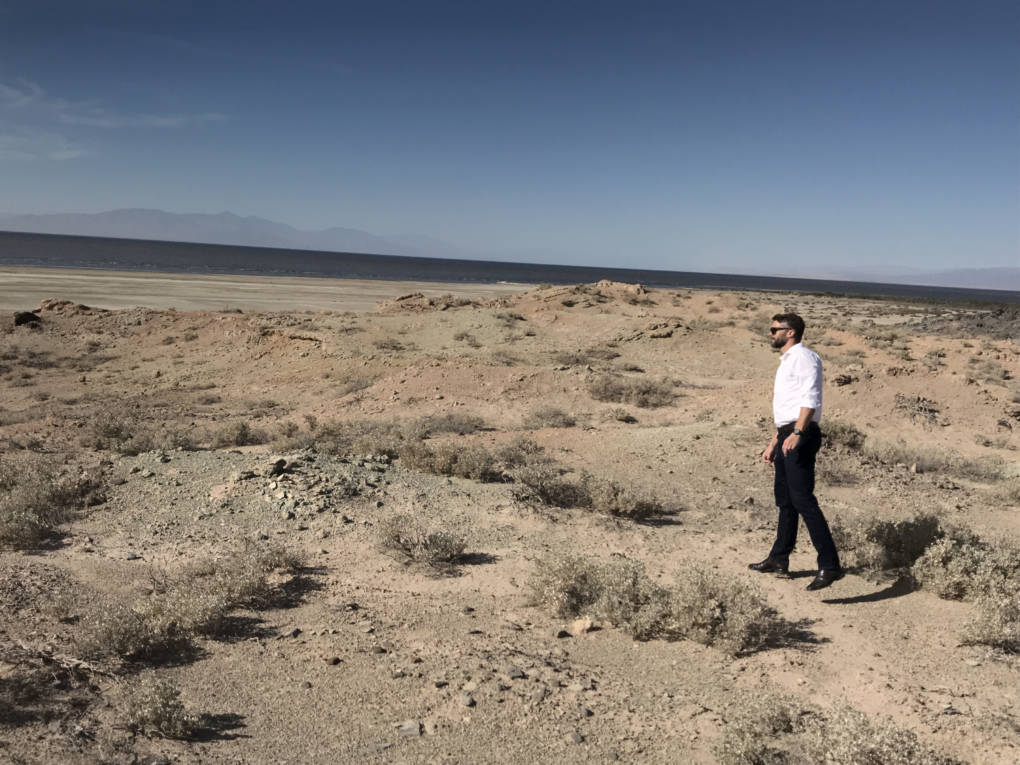
"description": "Jason Czapla, principal engineer for Controlled Thermal Resources, surveys the site where the company's Hell's Kitchen Plant will be built.",
"title": "Jason Czapla, principal engineer for Controlled Thermal Resources, surveys the site where the company's Hell's Kitchen Plant will be built.",
"credit": null,
"status": "inherit",
"isLoading": false,
"fetchFailed": false
},
"science_1919412": {
"type": "attachments",
"id": "science_1919412",
"meta": {
"index": "attachments_1716263798",
"site": "science",
"id": "1919412",
"found": true
},
"parent": 1919409,
"imgSizes": {
"thumbnail": {
"file": "https://ww2.kqed.org/app/uploads/sites/35/2018/01/700816807-160x107.jpg",
"width": 160,
"mimeType": "image/jpeg",
"height": 107
},
"xsmall": {
"file": "https://ww2.kqed.org/app/uploads/sites/35/2018/01/700816807-375x250.jpg",
"width": 375,
"mimeType": "image/jpeg",
"height": 250
},
"kqedFullSize": {
"file": "https://ww2.kqed.org/app/uploads/sites/35/2018/01/700816807.jpg",
"width": 509,
"height": 339
},
"guest-author-50": {
"file": "https://ww2.kqed.org/app/uploads/sites/35/2018/01/700816807-50x50.jpg",
"width": 50,
"mimeType": "image/jpeg",
"height": 50
},
"guest-author-96": {
"file": "https://ww2.kqed.org/app/uploads/sites/35/2018/01/700816807-96x96.jpg",
"width": 96,
"mimeType": "image/jpeg",
"height": 96
},
"guest-author-64": {
"file": "https://ww2.kqed.org/app/uploads/sites/35/2018/01/700816807-64x64.jpg",
"width": 64,
"mimeType": "image/jpeg",
"height": 64
},
"detail": {
"file": "https://ww2.kqed.org/app/uploads/sites/35/2018/01/700816807-150x150.jpg",
"width": 150,
"mimeType": "image/jpeg",
"height": 150
},
"guest-author-32": {
"file": "https://ww2.kqed.org/app/uploads/sites/35/2018/01/700816807-32x32.jpg",
"width": 32,
"mimeType": "image/jpeg",
"height": 32
},
"guest-author-128": {
"file": "https://ww2.kqed.org/app/uploads/sites/35/2018/01/700816807-128x128.jpg",
"width": 128,
"mimeType": "image/jpeg",
"height": 128
},
"xxsmall": {
"file": "https://ww2.kqed.org/app/uploads/sites/35/2018/01/700816807-240x160.jpg",
"width": 240,
"mimeType": "image/jpeg",
"height": 160
}
},
"publishDate": 1517438005,
"modified": 1517438005,
"caption": null,
"description": null,
"title": "700816807",
"credit": null,
"status": "inherit",
"isLoading": false,
"fetchFailed": false
},
"science_1919017": {
"type": "attachments",
"id": "science_1919017",
"meta": {
"index": "attachments_1716263798",
"site": "science",
"id": "1919017",
"found": true
},
"parent": 1919012,
"imgSizes": {
"small": {
"file": "https://ww2.kqed.org/app/uploads/sites/35/2018/01/Oyster-farm-web1-520x293.jpg",
"width": 520,
"mimeType": "image/jpeg",
"height": 293
},
"twentyfourteen-full-width": {
"file": "https://ww2.kqed.org/app/uploads/sites/35/2018/01/Oyster-farm-web1-1038x576.jpg",
"width": 1038,
"mimeType": "image/jpeg",
"height": 576
},
"thumbnail": {
"file": "https://ww2.kqed.org/app/uploads/sites/35/2018/01/Oyster-farm-web1-160x90.jpg",
"width": 160,
"mimeType": "image/jpeg",
"height": 90
},
"fd-sm": {
"file": "https://ww2.kqed.org/app/uploads/sites/35/2018/01/Oyster-farm-web1-960x540.jpg",
"width": 960,
"mimeType": "image/jpeg",
"height": 540
},
"post-thumbnail": {
"file": "https://ww2.kqed.org/app/uploads/sites/35/2018/01/Oyster-farm-web1-672x372.jpg",
"width": 672,
"mimeType": "image/jpeg",
"height": 372
},
"xsmall": {
"file": "https://ww2.kqed.org/app/uploads/sites/35/2018/01/Oyster-farm-web1-375x211.jpg",
"width": 375,
"mimeType": "image/jpeg",
"height": 211
},
"kqedFullSize": {
"file": "https://ww2.kqed.org/app/uploads/sites/35/2018/01/Oyster-farm-web1.jpg",
"width": 1920,
"height": 1080
},
"large": {
"file": "https://ww2.kqed.org/app/uploads/sites/35/2018/01/Oyster-farm-web1-1020x574.jpg",
"width": 1020,
"mimeType": "image/jpeg",
"height": 574
},
"xlarge": {
"file": "https://ww2.kqed.org/app/uploads/sites/35/2018/01/Oyster-farm-web1-1180x664.jpg",
"width": 1180,
"mimeType": "image/jpeg",
"height": 664
},
"guest-author-50": {
"file": "https://ww2.kqed.org/app/uploads/sites/35/2018/01/Oyster-farm-web1-50x50.jpg",
"width": 50,
"mimeType": "image/jpeg",
"height": 50
},
"guest-author-96": {
"file": "https://ww2.kqed.org/app/uploads/sites/35/2018/01/Oyster-farm-web1-96x96.jpg",
"width": 96,
"mimeType": "image/jpeg",
"height": 96
},
"medium": {
"file": "https://ww2.kqed.org/app/uploads/sites/35/2018/01/Oyster-farm-web1-800x450.jpg",
"width": 800,
"mimeType": "image/jpeg",
"height": 450
},
"guest-author-64": {
"file": "https://ww2.kqed.org/app/uploads/sites/35/2018/01/Oyster-farm-web1-64x64.jpg",
"width": 64,
"mimeType": "image/jpeg",
"height": 64
},
"guest-author-32": {
"file": "https://ww2.kqed.org/app/uploads/sites/35/2018/01/Oyster-farm-web1-32x32.jpg",
"width": 32,
"mimeType": "image/jpeg",
"height": 32
},
"fd-lrg": {
"file": "https://ww2.kqed.org/app/uploads/sites/35/2018/01/Oyster-farm-web1-1920x1080.jpg",
"width": 1920,
"mimeType": "image/jpeg",
"height": 1080
},
"fd-med": {
"file": "https://ww2.kqed.org/app/uploads/sites/35/2018/01/Oyster-farm-web1-1180x664.jpg",
"width": 1180,
"mimeType": "image/jpeg",
"height": 664
},
"full-width": {
"file": "https://ww2.kqed.org/app/uploads/sites/35/2018/01/Oyster-farm-web1-1920x1080.jpg",
"width": 1920,
"mimeType": "image/jpeg",
"height": 1080
},
"detail": {
"file": "https://ww2.kqed.org/app/uploads/sites/35/2018/01/Oyster-farm-web1-150x150.jpg",
"width": 150,
"mimeType": "image/jpeg",
"height": 150
},
"medium_large": {
"file": "https://ww2.kqed.org/app/uploads/sites/35/2018/01/Oyster-farm-web1-768x432.jpg",
"width": 768,
"mimeType": "image/jpeg",
"height": 432
},
"guest-author-128": {
"file": "https://ww2.kqed.org/app/uploads/sites/35/2018/01/Oyster-farm-web1-128x128.jpg",
"width": 128,
"mimeType": "image/jpeg",
"height": 128
},
"xxsmall": {
"file": "https://ww2.kqed.org/app/uploads/sites/35/2018/01/Oyster-farm-web1-240x135.jpg",
"width": 240,
"mimeType": "image/jpeg",
"height": 135
}
},
"publishDate": 1516772013,
"modified": 1516772051,
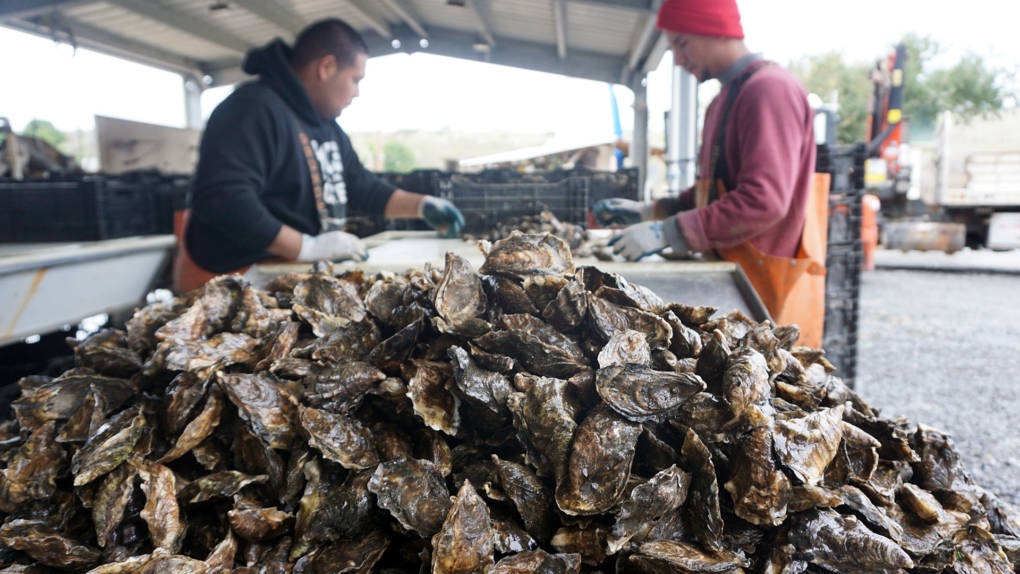
"caption": "Workers at Hog Island Oyster Company sort fresh oysters.",
"description": null,
"title": "Oyster-farm-web1",
"credit": "Lauren Sommer/KQED",
"status": "inherit",
"isLoading": false,
"fetchFailed": false
},
"science_1919077": {
"type": "attachments",
"id": "science_1919077",
"meta": {
"index": "attachments_1716263798",
"site": "science",
"id": "1919077",
"found": true
},
"parent": 1919070,
"imgSizes": {
"small": {
"file": "https://ww2.kqed.org/app/uploads/sites/35/2018/01/IMG_6998-520x390.jpg",
"width": 520,
"mimeType": "image/jpeg",
"height": 390
},
"twentyfourteen-full-width": {
"file": "https://ww2.kqed.org/app/uploads/sites/35/2018/01/IMG_6998-1038x576.jpg",
"width": 1038,
"mimeType": "image/jpeg",
"height": 576
},
"thumbnail": {
"file": "https://ww2.kqed.org/app/uploads/sites/35/2018/01/IMG_6998-160x120.jpg",
"width": 160,
"mimeType": "image/jpeg",
"height": 120
},
"fd-sm": {
"file": "https://ww2.kqed.org/app/uploads/sites/35/2018/01/IMG_6998-960x720.jpg",
"width": 960,
"mimeType": "image/jpeg",
"height": 720
},
"post-thumbnail": {
"file": "https://ww2.kqed.org/app/uploads/sites/35/2018/01/IMG_6998-672x372.jpg",
"width": 672,
"mimeType": "image/jpeg",
"height": 372
},
"xsmall": {
"file": "https://ww2.kqed.org/app/uploads/sites/35/2018/01/IMG_6998-375x281.jpg",
"width": 375,
"mimeType": "image/jpeg",
"height": 281
},
"kqedFullSize": {
"file": "https://ww2.kqed.org/app/uploads/sites/35/2018/01/IMG_6998.jpg",
"width": 2000,
"height": 1500
},
"large": {
"file": "https://ww2.kqed.org/app/uploads/sites/35/2018/01/IMG_6998-1020x765.jpg",
"width": 1020,
"mimeType": "image/jpeg",
"height": 765
},
"xlarge": {
"file": "https://ww2.kqed.org/app/uploads/sites/35/2018/01/IMG_6998-1180x885.jpg",
"width": 1180,
"mimeType": "image/jpeg",
"height": 885
},
"guest-author-50": {
"file": "https://ww2.kqed.org/app/uploads/sites/35/2018/01/IMG_6998-50x50.jpg",
"width": 50,
"mimeType": "image/jpeg",
"height": 50
},
"guest-author-96": {
"file": "https://ww2.kqed.org/app/uploads/sites/35/2018/01/IMG_6998-96x96.jpg",
"width": 96,
"mimeType": "image/jpeg",
"height": 96
},
"medium": {
"file": "https://ww2.kqed.org/app/uploads/sites/35/2018/01/IMG_6998-800x600.jpg",
"width": 800,
"mimeType": "image/jpeg",
"height": 600
},
"guest-author-64": {
"file": "https://ww2.kqed.org/app/uploads/sites/35/2018/01/IMG_6998-64x64.jpg",
"width": 64,
"mimeType": "image/jpeg",
"height": 64
},
"guest-author-32": {
"file": "https://ww2.kqed.org/app/uploads/sites/35/2018/01/IMG_6998-32x32.jpg",
"width": 32,
"mimeType": "image/jpeg",
"height": 32
},
"fd-lrg": {
"file": "https://ww2.kqed.org/app/uploads/sites/35/2018/01/IMG_6998-1920x1440.jpg",
"width": 1920,
"mimeType": "image/jpeg",
"height": 1440
},
"fd-med": {
"file": "https://ww2.kqed.org/app/uploads/sites/35/2018/01/IMG_6998-1180x885.jpg",
"width": 1180,
"mimeType": "image/jpeg",
"height": 885
},
"full-width": {
"file": "https://ww2.kqed.org/app/uploads/sites/35/2018/01/IMG_6998-1920x1440.jpg",
"width": 1920,
"mimeType": "image/jpeg",
"height": 1440
},
"detail": {
"file": "https://ww2.kqed.org/app/uploads/sites/35/2018/01/IMG_6998-150x150.jpg",
"width": 150,
"mimeType": "image/jpeg",
"height": 150
},
"medium_large": {
"file": "https://ww2.kqed.org/app/uploads/sites/35/2018/01/IMG_6998-768x576.jpg",
"width": 768,
"mimeType": "image/jpeg",
"height": 576
},
"guest-author-128": {
"file": "https://ww2.kqed.org/app/uploads/sites/35/2018/01/IMG_6998-128x128.jpg",
"width": 128,
"mimeType": "image/jpeg",
"height": 128
},
"xxsmall": {
"file": "https://ww2.kqed.org/app/uploads/sites/35/2018/01/IMG_6998-240x180.jpg",
"width": 240,
"mimeType": "image/jpeg",
"height": 180
}
},
"publishDate": 1516988471,
"modified": 1516988551,
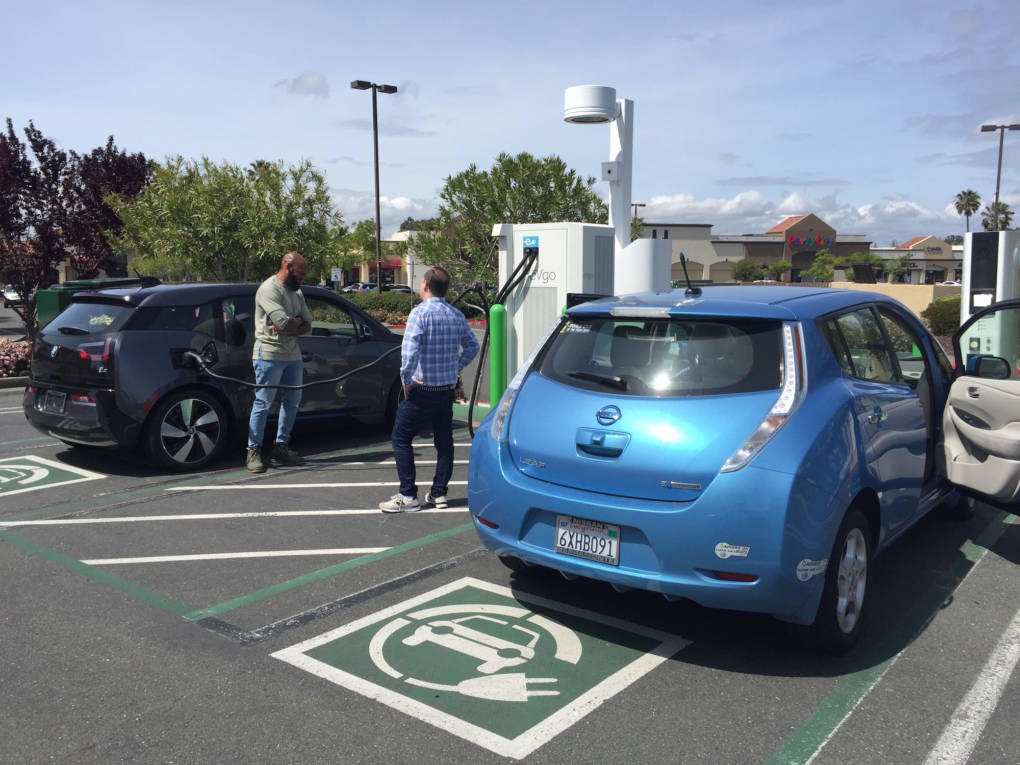
"caption": "Drivers chat while their electric cars recharge at a commercial charging station in Vallejo.",
"description": "Drivers chat while their electric cars recharge at a commercial charging station in Vallejo.",
"title": "IMG_6998",
"credit": "Craig Miller",
"status": "inherit",
"isLoading": false,
"fetchFailed": false
},
"science_1918634": {
"type": "attachments",
"id": "science_1918634",
"meta": {
"index": "attachments_1716263798",
"site": "science",
"id": "1918634",
"found": true
},
"parent": 1918632,
"imgSizes": {
"small": {
"file": "https://ww2.kqed.org/app/uploads/sites/35/2018/01/RS1809_OilPlatform_120119-520x390.jpg",
"width": 520,
"mimeType": "image/jpeg",
"height": 390
},
"twentyfourteen-full-width": {
"file": "https://ww2.kqed.org/app/uploads/sites/35/2018/01/RS1809_OilPlatform_120119-1038x576.jpg",
"width": 1038,
"mimeType": "image/jpeg",
"height": 576
},
"thumbnail": {
"file": "https://ww2.kqed.org/app/uploads/sites/35/2018/01/RS1809_OilPlatform_120119-160x120.jpg",
"width": 160,
"mimeType": "image/jpeg",
"height": 120
},
"fd-sm": {
"file": "https://ww2.kqed.org/app/uploads/sites/35/2018/01/RS1809_OilPlatform_120119-960x720.jpg",
"width": 960,
"mimeType": "image/jpeg",
"height": 720
},
"post-thumbnail": {
"file": "https://ww2.kqed.org/app/uploads/sites/35/2018/01/RS1809_OilPlatform_120119-672x372.jpg",
"width": 672,
"mimeType": "image/jpeg",
"height": 372
},
"xsmall": {
"file": "https://ww2.kqed.org/app/uploads/sites/35/2018/01/RS1809_OilPlatform_120119-375x281.jpg",
"width": 375,
"mimeType": "image/jpeg",
"height": 281
},
"kqedFullSize": {
"file": "https://ww2.kqed.org/app/uploads/sites/35/2018/01/RS1809_OilPlatform_120119-e1518131215268.jpg",
"width": 1920,
"height": 1440
},
"large": {
"file": "https://ww2.kqed.org/app/uploads/sites/35/2018/01/RS1809_OilPlatform_120119-1020x765.jpg",
"width": 1020,
"mimeType": "image/jpeg",
"height": 765
},
"xlarge": {
"file": "https://ww2.kqed.org/app/uploads/sites/35/2018/01/RS1809_OilPlatform_120119-1180x885.jpg",
"width": 1180,
"mimeType": "image/jpeg",
"height": 885
},
"guest-author-50": {
"file": "https://ww2.kqed.org/app/uploads/sites/35/2018/01/RS1809_OilPlatform_120119-50x50.jpg",
"width": 50,
"mimeType": "image/jpeg",
"height": 50
},
"guest-author-96": {
"file": "https://ww2.kqed.org/app/uploads/sites/35/2018/01/RS1809_OilPlatform_120119-96x96.jpg",
"width": 96,
"mimeType": "image/jpeg",
"height": 96
},
"medium": {
"file": "https://ww2.kqed.org/app/uploads/sites/35/2018/01/RS1809_OilPlatform_120119-800x600.jpg",
"width": 800,
"mimeType": "image/jpeg",
"height": 600
},
"guest-author-64": {
"file": "https://ww2.kqed.org/app/uploads/sites/35/2018/01/RS1809_OilPlatform_120119-64x64.jpg",
"width": 64,
"mimeType": "image/jpeg",
"height": 64
},
"guest-author-32": {
"file": "https://ww2.kqed.org/app/uploads/sites/35/2018/01/RS1809_OilPlatform_120119-32x32.jpg",
"width": 32,
"mimeType": "image/jpeg",
"height": 32
},
"fd-lrg": {
"file": "https://ww2.kqed.org/app/uploads/sites/35/2018/01/RS1809_OilPlatform_120119-1920x1440.jpg",
"width": 1920,
"mimeType": "image/jpeg",
"height": 1440
},
"fd-med": {
"file": "https://ww2.kqed.org/app/uploads/sites/35/2018/01/RS1809_OilPlatform_120119-1180x885.jpg",
"width": 1180,
"mimeType": "image/jpeg",
"height": 885
},
"full-width": {
"file": "https://ww2.kqed.org/app/uploads/sites/35/2018/01/RS1809_OilPlatform_120119-1920x1440.jpg",
"width": 1920,
"mimeType": "image/jpeg",
"height": 1440
},
"detail": {
"file": "https://ww2.kqed.org/app/uploads/sites/35/2018/01/RS1809_OilPlatform_120119-150x150.jpg",
"width": 150,
"mimeType": "image/jpeg",
"height": 150
},
"medium_large": {
"file": "https://ww2.kqed.org/app/uploads/sites/35/2018/01/RS1809_OilPlatform_120119-768x576.jpg",
"width": 768,
"mimeType": "image/jpeg",
"height": 576
},
"guest-author-128": {
"file": "https://ww2.kqed.org/app/uploads/sites/35/2018/01/RS1809_OilPlatform_120119-128x128.jpg",
"width": 128,
"mimeType": "image/jpeg",
"height": 128
},
"xxsmall": {
"file": "https://ww2.kqed.org/app/uploads/sites/35/2018/01/RS1809_OilPlatform_120119-240x180.jpg",
"width": 240,
"mimeType": "image/jpeg",
"height": 180
}
},
"publishDate": 1515131733,
"modified": 1515131834,
"caption": "Since the 1980s, California's local governments have developed strategies to stop oil drilling in federal waters.",
"description": null,
"title": "RS1809_OilPlatform_120119",
"credit": "Molly Samuel/KQED",
"status": "inherit",
"isLoading": false,
"fetchFailed": false
},
"science_23912": {
"type": "attachments",
"id": "science_23912",
"meta": {
"index": "attachments_1716263798",
"site": "science",
"id": "23912",
"found": true
},
"parent": 23863,
"imgSizes": {
"kqedFullSize": {
"file": "https://ww2.kqed.org/app/uploads/sites/35/2014/11/diseased-davenport-big-e1514422721171.jpg",
"width": 1920,
"height": 1440
}
},
"publishDate": 1416274162,
"modified": 1514418144,
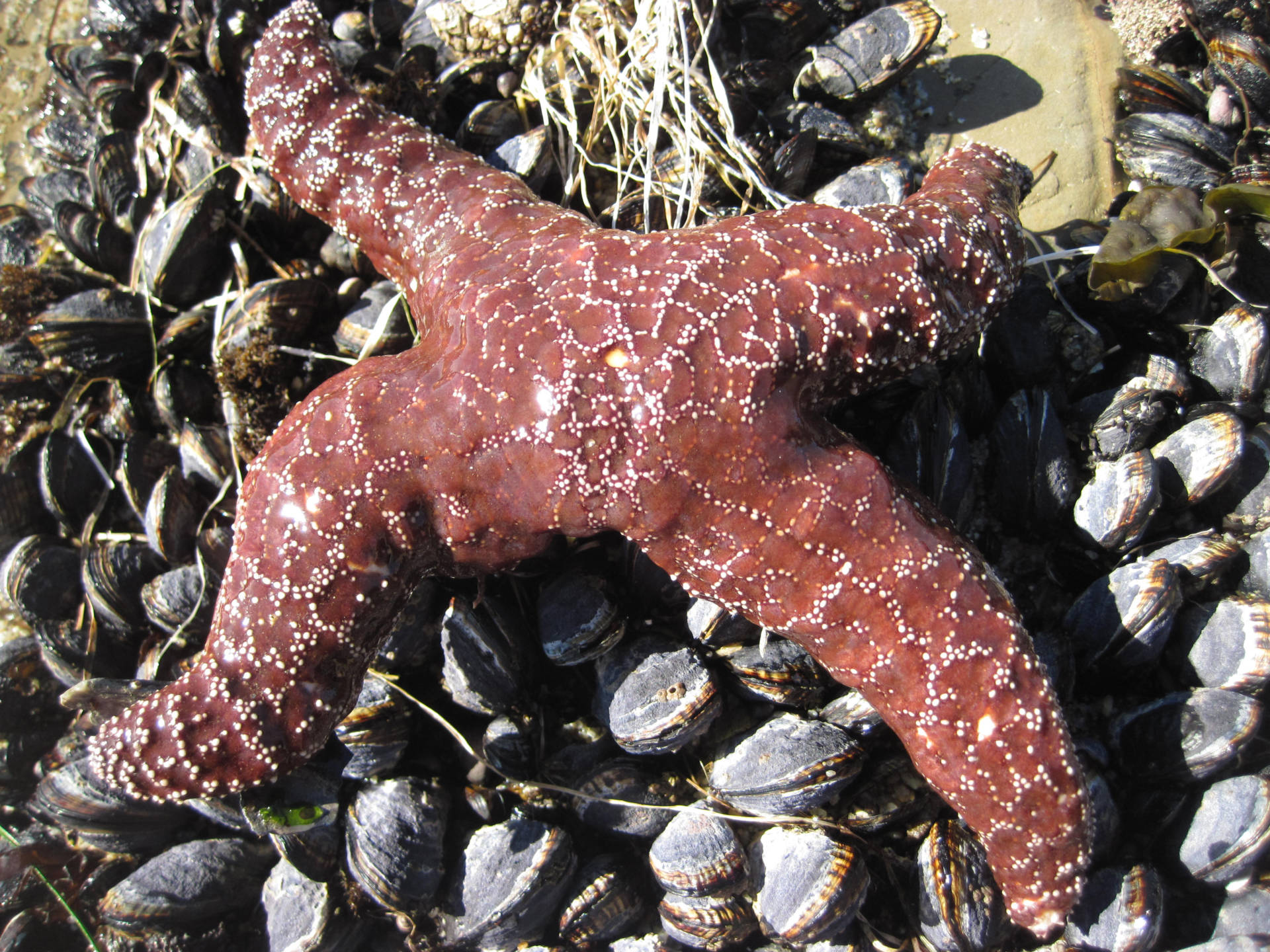
"caption": "Wasting disease causes some sea stars, like this ochre star in Santa Cruz, to lose their limbs.",
"description": "The mass wasting disease causes some sea stars, like this ochre star in Santa Cruz, to lose their limbs. (Nate Fletcher/ UC Santa Cruz)",
"title": "diseased-davenport big",
"credit": "Nate Fletcher/ UC Santa Cruz",
"status": "inherit",
"isLoading": false,
"fetchFailed": false
},
"science_1918220": {
"type": "attachments",
"id": "science_1918220",
"meta": {
"index": "attachments_1716263798",
"site": "science",
"id": "1918220",
"found": true
},
"parent": 1918219,
"imgSizes": {
"small": {
"file": "https://ww2.kqed.org/app/uploads/sites/35/2017/12/eclipse-1-03d0b421f44da22ddb6e231d7f10553e8e1bc741-520x389.jpg",
"width": 520,
"mimeType": "image/jpeg",
"height": 389
},
"twentyfourteen-full-width": {
"file": "https://ww2.kqed.org/app/uploads/sites/35/2017/12/eclipse-1-03d0b421f44da22ddb6e231d7f10553e8e1bc741-1038x576.jpg",
"width": 1038,
"mimeType": "image/jpeg",
"height": 576
},
"thumbnail": {
"file": "https://ww2.kqed.org/app/uploads/sites/35/2017/12/eclipse-1-03d0b421f44da22ddb6e231d7f10553e8e1bc741-160x120.jpg",
"width": 160,
"mimeType": "image/jpeg",
"height": 120
},
"fd-sm": {
"file": "https://ww2.kqed.org/app/uploads/sites/35/2017/12/eclipse-1-03d0b421f44da22ddb6e231d7f10553e8e1bc741-960x719.jpg",
"width": 960,
"mimeType": "image/jpeg",
"height": 719
},
"post-thumbnail": {
"file": "https://ww2.kqed.org/app/uploads/sites/35/2017/12/eclipse-1-03d0b421f44da22ddb6e231d7f10553e8e1bc741-672x372.jpg",
"width": 672,
"mimeType": "image/jpeg",
"height": 372
},
"xsmall": {
"file": "https://ww2.kqed.org/app/uploads/sites/35/2017/12/eclipse-1-03d0b421f44da22ddb6e231d7f10553e8e1bc741-375x281.jpg",
"width": 375,
"mimeType": "image/jpeg",
"height": 281
},
"kqedFullSize": {
"file": "https://ww2.kqed.org/app/uploads/sites/35/2017/12/eclipse-1-03d0b421f44da22ddb6e231d7f10553e8e1bc741.jpg",
"width": 1780,
"height": 1333
},
"large": {
"file": "https://ww2.kqed.org/app/uploads/sites/35/2017/12/eclipse-1-03d0b421f44da22ddb6e231d7f10553e8e1bc741-1020x764.jpg",
"width": 1020,
"mimeType": "image/jpeg",
"height": 764
},
"xlarge": {
"file": "https://ww2.kqed.org/app/uploads/sites/35/2017/12/eclipse-1-03d0b421f44da22ddb6e231d7f10553e8e1bc741-1180x884.jpg",
"width": 1180,
"mimeType": "image/jpeg",
"height": 884
},
"guest-author-50": {
"file": "https://ww2.kqed.org/app/uploads/sites/35/2017/12/eclipse-1-03d0b421f44da22ddb6e231d7f10553e8e1bc741-50x50.jpg",
"width": 50,
"mimeType": "image/jpeg",
"height": 50
},
"guest-author-96": {
"file": "https://ww2.kqed.org/app/uploads/sites/35/2017/12/eclipse-1-03d0b421f44da22ddb6e231d7f10553e8e1bc741-96x96.jpg",
"width": 96,
"mimeType": "image/jpeg",
"height": 96
},
"medium": {
"file": "https://ww2.kqed.org/app/uploads/sites/35/2017/12/eclipse-1-03d0b421f44da22ddb6e231d7f10553e8e1bc741-800x599.jpg",
"width": 800,
"mimeType": "image/jpeg",
"height": 599
},
"guest-author-64": {
"file": "https://ww2.kqed.org/app/uploads/sites/35/2017/12/eclipse-1-03d0b421f44da22ddb6e231d7f10553e8e1bc741-64x64.jpg",
"width": 64,
"mimeType": "image/jpeg",
"height": 64
},
"guest-author-32": {
"file": "https://ww2.kqed.org/app/uploads/sites/35/2017/12/eclipse-1-03d0b421f44da22ddb6e231d7f10553e8e1bc741-32x32.jpg",
"width": 32,
"mimeType": "image/jpeg",
"height": 32
},
"fd-med": {
"file": "https://ww2.kqed.org/app/uploads/sites/35/2017/12/eclipse-1-03d0b421f44da22ddb6e231d7f10553e8e1bc741-1180x884.jpg",
"width": 1180,
"mimeType": "image/jpeg",
"height": 884
},
"detail": {
"file": "https://ww2.kqed.org/app/uploads/sites/35/2017/12/eclipse-1-03d0b421f44da22ddb6e231d7f10553e8e1bc741-150x150.jpg",
"width": 150,
"mimeType": "image/jpeg",
"height": 150
},
"medium_large": {
"file": "https://ww2.kqed.org/app/uploads/sites/35/2017/12/eclipse-1-03d0b421f44da22ddb6e231d7f10553e8e1bc741-768x575.jpg",
"width": 768,
"mimeType": "image/jpeg",
"height": 575
},
"guest-author-128": {
"file": "https://ww2.kqed.org/app/uploads/sites/35/2017/12/eclipse-1-03d0b421f44da22ddb6e231d7f10553e8e1bc741-128x128.jpg",
"width": 128,
"mimeType": "image/jpeg",
"height": 128
},
"xxsmall": {
"file": "https://ww2.kqed.org/app/uploads/sites/35/2017/12/eclipse-1-03d0b421f44da22ddb6e231d7f10553e8e1bc741-240x180.jpg",
"width": 240,
"mimeType": "image/jpeg",
"height": 180
}
},
"publishDate": 1512689380,
"modified": 1608333132,
"caption": "Millions of people in the U.S. watched the Aug. 21, 2017 total solar eclipse. It was the subject of David Perlman's final story for the San Francisco Chronicle.",
"description": null,
"title": "Millions of people watched the Aug. 21 total solar eclipse in the U.S. Most emerged unscathed.",
"credit": "David Hume Kennerly/Getty Images",
"status": "inherit",
"altTag": null,
"isLoading": false,
"fetchFailed": false
},
"science_1918506": {
"type": "attachments",
"id": "science_1918506",
"meta": {
"index": "attachments_1716263798",
"site": "science",
"id": "1918506",
"found": true
},
"parent": 1918505,
"imgSizes": {
"small": {
"file": "https://ww2.kqed.org/app/uploads/sites/35/2017/12/2017BillionDollarDisasters_Map_2-520x293.jpg",
"width": 520,
"mimeType": "image/jpeg",
"height": 293
},
"twentyfourteen-full-width": {
"file": "https://ww2.kqed.org/app/uploads/sites/35/2017/12/2017BillionDollarDisasters_Map_2-1038x576.jpg",
"width": 1038,
"mimeType": "image/jpeg",
"height": 576
},
"thumbnail": {
"file": "https://ww2.kqed.org/app/uploads/sites/35/2017/12/2017BillionDollarDisasters_Map_2-160x90.jpg",
"width": 160,
"mimeType": "image/jpeg",
"height": 90
},
"fd-sm": {
"file": "https://ww2.kqed.org/app/uploads/sites/35/2017/12/2017BillionDollarDisasters_Map_2-960x540.jpg",
"width": 960,
"mimeType": "image/jpeg",
"height": 540
},
"post-thumbnail": {
"file": "https://ww2.kqed.org/app/uploads/sites/35/2017/12/2017BillionDollarDisasters_Map_2-672x372.jpg",
"width": 672,
"mimeType": "image/jpeg",
"height": 372
},
"xsmall": {
"file": "https://ww2.kqed.org/app/uploads/sites/35/2017/12/2017BillionDollarDisasters_Map_2-375x211.jpg",
"width": 375,
"mimeType": "image/jpeg",
"height": 211
},
"kqedFullSize": {
"file": "https://ww2.kqed.org/app/uploads/sites/35/2017/12/2017BillionDollarDisasters_Map_2.jpg",
"width": 1920,
"height": 1080
},
"large": {
"file": "https://ww2.kqed.org/app/uploads/sites/35/2017/12/2017BillionDollarDisasters_Map_2-1020x574.jpg",
"width": 1020,
"mimeType": "image/jpeg",
"height": 574
},
"xlarge": {
"file": "https://ww2.kqed.org/app/uploads/sites/35/2017/12/2017BillionDollarDisasters_Map_2-1180x664.jpg",
"width": 1180,
"mimeType": "image/jpeg",
"height": 664
},
"guest-author-50": {
"file": "https://ww2.kqed.org/app/uploads/sites/35/2017/12/2017BillionDollarDisasters_Map_2-50x50.jpg",
"width": 50,
"mimeType": "image/jpeg",
"height": 50
},
"guest-author-96": {
"file": "https://ww2.kqed.org/app/uploads/sites/35/2017/12/2017BillionDollarDisasters_Map_2-96x96.jpg",
"width": 96,
"mimeType": "image/jpeg",
"height": 96
},
"medium": {
"file": "https://ww2.kqed.org/app/uploads/sites/35/2017/12/2017BillionDollarDisasters_Map_2-800x450.jpg",
"width": 800,
"mimeType": "image/jpeg",
"height": 450
},
"guest-author-64": {
"file": "https://ww2.kqed.org/app/uploads/sites/35/2017/12/2017BillionDollarDisasters_Map_2-64x64.jpg",
"width": 64,
"mimeType": "image/jpeg",
"height": 64
},
"guest-author-32": {
"file": "https://ww2.kqed.org/app/uploads/sites/35/2017/12/2017BillionDollarDisasters_Map_2-32x32.jpg",
"width": 32,
"mimeType": "image/jpeg",
"height": 32
},
"fd-lrg": {
"file": "https://ww2.kqed.org/app/uploads/sites/35/2017/12/2017BillionDollarDisasters_Map_2-1920x1080.jpg",
"width": 1920,
"mimeType": "image/jpeg",
"height": 1080
},
"fd-med": {
"file": "https://ww2.kqed.org/app/uploads/sites/35/2017/12/2017BillionDollarDisasters_Map_2-1180x664.jpg",
"width": 1180,
"mimeType": "image/jpeg",
"height": 664
},
"full-width": {
"file": "https://ww2.kqed.org/app/uploads/sites/35/2017/12/2017BillionDollarDisasters_Map_2-1920x1080.jpg",
"width": 1920,
"mimeType": "image/jpeg",
"height": 1080
},
"detail": {
"file": "https://ww2.kqed.org/app/uploads/sites/35/2017/12/2017BillionDollarDisasters_Map_2-150x150.jpg",
"width": 150,
"mimeType": "image/jpeg",
"height": 150
},
"medium_large": {
"file": "https://ww2.kqed.org/app/uploads/sites/35/2017/12/2017BillionDollarDisasters_Map_2-768x432.jpg",
"width": 768,
"mimeType": "image/jpeg",
"height": 432
},
"guest-author-128": {
"file": "https://ww2.kqed.org/app/uploads/sites/35/2017/12/2017BillionDollarDisasters_Map_2-128x128.jpg",
"width": 128,
"mimeType": "image/jpeg",
"height": 128
},
"xxsmall": {
"file": "https://ww2.kqed.org/app/uploads/sites/35/2017/12/2017BillionDollarDisasters_Map_2-240x135.jpg",
"width": 240,
"mimeType": "image/jpeg",
"height": 135
}
},
"publishDate": 1513982444,
"modified": 1513982484,
"caption": null,
"description": null,
"title": "2017BillionDollarDisasters_Map_2",
"credit": "Climate Central",
"status": "inherit",
"isLoading": false,
"fetchFailed": false
},
"science_1918491": {
"type": "attachments",
"id": "science_1918491",
"meta": {
"index": "attachments_1716263798",
"site": "science",
"id": "1918491",
"found": true
},
"parent": 1918485,
"imgSizes": {
"small": {
"file": "https://ww2.kqed.org/app/uploads/sites/35/2017/12/mining-520x347.jpg",
"width": 520,
"mimeType": "image/jpeg",
"height": 347
},
"twentyfourteen-full-width": {
"file": "https://ww2.kqed.org/app/uploads/sites/35/2017/12/mining-1038x576.jpg",
"width": 1038,
"mimeType": "image/jpeg",
"height": 576
},
"thumbnail": {
"file": "https://ww2.kqed.org/app/uploads/sites/35/2017/12/mining-160x107.jpg",
"width": 160,
"mimeType": "image/jpeg",
"height": 107
},
"fd-sm": {
"file": "https://ww2.kqed.org/app/uploads/sites/35/2017/12/mining-960x640.jpg",
"width": 960,
"mimeType": "image/jpeg",
"height": 640
},
"post-thumbnail": {
"file": "https://ww2.kqed.org/app/uploads/sites/35/2017/12/mining-672x372.jpg",
"width": 672,
"mimeType": "image/jpeg",
"height": 372
},
"xsmall": {
"file": "https://ww2.kqed.org/app/uploads/sites/35/2017/12/mining-375x250.jpg",
"width": 375,
"mimeType": "image/jpeg",
"height": 250
},
"kqedFullSize": {
"file": "https://ww2.kqed.org/app/uploads/sites/35/2017/12/mining.jpg",
"width": 3865,
"height": 2576
},
"large": {
"file": "https://ww2.kqed.org/app/uploads/sites/35/2017/12/mining-1020x680.jpg",
"width": 1020,
"mimeType": "image/jpeg",
"height": 680
},
"xlarge": {
"file": "https://ww2.kqed.org/app/uploads/sites/35/2017/12/mining-1180x786.jpg",
"width": 1180,
"mimeType": "image/jpeg",
"height": 786
},
"guest-author-50": {
"file": "https://ww2.kqed.org/app/uploads/sites/35/2017/12/mining-50x50.jpg",
"width": 50,
"mimeType": "image/jpeg",
"height": 50
},
"guest-author-96": {
"file": "https://ww2.kqed.org/app/uploads/sites/35/2017/12/mining-96x96.jpg",
"width": 96,
"mimeType": "image/jpeg",
"height": 96
},
"medium": {
"file": "https://ww2.kqed.org/app/uploads/sites/35/2017/12/mining-800x533.jpg",
"width": 800,
"mimeType": "image/jpeg",
"height": 533
},
"guest-author-64": {
"file": "https://ww2.kqed.org/app/uploads/sites/35/2017/12/mining-64x64.jpg",
"width": 64,
"mimeType": "image/jpeg",
"height": 64
},
"guest-author-32": {
"file": "https://ww2.kqed.org/app/uploads/sites/35/2017/12/mining-32x32.jpg",
"width": 32,
"mimeType": "image/jpeg",
"height": 32
},
"fd-lrg": {
"file": "https://ww2.kqed.org/app/uploads/sites/35/2017/12/mining-1920x1280.jpg",
"width": 1920,
"mimeType": "image/jpeg",
"height": 1280
},
"fd-med": {
"file": "https://ww2.kqed.org/app/uploads/sites/35/2017/12/mining-1180x786.jpg",
"width": 1180,
"mimeType": "image/jpeg",
"height": 786
},
"full-width": {
"file": "https://ww2.kqed.org/app/uploads/sites/35/2017/12/mining-1920x1280.jpg",
"width": 1920,
"mimeType": "image/jpeg",
"height": 1280
},
"detail": {
"file": "https://ww2.kqed.org/app/uploads/sites/35/2017/12/mining-150x150.jpg",
"width": 150,
"mimeType": "image/jpeg",
"height": 150
},
"medium_large": {
"file": "https://ww2.kqed.org/app/uploads/sites/35/2017/12/mining-768x512.jpg",
"width": 768,
"mimeType": "image/jpeg",
"height": 512
},
"guest-author-128": {
"file": "https://ww2.kqed.org/app/uploads/sites/35/2017/12/mining-128x128.jpg",
"width": 128,
"mimeType": "image/jpeg",
"height": 128
},
"xxsmall": {
"file": "https://ww2.kqed.org/app/uploads/sites/35/2017/12/mining-240x160.jpg",
"width": 240,
"mimeType": "image/jpeg",
"height": 160
}
},
"publishDate": 1513953409,
"modified": 1513953448,
"caption": null,
"description": null,
"title": "Coal mining",
"credit": "iStockphoto",
"status": "inherit",
"isLoading": false,
"fetchFailed": false
},
"science_1918369": {
"type": "attachments",
"id": "science_1918369",
"meta": {
"index": "attachments_1716263798",
"site": "science",
"id": "1918369",
"found": true
},
"parent": 1918362,
"imgSizes": {
"small": {
"file": "https://ww2.kqed.org/app/uploads/sites/35/2017/12/Fires-e1513350215972-520x342.jpg",
"width": 520,
"mimeType": "image/jpeg",
"height": 342
},
"twentyfourteen-full-width": {
"file": "https://ww2.kqed.org/app/uploads/sites/35/2017/12/Fires-e1513350215972-1038x576.jpg",
"width": 1038,
"mimeType": "image/jpeg",
"height": 576
},
"thumbnail": {
"file": "https://ww2.kqed.org/app/uploads/sites/35/2017/12/Fires-e1513350215972-160x105.jpg",
"width": 160,
"mimeType": "image/jpeg",
"height": 105
},
"fd-sm": {
"file": "https://ww2.kqed.org/app/uploads/sites/35/2017/12/Fires-e1513350215972-960x631.jpg",
"width": 960,
"mimeType": "image/jpeg",
"height": 631
},
"post-thumbnail": {
"file": "https://ww2.kqed.org/app/uploads/sites/35/2017/12/Fires-e1513350215972-672x372.jpg",
"width": 672,
"mimeType": "image/jpeg",
"height": 372
},
"xsmall": {
"file": "https://ww2.kqed.org/app/uploads/sites/35/2017/12/Fires-e1513350215972-375x246.jpg",
"width": 375,
"mimeType": "image/jpeg",
"height": 246
},
"kqedFullSize": {
"file": "https://ww2.kqed.org/app/uploads/sites/35/2017/12/Fires-e1513350215972.jpg",
"width": 1920,
"height": 1262
},
"large": {
"file": "https://ww2.kqed.org/app/uploads/sites/35/2017/12/Fires-e1513350215972-1020x670.jpg",
"width": 1020,
"mimeType": "image/jpeg",
"height": 670
},
"xlarge": {
"file": "https://ww2.kqed.org/app/uploads/sites/35/2017/12/Fires-e1513350215972-1180x776.jpg",
"width": 1180,
"mimeType": "image/jpeg",
"height": 776
},
"guest-author-50": {
"file": "https://ww2.kqed.org/app/uploads/sites/35/2017/12/Fires-e1513350215972-50x50.jpg",
"width": 50,
"mimeType": "image/jpeg",
"height": 50
},
"guest-author-96": {
"file": "https://ww2.kqed.org/app/uploads/sites/35/2017/12/Fires-e1513350215972-96x96.jpg",
"width": 96,
"mimeType": "image/jpeg",
"height": 96
},
"medium": {
"file": "https://ww2.kqed.org/app/uploads/sites/35/2017/12/Fires-e1513350215972-800x526.jpg",
"width": 800,
"mimeType": "image/jpeg",
"height": 526
},
"guest-author-64": {
"file": "https://ww2.kqed.org/app/uploads/sites/35/2017/12/Fires-e1513350215972-64x64.jpg",
"width": 64,
"mimeType": "image/jpeg",
"height": 64
},
"guest-author-32": {
"file": "https://ww2.kqed.org/app/uploads/sites/35/2017/12/Fires-e1513350215972-32x32.jpg",
"width": 32,
"mimeType": "image/jpeg",
"height": 32
},
"fd-lrg": {
"file": "https://ww2.kqed.org/app/uploads/sites/35/2017/12/Fires-e1513350215972-1920x1262.jpg",
"width": 1920,
"mimeType": "image/jpeg",
"height": 1262
},
"fd-med": {
"file": "https://ww2.kqed.org/app/uploads/sites/35/2017/12/Fires-e1513350215972-1180x776.jpg",
"width": 1180,
"mimeType": "image/jpeg",
"height": 776
},
"full-width": {
"file": "https://ww2.kqed.org/app/uploads/sites/35/2017/12/Fires-e1513350215972-1920x1262.jpg",
"width": 1920,
"mimeType": "image/jpeg",
"height": 1262
},
"detail": {
"file": "https://ww2.kqed.org/app/uploads/sites/35/2017/12/Fires-e1513350215972-150x150.jpg",
"width": 150,
"mimeType": "image/jpeg",
"height": 150
},
"medium_large": {
"file": "https://ww2.kqed.org/app/uploads/sites/35/2017/12/Fires-e1513350215972-768x505.jpg",
"width": 768,
"mimeType": "image/jpeg",
"height": 505
},
"guest-author-128": {
"file": "https://ww2.kqed.org/app/uploads/sites/35/2017/12/Fires-e1513350215972-128x128.jpg",
"width": 128,
"mimeType": "image/jpeg",
"height": 128
},
"xxsmall": {
"file": "https://ww2.kqed.org/app/uploads/sites/35/2017/12/Fires-e1513350215972-240x158.jpg",
"width": 240,
"mimeType": "image/jpeg",
"height": 158
}
},
"publishDate": 1513350145,
"modified": 1513350184,
"caption": "Carbon pollution from fires is harmful long after the blazes are out. ",
"description": null,
"title": "Fires",
"credit": "Carbon pollution from fires is harmful long after the blazes are out. Image via Santa Barbara County Fire Department",
"status": "inherit",
"isLoading": false,
"fetchFailed": false
},
"science_1918302": {
"type": "attachments",
"id": "science_1918302",
"meta": {
"index": "attachments_1716263798",
"site": "science",
"id": "1918302",
"found": true
},
"parent": 1918301,
"imgSizes": {
"small": {
"file": "https://ww2.kqed.org/app/uploads/sites/35/2017/12/salt-ponds-web2-520x262.jpg",
"width": 520,
"mimeType": "image/jpeg",
"height": 262
},
"twentyfourteen-full-width": {
"file": "https://ww2.kqed.org/app/uploads/sites/35/2017/12/salt-ponds-web2-1038x576.jpg",
"width": 1038,
"mimeType": "image/jpeg",
"height": 576
},
"thumbnail": {
"file": "https://ww2.kqed.org/app/uploads/sites/35/2017/12/salt-ponds-web2-160x81.jpg",
"width": 160,
"mimeType": "image/jpeg",
"height": 81
},
"fd-sm": {
"file": "https://ww2.kqed.org/app/uploads/sites/35/2017/12/salt-ponds-web2-960x484.jpg",
"width": 960,
"mimeType": "image/jpeg",
"height": 484
},
"post-thumbnail": {
"file": "https://ww2.kqed.org/app/uploads/sites/35/2017/12/salt-ponds-web2-672x372.jpg",
"width": 672,
"mimeType": "image/jpeg",
"height": 372
},
"xsmall": {
"file": "https://ww2.kqed.org/app/uploads/sites/35/2017/12/salt-ponds-web2-375x189.jpg",
"width": 375,
"mimeType": "image/jpeg",
"height": 189
},
"kqedFullSize": {
"file": "https://ww2.kqed.org/app/uploads/sites/35/2017/12/salt-ponds-web2.jpg",
"width": 1920,
"height": 967
},
"large": {
"file": "https://ww2.kqed.org/app/uploads/sites/35/2017/12/salt-ponds-web2-1020x514.jpg",
"width": 1020,
"mimeType": "image/jpeg",
"height": 514
},
"xlarge": {
"file": "https://ww2.kqed.org/app/uploads/sites/35/2017/12/salt-ponds-web2-1180x594.jpg",
"width": 1180,
"mimeType": "image/jpeg",
"height": 594
},
"guest-author-50": {
"file": "https://ww2.kqed.org/app/uploads/sites/35/2017/12/salt-ponds-web2-50x50.jpg",
"width": 50,
"mimeType": "image/jpeg",
"height": 50
},
"guest-author-96": {
"file": "https://ww2.kqed.org/app/uploads/sites/35/2017/12/salt-ponds-web2-96x96.jpg",
"width": 96,
"mimeType": "image/jpeg",
"height": 96
},
"medium": {
"file": "https://ww2.kqed.org/app/uploads/sites/35/2017/12/salt-ponds-web2-800x403.jpg",
"width": 800,
"mimeType": "image/jpeg",
"height": 403
},
"guest-author-64": {
"file": "https://ww2.kqed.org/app/uploads/sites/35/2017/12/salt-ponds-web2-64x64.jpg",
"width": 64,
"mimeType": "image/jpeg",
"height": 64
},
"guest-author-32": {
"file": "https://ww2.kqed.org/app/uploads/sites/35/2017/12/salt-ponds-web2-32x32.jpg",
"width": 32,
"mimeType": "image/jpeg",
"height": 32
},
"fd-lrg": {
"file": "https://ww2.kqed.org/app/uploads/sites/35/2017/12/salt-ponds-web2-1920x967.jpg",
"width": 1920,
"mimeType": "image/jpeg",
"height": 967
},
"fd-med": {
"file": "https://ww2.kqed.org/app/uploads/sites/35/2017/12/salt-ponds-web2-1180x594.jpg",
"width": 1180,
"mimeType": "image/jpeg",
"height": 594
},
"full-width": {
"file": "https://ww2.kqed.org/app/uploads/sites/35/2017/12/salt-ponds-web2-1920x967.jpg",
"width": 1920,
"mimeType": "image/jpeg",
"height": 967
},
"detail": {
"file": "https://ww2.kqed.org/app/uploads/sites/35/2017/12/salt-ponds-web2-150x150.jpg",
"width": 150,
"mimeType": "image/jpeg",
"height": 150
},
"medium_large": {
"file": "https://ww2.kqed.org/app/uploads/sites/35/2017/12/salt-ponds-web2-768x387.jpg",
"width": 768,
"mimeType": "image/jpeg",
"height": 387
},
"guest-author-128": {
"file": "https://ww2.kqed.org/app/uploads/sites/35/2017/12/salt-ponds-web2-128x128.jpg",
"width": 128,
"mimeType": "image/jpeg",
"height": 128
},
"xxsmall": {
"file": "https://ww2.kqed.org/app/uploads/sites/35/2017/12/salt-ponds-web2-240x121.jpg",
"width": 240,
"mimeType": "image/jpeg",
"height": 121
}
},
"publishDate": 1513124210,
"modified": 1513124259,
"caption": "Salt ready for harvest in Newark, California.",
"description": null,
"title": "salt-ponds-web2",
"credit": "Lauren Sommer/KQED",
"status": "inherit",
"isLoading": false,
"fetchFailed": false
},
"science_1918333": {
"type": "attachments",
"id": "science_1918333",
"meta": {
"index": "attachments_1716263798",
"site": "science",
"id": "1918333",
"found": true
},
"parent": 1918327,
"imgSizes": {
"small": {
"file": "https://ww2.kqed.org/app/uploads/sites/35/2017/12/Trees-520x312.jpg",
"width": 520,
"mimeType": "image/jpeg",
"height": 312
},
"twentyfourteen-full-width": {
"file": "https://ww2.kqed.org/app/uploads/sites/35/2017/12/Trees-1024x576.jpg",
"width": 1024,
"mimeType": "image/jpeg",
"height": 576
},
"thumbnail": {
"file": "https://ww2.kqed.org/app/uploads/sites/35/2017/12/Trees-160x96.jpg",
"width": 160,
"mimeType": "image/jpeg",
"height": 96
},
"fd-sm": {
"file": "https://ww2.kqed.org/app/uploads/sites/35/2017/12/Trees-960x576.jpg",
"width": 960,
"mimeType": "image/jpeg",
"height": 576
},
"post-thumbnail": {
"file": "https://ww2.kqed.org/app/uploads/sites/35/2017/12/Trees-672x372.jpg",
"width": 672,
"mimeType": "image/jpeg",
"height": 372
},
"xsmall": {
"file": "https://ww2.kqed.org/app/uploads/sites/35/2017/12/Trees-375x225.jpg",
"width": 375,
"mimeType": "image/jpeg",
"height": 225
},
"kqedFullSize": {
"file": "https://ww2.kqed.org/app/uploads/sites/35/2017/12/Trees.jpg",
"width": 1024,
"height": 614
},
"large": {
"file": "https://ww2.kqed.org/app/uploads/sites/35/2017/12/Trees-1020x612.jpg",
"width": 1020,
"mimeType": "image/jpeg",
"height": 612
},
"guest-author-50": {
"file": "https://ww2.kqed.org/app/uploads/sites/35/2017/12/Trees-50x50.jpg",
"width": 50,
"mimeType": "image/jpeg",
"height": 50
},
"guest-author-96": {
"file": "https://ww2.kqed.org/app/uploads/sites/35/2017/12/Trees-96x96.jpg",
"width": 96,
"mimeType": "image/jpeg",
"height": 96
},
"medium": {
"file": "https://ww2.kqed.org/app/uploads/sites/35/2017/12/Trees-800x480.jpg",
"width": 800,
"mimeType": "image/jpeg",
"height": 480
},
"guest-author-64": {
"file": "https://ww2.kqed.org/app/uploads/sites/35/2017/12/Trees-64x64.jpg",
"width": 64,
"mimeType": "image/jpeg",
"height": 64
},
"guest-author-32": {
"file": "https://ww2.kqed.org/app/uploads/sites/35/2017/12/Trees-32x32.jpg",
"width": 32,
"mimeType": "image/jpeg",
"height": 32
},
"detail": {
"file": "https://ww2.kqed.org/app/uploads/sites/35/2017/12/Trees-150x150.jpg",
"width": 150,
"mimeType": "image/jpeg",
"height": 150
},
"medium_large": {
"file": "https://ww2.kqed.org/app/uploads/sites/35/2017/12/Trees-768x461.jpg",
"width": 768,
"mimeType": "image/jpeg",
"height": 461
},
"guest-author-128": {
"file": "https://ww2.kqed.org/app/uploads/sites/35/2017/12/Trees-128x128.jpg",
"width": 128,
"mimeType": "image/jpeg",
"height": 128
},
"xxsmall": {
"file": "https://ww2.kqed.org/app/uploads/sites/35/2017/12/Trees-240x144.jpg",
"width": 240,
"mimeType": "image/jpeg",
"height": 144
}
},
"publishDate": 1513197877,
"modified": 1513197914,
"caption": "Dead trees in Sequoia National Park in May 2016. The Southern Sierra Nevada was one of the hardest-hit areas by drought and high temperatures, resulting in millions of dead trees. ",
"description": null,
"title": "Trees",
"credit": "USFS Region 5",
"status": "inherit",
"isLoading": false,
"fetchFailed": false
}
},
"audioPlayerReducer": {
"postId": "stream_live",
"isPaused": true,
"isPlaying": false,
"pfsActive": false,
"pledgeModalIsOpen": true,
"playerDrawerIsOpen": false,
"liveAudioPlayStartedAt": 0,
"liveAudioPlayContext": ""
},
"authorsReducer": {
"byline_science_1919522": {
"type": "authors",
"id": "byline_science_1919522",
"meta": {
"override": true
},
"slug": "byline_science_1919522",
"name": "Benjamin Purper\u003c/br>KVCR",
"isLoading": false
},
"byline_science_1919409": {
"type": "authors",
"id": "byline_science_1919409",
"meta": {
"override": true
},
"slug": "byline_science_1919409",
"name": "\u003cstrong>Amel Ahmed\u003c/strong>",
"isLoading": false
},
"byline_science_1918545": {
"type": "authors",
"id": "byline_science_1918545",
"meta": {
"override": true
},
"slug": "byline_science_1918545",
"name": "Associated Press",
"isLoading": false
},
"byline_science_1918505": {
"type": "authors",
"id": "byline_science_1918505",
"meta": {
"override": true
},
"slug": "byline_science_1918505",
"name": "Climate Central",
"isLoading": false
},
"byline_science_1918485": {
"type": "authors",
"id": "byline_science_1918485",
"meta": {
"override": true
},
"slug": "byline_science_1918485",
"name": "Alisa Barba\u003c/br>Inside Energy",
"isLoading": false
},
"byline_science_1918362": {
"type": "authors",
"id": "byline_science_1918362",
"meta": {
"override": true
},
"slug": "byline_science_1918362",
"name": "\u003ca href=\"https://calmatters.org/articles/author/julie-cart/\" rel=\"noopener\" target=\"_blank\">Julie Cart\u003c/a>\u003c/br>\u003ca href=\"https://calmatters.org/\" rel=\"noopener\" target=\"_blank\">CALmatters\u003c/a>",
"isLoading": false
},
"byline_science_1918327": {
"type": "authors",
"id": "byline_science_1918327",
"meta": {
"override": true
},
"slug": "byline_science_1918327",
"name": "\u003ca href=\"https://www.scpr.org/about/people/staff/emily-guerin\" target=\"_blank\" rel=\"noopener\">Emily Guerin\u003c/a>\u003c/br>KPCC",
"isLoading": false
},
"cmiller": {
"type": "authors",
"id": "221",
"meta": {
"index": "authors_1716337520",
"id": "221",
"found": true
},
"name": "Craig Miller",
"firstName": "Craig",
"lastName": "Miller",
"slug": "cmiller",
"email": "craig@voxterra.net",
"display_author_email": false,
"staff_mastheads": [
"science"
],
"title": "Editor Emeritus, Science",
"bio": "Craig is a former KQED Science editor, specializing in weather, climate, water & energy issues, with a little seismology thrown in just to shake things up. Prior to that, he launched and led the station's award-winning multimedia project, Climate Watch. Craig is also an accomplished writer/producer of television documentaries, with a focus on natural resource issues.",
"avatar": "https://secure.gravatar.com/avatar/b91661df645e001a9cafe0861fa685f9?s=600&d=blank&r=g",
"twitter": "voxterra",
"facebook": null,
"instagram": null,
"linkedin": null,
"sites": [
{
"site": "news",
"roles": [
"author"
]
},
{
"site": "futureofyou",
"roles": [
"editor"
]
},
{
"site": "stateofhealth",
"roles": [
"author"
]
},
{
"site": "science",
"roles": [
"editor"
]
},
{
"site": "quest",
"roles": [
"editor"
]
}
],
"headData": {
"title": "Craig Miller | KQED",
"description": "Editor Emeritus, Science",
"ogImgSrc": "https://secure.gravatar.com/avatar/b91661df645e001a9cafe0861fa685f9?s=600&d=blank&r=g",
"twImgSrc": "https://secure.gravatar.com/avatar/b91661df645e001a9cafe0861fa685f9?s=600&d=blank&r=g"
},
"isLoading": false,
"link": "/author/cmiller"
},
"laurensommer": {
"type": "authors",
"id": "239",
"meta": {
"index": "authors_1716337520",
"id": "239",
"found": true
},
"name": "Lauren Sommer",
"firstName": "Lauren",
"lastName": "Sommer",
"slug": "laurensommer",
"email": "lsommer@kqed.org",
"display_author_email": false,
"staff_mastheads": [],
"title": "KQED Contributor",
"bio": "Lauren is a radio reporter formerly covering environment, water, and energy for KQED Science. As part of her day job, she has scaled Sierra Nevada peaks, run from charging elephant seals, and desperately tried to get her sea legs - all in pursuit of good radio. Her work has appeared on Marketplace, Living on Earth, Science Friday and NPR's Morning Edition and All Things Considered. You can find her on Twitter at \u003ca href=\"https://twitter.com/lesommer\">@lesommer\u003c/a>.",
"avatar": "https://secure.gravatar.com/avatar/33aa3772bb86c6ad45b8aca6a238bbdf?s=600&d=blank&r=g",
"twitter": null,
"facebook": null,
"instagram": null,
"linkedin": null,
"sites": [
{
"site": "news",
"roles": [
"author"
]
},
{
"site": "science",
"roles": [
"editor",
"manage_content_types",
"manage_taxonomies"
]
},
{
"site": "quest",
"roles": [
"editor"
]
}
],
"headData": {
"title": "Lauren Sommer | KQED",
"description": "KQED Contributor",
"ogImgSrc": "https://secure.gravatar.com/avatar/33aa3772bb86c6ad45b8aca6a238bbdf?s=600&d=blank&r=g",
"twImgSrc": "https://secure.gravatar.com/avatar/33aa3772bb86c6ad45b8aca6a238bbdf?s=600&d=blank&r=g"
},
"isLoading": false,
"link": "/author/laurensommer"
},
"jbrady": {
"type": "authors",
"id": "8677",
"meta": {
"index": "authors_1716337520",
"id": "8677",
"found": true
},
"name": "Jennifer Brady",
"firstName": "Jennifer",
"lastName": "Brady",
"slug": "jbrady",
"email": "jbrady@kqed.org",
"display_author_email": false,
"staff_mastheads": [],
"title": null,
"bio": null,
"avatar": "https://secure.gravatar.com/avatar/198de5446ee0cdc4ba690e374b76c295?s=600&d=blank&r=g",
"twitter": null,
"facebook": null,
"instagram": null,
"linkedin": null,
"sites": [
{
"site": "futureofyou",
"roles": [
"editor"
]
},
{
"site": "about",
"roles": [
"editor"
]
},
{
"site": "science",
"roles": [
"editor"
]
},
{
"site": "quest",
"roles": [
"editor"
]
},
{
"site": "pressroom",
"roles": [
"editor"
]
}
],
"headData": {
"title": "Jennifer Brady | KQED",
"description": null,
"ogImgSrc": "https://secure.gravatar.com/avatar/198de5446ee0cdc4ba690e374b76c295?s=600&d=blank&r=g",
"twImgSrc": "https://secure.gravatar.com/avatar/198de5446ee0cdc4ba690e374b76c295?s=600&d=blank&r=g"
},
"isLoading": false,
"link": "/author/jbrady"
}
},
"pagesReducer": {
"science_category_environment": {
"type": "terms",
"id": "science_35",
"meta": {
"index": "terms_1716263798",
"site": "science",
"id": "35",
"score": 12.138525
},
"featImg": null,
"name": "Environment",
"description": null,
"taxonomy": "category",
"headData": {
"twImgId": null,
"twTitle": null,
"ogTitle": null,
"ogImgId": null,
"twDescription": null,
"description": null,
"title": "Environment Archives | KQED Science",
"ogDescription": null
},
"ttid": 37,
"slug": "environment",
"isLoading": false,
"title": "Environment",
"pageMeta": {
"site": "science",
"WpPageTemplate": "page-topic-editorial",
"currentPage": 95
},
"blocks": [
{
"blockName": "kqed/post-list",
"attrs": {
"layout": "cardArticle2",
"query": "posts/science?category=environment",
"seeMore": false,
"paginated": true,
"page": 95
}
},
{
"blockName": "kqed/ad"
}
]
}
},
"pfsSessionReducer": {},
"postsReducer": {
"stream_live": {
"type": "live",
"id": "stream_live",
"audioUrl": "https://streams.kqed.org/kqedradio",
"title": "Live Stream",
"excerpt": "Live Stream information currently unavailable.",
"link": "/radio",
"featImg": "",
"label": {
"name": "KQED Live",
"link": "/"
}
},
"stream_kqedNewscast": {
"type": "posts",
"id": "stream_kqedNewscast",
"audioUrl": "https://www.kqed.org/.stream/anon/radio/RDnews/newscast.mp3?_=1",
"title": "KQED Newscast",
"featImg": "",
"label": {
"name": "88.5 FM",
"link": "/"
}
},
"science_1919522": {
"type": "posts",
"id": "science_1919522",
"meta": {
"index": "posts_1716263798",
"site": "science",
"id": "1919522",
"score": null,
"sort": [
1517865460000
]
},
"parent": 0,
"labelTerm": {
"site": "science"
},
"blocks": [],
"publishDate": 1517865460,
"format": "standard",
"title": "The Forgotten Renewable: Geothermal Energy Production Heats Up In The Mojave",
"headTitle": "The Forgotten Renewable: Geothermal Energy Production Heats Up In The Mojave | KQED",
"content": "\u003cp>Three and a half hours east of Los Angeles lies the Salton Sea, a manmade oasis in the heart of the Mojave Desert. It was created in 1905, when a canal broke and the Colorado River flooded the desert for more than a year. The Sea became a \u003ca href=\"http://www.slate.com/blogs/atlas_obscura/2014/02/04/the_salton_sea_in_california_turned_from_a_relaxing_resort_to_an_apocalyptic.html\">tourist hotspot in the 1950’s\u003c/a>, perfect for swimming, boating, and kayaking. But now, people are coming here looking for something else.\u003c/p>\n\u003cp>Jim Turner is the chief operating officer of Controlled Thermal Resources, an energy company from Australia. On a hill overlooking the Salton Sea, he points out a patch of land that will someday house his company’s first power plant, named \u003ca href=\"http://www.cthermal.com/\">Hell’s Kitchen\u003c/a>.\u003c/p>\n\u003cp>“We’re standing on top of what is probably the most robust geothermal resource in the United States,” he explains.[contextly_sidebar id=”PW8jPSzwpOdgDlIjMhDbfqBBqq0Q0O6c”]\u003c/p>\n\u003cp>Geothermal energy uses the earth’s natural heat to create electricity. While there are several different ways to accomplish this, the most common is to take super-heated water from geothermal hot spots and pipe it to the surface. It then turns into steam and spins a turbine, which generates electricity.\u003c/p>\n\u003cp>It’s completely renewable, and generates clean energy around the clock, unlike wind and solar.\u003c/p>\n\u003cp>[ad fullwidth]\u003c/p>\n\u003cp>“You think of renewable energy as a house, solar is the roof and the wind is the walls,” says Jason Czapla, principal engineer for Controlled Thermal Resources. “But geothermal’s the foundation, and what California did is it built the walls and the roof, but on wild, windy days it blows too much rain on the roof [and] that house falls down. Well, the Salton Sea is this opportunity for California to fix that.”\u003c/p>\n\u003cp>The company wants to develop 1,000 megawatts of electricity here over the next decade. They say that could power about 800,000 homes. And for a state that’s aiming to get \u003ca href=\"http://www.latimes.com/politics/la-pol-sac-jerry-brown-climate-change-renewable-energy-20151007-story.html\">half its electricity from renewable sources\u003c/a>, that’s no small number.\u003c/p>\n\u003cp>“Our development coincides with the state’s target, 2030 being the ultimate goal getting to 50 percent,” says Czapla. “And our goal is to build up that 1,000 megawatts and help them increase the renewable energy portfolio.”\u003c/p>\n\u003cp>Colin Williams, a geothermal expert at the U.S. Geological Survey, \u003ca href=\"https://pubs.usgs.gov/fs/2008/3082/\">published a report in 2008\u003c/a> in which he explained that there are \u003ca href=\"https://maps.nrel.gov/geothermal-prospector/?aL=AyQ4yd%255Bv%255D%3Dt%26nBy5Q_%255Bv%255D%3Dt%26nBy5Q_%255Bd%255D%3D1&bL=clight&cE=0&lR=0&mC=48.37084770238366%2C-84.19921875&zL=4\">untapped geothermal reservoirs\u003c/a> throughout the American West.\u003c/p>\n\u003cp>The report also elaborated on a developing technology that could drastically increase the amount of power the Earth can provide, called enhanced geothermal systems.\u003c/p>\n\u003caside class=\"pullquote alignright\">“We’re standing on top of what is probably the most robust geothermal resource in the United States.” \u003ccite>Jim Turner, Controlled Thermal Resources\u003c/cite>\u003c/aside>\n\u003cp>In order for a reservoir to be able to provide geothermal energy, it has to have three things: heat, water, and permeability. In other words: hot, wet rock, with enough fractures in it to allow water to pass through. Enhanced geothermal systems is the process of taking areas with only one or two of those conditions – hot, dry rock with very little fractures, for example – and altering it to satisfy all three conditions. That could mean cracking underground rock to allow more water to pass through, or inserting water into the rockbed to be heated.\u003c/p>\n\u003cp>Williams says scientists and engineers are still working on the technology for enhanced geothermal systems, but if they are able to make it a reality, that could potentially open up thousands of megawatts of energy potential from new reservoirs. And that could someday take from the country’s current 3,000 megawatts of geothermal energy production to almost 500,000.\u003c/p>\n\u003cp>“To put that into perspective,” Williams says,” the entire electric power generating capacity in the United States is about a million megawatts.”\u003c/p>\n\u003cp>So if there’s that much clean energy just waiting in the ground, what’s taking so long?\u003c/p>\n\u003cp>Allyson Anderson Book directs the \u003ca href=\"https://www.americangeosciences.org/\">American Geosciences Institute\u003c/a>, a nonprofit network of geoscientists around the country. She says that geothermal energy has been historically overlooked as a renewable energy source, to the point that it is sometimes referred to as the “forgotten renewable.”\u003c/p>\n\u003cp>[contextly_sidebar id=”gaizwni8JqAsSnhH7rjG8xLqvnEkJahy”]Book says there are social and technical challenges that have kept geothermal from becoming a major player in the energy field. The technology is complex, and plants are expensive to build.\u003c/p>\n\u003cp>“There’s a lot of different factors that play in,” Book says. “And so the Department of Energy right now is spending a lot of time and energy in something called the FORGE project.”\u003c/p>\n\u003cp>The \u003ca href=\"https://energy.gov/eere/forge/forge-home\">FORGE project\u003c/a> is an Energy Department initiative that would create a dedicated test site for exploring enhanced geothermal systems. Currently, the proposed test site is in Fallon, Nev., where Sandia National Laboratories plans to set up a field where scientists can experiment with new geothermal technology. The idea is, if they can make enhanced geothermal systems a reality, then geothermal energy production around the country would skyrocket.\u003c/p>\n\u003cp>But back at the Salton Sea, Controlled Thermal Resources isn’t waiting on new technology — it’s hoping to exploit what’s already there.\u003c/p>\n\u003cp>In his office in El Centro, Calif., CEO Rod Colwell plays an aerial video of the southern end of the Salton Sea, where the Hell’s Kitchen plant will go. It’s still in the permitting stages, and it’s going to cost a lot of money – around a billion dollars. But if it’s successful, Colwell plans to build more. He hopes to build enough plants to be able to produce 1,000 megawatts of electricity, which could power about 800,000 homes. And with California looking to phase out its use of fossil fuels, that’s no small number.\u003c/p>\n\u003cp>“Particularly in California,” Colwell says, “we will not be able to import any carbon-fired energy after 2025. So it’s important that geothermal is that integral value in the mix.”\u003c/p>\n\u003cp>\u003c/p>\n\u003cp>Geothermal’s got a long way to go. But Colwell and others are betting that new technology and the demand for clean energy will someday bring this forgotten renewable to the forefront of clean power.\u003c/p>\n\u003cdiv class=\"fullattribution\">Copyright 2018 KVCR. To see more, visit \u003ca href=\"http://www.kvcrnews.org\">KVCR\u003c/a>.\u003cimg decoding=\"async\" src=\"https://www.google-analytics.com/__utm.gif?utmac=UA-5828686-4&utmdt=The+Forgotten+Renewable%3A+Geothermal+Energy+Production+Heats+Up&utme=8(APIKey)9(MDAxOTAwOTE4MDEyMTkxMDAzNjczZDljZA004)\">\u003c/div>\n\n",
"stats": {
"hasVideo": false,
"hasChartOrMap": false,
"hasAudio": false,
"hasPolis": false,
"wordCount": 1070,
"hasGoogleForm": false,
"hasGallery": false,
"hasHearkenModule": false,
"iframeSrcs": [],
"paragraphCount": 24
},
"modified": 1704928216,
"excerpt": "Experts say the American West is full of geothermal reservoirs whose energy could power millions of homes. But extracting that energy isn't easy.",
"headData": {
"twImgId": "",
"twTitle": "",
"ogTitle": "",
"ogImgId": "",
"twDescription": "",
"description": "Experts say the American West is full of geothermal reservoirs whose energy could power millions of homes. But extracting that energy isn't easy.",
"title": "The Forgotten Renewable: Geothermal Energy Production Heats Up In The Mojave | KQED",
"ogDescription": "",
"schema": {
"@context": "https://schema.org",
"@type": "Article",
"headline": "The Forgotten Renewable: Geothermal Energy Production Heats Up In The Mojave",
"datePublished": "2018-02-05T13:17:40-08:00",
"dateModified": "2024-01-10T15:10:16-08:00",
"image": "https://cdn.kqed.org/wp-content/uploads/2020/02/KQED-OG-Image@1x.png"
}
},
"guestAuthors": [],
"slug": "the-forgotten-renewable-geothermal-energy-production-heats-up-in-the-mojave",
"status": "publish",
"nprApiLink": "http://api.npr.org/query?id=582132168&apiKey=MDAxOTAwOTE4MDEyMTkxMDAzNjczZDljZA004",
"nprStoryDate": "Sun, 04 Feb 2018 17:08:56 -0500",
"nprLastModifiedDate": "Mon, 05 Feb 2018 12:49:13 -0500",
"nprHtmlLink": "https://www.npr.org/2018/02/04/582132168/the-forgotten-renewable-geothermal-energy-production-heats-up?ft=nprml&f=582132168",
"nprAudio": "https://ondemand.npr.org/anon.npr-mp3/npr/atc/2018/02/20180204_atc_the_forgotten_renewable_geothermal_energy_production_heats_up.mp3?orgId=270&topicId=1131&d=231&p=2&story=582132168&ft=nprml&f=582132168",
"nprImageAgency": "KVCR",
"nprAudioM3u": "http://api.npr.org/m3u/1583152370-999e51.m3u?orgId=270&topicId=1131&d=231&p=2&story=582132168&ft=nprml&f=582132168",
"nprStoryId": "582132168",
"nprByline": "Benjamin Purper\u003c/br>KVCR",
"sticky": false,
"nprImageCredit": "Benjamin Purper",
"nprRetrievedStory": "1",
"nprPubDate": "Mon, 05 Feb 2018 12:49:00 -0500",
"path": "/science/1919522/the-forgotten-renewable-geothermal-energy-production-heats-up-in-the-mojave",
"audioUrl": "https://ondemand.npr.org/anon.npr-mp3/npr/atc/2018/02/20180204_atc_the_forgotten_renewable_geothermal_energy_production_heats_up.mp3?orgId=270&topicId=1131&d=231&p=2&story=582132168&ft=nprml&f=582132168",
"audioTrackLength": null,
"parsedContent": [
{
"type": "contentString",
"content": "\u003cdiv class=\"post-body\">\u003cp>\u003cp>Three and a half hours east of Los Angeles lies the Salton Sea, a manmade oasis in the heart of the Mojave Desert. It was created in 1905, when a canal broke and the Colorado River flooded the desert for more than a year. The Sea became a \u003ca href=\"http://www.slate.com/blogs/atlas_obscura/2014/02/04/the_salton_sea_in_california_turned_from_a_relaxing_resort_to_an_apocalyptic.html\">tourist hotspot in the 1950’s\u003c/a>, perfect for swimming, boating, and kayaking. But now, people are coming here looking for something else.\u003c/p>\n\u003cp>Jim Turner is the chief operating officer of Controlled Thermal Resources, an energy company from Australia. On a hill overlooking the Salton Sea, he points out a patch of land that will someday house his company’s first power plant, named \u003ca href=\"http://www.cthermal.com/\">Hell’s Kitchen\u003c/a>.\u003c/p>\n\u003cp>“We’re standing on top of what is probably the most robust geothermal resource in the United States,” he explains.\u003c/p>\u003cp>\u003c/p>\u003cp>\u003c/p>\n\u003cp>Geothermal energy uses the earth’s natural heat to create electricity. While there are several different ways to accomplish this, the most common is to take super-heated water from geothermal hot spots and pipe it to the surface. It then turns into steam and spins a turbine, which generates electricity.\u003c/p>\n\u003cp>It’s completely renewable, and generates clean energy around the clock, unlike wind and solar.\u003c/p>\n\u003cp>\u003c/p>\u003c/div>",
"attributes": {
"named": {},
"numeric": []
}
},
{
"type": "component",
"content": "",
"name": "ad",
"attributes": {
"named": {
"label": "fullwidth"
},
"numeric": [
"fullwidth"
]
}
},
{
"type": "contentString",
"content": "\u003cdiv class=\"post-body\">\u003cp>\u003c/p>\n\u003cp>“You think of renewable energy as a house, solar is the roof and the wind is the walls,” says Jason Czapla, principal engineer for Controlled Thermal Resources. “But geothermal’s the foundation, and what California did is it built the walls and the roof, but on wild, windy days it blows too much rain on the roof [and] that house falls down. Well, the Salton Sea is this opportunity for California to fix that.”\u003c/p>\n\u003cp>The company wants to develop 1,000 megawatts of electricity here over the next decade. They say that could power about 800,000 homes. And for a state that’s aiming to get \u003ca href=\"http://www.latimes.com/politics/la-pol-sac-jerry-brown-climate-change-renewable-energy-20151007-story.html\">half its electricity from renewable sources\u003c/a>, that’s no small number.\u003c/p>\n\u003cp>“Our development coincides with the state’s target, 2030 being the ultimate goal getting to 50 percent,” says Czapla. “And our goal is to build up that 1,000 megawatts and help them increase the renewable energy portfolio.”\u003c/p>\n\u003cp>Colin Williams, a geothermal expert at the U.S. Geological Survey, \u003ca href=\"https://pubs.usgs.gov/fs/2008/3082/\">published a report in 2008\u003c/a> in which he explained that there are \u003ca href=\"https://maps.nrel.gov/geothermal-prospector/?aL=AyQ4yd%255Bv%255D%3Dt%26nBy5Q_%255Bv%255D%3Dt%26nBy5Q_%255Bd%255D%3D1&bL=clight&cE=0&lR=0&mC=48.37084770238366%2C-84.19921875&zL=4\">untapped geothermal reservoirs\u003c/a> throughout the American West.\u003c/p>\n\u003cp>The report also elaborated on a developing technology that could drastically increase the amount of power the Earth can provide, called enhanced geothermal systems.\u003c/p>\n\u003caside class=\"pullquote alignright\">“We’re standing on top of what is probably the most robust geothermal resource in the United States.” \u003ccite>Jim Turner, Controlled Thermal Resources\u003c/cite>\u003c/aside>\n\u003cp>In order for a reservoir to be able to provide geothermal energy, it has to have three things: heat, water, and permeability. In other words: hot, wet rock, with enough fractures in it to allow water to pass through. Enhanced geothermal systems is the process of taking areas with only one or two of those conditions – hot, dry rock with very little fractures, for example – and altering it to satisfy all three conditions. That could mean cracking underground rock to allow more water to pass through, or inserting water into the rockbed to be heated.\u003c/p>\n\u003cp>Williams says scientists and engineers are still working on the technology for enhanced geothermal systems, but if they are able to make it a reality, that could potentially open up thousands of megawatts of energy potential from new reservoirs. And that could someday take from the country’s current 3,000 megawatts of geothermal energy production to almost 500,000.\u003c/p>\n\u003cp>“To put that into perspective,” Williams says,” the entire electric power generating capacity in the United States is about a million megawatts.”\u003c/p>\n\u003cp>So if there’s that much clean energy just waiting in the ground, what’s taking so long?\u003c/p>\n\u003cp>Allyson Anderson Book directs the \u003ca href=\"https://www.americangeosciences.org/\">American Geosciences Institute\u003c/a>, a nonprofit network of geoscientists around the country. She says that geothermal energy has been historically overlooked as a renewable energy source, to the point that it is sometimes referred to as the “forgotten renewable.”\u003c/p>\n\u003cp>\u003c/p>\u003cp>\u003c/p>\u003cp>Book says there are social and technical challenges that have kept geothermal from becoming a major player in the energy field. The technology is complex, and plants are expensive to build.\u003c/p>\n\u003cp>“There’s a lot of different factors that play in,” Book says. “And so the Department of Energy right now is spending a lot of time and energy in something called the FORGE project.”\u003c/p>\n\u003cp>The \u003ca href=\"https://energy.gov/eere/forge/forge-home\">FORGE project\u003c/a> is an Energy Department initiative that would create a dedicated test site for exploring enhanced geothermal systems. Currently, the proposed test site is in Fallon, Nev., where Sandia National Laboratories plans to set up a field where scientists can experiment with new geothermal technology. The idea is, if they can make enhanced geothermal systems a reality, then geothermal energy production around the country would skyrocket.\u003c/p>\n\u003cp>But back at the Salton Sea, Controlled Thermal Resources isn’t waiting on new technology — it’s hoping to exploit what’s already there.\u003c/p>\n\u003cp>In his office in El Centro, Calif., CEO Rod Colwell plays an aerial video of the southern end of the Salton Sea, where the Hell’s Kitchen plant will go. It’s still in the permitting stages, and it’s going to cost a lot of money – around a billion dollars. But if it’s successful, Colwell plans to build more. He hopes to build enough plants to be able to produce 1,000 megawatts of electricity, which could power about 800,000 homes. And with California looking to phase out its use of fossil fuels, that’s no small number.\u003c/p>\n\u003cp>“Particularly in California,” Colwell says, “we will not be able to import any carbon-fired energy after 2025. So it’s important that geothermal is that integral value in the mix.”\u003c/p>\n\u003cp>\u003c/p>\n\u003cp>Geothermal’s got a long way to go. But Colwell and others are betting that new technology and the demand for clean energy will someday bring this forgotten renewable to the forefront of clean power.\u003c/p>\n\u003cdiv class=\"fullattribution\">Copyright 2018 KVCR. To see more, visit \u003ca href=\"http://www.kvcrnews.org\">KVCR\u003c/a>.\u003cimg decoding=\"async\" src=\"https://www.google-analytics.com/__utm.gif?utmac=UA-5828686-4&utmdt=The+Forgotten+Renewable%3A+Geothermal+Energy+Production+Heats+Up&utme=8(APIKey)9(MDAxOTAwOTE4MDEyMTkxMDAzNjczZDljZA004)\">\u003c/div>\n\n\u003c/div>\u003c/p>",
"attributes": {
"named": {},
"numeric": []
}
}
],
"link": "/science/1919522/the-forgotten-renewable-geothermal-energy-production-heats-up-in-the-mojave",
"authors": [
"byline_science_1919522"
],
"categories": [
"science_31",
"science_33",
"science_35",
"science_38",
"science_40"
],
"tags": [
"science_182",
"science_135",
"science_813",
"science_201"
],
"featImg": "science_1919523",
"label": "science"
},
"science_1919409": {
"type": "posts",
"id": "science_1919409",
"meta": {
"index": "posts_1716263798",
"site": "science",
"id": "1919409",
"score": null,
"sort": [
1517454058000
]
},
"parent": 0,
"labelTerm": {},
"blocks": [],
"publishDate": 1517454058,
"format": "standard",
"title": "Wine Lovers: Relax, Study Suggests Calif. Grapevines Can Weather Searing Drought",
"headTitle": "Wine Lovers: Relax, Study Suggests Calif. Grapevines Can Weather Searing Drought | KQED",
"content": "\u003cp>The drought could be crippling, but the wine will be good.\u003c/p>\n\u003cp>That is the happy conclusion of a study published today in the journal, \u003ca href=\"http://advances.sciencemag.org/content/4/1/eaao6969\">Science\u003c/a>. It turns out that the grapevine is hardier than anyone thought.\u003c/p>\n\u003cp>Scientists who looked at vineyards in California’s Napa Valley and the Bordeaux region of France found that in times of drought, the grapevine’s resistance actually increased as the season progressed.\u003c/p>\n\u003cp>The study, conducted over a period of ten years, found that the grapevines were not at risk of dying from “even very dry conditions.”\u003c/p>\n\u003cp>That means farmers may not need to water their vineyards as much as previously thought during a dry spell. It also could mean better-tasting wine.\u003c/p>\n\u003caside class=\"pullquote alignright\">“As the climate is changing, we can determine, ‘What are the tolerance levels of these plants and will they endure?'”\u003ccite>Gregory Gambetta, Bordeaux Sciences Agro\u003c/cite>\u003c/aside>\n\u003cp>“One of the triggers of ripening occurs when stress is present such as a dry spell,” says Paul Skinner, a co-author of the study and a vineyard consultant at Vineyard Investigations. “It serves to slow down the growth of the vine vegetatively and when the vine stops growing, that is directly connected to the ripening of the fruit.”\u003c/p>\n\u003cp>[ad fullwidth]\u003c/p>\n\u003cp>The study sets the practical limits of when grapevines die without water, says Skinner. “This is about trying to figure out how to manage vines during periods of drought. We need to know what these limits are in order to manage risks.”\u003c/p>\n\u003cp>The findings are a boost for California vineyards, which produce nearly 90 percent of all American wines.\u003c/p>\n\u003cp>\u003cstrong>Big Business\u003c/strong>\u003c/p>\n\u003cp>The wine sector is an economic powerhouse for the state and threats stemming from climate change could spell serious trouble for California’s economy.\u003c/p>\n\u003cp>According to a report \u003ca href=\"http://www.wineinstitute.org/files/Wine%20Institute%20Economic%20Impact%20Highlights%202016.pdf\">issued\u003c/a> in 2016 by the Wine Institute, the industry contributes $57.6 billion annually to the local economy and employs about 325,000 people.\u003c/p>\n\u003cp>The Golden State’s renowned vineyards also attract some 24 million tourists annually, generating $7.2 billion in revenue.\u003c/p>\n\u003cp>During severe droughts, plants often die from embolism. It occurs when plants are deprived of water, causing tension in the plant as it starts to convert water into gas. The resulting air bubbles impede the passage of water within the plant, causing it to increase in thirst and potentially die.\u003c/p>\n\u003cp>“When plants are well watered, they will never experience embolism,” Skinner told KQED. “It’s a result of extreme drought. And a purpose of this study was to quantify what the threshold is for mortality in a grapevine during a drought.”\u003c/p>\n\u003cp>Though total precipitation might not decrease with California’s changing climate, scientists say to expect more severe droughts when they do occur. The study looked at what levels of drought would be enough to cause a degree of embolism sufficient to kill grapevines.\u003c/p>\n\u003cp>“We looked at the level of drought and we looked at Napa and found that their vines never reach that level,” says Gregory Gambetta, a professor of viticulture at Bordeaux Sciences Agro and the study’s principle investigator.\u003c/p>\n\u003cp>And as the world grapples with climate change, knowing what these thresholds are is of critical importance to farmers.\u003c/p>\n\u003cp>“As the climate is changing, we can determine, ‘What are the tolerance levels of these plants and will they endure?'” explains Gambetta. “Will vines survive and bounce back?”\u003c/p>\n\u003cp>\u003cstrong>Saving Grapes\u003c/strong>\u003c/p>\n\u003cp>Skinner says the study will also allow farmers to adopt techniques to weather climate change.\u003c/p>\n\u003cp>“It might prove to be very valuable for land owners who do not want to lose their physical vineyards and plant something else,” he suggests. “I think it will lead to more refinements in what we do, rather than major changes.”\u003c/p>\n\u003cp>Gambetta adds that vineyards are normally productive for twenty to forty years and require a significant amount of financial investment. The study’s findings suggest that farmers might not have to abandon their crop during a dry spell.\u003c/p>\n\u003cp>“In California, during these drought periods,” he says, “farmers regulate the amount of water they get and sometimes they make decisions to essentially whip out vineyards, thinking they will probably die anyway. So there is question of, ‘Did they have to?’”\u003c/p>\n\u003cp>Gambetta cautions, however, that the study’s findings do not mean farmers should stop watering their vineyards.\u003c/p>\n\u003cp>“It simply sets thresholds that we did not know before, that we could not quantify precisely,” he points out. “Now, we can say that these are the levels of stress that vines can endure during a period of drought. That sets a bar for farmers.”\u003c/p>\n\u003cp>“We found that the vines were very resilient and we now know what range we are operating in,” adds Skinner. “Hopefully we can find ways to save water by adopting some of the information in this study as a guide.”\u003c/p>\n\u003cp>And while researchers still have some important questions concerning to what extent vines can repair themselves and recover, farmers now at least have actual numbers to work with when determining how to ration resources.\u003c/p>\n\u003cp>\u003c/p>\n\u003cp>As for how you ration your wine, you’re on your own.\u003c/p>\n\n",
"stats": {
"hasVideo": false,
"hasChartOrMap": false,
"hasAudio": false,
"hasPolis": false,
"wordCount": 896,
"hasGoogleForm": false,
"hasGallery": false,
"hasHearkenModule": false,
"iframeSrcs": [],
"paragraphCount": 30
},
"modified": 1704928217,
"excerpt": "Research shows grapevines are incredibly resilient, which could help growers conserve water and produce better-tasting grapes.\r\n\r\n ",
"headData": {
"twImgId": "",
"twTitle": "",
"ogTitle": "",
"ogImgId": "",
"twDescription": "",
"description": "Research shows grapevines are incredibly resilient, which could help growers conserve water and produce better-tasting grapes.\r\n\r\n ",
"title": "Wine Lovers: Relax, Study Suggests Calif. Grapevines Can Weather Searing Drought | KQED",
"ogDescription": "",
"schema": {
"@context": "https://schema.org",
"@type": "Article",
"headline": "Wine Lovers: Relax, Study Suggests Calif. Grapevines Can Weather Searing Drought",
"datePublished": "2018-01-31T19:00:58-08:00",
"dateModified": "2024-01-10T15:10:17-08:00",
"image": "https://cdn.kqed.org/wp-content/uploads/2020/02/KQED-OG-Image@1x.png"
}
},
"guestAuthors": [],
"slug": "wine-lovers-relax-study-suggests-calif-grapevines-can-weather-searing-drought",
"status": "publish",
"nprByline": "\u003cstrong>Amel Ahmed\u003c/strong>",
"sticky": false,
"path": "/science/1919409/wine-lovers-relax-study-suggests-calif-grapevines-can-weather-searing-drought",
"audioTrackLength": null,
"parsedContent": [
{
"type": "contentString",
"content": "\u003cdiv class=\"post-body\">\u003cp>\u003cp>The drought could be crippling, but the wine will be good.\u003c/p>\n\u003cp>That is the happy conclusion of a study published today in the journal, \u003ca href=\"http://advances.sciencemag.org/content/4/1/eaao6969\">Science\u003c/a>. It turns out that the grapevine is hardier than anyone thought.\u003c/p>\n\u003cp>Scientists who looked at vineyards in California’s Napa Valley and the Bordeaux region of France found that in times of drought, the grapevine’s resistance actually increased as the season progressed.\u003c/p>\n\u003cp>The study, conducted over a period of ten years, found that the grapevines were not at risk of dying from “even very dry conditions.”\u003c/p>\n\u003cp>That means farmers may not need to water their vineyards as much as previously thought during a dry spell. It also could mean better-tasting wine.\u003c/p>\n\u003caside class=\"pullquote alignright\">“As the climate is changing, we can determine, ‘What are the tolerance levels of these plants and will they endure?'”\u003ccite>Gregory Gambetta, Bordeaux Sciences Agro\u003c/cite>\u003c/aside>\n\u003cp>“One of the triggers of ripening occurs when stress is present such as a dry spell,” says Paul Skinner, a co-author of the study and a vineyard consultant at Vineyard Investigations. “It serves to slow down the growth of the vine vegetatively and when the vine stops growing, that is directly connected to the ripening of the fruit.”\u003c/p>\n\u003cp>\u003c/p>\u003c/div>",
"attributes": {
"named": {},
"numeric": []
}
},
{
"type": "component",
"content": "",
"name": "ad",
"attributes": {
"named": {
"label": "fullwidth"
},
"numeric": [
"fullwidth"
]
}
},
{
"type": "contentString",
"content": "\u003cdiv class=\"post-body\">\u003cp>\u003c/p>\n\u003cp>The study sets the practical limits of when grapevines die without water, says Skinner. “This is about trying to figure out how to manage vines during periods of drought. We need to know what these limits are in order to manage risks.”\u003c/p>\n\u003cp>The findings are a boost for California vineyards, which produce nearly 90 percent of all American wines.\u003c/p>\n\u003cp>\u003cstrong>Big Business\u003c/strong>\u003c/p>\n\u003cp>The wine sector is an economic powerhouse for the state and threats stemming from climate change could spell serious trouble for California’s economy.\u003c/p>\n\u003cp>According to a report \u003ca href=\"http://www.wineinstitute.org/files/Wine%20Institute%20Economic%20Impact%20Highlights%202016.pdf\">issued\u003c/a> in 2016 by the Wine Institute, the industry contributes $57.6 billion annually to the local economy and employs about 325,000 people.\u003c/p>\n\u003cp>The Golden State’s renowned vineyards also attract some 24 million tourists annually, generating $7.2 billion in revenue.\u003c/p>\n\u003cp>During severe droughts, plants often die from embolism. It occurs when plants are deprived of water, causing tension in the plant as it starts to convert water into gas. The resulting air bubbles impede the passage of water within the plant, causing it to increase in thirst and potentially die.\u003c/p>\n\u003cp>“When plants are well watered, they will never experience embolism,” Skinner told KQED. “It’s a result of extreme drought. And a purpose of this study was to quantify what the threshold is for mortality in a grapevine during a drought.”\u003c/p>\n\u003cp>Though total precipitation might not decrease with California’s changing climate, scientists say to expect more severe droughts when they do occur. The study looked at what levels of drought would be enough to cause a degree of embolism sufficient to kill grapevines.\u003c/p>\n\u003cp>“We looked at the level of drought and we looked at Napa and found that their vines never reach that level,” says Gregory Gambetta, a professor of viticulture at Bordeaux Sciences Agro and the study’s principle investigator.\u003c/p>\n\u003cp>And as the world grapples with climate change, knowing what these thresholds are is of critical importance to farmers.\u003c/p>\n\u003cp>“As the climate is changing, we can determine, ‘What are the tolerance levels of these plants and will they endure?'” explains Gambetta. “Will vines survive and bounce back?”\u003c/p>\n\u003cp>\u003cstrong>Saving Grapes\u003c/strong>\u003c/p>\n\u003cp>Skinner says the study will also allow farmers to adopt techniques to weather climate change.\u003c/p>\n\u003cp>“It might prove to be very valuable for land owners who do not want to lose their physical vineyards and plant something else,” he suggests. “I think it will lead to more refinements in what we do, rather than major changes.”\u003c/p>\n\u003cp>Gambetta adds that vineyards are normally productive for twenty to forty years and require a significant amount of financial investment. The study’s findings suggest that farmers might not have to abandon their crop during a dry spell.\u003c/p>\n\u003cp>“In California, during these drought periods,” he says, “farmers regulate the amount of water they get and sometimes they make decisions to essentially whip out vineyards, thinking they will probably die anyway. So there is question of, ‘Did they have to?’”\u003c/p>\n\u003cp>Gambetta cautions, however, that the study’s findings do not mean farmers should stop watering their vineyards.\u003c/p>\n\u003cp>“It simply sets thresholds that we did not know before, that we could not quantify precisely,” he points out. “Now, we can say that these are the levels of stress that vines can endure during a period of drought. That sets a bar for farmers.”\u003c/p>\n\u003cp>“We found that the vines were very resilient and we now know what range we are operating in,” adds Skinner. “Hopefully we can find ways to save water by adopting some of the information in this study as a guide.”\u003c/p>\n\u003cp>And while researchers still have some important questions concerning to what extent vines can repair themselves and recover, farmers now at least have actual numbers to work with when determining how to ration resources.\u003c/p>\n\u003cp>\u003c/p>\n\u003cp>As for how you ration your wine, you’re on your own.\u003c/p>\n\n\u003c/div>\u003c/p>",
"attributes": {
"named": {},
"numeric": []
}
}
],
"link": "/science/1919409/wine-lovers-relax-study-suggests-calif-grapevines-can-weather-searing-drought",
"authors": [
"byline_science_1919409"
],
"series": [
"science_1151"
],
"categories": [
"science_31",
"science_35",
"science_36",
"science_40"
],
"tags": [
"science_392",
"science_1622",
"science_194",
"science_3370",
"science_876",
"science_393"
],
"featImg": "science_1919412",
"label": "science"
},
"science_1919012": {
"type": "posts",
"id": "science_1919012",
"meta": {
"index": "posts_1716263798",
"site": "science",
"id": "1919012",
"score": null,
"sort": [
1517212902000
]
},
"guestAuthors": [],
"slug": "could-lowly-seagrass-save-the-100-million-oyster-biz-from-climate-change",
"title": "The Lowly Seagrass That Could Save Your Oysters From Climate Change",
"publishDate": 1517212902,
"format": "audio",
"headTitle": "The Lowly Seagrass That Could Save Your Oysters From Climate Change | KQED",
"labelTerm": {
"term": 5376,
"site": "science"
},
"content": "\u003cp>The impacts of climate change aren’t a distant threat for the Pacific shellfish industry. Acidifying seawater is already causing problems for oyster farms along the West Coast and it’s only expected to get worse.\u003c/p>\n\u003cp>That has one Bay Area oyster farm looking for ways to adapt by teaming up with scientists, who are studying how the local ecosystem could lend a helping hand.\u003c/p>\n\u003cp>“We need help,” says Terry Sawyer of Hog Island Oyster Company. “That ‘canary in a coalmine’ analogy drives me crazy, but that’s what we are.”\u003c/p>\n\u003caside class=\"pullquote alignright\">‘We’ve got to move on this and we need help.’\u003ccite>Terry Sawyer, Hog Island Oyster Co.\u003c/cite>\u003c/aside>\n\u003cp>By that, he means that oysters are an “indicator species” on the frying edge of a changing climate.\u003c/p>\n\u003cp>Sawyer’s own natural habitat is on the mudflats of Tomales Bay, about 50 miles north of San Francisco, where his oyster operation is located. But a few years ago, he started going to climate change conferences, sitting next to scientists and policymakers.\u003c/p>\n\u003cp>[ad fullwidth]\u003c/p>\n\u003cp>“Carbon chemistry is incredibly sophisticated, complicated science,” he says. “I am definitely out of my element — out of my comfort zone. I’d rather be in shorts and no shoes.”\u003c/p>\n\u003cp>For Sawyer, these wonky affairs are a necessity. Like a lot of oyster farmers, he buys baby oysters from hatcheries in Oregon and Washington. But starting a decade ago, the hatcheries began having mysterious die-offs.\u003c/p>\n\u003cp>“The orders that we were getting – if we were getting them at all, they wouldn’t necessarily happen at the time or the size that we could take them,” he says.\u003c/p>\n\u003cfigure id=\"attachment_1919016\" class=\"wp-caption alignright\" style=\"max-width: 800px\">\u003cimg loading=\"lazy\" decoding=\"async\" class=\"size-medium wp-image-1919016\" src=\"https://ww2.kqed.org/science/wp-content/uploads/sites/35/2018/01/Oyster-farm-web2-800x704.jpg\" alt=\"\" width=\"800\" height=\"704\" srcset=\"https://cdn.kqed.org/wp-content/uploads/sites/35/2018/01/Oyster-farm-web2-800x704.jpg 800w, https://cdn.kqed.org/wp-content/uploads/sites/35/2018/01/Oyster-farm-web2-160x141.jpg 160w, https://cdn.kqed.org/wp-content/uploads/sites/35/2018/01/Oyster-farm-web2-768x676.jpg 768w, https://cdn.kqed.org/wp-content/uploads/sites/35/2018/01/Oyster-farm-web2-1020x898.jpg 1020w, https://cdn.kqed.org/wp-content/uploads/sites/35/2018/01/Oyster-farm-web2-1180x1039.jpg 1180w, https://cdn.kqed.org/wp-content/uploads/sites/35/2018/01/Oyster-farm-web2-960x845.jpg 960w, https://cdn.kqed.org/wp-content/uploads/sites/35/2018/01/Oyster-farm-web2-240x211.jpg 240w, https://cdn.kqed.org/wp-content/uploads/sites/35/2018/01/Oyster-farm-web2-375x330.jpg 375w, https://cdn.kqed.org/wp-content/uploads/sites/35/2018/01/Oyster-farm-web2-520x458.jpg 520w, https://cdn.kqed.org/wp-content/uploads/sites/35/2018/01/Oyster-farm-web2.jpg 1823w\" sizes=\"(max-width: 800px) 100vw, 800px\">\u003cfigcaption class=\"wp-caption-text\">Terry Sawyer of Hog Island Oyster Company examines a bag of fresh oysters. He sells to both restaurants and individual retail customers. \u003ccite>(Lauren Sommer/KQED)\u003c/cite>\u003c/figcaption>\u003c/figure>\n\u003cp>Scientists eventually identified the main culprit: increasingly acidic seawater.\u003c/p>\n\u003cp>\u003cstrong>The Carbon Sponge\u003c/strong>\u003c/p>\n\u003cp>At least a quarter of the carbon humans put into the atmosphere from burning fossil fuels is absorbed by the ocean. It acts like a carbon sponge, but adding carbon to seawater makes it more acidic. Since the start of the Industrial Revolution, the oceans have become about 30 percent more acidic.\u003c/p>\n\u003cp>It’s harmful for animals that build shells, like oysters, and spells big trouble for the Pacific shellfish industry, worth more than $100 million.\u003c/p>\n\u003cp>“You don’t want to curl up in a fetal position,” says Sawyer. “You do want to say, ‘We’ve got to move on this and we need help.’”\u003c/p>\n\u003cp>Sawyer found some help by opening up his oyster farm to a team of scientists. Equipment monitors the water’s acidity in real time, part of a network run by UC Davis’s Bodega Marine Lab.\u003c/p>\n\u003cp>“That was a significant move: knowing what’s going on day-to-day, minute-by-minute,” he says. “And it’s also been proving the point. We have numbers you can’t argue with.”\u003c/p>\n\u003cfigure id=\"attachment_1919014\" class=\"wp-caption aligncenter\" style=\"max-width: 1920px\">\u003cimg loading=\"lazy\" decoding=\"async\" class=\"size-full wp-image-1919014\" src=\"https://ww2.kqed.org/science/wp-content/uploads/sites/35/2018/01/Oyster-farm-web4.jpg\" alt=\"\" width=\"1920\" height=\"1080\" srcset=\"https://cdn.kqed.org/wp-content/uploads/sites/35/2018/01/Oyster-farm-web4.jpg 1920w, https://cdn.kqed.org/wp-content/uploads/sites/35/2018/01/Oyster-farm-web4-160x90.jpg 160w, https://cdn.kqed.org/wp-content/uploads/sites/35/2018/01/Oyster-farm-web4-800x450.jpg 800w, https://cdn.kqed.org/wp-content/uploads/sites/35/2018/01/Oyster-farm-web4-768x432.jpg 768w, https://cdn.kqed.org/wp-content/uploads/sites/35/2018/01/Oyster-farm-web4-1020x574.jpg 1020w, https://cdn.kqed.org/wp-content/uploads/sites/35/2018/01/Oyster-farm-web4-1180x664.jpg 1180w, https://cdn.kqed.org/wp-content/uploads/sites/35/2018/01/Oyster-farm-web4-960x540.jpg 960w, https://cdn.kqed.org/wp-content/uploads/sites/35/2018/01/Oyster-farm-web4-240x135.jpg 240w, https://cdn.kqed.org/wp-content/uploads/sites/35/2018/01/Oyster-farm-web4-375x211.jpg 375w, https://cdn.kqed.org/wp-content/uploads/sites/35/2018/01/Oyster-farm-web4-520x293.jpg 520w\" sizes=\"(max-width: 1920px) 100vw, 1920px\">\u003cfigcaption class=\"wp-caption-text\">Scientists like Kristy Kroeker (left) from UC Santa Cruz are looking to seagrass as a natural acidification remedy. \u003ccite>(Lauren Sommer/KQED)\u003c/cite>\u003c/figcaption>\u003c/figure>\n\u003cp>Hog Island is opening its own oyster hatchery in Humboldt Bay, 200 miles to the north, to improve the reliability of the supply chain.\u003c/p>\n\u003cp>The oyster farm is also assisting with cutting-edge scientific research, focused on how oysters could get a boost from native plants in Tomales Bay.\u003c/p>\n\u003cp>\u003cstrong>The Acid Test\u003c/strong>\u003c/p>\n\u003cp>On a sunny morning, a team of scientists is scuba-diving in a shallow part of the bay, surrounded by thick, green seagrass, waving in the current.\u003c/p>\n\u003cp>“When you’re down in it, it really feels like you’re in a forest of seagrass,” says Kristy Kroeke, a marine biologist at UC Santa Cruz. “It’s quite long.”\u003c/p>\n\u003cp>This seagrass is a glimmer of hope for oyster farmers. Plants, whether it’s a forest or lawn, take up carbon dioxide and use it for photosynthesis.\u003c/p>\n\u003cp>“The plants under the water are doing the exact same thing,” Kroeker says.\u003c/p>\n\u003cfigure id=\"attachment_1919015\" class=\"wp-caption alignright\" style=\"max-width: 800px\">\u003cimg loading=\"lazy\" decoding=\"async\" class=\"size-medium wp-image-1919015\" src=\"https://ww2.kqed.org/science/wp-content/uploads/sites/35/2018/01/Oyster-farm-web3-800x665.jpg\" alt=\"\" width=\"800\" height=\"665\" srcset=\"https://cdn.kqed.org/wp-content/uploads/sites/35/2018/01/Oyster-farm-web3-800x665.jpg 800w, https://cdn.kqed.org/wp-content/uploads/sites/35/2018/01/Oyster-farm-web3-160x133.jpg 160w, https://cdn.kqed.org/wp-content/uploads/sites/35/2018/01/Oyster-farm-web3-768x638.jpg 768w, https://cdn.kqed.org/wp-content/uploads/sites/35/2018/01/Oyster-farm-web3-1020x848.jpg 1020w, https://cdn.kqed.org/wp-content/uploads/sites/35/2018/01/Oyster-farm-web3-1180x981.jpg 1180w, https://cdn.kqed.org/wp-content/uploads/sites/35/2018/01/Oyster-farm-web3-960x798.jpg 960w, https://cdn.kqed.org/wp-content/uploads/sites/35/2018/01/Oyster-farm-web3-240x199.jpg 240w, https://cdn.kqed.org/wp-content/uploads/sites/35/2018/01/Oyster-farm-web3-375x312.jpg 375w, https://cdn.kqed.org/wp-content/uploads/sites/35/2018/01/Oyster-farm-web3-520x432.jpg 520w, https://cdn.kqed.org/wp-content/uploads/sites/35/2018/01/Oyster-farm-web3.jpg 1795w\" sizes=\"(max-width: 800px) 100vw, 800px\">\u003cfigcaption class=\"wp-caption-text\">Seagrasses from Tomales Bay. \u003ccite>(Lauren Sommer/KQED)\u003c/cite>\u003c/figcaption>\u003c/figure>\n\u003cp>The seagrass pulls the carbon out of the water, which makes it slightly less acidic.\u003c/p>\n\u003cp>“Essentially, they’re creating this little bubble of seawater around them that’s more friendly for animals that might be threatened by ocean acidification,” she says.\u003c/p>\n\u003cp>Kroeker is testing whether seagrasses could act as a buffer, protecting the oysters nearby.\u003c/p>\n\u003cp>She plants mesh bags of baby oysters in the seagrass bed, which she’ll be watching in the months to come. So far, the results look promising, but not necessarily the whole answer.\u003c/p>\n\u003cp>Seagrass can reduce acidification around it, but possibly only in certain locations or at certain times of year. More research will be needed, Kroeker says, but against a global problem, local approaches have a lot of potential.\u003c/p>\n\u003cp>“Can we use parts of nature that we already know are important,” she wonders, “seagrasses – to actually benefit people and protect them from some of these impacts?”\u003c/p>\n\u003cp>The approach is being studied around the world in different ecosystems, including near coral reefs, and using bigger marine plants, like kelp.\u003c/p>\n\u003cp>Eventually, it’ll be up to oyster farmers like Terry Sawyer to make the research work on the ground – or, in the water. He’s hopeful.\u003c/p>\n\u003cp>\u003c/p>\n\u003cp>“From an aquaculture point of view, you bet I’m hopeful,” Sawyer says. “Maybe I’m being idealistic here, but we’re learning so much. We’re just at the tip of the iceberg on that.”\u003c/p>\n\n",
"blocks": [],
"excerpt": "Acidifying oceans are bad news for oyster lovers, but scientists are looking for ways the shellfish industry can adapt.",
"status": "publish",
"parent": 0,
"modified": 1727135742,
"stats": {
"hasAudio": false,
"hasVideo": false,
"hasChartOrMap": false,
"iframeSrcs": [],
"hasGoogleForm": false,
"hasGallery": false,
"hasHearkenModule": false,
"hasPolis": false,
"paragraphCount": 33,
"wordCount": 970
},
"headData": {
"title": "The Lowly Seagrass That Could Save Your Oysters From Climate Change | KQED",
"description": "Acidifying oceans are bad news for oyster lovers, but scientists are looking for ways the shellfish industry can adapt.",
"ogTitle": "",
"ogDescription": "",
"ogImgId": "",
"twTitle": "",
"twDescription": "",
"twImgId": "",
"schema": {
"@context": "https://schema.org",
"@type": "Article",
"headline": "The Lowly Seagrass That Could Save Your Oysters From Climate Change",
"datePublished": "2018-01-29T00:01:42-08:00",
"dateModified": "2024-09-23T16:55:42-07:00",
"image": "https://cdn.kqed.org/wp-content/uploads/2020/02/KQED-OG-Image@1x.png"
}
},
"audioUrl": "https://www.kqed.org/.stream/anon/radio/science/2018/01/SommerOystersClimateFORWEB.mp3",
"sticky": false,
"path": "/science/1919012/could-lowly-seagrass-save-the-100-million-oyster-biz-from-climate-change",
"audioDuration": 291000,
"audioTrackLength": null,
"parsedContent": [
{
"type": "contentString",
"content": "\u003cdiv class=\"post-body\">\u003cp>\u003cp>The impacts of climate change aren’t a distant threat for the Pacific shellfish industry. Acidifying seawater is already causing problems for oyster farms along the West Coast and it’s only expected to get worse.\u003c/p>\n\u003cp>That has one Bay Area oyster farm looking for ways to adapt by teaming up with scientists, who are studying how the local ecosystem could lend a helping hand.\u003c/p>\n\u003cp>“We need help,” says Terry Sawyer of Hog Island Oyster Company. “That ‘canary in a coalmine’ analogy drives me crazy, but that’s what we are.”\u003c/p>\n\u003caside class=\"pullquote alignright\">‘We’ve got to move on this and we need help.’\u003ccite>Terry Sawyer, Hog Island Oyster Co.\u003c/cite>\u003c/aside>\n\u003cp>By that, he means that oysters are an “indicator species” on the frying edge of a changing climate.\u003c/p>\n\u003cp>Sawyer’s own natural habitat is on the mudflats of Tomales Bay, about 50 miles north of San Francisco, where his oyster operation is located. But a few years ago, he started going to climate change conferences, sitting next to scientists and policymakers.\u003c/p>\n\u003cp>\u003c/p>\u003c/div>",
"attributes": {
"named": {},
"numeric": []
}
},
{
"type": "component",
"content": "",
"name": "ad",
"attributes": {
"named": {
"label": "fullwidth"
},
"numeric": [
"fullwidth"
]
}
},
{
"type": "contentString",
"content": "\u003cdiv class=\"post-body\">\u003cp>\u003c/p>\n\u003cp>“Carbon chemistry is incredibly sophisticated, complicated science,” he says. “I am definitely out of my element — out of my comfort zone. I’d rather be in shorts and no shoes.”\u003c/p>\n\u003cp>For Sawyer, these wonky affairs are a necessity. Like a lot of oyster farmers, he buys baby oysters from hatcheries in Oregon and Washington. But starting a decade ago, the hatcheries began having mysterious die-offs.\u003c/p>\n\u003cp>“The orders that we were getting – if we were getting them at all, they wouldn’t necessarily happen at the time or the size that we could take them,” he says.\u003c/p>\n\u003cfigure id=\"attachment_1919016\" class=\"wp-caption alignright\" style=\"max-width: 800px\">\u003cimg loading=\"lazy\" decoding=\"async\" class=\"size-medium wp-image-1919016\" src=\"https://ww2.kqed.org/science/wp-content/uploads/sites/35/2018/01/Oyster-farm-web2-800x704.jpg\" alt=\"\" width=\"800\" height=\"704\" srcset=\"https://cdn.kqed.org/wp-content/uploads/sites/35/2018/01/Oyster-farm-web2-800x704.jpg 800w, https://cdn.kqed.org/wp-content/uploads/sites/35/2018/01/Oyster-farm-web2-160x141.jpg 160w, https://cdn.kqed.org/wp-content/uploads/sites/35/2018/01/Oyster-farm-web2-768x676.jpg 768w, https://cdn.kqed.org/wp-content/uploads/sites/35/2018/01/Oyster-farm-web2-1020x898.jpg 1020w, https://cdn.kqed.org/wp-content/uploads/sites/35/2018/01/Oyster-farm-web2-1180x1039.jpg 1180w, https://cdn.kqed.org/wp-content/uploads/sites/35/2018/01/Oyster-farm-web2-960x845.jpg 960w, https://cdn.kqed.org/wp-content/uploads/sites/35/2018/01/Oyster-farm-web2-240x211.jpg 240w, https://cdn.kqed.org/wp-content/uploads/sites/35/2018/01/Oyster-farm-web2-375x330.jpg 375w, https://cdn.kqed.org/wp-content/uploads/sites/35/2018/01/Oyster-farm-web2-520x458.jpg 520w, https://cdn.kqed.org/wp-content/uploads/sites/35/2018/01/Oyster-farm-web2.jpg 1823w\" sizes=\"(max-width: 800px) 100vw, 800px\">\u003cfigcaption class=\"wp-caption-text\">Terry Sawyer of Hog Island Oyster Company examines a bag of fresh oysters. He sells to both restaurants and individual retail customers. \u003ccite>(Lauren Sommer/KQED)\u003c/cite>\u003c/figcaption>\u003c/figure>\n\u003cp>Scientists eventually identified the main culprit: increasingly acidic seawater.\u003c/p>\n\u003cp>\u003cstrong>The Carbon Sponge\u003c/strong>\u003c/p>\n\u003cp>At least a quarter of the carbon humans put into the atmosphere from burning fossil fuels is absorbed by the ocean. It acts like a carbon sponge, but adding carbon to seawater makes it more acidic. Since the start of the Industrial Revolution, the oceans have become about 30 percent more acidic.\u003c/p>\n\u003cp>It’s harmful for animals that build shells, like oysters, and spells big trouble for the Pacific shellfish industry, worth more than $100 million.\u003c/p>\n\u003cp>“You don’t want to curl up in a fetal position,” says Sawyer. “You do want to say, ‘We’ve got to move on this and we need help.’”\u003c/p>\n\u003cp>Sawyer found some help by opening up his oyster farm to a team of scientists. Equipment monitors the water’s acidity in real time, part of a network run by UC Davis’s Bodega Marine Lab.\u003c/p>\n\u003cp>“That was a significant move: knowing what’s going on day-to-day, minute-by-minute,” he says. “And it’s also been proving the point. We have numbers you can’t argue with.”\u003c/p>\n\u003cfigure id=\"attachment_1919014\" class=\"wp-caption aligncenter\" style=\"max-width: 1920px\">\u003cimg loading=\"lazy\" decoding=\"async\" class=\"size-full wp-image-1919014\" src=\"https://ww2.kqed.org/science/wp-content/uploads/sites/35/2018/01/Oyster-farm-web4.jpg\" alt=\"\" width=\"1920\" height=\"1080\" srcset=\"https://cdn.kqed.org/wp-content/uploads/sites/35/2018/01/Oyster-farm-web4.jpg 1920w, https://cdn.kqed.org/wp-content/uploads/sites/35/2018/01/Oyster-farm-web4-160x90.jpg 160w, https://cdn.kqed.org/wp-content/uploads/sites/35/2018/01/Oyster-farm-web4-800x450.jpg 800w, https://cdn.kqed.org/wp-content/uploads/sites/35/2018/01/Oyster-farm-web4-768x432.jpg 768w, https://cdn.kqed.org/wp-content/uploads/sites/35/2018/01/Oyster-farm-web4-1020x574.jpg 1020w, https://cdn.kqed.org/wp-content/uploads/sites/35/2018/01/Oyster-farm-web4-1180x664.jpg 1180w, https://cdn.kqed.org/wp-content/uploads/sites/35/2018/01/Oyster-farm-web4-960x540.jpg 960w, https://cdn.kqed.org/wp-content/uploads/sites/35/2018/01/Oyster-farm-web4-240x135.jpg 240w, https://cdn.kqed.org/wp-content/uploads/sites/35/2018/01/Oyster-farm-web4-375x211.jpg 375w, https://cdn.kqed.org/wp-content/uploads/sites/35/2018/01/Oyster-farm-web4-520x293.jpg 520w\" sizes=\"(max-width: 1920px) 100vw, 1920px\">\u003cfigcaption class=\"wp-caption-text\">Scientists like Kristy Kroeker (left) from UC Santa Cruz are looking to seagrass as a natural acidification remedy. \u003ccite>(Lauren Sommer/KQED)\u003c/cite>\u003c/figcaption>\u003c/figure>\n\u003cp>Hog Island is opening its own oyster hatchery in Humboldt Bay, 200 miles to the north, to improve the reliability of the supply chain.\u003c/p>\n\u003cp>The oyster farm is also assisting with cutting-edge scientific research, focused on how oysters could get a boost from native plants in Tomales Bay.\u003c/p>\n\u003cp>\u003cstrong>The Acid Test\u003c/strong>\u003c/p>\n\u003cp>On a sunny morning, a team of scientists is scuba-diving in a shallow part of the bay, surrounded by thick, green seagrass, waving in the current.\u003c/p>\n\u003cp>“When you’re down in it, it really feels like you’re in a forest of seagrass,” says Kristy Kroeke, a marine biologist at UC Santa Cruz. “It’s quite long.”\u003c/p>\n\u003cp>This seagrass is a glimmer of hope for oyster farmers. Plants, whether it’s a forest or lawn, take up carbon dioxide and use it for photosynthesis.\u003c/p>\n\u003cp>“The plants under the water are doing the exact same thing,” Kroeker says.\u003c/p>\n\u003cfigure id=\"attachment_1919015\" class=\"wp-caption alignright\" style=\"max-width: 800px\">\u003cimg loading=\"lazy\" decoding=\"async\" class=\"size-medium wp-image-1919015\" src=\"https://ww2.kqed.org/science/wp-content/uploads/sites/35/2018/01/Oyster-farm-web3-800x665.jpg\" alt=\"\" width=\"800\" height=\"665\" srcset=\"https://cdn.kqed.org/wp-content/uploads/sites/35/2018/01/Oyster-farm-web3-800x665.jpg 800w, https://cdn.kqed.org/wp-content/uploads/sites/35/2018/01/Oyster-farm-web3-160x133.jpg 160w, https://cdn.kqed.org/wp-content/uploads/sites/35/2018/01/Oyster-farm-web3-768x638.jpg 768w, https://cdn.kqed.org/wp-content/uploads/sites/35/2018/01/Oyster-farm-web3-1020x848.jpg 1020w, https://cdn.kqed.org/wp-content/uploads/sites/35/2018/01/Oyster-farm-web3-1180x981.jpg 1180w, https://cdn.kqed.org/wp-content/uploads/sites/35/2018/01/Oyster-farm-web3-960x798.jpg 960w, https://cdn.kqed.org/wp-content/uploads/sites/35/2018/01/Oyster-farm-web3-240x199.jpg 240w, https://cdn.kqed.org/wp-content/uploads/sites/35/2018/01/Oyster-farm-web3-375x312.jpg 375w, https://cdn.kqed.org/wp-content/uploads/sites/35/2018/01/Oyster-farm-web3-520x432.jpg 520w, https://cdn.kqed.org/wp-content/uploads/sites/35/2018/01/Oyster-farm-web3.jpg 1795w\" sizes=\"(max-width: 800px) 100vw, 800px\">\u003cfigcaption class=\"wp-caption-text\">Seagrasses from Tomales Bay. \u003ccite>(Lauren Sommer/KQED)\u003c/cite>\u003c/figcaption>\u003c/figure>\n\u003cp>The seagrass pulls the carbon out of the water, which makes it slightly less acidic.\u003c/p>\n\u003cp>“Essentially, they’re creating this little bubble of seawater around them that’s more friendly for animals that might be threatened by ocean acidification,” she says.\u003c/p>\n\u003cp>Kroeker is testing whether seagrasses could act as a buffer, protecting the oysters nearby.\u003c/p>\n\u003cp>She plants mesh bags of baby oysters in the seagrass bed, which she’ll be watching in the months to come. So far, the results look promising, but not necessarily the whole answer.\u003c/p>\n\u003cp>Seagrass can reduce acidification around it, but possibly only in certain locations or at certain times of year. More research will be needed, Kroeker says, but against a global problem, local approaches have a lot of potential.\u003c/p>\n\u003cp>“Can we use parts of nature that we already know are important,” she wonders, “seagrasses – to actually benefit people and protect them from some of these impacts?”\u003c/p>\n\u003cp>The approach is being studied around the world in different ecosystems, including near coral reefs, and using bigger marine plants, like kelp.\u003c/p>\n\u003cp>Eventually, it’ll be up to oyster farmers like Terry Sawyer to make the research work on the ground – or, in the water. He’s hopeful.\u003c/p>\n\u003cp>\u003c/p>\n\u003cp>“From an aquaculture point of view, you bet I’m hopeful,” Sawyer says. “Maybe I’m being idealistic here, but we’re learning so much. We’re just at the tip of the iceberg on that.”\u003c/p>\n\n\u003c/div>\u003c/p>",
"attributes": {
"named": {},
"numeric": []
}
}
],
"link": "/science/1919012/could-lowly-seagrass-save-the-100-million-oyster-biz-from-climate-change",
"authors": [
"239"
],
"programs": [
"science_5376"
],
"categories": [
"science_2874",
"science_29",
"science_31",
"science_35",
"science_40",
"science_2873",
"science_5141",
"science_43",
"science_3423"
],
"tags": [
"science_194",
"science_813",
"science_843",
"science_1321"
],
"featImg": "science_1919017",
"label": "science_5376"
},
"science_1919070": {
"type": "posts",
"id": "science_1919070",
"meta": {
"index": "posts_1716263798",
"site": "science",
"id": "1919070",
"score": null,
"sort": [
1516997779000
]
},
"parent": 0,
"labelTerm": {
"site": "science"
},
"blocks": [],
"publishDate": 1516997779,
"format": "standard",
"title": "California Sets Bold New Target for 'Zero-Emission' Vehicles",
"headTitle": "California Sets Bold New Target for ‘Zero-Emission’ Vehicles | KQED",
"content": "\u003cp>California is significantly upping the ante in its quest to get more electric cars on the road.\u003c/p>\n\u003cp>In his final State-of-the-State address this week, Governor Jerry Brown laid out the state’s ambitions for reducing greenhouse gas emissions. Then, he dropped something startling.\u003c/p>\n\u003cp>“To meet these ambitious goals,” Brown tossed out almost casually, “we’ll need five million zero-emission vehicles on the road by 2030, and we’re gonna get there, believe me.”\u003c/p>\n\u003cp>Today Brown’s administration made it official with \u003ca href=\"https://www.gov.ca.gov/news.php?id=20151\" target=\"_blank\" rel=\"noopener\">an executive order\u003c/a> setting that as the state’s new target for ZEVs, which includes fuel-cell vehicles and electric vehicles. (Plug-in hybrid cars count, though they’re technically not zero-emissions when their gas engines are engaged.)\u003c/p>\n\u003cp>That represents a significant jump from the \u003ca href=\"https://www.utilitydive.com/news/can-california-hit-15m-zero-emission-vehicles-by-2025/441020/\" target=\"_blank\" rel=\"noopener\">state’s previous goal\u003c/a> of 1.5 million by 2025, and it’s nearly 15 times the number currently roaming the state — a fact that the governor acknowledged.\u003c/p>\n\u003cp>[ad fullwidth]\u003c/p>\n\u003cp>“We only have 350,000 today, so we all got a lot of work,” he said.\u003c/p>\n\u003cp>The number is slightly less than that, according to the climate-and-economics think tank, \u003ca href=\"http://next10.org/\" target=\"_blank\" rel=\"noopener\">Next 10\u003c/a>. Its founder, Noel Perry, says the actual the number of ZEVs in circulation in California is just above 337,000.\u003c/p>\n\u003cp>“The sales are growing rapidly in California and we’re on a very good roll,” says Perry. “If we continue going the way we’re going, who knows?”\u003c/p>\n\u003cp>Perry has more than an inkling. Next 10 has been preparing a report on prospects for meeting the pre-existing 2025 goal. It was scheduled for release next week, though the governor might’ve just sent Perry’s staff back to the drawing board.\u003c/p>\n\u003cp>A previous analysis by Lawrence Berkeley National Laboratory concluded that to meet the state’s ambitious greenhouse gas reduction goal for 2050, the majority of vehicles on the road will need to be electric. That will require not only that electric car sales continue to grow, but that the infrastructure to support them grows along with that. Brown’s order includes a proposal to spur both car sales and infrastructure with a $2.5 billion investment that includes eight more years of incentives for car buyers.\u003c/p>\n\u003cp>“We have lagged behind in terms of creating the number of charging stations that we need,” says Perry, whose research counts 16,500 commercial and public charging stations in the state.\u003c/p>\n\u003cp>“And although this is the most in the nation by far,” notes Perry, if you look at the ratio of charging outlets per California ZEV, we’re at the very, very low end.”\u003c/p>\n\u003cp>None of that has deterred Governor Brown.\u003c/p>\n\u003cp>\u003c/p>\n\u003cp>“California was built on dreams and perseverance,” he said, “and the bolder path is still our way forward.”\u003c/p>\n\n",
"stats": {
"hasVideo": false,
"hasChartOrMap": false,
"hasAudio": false,
"hasPolis": false,
"wordCount": 497,
"hasGoogleForm": false,
"hasGallery": false,
"hasHearkenModule": false,
"iframeSrcs": [],
"paragraphCount": 16
},
"modified": 1704928221,
"excerpt": "Five million on the road by 2030 is a reach by any standard, but Governor Brown vows, \"We'll get there.\"",
"headData": {
"twImgId": "",
"twTitle": "",
"ogTitle": "",
"ogImgId": "",
"twDescription": "",
"description": "Five million on the road by 2030 is a reach by any standard, but Governor Brown vows, "We'll get there."",
"title": "California Sets Bold New Target for 'Zero-Emission' Vehicles | KQED",
"ogDescription": "",
"schema": {
"@context": "https://schema.org",
"@type": "Article",
"headline": "California Sets Bold New Target for 'Zero-Emission' Vehicles",
"datePublished": "2018-01-26T12:16:19-08:00",
"dateModified": "2024-01-10T15:10:21-08:00",
"image": "https://cdn.kqed.org/wp-content/uploads/2020/02/KQED-OG-Image@1x.png"
}
},
"guestAuthors": [],
"slug": "california-sets-bold-new-target-for-zero-emission-vehicles",
"status": "publish",
"sticky": false,
"path": "/science/1919070/california-sets-bold-new-target-for-zero-emission-vehicles",
"audioTrackLength": null,
"parsedContent": [
{
"type": "contentString",
"content": "\u003cdiv class=\"post-body\">\u003cp>\u003cp>California is significantly upping the ante in its quest to get more electric cars on the road.\u003c/p>\n\u003cp>In his final State-of-the-State address this week, Governor Jerry Brown laid out the state’s ambitions for reducing greenhouse gas emissions. Then, he dropped something startling.\u003c/p>\n\u003cp>“To meet these ambitious goals,” Brown tossed out almost casually, “we’ll need five million zero-emission vehicles on the road by 2030, and we’re gonna get there, believe me.”\u003c/p>\n\u003cp>Today Brown’s administration made it official with \u003ca href=\"https://www.gov.ca.gov/news.php?id=20151\" target=\"_blank\" rel=\"noopener\">an executive order\u003c/a> setting that as the state’s new target for ZEVs, which includes fuel-cell vehicles and electric vehicles. (Plug-in hybrid cars count, though they’re technically not zero-emissions when their gas engines are engaged.)\u003c/p>\n\u003cp>That represents a significant jump from the \u003ca href=\"https://www.utilitydive.com/news/can-california-hit-15m-zero-emission-vehicles-by-2025/441020/\" target=\"_blank\" rel=\"noopener\">state’s previous goal\u003c/a> of 1.5 million by 2025, and it’s nearly 15 times the number currently roaming the state — a fact that the governor acknowledged.\u003c/p>\n\u003cp>\u003c/p>\u003c/div>",
"attributes": {
"named": {},
"numeric": []
}
},
{
"type": "component",
"content": "",
"name": "ad",
"attributes": {
"named": {
"label": "fullwidth"
},
"numeric": [
"fullwidth"
]
}
},
{
"type": "contentString",
"content": "\u003cdiv class=\"post-body\">\u003cp>\u003c/p>\n\u003cp>“We only have 350,000 today, so we all got a lot of work,” he said.\u003c/p>\n\u003cp>The number is slightly less than that, according to the climate-and-economics think tank, \u003ca href=\"http://next10.org/\" target=\"_blank\" rel=\"noopener\">Next 10\u003c/a>. Its founder, Noel Perry, says the actual the number of ZEVs in circulation in California is just above 337,000.\u003c/p>\n\u003cp>“The sales are growing rapidly in California and we’re on a very good roll,” says Perry. “If we continue going the way we’re going, who knows?”\u003c/p>\n\u003cp>Perry has more than an inkling. Next 10 has been preparing a report on prospects for meeting the pre-existing 2025 goal. It was scheduled for release next week, though the governor might’ve just sent Perry’s staff back to the drawing board.\u003c/p>\n\u003cp>A previous analysis by Lawrence Berkeley National Laboratory concluded that to meet the state’s ambitious greenhouse gas reduction goal for 2050, the majority of vehicles on the road will need to be electric. That will require not only that electric car sales continue to grow, but that the infrastructure to support them grows along with that. Brown’s order includes a proposal to spur both car sales and infrastructure with a $2.5 billion investment that includes eight more years of incentives for car buyers.\u003c/p>\n\u003cp>“We have lagged behind in terms of creating the number of charging stations that we need,” says Perry, whose research counts 16,500 commercial and public charging stations in the state.\u003c/p>\n\u003cp>“And although this is the most in the nation by far,” notes Perry, if you look at the ratio of charging outlets per California ZEV, we’re at the very, very low end.”\u003c/p>\n\u003cp>None of that has deterred Governor Brown.\u003c/p>\n\u003cp>\u003c/p>\n\u003cp>“California was built on dreams and perseverance,” he said, “and the bolder path is still our way forward.”\u003c/p>\n\n\u003c/div>\u003c/p>",
"attributes": {
"named": {},
"numeric": []
}
}
],
"link": "/science/1919070/california-sets-bold-new-target-for-zero-emission-vehicles",
"authors": [
"221"
],
"categories": [
"science_31",
"science_33",
"science_89",
"science_35",
"science_40"
],
"tags": [
"science_845",
"science_2164"
],
"featImg": "science_1919077",
"label": "science"
},
"science_1918632": {
"type": "posts",
"id": "science_1918632",
"meta": {
"index": "posts_1716263798",
"site": "science",
"id": "1918632",
"score": null,
"sort": [
1515168742000
]
},
"parent": 0,
"labelTerm": {
"site": "science"
},
"blocks": [],
"publishDate": 1515168742,
"format": "standard",
"title": "California Legislators Introduce Bill to Block Trump's Offshore Drilling Push",
"headTitle": "California Legislators Introduce Bill to Block Trump’s Offshore Drilling Push | KQED",
"content": "\u003cp>The Trump Administration is \u003ca href=\"https://www.doi.gov/pressreleases/secretary-zinke-announces-plan-unleashing-americas-offshore-oil-and-gas-potential\" target=\"_blank\" rel=\"noopener\">proposing a major expansion\u003c/a> of offshore oil leasing nationwide, including off the California Coast.\u003c/p>\n\u003cp>It would be the first West Coast oil lease sale since the 1980s, but that doesn’t mean it’s a done deal. State and local officials could easily throw a wrench in the plans.\u003c/p>\n\u003cp>“This is not going to be easy,” said Richard Charter, a senior fellow with the Ocean Foundation and long-time offshore drilling opponent. “I think the Pacific part of this five-year leasing plan is dead on arrival.”\u003c/p>\n\u003cp>\u003cstrong>Becoming an “Energy Superpower”\u003c/strong>\u003c/p>\n\u003cp>[contextly_sidebar id=”GLIZk81EAOtUBr7fLzR8YaTqpq1RGR9N”]The Department of the Interior is proposing lease sales from Northern to Southern California beginning in 2020, as well as in Alaska and on the Atlantic Coast. Exactly where those oil leases are would be determined later in the planning process.\u003c/p>\n\u003cp>[ad fullwidth]\u003c/p>\n\u003cp>“This is the largest number of lease sales ever proposed,” said Interior Secretary Ryan Zinke. “This is a clear difference between energy weakness and energy dominance.”\u003c/p>\n\u003cp>West Coast elected officials were quick to condemn the plan.\u003c/p>\n\u003cp>“They’ve chosen to forget the utter devastation of past offshore oil spills to wildlife and to the fishing, recreation and tourism industries in our states,” Governor Jerry Brown said in a joint statement with Oregon Governor Kate Brown and Washington Governor Jay Inslee. “They’ve chosen to ignore the science that tells us our climate is changing and we must reduce our dependence on fossil fuels.”\u003c/p>\n\u003cp>\u003cstrong>Cities and Counties Pull Up the Welcome Mat\u003c/strong>\u003c/p>\n\u003cp>The leases would be offered in federal waters, which begin three miles offshore and extend to 200 miles offshore.\u003c/p>\n\u003cp>But oil companies must bring that oil onshore to refine and sell it. That’s where they run into state and local jurisdictions.\u003c/p>\n\u003cp>During the last federal push to open up oil drilling in the 1980s, the City of Santa Cruz passed a measure that banned new onshore oil facilities, including pipelines, unless it went to a public vote.\u003c/p>\n\u003cp>[contextly_sidebar id=”aACJd54kqkEhCwjasMqRFK8ulSLjsge2″]Many other California cities and counties followed suit, including Sonoma, San Mateo, Monterey and San Luis Obispo Counties. These “onshore facilities” ordinances survived a legal challenge from an oil industry association in 1990.\u003c/p>\n\u003cp>“They still stand today and those tend to have a chilling effect on leasing by an oil company because they aren’t going to have anywhere to take any oil or gas they might find,” said Charter. “I think there’s going to be more pretty soon after today’s announcement.”\u003c/p>\n\u003cp>\u003cb>California Legislators Respond With New Bill\u003c/b>\u003c/p>\n\u003cp>California has banned offshore oil drilling in state waters, which extend from the coastline to three miles offshore. But state legislators are looking at taking it a step farther.\u003c/p>\n\u003cp>State Senator Hannah-Beth Jackson (D-Santa Barbara) is \u003ca href=\"http://sd19.senate.ca.gov/news/2018-01-04-jackson-and-muratsuchi-reintroduce-legislation-halt-new-federal-offshore-oil\" target=\"_blank\" rel=\"noopener\">introducing SB 834\u003c/a>, which would ban new pipelines, piers, wharves, or other infrastructure that would go through state waters. A similar bill died in committee last year. A companion bill, AB 1775, is being introduced by Assemblymember Al Muratsuchi (D-Torrance).\u003c/p>\n\u003cp>That could dissuade oil companies from buying oil leases. Without a pipeline to bring oil onshore, oil companies would have to turn to other means, like using ships for transport, which is generally seen as riskier and more expensive.\u003c/p>\n\u003cp>The State Lands Commission, which has jurisdiction over state waters, has already adopted a resolution that directs staff “to take appropriate actions to ensure that any oil and gas product from new drilling never makes landfall in California,” according to commission chair Lieutenant Governor Gavin Newsom.\u003c/p>\n\u003cp>\u003cstrong>Price of Oil\u003c/strong>\u003c/p>\n\u003cp>Economics is perhaps the largest factor in determining whether new oil rigs appear off the California coast. Oil prices have been low and offshore drilling is generally much more expensive than exploration on land.\u003c/p>\n\u003cp>Still, oil industry groups applauded the Administration’s drilling push.\u003c/p>\n\u003cp>“This new offshore leasing plan is an important step towards harnessing our nation’s energy potential for the benefit of American energy consumers,” said the American Petroleum Institute’s Erik Milito in a statement.\u003c/p>\n\u003cp>In comments to the Department of the Interior, Chevron expressed interest in opening the Pacific Coast for leasing, but \u003ca href=\"https://www.regulations.gov/document?D=BOEM-2017-0050-49497\" target=\"_blank\" rel=\"noopener\">ranked Southern California as seventh\u003c/a> on their priority list, after regions in the Gulf and Atlantic.\u003c/p>\n\u003cp>“Our priorities in offshore exploration are in the Gulf of Mexico and understanding the potential of the Atlantic waters off the East Coast,” Chevron said in an email.\u003c/p>\n\u003cp>Still, many environmental groups believe that today’s oil prices wouldn’t stop oil companies from speculating on leases now and waiting for the conditions to change.\u003c/p>\n\u003cp>“The economics aren’t there now,” said Charter. “But because they can acquire leases and hold them, they can drill later.”\u003c/p>\n\u003cp>\u003c/p>\n\u003cp>The Trump Administration’s plan could take up to two years to finalize with the first leases being offered in California in 2020. The public comment period opens on January 8 and the Department of the Interior will \u003ca href=\"https://www.boem.gov/National-Program-Participate/\" target=\"_blank\" rel=\"noopener\">hold a meeting\u003c/a> in Sacramento on February 8.\u003c/p>\n\n",
"stats": {
"hasVideo": false,
"hasChartOrMap": false,
"hasAudio": false,
"hasPolis": false,
"wordCount": 874,
"hasGoogleForm": false,
"hasGallery": false,
"hasHearkenModule": false,
"iframeSrcs": [],
"paragraphCount": 30
},
"modified": 1704928249,
"excerpt": "There's a lot state and local governments could do to stand in the way of offshore drilling in federal waters.",
"headData": {
"twImgId": "",
"twTitle": "",
"ogTitle": "",
"ogImgId": "",
"twDescription": "",
"description": "There's a lot state and local governments could do to stand in the way of offshore drilling in federal waters.",
"title": "California Legislators Introduce Bill to Block Trump's Offshore Drilling Push | KQED",
"ogDescription": "",
"schema": {
"@context": "https://schema.org",
"@type": "Article",
"headline": "California Legislators Introduce Bill to Block Trump's Offshore Drilling Push",
"datePublished": "2018-01-05T08:12:22-08:00",
"dateModified": "2024-01-10T15:10:49-08:00",
"image": "https://cdn.kqed.org/wp-content/uploads/2020/02/KQED-OG-Image@1x.png"
}
},
"guestAuthors": [],
"slug": "trump-plans-to-open-california-coast-for-oil-drilling-but-it-wont-be-easy",
"status": "publish",
"sticky": false,
"path": "/science/1918632/trump-plans-to-open-california-coast-for-oil-drilling-but-it-wont-be-easy",
"audioTrackLength": null,
"parsedContent": [
{
"type": "contentString",
"content": "\u003cdiv class=\"post-body\">\u003cp>\u003cp>The Trump Administration is \u003ca href=\"https://www.doi.gov/pressreleases/secretary-zinke-announces-plan-unleashing-americas-offshore-oil-and-gas-potential\" target=\"_blank\" rel=\"noopener\">proposing a major expansion\u003c/a> of offshore oil leasing nationwide, including off the California Coast.\u003c/p>\n\u003cp>It would be the first West Coast oil lease sale since the 1980s, but that doesn’t mean it’s a done deal. State and local officials could easily throw a wrench in the plans.\u003c/p>\n\u003cp>“This is not going to be easy,” said Richard Charter, a senior fellow with the Ocean Foundation and long-time offshore drilling opponent. “I think the Pacific part of this five-year leasing plan is dead on arrival.”\u003c/p>\n\u003cp>\u003cstrong>Becoming an “Energy Superpower”\u003c/strong>\u003c/p>\n\u003cp>\u003c/p>\u003cp>\u003c/p>\u003cp>The Department of the Interior is proposing lease sales from Northern to Southern California beginning in 2020, as well as in Alaska and on the Atlantic Coast. Exactly where those oil leases are would be determined later in the planning process.\u003c/p>\n\u003cp>\u003c/p>\u003c/div>",
"attributes": {
"named": {},
"numeric": []
}
},
{
"type": "component",
"content": "",
"name": "ad",
"attributes": {
"named": {
"label": "fullwidth"
},
"numeric": [
"fullwidth"
]
}
},
{
"type": "contentString",
"content": "\u003cdiv class=\"post-body\">\u003cp>\u003c/p>\n\u003cp>“This is the largest number of lease sales ever proposed,” said Interior Secretary Ryan Zinke. “This is a clear difference between energy weakness and energy dominance.”\u003c/p>\n\u003cp>West Coast elected officials were quick to condemn the plan.\u003c/p>\n\u003cp>“They’ve chosen to forget the utter devastation of past offshore oil spills to wildlife and to the fishing, recreation and tourism industries in our states,” Governor Jerry Brown said in a joint statement with Oregon Governor Kate Brown and Washington Governor Jay Inslee. “They’ve chosen to ignore the science that tells us our climate is changing and we must reduce our dependence on fossil fuels.”\u003c/p>\n\u003cp>\u003cstrong>Cities and Counties Pull Up the Welcome Mat\u003c/strong>\u003c/p>\n\u003cp>The leases would be offered in federal waters, which begin three miles offshore and extend to 200 miles offshore.\u003c/p>\n\u003cp>But oil companies must bring that oil onshore to refine and sell it. That’s where they run into state and local jurisdictions.\u003c/p>\n\u003cp>During the last federal push to open up oil drilling in the 1980s, the City of Santa Cruz passed a measure that banned new onshore oil facilities, including pipelines, unless it went to a public vote.\u003c/p>\n\u003cp>\u003c/p>\u003cp>\u003c/p>\u003cp>Many other California cities and counties followed suit, including Sonoma, San Mateo, Monterey and San Luis Obispo Counties. These “onshore facilities” ordinances survived a legal challenge from an oil industry association in 1990.\u003c/p>\n\u003cp>“They still stand today and those tend to have a chilling effect on leasing by an oil company because they aren’t going to have anywhere to take any oil or gas they might find,” said Charter. “I think there’s going to be more pretty soon after today’s announcement.”\u003c/p>\n\u003cp>\u003cb>California Legislators Respond With New Bill\u003c/b>\u003c/p>\n\u003cp>California has banned offshore oil drilling in state waters, which extend from the coastline to three miles offshore. But state legislators are looking at taking it a step farther.\u003c/p>\n\u003cp>State Senator Hannah-Beth Jackson (D-Santa Barbara) is \u003ca href=\"http://sd19.senate.ca.gov/news/2018-01-04-jackson-and-muratsuchi-reintroduce-legislation-halt-new-federal-offshore-oil\" target=\"_blank\" rel=\"noopener\">introducing SB 834\u003c/a>, which would ban new pipelines, piers, wharves, or other infrastructure that would go through state waters. A similar bill died in committee last year. A companion bill, AB 1775, is being introduced by Assemblymember Al Muratsuchi (D-Torrance).\u003c/p>\n\u003cp>That could dissuade oil companies from buying oil leases. Without a pipeline to bring oil onshore, oil companies would have to turn to other means, like using ships for transport, which is generally seen as riskier and more expensive.\u003c/p>\n\u003cp>The State Lands Commission, which has jurisdiction over state waters, has already adopted a resolution that directs staff “to take appropriate actions to ensure that any oil and gas product from new drilling never makes landfall in California,” according to commission chair Lieutenant Governor Gavin Newsom.\u003c/p>\n\u003cp>\u003cstrong>Price of Oil\u003c/strong>\u003c/p>\n\u003cp>Economics is perhaps the largest factor in determining whether new oil rigs appear off the California coast. Oil prices have been low and offshore drilling is generally much more expensive than exploration on land.\u003c/p>\n\u003cp>Still, oil industry groups applauded the Administration’s drilling push.\u003c/p>\n\u003cp>“This new offshore leasing plan is an important step towards harnessing our nation’s energy potential for the benefit of American energy consumers,” said the American Petroleum Institute’s Erik Milito in a statement.\u003c/p>\n\u003cp>In comments to the Department of the Interior, Chevron expressed interest in opening the Pacific Coast for leasing, but \u003ca href=\"https://www.regulations.gov/document?D=BOEM-2017-0050-49497\" target=\"_blank\" rel=\"noopener\">ranked Southern California as seventh\u003c/a> on their priority list, after regions in the Gulf and Atlantic.\u003c/p>\n\u003cp>“Our priorities in offshore exploration are in the Gulf of Mexico and understanding the potential of the Atlantic waters off the East Coast,” Chevron said in an email.\u003c/p>\n\u003cp>Still, many environmental groups believe that today’s oil prices wouldn’t stop oil companies from speculating on leases now and waiting for the conditions to change.\u003c/p>\n\u003cp>“The economics aren’t there now,” said Charter. “But because they can acquire leases and hold them, they can drill later.”\u003c/p>\n\u003cp>\u003c/p>\n\u003cp>The Trump Administration’s plan could take up to two years to finalize with the first leases being offered in California in 2020. The public comment period opens on January 8 and the Department of the Interior will \u003ca href=\"https://www.boem.gov/National-Program-Participate/\" target=\"_blank\" rel=\"noopener\">hold a meeting\u003c/a> in Sacramento on February 8.\u003c/p>\n\n\u003c/div>\u003c/p>",
"attributes": {
"named": {},
"numeric": []
}
}
],
"link": "/science/1918632/trump-plans-to-open-california-coast-for-oil-drilling-but-it-wont-be-easy",
"authors": [
"239"
],
"categories": [
"science_33",
"science_35",
"science_40"
],
"tags": [
"science_134",
"science_3370",
"science_952",
"science_3514"
],
"featImg": "science_1918634",
"label": "science"
},
"science_1918545": {
"type": "posts",
"id": "science_1918545",
"meta": {
"index": "posts_1716263798",
"site": "science",
"id": "1918545",
"score": null,
"sort": [
1514418447000
]
},
"parent": 0,
"labelTerm": {
"site": "science"
},
"blocks": [],
"publishDate": 1514418447,
"format": "standard",
"title": "Sea Stars Make Comeback After Syndrome Killed Millions",
"headTitle": "Sea Stars Make Comeback After Syndrome Killed Millions | KQED",
"content": "\u003cp>Starfish are making a comeback on the West Coast, four years after a mysterious syndrome killed millions of them.\u003c/p>\n\u003cp>From 2013 to 2014, Sea Star Wasting Syndrome hit sea stars from British Columbia to Mexico. The starfish would develop lesions and then disintegrate, their arms turning into blobs of goo.\u003c/p>\n\u003cp>[contextly_sidebar id=”p8jentL3zYUQO7udYYQpgOamD1RBeBDH”]The cause is unclear but researchers say it may be a virus.\u003c/p>\n\u003cp>But now, the species is rebounding. Sea stars are being spotted in Southern California tide pools and elsewhere, the Orange County Register \u003ca href=\"https://www.ocregister.com/2017/12/26/after-mysterious-die-off-sea-stars-making-a-comeback/\" target=\"_blank\" rel=\"noopener\">reported\u003c/a> Tuesday.\u003c/p>\n\u003cp>“They are coming back, big time,” Darryl Deleske, aquarist for the Cabrillo Marine Aquarium in Los Angeles, told the newspaper.\u003c/p>\n\u003cfigure id=\"attachment_28137\" class=\"wp-caption alignright\" style=\"max-width: 720px\">\u003cimg loading=\"lazy\" decoding=\"async\" class=\"size-full wp-image-28137\" src=\"https://ww2.kqed.org/science/wp-content/uploads/sites/35/2015/03/sea-stars.jpg\" alt=\"\" width=\"720\" height=\"483\">\u003cfigcaption class=\"wp-caption-text\">When the tide is out, the rocky shores of Gulf of the Farallones National Marine Sanctuary reveal hundreds of invertebrates, like these sea stars. \u003ccite>(Joe Heath)\u003c/cite>\u003c/figcaption>\u003c/figure>\n\u003cp>“It’s a huge difference,” Deleske said. “A couple of years ago, you wouldn’t find any. I dove all the way as far as Canada, specifically looking for sea stars, and found not a single one.”\u003c/p>\n\u003cp>[ad fullwidth]\u003c/p>\n\u003cp>Similar die-offs of starfish on the West Coast were reported in the 1970s, ’80s and ’90s, but the latest outbreak was far larger and more widespread, according to a \u003ca href=\"https://www.eeb.ucsc.edu/pacificrockyintertidal/data-products/sea-star-wasting/\" target=\"_blank\" rel=\"noopener\">report by researchers\u003c/a> at the University of California Santa Cruz.\u003c/p>\n\u003cp>Beginning with ochre stars off Washington state, the disease spread, killing off mottled stars, leather stars, sunflower stars, rainbows and six-armed stars.\u003c/p>\n\u003cp>It hit Southern California by December 2013.\u003c/p>\n\u003cp>“When it did (arrive), you just started to see them melt everywhere,” said Deleske. “You’d see an arm here, an arm there.”\u003c/p>\n\u003cp>[contextly_sidebar id=”wDEWp8GYIEBmIsi48clNqLOaaN7cwkHP”]The recovery has been promising.\u003c/p>\n\u003cp>Four adult sea stars, each about 7 to 8 inches long, were spotted this month at Crystal Cove State Park in Newport Beach.\u003c/p>\n\u003cp>“It’s a treasure we always hope to find,’ said Kaitlin Magliano, education coordinator at the Crystal Cove Conservancy.\u003c/p>\n\u003cp>“We lost all of them,” she said. “It’s good to see we have some surviving and thriving . Maybe the next generation will be more resilient.”\u003c/p>\n\u003cp>The stars aren’t out of danger yet.\u003c/p>\n\u003cp>\u003c/p>\n\u003cp>The wasting syndrome never completely disappeared in Northern and Central California and it has reappeared in the Salish Sea region of Washington state, according to a November report by the UC Santa Cruz.\u003c/p>\n\n",
"stats": {
"hasVideo": false,
"hasChartOrMap": false,
"hasAudio": false,
"hasPolis": false,
"wordCount": 412,
"hasGoogleForm": false,
"hasGallery": false,
"hasHearkenModule": false,
"iframeSrcs": [],
"paragraphCount": 18
},
"modified": 1704928254,
"excerpt": "Starfish are making a comeback on the West Coast, four years after a mysterious syndrome killed millions of them.",
"headData": {
"twImgId": "",
"twTitle": "",
"ogTitle": "",
"ogImgId": "",
"twDescription": "",
"description": "Starfish are making a comeback on the West Coast, four years after a mysterious syndrome killed millions of them.",
"title": "Sea Stars Make Comeback After Syndrome Killed Millions | KQED",
"ogDescription": "",
"schema": {
"@context": "https://schema.org",
"@type": "Article",
"headline": "Sea Stars Make Comeback After Syndrome Killed Millions",
"datePublished": "2017-12-27T15:47:27-08:00",
"dateModified": "2024-01-10T15:10:54-08:00",
"image": "https://cdn.kqed.org/wp-content/uploads/2020/02/KQED-OG-Image@1x.png"
}
},
"guestAuthors": [],
"slug": "sea-stars-make-comeback-after-syndrome-killed-millions",
"status": "publish",
"nprByline": "Associated Press",
"sticky": false,
"path": "/science/1918545/sea-stars-make-comeback-after-syndrome-killed-millions",
"audioTrackLength": null,
"parsedContent": [
{
"type": "contentString",
"content": "\u003cdiv class=\"post-body\">\u003cp>\u003cp>Starfish are making a comeback on the West Coast, four years after a mysterious syndrome killed millions of them.\u003c/p>\n\u003cp>From 2013 to 2014, Sea Star Wasting Syndrome hit sea stars from British Columbia to Mexico. The starfish would develop lesions and then disintegrate, their arms turning into blobs of goo.\u003c/p>\n\u003cp>\u003c/p>\u003cp>\u003c/p>\u003cp>The cause is unclear but researchers say it may be a virus.\u003c/p>\n\u003cp>But now, the species is rebounding. Sea stars are being spotted in Southern California tide pools and elsewhere, the Orange County Register \u003ca href=\"https://www.ocregister.com/2017/12/26/after-mysterious-die-off-sea-stars-making-a-comeback/\" target=\"_blank\" rel=\"noopener\">reported\u003c/a> Tuesday.\u003c/p>\n\u003cp>“They are coming back, big time,” Darryl Deleske, aquarist for the Cabrillo Marine Aquarium in Los Angeles, told the newspaper.\u003c/p>\n\u003cfigure id=\"attachment_28137\" class=\"wp-caption alignright\" style=\"max-width: 720px\">\u003cimg loading=\"lazy\" decoding=\"async\" class=\"size-full wp-image-28137\" src=\"https://ww2.kqed.org/science/wp-content/uploads/sites/35/2015/03/sea-stars.jpg\" alt=\"\" width=\"720\" height=\"483\">\u003cfigcaption class=\"wp-caption-text\">When the tide is out, the rocky shores of Gulf of the Farallones National Marine Sanctuary reveal hundreds of invertebrates, like these sea stars. \u003ccite>(Joe Heath)\u003c/cite>\u003c/figcaption>\u003c/figure>\n\u003cp>“It’s a huge difference,” Deleske said. “A couple of years ago, you wouldn’t find any. I dove all the way as far as Canada, specifically looking for sea stars, and found not a single one.”\u003c/p>\n\u003cp>\u003c/p>\u003c/div>",
"attributes": {
"named": {},
"numeric": []
}
},
{
"type": "component",
"content": "",
"name": "ad",
"attributes": {
"named": {
"label": "fullwidth"
},
"numeric": [
"fullwidth"
]
}
},
{
"type": "contentString",
"content": "\u003cdiv class=\"post-body\">\u003cp>\u003c/p>\n\u003cp>Similar die-offs of starfish on the West Coast were reported in the 1970s, ’80s and ’90s, but the latest outbreak was far larger and more widespread, according to a \u003ca href=\"https://www.eeb.ucsc.edu/pacificrockyintertidal/data-products/sea-star-wasting/\" target=\"_blank\" rel=\"noopener\">report by researchers\u003c/a> at the University of California Santa Cruz.\u003c/p>\n\u003cp>Beginning with ochre stars off Washington state, the disease spread, killing off mottled stars, leather stars, sunflower stars, rainbows and six-armed stars.\u003c/p>\n\u003cp>It hit Southern California by December 2013.\u003c/p>\n\u003cp>“When it did (arrive), you just started to see them melt everywhere,” said Deleske. “You’d see an arm here, an arm there.”\u003c/p>\n\u003cp>\u003c/p>\u003cp>\u003c/p>\u003cp>The recovery has been promising.\u003c/p>\n\u003cp>Four adult sea stars, each about 7 to 8 inches long, were spotted this month at Crystal Cove State Park in Newport Beach.\u003c/p>\n\u003cp>“It’s a treasure we always hope to find,’ said Kaitlin Magliano, education coordinator at the Crystal Cove Conservancy.\u003c/p>\n\u003cp>“We lost all of them,” she said. “It’s good to see we have some surviving and thriving . Maybe the next generation will be more resilient.”\u003c/p>\n\u003cp>The stars aren’t out of danger yet.\u003c/p>\n\u003cp>\u003c/p>\n\u003cp>The wasting syndrome never completely disappeared in Northern and Central California and it has reappeared in the Salish Sea region of Washington state, according to a November report by the UC Santa Cruz.\u003c/p>\n\n\u003c/div>\u003c/p>",
"attributes": {
"named": {},
"numeric": []
}
}
],
"link": "/science/1918545/sea-stars-make-comeback-after-syndrome-killed-millions",
"authors": [
"byline_science_1918545"
],
"categories": [
"science_30",
"science_35",
"science_40",
"science_2873"
],
"tags": [
"science_3370",
"science_3266"
],
"featImg": "science_23912",
"label": "science"
},
"science_1918445": {
"type": "posts",
"id": "science_1918445",
"meta": {
"index": "posts_1716263798",
"site": "science",
"id": "1918445",
"score": null,
"sort": [
1514404937000
]
},
"parent": 0,
"labelTerm": {},
"blocks": [],
"publishDate": 1514404937,
"format": "aside",
"title": "Our 10 Most Read Science Stories of 2017",
"headTitle": "Our 10 Most Read Science Stories of 2017 | KQED",
"content": "\u003cp>From drought, to floods, to getting liquefied when you die, we look back at the most read KQED science stories of 2017.\u003c/p>\n\u003ch2>\u003cstrong>\u003ca href=\"http://ww2.kqed.org/science/2017/01/25/before-and-after-the-rains-impact-on-three-california-reservoirs/\">Before and After: The Rain’s Impact on Three California Reservoirs\u003c/a>\u003c/strong>\u003c/h2>\n\u003cfigure id=\"attachment_1352123\" class=\"wp-caption alignnone\" style=\"max-width: 800px\">\u003cimg loading=\"lazy\" decoding=\"async\" class=\"size-medium wp-image-1352123\" src=\"https://ww2.kqed.org/science/wp-content/uploads/sites/35/2017/01/Header_Folsom_V02-800x450.jpg\" alt=\"\" width=\"800\" height=\"450\" srcset=\"https://cdn.kqed.org/wp-content/uploads/sites/35/2017/01/Header_Folsom_V02-800x450.jpg 800w, https://cdn.kqed.org/wp-content/uploads/sites/35/2017/01/Header_Folsom_V02-160x90.jpg 160w, https://cdn.kqed.org/wp-content/uploads/sites/35/2017/01/Header_Folsom_V02-768x432.jpg 768w, https://cdn.kqed.org/wp-content/uploads/sites/35/2017/01/Header_Folsom_V02-1020x574.jpg 1020w, https://cdn.kqed.org/wp-content/uploads/sites/35/2017/01/Header_Folsom_V02.jpg 1920w, https://cdn.kqed.org/wp-content/uploads/sites/35/2017/01/Header_Folsom_V02-1180x664.jpg 1180w, https://cdn.kqed.org/wp-content/uploads/sites/35/2017/01/Header_Folsom_V02-960x540.jpg 960w, https://cdn.kqed.org/wp-content/uploads/sites/35/2017/01/Header_Folsom_V02-240x135.jpg 240w, https://cdn.kqed.org/wp-content/uploads/sites/35/2017/01/Header_Folsom_V02-375x211.jpg 375w, https://cdn.kqed.org/wp-content/uploads/sites/35/2017/01/Header_Folsom_V02-520x293.jpg 520w\" sizes=\"(max-width: 800px) 100vw, 800px\">\u003cfigcaption class=\"wp-caption-text\">Folsom Lake on Oct. 26, 2015. Right: Folsom Lake on Jan. 14, 2017. \u003ccite>(Images provided by \u003ca href=\"https://www.planet.com/\" target=\"_blank\">Planet Labs\u003c/a>)\u003c/cite>\u003c/figcaption>\u003c/figure>\n\u003cp>Seeing is believing. Our readers really enjoyed viewing the differences in California’s largest reservoirs after the drought-busting rains of last winter, as captured by satellite images from San Francisco-based \u003ca href=\"https://www.planet.com/\" target=\"_blank\" rel=\"noopener\">Planet Labs\u003c/a>.\u003c/p>\n\u003ch2>\u003cstrong>\u003ca href=\"https://ww2.kqed.org/futureofyou/2017/10/15/california-third-gender-nonbinary/\">California Now Recognizes a Third Gender\u003c/a>\u003c/strong>\u003c/h2>\n\u003cfigure id=\"attachment_334581\" class=\"wp-caption alignnone\" style=\"max-width: 800px\">\u003cimg loading=\"lazy\" decoding=\"async\" class=\"size-medium wp-image-334581\" src=\"https://ww2.kqed.org/futureofyou/wp-content/uploads/sites/13/2020/01/Max-e1493051858120-800x708.jpg\" alt=\"\" width=\"800\" height=\"708\">\u003cfigcaption class=\"wp-caption-text\">Max, a 13-year-old Californian who identifies as agender, one of multiple gender identities that fall into the umbrella of ‘nonbinary.’ The state will allow residents to choose nonbinary as an official gender on drivers licenses and birth certificates starting in 2019.\u003c/figcaption>\u003c/figure>\n\u003cp>Gender is no longer either male or female, according to the state of California. In October Gov. Jerry Brown signed legislation into law requiring a third gender option for driver’s licenses and birth certificates. \u003c/p>\n\u003ch2>\u003cstrong>\u003ca href=\"http://ww2.kqed.org/science/2017/04/10/heres-what-californias-wildflower-super-bloom-looks-like-from-space/\">Here’s What California’s Wildflower ‘Super Bloom’ Looks Like From Space\u003c/a>\u003c/strong>\u003c/h2>\n\u003cfigure id=\"attachment_1540495\" class=\"wp-caption alignnone\" style=\"max-width: 800px\">\u003cimg loading=\"lazy\" decoding=\"async\" class=\"size-medium wp-image-1540495\" src=\"https://ww2.kqed.org/science/wp-content/uploads/sites/35/2017/04/Main_feature_sized_for_web-800x450.png\" alt=\"\" width=\"800\" height=\"450\" srcset=\"https://cdn.kqed.org/wp-content/uploads/sites/35/2017/04/Main_feature_sized_for_web-800x450.png 800w, https://cdn.kqed.org/wp-content/uploads/sites/35/2017/04/Main_feature_sized_for_web-160x90.png 160w, https://cdn.kqed.org/wp-content/uploads/sites/35/2017/04/Main_feature_sized_for_web-768x432.png 768w, https://cdn.kqed.org/wp-content/uploads/sites/35/2017/04/Main_feature_sized_for_web-1020x574.png 1020w, https://cdn.kqed.org/wp-content/uploads/sites/35/2017/04/Main_feature_sized_for_web-1180x664.png 1180w, https://cdn.kqed.org/wp-content/uploads/sites/35/2017/04/Main_feature_sized_for_web-960x540.png 960w, https://cdn.kqed.org/wp-content/uploads/sites/35/2017/04/Main_feature_sized_for_web-240x135.png 240w, https://cdn.kqed.org/wp-content/uploads/sites/35/2017/04/Main_feature_sized_for_web-375x211.png 375w, https://cdn.kqed.org/wp-content/uploads/sites/35/2017/04/Main_feature_sized_for_web-520x292.png 520w, https://cdn.kqed.org/wp-content/uploads/sites/35/2017/04/Main_feature_sized_for_web.png 1892w\" sizes=\"(max-width: 800px) 100vw, 800px\">\u003cfigcaption class=\"wp-caption-text\">Wildflowers north of Los Padres National Forest in early December 2016 (before the winter rains) and in late March during the wildflower super bloom. \u003ccite>(Images provided by \u003ca href=\"https://www.planet.com/\" target=\"_blank\">Planet Labs\u003c/a>)\u003c/cite>\u003c/figcaption>\u003c/figure>\n\u003cp>What is better than a wildflower super bloom? Seeing it from space. It was a fantastic spring for wildflower lovers, who flocked to fields of poppies, lupine and golden brush. In another collaboration with \u003ca href=\"https://www.planet.com/\" target=\"_blank\" rel=\"noopener\">Planet Labs\u003c/a>, high resolution satellite imagery reveals dense and colorful wildflower fields in Southern California following the epic winter rains. \u003c/p>\n\u003ch2>\u003cstrong>\u003ca href=\"https://ww2.kqed.org/futureofyou/2017/04/24/boy-girl-both-neither-a-new-generation-overthrows-gender/\">Boy? Girl? Both? Neither? A New Generation Overthrows Gender\u003c/a>\u003c/strong>\u003c/h2>\n\u003cfigure id=\"attachment_329386\" class=\"wp-caption alignnone\" style=\"max-width: 800px\">\u003ca href=\"https://ww2.kqed.org/futureofyou/wp-content/uploads/sites/13/2020/01/genderphoto6-e1486745816629.jpg\">\u003cimg loading=\"lazy\" decoding=\"async\" class=\"size-medium wp-image-329386\" src=\"https://ww2.kqed.org/futureofyou/wp-content/uploads/sites/13/2020/01/genderphoto6-800x1067.jpg\" alt=\"Davi Mühlinghaus-Anderson, 20, identifies as gender neutral. \" width=\"800\" height=\"1067\">\u003c/a>\u003cfigcaption class=\"wp-caption-text\">Davi Mühlinghaus-Anderson, 20, identifies as gender neutral. (Jon Brooks/KQED)\u003c/figcaption>\u003c/figure>\n\u003cp>In a story that captured both our attention and our readers, we explored the lives of several young people who do not identify as male or female. Expect to hear more about this topic, as recent studies and polls suggest we are in the midst of a gender revolution, both in terms of expression and identity. \u003c/p>\n\u003ch2>\u003cstrong>\u003ca href=\"https://ww2.kqed.org/science/2017/08/22/daddy-longlegs-risk-life-and-especially-limb-to-survive/\">Daddy Longlegs Risk Life…and Especially Limb…to Survive\u003c/a>\u003c/strong>\u003c/h2>\n\u003cp>https://youtu.be/tjDmH8zhp6o\u003c/p>\n\u003cp>[ad fullwidth]\u003c/p>\n\u003cp>Not pulling your leg here: When attacked, daddy longlegs deliberately release their limbs to escape. Watch to see autotomy, the voluntary release of a body part, in action.\u003c/p>\n\u003ch2>\u003cstrong>\u003ca href=\"https://ww2.kqed.org/futureofyou/2017/09/20/want-to-cut-your-carbon-footprint-get-liquefied-when-youre-dead/\">Governor Signs Law Allowing Californians to Choose to Liquefy Their Remains\u003c/a>\u003c/strong>\u003c/h2>\n\u003cfigure id=\"attachment_428960\" class=\"wp-caption alignnone\" style=\"max-width: 641px\">\u003cimg loading=\"lazy\" decoding=\"async\" class=\"size-full wp-image-428960\" src=\"https://ww2.kqed.org/futureofyou/wp-content/uploads/sites/13/2017/07/Picture-of-bone-fragments.jpg\" alt=\"\" width=\"641\" height=\"480\">\u003cfigcaption class=\"wp-caption-text\">The bones left over after a water cremation. The fragments will be pulverized into a powder, which can be memorialized in an urn.\u003c/figcaption>\u003c/figure>\n\u003cp>This year Gov. Jerry Brown signed into law the bill that legalizes a method of disposing of human remains commonly called ‘water cremation’. The process doesn’t actually use water, but a chemical that speeds up decomposition of bodies and leaves behind only sterile water, bones, and medical implants or devices.\u003c/p>\n\u003ch2>\u003cstrong>\u003ca href=\"https://ww2.kqed.org/futureofyou/2017/03/13/can-probiotics-help-your-depression-what-we-know-what-we-dont/\">Can Probiotics Help Your Depression? What We Know, What We Don’t\u003c/a>\u003c/strong>\u003c/h2>\n\u003cfigure id=\"attachment_353891\" class=\"wp-caption alignnone\" style=\"max-width: 800px\">\u003cimg loading=\"lazy\" decoding=\"async\" class=\"size-medium wp-image-353891\" src=\"https://ww2.kqed.org/futureofyou/wp-content/uploads/sites/13/2017/03/BacteriaImage_Blue_Mills-800x543.jpg\" alt=\"\" width=\"800\" height=\"543\">\u003cfigcaption class=\"wp-caption-text\">Bifidobacteria are found naturally in the intestines of humans and are also common in probiotic foods.\u003c/figcaption>\u003c/figure>\n\u003cp>What if your psychiatrist prescribed yogurt and vegetables as an antidepressant? Researchers at the intersection of psychiatry and biochemistry think adding beneficial bacteria to our diet could be a treatment for anxiety and depression. But there are still many unknowns about which foods can help.\u003c/p>\n\u003ch2>\u003cstrong>\u003ca href=\"https://ww2.kqed.org/science/2017/04/14/photos-your-pics-of-californias-super-bloom/\">PHOTOS: Your Pics of California’s ‘Super Bloom’\u003c/a>\u003c/strong>\u003c/h2>\n\u003cfigure id=\"attachment_1555936\" class=\"wp-caption alignnone\" style=\"max-width: 800px\">\u003cimg loading=\"lazy\" decoding=\"async\" class=\"size-medium wp-image-1555936\" src=\"https://ww2.kqed.org/science/wp-content/uploads/sites/35/2017/04/elliotmcgucken-at-Carrizo-Plain-3-800x533.jpg\" alt=\"\" width=\"800\" height=\"533\" srcset=\"https://cdn.kqed.org/wp-content/uploads/sites/35/2017/04/elliotmcgucken-at-Carrizo-Plain-3-800x533.jpg 800w, https://cdn.kqed.org/wp-content/uploads/sites/35/2017/04/elliotmcgucken-at-Carrizo-Plain-3-160x107.jpg 160w, https://cdn.kqed.org/wp-content/uploads/sites/35/2017/04/elliotmcgucken-at-Carrizo-Plain-3-768x512.jpg 768w, https://cdn.kqed.org/wp-content/uploads/sites/35/2017/04/elliotmcgucken-at-Carrizo-Plain-3-1020x680.jpg 1020w, https://cdn.kqed.org/wp-content/uploads/sites/35/2017/04/elliotmcgucken-at-Carrizo-Plain-3-960x640.jpg 960w, https://cdn.kqed.org/wp-content/uploads/sites/35/2017/04/elliotmcgucken-at-Carrizo-Plain-3-240x160.jpg 240w, https://cdn.kqed.org/wp-content/uploads/sites/35/2017/04/elliotmcgucken-at-Carrizo-Plain-3-375x250.jpg 375w, https://cdn.kqed.org/wp-content/uploads/sites/35/2017/04/elliotmcgucken-at-Carrizo-Plain-3-520x347.jpg 520w, https://cdn.kqed.org/wp-content/uploads/sites/35/2017/04/elliotmcgucken-at-Carrizo-Plain-3.jpg 1080w\" sizes=\"(max-width: 800px) 100vw, 800px\">\u003cfigcaption class=\"wp-caption-text\">Carrizo Plain \u003ccite>(From @elliotmcgucken, via Instagram)\u003c/cite>\u003c/figcaption>\u003c/figure>\n\u003cp>We asked our social media fans for your photos of California’s wildflower ‘Super Bloom” spectacle, and you delivered! Here’s a sampling of the \u003ca href=\"https://www.instagram.com/explore/tags/casuperbloom/\" target=\"_blank\" rel=\"noopener\">#CASuperBloom.\u003c/a>\u003c/p>\n\u003ch2>\u003cstrong>\u003ca href=\"https://ww2.kqed.org/futureofyou/2017/01/25/food-as-medicine-its-not-just-a-fringe-idea-anymore/\">Food as Medicine is No Longer a Fringe Idea\u003c/a>\u003c/strong>\u003c/h2>\n\u003cfigure id=\"attachment_310908\" class=\"wp-caption alignnone\" style=\"max-width: 800px\">\u003cimg loading=\"lazy\" decoding=\"async\" class=\"size-medium wp-image-310908\" src=\"https://ww2.kqed.org/futureofyou/wp-content/uploads/sites/13/2016/12/shop-with-doc-800x460.jpg\" alt=\"Dr. Daniel Nadeau gives Allison Scott a few tips on getting kids to eat healthy, at Ralph's Supermarket in Huntington Beach.\" width=\"800\" height=\"460\">\u003cfigcaption class=\"wp-caption-text\">Dr. Daniel Nadeau gives Allison Scott a few tips on getting kids to eat healthy, at Ralph’s Supermarket in Huntington Beach.\u003c/figcaption>\u003c/figure>\n\u003cp>What we put in our bodies can be medicine. Literally. Food wisdom now finds its way into hospitals and even medical schools.\u003c/p>\n\u003ch2>\u003cstrong>\u003ca href=\"https://ww2.kqed.org/futureofyou/2017/05/02/suicides-push-medical-schools-to-finally-address-student-mental-health/\">Medical Student Suicides Prompt Schools to Finally Take Action\u003c/a>\u003c/strong>\u003c/h2>\n\u003cfigure id=\"attachment_381345\" class=\"wp-caption alignnone\" style=\"max-width: 640px\">\u003cimg loading=\"lazy\" decoding=\"async\" class=\"size-full wp-image-381345\" src=\"https://ww2.kqed.org/futureofyou/wp-content/uploads/sites/13/2017/04/IMG_1536.jpg\" alt=\"\" width=\"640\" height=\"640\">\u003cfigcaption class=\"wp-caption-text\">Sean Petro, at age 24, one year before his suicide while attending the USC Keck School of Medicine.\u003c/figcaption>\u003c/figure>\n\u003cp>\u003c/p>\n\u003cp>After aspiring doctors receive a prized acceptance letter to medical school, they face a daunting reality. Suicides in medical schools, as well as studies showing an alarming number of medical students consider ending their lives, have prompted schools and residency programs to provide more support for mental health.\u003c/p>\n\n",
"stats": {
"hasVideo": false,
"hasChartOrMap": false,
"hasAudio": false,
"hasPolis": false,
"wordCount": 735,
"hasGoogleForm": false,
"hasGallery": false,
"hasHearkenModule": false,
"iframeSrcs": [],
"paragraphCount": 13
},
"modified": 1704928256,
"excerpt": "From drought to flooding in one season to getting liquefied when you die, we look back at the science stories that made a splash in 2017.",
"headData": {
"twImgId": "",
"twTitle": "",
"ogTitle": "",
"ogImgId": "",
"twDescription": "",
"description": "From drought to flooding in one season to getting liquefied when you die, we look back at the science stories that made a splash in 2017.",
"title": "Our 10 Most Read Science Stories of 2017 | KQED",
"ogDescription": "",
"schema": {
"@context": "https://schema.org",
"@type": "Article",
"headline": "Our 10 Most Read Science Stories of 2017",
"datePublished": "2017-12-27T12:02:17-08:00",
"dateModified": "2024-01-10T15:10:56-08:00",
"image": "https://cdn.kqed.org/wp-content/uploads/2020/02/KQED-OG-Image@1x.png"
}
},
"guestAuthors": [],
"slug": "our-10-most-read-science-stories-of-2017",
"status": "publish",
"sticky": false,
"path": "/science/1918445/our-10-most-read-science-stories-of-2017",
"audioTrackLength": null,
"parsedContent": [
{
"type": "contentString",
"content": "\u003cdiv class=\"post-body\">\u003cp>\u003cp>From drought, to floods, to getting liquefied when you die, we look back at the most read KQED science stories of 2017.\u003c/p>\n\u003ch2>\u003cstrong>\u003ca href=\"http://ww2.kqed.org/science/2017/01/25/before-and-after-the-rains-impact-on-three-california-reservoirs/\">Before and After: The Rain’s Impact on Three California Reservoirs\u003c/a>\u003c/strong>\u003c/h2>\n\u003cfigure id=\"attachment_1352123\" class=\"wp-caption alignnone\" style=\"max-width: 800px\">\u003cimg loading=\"lazy\" decoding=\"async\" class=\"size-medium wp-image-1352123\" src=\"https://ww2.kqed.org/science/wp-content/uploads/sites/35/2017/01/Header_Folsom_V02-800x450.jpg\" alt=\"\" width=\"800\" height=\"450\" srcset=\"https://cdn.kqed.org/wp-content/uploads/sites/35/2017/01/Header_Folsom_V02-800x450.jpg 800w, https://cdn.kqed.org/wp-content/uploads/sites/35/2017/01/Header_Folsom_V02-160x90.jpg 160w, https://cdn.kqed.org/wp-content/uploads/sites/35/2017/01/Header_Folsom_V02-768x432.jpg 768w, https://cdn.kqed.org/wp-content/uploads/sites/35/2017/01/Header_Folsom_V02-1020x574.jpg 1020w, https://cdn.kqed.org/wp-content/uploads/sites/35/2017/01/Header_Folsom_V02.jpg 1920w, https://cdn.kqed.org/wp-content/uploads/sites/35/2017/01/Header_Folsom_V02-1180x664.jpg 1180w, https://cdn.kqed.org/wp-content/uploads/sites/35/2017/01/Header_Folsom_V02-960x540.jpg 960w, https://cdn.kqed.org/wp-content/uploads/sites/35/2017/01/Header_Folsom_V02-240x135.jpg 240w, https://cdn.kqed.org/wp-content/uploads/sites/35/2017/01/Header_Folsom_V02-375x211.jpg 375w, https://cdn.kqed.org/wp-content/uploads/sites/35/2017/01/Header_Folsom_V02-520x293.jpg 520w\" sizes=\"(max-width: 800px) 100vw, 800px\">\u003cfigcaption class=\"wp-caption-text\">Folsom Lake on Oct. 26, 2015. Right: Folsom Lake on Jan. 14, 2017. \u003ccite>(Images provided by \u003ca href=\"https://www.planet.com/\" target=\"_blank\">Planet Labs\u003c/a>)\u003c/cite>\u003c/figcaption>\u003c/figure>\n\u003cp>Seeing is believing. Our readers really enjoyed viewing the differences in California’s largest reservoirs after the drought-busting rains of last winter, as captured by satellite images from San Francisco-based \u003ca href=\"https://www.planet.com/\" target=\"_blank\" rel=\"noopener\">Planet Labs\u003c/a>.\u003c/p>\n\u003ch2>\u003cstrong>\u003ca href=\"https://ww2.kqed.org/futureofyou/2017/10/15/california-third-gender-nonbinary/\">California Now Recognizes a Third Gender\u003c/a>\u003c/strong>\u003c/h2>\n\u003cfigure id=\"attachment_334581\" class=\"wp-caption alignnone\" style=\"max-width: 800px\">\u003cimg loading=\"lazy\" decoding=\"async\" class=\"size-medium wp-image-334581\" src=\"https://ww2.kqed.org/futureofyou/wp-content/uploads/sites/13/2020/01/Max-e1493051858120-800x708.jpg\" alt=\"\" width=\"800\" height=\"708\">\u003cfigcaption class=\"wp-caption-text\">Max, a 13-year-old Californian who identifies as agender, one of multiple gender identities that fall into the umbrella of ‘nonbinary.’ The state will allow residents to choose nonbinary as an official gender on drivers licenses and birth certificates starting in 2019.\u003c/figcaption>\u003c/figure>\n\u003cp>Gender is no longer either male or female, according to the state of California. In October Gov. Jerry Brown signed legislation into law requiring a third gender option for driver’s licenses and birth certificates. \u003c/p>\n\u003ch2>\u003cstrong>\u003ca href=\"http://ww2.kqed.org/science/2017/04/10/heres-what-californias-wildflower-super-bloom-looks-like-from-space/\">Here’s What California’s Wildflower ‘Super Bloom’ Looks Like From Space\u003c/a>\u003c/strong>\u003c/h2>\n\u003cfigure id=\"attachment_1540495\" class=\"wp-caption alignnone\" style=\"max-width: 800px\">\u003cimg loading=\"lazy\" decoding=\"async\" class=\"size-medium wp-image-1540495\" src=\"https://ww2.kqed.org/science/wp-content/uploads/sites/35/2017/04/Main_feature_sized_for_web-800x450.png\" alt=\"\" width=\"800\" height=\"450\" srcset=\"https://cdn.kqed.org/wp-content/uploads/sites/35/2017/04/Main_feature_sized_for_web-800x450.png 800w, https://cdn.kqed.org/wp-content/uploads/sites/35/2017/04/Main_feature_sized_for_web-160x90.png 160w, https://cdn.kqed.org/wp-content/uploads/sites/35/2017/04/Main_feature_sized_for_web-768x432.png 768w, https://cdn.kqed.org/wp-content/uploads/sites/35/2017/04/Main_feature_sized_for_web-1020x574.png 1020w, https://cdn.kqed.org/wp-content/uploads/sites/35/2017/04/Main_feature_sized_for_web-1180x664.png 1180w, https://cdn.kqed.org/wp-content/uploads/sites/35/2017/04/Main_feature_sized_for_web-960x540.png 960w, https://cdn.kqed.org/wp-content/uploads/sites/35/2017/04/Main_feature_sized_for_web-240x135.png 240w, https://cdn.kqed.org/wp-content/uploads/sites/35/2017/04/Main_feature_sized_for_web-375x211.png 375w, https://cdn.kqed.org/wp-content/uploads/sites/35/2017/04/Main_feature_sized_for_web-520x292.png 520w, https://cdn.kqed.org/wp-content/uploads/sites/35/2017/04/Main_feature_sized_for_web.png 1892w\" sizes=\"(max-width: 800px) 100vw, 800px\">\u003cfigcaption class=\"wp-caption-text\">Wildflowers north of Los Padres National Forest in early December 2016 (before the winter rains) and in late March during the wildflower super bloom. \u003ccite>(Images provided by \u003ca href=\"https://www.planet.com/\" target=\"_blank\">Planet Labs\u003c/a>)\u003c/cite>\u003c/figcaption>\u003c/figure>\n\u003cp>What is better than a wildflower super bloom? Seeing it from space. It was a fantastic spring for wildflower lovers, who flocked to fields of poppies, lupine and golden brush. In another collaboration with \u003ca href=\"https://www.planet.com/\" target=\"_blank\" rel=\"noopener\">Planet Labs\u003c/a>, high resolution satellite imagery reveals dense and colorful wildflower fields in Southern California following the epic winter rains. \u003c/p>\n\u003ch2>\u003cstrong>\u003ca href=\"https://ww2.kqed.org/futureofyou/2017/04/24/boy-girl-both-neither-a-new-generation-overthrows-gender/\">Boy? Girl? Both? Neither? A New Generation Overthrows Gender\u003c/a>\u003c/strong>\u003c/h2>\n\u003cfigure id=\"attachment_329386\" class=\"wp-caption alignnone\" style=\"max-width: 800px\">\u003ca href=\"https://ww2.kqed.org/futureofyou/wp-content/uploads/sites/13/2020/01/genderphoto6-e1486745816629.jpg\">\u003cimg loading=\"lazy\" decoding=\"async\" class=\"size-medium wp-image-329386\" src=\"https://ww2.kqed.org/futureofyou/wp-content/uploads/sites/13/2020/01/genderphoto6-800x1067.jpg\" alt=\"Davi Mühlinghaus-Anderson, 20, identifies as gender neutral. \" width=\"800\" height=\"1067\">\u003c/a>\u003cfigcaption class=\"wp-caption-text\">Davi Mühlinghaus-Anderson, 20, identifies as gender neutral. (Jon Brooks/KQED)\u003c/figcaption>\u003c/figure>\n\u003cp>In a story that captured both our attention and our readers, we explored the lives of several young people who do not identify as male or female. Expect to hear more about this topic, as recent studies and polls suggest we are in the midst of a gender revolution, both in terms of expression and identity. \u003c/p>\n\u003ch2>\u003cstrong>\u003ca href=\"https://ww2.kqed.org/science/2017/08/22/daddy-longlegs-risk-life-and-especially-limb-to-survive/\">Daddy Longlegs Risk Life…and Especially Limb…to Survive\u003c/a>\u003c/strong>\u003c/h2>\u003c/p>\u003cp>\u003cspan class='utils-parseShortcode-shortcodes-__youtubeShortcode__embedYoutube'>\n \u003cspan class='utils-parseShortcode-shortcodes-__youtubeShortcode__embedYoutubeInside'>\n \u003ciframe\n loading='lazy'\n class='utils-parseShortcode-shortcodes-__youtubeShortcode__youtubePlayer'\n type='text/html'\n src='//www.youtube.com/embed/tjDmH8zhp6o'\n title='//www.youtube.com/embed/tjDmH8zhp6o'\n allowfullscreen='true'\n style='border:0;'>\u003c/iframe>\n \u003c/span>\n \u003c/span>\u003c/p>\u003cp>\u003cp>\u003c/p>\u003c/div>",
"attributes": {
"named": {},
"numeric": []
}
},
{
"type": "component",
"content": "",
"name": "ad",
"attributes": {
"named": {
"label": "fullwidth"
},
"numeric": [
"fullwidth"
]
}
},
{
"type": "contentString",
"content": "\u003cdiv class=\"post-body\">\u003cp>\u003c/p>\n\u003cp>Not pulling your leg here: When attacked, daddy longlegs deliberately release their limbs to escape. Watch to see autotomy, the voluntary release of a body part, in action.\u003c/p>\n\u003ch2>\u003cstrong>\u003ca href=\"https://ww2.kqed.org/futureofyou/2017/09/20/want-to-cut-your-carbon-footprint-get-liquefied-when-youre-dead/\">Governor Signs Law Allowing Californians to Choose to Liquefy Their Remains\u003c/a>\u003c/strong>\u003c/h2>\n\u003cfigure id=\"attachment_428960\" class=\"wp-caption alignnone\" style=\"max-width: 641px\">\u003cimg loading=\"lazy\" decoding=\"async\" class=\"size-full wp-image-428960\" src=\"https://ww2.kqed.org/futureofyou/wp-content/uploads/sites/13/2017/07/Picture-of-bone-fragments.jpg\" alt=\"\" width=\"641\" height=\"480\">\u003cfigcaption class=\"wp-caption-text\">The bones left over after a water cremation. The fragments will be pulverized into a powder, which can be memorialized in an urn.\u003c/figcaption>\u003c/figure>\n\u003cp>This year Gov. Jerry Brown signed into law the bill that legalizes a method of disposing of human remains commonly called ‘water cremation’. The process doesn’t actually use water, but a chemical that speeds up decomposition of bodies and leaves behind only sterile water, bones, and medical implants or devices.\u003c/p>\n\u003ch2>\u003cstrong>\u003ca href=\"https://ww2.kqed.org/futureofyou/2017/03/13/can-probiotics-help-your-depression-what-we-know-what-we-dont/\">Can Probiotics Help Your Depression? What We Know, What We Don’t\u003c/a>\u003c/strong>\u003c/h2>\n\u003cfigure id=\"attachment_353891\" class=\"wp-caption alignnone\" style=\"max-width: 800px\">\u003cimg loading=\"lazy\" decoding=\"async\" class=\"size-medium wp-image-353891\" src=\"https://ww2.kqed.org/futureofyou/wp-content/uploads/sites/13/2017/03/BacteriaImage_Blue_Mills-800x543.jpg\" alt=\"\" width=\"800\" height=\"543\">\u003cfigcaption class=\"wp-caption-text\">Bifidobacteria are found naturally in the intestines of humans and are also common in probiotic foods.\u003c/figcaption>\u003c/figure>\n\u003cp>What if your psychiatrist prescribed yogurt and vegetables as an antidepressant? Researchers at the intersection of psychiatry and biochemistry think adding beneficial bacteria to our diet could be a treatment for anxiety and depression. But there are still many unknowns about which foods can help.\u003c/p>\n\u003ch2>\u003cstrong>\u003ca href=\"https://ww2.kqed.org/science/2017/04/14/photos-your-pics-of-californias-super-bloom/\">PHOTOS: Your Pics of California’s ‘Super Bloom’\u003c/a>\u003c/strong>\u003c/h2>\n\u003cfigure id=\"attachment_1555936\" class=\"wp-caption alignnone\" style=\"max-width: 800px\">\u003cimg loading=\"lazy\" decoding=\"async\" class=\"size-medium wp-image-1555936\" src=\"https://ww2.kqed.org/science/wp-content/uploads/sites/35/2017/04/elliotmcgucken-at-Carrizo-Plain-3-800x533.jpg\" alt=\"\" width=\"800\" height=\"533\" srcset=\"https://cdn.kqed.org/wp-content/uploads/sites/35/2017/04/elliotmcgucken-at-Carrizo-Plain-3-800x533.jpg 800w, https://cdn.kqed.org/wp-content/uploads/sites/35/2017/04/elliotmcgucken-at-Carrizo-Plain-3-160x107.jpg 160w, https://cdn.kqed.org/wp-content/uploads/sites/35/2017/04/elliotmcgucken-at-Carrizo-Plain-3-768x512.jpg 768w, https://cdn.kqed.org/wp-content/uploads/sites/35/2017/04/elliotmcgucken-at-Carrizo-Plain-3-1020x680.jpg 1020w, https://cdn.kqed.org/wp-content/uploads/sites/35/2017/04/elliotmcgucken-at-Carrizo-Plain-3-960x640.jpg 960w, https://cdn.kqed.org/wp-content/uploads/sites/35/2017/04/elliotmcgucken-at-Carrizo-Plain-3-240x160.jpg 240w, https://cdn.kqed.org/wp-content/uploads/sites/35/2017/04/elliotmcgucken-at-Carrizo-Plain-3-375x250.jpg 375w, https://cdn.kqed.org/wp-content/uploads/sites/35/2017/04/elliotmcgucken-at-Carrizo-Plain-3-520x347.jpg 520w, https://cdn.kqed.org/wp-content/uploads/sites/35/2017/04/elliotmcgucken-at-Carrizo-Plain-3.jpg 1080w\" sizes=\"(max-width: 800px) 100vw, 800px\">\u003cfigcaption class=\"wp-caption-text\">Carrizo Plain \u003ccite>(From @elliotmcgucken, via Instagram)\u003c/cite>\u003c/figcaption>\u003c/figure>\n\u003cp>We asked our social media fans for your photos of California’s wildflower ‘Super Bloom” spectacle, and you delivered! Here’s a sampling of the \u003ca href=\"https://www.instagram.com/explore/tags/casuperbloom/\" target=\"_blank\" rel=\"noopener\">#CASuperBloom.\u003c/a>\u003c/p>\n\u003ch2>\u003cstrong>\u003ca href=\"https://ww2.kqed.org/futureofyou/2017/01/25/food-as-medicine-its-not-just-a-fringe-idea-anymore/\">Food as Medicine is No Longer a Fringe Idea\u003c/a>\u003c/strong>\u003c/h2>\n\u003cfigure id=\"attachment_310908\" class=\"wp-caption alignnone\" style=\"max-width: 800px\">\u003cimg loading=\"lazy\" decoding=\"async\" class=\"size-medium wp-image-310908\" src=\"https://ww2.kqed.org/futureofyou/wp-content/uploads/sites/13/2016/12/shop-with-doc-800x460.jpg\" alt=\"Dr. Daniel Nadeau gives Allison Scott a few tips on getting kids to eat healthy, at Ralph's Supermarket in Huntington Beach.\" width=\"800\" height=\"460\">\u003cfigcaption class=\"wp-caption-text\">Dr. Daniel Nadeau gives Allison Scott a few tips on getting kids to eat healthy, at Ralph’s Supermarket in Huntington Beach.\u003c/figcaption>\u003c/figure>\n\u003cp>What we put in our bodies can be medicine. Literally. Food wisdom now finds its way into hospitals and even medical schools.\u003c/p>\n\u003ch2>\u003cstrong>\u003ca href=\"https://ww2.kqed.org/futureofyou/2017/05/02/suicides-push-medical-schools-to-finally-address-student-mental-health/\">Medical Student Suicides Prompt Schools to Finally Take Action\u003c/a>\u003c/strong>\u003c/h2>\n\u003cfigure id=\"attachment_381345\" class=\"wp-caption alignnone\" style=\"max-width: 640px\">\u003cimg loading=\"lazy\" decoding=\"async\" class=\"size-full wp-image-381345\" src=\"https://ww2.kqed.org/futureofyou/wp-content/uploads/sites/13/2017/04/IMG_1536.jpg\" alt=\"\" width=\"640\" height=\"640\">\u003cfigcaption class=\"wp-caption-text\">Sean Petro, at age 24, one year before his suicide while attending the USC Keck School of Medicine.\u003c/figcaption>\u003c/figure>\n\u003cp>\u003c/p>\n\u003cp>After aspiring doctors receive a prized acceptance letter to medical school, they face a daunting reality. Suicides in medical schools, as well as studies showing an alarming number of medical students consider ending their lives, have prompted schools and residency programs to provide more support for mental health.\u003c/p>\n\n\u003c/div>\u003c/p>",
"attributes": {
"named": {},
"numeric": []
}
}
],
"link": "/science/1918445/our-10-most-read-science-stories-of-2017",
"authors": [
"8677"
],
"categories": [
"science_30",
"science_31",
"science_35",
"science_36",
"science_3151",
"science_39",
"science_40"
],
"featImg": "science_1918220",
"label": "science"
},
"science_1918505": {
"type": "posts",
"id": "science_1918505",
"meta": {
"index": "posts_1716263798",
"site": "science",
"id": "1918505",
"score": null,
"sort": [
1514304082000
]
},
"guestAuthors": [],
"slug": "video-2017-was-the-year-of-the-billion-dollar-disaster",
"title": "VIDEO: 2017 Was the Year of the Billion-Dollar Disaster",
"publishDate": 1514304082,
"format": "standard",
"headTitle": "VIDEO: 2017 Was the Year of the Billion-Dollar Disaster | KQED",
"labelTerm": {
"site": "science"
},
"content": "\u003cp>Climate change is increasing the trend in weather and climate extremes in the U.S. A NOAA/NCEI report indicates that through September, the U.S. has had 15 individual billion-dollar weather disasters in 2017. Only 2011 had more billion-dollar disasters with 16, and that was through the entire year. Even without the final calculations from Harvey, Irma and Maria, the total cost is for 2017 about $25 billion, which is far behind the costliest year, 2005 ($215 billion).\u003c/p>\n\u003cp>https://www.youtube.com/watch?v=igx_CLQkWac\u003c/p>\n\u003cp>Rather than one type of event focused on one part of the country, this year’s disasters were spread over several regions. Climate change may have worsened some of the events this year, including drought in the northern Plains and wildfires in the West. In a warming world, soils dry out more from evaporation, making droughts worse and further drying out vegetation, which is susceptible to wildfires.\u003c/p>\n\u003cp>Higher evaporation rates also provide more fuel for hurricanes, allowing them to produce heavier rain. The warming oceans and glacial melt cause the sea level to rise, which translates into a storm surge that is higher and pushes farther inland.\u003c/p>\n\u003cp>\u003cem>\u003cstrong>METHODOLOGY:\u003c/strong> Data is provided by NOAA NCEI. Methodology developed by NOAA NCEI with input from economic experts and consultants to remove biases. More details about the specific events included in NOAA’s analysis can be found at \u003ca href=\"https://www.ncdc.noaa.gov/billions/overview\">https://www.ncdc.noaa.gov/billions/overview\u003c/a>. Cost of the disasters have been adjusted for inflation. Additional review of the methodology can be found from \u003ca href=\"https://www.ncdc.noaa.gov/monitoring-content/billions/docs/smith-and-katz-2013.pdf\">Smith and Katz, 2013.\u003c/a>\u003c/em>\u003c/p>\n\u003cp>[ad fullwidth]\u003c/p>\u003cp>\u003c/p>\n",
"blocks": [],
"excerpt": "There have been 15 billion-dollar weather-related disasters in the U.S. in 2017, and the year may finish as the costliest on record.",
"status": "publish",
"parent": 0,
"modified": 1725578224,
"stats": {
"hasAudio": false,
"hasVideo": true,
"hasChartOrMap": false,
"iframeSrcs": [],
"hasGoogleForm": false,
"hasGallery": false,
"hasHearkenModule": false,
"hasPolis": false,
"paragraphCount": 6,
"wordCount": 268
},
"headData": {
"title": "VIDEO: 2017 Was the Year of the Billion-Dollar Disaster | KQED",
"description": "There have been 15 billion-dollar weather-related disasters in the U.S. in 2017, and the year may finish as the costliest on record.",
"ogTitle": "",
"ogDescription": "",
"ogImgId": "",
"twTitle": "",
"twDescription": "",
"twImgId": "",
"schema": {
"@context": "https://schema.org",
"@type": "Article",
"headline": "VIDEO: 2017 Was the Year of the Billion-Dollar Disaster",
"datePublished": "2017-12-26T08:01:22-08:00",
"dateModified": "2024-09-05T16:17:04-07:00",
"image": "https://cdn.kqed.org/wp-content/uploads/2020/02/KQED-OG-Image@1x.png"
}
},
"sticky": false,
"nprByline": "Climate Central",
"path": "/science/1918505/video-2017-was-the-year-of-the-billion-dollar-disaster",
"audioTrackLength": null,
"parsedContent": [
{
"type": "contentString",
"content": "\u003cdiv class=\"post-body\">\u003cp>\u003cp>Climate change is increasing the trend in weather and climate extremes in the U.S. A NOAA/NCEI report indicates that through September, the U.S. has had 15 individual billion-dollar weather disasters in 2017. Only 2011 had more billion-dollar disasters with 16, and that was through the entire year. Even without the final calculations from Harvey, Irma and Maria, the total cost is for 2017 about $25 billion, which is far behind the costliest year, 2005 ($215 billion).\u003c/p>\u003c/p>\u003cp>\u003cspan class='utils-parseShortcode-shortcodes-__youtubeShortcode__embedYoutube'>\n \u003cspan class='utils-parseShortcode-shortcodes-__youtubeShortcode__embedYoutubeInside'>\n \u003ciframe\n loading='lazy'\n class='utils-parseShortcode-shortcodes-__youtubeShortcode__youtubePlayer'\n type='text/html'\n src='//www.youtube.com/embed/igx_CLQkWac'\n title='//www.youtube.com/embed/igx_CLQkWac'\n allowfullscreen='true'\n style='border:0;'>\u003c/iframe>\n \u003c/span>\n \u003c/span>\u003c/p>\u003cp>\u003cp>Rather than one type of event focused on one part of the country, this year’s disasters were spread over several regions. Climate change may have worsened some of the events this year, including drought in the northern Plains and wildfires in the West. In a warming world, soils dry out more from evaporation, making droughts worse and further drying out vegetation, which is susceptible to wildfires.\u003c/p>\n\u003cp>Higher evaporation rates also provide more fuel for hurricanes, allowing them to produce heavier rain. The warming oceans and glacial melt cause the sea level to rise, which translates into a storm surge that is higher and pushes farther inland.\u003c/p>\n\u003cp>\u003cem>\u003cstrong>METHODOLOGY:\u003c/strong> Data is provided by NOAA NCEI. Methodology developed by NOAA NCEI with input from economic experts and consultants to remove biases. More details about the specific events included in NOAA’s analysis can be found at \u003ca href=\"https://www.ncdc.noaa.gov/billions/overview\">https://www.ncdc.noaa.gov/billions/overview\u003c/a>. Cost of the disasters have been adjusted for inflation. Additional review of the methodology can be found from \u003ca href=\"https://www.ncdc.noaa.gov/monitoring-content/billions/docs/smith-and-katz-2013.pdf\">Smith and Katz, 2013.\u003c/a>\u003c/em>\u003c/p>\n\u003cp>\u003c/p>\u003c/div>",
"attributes": {
"named": {},
"numeric": []
}
},
{
"type": "component",
"content": "",
"name": "ad",
"attributes": {
"named": {
"label": "fullwidth"
},
"numeric": [
"fullwidth"
]
}
},
{
"type": "contentString",
"content": "\u003cdiv class=\"post-body\">\u003cp>\u003c/p>\u003cp>\u003c/p>\n\u003c/div>\u003c/p>",
"attributes": {
"named": {},
"numeric": []
}
}
],
"link": "/science/1918505/video-2017-was-the-year-of-the-billion-dollar-disaster",
"authors": [
"byline_science_1918505"
],
"categories": [
"science_31",
"science_35"
],
"tags": [
"science_182",
"science_194"
],
"featImg": "science_1918506",
"label": "science"
},
"science_1918485": {
"type": "posts",
"id": "science_1918485",
"meta": {
"index": "posts_1716263798",
"site": "science",
"id": "1918485",
"score": null,
"sort": [
1513954912000
]
},
"parent": 0,
"labelTerm": {
"site": "science"
},
"blocks": [],
"publishDate": 1513954912,
"format": "standard",
"title": "Trump's Busy Year On Energy And Environment",
"headTitle": "Trump’s Busy Year On Energy And Environment | KQED",
"content": "\u003cp>President Trump campaigned on a platform to make American energy great again.\u003c/p>\n\u003cp>“We’re loaded,” he said, at a\u003ca href=\"http://insideenergy.org/2016/05/27/the-future-of-u-s-energy-according-to-donald-trump/\"> 2016 campaign appearance in\u003c/a> North Dakota, referring to fossil fuel reserves. By unleashing those reserves and slashing regulations, Trump promised, he would usher in an era of “energy independence” and, ultimately, American energy dominance.\u003c/p>\n\u003cp>Other than the massive tax reform bill in Congress, Trump’s legislative victories have so far been few and far between. On energy and environment, however, Trump is slowly making headway, with help from a trio of powerful and like-minded cabinet members.\u003c/p>\n\u003cp>Energy Secretary Rick Perry has \u003ca href=\"https://www.npr.org/2017/10/12/557367017/is-this-how-the-trump-administration-might-save-coal\">proposed subsidizing struggling coal and nuclear electricity generating plants\u003c/a> and has delayed measures to boost energy efficiency that were supposed to take effect this year.\u003c/p>\n\u003cp>The head of the Environmental Protection Agency, Scott Pruitt, has \u003ca href=\"https://www.npr.org/sections/thetwo-way/2017/09/29/553696314/an-absent-epa-climate-report-and-a-tale-of-two-flooded-superfund-sites\">erased climate change from agency priorities\u003c/a> and is filling the ranks of political appointees with people who have previously lobbied against a slew of environmental regulations.\u003c/p>\n\u003cfigure id=\"attachment_1682658\" class=\"wp-caption alignright\" style=\"max-width: 800px\">\u003cimg loading=\"lazy\" decoding=\"async\" class=\"wp-image-1682658 size-medium\" src=\"https://ww2.kqed.org/science/wp-content/uploads/sites/35/2017/05/TrumpSpeaks-1180x747-800x506.jpg\" alt=\"\" width=\"800\" height=\"506\" srcset=\"https://cdn.kqed.org/wp-content/uploads/sites/35/2017/05/TrumpSpeaks-1180x747-800x506.jpg 800w, https://cdn.kqed.org/wp-content/uploads/sites/35/2017/05/TrumpSpeaks-1180x747-160x101.jpg 160w, https://cdn.kqed.org/wp-content/uploads/sites/35/2017/05/TrumpSpeaks-1180x747-768x486.jpg 768w, https://cdn.kqed.org/wp-content/uploads/sites/35/2017/05/TrumpSpeaks-1180x747-1020x646.jpg 1020w, https://cdn.kqed.org/wp-content/uploads/sites/35/2017/05/TrumpSpeaks-1180x747.jpg 1180w, https://cdn.kqed.org/wp-content/uploads/sites/35/2017/05/TrumpSpeaks-1180x747-960x608.jpg 960w, https://cdn.kqed.org/wp-content/uploads/sites/35/2017/05/TrumpSpeaks-1180x747-240x152.jpg 240w, https://cdn.kqed.org/wp-content/uploads/sites/35/2017/05/TrumpSpeaks-1180x747-375x237.jpg 375w, https://cdn.kqed.org/wp-content/uploads/sites/35/2017/05/TrumpSpeaks-1180x747-520x329.jpg 520w\" sizes=\"(max-width: 800px) 100vw, 800px\">\u003cfigcaption class=\"wp-caption-text\">During his campaign, Trump said he would pull the U.S. from the Paris Agreement. \u003ccite>(Olivier Douliery/Getty Images)\u003c/cite>\u003c/figcaption>\u003c/figure>\n\u003cp>Finally, at the Interior Department, Secretary Ryan Zinke is \u003ca href=\"https://www.npr.org/sections/thetwo-way/2017/12/04/567803476/trump-dramatically-shrinks-2-utah-national-monuments\">shrinking national monuments\u003c/a> while opening up more federal lands to drilling and mining.\u003c/p>\n\u003cp>[ad fullwidth]\u003c/p>\n\u003cp>Here are some major actions of the Trump administration to date:\u003c/p>\n\u003cp>\u003cstrong>Climate and environment\u003c/strong>\u003c/p>\n\u003cp>Trump famously called climate change a hoax and many of his cabinet members and political appointees \u003ca href=\"https://www.npr.org/sections/thetwo-way/2017/03/09/519425866/epa-chief-scott-pruitt-questions-basic-facts-about-climate-change\">dismiss climate change science.\u003c/a> The administration\u003ca href=\"https://www.nytimes.com/interactive/2017/10/05/climate/trump-environment-rules-reversed.html?smid=fb-share&_r=4\"> has moved aggressively\u003c/a>, through e\u003ca href=\"https://www.eenews.net/eenewspm/2017/12/14/stories/1060069079\">xecutive orders and agency\u003c/a> actions, to reverse many of the environmental regulations and rules the previous administration put into place. Some examples:\u003c/p>\n\u003cul>\n\u003cli>An\u003ca href=\"https://www.whitehouse.gov/the-press-office/2017/03/28/presidential-executive-order-promoting-energy-independence-and-economi-1\"> executive order\u003c/a> in March ordered a review of all actions that could hinder the development and exploitation of energy resources. The order immediately revoked a host of Obama administration efforts to prepare and protect the country from the impacts of climate change.\u003c/li>\n\u003cli>In compliance with that executive order, EPA Administrator Scott Pruitt announced in October that he would\u003ca href=\"https://www.washingtonpost.com/politics/epas-pruitt-signs-proposed-rule-to-unravel-clean-power-plan/2017/10/10/96c83d2c-add2-11e7-a908-a3470754bbb9_story.html?utm_term=.cb3d23d977d2\"> repeal the Clean Power Plan\u003c/a>, which aimed to cut carbon emissions from power plants. The EPA is considering whether to issue a more limited plan to deal with power plant emissions.\u003c/li>\n\u003cli>President Trump announced\u003ca href=\"http://thehill.com/policy/energy-environment/335955-trump-pulls-us-out-of-paris-climate-deal\"> the U.S. will withdraw\u003c/a> from the Paris Climate Accord. While actual withdrawal may take years, the move signaled a U.S. retreat from climate leadership and other major powers, including \u003ca href=\"http://time.com/5069912/china-climate-change-trump/\">China\u003c/a> and \u003ca href=\"https://www.nytimes.com/2017/12/12/world/europe/macron-climate-summit.html\">France,\u003c/a> have stepped in to try and fill it.\u003c/li>\n\u003cli>Through executive action, the White House\u003ca href=\"https://www.washingtonpost.com/news/energy-environment/wp/2017/08/15/trump-to-reverse-obama-era-order-aimed-at-planning-for-climate-change/?tid=a_inl&utm_term=.966a6c43846d\"> removed climate considerations\u003c/a> from the environmental approval process for infrastructure projects, such as roads, bridges and pipelines. It also revoked\u003ca href=\"https://www.whitehouse.gov/the-press-office/2017/08/15/presidential-executive-order-establishing-discipline-and-accountability\"> a rule requiring higher flood\u003c/a> standards for federal infrastructure.\u003c/li>\n\u003cli>President Trump signed a bill that overturned a rule preventing\u003ca href=\"http://thehill.com/policy/energy-environment/319938-trump-signs-bill-undoing-obama-coal-mining-rule\"> coal companies from dumping mining waste\u003c/a> into local streams.\u003c/li>\n\u003c/ul>\n\u003cp>[contextly_sidebar id=”UAWwnJlY8jvg9FecV8oMpxJfzNsmJniK”]The EPA has also moved to repeal a number of rules, or put them under review with the intent to revise, including:\u003c/p>\n\u003cul>\n\u003cli>A requirement for oil and gas companies to report methane emissions from existing oil and gas sources.\u003c/li>\n\u003cli>A rule that would limit carbon dioxide emissions from new and modified power plants (the Clean Power Plan related to existing power plants).\u003c/li>\n\u003cli>A rule to regulate the disposal of coal ash and other toxic discharges from power plants.\u003c/li>\n\u003cli>\u003ca href=\"https://www.npr.org/sections/thetwo-way/2017/02/28/517016071/trump-aims-to-eliminate-clean-water-rule\">A rule that would extend Clean Water Act protections\u003c/a> for small waterways and streams.\u003c/li>\n\u003c/ul>\n\u003cp>\u003cstrong>Energy\u003c/strong>\u003c/p>\n\u003cp>The president’s executive order on “\u003ca href=\"https://www.whitehouse.gov/the-press-office/2017/03/28/presidential-executive-order-promoting-energy-independence-and-economi-1\">Promoting Energy Independence and Economic Growth”\u003c/a> called for promoting “clean and safe” development of energy resources while “avoiding regulatory burdens that unnecessarily encumber energy production.” Here are a few things that have been done that aim to accomplish those goals:\u003c/p>\n\u003cul>\n\u003cli>Through executive action, the president approved the much-disputed \u003ca href=\"https://www.npr.org/2017/01/24/511402501/trump-to-give-green-light-to-keystone-dakota-access-pipelines\">Dakota Access\u003c/a> and \u003ca href=\"https://www.npr.org/sections/thetwo-way/2017/01/26/511892321/transcanada-submits-new-application-to-build-keystone-xl-pipeline\">Keystone XL\u003c/a> oil pipelines.\u003c/li>\n\u003cli>President Trump ordered Interior to reconsider safety regulations on offshore drilling, and an Obama administration effort to \u003ca href=\"https://www.npr.org/sections/thetwo-way/2017/04/27/525959808/trump-to-sign-executive-order-on-offshore-drilling-and-marine-sanctuaries\">restrict drilling\u003c/a> off the Atlantic Ocean and Alaskan coasts.\u003c/li>\n\u003c/ul>\n\u003cp>The Interior Department has also:\u003c/p>\n\u003cul>\n\u003cli>Opened up large sections of \u003ca href=\"https://www.alaskapublic.org/2017/08/17/theres-a-new-arctic-drilling-battle-brewingand-its-not-in-anwr/\">federal land in Alaska to oil and gas drilling\u003c/a>.\u003c/li>\n\u003cli>Made it easier for\u003ca href=\"https://www.npr.org/2017/12/20/562600557/trump-s-epa-could-open-door-for-alaska-gold-and-copper-mine\"> mining to resume in Alaska’s Bristol Bay \u003c/a>\u003c/li>\n\u003cli>\u003ca href=\"https://www.npr.org/sections/thetwo-way/2017/08/07/542118338/trump-administration-revises-conservation-plan-for-western-sage-grouse\">Ordered a review\u003c/a> of a plan developed by western states to keep the greater sage grouse off the endangered species list. That could likely open up more land to energy development.\u003c/li>\n\u003c/ul>\n\u003cul>\n\u003cli>Sped up the permitting process and increased the number of lease sales for oil and gas drilling on federal land.\u003c/li>\n\u003cli>Delayed implementation (with the intention of rewriting) of an Obama administration rule that sought to limit methane leaks from oil and gas drilling on federal land.\u003c/li>\n\u003cli>Overturned an effort to reform how royalties were calculated for oil, gas and coal on federal lands.\u003c/li>\n\u003cli>Revoked a moratorium on new coal leases on public lands.\u003c/li>\n\u003cli>Recommended shrinking four national monuments and revising management plans for a half dozen more. In December, Trump announced he would \u003ca href=\"https://www.npr.org/sections/thetwo-way/2017/12/04/567803476/trump-dramatically-shrinks-2-utah-national-monuments\">dramatically shrink Bear’s Ears National Monument and Grand Staircase-Escalante\u003c/a> — both in Utah. Removing monument protections from these lands would allow energy development, such as coal or uranium mining to continue, and possibly expand. Zinke also recommended shrinking two more national monuments and revising management plans for a half dozen more.\u003c/li>\n\u003c/ul>\n\u003cp>\u003cstrong>Long-term impact?\u003c/strong>\u003c/p>\n\u003cp>When President Trump was first elected, few energy analysts believed he could bring back the coal industry, or reverse the momentum of renewable energy. But,\u003ca href=\"https://www.nytimes.com/2017/12/13/business/energy-environment/coal-exports.html?_r=0\"> coal’s fortunes have improved this past year\u003c/a> due to a stronger export market, and the effort to repeal the Clean Power Plan. Still, experts foresee a long-term decline. Coal-fired electricity plants are too expensive compared to natural gas, and are\u003ca href=\"http://kut.org/post/3-takeaways-unprecedented-texas-coal-plant-closures\"> continuing to shut down\u003c/a> despite full-throated support from the administration. Lifting the moratorium on new coal leases on federal land has not resulted in a single new coal lease in Wyoming, according to Travis Deti, head of the Wyoming Mining Association.\u003c/p>\n\u003cp>Likewise, at least some oil and gas lease sales on federal land have been met with a tepid response from industry. In December, only\u003ca href=\"https://www.reuters.com/article/us-usa-alaska-oil/alaskan-oil-lease-sale-brings-few-bids-despite-vast-territory-offered-idUSKBN1E109Q\"> seven bids were received\u003c/a> for parcels on over 10 million acres offered in the National Petroleum Reserve in Alaska, less than one percent of the acreage for sale. Similarly, a\u003ca href=\"http://www.sltrib.com/news/environment/2017/12/13/feds-rake-in-6-million-from-oil-and-gas-lease-auctions-including-lands-near-utahs-dinosaur-national-monument/\"> lease sale in Utah\u003c/a> for 94,000 acres left 40,000 acres without an acceptable minimum bid.\u003c/p>\n\u003cp>Still, while renewable energy such as solar and wind continues to expand, some things suggest challenges ahead:\u003c/p>\n\u003cul>\n\u003cli>After five years of tremendous growth, solar installations in 2017\u003ca href=\"https://www.reuters.com/article/us-usa-solar/u-s-solar-installations-to-fall-more-than-expected-in-2017-idUSKBN1E80GZ\"> are expected to be down 22 percent\u003c/a> from the previous year. The slowdown is in part due to regulatory uncertainty under the Trump administration. In early 2018, Trump is set to announce his decision on \u003ca href=\"https://www.npr.org/2017/10/30/560501750/how-tariffs-could-help-and-hurt-the-solar-industry\">whether to impose stiff trade protections\u003c/a> on the import of cheap solar panels from Asia. The solar industry fears this could dramatically hurt growth.\u003c/li>\n\u003cli>Rick Perry’s \u003ca href=\"https://www.npr.org/2017/10/12/557367017/is-this-how-the-trump-administration-might-save-coal\">coal and nuclear subsidy proposal\u003c/a> would give those sources a financial boost in wholesale markets. The proposal is still under review at the Federal Energy Regulatory Commission but, if approved, it could keep coal alive while spelling trouble for the renewable industry.\u003c/li>\n\u003c/ul>\n\u003cp>[ad floatright]\u003c/p>\n\u003cp>\u003cem>Alisa Barba is the Executive Editor of \u003c/em>\u003ca href=\"http://www.insideenergy.org/\">Inside Energy\u003c/a>\u003cem>, a public media collaboration focused on America’s energy issues.\u003c/em>\u003c/p>\n\u003cdiv class=\"fullattribution\">Copyright 2017 Inside Energy. To see more, visit \u003ca>Inside Energy\u003c/a>.\u003c/div>\n\n",
"stats": {
"hasVideo": false,
"hasChartOrMap": false,
"hasAudio": false,
"hasPolis": false,
"wordCount": 1214,
"hasGoogleForm": false,
"hasGallery": false,
"hasHearkenModule": false,
"iframeSrcs": [],
"paragraphCount": 20
},
"modified": 1704928263,
"excerpt": "President Trump and a trio of cabinet members have made headway in their campaign for American fossil fuel \"energy dominance.\" This might slow renewable energy, but it won't bring back coal.",
"headData": {
"twImgId": "",
"twTitle": "",
"ogTitle": "",
"ogImgId": "",
"twDescription": "",
"description": "President Trump and a trio of cabinet members have made headway in their campaign for American fossil fuel "energy dominance." This might slow renewable energy, but it won't bring back coal.",
"title": "Trump's Busy Year On Energy And Environment | KQED",
"ogDescription": "",
"schema": {
"@context": "https://schema.org",
"@type": "Article",
"headline": "Trump's Busy Year On Energy And Environment",
"datePublished": "2017-12-22T07:01:52-08:00",
"dateModified": "2024-01-10T15:11:03-08:00",
"image": "https://cdn.kqed.org/wp-content/uploads/2020/02/KQED-OG-Image@1x.png"
}
},
"guestAuthors": [],
"slug": "trumps-busy-year-on-energy-and-environment",
"status": "publish",
"nprApiLink": "http://api.npr.org/query?id=570548757&apiKey=MDAxOTAwOTE4MDEyMTkxMDAzNjczZDljZA004",
"nprByline": "Alisa Barba\u003c/br>Inside Energy",
"nprStoryDate": "Fri, 22 Dec 2017 05:01:09 -0500",
"nprLastModifiedDate": "Fri, 22 Dec 2017 05:01:09 -0500",
"sticky": false,
"nprHtmlLink": "https://www.npr.org/2017/12/22/570548757/trumps-busy-year-on-energy-and-environment?ft=nprml&f=570548757",
"nprImageAgency": "AP",
"nprImageCredit": "Mead Gruver",
"nprStoryId": "570548757",
"nprRetrievedStory": "1",
"nprPubDate": "Fri, 22 Dec 2017 05:01:00 -0500",
"path": "/science/1918485/trumps-busy-year-on-energy-and-environment",
"audioTrackLength": null,
"parsedContent": [
{
"type": "contentString",
"content": "\u003cdiv class=\"post-body\">\u003cp>\u003cp>President Trump campaigned on a platform to make American energy great again.\u003c/p>\n\u003cp>“We’re loaded,” he said, at a\u003ca href=\"http://insideenergy.org/2016/05/27/the-future-of-u-s-energy-according-to-donald-trump/\"> 2016 campaign appearance in\u003c/a> North Dakota, referring to fossil fuel reserves. By unleashing those reserves and slashing regulations, Trump promised, he would usher in an era of “energy independence” and, ultimately, American energy dominance.\u003c/p>\n\u003cp>Other than the massive tax reform bill in Congress, Trump’s legislative victories have so far been few and far between. On energy and environment, however, Trump is slowly making headway, with help from a trio of powerful and like-minded cabinet members.\u003c/p>\n\u003cp>Energy Secretary Rick Perry has \u003ca href=\"https://www.npr.org/2017/10/12/557367017/is-this-how-the-trump-administration-might-save-coal\">proposed subsidizing struggling coal and nuclear electricity generating plants\u003c/a> and has delayed measures to boost energy efficiency that were supposed to take effect this year.\u003c/p>\n\u003cp>The head of the Environmental Protection Agency, Scott Pruitt, has \u003ca href=\"https://www.npr.org/sections/thetwo-way/2017/09/29/553696314/an-absent-epa-climate-report-and-a-tale-of-two-flooded-superfund-sites\">erased climate change from agency priorities\u003c/a> and is filling the ranks of political appointees with people who have previously lobbied against a slew of environmental regulations.\u003c/p>\n\u003cfigure id=\"attachment_1682658\" class=\"wp-caption alignright\" style=\"max-width: 800px\">\u003cimg loading=\"lazy\" decoding=\"async\" class=\"wp-image-1682658 size-medium\" src=\"https://ww2.kqed.org/science/wp-content/uploads/sites/35/2017/05/TrumpSpeaks-1180x747-800x506.jpg\" alt=\"\" width=\"800\" height=\"506\" srcset=\"https://cdn.kqed.org/wp-content/uploads/sites/35/2017/05/TrumpSpeaks-1180x747-800x506.jpg 800w, https://cdn.kqed.org/wp-content/uploads/sites/35/2017/05/TrumpSpeaks-1180x747-160x101.jpg 160w, https://cdn.kqed.org/wp-content/uploads/sites/35/2017/05/TrumpSpeaks-1180x747-768x486.jpg 768w, https://cdn.kqed.org/wp-content/uploads/sites/35/2017/05/TrumpSpeaks-1180x747-1020x646.jpg 1020w, https://cdn.kqed.org/wp-content/uploads/sites/35/2017/05/TrumpSpeaks-1180x747.jpg 1180w, https://cdn.kqed.org/wp-content/uploads/sites/35/2017/05/TrumpSpeaks-1180x747-960x608.jpg 960w, https://cdn.kqed.org/wp-content/uploads/sites/35/2017/05/TrumpSpeaks-1180x747-240x152.jpg 240w, https://cdn.kqed.org/wp-content/uploads/sites/35/2017/05/TrumpSpeaks-1180x747-375x237.jpg 375w, https://cdn.kqed.org/wp-content/uploads/sites/35/2017/05/TrumpSpeaks-1180x747-520x329.jpg 520w\" sizes=\"(max-width: 800px) 100vw, 800px\">\u003cfigcaption class=\"wp-caption-text\">During his campaign, Trump said he would pull the U.S. from the Paris Agreement. \u003ccite>(Olivier Douliery/Getty Images)\u003c/cite>\u003c/figcaption>\u003c/figure>\n\u003cp>Finally, at the Interior Department, Secretary Ryan Zinke is \u003ca href=\"https://www.npr.org/sections/thetwo-way/2017/12/04/567803476/trump-dramatically-shrinks-2-utah-national-monuments\">shrinking national monuments\u003c/a> while opening up more federal lands to drilling and mining.\u003c/p>\n\u003cp>\u003c/p>\u003c/div>",
"attributes": {
"named": {},
"numeric": []
}
},
{
"type": "component",
"content": "",
"name": "ad",
"attributes": {
"named": {
"label": "fullwidth"
},
"numeric": [
"fullwidth"
]
}
},
{
"type": "contentString",
"content": "\u003cdiv class=\"post-body\">\u003cp>\u003c/p>\n\u003cp>Here are some major actions of the Trump administration to date:\u003c/p>\n\u003cp>\u003cstrong>Climate and environment\u003c/strong>\u003c/p>\n\u003cp>Trump famously called climate change a hoax and many of his cabinet members and political appointees \u003ca href=\"https://www.npr.org/sections/thetwo-way/2017/03/09/519425866/epa-chief-scott-pruitt-questions-basic-facts-about-climate-change\">dismiss climate change science.\u003c/a> The administration\u003ca href=\"https://www.nytimes.com/interactive/2017/10/05/climate/trump-environment-rules-reversed.html?smid=fb-share&_r=4\"> has moved aggressively\u003c/a>, through e\u003ca href=\"https://www.eenews.net/eenewspm/2017/12/14/stories/1060069079\">xecutive orders and agency\u003c/a> actions, to reverse many of the environmental regulations and rules the previous administration put into place. Some examples:\u003c/p>\n\u003cul>\n\u003cli>An\u003ca href=\"https://www.whitehouse.gov/the-press-office/2017/03/28/presidential-executive-order-promoting-energy-independence-and-economi-1\"> executive order\u003c/a> in March ordered a review of all actions that could hinder the development and exploitation of energy resources. The order immediately revoked a host of Obama administration efforts to prepare and protect the country from the impacts of climate change.\u003c/li>\n\u003cli>In compliance with that executive order, EPA Administrator Scott Pruitt announced in October that he would\u003ca href=\"https://www.washingtonpost.com/politics/epas-pruitt-signs-proposed-rule-to-unravel-clean-power-plan/2017/10/10/96c83d2c-add2-11e7-a908-a3470754bbb9_story.html?utm_term=.cb3d23d977d2\"> repeal the Clean Power Plan\u003c/a>, which aimed to cut carbon emissions from power plants. The EPA is considering whether to issue a more limited plan to deal with power plant emissions.\u003c/li>\n\u003cli>President Trump announced\u003ca href=\"http://thehill.com/policy/energy-environment/335955-trump-pulls-us-out-of-paris-climate-deal\"> the U.S. will withdraw\u003c/a> from the Paris Climate Accord. While actual withdrawal may take years, the move signaled a U.S. retreat from climate leadership and other major powers, including \u003ca href=\"http://time.com/5069912/china-climate-change-trump/\">China\u003c/a> and \u003ca href=\"https://www.nytimes.com/2017/12/12/world/europe/macron-climate-summit.html\">France,\u003c/a> have stepped in to try and fill it.\u003c/li>\n\u003cli>Through executive action, the White House\u003ca href=\"https://www.washingtonpost.com/news/energy-environment/wp/2017/08/15/trump-to-reverse-obama-era-order-aimed-at-planning-for-climate-change/?tid=a_inl&utm_term=.966a6c43846d\"> removed climate considerations\u003c/a> from the environmental approval process for infrastructure projects, such as roads, bridges and pipelines. It also revoked\u003ca href=\"https://www.whitehouse.gov/the-press-office/2017/08/15/presidential-executive-order-establishing-discipline-and-accountability\"> a rule requiring higher flood\u003c/a> standards for federal infrastructure.\u003c/li>\n\u003cli>President Trump signed a bill that overturned a rule preventing\u003ca href=\"http://thehill.com/policy/energy-environment/319938-trump-signs-bill-undoing-obama-coal-mining-rule\"> coal companies from dumping mining waste\u003c/a> into local streams.\u003c/li>\n\u003c/ul>\n\u003cp>\u003c/p>\u003cp>\u003c/p>\u003cp>The EPA has also moved to repeal a number of rules, or put them under review with the intent to revise, including:\u003c/p>\n\u003cul>\n\u003cli>A requirement for oil and gas companies to report methane emissions from existing oil and gas sources.\u003c/li>\n\u003cli>A rule that would limit carbon dioxide emissions from new and modified power plants (the Clean Power Plan related to existing power plants).\u003c/li>\n\u003cli>A rule to regulate the disposal of coal ash and other toxic discharges from power plants.\u003c/li>\n\u003cli>\u003ca href=\"https://www.npr.org/sections/thetwo-way/2017/02/28/517016071/trump-aims-to-eliminate-clean-water-rule\">A rule that would extend Clean Water Act protections\u003c/a> for small waterways and streams.\u003c/li>\n\u003c/ul>\n\u003cp>\u003cstrong>Energy\u003c/strong>\u003c/p>\n\u003cp>The president’s executive order on “\u003ca href=\"https://www.whitehouse.gov/the-press-office/2017/03/28/presidential-executive-order-promoting-energy-independence-and-economi-1\">Promoting Energy Independence and Economic Growth”\u003c/a> called for promoting “clean and safe” development of energy resources while “avoiding regulatory burdens that unnecessarily encumber energy production.” Here are a few things that have been done that aim to accomplish those goals:\u003c/p>\n\u003cul>\n\u003cli>Through executive action, the president approved the much-disputed \u003ca href=\"https://www.npr.org/2017/01/24/511402501/trump-to-give-green-light-to-keystone-dakota-access-pipelines\">Dakota Access\u003c/a> and \u003ca href=\"https://www.npr.org/sections/thetwo-way/2017/01/26/511892321/transcanada-submits-new-application-to-build-keystone-xl-pipeline\">Keystone XL\u003c/a> oil pipelines.\u003c/li>\n\u003cli>President Trump ordered Interior to reconsider safety regulations on offshore drilling, and an Obama administration effort to \u003ca href=\"https://www.npr.org/sections/thetwo-way/2017/04/27/525959808/trump-to-sign-executive-order-on-offshore-drilling-and-marine-sanctuaries\">restrict drilling\u003c/a> off the Atlantic Ocean and Alaskan coasts.\u003c/li>\n\u003c/ul>\n\u003cp>The Interior Department has also:\u003c/p>\n\u003cul>\n\u003cli>Opened up large sections of \u003ca href=\"https://www.alaskapublic.org/2017/08/17/theres-a-new-arctic-drilling-battle-brewingand-its-not-in-anwr/\">federal land in Alaska to oil and gas drilling\u003c/a>.\u003c/li>\n\u003cli>Made it easier for\u003ca href=\"https://www.npr.org/2017/12/20/562600557/trump-s-epa-could-open-door-for-alaska-gold-and-copper-mine\"> mining to resume in Alaska’s Bristol Bay \u003c/a>\u003c/li>\n\u003cli>\u003ca href=\"https://www.npr.org/sections/thetwo-way/2017/08/07/542118338/trump-administration-revises-conservation-plan-for-western-sage-grouse\">Ordered a review\u003c/a> of a plan developed by western states to keep the greater sage grouse off the endangered species list. That could likely open up more land to energy development.\u003c/li>\n\u003c/ul>\n\u003cul>\n\u003cli>Sped up the permitting process and increased the number of lease sales for oil and gas drilling on federal land.\u003c/li>\n\u003cli>Delayed implementation (with the intention of rewriting) of an Obama administration rule that sought to limit methane leaks from oil and gas drilling on federal land.\u003c/li>\n\u003cli>Overturned an effort to reform how royalties were calculated for oil, gas and coal on federal lands.\u003c/li>\n\u003cli>Revoked a moratorium on new coal leases on public lands.\u003c/li>\n\u003cli>Recommended shrinking four national monuments and revising management plans for a half dozen more. In December, Trump announced he would \u003ca href=\"https://www.npr.org/sections/thetwo-way/2017/12/04/567803476/trump-dramatically-shrinks-2-utah-national-monuments\">dramatically shrink Bear’s Ears National Monument and Grand Staircase-Escalante\u003c/a> — both in Utah. Removing monument protections from these lands would allow energy development, such as coal or uranium mining to continue, and possibly expand. Zinke also recommended shrinking two more national monuments and revising management plans for a half dozen more.\u003c/li>\n\u003c/ul>\n\u003cp>\u003cstrong>Long-term impact?\u003c/strong>\u003c/p>\n\u003cp>When President Trump was first elected, few energy analysts believed he could bring back the coal industry, or reverse the momentum of renewable energy. But,\u003ca href=\"https://www.nytimes.com/2017/12/13/business/energy-environment/coal-exports.html?_r=0\"> coal’s fortunes have improved this past year\u003c/a> due to a stronger export market, and the effort to repeal the Clean Power Plan. Still, experts foresee a long-term decline. Coal-fired electricity plants are too expensive compared to natural gas, and are\u003ca href=\"http://kut.org/post/3-takeaways-unprecedented-texas-coal-plant-closures\"> continuing to shut down\u003c/a> despite full-throated support from the administration. Lifting the moratorium on new coal leases on federal land has not resulted in a single new coal lease in Wyoming, according to Travis Deti, head of the Wyoming Mining Association.\u003c/p>\n\u003cp>Likewise, at least some oil and gas lease sales on federal land have been met with a tepid response from industry. In December, only\u003ca href=\"https://www.reuters.com/article/us-usa-alaska-oil/alaskan-oil-lease-sale-brings-few-bids-despite-vast-territory-offered-idUSKBN1E109Q\"> seven bids were received\u003c/a> for parcels on over 10 million acres offered in the National Petroleum Reserve in Alaska, less than one percent of the acreage for sale. Similarly, a\u003ca href=\"http://www.sltrib.com/news/environment/2017/12/13/feds-rake-in-6-million-from-oil-and-gas-lease-auctions-including-lands-near-utahs-dinosaur-national-monument/\"> lease sale in Utah\u003c/a> for 94,000 acres left 40,000 acres without an acceptable minimum bid.\u003c/p>\n\u003cp>Still, while renewable energy such as solar and wind continues to expand, some things suggest challenges ahead:\u003c/p>\n\u003cul>\n\u003cli>After five years of tremendous growth, solar installations in 2017\u003ca href=\"https://www.reuters.com/article/us-usa-solar/u-s-solar-installations-to-fall-more-than-expected-in-2017-idUSKBN1E80GZ\"> are expected to be down 22 percent\u003c/a> from the previous year. The slowdown is in part due to regulatory uncertainty under the Trump administration. In early 2018, Trump is set to announce his decision on \u003ca href=\"https://www.npr.org/2017/10/30/560501750/how-tariffs-could-help-and-hurt-the-solar-industry\">whether to impose stiff trade protections\u003c/a> on the import of cheap solar panels from Asia. The solar industry fears this could dramatically hurt growth.\u003c/li>\n\u003cli>Rick Perry’s \u003ca href=\"https://www.npr.org/2017/10/12/557367017/is-this-how-the-trump-administration-might-save-coal\">coal and nuclear subsidy proposal\u003c/a> would give those sources a financial boost in wholesale markets. The proposal is still under review at the Federal Energy Regulatory Commission but, if approved, it could keep coal alive while spelling trouble for the renewable industry.\u003c/li>\n\u003c/ul>\n\u003cp>\u003c/p>\u003c/div>",
"attributes": {
"named": {},
"numeric": []
}
},
{
"type": "component",
"content": "",
"name": "ad",
"attributes": {
"named": {
"label": "floatright"
},
"numeric": [
"floatright"
]
}
},
{
"type": "contentString",
"content": "\u003cdiv class=\"post-body\">\u003cp>\u003c/p>\n\u003cp>\u003cem>Alisa Barba is the Executive Editor of \u003c/em>\u003ca href=\"http://www.insideenergy.org/\">Inside Energy\u003c/a>\u003cem>, a public media collaboration focused on America’s energy issues.\u003c/em>\u003c/p>\n\u003cdiv class=\"fullattribution\">Copyright 2017 Inside Energy. To see more, visit \u003ca>Inside Energy\u003c/a>.\u003c/div>\n\n\u003c/div>\u003c/p>",
"attributes": {
"named": {},
"numeric": []
}
}
],
"link": "/science/1918485/trumps-busy-year-on-energy-and-environment",
"authors": [
"byline_science_1918485"
],
"categories": [
"science_35"
],
"tags": [
"science_3221",
"science_192",
"science_3370"
],
"featImg": "science_1918491",
"label": "science"
},
"science_1918362": {
"type": "posts",
"id": "science_1918362",
"meta": {
"index": "posts_1716263798",
"site": "science",
"id": "1918362",
"score": null,
"sort": [
1513351254000
]
},
"parent": 0,
"labelTerm": {},
"blocks": [],
"publishDate": 1513351254,
"format": "standard",
"title": "Why California Wildfires Threaten the State's Climate Goals",
"headTitle": "Why California Wildfires Threaten the State’s Climate Goals | KQED",
"content": "\u003cp>Beyond the devastation and personal tragedy of the fires that have ravaged California in recent months, another disaster looms: an alarming uptick in unhealthy air and the sudden release of the carbon dioxide that drives climate change.\u003c/p>\n\u003cp>As millions of acres burn in a cycle of longer and more intense fire seasons, the extensive efforts of industry and regulators to protect the environment can be partly undone in one firestorm.\u003c/p>\n\u003caside class=\"pullquote alignright\">‘Dead trees don’t sequester carbon.’\u003ccite>Jim Branham, Sierra Nevada Conservancy\u003c/cite>\u003c/aside>\n\u003cp>In particular, as raging blazes pump more carbon into the atmosphere, state officials are grappling with the potential effect on California’s ability to adequately reduce \u003ca href=\"https://ww2.kqed.org/quest/2014/12/12/what-are-greenhouse-gases-and-where-do-they-come-from/\" target=\"_blank\" rel=\"noopener\">greenhouse gas emissions\u003c/a>.\u003c/p>\n\u003cp>The state’s environmental regulations are known to be stringent, but they have limits: They apply only to human-caused emissions. Carbon and other pollution generated by wildfires is outside the grasp of state law.\u003c/p>\n\u003cp>“The kinds of fires we’re seeing now generate millions of tons of GHG emissions. This is significant,” said Dave Clegern, a spokesman for the \u003ca href=\"https://ww2.arb.ca.gov/homepage\" target=\"_blank\" rel=\"noopener\">state Air Resources Board\u003c/a>, a regulatory body.\u003c/p>\n\u003cp>[ad fullwidth]\u003c/p>\n\u003cp>In less than one week, for example, October’s wine-country fires discharged harmful emissions equal to that of every car, truck and big rig on the state’s roads in a year. The calculations from the subsequent fires in Southern California are not yet available, but given the duration and scope of the multiple blazes, the more recent complex of fires could well exceed that level.\u003c/p>\n\u003cp>[contextly_sidebar id=”FCDzfDY4M9NyiAbQSwmYSWobyhtIRKSo”]The greenhouse gases released when forests burn not only do immediate harm, discharging carbon dioxide and other planet-warming gases, but also continue to inflict damage long after the fires are put out. In a state where emissions from nearly every industry are tightly regulated, if wildfires were treated like other carbon emitters, Mother Nature would be castigated, fined and shut down.\u003c/p>\n\u003cp>The air board estimates that between 2001 and 2010, wildfires generated approximately 120million tons of carbon. But Clegern said a direct comparison with regulated emissions is difficult, in part because of limited monitoring data.\u003c/p>\n\u003cp>“Nature doesn’t follow the rules very well,” said Jim Branham, Executive Officer at the \u003ca href=\"http://www.sierranevadaconservancy.ca.gov/\" target=\"_blank\" rel=\"noopener\">Sierra Nevada Conservancy\u003c/a>, a state agency that has created a plan to better harness California’s forests in reducing carbon in the atmosphere.\u003c/p>\n\u003cp>As is so often the case in environmental catastrophes, one thing leads to another, creating what Branham calls the double whammy: Burning trees not only release powerful pollutants known as black carbon, but once a forest is gone, its prodigious ability to absorb carbon from the atmosphere and store it is lost, too.\u003c/p>\n\u003cp>Scientists estimate that in severely burned areas, only a fraction of a scorched tree’s emissions are released during the fire, perhaps as little as 15 percent. The bulk of greenhouse gases are released over months and years as the plant dies and decomposes.\u003c/p>\n\u003cp>\u003ca href=\"https://ww2.kqed.org/science/wp-content/uploads/sites/35/2017/12/graphic.png\">\u003cimg loading=\"lazy\" decoding=\"async\" class=\"alignright size-full wp-image-1918371\" src=\"https://ww2.kqed.org/science/wp-content/uploads/sites/35/2017/12/graphic.png\" alt=\"\" width=\"1537\" height=\"2048\" srcset=\"https://cdn.kqed.org/wp-content/uploads/sites/35/2017/12/graphic.png 1537w, https://cdn.kqed.org/wp-content/uploads/sites/35/2017/12/graphic-160x213.png 160w, https://cdn.kqed.org/wp-content/uploads/sites/35/2017/12/graphic-800x1066.png 800w, https://cdn.kqed.org/wp-content/uploads/sites/35/2017/12/graphic-768x1023.png 768w, https://cdn.kqed.org/wp-content/uploads/sites/35/2017/12/graphic-1020x1359.png 1020w, https://cdn.kqed.org/wp-content/uploads/sites/35/2017/12/graphic-1180x1572.png 1180w, https://cdn.kqed.org/wp-content/uploads/sites/35/2017/12/graphic-960x1279.png 960w, https://cdn.kqed.org/wp-content/uploads/sites/35/2017/12/graphic-240x320.png 240w, https://cdn.kqed.org/wp-content/uploads/sites/35/2017/12/graphic-375x500.png 375w, https://cdn.kqed.org/wp-content/uploads/sites/35/2017/12/graphic-520x693.png 520w\" sizes=\"(max-width: 1537px) 100vw, 1537px\">\u003c/a>And if a burned-out forest is replaced by chaparral or brush, that landscape loses more than 90 percent of its capacity to take in and retain carbon, according to the Conservancy.\u003c/p>\n\u003cp>Severe fires have the capacity to inflict profound damage in a short span. The \u003ca href=\"https://www.fs.fed.us/\" target=\"_blank\" rel=\"noopener\">U.S. Forest Service\u003c/a> estimates that the \u003ca href=\"https://ww2.kqed.org/news/2013/12/27/rim-fire-ecosystem-damage-estimated-at-800-million/\" target=\"_blank\" rel=\"noopener\">2013 Rim Fire\u003c/a> in central California spewed out the equivalent of the carbon dioxide emissions from 3 million cars. That is a setback to the state’s effort to get cars off the road, another critical tool for reducing greenhouse gases.\u003c/p>\n\u003cp>The role of wildfire as a major source of pollution was identified a decade ago, when a study conducted by the \u003ca href=\"https://ncar.ucar.edu/\" target=\"_blank\" rel=\"noopener\">National Center for Atmospheric Research\u003c/a> concluded that “a severe fire season lasting only one or two months can release as much carbon as the annual emissions from the entire transportation or energy sector of an individual state.\u003c/p>\n\u003cp>”It’s a measure of the dramatic ramping up of fires in the West that today a single fire can meet that threshold.\u003c/p>\n\u003cp>The entire equation has been made worse by the state’s epidemic of tree death, caused by drought, disease and insect infestation. The U.S. Forest Service this week updated its estimate of dead trees across California to 129 million. That loss alone could be a blow to the state’s vision of a low-carbon future.\u003c/p>\n\u003cp>“Dead trees don’t sequester carbon,” Branham said.\u003c/p>\n\u003cp>Forests as carbon-chewers are part of the state’s strategy for cutting greenhouse-gas emissions significantly by 2020 and beyond—a goal that could be undermined by nature’s caprice. The air board will direct state agencies to determine more precisely how much carbon can be absorbed by California’s variety of landscapes.\u003c/p>\n\u003cp>Air quality, too, is subject to state, as well as local and federal, regulations. But those standards go out the window in large fires, when soot and ash blanketing entire regions can be seen from space.\u003c/p>\n\u003cp>The federal \u003ca href=\"https://www.epa.gov/\" target=\"_blank\" rel=\"noopener\">Environmental Protection Agency\u003c/a>, which sets air pollution standards nationally, has an “exceptional events” rule that exempts states from fines under certain extraordinary conditions.\u003c/p>\n\u003cp>California has invoked the rule during wildfires at least once before, in 2008, for fires in the Sacramento area. The request was accepted, according to the air board.\u003c/p>\n\u003cp>More recently, Sean Raffuse, an analyst at the \u003ca href=\"https://aqrc.ucdavis.edu/\" target=\"_blank\" rel=\"noopener\">Air Quality Research Center at UC Davis\u003c/a>, came up with the “back of the envelope” calculations for October’s Sonoma County fires.\u003c/p>\n\u003cp>Raffuse said he used federal emissions inventories from fires and calculated that five days of ashy spew from the northern California blazes equated to the annual air pollution from every vehicle in California.\u003c/p>\n\u003cp>Those kinds of computations are seldom replicated, largely for lack of the necessary instruments present at fire sites. But things are changing. Researchers have been attempting to better understand the full range of environmental damage wrought by wildfires. One tool is drones that can be flown through smoke plumes to collect samples for analysis.\u003c/p>\n\u003cp>“We don’t have the means to measure emissions from a wildfire like we do from a tailpipe,” Branham said. “We are lagging well behind in understanding and having hard data of the effects of these fires. And most of the data are chasing reality.”\u003c/p>\n\u003cp>[ad floatright]\u003c/p>\n\u003cp>\u003cem>\u003ca href=\"https://calmatters.org/\" target=\"_blank\" rel=\"noopener\">CALmatters.org\u003c/a> is a nonprofit, nonpartisan media venture explaining California policies and politics.\u003c/em>\u003c/p>\n\n",
"stats": {
"hasVideo": false,
"hasChartOrMap": false,
"hasAudio": false,
"hasPolis": false,
"wordCount": 1080,
"hasGoogleForm": false,
"hasGallery": false,
"hasHearkenModule": false,
"iframeSrcs": [],
"paragraphCount": 28
},
"modified": 1704928266,
"excerpt": "Beyond the personal tragedy of the Southern California fires, another disaster looms: the sudden release of carbon dioxide that drives climate change.",
"headData": {
"twImgId": "",
"twTitle": "",
"ogTitle": "",
"ogImgId": "",
"twDescription": "",
"description": "Beyond the personal tragedy of the Southern California fires, another disaster looms: the sudden release of carbon dioxide that drives climate change.",
"title": "Why California Wildfires Threaten the State's Climate Goals | KQED",
"ogDescription": "",
"schema": {
"@context": "https://schema.org",
"@type": "Article",
"headline": "Why California Wildfires Threaten the State's Climate Goals",
"datePublished": "2017-12-15T07:20:54-08:00",
"dateModified": "2024-01-10T15:11:06-08:00",
"image": "https://cdn.kqed.org/wp-content/uploads/2020/02/KQED-OG-Image@1x.png"
}
},
"guestAuthors": [],
"slug": "why-california-wildfires-threaten-the-states-climate-goals",
"status": "publish",
"sourceUrl": "https://calmatters.org/",
"nprByline": "\u003ca href=\"https://calmatters.org/articles/author/julie-cart/\" rel=\"noopener\" target=\"_blank\">Julie Cart\u003c/a>\u003c/br>\u003ca href=\"https://calmatters.org/\" rel=\"noopener\" target=\"_blank\">CALmatters\u003c/a>",
"sticky": false,
"source": "CALmatters",
"path": "/science/1918362/why-california-wildfires-threaten-the-states-climate-goals",
"audioTrackLength": null,
"parsedContent": [
{
"type": "contentString",
"content": "\u003cdiv class=\"post-body\">\u003cp>\u003cp>Beyond the devastation and personal tragedy of the fires that have ravaged California in recent months, another disaster looms: an alarming uptick in unhealthy air and the sudden release of the carbon dioxide that drives climate change.\u003c/p>\n\u003cp>As millions of acres burn in a cycle of longer and more intense fire seasons, the extensive efforts of industry and regulators to protect the environment can be partly undone in one firestorm.\u003c/p>\n\u003caside class=\"pullquote alignright\">‘Dead trees don’t sequester carbon.’\u003ccite>Jim Branham, Sierra Nevada Conservancy\u003c/cite>\u003c/aside>\n\u003cp>In particular, as raging blazes pump more carbon into the atmosphere, state officials are grappling with the potential effect on California’s ability to adequately reduce \u003ca href=\"https://ww2.kqed.org/quest/2014/12/12/what-are-greenhouse-gases-and-where-do-they-come-from/\" target=\"_blank\" rel=\"noopener\">greenhouse gas emissions\u003c/a>.\u003c/p>\n\u003cp>The state’s environmental regulations are known to be stringent, but they have limits: They apply only to human-caused emissions. Carbon and other pollution generated by wildfires is outside the grasp of state law.\u003c/p>\n\u003cp>“The kinds of fires we’re seeing now generate millions of tons of GHG emissions. This is significant,” said Dave Clegern, a spokesman for the \u003ca href=\"https://ww2.arb.ca.gov/homepage\" target=\"_blank\" rel=\"noopener\">state Air Resources Board\u003c/a>, a regulatory body.\u003c/p>\n\u003cp>\u003c/p>\u003c/div>",
"attributes": {
"named": {},
"numeric": []
}
},
{
"type": "component",
"content": "",
"name": "ad",
"attributes": {
"named": {
"label": "fullwidth"
},
"numeric": [
"fullwidth"
]
}
},
{
"type": "contentString",
"content": "\u003cdiv class=\"post-body\">\u003cp>\u003c/p>\n\u003cp>In less than one week, for example, October’s wine-country fires discharged harmful emissions equal to that of every car, truck and big rig on the state’s roads in a year. The calculations from the subsequent fires in Southern California are not yet available, but given the duration and scope of the multiple blazes, the more recent complex of fires could well exceed that level.\u003c/p>\n\u003cp>\u003c/p>\u003cp>\u003c/p>\u003cp>The greenhouse gases released when forests burn not only do immediate harm, discharging carbon dioxide and other planet-warming gases, but also continue to inflict damage long after the fires are put out. In a state where emissions from nearly every industry are tightly regulated, if wildfires were treated like other carbon emitters, Mother Nature would be castigated, fined and shut down.\u003c/p>\n\u003cp>The air board estimates that between 2001 and 2010, wildfires generated approximately 120million tons of carbon. But Clegern said a direct comparison with regulated emissions is difficult, in part because of limited monitoring data.\u003c/p>\n\u003cp>“Nature doesn’t follow the rules very well,” said Jim Branham, Executive Officer at the \u003ca href=\"http://www.sierranevadaconservancy.ca.gov/\" target=\"_blank\" rel=\"noopener\">Sierra Nevada Conservancy\u003c/a>, a state agency that has created a plan to better harness California’s forests in reducing carbon in the atmosphere.\u003c/p>\n\u003cp>As is so often the case in environmental catastrophes, one thing leads to another, creating what Branham calls the double whammy: Burning trees not only release powerful pollutants known as black carbon, but once a forest is gone, its prodigious ability to absorb carbon from the atmosphere and store it is lost, too.\u003c/p>\n\u003cp>Scientists estimate that in severely burned areas, only a fraction of a scorched tree’s emissions are released during the fire, perhaps as little as 15 percent. The bulk of greenhouse gases are released over months and years as the plant dies and decomposes.\u003c/p>\n\u003cp>\u003ca href=\"https://ww2.kqed.org/science/wp-content/uploads/sites/35/2017/12/graphic.png\">\u003cimg loading=\"lazy\" decoding=\"async\" class=\"alignright size-full wp-image-1918371\" src=\"https://ww2.kqed.org/science/wp-content/uploads/sites/35/2017/12/graphic.png\" alt=\"\" width=\"1537\" height=\"2048\" srcset=\"https://cdn.kqed.org/wp-content/uploads/sites/35/2017/12/graphic.png 1537w, https://cdn.kqed.org/wp-content/uploads/sites/35/2017/12/graphic-160x213.png 160w, https://cdn.kqed.org/wp-content/uploads/sites/35/2017/12/graphic-800x1066.png 800w, https://cdn.kqed.org/wp-content/uploads/sites/35/2017/12/graphic-768x1023.png 768w, https://cdn.kqed.org/wp-content/uploads/sites/35/2017/12/graphic-1020x1359.png 1020w, https://cdn.kqed.org/wp-content/uploads/sites/35/2017/12/graphic-1180x1572.png 1180w, https://cdn.kqed.org/wp-content/uploads/sites/35/2017/12/graphic-960x1279.png 960w, https://cdn.kqed.org/wp-content/uploads/sites/35/2017/12/graphic-240x320.png 240w, https://cdn.kqed.org/wp-content/uploads/sites/35/2017/12/graphic-375x500.png 375w, https://cdn.kqed.org/wp-content/uploads/sites/35/2017/12/graphic-520x693.png 520w\" sizes=\"(max-width: 1537px) 100vw, 1537px\">\u003c/a>And if a burned-out forest is replaced by chaparral or brush, that landscape loses more than 90 percent of its capacity to take in and retain carbon, according to the Conservancy.\u003c/p>\n\u003cp>Severe fires have the capacity to inflict profound damage in a short span. The \u003ca href=\"https://www.fs.fed.us/\" target=\"_blank\" rel=\"noopener\">U.S. Forest Service\u003c/a> estimates that the \u003ca href=\"https://ww2.kqed.org/news/2013/12/27/rim-fire-ecosystem-damage-estimated-at-800-million/\" target=\"_blank\" rel=\"noopener\">2013 Rim Fire\u003c/a> in central California spewed out the equivalent of the carbon dioxide emissions from 3 million cars. That is a setback to the state’s effort to get cars off the road, another critical tool for reducing greenhouse gases.\u003c/p>\n\u003cp>The role of wildfire as a major source of pollution was identified a decade ago, when a study conducted by the \u003ca href=\"https://ncar.ucar.edu/\" target=\"_blank\" rel=\"noopener\">National Center for Atmospheric Research\u003c/a> concluded that “a severe fire season lasting only one or two months can release as much carbon as the annual emissions from the entire transportation or energy sector of an individual state.\u003c/p>\n\u003cp>”It’s a measure of the dramatic ramping up of fires in the West that today a single fire can meet that threshold.\u003c/p>\n\u003cp>The entire equation has been made worse by the state’s epidemic of tree death, caused by drought, disease and insect infestation. The U.S. Forest Service this week updated its estimate of dead trees across California to 129 million. That loss alone could be a blow to the state’s vision of a low-carbon future.\u003c/p>\n\u003cp>“Dead trees don’t sequester carbon,” Branham said.\u003c/p>\n\u003cp>Forests as carbon-chewers are part of the state’s strategy for cutting greenhouse-gas emissions significantly by 2020 and beyond—a goal that could be undermined by nature’s caprice. The air board will direct state agencies to determine more precisely how much carbon can be absorbed by California’s variety of landscapes.\u003c/p>\n\u003cp>Air quality, too, is subject to state, as well as local and federal, regulations. But those standards go out the window in large fires, when soot and ash blanketing entire regions can be seen from space.\u003c/p>\n\u003cp>The federal \u003ca href=\"https://www.epa.gov/\" target=\"_blank\" rel=\"noopener\">Environmental Protection Agency\u003c/a>, which sets air pollution standards nationally, has an “exceptional events” rule that exempts states from fines under certain extraordinary conditions.\u003c/p>\n\u003cp>California has invoked the rule during wildfires at least once before, in 2008, for fires in the Sacramento area. The request was accepted, according to the air board.\u003c/p>\n\u003cp>More recently, Sean Raffuse, an analyst at the \u003ca href=\"https://aqrc.ucdavis.edu/\" target=\"_blank\" rel=\"noopener\">Air Quality Research Center at UC Davis\u003c/a>, came up with the “back of the envelope” calculations for October’s Sonoma County fires.\u003c/p>\n\u003cp>Raffuse said he used federal emissions inventories from fires and calculated that five days of ashy spew from the northern California blazes equated to the annual air pollution from every vehicle in California.\u003c/p>\n\u003cp>Those kinds of computations are seldom replicated, largely for lack of the necessary instruments present at fire sites. But things are changing. Researchers have been attempting to better understand the full range of environmental damage wrought by wildfires. One tool is drones that can be flown through smoke plumes to collect samples for analysis.\u003c/p>\n\u003cp>“We don’t have the means to measure emissions from a wildfire like we do from a tailpipe,” Branham said. “We are lagging well behind in understanding and having hard data of the effects of these fires. And most of the data are chasing reality.”\u003c/p>\n\u003cp>\u003c/p>\u003c/div>",
"attributes": {
"named": {},
"numeric": []
}
},
{
"type": "component",
"content": "",
"name": "ad",
"attributes": {
"named": {
"label": "floatright"
},
"numeric": [
"floatright"
]
}
},
{
"type": "contentString",
"content": "\u003cdiv class=\"post-body\">\u003cp>\u003c/p>\n\u003cp>\u003cem>\u003ca href=\"https://calmatters.org/\" target=\"_blank\" rel=\"noopener\">CALmatters.org\u003c/a> is a nonprofit, nonpartisan media venture explaining California policies and politics.\u003c/em>\u003c/p>\n\n\u003c/div>\u003c/p>",
"attributes": {
"named": {},
"numeric": []
}
}
],
"link": "/science/1918362/why-california-wildfires-threaten-the-states-climate-goals",
"authors": [
"byline_science_1918362"
],
"categories": [
"science_31",
"science_35",
"science_40"
],
"featImg": "science_1918369",
"label": "source_science_1918362"
},
"science_1918301": {
"type": "posts",
"id": "science_1918301",
"meta": {
"index": "posts_1716263798",
"site": "science",
"id": "1918301",
"score": null,
"sort": [
1513238497000
]
},
"parent": 0,
"labelTerm": {},
"blocks": [],
"publishDate": 1513238497,
"format": "image",
"title": "What Are Those Weird, Pink Ponds in San Francisco Bay?",
"headTitle": "What Are Those Weird, Pink Ponds in San Francisco Bay? | KQED",
"content": "\u003cp>Passengers flying into Bay Area airports usually spot them out the window: huge, colorful ponds, hugging the shoreline of the bay. The patchwork of brown, green and pink looks like a bizarre quilt.\u003c/p>\n\u003cp>They’re known as the “salt ponds,” and Bay Curious listener Ann Vercoutere has wondered about them since her childhood in the South Bay.\u003c/p>\n\u003cp>“When you’d drive by on the old Bayshore Freeway, you’d see these big piles of salt,” she says. “So, my question is: what’s the process of how they go from dirty bay water into salt that comes out white from my salt shaker?”\u003c/p>\n\u003ch2>143 Billion Bowls of Popcorn\u003c/h2>\n\u003cp>Those giant piles of salt actually hold of piece of the Bay Area’s history going back to the Gold Rush and reflect the legacy of environmental change since then.\u003c/p>\n\u003cp>Of course, they also hold a lot of seasoning.\u003c/p>\n\u003cp>[ad fullwidth]\u003c/p>\n\u003cp>“The salt stack is 80 feet tall and about 800 feet wide,” says Maria Alizo-Martell of Cargill, Inc., standing next to the 500,000-ton pile. By rough estimate, it would season 143 billion bowls of popcorn, give or take, depending on how salty you like it.\u003c/p>\n\u003cp>The piles are at Cargill’s Newark facility, where the final harvest takes place. But it begins in San Francisco Bay.\u003c/p>\n\u003cp>Salty water from the bay is captured in vast ponds, where it starts to evaporate because of heat from the sun and drying by the wind. At first, the ponds are green or brownish in color, like the bay itself.\u003c/p>\n\u003cfigure id=\"attachment_1918307\" class=\"wp-caption alignright\" style=\"max-width: 400px\">\u003cimg loading=\"lazy\" decoding=\"async\" class=\"wp-image-1918307 size-full\" src=\"https://ww2.kqed.org/science/wp-content/uploads/sites/35/2017/12/SP_V05_171212.gif\" alt=\"\" width=\"400\" height=\"300\">\u003cfigcaption class=\"wp-caption-text\">Animation shows the movement of reddish salt brine through Cargill’s Newark ponds over the course of 2017. \u003ccite>(Images provided by Planet)\u003c/cite>\u003c/figcaption>\u003c/figure>\n\u003cp>As the salt water becomes more concentrated, it’s moved into other ponds where the color becomes more yellowish. Finally, in the last stage, the “pickle” brine, as it’s known, starts turning pink.\u003c/p>\n\u003cp>“We like pink,” says Alizo-Martell with a chuckle, walking across a shallow pond with an inch of pink water. It covers a thick layer of crusty salt and looks like a giant, raspberry snow cone.\u003c/p>\n\u003cp>[audio src=\"https://www.kqed.org/.stream/anon/radio/bay-curious/2017/12/salt-ponds.mp3\" Image=\"https://ww2.kqed.org/news/wp-content/uploads/sites/10/2017/12/3526386886_f2139fe9ab_o-e1513209482229.jpg\" Title=\"LISTEN: What Are Those Weird, Pink Ponds in San Francisco Bay?\" program=\"Bay Curious\"]\u003c/p>\n\u003ch2>Don’t Call it a “Salt Pond”\u003c/h2>\n\u003cp>“This is what we call a crystallizer bed,” says Cargill’s Pat Mapelli. “This is very engineered, managed and manicured, where everything has been rolled, graded, sloped and compacted. Whereas a salt pond is essentially a diked off area that has been flooded with salt water.”\u003c/p>\n\u003cp>The vibrant pink hue comes from a natural source: halobacterium and microscopic algae.\u003c/p>\n\u003cp>As the water gets saltier, some microbes can’t hack it and they die off. But others are specially adapted to salty conditions and they flourish, changing the color of the water.\u003c/p>\n\u003cfigure id=\"attachment_1918310\" class=\"wp-caption aligncenter\" style=\"max-width: 800px\">\u003cimg loading=\"lazy\" decoding=\"async\" class=\"size-medium wp-image-1918310\" src=\"https://ww2.kqed.org/science/wp-content/uploads/sites/35/2017/12/salt-ponds-web4-800x450.jpg\" alt=\"\" width=\"800\" height=\"450\" srcset=\"https://cdn.kqed.org/wp-content/uploads/sites/35/2017/12/salt-ponds-web4-800x450.jpg 800w, https://cdn.kqed.org/wp-content/uploads/sites/35/2017/12/salt-ponds-web4-160x90.jpg 160w, https://cdn.kqed.org/wp-content/uploads/sites/35/2017/12/salt-ponds-web4-768x432.jpg 768w, https://cdn.kqed.org/wp-content/uploads/sites/35/2017/12/salt-ponds-web4-1020x574.jpg 1020w, https://cdn.kqed.org/wp-content/uploads/sites/35/2017/12/salt-ponds-web4.jpg 1920w, https://cdn.kqed.org/wp-content/uploads/sites/35/2017/12/salt-ponds-web4-1180x664.jpg 1180w, https://cdn.kqed.org/wp-content/uploads/sites/35/2017/12/salt-ponds-web4-960x540.jpg 960w, https://cdn.kqed.org/wp-content/uploads/sites/35/2017/12/salt-ponds-web4-240x135.jpg 240w, https://cdn.kqed.org/wp-content/uploads/sites/35/2017/12/salt-ponds-web4-375x211.jpg 375w, https://cdn.kqed.org/wp-content/uploads/sites/35/2017/12/salt-ponds-web4-520x293.jpg 520w\" sizes=\"(max-width: 800px) 100vw, 800px\">\u003cfigcaption class=\"wp-caption-text\">Salt-loving microbes color the water before harvest. \u003ccite>(Lauren Sommer/KQED)\u003c/cite>\u003c/figcaption>\u003c/figure>\n\u003cp> \u003c/p>\n\u003cp>“When they get stressed as the salinity increases, they produce that red color,” says Alizo-Martell.\u003c/p>\n\u003cp>The saltier the water, the redder the microbes get. That color aids in the salt-making process by absorbing sunlight and increasing evaporation. Clear water doesn’t absorb as much light.\u003c/p>\n\u003cp>Once several inches of salt form, Cargill begins the harvest, which lasts from September to December.\u003c/p>\n\u003cp>“It’s just beautiful,” says Alizo-Martell, picking up a handful of the flaky, white cubes. “It’s so weather dependent. You had a bad year, you get not much salt.” A lot of rain slows down the process.\u003c/p>\n\u003cfigure id=\"attachment_1918312\" class=\"wp-caption aligncenter\" style=\"max-width: 800px\">\u003cimg loading=\"lazy\" decoding=\"async\" class=\"size-medium wp-image-1918312\" src=\"https://ww2.kqed.org/science/wp-content/uploads/sites/35/2017/12/salt-ponds-web3-800x450.jpg\" alt=\"\" width=\"800\" height=\"450\" srcset=\"https://cdn.kqed.org/wp-content/uploads/sites/35/2017/12/salt-ponds-web3-800x450.jpg 800w, https://cdn.kqed.org/wp-content/uploads/sites/35/2017/12/salt-ponds-web3-160x90.jpg 160w, https://cdn.kqed.org/wp-content/uploads/sites/35/2017/12/salt-ponds-web3-768x432.jpg 768w, https://cdn.kqed.org/wp-content/uploads/sites/35/2017/12/salt-ponds-web3-1020x574.jpg 1020w, https://cdn.kqed.org/wp-content/uploads/sites/35/2017/12/salt-ponds-web3.jpg 1920w, https://cdn.kqed.org/wp-content/uploads/sites/35/2017/12/salt-ponds-web3-1180x664.jpg 1180w, https://cdn.kqed.org/wp-content/uploads/sites/35/2017/12/salt-ponds-web3-960x540.jpg 960w, https://cdn.kqed.org/wp-content/uploads/sites/35/2017/12/salt-ponds-web3-240x135.jpg 240w, https://cdn.kqed.org/wp-content/uploads/sites/35/2017/12/salt-ponds-web3-375x211.jpg 375w, https://cdn.kqed.org/wp-content/uploads/sites/35/2017/12/salt-ponds-web3-520x293.jpg 520w\" sizes=\"(max-width: 800px) 100vw, 800px\">\u003cfigcaption class=\"wp-caption-text\">The massive salt stack in Newark holds 500,000 tons. \u003ccite>(Lauren Sommer/KQED)\u003c/cite>\u003c/figcaption>\u003c/figure>\n\u003cp>In all, it takes three years and a thousand gallons of bay water to produce just one pound of salt. From here, it goes to a refinery where it’s cleaned, sized and sold as sea salt, bearing the Morton’s or Diamond Crystal brand.\u003c/p>\n\u003cp>But only 3 percent of the salt ends up on our table. The rest supplies a huge range of industrial processes, from pharmaceuticals to food production, water treatment and road salt.\u003c/p>\n\u003ch2>Gold Rush History\u003c/h2>\n\u003cp>Believe it or not, the Bay Area may not be what it is today without its salt. Harvesting salt from the Bay dates back to Native American groups like the Ohlone, but demand really picked up in the 1850s.\u003c/p>\n\u003cp>“As people migrated from the east to the west, mostly around the discovery of gold, there was a need for salt,” says Mapelli. “Everybody traveled with salt.”\u003c/p>\n\u003cp>Without refrigeration, salt was how people preserved food.\u003c/p>\n\u003cp>“It was almost worth its weight in gold,” he says.\u003c/p>\n\u003cp>Salt-making boomed through the 1970s, when Cargill bought the operation. 44,000 acres of the bay were in production then, but today, it’s just 8,000.\u003c/p>\n\u003cp>That’s because the market for salt shifted and so did our view of what San Francisco Bay should be. The salt ponds used to be marshes, which, around the time of the Gold Rush, were seen as wasteland.\u003c/p>\n\u003cfigure id=\"attachment_1918311\" class=\"wp-caption aligncenter\" style=\"max-width: 800px\">\u003cimg loading=\"lazy\" decoding=\"async\" class=\"size-medium wp-image-1918311\" src=\"https://ww2.kqed.org/science/wp-content/uploads/sites/35/2017/12/salt-ponds-web5-800x450.jpg\" alt=\"\" width=\"800\" height=\"450\" srcset=\"https://cdn.kqed.org/wp-content/uploads/sites/35/2017/12/salt-ponds-web5-800x450.jpg 800w, https://cdn.kqed.org/wp-content/uploads/sites/35/2017/12/salt-ponds-web5-160x90.jpg 160w, https://cdn.kqed.org/wp-content/uploads/sites/35/2017/12/salt-ponds-web5-768x432.jpg 768w, https://cdn.kqed.org/wp-content/uploads/sites/35/2017/12/salt-ponds-web5-1020x574.jpg 1020w, https://cdn.kqed.org/wp-content/uploads/sites/35/2017/12/salt-ponds-web5.jpg 1920w, https://cdn.kqed.org/wp-content/uploads/sites/35/2017/12/salt-ponds-web5-1180x664.jpg 1180w, https://cdn.kqed.org/wp-content/uploads/sites/35/2017/12/salt-ponds-web5-960x540.jpg 960w, https://cdn.kqed.org/wp-content/uploads/sites/35/2017/12/salt-ponds-web5-240x135.jpg 240w, https://cdn.kqed.org/wp-content/uploads/sites/35/2017/12/salt-ponds-web5-375x211.jpg 375w, https://cdn.kqed.org/wp-content/uploads/sites/35/2017/12/salt-ponds-web5-520x293.jpg 520w\" sizes=\"(max-width: 800px) 100vw, 800px\">\u003cfigcaption class=\"wp-caption-text\">Only three percent ends up as table salt. The rest goes to industry. \u003ccite>(Lauren Sommer/KQED)\u003c/cite>\u003c/figcaption>\u003c/figure>\n\u003cp>“There was an encouragement by both the state and federal government to put what they considered wasteland or swamp and overflow lands into economic use,” Mapelli says.\u003c/p>\n\u003cp>Today, the Bay has lost more than 80 percent of its marshes. So, in 2003, the federal and state governments bought thousands of acres of ponds from Cargill. In the biggest ecosystem restoration project on the West Coast, the ponds are being reconnected to the Bay and restored to their original status as marshlands to support wildlife and act as buffers against rising sea levels.\u003c/p>\n\u003cp>For Bay Curious questioner Ann Vercoutere, the ponds are one of the few things that haven’t changed from her childhood in the South Bay.\u003c/p>\n\u003cp>When she was a kid in Mountain View, “there were lots of orchards around,” she says. “Some of our summer jobs were going to work picking Italian prune plums with the migrant workers. Shoreline Amphitheater was the city dump. That was always a fun Saturday to go with our dad and pick through the dump and look for stuff.”\u003c/p>\n\u003cp>Now, the salt ponds border some of the most expensive real estate in the nation, not far from gleaming tech campuses. The chances of starting a large, industrial salt-making operation in the Bay today are effectively zilch, for financial and environmental reasons.\u003c/p>\n\u003cp>[ad floatright]\u003c/p>\n\u003cp>Because of the long, colorful history, Cargill still holds rights to make salt, which really, is the only way salt-harvesting has stuck around amid the intense development pressure of the Bay Area.\u003c/p>\n\n",
"stats": {
"hasVideo": false,
"hasChartOrMap": false,
"hasAudio": true,
"hasPolis": false,
"wordCount": 1179,
"hasGoogleForm": false,
"hasGallery": false,
"hasHearkenModule": false,
"iframeSrcs": [],
"paragraphCount": 33
},
"modified": 1704928268,
"excerpt": "The answer might be sitting on your kitchen table right now.",
"headData": {
"twImgId": "",
"twTitle": "",
"ogTitle": "",
"ogImgId": "",
"twDescription": "",
"description": "The answer might be sitting on your kitchen table right now.",
"title": "What Are Those Weird, Pink Ponds in San Francisco Bay? | KQED",
"ogDescription": "",
"schema": {
"@context": "https://schema.org",
"@type": "Article",
"headline": "What Are Those Weird, Pink Ponds in San Francisco Bay?",
"datePublished": "2017-12-14T00:01:37-08:00",
"dateModified": "2024-01-10T15:11:08-08:00",
"image": "https://cdn.kqed.org/wp-content/uploads/2020/02/KQED-OG-Image@1x.png"
}
},
"guestAuthors": [],
"slug": "what-are-those-weird-pink-ponds-in-san-francisco-bay",
"status": "publish",
"audioUrl": "https://www.kqed.org/.stream/anon/radio/science/2017/12/WEBversionSaltPondswithfunder.mp3",
"excludeFromSiteSearch": "Include",
"sticky": false,
"source": "Bay Curious",
"articleAge": "0",
"path": "/science/1918301/what-are-those-weird-pink-ponds-in-san-francisco-bay",
"audioDuration": 475000,
"audioTrackLength": null,
"parsedContent": [
{
"type": "contentString",
"content": "\u003cdiv class=\"post-body\">\u003cp>\u003cp>Passengers flying into Bay Area airports usually spot them out the window: huge, colorful ponds, hugging the shoreline of the bay. The patchwork of brown, green and pink looks like a bizarre quilt.\u003c/p>\n\u003cp>They’re known as the “salt ponds,” and Bay Curious listener Ann Vercoutere has wondered about them since her childhood in the South Bay.\u003c/p>\n\u003cp>“When you’d drive by on the old Bayshore Freeway, you’d see these big piles of salt,” she says. “So, my question is: what’s the process of how they go from dirty bay water into salt that comes out white from my salt shaker?”\u003c/p>\n\u003ch2>143 Billion Bowls of Popcorn\u003c/h2>\n\u003cp>Those giant piles of salt actually hold of piece of the Bay Area’s history going back to the Gold Rush and reflect the legacy of environmental change since then.\u003c/p>\n\u003cp>Of course, they also hold a lot of seasoning.\u003c/p>\n\u003cp>\u003c/p>\u003c/div>",
"attributes": {
"named": {},
"numeric": []
}
},
{
"type": "component",
"content": "",
"name": "ad",
"attributes": {
"named": {
"label": "fullwidth"
},
"numeric": [
"fullwidth"
]
}
},
{
"type": "contentString",
"content": "\u003cdiv class=\"post-body\">\u003cp>\u003c/p>\n\u003cp>“The salt stack is 80 feet tall and about 800 feet wide,” says Maria Alizo-Martell of Cargill, Inc., standing next to the 500,000-ton pile. By rough estimate, it would season 143 billion bowls of popcorn, give or take, depending on how salty you like it.\u003c/p>\n\u003cp>The piles are at Cargill’s Newark facility, where the final harvest takes place. But it begins in San Francisco Bay.\u003c/p>\n\u003cp>Salty water from the bay is captured in vast ponds, where it starts to evaporate because of heat from the sun and drying by the wind. At first, the ponds are green or brownish in color, like the bay itself.\u003c/p>\n\u003cfigure id=\"attachment_1918307\" class=\"wp-caption alignright\" style=\"max-width: 400px\">\u003cimg loading=\"lazy\" decoding=\"async\" class=\"wp-image-1918307 size-full\" src=\"https://ww2.kqed.org/science/wp-content/uploads/sites/35/2017/12/SP_V05_171212.gif\" alt=\"\" width=\"400\" height=\"300\">\u003cfigcaption class=\"wp-caption-text\">Animation shows the movement of reddish salt brine through Cargill’s Newark ponds over the course of 2017. \u003ccite>(Images provided by Planet)\u003c/cite>\u003c/figcaption>\u003c/figure>\n\u003cp>As the salt water becomes more concentrated, it’s moved into other ponds where the color becomes more yellowish. Finally, in the last stage, the “pickle” brine, as it’s known, starts turning pink.\u003c/p>\n\u003cp>“We like pink,” says Alizo-Martell with a chuckle, walking across a shallow pond with an inch of pink water. It covers a thick layer of crusty salt and looks like a giant, raspberry snow cone.\u003c/p>\n\u003cp>\u003c/p>\u003c/div>",
"attributes": {
"named": {},
"numeric": []
}
},
{
"type": "component",
"content": "",
"name": "audio",
"attributes": {
"named": {
"src": "https://www.kqed.org/.stream/anon/radio/bay-curious/2017/12/salt-ponds.mp3",
"image": "https://ww2.kqed.org/news/wp-content/uploads/sites/10/2017/12/3526386886_f2139fe9ab_o-e1513209482229.jpg",
"title": "LISTEN: What Are Those Weird, Pink Ponds in San Francisco Bay?",
"program": "Bay Curious",
"label": ""
},
"numeric": []
}
},
{
"type": "contentString",
"content": "\u003cdiv class=\"post-body\">\u003cp>\u003c/p>\n\u003ch2>Don’t Call it a “Salt Pond”\u003c/h2>\n\u003cp>“This is what we call a crystallizer bed,” says Cargill’s Pat Mapelli. “This is very engineered, managed and manicured, where everything has been rolled, graded, sloped and compacted. Whereas a salt pond is essentially a diked off area that has been flooded with salt water.”\u003c/p>\n\u003cp>The vibrant pink hue comes from a natural source: halobacterium and microscopic algae.\u003c/p>\n\u003cp>As the water gets saltier, some microbes can’t hack it and they die off. But others are specially adapted to salty conditions and they flourish, changing the color of the water.\u003c/p>\n\u003cfigure id=\"attachment_1918310\" class=\"wp-caption aligncenter\" style=\"max-width: 800px\">\u003cimg loading=\"lazy\" decoding=\"async\" class=\"size-medium wp-image-1918310\" src=\"https://ww2.kqed.org/science/wp-content/uploads/sites/35/2017/12/salt-ponds-web4-800x450.jpg\" alt=\"\" width=\"800\" height=\"450\" srcset=\"https://cdn.kqed.org/wp-content/uploads/sites/35/2017/12/salt-ponds-web4-800x450.jpg 800w, https://cdn.kqed.org/wp-content/uploads/sites/35/2017/12/salt-ponds-web4-160x90.jpg 160w, https://cdn.kqed.org/wp-content/uploads/sites/35/2017/12/salt-ponds-web4-768x432.jpg 768w, https://cdn.kqed.org/wp-content/uploads/sites/35/2017/12/salt-ponds-web4-1020x574.jpg 1020w, https://cdn.kqed.org/wp-content/uploads/sites/35/2017/12/salt-ponds-web4.jpg 1920w, https://cdn.kqed.org/wp-content/uploads/sites/35/2017/12/salt-ponds-web4-1180x664.jpg 1180w, https://cdn.kqed.org/wp-content/uploads/sites/35/2017/12/salt-ponds-web4-960x540.jpg 960w, https://cdn.kqed.org/wp-content/uploads/sites/35/2017/12/salt-ponds-web4-240x135.jpg 240w, https://cdn.kqed.org/wp-content/uploads/sites/35/2017/12/salt-ponds-web4-375x211.jpg 375w, https://cdn.kqed.org/wp-content/uploads/sites/35/2017/12/salt-ponds-web4-520x293.jpg 520w\" sizes=\"(max-width: 800px) 100vw, 800px\">\u003cfigcaption class=\"wp-caption-text\">Salt-loving microbes color the water before harvest. \u003ccite>(Lauren Sommer/KQED)\u003c/cite>\u003c/figcaption>\u003c/figure>\n\u003cp> \u003c/p>\n\u003cp>“When they get stressed as the salinity increases, they produce that red color,” says Alizo-Martell.\u003c/p>\n\u003cp>The saltier the water, the redder the microbes get. That color aids in the salt-making process by absorbing sunlight and increasing evaporation. Clear water doesn’t absorb as much light.\u003c/p>\n\u003cp>Once several inches of salt form, Cargill begins the harvest, which lasts from September to December.\u003c/p>\n\u003cp>“It’s just beautiful,” says Alizo-Martell, picking up a handful of the flaky, white cubes. “It’s so weather dependent. You had a bad year, you get not much salt.” A lot of rain slows down the process.\u003c/p>\n\u003cfigure id=\"attachment_1918312\" class=\"wp-caption aligncenter\" style=\"max-width: 800px\">\u003cimg loading=\"lazy\" decoding=\"async\" class=\"size-medium wp-image-1918312\" src=\"https://ww2.kqed.org/science/wp-content/uploads/sites/35/2017/12/salt-ponds-web3-800x450.jpg\" alt=\"\" width=\"800\" height=\"450\" srcset=\"https://cdn.kqed.org/wp-content/uploads/sites/35/2017/12/salt-ponds-web3-800x450.jpg 800w, https://cdn.kqed.org/wp-content/uploads/sites/35/2017/12/salt-ponds-web3-160x90.jpg 160w, https://cdn.kqed.org/wp-content/uploads/sites/35/2017/12/salt-ponds-web3-768x432.jpg 768w, https://cdn.kqed.org/wp-content/uploads/sites/35/2017/12/salt-ponds-web3-1020x574.jpg 1020w, https://cdn.kqed.org/wp-content/uploads/sites/35/2017/12/salt-ponds-web3.jpg 1920w, https://cdn.kqed.org/wp-content/uploads/sites/35/2017/12/salt-ponds-web3-1180x664.jpg 1180w, https://cdn.kqed.org/wp-content/uploads/sites/35/2017/12/salt-ponds-web3-960x540.jpg 960w, https://cdn.kqed.org/wp-content/uploads/sites/35/2017/12/salt-ponds-web3-240x135.jpg 240w, https://cdn.kqed.org/wp-content/uploads/sites/35/2017/12/salt-ponds-web3-375x211.jpg 375w, https://cdn.kqed.org/wp-content/uploads/sites/35/2017/12/salt-ponds-web3-520x293.jpg 520w\" sizes=\"(max-width: 800px) 100vw, 800px\">\u003cfigcaption class=\"wp-caption-text\">The massive salt stack in Newark holds 500,000 tons. \u003ccite>(Lauren Sommer/KQED)\u003c/cite>\u003c/figcaption>\u003c/figure>\n\u003cp>In all, it takes three years and a thousand gallons of bay water to produce just one pound of salt. From here, it goes to a refinery where it’s cleaned, sized and sold as sea salt, bearing the Morton’s or Diamond Crystal brand.\u003c/p>\n\u003cp>But only 3 percent of the salt ends up on our table. The rest supplies a huge range of industrial processes, from pharmaceuticals to food production, water treatment and road salt.\u003c/p>\n\u003ch2>Gold Rush History\u003c/h2>\n\u003cp>Believe it or not, the Bay Area may not be what it is today without its salt. Harvesting salt from the Bay dates back to Native American groups like the Ohlone, but demand really picked up in the 1850s.\u003c/p>\n\u003cp>“As people migrated from the east to the west, mostly around the discovery of gold, there was a need for salt,” says Mapelli. “Everybody traveled with salt.”\u003c/p>\n\u003cp>Without refrigeration, salt was how people preserved food.\u003c/p>\n\u003cp>“It was almost worth its weight in gold,” he says.\u003c/p>\n\u003cp>Salt-making boomed through the 1970s, when Cargill bought the operation. 44,000 acres of the bay were in production then, but today, it’s just 8,000.\u003c/p>\n\u003cp>That’s because the market for salt shifted and so did our view of what San Francisco Bay should be. The salt ponds used to be marshes, which, around the time of the Gold Rush, were seen as wasteland.\u003c/p>\n\u003cfigure id=\"attachment_1918311\" class=\"wp-caption aligncenter\" style=\"max-width: 800px\">\u003cimg loading=\"lazy\" decoding=\"async\" class=\"size-medium wp-image-1918311\" src=\"https://ww2.kqed.org/science/wp-content/uploads/sites/35/2017/12/salt-ponds-web5-800x450.jpg\" alt=\"\" width=\"800\" height=\"450\" srcset=\"https://cdn.kqed.org/wp-content/uploads/sites/35/2017/12/salt-ponds-web5-800x450.jpg 800w, https://cdn.kqed.org/wp-content/uploads/sites/35/2017/12/salt-ponds-web5-160x90.jpg 160w, https://cdn.kqed.org/wp-content/uploads/sites/35/2017/12/salt-ponds-web5-768x432.jpg 768w, https://cdn.kqed.org/wp-content/uploads/sites/35/2017/12/salt-ponds-web5-1020x574.jpg 1020w, https://cdn.kqed.org/wp-content/uploads/sites/35/2017/12/salt-ponds-web5.jpg 1920w, https://cdn.kqed.org/wp-content/uploads/sites/35/2017/12/salt-ponds-web5-1180x664.jpg 1180w, https://cdn.kqed.org/wp-content/uploads/sites/35/2017/12/salt-ponds-web5-960x540.jpg 960w, https://cdn.kqed.org/wp-content/uploads/sites/35/2017/12/salt-ponds-web5-240x135.jpg 240w, https://cdn.kqed.org/wp-content/uploads/sites/35/2017/12/salt-ponds-web5-375x211.jpg 375w, https://cdn.kqed.org/wp-content/uploads/sites/35/2017/12/salt-ponds-web5-520x293.jpg 520w\" sizes=\"(max-width: 800px) 100vw, 800px\">\u003cfigcaption class=\"wp-caption-text\">Only three percent ends up as table salt. The rest goes to industry. \u003ccite>(Lauren Sommer/KQED)\u003c/cite>\u003c/figcaption>\u003c/figure>\n\u003cp>“There was an encouragement by both the state and federal government to put what they considered wasteland or swamp and overflow lands into economic use,” Mapelli says.\u003c/p>\n\u003cp>Today, the Bay has lost more than 80 percent of its marshes. So, in 2003, the federal and state governments bought thousands of acres of ponds from Cargill. In the biggest ecosystem restoration project on the West Coast, the ponds are being reconnected to the Bay and restored to their original status as marshlands to support wildlife and act as buffers against rising sea levels.\u003c/p>\n\u003cp>For Bay Curious questioner Ann Vercoutere, the ponds are one of the few things that haven’t changed from her childhood in the South Bay.\u003c/p>\n\u003cp>When she was a kid in Mountain View, “there were lots of orchards around,” she says. “Some of our summer jobs were going to work picking Italian prune plums with the migrant workers. Shoreline Amphitheater was the city dump. That was always a fun Saturday to go with our dad and pick through the dump and look for stuff.”\u003c/p>\n\u003cp>Now, the salt ponds border some of the most expensive real estate in the nation, not far from gleaming tech campuses. The chances of starting a large, industrial salt-making operation in the Bay today are effectively zilch, for financial and environmental reasons.\u003c/p>\n\u003cp>\u003c/p>\u003c/div>",
"attributes": {
"named": {},
"numeric": []
}
},
{
"type": "component",
"content": "",
"name": "ad",
"attributes": {
"named": {
"label": "floatright"
},
"numeric": [
"floatright"
]
}
},
{
"type": "contentString",
"content": "\u003cdiv class=\"post-body\">\u003cp>\u003c/p>\n\u003cp>Because of the long, colorful history, Cargill still holds rights to make salt, which really, is the only way salt-harvesting has stuck around amid the intense development pressure of the Bay Area.\u003c/p>\n\n\u003c/div>\u003c/p>",
"attributes": {
"named": {},
"numeric": []
}
}
],
"link": "/science/1918301/what-are-those-weird-pink-ponds-in-san-francisco-bay",
"authors": [
"239"
],
"categories": [
"science_89",
"science_35",
"science_40",
"science_43"
],
"tags": [
"science_3370",
"science_507",
"science_670",
"science_208"
],
"featImg": "science_1918302",
"label": "source_science_1918301"
},
"science_1918327": {
"type": "posts",
"id": "science_1918327",
"meta": {
"index": "posts_1716263798",
"site": "science",
"id": "1918327",
"score": null,
"sort": [
1513198956000
]
},
"parent": 0,
"labelTerm": {},
"blocks": [],
"publishDate": 1513198956,
"format": "standard",
"title": "California Drought Kills 27 Million More Trees",
"headTitle": "California Drought Kills 27 Million More Trees | KQED",
"content": "\u003cp>Another 27 million trees died in California last year due to the lingering effects of drought, according to new aerial survey data from the U.S. Forest Service. That brings the total number of trees killed statewide to a staggering 129 million since 2010.\u003c/p>\n\u003cp>In a typical year, about one million trees die across California. But beginning in 2014,\u003ca href=\"http://egis.fire.ca.gov/TreeMortalityViewer/\"> that number began ticking up \u003c/a>as aerial surveyors with the U.S. Forest Service started to notice entire hillsides turning yellow, brown and orange. At the height of the drought, in 2016, \u003ca href=\"http://www.scpr.org/news/2016/11/21/66332/scientists-offer-front-lines-look-at-california-s/\">they counted 62 million dead trees\u003c/a> in a single year (here is a \u003ca href=\"https://www.fs.usda.gov/Internet/FSE_DOCUMENTS/fseprd565841.pdf\">map\u003c/a> of the mortality progression).\u003c/p>\n\u003cp>\u003c!-- iframe plugin v.4.3 wordpress.org/plugins/iframe/ -->\u003cbr>\n\u003ciframe loading=\"lazy\" src=\"https://giphy.com/embed/l3mZi99vRrtGLFEKk\" align=\"alignright\" width=\"100%\" frameborder=\"0\" class=\"giphy-embed\" height=\"500\" scrolling=\"yes\">\u003c/iframe>\u003c/p>\n\u003cp>Adrian Das, a forest ecologist with the U.S. Geological Survey, \u003ca href=\"http://www.scpr.org/news/2017/08/01/74208/the-standing-dead-the-towering-emotional-and-finan/\">previously told KPCC\u003c/a> that he wasn’t surprised that after a single wet winter, trees were still dying.\u003c/p>\n\u003cp>“The trees have been weakened and under a lot of stress and we have these beetle populations that are doing well,” he said.\u003c/p>\n\u003cp>[ad fullwidth]\u003c/p>\n\u003cp>Drought often kills trees indirectly. By depriving them of water, trees become weakened and unable to ward off diseases, fungus or bark beetles, which are always present in the forest but explode in numbers when trees are unable to fight them off.\u003c/p>\n\u003cp>Last winter, more rain and snow fell on parts of the Sierra Nevada than in the previous four years combined. Some trees have recovered, and the death rate is slowing down.\u003c/p>\n\u003cp>The lower rate could also be a result that so many trees have already died, so there’s just not much left to be killed, said Stephanie Gomes with the U.S. Forest Service’s tree mortality task force.\u003c/p>\n\u003cp>Indeed, this year’s data shows species with lower death rates in the past are dying in different parts of the state. Previously, \u003ca href=\"http://www.scpr.org/news/2017/01/30/68520/new-map-ids-epicenter-of-sierra-nevada-tree-mortal/\">the hardest-hit species and regions \u003c/a>of California were pines at lower elevations in the Southern Sierra Nevada, where the highest temperatures sucked water out of soil, depriving trees of what little moisture existed. Now, Gomes said death rates are increasingly in higher elevations among fir trees in northern reaches of the mountains.\u003c/p>\n\u003cp>Part of the problem, scientists say, is that forests throughout the West have too many trees. Historically, many forests used to experience fire more frequently than they do now, which resulted in saplings and small trees dying in the blazes and leaving many forests more open. In the past century, firefighters put out those fires, meaning more small trees were able to survive and forests became crowded.\u003c/p>\n\u003cp>Now, climate change is forcing more trees to compete for a dwindling amount of water. As temperatures rise due to increasing greenhouse gas emissions,\u003ca href=\"http://www.ldeo.columbia.edu/news-events/warming-climate-deepening-california-drought\">more water gets sucked back into the sky \u003c/a>and out of the soil and the ground.\u003c/p>\n\u003cp>Gomes said the U.S. Forest Service is trying to compensate by thinning out forests either through logging or with prescribed fires so trees don’t have as much competition for water. The agency will also be prioritizing removing dead trees that may pose a safety risk, such as those growing along highways, campgrounds, and power lines. But it is difficult for the agency to do this work when more than half its budget every year goes to fighting wildfires.\u003c/p>\n\u003cp>\u003c/p>\n\u003cp>“As fire suppression costs continue to grow as a percentage of the Forest Service’s budget, funding is shrinking for non-fire programs that protect watersheds and restore forests, making them more resilient to wildfire and drought,” Randy Moore, Regional Forester of the U.S. Forest Service, Pacific Southwest Region, wrote in the news release.\u003c/p>\n\n",
"stats": {
"hasVideo": false,
"hasChartOrMap": true,
"hasAudio": false,
"hasPolis": false,
"wordCount": 614,
"hasGoogleForm": false,
"hasGallery": false,
"hasHearkenModule": false,
"iframeSrcs": [
"https://giphy.com/embed/l3mZi99vRrtGLFEKk"
],
"paragraphCount": 15
},
"modified": 1704928270,
"excerpt": "Another 27 million trees died in California last year due to the lingering effects of drought, according to new aerial survey data from the U.S. Forest Service.",
"headData": {
"twImgId": "",
"twTitle": "",
"ogTitle": "",
"ogImgId": "",
"twDescription": "",
"description": "Another 27 million trees died in California last year due to the lingering effects of drought, according to new aerial survey data from the U.S. Forest Service.",
"title": "California Drought Kills 27 Million More Trees | KQED",
"ogDescription": "",
"schema": {
"@context": "https://schema.org",
"@type": "Article",
"headline": "California Drought Kills 27 Million More Trees",
"datePublished": "2017-12-13T13:02:36-08:00",
"dateModified": "2024-01-10T15:11:10-08:00",
"image": "https://cdn.kqed.org/wp-content/uploads/2020/02/KQED-OG-Image@1x.png"
}
},
"guestAuthors": [],
"slug": "california-drought-kills-27-million-more-trees",
"status": "publish",
"sourceUrl": "https://www.scpr.org/news/",
"nprByline": "\u003ca href=\"https://www.scpr.org/about/people/staff/emily-guerin\" target=\"_blank\" rel=\"noopener\">Emily Guerin\u003c/a>\u003c/br>KPCC",
"sticky": false,
"source": "KPCC",
"path": "/science/1918327/california-drought-kills-27-million-more-trees",
"audioTrackLength": null,
"parsedContent": [
{
"type": "contentString",
"content": "\u003cdiv class=\"post-body\">\u003cp>\u003cp>Another 27 million trees died in California last year due to the lingering effects of drought, according to new aerial survey data from the U.S. Forest Service. That brings the total number of trees killed statewide to a staggering 129 million since 2010.\u003c/p>\n\u003cp>In a typical year, about one million trees die across California. But beginning in 2014,\u003ca href=\"http://egis.fire.ca.gov/TreeMortalityViewer/\"> that number began ticking up \u003c/a>as aerial surveyors with the U.S. Forest Service started to notice entire hillsides turning yellow, brown and orange. At the height of the drought, in 2016, \u003ca href=\"http://www.scpr.org/news/2016/11/21/66332/scientists-offer-front-lines-look-at-california-s/\">they counted 62 million dead trees\u003c/a> in a single year (here is a \u003ca href=\"https://www.fs.usda.gov/Internet/FSE_DOCUMENTS/fseprd565841.pdf\">map\u003c/a> of the mortality progression).\u003c/p>\n\u003cp>\u003c!-- iframe plugin v.4.3 wordpress.org/plugins/iframe/ -->\u003cbr>\n\u003ciframe loading=\"lazy\" src=\"https://giphy.com/embed/l3mZi99vRrtGLFEKk\" align=\"alignright\" width=\"100%\" frameborder=\"0\" class=\"giphy-embed\" height=\"500\" scrolling=\"yes\">\u003c/iframe>\u003c/p>\n\u003cp>Adrian Das, a forest ecologist with the U.S. Geological Survey, \u003ca href=\"http://www.scpr.org/news/2017/08/01/74208/the-standing-dead-the-towering-emotional-and-finan/\">previously told KPCC\u003c/a> that he wasn’t surprised that after a single wet winter, trees were still dying.\u003c/p>\n\u003cp>“The trees have been weakened and under a lot of stress and we have these beetle populations that are doing well,” he said.\u003c/p>\n\u003cp>\u003c/p>\u003c/div>",
"attributes": {
"named": {},
"numeric": []
}
},
{
"type": "component",
"content": "",
"name": "ad",
"attributes": {
"named": {
"label": "fullwidth"
},
"numeric": [
"fullwidth"
]
}
},
{
"type": "contentString",
"content": "\u003cdiv class=\"post-body\">\u003cp>\u003c/p>\n\u003cp>Drought often kills trees indirectly. By depriving them of water, trees become weakened and unable to ward off diseases, fungus or bark beetles, which are always present in the forest but explode in numbers when trees are unable to fight them off.\u003c/p>\n\u003cp>Last winter, more rain and snow fell on parts of the Sierra Nevada than in the previous four years combined. Some trees have recovered, and the death rate is slowing down.\u003c/p>\n\u003cp>The lower rate could also be a result that so many trees have already died, so there’s just not much left to be killed, said Stephanie Gomes with the U.S. Forest Service’s tree mortality task force.\u003c/p>\n\u003cp>Indeed, this year’s data shows species with lower death rates in the past are dying in different parts of the state. Previously, \u003ca href=\"http://www.scpr.org/news/2017/01/30/68520/new-map-ids-epicenter-of-sierra-nevada-tree-mortal/\">the hardest-hit species and regions \u003c/a>of California were pines at lower elevations in the Southern Sierra Nevada, where the highest temperatures sucked water out of soil, depriving trees of what little moisture existed. Now, Gomes said death rates are increasingly in higher elevations among fir trees in northern reaches of the mountains.\u003c/p>\n\u003cp>Part of the problem, scientists say, is that forests throughout the West have too many trees. Historically, many forests used to experience fire more frequently than they do now, which resulted in saplings and small trees dying in the blazes and leaving many forests more open. In the past century, firefighters put out those fires, meaning more small trees were able to survive and forests became crowded.\u003c/p>\n\u003cp>Now, climate change is forcing more trees to compete for a dwindling amount of water. As temperatures rise due to increasing greenhouse gas emissions,\u003ca href=\"http://www.ldeo.columbia.edu/news-events/warming-climate-deepening-california-drought\">more water gets sucked back into the sky \u003c/a>and out of the soil and the ground.\u003c/p>\n\u003cp>Gomes said the U.S. Forest Service is trying to compensate by thinning out forests either through logging or with prescribed fires so trees don’t have as much competition for water. The agency will also be prioritizing removing dead trees that may pose a safety risk, such as those growing along highways, campgrounds, and power lines. But it is difficult for the agency to do this work when more than half its budget every year goes to fighting wildfires.\u003c/p>\n\u003cp>\u003c/p>\n\u003cp>“As fire suppression costs continue to grow as a percentage of the Forest Service’s budget, funding is shrinking for non-fire programs that protect watersheds and restore forests, making them more resilient to wildfire and drought,” Randy Moore, Regional Forester of the U.S. Forest Service, Pacific Southwest Region, wrote in the news release.\u003c/p>\n\n\u003c/div>\u003c/p>",
"attributes": {
"named": {},
"numeric": []
}
}
],
"link": "/science/1918327/california-drought-kills-27-million-more-trees",
"authors": [
"byline_science_1918327"
],
"categories": [
"science_31",
"science_35",
"science_40"
],
"featImg": "science_1918333",
"label": "source_science_1918327"
}
},
"podcastsReducer": {
"isFetching": false,
"fetchFailed": false,
"hasFetched": false,
"podcasts": {}
},
"radioProgramsReducer": {
"isFetching": false,
"fetchFailed": false,
"hasFetched": false,
"radioPrograms": {}
},
"radioSearchSegmentsReducer": {},
"programsReducer": {
"all-things-considered": {
"id": "all-things-considered",
"title": "All Things Considered",
"info": "Every weekday, \u003cem>All Things Considered\u003c/em> hosts Robert Siegel, Audie Cornish, Ari Shapiro, and Kelly McEvers present the program's trademark mix of news, interviews, commentaries, reviews, and offbeat features. Michel Martin hosts on the weekends.",
"airtime": "MON-FRI 1pm-2pm, 4:30pm-6:30pm\u003cbr />SAT-SUN 5pm-6pm",
"imageSrc": "https://cdn.kqed.org/wp-content/uploads/2024/04/All-Things-Considered-Podcast-Tile-360x360-1.jpg",
"officialWebsiteLink": "https://www.npr.org/programs/all-things-considered/",
"meta": {
"site": "news",
"source": "npr"
},
"link": "/radio/program/all-things-considered"
},
"american-suburb-podcast": {
"id": "american-suburb-podcast",
"title": "American Suburb: The Podcast",
"tagline": "The flip side of gentrification, told through one town",
"info": "Gentrification is changing cities across America, forcing people from neighborhoods they have long called home. Call them the displaced. Now those priced out of the Bay Area are looking for a better life in an unlikely place. American Suburb follows this migration to one California town along the Delta, 45 miles from San Francisco. But is this once sleepy suburb ready for them?",
"imageSrc": "https://cdn.kqed.org/wp-content/uploads/2024/04/American-Suburb-Podcast-Tile-703x703-1.jpg",
"officialWebsiteLink": "/news/series/american-suburb-podcast",
"meta": {
"site": "news",
"source": "kqed",
"order": 19
},
"link": "/news/series/american-suburb-podcast/",
"subscribe": {
"npr": "https://rpb3r.app.goo.gl/RBrW",
"apple": "https://itunes.apple.com/WebObjects/MZStore.woa/wa/viewPodcast?mt=2&id=1287748328",
"tuneIn": "https://tunein.com/radio/American-Suburb-p1086805/",
"rss": "https://ww2.kqed.org/news/series/american-suburb-podcast/feed/podcast",
"google": "https://podcasts.google.com/feed/aHR0cHM6Ly9mZWVkcy5tZWdhcGhvbmUuZm0vS1FJTkMzMDExODgxNjA5"
}
},
"baycurious": {
"id": "baycurious",
"title": "Bay Curious",
"tagline": "Exploring the Bay Area, one question at a time",
"info": "KQED’s new podcast, Bay Curious, gets to the bottom of the mysteries — both profound and peculiar — that give the Bay Area its unique identity. And we’ll do it with your help! You ask the questions. You decide what Bay Curious investigates. And you join us on the journey to find the answers.",
"imageSrc": "https://cdn.kqed.org/wp-content/uploads/2024/04/Bay-Curious-Podcast-Tile-703x703-1.jpg",
"imageAlt": "KQED Bay Curious",
"officialWebsiteLink": "/news/series/baycurious",
"meta": {
"site": "news",
"source": "kqed",
"order": 3
},
"link": "/podcasts/baycurious",
"subscribe": {
"apple": "https://podcasts.apple.com/us/podcast/bay-curious/id1172473406",
"npr": "https://www.npr.org/podcasts/500557090/bay-curious",
"rss": "https://ww2.kqed.org/news/category/bay-curious-podcast/feed/podcast",
"amazon": "https://music.amazon.com/podcasts/9a90d476-aa04-455d-9a4c-0871ed6216d4/bay-curious",
"stitcher": "https://www.stitcher.com/podcast/kqed/bay-curious",
"spotify": "https://open.spotify.com/show/6O76IdmhixfijmhTZLIJ8k"
}
},
"bbc-world-service": {
"id": "bbc-world-service",
"title": "BBC World Service",
"info": "The day's top stories from BBC News compiled twice daily in the week, once at weekends.",
"airtime": "MON-FRI 9pm-10pm, TUE-FRI 1am-2am",
"imageSrc": "https://cdn.kqed.org/wp-content/uploads/2024/04/BBC-World-Service-Podcast-Tile-360x360-1.jpg",
"officialWebsiteLink": "https://www.bbc.co.uk/sounds/play/live:bbc_world_service",
"meta": {
"site": "news",
"source": "BBC World Service"
},
"link": "/radio/program/bbc-world-service",
"subscribe": {
"apple": "https://itunes.apple.com/us/podcast/global-news-podcast/id135067274?mt=2",
"tuneIn": "https://tunein.com/radio/BBC-World-Service-p455581/",
"rss": "https://podcasts.files.bbci.co.uk/p02nq0gn.rss"
}
},
"californiareport": {
"id": "californiareport",
"title": "The California Report",
"tagline": "California, day by day",
"info": "KQED’s statewide radio news program providing daily coverage of issues, trends and public policy decisions.",
"imageSrc": "https://cdn.kqed.org/wp-content/uploads/2024/04/The-California-Report-Podcast-Tile-703x703-1.jpg",
"imageAlt": "KQED The California Report",
"officialWebsiteLink": "/californiareport",
"meta": {
"site": "news",
"source": "kqed",
"order": 8
},
"link": "/californiareport",
"subscribe": {
"apple": "https://podcasts.apple.com/us/podcast/kqeds-the-california-report/id79681292",
"amazon": "https://music.amazon.com/podcasts/26099305-72af-4542-9dde-ac1807fe36d5/kqed-s-the-california-report",
"npr": "https://www.npr.org/podcasts/432285393/the-california-report",
"stitcher": "https://www.stitcher.com/podcast/kqedfm-kqeds-the-california-report-podcast-8838",
"rss": "https://ww2.kqed.org/news/tag/tcram/feed/podcast"
}
},
"californiareportmagazine": {
"id": "californiareportmagazine",
"title": "The California Report Magazine",
"tagline": "Your state, your stories",
"info": "Every week, The California Report Magazine takes you on a road trip for the ears: to visit the places and meet the people who make California unique. The in-depth storytelling podcast from the California Report.",
"airtime": "FRI 4:30pm-5pm, 6:30pm-7pm, 11pm-11:30pm",
"imageSrc": "https://cdn.kqed.org/wp-content/uploads/2024/04/The-California-Report-Magazine-Podcast-Tile-703x703-1.jpg",
"imageAlt": "KQED The California Report Magazine",
"officialWebsiteLink": "/californiareportmagazine",
"meta": {
"site": "news",
"source": "kqed",
"order": 10
},
"link": "/californiareportmagazine",
"subscribe": {
"apple": "https://podcasts.apple.com/us/podcast/the-california-report-magazine/id1314750545",
"google": "https://podcasts.google.com/feed/aHR0cHM6Ly9mZWVkcy5tZWdhcGhvbmUuZm0vS1FJTkM3NjkwNjk1OTAz",
"npr": "https://www.npr.org/podcasts/564733126/the-california-report-magazine",
"stitcher": "https://www.stitcher.com/podcast/kqed/the-california-report-magazine",
"rss": "https://ww2.kqed.org/news/tag/tcrmag/feed/podcast"
}
},
"city-arts": {
"id": "city-arts",
"title": "City Arts & Lectures",
"info": "A one-hour radio program to hear celebrated writers, artists and thinkers address contemporary ideas and values, often discussing the creative process. Please note: tapes or transcripts are not available",
"imageSrc": "https://ww2.kqed.org/radio/wp-content/uploads/sites/50/2018/05/cityartsandlecture-300x300.jpg",
"officialWebsiteLink": "https://www.cityarts.net/",
"airtime": "SUN 1pm-2pm, TUE 10pm, WED 1am",
"meta": {
"site": "news",
"source": "City Arts & Lectures"
},
"link": "https://www.cityarts.net",
"subscribe": {
"tuneIn": "https://tunein.com/radio/City-Arts-and-Lectures-p692/",
"rss": "https://www.cityarts.net/feed/"
}
},
"closealltabs": {
"id": "closealltabs",
"title": "Close All Tabs",
"tagline": "Your irreverent guide to the trends redefining our world",
"info": "Close All Tabs breaks down how digital culture shapes our world through thoughtful insights and irreverent humor.",
"imageSrc": "https://cdn.kqed.org/wp-content/uploads/2025/02/CAT_2_Tile-scaled.jpg",
"imageAlt": "KQED Close All Tabs",
"officialWebsiteLink": "/podcasts/closealltabs",
"meta": {
"site": "news",
"source": "kqed",
"order": 1
},
"link": "/podcasts/closealltabs",
"subscribe": {
"apple": "https://podcasts.apple.com/us/podcast/close-all-tabs/id214663465",
"rss": "https://feeds.megaphone.fm/KQINC6993880386",
"amazon": "https://music.amazon.com/podcasts/92d9d4ac-67a3-4eed-b10a-fb45d45b1ef2/close-all-tabs",
"spotify": "https://open.spotify.com/show/6LAJFHnGK1pYXYzv6SIol6?si=deb0cae19813417c"
}
},
"code-switch-life-kit": {
"id": "code-switch-life-kit",
"title": "Code Switch / Life Kit",
"info": "\u003cem>Code Switch\u003c/em>, which listeners will hear in the first part of the hour, has fearless and much-needed conversations about race. Hosted by journalists of color, the show tackles the subject of race head-on, exploring how it impacts every part of society — from politics and pop culture to history, sports and more.\u003cbr />\u003cbr />\u003cem>Life Kit\u003c/em>, which will be in the second part of the hour, guides you through spaces and feelings no one prepares you for — from finances to mental health, from workplace microaggressions to imposter syndrome, from relationships to parenting. The show features experts with real world experience and shares their knowledge. Because everyone needs a little help being human.\u003cbr />\u003cbr />\u003ca href=\"https://www.npr.org/podcasts/510312/codeswitch\">\u003cem>Code Switch\u003c/em> offical site and podcast\u003c/a>\u003cbr />\u003ca href=\"https://www.npr.org/lifekit\">\u003cem>Life Kit\u003c/em> offical site and podcast\u003c/a>\u003cbr />",
"airtime": "SUN 9pm-10pm",
"imageSrc": "https://cdn.kqed.org/wp-content/uploads/2024/04/Code-Switch-Life-Kit-Podcast-Tile-360x360-1.jpg",
"meta": {
"site": "radio",
"source": "npr"
},
"link": "/radio/program/code-switch-life-kit",
"subscribe": {
"apple": "https://podcasts.apple.com/podcast/1112190608?mt=2&at=11l79Y&ct=nprdirectory",
"google": "https://podcasts.google.com/feed/aHR0cHM6Ly93d3cubnByLm9yZy9yc3MvcG9kY2FzdC5waHA_aWQ9NTEwMzEy",
"spotify": "https://open.spotify.com/show/3bExJ9JQpkwNhoHvaIIuyV",
"rss": "https://feeds.npr.org/510312/podcast.xml"
}
},
"commonwealth-club": {
"id": "commonwealth-club",
"title": "Commonwealth Club of California Podcast",
"info": "The Commonwealth Club of California is the nation's oldest and largest public affairs forum. As a non-partisan forum, The Club brings to the public airwaves diverse viewpoints on important topics. The Club's weekly radio broadcast - the oldest in the U.S., dating back to 1924 - is carried across the nation on public radio stations and is now podcasting. Our website archive features audio of our recent programs, as well as selected speeches from our long and distinguished history. This podcast feed is usually updated twice a week and is always un-edited.",
"airtime": "THU 10pm, FRI 1am",
"imageSrc": "https://cdn.kqed.org/wp-content/uploads/2024/04/Commonwealth-Club-Podcast-Tile-360x360-1.jpg",
"officialWebsiteLink": "https://www.commonwealthclub.org/podcasts",
"meta": {
"site": "news",
"source": "Commonwealth Club of California"
},
"link": "/radio/program/commonwealth-club",
"subscribe": {
"apple": "https://itunes.apple.com/us/podcast/commonwealth-club-of-california-podcast/id976334034?mt=2",
"google": "https://podcasts.google.com/feed/aHR0cDovL3d3dy5jb21tb253ZWFsdGhjbHViLm9yZy9hdWRpby9wb2RjYXN0L3dlZWtseS54bWw",
"tuneIn": "https://tunein.com/radio/Commonwealth-Club-of-California-p1060/"
}
},
"forum": {
"id": "forum",
"title": "Forum",
"tagline": "The conversation starts here",
"info": "KQED’s live call-in program discussing local, state, national and international issues, as well as in-depth interviews.",
"airtime": "MON-FRI 9am-11am, 10pm-11pm",
"imageSrc": "https://cdn.kqed.org/wp-content/uploads/2024/04/Forum-Podcast-Tile-703x703-1.jpg",
"imageAlt": "KQED Forum with Mina Kim and Alexis Madrigal",
"officialWebsiteLink": "/forum",
"meta": {
"site": "news",
"source": "kqed",
"order": 9
},
"link": "/forum",
"subscribe": {
"apple": "https://podcasts.apple.com/us/podcast/kqeds-forum/id73329719",
"google": "https://podcasts.google.com/feed/aHR0cHM6Ly9mZWVkcy5tZWdhcGhvbmUuZm0vS1FJTkM5NTU3MzgxNjMz",
"npr": "https://www.npr.org/podcasts/432307980/forum",
"stitcher": "https://www.stitcher.com/podcast/kqedfm-kqeds-forum-podcast",
"rss": "https://feeds.megaphone.fm/KQINC9557381633"
}
},
"freakonomics-radio": {
"id": "freakonomics-radio",
"title": "Freakonomics Radio",
"info": "Freakonomics Radio is a one-hour award-winning podcast and public-radio project hosted by Stephen Dubner, with co-author Steve Levitt as a regular guest. It is produced in partnership with WNYC.",
"imageSrc": "https://ww2.kqed.org/news/wp-content/uploads/sites/10/2018/05/freakonomicsRadio.png",
"officialWebsiteLink": "http://freakonomics.com/",
"airtime": "SUN 1am-2am, SAT 3pm-4pm",
"meta": {
"site": "radio",
"source": "WNYC"
},
"link": "/radio/program/freakonomics-radio",
"subscribe": {
"npr": "https://rpb3r.app.goo.gl/4s8b",
"apple": "https://itunes.apple.com/us/podcast/freakonomics-radio/id354668519",
"tuneIn": "https://tunein.com/podcasts/WNYC-Podcasts/Freakonomics-Radio-p272293/",
"rss": "https://feeds.feedburner.com/freakonomicsradio"
}
},
"fresh-air": {
"id": "fresh-air",
"title": "Fresh Air",
"info": "Hosted by Terry Gross, \u003cem>Fresh Air from WHYY\u003c/em> is the Peabody Award-winning weekday magazine of contemporary arts and issues. One of public radio's most popular programs, Fresh Air features intimate conversations with today's biggest luminaries.",
"airtime": "MON-FRI 7pm-8pm",
"imageSrc": "https://cdn.kqed.org/wp-content/uploads/2024/04/Fresh-Air-Podcast-Tile-360x360-1.jpg",
"officialWebsiteLink": "https://www.npr.org/programs/fresh-air/",
"meta": {
"site": "radio",
"source": "npr"
},
"link": "/radio/program/fresh-air",
"subscribe": {
"npr": "https://rpb3r.app.goo.gl/4s8b",
"apple": "https://itunes.apple.com/WebObjects/MZStore.woa/wa/viewPodcast?s=143441&mt=2&id=214089682&at=11l79Y&ct=nprdirectory",
"tuneIn": "https://tunein.com/radio/Fresh-Air-p17/",
"rss": "https://feeds.npr.org/381444908/podcast.xml"
}
},
"here-and-now": {
"id": "here-and-now",
"title": "Here & Now",
"info": "A live production of NPR and WBUR Boston, in collaboration with stations across the country, Here & Now reflects the fluid world of news as it's happening in the middle of the day, with timely, in-depth news, interviews and conversation. Hosted by Robin Young, Jeremy Hobson and Tonya Mosley.",
"airtime": "MON-THU 11am-12pm",
"imageSrc": "https://cdn.kqed.org/wp-content/uploads/2024/04/Here-And-Now-Podcast-Tile-360x360-1.jpg",
"officialWebsiteLink": "http://www.wbur.org/hereandnow",
"meta": {
"site": "news",
"source": "npr"
},
"link": "/radio/program/here-and-now",
"subsdcribe": {
"apple": "https://itunes.apple.com/WebObjects/MZStore.woa/wa/viewPodcast?mt=2&id=426698661",
"tuneIn": "https://tunein.com/radio/Here--Now-p211/",
"rss": "https://feeds.npr.org/510051/podcast.xml"
}
},
"hidden-brain": {
"id": "hidden-brain",
"title": "Hidden Brain",
"info": "Shankar Vedantam uses science and storytelling to reveal the unconscious patterns that drive human behavior, shape our choices and direct our relationships.",
"imageSrc": "https://ww2.kqed.org/radio/wp-content/uploads/sites/50/2018/05/hiddenbrain.jpg",
"officialWebsiteLink": "https://www.npr.org/series/423302056/hidden-brain",
"airtime": "SUN 7pm-8pm",
"meta": {
"site": "news",
"source": "NPR"
},
"link": "/radio/program/hidden-brain",
"subscribe": {
"apple": "https://itunes.apple.com/us/podcast/hidden-brain/id1028908750?mt=2",
"tuneIn": "https://tunein.com/podcasts/Science-Podcasts/Hidden-Brain-p787503/",
"rss": "https://feeds.npr.org/510308/podcast.xml"
}
},
"how-i-built-this": {
"id": "how-i-built-this",
"title": "How I Built This with Guy Raz",
"info": "Guy Raz dives into the stories behind some of the world's best known companies. How I Built This weaves a narrative journey about innovators, entrepreneurs and idealists—and the movements they built.",
"imageSrc": "https://ww2.kqed.org/news/wp-content/uploads/sites/10/2018/05/howIBuiltThis.png",
"officialWebsiteLink": "https://www.npr.org/podcasts/510313/how-i-built-this",
"airtime": "SUN 7:30pm-8pm",
"meta": {
"site": "news",
"source": "npr"
},
"link": "/radio/program/how-i-built-this",
"subscribe": {
"npr": "https://rpb3r.app.goo.gl/3zxy",
"apple": "https://itunes.apple.com/us/podcast/how-i-built-this-with-guy-raz/id1150510297?mt=2",
"tuneIn": "https://tunein.com/podcasts/Arts--Culture-Podcasts/How-I-Built-This-p910896/",
"rss": "https://feeds.npr.org/510313/podcast.xml"
}
},
"hyphenacion": {
"id": "hyphenacion",
"title": "Hyphenación",
"tagline": "Where conversation and cultura meet",
"info": "What kind of no sabo word is Hyphenación? For us, it’s about living within a hyphenation. Like being a third-gen Mexican-American from the Texas border now living that Bay Area Chicano life. Like Xorje! Each week we bring together a couple of hyphenated Latinos to talk all about personal life choices: family, careers, relationships, belonging … everything is on the table. ",
"imageSrc": "https://cdn.kqed.org/wp-content/uploads/2025/03/Hyphenacion_FinalAssets_PodcastTile.png",
"imageAlt": "KQED Hyphenación",
"officialWebsiteLink": "/podcasts/hyphenacion",
"meta": {
"site": "news",
"source": "kqed",
"order": 15
},
"link": "/podcasts/hyphenacion",
"subscribe": {
"apple": "https://podcasts.apple.com/us/podcast/hyphenaci%C3%B3n/id1191591838",
"spotify": "https://open.spotify.com/show/2p3Fifq96nw9BPcmFdIq0o?si=39209f7b25774f38",
"youtube": "https://www.youtube.com/c/kqedarts",
"amazon": "https://music.amazon.com/podcasts/6c3dd23c-93fb-4aab-97ba-1725fa6315f1/hyphenaci%C3%B3n",
"rss": "https://feeds.megaphone.fm/KQINC2275451163"
}
},
"jerrybrown": {
"id": "jerrybrown",
"title": "The Political Mind of Jerry Brown",
"tagline": "Lessons from a lifetime in politics",
"info": "The Political Mind of Jerry Brown brings listeners the wisdom of the former Governor, Mayor, and presidential candidate. Scott Shafer interviewed Brown for more than 40 hours, covering the former governor's life and half-century in the political game – and Brown has some lessons he'd like to share. ",
"imageSrc": "https://cdn.kqed.org/wp-content/uploads/2024/04/The-Political-Mind-of-Jerry-Brown-Podcast-Tile-703x703-1.jpg",
"imageAlt": "KQED The Political Mind of Jerry Brown",
"officialWebsiteLink": "/podcasts/jerrybrown",
"meta": {
"site": "news",
"source": "kqed",
"order": 18
},
"link": "/podcasts/jerrybrown",
"subscribe": {
"npr": "https://www.npr.org/podcasts/790253322/the-political-mind-of-jerry-brown",
"apple": "https://itunes.apple.com/us/podcast/id1492194549",
"rss": "https://ww2.kqed.org/news/series/jerrybrown/feed/podcast/",
"tuneIn": "http://tun.in/pjGcK",
"stitcher": "https://www.stitcher.com/podcast/kqed/the-political-mind-of-jerry-brown",
"spotify": "https://open.spotify.com/show/54C1dmuyFyKMFttY6X2j6r?si=K8SgRCoISNK6ZbjpXrX5-w",
"amazon": "https://music.amazon.com/podcasts/44420f75-3b0e-4301-ab3b-16da6b09e543/the-political-mind-of-jerry-brown"
}
},
"latino-usa": {
"id": "latino-usa",
"title": "Latino USA",
"airtime": "MON 1am-2am, SUN 6pm-7pm",
"info": "Latino USA, the radio journal of news and culture, is the only national, English-language radio program produced from a Latino perspective.",
"imageSrc": "https://ww2.kqed.org/radio/wp-content/uploads/sites/50/2018/04/latinoUsa.jpg",
"officialWebsiteLink": "http://latinousa.org/",
"meta": {
"site": "news",
"source": "npr"
},
"link": "/radio/program/latino-usa",
"subscribe": {
"npr": "https://rpb3r.app.goo.gl/xtTd",
"apple": "https://itunes.apple.com/WebObjects/MZStore.woa/wa/viewPodcast?s=143441&mt=2&id=79681317&at=11l79Y&ct=nprdirectory",
"tuneIn": "https://tunein.com/radio/Latino-USA-p621/",
"rss": "https://feeds.npr.org/510016/podcast.xml"
}
},
"marketplace": {
"id": "marketplace",
"title": "Marketplace",
"info": "Our flagship program, helmed by Kai Ryssdal, examines what the day in money delivered, through stories, conversations, newsworthy numbers and more. Updated Monday through Friday at about 3:30 p.m. PT.",
"airtime": "MON-FRI 4pm-4:30pm, MON-WED 6:30pm-7pm",
"imageSrc": "https://cdn.kqed.org/wp-content/uploads/2024/04/Marketplace-Podcast-Tile-360x360-1.jpg",
"officialWebsiteLink": "https://www.marketplace.org/",
"meta": {
"site": "news",
"source": "American Public Media"
},
"link": "/radio/program/marketplace",
"subscribe": {
"apple": "https://itunes.apple.com/WebObjects/MZStore.woa/wa/viewPodcast?s=143441&mt=2&id=201853034&at=11l79Y&ct=nprdirectory",
"tuneIn": "https://tunein.com/radio/APM-Marketplace-p88/",
"rss": "https://feeds.publicradio.org/public_feeds/marketplace-pm/rss/rss"
}
},
"masters-of-scale": {
"id": "masters-of-scale",
"title": "Masters of Scale",
"info": "Masters of Scale is an original podcast in which LinkedIn co-founder and Greylock Partner Reid Hoffman sets out to describe and prove theories that explain how great entrepreneurs take their companies from zero to a gazillion in ingenious fashion.",
"airtime": "Every other Wednesday June 12 through October 16 at 8pm (repeats Thursdays at 2am)",
"imageSrc": "https://cdn.kqed.org/wp-content/uploads/2024/04/Masters-of-Scale-Podcast-Tile-360x360-1.jpg",
"officialWebsiteLink": "https://mastersofscale.com/",
"meta": {
"site": "radio",
"source": "WaitWhat"
},
"link": "/radio/program/masters-of-scale",
"subscribe": {
"apple": "http://mastersofscale.app.link/",
"rss": "https://rss.art19.com/masters-of-scale"
}
},
"mindshift": {
"id": "mindshift",
"title": "MindShift",
"tagline": "A podcast about the future of learning and how we raise our kids",
"info": "The MindShift podcast explores the innovations in education that are shaping how kids learn. Hosts Ki Sung and Katrina Schwartz introduce listeners to educators, researchers, parents and students who are developing effective ways to improve how kids learn. We cover topics like how fed-up administrators are developing surprising tactics to deal with classroom disruptions; how listening to podcasts are helping kids develop reading skills; the consequences of overparenting; and why interdisciplinary learning can engage students on all ends of the traditional achievement spectrum. This podcast is part of the MindShift education site, a division of KQED News. KQED is an NPR/PBS member station based in San Francisco. You can also visit the MindShift website for episodes and supplemental blog posts or tweet us \u003ca href=\"https://twitter.com/MindShiftKQED\">@MindShiftKQED\u003c/a> or visit us at \u003ca href=\"/mindshift\">MindShift.KQED.org\u003c/a>",
"imageSrc": "https://cdn.kqed.org/wp-content/uploads/2024/04/Mindshift-Podcast-Tile-703x703-1.jpg",
"imageAlt": "KQED MindShift: How We Will Learn",
"officialWebsiteLink": "/mindshift/",
"meta": {
"site": "news",
"source": "kqed",
"order": 12
},
"link": "/podcasts/mindshift",
"subscribe": {
"apple": "https://podcasts.apple.com/us/podcast/mindshift-podcast/id1078765985",
"google": "https://podcasts.google.com/feed/aHR0cHM6Ly9mZWVkcy5tZWdhcGhvbmUuZm0vS1FJTkM1NzY0NjAwNDI5",
"npr": "https://www.npr.org/podcasts/464615685/mind-shift-podcast",
"stitcher": "https://www.stitcher.com/podcast/kqed/stories-teachers-share",
"spotify": "https://open.spotify.com/show/0MxSpNYZKNprFLCl7eEtyx"
}
},
"morning-edition": {
"id": "morning-edition",
"title": "Morning Edition",
"info": "\u003cem>Morning Edition\u003c/em> takes listeners around the country and the world with multi-faceted stories and commentaries every weekday. Hosts Steve Inskeep, David Greene and Rachel Martin bring you the latest breaking news and features to prepare you for the day.",
"airtime": "MON-FRI 3am-9am",
"imageSrc": "https://cdn.kqed.org/wp-content/uploads/2024/04/Morning-Edition-Podcast-Tile-360x360-1.jpg",
"officialWebsiteLink": "https://www.npr.org/programs/morning-edition/",
"meta": {
"site": "news",
"source": "npr"
},
"link": "/radio/program/morning-edition"
},
"onourwatch": {
"id": "onourwatch",
"title": "On Our Watch",
"tagline": "Deeply-reported investigative journalism",
"info": "For decades, the process for how police police themselves has been inconsistent – if not opaque. In some states, like California, these proceedings were completely hidden. After a new police transparency law unsealed scores of internal affairs files, our reporters set out to examine these cases and the shadow world of police discipline. On Our Watch brings listeners into the rooms where officers are questioned and witnesses are interrogated to find out who this system is really protecting. Is it the officers, or the public they've sworn to serve?",
"imageSrc": "https://cdn.kqed.org/wp-content/uploads/2024/04/On-Our-Watch-Podcast-Tile-703x703-1.jpg",
"imageAlt": "On Our Watch from NPR and KQED",
"officialWebsiteLink": "/podcasts/onourwatch",
"meta": {
"site": "news",
"source": "kqed",
"order": 11
},
"link": "/podcasts/onourwatch",
"subscribe": {
"apple": "https://podcasts.apple.com/podcast/id1567098962",
"google": "https://podcasts.google.com/feed/aHR0cHM6Ly9mZWVkcy5ucHIub3JnLzUxMDM2MC9wb2RjYXN0LnhtbD9zYz1nb29nbGVwb2RjYXN0cw",
"npr": "https://rpb3r.app.goo.gl/onourwatch",
"spotify": "https://open.spotify.com/show/0OLWoyizopu6tY1XiuX70x",
"tuneIn": "https://tunein.com/radio/On-Our-Watch-p1436229/",
"stitcher": "https://www.stitcher.com/show/on-our-watch",
"rss": "https://feeds.npr.org/510360/podcast.xml"
}
},
"on-the-media": {
"id": "on-the-media",
"title": "On The Media",
"info": "Our weekly podcast explores how the media 'sausage' is made, casts an incisive eye on fluctuations in the marketplace of ideas, and examines threats to the freedom of information and expression in America and abroad. For one hour a week, the show tries to lift the veil from the process of \"making media,\" especially news media, because it's through that lens that we see the world and the world sees us",
"airtime": "SUN 2pm-3pm, MON 12am-1am",
"imageSrc": "https://ww2.kqed.org/radio/wp-content/uploads/sites/50/2018/04/onTheMedia.png",
"officialWebsiteLink": "https://www.wnycstudios.org/shows/otm",
"meta": {
"site": "news",
"source": "wnyc"
},
"link": "/radio/program/on-the-media",
"subscribe": {
"apple": "https://itunes.apple.com/us/podcast/on-the-media/id73330715?mt=2",
"tuneIn": "https://tunein.com/radio/On-the-Media-p69/",
"rss": "http://feeds.wnyc.org/onthemedia"
}
},
"pbs-newshour": {
"id": "pbs-newshour",
"title": "PBS NewsHour",
"info": "Analysis, background reports and updates from the PBS NewsHour putting today's news in context.",
"airtime": "MON-FRI 3pm-4pm",
"imageSrc": "https://cdn.kqed.org/wp-content/uploads/2024/04/PBS-News-Hour-Podcast-Tile-360x360-1.jpg",
"officialWebsiteLink": "https://www.pbs.org/newshour/",
"meta": {
"site": "news",
"source": "pbs"
},
"link": "/radio/program/pbs-newshour",
"subscribe": {
"apple": "https://itunes.apple.com/us/podcast/pbs-newshour-full-show/id394432287?mt=2",
"tuneIn": "https://tunein.com/radio/PBS-NewsHour---Full-Show-p425698/",
"rss": "https://www.pbs.org/newshour/feeds/rss/podcasts/show"
}
},
"perspectives": {
"id": "perspectives",
"title": "Perspectives",
"tagline": "KQED's series of daily listener commentaries since 1991",
"info": "KQED's series of daily listener commentaries since 1991.",
"imageSrc": "https://cdn.kqed.org/wp-content/uploads/2025/01/Perspectives_Tile_Final.jpg",
"imageAlt": "KQED Perspectives",
"officialWebsiteLink": "/perspectives/",
"meta": {
"site": "radio",
"source": "kqed",
"order": 14
},
"link": "/perspectives",
"subscribe": {
"apple": "https://podcasts.apple.com/us/podcast/id73801135",
"npr": "https://www.npr.org/podcasts/432309616/perspectives",
"rss": "https://ww2.kqed.org/perspectives/category/perspectives/feed/",
"google": "https://podcasts.google.com/feed/aHR0cHM6Ly93dzIua3FlZC5vcmcvcGVyc3BlY3RpdmVzL2NhdGVnb3J5L3BlcnNwZWN0aXZlcy9mZWVkLw"
}
},
"planet-money": {
"id": "planet-money",
"title": "Planet Money",
"info": "The economy explained. Imagine you could call up a friend and say, Meet me at the bar and tell me what's going on with the economy. Now imagine that's actually a fun evening.",
"airtime": "SUN 3pm-4pm",
"imageSrc": "https://ww2.kqed.org/radio/wp-content/uploads/sites/50/2018/04/planetmoney.jpg",
"officialWebsiteLink": "https://www.npr.org/sections/money/",
"meta": {
"site": "news",
"source": "npr"
},
"link": "/radio/program/planet-money",
"subscribe": {
"npr": "https://rpb3r.app.goo.gl/M4f5",
"apple": "https://itunes.apple.com/us/podcast/planet-money/id290783428?mt=2",
"tuneIn": "https://tunein.com/podcasts/Business--Economics-Podcasts/Planet-Money-p164680/",
"rss": "https://feeds.npr.org/510289/podcast.xml"
}
},
"politicalbreakdown": {
"id": "politicalbreakdown",
"title": "Political Breakdown",
"tagline": "Politics from a personal perspective",
"info": "Political Breakdown is a new series that explores the political intersection of California and the nation. Each week hosts Scott Shafer and Marisa Lagos are joined with a new special guest to unpack politics -- with personality — and offer an insider’s glimpse at how politics happens.",
"airtime": "THU 6:30pm-7pm",
"imageSrc": "https://cdn.kqed.org/wp-content/uploads/2024/04/Political-Breakdown-2024-Podcast-Tile-703x703-1.jpg",
"imageAlt": "KQED Political Breakdown",
"officialWebsiteLink": "/podcasts/politicalbreakdown",
"meta": {
"site": "radio",
"source": "kqed",
"order": 5
},
"link": "/podcasts/politicalbreakdown",
"subscribe": {
"apple": "https://podcasts.apple.com/us/podcast/political-breakdown/id1327641087",
"amazon": "https://music.amazon.com/podcasts/e0c2d153-ad36-4c8d-901d-f1da6a724824/political-breakdown",
"npr": "https://www.npr.org/podcasts/572155894/political-breakdown",
"stitcher": "https://www.stitcher.com/podcast/kqed/political-breakdown",
"spotify": "https://open.spotify.com/show/07RVyIjIdk2WDuVehvBMoN",
"rss": "https://ww2.kqed.org/news/tag/political-breakdown/feed/podcast"
}
},
"possible": {
"id": "possible",
"title": "Possible",
"info": "Possible is hosted by entrepreneur Reid Hoffman and writer Aria Finger. Together in Possible, Hoffman and Finger lead enlightening discussions about building a brighter collective future. The show features interviews with visionary guests like Trevor Noah, Sam Altman and Janette Sadik-Khan. Possible paints an optimistic portrait of the world we can create through science, policy, business, art and our shared humanity. It asks: What if everything goes right for once? How can we get there? Each episode also includes a short fiction story generated by advanced AI GPT-4, serving as a thought-provoking springboard to speculate how humanity could leverage technology for good.",
"airtime": "SUN 2pm",
"imageSrc": "https://cdn.kqed.org/wp-content/uploads/2024/04/Possible-Podcast-Tile-360x360-1.jpg",
"officialWebsiteLink": "https://www.possible.fm/",
"meta": {
"site": "news",
"source": "Possible"
},
"link": "/radio/program/possible",
"subscribe": {
"apple": "https://podcasts.apple.com/us/podcast/possible/id1677184070",
"spotify": "https://open.spotify.com/show/730YpdUSNlMyPQwNnyjp4k"
}
},
"pri-the-world": {
"id": "pri-the-world",
"title": "PRI's The World: Latest Edition",
"info": "Each weekday, host Marco Werman and his team of producers bring you the world's most interesting stories in an hour of radio that reminds us just how small our planet really is.",
"airtime": "MON-FRI 2pm-3pm",
"imageSrc": "https://cdn.kqed.org/wp-content/uploads/2024/04/The-World-Podcast-Tile-360x360-1.jpg",
"officialWebsiteLink": "https://www.pri.org/programs/the-world",
"meta": {
"site": "news",
"source": "PRI"
},
"link": "/radio/program/pri-the-world",
"subscribe": {
"apple": "https://itunes.apple.com/us/podcast/pris-the-world-latest-edition/id278196007?mt=2",
"tuneIn": "https://tunein.com/podcasts/News--Politics-Podcasts/PRIs-The-World-p24/",
"rss": "http://feeds.feedburner.com/pri/theworld"
}
},
"radiolab": {
"id": "radiolab",
"title": "Radiolab",
"info": "A two-time Peabody Award-winner, Radiolab is an investigation told through sounds and stories, and centered around one big idea. In the Radiolab world, information sounds like music and science and culture collide. Hosted by Jad Abumrad and Robert Krulwich, the show is designed for listeners who demand skepticism, but appreciate wonder. WNYC Studios is the producer of other leading podcasts including Freakonomics Radio, Death, Sex & Money, On the Media and many more.",
"airtime": "SUN 12am-1am, SAT 2pm-3pm",
"imageSrc": "https://ww2.kqed.org/radio/wp-content/uploads/sites/50/2018/04/radiolab1400.png",
"officialWebsiteLink": "https://www.wnycstudios.org/shows/radiolab/",
"meta": {
"site": "science",
"source": "WNYC"
},
"link": "/radio/program/radiolab",
"subscribe": {
"apple": "https://itunes.apple.com/us/podcast/radiolab/id152249110?mt=2",
"tuneIn": "https://tunein.com/radio/RadioLab-p68032/",
"rss": "https://feeds.wnyc.org/radiolab"
}
},
"reveal": {
"id": "reveal",
"title": "Reveal",
"info": "Created by The Center for Investigative Reporting and PRX, Reveal is public radios first one-hour weekly radio show and podcast dedicated to investigative reporting. Credible, fact based and without a partisan agenda, Reveal combines the power and artistry of driveway moment storytelling with data-rich reporting on critically important issues. The result is stories that inform and inspire, arming our listeners with information to right injustices, hold the powerful accountable and improve lives.Reveal is hosted by Al Letson and showcases the award-winning work of CIR and newsrooms large and small across the nation. In a radio and podcast market crowded with choices, Reveal focuses on important and often surprising stories that illuminate the world for our listeners.",
"airtime": "SAT 4pm-5pm",
"imageSrc": "https://ww2.kqed.org/radio/wp-content/uploads/sites/50/2018/04/reveal300px.png",
"officialWebsiteLink": "https://www.revealnews.org/episodes/",
"meta": {
"site": "news",
"source": "npr"
},
"link": "/radio/program/reveal",
"subscribe": {
"apple": "https://itunes.apple.com/us/podcast/reveal/id886009669",
"tuneIn": "https://tunein.com/radio/Reveal-p679597/",
"rss": "http://feeds.revealradio.org/revealpodcast"
}
},
"rightnowish": {
"id": "rightnowish",
"title": "Rightnowish",
"tagline": "Art is where you find it",
"info": "Rightnowish digs into life in the Bay Area right now… ish. Journalist Pendarvis Harshaw takes us to galleries painted on the sides of liquor stores in West Oakland. We'll dance in warehouses in the Bayview, make smoothies with kids in South Berkeley, and listen to classical music in a 1984 Cutlass Supreme in Richmond. Every week, Pen talks to movers and shakers about how the Bay Area shapes what they create, and how they shape the place we call home.",
"imageSrc": "https://cdn.kqed.org/wp-content/uploads/2024/04/Rightnowish-Podcast-Tile-500x500-1.jpg",
"imageAlt": "KQED Rightnowish with Pendarvis Harshaw",
"officialWebsiteLink": "/podcasts/rightnowish",
"meta": {
"site": "arts",
"source": "kqed",
"order": 16
},
"link": "/podcasts/rightnowish",
"subscribe": {
"npr": "https://www.npr.org/podcasts/721590300/rightnowish",
"rss": "https://ww2.kqed.org/arts/programs/rightnowish/feed/podcast",
"apple": "https://podcasts.apple.com/us/podcast/rightnowish/id1482187648",
"stitcher": "https://www.stitcher.com/podcast/kqed/rightnowish",
"google": "https://podcasts.google.com/feed/aHR0cHM6Ly9mZWVkcy5tZWdhcGhvbmUuZm0vS1FJTkMxMjU5MTY3NDc4",
"spotify": "https://open.spotify.com/show/7kEJuafTzTVan7B78ttz1I"
}
},
"science-friday": {
"id": "science-friday",
"title": "Science Friday",
"info": "Science Friday is a weekly science talk show, broadcast live over public radio stations nationwide. Each week, the show focuses on science topics that are in the news and tries to bring an educated, balanced discussion to bear on the scientific issues at hand. Panels of expert guests join host Ira Flatow, a veteran science journalist, to discuss science and to take questions from listeners during the call-in portion of the program.",
"airtime": "FRI 11am-1pm",
"imageSrc": "https://cdn.kqed.org/wp-content/uploads/2024/04/Science-Friday-Podcast-Tile-360x360-1.jpg",
"officialWebsiteLink": "https://www.wnycstudios.org/shows/science-friday",
"meta": {
"site": "news",
"source": "npr"
},
"link": "/radio/program/science-friday",
"subscribe": {
"apple": "https://itunes.apple.com/WebObjects/MZStore.woa/wa/viewPodcast?s=143441&mt=2&id=73329284&at=11l79Y&ct=nprdirectory",
"tuneIn": "https://tunein.com/radio/Science-Friday-p394/",
"rss": "http://feeds.wnyc.org/science-friday"
}
},
"snap-judgment": {
"id": "snap-judgment",
"title": "Snap Judgment",
"tagline": "Real stories with killer beats",
"info": "The Snap Judgment radio show and podcast mixes real stories with killer beats to produce cinematic, dramatic radio. Snap's musical brand of storytelling dares listeners to see the world through the eyes of another. This is storytelling... with a BEAT!! Snap first aired on public radio stations nationwide in July 2010. Today, Snap Judgment airs on over 450 public radio stations and is brought to the airwaves by KQED & PRX.",
"airtime": "SAT 1pm-2pm, 9pm-10pm",
"imageSrc": "https://cdn.kqed.org/wp-content/uploads/2024/05/Snap-Judgment-Podcast-Tile-703x703-1.jpg",
"imageAlt": "KQED Snap Judgment",
"officialWebsiteLink": "https://snapjudgment.org",
"meta": {
"site": "arts",
"source": "kqed",
"order": 4
},
"link": "https://snapjudgment.org",
"subscribe": {
"apple": "https://podcasts.apple.com/us/podcast/snap-judgment/id283657561",
"npr": "https://www.npr.org/podcasts/449018144/snap-judgment",
"stitcher": "https://www.pandora.com/podcast/snap-judgment/PC:241?source=stitcher-sunset",
"spotify": "https://open.spotify.com/show/3Cct7ZWmxHNAtLgBTqjC5v",
"rss": "https://snap.feed.snapjudgment.org/"
}
},
"soldout": {
"id": "soldout",
"title": "SOLD OUT: Rethinking Housing in America",
"tagline": "A new future for housing",
"info": "Sold Out: Rethinking Housing in America",
"imageSrc": "https://cdn.kqed.org/wp-content/uploads/2024/04/Sold-Out-Podcast-Tile-703x703-1.jpg",
"imageAlt": "KQED Sold Out: Rethinking Housing in America",
"officialWebsiteLink": "/podcasts/soldout",
"meta": {
"site": "news",
"source": "kqed",
"order": 13
},
"link": "/podcasts/soldout",
"subscribe": {
"npr": "https://www.npr.org/podcasts/911586047/s-o-l-d-o-u-t-a-new-future-for-housing",
"apple": "https://podcasts.apple.com/us/podcast/introducing-sold-out-rethinking-housing-in-america/id1531354937",
"rss": "https://feeds.megaphone.fm/soldout",
"spotify": "https://open.spotify.com/show/38dTBSk2ISFoPiyYNoKn1X",
"stitcher": "https://www.stitcher.com/podcast/kqed/sold-out-rethinking-housing-in-america",
"tunein": "https://tunein.com/radio/SOLD-OUT-Rethinking-Housing-in-America-p1365871/"
}
},
"spooked": {
"id": "spooked",
"title": "Spooked",
"tagline": "True-life supernatural stories",
"info": "",
"imageSrc": "https://cdn.kqed.org/wp-content/uploads/2024/10/Spooked-Podcast-Tile-703x703-1.jpg",
"imageAlt": "KQED Spooked",
"officialWebsiteLink": "https://spookedpodcast.org/",
"meta": {
"site": "news",
"source": "kqed",
"order": 7
},
"link": "https://spookedpodcast.org/",
"subscribe": {
"apple": "https://podcasts.apple.com/us/podcast/spooked/id1279361017",
"npr": "https://www.npr.org/podcasts/549547848/snap-judgment-presents-spooked",
"spotify": "https://open.spotify.com/show/76571Rfl3m7PLJQZKQIGCT",
"rss": "https://feeds.simplecast.com/TBotaapn"
}
},
"tech-nation": {
"id": "tech-nation",
"title": "Tech Nation Radio Podcast",
"info": "Tech Nation is a weekly public radio program, hosted by Dr. Moira Gunn. Founded in 1993, it has grown from a simple interview show to a multi-faceted production, featuring conversations with noted technology and science leaders, and a weekly science and technology-related commentary.",
"airtime": "FRI 10pm",
"imageSrc": "https://cdn.kqed.org/wp-content/uploads/2024/04/Tech-Nation-Radio-Podcast-Tile-360x360-1.jpg",
"officialWebsiteLink": "http://technation.podomatic.com/",
"meta": {
"site": "science",
"source": "Tech Nation Media"
},
"link": "/radio/program/tech-nation",
"subscribe": {
"rss": "https://technation.podomatic.com/rss2.xml"
}
},
"ted-radio-hour": {
"id": "ted-radio-hour",
"title": "TED Radio Hour",
"info": "The TED Radio Hour is a journey through fascinating ideas, astonishing inventions, fresh approaches to old problems, and new ways to think and create.",
"airtime": "SUN 3pm-4pm, SAT 10pm-11pm",
"imageSrc": "https://ww2.kqed.org/radio/wp-content/uploads/sites/50/2018/04/tedRadioHour.jpg",
"officialWebsiteLink": "https://www.npr.org/programs/ted-radio-hour/?showDate=2018-06-22",
"meta": {
"site": "news",
"source": "npr"
},
"link": "/radio/program/ted-radio-hour",
"subscribe": {
"npr": "https://rpb3r.app.goo.gl/8vsS",
"apple": "https://itunes.apple.com/WebObjects/MZStore.woa/wa/viewPodcast?s=143441&mt=2&id=523121474&at=11l79Y&ct=nprdirectory",
"tuneIn": "https://tunein.com/radio/TED-Radio-Hour-p418021/",
"rss": "https://feeds.npr.org/510298/podcast.xml"
}
},
"thebay": {
"id": "thebay",
"title": "The Bay",
"tagline": "Local news to keep you rooted",
"info": "Host Devin Katayama walks you through the biggest story of the day with reporters and newsmakers.",
"imageSrc": "https://cdn.kqed.org/wp-content/uploads/2024/04/The-Bay-Podcast-Tile-703x703-1.jpg",
"imageAlt": "KQED The Bay",
"officialWebsiteLink": "/podcasts/thebay",
"meta": {
"site": "radio",
"source": "kqed",
"order": 2
},
"link": "/podcasts/thebay",
"subscribe": {
"apple": "https://podcasts.apple.com/us/podcast/the-bay/id1350043452",
"amazon": "https://music.amazon.com/podcasts/d800ea4c-7a2c-42f2-b861-edaf78a5db0b/the-bay",
"npr": "https://www.npr.org/podcasts/586725995/the-bay",
"stitcher": "https://www.stitcher.com/podcast/kqed/the-bay",
"spotify": "https://open.spotify.com/show/4BIKBKIujizLHlIlBNaAqQ",
"rss": "https://feeds.megaphone.fm/KQINC8259786327"
}
},
"thelatest": {
"id": "thelatest",
"title": "The Latest",
"tagline": "Trusted local news in real time",
"info": "",
"imageSrc": "https://cdn.kqed.org/wp-content/uploads/2025/05/The-Latest-2025-Podcast-Tile-703x703-1.jpg",
"imageAlt": "KQED The Latest",
"officialWebsiteLink": "/thelatest",
"meta": {
"site": "news",
"source": "kqed",
"order": 6
},
"link": "/thelatest",
"subscribe": {
"apple": "https://podcasts.apple.com/us/podcast/the-latest-from-kqed/id1197721799",
"npr": "https://www.npr.org/podcasts/1257949365/the-latest-from-k-q-e-d",
"spotify": "https://open.spotify.com/show/5KIIXMgM9GTi5AepwOYvIZ?si=bd3053fec7244dba",
"rss": "https://feeds.megaphone.fm/KQINC9137121918"
}
},
"theleap": {
"id": "theleap",
"title": "The Leap",
"tagline": "What if you closed your eyes, and jumped?",
"info": "Stories about people making dramatic, risky changes, told by award-winning public radio reporter Judy Campbell.",
"imageSrc": "https://cdn.kqed.org/wp-content/uploads/2024/04/The-Leap-Podcast-Tile-703x703-1.jpg",
"imageAlt": "KQED The Leap",
"officialWebsiteLink": "/podcasts/theleap",
"meta": {
"site": "news",
"source": "kqed",
"order": 17
},
"link": "/podcasts/theleap",
"subscribe": {
"apple": "https://podcasts.apple.com/us/podcast/the-leap/id1046668171",
"npr": "https://www.npr.org/podcasts/447248267/the-leap",
"stitcher": "https://www.stitcher.com/podcast/kqed/the-leap",
"spotify": "https://open.spotify.com/show/3sSlVHHzU0ytLwuGs1SD1U",
"rss": "https://ww2.kqed.org/news/programs/the-leap/feed/podcast"
}
},
"the-moth-radio-hour": {
"id": "the-moth-radio-hour",
"title": "The Moth Radio Hour",
"info": "Since its launch in 1997, The Moth has presented thousands of true stories, told live and without notes, to standing-room-only crowds worldwide. Moth storytellers stand alone, under a spotlight, with only a microphone and a roomful of strangers. The storyteller and the audience embark on a high-wire act of shared experience which is both terrifying and exhilarating. Since 2008, The Moth podcast has featured many of our favorite stories told live on Moth stages around the country. For information on all of our programs and live events, visit themoth.org.",
"airtime": "SAT 8pm-9pm and SUN 11am-12pm",
"imageSrc": "https://ww2.kqed.org/radio/wp-content/uploads/sites/50/2018/04/theMoth.jpg",
"officialWebsiteLink": "https://themoth.org/",
"meta": {
"site": "arts",
"source": "prx"
},
"link": "/radio/program/the-moth-radio-hour",
"subscribe": {
"apple": "https://itunes.apple.com/us/podcast/the-moth-podcast/id275699983?mt=2",
"tuneIn": "https://tunein.com/radio/The-Moth-p273888/",
"rss": "http://feeds.themoth.org/themothpodcast"
}
},
"the-new-yorker-radio-hour": {
"id": "the-new-yorker-radio-hour",
"title": "The New Yorker Radio Hour",
"info": "The New Yorker Radio Hour is a weekly program presented by the magazine's editor, David Remnick, and produced by WNYC Studios and The New Yorker. Each episode features a diverse mix of interviews, profiles, storytelling, and an occasional burst of humor inspired by the magazine, and shaped by its writers, artists, and editors. This isn't a radio version of a magazine, but something all its own, reflecting the rich possibilities of audio storytelling and conversation. Theme music for the show was composed and performed by Merrill Garbus of tUnE-YArDs.",
"airtime": "SAT 10am-11am",
"imageSrc": "https://cdn.kqed.org/wp-content/uploads/2024/04/The-New-Yorker-Podcast-Tile-360x360-1.jpg",
"officialWebsiteLink": "https://www.wnycstudios.org/shows/tnyradiohour",
"meta": {
"site": "arts",
"source": "WNYC"
},
"link": "/radio/program/the-new-yorker-radio-hour",
"subscribe": {
"apple": "https://itunes.apple.com/us/podcast/id1050430296",
"tuneIn": "https://tunein.com/podcasts/WNYC-Podcasts/New-Yorker-Radio-Hour-p803804/",
"rss": "https://feeds.feedburner.com/newyorkerradiohour"
}
},
"the-sam-sanders-show": {
"id": "the-sam-sanders-show",
"title": "The Sam Sanders Show",
"info": "One of public radio's most dynamic voices, Sam Sanders helped launch The NPR Politics Podcast and hosted NPR's hit show It's Been A Minute. Now, the award-winning host returns with something brand new, The Sam Sanders Show. Every week, Sam Sanders and friends dig into the culture that shapes our lives: what's driving the biggest trends, how artists really think, and even the memes you can't stop scrolling past. Sam is beloved for his way of unpacking the world and bringing you up close to fresh currents and engaging conversations. The Sam Sanders Show is smart, funny and always a good time.",
"airtime": "FRI 12-1pm AND SAT 11am-12pm",
"imageSrc": "https://cdn.kqed.org/wp-content/uploads/2025/11/The-Sam-Sanders-Show-Podcast-Tile-400x400-1.jpg",
"officialWebsiteLink": "https://www.kcrw.com/shows/the-sam-sanders-show/latest",
"meta": {
"site": "arts",
"source": "KCRW"
},
"link": "https://www.kcrw.com/shows/the-sam-sanders-show/latest",
"subscribe": {
"rss": "https://feed.cdnstream1.com/zjb/feed/download/ac/28/59/ac28594c-e1d0-4231-8728-61865cdc80e8.xml"
}
},
"the-splendid-table": {
"id": "the-splendid-table",
"title": "The Splendid Table",
"info": "\u003cem>The Splendid Table\u003c/em> hosts our nation's conversations about cooking, sustainability and food culture.",
"imageSrc": "https://cdn.kqed.org/wp-content/uploads/2024/04/The-Splendid-Table-Podcast-Tile-360x360-1.jpg",
"officialWebsiteLink": "https://www.splendidtable.org/",
"airtime": "SUN 10-11 pm",
"meta": {
"site": "radio",
"source": "npr"
},
"link": "/radio/program/the-splendid-table"
},
"this-american-life": {
"id": "this-american-life",
"title": "This American Life",
"info": "This American Life is a weekly public radio show, heard by 2.2 million people on more than 500 stations. Another 2.5 million people download the weekly podcast. It is hosted by Ira Glass, produced in collaboration with Chicago Public Media, delivered to stations by PRX The Public Radio Exchange, and has won all of the major broadcasting awards.",
"airtime": "SAT 12pm-1pm, 7pm-8pm",
"imageSrc": "https://ww2.kqed.org/radio/wp-content/uploads/sites/50/2018/04/thisAmericanLife.png",
"officialWebsiteLink": "https://www.thisamericanlife.org/",
"meta": {
"site": "news",
"source": "wbez"
},
"link": "/radio/program/this-american-life",
"subscribe": {
"apple": "https://itunes.apple.com/WebObjects/MZStore.woa/wa/viewPodcast?s=143441&mt=2&id=201671138&at=11l79Y&ct=nprdirectory",
"rss": "https://www.thisamericanlife.org/podcast/rss.xml"
}
},
"tinydeskradio": {
"id": "tinydeskradio",
"title": "Tiny Desk Radio",
"info": "We're bringing the best of Tiny Desk to the airwaves, only on public radio.",
"airtime": "SUN 8pm and SAT 9pm",
"imageSrc": "https://cdn.kqed.org/wp-content/uploads/2025/04/300x300-For-Member-Station-Logo-Tiny-Desk-Radio-@2x.png",
"officialWebsiteLink": "https://www.npr.org/series/g-s1-52030/tiny-desk-radio",
"meta": {
"site": "news",
"source": "npr"
},
"link": "/radio/program/tinydeskradio",
"subscribe": {
"rss": "https://feeds.npr.org/g-s1-52030/rss.xml"
}
},
"wait-wait-dont-tell-me": {
"id": "wait-wait-dont-tell-me",
"title": "Wait Wait... Don't Tell Me!",
"info": "Peter Sagal and Bill Kurtis host the weekly NPR News quiz show alongside some of the best and brightest news and entertainment personalities.",
"airtime": "SUN 10am-11am, SAT 11am-12pm, SAT 6pm-7pm",
"imageSrc": "https://cdn.kqed.org/wp-content/uploads/2024/04/Wait-Wait-Podcast-Tile-300x300-1.jpg",
"officialWebsiteLink": "https://www.npr.org/programs/wait-wait-dont-tell-me/",
"meta": {
"site": "news",
"source": "npr"
},
"link": "/radio/program/wait-wait-dont-tell-me",
"subscribe": {
"npr": "https://rpb3r.app.goo.gl/Xogv",
"apple": "https://itunes.apple.com/WebObjects/MZStore.woa/wa/viewPodcast?s=143441&mt=2&id=121493804&at=11l79Y&ct=nprdirectory",
"tuneIn": "https://tunein.com/radio/Wait-Wait-Dont-Tell-Me-p46/",
"rss": "https://feeds.npr.org/344098539/podcast.xml"
}
},
"weekend-edition-saturday": {
"id": "weekend-edition-saturday",
"title": "Weekend Edition Saturday",
"info": "Weekend Edition Saturday wraps up the week's news and offers a mix of analysis and features on a wide range of topics, including arts, sports, entertainment, and human interest stories. The two-hour program is hosted by NPR's Peabody Award-winning Scott Simon.",
"airtime": "SAT 5am-10am",
"imageSrc": "https://cdn.kqed.org/wp-content/uploads/2024/04/Weekend-Edition-Podcast-Tile-360x360-1.jpg",
"officialWebsiteLink": "https://www.npr.org/programs/weekend-edition-saturday/",
"meta": {
"site": "news",
"source": "npr"
},
"link": "/radio/program/weekend-edition-saturday"
},
"weekend-edition-sunday": {
"id": "weekend-edition-sunday",
"title": "Weekend Edition Sunday",
"info": "Weekend Edition Sunday features interviews with newsmakers, artists, scientists, politicians, musicians, writers, theologians and historians. The program has covered news events from Nelson Mandela's 1990 release from a South African prison to the capture of Saddam Hussein.",
"airtime": "SUN 5am-10am",
"imageSrc": "https://cdn.kqed.org/wp-content/uploads/2024/04/Weekend-Edition-Podcast-Tile-360x360-1.jpg",
"officialWebsiteLink": "https://www.npr.org/programs/weekend-edition-sunday/",
"meta": {
"site": "news",
"source": "npr"
},
"link": "/radio/program/weekend-edition-sunday"
}
},
"racesReducer": {},
"racesGenElectionReducer": {},
"racesGenElection2026Reducer": {},
"racesGenElection2026PresidentialReducer": {},
"radioSchedulesReducer": {},
"listsReducer": {
"posts/science?category=environment": {
"isFetching": false,
"latestQuery": {
"from": 1128,
"size": 12
},
"vitalsOnly": false,
"totalRequested": 12,
"isLoading": false,
"isLoadingMore": true,
"total": {
"value": 2655,
"relation": "eq"
},
"items": [
"science_1919522",
"science_1919409",
"science_1919012",
"science_1919070",
"science_1918632",
"science_1918545",
"science_1918445",
"science_1918505",
"science_1918485",
"science_1918362",
"science_1918301",
"science_1918327"
],
"complete": true
}
},
"recallGuideReducer": {
"intros": {},
"policy": {},
"candidates": {}
},
"savedArticleReducer": {
"articles": [],
"status": {}
},
"newslettersReducer": {
"isFetching": false,
"fetchFailed": false,
"hasFetched": false,
"newsletters": {},
"isSubscribing": false,
"isUnsubscribing": false,
"subscribedNewsletters": {}
},
"termsReducer": {
"about": {
"name": "About",
"type": "terms",
"id": "about",
"slug": "about",
"link": "/about",
"taxonomy": "site"
},
"arts": {
"name": "Arts & Culture",
"grouping": [
"arts",
"pop",
"trulyca"
],
"description": "KQED Arts provides daily in-depth coverage of the Bay Area's music, art, film, performing arts, literature and arts news, as well as cultural commentary and criticism.",
"type": "terms",
"id": "arts",
"slug": "arts",
"link": "/arts",
"taxonomy": "site"
},
"artschool": {
"name": "Art School",
"parent": "arts",
"type": "terms",
"id": "artschool",
"slug": "artschool",
"link": "/artschool",
"taxonomy": "site"
},
"bayareabites": {
"name": "KQED food",
"grouping": [
"food",
"bayareabites",
"checkplease"
],
"parent": "food",
"type": "terms",
"id": "bayareabites",
"slug": "bayareabites",
"link": "/food",
"taxonomy": "site"
},
"bayareahiphop": {
"name": "Bay Area Hiphop",
"type": "terms",
"id": "bayareahiphop",
"slug": "bayareahiphop",
"link": "/bayareahiphop",
"taxonomy": "site"
},
"campaign21": {
"name": "Campaign 21",
"type": "terms",
"id": "campaign21",
"slug": "campaign21",
"link": "/campaign21",
"taxonomy": "site"
},
"careers": {
"name": "Careers",
"type": "terms",
"id": "careers",
"slug": "careers",
"link": "/careers",
"taxonomy": "site"
},
"checkplease": {
"name": "KQED food",
"grouping": [
"food",
"bayareabites",
"checkplease"
],
"parent": "food",
"type": "terms",
"id": "checkplease",
"slug": "checkplease",
"link": "/food",
"taxonomy": "site"
},
"education": {
"name": "Education",
"grouping": [
"education"
],
"type": "terms",
"id": "education",
"slug": "education",
"link": "/education",
"taxonomy": "site"
},
"elections": {
"name": "Elections",
"type": "terms",
"id": "elections",
"slug": "elections",
"link": "/elections",
"taxonomy": "site"
},
"events": {
"name": "Events",
"type": "terms",
"id": "events",
"slug": "events",
"link": "/events",
"taxonomy": "site"
},
"event": {
"name": "Event",
"alias": "events",
"type": "terms",
"id": "event",
"slug": "event",
"link": "/event",
"taxonomy": "site"
},
"filmschoolshorts": {
"name": "Film School Shorts",
"type": "terms",
"id": "filmschoolshorts",
"slug": "filmschoolshorts",
"link": "/filmschoolshorts",
"taxonomy": "site"
},
"food": {
"name": "KQED food",
"grouping": [
"food",
"bayareabites",
"checkplease"
],
"type": "terms",
"id": "food",
"slug": "food",
"link": "/food",
"taxonomy": "site"
},
"forum": {
"name": "Forum",
"relatedContentQuery": "posts/forum?",
"parent": "news",
"type": "terms",
"id": "forum",
"slug": "forum",
"link": "/forum",
"taxonomy": "site"
},
"futureofyou": {
"name": "Future of You",
"grouping": [
"science",
"futureofyou"
],
"parent": "science",
"type": "terms",
"id": "futureofyou",
"slug": "futureofyou",
"link": "/futureofyou",
"taxonomy": "site"
},
"jpepinheart": {
"name": "KQED food",
"relatedContentQuery": "posts/food,bayareabites,checkplease",
"parent": "food",
"type": "terms",
"id": "jpepinheart",
"slug": "jpepinheart",
"link": "/food",
"taxonomy": "site"
},
"liveblog": {
"name": "Live Blog",
"type": "terms",
"id": "liveblog",
"slug": "liveblog",
"link": "/liveblog",
"taxonomy": "site"
},
"livetv": {
"name": "Live TV",
"parent": "tv",
"type": "terms",
"id": "livetv",
"slug": "livetv",
"link": "/livetv",
"taxonomy": "site"
},
"lowdown": {
"name": "The Lowdown",
"relatedContentQuery": "posts/lowdown?",
"parent": "news",
"type": "terms",
"id": "lowdown",
"slug": "lowdown",
"link": "/lowdown",
"taxonomy": "site"
},
"mindshift": {
"name": "Mindshift",
"parent": "news",
"description": "MindShift explores the future of education by highlighting the innovative – and sometimes counterintuitive – ways educators and parents are helping all children succeed.",
"type": "terms",
"id": "mindshift",
"slug": "mindshift",
"link": "/mindshift",
"taxonomy": "site"
},
"news": {
"name": "News",
"grouping": [
"news",
"forum"
],
"type": "terms",
"id": "news",
"slug": "news",
"link": "/news",
"taxonomy": "site"
},
"newsletters": {
"name": "newsletters",
"type": "terms",
"id": "newsletters",
"slug": "newsletters",
"link": "/newsletters",
"taxonomy": "site"
},
"perspectives": {
"name": "Perspectives",
"parent": "radio",
"type": "terms",
"id": "perspectives",
"slug": "perspectives",
"link": "/perspectives",
"taxonomy": "site"
},
"podcasts": {
"name": "Podcasts",
"type": "terms",
"id": "podcasts",
"slug": "podcasts",
"link": "/podcasts",
"taxonomy": "site"
},
"pop": {
"name": "Pop",
"parent": "arts",
"type": "terms",
"id": "pop",
"slug": "pop",
"link": "/pop",
"taxonomy": "site"
},
"pressroom": {
"name": "Pressroom",
"type": "terms",
"id": "pressroom",
"slug": "pressroom",
"link": "/pressroom",
"taxonomy": "site"
},
"quest": {
"name": "Quest",
"parent": "science",
"type": "terms",
"id": "quest",
"slug": "quest",
"link": "/quest",
"taxonomy": "site"
},
"radio": {
"name": "Radio",
"grouping": [
"forum",
"perspectives"
],
"description": "Listen to KQED Public Radio – home of Forum and The California Report – on 88.5 FM in San Francisco, 89.3 FM in Sacramento, 88.3 FM in Santa Rosa and 88.1 FM in Martinez.",
"type": "terms",
"id": "radio",
"slug": "radio",
"link": "/radio",
"taxonomy": "site"
},
"root": {
"name": "KQED",
"image": "https://ww2.kqed.org/app/uploads/2020/02/KQED-OG-Image@1x.png",
"imageWidth": 1200,
"imageHeight": 630,
"headData": {
"title": "KQED | News, Radio, Podcasts, TV | Public Media for Northern California",
"description": "KQED provides public radio, television, and independent reporting on issues that matter to the Bay Area. We’re the NPR and PBS member station for Northern California."
},
"type": "terms",
"id": "root",
"slug": "root",
"link": "/root",
"taxonomy": "site"
},
"science": {
"name": "Science",
"grouping": [
"science",
"futureofyou"
],
"description": "KQED Science brings you award-winning science and environment coverage from the Bay Area and beyond.",
"type": "terms",
"id": "science",
"slug": "science",
"link": "/science",
"taxonomy": "site"
},
"stateofhealth": {
"name": "State of Health",
"parent": "science",
"type": "terms",
"id": "stateofhealth",
"slug": "stateofhealth",
"link": "/stateofhealth",
"taxonomy": "site"
},
"support": {
"name": "Support",
"type": "terms",
"id": "support",
"slug": "support",
"link": "/support",
"taxonomy": "site"
},
"thedolist": {
"name": "The Do List",
"parent": "arts",
"type": "terms",
"id": "thedolist",
"slug": "thedolist",
"link": "/thedolist",
"taxonomy": "site"
},
"trulyca": {
"name": "Truly CA",
"grouping": [
"arts",
"pop",
"trulyca"
],
"parent": "arts",
"type": "terms",
"id": "trulyca",
"slug": "trulyca",
"link": "/trulyca",
"taxonomy": "site"
},
"tv": {
"name": "TV",
"type": "terms",
"id": "tv",
"slug": "tv",
"link": "/tv",
"taxonomy": "site"
},
"voterguide": {
"name": "Voter Guide",
"parent": "elections",
"alias": "elections",
"type": "terms",
"id": "voterguide",
"slug": "voterguide",
"link": "/voterguide",
"taxonomy": "site"
},
"guiaelectoral": {
"name": "Guia Electoral",
"parent": "elections",
"alias": "elections",
"type": "terms",
"id": "guiaelectoral",
"slug": "guiaelectoral",
"link": "/guiaelectoral",
"taxonomy": "site"
},
"science_category_environment": {
"isLoading": true
},
"science_35": {
"type": "terms",
"id": "science_35",
"meta": {
"index": "terms_1716263798",
"site": "science",
"id": "35",
"found": true
},
"relationships": {},
"featImg": null,
"name": "Environment",
"description": null,
"taxonomy": "category",
"headData": {
"twImgId": null,
"twTitle": null,
"ogTitle": null,
"ogImgId": null,
"twDescription": null,
"description": null,
"title": "Environment Archives | KQED Science",
"ogDescription": null
},
"ttid": 37,
"slug": "environment",
"isLoading": false,
"link": "/science/category/environment"
},
"source_science_1918362": {
"type": "terms",
"id": "source_science_1918362",
"meta": {
"override": true
},
"name": "CALmatters",
"link": "https://calmatters.org/",
"isLoading": false
},
"source_science_1918301": {
"type": "terms",
"id": "source_science_1918301",
"meta": {
"override": true
},
"name": "Bay Curious",
"isLoading": false
},
"source_science_1918327": {
"type": "terms",
"id": "source_science_1918327",
"meta": {
"override": true
},
"name": "KPCC",
"link": "https://www.scpr.org/news/",
"isLoading": false
},
"science_31": {
"type": "terms",
"id": "science_31",
"meta": {
"index": "terms_1716263798",
"site": "science",
"id": "31",
"found": true
},
"relationships": {},
"featImg": null,
"name": "Climate",
"description": null,
"taxonomy": "category",
"headData": {
"twImgId": null,
"twTitle": null,
"ogTitle": null,
"ogImgId": null,
"twDescription": null,
"description": null,
"title": "Climate Archives | KQED Science",
"ogDescription": null
},
"ttid": 33,
"slug": "climate",
"isLoading": false,
"link": "/science/category/climate"
},
"science_33": {
"type": "terms",
"id": "science_33",
"meta": {
"index": "terms_1716263798",
"site": "science",
"id": "33",
"found": true
},
"relationships": {},
"featImg": null,
"name": "Energy",
"description": null,
"taxonomy": "category",
"headData": {
"twImgId": null,
"twTitle": null,
"ogTitle": null,
"ogImgId": null,
"twDescription": null,
"description": null,
"title": "Energy Archives | KQED Science",
"ogDescription": null
},
"ttid": 35,
"slug": "energy",
"isLoading": false,
"link": "/science/category/energy"
},
"science_38": {
"type": "terms",
"id": "science_38",
"meta": {
"index": "terms_1716263798",
"site": "science",
"id": "38",
"found": true
},
"relationships": {},
"featImg": null,
"name": "Geology",
"description": null,
"taxonomy": "category",
"headData": {
"twImgId": null,
"twTitle": null,
"ogTitle": null,
"ogImgId": null,
"twDescription": null,
"description": null,
"title": "Geology Archives | KQED Science",
"ogDescription": null
},
"ttid": 40,
"slug": "geology",
"isLoading": false,
"link": "/science/category/geology"
},
"science_40": {
"type": "terms",
"id": "science_40",
"meta": {
"index": "terms_1716263798",
"site": "science",
"id": "40",
"found": true
},
"relationships": {},
"featImg": null,
"name": "News",
"description": null,
"taxonomy": "category",
"headData": {
"twImgId": null,
"twTitle": null,
"ogTitle": null,
"ogImgId": null,
"twDescription": null,
"description": null,
"title": "News Archives | KQED Science",
"ogDescription": null
},
"ttid": 42,
"slug": "news",
"isLoading": false,
"link": "/science/category/news"
},
"science_182": {
"type": "terms",
"id": "science_182",
"meta": {
"index": "terms_1716263798",
"site": "science",
"id": "182",
"found": true
},
"relationships": {},
"featImg": null,
"name": "climate",
"description": null,
"taxonomy": "tag",
"headData": {
"twImgId": null,
"twTitle": null,
"ogTitle": null,
"ogImgId": null,
"twDescription": null,
"description": null,
"title": "climate Archives | KQED Science",
"ogDescription": null
},
"ttid": 186,
"slug": "climate-2",
"isLoading": false,
"link": "/science/tag/climate-2"
},
"science_135": {
"type": "terms",
"id": "science_135",
"meta": {
"index": "terms_1716263798",
"site": "science",
"id": "135",
"found": true
},
"relationships": {},
"featImg": null,
"name": "electricity",
"description": null,
"taxonomy": "tag",
"headData": {
"twImgId": null,
"twTitle": null,
"ogTitle": null,
"ogImgId": null,
"twDescription": null,
"description": null,
"title": "electricity Archives | KQED Science",
"ogDescription": null
},
"ttid": 139,
"slug": "electricity",
"isLoading": false,
"link": "/science/tag/electricity"
},
"science_813": {
"type": "terms",
"id": "science_813",
"meta": {
"index": "terms_1716263798",
"site": "science",
"id": "813",
"found": true
},
"relationships": {},
"featImg": null,
"name": "news",
"description": null,
"taxonomy": "tag",
"headData": {
"twImgId": null,
"twTitle": null,
"ogTitle": null,
"ogImgId": null,
"twDescription": null,
"description": null,
"title": "news Archives | KQED Science",
"ogDescription": null
},
"ttid": 820,
"slug": "news-2",
"isLoading": false,
"link": "/science/tag/news-2"
},
"science_201": {
"type": "terms",
"id": "science_201",
"meta": {
"index": "terms_1716263798",
"site": "science",
"id": "201",
"found": true
},
"relationships": {},
"featImg": null,
"name": "water",
"description": null,
"taxonomy": "tag",
"headData": {
"twImgId": null,
"twTitle": null,
"ogTitle": null,
"ogImgId": null,
"twDescription": null,
"description": null,
"title": "water Archives | KQED Science",
"ogDescription": null
},
"ttid": 205,
"slug": "water-2",
"isLoading": false,
"link": "/science/tag/water-2"
},
"science_1151": {
"type": "terms",
"id": "science_1151",
"meta": {
"index": "terms_1716263798",
"site": "science",
"id": "1151",
"found": true
},
"relationships": {},
"featImg": null,
"name": "Drought Watch",
"description": "\u003cem>What California's reservoirs look like right now (From KQED's \u003ca href=\"http://ww2.kqed.org/lowdown/\">The Lowdown\u003c/a>)\u003c/em>\r\n\r\n[iframe src=\"http://kroodsma.com/KQED/water-supply-master/public/map.html\" width=\"640\" height=\"720\" frameborder=\"0\" scrolling=\"no\"]\r\n\r\n\u003cem>We’re collecting all of our California drought coverage here, starting with the current state of the drought, then providing the \u003ca href=\"#background\">background\u003c/a> and rounding up \u003ca href=\"#river\">all the stories\u003c/a> we’ve produced.\u003c/em>\r\n\r\n\u003cstrong>Relief at Last\r\n\u003c/strong>\r\n\r\nIn early April, after more than five years of the most withering drought on record, California Governor Jerry Brown finally lifted the emergency drought order he issued in January of 2014. By that time, the record-setting winter of 2016-17 had removed all doubt that the drought was over, though concerns over depleted groundwater levels still remain. According to the \u003ca href=\"http://droughtmonitor.unl.edu/\" target=\"_blank\">U.S. Drought Monitor\u003c/a>, less than 10 percent of California remains in “moderate drought” — compared to nearly 100 percent of the state a year ago.\r\n\r\n[http_redir]",
"taxonomy": "series",
"headData": {
"twImgId": null,
"twTitle": null,
"ogTitle": null,
"ogImgId": null,
"twDescription": null,
"description": "What California's reservoirs look like right now (From KQED's The Lowdown) [iframe src=\"http://kroodsma.com/KQED/water-supply-master/public/map.html\" width=\"640\" height=\"720\" frameborder=\"0\" scrolling=\"no\"] We’re collecting all of our California drought coverage here, starting with the current state of the drought, then providing the background and rounding up all the stories we’ve produced. Relief at Last In early April, after more than five years of the most withering drought on record, California Governor Jerry Brown finally lifted the emergency drought order he issued in January of 2014. By that time, the record-setting winter of 2016-17 had removed all doubt that the drought was over, though concerns over depleted groundwater levels still remain. According to the U.S. Drought Monitor, less than 10 percent of California remains in “moderate drought” — compared to nearly 100 percent of the state a year ago. [http_redir]",
"title": "Drought Watch Archives | KQED Science",
"ogDescription": null
},
"ttid": 1160,
"slug": "california-drought-watch",
"isLoading": false,
"link": "/science/series/california-drought-watch"
},
"science_36": {
"type": "terms",
"id": "science_36",
"meta": {
"index": "terms_1716263798",
"site": "science",
"id": "36",
"found": true
},
"relationships": {},
"featImg": null,
"name": "Food",
"description": null,
"taxonomy": "category",
"headData": {
"twImgId": null,
"twTitle": null,
"ogTitle": null,
"ogImgId": null,
"twDescription": null,
"description": null,
"title": "Food Archives | KQED Science",
"ogDescription": null
},
"ttid": 38,
"slug": "food",
"isLoading": false,
"link": "/science/category/food"
},
"science_392": {
"type": "terms",
"id": "science_392",
"meta": {
"index": "terms_1716263798",
"site": "science",
"id": "392",
"found": true
},
"relationships": {},
"featImg": null,
"name": "agriculture",
"description": null,
"taxonomy": "tag",
"headData": {
"twImgId": null,
"twTitle": null,
"ogTitle": null,
"ogImgId": null,
"twDescription": null,
"description": null,
"title": "agriculture Archives | KQED Science",
"ogDescription": null
},
"ttid": 398,
"slug": "agriculture",
"isLoading": false,
"link": "/science/tag/agriculture"
},
"science_1622": {
"type": "terms",
"id": "science_1622",
"meta": {
"index": "terms_1716263798",
"site": "science",
"id": "1622",
"found": true
},
"relationships": {},
"featImg": null,
"name": "California drought",
"description": null,
"taxonomy": "tag",
"headData": {
"twImgId": null,
"twTitle": null,
"ogTitle": null,
"ogImgId": null,
"twDescription": null,
"description": null,
"title": "California drought Archives | KQED Science",
"ogDescription": null
},
"ttid": 1631,
"slug": "california-drought",
"isLoading": false,
"link": "/science/tag/california-drought"
},
"science_194": {
"type": "terms",
"id": "science_194",
"meta": {
"index": "terms_1716263798",
"site": "science",
"id": "194",
"found": true
},
"relationships": {},
"featImg": null,
"name": "climate change",
"description": null,
"taxonomy": "tag",
"headData": {
"twImgId": null,
"twTitle": null,
"ogTitle": null,
"ogImgId": null,
"twDescription": null,
"description": null,
"title": "climate change Archives | KQED Science",
"ogDescription": null
},
"ttid": 198,
"slug": "climate-change",
"isLoading": false,
"link": "/science/tag/climate-change"
},
"science_3370": {
"type": "terms",
"id": "science_3370",
"meta": {
"index": "terms_1716263798",
"site": "science",
"id": "3370",
"found": true
},
"relationships": {},
"featImg": null,
"name": "featured",
"description": null,
"taxonomy": "tag",
"headData": {
"twImgId": null,
"twTitle": null,
"ogTitle": null,
"ogImgId": null,
"twDescription": null,
"description": null,
"title": "featured Archives | KQED Science",
"ogDescription": null
},
"ttid": 3370,
"slug": "featured",
"isLoading": false,
"link": "/science/tag/featured"
},
"science_876": {
"type": "terms",
"id": "science_876",
"meta": {
"index": "terms_1716263798",
"site": "science",
"id": "876",
"found": true
},
"relationships": {},
"featImg": null,
"name": "water conservation",
"description": null,
"taxonomy": "tag",
"headData": {
"twImgId": null,
"twTitle": null,
"ogTitle": null,
"ogImgId": null,
"twDescription": null,
"description": null,
"title": "water conservation Archives | KQED Science",
"ogDescription": null
},
"ttid": 882,
"slug": "water-conservation",
"isLoading": false,
"link": "/science/tag/water-conservation"
},
"science_393": {
"type": "terms",
"id": "science_393",
"meta": {
"index": "terms_1716263798",
"site": "science",
"id": "393",
"found": true
},
"relationships": {},
"featImg": null,
"name": "wine",
"description": null,
"taxonomy": "tag",
"headData": {
"twImgId": null,
"twTitle": null,
"ogTitle": null,
"ogImgId": null,
"twDescription": null,
"description": null,
"title": "wine Archives | KQED Science",
"ogDescription": null
},
"ttid": 399,
"slug": "wine",
"isLoading": false,
"link": "/science/tag/wine"
},
"science_5376": {
"type": "terms",
"id": "science_5376",
"meta": {
"index": "terms_1716263798",
"site": "science",
"id": "5376",
"found": true
},
"relationships": {},
"name": "Science Podcast",
"slug": "science-podcast",
"taxonomy": "program",
"description": null,
"featImg": null,
"headData": {
"title": "Science Podcast | KQED Science",
"description": null,
"ogTitle": null,
"ogDescription": null,
"ogImgId": null,
"twTitle": null,
"twDescription": null,
"twImgId": null
},
"ttid": 5376,
"isLoading": false,
"link": "/science/program/science-podcast"
},
"science_2874": {
"type": "terms",
"id": "science_2874",
"meta": {
"index": "terms_1716263798",
"site": "science",
"id": "2874",
"found": true
},
"relationships": {},
"featImg": null,
"name": "Animals",
"description": null,
"taxonomy": "category",
"headData": {
"twImgId": null,
"twTitle": null,
"ogTitle": null,
"ogImgId": null,
"twDescription": null,
"description": null,
"title": "Animals Archives | KQED Science",
"ogDescription": null
},
"ttid": 2874,
"slug": "animals",
"isLoading": false,
"link": "/science/category/animals"
},
"science_29": {
"type": "terms",
"id": "science_29",
"meta": {
"index": "terms_1716263798",
"site": "science",
"id": "29",
"found": true
},
"relationships": {},
"featImg": null,
"name": "Chemistry",
"description": null,
"taxonomy": "category",
"headData": {
"twImgId": null,
"twTitle": null,
"ogTitle": null,
"ogImgId": null,
"twDescription": null,
"description": null,
"title": "Chemistry Archives | KQED Science",
"ogDescription": null
},
"ttid": 31,
"slug": "chemistry",
"isLoading": false,
"link": "/science/category/chemistry"
},
"science_2873": {
"type": "terms",
"id": "science_2873",
"meta": {
"index": "terms_1716263798",
"site": "science",
"id": "2873",
"found": true
},
"relationships": {},
"featImg": null,
"name": "Oceans",
"description": null,
"taxonomy": "category",
"headData": {
"twImgId": null,
"twTitle": null,
"ogTitle": null,
"ogImgId": null,
"twDescription": null,
"description": null,
"title": "Oceans Archives | KQED Science",
"ogDescription": null
},
"ttid": 2873,
"slug": "oceans",
"isLoading": false,
"link": "/science/category/oceans"
},
"science_5141": {
"type": "terms",
"id": "science_5141",
"meta": {
"index": "terms_1716263798",
"site": "science",
"id": "5141",
"found": true
},
"relationships": {},
"featImg": null,
"name": "Podcast",
"description": null,
"taxonomy": "category",
"headData": {
"twImgId": null,
"twTitle": null,
"ogTitle": null,
"ogImgId": null,
"twDescription": null,
"description": null,
"title": "Podcast Archives | KQED Science",
"ogDescription": null
},
"ttid": 5141,
"slug": "podcast",
"isLoading": false,
"link": "/science/category/podcast"
},
"science_43": {
"type": "terms",
"id": "science_43",
"meta": {
"index": "terms_1716263798",
"site": "science",
"id": "43",
"found": true
},
"relationships": {},
"featImg": null,
"name": "Radio",
"description": null,
"taxonomy": "category",
"headData": {
"twImgId": null,
"twTitle": null,
"ogTitle": null,
"ogImgId": null,
"twDescription": null,
"description": null,
"title": "Radio Archives | KQED Science",
"ogDescription": null
},
"ttid": 45,
"slug": "radio",
"isLoading": false,
"link": "/science/category/radio"
},
"science_3423": {
"type": "terms",
"id": "science_3423",
"meta": {
"index": "terms_1716263798",
"site": "science",
"id": "3423",
"found": true
},
"relationships": {},
"featImg": null,
"name": "Science Podcast",
"description": null,
"taxonomy": "category",
"headData": {
"twImgId": null,
"twTitle": null,
"socialTitle": "Bay Area Science: Stories & Insights with KQED's Science Podcasts",
"ogTitle": null,
"ogImgId": null,
"twDescription": null,
"description": "Our captivating podcasts take you on a journey through the Bay Area's vibrant scientific landscape. Discover groundbreaking research & hear expert insights.",
"title": "Bay Area Science: Stories & Insights with KQED's Science Podcasts",
"ogDescription": null
},
"ttid": 3423,
"slug": "science-podcast",
"isLoading": false,
"link": "/science/category/science-podcast"
},
"science_843": {
"type": "terms",
"id": "science_843",
"meta": {
"index": "terms_1716263798",
"site": "science",
"id": "843",
"found": true
},
"relationships": {},
"featImg": null,
"name": "ocean",
"description": null,
"taxonomy": "tag",
"headData": {
"twImgId": null,
"twTitle": null,
"ogTitle": null,
"ogImgId": null,
"twDescription": null,
"description": null,
"title": "ocean Archives | KQED Science",
"ogDescription": null
},
"ttid": 849,
"slug": "ocean",
"isLoading": false,
"link": "/science/tag/ocean"
},
"science_1321": {
"type": "terms",
"id": "science_1321",
"meta": {
"index": "terms_1716263798",
"site": "science",
"id": "1321",
"found": true
},
"relationships": {},
"featImg": null,
"name": "ocean acidification",
"description": null,
"taxonomy": "tag",
"headData": {
"twImgId": null,
"twTitle": null,
"ogTitle": null,
"ogImgId": null,
"twDescription": null,
"description": null,
"title": "ocean acidification Archives | KQED Science",
"ogDescription": null
},
"ttid": 1330,
"slug": "ocean-acidification",
"isLoading": false,
"link": "/science/tag/ocean-acidification"
},
"science_89": {
"type": "terms",
"id": "science_89",
"meta": {
"index": "terms_1716263798",
"site": "science",
"id": "89",
"found": true
},
"relationships": {},
"featImg": null,
"name": "Engineering",
"description": null,
"taxonomy": "category",
"headData": {
"twImgId": null,
"twTitle": null,
"ogTitle": null,
"ogImgId": null,
"twDescription": null,
"description": null,
"title": "Engineering Archives | KQED Science",
"ogDescription": null
},
"ttid": 92,
"slug": "engineering",
"isLoading": false,
"link": "/science/category/engineering"
},
"science_845": {
"type": "terms",
"id": "science_845",
"meta": {
"index": "terms_1716263798",
"site": "science",
"id": "845",
"found": true
},
"relationships": {},
"featImg": null,
"name": "electric cars",
"description": null,
"taxonomy": "tag",
"headData": {
"twImgId": null,
"twTitle": null,
"ogTitle": null,
"ogImgId": null,
"twDescription": null,
"description": null,
"title": "electric cars Archives | KQED Science",
"ogDescription": null
},
"ttid": 851,
"slug": "electric-cars",
"isLoading": false,
"link": "/science/tag/electric-cars"
},
"science_2164": {
"type": "terms",
"id": "science_2164",
"meta": {
"index": "terms_1716263798",
"site": "science",
"id": "2164",
"found": true
},
"relationships": {},
"featImg": null,
"name": "greenhouse gas emissions",
"description": null,
"taxonomy": "tag",
"headData": {
"twImgId": null,
"twTitle": null,
"ogTitle": null,
"ogImgId": null,
"twDescription": null,
"description": null,
"title": "greenhouse gas emissions Archives | KQED Science",
"ogDescription": null
},
"ttid": 2175,
"slug": "greenhouse-gas-emissions",
"isLoading": false,
"link": "/science/tag/greenhouse-gas-emissions"
},
"science_134": {
"type": "terms",
"id": "science_134",
"meta": {
"index": "terms_1716263798",
"site": "science",
"id": "134",
"found": true
},
"relationships": {},
"featImg": null,
"name": "energy",
"description": null,
"taxonomy": "tag",
"headData": {
"twImgId": null,
"twTitle": null,
"ogTitle": null,
"ogImgId": null,
"twDescription": null,
"description": null,
"title": "energy Archives | KQED Science",
"ogDescription": null
},
"ttid": 138,
"slug": "energy-2",
"isLoading": false,
"link": "/science/tag/energy-2"
},
"science_952": {
"type": "terms",
"id": "science_952",
"meta": {
"index": "terms_1716263798",
"site": "science",
"id": "952",
"found": true
},
"relationships": {},
"featImg": null,
"name": "oil",
"description": null,
"taxonomy": "tag",
"headData": {
"twImgId": null,
"twTitle": null,
"ogTitle": null,
"ogImgId": null,
"twDescription": null,
"description": null,
"title": "oil Archives | KQED Science",
"ogDescription": null
},
"ttid": 959,
"slug": "oil",
"isLoading": false,
"link": "/science/tag/oil"
},
"science_3514": {
"type": "terms",
"id": "science_3514",
"meta": {
"index": "terms_1716263798",
"site": "science",
"id": "3514",
"found": true
},
"relationships": {},
"featImg": null,
"name": "Trump Administration",
"description": null,
"taxonomy": "tag",
"headData": {
"twImgId": null,
"twTitle": null,
"ogTitle": null,
"ogImgId": null,
"twDescription": null,
"description": null,
"title": "Trump Administration Archives | KQED Science",
"ogDescription": null
},
"ttid": 3514,
"slug": "trump-administration",
"isLoading": false,
"link": "/science/tag/trump-administration"
},
"science_30": {
"type": "terms",
"id": "science_30",
"meta": {
"index": "terms_1716263798",
"site": "science",
"id": "30",
"found": true
},
"relationships": {},
"featImg": null,
"name": "Biology",
"description": null,
"taxonomy": "category",
"headData": {
"twImgId": null,
"twTitle": null,
"ogTitle": null,
"ogImgId": null,
"twDescription": null,
"description": null,
"title": "Biology Archives | KQED Science",
"ogDescription": null
},
"ttid": 32,
"slug": "biology",
"isLoading": false,
"link": "/science/category/biology"
},
"science_3266": {
"type": "terms",
"id": "science_3266",
"meta": {
"index": "terms_1716263798",
"site": "science",
"id": "3266",
"found": true
},
"relationships": {},
"featImg": null,
"name": "sea star wasting disease",
"description": null,
"taxonomy": "tag",
"headData": {
"twImgId": null,
"twTitle": null,
"ogTitle": null,
"ogImgId": null,
"twDescription": null,
"description": null,
"title": "sea star wasting disease Archives | KQED Science",
"ogDescription": null
},
"ttid": 3266,
"slug": "sea-star-wasting-disease",
"isLoading": false,
"link": "/science/tag/sea-star-wasting-disease"
},
"science_3151": {
"type": "terms",
"id": "science_3151",
"meta": {
"index": "terms_1716263798",
"site": "science",
"id": "3151",
"found": true
},
"relationships": {},
"featImg": null,
"name": "Future of You",
"description": null,
"taxonomy": "category",
"headData": {
"twImgId": null,
"twTitle": null,
"ogTitle": null,
"ogImgId": null,
"twDescription": null,
"description": null,
"title": "Future of You Archives | KQED Science",
"ogDescription": null
},
"ttid": 3151,
"slug": "future-of-you",
"isLoading": false,
"link": "/science/category/future-of-you"
},
"science_39": {
"type": "terms",
"id": "science_39",
"meta": {
"index": "terms_1716263798",
"site": "science",
"id": "39",
"found": true
},
"relationships": {},
"featImg": null,
"name": "Health",
"description": null,
"taxonomy": "category",
"headData": {
"twImgId": null,
"twTitle": null,
"ogTitle": null,
"ogImgId": null,
"twDescription": null,
"description": null,
"title": "Health Archives | KQED Science",
"ogDescription": null
},
"ttid": 41,
"slug": "health",
"isLoading": false,
"link": "/science/category/health"
},
"science_3221": {
"type": "terms",
"id": "science_3221",
"meta": {
"index": "terms_1716263798",
"site": "science",
"id": "3221",
"found": true
},
"relationships": {},
"featImg": null,
"name": "Donald Trump",
"description": null,
"taxonomy": "tag",
"headData": {
"twImgId": null,
"twTitle": null,
"ogTitle": null,
"ogImgId": null,
"twDescription": null,
"description": null,
"title": "Donald Trump Archives | KQED Science",
"ogDescription": null
},
"ttid": 3221,
"slug": "donald-trump",
"isLoading": false,
"link": "/science/tag/donald-trump"
},
"science_192": {
"type": "terms",
"id": "science_192",
"meta": {
"index": "terms_1716263798",
"site": "science",
"id": "192",
"found": true
},
"relationships": {},
"featImg": null,
"name": "environment",
"description": null,
"taxonomy": "tag",
"headData": {
"twImgId": null,
"twTitle": null,
"ogTitle": null,
"ogImgId": null,
"twDescription": null,
"description": null,
"title": "environment Archives | KQED Science",
"ogDescription": null
},
"ttid": 196,
"slug": "environment-2",
"isLoading": false,
"link": "/science/tag/environment-2"
},
"science_507": {
"type": "terms",
"id": "science_507",
"meta": {
"index": "terms_1716263798",
"site": "science",
"id": "507",
"found": true
},
"relationships": {},
"featImg": null,
"name": "food",
"description": null,
"taxonomy": "tag",
"headData": {
"twImgId": null,
"twTitle": null,
"ogTitle": null,
"ogImgId": null,
"twDescription": null,
"description": null,
"title": "food Archives | KQED Science",
"ogDescription": null
},
"ttid": 513,
"slug": "food-2",
"isLoading": false,
"link": "/science/tag/food-2"
},
"science_670": {
"type": "terms",
"id": "science_670",
"meta": {
"index": "terms_1716263798",
"site": "science",
"id": "670",
"found": true
},
"relationships": {},
"featImg": null,
"name": "restoration",
"description": null,
"taxonomy": "tag",
"headData": {
"twImgId": null,
"twTitle": null,
"ogTitle": null,
"ogImgId": null,
"twDescription": null,
"description": null,
"title": "restoration Archives | KQED Science",
"ogDescription": null
},
"ttid": 676,
"slug": "restoration",
"isLoading": false,
"link": "/science/tag/restoration"
},
"science_208": {
"type": "terms",
"id": "science_208",
"meta": {
"index": "terms_1716263798",
"site": "science",
"id": "208",
"found": true
},
"relationships": {},
"featImg": null,
"name": "San Francisco Bay",
"description": null,
"taxonomy": "tag",
"headData": {
"twImgId": null,
"twTitle": null,
"ogTitle": null,
"ogImgId": null,
"twDescription": null,
"description": null,
"title": "San Francisco Bay Archives | KQED Science",
"ogDescription": null
},
"ttid": 212,
"slug": "san-francisco-bay",
"isLoading": false,
"link": "/science/tag/san-francisco-bay"
}
},
"userPermissionsReducer": {
"wpLoggedIn": false
},
"eventsReducer": {},
"fssReducer": {},
"tvDailyScheduleReducer": {},
"tvWeeklyScheduleReducer": {},
"tvPrimetimeScheduleReducer": {},
"tvMonthlyScheduleReducer": {},
"userAccountReducer": {
"user": {
"email": null,
"emailStatus": "EMAIL_UNVALIDATED",
"loggedStatus": "LOGGED_OUT",
"loggingChecked": false,
"articles": [],
"firstName": null,
"lastName": null,
"phoneNumber": null,
"fetchingMembership": false,
"membershipError": false,
"memberships": [
{
"id": null,
"startDate": null,
"firstName": null,
"lastName": null,
"familyNumber": null,
"memberNumber": null,
"memberSince": null,
"expirationDate": null,
"pfsEligible": false,
"isSustaining": false,
"membershipLevel": "Prospect",
"membershipStatus": "Non Member",
"lastGiftDate": null,
"renewalDate": null,
"lastDonationAmount": null
}
]
},
"authModal": {
"isOpen": false,
"view": "LANDING_VIEW"
},
"error": null
},
"youthMediaReducer": {},
"checkPleaseReducer": {
"filterData": {
"region": {
"key": "Restaurant Region",
"filters": [
"Any Region"
]
},
"cuisine": {
"key": "Restaurant Cuisine",
"filters": [
"Any Cuisine"
]
}
},
"restaurantDataById": {},
"restaurantIdsSorted": [],
"error": null
},
"userAgentReducer": {
"userAgent": "Mozilla/5.0 AppleWebKit/537.36 (KHTML, like Gecko; compatible; ClaudeBot/1.0; +claudebot@anthropic.com)",
"isBot": true
},
"requestOutcomesReducer": {
"notFound": []
}
}