window.__IS_SSR__=true
window.__INITIAL_STATE__={
"attachmentsReducer": {
"audio_0": {
"type": "attachments",
"id": "audio_0",
"imgSizes": {
"kqedFullSize": {
"file": "https://ww2.kqed.org/news/wp-content/themes/KQED-unified/img/audio_bgs/background0.jpg"
}
}
},
"audio_1": {
"type": "attachments",
"id": "audio_1",
"imgSizes": {
"kqedFullSize": {
"file": "https://ww2.kqed.org/news/wp-content/themes/KQED-unified/img/audio_bgs/background1.jpg"
}
}
},
"audio_2": {
"type": "attachments",
"id": "audio_2",
"imgSizes": {
"kqedFullSize": {
"file": "https://ww2.kqed.org/news/wp-content/themes/KQED-unified/img/audio_bgs/background2.jpg"
}
}
},
"audio_3": {
"type": "attachments",
"id": "audio_3",
"imgSizes": {
"kqedFullSize": {
"file": "https://ww2.kqed.org/news/wp-content/themes/KQED-unified/img/audio_bgs/background3.jpg"
}
}
},
"audio_4": {
"type": "attachments",
"id": "audio_4",
"imgSizes": {
"kqedFullSize": {
"file": "https://ww2.kqed.org/news/wp-content/themes/KQED-unified/img/audio_bgs/background4.jpg"
}
}
},
"placeholder": {
"type": "attachments",
"id": "placeholder",
"imgSizes": {
"thumbnail": {
"file": "https://cdn.kqed.org/wp-content/uploads/2024/12/KQED-Default-Image-816638274-2000x1333-1-160x107.jpg",
"width": 160,
"height": 107,
"mimeType": "image/jpeg"
},
"medium": {
"file": "https://cdn.kqed.org/wp-content/uploads/2024/12/KQED-Default-Image-816638274-2000x1333-1-800x533.jpg",
"width": 800,
"height": 533,
"mimeType": "image/jpeg"
},
"medium_large": {
"file": "https://cdn.kqed.org/wp-content/uploads/2024/12/KQED-Default-Image-816638274-2000x1333-1-768x512.jpg",
"width": 768,
"height": 512,
"mimeType": "image/jpeg"
},
"large": {
"file": "https://cdn.kqed.org/wp-content/uploads/2024/12/KQED-Default-Image-816638274-2000x1333-1-1020x680.jpg",
"width": 1020,
"height": 680,
"mimeType": "image/jpeg"
},
"1536x1536": {
"file": "https://cdn.kqed.org/wp-content/uploads/2024/12/KQED-Default-Image-816638274-2000x1333-1-1536x1024.jpg",
"width": 1536,
"height": 1024,
"mimeType": "image/jpeg"
},
"fd-lrg": {
"file": "https://cdn.kqed.org/wp-content/uploads/2024/12/KQED-Default-Image-816638274-2000x1333-1-1536x1024.jpg",
"width": 1536,
"height": 1024,
"mimeType": "image/jpeg"
},
"fd-med": {
"file": "https://cdn.kqed.org/wp-content/uploads/2024/12/KQED-Default-Image-816638274-2000x1333-1-1020x680.jpg",
"width": 1020,
"height": 680,
"mimeType": "image/jpeg"
},
"fd-sm": {
"file": "https://cdn.kqed.org/wp-content/uploads/2024/12/KQED-Default-Image-816638274-2000x1333-1-800x533.jpg",
"width": 800,
"height": 533,
"mimeType": "image/jpeg"
},
"post-thumbnail": {
"file": "https://cdn.kqed.org/wp-content/uploads/2024/12/KQED-Default-Image-816638274-2000x1333-1-672x372.jpg",
"width": 672,
"height": 372,
"mimeType": "image/jpeg"
},
"twentyfourteen-full-width": {
"file": "https://cdn.kqed.org/wp-content/uploads/2024/12/KQED-Default-Image-816638274-2000x1333-1-1038x576.jpg",
"width": 1038,
"height": 576,
"mimeType": "image/jpeg"
},
"xxsmall": {
"file": "https://cdn.kqed.org/wp-content/uploads/2024/12/KQED-Default-Image-816638274-2000x1333-1-160x107.jpg",
"width": 160,
"height": 107,
"mimeType": "image/jpeg"
},
"xsmall": {
"file": "https://cdn.kqed.org/wp-content/uploads/2024/12/KQED-Default-Image-816638274-2000x1333-1-672x372.jpg",
"width": 672,
"height": 372,
"mimeType": "image/jpeg"
},
"small": {
"file": "https://cdn.kqed.org/wp-content/uploads/2024/12/KQED-Default-Image-816638274-2000x1333-1-672x372.jpg",
"width": 672,
"height": 372,
"mimeType": "image/jpeg"
},
"xlarge": {
"file": "https://cdn.kqed.org/wp-content/uploads/2024/12/KQED-Default-Image-816638274-2000x1333-1-1020x680.jpg",
"width": 1020,
"height": 680,
"mimeType": "image/jpeg"
},
"full-width": {
"file": "https://cdn.kqed.org/wp-content/uploads/2024/12/KQED-Default-Image-816638274-2000x1333-1-1920x1280.jpg",
"width": 1920,
"height": 1280,
"mimeType": "image/jpeg"
},
"guest-author-32": {
"file": "https://cdn.kqed.org/wp-content/uploads/2025/01/KQED-Default-Image-816638274-1333x1333-1-160x160.jpg",
"width": 32,
"height": 32,
"mimeType": "image/jpeg"
},
"guest-author-50": {
"file": "https://cdn.kqed.org/wp-content/uploads/2025/01/KQED-Default-Image-816638274-1333x1333-1-160x160.jpg",
"width": 50,
"height": 50,
"mimeType": "image/jpeg"
},
"guest-author-64": {
"file": "https://cdn.kqed.org/wp-content/uploads/2025/01/KQED-Default-Image-816638274-1333x1333-1-160x160.jpg",
"width": 64,
"height": 64,
"mimeType": "image/jpeg"
},
"guest-author-96": {
"file": "https://cdn.kqed.org/wp-content/uploads/2025/01/KQED-Default-Image-816638274-1333x1333-1-160x160.jpg",
"width": 96,
"height": 96,
"mimeType": "image/jpeg"
},
"guest-author-128": {
"file": "https://cdn.kqed.org/wp-content/uploads/2025/01/KQED-Default-Image-816638274-1333x1333-1-160x160.jpg",
"width": 128,
"height": 128,
"mimeType": "image/jpeg"
},
"detail": {
"file": "https://cdn.kqed.org/wp-content/uploads/2025/01/KQED-Default-Image-816638274-1333x1333-1-160x160.jpg",
"width": 160,
"height": 160,
"mimeType": "image/jpeg"
},
"kqedFullSize": {
"file": "https://cdn.kqed.org/wp-content/uploads/2024/12/KQED-Default-Image-816638274-2000x1333-1.jpg",
"width": 2000,
"height": 1333
}
}
},
"science_1994528": {
"type": "attachments",
"id": "science_1994528",
"meta": {
"index": "attachments_1716263798",
"site": "science",
"id": "1994528",
"found": true
},
"title": "004_KQED_BayviewBloodTesting_02252022_qed",
"publishDate": 1727370525,
"status": "inherit",
"parent": 1994526,
"modified": 1727370538,
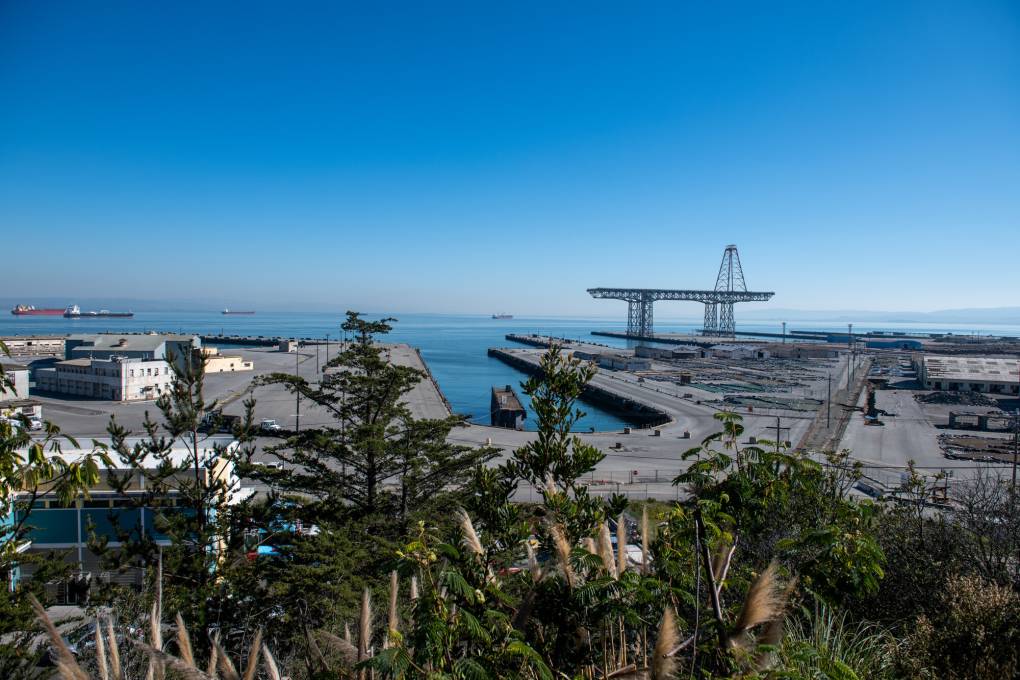
"caption": "A view of the former Hunters Point Naval Shipyard from the Lennar at the Shipyard housing development on Feb. 25, 2022. San Francisco city officials say the U.S. Navy detected airborne plutonium at the old Hunters Point Shipyard in November of last year but didn’t tell the city until this month. ",
"credit": "Beth LaBerge/KQED",
"altTag": null,
"description": null,
"imgSizes": {
"medium": {
"file": "https://cdn.kqed.org/wp-content/uploads/sites/35/2024/09/004_KQED_BayviewBloodTesting_02252022_qed-800x533.jpg",
"width": 800,
"height": 533,
"mimeType": "image/jpeg"
},
"large": {
"file": "https://cdn.kqed.org/wp-content/uploads/sites/35/2024/09/004_KQED_BayviewBloodTesting_02252022_qed-1020x680.jpg",
"width": 1020,
"height": 680,
"mimeType": "image/jpeg"
},
"thumbnail": {
"file": "https://cdn.kqed.org/wp-content/uploads/sites/35/2024/09/004_KQED_BayviewBloodTesting_02252022_qed-160x107.jpg",
"width": 160,
"height": 107,
"mimeType": "image/jpeg"
},
"medium_large": {
"file": "https://cdn.kqed.org/wp-content/uploads/sites/35/2024/09/004_KQED_BayviewBloodTesting_02252022_qed-768x512.jpg",
"width": 768,
"height": 512,
"mimeType": "image/jpeg"
},
"1536x1536": {
"file": "https://cdn.kqed.org/wp-content/uploads/sites/35/2024/09/004_KQED_BayviewBloodTesting_02252022_qed-1536x1024.jpg",
"width": 1536,
"height": 1024,
"mimeType": "image/jpeg"
},
"post-thumbnail": {
"file": "https://cdn.kqed.org/wp-content/uploads/sites/35/2024/09/004_KQED_BayviewBloodTesting_02252022_qed-672x372.jpg",
"width": 672,
"height": 372,
"mimeType": "image/jpeg"
},
"twentyfourteen-full-width": {
"file": "https://cdn.kqed.org/wp-content/uploads/sites/35/2024/09/004_KQED_BayviewBloodTesting_02252022_qed-1038x576.jpg",
"width": 1038,
"height": 576,
"mimeType": "image/jpeg"
},
"full-width": {
"file": "https://cdn.kqed.org/wp-content/uploads/sites/35/2024/09/004_KQED_BayviewBloodTesting_02252022_qed-1920x1280.jpg",
"width": 1920,
"height": 1280,
"mimeType": "image/jpeg"
},
"kqedFullSize": {
"file": "https://cdn.kqed.org/wp-content/uploads/sites/35/2024/09/004_KQED_BayviewBloodTesting_02252022_qed.jpg",
"width": 2000,
"height": 1333
}
},
"isLoading": false,
"fetchFailed": false
},
"science_1998765": {
"type": "attachments",
"id": "science_1998765",
"meta": {
"index": "attachments_1716263798",
"site": "science",
"id": "1998765",
"found": true
},
"title": "251008-DRONEMARSH-12-BL-KQED",
"publishDate": 1760123057,
"status": "inherit",
"parent": 0,
"modified": 1760123086,
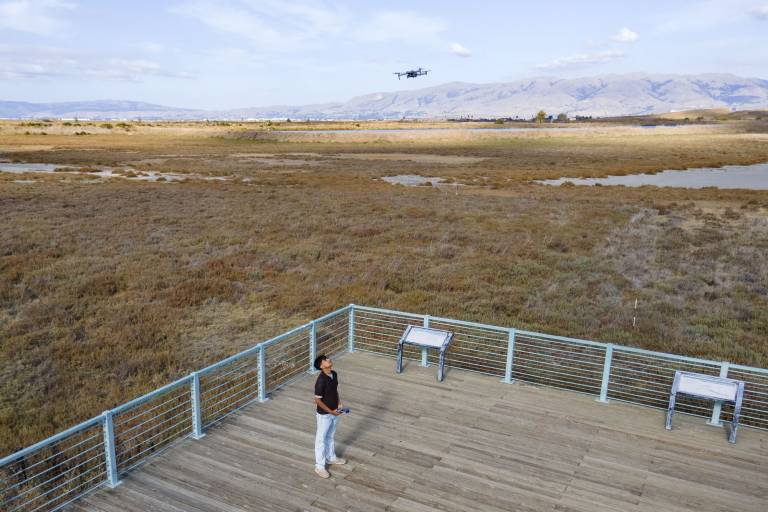
"caption": "Srivathsan Ramanujam flies his drone at Sunnyvale Baylands Park in Sunnyvale on Oct. 8, 2025. He uses a drone to create high-resolution maps of South Bay wetlands, with support from a National Oceanic and Atmospheric Administration grant, to help researchers better understand restoration needs and the impacts of sea level rise.",
"credit": "Beth LaBerge/KQED",
"altTag": null,
"description": null,
"imgSizes": {
"thumbnail": {
"file": "https://cdn.kqed.org/wp-content/uploads/sites/35/2025/10/251008-DRONEMARSH-12-BL-KQED-160x107.jpg",
"width": 160,
"height": 107,
"mimeType": "image/jpeg"
},
"medium_large": {
"file": "https://cdn.kqed.org/wp-content/uploads/sites/35/2025/10/251008-DRONEMARSH-12-BL-KQED-768x512.jpg",
"width": 768,
"height": 512,
"mimeType": "image/jpeg"
},
"1536x1536": {
"file": "https://cdn.kqed.org/wp-content/uploads/sites/35/2025/10/251008-DRONEMARSH-12-BL-KQED-1536x1024.jpg",
"width": 1536,
"height": 1024,
"mimeType": "image/jpeg"
},
"post-thumbnail": {
"file": "https://cdn.kqed.org/wp-content/uploads/sites/35/2025/10/251008-DRONEMARSH-12-BL-KQED-672x372.jpg",
"width": 672,
"height": 372,
"mimeType": "image/jpeg"
},
"twentyfourteen-full-width": {
"file": "https://cdn.kqed.org/wp-content/uploads/sites/35/2025/10/251008-DRONEMARSH-12-BL-KQED-1038x576.jpg",
"width": 1038,
"height": 576,
"mimeType": "image/jpeg"
},
"kqedFullSize": {
"file": "https://cdn.kqed.org/wp-content/uploads/sites/35/2025/10/251008-DRONEMARSH-12-BL-KQED.jpg",
"width": 2000,
"height": 1333
}
},
"isLoading": false,
"fetchFailed": false
},
"science_1998759": {
"type": "attachments",
"id": "science_1998759",
"meta": {
"index": "attachments_1716263798",
"site": "science",
"id": "1998759",
"found": true
},
"title": "251009-WETLANDWIN_00474_TV-KQED",
"publishDate": 1760122830,
"status": "inherit",
"parent": 0,
"modified": 1760122881,
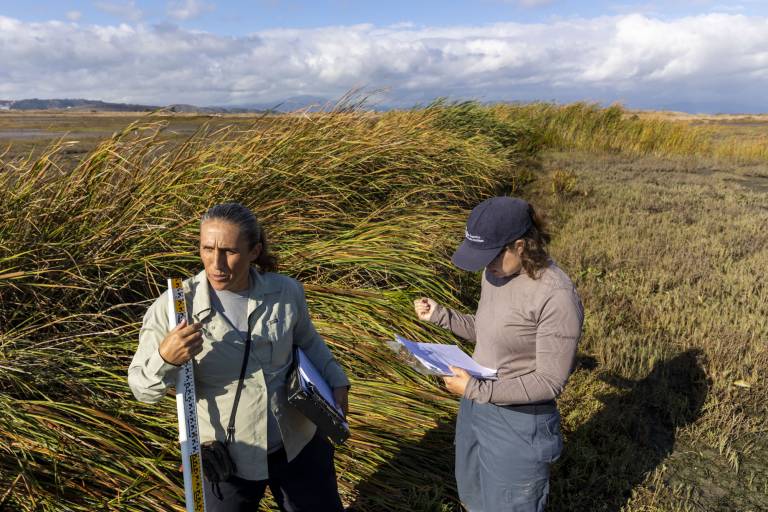
"caption": "San Francisco Estuary Institute members Sarah Pearce (left) and Emma Sevier (right) conduct their CRAM assessment at a new wetland restoration site at Point Pinole Regional Park in Pinole on October 9, 2025. A new report found that restored tidal wetlands in San Francisco Bay nearly quadrupled from 2000 to 2025, going against the global trend of wetland loss.",
"credit": "Tâm Vũ/KQED",
"altTag": null,
"description": null,
"imgSizes": {
"thumbnail": {
"file": "https://cdn.kqed.org/wp-content/uploads/sites/35/2025/10/251009-WETLANDWIN_00474_TV-KQED-160x107.jpg",
"width": 160,
"height": 107,
"mimeType": "image/jpeg"
},
"medium_large": {
"file": "https://cdn.kqed.org/wp-content/uploads/sites/35/2025/10/251009-WETLANDWIN_00474_TV-KQED-768x512.jpg",
"width": 768,
"height": 512,
"mimeType": "image/jpeg"
},
"1536x1536": {
"file": "https://cdn.kqed.org/wp-content/uploads/sites/35/2025/10/251009-WETLANDWIN_00474_TV-KQED-1536x1024.jpg",
"width": 1536,
"height": 1024,
"mimeType": "image/jpeg"
},
"post-thumbnail": {
"file": "https://cdn.kqed.org/wp-content/uploads/sites/35/2025/10/251009-WETLANDWIN_00474_TV-KQED-672x372.jpg",
"width": 672,
"height": 372,
"mimeType": "image/jpeg"
},
"twentyfourteen-full-width": {
"file": "https://cdn.kqed.org/wp-content/uploads/sites/35/2025/10/251009-WETLANDWIN_00474_TV-KQED-1038x576.jpg",
"width": 1038,
"height": 576,
"mimeType": "image/jpeg"
},
"kqedFullSize": {
"file": "https://cdn.kqed.org/wp-content/uploads/sites/35/2025/10/251009-WETLANDWIN_00474_TV-KQED.jpg",
"width": 2000,
"height": 1333
}
},
"isLoading": false,
"fetchFailed": false
},
"science_1998530": {
"type": "attachments",
"id": "science_1998530",
"meta": {
"index": "attachments_1716263798",
"site": "science",
"id": "1998530",
"found": true
},
"title": "250916_SEAOTTERS_GH-3-KQED",
"publishDate": 1758233703,
"status": "inherit",
"parent": 0,
"modified": 1760474663,
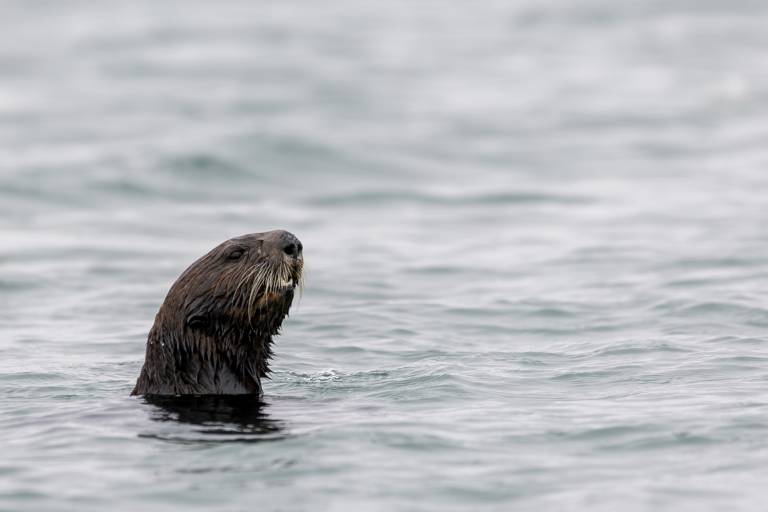
"caption": "A sea otter surfaces in Elkhorn Slough, a protected estuary that provides critical habitat for the threatened species, on Sept. 16, 2025.",
"credit": "Gustavo Hernandez/KQED",
"altTag": null,
"description": null,
"imgSizes": {
"thumbnail": {
"file": "https://cdn.kqed.org/wp-content/uploads/sites/35/2025/09/250916_SEAOTTERS_GH-3-KQED-160x107.jpg",
"width": 160,
"height": 107,
"mimeType": "image/jpeg"
},
"medium_large": {
"file": "https://cdn.kqed.org/wp-content/uploads/sites/35/2025/09/250916_SEAOTTERS_GH-3-KQED-768x512.jpg",
"width": 768,
"height": 512,
"mimeType": "image/jpeg"
},
"1536x1536": {
"file": "https://cdn.kqed.org/wp-content/uploads/sites/35/2025/09/250916_SEAOTTERS_GH-3-KQED-1536x1025.jpg",
"width": 1536,
"height": 1025,
"mimeType": "image/jpeg"
},
"post-thumbnail": {
"file": "https://cdn.kqed.org/wp-content/uploads/sites/35/2025/09/250916_SEAOTTERS_GH-3-KQED-672x372.jpg",
"width": 672,
"height": 372,
"mimeType": "image/jpeg"
},
"twentyfourteen-full-width": {
"file": "https://cdn.kqed.org/wp-content/uploads/sites/35/2025/09/250916_SEAOTTERS_GH-3-KQED-1038x576.jpg",
"width": 1038,
"height": 576,
"mimeType": "image/jpeg"
},
"kqedFullSize": {
"file": "https://cdn.kqed.org/wp-content/uploads/sites/35/2025/09/250916_SEAOTTERS_GH-3-KQED.jpg",
"width": 2000,
"height": 1334
}
},
"isLoading": false,
"fetchFailed": false
},
"science_1998770": {
"type": "attachments",
"id": "science_1998770",
"meta": {
"index": "attachments_1716263798",
"site": "science",
"id": "1998770",
"found": true
},
"title": "240109-CAWindStorm-076_qed",
"publishDate": 1760123731,
"status": "inherit",
"parent": 1998746,
"modified": 1767908777,
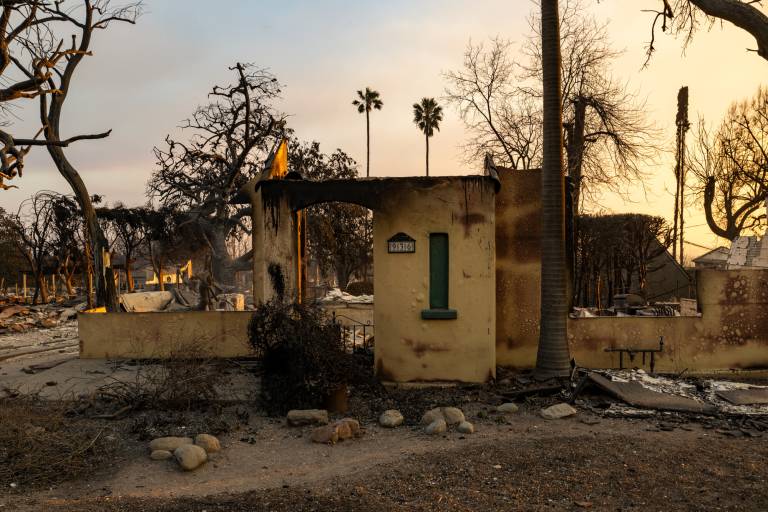
"caption": "The remains of a house in Altadena, California, after the Eaton Fire swept through the area northeast of Los Angeles, California, on Jan. 9, 2025.",
"credit": "Beth LaBerge/KQED",
"altTag": null,
"description": null,
"imgSizes": {
"thumbnail": {
"file": "https://cdn.kqed.org/wp-content/uploads/sites/35/2025/10/240109-CAWindStorm-076_qed-160x107.jpg",
"width": 160,
"height": 107,
"mimeType": "image/jpeg"
},
"medium_large": {
"file": "https://cdn.kqed.org/wp-content/uploads/sites/35/2025/10/240109-CAWindStorm-076_qed-768x512.jpg",
"width": 768,
"height": 512,
"mimeType": "image/jpeg"
},
"1536x1536": {
"file": "https://cdn.kqed.org/wp-content/uploads/sites/35/2025/10/240109-CAWindStorm-076_qed-1536x1024.jpg",
"width": 1536,
"height": 1024,
"mimeType": "image/jpeg"
},
"post-thumbnail": {
"file": "https://cdn.kqed.org/wp-content/uploads/sites/35/2025/10/240109-CAWindStorm-076_qed-672x372.jpg",
"width": 672,
"height": 372,
"mimeType": "image/jpeg"
},
"twentyfourteen-full-width": {
"file": "https://cdn.kqed.org/wp-content/uploads/sites/35/2025/10/240109-CAWindStorm-076_qed-1038x576.jpg",
"width": 1038,
"height": 576,
"mimeType": "image/jpeg"
},
"kqedFullSize": {
"file": "https://cdn.kqed.org/wp-content/uploads/sites/35/2025/10/240109-CAWindStorm-076_qed.jpg",
"width": 1999,
"height": 1333
}
},
"isLoading": false,
"fetchFailed": false
},
"science_1998736": {
"type": "attachments",
"id": "science_1998736",
"meta": {
"index": "attachments_1716263798",
"site": "science",
"id": "1998736",
"found": true
},
"title": "CalTrain passes through Belmont on Nov. 1, 2024.",
"publishDate": 1759952187,
"status": "inherit",
"parent": 1998733,
"modified": 1759952197,
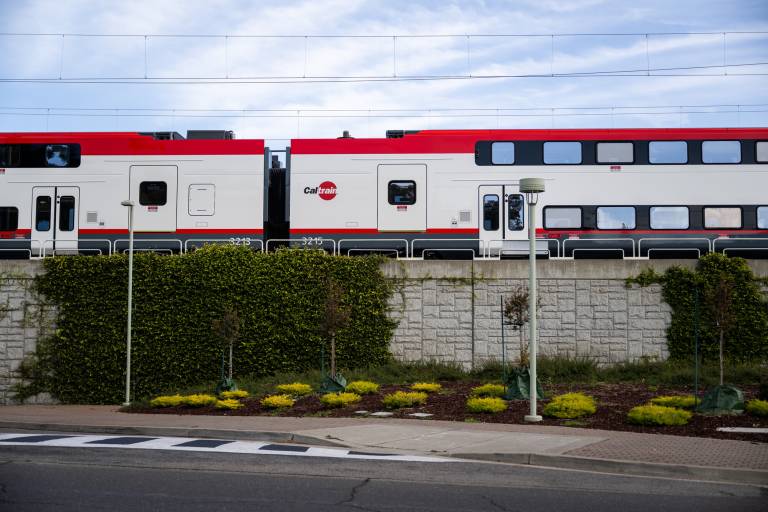
"caption": "CalTrain passes through Belmont on Nov. 1, 2024.",
"credit": "Beth LaBerge/KQED",
"altTag": null,
"description": null,
"imgSizes": {
"thumbnail": {
"file": "https://cdn.kqed.org/wp-content/uploads/sites/35/2025/10/241101-CalTrain-01-BL_qed-160x107.jpg",
"width": 160,
"height": 107,
"mimeType": "image/jpeg"
},
"medium_large": {
"file": "https://cdn.kqed.org/wp-content/uploads/sites/35/2025/10/241101-CalTrain-01-BL_qed-768x512.jpg",
"width": 768,
"height": 512,
"mimeType": "image/jpeg"
},
"1536x1536": {
"file": "https://cdn.kqed.org/wp-content/uploads/sites/35/2025/10/241101-CalTrain-01-BL_qed-1536x1024.jpg",
"width": 1536,
"height": 1024,
"mimeType": "image/jpeg"
},
"post-thumbnail": {
"file": "https://cdn.kqed.org/wp-content/uploads/sites/35/2025/10/241101-CalTrain-01-BL_qed-672x372.jpg",
"width": 672,
"height": 372,
"mimeType": "image/jpeg"
},
"twentyfourteen-full-width": {
"file": "https://cdn.kqed.org/wp-content/uploads/sites/35/2025/10/241101-CalTrain-01-BL_qed-1038x576.jpg",
"width": 1038,
"height": 576,
"mimeType": "image/jpeg"
},
"kqedFullSize": {
"file": "https://cdn.kqed.org/wp-content/uploads/sites/35/2025/10/241101-CalTrain-01-BL_qed.jpg",
"width": 2000,
"height": 1333
}
},
"isLoading": false,
"fetchFailed": false
},
"science_1998635": {
"type": "attachments",
"id": "science_1998635",
"meta": {
"index": "attachments_1716263798",
"site": "science",
"id": "1998635",
"found": true
},
"title": "Fiber optic network of the company GlobalConnect",
"publishDate": 1758820898,
"status": "inherit",
"parent": 1998623,
"modified": 1758821013,
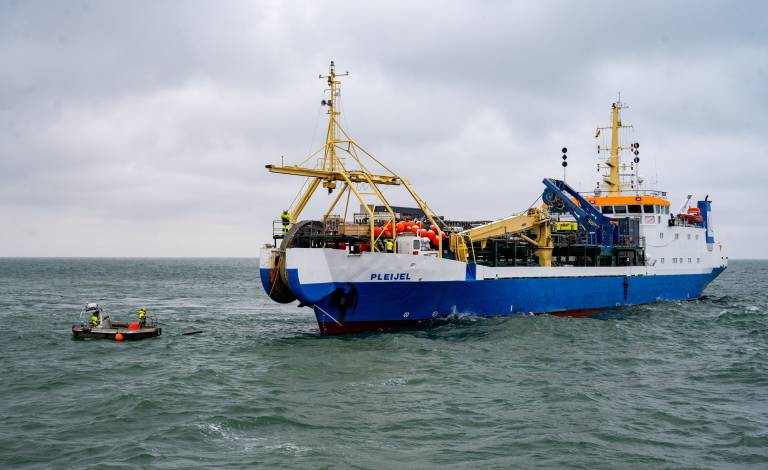
"caption": "A fiber optic cable was brought ashore from the cable-laying ship Pleijel at the entrance to the port of Sassnitz on Nov. 29, 2023.",
"credit": "Stefan Sauer/Picture Alliance via Getty Images",
"altTag": null,
"description": null,
"imgSizes": {
"thumbnail": {
"file": "https://cdn.kqed.org/wp-content/uploads/sites/35/2025/09/EarthquakeScienceGetty-160x98.jpg",
"width": 160,
"height": 98,
"mimeType": "image/jpeg"
},
"medium_large": {
"file": "https://cdn.kqed.org/wp-content/uploads/sites/35/2025/09/EarthquakeScienceGetty-768x470.jpg",
"width": 768,
"height": 470,
"mimeType": "image/jpeg"
},
"1536x1536": {
"file": "https://cdn.kqed.org/wp-content/uploads/sites/35/2025/09/EarthquakeScienceGetty-1536x940.jpg",
"width": 1536,
"height": 940,
"mimeType": "image/jpeg"
},
"post-thumbnail": {
"file": "https://cdn.kqed.org/wp-content/uploads/sites/35/2025/09/EarthquakeScienceGetty-672x372.jpg",
"width": 672,
"height": 372,
"mimeType": "image/jpeg"
},
"twentyfourteen-full-width": {
"file": "https://cdn.kqed.org/wp-content/uploads/sites/35/2025/09/EarthquakeScienceGetty-1038x576.jpg",
"width": 1038,
"height": 576,
"mimeType": "image/jpeg"
},
"kqedFullSize": {
"file": "https://cdn.kqed.org/wp-content/uploads/sites/35/2025/09/EarthquakeScienceGetty.jpg",
"width": 2000,
"height": 1224
}
},
"isLoading": false,
"fetchFailed": false
},
"science_1937339": {
"type": "attachments",
"id": "science_1937339",
"meta": {
"index": "attachments_1716263798",
"site": "science",
"id": "1937339",
"found": true
},
"parent": 1936949,
"imgSizes": {
"twentyfourteen-full-width": {
"file": "https://ww2.kqed.org/app/uploads/sites/35/2019/01/05-1038x576.jpg",
"width": 1038,
"mimeType": "image/jpeg",
"height": 576
},
"thumbnail": {
"file": "https://ww2.kqed.org/app/uploads/sites/35/2019/01/05-160x90.jpg",
"width": 160,
"mimeType": "image/jpeg",
"height": 90
},
"post-thumbnail": {
"file": "https://ww2.kqed.org/app/uploads/sites/35/2019/01/05-672x372.jpg",
"width": 672,
"mimeType": "image/jpeg",
"height": 372
},
"kqedFullSize": {
"file": "https://ww2.kqed.org/app/uploads/sites/35/2019/01/05.jpg",
"width": 1920,
"height": 1080
},
"large": {
"file": "https://ww2.kqed.org/app/uploads/sites/35/2019/01/05-1020x574.jpg",
"width": 1020,
"mimeType": "image/jpeg",
"height": 574
},
"complete_open_graph": {
"file": "https://ww2.kqed.org/app/uploads/sites/35/2019/01/05-1200x675.jpg",
"width": 1200,
"mimeType": "image/jpeg",
"height": 675
},
"guest-author-50": {
"file": "https://ww2.kqed.org/app/uploads/sites/35/2019/01/05-50x50.jpg",
"width": 50,
"mimeType": "image/jpeg",
"height": 50
},
"guest-author-96": {
"file": "https://ww2.kqed.org/app/uploads/sites/35/2019/01/05-96x96.jpg",
"width": 96,
"mimeType": "image/jpeg",
"height": 96
},
"medium": {
"file": "https://ww2.kqed.org/app/uploads/sites/35/2019/01/05-800x450.jpg",
"width": 800,
"mimeType": "image/jpeg",
"height": 450
},
"guest-author-64": {
"file": "https://ww2.kqed.org/app/uploads/sites/35/2019/01/05-64x64.jpg",
"width": 64,
"mimeType": "image/jpeg",
"height": 64
},
"guest-author-32": {
"file": "https://ww2.kqed.org/app/uploads/sites/35/2019/01/05-32x32.jpg",
"width": 32,
"mimeType": "image/jpeg",
"height": 32
},
"full-width": {
"file": "https://ww2.kqed.org/app/uploads/sites/35/2019/01/05-1920x1080.jpg",
"width": 1920,
"mimeType": "image/jpeg",
"height": 1080
},
"detail": {
"file": "https://ww2.kqed.org/app/uploads/sites/35/2019/01/05-150x150.jpg",
"width": 150,
"mimeType": "image/jpeg",
"height": 150
},
"medium_large": {
"file": "https://ww2.kqed.org/app/uploads/sites/35/2019/01/05-768x432.jpg",
"width": 768,
"mimeType": "image/jpeg",
"height": 432
},
"guest-author-128": {
"file": "https://ww2.kqed.org/app/uploads/sites/35/2019/01/05-128x128.jpg",
"width": 128,
"mimeType": "image/jpeg",
"height": 128
}
},
"publishDate": 1548719601,
"modified": 1548719732,
"caption": "Scientists say the Hayward Fault is due for another major earthquake.",
"description": "Scientists say the Hayward Fault is due for another major earthquake.",
"title": "05",
"credit": "Teodros Hailye",
"status": "inherit",
"isLoading": false,
"fetchFailed": false
},
"science_1997571": {
"type": "attachments",
"id": "science_1997571",
"meta": {
"index": "attachments_1716263798",
"site": "science",
"id": "1997571",
"found": true
},
"title": "Governor Gavin Newsom signs legislation related to oversight of oil and gas wells, and community protections",
"publishDate": 1751401816,
"status": "inherit",
"parent": 1997565,
"modified": 1751404129,
"caption": "Gov. Gavin Newsom speaks at a press conference where he signs legislation related to oversight of oil and gas wells, and community protections on Sept. 25, 2024, in Los Angeles.",
"credit": "Jason Armond/Los Angeles Times via Getty Images",
"altTag": null,
"description": null,
"imgSizes": {
"thumbnail": {
"file": "https://cdn.kqed.org/wp-content/uploads/sites/35/2025/07/GavinNewsomGetty-160x111.jpg",
"width": 160,
"height": 111,
"mimeType": "image/jpeg"
},
"medium_large": {
"file": "https://cdn.kqed.org/wp-content/uploads/sites/35/2025/07/GavinNewsomGetty-768x533.jpg",
"width": 768,
"height": 533,
"mimeType": "image/jpeg"
},
"1536x1536": {
"file": "https://cdn.kqed.org/wp-content/uploads/sites/35/2025/07/GavinNewsomGetty-1536x1065.jpg",
"width": 1536,
"height": 1065,
"mimeType": "image/jpeg"
},
"post-thumbnail": {
"file": "https://cdn.kqed.org/wp-content/uploads/sites/35/2025/07/GavinNewsomGetty-672x372.jpg",
"width": 672,
"height": 372,
"mimeType": "image/jpeg"
},
"twentyfourteen-full-width": {
"file": "https://cdn.kqed.org/wp-content/uploads/sites/35/2025/07/GavinNewsomGetty-1038x576.jpg",
"width": 1038,
"height": 576,
"mimeType": "image/jpeg"
},
"kqedFullSize": {
"file": "https://cdn.kqed.org/wp-content/uploads/sites/35/2025/07/GavinNewsomGetty.jpg",
"width": 2000,
"height": 1387
}
},
"isLoading": false,
"fetchFailed": false
},
"science_1998524": {
"type": "attachments",
"id": "science_1998524",
"meta": {
"index": "attachments_1716263798",
"site": "science",
"id": "1998524",
"found": true
},
"title": "Lightning illuminates the sky over the eastern span of the Bay Bridge as a storm passed through the area on Sunday morning in San Francisco, Calif., on Sunday, August 16, 2020",
"publishDate": 1757967581,
"status": "inherit",
"parent": 1998512,
"modified": 1757967611,
"caption": "Lightning illuminates the sky over the eastern span of the Bay Bridge as a storm passed through the area on August 16, 2020. ",
"credit": "Carlos Avila Gonzalez/The San Francisco Chronicle via Getty Images",
"altTag": null,
"description": null,
"imgSizes": {
"thumbnail": {
"file": "https://cdn.kqed.org/wp-content/uploads/sites/35/2025/09/GETTYIMAGES-1409142795-KQED-160x105.jpg",
"width": 160,
"height": 105,
"mimeType": "image/jpeg"
},
"medium_large": {
"file": "https://cdn.kqed.org/wp-content/uploads/sites/35/2025/09/GETTYIMAGES-1409142795-KQED-768x504.jpg",
"width": 768,
"height": 504,
"mimeType": "image/jpeg"
},
"1536x1536": {
"file": "https://cdn.kqed.org/wp-content/uploads/sites/35/2025/09/GETTYIMAGES-1409142795-KQED-1536x1008.jpg",
"width": 1536,
"height": 1008,
"mimeType": "image/jpeg"
},
"post-thumbnail": {
"file": "https://cdn.kqed.org/wp-content/uploads/sites/35/2025/09/GETTYIMAGES-1409142795-KQED-672x372.jpg",
"width": 672,
"height": 372,
"mimeType": "image/jpeg"
},
"twentyfourteen-full-width": {
"file": "https://cdn.kqed.org/wp-content/uploads/sites/35/2025/09/GETTYIMAGES-1409142795-KQED-1038x576.jpg",
"width": 1038,
"height": 576,
"mimeType": "image/jpeg"
},
"kqedFullSize": {
"file": "https://cdn.kqed.org/wp-content/uploads/sites/35/2025/09/GETTYIMAGES-1409142795-KQED.jpg",
"width": 2000,
"height": 1312
}
},
"isLoading": false,
"fetchFailed": false
},
"science_1998333": {
"type": "attachments",
"id": "science_1998333",
"meta": {
"index": "attachments_1716263798",
"site": "science",
"id": "1998333",
"found": true
},
"title": "250814-ORANGESKYDAYART-11-KQED",
"publishDate": 1756938249,
"status": "inherit",
"parent": 0,
"modified": 1756938309,
"caption": "Artist Kim Cogan sits in his home studio in San Francisco on Aug. 14, 2025. He created a series of paintings inspired by the orange skies that blanketed the city during the 2020 wildfires.",
"credit": "Beth LaBerge/KQED",
"altTag": null,
"description": null,
"imgSizes": {
"thumbnail": {
"file": "https://cdn.kqed.org/wp-content/uploads/sites/35/2025/09/250814-ORANGESKYDAYART-11-KQED-160x107.jpg",
"width": 160,
"height": 107,
"mimeType": "image/jpeg"
},
"medium_large": {
"file": "https://cdn.kqed.org/wp-content/uploads/sites/35/2025/09/250814-ORANGESKYDAYART-11-KQED-768x512.jpg",
"width": 768,
"height": 512,
"mimeType": "image/jpeg"
},
"1536x1536": {
"file": "https://cdn.kqed.org/wp-content/uploads/sites/35/2025/09/250814-ORANGESKYDAYART-11-KQED-1536x1024.jpg",
"width": 1536,
"height": 1024,
"mimeType": "image/jpeg"
},
"post-thumbnail": {
"file": "https://cdn.kqed.org/wp-content/uploads/sites/35/2025/09/250814-ORANGESKYDAYART-11-KQED-672x372.jpg",
"width": 672,
"height": 372,
"mimeType": "image/jpeg"
},
"twentyfourteen-full-width": {
"file": "https://cdn.kqed.org/wp-content/uploads/sites/35/2025/09/250814-ORANGESKYDAYART-11-KQED-1038x576.jpg",
"width": 1038,
"height": 576,
"mimeType": "image/jpeg"
},
"kqedFullSize": {
"file": "https://cdn.kqed.org/wp-content/uploads/sites/35/2025/09/250814-ORANGESKYDAYART-11-KQED.jpg",
"width": 2000,
"height": 1333
}
},
"isLoading": false,
"fetchFailed": false
}
},
"audioPlayerReducer": {
"postId": "stream_live",
"isPaused": true,
"isPlaying": false,
"pfsActive": false,
"pledgeModalIsOpen": true,
"playerDrawerIsOpen": false,
"liveAudioPlayStartedAt": 0,
"liveAudioPlayContext": ""
},
"authorsReducer": {
"gmarzorati": {
"type": "authors",
"id": "227",
"meta": {
"index": "authors_1716337520",
"id": "227",
"found": true
},
"name": "Guy Marzorati",
"firstName": "Guy",
"lastName": "Marzorati",
"slug": "gmarzorati",
"email": "gmarzorati@KQED.org",
"display_author_email": true,
"staff_mastheads": [
"news"
],
"title": "Correspondent",
"bio": "Guy Marzorati is a correspondent on KQED's California Politics and Government Desk, based in San Jose. A graduate of Santa Clara University, Guy joined KQED in 2013. He reports on state and local politics and produces KQED's digital voter guide.",
"avatar": "https://secure.gravatar.com/avatar/e7038b8dbfd55b104369b76b1cd0b9de?s=600&d=blank&r=g",
"twitter": "guymarzorati",
"facebook": null,
"instagram": null,
"linkedin": null,
"sites": [
{
"site": "",
"roles": [
"editor"
]
},
{
"site": "news",
"roles": [
"editor"
]
},
{
"site": "science",
"roles": [
"editor"
]
},
{
"site": "forum",
"roles": [
"editor"
]
},
{
"site": "elections",
"roles": [
"editor"
]
},
{
"site": "liveblog",
"roles": [
"editor"
]
}
],
"headData": {
"title": "Guy Marzorati | KQED",
"description": "Correspondent",
"ogImgSrc": "https://secure.gravatar.com/avatar/e7038b8dbfd55b104369b76b1cd0b9de?s=600&d=blank&r=g",
"twImgSrc": "https://secure.gravatar.com/avatar/e7038b8dbfd55b104369b76b1cd0b9de?s=600&d=blank&r=g"
},
"isLoading": false,
"link": "/author/gmarzorati"
},
"lklivans": {
"type": "authors",
"id": "8648",
"meta": {
"index": "authors_1716337520",
"id": "8648",
"found": true
},
"name": "Laura Klivans",
"firstName": "Laura",
"lastName": "Klivans",
"slug": "lklivans",
"email": "lklivans@kqed.org",
"display_author_email": true,
"staff_mastheads": [
"news",
"science"
],
"title": "Reporter",
"bio": "Laura Klivans is an award-winning science reporter for KQED News, where she covers climate change with an eye on both groundbreaking progress and gaps in action. She is the former host of KQED's blockbuster video series about tiny, amazing animals, \u003cem>Deep Look\u003c/em>. Her work reaches national audiences through NPR, \u003cem>Here & Now, \u003c/em>PRI, and other major outlets. \r\n\r\nLaura’s won five Northern California Area Emmy Awards for Deep Look and First Place in the Greater Bay Area Journalism Awards for a podcast exploring how one Oakland neighborhood teamed up to reduce planet-heating pollution.\r\n\r\nBeyond her reporting, she hosts and moderates events. In the past, she taught audio storytelling at the UC Berkeley Graduate School of Journalism, led international education programs, worked with immigrants and refugees along the Thai-Burmese border, taught high schoolers sex ed, and was an actress. \r\n\r\nShe's a former UC Berkeley Human Rights Fellow, USC Center for Health Journalism's California Fellow and Coro Fellow in Public Affairs. Laura has a master’s in journalism from UC Berkeley, a master’s in education from Harvard, and an undergraduate degree from Northwestern University.\r\n\r\nShe loves trying to riddle the meaning out of vanity license plates.",
"avatar": "https://secure.gravatar.com/avatar/2d2ecd1550a494cc10ad4a503406965585902124739e775a9b3817eebf1d88be?s=600&d=blank&r=g",
"twitter": "lauraklivans",
"bluesky": null,
"facebook": null,
"instagram": null,
"linkedin": null,
"sites": [
{
"site": "news",
"roles": [
"editor"
]
},
{
"site": "stateofhealth",
"roles": [
"contributor",
"editor"
]
},
{
"site": "science",
"roles": [
"editor"
]
},
{
"site": "forum",
"roles": [
"editor"
]
}
],
"headData": {
"title": "Laura Klivans | KQED",
"description": "Reporter",
"ogImgSrc": "https://secure.gravatar.com/avatar/2d2ecd1550a494cc10ad4a503406965585902124739e775a9b3817eebf1d88be?s=600&d=blank&r=g",
"twImgSrc": "https://secure.gravatar.com/avatar/2d2ecd1550a494cc10ad4a503406965585902124739e775a9b3817eebf1d88be?s=600&d=blank&r=g"
},
"isLoading": false,
"link": "/author/lklivans"
},
"dventon": {
"type": "authors",
"id": "11088",
"meta": {
"index": "authors_1716337520",
"id": "11088",
"found": true
},
"name": "Danielle Venton",
"firstName": "Danielle",
"lastName": "Venton",
"slug": "dventon",
"email": "dventon@kqed.org",
"display_author_email": true,
"staff_mastheads": [
"science"
],
"title": "Science reporter",
"bio": "Danielle Venton is a reporter for KQED Science. She covers wildfires, space and oceans (though she is prone to sea sickness).\r\n\r\nBefore joining KQED in 2015, Danielle was a staff reporter at KRCB in Sonoma County and a freelancer. She studied science communication at UC Santa Cruz and formerly worked at CERN in Geneva, Switzerland where she wrote about computing. She lives in Sonoma County and enjoys backpacking.",
"avatar": "https://secure.gravatar.com/avatar/37b292b5c40c8d93959c4f48d73b5286f41b7abd8588277e941905a3ed4c801c?s=600&d=blank&r=g",
"twitter": "DanielleVenton",
"bluesky": null,
"facebook": null,
"instagram": null,
"linkedin": null,
"sites": [
{
"site": "arts",
"roles": [
"contributor"
]
},
{
"site": "news",
"roles": [
"editor"
]
},
{
"site": "futureofyou",
"roles": [
"editor"
]
},
{
"site": "science",
"roles": [
"editor"
]
},
{
"site": "liveblog",
"roles": [
"contributor"
]
}
],
"headData": {
"title": "Danielle Venton | KQED",
"description": "Science reporter",
"ogImgSrc": "https://secure.gravatar.com/avatar/37b292b5c40c8d93959c4f48d73b5286f41b7abd8588277e941905a3ed4c801c?s=600&d=blank&r=g",
"twImgSrc": "https://secure.gravatar.com/avatar/37b292b5c40c8d93959c4f48d73b5286f41b7abd8588277e941905a3ed4c801c?s=600&d=blank&r=g"
},
"isLoading": false,
"link": "/author/dventon"
},
"parcuni": {
"type": "authors",
"id": "11368",
"meta": {
"index": "authors_1716337520",
"id": "11368",
"found": true
},
"name": "Peter Arcuni",
"firstName": "Peter",
"lastName": "Arcuni",
"slug": "parcuni",
"email": "parcuni@KQED.org",
"display_author_email": false,
"staff_mastheads": [
"science"
],
"title": "Reporter",
"bio": "Peter reports radio and online stories for \u003cem>KQED Science\u003c/em>. His work has also appeared on the \u003cem>The California Report\u003c/em> morning show and \u003cem>KQED News\u003c/em>. His production credits include \u003cem>The California Report, The California Report Magazine\u003c/em> and KQED's local news podcast \u003cem>The Bay\u003c/em>. Other credits include NPR's \u003cem>All Things Considered\u003c/em>, WNYC's \u003cem>Science Friday\u003c/em>, WBUR's \u003cem>Here & Now\u003c/em>, WIRED and SFGate. Peter graduated from Brown University and earned a master's degree in journalism from Stanford. He's covered everything from homelessness to wildfires, health, the environment, arts and Thanksgiving in San Quentin prison. In other lives, he played rock n roll music and studied neuroscience. You can email him at: parcuni@kqed.org",
"avatar": "https://secure.gravatar.com/avatar/d5032f6f27199d478af34ad2e1d98732?s=600&d=blank&r=g",
"twitter": "peterarcuni",
"facebook": null,
"instagram": null,
"linkedin": null,
"sites": [
{
"site": "news",
"roles": [
"editor"
]
},
{
"site": "science",
"roles": [
"editor"
]
}
],
"headData": {
"title": "Peter Arcuni | KQED",
"description": "Reporter",
"ogImgSrc": "https://secure.gravatar.com/avatar/d5032f6f27199d478af34ad2e1d98732?s=600&d=blank&r=g",
"twImgSrc": "https://secure.gravatar.com/avatar/d5032f6f27199d478af34ad2e1d98732?s=600&d=blank&r=g"
},
"isLoading": false,
"link": "/author/parcuni"
},
"kevinstark": {
"type": "authors",
"id": "11608",
"meta": {
"index": "authors_1716337520",
"id": "11608",
"found": true
},
"name": "Kevin Stark",
"firstName": "Kevin",
"lastName": "Stark",
"slug": "kevinstark",
"email": "kstark@kqed.org",
"display_author_email": true,
"staff_mastheads": [
"science"
],
"title": "Senior Editor",
"bio": "Kevin is a senior editor for KQED Science, managing the station's health and climate desks. His journalism career began in the Pacific Northwest, and he later became a lead reporter for the San Francisco Public Press. His work has appeared in Pacific Standard magazine, the Energy News Network, the Center for Investigative Reporting's Reveal and WBEZ in Chicago. Kevin joined KQED in 2019, and has covered issues related to energy, wildfire, climate change and the environment.",
"avatar": "https://secure.gravatar.com/avatar/365aaa4b597d3a8374f67504ff0facd323d7906e8eb4be0a7efd2427408e802c?s=600&d=blank&r=g",
"twitter": "starkkev",
"bluesky": null,
"facebook": null,
"instagram": null,
"linkedin": null,
"sites": [
{
"site": "",
"roles": [
"editor"
]
},
{
"site": "news",
"roles": [
"editor"
]
},
{
"site": "science",
"roles": [
"administrator"
]
}
],
"headData": {
"title": "Kevin Stark | KQED",
"description": "Senior Editor",
"ogImgSrc": "https://secure.gravatar.com/avatar/365aaa4b597d3a8374f67504ff0facd323d7906e8eb4be0a7efd2427408e802c?s=600&d=blank&r=g",
"twImgSrc": "https://secure.gravatar.com/avatar/365aaa4b597d3a8374f67504ff0facd323d7906e8eb4be0a7efd2427408e802c?s=600&d=blank&r=g"
},
"isLoading": false,
"link": "/author/kevinstark"
},
"eromero": {
"type": "authors",
"id": "11746",
"meta": {
"index": "authors_1716337520",
"id": "11746",
"found": true
},
"name": "Ezra David Romero",
"firstName": "Ezra David",
"lastName": "Romero",
"slug": "eromero",
"email": "eromero@kqed.org",
"display_author_email": true,
"staff_mastheads": [
"news",
"science"
],
"title": "Climate Reporter",
"bio": "Ezra David Romero is a climate reporter for KQED News. He covers the absence and excess of water in the Bay Area — think sea level rise, flooding and drought. For nearly a decade he’s covered how warming temperatures are altering the lives of Californians. He’s reported on farmers worried their pistachio trees aren’t getting enough sleep, families desperate for water, scientists studying dying giant sequoias, and alongside firefighters containing wildfires. His work has appeared on local stations across California and nationally on public radio shows like Morning Edition, Here and Now, All Things Considered and Science Friday. ",
"avatar": "https://secure.gravatar.com/avatar/c76404d287c10ed40224227551ac36e24352c7306f106632caf6fead76f8801f?s=600&d=blank&r=g",
"twitter": "ezraromero",
"bluesky": null,
"facebook": null,
"instagram": null,
"linkedin": null,
"sites": [
{
"site": "arts",
"roles": [
"editor"
]
},
{
"site": "news",
"roles": [
"editor"
]
},
{
"site": "science",
"roles": [
"editor"
]
},
{
"site": "liveblog",
"roles": [
"author"
]
}
],
"headData": {
"title": "Ezra David Romero | KQED",
"description": "Climate Reporter",
"ogImgSrc": "https://secure.gravatar.com/avatar/c76404d287c10ed40224227551ac36e24352c7306f106632caf6fead76f8801f?s=600&d=blank&r=g",
"twImgSrc": "https://secure.gravatar.com/avatar/c76404d287c10ed40224227551ac36e24352c7306f106632caf6fead76f8801f?s=600&d=blank&r=g"
},
"isLoading": false,
"link": "/author/eromero"
}
},
"pagesReducer": {
"science_category_environment": {
"type": "terms",
"id": "science_35",
"meta": {
"index": "terms_1716263798",
"site": "science",
"id": "35",
"score": 12.138019
},
"featImg": null,
"name": "Environment",
"description": null,
"taxonomy": "category",
"headData": {
"twImgId": null,
"twTitle": null,
"ogTitle": null,
"ogImgId": null,
"twDescription": null,
"description": null,
"title": "Environment Archives | KQED Science",
"ogDescription": null
},
"ttid": 37,
"slug": "environment",
"isLoading": false,
"title": "Environment",
"pageMeta": {
"site": "science",
"WpPageTemplate": "page-topic-editorial",
"currentPage": 4
},
"blocks": [
{
"blockName": "kqed/post-list",
"attrs": {
"layout": "cardArticle2",
"query": "posts/science?category=environment",
"seeMore": false,
"paginated": true,
"page": 4
}
},
{
"blockName": "kqed/ad"
}
]
}
},
"pfsSessionReducer": {},
"postsReducer": {
"stream_live": {
"type": "live",
"id": "stream_live",
"audioUrl": "https://streams.kqed.org/kqedradio",
"title": "Live Stream",
"excerpt": "Live Stream information currently unavailable.",
"link": "/radio",
"featImg": "",
"label": {
"name": "KQED Live",
"link": "/"
}
},
"stream_kqedNewscast": {
"type": "posts",
"id": "stream_kqedNewscast",
"audioUrl": "https://www.kqed.org/.stream/anon/radio/RDnews/newscast.mp3?_=1",
"title": "KQED Newscast",
"featImg": "",
"label": {
"name": "88.5 FM",
"link": "/"
}
},
"science_1999345": {
"type": "posts",
"id": "science_1999345",
"meta": {
"index": "posts_1716263798",
"site": "science",
"id": "1999345",
"score": null,
"sort": [
1763665246000
]
},
"guestAuthors": [],
"slug": "hundreds-of-california-and-bay-area-hazardous-sites-could-face-future-flooding",
"title": "Hundreds of California and Bay Area Hazardous Sites Could Face Future Flooding",
"publishDate": 1763665246,
"format": "standard",
"headTitle": "Hundreds of California and Bay Area Hazardous Sites Could Face Future Flooding | KQED",
"labelTerm": {},
"content": "\u003cp>Power plants. Sewage treatment facilities. Fossil fuel ports. Radioactively contaminated sites. These are just a few of the 249 \u003ca href=\"https://www.kqed.org/science/1979092/how-rising-sea-levels-could-push-up-a-toxic-soup-into-bay-area-neighborhoods\">hazardous sites\u003c/a> across the Bay Area that could flood as seas rise in the coming decades in the worst-case scenario, according to a new report published Thursday in the journal Nature Communications.\u003c/p>\n\u003cp>The researchers project that 5,500 hazardous sites across the nation could be at risk of coastal flooding by the end of the century. Around two-thirds of these facilities are at risk of coastal flooding within the next 25 years, during 100-year flood events. “Historically underserved communities” are more likely to live near hazardous sites prone to flooding, the scientists wrote in a preview of the study.\u003c/p>\n\u003cp>Researchers from Climate Central, UCLA, UC Berkeley and Nanjing University collaborated on the study.\u003c/p>\n\u003cp>[ad fullwidth]\u003c/p>\n\u003cp>“The motivation for the study is that sea level rise is rising quickly, often more than projected, and is anticipated to more than double by 2050 worldwide,” said \u003ca href=\"https://publichealth.berkeley.edu/people/rachel-morello-frosch\">Rachel Morello-Frosch\u003c/a>, a professor of environmental science, policy and management at UC Berkeley.\u003c/p>\n\u003cp>Seven states account for almost 80% of the hazardous sites at-risk by the end of the century. California is among them with 471 locations. That’s if human-caused climate change continues unchecked. State scientists predict more than a foot of bay rise by 2050 and over 6 feet by the end of the century in the \u003ca href=\"https://opc.ca.gov/wp-content/uploads/2024/05/California-Sea-Level-Rise-Guidance-2024-508.pdf\">worst-case scenario\u003c/a>.\u003c/p>\n\u003cp>The list includes facilities that pose a risk to public health and communities: contaminated sites, former defense sites, businesses that handle sewage, toxic waste, oil and gas wells and other pollutants.\u003c/p>\n\u003cfigure id=\"attachment_1970668\" class=\"wp-caption aligncenter\" style=\"max-width: 1920px\">\u003cimg loading=\"lazy\" decoding=\"async\" class=\"size-full wp-image-1970668\" src=\"https://cdn.kqed.org/wp-content/uploads/sites/35/2020/10/RS45431_GettyImages-1134096431-qut-1.jpg\" alt=\"An aerial view of a very large container ship docked at a port.\" width=\"1920\" height=\"1249\" srcset=\"https://cdn.kqed.org/wp-content/uploads/sites/35/2020/10/RS45431_GettyImages-1134096431-qut-1.jpg 1920w, https://cdn.kqed.org/wp-content/uploads/sites/35/2020/10/RS45431_GettyImages-1134096431-qut-1-800x520.jpg 800w, https://cdn.kqed.org/wp-content/uploads/sites/35/2020/10/RS45431_GettyImages-1134096431-qut-1-1020x664.jpg 1020w, https://cdn.kqed.org/wp-content/uploads/sites/35/2020/10/RS45431_GettyImages-1134096431-qut-1-160x104.jpg 160w, https://cdn.kqed.org/wp-content/uploads/sites/35/2020/10/RS45431_GettyImages-1134096431-qut-1-768x500.jpg 768w, https://cdn.kqed.org/wp-content/uploads/sites/35/2020/10/RS45431_GettyImages-1134096431-qut-1-1536x999.jpg 1536w\" sizes=\"auto, (max-width: 1920px) 100vw, 1920px\">\u003cfigcaption class=\"wp-caption-text\">An aerial view of container ships docked at the Port of Oakland on March 6, 2019. \u003ccite>(Justin Sullivan/Getty Images)\u003c/cite>\u003c/figcaption>\u003c/figure>\n\u003cp>“We could avoid some of this flooding if we were to stabilize and then reduce our greenhouse gas emissions,” said \u003ca href=\"https://ph.ucla.edu/about/faculty-staff-directory/lara-cushing\">Lara Cushing\u003c/a>, associate professor of environmental health sciences at UCLA.\u003c/p>\n\u003cp>But sea level rise won’t just mean water lapping over shorelines. As the bay rises, it will push groundwater up inland. The researchers noted that there could be more or fewer potential problem sites, as the study did not account for groundwater rise or the increasing intensity of storms.\u003c/p>\n\u003cp>Previous research examining rising groundwater found that more than 5,000 toxic sites may be \u003ca href=\"https://www.kqed.org/science/1983106/map-more-than-5000-toxic-sites-along-sf-bay-are-threatened-by-rising-groundwater-new-study-finds\">impacted along San Francisco Bay\u003c/a> alone. A KQED analysis from 2022 found that in the Bay Area community of West Oakland, \u003ca href=\"https://www.kqed.org/science/1980255/a-lesson-in-discrimination-a-toxic-sea-level-rise-crisis-threatens-west-oakland\">more than 100 sites\u003c/a> are at risk from both rising seas and groundwater.[aside postID=news_12027540 hero='https://cdn.kqed.org/wp-content/uploads/sites/10/2025/02/BayFarmShoreline_001_qed-1020x680.jpg']The new count includes some of the region’s most contaminated sites, like the defunct \u003ca href=\"https://www.kqed.org/science/1999023/navy-took-11-months-to-alert-sf-to-airborne-plutonium-at-hunters-point-shipyard-site\">Hunters Point Naval Shipyard\u003c/a>. The U.S. Navy polluted the shipyard soil and groundwater with radioactive chemicals, heavy metals and petroleum fuels when it decontaminated ships, fouling the surface water and sediment in the San Francisco Bay, too. The Environmental Protection Agency declared it one of the nation’s most contaminated sites in 1989.\u003c/p>\n\u003cp>The research team found that neighborhoods most at risk have a higher “proportion of renters, households living in poverty, residents who identify as Hispanic, linguistically isolated households, households without vehicles, seniors, and non-voters than neighborhoods without at-risk facilities,” the scientists wrote in a press release.\u003c/p>\n\u003cp>Cushing said there could be as many as 300 fewer places at risk across the country if leaders and companies globally aggressively reduce emissions.\u003c/p>\n\u003cp>If people come into contact with floodwaters tainted by hazardous materials — sewage from wastewater treatment plants, heavy metals from refineries, or oils from fossil fuel facilities — the health impacts to people ramp up, said \u003ca href=\"https://sph.umd.edu/people/sacoby-wilson\">Sacoby Wilson\u003c/a>, a professor of global, environmental, and occupational health at the University of Maryland.\u003c/p>\n\u003cp>In the aftermath of a flood, the “\u003ca href=\"https://www.kqed.org/science/1979092/how-rising-sea-levels-could-push-up-a-toxic-soup-into-bay-area-neighborhoods\">toxic soup\u003c/a>” people may encounter could exacerbate health conditions. Wilson said exposure, depending on the chemical or sewage, during a flooding event near a hazardous site could lead to fevers, rashes, E. coli-related illness, and other symptoms.\u003c/p>\n\u003cp>“You have compounding vulnerability when it comes to their socioeconomic status and in some cases, the role of racism that led to that disproportionate burden,” Wilson said.\u003c/p>\n\u003cp>Federal lawmakers \u003ca href=\"https://www.kqed.org/science/1997954/lawmakers-push-to-map-groundwater-before-it-swamps-americas-infrastructure\">introduced legislation\u003c/a> in July that, if passed, would \u003ca href=\"https://www.congress.gov/bill/119th-congress/house-bill/4144/all-actions\">set aside $5 million\u003c/a> over the next year for the United States Geological Survey to study and map groundwater rise nationally through 2100. The agency would also need to identify priority areas that are at increased risk of flooding.\u003c/p>\n\u003cp>\u003c/p>\n",
"blocks": [],
"excerpt": "A new study warns that rising seas could flood nearly 250 Bay Area Hazardous sites, putting already vulnerable communities at greater risk of toxic exposure.",
"status": "publish",
"parent": 0,
"modified": 1763674074,
"stats": {
"hasAudio": false,
"hasVideo": false,
"hasChartOrMap": false,
"iframeSrcs": [],
"hasGoogleForm": false,
"hasGallery": false,
"hasHearkenModule": false,
"hasPolis": false,
"paragraphCount": 17,
"wordCount": 766
},
"headData": {
"title": "Hundreds of California and Bay Area Hazardous Sites Could Face Future Flooding | KQED",
"description": "A new study warns that rising seas could flood nearly 250 Bay Area Hazardous sites, putting already vulnerable communities at greater risk of toxic exposure.",
"ogTitle": "",
"ogDescription": "",
"ogImgId": "",
"twTitle": "",
"twDescription": "",
"twImgId": "",
"schema": {
"@context": "https://schema.org",
"@type": "Article",
"headline": "Hundreds of California and Bay Area Hazardous Sites Could Face Future Flooding",
"datePublished": "2025-11-20T11:00:46-08:00",
"dateModified": "2025-11-20T13:27:54-08:00",
"image": "https://cdn.kqed.org/wp-content/uploads/2020/02/KQED-OG-Image@1x.png"
}
},
"primaryCategory": {
"termId": 31,
"slug": "climate",
"name": "Climate"
},
"source": "News",
"sticky": false,
"nprStoryId": "kqed-1999345",
"templateType": "standard",
"featuredImageType": "standard",
"excludeFromSiteSearch": "Include",
"articleAge": "0",
"path": "/science/1999345/hundreds-of-california-and-bay-area-hazardous-sites-could-face-future-flooding",
"audioTrackLength": null,
"parsedContent": [
{
"type": "contentString",
"content": "\u003cdiv class=\"post-body\">\u003cp>\u003cp>Power plants. Sewage treatment facilities. Fossil fuel ports. Radioactively contaminated sites. These are just a few of the 249 \u003ca href=\"https://www.kqed.org/science/1979092/how-rising-sea-levels-could-push-up-a-toxic-soup-into-bay-area-neighborhoods\">hazardous sites\u003c/a> across the Bay Area that could flood as seas rise in the coming decades in the worst-case scenario, according to a new report published Thursday in the journal Nature Communications.\u003c/p>\n\u003cp>The researchers project that 5,500 hazardous sites across the nation could be at risk of coastal flooding by the end of the century. Around two-thirds of these facilities are at risk of coastal flooding within the next 25 years, during 100-year flood events. “Historically underserved communities” are more likely to live near hazardous sites prone to flooding, the scientists wrote in a preview of the study.\u003c/p>\n\u003cp>Researchers from Climate Central, UCLA, UC Berkeley and Nanjing University collaborated on the study.\u003c/p>\n\u003cp>\u003c/p>\u003c/div>",
"attributes": {
"named": {},
"numeric": []
}
},
{
"type": "component",
"content": "",
"name": "ad",
"attributes": {
"named": {
"label": "fullwidth"
},
"numeric": [
"fullwidth"
]
}
},
{
"type": "contentString",
"content": "\u003cdiv class=\"post-body\">\u003cp>\u003c/p>\n\u003cp>“The motivation for the study is that sea level rise is rising quickly, often more than projected, and is anticipated to more than double by 2050 worldwide,” said \u003ca href=\"https://publichealth.berkeley.edu/people/rachel-morello-frosch\">Rachel Morello-Frosch\u003c/a>, a professor of environmental science, policy and management at UC Berkeley.\u003c/p>\n\u003cp>Seven states account for almost 80% of the hazardous sites at-risk by the end of the century. California is among them with 471 locations. That’s if human-caused climate change continues unchecked. State scientists predict more than a foot of bay rise by 2050 and over 6 feet by the end of the century in the \u003ca href=\"https://opc.ca.gov/wp-content/uploads/2024/05/California-Sea-Level-Rise-Guidance-2024-508.pdf\">worst-case scenario\u003c/a>.\u003c/p>\n\u003cp>The list includes facilities that pose a risk to public health and communities: contaminated sites, former defense sites, businesses that handle sewage, toxic waste, oil and gas wells and other pollutants.\u003c/p>\n\u003cfigure id=\"attachment_1970668\" class=\"wp-caption aligncenter\" style=\"max-width: 1920px\">\u003cimg loading=\"lazy\" decoding=\"async\" class=\"size-full wp-image-1970668\" src=\"https://cdn.kqed.org/wp-content/uploads/sites/35/2020/10/RS45431_GettyImages-1134096431-qut-1.jpg\" alt=\"An aerial view of a very large container ship docked at a port.\" width=\"1920\" height=\"1249\" srcset=\"https://cdn.kqed.org/wp-content/uploads/sites/35/2020/10/RS45431_GettyImages-1134096431-qut-1.jpg 1920w, https://cdn.kqed.org/wp-content/uploads/sites/35/2020/10/RS45431_GettyImages-1134096431-qut-1-800x520.jpg 800w, https://cdn.kqed.org/wp-content/uploads/sites/35/2020/10/RS45431_GettyImages-1134096431-qut-1-1020x664.jpg 1020w, https://cdn.kqed.org/wp-content/uploads/sites/35/2020/10/RS45431_GettyImages-1134096431-qut-1-160x104.jpg 160w, https://cdn.kqed.org/wp-content/uploads/sites/35/2020/10/RS45431_GettyImages-1134096431-qut-1-768x500.jpg 768w, https://cdn.kqed.org/wp-content/uploads/sites/35/2020/10/RS45431_GettyImages-1134096431-qut-1-1536x999.jpg 1536w\" sizes=\"auto, (max-width: 1920px) 100vw, 1920px\">\u003cfigcaption class=\"wp-caption-text\">An aerial view of container ships docked at the Port of Oakland on March 6, 2019. \u003ccite>(Justin Sullivan/Getty Images)\u003c/cite>\u003c/figcaption>\u003c/figure>\n\u003cp>“We could avoid some of this flooding if we were to stabilize and then reduce our greenhouse gas emissions,” said \u003ca href=\"https://ph.ucla.edu/about/faculty-staff-directory/lara-cushing\">Lara Cushing\u003c/a>, associate professor of environmental health sciences at UCLA.\u003c/p>\n\u003cp>But sea level rise won’t just mean water lapping over shorelines. As the bay rises, it will push groundwater up inland. The researchers noted that there could be more or fewer potential problem sites, as the study did not account for groundwater rise or the increasing intensity of storms.\u003c/p>\n\u003cp>Previous research examining rising groundwater found that more than 5,000 toxic sites may be \u003ca href=\"https://www.kqed.org/science/1983106/map-more-than-5000-toxic-sites-along-sf-bay-are-threatened-by-rising-groundwater-new-study-finds\">impacted along San Francisco Bay\u003c/a> alone. A KQED analysis from 2022 found that in the Bay Area community of West Oakland, \u003ca href=\"https://www.kqed.org/science/1980255/a-lesson-in-discrimination-a-toxic-sea-level-rise-crisis-threatens-west-oakland\">more than 100 sites\u003c/a> are at risk from both rising seas and groundwater.\u003c/p>\u003c/div>",
"attributes": {
"named": {},
"numeric": []
}
},
{
"type": "component",
"content": "",
"name": "aside",
"attributes": {
"named": {
"postid": "news_12027540",
"hero": "https://cdn.kqed.org/wp-content/uploads/sites/10/2025/02/BayFarmShoreline_001_qed-1020x680.jpg",
"label": ""
},
"numeric": []
}
},
{
"type": "contentString",
"content": "\u003cdiv class=\"post-body\">\u003cp>The new count includes some of the region’s most contaminated sites, like the defunct \u003ca href=\"https://www.kqed.org/science/1999023/navy-took-11-months-to-alert-sf-to-airborne-plutonium-at-hunters-point-shipyard-site\">Hunters Point Naval Shipyard\u003c/a>. The U.S. Navy polluted the shipyard soil and groundwater with radioactive chemicals, heavy metals and petroleum fuels when it decontaminated ships, fouling the surface water and sediment in the San Francisco Bay, too. The Environmental Protection Agency declared it one of the nation’s most contaminated sites in 1989.\u003c/p>\n\u003cp>The research team found that neighborhoods most at risk have a higher “proportion of renters, households living in poverty, residents who identify as Hispanic, linguistically isolated households, households without vehicles, seniors, and non-voters than neighborhoods without at-risk facilities,” the scientists wrote in a press release.\u003c/p>\n\u003cp>Cushing said there could be as many as 300 fewer places at risk across the country if leaders and companies globally aggressively reduce emissions.\u003c/p>\n\u003cp>If people come into contact with floodwaters tainted by hazardous materials — sewage from wastewater treatment plants, heavy metals from refineries, or oils from fossil fuel facilities — the health impacts to people ramp up, said \u003ca href=\"https://sph.umd.edu/people/sacoby-wilson\">Sacoby Wilson\u003c/a>, a professor of global, environmental, and occupational health at the University of Maryland.\u003c/p>\n\u003cp>In the aftermath of a flood, the “\u003ca href=\"https://www.kqed.org/science/1979092/how-rising-sea-levels-could-push-up-a-toxic-soup-into-bay-area-neighborhoods\">toxic soup\u003c/a>” people may encounter could exacerbate health conditions. Wilson said exposure, depending on the chemical or sewage, during a flooding event near a hazardous site could lead to fevers, rashes, E. coli-related illness, and other symptoms.\u003c/p>\n\u003cp>“You have compounding vulnerability when it comes to their socioeconomic status and in some cases, the role of racism that led to that disproportionate burden,” Wilson said.\u003c/p>\n\u003cp>Federal lawmakers \u003ca href=\"https://www.kqed.org/science/1997954/lawmakers-push-to-map-groundwater-before-it-swamps-americas-infrastructure\">introduced legislation\u003c/a> in July that, if passed, would \u003ca href=\"https://www.congress.gov/bill/119th-congress/house-bill/4144/all-actions\">set aside $5 million\u003c/a> over the next year for the United States Geological Survey to study and map groundwater rise nationally through 2100. The agency would also need to identify priority areas that are at increased risk of flooding.\u003c/p>\n\u003cp>\u003c/p>\n\u003c/div>\u003c/p>",
"attributes": {
"named": {},
"numeric": []
}
}
],
"link": "/science/1999345/hundreds-of-california-and-bay-area-hazardous-sites-could-face-future-flooding",
"authors": [
"11746"
],
"categories": [
"science_31",
"science_35",
"science_40",
"science_2873",
"science_4450",
"science_98"
],
"tags": [
"science_194",
"science_4414",
"science_4277",
"science_4833",
"science_206",
"science_5399",
"science_381"
],
"featImg": "science_1994528",
"label": "source_science_1999345"
},
"science_1999023": {
"type": "posts",
"id": "science_1999023",
"meta": {
"index": "posts_1716263798",
"site": "science",
"id": "1999023",
"score": null,
"sort": [
1761948026000
]
},
"guestAuthors": [],
"slug": "navy-took-11-months-to-alert-sf-to-airborne-plutonium-at-hunters-point-shipyard-site",
"title": "Navy Took 11 Months to Alert SF to Airborne Plutonium at Hunters Point Shipyard Site",
"publishDate": 1761948026,
"format": "standard",
"headTitle": "Navy Took 11 Months to Alert SF to Airborne Plutonium at Hunters Point Shipyard Site | KQED",
"labelTerm": {
"site": "science"
},
"content": "\u003cp>San Francisco officials and advocates are raising alarms that the U.S. Navy failed to alert the public to high levels of airborne radioactive material detected almost a year ago at the \u003ca href=\"https://www.kqed.org/news/11927434/sf-supervisors-challenge-mayor-breed-and-the-navy-to-bolster-protections-at-bayview-hunters-point\">Hunters Point Naval Shipyard\u003c/a>.\u003c/p>\n\u003cp>According to a notice warning community groups in neighborhoods around the defunct base, the Navy notified the San Francisco Department of Public Health only this month about elevated levels of plutonium-239 found last November. Community groups and at least one San Francisco supervisor called the 11-month delay “unacceptable” and are demanding answers.\u003c/p>\n\u003cp>Plutonium-239 is a highly radioactive material used to create nuclear weapons and reactors. Breathing in tiny particles is dangerous and over time can cause issues including lung cancer, cellular damage and radiation sickness.\u003c/p>\n\u003cp>[ad fullwidth]\u003c/p>\n\u003cp>The Navy found the sample in an area known as Parcel C, adjacent to a hill covered in condo buildings where hundreds of families live and a public park in view of the shipyard.\u003c/p>\n\u003cp>The Navy had previously cleared that area for redevelopment two decades ago.\u003c/p>\n\u003cp>Dr. Susan Philip, San Francisco health officer, wrote to the Navy requesting all documentation related to the incident, all actions taken by the Navy and a year’s worth of air monitoring data for independent review by the Environmental Protection Agency and the California Department of Public Health.\u003c/p>\n\u003cfigure id=\"attachment_1993509\" class=\"wp-caption aligncenter\" style=\"max-width: 1920px\">\u003cimg loading=\"lazy\" decoding=\"async\" class=\"size-full wp-image-1993509\" src=\"https://cdn.kqed.org/wp-content/uploads/sites/35/2024/06/20231207-Bayview-Presser-020-JY.jpg\" alt=\"\" width=\"1920\" height=\"1280\" srcset=\"https://cdn.kqed.org/wp-content/uploads/sites/35/2024/06/20231207-Bayview-Presser-020-JY.jpg 1920w, https://cdn.kqed.org/wp-content/uploads/sites/35/2024/06/20231207-Bayview-Presser-020-JY-800x533.jpg 800w, https://cdn.kqed.org/wp-content/uploads/sites/35/2024/06/20231207-Bayview-Presser-020-JY-1020x680.jpg 1020w, https://cdn.kqed.org/wp-content/uploads/sites/35/2024/06/20231207-Bayview-Presser-020-JY-160x107.jpg 160w, https://cdn.kqed.org/wp-content/uploads/sites/35/2024/06/20231207-Bayview-Presser-020-JY-768x512.jpg 768w, https://cdn.kqed.org/wp-content/uploads/sites/35/2024/06/20231207-Bayview-Presser-020-JY-1536x1024.jpg 1536w\" sizes=\"auto, (max-width: 1920px) 100vw, 1920px\">\u003cfigcaption class=\"wp-caption-text\">Signs are posted at the Hunters Point Shipyard in San Francisco on Thursday, Dec. 7, 2023. Greenaction for Health and Environmental Justice members and Bayview citizens held a press conference to announce their lawsuit against the U.S. Navy and the Environmental Protection Agency after the Navy said it detected a piece of radioactive metal during routine testing. \u003ccite>(Juliana Yamada/KQED)\u003c/cite>\u003c/figcaption>\u003c/figure>\n\u003cp>“We share your deep concerns regarding the 11-month delay in communication from the Navy,” Philip wrote in the notice to community members. “We demand nothing short of full transparency and prompt communication from our federal partners and regulatory agencies to ensure your safety.”\u003c/p>\n\u003cp>The 866-acre Hunters Point site was home to a shipyard from 1945 to 1974 and the Naval Radiological Defense Laboratory from 1948 to 1960.[aside postID=news_12060929 hero='https://cdn.kqed.org/wp-content/uploads/sites/10/2025/10/251022-INDIABASINSHORELINEPARK-06-BL-KQED.jpg']By decontaminating ships after atomic bomb tests and other activities, the Navy contaminated shipyard soil and groundwater — as well as surface water and sediment in the San Francisco Bay — with radioactive chemicals, heavy metals and petroleum fuels. The base was declared one of the nation’s most contaminated sites in 1989.\u003c/p>\n\u003cp>The Navy did not respond to KQED’s request for comment.\u003c/p>\n\u003cp>U.S. Environmental Protection Agency press officials, meanwhile, wrote in an email that the “one-time detection of plutonium” was analyzed twice by the Navy but was only found in one of the tests.\u003c/p>\n\u003cp>The Navy provided a summary to the EPA on Oct. 23 of this year. Officials wrote that the agency has requested all data used by the Navy so “our agency can verify the finding ourselves” and “determine what risk there is to the public.”\u003c/p>\n\u003cp>Thursday’s announcement is just the latest in a decades-long effort to clean up the contaminated site. In 2023, the Navy \u003ca href=\"https://www.kqed.org/science/1985646/radioactive-object-found-at-san-franciscos-hunters-point-naval-shipyard-raises-new-concerns\">unearthed two radioactive objects\u003c/a> there. Early last year, the Navy, for the first time, acknowledged what Bay Area climate scientists and residents had asked the agency to investigate for years: In just over a decade, potentially \u003ca href=\"https://www.kqed.org/science/1991758/u-s-navy-acknowledges-rising-toxic-groundwater-threat-at-sf-superfund-site\">toxic groundwater could surface\u003c/a> there, partly due to human-caused climate change.\u003c/p>\n\u003cp>Back in 2022, the San Francisco Civil Grand Jury issued a report\u003ca href=\"https://www.kqed.org/science/1980324/sf-supervisors-unhappy-with-citys-lack-of-action-to-protect-bayview-hunters-point-residents-from-toxic-sea-level-rise\"> alerting the public that groundwater rise\u003c/a> — a result of sea levels rising in response to global emissions melting ice caps and expanding oceans — could have significant effects on the site in the coming decades.\u003c/p>\n\u003cfigure id=\"attachment_1979637\" class=\"wp-caption aligncenter\" style=\"max-width: 1920px\">\u003cimg loading=\"lazy\" decoding=\"async\" class=\"size-full wp-image-1979637\" src=\"https://cdn.kqed.org/wp-content/uploads/sites/35/2024/06/RS54632_019_KQED_BaykeeperBayviewHuntersPoint_03082022-qut.jpg\" alt=\"\" width=\"1920\" height=\"1278\" srcset=\"https://cdn.kqed.org/wp-content/uploads/sites/35/2024/06/RS54632_019_KQED_BaykeeperBayviewHuntersPoint_03082022-qut.jpg 1920w, https://cdn.kqed.org/wp-content/uploads/sites/35/2024/06/RS54632_019_KQED_BaykeeperBayviewHuntersPoint_03082022-qut-800x533.jpg 800w, https://cdn.kqed.org/wp-content/uploads/sites/35/2024/06/RS54632_019_KQED_BaykeeperBayviewHuntersPoint_03082022-qut-1020x679.jpg 1020w, https://cdn.kqed.org/wp-content/uploads/sites/35/2024/06/RS54632_019_KQED_BaykeeperBayviewHuntersPoint_03082022-qut-160x107.jpg 160w, https://cdn.kqed.org/wp-content/uploads/sites/35/2024/06/RS54632_019_KQED_BaykeeperBayviewHuntersPoint_03082022-qut-768x511.jpg 768w, https://cdn.kqed.org/wp-content/uploads/sites/35/2024/06/RS54632_019_KQED_BaykeeperBayviewHuntersPoint_03082022-qut-1536x1022.jpg 1536w\" sizes=\"auto, (max-width: 1920px) 100vw, 1920px\">\u003cfigcaption class=\"wp-caption-text\">Apartment buildings in the Bayview sit behind the Hunters Point Naval Shipyard in San Francisco on March 8, 2022. \u003ccite>(Beth LaBerge/KQED)\u003c/cite>\u003c/figcaption>\u003c/figure>\n\u003cp>The new finding raises fresh questions about the city’s plans to build thousands of homes amid an exceedingly complex and ongoing cleanup effort. When finished, the 693-acre Candlestick Point-Hunters Point Shipyard project — which the Superfund site is part of — could have more than 10,000 housing units.\u003c/p>\n\u003cp>The development would include two new waterfront neighborhoods with housing and retail, along with over 340 acres of parks and open space.\u003c/p>\n\u003cp>Lifelong Bayview-Hunters Point residents, like Arieann Harrison, said their concerns were affirmed by the Navy’s latest findings of radioactive material. Dr. Ahimsa Porter Sumchai tested Harrison as part of a larger study through her Hunters Point Biomonitoring Foundation to determine whether the Navy exposed Bayview-Hunters Point residents to contamination.[aside postID=news_11920960 hero='https://ww2.kqed.org/app/uploads/sites/10/2022/07/028_KQED_BayviewBloodTesting_02252022-1536x1024-1-1020x680.jpeg']Harrison said \u003ca href=\"https://www.kqed.org/science/1979614/for-these-black-bayview-hunters-point-residents-reparations-include-safeguarding-against-rising-toxic-contamination\">her results included plutonium\u003c/a>.\u003c/p>\n\u003cp>“I feel very validated,” Harrison said. “Now that those naysayers know that this is really a real thing, hopefully they’ll be at the front lines of being more tuned in to what’s actually happening in the community.”\u003c/p>\n\u003cp>She would like the city and federal agencies to review the Navy’s findings independently and, if necessary, sue the Navy for failing to promptly alert the public to the contamination.\u003c/p>\n\u003cp>“We have to safeguard our children, families and friends that are trying to carve out a life for themselves,” Harrison said. “We need to know that they are actually being held accountable for the residents that are here and even the new people that have moved here under the guise of being this fabulous new section of the community that’s going to be redeveloped.”\u003c/p>\n\u003cp>Supervisor Shamann Walton, whose district encompasses the Bayview-Hunters Point neighborhood, said the “lack of transparency” on the Navy’s part is “very problematic.”\u003c/p>\n\u003cfigure id=\"attachment_1979681\" class=\"wp-caption aligncenter\" style=\"max-width: 1920px\">\u003cimg loading=\"lazy\" decoding=\"async\" class=\"size-full wp-image-1979681\" src=\"https://cdn.kqed.org/wp-content/uploads/sites/35/2022/06/RS54624_012_KQED_BaykeeperBayviewHuntersPoint_03082022-qut.jpg\" alt=\"A sliver of greenish blue baywater in the foreground. Giant silver metal cranes sit upon a rock levee. Behind the cranes is an apartment laden hill. The mostly white apartments appear to be multiple stories.\" width=\"1920\" height=\"1278\" srcset=\"https://cdn.kqed.org/wp-content/uploads/sites/35/2022/06/RS54624_012_KQED_BaykeeperBayviewHuntersPoint_03082022-qut.jpg 1920w, https://cdn.kqed.org/wp-content/uploads/sites/35/2022/06/RS54624_012_KQED_BaykeeperBayviewHuntersPoint_03082022-qut-800x533.jpg 800w, https://cdn.kqed.org/wp-content/uploads/sites/35/2022/06/RS54624_012_KQED_BaykeeperBayviewHuntersPoint_03082022-qut-1020x679.jpg 1020w, https://cdn.kqed.org/wp-content/uploads/sites/35/2022/06/RS54624_012_KQED_BaykeeperBayviewHuntersPoint_03082022-qut-160x107.jpg 160w, https://cdn.kqed.org/wp-content/uploads/sites/35/2022/06/RS54624_012_KQED_BaykeeperBayviewHuntersPoint_03082022-qut-768x511.jpg 768w, https://cdn.kqed.org/wp-content/uploads/sites/35/2022/06/RS54624_012_KQED_BaykeeperBayviewHuntersPoint_03082022-qut-1536x1022.jpg 1536w\" sizes=\"auto, (max-width: 1920px) 100vw, 1920px\">\u003cfigcaption class=\"wp-caption-text\">Apartment buildings in the Bayview District are seen through gantry cranes from San Francisco Bay on March 8, 2022. \u003ccite>(Beth LeBerge/KQED)\u003c/cite>\u003c/figcaption>\u003c/figure>\n\u003cp>“It’s definitely unacceptable that they took this long,” Walton said. “It’s not the first time that the Navy has done something that is unacceptable and demonstrates their lack of concern for the residents in the Bayview, and it’s something that cannot continue.”\u003c/p>\n\u003cp>Walton said he plans to hold a formal hearing on the new findings and that the board will move forward in the near future with an independent review of how \u003ca href=\"https://www.kqed.org/science/1980324/sf-supervisors-unhappy-with-citys-lack-of-action-to-protect-bayview-hunters-point-residents-from-toxic-sea-level-rise\">groundwater rise could affect toxic contamination\u003c/a> at the Superfund site.\u003c/p>\n\u003cp>“I want the Navy to be transparent when anything is found,” Walton said. “It is important that we are able to let the community know and inform them because that’s the only way we can figure out how to keep people safe.”\u003c/p>\n\u003cp>[ad floatright]\u003c/p>\n",
"blocks": [],
"excerpt": "San Francisco officials and advocates are demanding answers after the U.S. Navy failed to alert the public to high levels of airborne radioactive material found last November.",
"status": "publish",
"parent": 0,
"modified": 1762179448,
"stats": {
"hasAudio": false,
"hasVideo": false,
"hasChartOrMap": false,
"iframeSrcs": [],
"hasGoogleForm": false,
"hasGallery": false,
"hasHearkenModule": false,
"hasPolis": false,
"paragraphCount": 25,
"wordCount": 1162
},
"headData": {
"title": "Navy Took 11 Months to Alert SF to Airborne Plutonium at Hunters Point Shipyard Site | KQED",
"description": "San Francisco officials and advocates are demanding answers after the U.S. Navy failed to alert the public to high levels of airborne radioactive material found last November.",
"ogTitle": "",
"ogDescription": "",
"ogImgId": "",
"twTitle": "",
"twDescription": "",
"twImgId": "",
"schema": {
"@context": "https://schema.org",
"@type": "Article",
"headline": "Navy Took 11 Months to Alert SF to Airborne Plutonium at Hunters Point Shipyard Site",
"datePublished": "2025-10-31T15:00:26-07:00",
"dateModified": "2025-11-03T06:17:28-08:00",
"image": "https://cdn.kqed.org/wp-content/uploads/2020/02/KQED-OG-Image@1x.png"
}
},
"primaryCategory": {
"termId": 40,
"slug": "news",
"name": "News"
},
"sticky": false,
"nprStoryId": "kqed-1999023",
"templateType": "standard",
"featuredImageType": "standard",
"excludeFromSiteSearch": "Include",
"articleAge": "0",
"path": "/science/1999023/navy-took-11-months-to-alert-sf-to-airborne-plutonium-at-hunters-point-shipyard-site",
"audioTrackLength": null,
"parsedContent": [
{
"type": "contentString",
"content": "\u003cdiv class=\"post-body\">\u003cp>\u003cp>San Francisco officials and advocates are raising alarms that the U.S. Navy failed to alert the public to high levels of airborne radioactive material detected almost a year ago at the \u003ca href=\"https://www.kqed.org/news/11927434/sf-supervisors-challenge-mayor-breed-and-the-navy-to-bolster-protections-at-bayview-hunters-point\">Hunters Point Naval Shipyard\u003c/a>.\u003c/p>\n\u003cp>According to a notice warning community groups in neighborhoods around the defunct base, the Navy notified the San Francisco Department of Public Health only this month about elevated levels of plutonium-239 found last November. Community groups and at least one San Francisco supervisor called the 11-month delay “unacceptable” and are demanding answers.\u003c/p>\n\u003cp>Plutonium-239 is a highly radioactive material used to create nuclear weapons and reactors. Breathing in tiny particles is dangerous and over time can cause issues including lung cancer, cellular damage and radiation sickness.\u003c/p>\n\u003cp>\u003c/p>\u003c/div>",
"attributes": {
"named": {},
"numeric": []
}
},
{
"type": "component",
"content": "",
"name": "ad",
"attributes": {
"named": {
"label": "fullwidth"
},
"numeric": [
"fullwidth"
]
}
},
{
"type": "contentString",
"content": "\u003cdiv class=\"post-body\">\u003cp>\u003c/p>\n\u003cp>The Navy found the sample in an area known as Parcel C, adjacent to a hill covered in condo buildings where hundreds of families live and a public park in view of the shipyard.\u003c/p>\n\u003cp>The Navy had previously cleared that area for redevelopment two decades ago.\u003c/p>\n\u003cp>Dr. Susan Philip, San Francisco health officer, wrote to the Navy requesting all documentation related to the incident, all actions taken by the Navy and a year’s worth of air monitoring data for independent review by the Environmental Protection Agency and the California Department of Public Health.\u003c/p>\n\u003cfigure id=\"attachment_1993509\" class=\"wp-caption aligncenter\" style=\"max-width: 1920px\">\u003cimg loading=\"lazy\" decoding=\"async\" class=\"size-full wp-image-1993509\" src=\"https://cdn.kqed.org/wp-content/uploads/sites/35/2024/06/20231207-Bayview-Presser-020-JY.jpg\" alt=\"\" width=\"1920\" height=\"1280\" srcset=\"https://cdn.kqed.org/wp-content/uploads/sites/35/2024/06/20231207-Bayview-Presser-020-JY.jpg 1920w, https://cdn.kqed.org/wp-content/uploads/sites/35/2024/06/20231207-Bayview-Presser-020-JY-800x533.jpg 800w, https://cdn.kqed.org/wp-content/uploads/sites/35/2024/06/20231207-Bayview-Presser-020-JY-1020x680.jpg 1020w, https://cdn.kqed.org/wp-content/uploads/sites/35/2024/06/20231207-Bayview-Presser-020-JY-160x107.jpg 160w, https://cdn.kqed.org/wp-content/uploads/sites/35/2024/06/20231207-Bayview-Presser-020-JY-768x512.jpg 768w, https://cdn.kqed.org/wp-content/uploads/sites/35/2024/06/20231207-Bayview-Presser-020-JY-1536x1024.jpg 1536w\" sizes=\"auto, (max-width: 1920px) 100vw, 1920px\">\u003cfigcaption class=\"wp-caption-text\">Signs are posted at the Hunters Point Shipyard in San Francisco on Thursday, Dec. 7, 2023. Greenaction for Health and Environmental Justice members and Bayview citizens held a press conference to announce their lawsuit against the U.S. Navy and the Environmental Protection Agency after the Navy said it detected a piece of radioactive metal during routine testing. \u003ccite>(Juliana Yamada/KQED)\u003c/cite>\u003c/figcaption>\u003c/figure>\n\u003cp>“We share your deep concerns regarding the 11-month delay in communication from the Navy,” Philip wrote in the notice to community members. “We demand nothing short of full transparency and prompt communication from our federal partners and regulatory agencies to ensure your safety.”\u003c/p>\n\u003cp>The 866-acre Hunters Point site was home to a shipyard from 1945 to 1974 and the Naval Radiological Defense Laboratory from 1948 to 1960.\u003c/p>\u003c/div>",
"attributes": {
"named": {},
"numeric": []
}
},
{
"type": "component",
"content": "",
"name": "aside",
"attributes": {
"named": {
"postid": "news_12060929",
"hero": "https://cdn.kqed.org/wp-content/uploads/sites/10/2025/10/251022-INDIABASINSHORELINEPARK-06-BL-KQED.jpg",
"label": ""
},
"numeric": []
}
},
{
"type": "contentString",
"content": "\u003cdiv class=\"post-body\">\u003cp>By decontaminating ships after atomic bomb tests and other activities, the Navy contaminated shipyard soil and groundwater — as well as surface water and sediment in the San Francisco Bay — with radioactive chemicals, heavy metals and petroleum fuels. The base was declared one of the nation’s most contaminated sites in 1989.\u003c/p>\n\u003cp>The Navy did not respond to KQED’s request for comment.\u003c/p>\n\u003cp>U.S. Environmental Protection Agency press officials, meanwhile, wrote in an email that the “one-time detection of plutonium” was analyzed twice by the Navy but was only found in one of the tests.\u003c/p>\n\u003cp>The Navy provided a summary to the EPA on Oct. 23 of this year. Officials wrote that the agency has requested all data used by the Navy so “our agency can verify the finding ourselves” and “determine what risk there is to the public.”\u003c/p>\n\u003cp>Thursday’s announcement is just the latest in a decades-long effort to clean up the contaminated site. In 2023, the Navy \u003ca href=\"https://www.kqed.org/science/1985646/radioactive-object-found-at-san-franciscos-hunters-point-naval-shipyard-raises-new-concerns\">unearthed two radioactive objects\u003c/a> there. Early last year, the Navy, for the first time, acknowledged what Bay Area climate scientists and residents had asked the agency to investigate for years: In just over a decade, potentially \u003ca href=\"https://www.kqed.org/science/1991758/u-s-navy-acknowledges-rising-toxic-groundwater-threat-at-sf-superfund-site\">toxic groundwater could surface\u003c/a> there, partly due to human-caused climate change.\u003c/p>\n\u003cp>Back in 2022, the San Francisco Civil Grand Jury issued a report\u003ca href=\"https://www.kqed.org/science/1980324/sf-supervisors-unhappy-with-citys-lack-of-action-to-protect-bayview-hunters-point-residents-from-toxic-sea-level-rise\"> alerting the public that groundwater rise\u003c/a> — a result of sea levels rising in response to global emissions melting ice caps and expanding oceans — could have significant effects on the site in the coming decades.\u003c/p>\n\u003cfigure id=\"attachment_1979637\" class=\"wp-caption aligncenter\" style=\"max-width: 1920px\">\u003cimg loading=\"lazy\" decoding=\"async\" class=\"size-full wp-image-1979637\" src=\"https://cdn.kqed.org/wp-content/uploads/sites/35/2024/06/RS54632_019_KQED_BaykeeperBayviewHuntersPoint_03082022-qut.jpg\" alt=\"\" width=\"1920\" height=\"1278\" srcset=\"https://cdn.kqed.org/wp-content/uploads/sites/35/2024/06/RS54632_019_KQED_BaykeeperBayviewHuntersPoint_03082022-qut.jpg 1920w, https://cdn.kqed.org/wp-content/uploads/sites/35/2024/06/RS54632_019_KQED_BaykeeperBayviewHuntersPoint_03082022-qut-800x533.jpg 800w, https://cdn.kqed.org/wp-content/uploads/sites/35/2024/06/RS54632_019_KQED_BaykeeperBayviewHuntersPoint_03082022-qut-1020x679.jpg 1020w, https://cdn.kqed.org/wp-content/uploads/sites/35/2024/06/RS54632_019_KQED_BaykeeperBayviewHuntersPoint_03082022-qut-160x107.jpg 160w, https://cdn.kqed.org/wp-content/uploads/sites/35/2024/06/RS54632_019_KQED_BaykeeperBayviewHuntersPoint_03082022-qut-768x511.jpg 768w, https://cdn.kqed.org/wp-content/uploads/sites/35/2024/06/RS54632_019_KQED_BaykeeperBayviewHuntersPoint_03082022-qut-1536x1022.jpg 1536w\" sizes=\"auto, (max-width: 1920px) 100vw, 1920px\">\u003cfigcaption class=\"wp-caption-text\">Apartment buildings in the Bayview sit behind the Hunters Point Naval Shipyard in San Francisco on March 8, 2022. \u003ccite>(Beth LaBerge/KQED)\u003c/cite>\u003c/figcaption>\u003c/figure>\n\u003cp>The new finding raises fresh questions about the city’s plans to build thousands of homes amid an exceedingly complex and ongoing cleanup effort. When finished, the 693-acre Candlestick Point-Hunters Point Shipyard project — which the Superfund site is part of — could have more than 10,000 housing units.\u003c/p>\n\u003cp>The development would include two new waterfront neighborhoods with housing and retail, along with over 340 acres of parks and open space.\u003c/p>\n\u003cp>Lifelong Bayview-Hunters Point residents, like Arieann Harrison, said their concerns were affirmed by the Navy’s latest findings of radioactive material. Dr. Ahimsa Porter Sumchai tested Harrison as part of a larger study through her Hunters Point Biomonitoring Foundation to determine whether the Navy exposed Bayview-Hunters Point residents to contamination.\u003c/p>\u003c/div>",
"attributes": {
"named": {},
"numeric": []
}
},
{
"type": "component",
"content": "",
"name": "aside",
"attributes": {
"named": {
"postid": "news_11920960",
"hero": "https://ww2.kqed.org/app/uploads/sites/10/2022/07/028_KQED_BayviewBloodTesting_02252022-1536x1024-1-1020x680.jpeg",
"label": ""
},
"numeric": []
}
},
{
"type": "contentString",
"content": "\u003cdiv class=\"post-body\">\u003cp>Harrison said \u003ca href=\"https://www.kqed.org/science/1979614/for-these-black-bayview-hunters-point-residents-reparations-include-safeguarding-against-rising-toxic-contamination\">her results included plutonium\u003c/a>.\u003c/p>\n\u003cp>“I feel very validated,” Harrison said. “Now that those naysayers know that this is really a real thing, hopefully they’ll be at the front lines of being more tuned in to what’s actually happening in the community.”\u003c/p>\n\u003cp>She would like the city and federal agencies to review the Navy’s findings independently and, if necessary, sue the Navy for failing to promptly alert the public to the contamination.\u003c/p>\n\u003cp>“We have to safeguard our children, families and friends that are trying to carve out a life for themselves,” Harrison said. “We need to know that they are actually being held accountable for the residents that are here and even the new people that have moved here under the guise of being this fabulous new section of the community that’s going to be redeveloped.”\u003c/p>\n\u003cp>Supervisor Shamann Walton, whose district encompasses the Bayview-Hunters Point neighborhood, said the “lack of transparency” on the Navy’s part is “very problematic.”\u003c/p>\n\u003cfigure id=\"attachment_1979681\" class=\"wp-caption aligncenter\" style=\"max-width: 1920px\">\u003cimg loading=\"lazy\" decoding=\"async\" class=\"size-full wp-image-1979681\" src=\"https://cdn.kqed.org/wp-content/uploads/sites/35/2022/06/RS54624_012_KQED_BaykeeperBayviewHuntersPoint_03082022-qut.jpg\" alt=\"A sliver of greenish blue baywater in the foreground. Giant silver metal cranes sit upon a rock levee. Behind the cranes is an apartment laden hill. The mostly white apartments appear to be multiple stories.\" width=\"1920\" height=\"1278\" srcset=\"https://cdn.kqed.org/wp-content/uploads/sites/35/2022/06/RS54624_012_KQED_BaykeeperBayviewHuntersPoint_03082022-qut.jpg 1920w, https://cdn.kqed.org/wp-content/uploads/sites/35/2022/06/RS54624_012_KQED_BaykeeperBayviewHuntersPoint_03082022-qut-800x533.jpg 800w, https://cdn.kqed.org/wp-content/uploads/sites/35/2022/06/RS54624_012_KQED_BaykeeperBayviewHuntersPoint_03082022-qut-1020x679.jpg 1020w, https://cdn.kqed.org/wp-content/uploads/sites/35/2022/06/RS54624_012_KQED_BaykeeperBayviewHuntersPoint_03082022-qut-160x107.jpg 160w, https://cdn.kqed.org/wp-content/uploads/sites/35/2022/06/RS54624_012_KQED_BaykeeperBayviewHuntersPoint_03082022-qut-768x511.jpg 768w, https://cdn.kqed.org/wp-content/uploads/sites/35/2022/06/RS54624_012_KQED_BaykeeperBayviewHuntersPoint_03082022-qut-1536x1022.jpg 1536w\" sizes=\"auto, (max-width: 1920px) 100vw, 1920px\">\u003cfigcaption class=\"wp-caption-text\">Apartment buildings in the Bayview District are seen through gantry cranes from San Francisco Bay on March 8, 2022. \u003ccite>(Beth LeBerge/KQED)\u003c/cite>\u003c/figcaption>\u003c/figure>\n\u003cp>“It’s definitely unacceptable that they took this long,” Walton said. “It’s not the first time that the Navy has done something that is unacceptable and demonstrates their lack of concern for the residents in the Bayview, and it’s something that cannot continue.”\u003c/p>\n\u003cp>Walton said he plans to hold a formal hearing on the new findings and that the board will move forward in the near future with an independent review of how \u003ca href=\"https://www.kqed.org/science/1980324/sf-supervisors-unhappy-with-citys-lack-of-action-to-protect-bayview-hunters-point-residents-from-toxic-sea-level-rise\">groundwater rise could affect toxic contamination\u003c/a> at the Superfund site.\u003c/p>\n\u003cp>“I want the Navy to be transparent when anything is found,” Walton said. “It is important that we are able to let the community know and inform them because that’s the only way we can figure out how to keep people safe.”\u003c/p>\n\u003cp>\u003c/p>\u003c/div>",
"attributes": {
"named": {},
"numeric": []
}
},
{
"type": "component",
"content": "",
"name": "ad",
"attributes": {
"named": {
"label": "floatright"
},
"numeric": [
"floatright"
]
}
},
{
"type": "contentString",
"content": "\u003cdiv class=\"post-body\">\u003cp>\u003c/p>\n\u003c/div>\u003c/p>",
"attributes": {
"named": {},
"numeric": []
}
}
],
"link": "/science/1999023/navy-took-11-months-to-alert-sf-to-airborne-plutonium-at-hunters-point-shipyard-site",
"authors": [
"11746"
],
"categories": [
"science_31",
"science_35",
"science_39",
"science_40",
"science_4450"
],
"tags": [
"science_182",
"science_2209",
"science_2080",
"science_4859",
"science_813",
"science_4277",
"science_5183",
"science_381"
],
"featImg": "science_1994528",
"label": "science"
},
"science_1998951": {
"type": "posts",
"id": "science_1998951",
"meta": {
"index": "posts_1716263798",
"site": "science",
"id": "1998951",
"score": null,
"sort": [
1761834611000
]
},
"guestAuthors": [],
"slug": "bay-area-teen-uses-drones-to-map-the-wetlands-he-grew-up-loving",
"title": "Bay Area Teen Uses Drones to Map the Wetlands He Grew Up Loving",
"publishDate": 1761834611,
"format": "standard",
"headTitle": "Bay Area Teen Uses Drones to Map the Wetlands He Grew Up Loving | KQED",
"labelTerm": {
"site": "science"
},
"content": "\u003cp>Srivathsan Ramanujam loves looking up at the sky from \u003ca href=\"https://www.kqed.org/news/tag/sunnyvale\">Sunnyvale\u003c/a> Baylands Park and watching plane after plane soar overhead. The protected \u003ca href=\"https://www.kqed.org/science/1998966/rising-tides-drive-a-bay-area-push-to-bring-back-vanished-marshlands\">wetland\u003c/a>, which spans more than 100 acres, served as his most beloved childhood playground. As a kid, he enjoyed spotting red-tailed hawks soaring overhead and shorebirds skittering along the multicolored salt ponds.\u003c/p>\n\u003cp>“I used to come out here and even eat the local pickleweed, which I insisted tastes like French fries,” Ramanujam said.\u003c/p>\n\u003cp>Today, the 17-year-old is a self-proclaimed outdoors and aviation nerd. His passion began during the pandemic, when Ramanujam’s dad bought him his first drone with a high-definition camera to keep him occupied and to get him outside. After learning how to fly it in his backyard, he eventually purchased a second drone and began exploring the nearby marshes.\u003c/p>\n\u003cp>[ad fullwidth]\u003c/p>\n\u003cp>“It’s just so addictive,” Ramanujam said. “Wetlands are the first thing you see when you land in the Bay Area. The beautiful colors, red, pink, green.”\u003c/p>\n\u003cp>He’s worried that rising sea levels, driven by human-caused climate change, could swallow the baylands he loves so dearly. Climate scientists predict that melting ice caps and expanding ocean waters could cause the \u003ca href=\"https://www.kqed.org/science/1997729/oysters-snails-and-a-wall-that-protects-against-climate-change-one-tile-at-a-time\">seas to rise\u003c/a> anywhere between a foot by 2050 and more than six feet by the end of the century.\u003c/p>\n\u003cp>Instead of drowning in fear, Ramanujam channeled his love for the bay into mapping more than 1,000 acres of wetlands across the South Bay. More than 80% of the Bay Area’s tidal wetlands were destroyed in the 19th and 20th centuries, and he wants to help decision-makers better understand what’s left.\u003c/p>\n\u003cfigure id=\"attachment_1998766\" class=\"wp-caption aligncenter\" style=\"max-width: 2000px\">\u003cimg loading=\"lazy\" decoding=\"async\" class=\"size-full wp-image-1998766\" src=\"https://cdn.kqed.org/wp-content/uploads/sites/35/2025/10/251008-DRONEMARSH-14-BL-KQED.jpg\" alt=\"\" width=\"2000\" height=\"1333\" srcset=\"https://cdn.kqed.org/wp-content/uploads/sites/35/2025/10/251008-DRONEMARSH-14-BL-KQED.jpg 2000w, https://cdn.kqed.org/wp-content/uploads/sites/35/2025/10/251008-DRONEMARSH-14-BL-KQED-160x107.jpg 160w, https://cdn.kqed.org/wp-content/uploads/sites/35/2025/10/251008-DRONEMARSH-14-BL-KQED-768x512.jpg 768w, https://cdn.kqed.org/wp-content/uploads/sites/35/2025/10/251008-DRONEMARSH-14-BL-KQED-1536x1024.jpg 1536w\" sizes=\"auto, (max-width: 2000px) 100vw, 2000px\">\u003cfigcaption class=\"wp-caption-text\">Srivathsan Ramanujam holds his drone at Sunnyvale Baylands Park in Sunnyvale on Oct. 8, 2025. \u003ccite>(Beth LaBerge/KQED)\u003c/cite>\u003c/figcaption>\u003c/figure>\n\u003cp>On weekends and after school, Ramanujam sends his drones soaring over the marsh, allowing him to create high-definition maps, photos and videos that track elevation, erosion and plant health. He would like to show how the area has changed over time and identify the marshland areas most vulnerable to future flooding.\u003c/p>\n\u003cp>Many evenings, the Archbishop Mitty High School senior can be found at his computer, sorting through data and layering thousands of images to create maps that he publishes on his website and in videos on his YouTube channel. He convinced a few of his friends to help present his work to the City of Fremont’s Environmental Sustainability Commission back in June and to the Bay Conservation Development Commission in July.\u003c/p>\n\u003cp>He is also partnering with researchers from San Jose State to map how coastal erosion is affecting underserved communities in the Monterey Bay region.\u003c/p>\n\u003cfigure id=\"attachment_1998762\" class=\"wp-caption aligncenter\" style=\"max-width: 2000px\">\u003cimg loading=\"lazy\" decoding=\"async\" class=\"size-full wp-image-1998762\" src=\"https://cdn.kqed.org/wp-content/uploads/sites/35/2025/10/251008-DRONEMARSH-04-BL-KQED.jpg\" alt=\"\" width=\"2000\" height=\"1333\" srcset=\"https://cdn.kqed.org/wp-content/uploads/sites/35/2025/10/251008-DRONEMARSH-04-BL-KQED.jpg 2000w, https://cdn.kqed.org/wp-content/uploads/sites/35/2025/10/251008-DRONEMARSH-04-BL-KQED-160x107.jpg 160w, https://cdn.kqed.org/wp-content/uploads/sites/35/2025/10/251008-DRONEMARSH-04-BL-KQED-768x512.jpg 768w, https://cdn.kqed.org/wp-content/uploads/sites/35/2025/10/251008-DRONEMARSH-04-BL-KQED-1536x1024.jpg 1536w\" sizes=\"auto, (max-width: 2000px) 100vw, 2000px\">\u003cfigcaption class=\"wp-caption-text\">Srivathsan Ramanujam flies his drone at Sunnyvale Baylands Park in Sunnyvale on Oct. 8, 2025. \u003ccite>(Beth LaBerge/KQED)\u003c/cite>\u003c/figcaption>\u003c/figure>\n\u003cp>“I hope these maps encourage youth to come into this field and try to save their backyard,” Ramanujam said. “I want the next generation to be able to enjoy it.”\u003c/p>\n\u003cp>Ramanujam presented his latest findings at the \u003ca href=\"https://www.sfestuary.org/state-of-the-estuary-conference/\">State of the San Francisco Estuary Conference\u003c/a> this week. He wants to encourage leaders to accelerate efforts to restore the Bay Area’s historic waterfront to “its original glory.” He believes his maps will help researchers as data becomes harder to find due to recent federal cuts.\u003c/p>\n\u003cp>Liv Juvera, an environmental planner with the San Francisco Estuary Partnership, said she was excited to receive Ramanujam’s request to present a research poster at the conference.\u003c/p>\n\u003cp>“I had not heard directly from a high schooler before who was so eager to present,” Juvera said. “Him being so tenacious and eager to invest in conservation and restoration of the estuary through his work is singular.”\u003c/p>\n\u003cfigure id=\"attachment_1998763\" class=\"wp-caption aligncenter\" style=\"max-width: 2000px\">\u003cimg loading=\"lazy\" decoding=\"async\" class=\"size-full wp-image-1998763\" src=\"https://cdn.kqed.org/wp-content/uploads/sites/35/2025/10/251008-DRONEMARSH-05-BL-KQED.jpg\" alt=\"\" width=\"2000\" height=\"1333\" srcset=\"https://cdn.kqed.org/wp-content/uploads/sites/35/2025/10/251008-DRONEMARSH-05-BL-KQED.jpg 2000w, https://cdn.kqed.org/wp-content/uploads/sites/35/2025/10/251008-DRONEMARSH-05-BL-KQED-160x107.jpg 160w, https://cdn.kqed.org/wp-content/uploads/sites/35/2025/10/251008-DRONEMARSH-05-BL-KQED-768x512.jpg 768w, https://cdn.kqed.org/wp-content/uploads/sites/35/2025/10/251008-DRONEMARSH-05-BL-KQED-1536x1024.jpg 1536w\" sizes=\"auto, (max-width: 2000px) 100vw, 2000px\">\u003cfigcaption class=\"wp-caption-text\">Srivathsan Ramanujam flies his drone at Sunnyvale Baylands Park in Sunnyvale on Oct. 8, 2025. \u003ccite>(Beth LaBerge/KQED)\u003c/cite>\u003c/figcaption>\u003c/figure>\n\u003cp>Juvera said he could help planners better understand how to meet the regional goal of eventually restoring 100,000 acres of tidal marsh. Today, the Bay Area has met over half its goal. Ramanujam’s research can provide “tangential” insight into how to make communities “more resilient to sea level rise and by proxy flood risk reduction,” Juvera said.\u003c/p>\n\u003cp>While Ramanujam was the only high schooler who presented a poster at the conference, she said other young people shared ideas, panels, sessions and research.\u003c/p>\n\u003cp>She hopes more young people will work to protect and restore San Francisco Bay.\u003c/p>\n\u003cp>“The more youth that get engaged in taking care of the estuary, the better,” Juvera said. “It’s exciting to see people who still want to do good.”\u003c/p>\n\u003cp>\u003c/p>\n",
"blocks": [],
"excerpt": "A South Bay student uses drone technology to show what’s at stake as rising seas threaten the Bay Area wetlands that act as a natural barrier to flooding.",
"status": "publish",
"parent": 0,
"modified": 1764709623,
"stats": {
"hasAudio": false,
"hasVideo": false,
"hasChartOrMap": false,
"iframeSrcs": [],
"hasGoogleForm": false,
"hasGallery": false,
"hasHearkenModule": false,
"hasPolis": false,
"paragraphCount": 19,
"wordCount": 788
},
"headData": {
"title": "Bay Area Teen Uses Drones to Map the Wetlands He Grew Up Loving | KQED",
"description": "A South Bay student uses drone technology to show what’s at stake as rising seas threaten the Bay Area wetlands that act as a natural barrier to flooding.",
"ogTitle": "",
"ogDescription": "",
"ogImgId": "",
"twTitle": "",
"twDescription": "",
"twImgId": "",
"schema": {
"@context": "https://schema.org",
"@type": "Article",
"headline": "Bay Area Teen Uses Drones to Map the Wetlands He Grew Up Loving",
"datePublished": "2025-10-30T07:30:11-07:00",
"dateModified": "2025-12-02T13:07:03-08:00",
"image": "https://cdn.kqed.org/wp-content/uploads/2020/02/KQED-OG-Image@1x.png"
}
},
"primaryCategory": {
"termId": 31,
"slug": "climate",
"name": "Climate"
},
"audioUrl": "https://traffic.omny.fm/d/clips/0af137ef-751e-4b19-a055-aaef00d2d578/ffca7e9f-6831-41c5-bcaf-aaef00f5a073/a570239d-5569-433a-937e-b3a7011d3011/audio.mp3",
"sticky": false,
"nprStoryId": "kqed-1998951",
"templateType": "standard",
"featuredImageType": "standard",
"excludeFromSiteSearch": "Include",
"articleAge": "0",
"path": "/science/1998951/bay-area-teen-uses-drones-to-map-the-wetlands-he-grew-up-loving",
"audioTrackLength": null,
"parsedContent": [
{
"type": "contentString",
"content": "\u003cdiv class=\"post-body\">\u003cp>\u003cp>Srivathsan Ramanujam loves looking up at the sky from \u003ca href=\"https://www.kqed.org/news/tag/sunnyvale\">Sunnyvale\u003c/a> Baylands Park and watching plane after plane soar overhead. The protected \u003ca href=\"https://www.kqed.org/science/1998966/rising-tides-drive-a-bay-area-push-to-bring-back-vanished-marshlands\">wetland\u003c/a>, which spans more than 100 acres, served as his most beloved childhood playground. As a kid, he enjoyed spotting red-tailed hawks soaring overhead and shorebirds skittering along the multicolored salt ponds.\u003c/p>\n\u003cp>“I used to come out here and even eat the local pickleweed, which I insisted tastes like French fries,” Ramanujam said.\u003c/p>\n\u003cp>Today, the 17-year-old is a self-proclaimed outdoors and aviation nerd. His passion began during the pandemic, when Ramanujam’s dad bought him his first drone with a high-definition camera to keep him occupied and to get him outside. After learning how to fly it in his backyard, he eventually purchased a second drone and began exploring the nearby marshes.\u003c/p>\n\u003cp>\u003c/p>\u003c/div>",
"attributes": {
"named": {},
"numeric": []
}
},
{
"type": "component",
"content": "",
"name": "ad",
"attributes": {
"named": {
"label": "fullwidth"
},
"numeric": [
"fullwidth"
]
}
},
{
"type": "contentString",
"content": "\u003cdiv class=\"post-body\">\u003cp>\u003c/p>\n\u003cp>“It’s just so addictive,” Ramanujam said. “Wetlands are the first thing you see when you land in the Bay Area. The beautiful colors, red, pink, green.”\u003c/p>\n\u003cp>He’s worried that rising sea levels, driven by human-caused climate change, could swallow the baylands he loves so dearly. Climate scientists predict that melting ice caps and expanding ocean waters could cause the \u003ca href=\"https://www.kqed.org/science/1997729/oysters-snails-and-a-wall-that-protects-against-climate-change-one-tile-at-a-time\">seas to rise\u003c/a> anywhere between a foot by 2050 and more than six feet by the end of the century.\u003c/p>\n\u003cp>Instead of drowning in fear, Ramanujam channeled his love for the bay into mapping more than 1,000 acres of wetlands across the South Bay. More than 80% of the Bay Area’s tidal wetlands were destroyed in the 19th and 20th centuries, and he wants to help decision-makers better understand what’s left.\u003c/p>\n\u003cfigure id=\"attachment_1998766\" class=\"wp-caption aligncenter\" style=\"max-width: 2000px\">\u003cimg loading=\"lazy\" decoding=\"async\" class=\"size-full wp-image-1998766\" src=\"https://cdn.kqed.org/wp-content/uploads/sites/35/2025/10/251008-DRONEMARSH-14-BL-KQED.jpg\" alt=\"\" width=\"2000\" height=\"1333\" srcset=\"https://cdn.kqed.org/wp-content/uploads/sites/35/2025/10/251008-DRONEMARSH-14-BL-KQED.jpg 2000w, https://cdn.kqed.org/wp-content/uploads/sites/35/2025/10/251008-DRONEMARSH-14-BL-KQED-160x107.jpg 160w, https://cdn.kqed.org/wp-content/uploads/sites/35/2025/10/251008-DRONEMARSH-14-BL-KQED-768x512.jpg 768w, https://cdn.kqed.org/wp-content/uploads/sites/35/2025/10/251008-DRONEMARSH-14-BL-KQED-1536x1024.jpg 1536w\" sizes=\"auto, (max-width: 2000px) 100vw, 2000px\">\u003cfigcaption class=\"wp-caption-text\">Srivathsan Ramanujam holds his drone at Sunnyvale Baylands Park in Sunnyvale on Oct. 8, 2025. \u003ccite>(Beth LaBerge/KQED)\u003c/cite>\u003c/figcaption>\u003c/figure>\n\u003cp>On weekends and after school, Ramanujam sends his drones soaring over the marsh, allowing him to create high-definition maps, photos and videos that track elevation, erosion and plant health. He would like to show how the area has changed over time and identify the marshland areas most vulnerable to future flooding.\u003c/p>\n\u003cp>Many evenings, the Archbishop Mitty High School senior can be found at his computer, sorting through data and layering thousands of images to create maps that he publishes on his website and in videos on his YouTube channel. He convinced a few of his friends to help present his work to the City of Fremont’s Environmental Sustainability Commission back in June and to the Bay Conservation Development Commission in July.\u003c/p>\n\u003cp>He is also partnering with researchers from San Jose State to map how coastal erosion is affecting underserved communities in the Monterey Bay region.\u003c/p>\n\u003cfigure id=\"attachment_1998762\" class=\"wp-caption aligncenter\" style=\"max-width: 2000px\">\u003cimg loading=\"lazy\" decoding=\"async\" class=\"size-full wp-image-1998762\" src=\"https://cdn.kqed.org/wp-content/uploads/sites/35/2025/10/251008-DRONEMARSH-04-BL-KQED.jpg\" alt=\"\" width=\"2000\" height=\"1333\" srcset=\"https://cdn.kqed.org/wp-content/uploads/sites/35/2025/10/251008-DRONEMARSH-04-BL-KQED.jpg 2000w, https://cdn.kqed.org/wp-content/uploads/sites/35/2025/10/251008-DRONEMARSH-04-BL-KQED-160x107.jpg 160w, https://cdn.kqed.org/wp-content/uploads/sites/35/2025/10/251008-DRONEMARSH-04-BL-KQED-768x512.jpg 768w, https://cdn.kqed.org/wp-content/uploads/sites/35/2025/10/251008-DRONEMARSH-04-BL-KQED-1536x1024.jpg 1536w\" sizes=\"auto, (max-width: 2000px) 100vw, 2000px\">\u003cfigcaption class=\"wp-caption-text\">Srivathsan Ramanujam flies his drone at Sunnyvale Baylands Park in Sunnyvale on Oct. 8, 2025. \u003ccite>(Beth LaBerge/KQED)\u003c/cite>\u003c/figcaption>\u003c/figure>\n\u003cp>“I hope these maps encourage youth to come into this field and try to save their backyard,” Ramanujam said. “I want the next generation to be able to enjoy it.”\u003c/p>\n\u003cp>Ramanujam presented his latest findings at the \u003ca href=\"https://www.sfestuary.org/state-of-the-estuary-conference/\">State of the San Francisco Estuary Conference\u003c/a> this week. He wants to encourage leaders to accelerate efforts to restore the Bay Area’s historic waterfront to “its original glory.” He believes his maps will help researchers as data becomes harder to find due to recent federal cuts.\u003c/p>\n\u003cp>Liv Juvera, an environmental planner with the San Francisco Estuary Partnership, said she was excited to receive Ramanujam’s request to present a research poster at the conference.\u003c/p>\n\u003cp>“I had not heard directly from a high schooler before who was so eager to present,” Juvera said. “Him being so tenacious and eager to invest in conservation and restoration of the estuary through his work is singular.”\u003c/p>\n\u003cfigure id=\"attachment_1998763\" class=\"wp-caption aligncenter\" style=\"max-width: 2000px\">\u003cimg loading=\"lazy\" decoding=\"async\" class=\"size-full wp-image-1998763\" src=\"https://cdn.kqed.org/wp-content/uploads/sites/35/2025/10/251008-DRONEMARSH-05-BL-KQED.jpg\" alt=\"\" width=\"2000\" height=\"1333\" srcset=\"https://cdn.kqed.org/wp-content/uploads/sites/35/2025/10/251008-DRONEMARSH-05-BL-KQED.jpg 2000w, https://cdn.kqed.org/wp-content/uploads/sites/35/2025/10/251008-DRONEMARSH-05-BL-KQED-160x107.jpg 160w, https://cdn.kqed.org/wp-content/uploads/sites/35/2025/10/251008-DRONEMARSH-05-BL-KQED-768x512.jpg 768w, https://cdn.kqed.org/wp-content/uploads/sites/35/2025/10/251008-DRONEMARSH-05-BL-KQED-1536x1024.jpg 1536w\" sizes=\"auto, (max-width: 2000px) 100vw, 2000px\">\u003cfigcaption class=\"wp-caption-text\">Srivathsan Ramanujam flies his drone at Sunnyvale Baylands Park in Sunnyvale on Oct. 8, 2025. \u003ccite>(Beth LaBerge/KQED)\u003c/cite>\u003c/figcaption>\u003c/figure>\n\u003cp>Juvera said he could help planners better understand how to meet the regional goal of eventually restoring 100,000 acres of tidal marsh. Today, the Bay Area has met over half its goal. Ramanujam’s research can provide “tangential” insight into how to make communities “more resilient to sea level rise and by proxy flood risk reduction,” Juvera said.\u003c/p>\n\u003cp>While Ramanujam was the only high schooler who presented a poster at the conference, she said other young people shared ideas, panels, sessions and research.\u003c/p>\n\u003cp>She hopes more young people will work to protect and restore San Francisco Bay.\u003c/p>\n\u003cp>“The more youth that get engaged in taking care of the estuary, the better,” Juvera said. “It’s exciting to see people who still want to do good.”\u003c/p>\n\u003cp>\u003c/p>\n\u003c/div>\u003c/p>",
"attributes": {
"named": {},
"numeric": []
}
}
],
"link": "/science/1998951/bay-area-teen-uses-drones-to-map-the-wetlands-he-grew-up-loving",
"authors": [
"11746"
],
"categories": [
"science_31",
"science_32",
"science_35",
"science_40"
],
"tags": [
"science_856",
"science_5178",
"science_182",
"science_194",
"science_192",
"science_4414",
"science_346",
"science_206",
"science_207"
],
"featImg": "science_1998765",
"label": "science"
},
"science_1998966": {
"type": "posts",
"id": "science_1998966",
"meta": {
"index": "posts_1716263798",
"site": "science",
"id": "1998966",
"score": null,
"sort": [
1761750040000
]
},
"guestAuthors": [],
"slug": "rising-tides-drive-a-bay-area-push-to-bring-back-vanished-marshlands",
"title": "Rising Tides Drive a Bay Area Push to Bring Back Vanished Marshlands",
"publishDate": 1761750040,
"format": "standard",
"headTitle": "Rising Tides Drive a Bay Area Push to Bring Back Vanished Marshlands | KQED",
"labelTerm": {},
"content": "\u003cp>The Bay Area is more than halfway toward its goal of restoring 100,000 acres of tidal wetlands, which are a natural buffer to floodwaters from future \u003ca href=\"https://www.kqed.org/science/1985322/bay-area-housing-project-raises-concerns-about-sea-level-rise\">sea level rise\u003c/a>.\u003c/p>\n\u003cp>The Wetlands Regional Monitoring Program published data in September showing that restored tidal marshes \u003ca href=\"https://abag.ca.gov/news/bay-area-wetland-growth-defies-global-trend\">nearly quadrupled\u003c/a> from 2000 to 2020. On Tuesday, at the State of the San Francisco Estuary Conference, scientists announced that several thousand acres would be added through 2024. The Bay Area now boasts 57,800 acres of restored tidal marsh.\u003c/p>\n\u003cp>“That’s really tremendous progress, especially compared to other areas of the country or other areas globally where we’re seeing wetland loss,” said \u003ca href=\"http://sfei.org/users/april-robinson\">April Robinson\u003c/a>, a senior scientist with the San Francisco Estuary Institute.\u003c/p>\n\u003cp>[ad fullwidth]\u003c/p>\n\u003cp>Historically, more than 190,000 acres of tidal wetlands — marshes that flood during high tides — existed across the Bay Area. But as people developed the region in the 19th and 20th centuries, more than 80% of the marshes were destroyed.\u003c/p>\n\u003cp>Bay Area voters approved \u003ca href=\"https://www.sfbayrestore.org/overview\">Measure AA\u003c/a> in 2016, establishing a $12-per-year parcel tax meant to generate around $500 million over two decades. The tax is meant to fund habitat restoration, such as rebuilding wetlands. Robinson credited that measure, in part, with the region’s success.\u003c/p>\n\u003cfigure id=\"attachment_1998752\" class=\"wp-caption aligncenter\" style=\"max-width: 2000px\">\u003cimg loading=\"lazy\" decoding=\"async\" class=\"wp-image-1998752 size-full\" src=\"https://cdn.kqed.org/wp-content/uploads/sites/35/2025/10/251009-WETLANDWIN_00025_TV-KQED.jpg\" alt=\"\" width=\"2000\" height=\"1333\" srcset=\"https://cdn.kqed.org/wp-content/uploads/sites/35/2025/10/251009-WETLANDWIN_00025_TV-KQED.jpg 2000w, https://cdn.kqed.org/wp-content/uploads/sites/35/2025/10/251009-WETLANDWIN_00025_TV-KQED-160x107.jpg 160w, https://cdn.kqed.org/wp-content/uploads/sites/35/2025/10/251009-WETLANDWIN_00025_TV-KQED-768x512.jpg 768w, https://cdn.kqed.org/wp-content/uploads/sites/35/2025/10/251009-WETLANDWIN_00025_TV-KQED-1536x1024.jpg 1536w\" sizes=\"auto, (max-width: 2000px) 100vw, 2000px\">\u003cfigcaption class=\"wp-caption-text\">A new wetland restoration site is located at Point Pinole Regional Park in Pinole on Oct. 9, 2025. \u003ccite>(Tâm Vũ/KQED)\u003c/cite>\u003c/figcaption>\u003c/figure>\n\u003cp>Bay water could rise by 1 foot by 2050 and more than 6 feet by the end of the century. The growing number of wetlands along the bay’s rim is just one factor in how well prepared the region is for rising seas as a result of human-caused climate change.\u003c/p>\n\u003cp>“There is a worry that we will start to lose marshes to sea level rise,” Robinson said. “Because marshes have that capacity to deal with sea level rise, the more that we can get those restoration projects established before sea level rise rates increase, the better shape we’ll be in to have our marshes persist.”\u003c/p>\n\u003cp>Scientists from multiple organizations are evaluating the health of the region’s remaining wetlands, like the \u003ca href=\"http://ebparks.org/about-us/whats-new/news/park-districts-dotson-family-marsh-restoration-public-access-project\">Dotson Family Marsh\u003c/a> on the edge of the city of Richmond.[aside postID=science_1998802 hero='https://cdn.kqed.org/wp-content/uploads/sites/35/2025/09/250916_SEAOTTERS_GH-3-KQED.jpg']The East Bay Regional Park District spent $14 million in public and private funds to restore the 150-acre marsh, which sits inside the Point Pinole Regional Shoreline, back in 2017.\u003c/p>\n\u003cp>Earlier this month, \u003ca href=\"http://sfei.org/users/sarah-pearce\">Sarah Pearce\u003c/a>, a geomorphologist and a wetland scientist at the San Francisco Estuary Institute, led her team tromping through the mud at the marsh on a research trip. They examined the birds flying overhead, the algae growing below, the tides and a variety of plant life.\u003c/p>\n\u003cp>Pearce’s team scored the marsh 66 out of 100, which she said is a “fair condition” and expected for a young marsh. The tide flows in and out of the area well, which boosted the score. As seas rise, tidal wetlands can migrate upland, so long as they have the space to do so. For now, the marsh can grow upland but will eventually hit a railway, homes and businesses.\u003c/p>\n\u003cp>“That’s really important when we think ahead because with sea level rise, the marshes need someplace to go,” Pearce said. “I’m convinced that as it ages, it will keep growing and increasing in complexity and get better and better.”\u003c/p>\n\u003cp>There are other worries, including whether enough \u003ca href=\"https://www.kqed.org/news/11686939/how-dredging-the-bay-is-helping-restore-delta-wetlands\">sediment\u003c/a> is left in the bay to rebuild marshes.\u003c/p>\n\u003cfigure id=\"attachment_1998758\" class=\"wp-caption aligncenter\" style=\"max-width: 2000px\">\u003cimg loading=\"lazy\" decoding=\"async\" class=\"size-full wp-image-1998758\" src=\"https://cdn.kqed.org/wp-content/uploads/sites/35/2025/10/251009-WETLANDWIN_00391_TV-KQED.jpg\" alt=\"\" width=\"2000\" height=\"1333\" srcset=\"https://cdn.kqed.org/wp-content/uploads/sites/35/2025/10/251009-WETLANDWIN_00391_TV-KQED.jpg 2000w, https://cdn.kqed.org/wp-content/uploads/sites/35/2025/10/251009-WETLANDWIN_00391_TV-KQED-160x107.jpg 160w, https://cdn.kqed.org/wp-content/uploads/sites/35/2025/10/251009-WETLANDWIN_00391_TV-KQED-768x512.jpg 768w, https://cdn.kqed.org/wp-content/uploads/sites/35/2025/10/251009-WETLANDWIN_00391_TV-KQED-1536x1024.jpg 1536w\" sizes=\"auto, (max-width: 2000px) 100vw, 2000px\">\u003cfigcaption class=\"wp-caption-text\">Christina Toms, ecological engineer with the San Francisco Bay Regional Water Quality Control Board, uses a dropper to examine the water at a new wetland restoration site at Point Pinole Regional Park in Pinole on Oct. 9, 2025. \u003ccite>(Tâm Vũ/KQED)\u003c/cite>\u003c/figcaption>\u003c/figure>\n\u003cp>Pearce said most of the Bay Area’s marshes are in fair condition, but the Whittell Marsh, located just a few miles north, is in much better condition.\u003c/p>\n\u003cp>\u003ca href=\"https://www.linkedin.com/in/christina-toms/\">Christina Toms\u003c/a>, an ecological engineer with the San Francisco Bay Regional Water Quality Control Board, considers the marsh on the north-eastern edge of Point Pinole Regional Shoreline a “benchmark” for how “wetlands historically throughout the estuary used to function.”\u003c/p>\n\u003cp>Bricks and sea glass strewn across the beach remind visitors that the park was used for dynamite manufacturing for nearly 80 years. But the marsh remains.\u003c/p>\n\u003cfigure id=\"attachment_1998755\" class=\"wp-caption aligncenter\" style=\"max-width: 2000px\">\u003cimg loading=\"lazy\" decoding=\"async\" class=\"wp-image-1998755 size-full\" src=\"https://cdn.kqed.org/wp-content/uploads/sites/35/2025/10/251009-WETLANDWIN_00311_TV-KQED.jpg\" alt=\"\" width=\"2000\" height=\"1333\" srcset=\"https://cdn.kqed.org/wp-content/uploads/sites/35/2025/10/251009-WETLANDWIN_00311_TV-KQED.jpg 2000w, https://cdn.kqed.org/wp-content/uploads/sites/35/2025/10/251009-WETLANDWIN_00311_TV-KQED-160x107.jpg 160w, https://cdn.kqed.org/wp-content/uploads/sites/35/2025/10/251009-WETLANDWIN_00311_TV-KQED-768x512.jpg 768w, https://cdn.kqed.org/wp-content/uploads/sites/35/2025/10/251009-WETLANDWIN_00311_TV-KQED-1536x1024.jpg 1536w\" sizes=\"auto, (max-width: 2000px) 100vw, 2000px\">\u003cfigcaption class=\"wp-caption-text\">Christina Toms (left), ecological engineer with the San Francisco Bay Regional Water Quality Control Board, and Aviva Rossi (right), co-lead scientist of Wetlands Regional Monitoring Program, chat at a new wetland restoration site at Point Pinole Regional Park in Pinole on Oct. 9, 2025. \u003ccite>(Tâm Vũ/KQED)\u003c/cite>\u003c/figcaption>\u003c/figure>\n\u003cp>Within a thousand feet of the water’s edge, visitors can find mudflats, beach, tidal marsh and rolling grasslands. Toms said it’s what the Bay Area’s wetlands looked like before people developed the region and destroyed many of them.\u003c/p>\n\u003cp>“Here we’re connected to uplands, we’re connected to this beach, and all the pieces work together,” Toms said. “This marsh can help inspire designers and planners to think about how they can create systems that are similar to this.”\u003c/p>\n\u003cp>Toms wants to restore as much Bay Area marsh habitat as possible for wildlife and people.\u003c/p>\n\u003cp>“I want my kid to be able to go anywhere in the San Francisco Bay Area and see a thriving tidal marsh, hear a Ridgway’s rail calling from a channel, and see shorebirds foraging along a coarse beach,” Toms said. “That’s my dream.”\u003c/p>\n\u003cp>\u003c/p>\n",
"blocks": [],
"excerpt": "The region has restored nearly 58,000 acres of tidal wetlands, bringing new life to the Bay’s edge and fresh hope for flood protection.",
"status": "publish",
"parent": 0,
"modified": 1762799917,
"stats": {
"hasAudio": false,
"hasVideo": false,
"hasChartOrMap": false,
"iframeSrcs": [],
"hasGoogleForm": false,
"hasGallery": false,
"hasHearkenModule": false,
"hasPolis": false,
"paragraphCount": 21,
"wordCount": 969
},
"headData": {
"title": "Rising Tides Drive a Bay Area Push to Bring Back Vanished Marshlands | KQED",
"description": "The region has restored nearly 58,000 acres of tidal wetlands, bringing new life to the Bay’s edge and fresh hope for flood protection.",
"ogTitle": "",
"ogDescription": "",
"ogImgId": "",
"twTitle": "",
"twDescription": "",
"twImgId": "",
"schema": {
"@context": "https://schema.org",
"@type": "Article",
"headline": "Rising Tides Drive a Bay Area Push to Bring Back Vanished Marshlands",
"datePublished": "2025-10-29T08:00:40-07:00",
"dateModified": "2025-11-10T10:38:37-08:00",
"image": "https://cdn.kqed.org/wp-content/uploads/2020/02/KQED-OG-Image@1x.png"
}
},
"primaryCategory": {
"termId": 31,
"slug": "climate",
"name": "Climate"
},
"source": "News",
"audioUrl": "https://traffic.omny.fm/d/clips/0af137ef-751e-4b19-a055-aaef00d2d578/ffca7e9f-6831-41c5-bcaf-aaef00f5a073/dcd139e9-6a15-40e6-8bb6-b391011dfb14/audio.mp3",
"sticky": false,
"nprStoryId": "kqed-1998966",
"templateType": "standard",
"featuredImageType": "standard",
"excludeFromSiteSearch": "Include",
"articleAge": "0",
"path": "/science/1998966/rising-tides-drive-a-bay-area-push-to-bring-back-vanished-marshlands",
"audioTrackLength": null,
"parsedContent": [
{
"type": "contentString",
"content": "\u003cdiv class=\"post-body\">\u003cp>\u003cp>The Bay Area is more than halfway toward its goal of restoring 100,000 acres of tidal wetlands, which are a natural buffer to floodwaters from future \u003ca href=\"https://www.kqed.org/science/1985322/bay-area-housing-project-raises-concerns-about-sea-level-rise\">sea level rise\u003c/a>.\u003c/p>\n\u003cp>The Wetlands Regional Monitoring Program published data in September showing that restored tidal marshes \u003ca href=\"https://abag.ca.gov/news/bay-area-wetland-growth-defies-global-trend\">nearly quadrupled\u003c/a> from 2000 to 2020. On Tuesday, at the State of the San Francisco Estuary Conference, scientists announced that several thousand acres would be added through 2024. The Bay Area now boasts 57,800 acres of restored tidal marsh.\u003c/p>\n\u003cp>“That’s really tremendous progress, especially compared to other areas of the country or other areas globally where we’re seeing wetland loss,” said \u003ca href=\"http://sfei.org/users/april-robinson\">April Robinson\u003c/a>, a senior scientist with the San Francisco Estuary Institute.\u003c/p>\n\u003cp>\u003c/p>\u003c/div>",
"attributes": {
"named": {},
"numeric": []
}
},
{
"type": "component",
"content": "",
"name": "ad",
"attributes": {
"named": {
"label": "fullwidth"
},
"numeric": [
"fullwidth"
]
}
},
{
"type": "contentString",
"content": "\u003cdiv class=\"post-body\">\u003cp>\u003c/p>\n\u003cp>Historically, more than 190,000 acres of tidal wetlands — marshes that flood during high tides — existed across the Bay Area. But as people developed the region in the 19th and 20th centuries, more than 80% of the marshes were destroyed.\u003c/p>\n\u003cp>Bay Area voters approved \u003ca href=\"https://www.sfbayrestore.org/overview\">Measure AA\u003c/a> in 2016, establishing a $12-per-year parcel tax meant to generate around $500 million over two decades. The tax is meant to fund habitat restoration, such as rebuilding wetlands. Robinson credited that measure, in part, with the region’s success.\u003c/p>\n\u003cfigure id=\"attachment_1998752\" class=\"wp-caption aligncenter\" style=\"max-width: 2000px\">\u003cimg loading=\"lazy\" decoding=\"async\" class=\"wp-image-1998752 size-full\" src=\"https://cdn.kqed.org/wp-content/uploads/sites/35/2025/10/251009-WETLANDWIN_00025_TV-KQED.jpg\" alt=\"\" width=\"2000\" height=\"1333\" srcset=\"https://cdn.kqed.org/wp-content/uploads/sites/35/2025/10/251009-WETLANDWIN_00025_TV-KQED.jpg 2000w, https://cdn.kqed.org/wp-content/uploads/sites/35/2025/10/251009-WETLANDWIN_00025_TV-KQED-160x107.jpg 160w, https://cdn.kqed.org/wp-content/uploads/sites/35/2025/10/251009-WETLANDWIN_00025_TV-KQED-768x512.jpg 768w, https://cdn.kqed.org/wp-content/uploads/sites/35/2025/10/251009-WETLANDWIN_00025_TV-KQED-1536x1024.jpg 1536w\" sizes=\"auto, (max-width: 2000px) 100vw, 2000px\">\u003cfigcaption class=\"wp-caption-text\">A new wetland restoration site is located at Point Pinole Regional Park in Pinole on Oct. 9, 2025. \u003ccite>(Tâm Vũ/KQED)\u003c/cite>\u003c/figcaption>\u003c/figure>\n\u003cp>Bay water could rise by 1 foot by 2050 and more than 6 feet by the end of the century. The growing number of wetlands along the bay’s rim is just one factor in how well prepared the region is for rising seas as a result of human-caused climate change.\u003c/p>\n\u003cp>“There is a worry that we will start to lose marshes to sea level rise,” Robinson said. “Because marshes have that capacity to deal with sea level rise, the more that we can get those restoration projects established before sea level rise rates increase, the better shape we’ll be in to have our marshes persist.”\u003c/p>\n\u003cp>Scientists from multiple organizations are evaluating the health of the region’s remaining wetlands, like the \u003ca href=\"http://ebparks.org/about-us/whats-new/news/park-districts-dotson-family-marsh-restoration-public-access-project\">Dotson Family Marsh\u003c/a> on the edge of the city of Richmond.\u003c/p>\u003c/div>",
"attributes": {
"named": {},
"numeric": []
}
},
{
"type": "component",
"content": "",
"name": "aside",
"attributes": {
"named": {
"postid": "science_1998802",
"hero": "https://cdn.kqed.org/wp-content/uploads/sites/35/2025/09/250916_SEAOTTERS_GH-3-KQED.jpg",
"label": ""
},
"numeric": []
}
},
{
"type": "contentString",
"content": "\u003cdiv class=\"post-body\">\u003cp>The East Bay Regional Park District spent $14 million in public and private funds to restore the 150-acre marsh, which sits inside the Point Pinole Regional Shoreline, back in 2017.\u003c/p>\n\u003cp>Earlier this month, \u003ca href=\"http://sfei.org/users/sarah-pearce\">Sarah Pearce\u003c/a>, a geomorphologist and a wetland scientist at the San Francisco Estuary Institute, led her team tromping through the mud at the marsh on a research trip. They examined the birds flying overhead, the algae growing below, the tides and a variety of plant life.\u003c/p>\n\u003cp>Pearce’s team scored the marsh 66 out of 100, which she said is a “fair condition” and expected for a young marsh. The tide flows in and out of the area well, which boosted the score. As seas rise, tidal wetlands can migrate upland, so long as they have the space to do so. For now, the marsh can grow upland but will eventually hit a railway, homes and businesses.\u003c/p>\n\u003cp>“That’s really important when we think ahead because with sea level rise, the marshes need someplace to go,” Pearce said. “I’m convinced that as it ages, it will keep growing and increasing in complexity and get better and better.”\u003c/p>\n\u003cp>There are other worries, including whether enough \u003ca href=\"https://www.kqed.org/news/11686939/how-dredging-the-bay-is-helping-restore-delta-wetlands\">sediment\u003c/a> is left in the bay to rebuild marshes.\u003c/p>\n\u003cfigure id=\"attachment_1998758\" class=\"wp-caption aligncenter\" style=\"max-width: 2000px\">\u003cimg loading=\"lazy\" decoding=\"async\" class=\"size-full wp-image-1998758\" src=\"https://cdn.kqed.org/wp-content/uploads/sites/35/2025/10/251009-WETLANDWIN_00391_TV-KQED.jpg\" alt=\"\" width=\"2000\" height=\"1333\" srcset=\"https://cdn.kqed.org/wp-content/uploads/sites/35/2025/10/251009-WETLANDWIN_00391_TV-KQED.jpg 2000w, https://cdn.kqed.org/wp-content/uploads/sites/35/2025/10/251009-WETLANDWIN_00391_TV-KQED-160x107.jpg 160w, https://cdn.kqed.org/wp-content/uploads/sites/35/2025/10/251009-WETLANDWIN_00391_TV-KQED-768x512.jpg 768w, https://cdn.kqed.org/wp-content/uploads/sites/35/2025/10/251009-WETLANDWIN_00391_TV-KQED-1536x1024.jpg 1536w\" sizes=\"auto, (max-width: 2000px) 100vw, 2000px\">\u003cfigcaption class=\"wp-caption-text\">Christina Toms, ecological engineer with the San Francisco Bay Regional Water Quality Control Board, uses a dropper to examine the water at a new wetland restoration site at Point Pinole Regional Park in Pinole on Oct. 9, 2025. \u003ccite>(Tâm Vũ/KQED)\u003c/cite>\u003c/figcaption>\u003c/figure>\n\u003cp>Pearce said most of the Bay Area’s marshes are in fair condition, but the Whittell Marsh, located just a few miles north, is in much better condition.\u003c/p>\n\u003cp>\u003ca href=\"https://www.linkedin.com/in/christina-toms/\">Christina Toms\u003c/a>, an ecological engineer with the San Francisco Bay Regional Water Quality Control Board, considers the marsh on the north-eastern edge of Point Pinole Regional Shoreline a “benchmark” for how “wetlands historically throughout the estuary used to function.”\u003c/p>\n\u003cp>Bricks and sea glass strewn across the beach remind visitors that the park was used for dynamite manufacturing for nearly 80 years. But the marsh remains.\u003c/p>\n\u003cfigure id=\"attachment_1998755\" class=\"wp-caption aligncenter\" style=\"max-width: 2000px\">\u003cimg loading=\"lazy\" decoding=\"async\" class=\"wp-image-1998755 size-full\" src=\"https://cdn.kqed.org/wp-content/uploads/sites/35/2025/10/251009-WETLANDWIN_00311_TV-KQED.jpg\" alt=\"\" width=\"2000\" height=\"1333\" srcset=\"https://cdn.kqed.org/wp-content/uploads/sites/35/2025/10/251009-WETLANDWIN_00311_TV-KQED.jpg 2000w, https://cdn.kqed.org/wp-content/uploads/sites/35/2025/10/251009-WETLANDWIN_00311_TV-KQED-160x107.jpg 160w, https://cdn.kqed.org/wp-content/uploads/sites/35/2025/10/251009-WETLANDWIN_00311_TV-KQED-768x512.jpg 768w, https://cdn.kqed.org/wp-content/uploads/sites/35/2025/10/251009-WETLANDWIN_00311_TV-KQED-1536x1024.jpg 1536w\" sizes=\"auto, (max-width: 2000px) 100vw, 2000px\">\u003cfigcaption class=\"wp-caption-text\">Christina Toms (left), ecological engineer with the San Francisco Bay Regional Water Quality Control Board, and Aviva Rossi (right), co-lead scientist of Wetlands Regional Monitoring Program, chat at a new wetland restoration site at Point Pinole Regional Park in Pinole on Oct. 9, 2025. \u003ccite>(Tâm Vũ/KQED)\u003c/cite>\u003c/figcaption>\u003c/figure>\n\u003cp>Within a thousand feet of the water’s edge, visitors can find mudflats, beach, tidal marsh and rolling grasslands. Toms said it’s what the Bay Area’s wetlands looked like before people developed the region and destroyed many of them.\u003c/p>\n\u003cp>“Here we’re connected to uplands, we’re connected to this beach, and all the pieces work together,” Toms said. “This marsh can help inspire designers and planners to think about how they can create systems that are similar to this.”\u003c/p>\n\u003cp>Toms wants to restore as much Bay Area marsh habitat as possible for wildlife and people.\u003c/p>\n\u003cp>“I want my kid to be able to go anywhere in the San Francisco Bay Area and see a thriving tidal marsh, hear a Ridgway’s rail calling from a channel, and see shorebirds foraging along a coarse beach,” Toms said. “That’s my dream.”\u003c/p>\n\u003cp>\u003c/p>\n\u003c/div>\u003c/p>",
"attributes": {
"named": {},
"numeric": []
}
}
],
"link": "/science/1998966/rising-tides-drive-a-bay-area-push-to-bring-back-vanished-marshlands",
"authors": [
"11746"
],
"categories": [
"science_31",
"science_35",
"science_40"
],
"tags": [
"science_5178",
"science_182",
"science_192",
"science_4414",
"science_207"
],
"featImg": "science_1998759",
"label": "source_science_1998966"
},
"science_1998802": {
"type": "posts",
"id": "science_1998802",
"meta": {
"index": "posts_1716263798",
"site": "science",
"id": "1998802",
"score": null,
"sort": [
1760623251000
]
},
"guestAuthors": [],
"slug": "california-otters-could-face-new-threats-if-trump-weakens-law-for-endangered-animals",
"title": "California Sea Otters Could Face New Threats if Trump Weakens Law for Endangered Animals",
"publishDate": 1760623251,
"format": "standard",
"headTitle": "California Sea Otters Could Face New Threats if Trump Weakens Law for Endangered Animals | KQED",
"labelTerm": {},
"content": "\u003cp>Gena Bentall paddled her kayak deep into \u003ca href=\"https://www.kqed.org/news/tag/elkhorn-slough\">Elkhorn Slough\u003c/a> on the lookout for the flip of a tail or the bob of a head. About a mile in, sea \u003ca href=\"https://www.kqed.org/news/12052889/healthy-otters-lead-to-a-happy-ecosystem-in-monterey-countys-elkhorn-slough\">otters\u003c/a> bobbed in the water everywhere.\u003c/p>\n\u003cp>Some dove under the water while munching on crab parts. Others floated on their backs, pups sprawled on their bellies. At 2 miles in, she spotted a raft of about 15 sea otters clustered together.\u003c/p>\n\u003cp>“Every time I watch a mom with a pup, my heart flutters a little bit,” said Bentall, director and senior scientist with the nonprofit Sea Otter Savvy. “They are so devoted and so caring with their pups that it gets me in the feels every single time.”\u003c/p>\n\u003cp>[ad fullwidth]\u003c/p>\n\u003cp>Around a hundred southern sea otters make their home in Elkhorn Slough, a 7-mile-long tidal marsh and estuary on Monterey Bay, which is also home to a diverse array of birds, plants, fish, and other marine mammals. Some call it one of the state’s last great coastal wetlands, which conservationists have fought to preserve for decades.\u003c/p>\n\u003cp>“We’ve seen ecosystems restored as they recovered,” Bentall said. “They’re bringing with them a wave of biodiversity, recovery, resilience and restoration that goes way beyond just the restoration of their numbers. It’s all linked together.”\u003c/p>\n\u003cp>Bentall and other wildlife enthusiasts are concerned that those preservation efforts could be threatened.\u003c/p>\n\u003cfigure id=\"attachment_1998531\" class=\"wp-caption aligncenter\" style=\"max-width: 2000px\">\u003cimg loading=\"lazy\" decoding=\"async\" class=\"size-full wp-image-1998531\" src=\"https://cdn.kqed.org/wp-content/uploads/sites/35/2025/09/250916_SEAOTTERS_GH-5-KQED.jpg\" alt=\"\" width=\"2000\" height=\"1333\" srcset=\"https://cdn.kqed.org/wp-content/uploads/sites/35/2025/09/250916_SEAOTTERS_GH-5-KQED.jpg 2000w, https://cdn.kqed.org/wp-content/uploads/sites/35/2025/09/250916_SEAOTTERS_GH-5-KQED-160x107.jpg 160w, https://cdn.kqed.org/wp-content/uploads/sites/35/2025/09/250916_SEAOTTERS_GH-5-KQED-768x512.jpg 768w, https://cdn.kqed.org/wp-content/uploads/sites/35/2025/09/250916_SEAOTTERS_GH-5-KQED-1536x1024.jpg 1536w\" sizes=\"auto, (max-width: 2000px) 100vw, 2000px\">\u003cfigcaption class=\"wp-caption-text\">Gena Bentall, a sea otter biologist with more than two decades of field experience from Russia’s Commander Islands to California’s coast, surveys the water from her kayak in the Elkhorn Slough National Estuarine Research Reserve near Moss Landing, California, on Sept. 16, 2025. Bentall is the founder of Sea Otter Savvy, an organization that educates the public on reducing human disturbance in otter habitats. \u003ccite>(Gustavo Hernandez/KQED)\u003c/cite>\u003c/figcaption>\u003c/figure>\n\u003cp>In April, the Trump administration proposed limiting the \u003ca href=\"https://www.federalregister.gov/documents/2025/04/17/2025-06746/rescinding-the-definition-of-harm-under-the-endangered-species-act\">Endangered Species Act’s power\u003c/a> to preserve habitats. Ecologists argue that the move could have severe consequences for a wide range of ecosystems and species, including the southern sea otter, which is listed as \u003ca href=\"https://ecos.fws.gov/ecp/species/8560\">threatened under federal law\u003c/a>.\u003c/p>\n\u003cp>The U.S. Fish and Wildlife Service and the National Marine Fisheries Service proposed altering the text of the Endangered Species Act to redefine the word “harm” as it pertains to endangered species, a term that has been interpreted to include ecosystem protections. The law would likely still forbid any action that hurts or kills an endangered animal, but could no longer extend protections to the habitats where they live.\u003c/p>\n\u003cp>Supporters of the change claim environmentalists have abused the law to limit real estate development, farming, logging and other business activities.[aside postID=news_12059734 hero='https://cdn.kqed.org/wp-content/uploads/sites/10/2025/10/MontereyBayAquariumOttersGetty.jpg']What this would mean for Elkhorn Slough, the only estuary along the West Coast where sea otters have significantly colonized, won’t be known until after the final rule is released.\u003c/p>\n\u003cp>However, wildlife advocates and scientists argue that protecting species and their environments go hand in hand. While the sea otters have helped stabilize marshland and promote eelgrass growth, ultimately mitigating some of the worst effects of human-caused climate change.\u003c/p>\n\u003cp>Meanwhile, April Ridlon, director of science for the U.S. Ocean Conservation Program at the Monterey Bay Aquarium, said otters rely on the living ecosystem for their survival.\u003c/p>\n\u003cp>“If they don’t have anything to eat, we can pick up, feed and nurture otters, and release them as much as we want, but if the ecosystems they’re going back to are degraded they’re not going to fare well,” Ridlon said.\u003c/p>\n\u003cp>Federal wildlife officials published a proposal in the Federal Register that said they are “undertaking this change to adhere to the single, best meaning” of the Endangered Species Act. A federal spokesperson told KQED they would not “speculate” on how sea otters would be affected.\u003c/p>\n\u003ch2>Hundreds of thousands of comments\u003c/h2>\n\u003cp>Over 350,000 responses flooded in during the public comment period that ended in May. Of the thousands of comments from Californians, the majority opposed the rule change. Some groups labeled it an act of “insanity,” while others argued that maintaining the current definition is “vital protection for endangered species.”\u003c/p>\n\u003cp>More than a dozen museums, aquariums and wildlife groups sent a joint letter to the federal government strongly \u003ca href=\"https://www.aquariumconservation.org/protectimls\">urging the withdrawal\u003c/a> of the proposed rule. They note that “habitat destruction is the greatest driver of species extinction” and removing harm from the definition “runs contrary to the intent of the” act.\u003c/p>\n\u003cfigure id=\"attachment_1998532\" class=\"wp-caption aligncenter\" style=\"max-width: 2000px\">\u003cimg loading=\"lazy\" decoding=\"async\" class=\"size-full wp-image-1998532\" src=\"https://cdn.kqed.org/wp-content/uploads/sites/35/2025/09/250916_SEAOTTERS_GH-9-KQED.jpg\" alt=\"\" width=\"2000\" height=\"1334\" srcset=\"https://cdn.kqed.org/wp-content/uploads/sites/35/2025/09/250916_SEAOTTERS_GH-9-KQED.jpg 2000w, https://cdn.kqed.org/wp-content/uploads/sites/35/2025/09/250916_SEAOTTERS_GH-9-KQED-160x107.jpg 160w, https://cdn.kqed.org/wp-content/uploads/sites/35/2025/09/250916_SEAOTTERS_GH-9-KQED-768x512.jpg 768w, https://cdn.kqed.org/wp-content/uploads/sites/35/2025/09/250916_SEAOTTERS_GH-9-KQED-1536x1025.jpg 1536w\" sizes=\"auto, (max-width: 2000px) 100vw, 2000px\">\u003cfigcaption class=\"wp-caption-text\">Kayakers paddle through Elkhorn Slough as a sea otter floats nearby. Conservationists warn that proposed rollbacks to Endangered Species Act protections could threaten the species’ recovery. \u003ccite>(Gustavo Hernandez/KQED)\u003c/cite>\u003c/figcaption>\u003c/figure>\n\u003cp>Comments from supporters argued, on the other hand, that scaling back enforcement would address a “longstanding obstacle that has blocked countless necessary projects.”\u003c/p>\n\u003cp>At least 40 supporters — including major farm organizations and water agencies — wrote a letter\u003ca href=\"https://www.familyfarmalliance.org/wp-content/uploads/2025/05/FINAL-Coalition-Comment-Letter-ESA-Harm-Rule-051925.pdf\"> arguing regulators’ interpretation of the act is too broad\u003c/a> and has resulted in the slowing, halting, or blocking of “activities that are critical to sustain the economic livelihoods of private landowners, farmers, ranchers, water users,” and rural communities. They wrote that projects are often tied up in expensive lawsuits, excessive permitting, even in areas where endangered species may no longer live.\u003c/p>\n\u003cp>Ian Lyle, director of federal relations for the Association of California Water Agencies, argues the change would pave the way for developing water infrastructure — everything from desalination to new storage to water recycling — in a way that “balances the needs of species with the needs of California and communities in the face of climate resilience needs.”\u003c/p>\n\u003cp>Kari Fisher, senior director and counsel of the California Farm Bureau Federation, which represents hundreds of farmers, told KQED that farmers care about wildlife, and if there’s a concern about a species, that would still be addressed. But said the change could pave the way for growers and species to coexist, “as well as economic prosperity for farmers and ranchers.”\u003c/p>\n\u003ch2>‘The poster child for top predators’\u003c/h2>\n\u003cp>Fur traders hunted sea otters almost to extinction during the 18th and 19th centuries, and in California, their numbers dwindled to around 50.\u003c/p>\n\u003cp>Today, there are more than 3,000 sea otters in California, and they’re “all descendants of those incredible tough survivors that managed to evade the fur trade,” Bentall said.\u003c/p>\n\u003cfigure id=\"attachment_1998529\" class=\"wp-caption aligncenter\" style=\"max-width: 2000px\">\u003cimg loading=\"lazy\" decoding=\"async\" class=\"wp-image-1998529 size-full\" src=\"https://cdn.kqed.org/wp-content/uploads/sites/35/2025/09/250916_SEAOTTERS_GH-2-KQED.jpg\" alt=\"\" width=\"2000\" height=\"1333\" srcset=\"https://cdn.kqed.org/wp-content/uploads/sites/35/2025/09/250916_SEAOTTERS_GH-2-KQED.jpg 2000w, https://cdn.kqed.org/wp-content/uploads/sites/35/2025/09/250916_SEAOTTERS_GH-2-KQED-160x107.jpg 160w, https://cdn.kqed.org/wp-content/uploads/sites/35/2025/09/250916_SEAOTTERS_GH-2-KQED-768x512.jpg 768w, https://cdn.kqed.org/wp-content/uploads/sites/35/2025/09/250916_SEAOTTERS_GH-2-KQED-1536x1024.jpg 1536w\" sizes=\"auto, (max-width: 2000px) 100vw, 2000px\">\u003cfigcaption class=\"wp-caption-text\">Two sea otters swim in the Elkhorn Slough National Estuarine Research Reserve near Moss Landing, California, as an electric-powered catamaran wildlife tour passes in the background on Sept. 16, 2025. \u003ccite>(Gustavo Hernandez/KQED)\u003c/cite>\u003c/figcaption>\u003c/figure>\n\u003cp>The resurgence of the furry animals is a testament to the restoration efforts of wildlife officials, environmental protections, and organizations like the Monterey Bay Aquarium, which rehabilitate sea otters and release them into Elkhorn Slough and other conservation areas.\u003c/p>\n\u003cp>Sea otters still face risks, such as white sharks that bite and kill them, mistaking them for seals. Bentall said the prevalence of sharks along the California coast is one reason the species has had trouble extending its home range.\u003c/p>\n\u003cp>The other issue is the \u003ca href=\"http://nsf.gov/news/collapse-northern-california-kelp-forests-will-be\">loss of around 95%\u003c/a> of Northern California’s kelp forests, where sea otters historically found refuge and foraged for crabs, abalone, snails and other food. Human-caused climate change, warming the Pacific Ocean, has led to \u003ca href=\"http://kqed.org/science/1973217/in-central-california-sea-otters-feast-on-purple-urchins-and-thats-good-for-kelp\">urchin outbreaks\u003c/a> and declining sea star populations.[aside postID=news_12058007 hero='https://cdn.kqed.org/wp-content/uploads/sites/10/2025/09/Hope-and-Bounce2.jpg']Kelp along the Central Coast has fared better. A 2021 study by researchers from UC Santa Cruz and the Monterey Bay Aquarium found that \u003ca href=\"https://www.pnas.org/doi/10.1073/pnas.2012493118\">the presence of sea otters in Monterey Bay\u003c/a> slowed the decline of kelp, resulting in areas of lush kelp forests.\u003c/p>\n\u003cp>Meanwhile, Elkhorn Slough, with the highest concentration of sea otters in the state, has proven a haven for otters. \u003ca href=\"https://biology.sonoma.edu/faculty-staff/brent-b-hughes\">Brent Hughes\u003c/a>, a biologist at Sonoma State University, who studies sea otter habitats, found that the furry creatures are restabilizing marshlands by consuming an overabundance of crabs that have eaten away at their banks.\u003c/p>\n\u003cp>“They’re kind of like the poster child for top predators and conservation,” Hughes said. “There are now generations of sea otters at Elkhorn Slough that have never even seen a kelp forest. All they know are these salt marshes and seagrass beds.”\u003c/p>\n\u003cp>By removing swarms of crabs, both native and invasive, sea otters opened the door for eelgrass to flourish, creating a lush bed that can better sequester carbon in its root systems and soil — much like the trees of a redwood forest.\u003c/p>\n\u003cp>“It’s not just the sea otter numbers coming back, it’s whole ecosystems,” Bentall said.\u003c/p>\n\u003ch2>‘It’s mind-boggling’\u003c/h2>\n\u003cp>Even if the federal government decides to more narrowly interpret its conservation law, other protections remain in place for species like sea otters. The Marine Mammal Protection Act — also, \u003ca href=\"https://abcnews.go.com/Politics/wireStory/republicans-weaken-50-year-law-protecting-whales-seals-126425918\">under threat by Republican lawmakers\u003c/a> — protects not only sea otters but also all marine mammals from harassment. Meanwhile, Elkhorn Slough is part of the NOAA Monterey Bay National Marine Sanctuary and the National Estuarine Research Reserve.\u003c/p>\n\u003cp>But Ridlon, with the Monterey Bay Aquarium, said it won’t just be sea otters and their habitat at risk. There are \u003ca href=\"https://ecos.fws.gov/ecp0/reports/ad-hoc-species-report?kingdom=V&kingdom=I&status=E&status=T&status=EmE&status=EmT&status=EXPE&status=EXPN&status=SAE&status=SAT&mapstatus=3&fcrithab=on&fstatus=on&fspecrule=on&finvpop=on&fgroup=on&header=Listed+Animals\">more than 1,500 threatened and endangered species \u003c/a>on the federal Endangered Species List.\u003c/p>\n\u003cfigure id=\"attachment_1998535\" class=\"wp-caption aligncenter\" style=\"max-width: 2000px\">\u003cimg loading=\"lazy\" decoding=\"async\" class=\"size-full wp-image-1998535\" src=\"https://cdn.kqed.org/wp-content/uploads/sites/35/2025/09/250916_SEAOTTERS_GH-28-KQED.jpg\" alt=\"\" width=\"2000\" height=\"1333\" srcset=\"https://cdn.kqed.org/wp-content/uploads/sites/35/2025/09/250916_SEAOTTERS_GH-28-KQED.jpg 2000w, https://cdn.kqed.org/wp-content/uploads/sites/35/2025/09/250916_SEAOTTERS_GH-28-KQED-160x107.jpg 160w, https://cdn.kqed.org/wp-content/uploads/sites/35/2025/09/250916_SEAOTTERS_GH-28-KQED-768x512.jpg 768w, https://cdn.kqed.org/wp-content/uploads/sites/35/2025/09/250916_SEAOTTERS_GH-28-KQED-1536x1024.jpg 1536w\" sizes=\"auto, (max-width: 2000px) 100vw, 2000px\">\u003cfigcaption class=\"wp-caption-text\">Sea otters swim in Elkhorn Slough as an electric-powered catamaran wildlife tour passes in the background on Sept. 16, 2025. The estuary is one of California’s largest tidal waterways and a refuge for the threatened species. \u003ccite>(Gustavo Hernandez/KQED)\u003c/cite>\u003c/figcaption>\u003c/figure>\n\u003cp>“It’s mind-boggling when you think about how many species and the recovery of how many populations could actually be affected by a change like this,” Ridlon said. “It’s huge.”\u003c/p>\n\u003cp>For sea otters, whose populations are rebounding, Ridlon said scaling back regulations “feels like pulling the rug out from under one of the essential protections that has allowed us to make that progress.”\u003c/p>\n\u003cp>On Bentall’s way back to the docks, two sea otters popped up a few feet from her kayak, fighting over a shellfish. Bentall said they’re oblivious to the federal tug-of-war over protections that just might have the power to alter their home.\u003c/p>\n\u003cp>While Elkhorn Slough’s capacity to hold sea otters is nearly full, Bentall said she would like to see the otter population spread along the entire California coastline to recover its historical range. She dreams of seeing sea otters where she grew up in Laguna Beach, in Orange County.\u003c/p>\n\u003cp>“I’d love to see sea otters back in my hometown down in Southern California someday and sit on the beach and look out and watch a raft of sea otters,” Bentall said.\u003c/p>\n\u003cp>[ad floatright]\u003c/p>\n",
"blocks": [],
"excerpt": "Advocates say Southern sea otters are thriving in California’s Elkhorn Slough, but could face new risks if a proposed law change weakens the Endangered Species Act.",
"status": "publish",
"parent": 0,
"modified": 1760559207,
"stats": {
"hasAudio": false,
"hasVideo": false,
"hasChartOrMap": false,
"iframeSrcs": [],
"hasGoogleForm": false,
"hasGallery": false,
"hasHearkenModule": false,
"hasPolis": false,
"paragraphCount": 37,
"wordCount": 1855
},
"headData": {
"title": "California Sea Otters Could Face New Threats if Trump Weakens Law for Endangered Animals | KQED",
"description": "Advocates say Southern sea otters are thriving in California’s Elkhorn Slough, but could face new risks if a proposed law change weakens the Endangered Species Act.",
"ogTitle": "",
"ogDescription": "",
"ogImgId": "",
"twTitle": "",
"twDescription": "",
"twImgId": "",
"schema": {
"@context": "https://schema.org",
"@type": "Article",
"headline": "California Sea Otters Could Face New Threats if Trump Weakens Law for Endangered Animals",
"datePublished": "2025-10-16T07:00:51-07:00",
"dateModified": "2025-10-15T13:13:27-07:00",
"image": "https://cdn.kqed.org/wp-content/uploads/2020/02/KQED-OG-Image@1x.png"
}
},
"primaryCategory": {
"termId": 2874,
"slug": "animals",
"name": "Animals"
},
"source": "News",
"sticky": false,
"templateType": "standard",
"featuredImageType": "standard",
"excludeFromSiteSearch": "Include",
"articleAge": "0",
"path": "/science/1998802/california-otters-could-face-new-threats-if-trump-weakens-law-for-endangered-animals",
"audioTrackLength": null,
"parsedContent": [
{
"type": "contentString",
"content": "\u003cdiv class=\"post-body\">\u003cp>\u003cp>Gena Bentall paddled her kayak deep into \u003ca href=\"https://www.kqed.org/news/tag/elkhorn-slough\">Elkhorn Slough\u003c/a> on the lookout for the flip of a tail or the bob of a head. About a mile in, sea \u003ca href=\"https://www.kqed.org/news/12052889/healthy-otters-lead-to-a-happy-ecosystem-in-monterey-countys-elkhorn-slough\">otters\u003c/a> bobbed in the water everywhere.\u003c/p>\n\u003cp>Some dove under the water while munching on crab parts. Others floated on their backs, pups sprawled on their bellies. At 2 miles in, she spotted a raft of about 15 sea otters clustered together.\u003c/p>\n\u003cp>“Every time I watch a mom with a pup, my heart flutters a little bit,” said Bentall, director and senior scientist with the nonprofit Sea Otter Savvy. “They are so devoted and so caring with their pups that it gets me in the feels every single time.”\u003c/p>\n\u003cp>\u003c/p>\u003c/div>",
"attributes": {
"named": {},
"numeric": []
}
},
{
"type": "component",
"content": "",
"name": "ad",
"attributes": {
"named": {
"label": "fullwidth"
},
"numeric": [
"fullwidth"
]
}
},
{
"type": "contentString",
"content": "\u003cdiv class=\"post-body\">\u003cp>\u003c/p>\n\u003cp>Around a hundred southern sea otters make their home in Elkhorn Slough, a 7-mile-long tidal marsh and estuary on Monterey Bay, which is also home to a diverse array of birds, plants, fish, and other marine mammals. Some call it one of the state’s last great coastal wetlands, which conservationists have fought to preserve for decades.\u003c/p>\n\u003cp>“We’ve seen ecosystems restored as they recovered,” Bentall said. “They’re bringing with them a wave of biodiversity, recovery, resilience and restoration that goes way beyond just the restoration of their numbers. It’s all linked together.”\u003c/p>\n\u003cp>Bentall and other wildlife enthusiasts are concerned that those preservation efforts could be threatened.\u003c/p>\n\u003cfigure id=\"attachment_1998531\" class=\"wp-caption aligncenter\" style=\"max-width: 2000px\">\u003cimg loading=\"lazy\" decoding=\"async\" class=\"size-full wp-image-1998531\" src=\"https://cdn.kqed.org/wp-content/uploads/sites/35/2025/09/250916_SEAOTTERS_GH-5-KQED.jpg\" alt=\"\" width=\"2000\" height=\"1333\" srcset=\"https://cdn.kqed.org/wp-content/uploads/sites/35/2025/09/250916_SEAOTTERS_GH-5-KQED.jpg 2000w, https://cdn.kqed.org/wp-content/uploads/sites/35/2025/09/250916_SEAOTTERS_GH-5-KQED-160x107.jpg 160w, https://cdn.kqed.org/wp-content/uploads/sites/35/2025/09/250916_SEAOTTERS_GH-5-KQED-768x512.jpg 768w, https://cdn.kqed.org/wp-content/uploads/sites/35/2025/09/250916_SEAOTTERS_GH-5-KQED-1536x1024.jpg 1536w\" sizes=\"auto, (max-width: 2000px) 100vw, 2000px\">\u003cfigcaption class=\"wp-caption-text\">Gena Bentall, a sea otter biologist with more than two decades of field experience from Russia’s Commander Islands to California’s coast, surveys the water from her kayak in the Elkhorn Slough National Estuarine Research Reserve near Moss Landing, California, on Sept. 16, 2025. Bentall is the founder of Sea Otter Savvy, an organization that educates the public on reducing human disturbance in otter habitats. \u003ccite>(Gustavo Hernandez/KQED)\u003c/cite>\u003c/figcaption>\u003c/figure>\n\u003cp>In April, the Trump administration proposed limiting the \u003ca href=\"https://www.federalregister.gov/documents/2025/04/17/2025-06746/rescinding-the-definition-of-harm-under-the-endangered-species-act\">Endangered Species Act’s power\u003c/a> to preserve habitats. Ecologists argue that the move could have severe consequences for a wide range of ecosystems and species, including the southern sea otter, which is listed as \u003ca href=\"https://ecos.fws.gov/ecp/species/8560\">threatened under federal law\u003c/a>.\u003c/p>\n\u003cp>The U.S. Fish and Wildlife Service and the National Marine Fisheries Service proposed altering the text of the Endangered Species Act to redefine the word “harm” as it pertains to endangered species, a term that has been interpreted to include ecosystem protections. The law would likely still forbid any action that hurts or kills an endangered animal, but could no longer extend protections to the habitats where they live.\u003c/p>\n\u003cp>Supporters of the change claim environmentalists have abused the law to limit real estate development, farming, logging and other business activities.\u003c/p>\u003c/div>",
"attributes": {
"named": {},
"numeric": []
}
},
{
"type": "component",
"content": "",
"name": "aside",
"attributes": {
"named": {
"postid": "news_12059734",
"hero": "https://cdn.kqed.org/wp-content/uploads/sites/10/2025/10/MontereyBayAquariumOttersGetty.jpg",
"label": ""
},
"numeric": []
}
},
{
"type": "contentString",
"content": "\u003cdiv class=\"post-body\">\u003cp>What this would mean for Elkhorn Slough, the only estuary along the West Coast where sea otters have significantly colonized, won’t be known until after the final rule is released.\u003c/p>\n\u003cp>However, wildlife advocates and scientists argue that protecting species and their environments go hand in hand. While the sea otters have helped stabilize marshland and promote eelgrass growth, ultimately mitigating some of the worst effects of human-caused climate change.\u003c/p>\n\u003cp>Meanwhile, April Ridlon, director of science for the U.S. Ocean Conservation Program at the Monterey Bay Aquarium, said otters rely on the living ecosystem for their survival.\u003c/p>\n\u003cp>“If they don’t have anything to eat, we can pick up, feed and nurture otters, and release them as much as we want, but if the ecosystems they’re going back to are degraded they’re not going to fare well,” Ridlon said.\u003c/p>\n\u003cp>Federal wildlife officials published a proposal in the Federal Register that said they are “undertaking this change to adhere to the single, best meaning” of the Endangered Species Act. A federal spokesperson told KQED they would not “speculate” on how sea otters would be affected.\u003c/p>\n\u003ch2>Hundreds of thousands of comments\u003c/h2>\n\u003cp>Over 350,000 responses flooded in during the public comment period that ended in May. Of the thousands of comments from Californians, the majority opposed the rule change. Some groups labeled it an act of “insanity,” while others argued that maintaining the current definition is “vital protection for endangered species.”\u003c/p>\n\u003cp>More than a dozen museums, aquariums and wildlife groups sent a joint letter to the federal government strongly \u003ca href=\"https://www.aquariumconservation.org/protectimls\">urging the withdrawal\u003c/a> of the proposed rule. They note that “habitat destruction is the greatest driver of species extinction” and removing harm from the definition “runs contrary to the intent of the” act.\u003c/p>\n\u003cfigure id=\"attachment_1998532\" class=\"wp-caption aligncenter\" style=\"max-width: 2000px\">\u003cimg loading=\"lazy\" decoding=\"async\" class=\"size-full wp-image-1998532\" src=\"https://cdn.kqed.org/wp-content/uploads/sites/35/2025/09/250916_SEAOTTERS_GH-9-KQED.jpg\" alt=\"\" width=\"2000\" height=\"1334\" srcset=\"https://cdn.kqed.org/wp-content/uploads/sites/35/2025/09/250916_SEAOTTERS_GH-9-KQED.jpg 2000w, https://cdn.kqed.org/wp-content/uploads/sites/35/2025/09/250916_SEAOTTERS_GH-9-KQED-160x107.jpg 160w, https://cdn.kqed.org/wp-content/uploads/sites/35/2025/09/250916_SEAOTTERS_GH-9-KQED-768x512.jpg 768w, https://cdn.kqed.org/wp-content/uploads/sites/35/2025/09/250916_SEAOTTERS_GH-9-KQED-1536x1025.jpg 1536w\" sizes=\"auto, (max-width: 2000px) 100vw, 2000px\">\u003cfigcaption class=\"wp-caption-text\">Kayakers paddle through Elkhorn Slough as a sea otter floats nearby. Conservationists warn that proposed rollbacks to Endangered Species Act protections could threaten the species’ recovery. \u003ccite>(Gustavo Hernandez/KQED)\u003c/cite>\u003c/figcaption>\u003c/figure>\n\u003cp>Comments from supporters argued, on the other hand, that scaling back enforcement would address a “longstanding obstacle that has blocked countless necessary projects.”\u003c/p>\n\u003cp>At least 40 supporters — including major farm organizations and water agencies — wrote a letter\u003ca href=\"https://www.familyfarmalliance.org/wp-content/uploads/2025/05/FINAL-Coalition-Comment-Letter-ESA-Harm-Rule-051925.pdf\"> arguing regulators’ interpretation of the act is too broad\u003c/a> and has resulted in the slowing, halting, or blocking of “activities that are critical to sustain the economic livelihoods of private landowners, farmers, ranchers, water users,” and rural communities. They wrote that projects are often tied up in expensive lawsuits, excessive permitting, even in areas where endangered species may no longer live.\u003c/p>\n\u003cp>Ian Lyle, director of federal relations for the Association of California Water Agencies, argues the change would pave the way for developing water infrastructure — everything from desalination to new storage to water recycling — in a way that “balances the needs of species with the needs of California and communities in the face of climate resilience needs.”\u003c/p>\n\u003cp>Kari Fisher, senior director and counsel of the California Farm Bureau Federation, which represents hundreds of farmers, told KQED that farmers care about wildlife, and if there’s a concern about a species, that would still be addressed. But said the change could pave the way for growers and species to coexist, “as well as economic prosperity for farmers and ranchers.”\u003c/p>\n\u003ch2>‘The poster child for top predators’\u003c/h2>\n\u003cp>Fur traders hunted sea otters almost to extinction during the 18th and 19th centuries, and in California, their numbers dwindled to around 50.\u003c/p>\n\u003cp>Today, there are more than 3,000 sea otters in California, and they’re “all descendants of those incredible tough survivors that managed to evade the fur trade,” Bentall said.\u003c/p>\n\u003cfigure id=\"attachment_1998529\" class=\"wp-caption aligncenter\" style=\"max-width: 2000px\">\u003cimg loading=\"lazy\" decoding=\"async\" class=\"wp-image-1998529 size-full\" src=\"https://cdn.kqed.org/wp-content/uploads/sites/35/2025/09/250916_SEAOTTERS_GH-2-KQED.jpg\" alt=\"\" width=\"2000\" height=\"1333\" srcset=\"https://cdn.kqed.org/wp-content/uploads/sites/35/2025/09/250916_SEAOTTERS_GH-2-KQED.jpg 2000w, https://cdn.kqed.org/wp-content/uploads/sites/35/2025/09/250916_SEAOTTERS_GH-2-KQED-160x107.jpg 160w, https://cdn.kqed.org/wp-content/uploads/sites/35/2025/09/250916_SEAOTTERS_GH-2-KQED-768x512.jpg 768w, https://cdn.kqed.org/wp-content/uploads/sites/35/2025/09/250916_SEAOTTERS_GH-2-KQED-1536x1024.jpg 1536w\" sizes=\"auto, (max-width: 2000px) 100vw, 2000px\">\u003cfigcaption class=\"wp-caption-text\">Two sea otters swim in the Elkhorn Slough National Estuarine Research Reserve near Moss Landing, California, as an electric-powered catamaran wildlife tour passes in the background on Sept. 16, 2025. \u003ccite>(Gustavo Hernandez/KQED)\u003c/cite>\u003c/figcaption>\u003c/figure>\n\u003cp>The resurgence of the furry animals is a testament to the restoration efforts of wildlife officials, environmental protections, and organizations like the Monterey Bay Aquarium, which rehabilitate sea otters and release them into Elkhorn Slough and other conservation areas.\u003c/p>\n\u003cp>Sea otters still face risks, such as white sharks that bite and kill them, mistaking them for seals. Bentall said the prevalence of sharks along the California coast is one reason the species has had trouble extending its home range.\u003c/p>\n\u003cp>The other issue is the \u003ca href=\"http://nsf.gov/news/collapse-northern-california-kelp-forests-will-be\">loss of around 95%\u003c/a> of Northern California’s kelp forests, where sea otters historically found refuge and foraged for crabs, abalone, snails and other food. Human-caused climate change, warming the Pacific Ocean, has led to \u003ca href=\"http://kqed.org/science/1973217/in-central-california-sea-otters-feast-on-purple-urchins-and-thats-good-for-kelp\">urchin outbreaks\u003c/a> and declining sea star populations.\u003c/p>\u003c/div>",
"attributes": {
"named": {},
"numeric": []
}
},
{
"type": "component",
"content": "",
"name": "aside",
"attributes": {
"named": {
"postid": "news_12058007",
"hero": "https://cdn.kqed.org/wp-content/uploads/sites/10/2025/09/Hope-and-Bounce2.jpg",
"label": ""
},
"numeric": []
}
},
{
"type": "contentString",
"content": "\u003cdiv class=\"post-body\">\u003cp>Kelp along the Central Coast has fared better. A 2021 study by researchers from UC Santa Cruz and the Monterey Bay Aquarium found that \u003ca href=\"https://www.pnas.org/doi/10.1073/pnas.2012493118\">the presence of sea otters in Monterey Bay\u003c/a> slowed the decline of kelp, resulting in areas of lush kelp forests.\u003c/p>\n\u003cp>Meanwhile, Elkhorn Slough, with the highest concentration of sea otters in the state, has proven a haven for otters. \u003ca href=\"https://biology.sonoma.edu/faculty-staff/brent-b-hughes\">Brent Hughes\u003c/a>, a biologist at Sonoma State University, who studies sea otter habitats, found that the furry creatures are restabilizing marshlands by consuming an overabundance of crabs that have eaten away at their banks.\u003c/p>\n\u003cp>“They’re kind of like the poster child for top predators and conservation,” Hughes said. “There are now generations of sea otters at Elkhorn Slough that have never even seen a kelp forest. All they know are these salt marshes and seagrass beds.”\u003c/p>\n\u003cp>By removing swarms of crabs, both native and invasive, sea otters opened the door for eelgrass to flourish, creating a lush bed that can better sequester carbon in its root systems and soil — much like the trees of a redwood forest.\u003c/p>\n\u003cp>“It’s not just the sea otter numbers coming back, it’s whole ecosystems,” Bentall said.\u003c/p>\n\u003ch2>‘It’s mind-boggling’\u003c/h2>\n\u003cp>Even if the federal government decides to more narrowly interpret its conservation law, other protections remain in place for species like sea otters. The Marine Mammal Protection Act — also, \u003ca href=\"https://abcnews.go.com/Politics/wireStory/republicans-weaken-50-year-law-protecting-whales-seals-126425918\">under threat by Republican lawmakers\u003c/a> — protects not only sea otters but also all marine mammals from harassment. Meanwhile, Elkhorn Slough is part of the NOAA Monterey Bay National Marine Sanctuary and the National Estuarine Research Reserve.\u003c/p>\n\u003cp>But Ridlon, with the Monterey Bay Aquarium, said it won’t just be sea otters and their habitat at risk. There are \u003ca href=\"https://ecos.fws.gov/ecp0/reports/ad-hoc-species-report?kingdom=V&kingdom=I&status=E&status=T&status=EmE&status=EmT&status=EXPE&status=EXPN&status=SAE&status=SAT&mapstatus=3&fcrithab=on&fstatus=on&fspecrule=on&finvpop=on&fgroup=on&header=Listed+Animals\">more than 1,500 threatened and endangered species \u003c/a>on the federal Endangered Species List.\u003c/p>\n\u003cfigure id=\"attachment_1998535\" class=\"wp-caption aligncenter\" style=\"max-width: 2000px\">\u003cimg loading=\"lazy\" decoding=\"async\" class=\"size-full wp-image-1998535\" src=\"https://cdn.kqed.org/wp-content/uploads/sites/35/2025/09/250916_SEAOTTERS_GH-28-KQED.jpg\" alt=\"\" width=\"2000\" height=\"1333\" srcset=\"https://cdn.kqed.org/wp-content/uploads/sites/35/2025/09/250916_SEAOTTERS_GH-28-KQED.jpg 2000w, https://cdn.kqed.org/wp-content/uploads/sites/35/2025/09/250916_SEAOTTERS_GH-28-KQED-160x107.jpg 160w, https://cdn.kqed.org/wp-content/uploads/sites/35/2025/09/250916_SEAOTTERS_GH-28-KQED-768x512.jpg 768w, https://cdn.kqed.org/wp-content/uploads/sites/35/2025/09/250916_SEAOTTERS_GH-28-KQED-1536x1024.jpg 1536w\" sizes=\"auto, (max-width: 2000px) 100vw, 2000px\">\u003cfigcaption class=\"wp-caption-text\">Sea otters swim in Elkhorn Slough as an electric-powered catamaran wildlife tour passes in the background on Sept. 16, 2025. The estuary is one of California’s largest tidal waterways and a refuge for the threatened species. \u003ccite>(Gustavo Hernandez/KQED)\u003c/cite>\u003c/figcaption>\u003c/figure>\n\u003cp>“It’s mind-boggling when you think about how many species and the recovery of how many populations could actually be affected by a change like this,” Ridlon said. “It’s huge.”\u003c/p>\n\u003cp>For sea otters, whose populations are rebounding, Ridlon said scaling back regulations “feels like pulling the rug out from under one of the essential protections that has allowed us to make that progress.”\u003c/p>\n\u003cp>On Bentall’s way back to the docks, two sea otters popped up a few feet from her kayak, fighting over a shellfish. Bentall said they’re oblivious to the federal tug-of-war over protections that just might have the power to alter their home.\u003c/p>\n\u003cp>While Elkhorn Slough’s capacity to hold sea otters is nearly full, Bentall said she would like to see the otter population spread along the entire California coastline to recover its historical range. She dreams of seeing sea otters where she grew up in Laguna Beach, in Orange County.\u003c/p>\n\u003cp>“I’d love to see sea otters back in my hometown down in Southern California someday and sit on the beach and look out and watch a raft of sea otters,” Bentall said.\u003c/p>\n\u003cp>\u003c/p>\u003c/div>",
"attributes": {
"named": {},
"numeric": []
}
},
{
"type": "component",
"content": "",
"name": "ad",
"attributes": {
"named": {
"label": "floatright"
},
"numeric": [
"floatright"
]
}
},
{
"type": "contentString",
"content": "\u003cdiv class=\"post-body\">\u003cp>\u003c/p>\n\u003c/div>\u003c/p>",
"attributes": {
"named": {},
"numeric": []
}
}
],
"link": "/science/1998802/california-otters-could-face-new-threats-if-trump-weakens-law-for-endangered-animals",
"authors": [
"11746"
],
"categories": [
"science_2874",
"science_31",
"science_35",
"science_4550",
"science_40",
"science_2873",
"science_4450"
],
"tags": [
"science_1120",
"science_5178",
"science_3221",
"science_261",
"science_1119",
"science_4417",
"science_4414",
"science_2549",
"science_268",
"science_5308",
"science_804"
],
"featImg": "science_1998530",
"label": "source_science_1998802"
},
"science_1998746": {
"type": "posts",
"id": "science_1998746",
"meta": {
"index": "posts_1716263798",
"site": "science",
"id": "1998746",
"score": null,
"sort": [
1760123834000
]
},
"guestAuthors": [],
"slug": "will-newsom-sign-californias-biggest-step-toward-saving-fire-prone-neighborhoods",
"title": "Will Newsom Sign California’s ‘Biggest Step’ Toward Saving Fire-Prone Neighborhoods?",
"publishDate": 1760123834,
"format": "standard",
"headTitle": "Will Newsom Sign California’s ‘Biggest Step’ Toward Saving Fire-Prone Neighborhoods? | KQED",
"labelTerm": {},
"content": "\u003cp>In a year marked by the costliest \u003ca href=\"https://www.kqed.org/news/tag/california\">California\u003c/a> fires on record, state lawmakers sent a large package of \u003ca href=\"https://www.kqed.org/wildfires\">wildfire\u003c/a> bills to the governor’s desk. One measure in particular promises outsized impacts for protecting neighborhoods — and it’s largely flown under the radar.\u003c/p>\n\u003cp>\u003ca href=\"https://leginfo.legislature.ca.gov/faces/billVersionsCompareClient.xhtml?bill_id=202520260SB326&cversion=20250SB32698AMD\">Senate Bill 326\u003c/a>, sponsored by State Sen. Josh Becker (D-Menlo Park), would accelerate fire mitigation efforts, particularly in these older, at-risk neighborhoods, by mandating the removal of flammable trees and bushes for certain homes.\u003c/p>\n\u003cp>“We’re seeing more extreme weather conditions and we’re seeing wildfires spread at a speed that we’ve never seen before,” Becker said. “That’s why we need this bill.”\u003c/p>\n\u003cp>[ad fullwidth]\u003c/p>\n\u003cp>While “not a panacea,” said Michael Wara, director of the Climate and Energy Policy Program and senior research scholar at the Stanford Woods Institute for the Environment, “it’s the biggest step we can take this year.”\u003c/p>\n\u003cp>The thorniest problem in the state’s effort to guard against wildfire devastation is how to protect the millions of homes that already exist in fire-prone areas, Wara said.\u003c/p>\n\u003cfigure id=\"attachment_1996121\" class=\"wp-caption aligncenter\" style=\"max-width: 2000px\">\u003cimg loading=\"lazy\" decoding=\"async\" class=\"size-full wp-image-1996121\" src=\"https://cdn.kqed.org/wp-content/uploads/sites/35/2025/02/IMG_5331_duo.jpg\" alt=\"A before and after picture of a small, one-story, nicely kept home, and the remains of it after it was burned down.\" width=\"2000\" height=\"990\" srcset=\"https://cdn.kqed.org/wp-content/uploads/sites/35/2025/02/IMG_5331_duo.jpg 2000w, https://cdn.kqed.org/wp-content/uploads/sites/35/2025/02/IMG_5331_duo-800x396.jpg 800w, https://cdn.kqed.org/wp-content/uploads/sites/35/2025/02/IMG_5331_duo-1020x505.jpg 1020w, https://cdn.kqed.org/wp-content/uploads/sites/35/2025/02/IMG_5331_duo-160x79.jpg 160w, https://cdn.kqed.org/wp-content/uploads/sites/35/2025/02/IMG_5331_duo-768x380.jpg 768w, https://cdn.kqed.org/wp-content/uploads/sites/35/2025/02/IMG_5331_duo-1536x760.jpg 1536w, https://cdn.kqed.org/wp-content/uploads/sites/35/2025/02/IMG_5331_duo-1920x950.jpg 1920w\" sizes=\"auto, (max-width: 2000px) 100vw, 2000px\">\u003cfigcaption class=\"wp-caption-text\">A family home in Altadena, California, before and after the Eaton Fire ravaged the community in January. \u003ccite>(Courtesy of the Moreno family)\u003c/cite>\u003c/figcaption>\u003c/figure>\n\u003cp>“What we need to do is change how flammable people’s gardens are in places where there’s high risk,” he said. “That’s important if we want to have affordable insurance, affordable electricity. It’s important if we don’t want to lose communities like we did in Altadena.”\u003c/p>\n\u003cp>While newer homes are built to relatively high fire safety standards, the vast \u003ca href=\"https://www.infoplease.com/us/census/california/housing-statistics\">majority\u003c/a> of California’s housing stock — built before the 1990s — was not designed with fire resilience in mind.\u003c/p>\n\u003cp>The new regulations mandate a Zone 0 space, or an ember-resistant zone extending five feet around a house, where there is non-burnable material like river rocks instead of plants or mulch. It’s controversial, in part because it would dramatically alter the appearance of many neighborhoods. Homeowners are understandably reluctant to tear out beloved, beautiful plants.[aside postID=news_12059123 hero='https://cdn.kqed.org/wp-content/uploads/sites/10/2025/01/GettyImages-2194137909-1020x696.jpg']However, fire prevention advocates see this as the simplest, most affordable way to quickly improve fire resilience in vulnerable neighborhoods. Tearing out a bush, for instance, costs far less — and is much quicker — than retrofits like replacing a roof. And the \u003ca href=\"https://34c031f8-c9fd-4018-8c5a-4159cdff6b0d-cdn-endpoint.azureedge.net/-/media/bof-website/projects-and-programs/defensible-space-zones-0-1-2/previous-public-workshops-and-materials/2025/sept-22/august-zone-0-rule-plead.pdf?rev=86f548de3486423c995bb2394aaaa4c1&hash=F8723E42A201545B808CBC0B68FF937B\">current draft regulations\u003c/a> do not call for removing permanent features like a wooden deck or fence within 5 feet of the home. Supporters argue that the absence of coordinated fire-resilience planning wastes state resources. While California develops long-term plans for resources like water, it lacks a comparable approach for wildfire prevention.\u003c/p>\n\u003cp>The bill moves up the timeline for Zone 0 requirements in high-risk areas, implementing some of the requirements as early as Jan. 1, 2026. If enacted, the legislation would also require Cal Fire to create a strategic, regularly updated plan for better assessing fire danger in the state and planning how to prevent destruction before a disaster hits.\u003c/p>\n\u003cp>If vetoed, Zone 0 requirements — the details of which are still being \u003ca href=\"https://bof.fire.ca.gov/projects-and-programs/defensible-space-zones-0-1-and-2\">hammered out\u003c/a> by the state Board of Forestry — would apply to new construction after Jan.1. Three years from now, at the end of 2028, it would apply to all homes in high-risk zones.\u003c/p>\n\u003cp>If SB 326 is signed, it would also apply to rental properties and houses for sale as of Jan.1. Wara said the rationale is to take a measured approach.\u003c/p>\n\u003cfigure id=\"attachment_1994257\" class=\"wp-caption aligncenter\" style=\"max-width: 2000px\">\u003cimg loading=\"lazy\" decoding=\"async\" class=\"size-full wp-image-1994257\" src=\"https://cdn.kqed.org/wp-content/uploads/sites/35/2024/09/240909-BOYLESFIRE-22-BL-KQED.jpg\" alt=\"\" width=\"2000\" height=\"1333\" srcset=\"https://cdn.kqed.org/wp-content/uploads/sites/35/2024/09/240909-BOYLESFIRE-22-BL-KQED.jpg 2000w, https://cdn.kqed.org/wp-content/uploads/sites/35/2024/09/240909-BOYLESFIRE-22-BL-KQED-800x533.jpg 800w, https://cdn.kqed.org/wp-content/uploads/sites/35/2024/09/240909-BOYLESFIRE-22-BL-KQED-1020x680.jpg 1020w, https://cdn.kqed.org/wp-content/uploads/sites/35/2024/09/240909-BOYLESFIRE-22-BL-KQED-160x107.jpg 160w, https://cdn.kqed.org/wp-content/uploads/sites/35/2024/09/240909-BOYLESFIRE-22-BL-KQED-768x512.jpg 768w, https://cdn.kqed.org/wp-content/uploads/sites/35/2024/09/240909-BOYLESFIRE-22-BL-KQED-1536x1024.jpg 1536w, https://cdn.kqed.org/wp-content/uploads/sites/35/2024/09/240909-BOYLESFIRE-22-BL-KQED-1920x1280.jpg 1920w\" sizes=\"auto, (max-width: 2000px) 100vw, 2000px\">\u003cfigcaption class=\"wp-caption-text\">A home destroyed by the Boyles Fire in Clearlake on Sept. 9, 2024, after the wildfire swept through the area on Sept. 8, 2024. \u003ccite>(Beth LaBerge/KQED)\u003c/cite>\u003c/figcaption>\u003c/figure>\n\u003cp>“It doesn’t say everybody has to do this right away, because that would be too much,” Wara said.\u003c/p>\n\u003cp>However, the bill authors believe, people who have rentals and are making money from their house in a high-risk area should contribute to reducing risk in the community.\u003c/p>\n\u003cp>“Also, if you’re selling your house, you’ve got to do this,” Wara said, “because it’s a time when there’s cash available and where you might be more open to making changes in your backyard that will create safety.”\u003c/p>\n\u003cp>California has 1.3 million homes in high or very high severity areas, and retrofitting those homes would cost tens of billions of dollars, said Matt Weiner, CEO of Megafire Action, a nonprofit advancing policy to avoid catastrophic wildfire.[aside postID=news_12056655 hero='https://cdn.kqed.org/wp-content/uploads/sites/10/2021/08/Middlebrook-2-1020x765.jpg']For right now, Zone 0 is “the most important tool that we can move quickly on to guard against ember-driven fires like we saw in Palisades and Altadena,” Weiner said. The bill also provides funding to counties working to implement Zone 0.\u003c/p>\n\u003cp>Up to 90% of homes destroyed in a wildfire burn down from embers finding their way inside the structure and burning it down from the inside. Relatively few homes burn down from coming into contact with a flaming front.\u003c/p>\n\u003cp>\u003ca href=\"https://news.berkeley.edu/2025/08/28/california-communities-can-reduce-wildfire-damage-by-half-heres-how/\">Researchers from UC Berkeley estimate\u003c/a> that 50% fewer homes would burn down in the extreme kind of conditions seen in the L.A. fires if neighborhoods hardened homes and had defensible space. Just complying with Zone 0 alone would reduce structure loss by an estimated 17%.\u003c/p>\n\u003cp>With California spending billions on firefighting and homeowners bearing soaring insurance costs, advocates have argued that it’s time to move beyond the traditional “business as usual” approach.\u003c/p>\n\u003cp>“Frankly, we knew we needed to do this back in 2017 and 2018,” Wara said. Those years saw terrible losses in Wine Country fires and the fire that destroyed the town of Paradise. “There was legislation [passed in 2020] that would have required it; it was supposed to take effect in 2023,” Wara said.\u003c/p>\n\u003cfigure id=\"attachment_1976871\" class=\"wp-caption aligncenter\" style=\"max-width: 1920px\">\u003cimg loading=\"lazy\" decoding=\"async\" class=\"size-full wp-image-1976871\" src=\"https://cdn.kqed.org/wp-content/uploads/sites/35/2021/09/RS51646_GettyImages-1235453439-qut.jpg\" alt=\"Governor Gavin Newsom speaks at a podium in a cloud of wildfire smoke.\" width=\"1920\" height=\"1280\" srcset=\"https://cdn.kqed.org/wp-content/uploads/sites/35/2021/09/RS51646_GettyImages-1235453439-qut.jpg 1920w, https://cdn.kqed.org/wp-content/uploads/sites/35/2021/09/RS51646_GettyImages-1235453439-qut-800x533.jpg 800w, https://cdn.kqed.org/wp-content/uploads/sites/35/2021/09/RS51646_GettyImages-1235453439-qut-1020x680.jpg 1020w, https://cdn.kqed.org/wp-content/uploads/sites/35/2021/09/RS51646_GettyImages-1235453439-qut-160x107.jpg 160w, https://cdn.kqed.org/wp-content/uploads/sites/35/2021/09/RS51646_GettyImages-1235453439-qut-768x512.jpg 768w, https://cdn.kqed.org/wp-content/uploads/sites/35/2021/09/RS51646_GettyImages-1235453439-qut-1536x1024.jpg 1536w\" sizes=\"auto, (max-width: 1920px) 100vw, 1920px\">\u003cfigcaption class=\"wp-caption-text\">Gov. Gavin Newsom discusses California’s wildfires, before signing a $15 billion climate package, during a ceremony at Sequoia National Park near Three Rivers, on Sept. 23, 2021. \u003ccite>(Patrick T. Fallon/AFP via Getty Images)\u003c/cite>\u003c/figcaption>\u003c/figure>\n\u003cp>But the state’s Board of Forestry missed the deadline, struggling to balance the concerns of homeowners with the desires of the insurance industry. In February, following the Los Angeles firestorm, Gov. Gavin Newsom \u003ca href=\"https://www.gov.ca.gov/2025/02/06/governor-newsom-signs-executive-order-to-further-prepare-for-future-urban-firestorms-stepping-up-already-nation-leading-strategies/\">ordered the rules\u003c/a> to be completed by the end of this year.\u003c/p>\n\u003cp>The bill will also require Cal Fire and the State Fire Marshal to develop and use models to assess where risk is highest and how risk changes as safety projects are completed. The key, Weiner said, is to have cohesion between wildfire prevention work being done on the landscape level, the neighborhood level and the parcel level, by communities, utilities and homeowners. Currently, there is little to no coordination, which advocates have said risks wasting money and effort.\u003c/p>\n\u003cp>Proposals to require comprehensive fire planning have been introduced before, but have never made it to the governor’s desk. The heart- and record-breaking devastation from January’s fires in Los Angeles helped give it added urgency this year, advocates said.\u003c/p>\n\u003cp>You want “somebody looking at the entire picture and helping inform the highest impact work to be done,” Weiner said. The state is spending hundreds of millions of dollars to prepare for fires. “You want somebody to assess that holistically.”\u003c/p>\n\u003cp>The bill’s technical nature may have hidden it from public attention — despite its potential to save homes and lives, Weiner said.\u003c/p>\n\u003cfigure id=\"attachment_1994224\" class=\"wp-caption aligncenter\" style=\"max-width: 2000px\">\u003cimg loading=\"lazy\" decoding=\"async\" class=\"size-full wp-image-1994224\" src=\"https://cdn.kqed.org/wp-content/uploads/sites/35/2024/09/AP24253126507105-KQED.jpg\" alt=\"\" width=\"2000\" height=\"1333\" srcset=\"https://cdn.kqed.org/wp-content/uploads/sites/35/2024/09/AP24253126507105-KQED.jpg 2000w, https://cdn.kqed.org/wp-content/uploads/sites/35/2024/09/AP24253126507105-KQED-800x533.jpg 800w, https://cdn.kqed.org/wp-content/uploads/sites/35/2024/09/AP24253126507105-KQED-1020x680.jpg 1020w, https://cdn.kqed.org/wp-content/uploads/sites/35/2024/09/AP24253126507105-KQED-160x107.jpg 160w, https://cdn.kqed.org/wp-content/uploads/sites/35/2024/09/AP24253126507105-KQED-768x512.jpg 768w, https://cdn.kqed.org/wp-content/uploads/sites/35/2024/09/AP24253126507105-KQED-1536x1024.jpg 1536w, https://cdn.kqed.org/wp-content/uploads/sites/35/2024/09/AP24253126507105-KQED-1920x1280.jpg 1920w\" sizes=\"auto, (max-width: 2000px) 100vw, 2000px\">\u003cfigcaption class=\"wp-caption-text\">Firefighter Nolan Graham sprays water around a scorched garage as the Boyles fire burns in Clearlake on Sept. 8, 2024. \u003ccite>(Noah Berger/AP Photo)\u003c/cite>\u003c/figcaption>\u003c/figure>\n\u003cp>“I think one of the reasons [this proposal] doesn’t get enough attention is because whenever you start talking ‘tech,’ people think about it as a sideshow, nice to have but not a fundamental need,” Weiner said. “And nobody gets excited about creating the enabling conditions for future work.”\u003c/p>\n\u003cp>If signed, the bill would increase the responsibility and work demands placed on Cal Fire and the State Fire Marshal. It would also impose some accountability in the form of requiring annual reports that would give a comprehensive overview of how they could strategically lessen wildfire risk.\u003c/p>\n\u003cp>Those reports would aid lawmakers in overseeing their work. When it passed its \u003ca href=\"http://leginfo.legislature.ca.gov/faces/billVotesClient.xhtml?bill_id=202520260SB326\">final vote\u003c/a> in September, no representatives voted against it.\u003c/p>\n\u003cp>KQED reached out to Cal Fire to discuss SB 326. An agency spokesperson said they do not comment on pending legislation.\u003c/p>\n\u003cp>Critics have claimed that the state’s fire agency has been more motivated by responding to and fighting fires than working to prevent them, \u003ca href=\"https://www.kqed.org/science/1979560/cal-fire-fumbles-key-responsibilities-to-prevent-catastrophic-wildfires-despite-historic-budget\">and has fumbled key \u003c/a>responsibilities for management and mitigation, despite a historic budget.\u003c/p>\n\u003cfigure id=\"attachment_1979588\" class=\"wp-caption aligncenter\" style=\"max-width: 1920px\">\u003cimg loading=\"lazy\" decoding=\"async\" class=\"size-full wp-image-1979588\" src=\"https://cdn.kqed.org/wp-content/uploads/sites/35/2022/06/RS56654_52052067027_34755aed5d_o-qut.jpg\" alt=\"A man in a blue uniform stands at a podium in front of a bulldozer.\" width=\"1920\" height=\"1280\" srcset=\"https://cdn.kqed.org/wp-content/uploads/sites/35/2022/06/RS56654_52052067027_34755aed5d_o-qut.jpg 1920w, https://cdn.kqed.org/wp-content/uploads/sites/35/2022/06/RS56654_52052067027_34755aed5d_o-qut-800x533.jpg 800w, https://cdn.kqed.org/wp-content/uploads/sites/35/2022/06/RS56654_52052067027_34755aed5d_o-qut-1020x680.jpg 1020w, https://cdn.kqed.org/wp-content/uploads/sites/35/2022/06/RS56654_52052067027_34755aed5d_o-qut-160x107.jpg 160w, https://cdn.kqed.org/wp-content/uploads/sites/35/2022/06/RS56654_52052067027_34755aed5d_o-qut-768x512.jpg 768w, https://cdn.kqed.org/wp-content/uploads/sites/35/2022/06/RS56654_52052067027_34755aed5d_o-qut-1536x1024.jpg 1536w\" sizes=\"auto, (max-width: 1920px) 100vw, 1920px\">\u003cfigcaption class=\"wp-caption-text\">Cal Fire Chief Joe Tyler speaks in Santa Rosa for Wildfire Preparedness Week, May 5, 2022. \u003ccite>(Courtesy of Cal Fire)\u003c/cite>\u003c/figcaption>\u003c/figure>\n\u003cp>Cal Fire Chief Joe Tyler has, however, spoken extensively about the need for the agency to be able to both prevent and fight fires, and is making progress in their preparedness goals. Becker aided Cal Fire in getting their budget doubled to 4 billion dollars this year as chair of the state’s budget subcommittee for natural resources.\u003c/p>\n\u003cp>“We need better, more targeted prevention action to reduce the risk of losing entire communities like what happened in January,” the lawmaker said. “This is about getting every dollar we spend on wildfire prevention exactly where it needs to be as fast as possible … and making sure every dollar truly reduces wildfire risk.”\u003c/p>\n\u003cp>For homeowners, wildfires costs have exploded. Recent analysis by Wara and colleagues indicates that the average state homeowner is paying $266 more per month in insurance and electricity costs than they were in 2020, largely because of wildfires.\u003c/p>\n\u003cp>The \u003ca href=\"https://ibhs.org/ibhs-news-releases/ibhs-releases-updated-wildfire-prepared-home-standard/\">insurance industry\u003c/a> has also openly supported the bill. Industry scientists said in a report this summer that Zone 0 was critical in preventing home ignitions. In a September letter to Newsom urging his signature on SB 326, the state’s top insurance regulator, Ricardo Lara, said: “With millions of homes in the Wildland Urban Interface, the early adoption of mitigation is critical to wildfire safety and insurability.”\u003c/p>\n\u003cp>[ad floatright]\u003c/p>\n",
"blocks": [],
"excerpt": "A little-known bill will accelerate fire mitigation efforts by clearing space around housing across the state.",
"status": "publish",
"parent": 0,
"modified": 1760388431,
"stats": {
"hasAudio": false,
"hasVideo": false,
"hasChartOrMap": false,
"iframeSrcs": [],
"hasGoogleForm": false,
"hasGallery": false,
"hasHearkenModule": false,
"hasPolis": false,
"paragraphCount": 35,
"wordCount": 1750
},
"headData": {
"title": "Will Newsom Sign California’s ‘Biggest Step’ Toward Saving Fire-Prone Neighborhoods? | KQED",
"description": "A little-known bill will accelerate fire mitigation efforts by clearing space around housing across the state.",
"ogTitle": "",
"ogDescription": "",
"ogImgId": "",
"twTitle": "",
"twDescription": "",
"twImgId": "",
"schema": {
"@context": "https://schema.org",
"@type": "Article",
"headline": "Will Newsom Sign California’s ‘Biggest Step’ Toward Saving Fire-Prone Neighborhoods?",
"datePublished": "2025-10-10T12:17:14-07:00",
"dateModified": "2025-10-13T13:47:11-07:00",
"image": "https://cdn.kqed.org/wp-content/uploads/2020/02/KQED-OG-Image@1x.png"
}
},
"primaryCategory": {
"termId": 3730,
"slug": "wildfires",
"name": "Wildfires"
},
"source": "News",
"sticky": false,
"nprStoryId": "kqed-1998746",
"templateType": "standard",
"featuredImageType": "standard",
"excludeFromSiteSearch": "Include",
"articleAge": "0",
"path": "/science/1998746/will-newsom-sign-californias-biggest-step-toward-saving-fire-prone-neighborhoods",
"audioTrackLength": null,
"parsedContent": [
{
"type": "contentString",
"content": "\u003cdiv class=\"post-body\">\u003cp>\u003cp>In a year marked by the costliest \u003ca href=\"https://www.kqed.org/news/tag/california\">California\u003c/a> fires on record, state lawmakers sent a large package of \u003ca href=\"https://www.kqed.org/wildfires\">wildfire\u003c/a> bills to the governor’s desk. One measure in particular promises outsized impacts for protecting neighborhoods — and it’s largely flown under the radar.\u003c/p>\n\u003cp>\u003ca href=\"https://leginfo.legislature.ca.gov/faces/billVersionsCompareClient.xhtml?bill_id=202520260SB326&cversion=20250SB32698AMD\">Senate Bill 326\u003c/a>, sponsored by State Sen. Josh Becker (D-Menlo Park), would accelerate fire mitigation efforts, particularly in these older, at-risk neighborhoods, by mandating the removal of flammable trees and bushes for certain homes.\u003c/p>\n\u003cp>“We’re seeing more extreme weather conditions and we’re seeing wildfires spread at a speed that we’ve never seen before,” Becker said. “That’s why we need this bill.”\u003c/p>\n\u003cp>\u003c/p>\u003c/div>",
"attributes": {
"named": {},
"numeric": []
}
},
{
"type": "component",
"content": "",
"name": "ad",
"attributes": {
"named": {
"label": "fullwidth"
},
"numeric": [
"fullwidth"
]
}
},
{
"type": "contentString",
"content": "\u003cdiv class=\"post-body\">\u003cp>\u003c/p>\n\u003cp>While “not a panacea,” said Michael Wara, director of the Climate and Energy Policy Program and senior research scholar at the Stanford Woods Institute for the Environment, “it’s the biggest step we can take this year.”\u003c/p>\n\u003cp>The thorniest problem in the state’s effort to guard against wildfire devastation is how to protect the millions of homes that already exist in fire-prone areas, Wara said.\u003c/p>\n\u003cfigure id=\"attachment_1996121\" class=\"wp-caption aligncenter\" style=\"max-width: 2000px\">\u003cimg loading=\"lazy\" decoding=\"async\" class=\"size-full wp-image-1996121\" src=\"https://cdn.kqed.org/wp-content/uploads/sites/35/2025/02/IMG_5331_duo.jpg\" alt=\"A before and after picture of a small, one-story, nicely kept home, and the remains of it after it was burned down.\" width=\"2000\" height=\"990\" srcset=\"https://cdn.kqed.org/wp-content/uploads/sites/35/2025/02/IMG_5331_duo.jpg 2000w, https://cdn.kqed.org/wp-content/uploads/sites/35/2025/02/IMG_5331_duo-800x396.jpg 800w, https://cdn.kqed.org/wp-content/uploads/sites/35/2025/02/IMG_5331_duo-1020x505.jpg 1020w, https://cdn.kqed.org/wp-content/uploads/sites/35/2025/02/IMG_5331_duo-160x79.jpg 160w, https://cdn.kqed.org/wp-content/uploads/sites/35/2025/02/IMG_5331_duo-768x380.jpg 768w, https://cdn.kqed.org/wp-content/uploads/sites/35/2025/02/IMG_5331_duo-1536x760.jpg 1536w, https://cdn.kqed.org/wp-content/uploads/sites/35/2025/02/IMG_5331_duo-1920x950.jpg 1920w\" sizes=\"auto, (max-width: 2000px) 100vw, 2000px\">\u003cfigcaption class=\"wp-caption-text\">A family home in Altadena, California, before and after the Eaton Fire ravaged the community in January. \u003ccite>(Courtesy of the Moreno family)\u003c/cite>\u003c/figcaption>\u003c/figure>\n\u003cp>“What we need to do is change how flammable people’s gardens are in places where there’s high risk,” he said. “That’s important if we want to have affordable insurance, affordable electricity. It’s important if we don’t want to lose communities like we did in Altadena.”\u003c/p>\n\u003cp>While newer homes are built to relatively high fire safety standards, the vast \u003ca href=\"https://www.infoplease.com/us/census/california/housing-statistics\">majority\u003c/a> of California’s housing stock — built before the 1990s — was not designed with fire resilience in mind.\u003c/p>\n\u003cp>The new regulations mandate a Zone 0 space, or an ember-resistant zone extending five feet around a house, where there is non-burnable material like river rocks instead of plants or mulch. It’s controversial, in part because it would dramatically alter the appearance of many neighborhoods. Homeowners are understandably reluctant to tear out beloved, beautiful plants.\u003c/p>\u003c/div>",
"attributes": {
"named": {},
"numeric": []
}
},
{
"type": "component",
"content": "",
"name": "aside",
"attributes": {
"named": {
"postid": "news_12059123",
"hero": "https://cdn.kqed.org/wp-content/uploads/sites/10/2025/01/GettyImages-2194137909-1020x696.jpg",
"label": ""
},
"numeric": []
}
},
{
"type": "contentString",
"content": "\u003cdiv class=\"post-body\">\u003cp>However, fire prevention advocates see this as the simplest, most affordable way to quickly improve fire resilience in vulnerable neighborhoods. Tearing out a bush, for instance, costs far less — and is much quicker — than retrofits like replacing a roof. And the \u003ca href=\"https://34c031f8-c9fd-4018-8c5a-4159cdff6b0d-cdn-endpoint.azureedge.net/-/media/bof-website/projects-and-programs/defensible-space-zones-0-1-2/previous-public-workshops-and-materials/2025/sept-22/august-zone-0-rule-plead.pdf?rev=86f548de3486423c995bb2394aaaa4c1&hash=F8723E42A201545B808CBC0B68FF937B\">current draft regulations\u003c/a> do not call for removing permanent features like a wooden deck or fence within 5 feet of the home. Supporters argue that the absence of coordinated fire-resilience planning wastes state resources. While California develops long-term plans for resources like water, it lacks a comparable approach for wildfire prevention.\u003c/p>\n\u003cp>The bill moves up the timeline for Zone 0 requirements in high-risk areas, implementing some of the requirements as early as Jan. 1, 2026. If enacted, the legislation would also require Cal Fire to create a strategic, regularly updated plan for better assessing fire danger in the state and planning how to prevent destruction before a disaster hits.\u003c/p>\n\u003cp>If vetoed, Zone 0 requirements — the details of which are still being \u003ca href=\"https://bof.fire.ca.gov/projects-and-programs/defensible-space-zones-0-1-and-2\">hammered out\u003c/a> by the state Board of Forestry — would apply to new construction after Jan.1. Three years from now, at the end of 2028, it would apply to all homes in high-risk zones.\u003c/p>\n\u003cp>If SB 326 is signed, it would also apply to rental properties and houses for sale as of Jan.1. Wara said the rationale is to take a measured approach.\u003c/p>\n\u003cfigure id=\"attachment_1994257\" class=\"wp-caption aligncenter\" style=\"max-width: 2000px\">\u003cimg loading=\"lazy\" decoding=\"async\" class=\"size-full wp-image-1994257\" src=\"https://cdn.kqed.org/wp-content/uploads/sites/35/2024/09/240909-BOYLESFIRE-22-BL-KQED.jpg\" alt=\"\" width=\"2000\" height=\"1333\" srcset=\"https://cdn.kqed.org/wp-content/uploads/sites/35/2024/09/240909-BOYLESFIRE-22-BL-KQED.jpg 2000w, https://cdn.kqed.org/wp-content/uploads/sites/35/2024/09/240909-BOYLESFIRE-22-BL-KQED-800x533.jpg 800w, https://cdn.kqed.org/wp-content/uploads/sites/35/2024/09/240909-BOYLESFIRE-22-BL-KQED-1020x680.jpg 1020w, https://cdn.kqed.org/wp-content/uploads/sites/35/2024/09/240909-BOYLESFIRE-22-BL-KQED-160x107.jpg 160w, https://cdn.kqed.org/wp-content/uploads/sites/35/2024/09/240909-BOYLESFIRE-22-BL-KQED-768x512.jpg 768w, https://cdn.kqed.org/wp-content/uploads/sites/35/2024/09/240909-BOYLESFIRE-22-BL-KQED-1536x1024.jpg 1536w, https://cdn.kqed.org/wp-content/uploads/sites/35/2024/09/240909-BOYLESFIRE-22-BL-KQED-1920x1280.jpg 1920w\" sizes=\"auto, (max-width: 2000px) 100vw, 2000px\">\u003cfigcaption class=\"wp-caption-text\">A home destroyed by the Boyles Fire in Clearlake on Sept. 9, 2024, after the wildfire swept through the area on Sept. 8, 2024. \u003ccite>(Beth LaBerge/KQED)\u003c/cite>\u003c/figcaption>\u003c/figure>\n\u003cp>“It doesn’t say everybody has to do this right away, because that would be too much,” Wara said.\u003c/p>\n\u003cp>However, the bill authors believe, people who have rentals and are making money from their house in a high-risk area should contribute to reducing risk in the community.\u003c/p>\n\u003cp>“Also, if you’re selling your house, you’ve got to do this,” Wara said, “because it’s a time when there’s cash available and where you might be more open to making changes in your backyard that will create safety.”\u003c/p>\n\u003cp>California has 1.3 million homes in high or very high severity areas, and retrofitting those homes would cost tens of billions of dollars, said Matt Weiner, CEO of Megafire Action, a nonprofit advancing policy to avoid catastrophic wildfire.\u003c/p>\u003c/div>",
"attributes": {
"named": {},
"numeric": []
}
},
{
"type": "component",
"content": "",
"name": "aside",
"attributes": {
"named": {
"postid": "news_12056655",
"hero": "https://cdn.kqed.org/wp-content/uploads/sites/10/2021/08/Middlebrook-2-1020x765.jpg",
"label": ""
},
"numeric": []
}
},
{
"type": "contentString",
"content": "\u003cdiv class=\"post-body\">\u003cp>For right now, Zone 0 is “the most important tool that we can move quickly on to guard against ember-driven fires like we saw in Palisades and Altadena,” Weiner said. The bill also provides funding to counties working to implement Zone 0.\u003c/p>\n\u003cp>Up to 90% of homes destroyed in a wildfire burn down from embers finding their way inside the structure and burning it down from the inside. Relatively few homes burn down from coming into contact with a flaming front.\u003c/p>\n\u003cp>\u003ca href=\"https://news.berkeley.edu/2025/08/28/california-communities-can-reduce-wildfire-damage-by-half-heres-how/\">Researchers from UC Berkeley estimate\u003c/a> that 50% fewer homes would burn down in the extreme kind of conditions seen in the L.A. fires if neighborhoods hardened homes and had defensible space. Just complying with Zone 0 alone would reduce structure loss by an estimated 17%.\u003c/p>\n\u003cp>With California spending billions on firefighting and homeowners bearing soaring insurance costs, advocates have argued that it’s time to move beyond the traditional “business as usual” approach.\u003c/p>\n\u003cp>“Frankly, we knew we needed to do this back in 2017 and 2018,” Wara said. Those years saw terrible losses in Wine Country fires and the fire that destroyed the town of Paradise. “There was legislation [passed in 2020] that would have required it; it was supposed to take effect in 2023,” Wara said.\u003c/p>\n\u003cfigure id=\"attachment_1976871\" class=\"wp-caption aligncenter\" style=\"max-width: 1920px\">\u003cimg loading=\"lazy\" decoding=\"async\" class=\"size-full wp-image-1976871\" src=\"https://cdn.kqed.org/wp-content/uploads/sites/35/2021/09/RS51646_GettyImages-1235453439-qut.jpg\" alt=\"Governor Gavin Newsom speaks at a podium in a cloud of wildfire smoke.\" width=\"1920\" height=\"1280\" srcset=\"https://cdn.kqed.org/wp-content/uploads/sites/35/2021/09/RS51646_GettyImages-1235453439-qut.jpg 1920w, https://cdn.kqed.org/wp-content/uploads/sites/35/2021/09/RS51646_GettyImages-1235453439-qut-800x533.jpg 800w, https://cdn.kqed.org/wp-content/uploads/sites/35/2021/09/RS51646_GettyImages-1235453439-qut-1020x680.jpg 1020w, https://cdn.kqed.org/wp-content/uploads/sites/35/2021/09/RS51646_GettyImages-1235453439-qut-160x107.jpg 160w, https://cdn.kqed.org/wp-content/uploads/sites/35/2021/09/RS51646_GettyImages-1235453439-qut-768x512.jpg 768w, https://cdn.kqed.org/wp-content/uploads/sites/35/2021/09/RS51646_GettyImages-1235453439-qut-1536x1024.jpg 1536w\" sizes=\"auto, (max-width: 1920px) 100vw, 1920px\">\u003cfigcaption class=\"wp-caption-text\">Gov. Gavin Newsom discusses California’s wildfires, before signing a $15 billion climate package, during a ceremony at Sequoia National Park near Three Rivers, on Sept. 23, 2021. \u003ccite>(Patrick T. Fallon/AFP via Getty Images)\u003c/cite>\u003c/figcaption>\u003c/figure>\n\u003cp>But the state’s Board of Forestry missed the deadline, struggling to balance the concerns of homeowners with the desires of the insurance industry. In February, following the Los Angeles firestorm, Gov. Gavin Newsom \u003ca href=\"https://www.gov.ca.gov/2025/02/06/governor-newsom-signs-executive-order-to-further-prepare-for-future-urban-firestorms-stepping-up-already-nation-leading-strategies/\">ordered the rules\u003c/a> to be completed by the end of this year.\u003c/p>\n\u003cp>The bill will also require Cal Fire and the State Fire Marshal to develop and use models to assess where risk is highest and how risk changes as safety projects are completed. The key, Weiner said, is to have cohesion between wildfire prevention work being done on the landscape level, the neighborhood level and the parcel level, by communities, utilities and homeowners. Currently, there is little to no coordination, which advocates have said risks wasting money and effort.\u003c/p>\n\u003cp>Proposals to require comprehensive fire planning have been introduced before, but have never made it to the governor’s desk. The heart- and record-breaking devastation from January’s fires in Los Angeles helped give it added urgency this year, advocates said.\u003c/p>\n\u003cp>You want “somebody looking at the entire picture and helping inform the highest impact work to be done,” Weiner said. The state is spending hundreds of millions of dollars to prepare for fires. “You want somebody to assess that holistically.”\u003c/p>\n\u003cp>The bill’s technical nature may have hidden it from public attention — despite its potential to save homes and lives, Weiner said.\u003c/p>\n\u003cfigure id=\"attachment_1994224\" class=\"wp-caption aligncenter\" style=\"max-width: 2000px\">\u003cimg loading=\"lazy\" decoding=\"async\" class=\"size-full wp-image-1994224\" src=\"https://cdn.kqed.org/wp-content/uploads/sites/35/2024/09/AP24253126507105-KQED.jpg\" alt=\"\" width=\"2000\" height=\"1333\" srcset=\"https://cdn.kqed.org/wp-content/uploads/sites/35/2024/09/AP24253126507105-KQED.jpg 2000w, https://cdn.kqed.org/wp-content/uploads/sites/35/2024/09/AP24253126507105-KQED-800x533.jpg 800w, https://cdn.kqed.org/wp-content/uploads/sites/35/2024/09/AP24253126507105-KQED-1020x680.jpg 1020w, https://cdn.kqed.org/wp-content/uploads/sites/35/2024/09/AP24253126507105-KQED-160x107.jpg 160w, https://cdn.kqed.org/wp-content/uploads/sites/35/2024/09/AP24253126507105-KQED-768x512.jpg 768w, https://cdn.kqed.org/wp-content/uploads/sites/35/2024/09/AP24253126507105-KQED-1536x1024.jpg 1536w, https://cdn.kqed.org/wp-content/uploads/sites/35/2024/09/AP24253126507105-KQED-1920x1280.jpg 1920w\" sizes=\"auto, (max-width: 2000px) 100vw, 2000px\">\u003cfigcaption class=\"wp-caption-text\">Firefighter Nolan Graham sprays water around a scorched garage as the Boyles fire burns in Clearlake on Sept. 8, 2024. \u003ccite>(Noah Berger/AP Photo)\u003c/cite>\u003c/figcaption>\u003c/figure>\n\u003cp>“I think one of the reasons [this proposal] doesn’t get enough attention is because whenever you start talking ‘tech,’ people think about it as a sideshow, nice to have but not a fundamental need,” Weiner said. “And nobody gets excited about creating the enabling conditions for future work.”\u003c/p>\n\u003cp>If signed, the bill would increase the responsibility and work demands placed on Cal Fire and the State Fire Marshal. It would also impose some accountability in the form of requiring annual reports that would give a comprehensive overview of how they could strategically lessen wildfire risk.\u003c/p>\n\u003cp>Those reports would aid lawmakers in overseeing their work. When it passed its \u003ca href=\"http://leginfo.legislature.ca.gov/faces/billVotesClient.xhtml?bill_id=202520260SB326\">final vote\u003c/a> in September, no representatives voted against it.\u003c/p>\n\u003cp>KQED reached out to Cal Fire to discuss SB 326. An agency spokesperson said they do not comment on pending legislation.\u003c/p>\n\u003cp>Critics have claimed that the state’s fire agency has been more motivated by responding to and fighting fires than working to prevent them, \u003ca href=\"https://www.kqed.org/science/1979560/cal-fire-fumbles-key-responsibilities-to-prevent-catastrophic-wildfires-despite-historic-budget\">and has fumbled key \u003c/a>responsibilities for management and mitigation, despite a historic budget.\u003c/p>\n\u003cfigure id=\"attachment_1979588\" class=\"wp-caption aligncenter\" style=\"max-width: 1920px\">\u003cimg loading=\"lazy\" decoding=\"async\" class=\"size-full wp-image-1979588\" src=\"https://cdn.kqed.org/wp-content/uploads/sites/35/2022/06/RS56654_52052067027_34755aed5d_o-qut.jpg\" alt=\"A man in a blue uniform stands at a podium in front of a bulldozer.\" width=\"1920\" height=\"1280\" srcset=\"https://cdn.kqed.org/wp-content/uploads/sites/35/2022/06/RS56654_52052067027_34755aed5d_o-qut.jpg 1920w, https://cdn.kqed.org/wp-content/uploads/sites/35/2022/06/RS56654_52052067027_34755aed5d_o-qut-800x533.jpg 800w, https://cdn.kqed.org/wp-content/uploads/sites/35/2022/06/RS56654_52052067027_34755aed5d_o-qut-1020x680.jpg 1020w, https://cdn.kqed.org/wp-content/uploads/sites/35/2022/06/RS56654_52052067027_34755aed5d_o-qut-160x107.jpg 160w, https://cdn.kqed.org/wp-content/uploads/sites/35/2022/06/RS56654_52052067027_34755aed5d_o-qut-768x512.jpg 768w, https://cdn.kqed.org/wp-content/uploads/sites/35/2022/06/RS56654_52052067027_34755aed5d_o-qut-1536x1024.jpg 1536w\" sizes=\"auto, (max-width: 1920px) 100vw, 1920px\">\u003cfigcaption class=\"wp-caption-text\">Cal Fire Chief Joe Tyler speaks in Santa Rosa for Wildfire Preparedness Week, May 5, 2022. \u003ccite>(Courtesy of Cal Fire)\u003c/cite>\u003c/figcaption>\u003c/figure>\n\u003cp>Cal Fire Chief Joe Tyler has, however, spoken extensively about the need for the agency to be able to both prevent and fight fires, and is making progress in their preparedness goals. Becker aided Cal Fire in getting their budget doubled to 4 billion dollars this year as chair of the state’s budget subcommittee for natural resources.\u003c/p>\n\u003cp>“We need better, more targeted prevention action to reduce the risk of losing entire communities like what happened in January,” the lawmaker said. “This is about getting every dollar we spend on wildfire prevention exactly where it needs to be as fast as possible … and making sure every dollar truly reduces wildfire risk.”\u003c/p>\n\u003cp>For homeowners, wildfires costs have exploded. Recent analysis by Wara and colleagues indicates that the average state homeowner is paying $266 more per month in insurance and electricity costs than they were in 2020, largely because of wildfires.\u003c/p>\n\u003cp>The \u003ca href=\"https://ibhs.org/ibhs-news-releases/ibhs-releases-updated-wildfire-prepared-home-standard/\">insurance industry\u003c/a> has also openly supported the bill. Industry scientists said in a report this summer that Zone 0 was critical in preventing home ignitions. In a September letter to Newsom urging his signature on SB 326, the state’s top insurance regulator, Ricardo Lara, said: “With millions of homes in the Wildland Urban Interface, the early adoption of mitigation is critical to wildfire safety and insurability.”\u003c/p>\n\u003cp>\u003c/p>\u003c/div>",
"attributes": {
"named": {},
"numeric": []
}
},
{
"type": "component",
"content": "",
"name": "ad",
"attributes": {
"named": {
"label": "floatright"
},
"numeric": [
"floatright"
]
}
},
{
"type": "contentString",
"content": "\u003cdiv class=\"post-body\">\u003cp>\u003c/p>\n\u003c/div>\u003c/p>",
"attributes": {
"named": {},
"numeric": []
}
}
],
"link": "/science/1998746/will-newsom-sign-californias-biggest-step-toward-saving-fire-prone-neighborhoods",
"authors": [
"11088"
],
"categories": [
"science_31",
"science_35",
"science_40",
"science_4450",
"science_3730"
],
"tags": [
"science_5178",
"science_182",
"science_4414",
"science_5371",
"science_3779",
"science_5375",
"science_5347"
],
"featImg": "science_1998770",
"label": "source_science_1998746"
},
"science_1998733": {
"type": "posts",
"id": "science_1998733",
"meta": {
"index": "posts_1716263798",
"site": "science",
"id": "1998733",
"score": null,
"sort": [
1759964404000
]
},
"guestAuthors": [],
"slug": "caltrains-brakes-feed-power-back-to-the-grid-and-now-theyll-reduce-its-cost",
"title": "Caltrain’s Brakes Feed Power Back to the Grid. And Now They’ll Reduce Its Cost",
"publishDate": 1759964404,
"format": "standard",
"headTitle": "Caltrain’s Brakes Feed Power Back to the Grid. And Now They’ll Reduce Its Cost | KQED",
"labelTerm": {},
"content": "\u003cp>When \u003ca href=\"https://www.kqed.org/news/tag/caltrain\">Caltrain\u003c/a> rolled out its electrified fleet last year, the new, more eco-friendly trains also came with the ability to recapture energy as they slow down and return it to the grid.\u003c/p>\n\u003cp>Now, the agency will start to be compensated for that power, following policy changes from local providers Peninsula Clean Energy and San José Clean Energy announced Wednesday.\u003c/p>\n\u003cp>Caltrain’s regenerative braking is performing better than officials originally anticipated, returning 23% of the power used by its new electric trains. As a result, the commuter rail line revised down its estimated annual power cost from $19.5 million to $16.5 million. Caltrain’s service runs on 100% renewable energy.\u003c/p>\n\u003cp>[ad fullwidth]\u003c/p>\n\u003cp>There is no legal requirement for the transit agency to be reimbursed for the energy generated by its trains; until now, Caltrain was providing that power back to the grid free of charge.\u003c/p>\n\u003cp>“It’s exciting and will bring down costs for Caltrain, compensate the system for the energy it’s giving back to the grid,” said San José Mayor Matt Mahan, who spoke to KQED after a press conference at the city’s Diridon Station.\u003c/p>\n\u003cp>State lawmakers are considering legislation that would make this a standard model for any public agency, allowing them to be compensated for all the power they return to the grid. AB 1372, a two-year bill by Assemblymember Diane Papan, D-San Mateo, would also identify regenerative braking from electric trains as a renewable electrical generation facility.[aside postID=news_12058994 hero='https://cdn.kqed.org/wp-content/uploads/sites/10/2025/10/NobelPrizePhysicsGetty1.jpg']Papan introduced the bill in February to fill what she called a “gap in the system.”\u003c/p>\n\u003cp>“Caltrain was sending clean, renewable energy back to the grid, but it wasn’t getting credit for it,” Papan said. “If this were a rooftop solar situation, we would certainly be getting the credit for what we sent back to grid.”\u003c/p>\n\u003cp>The bill did not pass this legislative session, but it will be considered next year.\u003c/p>\n\u003cp>Meanwhile, Peninsula Clean Energy and San José Clean Energy voluntarily changed their policies to allow for a net billing tariff to compensate the transit agency for energy returned to the grid. “I’m delighted about it because it really does give Caltrain the credit that it deserves,” Papan said.\u003c/p>\n\u003cp>Mahan said that this model points to a more innovative future that extends to people’s homes, “where we have a connected grid with electric vehicles and devices on the grid that can charge two ways.”\u003c/p>\n\u003cp>He recently installed two batteries at his house, which are capable of storing power and putting it back on the grid. “But the market and the financing structure still is not mature enough,” he said. “That’s a policy innovation that we need.”\u003c/p>\n\u003cp>\u003c/p>\n",
"blocks": [],
"excerpt": "Caltrain’s regenerative braking is performing better than anticipated, returning 23% of the power used by its new electric trains. Policy changes will allow it to be compensated.",
"status": "publish",
"parent": 0,
"modified": 1760115549,
"stats": {
"hasAudio": false,
"hasVideo": false,
"hasChartOrMap": false,
"iframeSrcs": [],
"hasGoogleForm": false,
"hasGallery": false,
"hasHearkenModule": false,
"hasPolis": false,
"paragraphCount": 13,
"wordCount": 492
},
"headData": {
"title": "Caltrain’s Brakes Feed Power Back to the Grid. And Now They’ll Reduce Its Cost | KQED",
"description": "Caltrain’s regenerative braking is performing better than anticipated, returning 23% of the power used by its new electric trains. Policy changes will allow it to be compensated.",
"ogTitle": "",
"ogDescription": "",
"ogImgId": "",
"twTitle": "",
"twDescription": "",
"twImgId": "",
"schema": {
"@context": "https://schema.org",
"@type": "Article",
"headline": "Caltrain’s Brakes Feed Power Back to the Grid. And Now They’ll Reduce Its Cost",
"datePublished": "2025-10-08T16:00:04-07:00",
"dateModified": "2025-10-10T09:59:09-07:00",
"image": "https://cdn.kqed.org/wp-content/uploads/2020/02/KQED-OG-Image@1x.png"
}
},
"primaryCategory": {
"termId": 35,
"slug": "environment",
"name": "Environment"
},
"source": "News",
"sticky": false,
"nprStoryId": "kqed-1998733",
"templateType": "standard",
"featuredImageType": "standard",
"excludeFromSiteSearch": "Include",
"articleAge": "0",
"path": "/science/1998733/caltrains-brakes-feed-power-back-to-the-grid-and-now-theyll-reduce-its-cost",
"audioTrackLength": null,
"parsedContent": [
{
"type": "contentString",
"content": "\u003cdiv class=\"post-body\">\u003cp>\u003cp>When \u003ca href=\"https://www.kqed.org/news/tag/caltrain\">Caltrain\u003c/a> rolled out its electrified fleet last year, the new, more eco-friendly trains also came with the ability to recapture energy as they slow down and return it to the grid.\u003c/p>\n\u003cp>Now, the agency will start to be compensated for that power, following policy changes from local providers Peninsula Clean Energy and San José Clean Energy announced Wednesday.\u003c/p>\n\u003cp>Caltrain’s regenerative braking is performing better than officials originally anticipated, returning 23% of the power used by its new electric trains. As a result, the commuter rail line revised down its estimated annual power cost from $19.5 million to $16.5 million. Caltrain’s service runs on 100% renewable energy.\u003c/p>\n\u003cp>\u003c/p>\u003c/div>",
"attributes": {
"named": {},
"numeric": []
}
},
{
"type": "component",
"content": "",
"name": "ad",
"attributes": {
"named": {
"label": "fullwidth"
},
"numeric": [
"fullwidth"
]
}
},
{
"type": "contentString",
"content": "\u003cdiv class=\"post-body\">\u003cp>\u003c/p>\n\u003cp>There is no legal requirement for the transit agency to be reimbursed for the energy generated by its trains; until now, Caltrain was providing that power back to the grid free of charge.\u003c/p>\n\u003cp>“It’s exciting and will bring down costs for Caltrain, compensate the system for the energy it’s giving back to the grid,” said San José Mayor Matt Mahan, who spoke to KQED after a press conference at the city’s Diridon Station.\u003c/p>\n\u003cp>State lawmakers are considering legislation that would make this a standard model for any public agency, allowing them to be compensated for all the power they return to the grid. AB 1372, a two-year bill by Assemblymember Diane Papan, D-San Mateo, would also identify regenerative braking from electric trains as a renewable electrical generation facility.\u003c/p>\u003c/div>",
"attributes": {
"named": {},
"numeric": []
}
},
{
"type": "component",
"content": "",
"name": "aside",
"attributes": {
"named": {
"postid": "news_12058994",
"hero": "https://cdn.kqed.org/wp-content/uploads/sites/10/2025/10/NobelPrizePhysicsGetty1.jpg",
"label": ""
},
"numeric": []
}
},
{
"type": "contentString",
"content": "\u003cdiv class=\"post-body\">\u003cp>Papan introduced the bill in February to fill what she called a “gap in the system.”\u003c/p>\n\u003cp>“Caltrain was sending clean, renewable energy back to the grid, but it wasn’t getting credit for it,” Papan said. “If this were a rooftop solar situation, we would certainly be getting the credit for what we sent back to grid.”\u003c/p>\n\u003cp>The bill did not pass this legislative session, but it will be considered next year.\u003c/p>\n\u003cp>Meanwhile, Peninsula Clean Energy and San José Clean Energy voluntarily changed their policies to allow for a net billing tariff to compensate the transit agency for energy returned to the grid. “I’m delighted about it because it really does give Caltrain the credit that it deserves,” Papan said.\u003c/p>\n\u003cp>Mahan said that this model points to a more innovative future that extends to people’s homes, “where we have a connected grid with electric vehicles and devices on the grid that can charge two ways.”\u003c/p>\n\u003cp>He recently installed two batteries at his house, which are capable of storing power and putting it back on the grid. “But the market and the financing structure still is not mature enough,” he said. “That’s a policy innovation that we need.”\u003c/p>\n\u003cp>\u003c/p>\n\u003c/div>\u003c/p>",
"attributes": {
"named": {},
"numeric": []
}
}
],
"link": "/science/1998733/caltrains-brakes-feed-power-back-to-the-grid-and-now-theyll-reduce-its-cost",
"authors": [
"11608"
],
"categories": [
"science_31",
"science_35",
"science_4550",
"science_40",
"science_4450"
],
"tags": [
"science_5178",
"science_2889",
"science_1133",
"science_4414",
"science_283",
"science_140",
"science_450"
],
"featImg": "science_1998736",
"label": "source_science_1998733"
},
"science_1998623": {
"type": "posts",
"id": "science_1998623",
"meta": {
"index": "posts_1716263798",
"site": "science",
"id": "1998623",
"score": null,
"sort": [
1758823202000
]
},
"guestAuthors": [],
"slug": "fiber-optic-cables-could-revolutionize-earthquake-detection-and-monitoring",
"title": "Fiber Optic Cables Could Revolutionize Earthquake Detection and Monitoring",
"publishDate": 1758823202,
"format": "standard",
"headTitle": "Fiber Optic Cables Could Revolutionize Earthquake Detection and Monitoring | KQED",
"labelTerm": {},
"content": "\u003cp>Many of the world’s largest and most devastating \u003ca href=\"https://www.kqed.org/news/tag/earthquake\">earthquakes\u003c/a> strike beneath the ocean, where the lack of sensors makes quick warnings difficult. Most monitoring stations are on land.\u003c/p>\n\u003cp>“If we have a big earthquake under the water, like that Kamchatka earthquake [this summer], our sensors that tell us an earthquake just happened are really quite far away,” said \u003ca href=\"https://seismo.sites.ucsc.edu/emily-brodsky/\">Emily Brodsky\u003c/a>, a geophysicist at UC Santa Cruz. “And so we’re sort of looking through this very fuzzy pair of glasses at the earthquake and making our best guess on what it’s gonna mean in terms of tsunamis or anything else.”\u003c/p>\n\u003cp>New \u003ca href=\"https://www.science.org/doi/10.1126/science.adx6858\">research published Thursday\u003c/a> suggests fiber optic cables on the ocean floor could serve as earthquake sensors, Brodsky said. She \u003ca href=\"https://www.science.org/doi/10.1126/science.aeb1414\">co-authored a commentary\u003c/a> accompanying the paper.\u003c/p>\n\u003cp>[ad fullwidth]\u003c/p>\n\u003cp>With 70% of the planet covered by water, using telecommunications infrastructure as seismometers could fill major blind spots in earthquake detection in a relatively affordable and scientifically robust way.\u003c/p>\n\u003cp>While this is not the first paper describing the technique, it pushes the technology to new limits, focusing on how faults rupture underwater. That’s important because researchers could see that the fault was rupturing super fast, casting new light on the physics of earthquakes.\u003c/p>\n\u003cp>To use fiber optic cables this way, researchers partner with a company running the cables — in this case, \u003ca href=\"https://www.verofiber.com/\">Vero Fiber Networks\u003c/a> — and attach a box containing a laser and a computer. The laser sends pulses into the fiber that echo all along its length.[aside postID=news_12057001 hero='https://cdn.kqed.org/wp-content/uploads/sites/10/2025/09/250922-BERKELEY-EARTHQUAKE-KQED-1.jpg']If the cable stretches due to earthquake movements, the light echoes change. The changes can be converted into measurements, giving a fine-grained view of the event. Even in California, which is relatively well-covered by seismometers, stations are spaced several miles apart. Fiber optic sensing allows measurements down to the scale of feet.\u003c/p>\n\u003cp>With this higher resolution, earthquake early warning alerts, like \u003ca href=\"https://www.kqed.org/science/1994754/emergency-alert-phone-earthquake-test-2024-myshake\">Californians receive through MyShake\u003c/a>, could improve.\u003c/p>\n\u003cp>“Traditionally, it’s very, very hard to see for big earthquakes, how long is the fault that’s rupturing, in what direction is it going?” said \u003ca href=\"https://www.usgs.gov/staff-profiles/james-w-atterholt\">James Atterholt\u003c/a>, a seismologist with the U.S. Geological Survey and author on the research paper. “And this technology shows that with modifications, with advancements, that this could be done in real time.”\u003c/p>\n\u003cp>Some experts are skeptical that predicting earthquakes is possible. Others, including Brodsky, are cautiously optimistic.\u003c/p>\n\u003cp>“Just to be clear, no, we do not know how to predict earthquakes. But we do want to study whether or not they’re predictable,” she said. “We are in a totally different place than we were 15 years ago.”\u003c/p>\n\u003cp>Scientists now have better hypotheses for how prediction could work, Brodsky said, but “to a large extent, we’re instrumentally limited and we need the investment. And it’s kind of that simple.”\u003c/p>\n\u003cp>\u003c/p>\n",
"blocks": [],
"excerpt": "A new study suggests using fiber optic cables on the ocean floor could track underwater fault ruptures and improve earthquake early warning systems.",
"status": "publish",
"parent": 0,
"modified": 1758826432,
"stats": {
"hasAudio": false,
"hasVideo": false,
"hasChartOrMap": false,
"iframeSrcs": [],
"hasGoogleForm": false,
"hasGallery": false,
"hasHearkenModule": false,
"hasPolis": false,
"paragraphCount": 13,
"wordCount": 511
},
"headData": {
"title": "Fiber Optic Cables Could Revolutionize Earthquake Detection and Monitoring | KQED",
"description": "A new study suggests using fiber optic cables on the ocean floor could track underwater fault ruptures and improve earthquake early warning systems.",
"ogTitle": "",
"ogDescription": "",
"ogImgId": "",
"twTitle": "",
"twDescription": "",
"twImgId": "",
"schema": {
"@context": "https://schema.org",
"@type": "Article",
"headline": "Fiber Optic Cables Could Revolutionize Earthquake Detection and Monitoring",
"datePublished": "2025-09-25T11:00:02-07:00",
"dateModified": "2025-09-25T11:53:52-07:00",
"image": "https://cdn.kqed.org/wp-content/uploads/2020/02/KQED-OG-Image@1x.png"
}
},
"primaryCategory": {
"termId": 31,
"slug": "climate",
"name": "Climate"
},
"source": "News",
"sticky": false,
"nprStoryId": "kqed-1998623",
"templateType": "standard",
"featuredImageType": "standard",
"excludeFromSiteSearch": "Include",
"articleAge": "0",
"path": "/science/1998623/fiber-optic-cables-could-revolutionize-earthquake-detection-and-monitoring",
"audioTrackLength": null,
"parsedContent": [
{
"type": "contentString",
"content": "\u003cdiv class=\"post-body\">\u003cp>\u003cp>Many of the world’s largest and most devastating \u003ca href=\"https://www.kqed.org/news/tag/earthquake\">earthquakes\u003c/a> strike beneath the ocean, where the lack of sensors makes quick warnings difficult. Most monitoring stations are on land.\u003c/p>\n\u003cp>“If we have a big earthquake under the water, like that Kamchatka earthquake [this summer], our sensors that tell us an earthquake just happened are really quite far away,” said \u003ca href=\"https://seismo.sites.ucsc.edu/emily-brodsky/\">Emily Brodsky\u003c/a>, a geophysicist at UC Santa Cruz. “And so we’re sort of looking through this very fuzzy pair of glasses at the earthquake and making our best guess on what it’s gonna mean in terms of tsunamis or anything else.”\u003c/p>\n\u003cp>New \u003ca href=\"https://www.science.org/doi/10.1126/science.adx6858\">research published Thursday\u003c/a> suggests fiber optic cables on the ocean floor could serve as earthquake sensors, Brodsky said. She \u003ca href=\"https://www.science.org/doi/10.1126/science.aeb1414\">co-authored a commentary\u003c/a> accompanying the paper.\u003c/p>\n\u003cp>\u003c/p>\u003c/div>",
"attributes": {
"named": {},
"numeric": []
}
},
{
"type": "component",
"content": "",
"name": "ad",
"attributes": {
"named": {
"label": "fullwidth"
},
"numeric": [
"fullwidth"
]
}
},
{
"type": "contentString",
"content": "\u003cdiv class=\"post-body\">\u003cp>\u003c/p>\n\u003cp>With 70% of the planet covered by water, using telecommunications infrastructure as seismometers could fill major blind spots in earthquake detection in a relatively affordable and scientifically robust way.\u003c/p>\n\u003cp>While this is not the first paper describing the technique, it pushes the technology to new limits, focusing on how faults rupture underwater. That’s important because researchers could see that the fault was rupturing super fast, casting new light on the physics of earthquakes.\u003c/p>\n\u003cp>To use fiber optic cables this way, researchers partner with a company running the cables — in this case, \u003ca href=\"https://www.verofiber.com/\">Vero Fiber Networks\u003c/a> — and attach a box containing a laser and a computer. The laser sends pulses into the fiber that echo all along its length.\u003c/p>\u003c/div>",
"attributes": {
"named": {},
"numeric": []
}
},
{
"type": "component",
"content": "",
"name": "aside",
"attributes": {
"named": {
"postid": "news_12057001",
"hero": "https://cdn.kqed.org/wp-content/uploads/sites/10/2025/09/250922-BERKELEY-EARTHQUAKE-KQED-1.jpg",
"label": ""
},
"numeric": []
}
},
{
"type": "contentString",
"content": "\u003cdiv class=\"post-body\">\u003cp>If the cable stretches due to earthquake movements, the light echoes change. The changes can be converted into measurements, giving a fine-grained view of the event. Even in California, which is relatively well-covered by seismometers, stations are spaced several miles apart. Fiber optic sensing allows measurements down to the scale of feet.\u003c/p>\n\u003cp>With this higher resolution, earthquake early warning alerts, like \u003ca href=\"https://www.kqed.org/science/1994754/emergency-alert-phone-earthquake-test-2024-myshake\">Californians receive through MyShake\u003c/a>, could improve.\u003c/p>\n\u003cp>“Traditionally, it’s very, very hard to see for big earthquakes, how long is the fault that’s rupturing, in what direction is it going?” said \u003ca href=\"https://www.usgs.gov/staff-profiles/james-w-atterholt\">James Atterholt\u003c/a>, a seismologist with the U.S. Geological Survey and author on the research paper. “And this technology shows that with modifications, with advancements, that this could be done in real time.”\u003c/p>\n\u003cp>Some experts are skeptical that predicting earthquakes is possible. Others, including Brodsky, are cautiously optimistic.\u003c/p>\n\u003cp>“Just to be clear, no, we do not know how to predict earthquakes. But we do want to study whether or not they’re predictable,” she said. “We are in a totally different place than we were 15 years ago.”\u003c/p>\n\u003cp>Scientists now have better hypotheses for how prediction could work, Brodsky said, but “to a large extent, we’re instrumentally limited and we need the investment. And it’s kind of that simple.”\u003c/p>\n\u003cp>\u003c/p>\n\u003c/div>\u003c/p>",
"attributes": {
"named": {},
"numeric": []
}
}
],
"link": "/science/1998623/fiber-optic-cables-could-revolutionize-earthquake-detection-and-monitoring",
"authors": [
"11088"
],
"categories": [
"science_31",
"science_35",
"science_40",
"science_4450"
],
"tags": [
"science_856",
"science_5178",
"science_182",
"science_3253",
"science_257",
"science_529",
"science_427",
"science_4414",
"science_309"
],
"featImg": "science_1998635",
"label": "source_science_1998623"
},
"science_1936949": {
"type": "posts",
"id": "science_1936949",
"meta": {
"index": "posts_1716263798",
"site": "science",
"id": "1936949",
"score": null,
"sort": [
1758567111000
]
},
"guestAuthors": [],
"slug": "do-little-quakes-mean-the-big-one-is-close-at-hand",
"title": "Do Little Earthquakes Mean the Big One Is Close at Hand?",
"publishDate": 1758567111,
"format": "standard",
"headTitle": "Do Little Earthquakes Mean the Big One Is Close at Hand? | KQED",
"labelTerm": {},
"content": "\u003cp>\u003cem>This story was originally published in January 2019. It is being republished after a magnitude 4.3 earthquake centered near Berkeley rattled the Bay Area on Monday morning. Read more\u003ca href=\"https://www.kqed.org/news/12057001/bay-area-earthquake-was-near-fault-thats-overdue-for-intense-quake\"> here\u003c/a>.\u003c/em>\u003c/p>\n\u003cp>On two straight mornings in January 2019, residents awoke to the familiar rock and roll from a\u003ca href=\"https://www.kqed.org/news/11718873/another-morning-another-wake-up-quake-in-the-east-bay-hills\" target=\"_blank\" rel=\"noopener noreferrer\"> cluster of relatively small earthquakes\u003c/a> along the Hayward Fault, across the bay from San Francisco. It’s not the first time, nor will it be the last.\u003c/p>\n\u003cp>While neither the magnitude 3.4 nor 3.5 quakes broke the seismograph, the two events struck in essentially the same spot. Both had epicenters nestled in the Oakland-Berkeley Hills, just a few miles from the UC Berkeley campus.\u003c/p>\n\u003cp>Such cluster quakes always get people wondering if they mean more than the usual random jiggling. To get a read on this, we spoke to earthquake experts with UC Berkeley’s \u003ca href=\"http://earthquakes.berkeley.edu/blog/2015/10/13/weak-stresses-strong-earthquakes.html\" target=\"_blank\" rel=\"noopener noreferrer\">Seismology Lab\u003c/a> about what it means, if anything, when it comes to forecasting the next Big One.\u003c/p>\n\u003cp>According to Peggy Hellweg with UC Berkeley’s Seismology Lab, there’s minor earthquake activity occurring almost continuously along the Hayward Fault, though most of it goes unnoticed.\u003c/p>\n\u003cp>And while January’s “felt quakes” were reported as individual events, they can be thought of as belonging to the same sequence of earthquakes.\u003c/p>\n\u003cp>“I would actually group them together since they’re so close together on the fault and call one the foreshock, and then the one from Thursday morning, the main shock,” Hellweg says.\u003c/p>\n\u003cp>\u003cstrong>What Kind of Fault?\u003c/strong>\u003c/p>\n\u003cp>The trouble with terms like “foreshock” and “aftershock” is that scientists never know how to categorize one or the other until after the shaking settles down.\u003c/p>\n\u003cp>Hellweg says she wouldn’t have been surprised to see tiny quakes or even another of similar size in the days following to finish out the sequence.\u003c/p>\n\u003cp>“If you look at the history of earthquakes along this section of the Hayward Fault, there can be from one to four earthquakes felt by the people who live here,” Hellweg says.\u003c/p>\n\u003cp>\u003cstrong>What do minor “felt quakes” foretell about the likelihood of the next Big One hitting the Hayward Fault?\u003c/strong>\u003c/p>\n\u003cp>Short answer: There’s no way to know for sure.\u003c/p>\n\u003cp>On the one hand, Hellweg says, in the last 20 to 30 years, “no big earthquake has happened on the Hayward Fault associated with one of these little sequences of earthquakes.”\u003c/p>\n\u003cp>But here’s the bad news: pressure has been building up on the Hayward Fault. It’s been more than 150 years since the\u003ca href=\"https://www.kqed.org/science/1933064/map-are-you-in-the-severe-damage-zone-for-the-bay-areas-next-big-earthquake\" target=\"_blank\" rel=\"noopener noreferrer\"> last major earthquake\u003c/a> to rattle the fault, which stretches through the most \u003ca href=\"http://seismo.berkeley.edu/hayward/\">densely populated\u003c/a> stretch of the East Bay.\u003c/p>\n\u003cp>Geological studies put the average interval between big quakes on the Hayward Fault at about 140 years, give or take 50 years. Meaning the Big One could happen any day now or not in the lifetime of many middle-aged residents. Scientists who developed the \u003ca href=\"https://pubs.usgs.gov/fs/2016/3020/fs20163020.pdf\" target=\"_blank\" rel=\"noopener noreferrer\">HayWired\u003c/a>\u003ca href=\"https://pubs.usgs.gov/fs/2016/3020/fs20163020.pdf\" target=\"_blank\" rel=\"noopener noreferrer\"> modeling scenario\u003c/a> estimate that there’s about a one-in-three chance of a magnitude-7 quake on the Hayward within the next 30 years.\u003c/p>\n\u003cp>And here’s the other bad news: the oft-repeated idea that minor temblors serve to relieve pressure on the fault and lessen the chances of a major event, is a myth.\u003c/p>\n\u003cp>On the question of whether it happens tomorrow, Hellweg says, “Do I expect it? No. Would I be surprised? No.”\u003c/p>\n\u003cp>https://twitter.com/thepaintgrammer/status/1085905639077928969\u003c/p>\n\u003cp>\u003cstrong>Where does that leave the current state of the Hayward Fault?\u003c/strong>\u003c/p>\n\u003cp>Reports from the U.S. Geological Survey suggest that damage caused by the next major quake along the Hayward Fault could be \u003ca href=\"https://www.latimes.com/local/lanow/la-me-hayward-fault-20180417-htmlstory.html\" target=\"_blank\" rel=\"noopener noreferrer\">catastrophic\u003c/a>.\u003c/p>\n\u003cp>What concerns UC Berkeley seismologist Roland Burgmann is where recent small quakes occurred on the fault line.\u003c/p>\n\u003cp>“They’re right next to part of the Hayward Fault that — from the kind of research we do here at Berkeley — we know to be the part that’s fully locked,” Burgman says. “That’s the part that, when a really big earthquake — magnitude 7 or so — happens again on the Hayward Fault, it will likely rupture.”\u003c/p>\n\u003cp>Fault lines — or different portions of the same fault — can be classified as \u003ca href=\"https://geomaps.wr.usgs.gov/sfgeo/quaternary/stories/hayward_creep.html\" target=\"_blank\" rel=\"noopener noreferrer\">locked or creeping\u003c/a>. Creeping faults shift slowly over time, and may undergo smaller quakes like the ones observed this week. Locked faults, however, don’t move, causing pressure to build until a large-magnitude earthquake releases it. The Hayward Fault is considered a mixed fault line, with sections that creep and ones that don’t. The ones that don’t pose the biggest danger.\u003c/p>\n\u003cp>“This [latest] pair of events is small, but they’re right next to the sleeping beast of the Hayward Fault that we know is essentially ready to have a big earthquake today or in a couple of decades.”\u003c/p>\n\u003cp>The danger, according to Burgmann, is that a cluster of small quakes adjacent to the locked portion of the fault could be “possible foreshocks” to a major quake. Unfortunately, he says, there’s no real way to predict this scenario.\u003c/p>\n\u003cp>\u003cstrong>Get those earthquake kits ready\u003c/strong>\u003c/p>\n\u003cp>The takeaway here is probably already clear; Burgmann says small quakes are a good signal to get prepared — that whenever we have one, it boosts the probability of another occurring within a week by about 10 percent.\u003c/p>\n\u003cp>“Essentially what that means for people is whenever you feel an earthquake, that’s a good time to check on your earthquake kit.” Burgmann says. “It shouldn’t be a cause for true alarm, but it should be a reason to reassess.”\u003c/p>\n\u003cp>And for what it’s worth: Burgmann muses that after years of studying the fault, a recent series of small shakers on the Hayward finally prompted him to buy earthquake insurance himself.\u003c/p>\n\u003cp>\u003cem>KQED Science Editor Craig Miller contributed to this post.\u003c/em>\u003c/p>\n\u003cp>[ad fullwidth]\u003c/p>\n\u003cp>\u003c/p>\n",
"blocks": [],
"excerpt": "When smaller earthquakes strike, how does it affect forecasting the next 'Big One'?",
"status": "publish",
"parent": 0,
"modified": 1759338865,
"stats": {
"hasAudio": false,
"hasVideo": false,
"hasChartOrMap": false,
"iframeSrcs": [],
"hasGoogleForm": false,
"hasGallery": false,
"hasHearkenModule": false,
"hasPolis": false,
"paragraphCount": 32,
"wordCount": 1017
},
"headData": {
"title": "Do Little Earthquakes Mean the Big One Is Close at Hand? | KQED",
"description": "When smaller earthquakes strike, how does it affect forecasting the next 'Big One'?",
"ogTitle": "",
"ogDescription": "",
"ogImgId": "",
"twTitle": "",
"twDescription": "",
"twImgId": "",
"schema": {
"@context": "https://schema.org",
"@type": "Article",
"headline": "Do Little Earthquakes Mean the Big One Is Close at Hand?",
"datePublished": "2025-09-22T11:51:51-07:00",
"dateModified": "2025-10-01T10:14:25-07:00",
"image": "https://cdn.kqed.org/wp-content/uploads/2020/02/KQED-OG-Image@1x.png"
}
},
"primaryCategory": {
"termId": 35,
"slug": "environment",
"name": "Environment"
},
"source": "Science",
"sticky": false,
"templateType": "standard",
"featuredImageType": "standard",
"excludeFromSiteSearch": "Include",
"articleAge": "0",
"path": "/science/1936949/do-little-quakes-mean-the-big-one-is-close-at-hand",
"audioTrackLength": null,
"parsedContent": [
{
"type": "contentString",
"content": "\u003cdiv class=\"post-body\">\u003cp>\u003cp>\u003cem>This story was originally published in January 2019. It is being republished after a magnitude 4.3 earthquake centered near Berkeley rattled the Bay Area on Monday morning. Read more\u003ca href=\"https://www.kqed.org/news/12057001/bay-area-earthquake-was-near-fault-thats-overdue-for-intense-quake\"> here\u003c/a>.\u003c/em>\u003c/p>\n\u003cp>On two straight mornings in January 2019, residents awoke to the familiar rock and roll from a\u003ca href=\"https://www.kqed.org/news/11718873/another-morning-another-wake-up-quake-in-the-east-bay-hills\" target=\"_blank\" rel=\"noopener noreferrer\"> cluster of relatively small earthquakes\u003c/a> along the Hayward Fault, across the bay from San Francisco. It’s not the first time, nor will it be the last.\u003c/p>\n\u003cp>While neither the magnitude 3.4 nor 3.5 quakes broke the seismograph, the two events struck in essentially the same spot. Both had epicenters nestled in the Oakland-Berkeley Hills, just a few miles from the UC Berkeley campus.\u003c/p>\n\u003cp>Such cluster quakes always get people wondering if they mean more than the usual random jiggling. To get a read on this, we spoke to earthquake experts with UC Berkeley’s \u003ca href=\"http://earthquakes.berkeley.edu/blog/2015/10/13/weak-stresses-strong-earthquakes.html\" target=\"_blank\" rel=\"noopener noreferrer\">Seismology Lab\u003c/a> about what it means, if anything, when it comes to forecasting the next Big One.\u003c/p>\n\u003cp>According to Peggy Hellweg with UC Berkeley’s Seismology Lab, there’s minor earthquake activity occurring almost continuously along the Hayward Fault, though most of it goes unnoticed.\u003c/p>\n\u003cp>And while January’s “felt quakes” were reported as individual events, they can be thought of as belonging to the same sequence of earthquakes.\u003c/p>\n\u003cp>“I would actually group them together since they’re so close together on the fault and call one the foreshock, and then the one from Thursday morning, the main shock,” Hellweg says.\u003c/p>\n\u003cp>\u003cstrong>What Kind of Fault?\u003c/strong>\u003c/p>\n\u003cp>The trouble with terms like “foreshock” and “aftershock” is that scientists never know how to categorize one or the other until after the shaking settles down.\u003c/p>\n\u003cp>Hellweg says she wouldn’t have been surprised to see tiny quakes or even another of similar size in the days following to finish out the sequence.\u003c/p>\n\u003cp>“If you look at the history of earthquakes along this section of the Hayward Fault, there can be from one to four earthquakes felt by the people who live here,” Hellweg says.\u003c/p>\n\u003cp>\u003cstrong>What do minor “felt quakes” foretell about the likelihood of the next Big One hitting the Hayward Fault?\u003c/strong>\u003c/p>\n\u003cp>Short answer: There’s no way to know for sure.\u003c/p>\n\u003cp>On the one hand, Hellweg says, in the last 20 to 30 years, “no big earthquake has happened on the Hayward Fault associated with one of these little sequences of earthquakes.”\u003c/p>\n\u003cp>But here’s the bad news: pressure has been building up on the Hayward Fault. It’s been more than 150 years since the\u003ca href=\"https://www.kqed.org/science/1933064/map-are-you-in-the-severe-damage-zone-for-the-bay-areas-next-big-earthquake\" target=\"_blank\" rel=\"noopener noreferrer\"> last major earthquake\u003c/a> to rattle the fault, which stretches through the most \u003ca href=\"http://seismo.berkeley.edu/hayward/\">densely populated\u003c/a> stretch of the East Bay.\u003c/p>\n\u003cp>Geological studies put the average interval between big quakes on the Hayward Fault at about 140 years, give or take 50 years. Meaning the Big One could happen any day now or not in the lifetime of many middle-aged residents. Scientists who developed the \u003ca href=\"https://pubs.usgs.gov/fs/2016/3020/fs20163020.pdf\" target=\"_blank\" rel=\"noopener noreferrer\">HayWired\u003c/a>\u003ca href=\"https://pubs.usgs.gov/fs/2016/3020/fs20163020.pdf\" target=\"_blank\" rel=\"noopener noreferrer\"> modeling scenario\u003c/a> estimate that there’s about a one-in-three chance of a magnitude-7 quake on the Hayward within the next 30 years.\u003c/p>\n\u003cp>And here’s the other bad news: the oft-repeated idea that minor temblors serve to relieve pressure on the fault and lessen the chances of a major event, is a myth.\u003c/p>\n\u003cp>On the question of whether it happens tomorrow, Hellweg says, “Do I expect it? No. Would I be surprised? No.”\u003c/p>\u003c/p>\u003c/div>",
"attributes": {
"named": {},
"numeric": []
}
},
{
"type": "component",
"content": "",
"name": "singleTwitterStatus",
"attributes": {
"named": {
"id": "1085905639077928969"
},
"numeric": []
}
},
{
"type": "contentString",
"content": "\u003cdiv class=\"post-body\">\u003cp>\n\u003cp>\u003cstrong>Where does that leave the current state of the Hayward Fault?\u003c/strong>\u003c/p>\n\u003cp>Reports from the U.S. Geological Survey suggest that damage caused by the next major quake along the Hayward Fault could be \u003ca href=\"https://www.latimes.com/local/lanow/la-me-hayward-fault-20180417-htmlstory.html\" target=\"_blank\" rel=\"noopener noreferrer\">catastrophic\u003c/a>.\u003c/p>\n\u003cp>What concerns UC Berkeley seismologist Roland Burgmann is where recent small quakes occurred on the fault line.\u003c/p>\n\u003cp>“They’re right next to part of the Hayward Fault that — from the kind of research we do here at Berkeley — we know to be the part that’s fully locked,” Burgman says. “That’s the part that, when a really big earthquake — magnitude 7 or so — happens again on the Hayward Fault, it will likely rupture.”\u003c/p>\n\u003cp>Fault lines — or different portions of the same fault — can be classified as \u003ca href=\"https://geomaps.wr.usgs.gov/sfgeo/quaternary/stories/hayward_creep.html\" target=\"_blank\" rel=\"noopener noreferrer\">locked or creeping\u003c/a>. Creeping faults shift slowly over time, and may undergo smaller quakes like the ones observed this week. Locked faults, however, don’t move, causing pressure to build until a large-magnitude earthquake releases it. The Hayward Fault is considered a mixed fault line, with sections that creep and ones that don’t. The ones that don’t pose the biggest danger.\u003c/p>\n\u003cp>“This [latest] pair of events is small, but they’re right next to the sleeping beast of the Hayward Fault that we know is essentially ready to have a big earthquake today or in a couple of decades.”\u003c/p>\n\u003cp>The danger, according to Burgmann, is that a cluster of small quakes adjacent to the locked portion of the fault could be “possible foreshocks” to a major quake. Unfortunately, he says, there’s no real way to predict this scenario.\u003c/p>\n\u003cp>\u003cstrong>Get those earthquake kits ready\u003c/strong>\u003c/p>\n\u003cp>The takeaway here is probably already clear; Burgmann says small quakes are a good signal to get prepared — that whenever we have one, it boosts the probability of another occurring within a week by about 10 percent.\u003c/p>\n\u003cp>“Essentially what that means for people is whenever you feel an earthquake, that’s a good time to check on your earthquake kit.” Burgmann says. “It shouldn’t be a cause for true alarm, but it should be a reason to reassess.”\u003c/p>\n\u003cp>And for what it’s worth: Burgmann muses that after years of studying the fault, a recent series of small shakers on the Hayward finally prompted him to buy earthquake insurance himself.\u003c/p>\n\u003cp>\u003cem>KQED Science Editor Craig Miller contributed to this post.\u003c/em>\u003c/p>\n\u003cp>\u003c/p>\u003c/div>",
"attributes": {
"named": {},
"numeric": []
}
},
{
"type": "component",
"content": "",
"name": "ad",
"attributes": {
"named": {
"label": "fullwidth"
},
"numeric": [
"fullwidth"
]
}
},
{
"type": "contentString",
"content": "\u003cdiv class=\"post-body\">\u003cp>\u003c/p>\n\u003cp>\u003c/p>\n\u003c/div>\u003c/p>",
"attributes": {
"named": {},
"numeric": []
}
}
],
"link": "/science/1936949/do-little-quakes-mean-the-big-one-is-close-at-hand",
"authors": [
"11368"
],
"categories": [
"science_31",
"science_35",
"science_38",
"science_40",
"science_4450"
],
"tags": [
"science_257",
"science_427",
"science_192",
"science_3832",
"science_3834",
"science_654"
],
"featImg": "science_1937339",
"label": "source_science_1936949"
},
"science_1998536": {
"type": "posts",
"id": "science_1998536",
"meta": {
"index": "posts_1716263798",
"site": "science",
"id": "1998536",
"score": null,
"sort": [
1758303060000
]
},
"guestAuthors": [],
"slug": "newsom-signs-climate-energy-bills-charting-state-course-through-perilous-mid-transition",
"title": "Newsom Signs Climate, Energy Bills Charting State Course Through Perilous ‘Mid-Transition’",
"publishDate": 1758303060,
"format": "standard",
"headTitle": "Newsom Signs Climate, Energy Bills Charting State Course Through Perilous ‘Mid-Transition’ | KQED",
"labelTerm": {},
"content": "\u003cp>California embarked on a new phase of climate leadership on Friday, as Gov. Gavin Newsom signed a \u003ca href=\"https://www.kqed.org/news/12055461/california-lawmakers-reach-last-minute-deals-on-climate-energy\">package of bills\u003c/a> aimed at charting the state’s course through a perilous energy transition.\u003c/p>\n\u003cp>The legislation includes an extension of California’s \u003ca href=\"https://www.kqed.org/news/12053867/affordability-concerns-at-center-of-cap-and-trade-renewal-debate\">marquee program\u003c/a> to reduce pollution from refineries and power plants, reaffirming the state’s commitment to limit planet-warming emissions.\u003c/p>\n\u003cp>But changes to that cap-and-trade program — and accompanying bills on electricity and fuel supply — reflect a \u003ca href=\"https://www.kqed.org/news/12055786/energy-climate-and-ai-regulation-take-center-stage-in-sacramento\">struggle\u003c/a> by lawmakers to manage both the impacts of climate change and the move away from fossil fuels, which each threaten to drive up energy costs for residents.\u003c/p>\n\u003cp>[ad fullwidth]\u003c/p>\n\u003cp>“We have to effectively transition,” Newsom said before signing the bills at the Academy of Sciences in San Francisco. “This is not an ideological endeavor.”\u003c/p>\n\u003cp>“We are in the practical application business,” he said. “We have got to manifest our ideals and our goals. And so this lays it out, but it lays it out without laying tracks over folks.”\u003c/p>\n\u003cp>California has reached a unique moment, state leaders and analysts argue. The state is far enough along in its transition away from fossil fuels that it needs to maintain two energy delivery systems at once: oil and gas on one side and electricity built on carbon-free energy on the other. The \u003ca href=\"https://www.kqed.org/news/12023129/how-climate-change-complicating-california-democrats-affordability-agenda\">juggling act\u003c/a> is costly, messy, and requires intentional planning and often unsavory compromises.\u003c/p>\n\u003cfigure id=\"attachment_1927246\" class=\"wp-caption aligncenter\" style=\"max-width: 2000px\">\u003cimg loading=\"lazy\" decoding=\"async\" class=\"size-full wp-image-1927246\" src=\"https://cdn.kqed.org/wp-content/uploads/sites/35/2018/07/GettyImages-71394652-e1758301123123.jpg\" alt=\"\" width=\"2000\" height=\"1333\">\u003cfigcaption class=\"wp-caption-text\">A truck carries a shipping container past an oil refinery at the ports of Long Beach and Los Angeles on July 6, 2006, in Long Beach, California. \u003ccite>(David McNew/Getty Images)\u003c/cite>\u003c/figcaption>\u003c/figure>\n\u003cp>The state of limbo, which will likely last decades in California, has been labeled “\u003ca href=\"https://emilygrubert.org/wp-content/uploads/2022/10/Grubert-and-Hastings-Simon-2022-Designing-the-mid-transition-A-review-of-medium-t.pdf\">mid-transition\u003c/a>” by Emily Grubert, a sustainable energy researcher at the University of Notre Dame. Grubert said California is among the first places “actually dealing with many of these questions of managed transition” away from fossil fuels.\u003c/p>\n\u003cp>“How the state of California deals with the transition of [oil] refining really is going to inform the way that many, many other transitions occur,” Grubert told lawmakers last month, including how the state will move away from gas and towards electricity for tasks like heating and cooling homes.\u003c/p>\n\u003cp>Newsom and fellow Democrats faced a bevy of challenges as they \u003ca href=\"https://www.kqed.org/news/12052825/whats-next-for-californias-landmark-climate-program\">negotiated\u003c/a> the climate package in the waning hours of the legislative year. Voters remain anxious about rising energy costs. Two \u003ca href=\"https://www.kqed.org/forum/2010101910826/california-considers-more-drilling-and-other-concessions-to-big-oil-as-gas-prices-rise\">refineries\u003c/a>, Phillips 66 in Los Angeles and Valero in Benicia, announced plans to close, threatening a spike in gas prices. And wildfires made more intense by climate change have devastated California communities and driven up insurance and electricity \u003ca href=\"https://www.kqed.org/news/12027878/california-lawmakers-aim-lower-electricity-bills-but-theyll-face-tough-choices\">costs\u003c/a>.\u003c/p>\n\u003ch2>Balancing acts, political compromises\u003c/h2>\n\u003cp>The five bills Newsom signed on Friday reflect the delicate balancing act facing lawmakers during this transitory period. The agreements brought both wins and losses for the state’s powerful utilities and oil and gas companies — and left many environmental justice advocates frustrated over the lack of emphasis on reducing local air pollution in low-income communities.\u003c/p>\n\u003cp>“We had five huge planes all circling, and we had to make sure they didn’t crash into each other,” said Sen. Josh Becker, a Democrat representing the Peninsula. “Really, the feeling was they were all going to land or none of them were going to land.”\u003c/p>\n\u003cfigure id=\"attachment_1971419\" class=\"wp-caption aligncenter\" style=\"max-width: 1920px\">\u003cimg loading=\"lazy\" decoding=\"async\" class=\"size-full wp-image-1971419\" src=\"https://cdn.kqed.org/wp-content/uploads/sites/35/2020/12/RS46184_GettyImages-2823144-qut.jpg\" alt=\"\" width=\"1920\" height=\"1283\" srcset=\"https://cdn.kqed.org/wp-content/uploads/sites/35/2020/12/RS46184_GettyImages-2823144-qut.jpg 1920w, https://cdn.kqed.org/wp-content/uploads/sites/35/2020/12/RS46184_GettyImages-2823144-qut-800x535.jpg 800w, https://cdn.kqed.org/wp-content/uploads/sites/35/2020/12/RS46184_GettyImages-2823144-qut-1020x682.jpg 1020w, https://cdn.kqed.org/wp-content/uploads/sites/35/2020/12/RS46184_GettyImages-2823144-qut-160x107.jpg 160w, https://cdn.kqed.org/wp-content/uploads/sites/35/2020/12/RS46184_GettyImages-2823144-qut-768x513.jpg 768w, https://cdn.kqed.org/wp-content/uploads/sites/35/2020/12/RS46184_GettyImages-2823144-qut-1536x1026.jpg 1536w\" sizes=\"auto, (max-width: 1920px) 100vw, 1920px\">\u003cfigcaption class=\"wp-caption-text\">The Wilmington ARCO refinery is seen before dawn on Dec. 19, 2003, in Los Angeles, California. \u003ccite>(David McNew/Getty Images)\u003c/cite>\u003c/figcaption>\u003c/figure>\n\u003cp>Under Assembly Bill 1207, companies will face more strict pollution limits each year until 2045 — that’s the “cap” in the renamed Cap-and-Invest program. State regulators will more closely monitor the financial help oil companies get to follow the program’s rules.\u003c/p>\n\u003cp>“This is the most important U.S. climate policy for the foreseeable future,” said Kyle Meng, a professor at UC Santa Barbara. “In the absence of any climate action from D.C., for California to signal this commitment for two decades, that’s a really big deal.”\u003c/p>\n\u003cp>But a separate bill, Senate Bill 237, eases regulations on oil drilling in Kern County and gives the governor new powers to loosen clean fuel standards if gas prices spike.\u003c/p>\n\u003cp>The compromise is an attempt to appease both environmental advocates and oil companies and address the upcoming \u003ca href=\"https://www.kqed.org/news/12036695/shocking-news-valero-announces-plans-to-end-operations-at-benicia-refinery\">refinery closures\u003c/a>. The state’s demand for gas has consistently declined in recent years, peaking in 2017, according to California Energy Commission data. But supply of both crude and refined oil from California is dropping far faster, leaving a yawning gap that is concerning to state leaders.\u003c/p>\n\u003cp>In addition to legislative concessions, the Energy Commission voted last month to \u003ca href=\"https://apnews.com/article/oil-gas-newsom-profits-prices-california-435d63922284a93130c40bac9558f093\">delay\u003c/a> capping oil company profits until at least 2030 — an about-face from two years earlier, when Newsom called a special session that resulted in that very law.\u003c/p>\n\u003cp>Taken all together, the package of bills and policy changes is by no means a reversal of the state’s aggressive plan to wean itself off of fossil fuels. But the course correction showed that some leading Democrats are worried that the pace of its transition was too rapid.\u003c/p>\n\u003cp>“I probably voted for every bill that went through the legislature to get us off of fossil fuels,” said Lorena Gonzalez, a former Assembly member, while speaking at a Public Policy Institute of California conference last month.\u003c/p>\n\u003cp>“I was very much and am very supportive of a transition to a new energy economy,” said Gonzalez, who is now president of the California Labor Federation. “That being said, the legislature, myself included, rushed this idea.”\u003c/p>\n\u003ch2>Real-time policy for real-time problems\u003c/h2>\n\u003cp>Senate Bill 254 adds $18 billion to the state’s Wildfire Fund, which utilities can tap into to stave off bankruptcy if their equipment has been found to spark a wildfire. With Southern California Edison facing potential exposure from the Eaton Fire, lawmakers leveraged the desire from utilities to replenish the fund to include reforms that aim to lower electricity rates.\u003c/p>\n\u003cp>UC Berkeley professor Meredith Fowlie said Senate Bill 254 is an example of California acting as a laboratory for policies to make electricity more affordable.\u003c/p>\n\u003cfigure id=\"attachment_1995288\" class=\"wp-caption aligncenter\" style=\"max-width: 2000px\">\u003cimg loading=\"lazy\" decoding=\"async\" class=\"size-full wp-image-1995288\" src=\"https://cdn.kqed.org/wp-content/uploads/sites/35/2024/12/84004858_qed.jpg\" alt=\"\" width=\"2000\" height=\"1333\" srcset=\"https://cdn.kqed.org/wp-content/uploads/sites/35/2024/12/84004858_qed.jpg 2000w, https://cdn.kqed.org/wp-content/uploads/sites/35/2024/12/84004858_qed-800x533.jpg 800w, https://cdn.kqed.org/wp-content/uploads/sites/35/2024/12/84004858_qed-1020x680.jpg 1020w, https://cdn.kqed.org/wp-content/uploads/sites/35/2024/12/84004858_qed-160x107.jpg 160w, https://cdn.kqed.org/wp-content/uploads/sites/35/2024/12/84004858_qed-768x512.jpg 768w, https://cdn.kqed.org/wp-content/uploads/sites/35/2024/12/84004858_qed-1536x1024.jpg 1536w, https://cdn.kqed.org/wp-content/uploads/sites/35/2024/12/84004858_qed-1920x1280.jpg 1920w\" sizes=\"auto, (max-width: 2000px) 100vw, 2000px\">\u003cfigcaption class=\"wp-caption-text\">The Department of Water and Power (DWP) San Fernando Valley Generating Station on Dec. 11, 2008, in Sun Valley, California. \u003ccite>(David McNew/Getty Images)\u003c/cite>\u003c/figcaption>\u003c/figure>\n\u003cp>“A lot of this policy is being made in real time in response to challenges that are manifesting in real time,” she said.\u003c/p>\n\u003cp>Senate Bill 254 will allow the state to issue bonds to finance the construction of transmission lines at a cheaper price than utilities. The legislation also gives regulators more tools to rein in the money power companies spend to prevent wildfires, a key driver of higher electricity rates.\u003c/p>\n\u003cp>The new cap-and-invest program will shift the biannual “climate credit” rebate that appears on customers’ bills to the hottest months of the year when Californians are using the most electricity. It will also boost the credit on electric bills by reducing it on gas bills — further incentivizing the energy transition at a household level.[aside postID=news_12056655 hero='https://cdn.kqed.org/wp-content/uploads/sites/10/2021/08/Middlebrook-2-1020x765.jpg']“You’ve got these too-high electricity prices distorting consumer incentives,” Fowlie said. “So when I’m choosing between a heat pump and a natural gas furnace, electricity sure looks expensive. It would be really nice to bring the differences and those prices closer to the true differences in costs.”\u003c/p>\n\u003cp>Still, some analysts said Newsom and legislative leaders failed to strike the right balance in the climate-energy deal.\u003c/p>\n\u003cp>“We have been producing oil for almost 140 years,” said Paasha Mahdavi, an associate professor in political science at UC Santa Barbara. Allowing the companies to drill more in Kern County is like “squeezing a lemon at its dear end.”\u003c/p>\n\u003cp>Mahdavi said the easier-to-reach fuel has already been extracted there, which means companies must rely on techniques that are energy-intensive. This creates significant pollution for nearby communities and the planet overall.\u003c/p>\n\u003cp>Through his own \u003ca href=\"https://static1.squarespace.com/static/60e06de426582d24ad4e2ab7/t/68bb4c15f1beef2669830de8/1757105173357/Mahdavi+-+Analysis+of+Californias+oil+refineries+amid+declining+demand.pdf\">analysis\u003c/a>, Mahdavi found that gasoline demand could be met by supply from in-state refineries and by imports.\u003c/p>\n\u003cp>Mahdavi is on the side of a coalition of environmental justice groups that \u003ca href=\"https://mavensnotebook.com/2025/09/11/press-release-ca-environmental-groups-decry-this-year-as-the-states-worst-legislative-year-for-the-environment-and-climate-in-recent-history/\">labeled \u003c/a>the outcome “the worst legislative year for climate and environmental protection in recent memory.” The coalition said the balancing act between climate leadership and consumer prices failed to reduce\u003ca href=\"https://www.kqed.org/news/12050096/californias-clean-air-program-for-polluted-communities-faces-crossroads\"> local pollution\u003c/a> for Californians who live near hotspots such as refineries.\u003c/p>\n\u003cp>“We have a real responsibility to ensure that the fourth largest economy in the world, a progressive leader on climate, is really committed to not only climate policies, but ensuring that they’re deployed equitably,” said Asha Sharma, state policy manager with the Leadership Counsel for Justice and Accountability.\u003c/p>\n\u003cp>\u003cem>KQED’s \u003c/em>\u003ca href=\"https://www.kqed.org/author/jlara\">\u003cem>Juan Carlos Lara\u003c/em>\u003c/a>\u003cem> contributed to this story.\u003c/em>\u003c/p>\n\u003cp>[ad floatright]\u003c/p>\n",
"blocks": [],
"excerpt": "California has been at the forefront of bold climate policy. Now, the state is one of the first to face a messy transition from fossil fuels to clean energy. ",
"status": "publish",
"parent": 0,
"modified": 1758305301,
"stats": {
"hasAudio": false,
"hasVideo": false,
"hasChartOrMap": false,
"iframeSrcs": [],
"hasGoogleForm": false,
"hasGallery": false,
"hasHearkenModule": false,
"hasPolis": false,
"paragraphCount": 33,
"wordCount": 1519
},
"headData": {
"title": "Newsom Signs Climate, Energy Bills Charting State Course Through Perilous ‘Mid-Transition’ | KQED",
"description": "California has been at the forefront of bold climate policy. Now, the state is one of the first to face a messy transition from fossil fuels to clean energy. ",
"ogTitle": "",
"ogDescription": "",
"ogImgId": "",
"twTitle": "",
"twDescription": "",
"twImgId": "",
"schema": {
"@context": "https://schema.org",
"@type": "Article",
"headline": "Newsom Signs Climate, Energy Bills Charting State Course Through Perilous ‘Mid-Transition’",
"datePublished": "2025-09-19T10:31:00-07:00",
"dateModified": "2025-09-19T11:08:21-07:00",
"image": "https://cdn.kqed.org/wp-content/uploads/2020/02/KQED-OG-Image@1x.png"
}
},
"primaryCategory": {
"termId": 31,
"slug": "climate",
"name": "Climate"
},
"source": "News",
"sticky": false,
"nprStoryId": "kqed-1998536",
"templateType": "standard",
"featuredImageType": "standard",
"excludeFromSiteSearch": "Include",
"articleAge": "0",
"path": "/science/1998536/newsom-signs-climate-energy-bills-charting-state-course-through-perilous-mid-transition",
"audioTrackLength": null,
"parsedContent": [
{
"type": "contentString",
"content": "\u003cdiv class=\"post-body\">\u003cp>\u003cp>California embarked on a new phase of climate leadership on Friday, as Gov. Gavin Newsom signed a \u003ca href=\"https://www.kqed.org/news/12055461/california-lawmakers-reach-last-minute-deals-on-climate-energy\">package of bills\u003c/a> aimed at charting the state’s course through a perilous energy transition.\u003c/p>\n\u003cp>The legislation includes an extension of California’s \u003ca href=\"https://www.kqed.org/news/12053867/affordability-concerns-at-center-of-cap-and-trade-renewal-debate\">marquee program\u003c/a> to reduce pollution from refineries and power plants, reaffirming the state’s commitment to limit planet-warming emissions.\u003c/p>\n\u003cp>But changes to that cap-and-trade program — and accompanying bills on electricity and fuel supply — reflect a \u003ca href=\"https://www.kqed.org/news/12055786/energy-climate-and-ai-regulation-take-center-stage-in-sacramento\">struggle\u003c/a> by lawmakers to manage both the impacts of climate change and the move away from fossil fuels, which each threaten to drive up energy costs for residents.\u003c/p>\n\u003cp>\u003c/p>\u003c/div>",
"attributes": {
"named": {},
"numeric": []
}
},
{
"type": "component",
"content": "",
"name": "ad",
"attributes": {
"named": {
"label": "fullwidth"
},
"numeric": [
"fullwidth"
]
}
},
{
"type": "contentString",
"content": "\u003cdiv class=\"post-body\">\u003cp>\u003c/p>\n\u003cp>“We have to effectively transition,” Newsom said before signing the bills at the Academy of Sciences in San Francisco. “This is not an ideological endeavor.”\u003c/p>\n\u003cp>“We are in the practical application business,” he said. “We have got to manifest our ideals and our goals. And so this lays it out, but it lays it out without laying tracks over folks.”\u003c/p>\n\u003cp>California has reached a unique moment, state leaders and analysts argue. The state is far enough along in its transition away from fossil fuels that it needs to maintain two energy delivery systems at once: oil and gas on one side and electricity built on carbon-free energy on the other. The \u003ca href=\"https://www.kqed.org/news/12023129/how-climate-change-complicating-california-democrats-affordability-agenda\">juggling act\u003c/a> is costly, messy, and requires intentional planning and often unsavory compromises.\u003c/p>\n\u003cfigure id=\"attachment_1927246\" class=\"wp-caption aligncenter\" style=\"max-width: 2000px\">\u003cimg loading=\"lazy\" decoding=\"async\" class=\"size-full wp-image-1927246\" src=\"https://cdn.kqed.org/wp-content/uploads/sites/35/2018/07/GettyImages-71394652-e1758301123123.jpg\" alt=\"\" width=\"2000\" height=\"1333\">\u003cfigcaption class=\"wp-caption-text\">A truck carries a shipping container past an oil refinery at the ports of Long Beach and Los Angeles on July 6, 2006, in Long Beach, California. \u003ccite>(David McNew/Getty Images)\u003c/cite>\u003c/figcaption>\u003c/figure>\n\u003cp>The state of limbo, which will likely last decades in California, has been labeled “\u003ca href=\"https://emilygrubert.org/wp-content/uploads/2022/10/Grubert-and-Hastings-Simon-2022-Designing-the-mid-transition-A-review-of-medium-t.pdf\">mid-transition\u003c/a>” by Emily Grubert, a sustainable energy researcher at the University of Notre Dame. Grubert said California is among the first places “actually dealing with many of these questions of managed transition” away from fossil fuels.\u003c/p>\n\u003cp>“How the state of California deals with the transition of [oil] refining really is going to inform the way that many, many other transitions occur,” Grubert told lawmakers last month, including how the state will move away from gas and towards electricity for tasks like heating and cooling homes.\u003c/p>\n\u003cp>Newsom and fellow Democrats faced a bevy of challenges as they \u003ca href=\"https://www.kqed.org/news/12052825/whats-next-for-californias-landmark-climate-program\">negotiated\u003c/a> the climate package in the waning hours of the legislative year. Voters remain anxious about rising energy costs. Two \u003ca href=\"https://www.kqed.org/forum/2010101910826/california-considers-more-drilling-and-other-concessions-to-big-oil-as-gas-prices-rise\">refineries\u003c/a>, Phillips 66 in Los Angeles and Valero in Benicia, announced plans to close, threatening a spike in gas prices. And wildfires made more intense by climate change have devastated California communities and driven up insurance and electricity \u003ca href=\"https://www.kqed.org/news/12027878/california-lawmakers-aim-lower-electricity-bills-but-theyll-face-tough-choices\">costs\u003c/a>.\u003c/p>\n\u003ch2>Balancing acts, political compromises\u003c/h2>\n\u003cp>The five bills Newsom signed on Friday reflect the delicate balancing act facing lawmakers during this transitory period. The agreements brought both wins and losses for the state’s powerful utilities and oil and gas companies — and left many environmental justice advocates frustrated over the lack of emphasis on reducing local air pollution in low-income communities.\u003c/p>\n\u003cp>“We had five huge planes all circling, and we had to make sure they didn’t crash into each other,” said Sen. Josh Becker, a Democrat representing the Peninsula. “Really, the feeling was they were all going to land or none of them were going to land.”\u003c/p>\n\u003cfigure id=\"attachment_1971419\" class=\"wp-caption aligncenter\" style=\"max-width: 1920px\">\u003cimg loading=\"lazy\" decoding=\"async\" class=\"size-full wp-image-1971419\" src=\"https://cdn.kqed.org/wp-content/uploads/sites/35/2020/12/RS46184_GettyImages-2823144-qut.jpg\" alt=\"\" width=\"1920\" height=\"1283\" srcset=\"https://cdn.kqed.org/wp-content/uploads/sites/35/2020/12/RS46184_GettyImages-2823144-qut.jpg 1920w, https://cdn.kqed.org/wp-content/uploads/sites/35/2020/12/RS46184_GettyImages-2823144-qut-800x535.jpg 800w, https://cdn.kqed.org/wp-content/uploads/sites/35/2020/12/RS46184_GettyImages-2823144-qut-1020x682.jpg 1020w, https://cdn.kqed.org/wp-content/uploads/sites/35/2020/12/RS46184_GettyImages-2823144-qut-160x107.jpg 160w, https://cdn.kqed.org/wp-content/uploads/sites/35/2020/12/RS46184_GettyImages-2823144-qut-768x513.jpg 768w, https://cdn.kqed.org/wp-content/uploads/sites/35/2020/12/RS46184_GettyImages-2823144-qut-1536x1026.jpg 1536w\" sizes=\"auto, (max-width: 1920px) 100vw, 1920px\">\u003cfigcaption class=\"wp-caption-text\">The Wilmington ARCO refinery is seen before dawn on Dec. 19, 2003, in Los Angeles, California. \u003ccite>(David McNew/Getty Images)\u003c/cite>\u003c/figcaption>\u003c/figure>\n\u003cp>Under Assembly Bill 1207, companies will face more strict pollution limits each year until 2045 — that’s the “cap” in the renamed Cap-and-Invest program. State regulators will more closely monitor the financial help oil companies get to follow the program’s rules.\u003c/p>\n\u003cp>“This is the most important U.S. climate policy for the foreseeable future,” said Kyle Meng, a professor at UC Santa Barbara. “In the absence of any climate action from D.C., for California to signal this commitment for two decades, that’s a really big deal.”\u003c/p>\n\u003cp>But a separate bill, Senate Bill 237, eases regulations on oil drilling in Kern County and gives the governor new powers to loosen clean fuel standards if gas prices spike.\u003c/p>\n\u003cp>The compromise is an attempt to appease both environmental advocates and oil companies and address the upcoming \u003ca href=\"https://www.kqed.org/news/12036695/shocking-news-valero-announces-plans-to-end-operations-at-benicia-refinery\">refinery closures\u003c/a>. The state’s demand for gas has consistently declined in recent years, peaking in 2017, according to California Energy Commission data. But supply of both crude and refined oil from California is dropping far faster, leaving a yawning gap that is concerning to state leaders.\u003c/p>\n\u003cp>In addition to legislative concessions, the Energy Commission voted last month to \u003ca href=\"https://apnews.com/article/oil-gas-newsom-profits-prices-california-435d63922284a93130c40bac9558f093\">delay\u003c/a> capping oil company profits until at least 2030 — an about-face from two years earlier, when Newsom called a special session that resulted in that very law.\u003c/p>\n\u003cp>Taken all together, the package of bills and policy changes is by no means a reversal of the state’s aggressive plan to wean itself off of fossil fuels. But the course correction showed that some leading Democrats are worried that the pace of its transition was too rapid.\u003c/p>\n\u003cp>“I probably voted for every bill that went through the legislature to get us off of fossil fuels,” said Lorena Gonzalez, a former Assembly member, while speaking at a Public Policy Institute of California conference last month.\u003c/p>\n\u003cp>“I was very much and am very supportive of a transition to a new energy economy,” said Gonzalez, who is now president of the California Labor Federation. “That being said, the legislature, myself included, rushed this idea.”\u003c/p>\n\u003ch2>Real-time policy for real-time problems\u003c/h2>\n\u003cp>Senate Bill 254 adds $18 billion to the state’s Wildfire Fund, which utilities can tap into to stave off bankruptcy if their equipment has been found to spark a wildfire. With Southern California Edison facing potential exposure from the Eaton Fire, lawmakers leveraged the desire from utilities to replenish the fund to include reforms that aim to lower electricity rates.\u003c/p>\n\u003cp>UC Berkeley professor Meredith Fowlie said Senate Bill 254 is an example of California acting as a laboratory for policies to make electricity more affordable.\u003c/p>\n\u003cfigure id=\"attachment_1995288\" class=\"wp-caption aligncenter\" style=\"max-width: 2000px\">\u003cimg loading=\"lazy\" decoding=\"async\" class=\"size-full wp-image-1995288\" src=\"https://cdn.kqed.org/wp-content/uploads/sites/35/2024/12/84004858_qed.jpg\" alt=\"\" width=\"2000\" height=\"1333\" srcset=\"https://cdn.kqed.org/wp-content/uploads/sites/35/2024/12/84004858_qed.jpg 2000w, https://cdn.kqed.org/wp-content/uploads/sites/35/2024/12/84004858_qed-800x533.jpg 800w, https://cdn.kqed.org/wp-content/uploads/sites/35/2024/12/84004858_qed-1020x680.jpg 1020w, https://cdn.kqed.org/wp-content/uploads/sites/35/2024/12/84004858_qed-160x107.jpg 160w, https://cdn.kqed.org/wp-content/uploads/sites/35/2024/12/84004858_qed-768x512.jpg 768w, https://cdn.kqed.org/wp-content/uploads/sites/35/2024/12/84004858_qed-1536x1024.jpg 1536w, https://cdn.kqed.org/wp-content/uploads/sites/35/2024/12/84004858_qed-1920x1280.jpg 1920w\" sizes=\"auto, (max-width: 2000px) 100vw, 2000px\">\u003cfigcaption class=\"wp-caption-text\">The Department of Water and Power (DWP) San Fernando Valley Generating Station on Dec. 11, 2008, in Sun Valley, California. \u003ccite>(David McNew/Getty Images)\u003c/cite>\u003c/figcaption>\u003c/figure>\n\u003cp>“A lot of this policy is being made in real time in response to challenges that are manifesting in real time,” she said.\u003c/p>\n\u003cp>Senate Bill 254 will allow the state to issue bonds to finance the construction of transmission lines at a cheaper price than utilities. The legislation also gives regulators more tools to rein in the money power companies spend to prevent wildfires, a key driver of higher electricity rates.\u003c/p>\n\u003cp>The new cap-and-invest program will shift the biannual “climate credit” rebate that appears on customers’ bills to the hottest months of the year when Californians are using the most electricity. It will also boost the credit on electric bills by reducing it on gas bills — further incentivizing the energy transition at a household level.\u003c/p>\u003c/div>",
"attributes": {
"named": {},
"numeric": []
}
},
{
"type": "component",
"content": "",
"name": "aside",
"attributes": {
"named": {
"postid": "news_12056655",
"hero": "https://cdn.kqed.org/wp-content/uploads/sites/10/2021/08/Middlebrook-2-1020x765.jpg",
"label": ""
},
"numeric": []
}
},
{
"type": "contentString",
"content": "\u003cdiv class=\"post-body\">\u003cp>“You’ve got these too-high electricity prices distorting consumer incentives,” Fowlie said. “So when I’m choosing between a heat pump and a natural gas furnace, electricity sure looks expensive. It would be really nice to bring the differences and those prices closer to the true differences in costs.”\u003c/p>\n\u003cp>Still, some analysts said Newsom and legislative leaders failed to strike the right balance in the climate-energy deal.\u003c/p>\n\u003cp>“We have been producing oil for almost 140 years,” said Paasha Mahdavi, an associate professor in political science at UC Santa Barbara. Allowing the companies to drill more in Kern County is like “squeezing a lemon at its dear end.”\u003c/p>\n\u003cp>Mahdavi said the easier-to-reach fuel has already been extracted there, which means companies must rely on techniques that are energy-intensive. This creates significant pollution for nearby communities and the planet overall.\u003c/p>\n\u003cp>Through his own \u003ca href=\"https://static1.squarespace.com/static/60e06de426582d24ad4e2ab7/t/68bb4c15f1beef2669830de8/1757105173357/Mahdavi+-+Analysis+of+Californias+oil+refineries+amid+declining+demand.pdf\">analysis\u003c/a>, Mahdavi found that gasoline demand could be met by supply from in-state refineries and by imports.\u003c/p>\n\u003cp>Mahdavi is on the side of a coalition of environmental justice groups that \u003ca href=\"https://mavensnotebook.com/2025/09/11/press-release-ca-environmental-groups-decry-this-year-as-the-states-worst-legislative-year-for-the-environment-and-climate-in-recent-history/\">labeled \u003c/a>the outcome “the worst legislative year for climate and environmental protection in recent memory.” The coalition said the balancing act between climate leadership and consumer prices failed to reduce\u003ca href=\"https://www.kqed.org/news/12050096/californias-clean-air-program-for-polluted-communities-faces-crossroads\"> local pollution\u003c/a> for Californians who live near hotspots such as refineries.\u003c/p>\n\u003cp>“We have a real responsibility to ensure that the fourth largest economy in the world, a progressive leader on climate, is really committed to not only climate policies, but ensuring that they’re deployed equitably,” said Asha Sharma, state policy manager with the Leadership Counsel for Justice and Accountability.\u003c/p>\n\u003cp>\u003cem>KQED’s \u003c/em>\u003ca href=\"https://www.kqed.org/author/jlara\">\u003cem>Juan Carlos Lara\u003c/em>\u003c/a>\u003cem> contributed to this story.\u003c/em>\u003c/p>\n\u003cp>\u003c/p>\u003c/div>",
"attributes": {
"named": {},
"numeric": []
}
},
{
"type": "component",
"content": "",
"name": "ad",
"attributes": {
"named": {
"label": "floatright"
},
"numeric": [
"floatright"
]
}
},
{
"type": "contentString",
"content": "\u003cdiv class=\"post-body\">\u003cp>\u003c/p>\n\u003c/div>\u003c/p>",
"attributes": {
"named": {},
"numeric": []
}
}
],
"link": "/science/1998536/newsom-signs-climate-energy-bills-charting-state-course-through-perilous-mid-transition",
"authors": [
"8648",
"227"
],
"categories": [
"science_31",
"science_35",
"science_40"
],
"tags": [
"science_505",
"science_5178",
"science_2455",
"science_2889",
"science_182",
"science_194",
"science_5426",
"science_4414",
"science_3301",
"science_5371",
"science_5375"
],
"featImg": "science_1997571",
"label": "source_science_1998536"
},
"science_1998512": {
"type": "posts",
"id": "science_1998512",
"meta": {
"index": "posts_1716263798",
"site": "science",
"id": "1998512",
"score": null,
"sort": [
1757960821000
]
},
"guestAuthors": [],
"slug": "bay-area-turns-up-the-heat-as-dry-lightning-looms-later-this-week",
"title": "Bay Area Turns Up the Heat as Dry Lightning Looms Later This Week",
"publishDate": 1757960821,
"format": "standard",
"headTitle": "Bay Area Turns Up the Heat as Dry Lightning Looms Later This Week | KQED",
"labelTerm": {},
"content": "\u003cp>Above average heat. A baby \u003ca href=\"https://www.kqed.org/news/11682057/how-the-bay-areas-fog-came-to-be-named-karl\">Karl the fog\u003c/a>. Dry lightning. That’s the story meteorologists are forecasting through Friday for the entire Bay Area.\u003c/p>\n\u003cp>A high-pressure system moving into the region is causing the three-day warmup on Monday through Wednesday, with offshore winds keeping the marine layer at bay and allowing incoming tropical moisture to gradually enter the atmosphere.\u003c/p>\n\u003cp>Later this week, the fire risk increases after days of heat due to the chance of \u003ca href=\"https://www.kqed.org/news/12054466/lightning-sparked-fires-tear-through-historic-california-gold-rush-town\">thunderstorms and dry lightning\u003c/a>.\u003c/p>\n\u003cp>[ad fullwidth]\u003c/p>\n\u003cp>Forecasters expect Tuesday to be the hottest day of the week with temperatures about 5 degrees above average along the coast and 15 degrees above average inland. The National Weather Service issued a moderate heat risk warning through Wednesday, which means the general public should be able to handle the warmth. Still, sensitive groups, such as older adults and children, should exercise caution.\u003c/p>\n\u003cp>“We’ve had hotter temperatures so far this summer, so we’re really not considering a heat advisory at this time unless it were to be significantly warmer,” said Roger Gass, a meteorologist with the weather service’s Bay Area office.\u003c/p>\n\u003cp>The strength of offshore winds will help determine how hot coastal areas will become through Wednesday. Forecasters said San Francisco could reach into the low 80s, while places like Santa Rosa, Livermore, Concord and San José could all get into the 90s.[aside postID=science_1998472 hero='https://cdn.kqed.org/wp-content/uploads/sites/35/2025/08/BayAreaHeatWaveGetty.jpg']Higher elevations may not cool below 70 degrees overnight inland, and forecasters expect relative humidity to be low, which would aid in drying out grasses that could easily burn if ignited.\u003c/p>\n\u003cp>“We’re not expecting really strong offshore winds at this time, which should keep the conditions cooler near the coast, but it’ll still be warm,” Gass said.\u003c/p>\n\u003cp>However, the weather service anticipates conditions to shift on Thursday as tropical moisture moves into the region, increasing instability and potentially bringing thunderstorms. The primary concern is that the storms could bring dry lightning and erratic, gusty winds.\u003c/p>\n\u003cp>“These conditions could lead to new fire starts, especially given the increasingly dry fuels across the region,” meteorologists wrote in the weather service’s daily forecast email.\u003c/p>\n\u003cp>Still, Gass said the dry lightning is not a certainty, and he expects Thursday and Friday to “generally trend wetter” due to the amount of moisture entering the region later in the week. Gass also expects the weather to cool down this weekend and early next week.\u003c/p>\n\u003cp>\u003c/p>\n",
"blocks": [],
"excerpt": "Forecasters expect Tuesday to be the Bay Area’s hottest day of the week, with a chance of thunderstorms and dry lightning stirring trouble by Thursday.\r\n",
"status": "publish",
"parent": 0,
"modified": 1757967688,
"stats": {
"hasAudio": false,
"hasVideo": false,
"hasChartOrMap": false,
"iframeSrcs": [],
"hasGoogleForm": false,
"hasGallery": false,
"hasHearkenModule": false,
"hasPolis": false,
"paragraphCount": 12,
"wordCount": 433
},
"headData": {
"title": "Bay Area Turns Up the Heat as Dry Lightning Looms Later This Week | KQED",
"description": "Forecasters expect Tuesday to be the Bay Area’s hottest day of the week, with a chance of thunderstorms and dry lightning stirring trouble by Thursday.\r\n",
"ogTitle": "",
"ogDescription": "",
"ogImgId": "",
"twTitle": "",
"twDescription": "",
"twImgId": "",
"schema": {
"@context": "https://schema.org",
"@type": "Article",
"headline": "Bay Area Turns Up the Heat as Dry Lightning Looms Later This Week",
"datePublished": "2025-09-15T11:27:01-07:00",
"dateModified": "2025-09-15T13:21:28-07:00",
"image": "https://cdn.kqed.org/wp-content/uploads/2020/02/KQED-OG-Image@1x.png"
}
},
"primaryCategory": {
"termId": 31,
"slug": "climate",
"name": "Climate"
},
"source": "News",
"sticky": false,
"nprStoryId": "kqed-1998512",
"templateType": "standard",
"featuredImageType": "standard",
"excludeFromSiteSearch": "Include",
"articleAge": "0",
"path": "/science/1998512/bay-area-turns-up-the-heat-as-dry-lightning-looms-later-this-week",
"audioTrackLength": null,
"parsedContent": [
{
"type": "contentString",
"content": "\u003cdiv class=\"post-body\">\u003cp>\u003cp>Above average heat. A baby \u003ca href=\"https://www.kqed.org/news/11682057/how-the-bay-areas-fog-came-to-be-named-karl\">Karl the fog\u003c/a>. Dry lightning. That’s the story meteorologists are forecasting through Friday for the entire Bay Area.\u003c/p>\n\u003cp>A high-pressure system moving into the region is causing the three-day warmup on Monday through Wednesday, with offshore winds keeping the marine layer at bay and allowing incoming tropical moisture to gradually enter the atmosphere.\u003c/p>\n\u003cp>Later this week, the fire risk increases after days of heat due to the chance of \u003ca href=\"https://www.kqed.org/news/12054466/lightning-sparked-fires-tear-through-historic-california-gold-rush-town\">thunderstorms and dry lightning\u003c/a>.\u003c/p>\n\u003cp>\u003c/p>\u003c/div>",
"attributes": {
"named": {},
"numeric": []
}
},
{
"type": "component",
"content": "",
"name": "ad",
"attributes": {
"named": {
"label": "fullwidth"
},
"numeric": [
"fullwidth"
]
}
},
{
"type": "contentString",
"content": "\u003cdiv class=\"post-body\">\u003cp>\u003c/p>\n\u003cp>Forecasters expect Tuesday to be the hottest day of the week with temperatures about 5 degrees above average along the coast and 15 degrees above average inland. The National Weather Service issued a moderate heat risk warning through Wednesday, which means the general public should be able to handle the warmth. Still, sensitive groups, such as older adults and children, should exercise caution.\u003c/p>\n\u003cp>“We’ve had hotter temperatures so far this summer, so we’re really not considering a heat advisory at this time unless it were to be significantly warmer,” said Roger Gass, a meteorologist with the weather service’s Bay Area office.\u003c/p>\n\u003cp>The strength of offshore winds will help determine how hot coastal areas will become through Wednesday. Forecasters said San Francisco could reach into the low 80s, while places like Santa Rosa, Livermore, Concord and San José could all get into the 90s.\u003c/p>\u003c/div>",
"attributes": {
"named": {},
"numeric": []
}
},
{
"type": "component",
"content": "",
"name": "aside",
"attributes": {
"named": {
"postid": "science_1998472",
"hero": "https://cdn.kqed.org/wp-content/uploads/sites/35/2025/08/BayAreaHeatWaveGetty.jpg",
"label": ""
},
"numeric": []
}
},
{
"type": "contentString",
"content": "\u003cdiv class=\"post-body\">\u003cp>Higher elevations may not cool below 70 degrees overnight inland, and forecasters expect relative humidity to be low, which would aid in drying out grasses that could easily burn if ignited.\u003c/p>\n\u003cp>“We’re not expecting really strong offshore winds at this time, which should keep the conditions cooler near the coast, but it’ll still be warm,” Gass said.\u003c/p>\n\u003cp>However, the weather service anticipates conditions to shift on Thursday as tropical moisture moves into the region, increasing instability and potentially bringing thunderstorms. The primary concern is that the storms could bring dry lightning and erratic, gusty winds.\u003c/p>\n\u003cp>“These conditions could lead to new fire starts, especially given the increasingly dry fuels across the region,” meteorologists wrote in the weather service’s daily forecast email.\u003c/p>\n\u003cp>Still, Gass said the dry lightning is not a certainty, and he expects Thursday and Friday to “generally trend wetter” due to the amount of moisture entering the region later in the week. Gass also expects the weather to cool down this weekend and early next week.\u003c/p>\n\u003cp>\u003c/p>\n\u003c/div>\u003c/p>",
"attributes": {
"named": {},
"numeric": []
}
}
],
"link": "/science/1998512/bay-area-turns-up-the-heat-as-dry-lightning-looms-later-this-week",
"authors": [
"11746"
],
"categories": [
"science_31",
"science_35",
"science_4550",
"science_40",
"science_3730"
],
"tags": [
"science_5178",
"science_182",
"science_4414",
"science_2184",
"science_1746",
"science_5347"
],
"featImg": "science_1998524",
"label": "source_science_1998512"
},
"science_1998399": {
"type": "posts",
"id": "science_1998399",
"meta": {
"index": "posts_1716263798",
"site": "science",
"id": "1998399",
"score": null,
"sort": [
1757430044000
]
},
"guestAuthors": [],
"slug": "bay-area-makers-process-a-climate-catastrophe-through-art",
"title": "Bay Area Makers Process a Climate Catastrophe Through Art",
"publishDate": 1757430044,
"format": "standard",
"headTitle": "Bay Area Makers Process a Climate Catastrophe Through Art | KQED",
"labelTerm": {
"site": "science"
},
"content": "\u003cp>Five years ago, on Sept. 9, 2020, Bay Area residents woke up to a blanket of wildfire smoke over the region, which blotted out the sun’s light. It lasted the entire day — ask any local and they can easily recall their own experience from it.\u003c/p>\n\u003cp>It’s now known as “the Orange Sky Day” and has become a symbol of climate change.\u003c/p>\n\u003cp>How do you make sense of a day so unsettling and otherworldly?\u003c/p>\n\u003cp>[ad fullwidth]\u003c/p>\n\u003cp>“I had no words at that time other than the ones of making,” artist Alisa Golden told KQED. “I always feel a kind of catharsis, both within the process and after I am finished with the project.”\u003c/p>\n\u003cp>Golden and many other artists have used visual mediums to convey the eerie, dangerous beauty of that day. KQED compiled images of their work and thoughts below.\u003c/p>\n\u003ch2>Lorraine Woodruff-Long, Quilter\u003c/h2>\n\u003cp>Lorraine Woodruff-Long began quilting as a hobby, but turned to it full-time after getting laid off from her job in the nonprofit sector in 2020. The de Young Museum in San Francisco has displayed her work, and she teaches quilting at City Extension through City College of San Francisco.\u003c/p>\n\u003cp>When \u003ca href=\"https://www.kqed.org/science/1998245/the-summer-that-changed-california-forever\">lightning sparked a fire siege in August of 2020\u003c/a>, \u003ca href=\"https://www.kqed.org/science/1998209/breathing-poison-you-cant-outrun-wildfire-smoke\">smoke blanketed the Bay Area for weeks\u003c/a>.\u003c/p>\n\u003cfigure id=\"attachment_1998337\" class=\"wp-caption aligncenter\" style=\"max-width: 2000px\">\u003ca href=\"https://cdn.kqed.org/wp-content/uploads/sites/35/2025/09/250819-ORANGESKYDAYART-13-KQED.jpg\">\u003cimg loading=\"lazy\" decoding=\"async\" class=\"size-full wp-image-1998337\" src=\"https://cdn.kqed.org/wp-content/uploads/sites/35/2025/09/250819-ORANGESKYDAYART-13-KQED.jpg\" alt=\"\" width=\"2000\" height=\"1333\" srcset=\"https://cdn.kqed.org/wp-content/uploads/sites/35/2025/09/250819-ORANGESKYDAYART-13-KQED.jpg 2000w, https://cdn.kqed.org/wp-content/uploads/sites/35/2025/09/250819-ORANGESKYDAYART-13-KQED-160x107.jpg 160w, https://cdn.kqed.org/wp-content/uploads/sites/35/2025/09/250819-ORANGESKYDAYART-13-KQED-768x512.jpg 768w, https://cdn.kqed.org/wp-content/uploads/sites/35/2025/09/250819-ORANGESKYDAYART-13-KQED-1536x1024.jpg 1536w\" sizes=\"auto, (max-width: 2000px) 100vw, 2000px\">\u003c/a>\u003cfigcaption class=\"wp-caption-text\">Lorraine Woodruff-Long stands in front of a quilt she created based on several months of air quality data in San Francisco on Aug. 19, 2025. Part of her broader Commentary Quilts series, the piece reflects climate issues such as rising global temperatures and changing air quality trends. \u003ccite>(Beth LaBerge/KQED)\u003c/cite>\u003c/figcaption>\u003c/figure>\n\u003cp>“We’d started having really bad air quality days,” Woodruff-Long said. “I was taking screenshots of San Francisco from the Purple Air app, just over and over. After I’d been doing this for almost two months, everything started looking like a quilt to me.”\u003c/p>\n\u003cp>“I think art communicating a lot of these things is really impactful, because sometimes you’re just not expecting to see this information in the places that you’re seeing it. Like, people aren’t expecting to see [climate change] in a quilt show.”\u003c/p>\n\u003cfigure id=\"attachment_1998336\" class=\"wp-caption aligncenter\" style=\"max-width: 2000px\">\u003ca href=\"https://cdn.kqed.org/wp-content/uploads/sites/35/2025/09/250819-ORANGESKYDAYART-10-KQED.jpg\">\u003cimg loading=\"lazy\" decoding=\"async\" class=\"size-full wp-image-1998336\" src=\"https://cdn.kqed.org/wp-content/uploads/sites/35/2025/09/250819-ORANGESKYDAYART-10-KQED.jpg\" alt=\"\" width=\"2000\" height=\"1333\" srcset=\"https://cdn.kqed.org/wp-content/uploads/sites/35/2025/09/250819-ORANGESKYDAYART-10-KQED.jpg 2000w, https://cdn.kqed.org/wp-content/uploads/sites/35/2025/09/250819-ORANGESKYDAYART-10-KQED-160x107.jpg 160w, https://cdn.kqed.org/wp-content/uploads/sites/35/2025/09/250819-ORANGESKYDAYART-10-KQED-768x512.jpg 768w, https://cdn.kqed.org/wp-content/uploads/sites/35/2025/09/250819-ORANGESKYDAYART-10-KQED-1536x1024.jpg 1536w\" sizes=\"auto, (max-width: 2000px) 100vw, 2000px\">\u003c/a>\u003cfigcaption class=\"wp-caption-text\">Lorraine Woodruff-Long displays a quilt she created from several months of air quality data in San Francisco on Aug. 19, 2025. Part of her broader Commentary Quilts series, the piece reflects climate issues such as rising global temperatures and shifting air quality trends. \u003ccite>(Beth LaBerge/KQED)\u003c/cite>\u003c/figcaption>\u003c/figure>\n\u003cp>Woodruff-Long said historically, the fiber-art world was about women being “nice and making pretty things.”\u003c/p>\n\u003cp>But she wanted to give people more permission to speak. “Quilts make great protest signs,” Woodruff-Long said.\u003c/p>\n\u003ch2>Kim Cogan, Painter\u003c/h2>\n\u003cp>Painter Kim Cogan drove around San Francisco on the Orange Sky Day with his wife and young daughter, taking in the scene, documenting it with a point-and-shoot camera.\u003c/p>\n\u003cp>“My daughter was born the month before, and so waking up to the skies, I was just thinking to myself, ‘my god, what did I bring her into this for?’”\u003c/p>\n\u003cfigure id=\"attachment_1998332\" class=\"wp-caption aligncenter\" style=\"max-width: 2000px\">\u003ca href=\"https://cdn.kqed.org/wp-content/uploads/sites/35/2025/09/250814-ORANGESKYDAYART-07-KQED.jpg\">\u003cimg loading=\"lazy\" decoding=\"async\" class=\"size-full wp-image-1998332\" src=\"https://cdn.kqed.org/wp-content/uploads/sites/35/2025/09/250814-ORANGESKYDAYART-07-KQED.jpg\" alt=\"\" width=\"2000\" height=\"1333\" srcset=\"https://cdn.kqed.org/wp-content/uploads/sites/35/2025/09/250814-ORANGESKYDAYART-07-KQED.jpg 2000w, https://cdn.kqed.org/wp-content/uploads/sites/35/2025/09/250814-ORANGESKYDAYART-07-KQED-160x107.jpg 160w, https://cdn.kqed.org/wp-content/uploads/sites/35/2025/09/250814-ORANGESKYDAYART-07-KQED-768x512.jpg 768w, https://cdn.kqed.org/wp-content/uploads/sites/35/2025/09/250814-ORANGESKYDAYART-07-KQED-1536x1024.jpg 1536w\" sizes=\"auto, (max-width: 2000px) 100vw, 2000px\">\u003c/a>\u003cfigcaption class=\"wp-caption-text\">Artist Kim Cogan works in his home studio in San Francisco on Aug. 14, 2025. He created a series of paintings inspired by the orange skies that blanketed the city during the 2020 wildfires. \u003ccite>(Beth LaBerge/KQED)\u003c/cite>\u003c/figcaption>\u003c/figure>\n\u003cp>To him, it felt like the end of the world. “How scary it is to think that this seemed to be the new normal, or what could be expected annually.”\u003c/p>\n\u003cp>Much later, he thought it would be an interesting topic to explore in his paintings. He wanted people to have a bigger conversation about it and to share their experiences.\u003c/p>\n\u003cfigure id=\"attachment_1998417\" class=\"wp-caption aligncenter\" style=\"max-width: 2000px\">\u003ca href=\"https://cdn.kqed.org/wp-content/uploads/sites/35/2025/09/fire_in_the_sky-2-scaled-e1757439792621.jpg\">\u003cimg loading=\"lazy\" decoding=\"async\" class=\"size-full wp-image-1998417\" src=\"https://cdn.kqed.org/wp-content/uploads/sites/35/2025/09/fire_in_the_sky-2-scaled-e1757439792621.jpg\" alt=\"\" width=\"2000\" height=\"1496\">\u003c/a>\u003cfigcaption class=\"wp-caption-text\">Fire in the Sky, 2021, by Kim Cogan, oil on panel. \u003ccite>(Courtesy of Kim Cogan)\u003c/cite>\u003c/figcaption>\u003c/figure>\n\u003cp>“This was just a really interesting sort of image, capturing the atmosphere and the sky color and then the car was illuminated by the headlights,” Cogan said. “The picture seemed to sort of pop out from a science fiction movie. I always try to take this angle of something that’s a little more dramatic and moody and has an unsettling quality to it.”\u003c/p>\n\u003cp>Cogan was intrigued by the juxtaposition of a bank and the orange sky, the idea that a bank “keeps you safe, your money safe, and then at the same time you’re confronted with the orange sky and this sort of eerie feeling, but yet the ATM is illuminated for you to withdraw.”\u003c/p>\n\u003ch2>Alisa Golden, Quilter\u003c/h2>\n\u003cp>Alisa Golden is a writer and artist who works in various mediums.\u003c/p>\n\u003cp>During the fall of 2020, she created a series of seven quilts in response to the record wildfires and smoke. “I felt emotionally exhausted. We were already living with pandemic restrictions, anxiety was in the air,” Golden reflected.\u003c/p>\n\u003cfigure id=\"attachment_1998385\" class=\"wp-caption aligncenter\" style=\"max-width: 864px\">\u003ca href=\"https://cdn.kqed.org/wp-content/uploads/sites/35/2025/09/Golden-Breaking_Day.png\">\u003cimg loading=\"lazy\" decoding=\"async\" src=\"https://cdn.kqed.org/wp-content/uploads/sites/35/2025/09/Golden-Breaking_Day.png\" alt=\"\" width=\"864\" height=\"1440\" class=\"size-full wp-image-1998385\">\u003c/a>\u003cfigcaption class=\"wp-caption-text\">“Breaking Day” is an art quilt by Alisa Golden. She based the quilt off of a photo she took on Sept. 9, 2020. \u003ccite>(Image courtesy Alisa Golden)\u003c/cite>\u003c/figcaption>\u003c/figure>\n\u003cp>“It was the strange light on Sept. 9 that sparked this particular quilt; the sky was so vividly visual I felt compelled to mark its moment. Both beautiful and terrifying. Daybreak felt like a broken day. The orange sky alone didn’t tell the whole story, though; it needed something to push against,” Golden wrote.\u003c/p>\n\u003cp>“I had taken photos in the early morning, as many people did, and found myself drawn to the one with houses, the rooflines against the sky, the white lights shining from inside, indicating life continuing on even though the world felt so dark. The child in me imagined this to be the Dark Ages,” Golden wrote.\u003c/p>\n\u003cfigure id=\"attachment_1998398\" class=\"wp-caption aligncenter\" style=\"max-width: 2000px\">\u003cimg loading=\"lazy\" decoding=\"async\" class=\"size-medium wp-image-1998398\" src=\"https://cdn.kqed.org/wp-content/uploads/sites/35/2025/09/IMG_3778-big-fires-start-small-A.Golden-2000x1206.jpeg\" alt=\"\" width=\"2000\" height=\"1206\" srcset=\"https://cdn.kqed.org/wp-content/uploads/sites/35/2025/09/IMG_3778-big-fires-start-small-A.Golden-2000x1206.jpeg 2000w, https://cdn.kqed.org/wp-content/uploads/sites/35/2025/09/IMG_3778-big-fires-start-small-A.Golden-160x96.jpeg 160w, https://cdn.kqed.org/wp-content/uploads/sites/35/2025/09/IMG_3778-big-fires-start-small-A.Golden-768x463.jpeg 768w, https://cdn.kqed.org/wp-content/uploads/sites/35/2025/09/IMG_3778-big-fires-start-small-A.Golden-1536x926.jpeg 1536w, https://cdn.kqed.org/wp-content/uploads/sites/35/2025/09/IMG_3778-big-fires-start-small-A.Golden-2048x1235.jpeg 2048w\" sizes=\"auto, (max-width: 2000px) 100vw, 2000px\">\u003cfigcaption class=\"wp-caption-text\">Big Fires Start Small, 2020, Alisa Golden. Hand-dyed and commercial cottons, velvet, linen, flannel, old corduroy shirt, seed beads, hand quilted with silk thread. \u003ccite>(Image courtesy Alisa Golden)\u003c/cite>\u003c/figcaption>\u003c/figure>\n\u003cp>For Golden, creating quilts like these helps her work through challenging subjects and let them go. “It is a way to express feelings when I don’t want anxious thoughts chasing themselves in circles,” she said.\u003c/p>\n\u003cp>“Making art and writing have always functioned this way for me. A release, so I can be free for the next experience. And comforted that I have a document. Perhaps a way to also hold onto time. We forget so much,” Golden wrote.\u003c/p>\n\u003cp>\u003c/p>\n",
"blocks": [],
"excerpt": "The Bay Area sky glowed a dark orange on Sept. 9, 2020, when the sun was blotted out by wildfire smoke. Local artists processed and memorialized the day through their work.",
"status": "publish",
"parent": 0,
"modified": 1757695370,
"stats": {
"hasAudio": false,
"hasVideo": false,
"hasChartOrMap": false,
"iframeSrcs": [],
"hasGoogleForm": false,
"hasGallery": false,
"hasHearkenModule": false,
"hasPolis": false,
"paragraphCount": 25,
"wordCount": 1079
},
"headData": {
"title": "Bay Area Makers Process a Climate Catastrophe Through Art | KQED",
"description": "The Bay Area sky glowed a dark orange on Sept. 9, 2020, when the sun was blotted out by wildfire smoke. Local artists processed and memorialized the day through their work.",
"ogTitle": "",
"ogDescription": "",
"ogImgId": "",
"twTitle": "",
"twDescription": "",
"twImgId": "",
"schema": {
"@context": "https://schema.org",
"@type": "Article",
"headline": "Bay Area Makers Process a Climate Catastrophe Through Art",
"datePublished": "2025-09-09T08:00:44-07:00",
"dateModified": "2025-09-12T09:42:50-07:00",
"image": "https://cdn.kqed.org/wp-content/uploads/2020/02/KQED-OG-Image@1x.png"
}
},
"primaryCategory": {
"termId": 4450,
"slug": "science",
"name": "Science"
},
"sticky": false,
"nprStoryId": "kqed-1998399",
"templateType": "standard",
"featuredImageType": "standard",
"excludeFromSiteSearch": "Include",
"articleAge": "0",
"path": "/science/1998399/bay-area-makers-process-a-climate-catastrophe-through-art",
"audioTrackLength": null,
"parsedContent": [
{
"type": "contentString",
"content": "\u003cdiv class=\"post-body\">\u003cp>\u003cp>Five years ago, on Sept. 9, 2020, Bay Area residents woke up to a blanket of wildfire smoke over the region, which blotted out the sun’s light. It lasted the entire day — ask any local and they can easily recall their own experience from it.\u003c/p>\n\u003cp>It’s now known as “the Orange Sky Day” and has become a symbol of climate change.\u003c/p>\n\u003cp>How do you make sense of a day so unsettling and otherworldly?\u003c/p>\n\u003cp>\u003c/p>\u003c/div>",
"attributes": {
"named": {},
"numeric": []
}
},
{
"type": "component",
"content": "",
"name": "ad",
"attributes": {
"named": {
"label": "fullwidth"
},
"numeric": [
"fullwidth"
]
}
},
{
"type": "contentString",
"content": "\u003cdiv class=\"post-body\">\u003cp>\u003c/p>\n\u003cp>“I had no words at that time other than the ones of making,” artist Alisa Golden told KQED. “I always feel a kind of catharsis, both within the process and after I am finished with the project.”\u003c/p>\n\u003cp>Golden and many other artists have used visual mediums to convey the eerie, dangerous beauty of that day. KQED compiled images of their work and thoughts below.\u003c/p>\n\u003ch2>Lorraine Woodruff-Long, Quilter\u003c/h2>\n\u003cp>Lorraine Woodruff-Long began quilting as a hobby, but turned to it full-time after getting laid off from her job in the nonprofit sector in 2020. The de Young Museum in San Francisco has displayed her work, and she teaches quilting at City Extension through City College of San Francisco.\u003c/p>\n\u003cp>When \u003ca href=\"https://www.kqed.org/science/1998245/the-summer-that-changed-california-forever\">lightning sparked a fire siege in August of 2020\u003c/a>, \u003ca href=\"https://www.kqed.org/science/1998209/breathing-poison-you-cant-outrun-wildfire-smoke\">smoke blanketed the Bay Area for weeks\u003c/a>.\u003c/p>\n\u003cfigure id=\"attachment_1998337\" class=\"wp-caption aligncenter\" style=\"max-width: 2000px\">\u003ca href=\"https://cdn.kqed.org/wp-content/uploads/sites/35/2025/09/250819-ORANGESKYDAYART-13-KQED.jpg\">\u003cimg loading=\"lazy\" decoding=\"async\" class=\"size-full wp-image-1998337\" src=\"https://cdn.kqed.org/wp-content/uploads/sites/35/2025/09/250819-ORANGESKYDAYART-13-KQED.jpg\" alt=\"\" width=\"2000\" height=\"1333\" srcset=\"https://cdn.kqed.org/wp-content/uploads/sites/35/2025/09/250819-ORANGESKYDAYART-13-KQED.jpg 2000w, https://cdn.kqed.org/wp-content/uploads/sites/35/2025/09/250819-ORANGESKYDAYART-13-KQED-160x107.jpg 160w, https://cdn.kqed.org/wp-content/uploads/sites/35/2025/09/250819-ORANGESKYDAYART-13-KQED-768x512.jpg 768w, https://cdn.kqed.org/wp-content/uploads/sites/35/2025/09/250819-ORANGESKYDAYART-13-KQED-1536x1024.jpg 1536w\" sizes=\"auto, (max-width: 2000px) 100vw, 2000px\">\u003c/a>\u003cfigcaption class=\"wp-caption-text\">Lorraine Woodruff-Long stands in front of a quilt she created based on several months of air quality data in San Francisco on Aug. 19, 2025. Part of her broader Commentary Quilts series, the piece reflects climate issues such as rising global temperatures and changing air quality trends. \u003ccite>(Beth LaBerge/KQED)\u003c/cite>\u003c/figcaption>\u003c/figure>\n\u003cp>“We’d started having really bad air quality days,” Woodruff-Long said. “I was taking screenshots of San Francisco from the Purple Air app, just over and over. After I’d been doing this for almost two months, everything started looking like a quilt to me.”\u003c/p>\n\u003cp>“I think art communicating a lot of these things is really impactful, because sometimes you’re just not expecting to see this information in the places that you’re seeing it. Like, people aren’t expecting to see [climate change] in a quilt show.”\u003c/p>\n\u003cfigure id=\"attachment_1998336\" class=\"wp-caption aligncenter\" style=\"max-width: 2000px\">\u003ca href=\"https://cdn.kqed.org/wp-content/uploads/sites/35/2025/09/250819-ORANGESKYDAYART-10-KQED.jpg\">\u003cimg loading=\"lazy\" decoding=\"async\" class=\"size-full wp-image-1998336\" src=\"https://cdn.kqed.org/wp-content/uploads/sites/35/2025/09/250819-ORANGESKYDAYART-10-KQED.jpg\" alt=\"\" width=\"2000\" height=\"1333\" srcset=\"https://cdn.kqed.org/wp-content/uploads/sites/35/2025/09/250819-ORANGESKYDAYART-10-KQED.jpg 2000w, https://cdn.kqed.org/wp-content/uploads/sites/35/2025/09/250819-ORANGESKYDAYART-10-KQED-160x107.jpg 160w, https://cdn.kqed.org/wp-content/uploads/sites/35/2025/09/250819-ORANGESKYDAYART-10-KQED-768x512.jpg 768w, https://cdn.kqed.org/wp-content/uploads/sites/35/2025/09/250819-ORANGESKYDAYART-10-KQED-1536x1024.jpg 1536w\" sizes=\"auto, (max-width: 2000px) 100vw, 2000px\">\u003c/a>\u003cfigcaption class=\"wp-caption-text\">Lorraine Woodruff-Long displays a quilt she created from several months of air quality data in San Francisco on Aug. 19, 2025. Part of her broader Commentary Quilts series, the piece reflects climate issues such as rising global temperatures and shifting air quality trends. \u003ccite>(Beth LaBerge/KQED)\u003c/cite>\u003c/figcaption>\u003c/figure>\n\u003cp>Woodruff-Long said historically, the fiber-art world was about women being “nice and making pretty things.”\u003c/p>\n\u003cp>But she wanted to give people more permission to speak. “Quilts make great protest signs,” Woodruff-Long said.\u003c/p>\n\u003ch2>Kim Cogan, Painter\u003c/h2>\n\u003cp>Painter Kim Cogan drove around San Francisco on the Orange Sky Day with his wife and young daughter, taking in the scene, documenting it with a point-and-shoot camera.\u003c/p>\n\u003cp>“My daughter was born the month before, and so waking up to the skies, I was just thinking to myself, ‘my god, what did I bring her into this for?’”\u003c/p>\n\u003cfigure id=\"attachment_1998332\" class=\"wp-caption aligncenter\" style=\"max-width: 2000px\">\u003ca href=\"https://cdn.kqed.org/wp-content/uploads/sites/35/2025/09/250814-ORANGESKYDAYART-07-KQED.jpg\">\u003cimg loading=\"lazy\" decoding=\"async\" class=\"size-full wp-image-1998332\" src=\"https://cdn.kqed.org/wp-content/uploads/sites/35/2025/09/250814-ORANGESKYDAYART-07-KQED.jpg\" alt=\"\" width=\"2000\" height=\"1333\" srcset=\"https://cdn.kqed.org/wp-content/uploads/sites/35/2025/09/250814-ORANGESKYDAYART-07-KQED.jpg 2000w, https://cdn.kqed.org/wp-content/uploads/sites/35/2025/09/250814-ORANGESKYDAYART-07-KQED-160x107.jpg 160w, https://cdn.kqed.org/wp-content/uploads/sites/35/2025/09/250814-ORANGESKYDAYART-07-KQED-768x512.jpg 768w, https://cdn.kqed.org/wp-content/uploads/sites/35/2025/09/250814-ORANGESKYDAYART-07-KQED-1536x1024.jpg 1536w\" sizes=\"auto, (max-width: 2000px) 100vw, 2000px\">\u003c/a>\u003cfigcaption class=\"wp-caption-text\">Artist Kim Cogan works in his home studio in San Francisco on Aug. 14, 2025. He created a series of paintings inspired by the orange skies that blanketed the city during the 2020 wildfires. \u003ccite>(Beth LaBerge/KQED)\u003c/cite>\u003c/figcaption>\u003c/figure>\n\u003cp>To him, it felt like the end of the world. “How scary it is to think that this seemed to be the new normal, or what could be expected annually.”\u003c/p>\n\u003cp>Much later, he thought it would be an interesting topic to explore in his paintings. He wanted people to have a bigger conversation about it and to share their experiences.\u003c/p>\n\u003cfigure id=\"attachment_1998417\" class=\"wp-caption aligncenter\" style=\"max-width: 2000px\">\u003ca href=\"https://cdn.kqed.org/wp-content/uploads/sites/35/2025/09/fire_in_the_sky-2-scaled-e1757439792621.jpg\">\u003cimg loading=\"lazy\" decoding=\"async\" class=\"size-full wp-image-1998417\" src=\"https://cdn.kqed.org/wp-content/uploads/sites/35/2025/09/fire_in_the_sky-2-scaled-e1757439792621.jpg\" alt=\"\" width=\"2000\" height=\"1496\">\u003c/a>\u003cfigcaption class=\"wp-caption-text\">Fire in the Sky, 2021, by Kim Cogan, oil on panel. \u003ccite>(Courtesy of Kim Cogan)\u003c/cite>\u003c/figcaption>\u003c/figure>\n\u003cp>“This was just a really interesting sort of image, capturing the atmosphere and the sky color and then the car was illuminated by the headlights,” Cogan said. “The picture seemed to sort of pop out from a science fiction movie. I always try to take this angle of something that’s a little more dramatic and moody and has an unsettling quality to it.”\u003c/p>\n\u003cp>Cogan was intrigued by the juxtaposition of a bank and the orange sky, the idea that a bank “keeps you safe, your money safe, and then at the same time you’re confronted with the orange sky and this sort of eerie feeling, but yet the ATM is illuminated for you to withdraw.”\u003c/p>\n\u003ch2>Alisa Golden, Quilter\u003c/h2>\n\u003cp>Alisa Golden is a writer and artist who works in various mediums.\u003c/p>\n\u003cp>During the fall of 2020, she created a series of seven quilts in response to the record wildfires and smoke. “I felt emotionally exhausted. We were already living with pandemic restrictions, anxiety was in the air,” Golden reflected.\u003c/p>\n\u003cfigure id=\"attachment_1998385\" class=\"wp-caption aligncenter\" style=\"max-width: 864px\">\u003ca href=\"https://cdn.kqed.org/wp-content/uploads/sites/35/2025/09/Golden-Breaking_Day.png\">\u003cimg loading=\"lazy\" decoding=\"async\" src=\"https://cdn.kqed.org/wp-content/uploads/sites/35/2025/09/Golden-Breaking_Day.png\" alt=\"\" width=\"864\" height=\"1440\" class=\"size-full wp-image-1998385\">\u003c/a>\u003cfigcaption class=\"wp-caption-text\">“Breaking Day” is an art quilt by Alisa Golden. She based the quilt off of a photo she took on Sept. 9, 2020. \u003ccite>(Image courtesy Alisa Golden)\u003c/cite>\u003c/figcaption>\u003c/figure>\n\u003cp>“It was the strange light on Sept. 9 that sparked this particular quilt; the sky was so vividly visual I felt compelled to mark its moment. Both beautiful and terrifying. Daybreak felt like a broken day. The orange sky alone didn’t tell the whole story, though; it needed something to push against,” Golden wrote.\u003c/p>\n\u003cp>“I had taken photos in the early morning, as many people did, and found myself drawn to the one with houses, the rooflines against the sky, the white lights shining from inside, indicating life continuing on even though the world felt so dark. The child in me imagined this to be the Dark Ages,” Golden wrote.\u003c/p>\n\u003cfigure id=\"attachment_1998398\" class=\"wp-caption aligncenter\" style=\"max-width: 2000px\">\u003cimg loading=\"lazy\" decoding=\"async\" class=\"size-medium wp-image-1998398\" src=\"https://cdn.kqed.org/wp-content/uploads/sites/35/2025/09/IMG_3778-big-fires-start-small-A.Golden-2000x1206.jpeg\" alt=\"\" width=\"2000\" height=\"1206\" srcset=\"https://cdn.kqed.org/wp-content/uploads/sites/35/2025/09/IMG_3778-big-fires-start-small-A.Golden-2000x1206.jpeg 2000w, https://cdn.kqed.org/wp-content/uploads/sites/35/2025/09/IMG_3778-big-fires-start-small-A.Golden-160x96.jpeg 160w, https://cdn.kqed.org/wp-content/uploads/sites/35/2025/09/IMG_3778-big-fires-start-small-A.Golden-768x463.jpeg 768w, https://cdn.kqed.org/wp-content/uploads/sites/35/2025/09/IMG_3778-big-fires-start-small-A.Golden-1536x926.jpeg 1536w, https://cdn.kqed.org/wp-content/uploads/sites/35/2025/09/IMG_3778-big-fires-start-small-A.Golden-2048x1235.jpeg 2048w\" sizes=\"auto, (max-width: 2000px) 100vw, 2000px\">\u003cfigcaption class=\"wp-caption-text\">Big Fires Start Small, 2020, Alisa Golden. Hand-dyed and commercial cottons, velvet, linen, flannel, old corduroy shirt, seed beads, hand quilted with silk thread. \u003ccite>(Image courtesy Alisa Golden)\u003c/cite>\u003c/figcaption>\u003c/figure>\n\u003cp>For Golden, creating quilts like these helps her work through challenging subjects and let them go. “It is a way to express feelings when I don’t want anxious thoughts chasing themselves in circles,” she said.\u003c/p>\n\u003cp>“Making art and writing have always functioned this way for me. A release, so I can be free for the next experience. And comforted that I have a document. Perhaps a way to also hold onto time. We forget so much,” Golden wrote.\u003c/p>\n\u003cp>\u003c/p>\n\u003c/div>\u003c/p>",
"attributes": {
"named": {},
"numeric": []
}
}
],
"link": "/science/1998399/bay-area-makers-process-a-climate-catastrophe-through-art",
"authors": [
"8648"
],
"categories": [
"science_35",
"science_39",
"science_40",
"science_4450"
],
"tags": [
"science_635",
"science_5178",
"science_2455",
"science_182",
"science_192",
"science_4414"
],
"featImg": "science_1998333",
"label": "science"
}
},
"podcastsReducer": {
"isFetching": false,
"fetchFailed": false,
"hasFetched": false,
"podcasts": {}
},
"radioProgramsReducer": {
"isFetching": false,
"fetchFailed": false,
"hasFetched": false,
"radioPrograms": {}
},
"radioSearchSegmentsReducer": {},
"programsReducer": {
"all-things-considered": {
"id": "all-things-considered",
"title": "All Things Considered",
"info": "Every weekday, \u003cem>All Things Considered\u003c/em> hosts Robert Siegel, Audie Cornish, Ari Shapiro, and Kelly McEvers present the program's trademark mix of news, interviews, commentaries, reviews, and offbeat features. Michel Martin hosts on the weekends.",
"airtime": "MON-FRI 1pm-2pm, 4:30pm-6:30pm\u003cbr />SAT-SUN 5pm-6pm",
"imageSrc": "https://cdn.kqed.org/wp-content/uploads/2024/04/All-Things-Considered-Podcast-Tile-360x360-1.jpg",
"officialWebsiteLink": "https://www.npr.org/programs/all-things-considered/",
"meta": {
"site": "news",
"source": "npr"
},
"link": "/radio/program/all-things-considered"
},
"american-suburb-podcast": {
"id": "american-suburb-podcast",
"title": "American Suburb: The Podcast",
"tagline": "The flip side of gentrification, told through one town",
"info": "Gentrification is changing cities across America, forcing people from neighborhoods they have long called home. Call them the displaced. Now those priced out of the Bay Area are looking for a better life in an unlikely place. American Suburb follows this migration to one California town along the Delta, 45 miles from San Francisco. But is this once sleepy suburb ready for them?",
"imageSrc": "https://cdn.kqed.org/wp-content/uploads/2024/04/American-Suburb-Podcast-Tile-703x703-1.jpg",
"officialWebsiteLink": "/news/series/american-suburb-podcast",
"meta": {
"site": "news",
"source": "kqed",
"order": 19
},
"link": "/news/series/american-suburb-podcast/",
"subscribe": {
"npr": "https://rpb3r.app.goo.gl/RBrW",
"apple": "https://itunes.apple.com/WebObjects/MZStore.woa/wa/viewPodcast?mt=2&id=1287748328",
"tuneIn": "https://tunein.com/radio/American-Suburb-p1086805/",
"rss": "https://ww2.kqed.org/news/series/american-suburb-podcast/feed/podcast",
"google": "https://podcasts.google.com/feed/aHR0cHM6Ly9mZWVkcy5tZWdhcGhvbmUuZm0vS1FJTkMzMDExODgxNjA5"
}
},
"baycurious": {
"id": "baycurious",
"title": "Bay Curious",
"tagline": "Exploring the Bay Area, one question at a time",
"info": "KQED’s new podcast, Bay Curious, gets to the bottom of the mysteries — both profound and peculiar — that give the Bay Area its unique identity. And we’ll do it with your help! You ask the questions. You decide what Bay Curious investigates. And you join us on the journey to find the answers.",
"imageSrc": "https://cdn.kqed.org/wp-content/uploads/2024/04/Bay-Curious-Podcast-Tile-703x703-1.jpg",
"imageAlt": "KQED Bay Curious",
"officialWebsiteLink": "/news/series/baycurious",
"meta": {
"site": "news",
"source": "kqed",
"order": 3
},
"link": "/podcasts/baycurious",
"subscribe": {
"apple": "https://podcasts.apple.com/us/podcast/bay-curious/id1172473406",
"npr": "https://www.npr.org/podcasts/500557090/bay-curious",
"rss": "https://ww2.kqed.org/news/category/bay-curious-podcast/feed/podcast",
"amazon": "https://music.amazon.com/podcasts/9a90d476-aa04-455d-9a4c-0871ed6216d4/bay-curious",
"stitcher": "https://www.stitcher.com/podcast/kqed/bay-curious",
"spotify": "https://open.spotify.com/show/6O76IdmhixfijmhTZLIJ8k"
}
},
"bbc-world-service": {
"id": "bbc-world-service",
"title": "BBC World Service",
"info": "The day's top stories from BBC News compiled twice daily in the week, once at weekends.",
"airtime": "MON-FRI 9pm-10pm, TUE-FRI 1am-2am",
"imageSrc": "https://cdn.kqed.org/wp-content/uploads/2024/04/BBC-World-Service-Podcast-Tile-360x360-1.jpg",
"officialWebsiteLink": "https://www.bbc.co.uk/sounds/play/live:bbc_world_service",
"meta": {
"site": "news",
"source": "BBC World Service"
},
"link": "/radio/program/bbc-world-service",
"subscribe": {
"apple": "https://itunes.apple.com/us/podcast/global-news-podcast/id135067274?mt=2",
"tuneIn": "https://tunein.com/radio/BBC-World-Service-p455581/",
"rss": "https://podcasts.files.bbci.co.uk/p02nq0gn.rss"
}
},
"californiareport": {
"id": "californiareport",
"title": "The California Report",
"tagline": "California, day by day",
"info": "KQED’s statewide radio news program providing daily coverage of issues, trends and public policy decisions.",
"imageSrc": "https://cdn.kqed.org/wp-content/uploads/2024/04/The-California-Report-Podcast-Tile-703x703-1.jpg",
"imageAlt": "KQED The California Report",
"officialWebsiteLink": "/californiareport",
"meta": {
"site": "news",
"source": "kqed",
"order": 8
},
"link": "/californiareport",
"subscribe": {
"apple": "https://podcasts.apple.com/us/podcast/kqeds-the-california-report/id79681292",
"amazon": "https://music.amazon.com/podcasts/26099305-72af-4542-9dde-ac1807fe36d5/kqed-s-the-california-report",
"npr": "https://www.npr.org/podcasts/432285393/the-california-report",
"stitcher": "https://www.stitcher.com/podcast/kqedfm-kqeds-the-california-report-podcast-8838",
"rss": "https://ww2.kqed.org/news/tag/tcram/feed/podcast"
}
},
"californiareportmagazine": {
"id": "californiareportmagazine",
"title": "The California Report Magazine",
"tagline": "Your state, your stories",
"info": "Every week, The California Report Magazine takes you on a road trip for the ears: to visit the places and meet the people who make California unique. The in-depth storytelling podcast from the California Report.",
"airtime": "FRI 4:30pm-5pm, 6:30pm-7pm, 11pm-11:30pm",
"imageSrc": "https://cdn.kqed.org/wp-content/uploads/2024/04/The-California-Report-Magazine-Podcast-Tile-703x703-1.jpg",
"imageAlt": "KQED The California Report Magazine",
"officialWebsiteLink": "/californiareportmagazine",
"meta": {
"site": "news",
"source": "kqed",
"order": 10
},
"link": "/californiareportmagazine",
"subscribe": {
"apple": "https://podcasts.apple.com/us/podcast/the-california-report-magazine/id1314750545",
"google": "https://podcasts.google.com/feed/aHR0cHM6Ly9mZWVkcy5tZWdhcGhvbmUuZm0vS1FJTkM3NjkwNjk1OTAz",
"npr": "https://www.npr.org/podcasts/564733126/the-california-report-magazine",
"stitcher": "https://www.stitcher.com/podcast/kqed/the-california-report-magazine",
"rss": "https://ww2.kqed.org/news/tag/tcrmag/feed/podcast"
}
},
"city-arts": {
"id": "city-arts",
"title": "City Arts & Lectures",
"info": "A one-hour radio program to hear celebrated writers, artists and thinkers address contemporary ideas and values, often discussing the creative process. Please note: tapes or transcripts are not available",
"imageSrc": "https://ww2.kqed.org/radio/wp-content/uploads/sites/50/2018/05/cityartsandlecture-300x300.jpg",
"officialWebsiteLink": "https://www.cityarts.net/",
"airtime": "SUN 1pm-2pm, TUE 10pm, WED 1am",
"meta": {
"site": "news",
"source": "City Arts & Lectures"
},
"link": "https://www.cityarts.net",
"subscribe": {
"tuneIn": "https://tunein.com/radio/City-Arts-and-Lectures-p692/",
"rss": "https://www.cityarts.net/feed/"
}
},
"closealltabs": {
"id": "closealltabs",
"title": "Close All Tabs",
"tagline": "Your irreverent guide to the trends redefining our world",
"info": "Close All Tabs breaks down how digital culture shapes our world through thoughtful insights and irreverent humor.",
"imageSrc": "https://cdn.kqed.org/wp-content/uploads/2025/02/CAT_2_Tile-scaled.jpg",
"imageAlt": "KQED Close All Tabs",
"officialWebsiteLink": "/podcasts/closealltabs",
"meta": {
"site": "news",
"source": "kqed",
"order": 1
},
"link": "/podcasts/closealltabs",
"subscribe": {
"apple": "https://podcasts.apple.com/us/podcast/close-all-tabs/id214663465",
"rss": "https://feeds.megaphone.fm/KQINC6993880386",
"amazon": "https://music.amazon.com/podcasts/92d9d4ac-67a3-4eed-b10a-fb45d45b1ef2/close-all-tabs",
"spotify": "https://open.spotify.com/show/6LAJFHnGK1pYXYzv6SIol6?si=deb0cae19813417c"
}
},
"code-switch-life-kit": {
"id": "code-switch-life-kit",
"title": "Code Switch / Life Kit",
"info": "\u003cem>Code Switch\u003c/em>, which listeners will hear in the first part of the hour, has fearless and much-needed conversations about race. Hosted by journalists of color, the show tackles the subject of race head-on, exploring how it impacts every part of society — from politics and pop culture to history, sports and more.\u003cbr />\u003cbr />\u003cem>Life Kit\u003c/em>, which will be in the second part of the hour, guides you through spaces and feelings no one prepares you for — from finances to mental health, from workplace microaggressions to imposter syndrome, from relationships to parenting. The show features experts with real world experience and shares their knowledge. Because everyone needs a little help being human.\u003cbr />\u003cbr />\u003ca href=\"https://www.npr.org/podcasts/510312/codeswitch\">\u003cem>Code Switch\u003c/em> offical site and podcast\u003c/a>\u003cbr />\u003ca href=\"https://www.npr.org/lifekit\">\u003cem>Life Kit\u003c/em> offical site and podcast\u003c/a>\u003cbr />",
"airtime": "SUN 9pm-10pm",
"imageSrc": "https://cdn.kqed.org/wp-content/uploads/2024/04/Code-Switch-Life-Kit-Podcast-Tile-360x360-1.jpg",
"meta": {
"site": "radio",
"source": "npr"
},
"link": "/radio/program/code-switch-life-kit",
"subscribe": {
"apple": "https://podcasts.apple.com/podcast/1112190608?mt=2&at=11l79Y&ct=nprdirectory",
"google": "https://podcasts.google.com/feed/aHR0cHM6Ly93d3cubnByLm9yZy9yc3MvcG9kY2FzdC5waHA_aWQ9NTEwMzEy",
"spotify": "https://open.spotify.com/show/3bExJ9JQpkwNhoHvaIIuyV",
"rss": "https://feeds.npr.org/510312/podcast.xml"
}
},
"commonwealth-club": {
"id": "commonwealth-club",
"title": "Commonwealth Club of California Podcast",
"info": "The Commonwealth Club of California is the nation's oldest and largest public affairs forum. As a non-partisan forum, The Club brings to the public airwaves diverse viewpoints on important topics. The Club's weekly radio broadcast - the oldest in the U.S., dating back to 1924 - is carried across the nation on public radio stations and is now podcasting. Our website archive features audio of our recent programs, as well as selected speeches from our long and distinguished history. This podcast feed is usually updated twice a week and is always un-edited.",
"airtime": "THU 10pm, FRI 1am",
"imageSrc": "https://cdn.kqed.org/wp-content/uploads/2024/04/Commonwealth-Club-Podcast-Tile-360x360-1.jpg",
"officialWebsiteLink": "https://www.commonwealthclub.org/podcasts",
"meta": {
"site": "news",
"source": "Commonwealth Club of California"
},
"link": "/radio/program/commonwealth-club",
"subscribe": {
"apple": "https://itunes.apple.com/us/podcast/commonwealth-club-of-california-podcast/id976334034?mt=2",
"google": "https://podcasts.google.com/feed/aHR0cDovL3d3dy5jb21tb253ZWFsdGhjbHViLm9yZy9hdWRpby9wb2RjYXN0L3dlZWtseS54bWw",
"tuneIn": "https://tunein.com/radio/Commonwealth-Club-of-California-p1060/"
}
},
"forum": {
"id": "forum",
"title": "Forum",
"tagline": "The conversation starts here",
"info": "KQED’s live call-in program discussing local, state, national and international issues, as well as in-depth interviews.",
"airtime": "MON-FRI 9am-11am, 10pm-11pm",
"imageSrc": "https://cdn.kqed.org/wp-content/uploads/2024/04/Forum-Podcast-Tile-703x703-1.jpg",
"imageAlt": "KQED Forum with Mina Kim and Alexis Madrigal",
"officialWebsiteLink": "/forum",
"meta": {
"site": "news",
"source": "kqed",
"order": 9
},
"link": "/forum",
"subscribe": {
"apple": "https://podcasts.apple.com/us/podcast/kqeds-forum/id73329719",
"google": "https://podcasts.google.com/feed/aHR0cHM6Ly9mZWVkcy5tZWdhcGhvbmUuZm0vS1FJTkM5NTU3MzgxNjMz",
"npr": "https://www.npr.org/podcasts/432307980/forum",
"stitcher": "https://www.stitcher.com/podcast/kqedfm-kqeds-forum-podcast",
"rss": "https://feeds.megaphone.fm/KQINC9557381633"
}
},
"freakonomics-radio": {
"id": "freakonomics-radio",
"title": "Freakonomics Radio",
"info": "Freakonomics Radio is a one-hour award-winning podcast and public-radio project hosted by Stephen Dubner, with co-author Steve Levitt as a regular guest. It is produced in partnership with WNYC.",
"imageSrc": "https://ww2.kqed.org/news/wp-content/uploads/sites/10/2018/05/freakonomicsRadio.png",
"officialWebsiteLink": "http://freakonomics.com/",
"airtime": "SUN 1am-2am, SAT 3pm-4pm",
"meta": {
"site": "radio",
"source": "WNYC"
},
"link": "/radio/program/freakonomics-radio",
"subscribe": {
"npr": "https://rpb3r.app.goo.gl/4s8b",
"apple": "https://itunes.apple.com/us/podcast/freakonomics-radio/id354668519",
"tuneIn": "https://tunein.com/podcasts/WNYC-Podcasts/Freakonomics-Radio-p272293/",
"rss": "https://feeds.feedburner.com/freakonomicsradio"
}
},
"fresh-air": {
"id": "fresh-air",
"title": "Fresh Air",
"info": "Hosted by Terry Gross, \u003cem>Fresh Air from WHYY\u003c/em> is the Peabody Award-winning weekday magazine of contemporary arts and issues. One of public radio's most popular programs, Fresh Air features intimate conversations with today's biggest luminaries.",
"airtime": "MON-FRI 7pm-8pm",
"imageSrc": "https://cdn.kqed.org/wp-content/uploads/2024/04/Fresh-Air-Podcast-Tile-360x360-1.jpg",
"officialWebsiteLink": "https://www.npr.org/programs/fresh-air/",
"meta": {
"site": "radio",
"source": "npr"
},
"link": "/radio/program/fresh-air",
"subscribe": {
"npr": "https://rpb3r.app.goo.gl/4s8b",
"apple": "https://itunes.apple.com/WebObjects/MZStore.woa/wa/viewPodcast?s=143441&mt=2&id=214089682&at=11l79Y&ct=nprdirectory",
"tuneIn": "https://tunein.com/radio/Fresh-Air-p17/",
"rss": "https://feeds.npr.org/381444908/podcast.xml"
}
},
"here-and-now": {
"id": "here-and-now",
"title": "Here & Now",
"info": "A live production of NPR and WBUR Boston, in collaboration with stations across the country, Here & Now reflects the fluid world of news as it's happening in the middle of the day, with timely, in-depth news, interviews and conversation. Hosted by Robin Young, Jeremy Hobson and Tonya Mosley.",
"airtime": "MON-THU 11am-12pm",
"imageSrc": "https://cdn.kqed.org/wp-content/uploads/2024/04/Here-And-Now-Podcast-Tile-360x360-1.jpg",
"officialWebsiteLink": "http://www.wbur.org/hereandnow",
"meta": {
"site": "news",
"source": "npr"
},
"link": "/radio/program/here-and-now",
"subsdcribe": {
"apple": "https://itunes.apple.com/WebObjects/MZStore.woa/wa/viewPodcast?mt=2&id=426698661",
"tuneIn": "https://tunein.com/radio/Here--Now-p211/",
"rss": "https://feeds.npr.org/510051/podcast.xml"
}
},
"hidden-brain": {
"id": "hidden-brain",
"title": "Hidden Brain",
"info": "Shankar Vedantam uses science and storytelling to reveal the unconscious patterns that drive human behavior, shape our choices and direct our relationships.",
"imageSrc": "https://ww2.kqed.org/radio/wp-content/uploads/sites/50/2018/05/hiddenbrain.jpg",
"officialWebsiteLink": "https://www.npr.org/series/423302056/hidden-brain",
"airtime": "SUN 7pm-8pm",
"meta": {
"site": "news",
"source": "NPR"
},
"link": "/radio/program/hidden-brain",
"subscribe": {
"apple": "https://itunes.apple.com/us/podcast/hidden-brain/id1028908750?mt=2",
"tuneIn": "https://tunein.com/podcasts/Science-Podcasts/Hidden-Brain-p787503/",
"rss": "https://feeds.npr.org/510308/podcast.xml"
}
},
"how-i-built-this": {
"id": "how-i-built-this",
"title": "How I Built This with Guy Raz",
"info": "Guy Raz dives into the stories behind some of the world's best known companies. How I Built This weaves a narrative journey about innovators, entrepreneurs and idealists—and the movements they built.",
"imageSrc": "https://ww2.kqed.org/news/wp-content/uploads/sites/10/2018/05/howIBuiltThis.png",
"officialWebsiteLink": "https://www.npr.org/podcasts/510313/how-i-built-this",
"airtime": "SUN 7:30pm-8pm",
"meta": {
"site": "news",
"source": "npr"
},
"link": "/radio/program/how-i-built-this",
"subscribe": {
"npr": "https://rpb3r.app.goo.gl/3zxy",
"apple": "https://itunes.apple.com/us/podcast/how-i-built-this-with-guy-raz/id1150510297?mt=2",
"tuneIn": "https://tunein.com/podcasts/Arts--Culture-Podcasts/How-I-Built-This-p910896/",
"rss": "https://feeds.npr.org/510313/podcast.xml"
}
},
"hyphenacion": {
"id": "hyphenacion",
"title": "Hyphenación",
"tagline": "Where conversation and cultura meet",
"info": "What kind of no sabo word is Hyphenación? For us, it’s about living within a hyphenation. Like being a third-gen Mexican-American from the Texas border now living that Bay Area Chicano life. Like Xorje! Each week we bring together a couple of hyphenated Latinos to talk all about personal life choices: family, careers, relationships, belonging … everything is on the table. ",
"imageSrc": "https://cdn.kqed.org/wp-content/uploads/2025/03/Hyphenacion_FinalAssets_PodcastTile.png",
"imageAlt": "KQED Hyphenación",
"officialWebsiteLink": "/podcasts/hyphenacion",
"meta": {
"site": "news",
"source": "kqed",
"order": 15
},
"link": "/podcasts/hyphenacion",
"subscribe": {
"apple": "https://podcasts.apple.com/us/podcast/hyphenaci%C3%B3n/id1191591838",
"spotify": "https://open.spotify.com/show/2p3Fifq96nw9BPcmFdIq0o?si=39209f7b25774f38",
"youtube": "https://www.youtube.com/c/kqedarts",
"amazon": "https://music.amazon.com/podcasts/6c3dd23c-93fb-4aab-97ba-1725fa6315f1/hyphenaci%C3%B3n",
"rss": "https://feeds.megaphone.fm/KQINC2275451163"
}
},
"jerrybrown": {
"id": "jerrybrown",
"title": "The Political Mind of Jerry Brown",
"tagline": "Lessons from a lifetime in politics",
"info": "The Political Mind of Jerry Brown brings listeners the wisdom of the former Governor, Mayor, and presidential candidate. Scott Shafer interviewed Brown for more than 40 hours, covering the former governor's life and half-century in the political game – and Brown has some lessons he'd like to share. ",
"imageSrc": "https://cdn.kqed.org/wp-content/uploads/2024/04/The-Political-Mind-of-Jerry-Brown-Podcast-Tile-703x703-1.jpg",
"imageAlt": "KQED The Political Mind of Jerry Brown",
"officialWebsiteLink": "/podcasts/jerrybrown",
"meta": {
"site": "news",
"source": "kqed",
"order": 18
},
"link": "/podcasts/jerrybrown",
"subscribe": {
"npr": "https://www.npr.org/podcasts/790253322/the-political-mind-of-jerry-brown",
"apple": "https://itunes.apple.com/us/podcast/id1492194549",
"rss": "https://ww2.kqed.org/news/series/jerrybrown/feed/podcast/",
"tuneIn": "http://tun.in/pjGcK",
"stitcher": "https://www.stitcher.com/podcast/kqed/the-political-mind-of-jerry-brown",
"spotify": "https://open.spotify.com/show/54C1dmuyFyKMFttY6X2j6r?si=K8SgRCoISNK6ZbjpXrX5-w",
"amazon": "https://music.amazon.com/podcasts/44420f75-3b0e-4301-ab3b-16da6b09e543/the-political-mind-of-jerry-brown"
}
},
"latino-usa": {
"id": "latino-usa",
"title": "Latino USA",
"airtime": "MON 1am-2am, SUN 6pm-7pm",
"info": "Latino USA, the radio journal of news and culture, is the only national, English-language radio program produced from a Latino perspective.",
"imageSrc": "https://ww2.kqed.org/radio/wp-content/uploads/sites/50/2018/04/latinoUsa.jpg",
"officialWebsiteLink": "http://latinousa.org/",
"meta": {
"site": "news",
"source": "npr"
},
"link": "/radio/program/latino-usa",
"subscribe": {
"npr": "https://rpb3r.app.goo.gl/xtTd",
"apple": "https://itunes.apple.com/WebObjects/MZStore.woa/wa/viewPodcast?s=143441&mt=2&id=79681317&at=11l79Y&ct=nprdirectory",
"tuneIn": "https://tunein.com/radio/Latino-USA-p621/",
"rss": "https://feeds.npr.org/510016/podcast.xml"
}
},
"marketplace": {
"id": "marketplace",
"title": "Marketplace",
"info": "Our flagship program, helmed by Kai Ryssdal, examines what the day in money delivered, through stories, conversations, newsworthy numbers and more. Updated Monday through Friday at about 3:30 p.m. PT.",
"airtime": "MON-FRI 4pm-4:30pm, MON-WED 6:30pm-7pm",
"imageSrc": "https://cdn.kqed.org/wp-content/uploads/2024/04/Marketplace-Podcast-Tile-360x360-1.jpg",
"officialWebsiteLink": "https://www.marketplace.org/",
"meta": {
"site": "news",
"source": "American Public Media"
},
"link": "/radio/program/marketplace",
"subscribe": {
"apple": "https://itunes.apple.com/WebObjects/MZStore.woa/wa/viewPodcast?s=143441&mt=2&id=201853034&at=11l79Y&ct=nprdirectory",
"tuneIn": "https://tunein.com/radio/APM-Marketplace-p88/",
"rss": "https://feeds.publicradio.org/public_feeds/marketplace-pm/rss/rss"
}
},
"masters-of-scale": {
"id": "masters-of-scale",
"title": "Masters of Scale",
"info": "Masters of Scale is an original podcast in which LinkedIn co-founder and Greylock Partner Reid Hoffman sets out to describe and prove theories that explain how great entrepreneurs take their companies from zero to a gazillion in ingenious fashion.",
"airtime": "Every other Wednesday June 12 through October 16 at 8pm (repeats Thursdays at 2am)",
"imageSrc": "https://cdn.kqed.org/wp-content/uploads/2024/04/Masters-of-Scale-Podcast-Tile-360x360-1.jpg",
"officialWebsiteLink": "https://mastersofscale.com/",
"meta": {
"site": "radio",
"source": "WaitWhat"
},
"link": "/radio/program/masters-of-scale",
"subscribe": {
"apple": "http://mastersofscale.app.link/",
"rss": "https://rss.art19.com/masters-of-scale"
}
},
"mindshift": {
"id": "mindshift",
"title": "MindShift",
"tagline": "A podcast about the future of learning and how we raise our kids",
"info": "The MindShift podcast explores the innovations in education that are shaping how kids learn. Hosts Ki Sung and Katrina Schwartz introduce listeners to educators, researchers, parents and students who are developing effective ways to improve how kids learn. We cover topics like how fed-up administrators are developing surprising tactics to deal with classroom disruptions; how listening to podcasts are helping kids develop reading skills; the consequences of overparenting; and why interdisciplinary learning can engage students on all ends of the traditional achievement spectrum. This podcast is part of the MindShift education site, a division of KQED News. KQED is an NPR/PBS member station based in San Francisco. You can also visit the MindShift website for episodes and supplemental blog posts or tweet us \u003ca href=\"https://twitter.com/MindShiftKQED\">@MindShiftKQED\u003c/a> or visit us at \u003ca href=\"/mindshift\">MindShift.KQED.org\u003c/a>",
"imageSrc": "https://cdn.kqed.org/wp-content/uploads/2024/04/Mindshift-Podcast-Tile-703x703-1.jpg",
"imageAlt": "KQED MindShift: How We Will Learn",
"officialWebsiteLink": "/mindshift/",
"meta": {
"site": "news",
"source": "kqed",
"order": 12
},
"link": "/podcasts/mindshift",
"subscribe": {
"apple": "https://podcasts.apple.com/us/podcast/mindshift-podcast/id1078765985",
"google": "https://podcasts.google.com/feed/aHR0cHM6Ly9mZWVkcy5tZWdhcGhvbmUuZm0vS1FJTkM1NzY0NjAwNDI5",
"npr": "https://www.npr.org/podcasts/464615685/mind-shift-podcast",
"stitcher": "https://www.stitcher.com/podcast/kqed/stories-teachers-share",
"spotify": "https://open.spotify.com/show/0MxSpNYZKNprFLCl7eEtyx"
}
},
"morning-edition": {
"id": "morning-edition",
"title": "Morning Edition",
"info": "\u003cem>Morning Edition\u003c/em> takes listeners around the country and the world with multi-faceted stories and commentaries every weekday. Hosts Steve Inskeep, David Greene and Rachel Martin bring you the latest breaking news and features to prepare you for the day.",
"airtime": "MON-FRI 3am-9am",
"imageSrc": "https://cdn.kqed.org/wp-content/uploads/2024/04/Morning-Edition-Podcast-Tile-360x360-1.jpg",
"officialWebsiteLink": "https://www.npr.org/programs/morning-edition/",
"meta": {
"site": "news",
"source": "npr"
},
"link": "/radio/program/morning-edition"
},
"onourwatch": {
"id": "onourwatch",
"title": "On Our Watch",
"tagline": "Deeply-reported investigative journalism",
"info": "For decades, the process for how police police themselves has been inconsistent – if not opaque. In some states, like California, these proceedings were completely hidden. After a new police transparency law unsealed scores of internal affairs files, our reporters set out to examine these cases and the shadow world of police discipline. On Our Watch brings listeners into the rooms where officers are questioned and witnesses are interrogated to find out who this system is really protecting. Is it the officers, or the public they've sworn to serve?",
"imageSrc": "https://cdn.kqed.org/wp-content/uploads/2024/04/On-Our-Watch-Podcast-Tile-703x703-1.jpg",
"imageAlt": "On Our Watch from NPR and KQED",
"officialWebsiteLink": "/podcasts/onourwatch",
"meta": {
"site": "news",
"source": "kqed",
"order": 11
},
"link": "/podcasts/onourwatch",
"subscribe": {
"apple": "https://podcasts.apple.com/podcast/id1567098962",
"google": "https://podcasts.google.com/feed/aHR0cHM6Ly9mZWVkcy5ucHIub3JnLzUxMDM2MC9wb2RjYXN0LnhtbD9zYz1nb29nbGVwb2RjYXN0cw",
"npr": "https://rpb3r.app.goo.gl/onourwatch",
"spotify": "https://open.spotify.com/show/0OLWoyizopu6tY1XiuX70x",
"tuneIn": "https://tunein.com/radio/On-Our-Watch-p1436229/",
"stitcher": "https://www.stitcher.com/show/on-our-watch",
"rss": "https://feeds.npr.org/510360/podcast.xml"
}
},
"on-the-media": {
"id": "on-the-media",
"title": "On The Media",
"info": "Our weekly podcast explores how the media 'sausage' is made, casts an incisive eye on fluctuations in the marketplace of ideas, and examines threats to the freedom of information and expression in America and abroad. For one hour a week, the show tries to lift the veil from the process of \"making media,\" especially news media, because it's through that lens that we see the world and the world sees us",
"airtime": "SUN 2pm-3pm, MON 12am-1am",
"imageSrc": "https://ww2.kqed.org/radio/wp-content/uploads/sites/50/2018/04/onTheMedia.png",
"officialWebsiteLink": "https://www.wnycstudios.org/shows/otm",
"meta": {
"site": "news",
"source": "wnyc"
},
"link": "/radio/program/on-the-media",
"subscribe": {
"apple": "https://itunes.apple.com/us/podcast/on-the-media/id73330715?mt=2",
"tuneIn": "https://tunein.com/radio/On-the-Media-p69/",
"rss": "http://feeds.wnyc.org/onthemedia"
}
},
"pbs-newshour": {
"id": "pbs-newshour",
"title": "PBS NewsHour",
"info": "Analysis, background reports and updates from the PBS NewsHour putting today's news in context.",
"airtime": "MON-FRI 3pm-4pm",
"imageSrc": "https://cdn.kqed.org/wp-content/uploads/2024/04/PBS-News-Hour-Podcast-Tile-360x360-1.jpg",
"officialWebsiteLink": "https://www.pbs.org/newshour/",
"meta": {
"site": "news",
"source": "pbs"
},
"link": "/radio/program/pbs-newshour",
"subscribe": {
"apple": "https://itunes.apple.com/us/podcast/pbs-newshour-full-show/id394432287?mt=2",
"tuneIn": "https://tunein.com/radio/PBS-NewsHour---Full-Show-p425698/",
"rss": "https://www.pbs.org/newshour/feeds/rss/podcasts/show"
}
},
"perspectives": {
"id": "perspectives",
"title": "Perspectives",
"tagline": "KQED's series of daily listener commentaries since 1991",
"info": "KQED's series of daily listener commentaries since 1991.",
"imageSrc": "https://cdn.kqed.org/wp-content/uploads/2025/01/Perspectives_Tile_Final.jpg",
"imageAlt": "KQED Perspectives",
"officialWebsiteLink": "/perspectives/",
"meta": {
"site": "radio",
"source": "kqed",
"order": 14
},
"link": "/perspectives",
"subscribe": {
"apple": "https://podcasts.apple.com/us/podcast/id73801135",
"npr": "https://www.npr.org/podcasts/432309616/perspectives",
"rss": "https://ww2.kqed.org/perspectives/category/perspectives/feed/",
"google": "https://podcasts.google.com/feed/aHR0cHM6Ly93dzIua3FlZC5vcmcvcGVyc3BlY3RpdmVzL2NhdGVnb3J5L3BlcnNwZWN0aXZlcy9mZWVkLw"
}
},
"planet-money": {
"id": "planet-money",
"title": "Planet Money",
"info": "The economy explained. Imagine you could call up a friend and say, Meet me at the bar and tell me what's going on with the economy. Now imagine that's actually a fun evening.",
"airtime": "SUN 3pm-4pm",
"imageSrc": "https://ww2.kqed.org/radio/wp-content/uploads/sites/50/2018/04/planetmoney.jpg",
"officialWebsiteLink": "https://www.npr.org/sections/money/",
"meta": {
"site": "news",
"source": "npr"
},
"link": "/radio/program/planet-money",
"subscribe": {
"npr": "https://rpb3r.app.goo.gl/M4f5",
"apple": "https://itunes.apple.com/us/podcast/planet-money/id290783428?mt=2",
"tuneIn": "https://tunein.com/podcasts/Business--Economics-Podcasts/Planet-Money-p164680/",
"rss": "https://feeds.npr.org/510289/podcast.xml"
}
},
"politicalbreakdown": {
"id": "politicalbreakdown",
"title": "Political Breakdown",
"tagline": "Politics from a personal perspective",
"info": "Political Breakdown is a new series that explores the political intersection of California and the nation. Each week hosts Scott Shafer and Marisa Lagos are joined with a new special guest to unpack politics -- with personality — and offer an insider’s glimpse at how politics happens.",
"airtime": "THU 6:30pm-7pm",
"imageSrc": "https://cdn.kqed.org/wp-content/uploads/2024/04/Political-Breakdown-2024-Podcast-Tile-703x703-1.jpg",
"imageAlt": "KQED Political Breakdown",
"officialWebsiteLink": "/podcasts/politicalbreakdown",
"meta": {
"site": "radio",
"source": "kqed",
"order": 5
},
"link": "/podcasts/politicalbreakdown",
"subscribe": {
"apple": "https://podcasts.apple.com/us/podcast/political-breakdown/id1327641087",
"amazon": "https://music.amazon.com/podcasts/e0c2d153-ad36-4c8d-901d-f1da6a724824/political-breakdown",
"npr": "https://www.npr.org/podcasts/572155894/political-breakdown",
"stitcher": "https://www.stitcher.com/podcast/kqed/political-breakdown",
"spotify": "https://open.spotify.com/show/07RVyIjIdk2WDuVehvBMoN",
"rss": "https://ww2.kqed.org/news/tag/political-breakdown/feed/podcast"
}
},
"possible": {
"id": "possible",
"title": "Possible",
"info": "Possible is hosted by entrepreneur Reid Hoffman and writer Aria Finger. Together in Possible, Hoffman and Finger lead enlightening discussions about building a brighter collective future. The show features interviews with visionary guests like Trevor Noah, Sam Altman and Janette Sadik-Khan. Possible paints an optimistic portrait of the world we can create through science, policy, business, art and our shared humanity. It asks: What if everything goes right for once? How can we get there? Each episode also includes a short fiction story generated by advanced AI GPT-4, serving as a thought-provoking springboard to speculate how humanity could leverage technology for good.",
"airtime": "SUN 2pm",
"imageSrc": "https://cdn.kqed.org/wp-content/uploads/2024/04/Possible-Podcast-Tile-360x360-1.jpg",
"officialWebsiteLink": "https://www.possible.fm/",
"meta": {
"site": "news",
"source": "Possible"
},
"link": "/radio/program/possible",
"subscribe": {
"apple": "https://podcasts.apple.com/us/podcast/possible/id1677184070",
"spotify": "https://open.spotify.com/show/730YpdUSNlMyPQwNnyjp4k"
}
},
"pri-the-world": {
"id": "pri-the-world",
"title": "PRI's The World: Latest Edition",
"info": "Each weekday, host Marco Werman and his team of producers bring you the world's most interesting stories in an hour of radio that reminds us just how small our planet really is.",
"airtime": "MON-FRI 2pm-3pm",
"imageSrc": "https://cdn.kqed.org/wp-content/uploads/2024/04/The-World-Podcast-Tile-360x360-1.jpg",
"officialWebsiteLink": "https://www.pri.org/programs/the-world",
"meta": {
"site": "news",
"source": "PRI"
},
"link": "/radio/program/pri-the-world",
"subscribe": {
"apple": "https://itunes.apple.com/us/podcast/pris-the-world-latest-edition/id278196007?mt=2",
"tuneIn": "https://tunein.com/podcasts/News--Politics-Podcasts/PRIs-The-World-p24/",
"rss": "http://feeds.feedburner.com/pri/theworld"
}
},
"radiolab": {
"id": "radiolab",
"title": "Radiolab",
"info": "A two-time Peabody Award-winner, Radiolab is an investigation told through sounds and stories, and centered around one big idea. In the Radiolab world, information sounds like music and science and culture collide. Hosted by Jad Abumrad and Robert Krulwich, the show is designed for listeners who demand skepticism, but appreciate wonder. WNYC Studios is the producer of other leading podcasts including Freakonomics Radio, Death, Sex & Money, On the Media and many more.",
"airtime": "SUN 12am-1am, SAT 2pm-3pm",
"imageSrc": "https://ww2.kqed.org/radio/wp-content/uploads/sites/50/2018/04/radiolab1400.png",
"officialWebsiteLink": "https://www.wnycstudios.org/shows/radiolab/",
"meta": {
"site": "science",
"source": "WNYC"
},
"link": "/radio/program/radiolab",
"subscribe": {
"apple": "https://itunes.apple.com/us/podcast/radiolab/id152249110?mt=2",
"tuneIn": "https://tunein.com/radio/RadioLab-p68032/",
"rss": "https://feeds.wnyc.org/radiolab"
}
},
"reveal": {
"id": "reveal",
"title": "Reveal",
"info": "Created by The Center for Investigative Reporting and PRX, Reveal is public radios first one-hour weekly radio show and podcast dedicated to investigative reporting. Credible, fact based and without a partisan agenda, Reveal combines the power and artistry of driveway moment storytelling with data-rich reporting on critically important issues. The result is stories that inform and inspire, arming our listeners with information to right injustices, hold the powerful accountable and improve lives.Reveal is hosted by Al Letson and showcases the award-winning work of CIR and newsrooms large and small across the nation. In a radio and podcast market crowded with choices, Reveal focuses on important and often surprising stories that illuminate the world for our listeners.",
"airtime": "SAT 4pm-5pm",
"imageSrc": "https://ww2.kqed.org/radio/wp-content/uploads/sites/50/2018/04/reveal300px.png",
"officialWebsiteLink": "https://www.revealnews.org/episodes/",
"meta": {
"site": "news",
"source": "npr"
},
"link": "/radio/program/reveal",
"subscribe": {
"apple": "https://itunes.apple.com/us/podcast/reveal/id886009669",
"tuneIn": "https://tunein.com/radio/Reveal-p679597/",
"rss": "http://feeds.revealradio.org/revealpodcast"
}
},
"rightnowish": {
"id": "rightnowish",
"title": "Rightnowish",
"tagline": "Art is where you find it",
"info": "Rightnowish digs into life in the Bay Area right now… ish. Journalist Pendarvis Harshaw takes us to galleries painted on the sides of liquor stores in West Oakland. We'll dance in warehouses in the Bayview, make smoothies with kids in South Berkeley, and listen to classical music in a 1984 Cutlass Supreme in Richmond. Every week, Pen talks to movers and shakers about how the Bay Area shapes what they create, and how they shape the place we call home.",
"imageSrc": "https://cdn.kqed.org/wp-content/uploads/2024/04/Rightnowish-Podcast-Tile-500x500-1.jpg",
"imageAlt": "KQED Rightnowish with Pendarvis Harshaw",
"officialWebsiteLink": "/podcasts/rightnowish",
"meta": {
"site": "arts",
"source": "kqed",
"order": 16
},
"link": "/podcasts/rightnowish",
"subscribe": {
"npr": "https://www.npr.org/podcasts/721590300/rightnowish",
"rss": "https://ww2.kqed.org/arts/programs/rightnowish/feed/podcast",
"apple": "https://podcasts.apple.com/us/podcast/rightnowish/id1482187648",
"stitcher": "https://www.stitcher.com/podcast/kqed/rightnowish",
"google": "https://podcasts.google.com/feed/aHR0cHM6Ly9mZWVkcy5tZWdhcGhvbmUuZm0vS1FJTkMxMjU5MTY3NDc4",
"spotify": "https://open.spotify.com/show/7kEJuafTzTVan7B78ttz1I"
}
},
"science-friday": {
"id": "science-friday",
"title": "Science Friday",
"info": "Science Friday is a weekly science talk show, broadcast live over public radio stations nationwide. Each week, the show focuses on science topics that are in the news and tries to bring an educated, balanced discussion to bear on the scientific issues at hand. Panels of expert guests join host Ira Flatow, a veteran science journalist, to discuss science and to take questions from listeners during the call-in portion of the program.",
"airtime": "FRI 11am-1pm",
"imageSrc": "https://cdn.kqed.org/wp-content/uploads/2024/04/Science-Friday-Podcast-Tile-360x360-1.jpg",
"officialWebsiteLink": "https://www.wnycstudios.org/shows/science-friday",
"meta": {
"site": "news",
"source": "npr"
},
"link": "/radio/program/science-friday",
"subscribe": {
"apple": "https://itunes.apple.com/WebObjects/MZStore.woa/wa/viewPodcast?s=143441&mt=2&id=73329284&at=11l79Y&ct=nprdirectory",
"tuneIn": "https://tunein.com/radio/Science-Friday-p394/",
"rss": "http://feeds.wnyc.org/science-friday"
}
},
"snap-judgment": {
"id": "snap-judgment",
"title": "Snap Judgment",
"tagline": "Real stories with killer beats",
"info": "The Snap Judgment radio show and podcast mixes real stories with killer beats to produce cinematic, dramatic radio. Snap's musical brand of storytelling dares listeners to see the world through the eyes of another. This is storytelling... with a BEAT!! Snap first aired on public radio stations nationwide in July 2010. Today, Snap Judgment airs on over 450 public radio stations and is brought to the airwaves by KQED & PRX.",
"airtime": "SAT 1pm-2pm, 9pm-10pm",
"imageSrc": "https://cdn.kqed.org/wp-content/uploads/2024/05/Snap-Judgment-Podcast-Tile-703x703-1.jpg",
"imageAlt": "KQED Snap Judgment",
"officialWebsiteLink": "https://snapjudgment.org",
"meta": {
"site": "arts",
"source": "kqed",
"order": 4
},
"link": "https://snapjudgment.org",
"subscribe": {
"apple": "https://podcasts.apple.com/us/podcast/snap-judgment/id283657561",
"npr": "https://www.npr.org/podcasts/449018144/snap-judgment",
"stitcher": "https://www.pandora.com/podcast/snap-judgment/PC:241?source=stitcher-sunset",
"spotify": "https://open.spotify.com/show/3Cct7ZWmxHNAtLgBTqjC5v",
"rss": "https://snap.feed.snapjudgment.org/"
}
},
"soldout": {
"id": "soldout",
"title": "SOLD OUT: Rethinking Housing in America",
"tagline": "A new future for housing",
"info": "Sold Out: Rethinking Housing in America",
"imageSrc": "https://cdn.kqed.org/wp-content/uploads/2024/04/Sold-Out-Podcast-Tile-703x703-1.jpg",
"imageAlt": "KQED Sold Out: Rethinking Housing in America",
"officialWebsiteLink": "/podcasts/soldout",
"meta": {
"site": "news",
"source": "kqed",
"order": 13
},
"link": "/podcasts/soldout",
"subscribe": {
"npr": "https://www.npr.org/podcasts/911586047/s-o-l-d-o-u-t-a-new-future-for-housing",
"apple": "https://podcasts.apple.com/us/podcast/introducing-sold-out-rethinking-housing-in-america/id1531354937",
"rss": "https://feeds.megaphone.fm/soldout",
"spotify": "https://open.spotify.com/show/38dTBSk2ISFoPiyYNoKn1X",
"stitcher": "https://www.stitcher.com/podcast/kqed/sold-out-rethinking-housing-in-america",
"tunein": "https://tunein.com/radio/SOLD-OUT-Rethinking-Housing-in-America-p1365871/"
}
},
"spooked": {
"id": "spooked",
"title": "Spooked",
"tagline": "True-life supernatural stories",
"info": "",
"imageSrc": "https://cdn.kqed.org/wp-content/uploads/2024/10/Spooked-Podcast-Tile-703x703-1.jpg",
"imageAlt": "KQED Spooked",
"officialWebsiteLink": "https://spookedpodcast.org/",
"meta": {
"site": "news",
"source": "kqed",
"order": 7
},
"link": "https://spookedpodcast.org/",
"subscribe": {
"apple": "https://podcasts.apple.com/us/podcast/spooked/id1279361017",
"npr": "https://www.npr.org/podcasts/549547848/snap-judgment-presents-spooked",
"spotify": "https://open.spotify.com/show/76571Rfl3m7PLJQZKQIGCT",
"rss": "https://feeds.simplecast.com/TBotaapn"
}
},
"tech-nation": {
"id": "tech-nation",
"title": "Tech Nation Radio Podcast",
"info": "Tech Nation is a weekly public radio program, hosted by Dr. Moira Gunn. Founded in 1993, it has grown from a simple interview show to a multi-faceted production, featuring conversations with noted technology and science leaders, and a weekly science and technology-related commentary.",
"airtime": "FRI 10pm",
"imageSrc": "https://cdn.kqed.org/wp-content/uploads/2024/04/Tech-Nation-Radio-Podcast-Tile-360x360-1.jpg",
"officialWebsiteLink": "http://technation.podomatic.com/",
"meta": {
"site": "science",
"source": "Tech Nation Media"
},
"link": "/radio/program/tech-nation",
"subscribe": {
"rss": "https://technation.podomatic.com/rss2.xml"
}
},
"ted-radio-hour": {
"id": "ted-radio-hour",
"title": "TED Radio Hour",
"info": "The TED Radio Hour is a journey through fascinating ideas, astonishing inventions, fresh approaches to old problems, and new ways to think and create.",
"airtime": "SUN 3pm-4pm, SAT 10pm-11pm",
"imageSrc": "https://ww2.kqed.org/radio/wp-content/uploads/sites/50/2018/04/tedRadioHour.jpg",
"officialWebsiteLink": "https://www.npr.org/programs/ted-radio-hour/?showDate=2018-06-22",
"meta": {
"site": "news",
"source": "npr"
},
"link": "/radio/program/ted-radio-hour",
"subscribe": {
"npr": "https://rpb3r.app.goo.gl/8vsS",
"apple": "https://itunes.apple.com/WebObjects/MZStore.woa/wa/viewPodcast?s=143441&mt=2&id=523121474&at=11l79Y&ct=nprdirectory",
"tuneIn": "https://tunein.com/radio/TED-Radio-Hour-p418021/",
"rss": "https://feeds.npr.org/510298/podcast.xml"
}
},
"thebay": {
"id": "thebay",
"title": "The Bay",
"tagline": "Local news to keep you rooted",
"info": "Host Devin Katayama walks you through the biggest story of the day with reporters and newsmakers.",
"imageSrc": "https://cdn.kqed.org/wp-content/uploads/2024/04/The-Bay-Podcast-Tile-703x703-1.jpg",
"imageAlt": "KQED The Bay",
"officialWebsiteLink": "/podcasts/thebay",
"meta": {
"site": "radio",
"source": "kqed",
"order": 2
},
"link": "/podcasts/thebay",
"subscribe": {
"apple": "https://podcasts.apple.com/us/podcast/the-bay/id1350043452",
"amazon": "https://music.amazon.com/podcasts/d800ea4c-7a2c-42f2-b861-edaf78a5db0b/the-bay",
"npr": "https://www.npr.org/podcasts/586725995/the-bay",
"stitcher": "https://www.stitcher.com/podcast/kqed/the-bay",
"spotify": "https://open.spotify.com/show/4BIKBKIujizLHlIlBNaAqQ",
"rss": "https://feeds.megaphone.fm/KQINC8259786327"
}
},
"thelatest": {
"id": "thelatest",
"title": "The Latest",
"tagline": "Trusted local news in real time",
"info": "",
"imageSrc": "https://cdn.kqed.org/wp-content/uploads/2025/05/The-Latest-2025-Podcast-Tile-703x703-1.jpg",
"imageAlt": "KQED The Latest",
"officialWebsiteLink": "/thelatest",
"meta": {
"site": "news",
"source": "kqed",
"order": 6
},
"link": "/thelatest",
"subscribe": {
"apple": "https://podcasts.apple.com/us/podcast/the-latest-from-kqed/id1197721799",
"npr": "https://www.npr.org/podcasts/1257949365/the-latest-from-k-q-e-d",
"spotify": "https://open.spotify.com/show/5KIIXMgM9GTi5AepwOYvIZ?si=bd3053fec7244dba",
"rss": "https://feeds.megaphone.fm/KQINC9137121918"
}
},
"theleap": {
"id": "theleap",
"title": "The Leap",
"tagline": "What if you closed your eyes, and jumped?",
"info": "Stories about people making dramatic, risky changes, told by award-winning public radio reporter Judy Campbell.",
"imageSrc": "https://cdn.kqed.org/wp-content/uploads/2024/04/The-Leap-Podcast-Tile-703x703-1.jpg",
"imageAlt": "KQED The Leap",
"officialWebsiteLink": "/podcasts/theleap",
"meta": {
"site": "news",
"source": "kqed",
"order": 17
},
"link": "/podcasts/theleap",
"subscribe": {
"apple": "https://podcasts.apple.com/us/podcast/the-leap/id1046668171",
"npr": "https://www.npr.org/podcasts/447248267/the-leap",
"stitcher": "https://www.stitcher.com/podcast/kqed/the-leap",
"spotify": "https://open.spotify.com/show/3sSlVHHzU0ytLwuGs1SD1U",
"rss": "https://ww2.kqed.org/news/programs/the-leap/feed/podcast"
}
},
"the-moth-radio-hour": {
"id": "the-moth-radio-hour",
"title": "The Moth Radio Hour",
"info": "Since its launch in 1997, The Moth has presented thousands of true stories, told live and without notes, to standing-room-only crowds worldwide. Moth storytellers stand alone, under a spotlight, with only a microphone and a roomful of strangers. The storyteller and the audience embark on a high-wire act of shared experience which is both terrifying and exhilarating. Since 2008, The Moth podcast has featured many of our favorite stories told live on Moth stages around the country. For information on all of our programs and live events, visit themoth.org.",
"airtime": "SAT 8pm-9pm and SUN 11am-12pm",
"imageSrc": "https://ww2.kqed.org/radio/wp-content/uploads/sites/50/2018/04/theMoth.jpg",
"officialWebsiteLink": "https://themoth.org/",
"meta": {
"site": "arts",
"source": "prx"
},
"link": "/radio/program/the-moth-radio-hour",
"subscribe": {
"apple": "https://itunes.apple.com/us/podcast/the-moth-podcast/id275699983?mt=2",
"tuneIn": "https://tunein.com/radio/The-Moth-p273888/",
"rss": "http://feeds.themoth.org/themothpodcast"
}
},
"the-new-yorker-radio-hour": {
"id": "the-new-yorker-radio-hour",
"title": "The New Yorker Radio Hour",
"info": "The New Yorker Radio Hour is a weekly program presented by the magazine's editor, David Remnick, and produced by WNYC Studios and The New Yorker. Each episode features a diverse mix of interviews, profiles, storytelling, and an occasional burst of humor inspired by the magazine, and shaped by its writers, artists, and editors. This isn't a radio version of a magazine, but something all its own, reflecting the rich possibilities of audio storytelling and conversation. Theme music for the show was composed and performed by Merrill Garbus of tUnE-YArDs.",
"airtime": "SAT 10am-11am",
"imageSrc": "https://cdn.kqed.org/wp-content/uploads/2024/04/The-New-Yorker-Podcast-Tile-360x360-1.jpg",
"officialWebsiteLink": "https://www.wnycstudios.org/shows/tnyradiohour",
"meta": {
"site": "arts",
"source": "WNYC"
},
"link": "/radio/program/the-new-yorker-radio-hour",
"subscribe": {
"apple": "https://itunes.apple.com/us/podcast/id1050430296",
"tuneIn": "https://tunein.com/podcasts/WNYC-Podcasts/New-Yorker-Radio-Hour-p803804/",
"rss": "https://feeds.feedburner.com/newyorkerradiohour"
}
},
"the-sam-sanders-show": {
"id": "the-sam-sanders-show",
"title": "The Sam Sanders Show",
"info": "One of public radio's most dynamic voices, Sam Sanders helped launch The NPR Politics Podcast and hosted NPR's hit show It's Been A Minute. Now, the award-winning host returns with something brand new, The Sam Sanders Show. Every week, Sam Sanders and friends dig into the culture that shapes our lives: what's driving the biggest trends, how artists really think, and even the memes you can't stop scrolling past. Sam is beloved for his way of unpacking the world and bringing you up close to fresh currents and engaging conversations. The Sam Sanders Show is smart, funny and always a good time.",
"airtime": "FRI 12-1pm AND SAT 11am-12pm",
"imageSrc": "https://cdn.kqed.org/wp-content/uploads/2025/11/The-Sam-Sanders-Show-Podcast-Tile-400x400-1.jpg",
"officialWebsiteLink": "https://www.kcrw.com/shows/the-sam-sanders-show/latest",
"meta": {
"site": "arts",
"source": "KCRW"
},
"link": "https://www.kcrw.com/shows/the-sam-sanders-show/latest",
"subscribe": {
"rss": "https://feed.cdnstream1.com/zjb/feed/download/ac/28/59/ac28594c-e1d0-4231-8728-61865cdc80e8.xml"
}
},
"the-splendid-table": {
"id": "the-splendid-table",
"title": "The Splendid Table",
"info": "\u003cem>The Splendid Table\u003c/em> hosts our nation's conversations about cooking, sustainability and food culture.",
"imageSrc": "https://cdn.kqed.org/wp-content/uploads/2024/04/The-Splendid-Table-Podcast-Tile-360x360-1.jpg",
"officialWebsiteLink": "https://www.splendidtable.org/",
"airtime": "SUN 10-11 pm",
"meta": {
"site": "radio",
"source": "npr"
},
"link": "/radio/program/the-splendid-table"
},
"this-american-life": {
"id": "this-american-life",
"title": "This American Life",
"info": "This American Life is a weekly public radio show, heard by 2.2 million people on more than 500 stations. Another 2.5 million people download the weekly podcast. It is hosted by Ira Glass, produced in collaboration with Chicago Public Media, delivered to stations by PRX The Public Radio Exchange, and has won all of the major broadcasting awards.",
"airtime": "SAT 12pm-1pm, 7pm-8pm",
"imageSrc": "https://ww2.kqed.org/radio/wp-content/uploads/sites/50/2018/04/thisAmericanLife.png",
"officialWebsiteLink": "https://www.thisamericanlife.org/",
"meta": {
"site": "news",
"source": "wbez"
},
"link": "/radio/program/this-american-life",
"subscribe": {
"apple": "https://itunes.apple.com/WebObjects/MZStore.woa/wa/viewPodcast?s=143441&mt=2&id=201671138&at=11l79Y&ct=nprdirectory",
"rss": "https://www.thisamericanlife.org/podcast/rss.xml"
}
},
"tinydeskradio": {
"id": "tinydeskradio",
"title": "Tiny Desk Radio",
"info": "We're bringing the best of Tiny Desk to the airwaves, only on public radio.",
"airtime": "SUN 8pm and SAT 9pm",
"imageSrc": "https://cdn.kqed.org/wp-content/uploads/2025/04/300x300-For-Member-Station-Logo-Tiny-Desk-Radio-@2x.png",
"officialWebsiteLink": "https://www.npr.org/series/g-s1-52030/tiny-desk-radio",
"meta": {
"site": "news",
"source": "npr"
},
"link": "/radio/program/tinydeskradio",
"subscribe": {
"rss": "https://feeds.npr.org/g-s1-52030/rss.xml"
}
},
"wait-wait-dont-tell-me": {
"id": "wait-wait-dont-tell-me",
"title": "Wait Wait... Don't Tell Me!",
"info": "Peter Sagal and Bill Kurtis host the weekly NPR News quiz show alongside some of the best and brightest news and entertainment personalities.",
"airtime": "SUN 10am-11am, SAT 11am-12pm, SAT 6pm-7pm",
"imageSrc": "https://cdn.kqed.org/wp-content/uploads/2024/04/Wait-Wait-Podcast-Tile-300x300-1.jpg",
"officialWebsiteLink": "https://www.npr.org/programs/wait-wait-dont-tell-me/",
"meta": {
"site": "news",
"source": "npr"
},
"link": "/radio/program/wait-wait-dont-tell-me",
"subscribe": {
"npr": "https://rpb3r.app.goo.gl/Xogv",
"apple": "https://itunes.apple.com/WebObjects/MZStore.woa/wa/viewPodcast?s=143441&mt=2&id=121493804&at=11l79Y&ct=nprdirectory",
"tuneIn": "https://tunein.com/radio/Wait-Wait-Dont-Tell-Me-p46/",
"rss": "https://feeds.npr.org/344098539/podcast.xml"
}
},
"weekend-edition-saturday": {
"id": "weekend-edition-saturday",
"title": "Weekend Edition Saturday",
"info": "Weekend Edition Saturday wraps up the week's news and offers a mix of analysis and features on a wide range of topics, including arts, sports, entertainment, and human interest stories. The two-hour program is hosted by NPR's Peabody Award-winning Scott Simon.",
"airtime": "SAT 5am-10am",
"imageSrc": "https://cdn.kqed.org/wp-content/uploads/2024/04/Weekend-Edition-Podcast-Tile-360x360-1.jpg",
"officialWebsiteLink": "https://www.npr.org/programs/weekend-edition-saturday/",
"meta": {
"site": "news",
"source": "npr"
},
"link": "/radio/program/weekend-edition-saturday"
},
"weekend-edition-sunday": {
"id": "weekend-edition-sunday",
"title": "Weekend Edition Sunday",
"info": "Weekend Edition Sunday features interviews with newsmakers, artists, scientists, politicians, musicians, writers, theologians and historians. The program has covered news events from Nelson Mandela's 1990 release from a South African prison to the capture of Saddam Hussein.",
"airtime": "SUN 5am-10am",
"imageSrc": "https://cdn.kqed.org/wp-content/uploads/2024/04/Weekend-Edition-Podcast-Tile-360x360-1.jpg",
"officialWebsiteLink": "https://www.npr.org/programs/weekend-edition-sunday/",
"meta": {
"site": "news",
"source": "npr"
},
"link": "/radio/program/weekend-edition-sunday"
}
},
"racesReducer": {},
"racesGenElectionReducer": {},
"racesGenElection2026Reducer": {},
"racesGenElection2026PresidentialReducer": {},
"radioSchedulesReducer": {},
"listsReducer": {
"posts/science?category=environment": {
"isFetching": false,
"latestQuery": {
"from": 36,
"size": 12
},
"vitalsOnly": false,
"totalRequested": 12,
"isLoading": false,
"isLoadingMore": true,
"total": {
"value": 2653,
"relation": "eq"
},
"items": [
"science_1999345",
"science_1999023",
"science_1998951",
"science_1998966",
"science_1998802",
"science_1998746",
"science_1998733",
"science_1998623",
"science_1936949",
"science_1998536",
"science_1998512",
"science_1998399"
],
"complete": true
}
},
"recallGuideReducer": {
"intros": {},
"policy": {},
"candidates": {}
},
"savedArticleReducer": {
"articles": [],
"status": {}
},
"newslettersReducer": {
"isFetching": false,
"fetchFailed": false,
"hasFetched": false,
"newsletters": {},
"isSubscribing": false,
"isUnsubscribing": false,
"subscribedNewsletters": {}
},
"termsReducer": {
"about": {
"name": "About",
"type": "terms",
"id": "about",
"slug": "about",
"link": "/about",
"taxonomy": "site"
},
"arts": {
"name": "Arts & Culture",
"grouping": [
"arts",
"pop",
"trulyca"
],
"description": "KQED Arts provides daily in-depth coverage of the Bay Area's music, art, film, performing arts, literature and arts news, as well as cultural commentary and criticism.",
"type": "terms",
"id": "arts",
"slug": "arts",
"link": "/arts",
"taxonomy": "site"
},
"artschool": {
"name": "Art School",
"parent": "arts",
"type": "terms",
"id": "artschool",
"slug": "artschool",
"link": "/artschool",
"taxonomy": "site"
},
"bayareabites": {
"name": "KQED food",
"grouping": [
"food",
"bayareabites",
"checkplease"
],
"parent": "food",
"type": "terms",
"id": "bayareabites",
"slug": "bayareabites",
"link": "/food",
"taxonomy": "site"
},
"bayareahiphop": {
"name": "Bay Area Hiphop",
"type": "terms",
"id": "bayareahiphop",
"slug": "bayareahiphop",
"link": "/bayareahiphop",
"taxonomy": "site"
},
"campaign21": {
"name": "Campaign 21",
"type": "terms",
"id": "campaign21",
"slug": "campaign21",
"link": "/campaign21",
"taxonomy": "site"
},
"careers": {
"name": "Careers",
"type": "terms",
"id": "careers",
"slug": "careers",
"link": "/careers",
"taxonomy": "site"
},
"checkplease": {
"name": "KQED food",
"grouping": [
"food",
"bayareabites",
"checkplease"
],
"parent": "food",
"type": "terms",
"id": "checkplease",
"slug": "checkplease",
"link": "/food",
"taxonomy": "site"
},
"education": {
"name": "Education",
"grouping": [
"education"
],
"type": "terms",
"id": "education",
"slug": "education",
"link": "/education",
"taxonomy": "site"
},
"elections": {
"name": "Elections",
"type": "terms",
"id": "elections",
"slug": "elections",
"link": "/elections",
"taxonomy": "site"
},
"events": {
"name": "Events",
"type": "terms",
"id": "events",
"slug": "events",
"link": "/events",
"taxonomy": "site"
},
"event": {
"name": "Event",
"alias": "events",
"type": "terms",
"id": "event",
"slug": "event",
"link": "/event",
"taxonomy": "site"
},
"filmschoolshorts": {
"name": "Film School Shorts",
"type": "terms",
"id": "filmschoolshorts",
"slug": "filmschoolshorts",
"link": "/filmschoolshorts",
"taxonomy": "site"
},
"food": {
"name": "KQED food",
"grouping": [
"food",
"bayareabites",
"checkplease"
],
"type": "terms",
"id": "food",
"slug": "food",
"link": "/food",
"taxonomy": "site"
},
"forum": {
"name": "Forum",
"relatedContentQuery": "posts/forum?",
"parent": "news",
"type": "terms",
"id": "forum",
"slug": "forum",
"link": "/forum",
"taxonomy": "site"
},
"futureofyou": {
"name": "Future of You",
"grouping": [
"science",
"futureofyou"
],
"parent": "science",
"type": "terms",
"id": "futureofyou",
"slug": "futureofyou",
"link": "/futureofyou",
"taxonomy": "site"
},
"jpepinheart": {
"name": "KQED food",
"relatedContentQuery": "posts/food,bayareabites,checkplease",
"parent": "food",
"type": "terms",
"id": "jpepinheart",
"slug": "jpepinheart",
"link": "/food",
"taxonomy": "site"
},
"liveblog": {
"name": "Live Blog",
"type": "terms",
"id": "liveblog",
"slug": "liveblog",
"link": "/liveblog",
"taxonomy": "site"
},
"livetv": {
"name": "Live TV",
"parent": "tv",
"type": "terms",
"id": "livetv",
"slug": "livetv",
"link": "/livetv",
"taxonomy": "site"
},
"lowdown": {
"name": "The Lowdown",
"relatedContentQuery": "posts/lowdown?",
"parent": "news",
"type": "terms",
"id": "lowdown",
"slug": "lowdown",
"link": "/lowdown",
"taxonomy": "site"
},
"mindshift": {
"name": "Mindshift",
"parent": "news",
"description": "MindShift explores the future of education by highlighting the innovative – and sometimes counterintuitive – ways educators and parents are helping all children succeed.",
"type": "terms",
"id": "mindshift",
"slug": "mindshift",
"link": "/mindshift",
"taxonomy": "site"
},
"news": {
"name": "News",
"grouping": [
"news",
"forum"
],
"type": "terms",
"id": "news",
"slug": "news",
"link": "/news",
"taxonomy": "site"
},
"newsletters": {
"name": "newsletters",
"type": "terms",
"id": "newsletters",
"slug": "newsletters",
"link": "/newsletters",
"taxonomy": "site"
},
"perspectives": {
"name": "Perspectives",
"parent": "radio",
"type": "terms",
"id": "perspectives",
"slug": "perspectives",
"link": "/perspectives",
"taxonomy": "site"
},
"podcasts": {
"name": "Podcasts",
"type": "terms",
"id": "podcasts",
"slug": "podcasts",
"link": "/podcasts",
"taxonomy": "site"
},
"pop": {
"name": "Pop",
"parent": "arts",
"type": "terms",
"id": "pop",
"slug": "pop",
"link": "/pop",
"taxonomy": "site"
},
"pressroom": {
"name": "Pressroom",
"type": "terms",
"id": "pressroom",
"slug": "pressroom",
"link": "/pressroom",
"taxonomy": "site"
},
"quest": {
"name": "Quest",
"parent": "science",
"type": "terms",
"id": "quest",
"slug": "quest",
"link": "/quest",
"taxonomy": "site"
},
"radio": {
"name": "Radio",
"grouping": [
"forum",
"perspectives"
],
"description": "Listen to KQED Public Radio – home of Forum and The California Report – on 88.5 FM in San Francisco, 89.3 FM in Sacramento, 88.3 FM in Santa Rosa and 88.1 FM in Martinez.",
"type": "terms",
"id": "radio",
"slug": "radio",
"link": "/radio",
"taxonomy": "site"
},
"root": {
"name": "KQED",
"image": "https://ww2.kqed.org/app/uploads/2020/02/KQED-OG-Image@1x.png",
"imageWidth": 1200,
"imageHeight": 630,
"headData": {
"title": "KQED | News, Radio, Podcasts, TV | Public Media for Northern California",
"description": "KQED provides public radio, television, and independent reporting on issues that matter to the Bay Area. We’re the NPR and PBS member station for Northern California."
},
"type": "terms",
"id": "root",
"slug": "root",
"link": "/root",
"taxonomy": "site"
},
"science": {
"name": "Science",
"grouping": [
"science",
"futureofyou"
],
"description": "KQED Science brings you award-winning science and environment coverage from the Bay Area and beyond.",
"type": "terms",
"id": "science",
"slug": "science",
"link": "/science",
"taxonomy": "site"
},
"stateofhealth": {
"name": "State of Health",
"parent": "science",
"type": "terms",
"id": "stateofhealth",
"slug": "stateofhealth",
"link": "/stateofhealth",
"taxonomy": "site"
},
"support": {
"name": "Support",
"type": "terms",
"id": "support",
"slug": "support",
"link": "/support",
"taxonomy": "site"
},
"thedolist": {
"name": "The Do List",
"parent": "arts",
"type": "terms",
"id": "thedolist",
"slug": "thedolist",
"link": "/thedolist",
"taxonomy": "site"
},
"trulyca": {
"name": "Truly CA",
"grouping": [
"arts",
"pop",
"trulyca"
],
"parent": "arts",
"type": "terms",
"id": "trulyca",
"slug": "trulyca",
"link": "/trulyca",
"taxonomy": "site"
},
"tv": {
"name": "TV",
"type": "terms",
"id": "tv",
"slug": "tv",
"link": "/tv",
"taxonomy": "site"
},
"voterguide": {
"name": "Voter Guide",
"parent": "elections",
"alias": "elections",
"type": "terms",
"id": "voterguide",
"slug": "voterguide",
"link": "/voterguide",
"taxonomy": "site"
},
"guiaelectoral": {
"name": "Guia Electoral",
"parent": "elections",
"alias": "elections",
"type": "terms",
"id": "guiaelectoral",
"slug": "guiaelectoral",
"link": "/guiaelectoral",
"taxonomy": "site"
},
"science_category_environment": {
"isLoading": true
},
"science_35": {
"type": "terms",
"id": "science_35",
"meta": {
"index": "terms_1716263798",
"site": "science",
"id": "35",
"found": true
},
"relationships": {},
"featImg": null,
"name": "Environment",
"description": null,
"taxonomy": "category",
"headData": {
"twImgId": null,
"twTitle": null,
"ogTitle": null,
"ogImgId": null,
"twDescription": null,
"description": null,
"title": "Environment Archives | KQED Science",
"ogDescription": null
},
"ttid": 37,
"slug": "environment",
"isLoading": false,
"link": "/science/category/environment"
},
"source_science_1999345": {
"type": "terms",
"id": "source_science_1999345",
"meta": {
"override": true
},
"name": "News",
"isLoading": false
},
"source_science_1998966": {
"type": "terms",
"id": "source_science_1998966",
"meta": {
"override": true
},
"name": "News",
"isLoading": false
},
"source_science_1998802": {
"type": "terms",
"id": "source_science_1998802",
"meta": {
"override": true
},
"name": "News",
"isLoading": false
},
"source_science_1998746": {
"type": "terms",
"id": "source_science_1998746",
"meta": {
"override": true
},
"name": "News",
"isLoading": false
},
"source_science_1998733": {
"type": "terms",
"id": "source_science_1998733",
"meta": {
"override": true
},
"name": "News",
"isLoading": false
},
"source_science_1998623": {
"type": "terms",
"id": "source_science_1998623",
"meta": {
"override": true
},
"name": "News",
"isLoading": false
},
"source_science_1936949": {
"type": "terms",
"id": "source_science_1936949",
"meta": {
"override": true
},
"name": "Science",
"isLoading": false
},
"source_science_1998536": {
"type": "terms",
"id": "source_science_1998536",
"meta": {
"override": true
},
"name": "News",
"isLoading": false
},
"source_science_1998512": {
"type": "terms",
"id": "source_science_1998512",
"meta": {
"override": true
},
"name": "News",
"isLoading": false
},
"science_31": {
"type": "terms",
"id": "science_31",
"meta": {
"index": "terms_1716263798",
"site": "science",
"id": "31",
"found": true
},
"relationships": {},
"featImg": null,
"name": "Climate",
"description": null,
"taxonomy": "category",
"headData": {
"twImgId": null,
"twTitle": null,
"ogTitle": null,
"ogImgId": null,
"twDescription": null,
"description": null,
"title": "Climate Archives | KQED Science",
"ogDescription": null
},
"ttid": 33,
"slug": "climate",
"isLoading": false,
"link": "/science/category/climate"
},
"science_40": {
"type": "terms",
"id": "science_40",
"meta": {
"index": "terms_1716263798",
"site": "science",
"id": "40",
"found": true
},
"relationships": {},
"featImg": null,
"name": "News",
"description": null,
"taxonomy": "category",
"headData": {
"twImgId": null,
"twTitle": null,
"ogTitle": null,
"ogImgId": null,
"twDescription": null,
"description": null,
"title": "News Archives | KQED Science",
"ogDescription": null
},
"ttid": 42,
"slug": "news",
"isLoading": false,
"link": "/science/category/news"
},
"science_2873": {
"type": "terms",
"id": "science_2873",
"meta": {
"index": "terms_1716263798",
"site": "science",
"id": "2873",
"found": true
},
"relationships": {},
"featImg": null,
"name": "Oceans",
"description": null,
"taxonomy": "category",
"headData": {
"twImgId": null,
"twTitle": null,
"ogTitle": null,
"ogImgId": null,
"twDescription": null,
"description": null,
"title": "Oceans Archives | KQED Science",
"ogDescription": null
},
"ttid": 2873,
"slug": "oceans",
"isLoading": false,
"link": "/science/category/oceans"
},
"science_4450": {
"type": "terms",
"id": "science_4450",
"meta": {
"index": "terms_1716263798",
"site": "science",
"id": "4450",
"found": true
},
"relationships": {},
"featImg": null,
"name": "Science",
"description": null,
"taxonomy": "category",
"headData": {
"twImgId": null,
"twTitle": null,
"ogTitle": null,
"ogImgId": null,
"twDescription": null,
"description": null,
"title": "Science Archives | KQED Science",
"ogDescription": null
},
"ttid": 4450,
"slug": "science",
"isLoading": false,
"link": "/science/category/science"
},
"science_98": {
"type": "terms",
"id": "science_98",
"meta": {
"index": "terms_1716263798",
"site": "science",
"id": "98",
"found": true
},
"relationships": {},
"featImg": null,
"name": "Water",
"description": null,
"taxonomy": "category",
"headData": {
"twImgId": null,
"twTitle": null,
"ogTitle": null,
"ogImgId": null,
"twDescription": null,
"description": null,
"title": "Water Archives | KQED Science",
"ogDescription": null
},
"ttid": 102,
"slug": "water",
"isLoading": false,
"link": "/science/category/water"
},
"science_194": {
"type": "terms",
"id": "science_194",
"meta": {
"index": "terms_1716263798",
"site": "science",
"id": "194",
"found": true
},
"relationships": {},
"featImg": null,
"name": "climate change",
"description": null,
"taxonomy": "tag",
"headData": {
"twImgId": null,
"twTitle": null,
"ogTitle": null,
"ogImgId": null,
"twDescription": null,
"description": null,
"title": "climate change Archives | KQED Science",
"ogDescription": null
},
"ttid": 198,
"slug": "climate-change",
"isLoading": false,
"link": "/science/tag/climate-change"
},
"science_4414": {
"type": "terms",
"id": "science_4414",
"meta": {
"index": "terms_1716263798",
"site": "science",
"id": "4414",
"found": true
},
"relationships": {},
"featImg": null,
"name": "featured-science",
"description": null,
"taxonomy": "tag",
"headData": {
"twImgId": null,
"twTitle": null,
"ogTitle": null,
"ogImgId": null,
"twDescription": null,
"description": null,
"title": "featured-science Archives | KQED Science",
"ogDescription": null
},
"ttid": 4414,
"slug": "featured-science",
"isLoading": false,
"link": "/science/tag/featured-science"
},
"science_4277": {
"type": "terms",
"id": "science_4277",
"meta": {
"index": "terms_1716263798",
"site": "science",
"id": "4277",
"found": true
},
"relationships": {},
"featImg": null,
"name": "Public health",
"description": null,
"taxonomy": "tag",
"headData": {
"twImgId": null,
"twTitle": null,
"ogTitle": null,
"ogImgId": null,
"twDescription": null,
"description": null,
"title": "Public health Archives | KQED Science",
"ogDescription": null
},
"ttid": 4277,
"slug": "public-health",
"isLoading": false,
"link": "/science/tag/public-health"
},
"science_4833": {
"type": "terms",
"id": "science_4833",
"meta": {
"index": "terms_1716263798",
"site": "science",
"id": "4833",
"found": true
},
"relationships": {},
"featImg": null,
"name": "rising sea levels",
"description": null,
"taxonomy": "tag",
"headData": {
"twImgId": null,
"twTitle": null,
"ogTitle": null,
"ogImgId": null,
"twDescription": null,
"description": null,
"title": "rising sea levels Archives | KQED Science",
"ogDescription": null
},
"ttid": 4833,
"slug": "rising-sea-levels",
"isLoading": false,
"link": "/science/tag/rising-sea-levels"
},
"science_206": {
"type": "terms",
"id": "science_206",
"meta": {
"index": "terms_1716263798",
"site": "science",
"id": "206",
"found": true
},
"relationships": {},
"featImg": null,
"name": "sea level rise",
"description": null,
"taxonomy": "tag",
"headData": {
"twImgId": null,
"twTitle": null,
"ogTitle": null,
"ogImgId": null,
"twDescription": null,
"description": null,
"title": "sea level rise Archives | KQED Science",
"ogDescription": null
},
"ttid": 210,
"slug": "sea-level-rise",
"isLoading": false,
"link": "/science/tag/sea-level-rise"
},
"science_5399": {
"type": "terms",
"id": "science_5399",
"meta": {
"index": "terms_1716263798",
"site": "science",
"id": "5399",
"found": true
},
"relationships": {},
"name": "sewage",
"slug": "sewage",
"taxonomy": "tag",
"description": null,
"featImg": null,
"headData": {
"title": "sewage | KQED Science",
"description": null,
"ogTitle": null,
"ogDescription": null,
"ogImgId": null,
"twTitle": null,
"twDescription": null,
"twImgId": null
},
"ttid": 5399,
"isLoading": false,
"link": "/science/tag/sewage"
},
"science_381": {
"type": "terms",
"id": "science_381",
"meta": {
"index": "terms_1716263798",
"site": "science",
"id": "381",
"found": true
},
"relationships": {},
"featImg": null,
"name": "toxics",
"description": null,
"taxonomy": "tag",
"headData": {
"twImgId": null,
"twTitle": null,
"ogTitle": null,
"ogImgId": null,
"twDescription": null,
"description": null,
"title": "toxics Archives | KQED Science",
"ogDescription": null
},
"ttid": 387,
"slug": "toxics",
"isLoading": false,
"link": "/science/tag/toxics"
},
"science_5217": {
"type": "terms",
"id": "science_5217",
"meta": {
"index": "terms_1716263798",
"site": "science",
"id": "5217",
"found": true
},
"relationships": {},
"featImg": null,
"name": "California",
"description": null,
"taxonomy": "interest",
"headData": {
"twImgId": null,
"twTitle": null,
"ogTitle": null,
"ogImgId": null,
"twDescription": null,
"description": null,
"title": "California Archives | KQED Science",
"ogDescription": null
},
"ttid": 5217,
"slug": "california",
"isLoading": false,
"link": "/science/interest/california"
},
"science_5229": {
"type": "terms",
"id": "science_5229",
"meta": {
"index": "terms_1716263798",
"site": "science",
"id": "5229",
"found": true
},
"relationships": {},
"featImg": null,
"name": "Climate",
"description": null,
"taxonomy": "interest",
"headData": {
"twImgId": null,
"twTitle": null,
"ogTitle": null,
"ogImgId": null,
"twDescription": null,
"description": null,
"title": "Climate Archives | KQED Science",
"ogDescription": null
},
"ttid": 5229,
"slug": "climate",
"isLoading": false,
"link": "/science/interest/climate"
},
"science_5212": {
"type": "terms",
"id": "science_5212",
"meta": {
"index": "terms_1716263798",
"site": "science",
"id": "5212",
"found": true
},
"relationships": {},
"featImg": null,
"name": "News",
"description": null,
"taxonomy": "interest",
"headData": {
"twImgId": null,
"twTitle": null,
"ogTitle": null,
"ogImgId": null,
"twDescription": null,
"description": null,
"title": "News Archives | KQED Science",
"ogDescription": null
},
"ttid": 5212,
"slug": "news",
"isLoading": false,
"link": "/science/interest/news"
},
"science_39": {
"type": "terms",
"id": "science_39",
"meta": {
"index": "terms_1716263798",
"site": "science",
"id": "39",
"found": true
},
"relationships": {},
"featImg": null,
"name": "Health",
"description": null,
"taxonomy": "category",
"headData": {
"twImgId": null,
"twTitle": null,
"ogTitle": null,
"ogImgId": null,
"twDescription": null,
"description": null,
"title": "Health Archives | KQED Science",
"ogDescription": null
},
"ttid": 41,
"slug": "health",
"isLoading": false,
"link": "/science/category/health"
},
"science_182": {
"type": "terms",
"id": "science_182",
"meta": {
"index": "terms_1716263798",
"site": "science",
"id": "182",
"found": true
},
"relationships": {},
"featImg": null,
"name": "climate",
"description": null,
"taxonomy": "tag",
"headData": {
"twImgId": null,
"twTitle": null,
"ogTitle": null,
"ogImgId": null,
"twDescription": null,
"description": null,
"title": "climate Archives | KQED Science",
"ogDescription": null
},
"ttid": 186,
"slug": "climate-2",
"isLoading": false,
"link": "/science/tag/climate-2"
},
"science_2209": {
"type": "terms",
"id": "science_2209",
"meta": {
"index": "terms_1716263798",
"site": "science",
"id": "2209",
"found": true
},
"relationships": {},
"featImg": null,
"name": "Environmental Protection Agency",
"description": null,
"taxonomy": "tag",
"headData": {
"twImgId": null,
"twTitle": null,
"ogTitle": null,
"ogImgId": null,
"twDescription": null,
"description": null,
"title": "Environmental Protection Agency Archives | KQED Science",
"ogDescription": null
},
"ttid": 2221,
"slug": "environmental-protection-agency",
"isLoading": false,
"link": "/science/tag/environmental-protection-agency"
},
"science_2080": {
"type": "terms",
"id": "science_2080",
"meta": {
"index": "terms_1716263798",
"site": "science",
"id": "2080",
"found": true
},
"relationships": {},
"featImg": null,
"name": "EPA",
"description": null,
"taxonomy": "tag",
"headData": {
"twImgId": null,
"twTitle": null,
"ogTitle": null,
"ogImgId": null,
"twDescription": null,
"description": null,
"title": "EPA Archives | KQED Science",
"ogDescription": null
},
"ttid": 2091,
"slug": "epa",
"isLoading": false,
"link": "/science/tag/epa"
},
"science_4859": {
"type": "terms",
"id": "science_4859",
"meta": {
"index": "terms_1716263798",
"site": "science",
"id": "4859",
"found": true
},
"relationships": {},
"featImg": null,
"name": "groundwater rise",
"description": null,
"taxonomy": "tag",
"headData": {
"twImgId": null,
"twTitle": null,
"ogTitle": null,
"ogImgId": null,
"twDescription": null,
"description": null,
"title": "groundwater rise Archives | KQED Science",
"ogDescription": null
},
"ttid": 4859,
"slug": "groundwater-rise",
"isLoading": false,
"link": "/science/tag/groundwater-rise"
},
"science_813": {
"type": "terms",
"id": "science_813",
"meta": {
"index": "terms_1716263798",
"site": "science",
"id": "813",
"found": true
},
"relationships": {},
"featImg": null,
"name": "news",
"description": null,
"taxonomy": "tag",
"headData": {
"twImgId": null,
"twTitle": null,
"ogTitle": null,
"ogImgId": null,
"twDescription": null,
"description": null,
"title": "news Archives | KQED Science",
"ogDescription": null
},
"ttid": 820,
"slug": "news-2",
"isLoading": false,
"link": "/science/tag/news-2"
},
"science_5183": {
"type": "terms",
"id": "science_5183",
"meta": {
"index": "terms_1716263798",
"site": "science",
"id": "5183",
"found": true
},
"relationships": {},
"featImg": null,
"name": "San Francisco",
"description": null,
"taxonomy": "tag",
"headData": {
"twImgId": null,
"twTitle": null,
"ogTitle": null,
"ogImgId": null,
"twDescription": null,
"description": null,
"title": "San Francisco Archives | KQED Science",
"ogDescription": null
},
"ttid": 5183,
"slug": "san-francisco",
"isLoading": false,
"link": "/science/tag/san-francisco"
},
"science_5208": {
"type": "terms",
"id": "science_5208",
"meta": {
"index": "terms_1716263798",
"site": "science",
"id": "5208",
"found": true
},
"relationships": {},
"featImg": null,
"name": "San Francisco",
"description": null,
"taxonomy": "interest",
"headData": {
"twImgId": null,
"twTitle": null,
"ogTitle": null,
"ogImgId": null,
"twDescription": null,
"description": null,
"title": "San Francisco Archives | KQED Science",
"ogDescription": null
},
"ttid": 5208,
"slug": "san-francisco",
"isLoading": false,
"link": "/science/interest/san-francisco"
},
"science_32": {
"type": "terms",
"id": "science_32",
"meta": {
"index": "terms_1716263798",
"site": "science",
"id": "32",
"found": true
},
"relationships": {},
"featImg": null,
"name": "Education",
"description": null,
"taxonomy": "category",
"headData": {
"twImgId": null,
"twTitle": null,
"ogTitle": null,
"ogImgId": null,
"twDescription": null,
"description": null,
"title": "Education Archives | KQED Science",
"ogDescription": null
},
"ttid": 34,
"slug": "education",
"isLoading": false,
"link": "/science/category/education"
},
"science_856": {
"type": "terms",
"id": "science_856",
"meta": {
"index": "terms_1716263798",
"site": "science",
"id": "856",
"found": true
},
"relationships": {},
"featImg": null,
"name": "bay area",
"description": null,
"taxonomy": "tag",
"headData": {
"twImgId": null,
"twTitle": null,
"ogTitle": null,
"ogImgId": null,
"twDescription": null,
"description": null,
"title": "bay area Archives | KQED Science",
"ogDescription": null
},
"ttid": 862,
"slug": "bay-area",
"isLoading": false,
"link": "/science/tag/bay-area"
},
"science_5178": {
"type": "terms",
"id": "science_5178",
"meta": {
"index": "terms_1716263798",
"site": "science",
"id": "5178",
"found": true
},
"relationships": {},
"featImg": null,
"name": "California",
"description": null,
"taxonomy": "tag",
"headData": {
"twImgId": null,
"twTitle": null,
"ogTitle": null,
"ogImgId": null,
"twDescription": null,
"description": null,
"title": "California Archives | KQED Science",
"ogDescription": null
},
"ttid": 5178,
"slug": "california",
"isLoading": false,
"link": "/science/tag/california"
},
"science_192": {
"type": "terms",
"id": "science_192",
"meta": {
"index": "terms_1716263798",
"site": "science",
"id": "192",
"found": true
},
"relationships": {},
"featImg": null,
"name": "environment",
"description": null,
"taxonomy": "tag",
"headData": {
"twImgId": null,
"twTitle": null,
"ogTitle": null,
"ogImgId": null,
"twDescription": null,
"description": null,
"title": "environment Archives | KQED Science",
"ogDescription": null
},
"ttid": 196,
"slug": "environment-2",
"isLoading": false,
"link": "/science/tag/environment-2"
},
"science_346": {
"type": "terms",
"id": "science_346",
"meta": {
"index": "terms_1716263798",
"site": "science",
"id": "346",
"found": true
},
"relationships": {},
"featImg": null,
"name": "science education",
"description": null,
"taxonomy": "tag",
"headData": {
"twImgId": null,
"twTitle": null,
"ogTitle": null,
"ogImgId": null,
"twDescription": null,
"description": null,
"title": "science education Archives | KQED Science",
"ogDescription": null
},
"ttid": 352,
"slug": "science-education",
"isLoading": false,
"link": "/science/tag/science-education"
},
"science_207": {
"type": "terms",
"id": "science_207",
"meta": {
"index": "terms_1716263798",
"site": "science",
"id": "207",
"found": true
},
"relationships": {},
"featImg": null,
"name": "wetlands",
"description": null,
"taxonomy": "tag",
"headData": {
"twImgId": null,
"twTitle": null,
"ogTitle": null,
"ogImgId": null,
"twDescription": null,
"description": null,
"title": "wetlands Archives | KQED Science",
"ogDescription": null
},
"ttid": 211,
"slug": "wetlands",
"isLoading": false,
"link": "/science/tag/wetlands"
},
"science_5213": {
"type": "terms",
"id": "science_5213",
"meta": {
"index": "terms_1716263798",
"site": "science",
"id": "5213",
"found": true
},
"relationships": {},
"featImg": null,
"name": "Local Politics",
"description": null,
"taxonomy": "interest",
"headData": {
"twImgId": null,
"twTitle": null,
"ogTitle": null,
"ogImgId": null,
"twDescription": null,
"description": null,
"title": "Local Politics Archives | KQED Science",
"ogDescription": null
},
"ttid": 5213,
"slug": "local-politics",
"isLoading": false,
"link": "/science/interest/local-politics"
},
"science_2874": {
"type": "terms",
"id": "science_2874",
"meta": {
"index": "terms_1716263798",
"site": "science",
"id": "2874",
"found": true
},
"relationships": {},
"featImg": null,
"name": "Animals",
"description": null,
"taxonomy": "category",
"headData": {
"twImgId": null,
"twTitle": null,
"ogTitle": null,
"ogImgId": null,
"twDescription": null,
"description": null,
"title": "Animals Archives | KQED Science",
"ogDescription": null
},
"ttid": 2874,
"slug": "animals",
"isLoading": false,
"link": "/science/category/animals"
},
"science_4550": {
"type": "terms",
"id": "science_4550",
"meta": {
"index": "terms_1716263798",
"site": "science",
"id": "4550",
"found": true
},
"relationships": {},
"featImg": null,
"name": "Local",
"description": null,
"taxonomy": "category",
"headData": {
"twImgId": null,
"twTitle": null,
"ogTitle": null,
"ogImgId": null,
"twDescription": null,
"description": null,
"title": "Local Archives | KQED Science",
"ogDescription": null
},
"ttid": 4550,
"slug": "local",
"isLoading": false,
"link": "/science/category/local"
},
"science_1120": {
"type": "terms",
"id": "science_1120",
"meta": {
"index": "terms_1716263798",
"site": "science",
"id": "1120",
"found": true
},
"relationships": {},
"featImg": null,
"name": "animals",
"description": null,
"taxonomy": "tag",
"headData": {
"twImgId": null,
"twTitle": null,
"ogTitle": null,
"ogImgId": null,
"twDescription": null,
"description": null,
"title": "animals Archives | KQED Science",
"ogDescription": null
},
"ttid": 1128,
"slug": "animals",
"isLoading": false,
"link": "/science/tag/animals"
},
"science_3221": {
"type": "terms",
"id": "science_3221",
"meta": {
"index": "terms_1716263798",
"site": "science",
"id": "3221",
"found": true
},
"relationships": {},
"featImg": null,
"name": "Donald Trump",
"description": null,
"taxonomy": "tag",
"headData": {
"twImgId": null,
"twTitle": null,
"ogTitle": null,
"ogImgId": null,
"twDescription": null,
"description": null,
"title": "Donald Trump Archives | KQED Science",
"ogDescription": null
},
"ttid": 3221,
"slug": "donald-trump",
"isLoading": false,
"link": "/science/tag/donald-trump"
},
"science_261": {
"type": "terms",
"id": "science_261",
"meta": {
"index": "terms_1716263798",
"site": "science",
"id": "261",
"found": true
},
"relationships": {},
"featImg": null,
"name": "endangered species",
"description": null,
"taxonomy": "tag",
"headData": {
"twImgId": null,
"twTitle": null,
"ogTitle": null,
"ogImgId": null,
"twDescription": null,
"description": null,
"title": "endangered species Archives | KQED Science",
"ogDescription": null
},
"ttid": 265,
"slug": "endangered-species",
"isLoading": false,
"link": "/science/tag/endangered-species"
},
"science_1119": {
"type": "terms",
"id": "science_1119",
"meta": {
"index": "terms_1716263798",
"site": "science",
"id": "1119",
"found": true
},
"relationships": {},
"featImg": null,
"name": "endangered species act",
"description": null,
"taxonomy": "tag",
"headData": {
"twImgId": null,
"twTitle": null,
"ogTitle": null,
"ogImgId": null,
"twDescription": null,
"description": null,
"title": "endangered species act Archives | KQED Science",
"ogDescription": null
},
"ttid": 1127,
"slug": "endangered-species-act",
"isLoading": false,
"link": "/science/tag/endangered-species-act"
},
"science_4417": {
"type": "terms",
"id": "science_4417",
"meta": {
"index": "terms_1716263798",
"site": "science",
"id": "4417",
"found": true
},
"relationships": {},
"featImg": null,
"name": "featured-news",
"description": null,
"taxonomy": "tag",
"headData": {
"twImgId": null,
"twTitle": null,
"ogTitle": null,
"ogImgId": null,
"twDescription": null,
"description": null,
"title": "featured-news Archives | KQED Science",
"ogDescription": null
},
"ttid": 4417,
"slug": "featured-news",
"isLoading": false,
"link": "/science/tag/featured-news"
},
"science_2549": {
"type": "terms",
"id": "science_2549",
"meta": {
"index": "terms_1716263798",
"site": "science",
"id": "2549",
"found": true
},
"relationships": {},
"featImg": null,
"name": "marine animals",
"description": null,
"taxonomy": "tag",
"headData": {
"twImgId": null,
"twTitle": null,
"ogTitle": null,
"ogImgId": null,
"twDescription": null,
"description": null,
"title": "marine animals Archives | KQED Science",
"ogDescription": null
},
"ttid": 2561,
"slug": "marine-animals",
"isLoading": false,
"link": "/science/tag/marine-animals"
},
"science_268": {
"type": "terms",
"id": "science_268",
"meta": {
"index": "terms_1716263798",
"site": "science",
"id": "268",
"found": true
},
"relationships": {},
"featImg": null,
"name": "Monterey Bay",
"description": null,
"taxonomy": "tag",
"headData": {
"twImgId": null,
"twTitle": null,
"ogTitle": null,
"ogImgId": null,
"twDescription": null,
"description": null,
"title": "Monterey Bay Archives | KQED Science",
"ogDescription": null
},
"ttid": 272,
"slug": "monterey-bay",
"isLoading": false,
"link": "/science/tag/monterey-bay"
},
"science_5308": {
"type": "terms",
"id": "science_5308",
"meta": {
"index": "terms_1716263798",
"site": "science",
"id": "5308",
"found": true
},
"relationships": {},
"featImg": null,
"name": "sea otters",
"description": null,
"taxonomy": "tag",
"headData": {
"twImgId": null,
"twTitle": null,
"ogTitle": null,
"ogImgId": null,
"twDescription": null,
"description": null,
"title": "sea otters Archives | KQED Science",
"ogDescription": null
},
"ttid": 5308,
"slug": "sea-otters",
"isLoading": false,
"link": "/science/tag/sea-otters"
},
"science_804": {
"type": "terms",
"id": "science_804",
"meta": {
"index": "terms_1716263798",
"site": "science",
"id": "804",
"found": true
},
"relationships": {},
"featImg": null,
"name": "wildlife",
"description": null,
"taxonomy": "tag",
"headData": {
"twImgId": null,
"twTitle": null,
"ogTitle": null,
"ogImgId": null,
"twDescription": null,
"description": null,
"title": "wildlife Archives | KQED Science",
"ogDescription": null
},
"ttid": 811,
"slug": "wildlife",
"isLoading": false,
"link": "/science/tag/wildlife"
},
"science_5216": {
"type": "terms",
"id": "science_5216",
"meta": {
"index": "terms_1716263798",
"site": "science",
"id": "5216",
"found": true
},
"relationships": {},
"featImg": null,
"name": "Science",
"description": null,
"taxonomy": "interest",
"headData": {
"twImgId": null,
"twTitle": null,
"ogTitle": null,
"ogImgId": null,
"twDescription": null,
"description": null,
"title": "Science Archives | KQED Science",
"ogDescription": null
},
"ttid": 5216,
"slug": "science",
"isLoading": false,
"link": "/science/interest/science"
},
"science_3730": {
"type": "terms",
"id": "science_3730",
"meta": {
"index": "terms_1716263798",
"site": "science",
"id": "3730",
"found": true
},
"relationships": {},
"featImg": null,
"name": "Wildfires",
"description": null,
"taxonomy": "category",
"headData": {
"twImgId": null,
"twTitle": null,
"ogTitle": null,
"ogImgId": null,
"twDescription": null,
"description": null,
"title": "Wildfires Archives | KQED Science",
"ogDescription": null
},
"ttid": 3730,
"slug": "wildfires",
"isLoading": false,
"link": "/science/category/wildfires"
},
"science_5371": {
"type": "terms",
"id": "science_5371",
"meta": {
"index": "terms_1716263798",
"site": "science",
"id": "5371",
"found": true
},
"relationships": {},
"name": "Gavin Newsom",
"slug": "gavin-newsom",
"taxonomy": "tag",
"description": null,
"featImg": null,
"headData": {
"title": "Gavin Newsom | KQED Science",
"description": null,
"ogTitle": null,
"ogDescription": null,
"ogImgId": null,
"twTitle": null,
"twDescription": null,
"twImgId": null
},
"ttid": 5371,
"isLoading": false,
"link": "/science/tag/gavin-newsom"
},
"science_3779": {
"type": "terms",
"id": "science_3779",
"meta": {
"index": "terms_1716263798",
"site": "science",
"id": "3779",
"found": true
},
"relationships": {},
"featImg": null,
"name": "housing",
"description": null,
"taxonomy": "tag",
"headData": {
"twImgId": null,
"twTitle": null,
"ogTitle": null,
"ogImgId": null,
"twDescription": null,
"description": null,
"title": "housing Archives | KQED Science",
"ogDescription": null
},
"ttid": 3779,
"slug": "housing",
"isLoading": false,
"link": "/science/tag/housing"
},
"science_5375": {
"type": "terms",
"id": "science_5375",
"meta": {
"index": "terms_1716263798",
"site": "science",
"id": "5375",
"found": true
},
"relationships": {},
"name": "politics",
"slug": "politics",
"taxonomy": "tag",
"description": null,
"featImg": null,
"headData": {
"title": "politics | KQED Science",
"description": null,
"ogTitle": null,
"ogDescription": null,
"ogImgId": null,
"twTitle": null,
"twDescription": null,
"twImgId": null
},
"ttid": 5375,
"isLoading": false,
"link": "/science/tag/politics"
},
"science_5347": {
"type": "terms",
"id": "science_5347",
"meta": {
"index": "terms_1716263798",
"site": "science",
"id": "5347",
"found": true
},
"relationships": {},
"name": "wildfires",
"slug": "wildfires",
"taxonomy": "tag",
"description": null,
"featImg": null,
"headData": {
"title": "wildfires Archives | KQED Science",
"description": null,
"ogTitle": null,
"ogDescription": null,
"ogImgId": null,
"twTitle": null,
"twDescription": null,
"twImgId": null
},
"ttid": 5347,
"isLoading": false,
"link": "/science/tag/wildfires"
},
"science_2889": {
"type": "terms",
"id": "science_2889",
"meta": {
"index": "terms_1716263798",
"site": "science",
"id": "2889",
"found": true
},
"relationships": {},
"featImg": null,
"name": "clean energy",
"description": null,
"taxonomy": "tag",
"headData": {
"twImgId": null,
"twTitle": null,
"ogTitle": null,
"ogImgId": null,
"twDescription": null,
"description": null,
"title": "clean energy Archives | KQED Science",
"ogDescription": null
},
"ttid": 2889,
"slug": "clean-energy",
"isLoading": false,
"link": "/science/tag/clean-energy"
},
"science_1133": {
"type": "terms",
"id": "science_1133",
"meta": {
"index": "terms_1716263798",
"site": "science",
"id": "1133",
"found": true
},
"relationships": {},
"featImg": null,
"name": "electric vehicles",
"description": null,
"taxonomy": "tag",
"headData": {
"twImgId": null,
"twTitle": null,
"ogTitle": null,
"ogImgId": null,
"twDescription": null,
"description": null,
"title": "electric vehicles Archives | KQED Science",
"ogDescription": null
},
"ttid": 1141,
"slug": "electric-vehicles",
"isLoading": false,
"link": "/science/tag/electric-vehicles"
},
"science_283": {
"type": "terms",
"id": "science_283",
"meta": {
"index": "terms_1716263798",
"site": "science",
"id": "283",
"found": true
},
"relationships": {},
"featImg": null,
"name": "power grid",
"description": null,
"taxonomy": "tag",
"headData": {
"twImgId": null,
"twTitle": null,
"ogTitle": null,
"ogImgId": null,
"twDescription": null,
"description": null,
"title": "power grid Archives | KQED Science",
"ogDescription": null
},
"ttid": 288,
"slug": "power-grid",
"isLoading": false,
"link": "/science/tag/power-grid"
},
"science_140": {
"type": "terms",
"id": "science_140",
"meta": {
"index": "terms_1716263798",
"site": "science",
"id": "140",
"found": true
},
"relationships": {},
"featImg": null,
"name": "renewable energy",
"description": null,
"taxonomy": "tag",
"headData": {
"twImgId": null,
"twTitle": null,
"ogTitle": null,
"ogImgId": null,
"twDescription": null,
"description": null,
"title": "renewable energy Archives | KQED Science",
"ogDescription": null
},
"ttid": 144,
"slug": "renewable-energy",
"isLoading": false,
"link": "/science/tag/renewable-energy"
},
"science_450": {
"type": "terms",
"id": "science_450",
"meta": {
"index": "terms_1716263798",
"site": "science",
"id": "450",
"found": true
},
"relationships": {},
"featImg": null,
"name": "transportation",
"description": null,
"taxonomy": "tag",
"headData": {
"twImgId": null,
"twTitle": null,
"ogTitle": null,
"ogImgId": null,
"twDescription": null,
"description": null,
"title": "transportation Archives | KQED Science",
"ogDescription": null
},
"ttid": 456,
"slug": "transportation",
"isLoading": false,
"link": "/science/tag/transportation"
},
"science_3253": {
"type": "terms",
"id": "science_3253",
"meta": {
"index": "terms_1716263798",
"site": "science",
"id": "3253",
"found": true
},
"relationships": {},
"featImg": null,
"name": "climate science",
"description": null,
"taxonomy": "tag",
"headData": {
"twImgId": null,
"twTitle": null,
"ogTitle": null,
"ogImgId": null,
"twDescription": null,
"description": null,
"title": "climate science Archives | KQED Science",
"ogDescription": null
},
"ttid": 3253,
"slug": "climate-science",
"isLoading": false,
"link": "/science/tag/climate-science"
},
"science_257": {
"type": "terms",
"id": "science_257",
"meta": {
"index": "terms_1716263798",
"site": "science",
"id": "257",
"found": true
},
"relationships": {},
"featImg": null,
"name": "earthquake",
"description": null,
"taxonomy": "tag",
"headData": {
"twImgId": null,
"twTitle": null,
"ogTitle": null,
"ogImgId": null,
"twDescription": null,
"description": null,
"title": "earthquake Archives | KQED Science",
"ogDescription": null
},
"ttid": 261,
"slug": "earthquake",
"isLoading": false,
"link": "/science/tag/earthquake"
},
"science_529": {
"type": "terms",
"id": "science_529",
"meta": {
"index": "terms_1716263798",
"site": "science",
"id": "529",
"found": true
},
"relationships": {},
"featImg": null,
"name": "earthquake prediction",
"description": null,
"taxonomy": "tag",
"headData": {
"twImgId": null,
"twTitle": null,
"ogTitle": null,
"ogImgId": null,
"twDescription": null,
"description": null,
"title": "earthquake prediction Archives | KQED Science",
"ogDescription": null
},
"ttid": 535,
"slug": "earthquake-prediction",
"isLoading": false,
"link": "/science/tag/earthquake-prediction"
},
"science_427": {
"type": "terms",
"id": "science_427",
"meta": {
"index": "terms_1716263798",
"site": "science",
"id": "427",
"found": true
},
"relationships": {},
"featImg": null,
"name": "earthquakes",
"description": null,
"taxonomy": "tag",
"headData": {
"twImgId": null,
"twTitle": null,
"ogTitle": null,
"ogImgId": null,
"twDescription": null,
"description": null,
"title": "earthquakes Archives | KQED Science",
"ogDescription": null
},
"ttid": 433,
"slug": "earthquakes",
"isLoading": false,
"link": "/science/tag/earthquakes"
},
"science_309": {
"type": "terms",
"id": "science_309",
"meta": {
"index": "terms_1716263798",
"site": "science",
"id": "309",
"found": true
},
"relationships": {},
"featImg": null,
"name": "science",
"description": null,
"taxonomy": "tag",
"headData": {
"twImgId": null,
"twTitle": null,
"ogTitle": null,
"ogImgId": null,
"twDescription": null,
"description": null,
"title": "science Archives | KQED Science",
"ogDescription": null
},
"ttid": 314,
"slug": "science",
"isLoading": false,
"link": "/science/tag/science"
},
"science_38": {
"type": "terms",
"id": "science_38",
"meta": {
"index": "terms_1716263798",
"site": "science",
"id": "38",
"found": true
},
"relationships": {},
"featImg": null,
"name": "Geology",
"description": null,
"taxonomy": "category",
"headData": {
"twImgId": null,
"twTitle": null,
"ogTitle": null,
"ogImgId": null,
"twDescription": null,
"description": null,
"title": "Geology Archives | KQED Science",
"ogDescription": null
},
"ttid": 40,
"slug": "geology",
"isLoading": false,
"link": "/science/category/geology"
},
"science_3832": {
"type": "terms",
"id": "science_3832",
"meta": {
"index": "terms_1716263798",
"site": "science",
"id": "3832",
"found": true
},
"relationships": {},
"featImg": null,
"name": "FeatureText",
"description": null,
"taxonomy": "tag",
"headData": {
"twImgId": null,
"twTitle": null,
"ogTitle": null,
"ogImgId": null,
"twDescription": null,
"description": null,
"title": "FeatureText Archives | KQED Science",
"ogDescription": null
},
"ttid": 3832,
"slug": "featuretext",
"isLoading": false,
"link": "/science/tag/featuretext"
},
"science_3834": {
"type": "terms",
"id": "science_3834",
"meta": {
"index": "terms_1716263798",
"site": "science",
"id": "3834",
"found": true
},
"relationships": {},
"featImg": null,
"name": "Freelance",
"description": null,
"taxonomy": "tag",
"headData": {
"twImgId": null,
"twTitle": null,
"ogTitle": null,
"ogImgId": null,
"twDescription": null,
"description": null,
"title": "Freelance Archives | KQED Science",
"ogDescription": null
},
"ttid": 3834,
"slug": "freelance",
"isLoading": false,
"link": "/science/tag/freelance"
},
"science_654": {
"type": "terms",
"id": "science_654",
"meta": {
"index": "terms_1716263798",
"site": "science",
"id": "654",
"found": true
},
"relationships": {},
"featImg": null,
"name": "hayward fault",
"description": null,
"taxonomy": "tag",
"headData": {
"twImgId": null,
"twTitle": null,
"ogTitle": null,
"ogImgId": null,
"twDescription": null,
"description": null,
"title": "hayward fault Archives | KQED Science",
"ogDescription": null
},
"ttid": 660,
"slug": "hayward-fault",
"isLoading": false,
"link": "/science/tag/hayward-fault"
},
"science_5221": {
"type": "terms",
"id": "science_5221",
"meta": {
"index": "terms_1716263798",
"site": "science",
"id": "5221",
"found": true
},
"relationships": {},
"featImg": null,
"name": "Berkeley",
"description": null,
"taxonomy": "interest",
"headData": {
"twImgId": null,
"twTitle": null,
"ogTitle": null,
"ogImgId": null,
"twDescription": null,
"description": null,
"title": "Berkeley Archives | KQED Science",
"ogDescription": null
},
"ttid": 5221,
"slug": "berkeley",
"isLoading": false,
"link": "/science/interest/berkeley"
},
"science_505": {
"type": "terms",
"id": "science_505",
"meta": {
"index": "terms_1716263798",
"site": "science",
"id": "505",
"found": true
},
"relationships": {},
"featImg": null,
"name": "air pollution",
"description": null,
"taxonomy": "tag",
"headData": {
"twImgId": null,
"twTitle": null,
"ogTitle": null,
"ogImgId": null,
"twDescription": null,
"description": null,
"title": "air pollution Archives | KQED Science",
"ogDescription": null
},
"ttid": 511,
"slug": "air-pollution",
"isLoading": false,
"link": "/science/tag/air-pollution"
},
"science_2455": {
"type": "terms",
"id": "science_2455",
"meta": {
"index": "terms_1716263798",
"site": "science",
"id": "2455",
"found": true
},
"relationships": {},
"featImg": null,
"name": "California climate",
"description": null,
"taxonomy": "tag",
"headData": {
"twImgId": null,
"twTitle": null,
"ogTitle": null,
"ogImgId": null,
"twDescription": null,
"description": null,
"title": "California climate Archives | KQED Science",
"ogDescription": null
},
"ttid": 2467,
"slug": "california-climate",
"isLoading": false,
"link": "/science/tag/california-climate"
},
"science_5426": {
"type": "terms",
"id": "science_5426",
"meta": {
"index": "terms_1716263798",
"site": "science",
"id": "5426",
"found": true
},
"relationships": {},
"name": "featured-politics",
"slug": "featured-politics",
"taxonomy": "tag",
"description": null,
"featImg": null,
"headData": {
"title": "featured-politics | KQED Science",
"description": null,
"ogTitle": null,
"ogDescription": null,
"ogImgId": null,
"twTitle": null,
"twDescription": null,
"twImgId": null
},
"ttid": 5426,
"isLoading": false,
"link": "/science/tag/featured-politics"
},
"science_3301": {
"type": "terms",
"id": "science_3301",
"meta": {
"index": "terms_1716263798",
"site": "science",
"id": "3301",
"found": true
},
"relationships": {},
"featImg": null,
"name": "fossil fuels",
"description": null,
"taxonomy": "tag",
"headData": {
"twImgId": null,
"twTitle": null,
"ogTitle": null,
"ogImgId": null,
"twDescription": null,
"description": null,
"title": "fossil fuels Archives | KQED Science",
"ogDescription": null
},
"ttid": 3301,
"slug": "fossil-fuels",
"isLoading": false,
"link": "/science/tag/fossil-fuels"
},
"science_2184": {
"type": "terms",
"id": "science_2184",
"meta": {
"index": "terms_1716263798",
"site": "science",
"id": "2184",
"found": true
},
"relationships": {},
"featImg": null,
"name": "heat",
"description": null,
"taxonomy": "tag",
"headData": {
"twImgId": null,
"twTitle": null,
"ogTitle": null,
"ogImgId": null,
"twDescription": null,
"description": null,
"title": "heat Archives | KQED Science",
"ogDescription": null
},
"ttid": 2196,
"slug": "heat",
"isLoading": false,
"link": "/science/tag/heat"
},
"science_1746": {
"type": "terms",
"id": "science_1746",
"meta": {
"index": "terms_1716263798",
"site": "science",
"id": "1746",
"found": true
},
"relationships": {},
"featImg": null,
"name": "lightning",
"description": null,
"taxonomy": "tag",
"headData": {
"twImgId": null,
"twTitle": null,
"ogTitle": null,
"ogImgId": null,
"twDescription": null,
"description": null,
"title": "lightning Archives | KQED Science",
"ogDescription": null
},
"ttid": 1756,
"slug": "lightning",
"isLoading": false,
"link": "/science/tag/lightning"
},
"science_635": {
"type": "terms",
"id": "science_635",
"meta": {
"index": "terms_1716263798",
"site": "science",
"id": "635",
"found": true
},
"relationships": {},
"featImg": null,
"name": "art",
"description": null,
"taxonomy": "tag",
"headData": {
"twImgId": null,
"twTitle": null,
"ogTitle": null,
"ogImgId": null,
"twDescription": null,
"description": null,
"title": "art Archives | KQED Science",
"ogDescription": null
},
"ttid": 641,
"slug": "art",
"isLoading": false,
"link": "/science/tag/art"
}
},
"userPermissionsReducer": {
"wpLoggedIn": false
},
"eventsReducer": {},
"fssReducer": {},
"tvDailyScheduleReducer": {},
"tvWeeklyScheduleReducer": {},
"tvPrimetimeScheduleReducer": {},
"tvMonthlyScheduleReducer": {},
"userAccountReducer": {
"user": {
"email": null,
"emailStatus": "EMAIL_UNVALIDATED",
"loggedStatus": "LOGGED_OUT",
"loggingChecked": false,
"articles": [],
"firstName": null,
"lastName": null,
"phoneNumber": null,
"fetchingMembership": false,
"membershipError": false,
"memberships": [
{
"id": null,
"startDate": null,
"firstName": null,
"lastName": null,
"familyNumber": null,
"memberNumber": null,
"memberSince": null,
"expirationDate": null,
"pfsEligible": false,
"isSustaining": false,
"membershipLevel": "Prospect",
"membershipStatus": "Non Member",
"lastGiftDate": null,
"renewalDate": null,
"lastDonationAmount": null
}
]
},
"authModal": {
"isOpen": false,
"view": "LANDING_VIEW"
},
"error": null
},
"youthMediaReducer": {},
"checkPleaseReducer": {
"filterData": {
"region": {
"key": "Restaurant Region",
"filters": [
"Any Region"
]
},
"cuisine": {
"key": "Restaurant Cuisine",
"filters": [
"Any Cuisine"
]
}
},
"restaurantDataById": {},
"restaurantIdsSorted": [],
"error": null
},
"userAgentReducer": {
"userAgent": "Mozilla/5.0 AppleWebKit/537.36 (KHTML, like Gecko; compatible; ClaudeBot/1.0; +claudebot@anthropic.com)",
"isBot": true
},
"requestOutcomesReducer": {
"notFound": []
}
}