window.__IS_SSR__=true
window.__INITIAL_STATE__={
"attachmentsReducer": {
"audio_0": {
"type": "attachments",
"id": "audio_0",
"imgSizes": {
"kqedFullSize": {
"file": "https://ww2.kqed.org/news/wp-content/themes/KQED-unified/img/audio_bgs/background0.jpg"
}
}
},
"audio_1": {
"type": "attachments",
"id": "audio_1",
"imgSizes": {
"kqedFullSize": {
"file": "https://ww2.kqed.org/news/wp-content/themes/KQED-unified/img/audio_bgs/background1.jpg"
}
}
},
"audio_2": {
"type": "attachments",
"id": "audio_2",
"imgSizes": {
"kqedFullSize": {
"file": "https://ww2.kqed.org/news/wp-content/themes/KQED-unified/img/audio_bgs/background2.jpg"
}
}
},
"audio_3": {
"type": "attachments",
"id": "audio_3",
"imgSizes": {
"kqedFullSize": {
"file": "https://ww2.kqed.org/news/wp-content/themes/KQED-unified/img/audio_bgs/background3.jpg"
}
}
},
"audio_4": {
"type": "attachments",
"id": "audio_4",
"imgSizes": {
"kqedFullSize": {
"file": "https://ww2.kqed.org/news/wp-content/themes/KQED-unified/img/audio_bgs/background4.jpg"
}
}
},
"placeholder": {
"type": "attachments",
"id": "placeholder",
"imgSizes": {
"thumbnail": {
"file": "https://cdn.kqed.org/wp-content/uploads/2024/12/KQED-Default-Image-816638274-2000x1333-1-160x107.jpg",
"width": 160,
"height": 107,
"mimeType": "image/jpeg"
},
"medium": {
"file": "https://cdn.kqed.org/wp-content/uploads/2024/12/KQED-Default-Image-816638274-2000x1333-1-800x533.jpg",
"width": 800,
"height": 533,
"mimeType": "image/jpeg"
},
"medium_large": {
"file": "https://cdn.kqed.org/wp-content/uploads/2024/12/KQED-Default-Image-816638274-2000x1333-1-768x512.jpg",
"width": 768,
"height": 512,
"mimeType": "image/jpeg"
},
"large": {
"file": "https://cdn.kqed.org/wp-content/uploads/2024/12/KQED-Default-Image-816638274-2000x1333-1-1020x680.jpg",
"width": 1020,
"height": 680,
"mimeType": "image/jpeg"
},
"1536x1536": {
"file": "https://cdn.kqed.org/wp-content/uploads/2024/12/KQED-Default-Image-816638274-2000x1333-1-1536x1024.jpg",
"width": 1536,
"height": 1024,
"mimeType": "image/jpeg"
},
"fd-lrg": {
"file": "https://cdn.kqed.org/wp-content/uploads/2024/12/KQED-Default-Image-816638274-2000x1333-1-1536x1024.jpg",
"width": 1536,
"height": 1024,
"mimeType": "image/jpeg"
},
"fd-med": {
"file": "https://cdn.kqed.org/wp-content/uploads/2024/12/KQED-Default-Image-816638274-2000x1333-1-1020x680.jpg",
"width": 1020,
"height": 680,
"mimeType": "image/jpeg"
},
"fd-sm": {
"file": "https://cdn.kqed.org/wp-content/uploads/2024/12/KQED-Default-Image-816638274-2000x1333-1-800x533.jpg",
"width": 800,
"height": 533,
"mimeType": "image/jpeg"
},
"post-thumbnail": {
"file": "https://cdn.kqed.org/wp-content/uploads/2024/12/KQED-Default-Image-816638274-2000x1333-1-672x372.jpg",
"width": 672,
"height": 372,
"mimeType": "image/jpeg"
},
"twentyfourteen-full-width": {
"file": "https://cdn.kqed.org/wp-content/uploads/2024/12/KQED-Default-Image-816638274-2000x1333-1-1038x576.jpg",
"width": 1038,
"height": 576,
"mimeType": "image/jpeg"
},
"xxsmall": {
"file": "https://cdn.kqed.org/wp-content/uploads/2024/12/KQED-Default-Image-816638274-2000x1333-1-160x107.jpg",
"width": 160,
"height": 107,
"mimeType": "image/jpeg"
},
"xsmall": {
"file": "https://cdn.kqed.org/wp-content/uploads/2024/12/KQED-Default-Image-816638274-2000x1333-1-672x372.jpg",
"width": 672,
"height": 372,
"mimeType": "image/jpeg"
},
"small": {
"file": "https://cdn.kqed.org/wp-content/uploads/2024/12/KQED-Default-Image-816638274-2000x1333-1-672x372.jpg",
"width": 672,
"height": 372,
"mimeType": "image/jpeg"
},
"xlarge": {
"file": "https://cdn.kqed.org/wp-content/uploads/2024/12/KQED-Default-Image-816638274-2000x1333-1-1020x680.jpg",
"width": 1020,
"height": 680,
"mimeType": "image/jpeg"
},
"full-width": {
"file": "https://cdn.kqed.org/wp-content/uploads/2024/12/KQED-Default-Image-816638274-2000x1333-1-1920x1280.jpg",
"width": 1920,
"height": 1280,
"mimeType": "image/jpeg"
},
"guest-author-32": {
"file": "https://cdn.kqed.org/wp-content/uploads/2025/01/KQED-Default-Image-816638274-1333x1333-1-160x160.jpg",
"width": 32,
"height": 32,
"mimeType": "image/jpeg"
},
"guest-author-50": {
"file": "https://cdn.kqed.org/wp-content/uploads/2025/01/KQED-Default-Image-816638274-1333x1333-1-160x160.jpg",
"width": 50,
"height": 50,
"mimeType": "image/jpeg"
},
"guest-author-64": {
"file": "https://cdn.kqed.org/wp-content/uploads/2025/01/KQED-Default-Image-816638274-1333x1333-1-160x160.jpg",
"width": 64,
"height": 64,
"mimeType": "image/jpeg"
},
"guest-author-96": {
"file": "https://cdn.kqed.org/wp-content/uploads/2025/01/KQED-Default-Image-816638274-1333x1333-1-160x160.jpg",
"width": 96,
"height": 96,
"mimeType": "image/jpeg"
},
"guest-author-128": {
"file": "https://cdn.kqed.org/wp-content/uploads/2025/01/KQED-Default-Image-816638274-1333x1333-1-160x160.jpg",
"width": 128,
"height": 128,
"mimeType": "image/jpeg"
},
"detail": {
"file": "https://cdn.kqed.org/wp-content/uploads/2025/01/KQED-Default-Image-816638274-1333x1333-1-160x160.jpg",
"width": 160,
"height": 160,
"mimeType": "image/jpeg"
},
"kqedFullSize": {
"file": "https://cdn.kqed.org/wp-content/uploads/2024/12/KQED-Default-Image-816638274-2000x1333-1.jpg",
"width": 2000,
"height": 1333
}
}
},
"science_1998270": {
"type": "attachments",
"id": "science_1998270",
"meta": {
"index": "attachments_1716263798",
"site": "science",
"id": "1998270",
"found": true
},
"title": "250819-ORANGESKYDAYART-44-KQED",
"publishDate": 1756139768,
"status": "inherit",
"parent": 0,
"modified": 1757113506,
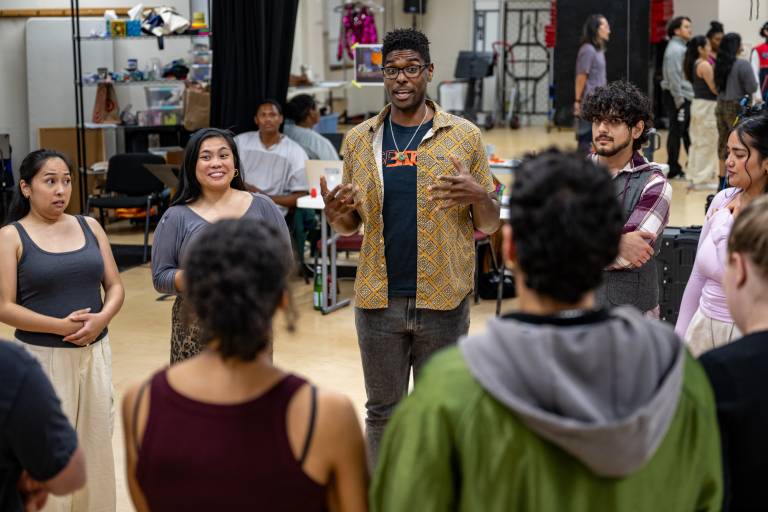
"caption": "Director Rodney Earl Jackson Jr. speaks to the cast during a rehearsal for the musical The Day the Sky Turned Orange at the American Conservatory Theater studio space in San Francisco on Aug. 19, 2025. The new production reflects on the September 2020 day when wildfire smoke turned the Bay Area sky orange.",
"credit": "Beth LaBerge/KQED",
"altTag": null,
"description": null,
"imgSizes": {
"thumbnail": {
"file": "https://cdn.kqed.org/wp-content/uploads/sites/35/2025/08/250819-ORANGESKYDAYART-44-KQED-160x107.jpg",
"width": 160,
"height": 107,
"mimeType": "image/jpeg"
},
"medium_large": {
"file": "https://cdn.kqed.org/wp-content/uploads/sites/35/2025/08/250819-ORANGESKYDAYART-44-KQED-768x512.jpg",
"width": 768,
"height": 512,
"mimeType": "image/jpeg"
},
"1536x1536": {
"file": "https://cdn.kqed.org/wp-content/uploads/sites/35/2025/08/250819-ORANGESKYDAYART-44-KQED-1536x1024.jpg",
"width": 1536,
"height": 1024,
"mimeType": "image/jpeg"
},
"post-thumbnail": {
"file": "https://cdn.kqed.org/wp-content/uploads/sites/35/2025/08/250819-ORANGESKYDAYART-44-KQED-672x372.jpg",
"width": 672,
"height": 372,
"mimeType": "image/jpeg"
},
"twentyfourteen-full-width": {
"file": "https://cdn.kqed.org/wp-content/uploads/sites/35/2025/08/250819-ORANGESKYDAYART-44-KQED-1038x576.jpg",
"width": 1038,
"height": 576,
"mimeType": "image/jpeg"
},
"kqedFullSize": {
"file": "https://cdn.kqed.org/wp-content/uploads/sites/35/2025/08/250819-ORANGESKYDAYART-44-KQED.jpg",
"width": 2000,
"height": 1333
}
},
"isLoading": false,
"fetchFailed": false
},
"science_1998283": {
"type": "attachments",
"id": "science_1998283",
"meta": {
"index": "attachments_1716263798",
"site": "science",
"id": "1998283",
"found": true
},
"title": "RohnertParkProcessingPlant1",
"publishDate": 1756156404,
"status": "inherit",
"parent": 1998274,
"modified": 1756156428,
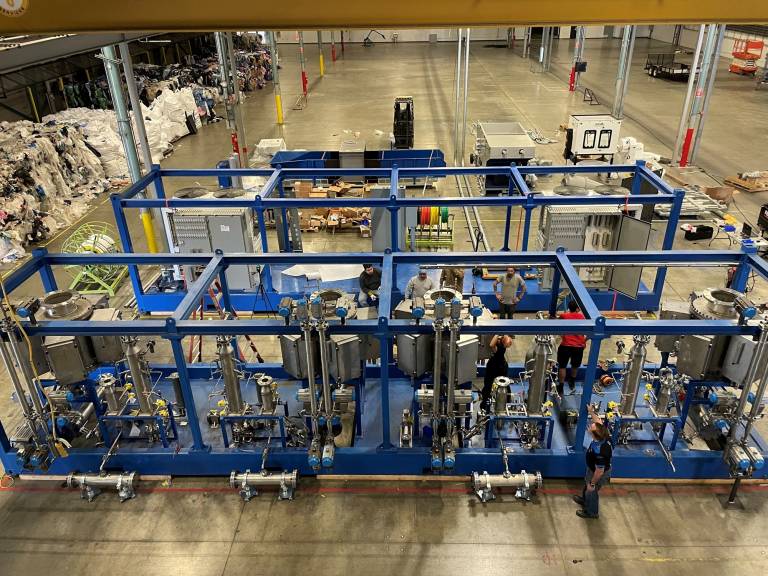
"caption": "The Resynergi facility, located in Rohnert Park's SOMO Village, uses a process called pyrolysis in order to recycle plastic. ",
"credit": "Courtesy of Resynergi",
"altTag": null,
"description": null,
"imgSizes": {
"thumbnail": {
"file": "https://cdn.kqed.org/wp-content/uploads/sites/35/2025/08/RohnertParkProcessingPlant1-160x120.jpg",
"width": 160,
"height": 120,
"mimeType": "image/jpeg"
},
"medium_large": {
"file": "https://cdn.kqed.org/wp-content/uploads/sites/35/2025/08/RohnertParkProcessingPlant1-768x576.jpg",
"width": 768,
"height": 576,
"mimeType": "image/jpeg"
},
"1536x1536": {
"file": "https://cdn.kqed.org/wp-content/uploads/sites/35/2025/08/RohnertParkProcessingPlant1-1536x1152.jpg",
"width": 1536,
"height": 1152,
"mimeType": "image/jpeg"
},
"post-thumbnail": {
"file": "https://cdn.kqed.org/wp-content/uploads/sites/35/2025/08/RohnertParkProcessingPlant1-672x372.jpg",
"width": 672,
"height": 372,
"mimeType": "image/jpeg"
},
"twentyfourteen-full-width": {
"file": "https://cdn.kqed.org/wp-content/uploads/sites/35/2025/08/RohnertParkProcessingPlant1-1038x576.jpg",
"width": 1038,
"height": 576,
"mimeType": "image/jpeg"
},
"kqedFullSize": {
"file": "https://cdn.kqed.org/wp-content/uploads/sites/35/2025/08/RohnertParkProcessingPlant1.jpg",
"width": 2000,
"height": 1500
}
},
"isLoading": false,
"fetchFailed": false
},
"science_1998288": {
"type": "attachments",
"id": "science_1998288",
"meta": {
"index": "attachments_1716263798",
"site": "science",
"id": "1998288",
"found": true
},
"title": "DL1209_Lovebugs-Are-Flies-With-an-Attachment-Problem_KQED_A",
"publishDate": 1756221452,
"status": "inherit",
"parent": 1998184,
"modified": 1756221452,
"caption": null,
"credit": null,
"altTag": null,
"description": null,
"imgSizes": {
"thumbnail": {
"file": "https://cdn.kqed.org/wp-content/uploads/sites/35/2025/08/DL1209_Lovebugs-Are-Flies-With-an-Attachment-Problem_KQED_A-160x90.jpg",
"width": 160,
"height": 90,
"mimeType": "image/jpeg"
},
"medium_large": {
"file": "https://cdn.kqed.org/wp-content/uploads/sites/35/2025/08/DL1209_Lovebugs-Are-Flies-With-an-Attachment-Problem_KQED_A-768x432.jpg",
"width": 768,
"height": 432,
"mimeType": "image/jpeg"
},
"1536x1536": {
"file": "https://cdn.kqed.org/wp-content/uploads/sites/35/2025/08/DL1209_Lovebugs-Are-Flies-With-an-Attachment-Problem_KQED_A-1536x864.jpg",
"width": 1536,
"height": 864,
"mimeType": "image/jpeg"
},
"post-thumbnail": {
"file": "https://cdn.kqed.org/wp-content/uploads/sites/35/2025/08/DL1209_Lovebugs-Are-Flies-With-an-Attachment-Problem_KQED_A-672x372.jpg",
"width": 672,
"height": 372,
"mimeType": "image/jpeg"
},
"twentyfourteen-full-width": {
"file": "https://cdn.kqed.org/wp-content/uploads/sites/35/2025/08/DL1209_Lovebugs-Are-Flies-With-an-Attachment-Problem_KQED_A-1038x576.jpg",
"width": 1038,
"height": 576,
"mimeType": "image/jpeg"
},
"kqedFullSize": {
"file": "https://cdn.kqed.org/wp-content/uploads/sites/35/2025/08/DL1209_Lovebugs-Are-Flies-With-an-Attachment-Problem_KQED_A.jpg",
"width": 1920,
"height": 1080
}
},
"isLoading": false,
"fetchFailed": false
},
"science_1998046": {
"type": "attachments",
"id": "science_1998046",
"meta": {
"index": "attachments_1716263798",
"site": "science",
"id": "1998046",
"found": true
},
"title": "DL1208_Beach Day-These-5-Surprising-Creatures-are-Hanging-Out-Too_KQED",
"publishDate": 1754083884,
"status": "inherit",
"parent": 1998036,
"modified": 1754084660,
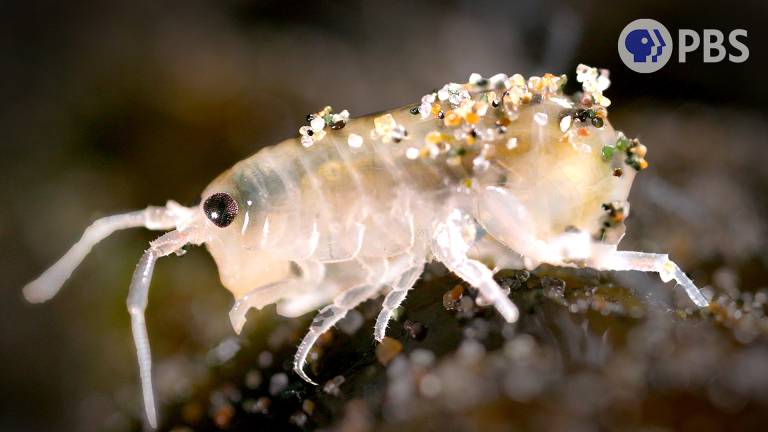
"caption": "Beach hoppers like this one in the San Francisco Bay Area play a crucial ecological role by shredding kelp and other organic matter that washes ashore on sandy beaches around the world.",
"credit": "Mike Seely/KQED",
"altTag": null,
"description": null,
"imgSizes": {
"thumbnail": {
"file": "https://cdn.kqed.org/wp-content/uploads/sites/35/2025/08/DL1208_Beach-Day-These-5-Surprising-Creatures-are-Hanging-Out-Too_KQED-160x90.jpg",
"width": 160,
"height": 90,
"mimeType": "image/jpeg"
},
"medium_large": {
"file": "https://cdn.kqed.org/wp-content/uploads/sites/35/2025/08/DL1208_Beach-Day-These-5-Surprising-Creatures-are-Hanging-Out-Too_KQED-768x432.jpg",
"width": 768,
"height": 432,
"mimeType": "image/jpeg"
},
"1536x1536": {
"file": "https://cdn.kqed.org/wp-content/uploads/sites/35/2025/08/DL1208_Beach-Day-These-5-Surprising-Creatures-are-Hanging-Out-Too_KQED-1536x864.jpg",
"width": 1536,
"height": 864,
"mimeType": "image/jpeg"
},
"post-thumbnail": {
"file": "https://cdn.kqed.org/wp-content/uploads/sites/35/2025/08/DL1208_Beach-Day-These-5-Surprising-Creatures-are-Hanging-Out-Too_KQED-672x372.jpg",
"width": 672,
"height": 372,
"mimeType": "image/jpeg"
},
"twentyfourteen-full-width": {
"file": "https://cdn.kqed.org/wp-content/uploads/sites/35/2025/08/DL1208_Beach-Day-These-5-Surprising-Creatures-are-Hanging-Out-Too_KQED-1038x576.jpg",
"width": 1038,
"height": 576,
"mimeType": "image/jpeg"
},
"kqedFullSize": {
"file": "https://cdn.kqed.org/wp-content/uploads/sites/35/2025/08/DL1208_Beach-Day-These-5-Surprising-Creatures-are-Hanging-Out-Too_KQED.jpg",
"width": 1920,
"height": 1080
}
},
"isLoading": false,
"fetchFailed": false
},
"science_1997997": {
"type": "attachments",
"id": "science_1997997",
"meta": {
"index": "attachments_1716263798",
"site": "science",
"id": "1997997",
"found": true
},
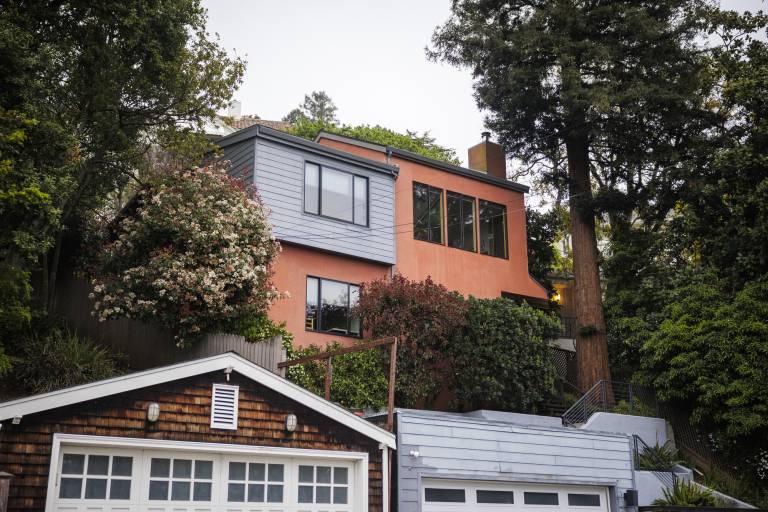
"title": "A home in the Berkeley hills on April 15, 2025.",
"publishDate": 1753982613,
"status": "inherit",
"parent": 1997994,
"modified": 1753982624,
"caption": "A home in the Berkeley hills on April 15, 2025.",
"credit": "Martin do Nascimento/KQED",
"altTag": null,
"description": null,
"imgSizes": {
"thumbnail": {
"file": "https://cdn.kqed.org/wp-content/uploads/sites/35/2025/07/250415-BERKELEY-PLANTS-MD-05_qed-160x107.jpg",
"width": 160,
"height": 107,
"mimeType": "image/jpeg"
},
"medium_large": {
"file": "https://cdn.kqed.org/wp-content/uploads/sites/35/2025/07/250415-BERKELEY-PLANTS-MD-05_qed-768x512.jpg",
"width": 768,
"height": 512,
"mimeType": "image/jpeg"
},
"1536x1536": {
"file": "https://cdn.kqed.org/wp-content/uploads/sites/35/2025/07/250415-BERKELEY-PLANTS-MD-05_qed-1536x1024.jpg",
"width": 1536,
"height": 1024,
"mimeType": "image/jpeg"
},
"post-thumbnail": {
"file": "https://cdn.kqed.org/wp-content/uploads/sites/35/2025/07/250415-BERKELEY-PLANTS-MD-05_qed-672x372.jpg",
"width": 672,
"height": 372,
"mimeType": "image/jpeg"
},
"twentyfourteen-full-width": {
"file": "https://cdn.kqed.org/wp-content/uploads/sites/35/2025/07/250415-BERKELEY-PLANTS-MD-05_qed-1038x576.jpg",
"width": 1038,
"height": 576,
"mimeType": "image/jpeg"
},
"kqedFullSize": {
"file": "https://cdn.kqed.org/wp-content/uploads/sites/35/2025/07/250415-BERKELEY-PLANTS-MD-05_qed.jpg",
"width": 1999,
"height": 1333
}
},
"isLoading": false,
"fetchFailed": false
},
"science_1997969": {
"type": "attachments",
"id": "science_1997969",
"meta": {
"index": "attachments_1716263798",
"site": "science",
"id": "1997969",
"found": true
},
"title": "IMG_9142_qed",
"publishDate": 1753809090,
"status": "inherit",
"parent": 1997954,
"modified": 1753809103,
"caption": null,
"credit": "Molly Peterson/KQED",
"altTag": null,
"description": null,
"imgSizes": {
"thumbnail": {
"file": "https://cdn.kqed.org/wp-content/uploads/sites/35/2025/07/IMG_9142_qed-160x120.jpg",
"width": 160,
"height": 120,
"mimeType": "image/jpeg"
},
"medium_large": {
"file": "https://cdn.kqed.org/wp-content/uploads/sites/35/2025/07/IMG_9142_qed-768x576.jpg",
"width": 768,
"height": 576,
"mimeType": "image/jpeg"
},
"1536x1536": {
"file": "https://cdn.kqed.org/wp-content/uploads/sites/35/2025/07/IMG_9142_qed-1536x1152.jpg",
"width": 1536,
"height": 1152,
"mimeType": "image/jpeg"
},
"post-thumbnail": {
"file": "https://cdn.kqed.org/wp-content/uploads/sites/35/2025/07/IMG_9142_qed-672x372.jpg",
"width": 672,
"height": 372,
"mimeType": "image/jpeg"
},
"twentyfourteen-full-width": {
"file": "https://cdn.kqed.org/wp-content/uploads/sites/35/2025/07/IMG_9142_qed-1038x576.jpg",
"width": 1038,
"height": 576,
"mimeType": "image/jpeg"
},
"kqedFullSize": {
"file": "https://cdn.kqed.org/wp-content/uploads/sites/35/2025/07/IMG_9142_qed.jpg",
"width": 1778,
"height": 1333
}
},
"isLoading": false,
"fetchFailed": false
},
"science_1985188": {
"type": "attachments",
"id": "science_1985188",
"meta": {
"index": "attachments_1716263798",
"site": "science",
"id": "1985188",
"found": true
},
"title": "RS66774_230627-HousingNevadaCoWildfire-24-BL-KQED",
"publishDate": 1699619757,
"status": "inherit",
"parent": 0,
"modified": 1753482842,
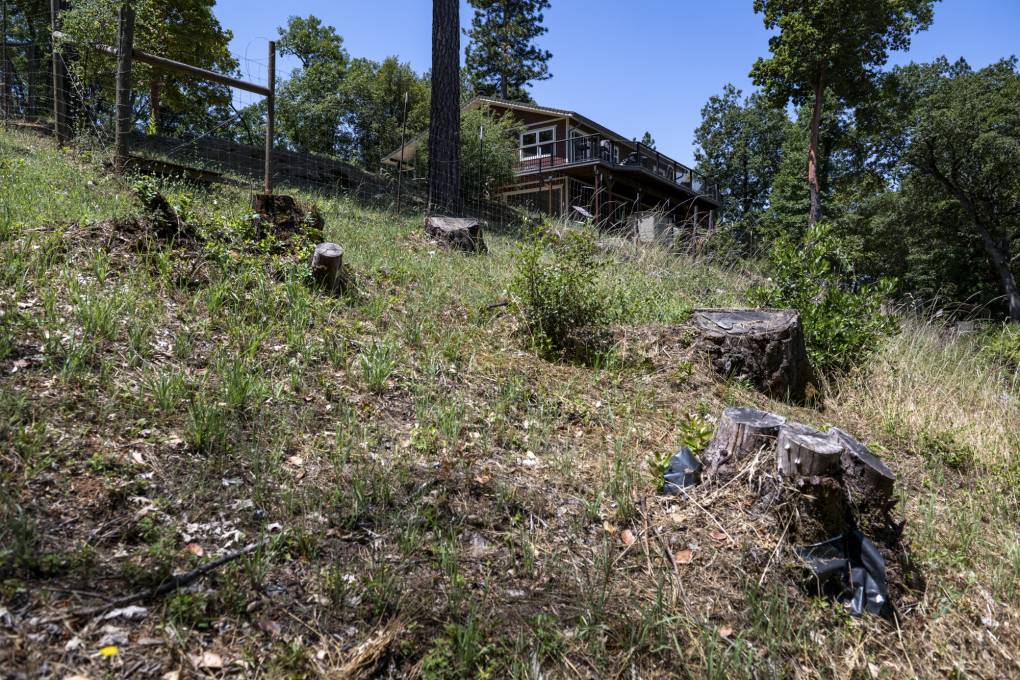
"caption": "Tree stumps fill the front yard of Mike Smith's home on the San Juan Ridge near Nevada City, California, on June 27, 2023, after he hired crews to create defensible space to help protect his home from wildfire.",
"credit": "Beth LaBerge/KQED",
"altTag": "An outdoor scene of cut tree trunks and cut grass in the foreground with a home up a hillside in the background.",
"description": null,
"imgSizes": {
"medium": {
"file": "https://cdn.kqed.org/wp-content/uploads/sites/35/2023/11/RS66774_230627-HousingNevadaCoWildfire-24-BL-KQED-800x533.jpg",
"width": 800,
"height": 533,
"mimeType": "image/jpeg"
},
"large": {
"file": "https://cdn.kqed.org/wp-content/uploads/sites/35/2023/11/RS66774_230627-HousingNevadaCoWildfire-24-BL-KQED-1020x680.jpg",
"width": 1020,
"height": 680,
"mimeType": "image/jpeg"
},
"thumbnail": {
"file": "https://cdn.kqed.org/wp-content/uploads/sites/35/2023/11/RS66774_230627-HousingNevadaCoWildfire-24-BL-KQED-160x107.jpg",
"width": 160,
"height": 107,
"mimeType": "image/jpeg"
},
"medium_large": {
"file": "https://cdn.kqed.org/wp-content/uploads/sites/35/2023/11/RS66774_230627-HousingNevadaCoWildfire-24-BL-KQED-768x512.jpg",
"width": 768,
"height": 512,
"mimeType": "image/jpeg"
},
"1536x1536": {
"file": "https://cdn.kqed.org/wp-content/uploads/sites/35/2023/11/RS66774_230627-HousingNevadaCoWildfire-24-BL-KQED-1536x1024.jpg",
"width": 1536,
"height": 1024,
"mimeType": "image/jpeg"
},
"post-thumbnail": {
"file": "https://cdn.kqed.org/wp-content/uploads/sites/35/2023/11/RS66774_230627-HousingNevadaCoWildfire-24-BL-KQED-672x372.jpg",
"width": 672,
"height": 372,
"mimeType": "image/jpeg"
},
"twentyfourteen-full-width": {
"file": "https://cdn.kqed.org/wp-content/uploads/sites/35/2023/11/RS66774_230627-HousingNevadaCoWildfire-24-BL-KQED-1038x576.jpg",
"width": 1038,
"height": 576,
"mimeType": "image/jpeg"
},
"full-width": {
"file": "https://cdn.kqed.org/wp-content/uploads/sites/35/2023/11/RS66774_230627-HousingNevadaCoWildfire-24-BL-KQED-1920x1280.jpg",
"width": 1920,
"height": 1280,
"mimeType": "image/jpeg"
},
"kqedFullSize": {
"file": "https://cdn.kqed.org/wp-content/uploads/sites/35/2023/11/RS66774_230627-HousingNevadaCoWildfire-24-BL-KQED.jpg",
"width": 2000,
"height": 1333
}
},
"isLoading": false,
"fetchFailed": false
},
"science_1997880": {
"type": "attachments",
"id": "science_1997880",
"meta": {
"index": "attachments_1716263798",
"site": "science",
"id": "1997880",
"found": true
},
"title": "20240604_FloodedSchool-16_qed",
"publishDate": 1753210603,
"status": "inherit",
"parent": 0,
"modified": 1753217104,
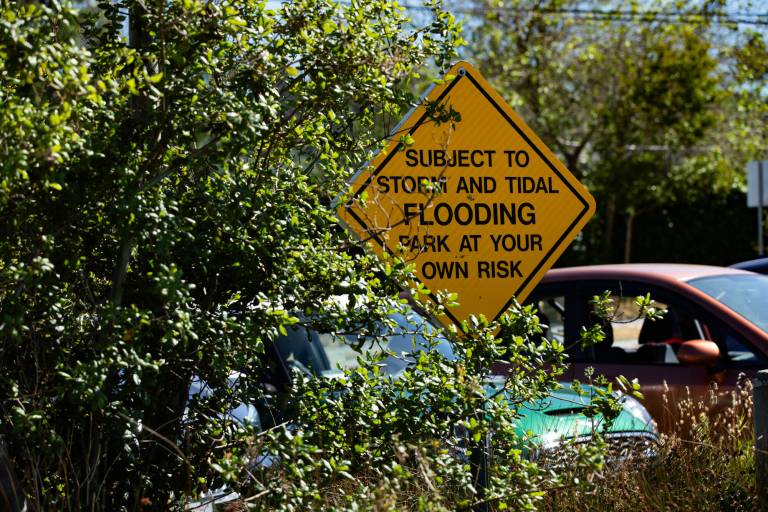
"caption": "Flood warning signs are posted at the Mill Valley Middle School staff parking lot on June 4, 2024. In October 2021, Mill Valley Middle School closed down for two days due to flooding and storm damage caused by rain-induced flooding and high tides.",
"credit": "Gina Castro/KQED",
"altTag": null,
"description": null,
"imgSizes": {
"thumbnail": {
"file": "https://cdn.kqed.org/wp-content/uploads/sites/35/2025/07/20240604_FloodedSchool-16_qed-160x107.jpg",
"width": 160,
"height": 107,
"mimeType": "image/jpeg"
},
"medium_large": {
"file": "https://cdn.kqed.org/wp-content/uploads/sites/35/2025/07/20240604_FloodedSchool-16_qed-768x512.jpg",
"width": 768,
"height": 512,
"mimeType": "image/jpeg"
},
"1536x1536": {
"file": "https://cdn.kqed.org/wp-content/uploads/sites/35/2025/07/20240604_FloodedSchool-16_qed-1536x1024.jpg",
"width": 1536,
"height": 1024,
"mimeType": "image/jpeg"
},
"post-thumbnail": {
"file": "https://cdn.kqed.org/wp-content/uploads/sites/35/2025/07/20240604_FloodedSchool-16_qed-672x372.jpg",
"width": 672,
"height": 372,
"mimeType": "image/jpeg"
},
"twentyfourteen-full-width": {
"file": "https://cdn.kqed.org/wp-content/uploads/sites/35/2025/07/20240604_FloodedSchool-16_qed-1038x576.jpg",
"width": 1038,
"height": 576,
"mimeType": "image/jpeg"
},
"kqedFullSize": {
"file": "https://cdn.kqed.org/wp-content/uploads/sites/35/2025/07/20240604_FloodedSchool-16_qed.jpg",
"width": 2000,
"height": 1333
}
},
"isLoading": false,
"fetchFailed": false
},
"science_1997855": {
"type": "attachments",
"id": "science_1997855",
"meta": {
"index": "attachments_1716263798",
"site": "science",
"id": "1997855",
"found": true
},
"title": "240109-CAWindStorm-081_qed (1)",
"publishDate": 1752782567,
"status": "inherit",
"parent": 1997852,
"modified": 1752782579,
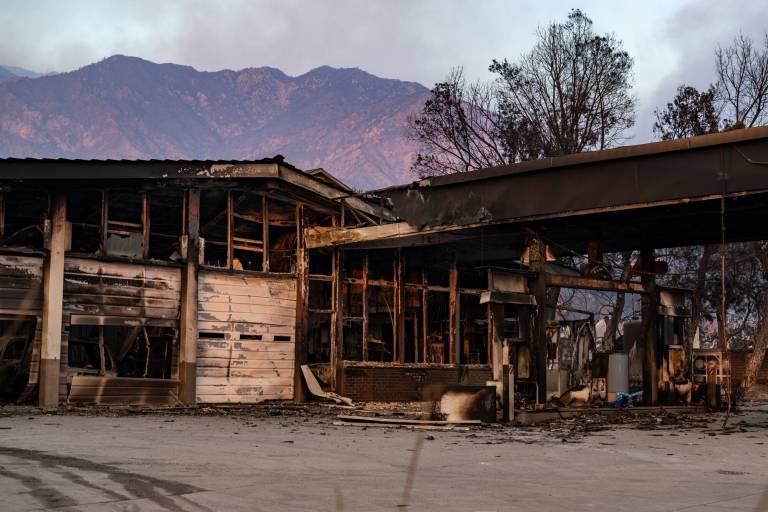
"caption": "A Chevron gas station in Altadena, California, after the Eaton Fire swept through the area northeast of Los Angeles, California, on Thursday, Jan. 9, 2025.",
"credit": "Beth LaBerge/KQED",
"altTag": null,
"description": null,
"imgSizes": {
"thumbnail": {
"file": "https://cdn.kqed.org/wp-content/uploads/sites/35/2025/07/240109-CAWindStorm-081_qed-1-160x107.jpg",
"width": 160,
"height": 107,
"mimeType": "image/jpeg"
},
"medium_large": {
"file": "https://cdn.kqed.org/wp-content/uploads/sites/35/2025/07/240109-CAWindStorm-081_qed-1-768x512.jpg",
"width": 768,
"height": 512,
"mimeType": "image/jpeg"
},
"1536x1536": {
"file": "https://cdn.kqed.org/wp-content/uploads/sites/35/2025/07/240109-CAWindStorm-081_qed-1-1536x1024.jpg",
"width": 1536,
"height": 1024,
"mimeType": "image/jpeg"
},
"post-thumbnail": {
"file": "https://cdn.kqed.org/wp-content/uploads/sites/35/2025/07/240109-CAWindStorm-081_qed-1-672x372.jpg",
"width": 672,
"height": 372,
"mimeType": "image/jpeg"
},
"twentyfourteen-full-width": {
"file": "https://cdn.kqed.org/wp-content/uploads/sites/35/2025/07/240109-CAWindStorm-081_qed-1-1038x576.jpg",
"width": 1038,
"height": 576,
"mimeType": "image/jpeg"
},
"kqedFullSize": {
"file": "https://cdn.kqed.org/wp-content/uploads/sites/35/2025/07/240109-CAWindStorm-081_qed-1.jpg",
"width": 2000,
"height": 1333
}
},
"isLoading": false,
"fetchFailed": false
},
"science_1997793": {
"type": "attachments",
"id": "science_1997793",
"meta": {
"index": "attachments_1716263798",
"site": "science",
"id": "1997793",
"found": true
},
"title": "Living Seawall",
"publishDate": 1752536416,
"status": "inherit",
"parent": 0,
"modified": 1752596717,
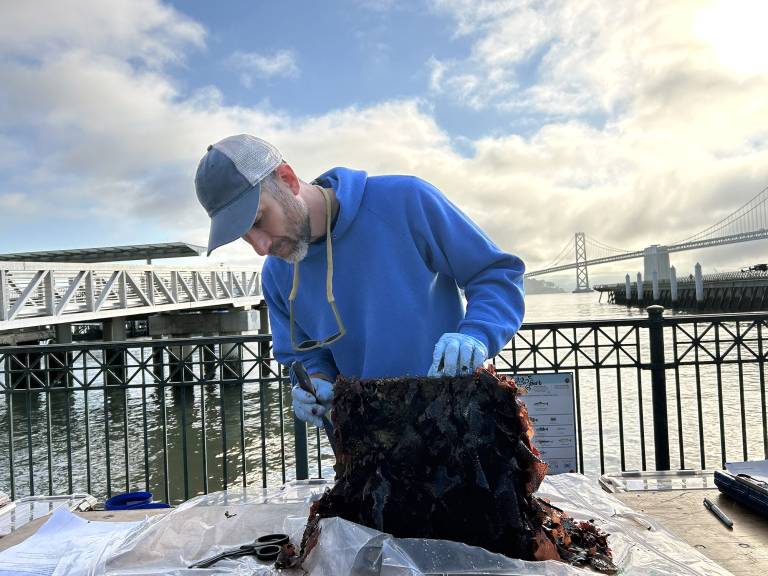
"caption": "Biological sciences technician Jeffrey Blumenthal inspects specially designed tiles, which are part of an innovative study led by the Port of San Francisco and Smithsonian Environmental Research Center, to learn how we can make San Francisco's seawalls more ecologically friendly in the future.",
"credit": "Ezra David Romero/KQED",
"altTag": null,
"description": null,
"imgSizes": {
"thumbnail": {
"file": "https://cdn.kqed.org/wp-content/uploads/sites/35/2025/07/IMG_2320-160x120.jpg",
"width": 160,
"height": 120,
"mimeType": "image/jpeg"
},
"medium_large": {
"file": "https://cdn.kqed.org/wp-content/uploads/sites/35/2025/07/IMG_2320-768x576.jpg",
"width": 768,
"height": 576,
"mimeType": "image/jpeg"
},
"1536x1536": {
"file": "https://cdn.kqed.org/wp-content/uploads/sites/35/2025/07/IMG_2320-1536x1152.jpg",
"width": 1536,
"height": 1152,
"mimeType": "image/jpeg"
},
"post-thumbnail": {
"file": "https://cdn.kqed.org/wp-content/uploads/sites/35/2025/07/IMG_2320-672x372.jpg",
"width": 672,
"height": 372,
"mimeType": "image/jpeg"
},
"twentyfourteen-full-width": {
"file": "https://cdn.kqed.org/wp-content/uploads/sites/35/2025/07/IMG_2320-1038x576.jpg",
"width": 1038,
"height": 576,
"mimeType": "image/jpeg"
},
"kqedFullSize": {
"file": "https://cdn.kqed.org/wp-content/uploads/sites/35/2025/07/IMG_2320.jpg",
"width": 2000,
"height": 1500
}
},
"isLoading": false,
"fetchFailed": false
},
"science_1992911": {
"type": "attachments",
"id": "science_1992911",
"meta": {
"index": "attachments_1716263798",
"site": "science",
"id": "1992911",
"found": true
},
"title": "004_Richmond_ChevronRefinery_01132022_qut",
"publishDate": 1716400493,
"status": "inherit",
"parent": 1992910,
"modified": 1716400514,
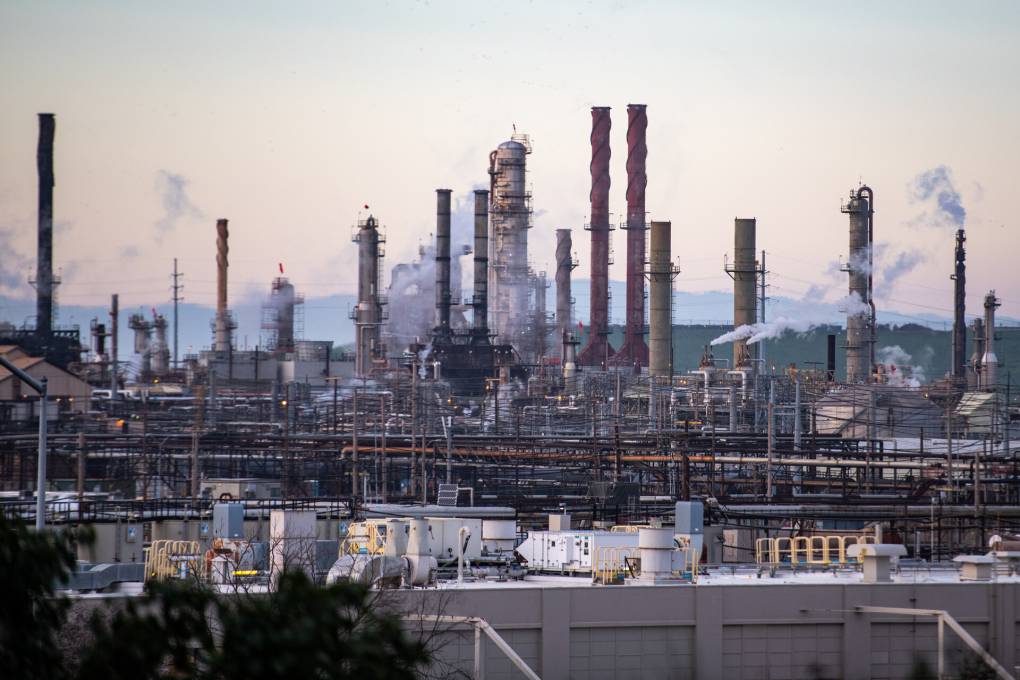
"caption": "The Chevron Refinery, a petroleum refinery, can be seen from Point Richmond on Jan. 13, 2022.",
"credit": "Beth LaBerge/KQED",
"altTag": null,
"description": null,
"imgSizes": {
"medium": {
"file": "https://cdn.kqed.org/wp-content/uploads/sites/35/2024/05/004_Richmond_ChevronRefinery_01132022_qut-800x533.jpg",
"width": 800,
"height": 533,
"mimeType": "image/jpeg"
},
"large": {
"file": "https://cdn.kqed.org/wp-content/uploads/sites/35/2024/05/004_Richmond_ChevronRefinery_01132022_qut-1020x680.jpg",
"width": 1020,
"height": 680,
"mimeType": "image/jpeg"
},
"thumbnail": {
"file": "https://cdn.kqed.org/wp-content/uploads/sites/35/2024/05/004_Richmond_ChevronRefinery_01132022_qut-160x107.jpg",
"width": 160,
"height": 107,
"mimeType": "image/jpeg"
},
"medium_large": {
"file": "https://cdn.kqed.org/wp-content/uploads/sites/35/2024/05/004_Richmond_ChevronRefinery_01132022_qut-768x512.jpg",
"width": 768,
"height": 512,
"mimeType": "image/jpeg"
},
"1536x1536": {
"file": "https://cdn.kqed.org/wp-content/uploads/sites/35/2024/05/004_Richmond_ChevronRefinery_01132022_qut-1536x1024.jpg",
"width": 1536,
"height": 1024,
"mimeType": "image/jpeg"
},
"post-thumbnail": {
"file": "https://cdn.kqed.org/wp-content/uploads/sites/35/2024/05/004_Richmond_ChevronRefinery_01132022_qut-672x372.jpg",
"width": 672,
"height": 372,
"mimeType": "image/jpeg"
},
"twentyfourteen-full-width": {
"file": "https://cdn.kqed.org/wp-content/uploads/sites/35/2024/05/004_Richmond_ChevronRefinery_01132022_qut-1038x576.jpg",
"width": 1038,
"height": 576,
"mimeType": "image/jpeg"
},
"kqedFullSize": {
"file": "https://cdn.kqed.org/wp-content/uploads/sites/35/2024/05/004_Richmond_ChevronRefinery_01132022_qut.jpg",
"width": 1920,
"height": 1280
}
},
"isLoading": false,
"fetchFailed": false
},
"science_1997639": {
"type": "attachments",
"id": "science_1997639",
"meta": {
"index": "attachments_1716263798",
"site": "science",
"id": "1997639",
"found": true
},
"title": "APTOPIX Extreme Weather Texas",
"publishDate": 1752002381,
"status": "inherit",
"parent": 1997633,
"modified": 1752003293,
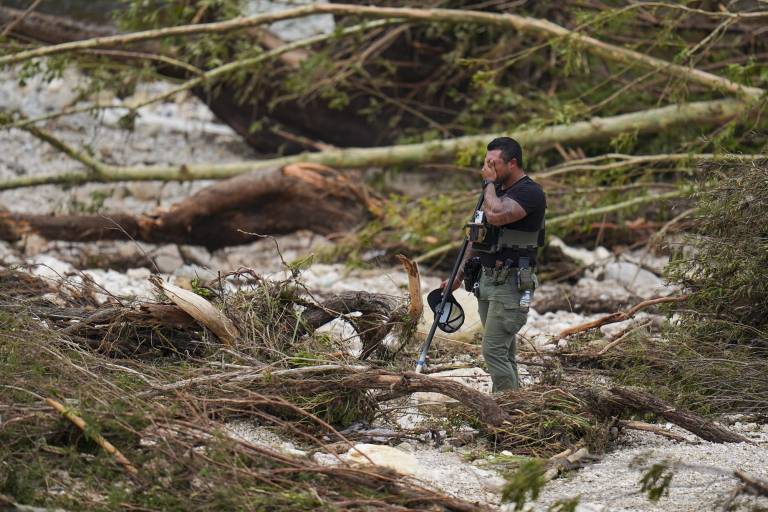
"caption": "A Sheriff's deputy pauses while combing through the banks of the Guadalupe River near Camp Mystic, on Saturday, July 5, 2025, in Hunt, Texas, after a flash flood swept through the area. ",
"credit": "Julio Cortez/AP Photo",
"altTag": null,
"description": null,
"imgSizes": {
"thumbnail": {
"file": "https://cdn.kqed.org/wp-content/uploads/sites/35/2025/07/CampMysticAP2-160x107.jpg",
"width": 160,
"height": 107,
"mimeType": "image/jpeg"
},
"medium_large": {
"file": "https://cdn.kqed.org/wp-content/uploads/sites/35/2025/07/CampMysticAP2-768x512.jpg",
"width": 768,
"height": 512,
"mimeType": "image/jpeg"
},
"1536x1536": {
"file": "https://cdn.kqed.org/wp-content/uploads/sites/35/2025/07/CampMysticAP2-1536x1024.jpg",
"width": 1536,
"height": 1024,
"mimeType": "image/jpeg"
},
"post-thumbnail": {
"file": "https://cdn.kqed.org/wp-content/uploads/sites/35/2025/07/CampMysticAP2-672x372.jpg",
"width": 672,
"height": 372,
"mimeType": "image/jpeg"
},
"twentyfourteen-full-width": {
"file": "https://cdn.kqed.org/wp-content/uploads/sites/35/2025/07/CampMysticAP2-1038x576.jpg",
"width": 1038,
"height": 576,
"mimeType": "image/jpeg"
},
"kqedFullSize": {
"file": "https://cdn.kqed.org/wp-content/uploads/sites/35/2025/07/CampMysticAP2.jpg",
"width": 2000,
"height": 1333
}
},
"isLoading": false,
"fetchFailed": false
}
},
"audioPlayerReducer": {
"postId": "stream_live",
"isPaused": true,
"isPlaying": false,
"pfsActive": false,
"pledgeModalIsOpen": true,
"playerDrawerIsOpen": false,
"liveAudioPlayStartedAt": 0,
"liveAudioPlayContext": ""
},
"authorsReducer": {
"gabriela-quiros": {
"type": "authors",
"id": "6186",
"meta": {
"index": "authors_1716337520",
"id": "6186",
"found": true
},
"name": "Gabriela Quirós",
"firstName": "Gabriela",
"lastName": "Quirós",
"slug": "gabriela-quiros",
"email": "gquiros@kqed.org",
"display_author_email": false,
"staff_mastheads": [],
"title": "Supervising Producer",
"bio": "Gabriela Quirós is the \u003cstrong>supervising producer for KQED's web science video series \u003ca href=\"https://www.kqed.org/deeplook\">Deep Look\u003c/a>\u003c/strong>. She joined KQED as a TV producer when its science series QUEST started in 2006 and has covered everything from Alzheimer’s to bee die-offs to dark energy.\r\n\r\nShe won a 2022 AAAS Kavli Science Journalism Award with a team of her Deep Look colleagues. She has won six regional Emmys as a video producer and has shared eight more as the coordinating producer of Deep Look. The episode she produced about \u003ca href=\"https://www.kqed.org/science/728086/how-mosquitoes-use-six-needles-to-suck-your-blood\">How Mosquitoes Use Six Needles to Suck Your Blood\u003c/a> won a Webby \"People's Voice\" award. She has also earned awards from the Jackson Hole Wildlife Film Festival, the Society of Professional Journalists and the Society of Environmental Journalists.\r\n\r\nHer videos for KQED have also aired on NOVA scienceNOW and the PBS NewsHour, and appeared on NPR.org.\r\n\r\nAs an independent filmmaker, she produced and directed the hour-long documentary \u003ca href=\"http://lpbp.org/beautiful-sin-qa-with-producer-gabriela-quiros/\">\u003cem>Beautiful Sin\u003c/em>\u003c/a>, about the surprising story of how Costa Rica became the only country in the world to outlaw in vitro fertilization. The film aired in 2015 on public television stations throughout the U.S., and in Costa Rica.\r\n\r\nShe started her journalism career as a newspaper reporter in Costa Rica, where she grew up. She won the National Science Journalism Award there for a series of articles about organic agriculture, and developed a life-long interest in health reporting. She moved to the Bay Area in 1996 to study documentary filmmaking at the University of California, Berkeley, where she received master’s degrees in journalism and Latin American studies.",
"avatar": "https://secure.gravatar.com/avatar/6d82c20152affd1b434c31a904c40809?s=600&d=blank&r=g",
"twitter": "gabrielaquirosr",
"facebook": null,
"instagram": null,
"linkedin": null,
"sites": [
{
"site": "science",
"roles": []
},
{
"site": "quest",
"roles": [
"ef_view_calendar",
"ef_view_story_budget"
]
}
],
"headData": {
"title": "Gabriela Quirós | KQED",
"description": "Supervising Producer",
"ogImgSrc": "https://secure.gravatar.com/avatar/6d82c20152affd1b434c31a904c40809?s=600&d=blank&r=g",
"twImgSrc": "https://secure.gravatar.com/avatar/6d82c20152affd1b434c31a904c40809?s=600&d=blank&r=g"
},
"isLoading": false,
"link": "/author/gabriela-quiros"
},
"lklivans": {
"type": "authors",
"id": "8648",
"meta": {
"index": "authors_1716337520",
"id": "8648",
"found": true
},
"name": "Laura Klivans",
"firstName": "Laura",
"lastName": "Klivans",
"slug": "lklivans",
"email": "lklivans@kqed.org",
"display_author_email": true,
"staff_mastheads": [
"news",
"science"
],
"title": "Reporter",
"bio": "Laura Klivans is an award-winning science reporter for KQED News, where she covers climate change with an eye on both groundbreaking progress and gaps in action. She is the former host of KQED's blockbuster video series about tiny, amazing animals, \u003cem>Deep Look\u003c/em>. Her work reaches national audiences through NPR, \u003cem>Here & Now, \u003c/em>PRI, and other major outlets. \r\n\r\nLaura’s won five Northern California Area Emmy Awards for Deep Look and First Place in the Greater Bay Area Journalism Awards for a podcast exploring how one Oakland neighborhood teamed up to reduce planet-heating pollution.\r\n\r\nBeyond her reporting, she hosts and moderates events. In the past, she taught audio storytelling at the UC Berkeley Graduate School of Journalism, led international education programs, worked with immigrants and refugees along the Thai-Burmese border, taught high schoolers sex ed, and was an actress. \r\n\r\nShe's a former UC Berkeley Human Rights Fellow, USC Center for Health Journalism's California Fellow and Coro Fellow in Public Affairs. Laura has a master’s in journalism from UC Berkeley, a master’s in education from Harvard, and an undergraduate degree from Northwestern University.\r\n\r\nShe loves trying to riddle the meaning out of vanity license plates.",
"avatar": "https://secure.gravatar.com/avatar/2d2ecd1550a494cc10ad4a503406965585902124739e775a9b3817eebf1d88be?s=600&d=blank&r=g",
"twitter": "lauraklivans",
"bluesky": null,
"facebook": null,
"instagram": null,
"linkedin": null,
"sites": [
{
"site": "news",
"roles": [
"editor"
]
},
{
"site": "stateofhealth",
"roles": [
"contributor",
"editor"
]
},
{
"site": "science",
"roles": [
"editor"
]
},
{
"site": "forum",
"roles": [
"editor"
]
}
],
"headData": {
"title": "Laura Klivans | KQED",
"description": "Reporter",
"ogImgSrc": "https://secure.gravatar.com/avatar/2d2ecd1550a494cc10ad4a503406965585902124739e775a9b3817eebf1d88be?s=600&d=blank&r=g",
"twImgSrc": "https://secure.gravatar.com/avatar/2d2ecd1550a494cc10ad4a503406965585902124739e775a9b3817eebf1d88be?s=600&d=blank&r=g"
},
"isLoading": false,
"link": "/author/lklivans"
},
"dventon": {
"type": "authors",
"id": "11088",
"meta": {
"index": "authors_1716337520",
"id": "11088",
"found": true
},
"name": "Danielle Venton",
"firstName": "Danielle",
"lastName": "Venton",
"slug": "dventon",
"email": "dventon@kqed.org",
"display_author_email": true,
"staff_mastheads": [
"science"
],
"title": "Science reporter",
"bio": "Danielle Venton is a reporter for KQED Science. She covers wildfires, space and oceans (though she is prone to sea sickness).\r\n\r\nBefore joining KQED in 2015, Danielle was a staff reporter at KRCB in Sonoma County and a freelancer. She studied science communication at UC Santa Cruz and formerly worked at CERN in Geneva, Switzerland where she wrote about computing. She lives in Sonoma County and enjoys backpacking.",
"avatar": "https://secure.gravatar.com/avatar/37b292b5c40c8d93959c4f48d73b5286f41b7abd8588277e941905a3ed4c801c?s=600&d=blank&r=g",
"twitter": "DanielleVenton",
"bluesky": null,
"facebook": null,
"instagram": null,
"linkedin": null,
"sites": [
{
"site": "arts",
"roles": [
"contributor"
]
},
{
"site": "news",
"roles": [
"editor"
]
},
{
"site": "futureofyou",
"roles": [
"editor"
]
},
{
"site": "science",
"roles": [
"editor"
]
},
{
"site": "liveblog",
"roles": [
"contributor"
]
}
],
"headData": {
"title": "Danielle Venton | KQED",
"description": "Science reporter",
"ogImgSrc": "https://secure.gravatar.com/avatar/37b292b5c40c8d93959c4f48d73b5286f41b7abd8588277e941905a3ed4c801c?s=600&d=blank&r=g",
"twImgSrc": "https://secure.gravatar.com/avatar/37b292b5c40c8d93959c4f48d73b5286f41b7abd8588277e941905a3ed4c801c?s=600&d=blank&r=g"
},
"isLoading": false,
"link": "/author/dventon"
},
"dcronin": {
"type": "authors",
"id": "11362",
"meta": {
"index": "authors_1716337520",
"id": "11362",
"found": true
},
"name": "Dana Cronin",
"firstName": "Dana",
"lastName": "Cronin",
"slug": "dcronin",
"email": "dcronin@KQED.org",
"display_author_email": true,
"staff_mastheads": [],
"title": "KQED Contributor",
"bio": "Dana Cronin is a reporter for KQED News. She loves writing stories about climate change, environmental issues, food and agriculture. She's reported across the country, from Colorado to Washington D.C. to Illinois, and has won numerous awards for her coverage. Her work is regularly featured on national broadcasts, including NPR’s Morning Edition, All Things Considered, PBS Newshour and Science Friday. She lives in Oakland and has an avocado tree in her back yard.",
"avatar": "https://secure.gravatar.com/avatar/bcf89e3455ff7235f96ab6fa7258dd95?s=600&d=blank&r=g",
"twitter": "DanaHCronin",
"facebook": null,
"instagram": null,
"linkedin": null,
"sites": [
{
"site": "arts",
"roles": [
"author"
]
},
{
"site": "news",
"roles": [
"editor"
]
},
{
"site": "science",
"roles": [
"author"
]
},
{
"site": "liveblog",
"roles": [
"author"
]
}
],
"headData": {
"title": "Dana Cronin | KQED",
"description": "KQED Contributor",
"ogImgSrc": "https://secure.gravatar.com/avatar/bcf89e3455ff7235f96ab6fa7258dd95?s=600&d=blank&r=g",
"twImgSrc": "https://secure.gravatar.com/avatar/bcf89e3455ff7235f96ab6fa7258dd95?s=600&d=blank&r=g"
},
"isLoading": false,
"link": "/author/dcronin"
},
"eromero": {
"type": "authors",
"id": "11746",
"meta": {
"index": "authors_1716337520",
"id": "11746",
"found": true
},
"name": "Ezra David Romero",
"firstName": "Ezra David",
"lastName": "Romero",
"slug": "eromero",
"email": "eromero@kqed.org",
"display_author_email": true,
"staff_mastheads": [
"news",
"science"
],
"title": "Climate Reporter",
"bio": "Ezra David Romero is a climate reporter for KQED News. He covers the absence and excess of water in the Bay Area — think sea level rise, flooding and drought. For nearly a decade he’s covered how warming temperatures are altering the lives of Californians. He’s reported on farmers worried their pistachio trees aren’t getting enough sleep, families desperate for water, scientists studying dying giant sequoias, and alongside firefighters containing wildfires. His work has appeared on local stations across California and nationally on public radio shows like Morning Edition, Here and Now, All Things Considered and Science Friday. ",
"avatar": "https://secure.gravatar.com/avatar/c76404d287c10ed40224227551ac36e24352c7306f106632caf6fead76f8801f?s=600&d=blank&r=g",
"twitter": "ezraromero",
"bluesky": null,
"facebook": null,
"instagram": null,
"linkedin": null,
"sites": [
{
"site": "arts",
"roles": [
"editor"
]
},
{
"site": "news",
"roles": [
"editor"
]
},
{
"site": "science",
"roles": [
"editor"
]
},
{
"site": "liveblog",
"roles": [
"author"
]
}
],
"headData": {
"title": "Ezra David Romero | KQED",
"description": "Climate Reporter",
"ogImgSrc": "https://secure.gravatar.com/avatar/c76404d287c10ed40224227551ac36e24352c7306f106632caf6fead76f8801f?s=600&d=blank&r=g",
"twImgSrc": "https://secure.gravatar.com/avatar/c76404d287c10ed40224227551ac36e24352c7306f106632caf6fead76f8801f?s=600&d=blank&r=g"
},
"isLoading": false,
"link": "/author/eromero"
}
},
"pagesReducer": {
"science_category_environment": {
"type": "terms",
"id": "science_35",
"meta": {
"index": "terms_1716263798",
"site": "science",
"id": "35",
"score": 12.138062
},
"featImg": null,
"name": "Environment",
"description": null,
"taxonomy": "category",
"headData": {
"twImgId": null,
"twTitle": null,
"ogTitle": null,
"ogImgId": null,
"twDescription": null,
"description": null,
"title": "Environment Archives | KQED Science",
"ogDescription": null
},
"ttid": 37,
"slug": "environment",
"isLoading": false,
"title": "Environment",
"pageMeta": {
"site": "science",
"WpPageTemplate": "page-topic-editorial",
"currentPage": 5
},
"blocks": [
{
"blockName": "kqed/post-list",
"attrs": {
"layout": "cardArticle2",
"query": "posts/science?category=environment",
"seeMore": false,
"paginated": true,
"page": 5
}
},
{
"blockName": "kqed/ad"
}
]
}
},
"pfsSessionReducer": {},
"postsReducer": {
"stream_live": {
"type": "live",
"id": "stream_live",
"audioUrl": "https://streams.kqed.org/kqedradio",
"title": "Live Stream",
"excerpt": "Live Stream information currently unavailable.",
"link": "/radio",
"featImg": "",
"label": {
"name": "KQED Live",
"link": "/"
}
},
"stream_kqedNewscast": {
"type": "posts",
"id": "stream_kqedNewscast",
"audioUrl": "https://www.kqed.org/.stream/anon/radio/RDnews/newscast.mp3?_=1",
"title": "KQED Newscast",
"featImg": "",
"label": {
"name": "88.5 FM",
"link": "/"
}
},
"science_1998386": {
"type": "posts",
"id": "science_1998386",
"meta": {
"index": "posts_1716263798",
"site": "science",
"id": "1998386",
"score": null,
"sort": [
1757426454000
]
},
"guestAuthors": [],
"slug": "a-new-musical-revisits-the-bay-areas-apocalyptic-orange-sky-day",
"title": "A New Musical Revisits the Bay Area’s Apocalyptic Orange Sky Day",
"publishDate": 1757426454,
"format": "audio",
"headTitle": "A New Musical Revisits the Bay Area’s Apocalyptic Orange Sky Day | KQED",
"labelTerm": {},
"content": "\u003cp>On the morning of Sept. 9, 2020, Rodney Earl Jackson, Jr. woke up to the buzz of his cell phone. It was his mother, telling him to open his \u003ca href=\"https://www.kqed.org/news/tag/san-francisco\">San Francisco\u003c/a> apartment window and peer outside. It was late enough for the morning light to shine down on his Duboce Park neighborhood, but instead the streets were cloaked in darkness.\u003c/p>\n\u003cp>Where was the sun?\u003c/p>\n\u003cp>“Immediately I shut the window, and I said, ‘I’m not dealing with this right now,’” Jackson recalled. His mother, based a few blocks away in the Fillmore, asked if he knew what was happening.\u003c/p>\n\u003cp>He had no idea, he said, and tried to go back to sleep. “Because I thought I was in a dream. It felt like I hadn’t really woken up yet,” Jackson said.\u003c/p>\n\u003cp>[ad fullwidth]\u003c/p>\n\u003cp>More than a hundred miles north of the Bay Area,\u003ca href=\"https://www.kqed.org/science/1998245/the-summer-that-changed-california-forever\"> wildfires\u003c/a> tore through towns, homes and forests. Winds carried massive amounts of smoke into the skies over the Bay Area. The pollution scattered blue-light wavelengths, leaving only reds and oranges to shine through. Not only was it dark, the sky was an eerie orange.\u003c/p>\n\u003cp>Jackson is an actor who’s appeared on Broadway, with deep roots in the Bay Area. He was born and raised in San Francisco before attending college on the East Coast, and returned home more than a decade ago to co-found the \u003ca href=\"https://www.sfbatco.org/\">San Francisco Bay Area Theatre Company\u003c/a>.\u003c/p>\n\u003cfigure id=\"attachment_1998329\" class=\"wp-caption aligncenter\" style=\"max-width: 2000px\">\u003cimg loading=\"lazy\" decoding=\"async\" class=\"size-full wp-image-1998329\" src=\"https://cdn.kqed.org/wp-content/uploads/sites/35/2025/09/250819-ORANGESKYDAYART-24-KQED.jpg\" alt=\"\" width=\"2000\" height=\"1333\" srcset=\"https://cdn.kqed.org/wp-content/uploads/sites/35/2025/09/250819-ORANGESKYDAYART-24-KQED.jpg 2000w, https://cdn.kqed.org/wp-content/uploads/sites/35/2025/09/250819-ORANGESKYDAYART-24-KQED-160x107.jpg 160w, https://cdn.kqed.org/wp-content/uploads/sites/35/2025/09/250819-ORANGESKYDAYART-24-KQED-768x512.jpg 768w, https://cdn.kqed.org/wp-content/uploads/sites/35/2025/09/250819-ORANGESKYDAYART-24-KQED-1536x1024.jpg 1536w\" sizes=\"auto, (max-width: 2000px) 100vw, 2000px\">\u003cfigcaption class=\"wp-caption-text\">The cast of the musical The Day the Sky Turned Orange rehearses at the American Conservatory Theater studio space in San Francisco on Aug. 19, 2025. \u003ccite>(Beth LaBerge/KQED)\u003c/cite>\u003c/figcaption>\u003c/figure>\n\u003cp>The Bay Area is familiar and exciting to Jackson, but on that dark day, it was frightening.\u003c/p>\n\u003cp>He wanted to know how others felt: did it all seem like a dream to them, too? And what meaning were they making from it? So he started interviewing people. The product of those conversations is a musical called “The Day the Sky Turned Orange,” premiering this month.\u003c/p>\n\u003cp>The play invites the audience back to that apocalyptic day, which crashed like a roaring wave on top of pandemic isolation and a national racial reckoning sparked by the murder of George Floyd. Jackson and his co-creators hope that revisiting a day marked by often-repressed emotions will help us process them and move forward.[aside postID=science_1998209 hero='https://cdn.kqed.org/wp-content/uploads/sites/35/2025/08/GettyImages-1271601364.jpg']“I don’t think that we’ve actually fully recovered from that moment. I know I haven’t,” playwright Julius Ernesto Rea said.\u003c/p>\n\u003cp>Rea said coming together in a physical space and going back in time gives the actors and the audience the opportunity to release some of their bottled-up emotions, especially those surrounding the changing climate.\u003c/p>\n\u003cp>“A lot of the play is trying to figure out how we grieve the future that we thought we had, so that we can invite new visions of the future,” Rea said.\u003c/p>\n\u003cp>One memorable song is “\u003ca href=\"https://open.spotify.com/album/7ExTYE1QYCZMXjWtH5YEe3?si=ZlmDzrXQREyeGupFBM-Wtg\">How Far Gone\u003c/a>,” written by musicians Olivia Kuper Harris and David Michael Ott. It acknowledges the damage people have done to the planet and climate, and asks how long it will take to act on climate change:\u003c/p>\n\u003cp>\u003cem>What’s crazy is how I exploit you\u003c/em>\u003c/p>\n\u003cp>\u003cem>When you give and you give I ignore you\u003c/em>\u003c/p>\n\u003cp>\u003cem>If I could take it back, I would take it all back, I would turn the clock back\u003c/em>\u003c/p>\n\u003cp>The show is an example of the belief held by Jamie Beck Alexander of Project Drawdown that “\u003ca href=\"https://www.edf.org/degrees/how-green-any-job-project-drawdown-s-jamie-beck-alexander\">every job is a climate job\u003c/a>,” and anyone can use their passions and skills to talk about climate.\u003c/p>\n\u003cfigure id=\"attachment_1998327\" class=\"wp-caption aligncenter\" style=\"max-width: 2000px\">\u003cimg loading=\"lazy\" decoding=\"async\" class=\"size-full wp-image-1998327\" src=\"https://cdn.kqed.org/wp-content/uploads/sites/35/2025/09/250819-ORANGESKYDAYART-19-KQED.jpg\" alt=\"\" width=\"2000\" height=\"1333\" srcset=\"https://cdn.kqed.org/wp-content/uploads/sites/35/2025/09/250819-ORANGESKYDAYART-19-KQED.jpg 2000w, https://cdn.kqed.org/wp-content/uploads/sites/35/2025/09/250819-ORANGESKYDAYART-19-KQED-160x107.jpg 160w, https://cdn.kqed.org/wp-content/uploads/sites/35/2025/09/250819-ORANGESKYDAYART-19-KQED-768x512.jpg 768w, https://cdn.kqed.org/wp-content/uploads/sites/35/2025/09/250819-ORANGESKYDAYART-19-KQED-1536x1024.jpg 1536w\" sizes=\"auto, (max-width: 2000px) 100vw, 2000px\">\u003cfigcaption class=\"wp-caption-text\">The cast of the musical The Day the Sky Turned Orange rehearses at the American Conservatory Theater studio space in San Francisco on Aug. 19, 2025. The new production reflects on the September 2020 day when wildfire smoke turned the Bay Area sky orange. \u003ccite>(Beth LaBerge/KQED)\u003c/cite>\u003c/figcaption>\u003c/figure>\n\u003cp>The creative team behind the production is furthering public conversation on climate, not just through the show but through a series of post-show “talkbacks,” short conversations, which will cover topics such as how to take action on climate change and eco-anxiety.\u003c/p>\n\u003cp>Furthering conversations about climate change is what scientist and communicator Katharine Hayhoe \u003ca href=\"https://www.ted.com/talks/katharine_hayhoe_the_most_important_thing_you_can_do_to_fight_climate_change_talk_about_it\">argues\u003c/a> is the most important thing an individual can do about the issue.\u003c/p>\n\u003cp>Research shows the majority of people care about climate change, but don’t talk about it, skewing public perception of how important the issue is. A recent \u003ca href=\"https://www.nature.com/articles/s41558-024-01925-3\">global survey\u003c/a> of 130,000 people showed that nearly 9 out of 10 want stronger action to combat climate change, but mistakenly think they are in the minority.\u003c/p>\n\u003cp>“What can we do to break this vicious cycle?” Hayhoe asks in a TED Talk with more than four million views. “The number one thing we can do is the exact thing that we’re not doing: talk about it.”\u003c/p>\n\u003cfigure id=\"attachment_1998330\" class=\"wp-caption aligncenter\" style=\"max-width: 2000px\">\u003cimg loading=\"lazy\" decoding=\"async\" class=\"size-full wp-image-1998330\" src=\"https://cdn.kqed.org/wp-content/uploads/sites/35/2025/09/250819-ORANGESKYDAYART-38-KQED.jpg\" alt=\"\" width=\"2000\" height=\"1333\" srcset=\"https://cdn.kqed.org/wp-content/uploads/sites/35/2025/09/250819-ORANGESKYDAYART-38-KQED.jpg 2000w, https://cdn.kqed.org/wp-content/uploads/sites/35/2025/09/250819-ORANGESKYDAYART-38-KQED-160x107.jpg 160w, https://cdn.kqed.org/wp-content/uploads/sites/35/2025/09/250819-ORANGESKYDAYART-38-KQED-768x512.jpg 768w, https://cdn.kqed.org/wp-content/uploads/sites/35/2025/09/250819-ORANGESKYDAYART-38-KQED-1536x1024.jpg 1536w\" sizes=\"auto, (max-width: 2000px) 100vw, 2000px\">\u003cfigcaption class=\"wp-caption-text\">The cast of the musical The Day the Sky Turned Orange rehearses at the American Conservatory Theater studio space in San Francisco on Aug. 19, 2025. \u003ccite>(Beth LaBerge/KQED)\u003c/cite>\u003c/figcaption>\u003c/figure>\n\u003cp>Sharing support for climate action could unlock a “social tipping point” and push leaders to act, the research suggests.\u003c/p>\n\u003cp>Jackson knows many people don’t want to read the science surrounding climate change. “But maybe I can give them another lens so they can feel it’s accessible,” Jackson said about the musical.\u003c/p>\n\u003cp>The show’s music is inspired by pop, R&B and hip hop, with the goal of reaching a broad audience. It’s deeply rooted in the Bay Area, with clear celebrations of its diversity and even homegrown dance moves like the \u003ca href=\"https://www.cbsnews.com/sanfrancisco/news/947949/\">Smeeze\u003c/a>.\u003c/p>\n\u003cp>The play itself follows the arc of four main characters: a student, a teacher, a therapist and someone who has long COVID but doesn’t know it yet.\u003c/p>\n\u003cfigure id=\"attachment_1998268\" class=\"wp-caption aligncenter\" style=\"max-width: 2000px\">\u003cimg loading=\"lazy\" decoding=\"async\" class=\"size-full wp-image-1998268\" src=\"https://cdn.kqed.org/wp-content/uploads/sites/35/2025/08/250819-ORANGESKYDAYART-15-KQED.jpg\" alt=\"\" width=\"2000\" height=\"1333\" srcset=\"https://cdn.kqed.org/wp-content/uploads/sites/35/2025/08/250819-ORANGESKYDAYART-15-KQED.jpg 2000w, https://cdn.kqed.org/wp-content/uploads/sites/35/2025/08/250819-ORANGESKYDAYART-15-KQED-160x107.jpg 160w, https://cdn.kqed.org/wp-content/uploads/sites/35/2025/08/250819-ORANGESKYDAYART-15-KQED-768x512.jpg 768w, https://cdn.kqed.org/wp-content/uploads/sites/35/2025/08/250819-ORANGESKYDAYART-15-KQED-1536x1024.jpg 1536w\" sizes=\"auto, (max-width: 2000px) 100vw, 2000px\">\u003cfigcaption class=\"wp-caption-text\">Director Rodney Earl Jackson Jr. holds a rendering of the set before a rehearsal for the musical The Day the Sky Turned Orange at the American Conservatory Theater studio space in San Francisco on Aug. 19, 2025. \u003ccite>(Beth LaBerge/KQED)\u003c/cite>\u003c/figcaption>\u003c/figure>\n\u003cp>“The Day the Sky Turned Orange” not only tackles climate, but brings the audience back to the overlapping crises of 2020. A powerful scene comes at the end of the production, as a high school student builds a time capsule to capture the moment. One by one, actors place items in a box: a COVID test, a knitting project, an oxygen mask. It’s a cathartic moment for the characters and begs the question– what do you still need to let go of so you can move forward?\u003c/p>\n\u003cp>“It’s the medicine that you don’t think you need,” Rea said. The audience “walks out not realizing that they needed to talk about their feelings from the pandemic.”\u003c/p>\n\u003cp>One of the show’s more catchy tunes is an ode to San Francisco, invoking the city’s energy and joy. It’s called “\u003ca href=\"https://www.youtube.com/watch?v=_ZKZPXtqiyM\">Good Day\u003c/a>.”\u003c/p>\n\u003cp>\u003cem>I see the Golden Gate, this is our home.\u003c/em>\u003c/p>\n\u003cp>\u003cem>Wake up, new day in San Francisco,\u003c/em>\u003c/p>\n\u003cp>\u003cem>Sun’s up, see my people in the Castro. \u003c/em>\u003c/p>\n\u003cp>\u003cem>Get up, we gotta change the world.\u003c/em>\u003c/p>\n\u003cp>\u003cem>It’s a good day, good day. \u003c/em>\u003c/p>\n\u003cp>“The Day the Sky Turned Orange” is co-produced by the San Francisco Bay Area Theatre Company and Z Space, and runs at Z Space in San Francisco from Sept. 5 to Oct. 5.\u003c/p>\n\u003cp>[ad floatright]\u003c/p>\n",
"blocks": [],
"excerpt": "A new musical, running this month at Z Space in San Francisco, uses hip hop, R&B and soul to ease us back to a day we’d like to forget.",
"status": "publish",
"parent": 0,
"modified": 1757454854,
"stats": {
"hasAudio": false,
"hasVideo": false,
"hasChartOrMap": false,
"iframeSrcs": [],
"hasGoogleForm": false,
"hasGallery": false,
"hasHearkenModule": false,
"hasPolis": false,
"paragraphCount": 35,
"wordCount": 1291
},
"headData": {
"title": "A New Musical Revisits the Bay Area’s Apocalyptic Orange Sky Day | KQED",
"description": "A new musical, running this month at Z Space in San Francisco, uses hip hop, R&B and soul to ease us back to a day we’d like to forget.",
"ogTitle": "",
"ogDescription": "",
"ogImgId": "",
"twTitle": "",
"twDescription": "",
"twImgId": "",
"schema": {
"@context": "https://schema.org",
"@type": "Article",
"headline": "A New Musical Revisits the Bay Area’s Apocalyptic Orange Sky Day",
"datePublished": "2025-09-09T07:00:54-07:00",
"dateModified": "2025-09-09T14:54:14-07:00",
"image": "https://cdn.kqed.org/wp-content/uploads/2020/02/KQED-OG-Image@1x.png"
}
},
"primaryCategory": {
"termId": 31,
"slug": "climate",
"name": "Climate"
},
"source": "News",
"audioUrl": "https://traffic.omny.fm/d/clips/0af137ef-751e-4b19-a055-aaef00d2d578/ffca7e9f-6831-4[…]f-aaef00f5a073/5a3b794f-8c91-4667-92a6-b353011a4bb2/audio.mp3",
"sticky": false,
"nprStoryId": "kqed-1998386",
"templateType": "standard",
"featuredImageType": "standard",
"excludeFromSiteSearch": "Include",
"articleAge": "0",
"path": "/science/1998386/a-new-musical-revisits-the-bay-areas-apocalyptic-orange-sky-day",
"audioTrackLength": null,
"parsedContent": [
{
"type": "contentString",
"content": "\u003cdiv class=\"post-body\">\u003cp>\u003cp>On the morning of Sept. 9, 2020, Rodney Earl Jackson, Jr. woke up to the buzz of his cell phone. It was his mother, telling him to open his \u003ca href=\"https://www.kqed.org/news/tag/san-francisco\">San Francisco\u003c/a> apartment window and peer outside. It was late enough for the morning light to shine down on his Duboce Park neighborhood, but instead the streets were cloaked in darkness.\u003c/p>\n\u003cp>Where was the sun?\u003c/p>\n\u003cp>“Immediately I shut the window, and I said, ‘I’m not dealing with this right now,’” Jackson recalled. His mother, based a few blocks away in the Fillmore, asked if he knew what was happening.\u003c/p>\n\u003cp>He had no idea, he said, and tried to go back to sleep. “Because I thought I was in a dream. It felt like I hadn’t really woken up yet,” Jackson said.\u003c/p>\n\u003cp>\u003c/p>\u003c/div>",
"attributes": {
"named": {},
"numeric": []
}
},
{
"type": "component",
"content": "",
"name": "ad",
"attributes": {
"named": {
"label": "fullwidth"
},
"numeric": [
"fullwidth"
]
}
},
{
"type": "contentString",
"content": "\u003cdiv class=\"post-body\">\u003cp>\u003c/p>\n\u003cp>More than a hundred miles north of the Bay Area,\u003ca href=\"https://www.kqed.org/science/1998245/the-summer-that-changed-california-forever\"> wildfires\u003c/a> tore through towns, homes and forests. Winds carried massive amounts of smoke into the skies over the Bay Area. The pollution scattered blue-light wavelengths, leaving only reds and oranges to shine through. Not only was it dark, the sky was an eerie orange.\u003c/p>\n\u003cp>Jackson is an actor who’s appeared on Broadway, with deep roots in the Bay Area. He was born and raised in San Francisco before attending college on the East Coast, and returned home more than a decade ago to co-found the \u003ca href=\"https://www.sfbatco.org/\">San Francisco Bay Area Theatre Company\u003c/a>.\u003c/p>\n\u003cfigure id=\"attachment_1998329\" class=\"wp-caption aligncenter\" style=\"max-width: 2000px\">\u003cimg loading=\"lazy\" decoding=\"async\" class=\"size-full wp-image-1998329\" src=\"https://cdn.kqed.org/wp-content/uploads/sites/35/2025/09/250819-ORANGESKYDAYART-24-KQED.jpg\" alt=\"\" width=\"2000\" height=\"1333\" srcset=\"https://cdn.kqed.org/wp-content/uploads/sites/35/2025/09/250819-ORANGESKYDAYART-24-KQED.jpg 2000w, https://cdn.kqed.org/wp-content/uploads/sites/35/2025/09/250819-ORANGESKYDAYART-24-KQED-160x107.jpg 160w, https://cdn.kqed.org/wp-content/uploads/sites/35/2025/09/250819-ORANGESKYDAYART-24-KQED-768x512.jpg 768w, https://cdn.kqed.org/wp-content/uploads/sites/35/2025/09/250819-ORANGESKYDAYART-24-KQED-1536x1024.jpg 1536w\" sizes=\"auto, (max-width: 2000px) 100vw, 2000px\">\u003cfigcaption class=\"wp-caption-text\">The cast of the musical The Day the Sky Turned Orange rehearses at the American Conservatory Theater studio space in San Francisco on Aug. 19, 2025. \u003ccite>(Beth LaBerge/KQED)\u003c/cite>\u003c/figcaption>\u003c/figure>\n\u003cp>The Bay Area is familiar and exciting to Jackson, but on that dark day, it was frightening.\u003c/p>\n\u003cp>He wanted to know how others felt: did it all seem like a dream to them, too? And what meaning were they making from it? So he started interviewing people. The product of those conversations is a musical called “The Day the Sky Turned Orange,” premiering this month.\u003c/p>\n\u003cp>The play invites the audience back to that apocalyptic day, which crashed like a roaring wave on top of pandemic isolation and a national racial reckoning sparked by the murder of George Floyd. Jackson and his co-creators hope that revisiting a day marked by often-repressed emotions will help us process them and move forward.\u003c/p>\u003c/div>",
"attributes": {
"named": {},
"numeric": []
}
},
{
"type": "component",
"content": "",
"name": "aside",
"attributes": {
"named": {
"postid": "science_1998209",
"hero": "https://cdn.kqed.org/wp-content/uploads/sites/35/2025/08/GettyImages-1271601364.jpg",
"label": ""
},
"numeric": []
}
},
{
"type": "contentString",
"content": "\u003cdiv class=\"post-body\">\u003cp>“I don’t think that we’ve actually fully recovered from that moment. I know I haven’t,” playwright Julius Ernesto Rea said.\u003c/p>\n\u003cp>Rea said coming together in a physical space and going back in time gives the actors and the audience the opportunity to release some of their bottled-up emotions, especially those surrounding the changing climate.\u003c/p>\n\u003cp>“A lot of the play is trying to figure out how we grieve the future that we thought we had, so that we can invite new visions of the future,” Rea said.\u003c/p>\n\u003cp>One memorable song is “\u003ca href=\"https://open.spotify.com/album/7ExTYE1QYCZMXjWtH5YEe3?si=ZlmDzrXQREyeGupFBM-Wtg\">How Far Gone\u003c/a>,” written by musicians Olivia Kuper Harris and David Michael Ott. It acknowledges the damage people have done to the planet and climate, and asks how long it will take to act on climate change:\u003c/p>\n\u003cp>\u003cem>What’s crazy is how I exploit you\u003c/em>\u003c/p>\n\u003cp>\u003cem>When you give and you give I ignore you\u003c/em>\u003c/p>\n\u003cp>\u003cem>If I could take it back, I would take it all back, I would turn the clock back\u003c/em>\u003c/p>\n\u003cp>The show is an example of the belief held by Jamie Beck Alexander of Project Drawdown that “\u003ca href=\"https://www.edf.org/degrees/how-green-any-job-project-drawdown-s-jamie-beck-alexander\">every job is a climate job\u003c/a>,” and anyone can use their passions and skills to talk about climate.\u003c/p>\n\u003cfigure id=\"attachment_1998327\" class=\"wp-caption aligncenter\" style=\"max-width: 2000px\">\u003cimg loading=\"lazy\" decoding=\"async\" class=\"size-full wp-image-1998327\" src=\"https://cdn.kqed.org/wp-content/uploads/sites/35/2025/09/250819-ORANGESKYDAYART-19-KQED.jpg\" alt=\"\" width=\"2000\" height=\"1333\" srcset=\"https://cdn.kqed.org/wp-content/uploads/sites/35/2025/09/250819-ORANGESKYDAYART-19-KQED.jpg 2000w, https://cdn.kqed.org/wp-content/uploads/sites/35/2025/09/250819-ORANGESKYDAYART-19-KQED-160x107.jpg 160w, https://cdn.kqed.org/wp-content/uploads/sites/35/2025/09/250819-ORANGESKYDAYART-19-KQED-768x512.jpg 768w, https://cdn.kqed.org/wp-content/uploads/sites/35/2025/09/250819-ORANGESKYDAYART-19-KQED-1536x1024.jpg 1536w\" sizes=\"auto, (max-width: 2000px) 100vw, 2000px\">\u003cfigcaption class=\"wp-caption-text\">The cast of the musical The Day the Sky Turned Orange rehearses at the American Conservatory Theater studio space in San Francisco on Aug. 19, 2025. The new production reflects on the September 2020 day when wildfire smoke turned the Bay Area sky orange. \u003ccite>(Beth LaBerge/KQED)\u003c/cite>\u003c/figcaption>\u003c/figure>\n\u003cp>The creative team behind the production is furthering public conversation on climate, not just through the show but through a series of post-show “talkbacks,” short conversations, which will cover topics such as how to take action on climate change and eco-anxiety.\u003c/p>\n\u003cp>Furthering conversations about climate change is what scientist and communicator Katharine Hayhoe \u003ca href=\"https://www.ted.com/talks/katharine_hayhoe_the_most_important_thing_you_can_do_to_fight_climate_change_talk_about_it\">argues\u003c/a> is the most important thing an individual can do about the issue.\u003c/p>\n\u003cp>Research shows the majority of people care about climate change, but don’t talk about it, skewing public perception of how important the issue is. A recent \u003ca href=\"https://www.nature.com/articles/s41558-024-01925-3\">global survey\u003c/a> of 130,000 people showed that nearly 9 out of 10 want stronger action to combat climate change, but mistakenly think they are in the minority.\u003c/p>\n\u003cp>“What can we do to break this vicious cycle?” Hayhoe asks in a TED Talk with more than four million views. “The number one thing we can do is the exact thing that we’re not doing: talk about it.”\u003c/p>\n\u003cfigure id=\"attachment_1998330\" class=\"wp-caption aligncenter\" style=\"max-width: 2000px\">\u003cimg loading=\"lazy\" decoding=\"async\" class=\"size-full wp-image-1998330\" src=\"https://cdn.kqed.org/wp-content/uploads/sites/35/2025/09/250819-ORANGESKYDAYART-38-KQED.jpg\" alt=\"\" width=\"2000\" height=\"1333\" srcset=\"https://cdn.kqed.org/wp-content/uploads/sites/35/2025/09/250819-ORANGESKYDAYART-38-KQED.jpg 2000w, https://cdn.kqed.org/wp-content/uploads/sites/35/2025/09/250819-ORANGESKYDAYART-38-KQED-160x107.jpg 160w, https://cdn.kqed.org/wp-content/uploads/sites/35/2025/09/250819-ORANGESKYDAYART-38-KQED-768x512.jpg 768w, https://cdn.kqed.org/wp-content/uploads/sites/35/2025/09/250819-ORANGESKYDAYART-38-KQED-1536x1024.jpg 1536w\" sizes=\"auto, (max-width: 2000px) 100vw, 2000px\">\u003cfigcaption class=\"wp-caption-text\">The cast of the musical The Day the Sky Turned Orange rehearses at the American Conservatory Theater studio space in San Francisco on Aug. 19, 2025. \u003ccite>(Beth LaBerge/KQED)\u003c/cite>\u003c/figcaption>\u003c/figure>\n\u003cp>Sharing support for climate action could unlock a “social tipping point” and push leaders to act, the research suggests.\u003c/p>\n\u003cp>Jackson knows many people don’t want to read the science surrounding climate change. “But maybe I can give them another lens so they can feel it’s accessible,” Jackson said about the musical.\u003c/p>\n\u003cp>The show’s music is inspired by pop, R&B and hip hop, with the goal of reaching a broad audience. It’s deeply rooted in the Bay Area, with clear celebrations of its diversity and even homegrown dance moves like the \u003ca href=\"https://www.cbsnews.com/sanfrancisco/news/947949/\">Smeeze\u003c/a>.\u003c/p>\n\u003cp>The play itself follows the arc of four main characters: a student, a teacher, a therapist and someone who has long COVID but doesn’t know it yet.\u003c/p>\n\u003cfigure id=\"attachment_1998268\" class=\"wp-caption aligncenter\" style=\"max-width: 2000px\">\u003cimg loading=\"lazy\" decoding=\"async\" class=\"size-full wp-image-1998268\" src=\"https://cdn.kqed.org/wp-content/uploads/sites/35/2025/08/250819-ORANGESKYDAYART-15-KQED.jpg\" alt=\"\" width=\"2000\" height=\"1333\" srcset=\"https://cdn.kqed.org/wp-content/uploads/sites/35/2025/08/250819-ORANGESKYDAYART-15-KQED.jpg 2000w, https://cdn.kqed.org/wp-content/uploads/sites/35/2025/08/250819-ORANGESKYDAYART-15-KQED-160x107.jpg 160w, https://cdn.kqed.org/wp-content/uploads/sites/35/2025/08/250819-ORANGESKYDAYART-15-KQED-768x512.jpg 768w, https://cdn.kqed.org/wp-content/uploads/sites/35/2025/08/250819-ORANGESKYDAYART-15-KQED-1536x1024.jpg 1536w\" sizes=\"auto, (max-width: 2000px) 100vw, 2000px\">\u003cfigcaption class=\"wp-caption-text\">Director Rodney Earl Jackson Jr. holds a rendering of the set before a rehearsal for the musical The Day the Sky Turned Orange at the American Conservatory Theater studio space in San Francisco on Aug. 19, 2025. \u003ccite>(Beth LaBerge/KQED)\u003c/cite>\u003c/figcaption>\u003c/figure>\n\u003cp>“The Day the Sky Turned Orange” not only tackles climate, but brings the audience back to the overlapping crises of 2020. A powerful scene comes at the end of the production, as a high school student builds a time capsule to capture the moment. One by one, actors place items in a box: a COVID test, a knitting project, an oxygen mask. It’s a cathartic moment for the characters and begs the question– what do you still need to let go of so you can move forward?\u003c/p>\n\u003cp>“It’s the medicine that you don’t think you need,” Rea said. The audience “walks out not realizing that they needed to talk about their feelings from the pandemic.”\u003c/p>\n\u003cp>One of the show’s more catchy tunes is an ode to San Francisco, invoking the city’s energy and joy. It’s called “\u003ca href=\"https://www.youtube.com/watch?v=_ZKZPXtqiyM\">Good Day\u003c/a>.”\u003c/p>\n\u003cp>\u003cem>I see the Golden Gate, this is our home.\u003c/em>\u003c/p>\n\u003cp>\u003cem>Wake up, new day in San Francisco,\u003c/em>\u003c/p>\n\u003cp>\u003cem>Sun’s up, see my people in the Castro. \u003c/em>\u003c/p>\n\u003cp>\u003cem>Get up, we gotta change the world.\u003c/em>\u003c/p>\n\u003cp>\u003cem>It’s a good day, good day. \u003c/em>\u003c/p>\n\u003cp>“The Day the Sky Turned Orange” is co-produced by the San Francisco Bay Area Theatre Company and Z Space, and runs at Z Space in San Francisco from Sept. 5 to Oct. 5.\u003c/p>\n\u003cp>\u003c/p>\u003c/div>",
"attributes": {
"named": {},
"numeric": []
}
},
{
"type": "component",
"content": "",
"name": "ad",
"attributes": {
"named": {
"label": "floatright"
},
"numeric": [
"floatright"
]
}
},
{
"type": "contentString",
"content": "\u003cdiv class=\"post-body\">\u003cp>\u003c/p>\n\u003c/div>\u003c/p>",
"attributes": {
"named": {},
"numeric": []
}
}
],
"link": "/science/1998386/a-new-musical-revisits-the-bay-areas-apocalyptic-orange-sky-day",
"authors": [
"8648"
],
"categories": [
"science_5422",
"science_31",
"science_35",
"science_39",
"science_4550",
"science_40",
"science_4450",
"science_3730"
],
"tags": [
"science_505",
"science_5197",
"science_5178",
"science_182",
"science_194",
"science_4417",
"science_4414",
"science_5183",
"science_5347"
],
"featImg": "science_1998270",
"label": "source_science_1998386"
},
"science_1998274": {
"type": "posts",
"id": "science_1998274",
"meta": {
"index": "posts_1716263798",
"site": "science",
"id": "1998274",
"score": null,
"sort": [
1756242055000
]
},
"guestAuthors": [],
"slug": "a-new-sonoma-facility-wants-to-recycle-plastics-residents-are-pushing-back",
"title": "A New Sonoma Facility Wants to Recycle Plastics. Residents Are Pushing Back",
"publishDate": 1756242055,
"format": "standard",
"headTitle": "A New Sonoma Facility Wants to Recycle Plastics. Residents Are Pushing Back | KQED",
"labelTerm": {},
"content": "\u003cp>Business leaders of a new facility in \u003ca href=\"https://www.kqed.org/news/tag/rohnert-park\">Rohnert Park\u003c/a> who have promised to divert plastic waste from landfills have found themselves at the center of a controversy, with residents concerned the operation will cause environmental harm, pose safety hazards and impact property values.\u003c/p>\n\u003cp>Neighbors opposed to the project have garnered thousands of signatures on an \u003ca href=\"https://www.change.org/p/demanding-priority-of-public-safety-and-health-halt-permitting-plastic-pyrolysis-facility?\">online petition\u003c/a> to halt the permitting of the facility, which they plan to deliver to the government and officials with the Bay Area Air District.\u003c/p>\n\u003cp>The Resynergi facility sits in the heart of SOMO Village, a new construction, sustainability-focused mixed-use development for businesses, homes and a high school. The recycler is currently awaiting permit approval from the Air District in order to begin operating.\u003c/p>\n\u003cp>[ad fullwidth]\u003c/p>\n\u003cp>But in an effort to stall that approval, residents have packed city council and school board meetings, speaking out with their concerns.\u003c/p>\n\u003cp>“Rohnert Park will suddenly have the reputation of being the garbage dump of Sonoma County,” resident James Griffin said during a recent city council meeting.\u003c/p>\n\u003cp>Parents of students who attend Credo High School, which is located near the facility, said at the same meeting that they are worried about their kids’ health and safety.\u003c/p>\n\u003cfigure id=\"attachment_1998293\" class=\"wp-caption aligncenter\" style=\"max-width: 2000px\">\u003cimg loading=\"lazy\" decoding=\"async\" class=\"size-full wp-image-1998293\" src=\"https://cdn.kqed.org/wp-content/uploads/sites/35/2025/08/250702-JosephHuffakerTrial-18-BL_qed.jpg\" alt=\"\" width=\"2000\" height=\"1333\" srcset=\"https://cdn.kqed.org/wp-content/uploads/sites/35/2025/08/250702-JosephHuffakerTrial-18-BL_qed.jpg 2000w, https://cdn.kqed.org/wp-content/uploads/sites/35/2025/08/250702-JosephHuffakerTrial-18-BL_qed-160x107.jpg 160w, https://cdn.kqed.org/wp-content/uploads/sites/35/2025/08/250702-JosephHuffakerTrial-18-BL_qed-768x512.jpg 768w, https://cdn.kqed.org/wp-content/uploads/sites/35/2025/08/250702-JosephHuffakerTrial-18-BL_qed-1536x1024.jpg 1536w\" sizes=\"auto, (max-width: 2000px) 100vw, 2000px\">\u003cfigcaption class=\"wp-caption-text\">A sign for Rohnert Park on Commerce Boulevard in Rohnert Park on July 2, 2025. \u003ccite>(Beth LaBerge/KQED)\u003c/cite>\u003c/figcaption>\u003c/figure>\n\u003cp>“Many of us will take our kids out of that very fabulous school and very fabulous environment due to the unnecessary risk that’s there if it opens,” parent Wowlvenn Seward-Katzmiller said.\u003c/p>\n\u003cp>In response to the pushback, Resynergi officials have been hosting open houses for the community to tour the facility and learn more about the recycling process.\u003c/p>\n\u003cp>“We’ve been working really hard to educate people that we don’t do smoke stacks,” Resynergi co-founder and CEO Brian Bauer said. “We’re actually a very clean process because we follow real closely the air district and the city fire department and all the different groups that regulate this type of thing.”\u003c/p>\n\u003cp>The process Resynergi uses to recycle plastic is called pyrolysis, which involves heating plastic without the use of oxygen. Bauer said there are byproducts of that process, including volatile organic compounds, which can cause cancer, but that they are minimal.[aside postID=science_1998209 hero='https://cdn.kqed.org/wp-content/uploads/sites/35/2025/08/GettyImages-1271601364.jpg']“Those VOCs coming out of our system are about the equivalent to one passenger car driving down the road,” he said.\u003c/p>\n\u003cp>Bauer also said the chance for an explosion at the facility is extremely low.\u003c/p>\n\u003cp>“At any one time, we have very little gases in our system,” he said. “It would be equivalent to camping stove propane. That’s your potential of ignition.”\u003c/p>\n\u003cp>Meanwhile, local and state regulators are investigating three sites where Resynergi conducted business in the last several years — including the SOMO Village facility. Air district regulators alleged the company did not have proper permits at these locations, \u003ca href=\"https://www.pressdemocrat.com/article/north-bay/resynergi-regulatory-permits-recycling/?\">according to a report in The Press Democrat\u003c/a>.\u003c/p>\n\u003cp>Lynda Hopkins, chair of the Air District’s board, told KQED the agency issued a violation against the company for moving forward “with construction of the unit without actually having a construction permit in hand. [The facility] is being closely tracked by a variety of different government agencies in Sonoma County and beyond.”\u003c/p>\n\u003cp>The environmental group California Communities Against Toxics has also filed an \u003ca href=\"https://cdn.kqed.org/wp-content/uploads/sites/35/2025/08/2025-08-13-LBauer-60-NoticeResynergifx.pdf\" target=\"_blank\" rel=\"noopener\">intent to sue Resynergi\u003c/a> over permit issues, claiming the company’s recycling operations violated the Clean Air Act.\u003c/p>\n\u003cp>But Bauer denied that claim and said they have not started operating at that location yet, and there is no basis for the lawsuit.\u003c/p>\n\u003cp>Earlier this month, the Air District delayed its approval of \u003ca href=\"https://www.baaqmd.gov/~/media/files/engineering/public-notices/2025/704470/fid203504_nsr_704470_eval_071825-pdf.pdf?rev=11ecccc3400042a09b30cd5817e00211&sc_lang=en\">Resynergi’s permit\u003c/a> in order to give the public more time to submit comments. The deadline is now Oct. 3.\u003c/p>\n\u003cp>“I’ve had a lot of folks coming to me trying to get me to essentially put a stop to the permitting process,” Hopkins said. “As long as a project is in compliance with our rules, it will move forward through the permitting process.”\u003c/p>\n\u003cp>\u003c/p>\n",
"blocks": [],
"excerpt": "Rohnert Park residents worry the new Resynergi plastic recycling facility will degrade air quality and pose safety concerns.",
"status": "publish",
"parent": 0,
"modified": 1756231569,
"stats": {
"hasAudio": false,
"hasVideo": false,
"hasChartOrMap": false,
"iframeSrcs": [],
"hasGoogleForm": false,
"hasGallery": false,
"hasHearkenModule": false,
"hasPolis": false,
"paragraphCount": 20,
"wordCount": 708
},
"headData": {
"title": "A New Sonoma Facility Wants to Recycle Plastics. Residents Are Pushing Back | KQED",
"description": "Rohnert Park residents worry the new Resynergi plastic recycling facility will degrade air quality and pose safety concerns.",
"ogTitle": "",
"ogDescription": "",
"ogImgId": "",
"twTitle": "",
"twDescription": "",
"twImgId": "",
"schema": {
"@context": "https://schema.org",
"@type": "Article",
"headline": "A New Sonoma Facility Wants to Recycle Plastics. Residents Are Pushing Back",
"datePublished": "2025-08-26T14:00:55-07:00",
"dateModified": "2025-08-26T11:06:09-07:00",
"image": "https://cdn.kqed.org/wp-content/uploads/2020/02/KQED-OG-Image@1x.png"
}
},
"primaryCategory": {
"termId": 40,
"slug": "news",
"name": "News"
},
"source": "News",
"audioUrl": "https://traffic.omny.fm/d/clips/0af137ef-751e-4b19-a055-aaef00d2d578/ffca7e9f-6831-41c5-bcaf-aaef00f5a073/6dcf66f9-7a82-4ec2-8b30-b344010fe404/audio.mp3",
"sticky": false,
"templateType": "standard",
"featuredImageType": "standard",
"excludeFromSiteSearch": "Include",
"articleAge": "0",
"path": "/science/1998274/a-new-sonoma-facility-wants-to-recycle-plastics-residents-are-pushing-back",
"audioTrackLength": null,
"parsedContent": [
{
"type": "contentString",
"content": "\u003cdiv class=\"post-body\">\u003cp>\u003cp>Business leaders of a new facility in \u003ca href=\"https://www.kqed.org/news/tag/rohnert-park\">Rohnert Park\u003c/a> who have promised to divert plastic waste from landfills have found themselves at the center of a controversy, with residents concerned the operation will cause environmental harm, pose safety hazards and impact property values.\u003c/p>\n\u003cp>Neighbors opposed to the project have garnered thousands of signatures on an \u003ca href=\"https://www.change.org/p/demanding-priority-of-public-safety-and-health-halt-permitting-plastic-pyrolysis-facility?\">online petition\u003c/a> to halt the permitting of the facility, which they plan to deliver to the government and officials with the Bay Area Air District.\u003c/p>\n\u003cp>The Resynergi facility sits in the heart of SOMO Village, a new construction, sustainability-focused mixed-use development for businesses, homes and a high school. The recycler is currently awaiting permit approval from the Air District in order to begin operating.\u003c/p>\n\u003cp>\u003c/p>\u003c/div>",
"attributes": {
"named": {},
"numeric": []
}
},
{
"type": "component",
"content": "",
"name": "ad",
"attributes": {
"named": {
"label": "fullwidth"
},
"numeric": [
"fullwidth"
]
}
},
{
"type": "contentString",
"content": "\u003cdiv class=\"post-body\">\u003cp>\u003c/p>\n\u003cp>But in an effort to stall that approval, residents have packed city council and school board meetings, speaking out with their concerns.\u003c/p>\n\u003cp>“Rohnert Park will suddenly have the reputation of being the garbage dump of Sonoma County,” resident James Griffin said during a recent city council meeting.\u003c/p>\n\u003cp>Parents of students who attend Credo High School, which is located near the facility, said at the same meeting that they are worried about their kids’ health and safety.\u003c/p>\n\u003cfigure id=\"attachment_1998293\" class=\"wp-caption aligncenter\" style=\"max-width: 2000px\">\u003cimg loading=\"lazy\" decoding=\"async\" class=\"size-full wp-image-1998293\" src=\"https://cdn.kqed.org/wp-content/uploads/sites/35/2025/08/250702-JosephHuffakerTrial-18-BL_qed.jpg\" alt=\"\" width=\"2000\" height=\"1333\" srcset=\"https://cdn.kqed.org/wp-content/uploads/sites/35/2025/08/250702-JosephHuffakerTrial-18-BL_qed.jpg 2000w, https://cdn.kqed.org/wp-content/uploads/sites/35/2025/08/250702-JosephHuffakerTrial-18-BL_qed-160x107.jpg 160w, https://cdn.kqed.org/wp-content/uploads/sites/35/2025/08/250702-JosephHuffakerTrial-18-BL_qed-768x512.jpg 768w, https://cdn.kqed.org/wp-content/uploads/sites/35/2025/08/250702-JosephHuffakerTrial-18-BL_qed-1536x1024.jpg 1536w\" sizes=\"auto, (max-width: 2000px) 100vw, 2000px\">\u003cfigcaption class=\"wp-caption-text\">A sign for Rohnert Park on Commerce Boulevard in Rohnert Park on July 2, 2025. \u003ccite>(Beth LaBerge/KQED)\u003c/cite>\u003c/figcaption>\u003c/figure>\n\u003cp>“Many of us will take our kids out of that very fabulous school and very fabulous environment due to the unnecessary risk that’s there if it opens,” parent Wowlvenn Seward-Katzmiller said.\u003c/p>\n\u003cp>In response to the pushback, Resynergi officials have been hosting open houses for the community to tour the facility and learn more about the recycling process.\u003c/p>\n\u003cp>“We’ve been working really hard to educate people that we don’t do smoke stacks,” Resynergi co-founder and CEO Brian Bauer said. “We’re actually a very clean process because we follow real closely the air district and the city fire department and all the different groups that regulate this type of thing.”\u003c/p>\n\u003cp>The process Resynergi uses to recycle plastic is called pyrolysis, which involves heating plastic without the use of oxygen. Bauer said there are byproducts of that process, including volatile organic compounds, which can cause cancer, but that they are minimal.\u003c/p>\u003c/div>",
"attributes": {
"named": {},
"numeric": []
}
},
{
"type": "component",
"content": "",
"name": "aside",
"attributes": {
"named": {
"postid": "science_1998209",
"hero": "https://cdn.kqed.org/wp-content/uploads/sites/35/2025/08/GettyImages-1271601364.jpg",
"label": ""
},
"numeric": []
}
},
{
"type": "contentString",
"content": "\u003cdiv class=\"post-body\">\u003cp>“Those VOCs coming out of our system are about the equivalent to one passenger car driving down the road,” he said.\u003c/p>\n\u003cp>Bauer also said the chance for an explosion at the facility is extremely low.\u003c/p>\n\u003cp>“At any one time, we have very little gases in our system,” he said. “It would be equivalent to camping stove propane. That’s your potential of ignition.”\u003c/p>\n\u003cp>Meanwhile, local and state regulators are investigating three sites where Resynergi conducted business in the last several years — including the SOMO Village facility. Air district regulators alleged the company did not have proper permits at these locations, \u003ca href=\"https://www.pressdemocrat.com/article/north-bay/resynergi-regulatory-permits-recycling/?\">according to a report in The Press Democrat\u003c/a>.\u003c/p>\n\u003cp>Lynda Hopkins, chair of the Air District’s board, told KQED the agency issued a violation against the company for moving forward “with construction of the unit without actually having a construction permit in hand. [The facility] is being closely tracked by a variety of different government agencies in Sonoma County and beyond.”\u003c/p>\n\u003cp>The environmental group California Communities Against Toxics has also filed an \u003ca href=\"https://cdn.kqed.org/wp-content/uploads/sites/35/2025/08/2025-08-13-LBauer-60-NoticeResynergifx.pdf\" target=\"_blank\" rel=\"noopener\">intent to sue Resynergi\u003c/a> over permit issues, claiming the company’s recycling operations violated the Clean Air Act.\u003c/p>\n\u003cp>But Bauer denied that claim and said they have not started operating at that location yet, and there is no basis for the lawsuit.\u003c/p>\n\u003cp>Earlier this month, the Air District delayed its approval of \u003ca href=\"https://www.baaqmd.gov/~/media/files/engineering/public-notices/2025/704470/fid203504_nsr_704470_eval_071825-pdf.pdf?rev=11ecccc3400042a09b30cd5817e00211&sc_lang=en\">Resynergi’s permit\u003c/a> in order to give the public more time to submit comments. The deadline is now Oct. 3.\u003c/p>\n\u003cp>“I’ve had a lot of folks coming to me trying to get me to essentially put a stop to the permitting process,” Hopkins said. “As long as a project is in compliance with our rules, it will move forward through the permitting process.”\u003c/p>\n\u003cp>\u003c/p>\n\u003c/div>\u003c/p>",
"attributes": {
"named": {},
"numeric": []
}
}
],
"link": "/science/1998274/a-new-sonoma-facility-wants-to-recycle-plastics-residents-are-pushing-back",
"authors": [
"11362"
],
"categories": [
"science_35",
"science_39",
"science_4550",
"science_40"
],
"tags": [
"science_505",
"science_524",
"science_856",
"science_5178",
"science_192",
"science_4414",
"science_5181",
"science_3103",
"science_1189",
"science_554",
"science_4277",
"science_269",
"science_5338"
],
"featImg": "science_1998283",
"label": "source_science_1998274"
},
"science_1998184": {
"type": "posts",
"id": "science_1998184",
"meta": {
"index": "posts_1716263798",
"site": "science",
"id": "1998184",
"score": null,
"sort": [
1756221021000
]
},
"guestAuthors": [],
"slug": "these-lovebugs-have-attachment-issues",
"title": "These Lovebugs Have Attachment Issues",
"publishDate": 1756221021,
"format": "video",
"headTitle": "These Lovebugs Have Attachment Issues | KQED",
"labelTerm": {
"term": 1935,
"site": "science"
},
"content": "\u003cp>[dl_subscribe]\u003cbr>\n\u003cem>You know those couples that do everything together? Lovebugs, also known as honeymoon flies, can spend anywhere from a half-hour to a couple of days attached to each other. As the female drags or carries the male from flower to flower, piggyback style, they pollinate cherries, apples and pears.\u003c/em>\u003c/p>\n\u003ch3>TRANSCRIPT\u003c/h3>\n\u003cp>You know those couples that do everything together? These are lovebugs … also known as honeymoon flies.\u003c/p>\n\u003cp>There are 700 species of lovebugs, and when you find one lovebug, you’ll probably find a lot more.\u003c/p>\n\u003cp>Flying in a swarm.\u003c/p>\n\u003cp>Or maybe even hanging around your house.\u003c/p>\n\u003cp>[ad fullwidth]\u003c/p>\n\u003cp>Their love story starts in a massive crowd. A raucous singles mixer.\u003c/p>\n\u003cp>They’re old friends. They grow up together as maggots underground. Then they take flight all at once, in what’s called synchronous emergence.\u003c/p>\n\u003cp>In some places this happens in spring, which is why they’re also known as march flies.\u003c/p>\n\u003cp>Males and females look pretty different. He has holoptic eyes. See how they meet at the top of his head?\u003c/p>\n\u003cp>Hers are smaller, and she has the longer head.\u003c/p>\n\u003cp>His holoptic eyes give him nearly 360-degree vision, which helps him find a female inside the swarm.\u003c/p>\n\u003cp>But maybe a flower is a less chaotic place to look for her … if he can get through the competition.\u003c/p>\n\u003cp>And we’ve got a winner!\u003c/p>\n\u003cp>She carries him around piggyback style. Hang on, buddy.\u003c/p>\n\u003cp>There’s no guarantee he won’t be replaced by another male.\u003c/p>\n\u003cp>The reigning champ curls his backside towards hers, and they hook onto each other.\u003c/p>\n\u003cp>Then, he flips his body over and around.\u003c/p>\n\u003cp>Wait, who’s driving?\u003c/p>\n\u003cp>Through this safe connection, he delivers his genetic material.\u003c/p>\n\u003cp>The longer he stays attached to her, the longer he keeps her from mating with others. This increases his chances of passing on his genes. \u003c/p>\n\u003cp>Depending on the species, the “honeymoon” can last a half-hour or a couple of days.\u003c/p>\n\u003cp>Days full of romance and flowers.\u003c/p>\n\u003cp>As they drink sweet nectar, they move tons of pollen around, which helps plants reproduce. \u003c/p>\n\u003cp>Together or apart, honeymoon flies are great pollinators.\u003c/p>\n\u003cp>They pollinate plants we love to look at, like this yarrow.\u003c/p>\n\u003cp>Plants we love to eat, like cherries, apples and pears.\u003c/p>\n\u003cp>And even plants we hate, like this poison oak. Its flowers are just the right size for these tiny flies. Their oily leaves, which give us a rash, don’t hurt them at all. In fact, they make a great marriage bed.\u003c/p>\n\u003cp>\u003c/p>\n\u003cp>A couple that pollinates together, sticks together.\u003c/p>\n\n",
"blocks": [],
"excerpt": "You know those couples that do everything together? Lovebugs, also known as honeymoon flies, can spend anywhere from a half-hour to a couple of days attached to each other. As the female drags or carries the male from flower to flower, piggyback style, they pollinate cherries, apples and pears.",
"status": "publish",
"parent": 0,
"modified": 1756221463,
"stats": {
"hasAudio": false,
"hasVideo": false,
"hasChartOrMap": false,
"iframeSrcs": [],
"hasGoogleForm": false,
"hasGallery": false,
"hasHearkenModule": false,
"hasPolis": false,
"paragraphCount": 30,
"wordCount": 435
},
"headData": {
"title": "These Lovebugs Have Attachment Issues | KQED",
"description": "You know those couples that do everything together? Lovebugs, also known as honeymoon flies, can spend anywhere from a half-hour to a couple of days attached to each other. As the female drags or carries the male from flower to flower, piggyback style, they pollinate cherries, apples and pears.",
"ogTitle": "",
"ogDescription": "",
"ogImgId": "",
"twTitle": "",
"twDescription": "",
"twImgId": "",
"schema": {
"@context": "https://schema.org",
"@type": "Article",
"headline": "These Lovebugs Have Attachment Issues",
"datePublished": "2025-08-26T08:10:21-07:00",
"dateModified": "2025-08-26T08:17:43-07:00",
"image": "https://cdn.kqed.org/wp-content/uploads/2020/02/KQED-OG-Image@1x.png"
}
},
"primaryCategory": {
"termId": 86,
"slug": "video",
"name": "Video"
},
"videoEmbed": "https://youtu.be/8XJYo3FuvFc?feature=shared",
"sticky": false,
"nprStoryId": "kqed-1998184",
"templateType": "standard",
"featuredImageType": "standard",
"excludeFromSiteSearch": "Include",
"articleAge": "0",
"path": "/science/1998184/these-lovebugs-have-attachment-issues",
"audioTrackLength": null,
"parsedContent": [
{
"type": "contentString",
"content": "\u003cdiv class=\"post-body\">\u003cp>\u003cp>\u003c/p>\u003c/div>",
"attributes": {
"named": {},
"numeric": []
}
},
{
"type": "component",
"content": "",
"name": "dl_subscribe",
"attributes": {
"named": {
"label": ""
},
"numeric": []
}
},
{
"type": "contentString",
"content": "\u003cdiv class=\"post-body\">\u003cp>\u003cbr>\n\u003cem>You know those couples that do everything together? Lovebugs, also known as honeymoon flies, can spend anywhere from a half-hour to a couple of days attached to each other. As the female drags or carries the male from flower to flower, piggyback style, they pollinate cherries, apples and pears.\u003c/em>\u003c/p>\n\u003ch3>TRANSCRIPT\u003c/h3>\n\u003cp>You know those couples that do everything together? These are lovebugs … also known as honeymoon flies.\u003c/p>\n\u003cp>There are 700 species of lovebugs, and when you find one lovebug, you’ll probably find a lot more.\u003c/p>\n\u003cp>Flying in a swarm.\u003c/p>\n\u003cp>Or maybe even hanging around your house.\u003c/p>\n\u003cp>\u003c/p>\u003c/div>",
"attributes": {
"named": {},
"numeric": []
}
},
{
"type": "component",
"content": "",
"name": "ad",
"attributes": {
"named": {
"label": "fullwidth"
},
"numeric": [
"fullwidth"
]
}
},
{
"type": "contentString",
"content": "\u003cdiv class=\"post-body\">\u003cp>\u003c/p>\n\u003cp>Their love story starts in a massive crowd. A raucous singles mixer.\u003c/p>\n\u003cp>They’re old friends. They grow up together as maggots underground. Then they take flight all at once, in what’s called synchronous emergence.\u003c/p>\n\u003cp>In some places this happens in spring, which is why they’re also known as march flies.\u003c/p>\n\u003cp>Males and females look pretty different. He has holoptic eyes. See how they meet at the top of his head?\u003c/p>\n\u003cp>Hers are smaller, and she has the longer head.\u003c/p>\n\u003cp>His holoptic eyes give him nearly 360-degree vision, which helps him find a female inside the swarm.\u003c/p>\n\u003cp>But maybe a flower is a less chaotic place to look for her … if he can get through the competition.\u003c/p>\n\u003cp>And we’ve got a winner!\u003c/p>\n\u003cp>She carries him around piggyback style. Hang on, buddy.\u003c/p>\n\u003cp>There’s no guarantee he won’t be replaced by another male.\u003c/p>\n\u003cp>The reigning champ curls his backside towards hers, and they hook onto each other.\u003c/p>\n\u003cp>Then, he flips his body over and around.\u003c/p>\n\u003cp>Wait, who’s driving?\u003c/p>\n\u003cp>Through this safe connection, he delivers his genetic material.\u003c/p>\n\u003cp>The longer he stays attached to her, the longer he keeps her from mating with others. This increases his chances of passing on his genes. \u003c/p>\n\u003cp>Depending on the species, the “honeymoon” can last a half-hour or a couple of days.\u003c/p>\n\u003cp>Days full of romance and flowers.\u003c/p>\n\u003cp>As they drink sweet nectar, they move tons of pollen around, which helps plants reproduce. \u003c/p>\n\u003cp>Together or apart, honeymoon flies are great pollinators.\u003c/p>\n\u003cp>They pollinate plants we love to look at, like this yarrow.\u003c/p>\n\u003cp>Plants we love to eat, like cherries, apples and pears.\u003c/p>\n\u003cp>And even plants we hate, like this poison oak. Its flowers are just the right size for these tiny flies. Their oily leaves, which give us a rash, don’t hurt them at all. In fact, they make a great marriage bed.\u003c/p>\n\u003cp>\u003c/p>\n\u003cp>A couple that pollinates together, sticks together.\u003c/p>\n\n\u003c/div>\u003c/p>",
"attributes": {
"named": {},
"numeric": []
}
}
],
"link": "/science/1998184/these-lovebugs-have-attachment-issues",
"authors": [
"6186"
],
"series": [
"science_1935"
],
"categories": [
"science_2874",
"science_35",
"science_40",
"science_4450",
"science_86"
],
"tags": [
"science_1970",
"science_4414"
],
"featImg": "science_1998288",
"label": "science_1935"
},
"science_1998036": {
"type": "posts",
"id": "science_1998036",
"meta": {
"index": "posts_1716263798",
"site": "science",
"id": "1998036",
"score": null,
"sort": [
1754406904000
]
},
"guestAuthors": [],
"slug": "beach-day-these-5-surprising-creatures-are-hanging-out-too",
"title": "Beach Day? These 5 Surprising Creatures Are Hanging Out Too",
"publishDate": 1754406904,
"format": "video",
"headTitle": "Beach Day? These 5 Surprising Creatures Are Hanging Out Too | KQED",
"labelTerm": {
"term": 1935,
"site": "science"
},
"content": "\u003cp>[dl_subscribe]\u003c/p>\n\u003cp>\u003cem>Do you really know who you’re sharing the beach with? Purple sand dollars gobble bits of metal to stay grounded in turbulent waters. Mole crabs move sand like a conveyor belt. Hardworking bees sculpt tiny sandcastles. Under the moonlight, horseshoe crabs mate by the thousands and bury their eggs. And beach hoppers spend their nights partying and cleaning up while you sleep.\u003c/em>\u003c/p>\n\u003ch3>TRANSCRIPT\u003c/h3>\n\u003cp>Surf’s up! Check out these five beach animals with totally surprising hidden lives. Bees that build sandcastles, mole crabs digging right under your feet, beach hoppers partying in the dead of night, and horseshoe crabs mating by the moonlight.\u003c/p>\n\u003cp>First up, sand dollars and their heavy metal breakfast.\u003c/p>\n\u003ch3>A Sand Dollar’s Breakfast is Totally Metal\u003c/h3>\n\u003cp>It’s a beachcomber’s prize.\u003c/p>\n\u003cp>[ad fullwidth]\u003c/p>\n\u003cp>But this sand dollar is just an empty husk … a skeleton.\u003c/p>\n\u003cp>This is what sand dollars really look like.\u003c/p>\n\u003cp>Off the coast of California, Pacific sand dollars snuggle up together, like a big pile of purple sea cookies. They’re fuzzy … almost cuddly.\u003c/p>\n\u003cp>But look closer.\u003c/p>\n\u003cp>That fuzz is actually made up of tiny spines … thousands of them. Some long and spiky, others rounder.\u003c/p>\n\u003cp>Mixed in are miniature tube feet with grabby little suckers on the ends.\u003c/p>\n\u003cp>They use them to meticulously sift the sand and pass the grains down the line … until they reach the sand dollar’s mouth at the very center of its underside, buried under all those spines.\u003c/p>\n\u003cp>Sand dollars eat sand. They’re after the algae and bacteria that coat the grains.\u003c/p>\n\u003cp>And these sand dollars can also stand themselves up on their sides to use the long spines around their edges to trap tiny plankton floating by.\u003c/p>\n\u003cp>So what about that part that looks like a flower with five petals? It’s called the petaloid. They have special tube feet there that help the sand dollar breathe, absorbing oxygen out of the water.\u003c/p>\n\u003cp>You can see that same five-point body plan on the skeletons of their relatives, like starfish and sea urchins.\u003c/p>\n\u003cp>In fact, sand dollars are just a type of flat sea urchin.\u003c/p>\n\u003cp>But while their cousins prefer the rocky shore – chock full of life and spots to hide – sand dollars don’t have such a cozy place to live.\u003c/p>\n\u003cp>They’re at the mercy of what’s basically an undersea desert – thrashed and sandblasted.\u003c/p>\n\u003cp>So being flat is an advantage. They’re sleeker, streamlined against the powerful currents.\u003c/p>\n\u003cp>And they have another scrupulous solution for staying put.\u003c/p>\n\u003cp>Not all sand is the same. Mixed in there are some extra heavy grains. They’re made of magnetite, a type of iron ore.\u003c/p>\n\u003cp>Scientists think that as they grow, young sand dollars sort them out and swallow them, grain after grain. The heavy ore builds up inside their bodies and helps weigh them down to the seafloor.\u003c/p>\n\u003cp>At the California Academy of Sciences in San Francisco, researchers used X-rays of sand dollars to look for it. See those bright white areas? Those are the pockets of magnetite.\u003c/p>\n\u003cp>That’s how these tireless little creatures can hack it – out here in such turbulent waters – where most other things can’t.\u003c/p>\n\u003cp>Turns out, it takes a lot of work just to lay around.\u003c/p>\n\u003ch3>For Pacific Mole Crabs It’s Dig or Die\u003c/h3>\n\u003cp>Where the waves break, there are signs of life underfoot – these expert diggers: mole crabs.\u003c/p>\n\u003cp>Chaotic, turbulent, harsh. The ocean’s edge isn’t the easiest place to make a home.\u003c/p>\n\u003cp>And yet, someone does: Pacific mole crabs, also called sand crabs.\u003c/p>\n\u003cp>You’ve probably seen the little holes they make.\u003c/p>\n\u003cp>They spend their lives just under the surface of the sand, waves crashing overhead.\u003c/p>\n\u003cp>That ever-present flux offers a meal. Each wave kicks up plankton and other tasty morsels.\u003c/p>\n\u003cp>They peep out from below the sand and use their feathery antennae to catch food right out of the water.\u003c/p>\n\u003cp>But they can’t just sit around gorging themselves all day.\u003c/p>\n\u003cp>The crabs want to stay in the swash zone – this part here where the waves break and sweep in.\u003c/p>\n\u003cp>But it’s always moving with the tides, up and down the beach. So the mole crabs have to move with it.\u003c/p>\n\u003cp>But they’re not the only ones out here looking for a meal. To birds, they’re basically beach candy. Easy pickings.\u003c/p>\n\u003cp>So mole crabs have become champion diggers.\u003c/p>\n\u003cp>They can disappear in a flash, back under the sand to hide.\u003c/p>\n\u003cp>But they have to be fast.\u003c/p>\n\u003cp>So, what makes them so good at burrowing?\u003c/p>\n\u003cp>Researchers at UC Berkeley want to find out. Back at the lab, they film the mole crabs in action using high-speed cameras.\u003c/p>\n\u003cp>Mole crabs actually burrow backwards, digging into the sand with their pointy rumps.\u003c/p>\n\u003cp>But moving densely packed sand is hard work. The grains stick to each other, making it tough to push through. So the crabs have become tiny engineers. They stir up the wet sand with their tails, making it easier to move. A process called liquefaction.\u003c/p>\n\u003cp>Then, they push the loose sand up toward the surface by handing it off between their five pairs of legs. See? Kind of like a conveyor belt.\u003c/p>\n\u003cp>The waves never rest, so the mole crabs do this day and night, as they’re tossed and tumbled.\u003c/p>\n\u003cp>But they take it all in stride. When you survive on chaos, fluidity is what it’s all about.\u003c/p>\n\u003ch3>This Bee Builds Sandcastles at the Beach\u003c/h3>\n\u003cp>These bees skip the hive life and build their own little sandcastles on the sides of beach cliffs. Ocean views, anyone?\u003c/p>\n\u003cp>It might seem peculiar, bees living at the beach. But this is their home. And they spend the spring building their perfect beach condos.\u003c/p>\n\u003cp>At their local watering hole, they’re not actually having a drink. They’re collecting water as a raw material. They slurp it into a pouch in their abdomen called a crop.\u003c/p>\n\u003cp>They can carry one sixth of their weight in water, hauling it to the side of this cliff in Northern California.\u003c/p>\n\u003cp>Now that’s a view!\u003c/p>\n\u003cp>Back and forth, back and forth, 80 times a day.\u003c/p>\n\u003cp>They’re building their nests from the cliff’s mix of sand, clay and gravel, spraying water to soften it up. See how she extends her proboscis and uses it like a hose?\u003c/p>\n\u003cp>Then she digs and digs and digs.\u003c/p>\n\u003cp>They’re digger bees.\u003c/p>\n\u003cp>The females build their nests side by side in what’s called an aggregation. The males, most of them have died by now, after mating.\u003c/p>\n\u003cp>The females work peacefully … most of the time.\u003c/p>\n\u003cp>-Hey, make your own nest!\u003c/p>\n\u003cp>Some even make sandcastles, shaping the earth they dig out into a turret. To do that, they pat down the wet gravel with the tip of their abdomen.\u003c/p>\n\u003cp>Scientists think the turrets could help keep out large parasitic insects, like other kinds of bees.\u003c/p>\n\u003cp>This cratered landscape isn’t unusual. Most of the world’s bee species – 70%! – nest underground.\u003c/p>\n\u003cp>The nest opening leads to a burrow a couple of inches long. At the bottom, she digs holes called brood cells. She will lay an egg in each one.\u003c/p>\n\u003cp>But first she needs to stock up on food for her future offspring. This flower is a favorite for nectar.\u003c/p>\n\u003cp>And check out the pollen on this bee. Wait a minute! That’s not our digger bee. That’s a yellow-faced bumblebee. She’ll sting you if you mess with her.\u003c/p>\n\u003cp>Our bee is a bumblebee mimic. She doesn’t sting.\u003c/p>\n\u003cp>The real bumblebee has a bright-yellow band on the bottom of her abdomen. Our bee has a band higher up. By imitating a stinging bumblebee, she scares predators away.\u003c/p>\n\u003cp>Back from foraging, our digger packs pollen and nectar into each cell and lays an egg on top. The larva that hatches out will have a ready-made meal.\u003c/p>\n\u003cp>Then she tears down her turret, bit by bit. She uses it as mortar to seal her nest closed and keep her eggs safe.\u003c/p>\n\u003cp>After finishing a couple of nests, the bee’s brief, hardworking life comes to an end.\u003c/p>\n\u003cp>The beach will be her final resting place. And next year, the ever-shifting sand will bear witness to her young emerging from their nests.\u003c/p>\n\u003ch3>Once a Spawn a Time: Horseshoe Crabs Mob the Beach\u003c/h3>\n\u003cp>Once a year, under a full moon, millions of horseshoe crabs emerge from the ocean for a romantic rendezvous.\u003c/p>\n\u003cp>When they’re done, they leave their babies behind in the sand. These delicate, otherworldly creatures are just starting their lives, twitching and twirling inside their translucent homes. They’re baby horseshoe crabs, preparing for the moment they can break free.\u003c/p>\n\u003cp>It all started two weeks ago, when the tides were at their highest.\u003c/p>\n\u003cp>Horseshoe crabs emerge from the briny deep and head for the shore with only one thing on their minds: a springtime spawning spree.\u003c/p>\n\u003cp>These Atlantic horseshoe crabs gather, by the millions, along the east coast of North America, from Maine to the Gulf of Mexico.\u003c/p>\n\u003cp>The crowds here in Delaware are some of the biggest.\u003c/p>\n\u003cp>The males show up first, hanging out on the beach and in the shallows of the bay. They scramble to latch on to the backs of passing females.\u003c/p>\n\u003cp>The females can be the size of dinner plates, way bigger than the males.\u003c/p>\n\u003cp>Success!\u003c/p>\n\u003cp>They take advantage of the fleeting high tides to haul their precious cargo as high up the beach as possible. The females muscle their way up the beach, with the males in tow.\u003c/p>\n\u003cp>The greatest danger for these horseshoe crabs is flipping over, exposing their vulnerable underside. And it only takes a small wave to do it.\u003c/p>\n\u003cp>Under the hood, horseshoe crabs’ legs end in pincers. But mature males have something special on their front legs. This “clasper” that looks like a little boxing glove with a hooked finger. It’s perfect for gripping the back of a female’s shell.\u003c/p>\n\u003cp>To flip back over, the animals use their long, spiky tail, called a telson. It looks a little scary, but horseshoe crabs don’t sting.\u003c/p>\n\u003cp>Horseshoe crabs have been making these high tide treks under the glow of the full moon since before the dinosaurs. That’s more than 400 million years ago.\u003c/p>\n\u003cp>Not everyone finds a date. Especially those younger males. But they hike up the beach anyway in hopes of getting in on the action.\u003c/p>\n\u003cp>This female is dragging around two admirers.\u003c/p>\n\u003cp>When a female finds a good spot, she digs and digs into the wet sand.\u003c/p>\n\u003cp>The female lays roughly four thousand eggs in one go.\u003c/p>\n\u003cp>The male that clung to her all this time is in the best position to fertilize the most eggs.\u003c/p>\n\u003cp>All those single dudes crowd around too, vying to fertilize the rest.\u003c/p>\n\u003cp>As the party winds down, the grownups start heading back to sea. But they’ll return for more of these high tide soirees throughout the season.\u003c/p>\n\u003cp>They leave their fertilized eggs behind, buried in the damp sand. Each one is smaller than a pea.\u003c/p>\n\u003cp>Over the next couple of weeks the embryos inside develop.\u003c/p>\n\u003cp>By the time the high tides return these larvae are ready to hatch. Jostling of the waves stimulates them to break out of their shell.\u003c/p>\n\u003cp>This is their chance. They have just a few hours to scramble into the turbulent surf, before the high tide recedes.\u003c/p>\n\u003cp>They’ll mature beneath the waves for roughly a decade before they’re ready to return as adults themselves, where they’ll take their turn in this ancient dance of the moon, tides and sand.\u003c/p>\n\u003ch3>These Acrobatic Beach Hoppers Shred All Night Long\u003c/h3>\n\u003cp>Moonlight parties aren’t just for horseshoe crabs.\u003c/p>\n\u003cp>Beach hoppers throw their own night ragers and the dancing is acrobatic.\u003c/p>\n\u003cp>As the sun sinks behind the waves, these performers awaken and get ready for their all-night show.\u003c/p>\n\u003cp>They take cues from the tides, the moon, and their appetite, emerging from sandy underground burrows.\u003c/p>\n\u003cp>You might know them as sand fleas, but they don’t bite and they aren’t fleas. They’re called beach hoppers.\u003c/p>\n\u003cp>These crustaceans are as small as an ant or as large as a cricket.\u003c/p>\n\u003cp>Their eyes are made up of hundreds of cells called ommatidia, but they don’t see much detail – just blurry shapes, light and dark.\u003c/p>\n\u003cp>They’re drawn towards shadowy blobs on the horizon. They hope it’s kelp, their favorite food. When they find it, they eat and eat.\u003c/p>\n\u003cp>Sometimes they even eat one another. This large beach hopper is piercing the other right behind its eye, holding it in place with its claws.\u003c/p>\n\u003cp>For protection, they dig burrows about a foot deep where the sand is damp and cool.\u003c/p>\n\u003cp>And males will fight over control of burrows, especially if there are females inside.\u003c/p>\n\u003cp>Deep in the night, the beach hopper acrobatics build into a dazzling show.\u003c/p>\n\u003cp>A powerful flick of their curled-up tail launches them skyward.\u003c/p>\n\u003cp>They do not stick the landing.\u003c/p>\n\u003cp>A beach hopper can jump as high as your knees, dozens of times the length of its body. It’s a quick way to travel towards food or mates. Or to get out of harm’s way.\u003c/p>\n\u003cp>Beach hoppers’ diets are mostly beach wrack – anything natural that washes ashore. Wrack is an essential source of nutrients for sandy beach ecosystems.\u003c/p>\n\u003cp>These shredders break down the wrack into smaller parts. It’s the first step in sending nutrients into the food chain.\u003c/p>\n\u003cp>When predators like shorebirds or insects eat beach hoppers, they can carry these nutrients further inland.\u003c/p>\n\u003cp>Without these hungry acrobats, beaches the world over would be strewn with rotting seaweed.\u003c/p>\n\u003cp>After a night of fighting and feasting, they leave only silhouettes behind.\u003c/p>\n\u003cp>As the sun rises, the beach hoppers retreat to their burrows, just beyond the tide’s reach.\u003c/p>\n\u003cp>The performers need their rest.\u003c/p>\n\u003cp>[ad floatright]\u003c/p>\n\u003cp>Another spectacle is just a night away.\u003c/p>\n\n",
"blocks": [],
"excerpt": "Do you really know who you’re sharing the beach with? Purple sand dollars gobble bits of metal to stay grounded in turbulent waters. Mole crabs move sand like a conveyor belt. Hardworking bees sculpt tiny sandcastles. Under the moonlight, horseshoe crabs mate by the thousands and bury their eggs. And beach hoppers spend their nights partying and cleaning up while you sleep.",
"status": "publish",
"parent": 0,
"modified": 1757628159,
"stats": {
"hasAudio": false,
"hasVideo": false,
"hasChartOrMap": false,
"iframeSrcs": [],
"hasGoogleForm": false,
"hasGallery": false,
"hasHearkenModule": false,
"hasPolis": false,
"paragraphCount": 122,
"wordCount": 2403
},
"headData": {
"title": "Beach Day? These 5 Surprising Creatures Are Hanging Out Too | KQED",
"description": "Do you really know who you’re sharing the beach with? Purple sand dollars gobble bits of metal to stay grounded in turbulent waters. Mole crabs move sand like a conveyor belt. Hardworking bees sculpt tiny sandcastles. Under the moonlight, horseshoe crabs mate by the thousands and bury their eggs. And beach hoppers spend their nights partying and cleaning up while you sleep.",
"ogTitle": "",
"ogDescription": "",
"ogImgId": "",
"twTitle": "",
"twDescription": "",
"twImgId": "",
"schema": {
"@context": "https://schema.org",
"@type": "Article",
"headline": "Beach Day? These 5 Surprising Creatures Are Hanging Out Too",
"datePublished": "2025-08-05T08:15:04-07:00",
"dateModified": "2025-09-11T15:02:39-07:00",
"image": "https://cdn.kqed.org/wp-content/uploads/2020/02/KQED-OG-Image@1x.png"
}
},
"primaryCategory": {
"termId": 86,
"slug": "video",
"name": "Video"
},
"videoEmbed": "https://youtu.be/lSIZPFQFVoU",
"pbsMediaId": "3103366812",
"sticky": false,
"nprStoryId": "kqed-1998036",
"templateType": "standard",
"featuredImageType": "standard",
"excludeFromSiteSearch": "Include",
"articleAge": "0",
"path": "/science/1998036/beach-day-these-5-surprising-creatures-are-hanging-out-too",
"audioTrackLength": null,
"parsedContent": [
{
"type": "contentString",
"content": "\u003cdiv class=\"post-body\">\u003cp>\u003cp>\u003c/p>\u003c/div>",
"attributes": {
"named": {},
"numeric": []
}
},
{
"type": "component",
"content": "",
"name": "dl_subscribe",
"attributes": {
"named": {
"label": ""
},
"numeric": []
}
},
{
"type": "contentString",
"content": "\u003cdiv class=\"post-body\">\u003cp>\u003c/p>\n\u003cp>\u003cem>Do you really know who you’re sharing the beach with? Purple sand dollars gobble bits of metal to stay grounded in turbulent waters. Mole crabs move sand like a conveyor belt. Hardworking bees sculpt tiny sandcastles. Under the moonlight, horseshoe crabs mate by the thousands and bury their eggs. And beach hoppers spend their nights partying and cleaning up while you sleep.\u003c/em>\u003c/p>\n\u003ch3>TRANSCRIPT\u003c/h3>\n\u003cp>Surf’s up! Check out these five beach animals with totally surprising hidden lives. Bees that build sandcastles, mole crabs digging right under your feet, beach hoppers partying in the dead of night, and horseshoe crabs mating by the moonlight.\u003c/p>\n\u003cp>First up, sand dollars and their heavy metal breakfast.\u003c/p>\n\u003ch3>A Sand Dollar’s Breakfast is Totally Metal\u003c/h3>\n\u003cp>It’s a beachcomber’s prize.\u003c/p>\n\u003cp>\u003c/p>\u003c/div>",
"attributes": {
"named": {},
"numeric": []
}
},
{
"type": "component",
"content": "",
"name": "ad",
"attributes": {
"named": {
"label": "fullwidth"
},
"numeric": [
"fullwidth"
]
}
},
{
"type": "contentString",
"content": "\u003cdiv class=\"post-body\">\u003cp>\u003c/p>\n\u003cp>But this sand dollar is just an empty husk … a skeleton.\u003c/p>\n\u003cp>This is what sand dollars really look like.\u003c/p>\n\u003cp>Off the coast of California, Pacific sand dollars snuggle up together, like a big pile of purple sea cookies. They’re fuzzy … almost cuddly.\u003c/p>\n\u003cp>But look closer.\u003c/p>\n\u003cp>That fuzz is actually made up of tiny spines … thousands of them. Some long and spiky, others rounder.\u003c/p>\n\u003cp>Mixed in are miniature tube feet with grabby little suckers on the ends.\u003c/p>\n\u003cp>They use them to meticulously sift the sand and pass the grains down the line … until they reach the sand dollar’s mouth at the very center of its underside, buried under all those spines.\u003c/p>\n\u003cp>Sand dollars eat sand. They’re after the algae and bacteria that coat the grains.\u003c/p>\n\u003cp>And these sand dollars can also stand themselves up on their sides to use the long spines around their edges to trap tiny plankton floating by.\u003c/p>\n\u003cp>So what about that part that looks like a flower with five petals? It’s called the petaloid. They have special tube feet there that help the sand dollar breathe, absorbing oxygen out of the water.\u003c/p>\n\u003cp>You can see that same five-point body plan on the skeletons of their relatives, like starfish and sea urchins.\u003c/p>\n\u003cp>In fact, sand dollars are just a type of flat sea urchin.\u003c/p>\n\u003cp>But while their cousins prefer the rocky shore – chock full of life and spots to hide – sand dollars don’t have such a cozy place to live.\u003c/p>\n\u003cp>They’re at the mercy of what’s basically an undersea desert – thrashed and sandblasted.\u003c/p>\n\u003cp>So being flat is an advantage. They’re sleeker, streamlined against the powerful currents.\u003c/p>\n\u003cp>And they have another scrupulous solution for staying put.\u003c/p>\n\u003cp>Not all sand is the same. Mixed in there are some extra heavy grains. They’re made of magnetite, a type of iron ore.\u003c/p>\n\u003cp>Scientists think that as they grow, young sand dollars sort them out and swallow them, grain after grain. The heavy ore builds up inside their bodies and helps weigh them down to the seafloor.\u003c/p>\n\u003cp>At the California Academy of Sciences in San Francisco, researchers used X-rays of sand dollars to look for it. See those bright white areas? Those are the pockets of magnetite.\u003c/p>\n\u003cp>That’s how these tireless little creatures can hack it – out here in such turbulent waters – where most other things can’t.\u003c/p>\n\u003cp>Turns out, it takes a lot of work just to lay around.\u003c/p>\n\u003ch3>For Pacific Mole Crabs It’s Dig or Die\u003c/h3>\n\u003cp>Where the waves break, there are signs of life underfoot – these expert diggers: mole crabs.\u003c/p>\n\u003cp>Chaotic, turbulent, harsh. The ocean’s edge isn’t the easiest place to make a home.\u003c/p>\n\u003cp>And yet, someone does: Pacific mole crabs, also called sand crabs.\u003c/p>\n\u003cp>You’ve probably seen the little holes they make.\u003c/p>\n\u003cp>They spend their lives just under the surface of the sand, waves crashing overhead.\u003c/p>\n\u003cp>That ever-present flux offers a meal. Each wave kicks up plankton and other tasty morsels.\u003c/p>\n\u003cp>They peep out from below the sand and use their feathery antennae to catch food right out of the water.\u003c/p>\n\u003cp>But they can’t just sit around gorging themselves all day.\u003c/p>\n\u003cp>The crabs want to stay in the swash zone – this part here where the waves break and sweep in.\u003c/p>\n\u003cp>But it’s always moving with the tides, up and down the beach. So the mole crabs have to move with it.\u003c/p>\n\u003cp>But they’re not the only ones out here looking for a meal. To birds, they’re basically beach candy. Easy pickings.\u003c/p>\n\u003cp>So mole crabs have become champion diggers.\u003c/p>\n\u003cp>They can disappear in a flash, back under the sand to hide.\u003c/p>\n\u003cp>But they have to be fast.\u003c/p>\n\u003cp>So, what makes them so good at burrowing?\u003c/p>\n\u003cp>Researchers at UC Berkeley want to find out. Back at the lab, they film the mole crabs in action using high-speed cameras.\u003c/p>\n\u003cp>Mole crabs actually burrow backwards, digging into the sand with their pointy rumps.\u003c/p>\n\u003cp>But moving densely packed sand is hard work. The grains stick to each other, making it tough to push through. So the crabs have become tiny engineers. They stir up the wet sand with their tails, making it easier to move. A process called liquefaction.\u003c/p>\n\u003cp>Then, they push the loose sand up toward the surface by handing it off between their five pairs of legs. See? Kind of like a conveyor belt.\u003c/p>\n\u003cp>The waves never rest, so the mole crabs do this day and night, as they’re tossed and tumbled.\u003c/p>\n\u003cp>But they take it all in stride. When you survive on chaos, fluidity is what it’s all about.\u003c/p>\n\u003ch3>This Bee Builds Sandcastles at the Beach\u003c/h3>\n\u003cp>These bees skip the hive life and build their own little sandcastles on the sides of beach cliffs. Ocean views, anyone?\u003c/p>\n\u003cp>It might seem peculiar, bees living at the beach. But this is their home. And they spend the spring building their perfect beach condos.\u003c/p>\n\u003cp>At their local watering hole, they’re not actually having a drink. They’re collecting water as a raw material. They slurp it into a pouch in their abdomen called a crop.\u003c/p>\n\u003cp>They can carry one sixth of their weight in water, hauling it to the side of this cliff in Northern California.\u003c/p>\n\u003cp>Now that’s a view!\u003c/p>\n\u003cp>Back and forth, back and forth, 80 times a day.\u003c/p>\n\u003cp>They’re building their nests from the cliff’s mix of sand, clay and gravel, spraying water to soften it up. See how she extends her proboscis and uses it like a hose?\u003c/p>\n\u003cp>Then she digs and digs and digs.\u003c/p>\n\u003cp>They’re digger bees.\u003c/p>\n\u003cp>The females build their nests side by side in what’s called an aggregation. The males, most of them have died by now, after mating.\u003c/p>\n\u003cp>The females work peacefully … most of the time.\u003c/p>\n\u003cp>-Hey, make your own nest!\u003c/p>\n\u003cp>Some even make sandcastles, shaping the earth they dig out into a turret. To do that, they pat down the wet gravel with the tip of their abdomen.\u003c/p>\n\u003cp>Scientists think the turrets could help keep out large parasitic insects, like other kinds of bees.\u003c/p>\n\u003cp>This cratered landscape isn’t unusual. Most of the world’s bee species – 70%! – nest underground.\u003c/p>\n\u003cp>The nest opening leads to a burrow a couple of inches long. At the bottom, she digs holes called brood cells. She will lay an egg in each one.\u003c/p>\n\u003cp>But first she needs to stock up on food for her future offspring. This flower is a favorite for nectar.\u003c/p>\n\u003cp>And check out the pollen on this bee. Wait a minute! That’s not our digger bee. That’s a yellow-faced bumblebee. She’ll sting you if you mess with her.\u003c/p>\n\u003cp>Our bee is a bumblebee mimic. She doesn’t sting.\u003c/p>\n\u003cp>The real bumblebee has a bright-yellow band on the bottom of her abdomen. Our bee has a band higher up. By imitating a stinging bumblebee, she scares predators away.\u003c/p>\n\u003cp>Back from foraging, our digger packs pollen and nectar into each cell and lays an egg on top. The larva that hatches out will have a ready-made meal.\u003c/p>\n\u003cp>Then she tears down her turret, bit by bit. She uses it as mortar to seal her nest closed and keep her eggs safe.\u003c/p>\n\u003cp>After finishing a couple of nests, the bee’s brief, hardworking life comes to an end.\u003c/p>\n\u003cp>The beach will be her final resting place. And next year, the ever-shifting sand will bear witness to her young emerging from their nests.\u003c/p>\n\u003ch3>Once a Spawn a Time: Horseshoe Crabs Mob the Beach\u003c/h3>\n\u003cp>Once a year, under a full moon, millions of horseshoe crabs emerge from the ocean for a romantic rendezvous.\u003c/p>\n\u003cp>When they’re done, they leave their babies behind in the sand. These delicate, otherworldly creatures are just starting their lives, twitching and twirling inside their translucent homes. They’re baby horseshoe crabs, preparing for the moment they can break free.\u003c/p>\n\u003cp>It all started two weeks ago, when the tides were at their highest.\u003c/p>\n\u003cp>Horseshoe crabs emerge from the briny deep and head for the shore with only one thing on their minds: a springtime spawning spree.\u003c/p>\n\u003cp>These Atlantic horseshoe crabs gather, by the millions, along the east coast of North America, from Maine to the Gulf of Mexico.\u003c/p>\n\u003cp>The crowds here in Delaware are some of the biggest.\u003c/p>\n\u003cp>The males show up first, hanging out on the beach and in the shallows of the bay. They scramble to latch on to the backs of passing females.\u003c/p>\n\u003cp>The females can be the size of dinner plates, way bigger than the males.\u003c/p>\n\u003cp>Success!\u003c/p>\n\u003cp>They take advantage of the fleeting high tides to haul their precious cargo as high up the beach as possible. The females muscle their way up the beach, with the males in tow.\u003c/p>\n\u003cp>The greatest danger for these horseshoe crabs is flipping over, exposing their vulnerable underside. And it only takes a small wave to do it.\u003c/p>\n\u003cp>Under the hood, horseshoe crabs’ legs end in pincers. But mature males have something special on their front legs. This “clasper” that looks like a little boxing glove with a hooked finger. It’s perfect for gripping the back of a female’s shell.\u003c/p>\n\u003cp>To flip back over, the animals use their long, spiky tail, called a telson. It looks a little scary, but horseshoe crabs don’t sting.\u003c/p>\n\u003cp>Horseshoe crabs have been making these high tide treks under the glow of the full moon since before the dinosaurs. That’s more than 400 million years ago.\u003c/p>\n\u003cp>Not everyone finds a date. Especially those younger males. But they hike up the beach anyway in hopes of getting in on the action.\u003c/p>\n\u003cp>This female is dragging around two admirers.\u003c/p>\n\u003cp>When a female finds a good spot, she digs and digs into the wet sand.\u003c/p>\n\u003cp>The female lays roughly four thousand eggs in one go.\u003c/p>\n\u003cp>The male that clung to her all this time is in the best position to fertilize the most eggs.\u003c/p>\n\u003cp>All those single dudes crowd around too, vying to fertilize the rest.\u003c/p>\n\u003cp>As the party winds down, the grownups start heading back to sea. But they’ll return for more of these high tide soirees throughout the season.\u003c/p>\n\u003cp>They leave their fertilized eggs behind, buried in the damp sand. Each one is smaller than a pea.\u003c/p>\n\u003cp>Over the next couple of weeks the embryos inside develop.\u003c/p>\n\u003cp>By the time the high tides return these larvae are ready to hatch. Jostling of the waves stimulates them to break out of their shell.\u003c/p>\n\u003cp>This is their chance. They have just a few hours to scramble into the turbulent surf, before the high tide recedes.\u003c/p>\n\u003cp>They’ll mature beneath the waves for roughly a decade before they’re ready to return as adults themselves, where they’ll take their turn in this ancient dance of the moon, tides and sand.\u003c/p>\n\u003ch3>These Acrobatic Beach Hoppers Shred All Night Long\u003c/h3>\n\u003cp>Moonlight parties aren’t just for horseshoe crabs.\u003c/p>\n\u003cp>Beach hoppers throw their own night ragers and the dancing is acrobatic.\u003c/p>\n\u003cp>As the sun sinks behind the waves, these performers awaken and get ready for their all-night show.\u003c/p>\n\u003cp>They take cues from the tides, the moon, and their appetite, emerging from sandy underground burrows.\u003c/p>\n\u003cp>You might know them as sand fleas, but they don’t bite and they aren’t fleas. They’re called beach hoppers.\u003c/p>\n\u003cp>These crustaceans are as small as an ant or as large as a cricket.\u003c/p>\n\u003cp>Their eyes are made up of hundreds of cells called ommatidia, but they don’t see much detail – just blurry shapes, light and dark.\u003c/p>\n\u003cp>They’re drawn towards shadowy blobs on the horizon. They hope it’s kelp, their favorite food. When they find it, they eat and eat.\u003c/p>\n\u003cp>Sometimes they even eat one another. This large beach hopper is piercing the other right behind its eye, holding it in place with its claws.\u003c/p>\n\u003cp>For protection, they dig burrows about a foot deep where the sand is damp and cool.\u003c/p>\n\u003cp>And males will fight over control of burrows, especially if there are females inside.\u003c/p>\n\u003cp>Deep in the night, the beach hopper acrobatics build into a dazzling show.\u003c/p>\n\u003cp>A powerful flick of their curled-up tail launches them skyward.\u003c/p>\n\u003cp>They do not stick the landing.\u003c/p>\n\u003cp>A beach hopper can jump as high as your knees, dozens of times the length of its body. It’s a quick way to travel towards food or mates. Or to get out of harm’s way.\u003c/p>\n\u003cp>Beach hoppers’ diets are mostly beach wrack – anything natural that washes ashore. Wrack is an essential source of nutrients for sandy beach ecosystems.\u003c/p>\n\u003cp>These shredders break down the wrack into smaller parts. It’s the first step in sending nutrients into the food chain.\u003c/p>\n\u003cp>When predators like shorebirds or insects eat beach hoppers, they can carry these nutrients further inland.\u003c/p>\n\u003cp>Without these hungry acrobats, beaches the world over would be strewn with rotting seaweed.\u003c/p>\n\u003cp>After a night of fighting and feasting, they leave only silhouettes behind.\u003c/p>\n\u003cp>As the sun rises, the beach hoppers retreat to their burrows, just beyond the tide’s reach.\u003c/p>\n\u003cp>The performers need their rest.\u003c/p>\n\u003cp>\u003c/p>\u003c/div>",
"attributes": {
"named": {},
"numeric": []
}
},
{
"type": "component",
"content": "",
"name": "ad",
"attributes": {
"named": {
"label": "floatright"
},
"numeric": [
"floatright"
]
}
},
{
"type": "contentString",
"content": "\u003cdiv class=\"post-body\">\u003cp>\u003c/p>\n\u003cp>Another spectacle is just a night away.\u003c/p>\n\n\u003c/div>\u003c/p>",
"attributes": {
"named": {},
"numeric": []
}
}
],
"link": "/science/1998036/beach-day-these-5-surprising-creatures-are-hanging-out-too",
"authors": [
"6186"
],
"series": [
"science_1935"
],
"categories": [
"science_2874",
"science_30",
"science_35",
"science_40",
"science_4450",
"science_86"
],
"tags": [
"science_1970",
"science_4414"
],
"featImg": "science_1998046",
"label": "science_1935"
},
"science_1997994": {
"type": "posts",
"id": "science_1997994",
"meta": {
"index": "posts_1716263798",
"site": "science",
"id": "1997994",
"score": null,
"sort": [
1754053205000
]
},
"guestAuthors": [],
"slug": "wildfire-evacuation-from-berkeley-hills-could-take-over-4-hours-study-finds",
"title": "Wildfire Evacuation From Berkeley Hills Could Take Over 4 Hours, Study Finds",
"publishDate": 1754053205,
"format": "standard",
"headTitle": "Wildfire Evacuation From Berkeley Hills Could Take Over 4 Hours, Study Finds | KQED",
"labelTerm": {},
"content": "\u003cp>\u003ca href=\"https://www.kqed.org/news/tag/berkeley\">Berkeley\u003c/a>’s roadways don’t have the capacity for large-scale evacuation and, as a result, fleeing from the hills during a wildfire could take longer than four hours, according to a new study commissioned by the city.\u003c/p>\n\u003cp>\u003ca href=\"https://berkeleyca.gov/sites/default/files/documents/Evacuation%20Time%20Study.pdf\">The study conducted by KLD Associates mapped evacuation patterns\u003c/a> and simulated escape times based on a repeat of the \u003ca href=\"https://www.berkeleypubliclibrary.org/sites/default/files/files/inline/bplhstrm_979.467_st76_the_story_of_the_berkeley_fire.pdf\">1923 Berkeley Fire\u003c/a>, which burned north of the UC Berkeley campus, destroying over 600 structures and displacing thousands of residents. Depending on where a fire ignites, researchers identified specific chokepoints on busy intersections and freeway onramps, where cars would likely gridlock in an urgent evacuation.\u003c/p>\n\u003cp>“The streets were built a long time ago,” said Keith May, deputy fire chief of the Berkeley Fire Department. “So the road capacity is tight already. And then when you factor in evacuating residents out and also getting emergency vehicles in to fight the fire or to do evacuations, that’s a tight network.”\u003c/p>\n\u003cp>[ad fullwidth]\u003c/p>\n\u003cp>\u003ca href=\"https://www.kqed.org/news/12020808/as-la-fires-rage-harrowing-evacuations-play-out-on-traffic-choked-roads\">Harrowing evacuations through traffic-choked roads\u003c/a> are unfortunately common in California, with its many hillside communities that often only have one or a handful of roads in and out. That has led to some of the state’s most deadly fires, including the Camp Fire, when over 25,000 Paradise residents attempted to evacuate the area only to get caught in a massive traffic jam. Eighty-five people were killed.\u003c/p>\n\u003cp>The Berkeley study also estimated how long it would take residents to evacuate during large-scale tsunamis, which exceeded two hours for residents fleeing low-lying coastal areas in the middle of the day.\u003c/p>\n\u003cfigure id=\"attachment_1997999\" class=\"wp-caption aligncenter\" style=\"max-width: 2000px\">\u003cimg loading=\"lazy\" decoding=\"async\" class=\"size-full wp-image-1997999\" src=\"https://cdn.kqed.org/wp-content/uploads/sites/35/2025/07/drought_3_140115.jpg\" alt=\"\" width=\"2000\" height=\"1333\" srcset=\"https://cdn.kqed.org/wp-content/uploads/sites/35/2025/07/drought_3_140115.jpg 2000w, https://cdn.kqed.org/wp-content/uploads/sites/35/2025/07/drought_3_140115-160x107.jpg 160w, https://cdn.kqed.org/wp-content/uploads/sites/35/2025/07/drought_3_140115-768x512.jpg 768w, https://cdn.kqed.org/wp-content/uploads/sites/35/2025/07/drought_3_140115-1536x1024.jpg 1536w\" sizes=\"auto, (max-width: 2000px) 100vw, 2000px\">\u003cfigcaption class=\"wp-caption-text\">Fire warning signs in the Berkeley and Oakland Hills. \u003ccite>(Mark Andrew Boyer/KQED)\u003c/cite>\u003c/figcaption>\u003c/figure>\n\u003cp>In the case of both wildfires and tsunamis, the report emphasized the need for residents to evacuate as early as possible.\u003c/p>\n\u003cp>“Leave early if you can,” May said. He suggested residents leave the hills even before a fire ignites on red flag days. “Just get out of the hills so you’re not part of that evacuation problem. The less cars on the roadway, the faster the evacuation time will go.”\u003c/p>\n\u003cp>The evacuation times laid out in the study could be a dramatic underestimate, according to Stanford wildfire researcher Michael Wara, who was not involved in the Berkeley study.[aside postID=news_12035866 hero='https://cdn.kqed.org/wp-content/uploads/sites/10/2025/04/250415-BERKELEY-PLANTS-MD-04-KQED-1020x680.jpg']“I would interpret this study as an absolute minimum on the evacuation time,” he said. “I would say this is the floor, and in reality, things would be worse.”\u003c/p>\n\u003cp>That’s because researchers only took into consideration the outflow of traffic from the hills, Wara said, and not the inflow of emergency response vehicles.\u003c/p>\n\u003cp>“If you pretend in your model that the fire trucks aren’t there, you’re gonna miss the places where it may be most significant because it’s really hard to get fire trucks up the hill and people down the hill at the same time,” he said.\u003c/p>\n\u003cp>Still, Wara said, knowing where the traffic chokepoints will be during a rapid evacuation is critical for getting people out safely. He pointed to the emergency response during the Palisades Fire in Los Angeles earlier this year, including the use of bulldozers to push abandoned vehicles to the sides of the roads.\u003c/p>\n\u003cp>“That was a remarkable display of evacuation preparedness and acumen on the part of the fire department in Los Angeles,” he said. “If those bulldozers had not been prepositioned at the places where the city thought there would be a gridlock, who knows what would have happened?”\u003c/p>\n\u003cfigure id=\"attachment_1998006\" class=\"wp-caption aligncenter\" style=\"max-width: 2000px\">\u003cimg loading=\"lazy\" decoding=\"async\" class=\"size-full wp-image-1998006\" src=\"https://cdn.kqed.org/wp-content/uploads/sites/35/2025/07/250415-BERKELEY-PLANTS-MD-03_qed.jpg\" alt=\"\" width=\"2000\" height=\"1333\" srcset=\"https://cdn.kqed.org/wp-content/uploads/sites/35/2025/07/250415-BERKELEY-PLANTS-MD-03_qed.jpg 2000w, https://cdn.kqed.org/wp-content/uploads/sites/35/2025/07/250415-BERKELEY-PLANTS-MD-03_qed-160x107.jpg 160w, https://cdn.kqed.org/wp-content/uploads/sites/35/2025/07/250415-BERKELEY-PLANTS-MD-03_qed-768x512.jpg 768w, https://cdn.kqed.org/wp-content/uploads/sites/35/2025/07/250415-BERKELEY-PLANTS-MD-03_qed-1536x1024.jpg 1536w\" sizes=\"auto, (max-width: 2000px) 100vw, 2000px\">\u003cfigcaption class=\"wp-caption-text\">A home in the Berkeley hills on April 15, 2025. \u003ccite>(Martin do Nascimento/KQED)\u003c/cite>\u003c/figcaption>\u003c/figure>\n\u003cp>Another potentially helpful tool, Wara said, is implementing parking restrictions on certain roadways to open them up as evacuation routes.\u003c/p>\n\u003cp>In Mill Valley, for example, parking is limited on certain streets during high fire danger days.\u003c/p>\n\u003cp>Berkeley has similar restrictions on the Fourth of July, but May said the city is looking to expand those restrictions.\u003c/p>\n\u003cp>“Right now we’re trying to get every one of our county partners in sync with the idea,” he said. “And then we have to socialize it and get it out to the public, because they are the ones that are gonna be directly affected from the enforcement side of it.”\u003c/p>\n\u003cp>In the meantime, May said Berkeley residents should \u003ca href=\"https://member.everbridge.net/453003085612570/new\">sign up for emergency alerts\u003c/a> and \u003ca href=\"https://protect.genasys.com/download\">download the city’s evacuation map\u003c/a> to plan out their routes. He advises familiarizing yourself with your neighborhood and having at least two different evacuation routes in mind.\u003c/p>\n\u003cp>The city will also hold \u003ca href=\"https://berkeleyca.gov/community-recreation/news/study-stresses-need-household-fire-and-evacuation-plans\">a series of workshops\u003c/a> beginning in August for residents to get help in their evacuation preparations.\u003c/p>\n\u003cp>\u003c/p>\n",
"blocks": [],
"excerpt": "The study highlights the need for residents to have an evacuation plan and to leave early in case of emergency. ",
"status": "publish",
"parent": 0,
"modified": 1754510489,
"stats": {
"hasAudio": false,
"hasVideo": false,
"hasChartOrMap": false,
"iframeSrcs": [],
"hasGoogleForm": false,
"hasGallery": false,
"hasHearkenModule": false,
"hasPolis": false,
"paragraphCount": 20,
"wordCount": 815
},
"headData": {
"title": "Wildfire Evacuation From Berkeley Hills Could Take Over 4 Hours, Study Finds | KQED",
"description": "The study highlights the need for residents to have an evacuation plan and to leave early in case of emergency. ",
"ogTitle": "",
"ogDescription": "",
"ogImgId": "",
"twTitle": "",
"twDescription": "",
"twImgId": "",
"schema": {
"@context": "https://schema.org",
"@type": "Article",
"headline": "Wildfire Evacuation From Berkeley Hills Could Take Over 4 Hours, Study Finds",
"datePublished": "2025-08-01T06:00:05-07:00",
"dateModified": "2025-08-06T13:01:29-07:00",
"image": "https://cdn.kqed.org/wp-content/uploads/2020/02/KQED-OG-Image@1x.png"
}
},
"primaryCategory": {
"termId": 40,
"slug": "news",
"name": "News"
},
"source": "News",
"audioUrl": "https://traffic.omny.fm/d/clips/0af137ef-751e-4b19-a055-aaef00d2d578/ffca7e9f-6831-4[…]f-aaef00f5a073/1be0f8d7-45a6-4f3d-9e53-b3300108a097/audio.mp3",
"sticky": false,
"nprStoryId": "kqed-1997994",
"templateType": "standard",
"featuredImageType": "standard",
"excludeFromSiteSearch": "Include",
"articleAge": "0",
"path": "/science/1997994/wildfire-evacuation-from-berkeley-hills-could-take-over-4-hours-study-finds",
"audioTrackLength": null,
"parsedContent": [
{
"type": "contentString",
"content": "\u003cdiv class=\"post-body\">\u003cp>\u003cp>\u003ca href=\"https://www.kqed.org/news/tag/berkeley\">Berkeley\u003c/a>’s roadways don’t have the capacity for large-scale evacuation and, as a result, fleeing from the hills during a wildfire could take longer than four hours, according to a new study commissioned by the city.\u003c/p>\n\u003cp>\u003ca href=\"https://berkeleyca.gov/sites/default/files/documents/Evacuation%20Time%20Study.pdf\">The study conducted by KLD Associates mapped evacuation patterns\u003c/a> and simulated escape times based on a repeat of the \u003ca href=\"https://www.berkeleypubliclibrary.org/sites/default/files/files/inline/bplhstrm_979.467_st76_the_story_of_the_berkeley_fire.pdf\">1923 Berkeley Fire\u003c/a>, which burned north of the UC Berkeley campus, destroying over 600 structures and displacing thousands of residents. Depending on where a fire ignites, researchers identified specific chokepoints on busy intersections and freeway onramps, where cars would likely gridlock in an urgent evacuation.\u003c/p>\n\u003cp>“The streets were built a long time ago,” said Keith May, deputy fire chief of the Berkeley Fire Department. “So the road capacity is tight already. And then when you factor in evacuating residents out and also getting emergency vehicles in to fight the fire or to do evacuations, that’s a tight network.”\u003c/p>\n\u003cp>\u003c/p>\u003c/div>",
"attributes": {
"named": {},
"numeric": []
}
},
{
"type": "component",
"content": "",
"name": "ad",
"attributes": {
"named": {
"label": "fullwidth"
},
"numeric": [
"fullwidth"
]
}
},
{
"type": "contentString",
"content": "\u003cdiv class=\"post-body\">\u003cp>\u003c/p>\n\u003cp>\u003ca href=\"https://www.kqed.org/news/12020808/as-la-fires-rage-harrowing-evacuations-play-out-on-traffic-choked-roads\">Harrowing evacuations through traffic-choked roads\u003c/a> are unfortunately common in California, with its many hillside communities that often only have one or a handful of roads in and out. That has led to some of the state’s most deadly fires, including the Camp Fire, when over 25,000 Paradise residents attempted to evacuate the area only to get caught in a massive traffic jam. Eighty-five people were killed.\u003c/p>\n\u003cp>The Berkeley study also estimated how long it would take residents to evacuate during large-scale tsunamis, which exceeded two hours for residents fleeing low-lying coastal areas in the middle of the day.\u003c/p>\n\u003cfigure id=\"attachment_1997999\" class=\"wp-caption aligncenter\" style=\"max-width: 2000px\">\u003cimg loading=\"lazy\" decoding=\"async\" class=\"size-full wp-image-1997999\" src=\"https://cdn.kqed.org/wp-content/uploads/sites/35/2025/07/drought_3_140115.jpg\" alt=\"\" width=\"2000\" height=\"1333\" srcset=\"https://cdn.kqed.org/wp-content/uploads/sites/35/2025/07/drought_3_140115.jpg 2000w, https://cdn.kqed.org/wp-content/uploads/sites/35/2025/07/drought_3_140115-160x107.jpg 160w, https://cdn.kqed.org/wp-content/uploads/sites/35/2025/07/drought_3_140115-768x512.jpg 768w, https://cdn.kqed.org/wp-content/uploads/sites/35/2025/07/drought_3_140115-1536x1024.jpg 1536w\" sizes=\"auto, (max-width: 2000px) 100vw, 2000px\">\u003cfigcaption class=\"wp-caption-text\">Fire warning signs in the Berkeley and Oakland Hills. \u003ccite>(Mark Andrew Boyer/KQED)\u003c/cite>\u003c/figcaption>\u003c/figure>\n\u003cp>In the case of both wildfires and tsunamis, the report emphasized the need for residents to evacuate as early as possible.\u003c/p>\n\u003cp>“Leave early if you can,” May said. He suggested residents leave the hills even before a fire ignites on red flag days. “Just get out of the hills so you’re not part of that evacuation problem. The less cars on the roadway, the faster the evacuation time will go.”\u003c/p>\n\u003cp>The evacuation times laid out in the study could be a dramatic underestimate, according to Stanford wildfire researcher Michael Wara, who was not involved in the Berkeley study.\u003c/p>\u003c/div>",
"attributes": {
"named": {},
"numeric": []
}
},
{
"type": "component",
"content": "",
"name": "aside",
"attributes": {
"named": {
"postid": "news_12035866",
"hero": "https://cdn.kqed.org/wp-content/uploads/sites/10/2025/04/250415-BERKELEY-PLANTS-MD-04-KQED-1020x680.jpg",
"label": ""
},
"numeric": []
}
},
{
"type": "contentString",
"content": "\u003cdiv class=\"post-body\">\u003cp>“I would interpret this study as an absolute minimum on the evacuation time,” he said. “I would say this is the floor, and in reality, things would be worse.”\u003c/p>\n\u003cp>That’s because researchers only took into consideration the outflow of traffic from the hills, Wara said, and not the inflow of emergency response vehicles.\u003c/p>\n\u003cp>“If you pretend in your model that the fire trucks aren’t there, you’re gonna miss the places where it may be most significant because it’s really hard to get fire trucks up the hill and people down the hill at the same time,” he said.\u003c/p>\n\u003cp>Still, Wara said, knowing where the traffic chokepoints will be during a rapid evacuation is critical for getting people out safely. He pointed to the emergency response during the Palisades Fire in Los Angeles earlier this year, including the use of bulldozers to push abandoned vehicles to the sides of the roads.\u003c/p>\n\u003cp>“That was a remarkable display of evacuation preparedness and acumen on the part of the fire department in Los Angeles,” he said. “If those bulldozers had not been prepositioned at the places where the city thought there would be a gridlock, who knows what would have happened?”\u003c/p>\n\u003cfigure id=\"attachment_1998006\" class=\"wp-caption aligncenter\" style=\"max-width: 2000px\">\u003cimg loading=\"lazy\" decoding=\"async\" class=\"size-full wp-image-1998006\" src=\"https://cdn.kqed.org/wp-content/uploads/sites/35/2025/07/250415-BERKELEY-PLANTS-MD-03_qed.jpg\" alt=\"\" width=\"2000\" height=\"1333\" srcset=\"https://cdn.kqed.org/wp-content/uploads/sites/35/2025/07/250415-BERKELEY-PLANTS-MD-03_qed.jpg 2000w, https://cdn.kqed.org/wp-content/uploads/sites/35/2025/07/250415-BERKELEY-PLANTS-MD-03_qed-160x107.jpg 160w, https://cdn.kqed.org/wp-content/uploads/sites/35/2025/07/250415-BERKELEY-PLANTS-MD-03_qed-768x512.jpg 768w, https://cdn.kqed.org/wp-content/uploads/sites/35/2025/07/250415-BERKELEY-PLANTS-MD-03_qed-1536x1024.jpg 1536w\" sizes=\"auto, (max-width: 2000px) 100vw, 2000px\">\u003cfigcaption class=\"wp-caption-text\">A home in the Berkeley hills on April 15, 2025. \u003ccite>(Martin do Nascimento/KQED)\u003c/cite>\u003c/figcaption>\u003c/figure>\n\u003cp>Another potentially helpful tool, Wara said, is implementing parking restrictions on certain roadways to open them up as evacuation routes.\u003c/p>\n\u003cp>In Mill Valley, for example, parking is limited on certain streets during high fire danger days.\u003c/p>\n\u003cp>Berkeley has similar restrictions on the Fourth of July, but May said the city is looking to expand those restrictions.\u003c/p>\n\u003cp>“Right now we’re trying to get every one of our county partners in sync with the idea,” he said. “And then we have to socialize it and get it out to the public, because they are the ones that are gonna be directly affected from the enforcement side of it.”\u003c/p>\n\u003cp>In the meantime, May said Berkeley residents should \u003ca href=\"https://member.everbridge.net/453003085612570/new\">sign up for emergency alerts\u003c/a> and \u003ca href=\"https://protect.genasys.com/download\">download the city’s evacuation map\u003c/a> to plan out their routes. He advises familiarizing yourself with your neighborhood and having at least two different evacuation routes in mind.\u003c/p>\n\u003cp>The city will also hold \u003ca href=\"https://berkeleyca.gov/community-recreation/news/study-stresses-need-household-fire-and-evacuation-plans\">a series of workshops\u003c/a> beginning in August for residents to get help in their evacuation preparations.\u003c/p>\n\u003cp>\u003c/p>\n\u003c/div>\u003c/p>",
"attributes": {
"named": {},
"numeric": []
}
}
],
"link": "/science/1997994/wildfire-evacuation-from-berkeley-hills-could-take-over-4-hours-study-finds",
"authors": [
"11362"
],
"categories": [
"science_31",
"science_35",
"science_4550",
"science_40",
"science_4450"
],
"tags": [
"science_2924",
"science_1665",
"science_182",
"science_194",
"science_1888",
"science_257",
"science_529",
"science_427",
"science_4414",
"science_258",
"science_365"
],
"featImg": "science_1997997",
"label": "source_science_1997994"
},
"science_1997954": {
"type": "posts",
"id": "science_1997954",
"meta": {
"index": "posts_1716263798",
"site": "science",
"id": "1997954",
"score": null,
"sort": [
1753809569000
]
},
"guestAuthors": [],
"slug": "lawmakers-push-to-map-groundwater-before-it-swamps-americas-infrastructure",
"title": "Lawmakers Push to Map Groundwater Before It Swamps America’s Infrastructure",
"publishDate": 1753809569,
"format": "standard",
"headTitle": "Lawmakers Push to Map Groundwater Before It Swamps America’s Infrastructure | KQED",
"labelTerm": {},
"content": "\u003cp>\u003cem>Updated 2:25 p.m. Tuesday\u003c/em>\u003c/p>\n\u003cp>A Bay Area representative and other federal lawmakers mounted a push on Tuesday for action on \u003ca href=\"https://www.kqed.org/science/1980255/a-lesson-in-discrimination-a-toxic-sea-level-rise-crisis-threatens-west-oakland\">groundwater rise\u003c/a>, which they warned will worsen flooding across the United States in the decades to come, with the potential to \u003ca href=\"https://www.kqed.org/science/1982875/rising-seas-and-underground-perils-san-leandros-fight-for-climate-resilience\">damage critical infrastructure\u003c/a>, harm freshwater supplies and spread toxic chemicals into communities.\u003c/p>\n\u003cp>Rising seas and extreme rainfall press the thin layer of water just below the ground up all along the country’s coasts. In Virginia, sewage stored in septic tanks has already \u003ca href=\"https://www.whro.org/environment/2024-05-08/in-rural-virginia-sea-level-rise-swamps-septic-systems-a-local-partnership-is-testing-a-solution\">overflowed into homes\u003c/a> and spilled onto lawns. Flooding from below could affect the lives of around \u003ca href=\"https://www.wlrn.org/environment/2024-11-27/climate-change-rising-groundwater-study\">7 million people in South Florida\u003c/a>. California climate scientists warn that future groundwater rise could \u003ca href=\"https://www.kqed.org/science/1993783/schools-in-deep-water-bay-area-faces-uphill-battle-against-climate-change\">move dangerous contaminants into schoolyards\u003c/a>.\u003c/p>\n\u003cp>“Drinking water systems are compromised, roadways are deteriorating and wastewater infrastructure is failing, leading to sewage spills and leaks polluting coastal waterways, posing danger to the public,” Emma Haydocy, senior manager with Surfrider Foundation, said in a statement.\u003c/p>\n\u003cp>[ad fullwidth]\u003c/p>\n\u003cp>U.S. Reps. Kevin Mullin, D-San Mateo, and Andrew Garbarino, R-N.Y., introduced legislation in June that would set aside $5 million over the next year for the United States Geological Survey to study and map groundwater rise nationally through 2100. The agency would also need to identify priority areas that are at increased risk of flooding.\u003c/p>\n\u003cp>They held a press conference on Tuesday in South San Francisco in San Mateo County — considered the most at-risk county to sea level rise in California — to push for Congress to advance the legislation, which they dubbed the \u003ca href=\"https://www.congress.gov/bill/119th-congress/house-bill/4144/all-actions\">Groundwater Rise and Infrastructure Preparedness Act of 2025\u003c/a>.\u003c/p>\n\u003cfigure id=\"attachment_1997879\" class=\"wp-caption aligncenter\" style=\"max-width: 2000px\">\u003cimg loading=\"lazy\" decoding=\"async\" class=\"wp-image-1997879 size-full\" src=\"https://cdn.kqed.org/wp-content/uploads/sites/35/2025/07/20240604_FloodedSchool-15_qed.jpg\" alt=\"\" width=\"2000\" height=\"1333\" srcset=\"https://cdn.kqed.org/wp-content/uploads/sites/35/2025/07/20240604_FloodedSchool-15_qed.jpg 2000w, https://cdn.kqed.org/wp-content/uploads/sites/35/2025/07/20240604_FloodedSchool-15_qed-160x107.jpg 160w, https://cdn.kqed.org/wp-content/uploads/sites/35/2025/07/20240604_FloodedSchool-15_qed-768x512.jpg 768w, https://cdn.kqed.org/wp-content/uploads/sites/35/2025/07/20240604_FloodedSchool-15_qed-1536x1024.jpg 1536w\" sizes=\"auto, (max-width: 2000px) 100vw, 2000px\">\u003cfigcaption class=\"wp-caption-text\">Richardson Bay, with Mill Valley Middle School seen in the distance on Tuesday, June 4, 2024. In October 2021, Mill Valley Middle School closed down for two days due to flooding and storm damage caused by rain-induced flooding and high tides. \u003ccite>(Gina Castro/KQED)\u003c/cite>\u003c/figcaption>\u003c/figure>\n\u003cp>“Climate change is going to cause water levels to rise, but there’s more to this challenge, and the truth is it’s mostly hidden from plain sight until it’s too late — there is groundwater under our feet,” Mullin said at Oyster Point Marina along the bay.\u003c/p>\n\u003cp>Passing the legislation is likely to be difficult, Mullin acknowledged, saying that the Trump administration is ignoring science and partly defunding agencies like the U.S. Environmental Protection Agency and the National Oceanic and Atmospheric Administration that play a pivotal role in tracking warming temperatures.\u003c/p>\n\u003cp>“We may have a more friendly Congress in a couple of years, but we’re going to keep moving this because we can’t afford to wait,” Mullin said.\u003c/p>\n\u003cp>Allison Chan, political director with Save the Bay, said the bill is a bold stand in taking the effects of climate change seriously when the federal government is deemphasizing science nationally.\u003c/p>\n\u003cp>“Flooding from groundwater rise does not have to be a climate impact that our communities suffer from,” Chan said. “Using the right data and resources, we can prevent damage to our homes, schools, and public spaces and prepare people who are at risk instead of spending precious funding on disaster recovery.”\u003c/p>\n\u003cp>Under the bill, the USGS would study how the phenomenon may affect infrastructure, such as roads, utilities and sewers.\u003c/p>\n\u003cp>Scientists use an uneven network of wells dug into a complex underground coastal geography to gauge the depth of the water table, which makes forecasting groundwater rise difficult. A mix of urban and rural coastal zones complicates that work.\u003c/p>\n\u003cp>The scientists would also need to assess public health risks, particularly those associated with the spread of underground pollutants and the contamination of drinking water. For example, in West Oakland, a \u003ca href=\"https://www.kqed.org/science/1980255/a-lesson-in-discrimination-a-toxic-sea-level-rise-crisis-threatens-west-oakland\">KQED investigation identified more than 100 sites\u003c/a> that could be disturbed by rising groundwater as the bay level rises in the 7-square-mile neighborhood.[aside postID=science_1997869 hero='https://cdn.kqed.org/wp-content/uploads/sites/35/2025/07/20240604_FloodedSchool-16_qed.jpg']USGS scientists would also need to recommend mitigation strategies for communities and create a public-facing website displaying their maps. Within three years, the agency would need to submit a report of its findings to Congress.\u003c/p>\n\u003cp>In San Mateo County, migrating groundwater already affects private property and public infrastructure, said Len Materman, CEO of the San Mateo County Flood and Sea Level Rise Resiliency District, or OneShoreline.\u003c/p>\n\u003cp>“To overcome these hurdles and build protection, we need the best tools at our disposal, and in regard to groundwater, we do not yet have this,” Materman said of areas in the county where groundwater is already close to the surface.\u003c/p>\n\u003cp>Last year, the San Francisco Bay Area Planning and Urban Research Association, or SPUR, partnered with local organizations to publish a study about \u003ca href=\"https://www.spur.org/publications/spur-report/2024-06-12/look-out-below\">East Palo Alto’s flood risk \u003c/a>due to groundwater rise. They found that migrating water below ground could burst pipes and flood basements and mobilize contaminants from toxic sites.\u003c/p>\n\u003cp>Since the 1880s, the Pacific Ocean has risen by approximately 8 inches along the West Coast. However, state scientists predict more than a foot of bay rise by 2050 and over 6 feet by the end of the century \u003ca href=\"https://opc.ca.gov/wp-content/uploads/2024/05/California-Sea-Level-Rise-Guidance-2024-508.pdf\">in the worst-case scenario\u003c/a>. But sea level rise won’t just mean water lapping over shorelines. As the bay rises, it will push up groundwater inland.\u003c/p>\n\u003cfigure id=\"attachment_1997972\" class=\"wp-caption aligncenter\" style=\"max-width: 1999px\">\u003cimg loading=\"lazy\" decoding=\"async\" class=\"size-full wp-image-1997972\" src=\"https://cdn.kqed.org/wp-content/uploads/sites/35/2025/07/IMG_0717_Edit_qed.jpg\" alt=\"\" width=\"1999\" height=\"1333\" srcset=\"https://cdn.kqed.org/wp-content/uploads/sites/35/2025/07/IMG_0717_Edit_qed.jpg 1999w, https://cdn.kqed.org/wp-content/uploads/sites/35/2025/07/IMG_0717_Edit_qed-160x107.jpg 160w, https://cdn.kqed.org/wp-content/uploads/sites/35/2025/07/IMG_0717_Edit_qed-768x512.jpg 768w, https://cdn.kqed.org/wp-content/uploads/sites/35/2025/07/IMG_0717_Edit_qed-1536x1024.jpg 1536w\" sizes=\"auto, (max-width: 1999px) 100vw, 1999px\">\u003cfigcaption class=\"wp-caption-text\">Housing developments along the beachfront of Alameda, California, across an estuary of the San Leandro Bay, as viewed from Bay Farm Island in Alameda, along Shoreline Park on Aug. 16, 2021. Climate change activists worry that rising sea levels will flood out housing along this trail if more is not done to counteract climate change’s damaging effects. \u003ccite>(Joyce Tsai/KQED)\u003c/cite>\u003c/figcaption>\u003c/figure>\n\u003cp>Groundwater levels during storms have already caused flooding in South San Francisco and are affecting underground infrastructure in the city’s biotech corridor and residential neighborhoods. But to fully understand the impacts, South San Francisco Mayor Eddie Flores said more study is needed.\u003c/p>\n\u003cp>“We cannot protect what we don’t fully understand,” Flores said. “This legislation ensures we no longer have to choose between preparedness and uncertainty. Climate resilience is not aspirational. It’s operational.”\u003c/p>\n\u003cp>According to a 2023 study by the San Francisco Estuary Institute, scientists expect \u003ca href=\"https://www.kqed.org/news/11938215/new-study-finds-rising-groundwater-is-a-major-bay-area-flooding-risk\">rising groundwater levels to occur many years before they reach the surface\u003c/a> in Alameda, Marin, San Francisco and San Mateo counties, based on current groundwater levels and global climate projections.\u003c/p>\n\u003cp>However, the effects of groundwater rise will be visible around the entire rim of the bay. Climate scientists have long warned that the region’s industrial past has resulted in \u003ca href=\"https://www.kqed.org/science/1983106/map-more-than-5000-toxic-sites-along-sf-bay-are-threatened-by-rising-groundwater-new-study-finds\">more than 5,000 contaminated sites\u003c/a> at risk of groundwater rise, which could spread pollutants into communities.\u003c/p>\n\u003cp>Industry left sites contaminated with everything from \u003ca href=\"https://www.kqed.org/science/1994526/navys-hunters-point-shipyard-cleanup-in-san-francisco-moves-underwater\">radioactive materials\u003c/a> to petroleum, as well as toxic chemicals that can vaporize and enter pipes leading directly to homes — some sites date back to the 19th century.\u003c/p>\n\u003cp>“It’s like a graveyard,” said Kristina Hill, director of UC Berkeley’s Institute of Urban and Regional Development. “Everything we’ve done in the past is coming up with that groundwater to haunt us in the present.”\u003c/p>\n\u003cp>[ad floatright]\u003c/p>\n",
"blocks": [],
"excerpt": "A Bay Area representative wants to map rising groundwater, a hidden climate threat for the region that could flood infrastructure and spread pollution.",
"status": "publish",
"parent": 0,
"modified": 1753824367,
"stats": {
"hasAudio": false,
"hasVideo": false,
"hasChartOrMap": false,
"iframeSrcs": [],
"hasGoogleForm": false,
"hasGallery": false,
"hasHearkenModule": false,
"hasPolis": false,
"paragraphCount": 26,
"wordCount": 1215
},
"headData": {
"title": "Lawmakers Push to Map Groundwater Before It Swamps America’s Infrastructure | KQED",
"description": "A Bay Area representative wants to map rising groundwater, a hidden climate threat for the region that could flood infrastructure and spread pollution.",
"ogTitle": "",
"ogDescription": "",
"ogImgId": "",
"twTitle": "",
"twDescription": "",
"twImgId": "",
"schema": {
"@context": "https://schema.org",
"@type": "Article",
"headline": "Lawmakers Push to Map Groundwater Before It Swamps America’s Infrastructure",
"datePublished": "2025-07-29T10:19:29-07:00",
"dateModified": "2025-07-29T14:26:07-07:00",
"image": "https://cdn.kqed.org/wp-content/uploads/2020/02/KQED-OG-Image@1x.png"
}
},
"primaryCategory": {
"termId": 40,
"slug": "news",
"name": "News"
},
"source": "News",
"sticky": false,
"nprStoryId": "kqed-1997954",
"templateType": "standard",
"featuredImageType": "standard",
"excludeFromSiteSearch": "Include",
"articleAge": "0",
"path": "/science/1997954/lawmakers-push-to-map-groundwater-before-it-swamps-americas-infrastructure",
"audioTrackLength": null,
"parsedContent": [
{
"type": "contentString",
"content": "\u003cdiv class=\"post-body\">\u003cp>\u003cp>\u003cem>Updated 2:25 p.m. Tuesday\u003c/em>\u003c/p>\n\u003cp>A Bay Area representative and other federal lawmakers mounted a push on Tuesday for action on \u003ca href=\"https://www.kqed.org/science/1980255/a-lesson-in-discrimination-a-toxic-sea-level-rise-crisis-threatens-west-oakland\">groundwater rise\u003c/a>, which they warned will worsen flooding across the United States in the decades to come, with the potential to \u003ca href=\"https://www.kqed.org/science/1982875/rising-seas-and-underground-perils-san-leandros-fight-for-climate-resilience\">damage critical infrastructure\u003c/a>, harm freshwater supplies and spread toxic chemicals into communities.\u003c/p>\n\u003cp>Rising seas and extreme rainfall press the thin layer of water just below the ground up all along the country’s coasts. In Virginia, sewage stored in septic tanks has already \u003ca href=\"https://www.whro.org/environment/2024-05-08/in-rural-virginia-sea-level-rise-swamps-septic-systems-a-local-partnership-is-testing-a-solution\">overflowed into homes\u003c/a> and spilled onto lawns. Flooding from below could affect the lives of around \u003ca href=\"https://www.wlrn.org/environment/2024-11-27/climate-change-rising-groundwater-study\">7 million people in South Florida\u003c/a>. California climate scientists warn that future groundwater rise could \u003ca href=\"https://www.kqed.org/science/1993783/schools-in-deep-water-bay-area-faces-uphill-battle-against-climate-change\">move dangerous contaminants into schoolyards\u003c/a>.\u003c/p>\n\u003cp>“Drinking water systems are compromised, roadways are deteriorating and wastewater infrastructure is failing, leading to sewage spills and leaks polluting coastal waterways, posing danger to the public,” Emma Haydocy, senior manager with Surfrider Foundation, said in a statement.\u003c/p>\n\u003cp>\u003c/p>\u003c/div>",
"attributes": {
"named": {},
"numeric": []
}
},
{
"type": "component",
"content": "",
"name": "ad",
"attributes": {
"named": {
"label": "fullwidth"
},
"numeric": [
"fullwidth"
]
}
},
{
"type": "contentString",
"content": "\u003cdiv class=\"post-body\">\u003cp>\u003c/p>\n\u003cp>U.S. Reps. Kevin Mullin, D-San Mateo, and Andrew Garbarino, R-N.Y., introduced legislation in June that would set aside $5 million over the next year for the United States Geological Survey to study and map groundwater rise nationally through 2100. The agency would also need to identify priority areas that are at increased risk of flooding.\u003c/p>\n\u003cp>They held a press conference on Tuesday in South San Francisco in San Mateo County — considered the most at-risk county to sea level rise in California — to push for Congress to advance the legislation, which they dubbed the \u003ca href=\"https://www.congress.gov/bill/119th-congress/house-bill/4144/all-actions\">Groundwater Rise and Infrastructure Preparedness Act of 2025\u003c/a>.\u003c/p>\n\u003cfigure id=\"attachment_1997879\" class=\"wp-caption aligncenter\" style=\"max-width: 2000px\">\u003cimg loading=\"lazy\" decoding=\"async\" class=\"wp-image-1997879 size-full\" src=\"https://cdn.kqed.org/wp-content/uploads/sites/35/2025/07/20240604_FloodedSchool-15_qed.jpg\" alt=\"\" width=\"2000\" height=\"1333\" srcset=\"https://cdn.kqed.org/wp-content/uploads/sites/35/2025/07/20240604_FloodedSchool-15_qed.jpg 2000w, https://cdn.kqed.org/wp-content/uploads/sites/35/2025/07/20240604_FloodedSchool-15_qed-160x107.jpg 160w, https://cdn.kqed.org/wp-content/uploads/sites/35/2025/07/20240604_FloodedSchool-15_qed-768x512.jpg 768w, https://cdn.kqed.org/wp-content/uploads/sites/35/2025/07/20240604_FloodedSchool-15_qed-1536x1024.jpg 1536w\" sizes=\"auto, (max-width: 2000px) 100vw, 2000px\">\u003cfigcaption class=\"wp-caption-text\">Richardson Bay, with Mill Valley Middle School seen in the distance on Tuesday, June 4, 2024. In October 2021, Mill Valley Middle School closed down for two days due to flooding and storm damage caused by rain-induced flooding and high tides. \u003ccite>(Gina Castro/KQED)\u003c/cite>\u003c/figcaption>\u003c/figure>\n\u003cp>“Climate change is going to cause water levels to rise, but there’s more to this challenge, and the truth is it’s mostly hidden from plain sight until it’s too late — there is groundwater under our feet,” Mullin said at Oyster Point Marina along the bay.\u003c/p>\n\u003cp>Passing the legislation is likely to be difficult, Mullin acknowledged, saying that the Trump administration is ignoring science and partly defunding agencies like the U.S. Environmental Protection Agency and the National Oceanic and Atmospheric Administration that play a pivotal role in tracking warming temperatures.\u003c/p>\n\u003cp>“We may have a more friendly Congress in a couple of years, but we’re going to keep moving this because we can’t afford to wait,” Mullin said.\u003c/p>\n\u003cp>Allison Chan, political director with Save the Bay, said the bill is a bold stand in taking the effects of climate change seriously when the federal government is deemphasizing science nationally.\u003c/p>\n\u003cp>“Flooding from groundwater rise does not have to be a climate impact that our communities suffer from,” Chan said. “Using the right data and resources, we can prevent damage to our homes, schools, and public spaces and prepare people who are at risk instead of spending precious funding on disaster recovery.”\u003c/p>\n\u003cp>Under the bill, the USGS would study how the phenomenon may affect infrastructure, such as roads, utilities and sewers.\u003c/p>\n\u003cp>Scientists use an uneven network of wells dug into a complex underground coastal geography to gauge the depth of the water table, which makes forecasting groundwater rise difficult. A mix of urban and rural coastal zones complicates that work.\u003c/p>\n\u003cp>The scientists would also need to assess public health risks, particularly those associated with the spread of underground pollutants and the contamination of drinking water. For example, in West Oakland, a \u003ca href=\"https://www.kqed.org/science/1980255/a-lesson-in-discrimination-a-toxic-sea-level-rise-crisis-threatens-west-oakland\">KQED investigation identified more than 100 sites\u003c/a> that could be disturbed by rising groundwater as the bay level rises in the 7-square-mile neighborhood.\u003c/p>\u003c/div>",
"attributes": {
"named": {},
"numeric": []
}
},
{
"type": "component",
"content": "",
"name": "aside",
"attributes": {
"named": {
"postid": "science_1997869",
"hero": "https://cdn.kqed.org/wp-content/uploads/sites/35/2025/07/20240604_FloodedSchool-16_qed.jpg",
"label": ""
},
"numeric": []
}
},
{
"type": "contentString",
"content": "\u003cdiv class=\"post-body\">\u003cp>USGS scientists would also need to recommend mitigation strategies for communities and create a public-facing website displaying their maps. Within three years, the agency would need to submit a report of its findings to Congress.\u003c/p>\n\u003cp>In San Mateo County, migrating groundwater already affects private property and public infrastructure, said Len Materman, CEO of the San Mateo County Flood and Sea Level Rise Resiliency District, or OneShoreline.\u003c/p>\n\u003cp>“To overcome these hurdles and build protection, we need the best tools at our disposal, and in regard to groundwater, we do not yet have this,” Materman said of areas in the county where groundwater is already close to the surface.\u003c/p>\n\u003cp>Last year, the San Francisco Bay Area Planning and Urban Research Association, or SPUR, partnered with local organizations to publish a study about \u003ca href=\"https://www.spur.org/publications/spur-report/2024-06-12/look-out-below\">East Palo Alto’s flood risk \u003c/a>due to groundwater rise. They found that migrating water below ground could burst pipes and flood basements and mobilize contaminants from toxic sites.\u003c/p>\n\u003cp>Since the 1880s, the Pacific Ocean has risen by approximately 8 inches along the West Coast. However, state scientists predict more than a foot of bay rise by 2050 and over 6 feet by the end of the century \u003ca href=\"https://opc.ca.gov/wp-content/uploads/2024/05/California-Sea-Level-Rise-Guidance-2024-508.pdf\">in the worst-case scenario\u003c/a>. But sea level rise won’t just mean water lapping over shorelines. As the bay rises, it will push up groundwater inland.\u003c/p>\n\u003cfigure id=\"attachment_1997972\" class=\"wp-caption aligncenter\" style=\"max-width: 1999px\">\u003cimg loading=\"lazy\" decoding=\"async\" class=\"size-full wp-image-1997972\" src=\"https://cdn.kqed.org/wp-content/uploads/sites/35/2025/07/IMG_0717_Edit_qed.jpg\" alt=\"\" width=\"1999\" height=\"1333\" srcset=\"https://cdn.kqed.org/wp-content/uploads/sites/35/2025/07/IMG_0717_Edit_qed.jpg 1999w, https://cdn.kqed.org/wp-content/uploads/sites/35/2025/07/IMG_0717_Edit_qed-160x107.jpg 160w, https://cdn.kqed.org/wp-content/uploads/sites/35/2025/07/IMG_0717_Edit_qed-768x512.jpg 768w, https://cdn.kqed.org/wp-content/uploads/sites/35/2025/07/IMG_0717_Edit_qed-1536x1024.jpg 1536w\" sizes=\"auto, (max-width: 1999px) 100vw, 1999px\">\u003cfigcaption class=\"wp-caption-text\">Housing developments along the beachfront of Alameda, California, across an estuary of the San Leandro Bay, as viewed from Bay Farm Island in Alameda, along Shoreline Park on Aug. 16, 2021. Climate change activists worry that rising sea levels will flood out housing along this trail if more is not done to counteract climate change’s damaging effects. \u003ccite>(Joyce Tsai/KQED)\u003c/cite>\u003c/figcaption>\u003c/figure>\n\u003cp>Groundwater levels during storms have already caused flooding in South San Francisco and are affecting underground infrastructure in the city’s biotech corridor and residential neighborhoods. But to fully understand the impacts, South San Francisco Mayor Eddie Flores said more study is needed.\u003c/p>\n\u003cp>“We cannot protect what we don’t fully understand,” Flores said. “This legislation ensures we no longer have to choose between preparedness and uncertainty. Climate resilience is not aspirational. It’s operational.”\u003c/p>\n\u003cp>According to a 2023 study by the San Francisco Estuary Institute, scientists expect \u003ca href=\"https://www.kqed.org/news/11938215/new-study-finds-rising-groundwater-is-a-major-bay-area-flooding-risk\">rising groundwater levels to occur many years before they reach the surface\u003c/a> in Alameda, Marin, San Francisco and San Mateo counties, based on current groundwater levels and global climate projections.\u003c/p>\n\u003cp>However, the effects of groundwater rise will be visible around the entire rim of the bay. Climate scientists have long warned that the region’s industrial past has resulted in \u003ca href=\"https://www.kqed.org/science/1983106/map-more-than-5000-toxic-sites-along-sf-bay-are-threatened-by-rising-groundwater-new-study-finds\">more than 5,000 contaminated sites\u003c/a> at risk of groundwater rise, which could spread pollutants into communities.\u003c/p>\n\u003cp>Industry left sites contaminated with everything from \u003ca href=\"https://www.kqed.org/science/1994526/navys-hunters-point-shipyard-cleanup-in-san-francisco-moves-underwater\">radioactive materials\u003c/a> to petroleum, as well as toxic chemicals that can vaporize and enter pipes leading directly to homes — some sites date back to the 19th century.\u003c/p>\n\u003cp>“It’s like a graveyard,” said Kristina Hill, director of UC Berkeley’s Institute of Urban and Regional Development. “Everything we’ve done in the past is coming up with that groundwater to haunt us in the present.”\u003c/p>\n\u003cp>\u003c/p>\u003c/div>",
"attributes": {
"named": {},
"numeric": []
}
},
{
"type": "component",
"content": "",
"name": "ad",
"attributes": {
"named": {
"label": "floatright"
},
"numeric": [
"floatright"
]
}
},
{
"type": "contentString",
"content": "\u003cdiv class=\"post-body\">\u003cp>\u003c/p>\n\u003c/div>\u003c/p>",
"attributes": {
"named": {},
"numeric": []
}
}
],
"link": "/science/1997954/lawmakers-push-to-map-groundwater-before-it-swamps-americas-infrastructure",
"authors": [
"11746"
],
"categories": [
"science_31",
"science_35",
"science_4550",
"science_40",
"science_98"
],
"tags": [
"science_5178",
"science_182",
"science_194",
"science_4414",
"science_2114",
"science_2828",
"science_490",
"science_4859",
"science_5181",
"science_3779",
"science_4277",
"science_1213",
"science_1126",
"science_4833",
"science_206"
],
"featImg": "science_1997969",
"label": "source_science_1997954"
},
"science_1997904": {
"type": "posts",
"id": "science_1997904",
"meta": {
"index": "posts_1716263798",
"site": "science",
"id": "1997904",
"score": null,
"sort": [
1753482955000
]
},
"guestAuthors": [],
"slug": "californians-are-worried-about-wildfire-and-growing-costs-of-climate-change",
"title": "Californians Are Worried About Wildfire and Growing Costs of Climate Change",
"publishDate": 1753482955,
"format": "audio",
"headTitle": "Californians Are Worried About Wildfire and Growing Costs of Climate Change | KQED",
"labelTerm": {},
"content": "\u003cp>Californians are most likely to name \u003ca href=\"https://www.kqed.org/wildfires\">wildfires\u003c/a> as the top environmental issue facing the state and are very concerned about the rising costs associated with climate change, according to a \u003ca href=\"https://www.ppic.org/publication/ppic-statewide-survey-californians-and-the-environment-july-2025/\">survey released this week\u003c/a> by the Public Policy Institute of California.\u003c/p>\n\u003cp>Although Californians understand climate change poses a personal and financial risk to their lives and generally want state and local governments to do more to address it, when asked if they’re willing to spend more money on renewable energy, most respondents said “no.”\u003c/p>\n\u003cp>This marks a continuing decline. In 2016, 56% of respondents were willing to spend more. Today, just 40% are.\u003c/p>\n\u003cp>[ad fullwidth]\u003c/p>\n\u003cp>While renewable energy is generally cheaper than oil and gas, investing in the infrastructure to transition from a fossil fuel economy to a renewable energy economy \u003ca href=\"https://www.kqed.org/news/12027878/california-lawmakers-aim-lower-electricity-bills-but-theyll-face-tough-choices\">is pricey\u003c/a>. That includes the costs like installing high-speed \u003ca href=\"https://www.kqed.org/news/12049202/san-francisco-approves-plan-to-add-hundreds-of-ev-chargers-at-city-facilities\">EV chargers\u003c/a> and reinforcing the electric grid. How to fund those projects is a conundrum for policymakers.\u003c/p>\n\u003cp>“Affordability and cost of living are generally the top issues that Californians say the state is facing,” said Lauren Mora, a survey analyst at the Public Policy Institute of California.\u003c/p>\n\u003cfigure id=\"attachment_1995539\" class=\"wp-caption aligncenter\" style=\"max-width: 2000px\">\u003cimg loading=\"lazy\" decoding=\"async\" class=\"size-full wp-image-1995539\" src=\"https://cdn.kqed.org/wp-content/uploads/sites/35/2025/01/250126-EcoBlock-34-BL.jpg\" alt=\"\" width=\"2000\" height=\"1334\" srcset=\"https://cdn.kqed.org/wp-content/uploads/sites/35/2025/01/250126-EcoBlock-34-BL.jpg 2000w, https://cdn.kqed.org/wp-content/uploads/sites/35/2025/01/250126-EcoBlock-34-BL-800x534.jpg 800w, https://cdn.kqed.org/wp-content/uploads/sites/35/2025/01/250126-EcoBlock-34-BL-1020x680.jpg 1020w, https://cdn.kqed.org/wp-content/uploads/sites/35/2025/01/250126-EcoBlock-34-BL-160x107.jpg 160w, https://cdn.kqed.org/wp-content/uploads/sites/35/2025/01/250126-EcoBlock-34-BL-768x512.jpg 768w, https://cdn.kqed.org/wp-content/uploads/sites/35/2025/01/250126-EcoBlock-34-BL-1536x1025.jpg 1536w, https://cdn.kqed.org/wp-content/uploads/sites/35/2025/01/250126-EcoBlock-34-BL-1920x1281.jpg 1920w\" sizes=\"auto, (max-width: 2000px) 100vw, 2000px\">\u003cfigcaption class=\"wp-caption-text\">Solar panels fill the roofs of 2 homes in Oakland on Jan. 26, 2025. These houses are a part of EcoBlock, a collaborative project bringing together academics, professionals, government agencies, utilities, private donors, and residents. The initiative aims to help an entire city block reduce emissions through insulation upgrades, electric appliances, and solar panels. \u003ccite>(Beth LaBerge/KQED)\u003c/cite>\u003c/figcaption>\u003c/figure>\n\u003cp>“Californians are already not happy with the costs that they’re paying on energy bills. And when we ask about the possibility of paying more, Californians are just not for it.”\u003c/p>\n\u003cp>Still, as climate disasters become more frequent and more intense due to the \u003ca href=\"https://www.kqed.org/science/1995420/climate-scientists-warn-of-growing-whiplash-effect-on-weather-patterns\">effects of human-caused climate change\u003c/a>, many are worried that they’ll have to pay more for home insurance.\u003c/p>\n\u003cp>Out of roughly 1,700 respondents polled earlier this month, 60% said they were very concerned that home insurance will become \u003ca href=\"https://www.kqed.org/news/12031375/express-desk-state-farm-rate-hike\">more expensive\u003c/a>, and almost as many said they will be unable to obtain home insurance due to climate change risks.\u003c/p>\n\u003cp>“A lot of people are understandably concerned about how this may affect their ability to afford their home,” said Michael Wara, \u003ca href=\"https://profiles.stanford.edu/michael-wara\">climate and energy expert\u003c/a> at Stanford. “And, of course, everyone in California is struggling to afford their home in the first place. So this is like a wild card that they’re being dealt by climate change and wildfire.”[aside postID=science_1997869 hero='https://cdn.kqed.org/wp-content/uploads/sites/35/2025/07/20240604_FloodedSchool-16_qed.jpg']There were clear partisan differences in survey responses. While about a third of Democrats named global warming as the top environmental issue facing the state, 42% of Republicans chose government overregulation. Independents were most likely to choose wildfires.\u003c/p>\n\u003cp>Despite their concerns about rising costs, 55% of Californians surveyed believe that stricter state environmental regulations are worth it. (Generally, environmental regulations can cause some short-term loss of profit for businesses but \u003ca href=\"https://www.epa.gov/clean-air-act-overview/benefits-and-costs-clean-air-act-1970-1990-study-design-and-summary-results\">pay for themselves\u003c/a> with healthier people, averted hospital visits and fewer premature deaths.)\u003c/p>\n\u003cp>Most surveyed by PPIC, 6 in 10, favor the state government making its own policies, separate from the federal government, on climate change, and a similar majority said they want to see the government do more.\u003c/p>\n\u003cp>“I thought it was really interesting, there was a general dissatisfaction expressed with the amount of effort that the state and local governments are putting into this problem,” Wara said. “I think the state has been trying to do a lot. Local governments have been trying to do a lot as well. But there’s a recognition that we need to do even more. And so what does that look like?”\u003c/p>\n\u003cp>That could mean \u003ca href=\"https://www.kqed.org/science/1997565/california-has-invested-billions-in-forest-fire-efforts-newsom-wants-the-us-to-follow\">spending more money\u003c/a> on local fire departments or the California Department of Forestry and Fire Protection. It could also mean paying more to prepare neighborhoods and cities for fire or \u003ca href=\"https://www.kqed.org/news/12016813/bay-area-now-has-first-ever-regional-sea-level-rise-plan\">sea level rise\u003c/a>.\u003c/p>\n\u003cp>While Californians seem to want more action on climate change and are willing to support it — notably, state voters \u003ca href=\"https://www.kqed.org/news/12012256/californias-10-billion-climate-bond-ahead-with-a-strong-lead\">passed a $10 billion climate bond\u003c/a> with almost 60% support last November — they are simultaneously and understandably wary of paying more money for anything. That could include paying higher prices for more sustainable home insurance or extra fees for electrical infrastructure investments.\u003c/p>\n\u003cp>“Californians have a preference for environmental quality, that’s been true forever,” Wara said. “[But] can they afford to express that preference in their choices? It’s getting harder and harder for them to afford that.”\u003c/p>\n\u003cp>PPIC published a \u003ca href=\"https://www.ppic.org/publication/ppic-statewide-survey-californians-and-the-environment-july-2025/\">detailed analysis of the survey\u003c/a> on its website.\u003c/p>\n\u003cp>\u003c/p>\n",
"blocks": [],
"excerpt": "A new survey shows state residents believe climate change poses a personal and financial risk, and they want more action from the government — though cost is a concern.",
"status": "publish",
"parent": 0,
"modified": 1768415412,
"stats": {
"hasAudio": false,
"hasVideo": false,
"hasChartOrMap": false,
"iframeSrcs": [],
"hasGoogleForm": false,
"hasGallery": false,
"hasHearkenModule": false,
"hasPolis": false,
"paragraphCount": 18,
"wordCount": 790
},
"headData": {
"title": "Californians Are Worried About Wildfire and Growing Costs of Climate Change | KQED",
"description": "A new survey shows state residents believe climate change poses a personal and financial risk, and they want more action from the government — though cost is a concern.",
"ogTitle": "",
"ogDescription": "",
"ogImgId": "",
"twTitle": "",
"twDescription": "",
"twImgId": "",
"schema": {
"@context": "https://schema.org",
"@type": "Article",
"headline": "Californians Are Worried About Wildfire and Growing Costs of Climate Change",
"datePublished": "2025-07-25T15:35:55-07:00",
"dateModified": "2026-01-14T10:30:12-08:00",
"image": "https://cdn.kqed.org/wp-content/uploads/2020/02/KQED-OG-Image@1x.png"
}
},
"primaryCategory": {
"termId": 40,
"slug": "news",
"name": "News"
},
"source": "News",
"audioUrl": "https://traffic.omny.fm/d/clips/0af137ef-751e-4b19-a055-aaef00d2d578/ffca7e9f-6831-4[…]f-aaef00f5a073/9857edda-5994-413f-a207-b325010d5865/audio.mp3",
"sticky": false,
"nprStoryId": "kqed-1997904",
"templateType": "standard",
"featuredImageType": "standard",
"excludeFromSiteSearch": "Include",
"articleAge": "0",
"path": "/science/1997904/californians-are-worried-about-wildfire-and-growing-costs-of-climate-change",
"audioTrackLength": null,
"parsedContent": [
{
"type": "contentString",
"content": "\u003cdiv class=\"post-body\">\u003cp>\u003cp>Californians are most likely to name \u003ca href=\"https://www.kqed.org/wildfires\">wildfires\u003c/a> as the top environmental issue facing the state and are very concerned about the rising costs associated with climate change, according to a \u003ca href=\"https://www.ppic.org/publication/ppic-statewide-survey-californians-and-the-environment-july-2025/\">survey released this week\u003c/a> by the Public Policy Institute of California.\u003c/p>\n\u003cp>Although Californians understand climate change poses a personal and financial risk to their lives and generally want state and local governments to do more to address it, when asked if they’re willing to spend more money on renewable energy, most respondents said “no.”\u003c/p>\n\u003cp>This marks a continuing decline. In 2016, 56% of respondents were willing to spend more. Today, just 40% are.\u003c/p>\n\u003cp>\u003c/p>\u003c/div>",
"attributes": {
"named": {},
"numeric": []
}
},
{
"type": "component",
"content": "",
"name": "ad",
"attributes": {
"named": {
"label": "fullwidth"
},
"numeric": [
"fullwidth"
]
}
},
{
"type": "contentString",
"content": "\u003cdiv class=\"post-body\">\u003cp>\u003c/p>\n\u003cp>While renewable energy is generally cheaper than oil and gas, investing in the infrastructure to transition from a fossil fuel economy to a renewable energy economy \u003ca href=\"https://www.kqed.org/news/12027878/california-lawmakers-aim-lower-electricity-bills-but-theyll-face-tough-choices\">is pricey\u003c/a>. That includes the costs like installing high-speed \u003ca href=\"https://www.kqed.org/news/12049202/san-francisco-approves-plan-to-add-hundreds-of-ev-chargers-at-city-facilities\">EV chargers\u003c/a> and reinforcing the electric grid. How to fund those projects is a conundrum for policymakers.\u003c/p>\n\u003cp>“Affordability and cost of living are generally the top issues that Californians say the state is facing,” said Lauren Mora, a survey analyst at the Public Policy Institute of California.\u003c/p>\n\u003cfigure id=\"attachment_1995539\" class=\"wp-caption aligncenter\" style=\"max-width: 2000px\">\u003cimg loading=\"lazy\" decoding=\"async\" class=\"size-full wp-image-1995539\" src=\"https://cdn.kqed.org/wp-content/uploads/sites/35/2025/01/250126-EcoBlock-34-BL.jpg\" alt=\"\" width=\"2000\" height=\"1334\" srcset=\"https://cdn.kqed.org/wp-content/uploads/sites/35/2025/01/250126-EcoBlock-34-BL.jpg 2000w, https://cdn.kqed.org/wp-content/uploads/sites/35/2025/01/250126-EcoBlock-34-BL-800x534.jpg 800w, https://cdn.kqed.org/wp-content/uploads/sites/35/2025/01/250126-EcoBlock-34-BL-1020x680.jpg 1020w, https://cdn.kqed.org/wp-content/uploads/sites/35/2025/01/250126-EcoBlock-34-BL-160x107.jpg 160w, https://cdn.kqed.org/wp-content/uploads/sites/35/2025/01/250126-EcoBlock-34-BL-768x512.jpg 768w, https://cdn.kqed.org/wp-content/uploads/sites/35/2025/01/250126-EcoBlock-34-BL-1536x1025.jpg 1536w, https://cdn.kqed.org/wp-content/uploads/sites/35/2025/01/250126-EcoBlock-34-BL-1920x1281.jpg 1920w\" sizes=\"auto, (max-width: 2000px) 100vw, 2000px\">\u003cfigcaption class=\"wp-caption-text\">Solar panels fill the roofs of 2 homes in Oakland on Jan. 26, 2025. These houses are a part of EcoBlock, a collaborative project bringing together academics, professionals, government agencies, utilities, private donors, and residents. The initiative aims to help an entire city block reduce emissions through insulation upgrades, electric appliances, and solar panels. \u003ccite>(Beth LaBerge/KQED)\u003c/cite>\u003c/figcaption>\u003c/figure>\n\u003cp>“Californians are already not happy with the costs that they’re paying on energy bills. And when we ask about the possibility of paying more, Californians are just not for it.”\u003c/p>\n\u003cp>Still, as climate disasters become more frequent and more intense due to the \u003ca href=\"https://www.kqed.org/science/1995420/climate-scientists-warn-of-growing-whiplash-effect-on-weather-patterns\">effects of human-caused climate change\u003c/a>, many are worried that they’ll have to pay more for home insurance.\u003c/p>\n\u003cp>Out of roughly 1,700 respondents polled earlier this month, 60% said they were very concerned that home insurance will become \u003ca href=\"https://www.kqed.org/news/12031375/express-desk-state-farm-rate-hike\">more expensive\u003c/a>, and almost as many said they will be unable to obtain home insurance due to climate change risks.\u003c/p>\n\u003cp>“A lot of people are understandably concerned about how this may affect their ability to afford their home,” said Michael Wara, \u003ca href=\"https://profiles.stanford.edu/michael-wara\">climate and energy expert\u003c/a> at Stanford. “And, of course, everyone in California is struggling to afford their home in the first place. So this is like a wild card that they’re being dealt by climate change and wildfire.”\u003c/p>\u003c/div>",
"attributes": {
"named": {},
"numeric": []
}
},
{
"type": "component",
"content": "",
"name": "aside",
"attributes": {
"named": {
"postid": "science_1997869",
"hero": "https://cdn.kqed.org/wp-content/uploads/sites/35/2025/07/20240604_FloodedSchool-16_qed.jpg",
"label": ""
},
"numeric": []
}
},
{
"type": "contentString",
"content": "\u003cdiv class=\"post-body\">\u003cp>There were clear partisan differences in survey responses. While about a third of Democrats named global warming as the top environmental issue facing the state, 42% of Republicans chose government overregulation. Independents were most likely to choose wildfires.\u003c/p>\n\u003cp>Despite their concerns about rising costs, 55% of Californians surveyed believe that stricter state environmental regulations are worth it. (Generally, environmental regulations can cause some short-term loss of profit for businesses but \u003ca href=\"https://www.epa.gov/clean-air-act-overview/benefits-and-costs-clean-air-act-1970-1990-study-design-and-summary-results\">pay for themselves\u003c/a> with healthier people, averted hospital visits and fewer premature deaths.)\u003c/p>\n\u003cp>Most surveyed by PPIC, 6 in 10, favor the state government making its own policies, separate from the federal government, on climate change, and a similar majority said they want to see the government do more.\u003c/p>\n\u003cp>“I thought it was really interesting, there was a general dissatisfaction expressed with the amount of effort that the state and local governments are putting into this problem,” Wara said. “I think the state has been trying to do a lot. Local governments have been trying to do a lot as well. But there’s a recognition that we need to do even more. And so what does that look like?”\u003c/p>\n\u003cp>That could mean \u003ca href=\"https://www.kqed.org/science/1997565/california-has-invested-billions-in-forest-fire-efforts-newsom-wants-the-us-to-follow\">spending more money\u003c/a> on local fire departments or the California Department of Forestry and Fire Protection. It could also mean paying more to prepare neighborhoods and cities for fire or \u003ca href=\"https://www.kqed.org/news/12016813/bay-area-now-has-first-ever-regional-sea-level-rise-plan\">sea level rise\u003c/a>.\u003c/p>\n\u003cp>While Californians seem to want more action on climate change and are willing to support it — notably, state voters \u003ca href=\"https://www.kqed.org/news/12012256/californias-10-billion-climate-bond-ahead-with-a-strong-lead\">passed a $10 billion climate bond\u003c/a> with almost 60% support last November — they are simultaneously and understandably wary of paying more money for anything. That could include paying higher prices for more sustainable home insurance or extra fees for electrical infrastructure investments.\u003c/p>\n\u003cp>“Californians have a preference for environmental quality, that’s been true forever,” Wara said. “[But] can they afford to express that preference in their choices? It’s getting harder and harder for them to afford that.”\u003c/p>\n\u003cp>PPIC published a \u003ca href=\"https://www.ppic.org/publication/ppic-statewide-survey-californians-and-the-environment-july-2025/\">detailed analysis of the survey\u003c/a> on its website.\u003c/p>\n\u003cp>\u003c/p>\n\u003c/div>\u003c/p>",
"attributes": {
"named": {},
"numeric": []
}
}
],
"link": "/science/1997904/californians-are-worried-about-wildfire-and-growing-costs-of-climate-change",
"authors": [
"11088"
],
"categories": [
"science_31",
"science_35",
"science_40"
],
"tags": [
"science_5473",
"science_5178",
"science_182",
"science_194",
"science_3780",
"science_4414",
"science_140"
],
"featImg": "science_1985188",
"label": "source_science_1997904"
},
"science_1997869": {
"type": "posts",
"id": "science_1997869",
"meta": {
"index": "posts_1716263798",
"site": "science",
"id": "1997869",
"score": null,
"sort": [
1753215853000
]
},
"guestAuthors": [],
"slug": "the-bay-is-rising-and-marins-most-traveled-roads-are-in-its-way",
"title": "The Bay Is Rising, and Marin’s Most Traveled Roads Are in Its Way",
"publishDate": 1753215853,
"format": "standard",
"headTitle": "The Bay Is Rising, and Marin’s Most Traveled Roads Are in Its Way | KQED",
"labelTerm": {},
"content": "\u003cp>Highways. Trails. Roads. Ferry terminals. Bike paths. Train lines. Much of Marin County’s spiderweb of coastal and bayside transit options is at risk of inundation from \u003ca href=\"https://www.kqed.org/news/12018103/king-tides-foreshadow-far-wetter-future-sf-shoreline\">rising sea levels\u003c/a> in the coming decades, according to a \u003ca href=\"https://www.tam.ca.gov/wp-content/uploads/2025/06/TAM-SLR-Study-May2025-Final.pdf\">recent study\u003c/a> identifying the climate vulnerabilities of its built infrastructure.\u003c/p>\n\u003cp>The county, surrounded by water on three sides, is already plagued by flooding during high tides several times a year. Now it has a greater understanding of its \u003ca href=\"https://www.kqed.org/news/12016813/bay-area-now-has-first-ever-regional-sea-level-rise-plan\">future sea level rise risk\u003c/a> due to the effects of human-caused climate change, thanks to the study unveiled last week by the Transportation Authority of Marin, or TAM, in collaboration with environmental consulting firm Arup.\u003c/p>\n\u003cp>Researchers identified 19 areas along the Marin County shoreline that are prone to flooding, sea level rise and \u003ca href=\"https://www.kqed.org/news/11938215/new-study-finds-rising-groundwater-is-a-major-bay-area-flooding-risk\">groundwater rise\u003c/a>, noting that “tipping points” at which flooding becomes permanent are just decades out in some locations. In others, temporary flooding could spike in the years to come.\u003c/p>\n\u003cp>[ad fullwidth]\u003c/p>\n\u003cp>“The transportation system is connecting all of these places, and if it fails in one community, then it fails to work for the entire county and the region,” said Mikaela Hiatt, a senior transportation planner with TAM.\u003c/p>\n\u003cp>On the bayside of Marin, the researchers found a long stretch of spots that face an outsize flood risk: Sausalito, Tiburon, Belvedere, Marin City, Manzanita, Mill Valley, Corte Madera, Larkspur, Kentfield, San Rafael, Santa Venetia, Novato, Bel Marin Keys, Hamilton Wetlands, Bel Marin Keys, Highway 37 and Highway 101. On the Pacific coast, they found far fewer: Stinson Beach, Bolinas and Inverness.\u003c/p>\n\u003cfigure id=\"attachment_1982386\" class=\"wp-caption aligncenter\" style=\"max-width: 2000px\">\u003cimg loading=\"lazy\" decoding=\"async\" class=\"size-full wp-image-1982386\" src=\"https://cdn.kqed.org/wp-content/uploads/sites/35/2028/06/GettyImages-1237523373-scaled-e1753215508590.jpg\" alt=\"A man wearing a white bike helmet, yellow jacket and black pants rides through several inches of water on a submerged bike trail. Hills and clouds are in the foreground.\" width=\"2000\" height=\"1364\">\u003cfigcaption class=\"wp-caption-text\">An aerial picture taken Jan. 3, 2022, shows a man riding a bike along a flooded Sausalito/Mill Valley bike path during a king tide in Mill Valley. King tides occur when the Earth, moon and sun align in orbit to produce unusually high water levels and can cause local tidal flooding. Over time, sea level rise is raising the height of tidal systems. \u003ccite>(Josh Edelson/AFP via Getty Images)\u003c/cite>\u003c/figcaption>\u003c/figure>\n\u003cp>It’s no surprise that most of the areas set to flood in the coming decades nearly perfectly align with the county’s densest population centers, where advocates in places like Marin City and San Rafael have long called for solutions for existing floodwaters.\u003c/p>\n\u003cp>\u003cem>“\u003c/em>The populations at risk are in some of the most beautiful parts of the county right by the water,” said Meg Ackerson, senior climate resilience engineer with Arup. She noted that county leaders and developers built much of the bayside infrastructure on fill or in low-lying areas that were once marshland.\u003c/p>\n\u003cp>“It’s like the water wants to reclaim what was once there,” Ackerson said.\u003c/p>\n\u003cp>The transportation agency’s study doesn’t set any must-dos for the vulnerable areas because the agency doesn’t own roads, highways, ferry terminals, rail lines or trails but acts as a technical advisor. Instead, the study’s authors list hazards and a suite of solutions to curb flooding, including an outline of ongoing work by other agencies.[aside postID=science_1997729 hero='https://cdn.kqed.org/wp-content/uploads/sites/35/2025/07/IMG_2320.jpg']For example, Marin City, located just west of Highway 101 and Richardson Bay, has long been plagued by floodwaters. When it rains heavily and tides are high, \u003ca href=\"https://www.kqed.org/science/1980525/it-comes-to-race-marin-city-residents-demand-flood-protections\">floodwaters can block the only road in and out of the neighborhood\u003c/a>, spill onto Highway 101 and flood part of a shopping center.\u003c/p>\n\u003cp>There, researchers found a “tipping point” by midcentury where “we start to see permanent inundation,” Hiatt said.\u003c/p>\n\u003cp>Strategies that could protect the area include building a sea wall, raising streets, elevating the shoreline, creating a second evacuation route, breaching creek channels, and deepening the capacity of the area’s stormwater pond, according to the researchers. Caltrans is also conducting a study to address the issue.\u003c/p>\n\u003cp>Another area that already floods on “sunny days” during high tides is the Mill Valley area, “where there’s a kind of well-known photo with the kayaker next to the bicyclist,” said Anne Richman, TAM’s executive director.\u003c/p>\n\u003cp>The tipping point for Mill Valley is generally around 2050, “though temporary flooding and closures are anticipated sooner,” the authors wrote.\u003c/p>\n\u003cp>The agency identified at least two existing ongoing flood mitigation plans for the area, developed by county and city officials. Solutions could include elevating roads and trails, and Richman said local authorities could also explore the use of a horizontal levee, which is a wide, gradually sloping land buffer meant to soak up floodwaters and stop them from moving inland.\u003c/p>\n\u003cfigure id=\"attachment_1997879\" class=\"wp-caption aligncenter\" style=\"max-width: 2000px\">\u003cimg loading=\"lazy\" decoding=\"async\" class=\"wp-image-1997879 size-full\" src=\"https://cdn.kqed.org/wp-content/uploads/sites/35/2025/07/20240604_FloodedSchool-15_qed.jpg\" alt=\"\" width=\"2000\" height=\"1333\" srcset=\"https://cdn.kqed.org/wp-content/uploads/sites/35/2025/07/20240604_FloodedSchool-15_qed.jpg 2000w, https://cdn.kqed.org/wp-content/uploads/sites/35/2025/07/20240604_FloodedSchool-15_qed-160x107.jpg 160w, https://cdn.kqed.org/wp-content/uploads/sites/35/2025/07/20240604_FloodedSchool-15_qed-768x512.jpg 768w, https://cdn.kqed.org/wp-content/uploads/sites/35/2025/07/20240604_FloodedSchool-15_qed-1536x1024.jpg 1536w\" sizes=\"auto, (max-width: 2000px) 100vw, 2000px\">\u003cfigcaption class=\"wp-caption-text\">Richardson Bay, with Mill Valley Middle School seen in the distance on Tuesday, June 4, 2024. In October 2021, Mill Valley Middle School closed down for two days due to flooding and storm damage caused by rain-induced flooding and high tides. \u003ccite>(Gina Castro/KQED)\u003c/cite>\u003c/figcaption>\u003c/figure>\n\u003cp>San Rafael is a third hotspot for future flooding, with significant effects on transportation corridors by 2050 due to its proximity to San Rafael Bay and San Rafael Creek, which splits a large portion of the city’s densely populated area.\u003c/p>\n\u003cp>Future floodwaters could cut off access to downtown, inundate the low-lying Canal neighborhood, and complicate access to Highway 101, Highway 580, and the Richmond-San Rafael Bridge. Solutions here could include creating horizontal levees, elevating transportation routes and building out ponds on public property to capture excess stormwater.\u003c/p>\n\u003cp>“The 580-101 connection is critical to how people move in and out of the county,” Hiatt said. “These solutions could protect the thousands of people who live in the Canal neighborhood and who use the transportation system.”\u003c/p>\n\u003cp>Throughout the study, agency officials prioritized nature-based solutions to keep them at the forefront of the planning process as coastal cities work toward a state mandate to \u003ca href=\"https://www.kqed.org/science/1984830/california-mandates-coastal-cities-plan-for-future-sea-level-rise\">develop assessments of their vulnerability to sea level rise\u003c/a>.\u003c/p>\n\u003cp>While the study doesn’t force cities to adapt to rising tides, Richman hopes the research serves as a launching point as communities begin to take the topic seriously.\u003c/p>\n\u003cp>“We’re in kind of an interesting position because we don’t actually own any of the roadways or pathways or bus stops,” Richman said. “Ultimately, it’s going to take all of these agencies pulling together to make these projects happen over time.”\u003c/p>\n\u003cp>[ad floatright]\u003c/p>\n",
"blocks": [],
"excerpt": "Within decades, rising seas threaten to flood Marin County’s transportation network and isolate communities unless action is taken, according to a recent study of climate vulnerabilities. ",
"status": "publish",
"parent": 0,
"modified": 1754688197,
"stats": {
"hasAudio": false,
"hasVideo": false,
"hasChartOrMap": false,
"iframeSrcs": [],
"hasGoogleForm": false,
"hasGallery": false,
"hasHearkenModule": false,
"hasPolis": false,
"paragraphCount": 22,
"wordCount": 1077
},
"headData": {
"title": "The Bay Is Rising, and Marin’s Most Traveled Roads Are in Its Way | KQED",
"description": "Within decades, rising seas threaten to flood Marin County’s transportation network and isolate communities unless action is taken, according to a recent study of climate vulnerabilities. ",
"ogTitle": "",
"ogDescription": "",
"ogImgId": "",
"twTitle": "",
"twDescription": "",
"twImgId": "",
"schema": {
"@context": "https://schema.org",
"@type": "Article",
"headline": "The Bay Is Rising, and Marin’s Most Traveled Roads Are in Its Way",
"datePublished": "2025-07-22T13:24:13-07:00",
"dateModified": "2025-08-08T14:23:17-07:00",
"image": "https://cdn.kqed.org/wp-content/uploads/2020/02/KQED-OG-Image@1x.png"
}
},
"primaryCategory": {
"termId": 40,
"slug": "news",
"name": "News"
},
"source": "News",
"audioUrl": "https://traffic.omny.fm/d/clips/0af137ef-751e-4b19-a055-aaef00d2d578/ffca7e9f-6831-4[…]f-aaef00f5a073/7b27c73a-81e1-47a6-9b84-b32f010c9fc8/audio.mp3",
"sticky": false,
"nprStoryId": "kqed-1997869",
"templateType": "standard",
"featuredImageType": "standard",
"excludeFromSiteSearch": "Include",
"articleAge": "0",
"path": "/science/1997869/the-bay-is-rising-and-marins-most-traveled-roads-are-in-its-way",
"audioTrackLength": null,
"parsedContent": [
{
"type": "contentString",
"content": "\u003cdiv class=\"post-body\">\u003cp>\u003cp>Highways. Trails. Roads. Ferry terminals. Bike paths. Train lines. Much of Marin County’s spiderweb of coastal and bayside transit options is at risk of inundation from \u003ca href=\"https://www.kqed.org/news/12018103/king-tides-foreshadow-far-wetter-future-sf-shoreline\">rising sea levels\u003c/a> in the coming decades, according to a \u003ca href=\"https://www.tam.ca.gov/wp-content/uploads/2025/06/TAM-SLR-Study-May2025-Final.pdf\">recent study\u003c/a> identifying the climate vulnerabilities of its built infrastructure.\u003c/p>\n\u003cp>The county, surrounded by water on three sides, is already plagued by flooding during high tides several times a year. Now it has a greater understanding of its \u003ca href=\"https://www.kqed.org/news/12016813/bay-area-now-has-first-ever-regional-sea-level-rise-plan\">future sea level rise risk\u003c/a> due to the effects of human-caused climate change, thanks to the study unveiled last week by the Transportation Authority of Marin, or TAM, in collaboration with environmental consulting firm Arup.\u003c/p>\n\u003cp>Researchers identified 19 areas along the Marin County shoreline that are prone to flooding, sea level rise and \u003ca href=\"https://www.kqed.org/news/11938215/new-study-finds-rising-groundwater-is-a-major-bay-area-flooding-risk\">groundwater rise\u003c/a>, noting that “tipping points” at which flooding becomes permanent are just decades out in some locations. In others, temporary flooding could spike in the years to come.\u003c/p>\n\u003cp>\u003c/p>\u003c/div>",
"attributes": {
"named": {},
"numeric": []
}
},
{
"type": "component",
"content": "",
"name": "ad",
"attributes": {
"named": {
"label": "fullwidth"
},
"numeric": [
"fullwidth"
]
}
},
{
"type": "contentString",
"content": "\u003cdiv class=\"post-body\">\u003cp>\u003c/p>\n\u003cp>“The transportation system is connecting all of these places, and if it fails in one community, then it fails to work for the entire county and the region,” said Mikaela Hiatt, a senior transportation planner with TAM.\u003c/p>\n\u003cp>On the bayside of Marin, the researchers found a long stretch of spots that face an outsize flood risk: Sausalito, Tiburon, Belvedere, Marin City, Manzanita, Mill Valley, Corte Madera, Larkspur, Kentfield, San Rafael, Santa Venetia, Novato, Bel Marin Keys, Hamilton Wetlands, Bel Marin Keys, Highway 37 and Highway 101. On the Pacific coast, they found far fewer: Stinson Beach, Bolinas and Inverness.\u003c/p>\n\u003cfigure id=\"attachment_1982386\" class=\"wp-caption aligncenter\" style=\"max-width: 2000px\">\u003cimg loading=\"lazy\" decoding=\"async\" class=\"size-full wp-image-1982386\" src=\"https://cdn.kqed.org/wp-content/uploads/sites/35/2028/06/GettyImages-1237523373-scaled-e1753215508590.jpg\" alt=\"A man wearing a white bike helmet, yellow jacket and black pants rides through several inches of water on a submerged bike trail. Hills and clouds are in the foreground.\" width=\"2000\" height=\"1364\">\u003cfigcaption class=\"wp-caption-text\">An aerial picture taken Jan. 3, 2022, shows a man riding a bike along a flooded Sausalito/Mill Valley bike path during a king tide in Mill Valley. King tides occur when the Earth, moon and sun align in orbit to produce unusually high water levels and can cause local tidal flooding. Over time, sea level rise is raising the height of tidal systems. \u003ccite>(Josh Edelson/AFP via Getty Images)\u003c/cite>\u003c/figcaption>\u003c/figure>\n\u003cp>It’s no surprise that most of the areas set to flood in the coming decades nearly perfectly align with the county’s densest population centers, where advocates in places like Marin City and San Rafael have long called for solutions for existing floodwaters.\u003c/p>\n\u003cp>\u003cem>“\u003c/em>The populations at risk are in some of the most beautiful parts of the county right by the water,” said Meg Ackerson, senior climate resilience engineer with Arup. She noted that county leaders and developers built much of the bayside infrastructure on fill or in low-lying areas that were once marshland.\u003c/p>\n\u003cp>“It’s like the water wants to reclaim what was once there,” Ackerson said.\u003c/p>\n\u003cp>The transportation agency’s study doesn’t set any must-dos for the vulnerable areas because the agency doesn’t own roads, highways, ferry terminals, rail lines or trails but acts as a technical advisor. Instead, the study’s authors list hazards and a suite of solutions to curb flooding, including an outline of ongoing work by other agencies.\u003c/p>\u003c/div>",
"attributes": {
"named": {},
"numeric": []
}
},
{
"type": "component",
"content": "",
"name": "aside",
"attributes": {
"named": {
"postid": "science_1997729",
"hero": "https://cdn.kqed.org/wp-content/uploads/sites/35/2025/07/IMG_2320.jpg",
"label": ""
},
"numeric": []
}
},
{
"type": "contentString",
"content": "\u003cdiv class=\"post-body\">\u003cp>For example, Marin City, located just west of Highway 101 and Richardson Bay, has long been plagued by floodwaters. When it rains heavily and tides are high, \u003ca href=\"https://www.kqed.org/science/1980525/it-comes-to-race-marin-city-residents-demand-flood-protections\">floodwaters can block the only road in and out of the neighborhood\u003c/a>, spill onto Highway 101 and flood part of a shopping center.\u003c/p>\n\u003cp>There, researchers found a “tipping point” by midcentury where “we start to see permanent inundation,” Hiatt said.\u003c/p>\n\u003cp>Strategies that could protect the area include building a sea wall, raising streets, elevating the shoreline, creating a second evacuation route, breaching creek channels, and deepening the capacity of the area’s stormwater pond, according to the researchers. Caltrans is also conducting a study to address the issue.\u003c/p>\n\u003cp>Another area that already floods on “sunny days” during high tides is the Mill Valley area, “where there’s a kind of well-known photo with the kayaker next to the bicyclist,” said Anne Richman, TAM’s executive director.\u003c/p>\n\u003cp>The tipping point for Mill Valley is generally around 2050, “though temporary flooding and closures are anticipated sooner,” the authors wrote.\u003c/p>\n\u003cp>The agency identified at least two existing ongoing flood mitigation plans for the area, developed by county and city officials. Solutions could include elevating roads and trails, and Richman said local authorities could also explore the use of a horizontal levee, which is a wide, gradually sloping land buffer meant to soak up floodwaters and stop them from moving inland.\u003c/p>\n\u003cfigure id=\"attachment_1997879\" class=\"wp-caption aligncenter\" style=\"max-width: 2000px\">\u003cimg loading=\"lazy\" decoding=\"async\" class=\"wp-image-1997879 size-full\" src=\"https://cdn.kqed.org/wp-content/uploads/sites/35/2025/07/20240604_FloodedSchool-15_qed.jpg\" alt=\"\" width=\"2000\" height=\"1333\" srcset=\"https://cdn.kqed.org/wp-content/uploads/sites/35/2025/07/20240604_FloodedSchool-15_qed.jpg 2000w, https://cdn.kqed.org/wp-content/uploads/sites/35/2025/07/20240604_FloodedSchool-15_qed-160x107.jpg 160w, https://cdn.kqed.org/wp-content/uploads/sites/35/2025/07/20240604_FloodedSchool-15_qed-768x512.jpg 768w, https://cdn.kqed.org/wp-content/uploads/sites/35/2025/07/20240604_FloodedSchool-15_qed-1536x1024.jpg 1536w\" sizes=\"auto, (max-width: 2000px) 100vw, 2000px\">\u003cfigcaption class=\"wp-caption-text\">Richardson Bay, with Mill Valley Middle School seen in the distance on Tuesday, June 4, 2024. In October 2021, Mill Valley Middle School closed down for two days due to flooding and storm damage caused by rain-induced flooding and high tides. \u003ccite>(Gina Castro/KQED)\u003c/cite>\u003c/figcaption>\u003c/figure>\n\u003cp>San Rafael is a third hotspot for future flooding, with significant effects on transportation corridors by 2050 due to its proximity to San Rafael Bay and San Rafael Creek, which splits a large portion of the city’s densely populated area.\u003c/p>\n\u003cp>Future floodwaters could cut off access to downtown, inundate the low-lying Canal neighborhood, and complicate access to Highway 101, Highway 580, and the Richmond-San Rafael Bridge. Solutions here could include creating horizontal levees, elevating transportation routes and building out ponds on public property to capture excess stormwater.\u003c/p>\n\u003cp>“The 580-101 connection is critical to how people move in and out of the county,” Hiatt said. “These solutions could protect the thousands of people who live in the Canal neighborhood and who use the transportation system.”\u003c/p>\n\u003cp>Throughout the study, agency officials prioritized nature-based solutions to keep them at the forefront of the planning process as coastal cities work toward a state mandate to \u003ca href=\"https://www.kqed.org/science/1984830/california-mandates-coastal-cities-plan-for-future-sea-level-rise\">develop assessments of their vulnerability to sea level rise\u003c/a>.\u003c/p>\n\u003cp>While the study doesn’t force cities to adapt to rising tides, Richman hopes the research serves as a launching point as communities begin to take the topic seriously.\u003c/p>\n\u003cp>“We’re in kind of an interesting position because we don’t actually own any of the roadways or pathways or bus stops,” Richman said. “Ultimately, it’s going to take all of these agencies pulling together to make these projects happen over time.”\u003c/p>\n\u003cp>\u003c/p>\u003c/div>",
"attributes": {
"named": {},
"numeric": []
}
},
{
"type": "component",
"content": "",
"name": "ad",
"attributes": {
"named": {
"label": "floatright"
},
"numeric": [
"floatright"
]
}
},
{
"type": "contentString",
"content": "\u003cdiv class=\"post-body\">\u003cp>\u003c/p>\n\u003c/div>\u003c/p>",
"attributes": {
"named": {},
"numeric": []
}
}
],
"link": "/science/1997869/the-bay-is-rising-and-marins-most-traveled-roads-are-in-its-way",
"authors": [
"11746"
],
"categories": [
"science_31",
"science_35",
"science_4550",
"science_40",
"science_4450"
],
"tags": [
"science_5178",
"science_2455",
"science_182",
"science_194",
"science_603",
"science_4417",
"science_4414",
"science_206",
"science_450"
],
"featImg": "science_1997880",
"label": "source_science_1997869"
},
"science_1997852": {
"type": "posts",
"id": "science_1997852",
"meta": {
"index": "posts_1716263798",
"site": "science",
"id": "1997852",
"score": null,
"sort": [
1752847219000
]
},
"guestAuthors": [],
"slug": "bonta-sues-trump-again-this-time-for-torching-disaster-prep-in-crisis-prone-summer",
"title": "Bonta Sues Trump (Again), This Time for Torching Disaster Prep in Crisis-Prone Summer",
"publishDate": 1752847219,
"format": "standard",
"headTitle": "Bonta Sues Trump (Again), This Time for Torching Disaster Prep in Crisis-Prone Summer | KQED",
"labelTerm": {},
"content": "\u003cp>In the middle of an already disaster-laden summer, California — along with 19 other states — \u003ca href=\"https://www.kqed.org/news/12047925/california-sues-trump-administration-again-this-time-over-withheld-school-funds\">sued the Trump administration on Wednesday\u003c/a> over what they say is the illegal termination of a program that helps communities pay for projects that avoid the worst damages from natural disasters.\u003c/p>\n\u003cp>The \u003ca href=\"https://oag.ca.gov/system/files/attachments/press-docs/001%20Complaint%20%28FEMA%20BRIC%29.pdf\" target=\"_blank\" rel=\"noopener\">lawsuit\u003c/a> said FEMA, the Federal Emergency Management Agency, has ended the program known as Building Resilient Infrastructure and Communities, or BRIC, without required approval from Congress.\u003c/p>\n\u003cp>“The BRIC program proactively fortifies communities before a natural disaster strikes,” Attorney General Rob Bonta said at a July 16 press conference.\u003c/p>\n\u003cp>[ad fullwidth]\u003c/p>\n\u003cp>“In doing so, it saves lives, reduces injuries, protects property and saves our municipalities, states and nation untold amounts of money.”\u003c/p>\n\u003cp>According to FEMA’s own \u003ca href=\"https://www.fema.gov/sites/default/files/2020-07/fema_mitsaves-factsheet_2018.pdf\" target=\"_blank\" rel=\"noopener\">fact sheets\u003c/a>, every $1 spent on federal mitigation grants saves $6. After Hurricane Katrina, Congress \u003ca href=\"https://eelp.law.harvard.edu/proposed-changes-to-fema-and-the-future-of-federal-disaster-response/\">passed laws\u003c/a> to give FEMA the ability to better help areas prepare for natural disasters and give it greater autonomy and authority.\u003c/p>\n\u003cp>Those laws “bar the executive branch, including the president, from substantially or significantly reducing FEMA’s ability to carry out its mission, reserving that right for Congress,” Bonta said. “The Trump administration has broken the law by preventing FEMA from mitigating and preparing for disaster and entirely cutting Congress out of the picture.”\u003c/p>\n\u003cp>[aside postID=forum_2010101910625 hero='https://cdn.kqed.org/wp-content/uploads/sites/43/2025/07/241107-AttorneyGeneralBonta-01-BL_qed.jpg']\u003c/p>\n\u003cp>The lawsuit is just the latest in a steady stream, perhaps even a firehose, of legal actions Bonta and other attorneys general and governors have taken against the current administration.\u003c/p>\n\u003cp>“It’s becoming a hallmark of Trump’s presidency,” Bonta said. “Trampling over the separation of power, sidelining a Congress led by Trump’s own party, violating the Constitution and putting the American people in harm’s way.”\u003c/p>\n\u003cp>On \u003ca href=\"https://www.kqed.org/forum/2010101910625/california-attorney-general-rob-bonta-on-standing-up-to-the-trump-administration\">KQED’s Forum on Thursday\u003c/a>, Bonta said his office had filed 33 lawsuits against the administration so far this year, more than one a week. He said the reason they’d filed so many suits was simply because the administration was so frequently breaking laws.\u003c/p>\n\u003cp>The BRIC program, which rebranded and reformed prior disaster mitigation and funding efforts, was established in 2018 during Trump’s first administration, with broad bipartisan support. It was given additional funding in 2021 as part of the Infrastructure Investment and Jobs Act.\u003c/p>\n\u003cp>Considering how valuable pre-planning is in a disaster, and how hard it has historically been for states to fund infrastructure projects, BRIC was a milestone in foresight, according to Jeffrey Schlegelmilch, associate professor at the Columbia Climate School and director of the National Center for Disaster Preparedness.\u003c/p>\n\u003cp>“What the BRIC funding did was it created a standing mechanism where states and localities, through the states, could get funding for these really sort of large, kind of expensive infrastructure projects that would actually build resilience and prevent the loss of lives and loss of livelihood,” Schlegelmilch said. “So it marked a really important turning point. It was actually a very forward-looking achievement.”\u003c/p>\n\u003cp>According to the lawsuit, in the past four years, the program picked nearly 2,000 projects across the country to receive a total of $4.5 billion in BRIC funding. Every state has received some federally funded mitigation grants. And four — Louisiana, New Jersey, New York and Texas — have each avoided at least $10 billion in post-disaster costs thanks to the grants.\u003c/p>\n\u003cfigure id=\"attachment_1997639\" class=\"wp-caption aligncenter\" style=\"max-width: 2000px\">\u003cimg loading=\"lazy\" decoding=\"async\" class=\"size-full wp-image-1997639\" src=\"https://cdn.kqed.org/wp-content/uploads/sites/35/2025/07/CampMysticAP2.jpg\" alt=\"\" width=\"2000\" height=\"1333\" srcset=\"https://cdn.kqed.org/wp-content/uploads/sites/35/2025/07/CampMysticAP2.jpg 2000w, https://cdn.kqed.org/wp-content/uploads/sites/35/2025/07/CampMysticAP2-160x107.jpg 160w, https://cdn.kqed.org/wp-content/uploads/sites/35/2025/07/CampMysticAP2-768x512.jpg 768w, https://cdn.kqed.org/wp-content/uploads/sites/35/2025/07/CampMysticAP2-1536x1024.jpg 1536w\" sizes=\"auto, (max-width: 2000px) 100vw, 2000px\">\u003cfigcaption class=\"wp-caption-text\">A sheriff’s deputy pauses while combing through the banks of the Guadalupe River near Camp Mystic, on Saturday, July 5, 2025, in Hunt, Texas, after a flash flood swept through the area. \u003ccite>(Julio Cortez/AP Photo)\u003c/cite>\u003c/figcaption>\u003c/figure>\n\u003cp>The lawsuit comes days after severe flooding around the country, and two weeks after tragic flooding in Texas that took the lives of more than 100 people.\u003c/p>\n\u003cp>Coastal communities have received the largest portion of funds over the past four years, especially California, Louisiana, Texas, New York, New Jersey, Florida, North Carolina and Washington.\u003c/p>\n\u003cp>An analysis done by Schlegelmilch of past BRIC funding cycles indicated that projects to address flooding received the most money. Energy projects, including projects like removing vegetation to ensure electric-grid resilience during wildfires, were also some of the best-funded.\u003c/p>\n\u003cp>In California, Bonta \u003ca href=\"https://oag.ca.gov/news/press-releases/attorney-general-bonta-sues-trump-administration-illegally-shutting-down\">highlighted\u003c/a> three projects that have been approved but may not get their promised funding:\u003c/p>\n\u003cul>\n\u003cli>A project in the city of Rancho Palos Verdes to reduce landslides, aiming to protect homes, roads, sewer, water, gas, electricity and communication lines.\u003c/li>\n\u003cli>A project in the city of Sacramento to reduce the danger of flooding by improving floodwalls, levees and moving a pump station. The project aims to protect 4 miles of interstate highway, an airport runway and 27,000 homes.\u003c/li>\n\u003cli>A project in Kern County to retrofit the Kern Valley Healthcare District’s hospital for earthquakes. If it cannot be retrofitted, the hospital may soon need to close. Thousands in this district would then need to drive to hospitals over two hours away to seek care.\u003c/li>\n\u003c/ul>\n\u003cp>FEMA \u003ca href=\"https://www.fema.gov/press-release/20250404/fema-ends-wasteful-politicized-grant-program-returning-agency-core-mission\">announced in April\u003c/a> that they would close the program, saying it was rife with “waste, fraud and abuse,” without providing examples or data. In a since-removed press release, the administration said the BRIC program had partisan political aims. FEMA is not only closing future funding rounds, but they are also not giving out already promised funds.\u003c/p>\n\u003cp>While the Trump administration’s goal is to get states to take care of their own disasters, Schlegelmilch believes shuttering this program makes that target much harder to hit.\u003c/p>\n\u003cp>“I don’t disagree that states do need to do more in the disaster space,” he said, “but this is one of those key programs that were designed to help states help themselves.”\u003c/p>\n\u003cp>If the administration is allowed to strip this funding away completely, it may be years before we know the full effect of the harm.\u003c/p>\n\u003cp>“Really, of all the disaster interventions that are damaging our resilience as a nation, I think this is the most damaging of the programs that have been cut.”\u003c/p>\n\u003cp>\u003c/p>\n",
"blocks": [],
"excerpt": "California Attorney General Rob Bonta joins 19 states in accusing the Trump administration of unlawfully gutting one of the nation’s most effective tools for preventing flood, earthquake and wildfire damage.",
"status": "publish",
"parent": 0,
"modified": 1752859345,
"stats": {
"hasAudio": false,
"hasVideo": false,
"hasChartOrMap": false,
"iframeSrcs": [],
"hasGoogleForm": false,
"hasGallery": false,
"hasHearkenModule": false,
"hasPolis": false,
"paragraphCount": 25,
"wordCount": 1036
},
"headData": {
"title": "Bonta Sues Trump (Again), This Time for Torching Disaster Prep in Crisis-Prone Summer | KQED",
"description": "California Attorney General Rob Bonta joins 19 states in accusing the Trump administration of unlawfully gutting one of the nation’s most effective tools for preventing flood, earthquake and wildfire damage.",
"ogTitle": "",
"ogDescription": "",
"ogImgId": "",
"twTitle": "",
"twDescription": "",
"twImgId": "",
"schema": {
"@context": "https://schema.org",
"@type": "Article",
"headline": "Bonta Sues Trump (Again), This Time for Torching Disaster Prep in Crisis-Prone Summer",
"datePublished": "2025-07-18T07:00:19-07:00",
"dateModified": "2025-07-18T10:22:25-07:00",
"image": "https://cdn.kqed.org/wp-content/uploads/2020/02/KQED-OG-Image@1x.png"
}
},
"primaryCategory": {
"termId": 40,
"slug": "news",
"name": "News"
},
"source": "News",
"sticky": false,
"nprStoryId": "kqed-1997852",
"templateType": "standard",
"featuredImageType": "standard",
"excludeFromSiteSearch": "Include",
"articleAge": "0",
"path": "/science/1997852/bonta-sues-trump-again-this-time-for-torching-disaster-prep-in-crisis-prone-summer",
"audioTrackLength": null,
"parsedContent": [
{
"type": "contentString",
"content": "\u003cdiv class=\"post-body\">\u003cp>\u003cp>In the middle of an already disaster-laden summer, California — along with 19 other states — \u003ca href=\"https://www.kqed.org/news/12047925/california-sues-trump-administration-again-this-time-over-withheld-school-funds\">sued the Trump administration on Wednesday\u003c/a> over what they say is the illegal termination of a program that helps communities pay for projects that avoid the worst damages from natural disasters.\u003c/p>\n\u003cp>The \u003ca href=\"https://oag.ca.gov/system/files/attachments/press-docs/001%20Complaint%20%28FEMA%20BRIC%29.pdf\" target=\"_blank\" rel=\"noopener\">lawsuit\u003c/a> said FEMA, the Federal Emergency Management Agency, has ended the program known as Building Resilient Infrastructure and Communities, or BRIC, without required approval from Congress.\u003c/p>\n\u003cp>“The BRIC program proactively fortifies communities before a natural disaster strikes,” Attorney General Rob Bonta said at a July 16 press conference.\u003c/p>\n\u003cp>\u003c/p>\u003c/div>",
"attributes": {
"named": {},
"numeric": []
}
},
{
"type": "component",
"content": "",
"name": "ad",
"attributes": {
"named": {
"label": "fullwidth"
},
"numeric": [
"fullwidth"
]
}
},
{
"type": "contentString",
"content": "\u003cdiv class=\"post-body\">\u003cp>\u003c/p>\n\u003cp>“In doing so, it saves lives, reduces injuries, protects property and saves our municipalities, states and nation untold amounts of money.”\u003c/p>\n\u003cp>According to FEMA’s own \u003ca href=\"https://www.fema.gov/sites/default/files/2020-07/fema_mitsaves-factsheet_2018.pdf\" target=\"_blank\" rel=\"noopener\">fact sheets\u003c/a>, every $1 spent on federal mitigation grants saves $6. After Hurricane Katrina, Congress \u003ca href=\"https://eelp.law.harvard.edu/proposed-changes-to-fema-and-the-future-of-federal-disaster-response/\">passed laws\u003c/a> to give FEMA the ability to better help areas prepare for natural disasters and give it greater autonomy and authority.\u003c/p>\n\u003cp>Those laws “bar the executive branch, including the president, from substantially or significantly reducing FEMA’s ability to carry out its mission, reserving that right for Congress,” Bonta said. “The Trump administration has broken the law by preventing FEMA from mitigating and preparing for disaster and entirely cutting Congress out of the picture.”\u003c/p>\n\u003cp>\u003c/p>\u003c/div>",
"attributes": {
"named": {},
"numeric": []
}
},
{
"type": "component",
"content": "",
"name": "aside",
"attributes": {
"named": {
"postid": "forum_2010101910625",
"hero": "https://cdn.kqed.org/wp-content/uploads/sites/43/2025/07/241107-AttorneyGeneralBonta-01-BL_qed.jpg",
"label": ""
},
"numeric": []
}
},
{
"type": "contentString",
"content": "\u003cdiv class=\"post-body\">\u003cp>\u003c/p>\n\u003cp>The lawsuit is just the latest in a steady stream, perhaps even a firehose, of legal actions Bonta and other attorneys general and governors have taken against the current administration.\u003c/p>\n\u003cp>“It’s becoming a hallmark of Trump’s presidency,” Bonta said. “Trampling over the separation of power, sidelining a Congress led by Trump’s own party, violating the Constitution and putting the American people in harm’s way.”\u003c/p>\n\u003cp>On \u003ca href=\"https://www.kqed.org/forum/2010101910625/california-attorney-general-rob-bonta-on-standing-up-to-the-trump-administration\">KQED’s Forum on Thursday\u003c/a>, Bonta said his office had filed 33 lawsuits against the administration so far this year, more than one a week. He said the reason they’d filed so many suits was simply because the administration was so frequently breaking laws.\u003c/p>\n\u003cp>The BRIC program, which rebranded and reformed prior disaster mitigation and funding efforts, was established in 2018 during Trump’s first administration, with broad bipartisan support. It was given additional funding in 2021 as part of the Infrastructure Investment and Jobs Act.\u003c/p>\n\u003cp>Considering how valuable pre-planning is in a disaster, and how hard it has historically been for states to fund infrastructure projects, BRIC was a milestone in foresight, according to Jeffrey Schlegelmilch, associate professor at the Columbia Climate School and director of the National Center for Disaster Preparedness.\u003c/p>\n\u003cp>“What the BRIC funding did was it created a standing mechanism where states and localities, through the states, could get funding for these really sort of large, kind of expensive infrastructure projects that would actually build resilience and prevent the loss of lives and loss of livelihood,” Schlegelmilch said. “So it marked a really important turning point. It was actually a very forward-looking achievement.”\u003c/p>\n\u003cp>According to the lawsuit, in the past four years, the program picked nearly 2,000 projects across the country to receive a total of $4.5 billion in BRIC funding. Every state has received some federally funded mitigation grants. And four — Louisiana, New Jersey, New York and Texas — have each avoided at least $10 billion in post-disaster costs thanks to the grants.\u003c/p>\n\u003cfigure id=\"attachment_1997639\" class=\"wp-caption aligncenter\" style=\"max-width: 2000px\">\u003cimg loading=\"lazy\" decoding=\"async\" class=\"size-full wp-image-1997639\" src=\"https://cdn.kqed.org/wp-content/uploads/sites/35/2025/07/CampMysticAP2.jpg\" alt=\"\" width=\"2000\" height=\"1333\" srcset=\"https://cdn.kqed.org/wp-content/uploads/sites/35/2025/07/CampMysticAP2.jpg 2000w, https://cdn.kqed.org/wp-content/uploads/sites/35/2025/07/CampMysticAP2-160x107.jpg 160w, https://cdn.kqed.org/wp-content/uploads/sites/35/2025/07/CampMysticAP2-768x512.jpg 768w, https://cdn.kqed.org/wp-content/uploads/sites/35/2025/07/CampMysticAP2-1536x1024.jpg 1536w\" sizes=\"auto, (max-width: 2000px) 100vw, 2000px\">\u003cfigcaption class=\"wp-caption-text\">A sheriff’s deputy pauses while combing through the banks of the Guadalupe River near Camp Mystic, on Saturday, July 5, 2025, in Hunt, Texas, after a flash flood swept through the area. \u003ccite>(Julio Cortez/AP Photo)\u003c/cite>\u003c/figcaption>\u003c/figure>\n\u003cp>The lawsuit comes days after severe flooding around the country, and two weeks after tragic flooding in Texas that took the lives of more than 100 people.\u003c/p>\n\u003cp>Coastal communities have received the largest portion of funds over the past four years, especially California, Louisiana, Texas, New York, New Jersey, Florida, North Carolina and Washington.\u003c/p>\n\u003cp>An analysis done by Schlegelmilch of past BRIC funding cycles indicated that projects to address flooding received the most money. Energy projects, including projects like removing vegetation to ensure electric-grid resilience during wildfires, were also some of the best-funded.\u003c/p>\n\u003cp>In California, Bonta \u003ca href=\"https://oag.ca.gov/news/press-releases/attorney-general-bonta-sues-trump-administration-illegally-shutting-down\">highlighted\u003c/a> three projects that have been approved but may not get their promised funding:\u003c/p>\n\u003cul>\n\u003cli>A project in the city of Rancho Palos Verdes to reduce landslides, aiming to protect homes, roads, sewer, water, gas, electricity and communication lines.\u003c/li>\n\u003cli>A project in the city of Sacramento to reduce the danger of flooding by improving floodwalls, levees and moving a pump station. The project aims to protect 4 miles of interstate highway, an airport runway and 27,000 homes.\u003c/li>\n\u003cli>A project in Kern County to retrofit the Kern Valley Healthcare District’s hospital for earthquakes. If it cannot be retrofitted, the hospital may soon need to close. Thousands in this district would then need to drive to hospitals over two hours away to seek care.\u003c/li>\n\u003c/ul>\n\u003cp>FEMA \u003ca href=\"https://www.fema.gov/press-release/20250404/fema-ends-wasteful-politicized-grant-program-returning-agency-core-mission\">announced in April\u003c/a> that they would close the program, saying it was rife with “waste, fraud and abuse,” without providing examples or data. In a since-removed press release, the administration said the BRIC program had partisan political aims. FEMA is not only closing future funding rounds, but they are also not giving out already promised funds.\u003c/p>\n\u003cp>While the Trump administration’s goal is to get states to take care of their own disasters, Schlegelmilch believes shuttering this program makes that target much harder to hit.\u003c/p>\n\u003cp>“I don’t disagree that states do need to do more in the disaster space,” he said, “but this is one of those key programs that were designed to help states help themselves.”\u003c/p>\n\u003cp>If the administration is allowed to strip this funding away completely, it may be years before we know the full effect of the harm.\u003c/p>\n\u003cp>“Really, of all the disaster interventions that are damaging our resilience as a nation, I think this is the most damaging of the programs that have been cut.”\u003c/p>\n\u003cp>\u003c/p>\n\u003c/div>\u003c/p>",
"attributes": {
"named": {},
"numeric": []
}
}
],
"link": "/science/1997852/bonta-sues-trump-again-this-time-for-torching-disaster-prep-in-crisis-prone-summer",
"authors": [
"11088"
],
"categories": [
"science_31",
"science_35",
"science_4550",
"science_40",
"science_4450",
"science_3730"
],
"tags": [
"science_5178",
"science_182",
"science_194",
"science_1888",
"science_3221",
"science_5426",
"science_2828",
"science_5371",
"science_5375",
"science_2878",
"science_5347"
],
"featImg": "science_1997855",
"label": "source_science_1997852"
},
"science_1997729": {
"type": "posts",
"id": "science_1997729",
"meta": {
"index": "posts_1716263798",
"site": "science",
"id": "1997729",
"score": null,
"sort": [
1752602007000
]
},
"guestAuthors": [],
"slug": "oysters-snails-and-a-wall-that-protects-against-climate-change-one-tile-at-a-time",
"title": "Oysters, Snails and a Wall That Protects Against Climate Change — 1 Tile at a Time",
"publishDate": 1752602007,
"format": "standard",
"headTitle": "Oysters, Snails and a Wall That Protects Against Climate Change — 1 Tile at a Time | KQED",
"labelTerm": {
"site": "science"
},
"content": "\u003cp>Crabs. Mussels. Mustard-yellow sea slugs. These sea critters are just some of the organisms scientists discovered living on temporary cement tiles attached to San Francisco’s \u003ca href=\"https://www.kqed.org/news/12018004/how-three-coastal-cities-are-tackling-sea-level-rise\">seawall\u003c/a> this week. Divers removed them from underwater near the Ferry Building as part of a marine-life census.\u003c/p>\n\u003cp>The partnership between the Port of San Francisco and the Smithsonian Environmental Research Center aims to boost biodiversity around a reconstructed seawall, which the city needs here to protect the busy financial district from rising bay water, a result \u003ca href=\"https://www.kqed.org/news/12018103/king-tides-foreshadow-far-wetter-future-sf-shoreline\">of human-caused climate change\u003c/a>. Scientists inspected the frilly 1-foot concrete tiles on Monday and rushed them to the lab for further testing.\u003c/p>\n\u003cp>They found a few native seaweed species, including Turkish towel, rainbow seaweed, and the crisscross network, or \u003cem>Polyneura latissima\u003c/em> — a type that resembles a pile of reddish-brown leaves fallen from a tree and soaked with autumn rain.\u003c/p>\n\u003cp>[ad fullwidth]\u003c/p>\n\u003cp>Skittering in the seaweed were hermit crabs, juvenile crabs of many native species, native limpets, chitons and angular unicorn snails. As well as gunnel, a small, lithe fish species. So far, they’ve discovered more than 100 creatures at each of the three test locations.\u003c/p>\n\u003cp>“We’re going to need a new seawall eventually,” said Kelley Capone, the flood study project manager in the Waterfront Resilience Program at the Port of San Francisco. “We’re looking at how texture affects the growth of species.”\u003c/p>\n\u003cfigure id=\"attachment_1997792\" class=\"wp-caption aligncenter\" style=\"max-width: 2000px\">\u003cimg loading=\"lazy\" decoding=\"async\" class=\"wp-image-1997792 size-full\" src=\"https://cdn.kqed.org/wp-content/uploads/sites/35/2025/07/IMG_2302.jpg\" alt=\"\" width=\"2000\" height=\"1500\" srcset=\"https://cdn.kqed.org/wp-content/uploads/sites/35/2025/07/IMG_2302.jpg 2000w, https://cdn.kqed.org/wp-content/uploads/sites/35/2025/07/IMG_2302-160x120.jpg 160w, https://cdn.kqed.org/wp-content/uploads/sites/35/2025/07/IMG_2302-768x576.jpg 768w, https://cdn.kqed.org/wp-content/uploads/sites/35/2025/07/IMG_2302-1536x1152.jpg 1536w\" sizes=\"auto, (max-width: 2000px) 100vw, 2000px\">\u003cfigcaption class=\"wp-caption-text\">Biological sciences technician Jeffrey Blumenthal inspects various sea critters and organisms found living on many specially designed tiles to learn more about how to make San Francisco’s seawalls more ecologically friendly in the future. \u003ccite>(Ezra David Romero/KQED)\u003c/cite>\u003c/figcaption>\u003c/figure>\n\u003cp>The scientists installed hundreds of football-sized tiles with \u003ca href=\"https://www.sfport.com/about/news/port-san-francisco-and-smithsonian-environmental-research-center-announce-promising\">three different formats\u003c/a>: a smooth surface meant to replicate a traditional seawall, a flat exterior made with a “special sauce” of marine-friendly materials to promote growth, and a textured tile with nooks and crannies that’s also constructed using the proprietary goop.\u003c/p>\n\u003cp>The tiles were placed at different tidal elevations to see which attracts more native marine life. San Francisco modeled this approach on similar efforts in Seattle and Sydney.[aside postID=news_12036970 hero='https://cdn.kqed.org/wp-content/uploads/sites/10/2025/04/20250423_MARINELAB_GC-2-KQED-1020x680.jpg']“We’ve seen an evolution of the community,” said Andrew Chang, a marine biologist with the Smithsonian. “There do appear to be a few more species that are on the more complex tiles, especially native Olympia oysters, which are a species of conservation concern in this area.”\u003c/p>\n\u003cp>Chang said they also found non-native species, which he expected “since this is the most invaded estuary in the world.”\u003c/p>\n\u003cp>The team gathered data along the Pier 45 breakwater, at the Agricultural Building seawall near Pier 14, as well as adjacent to the South Beach Harbor East breakwater.\u003c/p>\n\u003cp>Over the next year, they will produce a report to show the Port how it can incorporate their findings into its plan to rebuild much of the city’s 7.5-mile seawall.\u003c/p>\n\u003cp>“We’re interested in making the marine area around the city a better habitat than it currently is, particularly for native shore species, which would be here if this were a natural rock shoreline versus a seawall shoreline,” said Chela Zabin, a marine ecologist with the Smithsonian Environmental Research Center.\u003c/p>\n\u003cfigure id=\"attachment_1997795\" class=\"wp-caption aligncenter\" style=\"max-width: 2000px\">\u003cimg loading=\"lazy\" decoding=\"async\" class=\"wp-image-1997795 size-full\" src=\"https://cdn.kqed.org/wp-content/uploads/sites/35/2025/07/IMG_2353.jpg\" alt=\"\" width=\"2000\" height=\"1500\" srcset=\"https://cdn.kqed.org/wp-content/uploads/sites/35/2025/07/IMG_2353.jpg 2000w, https://cdn.kqed.org/wp-content/uploads/sites/35/2025/07/IMG_2353-160x120.jpg 160w, https://cdn.kqed.org/wp-content/uploads/sites/35/2025/07/IMG_2353-768x576.jpg 768w, https://cdn.kqed.org/wp-content/uploads/sites/35/2025/07/IMG_2353-1536x1152.jpg 1536w\" sizes=\"auto, (max-width: 2000px) 100vw, 2000px\">\u003cfigcaption class=\"wp-caption-text\">To prepare for sea level rise, scientists installed these textured tiles on San Francisco’s seawall to see what material best attracts marine life and boosts biodiversity. \u003ccite>(Ezra David Romero/KQED)\u003c/cite>\u003c/figcaption>\u003c/figure>\n\u003cp>Zabin said she hopes to keep large tiles in the bay for at least two more years to gather more data, but said her organization is seeking funding to continue the work.\u003c/p>\n\u003cp>“It will cost a lot less to monitor them, but that will give us a better idea of the benefits of the textured tile and how that holds up over time,” Zabin said.\u003c/p>\n\u003cp>The Port of San Francisco anticipates completing its sea level rise feasibility plan by mid-next year, with construction slated to begin as early as 2028.\u003c/p>\n\u003cp>This plan will include measures to increase biodiversity in the bay, and this pilot project of counting species on tiles is just the beginning of San Francisco reshaping its shoreline for the water that’s yet to come.\u003c/p>\n\u003cp>“There’s absolutely no way in which sea level rise is not coming for San Francisco, and the ecology of the bay is this endurable resource that we must protect,” said Elaine Forbes, director of the Port of San Francisco.\u003c/p>\n\u003cp>\u003c/p>\n",
"blocks": [],
"excerpt": "To prepare for sea level rise, scientists installed textured tiles on San Francisco’s seawall to see what material best attracts marine life and boosts biodiversity.",
"status": "publish",
"parent": 0,
"modified": 1752625372,
"stats": {
"hasAudio": false,
"hasVideo": false,
"hasChartOrMap": false,
"iframeSrcs": [],
"hasGoogleForm": false,
"hasGallery": false,
"hasHearkenModule": false,
"hasPolis": false,
"paragraphCount": 18,
"wordCount": 782
},
"headData": {
"title": "Oysters, Snails and a Wall That Protects Against Climate Change — 1 Tile at a Time | KQED",
"description": "To prepare for sea level rise, scientists installed textured tiles on San Francisco’s seawall to see what material best attracts marine life and boosts biodiversity.",
"ogTitle": "",
"ogDescription": "",
"ogImgId": "",
"twTitle": "",
"twDescription": "",
"twImgId": "",
"schema": {
"@context": "https://schema.org",
"@type": "Article",
"headline": "Oysters, Snails and a Wall That Protects Against Climate Change — 1 Tile at a Time",
"datePublished": "2025-07-15T10:53:27-07:00",
"dateModified": "2025-07-15T17:22:52-07:00",
"image": "https://cdn.kqed.org/wp-content/uploads/2020/02/KQED-OG-Image@1x.png"
}
},
"primaryCategory": {
"termId": 40,
"slug": "news",
"name": "News"
},
"audioUrl": "https://traffic.omny.fm/d/clips/0af137ef-751e-4b19-a055-aaef00d2d578/ffca7e9f-6831-41c5-bcaf-aaef00f5a073/96f81475-d2bf-473a-b430-b31b0111431a/audio.mp3",
"sticky": false,
"nprStoryId": "kqed-1997729",
"templateType": "standard",
"featuredImageType": "standard",
"excludeFromSiteSearch": "Include",
"articleAge": "0",
"path": "/science/1997729/oysters-snails-and-a-wall-that-protects-against-climate-change-one-tile-at-a-time",
"audioTrackLength": null,
"parsedContent": [
{
"type": "contentString",
"content": "\u003cdiv class=\"post-body\">\u003cp>\u003cp>Crabs. Mussels. Mustard-yellow sea slugs. These sea critters are just some of the organisms scientists discovered living on temporary cement tiles attached to San Francisco’s \u003ca href=\"https://www.kqed.org/news/12018004/how-three-coastal-cities-are-tackling-sea-level-rise\">seawall\u003c/a> this week. Divers removed them from underwater near the Ferry Building as part of a marine-life census.\u003c/p>\n\u003cp>The partnership between the Port of San Francisco and the Smithsonian Environmental Research Center aims to boost biodiversity around a reconstructed seawall, which the city needs here to protect the busy financial district from rising bay water, a result \u003ca href=\"https://www.kqed.org/news/12018103/king-tides-foreshadow-far-wetter-future-sf-shoreline\">of human-caused climate change\u003c/a>. Scientists inspected the frilly 1-foot concrete tiles on Monday and rushed them to the lab for further testing.\u003c/p>\n\u003cp>They found a few native seaweed species, including Turkish towel, rainbow seaweed, and the crisscross network, or \u003cem>Polyneura latissima\u003c/em> — a type that resembles a pile of reddish-brown leaves fallen from a tree and soaked with autumn rain.\u003c/p>\n\u003cp>\u003c/p>\u003c/div>",
"attributes": {
"named": {},
"numeric": []
}
},
{
"type": "component",
"content": "",
"name": "ad",
"attributes": {
"named": {
"label": "fullwidth"
},
"numeric": [
"fullwidth"
]
}
},
{
"type": "contentString",
"content": "\u003cdiv class=\"post-body\">\u003cp>\u003c/p>\n\u003cp>Skittering in the seaweed were hermit crabs, juvenile crabs of many native species, native limpets, chitons and angular unicorn snails. As well as gunnel, a small, lithe fish species. So far, they’ve discovered more than 100 creatures at each of the three test locations.\u003c/p>\n\u003cp>“We’re going to need a new seawall eventually,” said Kelley Capone, the flood study project manager in the Waterfront Resilience Program at the Port of San Francisco. “We’re looking at how texture affects the growth of species.”\u003c/p>\n\u003cfigure id=\"attachment_1997792\" class=\"wp-caption aligncenter\" style=\"max-width: 2000px\">\u003cimg loading=\"lazy\" decoding=\"async\" class=\"wp-image-1997792 size-full\" src=\"https://cdn.kqed.org/wp-content/uploads/sites/35/2025/07/IMG_2302.jpg\" alt=\"\" width=\"2000\" height=\"1500\" srcset=\"https://cdn.kqed.org/wp-content/uploads/sites/35/2025/07/IMG_2302.jpg 2000w, https://cdn.kqed.org/wp-content/uploads/sites/35/2025/07/IMG_2302-160x120.jpg 160w, https://cdn.kqed.org/wp-content/uploads/sites/35/2025/07/IMG_2302-768x576.jpg 768w, https://cdn.kqed.org/wp-content/uploads/sites/35/2025/07/IMG_2302-1536x1152.jpg 1536w\" sizes=\"auto, (max-width: 2000px) 100vw, 2000px\">\u003cfigcaption class=\"wp-caption-text\">Biological sciences technician Jeffrey Blumenthal inspects various sea critters and organisms found living on many specially designed tiles to learn more about how to make San Francisco’s seawalls more ecologically friendly in the future. \u003ccite>(Ezra David Romero/KQED)\u003c/cite>\u003c/figcaption>\u003c/figure>\n\u003cp>The scientists installed hundreds of football-sized tiles with \u003ca href=\"https://www.sfport.com/about/news/port-san-francisco-and-smithsonian-environmental-research-center-announce-promising\">three different formats\u003c/a>: a smooth surface meant to replicate a traditional seawall, a flat exterior made with a “special sauce” of marine-friendly materials to promote growth, and a textured tile with nooks and crannies that’s also constructed using the proprietary goop.\u003c/p>\n\u003cp>The tiles were placed at different tidal elevations to see which attracts more native marine life. San Francisco modeled this approach on similar efforts in Seattle and Sydney.\u003c/p>\u003c/div>",
"attributes": {
"named": {},
"numeric": []
}
},
{
"type": "component",
"content": "",
"name": "aside",
"attributes": {
"named": {
"postid": "news_12036970",
"hero": "https://cdn.kqed.org/wp-content/uploads/sites/10/2025/04/20250423_MARINELAB_GC-2-KQED-1020x680.jpg",
"label": ""
},
"numeric": []
}
},
{
"type": "contentString",
"content": "\u003cdiv class=\"post-body\">\u003cp>“We’ve seen an evolution of the community,” said Andrew Chang, a marine biologist with the Smithsonian. “There do appear to be a few more species that are on the more complex tiles, especially native Olympia oysters, which are a species of conservation concern in this area.”\u003c/p>\n\u003cp>Chang said they also found non-native species, which he expected “since this is the most invaded estuary in the world.”\u003c/p>\n\u003cp>The team gathered data along the Pier 45 breakwater, at the Agricultural Building seawall near Pier 14, as well as adjacent to the South Beach Harbor East breakwater.\u003c/p>\n\u003cp>Over the next year, they will produce a report to show the Port how it can incorporate their findings into its plan to rebuild much of the city’s 7.5-mile seawall.\u003c/p>\n\u003cp>“We’re interested in making the marine area around the city a better habitat than it currently is, particularly for native shore species, which would be here if this were a natural rock shoreline versus a seawall shoreline,” said Chela Zabin, a marine ecologist with the Smithsonian Environmental Research Center.\u003c/p>\n\u003cfigure id=\"attachment_1997795\" class=\"wp-caption aligncenter\" style=\"max-width: 2000px\">\u003cimg loading=\"lazy\" decoding=\"async\" class=\"wp-image-1997795 size-full\" src=\"https://cdn.kqed.org/wp-content/uploads/sites/35/2025/07/IMG_2353.jpg\" alt=\"\" width=\"2000\" height=\"1500\" srcset=\"https://cdn.kqed.org/wp-content/uploads/sites/35/2025/07/IMG_2353.jpg 2000w, https://cdn.kqed.org/wp-content/uploads/sites/35/2025/07/IMG_2353-160x120.jpg 160w, https://cdn.kqed.org/wp-content/uploads/sites/35/2025/07/IMG_2353-768x576.jpg 768w, https://cdn.kqed.org/wp-content/uploads/sites/35/2025/07/IMG_2353-1536x1152.jpg 1536w\" sizes=\"auto, (max-width: 2000px) 100vw, 2000px\">\u003cfigcaption class=\"wp-caption-text\">To prepare for sea level rise, scientists installed these textured tiles on San Francisco’s seawall to see what material best attracts marine life and boosts biodiversity. \u003ccite>(Ezra David Romero/KQED)\u003c/cite>\u003c/figcaption>\u003c/figure>\n\u003cp>Zabin said she hopes to keep large tiles in the bay for at least two more years to gather more data, but said her organization is seeking funding to continue the work.\u003c/p>\n\u003cp>“It will cost a lot less to monitor them, but that will give us a better idea of the benefits of the textured tile and how that holds up over time,” Zabin said.\u003c/p>\n\u003cp>The Port of San Francisco anticipates completing its sea level rise feasibility plan by mid-next year, with construction slated to begin as early as 2028.\u003c/p>\n\u003cp>This plan will include measures to increase biodiversity in the bay, and this pilot project of counting species on tiles is just the beginning of San Francisco reshaping its shoreline for the water that’s yet to come.\u003c/p>\n\u003cp>“There’s absolutely no way in which sea level rise is not coming for San Francisco, and the ecology of the bay is this endurable resource that we must protect,” said Elaine Forbes, director of the Port of San Francisco.\u003c/p>\n\u003cp>\u003c/p>\n\u003c/div>\u003c/p>",
"attributes": {
"named": {},
"numeric": []
}
}
],
"link": "/science/1997729/oysters-snails-and-a-wall-that-protects-against-climate-change-one-tile-at-a-time",
"authors": [
"11746"
],
"categories": [
"science_31",
"science_35",
"science_4550",
"science_40",
"science_2873",
"science_4450",
"science_98"
],
"tags": [
"science_856",
"science_5178",
"science_182",
"science_194",
"science_4414",
"science_2688",
"science_843",
"science_324",
"science_208",
"science_206"
],
"featImg": "science_1997793",
"label": "science"
},
"science_1997654": {
"type": "posts",
"id": "science_1997654",
"meta": {
"index": "posts_1716263798",
"site": "science",
"id": "1997654",
"score": null,
"sort": [
1752152417000
]
},
"guestAuthors": [],
"slug": "as-fires-floods-rage-californias-push-to-make-big-oil-pay-stalls-for-now",
"title": "As Fires, Floods Rage, California’s Push to Make Big Oil Pay Stalls — For Now",
"publishDate": 1752152417,
"format": "standard",
"headTitle": "As Fires, Floods Rage, California’s Push to Make Big Oil Pay Stalls — For Now | KQED",
"labelTerm": {},
"content": "\u003cp>California lawmakers and environmental advocates behind a bill that would have \u003ca href=\"https://www.kqed.org/science/1997275/california-lawmakers-divided-over-polluters-pay-plan-to-combat-climate-crisis\">required large gas and oil companies to pay for the effects of climate change\u003c/a> promised to keep pushing after the legislation stalled in Sacramento.\u003c/p>\n\u003cp>The \u003ca href=\"https://calmatters.digitaldemocracy.org/bills/ca_202520260sb684\">Polluters Pay Climate Superfund Act of 2025\u003c/a>, introduced in February, faced fierce opposition from Republican lawmakers and a slew of influential groups, including the California Chamber of Commerce, as well as \u003ca href=\"https://www.kqed.org/news/11987215/california-spent-over-114-million-on-lobbyists-projected-to-hit-another-record-year\">millions of dollars\u003c/a> in lobbying efforts by the fossil fuel industry. It also emerged during a challenging legislative year, marked by a major overhaul of the California Environmental Quality Act and a \u003ca href=\"https://www.kqed.org/news/11991747/heres-what-you-should-know-about-californias-budget-deal\">significantly reduced state budget\u003c/a>.\u003c/p>\n\u003cp>Although the legislation had support from the public and Democratic lawmakers, the bill’s authors decided to push the idea into the next legislative cycle, erasing any chance of it becoming law this year.\u003c/p>\n\u003cp>[ad fullwidth]\u003c/p>\n\u003cp>“We had fewer oil bills come forward this year, and they absolutely put a target on this one,” said Assemblymember Dawn Addis, D-Morro Bay, a co-author of the bill. “When you have this kind of money being spent by the oil industry, it is challenging, but we’ve won these fights before and we’re prepared to keep fighting.”\u003c/p>\n\u003cp>The bill would have directed the California Environmental Protection Agency to identify the state’s largest polluters, those responsible for more than a billion metric tons of greenhouse gases between 1990 and 2024. Regulators would then conduct a climate cost study to determine the amount each business would need to contribute to a new fund within the state treasury. It was modeled after similar laws in New York and Vermont.\u003c/p>\n\u003cfigure id=\"attachment_485142\" class=\"wp-caption aligncenter\" style=\"max-width: 1920px\">\u003cimg loading=\"lazy\" decoding=\"async\" class=\"size-full wp-image-485142\" src=\"https://cdn.kqed.org/wp-content/uploads/sites/35/2016/01/NatGasplant-1.jpg\" alt=\"\" width=\"1920\" height=\"1178\" srcset=\"https://cdn.kqed.org/wp-content/uploads/sites/35/2016/01/NatGasplant-1.jpg 1920w, https://cdn.kqed.org/wp-content/uploads/sites/35/2016/01/NatGasplant-1-400x245.jpg 400w, https://cdn.kqed.org/wp-content/uploads/sites/35/2016/01/NatGasplant-1-800x491.jpg 800w, https://cdn.kqed.org/wp-content/uploads/sites/35/2016/01/NatGasplant-1-768x471.jpg 768w, https://cdn.kqed.org/wp-content/uploads/sites/35/2016/01/NatGasplant-1-1440x884.jpg 1440w, https://cdn.kqed.org/wp-content/uploads/sites/35/2016/01/NatGasplant-1-1180x724.jpg 1180w, https://cdn.kqed.org/wp-content/uploads/sites/35/2016/01/NatGasplant-1-960x589.jpg 960w\" sizes=\"auto, (max-width: 1920px) 100vw, 1920px\">\u003cfigcaption class=\"wp-caption-text\">California gets most of its electricity from fossil fuels, like this natural gas power plant in Long Beach. \u003ccite>(Lauren Sommer/KQED)\u003c/cite>\u003c/figcaption>\u003c/figure>\n\u003cp>Fossil fuels are the primary driver of human-caused climate change and account for \u003ca href=\"https://www.un.org/en/climatechange/raising-ambition/renewable-energy#:~:text=Fossil%20fuels%2C%20such%20as%20coal,of%20all%20carbon%20dioxide%20emissions.\">around 75%\u003c/a> of global greenhouse gas emissions, according to the United Nations. These emissions warm the atmosphere and, in turn, play a significant role in increasingly devastating disasters, such as recent \u003ca href=\"https://www.kqed.org/news/12020835/southern-california-fires-could-be-most-expensive-us-history\">wildfires\u003c/a>, floods and extreme heat.\u003c/p>\n\u003cp>Climate researchers believe the science is clear: “Emissions need to be reduced by half by 2030” to avoid the worst impact of anthropogenic climate change, according to the United Nations.\u003c/p>\n\u003cp>But efforts targeting companies that pump or refine fossil fuels in California are proving to be an uphill battle.\u003c/p>\n\u003cp>A representative for Chevron, one of the most profitable oil companies in the world and operator of a \u003ca href=\"https://www.kqed.org/news/12022730/climate-protest-targets-chevron-after-la-fires\">Bay Area refinery\u003c/a> in Richmond, said the corporation had no comment on the latest bill.[aside postID=science_1997275 hero='https://cdn.kqed.org/wp-content/uploads/sites/35/2025/06/250603-POLLUTERSPAY-21-BL-KQED-1020x680.jpg']However, Jim Stanley of the Western States Petroleum Association, a trade group whose members include the state’s largest refiners, said in a statement that the legislation would likely raise gas prices and “retroactively punish companies for providing a legal product.” Stanley called the bill “a misguided proposal to retroactively punish companies for providing a legal product that was, and remains, critical to our state’s economy.”\u003c/p>\n\u003cp>The Western States Petroleum Association spent nearly \u003ca href=\"https://cal-access.sos.ca.gov/PDFGen/pdfgen.prg?filingid=3042677&amendid=0\">$3.5 million on lobbying\u003c/a> in the first quarter of 2025, and Chevron spent more \u003ca href=\"https://cal-access.sos.ca.gov/PDFGen/pdfgen.prg?filingid=3042394&amendid=0\">$3.7 million\u003c/a>. While oil companies did not use all of that money to oppose the Climate Superfund Act, the legislation was among a list of bills and agencies they tried to influence.\u003c/p>\n\u003cp>In comparison, one of the bill’s prominent supporters, the Center for Biological Diversity, \u003ca href=\"https://cal-access.sos.ca.gov/Lobbying/Employers/Detail.aspx?id=1307553&session=2025&view=activity\">spent just over $51,000\u003c/a> on lobbying efforts in the first quarter of the year.\u003c/p>\n\u003cp>Supporters don’t buy the oil industry’s claims that gas prices would skyrocket if the bill were to become law. Maya Golden-Krasner, deputy climate director at the Center for Biological Diversity, argued that prices would be unaffected and said the oil companies’ efforts to sink the bill reveal a lack of ownership in their role in exacerbating \u003ca href=\"https://www.kqed.org/science/1997633/california-could-flood-like-texas-but-thunderstorms-likely-wont-be-to-blame\">flooding in places like Texas\u003c/a>, wildfires in Los Angeles, and record-breaking heat summer after summer.\u003c/p>\n\u003cfigure id=\"attachment_1995445\" class=\"wp-caption aligncenter\" style=\"max-width: 2000px\">\u003cimg loading=\"lazy\" decoding=\"async\" class=\"size-full wp-image-1995445\" src=\"https://cdn.kqed.org/wp-content/uploads/sites/35/2025/01/240110-CAWindStorm-025.jpg\" alt=\"A firefighter points a hose to the ground amid smoldering ruins.\" width=\"2000\" height=\"1333\" srcset=\"https://cdn.kqed.org/wp-content/uploads/sites/35/2025/01/240110-CAWindStorm-025.jpg 2000w, https://cdn.kqed.org/wp-content/uploads/sites/35/2025/01/240110-CAWindStorm-025-800x533.jpg 800w, https://cdn.kqed.org/wp-content/uploads/sites/35/2025/01/240110-CAWindStorm-025-1020x680.jpg 1020w, https://cdn.kqed.org/wp-content/uploads/sites/35/2025/01/240110-CAWindStorm-025-160x107.jpg 160w, https://cdn.kqed.org/wp-content/uploads/sites/35/2025/01/240110-CAWindStorm-025-768x512.jpg 768w, https://cdn.kqed.org/wp-content/uploads/sites/35/2025/01/240110-CAWindStorm-025-1536x1024.jpg 1536w, https://cdn.kqed.org/wp-content/uploads/sites/35/2025/01/240110-CAWindStorm-025-1920x1280.jpg 1920w\" sizes=\"auto, (max-width: 2000px) 100vw, 2000px\">\u003cfigcaption class=\"wp-caption-text\">Members of the Fallen Leaf Lake Fire Department from El Dorado County work to extinguish hot spots, known as mopping up a wildfire, in Altadena, Los Angeles County, on Jan. 10, 2025, after the Eaton Fire swept through the area earlier in the week. \u003ccite>(Beth LaBerge/KQED)\u003c/cite>\u003c/figcaption>\u003c/figure>\n\u003cp>“This is the opportunity to hold them accountable and use that money to invest in the transition as quickly as possible to get out from under the thumb of the oil industry,” Golden-Krasner said.\u003c/p>\n\u003cp>Still, she said, there were also lingering questions about the bill, including whether the costs would be passed on to taxpayers or whether people might lose their jobs as a result. Additionally, legislators got caught up in \u003ca href=\"https://www.kqed.org/news/12046289/whats-in-californias-budget-deal\">reducing the state’s budget\u003c/a> and passing an \u003ca href=\"https://www.kqed.org/news/12046558/california-lawmakers-approve-major-overhaul-of-landmark-environmental-law\">overhaul of the California Environmental Quality Act\u003c/a>, a landmark environmental law that critics say has slowed development and made it too expensive to build.\u003c/p>\n\u003cp>As a result, Golden-Krasner said, the team behind the Climate Superfund Act decided to turn “it into a two-year bill.”\u003c/p>\n\u003cp>“This bill is absolutely not dead,” she said. “It has a huge amount of support among Californians, and everybody is still really enthusiastic about pushing for it. So, we just needed a little bit more time. It’s a really big idea.”[aside postID=science_1997633 hero='https://cdn.kqed.org/wp-content/uploads/sites/35/2025/07/CampMysticAP2.jpg']For Addis and the bill’s main author, Sen. Caroline Menjivar, D-Panorama City, the mission to get Big Oil to pay for its climate impact is personal.\u003c/p>\n\u003cp>In 2023, major flooding wreaked havoc in at least 20 communities in Addis’ 200-mile-long district on the Central Coast during back-to-back atmospheric rivers.\u003c/p>\n\u003cp>“I saw a child’s stuffed animal floating through the living room, and everything was ruined,” Addis said. One woman “broke down in tears on my shoulder, and it was because of the climate crisis that this happened. It was because of what the oil and gas industry has done to our environment and has been doing for decades, knowingly.”\u003c/p>\n\u003cp>In Los Angeles County this year, the Eaton Fire destroyed more than 9,000 homes in Menjivar’s district, leaving many still reeling from the aftermath half a year later.\u003c/p>\n\u003cp>“If we don’t do something to increase the revenues for these kinds of catastrophes, we’re going to be falling even more behind on being able to combat or be responsive or be preventative for the next kind of catastrophe,” Menjivar said in an April hearing.\u003c/p>\n\u003cp>Addis argued that the bill would help the state’s budget picture in the long run by “creating funds” for climate work at the local level, such as hardening homes to withstand future wildfires and boosting electrification in low-income communities.\u003c/p>\n\u003cp>Though the bill has stalled for now, it will live on.\u003c/p>\n\u003cp>Celeste Jale, Menjivar’s press secretary, told KQED the bill is still in committee. Now that it is a two-year bill, Jale said supporters will have more time “to continue strengthening the coalition and building support behind the bill.”\u003c/p>\n\u003cp>[ad floatright]\u003c/p>\n",
"blocks": [],
"excerpt": "A bill that would have required oil and gas companies to pay for climate damages stalled amid heavy lobbying and a tough legislative year, but supporters vowed to bring it back.",
"status": "publish",
"parent": 0,
"modified": 1752103052,
"stats": {
"hasAudio": false,
"hasVideo": false,
"hasChartOrMap": false,
"iframeSrcs": [],
"hasGoogleForm": false,
"hasGallery": false,
"hasHearkenModule": false,
"hasPolis": false,
"paragraphCount": 25,
"wordCount": 1237
},
"headData": {
"title": "As Fires, Floods Rage, California’s Push to Make Big Oil Pay Stalls — For Now | KQED",
"description": "A bill that would have required oil and gas companies to pay for climate damages stalled amid heavy lobbying and a tough legislative year, but supporters vowed to bring it back.",
"ogTitle": "",
"ogDescription": "",
"ogImgId": "",
"twTitle": "",
"twDescription": "",
"twImgId": "",
"schema": {
"@context": "https://schema.org",
"@type": "Article",
"headline": "As Fires, Floods Rage, California’s Push to Make Big Oil Pay Stalls — For Now",
"datePublished": "2025-07-10T06:00:17-07:00",
"dateModified": "2025-07-09T16:17:32-07:00",
"image": "https://cdn.kqed.org/wp-content/uploads/2020/02/KQED-OG-Image@1x.png"
}
},
"primaryCategory": {
"termId": 40,
"slug": "news",
"name": "News"
},
"source": "News",
"sticky": false,
"templateType": "standard",
"featuredImageType": "standard",
"excludeFromSiteSearch": "Include",
"articleAge": "0",
"path": "/science/1997654/as-fires-floods-rage-californias-push-to-make-big-oil-pay-stalls-for-now",
"audioTrackLength": null,
"parsedContent": [
{
"type": "contentString",
"content": "\u003cdiv class=\"post-body\">\u003cp>\u003cp>California lawmakers and environmental advocates behind a bill that would have \u003ca href=\"https://www.kqed.org/science/1997275/california-lawmakers-divided-over-polluters-pay-plan-to-combat-climate-crisis\">required large gas and oil companies to pay for the effects of climate change\u003c/a> promised to keep pushing after the legislation stalled in Sacramento.\u003c/p>\n\u003cp>The \u003ca href=\"https://calmatters.digitaldemocracy.org/bills/ca_202520260sb684\">Polluters Pay Climate Superfund Act of 2025\u003c/a>, introduced in February, faced fierce opposition from Republican lawmakers and a slew of influential groups, including the California Chamber of Commerce, as well as \u003ca href=\"https://www.kqed.org/news/11987215/california-spent-over-114-million-on-lobbyists-projected-to-hit-another-record-year\">millions of dollars\u003c/a> in lobbying efforts by the fossil fuel industry. It also emerged during a challenging legislative year, marked by a major overhaul of the California Environmental Quality Act and a \u003ca href=\"https://www.kqed.org/news/11991747/heres-what-you-should-know-about-californias-budget-deal\">significantly reduced state budget\u003c/a>.\u003c/p>\n\u003cp>Although the legislation had support from the public and Democratic lawmakers, the bill’s authors decided to push the idea into the next legislative cycle, erasing any chance of it becoming law this year.\u003c/p>\n\u003cp>\u003c/p>\u003c/div>",
"attributes": {
"named": {},
"numeric": []
}
},
{
"type": "component",
"content": "",
"name": "ad",
"attributes": {
"named": {
"label": "fullwidth"
},
"numeric": [
"fullwidth"
]
}
},
{
"type": "contentString",
"content": "\u003cdiv class=\"post-body\">\u003cp>\u003c/p>\n\u003cp>“We had fewer oil bills come forward this year, and they absolutely put a target on this one,” said Assemblymember Dawn Addis, D-Morro Bay, a co-author of the bill. “When you have this kind of money being spent by the oil industry, it is challenging, but we’ve won these fights before and we’re prepared to keep fighting.”\u003c/p>\n\u003cp>The bill would have directed the California Environmental Protection Agency to identify the state’s largest polluters, those responsible for more than a billion metric tons of greenhouse gases between 1990 and 2024. Regulators would then conduct a climate cost study to determine the amount each business would need to contribute to a new fund within the state treasury. It was modeled after similar laws in New York and Vermont.\u003c/p>\n\u003cfigure id=\"attachment_485142\" class=\"wp-caption aligncenter\" style=\"max-width: 1920px\">\u003cimg loading=\"lazy\" decoding=\"async\" class=\"size-full wp-image-485142\" src=\"https://cdn.kqed.org/wp-content/uploads/sites/35/2016/01/NatGasplant-1.jpg\" alt=\"\" width=\"1920\" height=\"1178\" srcset=\"https://cdn.kqed.org/wp-content/uploads/sites/35/2016/01/NatGasplant-1.jpg 1920w, https://cdn.kqed.org/wp-content/uploads/sites/35/2016/01/NatGasplant-1-400x245.jpg 400w, https://cdn.kqed.org/wp-content/uploads/sites/35/2016/01/NatGasplant-1-800x491.jpg 800w, https://cdn.kqed.org/wp-content/uploads/sites/35/2016/01/NatGasplant-1-768x471.jpg 768w, https://cdn.kqed.org/wp-content/uploads/sites/35/2016/01/NatGasplant-1-1440x884.jpg 1440w, https://cdn.kqed.org/wp-content/uploads/sites/35/2016/01/NatGasplant-1-1180x724.jpg 1180w, https://cdn.kqed.org/wp-content/uploads/sites/35/2016/01/NatGasplant-1-960x589.jpg 960w\" sizes=\"auto, (max-width: 1920px) 100vw, 1920px\">\u003cfigcaption class=\"wp-caption-text\">California gets most of its electricity from fossil fuels, like this natural gas power plant in Long Beach. \u003ccite>(Lauren Sommer/KQED)\u003c/cite>\u003c/figcaption>\u003c/figure>\n\u003cp>Fossil fuels are the primary driver of human-caused climate change and account for \u003ca href=\"https://www.un.org/en/climatechange/raising-ambition/renewable-energy#:~:text=Fossil%20fuels%2C%20such%20as%20coal,of%20all%20carbon%20dioxide%20emissions.\">around 75%\u003c/a> of global greenhouse gas emissions, according to the United Nations. These emissions warm the atmosphere and, in turn, play a significant role in increasingly devastating disasters, such as recent \u003ca href=\"https://www.kqed.org/news/12020835/southern-california-fires-could-be-most-expensive-us-history\">wildfires\u003c/a>, floods and extreme heat.\u003c/p>\n\u003cp>Climate researchers believe the science is clear: “Emissions need to be reduced by half by 2030” to avoid the worst impact of anthropogenic climate change, according to the United Nations.\u003c/p>\n\u003cp>But efforts targeting companies that pump or refine fossil fuels in California are proving to be an uphill battle.\u003c/p>\n\u003cp>A representative for Chevron, one of the most profitable oil companies in the world and operator of a \u003ca href=\"https://www.kqed.org/news/12022730/climate-protest-targets-chevron-after-la-fires\">Bay Area refinery\u003c/a> in Richmond, said the corporation had no comment on the latest bill.\u003c/p>\u003c/div>",
"attributes": {
"named": {},
"numeric": []
}
},
{
"type": "component",
"content": "",
"name": "aside",
"attributes": {
"named": {
"postid": "science_1997275",
"hero": "https://cdn.kqed.org/wp-content/uploads/sites/35/2025/06/250603-POLLUTERSPAY-21-BL-KQED-1020x680.jpg",
"label": ""
},
"numeric": []
}
},
{
"type": "contentString",
"content": "\u003cdiv class=\"post-body\">\u003cp>However, Jim Stanley of the Western States Petroleum Association, a trade group whose members include the state’s largest refiners, said in a statement that the legislation would likely raise gas prices and “retroactively punish companies for providing a legal product.” Stanley called the bill “a misguided proposal to retroactively punish companies for providing a legal product that was, and remains, critical to our state’s economy.”\u003c/p>\n\u003cp>The Western States Petroleum Association spent nearly \u003ca href=\"https://cal-access.sos.ca.gov/PDFGen/pdfgen.prg?filingid=3042677&amendid=0\">$3.5 million on lobbying\u003c/a> in the first quarter of 2025, and Chevron spent more \u003ca href=\"https://cal-access.sos.ca.gov/PDFGen/pdfgen.prg?filingid=3042394&amendid=0\">$3.7 million\u003c/a>. While oil companies did not use all of that money to oppose the Climate Superfund Act, the legislation was among a list of bills and agencies they tried to influence.\u003c/p>\n\u003cp>In comparison, one of the bill’s prominent supporters, the Center for Biological Diversity, \u003ca href=\"https://cal-access.sos.ca.gov/Lobbying/Employers/Detail.aspx?id=1307553&session=2025&view=activity\">spent just over $51,000\u003c/a> on lobbying efforts in the first quarter of the year.\u003c/p>\n\u003cp>Supporters don’t buy the oil industry’s claims that gas prices would skyrocket if the bill were to become law. Maya Golden-Krasner, deputy climate director at the Center for Biological Diversity, argued that prices would be unaffected and said the oil companies’ efforts to sink the bill reveal a lack of ownership in their role in exacerbating \u003ca href=\"https://www.kqed.org/science/1997633/california-could-flood-like-texas-but-thunderstorms-likely-wont-be-to-blame\">flooding in places like Texas\u003c/a>, wildfires in Los Angeles, and record-breaking heat summer after summer.\u003c/p>\n\u003cfigure id=\"attachment_1995445\" class=\"wp-caption aligncenter\" style=\"max-width: 2000px\">\u003cimg loading=\"lazy\" decoding=\"async\" class=\"size-full wp-image-1995445\" src=\"https://cdn.kqed.org/wp-content/uploads/sites/35/2025/01/240110-CAWindStorm-025.jpg\" alt=\"A firefighter points a hose to the ground amid smoldering ruins.\" width=\"2000\" height=\"1333\" srcset=\"https://cdn.kqed.org/wp-content/uploads/sites/35/2025/01/240110-CAWindStorm-025.jpg 2000w, https://cdn.kqed.org/wp-content/uploads/sites/35/2025/01/240110-CAWindStorm-025-800x533.jpg 800w, https://cdn.kqed.org/wp-content/uploads/sites/35/2025/01/240110-CAWindStorm-025-1020x680.jpg 1020w, https://cdn.kqed.org/wp-content/uploads/sites/35/2025/01/240110-CAWindStorm-025-160x107.jpg 160w, https://cdn.kqed.org/wp-content/uploads/sites/35/2025/01/240110-CAWindStorm-025-768x512.jpg 768w, https://cdn.kqed.org/wp-content/uploads/sites/35/2025/01/240110-CAWindStorm-025-1536x1024.jpg 1536w, https://cdn.kqed.org/wp-content/uploads/sites/35/2025/01/240110-CAWindStorm-025-1920x1280.jpg 1920w\" sizes=\"auto, (max-width: 2000px) 100vw, 2000px\">\u003cfigcaption class=\"wp-caption-text\">Members of the Fallen Leaf Lake Fire Department from El Dorado County work to extinguish hot spots, known as mopping up a wildfire, in Altadena, Los Angeles County, on Jan. 10, 2025, after the Eaton Fire swept through the area earlier in the week. \u003ccite>(Beth LaBerge/KQED)\u003c/cite>\u003c/figcaption>\u003c/figure>\n\u003cp>“This is the opportunity to hold them accountable and use that money to invest in the transition as quickly as possible to get out from under the thumb of the oil industry,” Golden-Krasner said.\u003c/p>\n\u003cp>Still, she said, there were also lingering questions about the bill, including whether the costs would be passed on to taxpayers or whether people might lose their jobs as a result. Additionally, legislators got caught up in \u003ca href=\"https://www.kqed.org/news/12046289/whats-in-californias-budget-deal\">reducing the state’s budget\u003c/a> and passing an \u003ca href=\"https://www.kqed.org/news/12046558/california-lawmakers-approve-major-overhaul-of-landmark-environmental-law\">overhaul of the California Environmental Quality Act\u003c/a>, a landmark environmental law that critics say has slowed development and made it too expensive to build.\u003c/p>\n\u003cp>As a result, Golden-Krasner said, the team behind the Climate Superfund Act decided to turn “it into a two-year bill.”\u003c/p>\n\u003cp>“This bill is absolutely not dead,” she said. “It has a huge amount of support among Californians, and everybody is still really enthusiastic about pushing for it. So, we just needed a little bit more time. It’s a really big idea.”\u003c/p>\u003c/div>",
"attributes": {
"named": {},
"numeric": []
}
},
{
"type": "component",
"content": "",
"name": "aside",
"attributes": {
"named": {
"postid": "science_1997633",
"hero": "https://cdn.kqed.org/wp-content/uploads/sites/35/2025/07/CampMysticAP2.jpg",
"label": ""
},
"numeric": []
}
},
{
"type": "contentString",
"content": "\u003cdiv class=\"post-body\">\u003cp>For Addis and the bill’s main author, Sen. Caroline Menjivar, D-Panorama City, the mission to get Big Oil to pay for its climate impact is personal.\u003c/p>\n\u003cp>In 2023, major flooding wreaked havoc in at least 20 communities in Addis’ 200-mile-long district on the Central Coast during back-to-back atmospheric rivers.\u003c/p>\n\u003cp>“I saw a child’s stuffed animal floating through the living room, and everything was ruined,” Addis said. One woman “broke down in tears on my shoulder, and it was because of the climate crisis that this happened. It was because of what the oil and gas industry has done to our environment and has been doing for decades, knowingly.”\u003c/p>\n\u003cp>In Los Angeles County this year, the Eaton Fire destroyed more than 9,000 homes in Menjivar’s district, leaving many still reeling from the aftermath half a year later.\u003c/p>\n\u003cp>“If we don’t do something to increase the revenues for these kinds of catastrophes, we’re going to be falling even more behind on being able to combat or be responsive or be preventative for the next kind of catastrophe,” Menjivar said in an April hearing.\u003c/p>\n\u003cp>Addis argued that the bill would help the state’s budget picture in the long run by “creating funds” for climate work at the local level, such as hardening homes to withstand future wildfires and boosting electrification in low-income communities.\u003c/p>\n\u003cp>Though the bill has stalled for now, it will live on.\u003c/p>\n\u003cp>Celeste Jale, Menjivar’s press secretary, told KQED the bill is still in committee. Now that it is a two-year bill, Jale said supporters will have more time “to continue strengthening the coalition and building support behind the bill.”\u003c/p>\n\u003cp>\u003c/p>\u003c/div>",
"attributes": {
"named": {},
"numeric": []
}
},
{
"type": "component",
"content": "",
"name": "ad",
"attributes": {
"named": {
"label": "floatright"
},
"numeric": [
"floatright"
]
}
},
{
"type": "contentString",
"content": "\u003cdiv class=\"post-body\">\u003cp>\u003c/p>\n\u003c/div>\u003c/p>",
"attributes": {
"named": {},
"numeric": []
}
}
],
"link": "/science/1997654/as-fires-floods-rage-californias-push-to-make-big-oil-pay-stalls-for-now",
"authors": [
"11746"
],
"categories": [
"science_35",
"science_40",
"science_4450"
],
"tags": [
"science_505",
"science_856",
"science_5178",
"science_4417",
"science_4414",
"science_554"
],
"featImg": "science_1992911",
"label": "source_science_1997654"
},
"science_1997633": {
"type": "posts",
"id": "science_1997633",
"meta": {
"index": "posts_1716263798",
"site": "science",
"id": "1997633",
"score": null,
"sort": [
1752004642000
]
},
"guestAuthors": [],
"slug": "california-could-flood-like-texas-but-thunderstorms-likely-wont-be-to-blame",
"title": "California Could Flood Like Texas. But Thunderstorms Likely Won’t Be to Blame",
"publishDate": 1752004642,
"format": "standard",
"headTitle": "California Could Flood Like Texas. But Thunderstorms Likely Won’t Be to Blame | KQED",
"labelTerm": {},
"content": "\u003cp>A major thunderstorm like the one that produced devastating flash flooding in Texas over the holiday weekend is not likely in the Bay Area or most of California, but climate scientists say that if the \u003ca href=\"https://www.kqed.org/science/1935067/rivers-in-the-sky-what-you-need-to-know-about-atmospheric-river-storms\">perfect weather\u003c/a> at the right time of year and geography align, serious flooding can still wreak havoc here.\u003c/p>\n\u003cp>There are several significant differences between the recent deluge in Texas, which has killed \u003ca href=\"https://www.keranews.org/texas-news/2025-07-07/texas-floods-deaths-guadalupe-river-flooding\">more than 100 people\u003c/a>, and the type of flooding that happens in California. First, in the Golden State, it’s the cold winter months that bring flooding, often from \u003ca href=\"https://www.kqed.org/news/12025352/atmospheric-rivers-deliver-strong-bay-area-rain-sierra-snow\">back-to-back atmospheric river storms\u003c/a>. The instability caused by these rainstorms, which douse the region in water, can generate thunderstorms of varying intensity and trigger flooding.\u003c/p>\n\u003cp>California typically doesn’t experience massive warm summertime storms because of its Mediterranean climate. The disastrous Texas flooding is a reminder that the ferocity of Mother Nature isn’t always predictable. As the climate continues to warm, \u003ca href=\"https://www.kqed.org/science/1982079/this-winters-floods-may-be-only-a-taste-of-the-megafloods-to-come-climate-scientists-warn\">resulting in wetter storms\u003c/a>, Californians living near waterways need to be prepared for more extreme weather events.\u003c/p>\n\u003cp>[ad fullwidth]\u003c/p>\n\u003cp>When California floods in the winter, there’s always the possibility of a deadly event depending on where a storm makes landfall. For instance, last November, an atmospheric river parked over the North Bay, causing localized flooding, \u003ca href=\"https://www.kqed.org/news/12015534/bay-area-record-breaking-rainfall-deluge-surprises-forecasters\">killing two in Santa Rosa\u003c/a>.\u003c/p>\n\u003cp>“The magnitude of the severity of the flooding absolutely could happen in California, and it is the kind of flooding that we are very concerned about,” said Daniel Swain, a UC Agriculture and Natural Resources climate scientist. “But the physical meteorology involved would be very different.”\u003c/p>\n\u003ch2>How weather messaging works\u003c/h2>\n\u003cp>In Texas, the National Weather Service issued multiple warnings, including its highest level of alert for once-in-a-generation flooding, Swain said. However, the timing of some of the alerts — in the middle of the night — and the regularity of the warnings may have caused people to either miss them or not take them seriously.\u003c/p>\n\u003cp>Jay Lund, professor emeritus of civil and environmental engineering at UC Davis, likened the immediacy of flash floods to earthquakes.\u003c/p>\n\u003cfigure id=\"attachment_1970392\" class=\"wp-caption aligncenter\" style=\"max-width: 1920px\">\u003cimg loading=\"lazy\" decoding=\"async\" class=\"size-full wp-image-1970392\" src=\"https://cdn.kqed.org/wp-content/uploads/sites/35/2020/10/napa-earthquake-scaled-e1602798338426.jpg\" alt=\"\" width=\"1920\" height=\"1294\">\u003cfigcaption class=\"wp-caption-text\">A pedestrian walks by a mobile home that shifted off its foundation at a mobile home park following a reported 6.0 earthquake on Aug. 24, 2014, in Napa, California. \u003ccite>(Justin Sullivan/Getty Images)\u003c/cite>\u003c/figcaption>\u003c/figure>\n\u003cp>“They happen right away and with almost no warning,” he said. “You have to have an excellent warning system because if it happens in the middle of the night, most people aren’t going to hear it because they’ll be asleep.”\u003c/p>\n\u003cp>With the Bay Area’s diverse microclimates, it’s challenging for meteorologists to precisely predict where an atmospheric river will drop the most rain. However, forecasters will alert the public to the possibility of flash flooding and update their messaging as new information becomes available. The National Weather Service’s Bay Area office has issued flash flood warnings for San Francisco during atmospheric rivers.\u003c/p>\n\u003cp>“For urban areas like San Francisco, if we’re getting 1 to 3 inches an hour rain rates, we can pile up water very fast because that overwhelms storm drains and can cause some pretty significant localized flooding,” said Brian Garcia, warning coordination meteorologist for the weather service’s Bay Area office.[aside postID=science_1997565 hero='https://cdn.kqed.org/wp-content/uploads/sites/35/2025/07/GavinNewsomGetty.jpg']Like in Kerr County in Texas, most California localities don’t use sirens to alert the public about flooding, “because our flooding kind of builds and we can see what is coming in,” state climatologist Michael Anderson said. However, some do, like the Marin County communities of Fairfax, Ross and San Anselmo, which \u003ca href=\"https://rossvalleyfire.org/services/creek-levels-weather#:~:text=San%20Anselmo%20Flood%20Horn,sound%20or%20maintain%20the%20horn.\">maintain flood horns or sirens\u003c/a> that they sound when flooding is imminent. \u003cspan style=\"text-decoration: line-through\">\u003cbr>\n\u003c/span>\u003cbr>\nCalifornia relies heavily on the weather service for messaging about potential flooding from storms. For instance, last December, San Franciscans were startled awake by a blaring weather alert on their phones warning them of a \u003ca href=\"https://www.kqed.org/news/12018477/why-did-sf-get-tornado-warning-but-not-scotts-valley-where-twister-hit\">potential tornado\u003c/a>.\u003c/p>\n\u003cp>When it comes to flooding, the weather service issues watches, warnings and advisories. Flash flood warnings also have three different levels, ranging from the base level to catastrophic. Beyond the alerts, the weather service leans on traditional radio broadcasts, local authorities and news outlets to get the word out.\u003c/p>\n\u003cp>Garcia said the difference between a warning and an advisory is that a warning suggests “there could be trouble,” but an advisory means “the trouble is coming to you.” He recommends that all Bay Area residents sign up for text emergency alerts at \u003ca href=\"http://alertthebay.org\">alertthebay.org\u003c/a> and pay attention to any “action statements” within the message.\u003c/p>\n\u003cp>“If the action statement says something like get to high ground immediately, that is a cue to take immediate action,” Garcia said. “Whether it’s moving to higher floors, going to the top of a hill, or moving yourself to higher ground.”\u003c/p>\n\u003ch2>Flooding from thunderstorms is possible in California\u003c/h2>\n\u003cp>What distinguishes the Bay Area’s localized flash flooding events from those in Texas is the duration of the atmospheric river, its geographic location and the level of wetness in the system. Atmospheric rivers in California can last for days and arrive in a succession train, while thunderstorms last for a few hours at most.\u003c/p>\n\u003cp>“Texas can get these systems that consist of thunderstorms that don’t move very much over a period of time, producing an enormous amount of rainfall,” said John Monteverdi, emeritus professor of meteorology at San Francisco State University. “That’s different from the kind of flooding that happens when the Russian River floods, maybe once every two or three years.”\u003c/p>\n\u003cfigure id=\"attachment_1980754\" class=\"wp-caption aligncenter\" style=\"max-width: 1920px\">\u003cimg loading=\"lazy\" decoding=\"async\" class=\"size-full wp-image-1980754\" src=\"https://cdn.kqed.org/wp-content/uploads/sites/35/2022/11/RS59853_GettyImages-1128158019-qut.jpg\" alt=\"A kayaker in a red boat paddles down a flooded street alongside shops.\" width=\"1920\" height=\"1281\" srcset=\"https://cdn.kqed.org/wp-content/uploads/sites/35/2022/11/RS59853_GettyImages-1128158019-qut.jpg 1920w, https://cdn.kqed.org/wp-content/uploads/sites/35/2022/11/RS59853_GettyImages-1128158019-qut-800x534.jpg 800w, https://cdn.kqed.org/wp-content/uploads/sites/35/2022/11/RS59853_GettyImages-1128158019-qut-1020x681.jpg 1020w, https://cdn.kqed.org/wp-content/uploads/sites/35/2022/11/RS59853_GettyImages-1128158019-qut-160x107.jpg 160w, https://cdn.kqed.org/wp-content/uploads/sites/35/2022/11/RS59853_GettyImages-1128158019-qut-768x512.jpg 768w, https://cdn.kqed.org/wp-content/uploads/sites/35/2022/11/RS59853_GettyImages-1128158019-qut-1536x1025.jpg 1536w\" sizes=\"auto, (max-width: 1920px) 100vw, 1920px\">\u003cfigcaption class=\"wp-caption-text\">A Sebastopol resident encounters fellow paddlers in a canoe as he paddles in the floodwaters surrounding the market district, The Barlow, after the Russian River crested its banks on Feb. 28, 2019, in Sebastopol, California. \u003ccite>(Gina Ferazzi/Los Angeles Times via Getty Images)\u003c/cite>\u003c/figcaption>\u003c/figure>\n\u003cp>Still, a big flash-flood-producing thunderstorm in California isn’t entirely out of the picture and can occur during the summertime in the Sierra Nevada or the deserts across the southeastern part of the state.\u003c/p>\n\u003cp>“The kind of thing that happened in Texas could also happen in California,” said Nicholas Pinter, associate director of the UC Davis Center for Watershed Sciences. “Anyone out hiking in confined, rugged topography needs to be aware that we have this risk of flash flooding in California, kind of similar to Texas.”\u003c/p>\n\u003cp>While the Texas thunderstorm covering a broad geographic area and producing a wall of water is “not typical of California,” the “wettest precipitation events are getting wetter” and in turn elevating flood risk, which is in line with the effects of human-caused climate change on storms in both states, said Noah Diffenbaugh, a climate scientist at Stanford University.[aside postID=news_12046061 hero='https://cdn.kqed.org/wp-content/uploads/sites/10/2025/06/Tahoe1.jpg']“We know we’re in a climate where the kind of intense precipitation that leads to flooding is more likely overall for a given storm,” he said. “Our infrastructure in many cases was not designed and built for the most intense conditions that are now occurring.”\u003c/p>\n\u003cp>California has experienced numerous wet years that resulted in flooding, including the Great Flood of 1862 and other extreme events in 1955, 1964, 1986 and 1997, as well as more recent occurrences such as 2017 and 2023.\u003c/p>\n\u003cp>For a major flood to occur anywhere in California, a specific set of ingredients — geographic location, soil moisture and storm intensity — is required, according to Anderson, the state climatologist. He pointed to the winter of 2023, when nine atmospheric rivers hit the state over 18 days.\u003c/p>\n\u003cp>“That’s almost one every other day, and that led to substantial flooding across the state,” he said. “So, what we look for is different than what Texas has to look out for\u003cem>.”\u003c/em>\u003c/p>\n\u003cp>The primary issue is that during a series of winter storms, the soil across the region can become oversaturated, leading to flooding in Santa Rosa, the Russian River watershed, and the \u003ca href=\"https://www.kqed.org/science/1994168/the-pajaro-flood-forced-them-to-flee-californias-high-rents-forced-them-to-return\">Pajaro Valley\u003c/a>, among other areas. Last November, a weeklong atmospheric river “embedded with thunderstorms” hammered parts of the Russian River watershed with “40% of [its] annual rainfall out of that one storm,” Anderson said.\u003c/p>\n\u003cfigure id=\"attachment_1997638\" class=\"wp-caption aligncenter\" style=\"max-width: 2000px\">\u003cimg loading=\"lazy\" decoding=\"async\" class=\"size-full wp-image-1997638\" src=\"https://cdn.kqed.org/wp-content/uploads/sites/35/2025/07/CampMysticAP1.jpg\" alt=\"\" width=\"2000\" height=\"1333\" srcset=\"https://cdn.kqed.org/wp-content/uploads/sites/35/2025/07/CampMysticAP1.jpg 2000w, https://cdn.kqed.org/wp-content/uploads/sites/35/2025/07/CampMysticAP1-160x107.jpg 160w, https://cdn.kqed.org/wp-content/uploads/sites/35/2025/07/CampMysticAP1-768x512.jpg 768w, https://cdn.kqed.org/wp-content/uploads/sites/35/2025/07/CampMysticAP1-1536x1024.jpg 1536w\" sizes=\"auto, (max-width: 2000px) 100vw, 2000px\">\u003cfigcaption class=\"wp-caption-text\">Camp Mystic stands next to a creek that feeds into the Guadalupe River, on Monday, July 7, 2025, in Hunt, Texas, after flash flooding swept through the area. \u003ccite>(Eli Hartman/AP Photo)\u003c/cite>\u003c/figcaption>\u003c/figure>\n\u003cp>Wildfire-scorched areas are also susceptible to flooding during atmospheric rivers or heavy rains that fall during a monsoon.\u003c/p>\n\u003cp>“Fire creates a hydrophobic layer on the soil that magnifies the impact of flooding because the water cannot infiltrate it,” said Anna Serra-Llobet, a researcher at the Center for Catastrophic Risk Management at UC Berkeley.\u003c/p>\n\u003cp>Serra-Llobet said she worries about flooding next winter across wildfire burn scars, especially in Southern California and the Sierra Nevada, as those areas will be primed for flash floods full of ash and debris. In the case of the Los Angeles fires, those floodwaters could hit urban areas.\u003c/p>\n\u003cp>She said there needs to be more public outreach on how to respond during a flood.\u003c/p>\n\u003cp>“People don’t understand the risk where they live, and I think we need more drills to be more prepared,” she said. “Creating a risk culture could help many communities to be more proactive and effective in acting during a disaster.”\u003c/p>\n\u003cp>[ad floatright]\u003c/p>\n",
"blocks": [],
"excerpt": "Deadly floods like Texas’ are rare in California, but climate change-fueled storms could make them more likely, climate scientists say — even in the Bay Area.\r\n",
"status": "publish",
"parent": 0,
"modified": 1752006739,
"stats": {
"hasAudio": false,
"hasVideo": false,
"hasChartOrMap": false,
"iframeSrcs": [],
"hasGoogleForm": false,
"hasGallery": false,
"hasHearkenModule": false,
"hasPolis": false,
"paragraphCount": 29,
"wordCount": 1631
},
"headData": {
"title": "California Could Flood Like Texas. But Thunderstorms Likely Won’t Be to Blame | KQED",
"description": "Deadly floods like Texas’ are rare in California, but climate change-fueled storms could make them more likely, climate scientists say — even in the Bay Area.\r\n",
"ogTitle": "",
"ogDescription": "",
"ogImgId": "",
"twTitle": "",
"twDescription": "",
"twImgId": "",
"schema": {
"@context": "https://schema.org",
"@type": "Article",
"headline": "California Could Flood Like Texas. But Thunderstorms Likely Won’t Be to Blame",
"datePublished": "2025-07-08T12:57:22-07:00",
"dateModified": "2025-07-08T13:32:19-07:00",
"image": "https://cdn.kqed.org/wp-content/uploads/2020/02/KQED-OG-Image@1x.png"
}
},
"primaryCategory": {
"termId": 40,
"slug": "news",
"name": "News"
},
"source": "News",
"sticky": false,
"nprStoryId": "kqed-1997633",
"templateType": "standard",
"featuredImageType": "standard",
"excludeFromSiteSearch": "Include",
"articleAge": "0",
"path": "/science/1997633/california-could-flood-like-texas-but-thunderstorms-likely-wont-be-to-blame",
"audioTrackLength": null,
"parsedContent": [
{
"type": "contentString",
"content": "\u003cdiv class=\"post-body\">\u003cp>\u003cp>A major thunderstorm like the one that produced devastating flash flooding in Texas over the holiday weekend is not likely in the Bay Area or most of California, but climate scientists say that if the \u003ca href=\"https://www.kqed.org/science/1935067/rivers-in-the-sky-what-you-need-to-know-about-atmospheric-river-storms\">perfect weather\u003c/a> at the right time of year and geography align, serious flooding can still wreak havoc here.\u003c/p>\n\u003cp>There are several significant differences between the recent deluge in Texas, which has killed \u003ca href=\"https://www.keranews.org/texas-news/2025-07-07/texas-floods-deaths-guadalupe-river-flooding\">more than 100 people\u003c/a>, and the type of flooding that happens in California. First, in the Golden State, it’s the cold winter months that bring flooding, often from \u003ca href=\"https://www.kqed.org/news/12025352/atmospheric-rivers-deliver-strong-bay-area-rain-sierra-snow\">back-to-back atmospheric river storms\u003c/a>. The instability caused by these rainstorms, which douse the region in water, can generate thunderstorms of varying intensity and trigger flooding.\u003c/p>\n\u003cp>California typically doesn’t experience massive warm summertime storms because of its Mediterranean climate. The disastrous Texas flooding is a reminder that the ferocity of Mother Nature isn’t always predictable. As the climate continues to warm, \u003ca href=\"https://www.kqed.org/science/1982079/this-winters-floods-may-be-only-a-taste-of-the-megafloods-to-come-climate-scientists-warn\">resulting in wetter storms\u003c/a>, Californians living near waterways need to be prepared for more extreme weather events.\u003c/p>\n\u003cp>\u003c/p>\u003c/div>",
"attributes": {
"named": {},
"numeric": []
}
},
{
"type": "component",
"content": "",
"name": "ad",
"attributes": {
"named": {
"label": "fullwidth"
},
"numeric": [
"fullwidth"
]
}
},
{
"type": "contentString",
"content": "\u003cdiv class=\"post-body\">\u003cp>\u003c/p>\n\u003cp>When California floods in the winter, there’s always the possibility of a deadly event depending on where a storm makes landfall. For instance, last November, an atmospheric river parked over the North Bay, causing localized flooding, \u003ca href=\"https://www.kqed.org/news/12015534/bay-area-record-breaking-rainfall-deluge-surprises-forecasters\">killing two in Santa Rosa\u003c/a>.\u003c/p>\n\u003cp>“The magnitude of the severity of the flooding absolutely could happen in California, and it is the kind of flooding that we are very concerned about,” said Daniel Swain, a UC Agriculture and Natural Resources climate scientist. “But the physical meteorology involved would be very different.”\u003c/p>\n\u003ch2>How weather messaging works\u003c/h2>\n\u003cp>In Texas, the National Weather Service issued multiple warnings, including its highest level of alert for once-in-a-generation flooding, Swain said. However, the timing of some of the alerts — in the middle of the night — and the regularity of the warnings may have caused people to either miss them or not take them seriously.\u003c/p>\n\u003cp>Jay Lund, professor emeritus of civil and environmental engineering at UC Davis, likened the immediacy of flash floods to earthquakes.\u003c/p>\n\u003cfigure id=\"attachment_1970392\" class=\"wp-caption aligncenter\" style=\"max-width: 1920px\">\u003cimg loading=\"lazy\" decoding=\"async\" class=\"size-full wp-image-1970392\" src=\"https://cdn.kqed.org/wp-content/uploads/sites/35/2020/10/napa-earthquake-scaled-e1602798338426.jpg\" alt=\"\" width=\"1920\" height=\"1294\">\u003cfigcaption class=\"wp-caption-text\">A pedestrian walks by a mobile home that shifted off its foundation at a mobile home park following a reported 6.0 earthquake on Aug. 24, 2014, in Napa, California. \u003ccite>(Justin Sullivan/Getty Images)\u003c/cite>\u003c/figcaption>\u003c/figure>\n\u003cp>“They happen right away and with almost no warning,” he said. “You have to have an excellent warning system because if it happens in the middle of the night, most people aren’t going to hear it because they’ll be asleep.”\u003c/p>\n\u003cp>With the Bay Area’s diverse microclimates, it’s challenging for meteorologists to precisely predict where an atmospheric river will drop the most rain. However, forecasters will alert the public to the possibility of flash flooding and update their messaging as new information becomes available. The National Weather Service’s Bay Area office has issued flash flood warnings for San Francisco during atmospheric rivers.\u003c/p>\n\u003cp>“For urban areas like San Francisco, if we’re getting 1 to 3 inches an hour rain rates, we can pile up water very fast because that overwhelms storm drains and can cause some pretty significant localized flooding,” said Brian Garcia, warning coordination meteorologist for the weather service’s Bay Area office.\u003c/p>\u003c/div>",
"attributes": {
"named": {},
"numeric": []
}
},
{
"type": "component",
"content": "",
"name": "aside",
"attributes": {
"named": {
"postid": "science_1997565",
"hero": "https://cdn.kqed.org/wp-content/uploads/sites/35/2025/07/GavinNewsomGetty.jpg",
"label": ""
},
"numeric": []
}
},
{
"type": "contentString",
"content": "\u003cdiv class=\"post-body\">\u003cp>Like in Kerr County in Texas, most California localities don’t use sirens to alert the public about flooding, “because our flooding kind of builds and we can see what is coming in,” state climatologist Michael Anderson said. However, some do, like the Marin County communities of Fairfax, Ross and San Anselmo, which \u003ca href=\"https://rossvalleyfire.org/services/creek-levels-weather#:~:text=San%20Anselmo%20Flood%20Horn,sound%20or%20maintain%20the%20horn.\">maintain flood horns or sirens\u003c/a> that they sound when flooding is imminent. \u003cspan style=\"text-decoration: line-through\">\u003cbr>\n\u003c/span>\u003cbr>\nCalifornia relies heavily on the weather service for messaging about potential flooding from storms. For instance, last December, San Franciscans were startled awake by a blaring weather alert on their phones warning them of a \u003ca href=\"https://www.kqed.org/news/12018477/why-did-sf-get-tornado-warning-but-not-scotts-valley-where-twister-hit\">potential tornado\u003c/a>.\u003c/p>\n\u003cp>When it comes to flooding, the weather service issues watches, warnings and advisories. Flash flood warnings also have three different levels, ranging from the base level to catastrophic. Beyond the alerts, the weather service leans on traditional radio broadcasts, local authorities and news outlets to get the word out.\u003c/p>\n\u003cp>Garcia said the difference between a warning and an advisory is that a warning suggests “there could be trouble,” but an advisory means “the trouble is coming to you.” He recommends that all Bay Area residents sign up for text emergency alerts at \u003ca href=\"http://alertthebay.org\">alertthebay.org\u003c/a> and pay attention to any “action statements” within the message.\u003c/p>\n\u003cp>“If the action statement says something like get to high ground immediately, that is a cue to take immediate action,” Garcia said. “Whether it’s moving to higher floors, going to the top of a hill, or moving yourself to higher ground.”\u003c/p>\n\u003ch2>Flooding from thunderstorms is possible in California\u003c/h2>\n\u003cp>What distinguishes the Bay Area’s localized flash flooding events from those in Texas is the duration of the atmospheric river, its geographic location and the level of wetness in the system. Atmospheric rivers in California can last for days and arrive in a succession train, while thunderstorms last for a few hours at most.\u003c/p>\n\u003cp>“Texas can get these systems that consist of thunderstorms that don’t move very much over a period of time, producing an enormous amount of rainfall,” said John Monteverdi, emeritus professor of meteorology at San Francisco State University. “That’s different from the kind of flooding that happens when the Russian River floods, maybe once every two or three years.”\u003c/p>\n\u003cfigure id=\"attachment_1980754\" class=\"wp-caption aligncenter\" style=\"max-width: 1920px\">\u003cimg loading=\"lazy\" decoding=\"async\" class=\"size-full wp-image-1980754\" src=\"https://cdn.kqed.org/wp-content/uploads/sites/35/2022/11/RS59853_GettyImages-1128158019-qut.jpg\" alt=\"A kayaker in a red boat paddles down a flooded street alongside shops.\" width=\"1920\" height=\"1281\" srcset=\"https://cdn.kqed.org/wp-content/uploads/sites/35/2022/11/RS59853_GettyImages-1128158019-qut.jpg 1920w, https://cdn.kqed.org/wp-content/uploads/sites/35/2022/11/RS59853_GettyImages-1128158019-qut-800x534.jpg 800w, https://cdn.kqed.org/wp-content/uploads/sites/35/2022/11/RS59853_GettyImages-1128158019-qut-1020x681.jpg 1020w, https://cdn.kqed.org/wp-content/uploads/sites/35/2022/11/RS59853_GettyImages-1128158019-qut-160x107.jpg 160w, https://cdn.kqed.org/wp-content/uploads/sites/35/2022/11/RS59853_GettyImages-1128158019-qut-768x512.jpg 768w, https://cdn.kqed.org/wp-content/uploads/sites/35/2022/11/RS59853_GettyImages-1128158019-qut-1536x1025.jpg 1536w\" sizes=\"auto, (max-width: 1920px) 100vw, 1920px\">\u003cfigcaption class=\"wp-caption-text\">A Sebastopol resident encounters fellow paddlers in a canoe as he paddles in the floodwaters surrounding the market district, The Barlow, after the Russian River crested its banks on Feb. 28, 2019, in Sebastopol, California. \u003ccite>(Gina Ferazzi/Los Angeles Times via Getty Images)\u003c/cite>\u003c/figcaption>\u003c/figure>\n\u003cp>Still, a big flash-flood-producing thunderstorm in California isn’t entirely out of the picture and can occur during the summertime in the Sierra Nevada or the deserts across the southeastern part of the state.\u003c/p>\n\u003cp>“The kind of thing that happened in Texas could also happen in California,” said Nicholas Pinter, associate director of the UC Davis Center for Watershed Sciences. “Anyone out hiking in confined, rugged topography needs to be aware that we have this risk of flash flooding in California, kind of similar to Texas.”\u003c/p>\n\u003cp>While the Texas thunderstorm covering a broad geographic area and producing a wall of water is “not typical of California,” the “wettest precipitation events are getting wetter” and in turn elevating flood risk, which is in line with the effects of human-caused climate change on storms in both states, said Noah Diffenbaugh, a climate scientist at Stanford University.\u003c/p>\u003c/div>",
"attributes": {
"named": {},
"numeric": []
}
},
{
"type": "component",
"content": "",
"name": "aside",
"attributes": {
"named": {
"postid": "news_12046061",
"hero": "https://cdn.kqed.org/wp-content/uploads/sites/10/2025/06/Tahoe1.jpg",
"label": ""
},
"numeric": []
}
},
{
"type": "contentString",
"content": "\u003cdiv class=\"post-body\">\u003cp>“We know we’re in a climate where the kind of intense precipitation that leads to flooding is more likely overall for a given storm,” he said. “Our infrastructure in many cases was not designed and built for the most intense conditions that are now occurring.”\u003c/p>\n\u003cp>California has experienced numerous wet years that resulted in flooding, including the Great Flood of 1862 and other extreme events in 1955, 1964, 1986 and 1997, as well as more recent occurrences such as 2017 and 2023.\u003c/p>\n\u003cp>For a major flood to occur anywhere in California, a specific set of ingredients — geographic location, soil moisture and storm intensity — is required, according to Anderson, the state climatologist. He pointed to the winter of 2023, when nine atmospheric rivers hit the state over 18 days.\u003c/p>\n\u003cp>“That’s almost one every other day, and that led to substantial flooding across the state,” he said. “So, what we look for is different than what Texas has to look out for\u003cem>.”\u003c/em>\u003c/p>\n\u003cp>The primary issue is that during a series of winter storms, the soil across the region can become oversaturated, leading to flooding in Santa Rosa, the Russian River watershed, and the \u003ca href=\"https://www.kqed.org/science/1994168/the-pajaro-flood-forced-them-to-flee-californias-high-rents-forced-them-to-return\">Pajaro Valley\u003c/a>, among other areas. Last November, a weeklong atmospheric river “embedded with thunderstorms” hammered parts of the Russian River watershed with “40% of [its] annual rainfall out of that one storm,” Anderson said.\u003c/p>\n\u003cfigure id=\"attachment_1997638\" class=\"wp-caption aligncenter\" style=\"max-width: 2000px\">\u003cimg loading=\"lazy\" decoding=\"async\" class=\"size-full wp-image-1997638\" src=\"https://cdn.kqed.org/wp-content/uploads/sites/35/2025/07/CampMysticAP1.jpg\" alt=\"\" width=\"2000\" height=\"1333\" srcset=\"https://cdn.kqed.org/wp-content/uploads/sites/35/2025/07/CampMysticAP1.jpg 2000w, https://cdn.kqed.org/wp-content/uploads/sites/35/2025/07/CampMysticAP1-160x107.jpg 160w, https://cdn.kqed.org/wp-content/uploads/sites/35/2025/07/CampMysticAP1-768x512.jpg 768w, https://cdn.kqed.org/wp-content/uploads/sites/35/2025/07/CampMysticAP1-1536x1024.jpg 1536w\" sizes=\"auto, (max-width: 2000px) 100vw, 2000px\">\u003cfigcaption class=\"wp-caption-text\">Camp Mystic stands next to a creek that feeds into the Guadalupe River, on Monday, July 7, 2025, in Hunt, Texas, after flash flooding swept through the area. \u003ccite>(Eli Hartman/AP Photo)\u003c/cite>\u003c/figcaption>\u003c/figure>\n\u003cp>Wildfire-scorched areas are also susceptible to flooding during atmospheric rivers or heavy rains that fall during a monsoon.\u003c/p>\n\u003cp>“Fire creates a hydrophobic layer on the soil that magnifies the impact of flooding because the water cannot infiltrate it,” said Anna Serra-Llobet, a researcher at the Center for Catastrophic Risk Management at UC Berkeley.\u003c/p>\n\u003cp>Serra-Llobet said she worries about flooding next winter across wildfire burn scars, especially in Southern California and the Sierra Nevada, as those areas will be primed for flash floods full of ash and debris. In the case of the Los Angeles fires, those floodwaters could hit urban areas.\u003c/p>\n\u003cp>She said there needs to be more public outreach on how to respond during a flood.\u003c/p>\n\u003cp>“People don’t understand the risk where they live, and I think we need more drills to be more prepared,” she said. “Creating a risk culture could help many communities to be more proactive and effective in acting during a disaster.”\u003c/p>\n\u003cp>\u003c/p>\u003c/div>",
"attributes": {
"named": {},
"numeric": []
}
},
{
"type": "component",
"content": "",
"name": "ad",
"attributes": {
"named": {
"label": "floatright"
},
"numeric": [
"floatright"
]
}
},
{
"type": "contentString",
"content": "\u003cdiv class=\"post-body\">\u003cp>\u003c/p>\n\u003c/div>\u003c/p>",
"attributes": {
"named": {},
"numeric": []
}
}
],
"link": "/science/1997633/california-could-flood-like-texas-but-thunderstorms-likely-wont-be-to-blame",
"authors": [
"11746"
],
"categories": [
"science_31",
"science_35",
"science_4550",
"science_40",
"science_98"
],
"tags": [
"science_2924",
"science_5178",
"science_2455",
"science_182",
"science_194",
"science_603",
"science_3221",
"science_529",
"science_427",
"science_4417",
"science_4414",
"science_3448",
"science_1548",
"science_2114",
"science_2828",
"science_5375",
"science_365",
"science_5347"
],
"featImg": "science_1997639",
"label": "source_science_1997633"
}
},
"podcastsReducer": {
"isFetching": false,
"fetchFailed": false,
"hasFetched": false,
"podcasts": {}
},
"radioProgramsReducer": {
"isFetching": false,
"fetchFailed": false,
"hasFetched": false,
"radioPrograms": {}
},
"radioSearchSegmentsReducer": {},
"programsReducer": {
"all-things-considered": {
"id": "all-things-considered",
"title": "All Things Considered",
"info": "Every weekday, \u003cem>All Things Considered\u003c/em> hosts Robert Siegel, Audie Cornish, Ari Shapiro, and Kelly McEvers present the program's trademark mix of news, interviews, commentaries, reviews, and offbeat features. Michel Martin hosts on the weekends.",
"airtime": "MON-FRI 1pm-2pm, 4:30pm-6:30pm\u003cbr />SAT-SUN 5pm-6pm",
"imageSrc": "https://cdn.kqed.org/wp-content/uploads/2024/04/All-Things-Considered-Podcast-Tile-360x360-1.jpg",
"officialWebsiteLink": "https://www.npr.org/programs/all-things-considered/",
"meta": {
"site": "news",
"source": "npr"
},
"link": "/radio/program/all-things-considered"
},
"american-suburb-podcast": {
"id": "american-suburb-podcast",
"title": "American Suburb: The Podcast",
"tagline": "The flip side of gentrification, told through one town",
"info": "Gentrification is changing cities across America, forcing people from neighborhoods they have long called home. Call them the displaced. Now those priced out of the Bay Area are looking for a better life in an unlikely place. American Suburb follows this migration to one California town along the Delta, 45 miles from San Francisco. But is this once sleepy suburb ready for them?",
"imageSrc": "https://cdn.kqed.org/wp-content/uploads/2024/04/American-Suburb-Podcast-Tile-703x703-1.jpg",
"officialWebsiteLink": "/news/series/american-suburb-podcast",
"meta": {
"site": "news",
"source": "kqed",
"order": 19
},
"link": "/news/series/american-suburb-podcast/",
"subscribe": {
"npr": "https://rpb3r.app.goo.gl/RBrW",
"apple": "https://itunes.apple.com/WebObjects/MZStore.woa/wa/viewPodcast?mt=2&id=1287748328",
"tuneIn": "https://tunein.com/radio/American-Suburb-p1086805/",
"rss": "https://ww2.kqed.org/news/series/american-suburb-podcast/feed/podcast",
"google": "https://podcasts.google.com/feed/aHR0cHM6Ly9mZWVkcy5tZWdhcGhvbmUuZm0vS1FJTkMzMDExODgxNjA5"
}
},
"baycurious": {
"id": "baycurious",
"title": "Bay Curious",
"tagline": "Exploring the Bay Area, one question at a time",
"info": "KQED’s new podcast, Bay Curious, gets to the bottom of the mysteries — both profound and peculiar — that give the Bay Area its unique identity. And we’ll do it with your help! You ask the questions. You decide what Bay Curious investigates. And you join us on the journey to find the answers.",
"imageSrc": "https://cdn.kqed.org/wp-content/uploads/2024/04/Bay-Curious-Podcast-Tile-703x703-1.jpg",
"imageAlt": "KQED Bay Curious",
"officialWebsiteLink": "/news/series/baycurious",
"meta": {
"site": "news",
"source": "kqed",
"order": 3
},
"link": "/podcasts/baycurious",
"subscribe": {
"apple": "https://podcasts.apple.com/us/podcast/bay-curious/id1172473406",
"npr": "https://www.npr.org/podcasts/500557090/bay-curious",
"rss": "https://ww2.kqed.org/news/category/bay-curious-podcast/feed/podcast",
"amazon": "https://music.amazon.com/podcasts/9a90d476-aa04-455d-9a4c-0871ed6216d4/bay-curious",
"stitcher": "https://www.stitcher.com/podcast/kqed/bay-curious",
"spotify": "https://open.spotify.com/show/6O76IdmhixfijmhTZLIJ8k"
}
},
"bbc-world-service": {
"id": "bbc-world-service",
"title": "BBC World Service",
"info": "The day's top stories from BBC News compiled twice daily in the week, once at weekends.",
"airtime": "MON-FRI 9pm-10pm, TUE-FRI 1am-2am",
"imageSrc": "https://cdn.kqed.org/wp-content/uploads/2024/04/BBC-World-Service-Podcast-Tile-360x360-1.jpg",
"officialWebsiteLink": "https://www.bbc.co.uk/sounds/play/live:bbc_world_service",
"meta": {
"site": "news",
"source": "BBC World Service"
},
"link": "/radio/program/bbc-world-service",
"subscribe": {
"apple": "https://itunes.apple.com/us/podcast/global-news-podcast/id135067274?mt=2",
"tuneIn": "https://tunein.com/radio/BBC-World-Service-p455581/",
"rss": "https://podcasts.files.bbci.co.uk/p02nq0gn.rss"
}
},
"californiareport": {
"id": "californiareport",
"title": "The California Report",
"tagline": "California, day by day",
"info": "KQED’s statewide radio news program providing daily coverage of issues, trends and public policy decisions.",
"imageSrc": "https://cdn.kqed.org/wp-content/uploads/2024/04/The-California-Report-Podcast-Tile-703x703-1.jpg",
"imageAlt": "KQED The California Report",
"officialWebsiteLink": "/californiareport",
"meta": {
"site": "news",
"source": "kqed",
"order": 8
},
"link": "/californiareport",
"subscribe": {
"apple": "https://podcasts.apple.com/us/podcast/kqeds-the-california-report/id79681292",
"amazon": "https://music.amazon.com/podcasts/26099305-72af-4542-9dde-ac1807fe36d5/kqed-s-the-california-report",
"npr": "https://www.npr.org/podcasts/432285393/the-california-report",
"stitcher": "https://www.stitcher.com/podcast/kqedfm-kqeds-the-california-report-podcast-8838",
"rss": "https://ww2.kqed.org/news/tag/tcram/feed/podcast"
}
},
"californiareportmagazine": {
"id": "californiareportmagazine",
"title": "The California Report Magazine",
"tagline": "Your state, your stories",
"info": "Every week, The California Report Magazine takes you on a road trip for the ears: to visit the places and meet the people who make California unique. The in-depth storytelling podcast from the California Report.",
"airtime": "FRI 4:30pm-5pm, 6:30pm-7pm, 11pm-11:30pm",
"imageSrc": "https://cdn.kqed.org/wp-content/uploads/2024/04/The-California-Report-Magazine-Podcast-Tile-703x703-1.jpg",
"imageAlt": "KQED The California Report Magazine",
"officialWebsiteLink": "/californiareportmagazine",
"meta": {
"site": "news",
"source": "kqed",
"order": 10
},
"link": "/californiareportmagazine",
"subscribe": {
"apple": "https://podcasts.apple.com/us/podcast/the-california-report-magazine/id1314750545",
"google": "https://podcasts.google.com/feed/aHR0cHM6Ly9mZWVkcy5tZWdhcGhvbmUuZm0vS1FJTkM3NjkwNjk1OTAz",
"npr": "https://www.npr.org/podcasts/564733126/the-california-report-magazine",
"stitcher": "https://www.stitcher.com/podcast/kqed/the-california-report-magazine",
"rss": "https://ww2.kqed.org/news/tag/tcrmag/feed/podcast"
}
},
"city-arts": {
"id": "city-arts",
"title": "City Arts & Lectures",
"info": "A one-hour radio program to hear celebrated writers, artists and thinkers address contemporary ideas and values, often discussing the creative process. Please note: tapes or transcripts are not available",
"imageSrc": "https://ww2.kqed.org/radio/wp-content/uploads/sites/50/2018/05/cityartsandlecture-300x300.jpg",
"officialWebsiteLink": "https://www.cityarts.net/",
"airtime": "SUN 1pm-2pm, TUE 10pm, WED 1am",
"meta": {
"site": "news",
"source": "City Arts & Lectures"
},
"link": "https://www.cityarts.net",
"subscribe": {
"tuneIn": "https://tunein.com/radio/City-Arts-and-Lectures-p692/",
"rss": "https://www.cityarts.net/feed/"
}
},
"closealltabs": {
"id": "closealltabs",
"title": "Close All Tabs",
"tagline": "Your irreverent guide to the trends redefining our world",
"info": "Close All Tabs breaks down how digital culture shapes our world through thoughtful insights and irreverent humor.",
"imageSrc": "https://cdn.kqed.org/wp-content/uploads/2025/02/CAT_2_Tile-scaled.jpg",
"imageAlt": "KQED Close All Tabs",
"officialWebsiteLink": "/podcasts/closealltabs",
"meta": {
"site": "news",
"source": "kqed",
"order": 1
},
"link": "/podcasts/closealltabs",
"subscribe": {
"apple": "https://podcasts.apple.com/us/podcast/close-all-tabs/id214663465",
"rss": "https://feeds.megaphone.fm/KQINC6993880386",
"amazon": "https://music.amazon.com/podcasts/92d9d4ac-67a3-4eed-b10a-fb45d45b1ef2/close-all-tabs",
"spotify": "https://open.spotify.com/show/6LAJFHnGK1pYXYzv6SIol6?si=deb0cae19813417c"
}
},
"code-switch-life-kit": {
"id": "code-switch-life-kit",
"title": "Code Switch / Life Kit",
"info": "\u003cem>Code Switch\u003c/em>, which listeners will hear in the first part of the hour, has fearless and much-needed conversations about race. Hosted by journalists of color, the show tackles the subject of race head-on, exploring how it impacts every part of society — from politics and pop culture to history, sports and more.\u003cbr />\u003cbr />\u003cem>Life Kit\u003c/em>, which will be in the second part of the hour, guides you through spaces and feelings no one prepares you for — from finances to mental health, from workplace microaggressions to imposter syndrome, from relationships to parenting. The show features experts with real world experience and shares their knowledge. Because everyone needs a little help being human.\u003cbr />\u003cbr />\u003ca href=\"https://www.npr.org/podcasts/510312/codeswitch\">\u003cem>Code Switch\u003c/em> offical site and podcast\u003c/a>\u003cbr />\u003ca href=\"https://www.npr.org/lifekit\">\u003cem>Life Kit\u003c/em> offical site and podcast\u003c/a>\u003cbr />",
"airtime": "SUN 9pm-10pm",
"imageSrc": "https://cdn.kqed.org/wp-content/uploads/2024/04/Code-Switch-Life-Kit-Podcast-Tile-360x360-1.jpg",
"meta": {
"site": "radio",
"source": "npr"
},
"link": "/radio/program/code-switch-life-kit",
"subscribe": {
"apple": "https://podcasts.apple.com/podcast/1112190608?mt=2&at=11l79Y&ct=nprdirectory",
"google": "https://podcasts.google.com/feed/aHR0cHM6Ly93d3cubnByLm9yZy9yc3MvcG9kY2FzdC5waHA_aWQ9NTEwMzEy",
"spotify": "https://open.spotify.com/show/3bExJ9JQpkwNhoHvaIIuyV",
"rss": "https://feeds.npr.org/510312/podcast.xml"
}
},
"commonwealth-club": {
"id": "commonwealth-club",
"title": "Commonwealth Club of California Podcast",
"info": "The Commonwealth Club of California is the nation's oldest and largest public affairs forum. As a non-partisan forum, The Club brings to the public airwaves diverse viewpoints on important topics. The Club's weekly radio broadcast - the oldest in the U.S., dating back to 1924 - is carried across the nation on public radio stations and is now podcasting. Our website archive features audio of our recent programs, as well as selected speeches from our long and distinguished history. This podcast feed is usually updated twice a week and is always un-edited.",
"airtime": "THU 10pm, FRI 1am",
"imageSrc": "https://cdn.kqed.org/wp-content/uploads/2024/04/Commonwealth-Club-Podcast-Tile-360x360-1.jpg",
"officialWebsiteLink": "https://www.commonwealthclub.org/podcasts",
"meta": {
"site": "news",
"source": "Commonwealth Club of California"
},
"link": "/radio/program/commonwealth-club",
"subscribe": {
"apple": "https://itunes.apple.com/us/podcast/commonwealth-club-of-california-podcast/id976334034?mt=2",
"google": "https://podcasts.google.com/feed/aHR0cDovL3d3dy5jb21tb253ZWFsdGhjbHViLm9yZy9hdWRpby9wb2RjYXN0L3dlZWtseS54bWw",
"tuneIn": "https://tunein.com/radio/Commonwealth-Club-of-California-p1060/"
}
},
"forum": {
"id": "forum",
"title": "Forum",
"tagline": "The conversation starts here",
"info": "KQED’s live call-in program discussing local, state, national and international issues, as well as in-depth interviews.",
"airtime": "MON-FRI 9am-11am, 10pm-11pm",
"imageSrc": "https://cdn.kqed.org/wp-content/uploads/2024/04/Forum-Podcast-Tile-703x703-1.jpg",
"imageAlt": "KQED Forum with Mina Kim and Alexis Madrigal",
"officialWebsiteLink": "/forum",
"meta": {
"site": "news",
"source": "kqed",
"order": 9
},
"link": "/forum",
"subscribe": {
"apple": "https://podcasts.apple.com/us/podcast/kqeds-forum/id73329719",
"google": "https://podcasts.google.com/feed/aHR0cHM6Ly9mZWVkcy5tZWdhcGhvbmUuZm0vS1FJTkM5NTU3MzgxNjMz",
"npr": "https://www.npr.org/podcasts/432307980/forum",
"stitcher": "https://www.stitcher.com/podcast/kqedfm-kqeds-forum-podcast",
"rss": "https://feeds.megaphone.fm/KQINC9557381633"
}
},
"freakonomics-radio": {
"id": "freakonomics-radio",
"title": "Freakonomics Radio",
"info": "Freakonomics Radio is a one-hour award-winning podcast and public-radio project hosted by Stephen Dubner, with co-author Steve Levitt as a regular guest. It is produced in partnership with WNYC.",
"imageSrc": "https://ww2.kqed.org/news/wp-content/uploads/sites/10/2018/05/freakonomicsRadio.png",
"officialWebsiteLink": "http://freakonomics.com/",
"airtime": "SUN 1am-2am, SAT 3pm-4pm",
"meta": {
"site": "radio",
"source": "WNYC"
},
"link": "/radio/program/freakonomics-radio",
"subscribe": {
"npr": "https://rpb3r.app.goo.gl/4s8b",
"apple": "https://itunes.apple.com/us/podcast/freakonomics-radio/id354668519",
"tuneIn": "https://tunein.com/podcasts/WNYC-Podcasts/Freakonomics-Radio-p272293/",
"rss": "https://feeds.feedburner.com/freakonomicsradio"
}
},
"fresh-air": {
"id": "fresh-air",
"title": "Fresh Air",
"info": "Hosted by Terry Gross, \u003cem>Fresh Air from WHYY\u003c/em> is the Peabody Award-winning weekday magazine of contemporary arts and issues. One of public radio's most popular programs, Fresh Air features intimate conversations with today's biggest luminaries.",
"airtime": "MON-FRI 7pm-8pm",
"imageSrc": "https://cdn.kqed.org/wp-content/uploads/2024/04/Fresh-Air-Podcast-Tile-360x360-1.jpg",
"officialWebsiteLink": "https://www.npr.org/programs/fresh-air/",
"meta": {
"site": "radio",
"source": "npr"
},
"link": "/radio/program/fresh-air",
"subscribe": {
"npr": "https://rpb3r.app.goo.gl/4s8b",
"apple": "https://itunes.apple.com/WebObjects/MZStore.woa/wa/viewPodcast?s=143441&mt=2&id=214089682&at=11l79Y&ct=nprdirectory",
"tuneIn": "https://tunein.com/radio/Fresh-Air-p17/",
"rss": "https://feeds.npr.org/381444908/podcast.xml"
}
},
"here-and-now": {
"id": "here-and-now",
"title": "Here & Now",
"info": "A live production of NPR and WBUR Boston, in collaboration with stations across the country, Here & Now reflects the fluid world of news as it's happening in the middle of the day, with timely, in-depth news, interviews and conversation. Hosted by Robin Young, Jeremy Hobson and Tonya Mosley.",
"airtime": "MON-THU 11am-12pm",
"imageSrc": "https://cdn.kqed.org/wp-content/uploads/2024/04/Here-And-Now-Podcast-Tile-360x360-1.jpg",
"officialWebsiteLink": "http://www.wbur.org/hereandnow",
"meta": {
"site": "news",
"source": "npr"
},
"link": "/radio/program/here-and-now",
"subsdcribe": {
"apple": "https://itunes.apple.com/WebObjects/MZStore.woa/wa/viewPodcast?mt=2&id=426698661",
"tuneIn": "https://tunein.com/radio/Here--Now-p211/",
"rss": "https://feeds.npr.org/510051/podcast.xml"
}
},
"hidden-brain": {
"id": "hidden-brain",
"title": "Hidden Brain",
"info": "Shankar Vedantam uses science and storytelling to reveal the unconscious patterns that drive human behavior, shape our choices and direct our relationships.",
"imageSrc": "https://ww2.kqed.org/radio/wp-content/uploads/sites/50/2018/05/hiddenbrain.jpg",
"officialWebsiteLink": "https://www.npr.org/series/423302056/hidden-brain",
"airtime": "SUN 7pm-8pm",
"meta": {
"site": "news",
"source": "NPR"
},
"link": "/radio/program/hidden-brain",
"subscribe": {
"apple": "https://itunes.apple.com/us/podcast/hidden-brain/id1028908750?mt=2",
"tuneIn": "https://tunein.com/podcasts/Science-Podcasts/Hidden-Brain-p787503/",
"rss": "https://feeds.npr.org/510308/podcast.xml"
}
},
"how-i-built-this": {
"id": "how-i-built-this",
"title": "How I Built This with Guy Raz",
"info": "Guy Raz dives into the stories behind some of the world's best known companies. How I Built This weaves a narrative journey about innovators, entrepreneurs and idealists—and the movements they built.",
"imageSrc": "https://ww2.kqed.org/news/wp-content/uploads/sites/10/2018/05/howIBuiltThis.png",
"officialWebsiteLink": "https://www.npr.org/podcasts/510313/how-i-built-this",
"airtime": "SUN 7:30pm-8pm",
"meta": {
"site": "news",
"source": "npr"
},
"link": "/radio/program/how-i-built-this",
"subscribe": {
"npr": "https://rpb3r.app.goo.gl/3zxy",
"apple": "https://itunes.apple.com/us/podcast/how-i-built-this-with-guy-raz/id1150510297?mt=2",
"tuneIn": "https://tunein.com/podcasts/Arts--Culture-Podcasts/How-I-Built-This-p910896/",
"rss": "https://feeds.npr.org/510313/podcast.xml"
}
},
"hyphenacion": {
"id": "hyphenacion",
"title": "Hyphenación",
"tagline": "Where conversation and cultura meet",
"info": "What kind of no sabo word is Hyphenación? For us, it’s about living within a hyphenation. Like being a third-gen Mexican-American from the Texas border now living that Bay Area Chicano life. Like Xorje! Each week we bring together a couple of hyphenated Latinos to talk all about personal life choices: family, careers, relationships, belonging … everything is on the table. ",
"imageSrc": "https://cdn.kqed.org/wp-content/uploads/2025/03/Hyphenacion_FinalAssets_PodcastTile.png",
"imageAlt": "KQED Hyphenación",
"officialWebsiteLink": "/podcasts/hyphenacion",
"meta": {
"site": "news",
"source": "kqed",
"order": 15
},
"link": "/podcasts/hyphenacion",
"subscribe": {
"apple": "https://podcasts.apple.com/us/podcast/hyphenaci%C3%B3n/id1191591838",
"spotify": "https://open.spotify.com/show/2p3Fifq96nw9BPcmFdIq0o?si=39209f7b25774f38",
"youtube": "https://www.youtube.com/c/kqedarts",
"amazon": "https://music.amazon.com/podcasts/6c3dd23c-93fb-4aab-97ba-1725fa6315f1/hyphenaci%C3%B3n",
"rss": "https://feeds.megaphone.fm/KQINC2275451163"
}
},
"jerrybrown": {
"id": "jerrybrown",
"title": "The Political Mind of Jerry Brown",
"tagline": "Lessons from a lifetime in politics",
"info": "The Political Mind of Jerry Brown brings listeners the wisdom of the former Governor, Mayor, and presidential candidate. Scott Shafer interviewed Brown for more than 40 hours, covering the former governor's life and half-century in the political game – and Brown has some lessons he'd like to share. ",
"imageSrc": "https://cdn.kqed.org/wp-content/uploads/2024/04/The-Political-Mind-of-Jerry-Brown-Podcast-Tile-703x703-1.jpg",
"imageAlt": "KQED The Political Mind of Jerry Brown",
"officialWebsiteLink": "/podcasts/jerrybrown",
"meta": {
"site": "news",
"source": "kqed",
"order": 18
},
"link": "/podcasts/jerrybrown",
"subscribe": {
"npr": "https://www.npr.org/podcasts/790253322/the-political-mind-of-jerry-brown",
"apple": "https://itunes.apple.com/us/podcast/id1492194549",
"rss": "https://ww2.kqed.org/news/series/jerrybrown/feed/podcast/",
"tuneIn": "http://tun.in/pjGcK",
"stitcher": "https://www.stitcher.com/podcast/kqed/the-political-mind-of-jerry-brown",
"spotify": "https://open.spotify.com/show/54C1dmuyFyKMFttY6X2j6r?si=K8SgRCoISNK6ZbjpXrX5-w",
"amazon": "https://music.amazon.com/podcasts/44420f75-3b0e-4301-ab3b-16da6b09e543/the-political-mind-of-jerry-brown"
}
},
"latino-usa": {
"id": "latino-usa",
"title": "Latino USA",
"airtime": "MON 1am-2am, SUN 6pm-7pm",
"info": "Latino USA, the radio journal of news and culture, is the only national, English-language radio program produced from a Latino perspective.",
"imageSrc": "https://ww2.kqed.org/radio/wp-content/uploads/sites/50/2018/04/latinoUsa.jpg",
"officialWebsiteLink": "http://latinousa.org/",
"meta": {
"site": "news",
"source": "npr"
},
"link": "/radio/program/latino-usa",
"subscribe": {
"npr": "https://rpb3r.app.goo.gl/xtTd",
"apple": "https://itunes.apple.com/WebObjects/MZStore.woa/wa/viewPodcast?s=143441&mt=2&id=79681317&at=11l79Y&ct=nprdirectory",
"tuneIn": "https://tunein.com/radio/Latino-USA-p621/",
"rss": "https://feeds.npr.org/510016/podcast.xml"
}
},
"marketplace": {
"id": "marketplace",
"title": "Marketplace",
"info": "Our flagship program, helmed by Kai Ryssdal, examines what the day in money delivered, through stories, conversations, newsworthy numbers and more. Updated Monday through Friday at about 3:30 p.m. PT.",
"airtime": "MON-FRI 4pm-4:30pm, MON-WED 6:30pm-7pm",
"imageSrc": "https://cdn.kqed.org/wp-content/uploads/2024/04/Marketplace-Podcast-Tile-360x360-1.jpg",
"officialWebsiteLink": "https://www.marketplace.org/",
"meta": {
"site": "news",
"source": "American Public Media"
},
"link": "/radio/program/marketplace",
"subscribe": {
"apple": "https://itunes.apple.com/WebObjects/MZStore.woa/wa/viewPodcast?s=143441&mt=2&id=201853034&at=11l79Y&ct=nprdirectory",
"tuneIn": "https://tunein.com/radio/APM-Marketplace-p88/",
"rss": "https://feeds.publicradio.org/public_feeds/marketplace-pm/rss/rss"
}
},
"masters-of-scale": {
"id": "masters-of-scale",
"title": "Masters of Scale",
"info": "Masters of Scale is an original podcast in which LinkedIn co-founder and Greylock Partner Reid Hoffman sets out to describe and prove theories that explain how great entrepreneurs take their companies from zero to a gazillion in ingenious fashion.",
"airtime": "Every other Wednesday June 12 through October 16 at 8pm (repeats Thursdays at 2am)",
"imageSrc": "https://cdn.kqed.org/wp-content/uploads/2024/04/Masters-of-Scale-Podcast-Tile-360x360-1.jpg",
"officialWebsiteLink": "https://mastersofscale.com/",
"meta": {
"site": "radio",
"source": "WaitWhat"
},
"link": "/radio/program/masters-of-scale",
"subscribe": {
"apple": "http://mastersofscale.app.link/",
"rss": "https://rss.art19.com/masters-of-scale"
}
},
"mindshift": {
"id": "mindshift",
"title": "MindShift",
"tagline": "A podcast about the future of learning and how we raise our kids",
"info": "The MindShift podcast explores the innovations in education that are shaping how kids learn. Hosts Ki Sung and Katrina Schwartz introduce listeners to educators, researchers, parents and students who are developing effective ways to improve how kids learn. We cover topics like how fed-up administrators are developing surprising tactics to deal with classroom disruptions; how listening to podcasts are helping kids develop reading skills; the consequences of overparenting; and why interdisciplinary learning can engage students on all ends of the traditional achievement spectrum. This podcast is part of the MindShift education site, a division of KQED News. KQED is an NPR/PBS member station based in San Francisco. You can also visit the MindShift website for episodes and supplemental blog posts or tweet us \u003ca href=\"https://twitter.com/MindShiftKQED\">@MindShiftKQED\u003c/a> or visit us at \u003ca href=\"/mindshift\">MindShift.KQED.org\u003c/a>",
"imageSrc": "https://cdn.kqed.org/wp-content/uploads/2024/04/Mindshift-Podcast-Tile-703x703-1.jpg",
"imageAlt": "KQED MindShift: How We Will Learn",
"officialWebsiteLink": "/mindshift/",
"meta": {
"site": "news",
"source": "kqed",
"order": 12
},
"link": "/podcasts/mindshift",
"subscribe": {
"apple": "https://podcasts.apple.com/us/podcast/mindshift-podcast/id1078765985",
"google": "https://podcasts.google.com/feed/aHR0cHM6Ly9mZWVkcy5tZWdhcGhvbmUuZm0vS1FJTkM1NzY0NjAwNDI5",
"npr": "https://www.npr.org/podcasts/464615685/mind-shift-podcast",
"stitcher": "https://www.stitcher.com/podcast/kqed/stories-teachers-share",
"spotify": "https://open.spotify.com/show/0MxSpNYZKNprFLCl7eEtyx"
}
},
"morning-edition": {
"id": "morning-edition",
"title": "Morning Edition",
"info": "\u003cem>Morning Edition\u003c/em> takes listeners around the country and the world with multi-faceted stories and commentaries every weekday. Hosts Steve Inskeep, David Greene and Rachel Martin bring you the latest breaking news and features to prepare you for the day.",
"airtime": "MON-FRI 3am-9am",
"imageSrc": "https://cdn.kqed.org/wp-content/uploads/2024/04/Morning-Edition-Podcast-Tile-360x360-1.jpg",
"officialWebsiteLink": "https://www.npr.org/programs/morning-edition/",
"meta": {
"site": "news",
"source": "npr"
},
"link": "/radio/program/morning-edition"
},
"onourwatch": {
"id": "onourwatch",
"title": "On Our Watch",
"tagline": "Deeply-reported investigative journalism",
"info": "For decades, the process for how police police themselves has been inconsistent – if not opaque. In some states, like California, these proceedings were completely hidden. After a new police transparency law unsealed scores of internal affairs files, our reporters set out to examine these cases and the shadow world of police discipline. On Our Watch brings listeners into the rooms where officers are questioned and witnesses are interrogated to find out who this system is really protecting. Is it the officers, or the public they've sworn to serve?",
"imageSrc": "https://cdn.kqed.org/wp-content/uploads/2024/04/On-Our-Watch-Podcast-Tile-703x703-1.jpg",
"imageAlt": "On Our Watch from NPR and KQED",
"officialWebsiteLink": "/podcasts/onourwatch",
"meta": {
"site": "news",
"source": "kqed",
"order": 11
},
"link": "/podcasts/onourwatch",
"subscribe": {
"apple": "https://podcasts.apple.com/podcast/id1567098962",
"google": "https://podcasts.google.com/feed/aHR0cHM6Ly9mZWVkcy5ucHIub3JnLzUxMDM2MC9wb2RjYXN0LnhtbD9zYz1nb29nbGVwb2RjYXN0cw",
"npr": "https://rpb3r.app.goo.gl/onourwatch",
"spotify": "https://open.spotify.com/show/0OLWoyizopu6tY1XiuX70x",
"tuneIn": "https://tunein.com/radio/On-Our-Watch-p1436229/",
"stitcher": "https://www.stitcher.com/show/on-our-watch",
"rss": "https://feeds.npr.org/510360/podcast.xml"
}
},
"on-the-media": {
"id": "on-the-media",
"title": "On The Media",
"info": "Our weekly podcast explores how the media 'sausage' is made, casts an incisive eye on fluctuations in the marketplace of ideas, and examines threats to the freedom of information and expression in America and abroad. For one hour a week, the show tries to lift the veil from the process of \"making media,\" especially news media, because it's through that lens that we see the world and the world sees us",
"airtime": "SUN 2pm-3pm, MON 12am-1am",
"imageSrc": "https://ww2.kqed.org/radio/wp-content/uploads/sites/50/2018/04/onTheMedia.png",
"officialWebsiteLink": "https://www.wnycstudios.org/shows/otm",
"meta": {
"site": "news",
"source": "wnyc"
},
"link": "/radio/program/on-the-media",
"subscribe": {
"apple": "https://itunes.apple.com/us/podcast/on-the-media/id73330715?mt=2",
"tuneIn": "https://tunein.com/radio/On-the-Media-p69/",
"rss": "http://feeds.wnyc.org/onthemedia"
}
},
"pbs-newshour": {
"id": "pbs-newshour",
"title": "PBS NewsHour",
"info": "Analysis, background reports and updates from the PBS NewsHour putting today's news in context.",
"airtime": "MON-FRI 3pm-4pm",
"imageSrc": "https://cdn.kqed.org/wp-content/uploads/2024/04/PBS-News-Hour-Podcast-Tile-360x360-1.jpg",
"officialWebsiteLink": "https://www.pbs.org/newshour/",
"meta": {
"site": "news",
"source": "pbs"
},
"link": "/radio/program/pbs-newshour",
"subscribe": {
"apple": "https://itunes.apple.com/us/podcast/pbs-newshour-full-show/id394432287?mt=2",
"tuneIn": "https://tunein.com/radio/PBS-NewsHour---Full-Show-p425698/",
"rss": "https://www.pbs.org/newshour/feeds/rss/podcasts/show"
}
},
"perspectives": {
"id": "perspectives",
"title": "Perspectives",
"tagline": "KQED's series of daily listener commentaries since 1991",
"info": "KQED's series of daily listener commentaries since 1991.",
"imageSrc": "https://cdn.kqed.org/wp-content/uploads/2025/01/Perspectives_Tile_Final.jpg",
"imageAlt": "KQED Perspectives",
"officialWebsiteLink": "/perspectives/",
"meta": {
"site": "radio",
"source": "kqed",
"order": 14
},
"link": "/perspectives",
"subscribe": {
"apple": "https://podcasts.apple.com/us/podcast/id73801135",
"npr": "https://www.npr.org/podcasts/432309616/perspectives",
"rss": "https://ww2.kqed.org/perspectives/category/perspectives/feed/",
"google": "https://podcasts.google.com/feed/aHR0cHM6Ly93dzIua3FlZC5vcmcvcGVyc3BlY3RpdmVzL2NhdGVnb3J5L3BlcnNwZWN0aXZlcy9mZWVkLw"
}
},
"planet-money": {
"id": "planet-money",
"title": "Planet Money",
"info": "The economy explained. Imagine you could call up a friend and say, Meet me at the bar and tell me what's going on with the economy. Now imagine that's actually a fun evening.",
"airtime": "SUN 3pm-4pm",
"imageSrc": "https://ww2.kqed.org/radio/wp-content/uploads/sites/50/2018/04/planetmoney.jpg",
"officialWebsiteLink": "https://www.npr.org/sections/money/",
"meta": {
"site": "news",
"source": "npr"
},
"link": "/radio/program/planet-money",
"subscribe": {
"npr": "https://rpb3r.app.goo.gl/M4f5",
"apple": "https://itunes.apple.com/us/podcast/planet-money/id290783428?mt=2",
"tuneIn": "https://tunein.com/podcasts/Business--Economics-Podcasts/Planet-Money-p164680/",
"rss": "https://feeds.npr.org/510289/podcast.xml"
}
},
"politicalbreakdown": {
"id": "politicalbreakdown",
"title": "Political Breakdown",
"tagline": "Politics from a personal perspective",
"info": "Political Breakdown is a new series that explores the political intersection of California and the nation. Each week hosts Scott Shafer and Marisa Lagos are joined with a new special guest to unpack politics -- with personality — and offer an insider’s glimpse at how politics happens.",
"airtime": "THU 6:30pm-7pm",
"imageSrc": "https://cdn.kqed.org/wp-content/uploads/2024/04/Political-Breakdown-2024-Podcast-Tile-703x703-1.jpg",
"imageAlt": "KQED Political Breakdown",
"officialWebsiteLink": "/podcasts/politicalbreakdown",
"meta": {
"site": "radio",
"source": "kqed",
"order": 5
},
"link": "/podcasts/politicalbreakdown",
"subscribe": {
"apple": "https://podcasts.apple.com/us/podcast/political-breakdown/id1327641087",
"amazon": "https://music.amazon.com/podcasts/e0c2d153-ad36-4c8d-901d-f1da6a724824/political-breakdown",
"npr": "https://www.npr.org/podcasts/572155894/political-breakdown",
"stitcher": "https://www.stitcher.com/podcast/kqed/political-breakdown",
"spotify": "https://open.spotify.com/show/07RVyIjIdk2WDuVehvBMoN",
"rss": "https://ww2.kqed.org/news/tag/political-breakdown/feed/podcast"
}
},
"possible": {
"id": "possible",
"title": "Possible",
"info": "Possible is hosted by entrepreneur Reid Hoffman and writer Aria Finger. Together in Possible, Hoffman and Finger lead enlightening discussions about building a brighter collective future. The show features interviews with visionary guests like Trevor Noah, Sam Altman and Janette Sadik-Khan. Possible paints an optimistic portrait of the world we can create through science, policy, business, art and our shared humanity. It asks: What if everything goes right for once? How can we get there? Each episode also includes a short fiction story generated by advanced AI GPT-4, serving as a thought-provoking springboard to speculate how humanity could leverage technology for good.",
"airtime": "SUN 2pm",
"imageSrc": "https://cdn.kqed.org/wp-content/uploads/2024/04/Possible-Podcast-Tile-360x360-1.jpg",
"officialWebsiteLink": "https://www.possible.fm/",
"meta": {
"site": "news",
"source": "Possible"
},
"link": "/radio/program/possible",
"subscribe": {
"apple": "https://podcasts.apple.com/us/podcast/possible/id1677184070",
"spotify": "https://open.spotify.com/show/730YpdUSNlMyPQwNnyjp4k"
}
},
"pri-the-world": {
"id": "pri-the-world",
"title": "PRI's The World: Latest Edition",
"info": "Each weekday, host Marco Werman and his team of producers bring you the world's most interesting stories in an hour of radio that reminds us just how small our planet really is.",
"airtime": "MON-FRI 2pm-3pm",
"imageSrc": "https://cdn.kqed.org/wp-content/uploads/2024/04/The-World-Podcast-Tile-360x360-1.jpg",
"officialWebsiteLink": "https://www.pri.org/programs/the-world",
"meta": {
"site": "news",
"source": "PRI"
},
"link": "/radio/program/pri-the-world",
"subscribe": {
"apple": "https://itunes.apple.com/us/podcast/pris-the-world-latest-edition/id278196007?mt=2",
"tuneIn": "https://tunein.com/podcasts/News--Politics-Podcasts/PRIs-The-World-p24/",
"rss": "http://feeds.feedburner.com/pri/theworld"
}
},
"radiolab": {
"id": "radiolab",
"title": "Radiolab",
"info": "A two-time Peabody Award-winner, Radiolab is an investigation told through sounds and stories, and centered around one big idea. In the Radiolab world, information sounds like music and science and culture collide. Hosted by Jad Abumrad and Robert Krulwich, the show is designed for listeners who demand skepticism, but appreciate wonder. WNYC Studios is the producer of other leading podcasts including Freakonomics Radio, Death, Sex & Money, On the Media and many more.",
"airtime": "SUN 12am-1am, SAT 2pm-3pm",
"imageSrc": "https://ww2.kqed.org/radio/wp-content/uploads/sites/50/2018/04/radiolab1400.png",
"officialWebsiteLink": "https://www.wnycstudios.org/shows/radiolab/",
"meta": {
"site": "science",
"source": "WNYC"
},
"link": "/radio/program/radiolab",
"subscribe": {
"apple": "https://itunes.apple.com/us/podcast/radiolab/id152249110?mt=2",
"tuneIn": "https://tunein.com/radio/RadioLab-p68032/",
"rss": "https://feeds.wnyc.org/radiolab"
}
},
"reveal": {
"id": "reveal",
"title": "Reveal",
"info": "Created by The Center for Investigative Reporting and PRX, Reveal is public radios first one-hour weekly radio show and podcast dedicated to investigative reporting. Credible, fact based and without a partisan agenda, Reveal combines the power and artistry of driveway moment storytelling with data-rich reporting on critically important issues. The result is stories that inform and inspire, arming our listeners with information to right injustices, hold the powerful accountable and improve lives.Reveal is hosted by Al Letson and showcases the award-winning work of CIR and newsrooms large and small across the nation. In a radio and podcast market crowded with choices, Reveal focuses on important and often surprising stories that illuminate the world for our listeners.",
"airtime": "SAT 4pm-5pm",
"imageSrc": "https://ww2.kqed.org/radio/wp-content/uploads/sites/50/2018/04/reveal300px.png",
"officialWebsiteLink": "https://www.revealnews.org/episodes/",
"meta": {
"site": "news",
"source": "npr"
},
"link": "/radio/program/reveal",
"subscribe": {
"apple": "https://itunes.apple.com/us/podcast/reveal/id886009669",
"tuneIn": "https://tunein.com/radio/Reveal-p679597/",
"rss": "http://feeds.revealradio.org/revealpodcast"
}
},
"rightnowish": {
"id": "rightnowish",
"title": "Rightnowish",
"tagline": "Art is where you find it",
"info": "Rightnowish digs into life in the Bay Area right now… ish. Journalist Pendarvis Harshaw takes us to galleries painted on the sides of liquor stores in West Oakland. We'll dance in warehouses in the Bayview, make smoothies with kids in South Berkeley, and listen to classical music in a 1984 Cutlass Supreme in Richmond. Every week, Pen talks to movers and shakers about how the Bay Area shapes what they create, and how they shape the place we call home.",
"imageSrc": "https://cdn.kqed.org/wp-content/uploads/2024/04/Rightnowish-Podcast-Tile-500x500-1.jpg",
"imageAlt": "KQED Rightnowish with Pendarvis Harshaw",
"officialWebsiteLink": "/podcasts/rightnowish",
"meta": {
"site": "arts",
"source": "kqed",
"order": 16
},
"link": "/podcasts/rightnowish",
"subscribe": {
"npr": "https://www.npr.org/podcasts/721590300/rightnowish",
"rss": "https://ww2.kqed.org/arts/programs/rightnowish/feed/podcast",
"apple": "https://podcasts.apple.com/us/podcast/rightnowish/id1482187648",
"stitcher": "https://www.stitcher.com/podcast/kqed/rightnowish",
"google": "https://podcasts.google.com/feed/aHR0cHM6Ly9mZWVkcy5tZWdhcGhvbmUuZm0vS1FJTkMxMjU5MTY3NDc4",
"spotify": "https://open.spotify.com/show/7kEJuafTzTVan7B78ttz1I"
}
},
"science-friday": {
"id": "science-friday",
"title": "Science Friday",
"info": "Science Friday is a weekly science talk show, broadcast live over public radio stations nationwide. Each week, the show focuses on science topics that are in the news and tries to bring an educated, balanced discussion to bear on the scientific issues at hand. Panels of expert guests join host Ira Flatow, a veteran science journalist, to discuss science and to take questions from listeners during the call-in portion of the program.",
"airtime": "FRI 11am-1pm",
"imageSrc": "https://cdn.kqed.org/wp-content/uploads/2024/04/Science-Friday-Podcast-Tile-360x360-1.jpg",
"officialWebsiteLink": "https://www.wnycstudios.org/shows/science-friday",
"meta": {
"site": "news",
"source": "npr"
},
"link": "/radio/program/science-friday",
"subscribe": {
"apple": "https://itunes.apple.com/WebObjects/MZStore.woa/wa/viewPodcast?s=143441&mt=2&id=73329284&at=11l79Y&ct=nprdirectory",
"tuneIn": "https://tunein.com/radio/Science-Friday-p394/",
"rss": "http://feeds.wnyc.org/science-friday"
}
},
"snap-judgment": {
"id": "snap-judgment",
"title": "Snap Judgment",
"tagline": "Real stories with killer beats",
"info": "The Snap Judgment radio show and podcast mixes real stories with killer beats to produce cinematic, dramatic radio. Snap's musical brand of storytelling dares listeners to see the world through the eyes of another. This is storytelling... with a BEAT!! Snap first aired on public radio stations nationwide in July 2010. Today, Snap Judgment airs on over 450 public radio stations and is brought to the airwaves by KQED & PRX.",
"airtime": "SAT 1pm-2pm, 9pm-10pm",
"imageSrc": "https://cdn.kqed.org/wp-content/uploads/2024/05/Snap-Judgment-Podcast-Tile-703x703-1.jpg",
"imageAlt": "KQED Snap Judgment",
"officialWebsiteLink": "https://snapjudgment.org",
"meta": {
"site": "arts",
"source": "kqed",
"order": 4
},
"link": "https://snapjudgment.org",
"subscribe": {
"apple": "https://podcasts.apple.com/us/podcast/snap-judgment/id283657561",
"npr": "https://www.npr.org/podcasts/449018144/snap-judgment",
"stitcher": "https://www.pandora.com/podcast/snap-judgment/PC:241?source=stitcher-sunset",
"spotify": "https://open.spotify.com/show/3Cct7ZWmxHNAtLgBTqjC5v",
"rss": "https://snap.feed.snapjudgment.org/"
}
},
"soldout": {
"id": "soldout",
"title": "SOLD OUT: Rethinking Housing in America",
"tagline": "A new future for housing",
"info": "Sold Out: Rethinking Housing in America",
"imageSrc": "https://cdn.kqed.org/wp-content/uploads/2024/04/Sold-Out-Podcast-Tile-703x703-1.jpg",
"imageAlt": "KQED Sold Out: Rethinking Housing in America",
"officialWebsiteLink": "/podcasts/soldout",
"meta": {
"site": "news",
"source": "kqed",
"order": 13
},
"link": "/podcasts/soldout",
"subscribe": {
"npr": "https://www.npr.org/podcasts/911586047/s-o-l-d-o-u-t-a-new-future-for-housing",
"apple": "https://podcasts.apple.com/us/podcast/introducing-sold-out-rethinking-housing-in-america/id1531354937",
"rss": "https://feeds.megaphone.fm/soldout",
"spotify": "https://open.spotify.com/show/38dTBSk2ISFoPiyYNoKn1X",
"stitcher": "https://www.stitcher.com/podcast/kqed/sold-out-rethinking-housing-in-america",
"tunein": "https://tunein.com/radio/SOLD-OUT-Rethinking-Housing-in-America-p1365871/"
}
},
"spooked": {
"id": "spooked",
"title": "Spooked",
"tagline": "True-life supernatural stories",
"info": "",
"imageSrc": "https://cdn.kqed.org/wp-content/uploads/2024/10/Spooked-Podcast-Tile-703x703-1.jpg",
"imageAlt": "KQED Spooked",
"officialWebsiteLink": "https://spookedpodcast.org/",
"meta": {
"site": "news",
"source": "kqed",
"order": 7
},
"link": "https://spookedpodcast.org/",
"subscribe": {
"apple": "https://podcasts.apple.com/us/podcast/spooked/id1279361017",
"npr": "https://www.npr.org/podcasts/549547848/snap-judgment-presents-spooked",
"spotify": "https://open.spotify.com/show/76571Rfl3m7PLJQZKQIGCT",
"rss": "https://feeds.simplecast.com/TBotaapn"
}
},
"tech-nation": {
"id": "tech-nation",
"title": "Tech Nation Radio Podcast",
"info": "Tech Nation is a weekly public radio program, hosted by Dr. Moira Gunn. Founded in 1993, it has grown from a simple interview show to a multi-faceted production, featuring conversations with noted technology and science leaders, and a weekly science and technology-related commentary.",
"airtime": "FRI 10pm",
"imageSrc": "https://cdn.kqed.org/wp-content/uploads/2024/04/Tech-Nation-Radio-Podcast-Tile-360x360-1.jpg",
"officialWebsiteLink": "http://technation.podomatic.com/",
"meta": {
"site": "science",
"source": "Tech Nation Media"
},
"link": "/radio/program/tech-nation",
"subscribe": {
"rss": "https://technation.podomatic.com/rss2.xml"
}
},
"ted-radio-hour": {
"id": "ted-radio-hour",
"title": "TED Radio Hour",
"info": "The TED Radio Hour is a journey through fascinating ideas, astonishing inventions, fresh approaches to old problems, and new ways to think and create.",
"airtime": "SUN 3pm-4pm, SAT 10pm-11pm",
"imageSrc": "https://ww2.kqed.org/radio/wp-content/uploads/sites/50/2018/04/tedRadioHour.jpg",
"officialWebsiteLink": "https://www.npr.org/programs/ted-radio-hour/?showDate=2018-06-22",
"meta": {
"site": "news",
"source": "npr"
},
"link": "/radio/program/ted-radio-hour",
"subscribe": {
"npr": "https://rpb3r.app.goo.gl/8vsS",
"apple": "https://itunes.apple.com/WebObjects/MZStore.woa/wa/viewPodcast?s=143441&mt=2&id=523121474&at=11l79Y&ct=nprdirectory",
"tuneIn": "https://tunein.com/radio/TED-Radio-Hour-p418021/",
"rss": "https://feeds.npr.org/510298/podcast.xml"
}
},
"thebay": {
"id": "thebay",
"title": "The Bay",
"tagline": "Local news to keep you rooted",
"info": "Host Devin Katayama walks you through the biggest story of the day with reporters and newsmakers.",
"imageSrc": "https://cdn.kqed.org/wp-content/uploads/2024/04/The-Bay-Podcast-Tile-703x703-1.jpg",
"imageAlt": "KQED The Bay",
"officialWebsiteLink": "/podcasts/thebay",
"meta": {
"site": "radio",
"source": "kqed",
"order": 2
},
"link": "/podcasts/thebay",
"subscribe": {
"apple": "https://podcasts.apple.com/us/podcast/the-bay/id1350043452",
"amazon": "https://music.amazon.com/podcasts/d800ea4c-7a2c-42f2-b861-edaf78a5db0b/the-bay",
"npr": "https://www.npr.org/podcasts/586725995/the-bay",
"stitcher": "https://www.stitcher.com/podcast/kqed/the-bay",
"spotify": "https://open.spotify.com/show/4BIKBKIujizLHlIlBNaAqQ",
"rss": "https://feeds.megaphone.fm/KQINC8259786327"
}
},
"thelatest": {
"id": "thelatest",
"title": "The Latest",
"tagline": "Trusted local news in real time",
"info": "",
"imageSrc": "https://cdn.kqed.org/wp-content/uploads/2025/05/The-Latest-2025-Podcast-Tile-703x703-1.jpg",
"imageAlt": "KQED The Latest",
"officialWebsiteLink": "/thelatest",
"meta": {
"site": "news",
"source": "kqed",
"order": 6
},
"link": "/thelatest",
"subscribe": {
"apple": "https://podcasts.apple.com/us/podcast/the-latest-from-kqed/id1197721799",
"npr": "https://www.npr.org/podcasts/1257949365/the-latest-from-k-q-e-d",
"spotify": "https://open.spotify.com/show/5KIIXMgM9GTi5AepwOYvIZ?si=bd3053fec7244dba",
"rss": "https://feeds.megaphone.fm/KQINC9137121918"
}
},
"theleap": {
"id": "theleap",
"title": "The Leap",
"tagline": "What if you closed your eyes, and jumped?",
"info": "Stories about people making dramatic, risky changes, told by award-winning public radio reporter Judy Campbell.",
"imageSrc": "https://cdn.kqed.org/wp-content/uploads/2024/04/The-Leap-Podcast-Tile-703x703-1.jpg",
"imageAlt": "KQED The Leap",
"officialWebsiteLink": "/podcasts/theleap",
"meta": {
"site": "news",
"source": "kqed",
"order": 17
},
"link": "/podcasts/theleap",
"subscribe": {
"apple": "https://podcasts.apple.com/us/podcast/the-leap/id1046668171",
"npr": "https://www.npr.org/podcasts/447248267/the-leap",
"stitcher": "https://www.stitcher.com/podcast/kqed/the-leap",
"spotify": "https://open.spotify.com/show/3sSlVHHzU0ytLwuGs1SD1U",
"rss": "https://ww2.kqed.org/news/programs/the-leap/feed/podcast"
}
},
"the-moth-radio-hour": {
"id": "the-moth-radio-hour",
"title": "The Moth Radio Hour",
"info": "Since its launch in 1997, The Moth has presented thousands of true stories, told live and without notes, to standing-room-only crowds worldwide. Moth storytellers stand alone, under a spotlight, with only a microphone and a roomful of strangers. The storyteller and the audience embark on a high-wire act of shared experience which is both terrifying and exhilarating. Since 2008, The Moth podcast has featured many of our favorite stories told live on Moth stages around the country. For information on all of our programs and live events, visit themoth.org.",
"airtime": "SAT 8pm-9pm and SUN 11am-12pm",
"imageSrc": "https://ww2.kqed.org/radio/wp-content/uploads/sites/50/2018/04/theMoth.jpg",
"officialWebsiteLink": "https://themoth.org/",
"meta": {
"site": "arts",
"source": "prx"
},
"link": "/radio/program/the-moth-radio-hour",
"subscribe": {
"apple": "https://itunes.apple.com/us/podcast/the-moth-podcast/id275699983?mt=2",
"tuneIn": "https://tunein.com/radio/The-Moth-p273888/",
"rss": "http://feeds.themoth.org/themothpodcast"
}
},
"the-new-yorker-radio-hour": {
"id": "the-new-yorker-radio-hour",
"title": "The New Yorker Radio Hour",
"info": "The New Yorker Radio Hour is a weekly program presented by the magazine's editor, David Remnick, and produced by WNYC Studios and The New Yorker. Each episode features a diverse mix of interviews, profiles, storytelling, and an occasional burst of humor inspired by the magazine, and shaped by its writers, artists, and editors. This isn't a radio version of a magazine, but something all its own, reflecting the rich possibilities of audio storytelling and conversation. Theme music for the show was composed and performed by Merrill Garbus of tUnE-YArDs.",
"airtime": "SAT 10am-11am",
"imageSrc": "https://cdn.kqed.org/wp-content/uploads/2024/04/The-New-Yorker-Podcast-Tile-360x360-1.jpg",
"officialWebsiteLink": "https://www.wnycstudios.org/shows/tnyradiohour",
"meta": {
"site": "arts",
"source": "WNYC"
},
"link": "/radio/program/the-new-yorker-radio-hour",
"subscribe": {
"apple": "https://itunes.apple.com/us/podcast/id1050430296",
"tuneIn": "https://tunein.com/podcasts/WNYC-Podcasts/New-Yorker-Radio-Hour-p803804/",
"rss": "https://feeds.feedburner.com/newyorkerradiohour"
}
},
"the-sam-sanders-show": {
"id": "the-sam-sanders-show",
"title": "The Sam Sanders Show",
"info": "One of public radio's most dynamic voices, Sam Sanders helped launch The NPR Politics Podcast and hosted NPR's hit show It's Been A Minute. Now, the award-winning host returns with something brand new, The Sam Sanders Show. Every week, Sam Sanders and friends dig into the culture that shapes our lives: what's driving the biggest trends, how artists really think, and even the memes you can't stop scrolling past. Sam is beloved for his way of unpacking the world and bringing you up close to fresh currents and engaging conversations. The Sam Sanders Show is smart, funny and always a good time.",
"airtime": "FRI 12-1pm AND SAT 11am-12pm",
"imageSrc": "https://cdn.kqed.org/wp-content/uploads/2025/11/The-Sam-Sanders-Show-Podcast-Tile-400x400-1.jpg",
"officialWebsiteLink": "https://www.kcrw.com/shows/the-sam-sanders-show/latest",
"meta": {
"site": "arts",
"source": "KCRW"
},
"link": "https://www.kcrw.com/shows/the-sam-sanders-show/latest",
"subscribe": {
"rss": "https://feed.cdnstream1.com/zjb/feed/download/ac/28/59/ac28594c-e1d0-4231-8728-61865cdc80e8.xml"
}
},
"the-splendid-table": {
"id": "the-splendid-table",
"title": "The Splendid Table",
"info": "\u003cem>The Splendid Table\u003c/em> hosts our nation's conversations about cooking, sustainability and food culture.",
"imageSrc": "https://cdn.kqed.org/wp-content/uploads/2024/04/The-Splendid-Table-Podcast-Tile-360x360-1.jpg",
"officialWebsiteLink": "https://www.splendidtable.org/",
"airtime": "SUN 10-11 pm",
"meta": {
"site": "radio",
"source": "npr"
},
"link": "/radio/program/the-splendid-table"
},
"this-american-life": {
"id": "this-american-life",
"title": "This American Life",
"info": "This American Life is a weekly public radio show, heard by 2.2 million people on more than 500 stations. Another 2.5 million people download the weekly podcast. It is hosted by Ira Glass, produced in collaboration with Chicago Public Media, delivered to stations by PRX The Public Radio Exchange, and has won all of the major broadcasting awards.",
"airtime": "SAT 12pm-1pm, 7pm-8pm",
"imageSrc": "https://ww2.kqed.org/radio/wp-content/uploads/sites/50/2018/04/thisAmericanLife.png",
"officialWebsiteLink": "https://www.thisamericanlife.org/",
"meta": {
"site": "news",
"source": "wbez"
},
"link": "/radio/program/this-american-life",
"subscribe": {
"apple": "https://itunes.apple.com/WebObjects/MZStore.woa/wa/viewPodcast?s=143441&mt=2&id=201671138&at=11l79Y&ct=nprdirectory",
"rss": "https://www.thisamericanlife.org/podcast/rss.xml"
}
},
"tinydeskradio": {
"id": "tinydeskradio",
"title": "Tiny Desk Radio",
"info": "We're bringing the best of Tiny Desk to the airwaves, only on public radio.",
"airtime": "SUN 8pm and SAT 9pm",
"imageSrc": "https://cdn.kqed.org/wp-content/uploads/2025/04/300x300-For-Member-Station-Logo-Tiny-Desk-Radio-@2x.png",
"officialWebsiteLink": "https://www.npr.org/series/g-s1-52030/tiny-desk-radio",
"meta": {
"site": "news",
"source": "npr"
},
"link": "/radio/program/tinydeskradio",
"subscribe": {
"rss": "https://feeds.npr.org/g-s1-52030/rss.xml"
}
},
"wait-wait-dont-tell-me": {
"id": "wait-wait-dont-tell-me",
"title": "Wait Wait... Don't Tell Me!",
"info": "Peter Sagal and Bill Kurtis host the weekly NPR News quiz show alongside some of the best and brightest news and entertainment personalities.",
"airtime": "SUN 10am-11am, SAT 11am-12pm, SAT 6pm-7pm",
"imageSrc": "https://cdn.kqed.org/wp-content/uploads/2024/04/Wait-Wait-Podcast-Tile-300x300-1.jpg",
"officialWebsiteLink": "https://www.npr.org/programs/wait-wait-dont-tell-me/",
"meta": {
"site": "news",
"source": "npr"
},
"link": "/radio/program/wait-wait-dont-tell-me",
"subscribe": {
"npr": "https://rpb3r.app.goo.gl/Xogv",
"apple": "https://itunes.apple.com/WebObjects/MZStore.woa/wa/viewPodcast?s=143441&mt=2&id=121493804&at=11l79Y&ct=nprdirectory",
"tuneIn": "https://tunein.com/radio/Wait-Wait-Dont-Tell-Me-p46/",
"rss": "https://feeds.npr.org/344098539/podcast.xml"
}
},
"weekend-edition-saturday": {
"id": "weekend-edition-saturday",
"title": "Weekend Edition Saturday",
"info": "Weekend Edition Saturday wraps up the week's news and offers a mix of analysis and features on a wide range of topics, including arts, sports, entertainment, and human interest stories. The two-hour program is hosted by NPR's Peabody Award-winning Scott Simon.",
"airtime": "SAT 5am-10am",
"imageSrc": "https://cdn.kqed.org/wp-content/uploads/2024/04/Weekend-Edition-Podcast-Tile-360x360-1.jpg",
"officialWebsiteLink": "https://www.npr.org/programs/weekend-edition-saturday/",
"meta": {
"site": "news",
"source": "npr"
},
"link": "/radio/program/weekend-edition-saturday"
},
"weekend-edition-sunday": {
"id": "weekend-edition-sunday",
"title": "Weekend Edition Sunday",
"info": "Weekend Edition Sunday features interviews with newsmakers, artists, scientists, politicians, musicians, writers, theologians and historians. The program has covered news events from Nelson Mandela's 1990 release from a South African prison to the capture of Saddam Hussein.",
"airtime": "SUN 5am-10am",
"imageSrc": "https://cdn.kqed.org/wp-content/uploads/2024/04/Weekend-Edition-Podcast-Tile-360x360-1.jpg",
"officialWebsiteLink": "https://www.npr.org/programs/weekend-edition-sunday/",
"meta": {
"site": "news",
"source": "npr"
},
"link": "/radio/program/weekend-edition-sunday"
}
},
"racesReducer": {},
"racesGenElectionReducer": {},
"racesGenElection2026Reducer": {},
"racesGenElection2026PresidentialReducer": {},
"radioSchedulesReducer": {},
"listsReducer": {
"posts/science?category=environment": {
"isFetching": false,
"latestQuery": {
"from": 48,
"size": 12
},
"vitalsOnly": false,
"totalRequested": 12,
"isLoading": false,
"isLoadingMore": true,
"total": {
"value": 2653,
"relation": "eq"
},
"items": [
"science_1998386",
"science_1998274",
"science_1998184",
"science_1998036",
"science_1997994",
"science_1997954",
"science_1997904",
"science_1997869",
"science_1997852",
"science_1997729",
"science_1997654",
"science_1997633"
],
"complete": true
}
},
"recallGuideReducer": {
"intros": {},
"policy": {},
"candidates": {}
},
"savedArticleReducer": {
"articles": [],
"status": {}
},
"newslettersReducer": {
"isFetching": false,
"fetchFailed": false,
"hasFetched": false,
"newsletters": {},
"isSubscribing": false,
"isUnsubscribing": false,
"subscribedNewsletters": {}
},
"termsReducer": {
"about": {
"name": "About",
"type": "terms",
"id": "about",
"slug": "about",
"link": "/about",
"taxonomy": "site"
},
"arts": {
"name": "Arts & Culture",
"grouping": [
"arts",
"pop",
"trulyca"
],
"description": "KQED Arts provides daily in-depth coverage of the Bay Area's music, art, film, performing arts, literature and arts news, as well as cultural commentary and criticism.",
"type": "terms",
"id": "arts",
"slug": "arts",
"link": "/arts",
"taxonomy": "site"
},
"artschool": {
"name": "Art School",
"parent": "arts",
"type": "terms",
"id": "artschool",
"slug": "artschool",
"link": "/artschool",
"taxonomy": "site"
},
"bayareabites": {
"name": "KQED food",
"grouping": [
"food",
"bayareabites",
"checkplease"
],
"parent": "food",
"type": "terms",
"id": "bayareabites",
"slug": "bayareabites",
"link": "/food",
"taxonomy": "site"
},
"bayareahiphop": {
"name": "Bay Area Hiphop",
"type": "terms",
"id": "bayareahiphop",
"slug": "bayareahiphop",
"link": "/bayareahiphop",
"taxonomy": "site"
},
"campaign21": {
"name": "Campaign 21",
"type": "terms",
"id": "campaign21",
"slug": "campaign21",
"link": "/campaign21",
"taxonomy": "site"
},
"careers": {
"name": "Careers",
"type": "terms",
"id": "careers",
"slug": "careers",
"link": "/careers",
"taxonomy": "site"
},
"checkplease": {
"name": "KQED food",
"grouping": [
"food",
"bayareabites",
"checkplease"
],
"parent": "food",
"type": "terms",
"id": "checkplease",
"slug": "checkplease",
"link": "/food",
"taxonomy": "site"
},
"education": {
"name": "Education",
"grouping": [
"education"
],
"type": "terms",
"id": "education",
"slug": "education",
"link": "/education",
"taxonomy": "site"
},
"elections": {
"name": "Elections",
"type": "terms",
"id": "elections",
"slug": "elections",
"link": "/elections",
"taxonomy": "site"
},
"events": {
"name": "Events",
"type": "terms",
"id": "events",
"slug": "events",
"link": "/events",
"taxonomy": "site"
},
"event": {
"name": "Event",
"alias": "events",
"type": "terms",
"id": "event",
"slug": "event",
"link": "/event",
"taxonomy": "site"
},
"filmschoolshorts": {
"name": "Film School Shorts",
"type": "terms",
"id": "filmschoolshorts",
"slug": "filmschoolshorts",
"link": "/filmschoolshorts",
"taxonomy": "site"
},
"food": {
"name": "KQED food",
"grouping": [
"food",
"bayareabites",
"checkplease"
],
"type": "terms",
"id": "food",
"slug": "food",
"link": "/food",
"taxonomy": "site"
},
"forum": {
"name": "Forum",
"relatedContentQuery": "posts/forum?",
"parent": "news",
"type": "terms",
"id": "forum",
"slug": "forum",
"link": "/forum",
"taxonomy": "site"
},
"futureofyou": {
"name": "Future of You",
"grouping": [
"science",
"futureofyou"
],
"parent": "science",
"type": "terms",
"id": "futureofyou",
"slug": "futureofyou",
"link": "/futureofyou",
"taxonomy": "site"
},
"jpepinheart": {
"name": "KQED food",
"relatedContentQuery": "posts/food,bayareabites,checkplease",
"parent": "food",
"type": "terms",
"id": "jpepinheart",
"slug": "jpepinheart",
"link": "/food",
"taxonomy": "site"
},
"liveblog": {
"name": "Live Blog",
"type": "terms",
"id": "liveblog",
"slug": "liveblog",
"link": "/liveblog",
"taxonomy": "site"
},
"livetv": {
"name": "Live TV",
"parent": "tv",
"type": "terms",
"id": "livetv",
"slug": "livetv",
"link": "/livetv",
"taxonomy": "site"
},
"lowdown": {
"name": "The Lowdown",
"relatedContentQuery": "posts/lowdown?",
"parent": "news",
"type": "terms",
"id": "lowdown",
"slug": "lowdown",
"link": "/lowdown",
"taxonomy": "site"
},
"mindshift": {
"name": "Mindshift",
"parent": "news",
"description": "MindShift explores the future of education by highlighting the innovative – and sometimes counterintuitive – ways educators and parents are helping all children succeed.",
"type": "terms",
"id": "mindshift",
"slug": "mindshift",
"link": "/mindshift",
"taxonomy": "site"
},
"news": {
"name": "News",
"grouping": [
"news",
"forum"
],
"type": "terms",
"id": "news",
"slug": "news",
"link": "/news",
"taxonomy": "site"
},
"newsletters": {
"name": "newsletters",
"type": "terms",
"id": "newsletters",
"slug": "newsletters",
"link": "/newsletters",
"taxonomy": "site"
},
"perspectives": {
"name": "Perspectives",
"parent": "radio",
"type": "terms",
"id": "perspectives",
"slug": "perspectives",
"link": "/perspectives",
"taxonomy": "site"
},
"podcasts": {
"name": "Podcasts",
"type": "terms",
"id": "podcasts",
"slug": "podcasts",
"link": "/podcasts",
"taxonomy": "site"
},
"pop": {
"name": "Pop",
"parent": "arts",
"type": "terms",
"id": "pop",
"slug": "pop",
"link": "/pop",
"taxonomy": "site"
},
"pressroom": {
"name": "Pressroom",
"type": "terms",
"id": "pressroom",
"slug": "pressroom",
"link": "/pressroom",
"taxonomy": "site"
},
"quest": {
"name": "Quest",
"parent": "science",
"type": "terms",
"id": "quest",
"slug": "quest",
"link": "/quest",
"taxonomy": "site"
},
"radio": {
"name": "Radio",
"grouping": [
"forum",
"perspectives"
],
"description": "Listen to KQED Public Radio – home of Forum and The California Report – on 88.5 FM in San Francisco, 89.3 FM in Sacramento, 88.3 FM in Santa Rosa and 88.1 FM in Martinez.",
"type": "terms",
"id": "radio",
"slug": "radio",
"link": "/radio",
"taxonomy": "site"
},
"root": {
"name": "KQED",
"image": "https://ww2.kqed.org/app/uploads/2020/02/KQED-OG-Image@1x.png",
"imageWidth": 1200,
"imageHeight": 630,
"headData": {
"title": "KQED | News, Radio, Podcasts, TV | Public Media for Northern California",
"description": "KQED provides public radio, television, and independent reporting on issues that matter to the Bay Area. We’re the NPR and PBS member station for Northern California."
},
"type": "terms",
"id": "root",
"slug": "root",
"link": "/root",
"taxonomy": "site"
},
"science": {
"name": "Science",
"grouping": [
"science",
"futureofyou"
],
"description": "KQED Science brings you award-winning science and environment coverage from the Bay Area and beyond.",
"type": "terms",
"id": "science",
"slug": "science",
"link": "/science",
"taxonomy": "site"
},
"stateofhealth": {
"name": "State of Health",
"parent": "science",
"type": "terms",
"id": "stateofhealth",
"slug": "stateofhealth",
"link": "/stateofhealth",
"taxonomy": "site"
},
"support": {
"name": "Support",
"type": "terms",
"id": "support",
"slug": "support",
"link": "/support",
"taxonomy": "site"
},
"thedolist": {
"name": "The Do List",
"parent": "arts",
"type": "terms",
"id": "thedolist",
"slug": "thedolist",
"link": "/thedolist",
"taxonomy": "site"
},
"trulyca": {
"name": "Truly CA",
"grouping": [
"arts",
"pop",
"trulyca"
],
"parent": "arts",
"type": "terms",
"id": "trulyca",
"slug": "trulyca",
"link": "/trulyca",
"taxonomy": "site"
},
"tv": {
"name": "TV",
"type": "terms",
"id": "tv",
"slug": "tv",
"link": "/tv",
"taxonomy": "site"
},
"voterguide": {
"name": "Voter Guide",
"parent": "elections",
"alias": "elections",
"type": "terms",
"id": "voterguide",
"slug": "voterguide",
"link": "/voterguide",
"taxonomy": "site"
},
"guiaelectoral": {
"name": "Guia Electoral",
"parent": "elections",
"alias": "elections",
"type": "terms",
"id": "guiaelectoral",
"slug": "guiaelectoral",
"link": "/guiaelectoral",
"taxonomy": "site"
},
"science_category_environment": {
"isLoading": true
},
"science_35": {
"type": "terms",
"id": "science_35",
"meta": {
"index": "terms_1716263798",
"site": "science",
"id": "35",
"found": true
},
"relationships": {},
"featImg": null,
"name": "Environment",
"description": null,
"taxonomy": "category",
"headData": {
"twImgId": null,
"twTitle": null,
"ogTitle": null,
"ogImgId": null,
"twDescription": null,
"description": null,
"title": "Environment Archives | KQED Science",
"ogDescription": null
},
"ttid": 37,
"slug": "environment",
"isLoading": false,
"link": "/science/category/environment"
},
"source_science_1998386": {
"type": "terms",
"id": "source_science_1998386",
"meta": {
"override": true
},
"name": "News",
"isLoading": false
},
"source_science_1998274": {
"type": "terms",
"id": "source_science_1998274",
"meta": {
"override": true
},
"name": "News",
"isLoading": false
},
"source_science_1997994": {
"type": "terms",
"id": "source_science_1997994",
"meta": {
"override": true
},
"name": "News",
"isLoading": false
},
"source_science_1997954": {
"type": "terms",
"id": "source_science_1997954",
"meta": {
"override": true
},
"name": "News",
"isLoading": false
},
"source_science_1997904": {
"type": "terms",
"id": "source_science_1997904",
"meta": {
"override": true
},
"name": "News",
"isLoading": false
},
"source_science_1997869": {
"type": "terms",
"id": "source_science_1997869",
"meta": {
"override": true
},
"name": "News",
"isLoading": false
},
"source_science_1997852": {
"type": "terms",
"id": "source_science_1997852",
"meta": {
"override": true
},
"name": "News",
"isLoading": false
},
"source_science_1997654": {
"type": "terms",
"id": "source_science_1997654",
"meta": {
"override": true
},
"name": "News",
"isLoading": false
},
"source_science_1997633": {
"type": "terms",
"id": "source_science_1997633",
"meta": {
"override": true
},
"name": "News",
"isLoading": false
},
"science_5422": {
"type": "terms",
"id": "science_5422",
"meta": {
"index": "terms_1716263798",
"site": "science",
"id": "5422",
"found": true
},
"relationships": {},
"name": "Arts",
"slug": "arts",
"taxonomy": "category",
"description": null,
"featImg": null,
"headData": {
"title": "Arts | KQED Science",
"description": null,
"ogTitle": null,
"ogDescription": null,
"ogImgId": null,
"twTitle": null,
"twDescription": null,
"twImgId": null
},
"ttid": 5422,
"isLoading": false,
"link": "/science/category/arts"
},
"science_31": {
"type": "terms",
"id": "science_31",
"meta": {
"index": "terms_1716263798",
"site": "science",
"id": "31",
"found": true
},
"relationships": {},
"featImg": null,
"name": "Climate",
"description": null,
"taxonomy": "category",
"headData": {
"twImgId": null,
"twTitle": null,
"ogTitle": null,
"ogImgId": null,
"twDescription": null,
"description": null,
"title": "Climate Archives | KQED Science",
"ogDescription": null
},
"ttid": 33,
"slug": "climate",
"isLoading": false,
"link": "/science/category/climate"
},
"science_39": {
"type": "terms",
"id": "science_39",
"meta": {
"index": "terms_1716263798",
"site": "science",
"id": "39",
"found": true
},
"relationships": {},
"featImg": null,
"name": "Health",
"description": null,
"taxonomy": "category",
"headData": {
"twImgId": null,
"twTitle": null,
"ogTitle": null,
"ogImgId": null,
"twDescription": null,
"description": null,
"title": "Health Archives | KQED Science",
"ogDescription": null
},
"ttid": 41,
"slug": "health",
"isLoading": false,
"link": "/science/category/health"
},
"science_4550": {
"type": "terms",
"id": "science_4550",
"meta": {
"index": "terms_1716263798",
"site": "science",
"id": "4550",
"found": true
},
"relationships": {},
"featImg": null,
"name": "Local",
"description": null,
"taxonomy": "category",
"headData": {
"twImgId": null,
"twTitle": null,
"ogTitle": null,
"ogImgId": null,
"twDescription": null,
"description": null,
"title": "Local Archives | KQED Science",
"ogDescription": null
},
"ttid": 4550,
"slug": "local",
"isLoading": false,
"link": "/science/category/local"
},
"science_40": {
"type": "terms",
"id": "science_40",
"meta": {
"index": "terms_1716263798",
"site": "science",
"id": "40",
"found": true
},
"relationships": {},
"featImg": null,
"name": "News",
"description": null,
"taxonomy": "category",
"headData": {
"twImgId": null,
"twTitle": null,
"ogTitle": null,
"ogImgId": null,
"twDescription": null,
"description": null,
"title": "News Archives | KQED Science",
"ogDescription": null
},
"ttid": 42,
"slug": "news",
"isLoading": false,
"link": "/science/category/news"
},
"science_4450": {
"type": "terms",
"id": "science_4450",
"meta": {
"index": "terms_1716263798",
"site": "science",
"id": "4450",
"found": true
},
"relationships": {},
"featImg": null,
"name": "Science",
"description": null,
"taxonomy": "category",
"headData": {
"twImgId": null,
"twTitle": null,
"ogTitle": null,
"ogImgId": null,
"twDescription": null,
"description": null,
"title": "Science Archives | KQED Science",
"ogDescription": null
},
"ttid": 4450,
"slug": "science",
"isLoading": false,
"link": "/science/category/science"
},
"science_3730": {
"type": "terms",
"id": "science_3730",
"meta": {
"index": "terms_1716263798",
"site": "science",
"id": "3730",
"found": true
},
"relationships": {},
"featImg": null,
"name": "Wildfires",
"description": null,
"taxonomy": "category",
"headData": {
"twImgId": null,
"twTitle": null,
"ogTitle": null,
"ogImgId": null,
"twDescription": null,
"description": null,
"title": "Wildfires Archives | KQED Science",
"ogDescription": null
},
"ttid": 3730,
"slug": "wildfires",
"isLoading": false,
"link": "/science/category/wildfires"
},
"science_505": {
"type": "terms",
"id": "science_505",
"meta": {
"index": "terms_1716263798",
"site": "science",
"id": "505",
"found": true
},
"relationships": {},
"featImg": null,
"name": "air pollution",
"description": null,
"taxonomy": "tag",
"headData": {
"twImgId": null,
"twTitle": null,
"ogTitle": null,
"ogImgId": null,
"twDescription": null,
"description": null,
"title": "air pollution Archives | KQED Science",
"ogDescription": null
},
"ttid": 511,
"slug": "air-pollution",
"isLoading": false,
"link": "/science/tag/air-pollution"
},
"science_5197": {
"type": "terms",
"id": "science_5197",
"meta": {
"index": "terms_1716263798",
"site": "science",
"id": "5197",
"found": true
},
"relationships": {},
"featImg": null,
"name": "arts",
"description": null,
"taxonomy": "tag",
"headData": {
"twImgId": null,
"twTitle": null,
"ogTitle": null,
"ogImgId": null,
"twDescription": null,
"description": null,
"title": "arts Archives | KQED Science",
"ogDescription": null
},
"ttid": 5197,
"slug": "arts",
"isLoading": false,
"link": "/science/tag/arts"
},
"science_5178": {
"type": "terms",
"id": "science_5178",
"meta": {
"index": "terms_1716263798",
"site": "science",
"id": "5178",
"found": true
},
"relationships": {},
"featImg": null,
"name": "California",
"description": null,
"taxonomy": "tag",
"headData": {
"twImgId": null,
"twTitle": null,
"ogTitle": null,
"ogImgId": null,
"twDescription": null,
"description": null,
"title": "California Archives | KQED Science",
"ogDescription": null
},
"ttid": 5178,
"slug": "california",
"isLoading": false,
"link": "/science/tag/california"
},
"science_182": {
"type": "terms",
"id": "science_182",
"meta": {
"index": "terms_1716263798",
"site": "science",
"id": "182",
"found": true
},
"relationships": {},
"featImg": null,
"name": "climate",
"description": null,
"taxonomy": "tag",
"headData": {
"twImgId": null,
"twTitle": null,
"ogTitle": null,
"ogImgId": null,
"twDescription": null,
"description": null,
"title": "climate Archives | KQED Science",
"ogDescription": null
},
"ttid": 186,
"slug": "climate-2",
"isLoading": false,
"link": "/science/tag/climate-2"
},
"science_194": {
"type": "terms",
"id": "science_194",
"meta": {
"index": "terms_1716263798",
"site": "science",
"id": "194",
"found": true
},
"relationships": {},
"featImg": null,
"name": "climate change",
"description": null,
"taxonomy": "tag",
"headData": {
"twImgId": null,
"twTitle": null,
"ogTitle": null,
"ogImgId": null,
"twDescription": null,
"description": null,
"title": "climate change Archives | KQED Science",
"ogDescription": null
},
"ttid": 198,
"slug": "climate-change",
"isLoading": false,
"link": "/science/tag/climate-change"
},
"science_4417": {
"type": "terms",
"id": "science_4417",
"meta": {
"index": "terms_1716263798",
"site": "science",
"id": "4417",
"found": true
},
"relationships": {},
"featImg": null,
"name": "featured-news",
"description": null,
"taxonomy": "tag",
"headData": {
"twImgId": null,
"twTitle": null,
"ogTitle": null,
"ogImgId": null,
"twDescription": null,
"description": null,
"title": "featured-news Archives | KQED Science",
"ogDescription": null
},
"ttid": 4417,
"slug": "featured-news",
"isLoading": false,
"link": "/science/tag/featured-news"
},
"science_4414": {
"type": "terms",
"id": "science_4414",
"meta": {
"index": "terms_1716263798",
"site": "science",
"id": "4414",
"found": true
},
"relationships": {},
"featImg": null,
"name": "featured-science",
"description": null,
"taxonomy": "tag",
"headData": {
"twImgId": null,
"twTitle": null,
"ogTitle": null,
"ogImgId": null,
"twDescription": null,
"description": null,
"title": "featured-science Archives | KQED Science",
"ogDescription": null
},
"ttid": 4414,
"slug": "featured-science",
"isLoading": false,
"link": "/science/tag/featured-science"
},
"science_5183": {
"type": "terms",
"id": "science_5183",
"meta": {
"index": "terms_1716263798",
"site": "science",
"id": "5183",
"found": true
},
"relationships": {},
"featImg": null,
"name": "San Francisco",
"description": null,
"taxonomy": "tag",
"headData": {
"twImgId": null,
"twTitle": null,
"ogTitle": null,
"ogImgId": null,
"twDescription": null,
"description": null,
"title": "San Francisco Archives | KQED Science",
"ogDescription": null
},
"ttid": 5183,
"slug": "san-francisco",
"isLoading": false,
"link": "/science/tag/san-francisco"
},
"science_5347": {
"type": "terms",
"id": "science_5347",
"meta": {
"index": "terms_1716263798",
"site": "science",
"id": "5347",
"found": true
},
"relationships": {},
"name": "wildfires",
"slug": "wildfires",
"taxonomy": "tag",
"description": null,
"featImg": null,
"headData": {
"title": "wildfires Archives | KQED Science",
"description": null,
"ogTitle": null,
"ogDescription": null,
"ogImgId": null,
"twTitle": null,
"twDescription": null,
"twImgId": null
},
"ttid": 5347,
"isLoading": false,
"link": "/science/tag/wildfires"
},
"science_5215": {
"type": "terms",
"id": "science_5215",
"meta": {
"index": "terms_1716263798",
"site": "science",
"id": "5215",
"found": true
},
"relationships": {},
"featImg": null,
"name": "Arts and Culture",
"description": null,
"taxonomy": "interest",
"headData": {
"twImgId": null,
"twTitle": null,
"ogTitle": null,
"ogImgId": null,
"twDescription": null,
"description": null,
"title": "Arts and Culture Archives | KQED Science",
"ogDescription": null
},
"ttid": 5215,
"slug": "arts-and-culture",
"isLoading": false,
"link": "/science/interest/arts-and-culture"
},
"science_5229": {
"type": "terms",
"id": "science_5229",
"meta": {
"index": "terms_1716263798",
"site": "science",
"id": "5229",
"found": true
},
"relationships": {},
"featImg": null,
"name": "Climate",
"description": null,
"taxonomy": "interest",
"headData": {
"twImgId": null,
"twTitle": null,
"ogTitle": null,
"ogImgId": null,
"twDescription": null,
"description": null,
"title": "Climate Archives | KQED Science",
"ogDescription": null
},
"ttid": 5229,
"slug": "climate",
"isLoading": false,
"link": "/science/interest/climate"
},
"science_5212": {
"type": "terms",
"id": "science_5212",
"meta": {
"index": "terms_1716263798",
"site": "science",
"id": "5212",
"found": true
},
"relationships": {},
"featImg": null,
"name": "News",
"description": null,
"taxonomy": "interest",
"headData": {
"twImgId": null,
"twTitle": null,
"ogTitle": null,
"ogImgId": null,
"twDescription": null,
"description": null,
"title": "News Archives | KQED Science",
"ogDescription": null
},
"ttid": 5212,
"slug": "news",
"isLoading": false,
"link": "/science/interest/news"
},
"science_524": {
"type": "terms",
"id": "science_524",
"meta": {
"index": "terms_1716263798",
"site": "science",
"id": "524",
"found": true
},
"relationships": {},
"featImg": null,
"name": "air quality",
"description": null,
"taxonomy": "tag",
"headData": {
"twImgId": null,
"twTitle": null,
"ogTitle": null,
"ogImgId": null,
"twDescription": null,
"description": null,
"title": "air quality Archives | KQED Science",
"ogDescription": null
},
"ttid": 530,
"slug": "air-quality",
"isLoading": false,
"link": "/science/tag/air-quality"
},
"science_856": {
"type": "terms",
"id": "science_856",
"meta": {
"index": "terms_1716263798",
"site": "science",
"id": "856",
"found": true
},
"relationships": {},
"featImg": null,
"name": "bay area",
"description": null,
"taxonomy": "tag",
"headData": {
"twImgId": null,
"twTitle": null,
"ogTitle": null,
"ogImgId": null,
"twDescription": null,
"description": null,
"title": "bay area Archives | KQED Science",
"ogDescription": null
},
"ttid": 862,
"slug": "bay-area",
"isLoading": false,
"link": "/science/tag/bay-area"
},
"science_192": {
"type": "terms",
"id": "science_192",
"meta": {
"index": "terms_1716263798",
"site": "science",
"id": "192",
"found": true
},
"relationships": {},
"featImg": null,
"name": "environment",
"description": null,
"taxonomy": "tag",
"headData": {
"twImgId": null,
"twTitle": null,
"ogTitle": null,
"ogImgId": null,
"twDescription": null,
"description": null,
"title": "environment Archives | KQED Science",
"ogDescription": null
},
"ttid": 196,
"slug": "environment-2",
"isLoading": false,
"link": "/science/tag/environment-2"
},
"science_5181": {
"type": "terms",
"id": "science_5181",
"meta": {
"index": "terms_1716263798",
"site": "science",
"id": "5181",
"found": true
},
"relationships": {},
"featImg": null,
"name": "health",
"description": null,
"taxonomy": "tag",
"headData": {
"twImgId": null,
"twTitle": null,
"ogTitle": null,
"ogImgId": null,
"twDescription": null,
"description": null,
"title": "health Archives | KQED Science",
"ogDescription": null
},
"ttid": 5181,
"slug": "health",
"isLoading": false,
"link": "/science/tag/health"
},
"science_3103": {
"type": "terms",
"id": "science_3103",
"meta": {
"index": "terms_1716263798",
"site": "science",
"id": "3103",
"found": true
},
"relationships": {},
"featImg": null,
"name": "microplastics",
"description": null,
"taxonomy": "tag",
"headData": {
"twImgId": null,
"twTitle": null,
"ogTitle": null,
"ogImgId": null,
"twDescription": null,
"description": null,
"title": "microplastics Archives | KQED Science",
"ogDescription": null
},
"ttid": 3103,
"slug": "microplastics",
"isLoading": false,
"link": "/science/tag/microplastics"
},
"science_1189": {
"type": "terms",
"id": "science_1189",
"meta": {
"index": "terms_1716263798",
"site": "science",
"id": "1189",
"found": true
},
"relationships": {},
"featImg": null,
"name": "plastic",
"description": null,
"taxonomy": "tag",
"headData": {
"twImgId": null,
"twTitle": null,
"ogTitle": null,
"ogImgId": null,
"twDescription": null,
"description": null,
"title": "plastic Archives | KQED Science",
"ogDescription": null
},
"ttid": 1198,
"slug": "plastic",
"isLoading": false,
"link": "/science/tag/plastic"
},
"science_554": {
"type": "terms",
"id": "science_554",
"meta": {
"index": "terms_1716263798",
"site": "science",
"id": "554",
"found": true
},
"relationships": {},
"featImg": null,
"name": "pollution",
"description": null,
"taxonomy": "tag",
"headData": {
"twImgId": null,
"twTitle": null,
"ogTitle": null,
"ogImgId": null,
"twDescription": null,
"description": null,
"title": "pollution Archives | KQED Science",
"ogDescription": null
},
"ttid": 560,
"slug": "pollution",
"isLoading": false,
"link": "/science/tag/pollution"
},
"science_4277": {
"type": "terms",
"id": "science_4277",
"meta": {
"index": "terms_1716263798",
"site": "science",
"id": "4277",
"found": true
},
"relationships": {},
"featImg": null,
"name": "Public health",
"description": null,
"taxonomy": "tag",
"headData": {
"twImgId": null,
"twTitle": null,
"ogTitle": null,
"ogImgId": null,
"twDescription": null,
"description": null,
"title": "Public health Archives | KQED Science",
"ogDescription": null
},
"ttid": 4277,
"slug": "public-health",
"isLoading": false,
"link": "/science/tag/public-health"
},
"science_269": {
"type": "terms",
"id": "science_269",
"meta": {
"index": "terms_1716263798",
"site": "science",
"id": "269",
"found": true
},
"relationships": {},
"featImg": null,
"name": "recycling",
"description": null,
"taxonomy": "tag",
"headData": {
"twImgId": null,
"twTitle": null,
"ogTitle": null,
"ogImgId": null,
"twDescription": null,
"description": null,
"title": "recycling Archives | KQED Science",
"ogDescription": null
},
"ttid": 273,
"slug": "recycling",
"isLoading": false,
"link": "/science/tag/recycling"
},
"science_5338": {
"type": "terms",
"id": "science_5338",
"meta": {
"index": "terms_1716263798",
"site": "science",
"id": "5338",
"found": true
},
"relationships": {},
"name": "Sonoma County",
"slug": "sonoma-county",
"taxonomy": "tag",
"description": null,
"featImg": null,
"headData": {
"title": "Sonoma County Archives | KQED Science",
"description": null,
"ogTitle": null,
"ogDescription": null,
"ogImgId": null,
"twTitle": null,
"twDescription": null,
"twImgId": null
},
"ttid": 5338,
"isLoading": false,
"link": "/science/tag/sonoma-county"
},
"science_5217": {
"type": "terms",
"id": "science_5217",
"meta": {
"index": "terms_1716263798",
"site": "science",
"id": "5217",
"found": true
},
"relationships": {},
"featImg": null,
"name": "California",
"description": null,
"taxonomy": "interest",
"headData": {
"twImgId": null,
"twTitle": null,
"ogTitle": null,
"ogImgId": null,
"twDescription": null,
"description": null,
"title": "California Archives | KQED Science",
"ogDescription": null
},
"ttid": 5217,
"slug": "california",
"isLoading": false,
"link": "/science/interest/california"
},
"science_5226": {
"type": "terms",
"id": "science_5226",
"meta": {
"index": "terms_1716263798",
"site": "science",
"id": "5226",
"found": true
},
"relationships": {},
"featImg": null,
"name": "Health",
"description": null,
"taxonomy": "interest",
"headData": {
"twImgId": null,
"twTitle": null,
"ogTitle": null,
"ogImgId": null,
"twDescription": null,
"description": null,
"title": "Health Archives | KQED Science",
"ogDescription": null
},
"ttid": 5226,
"slug": "health",
"isLoading": false,
"link": "/science/interest/health"
},
"science_1935": {
"type": "terms",
"id": "science_1935",
"meta": {
"index": "terms_1716263798",
"site": "science",
"id": "1935",
"found": true
},
"relationships": {},
"featImg": null,
"name": "Deep Look",
"description": "[youtube https://www.youtube.com/watch?v=mpAc7SyETD4?rel=0&w=640&h=360]\r\n\r\n\u003cbr/>\r\n\r\n\u003ch2>About Deep Look\u003c/h2>\r\n\r\n[dl_subscribe]\r\n\r\n\u003cp>See the unseen at the very edge of our visible world. Get a new perspective on our place in the universe and meet extraordinary new friends. Explore big scientific mysteries by going incredibly small with Deep Look, a new ultra-HD (4K) short video series created by KQED San Francisco and presented by PBS Digital Studios.\u003c/p>\r\n\r\n\u003cp>Don't miss an episode! \u003ca href=\"http://goo.gl/8NwXqt\">SUBSCRIBE to Deep Look on YouTube.\u003c/a>\u003c/p>\r\n",
"taxonomy": "series",
"headData": {
"twImgId": null,
"twTitle": null,
"ogTitle": null,
"ogImgId": null,
"twDescription": null,
"description": "[youtube https://www.youtube.com/watch?v=mpAc7SyETD4?rel=0&w=640&h=360] About Deep Look [dl_subscribe] See the unseen at the very edge of our visible world. Get a new perspective on our place in the universe and meet extraordinary new friends. Explore big scientific mysteries by going incredibly small with Deep Look, a new ultra-HD (4K) short video series created by KQED San Francisco and presented by PBS Digital Studios. Don't miss an episode! SUBSCRIBE to Deep Look on YouTube.",
"title": "Deep Look Archives | KQED Science",
"ogDescription": null
},
"ttid": 1946,
"slug": "deep-look",
"isLoading": false,
"link": "/science/series/deep-look"
},
"science_2874": {
"type": "terms",
"id": "science_2874",
"meta": {
"index": "terms_1716263798",
"site": "science",
"id": "2874",
"found": true
},
"relationships": {},
"featImg": null,
"name": "Animals",
"description": null,
"taxonomy": "category",
"headData": {
"twImgId": null,
"twTitle": null,
"ogTitle": null,
"ogImgId": null,
"twDescription": null,
"description": null,
"title": "Animals Archives | KQED Science",
"ogDescription": null
},
"ttid": 2874,
"slug": "animals",
"isLoading": false,
"link": "/science/category/animals"
},
"science_86": {
"type": "terms",
"id": "science_86",
"meta": {
"index": "terms_1716263798",
"site": "science",
"id": "86",
"found": true
},
"relationships": {},
"featImg": null,
"name": "Video",
"description": null,
"taxonomy": "category",
"headData": {
"twImgId": null,
"twTitle": null,
"ogTitle": null,
"ogImgId": null,
"twDescription": null,
"description": null,
"title": "Video Archives | KQED Science",
"ogDescription": null
},
"ttid": 89,
"slug": "video",
"isLoading": false,
"link": "/science/category/video"
},
"science_1970": {
"type": "terms",
"id": "science_1970",
"meta": {
"index": "terms_1716263798",
"site": "science",
"id": "1970",
"found": true
},
"relationships": {},
"featImg": null,
"name": "deep look",
"description": null,
"taxonomy": "tag",
"headData": {
"twImgId": null,
"twTitle": null,
"ogTitle": null,
"ogImgId": null,
"twDescription": null,
"description": null,
"title": "deep look Archives | KQED Science",
"ogDescription": null
},
"ttid": 1981,
"slug": "deep-look-2",
"isLoading": false,
"link": "/science/tag/deep-look-2"
},
"science_5216": {
"type": "terms",
"id": "science_5216",
"meta": {
"index": "terms_1716263798",
"site": "science",
"id": "5216",
"found": true
},
"relationships": {},
"featImg": null,
"name": "Science",
"description": null,
"taxonomy": "interest",
"headData": {
"twImgId": null,
"twTitle": null,
"ogTitle": null,
"ogImgId": null,
"twDescription": null,
"description": null,
"title": "Science Archives | KQED Science",
"ogDescription": null
},
"ttid": 5216,
"slug": "science",
"isLoading": false,
"link": "/science/interest/science"
},
"science_30": {
"type": "terms",
"id": "science_30",
"meta": {
"index": "terms_1716263798",
"site": "science",
"id": "30",
"found": true
},
"relationships": {},
"featImg": null,
"name": "Biology",
"description": null,
"taxonomy": "category",
"headData": {
"twImgId": null,
"twTitle": null,
"ogTitle": null,
"ogImgId": null,
"twDescription": null,
"description": null,
"title": "Biology Archives | KQED Science",
"ogDescription": null
},
"ttid": 32,
"slug": "biology",
"isLoading": false,
"link": "/science/category/biology"
},
"science_2924": {
"type": "terms",
"id": "science_2924",
"meta": {
"index": "terms_1716263798",
"site": "science",
"id": "2924",
"found": true
},
"relationships": {},
"featImg": null,
"name": "Bay Area weather",
"description": null,
"taxonomy": "tag",
"headData": {
"twImgId": null,
"twTitle": null,
"ogTitle": null,
"ogImgId": null,
"twDescription": null,
"description": null,
"title": "Bay Area weather Archives | KQED Science",
"ogDescription": null
},
"ttid": 2924,
"slug": "bay-area-weather",
"isLoading": false,
"link": "/science/tag/bay-area-weather"
},
"science_1665": {
"type": "terms",
"id": "science_1665",
"meta": {
"index": "terms_1716263798",
"site": "science",
"id": "1665",
"found": true
},
"relationships": {},
"featImg": null,
"name": "Berkeley",
"description": null,
"taxonomy": "tag",
"headData": {
"twImgId": null,
"twTitle": null,
"ogTitle": null,
"ogImgId": null,
"twDescription": null,
"description": null,
"title": "Berkeley Archives | KQED Science",
"ogDescription": null
},
"ttid": 1674,
"slug": "berkeley",
"isLoading": false,
"link": "/science/tag/berkeley"
},
"science_1888": {
"type": "terms",
"id": "science_1888",
"meta": {
"index": "terms_1716263798",
"site": "science",
"id": "1888",
"found": true
},
"relationships": {},
"featImg": null,
"name": "disaster preparedness",
"description": null,
"taxonomy": "tag",
"headData": {
"twImgId": null,
"twTitle": null,
"ogTitle": null,
"ogImgId": null,
"twDescription": null,
"description": null,
"title": "disaster preparedness Archives | KQED Science",
"ogDescription": null
},
"ttid": 1899,
"slug": "disaster-preparedness",
"isLoading": false,
"link": "/science/tag/disaster-preparedness"
},
"science_257": {
"type": "terms",
"id": "science_257",
"meta": {
"index": "terms_1716263798",
"site": "science",
"id": "257",
"found": true
},
"relationships": {},
"featImg": null,
"name": "earthquake",
"description": null,
"taxonomy": "tag",
"headData": {
"twImgId": null,
"twTitle": null,
"ogTitle": null,
"ogImgId": null,
"twDescription": null,
"description": null,
"title": "earthquake Archives | KQED Science",
"ogDescription": null
},
"ttid": 261,
"slug": "earthquake",
"isLoading": false,
"link": "/science/tag/earthquake"
},
"science_529": {
"type": "terms",
"id": "science_529",
"meta": {
"index": "terms_1716263798",
"site": "science",
"id": "529",
"found": true
},
"relationships": {},
"featImg": null,
"name": "earthquake prediction",
"description": null,
"taxonomy": "tag",
"headData": {
"twImgId": null,
"twTitle": null,
"ogTitle": null,
"ogImgId": null,
"twDescription": null,
"description": null,
"title": "earthquake prediction Archives | KQED Science",
"ogDescription": null
},
"ttid": 535,
"slug": "earthquake-prediction",
"isLoading": false,
"link": "/science/tag/earthquake-prediction"
},
"science_427": {
"type": "terms",
"id": "science_427",
"meta": {
"index": "terms_1716263798",
"site": "science",
"id": "427",
"found": true
},
"relationships": {},
"featImg": null,
"name": "earthquakes",
"description": null,
"taxonomy": "tag",
"headData": {
"twImgId": null,
"twTitle": null,
"ogTitle": null,
"ogImgId": null,
"twDescription": null,
"description": null,
"title": "earthquakes Archives | KQED Science",
"ogDescription": null
},
"ttid": 433,
"slug": "earthquakes",
"isLoading": false,
"link": "/science/tag/earthquakes"
},
"science_258": {
"type": "terms",
"id": "science_258",
"meta": {
"index": "terms_1716263798",
"site": "science",
"id": "258",
"found": true
},
"relationships": {},
"featImg": null,
"name": "tsunami",
"description": null,
"taxonomy": "tag",
"headData": {
"twImgId": null,
"twTitle": null,
"ogTitle": null,
"ogImgId": null,
"twDescription": null,
"description": null,
"title": "tsunami Archives | KQED Science",
"ogDescription": null
},
"ttid": 262,
"slug": "tsunami",
"isLoading": false,
"link": "/science/tag/tsunami"
},
"science_365": {
"type": "terms",
"id": "science_365",
"meta": {
"index": "terms_1716263798",
"site": "science",
"id": "365",
"found": true
},
"relationships": {},
"featImg": null,
"name": "weather",
"description": null,
"taxonomy": "tag",
"headData": {
"twImgId": null,
"twTitle": null,
"ogTitle": null,
"ogImgId": null,
"twDescription": null,
"description": null,
"title": "weather Archives | KQED Science",
"ogDescription": null
},
"ttid": 371,
"slug": "weather",
"isLoading": false,
"link": "/science/tag/weather"
},
"science_5221": {
"type": "terms",
"id": "science_5221",
"meta": {
"index": "terms_1716263798",
"site": "science",
"id": "5221",
"found": true
},
"relationships": {},
"featImg": null,
"name": "Berkeley",
"description": null,
"taxonomy": "interest",
"headData": {
"twImgId": null,
"twTitle": null,
"ogTitle": null,
"ogImgId": null,
"twDescription": null,
"description": null,
"title": "Berkeley Archives | KQED Science",
"ogDescription": null
},
"ttid": 5221,
"slug": "berkeley",
"isLoading": false,
"link": "/science/interest/berkeley"
},
"science_98": {
"type": "terms",
"id": "science_98",
"meta": {
"index": "terms_1716263798",
"site": "science",
"id": "98",
"found": true
},
"relationships": {},
"featImg": null,
"name": "Water",
"description": null,
"taxonomy": "category",
"headData": {
"twImgId": null,
"twTitle": null,
"ogTitle": null,
"ogImgId": null,
"twDescription": null,
"description": null,
"title": "Water Archives | KQED Science",
"ogDescription": null
},
"ttid": 102,
"slug": "water",
"isLoading": false,
"link": "/science/category/water"
},
"science_2114": {
"type": "terms",
"id": "science_2114",
"meta": {
"index": "terms_1716263798",
"site": "science",
"id": "2114",
"found": true
},
"relationships": {},
"featImg": null,
"name": "flooding",
"description": null,
"taxonomy": "tag",
"headData": {
"twImgId": null,
"twTitle": null,
"ogTitle": null,
"ogImgId": null,
"twDescription": null,
"description": null,
"title": "flooding Archives | KQED Science",
"ogDescription": null
},
"ttid": 2125,
"slug": "flooding",
"isLoading": false,
"link": "/science/tag/flooding"
},
"science_2828": {
"type": "terms",
"id": "science_2828",
"meta": {
"index": "terms_1716263798",
"site": "science",
"id": "2828",
"found": true
},
"relationships": {},
"featImg": null,
"name": "floods",
"description": null,
"taxonomy": "tag",
"headData": {
"twImgId": null,
"twTitle": null,
"ogTitle": null,
"ogImgId": null,
"twDescription": null,
"description": null,
"title": "floods Archives | KQED Science",
"ogDescription": null
},
"ttid": 2828,
"slug": "floods",
"isLoading": false,
"link": "/science/tag/floods"
},
"science_490": {
"type": "terms",
"id": "science_490",
"meta": {
"index": "terms_1716263798",
"site": "science",
"id": "490",
"found": true
},
"relationships": {},
"featImg": null,
"name": "groundwater",
"description": null,
"taxonomy": "tag",
"headData": {
"twImgId": null,
"twTitle": null,
"ogTitle": null,
"ogImgId": null,
"twDescription": null,
"description": null,
"title": "groundwater Archives | KQED Science",
"ogDescription": null
},
"ttid": 496,
"slug": "groundwater",
"isLoading": false,
"link": "/science/tag/groundwater"
},
"science_4859": {
"type": "terms",
"id": "science_4859",
"meta": {
"index": "terms_1716263798",
"site": "science",
"id": "4859",
"found": true
},
"relationships": {},
"featImg": null,
"name": "groundwater rise",
"description": null,
"taxonomy": "tag",
"headData": {
"twImgId": null,
"twTitle": null,
"ogTitle": null,
"ogImgId": null,
"twDescription": null,
"description": null,
"title": "groundwater rise Archives | KQED Science",
"ogDescription": null
},
"ttid": 4859,
"slug": "groundwater-rise",
"isLoading": false,
"link": "/science/tag/groundwater-rise"
},
"science_3779": {
"type": "terms",
"id": "science_3779",
"meta": {
"index": "terms_1716263798",
"site": "science",
"id": "3779",
"found": true
},
"relationships": {},
"featImg": null,
"name": "housing",
"description": null,
"taxonomy": "tag",
"headData": {
"twImgId": null,
"twTitle": null,
"ogTitle": null,
"ogImgId": null,
"twDescription": null,
"description": null,
"title": "housing Archives | KQED Science",
"ogDescription": null
},
"ttid": 3779,
"slug": "housing",
"isLoading": false,
"link": "/science/tag/housing"
},
"science_1213": {
"type": "terms",
"id": "science_1213",
"meta": {
"index": "terms_1716263798",
"site": "science",
"id": "1213",
"found": true
},
"relationships": {},
"featImg": null,
"name": "rain",
"description": null,
"taxonomy": "tag",
"headData": {
"twImgId": null,
"twTitle": null,
"ogTitle": null,
"ogImgId": null,
"twDescription": null,
"description": null,
"title": "rain Archives | KQED Science",
"ogDescription": null
},
"ttid": 1222,
"slug": "rain",
"isLoading": false,
"link": "/science/tag/rain"
},
"science_1126": {
"type": "terms",
"id": "science_1126",
"meta": {
"index": "terms_1716263798",
"site": "science",
"id": "1126",
"found": true
},
"relationships": {},
"featImg": null,
"name": "rainfall",
"description": null,
"taxonomy": "tag",
"headData": {
"twImgId": null,
"twTitle": null,
"ogTitle": null,
"ogImgId": null,
"twDescription": null,
"description": null,
"title": "rainfall Archives | KQED Science",
"ogDescription": null
},
"ttid": 1134,
"slug": "rainfall",
"isLoading": false,
"link": "/science/tag/rainfall"
},
"science_4833": {
"type": "terms",
"id": "science_4833",
"meta": {
"index": "terms_1716263798",
"site": "science",
"id": "4833",
"found": true
},
"relationships": {},
"featImg": null,
"name": "rising sea levels",
"description": null,
"taxonomy": "tag",
"headData": {
"twImgId": null,
"twTitle": null,
"ogTitle": null,
"ogImgId": null,
"twDescription": null,
"description": null,
"title": "rising sea levels Archives | KQED Science",
"ogDescription": null
},
"ttid": 4833,
"slug": "rising-sea-levels",
"isLoading": false,
"link": "/science/tag/rising-sea-levels"
},
"science_206": {
"type": "terms",
"id": "science_206",
"meta": {
"index": "terms_1716263798",
"site": "science",
"id": "206",
"found": true
},
"relationships": {},
"featImg": null,
"name": "sea level rise",
"description": null,
"taxonomy": "tag",
"headData": {
"twImgId": null,
"twTitle": null,
"ogTitle": null,
"ogImgId": null,
"twDescription": null,
"description": null,
"title": "sea level rise Archives | KQED Science",
"ogDescription": null
},
"ttid": 210,
"slug": "sea-level-rise",
"isLoading": false,
"link": "/science/tag/sea-level-rise"
},
"science_5473": {
"type": "terms",
"id": "science_5473",
"meta": {
"index": "terms_1716263798",
"site": "science",
"id": "5473",
"found": true
},
"relationships": {},
"name": "affordability",
"slug": "affordability",
"taxonomy": "tag",
"description": null,
"featImg": null,
"headData": {
"title": "affordability | KQED Science",
"description": null,
"ogTitle": null,
"ogDescription": null,
"ogImgId": null,
"twTitle": null,
"twDescription": null,
"twImgId": null
},
"ttid": 5473,
"isLoading": false,
"link": "/science/tag/affordability"
},
"science_3780": {
"type": "terms",
"id": "science_3780",
"meta": {
"index": "terms_1716263798",
"site": "science",
"id": "3780",
"found": true
},
"relationships": {},
"featImg": null,
"name": "economics",
"description": null,
"taxonomy": "tag",
"headData": {
"twImgId": null,
"twTitle": null,
"ogTitle": null,
"ogImgId": null,
"twDescription": null,
"description": null,
"title": "economics Archives | KQED Science",
"ogDescription": null
},
"ttid": 3780,
"slug": "economics",
"isLoading": false,
"link": "/science/tag/economics"
},
"science_140": {
"type": "terms",
"id": "science_140",
"meta": {
"index": "terms_1716263798",
"site": "science",
"id": "140",
"found": true
},
"relationships": {},
"featImg": null,
"name": "renewable energy",
"description": null,
"taxonomy": "tag",
"headData": {
"twImgId": null,
"twTitle": null,
"ogTitle": null,
"ogImgId": null,
"twDescription": null,
"description": null,
"title": "renewable energy Archives | KQED Science",
"ogDescription": null
},
"ttid": 144,
"slug": "renewable-energy",
"isLoading": false,
"link": "/science/tag/renewable-energy"
},
"science_2455": {
"type": "terms",
"id": "science_2455",
"meta": {
"index": "terms_1716263798",
"site": "science",
"id": "2455",
"found": true
},
"relationships": {},
"featImg": null,
"name": "California climate",
"description": null,
"taxonomy": "tag",
"headData": {
"twImgId": null,
"twTitle": null,
"ogTitle": null,
"ogImgId": null,
"twDescription": null,
"description": null,
"title": "California climate Archives | KQED Science",
"ogDescription": null
},
"ttid": 2467,
"slug": "california-climate",
"isLoading": false,
"link": "/science/tag/california-climate"
},
"science_603": {
"type": "terms",
"id": "science_603",
"meta": {
"index": "terms_1716263798",
"site": "science",
"id": "603",
"found": true
},
"relationships": {},
"featImg": null,
"name": "climate change impacts",
"description": null,
"taxonomy": "tag",
"headData": {
"twImgId": null,
"twTitle": null,
"ogTitle": null,
"ogImgId": null,
"twDescription": null,
"description": null,
"title": "climate change impacts Archives | KQED Science",
"ogDescription": null
},
"ttid": 609,
"slug": "climate-change-impacts",
"isLoading": false,
"link": "/science/tag/climate-change-impacts"
},
"science_450": {
"type": "terms",
"id": "science_450",
"meta": {
"index": "terms_1716263798",
"site": "science",
"id": "450",
"found": true
},
"relationships": {},
"featImg": null,
"name": "transportation",
"description": null,
"taxonomy": "tag",
"headData": {
"twImgId": null,
"twTitle": null,
"ogTitle": null,
"ogImgId": null,
"twDescription": null,
"description": null,
"title": "transportation Archives | KQED Science",
"ogDescription": null
},
"ttid": 456,
"slug": "transportation",
"isLoading": false,
"link": "/science/tag/transportation"
},
"science_3221": {
"type": "terms",
"id": "science_3221",
"meta": {
"index": "terms_1716263798",
"site": "science",
"id": "3221",
"found": true
},
"relationships": {},
"featImg": null,
"name": "Donald Trump",
"description": null,
"taxonomy": "tag",
"headData": {
"twImgId": null,
"twTitle": null,
"ogTitle": null,
"ogImgId": null,
"twDescription": null,
"description": null,
"title": "Donald Trump Archives | KQED Science",
"ogDescription": null
},
"ttid": 3221,
"slug": "donald-trump",
"isLoading": false,
"link": "/science/tag/donald-trump"
},
"science_5426": {
"type": "terms",
"id": "science_5426",
"meta": {
"index": "terms_1716263798",
"site": "science",
"id": "5426",
"found": true
},
"relationships": {},
"name": "featured-politics",
"slug": "featured-politics",
"taxonomy": "tag",
"description": null,
"featImg": null,
"headData": {
"title": "featured-politics | KQED Science",
"description": null,
"ogTitle": null,
"ogDescription": null,
"ogImgId": null,
"twTitle": null,
"twDescription": null,
"twImgId": null
},
"ttid": 5426,
"isLoading": false,
"link": "/science/tag/featured-politics"
},
"science_5371": {
"type": "terms",
"id": "science_5371",
"meta": {
"index": "terms_1716263798",
"site": "science",
"id": "5371",
"found": true
},
"relationships": {},
"name": "Gavin Newsom",
"slug": "gavin-newsom",
"taxonomy": "tag",
"description": null,
"featImg": null,
"headData": {
"title": "Gavin Newsom | KQED Science",
"description": null,
"ogTitle": null,
"ogDescription": null,
"ogImgId": null,
"twTitle": null,
"twDescription": null,
"twImgId": null
},
"ttid": 5371,
"isLoading": false,
"link": "/science/tag/gavin-newsom"
},
"science_5375": {
"type": "terms",
"id": "science_5375",
"meta": {
"index": "terms_1716263798",
"site": "science",
"id": "5375",
"found": true
},
"relationships": {},
"name": "politics",
"slug": "politics",
"taxonomy": "tag",
"description": null,
"featImg": null,
"headData": {
"title": "politics | KQED Science",
"description": null,
"ogTitle": null,
"ogDescription": null,
"ogImgId": null,
"twTitle": null,
"twDescription": null,
"twImgId": null
},
"ttid": 5375,
"isLoading": false,
"link": "/science/tag/politics"
},
"science_2878": {
"type": "terms",
"id": "science_2878",
"meta": {
"index": "terms_1716263798",
"site": "science",
"id": "2878",
"found": true
},
"relationships": {},
"featImg": null,
"name": "storms",
"description": null,
"taxonomy": "tag",
"headData": {
"twImgId": null,
"twTitle": null,
"ogTitle": null,
"ogImgId": null,
"twDescription": null,
"description": null,
"title": "storms Archives | KQED Science",
"ogDescription": null
},
"ttid": 2878,
"slug": "storms",
"isLoading": false,
"link": "/science/tag/storms"
},
"science_2873": {
"type": "terms",
"id": "science_2873",
"meta": {
"index": "terms_1716263798",
"site": "science",
"id": "2873",
"found": true
},
"relationships": {},
"featImg": null,
"name": "Oceans",
"description": null,
"taxonomy": "category",
"headData": {
"twImgId": null,
"twTitle": null,
"ogTitle": null,
"ogImgId": null,
"twDescription": null,
"description": null,
"title": "Oceans Archives | KQED Science",
"ogDescription": null
},
"ttid": 2873,
"slug": "oceans",
"isLoading": false,
"link": "/science/category/oceans"
},
"science_2688": {
"type": "terms",
"id": "science_2688",
"meta": {
"index": "terms_1716263798",
"site": "science",
"id": "2688",
"found": true
},
"relationships": {},
"featImg": null,
"name": "marine life",
"description": null,
"taxonomy": "tag",
"headData": {
"twImgId": null,
"twTitle": null,
"ogTitle": null,
"ogImgId": null,
"twDescription": null,
"description": null,
"title": "marine life Archives | KQED Science",
"ogDescription": null
},
"ttid": 2700,
"slug": "marine-life",
"isLoading": false,
"link": "/science/tag/marine-life"
},
"science_843": {
"type": "terms",
"id": "science_843",
"meta": {
"index": "terms_1716263798",
"site": "science",
"id": "843",
"found": true
},
"relationships": {},
"featImg": null,
"name": "ocean",
"description": null,
"taxonomy": "tag",
"headData": {
"twImgId": null,
"twTitle": null,
"ogTitle": null,
"ogImgId": null,
"twDescription": null,
"description": null,
"title": "ocean Archives | KQED Science",
"ogDescription": null
},
"ttid": 849,
"slug": "ocean",
"isLoading": false,
"link": "/science/tag/ocean"
},
"science_324": {
"type": "terms",
"id": "science_324",
"meta": {
"index": "terms_1716263798",
"site": "science",
"id": "324",
"found": true
},
"relationships": {},
"featImg": null,
"name": "oceans",
"description": null,
"taxonomy": "tag",
"headData": {
"twImgId": null,
"twTitle": null,
"ogTitle": null,
"ogImgId": null,
"twDescription": null,
"description": null,
"title": "oceans Archives | KQED Science",
"ogDescription": null
},
"ttid": 330,
"slug": "oceans",
"isLoading": false,
"link": "/science/tag/oceans"
},
"science_208": {
"type": "terms",
"id": "science_208",
"meta": {
"index": "terms_1716263798",
"site": "science",
"id": "208",
"found": true
},
"relationships": {},
"featImg": null,
"name": "San Francisco Bay",
"description": null,
"taxonomy": "tag",
"headData": {
"twImgId": null,
"twTitle": null,
"ogTitle": null,
"ogImgId": null,
"twDescription": null,
"description": null,
"title": "San Francisco Bay Archives | KQED Science",
"ogDescription": null
},
"ttid": 212,
"slug": "san-francisco-bay",
"isLoading": false,
"link": "/science/tag/san-francisco-bay"
},
"science_5208": {
"type": "terms",
"id": "science_5208",
"meta": {
"index": "terms_1716263798",
"site": "science",
"id": "5208",
"found": true
},
"relationships": {},
"featImg": null,
"name": "San Francisco",
"description": null,
"taxonomy": "interest",
"headData": {
"twImgId": null,
"twTitle": null,
"ogTitle": null,
"ogImgId": null,
"twDescription": null,
"description": null,
"title": "San Francisco Archives | KQED Science",
"ogDescription": null
},
"ttid": 5208,
"slug": "san-francisco",
"isLoading": false,
"link": "/science/interest/san-francisco"
},
"science_3448": {
"type": "terms",
"id": "science_3448",
"meta": {
"index": "terms_1716263798",
"site": "science",
"id": "3448",
"found": true
},
"relationships": {},
"featImg": null,
"name": "flood",
"description": null,
"taxonomy": "tag",
"headData": {
"twImgId": null,
"twTitle": null,
"ogTitle": null,
"ogImgId": null,
"twDescription": null,
"description": null,
"title": "flood Archives | KQED Science",
"ogDescription": null
},
"ttid": 3448,
"slug": "flood",
"isLoading": false,
"link": "/science/tag/flood"
},
"science_1548": {
"type": "terms",
"id": "science_1548",
"meta": {
"index": "terms_1716263798",
"site": "science",
"id": "1548",
"found": true
},
"relationships": {},
"featImg": null,
"name": "flood control",
"description": null,
"taxonomy": "tag",
"headData": {
"twImgId": null,
"twTitle": null,
"ogTitle": null,
"ogImgId": null,
"twDescription": null,
"description": null,
"title": "flood control Archives | KQED Science",
"ogDescription": null
},
"ttid": 1557,
"slug": "flood-control",
"isLoading": false,
"link": "/science/tag/flood-control"
}
},
"userPermissionsReducer": {
"wpLoggedIn": false
},
"eventsReducer": {},
"fssReducer": {},
"tvDailyScheduleReducer": {},
"tvWeeklyScheduleReducer": {},
"tvPrimetimeScheduleReducer": {},
"tvMonthlyScheduleReducer": {},
"userAccountReducer": {
"user": {
"email": null,
"emailStatus": "EMAIL_UNVALIDATED",
"loggedStatus": "LOGGED_OUT",
"loggingChecked": false,
"articles": [],
"firstName": null,
"lastName": null,
"phoneNumber": null,
"fetchingMembership": false,
"membershipError": false,
"memberships": [
{
"id": null,
"startDate": null,
"firstName": null,
"lastName": null,
"familyNumber": null,
"memberNumber": null,
"memberSince": null,
"expirationDate": null,
"pfsEligible": false,
"isSustaining": false,
"membershipLevel": "Prospect",
"membershipStatus": "Non Member",
"lastGiftDate": null,
"renewalDate": null,
"lastDonationAmount": null
}
]
},
"authModal": {
"isOpen": false,
"view": "LANDING_VIEW"
},
"error": null
},
"youthMediaReducer": {},
"checkPleaseReducer": {
"filterData": {
"region": {
"key": "Restaurant Region",
"filters": [
"Any Region"
]
},
"cuisine": {
"key": "Restaurant Cuisine",
"filters": [
"Any Cuisine"
]
}
},
"restaurantDataById": {},
"restaurantIdsSorted": [],
"error": null
},
"userAgentReducer": {
"userAgent": "Mozilla/5.0 AppleWebKit/537.36 (KHTML, like Gecko; compatible; ClaudeBot/1.0; +claudebot@anthropic.com)",
"isBot": true
},
"requestOutcomesReducer": {
"notFound": []
}
}