window.__IS_SSR__=true
window.__INITIAL_STATE__={
"attachmentsReducer": {
"audio_0": {
"type": "attachments",
"id": "audio_0",
"imgSizes": {
"kqedFullSize": {
"file": "https://ww2.kqed.org/news/wp-content/themes/KQED-unified/img/audio_bgs/background0.jpg"
}
}
},
"audio_1": {
"type": "attachments",
"id": "audio_1",
"imgSizes": {
"kqedFullSize": {
"file": "https://ww2.kqed.org/news/wp-content/themes/KQED-unified/img/audio_bgs/background1.jpg"
}
}
},
"audio_2": {
"type": "attachments",
"id": "audio_2",
"imgSizes": {
"kqedFullSize": {
"file": "https://ww2.kqed.org/news/wp-content/themes/KQED-unified/img/audio_bgs/background2.jpg"
}
}
},
"audio_3": {
"type": "attachments",
"id": "audio_3",
"imgSizes": {
"kqedFullSize": {
"file": "https://ww2.kqed.org/news/wp-content/themes/KQED-unified/img/audio_bgs/background3.jpg"
}
}
},
"audio_4": {
"type": "attachments",
"id": "audio_4",
"imgSizes": {
"kqedFullSize": {
"file": "https://ww2.kqed.org/news/wp-content/themes/KQED-unified/img/audio_bgs/background4.jpg"
}
}
},
"placeholder": {
"type": "attachments",
"id": "placeholder",
"imgSizes": {
"thumbnail": {
"file": "https://cdn.kqed.org/wp-content/uploads/2024/12/KQED-Default-Image-816638274-2000x1333-1-160x107.jpg",
"width": 160,
"height": 107,
"mimeType": "image/jpeg"
},
"medium": {
"file": "https://cdn.kqed.org/wp-content/uploads/2024/12/KQED-Default-Image-816638274-2000x1333-1-800x533.jpg",
"width": 800,
"height": 533,
"mimeType": "image/jpeg"
},
"medium_large": {
"file": "https://cdn.kqed.org/wp-content/uploads/2024/12/KQED-Default-Image-816638274-2000x1333-1-768x512.jpg",
"width": 768,
"height": 512,
"mimeType": "image/jpeg"
},
"large": {
"file": "https://cdn.kqed.org/wp-content/uploads/2024/12/KQED-Default-Image-816638274-2000x1333-1-1020x680.jpg",
"width": 1020,
"height": 680,
"mimeType": "image/jpeg"
},
"1536x1536": {
"file": "https://cdn.kqed.org/wp-content/uploads/2024/12/KQED-Default-Image-816638274-2000x1333-1-1536x1024.jpg",
"width": 1536,
"height": 1024,
"mimeType": "image/jpeg"
},
"fd-lrg": {
"file": "https://cdn.kqed.org/wp-content/uploads/2024/12/KQED-Default-Image-816638274-2000x1333-1-1536x1024.jpg",
"width": 1536,
"height": 1024,
"mimeType": "image/jpeg"
},
"fd-med": {
"file": "https://cdn.kqed.org/wp-content/uploads/2024/12/KQED-Default-Image-816638274-2000x1333-1-1020x680.jpg",
"width": 1020,
"height": 680,
"mimeType": "image/jpeg"
},
"fd-sm": {
"file": "https://cdn.kqed.org/wp-content/uploads/2024/12/KQED-Default-Image-816638274-2000x1333-1-800x533.jpg",
"width": 800,
"height": 533,
"mimeType": "image/jpeg"
},
"post-thumbnail": {
"file": "https://cdn.kqed.org/wp-content/uploads/2024/12/KQED-Default-Image-816638274-2000x1333-1-672x372.jpg",
"width": 672,
"height": 372,
"mimeType": "image/jpeg"
},
"twentyfourteen-full-width": {
"file": "https://cdn.kqed.org/wp-content/uploads/2024/12/KQED-Default-Image-816638274-2000x1333-1-1038x576.jpg",
"width": 1038,
"height": 576,
"mimeType": "image/jpeg"
},
"xxsmall": {
"file": "https://cdn.kqed.org/wp-content/uploads/2024/12/KQED-Default-Image-816638274-2000x1333-1-160x107.jpg",
"width": 160,
"height": 107,
"mimeType": "image/jpeg"
},
"xsmall": {
"file": "https://cdn.kqed.org/wp-content/uploads/2024/12/KQED-Default-Image-816638274-2000x1333-1-672x372.jpg",
"width": 672,
"height": 372,
"mimeType": "image/jpeg"
},
"small": {
"file": "https://cdn.kqed.org/wp-content/uploads/2024/12/KQED-Default-Image-816638274-2000x1333-1-672x372.jpg",
"width": 672,
"height": 372,
"mimeType": "image/jpeg"
},
"xlarge": {
"file": "https://cdn.kqed.org/wp-content/uploads/2024/12/KQED-Default-Image-816638274-2000x1333-1-1020x680.jpg",
"width": 1020,
"height": 680,
"mimeType": "image/jpeg"
},
"full-width": {
"file": "https://cdn.kqed.org/wp-content/uploads/2024/12/KQED-Default-Image-816638274-2000x1333-1-1920x1280.jpg",
"width": 1920,
"height": 1280,
"mimeType": "image/jpeg"
},
"guest-author-32": {
"file": "https://cdn.kqed.org/wp-content/uploads/2025/01/KQED-Default-Image-816638274-1333x1333-1-160x160.jpg",
"width": 32,
"height": 32,
"mimeType": "image/jpeg"
},
"guest-author-50": {
"file": "https://cdn.kqed.org/wp-content/uploads/2025/01/KQED-Default-Image-816638274-1333x1333-1-160x160.jpg",
"width": 50,
"height": 50,
"mimeType": "image/jpeg"
},
"guest-author-64": {
"file": "https://cdn.kqed.org/wp-content/uploads/2025/01/KQED-Default-Image-816638274-1333x1333-1-160x160.jpg",
"width": 64,
"height": 64,
"mimeType": "image/jpeg"
},
"guest-author-96": {
"file": "https://cdn.kqed.org/wp-content/uploads/2025/01/KQED-Default-Image-816638274-1333x1333-1-160x160.jpg",
"width": 96,
"height": 96,
"mimeType": "image/jpeg"
},
"guest-author-128": {
"file": "https://cdn.kqed.org/wp-content/uploads/2025/01/KQED-Default-Image-816638274-1333x1333-1-160x160.jpg",
"width": 128,
"height": 128,
"mimeType": "image/jpeg"
},
"detail": {
"file": "https://cdn.kqed.org/wp-content/uploads/2025/01/KQED-Default-Image-816638274-1333x1333-1-160x160.jpg",
"width": 160,
"height": 160,
"mimeType": "image/jpeg"
},
"kqedFullSize": {
"file": "https://cdn.kqed.org/wp-content/uploads/2024/12/KQED-Default-Image-816638274-2000x1333-1.jpg",
"width": 2000,
"height": 1333
}
}
},
"science_1994717": {
"type": "attachments",
"id": "science_1994717",
"meta": {
"index": "attachments_1716263798",
"site": "science",
"id": "1994717",
"found": true
},
"title": "KQEDClimateBookClub_Assets_1200x630",
"publishDate": 1728580488,
"status": "inherit",
"parent": 1994714,
"modified": 1728581122,
"caption": "Read with us! KQED's Climate Book Club is taking up \"Silent Spring\" by Rachel Carson. We will gather to discuss during the Night of Ideas at the San Francisco Public Library on April 11. Our guest speaker will be professor of law and the founding Director of the Environmental Law Clinic, Claudia Polsky. ",
"credit": "KQED Creative",
"altTag": "An illustration of a landscape with a tree on the right and a title that says \"KQED Climate Book Club.\"",
"description": null,
"imgSizes": {
"medium": {
"file": "https://cdn.kqed.org/wp-content/uploads/sites/35/2024/10/KQEDClimateBookClub_Assets_1200x630-800x420.png",
"width": 800,
"height": 420,
"mimeType": "image/png"
},
"large": {
"file": "https://cdn.kqed.org/wp-content/uploads/sites/35/2024/10/KQEDClimateBookClub_Assets_1200x630-1020x536.png",
"width": 1020,
"height": 536,
"mimeType": "image/png"
},
"thumbnail": {
"file": "https://cdn.kqed.org/wp-content/uploads/sites/35/2024/10/KQEDClimateBookClub_Assets_1200x630-160x84.png",
"width": 160,
"height": 84,
"mimeType": "image/png"
},
"medium_large": {
"file": "https://cdn.kqed.org/wp-content/uploads/sites/35/2024/10/KQEDClimateBookClub_Assets_1200x630-768x403.png",
"width": 768,
"height": 403,
"mimeType": "image/png"
},
"1536x1536": {
"file": "https://cdn.kqed.org/wp-content/uploads/sites/35/2024/10/KQEDClimateBookClub_Assets_1200x630-1536x807.png",
"width": 1536,
"height": 807,
"mimeType": "image/png"
},
"2048x2048": {
"file": "https://cdn.kqed.org/wp-content/uploads/sites/35/2024/10/KQEDClimateBookClub_Assets_1200x630-2048x1075.png",
"width": 2048,
"height": 1075,
"mimeType": "image/png"
},
"post-thumbnail": {
"file": "https://cdn.kqed.org/wp-content/uploads/sites/35/2024/10/KQEDClimateBookClub_Assets_1200x630-672x372.png",
"width": 672,
"height": 372,
"mimeType": "image/png"
},
"twentyfourteen-full-width": {
"file": "https://cdn.kqed.org/wp-content/uploads/sites/35/2024/10/KQEDClimateBookClub_Assets_1200x630-1038x576.png",
"width": 1038,
"height": 576,
"mimeType": "image/png"
},
"full-width": {
"file": "https://cdn.kqed.org/wp-content/uploads/sites/35/2024/10/KQEDClimateBookClub_Assets_1200x630-1920x1008.png",
"width": 1920,
"height": 1008,
"mimeType": "image/png"
},
"kqedFullSize": {
"file": "https://cdn.kqed.org/wp-content/uploads/sites/35/2024/10/KQEDClimateBookClub_Assets_1200x630-e1773868125949.png",
"width": 2000,
"height": 1050
}
},
"isLoading": false,
"fetchFailed": false
},
"science_2000335": {
"type": "attachments",
"id": "science_2000335",
"meta": {
"index": "attachments_1716263798",
"site": "science",
"id": "2000335",
"found": true
},
"title": "Condors1",
"publishDate": 1773786796,
"status": "inherit",
"parent": 2000234,
"modified": 1773788541,
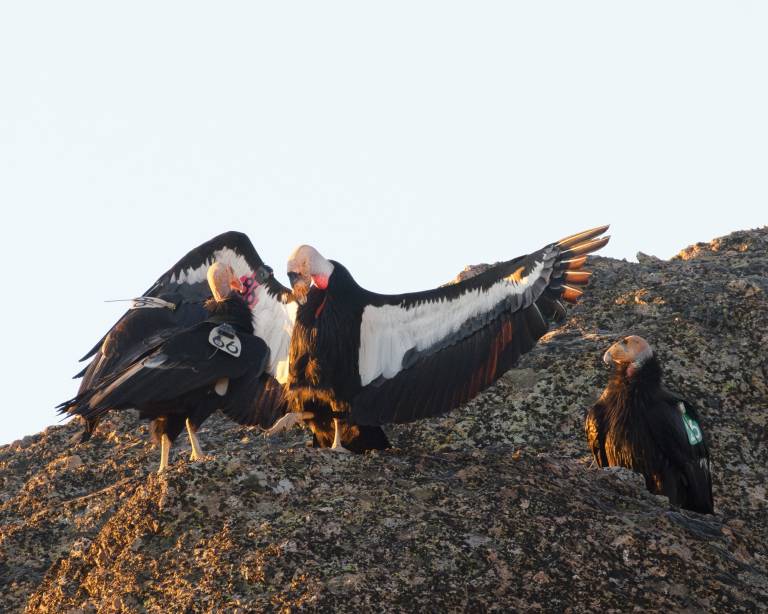
"caption": "At Pinnacles National Park, male California condor 888 Cedric (wings outstretched) hangs out with female condors 966 Pixchi and 726 Little Stinker. All are part of the Ventana Wildlife Society's central California flock. ",
"credit": "Courtesy of Tim Huntington",
"altTag": null,
"description": "DO NOT REPUBLISH\nDO NOT REPUBLISH\nDO NOT REPUBLISH",
"imgSizes": {
"thumbnail": {
"file": "https://cdn.kqed.org/wp-content/uploads/sites/35/2026/03/Condors1-160x128.jpg",
"width": 160,
"height": 128,
"mimeType": "image/jpeg"
},
"medium_large": {
"file": "https://cdn.kqed.org/wp-content/uploads/sites/35/2026/03/Condors1-768x614.jpg",
"width": 768,
"height": 614,
"mimeType": "image/jpeg"
},
"1536x1536": {
"file": "https://cdn.kqed.org/wp-content/uploads/sites/35/2026/03/Condors1-1536x1229.jpg",
"width": 1536,
"height": 1229,
"mimeType": "image/jpeg"
},
"post-thumbnail": {
"file": "https://cdn.kqed.org/wp-content/uploads/sites/35/2026/03/Condors1-672x372.jpg",
"width": 672,
"height": 372,
"mimeType": "image/jpeg"
},
"twentyfourteen-full-width": {
"file": "https://cdn.kqed.org/wp-content/uploads/sites/35/2026/03/Condors1-1038x576.jpg",
"width": 1038,
"height": 576,
"mimeType": "image/jpeg"
},
"npr-cds-wide": {
"file": "https://cdn.kqed.org/wp-content/uploads/sites/35/2026/03/Condors1-1200x675.jpg",
"width": 1200,
"height": 675,
"mimeType": "image/jpeg"
},
"kqedFullSize": {
"file": "https://cdn.kqed.org/wp-content/uploads/sites/35/2026/03/Condors1.jpg",
"width": 2000,
"height": 1600
}
},
"isLoading": false,
"fetchFailed": false
},
"science_1984920": {
"type": "attachments",
"id": "science_1984920",
"meta": {
"index": "attachments_1716263798",
"site": "science",
"id": "1984920",
"found": true
},
"title": "New Storm In California May Push State's Snowpack Past Record High",
"publishDate": 1698175805,
"status": "inherit",
"parent": 1984894,
"modified": 1698177842,
"caption": "Snow blows in the Sierra Nevada mountains after yet another storm brought heavy snowfall, raising the snowpack on March 29, 2023, in Mammoth Lakes, California.",
"credit": "Mario Tama/Getty Images",
"altTag": "Snow storm falls on the Sierras.",
"description": null,
"imgSizes": {
"medium": {
"file": "https://cdn.kqed.org/wp-content/uploads/sites/35/2023/10/GettyImages-1482972333-800x532.jpg",
"width": 800,
"height": 532,
"mimeType": "image/jpeg"
},
"large": {
"file": "https://cdn.kqed.org/wp-content/uploads/sites/35/2023/10/GettyImages-1482972333-1020x678.jpg",
"width": 1020,
"height": 678,
"mimeType": "image/jpeg"
},
"thumbnail": {
"file": "https://cdn.kqed.org/wp-content/uploads/sites/35/2023/10/GettyImages-1482972333-160x106.jpg",
"width": 160,
"height": 106,
"mimeType": "image/jpeg"
},
"medium_large": {
"file": "https://cdn.kqed.org/wp-content/uploads/sites/35/2023/10/GettyImages-1482972333-768x511.jpg",
"width": 768,
"height": 511,
"mimeType": "image/jpeg"
},
"1536x1536": {
"file": "https://cdn.kqed.org/wp-content/uploads/sites/35/2023/10/GettyImages-1482972333-1536x1022.jpg",
"width": 1536,
"height": 1022,
"mimeType": "image/jpeg"
},
"2048x2048": {
"file": "https://cdn.kqed.org/wp-content/uploads/sites/35/2023/10/GettyImages-1482972333-2048x1362.jpg",
"width": 2048,
"height": 1362,
"mimeType": "image/jpeg"
},
"post-thumbnail": {
"file": "https://cdn.kqed.org/wp-content/uploads/sites/35/2023/10/GettyImages-1482972333-672x372.jpg",
"width": 672,
"height": 372,
"mimeType": "image/jpeg"
},
"twentyfourteen-full-width": {
"file": "https://cdn.kqed.org/wp-content/uploads/sites/35/2023/10/GettyImages-1482972333-1038x576.jpg",
"width": 1038,
"height": 576,
"mimeType": "image/jpeg"
},
"full-width": {
"file": "https://cdn.kqed.org/wp-content/uploads/sites/35/2023/10/GettyImages-1482972333-1920x1277.jpg",
"width": 1920,
"height": 1277,
"mimeType": "image/jpeg"
},
"kqedFullSize": {
"file": "https://cdn.kqed.org/wp-content/uploads/sites/35/2023/10/GettyImages-1482972333-scaled-e1766179697716.jpg",
"width": 2000,
"height": 1330
}
},
"isLoading": false,
"fetchFailed": false
},
"science_1999957": {
"type": "attachments",
"id": "science_1999957",
"meta": {
"index": "attachments_1716263798",
"site": "science",
"id": "1999957",
"found": true
},
"title": "SierraSnowPackSurvey2026",
"publishDate": 1769817645,
"status": "inherit",
"parent": 1999949,
"modified": 1770925197,
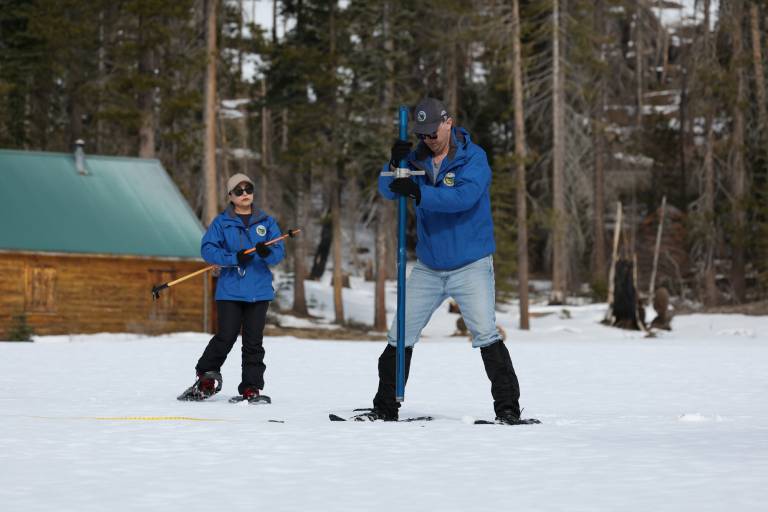
"caption": "The California Department of Water Resources (from left) Hydrometerologist, Angelique Fabbiani-Leon, and Engineer Jacob Kollen, conduct the second media snow survey of the 2026 season on Jan. 30, 2026, at Phillips Station in the Sierra Nevada. ",
"credit": "Courtesy of Sara Nevis/California Department of Water Resources",
"altTag": null,
"description": null,
"imgSizes": {
"thumbnail": {
"file": "https://cdn.kqed.org/wp-content/uploads/sites/35/2026/01/SierraSnowPackSurvey2026-160x107.jpg",
"width": 160,
"height": 107,
"mimeType": "image/jpeg"
},
"medium_large": {
"file": "https://cdn.kqed.org/wp-content/uploads/sites/35/2026/01/SierraSnowPackSurvey2026-768x512.jpg",
"width": 768,
"height": 512,
"mimeType": "image/jpeg"
},
"1536x1536": {
"file": "https://cdn.kqed.org/wp-content/uploads/sites/35/2026/01/SierraSnowPackSurvey2026-1536x1024.jpg",
"width": 1536,
"height": 1024,
"mimeType": "image/jpeg"
},
"post-thumbnail": {
"file": "https://cdn.kqed.org/wp-content/uploads/sites/35/2026/01/SierraSnowPackSurvey2026-672x372.jpg",
"width": 672,
"height": 372,
"mimeType": "image/jpeg"
},
"twentyfourteen-full-width": {
"file": "https://cdn.kqed.org/wp-content/uploads/sites/35/2026/01/SierraSnowPackSurvey2026-1038x576.jpg",
"width": 1038,
"height": 576,
"mimeType": "image/jpeg"
},
"npr-cds-wide": {
"file": "https://cdn.kqed.org/wp-content/uploads/sites/35/2026/01/SierraSnowPackSurvey2026-1200x675.jpg",
"width": 1200,
"height": 675,
"mimeType": "image/jpeg"
},
"kqedFullSize": {
"file": "https://cdn.kqed.org/wp-content/uploads/sites/35/2026/01/SierraSnowPackSurvey2026.jpg",
"width": 2000,
"height": 1333
}
},
"isLoading": false,
"fetchFailed": false
},
"science_1999934": {
"type": "attachments",
"id": "science_1999934",
"meta": {
"index": "attachments_1716263798",
"site": "science",
"id": "1999934",
"found": true
},
"title": "Our Climate Future: A Forum with California's Next Governor",
"publishDate": 1769706421,
"status": "inherit",
"parent": 0,
"modified": 1769706481,
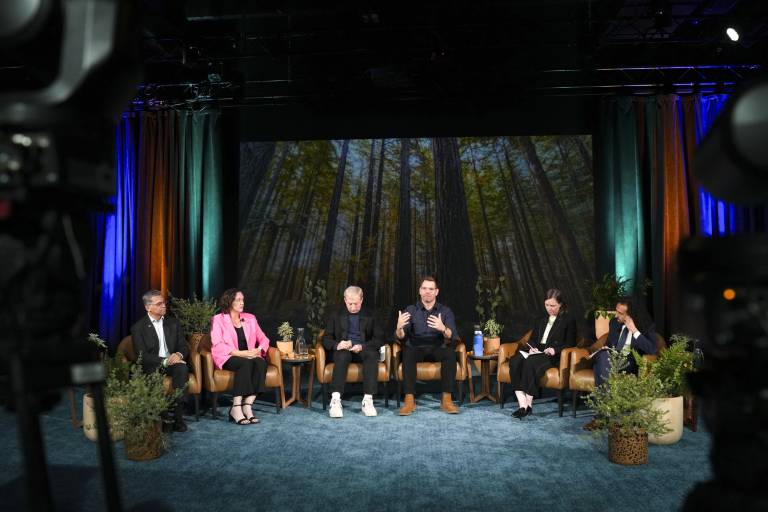
"caption": "Candidates for Governor of California attend the \"Our Climate Future: A Forum with California's Next Governor\" event in Pasadena on Jan. 28, 2026.",
"credit": "Matei Horvath/Getty Images for California Environmental Voters",
"altTag": null,
"description": null,
"imgSizes": {
"thumbnail": {
"file": "https://cdn.kqed.org/wp-content/uploads/sites/35/2026/01/GETTYIMAGES-2258202432-KQED-160x107.jpg",
"width": 160,
"height": 107,
"mimeType": "image/jpeg"
},
"medium_large": {
"file": "https://cdn.kqed.org/wp-content/uploads/sites/35/2026/01/GETTYIMAGES-2258202432-KQED-768x512.jpg",
"width": 768,
"height": 512,
"mimeType": "image/jpeg"
},
"1536x1536": {
"file": "https://cdn.kqed.org/wp-content/uploads/sites/35/2026/01/GETTYIMAGES-2258202432-KQED-1536x1024.jpg",
"width": 1536,
"height": 1024,
"mimeType": "image/jpeg"
},
"post-thumbnail": {
"file": "https://cdn.kqed.org/wp-content/uploads/sites/35/2026/01/GETTYIMAGES-2258202432-KQED-672x372.jpg",
"width": 672,
"height": 372,
"mimeType": "image/jpeg"
},
"twentyfourteen-full-width": {
"file": "https://cdn.kqed.org/wp-content/uploads/sites/35/2026/01/GETTYIMAGES-2258202432-KQED-1038x576.jpg",
"width": 1038,
"height": 576,
"mimeType": "image/jpeg"
},
"npr-cds-wide": {
"file": "https://cdn.kqed.org/wp-content/uploads/sites/35/2026/01/GETTYIMAGES-2258202432-KQED-1200x675.jpg",
"width": 1200,
"height": 675,
"mimeType": "image/jpeg"
},
"kqedFullSize": {
"file": "https://cdn.kqed.org/wp-content/uploads/sites/35/2026/01/GETTYIMAGES-2258202432-KQED.jpg",
"width": 2000,
"height": 1333
}
},
"isLoading": false,
"fetchFailed": false
},
"science_1998530": {
"type": "attachments",
"id": "science_1998530",
"meta": {
"index": "attachments_1716263798",
"site": "science",
"id": "1998530",
"found": true
},
"title": "250916_SEAOTTERS_GH-3-KQED",
"publishDate": 1758233703,
"status": "inherit",
"parent": 0,
"modified": 1760474663,
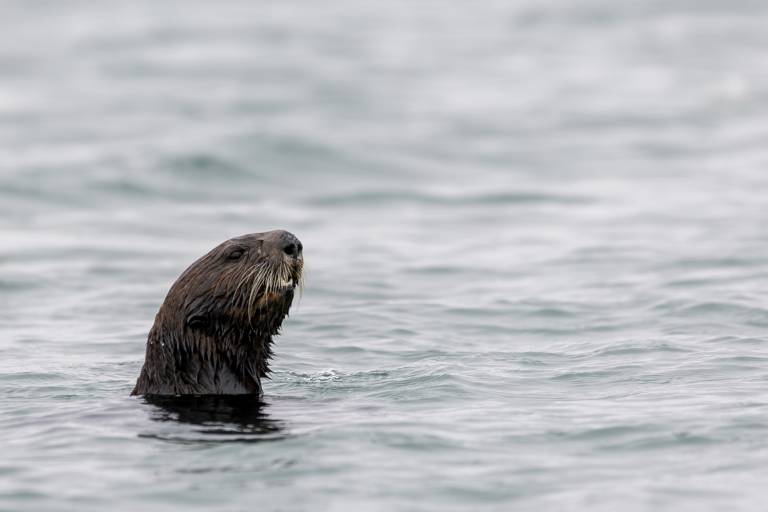
"caption": "A sea otter surfaces in Elkhorn Slough, a protected estuary that provides critical habitat for the threatened species, on Sept. 16, 2025.",
"credit": "Gustavo Hernandez/KQED",
"altTag": null,
"description": null,
"imgSizes": {
"thumbnail": {
"file": "https://cdn.kqed.org/wp-content/uploads/sites/35/2025/09/250916_SEAOTTERS_GH-3-KQED-160x107.jpg",
"width": 160,
"height": 107,
"mimeType": "image/jpeg"
},
"medium_large": {
"file": "https://cdn.kqed.org/wp-content/uploads/sites/35/2025/09/250916_SEAOTTERS_GH-3-KQED-768x512.jpg",
"width": 768,
"height": 512,
"mimeType": "image/jpeg"
},
"1536x1536": {
"file": "https://cdn.kqed.org/wp-content/uploads/sites/35/2025/09/250916_SEAOTTERS_GH-3-KQED-1536x1025.jpg",
"width": 1536,
"height": 1025,
"mimeType": "image/jpeg"
},
"post-thumbnail": {
"file": "https://cdn.kqed.org/wp-content/uploads/sites/35/2025/09/250916_SEAOTTERS_GH-3-KQED-672x372.jpg",
"width": 672,
"height": 372,
"mimeType": "image/jpeg"
},
"twentyfourteen-full-width": {
"file": "https://cdn.kqed.org/wp-content/uploads/sites/35/2025/09/250916_SEAOTTERS_GH-3-KQED-1038x576.jpg",
"width": 1038,
"height": 576,
"mimeType": "image/jpeg"
},
"kqedFullSize": {
"file": "https://cdn.kqed.org/wp-content/uploads/sites/35/2025/09/250916_SEAOTTERS_GH-3-KQED.jpg",
"width": 2000,
"height": 1334
}
},
"isLoading": false,
"fetchFailed": false
},
"science_1999656": {
"type": "attachments",
"id": "science_1999656",
"meta": {
"index": "attachments_1716263798",
"site": "science",
"id": "1999656",
"found": true
},
"title": "251215-EARTHQUAKESWARMS-12-BL-KQED",
"publishDate": 1765839038,
"status": "inherit",
"parent": 0,
"modified": 1775170245,
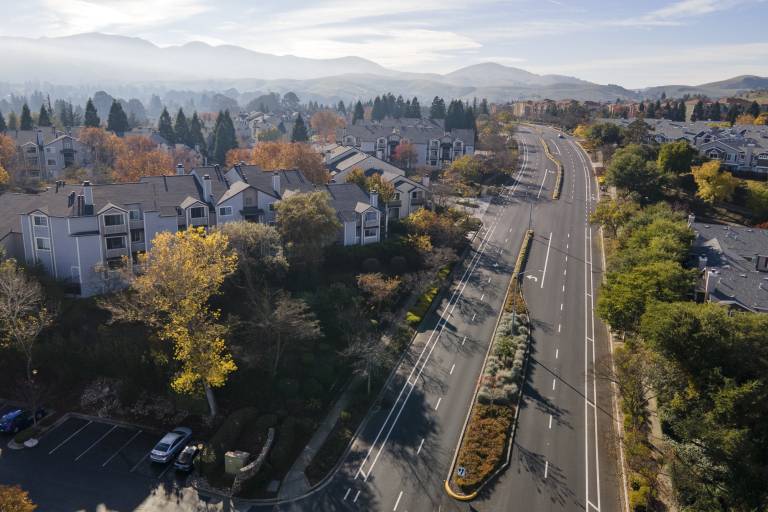
"caption": "Apartment buildings and homes line Deerwood Road in San Ramon on Dec. 15, 2025. The area sits near the Calaveras Fault, an active fault that runs underground through the East Bay.",
"credit": "Beth LaBerge/KQED",
"altTag": null,
"description": null,
"imgSizes": {
"thumbnail": {
"file": "https://cdn.kqed.org/wp-content/uploads/sites/35/2025/12/251215-EARTHQUAKESWARMS-12-BL-KQED-160x107.jpg",
"width": 160,
"height": 107,
"mimeType": "image/jpeg"
},
"medium_large": {
"file": "https://cdn.kqed.org/wp-content/uploads/sites/35/2025/12/251215-EARTHQUAKESWARMS-12-BL-KQED-768x512.jpg",
"width": 768,
"height": 512,
"mimeType": "image/jpeg"
},
"1536x1536": {
"file": "https://cdn.kqed.org/wp-content/uploads/sites/35/2025/12/251215-EARTHQUAKESWARMS-12-BL-KQED-1536x1024.jpg",
"width": 1536,
"height": 1024,
"mimeType": "image/jpeg"
},
"post-thumbnail": {
"file": "https://cdn.kqed.org/wp-content/uploads/sites/35/2025/12/251215-EARTHQUAKESWARMS-12-BL-KQED-672x372.jpg",
"width": 672,
"height": 372,
"mimeType": "image/jpeg"
},
"twentyfourteen-full-width": {
"file": "https://cdn.kqed.org/wp-content/uploads/sites/35/2025/12/251215-EARTHQUAKESWARMS-12-BL-KQED-1038x576.jpg",
"width": 1038,
"height": 576,
"mimeType": "image/jpeg"
},
"npr-cds-wide": {
"file": "https://cdn.kqed.org/wp-content/uploads/sites/35/2025/12/251215-EARTHQUAKESWARMS-12-BL-KQED-1200x675.jpg",
"width": 1200,
"height": 675,
"mimeType": "image/jpeg"
},
"kqedFullSize": {
"file": "https://cdn.kqed.org/wp-content/uploads/sites/35/2025/12/251215-EARTHQUAKESWARMS-12-BL-KQED.jpg",
"width": 2000,
"height": 1333
}
},
"isLoading": false,
"fetchFailed": false
},
"science_1999622": {
"type": "attachments",
"id": "science_1999622",
"meta": {
"index": "attachments_1716263798",
"site": "science",
"id": "1999622",
"found": true
},
"title": "The 580 freeway in Oakland on Oct. 21, 2025.",
"publishDate": 1765577401,
"status": "inherit",
"parent": 1999616,
"modified": 1765577412,
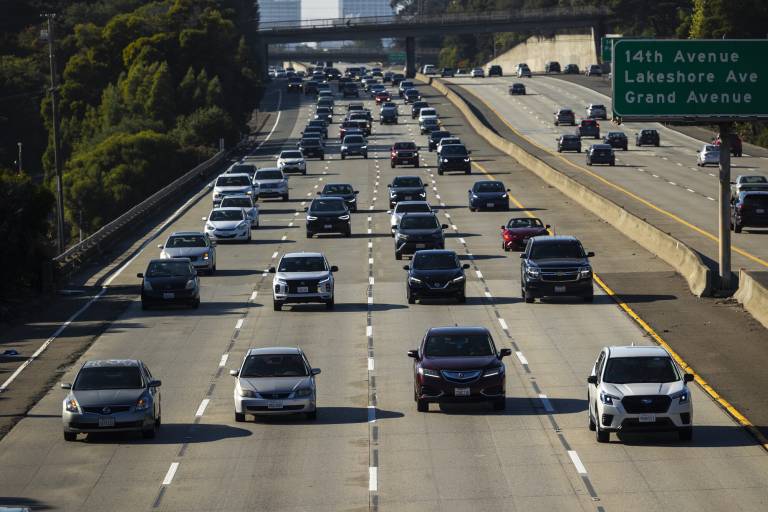
"caption": "The 580 freeway in Oakland on Oct. 21, 2025.",
"credit": "Martin do Nascimento/KQED",
"altTag": null,
"description": null,
"imgSizes": {
"thumbnail": {
"file": "https://cdn.kqed.org/wp-content/uploads/sites/35/2025/12/251021-I-580-MD-03_qed-160x107.jpg",
"width": 160,
"height": 107,
"mimeType": "image/jpeg"
},
"medium_large": {
"file": "https://cdn.kqed.org/wp-content/uploads/sites/35/2025/12/251021-I-580-MD-03_qed-768x512.jpg",
"width": 768,
"height": 512,
"mimeType": "image/jpeg"
},
"1536x1536": {
"file": "https://cdn.kqed.org/wp-content/uploads/sites/35/2025/12/251021-I-580-MD-03_qed-1536x1024.jpg",
"width": 1536,
"height": 1024,
"mimeType": "image/jpeg"
},
"post-thumbnail": {
"file": "https://cdn.kqed.org/wp-content/uploads/sites/35/2025/12/251021-I-580-MD-03_qed-672x372.jpg",
"width": 672,
"height": 372,
"mimeType": "image/jpeg"
},
"twentyfourteen-full-width": {
"file": "https://cdn.kqed.org/wp-content/uploads/sites/35/2025/12/251021-I-580-MD-03_qed-1038x576.jpg",
"width": 1038,
"height": 576,
"mimeType": "image/jpeg"
},
"npr-cds-wide": {
"file": "https://cdn.kqed.org/wp-content/uploads/sites/35/2025/12/251021-I-580-MD-03_qed-1200x675.jpg",
"width": 1200,
"height": 675,
"mimeType": "image/jpeg"
},
"kqedFullSize": {
"file": "https://cdn.kqed.org/wp-content/uploads/sites/35/2025/12/251021-I-580-MD-03_qed.jpg",
"width": 2000,
"height": 1333
}
},
"isLoading": false,
"fetchFailed": false
},
"science_1979684": {
"type": "attachments",
"id": "science_1979684",
"meta": {
"index": "attachments_1716263798",
"site": "science",
"id": "1979684",
"found": true
},
"parent": 1979614,
"imgSizes": {
"twentyfourteen-full-width": {
"file": "https://cdn.kqed.org/wp-content/uploads/sites/35/2024/06/RS54652_038_KQED_BaykeeperBayviewHuntersPoint_03082022-qut-1038x576.jpg",
"width": 1038,
"mimeType": "image/jpeg",
"height": 576
},
"thumbnail": {
"file": "https://cdn.kqed.org/wp-content/uploads/sites/35/2024/06/RS54652_038_KQED_BaykeeperBayviewHuntersPoint_03082022-qut-160x107.jpg",
"width": 160,
"mimeType": "image/jpeg",
"height": 107
},
"post-thumbnail": {
"file": "https://cdn.kqed.org/wp-content/uploads/sites/35/2024/06/RS54652_038_KQED_BaykeeperBayviewHuntersPoint_03082022-qut-672x372.jpg",
"width": 672,
"mimeType": "image/jpeg",
"height": 372
},
"kqedFullSize": {
"file": "https://cdn.kqed.org/wp-content/uploads/sites/35/2024/06/RS54652_038_KQED_BaykeeperBayviewHuntersPoint_03082022-qut.jpg",
"width": 1920,
"height": 1278
},
"large": {
"file": "https://cdn.kqed.org/wp-content/uploads/sites/35/2024/06/RS54652_038_KQED_BaykeeperBayviewHuntersPoint_03082022-qut-1020x679.jpg",
"width": 1020,
"mimeType": "image/jpeg",
"height": 679
},
"1536x1536": {
"file": "https://cdn.kqed.org/wp-content/uploads/sites/35/2024/06/RS54652_038_KQED_BaykeeperBayviewHuntersPoint_03082022-qut-1536x1022.jpg",
"width": 1536,
"mimeType": "image/jpeg",
"height": 1022
},
"medium": {
"file": "https://cdn.kqed.org/wp-content/uploads/sites/35/2024/06/RS54652_038_KQED_BaykeeperBayviewHuntersPoint_03082022-qut-800x533.jpg",
"width": 800,
"mimeType": "image/jpeg",
"height": 533
},
"medium_large": {
"file": "https://cdn.kqed.org/wp-content/uploads/sites/35/2024/06/RS54652_038_KQED_BaykeeperBayviewHuntersPoint_03082022-qut-768x511.jpg",
"width": 768,
"mimeType": "image/jpeg",
"height": 511
}
},
"publishDate": 1656458209,
"modified": 1701986154,
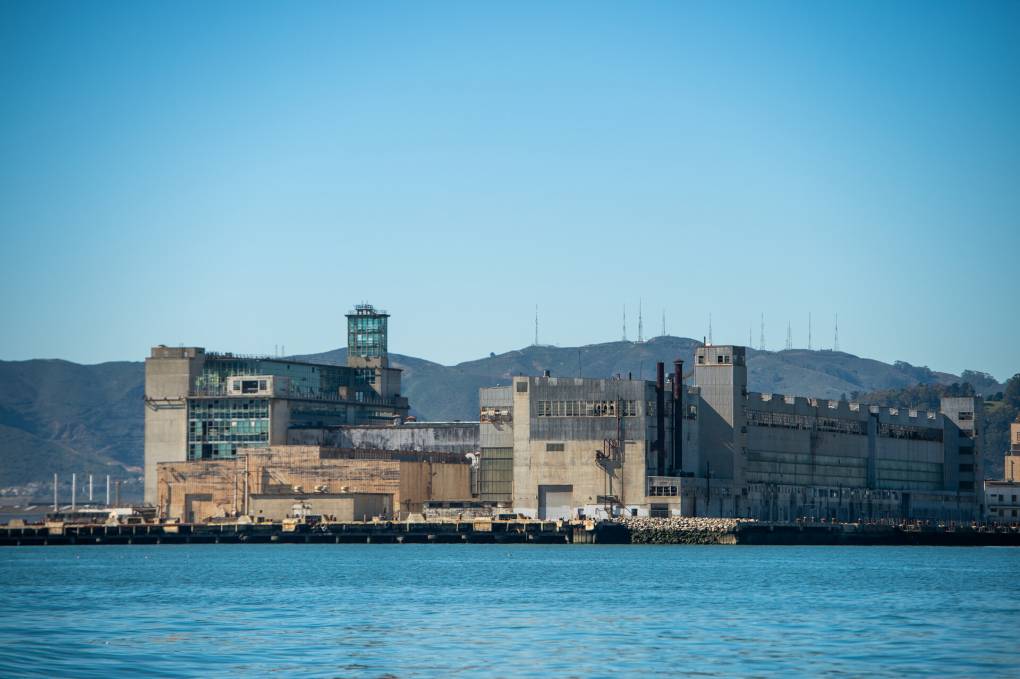
"caption": "Abandoned buildings at the Hunters Point Naval Shipyard in San Francisco on March 8, 2022.",
"description": "Much of what remains at the Hunters Point Superfund site are abandoned and broken-down buildings. Photo taken in San Francisco on March 8, 2022.",
"title": "Bayview Hunters Point",
"credit": "Beth LaBerge/KQED",
"status": "inherit",
"altTag": "Blue bay water in the foreground with gray and tan industrial buildings along the bay's edge in the background. In the distance are hills and above is a blue sky.",
"isLoading": false,
"fetchFailed": false
},
"science_1999454": {
"type": "attachments",
"id": "science_1999454",
"meta": {
"index": "attachments_1716263798",
"site": "science",
"id": "1999454",
"found": true
},
"title": "250212-ElkhornSlough-22-BL_qed",
"publishDate": 1764705307,
"status": "inherit",
"parent": 1999445,
"modified": 1764705363,
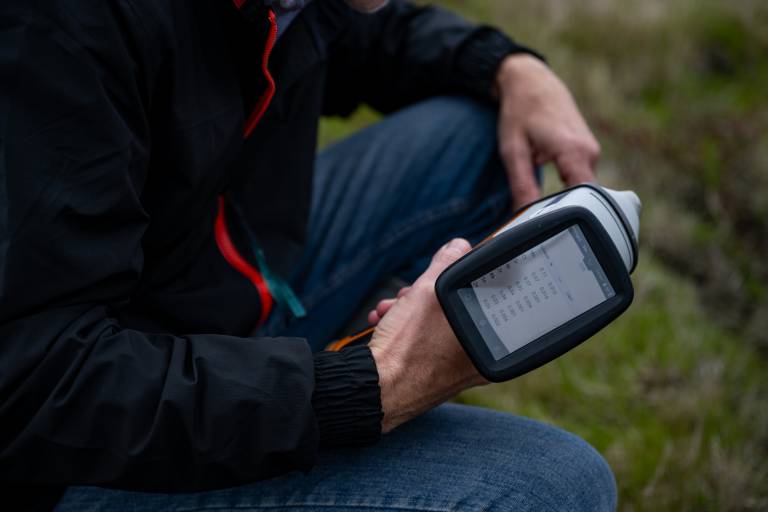
"caption": "Ivano Aiello, a professor and department chair at Moss Landing Marine Laboratories, uses a machine to test the soil for metal levels in Elkhorn Slough near the Moss Landing Power Plant in Moss Landing, California, on Feb. 12, 2025. The power plant was the site of a battery fire on Jan. 16, 2025.",
"credit": "Beth LaBerge/KQED",
"altTag": null,
"description": null,
"imgSizes": {
"thumbnail": {
"file": "https://cdn.kqed.org/wp-content/uploads/sites/35/2025/12/250212-ElkhornSlough-22-BL_qed-160x107.jpg",
"width": 160,
"height": 107,
"mimeType": "image/jpeg"
},
"medium_large": {
"file": "https://cdn.kqed.org/wp-content/uploads/sites/35/2025/12/250212-ElkhornSlough-22-BL_qed-768x512.jpg",
"width": 768,
"height": 512,
"mimeType": "image/jpeg"
},
"1536x1536": {
"file": "https://cdn.kqed.org/wp-content/uploads/sites/35/2025/12/250212-ElkhornSlough-22-BL_qed-1536x1024.jpg",
"width": 1536,
"height": 1024,
"mimeType": "image/jpeg"
},
"post-thumbnail": {
"file": "https://cdn.kqed.org/wp-content/uploads/sites/35/2025/12/250212-ElkhornSlough-22-BL_qed-672x372.jpg",
"width": 672,
"height": 372,
"mimeType": "image/jpeg"
},
"twentyfourteen-full-width": {
"file": "https://cdn.kqed.org/wp-content/uploads/sites/35/2025/12/250212-ElkhornSlough-22-BL_qed-1038x576.jpg",
"width": 1038,
"height": 576,
"mimeType": "image/jpeg"
},
"npr-cds-wide": {
"file": "https://cdn.kqed.org/wp-content/uploads/sites/35/2025/12/250212-ElkhornSlough-22-BL_qed-1200x675.jpg",
"width": 1200,
"height": 675,
"mimeType": "image/jpeg"
},
"kqedFullSize": {
"file": "https://cdn.kqed.org/wp-content/uploads/sites/35/2025/12/250212-ElkhornSlough-22-BL_qed.jpg",
"width": 1999,
"height": 1333
}
},
"isLoading": false,
"fetchFailed": false
},
"science_1999381": {
"type": "attachments",
"id": "science_1999381",
"meta": {
"index": "attachments_1716263798",
"site": "science",
"id": "1999381",
"found": true
},
"title": "Improvements will extend landfill's life until the year 2102",
"publishDate": 1763684869,
"status": "inherit",
"parent": 1999358,
"modified": 1763684918,
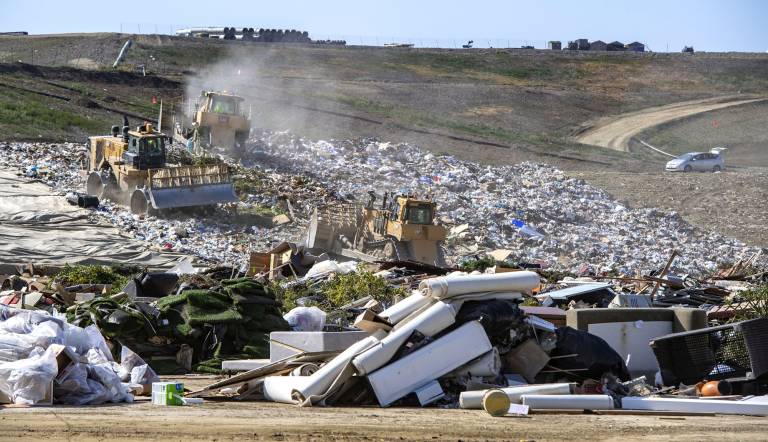
"caption": "Trash is flattened and spread out across a hillside before being covered with dirt at the Prima Deshecha landfill in San Juan Capistrano, California, on March 10, 2022. ",
"credit": "Mark Rightmire/MediaNews Group/Orange County Register via Getty Images",
"altTag": null,
"description": null,
"imgSizes": {
"thumbnail": {
"file": "https://cdn.kqed.org/wp-content/uploads/sites/35/2025/11/CaliforniaLandfillMethaneGetty-160x92.jpg",
"width": 160,
"height": 92,
"mimeType": "image/jpeg"
},
"medium_large": {
"file": "https://cdn.kqed.org/wp-content/uploads/sites/35/2025/11/CaliforniaLandfillMethaneGetty-768x442.jpg",
"width": 768,
"height": 442,
"mimeType": "image/jpeg"
},
"1536x1536": {
"file": "https://cdn.kqed.org/wp-content/uploads/sites/35/2025/11/CaliforniaLandfillMethaneGetty-1536x883.jpg",
"width": 1536,
"height": 883,
"mimeType": "image/jpeg"
},
"post-thumbnail": {
"file": "https://cdn.kqed.org/wp-content/uploads/sites/35/2025/11/CaliforniaLandfillMethaneGetty-672x372.jpg",
"width": 672,
"height": 372,
"mimeType": "image/jpeg"
},
"twentyfourteen-full-width": {
"file": "https://cdn.kqed.org/wp-content/uploads/sites/35/2025/11/CaliforniaLandfillMethaneGetty-1038x576.jpg",
"width": 1038,
"height": 576,
"mimeType": "image/jpeg"
},
"npr-cds-wide": {
"file": "https://cdn.kqed.org/wp-content/uploads/sites/35/2025/11/CaliforniaLandfillMethaneGetty-1200x675.jpg",
"width": 1200,
"height": 675,
"mimeType": "image/jpeg"
},
"kqedFullSize": {
"file": "https://cdn.kqed.org/wp-content/uploads/sites/35/2025/11/CaliforniaLandfillMethaneGetty.jpg",
"width": 2000,
"height": 1150
}
},
"isLoading": false,
"fetchFailed": false
},
"science_1999371": {
"type": "attachments",
"id": "science_1999371",
"meta": {
"index": "attachments_1716263798",
"site": "science",
"id": "1999371",
"found": true
},
"title": "Alaska Refuge Road",
"publishDate": 1763681153,
"status": "inherit",
"parent": 1999366,
"modified": 1763681176,
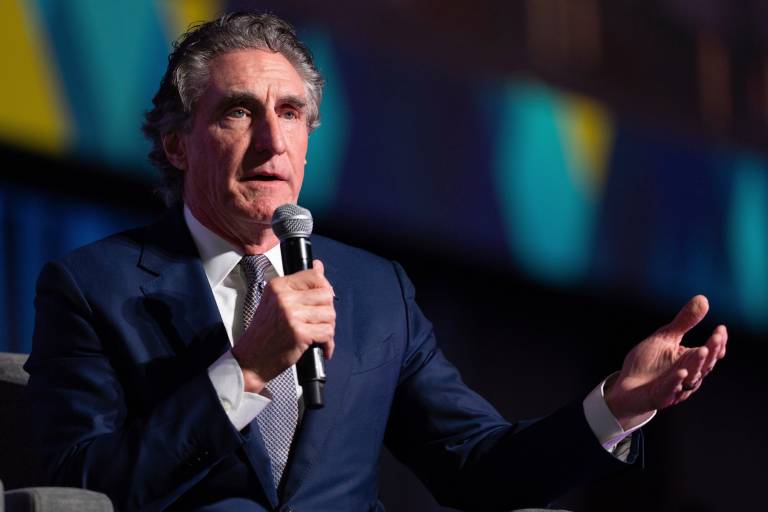
"caption": "Interior Secretary Doug Burgum speaks during the annual Alaska Sustainable Energy Conference on June 3, 2025, in Anchorage, Alaska. ",
"credit": "Jenny Kane/AP Photo",
"altTag": null,
"description": null,
"imgSizes": {
"thumbnail": {
"file": "https://cdn.kqed.org/wp-content/uploads/sites/35/2025/11/DougBurgumAP-160x107.jpg",
"width": 160,
"height": 107,
"mimeType": "image/jpeg"
},
"medium_large": {
"file": "https://cdn.kqed.org/wp-content/uploads/sites/35/2025/11/DougBurgumAP-768x512.jpg",
"width": 768,
"height": 512,
"mimeType": "image/jpeg"
},
"1536x1536": {
"file": "https://cdn.kqed.org/wp-content/uploads/sites/35/2025/11/DougBurgumAP-1536x1024.jpg",
"width": 1536,
"height": 1024,
"mimeType": "image/jpeg"
},
"post-thumbnail": {
"file": "https://cdn.kqed.org/wp-content/uploads/sites/35/2025/11/DougBurgumAP-672x372.jpg",
"width": 672,
"height": 372,
"mimeType": "image/jpeg"
},
"twentyfourteen-full-width": {
"file": "https://cdn.kqed.org/wp-content/uploads/sites/35/2025/11/DougBurgumAP-1038x576.jpg",
"width": 1038,
"height": 576,
"mimeType": "image/jpeg"
},
"npr-cds-wide": {
"file": "https://cdn.kqed.org/wp-content/uploads/sites/35/2025/11/DougBurgumAP-1200x675.jpg",
"width": 1200,
"height": 675,
"mimeType": "image/jpeg"
},
"kqedFullSize": {
"file": "https://cdn.kqed.org/wp-content/uploads/sites/35/2025/11/DougBurgumAP.jpg",
"width": 2000,
"height": 1333
}
},
"isLoading": false,
"fetchFailed": false
}
},
"audioPlayerReducer": {
"postId": "stream_live",
"isPaused": true,
"isPlaying": false,
"pfsActive": false,
"pledgeModalIsOpen": true,
"playerDrawerIsOpen": false,
"liveAudioPlayStartedAt": 0,
"liveAudioPlayContext": ""
},
"authorsReducer": {
"lklivans": {
"type": "authors",
"id": "8648",
"meta": {
"index": "authors_1716337520",
"id": "8648",
"found": true
},
"name": "Laura Klivans",
"firstName": "Laura",
"lastName": "Klivans",
"slug": "lklivans",
"email": "lklivans@kqed.org",
"display_author_email": true,
"staff_mastheads": [
"news",
"science"
],
"title": "Reporter",
"bio": "Laura Klivans is an award-winning science reporter for KQED News, where she covers climate change with an eye on both groundbreaking progress and gaps in action. She is the former host of KQED's blockbuster video series about tiny, amazing animals, \u003cem>Deep Look\u003c/em>. Her work reaches national audiences through NPR, \u003cem>Here & Now, \u003c/em>PRI, and other major outlets. \r\n\r\nLaura’s won five Northern California Area Emmy Awards for Deep Look and First Place in the Greater Bay Area Journalism Awards for a podcast exploring how one Oakland neighborhood teamed up to reduce planet-heating pollution.\r\n\r\nBeyond her reporting, she hosts and moderates events. In the past, she taught audio storytelling at the UC Berkeley Graduate School of Journalism, led international education programs, worked with immigrants and refugees along the Thai-Burmese border, taught high schoolers sex ed, and was an actress. \r\n\r\nShe's a former UC Berkeley Human Rights Fellow, USC Center for Health Journalism's California Fellow and Coro Fellow in Public Affairs. Laura has a master’s in journalism from UC Berkeley, a master’s in education from Harvard, and an undergraduate degree from Northwestern University.\r\n\r\nShe loves trying to riddle the meaning out of vanity license plates.",
"avatar": "https://secure.gravatar.com/avatar/2d2ecd1550a494cc10ad4a503406965585902124739e775a9b3817eebf1d88be?s=600&d=blank&r=g",
"twitter": "lauraklivans",
"bluesky": null,
"facebook": null,
"instagram": null,
"linkedin": null,
"sites": [
{
"site": "news",
"roles": [
"editor"
]
},
{
"site": "stateofhealth",
"roles": [
"contributor",
"editor"
]
},
{
"site": "science",
"roles": [
"editor"
]
},
{
"site": "forum",
"roles": [
"editor"
]
}
],
"headData": {
"title": "Laura Klivans | KQED",
"description": "Reporter",
"ogImgSrc": "https://secure.gravatar.com/avatar/2d2ecd1550a494cc10ad4a503406965585902124739e775a9b3817eebf1d88be?s=600&d=blank&r=g",
"twImgSrc": "https://secure.gravatar.com/avatar/2d2ecd1550a494cc10ad4a503406965585902124739e775a9b3817eebf1d88be?s=600&d=blank&r=g"
},
"isLoading": false,
"link": "/author/lklivans"
},
"dventon": {
"type": "authors",
"id": "11088",
"meta": {
"index": "authors_1716337520",
"id": "11088",
"found": true
},
"name": "Danielle Venton",
"firstName": "Danielle",
"lastName": "Venton",
"slug": "dventon",
"email": "dventon@kqed.org",
"display_author_email": true,
"staff_mastheads": [
"science"
],
"title": "Science reporter",
"bio": "Danielle Venton is a reporter for KQED Science. She covers wildfires, space and oceans (though she is prone to sea sickness).\r\n\r\nBefore joining KQED in 2015, Danielle was a staff reporter at KRCB in Sonoma County and a freelancer. She studied science communication at UC Santa Cruz and formerly worked at CERN in Geneva, Switzerland where she wrote about computing. She lives in Sonoma County and enjoys backpacking.",
"avatar": "https://secure.gravatar.com/avatar/37b292b5c40c8d93959c4f48d73b5286f41b7abd8588277e941905a3ed4c801c?s=600&d=blank&r=g",
"twitter": "DanielleVenton",
"bluesky": null,
"facebook": null,
"instagram": null,
"linkedin": null,
"sites": [
{
"site": "arts",
"roles": [
"contributor"
]
},
{
"site": "news",
"roles": [
"editor"
]
},
{
"site": "futureofyou",
"roles": [
"editor"
]
},
{
"site": "science",
"roles": [
"editor"
]
},
{
"site": "liveblog",
"roles": [
"contributor"
]
}
],
"headData": {
"title": "Danielle Venton | KQED",
"description": "Science reporter",
"ogImgSrc": "https://secure.gravatar.com/avatar/37b292b5c40c8d93959c4f48d73b5286f41b7abd8588277e941905a3ed4c801c?s=600&d=blank&r=g",
"twImgSrc": "https://secure.gravatar.com/avatar/37b292b5c40c8d93959c4f48d73b5286f41b7abd8588277e941905a3ed4c801c?s=600&d=blank&r=g"
},
"isLoading": false,
"link": "/author/dventon"
},
"kevinstark": {
"type": "authors",
"id": "11608",
"meta": {
"index": "authors_1716337520",
"id": "11608",
"found": true
},
"name": "Kevin Stark",
"firstName": "Kevin",
"lastName": "Stark",
"slug": "kevinstark",
"email": "kstark@kqed.org",
"display_author_email": true,
"staff_mastheads": [
"science"
],
"title": "Senior Editor",
"bio": "Kevin is a senior editor for KQED Science, managing the station's health and climate desks. His journalism career began in the Pacific Northwest, and he later became a lead reporter for the San Francisco Public Press. His work has appeared in Pacific Standard magazine, the Energy News Network, the Center for Investigative Reporting's Reveal and WBEZ in Chicago. Kevin joined KQED in 2019, and has covered issues related to energy, wildfire, climate change and the environment.",
"avatar": "https://secure.gravatar.com/avatar/365aaa4b597d3a8374f67504ff0facd323d7906e8eb4be0a7efd2427408e802c?s=600&d=blank&r=g",
"twitter": "starkkev",
"bluesky": null,
"facebook": null,
"instagram": null,
"linkedin": null,
"sites": [
{
"site": "",
"roles": [
"editor"
]
},
{
"site": "news",
"roles": [
"editor"
]
},
{
"site": "science",
"roles": [
"administrator"
]
}
],
"headData": {
"title": "Kevin Stark | KQED",
"description": "Senior Editor",
"ogImgSrc": "https://secure.gravatar.com/avatar/365aaa4b597d3a8374f67504ff0facd323d7906e8eb4be0a7efd2427408e802c?s=600&d=blank&r=g",
"twImgSrc": "https://secure.gravatar.com/avatar/365aaa4b597d3a8374f67504ff0facd323d7906e8eb4be0a7efd2427408e802c?s=600&d=blank&r=g"
},
"isLoading": false,
"link": "/author/kevinstark"
},
"eromero": {
"type": "authors",
"id": "11746",
"meta": {
"index": "authors_1716337520",
"id": "11746",
"found": true
},
"name": "Ezra David Romero",
"firstName": "Ezra David",
"lastName": "Romero",
"slug": "eromero",
"email": "eromero@kqed.org",
"display_author_email": true,
"staff_mastheads": [
"news",
"science"
],
"title": "Climate Reporter",
"bio": "Ezra David Romero is a climate reporter for KQED News. He covers the absence and excess of water in the Bay Area — think sea level rise, flooding and drought. For nearly a decade he’s covered how warming temperatures are altering the lives of Californians. He’s reported on farmers worried their pistachio trees aren’t getting enough sleep, families desperate for water, scientists studying dying giant sequoias, and alongside firefighters containing wildfires. His work has appeared on local stations across California and nationally on public radio shows like Morning Edition, Here and Now, All Things Considered and Science Friday. ",
"avatar": "https://secure.gravatar.com/avatar/c76404d287c10ed40224227551ac36e24352c7306f106632caf6fead76f8801f?s=600&d=blank&r=g",
"twitter": "ezraromero",
"bluesky": null,
"facebook": null,
"instagram": null,
"linkedin": null,
"sites": [
{
"site": "arts",
"roles": [
"editor"
]
},
{
"site": "news",
"roles": [
"editor"
]
},
{
"site": "science",
"roles": [
"editor"
]
},
{
"site": "liveblog",
"roles": [
"author"
]
}
],
"headData": {
"title": "Ezra David Romero | KQED",
"description": "Climate Reporter",
"ogImgSrc": "https://secure.gravatar.com/avatar/c76404d287c10ed40224227551ac36e24352c7306f106632caf6fead76f8801f?s=600&d=blank&r=g",
"twImgSrc": "https://secure.gravatar.com/avatar/c76404d287c10ed40224227551ac36e24352c7306f106632caf6fead76f8801f?s=600&d=blank&r=g"
},
"isLoading": false,
"link": "/author/eromero"
},
"kmonahan": {
"type": "authors",
"id": "11842",
"meta": {
"index": "authors_1716337520",
"id": "11842",
"found": true
},
"name": "Katherine Monahan",
"firstName": "Katherine",
"lastName": "Monahan",
"slug": "kmonahan",
"email": "kmonahan@kqed.org",
"display_author_email": true,
"staff_mastheads": [],
"title": "Reporter / Sound Engineer",
"bio": "I cover state and local news. I’m also a sound engineer at the station, mixing stories and running live broadcasts. I link to source materials so that readers can draw their own conclusions, and seek comment from a range of perspectives, including from people directly affected by events. Awards received include from the Society of Professional Journalists, Northern California chapter and the Alaska Press Club. I speak multiple languages and have reported and engineered in the Bay Area, Alaska, West Africa and Latin America.",
"avatar": "https://secure.gravatar.com/avatar/ff257b3a5da88893781a3d3266904b2d2f91c7f0e1bbf728f61f5fb81b74a669?s=600&d=blank&r=g",
"twitter": null,
"bluesky": null,
"facebook": null,
"instagram": null,
"linkedin": null,
"sites": [
{
"site": "news",
"roles": [
"editor"
]
},
{
"site": "science",
"roles": [
"contributor"
]
}
],
"headData": {
"title": "Katherine Monahan | KQED",
"description": "Reporter / Sound Engineer",
"ogImgSrc": "https://secure.gravatar.com/avatar/ff257b3a5da88893781a3d3266904b2d2f91c7f0e1bbf728f61f5fb81b74a669?s=600&d=blank&r=g",
"twImgSrc": "https://secure.gravatar.com/avatar/ff257b3a5da88893781a3d3266904b2d2f91c7f0e1bbf728f61f5fb81b74a669?s=600&d=blank&r=g"
},
"isLoading": false,
"link": "/author/kmonahan"
},
"epeppel": {
"type": "authors",
"id": "11989",
"meta": {
"index": "authors_1716337520",
"id": "11989",
"found": true
},
"name": "Eliza Peppel",
"firstName": "Eliza",
"lastName": "Peppel",
"slug": "epeppel",
"email": "epeppel@kqed.org",
"display_author_email": false,
"staff_mastheads": [],
"title": null,
"bio": "Eliza is an award-winning journalist living in Oakland. She was previously a reporting fellow at KALW, where she reported daily news and long-form radio features. Eliza studied journalism at Fordham University in The Bronx during the COVID-19 pandemic. She grew up mainly in California and spent a few childhood years in Aix en Provence, France.",
"avatar": "https://secure.gravatar.com/avatar/20d9e17a06ee787c11052e6096319dd583b6376233d02383dab5eaeb874d5f56?s=600&d=blank&r=g",
"twitter": null,
"bluesky": null,
"facebook": null,
"instagram": null,
"linkedin": null,
"sites": [
{
"site": "news",
"roles": [
"subscriber"
]
},
{
"site": "science",
"roles": [
"subscriber"
]
}
],
"headData": {
"title": "Eliza Peppel | KQED",
"description": null,
"ogImgSrc": "https://secure.gravatar.com/avatar/20d9e17a06ee787c11052e6096319dd583b6376233d02383dab5eaeb874d5f56?s=600&d=blank&r=g",
"twImgSrc": "https://secure.gravatar.com/avatar/20d9e17a06ee787c11052e6096319dd583b6376233d02383dab5eaeb874d5f56?s=600&d=blank&r=g"
},
"isLoading": false,
"link": "/author/epeppel"
}
},
"pagesReducer": {
"science_category_environment": {
"type": "terms",
"id": "science_35",
"meta": {
"index": "terms_1716263798",
"site": "science",
"id": "35",
"score": 12.138062
},
"featImg": null,
"name": "Environment",
"description": null,
"taxonomy": "category",
"headData": {
"twImgId": null,
"twTitle": null,
"ogTitle": null,
"ogImgId": null,
"twDescription": null,
"description": null,
"title": "Environment Archives | KQED Science",
"ogDescription": null
},
"ttid": 37,
"slug": "environment",
"isLoading": false,
"title": "Environment",
"pageMeta": {
"site": "science",
"WpPageTemplate": "page-topic-editorial",
"currentPage": 3
},
"blocks": [
{
"blockName": "kqed/post-list",
"attrs": {
"layout": "cardArticle2",
"query": "posts/science?category=environment",
"seeMore": false,
"paginated": true,
"page": 3
}
},
{
"blockName": "kqed/ad"
}
]
}
},
"pfsSessionReducer": {},
"postsReducer": {
"stream_live": {
"type": "live",
"id": "stream_live",
"audioUrl": "https://streams.kqed.org/kqedradio",
"title": "Live Stream",
"excerpt": "Live Stream information currently unavailable.",
"link": "/radio",
"featImg": "",
"label": {
"name": "KQED Live",
"link": "/"
}
},
"stream_kqedNewscast": {
"type": "posts",
"id": "stream_kqedNewscast",
"audioUrl": "https://www.kqed.org/.stream/anon/radio/RDnews/newscast.mp3?_=1",
"title": "KQED Newscast",
"featImg": "",
"label": {
"name": "88.5 FM",
"link": "/"
}
},
"science_2000354": {
"type": "posts",
"id": "science_2000354",
"meta": {
"index": "posts_1716263798",
"site": "science",
"id": "2000354",
"score": null,
"sort": [
1773928846000
]
},
"guestAuthors": [],
"slug": "read-with-kqed-the-book-that-changed-how-we-see-nature",
"title": "Read With KQED the Book That Changed How We See Nature",
"publishDate": 1773928846,
"format": "standard",
"headTitle": "Read With KQED the Book That Changed How We See Nature | KQED",
"labelTerm": {
"site": "science"
},
"content": "\u003cp>“There was once a town in the heart of America where all life seemed to live in harmony with its surroundings.”\u003c/p>\n\u003cp>In this, the opening line of Rachel Carson’s \u003cem>Silent Spring\u003c/em>, the author begins to paint a bleak, but plausible, picture: a community where fish once thrived in the creeks and rivers, insects buzzed in fields, birds filled the air with song and children had a chance to grow up healthy and strong.\u003c/p>\n\u003cp>But in Rachel Carson’s telling, the town now has no life in its waters, fields or air and adults and children sicken from mysterious conditions.\u003c/p>\n\u003cp>[ad fullwidth]\u003c/p>\n\u003cp>The cause? It was, she writes, “no witchcraft, no enemy action had silenced the rebirth of new life in this stricken world. The people had done it themselves.”\u003c/p>\n\u003cp>Carson did not have a specific town in mind; instead, she sculpted an amalgam of reports from disasters around the country. And in the rest of the book, she explains what was causing the silencing of the voices of spring.\u003c/p>\n\u003cfigure id=\"attachment_2000359\" class=\"wp-caption alignleft\" style=\"max-width: 1250px\">\u003cimg loading=\"lazy\" decoding=\"async\" class=\"wp-image-2000359 size-full\" src=\"https://cdn.kqed.org/wp-content/uploads/sites/35/2026/03/GettyImages-517350968-e1773868401860.jpg\" alt=\"\" width=\"1250\" height=\"1556\">\u003cfigcaption class=\"wp-caption-text\">Rachel Carson stirred up a roaring national controversy with her last book, “Silent Spring.” Carson was born in Springdale, Pennsylvania and first burst onto the scene in 1951 with “The Sea Around Us,” which became a best seller. The success enabled Carson, shown here seated at her typewriter, to leave her government job as an aquatic biologist with the U.S. Fish & Wildlife Service. \u003ccite>(Bettmann/Contributor via Getty Images)\u003c/cite>\u003c/figcaption>\u003c/figure>\n\u003cp>Her book, published in 1962, became enormously influential, changing the direction of society. It sparked the modern environmental movement. It caught the attention of President John F. Kennedy, who directed his Science Advisory Committee to investigate the use of pesticides.\u003c/p>\n\u003cp>The conclusions of the panel were the same as Carson’s, urging reduced pesticide use and improved regulations. \u003cem>Silent Spring\u003c/em> had its detractors at the time, notably the chemical industry, which \u003ca href=\"https://blog.ucs.org/anita-desikan/why-rachel-carsons-silent-spring-still-resonates-today/\">fought to stop its publication\u003c/a> and discredit the author.\u003c/p>\n\u003cp>Today, it has its critics as well, some say it has led to all chemicals being viewed with suspicion, whether with good reason or not, and that her opening scene of a mass biocide — which sets the tone of the work — is \u003ca href=\"https://www.nytimes.com/2007/06/05/health/05iht-sntier.1.6003787.html\">simplistic and unscientific\u003c/a>, presenting the natural world of the past and traditional agriculture as a Disneyfied version of Eden. It remains a worthy and beautiful read.\u003c/p>\n\u003cp>Rachel Carson left a legacy of highlighting nature’s sustaining power for the human spirit. She argued chemical industries were corrupting the globe and called on us to regulate our appetites, for our own self-preservation.\u003c/p>\n\u003cp>This stance, which at the time was revolutionary and subversive, still resonates today as we come to terms with the impacts of global heating caused by the burning of fossil fuels.\u003c/p>\n\u003cp>“It seems reasonable,” Carson wrote, “that the more clearly we can focus our attention on the wonders and realities of the universe about us, the less taste we shall have for the destruction of our race. Wonder and humility are wholesome emotions, and they do not exist side by side with a lust for destruction.”\u003c/p>\n\u003cp>\u003c/p>\n",
"blocks": [],
"excerpt": "Read with us! KQED's Climate Book Club is taking up \"Silent Spring\" by Rachel Carson. We will gather to discuss during the Night of Ideas at the San Francisco Public Library on April 11. Our guest speaker will be professor of law and the founding Director of the Environmental Law Clinic, Claudia Polsky.",
"status": "publish",
"parent": 0,
"modified": 1773870687,
"stats": {
"hasAudio": false,
"hasVideo": false,
"hasChartOrMap": false,
"iframeSrcs": [],
"hasGoogleForm": false,
"hasGallery": false,
"hasHearkenModule": false,
"hasPolis": false,
"paragraphCount": 13,
"wordCount": 528
},
"headData": {
"title": "Read With KQED the Book That Changed How We See Nature | KQED",
"description": "Read with us! KQED's Climate Book Club is taking up "Silent Spring" by Rachel Carson. We will gather to discuss during the Night of Ideas at the San Francisco Public Library on April 11. Our guest speaker will be professor of law and the founding Director of the Environmental Law Clinic, Claudia Polsky.",
"ogTitle": "",
"ogDescription": "",
"ogImgId": "",
"twTitle": "",
"twDescription": "",
"twImgId": "",
"schema": {
"@context": "https://schema.org",
"@type": "Article",
"headline": "Read With KQED the Book That Changed How We See Nature",
"datePublished": "2026-03-19T07:00:46-07:00",
"dateModified": "2026-03-18T14:51:27-07:00",
"image": "https://cdn.kqed.org/wp-content/uploads/2020/02/KQED-OG-Image@1x.png"
}
},
"primaryCategory": {
"termId": 31,
"slug": "climate",
"name": "Climate"
},
"sticky": false,
"templateType": "standard",
"featuredImageType": "standard",
"excludeFromSiteSearch": "Include",
"articleAge": "0",
"path": "/science/2000354/read-with-kqed-the-book-that-changed-how-we-see-nature",
"audioTrackLength": null,
"parsedContent": [
{
"type": "contentString",
"content": "\u003cdiv class=\"post-body\">\u003cp>\u003cp>“There was once a town in the heart of America where all life seemed to live in harmony with its surroundings.”\u003c/p>\n\u003cp>In this, the opening line of Rachel Carson’s \u003cem>Silent Spring\u003c/em>, the author begins to paint a bleak, but plausible, picture: a community where fish once thrived in the creeks and rivers, insects buzzed in fields, birds filled the air with song and children had a chance to grow up healthy and strong.\u003c/p>\n\u003cp>But in Rachel Carson’s telling, the town now has no life in its waters, fields or air and adults and children sicken from mysterious conditions.\u003c/p>\n\u003cp>\u003c/p>\u003c/div>",
"attributes": {
"named": {},
"numeric": []
}
},
{
"type": "component",
"content": "",
"name": "ad",
"attributes": {
"named": {
"label": "fullwidth"
},
"numeric": [
"fullwidth"
]
}
},
{
"type": "contentString",
"content": "\u003cdiv class=\"post-body\">\u003cp>\u003c/p>\n\u003cp>The cause? It was, she writes, “no witchcraft, no enemy action had silenced the rebirth of new life in this stricken world. The people had done it themselves.”\u003c/p>\n\u003cp>Carson did not have a specific town in mind; instead, she sculpted an amalgam of reports from disasters around the country. And in the rest of the book, she explains what was causing the silencing of the voices of spring.\u003c/p>\n\u003cfigure id=\"attachment_2000359\" class=\"wp-caption alignleft\" style=\"max-width: 1250px\">\u003cimg loading=\"lazy\" decoding=\"async\" class=\"wp-image-2000359 size-full\" src=\"https://cdn.kqed.org/wp-content/uploads/sites/35/2026/03/GettyImages-517350968-e1773868401860.jpg\" alt=\"\" width=\"1250\" height=\"1556\">\u003cfigcaption class=\"wp-caption-text\">Rachel Carson stirred up a roaring national controversy with her last book, “Silent Spring.” Carson was born in Springdale, Pennsylvania and first burst onto the scene in 1951 with “The Sea Around Us,” which became a best seller. The success enabled Carson, shown here seated at her typewriter, to leave her government job as an aquatic biologist with the U.S. Fish & Wildlife Service. \u003ccite>(Bettmann/Contributor via Getty Images)\u003c/cite>\u003c/figcaption>\u003c/figure>\n\u003cp>Her book, published in 1962, became enormously influential, changing the direction of society. It sparked the modern environmental movement. It caught the attention of President John F. Kennedy, who directed his Science Advisory Committee to investigate the use of pesticides.\u003c/p>\n\u003cp>The conclusions of the panel were the same as Carson’s, urging reduced pesticide use and improved regulations. \u003cem>Silent Spring\u003c/em> had its detractors at the time, notably the chemical industry, which \u003ca href=\"https://blog.ucs.org/anita-desikan/why-rachel-carsons-silent-spring-still-resonates-today/\">fought to stop its publication\u003c/a> and discredit the author.\u003c/p>\n\u003cp>Today, it has its critics as well, some say it has led to all chemicals being viewed with suspicion, whether with good reason or not, and that her opening scene of a mass biocide — which sets the tone of the work — is \u003ca href=\"https://www.nytimes.com/2007/06/05/health/05iht-sntier.1.6003787.html\">simplistic and unscientific\u003c/a>, presenting the natural world of the past and traditional agriculture as a Disneyfied version of Eden. It remains a worthy and beautiful read.\u003c/p>\n\u003cp>Rachel Carson left a legacy of highlighting nature’s sustaining power for the human spirit. She argued chemical industries were corrupting the globe and called on us to regulate our appetites, for our own self-preservation.\u003c/p>\n\u003cp>This stance, which at the time was revolutionary and subversive, still resonates today as we come to terms with the impacts of global heating caused by the burning of fossil fuels.\u003c/p>\n\u003cp>“It seems reasonable,” Carson wrote, “that the more clearly we can focus our attention on the wonders and realities of the universe about us, the less taste we shall have for the destruction of our race. Wonder and humility are wholesome emotions, and they do not exist side by side with a lust for destruction.”\u003c/p>\n\u003cp>\u003c/p>\n\u003c/div>\u003c/p>",
"attributes": {
"named": {},
"numeric": []
}
}
],
"link": "/science/2000354/read-with-kqed-the-book-that-changed-how-we-see-nature",
"authors": [
"11088"
],
"categories": [
"science_31",
"science_35",
"science_40",
"science_4450"
],
"tags": [
"science_182",
"science_192",
"science_4414",
"science_309"
],
"featImg": "science_1994717",
"label": "science"
},
"science_2000234": {
"type": "posts",
"id": "science_2000234",
"meta": {
"index": "posts_1716263798",
"site": "science",
"id": "2000234",
"score": null,
"sort": [
1773828114000
]
},
"guestAuthors": [],
"slug": "california-condors-are-still-dying-despite-a-lead-ammo-ban",
"title": "California Condors Are Still Dying — Despite a Lead Ammo Ban",
"publishDate": 1773828114,
"format": "audio",
"headTitle": "California Condors Are Still Dying — Despite a Lead Ammo Ban | KQED",
"labelTerm": {},
"content": "\u003cp>California \u003ca href=\"https://www.kqed.org/science/1944241/lead-ammunition-is-now-banned-for-hunting-wildlife-in-california\">condors\u003c/a> are the largest land bird in North America — with wingspans of almost 10 feet. The vultures look and sound otherworldly, with good reason. They are a Pleistocene-era animal, survivors of the last ice age. These incredible \u003ca href=\"https://www.kqed.org/quest/55378/with-condors-on-the-brink-california-considers-a-lead-bullet-ban-for-hunters\">scavengers\u003c/a> — weighing up to 25 pounds — used to range from California to Florida and from Canada to Mexico.\u003c/p>\n\u003cp>But in the last century, their populations crashed. The federal government listed them as endangered in 1967, and in 1982, only 23 condors survived worldwide. A substantial conservation campaign in California followed, spanning several decades. Now there are more than 600 alive, but they aren’t doing as well as scientists expected, even after the state banned hunters from using lead bullets, fragments of which the birds swallow when they eat animal carcasses left behind.\u003c/p>\n\u003cp>New \u003ca href=\"https://www.nature.com/articles/s41467-026-69617-4\">research published Wednesday\u003c/a> explains the mystery of why, despite many protections, the birds are still struggling. The answer, the scientists believe, is due to condors changing their behavior to act like more wild birds. The birds are foraging further afield from sites where conservationists leave food and finding animals to eat that are sometimes shot with lead. More lead-laced animal carcasses may be available, they believe, due to the expansion of feral pigs causing a nuisance in Central California.\u003c/p>\n\u003cp>[ad fullwidth]\u003c/p>\n\u003cp>“Condors are very long-lived, so very small changes in their survival rate can make big differences on whether or not they will go extinct or not go extinct,” said Myra Finkelstein, an environmental toxicologist at UC Santa Cruz and senior author on the paper.\u003c/p>\n\u003cp>“The goal is that for us to stop releasing captive-bred birds, and currently right now, we still have to. The population is declining unless we release captive-bred birds.”\u003c/p>\n\u003cp>Finkelstein published research in 2012 that showed the lead poisoning from ammunition was preventing the condor’s recovery. The findings built support for California to pass a lead bullet ban for hunting wildlife in 2013, which fully phased into effect in 2019.\u003c/p>\n\u003cp>When the law passed, Finkelstein was very excited. “Not only does lead poison California condors, it will poison any scavenging species, and there’s no level of lead exposure that’s known to be without long-term effects for young kids. So [no lead] is just a win-win all around.”\u003c/p>\n\u003cfigure id=\"attachment_2000337\" class=\"wp-caption alignleft\" style=\"max-width: 1920px\">\u003cimg loading=\"lazy\" decoding=\"async\" class=\"size-full wp-image-2000337\" src=\"https://cdn.kqed.org/wp-content/uploads/sites/35/2026/03/kqed_for_myra_story_966_chases_747_8076.jpg\" alt=\"\" width=\"1920\" height=\"2400\" srcset=\"https://cdn.kqed.org/wp-content/uploads/sites/35/2026/03/kqed_for_myra_story_966_chases_747_8076.jpg 1920w, https://cdn.kqed.org/wp-content/uploads/sites/35/2026/03/kqed_for_myra_story_966_chases_747_8076-160x200.jpg 160w, https://cdn.kqed.org/wp-content/uploads/sites/35/2026/03/kqed_for_myra_story_966_chases_747_8076-768x960.jpg 768w, https://cdn.kqed.org/wp-content/uploads/sites/35/2026/03/kqed_for_myra_story_966_chases_747_8076-1229x1536.jpg 1229w, https://cdn.kqed.org/wp-content/uploads/sites/35/2026/03/kqed_for_myra_story_966_chases_747_8076-1638x2048.jpg 1638w\" sizes=\"auto, (max-width: 1920px) 100vw, 1920px\">\u003cfigcaption class=\"wp-caption-text\">California condor 966 Pixchi chases 747 Boeing through the late afternoon skies above Pinnacles National Park. \u003ccite>(Courtesy of Tim Huntington)\u003c/cite>\u003c/figcaption>\u003c/figure>\n\u003cp>But in the years that followed the ban, she and her colleagues continued their research, but they did not see the lead mortality decrease as expected. In fact, it worsened. The amount of lead in the blood of Central California condors actually jumped after full implementation of the ban. This, on the face, made no sense.\u003c/p>\n\u003cp>“We didn’t think that people were out there using more lead than they were before the ban,” she said. In fact, every indication from the hunting community was that people were largely, albeit not entirely, complying with the ban.\u003c/p>\n\u003cp>Finkelstein said her research team felt under some pressure to be able to provide an explanation. If they can’t explain the cause, other states and countries could look at California’s example and conclude that “lead bullet bans don’t work to protect endangered species, we shouldn’t bother with them,” she said.\u003c/p>\n\u003cp>Fortunately, condor researchers in California are lucky in that they have extremely robust datasets. While most biologists study what they hope is a representative subset, Finkelstein and colleagues have access to three decades of near-daily data on every single condor in the state.\u003c/p>\n\u003cp>“We use every single bird,” Finkelstein said. “We have all the blood lead levels that have been collected. And we have all of the outreach that has been done. We have so much data. And with all these data, we were able to start looking at what could be influencing condor lead risk. Why is it worse now than it was five years ago?”\u003c/p>\n\u003cp>They noticed two things: one, that an individual condor’s behavior was highly linked with how soon it died of lead poisoning. The birds still depend on the lead-free carcasses left by conservationists at certain sites. But more and more birds are venturing further afield, presumably picking up lead contamination in the carcasses they find. But where would that increased lead be coming from?\u003c/p>\n\u003cp>Combining data from deer hunts, pig hunts and elsewhere, Finkelstein said they found, “lo and behold, what explained the problem in central California was an increase in pigs.”\u003c/p>\n\u003cp>Feral pigs have become a nuisance, with most living on private land. They damage crops and vineyards and are a health hazard; they carry viruses, bacteria and parasites that can affect humans, pets, and livestock. Pig hunting tripled after 2008, and doubled again after 2019. Sometimes they’re killed without a tag, which is like a permission slip from the California Department of Fish and Wildlife to kill an animal. It’s impossible to know how often.\u003c/p>\n\u003cfigure id=\"attachment_2000338\" class=\"wp-caption alignright\" style=\"max-width: 1920px\">\u003cimg loading=\"lazy\" decoding=\"async\" class=\"size-full wp-image-2000338\" src=\"https://cdn.kqed.org/wp-content/uploads/sites/35/2026/03/kqed_for_myra_story_966_portrait_8278-NR.jpg\" alt=\"\" width=\"1920\" height=\"2400\" srcset=\"https://cdn.kqed.org/wp-content/uploads/sites/35/2026/03/kqed_for_myra_story_966_portrait_8278-NR.jpg 1920w, https://cdn.kqed.org/wp-content/uploads/sites/35/2026/03/kqed_for_myra_story_966_portrait_8278-NR-160x200.jpg 160w, https://cdn.kqed.org/wp-content/uploads/sites/35/2026/03/kqed_for_myra_story_966_portrait_8278-NR-768x960.jpg 768w, https://cdn.kqed.org/wp-content/uploads/sites/35/2026/03/kqed_for_myra_story_966_portrait_8278-NR-1229x1536.jpg 1229w, https://cdn.kqed.org/wp-content/uploads/sites/35/2026/03/kqed_for_myra_story_966_portrait_8278-NR-1638x2048.jpg 1638w\" sizes=\"auto, (max-width: 1920px) 100vw, 1920px\">\u003cfigcaption class=\"wp-caption-text\">California condor 966 Pixchi at Pinnacles National Park. \u003ccite>(Courtesy of Tim Huntington)\u003c/cite>\u003c/figcaption>\u003c/figure>\n\u003cp>But it doesn’t take much of an increase in lead on the landscape to affect condors. The paper, published in \u003cem>Nature Communications\u003c/em>, explains that fewer than 10 lead-contaminated feedings per year are enough to explain this increase in lead exposure seen in California’s condors. And a condor can be taken down by fewer feedings than that.\u003c/p>\n\u003cp>“I think people don’t understand that just one feeding, one tiny little sliver of lead can kill a condor — and condors are supposed to live 60 plus years,” Finkelstein said. “They never lived that long. We have a bunch of teenagers flying around out there, you know? Very few adults … It’s just tragic.”\u003c/p>\n\u003cp>However, the research team found that the lead ammunition bans are effective. Without them, condor mortality would be much worse. And, while California condors are not self-sustaining at the moment, they are almost there. A small additional decrease in lead, and they could get there. Interestingly, deer hunting appears to have a protective effect on condors. Deer hunters are overwhelmingly abiding by the lead ammunition ban, and so entrails left over from a deer being dressed in the field provide a safe meal for a condor.\u003c/p>\n\u003cp>“We only need to lower lead mortality by 1%, and the condor population is expected to become self-sustaining. Now that to me sounds like we’re on the verge of success here,” said Kelly Sorenson of the Ventana Wildlife Society, who has led major recovery efforts for condors across central California. Sorenson did not participate in the study. “And hunters and ranchers are being a part of that by switching to non-lead.”\u003c/p>\n\u003cp>The Ventana Wildlife Society, in addition to doing outreach and education, gives away non-lead ammunition to hunters. This year, it plans to give away $60,000 in supplies. It is still legal to buy lead in California and to fire it at some shooting ranges. Sorenson laments that not all calibers are readily available at stores in non-lead options, which can also be more expensive. In California, people are not allowed to order ammunition online; they must buy it in person from a store.\u003c/p>\n\u003cp>“The prohibition of online sales is really a big deal, severely limiting availability,” Sorenson said. “The people who are really having a hard time [switching over to non-lead options] are the ranchers who are shooting sometimes hundreds of rounds of rimfire every weekend.” Rimfire is a type of low-cost ammunition popular for small-game hunting. Non-lead ammunition for one of the most common rifles used in the U.S., the 22 Long Rifle, often used for controlling ground squirrels, is not available in most stores, Sorenson said.\u003c/p>\n\u003cp>While other states do ammunition sales differently, they have their own problems. Currently, California is the only one with a lead ammo ban for shooting wildlife. But other states are considering similar actions and looking to California’s example.[aside postID=news_12059633 hero='https://cdn.kqed.org/wp-content/uploads/sites/10/2025/10/GettyImages-1658708092-2000x1347.jpg']“California condors are the tip of a very large and worrisome iceberg,” said Mike Pokras, who ran the wildlife program at Tufts University near Boston for 35 years. He’s advocating for a bill in Maryland aimed at getting hunters to use non-lead bullets when harvesting animals that enter the human food chain, like deer. The goal is to keep both humans and scavenger animals healthier.\u003c/p>\n\u003cp>And, he said, “It is absolutely a global issue.”\u003c/p>\n\u003cp>Pokras knows people working to get lead out of wildlife from Norway to South Africa to Spain to Japan. Lead is killing bald eagles, loons, swans, cheetahs, sea eagles. The importance of addressing lead in ammunition, he said, goes beyond concern for animals. It’s a serious public health issue.\u003c/p>\n\u003cp>He said the lessons of the condor outlined in Finkelstein’s latest research paper will be very helpful for many lead-affected species. It shows that animal behavior can change, that food sources can change.\u003c/p>\n\u003cp>Ultimately, though, he sees one solution.\u003c/p>\n\u003cp>“We need to get all this lead stuff off the market. The human risks aren’t just from eating animals that have been shot with lead, but simply handling the metallic lead,” he said.\u003c/p>\n\u003cp>Children and pregnant women are especially vulnerable. The kids in Flint, Michigan, who were exposed to increased lead in water, experienced a host of physical and mental problems. Other kids have become sick from being exposed to old lead paint in substandard housing.\u003c/p>\n\u003cp>“It doesn’t matter where the lead comes from,” Pokras said. “It’s really bad for people. Even if [gun owners are] target shooting, we don’t want them using lead.”\u003c/p>\n\u003cp>https://docs.google.com/forms/d/e/1FAIpQLSeeeKhyuk-_odJH80iw5eAlpLBF-YWJnOi_Yqs4BEN9fY1YJA/viewform?usp=publish-editor\u003c/p>\n\u003cp>[ad floatright]\u003c/p>\n",
"blocks": [],
"excerpt": "New research reveals why the endangered birds remain at risk years after California banned lead ammunition. Exclusive to KQED.",
"status": "publish",
"parent": 0,
"modified": 1774293192,
"stats": {
"hasAudio": false,
"hasVideo": false,
"hasChartOrMap": false,
"iframeSrcs": [],
"hasGoogleForm": true,
"hasGallery": false,
"hasHearkenModule": false,
"hasPolis": false,
"paragraphCount": 31,
"wordCount": 1711
},
"headData": {
"title": "California Condors Are Still Dying — Despite a Lead Ammo Ban | KQED",
"description": "New research reveals why the endangered birds remain at risk years after California banned lead ammunition. Exclusive to KQED.",
"ogTitle": "",
"ogDescription": "",
"ogImgId": "",
"twTitle": "",
"twDescription": "",
"twImgId": "",
"schema": {
"@context": "https://schema.org",
"@type": "Article",
"headline": "California Condors Are Still Dying — Despite a Lead Ammo Ban",
"datePublished": "2026-03-18T03:01:54-07:00",
"dateModified": "2026-03-23T12:13:12-07:00",
"image": "https://cdn.kqed.org/wp-content/uploads/2020/02/KQED-OG-Image@1x.png"
}
},
"primaryCategory": {
"termId": 2874,
"slug": "animals",
"name": "Animals"
},
"source": "News",
"audioUrl": "https://traffic.omny.fm/d/clips/0af137ef-751e-4b19-a055-aaef00d2d578/ffca7e9f-6831-41c5-bcaf-aaef00f5a073/dbb16cc7-e607-4e7e-a172-b416010dfc1b/audio.mp3",
"sticky": false,
"nprStoryId": "kqed-2000234",
"templateType": "standard",
"featuredImageType": "standard",
"excludeFromSiteSearch": "Include",
"articleAge": "0",
"path": "/science/2000234/california-condors-are-still-dying-despite-a-lead-ammo-ban",
"audioTrackLength": null,
"parsedContent": [
{
"type": "contentString",
"content": "\u003cdiv class=\"post-body\">\u003cp>\u003cp>California \u003ca href=\"https://www.kqed.org/science/1944241/lead-ammunition-is-now-banned-for-hunting-wildlife-in-california\">condors\u003c/a> are the largest land bird in North America — with wingspans of almost 10 feet. The vultures look and sound otherworldly, with good reason. They are a Pleistocene-era animal, survivors of the last ice age. These incredible \u003ca href=\"https://www.kqed.org/quest/55378/with-condors-on-the-brink-california-considers-a-lead-bullet-ban-for-hunters\">scavengers\u003c/a> — weighing up to 25 pounds — used to range from California to Florida and from Canada to Mexico.\u003c/p>\n\u003cp>But in the last century, their populations crashed. The federal government listed them as endangered in 1967, and in 1982, only 23 condors survived worldwide. A substantial conservation campaign in California followed, spanning several decades. Now there are more than 600 alive, but they aren’t doing as well as scientists expected, even after the state banned hunters from using lead bullets, fragments of which the birds swallow when they eat animal carcasses left behind.\u003c/p>\n\u003cp>New \u003ca href=\"https://www.nature.com/articles/s41467-026-69617-4\">research published Wednesday\u003c/a> explains the mystery of why, despite many protections, the birds are still struggling. The answer, the scientists believe, is due to condors changing their behavior to act like more wild birds. The birds are foraging further afield from sites where conservationists leave food and finding animals to eat that are sometimes shot with lead. More lead-laced animal carcasses may be available, they believe, due to the expansion of feral pigs causing a nuisance in Central California.\u003c/p>\n\u003cp>\u003c/p>\u003c/div>",
"attributes": {
"named": {},
"numeric": []
}
},
{
"type": "component",
"content": "",
"name": "ad",
"attributes": {
"named": {
"label": "fullwidth"
},
"numeric": [
"fullwidth"
]
}
},
{
"type": "contentString",
"content": "\u003cdiv class=\"post-body\">\u003cp>\u003c/p>\n\u003cp>“Condors are very long-lived, so very small changes in their survival rate can make big differences on whether or not they will go extinct or not go extinct,” said Myra Finkelstein, an environmental toxicologist at UC Santa Cruz and senior author on the paper.\u003c/p>\n\u003cp>“The goal is that for us to stop releasing captive-bred birds, and currently right now, we still have to. The population is declining unless we release captive-bred birds.”\u003c/p>\n\u003cp>Finkelstein published research in 2012 that showed the lead poisoning from ammunition was preventing the condor’s recovery. The findings built support for California to pass a lead bullet ban for hunting wildlife in 2013, which fully phased into effect in 2019.\u003c/p>\n\u003cp>When the law passed, Finkelstein was very excited. “Not only does lead poison California condors, it will poison any scavenging species, and there’s no level of lead exposure that’s known to be without long-term effects for young kids. So [no lead] is just a win-win all around.”\u003c/p>\n\u003cfigure id=\"attachment_2000337\" class=\"wp-caption alignleft\" style=\"max-width: 1920px\">\u003cimg loading=\"lazy\" decoding=\"async\" class=\"size-full wp-image-2000337\" src=\"https://cdn.kqed.org/wp-content/uploads/sites/35/2026/03/kqed_for_myra_story_966_chases_747_8076.jpg\" alt=\"\" width=\"1920\" height=\"2400\" srcset=\"https://cdn.kqed.org/wp-content/uploads/sites/35/2026/03/kqed_for_myra_story_966_chases_747_8076.jpg 1920w, https://cdn.kqed.org/wp-content/uploads/sites/35/2026/03/kqed_for_myra_story_966_chases_747_8076-160x200.jpg 160w, https://cdn.kqed.org/wp-content/uploads/sites/35/2026/03/kqed_for_myra_story_966_chases_747_8076-768x960.jpg 768w, https://cdn.kqed.org/wp-content/uploads/sites/35/2026/03/kqed_for_myra_story_966_chases_747_8076-1229x1536.jpg 1229w, https://cdn.kqed.org/wp-content/uploads/sites/35/2026/03/kqed_for_myra_story_966_chases_747_8076-1638x2048.jpg 1638w\" sizes=\"auto, (max-width: 1920px) 100vw, 1920px\">\u003cfigcaption class=\"wp-caption-text\">California condor 966 Pixchi chases 747 Boeing through the late afternoon skies above Pinnacles National Park. \u003ccite>(Courtesy of Tim Huntington)\u003c/cite>\u003c/figcaption>\u003c/figure>\n\u003cp>But in the years that followed the ban, she and her colleagues continued their research, but they did not see the lead mortality decrease as expected. In fact, it worsened. The amount of lead in the blood of Central California condors actually jumped after full implementation of the ban. This, on the face, made no sense.\u003c/p>\n\u003cp>“We didn’t think that people were out there using more lead than they were before the ban,” she said. In fact, every indication from the hunting community was that people were largely, albeit not entirely, complying with the ban.\u003c/p>\n\u003cp>Finkelstein said her research team felt under some pressure to be able to provide an explanation. If they can’t explain the cause, other states and countries could look at California’s example and conclude that “lead bullet bans don’t work to protect endangered species, we shouldn’t bother with them,” she said.\u003c/p>\n\u003cp>Fortunately, condor researchers in California are lucky in that they have extremely robust datasets. While most biologists study what they hope is a representative subset, Finkelstein and colleagues have access to three decades of near-daily data on every single condor in the state.\u003c/p>\n\u003cp>“We use every single bird,” Finkelstein said. “We have all the blood lead levels that have been collected. And we have all of the outreach that has been done. We have so much data. And with all these data, we were able to start looking at what could be influencing condor lead risk. Why is it worse now than it was five years ago?”\u003c/p>\n\u003cp>They noticed two things: one, that an individual condor’s behavior was highly linked with how soon it died of lead poisoning. The birds still depend on the lead-free carcasses left by conservationists at certain sites. But more and more birds are venturing further afield, presumably picking up lead contamination in the carcasses they find. But where would that increased lead be coming from?\u003c/p>\n\u003cp>Combining data from deer hunts, pig hunts and elsewhere, Finkelstein said they found, “lo and behold, what explained the problem in central California was an increase in pigs.”\u003c/p>\n\u003cp>Feral pigs have become a nuisance, with most living on private land. They damage crops and vineyards and are a health hazard; they carry viruses, bacteria and parasites that can affect humans, pets, and livestock. Pig hunting tripled after 2008, and doubled again after 2019. Sometimes they’re killed without a tag, which is like a permission slip from the California Department of Fish and Wildlife to kill an animal. It’s impossible to know how often.\u003c/p>\n\u003cfigure id=\"attachment_2000338\" class=\"wp-caption alignright\" style=\"max-width: 1920px\">\u003cimg loading=\"lazy\" decoding=\"async\" class=\"size-full wp-image-2000338\" src=\"https://cdn.kqed.org/wp-content/uploads/sites/35/2026/03/kqed_for_myra_story_966_portrait_8278-NR.jpg\" alt=\"\" width=\"1920\" height=\"2400\" srcset=\"https://cdn.kqed.org/wp-content/uploads/sites/35/2026/03/kqed_for_myra_story_966_portrait_8278-NR.jpg 1920w, https://cdn.kqed.org/wp-content/uploads/sites/35/2026/03/kqed_for_myra_story_966_portrait_8278-NR-160x200.jpg 160w, https://cdn.kqed.org/wp-content/uploads/sites/35/2026/03/kqed_for_myra_story_966_portrait_8278-NR-768x960.jpg 768w, https://cdn.kqed.org/wp-content/uploads/sites/35/2026/03/kqed_for_myra_story_966_portrait_8278-NR-1229x1536.jpg 1229w, https://cdn.kqed.org/wp-content/uploads/sites/35/2026/03/kqed_for_myra_story_966_portrait_8278-NR-1638x2048.jpg 1638w\" sizes=\"auto, (max-width: 1920px) 100vw, 1920px\">\u003cfigcaption class=\"wp-caption-text\">California condor 966 Pixchi at Pinnacles National Park. \u003ccite>(Courtesy of Tim Huntington)\u003c/cite>\u003c/figcaption>\u003c/figure>\n\u003cp>But it doesn’t take much of an increase in lead on the landscape to affect condors. The paper, published in \u003cem>Nature Communications\u003c/em>, explains that fewer than 10 lead-contaminated feedings per year are enough to explain this increase in lead exposure seen in California’s condors. And a condor can be taken down by fewer feedings than that.\u003c/p>\n\u003cp>“I think people don’t understand that just one feeding, one tiny little sliver of lead can kill a condor — and condors are supposed to live 60 plus years,” Finkelstein said. “They never lived that long. We have a bunch of teenagers flying around out there, you know? Very few adults … It’s just tragic.”\u003c/p>\n\u003cp>However, the research team found that the lead ammunition bans are effective. Without them, condor mortality would be much worse. And, while California condors are not self-sustaining at the moment, they are almost there. A small additional decrease in lead, and they could get there. Interestingly, deer hunting appears to have a protective effect on condors. Deer hunters are overwhelmingly abiding by the lead ammunition ban, and so entrails left over from a deer being dressed in the field provide a safe meal for a condor.\u003c/p>\n\u003cp>“We only need to lower lead mortality by 1%, and the condor population is expected to become self-sustaining. Now that to me sounds like we’re on the verge of success here,” said Kelly Sorenson of the Ventana Wildlife Society, who has led major recovery efforts for condors across central California. Sorenson did not participate in the study. “And hunters and ranchers are being a part of that by switching to non-lead.”\u003c/p>\n\u003cp>The Ventana Wildlife Society, in addition to doing outreach and education, gives away non-lead ammunition to hunters. This year, it plans to give away $60,000 in supplies. It is still legal to buy lead in California and to fire it at some shooting ranges. Sorenson laments that not all calibers are readily available at stores in non-lead options, which can also be more expensive. In California, people are not allowed to order ammunition online; they must buy it in person from a store.\u003c/p>\n\u003cp>“The prohibition of online sales is really a big deal, severely limiting availability,” Sorenson said. “The people who are really having a hard time [switching over to non-lead options] are the ranchers who are shooting sometimes hundreds of rounds of rimfire every weekend.” Rimfire is a type of low-cost ammunition popular for small-game hunting. Non-lead ammunition for one of the most common rifles used in the U.S., the 22 Long Rifle, often used for controlling ground squirrels, is not available in most stores, Sorenson said.\u003c/p>\n\u003cp>While other states do ammunition sales differently, they have their own problems. Currently, California is the only one with a lead ammo ban for shooting wildlife. But other states are considering similar actions and looking to California’s example.\u003c/p>\u003c/div>",
"attributes": {
"named": {},
"numeric": []
}
},
{
"type": "component",
"content": "",
"name": "aside",
"attributes": {
"named": {
"postid": "news_12059633",
"hero": "https://cdn.kqed.org/wp-content/uploads/sites/10/2025/10/GettyImages-1658708092-2000x1347.jpg",
"label": ""
},
"numeric": []
}
},
{
"type": "contentString",
"content": "\u003cdiv class=\"post-body\">\u003cp>“California condors are the tip of a very large and worrisome iceberg,” said Mike Pokras, who ran the wildlife program at Tufts University near Boston for 35 years. He’s advocating for a bill in Maryland aimed at getting hunters to use non-lead bullets when harvesting animals that enter the human food chain, like deer. The goal is to keep both humans and scavenger animals healthier.\u003c/p>\n\u003cp>And, he said, “It is absolutely a global issue.”\u003c/p>\n\u003cp>Pokras knows people working to get lead out of wildlife from Norway to South Africa to Spain to Japan. Lead is killing bald eagles, loons, swans, cheetahs, sea eagles. The importance of addressing lead in ammunition, he said, goes beyond concern for animals. It’s a serious public health issue.\u003c/p>\n\u003cp>He said the lessons of the condor outlined in Finkelstein’s latest research paper will be very helpful for many lead-affected species. It shows that animal behavior can change, that food sources can change.\u003c/p>\n\u003cp>Ultimately, though, he sees one solution.\u003c/p>\n\u003cp>“We need to get all this lead stuff off the market. The human risks aren’t just from eating animals that have been shot with lead, but simply handling the metallic lead,” he said.\u003c/p>\n\u003cp>Children and pregnant women are especially vulnerable. The kids in Flint, Michigan, who were exposed to increased lead in water, experienced a host of physical and mental problems. Other kids have become sick from being exposed to old lead paint in substandard housing.\u003c/p>\n\u003cp>“It doesn’t matter where the lead comes from,” Pokras said. “It’s really bad for people. Even if [gun owners are] target shooting, we don’t want them using lead.”\u003c/p>\u003c/p>\u003cp>\u003cdiv class='utils-parseShortcode-shortcodes-__shortcodes__shortcodeWrapper'>\n \u003ciframe\n src='https://docs.google.com/forms/d/e/1FAIpQLSeeeKhyuk-_odJH80iw5eAlpLBF-YWJnOi_Yqs4BEN9fY1YJA/viewform?usp=publish-editor?embedded=true'\n title='https://docs.google.com/forms/d/e/1FAIpQLSeeeKhyuk-_odJH80iw5eAlpLBF-YWJnOi_Yqs4BEN9fY1YJA/viewform?usp=publish-editor'\n width='760' height='500'\n frameborder='0'\n marginheight='0' marginwidth='0'>\u003c/iframe>\u003c/div>\u003c/p>\u003cp>\u003cp>\u003c/p>\u003c/div>",
"attributes": {
"named": {},
"numeric": []
}
},
{
"type": "component",
"content": "",
"name": "ad",
"attributes": {
"named": {
"label": "floatright"
},
"numeric": [
"floatright"
]
}
},
{
"type": "contentString",
"content": "\u003cdiv class=\"post-body\">\u003cp>\u003c/p>\n\u003c/div>\u003c/p>",
"attributes": {
"named": {},
"numeric": []
}
}
],
"link": "/science/2000234/california-condors-are-still-dying-despite-a-lead-ammo-ban",
"authors": [
"11088"
],
"categories": [
"science_2874",
"science_31",
"science_35",
"science_40",
"science_4450"
],
"tags": [
"science_1120",
"science_163",
"science_5178",
"science_182",
"science_4417",
"science_4414",
"science_309",
"science_804"
],
"featImg": "science_2000335",
"label": "source_science_2000234"
},
"science_2000137": {
"type": "posts",
"id": "science_2000137",
"meta": {
"index": "posts_1716263798",
"site": "science",
"id": "2000137",
"score": null,
"sort": [
1771617399000
]
},
"guestAuthors": [],
"slug": "could-climate-change-reshape-avalanche-danger-in-the-sierra-nevada-scientists-say-its-complicated",
"title": "Could Climate Change Reshape Avalanche Danger in the Sierra Nevada? Scientists Say It’s Complicated",
"publishDate": 1771617399,
"format": "standard",
"headTitle": "Could Climate Change Reshape Avalanche Danger in the Sierra Nevada? Scientists Say It’s Complicated | KQED",
"labelTerm": {},
"content": "\u003cp>The \u003ca href=\"https://www.kqed.org/news/12073933/treacherous-sierra-nevada-storm-delays-recovery-of-9-presumed-avalanche-victims\">death toll from the avalanche\u003c/a> this week near Lake Tahoe makes it California’s deadliest in modern history — eight people died, and one is still missing. These snowy white landslides are natural during winter in the Sierra Nevada. But climate change is altering winters globally, raising questions about its impact on these mountain rumbles.\u003c/p>\n\u003cp>Backcountry skiers, guides, and researchers like Richard Bothwell know the Tahoe area like the back of their hand. He’s skied the backcountry peaks and valleys of the Sierra Nevada for three decades and is the head avalanche director for the Outdoor Adventure Club. The Bay Area organization offers professionally guided outdoor trips, including backcountry skiing.\u003c/p>\n\u003cp>Bothwell is heartbroken over the deaths this week from the avalanche: “It’s a bad day for the backcountry community writ large. It’s a bad day for the guiding community.”\u003c/p>\n\u003cp>[ad fullwidth]\u003c/p>\n\u003cp>But the fact that an avalanche took place this week wasn’t a surprise. January was practically snowless. What was left turned almost sugary; it rained at some point, and an icy top formed on that snow. Then this week, a big dump of snow fell on top of that icy crust. It was just sitting there, ready to slide off and trigger a powerful avalanche.\u003c/p>\n\u003cp>“During any gap [in]wintertime, it’s relatively common that the snow surface weakens, and that’s what we experienced,” said David Reichel, executive director of the Sierra Avalanche Center.\u003c/p>\n\u003cfigure id=\"attachment_2000143\" class=\"wp-caption aligncenter\" style=\"max-width: 2000px\">\u003cimg loading=\"lazy\" decoding=\"async\" class=\"wp-image-2000143 size-full\" src=\"https://cdn.kqed.org/wp-content/uploads/sites/35/2026/02/SnowStormSierraNevadaAP1.jpg\" alt=\"\" width=\"2000\" height=\"1333\" srcset=\"https://cdn.kqed.org/wp-content/uploads/sites/35/2026/02/SnowStormSierraNevadaAP1.jpg 2000w, https://cdn.kqed.org/wp-content/uploads/sites/35/2026/02/SnowStormSierraNevadaAP1-160x107.jpg 160w, https://cdn.kqed.org/wp-content/uploads/sites/35/2026/02/SnowStormSierraNevadaAP1-768x512.jpg 768w, https://cdn.kqed.org/wp-content/uploads/sites/35/2026/02/SnowStormSierraNevadaAP1-1536x1024.jpg 1536w\" sizes=\"auto, (max-width: 2000px) 100vw, 2000px\">\u003cfigcaption class=\"wp-caption-text\">A vehicle is buried in snow during a storm on Tuesday, Feb. 17, 2026, in Truckee, California. \u003ccite>(Brooke Hess-Homeier/AP Photo)\u003c/cite>\u003c/figcaption>\u003c/figure>\n\u003cp>Reichel said his group has no real idea how many avalanches barrel down mountainsides in the Sierra Nevada each year because there’s no sensor system to detect them. Researchers know whether an avalanche has stormed down a hill when someone clocks it and reports it.\u003c/p>\n\u003cp>When someone reports an avalanche, the center and others like it across the country will rate its destructive size. They currently list the Tahoe avalanche as a D-2.5, with the size of a football field and the force to kill or bury a human.\u003c/p>\n\u003cp>The Sierra Avalanche Center also forecasts dangerous conditions using a separate \u003ca href=\"https://avalanche.org/avalanche-encyclopedia/human/resources/north-american-public-avalanche-danger-scale/\">five-point scale ranging from low to extreme\u003c/a>. The center rated the danger on the day of the avalanche as high.[aside postID=news_12073851 hero='https://cdn.kqed.org/wp-content/uploads/sites/10/2026/02/260220-AVALANCHE-VICTIMS-KQED.jpg']Avalanches occur every winter in the Sierra Nevada, but is human-caused climate change increasing their size or frequency?\u003c/p>\n\u003cp>“It’s super complicated,” said Benjamin Hatchett, an earth system scientist at Colorado State University who grew up backcountry skiing around Tahoe and researches snow.\u003c/p>\n\u003cp>Hatchett said that when it comes to climate change, “the fingerprints are everywhere.” But the conditions that led to the Tahoe avalanche are meteorological, not climatological. The rapid change to wet, cold weather brought by winter storms pushed down from the Gulf of Alaska.\u003c/p>\n\u003cp>“I see no evidence for climate change to play a role, certainly not a first or second order, probably not even further down the list than that,” Hatchett said. “And that’s kind of going back to the setup of the storm.”\u003c/p>\n\u003cp>In some parts of the world with year-round snow, Hatchett said, there is a signal that climate change could be increasing avalanche danger.\u003c/p>\n\u003cp>“In large glaciated mountains like the Alps, the Himalaya, and the Andes, the answer is very likely yes because of a warming environment that’s destabilizing snow and ice,” Hatchett said.\u003c/p>\n\u003cfigure id=\"attachment_2000144\" class=\"wp-caption aligncenter\" style=\"max-width: 2000px\">\u003cimg loading=\"lazy\" decoding=\"async\" class=\"size-full wp-image-2000144\" src=\"https://cdn.kqed.org/wp-content/uploads/sites/35/2026/02/SierraAvalanche1.jpg\" alt=\"\" width=\"2000\" height=\"1500\" srcset=\"https://cdn.kqed.org/wp-content/uploads/sites/35/2026/02/SierraAvalanche1.jpg 2000w, https://cdn.kqed.org/wp-content/uploads/sites/35/2026/02/SierraAvalanche1-160x120.jpg 160w, https://cdn.kqed.org/wp-content/uploads/sites/35/2026/02/SierraAvalanche1-768x576.jpg 768w, https://cdn.kqed.org/wp-content/uploads/sites/35/2026/02/SierraAvalanche1-1536x1152.jpg 1536w\" sizes=\"auto, (max-width: 2000px) 100vw, 2000px\">\u003cfigcaption class=\"wp-caption-text\">Sierra Avalanche Center forecasters observe a crack in the snow on Feb. 17, 2026. \u003ccite>(Courtesy of Nolan Averbuch)\u003c/cite>\u003c/figcaption>\u003c/figure>\n\u003cp>But in areas with seasonal snowpacks, like the Sierra Nevada, Hatchett said there isn’t a clear answer.\u003c/p>\n\u003cp>“This is something we expect to see more of in the future, but we don’t have strong evidence for that happening now,” Hatchett said. “There are absolutely ways that a warming world will statistically change things, and that goes back to the way this winter started with a lot of rain instead of snow. That to me is a signal of a warming world.”\u003c/p>\n\u003cp>But Hatchett said he sees another issue. When winter snow comes later, like this year, people can get antsy to get outdoors and ski. But when warnings, like about avalanche danger, are issued. He urges extreme caution.[aside postID=news_12073933 hero='https://cdn.kqed.org/wp-content/uploads/sites/10/2026/02/CaliforniaAvalancheAP3-1.jpg']“Thinking about that more strongly could save lives in the future,” Hatchett said.\u003c/p>\n\u003cp>Hatchett recognizes that holding off is a hard decision, but he said the recent tragedy just might show it’s worth it not to head out into a storm. And more and more people are having to make that hard decision as the sport has become more popular. Especially after the pandemic spurred a surge of interest in these kinds of outdoor adventure sports, said Brenda Giese, a backcountry ski trip leader for the Sierra Club San Francisco Bay Chapter.\u003c/p>\n\u003cp>“People want a change from the downhill ski resorts because there are more people there now and they’re willing to take these risks,” Giese said.\u003c/p>\n\u003cp>She’s also worried that the influx of people in the backcountry and the growing atmospheric potential for bigger and more intense storms could put more skiers in danger in the long run.\u003c/p>\n\u003cp>“There were severe storms in the past, but they weren’t as frequent,” Giese said. “And there are just more people out there.”\u003c/p>\n\u003cp>\u003c/p>\n",
"blocks": [],
"excerpt": "A deadly avalanche near Lake Tahoe is prompting new questions about how shifting winter weather may be reshaping avalanche danger in the Sierra Nevada.",
"status": "publish",
"parent": 0,
"modified": 1771870397,
"stats": {
"hasAudio": false,
"hasVideo": false,
"hasChartOrMap": false,
"iframeSrcs": [],
"hasGoogleForm": false,
"hasGallery": false,
"hasHearkenModule": false,
"hasPolis": false,
"paragraphCount": 22,
"wordCount": 966
},
"headData": {
"title": "Could Climate Change Reshape Avalanche Danger in the Sierra Nevada? Scientists Say It’s Complicated | KQED",
"description": "A deadly avalanche near Lake Tahoe is prompting new questions about how shifting winter weather may be reshaping avalanche danger in the Sierra Nevada.",
"ogTitle": "",
"ogDescription": "",
"ogImgId": "",
"twTitle": "",
"twDescription": "",
"twImgId": "",
"schema": {
"@context": "https://schema.org",
"@type": "Article",
"headline": "Could Climate Change Reshape Avalanche Danger in the Sierra Nevada? Scientists Say It’s Complicated",
"datePublished": "2026-02-20T11:56:39-08:00",
"dateModified": "2026-02-23T10:13:17-08:00",
"image": "https://cdn.kqed.org/wp-content/uploads/2020/02/KQED-OG-Image@1x.png"
}
},
"primaryCategory": {
"termId": 31,
"slug": "climate",
"name": "Climate"
},
"source": "News",
"audioUrl": "https://traffic.omny.fm/d/clips/0af137ef-751e-4b19-a055-aaef00d2d578/ffca7e9f-6831-41c5-bcaf-aaef00f5a073/6b114487-f496-47bf-a070-b3fa01246cf3/audio.mp3",
"sticky": false,
"nprStoryId": "kqed-2000137",
"templateType": "standard",
"featuredImageType": "standard",
"excludeFromSiteSearch": "Include",
"articleAge": "0",
"path": "/science/2000137/could-climate-change-reshape-avalanche-danger-in-the-sierra-nevada-scientists-say-its-complicated",
"audioTrackLength": null,
"parsedContent": [
{
"type": "contentString",
"content": "\u003cdiv class=\"post-body\">\u003cp>\u003cp>The \u003ca href=\"https://www.kqed.org/news/12073933/treacherous-sierra-nevada-storm-delays-recovery-of-9-presumed-avalanche-victims\">death toll from the avalanche\u003c/a> this week near Lake Tahoe makes it California’s deadliest in modern history — eight people died, and one is still missing. These snowy white landslides are natural during winter in the Sierra Nevada. But climate change is altering winters globally, raising questions about its impact on these mountain rumbles.\u003c/p>\n\u003cp>Backcountry skiers, guides, and researchers like Richard Bothwell know the Tahoe area like the back of their hand. He’s skied the backcountry peaks and valleys of the Sierra Nevada for three decades and is the head avalanche director for the Outdoor Adventure Club. The Bay Area organization offers professionally guided outdoor trips, including backcountry skiing.\u003c/p>\n\u003cp>Bothwell is heartbroken over the deaths this week from the avalanche: “It’s a bad day for the backcountry community writ large. It’s a bad day for the guiding community.”\u003c/p>\n\u003cp>\u003c/p>\u003c/div>",
"attributes": {
"named": {},
"numeric": []
}
},
{
"type": "component",
"content": "",
"name": "ad",
"attributes": {
"named": {
"label": "fullwidth"
},
"numeric": [
"fullwidth"
]
}
},
{
"type": "contentString",
"content": "\u003cdiv class=\"post-body\">\u003cp>\u003c/p>\n\u003cp>But the fact that an avalanche took place this week wasn’t a surprise. January was practically snowless. What was left turned almost sugary; it rained at some point, and an icy top formed on that snow. Then this week, a big dump of snow fell on top of that icy crust. It was just sitting there, ready to slide off and trigger a powerful avalanche.\u003c/p>\n\u003cp>“During any gap [in]wintertime, it’s relatively common that the snow surface weakens, and that’s what we experienced,” said David Reichel, executive director of the Sierra Avalanche Center.\u003c/p>\n\u003cfigure id=\"attachment_2000143\" class=\"wp-caption aligncenter\" style=\"max-width: 2000px\">\u003cimg loading=\"lazy\" decoding=\"async\" class=\"wp-image-2000143 size-full\" src=\"https://cdn.kqed.org/wp-content/uploads/sites/35/2026/02/SnowStormSierraNevadaAP1.jpg\" alt=\"\" width=\"2000\" height=\"1333\" srcset=\"https://cdn.kqed.org/wp-content/uploads/sites/35/2026/02/SnowStormSierraNevadaAP1.jpg 2000w, https://cdn.kqed.org/wp-content/uploads/sites/35/2026/02/SnowStormSierraNevadaAP1-160x107.jpg 160w, https://cdn.kqed.org/wp-content/uploads/sites/35/2026/02/SnowStormSierraNevadaAP1-768x512.jpg 768w, https://cdn.kqed.org/wp-content/uploads/sites/35/2026/02/SnowStormSierraNevadaAP1-1536x1024.jpg 1536w\" sizes=\"auto, (max-width: 2000px) 100vw, 2000px\">\u003cfigcaption class=\"wp-caption-text\">A vehicle is buried in snow during a storm on Tuesday, Feb. 17, 2026, in Truckee, California. \u003ccite>(Brooke Hess-Homeier/AP Photo)\u003c/cite>\u003c/figcaption>\u003c/figure>\n\u003cp>Reichel said his group has no real idea how many avalanches barrel down mountainsides in the Sierra Nevada each year because there’s no sensor system to detect them. Researchers know whether an avalanche has stormed down a hill when someone clocks it and reports it.\u003c/p>\n\u003cp>When someone reports an avalanche, the center and others like it across the country will rate its destructive size. They currently list the Tahoe avalanche as a D-2.5, with the size of a football field and the force to kill or bury a human.\u003c/p>\n\u003cp>The Sierra Avalanche Center also forecasts dangerous conditions using a separate \u003ca href=\"https://avalanche.org/avalanche-encyclopedia/human/resources/north-american-public-avalanche-danger-scale/\">five-point scale ranging from low to extreme\u003c/a>. The center rated the danger on the day of the avalanche as high.\u003c/p>\u003c/div>",
"attributes": {
"named": {},
"numeric": []
}
},
{
"type": "component",
"content": "",
"name": "aside",
"attributes": {
"named": {
"postid": "news_12073851",
"hero": "https://cdn.kqed.org/wp-content/uploads/sites/10/2026/02/260220-AVALANCHE-VICTIMS-KQED.jpg",
"label": ""
},
"numeric": []
}
},
{
"type": "contentString",
"content": "\u003cdiv class=\"post-body\">\u003cp>Avalanches occur every winter in the Sierra Nevada, but is human-caused climate change increasing their size or frequency?\u003c/p>\n\u003cp>“It’s super complicated,” said Benjamin Hatchett, an earth system scientist at Colorado State University who grew up backcountry skiing around Tahoe and researches snow.\u003c/p>\n\u003cp>Hatchett said that when it comes to climate change, “the fingerprints are everywhere.” But the conditions that led to the Tahoe avalanche are meteorological, not climatological. The rapid change to wet, cold weather brought by winter storms pushed down from the Gulf of Alaska.\u003c/p>\n\u003cp>“I see no evidence for climate change to play a role, certainly not a first or second order, probably not even further down the list than that,” Hatchett said. “And that’s kind of going back to the setup of the storm.”\u003c/p>\n\u003cp>In some parts of the world with year-round snow, Hatchett said, there is a signal that climate change could be increasing avalanche danger.\u003c/p>\n\u003cp>“In large glaciated mountains like the Alps, the Himalaya, and the Andes, the answer is very likely yes because of a warming environment that’s destabilizing snow and ice,” Hatchett said.\u003c/p>\n\u003cfigure id=\"attachment_2000144\" class=\"wp-caption aligncenter\" style=\"max-width: 2000px\">\u003cimg loading=\"lazy\" decoding=\"async\" class=\"size-full wp-image-2000144\" src=\"https://cdn.kqed.org/wp-content/uploads/sites/35/2026/02/SierraAvalanche1.jpg\" alt=\"\" width=\"2000\" height=\"1500\" srcset=\"https://cdn.kqed.org/wp-content/uploads/sites/35/2026/02/SierraAvalanche1.jpg 2000w, https://cdn.kqed.org/wp-content/uploads/sites/35/2026/02/SierraAvalanche1-160x120.jpg 160w, https://cdn.kqed.org/wp-content/uploads/sites/35/2026/02/SierraAvalanche1-768x576.jpg 768w, https://cdn.kqed.org/wp-content/uploads/sites/35/2026/02/SierraAvalanche1-1536x1152.jpg 1536w\" sizes=\"auto, (max-width: 2000px) 100vw, 2000px\">\u003cfigcaption class=\"wp-caption-text\">Sierra Avalanche Center forecasters observe a crack in the snow on Feb. 17, 2026. \u003ccite>(Courtesy of Nolan Averbuch)\u003c/cite>\u003c/figcaption>\u003c/figure>\n\u003cp>But in areas with seasonal snowpacks, like the Sierra Nevada, Hatchett said there isn’t a clear answer.\u003c/p>\n\u003cp>“This is something we expect to see more of in the future, but we don’t have strong evidence for that happening now,” Hatchett said. “There are absolutely ways that a warming world will statistically change things, and that goes back to the way this winter started with a lot of rain instead of snow. That to me is a signal of a warming world.”\u003c/p>\n\u003cp>But Hatchett said he sees another issue. When winter snow comes later, like this year, people can get antsy to get outdoors and ski. But when warnings, like about avalanche danger, are issued. He urges extreme caution.\u003c/p>\u003c/div>",
"attributes": {
"named": {},
"numeric": []
}
},
{
"type": "component",
"content": "",
"name": "aside",
"attributes": {
"named": {
"postid": "news_12073933",
"hero": "https://cdn.kqed.org/wp-content/uploads/sites/10/2026/02/CaliforniaAvalancheAP3-1.jpg",
"label": ""
},
"numeric": []
}
},
{
"type": "contentString",
"content": "\u003cdiv class=\"post-body\">\u003cp>“Thinking about that more strongly could save lives in the future,” Hatchett said.\u003c/p>\n\u003cp>Hatchett recognizes that holding off is a hard decision, but he said the recent tragedy just might show it’s worth it not to head out into a storm. And more and more people are having to make that hard decision as the sport has become more popular. Especially after the pandemic spurred a surge of interest in these kinds of outdoor adventure sports, said Brenda Giese, a backcountry ski trip leader for the Sierra Club San Francisco Bay Chapter.\u003c/p>\n\u003cp>“People want a change from the downhill ski resorts because there are more people there now and they’re willing to take these risks,” Giese said.\u003c/p>\n\u003cp>She’s also worried that the influx of people in the backcountry and the growing atmospheric potential for bigger and more intense storms could put more skiers in danger in the long run.\u003c/p>\n\u003cp>“There were severe storms in the past, but they weren’t as frequent,” Giese said. “And there are just more people out there.”\u003c/p>\n\u003cp>\u003c/p>\n\u003c/div>\u003c/p>",
"attributes": {
"named": {},
"numeric": []
}
}
],
"link": "/science/2000137/could-climate-change-reshape-avalanche-danger-in-the-sierra-nevada-scientists-say-its-complicated",
"authors": [
"11746"
],
"categories": [
"science_31",
"science_35",
"science_40",
"science_4450"
],
"tags": [
"science_5178",
"science_182",
"science_194",
"science_309",
"science_109",
"science_1462",
"science_107"
],
"featImg": "science_1984920",
"label": "source_science_2000137"
},
"science_1999949": {
"type": "posts",
"id": "science_1999949",
"meta": {
"index": "posts_1716263798",
"site": "science",
"id": "1999949",
"score": null,
"sort": [
1769818193000
]
},
"guestAuthors": [],
"slug": "californias-snowpack-is-shrinking-but-winter-isnt-over-yet",
"title": "California’s Snowpack Is Shrinking, but Winter Isn’t Over Yet",
"publishDate": 1769818193,
"format": "standard",
"headTitle": "California’s Snowpack Is Shrinking, but Winter Isn’t Over Yet | KQED",
"labelTerm": {},
"content": "\u003cp>As state water officials surveyed the Sierra Nevada snowpack on Friday, California seems to be \u003ca href=\"https://www.kqed.org/science/1978337/with-snowpack-in-decline-californias-weather-whiplash-could-mean-alternating-drought-and-flooding\">repeating last winter’s topsy-turvy weather whiplash\u003c/a> between super wet and dry conditions, raising worries about diminishing snow reservoirs.\u003c/p>\n\u003cp>Three weeks ago, the snowpack was glistening white after storm after storm hit the Sierra during a December drenched by atmospheric rivers. But most of January, historically California’s wettest month, has been virtually dry, and today the snowpack sits at just \u003ca href=\"https://snow.water.ca.gov/\">36% of the April 1 average\u003c/a>, which water leaders look to as the measuring stick for the state’s frozen reservoir.\u003c/p>\n\u003cp>The size of the snowpack is a big deal because it accounts for about a third of the state’s water supply, which millions of people, cities and farms rely on the rest of the year.\u003c/p>\n\u003cp>[ad fullwidth]\u003c/p>\n\u003cp>“We’ve been in this position before, and we’ve caught up in the past,” said Andy Reising, manager of the state’s Snow Surveys and Water Supply Forecasting Unit. “We don’t want to be going backwards at this time of year; we need more storms.”\u003c/p>\n\u003cp>The issue this winter, Reising said, is that big atmospheric rivers brought more rain than snow in late December and early January, especially at lower elevations. And then the temperatures warmed up.\u003c/p>\n\u003cp>“I haven’t seen this much liquid running under the snowpack at this time of year,” Reising said.\u003c/p>\n\u003cfigure id=\"attachment_1999959\" class=\"wp-caption aligncenter\" style=\"max-width: 2000px\">\u003cimg loading=\"lazy\" decoding=\"async\" class=\"size-full wp-image-1999959\" src=\"https://cdn.kqed.org/wp-content/uploads/sites/35/2026/01/SierraSnowPackSurvey20262.jpg\" alt=\"\" width=\"2000\" height=\"1333\" srcset=\"https://cdn.kqed.org/wp-content/uploads/sites/35/2026/01/SierraSnowPackSurvey20262.jpg 2000w, https://cdn.kqed.org/wp-content/uploads/sites/35/2026/01/SierraSnowPackSurvey20262-160x107.jpg 160w, https://cdn.kqed.org/wp-content/uploads/sites/35/2026/01/SierraSnowPackSurvey20262-768x512.jpg 768w, https://cdn.kqed.org/wp-content/uploads/sites/35/2026/01/SierraSnowPackSurvey20262-1536x1024.jpg 1536w\" sizes=\"auto, (max-width: 2000px) 100vw, 2000px\">\u003cfigcaption class=\"wp-caption-text\">California Department of Water Resources (from right) Engineer Jacob Kollen, Hydrometerologist Angelique Fabbiani-Leon and Snow Survey and Water Supply Forecasting Unit Manager Andy Reising take measurements during the second media snow survey of the 2026 season on Jan. 30, 2026, at Phillips Station in the Sierra Nevada. \u003ccite>(Courtesy of Andrew Nixon/California Department of Water Resources)\u003c/cite>\u003c/figcaption>\u003c/figure>\n\u003cp>What may be occurring is a phenomenon known as weather whiplash. Warming temperatures are deepening California’s natural weather pattern, which bounces from wet to super-dry conditions that warmer temperatures can worsen. This can melt precious snow reservoirs early.\u003c/p>\n\u003cp>“We’re lucky that we got the fall and December that we did, because had this been the pattern all winter, we’d be in big trouble,” Daniel Swain, a University of California Agriculture and Natural Resources climate scientist, said in his virtual office hours YouTube series.\u003c/p>\n\u003cp>But the snowpack across the Sierra Nevada is a tale of three realities. The northern part of the state is at 44% of normal, the Central Sierra at 59%, and the Southern Sierra at 77% for this time of year. Altogether, the state’s snowpack is at 59% of normal for this time of year.[aside postID=news_12064955 hero='https://cdn.kqed.org/wp-content/uploads/sites/10/2025/11/Sugar-Bowl-2-johnjackson3_2-5-2025_ME.png']“The good news for California, at least, is that the Southern and Central Sierra is doing, if not great, doing fine snowpack-wise right now, at least at higher elevations,” Swain said.\u003c/p>\n\u003cp>Swain said it’s still a little too early to tell if the rest of winter will ultimately be dry, but it would “take a miracle March and then some” to boost the snowpack ultimately.\u003c/p>\n\u003cp>If a snow drought emerges, it will have negative ramifications for both the state’s water supply and wildfire risk, although at the moment, reservoir levels are at about 70% of average.\u003c/p>\n\u003cp>“From the reservoir perspective, we’ll be OK, but from a hydroclimate whiplash perspective, it’s quite possible that California could enter once again another wet-to-dry cycle as we go from spring into summer,” Swain said.\u003c/p>\n\u003cp>But Swain said he is not yet banking on a dry rest of the winter. Even though forecasters suggest the next two weeks could further shrink the snowpack, “ what happens later in February and March is really going to tell that tale,” he said.\u003c/p>\n\u003cp>Reising understands it’s too early to predict snow across the mountain range, but “having two weeks ahead of us that we know is unlikely to produce any more snowpack and precipitation, that doesn’t look good.”\u003c/p>\n\u003cp>State climatologist Mike Anderson said there are “hints” that the second half of February could bring rain. For now, he’s holding out hope that “the storm door opens enough to get wet conditions to return.”\u003c/p>\n\u003cp>\u003c/p>\n",
"blocks": [],
"excerpt": "A strong start to winter has given way to weather extremes, with California’s snowpack shrinking as January remained dry.",
"status": "publish",
"parent": 0,
"modified": 1769823159,
"stats": {
"hasAudio": false,
"hasVideo": false,
"hasChartOrMap": false,
"iframeSrcs": [],
"hasGoogleForm": false,
"hasGallery": false,
"hasHearkenModule": false,
"hasPolis": false,
"paragraphCount": 17,
"wordCount": 750
},
"headData": {
"title": "California’s Snowpack Is Shrinking, but Winter Isn’t Over Yet | KQED",
"description": "A strong start to winter has given way to weather extremes, with California’s snowpack shrinking as January remained dry.",
"ogTitle": "",
"ogDescription": "",
"ogImgId": "",
"twTitle": "",
"twDescription": "",
"twImgId": "",
"schema": {
"@context": "https://schema.org",
"@type": "Article",
"headline": "California’s Snowpack Is Shrinking, but Winter Isn’t Over Yet",
"datePublished": "2026-01-30T16:09:53-08:00",
"dateModified": "2026-01-30T17:32:39-08:00",
"image": "https://cdn.kqed.org/wp-content/uploads/2020/02/KQED-OG-Image@1x.png"
}
},
"primaryCategory": {
"termId": 31,
"slug": "climate",
"name": "Climate"
},
"source": "News",
"sticky": false,
"nprStoryId": "kqed-1999949",
"templateType": "standard",
"featuredImageType": "standard",
"excludeFromSiteSearch": "Include",
"articleAge": "0",
"path": "/science/1999949/californias-snowpack-is-shrinking-but-winter-isnt-over-yet",
"audioTrackLength": null,
"parsedContent": [
{
"type": "contentString",
"content": "\u003cdiv class=\"post-body\">\u003cp>\u003cp>As state water officials surveyed the Sierra Nevada snowpack on Friday, California seems to be \u003ca href=\"https://www.kqed.org/science/1978337/with-snowpack-in-decline-californias-weather-whiplash-could-mean-alternating-drought-and-flooding\">repeating last winter’s topsy-turvy weather whiplash\u003c/a> between super wet and dry conditions, raising worries about diminishing snow reservoirs.\u003c/p>\n\u003cp>Three weeks ago, the snowpack was glistening white after storm after storm hit the Sierra during a December drenched by atmospheric rivers. But most of January, historically California’s wettest month, has been virtually dry, and today the snowpack sits at just \u003ca href=\"https://snow.water.ca.gov/\">36% of the April 1 average\u003c/a>, which water leaders look to as the measuring stick for the state’s frozen reservoir.\u003c/p>\n\u003cp>The size of the snowpack is a big deal because it accounts for about a third of the state’s water supply, which millions of people, cities and farms rely on the rest of the year.\u003c/p>\n\u003cp>\u003c/p>\u003c/div>",
"attributes": {
"named": {},
"numeric": []
}
},
{
"type": "component",
"content": "",
"name": "ad",
"attributes": {
"named": {
"label": "fullwidth"
},
"numeric": [
"fullwidth"
]
}
},
{
"type": "contentString",
"content": "\u003cdiv class=\"post-body\">\u003cp>\u003c/p>\n\u003cp>“We’ve been in this position before, and we’ve caught up in the past,” said Andy Reising, manager of the state’s Snow Surveys and Water Supply Forecasting Unit. “We don’t want to be going backwards at this time of year; we need more storms.”\u003c/p>\n\u003cp>The issue this winter, Reising said, is that big atmospheric rivers brought more rain than snow in late December and early January, especially at lower elevations. And then the temperatures warmed up.\u003c/p>\n\u003cp>“I haven’t seen this much liquid running under the snowpack at this time of year,” Reising said.\u003c/p>\n\u003cfigure id=\"attachment_1999959\" class=\"wp-caption aligncenter\" style=\"max-width: 2000px\">\u003cimg loading=\"lazy\" decoding=\"async\" class=\"size-full wp-image-1999959\" src=\"https://cdn.kqed.org/wp-content/uploads/sites/35/2026/01/SierraSnowPackSurvey20262.jpg\" alt=\"\" width=\"2000\" height=\"1333\" srcset=\"https://cdn.kqed.org/wp-content/uploads/sites/35/2026/01/SierraSnowPackSurvey20262.jpg 2000w, https://cdn.kqed.org/wp-content/uploads/sites/35/2026/01/SierraSnowPackSurvey20262-160x107.jpg 160w, https://cdn.kqed.org/wp-content/uploads/sites/35/2026/01/SierraSnowPackSurvey20262-768x512.jpg 768w, https://cdn.kqed.org/wp-content/uploads/sites/35/2026/01/SierraSnowPackSurvey20262-1536x1024.jpg 1536w\" sizes=\"auto, (max-width: 2000px) 100vw, 2000px\">\u003cfigcaption class=\"wp-caption-text\">California Department of Water Resources (from right) Engineer Jacob Kollen, Hydrometerologist Angelique Fabbiani-Leon and Snow Survey and Water Supply Forecasting Unit Manager Andy Reising take measurements during the second media snow survey of the 2026 season on Jan. 30, 2026, at Phillips Station in the Sierra Nevada. \u003ccite>(Courtesy of Andrew Nixon/California Department of Water Resources)\u003c/cite>\u003c/figcaption>\u003c/figure>\n\u003cp>What may be occurring is a phenomenon known as weather whiplash. Warming temperatures are deepening California’s natural weather pattern, which bounces from wet to super-dry conditions that warmer temperatures can worsen. This can melt precious snow reservoirs early.\u003c/p>\n\u003cp>“We’re lucky that we got the fall and December that we did, because had this been the pattern all winter, we’d be in big trouble,” Daniel Swain, a University of California Agriculture and Natural Resources climate scientist, said in his virtual office hours YouTube series.\u003c/p>\n\u003cp>But the snowpack across the Sierra Nevada is a tale of three realities. The northern part of the state is at 44% of normal, the Central Sierra at 59%, and the Southern Sierra at 77% for this time of year. Altogether, the state’s snowpack is at 59% of normal for this time of year.\u003c/p>\u003c/div>",
"attributes": {
"named": {},
"numeric": []
}
},
{
"type": "component",
"content": "",
"name": "aside",
"attributes": {
"named": {
"postid": "news_12064955",
"hero": "https://cdn.kqed.org/wp-content/uploads/sites/10/2025/11/Sugar-Bowl-2-johnjackson3_2-5-2025_ME.png",
"label": ""
},
"numeric": []
}
},
{
"type": "contentString",
"content": "\u003cdiv class=\"post-body\">\u003cp>“The good news for California, at least, is that the Southern and Central Sierra is doing, if not great, doing fine snowpack-wise right now, at least at higher elevations,” Swain said.\u003c/p>\n\u003cp>Swain said it’s still a little too early to tell if the rest of winter will ultimately be dry, but it would “take a miracle March and then some” to boost the snowpack ultimately.\u003c/p>\n\u003cp>If a snow drought emerges, it will have negative ramifications for both the state’s water supply and wildfire risk, although at the moment, reservoir levels are at about 70% of average.\u003c/p>\n\u003cp>“From the reservoir perspective, we’ll be OK, but from a hydroclimate whiplash perspective, it’s quite possible that California could enter once again another wet-to-dry cycle as we go from spring into summer,” Swain said.\u003c/p>\n\u003cp>But Swain said he is not yet banking on a dry rest of the winter. Even though forecasters suggest the next two weeks could further shrink the snowpack, “ what happens later in February and March is really going to tell that tale,” he said.\u003c/p>\n\u003cp>Reising understands it’s too early to predict snow across the mountain range, but “having two weeks ahead of us that we know is unlikely to produce any more snowpack and precipitation, that doesn’t look good.”\u003c/p>\n\u003cp>State climatologist Mike Anderson said there are “hints” that the second half of February could bring rain. For now, he’s holding out hope that “the storm door opens enough to get wet conditions to return.”\u003c/p>\n\u003cp>\u003c/p>\n\u003c/div>\u003c/p>",
"attributes": {
"named": {},
"numeric": []
}
}
],
"link": "/science/1999949/californias-snowpack-is-shrinking-but-winter-isnt-over-yet",
"authors": [
"11746"
],
"categories": [
"science_31",
"science_35",
"science_40"
],
"tags": [
"science_5178",
"science_2455",
"science_182",
"science_194",
"science_4414",
"science_5185",
"science_309",
"science_1462",
"science_107",
"science_1243",
"science_1127",
"science_5251"
],
"featImg": "science_1999957",
"label": "source_science_1999949"
},
"science_1999931": {
"type": "posts",
"id": "science_1999931",
"meta": {
"index": "posts_1716263798",
"site": "science",
"id": "1999931",
"score": null,
"sort": [
1769716018000
]
},
"guestAuthors": [],
"slug": "californias-gubernatorial-candidates-focus-on-affordability-at-climate-focused-forum",
"title": "California’s Gubernatorial Candidates Focus on Affordability at Climate-Focused Forum",
"publishDate": 1769716018,
"format": "standard",
"headTitle": "California’s Gubernatorial Candidates Focus on Affordability at Climate-Focused Forum | KQED",
"labelTerm": {},
"content": "\u003cp>California is dealing with a lot \u003ca href=\"https://www.kqed.org/science/1999767/some-bay-area-climate-stories-were-watching-this-year\">climate-wise\u003c/a>. Wildfires destroyed\u003ca href=\"https://www.kqed.org/news/12027578/how-we-rebuild-what-comes-after-the-la-fires\"> thousands of homes in L.A.\u003c/a> last year. Floods from storms and king tides \u003ca href=\"https://www.kqed.org/science/1999871/after-king-tides-swamp-marin-san-rafael-weighs-billion-dollar-defenses-against-the-bay\">swamped communities\u003c/a> across the state this winter. The Trump administration is attacking California’s ambitious policies aimed at \u003ca href=\"https://www.kqed.org/news/12036063/california-doubles-down-key-emissions-program-after-trump-calls-radical\">limiting carbon pollution\u003c/a>.\u003c/p>\n\u003cp>The state’s next governor will have to deal with all of it. And the race to fill Gov. Gavin Newsom’s shoes is on. He positioned himself as a \u003ca href=\"https://www.kqed.org/science/1999192/california-moves-to-fill-the-void-left-by-the-federal-government-on-the-world-stag\">climate leader,\u003c/a> overseeing the build-out of battery storage and passing regulations to phase out gasoline-powered vehicles. However, advocates have \u003ca href=\"https://calmatters.org/commentary/2025/09/gavin-newsom-environmental-image/\">questioned that record\u003c/a> recently and criticized the administration for warming to the oil industry. There’s a whole field of candidates who want his job, including a new candidate who \u003ca href=\"https://www.kqed.org/news/12071306/san-jose-mayor-matt-mahan-announces-run-for-california-governor\">entered the race on Thursday\u003c/a>, San José Mayor Matt Mahan.\u003c/p>\n\u003cp>Four of the California gubernatorial hopefuls — former California Attorney General Xavier Becerra, former U.S. Rep. Katie Porter, billionaire climate activist and businessman Tom Steyer, and U.S. Rep. Eric Swalwell — debated their plans to address the impacts of climate change across the state during a \u003ca href=\"https://envirovoters.org/gubernatorial-forum/\">Tuesday evening forum\u003c/a> organized by California Environmental Voters, a nonprofit political advocacy organization.\u003c/p>\n\u003cp>[ad fullwidth]\u003c/p>\n\u003cp>They discussed reducing fossil fuel production and consumption and investing in green energy such as solar, wind and battery storage. The candidates agreed on many things, including the need to meet climate goals while also reducing the cost of energy to Californians’ wallets. They also discussed how to lower energy prices and to develop electric vehicles.\u003c/p>\n\u003cp>No one expressed outright support for Gov. Newsom’s proposal for a 45-mile tunnel under the Sacramento-San Joaquin River Delta as it is currently written, and some argued the state should consider ramping up other solutions like water recycling instead.\u003c/p>\n\u003cp>And they pulled no punches in their criticism of President Donald Trump, arguing that the federal government has doubled down on fossil fuels and rejected climate science.\u003c/p>\n\u003cfigure id=\"attachment_1999939\" class=\"wp-caption aligncenter\" style=\"max-width: 2000px\">\u003cimg loading=\"lazy\" decoding=\"async\" class=\"size-full wp-image-1999939\" src=\"https://cdn.kqed.org/wp-content/uploads/sites/35/2026/01/260226-GovRaceForum-24-BL_qed.jpg\" alt=\"\" width=\"2000\" height=\"1333\" srcset=\"https://cdn.kqed.org/wp-content/uploads/sites/35/2026/01/260226-GovRaceForum-24-BL_qed.jpg 2000w, https://cdn.kqed.org/wp-content/uploads/sites/35/2026/01/260226-GovRaceForum-24-BL_qed-160x107.jpg 160w, https://cdn.kqed.org/wp-content/uploads/sites/35/2026/01/260226-GovRaceForum-24-BL_qed-768x512.jpg 768w, https://cdn.kqed.org/wp-content/uploads/sites/35/2026/01/260226-GovRaceForum-24-BL_qed-1536x1024.jpg 1536w\" sizes=\"auto, (max-width: 2000px) 100vw, 2000px\">\u003cfigcaption class=\"wp-caption-text\">Former U.S. Secretary of Health and Human Services Xavier Becerra speaks during a gubernatorial candidate forum at the UCSF Mission Bay campus in San Francisco on Jan. 26, 2026. The Urban League of the Bay Area hosted the forum. \u003ccite>(Beth LaBerge/KQED)\u003c/cite>\u003c/figcaption>\u003c/figure>\n\u003cp>“The biggest challenge we have here is Donald Trump,” Becerra said. “[California pays] more taxes than any other state, yet the Trump administration is not sending it back to us in California. And so the first thing we have to do is fight like the dickens to make sure we’re getting our fair share.”\u003c/p>\n\u003cp>Swalwell, who represents parts of Alameda and Contra Costa counties, said he stands up to the Trump administration every day in Congress.\u003c/p>\n\u003cp>“The reason my three little kids can’t play in the front yard is because of the death threats that he inspires against me,” Swalwell said. “I do not hide under the bed, and the way that I have gone after him and been a fighter in Congress is what I will do as governor.”\u003c/p>\n\u003cp>California Environmental Voters invited the six top polling candidates, but only four agreed to participate.[aside postID=news_12071306 hero='https://cdn.kqed.org/wp-content/uploads/sites/10/2026/01/250312-MATT-MAHAN-ON-PB-MD-02-KQED-1.jpg']Paasha Mahdavi, a political science professor at UC Santa Barbara, said the candidate forum lacked bold ideas and proposals that voters, especially young people, are asking for to address climate change.\u003c/p>\n\u003cp>“If you’re not going to be bold in an EnviroVoters conversation, where are you gonna be bold?” Mahdavi said. “It’s not enough to be singing in the shower, get out on stage.”\u003c/p>\n\u003cp>Leah Stokes, a political science professor also at UC Santa Barbara, listened to the forum and said it was exciting to hear four democrats actually “prioritize climate.”\u003c/p>\n\u003cp>“Whether or not they do everything they say in this forum, if one of them becomes Governor, is an open question,” Stokes said.\u003c/p>\n\u003cp>Stokes said voters associate Newsom’s climate policies with the high cost of energy, and that’s one area where the candidates clearly tried to establish a contrast with their own ideas.\u003c/p>\n\u003cp>“The debate in many ways was less about the candidates debating each other and more about them debating Newsom’s record,” Stokes said. “He’s been a really big climate champion, and he certainly bills himself that way. But he’s also allowed electric utilities to consistently jack up rates, and that is creating an affordability crisis.”\u003c/p>\n\u003cp>She said Steyer — who ran for President on a climate-forward platform but has since leaned into an affordability message — was the boldest on climate action, but she did not think any of the candidates stole the limelight.\u003c/p>\n\u003cfigure id=\"attachment_1999622\" class=\"wp-caption aligncenter\" style=\"max-width: 2000px\">\u003cimg loading=\"lazy\" decoding=\"async\" class=\"size-full wp-image-1999622\" src=\"https://cdn.kqed.org/wp-content/uploads/sites/35/2025/12/251021-I-580-MD-03_qed.jpg\" alt=\"\" width=\"2000\" height=\"1333\" srcset=\"https://cdn.kqed.org/wp-content/uploads/sites/35/2025/12/251021-I-580-MD-03_qed.jpg 2000w, https://cdn.kqed.org/wp-content/uploads/sites/35/2025/12/251021-I-580-MD-03_qed-160x107.jpg 160w, https://cdn.kqed.org/wp-content/uploads/sites/35/2025/12/251021-I-580-MD-03_qed-768x512.jpg 768w, https://cdn.kqed.org/wp-content/uploads/sites/35/2025/12/251021-I-580-MD-03_qed-1536x1024.jpg 1536w\" sizes=\"auto, (max-width: 2000px) 100vw, 2000px\">\u003cfigcaption class=\"wp-caption-text\">The 580 freeway in Oakland on Oct. 21, 2025. \u003ccite>(Martin do Nascimento/KQED)\u003c/cite>\u003c/figcaption>\u003c/figure>\n\u003cp>“Newsom’s got real charisma, and I don’t know if any of these candidates have that as much, which isn’t a criticism of them, but I think that’s part of why we’re not seeing a clear frontrunner,” Stokes said.\u003c/p>\n\u003cp>California Environmental Voters, an event sponsor, released \u003ca href=\"https://envirovoters.org/new-polling-shows-californians-want-a-governor-who-tackles-affordability-by-leading-on-clean-energy-environmental-protection-and-corporate-accountability/\">new polling\u003c/a> this week that showed 65% of voters want the price of electric vehicles to become more affordable. The largest proportion of the state’s greenhouse gas emissions comes from transportation.\u003c/p>\n\u003cp>Porter acknowledged the Trump administration’s efforts to block California from requiring 100% of vehicles be zero-emission or electric by 2035, but said the state also has other issues when it comes to electric cars, like high monthly loan payments and a lack of charging infrastructure.\u003c/p>\n\u003cp>“California has built charging stations, but we are not anywhere near where we need to be, and those charging stations are not necessarily located in all of the communities they need to be in in order for us to make progress,” Porter said.\u003c/p>\n\u003cfigure id=\"attachment_1999943\" class=\"wp-caption aligncenter\" style=\"max-width: 1999px\">\u003cimg loading=\"lazy\" decoding=\"async\" class=\"size-full wp-image-1999943\" src=\"https://cdn.kqed.org/wp-content/uploads/sites/35/2026/01/260226-GovRaceForum-56-BL_qed.jpg\" alt=\"\" width=\"1999\" height=\"1333\" srcset=\"https://cdn.kqed.org/wp-content/uploads/sites/35/2026/01/260226-GovRaceForum-56-BL_qed.jpg 1999w, https://cdn.kqed.org/wp-content/uploads/sites/35/2026/01/260226-GovRaceForum-56-BL_qed-160x107.jpg 160w, https://cdn.kqed.org/wp-content/uploads/sites/35/2026/01/260226-GovRaceForum-56-BL_qed-768x512.jpg 768w, https://cdn.kqed.org/wp-content/uploads/sites/35/2026/01/260226-GovRaceForum-56-BL_qed-1536x1024.jpg 1536w\" sizes=\"auto, (max-width: 1999px) 100vw, 1999px\">\u003cfigcaption class=\"wp-caption-text\">Former U.S. Rep. Katie Porter speaks during a gubernatorial candidate forum at the UCSF Mission Bay campus in San Francisco on Jan. 26, 2026. \u003ccite>(Beth LaBerge/KQED)\u003c/cite>\u003c/figcaption>\u003c/figure>\n\u003cp>Steyer also hit on the affordability of electric vehicles, noting that “the job of the governor” is to make sure the price comes down by making affordable electric cars produced in places like China available to Californians.\u003c/p>\n\u003cp>“It may be complicated, but the facts are on the ground and by 2035, there’ll be $15,000 electric vehicles available,” Steyer said. “Mark my words.”\u003c/p>\n\u003cp>Steyer was initially the only candidate who said he would take steps to hold the oil industry accountable for the climate impacts on this state, saying he would have polluters pay “100%.”\u003c/p>\n\u003cp>But when moderator Sammy Roth, who writes the \u003ca href=\"https://www.climatecoloredgoggles.com/\">Climate-Colored Goggles\u003c/a> Substack, pressed the candidates, they all agreed they would support \u003ca href=\"https://www.kqed.org/science/1997275/california-lawmakers-divided-over-polluters-pay-plan-to-combat-climate-crisis\">legislation\u003c/a> — which has \u003ca href=\"https://www.kqed.org/science/1997654/as-fires-floods-rage-californias-push-to-make-big-oil-pay-stalls-for-now\">repeatedly failed\u003c/a> in California — to force oil companies to pay for damages from wildfires and severe storms.\u003c/p>\n\u003cfigure id=\"attachment_1956280\" class=\"wp-caption aligncenter\" style=\"max-width: 1920px\">\u003cimg loading=\"lazy\" decoding=\"async\" class=\"size-full wp-image-1956280\" src=\"https://cdn.kqed.org/wp-content/uploads/sites/35/2020/01/RS40976_GettyImages-91108734-qut-1.jpg\" alt=\"\" width=\"1920\" height=\"1280\" srcset=\"https://cdn.kqed.org/wp-content/uploads/sites/35/2020/01/RS40976_GettyImages-91108734-qut-1.jpg 1920w, https://cdn.kqed.org/wp-content/uploads/sites/35/2020/01/RS40976_GettyImages-91108734-qut-1-160x107.jpg 160w, https://cdn.kqed.org/wp-content/uploads/sites/35/2020/01/RS40976_GettyImages-91108734-qut-1-800x533.jpg 800w, https://cdn.kqed.org/wp-content/uploads/sites/35/2020/01/RS40976_GettyImages-91108734-qut-1-768x512.jpg 768w, https://cdn.kqed.org/wp-content/uploads/sites/35/2020/01/RS40976_GettyImages-91108734-qut-1-1020x680.jpg 1020w\" sizes=\"auto, (max-width: 1920px) 100vw, 1920px\">\u003cfigcaption class=\"wp-caption-text\">Smoke blows past oil wells at sunset on the eastern flank of the 16,000-plus-acre Guiberson fire, burning in southern California on Sept. 23, 2009, near Moorpark, California. \u003ccite>(David McNew/Getty Images)\u003c/cite>\u003c/figcaption>\u003c/figure>\n\u003cp>“Clearly the window has shifted since all four supported it,” Mahdavi said. “But it did seem like we’re not gonna see too far a break from the status quo. And right now, people are not happy, especially younger voters, with the status quo. We do need an expanded ambition, but nobody really captured that.”\u003c/p>\n\u003cp>Mahdavi also said none of the candidates addressed how to support workers with what he called a “just transition,” which would be needed if the California oil industry were phased out.\u003c/p>\n\u003cp>Swalwell told the story of visiting a business in Altadena and learning that a person’s home had burned down. If elected, he said he will hold utility companies accountable by making sure they invest in “disaster improvements that they have to make and that we socialize the idea of managed outages.”\u003c/p>\n\u003cp>“Fire victims know that their homes will never come back the way that they knew, but they want to know that the next governor gets it and will fight for them,” Swalwell said.\u003c/p>\n\u003cfigure id=\"attachment_1999945\" class=\"wp-caption aligncenter\" style=\"max-width: 1999px\">\u003cimg loading=\"lazy\" decoding=\"async\" class=\"size-full wp-image-1999945\" src=\"https://cdn.kqed.org/wp-content/uploads/sites/35/2026/01/251103-NewsomProp50Rally-70-BL_qed-1.jpg\" alt=\"\" width=\"1999\" height=\"1333\" srcset=\"https://cdn.kqed.org/wp-content/uploads/sites/35/2026/01/251103-NewsomProp50Rally-70-BL_qed-1.jpg 1999w, https://cdn.kqed.org/wp-content/uploads/sites/35/2026/01/251103-NewsomProp50Rally-70-BL_qed-1-160x107.jpg 160w, https://cdn.kqed.org/wp-content/uploads/sites/35/2026/01/251103-NewsomProp50Rally-70-BL_qed-1-768x512.jpg 768w, https://cdn.kqed.org/wp-content/uploads/sites/35/2026/01/251103-NewsomProp50Rally-70-BL_qed-1-1536x1024.jpg 1536w\" sizes=\"auto, (max-width: 1999px) 100vw, 1999px\">\u003cfigcaption class=\"wp-caption-text\">Rep. Eric Swalwell speaks during a press conference after a rally in support of Proposition 50 at IBEW Local 6 in San Francisco on Nov. 3, 2025. \u003ccite>(Beth LaBerge/KQED)\u003c/cite>\u003c/figcaption>\u003c/figure>\n\u003cp>The candidates didn’t quite agree on funding climate solutions, either, especially since the Trump administration cut millions of dollars for climate-related projects and programs.\u003c/p>\n\u003cp>Porter suggested taxing AI companies.\u003c/p>\n\u003cp>“AI has the potential to make society much more wealthy,” Porter said. “We need to capture that wealth to address not only the environmental consequences of data centers and of AI, but the longstanding environmental challenges that we face.”\u003c/p>\n\u003cp>Steyer, a billionaire himself, alluded to taxing billionaires and closing tax loopholes as a solution, as did Becerra.\u003c/p>\n\u003cp>“It was interesting to see a divide across the four,” Mahdavi said. “Then, when pushed directly on the idea of taxing billionaires, it was surprising to hear everybody agreed.”\u003c/p>\n\u003cp>[ad floatright]\u003c/p>\n",
"blocks": [],
"excerpt": "The candidates promised action as climate disasters mount across California, but were short on big ideas.",
"status": "publish",
"parent": 0,
"modified": 1770142395,
"stats": {
"hasAudio": false,
"hasVideo": false,
"hasChartOrMap": false,
"iframeSrcs": [],
"hasGoogleForm": false,
"hasGallery": false,
"hasHearkenModule": false,
"hasPolis": false,
"paragraphCount": 35,
"wordCount": 1566
},
"headData": {
"title": "California’s Gubernatorial Candidates Focus on Affordability at Climate-Focused Forum | KQED",
"description": "The candidates promised action as climate disasters mount across California, but were short on big ideas.",
"ogTitle": "",
"ogDescription": "",
"ogImgId": "",
"twTitle": "",
"twDescription": "",
"twImgId": "",
"schema": {
"@context": "https://schema.org",
"@type": "Article",
"headline": "California’s Gubernatorial Candidates Focus on Affordability at Climate-Focused Forum",
"datePublished": "2026-01-29T11:46:58-08:00",
"dateModified": "2026-02-03T10:13:15-08:00",
"image": "https://cdn.kqed.org/wp-content/uploads/2020/02/KQED-OG-Image@1x.png"
}
},
"primaryCategory": {
"termId": 31,
"slug": "climate",
"name": "Climate"
},
"source": "News",
"audioUrl": "https://traffic.omny.fm/d/clips/0af137ef-751e-4b19-a055-aaef00d2d578/ffca7e9f-6831-41c5-bcaf-aaef00f5a073/a46009fc-488c-4cbc-8b8d-b3e6011e0939/audio.mp3",
"sticky": false,
"nprStoryId": "kqed-1999931",
"templateType": "standard",
"featuredImageType": "standard",
"excludeFromSiteSearch": "Include",
"articleAge": "0",
"path": "/science/1999931/californias-gubernatorial-candidates-focus-on-affordability-at-climate-focused-forum",
"audioTrackLength": null,
"parsedContent": [
{
"type": "contentString",
"content": "\u003cdiv class=\"post-body\">\u003cp>\u003cp>California is dealing with a lot \u003ca href=\"https://www.kqed.org/science/1999767/some-bay-area-climate-stories-were-watching-this-year\">climate-wise\u003c/a>. Wildfires destroyed\u003ca href=\"https://www.kqed.org/news/12027578/how-we-rebuild-what-comes-after-the-la-fires\"> thousands of homes in L.A.\u003c/a> last year. Floods from storms and king tides \u003ca href=\"https://www.kqed.org/science/1999871/after-king-tides-swamp-marin-san-rafael-weighs-billion-dollar-defenses-against-the-bay\">swamped communities\u003c/a> across the state this winter. The Trump administration is attacking California’s ambitious policies aimed at \u003ca href=\"https://www.kqed.org/news/12036063/california-doubles-down-key-emissions-program-after-trump-calls-radical\">limiting carbon pollution\u003c/a>.\u003c/p>\n\u003cp>The state’s next governor will have to deal with all of it. And the race to fill Gov. Gavin Newsom’s shoes is on. He positioned himself as a \u003ca href=\"https://www.kqed.org/science/1999192/california-moves-to-fill-the-void-left-by-the-federal-government-on-the-world-stag\">climate leader,\u003c/a> overseeing the build-out of battery storage and passing regulations to phase out gasoline-powered vehicles. However, advocates have \u003ca href=\"https://calmatters.org/commentary/2025/09/gavin-newsom-environmental-image/\">questioned that record\u003c/a> recently and criticized the administration for warming to the oil industry. There’s a whole field of candidates who want his job, including a new candidate who \u003ca href=\"https://www.kqed.org/news/12071306/san-jose-mayor-matt-mahan-announces-run-for-california-governor\">entered the race on Thursday\u003c/a>, San José Mayor Matt Mahan.\u003c/p>\n\u003cp>Four of the California gubernatorial hopefuls — former California Attorney General Xavier Becerra, former U.S. Rep. Katie Porter, billionaire climate activist and businessman Tom Steyer, and U.S. Rep. Eric Swalwell — debated their plans to address the impacts of climate change across the state during a \u003ca href=\"https://envirovoters.org/gubernatorial-forum/\">Tuesday evening forum\u003c/a> organized by California Environmental Voters, a nonprofit political advocacy organization.\u003c/p>\n\u003cp>\u003c/p>\u003c/div>",
"attributes": {
"named": {},
"numeric": []
}
},
{
"type": "component",
"content": "",
"name": "ad",
"attributes": {
"named": {
"label": "fullwidth"
},
"numeric": [
"fullwidth"
]
}
},
{
"type": "contentString",
"content": "\u003cdiv class=\"post-body\">\u003cp>\u003c/p>\n\u003cp>They discussed reducing fossil fuel production and consumption and investing in green energy such as solar, wind and battery storage. The candidates agreed on many things, including the need to meet climate goals while also reducing the cost of energy to Californians’ wallets. They also discussed how to lower energy prices and to develop electric vehicles.\u003c/p>\n\u003cp>No one expressed outright support for Gov. Newsom’s proposal for a 45-mile tunnel under the Sacramento-San Joaquin River Delta as it is currently written, and some argued the state should consider ramping up other solutions like water recycling instead.\u003c/p>\n\u003cp>And they pulled no punches in their criticism of President Donald Trump, arguing that the federal government has doubled down on fossil fuels and rejected climate science.\u003c/p>\n\u003cfigure id=\"attachment_1999939\" class=\"wp-caption aligncenter\" style=\"max-width: 2000px\">\u003cimg loading=\"lazy\" decoding=\"async\" class=\"size-full wp-image-1999939\" src=\"https://cdn.kqed.org/wp-content/uploads/sites/35/2026/01/260226-GovRaceForum-24-BL_qed.jpg\" alt=\"\" width=\"2000\" height=\"1333\" srcset=\"https://cdn.kqed.org/wp-content/uploads/sites/35/2026/01/260226-GovRaceForum-24-BL_qed.jpg 2000w, https://cdn.kqed.org/wp-content/uploads/sites/35/2026/01/260226-GovRaceForum-24-BL_qed-160x107.jpg 160w, https://cdn.kqed.org/wp-content/uploads/sites/35/2026/01/260226-GovRaceForum-24-BL_qed-768x512.jpg 768w, https://cdn.kqed.org/wp-content/uploads/sites/35/2026/01/260226-GovRaceForum-24-BL_qed-1536x1024.jpg 1536w\" sizes=\"auto, (max-width: 2000px) 100vw, 2000px\">\u003cfigcaption class=\"wp-caption-text\">Former U.S. Secretary of Health and Human Services Xavier Becerra speaks during a gubernatorial candidate forum at the UCSF Mission Bay campus in San Francisco on Jan. 26, 2026. The Urban League of the Bay Area hosted the forum. \u003ccite>(Beth LaBerge/KQED)\u003c/cite>\u003c/figcaption>\u003c/figure>\n\u003cp>“The biggest challenge we have here is Donald Trump,” Becerra said. “[California pays] more taxes than any other state, yet the Trump administration is not sending it back to us in California. And so the first thing we have to do is fight like the dickens to make sure we’re getting our fair share.”\u003c/p>\n\u003cp>Swalwell, who represents parts of Alameda and Contra Costa counties, said he stands up to the Trump administration every day in Congress.\u003c/p>\n\u003cp>“The reason my three little kids can’t play in the front yard is because of the death threats that he inspires against me,” Swalwell said. “I do not hide under the bed, and the way that I have gone after him and been a fighter in Congress is what I will do as governor.”\u003c/p>\n\u003cp>California Environmental Voters invited the six top polling candidates, but only four agreed to participate.\u003c/p>\u003c/div>",
"attributes": {
"named": {},
"numeric": []
}
},
{
"type": "component",
"content": "",
"name": "aside",
"attributes": {
"named": {
"postid": "news_12071306",
"hero": "https://cdn.kqed.org/wp-content/uploads/sites/10/2026/01/250312-MATT-MAHAN-ON-PB-MD-02-KQED-1.jpg",
"label": ""
},
"numeric": []
}
},
{
"type": "contentString",
"content": "\u003cdiv class=\"post-body\">\u003cp>Paasha Mahdavi, a political science professor at UC Santa Barbara, said the candidate forum lacked bold ideas and proposals that voters, especially young people, are asking for to address climate change.\u003c/p>\n\u003cp>“If you’re not going to be bold in an EnviroVoters conversation, where are you gonna be bold?” Mahdavi said. “It’s not enough to be singing in the shower, get out on stage.”\u003c/p>\n\u003cp>Leah Stokes, a political science professor also at UC Santa Barbara, listened to the forum and said it was exciting to hear four democrats actually “prioritize climate.”\u003c/p>\n\u003cp>“Whether or not they do everything they say in this forum, if one of them becomes Governor, is an open question,” Stokes said.\u003c/p>\n\u003cp>Stokes said voters associate Newsom’s climate policies with the high cost of energy, and that’s one area where the candidates clearly tried to establish a contrast with their own ideas.\u003c/p>\n\u003cp>“The debate in many ways was less about the candidates debating each other and more about them debating Newsom’s record,” Stokes said. “He’s been a really big climate champion, and he certainly bills himself that way. But he’s also allowed electric utilities to consistently jack up rates, and that is creating an affordability crisis.”\u003c/p>\n\u003cp>She said Steyer — who ran for President on a climate-forward platform but has since leaned into an affordability message — was the boldest on climate action, but she did not think any of the candidates stole the limelight.\u003c/p>\n\u003cfigure id=\"attachment_1999622\" class=\"wp-caption aligncenter\" style=\"max-width: 2000px\">\u003cimg loading=\"lazy\" decoding=\"async\" class=\"size-full wp-image-1999622\" src=\"https://cdn.kqed.org/wp-content/uploads/sites/35/2025/12/251021-I-580-MD-03_qed.jpg\" alt=\"\" width=\"2000\" height=\"1333\" srcset=\"https://cdn.kqed.org/wp-content/uploads/sites/35/2025/12/251021-I-580-MD-03_qed.jpg 2000w, https://cdn.kqed.org/wp-content/uploads/sites/35/2025/12/251021-I-580-MD-03_qed-160x107.jpg 160w, https://cdn.kqed.org/wp-content/uploads/sites/35/2025/12/251021-I-580-MD-03_qed-768x512.jpg 768w, https://cdn.kqed.org/wp-content/uploads/sites/35/2025/12/251021-I-580-MD-03_qed-1536x1024.jpg 1536w\" sizes=\"auto, (max-width: 2000px) 100vw, 2000px\">\u003cfigcaption class=\"wp-caption-text\">The 580 freeway in Oakland on Oct. 21, 2025. \u003ccite>(Martin do Nascimento/KQED)\u003c/cite>\u003c/figcaption>\u003c/figure>\n\u003cp>“Newsom’s got real charisma, and I don’t know if any of these candidates have that as much, which isn’t a criticism of them, but I think that’s part of why we’re not seeing a clear frontrunner,” Stokes said.\u003c/p>\n\u003cp>California Environmental Voters, an event sponsor, released \u003ca href=\"https://envirovoters.org/new-polling-shows-californians-want-a-governor-who-tackles-affordability-by-leading-on-clean-energy-environmental-protection-and-corporate-accountability/\">new polling\u003c/a> this week that showed 65% of voters want the price of electric vehicles to become more affordable. The largest proportion of the state’s greenhouse gas emissions comes from transportation.\u003c/p>\n\u003cp>Porter acknowledged the Trump administration’s efforts to block California from requiring 100% of vehicles be zero-emission or electric by 2035, but said the state also has other issues when it comes to electric cars, like high monthly loan payments and a lack of charging infrastructure.\u003c/p>\n\u003cp>“California has built charging stations, but we are not anywhere near where we need to be, and those charging stations are not necessarily located in all of the communities they need to be in in order for us to make progress,” Porter said.\u003c/p>\n\u003cfigure id=\"attachment_1999943\" class=\"wp-caption aligncenter\" style=\"max-width: 1999px\">\u003cimg loading=\"lazy\" decoding=\"async\" class=\"size-full wp-image-1999943\" src=\"https://cdn.kqed.org/wp-content/uploads/sites/35/2026/01/260226-GovRaceForum-56-BL_qed.jpg\" alt=\"\" width=\"1999\" height=\"1333\" srcset=\"https://cdn.kqed.org/wp-content/uploads/sites/35/2026/01/260226-GovRaceForum-56-BL_qed.jpg 1999w, https://cdn.kqed.org/wp-content/uploads/sites/35/2026/01/260226-GovRaceForum-56-BL_qed-160x107.jpg 160w, https://cdn.kqed.org/wp-content/uploads/sites/35/2026/01/260226-GovRaceForum-56-BL_qed-768x512.jpg 768w, https://cdn.kqed.org/wp-content/uploads/sites/35/2026/01/260226-GovRaceForum-56-BL_qed-1536x1024.jpg 1536w\" sizes=\"auto, (max-width: 1999px) 100vw, 1999px\">\u003cfigcaption class=\"wp-caption-text\">Former U.S. Rep. Katie Porter speaks during a gubernatorial candidate forum at the UCSF Mission Bay campus in San Francisco on Jan. 26, 2026. \u003ccite>(Beth LaBerge/KQED)\u003c/cite>\u003c/figcaption>\u003c/figure>\n\u003cp>Steyer also hit on the affordability of electric vehicles, noting that “the job of the governor” is to make sure the price comes down by making affordable electric cars produced in places like China available to Californians.\u003c/p>\n\u003cp>“It may be complicated, but the facts are on the ground and by 2035, there’ll be $15,000 electric vehicles available,” Steyer said. “Mark my words.”\u003c/p>\n\u003cp>Steyer was initially the only candidate who said he would take steps to hold the oil industry accountable for the climate impacts on this state, saying he would have polluters pay “100%.”\u003c/p>\n\u003cp>But when moderator Sammy Roth, who writes the \u003ca href=\"https://www.climatecoloredgoggles.com/\">Climate-Colored Goggles\u003c/a> Substack, pressed the candidates, they all agreed they would support \u003ca href=\"https://www.kqed.org/science/1997275/california-lawmakers-divided-over-polluters-pay-plan-to-combat-climate-crisis\">legislation\u003c/a> — which has \u003ca href=\"https://www.kqed.org/science/1997654/as-fires-floods-rage-californias-push-to-make-big-oil-pay-stalls-for-now\">repeatedly failed\u003c/a> in California — to force oil companies to pay for damages from wildfires and severe storms.\u003c/p>\n\u003cfigure id=\"attachment_1956280\" class=\"wp-caption aligncenter\" style=\"max-width: 1920px\">\u003cimg loading=\"lazy\" decoding=\"async\" class=\"size-full wp-image-1956280\" src=\"https://cdn.kqed.org/wp-content/uploads/sites/35/2020/01/RS40976_GettyImages-91108734-qut-1.jpg\" alt=\"\" width=\"1920\" height=\"1280\" srcset=\"https://cdn.kqed.org/wp-content/uploads/sites/35/2020/01/RS40976_GettyImages-91108734-qut-1.jpg 1920w, https://cdn.kqed.org/wp-content/uploads/sites/35/2020/01/RS40976_GettyImages-91108734-qut-1-160x107.jpg 160w, https://cdn.kqed.org/wp-content/uploads/sites/35/2020/01/RS40976_GettyImages-91108734-qut-1-800x533.jpg 800w, https://cdn.kqed.org/wp-content/uploads/sites/35/2020/01/RS40976_GettyImages-91108734-qut-1-768x512.jpg 768w, https://cdn.kqed.org/wp-content/uploads/sites/35/2020/01/RS40976_GettyImages-91108734-qut-1-1020x680.jpg 1020w\" sizes=\"auto, (max-width: 1920px) 100vw, 1920px\">\u003cfigcaption class=\"wp-caption-text\">Smoke blows past oil wells at sunset on the eastern flank of the 16,000-plus-acre Guiberson fire, burning in southern California on Sept. 23, 2009, near Moorpark, California. \u003ccite>(David McNew/Getty Images)\u003c/cite>\u003c/figcaption>\u003c/figure>\n\u003cp>“Clearly the window has shifted since all four supported it,” Mahdavi said. “But it did seem like we’re not gonna see too far a break from the status quo. And right now, people are not happy, especially younger voters, with the status quo. We do need an expanded ambition, but nobody really captured that.”\u003c/p>\n\u003cp>Mahdavi also said none of the candidates addressed how to support workers with what he called a “just transition,” which would be needed if the California oil industry were phased out.\u003c/p>\n\u003cp>Swalwell told the story of visiting a business in Altadena and learning that a person’s home had burned down. If elected, he said he will hold utility companies accountable by making sure they invest in “disaster improvements that they have to make and that we socialize the idea of managed outages.”\u003c/p>\n\u003cp>“Fire victims know that their homes will never come back the way that they knew, but they want to know that the next governor gets it and will fight for them,” Swalwell said.\u003c/p>\n\u003cfigure id=\"attachment_1999945\" class=\"wp-caption aligncenter\" style=\"max-width: 1999px\">\u003cimg loading=\"lazy\" decoding=\"async\" class=\"size-full wp-image-1999945\" src=\"https://cdn.kqed.org/wp-content/uploads/sites/35/2026/01/251103-NewsomProp50Rally-70-BL_qed-1.jpg\" alt=\"\" width=\"1999\" height=\"1333\" srcset=\"https://cdn.kqed.org/wp-content/uploads/sites/35/2026/01/251103-NewsomProp50Rally-70-BL_qed-1.jpg 1999w, https://cdn.kqed.org/wp-content/uploads/sites/35/2026/01/251103-NewsomProp50Rally-70-BL_qed-1-160x107.jpg 160w, https://cdn.kqed.org/wp-content/uploads/sites/35/2026/01/251103-NewsomProp50Rally-70-BL_qed-1-768x512.jpg 768w, https://cdn.kqed.org/wp-content/uploads/sites/35/2026/01/251103-NewsomProp50Rally-70-BL_qed-1-1536x1024.jpg 1536w\" sizes=\"auto, (max-width: 1999px) 100vw, 1999px\">\u003cfigcaption class=\"wp-caption-text\">Rep. Eric Swalwell speaks during a press conference after a rally in support of Proposition 50 at IBEW Local 6 in San Francisco on Nov. 3, 2025. \u003ccite>(Beth LaBerge/KQED)\u003c/cite>\u003c/figcaption>\u003c/figure>\n\u003cp>The candidates didn’t quite agree on funding climate solutions, either, especially since the Trump administration cut millions of dollars for climate-related projects and programs.\u003c/p>\n\u003cp>Porter suggested taxing AI companies.\u003c/p>\n\u003cp>“AI has the potential to make society much more wealthy,” Porter said. “We need to capture that wealth to address not only the environmental consequences of data centers and of AI, but the longstanding environmental challenges that we face.”\u003c/p>\n\u003cp>Steyer, a billionaire himself, alluded to taxing billionaires and closing tax loopholes as a solution, as did Becerra.\u003c/p>\n\u003cp>“It was interesting to see a divide across the four,” Mahdavi said. “Then, when pushed directly on the idea of taxing billionaires, it was surprising to hear everybody agreed.”\u003c/p>\n\u003cp>\u003c/p>\u003c/div>",
"attributes": {
"named": {},
"numeric": []
}
},
{
"type": "component",
"content": "",
"name": "ad",
"attributes": {
"named": {
"label": "floatright"
},
"numeric": [
"floatright"
]
}
},
{
"type": "contentString",
"content": "\u003cdiv class=\"post-body\">\u003cp>\u003c/p>\n\u003c/div>\u003c/p>",
"attributes": {
"named": {},
"numeric": []
}
}
],
"link": "/science/1999931/californias-gubernatorial-candidates-focus-on-affordability-at-climate-focused-forum",
"authors": [
"11746"
],
"categories": [
"science_31",
"science_35",
"science_4550",
"science_40",
"science_4450"
],
"tags": [
"science_5178",
"science_182",
"science_4414",
"science_309",
"science_190"
],
"featImg": "science_1999934",
"label": "source_science_1999931"
},
"science_1999742": {
"type": "posts",
"id": "science_1999742",
"meta": {
"index": "posts_1716263798",
"site": "science",
"id": "1999742",
"score": null,
"sort": [
1767020448000
]
},
"guestAuthors": [],
"slug": "stories-that-stuck-with-us-this-year-handpicked-by-the-kqed-science-team",
"title": "Stories That Stuck With Us This Year, Handpicked by the KQED Science Team",
"publishDate": 1767020448,
"format": "standard",
"headTitle": "Stories That Stuck With Us This Year, Handpicked by the KQED Science Team | KQED",
"labelTerm": {
"site": "science"
},
"content": "\u003cp>2025 has been a year of upheaval.\u003c/p>\n\u003cp>We saw a new administration in Washington take sweeping action to cut the work of \u003ca href=\"https://www.kqed.org/news/12029795/california-scientists-left-adrift-mass-federal-layoffs-noaa\">federal scientists and researchers\u003c/a> and\u003ca href=\"https://www.kqed.org/forum/2010101909572/how-president-trump-aims-to-dismantle-environmental-protections\"> gut environmental\u003c/a> and species protections. We saw the most \u003ca href=\"https://www.kqed.org/news/12026682/how-we-rebuild-la-recovers-from-wildfire\">destructive fires in California’s history\u003c/a> ravage areas of Los Angeles. We saw a protracted government shutdown and a state government more or less constantly at war with the federal government.\u003c/p>\n\u003cp>We also saw people taking local action to improve land and communities they care about, and people reaching out to others – again and again – in the hopes of making their lives a little better.\u003c/p>\n\u003cp>[ad fullwidth]\u003c/p>\n\u003cp>Through it all, \u003ca href=\"https://www.kqed.org/science\">KQED’s Science\u003c/a> and climate team has been here bringing you the stories you need.\u003c/p>\n\u003cp>As we wrap up this year, we’ve handpicked some of the stories that we find especially memorable, thought-provoking or that changed how we thought about something.\u003c/p>\n\u003cfigure id=\"attachment_1999092\" class=\"wp-caption aligncenter\" style=\"max-width: 2000px\">\u003ca href=\"https://cdn.kqed.org/wp-content/uploads/sites/35/2025/11/20251101_QUEERWOODS-GC-24-KQED-1.jpg\">\u003cimg loading=\"lazy\" decoding=\"async\" class=\"size-full wp-image-1999092\" title=\"\" src=\"https://cdn.kqed.org/wp-content/uploads/sites/35/2025/11/20251101_QUEERWOODS-GC-24-KQED-1.jpg\" alt=\"\" width=\"2000\" height=\"1333\" srcset=\"https://cdn.kqed.org/wp-content/uploads/sites/35/2025/11/20251101_QUEERWOODS-GC-24-KQED-1.jpg 2000w, https://cdn.kqed.org/wp-content/uploads/sites/35/2025/11/20251101_QUEERWOODS-GC-24-KQED-1-160x107.jpg 160w, https://cdn.kqed.org/wp-content/uploads/sites/35/2025/11/20251101_QUEERWOODS-GC-24-KQED-1-768x512.jpg 768w, https://cdn.kqed.org/wp-content/uploads/sites/35/2025/11/20251101_QUEERWOODS-GC-24-KQED-1-1536x1024.jpg 1536w\" sizes=\"auto, (max-width: 2000px) 100vw, 2000px\">\u003c/a>\u003cfigcaption class=\"wp-caption-text\">Nikola Alexandre, of Shelterwood Collective, performs a burn at the property in Cazadero on Nov. 1, 2025. \u003ccite>(Gina Castro/KQED)\u003c/cite>\u003c/figcaption>\u003c/figure>\n\u003cp>\u003cstrong>Ezra David Romero, climate reporter:\u003c/strong> “They want to change the culture to make this place one that’s not just about a party, but a place that cares about the river and cares about the ecosystem, so that it can have a long life.”\u003c/p>\n\u003cp>Ezra David Romero chose his Dec. 1 story \u003ca href=\"https://www.kqed.org/arts/13984173/shelterwood-collective-soloar-punk-farms-lgbtq-history-russian-river\">“A Queer Climate Movement Takes Root Along the Russian River” \u003c/a>profiling people caring for land in an area with a long queer legacy.\u003c/p>\n\u003cp>“This was a big year of negative environmental news, with the Trump administration rolling back so much. I wrote dozens of those stories earlier this year. I wanted to do something that felt more regenerative, something focusing on positive news in the climate world.\u003c/p>\n\u003cp>“I kept meeting so many queer people in interviews, so I wondered if there were any interesting stories about queer people and climate.\u003c/p>\n\u003cp>“I found these two groups who purchased land up in the Guerneville area and are sort of reinvigorating this idea that the Russian River area had all these queer communes, in the ’60s, ’70s, but in a climate conscious way. They want to make sure the Russian River remains a queer place — that’s only going to happen if there’s forest restoration there, because the area is prone to fires, and if the place is able to withstand the future floods, because in a warming climate atmospheric rivers will be wetter and make bigger floods.\u003c/p>\n\u003cp>“And so it’s cool to hear that they’re not just changing the land, but they want to change the culture to make this place a place that’s not just about a party, but a place that cares about the river and cares about the ecosystem, so that it can have a long life.”\u003c/p>\n\u003cfigure id=\"attachment_1997021\" class=\"wp-caption aligncenter\" style=\"max-width: 2000px\">\u003ca href=\"https://cdn.kqed.org/wp-content/uploads/sites/35/2025/05/250523-SOLAR-BALCONY-MD-01-KQED.jpg\">\u003cimg loading=\"lazy\" decoding=\"async\" class=\"size-full wp-image-1997021\" src=\"https://cdn.kqed.org/wp-content/uploads/sites/35/2025/05/250523-SOLAR-BALCONY-MD-01-KQED.jpg\" alt=\"\" width=\"2000\" height=\"1334\" srcset=\"https://cdn.kqed.org/wp-content/uploads/sites/35/2025/05/250523-SOLAR-BALCONY-MD-01-KQED.jpg 2000w, https://cdn.kqed.org/wp-content/uploads/sites/35/2025/05/250523-SOLAR-BALCONY-MD-01-KQED-800x534.jpg 800w, https://cdn.kqed.org/wp-content/uploads/sites/35/2025/05/250523-SOLAR-BALCONY-MD-01-KQED-1020x680.jpg 1020w, https://cdn.kqed.org/wp-content/uploads/sites/35/2025/05/250523-SOLAR-BALCONY-MD-01-KQED-160x107.jpg 160w, https://cdn.kqed.org/wp-content/uploads/sites/35/2025/05/250523-SOLAR-BALCONY-MD-01-KQED-768x512.jpg 768w, https://cdn.kqed.org/wp-content/uploads/sites/35/2025/05/250523-SOLAR-BALCONY-MD-01-KQED-1536x1025.jpg 1536w, https://cdn.kqed.org/wp-content/uploads/sites/35/2025/05/250523-SOLAR-BALCONY-MD-01-KQED-1920x1281.jpg 1920w\" sizes=\"auto, (max-width: 2000px) 100vw, 2000px\">\u003c/a>\u003cfigcaption class=\"wp-caption-text\">Matthew Milner (left) and Rupert Mayer work to install solar panels in Milner’s backyard in Kensington on May 23, 2025. \u003ccite>(Martin do Nascimento/KQED)\u003c/cite>\u003c/figcaption>\u003c/figure>\n\u003cp>\u003cstrong>\u003cbr>\nLaura Klivans, climate reporter:\u003c/strong> “This helped me see what trends look like in the beginning — things might start out like the Wild West — before larger entities can wrap their heads around procedures and make policy around it. ”\u003c/p>\n\u003cp>Laura Klivans chose her Jul. 28 story \u003ca href=\"https://www.kqed.org/science/1997918/forget-rooftops-bay-area-residents-are-plugging-solar-into-the-wall\">“Forget Rooftops — Bay Area Residents Are Plugging Solar Into the Wall” \u003c/a>about an emerging climate solution: people installing solar panels on balconies or in their backyards to get clean energy, even if they don’t own their homes or have the capital to invest in traditional solar setups. Laura’s reporting captured the attention of regulators and PBS Newshour.\u003c/p>\n\u003cp>“I saw that I was informing some of the interested parties, important stakeholders in this matter, that this was even happening. Someone at the California Energy Commission wrote to me and said ‘We’re all passing this around the office today.’\u003c/p>\n\u003cp>“That felt great because a lot of my stories are on trends, solutions, events that have already happened or been established for a long time. That doesn’t do much to inform policy. But with this story, the people who have yet to write the policy are looking at my work.\u003c/p>\n\u003cp>“Using solar panels in this way isn’t really allowed in its current form. It was interesting to talk to so many people who were willing to go on the record with something that is emerging right now and not really sanctioned.\u003c/p>\n\u003cp>“It feels like the work has more reach. And I think that’s why the post was so popular. I caught this wave of developing news.”\u003c/p>\n\u003cfigure id=\"attachment_1997768\" class=\"wp-caption aligncenter\" style=\"max-width: 1800px\">\u003ca href=\"https://cdn.kqed.org/wp-content/uploads/sites/35/2025/07/Rodriguez_CARE_07_07_2025-4.jpg\">\u003cimg loading=\"lazy\" decoding=\"async\" class=\"size-full wp-image-1997768\" title=\"\" src=\"https://cdn.kqed.org/wp-content/uploads/sites/35/2025/07/Rodriguez_CARE_07_07_2025-4.jpg\" alt=\"\" width=\"1800\" height=\"1202\" srcset=\"https://cdn.kqed.org/wp-content/uploads/sites/35/2025/07/Rodriguez_CARE_07_07_2025-4.jpg 1800w, https://cdn.kqed.org/wp-content/uploads/sites/35/2025/07/Rodriguez_CARE_07_07_2025-4-160x107.jpg 160w, https://cdn.kqed.org/wp-content/uploads/sites/35/2025/07/Rodriguez_CARE_07_07_2025-4-768x513.jpg 768w, https://cdn.kqed.org/wp-content/uploads/sites/35/2025/07/Rodriguez_CARE_07_07_2025-4-1536x1026.jpg 1536w\" sizes=\"auto, (max-width: 1800px) 100vw, 1800px\">\u003c/a>\u003cfigcaption class=\"wp-caption-text\">Giovanni Figueroa, a mental health specialist with the Orange County Health Care Agency, writes a to-do list before meeting with a client at the Central Men’s & Women’s Jails in Orange County on July 7, 2025. \u003ccite>(David Rodriguez for KQED)\u003c/cite>\u003c/figcaption>\u003c/figure>\n\u003cp>\u003cstrong>April Dembosky, health correspondent:\u003c/strong> “If you have a person whose illness makes them believe they’re not ill, how do you convince them to accept treatment?”\u003c/p>\n\u003cp>April Dembosky chose her July 17 post \u003ca href=\"https://www.kqed.org/science/1997759/he-relentlessly-drove-30000-miles-asking-one-question-do-you-want-help\">‘Do You Want Help?’: Inside Orange County’s Bet on Voluntary Mental Health Care\u003c/a>” looking at Orange County’s implementation of a new state program that seeks to help the people with serious mental illness, through radical patience and relentless outreach.[aside postID=news_12068387 hero='https://cdn.kqed.org/wp-content/uploads/sites/10/2019/04/04242019_measles-vaccination-california-legislature-qut.jpg']“Getting people with serious mental illness into treatment has been a historical problem and in recent years has resparked a vexing ethical debate: is treating people against their will an act of cruelty or compassion? California has been experimenting with new policies that make it easier to coerce people into treatment. ‘Care Court’ is one of those programs.\u003c/p>\n\u003cp>“Orange County ’s healthcare leaders surprised me because, while they volunteered to be one of the first counties to implement the program, they are completely against forcing people into care. They believe we need to invest in long-term relationships if we want to see long-term results. Their approach is to coax, rather than coerce.\u003c/p>\n\u003cp>“I went down there to see what this looks like and I met Giovanni Figueroa. He’s a social worker for the county who spends his days looking for and building trust with people with psychotic illness. He builds trust one bottle of water, one hamburger at a time.\u003c/p>\n\u003cp>“Sometimes it can take six months or more before someone finally says, ‘OK, I’ll go see the doctor. OK, I’ll think about taking medication.’ He is incredibly patient and devoted to his clients.\u003c/p>\n\u003cp>“His approach looks completely different from any other I have ever seen in the healthcare system – which is basically ‘take it or leave it.’\u003c/p>\n\u003cp>“He continues to show up for people, over and over, no matter what. It’s not a quick fix by any means and time will tell if it ultimately works. But this story showed me a different way of doing things is possible. Giovanni is an inspiration.”\u003c/p>\n\u003cfigure id=\"attachment_1998532\" class=\"wp-caption aligncenter\" style=\"max-width: 2000px\">\u003ca href=\"https://cdn.kqed.org/wp-content/uploads/sites/35/2025/09/250916_SEAOTTERS_GH-9-KQED.jpg\">\u003cimg loading=\"lazy\" decoding=\"async\" class=\"size-full wp-image-1998532\" src=\"https://cdn.kqed.org/wp-content/uploads/sites/35/2025/09/250916_SEAOTTERS_GH-9-KQED.jpg\" alt=\"\" width=\"2000\" height=\"1334\" srcset=\"https://cdn.kqed.org/wp-content/uploads/sites/35/2025/09/250916_SEAOTTERS_GH-9-KQED.jpg 2000w, https://cdn.kqed.org/wp-content/uploads/sites/35/2025/09/250916_SEAOTTERS_GH-9-KQED-160x107.jpg 160w, https://cdn.kqed.org/wp-content/uploads/sites/35/2025/09/250916_SEAOTTERS_GH-9-KQED-768x512.jpg 768w, https://cdn.kqed.org/wp-content/uploads/sites/35/2025/09/250916_SEAOTTERS_GH-9-KQED-1536x1025.jpg 1536w\" sizes=\"auto, (max-width: 2000px) 100vw, 2000px\">\u003c/a>\u003cfigcaption class=\"wp-caption-text\">Kayakers paddle through Elkhorn Slough as a sea otter floats nearby. Conservationists warn that proposed rollbacks to Endangered Species Act protections could threaten the species’ recovery. \u003ccite>(Gustavo Hernandez/KQED)\u003c/cite>\u003c/figcaption>\u003c/figure>\n\u003cp>\u003cstrong>Sarah Mohamad, science engagement producer: \u003c/strong>“Watching otters float by, completely unaware of the decisions being made about their future, made the policy debate feel immediate and human.”\u003c/p>\n\u003cp>Sarah Mohamad chose a piece she worked on with Ezra David Romero that published on Oct. 16, \u003ca href=\"https://www.kqed.org/science/1998802/california-otters-could-face-new-threats-if-trump-weakens-law-for-endangered-animals\">“California Sea Otters Could Face New Threats if Trump Weakens Law for Endangered Animals.”\u003c/a> It’s about southern sea otters in Elkhorn Slough. The reporters kayaked to see otters up close for a s\u003ca class=\"hoverZoomLink\" title=\"\" href=\"https://www.instagram.com/p/DQMy_WnjzuF/\">ocial video\u003c/a>.\u003c/p>\n\u003cp>“What I expected to be a pretty straightforward wildlife comeback story ended up being something much bigger, a reminder of just how interconnected ecosystems are, and how fragile those connections can be.\u003c/p>\n\u003cp>“I’ve always thought of sea otters as these really charismatic animals — they’re adorable, and I knew they were important in a general conservation sense. But seeing them in the water, watching them float with their pups, and listening to scientists talk about what they actually do in this ecosystem shifted my thinking. The otters aren’t just surviving in Elkhorn Slough, they’re actively shaping it. By eating crabs, they help stabilize marsh banks, make space for eelgrass to grow, and even help the ecosystem store carbon. They’re influencing biodiversity, habitat health, and climate resilience all at the same time.\u003c/p>\n\u003cfigure id=\"attachment_1998311\" class=\"wp-caption aligncenter\" style=\"max-width: 2000px\">\u003ca href=\"https://cdn.kqed.org/wp-content/uploads/sites/35/2025/08/250826_ALAMEDASWEEPS_GH-20-KQED.jpg\">\u003cimg loading=\"lazy\" decoding=\"async\" class=\"size-full wp-image-1998311\" title=\"\" src=\"https://cdn.kqed.org/wp-content/uploads/sites/35/2025/08/250826_ALAMEDASWEEPS_GH-20-KQED.jpg\" alt=\"\" width=\"2000\" height=\"1333\" srcset=\"https://cdn.kqed.org/wp-content/uploads/sites/35/2025/08/250826_ALAMEDASWEEPS_GH-20-KQED.jpg 2000w, https://cdn.kqed.org/wp-content/uploads/sites/35/2025/08/250826_ALAMEDASWEEPS_GH-20-KQED-160x107.jpg 160w, https://cdn.kqed.org/wp-content/uploads/sites/35/2025/08/250826_ALAMEDASWEEPS_GH-20-KQED-768x512.jpg 768w, https://cdn.kqed.org/wp-content/uploads/sites/35/2025/08/250826_ALAMEDASWEEPS_GH-20-KQED-1536x1024.jpg 1536w\" sizes=\"auto, (max-width: 2000px) 100vw, 2000px\">\u003c/a>\u003cfigcaption class=\"wp-caption-text\">Donald Sims rests under a tree with his belongings across from St. Vincent de Paul of Alameda County in Oakland on Aug. 26, 2025. \u003ccite>(Gustavo Hernandez/KQED)\u003c/cite>\u003c/figcaption>\u003c/figure>\n\u003cp>\u003cstrong>Lesley McClurg, health correspondent: \u003c/strong>“What happens to people living on the street when encampments are swept away?”\u003c/p>\n\u003cp>In her Sept. 15 post \u003ca href=\"https://www.kqed.org/science/1998435/the-hidden-health-risk-behind-bay-area-homeless-encampment-sweeps#:~:text=For%20people%20using%20illicit%20drugs,deaths%20in%20the%20next%20decade.\">“The Hidden Health Risk Behind Bay Area Homeless Encampment Sweeps”\u003c/a> Lesley McClurg investigated the unintentional health harms to unhoused people when authorities move them off the street.\u003c/p>\n\u003cp>“A year ago the Supreme Court made it possible for communities to move people living on the street, even if there weren’t enough shelter beds to offer them.\u003c/p>\n\u003cp>“The sweeps are sold as being good for public health. Officials tell the public, ‘Look, it’s not healthy for people to be defecating in the streets or for all the garbage to be there. And yet it endangers the people who are displaced. What we found, and what the studies show, is that displacing people does lead to a higher rate of overdoses, instability, and mental health issues. They’re in a much more precarious physical and mental position, which overall is going to hurt society.\u003c/p>\n\u003cp>“I spent about 10 hours on the streets talking to people.They all had understandable reasons for being there. It gave me a window into their lives that I didn’t have.\u003c/p>\n\u003cfigure id=\"attachment_1996372\" class=\"wp-caption aligncenter\" style=\"max-width: 2000px\">\u003ca href=\"https://cdn.kqed.org/wp-content/uploads/sites/35/2025/03/250102-KidsFleece-14.jpg\">\u003cimg loading=\"lazy\" decoding=\"async\" class=\"size-full wp-image-1996372\" src=\"https://cdn.kqed.org/wp-content/uploads/sites/35/2025/03/250102-KidsFleece-14.jpg\" alt=\"\" width=\"2000\" height=\"1333\" srcset=\"https://cdn.kqed.org/wp-content/uploads/sites/35/2025/03/250102-KidsFleece-14.jpg 2000w, https://cdn.kqed.org/wp-content/uploads/sites/35/2025/03/250102-KidsFleece-14-800x533.jpg 800w, https://cdn.kqed.org/wp-content/uploads/sites/35/2025/03/250102-KidsFleece-14-1020x680.jpg 1020w, https://cdn.kqed.org/wp-content/uploads/sites/35/2025/03/250102-KidsFleece-14-160x107.jpg 160w, https://cdn.kqed.org/wp-content/uploads/sites/35/2025/03/250102-KidsFleece-14-768x512.jpg 768w, https://cdn.kqed.org/wp-content/uploads/sites/35/2025/03/250102-KidsFleece-14-1536x1024.jpg 1536w, https://cdn.kqed.org/wp-content/uploads/sites/35/2025/03/250102-KidsFleece-14-1920x1280.jpg 1920w\" sizes=\"auto, (max-width: 2000px) 100vw, 2000px\">\u003c/a>\u003cfigcaption class=\"wp-caption-text\">Teddy holds his fleece stuffed animal, Bunny, at the KQED offices in San Francisco on Jan. 2, 2025. \u003ccite>(Beth LaBerge/KQED)\u003c/cite>\u003c/figcaption>\u003c/figure>\n\u003cp>\u003cstrong>Danielle Venton, science reporter:\u003c/strong> “There’s no ‘away’ to throw our stuff to, everything is connected and comes back to us.”\u003c/p>\n\u003cp>Danielle Venton chose her Mar. 25 story \u003ca href=\"https://www.kqed.org/science/1996394/cuddly-costly-unseen-dangers-fleece-kids-clothes-toys\">“Cuddly but Costly: The Unseen Dangers of Fleece in Kids Clothes and Toys”\u003c/a> where she tried to answer the question for herself, ‘Should I let my kid wear fleece and play with fleece toys?’\u003c/p>\n\u003cp>“I was interested in this question for practical reasons. I’m concerned about microplastic pollution coming from fleece and my son has a lot of beloved polyester stuffed animals and warm fleece jacket hand-me-downs. Should I let him have these things? If yes, how do I best care for them?\u003c/p>\n\u003cp>“It opened my eyes to this new way of looking at consumption, the lifecycle of our products and the burden our bodies bear in this era where we are surrounded by plastic all the time. I was especially dismayed to learn that landfills often leak material they’re holding into groundwater and they give off pollution into the air as well. This made me question, ‘Can we ever truly throw something away?’ Instead I now feel more responsibility for the entire life cycle of a product.\u003c/p>\n\u003cp>“Fortunately, reporting this piece made me somewhat less worried about the fleece in my home. And it cemented a game plan for how we [at home] wash it, treat it, we avoid the dryer and we always pass it on. But we do not purchase any new fleece items because there is far too much of it in the world already.”\u003c/p>\n\u003cp>\u003cimg id=\"hzDownscaled\" style=\"position: absolute;top: -10000px\">\u003cimg id=\"hzDownscaled\" style=\"position: absolute;top: -10000px\">\u003cimg id=\"hzDownscaled\" style=\"position: absolute;top: -10000px\">\u003c/p>\n\u003cp>[ad floatright]\u003c/p>\n",
"blocks": [],
"excerpt": "Our science reporters recount stories they found especially memorable, thought-provoking or that changed how they thought about something.",
"status": "publish",
"parent": 0,
"modified": 1767042658,
"stats": {
"hasAudio": false,
"hasVideo": false,
"hasChartOrMap": false,
"iframeSrcs": [],
"hasGoogleForm": false,
"hasGallery": false,
"hasHearkenModule": false,
"hasPolis": false,
"paragraphCount": 41,
"wordCount": 2025
},
"headData": {
"title": "Stories That Stuck With Us This Year, Handpicked by the KQED Science Team | KQED",
"description": "Our science reporters recount stories they found especially memorable, thought-provoking or that changed how they thought about something.",
"ogTitle": "",
"ogDescription": "",
"ogImgId": "",
"twTitle": "",
"twDescription": "",
"twImgId": "",
"schema": {
"@context": "https://schema.org",
"@type": "Article",
"headline": "Stories That Stuck With Us This Year, Handpicked by the KQED Science Team",
"datePublished": "2025-12-29T07:00:48-08:00",
"dateModified": "2025-12-29T13:10:58-08:00",
"image": "https://cdn.kqed.org/wp-content/uploads/2020/02/KQED-OG-Image@1x.png"
}
},
"primaryCategory": {
"termId": 35,
"slug": "environment",
"name": "Environment"
},
"sticky": false,
"nprStoryId": "kqed-1999742",
"templateType": "standard",
"featuredImageType": "standard",
"excludeFromSiteSearch": "Include",
"articleAge": "0",
"path": "/science/1999742/stories-that-stuck-with-us-this-year-handpicked-by-the-kqed-science-team",
"audioTrackLength": null,
"parsedContent": [
{
"type": "contentString",
"content": "\u003cdiv class=\"post-body\">\u003cp>\u003cp>2025 has been a year of upheaval.\u003c/p>\n\u003cp>We saw a new administration in Washington take sweeping action to cut the work of \u003ca href=\"https://www.kqed.org/news/12029795/california-scientists-left-adrift-mass-federal-layoffs-noaa\">federal scientists and researchers\u003c/a> and\u003ca href=\"https://www.kqed.org/forum/2010101909572/how-president-trump-aims-to-dismantle-environmental-protections\"> gut environmental\u003c/a> and species protections. We saw the most \u003ca href=\"https://www.kqed.org/news/12026682/how-we-rebuild-la-recovers-from-wildfire\">destructive fires in California’s history\u003c/a> ravage areas of Los Angeles. We saw a protracted government shutdown and a state government more or less constantly at war with the federal government.\u003c/p>\n\u003cp>We also saw people taking local action to improve land and communities they care about, and people reaching out to others – again and again – in the hopes of making their lives a little better.\u003c/p>\n\u003cp>\u003c/p>\u003c/div>",
"attributes": {
"named": {},
"numeric": []
}
},
{
"type": "component",
"content": "",
"name": "ad",
"attributes": {
"named": {
"label": "fullwidth"
},
"numeric": [
"fullwidth"
]
}
},
{
"type": "contentString",
"content": "\u003cdiv class=\"post-body\">\u003cp>\u003c/p>\n\u003cp>Through it all, \u003ca href=\"https://www.kqed.org/science\">KQED’s Science\u003c/a> and climate team has been here bringing you the stories you need.\u003c/p>\n\u003cp>As we wrap up this year, we’ve handpicked some of the stories that we find especially memorable, thought-provoking or that changed how we thought about something.\u003c/p>\n\u003cfigure id=\"attachment_1999092\" class=\"wp-caption aligncenter\" style=\"max-width: 2000px\">\u003ca href=\"https://cdn.kqed.org/wp-content/uploads/sites/35/2025/11/20251101_QUEERWOODS-GC-24-KQED-1.jpg\">\u003cimg loading=\"lazy\" decoding=\"async\" class=\"size-full wp-image-1999092\" title=\"\" src=\"https://cdn.kqed.org/wp-content/uploads/sites/35/2025/11/20251101_QUEERWOODS-GC-24-KQED-1.jpg\" alt=\"\" width=\"2000\" height=\"1333\" srcset=\"https://cdn.kqed.org/wp-content/uploads/sites/35/2025/11/20251101_QUEERWOODS-GC-24-KQED-1.jpg 2000w, https://cdn.kqed.org/wp-content/uploads/sites/35/2025/11/20251101_QUEERWOODS-GC-24-KQED-1-160x107.jpg 160w, https://cdn.kqed.org/wp-content/uploads/sites/35/2025/11/20251101_QUEERWOODS-GC-24-KQED-1-768x512.jpg 768w, https://cdn.kqed.org/wp-content/uploads/sites/35/2025/11/20251101_QUEERWOODS-GC-24-KQED-1-1536x1024.jpg 1536w\" sizes=\"auto, (max-width: 2000px) 100vw, 2000px\">\u003c/a>\u003cfigcaption class=\"wp-caption-text\">Nikola Alexandre, of Shelterwood Collective, performs a burn at the property in Cazadero on Nov. 1, 2025. \u003ccite>(Gina Castro/KQED)\u003c/cite>\u003c/figcaption>\u003c/figure>\n\u003cp>\u003cstrong>Ezra David Romero, climate reporter:\u003c/strong> “They want to change the culture to make this place one that’s not just about a party, but a place that cares about the river and cares about the ecosystem, so that it can have a long life.”\u003c/p>\n\u003cp>Ezra David Romero chose his Dec. 1 story \u003ca href=\"https://www.kqed.org/arts/13984173/shelterwood-collective-soloar-punk-farms-lgbtq-history-russian-river\">“A Queer Climate Movement Takes Root Along the Russian River” \u003c/a>profiling people caring for land in an area with a long queer legacy.\u003c/p>\n\u003cp>“This was a big year of negative environmental news, with the Trump administration rolling back so much. I wrote dozens of those stories earlier this year. I wanted to do something that felt more regenerative, something focusing on positive news in the climate world.\u003c/p>\n\u003cp>“I kept meeting so many queer people in interviews, so I wondered if there were any interesting stories about queer people and climate.\u003c/p>\n\u003cp>“I found these two groups who purchased land up in the Guerneville area and are sort of reinvigorating this idea that the Russian River area had all these queer communes, in the ’60s, ’70s, but in a climate conscious way. They want to make sure the Russian River remains a queer place — that’s only going to happen if there’s forest restoration there, because the area is prone to fires, and if the place is able to withstand the future floods, because in a warming climate atmospheric rivers will be wetter and make bigger floods.\u003c/p>\n\u003cp>“And so it’s cool to hear that they’re not just changing the land, but they want to change the culture to make this place a place that’s not just about a party, but a place that cares about the river and cares about the ecosystem, so that it can have a long life.”\u003c/p>\n\u003cfigure id=\"attachment_1997021\" class=\"wp-caption aligncenter\" style=\"max-width: 2000px\">\u003ca href=\"https://cdn.kqed.org/wp-content/uploads/sites/35/2025/05/250523-SOLAR-BALCONY-MD-01-KQED.jpg\">\u003cimg loading=\"lazy\" decoding=\"async\" class=\"size-full wp-image-1997021\" src=\"https://cdn.kqed.org/wp-content/uploads/sites/35/2025/05/250523-SOLAR-BALCONY-MD-01-KQED.jpg\" alt=\"\" width=\"2000\" height=\"1334\" srcset=\"https://cdn.kqed.org/wp-content/uploads/sites/35/2025/05/250523-SOLAR-BALCONY-MD-01-KQED.jpg 2000w, https://cdn.kqed.org/wp-content/uploads/sites/35/2025/05/250523-SOLAR-BALCONY-MD-01-KQED-800x534.jpg 800w, https://cdn.kqed.org/wp-content/uploads/sites/35/2025/05/250523-SOLAR-BALCONY-MD-01-KQED-1020x680.jpg 1020w, https://cdn.kqed.org/wp-content/uploads/sites/35/2025/05/250523-SOLAR-BALCONY-MD-01-KQED-160x107.jpg 160w, https://cdn.kqed.org/wp-content/uploads/sites/35/2025/05/250523-SOLAR-BALCONY-MD-01-KQED-768x512.jpg 768w, https://cdn.kqed.org/wp-content/uploads/sites/35/2025/05/250523-SOLAR-BALCONY-MD-01-KQED-1536x1025.jpg 1536w, https://cdn.kqed.org/wp-content/uploads/sites/35/2025/05/250523-SOLAR-BALCONY-MD-01-KQED-1920x1281.jpg 1920w\" sizes=\"auto, (max-width: 2000px) 100vw, 2000px\">\u003c/a>\u003cfigcaption class=\"wp-caption-text\">Matthew Milner (left) and Rupert Mayer work to install solar panels in Milner’s backyard in Kensington on May 23, 2025. \u003ccite>(Martin do Nascimento/KQED)\u003c/cite>\u003c/figcaption>\u003c/figure>\n\u003cp>\u003cstrong>\u003cbr>\nLaura Klivans, climate reporter:\u003c/strong> “This helped me see what trends look like in the beginning — things might start out like the Wild West — before larger entities can wrap their heads around procedures and make policy around it. ”\u003c/p>\n\u003cp>Laura Klivans chose her Jul. 28 story \u003ca href=\"https://www.kqed.org/science/1997918/forget-rooftops-bay-area-residents-are-plugging-solar-into-the-wall\">“Forget Rooftops — Bay Area Residents Are Plugging Solar Into the Wall” \u003c/a>about an emerging climate solution: people installing solar panels on balconies or in their backyards to get clean energy, even if they don’t own their homes or have the capital to invest in traditional solar setups. Laura’s reporting captured the attention of regulators and PBS Newshour.\u003c/p>\n\u003cp>“I saw that I was informing some of the interested parties, important stakeholders in this matter, that this was even happening. Someone at the California Energy Commission wrote to me and said ‘We’re all passing this around the office today.’\u003c/p>\n\u003cp>“That felt great because a lot of my stories are on trends, solutions, events that have already happened or been established for a long time. That doesn’t do much to inform policy. But with this story, the people who have yet to write the policy are looking at my work.\u003c/p>\n\u003cp>“Using solar panels in this way isn’t really allowed in its current form. It was interesting to talk to so many people who were willing to go on the record with something that is emerging right now and not really sanctioned.\u003c/p>\n\u003cp>“It feels like the work has more reach. And I think that’s why the post was so popular. I caught this wave of developing news.”\u003c/p>\n\u003cfigure id=\"attachment_1997768\" class=\"wp-caption aligncenter\" style=\"max-width: 1800px\">\u003ca href=\"https://cdn.kqed.org/wp-content/uploads/sites/35/2025/07/Rodriguez_CARE_07_07_2025-4.jpg\">\u003cimg loading=\"lazy\" decoding=\"async\" class=\"size-full wp-image-1997768\" title=\"\" src=\"https://cdn.kqed.org/wp-content/uploads/sites/35/2025/07/Rodriguez_CARE_07_07_2025-4.jpg\" alt=\"\" width=\"1800\" height=\"1202\" srcset=\"https://cdn.kqed.org/wp-content/uploads/sites/35/2025/07/Rodriguez_CARE_07_07_2025-4.jpg 1800w, https://cdn.kqed.org/wp-content/uploads/sites/35/2025/07/Rodriguez_CARE_07_07_2025-4-160x107.jpg 160w, https://cdn.kqed.org/wp-content/uploads/sites/35/2025/07/Rodriguez_CARE_07_07_2025-4-768x513.jpg 768w, https://cdn.kqed.org/wp-content/uploads/sites/35/2025/07/Rodriguez_CARE_07_07_2025-4-1536x1026.jpg 1536w\" sizes=\"auto, (max-width: 1800px) 100vw, 1800px\">\u003c/a>\u003cfigcaption class=\"wp-caption-text\">Giovanni Figueroa, a mental health specialist with the Orange County Health Care Agency, writes a to-do list before meeting with a client at the Central Men’s & Women’s Jails in Orange County on July 7, 2025. \u003ccite>(David Rodriguez for KQED)\u003c/cite>\u003c/figcaption>\u003c/figure>\n\u003cp>\u003cstrong>April Dembosky, health correspondent:\u003c/strong> “If you have a person whose illness makes them believe they’re not ill, how do you convince them to accept treatment?”\u003c/p>\n\u003cp>April Dembosky chose her July 17 post \u003ca href=\"https://www.kqed.org/science/1997759/he-relentlessly-drove-30000-miles-asking-one-question-do-you-want-help\">‘Do You Want Help?’: Inside Orange County’s Bet on Voluntary Mental Health Care\u003c/a>” looking at Orange County’s implementation of a new state program that seeks to help the people with serious mental illness, through radical patience and relentless outreach.\u003c/p>\u003c/div>",
"attributes": {
"named": {},
"numeric": []
}
},
{
"type": "component",
"content": "",
"name": "aside",
"attributes": {
"named": {
"postid": "news_12068387",
"hero": "https://cdn.kqed.org/wp-content/uploads/sites/10/2019/04/04242019_measles-vaccination-california-legislature-qut.jpg",
"label": ""
},
"numeric": []
}
},
{
"type": "contentString",
"content": "\u003cdiv class=\"post-body\">\u003cp>“Getting people with serious mental illness into treatment has been a historical problem and in recent years has resparked a vexing ethical debate: is treating people against their will an act of cruelty or compassion? California has been experimenting with new policies that make it easier to coerce people into treatment. ‘Care Court’ is one of those programs.\u003c/p>\n\u003cp>“Orange County ’s healthcare leaders surprised me because, while they volunteered to be one of the first counties to implement the program, they are completely against forcing people into care. They believe we need to invest in long-term relationships if we want to see long-term results. Their approach is to coax, rather than coerce.\u003c/p>\n\u003cp>“I went down there to see what this looks like and I met Giovanni Figueroa. He’s a social worker for the county who spends his days looking for and building trust with people with psychotic illness. He builds trust one bottle of water, one hamburger at a time.\u003c/p>\n\u003cp>“Sometimes it can take six months or more before someone finally says, ‘OK, I’ll go see the doctor. OK, I’ll think about taking medication.’ He is incredibly patient and devoted to his clients.\u003c/p>\n\u003cp>“His approach looks completely different from any other I have ever seen in the healthcare system – which is basically ‘take it or leave it.’\u003c/p>\n\u003cp>“He continues to show up for people, over and over, no matter what. It’s not a quick fix by any means and time will tell if it ultimately works. But this story showed me a different way of doing things is possible. Giovanni is an inspiration.”\u003c/p>\n\u003cfigure id=\"attachment_1998532\" class=\"wp-caption aligncenter\" style=\"max-width: 2000px\">\u003ca href=\"https://cdn.kqed.org/wp-content/uploads/sites/35/2025/09/250916_SEAOTTERS_GH-9-KQED.jpg\">\u003cimg loading=\"lazy\" decoding=\"async\" class=\"size-full wp-image-1998532\" src=\"https://cdn.kqed.org/wp-content/uploads/sites/35/2025/09/250916_SEAOTTERS_GH-9-KQED.jpg\" alt=\"\" width=\"2000\" height=\"1334\" srcset=\"https://cdn.kqed.org/wp-content/uploads/sites/35/2025/09/250916_SEAOTTERS_GH-9-KQED.jpg 2000w, https://cdn.kqed.org/wp-content/uploads/sites/35/2025/09/250916_SEAOTTERS_GH-9-KQED-160x107.jpg 160w, https://cdn.kqed.org/wp-content/uploads/sites/35/2025/09/250916_SEAOTTERS_GH-9-KQED-768x512.jpg 768w, https://cdn.kqed.org/wp-content/uploads/sites/35/2025/09/250916_SEAOTTERS_GH-9-KQED-1536x1025.jpg 1536w\" sizes=\"auto, (max-width: 2000px) 100vw, 2000px\">\u003c/a>\u003cfigcaption class=\"wp-caption-text\">Kayakers paddle through Elkhorn Slough as a sea otter floats nearby. Conservationists warn that proposed rollbacks to Endangered Species Act protections could threaten the species’ recovery. \u003ccite>(Gustavo Hernandez/KQED)\u003c/cite>\u003c/figcaption>\u003c/figure>\n\u003cp>\u003cstrong>Sarah Mohamad, science engagement producer: \u003c/strong>“Watching otters float by, completely unaware of the decisions being made about their future, made the policy debate feel immediate and human.”\u003c/p>\n\u003cp>Sarah Mohamad chose a piece she worked on with Ezra David Romero that published on Oct. 16, \u003ca href=\"https://www.kqed.org/science/1998802/california-otters-could-face-new-threats-if-trump-weakens-law-for-endangered-animals\">“California Sea Otters Could Face New Threats if Trump Weakens Law for Endangered Animals.”\u003c/a> It’s about southern sea otters in Elkhorn Slough. The reporters kayaked to see otters up close for a s\u003ca class=\"hoverZoomLink\" title=\"\" href=\"https://www.instagram.com/p/DQMy_WnjzuF/\">ocial video\u003c/a>.\u003c/p>\n\u003cp>“What I expected to be a pretty straightforward wildlife comeback story ended up being something much bigger, a reminder of just how interconnected ecosystems are, and how fragile those connections can be.\u003c/p>\n\u003cp>“I’ve always thought of sea otters as these really charismatic animals — they’re adorable, and I knew they were important in a general conservation sense. But seeing them in the water, watching them float with their pups, and listening to scientists talk about what they actually do in this ecosystem shifted my thinking. The otters aren’t just surviving in Elkhorn Slough, they’re actively shaping it. By eating crabs, they help stabilize marsh banks, make space for eelgrass to grow, and even help the ecosystem store carbon. They’re influencing biodiversity, habitat health, and climate resilience all at the same time.\u003c/p>\n\u003cfigure id=\"attachment_1998311\" class=\"wp-caption aligncenter\" style=\"max-width: 2000px\">\u003ca href=\"https://cdn.kqed.org/wp-content/uploads/sites/35/2025/08/250826_ALAMEDASWEEPS_GH-20-KQED.jpg\">\u003cimg loading=\"lazy\" decoding=\"async\" class=\"size-full wp-image-1998311\" title=\"\" src=\"https://cdn.kqed.org/wp-content/uploads/sites/35/2025/08/250826_ALAMEDASWEEPS_GH-20-KQED.jpg\" alt=\"\" width=\"2000\" height=\"1333\" srcset=\"https://cdn.kqed.org/wp-content/uploads/sites/35/2025/08/250826_ALAMEDASWEEPS_GH-20-KQED.jpg 2000w, https://cdn.kqed.org/wp-content/uploads/sites/35/2025/08/250826_ALAMEDASWEEPS_GH-20-KQED-160x107.jpg 160w, https://cdn.kqed.org/wp-content/uploads/sites/35/2025/08/250826_ALAMEDASWEEPS_GH-20-KQED-768x512.jpg 768w, https://cdn.kqed.org/wp-content/uploads/sites/35/2025/08/250826_ALAMEDASWEEPS_GH-20-KQED-1536x1024.jpg 1536w\" sizes=\"auto, (max-width: 2000px) 100vw, 2000px\">\u003c/a>\u003cfigcaption class=\"wp-caption-text\">Donald Sims rests under a tree with his belongings across from St. Vincent de Paul of Alameda County in Oakland on Aug. 26, 2025. \u003ccite>(Gustavo Hernandez/KQED)\u003c/cite>\u003c/figcaption>\u003c/figure>\n\u003cp>\u003cstrong>Lesley McClurg, health correspondent: \u003c/strong>“What happens to people living on the street when encampments are swept away?”\u003c/p>\n\u003cp>In her Sept. 15 post \u003ca href=\"https://www.kqed.org/science/1998435/the-hidden-health-risk-behind-bay-area-homeless-encampment-sweeps#:~:text=For%20people%20using%20illicit%20drugs,deaths%20in%20the%20next%20decade.\">“The Hidden Health Risk Behind Bay Area Homeless Encampment Sweeps”\u003c/a> Lesley McClurg investigated the unintentional health harms to unhoused people when authorities move them off the street.\u003c/p>\n\u003cp>“A year ago the Supreme Court made it possible for communities to move people living on the street, even if there weren’t enough shelter beds to offer them.\u003c/p>\n\u003cp>“The sweeps are sold as being good for public health. Officials tell the public, ‘Look, it’s not healthy for people to be defecating in the streets or for all the garbage to be there. And yet it endangers the people who are displaced. What we found, and what the studies show, is that displacing people does lead to a higher rate of overdoses, instability, and mental health issues. They’re in a much more precarious physical and mental position, which overall is going to hurt society.\u003c/p>\n\u003cp>“I spent about 10 hours on the streets talking to people.They all had understandable reasons for being there. It gave me a window into their lives that I didn’t have.\u003c/p>\n\u003cfigure id=\"attachment_1996372\" class=\"wp-caption aligncenter\" style=\"max-width: 2000px\">\u003ca href=\"https://cdn.kqed.org/wp-content/uploads/sites/35/2025/03/250102-KidsFleece-14.jpg\">\u003cimg loading=\"lazy\" decoding=\"async\" class=\"size-full wp-image-1996372\" src=\"https://cdn.kqed.org/wp-content/uploads/sites/35/2025/03/250102-KidsFleece-14.jpg\" alt=\"\" width=\"2000\" height=\"1333\" srcset=\"https://cdn.kqed.org/wp-content/uploads/sites/35/2025/03/250102-KidsFleece-14.jpg 2000w, https://cdn.kqed.org/wp-content/uploads/sites/35/2025/03/250102-KidsFleece-14-800x533.jpg 800w, https://cdn.kqed.org/wp-content/uploads/sites/35/2025/03/250102-KidsFleece-14-1020x680.jpg 1020w, https://cdn.kqed.org/wp-content/uploads/sites/35/2025/03/250102-KidsFleece-14-160x107.jpg 160w, https://cdn.kqed.org/wp-content/uploads/sites/35/2025/03/250102-KidsFleece-14-768x512.jpg 768w, https://cdn.kqed.org/wp-content/uploads/sites/35/2025/03/250102-KidsFleece-14-1536x1024.jpg 1536w, https://cdn.kqed.org/wp-content/uploads/sites/35/2025/03/250102-KidsFleece-14-1920x1280.jpg 1920w\" sizes=\"auto, (max-width: 2000px) 100vw, 2000px\">\u003c/a>\u003cfigcaption class=\"wp-caption-text\">Teddy holds his fleece stuffed animal, Bunny, at the KQED offices in San Francisco on Jan. 2, 2025. \u003ccite>(Beth LaBerge/KQED)\u003c/cite>\u003c/figcaption>\u003c/figure>\n\u003cp>\u003cstrong>Danielle Venton, science reporter:\u003c/strong> “There’s no ‘away’ to throw our stuff to, everything is connected and comes back to us.”\u003c/p>\n\u003cp>Danielle Venton chose her Mar. 25 story \u003ca href=\"https://www.kqed.org/science/1996394/cuddly-costly-unseen-dangers-fleece-kids-clothes-toys\">“Cuddly but Costly: The Unseen Dangers of Fleece in Kids Clothes and Toys”\u003c/a> where she tried to answer the question for herself, ‘Should I let my kid wear fleece and play with fleece toys?’\u003c/p>\n\u003cp>“I was interested in this question for practical reasons. I’m concerned about microplastic pollution coming from fleece and my son has a lot of beloved polyester stuffed animals and warm fleece jacket hand-me-downs. Should I let him have these things? If yes, how do I best care for them?\u003c/p>\n\u003cp>“It opened my eyes to this new way of looking at consumption, the lifecycle of our products and the burden our bodies bear in this era where we are surrounded by plastic all the time. I was especially dismayed to learn that landfills often leak material they’re holding into groundwater and they give off pollution into the air as well. This made me question, ‘Can we ever truly throw something away?’ Instead I now feel more responsibility for the entire life cycle of a product.\u003c/p>\n\u003cp>“Fortunately, reporting this piece made me somewhat less worried about the fleece in my home. And it cemented a game plan for how we [at home] wash it, treat it, we avoid the dryer and we always pass it on. But we do not purchase any new fleece items because there is far too much of it in the world already.”\u003c/p>\n\u003cp>\u003cimg id=\"hzDownscaled\" style=\"position: absolute;top: -10000px\">\u003cimg id=\"hzDownscaled\" style=\"position: absolute;top: -10000px\">\u003cimg id=\"hzDownscaled\" style=\"position: absolute;top: -10000px\">\u003c/p>\n\u003cp>\u003c/p>\u003c/div>",
"attributes": {
"named": {},
"numeric": []
}
},
{
"type": "component",
"content": "",
"name": "ad",
"attributes": {
"named": {
"label": "floatright"
},
"numeric": [
"floatright"
]
}
},
{
"type": "contentString",
"content": "\u003cdiv class=\"post-body\">\u003cp>\u003c/p>\n\u003c/div>\u003c/p>",
"attributes": {
"named": {},
"numeric": []
}
}
],
"link": "/science/1999742/stories-that-stuck-with-us-this-year-handpicked-by-the-kqed-science-team",
"authors": [
"11088"
],
"categories": [
"science_31",
"science_35",
"science_3730"
],
"tags": [
"science_856",
"science_5178",
"science_182",
"science_192",
"science_4417",
"science_4414",
"science_2695"
],
"featImg": "science_1998530",
"label": "science"
},
"science_1999633": {
"type": "posts",
"id": "science_1999633",
"meta": {
"index": "posts_1716263798",
"site": "science",
"id": "1999633",
"score": null,
"sort": [
1765904412000
]
},
"guestAuthors": [],
"slug": "scientists-say-san-ramons-latest-earthquake-swarm-is-normal-but-residents-are-on-edge",
"title": "Scientists Say San Ramon’s Latest Earthquake Swarm Is Normal, but Residents Are on Edge",
"publishDate": 1765904412,
"format": "standard",
"headTitle": "Scientists Say San Ramon’s Latest Earthquake Swarm Is Normal, but Residents Are on Edge | KQED",
"labelTerm": {},
"content": "\u003cp>Two \u003ca href=\"https://www.kqed.org/science/1936949/do-little-quakes-mean-the-big-one-is-close-at-hand\">earthquakes\u003c/a> shook Mona Epstein awake in the middle of the night, long before she crawled out of bed on the morning of Dec. 8.\u003c/p>\n\u003cp>But it was the rocking from the magnitude 3.6 quake just after 9 a.m. that caused the San Ramon resident to scream.\u003c/p>\n\u003cp>“There was a loud rumble,” said Epstein, who lives about a mile from where the quake hit. “The cupboard doors opened, my armoire door popped open and things popped out of the closet.”\u003c/p>\n\u003cp>[ad fullwidth]\u003c/p>\n\u003cp>Epstein said she hesitated to even shower afterward for fear of another earthquake. “If it was the big one,” then she didn’t want to “be naked and have to run out.”\u003c/p>\n\u003cp>Nearly 1,600 people as far away as San José reported they felt the quake, which occurred along the Calaveras Fault, the United States Geological Survey \u003ca href=\"https://earthquake.usgs.gov/earthquakes/eventpage/nc75276661/impact\">reported\u003c/a>.\u003c/p>\n\u003cp>Over the last month, more than 150 earthquakes jolted the San Ramon area — including \u003ca href=\"https://earthquake.usgs.gov/earthquakes/map/?currentFeatureId=nc75276661&extent=37.73196,-121.97116&extent=37.77139,-121.91623&range=week&settings=true\">10 earthquakes at or above a magnitude 2.5\u003c/a> on Dec. 8, according to Amy Williamson, a research seismologist at the \u003ca href=\"https://earthquakes.berkeley.edu/seismo.real.time.map.html\">UC Berkeley Seismology Lab\u003c/a>. On Friday, an additional half dozen quakes rocked San Ramon, including a \u003ca href=\"https://earthquake.usgs.gov/earthquakes/map/?extent=37.70936,-121.99236&extent=37.78822,-121.8825&range=week&settings=true\">magnitude 4.0 earthquake\u003c/a> just before 8 p.m.\u003c/p>\n\u003cfigure id=\"attachment_1999667\" class=\"wp-caption aligncenter\" style=\"max-width: 2000px\">\u003cimg loading=\"lazy\" decoding=\"async\" class=\"size-full wp-image-1999667\" src=\"https://cdn.kqed.org/wp-content/uploads/sites/35/2025/12/251215-EarthquakeSwarms-15-BL_qed.jpg\" alt=\"\" width=\"2000\" height=\"1333\" srcset=\"https://cdn.kqed.org/wp-content/uploads/sites/35/2025/12/251215-EarthquakeSwarms-15-BL_qed.jpg 2000w, https://cdn.kqed.org/wp-content/uploads/sites/35/2025/12/251215-EarthquakeSwarms-15-BL_qed-160x107.jpg 160w, https://cdn.kqed.org/wp-content/uploads/sites/35/2025/12/251215-EarthquakeSwarms-15-BL_qed-768x512.jpg 768w, https://cdn.kqed.org/wp-content/uploads/sites/35/2025/12/251215-EarthquakeSwarms-15-BL_qed-1536x1024.jpg 1536w\" sizes=\"auto, (max-width: 2000px) 100vw, 2000px\">\u003cfigcaption class=\"wp-caption-text\">Mona Epstein stands in her apartment in San Ramon on Dec. 15, 2025. She experienced a recent swarm of small earthquakes in the area. \u003ccite>(Beth LaBerge/KQED)\u003c/cite>\u003c/figcaption>\u003c/figure>\n\u003cp>This part of Contra Costa County is prone to earthquake swarms and has experienced these events a handful of times since the 1970s, due to a complex system of faults.\u003c/p>\n\u003cp>“They’ve had these sorts of swarms for decades now,” Williamson said. “For San Ramon to the Danville area, it’s really common.”\u003c/p>\n\u003cp>Epstein experienced an earlier swarm back in 2018 while living in San Ramon, a city with a population of nearly 80,000.\u003c/p>\n\u003cp>While these earthquake clusters aren’t out of the ordinary, they can still come as a surprise, especially if you live right above the jolt, like Rachael Heys, whose street in San Ramon is located right over the epicenter of last week’s swarm.\u003c/p>\n\u003cfigure id=\"attachment_1999657\" class=\"wp-caption aligncenter\" style=\"max-width: 2000px\">\u003cimg loading=\"lazy\" decoding=\"async\" class=\"size-full wp-image-1999657\" src=\"https://cdn.kqed.org/wp-content/uploads/sites/35/2025/12/251215-EARTHQUAKESWARMS-16-BL-KQED.jpg\" alt=\"\" width=\"2000\" height=\"1333\" srcset=\"https://cdn.kqed.org/wp-content/uploads/sites/35/2025/12/251215-EARTHQUAKESWARMS-16-BL-KQED.jpg 2000w, https://cdn.kqed.org/wp-content/uploads/sites/35/2025/12/251215-EARTHQUAKESWARMS-16-BL-KQED-160x107.jpg 160w, https://cdn.kqed.org/wp-content/uploads/sites/35/2025/12/251215-EARTHQUAKESWARMS-16-BL-KQED-768x512.jpg 768w, https://cdn.kqed.org/wp-content/uploads/sites/35/2025/12/251215-EARTHQUAKESWARMS-16-BL-KQED-1536x1024.jpg 1536w\" sizes=\"auto, (max-width: 2000px) 100vw, 2000px\">\u003cfigcaption class=\"wp-caption-text\">Mona Epstein keeps a weather radio and flashlight on her kitchen counter in her apartment in San Ramon on Dec. 15, 2025. A recent swarm of small earthquakes in the area motivated her to prepare for emergencies. \u003ccite>(Beth LaBerge/KQED)\u003c/cite>\u003c/figcaption>\u003c/figure>\n\u003cp>She credits her cat, Marshall — named after rapper Eminem — for warning her that an earthquake was about to hit in the middle of the night. He made “weird little noises” and hid under a table.\u003c/p>\n\u003cp>“Within seconds of him yelling this big loud meow, there was a big earthquake,” Heys said. “It really shook me. It sounded like a dresser hit the wall. It was like this one big bang.”\u003c/p>\n\u003cp>Heys and her boyfriend felt at least two other quakes that morning.\u003c/p>\n\u003cp>“We had all of these mini ones mostly in that one day,” Heys said. “This is insane.”\u003c/p>\n\u003cfigure id=\"attachment_1999655\" class=\"wp-caption aligncenter\" style=\"max-width: 2000px\">\u003cimg loading=\"lazy\" decoding=\"async\" class=\"size-full wp-image-1999655\" src=\"https://cdn.kqed.org/wp-content/uploads/sites/35/2025/12/251215-EARTHQUAKESWARMS-04-BL-KQED.jpg\" alt=\"\" width=\"2000\" height=\"1333\" srcset=\"https://cdn.kqed.org/wp-content/uploads/sites/35/2025/12/251215-EARTHQUAKESWARMS-04-BL-KQED.jpg 2000w, https://cdn.kqed.org/wp-content/uploads/sites/35/2025/12/251215-EARTHQUAKESWARMS-04-BL-KQED-160x107.jpg 160w, https://cdn.kqed.org/wp-content/uploads/sites/35/2025/12/251215-EARTHQUAKESWARMS-04-BL-KQED-768x512.jpg 768w, https://cdn.kqed.org/wp-content/uploads/sites/35/2025/12/251215-EARTHQUAKESWARMS-04-BL-KQED-1536x1024.jpg 1536w\" sizes=\"auto, (max-width: 2000px) 100vw, 2000px\">\u003cfigcaption class=\"wp-caption-text\">Rachael Heys holds her cat Marshall outside her apartment building in San Ramon on Dec. 15, 2025. The area recently experienced a sequence of small earthquakes that residents reported feeling over several days. \u003ccite>(Beth LaBerge/KQED)\u003c/cite>\u003c/figcaption>\u003c/figure>\n\u003cp>Earthquake swarms differ from a typical earthquake sequence, where there’s one main shock and then a series of small aftershocks, Williamson said. Swarms don’t usually have a dominant earthquake. Instead, a cluster of tiny or minor earthquakes takes place over a more extended period of time, and then the fault quiets down.\u003c/p>\n\u003cp>“The fact that there’s a swarm here doesn’t make it any more or less likely for the big one that people are always talking about in the Bay Area,” Williamson said.\u003c/p>\n\u003cp>Earthquake swarms typically occur due to changes in the liquid around a fault. They’re common in places near volcanoes and geothermal areas. But Williamson said what makes the San Ramon area “a little bit unique” is that the area isn’t volcanic or hydrothermal.[aside postID=news_12060130 hero='https://cdn.kqed.org/wp-content/uploads/sites/10/2025/10/SFFireDeptLomaPrieta1.jpg']San Ramon sits over a complex geologic environment, which is one theory, Williamson said, for why the area gets swarms every few years. The Calaveras Fault runs underneath the city in a transition zone.\u003c/p>\n\u003cp>It is part of the San Andreas Fault system and is \u003ca href=\"https://pubs.usgs.gov/publication/fs20153009\">capable of a magnitude 6.7 earthquake\u003c/a>. To the east, the Mount Diablo Thrust Fault begins.\u003c/p>\n\u003cp>“All these earthquakes happen in that transition area,” Williamson said. “Any small changes kind of cause that area to preferentially get more earthquakes.”\u003c/p>\n\u003cp>The last big quake the Calaveras Fault produced was in 1984 in Morgan Hill with a magnitude of 6.2. But if the Hayward Fault and the Calaveras Fault, which UC Berkeley scientists found are \u003ca href=\"https://www.universityofcalifornia.edu/news/calaveras-hayward-fault-link-means-potentially-larger-quakes\">connected\u003c/a>, rock simultaneously, that could result in a magnitude 7.3 earthquake.\u003c/p>\n\u003cp>Faults contain liquid that lubricates the earth, making it easier to move and causing earthquakes. Similar to a person wetting their hands and sliding them together, the fluid reduces the friction, and the rock “can slide more freely,” Williamson said.\u003c/p>\n\u003cp>Williamson said the liquid is usually a mix of water and minerals, and that there isn’t a “great model” to say exactly how it moves through cracks within the fault system. That movement can cause the quakes.\u003c/p>\n\u003cp>Williamson said the “constant rattle” should serve as a reminder that Bay Area residents live in a “really seismically active area.” She recommended \u003ca href=\"https://www.kqed.org/science/1949019/its-about-time-how-to-get-ready-for-the-next-emergency\">preparing a go bag\u003c/a> with clothes, food and water.\u003c/p>\n\u003cfigure id=\"attachment_1999661\" class=\"wp-caption aligncenter\" style=\"max-width: 2000px\">\u003cimg loading=\"lazy\" decoding=\"async\" class=\"size-full wp-image-1999661\" src=\"https://cdn.kqed.org/wp-content/uploads/sites/35/2025/12/251215-EARTHQUAKESWARMS-19-BL-KQED.jpg\" alt=\"\" width=\"2000\" height=\"1333\" srcset=\"https://cdn.kqed.org/wp-content/uploads/sites/35/2025/12/251215-EARTHQUAKESWARMS-19-BL-KQED.jpg 2000w, https://cdn.kqed.org/wp-content/uploads/sites/35/2025/12/251215-EARTHQUAKESWARMS-19-BL-KQED-160x107.jpg 160w, https://cdn.kqed.org/wp-content/uploads/sites/35/2025/12/251215-EARTHQUAKESWARMS-19-BL-KQED-768x512.jpg 768w, https://cdn.kqed.org/wp-content/uploads/sites/35/2025/12/251215-EARTHQUAKESWARMS-19-BL-KQED-1536x1024.jpg 1536w\" sizes=\"auto, (max-width: 2000px) 100vw, 2000px\">\u003cfigcaption class=\"wp-caption-text\">A sign for apartments on Deerwood Road in San Ramon on Dec. 15, 2025. The area sits near the Calaveras Fault, an active fault that runs underground through the East Bay. \u003ccite>(Beth LaBerge/KQED)\u003c/cite>\u003c/figcaption>\u003c/figure>\n\u003cp>Epstein, who is retired, said she’s started to prepare for a larger earthquake, collecting masks, gloves, water, tools, and canned food — although she needs to double-check the expiration dates to make sure the food is still good to eat.\u003c/p>\n\u003cp>“I’m not to the point where I’m gonna sleep with my shoes on or anything,” Epstein said. “I just hope if the worst happens that I can get to the bag in the closet.”\u003c/p>\n\u003cp>Heys, who works as a server in Danville, on the other hand, is very prepared. She has a supply of perishable food, flashlights, portable chargers that also act as flashlights, mini candles, gallons of water and a case of water in her car.\u003c/p>\n\u003cp>She’s talked with her friends and neighbors about the quakes and how they’ve prepared, but they don’t seem as concerned.\u003c/p>\n\u003cp>“Nobody really has any major concerns as of now,” Heys said. “I think that’s because none of us has experienced a huge one yet.”\u003c/p>\n\u003cp>[ad floatright]\u003c/p>\n",
"blocks": [],
"excerpt": "A swarm of small earthquakes jolted San Ramon over the last month. Scientists said the earthquakes are normal and aren’t indicative of the big one. ",
"status": "publish",
"parent": 0,
"modified": 1766517030,
"stats": {
"hasAudio": false,
"hasVideo": false,
"hasChartOrMap": false,
"iframeSrcs": [],
"hasGoogleForm": false,
"hasGallery": false,
"hasHearkenModule": false,
"hasPolis": false,
"paragraphCount": 30,
"wordCount": 1187
},
"headData": {
"title": "Scientists Say San Ramon’s Latest Earthquake Swarm Is Normal, but Residents Are on Edge | KQED",
"description": "A swarm of small earthquakes jolted San Ramon over the last month. Scientists said the earthquakes are normal and aren’t indicative of the big one. ",
"ogTitle": "",
"ogDescription": "",
"ogImgId": "",
"twTitle": "",
"twDescription": "",
"twImgId": "",
"schema": {
"@context": "https://schema.org",
"@type": "Article",
"headline": "Scientists Say San Ramon’s Latest Earthquake Swarm Is Normal, but Residents Are on Edge",
"datePublished": "2025-12-16T09:00:12-08:00",
"dateModified": "2025-12-23T11:10:30-08:00",
"image": "https://cdn.kqed.org/wp-content/uploads/2020/02/KQED-OG-Image@1x.png"
}
},
"primaryCategory": {
"termId": 35,
"slug": "environment",
"name": "Environment"
},
"source": "News",
"audioUrl": "https://traffic.omny.fm/d/clips/0af137ef-751e-4b19-a055-aaef00d2d578/ffca7e9f-6831-4[…]f-aaef00f5a073/4d9a1a00-9992-4f85-bebb-b3bb012b54ee/audio.mp3",
"sticky": false,
"nprStoryId": "kqed-1999633",
"templateType": "standard",
"featuredImageType": "standard",
"excludeFromSiteSearch": "Include",
"articleAge": "0",
"path": "/science/1999633/scientists-say-san-ramons-latest-earthquake-swarm-is-normal-but-residents-are-on-edge",
"audioTrackLength": null,
"parsedContent": [
{
"type": "contentString",
"content": "\u003cdiv class=\"post-body\">\u003cp>\u003cp>Two \u003ca href=\"https://www.kqed.org/science/1936949/do-little-quakes-mean-the-big-one-is-close-at-hand\">earthquakes\u003c/a> shook Mona Epstein awake in the middle of the night, long before she crawled out of bed on the morning of Dec. 8.\u003c/p>\n\u003cp>But it was the rocking from the magnitude 3.6 quake just after 9 a.m. that caused the San Ramon resident to scream.\u003c/p>\n\u003cp>“There was a loud rumble,” said Epstein, who lives about a mile from where the quake hit. “The cupboard doors opened, my armoire door popped open and things popped out of the closet.”\u003c/p>\n\u003cp>\u003c/p>\u003c/div>",
"attributes": {
"named": {},
"numeric": []
}
},
{
"type": "component",
"content": "",
"name": "ad",
"attributes": {
"named": {
"label": "fullwidth"
},
"numeric": [
"fullwidth"
]
}
},
{
"type": "contentString",
"content": "\u003cdiv class=\"post-body\">\u003cp>\u003c/p>\n\u003cp>Epstein said she hesitated to even shower afterward for fear of another earthquake. “If it was the big one,” then she didn’t want to “be naked and have to run out.”\u003c/p>\n\u003cp>Nearly 1,600 people as far away as San José reported they felt the quake, which occurred along the Calaveras Fault, the United States Geological Survey \u003ca href=\"https://earthquake.usgs.gov/earthquakes/eventpage/nc75276661/impact\">reported\u003c/a>.\u003c/p>\n\u003cp>Over the last month, more than 150 earthquakes jolted the San Ramon area — including \u003ca href=\"https://earthquake.usgs.gov/earthquakes/map/?currentFeatureId=nc75276661&extent=37.73196,-121.97116&extent=37.77139,-121.91623&range=week&settings=true\">10 earthquakes at or above a magnitude 2.5\u003c/a> on Dec. 8, according to Amy Williamson, a research seismologist at the \u003ca href=\"https://earthquakes.berkeley.edu/seismo.real.time.map.html\">UC Berkeley Seismology Lab\u003c/a>. On Friday, an additional half dozen quakes rocked San Ramon, including a \u003ca href=\"https://earthquake.usgs.gov/earthquakes/map/?extent=37.70936,-121.99236&extent=37.78822,-121.8825&range=week&settings=true\">magnitude 4.0 earthquake\u003c/a> just before 8 p.m.\u003c/p>\n\u003cfigure id=\"attachment_1999667\" class=\"wp-caption aligncenter\" style=\"max-width: 2000px\">\u003cimg loading=\"lazy\" decoding=\"async\" class=\"size-full wp-image-1999667\" src=\"https://cdn.kqed.org/wp-content/uploads/sites/35/2025/12/251215-EarthquakeSwarms-15-BL_qed.jpg\" alt=\"\" width=\"2000\" height=\"1333\" srcset=\"https://cdn.kqed.org/wp-content/uploads/sites/35/2025/12/251215-EarthquakeSwarms-15-BL_qed.jpg 2000w, https://cdn.kqed.org/wp-content/uploads/sites/35/2025/12/251215-EarthquakeSwarms-15-BL_qed-160x107.jpg 160w, https://cdn.kqed.org/wp-content/uploads/sites/35/2025/12/251215-EarthquakeSwarms-15-BL_qed-768x512.jpg 768w, https://cdn.kqed.org/wp-content/uploads/sites/35/2025/12/251215-EarthquakeSwarms-15-BL_qed-1536x1024.jpg 1536w\" sizes=\"auto, (max-width: 2000px) 100vw, 2000px\">\u003cfigcaption class=\"wp-caption-text\">Mona Epstein stands in her apartment in San Ramon on Dec. 15, 2025. She experienced a recent swarm of small earthquakes in the area. \u003ccite>(Beth LaBerge/KQED)\u003c/cite>\u003c/figcaption>\u003c/figure>\n\u003cp>This part of Contra Costa County is prone to earthquake swarms and has experienced these events a handful of times since the 1970s, due to a complex system of faults.\u003c/p>\n\u003cp>“They’ve had these sorts of swarms for decades now,” Williamson said. “For San Ramon to the Danville area, it’s really common.”\u003c/p>\n\u003cp>Epstein experienced an earlier swarm back in 2018 while living in San Ramon, a city with a population of nearly 80,000.\u003c/p>\n\u003cp>While these earthquake clusters aren’t out of the ordinary, they can still come as a surprise, especially if you live right above the jolt, like Rachael Heys, whose street in San Ramon is located right over the epicenter of last week’s swarm.\u003c/p>\n\u003cfigure id=\"attachment_1999657\" class=\"wp-caption aligncenter\" style=\"max-width: 2000px\">\u003cimg loading=\"lazy\" decoding=\"async\" class=\"size-full wp-image-1999657\" src=\"https://cdn.kqed.org/wp-content/uploads/sites/35/2025/12/251215-EARTHQUAKESWARMS-16-BL-KQED.jpg\" alt=\"\" width=\"2000\" height=\"1333\" srcset=\"https://cdn.kqed.org/wp-content/uploads/sites/35/2025/12/251215-EARTHQUAKESWARMS-16-BL-KQED.jpg 2000w, https://cdn.kqed.org/wp-content/uploads/sites/35/2025/12/251215-EARTHQUAKESWARMS-16-BL-KQED-160x107.jpg 160w, https://cdn.kqed.org/wp-content/uploads/sites/35/2025/12/251215-EARTHQUAKESWARMS-16-BL-KQED-768x512.jpg 768w, https://cdn.kqed.org/wp-content/uploads/sites/35/2025/12/251215-EARTHQUAKESWARMS-16-BL-KQED-1536x1024.jpg 1536w\" sizes=\"auto, (max-width: 2000px) 100vw, 2000px\">\u003cfigcaption class=\"wp-caption-text\">Mona Epstein keeps a weather radio and flashlight on her kitchen counter in her apartment in San Ramon on Dec. 15, 2025. A recent swarm of small earthquakes in the area motivated her to prepare for emergencies. \u003ccite>(Beth LaBerge/KQED)\u003c/cite>\u003c/figcaption>\u003c/figure>\n\u003cp>She credits her cat, Marshall — named after rapper Eminem — for warning her that an earthquake was about to hit in the middle of the night. He made “weird little noises” and hid under a table.\u003c/p>\n\u003cp>“Within seconds of him yelling this big loud meow, there was a big earthquake,” Heys said. “It really shook me. It sounded like a dresser hit the wall. It was like this one big bang.”\u003c/p>\n\u003cp>Heys and her boyfriend felt at least two other quakes that morning.\u003c/p>\n\u003cp>“We had all of these mini ones mostly in that one day,” Heys said. “This is insane.”\u003c/p>\n\u003cfigure id=\"attachment_1999655\" class=\"wp-caption aligncenter\" style=\"max-width: 2000px\">\u003cimg loading=\"lazy\" decoding=\"async\" class=\"size-full wp-image-1999655\" src=\"https://cdn.kqed.org/wp-content/uploads/sites/35/2025/12/251215-EARTHQUAKESWARMS-04-BL-KQED.jpg\" alt=\"\" width=\"2000\" height=\"1333\" srcset=\"https://cdn.kqed.org/wp-content/uploads/sites/35/2025/12/251215-EARTHQUAKESWARMS-04-BL-KQED.jpg 2000w, https://cdn.kqed.org/wp-content/uploads/sites/35/2025/12/251215-EARTHQUAKESWARMS-04-BL-KQED-160x107.jpg 160w, https://cdn.kqed.org/wp-content/uploads/sites/35/2025/12/251215-EARTHQUAKESWARMS-04-BL-KQED-768x512.jpg 768w, https://cdn.kqed.org/wp-content/uploads/sites/35/2025/12/251215-EARTHQUAKESWARMS-04-BL-KQED-1536x1024.jpg 1536w\" sizes=\"auto, (max-width: 2000px) 100vw, 2000px\">\u003cfigcaption class=\"wp-caption-text\">Rachael Heys holds her cat Marshall outside her apartment building in San Ramon on Dec. 15, 2025. The area recently experienced a sequence of small earthquakes that residents reported feeling over several days. \u003ccite>(Beth LaBerge/KQED)\u003c/cite>\u003c/figcaption>\u003c/figure>\n\u003cp>Earthquake swarms differ from a typical earthquake sequence, where there’s one main shock and then a series of small aftershocks, Williamson said. Swarms don’t usually have a dominant earthquake. Instead, a cluster of tiny or minor earthquakes takes place over a more extended period of time, and then the fault quiets down.\u003c/p>\n\u003cp>“The fact that there’s a swarm here doesn’t make it any more or less likely for the big one that people are always talking about in the Bay Area,” Williamson said.\u003c/p>\n\u003cp>Earthquake swarms typically occur due to changes in the liquid around a fault. They’re common in places near volcanoes and geothermal areas. But Williamson said what makes the San Ramon area “a little bit unique” is that the area isn’t volcanic or hydrothermal.\u003c/p>\u003c/div>",
"attributes": {
"named": {},
"numeric": []
}
},
{
"type": "component",
"content": "",
"name": "aside",
"attributes": {
"named": {
"postid": "news_12060130",
"hero": "https://cdn.kqed.org/wp-content/uploads/sites/10/2025/10/SFFireDeptLomaPrieta1.jpg",
"label": ""
},
"numeric": []
}
},
{
"type": "contentString",
"content": "\u003cdiv class=\"post-body\">\u003cp>San Ramon sits over a complex geologic environment, which is one theory, Williamson said, for why the area gets swarms every few years. The Calaveras Fault runs underneath the city in a transition zone.\u003c/p>\n\u003cp>It is part of the San Andreas Fault system and is \u003ca href=\"https://pubs.usgs.gov/publication/fs20153009\">capable of a magnitude 6.7 earthquake\u003c/a>. To the east, the Mount Diablo Thrust Fault begins.\u003c/p>\n\u003cp>“All these earthquakes happen in that transition area,” Williamson said. “Any small changes kind of cause that area to preferentially get more earthquakes.”\u003c/p>\n\u003cp>The last big quake the Calaveras Fault produced was in 1984 in Morgan Hill with a magnitude of 6.2. But if the Hayward Fault and the Calaveras Fault, which UC Berkeley scientists found are \u003ca href=\"https://www.universityofcalifornia.edu/news/calaveras-hayward-fault-link-means-potentially-larger-quakes\">connected\u003c/a>, rock simultaneously, that could result in a magnitude 7.3 earthquake.\u003c/p>\n\u003cp>Faults contain liquid that lubricates the earth, making it easier to move and causing earthquakes. Similar to a person wetting their hands and sliding them together, the fluid reduces the friction, and the rock “can slide more freely,” Williamson said.\u003c/p>\n\u003cp>Williamson said the liquid is usually a mix of water and minerals, and that there isn’t a “great model” to say exactly how it moves through cracks within the fault system. That movement can cause the quakes.\u003c/p>\n\u003cp>Williamson said the “constant rattle” should serve as a reminder that Bay Area residents live in a “really seismically active area.” She recommended \u003ca href=\"https://www.kqed.org/science/1949019/its-about-time-how-to-get-ready-for-the-next-emergency\">preparing a go bag\u003c/a> with clothes, food and water.\u003c/p>\n\u003cfigure id=\"attachment_1999661\" class=\"wp-caption aligncenter\" style=\"max-width: 2000px\">\u003cimg loading=\"lazy\" decoding=\"async\" class=\"size-full wp-image-1999661\" src=\"https://cdn.kqed.org/wp-content/uploads/sites/35/2025/12/251215-EARTHQUAKESWARMS-19-BL-KQED.jpg\" alt=\"\" width=\"2000\" height=\"1333\" srcset=\"https://cdn.kqed.org/wp-content/uploads/sites/35/2025/12/251215-EARTHQUAKESWARMS-19-BL-KQED.jpg 2000w, https://cdn.kqed.org/wp-content/uploads/sites/35/2025/12/251215-EARTHQUAKESWARMS-19-BL-KQED-160x107.jpg 160w, https://cdn.kqed.org/wp-content/uploads/sites/35/2025/12/251215-EARTHQUAKESWARMS-19-BL-KQED-768x512.jpg 768w, https://cdn.kqed.org/wp-content/uploads/sites/35/2025/12/251215-EARTHQUAKESWARMS-19-BL-KQED-1536x1024.jpg 1536w\" sizes=\"auto, (max-width: 2000px) 100vw, 2000px\">\u003cfigcaption class=\"wp-caption-text\">A sign for apartments on Deerwood Road in San Ramon on Dec. 15, 2025. The area sits near the Calaveras Fault, an active fault that runs underground through the East Bay. \u003ccite>(Beth LaBerge/KQED)\u003c/cite>\u003c/figcaption>\u003c/figure>\n\u003cp>Epstein, who is retired, said she’s started to prepare for a larger earthquake, collecting masks, gloves, water, tools, and canned food — although she needs to double-check the expiration dates to make sure the food is still good to eat.\u003c/p>\n\u003cp>“I’m not to the point where I’m gonna sleep with my shoes on or anything,” Epstein said. “I just hope if the worst happens that I can get to the bag in the closet.”\u003c/p>\n\u003cp>Heys, who works as a server in Danville, on the other hand, is very prepared. She has a supply of perishable food, flashlights, portable chargers that also act as flashlights, mini candles, gallons of water and a case of water in her car.\u003c/p>\n\u003cp>She’s talked with her friends and neighbors about the quakes and how they’ve prepared, but they don’t seem as concerned.\u003c/p>\n\u003cp>“Nobody really has any major concerns as of now,” Heys said. “I think that’s because none of us has experienced a huge one yet.”\u003c/p>\n\u003cp>\u003c/p>\u003c/div>",
"attributes": {
"named": {},
"numeric": []
}
},
{
"type": "component",
"content": "",
"name": "ad",
"attributes": {
"named": {
"label": "floatright"
},
"numeric": [
"floatright"
]
}
},
{
"type": "contentString",
"content": "\u003cdiv class=\"post-body\">\u003cp>\u003c/p>\n\u003c/div>\u003c/p>",
"attributes": {
"named": {},
"numeric": []
}
}
],
"link": "/science/1999633/scientists-say-san-ramons-latest-earthquake-swarm-is-normal-but-residents-are-on-edge",
"authors": [
"11746"
],
"categories": [
"science_31",
"science_35",
"science_4550",
"science_40"
],
"tags": [
"science_856",
"science_5178",
"science_427",
"science_192",
"science_4417",
"science_4414",
"science_5183"
],
"featImg": "science_1999656",
"label": "source_science_1999633"
},
"science_1999616": {
"type": "posts",
"id": "science_1999616",
"meta": {
"index": "posts_1716263798",
"site": "science",
"id": "1999616",
"score": null,
"sort": [
1765893651000
]
},
"guestAuthors": [],
"slug": "california-lowers-climate-pollution-by-3-report-finds",
"title": "California Lowers Climate Pollution by 3%, Report Finds",
"publishDate": 1765893651,
"format": "standard",
"headTitle": "California Lowers Climate Pollution by 3%, Report Finds | KQED",
"labelTerm": {},
"content": "\u003cp>\u003ca href=\"https://www.kqed.org/news/tag/california\">California’s\u003c/a> planet-warming pollution shrank by 3% in 2023, one of the largest year-over-year reductions the state has seen, according to a report by nonprofit Next 10. The state’s use of cleaner fuels in heavy-duty transportation, like big rigs, and its deployment of battery storage and solar energy drove this climate progress, in large part.\u003c/p>\n\u003cp>The report found that fossil fuels supplied just 36.3% of the state’s electricity in 2024, an all-time low, and renewables surpassed 50% of the energy that powers California’s grid.\u003c/p>\n\u003cp>“California is doing extremely well in reducing our carbon emissions and moving towards a low-carbon economy,” said F. Noel Perry, founder of Next 10, a nonprofit that aims to educate the public and policymakers on economic, environmental, and quality of life issues.\u003c/p>\n\u003cp>[ad fullwidth]\u003c/p>\n\u003cp>While the transportation sector comprised the state’s largest category of emissions, accounting for roughly 38% of emissions in 2023, it also saw the largest percentage decrease in emissions of any other sector, falling by 4.6%. Heavy-duty trucks relied more on biofuels, which are made from plants or other organic materials instead of fossil fuels, which account for the majority of the drop.\u003c/p>\n\u003cp>There was a dip in pollution from cars, too, although it was far smaller.\u003c/p>\n\u003cfigure id=\"attachment_1999624\" class=\"wp-caption aligncenter\" style=\"max-width: 2000px\">\u003cimg loading=\"lazy\" decoding=\"async\" class=\"size-full wp-image-1999624\" src=\"https://cdn.kqed.org/wp-content/uploads/sites/35/2025/12/251021-I-580-MD-02_qed.jpg\" alt=\"\" width=\"2000\" height=\"1333\" srcset=\"https://cdn.kqed.org/wp-content/uploads/sites/35/2025/12/251021-I-580-MD-02_qed.jpg 2000w, https://cdn.kqed.org/wp-content/uploads/sites/35/2025/12/251021-I-580-MD-02_qed-160x107.jpg 160w, https://cdn.kqed.org/wp-content/uploads/sites/35/2025/12/251021-I-580-MD-02_qed-768x512.jpg 768w, https://cdn.kqed.org/wp-content/uploads/sites/35/2025/12/251021-I-580-MD-02_qed-1536x1024.jpg 1536w\" sizes=\"auto, (max-width: 2000px) 100vw, 2000px\">\u003cfigcaption class=\"wp-caption-text\">The 580 freeway in Oakland on Oct. 21, 2025. \u003ccite>(Martin do Nascimento/KQED)\u003c/cite>\u003c/figcaption>\u003c/figure>\n\u003cp>Emissions fell in all other categories the researchers reviewed, with the exception of pollution from residential and commercial sectors, which grew by nearly 7%.\u003c/p>\n\u003cp>The large increase is from grocery stores, commercial and industrial cold storage facilities, and others, that have replaced gases in old refrigeration systems with ones that don’t harm the ozone layer, but can cause a lot of warming if they leak.\u003c/p>\n\u003cp>Researchers said that while the data is encouraging, California policymakers and regulators need to do more to hit the state’s 2030 goal of reducing greenhouse gas emissions by 40% below 1990 levels.[aside postID=news_12052390 hero='https://cdn.kqed.org/wp-content/uploads/sites/10/2025/08/230928-EAGLE-ROCK-SETTLE-MD-07_qed.jpg']That would require an average annual emissions reduction rate of 4.4%, a number far higher than historic annual reductions. For the state to reach its even more ambitious 2045 emissions goal — of 85% below 1990 levels — California would have to double that reduction rate.\u003c/p>\n\u003cp>“This is an encouraging result, especially amid the current federal administration’s hostility toward clean energy and climate change and environmental policies,” said Hoyu Chong, lead researcher on Next 10’s report.\u003c/p>\n\u003cp>“California is still not quite on track to meet its 2030 goals, but I do think it’s getting closer to within striking distance,” Chong said. “I like to use the analogy of saving money. Even if a person might not reach their savings goal by their deadline, the fact that the person has saved something is still better than nothing, right?”\u003c/p>\n\u003cp>The report echoes an oft-touted phrase by Gov. Gavin Newsom: that California’s economy grows while the state reduces emissions.\u003c/p>\n\u003cp>Authors say further phasing out of fossil fuels and electrifying the grid will be crucial, as well as more cuts to emissions from transportation, buildings and industry.\u003c/p>\n\u003cp>Next 10 has tracked California’s progress toward its 2030 climate goals since the state adopted the targets in 2006.\u003c/p>\n\u003cp>\u003c/p>\n",
"blocks": [],
"excerpt": "A report finds that California’s planet-warming emissions fell significantly in 2023, the third largest drop after the pandemic-induced economic slump and the 2008 recession.",
"status": "publish",
"parent": 0,
"modified": 1765580794,
"stats": {
"hasAudio": false,
"hasVideo": false,
"hasChartOrMap": false,
"iframeSrcs": [],
"hasGoogleForm": false,
"hasGallery": false,
"hasHearkenModule": false,
"hasPolis": false,
"paragraphCount": 15,
"wordCount": 580
},
"headData": {
"title": "California Lowers Climate Pollution by 3%, Report Finds | KQED",
"description": "A report finds that California’s planet-warming emissions fell significantly in 2023, the third largest drop after the pandemic-induced economic slump and the 2008 recession.",
"ogTitle": "",
"ogDescription": "",
"ogImgId": "",
"twTitle": "",
"twDescription": "",
"twImgId": "",
"schema": {
"@context": "https://schema.org",
"@type": "Article",
"headline": "California Lowers Climate Pollution by 3%, Report Finds",
"datePublished": "2025-12-16T06:00:51-08:00",
"dateModified": "2025-12-12T15:06:34-08:00",
"image": "https://cdn.kqed.org/wp-content/uploads/2020/02/KQED-OG-Image@1x.png"
}
},
"primaryCategory": {
"termId": 31,
"slug": "climate",
"name": "Climate"
},
"source": "News",
"sticky": false,
"templateType": "standard",
"featuredImageType": "standard",
"excludeFromSiteSearch": "Include",
"articleAge": "0",
"path": "/science/1999616/california-lowers-climate-pollution-by-3-report-finds",
"audioTrackLength": null,
"parsedContent": [
{
"type": "contentString",
"content": "\u003cdiv class=\"post-body\">\u003cp>\u003cp>\u003ca href=\"https://www.kqed.org/news/tag/california\">California’s\u003c/a> planet-warming pollution shrank by 3% in 2023, one of the largest year-over-year reductions the state has seen, according to a report by nonprofit Next 10. The state’s use of cleaner fuels in heavy-duty transportation, like big rigs, and its deployment of battery storage and solar energy drove this climate progress, in large part.\u003c/p>\n\u003cp>The report found that fossil fuels supplied just 36.3% of the state’s electricity in 2024, an all-time low, and renewables surpassed 50% of the energy that powers California’s grid.\u003c/p>\n\u003cp>“California is doing extremely well in reducing our carbon emissions and moving towards a low-carbon economy,” said F. Noel Perry, founder of Next 10, a nonprofit that aims to educate the public and policymakers on economic, environmental, and quality of life issues.\u003c/p>\n\u003cp>\u003c/p>\u003c/div>",
"attributes": {
"named": {},
"numeric": []
}
},
{
"type": "component",
"content": "",
"name": "ad",
"attributes": {
"named": {
"label": "fullwidth"
},
"numeric": [
"fullwidth"
]
}
},
{
"type": "contentString",
"content": "\u003cdiv class=\"post-body\">\u003cp>\u003c/p>\n\u003cp>While the transportation sector comprised the state’s largest category of emissions, accounting for roughly 38% of emissions in 2023, it also saw the largest percentage decrease in emissions of any other sector, falling by 4.6%. Heavy-duty trucks relied more on biofuels, which are made from plants or other organic materials instead of fossil fuels, which account for the majority of the drop.\u003c/p>\n\u003cp>There was a dip in pollution from cars, too, although it was far smaller.\u003c/p>\n\u003cfigure id=\"attachment_1999624\" class=\"wp-caption aligncenter\" style=\"max-width: 2000px\">\u003cimg loading=\"lazy\" decoding=\"async\" class=\"size-full wp-image-1999624\" src=\"https://cdn.kqed.org/wp-content/uploads/sites/35/2025/12/251021-I-580-MD-02_qed.jpg\" alt=\"\" width=\"2000\" height=\"1333\" srcset=\"https://cdn.kqed.org/wp-content/uploads/sites/35/2025/12/251021-I-580-MD-02_qed.jpg 2000w, https://cdn.kqed.org/wp-content/uploads/sites/35/2025/12/251021-I-580-MD-02_qed-160x107.jpg 160w, https://cdn.kqed.org/wp-content/uploads/sites/35/2025/12/251021-I-580-MD-02_qed-768x512.jpg 768w, https://cdn.kqed.org/wp-content/uploads/sites/35/2025/12/251021-I-580-MD-02_qed-1536x1024.jpg 1536w\" sizes=\"auto, (max-width: 2000px) 100vw, 2000px\">\u003cfigcaption class=\"wp-caption-text\">The 580 freeway in Oakland on Oct. 21, 2025. \u003ccite>(Martin do Nascimento/KQED)\u003c/cite>\u003c/figcaption>\u003c/figure>\n\u003cp>Emissions fell in all other categories the researchers reviewed, with the exception of pollution from residential and commercial sectors, which grew by nearly 7%.\u003c/p>\n\u003cp>The large increase is from grocery stores, commercial and industrial cold storage facilities, and others, that have replaced gases in old refrigeration systems with ones that don’t harm the ozone layer, but can cause a lot of warming if they leak.\u003c/p>\n\u003cp>Researchers said that while the data is encouraging, California policymakers and regulators need to do more to hit the state’s 2030 goal of reducing greenhouse gas emissions by 40% below 1990 levels.\u003c/p>\u003c/div>",
"attributes": {
"named": {},
"numeric": []
}
},
{
"type": "component",
"content": "",
"name": "aside",
"attributes": {
"named": {
"postid": "news_12052390",
"hero": "https://cdn.kqed.org/wp-content/uploads/sites/10/2025/08/230928-EAGLE-ROCK-SETTLE-MD-07_qed.jpg",
"label": ""
},
"numeric": []
}
},
{
"type": "contentString",
"content": "\u003cdiv class=\"post-body\">\u003cp>That would require an average annual emissions reduction rate of 4.4%, a number far higher than historic annual reductions. For the state to reach its even more ambitious 2045 emissions goal — of 85% below 1990 levels — California would have to double that reduction rate.\u003c/p>\n\u003cp>“This is an encouraging result, especially amid the current federal administration’s hostility toward clean energy and climate change and environmental policies,” said Hoyu Chong, lead researcher on Next 10’s report.\u003c/p>\n\u003cp>“California is still not quite on track to meet its 2030 goals, but I do think it’s getting closer to within striking distance,” Chong said. “I like to use the analogy of saving money. Even if a person might not reach their savings goal by their deadline, the fact that the person has saved something is still better than nothing, right?”\u003c/p>\n\u003cp>The report echoes an oft-touted phrase by Gov. Gavin Newsom: that California’s economy grows while the state reduces emissions.\u003c/p>\n\u003cp>Authors say further phasing out of fossil fuels and electrifying the grid will be crucial, as well as more cuts to emissions from transportation, buildings and industry.\u003c/p>\n\u003cp>Next 10 has tracked California’s progress toward its 2030 climate goals since the state adopted the targets in 2006.\u003c/p>\n\u003cp>\u003c/p>\n\u003c/div>\u003c/p>",
"attributes": {
"named": {},
"numeric": []
}
}
],
"link": "/science/1999616/california-lowers-climate-pollution-by-3-report-finds",
"authors": [
"8648"
],
"categories": [
"science_31",
"science_35",
"science_40",
"science_4450"
],
"tags": [
"science_5178",
"science_1627",
"science_182",
"science_194",
"science_354",
"science_192",
"science_4414",
"science_556"
],
"featImg": "science_1999622",
"label": "source_science_1999616"
},
"science_1999631": {
"type": "posts",
"id": "science_1999631",
"meta": {
"index": "posts_1716263798",
"site": "science",
"id": "1999631",
"score": null,
"sort": [
1765835041000
]
},
"guestAuthors": [],
"slug": "navy-apologizes-for-11-month-delay-in-reporting-radioactive-material-at-hunters-point",
"title": "Navy Apologizes for 11-Month Delay in Reporting Radioactive Material at Hunters Point",
"publishDate": 1765835041,
"format": "standard",
"headTitle": "Navy Apologizes for 11-Month Delay in Reporting Radioactive Material at Hunters Point | KQED",
"labelTerm": {},
"content": "\u003cp>The U.S. Navy apologized to city leaders during a San Francisco Board of Supervisors hearing on Monday for waiting \u003ca href=\"https://www.kqed.org/science/1999023/navy-took-11-months-to-alert-sf-to-airborne-plutonium-at-hunters-point-shipyard-site\">11 months\u003c/a> before disclosing to residents that the agency had detected airborne radioactive material at the Hunters Point Naval Shipyard.\u003c/p>\n\u003cp>The Navy alerted San Francisco health officials in October that it had discovered elevated levels of plutonium-239 in November of last year. The material is highly radioactive and used to create nuclear weapons. Breathing in tiny particles of the substance is dangerous over time and can cause health issues like lung cancer. Community groups and at least one San Francisco supervisor called the 11-month delay “unacceptable.”\u003c/p>\n\u003cp>The Navy found the sample in an area known as Parcel C, adjacent to a hill covered in condo buildings where hundreds of families live, and nearby a public park with a view of the shipyard. The Navy had previously cleared that area for redevelopment two decades ago.\u003c/p>\n\u003cp>Officials with the Navy told the supervisors that the sample posed “no health risk” to the public and said it was a hundredth of the radiation a person might receive during an X-ray.\u003c/p>\n\u003cp>[ad fullwidth]\u003c/p>\n\u003cp>Danielle Janda, base closure manager for the Navy at the Hunters Point Naval Shipyard, said the agency needed extra time to retest the sample and conduct a third-party audit of the laboratory where the test was conducted. She called the sample with a low level of plutonium an “outlier,” and said the Navy plans to improve communication by working with agencies and attending more local meetings.\u003c/p>\n\u003cp>“In this instance, we valued accuracy over timeliness,” Janda said. “It’s obvious that we lost trust in the community and are going to work with the community to get that trust back.”\u003c/p>\n\u003cp>Anthony Megliola, director of the U.S. Navy’s Base Realignment and Closure Program, acknowledged the delay created “concern and frustration” among regulators and the community.\u003c/p>\n\u003cfigure id=\"attachment_1979637\" class=\"wp-caption aligncenter\" style=\"max-width: 1920px\">\u003cimg loading=\"lazy\" decoding=\"async\" class=\"size-full wp-image-1979637\" src=\"https://cdn.kqed.org/wp-content/uploads/sites/35/2024/06/RS54632_019_KQED_BaykeeperBayviewHuntersPoint_03082022-qut.jpg\" alt=\"\" width=\"1920\" height=\"1278\" srcset=\"https://cdn.kqed.org/wp-content/uploads/sites/35/2024/06/RS54632_019_KQED_BaykeeperBayviewHuntersPoint_03082022-qut.jpg 1920w, https://cdn.kqed.org/wp-content/uploads/sites/35/2024/06/RS54632_019_KQED_BaykeeperBayviewHuntersPoint_03082022-qut-800x533.jpg 800w, https://cdn.kqed.org/wp-content/uploads/sites/35/2024/06/RS54632_019_KQED_BaykeeperBayviewHuntersPoint_03082022-qut-1020x679.jpg 1020w, https://cdn.kqed.org/wp-content/uploads/sites/35/2024/06/RS54632_019_KQED_BaykeeperBayviewHuntersPoint_03082022-qut-160x107.jpg 160w, https://cdn.kqed.org/wp-content/uploads/sites/35/2024/06/RS54632_019_KQED_BaykeeperBayviewHuntersPoint_03082022-qut-768x511.jpg 768w, https://cdn.kqed.org/wp-content/uploads/sites/35/2024/06/RS54632_019_KQED_BaykeeperBayviewHuntersPoint_03082022-qut-1536x1022.jpg 1536w\" sizes=\"auto, (max-width: 1920px) 100vw, 1920px\">\u003cfigcaption class=\"wp-caption-text\">Apartment buildings in the Bayview sit behind the Hunters Point Naval Shipyard in San Francisco on March 8, 2022. \u003ccite>(Beth LaBerge/KQED)\u003c/cite>\u003c/figcaption>\u003c/figure>\n\u003cp>“I take responsibility for this,” Megliola said. “We recognize this approach did not meet the community’s expectations for timely communication, and the long gap undermined trust.”\u003c/p>\n\u003cp>Shamman Walton, District 10 supervisor, said he appreciates the apology, but said this is “not the first time the Navy has lost the public’s trust.”\u003c/p>\n\u003cp>“I do appreciate you for coming, for owning up to the mistake, but again, apologies and admissions do not protect our community,” Walton said. “This should not happen, and we want to make sure that this does not happen.”\u003c/p>\n\u003cp>Susan Philip, health officer for the San Francisco Department of Public Health, said federal rules require the Navy to notify state and local agencies and the public when a situation may pose a threat to the public. Even though the Navy found the sample posed no immediate public health issues, she said, her “greater concern, of course, is the delay in notifying the regulators, who are the ones who are to make that determination about safety.”[aside postID=science_1999023 hero='https://cdn.kqed.org/wp-content/uploads/sites/35/2024/09/004_KQED_BayviewBloodTesting_02252022_qed-1020x680.jpg']Michael Montgomery, director of the EPA’s Superfund and Emergency Management Division, said the Navy should have come to the agency earlier because its staff could have helped with testing and communicating with the public. He said the Navy is supposed to present these sorts of findings within two weeks.\u003c/p>\n\u003cp>“Unfortunately, the lack of transparency created a much bigger concern than it would have if we’d have been engaged early on and been able to do the risk communication,” Montgomery said.\u003c/p>\n\u003cp>Within 45 days, Montgomery said his agency will conduct an independent review.\u003c/p>\n\u003cp>When Supervisor Walton asked whether there were consequences for the Navy’s delayed reporting, Montgomery said there are generally penalties that could apply. Still, he can’t discuss them in this case.\u003c/p>\n\u003cp>District 10 resident Falaofuta Satele told Navy officials during the hearing that she “doesn’t trust” them and feels like officials are trying to “cover up” their findings by not providing direct answers to the community.\u003c/p>\n\u003cp>“We’re not frustrated, we’re alert,” Satele said. “We are not stupid, and please have some courtesy when you say transparent, please disclose with integrity.”\u003c/p>\n\u003cfigure id=\"attachment_1979624\" class=\"wp-caption aligncenter\" style=\"max-width: 1920px\">\u003cimg loading=\"lazy\" decoding=\"async\" class=\"size-full wp-image-1979624\" src=\"https://cdn.kqed.org/wp-content/uploads/sites/35/2022/06/RS53937_003_KQED_BayviewBloodTesting_02252022-qut.jpg\" alt=\"\" width=\"1920\" height=\"1280\" srcset=\"https://cdn.kqed.org/wp-content/uploads/sites/35/2022/06/RS53937_003_KQED_BayviewBloodTesting_02252022-qut.jpg 1920w, https://cdn.kqed.org/wp-content/uploads/sites/35/2022/06/RS53937_003_KQED_BayviewBloodTesting_02252022-qut-800x533.jpg 800w, https://cdn.kqed.org/wp-content/uploads/sites/35/2022/06/RS53937_003_KQED_BayviewBloodTesting_02252022-qut-1020x680.jpg 1020w, https://cdn.kqed.org/wp-content/uploads/sites/35/2022/06/RS53937_003_KQED_BayviewBloodTesting_02252022-qut-160x107.jpg 160w, https://cdn.kqed.org/wp-content/uploads/sites/35/2022/06/RS53937_003_KQED_BayviewBloodTesting_02252022-qut-768x512.jpg 768w, https://cdn.kqed.org/wp-content/uploads/sites/35/2022/06/RS53937_003_KQED_BayviewBloodTesting_02252022-qut-1536x1024.jpg 1536w\" sizes=\"auto, (max-width: 1920px) 100vw, 1920px\">\u003cfigcaption class=\"wp-caption-text\">A view of the former Hunters Point Naval Shipyard from the Lennar at the Shipyard housing development on Feb. 25, 2022. \u003ccite>(Beth LaBerge/KQED)\u003c/cite>\u003c/figcaption>\u003c/figure>\n\u003cp>Joyce Armstrong, vice chair of the Hunters Point Shipyard Citizens Advisory Committee, said it doesn’t matter how low the sample reading was; the community is dissatisfied with how the Navy handled the findings. She called for an independent investigation and said the Navy’s lack of transparency is a “pattern.”\u003c/p>\n\u003cp>“It appears to us that this is a cover-up,” Armstrong said. “I don’t care how low [the levels are], we still want to know.”\u003c/p>\n\u003cp>The 866-acre Hunters Point site was home to a shipyard from 1945 to 1974 and the Naval Radiological Defense Laboratory from 1948 to 1960. By decontaminating ships after atomic bomb tests and other activities, the Navy contaminated shipyard soil and groundwater — as well as surface water and sediment in the San Francisco Bay — with radioactive chemicals, heavy metals and petroleum fuels. The base was declared one of the nation’s most contaminated sites in 1989.\u003c/p>\n\u003cp>Back in 2022, the San Francisco Civil Grand Jury issued a report\u003ca href=\"https://www.kqed.org/science/1980324/sf-supervisors-unhappy-with-citys-lack-of-action-to-protect-bayview-hunters-point-residents-from-toxic-sea-level-rise\"> alerting the public that groundwater rise\u003c/a> — a result of sea levels rising in response to global emissions melting ice caps and expanding oceans — could have significant effects on the site in the coming decades.\u003c/p>\n\u003cp>The new finding raises fresh questions about the city’s plans to build thousands of homes amid an exceedingly complex and ongoing cleanup effort. When finished, the 693-acre Candlestick Point-Hunters Point Shipyard project — which the Superfund site is part of — could have more than 10,000 housing units. The development would include two new waterfront neighborhoods with housing and retail, along with over 340 acres of parks and open space.\u003c/p>\n\u003cp>\u003c/p>\n",
"blocks": [],
"excerpt": "The U.S. Navy apologized to city leaders on Monday for waiting almost a year before disclosing that the agency found radioactive plutonium at the Hunters Point Naval Shipyard in San Francisco. ",
"status": "publish",
"parent": 0,
"modified": 1765839745,
"stats": {
"hasAudio": false,
"hasVideo": false,
"hasChartOrMap": false,
"iframeSrcs": [],
"hasGoogleForm": false,
"hasGallery": false,
"hasHearkenModule": false,
"hasPolis": false,
"paragraphCount": 23,
"wordCount": 1071
},
"headData": {
"title": "Navy Apologizes for 11-Month Delay in Reporting Radioactive Material at Hunters Point | KQED",
"description": "The U.S. Navy apologized to city leaders on Monday for waiting almost a year before disclosing that the agency found radioactive plutonium at the Hunters Point Naval Shipyard in San Francisco. ",
"ogTitle": "",
"ogDescription": "",
"ogImgId": "",
"twTitle": "",
"twDescription": "",
"twImgId": "",
"schema": {
"@context": "https://schema.org",
"@type": "Article",
"headline": "Navy Apologizes for 11-Month Delay in Reporting Radioactive Material at Hunters Point",
"datePublished": "2025-12-15T13:44:01-08:00",
"dateModified": "2025-12-15T15:02:25-08:00",
"image": "https://cdn.kqed.org/wp-content/uploads/2020/02/KQED-OG-Image@1x.png"
}
},
"primaryCategory": {
"termId": 35,
"slug": "environment",
"name": "Environment"
},
"source": "News",
"sticky": false,
"nprStoryId": "kqed-1999631",
"templateType": "standard",
"featuredImageType": "standard",
"excludeFromSiteSearch": "Include",
"articleAge": "0",
"path": "/science/1999631/navy-apologizes-for-11-month-delay-in-reporting-radioactive-material-at-hunters-point",
"audioTrackLength": null,
"parsedContent": [
{
"type": "contentString",
"content": "\u003cdiv class=\"post-body\">\u003cp>\u003cp>The U.S. Navy apologized to city leaders during a San Francisco Board of Supervisors hearing on Monday for waiting \u003ca href=\"https://www.kqed.org/science/1999023/navy-took-11-months-to-alert-sf-to-airborne-plutonium-at-hunters-point-shipyard-site\">11 months\u003c/a> before disclosing to residents that the agency had detected airborne radioactive material at the Hunters Point Naval Shipyard.\u003c/p>\n\u003cp>The Navy alerted San Francisco health officials in October that it had discovered elevated levels of plutonium-239 in November of last year. The material is highly radioactive and used to create nuclear weapons. Breathing in tiny particles of the substance is dangerous over time and can cause health issues like lung cancer. Community groups and at least one San Francisco supervisor called the 11-month delay “unacceptable.”\u003c/p>\n\u003cp>The Navy found the sample in an area known as Parcel C, adjacent to a hill covered in condo buildings where hundreds of families live, and nearby a public park with a view of the shipyard. The Navy had previously cleared that area for redevelopment two decades ago.\u003c/p>\n\u003cp>Officials with the Navy told the supervisors that the sample posed “no health risk” to the public and said it was a hundredth of the radiation a person might receive during an X-ray.\u003c/p>\n\u003cp>\u003c/p>\u003c/div>",
"attributes": {
"named": {},
"numeric": []
}
},
{
"type": "component",
"content": "",
"name": "ad",
"attributes": {
"named": {
"label": "fullwidth"
},
"numeric": [
"fullwidth"
]
}
},
{
"type": "contentString",
"content": "\u003cdiv class=\"post-body\">\u003cp>\u003c/p>\n\u003cp>Danielle Janda, base closure manager for the Navy at the Hunters Point Naval Shipyard, said the agency needed extra time to retest the sample and conduct a third-party audit of the laboratory where the test was conducted. She called the sample with a low level of plutonium an “outlier,” and said the Navy plans to improve communication by working with agencies and attending more local meetings.\u003c/p>\n\u003cp>“In this instance, we valued accuracy over timeliness,” Janda said. “It’s obvious that we lost trust in the community and are going to work with the community to get that trust back.”\u003c/p>\n\u003cp>Anthony Megliola, director of the U.S. Navy’s Base Realignment and Closure Program, acknowledged the delay created “concern and frustration” among regulators and the community.\u003c/p>\n\u003cfigure id=\"attachment_1979637\" class=\"wp-caption aligncenter\" style=\"max-width: 1920px\">\u003cimg loading=\"lazy\" decoding=\"async\" class=\"size-full wp-image-1979637\" src=\"https://cdn.kqed.org/wp-content/uploads/sites/35/2024/06/RS54632_019_KQED_BaykeeperBayviewHuntersPoint_03082022-qut.jpg\" alt=\"\" width=\"1920\" height=\"1278\" srcset=\"https://cdn.kqed.org/wp-content/uploads/sites/35/2024/06/RS54632_019_KQED_BaykeeperBayviewHuntersPoint_03082022-qut.jpg 1920w, https://cdn.kqed.org/wp-content/uploads/sites/35/2024/06/RS54632_019_KQED_BaykeeperBayviewHuntersPoint_03082022-qut-800x533.jpg 800w, https://cdn.kqed.org/wp-content/uploads/sites/35/2024/06/RS54632_019_KQED_BaykeeperBayviewHuntersPoint_03082022-qut-1020x679.jpg 1020w, https://cdn.kqed.org/wp-content/uploads/sites/35/2024/06/RS54632_019_KQED_BaykeeperBayviewHuntersPoint_03082022-qut-160x107.jpg 160w, https://cdn.kqed.org/wp-content/uploads/sites/35/2024/06/RS54632_019_KQED_BaykeeperBayviewHuntersPoint_03082022-qut-768x511.jpg 768w, https://cdn.kqed.org/wp-content/uploads/sites/35/2024/06/RS54632_019_KQED_BaykeeperBayviewHuntersPoint_03082022-qut-1536x1022.jpg 1536w\" sizes=\"auto, (max-width: 1920px) 100vw, 1920px\">\u003cfigcaption class=\"wp-caption-text\">Apartment buildings in the Bayview sit behind the Hunters Point Naval Shipyard in San Francisco on March 8, 2022. \u003ccite>(Beth LaBerge/KQED)\u003c/cite>\u003c/figcaption>\u003c/figure>\n\u003cp>“I take responsibility for this,” Megliola said. “We recognize this approach did not meet the community’s expectations for timely communication, and the long gap undermined trust.”\u003c/p>\n\u003cp>Shamman Walton, District 10 supervisor, said he appreciates the apology, but said this is “not the first time the Navy has lost the public’s trust.”\u003c/p>\n\u003cp>“I do appreciate you for coming, for owning up to the mistake, but again, apologies and admissions do not protect our community,” Walton said. “This should not happen, and we want to make sure that this does not happen.”\u003c/p>\n\u003cp>Susan Philip, health officer for the San Francisco Department of Public Health, said federal rules require the Navy to notify state and local agencies and the public when a situation may pose a threat to the public. Even though the Navy found the sample posed no immediate public health issues, she said, her “greater concern, of course, is the delay in notifying the regulators, who are the ones who are to make that determination about safety.”\u003c/p>\u003c/div>",
"attributes": {
"named": {},
"numeric": []
}
},
{
"type": "component",
"content": "",
"name": "aside",
"attributes": {
"named": {
"postid": "science_1999023",
"hero": "https://cdn.kqed.org/wp-content/uploads/sites/35/2024/09/004_KQED_BayviewBloodTesting_02252022_qed-1020x680.jpg",
"label": ""
},
"numeric": []
}
},
{
"type": "contentString",
"content": "\u003cdiv class=\"post-body\">\u003cp>Michael Montgomery, director of the EPA’s Superfund and Emergency Management Division, said the Navy should have come to the agency earlier because its staff could have helped with testing and communicating with the public. He said the Navy is supposed to present these sorts of findings within two weeks.\u003c/p>\n\u003cp>“Unfortunately, the lack of transparency created a much bigger concern than it would have if we’d have been engaged early on and been able to do the risk communication,” Montgomery said.\u003c/p>\n\u003cp>Within 45 days, Montgomery said his agency will conduct an independent review.\u003c/p>\n\u003cp>When Supervisor Walton asked whether there were consequences for the Navy’s delayed reporting, Montgomery said there are generally penalties that could apply. Still, he can’t discuss them in this case.\u003c/p>\n\u003cp>District 10 resident Falaofuta Satele told Navy officials during the hearing that she “doesn’t trust” them and feels like officials are trying to “cover up” their findings by not providing direct answers to the community.\u003c/p>\n\u003cp>“We’re not frustrated, we’re alert,” Satele said. “We are not stupid, and please have some courtesy when you say transparent, please disclose with integrity.”\u003c/p>\n\u003cfigure id=\"attachment_1979624\" class=\"wp-caption aligncenter\" style=\"max-width: 1920px\">\u003cimg loading=\"lazy\" decoding=\"async\" class=\"size-full wp-image-1979624\" src=\"https://cdn.kqed.org/wp-content/uploads/sites/35/2022/06/RS53937_003_KQED_BayviewBloodTesting_02252022-qut.jpg\" alt=\"\" width=\"1920\" height=\"1280\" srcset=\"https://cdn.kqed.org/wp-content/uploads/sites/35/2022/06/RS53937_003_KQED_BayviewBloodTesting_02252022-qut.jpg 1920w, https://cdn.kqed.org/wp-content/uploads/sites/35/2022/06/RS53937_003_KQED_BayviewBloodTesting_02252022-qut-800x533.jpg 800w, https://cdn.kqed.org/wp-content/uploads/sites/35/2022/06/RS53937_003_KQED_BayviewBloodTesting_02252022-qut-1020x680.jpg 1020w, https://cdn.kqed.org/wp-content/uploads/sites/35/2022/06/RS53937_003_KQED_BayviewBloodTesting_02252022-qut-160x107.jpg 160w, https://cdn.kqed.org/wp-content/uploads/sites/35/2022/06/RS53937_003_KQED_BayviewBloodTesting_02252022-qut-768x512.jpg 768w, https://cdn.kqed.org/wp-content/uploads/sites/35/2022/06/RS53937_003_KQED_BayviewBloodTesting_02252022-qut-1536x1024.jpg 1536w\" sizes=\"auto, (max-width: 1920px) 100vw, 1920px\">\u003cfigcaption class=\"wp-caption-text\">A view of the former Hunters Point Naval Shipyard from the Lennar at the Shipyard housing development on Feb. 25, 2022. \u003ccite>(Beth LaBerge/KQED)\u003c/cite>\u003c/figcaption>\u003c/figure>\n\u003cp>Joyce Armstrong, vice chair of the Hunters Point Shipyard Citizens Advisory Committee, said it doesn’t matter how low the sample reading was; the community is dissatisfied with how the Navy handled the findings. She called for an independent investigation and said the Navy’s lack of transparency is a “pattern.”\u003c/p>\n\u003cp>“It appears to us that this is a cover-up,” Armstrong said. “I don’t care how low [the levels are], we still want to know.”\u003c/p>\n\u003cp>The 866-acre Hunters Point site was home to a shipyard from 1945 to 1974 and the Naval Radiological Defense Laboratory from 1948 to 1960. By decontaminating ships after atomic bomb tests and other activities, the Navy contaminated shipyard soil and groundwater — as well as surface water and sediment in the San Francisco Bay — with radioactive chemicals, heavy metals and petroleum fuels. The base was declared one of the nation’s most contaminated sites in 1989.\u003c/p>\n\u003cp>Back in 2022, the San Francisco Civil Grand Jury issued a report\u003ca href=\"https://www.kqed.org/science/1980324/sf-supervisors-unhappy-with-citys-lack-of-action-to-protect-bayview-hunters-point-residents-from-toxic-sea-level-rise\"> alerting the public that groundwater rise\u003c/a> — a result of sea levels rising in response to global emissions melting ice caps and expanding oceans — could have significant effects on the site in the coming decades.\u003c/p>\n\u003cp>The new finding raises fresh questions about the city’s plans to build thousands of homes amid an exceedingly complex and ongoing cleanup effort. When finished, the 693-acre Candlestick Point-Hunters Point Shipyard project — which the Superfund site is part of — could have more than 10,000 housing units. The development would include two new waterfront neighborhoods with housing and retail, along with over 340 acres of parks and open space.\u003c/p>\n\u003cp>\u003c/p>\n\u003c/div>\u003c/p>",
"attributes": {
"named": {},
"numeric": []
}
}
],
"link": "/science/1999631/navy-apologizes-for-11-month-delay-in-reporting-radioactive-material-at-hunters-point",
"authors": [
"11746"
],
"categories": [
"science_35",
"science_39",
"science_4550",
"science_40"
],
"tags": [
"science_856",
"science_192",
"science_4414",
"science_4277",
"science_5183",
"science_381"
],
"featImg": "science_1979684",
"label": "source_science_1999631"
},
"science_1999445": {
"type": "posts",
"id": "science_1999445",
"meta": {
"index": "posts_1716263798",
"site": "science",
"id": "1999445",
"score": null,
"sort": [
1764720984000
]
},
"guestAuthors": [],
"slug": "scientists-trace-heavy-metals-spread-by-januarys-huge-battery-fire-near-monterey",
"title": "Scientists Trace Heavy Metals Spread by January’s Huge Battery Fire Near Monterey",
"publishDate": 1764720984,
"format": "standard",
"headTitle": "Scientists Trace Heavy Metals Spread by January’s Huge Battery Fire Near Monterey | KQED",
"labelTerm": {},
"content": "\u003cp>After a thermal runaway set the world’s largest battery storage facility \u003ca href=\"https://www.kqed.org/news/12022725/massive-fire-monterey-county-battery-plant-spews-toxic-smoke-forces-evacuations\">on fire last winter\u003c/a> near Monterey, Ivano Aiello and his colleagues at San José State University had some detective work to do.\u003c/p>\n\u003cp>The fire, which broke out at the Vistra Energy Storage Facility in Moss Landing on Jan. 16, burned for days, producing \u003ca href=\"https://www.kqed.org/news/12023562/after-huge-monterey-county-battery-fire-locals-describe-headaches-nausea-and-a-taste-of-metal\">a plume of black smoke\u003c/a> that was visible for miles.\u003c/p>\n\u003cp>“There was obvious debris related to the fire pretty much all over the place, so it was evidence that something came out from the smoke plume,” said Aiello, a professor and chair at Moss Landing Marine Laboratories.\u003c/p>\n\u003cp>[ad fullwidth]\u003c/p>\n\u003cp>To understand exactly what the fire spread, Aiello and his colleagues began to investigate. \u003ca href=\"https://www.nature.com/articles/s41598-025-25972-8\">Their results\u003c/a>, published in the journal \u003cem>Scientific Reports\u003c/em>, were released Monday.\u003c/p>\n\u003cp>When the fire broke out, they had already been collecting soil samples \u003ca href=\"https://www.kqed.org/news/12026477/after-toxic-monterey-battery-fire-scientists-keep-watch-over-sensitive-ecosystem\">from nearby Elkhorn Slough\u003c/a>, a sanctuary for endangered wildlife, so they had baseline data for comparison. After the fire, they tested for nickel, manganese and cobalt — the primary elements used in lithium-ion batteries.\u003c/p>\n\u003cfigure id=\"attachment_1999458\" class=\"wp-caption aligncenter\" style=\"max-width: 1999px\">\u003cimg loading=\"lazy\" decoding=\"async\" class=\"size-full wp-image-1999458\" src=\"https://cdn.kqed.org/wp-content/uploads/sites/35/2025/12/250212-ElkhornSlough-20-BL_qed.jpg\" alt=\"\" width=\"1999\" height=\"1333\" srcset=\"https://cdn.kqed.org/wp-content/uploads/sites/35/2025/12/250212-ElkhornSlough-20-BL_qed.jpg 1999w, https://cdn.kqed.org/wp-content/uploads/sites/35/2025/12/250212-ElkhornSlough-20-BL_qed-160x107.jpg 160w, https://cdn.kqed.org/wp-content/uploads/sites/35/2025/12/250212-ElkhornSlough-20-BL_qed-768x512.jpg 768w, https://cdn.kqed.org/wp-content/uploads/sites/35/2025/12/250212-ElkhornSlough-20-BL_qed-1536x1024.jpg 1536w\" sizes=\"auto, (max-width: 1999px) 100vw, 1999px\">\u003cfigcaption class=\"wp-caption-text\">Charlie Endris (left), a Geographic Information Systems (GIS) spatial analyst, and Ivano Aiello (left), a professor and department chair at Moss Landing Marine Laboratories, test the soil for metal levels in Elkhorn Slough near the Moss Landing Power Plant in Moss Landing, California, on Feb. 12, 2025. \u003ccite>(Beth LaBerge/KQED)\u003c/cite>\u003c/figcaption>\u003c/figure>\n\u003cp>Using a powerful electron microscope, they saw tiny beads of those metals in the soil. “That was pretty much a smoking gun,” Aiello said.\u003c/p>\n\u003cp>Concentrations \u003ca href=\"https://www.kqed.org/news/12024233/monterey-county-battery-fire-linked-surge-heavy-metals-nature-reserves-soil\">of the metals\u003c/a> were between 10 and 1,000 times greater than they had been before the fire.\u003c/p>\n\u003cp>They also found that the correlation of nickel to cobalt followed a strict 2:1 ratio — the same proportion used in manufacturing the batteries at the Vistra facility.[aside postID=news_12023562 hero='https://cdn.kqed.org/wp-content/uploads/sites/10/2025/01/MossLandingGetty-1020x680.jpg']“Now we are using that fingerprint to trace how those metals are moving through the environment,” Aiello said.\u003c/p>\n\u003cp>\u003ca href=\"https://elkhornslough.org/files/publications/EMBER-Preliminary-Biota-Report-November-2025.pdf\">Preliminary test results\u003c/a> from another \u003ca href=\"https://mlml.sjsu.edu/estuary-monitoring-of-battery-emissions-and-residues/\">team of San José State scientists\u003c/a> give some indication that the metals, which can be toxic above certain concentrations, have entered the food chain in the nearby estuary.\u003c/p>\n\u003cp>But the concern is not only for the local wildlife, which includes the southern sea otter, a threatened species still struggling back from the brink of extinction. Many agricultural fields are also close to the Moss Landing battery plant.\u003c/p>\n\u003cp>And, there’s another piece of detective work still to be done. Aiello and his colleagues calculated that the heavy metals they found in the soil amounted to less than 2% of the metals contained in the burned batteries.\u003c/p>\n\u003cp>“Where is the other 98%?” Aiello said. “Some of it might have gone straight to the ocean, but some of it might have traveled elsewhere because those particles are very, very tiny.”\u003c/p>\n\u003cfigure id=\"attachment_1999456\" class=\"wp-caption aligncenter\" style=\"max-width: 2000px\">\u003cimg loading=\"lazy\" decoding=\"async\" class=\"size-full wp-image-1999456\" src=\"https://cdn.kqed.org/wp-content/uploads/sites/35/2025/12/250212-ElkhornSlough-14-BL_qed.jpg\" alt=\"\" width=\"2000\" height=\"1333\" srcset=\"https://cdn.kqed.org/wp-content/uploads/sites/35/2025/12/250212-ElkhornSlough-14-BL_qed.jpg 2000w, https://cdn.kqed.org/wp-content/uploads/sites/35/2025/12/250212-ElkhornSlough-14-BL_qed-160x107.jpg 160w, https://cdn.kqed.org/wp-content/uploads/sites/35/2025/12/250212-ElkhornSlough-14-BL_qed-768x512.jpg 768w, https://cdn.kqed.org/wp-content/uploads/sites/35/2025/12/250212-ElkhornSlough-14-BL_qed-1536x1024.jpg 1536w\" sizes=\"auto, (max-width: 2000px) 100vw, 2000px\">\u003cfigcaption class=\"wp-caption-text\">The Moss Landing Power Plant, the site of a battery fire on Jan. 16, in Moss Landing, California, on Feb. 12, 2025, seen from across the Elkhorn Slough. The power plant is a natural gas-fired power station with a large battery storage facility directly next to the Elkhorn Slough, a coastal wetland on California’s central coast, home to marine life, including sea otters and birds. \u003ccite>(Beth LaBerge/KQED)\u003c/cite>\u003c/figcaption>\u003c/figure>\n\u003cp>Vistra Corporation, which operates the Moss Landing battery plant, said in a statement that a \u003ca href=\"https://www.readymontereycounty.org/home/showpublisheddocument/143458/638990015667570000\">different study\u003c/a> conducted in October showed heavy metals found in soil near the battery plant were mostly within approved levels, and not necessarily related to the fire.\u003c/p>\n\u003cp>“The safety of our employees, the environment, and the surrounding community remains our top priority,” said Jenny Lyon, a spokesperson for Vistra. “We will continue to work closely with local officials and community partners in the Moss Landing community.”\u003c/p>\n\u003cp>Aiello hopes that as electric energy becomes more common, his work will help create a different approach to how we go about setting up battery storage facilities: “Maybe we can think better when we locate some of those storage facilities, which have the potential to contaminate soils and also the food.”\u003c/p>\n\u003cp>\u003c/p>\n",
"blocks": [],
"excerpt": "A new study from San José State University shows that last winter’s massive battery plant fire in Moss Landing spread a layer of toxic metals across the region. ",
"status": "publish",
"parent": 0,
"modified": 1764889549,
"stats": {
"hasAudio": false,
"hasVideo": false,
"hasChartOrMap": false,
"iframeSrcs": [],
"hasGoogleForm": false,
"hasGallery": false,
"hasHearkenModule": false,
"hasPolis": false,
"paragraphCount": 17,
"wordCount": 700
},
"headData": {
"title": "Scientists Trace Heavy Metals Spread by January’s Huge Battery Fire Near Monterey | KQED",
"description": "A new study from San José State University shows that last winter’s massive battery plant fire in Moss Landing spread a layer of toxic metals across the region. ",
"ogTitle": "",
"ogDescription": "",
"ogImgId": "",
"twTitle": "",
"twDescription": "",
"twImgId": "",
"schema": {
"@context": "https://schema.org",
"@type": "Article",
"headline": "Scientists Trace Heavy Metals Spread by January’s Huge Battery Fire Near Monterey",
"datePublished": "2025-12-02T16:16:24-08:00",
"dateModified": "2025-12-04T15:05:49-08:00",
"image": "https://cdn.kqed.org/wp-content/uploads/2020/02/KQED-OG-Image@1x.png"
}
},
"primaryCategory": {
"termId": 39,
"slug": "health",
"name": "Health"
},
"source": "News",
"sticky": false,
"nprStoryId": "kqed-1999445",
"templateType": "standard",
"featuredImageType": "standard",
"excludeFromSiteSearch": "Include",
"articleAge": "0",
"path": "/science/1999445/scientists-trace-heavy-metals-spread-by-januarys-huge-battery-fire-near-monterey",
"audioTrackLength": null,
"parsedContent": [
{
"type": "contentString",
"content": "\u003cdiv class=\"post-body\">\u003cp>\u003cp>After a thermal runaway set the world’s largest battery storage facility \u003ca href=\"https://www.kqed.org/news/12022725/massive-fire-monterey-county-battery-plant-spews-toxic-smoke-forces-evacuations\">on fire last winter\u003c/a> near Monterey, Ivano Aiello and his colleagues at San José State University had some detective work to do.\u003c/p>\n\u003cp>The fire, which broke out at the Vistra Energy Storage Facility in Moss Landing on Jan. 16, burned for days, producing \u003ca href=\"https://www.kqed.org/news/12023562/after-huge-monterey-county-battery-fire-locals-describe-headaches-nausea-and-a-taste-of-metal\">a plume of black smoke\u003c/a> that was visible for miles.\u003c/p>\n\u003cp>“There was obvious debris related to the fire pretty much all over the place, so it was evidence that something came out from the smoke plume,” said Aiello, a professor and chair at Moss Landing Marine Laboratories.\u003c/p>\n\u003cp>\u003c/p>\u003c/div>",
"attributes": {
"named": {},
"numeric": []
}
},
{
"type": "component",
"content": "",
"name": "ad",
"attributes": {
"named": {
"label": "fullwidth"
},
"numeric": [
"fullwidth"
]
}
},
{
"type": "contentString",
"content": "\u003cdiv class=\"post-body\">\u003cp>\u003c/p>\n\u003cp>To understand exactly what the fire spread, Aiello and his colleagues began to investigate. \u003ca href=\"https://www.nature.com/articles/s41598-025-25972-8\">Their results\u003c/a>, published in the journal \u003cem>Scientific Reports\u003c/em>, were released Monday.\u003c/p>\n\u003cp>When the fire broke out, they had already been collecting soil samples \u003ca href=\"https://www.kqed.org/news/12026477/after-toxic-monterey-battery-fire-scientists-keep-watch-over-sensitive-ecosystem\">from nearby Elkhorn Slough\u003c/a>, a sanctuary for endangered wildlife, so they had baseline data for comparison. After the fire, they tested for nickel, manganese and cobalt — the primary elements used in lithium-ion batteries.\u003c/p>\n\u003cfigure id=\"attachment_1999458\" class=\"wp-caption aligncenter\" style=\"max-width: 1999px\">\u003cimg loading=\"lazy\" decoding=\"async\" class=\"size-full wp-image-1999458\" src=\"https://cdn.kqed.org/wp-content/uploads/sites/35/2025/12/250212-ElkhornSlough-20-BL_qed.jpg\" alt=\"\" width=\"1999\" height=\"1333\" srcset=\"https://cdn.kqed.org/wp-content/uploads/sites/35/2025/12/250212-ElkhornSlough-20-BL_qed.jpg 1999w, https://cdn.kqed.org/wp-content/uploads/sites/35/2025/12/250212-ElkhornSlough-20-BL_qed-160x107.jpg 160w, https://cdn.kqed.org/wp-content/uploads/sites/35/2025/12/250212-ElkhornSlough-20-BL_qed-768x512.jpg 768w, https://cdn.kqed.org/wp-content/uploads/sites/35/2025/12/250212-ElkhornSlough-20-BL_qed-1536x1024.jpg 1536w\" sizes=\"auto, (max-width: 1999px) 100vw, 1999px\">\u003cfigcaption class=\"wp-caption-text\">Charlie Endris (left), a Geographic Information Systems (GIS) spatial analyst, and Ivano Aiello (left), a professor and department chair at Moss Landing Marine Laboratories, test the soil for metal levels in Elkhorn Slough near the Moss Landing Power Plant in Moss Landing, California, on Feb. 12, 2025. \u003ccite>(Beth LaBerge/KQED)\u003c/cite>\u003c/figcaption>\u003c/figure>\n\u003cp>Using a powerful electron microscope, they saw tiny beads of those metals in the soil. “That was pretty much a smoking gun,” Aiello said.\u003c/p>\n\u003cp>Concentrations \u003ca href=\"https://www.kqed.org/news/12024233/monterey-county-battery-fire-linked-surge-heavy-metals-nature-reserves-soil\">of the metals\u003c/a> were between 10 and 1,000 times greater than they had been before the fire.\u003c/p>\n\u003cp>They also found that the correlation of nickel to cobalt followed a strict 2:1 ratio — the same proportion used in manufacturing the batteries at the Vistra facility.\u003c/p>\u003c/div>",
"attributes": {
"named": {},
"numeric": []
}
},
{
"type": "component",
"content": "",
"name": "aside",
"attributes": {
"named": {
"postid": "news_12023562",
"hero": "https://cdn.kqed.org/wp-content/uploads/sites/10/2025/01/MossLandingGetty-1020x680.jpg",
"label": ""
},
"numeric": []
}
},
{
"type": "contentString",
"content": "\u003cdiv class=\"post-body\">\u003cp>“Now we are using that fingerprint to trace how those metals are moving through the environment,” Aiello said.\u003c/p>\n\u003cp>\u003ca href=\"https://elkhornslough.org/files/publications/EMBER-Preliminary-Biota-Report-November-2025.pdf\">Preliminary test results\u003c/a> from another \u003ca href=\"https://mlml.sjsu.edu/estuary-monitoring-of-battery-emissions-and-residues/\">team of San José State scientists\u003c/a> give some indication that the metals, which can be toxic above certain concentrations, have entered the food chain in the nearby estuary.\u003c/p>\n\u003cp>But the concern is not only for the local wildlife, which includes the southern sea otter, a threatened species still struggling back from the brink of extinction. Many agricultural fields are also close to the Moss Landing battery plant.\u003c/p>\n\u003cp>And, there’s another piece of detective work still to be done. Aiello and his colleagues calculated that the heavy metals they found in the soil amounted to less than 2% of the metals contained in the burned batteries.\u003c/p>\n\u003cp>“Where is the other 98%?” Aiello said. “Some of it might have gone straight to the ocean, but some of it might have traveled elsewhere because those particles are very, very tiny.”\u003c/p>\n\u003cfigure id=\"attachment_1999456\" class=\"wp-caption aligncenter\" style=\"max-width: 2000px\">\u003cimg loading=\"lazy\" decoding=\"async\" class=\"size-full wp-image-1999456\" src=\"https://cdn.kqed.org/wp-content/uploads/sites/35/2025/12/250212-ElkhornSlough-14-BL_qed.jpg\" alt=\"\" width=\"2000\" height=\"1333\" srcset=\"https://cdn.kqed.org/wp-content/uploads/sites/35/2025/12/250212-ElkhornSlough-14-BL_qed.jpg 2000w, https://cdn.kqed.org/wp-content/uploads/sites/35/2025/12/250212-ElkhornSlough-14-BL_qed-160x107.jpg 160w, https://cdn.kqed.org/wp-content/uploads/sites/35/2025/12/250212-ElkhornSlough-14-BL_qed-768x512.jpg 768w, https://cdn.kqed.org/wp-content/uploads/sites/35/2025/12/250212-ElkhornSlough-14-BL_qed-1536x1024.jpg 1536w\" sizes=\"auto, (max-width: 2000px) 100vw, 2000px\">\u003cfigcaption class=\"wp-caption-text\">The Moss Landing Power Plant, the site of a battery fire on Jan. 16, in Moss Landing, California, on Feb. 12, 2025, seen from across the Elkhorn Slough. The power plant is a natural gas-fired power station with a large battery storage facility directly next to the Elkhorn Slough, a coastal wetland on California’s central coast, home to marine life, including sea otters and birds. \u003ccite>(Beth LaBerge/KQED)\u003c/cite>\u003c/figcaption>\u003c/figure>\n\u003cp>Vistra Corporation, which operates the Moss Landing battery plant, said in a statement that a \u003ca href=\"https://www.readymontereycounty.org/home/showpublisheddocument/143458/638990015667570000\">different study\u003c/a> conducted in October showed heavy metals found in soil near the battery plant were mostly within approved levels, and not necessarily related to the fire.\u003c/p>\n\u003cp>“The safety of our employees, the environment, and the surrounding community remains our top priority,” said Jenny Lyon, a spokesperson for Vistra. “We will continue to work closely with local officials and community partners in the Moss Landing community.”\u003c/p>\n\u003cp>Aiello hopes that as electric energy becomes more common, his work will help create a different approach to how we go about setting up battery storage facilities: “Maybe we can think better when we locate some of those storage facilities, which have the potential to contaminate soils and also the food.”\u003c/p>\n\u003cp>\u003c/p>\n\u003c/div>\u003c/p>",
"attributes": {
"named": {},
"numeric": []
}
}
],
"link": "/science/1999445/scientists-trace-heavy-metals-spread-by-januarys-huge-battery-fire-near-monterey",
"authors": [
"11842"
],
"categories": [
"science_35",
"science_39",
"science_4550",
"science_40",
"science_4450"
],
"tags": [
"science_505",
"science_188",
"science_856",
"science_192",
"science_4414",
"science_112",
"science_5181",
"science_554",
"science_4277",
"science_5177"
],
"featImg": "science_1999454",
"label": "source_science_1999445"
},
"science_1999358": {
"type": "posts",
"id": "science_1999358",
"meta": {
"index": "posts_1716263798",
"site": "science",
"id": "1999358",
"score": null,
"sort": [
1763685214000
]
},
"guestAuthors": [],
"slug": "california-adopts-tougher-methane-rule-for-landfills-to-curb-planetary-warming",
"title": "California Adopts Tougher Methane Rule for Landfills to Curb Planetary Warming",
"publishDate": 1763685214,
"format": "standard",
"headTitle": "California Adopts Tougher Methane Rule for Landfills to Curb Planetary Warming | KQED",
"labelTerm": {},
"content": "\u003cp>Your trash, or the place where it ends up, is also one of the most serious contributors to \u003ca href=\"https://www.kqed.org/news/tag/global-warming\">global warming\u003c/a>.\u003c/p>\n\u003cp>After livestock, landfills are the second-largest source of methane emissions in California, responsible for more than 20% of the state’s output. That’s why the California Air Resources Board took action on Thursday to monitor and capture the landfill’s gases.\u003c/p>\n\u003cp>Methane is a potent greenhouse gas that is generated from the breakdown of waste. Even though it’s a short-lived climate pollutant compared to long-lasting carbon dioxide, it severely exacerbates human-caused climate change.\u003c/p>\n\u003cp>[ad fullwidth]\u003c/p>\n\u003cp>The \u003ca href=\"https://ww2.arb.ca.gov/our-work/programs/landfill-methane-regulation\">new rules\u003c/a> will eventually require landfill operators to take action when a \u003ca href=\"https://ww2.arb.ca.gov/news/californias-methane-satellite-helps-stop-10-large-leaks\">satellite\u003c/a> or airplane detects a methane leak, improve routine leak monitoring and reporting and mandate stronger action on recurring issues. The protections will add to a suite of regulations the state passed in 2010, which made California the first state to develop stricter standards than the federal government.\u003c/p>\n\u003cp>“This is another example of California’s leadership in reducing emissions and harmful climate-warming pollutants across all sources. With these updates, California will be able to more efficiently and effectively monitor methane sources to detect and remedy leaks quickly,” CARB Chair \u003ca href=\"https://ww2.arb.ca.gov/about/leadership/lauren-sanchez\">Lauren Sanchez said \u003c/a>in a press release.\u003c/p>\n\u003cp>The board reported that the state’s methane satellite, which passes by four to five times a week, has helped stop 10 large leaks since May.\u003c/p>\n\u003cfigure id=\"attachment_1999362\" class=\"wp-caption aligncenter\" style=\"max-width: 2000px\">\u003cimg loading=\"lazy\" decoding=\"async\" class=\"size-full wp-image-1999362\" src=\"https://cdn.kqed.org/wp-content/uploads/sites/35/2025/11/230906-850-SINGLETON-RD-MD-09_qed.jpg\" alt=\"\" width=\"2000\" height=\"1333\" srcset=\"https://cdn.kqed.org/wp-content/uploads/sites/35/2025/11/230906-850-SINGLETON-RD-MD-09_qed.jpg 2000w, https://cdn.kqed.org/wp-content/uploads/sites/35/2025/11/230906-850-SINGLETON-RD-MD-09_qed-160x107.jpg 160w, https://cdn.kqed.org/wp-content/uploads/sites/35/2025/11/230906-850-SINGLETON-RD-MD-09_qed-768x512.jpg 768w, https://cdn.kqed.org/wp-content/uploads/sites/35/2025/11/230906-850-SINGLETON-RD-MD-09_qed-1536x1024.jpg 1536w\" sizes=\"auto, (max-width: 2000px) 100vw, 2000px\">\u003cfigcaption class=\"wp-caption-text\">The landfill at 850 Singleton Road in San José, California, on Sept. 6, 2023. \u003ccite>(Martin do Nascimento/KQED)\u003c/cite>\u003c/figcaption>\u003c/figure>\n\u003cp>“We believe that many operators would be interested in adopting these technologies to reduce the need for costly labor, especially as the number of mature technologies increases over time,” said air resources engineer Quinn Langfitt, who introduced the regulator’s proposal at a public hearing on Thursday.\u003c/p>\n\u003cp>The changes, which will impact 188 landfills in the state, are part of meeting the state’s goal to reduce methane emissions by 40% below 2013 levels by 2030.\u003c/p>\n\u003cp>Officials said the new rules could reduce landfill emissions by 427,000 metric tons of carbon dioxide equivalent per year. They would create $34 million in social benefits and cost landfills around $12 million, with the largest bearing the brunt of the price tag.\u003c/p>\n\u003cp>A recent report backed up the agency’s findings: By 2050, landfill emissions could be reduced by more than half and up to 64% by the end of the century, according to \u003ca href=\"https://industriouslabs.org/archive/press-release-common-sense-standards-can-deliver-cleaner-air-cut-california-landfill-methane\">a March analysis\u003c/a> by Industrious Labs. The group noted that California landfills emit 7.2 million metric tons of carbon dioxide equivalent of methane annually, which has “the same climate impact as driving 1.7 million cars for one year.”[aside postID=news_12061054 hero='https://cdn.kqed.org/wp-content/uploads/sites/10/2025/10/CHSugarCrockettGetty.jpg']But even though the board passed the new rules, they won’t go into effect immediately; staff will need to address a slew of clarifying questions raised by the public and board members during the hearing.\u003c/p>\n\u003cp>CARB board member Diane Takvorian supported the rule but pushed for a public-facing dashboard to show when and where emissions plumes are detected.\u003c/p>\n\u003cp>“People are asking for basic information,” Takvorian said, noting that technology is moving fast and that people need information now, not in years. She and others recommended an 18-month technology review after the rule goes into effect. They also suggested that the state and landfills share any data with the public as soon as possible.\u003c/p>\n\u003cp>“If we have the data, we should share it,” board member Hector De La Torre said.\u003c/p>\n\u003cp>John Kennedy, senior policy advocate for the Rural County Representatives of California, said he is “supportive of efforts to reduce emissions.” His group represents more than two-thirds of the landfills to which the standards would apply. Kennedy wants to ensure that the implementation is feasible for local governments “while protecting the communities that are close to those landfills.”\u003c/p>\n\u003cp>A spokesperson from Waste Management, which does business as WM, representing facilities across the state, thanked staff for the updated plan, but said he hopes they will work with the industry on site-specific conditions, which of the new rules are “necessary and useful to diagnose conditions,” and a framework for using alternative monitoring technologies.\u003c/p>\n\u003cfigure id=\"attachment_1947347\" class=\"wp-caption aligncenter\" style=\"max-width: 1925px\">\u003cimg loading=\"lazy\" decoding=\"async\" class=\"size-full wp-image-1947347\" src=\"https://cdn.kqed.org/wp-content/uploads/sites/35/2019/09/GettyImages-2154411-e1568322782842.jpg\" alt=\"\" width=\"1925\" height=\"1258\">\u003cfigcaption class=\"wp-caption-text\">A worker watches as aluminum cans are emptied into a bailer at the Norcal Waste recycling facility on July 11, 2003, in San Francisco. \u003ccite>(Justin Sullivan/Getty Images)\u003c/cite>\u003c/figcaption>\u003c/figure>\n\u003cp>Multiple residents from the Los Angeles community of Val Verde attended the meeting. They said they have suffered because of widespread noxious odors and hazardous gas emissions from the \u003ca href=\"https://calepa.ca.gov/chiquita-canyon-response/\">Chiquita Canyon Landfill\u003c/a> in recent years. Brandi Howse, who spoke during public comment, said she has lived about 1,000 feet from the landfill for 27 years.\u003c/p>\n\u003cp>Howse said she has experienced clouds of methane and other gases at her home.\u003c/p>\n\u003cp>“You become dizzy, disoriented, nauseous, you get headaches, burning sinuses and bloody noses,” Howse said. “We are left to be concerned with long-term effects. I know that myself and my neighbors to my left and my right have all had cancer.”\u003c/p>\n\u003cp>Community members from the Kern County community of Avenal approached the podium to say that the landfill in their community is causing health concerns like cancer and people are leaving the town because of it.\u003c/p>\n\u003cp>“The smell is really bad,” said Leticia Luna, who moved to Avenal 15 years ago. “People are leaving our community because their homes are not safe, and when they leave, they find it difficult to sell because we live very close to the landfill.”\u003c/p>\n\u003cp>While many groups applauded the new rule, \u003ca href=\"https://www.linkedin.com/in/jane-williams-36820528b/\">Jane Williams\u003c/a>, executive director of California Communities Against Toxics, said it is a “real first step,” and that CARB needs even stronger rules to prevent fires and large emission leaks at landfills.\u003c/p>\n\u003cp>\u003c/p>\n",
"blocks": [],
"excerpt": "California adopted new rules to better detect and curb methane leaks from landfills, aiming to reduce the state’s second-largest source of climate-warming pollution.",
"status": "publish",
"parent": 0,
"modified": 1763687525,
"stats": {
"hasAudio": false,
"hasVideo": false,
"hasChartOrMap": false,
"iframeSrcs": [],
"hasGoogleForm": false,
"hasGallery": false,
"hasHearkenModule": false,
"hasPolis": false,
"paragraphCount": 23,
"wordCount": 1005
},
"headData": {
"title": "California Adopts Tougher Methane Rule for Landfills to Curb Planetary Warming | KQED",
"description": "California adopted new rules to better detect and curb methane leaks from landfills, aiming to reduce the state’s second-largest source of climate-warming pollution.",
"ogTitle": "",
"ogDescription": "",
"ogImgId": "",
"twTitle": "",
"twDescription": "",
"twImgId": "",
"schema": {
"@context": "https://schema.org",
"@type": "Article",
"headline": "California Adopts Tougher Methane Rule for Landfills to Curb Planetary Warming",
"datePublished": "2025-11-20T16:33:34-08:00",
"dateModified": "2025-11-20T17:12:05-08:00",
"image": "https://cdn.kqed.org/wp-content/uploads/2020/02/KQED-OG-Image@1x.png"
}
},
"primaryCategory": {
"termId": 35,
"slug": "environment",
"name": "Environment"
},
"source": "News",
"sticky": false,
"nprStoryId": "kqed-1999358",
"templateType": "standard",
"featuredImageType": "standard",
"excludeFromSiteSearch": "Include",
"articleAge": "0",
"path": "/science/1999358/california-adopts-tougher-methane-rule-for-landfills-to-curb-planetary-warming",
"audioTrackLength": null,
"parsedContent": [
{
"type": "contentString",
"content": "\u003cdiv class=\"post-body\">\u003cp>\u003cp>Your trash, or the place where it ends up, is also one of the most serious contributors to \u003ca href=\"https://www.kqed.org/news/tag/global-warming\">global warming\u003c/a>.\u003c/p>\n\u003cp>After livestock, landfills are the second-largest source of methane emissions in California, responsible for more than 20% of the state’s output. That’s why the California Air Resources Board took action on Thursday to monitor and capture the landfill’s gases.\u003c/p>\n\u003cp>Methane is a potent greenhouse gas that is generated from the breakdown of waste. Even though it’s a short-lived climate pollutant compared to long-lasting carbon dioxide, it severely exacerbates human-caused climate change.\u003c/p>\n\u003cp>\u003c/p>\u003c/div>",
"attributes": {
"named": {},
"numeric": []
}
},
{
"type": "component",
"content": "",
"name": "ad",
"attributes": {
"named": {
"label": "fullwidth"
},
"numeric": [
"fullwidth"
]
}
},
{
"type": "contentString",
"content": "\u003cdiv class=\"post-body\">\u003cp>\u003c/p>\n\u003cp>The \u003ca href=\"https://ww2.arb.ca.gov/our-work/programs/landfill-methane-regulation\">new rules\u003c/a> will eventually require landfill operators to take action when a \u003ca href=\"https://ww2.arb.ca.gov/news/californias-methane-satellite-helps-stop-10-large-leaks\">satellite\u003c/a> or airplane detects a methane leak, improve routine leak monitoring and reporting and mandate stronger action on recurring issues. The protections will add to a suite of regulations the state passed in 2010, which made California the first state to develop stricter standards than the federal government.\u003c/p>\n\u003cp>“This is another example of California’s leadership in reducing emissions and harmful climate-warming pollutants across all sources. With these updates, California will be able to more efficiently and effectively monitor methane sources to detect and remedy leaks quickly,” CARB Chair \u003ca href=\"https://ww2.arb.ca.gov/about/leadership/lauren-sanchez\">Lauren Sanchez said \u003c/a>in a press release.\u003c/p>\n\u003cp>The board reported that the state’s methane satellite, which passes by four to five times a week, has helped stop 10 large leaks since May.\u003c/p>\n\u003cfigure id=\"attachment_1999362\" class=\"wp-caption aligncenter\" style=\"max-width: 2000px\">\u003cimg loading=\"lazy\" decoding=\"async\" class=\"size-full wp-image-1999362\" src=\"https://cdn.kqed.org/wp-content/uploads/sites/35/2025/11/230906-850-SINGLETON-RD-MD-09_qed.jpg\" alt=\"\" width=\"2000\" height=\"1333\" srcset=\"https://cdn.kqed.org/wp-content/uploads/sites/35/2025/11/230906-850-SINGLETON-RD-MD-09_qed.jpg 2000w, https://cdn.kqed.org/wp-content/uploads/sites/35/2025/11/230906-850-SINGLETON-RD-MD-09_qed-160x107.jpg 160w, https://cdn.kqed.org/wp-content/uploads/sites/35/2025/11/230906-850-SINGLETON-RD-MD-09_qed-768x512.jpg 768w, https://cdn.kqed.org/wp-content/uploads/sites/35/2025/11/230906-850-SINGLETON-RD-MD-09_qed-1536x1024.jpg 1536w\" sizes=\"auto, (max-width: 2000px) 100vw, 2000px\">\u003cfigcaption class=\"wp-caption-text\">The landfill at 850 Singleton Road in San José, California, on Sept. 6, 2023. \u003ccite>(Martin do Nascimento/KQED)\u003c/cite>\u003c/figcaption>\u003c/figure>\n\u003cp>“We believe that many operators would be interested in adopting these technologies to reduce the need for costly labor, especially as the number of mature technologies increases over time,” said air resources engineer Quinn Langfitt, who introduced the regulator’s proposal at a public hearing on Thursday.\u003c/p>\n\u003cp>The changes, which will impact 188 landfills in the state, are part of meeting the state’s goal to reduce methane emissions by 40% below 2013 levels by 2030.\u003c/p>\n\u003cp>Officials said the new rules could reduce landfill emissions by 427,000 metric tons of carbon dioxide equivalent per year. They would create $34 million in social benefits and cost landfills around $12 million, with the largest bearing the brunt of the price tag.\u003c/p>\n\u003cp>A recent report backed up the agency’s findings: By 2050, landfill emissions could be reduced by more than half and up to 64% by the end of the century, according to \u003ca href=\"https://industriouslabs.org/archive/press-release-common-sense-standards-can-deliver-cleaner-air-cut-california-landfill-methane\">a March analysis\u003c/a> by Industrious Labs. The group noted that California landfills emit 7.2 million metric tons of carbon dioxide equivalent of methane annually, which has “the same climate impact as driving 1.7 million cars for one year.”\u003c/p>\u003c/div>",
"attributes": {
"named": {},
"numeric": []
}
},
{
"type": "component",
"content": "",
"name": "aside",
"attributes": {
"named": {
"postid": "news_12061054",
"hero": "https://cdn.kqed.org/wp-content/uploads/sites/10/2025/10/CHSugarCrockettGetty.jpg",
"label": ""
},
"numeric": []
}
},
{
"type": "contentString",
"content": "\u003cdiv class=\"post-body\">\u003cp>But even though the board passed the new rules, they won’t go into effect immediately; staff will need to address a slew of clarifying questions raised by the public and board members during the hearing.\u003c/p>\n\u003cp>CARB board member Diane Takvorian supported the rule but pushed for a public-facing dashboard to show when and where emissions plumes are detected.\u003c/p>\n\u003cp>“People are asking for basic information,” Takvorian said, noting that technology is moving fast and that people need information now, not in years. She and others recommended an 18-month technology review after the rule goes into effect. They also suggested that the state and landfills share any data with the public as soon as possible.\u003c/p>\n\u003cp>“If we have the data, we should share it,” board member Hector De La Torre said.\u003c/p>\n\u003cp>John Kennedy, senior policy advocate for the Rural County Representatives of California, said he is “supportive of efforts to reduce emissions.” His group represents more than two-thirds of the landfills to which the standards would apply. Kennedy wants to ensure that the implementation is feasible for local governments “while protecting the communities that are close to those landfills.”\u003c/p>\n\u003cp>A spokesperson from Waste Management, which does business as WM, representing facilities across the state, thanked staff for the updated plan, but said he hopes they will work with the industry on site-specific conditions, which of the new rules are “necessary and useful to diagnose conditions,” and a framework for using alternative monitoring technologies.\u003c/p>\n\u003cfigure id=\"attachment_1947347\" class=\"wp-caption aligncenter\" style=\"max-width: 1925px\">\u003cimg loading=\"lazy\" decoding=\"async\" class=\"size-full wp-image-1947347\" src=\"https://cdn.kqed.org/wp-content/uploads/sites/35/2019/09/GettyImages-2154411-e1568322782842.jpg\" alt=\"\" width=\"1925\" height=\"1258\">\u003cfigcaption class=\"wp-caption-text\">A worker watches as aluminum cans are emptied into a bailer at the Norcal Waste recycling facility on July 11, 2003, in San Francisco. \u003ccite>(Justin Sullivan/Getty Images)\u003c/cite>\u003c/figcaption>\u003c/figure>\n\u003cp>Multiple residents from the Los Angeles community of Val Verde attended the meeting. They said they have suffered because of widespread noxious odors and hazardous gas emissions from the \u003ca href=\"https://calepa.ca.gov/chiquita-canyon-response/\">Chiquita Canyon Landfill\u003c/a> in recent years. Brandi Howse, who spoke during public comment, said she has lived about 1,000 feet from the landfill for 27 years.\u003c/p>\n\u003cp>Howse said she has experienced clouds of methane and other gases at her home.\u003c/p>\n\u003cp>“You become dizzy, disoriented, nauseous, you get headaches, burning sinuses and bloody noses,” Howse said. “We are left to be concerned with long-term effects. I know that myself and my neighbors to my left and my right have all had cancer.”\u003c/p>\n\u003cp>Community members from the Kern County community of Avenal approached the podium to say that the landfill in their community is causing health concerns like cancer and people are leaving the town because of it.\u003c/p>\n\u003cp>“The smell is really bad,” said Leticia Luna, who moved to Avenal 15 years ago. “People are leaving our community because their homes are not safe, and when they leave, they find it difficult to sell because we live very close to the landfill.”\u003c/p>\n\u003cp>While many groups applauded the new rule, \u003ca href=\"https://www.linkedin.com/in/jane-williams-36820528b/\">Jane Williams\u003c/a>, executive director of California Communities Against Toxics, said it is a “real first step,” and that CARB needs even stronger rules to prevent fires and large emission leaks at landfills.\u003c/p>\n\u003cp>\u003c/p>\n\u003c/div>\u003c/p>",
"attributes": {
"named": {},
"numeric": []
}
}
],
"link": "/science/1999358/california-adopts-tougher-methane-rule-for-landfills-to-curb-planetary-warming",
"authors": [
"11746"
],
"categories": [
"science_31",
"science_35",
"science_4550",
"science_40"
],
"tags": [
"science_505",
"science_524",
"science_856",
"science_5178",
"science_194",
"science_192",
"science_4414"
],
"featImg": "science_1999381",
"label": "source_science_1999358"
},
"science_1999366": {
"type": "posts",
"id": "science_1999366",
"meta": {
"index": "posts_1716263798",
"site": "science",
"id": "1999366",
"score": null,
"sort": [
1763681792000
]
},
"guestAuthors": [],
"slug": "california-leaders-blast-trumps-idiotic-plan-to-kickstart-offshore-oil-drilling",
"title": "California Leaders Blast Trump’s ‘Idiotic’ Plan to Kickstart Offshore Oil Drilling",
"publishDate": 1763681792,
"format": "standard",
"headTitle": "California Leaders Blast Trump’s ‘Idiotic’ Plan to Kickstart Offshore Oil Drilling | KQED",
"labelTerm": {},
"content": "\u003cp>The Trump administration on Thursday released its plan to open up federal waters off the coast of California \u003ca href=\"https://www.kqed.org/science/1941182/california-and-offshore-drilling-like-oil-and-water\">to oil drilling\u003c/a>, taking a momentous step that state leaders and environmentalists had long expected.\u003c/p>\n\u003cp>The Interior Department’s proposal, which sets up a direct confrontation with Sacramento on energy and climate change, would also allow drilling in federal waters off the coast of Alaska and the Southeastern U.S.\u003c/p>\n\u003cp>It would rip up a ban on new offshore drilling in most of these places that President Joe Biden signed a few weeks before he left office. President Trump signed an executive order repealing that ban on his first day in office, and last month, a federal judge in Louisiana ruled Biden had \u003ca href=\"https://www.reuters.com/world/biden-ban-offshore-drilling-vast-areas-was-illegal-court-rules-2025-10-03/\">overstepped his authority\u003c/a>.\u003c/p>\n\u003cp>[ad fullwidth]\u003c/p>\n\u003cp>Administration officials argued that the move to open federal waters to new oil and gas leases will help restore energy security and protect American jobs.\u003c/p>\n\u003cp>“By moving forward with the development of a robust, forward-thinking leasing plan, we are ensuring that America’s offshore industry stays strong, our workers stay employed, and our nation remains energy dominant for decades to come,” Interior Secretary Doug Burgum said in a press release.\u003c/p>\n\u003cfigure id=\"attachment_1999368\" class=\"wp-caption aligncenter\" style=\"max-width: 1680px\">\u003cimg loading=\"lazy\" decoding=\"async\" class=\"size-full wp-image-1999368\" src=\"https://cdn.kqed.org/wp-content/uploads/sites/35/2025/11/OffshoreDrilling.jpg\" alt=\"\" width=\"1680\" height=\"1230\" srcset=\"https://cdn.kqed.org/wp-content/uploads/sites/35/2025/11/OffshoreDrilling.jpg 1680w, https://cdn.kqed.org/wp-content/uploads/sites/35/2025/11/OffshoreDrilling-160x117.jpg 160w, https://cdn.kqed.org/wp-content/uploads/sites/35/2025/11/OffshoreDrilling-768x562.jpg 768w, https://cdn.kqed.org/wp-content/uploads/sites/35/2025/11/OffshoreDrilling-1536x1125.jpg 1536w\" sizes=\"auto, (max-width: 1680px) 100vw, 1680px\">\u003cfigcaption class=\"wp-caption-text\">A Bureau of Ocean Energy Management map details where the agency wants to allow new oil and gas drilling. \u003ccite>(Courtesy of Bureau of Ocean Energy Management)\u003c/cite>\u003c/figcaption>\u003c/figure>\n\u003cp>Gov. Gavin Newsom previously said the plan would be “dead on arrival” and \u003ca href=\"https://www.kqed.org/science/1999192/california-moves-to-fill-the-void-left-by-the-federal-government-on-the-world-stage\">promised attendees at an international climate conference\u003c/a> last week that California would immediately sue.\u003c/p>\n\u003cp>On Thursday, his office quickly blasted the proposal as “idiotic,” “reckless” and said that it “endangers our coastal economy and communities and hurts the well-being of Californians.”\u003c/p>\n\u003cp>Companies have drilled very little oil \u003ca href=\"https://www.kqed.org/news/12035274/the-future-of-oil-drilling-off-californias-coast-could-be-at-stake-in-a-hearing-today\">off the coast of California\u003c/a> since the 1969 Union Oil platform blowout spilled 4.2 million barrels of crude into the waters 6 miles off the coast of Santa Barbara, catalyzing an environmental movement.[aside postID=news_12063468 hero='https://cdn.kqed.org/wp-content/uploads/sites/10/2025/11/SealBeachOilRigGetty.jpg']Newsom’s press release included a photo of a bird covered in crude oil, with a caption that said, “If Trump gets his way, coming to a beach near you soon!”\u003c/p>\n\u003cp>Numerous California lawmakers, including Sen. Alex Padilla and Rep. Jared Huffman, hastily convened a press call to push back on the plan.\u003c/p>\n\u003cp>Padilla called it “another outrageous announcement” from an “out of control administration.”\u003c/p>\n\u003cp>Rep. Jimmy Panetta compared the proposal to Trump’s controversial renovation of the White House. “The California coastline is not the East Wing of the White House,” he said.\u003c/p>\n\u003cp>The Democratic lawmakers are supporting legislation that would prohibit new oil and gas leases off the West Coast.\u003c/p>\n\u003cp>The public will have a 60-day window to comment on the plan when it appears in the Federal Register on Monday.\u003c/p>\n\u003cp>\u003c/p>\n",
"blocks": [],
"excerpt": "The Interior Department released its plan to open up federal waters off California’s coast to oil drilling, setting up a direct confrontation with Sacramento on energy and climate change.",
"status": "publish",
"parent": 0,
"modified": 1768601360,
"stats": {
"hasAudio": false,
"hasVideo": false,
"hasChartOrMap": false,
"iframeSrcs": [],
"hasGoogleForm": false,
"hasGallery": false,
"hasHearkenModule": false,
"hasPolis": false,
"paragraphCount": 15,
"wordCount": 491
},
"headData": {
"title": "California Leaders Blast Trump’s ‘Idiotic’ Plan to Kickstart Offshore Oil Drilling | KQED",
"description": "The Interior Department released its plan to open up federal waters off California’s coast to oil drilling, setting up a direct confrontation with Sacramento on energy and climate change.",
"ogTitle": "",
"ogDescription": "",
"ogImgId": "",
"twTitle": "",
"twDescription": "",
"twImgId": "",
"schema": {
"@context": "https://schema.org",
"@type": "Article",
"headline": "California Leaders Blast Trump’s ‘Idiotic’ Plan to Kickstart Offshore Oil Drilling",
"datePublished": "2025-11-20T15:36:32-08:00",
"dateModified": "2026-01-16T14:09:20-08:00",
"image": "https://cdn.kqed.org/wp-content/uploads/2020/02/KQED-OG-Image@1x.png"
}
},
"primaryCategory": {
"termId": 35,
"slug": "environment",
"name": "Environment"
},
"source": "News",
"sticky": false,
"nprStoryId": "kqed-1999366",
"templateType": "standard",
"featuredImageType": "standard",
"excludeFromSiteSearch": "Include",
"showOnAuthorArchivePages": "No",
"articleAge": "0",
"path": "/science/1999366/california-leaders-blast-trumps-idiotic-plan-to-kickstart-offshore-oil-drilling",
"audioTrackLength": null,
"parsedContent": [
{
"type": "contentString",
"content": "\u003cdiv class=\"post-body\">\u003cp>\u003cp>The Trump administration on Thursday released its plan to open up federal waters off the coast of California \u003ca href=\"https://www.kqed.org/science/1941182/california-and-offshore-drilling-like-oil-and-water\">to oil drilling\u003c/a>, taking a momentous step that state leaders and environmentalists had long expected.\u003c/p>\n\u003cp>The Interior Department’s proposal, which sets up a direct confrontation with Sacramento on energy and climate change, would also allow drilling in federal waters off the coast of Alaska and the Southeastern U.S.\u003c/p>\n\u003cp>It would rip up a ban on new offshore drilling in most of these places that President Joe Biden signed a few weeks before he left office. President Trump signed an executive order repealing that ban on his first day in office, and last month, a federal judge in Louisiana ruled Biden had \u003ca href=\"https://www.reuters.com/world/biden-ban-offshore-drilling-vast-areas-was-illegal-court-rules-2025-10-03/\">overstepped his authority\u003c/a>.\u003c/p>\n\u003cp>\u003c/p>\u003c/div>",
"attributes": {
"named": {},
"numeric": []
}
},
{
"type": "component",
"content": "",
"name": "ad",
"attributes": {
"named": {
"label": "fullwidth"
},
"numeric": [
"fullwidth"
]
}
},
{
"type": "contentString",
"content": "\u003cdiv class=\"post-body\">\u003cp>\u003c/p>\n\u003cp>Administration officials argued that the move to open federal waters to new oil and gas leases will help restore energy security and protect American jobs.\u003c/p>\n\u003cp>“By moving forward with the development of a robust, forward-thinking leasing plan, we are ensuring that America’s offshore industry stays strong, our workers stay employed, and our nation remains energy dominant for decades to come,” Interior Secretary Doug Burgum said in a press release.\u003c/p>\n\u003cfigure id=\"attachment_1999368\" class=\"wp-caption aligncenter\" style=\"max-width: 1680px\">\u003cimg loading=\"lazy\" decoding=\"async\" class=\"size-full wp-image-1999368\" src=\"https://cdn.kqed.org/wp-content/uploads/sites/35/2025/11/OffshoreDrilling.jpg\" alt=\"\" width=\"1680\" height=\"1230\" srcset=\"https://cdn.kqed.org/wp-content/uploads/sites/35/2025/11/OffshoreDrilling.jpg 1680w, https://cdn.kqed.org/wp-content/uploads/sites/35/2025/11/OffshoreDrilling-160x117.jpg 160w, https://cdn.kqed.org/wp-content/uploads/sites/35/2025/11/OffshoreDrilling-768x562.jpg 768w, https://cdn.kqed.org/wp-content/uploads/sites/35/2025/11/OffshoreDrilling-1536x1125.jpg 1536w\" sizes=\"auto, (max-width: 1680px) 100vw, 1680px\">\u003cfigcaption class=\"wp-caption-text\">A Bureau of Ocean Energy Management map details where the agency wants to allow new oil and gas drilling. \u003ccite>(Courtesy of Bureau of Ocean Energy Management)\u003c/cite>\u003c/figcaption>\u003c/figure>\n\u003cp>Gov. Gavin Newsom previously said the plan would be “dead on arrival” and \u003ca href=\"https://www.kqed.org/science/1999192/california-moves-to-fill-the-void-left-by-the-federal-government-on-the-world-stage\">promised attendees at an international climate conference\u003c/a> last week that California would immediately sue.\u003c/p>\n\u003cp>On Thursday, his office quickly blasted the proposal as “idiotic,” “reckless” and said that it “endangers our coastal economy and communities and hurts the well-being of Californians.”\u003c/p>\n\u003cp>Companies have drilled very little oil \u003ca href=\"https://www.kqed.org/news/12035274/the-future-of-oil-drilling-off-californias-coast-could-be-at-stake-in-a-hearing-today\">off the coast of California\u003c/a> since the 1969 Union Oil platform blowout spilled 4.2 million barrels of crude into the waters 6 miles off the coast of Santa Barbara, catalyzing an environmental movement.\u003c/p>\u003c/div>",
"attributes": {
"named": {},
"numeric": []
}
},
{
"type": "component",
"content": "",
"name": "aside",
"attributes": {
"named": {
"postid": "news_12063468",
"hero": "https://cdn.kqed.org/wp-content/uploads/sites/10/2025/11/SealBeachOilRigGetty.jpg",
"label": ""
},
"numeric": []
}
},
{
"type": "contentString",
"content": "\u003cdiv class=\"post-body\">\u003cp>Newsom’s press release included a photo of a bird covered in crude oil, with a caption that said, “If Trump gets his way, coming to a beach near you soon!”\u003c/p>\n\u003cp>Numerous California lawmakers, including Sen. Alex Padilla and Rep. Jared Huffman, hastily convened a press call to push back on the plan.\u003c/p>\n\u003cp>Padilla called it “another outrageous announcement” from an “out of control administration.”\u003c/p>\n\u003cp>Rep. Jimmy Panetta compared the proposal to Trump’s controversial renovation of the White House. “The California coastline is not the East Wing of the White House,” he said.\u003c/p>\n\u003cp>The Democratic lawmakers are supporting legislation that would prohibit new oil and gas leases off the West Coast.\u003c/p>\n\u003cp>The public will have a 60-day window to comment on the plan when it appears in the Federal Register on Monday.\u003c/p>\n\u003cp>\u003c/p>\n\u003c/div>\u003c/p>",
"attributes": {
"named": {},
"numeric": []
}
}
],
"link": "/science/1999366/california-leaders-blast-trumps-idiotic-plan-to-kickstart-offshore-oil-drilling",
"authors": [
"11608",
"11989"
],
"categories": [
"science_31",
"science_35",
"science_40",
"science_2873"
],
"tags": [
"science_505",
"science_194",
"science_192",
"science_4417",
"science_4414",
"science_324",
"science_1264",
"science_5375",
"science_554"
],
"featImg": "science_1999371",
"label": "source_science_1999366"
}
},
"podcastsReducer": {
"isFetching": false,
"fetchFailed": false,
"hasFetched": false,
"podcasts": {}
},
"radioProgramsReducer": {
"isFetching": false,
"fetchFailed": false,
"hasFetched": false,
"radioPrograms": {}
},
"radioSearchSegmentsReducer": {},
"programsReducer": {
"all-things-considered": {
"id": "all-things-considered",
"title": "All Things Considered",
"info": "Every weekday, \u003cem>All Things Considered\u003c/em> hosts Robert Siegel, Audie Cornish, Ari Shapiro, and Kelly McEvers present the program's trademark mix of news, interviews, commentaries, reviews, and offbeat features. Michel Martin hosts on the weekends.",
"airtime": "MON-FRI 1pm-2pm, 4:30pm-6:30pm\u003cbr />SAT-SUN 5pm-6pm",
"imageSrc": "https://cdn.kqed.org/wp-content/uploads/2024/04/All-Things-Considered-Podcast-Tile-360x360-1.jpg",
"officialWebsiteLink": "https://www.npr.org/programs/all-things-considered/",
"meta": {
"site": "news",
"source": "npr"
},
"link": "/radio/program/all-things-considered"
},
"american-suburb-podcast": {
"id": "american-suburb-podcast",
"title": "American Suburb: The Podcast",
"tagline": "The flip side of gentrification, told through one town",
"info": "Gentrification is changing cities across America, forcing people from neighborhoods they have long called home. Call them the displaced. Now those priced out of the Bay Area are looking for a better life in an unlikely place. American Suburb follows this migration to one California town along the Delta, 45 miles from San Francisco. But is this once sleepy suburb ready for them?",
"imageSrc": "https://cdn.kqed.org/wp-content/uploads/2024/04/American-Suburb-Podcast-Tile-703x703-1.jpg",
"officialWebsiteLink": "/news/series/american-suburb-podcast",
"meta": {
"site": "news",
"source": "kqed",
"order": 19
},
"link": "/news/series/american-suburb-podcast/",
"subscribe": {
"npr": "https://rpb3r.app.goo.gl/RBrW",
"apple": "https://itunes.apple.com/WebObjects/MZStore.woa/wa/viewPodcast?mt=2&id=1287748328",
"tuneIn": "https://tunein.com/radio/American-Suburb-p1086805/",
"rss": "https://ww2.kqed.org/news/series/american-suburb-podcast/feed/podcast",
"google": "https://podcasts.google.com/feed/aHR0cHM6Ly9mZWVkcy5tZWdhcGhvbmUuZm0vS1FJTkMzMDExODgxNjA5"
}
},
"baycurious": {
"id": "baycurious",
"title": "Bay Curious",
"tagline": "Exploring the Bay Area, one question at a time",
"info": "KQED’s new podcast, Bay Curious, gets to the bottom of the mysteries — both profound and peculiar — that give the Bay Area its unique identity. And we’ll do it with your help! You ask the questions. You decide what Bay Curious investigates. And you join us on the journey to find the answers.",
"imageSrc": "https://cdn.kqed.org/wp-content/uploads/2024/04/Bay-Curious-Podcast-Tile-703x703-1.jpg",
"imageAlt": "KQED Bay Curious",
"officialWebsiteLink": "/news/series/baycurious",
"meta": {
"site": "news",
"source": "kqed",
"order": 3
},
"link": "/podcasts/baycurious",
"subscribe": {
"apple": "https://podcasts.apple.com/us/podcast/bay-curious/id1172473406",
"npr": "https://www.npr.org/podcasts/500557090/bay-curious",
"rss": "https://ww2.kqed.org/news/category/bay-curious-podcast/feed/podcast",
"amazon": "https://music.amazon.com/podcasts/9a90d476-aa04-455d-9a4c-0871ed6216d4/bay-curious",
"stitcher": "https://www.stitcher.com/podcast/kqed/bay-curious",
"spotify": "https://open.spotify.com/show/6O76IdmhixfijmhTZLIJ8k"
}
},
"bbc-world-service": {
"id": "bbc-world-service",
"title": "BBC World Service",
"info": "The day's top stories from BBC News compiled twice daily in the week, once at weekends.",
"airtime": "MON-FRI 9pm-10pm, TUE-FRI 1am-2am",
"imageSrc": "https://cdn.kqed.org/wp-content/uploads/2024/04/BBC-World-Service-Podcast-Tile-360x360-1.jpg",
"officialWebsiteLink": "https://www.bbc.co.uk/sounds/play/live:bbc_world_service",
"meta": {
"site": "news",
"source": "BBC World Service"
},
"link": "/radio/program/bbc-world-service",
"subscribe": {
"apple": "https://itunes.apple.com/us/podcast/global-news-podcast/id135067274?mt=2",
"tuneIn": "https://tunein.com/radio/BBC-World-Service-p455581/",
"rss": "https://podcasts.files.bbci.co.uk/p02nq0gn.rss"
}
},
"californiareport": {
"id": "californiareport",
"title": "The California Report",
"tagline": "California, day by day",
"info": "KQED’s statewide radio news program providing daily coverage of issues, trends and public policy decisions.",
"imageSrc": "https://cdn.kqed.org/wp-content/uploads/2024/04/The-California-Report-Podcast-Tile-703x703-1.jpg",
"imageAlt": "KQED The California Report",
"officialWebsiteLink": "/californiareport",
"meta": {
"site": "news",
"source": "kqed",
"order": 8
},
"link": "/californiareport",
"subscribe": {
"apple": "https://podcasts.apple.com/us/podcast/kqeds-the-california-report/id79681292",
"amazon": "https://music.amazon.com/podcasts/26099305-72af-4542-9dde-ac1807fe36d5/kqed-s-the-california-report",
"npr": "https://www.npr.org/podcasts/432285393/the-california-report",
"stitcher": "https://www.stitcher.com/podcast/kqedfm-kqeds-the-california-report-podcast-8838",
"rss": "https://ww2.kqed.org/news/tag/tcram/feed/podcast"
}
},
"californiareportmagazine": {
"id": "californiareportmagazine",
"title": "The California Report Magazine",
"tagline": "Your state, your stories",
"info": "Every week, The California Report Magazine takes you on a road trip for the ears: to visit the places and meet the people who make California unique. The in-depth storytelling podcast from the California Report.",
"airtime": "FRI 4:30pm-5pm, 6:30pm-7pm, 11pm-11:30pm",
"imageSrc": "https://cdn.kqed.org/wp-content/uploads/2024/04/The-California-Report-Magazine-Podcast-Tile-703x703-1.jpg",
"imageAlt": "KQED The California Report Magazine",
"officialWebsiteLink": "/californiareportmagazine",
"meta": {
"site": "news",
"source": "kqed",
"order": 10
},
"link": "/californiareportmagazine",
"subscribe": {
"apple": "https://podcasts.apple.com/us/podcast/the-california-report-magazine/id1314750545",
"google": "https://podcasts.google.com/feed/aHR0cHM6Ly9mZWVkcy5tZWdhcGhvbmUuZm0vS1FJTkM3NjkwNjk1OTAz",
"npr": "https://www.npr.org/podcasts/564733126/the-california-report-magazine",
"stitcher": "https://www.stitcher.com/podcast/kqed/the-california-report-magazine",
"rss": "https://ww2.kqed.org/news/tag/tcrmag/feed/podcast"
}
},
"city-arts": {
"id": "city-arts",
"title": "City Arts & Lectures",
"info": "A one-hour radio program to hear celebrated writers, artists and thinkers address contemporary ideas and values, often discussing the creative process. Please note: tapes or transcripts are not available",
"imageSrc": "https://ww2.kqed.org/radio/wp-content/uploads/sites/50/2018/05/cityartsandlecture-300x300.jpg",
"officialWebsiteLink": "https://www.cityarts.net/",
"airtime": "SUN 1pm-2pm, TUE 10pm, WED 1am",
"meta": {
"site": "news",
"source": "City Arts & Lectures"
},
"link": "https://www.cityarts.net",
"subscribe": {
"tuneIn": "https://tunein.com/radio/City-Arts-and-Lectures-p692/",
"rss": "https://www.cityarts.net/feed/"
}
},
"closealltabs": {
"id": "closealltabs",
"title": "Close All Tabs",
"tagline": "Your irreverent guide to the trends redefining our world",
"info": "Close All Tabs breaks down how digital culture shapes our world through thoughtful insights and irreverent humor.",
"imageSrc": "https://cdn.kqed.org/wp-content/uploads/2025/02/CAT_2_Tile-scaled.jpg",
"imageAlt": "KQED Close All Tabs",
"officialWebsiteLink": "/podcasts/closealltabs",
"meta": {
"site": "news",
"source": "kqed",
"order": 1
},
"link": "/podcasts/closealltabs",
"subscribe": {
"apple": "https://podcasts.apple.com/us/podcast/close-all-tabs/id214663465",
"rss": "https://feeds.megaphone.fm/KQINC6993880386",
"amazon": "https://music.amazon.com/podcasts/92d9d4ac-67a3-4eed-b10a-fb45d45b1ef2/close-all-tabs",
"spotify": "https://open.spotify.com/show/6LAJFHnGK1pYXYzv6SIol6?si=deb0cae19813417c"
}
},
"code-switch-life-kit": {
"id": "code-switch-life-kit",
"title": "Code Switch / Life Kit",
"info": "\u003cem>Code Switch\u003c/em>, which listeners will hear in the first part of the hour, has fearless and much-needed conversations about race. Hosted by journalists of color, the show tackles the subject of race head-on, exploring how it impacts every part of society — from politics and pop culture to history, sports and more.\u003cbr />\u003cbr />\u003cem>Life Kit\u003c/em>, which will be in the second part of the hour, guides you through spaces and feelings no one prepares you for — from finances to mental health, from workplace microaggressions to imposter syndrome, from relationships to parenting. The show features experts with real world experience and shares their knowledge. Because everyone needs a little help being human.\u003cbr />\u003cbr />\u003ca href=\"https://www.npr.org/podcasts/510312/codeswitch\">\u003cem>Code Switch\u003c/em> offical site and podcast\u003c/a>\u003cbr />\u003ca href=\"https://www.npr.org/lifekit\">\u003cem>Life Kit\u003c/em> offical site and podcast\u003c/a>\u003cbr />",
"airtime": "SUN 9pm-10pm",
"imageSrc": "https://cdn.kqed.org/wp-content/uploads/2024/04/Code-Switch-Life-Kit-Podcast-Tile-360x360-1.jpg",
"meta": {
"site": "radio",
"source": "npr"
},
"link": "/radio/program/code-switch-life-kit",
"subscribe": {
"apple": "https://podcasts.apple.com/podcast/1112190608?mt=2&at=11l79Y&ct=nprdirectory",
"google": "https://podcasts.google.com/feed/aHR0cHM6Ly93d3cubnByLm9yZy9yc3MvcG9kY2FzdC5waHA_aWQ9NTEwMzEy",
"spotify": "https://open.spotify.com/show/3bExJ9JQpkwNhoHvaIIuyV",
"rss": "https://feeds.npr.org/510312/podcast.xml"
}
},
"commonwealth-club": {
"id": "commonwealth-club",
"title": "Commonwealth Club of California Podcast",
"info": "The Commonwealth Club of California is the nation's oldest and largest public affairs forum. As a non-partisan forum, The Club brings to the public airwaves diverse viewpoints on important topics. The Club's weekly radio broadcast - the oldest in the U.S., dating back to 1924 - is carried across the nation on public radio stations and is now podcasting. Our website archive features audio of our recent programs, as well as selected speeches from our long and distinguished history. This podcast feed is usually updated twice a week and is always un-edited.",
"airtime": "THU 10pm, FRI 1am",
"imageSrc": "https://cdn.kqed.org/wp-content/uploads/2024/04/Commonwealth-Club-Podcast-Tile-360x360-1.jpg",
"officialWebsiteLink": "https://www.commonwealthclub.org/podcasts",
"meta": {
"site": "news",
"source": "Commonwealth Club of California"
},
"link": "/radio/program/commonwealth-club",
"subscribe": {
"apple": "https://itunes.apple.com/us/podcast/commonwealth-club-of-california-podcast/id976334034?mt=2",
"google": "https://podcasts.google.com/feed/aHR0cDovL3d3dy5jb21tb253ZWFsdGhjbHViLm9yZy9hdWRpby9wb2RjYXN0L3dlZWtseS54bWw",
"tuneIn": "https://tunein.com/radio/Commonwealth-Club-of-California-p1060/"
}
},
"forum": {
"id": "forum",
"title": "Forum",
"tagline": "The conversation starts here",
"info": "KQED’s live call-in program discussing local, state, national and international issues, as well as in-depth interviews.",
"airtime": "MON-FRI 9am-11am, 10pm-11pm",
"imageSrc": "https://cdn.kqed.org/wp-content/uploads/2024/04/Forum-Podcast-Tile-703x703-1.jpg",
"imageAlt": "KQED Forum with Mina Kim and Alexis Madrigal",
"officialWebsiteLink": "/forum",
"meta": {
"site": "news",
"source": "kqed",
"order": 9
},
"link": "/forum",
"subscribe": {
"apple": "https://podcasts.apple.com/us/podcast/kqeds-forum/id73329719",
"google": "https://podcasts.google.com/feed/aHR0cHM6Ly9mZWVkcy5tZWdhcGhvbmUuZm0vS1FJTkM5NTU3MzgxNjMz",
"npr": "https://www.npr.org/podcasts/432307980/forum",
"stitcher": "https://www.stitcher.com/podcast/kqedfm-kqeds-forum-podcast",
"rss": "https://feeds.megaphone.fm/KQINC9557381633"
}
},
"freakonomics-radio": {
"id": "freakonomics-radio",
"title": "Freakonomics Radio",
"info": "Freakonomics Radio is a one-hour award-winning podcast and public-radio project hosted by Stephen Dubner, with co-author Steve Levitt as a regular guest. It is produced in partnership with WNYC.",
"imageSrc": "https://ww2.kqed.org/news/wp-content/uploads/sites/10/2018/05/freakonomicsRadio.png",
"officialWebsiteLink": "http://freakonomics.com/",
"airtime": "SUN 1am-2am, SAT 3pm-4pm",
"meta": {
"site": "radio",
"source": "WNYC"
},
"link": "/radio/program/freakonomics-radio",
"subscribe": {
"npr": "https://rpb3r.app.goo.gl/4s8b",
"apple": "https://itunes.apple.com/us/podcast/freakonomics-radio/id354668519",
"tuneIn": "https://tunein.com/podcasts/WNYC-Podcasts/Freakonomics-Radio-p272293/",
"rss": "https://feeds.feedburner.com/freakonomicsradio"
}
},
"fresh-air": {
"id": "fresh-air",
"title": "Fresh Air",
"info": "Hosted by Terry Gross, \u003cem>Fresh Air from WHYY\u003c/em> is the Peabody Award-winning weekday magazine of contemporary arts and issues. One of public radio's most popular programs, Fresh Air features intimate conversations with today's biggest luminaries.",
"airtime": "MON-FRI 7pm-8pm",
"imageSrc": "https://cdn.kqed.org/wp-content/uploads/2024/04/Fresh-Air-Podcast-Tile-360x360-1.jpg",
"officialWebsiteLink": "https://www.npr.org/programs/fresh-air/",
"meta": {
"site": "radio",
"source": "npr"
},
"link": "/radio/program/fresh-air",
"subscribe": {
"npr": "https://rpb3r.app.goo.gl/4s8b",
"apple": "https://itunes.apple.com/WebObjects/MZStore.woa/wa/viewPodcast?s=143441&mt=2&id=214089682&at=11l79Y&ct=nprdirectory",
"tuneIn": "https://tunein.com/radio/Fresh-Air-p17/",
"rss": "https://feeds.npr.org/381444908/podcast.xml"
}
},
"here-and-now": {
"id": "here-and-now",
"title": "Here & Now",
"info": "A live production of NPR and WBUR Boston, in collaboration with stations across the country, Here & Now reflects the fluid world of news as it's happening in the middle of the day, with timely, in-depth news, interviews and conversation. Hosted by Robin Young, Jeremy Hobson and Tonya Mosley.",
"airtime": "MON-THU 11am-12pm",
"imageSrc": "https://cdn.kqed.org/wp-content/uploads/2024/04/Here-And-Now-Podcast-Tile-360x360-1.jpg",
"officialWebsiteLink": "http://www.wbur.org/hereandnow",
"meta": {
"site": "news",
"source": "npr"
},
"link": "/radio/program/here-and-now",
"subsdcribe": {
"apple": "https://itunes.apple.com/WebObjects/MZStore.woa/wa/viewPodcast?mt=2&id=426698661",
"tuneIn": "https://tunein.com/radio/Here--Now-p211/",
"rss": "https://feeds.npr.org/510051/podcast.xml"
}
},
"hidden-brain": {
"id": "hidden-brain",
"title": "Hidden Brain",
"info": "Shankar Vedantam uses science and storytelling to reveal the unconscious patterns that drive human behavior, shape our choices and direct our relationships.",
"imageSrc": "https://ww2.kqed.org/radio/wp-content/uploads/sites/50/2018/05/hiddenbrain.jpg",
"officialWebsiteLink": "https://www.npr.org/series/423302056/hidden-brain",
"airtime": "SUN 7pm-8pm",
"meta": {
"site": "news",
"source": "NPR"
},
"link": "/radio/program/hidden-brain",
"subscribe": {
"apple": "https://itunes.apple.com/us/podcast/hidden-brain/id1028908750?mt=2",
"tuneIn": "https://tunein.com/podcasts/Science-Podcasts/Hidden-Brain-p787503/",
"rss": "https://feeds.npr.org/510308/podcast.xml"
}
},
"how-i-built-this": {
"id": "how-i-built-this",
"title": "How I Built This with Guy Raz",
"info": "Guy Raz dives into the stories behind some of the world's best known companies. How I Built This weaves a narrative journey about innovators, entrepreneurs and idealists—and the movements they built.",
"imageSrc": "https://ww2.kqed.org/news/wp-content/uploads/sites/10/2018/05/howIBuiltThis.png",
"officialWebsiteLink": "https://www.npr.org/podcasts/510313/how-i-built-this",
"airtime": "SUN 7:30pm-8pm",
"meta": {
"site": "news",
"source": "npr"
},
"link": "/radio/program/how-i-built-this",
"subscribe": {
"npr": "https://rpb3r.app.goo.gl/3zxy",
"apple": "https://itunes.apple.com/us/podcast/how-i-built-this-with-guy-raz/id1150510297?mt=2",
"tuneIn": "https://tunein.com/podcasts/Arts--Culture-Podcasts/How-I-Built-This-p910896/",
"rss": "https://feeds.npr.org/510313/podcast.xml"
}
},
"hyphenacion": {
"id": "hyphenacion",
"title": "Hyphenación",
"tagline": "Where conversation and cultura meet",
"info": "What kind of no sabo word is Hyphenación? For us, it’s about living within a hyphenation. Like being a third-gen Mexican-American from the Texas border now living that Bay Area Chicano life. Like Xorje! Each week we bring together a couple of hyphenated Latinos to talk all about personal life choices: family, careers, relationships, belonging … everything is on the table. ",
"imageSrc": "https://cdn.kqed.org/wp-content/uploads/2025/03/Hyphenacion_FinalAssets_PodcastTile.png",
"imageAlt": "KQED Hyphenación",
"officialWebsiteLink": "/podcasts/hyphenacion",
"meta": {
"site": "news",
"source": "kqed",
"order": 15
},
"link": "/podcasts/hyphenacion",
"subscribe": {
"apple": "https://podcasts.apple.com/us/podcast/hyphenaci%C3%B3n/id1191591838",
"spotify": "https://open.spotify.com/show/2p3Fifq96nw9BPcmFdIq0o?si=39209f7b25774f38",
"youtube": "https://www.youtube.com/c/kqedarts",
"amazon": "https://music.amazon.com/podcasts/6c3dd23c-93fb-4aab-97ba-1725fa6315f1/hyphenaci%C3%B3n",
"rss": "https://feeds.megaphone.fm/KQINC2275451163"
}
},
"jerrybrown": {
"id": "jerrybrown",
"title": "The Political Mind of Jerry Brown",
"tagline": "Lessons from a lifetime in politics",
"info": "The Political Mind of Jerry Brown brings listeners the wisdom of the former Governor, Mayor, and presidential candidate. Scott Shafer interviewed Brown for more than 40 hours, covering the former governor's life and half-century in the political game – and Brown has some lessons he'd like to share. ",
"imageSrc": "https://cdn.kqed.org/wp-content/uploads/2024/04/The-Political-Mind-of-Jerry-Brown-Podcast-Tile-703x703-1.jpg",
"imageAlt": "KQED The Political Mind of Jerry Brown",
"officialWebsiteLink": "/podcasts/jerrybrown",
"meta": {
"site": "news",
"source": "kqed",
"order": 18
},
"link": "/podcasts/jerrybrown",
"subscribe": {
"npr": "https://www.npr.org/podcasts/790253322/the-political-mind-of-jerry-brown",
"apple": "https://itunes.apple.com/us/podcast/id1492194549",
"rss": "https://ww2.kqed.org/news/series/jerrybrown/feed/podcast/",
"tuneIn": "http://tun.in/pjGcK",
"stitcher": "https://www.stitcher.com/podcast/kqed/the-political-mind-of-jerry-brown",
"spotify": "https://open.spotify.com/show/54C1dmuyFyKMFttY6X2j6r?si=K8SgRCoISNK6ZbjpXrX5-w",
"amazon": "https://music.amazon.com/podcasts/44420f75-3b0e-4301-ab3b-16da6b09e543/the-political-mind-of-jerry-brown"
}
},
"latino-usa": {
"id": "latino-usa",
"title": "Latino USA",
"airtime": "MON 1am-2am, SUN 6pm-7pm",
"info": "Latino USA, the radio journal of news and culture, is the only national, English-language radio program produced from a Latino perspective.",
"imageSrc": "https://ww2.kqed.org/radio/wp-content/uploads/sites/50/2018/04/latinoUsa.jpg",
"officialWebsiteLink": "http://latinousa.org/",
"meta": {
"site": "news",
"source": "npr"
},
"link": "/radio/program/latino-usa",
"subscribe": {
"npr": "https://rpb3r.app.goo.gl/xtTd",
"apple": "https://itunes.apple.com/WebObjects/MZStore.woa/wa/viewPodcast?s=143441&mt=2&id=79681317&at=11l79Y&ct=nprdirectory",
"tuneIn": "https://tunein.com/radio/Latino-USA-p621/",
"rss": "https://feeds.npr.org/510016/podcast.xml"
}
},
"marketplace": {
"id": "marketplace",
"title": "Marketplace",
"info": "Our flagship program, helmed by Kai Ryssdal, examines what the day in money delivered, through stories, conversations, newsworthy numbers and more. Updated Monday through Friday at about 3:30 p.m. PT.",
"airtime": "MON-FRI 4pm-4:30pm, MON-WED 6:30pm-7pm",
"imageSrc": "https://cdn.kqed.org/wp-content/uploads/2024/04/Marketplace-Podcast-Tile-360x360-1.jpg",
"officialWebsiteLink": "https://www.marketplace.org/",
"meta": {
"site": "news",
"source": "American Public Media"
},
"link": "/radio/program/marketplace",
"subscribe": {
"apple": "https://itunes.apple.com/WebObjects/MZStore.woa/wa/viewPodcast?s=143441&mt=2&id=201853034&at=11l79Y&ct=nprdirectory",
"tuneIn": "https://tunein.com/radio/APM-Marketplace-p88/",
"rss": "https://feeds.publicradio.org/public_feeds/marketplace-pm/rss/rss"
}
},
"masters-of-scale": {
"id": "masters-of-scale",
"title": "Masters of Scale",
"info": "Masters of Scale is an original podcast in which LinkedIn co-founder and Greylock Partner Reid Hoffman sets out to describe and prove theories that explain how great entrepreneurs take their companies from zero to a gazillion in ingenious fashion.",
"airtime": "Every other Wednesday June 12 through October 16 at 8pm (repeats Thursdays at 2am)",
"imageSrc": "https://cdn.kqed.org/wp-content/uploads/2024/04/Masters-of-Scale-Podcast-Tile-360x360-1.jpg",
"officialWebsiteLink": "https://mastersofscale.com/",
"meta": {
"site": "radio",
"source": "WaitWhat"
},
"link": "/radio/program/masters-of-scale",
"subscribe": {
"apple": "http://mastersofscale.app.link/",
"rss": "https://rss.art19.com/masters-of-scale"
}
},
"mindshift": {
"id": "mindshift",
"title": "MindShift",
"tagline": "A podcast about the future of learning and how we raise our kids",
"info": "The MindShift podcast explores the innovations in education that are shaping how kids learn. Hosts Ki Sung and Katrina Schwartz introduce listeners to educators, researchers, parents and students who are developing effective ways to improve how kids learn. We cover topics like how fed-up administrators are developing surprising tactics to deal with classroom disruptions; how listening to podcasts are helping kids develop reading skills; the consequences of overparenting; and why interdisciplinary learning can engage students on all ends of the traditional achievement spectrum. This podcast is part of the MindShift education site, a division of KQED News. KQED is an NPR/PBS member station based in San Francisco. You can also visit the MindShift website for episodes and supplemental blog posts or tweet us \u003ca href=\"https://twitter.com/MindShiftKQED\">@MindShiftKQED\u003c/a> or visit us at \u003ca href=\"/mindshift\">MindShift.KQED.org\u003c/a>",
"imageSrc": "https://cdn.kqed.org/wp-content/uploads/2024/04/Mindshift-Podcast-Tile-703x703-1.jpg",
"imageAlt": "KQED MindShift: How We Will Learn",
"officialWebsiteLink": "/mindshift/",
"meta": {
"site": "news",
"source": "kqed",
"order": 12
},
"link": "/podcasts/mindshift",
"subscribe": {
"apple": "https://podcasts.apple.com/us/podcast/mindshift-podcast/id1078765985",
"google": "https://podcasts.google.com/feed/aHR0cHM6Ly9mZWVkcy5tZWdhcGhvbmUuZm0vS1FJTkM1NzY0NjAwNDI5",
"npr": "https://www.npr.org/podcasts/464615685/mind-shift-podcast",
"stitcher": "https://www.stitcher.com/podcast/kqed/stories-teachers-share",
"spotify": "https://open.spotify.com/show/0MxSpNYZKNprFLCl7eEtyx"
}
},
"morning-edition": {
"id": "morning-edition",
"title": "Morning Edition",
"info": "\u003cem>Morning Edition\u003c/em> takes listeners around the country and the world with multi-faceted stories and commentaries every weekday. Hosts Steve Inskeep, David Greene and Rachel Martin bring you the latest breaking news and features to prepare you for the day.",
"airtime": "MON-FRI 3am-9am",
"imageSrc": "https://cdn.kqed.org/wp-content/uploads/2024/04/Morning-Edition-Podcast-Tile-360x360-1.jpg",
"officialWebsiteLink": "https://www.npr.org/programs/morning-edition/",
"meta": {
"site": "news",
"source": "npr"
},
"link": "/radio/program/morning-edition"
},
"onourwatch": {
"id": "onourwatch",
"title": "On Our Watch",
"tagline": "Deeply-reported investigative journalism",
"info": "For decades, the process for how police police themselves has been inconsistent – if not opaque. In some states, like California, these proceedings were completely hidden. After a new police transparency law unsealed scores of internal affairs files, our reporters set out to examine these cases and the shadow world of police discipline. On Our Watch brings listeners into the rooms where officers are questioned and witnesses are interrogated to find out who this system is really protecting. Is it the officers, or the public they've sworn to serve?",
"imageSrc": "https://cdn.kqed.org/wp-content/uploads/2024/04/On-Our-Watch-Podcast-Tile-703x703-1.jpg",
"imageAlt": "On Our Watch from NPR and KQED",
"officialWebsiteLink": "/podcasts/onourwatch",
"meta": {
"site": "news",
"source": "kqed",
"order": 11
},
"link": "/podcasts/onourwatch",
"subscribe": {
"apple": "https://podcasts.apple.com/podcast/id1567098962",
"google": "https://podcasts.google.com/feed/aHR0cHM6Ly9mZWVkcy5ucHIub3JnLzUxMDM2MC9wb2RjYXN0LnhtbD9zYz1nb29nbGVwb2RjYXN0cw",
"npr": "https://rpb3r.app.goo.gl/onourwatch",
"spotify": "https://open.spotify.com/show/0OLWoyizopu6tY1XiuX70x",
"tuneIn": "https://tunein.com/radio/On-Our-Watch-p1436229/",
"stitcher": "https://www.stitcher.com/show/on-our-watch",
"rss": "https://feeds.npr.org/510360/podcast.xml"
}
},
"on-the-media": {
"id": "on-the-media",
"title": "On The Media",
"info": "Our weekly podcast explores how the media 'sausage' is made, casts an incisive eye on fluctuations in the marketplace of ideas, and examines threats to the freedom of information and expression in America and abroad. For one hour a week, the show tries to lift the veil from the process of \"making media,\" especially news media, because it's through that lens that we see the world and the world sees us",
"airtime": "SUN 2pm-3pm, MON 12am-1am",
"imageSrc": "https://ww2.kqed.org/radio/wp-content/uploads/sites/50/2018/04/onTheMedia.png",
"officialWebsiteLink": "https://www.wnycstudios.org/shows/otm",
"meta": {
"site": "news",
"source": "wnyc"
},
"link": "/radio/program/on-the-media",
"subscribe": {
"apple": "https://itunes.apple.com/us/podcast/on-the-media/id73330715?mt=2",
"tuneIn": "https://tunein.com/radio/On-the-Media-p69/",
"rss": "http://feeds.wnyc.org/onthemedia"
}
},
"pbs-newshour": {
"id": "pbs-newshour",
"title": "PBS NewsHour",
"info": "Analysis, background reports and updates from the PBS NewsHour putting today's news in context.",
"airtime": "MON-FRI 3pm-4pm",
"imageSrc": "https://cdn.kqed.org/wp-content/uploads/2024/04/PBS-News-Hour-Podcast-Tile-360x360-1.jpg",
"officialWebsiteLink": "https://www.pbs.org/newshour/",
"meta": {
"site": "news",
"source": "pbs"
},
"link": "/radio/program/pbs-newshour",
"subscribe": {
"apple": "https://itunes.apple.com/us/podcast/pbs-newshour-full-show/id394432287?mt=2",
"tuneIn": "https://tunein.com/radio/PBS-NewsHour---Full-Show-p425698/",
"rss": "https://www.pbs.org/newshour/feeds/rss/podcasts/show"
}
},
"perspectives": {
"id": "perspectives",
"title": "Perspectives",
"tagline": "KQED's series of daily listener commentaries since 1991",
"info": "KQED's series of daily listener commentaries since 1991.",
"imageSrc": "https://cdn.kqed.org/wp-content/uploads/2025/01/Perspectives_Tile_Final.jpg",
"imageAlt": "KQED Perspectives",
"officialWebsiteLink": "/perspectives/",
"meta": {
"site": "radio",
"source": "kqed",
"order": 14
},
"link": "/perspectives",
"subscribe": {
"apple": "https://podcasts.apple.com/us/podcast/id73801135",
"npr": "https://www.npr.org/podcasts/432309616/perspectives",
"rss": "https://ww2.kqed.org/perspectives/category/perspectives/feed/",
"google": "https://podcasts.google.com/feed/aHR0cHM6Ly93dzIua3FlZC5vcmcvcGVyc3BlY3RpdmVzL2NhdGVnb3J5L3BlcnNwZWN0aXZlcy9mZWVkLw"
}
},
"planet-money": {
"id": "planet-money",
"title": "Planet Money",
"info": "The economy explained. Imagine you could call up a friend and say, Meet me at the bar and tell me what's going on with the economy. Now imagine that's actually a fun evening.",
"airtime": "SUN 3pm-4pm",
"imageSrc": "https://ww2.kqed.org/radio/wp-content/uploads/sites/50/2018/04/planetmoney.jpg",
"officialWebsiteLink": "https://www.npr.org/sections/money/",
"meta": {
"site": "news",
"source": "npr"
},
"link": "/radio/program/planet-money",
"subscribe": {
"npr": "https://rpb3r.app.goo.gl/M4f5",
"apple": "https://itunes.apple.com/us/podcast/planet-money/id290783428?mt=2",
"tuneIn": "https://tunein.com/podcasts/Business--Economics-Podcasts/Planet-Money-p164680/",
"rss": "https://feeds.npr.org/510289/podcast.xml"
}
},
"politicalbreakdown": {
"id": "politicalbreakdown",
"title": "Political Breakdown",
"tagline": "Politics from a personal perspective",
"info": "Political Breakdown is a new series that explores the political intersection of California and the nation. Each week hosts Scott Shafer and Marisa Lagos are joined with a new special guest to unpack politics -- with personality — and offer an insider’s glimpse at how politics happens.",
"airtime": "THU 6:30pm-7pm",
"imageSrc": "https://cdn.kqed.org/wp-content/uploads/2024/04/Political-Breakdown-2024-Podcast-Tile-703x703-1.jpg",
"imageAlt": "KQED Political Breakdown",
"officialWebsiteLink": "/podcasts/politicalbreakdown",
"meta": {
"site": "radio",
"source": "kqed",
"order": 5
},
"link": "/podcasts/politicalbreakdown",
"subscribe": {
"apple": "https://podcasts.apple.com/us/podcast/political-breakdown/id1327641087",
"amazon": "https://music.amazon.com/podcasts/e0c2d153-ad36-4c8d-901d-f1da6a724824/political-breakdown",
"npr": "https://www.npr.org/podcasts/572155894/political-breakdown",
"stitcher": "https://www.stitcher.com/podcast/kqed/political-breakdown",
"spotify": "https://open.spotify.com/show/07RVyIjIdk2WDuVehvBMoN",
"rss": "https://ww2.kqed.org/news/tag/political-breakdown/feed/podcast"
}
},
"possible": {
"id": "possible",
"title": "Possible",
"info": "Possible is hosted by entrepreneur Reid Hoffman and writer Aria Finger. Together in Possible, Hoffman and Finger lead enlightening discussions about building a brighter collective future. The show features interviews with visionary guests like Trevor Noah, Sam Altman and Janette Sadik-Khan. Possible paints an optimistic portrait of the world we can create through science, policy, business, art and our shared humanity. It asks: What if everything goes right for once? How can we get there? Each episode also includes a short fiction story generated by advanced AI GPT-4, serving as a thought-provoking springboard to speculate how humanity could leverage technology for good.",
"airtime": "SUN 2pm",
"imageSrc": "https://cdn.kqed.org/wp-content/uploads/2024/04/Possible-Podcast-Tile-360x360-1.jpg",
"officialWebsiteLink": "https://www.possible.fm/",
"meta": {
"site": "news",
"source": "Possible"
},
"link": "/radio/program/possible",
"subscribe": {
"apple": "https://podcasts.apple.com/us/podcast/possible/id1677184070",
"spotify": "https://open.spotify.com/show/730YpdUSNlMyPQwNnyjp4k"
}
},
"pri-the-world": {
"id": "pri-the-world",
"title": "PRI's The World: Latest Edition",
"info": "Each weekday, host Marco Werman and his team of producers bring you the world's most interesting stories in an hour of radio that reminds us just how small our planet really is.",
"airtime": "MON-FRI 2pm-3pm",
"imageSrc": "https://cdn.kqed.org/wp-content/uploads/2024/04/The-World-Podcast-Tile-360x360-1.jpg",
"officialWebsiteLink": "https://www.pri.org/programs/the-world",
"meta": {
"site": "news",
"source": "PRI"
},
"link": "/radio/program/pri-the-world",
"subscribe": {
"apple": "https://itunes.apple.com/us/podcast/pris-the-world-latest-edition/id278196007?mt=2",
"tuneIn": "https://tunein.com/podcasts/News--Politics-Podcasts/PRIs-The-World-p24/",
"rss": "http://feeds.feedburner.com/pri/theworld"
}
},
"radiolab": {
"id": "radiolab",
"title": "Radiolab",
"info": "A two-time Peabody Award-winner, Radiolab is an investigation told through sounds and stories, and centered around one big idea. In the Radiolab world, information sounds like music and science and culture collide. Hosted by Jad Abumrad and Robert Krulwich, the show is designed for listeners who demand skepticism, but appreciate wonder. WNYC Studios is the producer of other leading podcasts including Freakonomics Radio, Death, Sex & Money, On the Media and many more.",
"airtime": "SUN 12am-1am, SAT 2pm-3pm",
"imageSrc": "https://ww2.kqed.org/radio/wp-content/uploads/sites/50/2018/04/radiolab1400.png",
"officialWebsiteLink": "https://www.wnycstudios.org/shows/radiolab/",
"meta": {
"site": "science",
"source": "WNYC"
},
"link": "/radio/program/radiolab",
"subscribe": {
"apple": "https://itunes.apple.com/us/podcast/radiolab/id152249110?mt=2",
"tuneIn": "https://tunein.com/radio/RadioLab-p68032/",
"rss": "https://feeds.wnyc.org/radiolab"
}
},
"reveal": {
"id": "reveal",
"title": "Reveal",
"info": "Created by The Center for Investigative Reporting and PRX, Reveal is public radios first one-hour weekly radio show and podcast dedicated to investigative reporting. Credible, fact based and without a partisan agenda, Reveal combines the power and artistry of driveway moment storytelling with data-rich reporting on critically important issues. The result is stories that inform and inspire, arming our listeners with information to right injustices, hold the powerful accountable and improve lives.Reveal is hosted by Al Letson and showcases the award-winning work of CIR and newsrooms large and small across the nation. In a radio and podcast market crowded with choices, Reveal focuses on important and often surprising stories that illuminate the world for our listeners.",
"airtime": "SAT 4pm-5pm",
"imageSrc": "https://ww2.kqed.org/radio/wp-content/uploads/sites/50/2018/04/reveal300px.png",
"officialWebsiteLink": "https://www.revealnews.org/episodes/",
"meta": {
"site": "news",
"source": "npr"
},
"link": "/radio/program/reveal",
"subscribe": {
"apple": "https://itunes.apple.com/us/podcast/reveal/id886009669",
"tuneIn": "https://tunein.com/radio/Reveal-p679597/",
"rss": "http://feeds.revealradio.org/revealpodcast"
}
},
"rightnowish": {
"id": "rightnowish",
"title": "Rightnowish",
"tagline": "Art is where you find it",
"info": "Rightnowish digs into life in the Bay Area right now… ish. Journalist Pendarvis Harshaw takes us to galleries painted on the sides of liquor stores in West Oakland. We'll dance in warehouses in the Bayview, make smoothies with kids in South Berkeley, and listen to classical music in a 1984 Cutlass Supreme in Richmond. Every week, Pen talks to movers and shakers about how the Bay Area shapes what they create, and how they shape the place we call home.",
"imageSrc": "https://cdn.kqed.org/wp-content/uploads/2024/04/Rightnowish-Podcast-Tile-500x500-1.jpg",
"imageAlt": "KQED Rightnowish with Pendarvis Harshaw",
"officialWebsiteLink": "/podcasts/rightnowish",
"meta": {
"site": "arts",
"source": "kqed",
"order": 16
},
"link": "/podcasts/rightnowish",
"subscribe": {
"npr": "https://www.npr.org/podcasts/721590300/rightnowish",
"rss": "https://ww2.kqed.org/arts/programs/rightnowish/feed/podcast",
"apple": "https://podcasts.apple.com/us/podcast/rightnowish/id1482187648",
"stitcher": "https://www.stitcher.com/podcast/kqed/rightnowish",
"google": "https://podcasts.google.com/feed/aHR0cHM6Ly9mZWVkcy5tZWdhcGhvbmUuZm0vS1FJTkMxMjU5MTY3NDc4",
"spotify": "https://open.spotify.com/show/7kEJuafTzTVan7B78ttz1I"
}
},
"science-friday": {
"id": "science-friday",
"title": "Science Friday",
"info": "Science Friday is a weekly science talk show, broadcast live over public radio stations nationwide. Each week, the show focuses on science topics that are in the news and tries to bring an educated, balanced discussion to bear on the scientific issues at hand. Panels of expert guests join host Ira Flatow, a veteran science journalist, to discuss science and to take questions from listeners during the call-in portion of the program.",
"airtime": "FRI 11am-1pm",
"imageSrc": "https://cdn.kqed.org/wp-content/uploads/2024/04/Science-Friday-Podcast-Tile-360x360-1.jpg",
"officialWebsiteLink": "https://www.wnycstudios.org/shows/science-friday",
"meta": {
"site": "news",
"source": "npr"
},
"link": "/radio/program/science-friday",
"subscribe": {
"apple": "https://itunes.apple.com/WebObjects/MZStore.woa/wa/viewPodcast?s=143441&mt=2&id=73329284&at=11l79Y&ct=nprdirectory",
"tuneIn": "https://tunein.com/radio/Science-Friday-p394/",
"rss": "http://feeds.wnyc.org/science-friday"
}
},
"snap-judgment": {
"id": "snap-judgment",
"title": "Snap Judgment",
"tagline": "Real stories with killer beats",
"info": "The Snap Judgment radio show and podcast mixes real stories with killer beats to produce cinematic, dramatic radio. Snap's musical brand of storytelling dares listeners to see the world through the eyes of another. This is storytelling... with a BEAT!! Snap first aired on public radio stations nationwide in July 2010. Today, Snap Judgment airs on over 450 public radio stations and is brought to the airwaves by KQED & PRX.",
"airtime": "SAT 1pm-2pm, 9pm-10pm",
"imageSrc": "https://cdn.kqed.org/wp-content/uploads/2024/05/Snap-Judgment-Podcast-Tile-703x703-1.jpg",
"imageAlt": "KQED Snap Judgment",
"officialWebsiteLink": "https://snapjudgment.org",
"meta": {
"site": "arts",
"source": "kqed",
"order": 4
},
"link": "https://snapjudgment.org",
"subscribe": {
"apple": "https://podcasts.apple.com/us/podcast/snap-judgment/id283657561",
"npr": "https://www.npr.org/podcasts/449018144/snap-judgment",
"stitcher": "https://www.pandora.com/podcast/snap-judgment/PC:241?source=stitcher-sunset",
"spotify": "https://open.spotify.com/show/3Cct7ZWmxHNAtLgBTqjC5v",
"rss": "https://snap.feed.snapjudgment.org/"
}
},
"soldout": {
"id": "soldout",
"title": "SOLD OUT: Rethinking Housing in America",
"tagline": "A new future for housing",
"info": "Sold Out: Rethinking Housing in America",
"imageSrc": "https://cdn.kqed.org/wp-content/uploads/2024/04/Sold-Out-Podcast-Tile-703x703-1.jpg",
"imageAlt": "KQED Sold Out: Rethinking Housing in America",
"officialWebsiteLink": "/podcasts/soldout",
"meta": {
"site": "news",
"source": "kqed",
"order": 13
},
"link": "/podcasts/soldout",
"subscribe": {
"npr": "https://www.npr.org/podcasts/911586047/s-o-l-d-o-u-t-a-new-future-for-housing",
"apple": "https://podcasts.apple.com/us/podcast/introducing-sold-out-rethinking-housing-in-america/id1531354937",
"rss": "https://feeds.megaphone.fm/soldout",
"spotify": "https://open.spotify.com/show/38dTBSk2ISFoPiyYNoKn1X",
"stitcher": "https://www.stitcher.com/podcast/kqed/sold-out-rethinking-housing-in-america",
"tunein": "https://tunein.com/radio/SOLD-OUT-Rethinking-Housing-in-America-p1365871/"
}
},
"spooked": {
"id": "spooked",
"title": "Spooked",
"tagline": "True-life supernatural stories",
"info": "",
"imageSrc": "https://cdn.kqed.org/wp-content/uploads/2024/10/Spooked-Podcast-Tile-703x703-1.jpg",
"imageAlt": "KQED Spooked",
"officialWebsiteLink": "https://spookedpodcast.org/",
"meta": {
"site": "news",
"source": "kqed",
"order": 7
},
"link": "https://spookedpodcast.org/",
"subscribe": {
"apple": "https://podcasts.apple.com/us/podcast/spooked/id1279361017",
"npr": "https://www.npr.org/podcasts/549547848/snap-judgment-presents-spooked",
"spotify": "https://open.spotify.com/show/76571Rfl3m7PLJQZKQIGCT",
"rss": "https://feeds.simplecast.com/TBotaapn"
}
},
"tech-nation": {
"id": "tech-nation",
"title": "Tech Nation Radio Podcast",
"info": "Tech Nation is a weekly public radio program, hosted by Dr. Moira Gunn. Founded in 1993, it has grown from a simple interview show to a multi-faceted production, featuring conversations with noted technology and science leaders, and a weekly science and technology-related commentary.",
"airtime": "FRI 10pm",
"imageSrc": "https://cdn.kqed.org/wp-content/uploads/2024/04/Tech-Nation-Radio-Podcast-Tile-360x360-1.jpg",
"officialWebsiteLink": "http://technation.podomatic.com/",
"meta": {
"site": "science",
"source": "Tech Nation Media"
},
"link": "/radio/program/tech-nation",
"subscribe": {
"rss": "https://technation.podomatic.com/rss2.xml"
}
},
"ted-radio-hour": {
"id": "ted-radio-hour",
"title": "TED Radio Hour",
"info": "The TED Radio Hour is a journey through fascinating ideas, astonishing inventions, fresh approaches to old problems, and new ways to think and create.",
"airtime": "SUN 3pm-4pm, SAT 10pm-11pm",
"imageSrc": "https://ww2.kqed.org/radio/wp-content/uploads/sites/50/2018/04/tedRadioHour.jpg",
"officialWebsiteLink": "https://www.npr.org/programs/ted-radio-hour/?showDate=2018-06-22",
"meta": {
"site": "news",
"source": "npr"
},
"link": "/radio/program/ted-radio-hour",
"subscribe": {
"npr": "https://rpb3r.app.goo.gl/8vsS",
"apple": "https://itunes.apple.com/WebObjects/MZStore.woa/wa/viewPodcast?s=143441&mt=2&id=523121474&at=11l79Y&ct=nprdirectory",
"tuneIn": "https://tunein.com/radio/TED-Radio-Hour-p418021/",
"rss": "https://feeds.npr.org/510298/podcast.xml"
}
},
"thebay": {
"id": "thebay",
"title": "The Bay",
"tagline": "Local news to keep you rooted",
"info": "Host Devin Katayama walks you through the biggest story of the day with reporters and newsmakers.",
"imageSrc": "https://cdn.kqed.org/wp-content/uploads/2024/04/The-Bay-Podcast-Tile-703x703-1.jpg",
"imageAlt": "KQED The Bay",
"officialWebsiteLink": "/podcasts/thebay",
"meta": {
"site": "radio",
"source": "kqed",
"order": 2
},
"link": "/podcasts/thebay",
"subscribe": {
"apple": "https://podcasts.apple.com/us/podcast/the-bay/id1350043452",
"amazon": "https://music.amazon.com/podcasts/d800ea4c-7a2c-42f2-b861-edaf78a5db0b/the-bay",
"npr": "https://www.npr.org/podcasts/586725995/the-bay",
"stitcher": "https://www.stitcher.com/podcast/kqed/the-bay",
"spotify": "https://open.spotify.com/show/4BIKBKIujizLHlIlBNaAqQ",
"rss": "https://feeds.megaphone.fm/KQINC8259786327"
}
},
"thelatest": {
"id": "thelatest",
"title": "The Latest",
"tagline": "Trusted local news in real time",
"info": "",
"imageSrc": "https://cdn.kqed.org/wp-content/uploads/2025/05/The-Latest-2025-Podcast-Tile-703x703-1.jpg",
"imageAlt": "KQED The Latest",
"officialWebsiteLink": "/thelatest",
"meta": {
"site": "news",
"source": "kqed",
"order": 6
},
"link": "/thelatest",
"subscribe": {
"apple": "https://podcasts.apple.com/us/podcast/the-latest-from-kqed/id1197721799",
"npr": "https://www.npr.org/podcasts/1257949365/the-latest-from-k-q-e-d",
"spotify": "https://open.spotify.com/show/5KIIXMgM9GTi5AepwOYvIZ?si=bd3053fec7244dba",
"rss": "https://feeds.megaphone.fm/KQINC9137121918"
}
},
"theleap": {
"id": "theleap",
"title": "The Leap",
"tagline": "What if you closed your eyes, and jumped?",
"info": "Stories about people making dramatic, risky changes, told by award-winning public radio reporter Judy Campbell.",
"imageSrc": "https://cdn.kqed.org/wp-content/uploads/2024/04/The-Leap-Podcast-Tile-703x703-1.jpg",
"imageAlt": "KQED The Leap",
"officialWebsiteLink": "/podcasts/theleap",
"meta": {
"site": "news",
"source": "kqed",
"order": 17
},
"link": "/podcasts/theleap",
"subscribe": {
"apple": "https://podcasts.apple.com/us/podcast/the-leap/id1046668171",
"npr": "https://www.npr.org/podcasts/447248267/the-leap",
"stitcher": "https://www.stitcher.com/podcast/kqed/the-leap",
"spotify": "https://open.spotify.com/show/3sSlVHHzU0ytLwuGs1SD1U",
"rss": "https://ww2.kqed.org/news/programs/the-leap/feed/podcast"
}
},
"the-moth-radio-hour": {
"id": "the-moth-radio-hour",
"title": "The Moth Radio Hour",
"info": "Since its launch in 1997, The Moth has presented thousands of true stories, told live and without notes, to standing-room-only crowds worldwide. Moth storytellers stand alone, under a spotlight, with only a microphone and a roomful of strangers. The storyteller and the audience embark on a high-wire act of shared experience which is both terrifying and exhilarating. Since 2008, The Moth podcast has featured many of our favorite stories told live on Moth stages around the country. For information on all of our programs and live events, visit themoth.org.",
"airtime": "SAT 8pm-9pm and SUN 11am-12pm",
"imageSrc": "https://ww2.kqed.org/radio/wp-content/uploads/sites/50/2018/04/theMoth.jpg",
"officialWebsiteLink": "https://themoth.org/",
"meta": {
"site": "arts",
"source": "prx"
},
"link": "/radio/program/the-moth-radio-hour",
"subscribe": {
"apple": "https://itunes.apple.com/us/podcast/the-moth-podcast/id275699983?mt=2",
"tuneIn": "https://tunein.com/radio/The-Moth-p273888/",
"rss": "http://feeds.themoth.org/themothpodcast"
}
},
"the-new-yorker-radio-hour": {
"id": "the-new-yorker-radio-hour",
"title": "The New Yorker Radio Hour",
"info": "The New Yorker Radio Hour is a weekly program presented by the magazine's editor, David Remnick, and produced by WNYC Studios and The New Yorker. Each episode features a diverse mix of interviews, profiles, storytelling, and an occasional burst of humor inspired by the magazine, and shaped by its writers, artists, and editors. This isn't a radio version of a magazine, but something all its own, reflecting the rich possibilities of audio storytelling and conversation. Theme music for the show was composed and performed by Merrill Garbus of tUnE-YArDs.",
"airtime": "SAT 10am-11am",
"imageSrc": "https://cdn.kqed.org/wp-content/uploads/2024/04/The-New-Yorker-Podcast-Tile-360x360-1.jpg",
"officialWebsiteLink": "https://www.wnycstudios.org/shows/tnyradiohour",
"meta": {
"site": "arts",
"source": "WNYC"
},
"link": "/radio/program/the-new-yorker-radio-hour",
"subscribe": {
"apple": "https://itunes.apple.com/us/podcast/id1050430296",
"tuneIn": "https://tunein.com/podcasts/WNYC-Podcasts/New-Yorker-Radio-Hour-p803804/",
"rss": "https://feeds.feedburner.com/newyorkerradiohour"
}
},
"the-sam-sanders-show": {
"id": "the-sam-sanders-show",
"title": "The Sam Sanders Show",
"info": "One of public radio's most dynamic voices, Sam Sanders helped launch The NPR Politics Podcast and hosted NPR's hit show It's Been A Minute. Now, the award-winning host returns with something brand new, The Sam Sanders Show. Every week, Sam Sanders and friends dig into the culture that shapes our lives: what's driving the biggest trends, how artists really think, and even the memes you can't stop scrolling past. Sam is beloved for his way of unpacking the world and bringing you up close to fresh currents and engaging conversations. The Sam Sanders Show is smart, funny and always a good time.",
"airtime": "FRI 12-1pm AND SAT 11am-12pm",
"imageSrc": "https://cdn.kqed.org/wp-content/uploads/2025/11/The-Sam-Sanders-Show-Podcast-Tile-400x400-1.jpg",
"officialWebsiteLink": "https://www.kcrw.com/shows/the-sam-sanders-show/latest",
"meta": {
"site": "arts",
"source": "KCRW"
},
"link": "https://www.kcrw.com/shows/the-sam-sanders-show/latest",
"subscribe": {
"rss": "https://feed.cdnstream1.com/zjb/feed/download/ac/28/59/ac28594c-e1d0-4231-8728-61865cdc80e8.xml"
}
},
"the-splendid-table": {
"id": "the-splendid-table",
"title": "The Splendid Table",
"info": "\u003cem>The Splendid Table\u003c/em> hosts our nation's conversations about cooking, sustainability and food culture.",
"imageSrc": "https://cdn.kqed.org/wp-content/uploads/2024/04/The-Splendid-Table-Podcast-Tile-360x360-1.jpg",
"officialWebsiteLink": "https://www.splendidtable.org/",
"airtime": "SUN 10-11 pm",
"meta": {
"site": "radio",
"source": "npr"
},
"link": "/radio/program/the-splendid-table"
},
"this-american-life": {
"id": "this-american-life",
"title": "This American Life",
"info": "This American Life is a weekly public radio show, heard by 2.2 million people on more than 500 stations. Another 2.5 million people download the weekly podcast. It is hosted by Ira Glass, produced in collaboration with Chicago Public Media, delivered to stations by PRX The Public Radio Exchange, and has won all of the major broadcasting awards.",
"airtime": "SAT 12pm-1pm, 7pm-8pm",
"imageSrc": "https://ww2.kqed.org/radio/wp-content/uploads/sites/50/2018/04/thisAmericanLife.png",
"officialWebsiteLink": "https://www.thisamericanlife.org/",
"meta": {
"site": "news",
"source": "wbez"
},
"link": "/radio/program/this-american-life",
"subscribe": {
"apple": "https://itunes.apple.com/WebObjects/MZStore.woa/wa/viewPodcast?s=143441&mt=2&id=201671138&at=11l79Y&ct=nprdirectory",
"rss": "https://www.thisamericanlife.org/podcast/rss.xml"
}
},
"tinydeskradio": {
"id": "tinydeskradio",
"title": "Tiny Desk Radio",
"info": "We're bringing the best of Tiny Desk to the airwaves, only on public radio.",
"airtime": "SUN 8pm and SAT 9pm",
"imageSrc": "https://cdn.kqed.org/wp-content/uploads/2025/04/300x300-For-Member-Station-Logo-Tiny-Desk-Radio-@2x.png",
"officialWebsiteLink": "https://www.npr.org/series/g-s1-52030/tiny-desk-radio",
"meta": {
"site": "news",
"source": "npr"
},
"link": "/radio/program/tinydeskradio",
"subscribe": {
"rss": "https://feeds.npr.org/g-s1-52030/rss.xml"
}
},
"wait-wait-dont-tell-me": {
"id": "wait-wait-dont-tell-me",
"title": "Wait Wait... Don't Tell Me!",
"info": "Peter Sagal and Bill Kurtis host the weekly NPR News quiz show alongside some of the best and brightest news and entertainment personalities.",
"airtime": "SUN 10am-11am, SAT 11am-12pm, SAT 6pm-7pm",
"imageSrc": "https://cdn.kqed.org/wp-content/uploads/2024/04/Wait-Wait-Podcast-Tile-300x300-1.jpg",
"officialWebsiteLink": "https://www.npr.org/programs/wait-wait-dont-tell-me/",
"meta": {
"site": "news",
"source": "npr"
},
"link": "/radio/program/wait-wait-dont-tell-me",
"subscribe": {
"npr": "https://rpb3r.app.goo.gl/Xogv",
"apple": "https://itunes.apple.com/WebObjects/MZStore.woa/wa/viewPodcast?s=143441&mt=2&id=121493804&at=11l79Y&ct=nprdirectory",
"tuneIn": "https://tunein.com/radio/Wait-Wait-Dont-Tell-Me-p46/",
"rss": "https://feeds.npr.org/344098539/podcast.xml"
}
},
"weekend-edition-saturday": {
"id": "weekend-edition-saturday",
"title": "Weekend Edition Saturday",
"info": "Weekend Edition Saturday wraps up the week's news and offers a mix of analysis and features on a wide range of topics, including arts, sports, entertainment, and human interest stories. The two-hour program is hosted by NPR's Peabody Award-winning Scott Simon.",
"airtime": "SAT 5am-10am",
"imageSrc": "https://cdn.kqed.org/wp-content/uploads/2024/04/Weekend-Edition-Podcast-Tile-360x360-1.jpg",
"officialWebsiteLink": "https://www.npr.org/programs/weekend-edition-saturday/",
"meta": {
"site": "news",
"source": "npr"
},
"link": "/radio/program/weekend-edition-saturday"
},
"weekend-edition-sunday": {
"id": "weekend-edition-sunday",
"title": "Weekend Edition Sunday",
"info": "Weekend Edition Sunday features interviews with newsmakers, artists, scientists, politicians, musicians, writers, theologians and historians. The program has covered news events from Nelson Mandela's 1990 release from a South African prison to the capture of Saddam Hussein.",
"airtime": "SUN 5am-10am",
"imageSrc": "https://cdn.kqed.org/wp-content/uploads/2024/04/Weekend-Edition-Podcast-Tile-360x360-1.jpg",
"officialWebsiteLink": "https://www.npr.org/programs/weekend-edition-sunday/",
"meta": {
"site": "news",
"source": "npr"
},
"link": "/radio/program/weekend-edition-sunday"
}
},
"racesReducer": {},
"racesGenElectionReducer": {},
"racesGenElection2026Reducer": {},
"racesGenElection2026PresidentialReducer": {},
"radioSchedulesReducer": {},
"listsReducer": {
"posts/science?category=environment": {
"isFetching": false,
"latestQuery": {
"from": 24,
"size": 12
},
"vitalsOnly": false,
"totalRequested": 12,
"isLoading": false,
"isLoadingMore": true,
"total": {
"value": 2653,
"relation": "eq"
},
"items": [
"science_2000354",
"science_2000234",
"science_2000137",
"science_1999949",
"science_1999931",
"science_1999742",
"science_1999633",
"science_1999616",
"science_1999631",
"science_1999445",
"science_1999358",
"science_1999366"
],
"complete": true
}
},
"recallGuideReducer": {
"intros": {},
"policy": {},
"candidates": {}
},
"savedArticleReducer": {
"articles": [],
"status": {}
},
"newslettersReducer": {
"isFetching": false,
"fetchFailed": false,
"hasFetched": false,
"newsletters": {},
"isSubscribing": false,
"isUnsubscribing": false,
"subscribedNewsletters": {}
},
"termsReducer": {
"about": {
"name": "About",
"type": "terms",
"id": "about",
"slug": "about",
"link": "/about",
"taxonomy": "site"
},
"arts": {
"name": "Arts & Culture",
"grouping": [
"arts",
"pop",
"trulyca"
],
"description": "KQED Arts provides daily in-depth coverage of the Bay Area's music, art, film, performing arts, literature and arts news, as well as cultural commentary and criticism.",
"type": "terms",
"id": "arts",
"slug": "arts",
"link": "/arts",
"taxonomy": "site"
},
"artschool": {
"name": "Art School",
"parent": "arts",
"type": "terms",
"id": "artschool",
"slug": "artschool",
"link": "/artschool",
"taxonomy": "site"
},
"bayareabites": {
"name": "KQED food",
"grouping": [
"food",
"bayareabites",
"checkplease"
],
"parent": "food",
"type": "terms",
"id": "bayareabites",
"slug": "bayareabites",
"link": "/food",
"taxonomy": "site"
},
"bayareahiphop": {
"name": "Bay Area Hiphop",
"type": "terms",
"id": "bayareahiphop",
"slug": "bayareahiphop",
"link": "/bayareahiphop",
"taxonomy": "site"
},
"campaign21": {
"name": "Campaign 21",
"type": "terms",
"id": "campaign21",
"slug": "campaign21",
"link": "/campaign21",
"taxonomy": "site"
},
"careers": {
"name": "Careers",
"type": "terms",
"id": "careers",
"slug": "careers",
"link": "/careers",
"taxonomy": "site"
},
"checkplease": {
"name": "KQED food",
"grouping": [
"food",
"bayareabites",
"checkplease"
],
"parent": "food",
"type": "terms",
"id": "checkplease",
"slug": "checkplease",
"link": "/food",
"taxonomy": "site"
},
"education": {
"name": "Education",
"grouping": [
"education"
],
"type": "terms",
"id": "education",
"slug": "education",
"link": "/education",
"taxonomy": "site"
},
"elections": {
"name": "Elections",
"type": "terms",
"id": "elections",
"slug": "elections",
"link": "/elections",
"taxonomy": "site"
},
"events": {
"name": "Events",
"type": "terms",
"id": "events",
"slug": "events",
"link": "/events",
"taxonomy": "site"
},
"event": {
"name": "Event",
"alias": "events",
"type": "terms",
"id": "event",
"slug": "event",
"link": "/event",
"taxonomy": "site"
},
"filmschoolshorts": {
"name": "Film School Shorts",
"type": "terms",
"id": "filmschoolshorts",
"slug": "filmschoolshorts",
"link": "/filmschoolshorts",
"taxonomy": "site"
},
"food": {
"name": "KQED food",
"grouping": [
"food",
"bayareabites",
"checkplease"
],
"type": "terms",
"id": "food",
"slug": "food",
"link": "/food",
"taxonomy": "site"
},
"forum": {
"name": "Forum",
"relatedContentQuery": "posts/forum?",
"parent": "news",
"type": "terms",
"id": "forum",
"slug": "forum",
"link": "/forum",
"taxonomy": "site"
},
"futureofyou": {
"name": "Future of You",
"grouping": [
"science",
"futureofyou"
],
"parent": "science",
"type": "terms",
"id": "futureofyou",
"slug": "futureofyou",
"link": "/futureofyou",
"taxonomy": "site"
},
"jpepinheart": {
"name": "KQED food",
"relatedContentQuery": "posts/food,bayareabites,checkplease",
"parent": "food",
"type": "terms",
"id": "jpepinheart",
"slug": "jpepinheart",
"link": "/food",
"taxonomy": "site"
},
"liveblog": {
"name": "Live Blog",
"type": "terms",
"id": "liveblog",
"slug": "liveblog",
"link": "/liveblog",
"taxonomy": "site"
},
"livetv": {
"name": "Live TV",
"parent": "tv",
"type": "terms",
"id": "livetv",
"slug": "livetv",
"link": "/livetv",
"taxonomy": "site"
},
"lowdown": {
"name": "The Lowdown",
"relatedContentQuery": "posts/lowdown?",
"parent": "news",
"type": "terms",
"id": "lowdown",
"slug": "lowdown",
"link": "/lowdown",
"taxonomy": "site"
},
"mindshift": {
"name": "Mindshift",
"parent": "news",
"description": "MindShift explores the future of education by highlighting the innovative – and sometimes counterintuitive – ways educators and parents are helping all children succeed.",
"type": "terms",
"id": "mindshift",
"slug": "mindshift",
"link": "/mindshift",
"taxonomy": "site"
},
"news": {
"name": "News",
"grouping": [
"news",
"forum"
],
"type": "terms",
"id": "news",
"slug": "news",
"link": "/news",
"taxonomy": "site"
},
"newsletters": {
"name": "newsletters",
"type": "terms",
"id": "newsletters",
"slug": "newsletters",
"link": "/newsletters",
"taxonomy": "site"
},
"perspectives": {
"name": "Perspectives",
"parent": "radio",
"type": "terms",
"id": "perspectives",
"slug": "perspectives",
"link": "/perspectives",
"taxonomy": "site"
},
"podcasts": {
"name": "Podcasts",
"type": "terms",
"id": "podcasts",
"slug": "podcasts",
"link": "/podcasts",
"taxonomy": "site"
},
"pop": {
"name": "Pop",
"parent": "arts",
"type": "terms",
"id": "pop",
"slug": "pop",
"link": "/pop",
"taxonomy": "site"
},
"pressroom": {
"name": "Pressroom",
"type": "terms",
"id": "pressroom",
"slug": "pressroom",
"link": "/pressroom",
"taxonomy": "site"
},
"quest": {
"name": "Quest",
"parent": "science",
"type": "terms",
"id": "quest",
"slug": "quest",
"link": "/quest",
"taxonomy": "site"
},
"radio": {
"name": "Radio",
"grouping": [
"forum",
"perspectives"
],
"description": "Listen to KQED Public Radio – home of Forum and The California Report – on 88.5 FM in San Francisco, 89.3 FM in Sacramento, 88.3 FM in Santa Rosa and 88.1 FM in Martinez.",
"type": "terms",
"id": "radio",
"slug": "radio",
"link": "/radio",
"taxonomy": "site"
},
"root": {
"name": "KQED",
"image": "https://ww2.kqed.org/app/uploads/2020/02/KQED-OG-Image@1x.png",
"imageWidth": 1200,
"imageHeight": 630,
"headData": {
"title": "KQED | News, Radio, Podcasts, TV | Public Media for Northern California",
"description": "KQED provides public radio, television, and independent reporting on issues that matter to the Bay Area. We’re the NPR and PBS member station for Northern California."
},
"type": "terms",
"id": "root",
"slug": "root",
"link": "/root",
"taxonomy": "site"
},
"science": {
"name": "Science",
"grouping": [
"science",
"futureofyou"
],
"description": "KQED Science brings you award-winning science and environment coverage from the Bay Area and beyond.",
"type": "terms",
"id": "science",
"slug": "science",
"link": "/science",
"taxonomy": "site"
},
"stateofhealth": {
"name": "State of Health",
"parent": "science",
"type": "terms",
"id": "stateofhealth",
"slug": "stateofhealth",
"link": "/stateofhealth",
"taxonomy": "site"
},
"support": {
"name": "Support",
"type": "terms",
"id": "support",
"slug": "support",
"link": "/support",
"taxonomy": "site"
},
"thedolist": {
"name": "The Do List",
"parent": "arts",
"type": "terms",
"id": "thedolist",
"slug": "thedolist",
"link": "/thedolist",
"taxonomy": "site"
},
"trulyca": {
"name": "Truly CA",
"grouping": [
"arts",
"pop",
"trulyca"
],
"parent": "arts",
"type": "terms",
"id": "trulyca",
"slug": "trulyca",
"link": "/trulyca",
"taxonomy": "site"
},
"tv": {
"name": "TV",
"type": "terms",
"id": "tv",
"slug": "tv",
"link": "/tv",
"taxonomy": "site"
},
"voterguide": {
"name": "Voter Guide",
"parent": "elections",
"alias": "elections",
"type": "terms",
"id": "voterguide",
"slug": "voterguide",
"link": "/voterguide",
"taxonomy": "site"
},
"guiaelectoral": {
"name": "Guia Electoral",
"parent": "elections",
"alias": "elections",
"type": "terms",
"id": "guiaelectoral",
"slug": "guiaelectoral",
"link": "/guiaelectoral",
"taxonomy": "site"
},
"science_category_environment": {
"isLoading": true
},
"science_35": {
"type": "terms",
"id": "science_35",
"meta": {
"index": "terms_1716263798",
"site": "science",
"id": "35",
"found": true
},
"relationships": {},
"featImg": null,
"name": "Environment",
"description": null,
"taxonomy": "category",
"headData": {
"twImgId": null,
"twTitle": null,
"ogTitle": null,
"ogImgId": null,
"twDescription": null,
"description": null,
"title": "Environment Archives | KQED Science",
"ogDescription": null
},
"ttid": 37,
"slug": "environment",
"isLoading": false,
"link": "/science/category/environment"
},
"source_science_2000234": {
"type": "terms",
"id": "source_science_2000234",
"meta": {
"override": true
},
"name": "News",
"isLoading": false
},
"source_science_2000137": {
"type": "terms",
"id": "source_science_2000137",
"meta": {
"override": true
},
"name": "News",
"isLoading": false
},
"source_science_1999949": {
"type": "terms",
"id": "source_science_1999949",
"meta": {
"override": true
},
"name": "News",
"isLoading": false
},
"source_science_1999931": {
"type": "terms",
"id": "source_science_1999931",
"meta": {
"override": true
},
"name": "News",
"isLoading": false
},
"source_science_1999633": {
"type": "terms",
"id": "source_science_1999633",
"meta": {
"override": true
},
"name": "News",
"isLoading": false
},
"source_science_1999616": {
"type": "terms",
"id": "source_science_1999616",
"meta": {
"override": true
},
"name": "News",
"isLoading": false
},
"source_science_1999631": {
"type": "terms",
"id": "source_science_1999631",
"meta": {
"override": true
},
"name": "News",
"isLoading": false
},
"source_science_1999445": {
"type": "terms",
"id": "source_science_1999445",
"meta": {
"override": true
},
"name": "News",
"isLoading": false
},
"source_science_1999358": {
"type": "terms",
"id": "source_science_1999358",
"meta": {
"override": true
},
"name": "News",
"isLoading": false
},
"source_science_1999366": {
"type": "terms",
"id": "source_science_1999366",
"meta": {
"override": true
},
"name": "News",
"isLoading": false
},
"science_31": {
"type": "terms",
"id": "science_31",
"meta": {
"index": "terms_1716263798",
"site": "science",
"id": "31",
"found": true
},
"relationships": {},
"featImg": null,
"name": "Climate",
"description": null,
"taxonomy": "category",
"headData": {
"twImgId": null,
"twTitle": null,
"ogTitle": null,
"ogImgId": null,
"twDescription": null,
"description": null,
"title": "Climate Archives | KQED Science",
"ogDescription": null
},
"ttid": 33,
"slug": "climate",
"isLoading": false,
"link": "/science/category/climate"
},
"science_40": {
"type": "terms",
"id": "science_40",
"meta": {
"index": "terms_1716263798",
"site": "science",
"id": "40",
"found": true
},
"relationships": {},
"featImg": null,
"name": "News",
"description": null,
"taxonomy": "category",
"headData": {
"twImgId": null,
"twTitle": null,
"ogTitle": null,
"ogImgId": null,
"twDescription": null,
"description": null,
"title": "News Archives | KQED Science",
"ogDescription": null
},
"ttid": 42,
"slug": "news",
"isLoading": false,
"link": "/science/category/news"
},
"science_4450": {
"type": "terms",
"id": "science_4450",
"meta": {
"index": "terms_1716263798",
"site": "science",
"id": "4450",
"found": true
},
"relationships": {},
"featImg": null,
"name": "Science",
"description": null,
"taxonomy": "category",
"headData": {
"twImgId": null,
"twTitle": null,
"ogTitle": null,
"ogImgId": null,
"twDescription": null,
"description": null,
"title": "Science Archives | KQED Science",
"ogDescription": null
},
"ttid": 4450,
"slug": "science",
"isLoading": false,
"link": "/science/category/science"
},
"science_182": {
"type": "terms",
"id": "science_182",
"meta": {
"index": "terms_1716263798",
"site": "science",
"id": "182",
"found": true
},
"relationships": {},
"featImg": null,
"name": "climate",
"description": null,
"taxonomy": "tag",
"headData": {
"twImgId": null,
"twTitle": null,
"ogTitle": null,
"ogImgId": null,
"twDescription": null,
"description": null,
"title": "climate Archives | KQED Science",
"ogDescription": null
},
"ttid": 186,
"slug": "climate-2",
"isLoading": false,
"link": "/science/tag/climate-2"
},
"science_192": {
"type": "terms",
"id": "science_192",
"meta": {
"index": "terms_1716263798",
"site": "science",
"id": "192",
"found": true
},
"relationships": {},
"featImg": null,
"name": "environment",
"description": null,
"taxonomy": "tag",
"headData": {
"twImgId": null,
"twTitle": null,
"ogTitle": null,
"ogImgId": null,
"twDescription": null,
"description": null,
"title": "environment Archives | KQED Science",
"ogDescription": null
},
"ttid": 196,
"slug": "environment-2",
"isLoading": false,
"link": "/science/tag/environment-2"
},
"science_4414": {
"type": "terms",
"id": "science_4414",
"meta": {
"index": "terms_1716263798",
"site": "science",
"id": "4414",
"found": true
},
"relationships": {},
"featImg": null,
"name": "featured-science",
"description": null,
"taxonomy": "tag",
"headData": {
"twImgId": null,
"twTitle": null,
"ogTitle": null,
"ogImgId": null,
"twDescription": null,
"description": null,
"title": "featured-science Archives | KQED Science",
"ogDescription": null
},
"ttid": 4414,
"slug": "featured-science",
"isLoading": false,
"link": "/science/tag/featured-science"
},
"science_309": {
"type": "terms",
"id": "science_309",
"meta": {
"index": "terms_1716263798",
"site": "science",
"id": "309",
"found": true
},
"relationships": {},
"featImg": null,
"name": "science",
"description": null,
"taxonomy": "tag",
"headData": {
"twImgId": null,
"twTitle": null,
"ogTitle": null,
"ogImgId": null,
"twDescription": null,
"description": null,
"title": "science Archives | KQED Science",
"ogDescription": null
},
"ttid": 314,
"slug": "science",
"isLoading": false,
"link": "/science/tag/science"
},
"science_5229": {
"type": "terms",
"id": "science_5229",
"meta": {
"index": "terms_1716263798",
"site": "science",
"id": "5229",
"found": true
},
"relationships": {},
"featImg": null,
"name": "Climate",
"description": null,
"taxonomy": "interest",
"headData": {
"twImgId": null,
"twTitle": null,
"ogTitle": null,
"ogImgId": null,
"twDescription": null,
"description": null,
"title": "Climate Archives | KQED Science",
"ogDescription": null
},
"ttid": 5229,
"slug": "climate",
"isLoading": false,
"link": "/science/interest/climate"
},
"science_5212": {
"type": "terms",
"id": "science_5212",
"meta": {
"index": "terms_1716263798",
"site": "science",
"id": "5212",
"found": true
},
"relationships": {},
"featImg": null,
"name": "News",
"description": null,
"taxonomy": "interest",
"headData": {
"twImgId": null,
"twTitle": null,
"ogTitle": null,
"ogImgId": null,
"twDescription": null,
"description": null,
"title": "News Archives | KQED Science",
"ogDescription": null
},
"ttid": 5212,
"slug": "news",
"isLoading": false,
"link": "/science/interest/news"
},
"science_5216": {
"type": "terms",
"id": "science_5216",
"meta": {
"index": "terms_1716263798",
"site": "science",
"id": "5216",
"found": true
},
"relationships": {},
"featImg": null,
"name": "Science",
"description": null,
"taxonomy": "interest",
"headData": {
"twImgId": null,
"twTitle": null,
"ogTitle": null,
"ogImgId": null,
"twDescription": null,
"description": null,
"title": "Science Archives | KQED Science",
"ogDescription": null
},
"ttid": 5216,
"slug": "science",
"isLoading": false,
"link": "/science/interest/science"
},
"science_2874": {
"type": "terms",
"id": "science_2874",
"meta": {
"index": "terms_1716263798",
"site": "science",
"id": "2874",
"found": true
},
"relationships": {},
"featImg": null,
"name": "Animals",
"description": null,
"taxonomy": "category",
"headData": {
"twImgId": null,
"twTitle": null,
"ogTitle": null,
"ogImgId": null,
"twDescription": null,
"description": null,
"title": "Animals Archives | KQED Science",
"ogDescription": null
},
"ttid": 2874,
"slug": "animals",
"isLoading": false,
"link": "/science/category/animals"
},
"science_1120": {
"type": "terms",
"id": "science_1120",
"meta": {
"index": "terms_1716263798",
"site": "science",
"id": "1120",
"found": true
},
"relationships": {},
"featImg": null,
"name": "animals",
"description": null,
"taxonomy": "tag",
"headData": {
"twImgId": null,
"twTitle": null,
"ogTitle": null,
"ogImgId": null,
"twDescription": null,
"description": null,
"title": "animals Archives | KQED Science",
"ogDescription": null
},
"ttid": 1128,
"slug": "animals",
"isLoading": false,
"link": "/science/tag/animals"
},
"science_163": {
"type": "terms",
"id": "science_163",
"meta": {
"index": "terms_1716263798",
"site": "science",
"id": "163",
"found": true
},
"relationships": {},
"featImg": null,
"name": "birds",
"description": null,
"taxonomy": "tag",
"headData": {
"twImgId": null,
"twTitle": null,
"ogTitle": null,
"ogImgId": null,
"twDescription": null,
"description": null,
"title": "birds Archives | KQED Science",
"ogDescription": null
},
"ttid": 167,
"slug": "birds",
"isLoading": false,
"link": "/science/tag/birds"
},
"science_5178": {
"type": "terms",
"id": "science_5178",
"meta": {
"index": "terms_1716263798",
"site": "science",
"id": "5178",
"found": true
},
"relationships": {},
"featImg": null,
"name": "California",
"description": null,
"taxonomy": "tag",
"headData": {
"twImgId": null,
"twTitle": null,
"ogTitle": null,
"ogImgId": null,
"twDescription": null,
"description": null,
"title": "California Archives | KQED Science",
"ogDescription": null
},
"ttid": 5178,
"slug": "california",
"isLoading": false,
"link": "/science/tag/california"
},
"science_4417": {
"type": "terms",
"id": "science_4417",
"meta": {
"index": "terms_1716263798",
"site": "science",
"id": "4417",
"found": true
},
"relationships": {},
"featImg": null,
"name": "featured-news",
"description": null,
"taxonomy": "tag",
"headData": {
"twImgId": null,
"twTitle": null,
"ogTitle": null,
"ogImgId": null,
"twDescription": null,
"description": null,
"title": "featured-news Archives | KQED Science",
"ogDescription": null
},
"ttid": 4417,
"slug": "featured-news",
"isLoading": false,
"link": "/science/tag/featured-news"
},
"science_804": {
"type": "terms",
"id": "science_804",
"meta": {
"index": "terms_1716263798",
"site": "science",
"id": "804",
"found": true
},
"relationships": {},
"featImg": null,
"name": "wildlife",
"description": null,
"taxonomy": "tag",
"headData": {
"twImgId": null,
"twTitle": null,
"ogTitle": null,
"ogImgId": null,
"twDescription": null,
"description": null,
"title": "wildlife Archives | KQED Science",
"ogDescription": null
},
"ttid": 811,
"slug": "wildlife",
"isLoading": false,
"link": "/science/tag/wildlife"
},
"science_5217": {
"type": "terms",
"id": "science_5217",
"meta": {
"index": "terms_1716263798",
"site": "science",
"id": "5217",
"found": true
},
"relationships": {},
"featImg": null,
"name": "California",
"description": null,
"taxonomy": "interest",
"headData": {
"twImgId": null,
"twTitle": null,
"ogTitle": null,
"ogImgId": null,
"twDescription": null,
"description": null,
"title": "California Archives | KQED Science",
"ogDescription": null
},
"ttid": 5217,
"slug": "california",
"isLoading": false,
"link": "/science/interest/california"
},
"science_194": {
"type": "terms",
"id": "science_194",
"meta": {
"index": "terms_1716263798",
"site": "science",
"id": "194",
"found": true
},
"relationships": {},
"featImg": null,
"name": "climate change",
"description": null,
"taxonomy": "tag",
"headData": {
"twImgId": null,
"twTitle": null,
"ogTitle": null,
"ogImgId": null,
"twDescription": null,
"description": null,
"title": "climate change Archives | KQED Science",
"ogDescription": null
},
"ttid": 198,
"slug": "climate-change",
"isLoading": false,
"link": "/science/tag/climate-change"
},
"science_109": {
"type": "terms",
"id": "science_109",
"meta": {
"index": "terms_1716263798",
"site": "science",
"id": "109",
"found": true
},
"relationships": {},
"featImg": null,
"name": "sierra nevada",
"description": null,
"taxonomy": "tag",
"headData": {
"twImgId": null,
"twTitle": null,
"ogTitle": null,
"ogImgId": null,
"twDescription": null,
"description": null,
"title": "sierra nevada Archives | KQED Science",
"ogDescription": null
},
"ttid": 113,
"slug": "sierra-nevada",
"isLoading": false,
"link": "/science/tag/sierra-nevada"
},
"science_1462": {
"type": "terms",
"id": "science_1462",
"meta": {
"index": "terms_1716263798",
"site": "science",
"id": "1462",
"found": true
},
"relationships": {},
"featImg": null,
"name": "Sierra snowpack",
"description": null,
"taxonomy": "tag",
"headData": {
"twImgId": null,
"twTitle": null,
"ogTitle": null,
"ogImgId": null,
"twDescription": null,
"description": null,
"title": "Sierra snowpack Archives | KQED Science",
"ogDescription": null
},
"ttid": 1471,
"slug": "sierra-snowpack",
"isLoading": false,
"link": "/science/tag/sierra-snowpack"
},
"science_107": {
"type": "terms",
"id": "science_107",
"meta": {
"index": "terms_1716263798",
"site": "science",
"id": "107",
"found": true
},
"relationships": {},
"featImg": null,
"name": "snow",
"description": null,
"taxonomy": "tag",
"headData": {
"twImgId": null,
"twTitle": null,
"ogTitle": null,
"ogImgId": null,
"twDescription": null,
"description": null,
"title": "snow Archives | KQED Science",
"ogDescription": null
},
"ttid": 111,
"slug": "snow",
"isLoading": false,
"link": "/science/tag/snow"
},
"science_2455": {
"type": "terms",
"id": "science_2455",
"meta": {
"index": "terms_1716263798",
"site": "science",
"id": "2455",
"found": true
},
"relationships": {},
"featImg": null,
"name": "California climate",
"description": null,
"taxonomy": "tag",
"headData": {
"twImgId": null,
"twTitle": null,
"ogTitle": null,
"ogImgId": null,
"twDescription": null,
"description": null,
"title": "California climate Archives | KQED Science",
"ogDescription": null
},
"ttid": 2467,
"slug": "california-climate",
"isLoading": false,
"link": "/science/tag/california-climate"
},
"science_5185": {
"type": "terms",
"id": "science_5185",
"meta": {
"index": "terms_1716263798",
"site": "science",
"id": "5185",
"found": true
},
"relationships": {},
"featImg": null,
"name": "Lake Tahoe",
"description": null,
"taxonomy": "tag",
"headData": {
"twImgId": null,
"twTitle": null,
"ogTitle": null,
"ogImgId": null,
"twDescription": null,
"description": null,
"title": "Lake Tahoe Archives | KQED Science",
"ogDescription": null
},
"ttid": 5185,
"slug": "lake-tahoe",
"isLoading": false,
"link": "/science/tag/lake-tahoe"
},
"science_1243": {
"type": "terms",
"id": "science_1243",
"meta": {
"index": "terms_1716263798",
"site": "science",
"id": "1243",
"found": true
},
"relationships": {},
"featImg": null,
"name": "snow survey",
"description": null,
"taxonomy": "tag",
"headData": {
"twImgId": null,
"twTitle": null,
"ogTitle": null,
"ogImgId": null,
"twDescription": null,
"description": null,
"title": "snow survey Archives | KQED Science",
"ogDescription": null
},
"ttid": 1252,
"slug": "snow-survey",
"isLoading": false,
"link": "/science/tag/snow-survey"
},
"science_1127": {
"type": "terms",
"id": "science_1127",
"meta": {
"index": "terms_1716263798",
"site": "science",
"id": "1127",
"found": true
},
"relationships": {},
"featImg": null,
"name": "snowpack",
"description": null,
"taxonomy": "tag",
"headData": {
"twImgId": null,
"twTitle": null,
"ogTitle": null,
"ogImgId": null,
"twDescription": null,
"description": null,
"title": "snowpack Archives | KQED Science",
"ogDescription": null
},
"ttid": 1135,
"slug": "snowpack",
"isLoading": false,
"link": "/science/tag/snowpack"
},
"science_5251": {
"type": "terms",
"id": "science_5251",
"meta": {
"index": "terms_1716263798",
"site": "science",
"id": "5251",
"found": true
},
"relationships": {},
"featImg": null,
"name": "Tahoe",
"description": null,
"taxonomy": "tag",
"headData": {
"twImgId": null,
"twTitle": null,
"ogTitle": null,
"ogImgId": null,
"twDescription": null,
"description": null,
"title": "Tahoe Archives | KQED Science",
"ogDescription": null
},
"ttid": 5251,
"slug": "tahoe",
"isLoading": false,
"link": "/science/tag/tahoe"
},
"science_4550": {
"type": "terms",
"id": "science_4550",
"meta": {
"index": "terms_1716263798",
"site": "science",
"id": "4550",
"found": true
},
"relationships": {},
"featImg": null,
"name": "Local",
"description": null,
"taxonomy": "category",
"headData": {
"twImgId": null,
"twTitle": null,
"ogTitle": null,
"ogImgId": null,
"twDescription": null,
"description": null,
"title": "Local Archives | KQED Science",
"ogDescription": null
},
"ttid": 4550,
"slug": "local",
"isLoading": false,
"link": "/science/category/local"
},
"science_190": {
"type": "terms",
"id": "science_190",
"meta": {
"index": "terms_1716263798",
"site": "science",
"id": "190",
"found": true
},
"relationships": {},
"featImg": null,
"name": "UC Berkeley",
"description": null,
"taxonomy": "tag",
"headData": {
"twImgId": null,
"twTitle": null,
"ogTitle": null,
"ogImgId": null,
"twDescription": null,
"description": null,
"title": "UC Berkeley Archives | KQED Science",
"ogDescription": null
},
"ttid": 194,
"slug": "uc-berkeley",
"isLoading": false,
"link": "/science/tag/uc-berkeley"
},
"science_5213": {
"type": "terms",
"id": "science_5213",
"meta": {
"index": "terms_1716263798",
"site": "science",
"id": "5213",
"found": true
},
"relationships": {},
"featImg": null,
"name": "Local Politics",
"description": null,
"taxonomy": "interest",
"headData": {
"twImgId": null,
"twTitle": null,
"ogTitle": null,
"ogImgId": null,
"twDescription": null,
"description": null,
"title": "Local Politics Archives | KQED Science",
"ogDescription": null
},
"ttid": 5213,
"slug": "local-politics",
"isLoading": false,
"link": "/science/interest/local-politics"
},
"science_3730": {
"type": "terms",
"id": "science_3730",
"meta": {
"index": "terms_1716263798",
"site": "science",
"id": "3730",
"found": true
},
"relationships": {},
"featImg": null,
"name": "Wildfires",
"description": null,
"taxonomy": "category",
"headData": {
"twImgId": null,
"twTitle": null,
"ogTitle": null,
"ogImgId": null,
"twDescription": null,
"description": null,
"title": "Wildfires Archives | KQED Science",
"ogDescription": null
},
"ttid": 3730,
"slug": "wildfires",
"isLoading": false,
"link": "/science/category/wildfires"
},
"science_856": {
"type": "terms",
"id": "science_856",
"meta": {
"index": "terms_1716263798",
"site": "science",
"id": "856",
"found": true
},
"relationships": {},
"featImg": null,
"name": "bay area",
"description": null,
"taxonomy": "tag",
"headData": {
"twImgId": null,
"twTitle": null,
"ogTitle": null,
"ogImgId": null,
"twDescription": null,
"description": null,
"title": "bay area Archives | KQED Science",
"ogDescription": null
},
"ttid": 862,
"slug": "bay-area",
"isLoading": false,
"link": "/science/tag/bay-area"
},
"science_2695": {
"type": "terms",
"id": "science_2695",
"meta": {
"index": "terms_1716263798",
"site": "science",
"id": "2695",
"found": true
},
"relationships": {},
"featImg": null,
"name": "KQED Science",
"description": null,
"taxonomy": "tag",
"headData": {
"twImgId": null,
"twTitle": null,
"ogTitle": null,
"ogImgId": null,
"twDescription": null,
"description": null,
"title": "KQED Science Archives | KQED Science",
"ogDescription": null
},
"ttid": 689,
"slug": "kqed-science",
"isLoading": false,
"link": "/science/tag/kqed-science"
},
"science_427": {
"type": "terms",
"id": "science_427",
"meta": {
"index": "terms_1716263798",
"site": "science",
"id": "427",
"found": true
},
"relationships": {},
"featImg": null,
"name": "earthquakes",
"description": null,
"taxonomy": "tag",
"headData": {
"twImgId": null,
"twTitle": null,
"ogTitle": null,
"ogImgId": null,
"twDescription": null,
"description": null,
"title": "earthquakes Archives | KQED Science",
"ogDescription": null
},
"ttid": 433,
"slug": "earthquakes",
"isLoading": false,
"link": "/science/tag/earthquakes"
},
"science_5183": {
"type": "terms",
"id": "science_5183",
"meta": {
"index": "terms_1716263798",
"site": "science",
"id": "5183",
"found": true
},
"relationships": {},
"featImg": null,
"name": "San Francisco",
"description": null,
"taxonomy": "tag",
"headData": {
"twImgId": null,
"twTitle": null,
"ogTitle": null,
"ogImgId": null,
"twDescription": null,
"description": null,
"title": "San Francisco Archives | KQED Science",
"ogDescription": null
},
"ttid": 5183,
"slug": "san-francisco",
"isLoading": false,
"link": "/science/tag/san-francisco"
},
"science_1627": {
"type": "terms",
"id": "science_1627",
"meta": {
"index": "terms_1716263798",
"site": "science",
"id": "1627",
"found": true
},
"relationships": {},
"featImg": null,
"name": "carbon emissions",
"description": null,
"taxonomy": "tag",
"headData": {
"twImgId": null,
"twTitle": null,
"ogTitle": null,
"ogImgId": null,
"twDescription": null,
"description": null,
"title": "carbon emissions Archives | KQED Science",
"ogDescription": null
},
"ttid": 1636,
"slug": "carbon-emissions",
"isLoading": false,
"link": "/science/tag/carbon-emissions"
},
"science_354": {
"type": "terms",
"id": "science_354",
"meta": {
"index": "terms_1716263798",
"site": "science",
"id": "354",
"found": true
},
"relationships": {},
"featImg": null,
"name": "emissions",
"description": null,
"taxonomy": "tag",
"headData": {
"twImgId": null,
"twTitle": null,
"ogTitle": null,
"ogImgId": null,
"twDescription": null,
"description": null,
"title": "emissions Archives | KQED Science",
"ogDescription": null
},
"ttid": 360,
"slug": "emissions",
"isLoading": false,
"link": "/science/tag/emissions"
},
"science_556": {
"type": "terms",
"id": "science_556",
"meta": {
"index": "terms_1716263798",
"site": "science",
"id": "556",
"found": true
},
"relationships": {},
"featImg": null,
"name": "global warming",
"description": null,
"taxonomy": "tag",
"headData": {
"twImgId": null,
"twTitle": null,
"ogTitle": null,
"ogImgId": null,
"twDescription": null,
"description": null,
"title": "global warming Archives | KQED Science",
"ogDescription": null
},
"ttid": 562,
"slug": "global-warming",
"isLoading": false,
"link": "/science/tag/global-warming"
},
"science_39": {
"type": "terms",
"id": "science_39",
"meta": {
"index": "terms_1716263798",
"site": "science",
"id": "39",
"found": true
},
"relationships": {},
"featImg": null,
"name": "Health",
"description": null,
"taxonomy": "category",
"headData": {
"twImgId": null,
"twTitle": null,
"ogTitle": null,
"ogImgId": null,
"twDescription": null,
"description": null,
"title": "Health Archives | KQED Science",
"ogDescription": null
},
"ttid": 41,
"slug": "health",
"isLoading": false,
"link": "/science/category/health"
},
"science_4277": {
"type": "terms",
"id": "science_4277",
"meta": {
"index": "terms_1716263798",
"site": "science",
"id": "4277",
"found": true
},
"relationships": {},
"featImg": null,
"name": "Public health",
"description": null,
"taxonomy": "tag",
"headData": {
"twImgId": null,
"twTitle": null,
"ogTitle": null,
"ogImgId": null,
"twDescription": null,
"description": null,
"title": "Public health Archives | KQED Science",
"ogDescription": null
},
"ttid": 4277,
"slug": "public-health",
"isLoading": false,
"link": "/science/tag/public-health"
},
"science_381": {
"type": "terms",
"id": "science_381",
"meta": {
"index": "terms_1716263798",
"site": "science",
"id": "381",
"found": true
},
"relationships": {},
"featImg": null,
"name": "toxics",
"description": null,
"taxonomy": "tag",
"headData": {
"twImgId": null,
"twTitle": null,
"ogTitle": null,
"ogImgId": null,
"twDescription": null,
"description": null,
"title": "toxics Archives | KQED Science",
"ogDescription": null
},
"ttid": 387,
"slug": "toxics",
"isLoading": false,
"link": "/science/tag/toxics"
},
"science_505": {
"type": "terms",
"id": "science_505",
"meta": {
"index": "terms_1716263798",
"site": "science",
"id": "505",
"found": true
},
"relationships": {},
"featImg": null,
"name": "air pollution",
"description": null,
"taxonomy": "tag",
"headData": {
"twImgId": null,
"twTitle": null,
"ogTitle": null,
"ogImgId": null,
"twDescription": null,
"description": null,
"title": "air pollution Archives | KQED Science",
"ogDescription": null
},
"ttid": 511,
"slug": "air-pollution",
"isLoading": false,
"link": "/science/tag/air-pollution"
},
"science_188": {
"type": "terms",
"id": "science_188",
"meta": {
"index": "terms_1716263798",
"site": "science",
"id": "188",
"found": true
},
"relationships": {},
"featImg": null,
"name": "batteries",
"description": null,
"taxonomy": "tag",
"headData": {
"twImgId": null,
"twTitle": null,
"ogTitle": null,
"ogImgId": null,
"twDescription": null,
"description": null,
"title": "batteries Archives | KQED Science",
"ogDescription": null
},
"ttid": 192,
"slug": "batteries",
"isLoading": false,
"link": "/science/tag/batteries"
},
"science_112": {
"type": "terms",
"id": "science_112",
"meta": {
"index": "terms_1716263798",
"site": "science",
"id": "112",
"found": true
},
"relationships": {},
"featImg": null,
"name": "fire",
"description": null,
"taxonomy": "tag",
"headData": {
"twImgId": null,
"twTitle": null,
"ogTitle": null,
"ogImgId": null,
"twDescription": null,
"description": null,
"title": "fire Archives | KQED Science",
"ogDescription": null
},
"ttid": 116,
"slug": "fire",
"isLoading": false,
"link": "/science/tag/fire"
},
"science_5181": {
"type": "terms",
"id": "science_5181",
"meta": {
"index": "terms_1716263798",
"site": "science",
"id": "5181",
"found": true
},
"relationships": {},
"featImg": null,
"name": "health",
"description": null,
"taxonomy": "tag",
"headData": {
"twImgId": null,
"twTitle": null,
"ogTitle": null,
"ogImgId": null,
"twDescription": null,
"description": null,
"title": "health Archives | KQED Science",
"ogDescription": null
},
"ttid": 5181,
"slug": "health",
"isLoading": false,
"link": "/science/tag/health"
},
"science_554": {
"type": "terms",
"id": "science_554",
"meta": {
"index": "terms_1716263798",
"site": "science",
"id": "554",
"found": true
},
"relationships": {},
"featImg": null,
"name": "pollution",
"description": null,
"taxonomy": "tag",
"headData": {
"twImgId": null,
"twTitle": null,
"ogTitle": null,
"ogImgId": null,
"twDescription": null,
"description": null,
"title": "pollution Archives | KQED Science",
"ogDescription": null
},
"ttid": 560,
"slug": "pollution",
"isLoading": false,
"link": "/science/tag/pollution"
},
"science_5177": {
"type": "terms",
"id": "science_5177",
"meta": {
"index": "terms_1716263798",
"site": "science",
"id": "5177",
"found": true
},
"relationships": {},
"featImg": null,
"name": "San Jose",
"description": null,
"taxonomy": "tag",
"headData": {
"twImgId": null,
"twTitle": null,
"ogTitle": null,
"ogImgId": null,
"twDescription": null,
"description": null,
"title": "San Jose Archives | KQED Science",
"ogDescription": null
},
"ttid": 5177,
"slug": "san-jose",
"isLoading": false,
"link": "/science/tag/san-jose"
},
"science_5226": {
"type": "terms",
"id": "science_5226",
"meta": {
"index": "terms_1716263798",
"site": "science",
"id": "5226",
"found": true
},
"relationships": {},
"featImg": null,
"name": "Health",
"description": null,
"taxonomy": "interest",
"headData": {
"twImgId": null,
"twTitle": null,
"ogTitle": null,
"ogImgId": null,
"twDescription": null,
"description": null,
"title": "Health Archives | KQED Science",
"ogDescription": null
},
"ttid": 5226,
"slug": "health",
"isLoading": false,
"link": "/science/interest/health"
},
"science_524": {
"type": "terms",
"id": "science_524",
"meta": {
"index": "terms_1716263798",
"site": "science",
"id": "524",
"found": true
},
"relationships": {},
"featImg": null,
"name": "air quality",
"description": null,
"taxonomy": "tag",
"headData": {
"twImgId": null,
"twTitle": null,
"ogTitle": null,
"ogImgId": null,
"twDescription": null,
"description": null,
"title": "air quality Archives | KQED Science",
"ogDescription": null
},
"ttid": 530,
"slug": "air-quality",
"isLoading": false,
"link": "/science/tag/air-quality"
},
"science_2873": {
"type": "terms",
"id": "science_2873",
"meta": {
"index": "terms_1716263798",
"site": "science",
"id": "2873",
"found": true
},
"relationships": {},
"featImg": null,
"name": "Oceans",
"description": null,
"taxonomy": "category",
"headData": {
"twImgId": null,
"twTitle": null,
"ogTitle": null,
"ogImgId": null,
"twDescription": null,
"description": null,
"title": "Oceans Archives | KQED Science",
"ogDescription": null
},
"ttid": 2873,
"slug": "oceans",
"isLoading": false,
"link": "/science/category/oceans"
},
"science_324": {
"type": "terms",
"id": "science_324",
"meta": {
"index": "terms_1716263798",
"site": "science",
"id": "324",
"found": true
},
"relationships": {},
"featImg": null,
"name": "oceans",
"description": null,
"taxonomy": "tag",
"headData": {
"twImgId": null,
"twTitle": null,
"ogTitle": null,
"ogImgId": null,
"twDescription": null,
"description": null,
"title": "oceans Archives | KQED Science",
"ogDescription": null
},
"ttid": 330,
"slug": "oceans",
"isLoading": false,
"link": "/science/tag/oceans"
},
"science_1264": {
"type": "terms",
"id": "science_1264",
"meta": {
"index": "terms_1716263798",
"site": "science",
"id": "1264",
"found": true
},
"relationships": {},
"featImg": null,
"name": "offshore drilling",
"description": null,
"taxonomy": "tag",
"headData": {
"twImgId": null,
"twTitle": null,
"ogTitle": null,
"ogImgId": null,
"twDescription": null,
"description": null,
"title": "offshore drilling Archives | KQED Science",
"ogDescription": null
},
"ttid": 1273,
"slug": "offshore-drilling",
"isLoading": false,
"link": "/science/tag/offshore-drilling"
},
"science_5375": {
"type": "terms",
"id": "science_5375",
"meta": {
"index": "terms_1716263798",
"site": "science",
"id": "5375",
"found": true
},
"relationships": {},
"name": "politics",
"slug": "politics",
"taxonomy": "tag",
"description": null,
"featImg": null,
"headData": {
"title": "politics | KQED Science",
"description": null,
"ogTitle": null,
"ogDescription": null,
"ogImgId": null,
"twTitle": null,
"twDescription": null,
"twImgId": null
},
"ttid": 5375,
"isLoading": false,
"link": "/science/tag/politics"
}
},
"userPermissionsReducer": {
"wpLoggedIn": false
},
"eventsReducer": {},
"fssReducer": {},
"tvDailyScheduleReducer": {},
"tvWeeklyScheduleReducer": {},
"tvPrimetimeScheduleReducer": {},
"tvMonthlyScheduleReducer": {},
"userAccountReducer": {
"user": {
"email": null,
"emailStatus": "EMAIL_UNVALIDATED",
"loggedStatus": "LOGGED_OUT",
"loggingChecked": false,
"articles": [],
"firstName": null,
"lastName": null,
"phoneNumber": null,
"fetchingMembership": false,
"membershipError": false,
"memberships": [
{
"id": null,
"startDate": null,
"firstName": null,
"lastName": null,
"familyNumber": null,
"memberNumber": null,
"memberSince": null,
"expirationDate": null,
"pfsEligible": false,
"isSustaining": false,
"membershipLevel": "Prospect",
"membershipStatus": "Non Member",
"lastGiftDate": null,
"renewalDate": null,
"lastDonationAmount": null
}
]
},
"authModal": {
"isOpen": false,
"view": "LANDING_VIEW"
},
"error": null
},
"youthMediaReducer": {},
"checkPleaseReducer": {
"filterData": {
"region": {
"key": "Restaurant Region",
"filters": [
"Any Region"
]
},
"cuisine": {
"key": "Restaurant Cuisine",
"filters": [
"Any Cuisine"
]
}
},
"restaurantDataById": {},
"restaurantIdsSorted": [],
"error": null
},
"userAgentReducer": {
"userAgent": "Mozilla/5.0 AppleWebKit/537.36 (KHTML, like Gecko; compatible; ClaudeBot/1.0; +claudebot@anthropic.com)",
"isBot": true
},
"requestOutcomesReducer": {
"notFound": []
}
}