window.__IS_SSR__=true
window.__INITIAL_STATE__={
"attachmentsReducer": {
"audio_0": {
"type": "attachments",
"id": "audio_0",
"imgSizes": {
"kqedFullSize": {
"file": "https://ww2.kqed.org/news/wp-content/themes/KQED-unified/img/audio_bgs/background0.jpg"
}
}
},
"audio_1": {
"type": "attachments",
"id": "audio_1",
"imgSizes": {
"kqedFullSize": {
"file": "https://ww2.kqed.org/news/wp-content/themes/KQED-unified/img/audio_bgs/background1.jpg"
}
}
},
"audio_2": {
"type": "attachments",
"id": "audio_2",
"imgSizes": {
"kqedFullSize": {
"file": "https://ww2.kqed.org/news/wp-content/themes/KQED-unified/img/audio_bgs/background2.jpg"
}
}
},
"audio_3": {
"type": "attachments",
"id": "audio_3",
"imgSizes": {
"kqedFullSize": {
"file": "https://ww2.kqed.org/news/wp-content/themes/KQED-unified/img/audio_bgs/background3.jpg"
}
}
},
"audio_4": {
"type": "attachments",
"id": "audio_4",
"imgSizes": {
"kqedFullSize": {
"file": "https://ww2.kqed.org/news/wp-content/themes/KQED-unified/img/audio_bgs/background4.jpg"
}
}
},
"placeholder": {
"type": "attachments",
"id": "placeholder",
"imgSizes": {
"thumbnail": {
"file": "https://cdn.kqed.org/wp-content/uploads/2024/12/KQED-Default-Image-816638274-2000x1333-1-160x107.jpg",
"width": 160,
"height": 107,
"mimeType": "image/jpeg"
},
"medium": {
"file": "https://cdn.kqed.org/wp-content/uploads/2024/12/KQED-Default-Image-816638274-2000x1333-1-800x533.jpg",
"width": 800,
"height": 533,
"mimeType": "image/jpeg"
},
"medium_large": {
"file": "https://cdn.kqed.org/wp-content/uploads/2024/12/KQED-Default-Image-816638274-2000x1333-1-768x512.jpg",
"width": 768,
"height": 512,
"mimeType": "image/jpeg"
},
"large": {
"file": "https://cdn.kqed.org/wp-content/uploads/2024/12/KQED-Default-Image-816638274-2000x1333-1-1020x680.jpg",
"width": 1020,
"height": 680,
"mimeType": "image/jpeg"
},
"1536x1536": {
"file": "https://cdn.kqed.org/wp-content/uploads/2024/12/KQED-Default-Image-816638274-2000x1333-1-1536x1024.jpg",
"width": 1536,
"height": 1024,
"mimeType": "image/jpeg"
},
"fd-lrg": {
"file": "https://cdn.kqed.org/wp-content/uploads/2024/12/KQED-Default-Image-816638274-2000x1333-1-1536x1024.jpg",
"width": 1536,
"height": 1024,
"mimeType": "image/jpeg"
},
"fd-med": {
"file": "https://cdn.kqed.org/wp-content/uploads/2024/12/KQED-Default-Image-816638274-2000x1333-1-1020x680.jpg",
"width": 1020,
"height": 680,
"mimeType": "image/jpeg"
},
"fd-sm": {
"file": "https://cdn.kqed.org/wp-content/uploads/2024/12/KQED-Default-Image-816638274-2000x1333-1-800x533.jpg",
"width": 800,
"height": 533,
"mimeType": "image/jpeg"
},
"post-thumbnail": {
"file": "https://cdn.kqed.org/wp-content/uploads/2024/12/KQED-Default-Image-816638274-2000x1333-1-672x372.jpg",
"width": 672,
"height": 372,
"mimeType": "image/jpeg"
},
"twentyfourteen-full-width": {
"file": "https://cdn.kqed.org/wp-content/uploads/2024/12/KQED-Default-Image-816638274-2000x1333-1-1038x576.jpg",
"width": 1038,
"height": 576,
"mimeType": "image/jpeg"
},
"xxsmall": {
"file": "https://cdn.kqed.org/wp-content/uploads/2024/12/KQED-Default-Image-816638274-2000x1333-1-160x107.jpg",
"width": 160,
"height": 107,
"mimeType": "image/jpeg"
},
"xsmall": {
"file": "https://cdn.kqed.org/wp-content/uploads/2024/12/KQED-Default-Image-816638274-2000x1333-1-672x372.jpg",
"width": 672,
"height": 372,
"mimeType": "image/jpeg"
},
"small": {
"file": "https://cdn.kqed.org/wp-content/uploads/2024/12/KQED-Default-Image-816638274-2000x1333-1-672x372.jpg",
"width": 672,
"height": 372,
"mimeType": "image/jpeg"
},
"xlarge": {
"file": "https://cdn.kqed.org/wp-content/uploads/2024/12/KQED-Default-Image-816638274-2000x1333-1-1020x680.jpg",
"width": 1020,
"height": 680,
"mimeType": "image/jpeg"
},
"full-width": {
"file": "https://cdn.kqed.org/wp-content/uploads/2024/12/KQED-Default-Image-816638274-2000x1333-1-1920x1280.jpg",
"width": 1920,
"height": 1280,
"mimeType": "image/jpeg"
},
"guest-author-32": {
"file": "https://cdn.kqed.org/wp-content/uploads/2025/01/KQED-Default-Image-816638274-1333x1333-1-160x160.jpg",
"width": 32,
"height": 32,
"mimeType": "image/jpeg"
},
"guest-author-50": {
"file": "https://cdn.kqed.org/wp-content/uploads/2025/01/KQED-Default-Image-816638274-1333x1333-1-160x160.jpg",
"width": 50,
"height": 50,
"mimeType": "image/jpeg"
},
"guest-author-64": {
"file": "https://cdn.kqed.org/wp-content/uploads/2025/01/KQED-Default-Image-816638274-1333x1333-1-160x160.jpg",
"width": 64,
"height": 64,
"mimeType": "image/jpeg"
},
"guest-author-96": {
"file": "https://cdn.kqed.org/wp-content/uploads/2025/01/KQED-Default-Image-816638274-1333x1333-1-160x160.jpg",
"width": 96,
"height": 96,
"mimeType": "image/jpeg"
},
"guest-author-128": {
"file": "https://cdn.kqed.org/wp-content/uploads/2025/01/KQED-Default-Image-816638274-1333x1333-1-160x160.jpg",
"width": 128,
"height": 128,
"mimeType": "image/jpeg"
},
"detail": {
"file": "https://cdn.kqed.org/wp-content/uploads/2025/01/KQED-Default-Image-816638274-1333x1333-1-160x160.jpg",
"width": 160,
"height": 160,
"mimeType": "image/jpeg"
},
"kqedFullSize": {
"file": "https://cdn.kqed.org/wp-content/uploads/2024/12/KQED-Default-Image-816638274-2000x1333-1.jpg",
"width": 2000,
"height": 1333
}
}
},
"science_1948678": {
"type": "attachments",
"id": "science_1948678",
"meta": {
"index": "attachments_1716263798",
"site": "science",
"id": "1948678",
"found": true
},
"parent": 1948674,
"imgSizes": {
"twentyfourteen-full-width": {
"file": "https://ww2.kqed.org/app/uploads/sites/35/2019/10/IMG_4817-1038x576.jpg",
"width": 1038,
"mimeType": "image/jpeg",
"height": 576
},
"thumbnail": {
"file": "https://ww2.kqed.org/app/uploads/sites/35/2019/10/IMG_4817-160x120.jpg",
"width": 160,
"mimeType": "image/jpeg",
"height": 120
},
"post-thumbnail": {
"file": "https://ww2.kqed.org/app/uploads/sites/35/2019/10/IMG_4817-672x372.jpg",
"width": 672,
"mimeType": "image/jpeg",
"height": 372
},
"kqedFullSize": {
"file": "https://ww2.kqed.org/app/uploads/sites/35/2019/10/IMG_4817.jpg",
"width": 2048,
"height": 1536
},
"large": {
"file": "https://ww2.kqed.org/app/uploads/sites/35/2019/10/IMG_4817-1020x765.jpg",
"width": 1020,
"mimeType": "image/jpeg",
"height": 765
},
"complete_open_graph": {
"file": "https://ww2.kqed.org/app/uploads/sites/35/2019/10/IMG_4817-1200x900.jpg",
"width": 1200,
"mimeType": "image/jpeg",
"height": 900
},
"full-width": {
"file": "https://ww2.kqed.org/app/uploads/sites/35/2019/10/IMG_4817-1920x1440.jpg",
"width": 1920,
"mimeType": "image/jpeg",
"height": 1440
},
"medium": {
"file": "https://ww2.kqed.org/app/uploads/sites/35/2019/10/IMG_4817-800x600.jpg",
"width": 800,
"mimeType": "image/jpeg",
"height": 600
},
"medium_large": {
"file": "https://ww2.kqed.org/app/uploads/sites/35/2019/10/IMG_4817-768x576.jpg",
"width": 768,
"mimeType": "image/jpeg",
"height": 576
}
},
"publishDate": 1570475273,
"modified": 1570476169,
"caption": "A team of UC Davis researchers finds that plant diversity drops where the hottest fires burn, turning forests into shrublands. (Photo: Clark Richter, UC Davis)",
"description": null,
"title": "IMG_4817",
"credit": null,
"status": "inherit",
"isLoading": false,
"fetchFailed": false
},
"science_1948672": {
"type": "attachments",
"id": "science_1948672",
"meta": {
"index": "attachments_1716263798",
"site": "science",
"id": "1948672",
"found": true
},
"parent": 1948659,
"imgSizes": {
"twentyfourteen-full-width": {
"file": "https://ww2.kqed.org/app/uploads/sites/35/2019/10/GettyImages-1004100802-1038x576.jpg",
"width": 1038,
"mimeType": "image/jpeg",
"height": 576
},
"thumbnail": {
"file": "https://ww2.kqed.org/app/uploads/sites/35/2019/10/GettyImages-1004100802-160x107.jpg",
"width": 160,
"mimeType": "image/jpeg",
"height": 107
},
"post-thumbnail": {
"file": "https://ww2.kqed.org/app/uploads/sites/35/2019/10/GettyImages-1004100802-672x372.jpg",
"width": 672,
"mimeType": "image/jpeg",
"height": 372
},
"kqedFullSize": {
"file": "https://ww2.kqed.org/app/uploads/sites/35/2019/10/GettyImages-1004100802.jpg",
"width": 2048,
"height": 1365
},
"large": {
"file": "https://ww2.kqed.org/app/uploads/sites/35/2019/10/GettyImages-1004100802-1020x680.jpg",
"width": 1020,
"mimeType": "image/jpeg",
"height": 680
},
"complete_open_graph": {
"file": "https://ww2.kqed.org/app/uploads/sites/35/2019/10/GettyImages-1004100802-1200x800.jpg",
"width": 1200,
"mimeType": "image/jpeg",
"height": 800
},
"full-width": {
"file": "https://ww2.kqed.org/app/uploads/sites/35/2019/10/GettyImages-1004100802-1920x1280.jpg",
"width": 1920,
"mimeType": "image/jpeg",
"height": 1280
},
"medium": {
"file": "https://ww2.kqed.org/app/uploads/sites/35/2019/10/GettyImages-1004100802-800x533.jpg",
"width": 800,
"mimeType": "image/jpeg",
"height": 533
},
"medium_large": {
"file": "https://ww2.kqed.org/app/uploads/sites/35/2019/10/GettyImages-1004100802-768x512.jpg",
"width": 768,
"mimeType": "image/jpeg",
"height": 512
}
},
"publishDate": 1570470958,
"modified": 1594928229,
"caption": "Inmate firefighters battle the Ferguson fire in Jerseydale, California, on July 22, 2018. ",
"description": null,
"title": "GettyImages-1004100802",
"credit": "Noah Bergern/AFP/Getty Images",
"status": "inherit",
"isLoading": false,
"fetchFailed": false
},
"science_1948609": {
"type": "attachments",
"id": "science_1948609",
"meta": {
"index": "attachments_1716263798",
"site": "science",
"id": "1948609",
"found": true
},
"parent": 1948604,
"imgSizes": {
"twentyfourteen-full-width": {
"file": "https://ww2.kqed.org/app/uploads/sites/35/2019/10/RS10499_480270735-1038x576.jpg",
"width": 1038,
"mimeType": "image/jpeg",
"height": 576
},
"thumbnail": {
"file": "https://ww2.kqed.org/app/uploads/sites/35/2019/10/RS10499_480270735-160x107.jpg",
"width": 160,
"mimeType": "image/jpeg",
"height": 107
},
"post-thumbnail": {
"file": "https://ww2.kqed.org/app/uploads/sites/35/2019/10/RS10499_480270735-672x372.jpg",
"width": 672,
"mimeType": "image/jpeg",
"height": 372
},
"kqedFullSize": {
"file": "https://ww2.kqed.org/app/uploads/sites/35/2019/10/RS10499_480270735.jpg",
"width": 2048,
"height": 1365
},
"large": {
"file": "https://ww2.kqed.org/app/uploads/sites/35/2019/10/RS10499_480270735-1020x680.jpg",
"width": 1020,
"mimeType": "image/jpeg",
"height": 680
},
"complete_open_graph": {
"file": "https://ww2.kqed.org/app/uploads/sites/35/2019/10/RS10499_480270735-1200x800.jpg",
"width": 1200,
"mimeType": "image/jpeg",
"height": 800
},
"full-width": {
"file": "https://ww2.kqed.org/app/uploads/sites/35/2019/10/RS10499_480270735-1920x1280.jpg",
"width": 1920,
"mimeType": "image/jpeg",
"height": 1280
},
"medium": {
"file": "https://ww2.kqed.org/app/uploads/sites/35/2019/10/RS10499_480270735-800x533.jpg",
"width": 800,
"mimeType": "image/jpeg",
"height": 533
},
"medium_large": {
"file": "https://ww2.kqed.org/app/uploads/sites/35/2019/10/RS10499_480270735-768x512.jpg",
"width": 768,
"mimeType": "image/jpeg",
"height": 512
}
},
"publishDate": 1570222266,
"modified": 1619217069,
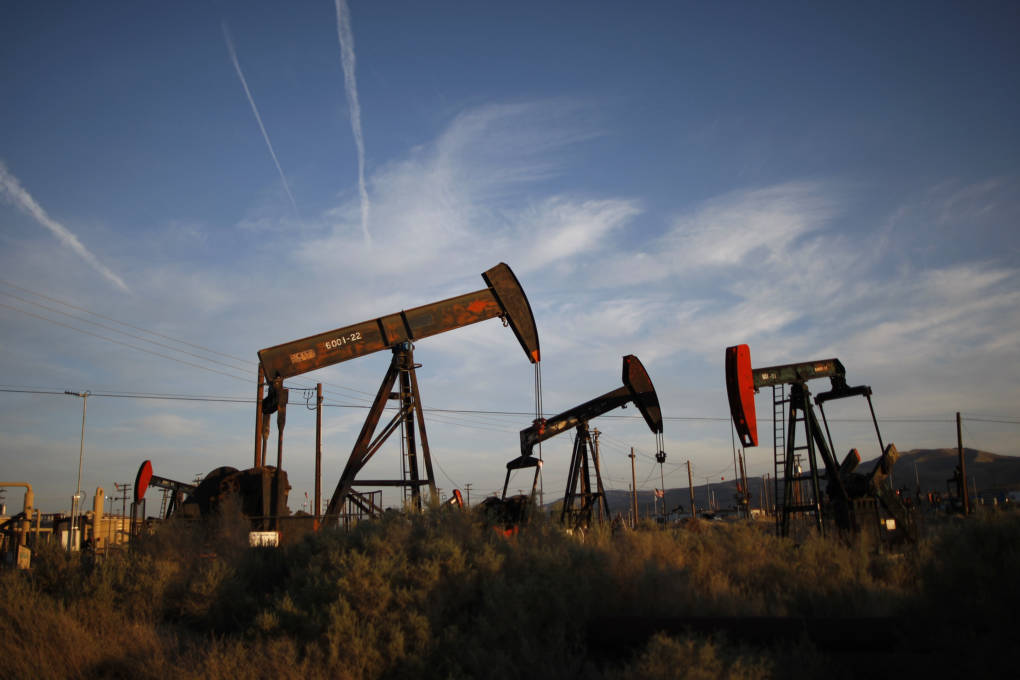
"caption": "Pump jacks and wells are seen in an oil field on the Monterey Shale formation where gas and oil extraction using hydraulic fracturing, or fracking, is on the verge of a boom on March 23, 2014, near McKittrick, California.",
"description": null,
"title": "Fracking In California Under Spotlight As Some Local Municipalities Issue Bans",
"credit": "Photo by David McNew/Getty Images",
"status": "inherit",
"altTag": null,
"isLoading": false,
"fetchFailed": false
},
"science_1948576": {
"type": "attachments",
"id": "science_1948576",
"meta": {
"index": "attachments_1716263798",
"site": "science",
"id": "1948576",
"found": true
},
"parent": 1948575,
"imgSizes": {
"twentyfourteen-full-width": {
"file": "https://ww2.kqed.org/app/uploads/sites/35/2019/10/img_9223_custom-0ed1b6900f76dba06020e33497968af94c9e90f3-1038x576.jpg",
"width": 1038,
"mimeType": "image/jpeg",
"height": 576
},
"thumbnail": {
"file": "https://ww2.kqed.org/app/uploads/sites/35/2019/10/img_9223_custom-0ed1b6900f76dba06020e33497968af94c9e90f3-160x107.jpg",
"width": 160,
"mimeType": "image/jpeg",
"height": 107
},
"post-thumbnail": {
"file": "https://ww2.kqed.org/app/uploads/sites/35/2019/10/img_9223_custom-0ed1b6900f76dba06020e33497968af94c9e90f3-672x372.jpg",
"width": 672,
"mimeType": "image/jpeg",
"height": 372
},
"kqedFullSize": {
"file": "https://ww2.kqed.org/app/uploads/sites/35/2019/10/img_9223_custom-0ed1b6900f76dba06020e33497968af94c9e90f3.jpg",
"width": 2000,
"height": 1332
},
"large": {
"file": "https://ww2.kqed.org/app/uploads/sites/35/2019/10/img_9223_custom-0ed1b6900f76dba06020e33497968af94c9e90f3-1020x679.jpg",
"width": 1020,
"mimeType": "image/jpeg",
"height": 679
},
"complete_open_graph": {
"file": "https://ww2.kqed.org/app/uploads/sites/35/2019/10/img_9223_custom-0ed1b6900f76dba06020e33497968af94c9e90f3-1200x799.jpg",
"width": 1200,
"mimeType": "image/jpeg",
"height": 799
},
"full-width": {
"file": "https://ww2.kqed.org/app/uploads/sites/35/2019/10/img_9223_custom-0ed1b6900f76dba06020e33497968af94c9e90f3-1920x1279.jpg",
"width": 1920,
"mimeType": "image/jpeg",
"height": 1279
},
"medium": {
"file": "https://ww2.kqed.org/app/uploads/sites/35/2019/10/img_9223_custom-0ed1b6900f76dba06020e33497968af94c9e90f3-800x533.jpg",
"width": 800,
"mimeType": "image/jpeg",
"height": 533
},
"medium_large": {
"file": "https://ww2.kqed.org/app/uploads/sites/35/2019/10/img_9223_custom-0ed1b6900f76dba06020e33497968af94c9e90f3-768x511.jpg",
"width": 768,
"mimeType": "image/jpeg",
"height": 511
}
},
"publishDate": 1570210521,
"modified": 1570210521,
"caption": null,
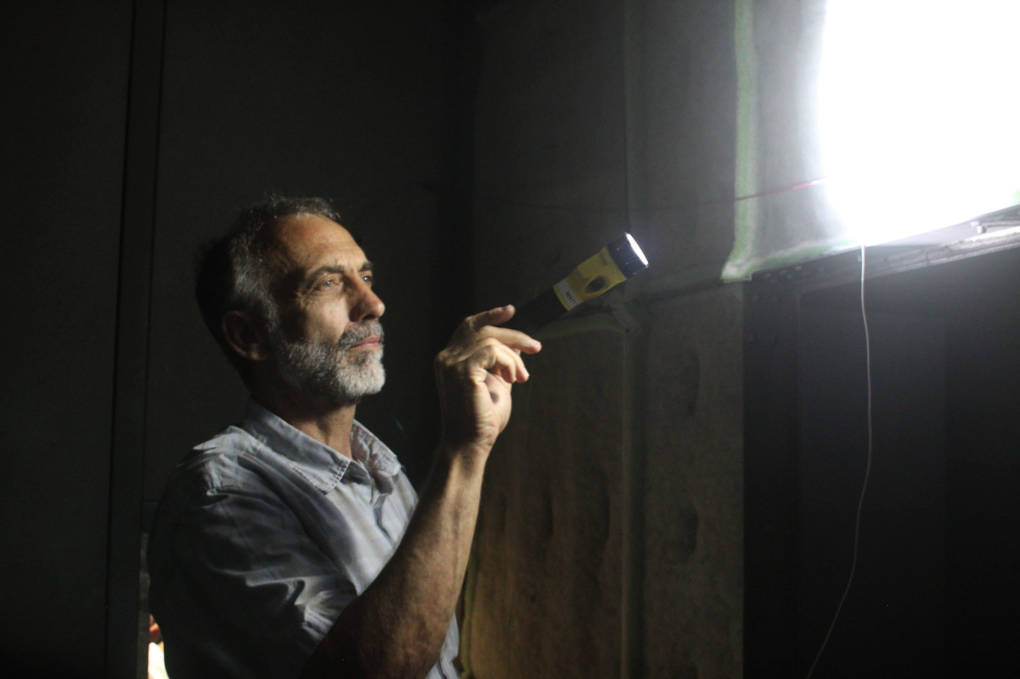
"description": "John Deffenbaugh, an engineer in Penn State's Office of the Physical Plant, checks the air-handling system in one of the university's buildings. It's one key to reducing energy use and greenhouse emissions.",
"title": "John Deffenbaugh, an engineer in Penn State's Office of the Physical Plant, checks the air-handling system in one of the university's buildings. It's one key to reducing energy use and greenhouse emissions.",
"credit": null,
"status": "inherit",
"isLoading": false,
"fetchFailed": false
},
"science_1948155": {
"type": "attachments",
"id": "science_1948155",
"meta": {
"index": "attachments_1716263798",
"site": "science",
"id": "1948155",
"found": true
},
"parent": 1948152,
"imgSizes": {
"twentyfourteen-full-width": {
"file": "https://ww2.kqed.org/app/uploads/sites/35/2019/09/RS39320_Chevron_010-1038x576.jpg",
"width": 1038,
"mimeType": "image/jpeg",
"height": 576
},
"thumbnail": {
"file": "https://ww2.kqed.org/app/uploads/sites/35/2019/09/RS39320_Chevron_010-160x110.jpg",
"width": 160,
"mimeType": "image/jpeg",
"height": 110
},
"post-thumbnail": {
"file": "https://ww2.kqed.org/app/uploads/sites/35/2019/09/RS39320_Chevron_010-672x372.jpg",
"width": 672,
"mimeType": "image/jpeg",
"height": 372
},
"kqedFullSize": {
"file": "https://ww2.kqed.org/app/uploads/sites/35/2019/09/RS39320_Chevron_010.jpg",
"width": 1920,
"height": 1314
},
"large": {
"file": "https://ww2.kqed.org/app/uploads/sites/35/2019/09/RS39320_Chevron_010-1020x698.jpg",
"width": 1020,
"mimeType": "image/jpeg",
"height": 698
},
"complete_open_graph": {
"file": "https://ww2.kqed.org/app/uploads/sites/35/2019/09/RS39320_Chevron_010-1200x821.jpg",
"width": 1200,
"mimeType": "image/jpeg",
"height": 821
},
"full-width": {
"file": "https://ww2.kqed.org/app/uploads/sites/35/2019/09/RS39320_Chevron_010-1920x1314.jpg",
"width": 1920,
"mimeType": "image/jpeg",
"height": 1314
},
"medium": {
"file": "https://ww2.kqed.org/app/uploads/sites/35/2019/09/RS39320_Chevron_010-800x548.jpg",
"width": 800,
"mimeType": "image/jpeg",
"height": 548
},
"medium_large": {
"file": "https://ww2.kqed.org/app/uploads/sites/35/2019/09/RS39320_Chevron_010-768x526.jpg",
"width": 768,
"mimeType": "image/jpeg",
"height": 526
}
},
"publishDate": 1569621877,
"modified": 1569621910,
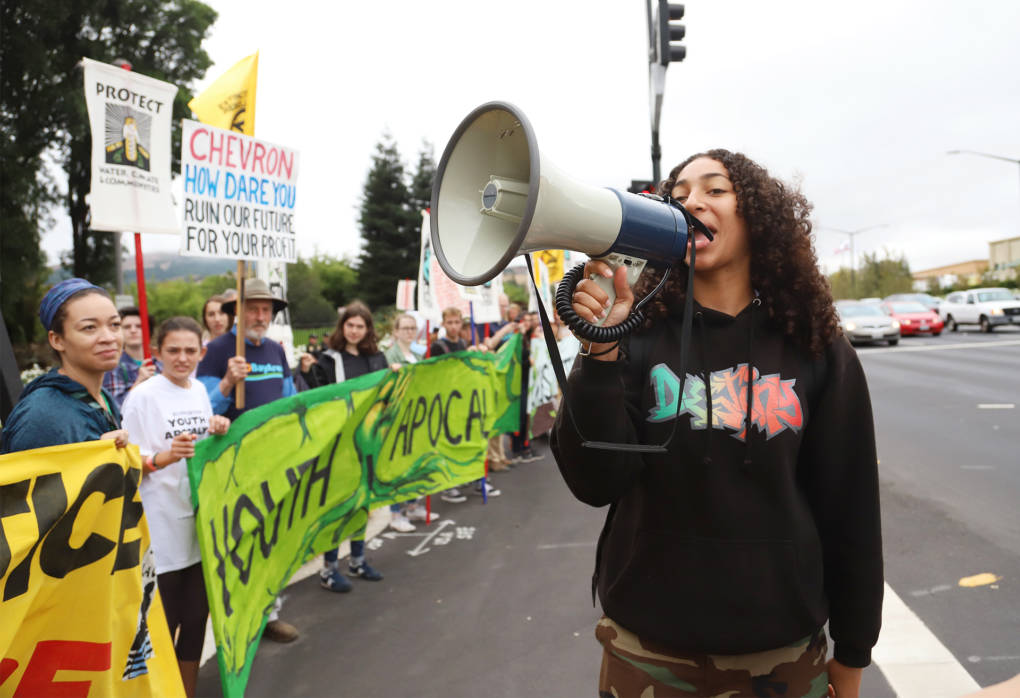
"caption": "Isha Clarke, a junior from MetWest High in Oakland, came to Chevron headquarters in San Ramon to participate in the climate strike on Friday Sept. 27, 2019. ",
"description": null,
"title": "RS39320_Chevron_010",
"credit": "Lindsey Moore/KQED",
"status": "inherit",
"isLoading": false,
"fetchFailed": false
},
"science_1948041": {
"type": "attachments",
"id": "science_1948041",
"meta": {
"index": "attachments_1716263798",
"site": "science",
"id": "1948041",
"found": true
},
"parent": 1948027,
"imgSizes": {
"twentyfourteen-full-width": {
"file": "https://ww2.kqed.org/app/uploads/sites/35/2019/09/DSCF4806-1038x576.jpg",
"width": 1038,
"mimeType": "image/jpeg",
"height": 576
},
"thumbnail": {
"file": "https://ww2.kqed.org/app/uploads/sites/35/2019/09/DSCF4806-160x107.jpg",
"width": 160,
"mimeType": "image/jpeg",
"height": 107
},
"post-thumbnail": {
"file": "https://ww2.kqed.org/app/uploads/sites/35/2019/09/DSCF4806-672x372.jpg",
"width": 672,
"mimeType": "image/jpeg",
"height": 372
},
"kqedFullSize": {
"file": "https://ww2.kqed.org/app/uploads/sites/35/2019/09/DSCF4806.jpg",
"width": 2048,
"height": 1365
},
"large": {
"file": "https://ww2.kqed.org/app/uploads/sites/35/2019/09/DSCF4806-1020x680.jpg",
"width": 1020,
"mimeType": "image/jpeg",
"height": 680
},
"complete_open_graph": {
"file": "https://ww2.kqed.org/app/uploads/sites/35/2019/09/DSCF4806-1200x800.jpg",
"width": 1200,
"mimeType": "image/jpeg",
"height": 800
},
"full-width": {
"file": "https://ww2.kqed.org/app/uploads/sites/35/2019/09/DSCF4806-1920x1280.jpg",
"width": 1920,
"mimeType": "image/jpeg",
"height": 1280
},
"medium": {
"file": "https://ww2.kqed.org/app/uploads/sites/35/2019/09/DSCF4806-800x533.jpg",
"width": 800,
"mimeType": "image/jpeg",
"height": 533
},
"medium_large": {
"file": "https://ww2.kqed.org/app/uploads/sites/35/2019/09/DSCF4806-768x512.jpg",
"width": 768,
"mimeType": "image/jpeg",
"height": 512
}
},
"publishDate": 1569448004,
"modified": 1569448336,
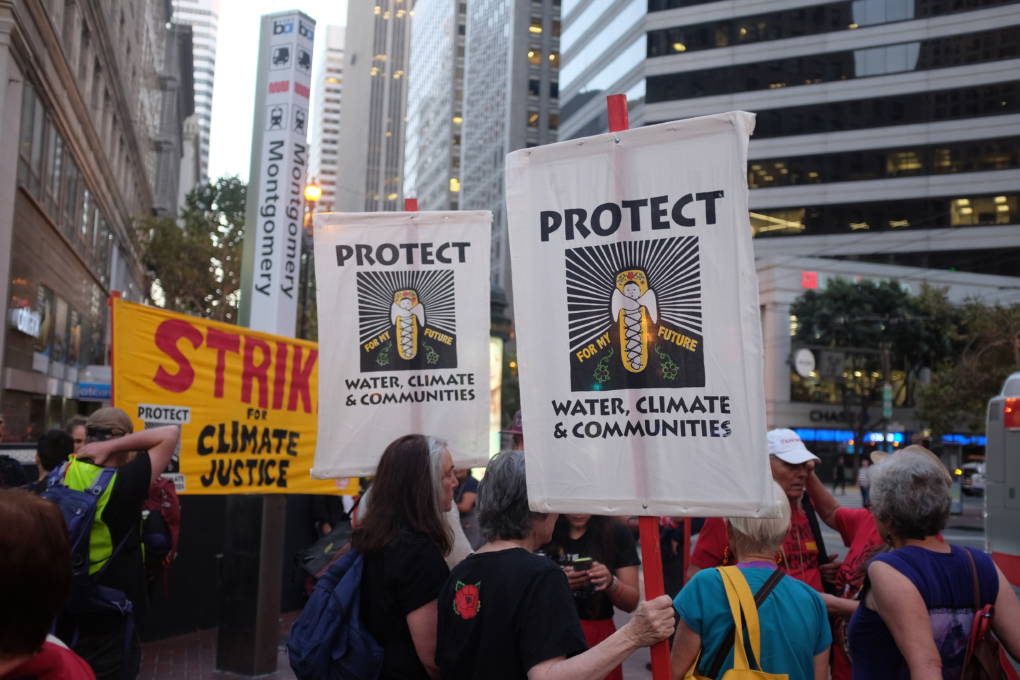
"caption": "Activists gather at Market and Montgomery Streets in Downtown San Francisco for Wednesday's Strike for Climate Justice.",
"description": null,
"title": "DSCF4806",
"credit": "Peter Arcuni/KQED",
"status": "inherit",
"isLoading": false,
"fetchFailed": false
},
"science_1947911": {
"type": "attachments",
"id": "science_1947911",
"meta": {
"index": "attachments_1716263798",
"site": "science",
"id": "1947911",
"found": true
},
"parent": 1947909,
"imgSizes": {
"twentyfourteen-full-width": {
"file": "https://ww2.kqed.org/app/uploads/sites/35/2019/09/GettyImages-846353020-1038x576.jpg",
"width": 1038,
"mimeType": "image/jpeg",
"height": 576
},
"thumbnail": {
"file": "https://ww2.kqed.org/app/uploads/sites/35/2019/09/GettyImages-846353020-160x107.jpg",
"width": 160,
"mimeType": "image/jpeg",
"height": 107
},
"post-thumbnail": {
"file": "https://ww2.kqed.org/app/uploads/sites/35/2019/09/GettyImages-846353020-672x372.jpg",
"width": 672,
"mimeType": "image/jpeg",
"height": 372
},
"kqedFullSize": {
"file": "https://ww2.kqed.org/app/uploads/sites/35/2019/09/GettyImages-846353020.jpg",
"width": 2048,
"height": 1365
},
"large": {
"file": "https://ww2.kqed.org/app/uploads/sites/35/2019/09/GettyImages-846353020-1020x680.jpg",
"width": 1020,
"mimeType": "image/jpeg",
"height": 680
},
"complete_open_graph": {
"file": "https://ww2.kqed.org/app/uploads/sites/35/2019/09/GettyImages-846353020-1200x800.jpg",
"width": 1200,
"mimeType": "image/jpeg",
"height": 800
},
"full-width": {
"file": "https://ww2.kqed.org/app/uploads/sites/35/2019/09/GettyImages-846353020-1920x1280.jpg",
"width": 1920,
"mimeType": "image/jpeg",
"height": 1280
},
"medium": {
"file": "https://ww2.kqed.org/app/uploads/sites/35/2019/09/GettyImages-846353020-800x533.jpg",
"width": 800,
"mimeType": "image/jpeg",
"height": 533
},
"medium_large": {
"file": "https://ww2.kqed.org/app/uploads/sites/35/2019/09/GettyImages-846353020-768x512.jpg",
"width": 768,
"mimeType": "image/jpeg",
"height": 512
}
},
"publishDate": 1569283078,
"modified": 1569283138,
"caption": "A plug-in hybrid car stands next to a charging station at an auto show on September 13, 2017. ",
"description": null,
"title": "Frankfurt Auto Show 2017",
"credit": "Photo by Sean Gallup/Getty Images",
"status": "inherit",
"isLoading": false,
"fetchFailed": false
},
"science_1947887": {
"type": "attachments",
"id": "science_1947887",
"meta": {
"index": "attachments_1716263798",
"site": "science",
"id": "1947887",
"found": true
},
"parent": 1947882,
"imgSizes": {
"twentyfourteen-full-width": {
"file": "https://ww2.kqed.org/app/uploads/sites/35/2019/09/Chinook_salmon_32849474990-1-1038x576.jpg",
"width": 1038,
"mimeType": "image/jpeg",
"height": 576
},
"thumbnail": {
"file": "https://ww2.kqed.org/app/uploads/sites/35/2019/09/Chinook_salmon_32849474990-1-160x120.jpg",
"width": 160,
"mimeType": "image/jpeg",
"height": 120
},
"post-thumbnail": {
"file": "https://ww2.kqed.org/app/uploads/sites/35/2019/09/Chinook_salmon_32849474990-1-672x372.jpg",
"width": 672,
"mimeType": "image/jpeg",
"height": 372
},
"kqedFullSize": {
"file": "https://ww2.kqed.org/app/uploads/sites/35/2019/09/Chinook_salmon_32849474990-1.jpg",
"width": 1200,
"height": 900
},
"large": {
"file": "https://ww2.kqed.org/app/uploads/sites/35/2019/09/Chinook_salmon_32849474990-1-1020x765.jpg",
"width": 1020,
"mimeType": "image/jpeg",
"height": 765
},
"complete_open_graph": {
"file": "https://ww2.kqed.org/app/uploads/sites/35/2019/09/Chinook_salmon_32849474990-1-1200x900.jpg",
"width": 1200,
"mimeType": "image/jpeg",
"height": 900
},
"medium": {
"file": "https://ww2.kqed.org/app/uploads/sites/35/2019/09/Chinook_salmon_32849474990-1-800x600.jpg",
"width": 800,
"mimeType": "image/jpeg",
"height": 600
},
"medium_large": {
"file": "https://ww2.kqed.org/app/uploads/sites/35/2019/09/Chinook_salmon_32849474990-1-768x576.jpg",
"width": 768,
"mimeType": "image/jpeg",
"height": 576
}
},
"publishDate": 1569275942,
"modified": 1569275975,
"caption": "A Chinook salmon on the Feather River. ",
"description": null,
"title": "Chinook_salmon_32849474990-1",
"credit": "Photo by California Department of Fish & Wildlife, Wikimedia Commons",
"status": "inherit",
"isLoading": false,
"fetchFailed": false
},
"science_1947542": {
"type": "attachments",
"id": "science_1947542",
"meta": {
"index": "attachments_1716263798",
"site": "science",
"id": "1947542",
"found": true
},
"parent": 1947538,
"imgSizes": {
"twentyfourteen-full-width": {
"file": "https://ww2.kqed.org/app/uploads/sites/35/2019/09/GettyImages-78713689-1038x576.jpg",
"width": 1038,
"mimeType": "image/jpeg",
"height": 576
},
"thumbnail": {
"file": "https://ww2.kqed.org/app/uploads/sites/35/2019/09/GettyImages-78713689-160x107.jpg",
"width": 160,
"mimeType": "image/jpeg",
"height": 107
},
"post-thumbnail": {
"file": "https://ww2.kqed.org/app/uploads/sites/35/2019/09/GettyImages-78713689-672x372.jpg",
"width": 672,
"mimeType": "image/jpeg",
"height": 372
},
"kqedFullSize": {
"file": "https://ww2.kqed.org/app/uploads/sites/35/2019/09/GettyImages-78713689.jpg",
"width": 2048,
"height": 1367
},
"large": {
"file": "https://ww2.kqed.org/app/uploads/sites/35/2019/09/GettyImages-78713689-1020x681.jpg",
"width": 1020,
"mimeType": "image/jpeg",
"height": 681
},
"complete_open_graph": {
"file": "https://ww2.kqed.org/app/uploads/sites/35/2019/09/GettyImages-78713689-1200x801.jpg",
"width": 1200,
"mimeType": "image/jpeg",
"height": 801
},
"full-width": {
"file": "https://ww2.kqed.org/app/uploads/sites/35/2019/09/GettyImages-78713689-1920x1281.jpg",
"width": 1920,
"mimeType": "image/jpeg",
"height": 1281
},
"medium": {
"file": "https://ww2.kqed.org/app/uploads/sites/35/2019/09/GettyImages-78713689-800x534.jpg",
"width": 800,
"mimeType": "image/jpeg",
"height": 534
},
"medium_large": {
"file": "https://ww2.kqed.org/app/uploads/sites/35/2019/09/GettyImages-78713689-768x512.jpg",
"width": 768,
"mimeType": "image/jpeg",
"height": 512
}
},
"publishDate": 1568836135,
"modified": 1568836162,
"caption": "Exhaust billows out of a car tailpipe January 2, 2008 in San Francisco, California. ",
"description": null,
"title": "California Sues EPA Over Ruling Blocking State Emissions Law",
"credit": "Photo by David Paul Morris/Getty Images",
"status": "inherit",
"isLoading": false,
"fetchFailed": false
},
"science_1947263": {
"type": "attachments",
"id": "science_1947263",
"meta": {
"index": "attachments_1716263798",
"site": "science",
"id": "1947263",
"found": true
},
"parent": 1947260,
"imgSizes": {
"twentyfourteen-full-width": {
"file": "https://ww2.kqed.org/app/uploads/sites/35/2019/09/iStock-1077963794-1038x576.jpg",
"width": 1038,
"mimeType": "image/jpeg",
"height": 576
},
"thumbnail": {
"file": "https://ww2.kqed.org/app/uploads/sites/35/2019/09/iStock-1077963794-160x107.jpg",
"width": 160,
"mimeType": "image/jpeg",
"height": 107
},
"post-thumbnail": {
"file": "https://ww2.kqed.org/app/uploads/sites/35/2019/09/iStock-1077963794-672x372.jpg",
"width": 672,
"mimeType": "image/jpeg",
"height": 372
},
"kqedFullSize": {
"file": "https://ww2.kqed.org/app/uploads/sites/35/2019/09/iStock-1077963794.jpg",
"width": 2048,
"height": 1367
},
"large": {
"file": "https://ww2.kqed.org/app/uploads/sites/35/2019/09/iStock-1077963794-1020x681.jpg",
"width": 1020,
"mimeType": "image/jpeg",
"height": 681
},
"complete_open_graph": {
"file": "https://ww2.kqed.org/app/uploads/sites/35/2019/09/iStock-1077963794-1200x801.jpg",
"width": 1200,
"mimeType": "image/jpeg",
"height": 801
},
"full-width": {
"file": "https://ww2.kqed.org/app/uploads/sites/35/2019/09/iStock-1077963794-1920x1281.jpg",
"width": 1920,
"mimeType": "image/jpeg",
"height": 1281
},
"medium": {
"file": "https://ww2.kqed.org/app/uploads/sites/35/2019/09/iStock-1077963794-800x534.jpg",
"width": 800,
"mimeType": "image/jpeg",
"height": 534
},
"medium_large": {
"file": "https://ww2.kqed.org/app/uploads/sites/35/2019/09/iStock-1077963794-768x512.jpg",
"width": 768,
"mimeType": "image/jpeg",
"height": 512
}
},
"publishDate": 1568142651,
"modified": 1568142686,
"caption": "Raw whole meat sample in laboratory Petri dish. ",
"description": null,
"title": "Clean cultured meat concept",
"credit": "iStock",
"status": "inherit",
"isLoading": false,
"fetchFailed": false
},
"science_1947028": {
"type": "attachments",
"id": "science_1947028",
"meta": {
"index": "attachments_1716263798",
"site": "science",
"id": "1947028",
"found": true
},
"parent": 1947019,
"imgSizes": {
"twentyfourteen-full-width": {
"file": "https://ww2.kqed.org/app/uploads/sites/35/2019/09/GettyImages-508243292-1038x576.jpg",
"width": 1038,
"mimeType": "image/jpeg",
"height": 576
},
"thumbnail": {
"file": "https://ww2.kqed.org/app/uploads/sites/35/2019/09/GettyImages-508243292-160x106.jpg",
"width": 160,
"mimeType": "image/jpeg",
"height": 106
},
"post-thumbnail": {
"file": "https://ww2.kqed.org/app/uploads/sites/35/2019/09/GettyImages-508243292-672x372.jpg",
"width": 672,
"mimeType": "image/jpeg",
"height": 372
},
"kqedFullSize": {
"file": "https://ww2.kqed.org/app/uploads/sites/35/2019/09/GettyImages-508243292.jpg",
"width": 2048,
"height": 1356
},
"large": {
"file": "https://ww2.kqed.org/app/uploads/sites/35/2019/09/GettyImages-508243292-1020x676.jpg",
"width": 1020,
"mimeType": "image/jpeg",
"height": 676
},
"complete_open_graph": {
"file": "https://ww2.kqed.org/app/uploads/sites/35/2019/09/GettyImages-508243292-1200x795.jpg",
"width": 1200,
"mimeType": "image/jpeg",
"height": 795
},
"full-width": {
"file": "https://ww2.kqed.org/app/uploads/sites/35/2019/09/GettyImages-508243292-1920x1272.jpg",
"width": 1920,
"mimeType": "image/jpeg",
"height": 1272
},
"medium": {
"file": "https://ww2.kqed.org/app/uploads/sites/35/2019/09/GettyImages-508243292-800x530.jpg",
"width": 800,
"mimeType": "image/jpeg",
"height": 530
},
"medium_large": {
"file": "https://ww2.kqed.org/app/uploads/sites/35/2019/09/GettyImages-508243292-768x509.jpg",
"width": 768,
"mimeType": "image/jpeg",
"height": 509
}
},
"publishDate": 1567539994,
"modified": 1567540053,
"caption": "CNN anchor Anderson Cooper looks on during a CNN Democratic Presidential Town Hall at the Derry Opera House on February 3, 2016 in Derry, New Hampshire. ",
"description": null,
"title": "Democratic Presidential Candidates Hillary Clinton And Bernie Sanders Take Part In Town Hall Meeting",
"credit": "Photo by Joe Raedle/Getty Images",
"status": "inherit",
"isLoading": false,
"fetchFailed": false
},
"science_1947042": {
"type": "attachments",
"id": "science_1947042",
"meta": {
"index": "attachments_1716263798",
"site": "science",
"id": "1947042",
"found": true
},
"parent": 1947031,
"imgSizes": {
"twentyfourteen-full-width": {
"file": "https://ww2.kqed.org/app/uploads/sites/35/2019/09/shakira_franklin-1_custom-5ab647c1e23659813af0c54171c42cf9cf45041c-s1300-c85-1038x576.jpg",
"width": 1038,
"mimeType": "image/jpeg",
"height": 576
},
"thumbnail": {
"file": "https://ww2.kqed.org/app/uploads/sites/35/2019/09/shakira_franklin-1_custom-5ab647c1e23659813af0c54171c42cf9cf45041c-s1300-c85-160x106.jpg",
"width": 160,
"mimeType": "image/jpeg",
"height": 106
},
"post-thumbnail": {
"file": "https://ww2.kqed.org/app/uploads/sites/35/2019/09/shakira_franklin-1_custom-5ab647c1e23659813af0c54171c42cf9cf45041c-s1300-c85-672x372.jpg",
"width": 672,
"mimeType": "image/jpeg",
"height": 372
},
"kqedFullSize": {
"file": "https://ww2.kqed.org/app/uploads/sites/35/2019/09/shakira_franklin-1_custom-5ab647c1e23659813af0c54171c42cf9cf45041c-s1300-c85.jpg",
"width": 1300,
"height": 859
},
"large": {
"file": "https://ww2.kqed.org/app/uploads/sites/35/2019/09/shakira_franklin-1_custom-5ab647c1e23659813af0c54171c42cf9cf45041c-s1300-c85-1020x674.jpg",
"width": 1020,
"mimeType": "image/jpeg",
"height": 674
},
"complete_open_graph": {
"file": "https://ww2.kqed.org/app/uploads/sites/35/2019/09/shakira_franklin-1_custom-5ab647c1e23659813af0c54171c42cf9cf45041c-s1300-c85-1200x793.jpg",
"width": 1200,
"mimeType": "image/jpeg",
"height": 793
},
"medium": {
"file": "https://ww2.kqed.org/app/uploads/sites/35/2019/09/shakira_franklin-1_custom-5ab647c1e23659813af0c54171c42cf9cf45041c-s1300-c85-800x529.jpg",
"width": 800,
"mimeType": "image/jpeg",
"height": 529
},
"medium_large": {
"file": "https://ww2.kqed.org/app/uploads/sites/35/2019/09/shakira_franklin-1_custom-5ab647c1e23659813af0c54171c42cf9cf45041c-s1300-c85-768x507.jpg",
"width": 768,
"mimeType": "image/jpeg",
"height": 507
}
},
"publishDate": 1567542018,
"modified": 1567542055,
"caption": "The Franklin Square neighborhood is hotter than about two-thirds of the other neighborhoods in Baltimore. Citywide, low-income neighborhoods tend to be hotter than wealthier neighborhoods.",
"description": null,
"title": "shakira_franklin-1_custom-5ab647c1e23659813af0c54171c42cf9cf45041c-s1300-c85",
"credit": "Ian Morton for NPR",
"status": "inherit",
"isLoading": false,
"fetchFailed": false
}
},
"audioPlayerReducer": {
"postId": "stream_live",
"isPaused": true,
"isPlaying": false,
"pfsActive": false,
"pledgeModalIsOpen": true,
"playerDrawerIsOpen": false,
"liveAudioPlayStartedAt": 0,
"liveAudioPlayContext": ""
},
"authorsReducer": {
"byline_science_1948659": {
"type": "authors",
"id": "byline_science_1948659",
"meta": {
"override": true
},
"slug": "byline_science_1948659",
"name": "Bob Berwyn \u003cbr/>InsideClimate News \u003cbr>",
"isLoading": false
},
"byline_science_1948575": {
"type": "authors",
"id": "byline_science_1948575",
"meta": {
"override": true
},
"slug": "byline_science_1948575",
"name": "Dan Charles \u003cbr/>NPR\u003cbr>",
"isLoading": false
},
"byline_science_1947909": {
"type": "authors",
"id": "byline_science_1947909",
"meta": {
"override": true
},
"slug": "byline_science_1947909",
"name": "Emily Long \u003cbr/>Lifehacker\u003cbr>",
"isLoading": false
},
"byline_science_1947882": {
"type": "authors",
"id": "byline_science_1947882",
"meta": {
"override": true
},
"slug": "byline_science_1947882",
"name": "Jane Braxton Little \u003cbr/> Bay Nature \u003cbr>",
"isLoading": false
},
"byline_science_1947019": {
"type": "authors",
"id": "byline_science_1947019",
"meta": {
"override": true
},
"slug": "byline_science_1947019",
"name": "Elana Schor and Ellen Knickmeyer\u003cbr />Associated Press",
"isLoading": false
},
"byline_science_1947031": {
"type": "authors",
"id": "byline_science_1947031",
"meta": {
"override": true
},
"slug": "byline_science_1947031",
"name": "Meg Anderson and Sean McMinn \u003cbr/>NPR\u003cbr>",
"isLoading": false
},
"mpeterson": {
"type": "authors",
"id": "11223",
"meta": {
"index": "authors_1716337520",
"id": "11223",
"found": true
},
"name": "Molly Peterson",
"firstName": "Molly",
"lastName": "Peterson",
"slug": "mpeterson",
"email": "mpeterson@kqed.org",
"display_author_email": false,
"staff_mastheads": [],
"title": null,
"bio": "Molly Peterson reports for KQED science and news on climate change, catastrophe and risk. Previously she was environment correspondent at Southern California Public Radio. Her work has also appeared at The New York Times, The Guardian, on NPR, at High Country News, on Code Switch, and other national outlets. She has been honored with awards from Public Radio News Directors Incorporated, Investigative Reporters and Editors, the Society for Professional Journalists, the Los Angeles Press Club, and RTNDA Edward R. Murrow awards, among others.",
"avatar": "https://secure.gravatar.com/avatar/7908e2807131f776cc8165c649530b05?s=600&d=blank&r=g",
"twitter": "Mollydacious",
"facebook": null,
"instagram": "https://www.instagram.com/radiomolly/",
"linkedin": null,
"sites": [
{
"site": "news",
"roles": [
"subscriber"
]
},
{
"site": "futureofyou",
"roles": [
"editor"
]
},
{
"site": "science",
"roles": [
"editor"
]
}
],
"headData": {
"title": "Molly Peterson | KQED",
"description": null,
"ogImgSrc": "https://secure.gravatar.com/avatar/7908e2807131f776cc8165c649530b05?s=600&d=blank&r=g",
"twImgSrc": "https://secure.gravatar.com/avatar/7908e2807131f776cc8165c649530b05?s=600&d=blank&r=g"
},
"isLoading": false,
"link": "/author/mpeterson"
},
"lesleymcclurg": {
"type": "authors",
"id": "11229",
"meta": {
"index": "authors_1716337520",
"id": "11229",
"found": true
},
"name": "Lesley McClurg",
"firstName": "Lesley",
"lastName": "McClurg",
"slug": "lesleymcclurg",
"email": "lmcclurg@KQED.org",
"display_author_email": false,
"staff_mastheads": [
"news",
"science"
],
"title": "KQED Health Correspondent",
"bio": "Lesley McClurg is a health correspondent and fill-in host whose work is regularly rebroadcast on NPR and PBS programs. She’s earned multiple regional Emmy awards, a national and a regional Edward R. Murrow award, and was named Best Beat Reporter by the Association of Health Care Journalists. The Society of Professional Journalists has recognized her work several times, and the Society of Environmental Journalists spotlighted her coverage of California’s historic drought.\r\n\r\nBefore joining KQED in 2016, Lesley covered food and sustainability for Capital Public Radio, environmental issues for Colorado Public Radio, and reported for KUOW and KCTS 9 in Seattle. Away from the newsroom, she loves skiing with her daughter, mountain biking with her partner, and playing with Ollie, the family’s goldendoodle. On deadline, she runs almost entirely on chocolate chips.\r\n\r\n ",
"avatar": "https://secure.gravatar.com/avatar/bab49e972ea10c774fe0f5e29dba1722b158f7c0d58a360923d1389d380b2978?s=600&d=blank&r=g",
"twitter": "lesleywmcclurg",
"bluesky": null,
"facebook": null,
"instagram": null,
"linkedin": null,
"sites": [
{
"site": "arts",
"roles": [
"author"
]
},
{
"site": "news",
"roles": [
"editor"
]
},
{
"site": "futureofyou",
"roles": [
"editor"
]
},
{
"site": "stateofhealth",
"roles": [
"author"
]
},
{
"site": "science",
"roles": [
"editor"
]
},
{
"site": "quest",
"roles": [
"subscriber"
]
},
{
"site": "forum",
"roles": [
"administrator"
]
},
{
"site": "liveblog",
"roles": [
"author"
]
}
],
"headData": {
"title": "Lesley McClurg | KQED",
"description": "KQED Health Correspondent",
"ogImgSrc": "https://secure.gravatar.com/avatar/bab49e972ea10c774fe0f5e29dba1722b158f7c0d58a360923d1389d380b2978?s=600&d=blank&r=g",
"twImgSrc": "https://secure.gravatar.com/avatar/bab49e972ea10c774fe0f5e29dba1722b158f7c0d58a360923d1389d380b2978?s=600&d=blank&r=g"
},
"isLoading": false,
"link": "/author/lesleymcclurg"
},
"parcuni": {
"type": "authors",
"id": "11368",
"meta": {
"index": "authors_1716337520",
"id": "11368",
"found": true
},
"name": "Peter Arcuni",
"firstName": "Peter",
"lastName": "Arcuni",
"slug": "parcuni",
"email": "parcuni@KQED.org",
"display_author_email": false,
"staff_mastheads": [
"science"
],
"title": "Reporter",
"bio": "Peter reports radio and online stories for \u003cem>KQED Science\u003c/em>. His work has also appeared on the \u003cem>The California Report\u003c/em> morning show and \u003cem>KQED News\u003c/em>. His production credits include \u003cem>The California Report, The California Report Magazine\u003c/em> and KQED's local news podcast \u003cem>The Bay\u003c/em>. Other credits include NPR's \u003cem>All Things Considered\u003c/em>, WNYC's \u003cem>Science Friday\u003c/em>, WBUR's \u003cem>Here & Now\u003c/em>, WIRED and SFGate. Peter graduated from Brown University and earned a master's degree in journalism from Stanford. He's covered everything from homelessness to wildfires, health, the environment, arts and Thanksgiving in San Quentin prison. In other lives, he played rock n roll music and studied neuroscience. You can email him at: parcuni@kqed.org",
"avatar": "https://secure.gravatar.com/avatar/d5032f6f27199d478af34ad2e1d98732?s=600&d=blank&r=g",
"twitter": "peterarcuni",
"facebook": null,
"instagram": null,
"linkedin": null,
"sites": [
{
"site": "news",
"roles": [
"editor"
]
},
{
"site": "science",
"roles": [
"editor"
]
}
],
"headData": {
"title": "Peter Arcuni | KQED",
"description": "Reporter",
"ogImgSrc": "https://secure.gravatar.com/avatar/d5032f6f27199d478af34ad2e1d98732?s=600&d=blank&r=g",
"twImgSrc": "https://secure.gravatar.com/avatar/d5032f6f27199d478af34ad2e1d98732?s=600&d=blank&r=g"
},
"isLoading": false,
"link": "/author/parcuni"
},
"kevinstark": {
"type": "authors",
"id": "11608",
"meta": {
"index": "authors_1716337520",
"id": "11608",
"found": true
},
"name": "Kevin Stark",
"firstName": "Kevin",
"lastName": "Stark",
"slug": "kevinstark",
"email": "kstark@kqed.org",
"display_author_email": true,
"staff_mastheads": [
"science"
],
"title": "Senior Editor",
"bio": "Kevin is a senior editor for KQED Science, managing the station's health and climate desks. His journalism career began in the Pacific Northwest, and he later became a lead reporter for the San Francisco Public Press. His work has appeared in Pacific Standard magazine, the Energy News Network, the Center for Investigative Reporting's Reveal and WBEZ in Chicago. Kevin joined KQED in 2019, and has covered issues related to energy, wildfire, climate change and the environment.",
"avatar": "https://secure.gravatar.com/avatar/365aaa4b597d3a8374f67504ff0facd323d7906e8eb4be0a7efd2427408e802c?s=600&d=blank&r=g",
"twitter": "starkkev",
"bluesky": null,
"facebook": null,
"instagram": null,
"linkedin": null,
"sites": [
{
"site": "",
"roles": [
"editor"
]
},
{
"site": "news",
"roles": [
"editor"
]
},
{
"site": "science",
"roles": [
"administrator"
]
}
],
"headData": {
"title": "Kevin Stark | KQED",
"description": "Senior Editor",
"ogImgSrc": "https://secure.gravatar.com/avatar/365aaa4b597d3a8374f67504ff0facd323d7906e8eb4be0a7efd2427408e802c?s=600&d=blank&r=g",
"twImgSrc": "https://secure.gravatar.com/avatar/365aaa4b597d3a8374f67504ff0facd323d7906e8eb4be0a7efd2427408e802c?s=600&d=blank&r=g"
},
"isLoading": false,
"link": "/author/kevinstark"
}
},
"pagesReducer": {
"science_category_energy": {
"type": "terms",
"id": "science_33",
"meta": {
"index": "terms_1716263798",
"site": "science",
"id": "33",
"score": 12.797518
},
"featImg": null,
"name": "Energy",
"description": null,
"taxonomy": "category",
"headData": {
"twImgId": null,
"twTitle": null,
"ogTitle": null,
"ogImgId": null,
"twDescription": null,
"description": null,
"title": "Energy Archives | KQED Science",
"ogDescription": null
},
"ttid": 35,
"slug": "energy",
"isLoading": false,
"title": "Energy",
"pageMeta": {
"site": "science",
"WpPageTemplate": "page-topic-editorial",
"currentPage": 12
},
"blocks": [
{
"blockName": "kqed/post-list",
"attrs": {
"layout": "cardArticle2",
"query": "posts/science?category=energy",
"seeMore": false,
"paginated": true,
"page": 12
}
},
{
"blockName": "kqed/ad"
}
]
}
},
"pfsSessionReducer": {},
"postsReducer": {
"stream_live": {
"type": "live",
"id": "stream_live",
"audioUrl": "https://streams.kqed.org/kqedradio",
"title": "Live Stream",
"excerpt": "Live Stream information currently unavailable.",
"link": "/radio",
"featImg": "",
"label": {
"name": "KQED Live",
"link": "/"
}
},
"stream_kqedNewscast": {
"type": "posts",
"id": "stream_kqedNewscast",
"audioUrl": "https://www.kqed.org/.stream/anon/radio/RDnews/newscast.mp3?_=1",
"title": "KQED Newscast",
"featImg": "",
"label": {
"name": "88.5 FM",
"link": "/"
}
},
"science_1948674": {
"type": "posts",
"id": "science_1948674",
"meta": {
"index": "posts_1716263798",
"site": "science",
"id": "1948674",
"score": null,
"sort": [
1570485327000
]
},
"parent": 0,
"labelTerm": {},
"blocks": [],
"publishDate": 1570485327,
"format": "standard",
"title": "Hotter Fires Are Transforming California's Forests",
"headTitle": "Hotter Fires Are Transforming California’s Forests | KQED",
"content": "\u003cp>Hotter-burning wildfires are transforming California’s forests, and not for the better. A new \u003ca href=\"https://esajournals.onlinelibrary.wiley.com/doi/full/10.1002/ecs2.2882\" target=\"_blank\" rel=\"noopener\">study\u003c/a> from UC Davis finds high-intensity fires leave fewer trees and a less diverse population of plants behind.\u003c/p>\n\u003cp>“We’re finding that high intensity, really dangerous fires … are becoming more frequent,” said Clark Richter, a graduate student in ecology at UC Davis. “They’re burning a larger area than was typical historically.”\u003c/p>\n\u003cp>[pullquote citation=\"Clark Richter, UC Davis\"]‘We’re finding that high intensity, really dangerous fires … are becoming more frequent.’[/pullquote]Richter and a team sampled plants across patches of land in the Sierra Nevada that were burned in at least eight fires over the last 20 years. Their goal was to get a better picture of what happened to plants in the forest understory.\u003c/p>\n\u003cp>Richter calls the current pattern of fire in California, one where fires burn intensely hot, “novel.” He and a research team saw that “when fire climbs up into the canopy, it often kills the adult trees,” he said. “And that causes a dramatic change to the system.”\u003c/p>\n\u003cp>Those intense fires transform forest into shrubland. And according to Richter, the more frequent and the larger the area burned at these high-severity sites, the larger the shrub fields left behind.\u003c/p>\n\u003cp>[ad fullwidth]\u003c/p>\n\u003cp>\u003cstrong>Less Diversity\u003c/strong>\u003c/p>\n\u003cp>Field sampling by the researchers found less plant diversity on the landscape after high-intensity fires, especially in shrublands. And when fire returns to that landscape, it’s more likely “that system is going to continue to be a high-severity site, that’s going to continue to be a shrub field potentially indefinitely,” Richter said.\u003c/p>\n\u003cp>It wasn’t always this way in California’s yellow pine mixed-conifer forests, Richter says. Historically, the fires that burned these forests at elevation were low- and moderate-intensity. “These weren’t really fierce, fierce fires with really tall flame lengths in the canopies of trees,” Richter said.\u003c/p>\n\u003cp>Richter thinks of these less-intense fires as recurring events that “chew up” but don’t destroy understory fuels on the ground, thus preserving an array of plants after the fire is out.\u003c/p>\n\u003cp>The study supports the idea that active management of forests, including reducing tree density and managing understory growth with prescribed fire and mechanical means, promotes ecosystem health. The study’s authors acknowledged the challenges to managing forests this way, including increased costs and legal opposition.\u003c/p>\n\u003cp>\u003c/p>\n\u003cp>But, Richter said, “Our concern is that if these shrub fields continue to burn, that there will be an overall loss of understory plant diversity in these sites at a landscape level.”\u003c/p>\n\n",
"stats": {
"hasVideo": false,
"hasChartOrMap": false,
"hasAudio": false,
"hasPolis": false,
"wordCount": 464,
"hasGoogleForm": false,
"hasGallery": false,
"hasHearkenModule": false,
"iframeSrcs": [],
"paragraphCount": 13
},
"modified": 1704848253,
"excerpt": "A new study from UC Davis finds high-intensity fires leave fewer trees and less diverse plants behind.",
"headData": {
"twImgId": "",
"twTitle": "",
"ogTitle": "",
"ogImgId": "",
"twDescription": "",
"description": "A new study from UC Davis finds high-intensity fires leave fewer trees and less diverse plants behind.",
"title": "Hotter Fires Are Transforming California's Forests | KQED",
"ogDescription": "",
"schema": {
"@context": "https://schema.org",
"@type": "Article",
"headline": "Hotter Fires Are Transforming California's Forests",
"datePublished": "2019-10-07T14:55:27-07:00",
"dateModified": "2024-01-09T16:57:33-08:00",
"image": "https://cdn.kqed.org/wp-content/uploads/2020/02/KQED-OG-Image@1x.png"
}
},
"guestAuthors": [],
"slug": "hotter-fires-are-transforming-californias-forests",
"status": "publish",
"audioUrl": "https://www.kqed.org/.stream/anon/radio/RDnews/2019/10/Peterson2wayFirePlantDiversity.mp3",
"sticky": false,
"source": "Wildfire",
"path": "/science/1948674/hotter-fires-are-transforming-californias-forests",
"audioTrackLength": null,
"parsedContent": [
{
"type": "contentString",
"content": "\u003cdiv class=\"post-body\">\u003cp>\u003cp>Hotter-burning wildfires are transforming California’s forests, and not for the better. A new \u003ca href=\"https://esajournals.onlinelibrary.wiley.com/doi/full/10.1002/ecs2.2882\" target=\"_blank\" rel=\"noopener\">study\u003c/a> from UC Davis finds high-intensity fires leave fewer trees and a less diverse population of plants behind.\u003c/p>\n\u003cp>“We’re finding that high intensity, really dangerous fires … are becoming more frequent,” said Clark Richter, a graduate student in ecology at UC Davis. “They’re burning a larger area than was typical historically.”\u003c/p>\n\u003cp>\u003c/p>\u003c/div>",
"attributes": {
"named": {},
"numeric": []
}
},
{
"type": "component",
"content": "‘We’re finding that high intensity, really dangerous fires … are becoming more frequent.’",
"name": "pullquote",
"attributes": {
"named": {
"citation": "Clark Richter, UC Davis",
"label": ""
},
"numeric": []
}
},
{
"type": "contentString",
"content": "\u003cdiv class=\"post-body\">\u003cp>Richter and a team sampled plants across patches of land in the Sierra Nevada that were burned in at least eight fires over the last 20 years. Their goal was to get a better picture of what happened to plants in the forest understory.\u003c/p>\n\u003cp>Richter calls the current pattern of fire in California, one where fires burn intensely hot, “novel.” He and a research team saw that “when fire climbs up into the canopy, it often kills the adult trees,” he said. “And that causes a dramatic change to the system.”\u003c/p>\n\u003cp>Those intense fires transform forest into shrubland. And according to Richter, the more frequent and the larger the area burned at these high-severity sites, the larger the shrub fields left behind.\u003c/p>\n\u003cp>\u003c/p>\u003c/div>",
"attributes": {
"named": {},
"numeric": []
}
},
{
"type": "component",
"content": "",
"name": "ad",
"attributes": {
"named": {
"label": "fullwidth"
},
"numeric": [
"fullwidth"
]
}
},
{
"type": "contentString",
"content": "\u003cdiv class=\"post-body\">\u003cp>\u003c/p>\n\u003cp>\u003cstrong>Less Diversity\u003c/strong>\u003c/p>\n\u003cp>Field sampling by the researchers found less plant diversity on the landscape after high-intensity fires, especially in shrublands. And when fire returns to that landscape, it’s more likely “that system is going to continue to be a high-severity site, that’s going to continue to be a shrub field potentially indefinitely,” Richter said.\u003c/p>\n\u003cp>It wasn’t always this way in California’s yellow pine mixed-conifer forests, Richter says. Historically, the fires that burned these forests at elevation were low- and moderate-intensity. “These weren’t really fierce, fierce fires with really tall flame lengths in the canopies of trees,” Richter said.\u003c/p>\n\u003cp>Richter thinks of these less-intense fires as recurring events that “chew up” but don’t destroy understory fuels on the ground, thus preserving an array of plants after the fire is out.\u003c/p>\n\u003cp>The study supports the idea that active management of forests, including reducing tree density and managing understory growth with prescribed fire and mechanical means, promotes ecosystem health. The study’s authors acknowledged the challenges to managing forests this way, including increased costs and legal opposition.\u003c/p>\n\u003cp>\u003c/p>\n\u003cp>But, Richter said, “Our concern is that if these shrub fields continue to burn, that there will be an overall loss of understory plant diversity in these sites at a landscape level.”\u003c/p>\n\n\u003c/div>\u003c/p>",
"attributes": {
"named": {},
"numeric": []
}
}
],
"link": "/science/1948674/hotter-fires-are-transforming-californias-forests",
"authors": [
"11223"
],
"categories": [
"science_31",
"science_33",
"science_35",
"science_3730"
],
"featImg": "science_1948678",
"label": "source_science_1948674"
},
"science_1948659": {
"type": "posts",
"id": "science_1948659",
"meta": {
"index": "posts_1716263798",
"site": "science",
"id": "1948659",
"score": null,
"sort": [
1570474597000
]
},
"parent": 0,
"labelTerm": {},
"blocks": [],
"publishDate": 1570474597,
"format": "standard",
"title": "Fire, Rock Slides, and Floods: UN Report Details Growing Warming Threat in the Mountains",
"headTitle": "Fire, Rock Slides, and Floods: UN Report Details Growing Warming Threat in the Mountains | KQED",
"content": "\u003cp>With ominous orange-gray smoke clouds seething on the western horizon, it’s easy to understand how Colorado’s highest city and other mountain communities are directly threatened by global warming. \u003cspan style=\"font-weight: 400\">[pullquote align='right' citation='Heidi Steltzer, biologist at Fort Lewis College']‘Concern, commitment and action on climate change should not depend on which places, species or people are impacted. Instead, they should be motivated by compassion.’[/pullquote]\u003c/span>\u003c/p>\n\u003cp>Mountain snowpack is shrinking and melting earlier in the spring. Warmer and longer summers dry out vegetation and increase the threat of wildfires in western mountain forests, where the fire season has \u003ca href=\"https://earthobservatory.nasa.gov/images/86268/longer-more-frequent-fire-seasons\">lengthened\u003c/a> by at least a month since 1979.\u003c/p>\n\u003cp>The growing wildfire risk is just part of an accelerating cycle of global warming impacts in the world’s mountain regions, according to a new Intergovernmental Panel on Climate Change \u003ca href=\"https://insideclimatenews.org/news/25092019/ipcc-cryosphere-ocean-report-climate-change-sea-level-rise-greenland-antarctica\">report\u003c/a> that includes a \u003ca href=\"https://report.ipcc.ch/srocc/pdf/SROCC_FinalDraft_Chapter2.pdf\">section\u003c/a> focused on mountains for the first time in more than 20 years.\u003c/p>\n\u003cp>“Snow cover duration has declined in nearly all regions, especially at lower elevations, on average by five days per decade,” the mountain chapter of the IPCC report says. On average across Western North America, the European Alps and High Mountain Asia, temperatures are warming by 0.54 degrees Fahrenheit per decade.\u003c/p>\n\u003cp>That’s melting glaciers and changing mountain river flows, disrupting plants and wildlife, and increasing the risk of extreme \u003ca href=\"https://insideclimatenews.org/news/26092018/climate-change-mountains-landslide-hazard-thawing-permafrost-rockfall-extreme-weather-glaciers-global-warming\">rockslides\u003c/a>, \u003ca href=\"https://insideclimatenews.org/news/08032019/avalanche-climate-change-risk-snow-storm-forecast-colorado-switzerland\">avalanches\u003c/a> and \u003ca href=\"https://insideclimatenews.org/news/06082018/global-warming-climate-change-floods-california-oroville-dam-scientists\">mountain floods\u003c/a> caused by rain falling on snow.\u003c/p>\n\u003cp>[ad fullwidth]\u003c/p>\n\u003cp>Taken together, global warming impacts represent an existential threat to millions of people in the Andes, the Himalaya, the European Alps, and the U.S. Mountain West including Alaska, said \u003ca href=\"https://twitter.com/heidimountains\">Heidi Steltzer\u003c/a>, a biologist at Fort Lewis College in Durango, Colorado, and a lead author of the mountain chapter.\u003c/p>\n\u003cp>“Shrinking glaciers and snow harm Indigenous Peoples and rural communities greatly. Concern, commitment and action on climate change should not depend on which places, species or people are impacted. Instead, they should be motivated by compassion,” Steltzer said.\u003c/p>\n\u003cp>\u003cstrong>Water Reliability \u003c/strong>\u003c/p>\n\u003cp>In Crested Butte, about 100 miles southwest of Leadville, hydrologist and physicist Rosemary Carroll studies how \u003ca href=\"https://insideclimatenews.org/news/07062016/unabated-global-warming-threatens-west-snowpack-water-rocky-mountains-sierra-nevada-drought\">disruptions\u003c/a> \u003ca href=\"https://insideclimatenews.org/news/07062016/unabated-global-warming-threatens-west-snowpack-water-rocky-mountains-sierra-nevada-drought\">to the water cycle\u003c/a> will affect local ranchers and ski areas, as well as drinking and agricultural water supplies hundreds of miles away.\u003c/p>\n\u003cp>The IPCC assessment found that global warming will change the timing and amount of runoff, “affecting water storage and delivery infrastructure around the world,” a finding backed by research focusing on the West.\u003c/p>\n\u003cp>A 2016 \u003ca href=\"https://agupubs.onlinelibrary.wiley.com/doi/full/10.1002/2016GL068798\">study\u003c/a> in six Western mountain ranges showed rising temperatures will shift the snow accumulation zone and runoff timing enough to have significant impacts on water cycles. And some towns in the Rockies and Sierra Nevada are at risk from \u003ca href=\"https://insideclimatenews.org/news/06082018/global-warming-climate-change-floods-california-oroville-dam-scientists\">dangerous flash floods\u003c/a> as global warming brings rain, rather than snow, to some mountain regions.\u003c/p>\n\u003cp>Carroll pointed out her living room window to a craggy ridgeline where she measures how water from melted snow trickles through rocks and meadows down to the East River, on to the Gunnison River and finally into the mighty Colorado.\u003c/p>\n\u003cp>“The new normal is that the snowpack is melting earlier and we have earlier runoff, and that’s a fact. There’s going to be less water for a given snowpack,” she said. Even in average snowfall years, global warming is reducing the amount of available water for irrigation and storage, she said.\u003c/p>\n\u003cp>Her research for the University of Nevada’s Desert Research Institute and the U.S. Department of Energy will help communities adapt as global warming disrupts flows from mountain streams. Around Crested Butte, the ski industry and local ranchers will feel the changes first.\u003c/p>\n\u003cp>But addressing those impacts isn’t as easy as just throwing a new report on the table. Translating science into action requires working with stakeholders from the start.\u003c/p>\n\u003cp>“Ranchers know what’s happening, they know that things are shifting, but they’re afraid the policy will shift in a way that they will carry the burden of the change. Since they have most of the water, they fear they will have to give up the most, and that it won’t be equitable,” she said.\u003c/p>\n\u003cp>The states that get their water from the Colorado River are already restructuring \u003ca href=\"https://insideclimatenews.org/news/31012019/colorado-river-water-crisis-climate-science-state-conservation-plans\">water-sharing agreements\u003c/a> to stave off shortages and trying to develop new storage plans to account for extreme wet and dry years.\u003c/p>\n\u003cp>\u003cstrong>Goodbye to Glaciers\u003c/strong>\u003c/p>\n\u003cp>Global warming will change nearly every mountain ecosystem, starting with the very visible meltdown of glaciers.\u003c/p>\n\u003cp>In the European Alps, \u003ca href=\"https://www.alpenverein.at/portal/news/aktuelle_news/2018/2018_04_06_gletscherbericht.php\">some glaciers retreated by as much 410 feet\u003c/a> last year — imagine the Empire State Building shrinking by a third. Globally, the world’s glaciers have lost 9 trillion tons of ice since 1961, raising sea level by about 1 inch, according to the \u003ca href=\"http://www.esa.int/Our_Activities/Observing_the_Earth/Glaciers_lose_nine_trillion_tonnes_of_ice_in_half_a_century\">European Space Agency\u003c/a>.\u003c/p>\n\u003cp>As glaciers melt, they create a series of risks: newly formed meltwater lakes can burst through their banks, flooding towns and farms below. And as the ice dwindles, that will significantly change the timing and amount of water available for hydropower production and agriculture.\u003c/p>\n\u003cp>[ad floatright]\u003c/p>\n\u003cp>Along with disrupting ecosystems and downstream communities that rely on glacier meltwater, global warming in the mountains will cause emotional and cultural loss as cherished landscapes vanish. In Switzerland, people recently held a memorial service for the \u003ca href=\"https://twitter.com/matthias_huss/status/1176117412997062656\">disappearing Pizol Glacier\u003c/a> as a way of dealing with that grief, a sometimes overlooked component of climate resilience.\u003c/p>\n\u003cdiv class=\"media media-element-container media-image_full\">\n\u003cp>The physical threats are real and growing, said Swiss glaciologist Matthias Huss.\u003c/p>\n\u003cp>If greenhouse gas emissions peak in the next few years and then start to decline, glaciers in the European Alps will lose two-thirds of their current ice. With continued high emissions, the glaciers will all but vanish, with only 5 percent of the current ice remaining, Huss and colleagues found in recent \u003ca href=\"https://www.the-cryosphere.net/13/1125/2019/\">study\u003c/a>.\u003c/p>\n\u003cp>“\u003ca href=\"https://insideclimatenews.org/news/26092018/climate-change-mountains-landslide-hazard-thawing-permafrost-rockfall-extreme-weather-glaciers-global-warming\">An increase in rockfall events\u003c/a>, and flooding from glacier lakes, also due to more extreme weather events, is likely,” Huss said. “I think European countries are prepared, and they have the financial means to adapt. It will be much more difficult for developing countries to adapt to the challenges in mountain regions.”\u003c/p>\n\u003cp>Extreme storms that destroy forests and damage roads and railroad lines could also become more frequent in the world’s mountains, although climate models aren’t yet localized enough to project such changes accurately, the IPCC assessment concluded.\u003c/p>\n\u003cp>It won’t be cheap to redesign and rebuild water infrastructure, Huss said. In some snow-dependent communities, the meltdown will also drive wrenching cultural and economic changes. But “one could also see this as a chance for major development toward a more sustainable way to live on our planet,” he said.\u003c/p>\n\u003cp>\u003cstrong>Adapting Food Crops\u003c/strong>\u003c/p>\n\u003cp>That’s what University of Colorado researcher Tsegay Wolde-Georgis was thinking when he led a \u003ca href=\"https://instaar.colorado.edu/news-events/instaar-news/apple-trees-in-atebes-cultivating-climate-resilience-in-an-ethiopian-villag/\">project\u003c/a> in the early 2000s to cultivate apple trees around Atebe, in the dry highlands of Ethiopia where he grew up.\u003c/p>\n\u003cp>Diversifying local food supplies will help make the region more resilient to global warming, he said. The new IPCC assessment affirms that global warming is driving dangerous changes in mountain environments that threaten food supplies. But along with warnings, the world needs action, he said.\u003c/p>\n\u003cp>“Everything is getting more extreme, and there is seasonal confusion,” he said. But there is enough scientific and traditional knowledge to find on-the-ground projects and do them, he said.\u003c/p>\n\u003cp>For the apple orchard, he adapted a traditional permaculture technique, using water-filled clay pots to efficiently irrigate the young trees. At the same time, residents enhanced the water-holding capacity of deforested hillsides by building terraces and planting vegetation.\u003c/p>\n\u003cp>Such regenerative agriculture is crucial for food security in developing countries, said Wolde-Georgis, who works with the \u003ca href=\"https://instaar.colorado.edu/research/programs/consortium-for-capacity-building/\">Consortium for Capacity Building\u003c/a>, part of the University of Colorado’s \u003ca href=\"https://instaar.colorado.edu/\">Institute of Alpine and Arctic Research\u003c/a>.\u003c/p>\n\u003cp>After decades of academic research and projects, he radiates the kind of practical wisdom that can help shape resilience to global warming. His eyes gleam as he recalls the look on a local priest’s face during the first apple harvest.\u003c/p>\n\u003cp>“It was the first time in his life he tasted an apple. When we plant apples, it’s mitigation [of the climate impact], but at the same time, we are solving problems. We have to find something that’s doable on the ground,” he said. In four years, the farmers planted 1,400 apple trees.\u003c/p>\n\u003cp>At the same time, communities worked to restore watersheds by building terraces and replanting clear-cut hillsides. Wolde-Georgis said the work was successful. Streams that had been dry by the end of December now hold water through the end of May.\u003c/p>\n\u003cp>On a larger scale, Wolde-Georgis helps build physical and information infrastructure to boost resilience, including new roads and railroads to help transport food when climate extremes cause crop failures.\u003c/p>\n\u003cp>Ethiopia and other developing countries also need more institutional science-based infrastructure to inform good governance across jurisdictional boundaries, he said. To meet the challenges ahead requires working in an atmosphere of trust and a spirit of collaboration, he said.\u003c/p>\n\u003cp>\u003cstrong>Disrupting Plants\u003c/strong>\u003c/p>\n\u003cp>At the Rocky Mountain Biological Lab in Gothic, Colorado, David Inouye’s cabin near a patch of shimmering gold aspens is marked by wisps of chimney smoke. For nearly 50 years, he’s been recording plant and animal activity while other observers tally snowfall and snowmelt data day by day — a scientific deep dive into time and space.\u003c/p>\n\u003cp>Compared to the 1970s, spring is coming earlier. There is more winter rain, and summers are longer and drier. It all adds up to disruption for mountain ecosystems, where most plants only have a few weeks to bloom. And the plants are tightly linked with pollinating insects in \u003ca href=\"https://insideclimatenews.org/news/15062018/climate-change-impacts-pollen-pollination-flowers-bees-butterflies-europe-heat-wave-global-warming-research\">a delicately timed cycle\u003c/a>.\u003c/p>\n\u003cp>“The ecology of this altitude is driven largely by how much snow we get in the winter and when that snow melts,” Inouye said. “As the climate changes, we’re tending to get less snow and warmer and earlier springs. A paradoxical consequence is that we’re getting more frost damage,” he said. The effects ripple through the ecosystem as global warming disrupts plants and seed production, which, in turn, means less food for small mammals and birds.\u003c/p>\n\u003cp>Graceful yellow glacier lilies are \u003ca href=\"https://esajournals.onlinelibrary.wiley.com/doi/10.1890/12-0255.1\">blooming 17 days earlier\u003c/a> than they did in the 1970s, but migrating hummingbirds that depend on the flower nectar aren’t keeping up. By the time they arrive, many of the plants have withered away, and if current trends continue, in two decades the hummingbirds will miss the first flowers entirely. Ecosystems could collapse as global warming continues to decouple \u003ca href=\"https://www.rmbl.org/article/science-story-june-2019/\">complex ecological relationships\u003c/a>, showing why global warming is a threat to biodiversity.\u003c/p>\n\u003cp>Another \u003ca href=\"https://onlinelibrary.wiley.com/doi/full/10.1111/j.1461-0248.2012.01766.x\">study\u003c/a> documented how earlier spring snowmelt makes mountain daisies bloom earlier, when they are more susceptible to frost. The research showed how the frost damage reduces the amount of nectar for a species of butterfly that depends on that particular flower for feeding during the egg-laying season.\u003c/p>\n\u003cp>“If they don’t get nectar, they can’t make eggs, and the population declines,” Inouye said.\u003c/p>\n\u003cp>\u003cstrong>Tipping Points\u003c/strong>\u003c/p>\n\u003cp>The research at the Rocky Mountain Biological Lab helps connect the dots in complex ecosystems and how global warming can make them unravel, said lab executive director Ian Billick.\u003c/p>\n\u003cp>“What people don’t realize is that we’re changing multiple things at the same time. People don’t realize how drastically things are going to change,” he said. Massive disturbance events linked with global warming like the early 2000s bark beetle outbreak that killed trees across millions of acres will happen again and again. Multiple stressors are driving mountain ecosystems past tipping points, leading to fundamental change, he said.\u003c/p>\n\u003cp>“Our agricultural productivity depends on these ecosystems functioning in a highly integrated way, so it’s like if you throw a screwdriver in the middle of an engine, the whole thing falls apart, and I think it’s like with ag, where these finely tuned things are going to fall apart.”\u003c/p>\n\u003cp>The IPCC report represents only the tiny tip of a “massive global change iceberg,” said Steltzer, the Colorado biologist and lead author of the mountain chapter.\u003c/p>\n\u003cp>“Nine-tenths is what we haven’t seen, measured and documented. We know things are changing for which we have no peer-reviewed scientific articles, and things are changing too fast to keep up,” she said. “There’s no reason to wait to act. We know enough.”\u003c/p>\n\u003cp>Just this past winter, both Europe and parts of the Rockies experienced \u003ca href=\"https://insideclimatenews.org/news/08032019/avalanche-climate-change-risk-snow-storm-forecast-colorado-switzerland\">unprecedented avalanche cycles\u003c/a> after record snowfalls, surprising scientists as well as public safety managers charged with keeping mountain roads open. Recently, mosquitoes that carry West Nile Virus have been appearing in the high mountains but remain largely untracked, along with other invasive species. And there are likely scores of other ecological cycles being disrupted that haven’t been studied at all, Inouye said.\u003c/p>\n\u003cp>The IPCC assessment also concluded that forest fires are likely to increase in mountain areas where summers become warmer and drier. “Coastal ranges of California, the Blue Mountains of Australia, Mt. Kenya, and mountains on the fringes of the Mediterranean Sea, already subject to frequent fire episodes, would be severely affected,” the assessment said.\u003c/p>\n\u003cp>A 2019 \u003ca href=\"https://agupubs.onlinelibrary.wiley.com/doi/full/10.1029/2019EF001210\">study\u003c/a> showed that the fivefold increase in the extent of California’s wildfires since the 1970s was “very likely driven by drying of fuels promoted by human‐induced warming.”\u003c/p>\n\u003cp>“Snow is decreasing, temperatures are warming, and mountains are changing in ways I never expected I’d live to see,” Steltzer said. “Policy-makers ask for data to show how bad it is. … Instead, they could ask how do we preserve the benefits of nature for each of us and all of us.”\u003c/p>\n\u003c/div>\n\u003cdiv class=\"media media-element-container media-image_full\">\u003c/div>\n\n",
"stats": {
"hasVideo": false,
"hasChartOrMap": false,
"hasAudio": false,
"hasPolis": false,
"wordCount": 2390,
"hasGoogleForm": false,
"hasGallery": false,
"hasHearkenModule": false,
"iframeSrcs": [],
"paragraphCount": 57
},
"modified": 1704848254,
"excerpt": "The melting of glaciers and loss of snow has a cascading effect for ecosystems, agriculture and billions of people downstream.",
"headData": {
"twImgId": "",
"twTitle": "",
"ogTitle": "",
"ogImgId": "",
"twDescription": "",
"description": "The melting of glaciers and loss of snow has a cascading effect for ecosystems, agriculture and billions of people downstream.",
"title": "Fire, Rock Slides, and Floods: UN Report Details Growing Warming Threat in the Mountains | KQED",
"ogDescription": "",
"schema": {
"@context": "https://schema.org",
"@type": "Article",
"headline": "Fire, Rock Slides, and Floods: UN Report Details Growing Warming Threat in the Mountains",
"datePublished": "2019-10-07T11:56:37-07:00",
"dateModified": "2024-01-09T16:57:34-08:00",
"image": "https://cdn.kqed.org/wp-content/uploads/2020/02/KQED-OG-Image@1x.png"
}
},
"guestAuthors": [],
"slug": "fire-rock-slides-and-floods-un-report-details-growing-warming-threat-in-the-mountains",
"status": "publish",
"nprByline": "Bob Berwyn \u003cbr/>InsideClimate News \u003cbr>",
"sticky": false,
"source": "Climate Change",
"path": "/science/1948659/fire-rock-slides-and-floods-un-report-details-growing-warming-threat-in-the-mountains",
"audioTrackLength": null,
"parsedContent": [
{
"type": "contentString",
"content": "\u003cdiv class=\"post-body\">\u003cp>\u003cp>With ominous orange-gray smoke clouds seething on the western horizon, it’s easy to understand how Colorado’s highest city and other mountain communities are directly threatened by global warming. \u003cspan style=\"font-weight: 400\">\u003c/p>\u003c/div>",
"attributes": {
"named": {},
"numeric": []
}
},
{
"type": "component",
"content": "‘Concern, commitment and action on climate change should not depend on which places, species or people are impacted. Instead, they should be motivated by compassion.’",
"name": "pullquote",
"attributes": {
"named": {
"align": "right",
"citation": "Heidi Steltzer, biologist at Fort Lewis College",
"label": ""
},
"numeric": []
}
},
{
"type": "contentString",
"content": "\u003cdiv class=\"post-body\">\u003cp>\u003c/span>\u003c/p>\n\u003cp>Mountain snowpack is shrinking and melting earlier in the spring. Warmer and longer summers dry out vegetation and increase the threat of wildfires in western mountain forests, where the fire season has \u003ca href=\"https://earthobservatory.nasa.gov/images/86268/longer-more-frequent-fire-seasons\">lengthened\u003c/a> by at least a month since 1979.\u003c/p>\n\u003cp>The growing wildfire risk is just part of an accelerating cycle of global warming impacts in the world’s mountain regions, according to a new Intergovernmental Panel on Climate Change \u003ca href=\"https://insideclimatenews.org/news/25092019/ipcc-cryosphere-ocean-report-climate-change-sea-level-rise-greenland-antarctica\">report\u003c/a> that includes a \u003ca href=\"https://report.ipcc.ch/srocc/pdf/SROCC_FinalDraft_Chapter2.pdf\">section\u003c/a> focused on mountains for the first time in more than 20 years.\u003c/p>\n\u003cp>“Snow cover duration has declined in nearly all regions, especially at lower elevations, on average by five days per decade,” the mountain chapter of the IPCC report says. On average across Western North America, the European Alps and High Mountain Asia, temperatures are warming by 0.54 degrees Fahrenheit per decade.\u003c/p>\n\u003cp>That’s melting glaciers and changing mountain river flows, disrupting plants and wildlife, and increasing the risk of extreme \u003ca href=\"https://insideclimatenews.org/news/26092018/climate-change-mountains-landslide-hazard-thawing-permafrost-rockfall-extreme-weather-glaciers-global-warming\">rockslides\u003c/a>, \u003ca href=\"https://insideclimatenews.org/news/08032019/avalanche-climate-change-risk-snow-storm-forecast-colorado-switzerland\">avalanches\u003c/a> and \u003ca href=\"https://insideclimatenews.org/news/06082018/global-warming-climate-change-floods-california-oroville-dam-scientists\">mountain floods\u003c/a> caused by rain falling on snow.\u003c/p>\n\u003cp>\u003c/p>\u003c/div>",
"attributes": {
"named": {},
"numeric": []
}
},
{
"type": "component",
"content": "",
"name": "ad",
"attributes": {
"named": {
"label": "fullwidth"
},
"numeric": [
"fullwidth"
]
}
},
{
"type": "contentString",
"content": "\u003cdiv class=\"post-body\">\u003cp>\u003c/p>\n\u003cp>Taken together, global warming impacts represent an existential threat to millions of people in the Andes, the Himalaya, the European Alps, and the U.S. Mountain West including Alaska, said \u003ca href=\"https://twitter.com/heidimountains\">Heidi Steltzer\u003c/a>, a biologist at Fort Lewis College in Durango, Colorado, and a lead author of the mountain chapter.\u003c/p>\n\u003cp>“Shrinking glaciers and snow harm Indigenous Peoples and rural communities greatly. Concern, commitment and action on climate change should not depend on which places, species or people are impacted. Instead, they should be motivated by compassion,” Steltzer said.\u003c/p>\n\u003cp>\u003cstrong>Water Reliability \u003c/strong>\u003c/p>\n\u003cp>In Crested Butte, about 100 miles southwest of Leadville, hydrologist and physicist Rosemary Carroll studies how \u003ca href=\"https://insideclimatenews.org/news/07062016/unabated-global-warming-threatens-west-snowpack-water-rocky-mountains-sierra-nevada-drought\">disruptions\u003c/a> \u003ca href=\"https://insideclimatenews.org/news/07062016/unabated-global-warming-threatens-west-snowpack-water-rocky-mountains-sierra-nevada-drought\">to the water cycle\u003c/a> will affect local ranchers and ski areas, as well as drinking and agricultural water supplies hundreds of miles away.\u003c/p>\n\u003cp>The IPCC assessment found that global warming will change the timing and amount of runoff, “affecting water storage and delivery infrastructure around the world,” a finding backed by research focusing on the West.\u003c/p>\n\u003cp>A 2016 \u003ca href=\"https://agupubs.onlinelibrary.wiley.com/doi/full/10.1002/2016GL068798\">study\u003c/a> in six Western mountain ranges showed rising temperatures will shift the snow accumulation zone and runoff timing enough to have significant impacts on water cycles. And some towns in the Rockies and Sierra Nevada are at risk from \u003ca href=\"https://insideclimatenews.org/news/06082018/global-warming-climate-change-floods-california-oroville-dam-scientists\">dangerous flash floods\u003c/a> as global warming brings rain, rather than snow, to some mountain regions.\u003c/p>\n\u003cp>Carroll pointed out her living room window to a craggy ridgeline where she measures how water from melted snow trickles through rocks and meadows down to the East River, on to the Gunnison River and finally into the mighty Colorado.\u003c/p>\n\u003cp>“The new normal is that the snowpack is melting earlier and we have earlier runoff, and that’s a fact. There’s going to be less water for a given snowpack,” she said. Even in average snowfall years, global warming is reducing the amount of available water for irrigation and storage, she said.\u003c/p>\n\u003cp>Her research for the University of Nevada’s Desert Research Institute and the U.S. Department of Energy will help communities adapt as global warming disrupts flows from mountain streams. Around Crested Butte, the ski industry and local ranchers will feel the changes first.\u003c/p>\n\u003cp>But addressing those impacts isn’t as easy as just throwing a new report on the table. Translating science into action requires working with stakeholders from the start.\u003c/p>\n\u003cp>“Ranchers know what’s happening, they know that things are shifting, but they’re afraid the policy will shift in a way that they will carry the burden of the change. Since they have most of the water, they fear they will have to give up the most, and that it won’t be equitable,” she said.\u003c/p>\n\u003cp>The states that get their water from the Colorado River are already restructuring \u003ca href=\"https://insideclimatenews.org/news/31012019/colorado-river-water-crisis-climate-science-state-conservation-plans\">water-sharing agreements\u003c/a> to stave off shortages and trying to develop new storage plans to account for extreme wet and dry years.\u003c/p>\n\u003cp>\u003cstrong>Goodbye to Glaciers\u003c/strong>\u003c/p>\n\u003cp>Global warming will change nearly every mountain ecosystem, starting with the very visible meltdown of glaciers.\u003c/p>\n\u003cp>In the European Alps, \u003ca href=\"https://www.alpenverein.at/portal/news/aktuelle_news/2018/2018_04_06_gletscherbericht.php\">some glaciers retreated by as much 410 feet\u003c/a> last year — imagine the Empire State Building shrinking by a third. Globally, the world’s glaciers have lost 9 trillion tons of ice since 1961, raising sea level by about 1 inch, according to the \u003ca href=\"http://www.esa.int/Our_Activities/Observing_the_Earth/Glaciers_lose_nine_trillion_tonnes_of_ice_in_half_a_century\">European Space Agency\u003c/a>.\u003c/p>\n\u003cp>As glaciers melt, they create a series of risks: newly formed meltwater lakes can burst through their banks, flooding towns and farms below. And as the ice dwindles, that will significantly change the timing and amount of water available for hydropower production and agriculture.\u003c/p>\n\u003cp>\u003c/p>\u003c/div>",
"attributes": {
"named": {},
"numeric": []
}
},
{
"type": "component",
"content": "",
"name": "ad",
"attributes": {
"named": {
"label": "floatright"
},
"numeric": [
"floatright"
]
}
},
{
"type": "contentString",
"content": "\u003cdiv class=\"post-body\">\u003cp>\u003c/p>\n\u003cp>Along with disrupting ecosystems and downstream communities that rely on glacier meltwater, global warming in the mountains will cause emotional and cultural loss as cherished landscapes vanish. In Switzerland, people recently held a memorial service for the \u003ca href=\"https://twitter.com/matthias_huss/status/1176117412997062656\">disappearing Pizol Glacier\u003c/a> as a way of dealing with that grief, a sometimes overlooked component of climate resilience.\u003c/p>\n\u003cdiv class=\"media media-element-container media-image_full\">\n\u003cp>The physical threats are real and growing, said Swiss glaciologist Matthias Huss.\u003c/p>\n\u003cp>If greenhouse gas emissions peak in the next few years and then start to decline, glaciers in the European Alps will lose two-thirds of their current ice. With continued high emissions, the glaciers will all but vanish, with only 5 percent of the current ice remaining, Huss and colleagues found in recent \u003ca href=\"https://www.the-cryosphere.net/13/1125/2019/\">study\u003c/a>.\u003c/p>\n\u003cp>“\u003ca href=\"https://insideclimatenews.org/news/26092018/climate-change-mountains-landslide-hazard-thawing-permafrost-rockfall-extreme-weather-glaciers-global-warming\">An increase in rockfall events\u003c/a>, and flooding from glacier lakes, also due to more extreme weather events, is likely,” Huss said. “I think European countries are prepared, and they have the financial means to adapt. It will be much more difficult for developing countries to adapt to the challenges in mountain regions.”\u003c/p>\n\u003cp>Extreme storms that destroy forests and damage roads and railroad lines could also become more frequent in the world’s mountains, although climate models aren’t yet localized enough to project such changes accurately, the IPCC assessment concluded.\u003c/p>\n\u003cp>It won’t be cheap to redesign and rebuild water infrastructure, Huss said. In some snow-dependent communities, the meltdown will also drive wrenching cultural and economic changes. But “one could also see this as a chance for major development toward a more sustainable way to live on our planet,” he said.\u003c/p>\n\u003cp>\u003cstrong>Adapting Food Crops\u003c/strong>\u003c/p>\n\u003cp>That’s what University of Colorado researcher Tsegay Wolde-Georgis was thinking when he led a \u003ca href=\"https://instaar.colorado.edu/news-events/instaar-news/apple-trees-in-atebes-cultivating-climate-resilience-in-an-ethiopian-villag/\">project\u003c/a> in the early 2000s to cultivate apple trees around Atebe, in the dry highlands of Ethiopia where he grew up.\u003c/p>\n\u003cp>Diversifying local food supplies will help make the region more resilient to global warming, he said. The new IPCC assessment affirms that global warming is driving dangerous changes in mountain environments that threaten food supplies. But along with warnings, the world needs action, he said.\u003c/p>\n\u003cp>“Everything is getting more extreme, and there is seasonal confusion,” he said. But there is enough scientific and traditional knowledge to find on-the-ground projects and do them, he said.\u003c/p>\n\u003cp>For the apple orchard, he adapted a traditional permaculture technique, using water-filled clay pots to efficiently irrigate the young trees. At the same time, residents enhanced the water-holding capacity of deforested hillsides by building terraces and planting vegetation.\u003c/p>\n\u003cp>Such regenerative agriculture is crucial for food security in developing countries, said Wolde-Georgis, who works with the \u003ca href=\"https://instaar.colorado.edu/research/programs/consortium-for-capacity-building/\">Consortium for Capacity Building\u003c/a>, part of the University of Colorado’s \u003ca href=\"https://instaar.colorado.edu/\">Institute of Alpine and Arctic Research\u003c/a>.\u003c/p>\n\u003cp>After decades of academic research and projects, he radiates the kind of practical wisdom that can help shape resilience to global warming. His eyes gleam as he recalls the look on a local priest’s face during the first apple harvest.\u003c/p>\n\u003cp>“It was the first time in his life he tasted an apple. When we plant apples, it’s mitigation [of the climate impact], but at the same time, we are solving problems. We have to find something that’s doable on the ground,” he said. In four years, the farmers planted 1,400 apple trees.\u003c/p>\n\u003cp>At the same time, communities worked to restore watersheds by building terraces and replanting clear-cut hillsides. Wolde-Georgis said the work was successful. Streams that had been dry by the end of December now hold water through the end of May.\u003c/p>\n\u003cp>On a larger scale, Wolde-Georgis helps build physical and information infrastructure to boost resilience, including new roads and railroads to help transport food when climate extremes cause crop failures.\u003c/p>\n\u003cp>Ethiopia and other developing countries also need more institutional science-based infrastructure to inform good governance across jurisdictional boundaries, he said. To meet the challenges ahead requires working in an atmosphere of trust and a spirit of collaboration, he said.\u003c/p>\n\u003cp>\u003cstrong>Disrupting Plants\u003c/strong>\u003c/p>\n\u003cp>At the Rocky Mountain Biological Lab in Gothic, Colorado, David Inouye’s cabin near a patch of shimmering gold aspens is marked by wisps of chimney smoke. For nearly 50 years, he’s been recording plant and animal activity while other observers tally snowfall and snowmelt data day by day — a scientific deep dive into time and space.\u003c/p>\n\u003cp>Compared to the 1970s, spring is coming earlier. There is more winter rain, and summers are longer and drier. It all adds up to disruption for mountain ecosystems, where most plants only have a few weeks to bloom. And the plants are tightly linked with pollinating insects in \u003ca href=\"https://insideclimatenews.org/news/15062018/climate-change-impacts-pollen-pollination-flowers-bees-butterflies-europe-heat-wave-global-warming-research\">a delicately timed cycle\u003c/a>.\u003c/p>\n\u003cp>“The ecology of this altitude is driven largely by how much snow we get in the winter and when that snow melts,” Inouye said. “As the climate changes, we’re tending to get less snow and warmer and earlier springs. A paradoxical consequence is that we’re getting more frost damage,” he said. The effects ripple through the ecosystem as global warming disrupts plants and seed production, which, in turn, means less food for small mammals and birds.\u003c/p>\n\u003cp>Graceful yellow glacier lilies are \u003ca href=\"https://esajournals.onlinelibrary.wiley.com/doi/10.1890/12-0255.1\">blooming 17 days earlier\u003c/a> than they did in the 1970s, but migrating hummingbirds that depend on the flower nectar aren’t keeping up. By the time they arrive, many of the plants have withered away, and if current trends continue, in two decades the hummingbirds will miss the first flowers entirely. Ecosystems could collapse as global warming continues to decouple \u003ca href=\"https://www.rmbl.org/article/science-story-june-2019/\">complex ecological relationships\u003c/a>, showing why global warming is a threat to biodiversity.\u003c/p>\n\u003cp>Another \u003ca href=\"https://onlinelibrary.wiley.com/doi/full/10.1111/j.1461-0248.2012.01766.x\">study\u003c/a> documented how earlier spring snowmelt makes mountain daisies bloom earlier, when they are more susceptible to frost. The research showed how the frost damage reduces the amount of nectar for a species of butterfly that depends on that particular flower for feeding during the egg-laying season.\u003c/p>\n\u003cp>“If they don’t get nectar, they can’t make eggs, and the population declines,” Inouye said.\u003c/p>\n\u003cp>\u003cstrong>Tipping Points\u003c/strong>\u003c/p>\n\u003cp>The research at the Rocky Mountain Biological Lab helps connect the dots in complex ecosystems and how global warming can make them unravel, said lab executive director Ian Billick.\u003c/p>\n\u003cp>“What people don’t realize is that we’re changing multiple things at the same time. People don’t realize how drastically things are going to change,” he said. Massive disturbance events linked with global warming like the early 2000s bark beetle outbreak that killed trees across millions of acres will happen again and again. Multiple stressors are driving mountain ecosystems past tipping points, leading to fundamental change, he said.\u003c/p>\n\u003cp>“Our agricultural productivity depends on these ecosystems functioning in a highly integrated way, so it’s like if you throw a screwdriver in the middle of an engine, the whole thing falls apart, and I think it’s like with ag, where these finely tuned things are going to fall apart.”\u003c/p>\n\u003cp>The IPCC report represents only the tiny tip of a “massive global change iceberg,” said Steltzer, the Colorado biologist and lead author of the mountain chapter.\u003c/p>\n\u003cp>“Nine-tenths is what we haven’t seen, measured and documented. We know things are changing for which we have no peer-reviewed scientific articles, and things are changing too fast to keep up,” she said. “There’s no reason to wait to act. We know enough.”\u003c/p>\n\u003cp>Just this past winter, both Europe and parts of the Rockies experienced \u003ca href=\"https://insideclimatenews.org/news/08032019/avalanche-climate-change-risk-snow-storm-forecast-colorado-switzerland\">unprecedented avalanche cycles\u003c/a> after record snowfalls, surprising scientists as well as public safety managers charged with keeping mountain roads open. Recently, mosquitoes that carry West Nile Virus have been appearing in the high mountains but remain largely untracked, along with other invasive species. And there are likely scores of other ecological cycles being disrupted that haven’t been studied at all, Inouye said.\u003c/p>\n\u003cp>The IPCC assessment also concluded that forest fires are likely to increase in mountain areas where summers become warmer and drier. “Coastal ranges of California, the Blue Mountains of Australia, Mt. Kenya, and mountains on the fringes of the Mediterranean Sea, already subject to frequent fire episodes, would be severely affected,” the assessment said.\u003c/p>\n\u003cp>A 2019 \u003ca href=\"https://agupubs.onlinelibrary.wiley.com/doi/full/10.1029/2019EF001210\">study\u003c/a> showed that the fivefold increase in the extent of California’s wildfires since the 1970s was “very likely driven by drying of fuels promoted by human‐induced warming.”\u003c/p>\n\u003cp>“Snow is decreasing, temperatures are warming, and mountains are changing in ways I never expected I’d live to see,” Steltzer said. “Policy-makers ask for data to show how bad it is. … Instead, they could ask how do we preserve the benefits of nature for each of us and all of us.”\u003c/p>\n\u003c/div>\n\u003cdiv class=\"media media-element-container media-image_full\">\u003c/div>\n\n\u003c/div>\u003c/p>",
"attributes": {
"named": {},
"numeric": []
}
}
],
"link": "/science/1948659/fire-rock-slides-and-floods-un-report-details-growing-warming-threat-in-the-mountains",
"authors": [
"byline_science_1948659"
],
"categories": [
"science_2874",
"science_31",
"science_33",
"science_35",
"science_3730"
],
"tags": [
"science_194",
"science_4203",
"science_3838",
"science_4122"
],
"featImg": "science_1948672",
"label": "source_science_1948659"
},
"science_1948604": {
"type": "posts",
"id": "science_1948604",
"meta": {
"index": "posts_1716263798",
"site": "science",
"id": "1948604",
"score": null,
"sort": [
1570223850000
]
},
"parent": 0,
"labelTerm": {},
"blocks": [],
"publishDate": 1570223850,
"format": "standard",
"title": "Feds Open California's Central Coast For New Oil Drilling",
"headTitle": "Feds Open California’s Central Coast For New Oil Drilling | KQED",
"content": "\u003cp class=\"p1\">The federal government has opened 722,000 acres of land to new leases for oil and gas drilling across the Central Coast of California.\u003c/p>\n\u003cp>The Bureau of Land Management’s \u003ca href=\"https://www.blm.gov/press-release/blm-central-coast-field-office-issues-decision-oil-and-gas-development\" target=\"_blank\" rel=\"noopener\">\u003cspan class=\"s1\">decision\u003c/span>\u003c/a> is the latest example of the Trump administration’s push to expand domestic fracking and oil production, and it opens up parts of the Bay Area, including Alameda and Contra Costa counties, for potential drilling — although the likelihood of new production there is slim.\u003c/p>\n\u003cp>Still, environmental groups said the decision flies in the face of local opposition, and they decried it as reckless, promising to sue.\u003c/p>\n\u003cp>“Turning over these spectacular wild places to dirty drilling and fracking will sicken Californians, harm endangered species and fuel climate chaos,” said Clare Lakewood, a senior attorney for the Center for Biological Diversity, in a statement.\u003c/p>\n\u003cp>For many years, dating back to the Obama administration, the Interior Department, which oversees the bureau, has sought a new oil and gas leasing plan for the Central Coast of California.\u003c/p>\n\u003cp>[ad fullwidth]\u003c/p>\n\u003cp>While the decision opens up land for new leases, it does not give the greenlight to any new drilling, at least not yet.\u003c/p>\n\u003cp>As part of the decision, the Bureau of Land Management issued 14 new leases to projects around existing oil fields, but the companies will still need to file applications for drilling permits and conduct site-specific environmental analysis.\u003c/p>\n\u003cp class=\"p1\">Serena Baker, a spokeswoman for the agency’s regional office, said this plan meets goals outlined by President Donald Trump, who has pushed a doctrine of “\u003ca href=\"https://www.nytimes.com/2018/11/29/climate/trump-energy-dominance.html\" target=\"_blank\" rel=\"noopener\">\u003cspan class=\"s1\">energy dominance\u003c/span>\u003c/a>” and called for increased development of fossil fuel resources and job creation in an \u003ca href=\"https://www.whitehouse.gov/presidential-actions/presidential-executive-order-promoting-energy-independence-economic-growth/\" target=\"_blank\" rel=\"noopener\">\u003cspan class=\"s1\">executive order\u003c/span>\u003c/a>.\u003c/p>\n\u003cp>“This plan supports the administration’s priority of promoting environmentally responsible energy development,” she said.\u003c/p>\n\u003cp>The agency estimates that the oil and gas industry accounts for 3,000 jobs and $620 million in tax revenue across its Central Coast territory.\u003c/p>\n\u003cp>Baker said that BLM expects oil and gas development in this part of California only around existing oil and gas fields in Fresno, Monterrey, and San Benito County.\u003c/p>\n\u003cp>\u003c/p>\n\u003cp>When asked if the agency expects any new drilling in the Bay Area, Baker said, “We do not.”\u003c/p>\n\n",
"stats": {
"hasVideo": false,
"hasChartOrMap": false,
"hasAudio": false,
"hasPolis": false,
"wordCount": 370,
"hasGoogleForm": false,
"hasGallery": false,
"hasHearkenModule": false,
"iframeSrcs": [],
"paragraphCount": 12
},
"modified": 1704848264,
"excerpt": "A spokeswoman for the Bureau of Land Management said the agency does not expect to see any drilling in the Bay Area. ",
"headData": {
"twImgId": "",
"twTitle": "",
"ogTitle": "",
"ogImgId": "",
"twDescription": "",
"description": "A spokeswoman for the Bureau of Land Management said the agency does not expect to see any drilling in the Bay Area. ",
"title": "Feds Open California's Central Coast For New Oil Drilling | KQED",
"ogDescription": "",
"schema": {
"@context": "https://schema.org",
"@type": "Article",
"headline": "Feds Open California's Central Coast For New Oil Drilling",
"datePublished": "2019-10-04T14:17:30-07:00",
"dateModified": "2024-01-09T16:57:44-08:00",
"image": "https://cdn.kqed.org/wp-content/uploads/2020/02/KQED-OG-Image@1x.png"
}
},
"guestAuthors": [],
"slug": "feds-open-californias-central-coast-for-new-oil-drilling",
"status": "publish",
"sticky": false,
"source": "Energy",
"path": "/science/1948604/feds-open-californias-central-coast-for-new-oil-drilling",
"audioTrackLength": null,
"parsedContent": [
{
"type": "contentString",
"content": "\u003cdiv class=\"post-body\">\u003cp>\u003cp class=\"p1\">The federal government has opened 722,000 acres of land to new leases for oil and gas drilling across the Central Coast of California.\u003c/p>\n\u003cp>The Bureau of Land Management’s \u003ca href=\"https://www.blm.gov/press-release/blm-central-coast-field-office-issues-decision-oil-and-gas-development\" target=\"_blank\" rel=\"noopener\">\u003cspan class=\"s1\">decision\u003c/span>\u003c/a> is the latest example of the Trump administration’s push to expand domestic fracking and oil production, and it opens up parts of the Bay Area, including Alameda and Contra Costa counties, for potential drilling — although the likelihood of new production there is slim.\u003c/p>\n\u003cp>Still, environmental groups said the decision flies in the face of local opposition, and they decried it as reckless, promising to sue.\u003c/p>\n\u003cp>“Turning over these spectacular wild places to dirty drilling and fracking will sicken Californians, harm endangered species and fuel climate chaos,” said Clare Lakewood, a senior attorney for the Center for Biological Diversity, in a statement.\u003c/p>\n\u003cp>For many years, dating back to the Obama administration, the Interior Department, which oversees the bureau, has sought a new oil and gas leasing plan for the Central Coast of California.\u003c/p>\n\u003cp>\u003c/p>\u003c/div>",
"attributes": {
"named": {},
"numeric": []
}
},
{
"type": "component",
"content": "",
"name": "ad",
"attributes": {
"named": {
"label": "fullwidth"
},
"numeric": [
"fullwidth"
]
}
},
{
"type": "contentString",
"content": "\u003cdiv class=\"post-body\">\u003cp>\u003c/p>\n\u003cp>While the decision opens up land for new leases, it does not give the greenlight to any new drilling, at least not yet.\u003c/p>\n\u003cp>As part of the decision, the Bureau of Land Management issued 14 new leases to projects around existing oil fields, but the companies will still need to file applications for drilling permits and conduct site-specific environmental analysis.\u003c/p>\n\u003cp class=\"p1\">Serena Baker, a spokeswoman for the agency’s regional office, said this plan meets goals outlined by President Donald Trump, who has pushed a doctrine of “\u003ca href=\"https://www.nytimes.com/2018/11/29/climate/trump-energy-dominance.html\" target=\"_blank\" rel=\"noopener\">\u003cspan class=\"s1\">energy dominance\u003c/span>\u003c/a>” and called for increased development of fossil fuel resources and job creation in an \u003ca href=\"https://www.whitehouse.gov/presidential-actions/presidential-executive-order-promoting-energy-independence-economic-growth/\" target=\"_blank\" rel=\"noopener\">\u003cspan class=\"s1\">executive order\u003c/span>\u003c/a>.\u003c/p>\n\u003cp>“This plan supports the administration’s priority of promoting environmentally responsible energy development,” she said.\u003c/p>\n\u003cp>The agency estimates that the oil and gas industry accounts for 3,000 jobs and $620 million in tax revenue across its Central Coast territory.\u003c/p>\n\u003cp>Baker said that BLM expects oil and gas development in this part of California only around existing oil and gas fields in Fresno, Monterrey, and San Benito County.\u003c/p>\n\u003cp>\u003c/p>\n\u003cp>When asked if the agency expects any new drilling in the Bay Area, Baker said, “We do not.”\u003c/p>\n\n\u003c/div>\u003c/p>",
"attributes": {
"named": {},
"numeric": []
}
}
],
"link": "/science/1948604/feds-open-californias-central-coast-for-new-oil-drilling",
"authors": [
"11608"
],
"categories": [
"science_29",
"science_33",
"science_35",
"science_40"
],
"tags": [
"science_3840",
"science_429",
"science_953",
"science_952",
"science_3322"
],
"featImg": "science_1948609",
"label": "source_science_1948604"
},
"science_1948575": {
"type": "posts",
"id": "science_1948575",
"meta": {
"index": "posts_1716263798",
"site": "science",
"id": "1948575",
"score": null,
"sort": [
1570211954000
]
},
"parent": 0,
"labelTerm": {},
"blocks": [],
"publishDate": 1570211954,
"format": "standard",
"title": "Slashing Emissions and Saving Money, Penn State Could Be A Model for U.S. Cities",
"headTitle": "Slashing Emissions and Saving Money, Penn State Could Be A Model for U.S. Cities | KQED",
"content": "\u003cp>In the struggle to end global warming, one community in central Pennsylvania is having remarkable success. It’s growing, with tens of thousands of people, yet its greenhouse emissions have been dropping dramatically.\u003c/p>\n\u003cp>Perhaps most amazing: Those reductions have paid for themselves.\u003c/p>\n\u003cp>This is not your typical town — it’s Penn State University. But in many ways, it’s just like any other town or small city.\u003c/p>\n\u003cp>“We’ve got 600 major buildings here, over 22 million square feet,” says Rob Cooper, Penn State’s senior director of engineering and energy. “We have our own water system, our own wastewater plant.” Most buildings are heated by steam from two gas-burning plants, delivered through miles of underground pipes.\u003c/p>\n\u003cp>About 14,000 people live on campus. Roughly 65,000 people work or take classes here. Tens of thousands more show up to watch football games.\u003c/p>\n\u003cp>[ad fullwidth]\u003c/p>\n\u003cp>Like most U.S. cities, this enterprise runs largely on fossil fuels, releasing hundreds of thousands of tons of carbon dioxide every year. The planet-warming gas comes from the steam plants, from power stations far away that supply electricity, from the cars that people drive to campus and from aircraft that faculty members take to conferences.\u003c/p>\n\u003cp>Penn State has \u003ca href=\"http://sustainability.psu.edu/climate-action\">calculated\u003c/a> those emissions, year by year, over the past 25 years and laid them out on a graph. It tells a startling — and hopeful — story.\u003c/p>\n\u003cp>Twenty years ago, the line was going up sharply. The university was growing, with more people and more buildings. It was burning more and more coal and gas — just like the rest of America.\u003c/p>\n\u003cp>Then, in 2004, the line suddenly changed direction. It started falling like a rock rolling down a mountain. And it has been falling ever since, even though the university is growing.\u003c/p>\n\u003cp>\u003cimg loading=\"lazy\" decoding=\"async\" class=\"size-full wp-image-1948583 alignright\" src=\"https://ww2.kqed.org/science/wp-content/uploads/sites/35/2019/10/Screen-Shot-2019-10-04-at-10.41.52-AM.png\" alt=\"\" width=\"791\" height=\"575\" srcset=\"https://cdn.kqed.org/wp-content/uploads/sites/35/2019/10/Screen-Shot-2019-10-04-at-10.41.52-AM.png 791w, https://cdn.kqed.org/wp-content/uploads/sites/35/2019/10/Screen-Shot-2019-10-04-at-10.41.52-AM-160x116.png 160w, https://cdn.kqed.org/wp-content/uploads/sites/35/2019/10/Screen-Shot-2019-10-04-at-10.41.52-AM-768x558.png 768w\" sizes=\"(max-width: 791px) 100vw, 791px\">\u003c/p>\n\u003cp>So how did Penn State succeed when the rest of the country has struggled to reduce its greenhouse emissions?\u003c/p>\n\u003cp>It started, according to several old-timers on campus, with a few students, faculty members and administrators who wanted to make the campus a greener place.\u003c/p>\n\u003cp>In the mid-1990s, when Penn State’s greenhouse emissions were still soaring, biology professor \u003ca href=\"https://bio.psu.edu/directory/cfu1\">Christopher Uhl\u003c/a> helped to organize a small \u003ca href=\"http://personal.psu.edu/cfu1/CUhlpersonalwebsite/greenpsu.shtml\">environmental movement\u003c/a> on campus. It focused on the university’s own operations.\u003c/p>\n\u003cp>Students calculated greenhouse emissions from specific buildings, looked at technical alternatives and gave the university mostly \u003ca href=\"https://p2infohouse.org/ref/17/16964.pdf\">poor grades\u003c/a> for its environmental performance. “In a sense, we’re using the university culture,” Uhl says. “It’s data that will speak to an academic institution, not, you know, ‘You \u003cem>should\u003c/em> do this.’\u003c/p>\n\u003cp>“When we unveiled these different reports, we would meet on the the steps of Old Main, which is like this big center of the university,” he adds. “Lots of people showed up. The press was there.”\u003c/p>\n\u003cp>It put the university under pressure. And as it happened, the activists had some allies deep inside the university administration.\u003c/p>\n\u003cp>They were engineers and maintenance staff at the university’s Office of Physical Plant, people who typically go unnoticed until something breaks. They were led by a retired Navy officer named Ford Stryker.\u003c/p>\n\u003cp>“I always cared about environmental issues,” says Stryker. “We’d seen a lot of evidence that global warming was a real thing, and we were concerned about it.”\u003c/p>\n\u003cp>Stryker pulled off a classic bureaucratic move. He persuaded the university president to declare “environmental stewardship” an official priority. It gave him leverage with other parts of the administration.\u003c/p>\n\u003cp>He got Penn State’s budget and finance offices to set up a revolving fund to pay for upgrades that cut greenhouse emissions. These were loans that had to be paid back, with interest. “It took a while to get the finance guys to agree,” Stryker says with a chuckle. “We had to demonstrate that we were actually saving money.”\u003c/p>\n\u003cp>This, in fact, is what reversed that rising line on the graph of greenhouse emissions: a whole bunch of projects that cut the university’s demand for energy. Most of them paid for themselves within 10 years through lower energy bills.\u003c/p>\n\u003cp>Some of these projects are surprisingly low-tech, like tuning up heating and air conditioning systems, measuring air flow and temperature, making sure enough air is flowing to keep people comfortable but not so much that extra steam is needed to keep everyone warm. “You don’t open the door of your house on a zero-degree day, right? We don’t want to do that, either,” says John Deffenbaugh, the engineer in charge of the program that gives Penn State’s buildings regular checkups.\u003c/p>\n\u003cp>“You’d be surprised what you find when you tune up a building’s HVAC system,” says Cooper, the head of of engineering and energy. “It’s one of the shortest paybacks. It’s consistently three to five years [to recoup the costs] on every building that we go into.”\u003c/p>\n\u003cp>Penn State also switched the fuel in its central heating plant from coal to natural gas, which releases less carbon dioxide when burned. Engineers installed energy-saving motors and windows whenever they could justify spending the extra money.\u003c/p>\n\u003cp>This year, with the cost of solar power falling sharply, Penn State signed a \u003ca href=\"https://news.psu.edu/story/586711/2019/09/06/impact/penn-state-lightsource-bp-break-ground-largest-solar-project\">deal\u003c/a> to buy electricity from a new 500-acre solar farm in Pennsylvania’s Franklin County.\u003c/p>\n\u003cp>“Every time we looked at [solar power] before, the economics weren’t there,” says Andrew Gutberlet, Penn State’s manager of engineering services. “We could not get solar power, or any renewable power, for less than what we were buying it for off the grid. Until now.”\u003c/p>\n\u003cp>Penn State’s greenhouse emissions are now down by a third, compared with the peak in 2004. In a few years, with solar power rolling in, they will likely be down by almost 50%. (For comparison, total carbon dioxide emissions from burning fossil fuels in the U.S. peaked in 2007 and have since fallen by 12%.)\u003c/p>\n\u003cp>Many other universities are on the same path. Some have promised to eliminate greenhouse emissions entirely by 2050. American University, in Washington, D.C., \u003ca href=\"https://www.american.edu/about/sustainability/carbon-neutrality.cfm\">announced\u003c/a> last year that it is already “carbon neutral.”\u003c/p>\n\u003cp>Penn State’s efforts, however, are particularly notable. The university is huge, it has documented its emissions carefully, and it has not resorted to “carbon offsets” that cancel out emissions by capturing carbon dioxide elsewhere, such as by planting trees. Plus, it’s doing this on a tight budget.\u003c/p>\n\u003cp>In principle, any city could follow Penn State’s example. As Gutberlet puts it: “We are demonstrating that this can be done.”\u003c/p>\n\u003cp>Its experience, however, also offers two notes of caution.\u003c/p>\n\u003cp>First, Penn State isn’t a regular city. “We are the creators of the heating energy and the consumers of the heating energy. We can take a holistic view of the entire process,” Gutberlet says. The university also can afford to take the long view, making decisions that take 10 years to pay off. Many homeowners and businesses can not.\u003c/p>\n\u003cp>Second, cutting emissions in half is good, but it’s \u003ca href=\"https://www.npr.org/sections/goatsandsoda/2019/03/11/688876374/its-2050-and-this-is-how-we-stopped-climate-change\">not enough\u003c/a> to stop global warming.\u003c/p>\n\u003cp>Penn State actually has a more ambitious goal: an 80% cut in greenhouse emissions by 2050. Some people on campus are pushing to cut those emissions to zero.\u003c/p>\n\u003cp>Will they actually meet that goal? “We need to!” says Shelley McKeague, the person in Penn State’s administration who’s responsible for monitoring the university’s greenhouse emissions. “Do we have a concrete plan to get there? We do not, and the reality is, the country doesn’t either.”\u003c/p>\n\u003cp>They’re looking at lots of possibilities, Cooper says. More solar power, new ways to store the clean power so it’s available when needed. Hydrogen-powered fuel cells. Super-efficient buildings. A massive reconstruction of the heating system.\u003c/p>\n\u003cp>[ad floatright]\u003c/p>\n\u003cp>“We have options in front of us,” he says. “We just don’t know which ones we’ll pull the trigger on yet.”\u003c/p>\n\u003cdiv class=\"fullattribution\">Copyright 2019 NPR. To see more, visit https://www.npr.org.\u003cimg decoding=\"async\" src=\"https://www.google-analytics.com/__utm.gif?utmac=UA-5828686-4&utmdt=How+Penn+State+Is+Cutting+Greenhouse+Emissions+In+Half+%E2%80%94+And+Saving+Money&utme=8(APIKey)9(MDAxOTAwOTE4MDEyMTkxMDAzNjczZDljZA004)\">\u003c/div>\n\n",
"stats": {
"hasVideo": false,
"hasChartOrMap": false,
"hasAudio": false,
"hasPolis": false,
"wordCount": 1411,
"hasGoogleForm": false,
"hasGallery": false,
"hasHearkenModule": false,
"iframeSrcs": [],
"paragraphCount": 39
},
"modified": 1704848266,
"excerpt": "The university, which is as big as a city, has slashed its carbon emissions since 2004. That effort is now paying for itself in lower energy costs. Could actual cities do the same?",
"headData": {
"twImgId": "",
"twTitle": "",
"ogTitle": "",
"ogImgId": "",
"twDescription": "",
"description": "The university, which is as big as a city, has slashed its carbon emissions since 2004. That effort is now paying for itself in lower energy costs. Could actual cities do the same?",
"title": "Slashing Emissions and Saving Money, Penn State Could Be A Model for U.S. Cities | KQED",
"ogDescription": "",
"schema": {
"@context": "https://schema.org",
"@type": "Article",
"headline": "Slashing Emissions and Saving Money, Penn State Could Be A Model for U.S. Cities",
"datePublished": "2019-10-04T10:59:14-07:00",
"dateModified": "2024-01-09T16:57:46-08:00",
"image": "https://cdn.kqed.org/wp-content/uploads/2020/02/KQED-OG-Image@1x.png"
}
},
"guestAuthors": [],
"slug": "slashing-emissions-and-saving-money-penn-state-could-be-a-model-for-u-s-cities",
"status": "publish",
"nprApiLink": "http://api.npr.org/query?id=764637564&apiKey=MDAxOTAwOTE4MDEyMTkxMDAzNjczZDljZA004",
"nprStoryDate": "Fri, 04 Oct 2019 05:12:15 -0400",
"nprLastModifiedDate": "Fri, 04 Oct 2019 09:16:01 -0400",
"nprHtmlLink": "https://www.npr.org/2019/10/04/764637564/how-penn-state-is-cutting-greenhouse-emissions-in-half-and-saving-money?ft=nprml&f=764637564",
"nprAudio": "https://ondemand.npr.org/anon.npr-mp3/npr/me/2019/10/20191004_me_how_penn_state_is_cutting_greenhouse_emissions_in_half_and_saving_money.mp3?orgId=1&topicId=1025&d=315&p=3&story=764637564&ft=nprml&f=764637564",
"nprImageAgency": "Dan Charles/NPR",
"source": "NPR",
"nprAudioM3u": "http://api.npr.org/m3u/1767095484-ffc520.m3u?orgId=1&topicId=1025&d=315&p=3&story=764637564&ft=nprml&f=764637564",
"nprStoryId": "764637564",
"nprByline": "Dan Charles \u003cbr/>NPR\u003cbr>",
"sticky": false,
"audioTrackLength": 315,
"nprRetrievedStory": "1",
"nprPubDate": "Fri, 04 Oct 2019 11:03:00 -0400",
"path": "/science/1948575/slashing-emissions-and-saving-money-penn-state-could-be-a-model-for-u-s-cities",
"audioUrl": "https://ondemand.npr.org/anon.npr-mp3/npr/me/2019/10/20191004_me_how_penn_state_is_cutting_greenhouse_emissions_in_half_and_saving_money.mp3?orgId=1&topicId=1025&d=315&p=3&story=764637564&ft=nprml&f=764637564",
"parsedContent": [
{
"type": "contentString",
"content": "\u003cdiv class=\"post-body\">\u003cp>\u003cp>In the struggle to end global warming, one community in central Pennsylvania is having remarkable success. It’s growing, with tens of thousands of people, yet its greenhouse emissions have been dropping dramatically.\u003c/p>\n\u003cp>Perhaps most amazing: Those reductions have paid for themselves.\u003c/p>\n\u003cp>This is not your typical town — it’s Penn State University. But in many ways, it’s just like any other town or small city.\u003c/p>\n\u003cp>“We’ve got 600 major buildings here, over 22 million square feet,” says Rob Cooper, Penn State’s senior director of engineering and energy. “We have our own water system, our own wastewater plant.” Most buildings are heated by steam from two gas-burning plants, delivered through miles of underground pipes.\u003c/p>\n\u003cp>About 14,000 people live on campus. Roughly 65,000 people work or take classes here. Tens of thousands more show up to watch football games.\u003c/p>\n\u003cp>\u003c/p>\u003c/div>",
"attributes": {
"named": {},
"numeric": []
}
},
{
"type": "component",
"content": "",
"name": "ad",
"attributes": {
"named": {
"label": "fullwidth"
},
"numeric": [
"fullwidth"
]
}
},
{
"type": "contentString",
"content": "\u003cdiv class=\"post-body\">\u003cp>\u003c/p>\n\u003cp>Like most U.S. cities, this enterprise runs largely on fossil fuels, releasing hundreds of thousands of tons of carbon dioxide every year. The planet-warming gas comes from the steam plants, from power stations far away that supply electricity, from the cars that people drive to campus and from aircraft that faculty members take to conferences.\u003c/p>\n\u003cp>Penn State has \u003ca href=\"http://sustainability.psu.edu/climate-action\">calculated\u003c/a> those emissions, year by year, over the past 25 years and laid them out on a graph. It tells a startling — and hopeful — story.\u003c/p>\n\u003cp>Twenty years ago, the line was going up sharply. The university was growing, with more people and more buildings. It was burning more and more coal and gas — just like the rest of America.\u003c/p>\n\u003cp>Then, in 2004, the line suddenly changed direction. It started falling like a rock rolling down a mountain. And it has been falling ever since, even though the university is growing.\u003c/p>\n\u003cp>\u003cimg loading=\"lazy\" decoding=\"async\" class=\"size-full wp-image-1948583 alignright\" src=\"https://ww2.kqed.org/science/wp-content/uploads/sites/35/2019/10/Screen-Shot-2019-10-04-at-10.41.52-AM.png\" alt=\"\" width=\"791\" height=\"575\" srcset=\"https://cdn.kqed.org/wp-content/uploads/sites/35/2019/10/Screen-Shot-2019-10-04-at-10.41.52-AM.png 791w, https://cdn.kqed.org/wp-content/uploads/sites/35/2019/10/Screen-Shot-2019-10-04-at-10.41.52-AM-160x116.png 160w, https://cdn.kqed.org/wp-content/uploads/sites/35/2019/10/Screen-Shot-2019-10-04-at-10.41.52-AM-768x558.png 768w\" sizes=\"(max-width: 791px) 100vw, 791px\">\u003c/p>\n\u003cp>So how did Penn State succeed when the rest of the country has struggled to reduce its greenhouse emissions?\u003c/p>\n\u003cp>It started, according to several old-timers on campus, with a few students, faculty members and administrators who wanted to make the campus a greener place.\u003c/p>\n\u003cp>In the mid-1990s, when Penn State’s greenhouse emissions were still soaring, biology professor \u003ca href=\"https://bio.psu.edu/directory/cfu1\">Christopher Uhl\u003c/a> helped to organize a small \u003ca href=\"http://personal.psu.edu/cfu1/CUhlpersonalwebsite/greenpsu.shtml\">environmental movement\u003c/a> on campus. It focused on the university’s own operations.\u003c/p>\n\u003cp>Students calculated greenhouse emissions from specific buildings, looked at technical alternatives and gave the university mostly \u003ca href=\"https://p2infohouse.org/ref/17/16964.pdf\">poor grades\u003c/a> for its environmental performance. “In a sense, we’re using the university culture,” Uhl says. “It’s data that will speak to an academic institution, not, you know, ‘You \u003cem>should\u003c/em> do this.’\u003c/p>\n\u003cp>“When we unveiled these different reports, we would meet on the the steps of Old Main, which is like this big center of the university,” he adds. “Lots of people showed up. The press was there.”\u003c/p>\n\u003cp>It put the university under pressure. And as it happened, the activists had some allies deep inside the university administration.\u003c/p>\n\u003cp>They were engineers and maintenance staff at the university’s Office of Physical Plant, people who typically go unnoticed until something breaks. They were led by a retired Navy officer named Ford Stryker.\u003c/p>\n\u003cp>“I always cared about environmental issues,” says Stryker. “We’d seen a lot of evidence that global warming was a real thing, and we were concerned about it.”\u003c/p>\n\u003cp>Stryker pulled off a classic bureaucratic move. He persuaded the university president to declare “environmental stewardship” an official priority. It gave him leverage with other parts of the administration.\u003c/p>\n\u003cp>He got Penn State’s budget and finance offices to set up a revolving fund to pay for upgrades that cut greenhouse emissions. These were loans that had to be paid back, with interest. “It took a while to get the finance guys to agree,” Stryker says with a chuckle. “We had to demonstrate that we were actually saving money.”\u003c/p>\n\u003cp>This, in fact, is what reversed that rising line on the graph of greenhouse emissions: a whole bunch of projects that cut the university’s demand for energy. Most of them paid for themselves within 10 years through lower energy bills.\u003c/p>\n\u003cp>Some of these projects are surprisingly low-tech, like tuning up heating and air conditioning systems, measuring air flow and temperature, making sure enough air is flowing to keep people comfortable but not so much that extra steam is needed to keep everyone warm. “You don’t open the door of your house on a zero-degree day, right? We don’t want to do that, either,” says John Deffenbaugh, the engineer in charge of the program that gives Penn State’s buildings regular checkups.\u003c/p>\n\u003cp>“You’d be surprised what you find when you tune up a building’s HVAC system,” says Cooper, the head of of engineering and energy. “It’s one of the shortest paybacks. It’s consistently three to five years [to recoup the costs] on every building that we go into.”\u003c/p>\n\u003cp>Penn State also switched the fuel in its central heating plant from coal to natural gas, which releases less carbon dioxide when burned. Engineers installed energy-saving motors and windows whenever they could justify spending the extra money.\u003c/p>\n\u003cp>This year, with the cost of solar power falling sharply, Penn State signed a \u003ca href=\"https://news.psu.edu/story/586711/2019/09/06/impact/penn-state-lightsource-bp-break-ground-largest-solar-project\">deal\u003c/a> to buy electricity from a new 500-acre solar farm in Pennsylvania’s Franklin County.\u003c/p>\n\u003cp>“Every time we looked at [solar power] before, the economics weren’t there,” says Andrew Gutberlet, Penn State’s manager of engineering services. “We could not get solar power, or any renewable power, for less than what we were buying it for off the grid. Until now.”\u003c/p>\n\u003cp>Penn State’s greenhouse emissions are now down by a third, compared with the peak in 2004. In a few years, with solar power rolling in, they will likely be down by almost 50%. (For comparison, total carbon dioxide emissions from burning fossil fuels in the U.S. peaked in 2007 and have since fallen by 12%.)\u003c/p>\n\u003cp>Many other universities are on the same path. Some have promised to eliminate greenhouse emissions entirely by 2050. American University, in Washington, D.C., \u003ca href=\"https://www.american.edu/about/sustainability/carbon-neutrality.cfm\">announced\u003c/a> last year that it is already “carbon neutral.”\u003c/p>\n\u003cp>Penn State’s efforts, however, are particularly notable. The university is huge, it has documented its emissions carefully, and it has not resorted to “carbon offsets” that cancel out emissions by capturing carbon dioxide elsewhere, such as by planting trees. Plus, it’s doing this on a tight budget.\u003c/p>\n\u003cp>In principle, any city could follow Penn State’s example. As Gutberlet puts it: “We are demonstrating that this can be done.”\u003c/p>\n\u003cp>Its experience, however, also offers two notes of caution.\u003c/p>\n\u003cp>First, Penn State isn’t a regular city. “We are the creators of the heating energy and the consumers of the heating energy. We can take a holistic view of the entire process,” Gutberlet says. The university also can afford to take the long view, making decisions that take 10 years to pay off. Many homeowners and businesses can not.\u003c/p>\n\u003cp>Second, cutting emissions in half is good, but it’s \u003ca href=\"https://www.npr.org/sections/goatsandsoda/2019/03/11/688876374/its-2050-and-this-is-how-we-stopped-climate-change\">not enough\u003c/a> to stop global warming.\u003c/p>\n\u003cp>Penn State actually has a more ambitious goal: an 80% cut in greenhouse emissions by 2050. Some people on campus are pushing to cut those emissions to zero.\u003c/p>\n\u003cp>Will they actually meet that goal? “We need to!” says Shelley McKeague, the person in Penn State’s administration who’s responsible for monitoring the university’s greenhouse emissions. “Do we have a concrete plan to get there? We do not, and the reality is, the country doesn’t either.”\u003c/p>\n\u003cp>They’re looking at lots of possibilities, Cooper says. More solar power, new ways to store the clean power so it’s available when needed. Hydrogen-powered fuel cells. Super-efficient buildings. A massive reconstruction of the heating system.\u003c/p>\n\u003cp>\u003c/p>\u003c/div>",
"attributes": {
"named": {},
"numeric": []
}
},
{
"type": "component",
"content": "",
"name": "ad",
"attributes": {
"named": {
"label": "floatright"
},
"numeric": [
"floatright"
]
}
},
{
"type": "contentString",
"content": "\u003cdiv class=\"post-body\">\u003cp>\u003c/p>\n\u003cp>“We have options in front of us,” he says. “We just don’t know which ones we’ll pull the trigger on yet.”\u003c/p>\n\u003cdiv class=\"fullattribution\">Copyright 2019 NPR. To see more, visit https://www.npr.org.\u003cimg decoding=\"async\" src=\"https://www.google-analytics.com/__utm.gif?utmac=UA-5828686-4&utmdt=How+Penn+State+Is+Cutting+Greenhouse+Emissions+In+Half+%E2%80%94+And+Saving+Money&utme=8(APIKey)9(MDAxOTAwOTE4MDEyMTkxMDAzNjczZDljZA004)\">\u003c/div>\n\n\u003c/div>\u003c/p>",
"attributes": {
"named": {},
"numeric": []
}
}
],
"link": "/science/1948575/slashing-emissions-and-saving-money-penn-state-could-be-a-model-for-u-s-cities",
"authors": [
"byline_science_1948575"
],
"categories": [
"science_31",
"science_33",
"science_40"
],
"tags": [
"science_354",
"science_3838",
"science_2936"
],
"featImg": "science_1948576",
"label": "source_science_1948575"
},
"science_1948152": {
"type": "posts",
"id": "science_1948152",
"meta": {
"index": "posts_1716263798",
"site": "science",
"id": "1948152",
"score": null,
"sort": [
1569624001000
]
},
"parent": 0,
"labelTerm": {},
"blocks": [],
"publishDate": 1569624001,
"format": "standard",
"title": "Youth Climate Activists Block the Entrance to Chevron HQ in San Ramon",
"headTitle": "Youth Climate Activists Block the Entrance to Chevron HQ in San Ramon | KQED",
"content": "\u003cp>About 200 climate activists rallied in front of Chevron’s corporate headquarters in San Ramon. The protesters urged the oil company to get off fossil fuels by 2025.\u003c/p>\n\u003cp>High school and middle school students of color from across the Bay Area led this action. They call themselves \u003ca href=\"http://youthvsapocalypse.org/\">Youth vs. Apocalypse\u003c/a> and maintain the company is jeopardizing their future. That’s why, they say, they’re demanding a rapid shift away from carbon-intensive energy.\u003c/p>\n\u003cp>“Chevron is a billion-dollar company that is poisoning our communities,” said Isha Clarke, an organizer and a junior from MetWest High in Oakland. “Their refineries are in low-income communities of color. We are here to tell them that you cannot keep killing our planet. And you can’t keep doing it in a way that completely disrespects people of color and low-income people.”\u003c/p>\n\u003cp>She says Chevron disproportionately pollutes places like Richmond, a city that is home to more than 200,000 people. U.S. Census \u003ca href=\"https://www.census.gov/quickfacts/richmondcityvirginiacounty\">figures\u003c/a> indicate that nearly half of them are black. Chevron operates a 2,900-acre refinery there.\u003c/p>\n\u003cp>Around 8:30 a.m. adults from the Sunrise Movement and other environmental groups hastily erected garden boxes and mockups of oil derricks. They moved the organic planter beds in front of the parking lot entrance to “represent true solutions, not ones that destroy the planet,” organizers said.\u003c/p>\n\u003cp>[ad fullwidth]\u003c/p>\n\u003cp>\u003cimg loading=\"lazy\" decoding=\"async\" class=\"wp-image-1948158 size-medium\" src=\"https://ww2.kqed.org/science/wp-content/uploads/sites/35/2019/09/RS39313_Chevron_003-800x533.jpg\" alt=\"\" width=\"800\" height=\"533\" srcset=\"https://cdn.kqed.org/wp-content/uploads/sites/35/2019/09/RS39313_Chevron_003-800x533.jpg 800w, https://cdn.kqed.org/wp-content/uploads/sites/35/2019/09/RS39313_Chevron_003-160x107.jpg 160w, https://cdn.kqed.org/wp-content/uploads/sites/35/2019/09/RS39313_Chevron_003-768x512.jpg 768w, https://cdn.kqed.org/wp-content/uploads/sites/35/2019/09/RS39313_Chevron_003-1020x680.jpg 1020w, https://cdn.kqed.org/wp-content/uploads/sites/35/2019/09/RS39313_Chevron_003-1200x800.jpg 1200w, https://cdn.kqed.org/wp-content/uploads/sites/35/2019/09/RS39313_Chevron_003.jpg 1920w\" sizes=\"(max-width: 800px) 100vw, 800px\">\u003c/p>\n\u003cp>At 9:00 a.m. the students arrived on a black bus, carrying banners and protest signs, to lead the action.\u003c/p>\n\u003cp>“They need to be accountable,” said Seray Cemre Gönen, a senior at California High School, a public school in San Ramon. “They’ve known that climate change exists for 40 years.”\u003c/p>\n\u003cp>\u003cimg loading=\"lazy\" decoding=\"async\" class=\"wp-image-1948156 size-medium\" src=\"https://ww2.kqed.org/science/wp-content/uploads/sites/35/2019/09/RS39323_Chevron_013-800x533.jpg\" alt=\"\" width=\"800\" height=\"533\" srcset=\"https://cdn.kqed.org/wp-content/uploads/sites/35/2019/09/RS39323_Chevron_013-800x533.jpg 800w, https://cdn.kqed.org/wp-content/uploads/sites/35/2019/09/RS39323_Chevron_013-160x107.jpg 160w, https://cdn.kqed.org/wp-content/uploads/sites/35/2019/09/RS39323_Chevron_013-768x511.jpg 768w, https://cdn.kqed.org/wp-content/uploads/sites/35/2019/09/RS39323_Chevron_013-1020x679.jpg 1020w, https://cdn.kqed.org/wp-content/uploads/sites/35/2019/09/RS39323_Chevron_013-1200x799.jpg 1200w, https://cdn.kqed.org/wp-content/uploads/sites/35/2019/09/RS39323_Chevron_013.jpg 1920w\" sizes=\"(max-width: 800px) 100vw, 800px\">\u003c/p>\n\u003cp>On its Facebook \u003ca href=\"https://www.facebook.com/events/391260904922285/\">page\u003c/a>, the activist group says the company must “stop using their influence to harm frontline communities and our future.”\u003c/p>\n\u003cp>The group is also pushing Gov. Gavin Newsom to “hold Chevron accountable.”\u003c/p>\n\u003cp>Around 10:00 a.m., the company invited Clarke, Gönen, and two other students inside to talk with representatives.\u003c/p>\n\u003cp>“We spoke truth to power, and however they take that, is how they take it,” Clarke said afterward. “We will continue to push for radical action.”\u003c/p>\n\u003cp>“Ten years ago we probably would have heard them say climate change is not real,” she said. “Now they’re being forced to, at least, show or pretend that they are taking steps towards being better. We got their cards and we definitely will be contacting them.”\u003c/p>\n\u003cfigure id=\"attachment_1948160\" class=\"wp-caption alignnone\" style=\"max-width: 800px\">\u003cimg loading=\"lazy\" decoding=\"async\" class=\"wp-image-1948160 size-medium\" src=\"https://ww2.kqed.org/science/wp-content/uploads/sites/35/2019/09/RS39318_Chevron_008-800x548.jpg\" alt=\"\" width=\"800\" height=\"548\" srcset=\"https://cdn.kqed.org/wp-content/uploads/sites/35/2019/09/RS39318_Chevron_008-800x548.jpg 800w, https://cdn.kqed.org/wp-content/uploads/sites/35/2019/09/RS39318_Chevron_008-160x110.jpg 160w, https://cdn.kqed.org/wp-content/uploads/sites/35/2019/09/RS39318_Chevron_008-768x526.jpg 768w, https://cdn.kqed.org/wp-content/uploads/sites/35/2019/09/RS39318_Chevron_008-1020x699.jpg 1020w, https://cdn.kqed.org/wp-content/uploads/sites/35/2019/09/RS39318_Chevron_008-1200x823.jpg 1200w, https://cdn.kqed.org/wp-content/uploads/sites/35/2019/09/RS39318_Chevron_008.jpg 1920w\" sizes=\"(max-width: 800px) 100vw, 800px\">\u003cfigcaption class=\"wp-caption-text\">Seray Cemre Gönen (left), and Sarah Goody. (Lindsey Moore/KQED) \u003ccite>(Lindsey Moore/KQED)\u003c/cite>\u003c/figcaption>\u003c/figure>\n\u003cp>Sean Comey, a spokesman for Chevron, met with the students. He said the company believes that climate change is real and that human activity contributes to it, “including the use of some of our products.” Comey said that the company is taking action to address climate change by investing in technology and low-carbon business opportunities.\u003c/p>\n\u003cp>He added that the company disagrees with the protesters on how quickly Chevron should transition away from fossil fuels.\u003c/p>\n\u003cp>“We are open to a dialogue with people from a variety of viewpoints, including them,” he said. “We’re hoping events like this will drive an honest dialogue about how we balance the needs of the world for energy to fuel economic development and rising standards of living with protecting the environment.”\u003c/p>\n\u003cp>You can read more about the company’s stance on climate change on their website \u003ca href=\"https://www.chevron.com/corporate-responsibility/climate-change\">here\u003c/a>.\u003c/p>\n\u003cp>In the Union of Concerned Scientists’ latest \u003ca href=\"https://www.ucsusa.org/sites/default/files/attach/2018/10/gw-accountability-scorecard18-Chevron.pdf\">assessment\u003c/a> of how leading fossil fuel companies are addressing climate change, the group found Chevron continues a pattern of misrepresenting climate science in its public statements, holding leadership positions in trade and industry groups that spread climate disinformation and “avoids doing its part to bring about a world free from carbon pollution.”\u003c/p>\n\u003cp>The Union gave Chevron a score of “egregious” for its public statements on climate change. The company “downplayed the role of human activity and the need to reduce emissions of heat-trapping gases, stressed uncertainties regarding climate impacts, and continued to insist that only global climate action is constructive or effective.”\u003c/p>\n\u003cp>But, the group also found that Chevron “responded to pressure by improving its disclosures of global warming emissions and political contributions.”\u003c/p>\n\u003cp>The company, one of the largest oil companies in the world, \u003ca href=\"https://www.chevron.com/stories/chevron-reports-fourth-quarter-net-income-of-3-7-billion-annual-earnings-of-14-8-billion\">made\u003c/a> $14.8 billion in net earnings in 2018.\u003c/p>\n\u003cp>\u003c/p>\n\u003cp>Friday’s action took place during several days of protests across the region, and a week after a worldwide youth climate strike. Organizers for Youth vs. Apocalypse \u003ca href=\"https://www.kqed.org/science/1947584/live-blog-bay-area-climate-strike\">led\u003c/a> the march in San Francisco a week ago that snarled traffic in the financial district and completely shut down a stretch of Market St. On Wednesday, climate activists and artists \u003ca href=\"https://www.kqed.org/science/1948027/climate-activists-artists-take-over-san-franciscos-wall-street-west\">created\u003c/a> murals in front of San Francisco’s largest financial institutions.\u003c/p>\n\n",
"stats": {
"hasVideo": false,
"hasChartOrMap": false,
"hasAudio": false,
"hasPolis": false,
"wordCount": 838,
"hasGoogleForm": false,
"hasGallery": false,
"hasHearkenModule": false,
"iframeSrcs": [],
"paragraphCount": 25
},
"modified": 1704848285,
"excerpt": "The protesters want the company to move off of fossil fuels. ",
"headData": {
"twImgId": "",
"twTitle": "",
"ogTitle": "",
"ogImgId": "",
"twDescription": "",
"description": "The protesters want the company to move off of fossil fuels. ",
"title": "Youth Climate Activists Block the Entrance to Chevron HQ in San Ramon | KQED",
"ogDescription": "",
"schema": {
"@context": "https://schema.org",
"@type": "Article",
"headline": "Youth Climate Activists Block the Entrance to Chevron HQ in San Ramon",
"datePublished": "2019-09-27T15:40:01-07:00",
"dateModified": "2024-01-09T16:58:05-08:00",
"image": "https://cdn.kqed.org/wp-content/uploads/2020/02/KQED-OG-Image@1x.png"
}
},
"guestAuthors": [],
"slug": "youth-climate-activists-block-the-entrance-to-chevron-hq-in-san-ramon",
"status": "publish",
"sticky": false,
"source": "Climate Change",
"path": "/science/1948152/youth-climate-activists-block-the-entrance-to-chevron-hq-in-san-ramon",
"audioTrackLength": null,
"parsedContent": [
{
"type": "contentString",
"content": "\u003cdiv class=\"post-body\">\u003cp>\u003cp>About 200 climate activists rallied in front of Chevron’s corporate headquarters in San Ramon. The protesters urged the oil company to get off fossil fuels by 2025.\u003c/p>\n\u003cp>High school and middle school students of color from across the Bay Area led this action. They call themselves \u003ca href=\"http://youthvsapocalypse.org/\">Youth vs. Apocalypse\u003c/a> and maintain the company is jeopardizing their future. That’s why, they say, they’re demanding a rapid shift away from carbon-intensive energy.\u003c/p>\n\u003cp>“Chevron is a billion-dollar company that is poisoning our communities,” said Isha Clarke, an organizer and a junior from MetWest High in Oakland. “Their refineries are in low-income communities of color. We are here to tell them that you cannot keep killing our planet. And you can’t keep doing it in a way that completely disrespects people of color and low-income people.”\u003c/p>\n\u003cp>She says Chevron disproportionately pollutes places like Richmond, a city that is home to more than 200,000 people. U.S. Census \u003ca href=\"https://www.census.gov/quickfacts/richmondcityvirginiacounty\">figures\u003c/a> indicate that nearly half of them are black. Chevron operates a 2,900-acre refinery there.\u003c/p>\n\u003cp>Around 8:30 a.m. adults from the Sunrise Movement and other environmental groups hastily erected garden boxes and mockups of oil derricks. They moved the organic planter beds in front of the parking lot entrance to “represent true solutions, not ones that destroy the planet,” organizers said.\u003c/p>\n\u003cp>\u003c/p>\u003c/div>",
"attributes": {
"named": {},
"numeric": []
}
},
{
"type": "component",
"content": "",
"name": "ad",
"attributes": {
"named": {
"label": "fullwidth"
},
"numeric": [
"fullwidth"
]
}
},
{
"type": "contentString",
"content": "\u003cdiv class=\"post-body\">\u003cp>\u003c/p>\n\u003cp>\u003cimg loading=\"lazy\" decoding=\"async\" class=\"wp-image-1948158 size-medium\" src=\"https://ww2.kqed.org/science/wp-content/uploads/sites/35/2019/09/RS39313_Chevron_003-800x533.jpg\" alt=\"\" width=\"800\" height=\"533\" srcset=\"https://cdn.kqed.org/wp-content/uploads/sites/35/2019/09/RS39313_Chevron_003-800x533.jpg 800w, https://cdn.kqed.org/wp-content/uploads/sites/35/2019/09/RS39313_Chevron_003-160x107.jpg 160w, https://cdn.kqed.org/wp-content/uploads/sites/35/2019/09/RS39313_Chevron_003-768x512.jpg 768w, https://cdn.kqed.org/wp-content/uploads/sites/35/2019/09/RS39313_Chevron_003-1020x680.jpg 1020w, https://cdn.kqed.org/wp-content/uploads/sites/35/2019/09/RS39313_Chevron_003-1200x800.jpg 1200w, https://cdn.kqed.org/wp-content/uploads/sites/35/2019/09/RS39313_Chevron_003.jpg 1920w\" sizes=\"(max-width: 800px) 100vw, 800px\">\u003c/p>\n\u003cp>At 9:00 a.m. the students arrived on a black bus, carrying banners and protest signs, to lead the action.\u003c/p>\n\u003cp>“They need to be accountable,” said Seray Cemre Gönen, a senior at California High School, a public school in San Ramon. “They’ve known that climate change exists for 40 years.”\u003c/p>\n\u003cp>\u003cimg loading=\"lazy\" decoding=\"async\" class=\"wp-image-1948156 size-medium\" src=\"https://ww2.kqed.org/science/wp-content/uploads/sites/35/2019/09/RS39323_Chevron_013-800x533.jpg\" alt=\"\" width=\"800\" height=\"533\" srcset=\"https://cdn.kqed.org/wp-content/uploads/sites/35/2019/09/RS39323_Chevron_013-800x533.jpg 800w, https://cdn.kqed.org/wp-content/uploads/sites/35/2019/09/RS39323_Chevron_013-160x107.jpg 160w, https://cdn.kqed.org/wp-content/uploads/sites/35/2019/09/RS39323_Chevron_013-768x511.jpg 768w, https://cdn.kqed.org/wp-content/uploads/sites/35/2019/09/RS39323_Chevron_013-1020x679.jpg 1020w, https://cdn.kqed.org/wp-content/uploads/sites/35/2019/09/RS39323_Chevron_013-1200x799.jpg 1200w, https://cdn.kqed.org/wp-content/uploads/sites/35/2019/09/RS39323_Chevron_013.jpg 1920w\" sizes=\"(max-width: 800px) 100vw, 800px\">\u003c/p>\n\u003cp>On its Facebook \u003ca href=\"https://www.facebook.com/events/391260904922285/\">page\u003c/a>, the activist group says the company must “stop using their influence to harm frontline communities and our future.”\u003c/p>\n\u003cp>The group is also pushing Gov. Gavin Newsom to “hold Chevron accountable.”\u003c/p>\n\u003cp>Around 10:00 a.m., the company invited Clarke, Gönen, and two other students inside to talk with representatives.\u003c/p>\n\u003cp>“We spoke truth to power, and however they take that, is how they take it,” Clarke said afterward. “We will continue to push for radical action.”\u003c/p>\n\u003cp>“Ten years ago we probably would have heard them say climate change is not real,” she said. “Now they’re being forced to, at least, show or pretend that they are taking steps towards being better. We got their cards and we definitely will be contacting them.”\u003c/p>\n\u003cfigure id=\"attachment_1948160\" class=\"wp-caption alignnone\" style=\"max-width: 800px\">\u003cimg loading=\"lazy\" decoding=\"async\" class=\"wp-image-1948160 size-medium\" src=\"https://ww2.kqed.org/science/wp-content/uploads/sites/35/2019/09/RS39318_Chevron_008-800x548.jpg\" alt=\"\" width=\"800\" height=\"548\" srcset=\"https://cdn.kqed.org/wp-content/uploads/sites/35/2019/09/RS39318_Chevron_008-800x548.jpg 800w, https://cdn.kqed.org/wp-content/uploads/sites/35/2019/09/RS39318_Chevron_008-160x110.jpg 160w, https://cdn.kqed.org/wp-content/uploads/sites/35/2019/09/RS39318_Chevron_008-768x526.jpg 768w, https://cdn.kqed.org/wp-content/uploads/sites/35/2019/09/RS39318_Chevron_008-1020x699.jpg 1020w, https://cdn.kqed.org/wp-content/uploads/sites/35/2019/09/RS39318_Chevron_008-1200x823.jpg 1200w, https://cdn.kqed.org/wp-content/uploads/sites/35/2019/09/RS39318_Chevron_008.jpg 1920w\" sizes=\"(max-width: 800px) 100vw, 800px\">\u003cfigcaption class=\"wp-caption-text\">Seray Cemre Gönen (left), and Sarah Goody. (Lindsey Moore/KQED) \u003ccite>(Lindsey Moore/KQED)\u003c/cite>\u003c/figcaption>\u003c/figure>\n\u003cp>Sean Comey, a spokesman for Chevron, met with the students. He said the company believes that climate change is real and that human activity contributes to it, “including the use of some of our products.” Comey said that the company is taking action to address climate change by investing in technology and low-carbon business opportunities.\u003c/p>\n\u003cp>He added that the company disagrees with the protesters on how quickly Chevron should transition away from fossil fuels.\u003c/p>\n\u003cp>“We are open to a dialogue with people from a variety of viewpoints, including them,” he said. “We’re hoping events like this will drive an honest dialogue about how we balance the needs of the world for energy to fuel economic development and rising standards of living with protecting the environment.”\u003c/p>\n\u003cp>You can read more about the company’s stance on climate change on their website \u003ca href=\"https://www.chevron.com/corporate-responsibility/climate-change\">here\u003c/a>.\u003c/p>\n\u003cp>In the Union of Concerned Scientists’ latest \u003ca href=\"https://www.ucsusa.org/sites/default/files/attach/2018/10/gw-accountability-scorecard18-Chevron.pdf\">assessment\u003c/a> of how leading fossil fuel companies are addressing climate change, the group found Chevron continues a pattern of misrepresenting climate science in its public statements, holding leadership positions in trade and industry groups that spread climate disinformation and “avoids doing its part to bring about a world free from carbon pollution.”\u003c/p>\n\u003cp>The Union gave Chevron a score of “egregious” for its public statements on climate change. The company “downplayed the role of human activity and the need to reduce emissions of heat-trapping gases, stressed uncertainties regarding climate impacts, and continued to insist that only global climate action is constructive or effective.”\u003c/p>\n\u003cp>But, the group also found that Chevron “responded to pressure by improving its disclosures of global warming emissions and political contributions.”\u003c/p>\n\u003cp>The company, one of the largest oil companies in the world, \u003ca href=\"https://www.chevron.com/stories/chevron-reports-fourth-quarter-net-income-of-3-7-billion-annual-earnings-of-14-8-billion\">made\u003c/a> $14.8 billion in net earnings in 2018.\u003c/p>\n\u003cp>\u003c/p>\n\u003cp>Friday’s action took place during several days of protests across the region, and a week after a worldwide youth climate strike. Organizers for Youth vs. Apocalypse \u003ca href=\"https://www.kqed.org/science/1947584/live-blog-bay-area-climate-strike\">led\u003c/a> the march in San Francisco a week ago that snarled traffic in the financial district and completely shut down a stretch of Market St. On Wednesday, climate activists and artists \u003ca href=\"https://www.kqed.org/science/1948027/climate-activists-artists-take-over-san-franciscos-wall-street-west\">created\u003c/a> murals in front of San Francisco’s largest financial institutions.\u003c/p>\n\n\u003c/div>\u003c/p>",
"attributes": {
"named": {},
"numeric": []
}
}
],
"link": "/science/1948152/youth-climate-activists-block-the-entrance-to-chevron-hq-in-san-ramon",
"authors": [
"11608"
],
"categories": [
"science_31",
"science_33",
"science_40"
],
"tags": [
"science_5193",
"science_4193",
"science_3840"
],
"featImg": "science_1948155",
"label": "source_science_1948152"
},
"science_1948027": {
"type": "posts",
"id": "science_1948027",
"meta": {
"index": "posts_1716263798",
"site": "science",
"id": "1948027",
"score": null,
"sort": [
1569456719000
]
},
"parent": 0,
"labelTerm": {},
"blocks": [],
"publishDate": 1569456719,
"format": "standard",
"title": "Climate Activists, Artists Take Over San Francisco's 'Wall Street West'",
"headTitle": "Climate Activists, Artists Take Over San Francisco’s ‘Wall Street West’ | KQED",
"content": "\u003cp>Wielding banners and paintbrushes, activists from around the Bay Area shut down four blocks in San Francisco’s Financial District Wednesday in a protest over failure to address climate change.\u003c/p>\n\u003cp>Today’s rally, dubbed the \u003ca href=\"https://climatejusticesf.org/\">Strike for Climate Justice\u003c/a>, was organized by a coalition of local environmental groups in an effort to petition big banks to pull their investments out of the fossil fuel industry.\u003c/p>\n\u003cp>“Our message to Wall Street West is that we really need climate action right now, no more delays,” said Nancy Roberts, who helped plan the demonstrations for Extinction Rebellion SF Bay. The area Roberts referred to is a stretch of Montgomery Street north of Market Street occupied by financial institutions like Wells Fargo and Bank of America, as well as consulates from around the world.\u003c/p>\n\u003cp>Roberts called Wednesday’s action a nonviolent way to spread the vision of a sustainable future, using art, music and street theater.\u003c/p>\n\u003cfigure id=\"attachment_1948042\" class=\"wp-caption alignnone\" style=\"max-width: 800px\">\u003cimg loading=\"lazy\" decoding=\"async\" class=\"size-medium wp-image-1948042\" src=\"https://ww2.kqed.org/science/wp-content/uploads/sites/35/2019/09/DSCF4821-800x533.jpg\" alt=\"\" width=\"800\" height=\"533\" srcset=\"https://cdn.kqed.org/wp-content/uploads/sites/35/2019/09/DSCF4821-800x533.jpg 800w, https://cdn.kqed.org/wp-content/uploads/sites/35/2019/09/DSCF4821-160x107.jpg 160w, https://cdn.kqed.org/wp-content/uploads/sites/35/2019/09/DSCF4821-768x512.jpg 768w, https://cdn.kqed.org/wp-content/uploads/sites/35/2019/09/DSCF4821-1020x680.jpg 1020w, https://cdn.kqed.org/wp-content/uploads/sites/35/2019/09/DSCF4821-1200x800.jpg 1200w, https://cdn.kqed.org/wp-content/uploads/sites/35/2019/09/DSCF4821-1920x1280.jpg 1920w, https://cdn.kqed.org/wp-content/uploads/sites/35/2019/09/DSCF4821.jpg 2048w\" sizes=\"(max-width: 800px) 100vw, 800px\">\u003cfigcaption class=\"wp-caption-text\">Members of Idle No More SF Bay leading the march up Montgomery Street. \u003ccite>(Peter Arcuni/KQED)\u003c/cite>\u003c/figcaption>\u003c/figure>\n\u003cp>Demonstrators started at just after 7 a.m. Wednesday, marching up Montgomery Street and blocking traffic between Pine and Sacramento streets.\u003c/p>\n\u003cp>[ad fullwidth]\u003c/p>\n\u003cp>The march opened with a blessing by members of Idle No More SF Bay, a group focused on the environmental rights of indigenous people. Founding member Pennie Opal Plant says native people around the world are often left out of important discussions about the climate despite having insight about “how to move forward so that the sacred system of life continues.”\u003c/p>\n\u003cp>“It’s time for the climate profiteers to stop trying to make money off climate destruction,” she said.\u003c/p>\n\u003cp>The centerpiece of Wednesday’s action was more than a dozen circular murals painted directly onto Montgomery Street in front of financial institutions. These included a walkable labyrinth, created by the Bay Area Spiritual Communities group to help the public cope with their frustration and anxiety over climate change.\u003c/p>\n\u003cfigure id=\"attachment_1948063\" class=\"wp-caption alignnone\" style=\"max-width: 800px\">\u003cimg loading=\"lazy\" decoding=\"async\" class=\"wp-image-1948063 size-medium\" src=\"https://ww2.kqed.org/science/wp-content/uploads/sites/35/2019/09/DSCF4894-800x533.jpg\" alt=\"\" width=\"800\" height=\"533\">\u003cfigcaption class=\"wp-caption-text\">Meg Duff from Bay Area Spiritual Communities group painting a labyrinth on Montgomery Street. \u003ccite>(Peter Arcuni/KQED)\u003c/cite>\u003c/figcaption>\u003c/figure>\n\u003cp>The Brasil Solidarity Network painted outside of the Consulate General of Brazil, calling for an end to the deforestation of the Amazon rainforest, which absorbs carbon emission from fossil fuels.\u003c/p>\n\u003cp>While artists painted, a clown troupe calling themselves the Climate Clown Brigade enlightened onlookers about wildfires while dressed as trees.\u003c/p>\n\u003cfigure id=\"attachment_1948064\" class=\"wp-caption alignnone\" style=\"max-width: 800px\">\u003cimg loading=\"lazy\" decoding=\"async\" class=\"size-medium wp-image-1948064\" src=\"https://ww2.kqed.org/science/wp-content/uploads/sites/35/2019/09/DSCF4815-800x533.jpg\" alt=\"\" width=\"800\" height=\"533\">\u003cfigcaption class=\"wp-caption-text\">Members of the Climate Clown Brigade (L-R: Thumper, Hannah, Nick, Putt) performing for the forests. \u003ccite>(Peter Arcuni/KQED)\u003c/cite>\u003c/figcaption>\u003c/figure>\n\u003cp>A stretch of California Street between Kearny and Sansome was also blocked by demonstrators holding signs that read, “Leave the oil in the soil!” and “100 percent renewable energy.”\u003c/p>\n\u003cp>Some of Wednesday’s action was directed toward Wells Fargo, where protesters blocked an entrance to the branch at 420 Montgomery Street that hosts the bank’s museum exhibits.\u003c/p>\n\u003cfigure id=\"attachment_1948066\" class=\"wp-caption alignnone\" style=\"max-width: 800px\">\u003cimg loading=\"lazy\" decoding=\"async\" class=\"size-medium wp-image-1948066\" src=\"https://ww2.kqed.org/science/wp-content/uploads/sites/35/2019/09/DSCF4882-800x533.jpg\" alt=\"\" width=\"800\" height=\"533\" srcset=\"https://cdn.kqed.org/wp-content/uploads/sites/35/2019/09/DSCF4882-800x533.jpg 800w, https://cdn.kqed.org/wp-content/uploads/sites/35/2019/09/DSCF4882-160x107.jpg 160w, https://cdn.kqed.org/wp-content/uploads/sites/35/2019/09/DSCF4882-768x512.jpg 768w, https://cdn.kqed.org/wp-content/uploads/sites/35/2019/09/DSCF4882-1020x680.jpg 1020w, https://cdn.kqed.org/wp-content/uploads/sites/35/2019/09/DSCF4882-1200x800.jpg 1200w, https://cdn.kqed.org/wp-content/uploads/sites/35/2019/09/DSCF4882-1920x1280.jpg 1920w, https://cdn.kqed.org/wp-content/uploads/sites/35/2019/09/DSCF4882.jpg 2048w\" sizes=\"(max-width: 800px) 100vw, 800px\">\u003cfigcaption class=\"wp-caption-text\">Protestors block the entrance of the Wells Fargo at 420 Montgomery Street. \u003ccite>(Peter Arcuni/KQED)\u003c/cite>\u003c/figcaption>\u003c/figure>\n\u003cp>In a statement, representatives from Wells Fargo said, “We recognize the growing concerns about climate change and environmental sustainability, and we’re working to find solutions. Wells Fargo is committed to accelerating the transition to a low-carbon economy.”\u003c/p>\n\u003cp>Beth Mills, a spokesperson for the California Bankers Association, said in an email that financial institutions “absolutely understand the importance of, and support initiatives, that protect and preserve our environment. Many of them lead by example in taking efforts to reduce their own carbon footprint, as well as supporting and financing projects that support that goal.”\u003c/p>\n\u003cp>But, she said, addressing the demand for divestment from fossil fuel companies, “Our industry is generally concerned about government and elected officials trying to dictate who a commercial bank can and cannot do business with, particularly with a lawful business.”\u003c/p>\n\u003cp>\u003c/p>\n\u003cp>Climate demonstrations in downtown San Francisco are expected to continue until 5 p.m. Wednesday.\u003c/p>\n\n",
"stats": {
"hasVideo": false,
"hasChartOrMap": false,
"hasAudio": false,
"hasPolis": false,
"wordCount": 652,
"hasGoogleForm": false,
"hasGallery": false,
"hasHearkenModule": false,
"iframeSrcs": [],
"paragraphCount": 18
},
"modified": 1704848291,
"excerpt": "Wielding banners and paintbrushes, activists from around the Bay Area shut down four blocks in San Francisco's Financial District today during protests over climate change.",
"headData": {
"twImgId": "",
"twTitle": "",
"ogTitle": "",
"ogImgId": "",
"twDescription": "",
"description": "Wielding banners and paintbrushes, activists from around the Bay Area shut down four blocks in San Francisco's Financial District today during protests over climate change.",
"title": "Climate Activists, Artists Take Over San Francisco's 'Wall Street West' | KQED",
"ogDescription": "",
"schema": {
"@context": "https://schema.org",
"@type": "Article",
"headline": "Climate Activists, Artists Take Over San Francisco's 'Wall Street West'",
"datePublished": "2019-09-25T17:11:59-07:00",
"dateModified": "2024-01-09T16:58:11-08:00",
"image": "https://cdn.kqed.org/wp-content/uploads/2020/02/KQED-OG-Image@1x.png"
}
},
"guestAuthors": [],
"slug": "climate-activists-artists-take-over-san-franciscos-wall-street-west",
"status": "publish",
"sticky": false,
"source": "Climate protests",
"path": "/science/1948027/climate-activists-artists-take-over-san-franciscos-wall-street-west",
"audioTrackLength": null,
"parsedContent": [
{
"type": "contentString",
"content": "\u003cdiv class=\"post-body\">\u003cp>\u003cp>Wielding banners and paintbrushes, activists from around the Bay Area shut down four blocks in San Francisco’s Financial District Wednesday in a protest over failure to address climate change.\u003c/p>\n\u003cp>Today’s rally, dubbed the \u003ca href=\"https://climatejusticesf.org/\">Strike for Climate Justice\u003c/a>, was organized by a coalition of local environmental groups in an effort to petition big banks to pull their investments out of the fossil fuel industry.\u003c/p>\n\u003cp>“Our message to Wall Street West is that we really need climate action right now, no more delays,” said Nancy Roberts, who helped plan the demonstrations for Extinction Rebellion SF Bay. The area Roberts referred to is a stretch of Montgomery Street north of Market Street occupied by financial institutions like Wells Fargo and Bank of America, as well as consulates from around the world.\u003c/p>\n\u003cp>Roberts called Wednesday’s action a nonviolent way to spread the vision of a sustainable future, using art, music and street theater.\u003c/p>\n\u003cfigure id=\"attachment_1948042\" class=\"wp-caption alignnone\" style=\"max-width: 800px\">\u003cimg loading=\"lazy\" decoding=\"async\" class=\"size-medium wp-image-1948042\" src=\"https://ww2.kqed.org/science/wp-content/uploads/sites/35/2019/09/DSCF4821-800x533.jpg\" alt=\"\" width=\"800\" height=\"533\" srcset=\"https://cdn.kqed.org/wp-content/uploads/sites/35/2019/09/DSCF4821-800x533.jpg 800w, https://cdn.kqed.org/wp-content/uploads/sites/35/2019/09/DSCF4821-160x107.jpg 160w, https://cdn.kqed.org/wp-content/uploads/sites/35/2019/09/DSCF4821-768x512.jpg 768w, https://cdn.kqed.org/wp-content/uploads/sites/35/2019/09/DSCF4821-1020x680.jpg 1020w, https://cdn.kqed.org/wp-content/uploads/sites/35/2019/09/DSCF4821-1200x800.jpg 1200w, https://cdn.kqed.org/wp-content/uploads/sites/35/2019/09/DSCF4821-1920x1280.jpg 1920w, https://cdn.kqed.org/wp-content/uploads/sites/35/2019/09/DSCF4821.jpg 2048w\" sizes=\"(max-width: 800px) 100vw, 800px\">\u003cfigcaption class=\"wp-caption-text\">Members of Idle No More SF Bay leading the march up Montgomery Street. \u003ccite>(Peter Arcuni/KQED)\u003c/cite>\u003c/figcaption>\u003c/figure>\n\u003cp>Demonstrators started at just after 7 a.m. Wednesday, marching up Montgomery Street and blocking traffic between Pine and Sacramento streets.\u003c/p>\n\u003cp>\u003c/p>\u003c/div>",
"attributes": {
"named": {},
"numeric": []
}
},
{
"type": "component",
"content": "",
"name": "ad",
"attributes": {
"named": {
"label": "fullwidth"
},
"numeric": [
"fullwidth"
]
}
},
{
"type": "contentString",
"content": "\u003cdiv class=\"post-body\">\u003cp>\u003c/p>\n\u003cp>The march opened with a blessing by members of Idle No More SF Bay, a group focused on the environmental rights of indigenous people. Founding member Pennie Opal Plant says native people around the world are often left out of important discussions about the climate despite having insight about “how to move forward so that the sacred system of life continues.”\u003c/p>\n\u003cp>“It’s time for the climate profiteers to stop trying to make money off climate destruction,” she said.\u003c/p>\n\u003cp>The centerpiece of Wednesday’s action was more than a dozen circular murals painted directly onto Montgomery Street in front of financial institutions. These included a walkable labyrinth, created by the Bay Area Spiritual Communities group to help the public cope with their frustration and anxiety over climate change.\u003c/p>\n\u003cfigure id=\"attachment_1948063\" class=\"wp-caption alignnone\" style=\"max-width: 800px\">\u003cimg loading=\"lazy\" decoding=\"async\" class=\"wp-image-1948063 size-medium\" src=\"https://ww2.kqed.org/science/wp-content/uploads/sites/35/2019/09/DSCF4894-800x533.jpg\" alt=\"\" width=\"800\" height=\"533\">\u003cfigcaption class=\"wp-caption-text\">Meg Duff from Bay Area Spiritual Communities group painting a labyrinth on Montgomery Street. \u003ccite>(Peter Arcuni/KQED)\u003c/cite>\u003c/figcaption>\u003c/figure>\n\u003cp>The Brasil Solidarity Network painted outside of the Consulate General of Brazil, calling for an end to the deforestation of the Amazon rainforest, which absorbs carbon emission from fossil fuels.\u003c/p>\n\u003cp>While artists painted, a clown troupe calling themselves the Climate Clown Brigade enlightened onlookers about wildfires while dressed as trees.\u003c/p>\n\u003cfigure id=\"attachment_1948064\" class=\"wp-caption alignnone\" style=\"max-width: 800px\">\u003cimg loading=\"lazy\" decoding=\"async\" class=\"size-medium wp-image-1948064\" src=\"https://ww2.kqed.org/science/wp-content/uploads/sites/35/2019/09/DSCF4815-800x533.jpg\" alt=\"\" width=\"800\" height=\"533\">\u003cfigcaption class=\"wp-caption-text\">Members of the Climate Clown Brigade (L-R: Thumper, Hannah, Nick, Putt) performing for the forests. \u003ccite>(Peter Arcuni/KQED)\u003c/cite>\u003c/figcaption>\u003c/figure>\n\u003cp>A stretch of California Street between Kearny and Sansome was also blocked by demonstrators holding signs that read, “Leave the oil in the soil!” and “100 percent renewable energy.”\u003c/p>\n\u003cp>Some of Wednesday’s action was directed toward Wells Fargo, where protesters blocked an entrance to the branch at 420 Montgomery Street that hosts the bank’s museum exhibits.\u003c/p>\n\u003cfigure id=\"attachment_1948066\" class=\"wp-caption alignnone\" style=\"max-width: 800px\">\u003cimg loading=\"lazy\" decoding=\"async\" class=\"size-medium wp-image-1948066\" src=\"https://ww2.kqed.org/science/wp-content/uploads/sites/35/2019/09/DSCF4882-800x533.jpg\" alt=\"\" width=\"800\" height=\"533\" srcset=\"https://cdn.kqed.org/wp-content/uploads/sites/35/2019/09/DSCF4882-800x533.jpg 800w, https://cdn.kqed.org/wp-content/uploads/sites/35/2019/09/DSCF4882-160x107.jpg 160w, https://cdn.kqed.org/wp-content/uploads/sites/35/2019/09/DSCF4882-768x512.jpg 768w, https://cdn.kqed.org/wp-content/uploads/sites/35/2019/09/DSCF4882-1020x680.jpg 1020w, https://cdn.kqed.org/wp-content/uploads/sites/35/2019/09/DSCF4882-1200x800.jpg 1200w, https://cdn.kqed.org/wp-content/uploads/sites/35/2019/09/DSCF4882-1920x1280.jpg 1920w, https://cdn.kqed.org/wp-content/uploads/sites/35/2019/09/DSCF4882.jpg 2048w\" sizes=\"(max-width: 800px) 100vw, 800px\">\u003cfigcaption class=\"wp-caption-text\">Protestors block the entrance of the Wells Fargo at 420 Montgomery Street. \u003ccite>(Peter Arcuni/KQED)\u003c/cite>\u003c/figcaption>\u003c/figure>\n\u003cp>In a statement, representatives from Wells Fargo said, “We recognize the growing concerns about climate change and environmental sustainability, and we’re working to find solutions. Wells Fargo is committed to accelerating the transition to a low-carbon economy.”\u003c/p>\n\u003cp>Beth Mills, a spokesperson for the California Bankers Association, said in an email that financial institutions “absolutely understand the importance of, and support initiatives, that protect and preserve our environment. Many of them lead by example in taking efforts to reduce their own carbon footprint, as well as supporting and financing projects that support that goal.”\u003c/p>\n\u003cp>But, she said, addressing the demand for divestment from fossil fuel companies, “Our industry is generally concerned about government and elected officials trying to dictate who a commercial bank can and cannot do business with, particularly with a lawful business.”\u003c/p>\n\u003cp>\u003c/p>\n\u003cp>Climate demonstrations in downtown San Francisco are expected to continue until 5 p.m. Wednesday.\u003c/p>\n\n\u003c/div>\u003c/p>",
"attributes": {
"named": {},
"numeric": []
}
}
],
"link": "/science/1948027/climate-activists-artists-take-over-san-franciscos-wall-street-west",
"authors": [
"11368"
],
"categories": [
"science_31",
"science_32",
"science_33",
"science_35",
"science_37",
"science_40"
],
"tags": [
"science_5197",
"science_182",
"science_4203",
"science_3370",
"science_5183"
],
"featImg": "science_1948041",
"label": "source_science_1948027"
},
"science_1947909": {
"type": "posts",
"id": "science_1947909",
"meta": {
"index": "posts_1716263798",
"site": "science",
"id": "1947909",
"score": null,
"sort": [
1569308497000
]
},
"parent": 0,
"labelTerm": {},
"blocks": [],
"publishDate": 1569308497,
"format": "standard",
"title": "The Beginner's Guide to Electric Cars",
"headTitle": "The Beginner’s Guide to Electric Cars | KQED",
"content": "\u003cp>Electric vehicles (EVs) \u003ca href=\"https://qz.com/1695602/the-average-electric-vehicle-is-getting-cheaper-in-the-us/\" target=\"_blank\" rel=\"noopener\">are getting cheaper\u003c/a>—so whether you’re looking for a way to \u003ca href=\"https://www.energy.gov/maps/egallon\" target=\"_blank\" rel=\"noopener\">save on the hassle and cost of gas\u003c/a>, shrink your carbon footprint, or simply zip around in a new Tesla, there are lots of reasons to consider a hybrid or electric car.\u003c/p>\n\u003cp>\u003ca href=\"https://ww2.kqed.org/science/wp-content/uploads/sites/35/2019/09/Covering-Climate-Now-Logo.png\">\u003cimg loading=\"lazy\" decoding=\"async\" class=\"alignright wp-image-1947420\" src=\"https://ww2.kqed.org/science/wp-content/uploads/sites/35/2019/09/Covering-Climate-Now-Logo-1020x1019.png\" alt=\"\" width=\"235\" height=\"235\" srcset=\"https://cdn.kqed.org/wp-content/uploads/sites/35/2019/09/Covering-Climate-Now-Logo-1020x1019.png 1020w, https://cdn.kqed.org/wp-content/uploads/sites/35/2019/09/Covering-Climate-Now-Logo-160x160.png 160w, https://cdn.kqed.org/wp-content/uploads/sites/35/2019/09/Covering-Climate-Now-Logo-800x799.png 800w, https://cdn.kqed.org/wp-content/uploads/sites/35/2019/09/Covering-Climate-Now-Logo-768x767.png 768w, https://cdn.kqed.org/wp-content/uploads/sites/35/2019/09/Covering-Climate-Now-Logo.png 1116w\" sizes=\"(max-width: 235px) 100vw, 235px\">\u003c/a>But before you go electric, there are a few decisions you have to\u003cbr>\nmake—and some planning you need to do—to make sure the car you buy fits your driving needs. Here are a few things to consider before you make the switch.\u003c/p>\n\u003cp>\u003cstrong>Decide Whether to Go With a Plug-in Hybrid or Full EV\u003cbr>\n\u003c/strong>\u003c/p>\n\u003cp>While a conventional hybrid (HEV) relies on its gasoline engine and a small battery to work in tandem, a plug-in hybrid (PHEV) can operate on its battery alone—and burn no fuel—for a limited number of miles before the engine starts up to help.\u003c/p>\n\u003cp>If you never plug your PHEV in, it’ll act just like a regular hybrid with the engine and battery trading off. So while you can charge your plug-in hybrid to get the benefits of battery-only driving over a short distance, you don’t have to.\u003c/p>\n\u003cp>[ad fullwidth]\u003c/p>\n\u003cp>A full EV, on the other hand, relies solely on its battery for power—which means it has to be charged regularly.\u003c/p>\n\u003cp>\u003cstrong>Calculate Your Costs\u003cbr>\n\u003c/strong>\u003c/p>\n\u003cp>There are a few elements to comparing the cost of an EV versus a conventional car. One is the cost to drive your vehicle off the lot. EVs are still \u003ca href=\"https://qz.com/1695602/the-average-electric-vehicle-is-getting-cheaper-in-the-us/\" target=\"_blank\" rel=\"noopener\">more expensive up front\u003c/a>: $55,600 compared to an industry median of $36,600. The median cost of a PHEV is somewhere in the middle (\u003ca href=\"https://evadoption.com/ev-models/available-phevs/\" target=\"_blank\" rel=\"noopener\">around $46,000\u003c/a>).\u003c/p>\n\u003cp>Some electric cars qualify you for \u003ca href=\"https://www.irs.gov/businesses/irc-30d-new-qualified-plug-in-electric-drive-motor-vehicle-credit\" target=\"_blank\" rel=\"noopener\">up to $7,500 in federal tax credits\u003c/a> plus additional rebates and credits offered by your state or city. Some PHEVs have \u003ca href=\"https://www.fueleconomy.gov/feg/taxevb.shtml\" target=\"_blank\" rel=\"noopener\">slightly lower credits\u003c/a> than full EVs.\u003c/p>\n\u003cp>If you install Level 2 home charging equipment, that’ll add to your upfront cost (more on that in a minute).\u003c/p>\n\u003cp>But the real difference is in long-term costs, which vary widely based on factors like the car make and model; gas and electricity prices where you live; when and where you charge your EV; maintenance costs; and how much you drive.\u003c/p>\n\u003cp>For example, it’s likely that your \u003ca href=\"https://craig.bonsignore.com/2012/09/19/one-year-of-electric-driving/\" target=\"_blank\" rel=\"noopener\">energy costs will be lower\u003c/a> with an EV (electricity) versus a conventional car (gas) and somewhere in the middle with a PHEV. Use a calculator (like the FuelEconomy.gov’s \u003ca href=\"https://www.fueleconomy.gov/feg/Find.do?action=phev1Prompt\" target=\"_blank\" rel=\"noopener\">Plug-in Hybrid tool\u003c/a> and \u003ca href=\"https://www.energy.gov/maps/egallon\" target=\"_blank\" rel=\"noopener\">eGallon comparison\u003c/a>) to get a ballpark figure.\u003c/p>\n\u003cp>\u003cstrong>Install a charger at home\u003c/strong>\u003c/p>\n\u003cp>Depending on where you live, you may be able to rely on public charging stations to keep your EV’s battery full. But many electric car owners say that it’s much easier and more convenient to install a charger at your home if you’re able. Your vehicle is likely to spend the largest chunks of idle time parked in your garage or driveway, so if you can charge there you’ll save yourself the hassle of waiting at a station.\u003c/p>\n\u003cp>If you live in an apartment or have to park on the street or in a public lot, you may be out of luck on this (unless you can convince your landlord or property manager to install charging equipment).\u003c/p>\n\u003cp>Setting up home charging is pretty straightforward. You can plug a Level 1 charger right into a standard 120V outlet, though this will juice up your vehicle very slowly (2–5 miles per hour, according to \u003ca href=\"https://afdc.energy.gov/files/u/publication/WPCC_L1ChargingAtTheWorkplace_0716.pdf\" target=\"_blank\" rel=\"noopener\">Energy Department estimates\u003c/a>).\u003c/p>\n\u003cp>A Level 2 charger uses 240V, costs anywhere from \u003ca href=\"https://www.consumerreports.org/hybrids-evs/whats-the-right-electric-car-charger-for-your-home/\" target=\"_blank\" rel=\"noopener\">a few hundred dollars to $1,000 or more\u003c/a> to install, and works much faster—adding anywhere from about \u003ca href=\"https://www.clippercreek.com/wp-content/uploads/2018/12/Level-1-vs-Level-2_Chart_-20180502_Final_Low-Res.pdf\" target=\"_blank\" rel=\"noopener\">10 to 20 (or more, for some models) miles of range per hour\u003c/a> of charging. You can \u003ca href=\"https://www.energysage.com/electric-vehicles/charging-your-ev/install-a-home-charging-station/\" target=\"_blank\" rel=\"noopener\">install this type of charger yourself\u003c/a> or hire an electrician. Make sure you get the right parts for your vehicle. Tesla, for example, has a specific \u003ca href=\"https://www.tesla.com/support/home-charging-installation/\" target=\"_blank\" rel=\"noopener\">hardware and installation guide\u003c/a> for its cars.\u003c/p>\n\u003cp>\u003cstrong>Take Advantage of Free Charging (and Downtime)\u003c/strong>\u003c/p>\n\u003cp>Charging at home will add a little bit to your electricity bill, and some charging stations do require you to pay for juicing up your EV. But there are lots of ways to charge for free.\u003c/p>\n\u003cp>For example, your office may provide charging stations for employees so you can leave your car plugged in for part of your workday. Some hotels, restaurants, and stores offer charging for patrons. You can also find nearby public charging stations that are free using maps like \u003ca href=\"https://www.chargepoint.com/\" target=\"_blank\" rel=\"noopener\">ChargePoint\u003c/a> and \u003ca href=\"https://www.plugshare.com/\" target=\"_blank\" rel=\"noopener\">PlugShare\u003c/a> (which have filters for paid vs. free stations).\u003c/p>\n\u003cp>Note that public charging stations often have time limits (similar to parking restrictions). Make sure you check signage and observe any posted rules.\u003c/p>\n\u003cp>Plus, you can use any time you’re not driving—and any location where you can plug into a 120V outlet—as an opportunity to charge (at your friends’ homes, at your Airbnb, etc.).\u003c/p>\n\u003cp>\u003cstrong>Plan Your Driving Routes Ahead of Time\u003c/strong>\u003c/p>\n\u003cp>Your vehicle’s range may be one of the biggest limitations to consider before you buy. Most EVs have a range of fewer than 300 miles, which makes longer trips difficult unless you can find charging stations along the way. PHEVs have very \u003ca href=\"https://www.caranddriver.com/features/a27127697/plug-in-hybrid-2019/\" target=\"_blank\" rel=\"noopener\">short driving ranges per charge\u003c/a>—generally enough for commuting or running errands—but will switch to gas when needed.\u003c/p>\n\u003cp>Since there are far more gas stations than charging stations, driving a full EV over longer distances requires some planning. Google Maps \u003ca href=\"https://lifehacker.com/how-to-find-ev-charging-stations-using-google-maps-1829884348\" rel=\"nofollow\">shows you nearby stations\u003c/a> and what kind of equipment is available if you search “EV Charging” or “EV Charging Stations.” \u003ca href=\"https://lifehacker.com/chargehub-finds-charging-stations-for-your-electric-veh-1743937351\" rel=\"nofollow\">Apps like ChargeHub\u003c/a> and \u003ca href=\"https://www.plugshare.com/\" target=\"_blank\" rel=\"noopener\">PlugShare\u003c/a> offer similar mapping features.\u003c/p>\n\u003cp>Depending on where and how much you drive, an EV’s range may be plenty. But if you travel a lot, you may end up frustrated with charging stops and route planning if an EV is your only option. If charging stations are few and far between, if there’s a line of cars already waiting, or if you simply don’t want to stop for longer than a lunch break, this could get really old, really fast.\u003c/p>\n\u003cp>A possible workaround: if you road trip less frequently, rent a car as needed for distances beyond your EV’s range. Or go with a PHEV, which can switch to gas for longer journeys.\u003c/p>\n\u003cp>\u003cstrong>Use the Right Charging Equipment\u003c/strong>\u003c/p>\n\u003cp>If you have to charge your car away from home, make sure you use the \u003ca href=\"https://www.energy.gov/eere/electricvehicles/vehicle-charging\" target=\"_blank\" rel=\"noopener\">right combination of charger and plug\u003c/a>. Most vehicles have a standard J1772 port that connects with a Level 1 or Level 2 charging unit. Some cars can also connect to faster Level 3 charging equipment using one of a few different connectors (called CHAdeMO and SAE Combo).\u003c/p>\n\u003cp>Teslas can hook up to proprietary \u003ca href=\"https://www.tesla.com/support/supercharging\" target=\"_blank\" rel=\"noopener\">Supercharger stations\u003c/a>, though Tesla also has J1772 and CHAdeMO adapters for stations outside of its network.\u003c/p>\n\u003cp>Your car’s specs should outline \u003ca href=\"https://chargehub.com/en/electric-car-charging-guide.html\" target=\"_blank\" rel=\"noopener\">which connectors and charging systems\u003c/a> your EV can use (or it’s something you’ll learn on day one of ownership). It is possible that not every charging station you encounter will have fast charging options, but you should be able to connect to any Level 2 charger with or without a J1772 adapter.\u003c/p>\n\u003cp>\u003cstrong>Maintain Your Vehicle\u003c/strong>\u003c/p>\n\u003cp>EVs don’t require regular oil changes like gas-powered cars. But that doesn’t mean you can simply charge and go. You still have to attend to other \u003ca href=\"https://www.cnet.com/roadshow/news/top-5-electric-car-maintenance-issues-and-their-costs/\" target=\"_blank\" rel=\"noopener\">standard-issue car maintenance tasks\u003c/a> and regularly inflate and rotate your tires, change your wiper blades, and keep an eye on brake pads. Some \u003ca href=\"https://www.reddit.com/r/personalfinance/comments/67951o/should_i_get_an_electric_car/\" target=\"_blank\" rel=\"noopener\">EV drivers report\u003c/a> that underinflated tires can significantly affect your car’s range. Basically, maintenance matters.\u003c/p>\n\u003cp>But most EVs come with much less frequent maintenance checks than conventional cars (case in point: the Chevy Bolt has no \u003ca href=\"https://insideevs.com/news/330737/chevrolet-bolt-requires-almost-no-maintenance-for-first-150000-miles/\" target=\"_blank\" rel=\"noopener\">scheduled maintenance\u003c/a> outside of tire rotations every 7,500 miles, air filter changes every 22,500 miles, and coolant flushes \u003cem>every 150,000 miles\u003c/em>). There may be some minimal maintenance required on batteries and electronics, and of course, things can unexpectedly go haywire.\u003c/p>\n\u003cp>By contrast, PHEVs will be \u003ca href=\"https://www.energy.gov/eere/electricvehicles/electric-car-safety-maintenance-and-battery-life\" target=\"_blank\" rel=\"noopener\">on similar schedules to conventional cars\u003c/a> because they still have gas engines and associated fluids.\u003c/p>\n\u003cp>Depending on your specific service needs, your neighborhood mechanic may not be equipped for the job (if specialty tools are required, for example). In that case, you may need to seek out a dealer who works on your EV model.\u003cstrong> \u003c/strong>\u003c/p>\n\u003caside class=\"inset--story js_inset branded-item branded-item--lifehacker\">\u003c/aside>\n\u003cp>\u003cstrong>Prepare for Extreme Temperatures\u003c/strong>\u003c/p>\n\u003cp>EVs \u003ca href=\"https://jalopnik.com/heres-what-happens-to-your-electric-car-in-a-bitter-can-1832151810\" target=\"_blank\" rel=\"noopener\">have some quirks in cold weather\u003c/a>. All cars are slightly less efficient in the winter, but EVs lose some of their range (\u003ca href=\"https://www.energy.gov/eere/electricvehicles/maximizing-electric-cars-range-extreme-temperatures\" target=\"_blank\" rel=\"noopener\">25 percent or more\u003c/a>) because batteries are very sensitive to temperature. Plus, it takes energy to power climate control—whether you’re running the heat or the air conditioning.]\u003c/p>\n\u003cp>One way around this is to \u003ca href=\"https://blog.ucsusa.org/dave-reichmuth/electric-cars-cold-weather-temperatures\" target=\"_blank\" rel=\"noopener\">precondition your EV\u003c/a> while it’s plugged into your charger—this warms the car and the battery so stored energy goes toward powering your actual drive. It’s similar to turning on your gas-powered car’s heat before you actually need to get in and drive away, but with most EVs, you can turn on or schedule this function with a connected app. Heating both your battery and your EV’s cabin ahead of time means you’ll be warmer and your car will be more efficient despite the cold weather. You can also set preconditioning to work in the summer so your car is nice and cool for your commute.\u003c/p>\n\u003cp>With a PHEV, heat relies on the gas engine. If you want to stay on battery power, turn on your heated seats until you can’t handle the cold and need to blast the heat.\u003c/p>\n\u003cp>\u003cstrong>Don’t forget to turn your car off\u003c/strong>\u003c/p>\n\u003cp>EVs and PHEVs are generally a lot quieter than regular vehicles—which means it’s easy to get out, shut the door, and forget that the car is running. Remember to turn it off before you walk away. While it’s unlikely you’ll come close to draining your battery before you return, you probably shouldn’t get in the habit of leaving it on. You may have the option to enable an alarm that goes off when you’ve left your car running. Some EVs \u003ca href=\"https://www.motortrend.com/news/chevrolet-bolt-ev-engineers-reveal-11-cool-facts-car-year\" target=\"_blank\" rel=\"noopener\">automatically shut off\u003c/a> after a set amount of time—and Teslas turn off when you exit and close the door behind you.\u003c/p>\n\u003cp>[ad floatright]\u003c/p>\n\u003cp>\u003cem>This \u003ca href=\"https://lifehacker.com/the-beginners-guide-to-electric-cars-1838044588\" target=\"_blank\" rel=\"noopener\">story\u003c/a> originally appeared in \u003ca href=\"https://lifehacker.com/the-beginners-guide-to-electric-cars-1838044588\" target=\"_blank\" rel=\"noopener\">Lifehacker\u003c/a>. It is republished here as part of \u003ca href=\"http://kqed.org/climate\" target=\"_blank\" rel=\"noopener\">KQED Science’s\u003c/a> partnership with Covering Climate Now, a global collaboration of more than 250 news outlets to strengthen coverage of the climate story.\u003c/em>\u003c/p>\n\n",
"stats": {
"hasVideo": false,
"hasChartOrMap": false,
"hasAudio": false,
"hasPolis": false,
"wordCount": 1882,
"hasGoogleForm": false,
"hasGallery": false,
"hasHearkenModule": false,
"iframeSrcs": [],
"paragraphCount": 45
},
"modified": 1704848302,
"excerpt": "But before you go electric, there are a few decisions you have to make—and some planning you need to do.",
"headData": {
"twImgId": "",
"twTitle": "",
"ogTitle": "",
"ogImgId": "",
"twDescription": "",
"description": "But before you go electric, there are a few decisions you have to make—and some planning you need to do.",
"title": "The Beginner's Guide to Electric Cars | KQED",
"ogDescription": "",
"schema": {
"@context": "https://schema.org",
"@type": "Article",
"headline": "The Beginner's Guide to Electric Cars",
"datePublished": "2019-09-24T00:01:37-07:00",
"dateModified": "2024-01-09T16:58:22-08:00",
"image": "https://cdn.kqed.org/wp-content/uploads/2020/02/KQED-OG-Image@1x.png"
}
},
"guestAuthors": [],
"slug": "the-beginners-guide-to-electric-cars",
"status": "publish",
"nprByline": "Emily Long \u003cbr/>Lifehacker\u003cbr>",
"sticky": false,
"source": "Covering Climate Now",
"path": "/science/1947909/the-beginners-guide-to-electric-cars",
"audioTrackLength": null,
"parsedContent": [
{
"type": "contentString",
"content": "\u003cdiv class=\"post-body\">\u003cp>\u003cp>Electric vehicles (EVs) \u003ca href=\"https://qz.com/1695602/the-average-electric-vehicle-is-getting-cheaper-in-the-us/\" target=\"_blank\" rel=\"noopener\">are getting cheaper\u003c/a>—so whether you’re looking for a way to \u003ca href=\"https://www.energy.gov/maps/egallon\" target=\"_blank\" rel=\"noopener\">save on the hassle and cost of gas\u003c/a>, shrink your carbon footprint, or simply zip around in a new Tesla, there are lots of reasons to consider a hybrid or electric car.\u003c/p>\n\u003cp>\u003ca href=\"https://ww2.kqed.org/science/wp-content/uploads/sites/35/2019/09/Covering-Climate-Now-Logo.png\">\u003cimg loading=\"lazy\" decoding=\"async\" class=\"alignright wp-image-1947420\" src=\"https://ww2.kqed.org/science/wp-content/uploads/sites/35/2019/09/Covering-Climate-Now-Logo-1020x1019.png\" alt=\"\" width=\"235\" height=\"235\" srcset=\"https://cdn.kqed.org/wp-content/uploads/sites/35/2019/09/Covering-Climate-Now-Logo-1020x1019.png 1020w, https://cdn.kqed.org/wp-content/uploads/sites/35/2019/09/Covering-Climate-Now-Logo-160x160.png 160w, https://cdn.kqed.org/wp-content/uploads/sites/35/2019/09/Covering-Climate-Now-Logo-800x799.png 800w, https://cdn.kqed.org/wp-content/uploads/sites/35/2019/09/Covering-Climate-Now-Logo-768x767.png 768w, https://cdn.kqed.org/wp-content/uploads/sites/35/2019/09/Covering-Climate-Now-Logo.png 1116w\" sizes=\"(max-width: 235px) 100vw, 235px\">\u003c/a>But before you go electric, there are a few decisions you have to\u003cbr>\nmake—and some planning you need to do—to make sure the car you buy fits your driving needs. Here are a few things to consider before you make the switch.\u003c/p>\n\u003cp>\u003cstrong>Decide Whether to Go With a Plug-in Hybrid or Full EV\u003cbr>\n\u003c/strong>\u003c/p>\n\u003cp>While a conventional hybrid (HEV) relies on its gasoline engine and a small battery to work in tandem, a plug-in hybrid (PHEV) can operate on its battery alone—and burn no fuel—for a limited number of miles before the engine starts up to help.\u003c/p>\n\u003cp>If you never plug your PHEV in, it’ll act just like a regular hybrid with the engine and battery trading off. So while you can charge your plug-in hybrid to get the benefits of battery-only driving over a short distance, you don’t have to.\u003c/p>\n\u003cp>\u003c/p>\u003c/div>",
"attributes": {
"named": {},
"numeric": []
}
},
{
"type": "component",
"content": "",
"name": "ad",
"attributes": {
"named": {
"label": "fullwidth"
},
"numeric": [
"fullwidth"
]
}
},
{
"type": "contentString",
"content": "\u003cdiv class=\"post-body\">\u003cp>\u003c/p>\n\u003cp>A full EV, on the other hand, relies solely on its battery for power—which means it has to be charged regularly.\u003c/p>\n\u003cp>\u003cstrong>Calculate Your Costs\u003cbr>\n\u003c/strong>\u003c/p>\n\u003cp>There are a few elements to comparing the cost of an EV versus a conventional car. One is the cost to drive your vehicle off the lot. EVs are still \u003ca href=\"https://qz.com/1695602/the-average-electric-vehicle-is-getting-cheaper-in-the-us/\" target=\"_blank\" rel=\"noopener\">more expensive up front\u003c/a>: $55,600 compared to an industry median of $36,600. The median cost of a PHEV is somewhere in the middle (\u003ca href=\"https://evadoption.com/ev-models/available-phevs/\" target=\"_blank\" rel=\"noopener\">around $46,000\u003c/a>).\u003c/p>\n\u003cp>Some electric cars qualify you for \u003ca href=\"https://www.irs.gov/businesses/irc-30d-new-qualified-plug-in-electric-drive-motor-vehicle-credit\" target=\"_blank\" rel=\"noopener\">up to $7,500 in federal tax credits\u003c/a> plus additional rebates and credits offered by your state or city. Some PHEVs have \u003ca href=\"https://www.fueleconomy.gov/feg/taxevb.shtml\" target=\"_blank\" rel=\"noopener\">slightly lower credits\u003c/a> than full EVs.\u003c/p>\n\u003cp>If you install Level 2 home charging equipment, that’ll add to your upfront cost (more on that in a minute).\u003c/p>\n\u003cp>But the real difference is in long-term costs, which vary widely based on factors like the car make and model; gas and electricity prices where you live; when and where you charge your EV; maintenance costs; and how much you drive.\u003c/p>\n\u003cp>For example, it’s likely that your \u003ca href=\"https://craig.bonsignore.com/2012/09/19/one-year-of-electric-driving/\" target=\"_blank\" rel=\"noopener\">energy costs will be lower\u003c/a> with an EV (electricity) versus a conventional car (gas) and somewhere in the middle with a PHEV. Use a calculator (like the FuelEconomy.gov’s \u003ca href=\"https://www.fueleconomy.gov/feg/Find.do?action=phev1Prompt\" target=\"_blank\" rel=\"noopener\">Plug-in Hybrid tool\u003c/a> and \u003ca href=\"https://www.energy.gov/maps/egallon\" target=\"_blank\" rel=\"noopener\">eGallon comparison\u003c/a>) to get a ballpark figure.\u003c/p>\n\u003cp>\u003cstrong>Install a charger at home\u003c/strong>\u003c/p>\n\u003cp>Depending on where you live, you may be able to rely on public charging stations to keep your EV’s battery full. But many electric car owners say that it’s much easier and more convenient to install a charger at your home if you’re able. Your vehicle is likely to spend the largest chunks of idle time parked in your garage or driveway, so if you can charge there you’ll save yourself the hassle of waiting at a station.\u003c/p>\n\u003cp>If you live in an apartment or have to park on the street or in a public lot, you may be out of luck on this (unless you can convince your landlord or property manager to install charging equipment).\u003c/p>\n\u003cp>Setting up home charging is pretty straightforward. You can plug a Level 1 charger right into a standard 120V outlet, though this will juice up your vehicle very slowly (2–5 miles per hour, according to \u003ca href=\"https://afdc.energy.gov/files/u/publication/WPCC_L1ChargingAtTheWorkplace_0716.pdf\" target=\"_blank\" rel=\"noopener\">Energy Department estimates\u003c/a>).\u003c/p>\n\u003cp>A Level 2 charger uses 240V, costs anywhere from \u003ca href=\"https://www.consumerreports.org/hybrids-evs/whats-the-right-electric-car-charger-for-your-home/\" target=\"_blank\" rel=\"noopener\">a few hundred dollars to $1,000 or more\u003c/a> to install, and works much faster—adding anywhere from about \u003ca href=\"https://www.clippercreek.com/wp-content/uploads/2018/12/Level-1-vs-Level-2_Chart_-20180502_Final_Low-Res.pdf\" target=\"_blank\" rel=\"noopener\">10 to 20 (or more, for some models) miles of range per hour\u003c/a> of charging. You can \u003ca href=\"https://www.energysage.com/electric-vehicles/charging-your-ev/install-a-home-charging-station/\" target=\"_blank\" rel=\"noopener\">install this type of charger yourself\u003c/a> or hire an electrician. Make sure you get the right parts for your vehicle. Tesla, for example, has a specific \u003ca href=\"https://www.tesla.com/support/home-charging-installation/\" target=\"_blank\" rel=\"noopener\">hardware and installation guide\u003c/a> for its cars.\u003c/p>\n\u003cp>\u003cstrong>Take Advantage of Free Charging (and Downtime)\u003c/strong>\u003c/p>\n\u003cp>Charging at home will add a little bit to your electricity bill, and some charging stations do require you to pay for juicing up your EV. But there are lots of ways to charge for free.\u003c/p>\n\u003cp>For example, your office may provide charging stations for employees so you can leave your car plugged in for part of your workday. Some hotels, restaurants, and stores offer charging for patrons. You can also find nearby public charging stations that are free using maps like \u003ca href=\"https://www.chargepoint.com/\" target=\"_blank\" rel=\"noopener\">ChargePoint\u003c/a> and \u003ca href=\"https://www.plugshare.com/\" target=\"_blank\" rel=\"noopener\">PlugShare\u003c/a> (which have filters for paid vs. free stations).\u003c/p>\n\u003cp>Note that public charging stations often have time limits (similar to parking restrictions). Make sure you check signage and observe any posted rules.\u003c/p>\n\u003cp>Plus, you can use any time you’re not driving—and any location where you can plug into a 120V outlet—as an opportunity to charge (at your friends’ homes, at your Airbnb, etc.).\u003c/p>\n\u003cp>\u003cstrong>Plan Your Driving Routes Ahead of Time\u003c/strong>\u003c/p>\n\u003cp>Your vehicle’s range may be one of the biggest limitations to consider before you buy. Most EVs have a range of fewer than 300 miles, which makes longer trips difficult unless you can find charging stations along the way. PHEVs have very \u003ca href=\"https://www.caranddriver.com/features/a27127697/plug-in-hybrid-2019/\" target=\"_blank\" rel=\"noopener\">short driving ranges per charge\u003c/a>—generally enough for commuting or running errands—but will switch to gas when needed.\u003c/p>\n\u003cp>Since there are far more gas stations than charging stations, driving a full EV over longer distances requires some planning. Google Maps \u003ca href=\"https://lifehacker.com/how-to-find-ev-charging-stations-using-google-maps-1829884348\" rel=\"nofollow\">shows you nearby stations\u003c/a> and what kind of equipment is available if you search “EV Charging” or “EV Charging Stations.” \u003ca href=\"https://lifehacker.com/chargehub-finds-charging-stations-for-your-electric-veh-1743937351\" rel=\"nofollow\">Apps like ChargeHub\u003c/a> and \u003ca href=\"https://www.plugshare.com/\" target=\"_blank\" rel=\"noopener\">PlugShare\u003c/a> offer similar mapping features.\u003c/p>\n\u003cp>Depending on where and how much you drive, an EV’s range may be plenty. But if you travel a lot, you may end up frustrated with charging stops and route planning if an EV is your only option. If charging stations are few and far between, if there’s a line of cars already waiting, or if you simply don’t want to stop for longer than a lunch break, this could get really old, really fast.\u003c/p>\n\u003cp>A possible workaround: if you road trip less frequently, rent a car as needed for distances beyond your EV’s range. Or go with a PHEV, which can switch to gas for longer journeys.\u003c/p>\n\u003cp>\u003cstrong>Use the Right Charging Equipment\u003c/strong>\u003c/p>\n\u003cp>If you have to charge your car away from home, make sure you use the \u003ca href=\"https://www.energy.gov/eere/electricvehicles/vehicle-charging\" target=\"_blank\" rel=\"noopener\">right combination of charger and plug\u003c/a>. Most vehicles have a standard J1772 port that connects with a Level 1 or Level 2 charging unit. Some cars can also connect to faster Level 3 charging equipment using one of a few different connectors (called CHAdeMO and SAE Combo).\u003c/p>\n\u003cp>Teslas can hook up to proprietary \u003ca href=\"https://www.tesla.com/support/supercharging\" target=\"_blank\" rel=\"noopener\">Supercharger stations\u003c/a>, though Tesla also has J1772 and CHAdeMO adapters for stations outside of its network.\u003c/p>\n\u003cp>Your car’s specs should outline \u003ca href=\"https://chargehub.com/en/electric-car-charging-guide.html\" target=\"_blank\" rel=\"noopener\">which connectors and charging systems\u003c/a> your EV can use (or it’s something you’ll learn on day one of ownership). It is possible that not every charging station you encounter will have fast charging options, but you should be able to connect to any Level 2 charger with or without a J1772 adapter.\u003c/p>\n\u003cp>\u003cstrong>Maintain Your Vehicle\u003c/strong>\u003c/p>\n\u003cp>EVs don’t require regular oil changes like gas-powered cars. But that doesn’t mean you can simply charge and go. You still have to attend to other \u003ca href=\"https://www.cnet.com/roadshow/news/top-5-electric-car-maintenance-issues-and-their-costs/\" target=\"_blank\" rel=\"noopener\">standard-issue car maintenance tasks\u003c/a> and regularly inflate and rotate your tires, change your wiper blades, and keep an eye on brake pads. Some \u003ca href=\"https://www.reddit.com/r/personalfinance/comments/67951o/should_i_get_an_electric_car/\" target=\"_blank\" rel=\"noopener\">EV drivers report\u003c/a> that underinflated tires can significantly affect your car’s range. Basically, maintenance matters.\u003c/p>\n\u003cp>But most EVs come with much less frequent maintenance checks than conventional cars (case in point: the Chevy Bolt has no \u003ca href=\"https://insideevs.com/news/330737/chevrolet-bolt-requires-almost-no-maintenance-for-first-150000-miles/\" target=\"_blank\" rel=\"noopener\">scheduled maintenance\u003c/a> outside of tire rotations every 7,500 miles, air filter changes every 22,500 miles, and coolant flushes \u003cem>every 150,000 miles\u003c/em>). There may be some minimal maintenance required on batteries and electronics, and of course, things can unexpectedly go haywire.\u003c/p>\n\u003cp>By contrast, PHEVs will be \u003ca href=\"https://www.energy.gov/eere/electricvehicles/electric-car-safety-maintenance-and-battery-life\" target=\"_blank\" rel=\"noopener\">on similar schedules to conventional cars\u003c/a> because they still have gas engines and associated fluids.\u003c/p>\n\u003cp>Depending on your specific service needs, your neighborhood mechanic may not be equipped for the job (if specialty tools are required, for example). In that case, you may need to seek out a dealer who works on your EV model.\u003cstrong> \u003c/strong>\u003c/p>\n\u003caside class=\"inset--story js_inset branded-item branded-item--lifehacker\">\u003c/aside>\n\u003cp>\u003cstrong>Prepare for Extreme Temperatures\u003c/strong>\u003c/p>\n\u003cp>EVs \u003ca href=\"https://jalopnik.com/heres-what-happens-to-your-electric-car-in-a-bitter-can-1832151810\" target=\"_blank\" rel=\"noopener\">have some quirks in cold weather\u003c/a>. All cars are slightly less efficient in the winter, but EVs lose some of their range (\u003ca href=\"https://www.energy.gov/eere/electricvehicles/maximizing-electric-cars-range-extreme-temperatures\" target=\"_blank\" rel=\"noopener\">25 percent or more\u003c/a>) because batteries are very sensitive to temperature. Plus, it takes energy to power climate control—whether you’re running the heat or the air conditioning.]\u003c/p>\n\u003cp>One way around this is to \u003ca href=\"https://blog.ucsusa.org/dave-reichmuth/electric-cars-cold-weather-temperatures\" target=\"_blank\" rel=\"noopener\">precondition your EV\u003c/a> while it’s plugged into your charger—this warms the car and the battery so stored energy goes toward powering your actual drive. It’s similar to turning on your gas-powered car’s heat before you actually need to get in and drive away, but with most EVs, you can turn on or schedule this function with a connected app. Heating both your battery and your EV’s cabin ahead of time means you’ll be warmer and your car will be more efficient despite the cold weather. You can also set preconditioning to work in the summer so your car is nice and cool for your commute.\u003c/p>\n\u003cp>With a PHEV, heat relies on the gas engine. If you want to stay on battery power, turn on your heated seats until you can’t handle the cold and need to blast the heat.\u003c/p>\n\u003cp>\u003cstrong>Don’t forget to turn your car off\u003c/strong>\u003c/p>\n\u003cp>EVs and PHEVs are generally a lot quieter than regular vehicles—which means it’s easy to get out, shut the door, and forget that the car is running. Remember to turn it off before you walk away. While it’s unlikely you’ll come close to draining your battery before you return, you probably shouldn’t get in the habit of leaving it on. You may have the option to enable an alarm that goes off when you’ve left your car running. Some EVs \u003ca href=\"https://www.motortrend.com/news/chevrolet-bolt-ev-engineers-reveal-11-cool-facts-car-year\" target=\"_blank\" rel=\"noopener\">automatically shut off\u003c/a> after a set amount of time—and Teslas turn off when you exit and close the door behind you.\u003c/p>\n\u003cp>\u003c/p>\u003c/div>",
"attributes": {
"named": {},
"numeric": []
}
},
{
"type": "component",
"content": "",
"name": "ad",
"attributes": {
"named": {
"label": "floatright"
},
"numeric": [
"floatright"
]
}
},
{
"type": "contentString",
"content": "\u003cdiv class=\"post-body\">\u003cp>\u003c/p>\n\u003cp>\u003cem>This \u003ca href=\"https://lifehacker.com/the-beginners-guide-to-electric-cars-1838044588\" target=\"_blank\" rel=\"noopener\">story\u003c/a> originally appeared in \u003ca href=\"https://lifehacker.com/the-beginners-guide-to-electric-cars-1838044588\" target=\"_blank\" rel=\"noopener\">Lifehacker\u003c/a>. It is republished here as part of \u003ca href=\"http://kqed.org/climate\" target=\"_blank\" rel=\"noopener\">KQED Science’s\u003c/a> partnership with Covering Climate Now, a global collaboration of more than 250 news outlets to strengthen coverage of the climate story.\u003c/em>\u003c/p>\n\n\u003c/div>\u003c/p>",
"attributes": {
"named": {},
"numeric": []
}
}
],
"link": "/science/1947909/the-beginners-guide-to-electric-cars",
"authors": [
"byline_science_1947909"
],
"categories": [
"science_31",
"science_33",
"science_35",
"science_40"
],
"tags": [
"science_4203",
"science_3838"
],
"featImg": "science_1947911",
"label": "source_science_1947909"
},
"science_1947882": {
"type": "posts",
"id": "science_1947882",
"meta": {
"index": "posts_1716263798",
"site": "science",
"id": "1947882",
"score": null,
"sort": [
1569308472000
]
},
"parent": 0,
"labelTerm": {},
"blocks": [],
"publishDate": 1569308472,
"format": "standard",
"title": "‘There’s No Ambiguity. It Will Be Gone.’ How California's Animals Will Feel the Warming Climate",
"headTitle": "‘There’s No Ambiguity. It Will Be Gone.’ How California’s Animals Will Feel the Warming Climate | KQED",
"content": "\u003cp class=\"has-drop-cap\">A blue copper butterfly perches waist height on a buckwheat blossom blooming in the cloud dunes near Bodega Bay. In the thick fog its gossamer wings are folded, keeping its sky-blue hues to itself and the milk-white flower. Normally found at higher elevations in California’s Sierra Nevada and Cascade mountains, this colony of blue coppers exists in this chilly coastal prairie because of the low clouds that drip with moisture.\u003c/p>\n\u003cp>\u003ca href=\"https://ww2.kqed.org/science/wp-content/uploads/sites/35/2019/09/Covering-Climate-Now-Logo.png\">\u003cimg loading=\"lazy\" decoding=\"async\" class=\"alignright wp-image-1947420\" src=\"https://ww2.kqed.org/science/wp-content/uploads/sites/35/2019/09/Covering-Climate-Now-Logo-1020x1019.png\" alt=\"\" width=\"245\" height=\"245\" srcset=\"https://cdn.kqed.org/wp-content/uploads/sites/35/2019/09/Covering-Climate-Now-Logo-1020x1019.png 1020w, https://cdn.kqed.org/wp-content/uploads/sites/35/2019/09/Covering-Climate-Now-Logo-160x160.png 160w, https://cdn.kqed.org/wp-content/uploads/sites/35/2019/09/Covering-Climate-Now-Logo-800x799.png 800w, https://cdn.kqed.org/wp-content/uploads/sites/35/2019/09/Covering-Climate-Now-Logo-768x767.png 768w, https://cdn.kqed.org/wp-content/uploads/sites/35/2019/09/Covering-Climate-Now-Logo.png 1116w\" sizes=\"(max-width: 245px) 100vw, 245px\">\u003c/a>If the fog belt burns off permanently, this butterfly population will become extinct. “There’s no ambiguity. It will be gone,” said Arthur Shapiro, an evolution and ecology professor at University of California, Davis.\u003c/p>\n\u003cp>Heat is threatening animals around the world. At a time when scientists are certain that human greenhouse gas emissions are warming ocean waters and raising temperatures, however, they are still sorting out how turning up the thermostat is affecting the specific ecosystems that plants and animals rely on – including the coastal fogs so critical to redwoods, these blue coppers and a host of other species. Researchers are also raising questions about the impacts of an additional 8 degrees Fahrenheit on California’s inland species, from the Central Valley to the Sierra Nevada. While there is little doubt that changes in climate are shifting the habitats of virtually every living being on Earth, an examination of Northern California, one of the most biologically diverse places on the planet because of its mix of habitats, illustrates the challenges of trying to predict the future for evolving species.\u003c/p>\n\u003cp>Clearly there will be losers. The latest Intergovernmental Panel on Climate Change report found that around 1 million animal and plant species are now threatened with extinction, many within decades, more than ever before in human history.\u003cstrong> \u003c/strong>But there may also be winners, at least temporarily. As scientists wrestle with the impacts of global temperatures already 2.7 degrees hotter than pre-industrial levels, they are entering a phase of scientific inquiry without parallels, said Shapiro: “Climate change is leading to environments that have no analog in our modern world.”\u003c/p>\n\u003cfigure id=\"attachment_1947884\" class=\"wp-caption alignright\" style=\"max-width: 800px\">\u003cimg loading=\"lazy\" decoding=\"async\" class=\"size-medium wp-image-1947884\" src=\"https://ww2.kqed.org/science/wp-content/uploads/sites/35/2019/09/Cassins_Auklet-800x600.jpg\" alt=\"\" width=\"800\" height=\"600\">\u003cfigcaption class=\"wp-caption-text\">A Cassin’s auklet on the Farallon Island \u003ccite>(Duncan Wright, Wikimedia Commons)\u003c/cite>\u003c/figcaption>\u003c/figure>\n\u003cp>In the San Francisco Bay Area, the effects of climate change on local species begin at sea. Like oceans around the world, the Pacific has warmed by as much as a half-degree Fahrenheit every decade since 1910. For Cassin’s auklets, the results have been devastating. These chunky fist-sized birds are common in the waters around the Farallon Islands. During the winter of 2014 more than 1,200 young Cassin’s auklets washed up dead – and tens of thousands are thought to have starved, said Shaye Wolf, a climate change scientist with the Center for Biological Diversity. An enormous slog of warm water had developed off the Pacific coast. Known as the Blob, this marine heat wave caused massive die-offs and a 30 percent drop in the population of humpback whales.\u003c/p>\n\u003cp>[ad fullwidth]\u003c/p>\n\u003cp>The warming waters hit Cassin’s auklets, along with many other seabirds and marine mammals, through their food supply. The auklets feed on krill and copepods, small crustaceans found in most of the world’s oceans. Scientists believe the over-heated waters drastically reduced the numbers of the shrimp-like krill, depriving the birds of a dietary mainstay. Warm waters also drew southern copepods north. And while Cassin’s auklets will eat them, they are less nutritious than their fat northern counterparts, “a kind of junk food,” said Wolf.\u003c/p>\n\u003cp>Scientists detected \u003ca href=\"https://baynature.org/2019/09/12/review-of-the-pacific-warm-blob-sequel-not-yet-a-phenomena-like-the-original/\">another heat wave developing this summer\u003c/a> in the same area of the previous Blob, this one already 4 degrees Celsius above normal in places. With warmer waters leading to less food, Cassin’s auklets suffered an alarming breeding failure this summer. “Parents abandoned nests and chicks just starved,” Wolf said.\u003c/p>\n\u003cp class=\"has-drop-cap\">Warming waters are also taking a toll on salmon, threatening these cold-loving fish in several ways. Chinook, the largest of the salmon family, live in both ocean water and freshwater at different stages of their lifecycle. They are extremely resilient and have adapted to some of the warming, said Lisa Crozier, a National Oceanic and Atmospheric Administration salmon researcher and lead author of a July \u003ca href=\"https://journals.plos.org/plosone/article?id=10.1371/journal.pone.0217711\" target=\"_blank\" rel=\"nofollow noopener\">study\u003c/a> published in \u003cem>PLOS One\u003c/em>. Still, Chinook, already listed as a federally endangered species, are stressed by warmer temperatures in the Sacramento and other rivers. That makes them susceptible to parasites and disease. If stream temperatures rise beyond 3.6 degrees Fahrenheit above the pre-industrial era all bets are off, Crozier said. Chinook salmon in the Central Valley may be the first of the many salmon species to blink out.\u003c/p>\n\u003cp>In inland California, butterflies at various elevations have shown mixed responses to record-setting temperatures. During the state’s five-year drought, researchers found the number of butterfly species and individuals observed per year increased at lower elevations but decreased at higher elevations. A 2018 \u003ca href=\"https://climatechangeresponses.biomedcentral.com/articles/10.1186/s40665-018-0039-x\" target=\"_blank\" rel=\"nofollow noopener\">study\u003c/a> documented those at sea level reversing long-term declines, while butterflies in the Sierra Nevada were severely harmed, said Shapiro, the UC Davis professor.\u003c/p>\n\u003cp>Butterflies generally do not do well in warm, wet winters, he said. During the drought, species at low elevation sites benefitted from hot sunny days and cold nights with minimal humidity. But the drought reduced the high-elevation snowpack that helps overwintering butterflies survive until spring. It may also have caused them to emerge earlier in the season, which could have put them out of sync with the flowers and other resources they depend upon. When ecosystems warm to the extent that they are no longer capable of supporting these and other species, “it’s bye bye,” Shapiro said.\u003c/p>\n\u003cp class=\"has-drop-cap\">How animals will respond is not always straightforward. When \u003ca href=\"https://www.pointblue.org/employee_bios/jay-roberts/\" target=\"_blank\" rel=\"nofollow noopener\">Jay Roberts, a Point Blue forest ecologist\u003c/a>, began a study of birds in the Sierra he assumed the five-year drought that killed 147 million trees would be analogous to the climate conditions predicted to occur in the future. He expected to find negative effects to the dusky flycatchers, golden-crowned kinglets and others among the 45 species he monitored. Instead, his \u003ca href=\"https://esajournals.onlinelibrary.wiley.com/doi/10.1002/eap.1848\" target=\"_blank\" rel=\"nofollow noopener\">research\u003c/a> documented an overall abundance of birds. Nearly half of the species responded positively to higher temperatures; only 20 percent declined. As climate change continues to increase temperatures, Roberts believes many species may benefit, especially if it is coupled with an increase in precipitation.\u003c/p>\n\u003cp>We can’t conclude this trend will continue, Roberts said, but the birds’ response to a drastic shift in temperature over a very few years demonstrates that they are resilient. Like other species in the Sierra, birds have evolved to adjust to disturbances that include drought and fire. “These responses are in their DNA,” he said.\u003c/p>\n\u003cp>Still, if some of the effects of heat on animals are counterintuitive, the general results are not. Of the state’s 300 at-risk species, those already gone include two populations of the Bay Checkerspot butterfly. \u003ca href=\"http://www.climateassessment.ca.gov/\" target=\"_blank\" rel=\"nofollow noopener\">California’s Fourth Climate Change Assessment\u003c/a> predicts temperatures will climb another 5 to 8 degrees Fahrenheit by 2100. Glaciers will continue to melt. In the San Francisco area, where sea level is already 8 inches higher than a century ago, the 2018 assessment projects it will rise an additional 4.5 feet by 2100 – and possibly as much as 9 feet along the California coast. Northern California farmers will face water shortages of up to 16 percent in some regions. Winter storms will likely become more intense in a boom-bust cycle with very wet and very dry years. And in the Sierra Nevada, the snowpack will decline by two-thirds over the next century and temperatures will increase up to 9 degrees Fahrenheit, according to an assessment led by David Ackerly, a biology professor at University of California, Berkeley.\u003c/p>\n\u003cp>As scientists continue to document the sometimes surprising ways that animals respond to heat, blue coppers will continue to lay eggs and nibble on buckwheat as caterpillars before spreading their bright blue wings as butterflies. But for how long? These are uncharted times in a hot and entirely novel climate regime.\u003c/p>\n\u003cp>[ad floatright]\u003c/p>\n\u003cp>\u003cem>This \u003ca href=\"https://baynature.org/2019/09/20/theres-no-ambiguity-it-will-be-gone-how-animals-will-feel-the-warming-climate/\" target=\"_blank\" rel=\"noopener\">story\u003c/a> originally appeared in \u003ca href=\"https://baynature.org/\" target=\"_blank\" rel=\"noopener\">Bay Nature\u003c/a>. It is republished here as part of \u003ca href=\"http://kqed.org/climate\" target=\"_blank\" rel=\"noopener\">KQED Science’s\u003c/a> partnership with Covering Climate Now, a global collaboration of more than 250 news outlets to strengthen coverage of the climate story.\u003c/em>\u003c/p>\n\u003cdiv class=\"author-name\">\u003cem>Based in the northern Sierra Nevada, \u003ca href=\"https://www.janebraxtonlittle.com/\" target=\"_blank\" rel=\"noopener\">Jane Braxton Little\u003c/a> is an independent journalist covering science and natural resource issues for publications that include Scientific American, National Geographic, Audubon, Discover, High Country News and, with this story, Bay Nature.\u003c/em>\u003c/div>\n\n",
"stats": {
"hasVideo": false,
"hasChartOrMap": false,
"hasAudio": false,
"hasPolis": false,
"wordCount": 1470,
"hasGoogleForm": false,
"hasGallery": false,
"hasHearkenModule": false,
"iframeSrcs": [],
"paragraphCount": 14
},
"modified": 1704848304,
"excerpt": "Clearly there will be losers. ",
"headData": {
"twImgId": "",
"twTitle": "",
"ogTitle": "",
"ogImgId": "",
"twDescription": "",
"description": "Clearly there will be losers. ",
"title": "‘There’s No Ambiguity. It Will Be Gone.’ How California's Animals Will Feel the Warming Climate | KQED",
"ogDescription": "",
"schema": {
"@context": "https://schema.org",
"@type": "Article",
"headline": "‘There’s No Ambiguity. It Will Be Gone.’ How California's Animals Will Feel the Warming Climate",
"datePublished": "2019-09-24T00:01:12-07:00",
"dateModified": "2024-01-09T16:58:24-08:00",
"image": "https://cdn.kqed.org/wp-content/uploads/2020/02/KQED-OG-Image@1x.png"
}
},
"guestAuthors": [],
"slug": "theres-no-ambiguity-it-will-be-gone-how-californias-animals-will-feel-the-warming-climate",
"status": "publish",
"templateType": "standard",
"nprByline": "Jane Braxton Little \u003cbr/> Bay Nature \u003cbr>",
"featuredImageType": "standard",
"sticky": false,
"source": "Covering Climate Now",
"path": "/science/1947882/theres-no-ambiguity-it-will-be-gone-how-californias-animals-will-feel-the-warming-climate",
"audioTrackLength": null,
"parsedContent": [
{
"type": "contentString",
"content": "\u003cdiv class=\"post-body\">\u003cp>\u003cp class=\"has-drop-cap\">A blue copper butterfly perches waist height on a buckwheat blossom blooming in the cloud dunes near Bodega Bay. In the thick fog its gossamer wings are folded, keeping its sky-blue hues to itself and the milk-white flower. Normally found at higher elevations in California’s Sierra Nevada and Cascade mountains, this colony of blue coppers exists in this chilly coastal prairie because of the low clouds that drip with moisture.\u003c/p>\n\u003cp>\u003ca href=\"https://ww2.kqed.org/science/wp-content/uploads/sites/35/2019/09/Covering-Climate-Now-Logo.png\">\u003cimg loading=\"lazy\" decoding=\"async\" class=\"alignright wp-image-1947420\" src=\"https://ww2.kqed.org/science/wp-content/uploads/sites/35/2019/09/Covering-Climate-Now-Logo-1020x1019.png\" alt=\"\" width=\"245\" height=\"245\" srcset=\"https://cdn.kqed.org/wp-content/uploads/sites/35/2019/09/Covering-Climate-Now-Logo-1020x1019.png 1020w, https://cdn.kqed.org/wp-content/uploads/sites/35/2019/09/Covering-Climate-Now-Logo-160x160.png 160w, https://cdn.kqed.org/wp-content/uploads/sites/35/2019/09/Covering-Climate-Now-Logo-800x799.png 800w, https://cdn.kqed.org/wp-content/uploads/sites/35/2019/09/Covering-Climate-Now-Logo-768x767.png 768w, https://cdn.kqed.org/wp-content/uploads/sites/35/2019/09/Covering-Climate-Now-Logo.png 1116w\" sizes=\"(max-width: 245px) 100vw, 245px\">\u003c/a>If the fog belt burns off permanently, this butterfly population will become extinct. “There’s no ambiguity. It will be gone,” said Arthur Shapiro, an evolution and ecology professor at University of California, Davis.\u003c/p>\n\u003cp>Heat is threatening animals around the world. At a time when scientists are certain that human greenhouse gas emissions are warming ocean waters and raising temperatures, however, they are still sorting out how turning up the thermostat is affecting the specific ecosystems that plants and animals rely on – including the coastal fogs so critical to redwoods, these blue coppers and a host of other species. Researchers are also raising questions about the impacts of an additional 8 degrees Fahrenheit on California’s inland species, from the Central Valley to the Sierra Nevada. While there is little doubt that changes in climate are shifting the habitats of virtually every living being on Earth, an examination of Northern California, one of the most biologically diverse places on the planet because of its mix of habitats, illustrates the challenges of trying to predict the future for evolving species.\u003c/p>\n\u003cp>Clearly there will be losers. The latest Intergovernmental Panel on Climate Change report found that around 1 million animal and plant species are now threatened with extinction, many within decades, more than ever before in human history.\u003cstrong> \u003c/strong>But there may also be winners, at least temporarily. As scientists wrestle with the impacts of global temperatures already 2.7 degrees hotter than pre-industrial levels, they are entering a phase of scientific inquiry without parallels, said Shapiro: “Climate change is leading to environments that have no analog in our modern world.”\u003c/p>\n\u003cfigure id=\"attachment_1947884\" class=\"wp-caption alignright\" style=\"max-width: 800px\">\u003cimg loading=\"lazy\" decoding=\"async\" class=\"size-medium wp-image-1947884\" src=\"https://ww2.kqed.org/science/wp-content/uploads/sites/35/2019/09/Cassins_Auklet-800x600.jpg\" alt=\"\" width=\"800\" height=\"600\">\u003cfigcaption class=\"wp-caption-text\">A Cassin’s auklet on the Farallon Island \u003ccite>(Duncan Wright, Wikimedia Commons)\u003c/cite>\u003c/figcaption>\u003c/figure>\n\u003cp>In the San Francisco Bay Area, the effects of climate change on local species begin at sea. Like oceans around the world, the Pacific has warmed by as much as a half-degree Fahrenheit every decade since 1910. For Cassin’s auklets, the results have been devastating. These chunky fist-sized birds are common in the waters around the Farallon Islands. During the winter of 2014 more than 1,200 young Cassin’s auklets washed up dead – and tens of thousands are thought to have starved, said Shaye Wolf, a climate change scientist with the Center for Biological Diversity. An enormous slog of warm water had developed off the Pacific coast. Known as the Blob, this marine heat wave caused massive die-offs and a 30 percent drop in the population of humpback whales.\u003c/p>\n\u003cp>\u003c/p>\u003c/div>",
"attributes": {
"named": {},
"numeric": []
}
},
{
"type": "component",
"content": "",
"name": "ad",
"attributes": {
"named": {
"label": "fullwidth"
},
"numeric": [
"fullwidth"
]
}
},
{
"type": "contentString",
"content": "\u003cdiv class=\"post-body\">\u003cp>\u003c/p>\n\u003cp>The warming waters hit Cassin’s auklets, along with many other seabirds and marine mammals, through their food supply. The auklets feed on krill and copepods, small crustaceans found in most of the world’s oceans. Scientists believe the over-heated waters drastically reduced the numbers of the shrimp-like krill, depriving the birds of a dietary mainstay. Warm waters also drew southern copepods north. And while Cassin’s auklets will eat them, they are less nutritious than their fat northern counterparts, “a kind of junk food,” said Wolf.\u003c/p>\n\u003cp>Scientists detected \u003ca href=\"https://baynature.org/2019/09/12/review-of-the-pacific-warm-blob-sequel-not-yet-a-phenomena-like-the-original/\">another heat wave developing this summer\u003c/a> in the same area of the previous Blob, this one already 4 degrees Celsius above normal in places. With warmer waters leading to less food, Cassin’s auklets suffered an alarming breeding failure this summer. “Parents abandoned nests and chicks just starved,” Wolf said.\u003c/p>\n\u003cp class=\"has-drop-cap\">Warming waters are also taking a toll on salmon, threatening these cold-loving fish in several ways. Chinook, the largest of the salmon family, live in both ocean water and freshwater at different stages of their lifecycle. They are extremely resilient and have adapted to some of the warming, said Lisa Crozier, a National Oceanic and Atmospheric Administration salmon researcher and lead author of a July \u003ca href=\"https://journals.plos.org/plosone/article?id=10.1371/journal.pone.0217711\" target=\"_blank\" rel=\"nofollow noopener\">study\u003c/a> published in \u003cem>PLOS One\u003c/em>. Still, Chinook, already listed as a federally endangered species, are stressed by warmer temperatures in the Sacramento and other rivers. That makes them susceptible to parasites and disease. If stream temperatures rise beyond 3.6 degrees Fahrenheit above the pre-industrial era all bets are off, Crozier said. Chinook salmon in the Central Valley may be the first of the many salmon species to blink out.\u003c/p>\n\u003cp>In inland California, butterflies at various elevations have shown mixed responses to record-setting temperatures. During the state’s five-year drought, researchers found the number of butterfly species and individuals observed per year increased at lower elevations but decreased at higher elevations. A 2018 \u003ca href=\"https://climatechangeresponses.biomedcentral.com/articles/10.1186/s40665-018-0039-x\" target=\"_blank\" rel=\"nofollow noopener\">study\u003c/a> documented those at sea level reversing long-term declines, while butterflies in the Sierra Nevada were severely harmed, said Shapiro, the UC Davis professor.\u003c/p>\n\u003cp>Butterflies generally do not do well in warm, wet winters, he said. During the drought, species at low elevation sites benefitted from hot sunny days and cold nights with minimal humidity. But the drought reduced the high-elevation snowpack that helps overwintering butterflies survive until spring. It may also have caused them to emerge earlier in the season, which could have put them out of sync with the flowers and other resources they depend upon. When ecosystems warm to the extent that they are no longer capable of supporting these and other species, “it’s bye bye,” Shapiro said.\u003c/p>\n\u003cp class=\"has-drop-cap\">How animals will respond is not always straightforward. When \u003ca href=\"https://www.pointblue.org/employee_bios/jay-roberts/\" target=\"_blank\" rel=\"nofollow noopener\">Jay Roberts, a Point Blue forest ecologist\u003c/a>, began a study of birds in the Sierra he assumed the five-year drought that killed 147 million trees would be analogous to the climate conditions predicted to occur in the future. He expected to find negative effects to the dusky flycatchers, golden-crowned kinglets and others among the 45 species he monitored. Instead, his \u003ca href=\"https://esajournals.onlinelibrary.wiley.com/doi/10.1002/eap.1848\" target=\"_blank\" rel=\"nofollow noopener\">research\u003c/a> documented an overall abundance of birds. Nearly half of the species responded positively to higher temperatures; only 20 percent declined. As climate change continues to increase temperatures, Roberts believes many species may benefit, especially if it is coupled with an increase in precipitation.\u003c/p>\n\u003cp>We can’t conclude this trend will continue, Roberts said, but the birds’ response to a drastic shift in temperature over a very few years demonstrates that they are resilient. Like other species in the Sierra, birds have evolved to adjust to disturbances that include drought and fire. “These responses are in their DNA,” he said.\u003c/p>\n\u003cp>Still, if some of the effects of heat on animals are counterintuitive, the general results are not. Of the state’s 300 at-risk species, those already gone include two populations of the Bay Checkerspot butterfly. \u003ca href=\"http://www.climateassessment.ca.gov/\" target=\"_blank\" rel=\"nofollow noopener\">California’s Fourth Climate Change Assessment\u003c/a> predicts temperatures will climb another 5 to 8 degrees Fahrenheit by 2100. Glaciers will continue to melt. In the San Francisco area, where sea level is already 8 inches higher than a century ago, the 2018 assessment projects it will rise an additional 4.5 feet by 2100 – and possibly as much as 9 feet along the California coast. Northern California farmers will face water shortages of up to 16 percent in some regions. Winter storms will likely become more intense in a boom-bust cycle with very wet and very dry years. And in the Sierra Nevada, the snowpack will decline by two-thirds over the next century and temperatures will increase up to 9 degrees Fahrenheit, according to an assessment led by David Ackerly, a biology professor at University of California, Berkeley.\u003c/p>\n\u003cp>As scientists continue to document the sometimes surprising ways that animals respond to heat, blue coppers will continue to lay eggs and nibble on buckwheat as caterpillars before spreading their bright blue wings as butterflies. But for how long? These are uncharted times in a hot and entirely novel climate regime.\u003c/p>\n\u003cp>\u003c/p>\u003c/div>",
"attributes": {
"named": {},
"numeric": []
}
},
{
"type": "component",
"content": "",
"name": "ad",
"attributes": {
"named": {
"label": "floatright"
},
"numeric": [
"floatright"
]
}
},
{
"type": "contentString",
"content": "\u003cdiv class=\"post-body\">\u003cp>\u003c/p>\n\u003cp>\u003cem>This \u003ca href=\"https://baynature.org/2019/09/20/theres-no-ambiguity-it-will-be-gone-how-animals-will-feel-the-warming-climate/\" target=\"_blank\" rel=\"noopener\">story\u003c/a> originally appeared in \u003ca href=\"https://baynature.org/\" target=\"_blank\" rel=\"noopener\">Bay Nature\u003c/a>. It is republished here as part of \u003ca href=\"http://kqed.org/climate\" target=\"_blank\" rel=\"noopener\">KQED Science’s\u003c/a> partnership with Covering Climate Now, a global collaboration of more than 250 news outlets to strengthen coverage of the climate story.\u003c/em>\u003c/p>\n\u003cdiv class=\"author-name\">\u003cem>Based in the northern Sierra Nevada, \u003ca href=\"https://www.janebraxtonlittle.com/\" target=\"_blank\" rel=\"noopener\">Jane Braxton Little\u003c/a> is an independent journalist covering science and natural resource issues for publications that include Scientific American, National Geographic, Audubon, Discover, High Country News and, with this story, Bay Nature.\u003c/em>\u003c/div>\n\n\u003c/div>\u003c/p>",
"attributes": {
"named": {},
"numeric": []
}
}
],
"link": "/science/1947882/theres-no-ambiguity-it-will-be-gone-how-californias-animals-will-feel-the-warming-climate",
"authors": [
"byline_science_1947882"
],
"categories": [
"science_2874",
"science_31",
"science_33",
"science_35",
"science_40",
"science_98"
],
"tags": [
"science_194",
"science_4203",
"science_3838"
],
"featImg": "science_1947887",
"label": "source_science_1947882"
},
"science_1947538": {
"type": "posts",
"id": "science_1947538",
"meta": {
"index": "posts_1716263798",
"site": "science",
"id": "1947538",
"score": null,
"sort": [
1568844792000
]
},
"parent": 0,
"labelTerm": {},
"blocks": [],
"publishDate": 1568844792,
"format": "standard",
"title": "Trump Aims to Kill California's Clean-Air Powers. Lawyers Doubt He Can.",
"headTitle": "Trump Aims to Kill California’s Clean-Air Powers. Lawyers Doubt He Can. | KQED",
"content": "\u003cp>\u003cspan style=\"font-weight: 400\">\u003cstrong>Update, Sept. 19, 2019:\u003c/strong> The Trump administration today \u003ca href=\"https://www.epa.gov/newsreleases/trump-administration-announces-one-national-program-rule-federal-preemption-state-fuel\">formally announced\u003c/a> it will finalize uniform vehicle emission standards for the U.S. and take away California’s right to enact stricter rules as it has for more than half a century.\u003c/span>\u003c/p>\n\u003cp>A statement from the federal Environmental Protection Agency announced the administration’s a final action called the “One National Program Rule.” It will enable the federal government to provide nationwide uniform fuel economy and greenhouse gas emission standards for automobiles and light duty trucks.\u003c/p>\n\u003cp>The initiative goes by the acronym SAFE, for “Safer, Affordable, Fuel-Efficient.”\u003c/p>\n\u003cp>California officials are poised to fight the administration’s effort in court.\u003c/p>\n\u003cp>The EPA statement continues: “Pursuant to Congress’s mandate in the Energy Policy and Conservation Act, only the federal government may set fuel economy standards, and state and local governments may not establish their own separate fuel economy standards. This includes state laws that substantially affect fuel economy standards (such as tailpipe GHG emissions standards and ZEV mandates).\u003c/p>\n\u003cp>The agency also is withdrawing the 2013 Clean Air Act waiver that authorized California to pursue its own tailpipe greenhouse gas emission standard (fuel economy standard) and ZEV mandate. As a result, the statement said, these two programs are also prohibited by the Clean Air Act.\u003c/p>\n\u003cp>The administration’s statement emphasized that “California must continue to enforce its programs to address smog and other forms of traditional air pollution caused by motor vehicles. The state must redouble its efforts to address the worst air quality in the United States and finally achieve compliance with EPA’s National Ambient Air Quality Standards, where for decades it has failed to address serious, severe, and extreme non-compliance status in several areas within the state.”\u003c/p>\n\u003cp>\u003cstrong>Original post:\u003c/strong> \u003cspan style=\"font-weight: 400\">In a \u003ca href=\"https://twitter.com/realDonaldTrump/status/1174342163141812224?s=20\">tweet\u003c/a> Wednesday morning, President Donald Trump announced the revocation of California’s legal authority to set tailpipe pollution standards, upending 50 years of precedent under the federal Clean Air Act of 1970.\u003c/span>\u003c/p>\n\u003cp>https://twitter.com/realDonaldTrump/status/1174342163141812224?s=20\u003c/p>\n\u003cp>\u003cspan style=\"font-weight: 400\">The latest attempt by the administration to dismantle longstanding environmental regulations follows California’s voluntary framework agreement in July with Ford, Honda, Volkswagen and BMW on clean-car standards. That effort was supposed to circumvent the Trump administration’s efforts to loosen emission rules for new small cars and trucks set under President Barack Obama. \u003c/span>\u003cspan style=\"font-weight: 400\">The stronger pollution requirements were central to the Obama administration’s plans to address the climate crisis. \u003c/span>\u003cspan style=\"font-weight: 400\">In response, the Trump administration’s opened an \u003c/span>\u003ca href=\"https://www.nytimes.com/2019/09/06/climate/automakers-california-emissions-antitrust.html\">\u003cspan style=\"font-weight: 400\">antitrust investigation\u003c/span>\u003c/a>\u003cspan style=\"font-weight: 400\"> of the deal.\u003c/span>\u003cspan style=\"font-weight: 400\">\u003cbr>\n\u003c/span>\u003cspan style=\"font-weight: 400\">\u003cbr>\n\u003c/span>\u003cspan style=\"font-weight: 400\">During a press conference Wednesday, \u003c/span>\u003cspan style=\"font-weight: 400\">Gov. Gavin Newsom slammed the plan to revoke California’s authority and accused the Trump administration of bullying the state and the car companies. He expressed confidence th\u003c/span>\u003cspan style=\"font-weight: 400\">at California would prevail in a\u003c/span>\u003cspan style=\"font-weight: 400\"> legal challenge.\u003c/span>\u003c/p>\n\u003cp>\u003cspan style=\"font-weight: 400\">He added that the market, as well as the future of the auto industry, are on California’s side. \u003c/span>\u003cspan style=\"font-weight: 400\">“The innovation genie is out of the bottle,” Newsom said. “Every single one of these companies know where the consumer is going and the world is going. That is the elimination of the internal combustion engine. California gets that because we are in the future business.”\u003c/span>\u003c/p>\n\u003cp>\u003cspan style=\"font-weight: 400\">\u003cstrong>California’s Waiver\u003c/strong>\u003cbr>\n\u003c/span>\u003cspan style=\"font-weight: 400\">\u003cbr>\n\u003c/span>\u003cspan style=\"font-weight: 400\">California has a long history of writing its own car emission rules. Starting in the early 1960s, the state required that car makers prevent exhaust from going straight into the air from a vehicle’s engine. California passed the nation’s first tailpipe emissions standards for carbon monoxide in 1966. \u003c/span>\u003c/p>\n\u003cp>\u003cspan style=\"font-weight: 400\">When the federal government passed the Clean Air Act in 1970, it recognized California’s existing rules and the state’s extraordinary air pollution problem by providing for a waiver through which the state could set emission standards more stringent than those in the rest of the U.S.\u003c/span>\u003cspan style=\"font-weight: 400\">\u003cbr>\n\u003c/span>\u003cspan style=\"font-weight: 400\">\u003cbr>\n\u003c/span>\u003cspan style=\"font-weight: 400\">The state Air Resources Board reports that California is home to 7 of 10 cities with the worst air pollution in the country, and that 10 million people breathe punishing smog in the San Joaquin Valley and Los Angeles air basins. Scientists expect climate change to exacerbate these problems. \u003c/span>\u003cspan style=\"font-weight: 400\">\u003cbr>\n\u003c/span>\u003cspan style=\"font-weight: 400\">\u003cbr>\n\u003c/span>\u003cspan style=\"font-weight: 400\">In order to receive the waiver, California’s emission standards have to meet certain technical requirements and provide enough lead time for car manufacturers to adapt. California must also demonstrate the need for a waiver that meets “compelling and extraordinary conditions.” \u003c/span>\u003c/p>\n\u003cp>\u003cspan style=\"font-weight: 400\">Legal scholars describe as unprecedented any formal revocation of California’s ability to set its own tailpipe emissions standards. They also question whether the federal Environmental Protection Agency has legal authority to do so.\u003c/span>\u003c/p>\n\u003cp>\u003cspan style=\"font-weight: 400\">In 2008, President George W. Bush threatened to deny a waiver. California sued, and a federal appeals court had not ruled on the issue by the time Obama took office the following year and granted the waiver.\u003c/span>\u003cspan style=\"font-weight: 400\">\u003cbr>\n\u003c/span>\u003c/p>\n\u003cp>[ad fullwidth]\u003cbr>\n\u003cspan style=\"font-weight: 400\">‘\u003c/span>\u003cb>Trying to Muddy the Waters’\u003c/b>\u003cspan style=\"font-weight: 400\">\u003cbr>\n\u003c/span>\u003cspan style=\"font-weight: 400\">\u003cbr>\n\u003c/span>\u003cspan style=\"font-weight: 400\">EPA Administrator Andrew Wheeler raised the issue of the waiver when he addressed the National Automobile Dealers Association \u003c/span>\u003ca href=\"https://www.epa.gov/newsreleases/administrator-wheeler-addresses-national-automobile-dealers-association\" target=\"_blank\" rel=\"noopener\">\u003cspan style=\"font-weight: 400\">Tuesday\u003c/span>\u003c/a>. He said his agency will work with the U.S. Department of Transportation to “bring clarity to the proper — and improper — scope and use of the Clean Air Act pre-emption waiver.”\u003cspan style=\"font-weight: 400\">\u003cbr>\n\u003c/span>\u003cspan style=\"font-weight: 400\">\u003cbr>\n\u003c/span>\u003cspan style=\"font-weight: 400\">Wheeler said the the current standards set in the previous administration “focused almost exclusively on energy efficiency and carbon dioxide reductions.” Bloomberg, which first \u003ca href=\"https://www.bloomberg.com/news/articles/2019-09-17/epa-to-unveil-plan-to-yank-california-s-car-emissions-authority\" target=\"_blank\" rel=\"noopener\">reported\u003c/a> the coming announcement of the waiver’s revocation, said the administration’s plan “leaves intact California’s power to regulate smog-forming pollutants from autos and other sources.”\u003c/span>\u003c/p>\n\u003cp>\u003cspan style=\"font-weight: 400\">Wheeler seemed to say as much to the auto dealers.\u003c/span>\u003cspan style=\"font-weight: 400\">\u003cbr>\n\u003c/span>\u003cspan style=\"font-weight: 400\">\u003cbr>\n\u003c/span>\u003cspan style=\"font-weight: 400\">“\u003c/span>\u003cspan style=\"font-weight: 400\">Our actions will not impact California’s health-based standards and programs,” he said. “California will be able to keep in place and enforce programs to address smog and other forms of air pollution caused by motor vehicles. This will allow the state to redouble its efforts to address its air quality problems and finally achieve compliance with EPA’s National Ambient Air Quality Standards.” \u003c/span>\u003c/p>\n\u003cp>\u003cspan style=\"font-weight: 400\">California routinely fails to meet federal smog standards. \u003c/span>\u003c/p>\n\u003cp>\u003cspan style=\"font-weight: 400\">Mary Nichols, chairwoman of the California Air Resources Board, pushed back against the notion of separating the issues of climate change from air quality and public health. \u003c/span>\u003cspan style=\"font-weight: 400\">\u003cbr>\n\u003c/span>\u003cspan style=\"font-weight: 400\">\u003cbr>\n\u003c/span>\u003cspan style=\"font-weight: 400\">“They are trying to muddy the waters,” Nichols said. “The standards that we are in the process of enforcing are necessary to protect the public health and welfare. Not just because we care about the future of the planet. We need these extra clean cars in order to meet the health standards set by the federal government that we violate now on a regular basis throughout Southern California and the San Joaquin Valley.”\u003c/span>\u003c/p>\n\u003cp>\u003cspan style=\"font-weight: 400\">Ann Carlson, a law professor at UCLA, says the Trump administration has struggled to implement its long-promised plan of rolling back Obama-era auto emission standards. The process the EPA has to complete in order to formally roll back those rules has resulted in a “a mess full of \u003c/span>\u003ca href=\"https://www.theatlantic.com/science/archive/2018/10/trumps-clean-car-rollback-is-riddled-with-math-errors-clouding-its-legal-future/574249/\">\u003cspan style=\"font-weight: 400\">errors\u003c/span>\u003c/a>\u003cspan style=\"font-weight: 400\">,” she said. \u003c/span>\u003cspan style=\"font-weight: 400\">“The Trump administration is not yet in a position to roll back the Obama standards because their legal justifications are weak.” \u003c/span>\u003c/p>\n\u003cp>\u003cspan style=\"font-weight: 400\">Carlson added that\u003c/span>\u003cspan style=\"font-weight: 400\"> the timing of the EPA’s announcement on California’s waiver is “completely suspect.” \u003c/span>\u003cspan style=\"font-weight: 400\">On the heels of the states agreement with automakers, Carlson said, the lifting of the waiver looks motivated by spite.\u003c/span>\u003c/p>\n\u003cp>\u003cspan style=\"font-weight: 400\">“It’s also terrible for the climate and clean air,” she said.\u003c/span>\u003c/p>\n\u003cp>\u003cspan style=\"font-weight: 400\">The Trump administration \u003c/span>\u003ca href=\"https://www.nhtsa.gov/sites/nhtsa.dot.gov/files/documents/ld_cafe_my2021-26_deis_0.pdf\">\u003cspan style=\"font-weight: 400\">estimates\u003c/span>\u003c/a>\u003cspan style=\"font-weight: 400\"> that the rollbacks could increase total vehicle greenhouse gas emissions between 2% and 10%. That’s the \u003c/span>\u003ca href=\"https://calmatters.org/explainers/california-auto-emissions-standards-fight-with-donald-trump-explained/\">\u003cspan style=\"font-weight: 400\">equivalent\u003c/span>\u003c/a>\u003cspan style=\"font-weight: 400\"> of putting 9 million additional vehicles on the road.\u003c/span>\u003c/p>\n\u003cp>\u003cspan style=\"font-weight: 400\">Top California officials and environmental groups pledged legal action. \u003c/span>\u003cspan style=\"font-weight: 400\">Attorney General Xavier Becerra promised to meet Trump in court.\u003c/span>\u003c/p>\n\u003cp>\u003cspan style=\"font-weight: 400\">“While the White House clings to the past, automakers and American families embrace cleaner cars,” Becerra said in a statement. “The evidence is irrefutable: Today’s clean car standards are achievable, science-based, and a boon for hardworking American families and public health.” \u003c/span>\u003cspan style=\"font-weight: 400\">\u003cbr>\n\u003c/span>\u003cb>\u003cbr>\n\u003c/b>\u003cb>Legal Outlook\u003c/b>\u003c/p>\n\u003cp>\u003cspan style=\"font-weight: 400\">It’s unclear when President Trump’s order will go into effect — California air regulators have yet to see any paperwork. It’s also unclear whether California will retain regulatory authority while the case is litigated.\u003c/span>\u003c/p>\n\u003cp>\u003cspan style=\"font-weight: 400\">While the law is clear that the\u003c/span>\u003cspan style=\"font-weight: 400\"> EPA can grant the waiver, it says nothing about whether the agency can revoke it, said Julia Stein, a supervising attorney with UCLA’s environmental law clinic.\u003c/span>\u003cspan style=\"font-weight: 400\">\u003cbr>\n\u003c/span>\u003cspan style=\"font-weight: 400\">\u003cbr>\n\u003c/span>\u003cspan style=\"font-weight: 400\">“There has never been a waiver revocation in the entire 50-year history of the Clean Air Act,” she said. “We’re really in unprecedented territory here.”\u003c/span>\u003c/p>\n\u003cp>\u003cspan style=\"font-weight: 400\">Stein said that normally when a federal regulatory action will have fiscal impacts, as is the case with Trump’s plan, the Office of Information and Regulatory Affairs must review that action within 90 days. However, it’s possible that because a draft of the waiver went to the agency earlier this year, the review could take only 45 days.\u003c/span>\u003c/p>\n\u003cp>\u003cspan style=\"font-weight: 400\">The Trump administration could pursue an expedited review if it designates the changes an emergency, but Stein called into question the rationale for such an action.\u003c/span>\u003c/p>\n\u003cp>\u003cspan style=\"font-weight: 400\">Once the regulatory affairs office finishes its review, California will have 60 days to sue.\u003c/span>\u003c/p>\n\u003cp>\u003cspan style=\"font-weight: 400\">“Once litigation is filed, it is possible that California could seek a stay to keep waiver authority in place while the case is pending,” Stein said. “If a court were to grant a stay, California would continue to have the right to enforce its standards until the action is resolved.”\u003c/span>\u003c/p>\n\u003cp>\u003cstrong>‘Chaos’\u003c/strong>\u003c/p>\n\u003cp>\u003cspan style=\"font-weight: 400\">Michael Wara, a lawyer and research fellow at Stanford University, said the administration is pursuing an agenda of regulatory rollbacks that extends beyond what businesses want. In this case, Trump’s plan could set off deep uncertainty within the auto industry.\u003c/span>\u003c/p>\n\u003cp>\u003cspan style=\"font-weight: 400\">“This is chaos,” he said.\u003c/span>\u003c/p>\n\u003cp>\u003cspan style=\"font-weight: 400\">Wara added that the timing of the announcement was clearly made with the upcoming presidential election in mind. “They want the litigation to be concluded with a final Supreme Court decision by the time that the November 2020 elections occur,” Wara said. “They are looking at the clock.”\u003c/span>\u003c/p>\n\u003cp>\u003cstrong>Reducing Emissions Through Technology … and Burning Less Gas\u003c/strong>\u003c/p>\n\u003cp>\u003cspan style=\"font-weight: 400\">While California can set tougher rules for tailpipe emissions, a 1975 law that requires what’s called corporate average fuel economy standards says only the federal government can set gas mileage standards.\u003c/span>\u003c/p>\n\u003cp>\u003cspan style=\"font-weight: 400\">So automakers can reduce greenhouse gases through innovation and technology, or they can make cars that burn less gasoline, and California’s rules have had the effect of pushing manufacturers to build more fuel-efficient cars.\u003c/span>\u003c/p>\n\u003cp>\u003cspan style=\"font-weight: 400\">Over decades, EPA granted waivers to California so it could reduce smog from vehicles by requiring tighter-fitting fuel caps, catalytic converters, check-engine lights and other measures.\u003c/span>\u003c/p>\n\u003cp>\u003cspan style=\"font-weight: 400\">In 2007, the U.S. Supreme Court ruled in the landmark \u003c/span>\u003ca href=\"https://www.justice.gov/enrd/massachusetts-v-epa\">\u003cspan style=\"font-weight: 400\">Massachusetts v. EPA\u003c/span>\u003c/a>\u003cspan style=\"font-weight: 400\"> decision that the federal government could use the Clean Air Act to regulate greenhouse gases. Afterward, California passed rules to reduce greenhouse gas emissions from vehicles. \u003c/span>\u003c/p>\n\u003cp>[ad floatright]\u003c/p>\n",
"stats": {
"hasVideo": false,
"hasChartOrMap": false,
"hasAudio": false,
"hasPolis": false,
"wordCount": 1903,
"hasGoogleForm": false,
"hasGallery": false,
"hasHearkenModule": false,
"iframeSrcs": [],
"paragraphCount": 40
},
"modified": 1704848324,
"excerpt": "California leaders are promising to fight Trump's plan to revoke the state's legal authority to set tailpipe pollution rules, and lawyers are dubious.",
"headData": {
"twImgId": "",
"twTitle": "",
"ogTitle": "",
"ogImgId": "",
"twDescription": "",
"description": "California leaders are promising to fight Trump's plan to revoke the state's legal authority to set tailpipe pollution rules, and lawyers are dubious.",
"title": "Trump Aims to Kill California's Clean-Air Powers. Lawyers Doubt He Can. | KQED",
"ogDescription": "",
"schema": {
"@context": "https://schema.org",
"@type": "Article",
"headline": "Trump Aims to Kill California's Clean-Air Powers. Lawyers Doubt He Can.",
"datePublished": "2019-09-18T15:13:12-07:00",
"dateModified": "2024-01-09T16:58:44-08:00",
"image": "https://cdn.kqed.org/wp-content/uploads/2020/02/KQED-OG-Image@1x.png"
}
},
"guestAuthors": [],
"slug": "can-he-do-that-lawyers-doubt-trump-can-kill-californias-clean-air-powers",
"status": "publish",
"audioUrl": "https://od1.kqed.org/anon.kqed/radio/RDnews/2019/09/StarkEmissions.mp3?listeningSessionID=5c51409d12940a9a_20019015_ydLOMXsX__0000000xhGO",
"sticky": false,
"audioTrackLength": 254,
"source": "Air Quality",
"path": "/science/1947538/can-he-do-that-lawyers-doubt-trump-can-kill-californias-clean-air-powers",
"parsedContent": [
{
"type": "contentString",
"content": "\u003cdiv class=\"post-body\">\u003cp>\u003cp>\u003cspan style=\"font-weight: 400\">\u003cstrong>Update, Sept. 19, 2019:\u003c/strong> The Trump administration today \u003ca href=\"https://www.epa.gov/newsreleases/trump-administration-announces-one-national-program-rule-federal-preemption-state-fuel\">formally announced\u003c/a> it will finalize uniform vehicle emission standards for the U.S. and take away California’s right to enact stricter rules as it has for more than half a century.\u003c/span>\u003c/p>\n\u003cp>A statement from the federal Environmental Protection Agency announced the administration’s a final action called the “One National Program Rule.” It will enable the federal government to provide nationwide uniform fuel economy and greenhouse gas emission standards for automobiles and light duty trucks.\u003c/p>\n\u003cp>The initiative goes by the acronym SAFE, for “Safer, Affordable, Fuel-Efficient.”\u003c/p>\n\u003cp>California officials are poised to fight the administration’s effort in court.\u003c/p>\n\u003cp>The EPA statement continues: “Pursuant to Congress’s mandate in the Energy Policy and Conservation Act, only the federal government may set fuel economy standards, and state and local governments may not establish their own separate fuel economy standards. This includes state laws that substantially affect fuel economy standards (such as tailpipe GHG emissions standards and ZEV mandates).\u003c/p>\n\u003cp>The agency also is withdrawing the 2013 Clean Air Act waiver that authorized California to pursue its own tailpipe greenhouse gas emission standard (fuel economy standard) and ZEV mandate. As a result, the statement said, these two programs are also prohibited by the Clean Air Act.\u003c/p>\n\u003cp>The administration’s statement emphasized that “California must continue to enforce its programs to address smog and other forms of traditional air pollution caused by motor vehicles. The state must redouble its efforts to address the worst air quality in the United States and finally achieve compliance with EPA’s National Ambient Air Quality Standards, where for decades it has failed to address serious, severe, and extreme non-compliance status in several areas within the state.”\u003c/p>\n\u003cp>\u003cstrong>Original post:\u003c/strong> \u003cspan style=\"font-weight: 400\">In a \u003ca href=\"https://twitter.com/realDonaldTrump/status/1174342163141812224?s=20\">tweet\u003c/a> Wednesday morning, President Donald Trump announced the revocation of California’s legal authority to set tailpipe pollution standards, upending 50 years of precedent under the federal Clean Air Act of 1970.\u003c/span>\u003c/p>\u003c/p>\u003c/div>",
"attributes": {
"named": {},
"numeric": []
}
},
{
"type": "component",
"content": "",
"name": "singleTwitterStatus",
"attributes": {
"named": {
"id": "1174342163141812224"
},
"numeric": []
}
},
{
"type": "contentString",
"content": "\u003cdiv class=\"post-body\">\u003cp>\n\u003cp>\u003cspan style=\"font-weight: 400\">The latest attempt by the administration to dismantle longstanding environmental regulations follows California’s voluntary framework agreement in July with Ford, Honda, Volkswagen and BMW on clean-car standards. That effort was supposed to circumvent the Trump administration’s efforts to loosen emission rules for new small cars and trucks set under President Barack Obama. \u003c/span>\u003cspan style=\"font-weight: 400\">The stronger pollution requirements were central to the Obama administration’s plans to address the climate crisis. \u003c/span>\u003cspan style=\"font-weight: 400\">In response, the Trump administration’s opened an \u003c/span>\u003ca href=\"https://www.nytimes.com/2019/09/06/climate/automakers-california-emissions-antitrust.html\">\u003cspan style=\"font-weight: 400\">antitrust investigation\u003c/span>\u003c/a>\u003cspan style=\"font-weight: 400\"> of the deal.\u003c/span>\u003cspan style=\"font-weight: 400\">\u003cbr>\n\u003c/span>\u003cspan style=\"font-weight: 400\">\u003cbr>\n\u003c/span>\u003cspan style=\"font-weight: 400\">During a press conference Wednesday, \u003c/span>\u003cspan style=\"font-weight: 400\">Gov. Gavin Newsom slammed the plan to revoke California’s authority and accused the Trump administration of bullying the state and the car companies. He expressed confidence th\u003c/span>\u003cspan style=\"font-weight: 400\">at California would prevail in a\u003c/span>\u003cspan style=\"font-weight: 400\"> legal challenge.\u003c/span>\u003c/p>\n\u003cp>\u003cspan style=\"font-weight: 400\">He added that the market, as well as the future of the auto industry, are on California’s side. \u003c/span>\u003cspan style=\"font-weight: 400\">“The innovation genie is out of the bottle,” Newsom said. “Every single one of these companies know where the consumer is going and the world is going. That is the elimination of the internal combustion engine. California gets that because we are in the future business.”\u003c/span>\u003c/p>\n\u003cp>\u003cspan style=\"font-weight: 400\">\u003cstrong>California’s Waiver\u003c/strong>\u003cbr>\n\u003c/span>\u003cspan style=\"font-weight: 400\">\u003cbr>\n\u003c/span>\u003cspan style=\"font-weight: 400\">California has a long history of writing its own car emission rules. Starting in the early 1960s, the state required that car makers prevent exhaust from going straight into the air from a vehicle’s engine. California passed the nation’s first tailpipe emissions standards for carbon monoxide in 1966. \u003c/span>\u003c/p>\n\u003cp>\u003cspan style=\"font-weight: 400\">When the federal government passed the Clean Air Act in 1970, it recognized California’s existing rules and the state’s extraordinary air pollution problem by providing for a waiver through which the state could set emission standards more stringent than those in the rest of the U.S.\u003c/span>\u003cspan style=\"font-weight: 400\">\u003cbr>\n\u003c/span>\u003cspan style=\"font-weight: 400\">\u003cbr>\n\u003c/span>\u003cspan style=\"font-weight: 400\">The state Air Resources Board reports that California is home to 7 of 10 cities with the worst air pollution in the country, and that 10 million people breathe punishing smog in the San Joaquin Valley and Los Angeles air basins. Scientists expect climate change to exacerbate these problems. \u003c/span>\u003cspan style=\"font-weight: 400\">\u003cbr>\n\u003c/span>\u003cspan style=\"font-weight: 400\">\u003cbr>\n\u003c/span>\u003cspan style=\"font-weight: 400\">In order to receive the waiver, California’s emission standards have to meet certain technical requirements and provide enough lead time for car manufacturers to adapt. California must also demonstrate the need for a waiver that meets “compelling and extraordinary conditions.” \u003c/span>\u003c/p>\n\u003cp>\u003cspan style=\"font-weight: 400\">Legal scholars describe as unprecedented any formal revocation of California’s ability to set its own tailpipe emissions standards. They also question whether the federal Environmental Protection Agency has legal authority to do so.\u003c/span>\u003c/p>\n\u003cp>\u003cspan style=\"font-weight: 400\">In 2008, President George W. Bush threatened to deny a waiver. California sued, and a federal appeals court had not ruled on the issue by the time Obama took office the following year and granted the waiver.\u003c/span>\u003cspan style=\"font-weight: 400\">\u003cbr>\n\u003c/span>\u003c/p>\n\u003cp>\u003c/p>\u003c/div>",
"attributes": {
"named": {},
"numeric": []
}
},
{
"type": "component",
"content": "",
"name": "ad",
"attributes": {
"named": {
"label": "fullwidth"
},
"numeric": [
"fullwidth"
]
}
},
{
"type": "contentString",
"content": "\u003cdiv class=\"post-body\">\u003cp>\u003cbr>\n\u003cspan style=\"font-weight: 400\">‘\u003c/span>\u003cb>Trying to Muddy the Waters’\u003c/b>\u003cspan style=\"font-weight: 400\">\u003cbr>\n\u003c/span>\u003cspan style=\"font-weight: 400\">\u003cbr>\n\u003c/span>\u003cspan style=\"font-weight: 400\">EPA Administrator Andrew Wheeler raised the issue of the waiver when he addressed the National Automobile Dealers Association \u003c/span>\u003ca href=\"https://www.epa.gov/newsreleases/administrator-wheeler-addresses-national-automobile-dealers-association\" target=\"_blank\" rel=\"noopener\">\u003cspan style=\"font-weight: 400\">Tuesday\u003c/span>\u003c/a>. He said his agency will work with the U.S. Department of Transportation to “bring clarity to the proper — and improper — scope and use of the Clean Air Act pre-emption waiver.”\u003cspan style=\"font-weight: 400\">\u003cbr>\n\u003c/span>\u003cspan style=\"font-weight: 400\">\u003cbr>\n\u003c/span>\u003cspan style=\"font-weight: 400\">Wheeler said the the current standards set in the previous administration “focused almost exclusively on energy efficiency and carbon dioxide reductions.” Bloomberg, which first \u003ca href=\"https://www.bloomberg.com/news/articles/2019-09-17/epa-to-unveil-plan-to-yank-california-s-car-emissions-authority\" target=\"_blank\" rel=\"noopener\">reported\u003c/a> the coming announcement of the waiver’s revocation, said the administration’s plan “leaves intact California’s power to regulate smog-forming pollutants from autos and other sources.”\u003c/span>\u003c/p>\n\u003cp>\u003cspan style=\"font-weight: 400\">Wheeler seemed to say as much to the auto dealers.\u003c/span>\u003cspan style=\"font-weight: 400\">\u003cbr>\n\u003c/span>\u003cspan style=\"font-weight: 400\">\u003cbr>\n\u003c/span>\u003cspan style=\"font-weight: 400\">“\u003c/span>\u003cspan style=\"font-weight: 400\">Our actions will not impact California’s health-based standards and programs,” he said. “California will be able to keep in place and enforce programs to address smog and other forms of air pollution caused by motor vehicles. This will allow the state to redouble its efforts to address its air quality problems and finally achieve compliance with EPA’s National Ambient Air Quality Standards.” \u003c/span>\u003c/p>\n\u003cp>\u003cspan style=\"font-weight: 400\">California routinely fails to meet federal smog standards. \u003c/span>\u003c/p>\n\u003cp>\u003cspan style=\"font-weight: 400\">Mary Nichols, chairwoman of the California Air Resources Board, pushed back against the notion of separating the issues of climate change from air quality and public health. \u003c/span>\u003cspan style=\"font-weight: 400\">\u003cbr>\n\u003c/span>\u003cspan style=\"font-weight: 400\">\u003cbr>\n\u003c/span>\u003cspan style=\"font-weight: 400\">“They are trying to muddy the waters,” Nichols said. “The standards that we are in the process of enforcing are necessary to protect the public health and welfare. Not just because we care about the future of the planet. We need these extra clean cars in order to meet the health standards set by the federal government that we violate now on a regular basis throughout Southern California and the San Joaquin Valley.”\u003c/span>\u003c/p>\n\u003cp>\u003cspan style=\"font-weight: 400\">Ann Carlson, a law professor at UCLA, says the Trump administration has struggled to implement its long-promised plan of rolling back Obama-era auto emission standards. The process the EPA has to complete in order to formally roll back those rules has resulted in a “a mess full of \u003c/span>\u003ca href=\"https://www.theatlantic.com/science/archive/2018/10/trumps-clean-car-rollback-is-riddled-with-math-errors-clouding-its-legal-future/574249/\">\u003cspan style=\"font-weight: 400\">errors\u003c/span>\u003c/a>\u003cspan style=\"font-weight: 400\">,” she said. \u003c/span>\u003cspan style=\"font-weight: 400\">“The Trump administration is not yet in a position to roll back the Obama standards because their legal justifications are weak.” \u003c/span>\u003c/p>\n\u003cp>\u003cspan style=\"font-weight: 400\">Carlson added that\u003c/span>\u003cspan style=\"font-weight: 400\"> the timing of the EPA’s announcement on California’s waiver is “completely suspect.” \u003c/span>\u003cspan style=\"font-weight: 400\">On the heels of the states agreement with automakers, Carlson said, the lifting of the waiver looks motivated by spite.\u003c/span>\u003c/p>\n\u003cp>\u003cspan style=\"font-weight: 400\">“It’s also terrible for the climate and clean air,” she said.\u003c/span>\u003c/p>\n\u003cp>\u003cspan style=\"font-weight: 400\">The Trump administration \u003c/span>\u003ca href=\"https://www.nhtsa.gov/sites/nhtsa.dot.gov/files/documents/ld_cafe_my2021-26_deis_0.pdf\">\u003cspan style=\"font-weight: 400\">estimates\u003c/span>\u003c/a>\u003cspan style=\"font-weight: 400\"> that the rollbacks could increase total vehicle greenhouse gas emissions between 2% and 10%. That’s the \u003c/span>\u003ca href=\"https://calmatters.org/explainers/california-auto-emissions-standards-fight-with-donald-trump-explained/\">\u003cspan style=\"font-weight: 400\">equivalent\u003c/span>\u003c/a>\u003cspan style=\"font-weight: 400\"> of putting 9 million additional vehicles on the road.\u003c/span>\u003c/p>\n\u003cp>\u003cspan style=\"font-weight: 400\">Top California officials and environmental groups pledged legal action. \u003c/span>\u003cspan style=\"font-weight: 400\">Attorney General Xavier Becerra promised to meet Trump in court.\u003c/span>\u003c/p>\n\u003cp>\u003cspan style=\"font-weight: 400\">“While the White House clings to the past, automakers and American families embrace cleaner cars,” Becerra said in a statement. “The evidence is irrefutable: Today’s clean car standards are achievable, science-based, and a boon for hardworking American families and public health.” \u003c/span>\u003cspan style=\"font-weight: 400\">\u003cbr>\n\u003c/span>\u003cb>\u003cbr>\n\u003c/b>\u003cb>Legal Outlook\u003c/b>\u003c/p>\n\u003cp>\u003cspan style=\"font-weight: 400\">It’s unclear when President Trump’s order will go into effect — California air regulators have yet to see any paperwork. It’s also unclear whether California will retain regulatory authority while the case is litigated.\u003c/span>\u003c/p>\n\u003cp>\u003cspan style=\"font-weight: 400\">While the law is clear that the\u003c/span>\u003cspan style=\"font-weight: 400\"> EPA can grant the waiver, it says nothing about whether the agency can revoke it, said Julia Stein, a supervising attorney with UCLA’s environmental law clinic.\u003c/span>\u003cspan style=\"font-weight: 400\">\u003cbr>\n\u003c/span>\u003cspan style=\"font-weight: 400\">\u003cbr>\n\u003c/span>\u003cspan style=\"font-weight: 400\">“There has never been a waiver revocation in the entire 50-year history of the Clean Air Act,” she said. “We’re really in unprecedented territory here.”\u003c/span>\u003c/p>\n\u003cp>\u003cspan style=\"font-weight: 400\">Stein said that normally when a federal regulatory action will have fiscal impacts, as is the case with Trump’s plan, the Office of Information and Regulatory Affairs must review that action within 90 days. However, it’s possible that because a draft of the waiver went to the agency earlier this year, the review could take only 45 days.\u003c/span>\u003c/p>\n\u003cp>\u003cspan style=\"font-weight: 400\">The Trump administration could pursue an expedited review if it designates the changes an emergency, but Stein called into question the rationale for such an action.\u003c/span>\u003c/p>\n\u003cp>\u003cspan style=\"font-weight: 400\">Once the regulatory affairs office finishes its review, California will have 60 days to sue.\u003c/span>\u003c/p>\n\u003cp>\u003cspan style=\"font-weight: 400\">“Once litigation is filed, it is possible that California could seek a stay to keep waiver authority in place while the case is pending,” Stein said. “If a court were to grant a stay, California would continue to have the right to enforce its standards until the action is resolved.”\u003c/span>\u003c/p>\n\u003cp>\u003cstrong>‘Chaos’\u003c/strong>\u003c/p>\n\u003cp>\u003cspan style=\"font-weight: 400\">Michael Wara, a lawyer and research fellow at Stanford University, said the administration is pursuing an agenda of regulatory rollbacks that extends beyond what businesses want. In this case, Trump’s plan could set off deep uncertainty within the auto industry.\u003c/span>\u003c/p>\n\u003cp>\u003cspan style=\"font-weight: 400\">“This is chaos,” he said.\u003c/span>\u003c/p>\n\u003cp>\u003cspan style=\"font-weight: 400\">Wara added that the timing of the announcement was clearly made with the upcoming presidential election in mind. “They want the litigation to be concluded with a final Supreme Court decision by the time that the November 2020 elections occur,” Wara said. “They are looking at the clock.”\u003c/span>\u003c/p>\n\u003cp>\u003cstrong>Reducing Emissions Through Technology … and Burning Less Gas\u003c/strong>\u003c/p>\n\u003cp>\u003cspan style=\"font-weight: 400\">While California can set tougher rules for tailpipe emissions, a 1975 law that requires what’s called corporate average fuel economy standards says only the federal government can set gas mileage standards.\u003c/span>\u003c/p>\n\u003cp>\u003cspan style=\"font-weight: 400\">So automakers can reduce greenhouse gases through innovation and technology, or they can make cars that burn less gasoline, and California’s rules have had the effect of pushing manufacturers to build more fuel-efficient cars.\u003c/span>\u003c/p>\n\u003cp>\u003cspan style=\"font-weight: 400\">Over decades, EPA granted waivers to California so it could reduce smog from vehicles by requiring tighter-fitting fuel caps, catalytic converters, check-engine lights and other measures.\u003c/span>\u003c/p>\n\u003cp>\u003cspan style=\"font-weight: 400\">In 2007, the U.S. Supreme Court ruled in the landmark \u003c/span>\u003ca href=\"https://www.justice.gov/enrd/massachusetts-v-epa\">\u003cspan style=\"font-weight: 400\">Massachusetts v. EPA\u003c/span>\u003c/a>\u003cspan style=\"font-weight: 400\"> decision that the federal government could use the Clean Air Act to regulate greenhouse gases. Afterward, California passed rules to reduce greenhouse gas emissions from vehicles. \u003c/span>\u003c/p>\n\u003cp>\u003c/p>\u003c/div>",
"attributes": {
"named": {},
"numeric": []
}
},
{
"type": "component",
"content": "",
"name": "ad",
"attributes": {
"named": {
"label": "floatright"
},
"numeric": [
"floatright"
]
}
},
{
"type": "contentString",
"content": "\u003cdiv class=\"post-body\">\u003cp>\u003c/p>\n\u003c/div>\u003c/p>",
"attributes": {
"named": {},
"numeric": []
}
}
],
"link": "/science/1947538/can-he-do-that-lawyers-doubt-trump-can-kill-californias-clean-air-powers",
"authors": [
"11608",
"11368"
],
"categories": [
"science_31",
"science_33",
"science_35",
"science_39",
"science_40"
],
"tags": [
"science_5178",
"science_4093",
"science_3840",
"science_3370"
],
"featImg": "science_1947542",
"label": "source_science_1947538"
},
"science_1947260": {
"type": "posts",
"id": "science_1947260",
"meta": {
"index": "posts_1716263798",
"site": "science",
"id": "1947260",
"score": null,
"sort": [
1568206886000
]
},
"guestAuthors": [],
"slug": "hows-our-appetite-for-lab-grown-meat",
"title": "How About a Burger With Everything - Except the Animals?",
"publishDate": 1568206886,
"format": "audio",
"headTitle": "How About a Burger With Everything – Except the Animals? | KQED",
"labelTerm": {},
"content": "\u003cp>Someday you could slice into a steak from a Petri dish, or savor sashimi from a test tube. By growing meat in labs, a slew of Bay Area startups promise a future of tasty dishes for carnivores without making billions of animals suffer.\u003c/p>\n\u003cp>\u003ca href=\"https://www.ju.st/en-us\">Just Inc.\u003c/a>, \u003ca href=\"https://finlessfoods.com/\">Finless Foods\u003c/a> and \u003ca href=\"https://www.memphismeats.com/\">Memphis Meats\u003c/a> are making beef, pork, poultry and seafood by harvesting cells from muscle tissue instead of living animals. Others like \u003ca href=\"https://www.clarafoods.com/\">Clara Foods\u003c/a> and \u003ca href=\"https://geltor.com/\">Geltor\u003c/a> ferment yeast cells to make egg whites and collagen.\u003c/p>\n\u003cp>Recently, teams from many of these companies gathered to discuss this trend at the \u003ca href=\"https://goodfoodconference.com/\" target=\"_blank\" rel=\"noopener\">Good Food Conference \u003c/a>in San Francisco.\u003c/p>\n\u003cp>\u003cstrong>The Process\u003c/strong>\u003c/p>\n\u003cp>\u003cspan style=\"font-weight: 400\">To make cultured meat, companies use techniques very similar to what doctors do to help burn victims heal. Physicians take skin grafts, replicate the cells outside the body and add the new cells back to the wound. The biggest difference with growing cultured meat is the result. \u003c/span>\u003c/p>\n\u003cp>[ad fullwidth]\u003c/p>\n\u003cp>\u003cspan style=\"font-weight: 400\">Scientists begin with a biopsy of animal muscle tissue. Technicians collect stem cells from the tissue, multiply them dramatically and allow them to differentiate into fibers that eventually bulk up and form muscle tissue. \u003c/span>\u003c/p>\n\u003cp>\u003cspan style=\"font-weight: 400\">Voila! Sirloin without a slaughterhouse. \u003c/span>\u003c/p>\n\u003cp>\u003cspan style=\"font-weight: 400\">Well, not yet.\u003c/span>\u003c/p>\n\u003cp>\u003cspan style=\"font-weight: 400\">For now, companies focus on ground products like chicken nuggets, sausages and hamburger. This first line of offerings will likely include fillers, flavors and additives to help lab grown meat look, taste and feel the way people expect it to. Before scientists can create pork chops and filet mignon, they must learn how to design and replicate blood vessels. \u003c/span>\u003c/p>\n\u003cp>\u003cstrong>From Yuck…to Yum!?!\u003c/strong>\u003c/p>\n\u003cp>Customers’ aversion to genetic engineering and artificial flavors in food could make it tricky to market lab-grown meat. Cultured meat companies are quick to point out that labs allow much more control over flavor and food safety than farms do. Also, their products could save farm animals from enormous suffering and help the planet by reducing the number of methane-producing cattle and other livestock.\u003c/p>\n\u003cp>Farms generate a hefty carbon footprint. Raising animals in California \u003ca href=\"https://ww3.arb.ca.gov/cc/inventory/data/tables/ghg_inventory_sector_sum_2000-17.pdf\" target=\"_blank\" rel=\"noopener\">emits 8 percent\u003c/a> of the state’s total greenhouse gases. That’s more than all the state’s oil refineries combined.\u003c/p>\n\u003cp>\u003cspan style=\"font-weight: 400\">In theory, lab-grown meat is a sensible solution because it removes the need for vast acres of land to grow cattle, chickens and pigs. Not to mention chemical fertilizers that pollute air and water. That said,\u003c/span>\u003cspan style=\"font-weight: 400\"> the environmental reality is much less certain. \u003c/span>\u003c/p>\n\u003cp>\u003cspan style=\"font-weight: 400\">A\u003c/span>\u003ca href=\"https://www.frontiersin.org/articles/10.3389/fsufs.2019.00005/full\"> new study\u003c/a> suggests lab-grown meat could accelerate climate change more than regular beef does. The claims, pro and con, are based on theoretical models. We won’t know what cultured meat on a commercial scale requires until labs are able to feed large populations.\u003c/p>\n\u003cp>\u003cstrong>When Can I Order a Lab-Grown Burger?\u003c/strong>\u003c/p>\n\u003cp>Bay Area CEOs promise their products will be ready for public consumption in a year or two. Industry buzz suggests that’ll happen in Asia first. In countries like Singapore and Japan – where land is limited and meat imports are very expensive – excitement is brewing. Asian cultures tend to embrace, instead of scoff, novel foods.\u003c/p>\n\u003cp>But the industry faces significant scientific, regulatory, manufacturing, economic and cultural hurdles before it catches on in the U.S.\u003c/p>\n\u003cp>There’s no proof that producing meat in labs could endanger human health, but the federal Food and Drug Administration would need to regulate an entirely new industry. There’s also pushback from traditional farmers and ranchers who argue vehemently against labeling these products as meat. Marketers will have to coax consumers past the gross-out factor.\u003c/p>\n\u003cp>Finally, companies need to create a commercially viable product. Mark Post, the co-founder of Mosa Meat, developed the first lab-grown burger in 2013. That patty cost $300,000. Prices have dropped a lot since then, but not to a level that can compete with U.S. beef on the hoof. For all these reasons, food industry skeptics suggest it will be at least a decade or even two before diners can order cultured meat on local menus.\u003c/p>\n\u003cp>\u003c/p>\n\u003cp> \u003c/p>\n\n",
"blocks": [],
"excerpt": "Bay Area start-ups hope to replace slaughterhouses with Petri dishes by growing meat in a lab. ",
"status": "publish",
"parent": 0,
"modified": 1725577917,
"stats": {
"hasAudio": false,
"hasVideo": false,
"hasChartOrMap": false,
"iframeSrcs": [],
"hasGoogleForm": false,
"hasGallery": false,
"hasHearkenModule": false,
"hasPolis": false,
"paragraphCount": 21,
"wordCount": 689
},
"headData": {
"title": "How About a Burger With Everything - Except the Animals? | KQED",
"description": "Bay Area start-ups hope to replace slaughterhouses with Petri dishes by growing meat in a lab. ",
"ogTitle": "",
"ogDescription": "",
"ogImgId": "",
"twTitle": "",
"twDescription": "",
"twImgId": "",
"schema": {
"@context": "https://schema.org",
"@type": "Article",
"headline": "How About a Burger With Everything - Except the Animals?",
"datePublished": "2019-09-11T06:01:26-07:00",
"dateModified": "2024-09-05T16:11:57-07:00",
"image": "https://cdn.kqed.org/wp-content/uploads/2020/02/KQED-OG-Image@1x.png"
}
},
"source": "Food",
"sourceUrl": "/food/",
"audioUrl": "https://www.kqed.org/.stream/anon/radio/RDnews/2019/09/McClurgCulturedMeat.mp3",
"sticky": false,
"path": "/science/1947260/hows-our-appetite-for-lab-grown-meat",
"audioTrackLength": null,
"parsedContent": [
{
"type": "contentString",
"content": "\u003cdiv class=\"post-body\">\u003cp>\u003cp>Someday you could slice into a steak from a Petri dish, or savor sashimi from a test tube. By growing meat in labs, a slew of Bay Area startups promise a future of tasty dishes for carnivores without making billions of animals suffer.\u003c/p>\n\u003cp>\u003ca href=\"https://www.ju.st/en-us\">Just Inc.\u003c/a>, \u003ca href=\"https://finlessfoods.com/\">Finless Foods\u003c/a> and \u003ca href=\"https://www.memphismeats.com/\">Memphis Meats\u003c/a> are making beef, pork, poultry and seafood by harvesting cells from muscle tissue instead of living animals. Others like \u003ca href=\"https://www.clarafoods.com/\">Clara Foods\u003c/a> and \u003ca href=\"https://geltor.com/\">Geltor\u003c/a> ferment yeast cells to make egg whites and collagen.\u003c/p>\n\u003cp>Recently, teams from many of these companies gathered to discuss this trend at the \u003ca href=\"https://goodfoodconference.com/\" target=\"_blank\" rel=\"noopener\">Good Food Conference \u003c/a>in San Francisco.\u003c/p>\n\u003cp>\u003cstrong>The Process\u003c/strong>\u003c/p>\n\u003cp>\u003cspan style=\"font-weight: 400\">To make cultured meat, companies use techniques very similar to what doctors do to help burn victims heal. Physicians take skin grafts, replicate the cells outside the body and add the new cells back to the wound. The biggest difference with growing cultured meat is the result. \u003c/span>\u003c/p>\n\u003cp>\u003c/p>\u003c/div>",
"attributes": {
"named": {},
"numeric": []
}
},
{
"type": "component",
"content": "",
"name": "ad",
"attributes": {
"named": {
"label": "fullwidth"
},
"numeric": [
"fullwidth"
]
}
},
{
"type": "contentString",
"content": "\u003cdiv class=\"post-body\">\u003cp>\u003c/p>\n\u003cp>\u003cspan style=\"font-weight: 400\">Scientists begin with a biopsy of animal muscle tissue. Technicians collect stem cells from the tissue, multiply them dramatically and allow them to differentiate into fibers that eventually bulk up and form muscle tissue. \u003c/span>\u003c/p>\n\u003cp>\u003cspan style=\"font-weight: 400\">Voila! Sirloin without a slaughterhouse. \u003c/span>\u003c/p>\n\u003cp>\u003cspan style=\"font-weight: 400\">Well, not yet.\u003c/span>\u003c/p>\n\u003cp>\u003cspan style=\"font-weight: 400\">For now, companies focus on ground products like chicken nuggets, sausages and hamburger. This first line of offerings will likely include fillers, flavors and additives to help lab grown meat look, taste and feel the way people expect it to. Before scientists can create pork chops and filet mignon, they must learn how to design and replicate blood vessels. \u003c/span>\u003c/p>\n\u003cp>\u003cstrong>From Yuck…to Yum!?!\u003c/strong>\u003c/p>\n\u003cp>Customers’ aversion to genetic engineering and artificial flavors in food could make it tricky to market lab-grown meat. Cultured meat companies are quick to point out that labs allow much more control over flavor and food safety than farms do. Also, their products could save farm animals from enormous suffering and help the planet by reducing the number of methane-producing cattle and other livestock.\u003c/p>\n\u003cp>Farms generate a hefty carbon footprint. Raising animals in California \u003ca href=\"https://ww3.arb.ca.gov/cc/inventory/data/tables/ghg_inventory_sector_sum_2000-17.pdf\" target=\"_blank\" rel=\"noopener\">emits 8 percent\u003c/a> of the state’s total greenhouse gases. That’s more than all the state’s oil refineries combined.\u003c/p>\n\u003cp>\u003cspan style=\"font-weight: 400\">In theory, lab-grown meat is a sensible solution because it removes the need for vast acres of land to grow cattle, chickens and pigs. Not to mention chemical fertilizers that pollute air and water. That said,\u003c/span>\u003cspan style=\"font-weight: 400\"> the environmental reality is much less certain. \u003c/span>\u003c/p>\n\u003cp>\u003cspan style=\"font-weight: 400\">A\u003c/span>\u003ca href=\"https://www.frontiersin.org/articles/10.3389/fsufs.2019.00005/full\"> new study\u003c/a> suggests lab-grown meat could accelerate climate change more than regular beef does. The claims, pro and con, are based on theoretical models. We won’t know what cultured meat on a commercial scale requires until labs are able to feed large populations.\u003c/p>\n\u003cp>\u003cstrong>When Can I Order a Lab-Grown Burger?\u003c/strong>\u003c/p>\n\u003cp>Bay Area CEOs promise their products will be ready for public consumption in a year or two. Industry buzz suggests that’ll happen in Asia first. In countries like Singapore and Japan – where land is limited and meat imports are very expensive – excitement is brewing. Asian cultures tend to embrace, instead of scoff, novel foods.\u003c/p>\n\u003cp>But the industry faces significant scientific, regulatory, manufacturing, economic and cultural hurdles before it catches on in the U.S.\u003c/p>\n\u003cp>There’s no proof that producing meat in labs could endanger human health, but the federal Food and Drug Administration would need to regulate an entirely new industry. There’s also pushback from traditional farmers and ranchers who argue vehemently against labeling these products as meat. Marketers will have to coax consumers past the gross-out factor.\u003c/p>\n\u003cp>Finally, companies need to create a commercially viable product. Mark Post, the co-founder of Mosa Meat, developed the first lab-grown burger in 2013. That patty cost $300,000. Prices have dropped a lot since then, but not to a level that can compete with U.S. beef on the hoof. For all these reasons, food industry skeptics suggest it will be at least a decade or even two before diners can order cultured meat on local menus.\u003c/p>\n\u003cp>\u003c/p>\n\u003cp> \u003c/p>\n\n\u003c/div>\u003c/p>",
"attributes": {
"named": {},
"numeric": []
}
}
],
"link": "/science/1947260/hows-our-appetite-for-lab-grown-meat",
"authors": [
"11229"
],
"categories": [
"science_2874",
"science_30",
"science_29",
"science_31",
"science_33",
"science_35",
"science_36"
],
"tags": [
"science_392",
"science_194",
"science_3370"
],
"featImg": "science_1947263",
"label": "source_science_1947260"
},
"science_1947019": {
"type": "posts",
"id": "science_1947019",
"meta": {
"index": "posts_1716263798",
"site": "science",
"id": "1947019",
"score": null,
"sort": [
1567701947000
]
},
"parent": 0,
"labelTerm": {},
"blocks": [],
"publishDate": 1567701947,
"format": "aside",
"title": "Video: Biden, Warren, Other Candidates Discuss Climate Change at CNN Town Hall",
"headTitle": "Video: Biden, Warren, Other Candidates Discuss Climate Change at CNN Town Hall | KQED",
"content": "\u003cp>Top Democratic presidential contenders talked tough Wednesday on cutting climate-damaging emissions from oil, gas and coal, turning their focus to global warming in a marathon evening of town halls that gave the candidates a chance to distinguish themselves on a topic of growing importance to their party’s liberal base.\u003c/p>\n\u003cp>https://www.youtube.com/watch?v=tVD2YSdbjkw&t=1s\u003c/p>\n\u003cp>The lengthy climate conversations promised to hand Republicans ammunition for next year’s general election fight by emphasizing one common element in the Democrats’ climate change plans: their overwhelming — and overwhelmingly costly — scope. But the 10 Democrats who participated in the seven-hour series of climate change forums on CNN didn’t shy away from making sweeping promises to reshape the American economy in service of what their party’s grassroots supporters see as the paramount goal of averting global warming’s most devastating effects.\u003c/p>\n\u003cp>[aside link1='https://www.cnn.com/videos/politics/2019/09/05/climate-crisis-town-halls-best-moments-llr-orig.cnn,Highlights from more of the candidates']\u003c/p>\n\u003cp>“We have a moral responsibility to act and act boldly. And to do that, yes, it is going to be expensive,” said Vermont Sen. Bernie Sanders, who billed his $16 trillion climate change plan as a necessary response to scientists’ calls for dramatic cuts to carbon emissions.\u003c/p>\n\u003cp>Former Vice President Joe Biden took a more pragmatic view than Sanders, even as he defended his own climate proposal as “aggressive enough” to meet the challenge. Biden, who has held an early lead in the Democratic primary, has pledged to regulate the oilfield production method known as hydraulic fracturing — though not abolish it, as some rivals have — and said Wednesday that he doubted an outright ban could be feasible.\u003c/p>\n\u003cp>https://www.youtube.com/watch?v=go_ELOsVPWg&t=26s\u003c/p>\n\u003cp>After facing sharp questions about his plans to attend a Thursday fundraiser hosted by the co-founder of a natural gas company, Biden defended his decision as consistent with a pledge he signed to turn away any contributions from fossil fuel executives or lobbyists. The energy investor in question, his former aide Andrew Goldman, is described in a company press release as “a long-term investor in the liquefied natural gas sector.”\u003cbr>\nCalifornia Sen. Kamala Harris vowed that, as president, she would ban hydraulic fracturing, also called fracking, and take other steps to cut fossil fuel emissions, regardless of whether Republicans cooperated. Harris said she would eliminate the Senate filibuster, if necessary, to get liberal Democrats’ sweeping Green New Deal proposal passed with a simple majority vote — a significant move from a candidate who had previously stopped short of a pledge to change congressional procedure.\u003c/p>\n\u003cp>In targeting oil and gas and coal production, “this is a fight against powerful interests,” Harris said. “It’s lead, follow or get out of the way … starting with Donald Trump.”\u003c/p>\n\u003cp>Sanders declined to support a full end to the filibuster, asserting that he could get climate change legislation through Congress without needing to eliminate the Senate’s 60-vote requirement for many bills by using a procedural maneuver that the GOP most recently used in 2017 to pass massive tax legislation.\u003c/p>\n\u003cp>https://www.youtube.com/watch?v=I7TjxOkbP3U\u003c/p>\n\u003cp>All 10 candidates have proposed plans starting at $1 trillion for investment and research designed to wean the U.S. economy off oil, gas and coal by mid-century, with varying focuses on sharp emissions cuts and technological solutions, among other measures. Former Housing Secretary Julián Castro led off the town halls, defending his own decision to stop short of endorsing a national fracking ban by saying that natural gas — some of it from fracking — had served as a bridge while the economy moves to renewable energy sources like solar and wind.\u003c/p>\n\u003cp>He cited the extreme weather over the summer to illustrate the urgency of the moment.\u003c/p>\n\u003cp>“We see that now with Hurricane Dorian,” said Castro, who joined Biden, New Jersey Sen. Cory Booker and Minnesota Sen. Amy Klobuchar in calling for regulating but not completely ending fracking. “The Arctic ice caps melting. The Amazon on fire.”\u003c/p>\n\u003cp>Trump began tweeting almost as soon as the forums kicked off, calling Democrats’ proposals to address climate change unnecessary and costly.\u003cbr>\n“The Democrats’ destructive “environmental” proposals will raise your energy bill and prices at the pump,” Trump warned.\u003c/p>\n\u003cp>[ad fullwidth]\u003c/p>\n\u003cp>Candidates suggested, at turns throughout the night, an array of smaller-scale ideas to limit emissions — from banning plastic straws to adjusting dietary guidelines to washing clothes in cold water. Massachusetts Sen. Elizabeth Warren, for her part, brushed aside questions about those lifestyle changes by noting that the resulting public debate is “what the fossil fuel industry wants us” to engage in while they remain considerable contributors to carbon emissions.\u003c/p>\n\u003cp>The candidates also differed on the issue of nuclear power, which currently generates an estimated one-fifth of U.S. electricity. Warren said she would seek to gradually phase the nation away from nuclear power if she’s elected. Sanders would seek to eliminate it outright, while Biden’s and Booker’s plans leave room for nuclear to remain a power-generation option.\u003c/p>\n\u003cp>“People who think that we can get there without nuclear being part of the blend just aren’t looking at the facts,” Booker said.\u003cbr>\nPete Buttigieg spoke broadly about addressing climate change not just as an economic issue but also as a moral and national security imperative. The Afghanistan War veteran proposed that the military should be “leading the way” in solving the issue, by making sure bases are carbon neutral and by purchasing zero-emissions vehicles, among other things.\u003c/p>\n\u003cp>Democrats spent the run-up to the town halls burnishing their environmental credentials, with five candidates releasing in-depth proposals to slash carbon emissions. Sanders went further, challenging his rivals for the party’s presidential nomination to join him in supporting a full ban on fracking, which is strongly opposed by most environmentalists who view it as an unmanageable risk to local water and air quality as well as the broader climate.\u003cbr>\n___\u003cbr>\nAssociated Press writer Alexandra Jaffe in Des Moines, Iowa, contributed to this report.\u003c/p>\n\u003cp>\u003c/p>\n",
"stats": {
"hasVideo": true,
"hasChartOrMap": false,
"hasAudio": false,
"hasPolis": false,
"wordCount": 1071,
"hasGoogleForm": false,
"hasGallery": false,
"hasHearkenModule": false,
"iframeSrcs": [],
"paragraphCount": 18
},
"modified": 1704848349,
"excerpt": "Top Democratic presidential contenders talked tough Wednesday on cutting climate-damaging emissions from oil, gas and coal, turning their focus to global warming in a marathon evening of town halls.",
"headData": {
"twImgId": "",
"twTitle": "",
"ogTitle": "",
"ogImgId": "",
"twDescription": "",
"description": "Top Democratic presidential contenders talked tough Wednesday on cutting climate-damaging emissions from oil, gas and coal, turning their focus to global warming in a marathon evening of town halls.",
"title": "Video: Biden, Warren, Other Candidates Discuss Climate Change at CNN Town Hall | KQED",
"ogDescription": "",
"schema": {
"@context": "https://schema.org",
"@type": "Article",
"headline": "Video: Biden, Warren, Other Candidates Discuss Climate Change at CNN Town Hall",
"datePublished": "2019-09-05T09:45:47-07:00",
"dateModified": "2024-01-09T16:59:09-08:00",
"image": "https://cdn.kqed.org/wp-content/uploads/2020/02/KQED-OG-Image@1x.png"
}
},
"guestAuthors": [],
"slug": "heres-the-schedule-for-cnns-7-hour-climate-town-hall-with-2020-candidates",
"status": "publish",
"nprByline": "Elana Schor and Ellen Knickmeyer\u003cbr />Associated Press",
"sticky": false,
"source": "Climate",
"path": "/science/1947019/heres-the-schedule-for-cnns-7-hour-climate-town-hall-with-2020-candidates",
"audioTrackLength": null,
"parsedContent": [
{
"type": "contentString",
"content": "\u003cdiv class=\"post-body\">\u003cp>\u003cp>Top Democratic presidential contenders talked tough Wednesday on cutting climate-damaging emissions from oil, gas and coal, turning their focus to global warming in a marathon evening of town halls that gave the candidates a chance to distinguish themselves on a topic of growing importance to their party’s liberal base.\u003c/p>\u003c/p>\u003cp>\u003cspan class='utils-parseShortcode-shortcodes-__youtubeShortcode__embedYoutube'>\n \u003cspan class='utils-parseShortcode-shortcodes-__youtubeShortcode__embedYoutubeInside'>\n \u003ciframe\n loading='lazy'\n class='utils-parseShortcode-shortcodes-__youtubeShortcode__youtubePlayer'\n type='text/html'\n src='//www.youtube.com/embed/tVD2YSdbjkw'\n title='//www.youtube.com/embed/tVD2YSdbjkw'\n allowfullscreen='true'\n style='border:0;'>\u003c/iframe>\n \u003c/span>\n \u003c/span>\u003c/p>\u003cp>\u003cp>The lengthy climate conversations promised to hand Republicans ammunition for next year’s general election fight by emphasizing one common element in the Democrats’ climate change plans: their overwhelming — and overwhelmingly costly — scope. But the 10 Democrats who participated in the seven-hour series of climate change forums on CNN didn’t shy away from making sweeping promises to reshape the American economy in service of what their party’s grassroots supporters see as the paramount goal of averting global warming’s most devastating effects.\u003c/p>\n\u003cp>\u003c/p>\u003c/div>",
"attributes": {
"named": {},
"numeric": []
}
},
{
"type": "component",
"content": "",
"name": "aside",
"attributes": {
"named": {
"link1": "https://www.cnn.com/videos/politics/2019/09/05/climate-crisis-town-halls-best-moments-llr-orig.cnn,Highlights from more of the candidates",
"label": ""
},
"numeric": []
}
},
{
"type": "contentString",
"content": "\u003cdiv class=\"post-body\">\u003cp>\u003c/p>\n\u003cp>“We have a moral responsibility to act and act boldly. And to do that, yes, it is going to be expensive,” said Vermont Sen. Bernie Sanders, who billed his $16 trillion climate change plan as a necessary response to scientists’ calls for dramatic cuts to carbon emissions.\u003c/p>\n\u003cp>Former Vice President Joe Biden took a more pragmatic view than Sanders, even as he defended his own climate proposal as “aggressive enough” to meet the challenge. Biden, who has held an early lead in the Democratic primary, has pledged to regulate the oilfield production method known as hydraulic fracturing — though not abolish it, as some rivals have — and said Wednesday that he doubted an outright ban could be feasible.\u003c/p>\u003c/p>\u003cp>\u003cspan class='utils-parseShortcode-shortcodes-__youtubeShortcode__embedYoutube'>\n \u003cspan class='utils-parseShortcode-shortcodes-__youtubeShortcode__embedYoutubeInside'>\n \u003ciframe\n loading='lazy'\n class='utils-parseShortcode-shortcodes-__youtubeShortcode__youtubePlayer'\n type='text/html'\n src='//www.youtube.com/embed/go_ELOsVPWg'\n title='//www.youtube.com/embed/go_ELOsVPWg'\n allowfullscreen='true'\n style='border:0;'>\u003c/iframe>\n \u003c/span>\n \u003c/span>\u003c/p>\u003cp>\u003cp>After facing sharp questions about his plans to attend a Thursday fundraiser hosted by the co-founder of a natural gas company, Biden defended his decision as consistent with a pledge he signed to turn away any contributions from fossil fuel executives or lobbyists. The energy investor in question, his former aide Andrew Goldman, is described in a company press release as “a long-term investor in the liquefied natural gas sector.”\u003cbr>\nCalifornia Sen. Kamala Harris vowed that, as president, she would ban hydraulic fracturing, also called fracking, and take other steps to cut fossil fuel emissions, regardless of whether Republicans cooperated. Harris said she would eliminate the Senate filibuster, if necessary, to get liberal Democrats’ sweeping Green New Deal proposal passed with a simple majority vote — a significant move from a candidate who had previously stopped short of a pledge to change congressional procedure.\u003c/p>\n\u003cp>In targeting oil and gas and coal production, “this is a fight against powerful interests,” Harris said. “It’s lead, follow or get out of the way … starting with Donald Trump.”\u003c/p>\n\u003cp>Sanders declined to support a full end to the filibuster, asserting that he could get climate change legislation through Congress without needing to eliminate the Senate’s 60-vote requirement for many bills by using a procedural maneuver that the GOP most recently used in 2017 to pass massive tax legislation.\u003c/p>\u003c/p>\u003cp>\u003cspan class='utils-parseShortcode-shortcodes-__youtubeShortcode__embedYoutube'>\n \u003cspan class='utils-parseShortcode-shortcodes-__youtubeShortcode__embedYoutubeInside'>\n \u003ciframe\n loading='lazy'\n class='utils-parseShortcode-shortcodes-__youtubeShortcode__youtubePlayer'\n type='text/html'\n src='//www.youtube.com/embed/I7TjxOkbP3U'\n title='//www.youtube.com/embed/I7TjxOkbP3U'\n allowfullscreen='true'\n style='border:0;'>\u003c/iframe>\n \u003c/span>\n \u003c/span>\u003c/p>\u003cp>\u003cp>All 10 candidates have proposed plans starting at $1 trillion for investment and research designed to wean the U.S. economy off oil, gas and coal by mid-century, with varying focuses on sharp emissions cuts and technological solutions, among other measures. Former Housing Secretary Julián Castro led off the town halls, defending his own decision to stop short of endorsing a national fracking ban by saying that natural gas — some of it from fracking — had served as a bridge while the economy moves to renewable energy sources like solar and wind.\u003c/p>\n\u003cp>He cited the extreme weather over the summer to illustrate the urgency of the moment.\u003c/p>\n\u003cp>“We see that now with Hurricane Dorian,” said Castro, who joined Biden, New Jersey Sen. Cory Booker and Minnesota Sen. Amy Klobuchar in calling for regulating but not completely ending fracking. “The Arctic ice caps melting. The Amazon on fire.”\u003c/p>\n\u003cp>Trump began tweeting almost as soon as the forums kicked off, calling Democrats’ proposals to address climate change unnecessary and costly.\u003cbr>\n“The Democrats’ destructive “environmental” proposals will raise your energy bill and prices at the pump,” Trump warned.\u003c/p>\n\u003cp>\u003c/p>\u003c/div>",
"attributes": {
"named": {},
"numeric": []
}
},
{
"type": "component",
"content": "",
"name": "ad",
"attributes": {
"named": {
"label": "fullwidth"
},
"numeric": [
"fullwidth"
]
}
},
{
"type": "contentString",
"content": "\u003cdiv class=\"post-body\">\u003cp>\u003c/p>\n\u003cp>Candidates suggested, at turns throughout the night, an array of smaller-scale ideas to limit emissions — from banning plastic straws to adjusting dietary guidelines to washing clothes in cold water. Massachusetts Sen. Elizabeth Warren, for her part, brushed aside questions about those lifestyle changes by noting that the resulting public debate is “what the fossil fuel industry wants us” to engage in while they remain considerable contributors to carbon emissions.\u003c/p>\n\u003cp>The candidates also differed on the issue of nuclear power, which currently generates an estimated one-fifth of U.S. electricity. Warren said she would seek to gradually phase the nation away from nuclear power if she’s elected. Sanders would seek to eliminate it outright, while Biden’s and Booker’s plans leave room for nuclear to remain a power-generation option.\u003c/p>\n\u003cp>“People who think that we can get there without nuclear being part of the blend just aren’t looking at the facts,” Booker said.\u003cbr>\nPete Buttigieg spoke broadly about addressing climate change not just as an economic issue but also as a moral and national security imperative. The Afghanistan War veteran proposed that the military should be “leading the way” in solving the issue, by making sure bases are carbon neutral and by purchasing zero-emissions vehicles, among other things.\u003c/p>\n\u003cp>Democrats spent the run-up to the town halls burnishing their environmental credentials, with five candidates releasing in-depth proposals to slash carbon emissions. Sanders went further, challenging his rivals for the party’s presidential nomination to join him in supporting a full ban on fracking, which is strongly opposed by most environmentalists who view it as an unmanageable risk to local water and air quality as well as the broader climate.\u003cbr>\n___\u003cbr>\nAssociated Press writer Alexandra Jaffe in Des Moines, Iowa, contributed to this report.\u003c/p>\n\u003cp>\u003c/p>\n\u003c/div>\u003c/p>",
"attributes": {
"named": {},
"numeric": []
}
}
],
"link": "/science/1947019/heres-the-schedule-for-cnns-7-hour-climate-town-hall-with-2020-candidates",
"authors": [
"byline_science_1947019"
],
"categories": [
"science_31",
"science_33",
"science_40"
],
"tags": [
"science_194",
"science_3840",
"science_2006",
"science_3322"
],
"featImg": "science_1947028",
"label": "source_science_1947019"
},
"science_1947031": {
"type": "posts",
"id": "science_1947031",
"meta": {
"index": "posts_1716263798",
"site": "science",
"id": "1947031",
"score": null,
"sort": [
1567543876000
]
},
"parent": 0,
"labelTerm": {},
"blocks": [],
"publishDate": 1567543876,
"format": "standard",
"title": "As Rising Heat Bakes U.S. Cities, The Poor Often Feel It Most",
"headTitle": "As Rising Heat Bakes U.S. Cities, The Poor Often Feel It Most | KQED",
"content": "\u003cp>When Shakira Franklin drives from West Baltimore to her job near the city’s Inner Harbor, she can feel the summer heat ease up like a fist loosening its grip.[aside postID=science_1944972,science_1934110]“I can actually feel me riding out of the heat. When I get to a certain place when I’m on my way, I’ll turn off my air and I’ll roll my windows down,” says Franklin. “It just seems like the sun is beaming down on this neighborhood.”\u003c/p>\n\u003cp>Franklin isn’t imagining that. Her neighborhood, Franklin Square, is hotter than about two-thirds of the other neighborhoods in Baltimore — about 6 degrees hotter than the city’s coolest neighborhood. It’s also in one of the city’s poorest communities, with more than one-third of residents living in poverty.\u003c/p>\n\u003cfigure id=\"attachment_1947040\" class=\"wp-caption alignnone\" style=\"max-width: 671px\">\u003cimg loading=\"lazy\" decoding=\"async\" class=\"size-full wp-image-1947040\" src=\"https://ww2.kqed.org/science/wp-content/uploads/sites/35/2019/09/baltimore.snip_.png\" alt=\"\" width=\"671\" height=\"637\" srcset=\"https://cdn.kqed.org/wp-content/uploads/sites/35/2019/09/baltimore.snip_.png 671w, https://cdn.kqed.org/wp-content/uploads/sites/35/2019/09/baltimore.snip_-160x152.png 160w\" sizes=\"(max-width: 671px) 100vw, 671px\">\u003cfigcaption class=\"wp-caption-text\">Source: NASA, Census Bureau \u003ccite>(Sean McMinn/NPR)\u003c/cite>\u003c/figcaption>\u003c/figure>\n\u003cp>(Explore this information with NPR’s interactive tool \u003ca href=\"https://www.npr.org/2019/09/03/754044732/as-rising-heat-bakes-u-s-cities-the-poor-often-feel-it-most\" target=\"_blank\" rel=\"noopener\">here\u003c/a>).\u003c/p>\n\u003cp>Across Baltimore, the hottest areas tend to be the poorest and that pattern is not unusual. In dozens of major U.S. cities, low-income neighborhoods are more likely to be hotter than their wealthier counterparts, according to a joint investigation by NPR and the University of Maryland’s Howard Center for Investigative Journalism.\u003c/p>\n\u003cp>Those exposed to that extra heat are often a city’s most vulnerable: the poorest and, our data show, disproportionately people of color. And living day after day in an environment that’s literally hotter isn’t just uncomfortable, it can have dire and sometimes deadly health consequences — a fact we found reflected in Baltimore’s soaring rates of emergency calls when the heat index spiked to dangerous levels.\u003c/p>\n\u003cp>[ad fullwidth]\u003c/p>\n\u003cp>According to a Howard Center analysis of U.S. census data and air temperature data obtained from Portland State University and the Science Museum of Virginia, the hottest neighborhoods in Baltimore can differ by as much as 10 degrees from the coolest.\u003c/p>\n\u003cp>And Baltimore is not an extreme case. NPR analyzed 97 of the most populous U.S. cities using the median household income from U.S. Census Bureau data and NASA’s thermal satellite images. In more than three-quarters of those cities, we found that where it’s hotter, it also tends to be poorer. And at least 69 had an even stronger relationship than Baltimore, the first city we mapped.\u003c/p>\n\u003cp>This means that as the planet warms, the urban poor in dozens of large U.S. cities will actually experience more heat than the wealthy, simply by virtue of where they live. And not only will more people get sick from rising temperatures in the future, we found they likely already are.\u003c/p>\n\u003cfigure id=\"attachment_1947039\" class=\"wp-caption alignnone\" style=\"max-width: 800px\">\u003cimg loading=\"lazy\" decoding=\"async\" class=\"size-medium wp-image-1947039\" src=\"https://ww2.kqed.org/science/wp-content/uploads/sites/35/2019/09/Oakland.snip_-800x663.png\" alt=\"\" width=\"800\" height=\"663\" srcset=\"https://cdn.kqed.org/wp-content/uploads/sites/35/2019/09/Oakland.snip_-800x663.png 800w, https://cdn.kqed.org/wp-content/uploads/sites/35/2019/09/Oakland.snip_-160x133.png 160w, https://cdn.kqed.org/wp-content/uploads/sites/35/2019/09/Oakland.snip_-768x637.png 768w, https://cdn.kqed.org/wp-content/uploads/sites/35/2019/09/Oakland.snip_.png 831w\" sizes=\"(max-width: 800px) 100vw, 800px\">\u003cfigcaption class=\"wp-caption-text\">Source: NASA, Census Bureau \u003ccite>(Sean McMinn/NPR)\u003c/cite>\u003c/figcaption>\u003c/figure>\n\u003cp>\u003cstrong>‘Before I Knew It, I Was Gasping For Air’\u003c/strong>\u003c/p>\n\u003cp>In the summer of 2018 in Baltimore, when the heat index reached 103 degrees — the threshold deemed dangerous by the National Weather Service — EMS calls increased dramatically citywide for potentially fatal heat stroke. But calls increased for chronic conditions too: EMS calls for chronic obstructive pulmonary disorder (COPD) increased by nearly 70%. Calls for respiratory distress increased by 20%. Calls for cardiac arrest rose by 80%. And those for high blood pressure more than doubled. Other conditions also spiked: psychiatric disorders, substance abuse, and dehydration, among others.\u003c/p>\n\u003cp>The heat affected residents citywide, but even when controlling for income by looking only at the patterns of Medicaid patients, there were differences across the city. From 2013 to 2018, Medicaid patients in Baltimore’s hottest areas visited the hospital at higher rates than Medicaid patients in the city’s coolest areas. The low-income patients in the city’s hot spots visited more often with several conditions, including asthma, COPD and heart disease, according to hospital inpatient and emergency room admissions data from Maryland’s Health Services Cost Review Commission.\u003c/p>\n\u003cp>In the Franklin Square neighborhood of West Baltimore, Shakira Franklin knows the link between heat and health all too well. She says her asthma is triggered by heat.\u003c/p>\n\u003cp>On a Saturday in July, Franklin says she was making the same drive she often makes from her home to the city’s harbor. A heat wave was gripping the city, with temperatures reaching 100 degrees and above. Franklin says she normally tries to stay inside on days like that, but she had to get to work. That’s when she had her first asthma attack in nearly five years.\u003c/p>\n\u003cp>“Before I knew it, I was gasping for air. It doesn’t even take me 10 minutes to get from home to my other job. Just like that,” says Franklin, who says an attack feels like drinking water through a pinched straw.\u003c/p>\n\u003cp>“Your windpipe is that straw and that water is the breaths you can take,” Franklin says. “You’re trying to bring your air through as much as you can.”\u003c/p>\n\u003cp>Doctors in emergency departments near Baltimore’s hotter neighborhoods say they prepare each summer for an increase in heat-related conditions.\u003c/p>\n\u003cp>“A lot of times the heat played a factor in making a chronic condition acutely worse,” says Dr. Amit Chandra, chief of emergency medicine at the University of Maryland Medical Center Midtown Campus. He says that’s especially true for cardiovascular conditions.\u003c/p>\n\u003cp>“The worse your circulatory system is, the worse you are at getting cool,” Chandra says. A weak or damaged heart might struggle to pump extra blood to the skin so heat can radiate off the body. Even sweating, which also gets rid of heat by evaporation, can put stress on the heart.\u003c/p>\n\u003cp>Respiratory conditions can become aggravated too, in part, because heat can actually \u003ca href=\"https://www.weather.gov/wrn/summer-article-clearing-the-air\">worsen air quality\u003c/a> and because conditions like asthma and COPD can be triggered by high heat and humidity.\u003c/p>\n\u003cp>Chandra says even looking at patients’ medical records wouldn’t necessarily tell the full story of how heat could be harming their health.\u003c/p>\n\u003cp>“We wouldn’t diagnose them at the end of the day with heat exhaustion or heat stroke necessarily unless their temperature went up,” Chandra says. “So there’s probably quite a few folks that are affected by the heat, and we’re not really tracking or measuring.”\u003c/p>\n\u003cp>Regardless of where they live, people in poverty \u003ca href=\"https://www.who.int/chp/chronic_disease_report/part2_ch2/en/\">are more vulnerable\u003c/a> to many chronic conditions, including some made worse by heat, like asthma and heart disease.\u003c/p>\n\u003cp>“Our patients are plagued by poverty, substance abuse and unfortunately some of the patients don’t have great access to health care,” says Dr. Reginald Brown, chair of emergency medicine at Bon Secours Hospital Baltimore in West Baltimore. “As far as the impact [of heat] to our patients, it’s just another thing that complicates their lives.”\u003c/p>\n\u003cp>\u003cstrong>The urban heat island\u003c/strong>\u003c/p>\n\u003cp>https://youtu.be/Y-bVwPRy_no\u003c/p>\n\u003cp>Cities in general tend to be hotter than their natural surroundings, thanks to a phenomenon known as the \u003ca href=\"https://scied.ucar.edu/longcontent/urban-heat-islands\">urban heat island\u003c/a>.\u003c/p>\n\u003cp>“If you have less green cover, you will almost always have higher temperatures, and greater exposure to heat,” says Brian Stone, director of the urban climate lab at the Georgia Institute of Technology.\u003c/p>\n\u003cp>Trees provide shade, but they also cool the environment down through the evaporation of water from their leaves — a process similar to how humans sweat to cool down.\u003c/p>\n\u003cp>“When you pave over an area, particularly if it had green plants, you have interrupted that cycle,” Stone says. “Not only have you sealed the surface, you have put a lid on it, so evaporation cannot happen.”\u003c/p>\n\u003cp>Pavement — particularly if it’s black — absorbs heat and holds it in. At night, a city of more than 1 million people can be as much as \u003ca href=\"https://www.epa.gov/heat-islands/learn-about-heat-islands\">22 degrees warmer\u003c/a> than its surroundings. Even the buildings themselves, Stone says, can create a sort of canyon that traps heat.\u003c/p>\n\u003cp>Given these elements, Stone says it makes sense that many low-income areas are hotter than richer areas.\u003c/p>\n\u003cp>“Lower-income parts of the city tend to have less green cover,” Stone says. “That’s something that we see across a lot of cities.”\u003c/p>\n\u003cp>It’s also not unusual, Stone says, for poorer areas to be located near “undesirable land uses” such as \u003ca href=\"https://www.nytimes.com/interactive/2019/08/14/magazine/traffic-atlanta-segregation.html\">nearby highways\u003c/a> or \u003ca href=\"https://www.washingtonpost.com/news/wonk/wp/2014/04/15/pollution-is-substantially-worse-in-minority-neighborhoods-across-the-u-s/\">industrial areas\u003c/a>, which create even more heat.\u003c/p>\n\u003cp>The pattern of who lives closer to those sources of heat is not just a matter of poor versus rich, it is also often a matter of black and brown versus white. Nationwide, many of the low-income communities NPR found to be hotter — often with fewer trees, more concrete and closer to highways and factories — are also communities of color.\u003c/p>\n\u003cp>“It wasn’t just a coincidence that communities of color end up in some of the most undesirable places,” says Miya Yoshitani, executive director of the Asian Pacific Environmental Network, which focuses on environmental justice issues affecting working-class Asian and Pacific Islander immigrant and refugee communities.\u003c/p>\n\u003cp>Yoshitani explains that \u003ca href=\"https://www.npr.org/sections/thetwo-way/2016/10/19/498536077/interactive-redlining-map-zooms-in-on-americas-history-of-discrimination\">policies like redlining\u003c/a> — a practice, beginning in the 1930s and banned by the Fair Housing Act in 1968, in which neighborhoods were marked high risk for mortgage lenders in large part based on their racial makeup — forced people of color into less desirable areas. In Baltimore, the city’s hottest neighborhoods, many of which are predominantly African American, still \u003ca href=\"https://dsl.richmond.edu/panorama/redlining/#loc=11/39.293/-76.677&city=baltimore-md&adview=full\">line up fairly consistently\u003c/a> with the neighborhoods marked “hazardous” on a 1937 map created by the Home Owners’ Loan Corp.\u003c/p>\n\u003cp>“People of color, African American communities, indigenous communities in the beginning and then immigrant communities as they came to the United States were not given a choice about where they could live, where they could raise their families, where they could work,” Yoshitani says. “Those choices were made for them and that legacy continues today.”\u003c/p>\n\u003cp>\u003cstrong>“They can’t escape it”\u003c/strong>\u003c/p>\n\u003cp>In the majority of the cities NPR mapped, poverty was linked to heat, adding a second layer of risk to an already at-risk population. This is not only because poverty itself is a health hazard, but because poverty is also tied to other factors that can make it harder to get cool.\u003c/p>\n\u003cp>“People with money, of course, can do that a lot better than people with less money,” says Dr. Georges Benjamin, executive director of the American Public Health Association.\u003c/p>\n\u003cp>He says no one is immune to climate change, but wealthier people can more easily control their exposure to heat by using air conditioning — which on its own \u003ca href=\"https://climate.org/cooling-your-home-but-warming-the-planet-how-we-can-stop-air-conditioning-from-worsening-climate-change/\">contributes to climate change\u003c/a> — or even by moving to a cooler part of the city.\u003c/p>\n\u003cp>“On the other hand, the folks with less money, they’re going to be in their one home. And they’re going to have to deal with the conditions in their one home,” Benjamin says. “If they’re going to be in an area where it’s real hot, they’re going to have to find other ways to adapt, but they can’t escape it.”\u003c/p>\n\u003cp>The urban poor, already often in hotter environments and already at higher risk for health problems, will have a harder time escaping climate change.\u003c/p>\n\u003cp>“It is the most significant public health problem that we have. It’s going to be here for a long time. And it’s getting worse,” Benjamin says.\u003c/p>\n\u003cp>\u003cstrong>“This is ours”\u003c/strong>\u003c/p>\n\u003cp>There are \u003ca href=\"https://www.epa.gov/heat-islands/climate-change-and-heat-islands\">strategies to cool down\u003c/a> a city: investing in public transit, designing roofs that reflect sunlight, and planting more trees, among others.\u003c/p>\n\u003cp>In Baltimore, the city is \u003ca href=\"https://www.baltimoresustainability.org/wp-content/uploads/2018/12/Appendix-5-1-All-Strategies-and-Actions.pdf\">working to combat urban heat\u003c/a>. The government has installed cool roofs, turned vacant lots into community green space and strategically planted and maintained trees in low-income neighborhoods, among other initiatives. But the city’s own arborist told the Howard Center that Baltimore is not on track to meet its goal of increasing the tree canopy to 40% by 2037.\u003c/p>\n\u003cp>“We’re doing a lot with a little,” says Anne Draddy, the city’s sustainability coordinator.\u003c/p>\n\u003cp>The neighborhood where Shakira Franklin lives has increased its tree canopy over time. But by 2015, it still was among the city’s lowest. Franklin says she’s not optimistic the city will be able to cool down her neighborhood anytime soon.\u003c/p>\n\u003cp>“The city has a lot of responsibility. And I think that we would be close to the bottom of the list to be honest,” she says.\u003c/p>\n\u003cp>There’s a grassy vacant lot near her apartment where Franklin often takes a break from her job as a landscaping crew supervisor at Bon Secours Community Works, a nearby community organization owned by Bon Secours Health System.\u003c/p>\n\u003cp>It’s one of the few places in the neighborhood with a lot of shade — mainly from a large tree Franklin calls the mother shade. She helped come up with the idea to build a free splash park in the lot for residents to cool down in the heat. Now Bon Secours is taking on the project.\u003c/p>\n\u003cp>“This was me taking my stand,” Franklin says. “I didn’t sit around and wait for everybody to say, ‘Well, who’s going to redo the park?’ ”\u003c/p>\n\u003cp>Daniel Greenspan, an architectural fellow working on the project, says they’re about halfway to their current fundraising goal — with plans to buy the lot from the city.\u003c/p>\n\u003cp>On a hot Saturday this summer, Bon Secours and the neighborhood’s community association threw a party in the lot. Children ran through streams of water from a pop-up fountain, while adults discussed and voted on potential designs for the new park.\u003c/p>\n\u003cp>“Our kids, they deserve it,” says Franklin, who has two children. “I just feel like it’s a long time coming to just have something to say that we built this here for us. This is ours.”\u003c/p>\n\u003cp>Franklin says the park would become a refuge for people who can’t escape the heat — and it will indeed be a place to cool off in this neighborhood. But worldwide, heat waves are getting hotter and more frequent, and \u003ca href=\"https://climate.nasa.gov/news/2841/2018-fourth-warmest-year-in-continued-warming-trend-according-to-nasa-noaa/\">the past five years\u003c/a> have been the hottest ever recorded.\u003c/p>\n\u003chr>\n\u003ch3>Methodology\u003c/h3>\n\u003cp>\u003cem>To determine the link between heat and income in U.S. cities, NPR used NASA satellite imagery and U.S. Census American Community Survey data. An \u003c/em>\u003ca href=\"https://github.com/nprapps/heat-income\">\u003cem>open-source computer program developed by NPR\u003c/em>\u003c/a>\u003cem> downloaded median household income data for census tracts in the 100 most populated American cities, as well as geographic boundaries for census tracts. NPR combined these data with TIGER/Line shapefiles of the cities.\u003c/em>\u003c/p>\n\u003cp>\u003cem>The software also downloaded thermal imagery for each city from NASA’s Landsat 8 satellite, looking for days since 2011 in June, July and August when there was less than 4% cloud cover. NPR reviewed each of the satellite images and removed images that contained clouds or other obscuring features over the city of interest. In cases when there were multiple clear images of a city, we used the thermal reading that showed a greater contrast between the warm and cool parts of the area of interest. In cases where there were no acceptable images, we manually searched for additional satellite images and found acceptable images from Landsat 8 for every city except for Hialeah and Miami, Fla., and Honolulu, which are frequently covered by clouds.\u003c/em>\u003c/p>\n\u003cp>\u003cem>For each city, NPR aligned the satellite surface temperature data with the census tracts. For each census tract, the software trimmed the geography to only what is contained within the city of interest’s boundaries, then removed any lakes, rivers, ocean, etc. It calculated a median temperature reading for each census tract. When all of the tracts in a city were completed, it calculated a correlation coefficient (R) of the tracts to find the relationship between income and heat. \u003c/em>\u003c/p>\n\u003cp>\u003cem>The satellite data measure temperature at a surface, such as the ground or a rooftop. We used this measurement rather than ambient temperature, which measures the air about 2 meters above the ground. Measuring air is a more accurate measure of how people experience heat, but satellite data are more widely available than air temperature data. Using that data allowed us to provide a more complete snapshot of temperature trends across many cities.\u003c/em>\u003c/p>\n\u003cp>\u003ca href=\"https://github.com/nprapps/heat-income\">\u003cem>View NPR’s full data and code on Github.\u003c/em>\u003c/a>\u003c/p>\n\u003cp>[ad floatright]\u003c/p>\n\u003cp>\u003cem>To determine the relationship between heat and poverty in Baltimore, the Howard Center for Investigative Journalism used block-by-block temperature data showing variations in Baltimore’s urban heat island captured by researchers at Portland State University and the Science Museum of Virginia on Aug. 29, 2018. For each “community statistical area” in Baltimore, the Howard Center computed a median temperature and joined it to a U.S. Census American Community Survey data set with the poverty rate for each area and then calculated the correlation coefficient (R).\u003c/em>\u003c/p>\n\u003cdiv class=\"fullattribution\">Copyright 2019 NPR. To see more, visit https://www.npr.org.\u003cimg decoding=\"async\" src=\"https://www.google-analytics.com/__utm.gif?utmac=UA-5828686-4&utmdt=As+Rising+Heat+Bakes+U.S.+Cities%2C+The+Poor+Often+Feel+It+Most&utme=8(APIKey)9(MDAxOTAwOTE4MDEyMTkxMDAzNjczZDljZA004)\">\u003c/div>\n\n",
"stats": {
"hasVideo": false,
"hasChartOrMap": false,
"hasAudio": false,
"hasPolis": false,
"wordCount": 2907,
"hasGoogleForm": false,
"hasGallery": false,
"hasHearkenModule": false,
"iframeSrcs": [],
"paragraphCount": 64
},
"modified": 1704848353,
"excerpt": "Hotter neighborhoods tend to be poorer in dozens of major U.S. cities. That extra heat can have serious health effects for those living there.",
"headData": {
"twImgId": "",
"twTitle": "",
"ogTitle": "",
"ogImgId": "",
"twDescription": "",
"description": "Hotter neighborhoods tend to be poorer in dozens of major U.S. cities. That extra heat can have serious health effects for those living there.",
"title": "As Rising Heat Bakes U.S. Cities, The Poor Often Feel It Most | KQED",
"ogDescription": "",
"schema": {
"@context": "https://schema.org",
"@type": "Article",
"headline": "As Rising Heat Bakes U.S. Cities, The Poor Often Feel It Most",
"datePublished": "2019-09-03T13:51:16-07:00",
"dateModified": "2024-01-09T16:59:13-08:00",
"image": "https://cdn.kqed.org/wp-content/uploads/2020/02/KQED-OG-Image@1x.png"
}
},
"guestAuthors": [],
"slug": "as-rising-heat-bakes-u-s-cities-the-poor-often-feel-it-most",
"status": "publish",
"nprByline": "Meg Anderson and Sean McMinn \u003cbr/>NPR\u003cbr>",
"sticky": false,
"nprImageAgency": "NPR",
"nprImageCredit": "Sean McMinn",
"source": "Heat",
"path": "/science/1947031/as-rising-heat-bakes-u-s-cities-the-poor-often-feel-it-most",
"audioTrackLength": null,
"parsedContent": [
{
"type": "contentString",
"content": "\u003cdiv class=\"post-body\">\u003cp>\u003cp>When Shakira Franklin drives from West Baltimore to her job near the city’s Inner Harbor, she can feel the summer heat ease up like a fist loosening its grip.\u003c/p>\u003c/div>",
"attributes": {
"named": {},
"numeric": []
}
},
{
"type": "component",
"content": "",
"name": "aside",
"attributes": {
"named": {
"postid": "science_1944972,science_1934110",
"label": ""
},
"numeric": []
}
},
{
"type": "contentString",
"content": "\u003cdiv class=\"post-body\">\u003cp>“I can actually feel me riding out of the heat. When I get to a certain place when I’m on my way, I’ll turn off my air and I’ll roll my windows down,” says Franklin. “It just seems like the sun is beaming down on this neighborhood.”\u003c/p>\n\u003cp>Franklin isn’t imagining that. Her neighborhood, Franklin Square, is hotter than about two-thirds of the other neighborhoods in Baltimore — about 6 degrees hotter than the city’s coolest neighborhood. It’s also in one of the city’s poorest communities, with more than one-third of residents living in poverty.\u003c/p>\n\u003cfigure id=\"attachment_1947040\" class=\"wp-caption alignnone\" style=\"max-width: 671px\">\u003cimg loading=\"lazy\" decoding=\"async\" class=\"size-full wp-image-1947040\" src=\"https://ww2.kqed.org/science/wp-content/uploads/sites/35/2019/09/baltimore.snip_.png\" alt=\"\" width=\"671\" height=\"637\" srcset=\"https://cdn.kqed.org/wp-content/uploads/sites/35/2019/09/baltimore.snip_.png 671w, https://cdn.kqed.org/wp-content/uploads/sites/35/2019/09/baltimore.snip_-160x152.png 160w\" sizes=\"(max-width: 671px) 100vw, 671px\">\u003cfigcaption class=\"wp-caption-text\">Source: NASA, Census Bureau \u003ccite>(Sean McMinn/NPR)\u003c/cite>\u003c/figcaption>\u003c/figure>\n\u003cp>(Explore this information with NPR’s interactive tool \u003ca href=\"https://www.npr.org/2019/09/03/754044732/as-rising-heat-bakes-u-s-cities-the-poor-often-feel-it-most\" target=\"_blank\" rel=\"noopener\">here\u003c/a>).\u003c/p>\n\u003cp>Across Baltimore, the hottest areas tend to be the poorest and that pattern is not unusual. In dozens of major U.S. cities, low-income neighborhoods are more likely to be hotter than their wealthier counterparts, according to a joint investigation by NPR and the University of Maryland’s Howard Center for Investigative Journalism.\u003c/p>\n\u003cp>Those exposed to that extra heat are often a city’s most vulnerable: the poorest and, our data show, disproportionately people of color. And living day after day in an environment that’s literally hotter isn’t just uncomfortable, it can have dire and sometimes deadly health consequences — a fact we found reflected in Baltimore’s soaring rates of emergency calls when the heat index spiked to dangerous levels.\u003c/p>\n\u003cp>\u003c/p>\u003c/div>",
"attributes": {
"named": {},
"numeric": []
}
},
{
"type": "component",
"content": "",
"name": "ad",
"attributes": {
"named": {
"label": "fullwidth"
},
"numeric": [
"fullwidth"
]
}
},
{
"type": "contentString",
"content": "\u003cdiv class=\"post-body\">\u003cp>\u003c/p>\n\u003cp>According to a Howard Center analysis of U.S. census data and air temperature data obtained from Portland State University and the Science Museum of Virginia, the hottest neighborhoods in Baltimore can differ by as much as 10 degrees from the coolest.\u003c/p>\n\u003cp>And Baltimore is not an extreme case. NPR analyzed 97 of the most populous U.S. cities using the median household income from U.S. Census Bureau data and NASA’s thermal satellite images. In more than three-quarters of those cities, we found that where it’s hotter, it also tends to be poorer. And at least 69 had an even stronger relationship than Baltimore, the first city we mapped.\u003c/p>\n\u003cp>This means that as the planet warms, the urban poor in dozens of large U.S. cities will actually experience more heat than the wealthy, simply by virtue of where they live. And not only will more people get sick from rising temperatures in the future, we found they likely already are.\u003c/p>\n\u003cfigure id=\"attachment_1947039\" class=\"wp-caption alignnone\" style=\"max-width: 800px\">\u003cimg loading=\"lazy\" decoding=\"async\" class=\"size-medium wp-image-1947039\" src=\"https://ww2.kqed.org/science/wp-content/uploads/sites/35/2019/09/Oakland.snip_-800x663.png\" alt=\"\" width=\"800\" height=\"663\" srcset=\"https://cdn.kqed.org/wp-content/uploads/sites/35/2019/09/Oakland.snip_-800x663.png 800w, https://cdn.kqed.org/wp-content/uploads/sites/35/2019/09/Oakland.snip_-160x133.png 160w, https://cdn.kqed.org/wp-content/uploads/sites/35/2019/09/Oakland.snip_-768x637.png 768w, https://cdn.kqed.org/wp-content/uploads/sites/35/2019/09/Oakland.snip_.png 831w\" sizes=\"(max-width: 800px) 100vw, 800px\">\u003cfigcaption class=\"wp-caption-text\">Source: NASA, Census Bureau \u003ccite>(Sean McMinn/NPR)\u003c/cite>\u003c/figcaption>\u003c/figure>\n\u003cp>\u003cstrong>‘Before I Knew It, I Was Gasping For Air’\u003c/strong>\u003c/p>\n\u003cp>In the summer of 2018 in Baltimore, when the heat index reached 103 degrees — the threshold deemed dangerous by the National Weather Service — EMS calls increased dramatically citywide for potentially fatal heat stroke. But calls increased for chronic conditions too: EMS calls for chronic obstructive pulmonary disorder (COPD) increased by nearly 70%. Calls for respiratory distress increased by 20%. Calls for cardiac arrest rose by 80%. And those for high blood pressure more than doubled. Other conditions also spiked: psychiatric disorders, substance abuse, and dehydration, among others.\u003c/p>\n\u003cp>The heat affected residents citywide, but even when controlling for income by looking only at the patterns of Medicaid patients, there were differences across the city. From 2013 to 2018, Medicaid patients in Baltimore’s hottest areas visited the hospital at higher rates than Medicaid patients in the city’s coolest areas. The low-income patients in the city’s hot spots visited more often with several conditions, including asthma, COPD and heart disease, according to hospital inpatient and emergency room admissions data from Maryland’s Health Services Cost Review Commission.\u003c/p>\n\u003cp>In the Franklin Square neighborhood of West Baltimore, Shakira Franklin knows the link between heat and health all too well. She says her asthma is triggered by heat.\u003c/p>\n\u003cp>On a Saturday in July, Franklin says she was making the same drive she often makes from her home to the city’s harbor. A heat wave was gripping the city, with temperatures reaching 100 degrees and above. Franklin says she normally tries to stay inside on days like that, but she had to get to work. That’s when she had her first asthma attack in nearly five years.\u003c/p>\n\u003cp>“Before I knew it, I was gasping for air. It doesn’t even take me 10 minutes to get from home to my other job. Just like that,” says Franklin, who says an attack feels like drinking water through a pinched straw.\u003c/p>\n\u003cp>“Your windpipe is that straw and that water is the breaths you can take,” Franklin says. “You’re trying to bring your air through as much as you can.”\u003c/p>\n\u003cp>Doctors in emergency departments near Baltimore’s hotter neighborhoods say they prepare each summer for an increase in heat-related conditions.\u003c/p>\n\u003cp>“A lot of times the heat played a factor in making a chronic condition acutely worse,” says Dr. Amit Chandra, chief of emergency medicine at the University of Maryland Medical Center Midtown Campus. He says that’s especially true for cardiovascular conditions.\u003c/p>\n\u003cp>“The worse your circulatory system is, the worse you are at getting cool,” Chandra says. A weak or damaged heart might struggle to pump extra blood to the skin so heat can radiate off the body. Even sweating, which also gets rid of heat by evaporation, can put stress on the heart.\u003c/p>\n\u003cp>Respiratory conditions can become aggravated too, in part, because heat can actually \u003ca href=\"https://www.weather.gov/wrn/summer-article-clearing-the-air\">worsen air quality\u003c/a> and because conditions like asthma and COPD can be triggered by high heat and humidity.\u003c/p>\n\u003cp>Chandra says even looking at patients’ medical records wouldn’t necessarily tell the full story of how heat could be harming their health.\u003c/p>\n\u003cp>“We wouldn’t diagnose them at the end of the day with heat exhaustion or heat stroke necessarily unless their temperature went up,” Chandra says. “So there’s probably quite a few folks that are affected by the heat, and we’re not really tracking or measuring.”\u003c/p>\n\u003cp>Regardless of where they live, people in poverty \u003ca href=\"https://www.who.int/chp/chronic_disease_report/part2_ch2/en/\">are more vulnerable\u003c/a> to many chronic conditions, including some made worse by heat, like asthma and heart disease.\u003c/p>\n\u003cp>“Our patients are plagued by poverty, substance abuse and unfortunately some of the patients don’t have great access to health care,” says Dr. Reginald Brown, chair of emergency medicine at Bon Secours Hospital Baltimore in West Baltimore. “As far as the impact [of heat] to our patients, it’s just another thing that complicates their lives.”\u003c/p>\n\u003cp>\u003cstrong>The urban heat island\u003c/strong>\u003c/p>\u003c/p>\u003cp>\u003cspan class='utils-parseShortcode-shortcodes-__youtubeShortcode__embedYoutube'>\n \u003cspan class='utils-parseShortcode-shortcodes-__youtubeShortcode__embedYoutubeInside'>\n \u003ciframe\n loading='lazy'\n class='utils-parseShortcode-shortcodes-__youtubeShortcode__youtubePlayer'\n type='text/html'\n src='//www.youtube.com/embed/Y-bVwPRy_no'\n title='//www.youtube.com/embed/Y-bVwPRy_no'\n allowfullscreen='true'\n style='border:0;'>\u003c/iframe>\n \u003c/span>\n \u003c/span>\u003c/p>\u003cp>\u003cp>Cities in general tend to be hotter than their natural surroundings, thanks to a phenomenon known as the \u003ca href=\"https://scied.ucar.edu/longcontent/urban-heat-islands\">urban heat island\u003c/a>.\u003c/p>\n\u003cp>“If you have less green cover, you will almost always have higher temperatures, and greater exposure to heat,” says Brian Stone, director of the urban climate lab at the Georgia Institute of Technology.\u003c/p>\n\u003cp>Trees provide shade, but they also cool the environment down through the evaporation of water from their leaves — a process similar to how humans sweat to cool down.\u003c/p>\n\u003cp>“When you pave over an area, particularly if it had green plants, you have interrupted that cycle,” Stone says. “Not only have you sealed the surface, you have put a lid on it, so evaporation cannot happen.”\u003c/p>\n\u003cp>Pavement — particularly if it’s black — absorbs heat and holds it in. At night, a city of more than 1 million people can be as much as \u003ca href=\"https://www.epa.gov/heat-islands/learn-about-heat-islands\">22 degrees warmer\u003c/a> than its surroundings. Even the buildings themselves, Stone says, can create a sort of canyon that traps heat.\u003c/p>\n\u003cp>Given these elements, Stone says it makes sense that many low-income areas are hotter than richer areas.\u003c/p>\n\u003cp>“Lower-income parts of the city tend to have less green cover,” Stone says. “That’s something that we see across a lot of cities.”\u003c/p>\n\u003cp>It’s also not unusual, Stone says, for poorer areas to be located near “undesirable land uses” such as \u003ca href=\"https://www.nytimes.com/interactive/2019/08/14/magazine/traffic-atlanta-segregation.html\">nearby highways\u003c/a> or \u003ca href=\"https://www.washingtonpost.com/news/wonk/wp/2014/04/15/pollution-is-substantially-worse-in-minority-neighborhoods-across-the-u-s/\">industrial areas\u003c/a>, which create even more heat.\u003c/p>\n\u003cp>The pattern of who lives closer to those sources of heat is not just a matter of poor versus rich, it is also often a matter of black and brown versus white. Nationwide, many of the low-income communities NPR found to be hotter — often with fewer trees, more concrete and closer to highways and factories — are also communities of color.\u003c/p>\n\u003cp>“It wasn’t just a coincidence that communities of color end up in some of the most undesirable places,” says Miya Yoshitani, executive director of the Asian Pacific Environmental Network, which focuses on environmental justice issues affecting working-class Asian and Pacific Islander immigrant and refugee communities.\u003c/p>\n\u003cp>Yoshitani explains that \u003ca href=\"https://www.npr.org/sections/thetwo-way/2016/10/19/498536077/interactive-redlining-map-zooms-in-on-americas-history-of-discrimination\">policies like redlining\u003c/a> — a practice, beginning in the 1930s and banned by the Fair Housing Act in 1968, in which neighborhoods were marked high risk for mortgage lenders in large part based on their racial makeup — forced people of color into less desirable areas. In Baltimore, the city’s hottest neighborhoods, many of which are predominantly African American, still \u003ca href=\"https://dsl.richmond.edu/panorama/redlining/#loc=11/39.293/-76.677&city=baltimore-md&adview=full\">line up fairly consistently\u003c/a> with the neighborhoods marked “hazardous” on a 1937 map created by the Home Owners’ Loan Corp.\u003c/p>\n\u003cp>“People of color, African American communities, indigenous communities in the beginning and then immigrant communities as they came to the United States were not given a choice about where they could live, where they could raise their families, where they could work,” Yoshitani says. “Those choices were made for them and that legacy continues today.”\u003c/p>\n\u003cp>\u003cstrong>“They can’t escape it”\u003c/strong>\u003c/p>\n\u003cp>In the majority of the cities NPR mapped, poverty was linked to heat, adding a second layer of risk to an already at-risk population. This is not only because poverty itself is a health hazard, but because poverty is also tied to other factors that can make it harder to get cool.\u003c/p>\n\u003cp>“People with money, of course, can do that a lot better than people with less money,” says Dr. Georges Benjamin, executive director of the American Public Health Association.\u003c/p>\n\u003cp>He says no one is immune to climate change, but wealthier people can more easily control their exposure to heat by using air conditioning — which on its own \u003ca href=\"https://climate.org/cooling-your-home-but-warming-the-planet-how-we-can-stop-air-conditioning-from-worsening-climate-change/\">contributes to climate change\u003c/a> — or even by moving to a cooler part of the city.\u003c/p>\n\u003cp>“On the other hand, the folks with less money, they’re going to be in their one home. And they’re going to have to deal with the conditions in their one home,” Benjamin says. “If they’re going to be in an area where it’s real hot, they’re going to have to find other ways to adapt, but they can’t escape it.”\u003c/p>\n\u003cp>The urban poor, already often in hotter environments and already at higher risk for health problems, will have a harder time escaping climate change.\u003c/p>\n\u003cp>“It is the most significant public health problem that we have. It’s going to be here for a long time. And it’s getting worse,” Benjamin says.\u003c/p>\n\u003cp>\u003cstrong>“This is ours”\u003c/strong>\u003c/p>\n\u003cp>There are \u003ca href=\"https://www.epa.gov/heat-islands/climate-change-and-heat-islands\">strategies to cool down\u003c/a> a city: investing in public transit, designing roofs that reflect sunlight, and planting more trees, among others.\u003c/p>\n\u003cp>In Baltimore, the city is \u003ca href=\"https://www.baltimoresustainability.org/wp-content/uploads/2018/12/Appendix-5-1-All-Strategies-and-Actions.pdf\">working to combat urban heat\u003c/a>. The government has installed cool roofs, turned vacant lots into community green space and strategically planted and maintained trees in low-income neighborhoods, among other initiatives. But the city’s own arborist told the Howard Center that Baltimore is not on track to meet its goal of increasing the tree canopy to 40% by 2037.\u003c/p>\n\u003cp>“We’re doing a lot with a little,” says Anne Draddy, the city’s sustainability coordinator.\u003c/p>\n\u003cp>The neighborhood where Shakira Franklin lives has increased its tree canopy over time. But by 2015, it still was among the city’s lowest. Franklin says she’s not optimistic the city will be able to cool down her neighborhood anytime soon.\u003c/p>\n\u003cp>“The city has a lot of responsibility. And I think that we would be close to the bottom of the list to be honest,” she says.\u003c/p>\n\u003cp>There’s a grassy vacant lot near her apartment where Franklin often takes a break from her job as a landscaping crew supervisor at Bon Secours Community Works, a nearby community organization owned by Bon Secours Health System.\u003c/p>\n\u003cp>It’s one of the few places in the neighborhood with a lot of shade — mainly from a large tree Franklin calls the mother shade. She helped come up with the idea to build a free splash park in the lot for residents to cool down in the heat. Now Bon Secours is taking on the project.\u003c/p>\n\u003cp>“This was me taking my stand,” Franklin says. “I didn’t sit around and wait for everybody to say, ‘Well, who’s going to redo the park?’ ”\u003c/p>\n\u003cp>Daniel Greenspan, an architectural fellow working on the project, says they’re about halfway to their current fundraising goal — with plans to buy the lot from the city.\u003c/p>\n\u003cp>On a hot Saturday this summer, Bon Secours and the neighborhood’s community association threw a party in the lot. Children ran through streams of water from a pop-up fountain, while adults discussed and voted on potential designs for the new park.\u003c/p>\n\u003cp>“Our kids, they deserve it,” says Franklin, who has two children. “I just feel like it’s a long time coming to just have something to say that we built this here for us. This is ours.”\u003c/p>\n\u003cp>Franklin says the park would become a refuge for people who can’t escape the heat — and it will indeed be a place to cool off in this neighborhood. But worldwide, heat waves are getting hotter and more frequent, and \u003ca href=\"https://climate.nasa.gov/news/2841/2018-fourth-warmest-year-in-continued-warming-trend-according-to-nasa-noaa/\">the past five years\u003c/a> have been the hottest ever recorded.\u003c/p>\n\u003chr>\n\u003ch3>Methodology\u003c/h3>\n\u003cp>\u003cem>To determine the link between heat and income in U.S. cities, NPR used NASA satellite imagery and U.S. Census American Community Survey data. An \u003c/em>\u003ca href=\"https://github.com/nprapps/heat-income\">\u003cem>open-source computer program developed by NPR\u003c/em>\u003c/a>\u003cem> downloaded median household income data for census tracts in the 100 most populated American cities, as well as geographic boundaries for census tracts. NPR combined these data with TIGER/Line shapefiles of the cities.\u003c/em>\u003c/p>\n\u003cp>\u003cem>The software also downloaded thermal imagery for each city from NASA’s Landsat 8 satellite, looking for days since 2011 in June, July and August when there was less than 4% cloud cover. NPR reviewed each of the satellite images and removed images that contained clouds or other obscuring features over the city of interest. In cases when there were multiple clear images of a city, we used the thermal reading that showed a greater contrast between the warm and cool parts of the area of interest. In cases where there were no acceptable images, we manually searched for additional satellite images and found acceptable images from Landsat 8 for every city except for Hialeah and Miami, Fla., and Honolulu, which are frequently covered by clouds.\u003c/em>\u003c/p>\n\u003cp>\u003cem>For each city, NPR aligned the satellite surface temperature data with the census tracts. For each census tract, the software trimmed the geography to only what is contained within the city of interest’s boundaries, then removed any lakes, rivers, ocean, etc. It calculated a median temperature reading for each census tract. When all of the tracts in a city were completed, it calculated a correlation coefficient (R) of the tracts to find the relationship between income and heat. \u003c/em>\u003c/p>\n\u003cp>\u003cem>The satellite data measure temperature at a surface, such as the ground or a rooftop. We used this measurement rather than ambient temperature, which measures the air about 2 meters above the ground. Measuring air is a more accurate measure of how people experience heat, but satellite data are more widely available than air temperature data. Using that data allowed us to provide a more complete snapshot of temperature trends across many cities.\u003c/em>\u003c/p>\n\u003cp>\u003ca href=\"https://github.com/nprapps/heat-income\">\u003cem>View NPR’s full data and code on Github.\u003c/em>\u003c/a>\u003c/p>\n\u003cp>\u003c/p>\u003c/div>",
"attributes": {
"named": {},
"numeric": []
}
},
{
"type": "component",
"content": "",
"name": "ad",
"attributes": {
"named": {
"label": "floatright"
},
"numeric": [
"floatright"
]
}
},
{
"type": "contentString",
"content": "\u003cdiv class=\"post-body\">\u003cp>\u003c/p>\n\u003cp>\u003cem>To determine the relationship between heat and poverty in Baltimore, the Howard Center for Investigative Journalism used block-by-block temperature data showing variations in Baltimore’s urban heat island captured by researchers at Portland State University and the Science Museum of Virginia on Aug. 29, 2018. For each “community statistical area” in Baltimore, the Howard Center computed a median temperature and joined it to a U.S. Census American Community Survey data set with the poverty rate for each area and then calculated the correlation coefficient (R).\u003c/em>\u003c/p>\n\u003cdiv class=\"fullattribution\">Copyright 2019 NPR. To see more, visit https://www.npr.org.\u003cimg decoding=\"async\" src=\"https://www.google-analytics.com/__utm.gif?utmac=UA-5828686-4&utmdt=As+Rising+Heat+Bakes+U.S.+Cities%2C+The+Poor+Often+Feel+It+Most&utme=8(APIKey)9(MDAxOTAwOTE4MDEyMTkxMDAzNjczZDljZA004)\">\u003c/div>\n\n\u003c/div>\u003c/p>",
"attributes": {
"named": {},
"numeric": []
}
}
],
"link": "/science/1947031/as-rising-heat-bakes-u-s-cities-the-poor-often-feel-it-most",
"authors": [
"byline_science_1947031"
],
"categories": [
"science_31",
"science_33",
"science_35",
"science_39",
"science_40"
],
"tags": [
"science_194",
"science_3370",
"science_2184",
"science_3838"
],
"featImg": "science_1947042",
"label": "source_science_1947031"
}
},
"podcastsReducer": {
"isFetching": false,
"fetchFailed": false,
"hasFetched": false,
"podcasts": {}
},
"radioProgramsReducer": {
"isFetching": false,
"fetchFailed": false,
"hasFetched": false,
"radioPrograms": {}
},
"radioSearchSegmentsReducer": {},
"programsReducer": {
"all-things-considered": {
"id": "all-things-considered",
"title": "All Things Considered",
"info": "Every weekday, \u003cem>All Things Considered\u003c/em> hosts Robert Siegel, Audie Cornish, Ari Shapiro, and Kelly McEvers present the program's trademark mix of news, interviews, commentaries, reviews, and offbeat features. Michel Martin hosts on the weekends.",
"airtime": "MON-FRI 1pm-2pm, 4:30pm-6:30pm\u003cbr />SAT-SUN 5pm-6pm",
"imageSrc": "https://cdn.kqed.org/wp-content/uploads/2024/04/All-Things-Considered-Podcast-Tile-360x360-1.jpg",
"officialWebsiteLink": "https://www.npr.org/programs/all-things-considered/",
"meta": {
"site": "news",
"source": "npr"
},
"link": "/radio/program/all-things-considered"
},
"american-suburb-podcast": {
"id": "american-suburb-podcast",
"title": "American Suburb: The Podcast",
"tagline": "The flip side of gentrification, told through one town",
"info": "Gentrification is changing cities across America, forcing people from neighborhoods they have long called home. Call them the displaced. Now those priced out of the Bay Area are looking for a better life in an unlikely place. American Suburb follows this migration to one California town along the Delta, 45 miles from San Francisco. But is this once sleepy suburb ready for them?",
"imageSrc": "https://cdn.kqed.org/wp-content/uploads/2024/04/American-Suburb-Podcast-Tile-703x703-1.jpg",
"officialWebsiteLink": "/news/series/american-suburb-podcast",
"meta": {
"site": "news",
"source": "kqed",
"order": 19
},
"link": "/news/series/american-suburb-podcast/",
"subscribe": {
"npr": "https://rpb3r.app.goo.gl/RBrW",
"apple": "https://itunes.apple.com/WebObjects/MZStore.woa/wa/viewPodcast?mt=2&id=1287748328",
"tuneIn": "https://tunein.com/radio/American-Suburb-p1086805/",
"rss": "https://ww2.kqed.org/news/series/american-suburb-podcast/feed/podcast",
"google": "https://podcasts.google.com/feed/aHR0cHM6Ly9mZWVkcy5tZWdhcGhvbmUuZm0vS1FJTkMzMDExODgxNjA5"
}
},
"baycurious": {
"id": "baycurious",
"title": "Bay Curious",
"tagline": "Exploring the Bay Area, one question at a time",
"info": "KQED’s new podcast, Bay Curious, gets to the bottom of the mysteries — both profound and peculiar — that give the Bay Area its unique identity. And we’ll do it with your help! You ask the questions. You decide what Bay Curious investigates. And you join us on the journey to find the answers.",
"imageSrc": "https://cdn.kqed.org/wp-content/uploads/2024/04/Bay-Curious-Podcast-Tile-703x703-1.jpg",
"imageAlt": "KQED Bay Curious",
"officialWebsiteLink": "/news/series/baycurious",
"meta": {
"site": "news",
"source": "kqed",
"order": 3
},
"link": "/podcasts/baycurious",
"subscribe": {
"apple": "https://podcasts.apple.com/us/podcast/bay-curious/id1172473406",
"npr": "https://www.npr.org/podcasts/500557090/bay-curious",
"rss": "https://ww2.kqed.org/news/category/bay-curious-podcast/feed/podcast",
"amazon": "https://music.amazon.com/podcasts/9a90d476-aa04-455d-9a4c-0871ed6216d4/bay-curious",
"stitcher": "https://www.stitcher.com/podcast/kqed/bay-curious",
"spotify": "https://open.spotify.com/show/6O76IdmhixfijmhTZLIJ8k"
}
},
"bbc-world-service": {
"id": "bbc-world-service",
"title": "BBC World Service",
"info": "The day's top stories from BBC News compiled twice daily in the week, once at weekends.",
"airtime": "MON-FRI 9pm-10pm, TUE-FRI 1am-2am",
"imageSrc": "https://cdn.kqed.org/wp-content/uploads/2024/04/BBC-World-Service-Podcast-Tile-360x360-1.jpg",
"officialWebsiteLink": "https://www.bbc.co.uk/sounds/play/live:bbc_world_service",
"meta": {
"site": "news",
"source": "BBC World Service"
},
"link": "/radio/program/bbc-world-service",
"subscribe": {
"apple": "https://itunes.apple.com/us/podcast/global-news-podcast/id135067274?mt=2",
"tuneIn": "https://tunein.com/radio/BBC-World-Service-p455581/",
"rss": "https://podcasts.files.bbci.co.uk/p02nq0gn.rss"
}
},
"californiareport": {
"id": "californiareport",
"title": "The California Report",
"tagline": "California, day by day",
"info": "KQED’s statewide radio news program providing daily coverage of issues, trends and public policy decisions.",
"imageSrc": "https://cdn.kqed.org/wp-content/uploads/2024/04/The-California-Report-Podcast-Tile-703x703-1.jpg",
"imageAlt": "KQED The California Report",
"officialWebsiteLink": "/californiareport",
"meta": {
"site": "news",
"source": "kqed",
"order": 8
},
"link": "/californiareport",
"subscribe": {
"apple": "https://podcasts.apple.com/us/podcast/kqeds-the-california-report/id79681292",
"amazon": "https://music.amazon.com/podcasts/26099305-72af-4542-9dde-ac1807fe36d5/kqed-s-the-california-report",
"npr": "https://www.npr.org/podcasts/432285393/the-california-report",
"stitcher": "https://www.stitcher.com/podcast/kqedfm-kqeds-the-california-report-podcast-8838",
"rss": "https://ww2.kqed.org/news/tag/tcram/feed/podcast"
}
},
"californiareportmagazine": {
"id": "californiareportmagazine",
"title": "The California Report Magazine",
"tagline": "Your state, your stories",
"info": "Every week, The California Report Magazine takes you on a road trip for the ears: to visit the places and meet the people who make California unique. The in-depth storytelling podcast from the California Report.",
"airtime": "FRI 4:30pm-5pm, 6:30pm-7pm, 11pm-11:30pm",
"imageSrc": "https://cdn.kqed.org/wp-content/uploads/2024/04/The-California-Report-Magazine-Podcast-Tile-703x703-1.jpg",
"imageAlt": "KQED The California Report Magazine",
"officialWebsiteLink": "/californiareportmagazine",
"meta": {
"site": "news",
"source": "kqed",
"order": 10
},
"link": "/californiareportmagazine",
"subscribe": {
"apple": "https://podcasts.apple.com/us/podcast/the-california-report-magazine/id1314750545",
"google": "https://podcasts.google.com/feed/aHR0cHM6Ly9mZWVkcy5tZWdhcGhvbmUuZm0vS1FJTkM3NjkwNjk1OTAz",
"npr": "https://www.npr.org/podcasts/564733126/the-california-report-magazine",
"stitcher": "https://www.stitcher.com/podcast/kqed/the-california-report-magazine",
"rss": "https://ww2.kqed.org/news/tag/tcrmag/feed/podcast"
}
},
"city-arts": {
"id": "city-arts",
"title": "City Arts & Lectures",
"info": "A one-hour radio program to hear celebrated writers, artists and thinkers address contemporary ideas and values, often discussing the creative process. Please note: tapes or transcripts are not available",
"imageSrc": "https://ww2.kqed.org/radio/wp-content/uploads/sites/50/2018/05/cityartsandlecture-300x300.jpg",
"officialWebsiteLink": "https://www.cityarts.net/",
"airtime": "SUN 1pm-2pm, TUE 10pm, WED 1am",
"meta": {
"site": "news",
"source": "City Arts & Lectures"
},
"link": "https://www.cityarts.net",
"subscribe": {
"tuneIn": "https://tunein.com/radio/City-Arts-and-Lectures-p692/",
"rss": "https://www.cityarts.net/feed/"
}
},
"closealltabs": {
"id": "closealltabs",
"title": "Close All Tabs",
"tagline": "Your irreverent guide to the trends redefining our world",
"info": "Close All Tabs breaks down how digital culture shapes our world through thoughtful insights and irreverent humor.",
"imageSrc": "https://cdn.kqed.org/wp-content/uploads/2025/02/CAT_2_Tile-scaled.jpg",
"imageAlt": "KQED Close All Tabs",
"officialWebsiteLink": "/podcasts/closealltabs",
"meta": {
"site": "news",
"source": "kqed",
"order": 1
},
"link": "/podcasts/closealltabs",
"subscribe": {
"apple": "https://podcasts.apple.com/us/podcast/close-all-tabs/id214663465",
"rss": "https://feeds.megaphone.fm/KQINC6993880386",
"amazon": "https://music.amazon.com/podcasts/92d9d4ac-67a3-4eed-b10a-fb45d45b1ef2/close-all-tabs",
"spotify": "https://open.spotify.com/show/6LAJFHnGK1pYXYzv6SIol6?si=deb0cae19813417c"
}
},
"code-switch-life-kit": {
"id": "code-switch-life-kit",
"title": "Code Switch / Life Kit",
"info": "\u003cem>Code Switch\u003c/em>, which listeners will hear in the first part of the hour, has fearless and much-needed conversations about race. Hosted by journalists of color, the show tackles the subject of race head-on, exploring how it impacts every part of society — from politics and pop culture to history, sports and more.\u003cbr />\u003cbr />\u003cem>Life Kit\u003c/em>, which will be in the second part of the hour, guides you through spaces and feelings no one prepares you for — from finances to mental health, from workplace microaggressions to imposter syndrome, from relationships to parenting. The show features experts with real world experience and shares their knowledge. Because everyone needs a little help being human.\u003cbr />\u003cbr />\u003ca href=\"https://www.npr.org/podcasts/510312/codeswitch\">\u003cem>Code Switch\u003c/em> offical site and podcast\u003c/a>\u003cbr />\u003ca href=\"https://www.npr.org/lifekit\">\u003cem>Life Kit\u003c/em> offical site and podcast\u003c/a>\u003cbr />",
"airtime": "SUN 9pm-10pm",
"imageSrc": "https://cdn.kqed.org/wp-content/uploads/2024/04/Code-Switch-Life-Kit-Podcast-Tile-360x360-1.jpg",
"meta": {
"site": "radio",
"source": "npr"
},
"link": "/radio/program/code-switch-life-kit",
"subscribe": {
"apple": "https://podcasts.apple.com/podcast/1112190608?mt=2&at=11l79Y&ct=nprdirectory",
"google": "https://podcasts.google.com/feed/aHR0cHM6Ly93d3cubnByLm9yZy9yc3MvcG9kY2FzdC5waHA_aWQ9NTEwMzEy",
"spotify": "https://open.spotify.com/show/3bExJ9JQpkwNhoHvaIIuyV",
"rss": "https://feeds.npr.org/510312/podcast.xml"
}
},
"commonwealth-club": {
"id": "commonwealth-club",
"title": "Commonwealth Club of California Podcast",
"info": "The Commonwealth Club of California is the nation's oldest and largest public affairs forum. As a non-partisan forum, The Club brings to the public airwaves diverse viewpoints on important topics. The Club's weekly radio broadcast - the oldest in the U.S., dating back to 1924 - is carried across the nation on public radio stations and is now podcasting. Our website archive features audio of our recent programs, as well as selected speeches from our long and distinguished history. This podcast feed is usually updated twice a week and is always un-edited.",
"airtime": "THU 10pm, FRI 1am",
"imageSrc": "https://cdn.kqed.org/wp-content/uploads/2024/04/Commonwealth-Club-Podcast-Tile-360x360-1.jpg",
"officialWebsiteLink": "https://www.commonwealthclub.org/podcasts",
"meta": {
"site": "news",
"source": "Commonwealth Club of California"
},
"link": "/radio/program/commonwealth-club",
"subscribe": {
"apple": "https://itunes.apple.com/us/podcast/commonwealth-club-of-california-podcast/id976334034?mt=2",
"google": "https://podcasts.google.com/feed/aHR0cDovL3d3dy5jb21tb253ZWFsdGhjbHViLm9yZy9hdWRpby9wb2RjYXN0L3dlZWtseS54bWw",
"tuneIn": "https://tunein.com/radio/Commonwealth-Club-of-California-p1060/"
}
},
"forum": {
"id": "forum",
"title": "Forum",
"tagline": "The conversation starts here",
"info": "KQED’s live call-in program discussing local, state, national and international issues, as well as in-depth interviews.",
"airtime": "MON-FRI 9am-11am, 10pm-11pm",
"imageSrc": "https://cdn.kqed.org/wp-content/uploads/2024/04/Forum-Podcast-Tile-703x703-1.jpg",
"imageAlt": "KQED Forum with Mina Kim and Alexis Madrigal",
"officialWebsiteLink": "/forum",
"meta": {
"site": "news",
"source": "kqed",
"order": 9
},
"link": "/forum",
"subscribe": {
"apple": "https://podcasts.apple.com/us/podcast/kqeds-forum/id73329719",
"google": "https://podcasts.google.com/feed/aHR0cHM6Ly9mZWVkcy5tZWdhcGhvbmUuZm0vS1FJTkM5NTU3MzgxNjMz",
"npr": "https://www.npr.org/podcasts/432307980/forum",
"stitcher": "https://www.stitcher.com/podcast/kqedfm-kqeds-forum-podcast",
"rss": "https://feeds.megaphone.fm/KQINC9557381633"
}
},
"freakonomics-radio": {
"id": "freakonomics-radio",
"title": "Freakonomics Radio",
"info": "Freakonomics Radio is a one-hour award-winning podcast and public-radio project hosted by Stephen Dubner, with co-author Steve Levitt as a regular guest. It is produced in partnership with WNYC.",
"imageSrc": "https://ww2.kqed.org/news/wp-content/uploads/sites/10/2018/05/freakonomicsRadio.png",
"officialWebsiteLink": "http://freakonomics.com/",
"airtime": "SUN 1am-2am, SAT 3pm-4pm",
"meta": {
"site": "radio",
"source": "WNYC"
},
"link": "/radio/program/freakonomics-radio",
"subscribe": {
"npr": "https://rpb3r.app.goo.gl/4s8b",
"apple": "https://itunes.apple.com/us/podcast/freakonomics-radio/id354668519",
"tuneIn": "https://tunein.com/podcasts/WNYC-Podcasts/Freakonomics-Radio-p272293/",
"rss": "https://feeds.feedburner.com/freakonomicsradio"
}
},
"fresh-air": {
"id": "fresh-air",
"title": "Fresh Air",
"info": "Hosted by Terry Gross, \u003cem>Fresh Air from WHYY\u003c/em> is the Peabody Award-winning weekday magazine of contemporary arts and issues. One of public radio's most popular programs, Fresh Air features intimate conversations with today's biggest luminaries.",
"airtime": "MON-FRI 7pm-8pm",
"imageSrc": "https://cdn.kqed.org/wp-content/uploads/2024/04/Fresh-Air-Podcast-Tile-360x360-1.jpg",
"officialWebsiteLink": "https://www.npr.org/programs/fresh-air/",
"meta": {
"site": "radio",
"source": "npr"
},
"link": "/radio/program/fresh-air",
"subscribe": {
"npr": "https://rpb3r.app.goo.gl/4s8b",
"apple": "https://itunes.apple.com/WebObjects/MZStore.woa/wa/viewPodcast?s=143441&mt=2&id=214089682&at=11l79Y&ct=nprdirectory",
"tuneIn": "https://tunein.com/radio/Fresh-Air-p17/",
"rss": "https://feeds.npr.org/381444908/podcast.xml"
}
},
"here-and-now": {
"id": "here-and-now",
"title": "Here & Now",
"info": "A live production of NPR and WBUR Boston, in collaboration with stations across the country, Here & Now reflects the fluid world of news as it's happening in the middle of the day, with timely, in-depth news, interviews and conversation. Hosted by Robin Young, Jeremy Hobson and Tonya Mosley.",
"airtime": "MON-THU 11am-12pm",
"imageSrc": "https://cdn.kqed.org/wp-content/uploads/2024/04/Here-And-Now-Podcast-Tile-360x360-1.jpg",
"officialWebsiteLink": "http://www.wbur.org/hereandnow",
"meta": {
"site": "news",
"source": "npr"
},
"link": "/radio/program/here-and-now",
"subsdcribe": {
"apple": "https://itunes.apple.com/WebObjects/MZStore.woa/wa/viewPodcast?mt=2&id=426698661",
"tuneIn": "https://tunein.com/radio/Here--Now-p211/",
"rss": "https://feeds.npr.org/510051/podcast.xml"
}
},
"hidden-brain": {
"id": "hidden-brain",
"title": "Hidden Brain",
"info": "Shankar Vedantam uses science and storytelling to reveal the unconscious patterns that drive human behavior, shape our choices and direct our relationships.",
"imageSrc": "https://ww2.kqed.org/radio/wp-content/uploads/sites/50/2018/05/hiddenbrain.jpg",
"officialWebsiteLink": "https://www.npr.org/series/423302056/hidden-brain",
"airtime": "SUN 7pm-8pm",
"meta": {
"site": "news",
"source": "NPR"
},
"link": "/radio/program/hidden-brain",
"subscribe": {
"apple": "https://itunes.apple.com/us/podcast/hidden-brain/id1028908750?mt=2",
"tuneIn": "https://tunein.com/podcasts/Science-Podcasts/Hidden-Brain-p787503/",
"rss": "https://feeds.npr.org/510308/podcast.xml"
}
},
"how-i-built-this": {
"id": "how-i-built-this",
"title": "How I Built This with Guy Raz",
"info": "Guy Raz dives into the stories behind some of the world's best known companies. How I Built This weaves a narrative journey about innovators, entrepreneurs and idealists—and the movements they built.",
"imageSrc": "https://ww2.kqed.org/news/wp-content/uploads/sites/10/2018/05/howIBuiltThis.png",
"officialWebsiteLink": "https://www.npr.org/podcasts/510313/how-i-built-this",
"airtime": "SUN 7:30pm-8pm",
"meta": {
"site": "news",
"source": "npr"
},
"link": "/radio/program/how-i-built-this",
"subscribe": {
"npr": "https://rpb3r.app.goo.gl/3zxy",
"apple": "https://itunes.apple.com/us/podcast/how-i-built-this-with-guy-raz/id1150510297?mt=2",
"tuneIn": "https://tunein.com/podcasts/Arts--Culture-Podcasts/How-I-Built-This-p910896/",
"rss": "https://feeds.npr.org/510313/podcast.xml"
}
},
"hyphenacion": {
"id": "hyphenacion",
"title": "Hyphenación",
"tagline": "Where conversation and cultura meet",
"info": "What kind of no sabo word is Hyphenación? For us, it’s about living within a hyphenation. Like being a third-gen Mexican-American from the Texas border now living that Bay Area Chicano life. Like Xorje! Each week we bring together a couple of hyphenated Latinos to talk all about personal life choices: family, careers, relationships, belonging … everything is on the table. ",
"imageSrc": "https://cdn.kqed.org/wp-content/uploads/2025/03/Hyphenacion_FinalAssets_PodcastTile.png",
"imageAlt": "KQED Hyphenación",
"officialWebsiteLink": "/podcasts/hyphenacion",
"meta": {
"site": "news",
"source": "kqed",
"order": 15
},
"link": "/podcasts/hyphenacion",
"subscribe": {
"apple": "https://podcasts.apple.com/us/podcast/hyphenaci%C3%B3n/id1191591838",
"spotify": "https://open.spotify.com/show/2p3Fifq96nw9BPcmFdIq0o?si=39209f7b25774f38",
"youtube": "https://www.youtube.com/c/kqedarts",
"amazon": "https://music.amazon.com/podcasts/6c3dd23c-93fb-4aab-97ba-1725fa6315f1/hyphenaci%C3%B3n",
"rss": "https://feeds.megaphone.fm/KQINC2275451163"
}
},
"jerrybrown": {
"id": "jerrybrown",
"title": "The Political Mind of Jerry Brown",
"tagline": "Lessons from a lifetime in politics",
"info": "The Political Mind of Jerry Brown brings listeners the wisdom of the former Governor, Mayor, and presidential candidate. Scott Shafer interviewed Brown for more than 40 hours, covering the former governor's life and half-century in the political game – and Brown has some lessons he'd like to share. ",
"imageSrc": "https://cdn.kqed.org/wp-content/uploads/2024/04/The-Political-Mind-of-Jerry-Brown-Podcast-Tile-703x703-1.jpg",
"imageAlt": "KQED The Political Mind of Jerry Brown",
"officialWebsiteLink": "/podcasts/jerrybrown",
"meta": {
"site": "news",
"source": "kqed",
"order": 18
},
"link": "/podcasts/jerrybrown",
"subscribe": {
"npr": "https://www.npr.org/podcasts/790253322/the-political-mind-of-jerry-brown",
"apple": "https://itunes.apple.com/us/podcast/id1492194549",
"rss": "https://ww2.kqed.org/news/series/jerrybrown/feed/podcast/",
"tuneIn": "http://tun.in/pjGcK",
"stitcher": "https://www.stitcher.com/podcast/kqed/the-political-mind-of-jerry-brown",
"spotify": "https://open.spotify.com/show/54C1dmuyFyKMFttY6X2j6r?si=K8SgRCoISNK6ZbjpXrX5-w",
"amazon": "https://music.amazon.com/podcasts/44420f75-3b0e-4301-ab3b-16da6b09e543/the-political-mind-of-jerry-brown"
}
},
"latino-usa": {
"id": "latino-usa",
"title": "Latino USA",
"airtime": "MON 1am-2am, SUN 6pm-7pm",
"info": "Latino USA, the radio journal of news and culture, is the only national, English-language radio program produced from a Latino perspective.",
"imageSrc": "https://ww2.kqed.org/radio/wp-content/uploads/sites/50/2018/04/latinoUsa.jpg",
"officialWebsiteLink": "http://latinousa.org/",
"meta": {
"site": "news",
"source": "npr"
},
"link": "/radio/program/latino-usa",
"subscribe": {
"npr": "https://rpb3r.app.goo.gl/xtTd",
"apple": "https://itunes.apple.com/WebObjects/MZStore.woa/wa/viewPodcast?s=143441&mt=2&id=79681317&at=11l79Y&ct=nprdirectory",
"tuneIn": "https://tunein.com/radio/Latino-USA-p621/",
"rss": "https://feeds.npr.org/510016/podcast.xml"
}
},
"marketplace": {
"id": "marketplace",
"title": "Marketplace",
"info": "Our flagship program, helmed by Kai Ryssdal, examines what the day in money delivered, through stories, conversations, newsworthy numbers and more. Updated Monday through Friday at about 3:30 p.m. PT.",
"airtime": "MON-FRI 4pm-4:30pm, MON-WED 6:30pm-7pm",
"imageSrc": "https://cdn.kqed.org/wp-content/uploads/2024/04/Marketplace-Podcast-Tile-360x360-1.jpg",
"officialWebsiteLink": "https://www.marketplace.org/",
"meta": {
"site": "news",
"source": "American Public Media"
},
"link": "/radio/program/marketplace",
"subscribe": {
"apple": "https://itunes.apple.com/WebObjects/MZStore.woa/wa/viewPodcast?s=143441&mt=2&id=201853034&at=11l79Y&ct=nprdirectory",
"tuneIn": "https://tunein.com/radio/APM-Marketplace-p88/",
"rss": "https://feeds.publicradio.org/public_feeds/marketplace-pm/rss/rss"
}
},
"masters-of-scale": {
"id": "masters-of-scale",
"title": "Masters of Scale",
"info": "Masters of Scale is an original podcast in which LinkedIn co-founder and Greylock Partner Reid Hoffman sets out to describe and prove theories that explain how great entrepreneurs take their companies from zero to a gazillion in ingenious fashion.",
"airtime": "Every other Wednesday June 12 through October 16 at 8pm (repeats Thursdays at 2am)",
"imageSrc": "https://cdn.kqed.org/wp-content/uploads/2024/04/Masters-of-Scale-Podcast-Tile-360x360-1.jpg",
"officialWebsiteLink": "https://mastersofscale.com/",
"meta": {
"site": "radio",
"source": "WaitWhat"
},
"link": "/radio/program/masters-of-scale",
"subscribe": {
"apple": "http://mastersofscale.app.link/",
"rss": "https://rss.art19.com/masters-of-scale"
}
},
"mindshift": {
"id": "mindshift",
"title": "MindShift",
"tagline": "A podcast about the future of learning and how we raise our kids",
"info": "The MindShift podcast explores the innovations in education that are shaping how kids learn. Hosts Ki Sung and Katrina Schwartz introduce listeners to educators, researchers, parents and students who are developing effective ways to improve how kids learn. We cover topics like how fed-up administrators are developing surprising tactics to deal with classroom disruptions; how listening to podcasts are helping kids develop reading skills; the consequences of overparenting; and why interdisciplinary learning can engage students on all ends of the traditional achievement spectrum. This podcast is part of the MindShift education site, a division of KQED News. KQED is an NPR/PBS member station based in San Francisco. You can also visit the MindShift website for episodes and supplemental blog posts or tweet us \u003ca href=\"https://twitter.com/MindShiftKQED\">@MindShiftKQED\u003c/a> or visit us at \u003ca href=\"/mindshift\">MindShift.KQED.org\u003c/a>",
"imageSrc": "https://cdn.kqed.org/wp-content/uploads/2024/04/Mindshift-Podcast-Tile-703x703-1.jpg",
"imageAlt": "KQED MindShift: How We Will Learn",
"officialWebsiteLink": "/mindshift/",
"meta": {
"site": "news",
"source": "kqed",
"order": 12
},
"link": "/podcasts/mindshift",
"subscribe": {
"apple": "https://podcasts.apple.com/us/podcast/mindshift-podcast/id1078765985",
"google": "https://podcasts.google.com/feed/aHR0cHM6Ly9mZWVkcy5tZWdhcGhvbmUuZm0vS1FJTkM1NzY0NjAwNDI5",
"npr": "https://www.npr.org/podcasts/464615685/mind-shift-podcast",
"stitcher": "https://www.stitcher.com/podcast/kqed/stories-teachers-share",
"spotify": "https://open.spotify.com/show/0MxSpNYZKNprFLCl7eEtyx"
}
},
"morning-edition": {
"id": "morning-edition",
"title": "Morning Edition",
"info": "\u003cem>Morning Edition\u003c/em> takes listeners around the country and the world with multi-faceted stories and commentaries every weekday. Hosts Steve Inskeep, David Greene and Rachel Martin bring you the latest breaking news and features to prepare you for the day.",
"airtime": "MON-FRI 3am-9am",
"imageSrc": "https://cdn.kqed.org/wp-content/uploads/2024/04/Morning-Edition-Podcast-Tile-360x360-1.jpg",
"officialWebsiteLink": "https://www.npr.org/programs/morning-edition/",
"meta": {
"site": "news",
"source": "npr"
},
"link": "/radio/program/morning-edition"
},
"onourwatch": {
"id": "onourwatch",
"title": "On Our Watch",
"tagline": "Deeply-reported investigative journalism",
"info": "For decades, the process for how police police themselves has been inconsistent – if not opaque. In some states, like California, these proceedings were completely hidden. After a new police transparency law unsealed scores of internal affairs files, our reporters set out to examine these cases and the shadow world of police discipline. On Our Watch brings listeners into the rooms where officers are questioned and witnesses are interrogated to find out who this system is really protecting. Is it the officers, or the public they've sworn to serve?",
"imageSrc": "https://cdn.kqed.org/wp-content/uploads/2024/04/On-Our-Watch-Podcast-Tile-703x703-1.jpg",
"imageAlt": "On Our Watch from NPR and KQED",
"officialWebsiteLink": "/podcasts/onourwatch",
"meta": {
"site": "news",
"source": "kqed",
"order": 11
},
"link": "/podcasts/onourwatch",
"subscribe": {
"apple": "https://podcasts.apple.com/podcast/id1567098962",
"google": "https://podcasts.google.com/feed/aHR0cHM6Ly9mZWVkcy5ucHIub3JnLzUxMDM2MC9wb2RjYXN0LnhtbD9zYz1nb29nbGVwb2RjYXN0cw",
"npr": "https://rpb3r.app.goo.gl/onourwatch",
"spotify": "https://open.spotify.com/show/0OLWoyizopu6tY1XiuX70x",
"tuneIn": "https://tunein.com/radio/On-Our-Watch-p1436229/",
"stitcher": "https://www.stitcher.com/show/on-our-watch",
"rss": "https://feeds.npr.org/510360/podcast.xml"
}
},
"on-the-media": {
"id": "on-the-media",
"title": "On The Media",
"info": "Our weekly podcast explores how the media 'sausage' is made, casts an incisive eye on fluctuations in the marketplace of ideas, and examines threats to the freedom of information and expression in America and abroad. For one hour a week, the show tries to lift the veil from the process of \"making media,\" especially news media, because it's through that lens that we see the world and the world sees us",
"airtime": "SUN 2pm-3pm, MON 12am-1am",
"imageSrc": "https://ww2.kqed.org/radio/wp-content/uploads/sites/50/2018/04/onTheMedia.png",
"officialWebsiteLink": "https://www.wnycstudios.org/shows/otm",
"meta": {
"site": "news",
"source": "wnyc"
},
"link": "/radio/program/on-the-media",
"subscribe": {
"apple": "https://itunes.apple.com/us/podcast/on-the-media/id73330715?mt=2",
"tuneIn": "https://tunein.com/radio/On-the-Media-p69/",
"rss": "http://feeds.wnyc.org/onthemedia"
}
},
"pbs-newshour": {
"id": "pbs-newshour",
"title": "PBS NewsHour",
"info": "Analysis, background reports and updates from the PBS NewsHour putting today's news in context.",
"airtime": "MON-FRI 3pm-4pm",
"imageSrc": "https://cdn.kqed.org/wp-content/uploads/2024/04/PBS-News-Hour-Podcast-Tile-360x360-1.jpg",
"officialWebsiteLink": "https://www.pbs.org/newshour/",
"meta": {
"site": "news",
"source": "pbs"
},
"link": "/radio/program/pbs-newshour",
"subscribe": {
"apple": "https://itunes.apple.com/us/podcast/pbs-newshour-full-show/id394432287?mt=2",
"tuneIn": "https://tunein.com/radio/PBS-NewsHour---Full-Show-p425698/",
"rss": "https://www.pbs.org/newshour/feeds/rss/podcasts/show"
}
},
"perspectives": {
"id": "perspectives",
"title": "Perspectives",
"tagline": "KQED's series of daily listener commentaries since 1991",
"info": "KQED's series of daily listener commentaries since 1991.",
"imageSrc": "https://cdn.kqed.org/wp-content/uploads/2025/01/Perspectives_Tile_Final.jpg",
"imageAlt": "KQED Perspectives",
"officialWebsiteLink": "/perspectives/",
"meta": {
"site": "radio",
"source": "kqed",
"order": 14
},
"link": "/perspectives",
"subscribe": {
"apple": "https://podcasts.apple.com/us/podcast/id73801135",
"npr": "https://www.npr.org/podcasts/432309616/perspectives",
"rss": "https://ww2.kqed.org/perspectives/category/perspectives/feed/",
"google": "https://podcasts.google.com/feed/aHR0cHM6Ly93dzIua3FlZC5vcmcvcGVyc3BlY3RpdmVzL2NhdGVnb3J5L3BlcnNwZWN0aXZlcy9mZWVkLw"
}
},
"planet-money": {
"id": "planet-money",
"title": "Planet Money",
"info": "The economy explained. Imagine you could call up a friend and say, Meet me at the bar and tell me what's going on with the economy. Now imagine that's actually a fun evening.",
"airtime": "SUN 3pm-4pm",
"imageSrc": "https://ww2.kqed.org/radio/wp-content/uploads/sites/50/2018/04/planetmoney.jpg",
"officialWebsiteLink": "https://www.npr.org/sections/money/",
"meta": {
"site": "news",
"source": "npr"
},
"link": "/radio/program/planet-money",
"subscribe": {
"npr": "https://rpb3r.app.goo.gl/M4f5",
"apple": "https://itunes.apple.com/us/podcast/planet-money/id290783428?mt=2",
"tuneIn": "https://tunein.com/podcasts/Business--Economics-Podcasts/Planet-Money-p164680/",
"rss": "https://feeds.npr.org/510289/podcast.xml"
}
},
"politicalbreakdown": {
"id": "politicalbreakdown",
"title": "Political Breakdown",
"tagline": "Politics from a personal perspective",
"info": "Political Breakdown is a new series that explores the political intersection of California and the nation. Each week hosts Scott Shafer and Marisa Lagos are joined with a new special guest to unpack politics -- with personality — and offer an insider’s glimpse at how politics happens.",
"airtime": "THU 6:30pm-7pm",
"imageSrc": "https://cdn.kqed.org/wp-content/uploads/2024/04/Political-Breakdown-2024-Podcast-Tile-703x703-1.jpg",
"imageAlt": "KQED Political Breakdown",
"officialWebsiteLink": "/podcasts/politicalbreakdown",
"meta": {
"site": "radio",
"source": "kqed",
"order": 5
},
"link": "/podcasts/politicalbreakdown",
"subscribe": {
"apple": "https://podcasts.apple.com/us/podcast/political-breakdown/id1327641087",
"amazon": "https://music.amazon.com/podcasts/e0c2d153-ad36-4c8d-901d-f1da6a724824/political-breakdown",
"npr": "https://www.npr.org/podcasts/572155894/political-breakdown",
"stitcher": "https://www.stitcher.com/podcast/kqed/political-breakdown",
"spotify": "https://open.spotify.com/show/07RVyIjIdk2WDuVehvBMoN",
"rss": "https://ww2.kqed.org/news/tag/political-breakdown/feed/podcast"
}
},
"possible": {
"id": "possible",
"title": "Possible",
"info": "Possible is hosted by entrepreneur Reid Hoffman and writer Aria Finger. Together in Possible, Hoffman and Finger lead enlightening discussions about building a brighter collective future. The show features interviews with visionary guests like Trevor Noah, Sam Altman and Janette Sadik-Khan. Possible paints an optimistic portrait of the world we can create through science, policy, business, art and our shared humanity. It asks: What if everything goes right for once? How can we get there? Each episode also includes a short fiction story generated by advanced AI GPT-4, serving as a thought-provoking springboard to speculate how humanity could leverage technology for good.",
"airtime": "SUN 2pm",
"imageSrc": "https://cdn.kqed.org/wp-content/uploads/2024/04/Possible-Podcast-Tile-360x360-1.jpg",
"officialWebsiteLink": "https://www.possible.fm/",
"meta": {
"site": "news",
"source": "Possible"
},
"link": "/radio/program/possible",
"subscribe": {
"apple": "https://podcasts.apple.com/us/podcast/possible/id1677184070",
"spotify": "https://open.spotify.com/show/730YpdUSNlMyPQwNnyjp4k"
}
},
"pri-the-world": {
"id": "pri-the-world",
"title": "PRI's The World: Latest Edition",
"info": "Each weekday, host Marco Werman and his team of producers bring you the world's most interesting stories in an hour of radio that reminds us just how small our planet really is.",
"airtime": "MON-FRI 2pm-3pm",
"imageSrc": "https://cdn.kqed.org/wp-content/uploads/2024/04/The-World-Podcast-Tile-360x360-1.jpg",
"officialWebsiteLink": "https://www.pri.org/programs/the-world",
"meta": {
"site": "news",
"source": "PRI"
},
"link": "/radio/program/pri-the-world",
"subscribe": {
"apple": "https://itunes.apple.com/us/podcast/pris-the-world-latest-edition/id278196007?mt=2",
"tuneIn": "https://tunein.com/podcasts/News--Politics-Podcasts/PRIs-The-World-p24/",
"rss": "http://feeds.feedburner.com/pri/theworld"
}
},
"radiolab": {
"id": "radiolab",
"title": "Radiolab",
"info": "A two-time Peabody Award-winner, Radiolab is an investigation told through sounds and stories, and centered around one big idea. In the Radiolab world, information sounds like music and science and culture collide. Hosted by Jad Abumrad and Robert Krulwich, the show is designed for listeners who demand skepticism, but appreciate wonder. WNYC Studios is the producer of other leading podcasts including Freakonomics Radio, Death, Sex & Money, On the Media and many more.",
"airtime": "SUN 12am-1am, SAT 2pm-3pm",
"imageSrc": "https://ww2.kqed.org/radio/wp-content/uploads/sites/50/2018/04/radiolab1400.png",
"officialWebsiteLink": "https://www.wnycstudios.org/shows/radiolab/",
"meta": {
"site": "science",
"source": "WNYC"
},
"link": "/radio/program/radiolab",
"subscribe": {
"apple": "https://itunes.apple.com/us/podcast/radiolab/id152249110?mt=2",
"tuneIn": "https://tunein.com/radio/RadioLab-p68032/",
"rss": "https://feeds.wnyc.org/radiolab"
}
},
"reveal": {
"id": "reveal",
"title": "Reveal",
"info": "Created by The Center for Investigative Reporting and PRX, Reveal is public radios first one-hour weekly radio show and podcast dedicated to investigative reporting. Credible, fact based and without a partisan agenda, Reveal combines the power and artistry of driveway moment storytelling with data-rich reporting on critically important issues. The result is stories that inform and inspire, arming our listeners with information to right injustices, hold the powerful accountable and improve lives.Reveal is hosted by Al Letson and showcases the award-winning work of CIR and newsrooms large and small across the nation. In a radio and podcast market crowded with choices, Reveal focuses on important and often surprising stories that illuminate the world for our listeners.",
"airtime": "SAT 4pm-5pm",
"imageSrc": "https://ww2.kqed.org/radio/wp-content/uploads/sites/50/2018/04/reveal300px.png",
"officialWebsiteLink": "https://www.revealnews.org/episodes/",
"meta": {
"site": "news",
"source": "npr"
},
"link": "/radio/program/reveal",
"subscribe": {
"apple": "https://itunes.apple.com/us/podcast/reveal/id886009669",
"tuneIn": "https://tunein.com/radio/Reveal-p679597/",
"rss": "http://feeds.revealradio.org/revealpodcast"
}
},
"rightnowish": {
"id": "rightnowish",
"title": "Rightnowish",
"tagline": "Art is where you find it",
"info": "Rightnowish digs into life in the Bay Area right now… ish. Journalist Pendarvis Harshaw takes us to galleries painted on the sides of liquor stores in West Oakland. We'll dance in warehouses in the Bayview, make smoothies with kids in South Berkeley, and listen to classical music in a 1984 Cutlass Supreme in Richmond. Every week, Pen talks to movers and shakers about how the Bay Area shapes what they create, and how they shape the place we call home.",
"imageSrc": "https://cdn.kqed.org/wp-content/uploads/2024/04/Rightnowish-Podcast-Tile-500x500-1.jpg",
"imageAlt": "KQED Rightnowish with Pendarvis Harshaw",
"officialWebsiteLink": "/podcasts/rightnowish",
"meta": {
"site": "arts",
"source": "kqed",
"order": 16
},
"link": "/podcasts/rightnowish",
"subscribe": {
"npr": "https://www.npr.org/podcasts/721590300/rightnowish",
"rss": "https://ww2.kqed.org/arts/programs/rightnowish/feed/podcast",
"apple": "https://podcasts.apple.com/us/podcast/rightnowish/id1482187648",
"stitcher": "https://www.stitcher.com/podcast/kqed/rightnowish",
"google": "https://podcasts.google.com/feed/aHR0cHM6Ly9mZWVkcy5tZWdhcGhvbmUuZm0vS1FJTkMxMjU5MTY3NDc4",
"spotify": "https://open.spotify.com/show/7kEJuafTzTVan7B78ttz1I"
}
},
"science-friday": {
"id": "science-friday",
"title": "Science Friday",
"info": "Science Friday is a weekly science talk show, broadcast live over public radio stations nationwide. Each week, the show focuses on science topics that are in the news and tries to bring an educated, balanced discussion to bear on the scientific issues at hand. Panels of expert guests join host Ira Flatow, a veteran science journalist, to discuss science and to take questions from listeners during the call-in portion of the program.",
"airtime": "FRI 11am-1pm",
"imageSrc": "https://cdn.kqed.org/wp-content/uploads/2024/04/Science-Friday-Podcast-Tile-360x360-1.jpg",
"officialWebsiteLink": "https://www.wnycstudios.org/shows/science-friday",
"meta": {
"site": "news",
"source": "npr"
},
"link": "/radio/program/science-friday",
"subscribe": {
"apple": "https://itunes.apple.com/WebObjects/MZStore.woa/wa/viewPodcast?s=143441&mt=2&id=73329284&at=11l79Y&ct=nprdirectory",
"tuneIn": "https://tunein.com/radio/Science-Friday-p394/",
"rss": "http://feeds.wnyc.org/science-friday"
}
},
"snap-judgment": {
"id": "snap-judgment",
"title": "Snap Judgment",
"tagline": "Real stories with killer beats",
"info": "The Snap Judgment radio show and podcast mixes real stories with killer beats to produce cinematic, dramatic radio. Snap's musical brand of storytelling dares listeners to see the world through the eyes of another. This is storytelling... with a BEAT!! Snap first aired on public radio stations nationwide in July 2010. Today, Snap Judgment airs on over 450 public radio stations and is brought to the airwaves by KQED & PRX.",
"airtime": "SAT 1pm-2pm, 9pm-10pm",
"imageSrc": "https://cdn.kqed.org/wp-content/uploads/2024/05/Snap-Judgment-Podcast-Tile-703x703-1.jpg",
"imageAlt": "KQED Snap Judgment",
"officialWebsiteLink": "https://snapjudgment.org",
"meta": {
"site": "arts",
"source": "kqed",
"order": 4
},
"link": "https://snapjudgment.org",
"subscribe": {
"apple": "https://podcasts.apple.com/us/podcast/snap-judgment/id283657561",
"npr": "https://www.npr.org/podcasts/449018144/snap-judgment",
"stitcher": "https://www.pandora.com/podcast/snap-judgment/PC:241?source=stitcher-sunset",
"spotify": "https://open.spotify.com/show/3Cct7ZWmxHNAtLgBTqjC5v",
"rss": "https://snap.feed.snapjudgment.org/"
}
},
"soldout": {
"id": "soldout",
"title": "SOLD OUT: Rethinking Housing in America",
"tagline": "A new future for housing",
"info": "Sold Out: Rethinking Housing in America",
"imageSrc": "https://cdn.kqed.org/wp-content/uploads/2024/04/Sold-Out-Podcast-Tile-703x703-1.jpg",
"imageAlt": "KQED Sold Out: Rethinking Housing in America",
"officialWebsiteLink": "/podcasts/soldout",
"meta": {
"site": "news",
"source": "kqed",
"order": 13
},
"link": "/podcasts/soldout",
"subscribe": {
"npr": "https://www.npr.org/podcasts/911586047/s-o-l-d-o-u-t-a-new-future-for-housing",
"apple": "https://podcasts.apple.com/us/podcast/introducing-sold-out-rethinking-housing-in-america/id1531354937",
"rss": "https://feeds.megaphone.fm/soldout",
"spotify": "https://open.spotify.com/show/38dTBSk2ISFoPiyYNoKn1X",
"stitcher": "https://www.stitcher.com/podcast/kqed/sold-out-rethinking-housing-in-america",
"tunein": "https://tunein.com/radio/SOLD-OUT-Rethinking-Housing-in-America-p1365871/"
}
},
"spooked": {
"id": "spooked",
"title": "Spooked",
"tagline": "True-life supernatural stories",
"info": "",
"imageSrc": "https://cdn.kqed.org/wp-content/uploads/2024/10/Spooked-Podcast-Tile-703x703-1.jpg",
"imageAlt": "KQED Spooked",
"officialWebsiteLink": "https://spookedpodcast.org/",
"meta": {
"site": "news",
"source": "kqed",
"order": 7
},
"link": "https://spookedpodcast.org/",
"subscribe": {
"apple": "https://podcasts.apple.com/us/podcast/spooked/id1279361017",
"npr": "https://www.npr.org/podcasts/549547848/snap-judgment-presents-spooked",
"spotify": "https://open.spotify.com/show/76571Rfl3m7PLJQZKQIGCT",
"rss": "https://feeds.simplecast.com/TBotaapn"
}
},
"tech-nation": {
"id": "tech-nation",
"title": "Tech Nation Radio Podcast",
"info": "Tech Nation is a weekly public radio program, hosted by Dr. Moira Gunn. Founded in 1993, it has grown from a simple interview show to a multi-faceted production, featuring conversations with noted technology and science leaders, and a weekly science and technology-related commentary.",
"airtime": "FRI 10pm",
"imageSrc": "https://cdn.kqed.org/wp-content/uploads/2024/04/Tech-Nation-Radio-Podcast-Tile-360x360-1.jpg",
"officialWebsiteLink": "http://technation.podomatic.com/",
"meta": {
"site": "science",
"source": "Tech Nation Media"
},
"link": "/radio/program/tech-nation",
"subscribe": {
"rss": "https://technation.podomatic.com/rss2.xml"
}
},
"ted-radio-hour": {
"id": "ted-radio-hour",
"title": "TED Radio Hour",
"info": "The TED Radio Hour is a journey through fascinating ideas, astonishing inventions, fresh approaches to old problems, and new ways to think and create.",
"airtime": "SUN 3pm-4pm, SAT 10pm-11pm",
"imageSrc": "https://ww2.kqed.org/radio/wp-content/uploads/sites/50/2018/04/tedRadioHour.jpg",
"officialWebsiteLink": "https://www.npr.org/programs/ted-radio-hour/?showDate=2018-06-22",
"meta": {
"site": "news",
"source": "npr"
},
"link": "/radio/program/ted-radio-hour",
"subscribe": {
"npr": "https://rpb3r.app.goo.gl/8vsS",
"apple": "https://itunes.apple.com/WebObjects/MZStore.woa/wa/viewPodcast?s=143441&mt=2&id=523121474&at=11l79Y&ct=nprdirectory",
"tuneIn": "https://tunein.com/radio/TED-Radio-Hour-p418021/",
"rss": "https://feeds.npr.org/510298/podcast.xml"
}
},
"thebay": {
"id": "thebay",
"title": "The Bay",
"tagline": "Local news to keep you rooted",
"info": "Host Devin Katayama walks you through the biggest story of the day with reporters and newsmakers.",
"imageSrc": "https://cdn.kqed.org/wp-content/uploads/2024/04/The-Bay-Podcast-Tile-703x703-1.jpg",
"imageAlt": "KQED The Bay",
"officialWebsiteLink": "/podcasts/thebay",
"meta": {
"site": "radio",
"source": "kqed",
"order": 2
},
"link": "/podcasts/thebay",
"subscribe": {
"apple": "https://podcasts.apple.com/us/podcast/the-bay/id1350043452",
"amazon": "https://music.amazon.com/podcasts/d800ea4c-7a2c-42f2-b861-edaf78a5db0b/the-bay",
"npr": "https://www.npr.org/podcasts/586725995/the-bay",
"stitcher": "https://www.stitcher.com/podcast/kqed/the-bay",
"spotify": "https://open.spotify.com/show/4BIKBKIujizLHlIlBNaAqQ",
"rss": "https://feeds.megaphone.fm/KQINC8259786327"
}
},
"thelatest": {
"id": "thelatest",
"title": "The Latest",
"tagline": "Trusted local news in real time",
"info": "",
"imageSrc": "https://cdn.kqed.org/wp-content/uploads/2025/05/The-Latest-2025-Podcast-Tile-703x703-1.jpg",
"imageAlt": "KQED The Latest",
"officialWebsiteLink": "/thelatest",
"meta": {
"site": "news",
"source": "kqed",
"order": 6
},
"link": "/thelatest",
"subscribe": {
"apple": "https://podcasts.apple.com/us/podcast/the-latest-from-kqed/id1197721799",
"npr": "https://www.npr.org/podcasts/1257949365/the-latest-from-k-q-e-d",
"spotify": "https://open.spotify.com/show/5KIIXMgM9GTi5AepwOYvIZ?si=bd3053fec7244dba",
"rss": "https://feeds.megaphone.fm/KQINC9137121918"
}
},
"theleap": {
"id": "theleap",
"title": "The Leap",
"tagline": "What if you closed your eyes, and jumped?",
"info": "Stories about people making dramatic, risky changes, told by award-winning public radio reporter Judy Campbell.",
"imageSrc": "https://cdn.kqed.org/wp-content/uploads/2024/04/The-Leap-Podcast-Tile-703x703-1.jpg",
"imageAlt": "KQED The Leap",
"officialWebsiteLink": "/podcasts/theleap",
"meta": {
"site": "news",
"source": "kqed",
"order": 17
},
"link": "/podcasts/theleap",
"subscribe": {
"apple": "https://podcasts.apple.com/us/podcast/the-leap/id1046668171",
"npr": "https://www.npr.org/podcasts/447248267/the-leap",
"stitcher": "https://www.stitcher.com/podcast/kqed/the-leap",
"spotify": "https://open.spotify.com/show/3sSlVHHzU0ytLwuGs1SD1U",
"rss": "https://ww2.kqed.org/news/programs/the-leap/feed/podcast"
}
},
"the-moth-radio-hour": {
"id": "the-moth-radio-hour",
"title": "The Moth Radio Hour",
"info": "Since its launch in 1997, The Moth has presented thousands of true stories, told live and without notes, to standing-room-only crowds worldwide. Moth storytellers stand alone, under a spotlight, with only a microphone and a roomful of strangers. The storyteller and the audience embark on a high-wire act of shared experience which is both terrifying and exhilarating. Since 2008, The Moth podcast has featured many of our favorite stories told live on Moth stages around the country. For information on all of our programs and live events, visit themoth.org.",
"airtime": "SAT 8pm-9pm and SUN 11am-12pm",
"imageSrc": "https://ww2.kqed.org/radio/wp-content/uploads/sites/50/2018/04/theMoth.jpg",
"officialWebsiteLink": "https://themoth.org/",
"meta": {
"site": "arts",
"source": "prx"
},
"link": "/radio/program/the-moth-radio-hour",
"subscribe": {
"apple": "https://itunes.apple.com/us/podcast/the-moth-podcast/id275699983?mt=2",
"tuneIn": "https://tunein.com/radio/The-Moth-p273888/",
"rss": "http://feeds.themoth.org/themothpodcast"
}
},
"the-new-yorker-radio-hour": {
"id": "the-new-yorker-radio-hour",
"title": "The New Yorker Radio Hour",
"info": "The New Yorker Radio Hour is a weekly program presented by the magazine's editor, David Remnick, and produced by WNYC Studios and The New Yorker. Each episode features a diverse mix of interviews, profiles, storytelling, and an occasional burst of humor inspired by the magazine, and shaped by its writers, artists, and editors. This isn't a radio version of a magazine, but something all its own, reflecting the rich possibilities of audio storytelling and conversation. Theme music for the show was composed and performed by Merrill Garbus of tUnE-YArDs.",
"airtime": "SAT 10am-11am",
"imageSrc": "https://cdn.kqed.org/wp-content/uploads/2024/04/The-New-Yorker-Podcast-Tile-360x360-1.jpg",
"officialWebsiteLink": "https://www.wnycstudios.org/shows/tnyradiohour",
"meta": {
"site": "arts",
"source": "WNYC"
},
"link": "/radio/program/the-new-yorker-radio-hour",
"subscribe": {
"apple": "https://itunes.apple.com/us/podcast/id1050430296",
"tuneIn": "https://tunein.com/podcasts/WNYC-Podcasts/New-Yorker-Radio-Hour-p803804/",
"rss": "https://feeds.feedburner.com/newyorkerradiohour"
}
},
"the-sam-sanders-show": {
"id": "the-sam-sanders-show",
"title": "The Sam Sanders Show",
"info": "One of public radio's most dynamic voices, Sam Sanders helped launch The NPR Politics Podcast and hosted NPR's hit show It's Been A Minute. Now, the award-winning host returns with something brand new, The Sam Sanders Show. Every week, Sam Sanders and friends dig into the culture that shapes our lives: what's driving the biggest trends, how artists really think, and even the memes you can't stop scrolling past. Sam is beloved for his way of unpacking the world and bringing you up close to fresh currents and engaging conversations. The Sam Sanders Show is smart, funny and always a good time.",
"airtime": "FRI 12-1pm AND SAT 11am-12pm",
"imageSrc": "https://cdn.kqed.org/wp-content/uploads/2025/11/The-Sam-Sanders-Show-Podcast-Tile-400x400-1.jpg",
"officialWebsiteLink": "https://www.kcrw.com/shows/the-sam-sanders-show/latest",
"meta": {
"site": "arts",
"source": "KCRW"
},
"link": "https://www.kcrw.com/shows/the-sam-sanders-show/latest",
"subscribe": {
"rss": "https://feed.cdnstream1.com/zjb/feed/download/ac/28/59/ac28594c-e1d0-4231-8728-61865cdc80e8.xml"
}
},
"the-splendid-table": {
"id": "the-splendid-table",
"title": "The Splendid Table",
"info": "\u003cem>The Splendid Table\u003c/em> hosts our nation's conversations about cooking, sustainability and food culture.",
"imageSrc": "https://cdn.kqed.org/wp-content/uploads/2024/04/The-Splendid-Table-Podcast-Tile-360x360-1.jpg",
"officialWebsiteLink": "https://www.splendidtable.org/",
"airtime": "SUN 10-11 pm",
"meta": {
"site": "radio",
"source": "npr"
},
"link": "/radio/program/the-splendid-table"
},
"this-american-life": {
"id": "this-american-life",
"title": "This American Life",
"info": "This American Life is a weekly public radio show, heard by 2.2 million people on more than 500 stations. Another 2.5 million people download the weekly podcast. It is hosted by Ira Glass, produced in collaboration with Chicago Public Media, delivered to stations by PRX The Public Radio Exchange, and has won all of the major broadcasting awards.",
"airtime": "SAT 12pm-1pm, 7pm-8pm",
"imageSrc": "https://ww2.kqed.org/radio/wp-content/uploads/sites/50/2018/04/thisAmericanLife.png",
"officialWebsiteLink": "https://www.thisamericanlife.org/",
"meta": {
"site": "news",
"source": "wbez"
},
"link": "/radio/program/this-american-life",
"subscribe": {
"apple": "https://itunes.apple.com/WebObjects/MZStore.woa/wa/viewPodcast?s=143441&mt=2&id=201671138&at=11l79Y&ct=nprdirectory",
"rss": "https://www.thisamericanlife.org/podcast/rss.xml"
}
},
"tinydeskradio": {
"id": "tinydeskradio",
"title": "Tiny Desk Radio",
"info": "We're bringing the best of Tiny Desk to the airwaves, only on public radio.",
"airtime": "SUN 8pm and SAT 9pm",
"imageSrc": "https://cdn.kqed.org/wp-content/uploads/2025/04/300x300-For-Member-Station-Logo-Tiny-Desk-Radio-@2x.png",
"officialWebsiteLink": "https://www.npr.org/series/g-s1-52030/tiny-desk-radio",
"meta": {
"site": "news",
"source": "npr"
},
"link": "/radio/program/tinydeskradio",
"subscribe": {
"rss": "https://feeds.npr.org/g-s1-52030/rss.xml"
}
},
"wait-wait-dont-tell-me": {
"id": "wait-wait-dont-tell-me",
"title": "Wait Wait... Don't Tell Me!",
"info": "Peter Sagal and Bill Kurtis host the weekly NPR News quiz show alongside some of the best and brightest news and entertainment personalities.",
"airtime": "SUN 10am-11am, SAT 11am-12pm, SAT 6pm-7pm",
"imageSrc": "https://cdn.kqed.org/wp-content/uploads/2024/04/Wait-Wait-Podcast-Tile-300x300-1.jpg",
"officialWebsiteLink": "https://www.npr.org/programs/wait-wait-dont-tell-me/",
"meta": {
"site": "news",
"source": "npr"
},
"link": "/radio/program/wait-wait-dont-tell-me",
"subscribe": {
"npr": "https://rpb3r.app.goo.gl/Xogv",
"apple": "https://itunes.apple.com/WebObjects/MZStore.woa/wa/viewPodcast?s=143441&mt=2&id=121493804&at=11l79Y&ct=nprdirectory",
"tuneIn": "https://tunein.com/radio/Wait-Wait-Dont-Tell-Me-p46/",
"rss": "https://feeds.npr.org/344098539/podcast.xml"
}
},
"weekend-edition-saturday": {
"id": "weekend-edition-saturday",
"title": "Weekend Edition Saturday",
"info": "Weekend Edition Saturday wraps up the week's news and offers a mix of analysis and features on a wide range of topics, including arts, sports, entertainment, and human interest stories. The two-hour program is hosted by NPR's Peabody Award-winning Scott Simon.",
"airtime": "SAT 5am-10am",
"imageSrc": "https://cdn.kqed.org/wp-content/uploads/2024/04/Weekend-Edition-Podcast-Tile-360x360-1.jpg",
"officialWebsiteLink": "https://www.npr.org/programs/weekend-edition-saturday/",
"meta": {
"site": "news",
"source": "npr"
},
"link": "/radio/program/weekend-edition-saturday"
},
"weekend-edition-sunday": {
"id": "weekend-edition-sunday",
"title": "Weekend Edition Sunday",
"info": "Weekend Edition Sunday features interviews with newsmakers, artists, scientists, politicians, musicians, writers, theologians and historians. The program has covered news events from Nelson Mandela's 1990 release from a South African prison to the capture of Saddam Hussein.",
"airtime": "SUN 5am-10am",
"imageSrc": "https://cdn.kqed.org/wp-content/uploads/2024/04/Weekend-Edition-Podcast-Tile-360x360-1.jpg",
"officialWebsiteLink": "https://www.npr.org/programs/weekend-edition-sunday/",
"meta": {
"site": "news",
"source": "npr"
},
"link": "/radio/program/weekend-edition-sunday"
}
},
"racesReducer": {},
"racesGenElectionReducer": {},
"racesGenElection2026Reducer": {},
"racesGenElection2026PresidentialReducer": {},
"radioSchedulesReducer": {},
"listsReducer": {
"posts/science?category=energy": {
"isFetching": false,
"latestQuery": {
"from": 132,
"size": 12
},
"vitalsOnly": false,
"totalRequested": 12,
"isLoading": false,
"isLoadingMore": true,
"total": {
"value": 409,
"relation": "eq"
},
"items": [
"science_1948674",
"science_1948659",
"science_1948604",
"science_1948575",
"science_1948152",
"science_1948027",
"science_1947909",
"science_1947882",
"science_1947538",
"science_1947260",
"science_1947019",
"science_1947031"
],
"complete": true
}
},
"recallGuideReducer": {
"intros": {},
"policy": {},
"candidates": {}
},
"savedArticleReducer": {
"articles": [],
"status": {}
},
"newslettersReducer": {
"isFetching": false,
"fetchFailed": false,
"hasFetched": false,
"newsletters": {},
"isSubscribing": false,
"isUnsubscribing": false,
"subscribedNewsletters": {}
},
"termsReducer": {
"about": {
"name": "About",
"type": "terms",
"id": "about",
"slug": "about",
"link": "/about",
"taxonomy": "site"
},
"arts": {
"name": "Arts & Culture",
"grouping": [
"arts",
"pop",
"trulyca"
],
"description": "KQED Arts provides daily in-depth coverage of the Bay Area's music, art, film, performing arts, literature and arts news, as well as cultural commentary and criticism.",
"type": "terms",
"id": "arts",
"slug": "arts",
"link": "/arts",
"taxonomy": "site"
},
"artschool": {
"name": "Art School",
"parent": "arts",
"type": "terms",
"id": "artschool",
"slug": "artschool",
"link": "/artschool",
"taxonomy": "site"
},
"bayareabites": {
"name": "KQED food",
"grouping": [
"food",
"bayareabites",
"checkplease"
],
"parent": "food",
"type": "terms",
"id": "bayareabites",
"slug": "bayareabites",
"link": "/food",
"taxonomy": "site"
},
"bayareahiphop": {
"name": "Bay Area Hiphop",
"type": "terms",
"id": "bayareahiphop",
"slug": "bayareahiphop",
"link": "/bayareahiphop",
"taxonomy": "site"
},
"campaign21": {
"name": "Campaign 21",
"type": "terms",
"id": "campaign21",
"slug": "campaign21",
"link": "/campaign21",
"taxonomy": "site"
},
"careers": {
"name": "Careers",
"type": "terms",
"id": "careers",
"slug": "careers",
"link": "/careers",
"taxonomy": "site"
},
"checkplease": {
"name": "KQED food",
"grouping": [
"food",
"bayareabites",
"checkplease"
],
"parent": "food",
"type": "terms",
"id": "checkplease",
"slug": "checkplease",
"link": "/food",
"taxonomy": "site"
},
"education": {
"name": "Education",
"grouping": [
"education"
],
"type": "terms",
"id": "education",
"slug": "education",
"link": "/education",
"taxonomy": "site"
},
"elections": {
"name": "Elections",
"type": "terms",
"id": "elections",
"slug": "elections",
"link": "/elections",
"taxonomy": "site"
},
"events": {
"name": "Events",
"type": "terms",
"id": "events",
"slug": "events",
"link": "/events",
"taxonomy": "site"
},
"event": {
"name": "Event",
"alias": "events",
"type": "terms",
"id": "event",
"slug": "event",
"link": "/event",
"taxonomy": "site"
},
"filmschoolshorts": {
"name": "Film School Shorts",
"type": "terms",
"id": "filmschoolshorts",
"slug": "filmschoolshorts",
"link": "/filmschoolshorts",
"taxonomy": "site"
},
"food": {
"name": "KQED food",
"grouping": [
"food",
"bayareabites",
"checkplease"
],
"type": "terms",
"id": "food",
"slug": "food",
"link": "/food",
"taxonomy": "site"
},
"forum": {
"name": "Forum",
"relatedContentQuery": "posts/forum?",
"parent": "news",
"type": "terms",
"id": "forum",
"slug": "forum",
"link": "/forum",
"taxonomy": "site"
},
"futureofyou": {
"name": "Future of You",
"grouping": [
"science",
"futureofyou"
],
"parent": "science",
"type": "terms",
"id": "futureofyou",
"slug": "futureofyou",
"link": "/futureofyou",
"taxonomy": "site"
},
"jpepinheart": {
"name": "KQED food",
"relatedContentQuery": "posts/food,bayareabites,checkplease",
"parent": "food",
"type": "terms",
"id": "jpepinheart",
"slug": "jpepinheart",
"link": "/food",
"taxonomy": "site"
},
"liveblog": {
"name": "Live Blog",
"type": "terms",
"id": "liveblog",
"slug": "liveblog",
"link": "/liveblog",
"taxonomy": "site"
},
"livetv": {
"name": "Live TV",
"parent": "tv",
"type": "terms",
"id": "livetv",
"slug": "livetv",
"link": "/livetv",
"taxonomy": "site"
},
"lowdown": {
"name": "The Lowdown",
"relatedContentQuery": "posts/lowdown?",
"parent": "news",
"type": "terms",
"id": "lowdown",
"slug": "lowdown",
"link": "/lowdown",
"taxonomy": "site"
},
"mindshift": {
"name": "Mindshift",
"parent": "news",
"description": "MindShift explores the future of education by highlighting the innovative – and sometimes counterintuitive – ways educators and parents are helping all children succeed.",
"type": "terms",
"id": "mindshift",
"slug": "mindshift",
"link": "/mindshift",
"taxonomy": "site"
},
"news": {
"name": "News",
"grouping": [
"news",
"forum"
],
"type": "terms",
"id": "news",
"slug": "news",
"link": "/news",
"taxonomy": "site"
},
"newsletters": {
"name": "newsletters",
"type": "terms",
"id": "newsletters",
"slug": "newsletters",
"link": "/newsletters",
"taxonomy": "site"
},
"perspectives": {
"name": "Perspectives",
"parent": "radio",
"type": "terms",
"id": "perspectives",
"slug": "perspectives",
"link": "/perspectives",
"taxonomy": "site"
},
"podcasts": {
"name": "Podcasts",
"type": "terms",
"id": "podcasts",
"slug": "podcasts",
"link": "/podcasts",
"taxonomy": "site"
},
"pop": {
"name": "Pop",
"parent": "arts",
"type": "terms",
"id": "pop",
"slug": "pop",
"link": "/pop",
"taxonomy": "site"
},
"pressroom": {
"name": "Pressroom",
"type": "terms",
"id": "pressroom",
"slug": "pressroom",
"link": "/pressroom",
"taxonomy": "site"
},
"quest": {
"name": "Quest",
"parent": "science",
"type": "terms",
"id": "quest",
"slug": "quest",
"link": "/quest",
"taxonomy": "site"
},
"radio": {
"name": "Radio",
"grouping": [
"forum",
"perspectives"
],
"description": "Listen to KQED Public Radio – home of Forum and The California Report – on 88.5 FM in San Francisco, 89.3 FM in Sacramento, 88.3 FM in Santa Rosa and 88.1 FM in Martinez.",
"type": "terms",
"id": "radio",
"slug": "radio",
"link": "/radio",
"taxonomy": "site"
},
"root": {
"name": "KQED",
"image": "https://ww2.kqed.org/app/uploads/2020/02/KQED-OG-Image@1x.png",
"imageWidth": 1200,
"imageHeight": 630,
"headData": {
"title": "KQED | News, Radio, Podcasts, TV | Public Media for Northern California",
"description": "KQED provides public radio, television, and independent reporting on issues that matter to the Bay Area. We’re the NPR and PBS member station for Northern California."
},
"type": "terms",
"id": "root",
"slug": "root",
"link": "/root",
"taxonomy": "site"
},
"science": {
"name": "Science",
"grouping": [
"science",
"futureofyou"
],
"description": "KQED Science brings you award-winning science and environment coverage from the Bay Area and beyond.",
"type": "terms",
"id": "science",
"slug": "science",
"link": "/science",
"taxonomy": "site"
},
"stateofhealth": {
"name": "State of Health",
"parent": "science",
"type": "terms",
"id": "stateofhealth",
"slug": "stateofhealth",
"link": "/stateofhealth",
"taxonomy": "site"
},
"support": {
"name": "Support",
"type": "terms",
"id": "support",
"slug": "support",
"link": "/support",
"taxonomy": "site"
},
"thedolist": {
"name": "The Do List",
"parent": "arts",
"type": "terms",
"id": "thedolist",
"slug": "thedolist",
"link": "/thedolist",
"taxonomy": "site"
},
"trulyca": {
"name": "Truly CA",
"grouping": [
"arts",
"pop",
"trulyca"
],
"parent": "arts",
"type": "terms",
"id": "trulyca",
"slug": "trulyca",
"link": "/trulyca",
"taxonomy": "site"
},
"tv": {
"name": "TV",
"type": "terms",
"id": "tv",
"slug": "tv",
"link": "/tv",
"taxonomy": "site"
},
"voterguide": {
"name": "Voter Guide",
"parent": "elections",
"alias": "elections",
"type": "terms",
"id": "voterguide",
"slug": "voterguide",
"link": "/voterguide",
"taxonomy": "site"
},
"guiaelectoral": {
"name": "Guia Electoral",
"parent": "elections",
"alias": "elections",
"type": "terms",
"id": "guiaelectoral",
"slug": "guiaelectoral",
"link": "/guiaelectoral",
"taxonomy": "site"
},
"science_category_energy": {
"isLoading": true
},
"science_33": {
"type": "terms",
"id": "science_33",
"meta": {
"index": "terms_1716263798",
"site": "science",
"id": "33",
"found": true
},
"relationships": {},
"featImg": null,
"name": "Energy",
"description": null,
"taxonomy": "category",
"headData": {
"twImgId": null,
"twTitle": null,
"ogTitle": null,
"ogImgId": null,
"twDescription": null,
"description": null,
"title": "Energy Archives | KQED Science",
"ogDescription": null
},
"ttid": 35,
"slug": "energy",
"isLoading": false,
"link": "/science/category/energy"
},
"source_science_1948674": {
"type": "terms",
"id": "source_science_1948674",
"meta": {
"override": true
},
"name": "Wildfire",
"isLoading": false
},
"source_science_1948659": {
"type": "terms",
"id": "source_science_1948659",
"meta": {
"override": true
},
"name": "Climate Change",
"isLoading": false
},
"source_science_1948604": {
"type": "terms",
"id": "source_science_1948604",
"meta": {
"override": true
},
"name": "Energy",
"isLoading": false
},
"source_science_1948575": {
"type": "terms",
"id": "source_science_1948575",
"meta": {
"override": true
},
"name": "NPR",
"isLoading": false
},
"source_science_1948152": {
"type": "terms",
"id": "source_science_1948152",
"meta": {
"override": true
},
"name": "Climate Change",
"isLoading": false
},
"source_science_1948027": {
"type": "terms",
"id": "source_science_1948027",
"meta": {
"override": true
},
"name": "Climate protests",
"isLoading": false
},
"source_science_1947909": {
"type": "terms",
"id": "source_science_1947909",
"meta": {
"override": true
},
"name": "Covering Climate Now",
"isLoading": false
},
"source_science_1947882": {
"type": "terms",
"id": "source_science_1947882",
"meta": {
"override": true
},
"name": "Covering Climate Now",
"isLoading": false
},
"source_science_1947538": {
"type": "terms",
"id": "source_science_1947538",
"meta": {
"override": true
},
"name": "Air Quality",
"isLoading": false
},
"source_science_1947260": {
"type": "terms",
"id": "source_science_1947260",
"meta": {
"override": true
},
"name": "Food",
"link": "/food/",
"isLoading": false
},
"source_science_1947019": {
"type": "terms",
"id": "source_science_1947019",
"meta": {
"override": true
},
"name": "Climate",
"isLoading": false
},
"source_science_1947031": {
"type": "terms",
"id": "source_science_1947031",
"meta": {
"override": true
},
"name": "Heat",
"isLoading": false
},
"science_31": {
"type": "terms",
"id": "science_31",
"meta": {
"index": "terms_1716263798",
"site": "science",
"id": "31",
"found": true
},
"relationships": {},
"featImg": null,
"name": "Climate",
"description": null,
"taxonomy": "category",
"headData": {
"twImgId": null,
"twTitle": null,
"ogTitle": null,
"ogImgId": null,
"twDescription": null,
"description": null,
"title": "Climate Archives | KQED Science",
"ogDescription": null
},
"ttid": 33,
"slug": "climate",
"isLoading": false,
"link": "/science/category/climate"
},
"science_35": {
"type": "terms",
"id": "science_35",
"meta": {
"index": "terms_1716263798",
"site": "science",
"id": "35",
"found": true
},
"relationships": {},
"featImg": null,
"name": "Environment",
"description": null,
"taxonomy": "category",
"headData": {
"twImgId": null,
"twTitle": null,
"ogTitle": null,
"ogImgId": null,
"twDescription": null,
"description": null,
"title": "Environment Archives | KQED Science",
"ogDescription": null
},
"ttid": 37,
"slug": "environment",
"isLoading": false,
"link": "/science/category/environment"
},
"science_3730": {
"type": "terms",
"id": "science_3730",
"meta": {
"index": "terms_1716263798",
"site": "science",
"id": "3730",
"found": true
},
"relationships": {},
"featImg": null,
"name": "Wildfires",
"description": null,
"taxonomy": "category",
"headData": {
"twImgId": null,
"twTitle": null,
"ogTitle": null,
"ogImgId": null,
"twDescription": null,
"description": null,
"title": "Wildfires Archives | KQED Science",
"ogDescription": null
},
"ttid": 3730,
"slug": "wildfires",
"isLoading": false,
"link": "/science/category/wildfires"
},
"science_2874": {
"type": "terms",
"id": "science_2874",
"meta": {
"index": "terms_1716263798",
"site": "science",
"id": "2874",
"found": true
},
"relationships": {},
"featImg": null,
"name": "Animals",
"description": null,
"taxonomy": "category",
"headData": {
"twImgId": null,
"twTitle": null,
"ogTitle": null,
"ogImgId": null,
"twDescription": null,
"description": null,
"title": "Animals Archives | KQED Science",
"ogDescription": null
},
"ttid": 2874,
"slug": "animals",
"isLoading": false,
"link": "/science/category/animals"
},
"science_194": {
"type": "terms",
"id": "science_194",
"meta": {
"index": "terms_1716263798",
"site": "science",
"id": "194",
"found": true
},
"relationships": {},
"featImg": null,
"name": "climate change",
"description": null,
"taxonomy": "tag",
"headData": {
"twImgId": null,
"twTitle": null,
"ogTitle": null,
"ogImgId": null,
"twDescription": null,
"description": null,
"title": "climate change Archives | KQED Science",
"ogDescription": null
},
"ttid": 198,
"slug": "climate-change",
"isLoading": false,
"link": "/science/tag/climate-change"
},
"science_4203": {
"type": "terms",
"id": "science_4203",
"meta": {
"index": "terms_1716263798",
"site": "science",
"id": "4203",
"found": true
},
"relationships": {},
"featImg": null,
"name": "Covering Climate Now",
"description": null,
"taxonomy": "tag",
"headData": {
"twImgId": null,
"twTitle": null,
"ogTitle": null,
"ogImgId": null,
"twDescription": null,
"description": null,
"title": "Covering Climate Now Archives | KQED Science",
"ogDescription": null
},
"ttid": 4203,
"slug": "covering-climate-now",
"isLoading": false,
"link": "/science/tag/covering-climate-now"
},
"science_3838": {
"type": "terms",
"id": "science_3838",
"meta": {
"index": "terms_1716263798",
"site": "science",
"id": "3838",
"found": true
},
"relationships": {},
"featImg": null,
"name": "ingest",
"description": null,
"taxonomy": "tag",
"headData": {
"twImgId": null,
"twTitle": null,
"ogTitle": null,
"ogImgId": null,
"twDescription": null,
"description": null,
"title": "ingest Archives | KQED Science",
"ogDescription": null
},
"ttid": 3838,
"slug": "ingest",
"isLoading": false,
"link": "/science/tag/ingest"
},
"science_4122": {
"type": "terms",
"id": "science_4122",
"meta": {
"index": "terms_1716263798",
"site": "science",
"id": "4122",
"found": true
},
"relationships": {},
"featImg": null,
"name": "InsideClimate News",
"description": null,
"taxonomy": "tag",
"headData": {
"twImgId": null,
"twTitle": null,
"ogTitle": null,
"ogImgId": null,
"twDescription": null,
"description": null,
"title": "InsideClimate News Archives | KQED Science",
"ogDescription": null
},
"ttid": 4122,
"slug": "insideclimate-news",
"isLoading": false,
"link": "/science/tag/insideclimate-news"
},
"science_29": {
"type": "terms",
"id": "science_29",
"meta": {
"index": "terms_1716263798",
"site": "science",
"id": "29",
"found": true
},
"relationships": {},
"featImg": null,
"name": "Chemistry",
"description": null,
"taxonomy": "category",
"headData": {
"twImgId": null,
"twTitle": null,
"ogTitle": null,
"ogImgId": null,
"twDescription": null,
"description": null,
"title": "Chemistry Archives | KQED Science",
"ogDescription": null
},
"ttid": 31,
"slug": "chemistry",
"isLoading": false,
"link": "/science/category/chemistry"
},
"science_40": {
"type": "terms",
"id": "science_40",
"meta": {
"index": "terms_1716263798",
"site": "science",
"id": "40",
"found": true
},
"relationships": {},
"featImg": null,
"name": "News",
"description": null,
"taxonomy": "category",
"headData": {
"twImgId": null,
"twTitle": null,
"ogTitle": null,
"ogImgId": null,
"twDescription": null,
"description": null,
"title": "News Archives | KQED Science",
"ogDescription": null
},
"ttid": 42,
"slug": "news",
"isLoading": false,
"link": "/science/category/news"
},
"science_3840": {
"type": "terms",
"id": "science_3840",
"meta": {
"index": "terms_1716263798",
"site": "science",
"id": "3840",
"found": true
},
"relationships": {},
"featImg": null,
"name": "daily",
"description": null,
"taxonomy": "tag",
"headData": {
"twImgId": null,
"twTitle": null,
"ogTitle": null,
"ogImgId": null,
"twDescription": null,
"description": null,
"title": "daily Archives | KQED Science",
"ogDescription": null
},
"ttid": 3840,
"slug": "daily",
"isLoading": false,
"link": "/science/tag/daily"
},
"science_429": {
"type": "terms",
"id": "science_429",
"meta": {
"index": "terms_1716263798",
"site": "science",
"id": "429",
"found": true
},
"relationships": {},
"featImg": null,
"name": "fracking",
"description": null,
"taxonomy": "tag",
"headData": {
"twImgId": null,
"twTitle": null,
"ogTitle": null,
"ogImgId": null,
"twDescription": null,
"description": null,
"title": "fracking Archives | KQED Science",
"ogDescription": null
},
"ttid": 435,
"slug": "fracking",
"isLoading": false,
"link": "/science/tag/fracking"
},
"science_953": {
"type": "terms",
"id": "science_953",
"meta": {
"index": "terms_1716263798",
"site": "science",
"id": "953",
"found": true
},
"relationships": {},
"featImg": null,
"name": "gas",
"description": null,
"taxonomy": "tag",
"headData": {
"twImgId": null,
"twTitle": null,
"ogTitle": null,
"ogImgId": null,
"twDescription": null,
"description": null,
"title": "gas Archives | KQED Science",
"ogDescription": null
},
"ttid": 960,
"slug": "gas",
"isLoading": false,
"link": "/science/tag/gas"
},
"science_952": {
"type": "terms",
"id": "science_952",
"meta": {
"index": "terms_1716263798",
"site": "science",
"id": "952",
"found": true
},
"relationships": {},
"featImg": null,
"name": "oil",
"description": null,
"taxonomy": "tag",
"headData": {
"twImgId": null,
"twTitle": null,
"ogTitle": null,
"ogImgId": null,
"twDescription": null,
"description": null,
"title": "oil Archives | KQED Science",
"ogDescription": null
},
"ttid": 959,
"slug": "oil",
"isLoading": false,
"link": "/science/tag/oil"
},
"science_3322": {
"type": "terms",
"id": "science_3322",
"meta": {
"index": "terms_1716263798",
"site": "science",
"id": "3322",
"found": true
},
"relationships": {},
"featImg": null,
"name": "Trump",
"description": null,
"taxonomy": "tag",
"headData": {
"twImgId": null,
"twTitle": null,
"ogTitle": null,
"ogImgId": null,
"twDescription": null,
"description": null,
"title": "Trump Archives | KQED Science",
"ogDescription": null
},
"ttid": 3322,
"slug": "trump",
"isLoading": false,
"link": "/science/tag/trump"
},
"science_354": {
"type": "terms",
"id": "science_354",
"meta": {
"index": "terms_1716263798",
"site": "science",
"id": "354",
"found": true
},
"relationships": {},
"featImg": null,
"name": "emissions",
"description": null,
"taxonomy": "tag",
"headData": {
"twImgId": null,
"twTitle": null,
"ogTitle": null,
"ogImgId": null,
"twDescription": null,
"description": null,
"title": "emissions Archives | KQED Science",
"ogDescription": null
},
"ttid": 360,
"slug": "emissions",
"isLoading": false,
"link": "/science/tag/emissions"
},
"science_2936": {
"type": "terms",
"id": "science_2936",
"meta": {
"index": "terms_1716263798",
"site": "science",
"id": "2936",
"found": true
},
"relationships": {},
"featImg": null,
"name": "NPR",
"description": null,
"taxonomy": "tag",
"headData": {
"twImgId": null,
"twTitle": null,
"ogTitle": null,
"ogImgId": null,
"twDescription": null,
"description": null,
"title": "NPR Archives | KQED Science",
"ogDescription": null
},
"ttid": 2936,
"slug": "npr",
"isLoading": false,
"link": "/science/tag/npr"
},
"science_5193": {
"type": "terms",
"id": "science_5193",
"meta": {
"index": "terms_1716263798",
"site": "science",
"id": "5193",
"found": true
},
"relationships": {},
"featImg": null,
"name": "Chevron",
"description": null,
"taxonomy": "tag",
"headData": {
"twImgId": null,
"twTitle": null,
"ogTitle": null,
"ogImgId": null,
"twDescription": null,
"description": null,
"title": "Chevron Archives | KQED Science",
"ogDescription": null
},
"ttid": 5193,
"slug": "chevron",
"isLoading": false,
"link": "/science/tag/chevron"
},
"science_4193": {
"type": "terms",
"id": "science_4193",
"meta": {
"index": "terms_1716263798",
"site": "science",
"id": "4193",
"found": true
},
"relationships": {},
"featImg": null,
"name": "Covering Climate Now",
"description": "It's the defining question of our time—can humans live cooperatively with Earth? We're joining a global media collaboration called \u003ca href=\"https://www.cjr.org/covering_climate_now/covering-climate-partnerships.php\">Covering Climate Now\u003c/a> to tell stories of people breaking new ground through action, science, laws and innovation. Because climate change is everyone's story.",
"taxonomy": "tag",
"headData": {
"twImgId": null,
"twTitle": null,
"ogTitle": null,
"ogImgId": null,
"twDescription": null,
"description": "It's the defining question of our time—can humans live cooperatively with Earth? We're joining a global media collaboration called Covering Climate Now to tell stories of people breaking new ground through action, science, laws and innovation. Because climate change is everyone's story.",
"title": "Covering Climate Now Archives | KQED Science",
"ogDescription": null
},
"ttid": 4193,
"slug": "climatenow",
"isLoading": false,
"link": "/science/tag/climatenow"
},
"science_32": {
"type": "terms",
"id": "science_32",
"meta": {
"index": "terms_1716263798",
"site": "science",
"id": "32",
"found": true
},
"relationships": {},
"featImg": null,
"name": "Education",
"description": null,
"taxonomy": "category",
"headData": {
"twImgId": null,
"twTitle": null,
"ogTitle": null,
"ogImgId": null,
"twDescription": null,
"description": null,
"title": "Education Archives | KQED Science",
"ogDescription": null
},
"ttid": 34,
"slug": "education",
"isLoading": false,
"link": "/science/category/education"
},
"science_37": {
"type": "terms",
"id": "science_37",
"meta": {
"index": "terms_1716263798",
"site": "science",
"id": "37",
"found": true
},
"relationships": {},
"featImg": null,
"name": "Events",
"description": null,
"taxonomy": "category",
"headData": {
"twImgId": null,
"twTitle": null,
"ogTitle": null,
"ogImgId": null,
"twDescription": null,
"description": null,
"title": "Events Archives | KQED Science",
"ogDescription": null
},
"ttid": 39,
"slug": "events",
"isLoading": false,
"link": "/science/category/events"
},
"science_5197": {
"type": "terms",
"id": "science_5197",
"meta": {
"index": "terms_1716263798",
"site": "science",
"id": "5197",
"found": true
},
"relationships": {},
"featImg": null,
"name": "arts",
"description": null,
"taxonomy": "tag",
"headData": {
"twImgId": null,
"twTitle": null,
"ogTitle": null,
"ogImgId": null,
"twDescription": null,
"description": null,
"title": "arts Archives | KQED Science",
"ogDescription": null
},
"ttid": 5197,
"slug": "arts",
"isLoading": false,
"link": "/science/tag/arts"
},
"science_182": {
"type": "terms",
"id": "science_182",
"meta": {
"index": "terms_1716263798",
"site": "science",
"id": "182",
"found": true
},
"relationships": {},
"featImg": null,
"name": "climate",
"description": null,
"taxonomy": "tag",
"headData": {
"twImgId": null,
"twTitle": null,
"ogTitle": null,
"ogImgId": null,
"twDescription": null,
"description": null,
"title": "climate Archives | KQED Science",
"ogDescription": null
},
"ttid": 186,
"slug": "climate-2",
"isLoading": false,
"link": "/science/tag/climate-2"
},
"science_3370": {
"type": "terms",
"id": "science_3370",
"meta": {
"index": "terms_1716263798",
"site": "science",
"id": "3370",
"found": true
},
"relationships": {},
"featImg": null,
"name": "featured",
"description": null,
"taxonomy": "tag",
"headData": {
"twImgId": null,
"twTitle": null,
"ogTitle": null,
"ogImgId": null,
"twDescription": null,
"description": null,
"title": "featured Archives | KQED Science",
"ogDescription": null
},
"ttid": 3370,
"slug": "featured",
"isLoading": false,
"link": "/science/tag/featured"
},
"science_5183": {
"type": "terms",
"id": "science_5183",
"meta": {
"index": "terms_1716263798",
"site": "science",
"id": "5183",
"found": true
},
"relationships": {},
"featImg": null,
"name": "San Francisco",
"description": null,
"taxonomy": "tag",
"headData": {
"twImgId": null,
"twTitle": null,
"ogTitle": null,
"ogImgId": null,
"twDescription": null,
"description": null,
"title": "San Francisco Archives | KQED Science",
"ogDescription": null
},
"ttid": 5183,
"slug": "san-francisco",
"isLoading": false,
"link": "/science/tag/san-francisco"
},
"science_98": {
"type": "terms",
"id": "science_98",
"meta": {
"index": "terms_1716263798",
"site": "science",
"id": "98",
"found": true
},
"relationships": {},
"featImg": null,
"name": "Water",
"description": null,
"taxonomy": "category",
"headData": {
"twImgId": null,
"twTitle": null,
"ogTitle": null,
"ogImgId": null,
"twDescription": null,
"description": null,
"title": "Water Archives | KQED Science",
"ogDescription": null
},
"ttid": 102,
"slug": "water",
"isLoading": false,
"link": "/science/category/water"
},
"science_39": {
"type": "terms",
"id": "science_39",
"meta": {
"index": "terms_1716263798",
"site": "science",
"id": "39",
"found": true
},
"relationships": {},
"featImg": null,
"name": "Health",
"description": null,
"taxonomy": "category",
"headData": {
"twImgId": null,
"twTitle": null,
"ogTitle": null,
"ogImgId": null,
"twDescription": null,
"description": null,
"title": "Health Archives | KQED Science",
"ogDescription": null
},
"ttid": 41,
"slug": "health",
"isLoading": false,
"link": "/science/category/health"
},
"science_5178": {
"type": "terms",
"id": "science_5178",
"meta": {
"index": "terms_1716263798",
"site": "science",
"id": "5178",
"found": true
},
"relationships": {},
"featImg": null,
"name": "California",
"description": null,
"taxonomy": "tag",
"headData": {
"twImgId": null,
"twTitle": null,
"ogTitle": null,
"ogImgId": null,
"twDescription": null,
"description": null,
"title": "California Archives | KQED Science",
"ogDescription": null
},
"ttid": 5178,
"slug": "california",
"isLoading": false,
"link": "/science/tag/california"
},
"science_4093": {
"type": "terms",
"id": "science_4093",
"meta": {
"index": "terms_1716263798",
"site": "science",
"id": "4093",
"found": true
},
"relationships": {},
"featImg": null,
"name": "CARB",
"description": null,
"taxonomy": "tag",
"headData": {
"twImgId": null,
"twTitle": null,
"ogTitle": null,
"ogImgId": null,
"twDescription": null,
"description": null,
"title": "CARB Archives | KQED Science",
"ogDescription": null
},
"ttid": 4093,
"slug": "carb",
"isLoading": false,
"link": "/science/tag/carb"
},
"science_30": {
"type": "terms",
"id": "science_30",
"meta": {
"index": "terms_1716263798",
"site": "science",
"id": "30",
"found": true
},
"relationships": {},
"featImg": null,
"name": "Biology",
"description": null,
"taxonomy": "category",
"headData": {
"twImgId": null,
"twTitle": null,
"ogTitle": null,
"ogImgId": null,
"twDescription": null,
"description": null,
"title": "Biology Archives | KQED Science",
"ogDescription": null
},
"ttid": 32,
"slug": "biology",
"isLoading": false,
"link": "/science/category/biology"
},
"science_36": {
"type": "terms",
"id": "science_36",
"meta": {
"index": "terms_1716263798",
"site": "science",
"id": "36",
"found": true
},
"relationships": {},
"featImg": null,
"name": "Food",
"description": null,
"taxonomy": "category",
"headData": {
"twImgId": null,
"twTitle": null,
"ogTitle": null,
"ogImgId": null,
"twDescription": null,
"description": null,
"title": "Food Archives | KQED Science",
"ogDescription": null
},
"ttid": 38,
"slug": "food",
"isLoading": false,
"link": "/science/category/food"
},
"science_392": {
"type": "terms",
"id": "science_392",
"meta": {
"index": "terms_1716263798",
"site": "science",
"id": "392",
"found": true
},
"relationships": {},
"featImg": null,
"name": "agriculture",
"description": null,
"taxonomy": "tag",
"headData": {
"twImgId": null,
"twTitle": null,
"ogTitle": null,
"ogImgId": null,
"twDescription": null,
"description": null,
"title": "agriculture Archives | KQED Science",
"ogDescription": null
},
"ttid": 398,
"slug": "agriculture",
"isLoading": false,
"link": "/science/tag/agriculture"
},
"science_2006": {
"type": "terms",
"id": "science_2006",
"meta": {
"index": "terms_1716263798",
"site": "science",
"id": "2006",
"found": true
},
"relationships": {},
"featImg": null,
"name": "election",
"description": null,
"taxonomy": "tag",
"headData": {
"twImgId": null,
"twTitle": null,
"ogTitle": null,
"ogImgId": null,
"twDescription": null,
"description": null,
"title": "election Archives | KQED Science",
"ogDescription": null
},
"ttid": 2017,
"slug": "election",
"isLoading": false,
"link": "/science/tag/election"
},
"science_2184": {
"type": "terms",
"id": "science_2184",
"meta": {
"index": "terms_1716263798",
"site": "science",
"id": "2184",
"found": true
},
"relationships": {},
"featImg": null,
"name": "heat",
"description": null,
"taxonomy": "tag",
"headData": {
"twImgId": null,
"twTitle": null,
"ogTitle": null,
"ogImgId": null,
"twDescription": null,
"description": null,
"title": "heat Archives | KQED Science",
"ogDescription": null
},
"ttid": 2196,
"slug": "heat",
"isLoading": false,
"link": "/science/tag/heat"
}
},
"userPermissionsReducer": {
"wpLoggedIn": false
},
"eventsReducer": {},
"fssReducer": {},
"tvDailyScheduleReducer": {},
"tvWeeklyScheduleReducer": {},
"tvPrimetimeScheduleReducer": {},
"tvMonthlyScheduleReducer": {},
"userAccountReducer": {
"user": {
"email": null,
"emailStatus": "EMAIL_UNVALIDATED",
"loggedStatus": "LOGGED_OUT",
"loggingChecked": false,
"articles": [],
"firstName": null,
"lastName": null,
"phoneNumber": null,
"fetchingMembership": false,
"membershipError": false,
"memberships": [
{
"id": null,
"startDate": null,
"firstName": null,
"lastName": null,
"familyNumber": null,
"memberNumber": null,
"memberSince": null,
"expirationDate": null,
"pfsEligible": false,
"isSustaining": false,
"membershipLevel": "Prospect",
"membershipStatus": "Non Member",
"lastGiftDate": null,
"renewalDate": null,
"lastDonationAmount": null
}
]
},
"authModal": {
"isOpen": false,
"view": "LANDING_VIEW"
},
"error": null
},
"youthMediaReducer": {},
"checkPleaseReducer": {
"filterData": {
"region": {
"key": "Restaurant Region",
"filters": [
"Any Region"
]
},
"cuisine": {
"key": "Restaurant Cuisine",
"filters": [
"Any Cuisine"
]
}
},
"restaurantDataById": {},
"restaurantIdsSorted": [],
"error": null
},
"userAgentReducer": {
"userAgent": "Mozilla/5.0 AppleWebKit/537.36 (KHTML, like Gecko; compatible; ClaudeBot/1.0; +claudebot@anthropic.com)",
"isBot": true
},
"requestOutcomesReducer": {
"notFound": []
}
}