window.__IS_SSR__=true
window.__INITIAL_STATE__={
"attachmentsReducer": {
"audio_0": {
"type": "attachments",
"id": "audio_0",
"imgSizes": {
"kqedFullSize": {
"file": "https://ww2.kqed.org/news/wp-content/themes/KQED-unified/img/audio_bgs/background0.jpg"
}
}
},
"audio_1": {
"type": "attachments",
"id": "audio_1",
"imgSizes": {
"kqedFullSize": {
"file": "https://ww2.kqed.org/news/wp-content/themes/KQED-unified/img/audio_bgs/background1.jpg"
}
}
},
"audio_2": {
"type": "attachments",
"id": "audio_2",
"imgSizes": {
"kqedFullSize": {
"file": "https://ww2.kqed.org/news/wp-content/themes/KQED-unified/img/audio_bgs/background2.jpg"
}
}
},
"audio_3": {
"type": "attachments",
"id": "audio_3",
"imgSizes": {
"kqedFullSize": {
"file": "https://ww2.kqed.org/news/wp-content/themes/KQED-unified/img/audio_bgs/background3.jpg"
}
}
},
"audio_4": {
"type": "attachments",
"id": "audio_4",
"imgSizes": {
"kqedFullSize": {
"file": "https://ww2.kqed.org/news/wp-content/themes/KQED-unified/img/audio_bgs/background4.jpg"
}
}
},
"placeholder": {
"type": "attachments",
"id": "placeholder",
"imgSizes": {
"thumbnail": {
"file": "https://cdn.kqed.org/wp-content/uploads/2024/12/KQED-Default-Image-816638274-2000x1333-1-160x107.jpg",
"width": 160,
"height": 107,
"mimeType": "image/jpeg"
},
"medium": {
"file": "https://cdn.kqed.org/wp-content/uploads/2024/12/KQED-Default-Image-816638274-2000x1333-1-800x533.jpg",
"width": 800,
"height": 533,
"mimeType": "image/jpeg"
},
"medium_large": {
"file": "https://cdn.kqed.org/wp-content/uploads/2024/12/KQED-Default-Image-816638274-2000x1333-1-768x512.jpg",
"width": 768,
"height": 512,
"mimeType": "image/jpeg"
},
"large": {
"file": "https://cdn.kqed.org/wp-content/uploads/2024/12/KQED-Default-Image-816638274-2000x1333-1-1020x680.jpg",
"width": 1020,
"height": 680,
"mimeType": "image/jpeg"
},
"1536x1536": {
"file": "https://cdn.kqed.org/wp-content/uploads/2024/12/KQED-Default-Image-816638274-2000x1333-1-1536x1024.jpg",
"width": 1536,
"height": 1024,
"mimeType": "image/jpeg"
},
"fd-lrg": {
"file": "https://cdn.kqed.org/wp-content/uploads/2024/12/KQED-Default-Image-816638274-2000x1333-1-1536x1024.jpg",
"width": 1536,
"height": 1024,
"mimeType": "image/jpeg"
},
"fd-med": {
"file": "https://cdn.kqed.org/wp-content/uploads/2024/12/KQED-Default-Image-816638274-2000x1333-1-1020x680.jpg",
"width": 1020,
"height": 680,
"mimeType": "image/jpeg"
},
"fd-sm": {
"file": "https://cdn.kqed.org/wp-content/uploads/2024/12/KQED-Default-Image-816638274-2000x1333-1-800x533.jpg",
"width": 800,
"height": 533,
"mimeType": "image/jpeg"
},
"post-thumbnail": {
"file": "https://cdn.kqed.org/wp-content/uploads/2024/12/KQED-Default-Image-816638274-2000x1333-1-672x372.jpg",
"width": 672,
"height": 372,
"mimeType": "image/jpeg"
},
"twentyfourteen-full-width": {
"file": "https://cdn.kqed.org/wp-content/uploads/2024/12/KQED-Default-Image-816638274-2000x1333-1-1038x576.jpg",
"width": 1038,
"height": 576,
"mimeType": "image/jpeg"
},
"xxsmall": {
"file": "https://cdn.kqed.org/wp-content/uploads/2024/12/KQED-Default-Image-816638274-2000x1333-1-160x107.jpg",
"width": 160,
"height": 107,
"mimeType": "image/jpeg"
},
"xsmall": {
"file": "https://cdn.kqed.org/wp-content/uploads/2024/12/KQED-Default-Image-816638274-2000x1333-1-672x372.jpg",
"width": 672,
"height": 372,
"mimeType": "image/jpeg"
},
"small": {
"file": "https://cdn.kqed.org/wp-content/uploads/2024/12/KQED-Default-Image-816638274-2000x1333-1-672x372.jpg",
"width": 672,
"height": 372,
"mimeType": "image/jpeg"
},
"xlarge": {
"file": "https://cdn.kqed.org/wp-content/uploads/2024/12/KQED-Default-Image-816638274-2000x1333-1-1020x680.jpg",
"width": 1020,
"height": 680,
"mimeType": "image/jpeg"
},
"full-width": {
"file": "https://cdn.kqed.org/wp-content/uploads/2024/12/KQED-Default-Image-816638274-2000x1333-1-1920x1280.jpg",
"width": 1920,
"height": 1280,
"mimeType": "image/jpeg"
},
"guest-author-32": {
"file": "https://cdn.kqed.org/wp-content/uploads/2025/01/KQED-Default-Image-816638274-1333x1333-1-160x160.jpg",
"width": 32,
"height": 32,
"mimeType": "image/jpeg"
},
"guest-author-50": {
"file": "https://cdn.kqed.org/wp-content/uploads/2025/01/KQED-Default-Image-816638274-1333x1333-1-160x160.jpg",
"width": 50,
"height": 50,
"mimeType": "image/jpeg"
},
"guest-author-64": {
"file": "https://cdn.kqed.org/wp-content/uploads/2025/01/KQED-Default-Image-816638274-1333x1333-1-160x160.jpg",
"width": 64,
"height": 64,
"mimeType": "image/jpeg"
},
"guest-author-96": {
"file": "https://cdn.kqed.org/wp-content/uploads/2025/01/KQED-Default-Image-816638274-1333x1333-1-160x160.jpg",
"width": 96,
"height": 96,
"mimeType": "image/jpeg"
},
"guest-author-128": {
"file": "https://cdn.kqed.org/wp-content/uploads/2025/01/KQED-Default-Image-816638274-1333x1333-1-160x160.jpg",
"width": 128,
"height": 128,
"mimeType": "image/jpeg"
},
"detail": {
"file": "https://cdn.kqed.org/wp-content/uploads/2025/01/KQED-Default-Image-816638274-1333x1333-1-160x160.jpg",
"width": 160,
"height": 160,
"mimeType": "image/jpeg"
},
"kqedFullSize": {
"file": "https://cdn.kqed.org/wp-content/uploads/2024/12/KQED-Default-Image-816638274-2000x1333-1.jpg",
"width": 2000,
"height": 1333
}
}
},
"science_1984164": {
"type": "attachments",
"id": "science_1984164",
"meta": {
"index": "attachments_1716263798",
"site": "science",
"id": "1984164",
"found": true
},
"parent": 1984149,
"imgSizes": {
"twentyfourteen-full-width": {
"file": "https://ww2.kqed.org/app/uploads/sites/35/2023/08/071823_Karuk-Fish-Tagging_SN_CM_03-1038x576.jpg",
"width": 1038,
"mimeType": "image/jpeg",
"height": 576
},
"thumbnail": {
"file": "https://ww2.kqed.org/app/uploads/sites/35/2023/08/071823_Karuk-Fish-Tagging_SN_CM_03-160x107.jpg",
"width": 160,
"mimeType": "image/jpeg",
"height": 107
},
"post-thumbnail": {
"file": "https://ww2.kqed.org/app/uploads/sites/35/2023/08/071823_Karuk-Fish-Tagging_SN_CM_03-672x372.jpg",
"width": 672,
"mimeType": "image/jpeg",
"height": 372
},
"kqedFullSize": {
"file": "https://ww2.kqed.org/app/uploads/sites/35/2023/08/071823_Karuk-Fish-Tagging_SN_CM_03.jpg",
"width": 2000,
"height": 1333
},
"large": {
"file": "https://ww2.kqed.org/app/uploads/sites/35/2023/08/071823_Karuk-Fish-Tagging_SN_CM_03-1020x680.jpg",
"width": 1020,
"mimeType": "image/jpeg",
"height": 680
},
"1536x1536": {
"file": "https://ww2.kqed.org/app/uploads/sites/35/2023/08/071823_Karuk-Fish-Tagging_SN_CM_03-1536x1024.jpg",
"width": 1536,
"mimeType": "image/jpeg",
"height": 1024
},
"full-width": {
"file": "https://ww2.kqed.org/app/uploads/sites/35/2023/08/071823_Karuk-Fish-Tagging_SN_CM_03-1920x1280.jpg",
"width": 1920,
"mimeType": "image/jpeg",
"height": 1280
},
"medium": {
"file": "https://ww2.kqed.org/app/uploads/sites/35/2023/08/071823_Karuk-Fish-Tagging_SN_CM_03-800x533.jpg",
"width": 800,
"mimeType": "image/jpeg",
"height": 533
},
"medium_large": {
"file": "https://ww2.kqed.org/app/uploads/sites/35/2023/08/071823_Karuk-Fish-Tagging_SN_CM_03-768x512.jpg",
"width": 768,
"mimeType": "image/jpeg",
"height": 512
}
},
"publishDate": 1693507819,
"modified": 1693528609,
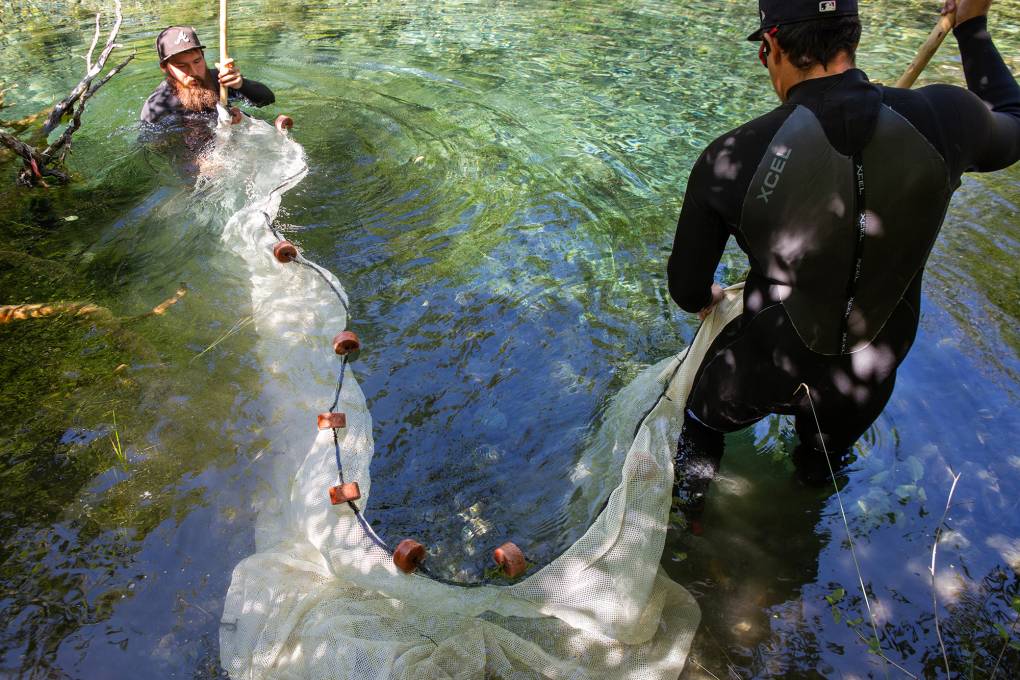
"caption": "Ben Harrison (left) and Aaron Tuttle with the Karuk Tribal Fisheries Program, collect young salmon for tagging in Horse Creek along the Klamath River on July 18, 2023. The Karuk and Yurok tribes are anxiously awaiting a renewed river as the dams come down. ",
"description": null,
"title": null,
"credit": "Semantha Norris/CalMatters",
"status": "inherit",
"altTag": null,
"isLoading": false,
"fetchFailed": false
},
"science_1983619": {
"type": "attachments",
"id": "science_1983619",
"meta": {
"index": "attachments_1716263798",
"site": "science",
"id": "1983619",
"found": true
},
"parent": 1983618,
"imgSizes": {
"twentyfourteen-full-width": {
"file": "https://ww2.kqed.org/app/uploads/sites/35/2023/07/DL1010_These_Flies_Torpedo_a_Bindweed_Bees_Nest_KQED-1038x576.jpg",
"width": 1038,
"mimeType": "image/jpeg",
"height": 576
},
"thumbnail": {
"file": "https://ww2.kqed.org/app/uploads/sites/35/2023/07/DL1010_These_Flies_Torpedo_a_Bindweed_Bees_Nest_KQED-160x90.jpg",
"width": 160,
"mimeType": "image/jpeg",
"height": 90
},
"post-thumbnail": {
"file": "https://ww2.kqed.org/app/uploads/sites/35/2023/07/DL1010_These_Flies_Torpedo_a_Bindweed_Bees_Nest_KQED-672x372.jpg",
"width": 672,
"mimeType": "image/jpeg",
"height": 372
},
"kqedFullSize": {
"file": "https://ww2.kqed.org/app/uploads/sites/35/2023/07/DL1010_These_Flies_Torpedo_a_Bindweed_Bees_Nest_KQED.jpg",
"width": 1920,
"height": 1080
},
"large": {
"file": "https://ww2.kqed.org/app/uploads/sites/35/2023/07/DL1010_These_Flies_Torpedo_a_Bindweed_Bees_Nest_KQED-1020x574.jpg",
"width": 1020,
"mimeType": "image/jpeg",
"height": 574
},
"1536x1536": {
"file": "https://ww2.kqed.org/app/uploads/sites/35/2023/07/DL1010_These_Flies_Torpedo_a_Bindweed_Bees_Nest_KQED-1536x864.jpg",
"width": 1536,
"mimeType": "image/jpeg",
"height": 864
},
"medium": {
"file": "https://ww2.kqed.org/app/uploads/sites/35/2023/07/DL1010_These_Flies_Torpedo_a_Bindweed_Bees_Nest_KQED-800x450.jpg",
"width": 800,
"mimeType": "image/jpeg",
"height": 450
},
"medium_large": {
"file": "https://ww2.kqed.org/app/uploads/sites/35/2023/07/DL1010_These_Flies_Torpedo_a_Bindweed_Bees_Nest_KQED-768x432.jpg",
"width": 768,
"mimeType": "image/jpeg",
"height": 432
}
},
"publishDate": 1690416137,
"modified": 1690416432,
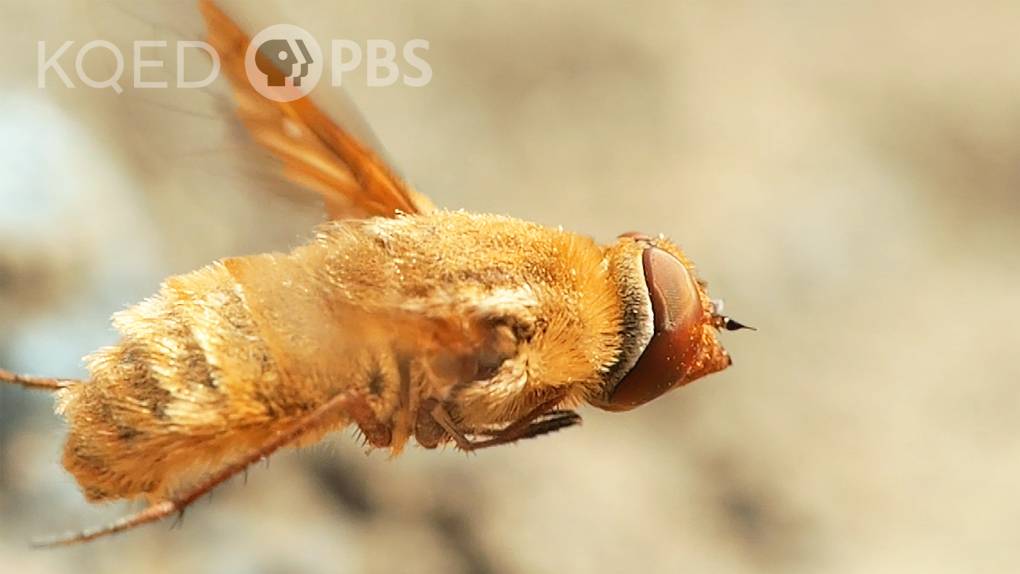
"caption": "This \"bee fly\" reproduces by dropping her eggs from the air into the nests of ground-dwelling bees.",
"description": null,
"title": "DL1010_These_Flies_Torpedo_a_Bindweed_Bees_Nest_KQED",
"credit": "Josh Cassidy/KQED",
"status": "inherit",
"altTag": null,
"isLoading": false,
"fetchFailed": false
},
"science_1983570": {
"type": "attachments",
"id": "science_1983570",
"meta": {
"index": "attachments_1716263798",
"site": "science",
"id": "1983570",
"found": true
},
"parent": 1983569,
"imgSizes": {
"twentyfourteen-full-width": {
"file": "https://ww2.kqed.org/app/uploads/sites/35/2023/07/ap22301696572084_slide-ec19a427fbda06485a3b4553972b20412623dd75-1038x576.jpg",
"width": 1038,
"mimeType": "image/jpeg",
"height": 576
},
"thumbnail": {
"file": "https://ww2.kqed.org/app/uploads/sites/35/2023/07/ap22301696572084_slide-ec19a427fbda06485a3b4553972b20412623dd75-160x107.jpg",
"width": 160,
"mimeType": "image/jpeg",
"height": 107
},
"post-thumbnail": {
"file": "https://ww2.kqed.org/app/uploads/sites/35/2023/07/ap22301696572084_slide-ec19a427fbda06485a3b4553972b20412623dd75-672x372.jpg",
"width": 672,
"mimeType": "image/jpeg",
"height": 372
},
"kqedFullSize": {
"file": "https://ww2.kqed.org/app/uploads/sites/35/2023/07/ap22301696572084_slide-ec19a427fbda06485a3b4553972b20412623dd75-scaled.jpg",
"width": 2560,
"height": 1707
},
"2048x2048": {
"file": "https://ww2.kqed.org/app/uploads/sites/35/2023/07/ap22301696572084_slide-ec19a427fbda06485a3b4553972b20412623dd75-2048x1365.jpg",
"width": 2048,
"mimeType": "image/jpeg",
"height": 1365
},
"large": {
"file": "https://ww2.kqed.org/app/uploads/sites/35/2023/07/ap22301696572084_slide-ec19a427fbda06485a3b4553972b20412623dd75-1020x680.jpg",
"width": 1020,
"mimeType": "image/jpeg",
"height": 680
},
"1536x1536": {
"file": "https://ww2.kqed.org/app/uploads/sites/35/2023/07/ap22301696572084_slide-ec19a427fbda06485a3b4553972b20412623dd75-1536x1024.jpg",
"width": 1536,
"mimeType": "image/jpeg",
"height": 1024
},
"full-width": {
"file": "https://ww2.kqed.org/app/uploads/sites/35/2023/07/ap22301696572084_slide-ec19a427fbda06485a3b4553972b20412623dd75-1920x1280.jpg",
"width": 1920,
"mimeType": "image/jpeg",
"height": 1280
},
"medium": {
"file": "https://ww2.kqed.org/app/uploads/sites/35/2023/07/ap22301696572084_slide-ec19a427fbda06485a3b4553972b20412623dd75-800x533.jpg",
"width": 800,
"mimeType": "image/jpeg",
"height": 533
},
"medium_large": {
"file": "https://ww2.kqed.org/app/uploads/sites/35/2023/07/ap22301696572084_slide-ec19a427fbda06485a3b4553972b20412623dd75-768x512.jpg",
"width": 768,
"mimeType": "image/jpeg",
"height": 512
}
},
"publishDate": 1689873592,
"modified": 1689873707,
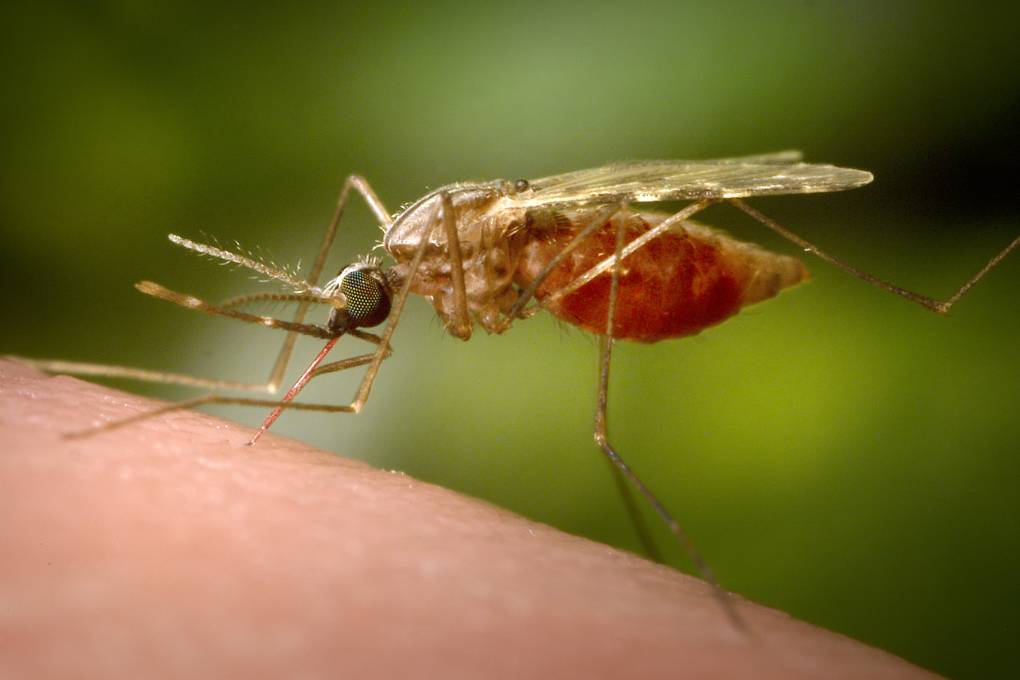
"caption": "Mosquitoes spread malaria. Now researchers hope that a gene drive technology could turn them into malaria fighters. Although not every scientist thinks it's a good idea to genetically modify a wild animal.",
"description": null,
"title": "Mosquitoes",
"credit": "James Gathany/AP",
"status": "inherit",
"altTag": "A close-up of a mosquito on human skin.",
"isLoading": false,
"fetchFailed": false
},
"science_1983513": {
"type": "attachments",
"id": "science_1983513",
"meta": {
"index": "attachments_1716263798",
"site": "science",
"id": "1983513",
"found": true
},
"parent": 1983512,
"imgSizes": {
"twentyfourteen-full-width": {
"file": "https://ww2.kqed.org/app/uploads/sites/35/2023/07/figure-1-w-border-2_wide-16ce37e7905a1e56eb5348300df5c23fa5168d18-1038x576.jpg",
"width": 1038,
"mimeType": "image/jpeg",
"height": 576
},
"thumbnail": {
"file": "https://ww2.kqed.org/app/uploads/sites/35/2023/07/figure-1-w-border-2_wide-16ce37e7905a1e56eb5348300df5c23fa5168d18-160x90.jpg",
"width": 160,
"mimeType": "image/jpeg",
"height": 90
},
"post-thumbnail": {
"file": "https://ww2.kqed.org/app/uploads/sites/35/2023/07/figure-1-w-border-2_wide-16ce37e7905a1e56eb5348300df5c23fa5168d18-672x372.jpg",
"width": 672,
"mimeType": "image/jpeg",
"height": 372
},
"kqedFullSize": {
"file": "https://ww2.kqed.org/app/uploads/sites/35/2023/07/figure-1-w-border-2_wide-16ce37e7905a1e56eb5348300df5c23fa5168d18.jpg",
"width": 1709,
"height": 961
},
"large": {
"file": "https://ww2.kqed.org/app/uploads/sites/35/2023/07/figure-1-w-border-2_wide-16ce37e7905a1e56eb5348300df5c23fa5168d18-1020x574.jpg",
"width": 1020,
"mimeType": "image/jpeg",
"height": 574
},
"1536x1536": {
"file": "https://ww2.kqed.org/app/uploads/sites/35/2023/07/figure-1-w-border-2_wide-16ce37e7905a1e56eb5348300df5c23fa5168d18-1536x864.jpg",
"width": 1536,
"mimeType": "image/jpeg",
"height": 864
},
"medium": {
"file": "https://ww2.kqed.org/app/uploads/sites/35/2023/07/figure-1-w-border-2_wide-16ce37e7905a1e56eb5348300df5c23fa5168d18-800x450.jpg",
"width": 800,
"mimeType": "image/jpeg",
"height": 450
},
"medium_large": {
"file": "https://ww2.kqed.org/app/uploads/sites/35/2023/07/figure-1-w-border-2_wide-16ce37e7905a1e56eb5348300df5c23fa5168d18-768x432.jpg",
"width": 768,
"mimeType": "image/jpeg",
"height": 432
}
},
"publishDate": 1689634662,
"modified": 1689634859,
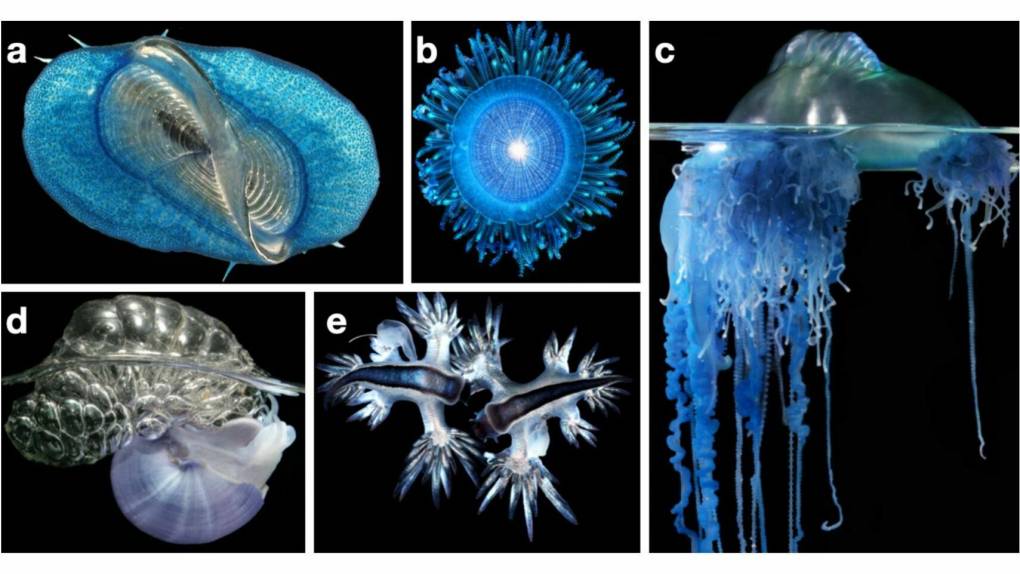
"caption": "Images of the neustonic life found in the Great Pacific Garbage Patch, including Velella (A), Porpita (B), Physalia (C), Janthina (D) and Glaucus (E). The study was published in PLOS Biology earlier this year.",
"description": null,
"title": "Images of the neustonic life found in the Great Pacific Garbage Patch, including Velella (A), Porpita (B), Physalia (C), Janthina (D) and Glaucus (E). The study was published in PLOS Biology earlier this year.",
"credit": "Denis Riek",
"status": "inherit",
"altTag": "(a) Top-down view of by-the-wind sailor Velella sp. (b) Top-down view of blue button Porpita sp. (c) Side view of Portuguese man-o-war Physalia sp. (d) Side view of violet snail Janthina sp. (e) Top-down view of the blue sea dragons Glaucus sp.",
"isLoading": false,
"fetchFailed": false
},
"science_1994145": {
"type": "attachments",
"id": "science_1994145",
"meta": {
"index": "attachments_1716263798",
"site": "science",
"id": "1994145",
"found": true
},
"title": "DL1009_This_Snail_Goes_Fishing_with_a_Net_Made_of_Slime_KQEDV2",
"publishDate": 1725492639,
"status": "inherit",
"parent": 1983180,
"modified": 1725492639,
"caption": null,
"credit": null,
"altTag": null,
"description": null,
"imgSizes": {
"medium": {
"file": "https://cdn.kqed.org/wp-content/uploads/sites/35/2023/07/DL1009_This_Snail_Goes_Fishing_with_a_Net_Made_of_Slime_KQEDV2-800x450.jpg",
"width": 800,
"height": 450,
"mimeType": "image/jpeg"
},
"large": {
"file": "https://cdn.kqed.org/wp-content/uploads/sites/35/2023/07/DL1009_This_Snail_Goes_Fishing_with_a_Net_Made_of_Slime_KQEDV2-1020x574.jpg",
"width": 1020,
"height": 574,
"mimeType": "image/jpeg"
},
"thumbnail": {
"file": "https://cdn.kqed.org/wp-content/uploads/sites/35/2023/07/DL1009_This_Snail_Goes_Fishing_with_a_Net_Made_of_Slime_KQEDV2-160x90.jpg",
"width": 160,
"height": 90,
"mimeType": "image/jpeg"
},
"medium_large": {
"file": "https://cdn.kqed.org/wp-content/uploads/sites/35/2023/07/DL1009_This_Snail_Goes_Fishing_with_a_Net_Made_of_Slime_KQEDV2-768x432.jpg",
"width": 768,
"height": 432,
"mimeType": "image/jpeg"
},
"1536x1536": {
"file": "https://cdn.kqed.org/wp-content/uploads/sites/35/2023/07/DL1009_This_Snail_Goes_Fishing_with_a_Net_Made_of_Slime_KQEDV2-1536x864.jpg",
"width": 1536,
"height": 864,
"mimeType": "image/jpeg"
},
"post-thumbnail": {
"file": "https://cdn.kqed.org/wp-content/uploads/sites/35/2023/07/DL1009_This_Snail_Goes_Fishing_with_a_Net_Made_of_Slime_KQEDV2-672x372.jpg",
"width": 672,
"height": 372,
"mimeType": "image/jpeg"
},
"twentyfourteen-full-width": {
"file": "https://cdn.kqed.org/wp-content/uploads/sites/35/2023/07/DL1009_This_Snail_Goes_Fishing_with_a_Net_Made_of_Slime_KQEDV2-1038x576.jpg",
"width": 1038,
"height": 576,
"mimeType": "image/jpeg"
},
"kqedFullSize": {
"file": "https://cdn.kqed.org/wp-content/uploads/sites/35/2023/07/DL1009_This_Snail_Goes_Fishing_with_a_Net_Made_of_Slime_KQEDV2.jpg",
"width": 1920,
"height": 1080
}
},
"isLoading": false,
"fetchFailed": false
},
"science_1983284": {
"type": "attachments",
"id": "science_1983284",
"meta": {
"index": "attachments_1716263798",
"site": "science",
"id": "1983284",
"found": true
},
"parent": 1983280,
"imgSizes": {
"twentyfourteen-full-width": {
"file": "https://ww2.kqed.org/app/uploads/sites/35/2023/07/4593caa1-3c94-4b23-88a8-20a05cfb10fboriginal_custom-84b087b516fb580a31a1861dcdf880b15d2f42c0-s1600-c85-copy-1038x576.jpg",
"width": 1038,
"mimeType": "image/jpeg",
"height": 576
},
"thumbnail": {
"file": "https://ww2.kqed.org/app/uploads/sites/35/2023/07/4593caa1-3c94-4b23-88a8-20a05cfb10fboriginal_custom-84b087b516fb580a31a1861dcdf880b15d2f42c0-s1600-c85-copy-160x113.jpg",
"width": 160,
"mimeType": "image/jpeg",
"height": 113
},
"post-thumbnail": {
"file": "https://ww2.kqed.org/app/uploads/sites/35/2023/07/4593caa1-3c94-4b23-88a8-20a05cfb10fboriginal_custom-84b087b516fb580a31a1861dcdf880b15d2f42c0-s1600-c85-copy-672x372.jpg",
"width": 672,
"mimeType": "image/jpeg",
"height": 372
},
"kqedFullSize": {
"file": "https://ww2.kqed.org/app/uploads/sites/35/2023/07/4593caa1-3c94-4b23-88a8-20a05cfb10fboriginal_custom-84b087b516fb580a31a1861dcdf880b15d2f42c0-s1600-c85-copy.jpg",
"width": 1600,
"height": 1133
},
"large": {
"file": "https://ww2.kqed.org/app/uploads/sites/35/2023/07/4593caa1-3c94-4b23-88a8-20a05cfb10fboriginal_custom-84b087b516fb580a31a1861dcdf880b15d2f42c0-s1600-c85-copy-1020x722.jpg",
"width": 1020,
"mimeType": "image/jpeg",
"height": 722
},
"1536x1536": {
"file": "https://ww2.kqed.org/app/uploads/sites/35/2023/07/4593caa1-3c94-4b23-88a8-20a05cfb10fboriginal_custom-84b087b516fb580a31a1861dcdf880b15d2f42c0-s1600-c85-copy-1536x1088.jpg",
"width": 1536,
"mimeType": "image/jpeg",
"height": 1088
},
"medium": {
"file": "https://ww2.kqed.org/app/uploads/sites/35/2023/07/4593caa1-3c94-4b23-88a8-20a05cfb10fboriginal_custom-84b087b516fb580a31a1861dcdf880b15d2f42c0-s1600-c85-copy-800x567.jpg",
"width": 800,
"mimeType": "image/jpeg",
"height": 567
},
"medium_large": {
"file": "https://ww2.kqed.org/app/uploads/sites/35/2023/07/4593caa1-3c94-4b23-88a8-20a05cfb10fboriginal_custom-84b087b516fb580a31a1861dcdf880b15d2f42c0-s1600-c85-copy-768x544.jpg",
"width": 768,
"mimeType": "image/jpeg",
"height": 544
}
},
"publishDate": 1688755173,
"modified": 1688755304,
"caption": "Devils Hole pupfish gather on the precious rocky shelf that supports their entire fragile existence in the wild.",
"description": null,
"title": "4593caa1-3c94-4b23-88a8-20a05cfb10fboriginal_custom-84b087b516fb580a31a1861dcdf880b15d2f42c0-s1600-c85 copy",
"credit": "Olin Feuerbacher/NPS",
"status": "inherit",
"altTag": "Small blue fish swim over a rocky surface.",
"isLoading": false,
"fetchFailed": false
},
"science_1983081": {
"type": "attachments",
"id": "science_1983081",
"meta": {
"index": "attachments_1716263798",
"site": "science",
"id": "1983081",
"found": true
},
"parent": 1983076,
"imgSizes": {
"twentyfourteen-full-width": {
"file": "https://ww2.kqed.org/app/uploads/sites/35/2023/06/DEEP_1008_Springtails_Do_Their_Own_Stunts_KQED-1038x576.jpg",
"width": 1038,
"mimeType": "image/jpeg",
"height": 576
},
"thumbnail": {
"file": "https://ww2.kqed.org/app/uploads/sites/35/2023/06/DEEP_1008_Springtails_Do_Their_Own_Stunts_KQED-160x90.jpg",
"width": 160,
"mimeType": "image/jpeg",
"height": 90
},
"post-thumbnail": {
"file": "https://ww2.kqed.org/app/uploads/sites/35/2023/06/DEEP_1008_Springtails_Do_Their_Own_Stunts_KQED-672x372.jpg",
"width": 672,
"mimeType": "image/jpeg",
"height": 372
},
"kqedFullSize": {
"file": "https://ww2.kqed.org/app/uploads/sites/35/2023/06/DEEP_1008_Springtails_Do_Their_Own_Stunts_KQED.jpg",
"width": 1920,
"height": 1080
},
"large": {
"file": "https://ww2.kqed.org/app/uploads/sites/35/2023/06/DEEP_1008_Springtails_Do_Their_Own_Stunts_KQED-1020x574.jpg",
"width": 1020,
"mimeType": "image/jpeg",
"height": 574
},
"1536x1536": {
"file": "https://ww2.kqed.org/app/uploads/sites/35/2023/06/DEEP_1008_Springtails_Do_Their_Own_Stunts_KQED-1536x864.jpg",
"width": 1536,
"mimeType": "image/jpeg",
"height": 864
},
"medium": {
"file": "https://ww2.kqed.org/app/uploads/sites/35/2023/06/DEEP_1008_Springtails_Do_Their_Own_Stunts_KQED-800x450.jpg",
"width": 800,
"mimeType": "image/jpeg",
"height": 450
},
"medium_large": {
"file": "https://ww2.kqed.org/app/uploads/sites/35/2023/06/DEEP_1008_Springtails_Do_Their_Own_Stunts_KQED-768x432.jpg",
"width": 768,
"mimeType": "image/jpeg",
"height": 432
}
},
"publishDate": 1687200191,
"modified": 1687200811,
"caption": "Semiaquatic springtails, tiny animals that live in ponds and streams, control their fast jumps and landings with the aid of unique body parts.",
"description": null,
"title": "DEEP_1008_Springtails_Do_Their_Own_Stunts_KQED",
"credit": "Víctor Ortega-Jiménez/Georgia Tech, University of Maine",
"status": "inherit",
"altTag": null,
"isLoading": false,
"fetchFailed": false
},
"science_1982987": {
"type": "attachments",
"id": "science_1982987",
"meta": {
"index": "attachments_1716263798",
"site": "science",
"id": "1982987",
"found": true
},
"parent": 1982986,
"imgSizes": {
"twentyfourteen-full-width": {
"file": "https://ww2.kqed.org/app/uploads/sites/35/2023/06/1cunnamed-2eea92974b8c37302612ad0ddf4d9c7c5055655c-1038x576.jpe",
"width": 1038,
"mimeType": "image/jpeg",
"height": 576
},
"thumbnail": {
"file": "https://ww2.kqed.org/app/uploads/sites/35/2023/06/1cunnamed-2eea92974b8c37302612ad0ddf4d9c7c5055655c-160x120.jpe",
"width": 160,
"mimeType": "image/jpeg",
"height": 120
},
"post-thumbnail": {
"file": "https://ww2.kqed.org/app/uploads/sites/35/2023/06/1cunnamed-2eea92974b8c37302612ad0ddf4d9c7c5055655c-672x372.jpe",
"width": 672,
"mimeType": "image/jpeg",
"height": 372
},
"kqedFullSize": {
"file": "https://ww2.kqed.org/app/uploads/sites/35/2023/06/1cunnamed-2eea92974b8c37302612ad0ddf4d9c7c5055655c.jpe",
"width": 1314,
"height": 985
},
"large": {
"file": "https://ww2.kqed.org/app/uploads/sites/35/2023/06/1cunnamed-2eea92974b8c37302612ad0ddf4d9c7c5055655c-1020x765.jpe",
"width": 1020,
"mimeType": "image/jpeg",
"height": 765
},
"medium": {
"file": "https://ww2.kqed.org/app/uploads/sites/35/2023/06/1cunnamed-2eea92974b8c37302612ad0ddf4d9c7c5055655c-800x600.jpe",
"width": 800,
"mimeType": "image/jpeg",
"height": 600
},
"medium_large": {
"file": "https://ww2.kqed.org/app/uploads/sites/35/2023/06/1cunnamed-2eea92974b8c37302612ad0ddf4d9c7c5055655c-768x576.jpe",
"width": 768,
"mimeType": "image/jpeg",
"height": 576
}
},
"publishDate": 1686253728,
"modified": 1686254285,
"caption": "The California two-spot octopus can edit the RNA in its brain on a massive scale, likely allowing it to keep a clear head in both warm and cool waters.",
"description": "The California two-spot octopus can edit the RNA in its brain on a massive scale, likely allowing it to keep a clear head in both warm and cool waters.",
"title": "The California two-spot octopus can edit the RNA in its brain on a massive scale, likely allowing it to keep a clear head in both warm and cool waters.",
"credit": "Tom Kleindinst/Marine Biological Laboratory",
"status": "inherit",
"altTag": "A large light brown colored octopus swims in the darkness of the ocean.",
"isLoading": false,
"fetchFailed": false
},
"science_1994146": {
"type": "attachments",
"id": "science_1994146",
"meta": {
"index": "attachments_1716263798",
"site": "science",
"id": "1994146",
"found": true
},
"title": "DL1007_Gecko_Grip_Its_Atomic_Really_KQEDV2-test",
"publishDate": 1725492734,
"status": "inherit",
"parent": 1982729,
"modified": 1725492734,
"caption": null,
"credit": null,
"altTag": null,
"description": null,
"imgSizes": {
"medium": {
"file": "https://cdn.kqed.org/wp-content/uploads/sites/35/2023/05/DL1007_Gecko_Grip_Its_Atomic_Really_KQEDV2-test-800x450.jpg",
"width": 800,
"height": 450,
"mimeType": "image/jpeg"
},
"large": {
"file": "https://cdn.kqed.org/wp-content/uploads/sites/35/2023/05/DL1007_Gecko_Grip_Its_Atomic_Really_KQEDV2-test-1020x574.jpg",
"width": 1020,
"height": 574,
"mimeType": "image/jpeg"
},
"thumbnail": {
"file": "https://cdn.kqed.org/wp-content/uploads/sites/35/2023/05/DL1007_Gecko_Grip_Its_Atomic_Really_KQEDV2-test-160x90.jpg",
"width": 160,
"height": 90,
"mimeType": "image/jpeg"
},
"medium_large": {
"file": "https://cdn.kqed.org/wp-content/uploads/sites/35/2023/05/DL1007_Gecko_Grip_Its_Atomic_Really_KQEDV2-test-768x432.jpg",
"width": 768,
"height": 432,
"mimeType": "image/jpeg"
},
"1536x1536": {
"file": "https://cdn.kqed.org/wp-content/uploads/sites/35/2023/05/DL1007_Gecko_Grip_Its_Atomic_Really_KQEDV2-test-1536x864.jpg",
"width": 1536,
"height": 864,
"mimeType": "image/jpeg"
},
"post-thumbnail": {
"file": "https://cdn.kqed.org/wp-content/uploads/sites/35/2023/05/DL1007_Gecko_Grip_Its_Atomic_Really_KQEDV2-test-672x372.jpg",
"width": 672,
"height": 372,
"mimeType": "image/jpeg"
},
"twentyfourteen-full-width": {
"file": "https://cdn.kqed.org/wp-content/uploads/sites/35/2023/05/DL1007_Gecko_Grip_Its_Atomic_Really_KQEDV2-test-1038x576.jpg",
"width": 1038,
"height": 576,
"mimeType": "image/jpeg"
},
"kqedFullSize": {
"file": "https://cdn.kqed.org/wp-content/uploads/sites/35/2023/05/DL1007_Gecko_Grip_Its_Atomic_Really_KQEDV2-test.jpg",
"width": 1920,
"height": 1080
}
},
"isLoading": false,
"fetchFailed": false
},
"science_1982715": {
"type": "attachments",
"id": "science_1982715",
"meta": {
"index": "attachments_1716263798",
"site": "science",
"id": "1982715",
"found": true
},
"parent": 1982711,
"imgSizes": {
"twentyfourteen-full-width": {
"file": "https://ww2.kqed.org/app/uploads/sites/35/2023/05/puffins_jeff-j-mitchell-getty-2048x1364-1-1038x576.jpg",
"width": 1038,
"mimeType": "image/jpeg",
"height": 576
},
"thumbnail": {
"file": "https://ww2.kqed.org/app/uploads/sites/35/2023/05/puffins_jeff-j-mitchell-getty-2048x1364-1-160x107.jpg",
"width": 160,
"mimeType": "image/jpeg",
"height": 107
},
"post-thumbnail": {
"file": "https://ww2.kqed.org/app/uploads/sites/35/2023/05/puffins_jeff-j-mitchell-getty-2048x1364-1-672x372.jpg",
"width": 672,
"mimeType": "image/jpeg",
"height": 372
},
"kqedFullSize": {
"file": "https://ww2.kqed.org/app/uploads/sites/35/2023/05/puffins_jeff-j-mitchell-getty-2048x1364-1.jpg",
"width": 2048,
"height": 1364
},
"large": {
"file": "https://ww2.kqed.org/app/uploads/sites/35/2023/05/puffins_jeff-j-mitchell-getty-2048x1364-1-1020x679.jpg",
"width": 1020,
"mimeType": "image/jpeg",
"height": 679
},
"1536x1536": {
"file": "https://ww2.kqed.org/app/uploads/sites/35/2023/05/puffins_jeff-j-mitchell-getty-2048x1364-1-1536x1023.jpg",
"width": 1536,
"mimeType": "image/jpeg",
"height": 1023
},
"full-width": {
"file": "https://ww2.kqed.org/app/uploads/sites/35/2023/05/puffins_jeff-j-mitchell-getty-2048x1364-1-1920x1279.jpg",
"width": 1920,
"mimeType": "image/jpeg",
"height": 1279
},
"medium": {
"file": "https://ww2.kqed.org/app/uploads/sites/35/2023/05/puffins_jeff-j-mitchell-getty-2048x1364-1-800x533.jpg",
"width": 800,
"mimeType": "image/jpeg",
"height": 533
},
"medium_large": {
"file": "https://ww2.kqed.org/app/uploads/sites/35/2023/05/puffins_jeff-j-mitchell-getty-2048x1364-1-768x512.jpg",
"width": 768,
"mimeType": "image/jpeg",
"height": 512
}
},
"publishDate": 1684270526,
"modified": 1684954056,
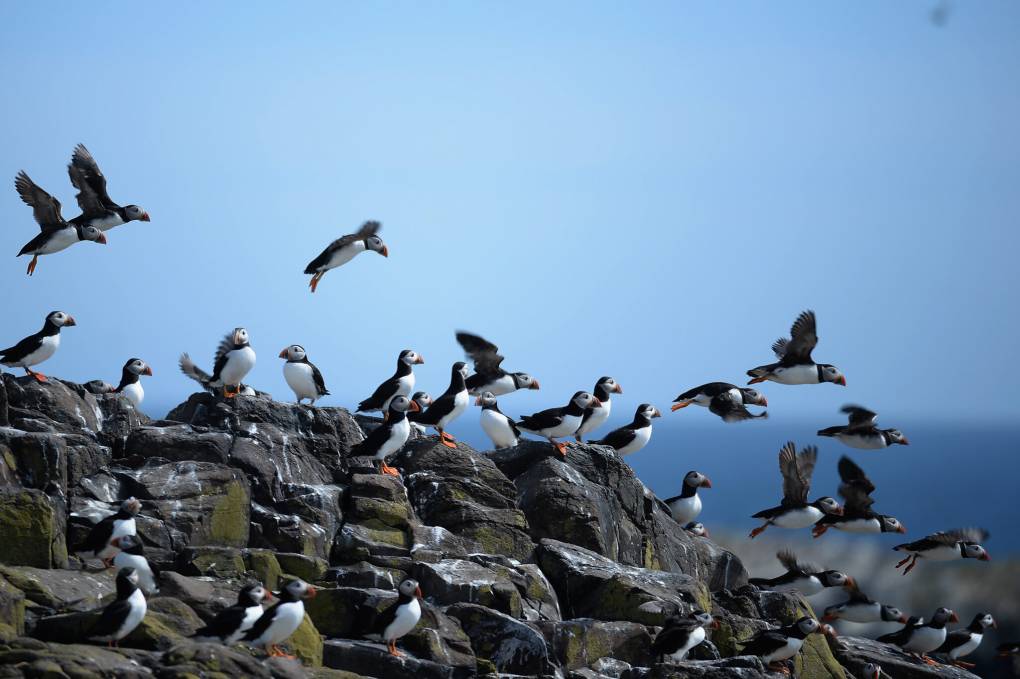
"caption": "Puffins return to their summer breeding grounds on the Farne Islands on May 16, 2013, in Farne, England.",
"description": null,
"title": "Farne Island Rangers Carry Out 'Puffin Census'",
"credit": "Jeff J Mitchell/Getty Images",
"status": "inherit",
"altTag": "Puffins fly out into the sky. Views of the ocean in the background.",
"isLoading": false,
"fetchFailed": false
},
"science_1982702": {
"type": "attachments",
"id": "science_1982702",
"meta": {
"index": "attachments_1716263798",
"site": "science",
"id": "1982702",
"found": true
},
"parent": 1982698,
"imgSizes": {
"twentyfourteen-full-width": {
"file": "https://ww2.kqed.org/app/uploads/sites/35/2023/05/GettyImages-670105758-1038x576.jpg",
"width": 1038,
"mimeType": "image/jpeg",
"height": 576
},
"thumbnail": {
"file": "https://ww2.kqed.org/app/uploads/sites/35/2023/05/GettyImages-670105758-160x112.jpg",
"width": 160,
"mimeType": "image/jpeg",
"height": 112
},
"post-thumbnail": {
"file": "https://ww2.kqed.org/app/uploads/sites/35/2023/05/GettyImages-670105758-672x372.jpg",
"width": 672,
"mimeType": "image/jpeg",
"height": 372
},
"kqedFullSize": {
"file": "https://ww2.kqed.org/app/uploads/sites/35/2023/05/GettyImages-670105758-scaled.jpg",
"width": 2560,
"height": 1792
},
"2048x2048": {
"file": "https://ww2.kqed.org/app/uploads/sites/35/2023/05/GettyImages-670105758-2048x1434.jpg",
"width": 2048,
"mimeType": "image/jpeg",
"height": 1434
},
"large": {
"file": "https://ww2.kqed.org/app/uploads/sites/35/2023/05/GettyImages-670105758-1020x714.jpg",
"width": 1020,
"mimeType": "image/jpeg",
"height": 714
},
"1536x1536": {
"file": "https://ww2.kqed.org/app/uploads/sites/35/2023/05/GettyImages-670105758-1536x1075.jpg",
"width": 1536,
"mimeType": "image/jpeg",
"height": 1075
},
"full-width": {
"file": "https://ww2.kqed.org/app/uploads/sites/35/2023/05/GettyImages-670105758-1920x1344.jpg",
"width": 1920,
"mimeType": "image/jpeg",
"height": 1344
},
"medium": {
"file": "https://ww2.kqed.org/app/uploads/sites/35/2023/05/GettyImages-670105758-800x560.jpg",
"width": 800,
"mimeType": "image/jpeg",
"height": 560
},
"medium_large": {
"file": "https://ww2.kqed.org/app/uploads/sites/35/2023/05/GettyImages-670105758-768x538.jpg",
"width": 768,
"mimeType": "image/jpeg",
"height": 538
}
},
"publishDate": 1683910836,
"modified": 1683911945,
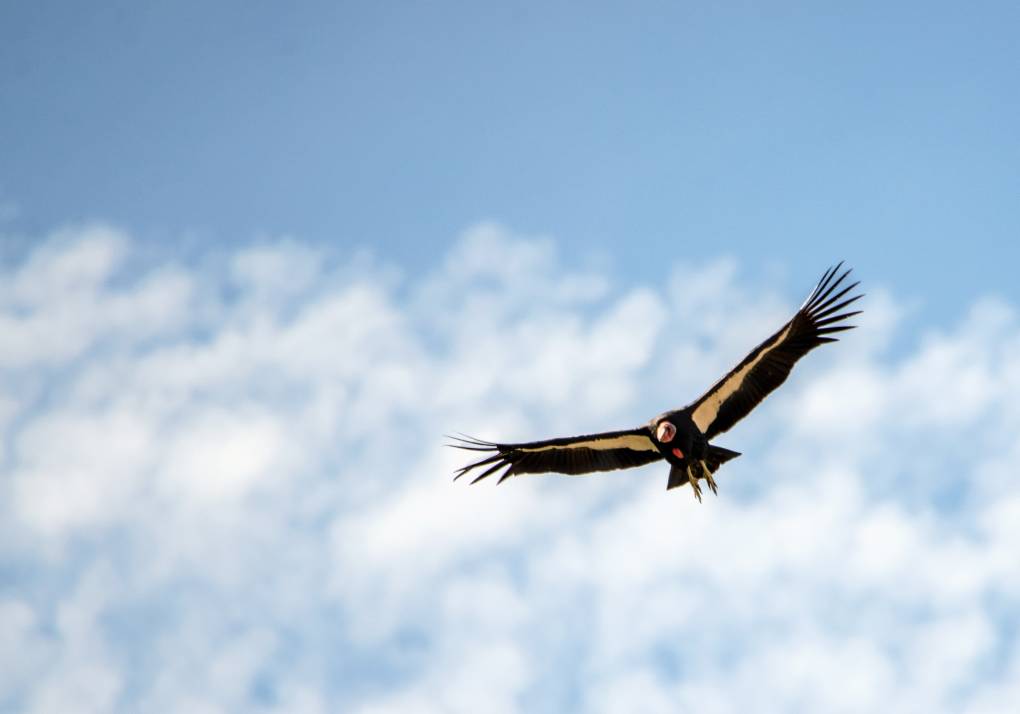
"caption": "This is one of the condors that was introduced into the wild at Pinnacles National Park, where they enjoy soaring above the high peaks.",
"description": null,
"title": "California Condor Flying Against Blue Sky and Clouds at Pinnacles National Park",
"credit": "Vicki Jauron, Babylon and Beyond Photography/Getty Images",
"status": "inherit",
"altTag": "A condor is seen soaring in the sky.",
"isLoading": false,
"fetchFailed": false
},
"science_1994147": {
"type": "attachments",
"id": "science_1994147",
"meta": {
"index": "attachments_1716263798",
"site": "science",
"id": "1994147",
"found": true
},
"title": "DL1006_Why_Do_Snakes_Have_Forked_Tongues_KQED_V2",
"publishDate": 1725492816,
"status": "inherit",
"parent": 1982590,
"modified": 1725492816,
"caption": null,
"credit": null,
"altTag": null,
"description": null,
"imgSizes": {
"medium": {
"file": "https://cdn.kqed.org/wp-content/uploads/sites/35/2023/05/DL1006_Why_Do_Snakes_Have_Forked_Tongues_KQED_V2-800x450.jpg",
"width": 800,
"height": 450,
"mimeType": "image/jpeg"
},
"large": {
"file": "https://cdn.kqed.org/wp-content/uploads/sites/35/2023/05/DL1006_Why_Do_Snakes_Have_Forked_Tongues_KQED_V2-1020x574.jpg",
"width": 1020,
"height": 574,
"mimeType": "image/jpeg"
},
"thumbnail": {
"file": "https://cdn.kqed.org/wp-content/uploads/sites/35/2023/05/DL1006_Why_Do_Snakes_Have_Forked_Tongues_KQED_V2-160x90.jpg",
"width": 160,
"height": 90,
"mimeType": "image/jpeg"
},
"medium_large": {
"file": "https://cdn.kqed.org/wp-content/uploads/sites/35/2023/05/DL1006_Why_Do_Snakes_Have_Forked_Tongues_KQED_V2-768x432.jpg",
"width": 768,
"height": 432,
"mimeType": "image/jpeg"
},
"1536x1536": {
"file": "https://cdn.kqed.org/wp-content/uploads/sites/35/2023/05/DL1006_Why_Do_Snakes_Have_Forked_Tongues_KQED_V2-1536x864.jpg",
"width": 1536,
"height": 864,
"mimeType": "image/jpeg"
},
"post-thumbnail": {
"file": "https://cdn.kqed.org/wp-content/uploads/sites/35/2023/05/DL1006_Why_Do_Snakes_Have_Forked_Tongues_KQED_V2-672x372.jpg",
"width": 672,
"height": 372,
"mimeType": "image/jpeg"
},
"twentyfourteen-full-width": {
"file": "https://cdn.kqed.org/wp-content/uploads/sites/35/2023/05/DL1006_Why_Do_Snakes_Have_Forked_Tongues_KQED_V2-1038x576.jpg",
"width": 1038,
"height": 576,
"mimeType": "image/jpeg"
},
"kqedFullSize": {
"file": "https://cdn.kqed.org/wp-content/uploads/sites/35/2023/05/DL1006_Why_Do_Snakes_Have_Forked_Tongues_KQED_V2.jpg",
"width": 1920,
"height": 1080
}
},
"isLoading": false,
"fetchFailed": false
}
},
"audioPlayerReducer": {
"postId": "stream_live",
"isPaused": true,
"isPlaying": false,
"pfsActive": false,
"pledgeModalIsOpen": true,
"playerDrawerIsOpen": false,
"liveAudioPlayStartedAt": 0,
"liveAudioPlayContext": ""
},
"authorsReducer": {
"byline_science_1984149": {
"type": "authors",
"id": "byline_science_1984149",
"meta": {
"override": true
},
"slug": "byline_science_1984149",
"name": "\u003ca href=\"https://calmatters.org/author/rachel-becker/\">Rachel Becker\u003c/a>",
"isLoading": false
},
"byline_science_1983569": {
"type": "authors",
"id": "byline_science_1983569",
"meta": {
"override": true
},
"slug": "byline_science_1983569",
"name": "\u003ca href=\"https://www.npr.org/people/279612138/geoff-brumfiel\">Geoff Brumfiel\u003c/a>",
"isLoading": false
},
"byline_science_1983512": {
"type": "authors",
"id": "byline_science_1983512",
"meta": {
"override": true
},
"slug": "byline_science_1983512",
"name": "\u003ca href=\"https://www.npr.org/people/785481294/rebecca-ramirez\">Rebecca Ramirez\u003c/a>, \u003ca href=\"https://www.npr.org/people/767284140/emily-kwong\">Emily Kwong\u003c/a>, \u003ca href=\"https://www.npr.org/people/1119266451/carly-rubin\">Carly Rubin\u003c/a>, \u003ca href=\"https://www.npr.org/people/985775371/berly-mccoy\">Berly McCoy\u003c/a>",
"isLoading": false
},
"byline_science_1983280": {
"type": "authors",
"id": "byline_science_1983280",
"meta": {
"override": true
},
"slug": "byline_science_1983280",
"name": "\u003ca href=\"https://www.npr.org/people/4494969/nell-greenfieldboyce\">Nell Greenfieldboyce\u003c/a>",
"isLoading": false
},
"byline_science_1982986": {
"type": "authors",
"id": "byline_science_1982986",
"meta": {
"override": true
},
"slug": "byline_science_1982986",
"name": "\u003ca href=\"https://www.npr.org/people/297147967/ari-daniel\">Ari Daniel\u003c/a>",
"isLoading": false
},
"byline_science_1982711": {
"type": "authors",
"id": "byline_science_1982711",
"meta": {
"override": true
},
"slug": "byline_science_1982711",
"name": "\u003ca href=\"https://insideclimatenews.org/profile/bob-berwyn/\">Bob Berwyn\u003c/a>",
"isLoading": false
},
"byline_science_1982698": {
"type": "authors",
"id": "byline_science_1982698",
"meta": {
"override": true
},
"slug": "byline_science_1982698",
"name": "Stefanie Dazio \u003cbr> The Associated Press",
"isLoading": false
},
"gabriela-quiros": {
"type": "authors",
"id": "6186",
"meta": {
"index": "authors_1716337520",
"id": "6186",
"found": true
},
"name": "Gabriela Quirós",
"firstName": "Gabriela",
"lastName": "Quirós",
"slug": "gabriela-quiros",
"email": "gquiros@kqed.org",
"display_author_email": false,
"staff_mastheads": [],
"title": "Supervising Producer",
"bio": "Gabriela Quirós is the \u003cstrong>supervising producer for KQED's web science video series \u003ca href=\"https://www.kqed.org/deeplook\">Deep Look\u003c/a>\u003c/strong>. She joined KQED as a TV producer when its science series QUEST started in 2006 and has covered everything from Alzheimer’s to bee die-offs to dark energy.\r\n\r\nShe won a 2022 AAAS Kavli Science Journalism Award with a team of her Deep Look colleagues. She has won six regional Emmys as a video producer and has shared eight more as the coordinating producer of Deep Look. The episode she produced about \u003ca href=\"https://www.kqed.org/science/728086/how-mosquitoes-use-six-needles-to-suck-your-blood\">How Mosquitoes Use Six Needles to Suck Your Blood\u003c/a> won a Webby \"People's Voice\" award. She has also earned awards from the Jackson Hole Wildlife Film Festival, the Society of Professional Journalists and the Society of Environmental Journalists.\r\n\r\nHer videos for KQED have also aired on NOVA scienceNOW and the PBS NewsHour, and appeared on NPR.org.\r\n\r\nAs an independent filmmaker, she produced and directed the hour-long documentary \u003ca href=\"http://lpbp.org/beautiful-sin-qa-with-producer-gabriela-quiros/\">\u003cem>Beautiful Sin\u003c/em>\u003c/a>, about the surprising story of how Costa Rica became the only country in the world to outlaw in vitro fertilization. The film aired in 2015 on public television stations throughout the U.S., and in Costa Rica.\r\n\r\nShe started her journalism career as a newspaper reporter in Costa Rica, where she grew up. She won the National Science Journalism Award there for a series of articles about organic agriculture, and developed a life-long interest in health reporting. She moved to the Bay Area in 1996 to study documentary filmmaking at the University of California, Berkeley, where she received master’s degrees in journalism and Latin American studies.",
"avatar": "https://secure.gravatar.com/avatar/6d82c20152affd1b434c31a904c40809?s=600&d=blank&r=g",
"twitter": "gabrielaquirosr",
"facebook": null,
"instagram": null,
"linkedin": null,
"sites": [
{
"site": "science",
"roles": []
},
{
"site": "quest",
"roles": [
"ef_view_calendar",
"ef_view_story_budget"
]
}
],
"headData": {
"title": "Gabriela Quirós | KQED",
"description": "Supervising Producer",
"ogImgSrc": "https://secure.gravatar.com/avatar/6d82c20152affd1b434c31a904c40809?s=600&d=blank&r=g",
"twImgSrc": "https://secure.gravatar.com/avatar/6d82c20152affd1b434c31a904c40809?s=600&d=blank&r=g"
},
"isLoading": false,
"link": "/author/gabriela-quiros"
},
"joshua-cassidy": {
"type": "authors",
"id": "6219",
"meta": {
"index": "authors_1716337520",
"id": "6219",
"found": true
},
"name": "Josh Cassidy",
"firstName": "Josh",
"lastName": "Cassidy",
"slug": "joshua-cassidy",
"email": "jcassidy@kqed.org",
"display_author_email": false,
"staff_mastheads": [
"science"
],
"title": "Digital Video Producer",
"bio": "Josh is a Senior Video Producer for KQED Science, and the Lead Producer and Cinematographer for Deep Look. After receiving his BS in Wildlife Biology from Ohio University, he went on to participate in marine mammal research for NOAA, USGS and the Intersea Foundation. He also served as the president of The Pacific Cetacean Group, a nonprofit organization dedicated to teaching students K-6 about whales. Josh studied science and natural history filmmaking at San Francisco State University and Montana State University.",
"avatar": "https://secure.gravatar.com/avatar/f2582a0801a35af53b734d56bcac2bbe?s=600&d=blank&r=g",
"twitter": null,
"facebook": null,
"instagram": null,
"linkedin": null,
"sites": [
{
"site": "science",
"roles": [
"editor"
]
},
{
"site": "quest",
"roles": [
"author",
"edit_others_posts"
]
}
],
"headData": {
"title": "Josh Cassidy | KQED",
"description": "Digital Video Producer",
"ogImgSrc": "https://secure.gravatar.com/avatar/f2582a0801a35af53b734d56bcac2bbe?s=600&d=blank&r=g",
"twImgSrc": "https://secure.gravatar.com/avatar/f2582a0801a35af53b734d56bcac2bbe?s=600&d=blank&r=g"
},
"isLoading": false,
"link": "/author/joshua-cassidy"
},
"mschiffman": {
"type": "authors",
"id": "11833",
"meta": {
"index": "authors_1716337520",
"id": "11833",
"found": true
},
"name": "Mimi Schiffman",
"firstName": "Mimi",
"lastName": "Schiffman",
"slug": "mschiffman",
"email": "mschiffman@kqed.org",
"display_author_email": false,
"staff_mastheads": [],
"title": "KQED Contributor",
"bio": "Mimi Schiffman is a producer for Deep Look.\r\n\r\nPrior to joining the Deep Look team she made hundreds of stories over more than a decade as a producer, director of photography and/or editor. \r\n\r\nShe's filmed lemurs finger painting (a favorite pastime of the amazing Duke Lemur Center inhabitants), stayed awake for 36 hours while trailing the first person with dwarfism to complete an Ironman (shout out to John Young, aka \"The Hammer\") and got to interview the late, great Anthony Bourdain.\r\n \r\nFun facts: Mimi's first job was weighing foraminifera - single cell organisms - in tiny foil cups, and she once got a river designated as “Wild and scenic.” She’s passionate about animals in general but very specifically her rescue dog, Henry. And her kid, Sierra and husband, Peter.",
"avatar": "https://secure.gravatar.com/avatar/e8b898539bc6a47f47f94992f0f17948?s=600&d=blank&r=g",
"twitter": null,
"facebook": null,
"instagram": null,
"linkedin": null,
"sites": [
{
"site": "science",
"roles": [
"editor"
]
}
],
"headData": {
"title": "Mimi Schiffman | KQED",
"description": "KQED Contributor",
"ogImgSrc": "https://secure.gravatar.com/avatar/e8b898539bc6a47f47f94992f0f17948?s=600&d=blank&r=g",
"twImgSrc": "https://secure.gravatar.com/avatar/e8b898539bc6a47f47f94992f0f17948?s=600&d=blank&r=g"
},
"isLoading": false,
"link": "/author/mschiffman"
},
"scummings": {
"type": "authors",
"id": "11868",
"meta": {
"index": "authors_1716337520",
"id": "11868",
"found": true
},
"name": "Sean Cummings",
"firstName": "Sean",
"lastName": "Cummings",
"slug": "scummings",
"email": "scummings@kqed.org",
"display_author_email": false,
"staff_mastheads": [],
"title": "Intern, Deep Look",
"bio": "Sean Cummings is a former intern with KQED's Deep Look series. He grew up exploring the oak woodlands of Santa Barbara county and studied environmental humanities before earning an M.Sc. in Science Communication from the University of California, Santa Cruz.",
"avatar": "https://secure.gravatar.com/avatar/33b08823c188284bb9085ffd52b7d0ab?s=600&d=blank&r=g",
"twitter": null,
"facebook": null,
"instagram": null,
"linkedin": null,
"sites": [
{
"site": "science",
"roles": [
"author"
]
}
],
"headData": {
"title": "Sean Cummings | KQED",
"description": "Intern, Deep Look",
"ogImgSrc": "https://secure.gravatar.com/avatar/33b08823c188284bb9085ffd52b7d0ab?s=600&d=blank&r=g",
"twImgSrc": "https://secure.gravatar.com/avatar/33b08823c188284bb9085ffd52b7d0ab?s=600&d=blank&r=g"
},
"isLoading": false,
"link": "/author/scummings"
}
},
"pagesReducer": {
"science_category_animals": {
"type": "terms",
"id": "science_2874",
"meta": {
"index": "terms_1716263798",
"site": "science",
"id": "2874",
"score": 12.286819
},
"featImg": null,
"name": "Animals",
"description": null,
"taxonomy": "category",
"headData": {
"twImgId": null,
"twTitle": null,
"ogTitle": null,
"ogImgId": null,
"twDescription": null,
"description": null,
"title": "Animals Archives | KQED Science",
"ogDescription": null
},
"ttid": 2874,
"slug": "animals",
"isLoading": false,
"title": "Animals",
"pageMeta": {
"site": "science",
"WpPageTemplate": "page-topic-editorial",
"currentPage": 8
},
"blocks": [
{
"blockName": "kqed/post-list",
"attrs": {
"layout": "cardArticle2",
"query": "posts/science?category=animals",
"seeMore": false,
"paginated": true,
"page": 8
}
},
{
"blockName": "kqed/ad"
}
]
}
},
"pfsSessionReducer": {},
"postsReducer": {
"stream_live": {
"type": "live",
"id": "stream_live",
"audioUrl": "https://streams.kqed.org/kqedradio",
"title": "Live Stream",
"excerpt": "Live Stream information currently unavailable.",
"link": "/radio",
"featImg": "",
"label": {
"name": "KQED Live",
"link": "/"
}
},
"stream_kqedNewscast": {
"type": "posts",
"id": "stream_kqedNewscast",
"audioUrl": "https://www.kqed.org/.stream/anon/radio/RDnews/newscast.mp3?_=1",
"title": "KQED Newscast",
"featImg": "",
"label": {
"name": "88.5 FM",
"link": "/"
}
},
"science_1984149": {
"type": "posts",
"id": "science_1984149",
"meta": {
"index": "posts_1716263798",
"site": "science",
"id": "1984149",
"score": null,
"sort": [
1693578600000
]
},
"parent": 0,
"labelTerm": {},
"blocks": [],
"publishDate": 1693578600,
"format": "standard",
"title": "As Klamath Dams Come Down, a Once-in-a-Generation River Restoration Begins",
"headTitle": "As Klamath Dams Come Down, a Once-in-a-Generation River Restoration Begins | KQED",
"content": "\u003cp>[dropcap]O[/dropcap]shun O’Rourke waded into the dark green water, splashing toward a net that her colleagues gently closed around a cluster of finger-length fish.\u003c/p>\n\u003cp>The Klamath River is wide and still here, making its final turn north to the coast as it winds through the Yurok reservation in Humboldt County. About 150 baby chinook salmon, on their long journey to the Pacific, were resting in cool waters that poured down from the forest.\u003c/p>\n\u003cp>O’Rourke’s colleagues hoisted the net into a mesh-sided bin in the shallows to sort through their catch, in search of young chinook to test for a parasite \u003ca href=\"https://microbiology.oregonstate.edu.prod.acquia.cosine.oregonstate.edu/research/aquatic-microbiology-ecology/monitoring-studies\">that can rot fish from the inside\u003c/a>.\u003c/p>\n\u003cp>Two years ago, during a deepening drought, most \u003ca href=\"https://kbmp.net/images/stories/pdf/KFHAT/2022/Final_KR21_Report_1-31-22.pdf\">salmon captured for testing (PDF)\u003c/a> during peak migration were infected with the lethal parasite. One tribal leader called it “\u003ca href=\"https://www.yuroktribe.org/post/catastrophic-juvenile-fish-kill-unfolds-in-real-time-on-the-klamath-river#:~:text=On%20May%204%2C%202021%2C%20the,will%20be%20dead%20within%20days.\">an absolute worst-case scenario\u003c/a>” for the Yurok, who rely on salmon for their food, culture and economy.\u003c/p>\n\u003cp>[ad fullwidth]\u003c/p>\n\u003cp>O’Rourke and fisheries biologist Leanne Knutson laid out 20 small dead fish on paper towels, then wrapped them in plastic to send to a lab that will check for the parasite. The rest were released back into the river, where they will swim for days to reach the ocean.\u003c/p>\n\u003cp>A few years from now, when these fish return as adults ready to spawn, it will be to a Klamath remade.\u003c/p>\n\u003cp>“These ones will return either as 3- or 4-year-olds,” O’Rourke said, standing barefoot on the riverbank flecked with fool’s gold and crossed by an otter’s footprints. “And the dams will be gone.”\u003c/p>\n\u003cp>For \u003ca href=\"https://www.pacificorp.com/content/dam/pcorp/documents/en/pacificorp/energy/hydro/klamath-river/relicensing/klamath-final-license-application/Appendix_E_6D_Historic_Context.pdf\">more than a hundred years (PDF)\u003c/a>, dams have \u003ca href=\"https://www.fws.gov/sites/default/files/documents/Full%20SDOR%20accessible%20022216.pdf\">stilled the Klamath’s flows (PDF)\u003c/a>, jeopardizing the salmon and other fish, and creating \u003ca href=\"https://www.journals.uchicago.edu/doi/10.1086/688342\">ideal conditions for the parasite to spread\u003c/a>.\u003c/p>\n\u003cp>But now these vestiges of an early \u003ca href=\"https://energyhistory.yale.edu/the-big-dam-era/\">20th-century approach to water and power\u003c/a> are being dismantled: The \u003ca href=\"https://www.usgs.gov/centers/california-water-science-center/science/klamath-dam-removal-studies#:~:text=Klamath%20River%2C%20California&text=The%20planned%20removal%20of%20four,restoration%20efforts%20in%20US%20history.\">world’s largest dam removal project\u003c/a> is now underway on the Klamath River.\u003c/p>\n\u003cp>By \u003ca href=\"https://klamathrenewal.org/project-materials/\">the end of 2024\u003c/a>, four aging hydroelectric dams spanning the California-Oregon state line will be gone. One hundred thousand cubic yards of concrete, 1.3 million cubic yards of earth and 2,000 tons of steel will be hauled out of the river’s path.\u003c/p>\n\u003cp>Tribal members, researchers, rural residents near the dams, conservationists and the fishing industry are all anxiously waiting to see how this river, dammed for decades, will change — and with it, its fish, wildlife and human neighbors.\u003c/p>\n\u003cp>It’s an existential question for rivers, especially in a region where water left in nature is often deemed wasted: “Once a river is dammed, is it damned forever?” \u003ca href=\"https://www.ncbi.nlm.nih.gov/pmc/articles/PMC6327834/\">experts ask\u003c/a>.\u003c/p>\n\u003cp>So many uncertainties remain as the Klamath reemerges: Will sediment from the demolition harm the river and its inhabitants? Will healthy numbers of salmon finally return? Will it flood its banks more readily? What will the riverfront look like?\u003c/p>\n\u003cfigure id=\"attachment_1984165\" class=\"wp-caption alignnone\" style=\"max-width: 800px\">\u003cimg loading=\"lazy\" decoding=\"async\" class=\"size-medium wp-image-1984165\" src=\"https://ww2.kqed.org/app/uploads/sites/35/2023/08/072023_Yurok-Salmon-Counting_SN_CM_12-800x533.jpg\" alt=\"\" width=\"800\" height=\"533\" srcset=\"https://cdn.kqed.org/wp-content/uploads/sites/35/2023/08/072023_Yurok-Salmon-Counting_SN_CM_12-800x533.jpg 800w, https://cdn.kqed.org/wp-content/uploads/sites/35/2023/08/072023_Yurok-Salmon-Counting_SN_CM_12-1020x680.jpg 1020w, https://cdn.kqed.org/wp-content/uploads/sites/35/2023/08/072023_Yurok-Salmon-Counting_SN_CM_12-160x107.jpg 160w, https://cdn.kqed.org/wp-content/uploads/sites/35/2023/08/072023_Yurok-Salmon-Counting_SN_CM_12-768x512.jpg 768w, https://cdn.kqed.org/wp-content/uploads/sites/35/2023/08/072023_Yurok-Salmon-Counting_SN_CM_12-1536x1024.jpg 1536w, https://cdn.kqed.org/wp-content/uploads/sites/35/2023/08/072023_Yurok-Salmon-Counting_SN_CM_12-1920x1280.jpg 1920w, https://cdn.kqed.org/wp-content/uploads/sites/35/2023/08/072023_Yurok-Salmon-Counting_SN_CM_12.jpg 2000w\" sizes=\"(max-width: 800px) 100vw, 800px\">\u003cfigcaption class=\"wp-caption-text\">Young chinook salmon are collected for lab testing on the Klamath River near Weitchpec on July 20, 2023. \u003ccite>(Semantha Norris/CalMatters)\u003c/cite>\u003c/figcaption>\u003c/figure>\n\u003cfigure id=\"attachment_1984188\" class=\"wp-caption alignnone\" style=\"max-width: 1985px\">\u003cimg loading=\"lazy\" decoding=\"async\" class=\"wp-image-1984188 size-full\" src=\"https://ww2.kqed.org/app/uploads/sites/35/2023/08/calmatters1.png\" alt=\"On left: Gilbert Myers, Oshun O’Rourke, Keenan O’Rourke and Leanne Knutson. In middle: Keenan O’Rourke. On right: The technicians open a probe to collect tracking data. \" width=\"1985\" height=\"434\" srcset=\"https://cdn.kqed.org/wp-content/uploads/sites/35/2023/08/calmatters1.png 1985w, https://cdn.kqed.org/wp-content/uploads/sites/35/2023/08/calmatters1-800x175.png 800w, https://cdn.kqed.org/wp-content/uploads/sites/35/2023/08/calmatters1-1020x223.png 1020w, https://cdn.kqed.org/wp-content/uploads/sites/35/2023/08/calmatters1-160x35.png 160w, https://cdn.kqed.org/wp-content/uploads/sites/35/2023/08/calmatters1-768x168.png 768w, https://cdn.kqed.org/wp-content/uploads/sites/35/2023/08/calmatters1-1536x336.png 1536w, https://cdn.kqed.org/wp-content/uploads/sites/35/2023/08/calmatters1-1920x420.png 1920w\" sizes=\"(max-width: 1985px) 100vw, 1985px\">\u003cfigcaption class=\"wp-caption-text\">Fisheries biologists and technicians from the Yurok Tribe’s Klamath program are collecting salmon on the Klamath River. On left: Gilbert Myers, Oshun O’Rourke, Keenan O’Rourke and Leanne Knutson. In middle: Keenan O’Rourke. On right: The technicians open a probe to collect tracking data. \u003ccite>(Semantha Norris/CalMatters)\u003c/cite>\u003c/figcaption>\u003c/figure>\n\u003cp>For O’Rourke, 31, a Yurok tribal member, the Klamath is more than a study subject — it’s home for her and her team, and the lifeblood of their tribe, which has inhabited this region since time immemorial. From the research boat, she gestures to the stretch of river where she grew up in her ancestral village, fishing with her father.\u003c/p>\n\u003cp>O’Rourke is hopeful that tearing down the dams will mean her son will have salmon to fish, too. But, as a scientist, she plans to investigate, seeking evidence that the river will rebound for the next generation.\u003c/p>\n\u003cp>“It’s hard to say for sure,” she said, “what things will be like in the future.”\u003c/p>\n\u003ch2>‘To fix a place and right past wrongs’\u003c/h2>\n\u003cp>The Klamath is often described \u003ca href=\"https://www.fisheries.noaa.gov/west-coast/habitat-conservation/klamath-river-basin\">as an upside-down river\u003c/a>. It’s born in the high deserts of eastern Oregon \u003ca href=\"https://www.usbr.gov/watersmart/bsp/docs/klamath/fullreport.pdf\">as a trickle (PDF)\u003c/a>, and by the time it reaches the Pacific more than 250 miles later, it swells with water drained from more than 12,000 square miles of land, spanning \u003ca href=\"https://www.usbr.gov/watersmart/bsp/docs/klamath/fullreport.pdf\">five national forests and seven counties across two states (PDF)\u003c/a>.\u003c/p>\n\u003cp>There’s a stretch of river, crossing the California-Oregon state line, where feral horses pick their way up pine-studded slopes and osprey nest on power poles.\u003c/p>\n\u003cp>This is where, \u003ca href=\"https://www.pacificorp.com/content/dam/pcorp/documents/en/pacificorp/energy/hydro/klamath-river/relicensing/klamath-final-license-application/Appendix_E_6D_Historic_Context.pdf\">in 1918 (PDF)\u003c/a>, a power company began operating the first of its hydroelectric dams on the river to light the \u003ca href=\"https://www.pacificorp.com/content/dam/pcorp/documents/en/pacificorp/energy/hydro/klamath-river/relicensing/klamath-final-license-application/Appendix_E_6D_Historic_Context.pdf\">towns and power the farms, mines and mills (PDF)\u003c/a> of California’s far north and Oregon beyond.\u003c/p>\n\u003cp>This is where dam construction dispossessed \u003ca href=\"https://www.pacificorp.com/content/dam/pcorp/documents/en/pacificorp/energy/hydro/klamath-river/relicensing/klamath-final-license-application/Exhibit_E_Cultural_Resources.pdf\">the Shasta people (PDF)\u003c/a>, \u003ca href=\"https://www.usgs.gov/centers/california-water-science-center/science/klamath-dam-removal-studies#overview\">blockaded salmon runs and stewed the river’s water\u003c/a> into a warm, algal brew — drawing decades of activism from tribes and conservationists.\u003c/p>\n\u003cp>And this is where demolition has begun.\u003c/p>\n\u003cp>For more than 20 years, four hydroelectric dams on the Klamath have been \u003ca href=\"https://bringthesalmonhome.org/understanding-dam-removal/\">at the center of a fight\u003c/a> to restore the river.\u003c/p>\n\u003cfigure id=\"attachment_1984171\" class=\"wp-caption alignnone\" style=\"max-width: 800px\">\u003cimg loading=\"lazy\" decoding=\"async\" class=\"size-medium wp-image-1984171\" src=\"https://ww2.kqed.org/app/uploads/sites/35/2023/08/071723_Dam-Tour-and-Copco-Lake_SN_CM_05-2-800x533.jpg\" alt=\"\" width=\"800\" height=\"533\" srcset=\"https://cdn.kqed.org/wp-content/uploads/sites/35/2023/08/071723_Dam-Tour-and-Copco-Lake_SN_CM_05-2-800x533.jpg 800w, https://cdn.kqed.org/wp-content/uploads/sites/35/2023/08/071723_Dam-Tour-and-Copco-Lake_SN_CM_05-2-1020x680.jpg 1020w, https://cdn.kqed.org/wp-content/uploads/sites/35/2023/08/071723_Dam-Tour-and-Copco-Lake_SN_CM_05-2-160x107.jpg 160w, https://cdn.kqed.org/wp-content/uploads/sites/35/2023/08/071723_Dam-Tour-and-Copco-Lake_SN_CM_05-2-768x512.jpg 768w, https://cdn.kqed.org/wp-content/uploads/sites/35/2023/08/071723_Dam-Tour-and-Copco-Lake_SN_CM_05-2-1536x1024.jpg 1536w, https://cdn.kqed.org/wp-content/uploads/sites/35/2023/08/071723_Dam-Tour-and-Copco-Lake_SN_CM_05-2-1920x1280.jpg 1920w, https://cdn.kqed.org/wp-content/uploads/sites/35/2023/08/071723_Dam-Tour-and-Copco-Lake_SN_CM_05-2.jpg 2000w\" sizes=\"(max-width: 800px) 100vw, 800px\">\u003cfigcaption class=\"wp-caption-text\">A view of Iron Gate dam, one of 3 hydroelectric dams being removed on the Klamath River, on July 17, 2023.\u003c/figcaption>\u003c/figure>\n\u003cfigure id=\"attachment_1984190\" class=\"wp-caption alignnone\" style=\"max-width: 1990px\">\u003cimg loading=\"lazy\" decoding=\"async\" class=\"wp-image-1984190 size-full\" src=\"https://ww2.kqed.org/app/uploads/sites/35/2023/08/calmatters2.png\" alt=\"\" width=\"1990\" height=\"642\" srcset=\"https://cdn.kqed.org/wp-content/uploads/sites/35/2023/08/calmatters2.png 1990w, https://cdn.kqed.org/wp-content/uploads/sites/35/2023/08/calmatters2-800x258.png 800w, https://cdn.kqed.org/wp-content/uploads/sites/35/2023/08/calmatters2-1020x329.png 1020w, https://cdn.kqed.org/wp-content/uploads/sites/35/2023/08/calmatters2-160x52.png 160w, https://cdn.kqed.org/wp-content/uploads/sites/35/2023/08/calmatters2-768x248.png 768w, https://cdn.kqed.org/wp-content/uploads/sites/35/2023/08/calmatters2-1536x496.png 1536w, https://cdn.kqed.org/wp-content/uploads/sites/35/2023/08/calmatters2-1920x619.png 1920w\" sizes=\"(max-width: 1990px) 100vw, 1990px\">\u003cfigcaption class=\"wp-caption-text\">On left: Copco Number 1 Dam. On right: Copco Number 2 Dam. \u003ccite>(Semantha Norris/CalMatters)\u003c/cite>\u003c/figcaption>\u003c/figure>\n\u003cp>The dams weren’t built to store water for drinking, irrigation, or to stop floods. They generated electricity for PacifiCorp, a subsidiary of Warren Buffett’s Berkshire Hathaway Energy, producing less than 2% of its customers’ power supply.\u003c/p>\n\u003cp>On one side are Native tribes in California and Oregon, conservationists and the fishing industry — all fighting to restore native salmon, steelhead and Pacific lamprey that have dwindled \u003ca href=\"https://klamathrenewal.org/wp-content/uploads/2020/07/A7-Full-SDOR-accessible-022216.pdf\">under the combined threats (PDF)\u003c/a> of changing ocean conditions, farming and ranching, timber harvesting, mining, overfishing and dams.\u003c/p>\n\u003cp>On the other side are \u003ca href=\"https://lamalfa.house.gov/media-center/press-releases/rep-lamalfa-comments-on-klamath-dam-removal-announcement\">nearby residents and their politicians\u003c/a>, who see demolition as another way for state and federal agencies to impose their environmental wills on their rural way of life.\u003c/p>\n\u003cp>And in the middle is PacifiCorp. The company had planned to \u003ca href=\"https://www.fisheries.noaa.gov/west-coast/habitat-conservation/hydroelectric-management-and-dam-removal-activities\">continue operating the dams to generate electricity after its license expired in 2006\u003c/a>. But by 2010, facing growing protests and \u003ca href=\"https://crsreports.congress.gov/product/pdf/IF/IF11616\">hundreds of millions of dollars\u003c/a> in federally mandated updates to make them less dangerous to fish, PacifiCorp agreed to demolish them.\u003c/p>\n\u003cfigure id=\"attachment_1984172\" class=\"wp-caption alignleft\" style=\"max-width: 800px\">\u003cimg loading=\"lazy\" decoding=\"async\" class=\"wp-image-1984172 size-medium\" src=\"https://ww2.kqed.org/app/uploads/sites/35/2023/08/071923_Yurok-Bug-Sampling_SN_CM_28-800x1200.jpg\" alt=\"\" width=\"800\" height=\"1200\" srcset=\"https://cdn.kqed.org/wp-content/uploads/sites/35/2023/08/071923_Yurok-Bug-Sampling_SN_CM_28-800x1200.jpg 800w, https://cdn.kqed.org/wp-content/uploads/sites/35/2023/08/071923_Yurok-Bug-Sampling_SN_CM_28-1020x1530.jpg 1020w, https://cdn.kqed.org/wp-content/uploads/sites/35/2023/08/071923_Yurok-Bug-Sampling_SN_CM_28-160x240.jpg 160w, https://cdn.kqed.org/wp-content/uploads/sites/35/2023/08/071923_Yurok-Bug-Sampling_SN_CM_28-768x1152.jpg 768w, https://cdn.kqed.org/wp-content/uploads/sites/35/2023/08/071923_Yurok-Bug-Sampling_SN_CM_28-1024x1536.jpg 1024w, https://cdn.kqed.org/wp-content/uploads/sites/35/2023/08/071923_Yurok-Bug-Sampling_SN_CM_28.jpg 1333w\" sizes=\"(max-width: 800px) 100vw, 800px\">\u003cfigcaption class=\"wp-caption-text\">The Klamath River near Happy Camp on July 19, 2023. \u003ccite>(Semantha Norris/CalMatters)\u003c/cite>\u003c/figcaption>\u003c/figure>\n\u003cp>Deals between the company, California, Oregon, the Secretary of the Interior and others were struck, blocked in Congress, and remade until, last \u003ca href=\"https://resources.ca.gov/Newsroom/Page-Content/News-List/Federal-Energy-regulator-gives-final-go-ahead-for-historic-Klamath-Dam-removal-plan\">November, when federal energy regulators gave their final blessing\u003c/a> to demolish the dams.\u003c/p>\n\u003cp>“It’s about damn time we got this done,” California Gov. Gavin Newsom \u003ca href=\"https://www.youtube.com/watch?v=h7rACSwN4g4\">said in December at the fish hatchery below Iron Gate dam\u003c/a>, the most downstream of the dams slated for demolition.\u003c/p>\n\u003cp>California taxpayers will cover $250 million of the roughly $450–$500 million bill with funds from the Proposition 1 water bond approved by voters in 2014. Another $200 million comes from \u003ca href=\"https://www.pacificorp.com/content/dam/pcorp/documents/en/pacificorp/energy/hydro/klamath-river/khsa-implementation/implementation-plans/2021-10-21_2020-KHSA-Impl-Rpt.pdf\">surcharges that PacifiCorp customers (PDF)\u003c/a>, mostly in Oregon, have already paid.\u003c/p>\n\u003cp>For California officials, the cost of demolishing a private company’s infrastructure is worth the benefit of a more free-flowing river.\u003c/p>\n\u003cp>“Sometimes, the need to do something so bold — to fix a place and right past wrongs — means you have to sit down and just be pragmatic on how you’re going to get a deal done,” \u003ca href=\"https://wildlife.ca.gov/Director\">Chuck Bonham\u003c/a>, director of the California Department of Fish and Wildlife, told CalMatters.\u003c/p>\n\u003cp>Native tribes and scientists see demolition as a victory for the river’s first peoples and the fish they depend on for their food, cultures and livelihoods. Chinook populations have crashed, so much so that the 2023 \u003ca href=\"https://calmatters.org/environment/water/2023/03/california-salmon-fishery-shut-down/\">fishing season was cancelled statewide\u003c/a>. The river’s spring-run chinook are listed as threatened under California endangered species law, while coho are listed under both the state and federal laws.\u003c/p>\n\u003cfigure id=\"attachment_1984191\" class=\"wp-caption alignnone\" style=\"max-width: 2000px\">\u003cimg loading=\"lazy\" decoding=\"async\" class=\"wp-image-1984191 size-full\" src=\"https://ww2.kqed.org/app/uploads/sites/35/2023/08/071823_Karuk-Fish-Tagging_SN_CM_01-1.jpg\" alt=\"\" width=\"2000\" height=\"1333\" srcset=\"https://cdn.kqed.org/wp-content/uploads/sites/35/2023/08/071823_Karuk-Fish-Tagging_SN_CM_01-1.jpg 2000w, https://cdn.kqed.org/wp-content/uploads/sites/35/2023/08/071823_Karuk-Fish-Tagging_SN_CM_01-1-800x533.jpg 800w, https://cdn.kqed.org/wp-content/uploads/sites/35/2023/08/071823_Karuk-Fish-Tagging_SN_CM_01-1-1020x680.jpg 1020w, https://cdn.kqed.org/wp-content/uploads/sites/35/2023/08/071823_Karuk-Fish-Tagging_SN_CM_01-1-160x107.jpg 160w, https://cdn.kqed.org/wp-content/uploads/sites/35/2023/08/071823_Karuk-Fish-Tagging_SN_CM_01-1-768x512.jpg 768w, https://cdn.kqed.org/wp-content/uploads/sites/35/2023/08/071823_Karuk-Fish-Tagging_SN_CM_01-1-1536x1024.jpg 1536w, https://cdn.kqed.org/wp-content/uploads/sites/35/2023/08/071823_Karuk-Fish-Tagging_SN_CM_01-1-1920x1280.jpg 1920w\" sizes=\"(max-width: 2000px) 100vw, 2000px\">\u003cfigcaption class=\"wp-caption-text\">Mike Polmateer, a Karuk fisheries field supervisor, at Horse Creek along the Klamath River. \u003ccite>(Semantha Norris/CalMatters)\u003c/cite>\u003c/figcaption>\u003c/figure>\n\u003cp>Removing the dams is expected to reopen more than 400 miles of habitat for steelhead and other threatened and iconic fish, and restore flows that can better flush away toxic algae and disease.\u003c/p>\n\u003cp>But \u003ca href=\"https://www.siskiyoucountywaterusersassociation.org/\">residents\u003c/a> and \u003ca href=\"https://www.co.siskiyou.ca.us/sites/default/files/fileattachments/natural_resources/page/7851/nr-20190313_siskiyou_county_comments_definite_plan.pdf\">officials (PDF)\u003c/a> in Siskiyou County worry about the sediment that the project will unleash into the river and the consequences of losing a reservoir to re-feed groundwater wells, fight fires and recreate.\u003c/p>\n\u003cp>Landowners mourn lakeside property that will no longer be waterfront as reservoirs vanish and the exposed land becomes the property of the state of California or a designated third party.\u003c/p>\n\u003cfigure id=\"attachment_1984150\" class=\"wp-caption alignnone\" style=\"max-width: 800px\">\u003cimg loading=\"lazy\" decoding=\"async\" class=\"size-medium wp-image-1984150\" src=\"https://ww2.kqed.org/app/uploads/sites/35/2023/08/072023_Yurok-Salmon-Counting_SN_CM_25-800x533.jpg\" alt=\"\" width=\"800\" height=\"533\" srcset=\"https://cdn.kqed.org/wp-content/uploads/sites/35/2023/08/072023_Yurok-Salmon-Counting_SN_CM_25-800x533.jpg 800w, https://cdn.kqed.org/wp-content/uploads/sites/35/2023/08/072023_Yurok-Salmon-Counting_SN_CM_25-1020x680.jpg 1020w, https://cdn.kqed.org/wp-content/uploads/sites/35/2023/08/072023_Yurok-Salmon-Counting_SN_CM_25-160x107.jpg 160w, https://cdn.kqed.org/wp-content/uploads/sites/35/2023/08/072023_Yurok-Salmon-Counting_SN_CM_25-768x512.jpg 768w, https://cdn.kqed.org/wp-content/uploads/sites/35/2023/08/072023_Yurok-Salmon-Counting_SN_CM_25-1536x1024.jpg 1536w, https://cdn.kqed.org/wp-content/uploads/sites/35/2023/08/072023_Yurok-Salmon-Counting_SN_CM_25-1920x1280.jpg 1920w, https://cdn.kqed.org/wp-content/uploads/sites/35/2023/08/072023_Yurok-Salmon-Counting_SN_CM_25.jpg 2000w\" sizes=\"(max-width: 800px) 100vw, 800px\">\u003cfigcaption class=\"wp-caption-text\">‘It’s hard to say for sure what things will be like in the future,’ said Oshun O’Rourke, a senior fisheries biologist with the Yurok Tribe who is shown near a study site along the Klamath River near Weitchpec. \u003ccite>(Semantha Norris/CalMatters)\u003c/cite>\u003c/figcaption>\u003c/figure>\n\u003cp>What is clear is that the Klamath won’t return to the river it once was. Designated as a wild and scenic river, the Klamath has long been the nexus of some of the \u003ca href=\"https://islandpress.org/books/water-war-klamath-basin\">West’s fiercest water wars\u003c/a>, and removing PacifiCorp’s hydroelectric dams ends only some of the battles.\u003c/p>\n\u003cp>Other dams will remain upriver in Oregon, where the U.S. Bureau of Reclamation controls flows from Upper Klamath Lake — portioning out too little water to satisfy tribes, wildlife refuges, lake, river, farms and fish. The battle over water allocation will continue, as will the \u003ca href=\"https://www.waterboards.ca.gov/drought/scott_shasta_rivers/docs/2023/petition-minimum-flows.pdf\">fights over tributaries (PDF)\u003c/a> downstream of the dams.\u003c/p>\n\u003cp>“The work is not done, by any means,” O’Rourke said, the Klamath River rushing beside her. “There’s still so much to do after the dams come out.”\u003c/p>\n\u003ch2>As construction begins, ‘there is no going back’\u003c/h2>\n\u003cp>The smallest of the four dams, the \u003ca href=\"https://klamathrenewal.org/the-project/\">33-foot Copco Number 2\u003c/a>, located in Siskiyou County, is already almost gone. Water rushed past it by mid-July, and only a concrete and steel structure on the river’s bank remained visible from above.\u003c/p>\n\u003cp>“Quite a remarkable sight to see and feeling to feel,” said Mark Bransom, CEO of the Klamath River Renewal Corporation, the nonprofit formed to oversee the removal effort. “Knowing that we’ve broken ground and allowed for the river to start that healing.”\u003c/p>\n\u003cp>This time last year, Bransom said, the riverbed was dry, the water diverted to generate power. Trees now crowd the canyon floor where they sprouted from a riverbed long absent its river.\u003c/p>\n\u003cp>By October of 2024, the river will flow freely past the other three dams as well — the J.C. Boyle dam in Oregon and the Copco Number 1 and Iron Gate dams in California’s Siskiyou County.\u003c/p>\n\u003cp>At this point, Bransom said, “there is no going back.”\u003c/p>\n\u003cfigure id=\"attachment_1984151\" class=\"wp-caption alignnone\" style=\"max-width: 800px\">\u003cimg loading=\"lazy\" decoding=\"async\" class=\"size-medium wp-image-1984151\" src=\"https://ww2.kqed.org/app/uploads/sites/35/2023/08/071723_Dam-Tour-and-Copco-Lake_SN_CM_25-800x533.jpg\" alt=\"\" width=\"800\" height=\"533\" srcset=\"https://cdn.kqed.org/wp-content/uploads/sites/35/2023/08/071723_Dam-Tour-and-Copco-Lake_SN_CM_25-800x533.jpg 800w, https://cdn.kqed.org/wp-content/uploads/sites/35/2023/08/071723_Dam-Tour-and-Copco-Lake_SN_CM_25-1020x680.jpg 1020w, https://cdn.kqed.org/wp-content/uploads/sites/35/2023/08/071723_Dam-Tour-and-Copco-Lake_SN_CM_25-160x107.jpg 160w, https://cdn.kqed.org/wp-content/uploads/sites/35/2023/08/071723_Dam-Tour-and-Copco-Lake_SN_CM_25-768x512.jpg 768w, https://cdn.kqed.org/wp-content/uploads/sites/35/2023/08/071723_Dam-Tour-and-Copco-Lake_SN_CM_25-1536x1024.jpg 1536w, https://cdn.kqed.org/wp-content/uploads/sites/35/2023/08/071723_Dam-Tour-and-Copco-Lake_SN_CM_25-1920x1280.jpg 1920w, https://cdn.kqed.org/wp-content/uploads/sites/35/2023/08/071723_Dam-Tour-and-Copco-Lake_SN_CM_25.jpg 2000w\" sizes=\"(max-width: 800px) 100vw, 800px\">\u003cfigcaption class=\"wp-caption-text\">Mark Bransom, chief executive officer of the Klamath River Renewal Corporation, stands above the Copco Number 1 Dam, one of four hydroelectric dams being removed on the Klamath River. \u003ccite>(Semantha Norris/CalMatters)\u003c/cite>\u003c/figcaption>\u003c/figure>\n\u003cp>Driving around the mirror-still reservoirs reveals clusters of activity.\u003c/p>\n\u003cp>Neon-vested workers on the hillsides collect seeds to replant the bare landscape exposed by drained reservoirs. Overlooking Copco Number 1 dam, the pop-pop-pop of target practice in the distance is audible over the din of drilling for a new groundwater monitoring well.\u003c/p>\n\u003cp>From a hillside above Iron Gate dam, Bransom explains the \u003ca href=\"https://klamathrenewal.org/wp-content/uploads/2020/03/LKP-FERC-Definite-Plan.pdf\">vast undertaking (PDF)\u003c/a> that is unmaking four dams and a century of environmental interference.\u003c/p>\n\u003cp>Starting in January 2024, contractor \u003ca href=\"https://www.kiewit.com/pages/opportunities/klamath-river-renewal-project/\">Kiewit Infrastructure West\u003c/a> will use explosives to blast out concrete walls beneath the spillway at J.C. Boyle dam in Oregon and remove the last plug of concrete from a tunnel drilled into the Copco Number 1 dam downstream. Water will flow into Iron Gate reservoir.\u003c/p>\n\u003cp>A yellow front-end loader trundles to a tunnel at the base of the Iron Gate dam, next to the spillway. This tunnel is where every drop of muddy water will pour into the river starting in January, draining Iron Gate reservoir by up to about 5 feet a day.\u003c/p>\n\u003cp>About 20 million cubic yards of sediment have collected behind the dams over decades — enough to fill about 2 million dump trucks, though only about a quarter to a third of it is expected to end up in the river, Bransom said.\u003c/p>\n\u003cp>The sediment can choke salmon and other life, and cause oxygen levels in the river to drop. But the work will be timed to avoid migrations, and the ill effects are expected to diminish with time and distance. Federal officials report that ultimately the new conditions will be beneficial to the river and its fish.\u003c/p>\n\u003cp>From June through October, excavators will dig into the earthen parts of J.C. Boyle dam in Oregon and use the material to fill in an eroded riverbank and the canal diverting water to the powerhouse.\u003c/p>\n\u003cp>\u003cimg loading=\"lazy\" decoding=\"async\" class=\"alignnone size-medium wp-image-1984152\" src=\"https://ww2.kqed.org/app/uploads/sites/35/2023/08/Klamath-River_dam-removal-scaled-1-800x618.jpg\" alt=\"\" width=\"800\" height=\"618\" srcset=\"https://cdn.kqed.org/wp-content/uploads/sites/35/2023/08/Klamath-River_dam-removal-scaled-1-800x618.jpg 800w, https://cdn.kqed.org/wp-content/uploads/sites/35/2023/08/Klamath-River_dam-removal-scaled-1-1020x788.jpg 1020w, https://cdn.kqed.org/wp-content/uploads/sites/35/2023/08/Klamath-River_dam-removal-scaled-1-160x124.jpg 160w, https://cdn.kqed.org/wp-content/uploads/sites/35/2023/08/Klamath-River_dam-removal-scaled-1-768x593.jpg 768w, https://cdn.kqed.org/wp-content/uploads/sites/35/2023/08/Klamath-River_dam-removal-scaled-1-1536x1187.jpg 1536w, https://cdn.kqed.org/wp-content/uploads/sites/35/2023/08/Klamath-River_dam-removal-scaled-1-2048x1582.jpg 2048w, https://cdn.kqed.org/wp-content/uploads/sites/35/2023/08/Klamath-River_dam-removal-scaled-1-1920x1484.jpg 1920w\" sizes=\"(max-width: 800px) 100vw, 800px\">\u003c/p>\n\u003cp>Contractors will use explosives to break up the concrete of the Copco Number 1 dam into chunks and cart it away. Iron Gate will be unzipped from top to bottom by excavators that will deposit the earth in the spillway and a scar left by the dam’s construction.\u003c/p>\n\u003cp>\u003ca href=\"https://klamathrenewal.org/wp-content/uploads/2020/08/Klamath_Brochure_Restoring_Habitat_May2021.pdf\">Restoration (PDF)\u003c/a> will also start when the reservoirs are drained, replanting the newly exposed land and restoring habitat.\u003c/p>\n\u003cp>Looking down at Iron Gate dam, where water still churns from the turbines generating power, Bransom said he thinks of the river as a creature exploring new territory.\u003c/p>\n\u003cp>“I’m most curious and excited to basically watch the river emerge, and to see where the river wants to find its way back through this area where it’s been so constrained for 100 years,” Bransom said. “There’ll be some curiosities and trepidation, but it will be only forward progress.”\u003c/p>\n\u003ch2>Neighbors living in limbo\u003c/h2>\n\u003cp>In the meantime, newlyweds Francis Gill and Danny Fontaine are living in limbo in the Copco Lake community, built on the reservoir, soon to vanish, formed by the Copco Number 1 dam.\u003c/p>\n\u003cp>Gill, chief of the Copco Lake volunteer fire department, and Fontaine, a realtor, own a home, rental properties, the long-empty Copco Lake store and a workshop next door. Gill estimates that around 75 to 85 people live in the community full time — double that when those with vacation homes are there.\u003c/p>\n\u003cp>At Gill and Fontaine’s workshop, a sign on the wall lists Lake Rules. “Go barefoot,” reads one. “Jump off the dock.” But the water has already lowered enough during deconstruction that the dock now rests on the reservoir’s grassy bank, foreshadowing the future.\u003c/p>\n\u003cfigure id=\"attachment_1984192\" class=\"wp-caption alignnone\" style=\"max-width: 2000px\">\u003cimg loading=\"lazy\" decoding=\"async\" class=\"wp-image-1984192 size-full\" src=\"https://ww2.kqed.org/app/uploads/sites/35/2023/08/calmatters3.png\" alt=\"\" width=\"2000\" height=\"653\" srcset=\"https://cdn.kqed.org/wp-content/uploads/sites/35/2023/08/calmatters3.png 2000w, https://cdn.kqed.org/wp-content/uploads/sites/35/2023/08/calmatters3-800x261.png 800w, https://cdn.kqed.org/wp-content/uploads/sites/35/2023/08/calmatters3-1020x333.png 1020w, https://cdn.kqed.org/wp-content/uploads/sites/35/2023/08/calmatters3-160x52.png 160w, https://cdn.kqed.org/wp-content/uploads/sites/35/2023/08/calmatters3-768x251.png 768w, https://cdn.kqed.org/wp-content/uploads/sites/35/2023/08/calmatters3-1536x502.png 1536w, https://cdn.kqed.org/wp-content/uploads/sites/35/2023/08/calmatters3-1920x627.png 1920w\" sizes=\"(max-width: 2000px) 100vw, 2000px\">\u003cfigcaption class=\"wp-caption-text\">Francis Gill, left, and his husband Danny Fontaine, right, in front of their lakefront property on Copco Lake on July 17, 2023. Their property will no longer be lakeside when the dams come down, since the reservoir will disappear. \u003ccite>(Semantha Norris/CalMatters)\u003c/cite>\u003c/figcaption>\u003c/figure>\n\u003cp>At first, when the deal was finalized, they were angry — a feeling that \u003ca href=\"https://lamalfa.house.gov/media-center/press-releases/congressmen-lamalfa-and-bentz-klamath-dams-are-engines-of-energy-and\">reverberates across Siskiyou County\u003c/a>, which has long chafed against the reach of state and federal agencies meddling with local industries. County residents \u003ca href=\"https://ballotpedia.org/Klamath_River_Dam_Removal_Advisory_Vote,_Measure_G_(November_2010)\">overwhelmingly voted to keep the dams\u003c/a>.\u003c/p>\n\u003cp>Now, with dam removal starting in earnest, Gill and Fontaine are feeling more resigned.\u003c/p>\n\u003cp>“It’s kind of like a facelift,” Fontaine said. “What’s it going to look like? I hope it looks good!”\u003c/p>\n\u003cp>“Do I really trust this doctor?” Gill joked.\u003c/p>\n\u003cp>\u003ca href=\"https://www.waterboards.ca.gov/waterrights/water_issues/programs/water_quality_cert/lower_klamath_ferc14803_deir.html\">State\u003c/a> and \u003ca href=\"https://klamathrenewal.org/wp-content/uploads/2022/08/22_0826-3006_P-14803-Final-EIS-Lower-Klamath-Hydrpelectric-Project.pdf\">federal (PDF)\u003c/a> environmental assessments spell out the potential impacts on local residents, including the loss of lakewater for firefighting, some unstable lakeside slopes and a drop in groundwater levels.\u003c/p>\n\u003cp>Downstream of the dams, floodwaters could rise as much as 20 inches higher during extreme, 100-year floods, with levels dropping back down to normal 19 miles downstream, \u003ca href=\"https://klamathrenewal.org/wp-content/uploads/2022/08/22_0826-3006_P-14803-Final-EIS-Lower-Klamath-Hydrpelectric-Project.pdf\">according to federal projections (PDF)\u003c/a>.\u003c/p>\n\u003cp>Some of the money in the budget — the dam removal corporation won’t say how much — has been set aside for \u003ca href=\"https://klamathmitigation.org/faqs\">an independently managed mitigation fund\u003c/a> that residents can apply to, provided they agree not to sue. CalFire \u003ca href=\"https://klamathrenewal.org/fire-management-plan/\">has also signed off\u003c/a> on a plan \u003ca href=\"https://klamathrenewal.org/wp-content/uploads/2023/01/Fire-Plan-Dec-2022-FERC-14803.pdf\">to address local firefighting capacity (PDF)\u003c/a>, which includes dry hydrants and a camera network to spot fires.\u003c/p>\n\u003cp>Gill and Fontaine fear they will lose access to the water their community was built around. They are holding out hope that at least the river will be close, feeling for the bottom of the lake when they go swimming and measuring it with a depth probe, looking for the river’s original channel. Fontaine thinks he discovered it while swimming off of the store’s boat ramp.\u003c/p>\n\u003cp>“It was kind of exciting, that maybe it could be right there. But we don’t know,” he said.\u003c/p>\n\u003cfigure id=\"attachment_1984155\" class=\"wp-caption alignnone\" style=\"max-width: 800px\">\u003cimg loading=\"lazy\" decoding=\"async\" class=\"size-medium wp-image-1984155\" src=\"https://ww2.kqed.org/app/uploads/sites/35/2023/08/071723_Dam-Tour-and-Copco-Lake_SN_CM_31-800x533.jpg\" alt=\"\" width=\"800\" height=\"533\" srcset=\"https://cdn.kqed.org/wp-content/uploads/sites/35/2023/08/071723_Dam-Tour-and-Copco-Lake_SN_CM_31-800x533.jpg 800w, https://cdn.kqed.org/wp-content/uploads/sites/35/2023/08/071723_Dam-Tour-and-Copco-Lake_SN_CM_31-1020x680.jpg 1020w, https://cdn.kqed.org/wp-content/uploads/sites/35/2023/08/071723_Dam-Tour-and-Copco-Lake_SN_CM_31-160x107.jpg 160w, https://cdn.kqed.org/wp-content/uploads/sites/35/2023/08/071723_Dam-Tour-and-Copco-Lake_SN_CM_31-768x512.jpg 768w, https://cdn.kqed.org/wp-content/uploads/sites/35/2023/08/071723_Dam-Tour-and-Copco-Lake_SN_CM_31-1536x1024.jpg 1536w, https://cdn.kqed.org/wp-content/uploads/sites/35/2023/08/071723_Dam-Tour-and-Copco-Lake_SN_CM_31-1920x1280.jpg 1920w, https://cdn.kqed.org/wp-content/uploads/sites/35/2023/08/071723_Dam-Tour-and-Copco-Lake_SN_CM_31.jpg 2000w\" sizes=\"(max-width: 800px) 100vw, 800px\">\u003cfigcaption class=\"wp-caption-text\">Docks lay on the banks of a receding shoreline of Copco Lake on July 17, 2023. This land will soon be riverfront as the reservoir disappears when the dams are removed. \u003ccite>(Semantha Norris/CalMatters)\u003c/cite>\u003c/figcaption>\u003c/figure>\n\u003cp>They are clear-eyed about the algae that turns the lake green every summer. But the two aren’t convinced that removing the dams will fix it. Gill said he heard that before the dams were constructed, the river would slow to a trickle between puddles of algae in the summer.\u003c/p>\n\u003cp>The river’s flows will \u003ca href=\"https://www.waterboards.ca.gov/waterrights/water_issues/programs/water_quality_cert/docs/lower_klamath_ferc14803_deir/3_6.pdf\">continue to be controlled by the U.S. Bureau of Reclamation (PDF)\u003c/a>, which declined to answer CalMatters’ questions.\u003c/p>\n\u003cp>The original locals, the Shasta Indian Nation, also have mixed feelings about the dam removal. Though they support the river’s restoration, they’re bracing for what deconstruction and drainage will reveal. Dispossessed by the dam’s construction, the Shasta Indian Nation now faces disturbance once again of burials and other cultural sites.\u003c/p>\n\u003cp>“There are consequences with the construction of the dams,” said \u003ca href=\"https://www.shastaindiannation.org/tribal-council.html\">Sami Jo Difuntorum\u003c/a>, culture preservation officer of the Shasta Indian Nation. “And now with the dams coming out, we have consequences that are unique to our people — the disruption and disturbance to our sacred sites.”\u003c/p>\n\u003ch2>‘More than just a river to us’: Awaiting return of healthy salmon\u003c/h2>\n\u003cp>Richard Marshall, president of the \u003ca href=\"https://www.siskiyoucountywaterusersassociation.org/board\">Siskiyou County Water Users Association\u003c/a>, which opposes dam removal, doubts the disruption will be worth it. The idea that demolition is going to “automatically create salmon,” he said, “is simply not true.”\u003c/p>\n\u003cp>Marshall suspects that warm water upriver, underwater barriers to fish migration and predators have always made the upper basin inhospitable to salmon.\u003c/p>\n\u003cp>Federal scientists disagree. They \u003ca href=\"https://fisheries.org/docs/fisheries_magazine_archive/fisheries_3004.pdf\">point to historical descriptions of chinook (PDF)\u003c/a>, steelhead, coho salmon and lamprey above the dams. A photograph from the Klamath County Historical Society from 1891 shows men in suits, ties and hats displaying their salmon catch on the Link River, which flows from Upper Klamath Lake.\u003c/p>\n\u003cp>It’s a matter of timing, said Jim Simondet, Klamath branch supervisor for the National Oceanic and Atmospheric Administration’s fisheries division. Temperatures should be cold enough and flows sufficient for spring-run chinook salmon, \u003ca href=\"https://nrm.dfg.ca.gov/FileHandler.ashx?DocumentID=109405&inline\">a state-protected species\u003c/a>, to migrate above the dams in the spring, but should also support fall-run chinook migrating after the heat of the summer subsides.\u003c/p>\n\u003cp>Simondet said scientists will be keeping a close watch for any bottlenecks that might prevent fish from reaching the upper basin.\u003c/p>\n\u003cp>“There’s a lot of fish that are bumping their heads up against Iron Gate Dam currently,” he said.\u003c/p>\n\u003cp>The river’s coho salmon, listed as threatened at the \u003ca href=\"https://nrm.dfg.ca.gov/FileHandler.ashx?DocumentID=109405&inline\">state and federal level\u003c/a>, are also expected to use about 70 miles of habitat above the former dam sites after demolition, Simondet said.\u003c/p>\n\u003cfigure id=\"attachment_1984156\" class=\"wp-caption alignnone\" style=\"max-width: 800px\">\u003cimg loading=\"lazy\" decoding=\"async\" class=\"size-medium wp-image-1984156\" src=\"https://ww2.kqed.org/app/uploads/sites/35/2023/08/071823_Karuk-Fish-Tagging_SN_CM_16-800x533.jpg\" alt=\"\" width=\"800\" height=\"533\" srcset=\"https://cdn.kqed.org/wp-content/uploads/sites/35/2023/08/071823_Karuk-Fish-Tagging_SN_CM_16-800x533.jpg 800w, https://cdn.kqed.org/wp-content/uploads/sites/35/2023/08/071823_Karuk-Fish-Tagging_SN_CM_16-1020x680.jpg 1020w, https://cdn.kqed.org/wp-content/uploads/sites/35/2023/08/071823_Karuk-Fish-Tagging_SN_CM_16-160x107.jpg 160w, https://cdn.kqed.org/wp-content/uploads/sites/35/2023/08/071823_Karuk-Fish-Tagging_SN_CM_16-768x512.jpg 768w, https://cdn.kqed.org/wp-content/uploads/sites/35/2023/08/071823_Karuk-Fish-Tagging_SN_CM_16-1536x1024.jpg 1536w, https://cdn.kqed.org/wp-content/uploads/sites/35/2023/08/071823_Karuk-Fish-Tagging_SN_CM_16-1920x1280.jpg 1920w, https://cdn.kqed.org/wp-content/uploads/sites/35/2023/08/071823_Karuk-Fish-Tagging_SN_CM_16.jpg 2000w\" sizes=\"(max-width: 800px) 100vw, 800px\">\u003cfigcaption class=\"wp-caption-text\">Juvenile coho salmon collected for tagging in Horse Creek along the Klamath River. \u003ccite>(Semantha Norris/CalMatters)\u003c/cite>\u003c/figcaption>\u003c/figure>\n\u003cp>Mike Polmateer is helping the Karuk tribe track them — if and when they do return.\u003c/p>\n\u003cp>“We believe wholeheartedly that once the dams come down, the fish will return,” said Polmateer, a field supervisor with the Karuk Tribal Fisheries Program. The Karuk and the Yurok downriver are the largest tribes in California.\u003c/p>\n\u003cp>Polmateer is also a traditional fisherman and a fatawana, which he describes as a medicine man. He’s been protesting the dams for years, after a \u003ca href=\"https://www.waterboards.ca.gov/waterrights/water_issues/programs/bay_delta/california_waterfix/exhibits/docs/PCFFA&IGFR/part2/pcffa_155.pdf\">massive fish die-off on the lower Klamath in 2002 (PDF)\u003c/a> catalyzed the \u003ca href=\"https://bringthesalmonhome.org/understanding-dam-removal/\">movement to restore the river\u003c/a>.\u003c/p>\n\u003cp>“That’s still the water that runs through my veins. We only want it to be taken care of,” Polmateer said.\u003c/p>\n\u003cfigure id=\"attachment_1984157\" class=\"wp-caption alignnone\" style=\"max-width: 800px\">\u003cimg loading=\"lazy\" decoding=\"async\" class=\"size-medium wp-image-1984157\" src=\"https://ww2.kqed.org/app/uploads/sites/35/2023/08/071823_Karuk-Fish-Tagging_SN_CM_02-800x534.jpg\" alt=\"\" width=\"800\" height=\"534\" srcset=\"https://cdn.kqed.org/wp-content/uploads/sites/35/2023/08/071823_Karuk-Fish-Tagging_SN_CM_02-800x534.jpg 800w, https://cdn.kqed.org/wp-content/uploads/sites/35/2023/08/071823_Karuk-Fish-Tagging_SN_CM_02-1020x680.jpg 1020w, https://cdn.kqed.org/wp-content/uploads/sites/35/2023/08/071823_Karuk-Fish-Tagging_SN_CM_02-160x107.jpg 160w, https://cdn.kqed.org/wp-content/uploads/sites/35/2023/08/071823_Karuk-Fish-Tagging_SN_CM_02-768x512.jpg 768w, https://cdn.kqed.org/wp-content/uploads/sites/35/2023/08/071823_Karuk-Fish-Tagging_SN_CM_02-1536x1025.jpg 1536w, https://cdn.kqed.org/wp-content/uploads/sites/35/2023/08/071823_Karuk-Fish-Tagging_SN_CM_02-1920x1281.jpg 1920w, https://cdn.kqed.org/wp-content/uploads/sites/35/2023/08/071823_Karuk-Fish-Tagging_SN_CM_02.jpg 2000w\" sizes=\"(max-width: 800px) 100vw, 800px\">\u003cfigcaption class=\"wp-caption-text\">Mike Polmateer, a fisheries field supervisor and member of the Karuk tribe, at a pond built as a refuge for coho. \u003ccite>(Semantha Norris/CalMatters)\u003c/cite>\u003c/figcaption>\u003c/figure>\n\u003cfigure id=\"attachment_1984193\" class=\"wp-caption alignnone\" style=\"max-width: 2000px\">\u003cimg loading=\"lazy\" decoding=\"async\" class=\"size-full wp-image-1984193\" src=\"https://ww2.kqed.org/app/uploads/sites/35/2023/08/calmatters-4.png\" alt=\"\" width=\"2000\" height=\"635\" srcset=\"https://cdn.kqed.org/wp-content/uploads/sites/35/2023/08/calmatters-4.png 2000w, https://cdn.kqed.org/wp-content/uploads/sites/35/2023/08/calmatters-4-800x254.png 800w, https://cdn.kqed.org/wp-content/uploads/sites/35/2023/08/calmatters-4-1020x324.png 1020w, https://cdn.kqed.org/wp-content/uploads/sites/35/2023/08/calmatters-4-160x51.png 160w, https://cdn.kqed.org/wp-content/uploads/sites/35/2023/08/calmatters-4-768x244.png 768w, https://cdn.kqed.org/wp-content/uploads/sites/35/2023/08/calmatters-4-1536x488.png 1536w, https://cdn.kqed.org/wp-content/uploads/sites/35/2023/08/calmatters-4-1920x610.png 1920w\" sizes=\"(max-width: 2000px) 100vw, 2000px\">\u003cfigcaption class=\"wp-caption-text\">Left: Juvenile coho salmon are weighed and measured before tagging in Horse Creek. Right: Fisheries technician Clay Tuttle injects a tag into a coho salmon. \u003ccite>(Semantha Norris/CalMatters)\u003c/cite>\u003c/figcaption>\u003c/figure>\n\u003cp>Highway 96 unfurls along the river from the dry volcanic slopes downstream of the dams to wooded canyons downriver. And just off the highway, tucked away down a bumpy dirt road where horned cattle rest in the shade, is a clear blue pond built as a refuge for young coho salmon.\u003c/p>\n\u003cp>Polmateer meets his team there — three younger men in wetsuits who wade into the pond to capture the small silver fish for tagging.\u003c/p>\n\u003cp>The operation takes seconds: The fish, less than three inches long, are sedated in a bucket of water laced with clove oil and something more, then weighed, measured and scanned for existing tags. Then, a deft poke into the fish’s abdomen with a needle, and a tag, no bigger than a grain of rice, is slipped inside.\u003c/p>\n\u003cp>Tagged, these coho can be tracked on their way to the ocean and as they return, after the dams are gone.\u003c/p>\n\u003cp>Polmateer, now 63, will be retired by then, but he hopes that his crew, the next generation, will continue the work.\u003c/p>\n\u003cp>“It’s more than just a river to us. It’s more than just something that harbors fish,” Polmateer said. “It’s who we are as a people. We’re fix-the-world-people, Karuk people are.”\u003c/p>\n\u003ch2>Hunting bugs — a critical link in the river’s food web\u003c/h2>\n\u003cp>Green gobbets of algae raced down the Klamath about 11 miles downriver of Iron Gate dam. Big rigs roared in the opposite direction on Interstate 5 above, rumbling towards Oregon.\u003c/p>\n\u003cp>And in the middle of the river, water up to his knees, stood Yurok fisheries technician Gilbert Meyers, a net plunged into the gravel and muck. A team of researchers was there to take the river’s pulse.\u003c/p>\n\u003cp>One way to do that, said Meyers’ boss, Jamie Holt, is by capturing bugs.\u003c/p>\n\u003cp>“Fish eat bugs, so it directly equates to fish food,” said Holt, a senior fisheries technician with the Yurok Tribe’s Klamath program.\u003c/p>\n\u003cfigure id=\"attachment_1984160\" class=\"wp-caption alignnone\" style=\"max-width: 800px\">\u003cimg loading=\"lazy\" decoding=\"async\" class=\"size-medium wp-image-1984160\" src=\"https://ww2.kqed.org/app/uploads/sites/35/2023/08/071923_Yurok-Bug-Sampling_SN_CM_02-800x533.jpg\" alt=\"\" width=\"800\" height=\"533\" srcset=\"https://cdn.kqed.org/wp-content/uploads/sites/35/2023/08/071923_Yurok-Bug-Sampling_SN_CM_02-800x533.jpg 800w, https://cdn.kqed.org/wp-content/uploads/sites/35/2023/08/071923_Yurok-Bug-Sampling_SN_CM_02-1020x680.jpg 1020w, https://cdn.kqed.org/wp-content/uploads/sites/35/2023/08/071923_Yurok-Bug-Sampling_SN_CM_02-160x107.jpg 160w, https://cdn.kqed.org/wp-content/uploads/sites/35/2023/08/071923_Yurok-Bug-Sampling_SN_CM_02-768x512.jpg 768w, https://cdn.kqed.org/wp-content/uploads/sites/35/2023/08/071923_Yurok-Bug-Sampling_SN_CM_02-1536x1024.jpg 1536w, https://cdn.kqed.org/wp-content/uploads/sites/35/2023/08/071923_Yurok-Bug-Sampling_SN_CM_02-1920x1280.jpg 1920w, https://cdn.kqed.org/wp-content/uploads/sites/35/2023/08/071923_Yurok-Bug-Sampling_SN_CM_02.jpg 2000w\" sizes=\"(max-width: 800px) 100vw, 800px\">\u003cfigcaption class=\"wp-caption-text\">Gilbert Myers, a fisheries technician with the Yurok Tribe, collects mayflies and other aquatic bugs from the Klamath River near I-5 on July 19, 2023. \u003ccite>(Semantha Norris/CalMatters)\u003c/cite>\u003c/figcaption>\u003c/figure>\n\u003cfigure id=\"attachment_1984197\" class=\"wp-caption alignnone\" style=\"max-width: 2000px\">\u003cimg loading=\"lazy\" decoding=\"async\" class=\"size-full wp-image-1984197\" src=\"https://ww2.kqed.org/app/uploads/sites/35/2023/08/calmatters5.png\" alt=\"\" width=\"2000\" height=\"649\" srcset=\"https://cdn.kqed.org/wp-content/uploads/sites/35/2023/08/calmatters5.png 2000w, https://cdn.kqed.org/wp-content/uploads/sites/35/2023/08/calmatters5-800x260.png 800w, https://cdn.kqed.org/wp-content/uploads/sites/35/2023/08/calmatters5-1020x331.png 1020w, https://cdn.kqed.org/wp-content/uploads/sites/35/2023/08/calmatters5-160x52.png 160w, https://cdn.kqed.org/wp-content/uploads/sites/35/2023/08/calmatters5-768x249.png 768w, https://cdn.kqed.org/wp-content/uploads/sites/35/2023/08/calmatters5-1536x498.png 1536w, https://cdn.kqed.org/wp-content/uploads/sites/35/2023/08/calmatters5-1920x623.png 1920w\" sizes=\"(max-width: 2000px) 100vw, 2000px\">\u003cfigcaption class=\"wp-caption-text\">Left: Dragonfly larvae collected from the Klamath River. Right: A fly perched on a branch at Tree of Heaven Campground.\u003c/figcaption>\u003c/figure>\n\u003cp>Monitoring which insects like mayflies, caddisflies and salmon flies are living where, and in what numbers, offers a real-time view into the river’s health before and after the dams come down. The work, \u003ca href=\"https://sites.google.com/view/lusardi-lab/research?pli=1\">a collaboration with UC Davis and California Trout\u003c/a>, spans the basin, fingerprinting conditions on the Klamath over time.\u003c/p>\n\u003cp>The crew’s next sampling location, at a campground downriver, is more scenic than the site under I-5. But here, too, algae clogs the sampling nets.\u003c/p>\n\u003cp>A flotilla of children on rafts have scared away the fish the team tries to survey, and they break for food — salmon that Yurok fisheries technician Keenan O’Rourke caught, smoked and jarred last summer.\u003c/p>\n\u003cp>This year, salmon projections are so dismal that federal officials and the Yurok tribe canceled commercial and subsistence fisheries, a devastating decision for people with an average income of \u003ca href=\"https://censusreporter.org/profiles/25200US4760R-yurok-reservation/\">less than $21,000 a year\u003c/a>.\u003c/p>\n\u003cfigure id=\"attachment_1984163\" class=\"wp-caption alignnone\" style=\"max-width: 800px\">\u003cimg loading=\"lazy\" decoding=\"async\" class=\"size-medium wp-image-1984163\" src=\"https://ww2.kqed.org/app/uploads/sites/35/2023/08/071923_Yurok-Bug-Sampling_SN_CM_12-800x533.jpg\" alt=\"\" width=\"800\" height=\"533\" srcset=\"https://cdn.kqed.org/wp-content/uploads/sites/35/2023/08/071923_Yurok-Bug-Sampling_SN_CM_12-800x533.jpg 800w, https://cdn.kqed.org/wp-content/uploads/sites/35/2023/08/071923_Yurok-Bug-Sampling_SN_CM_12-1020x680.jpg 1020w, https://cdn.kqed.org/wp-content/uploads/sites/35/2023/08/071923_Yurok-Bug-Sampling_SN_CM_12-160x107.jpg 160w, https://cdn.kqed.org/wp-content/uploads/sites/35/2023/08/071923_Yurok-Bug-Sampling_SN_CM_12-768x512.jpg 768w, https://cdn.kqed.org/wp-content/uploads/sites/35/2023/08/071923_Yurok-Bug-Sampling_SN_CM_12-1536x1024.jpg 1536w, https://cdn.kqed.org/wp-content/uploads/sites/35/2023/08/071923_Yurok-Bug-Sampling_SN_CM_12-1920x1280.jpg 1920w, https://cdn.kqed.org/wp-content/uploads/sites/35/2023/08/071923_Yurok-Bug-Sampling_SN_CM_12.jpg 2000w\" sizes=\"(max-width: 800px) 100vw, 800px\">\u003cfigcaption class=\"wp-caption-text\">Jamie Holt, a Yurok senior fisheries technician, examines insects taken from the Klamath River on July 19, 2023. \u003ccite>(Semantha Norris/CalMatters)\u003c/cite>\u003c/figcaption>\u003c/figure>\n\u003cp>Holt warns that the dam removal won’t be a panacea as the federal government will still control flows upriver. But she’s optimistic about all the ways it will improve the river’s health. “It’s just going to harbor far more life … It’s going to hatch all kinds of bugs, which grow bigger fish,” she said.\u003c/p>\n\u003cp>Holt’s been hearing about demolition of the dams for so long that it doesn’t seem real that they’ll soon be gone.\u003c/p>\n\u003cp>“I kind of joked around for a lot of years that I’ll believe it when I’m floating over where they used to stand,” she said. “And it still kind of holds.”\u003c/p>\n\u003cp>[ad floatright]\u003c/p>\n",
"stats": {
"hasVideo": false,
"hasChartOrMap": false,
"hasAudio": false,
"hasPolis": false,
"wordCount": 4259,
"hasGoogleForm": false,
"hasGallery": false,
"hasHearkenModule": false,
"iframeSrcs": [],
"paragraphCount": 102
},
"modified": 1704845908,
"excerpt": "As four aging hydroelectric dams are demolished, tribes and communities along the Klamath River wait anxiously to see what the future holds. “Once a river is dammed, is it damned forever?” experts ask.",
"headData": {
"twImgId": "",
"twTitle": "",
"ogTitle": "",
"ogImgId": "",
"twDescription": "",
"description": "As four aging hydroelectric dams are demolished, tribes and communities along the Klamath River wait anxiously to see what the future holds. “Once a river is dammed, is it damned forever?” experts ask.",
"title": "As Klamath Dams Come Down, a Once-in-a-Generation River Restoration Begins | KQED",
"ogDescription": "",
"schema": {
"@context": "https://schema.org",
"@type": "Article",
"headline": "As Klamath Dams Come Down, a Once-in-a-Generation River Restoration Begins",
"datePublished": "2023-09-01T07:30:00-07:00",
"dateModified": "2024-01-09T16:18:28-08:00",
"image": "https://cdn.kqed.org/wp-content/uploads/2020/02/KQED-OG-Image@1x.png"
}
},
"guestAuthors": [],
"slug": "as-klamath-dams-come-down-a-once-in-a-generation-river-restoration-begins",
"status": "publish",
"sourceUrl": "https://calmatters.org/",
"nprByline": "\u003ca href=\"https://calmatters.org/author/rachel-becker/\">Rachel Becker\u003c/a>",
"excludeFromSiteSearch": "Include",
"sticky": false,
"source": "calmatters",
"showOnAuthorArchivePages": "No",
"articleAge": "0",
"path": "/science/1984149/as-klamath-dams-come-down-a-once-in-a-generation-river-restoration-begins",
"audioTrackLength": null,
"parsedContent": [
{
"type": "contentString",
"content": "\u003cdiv class=\"post-body\">\u003cp>\u003cp>\u003c/p>\u003cp>\u003cspan class=\"utils-parseShortcode-shortcodes-__dropcapShortcode__dropcap\">O\u003c/span>\u003c/p>\u003cp>shun O’Rourke waded into the dark green water, splashing toward a net that her colleagues gently closed around a cluster of finger-length fish.\u003c/p>\n\u003cp>The Klamath River is wide and still here, making its final turn north to the coast as it winds through the Yurok reservation in Humboldt County. About 150 baby chinook salmon, on their long journey to the Pacific, were resting in cool waters that poured down from the forest.\u003c/p>\n\u003cp>O’Rourke’s colleagues hoisted the net into a mesh-sided bin in the shallows to sort through their catch, in search of young chinook to test for a parasite \u003ca href=\"https://microbiology.oregonstate.edu.prod.acquia.cosine.oregonstate.edu/research/aquatic-microbiology-ecology/monitoring-studies\">that can rot fish from the inside\u003c/a>.\u003c/p>\n\u003cp>Two years ago, during a deepening drought, most \u003ca href=\"https://kbmp.net/images/stories/pdf/KFHAT/2022/Final_KR21_Report_1-31-22.pdf\">salmon captured for testing (PDF)\u003c/a> during peak migration were infected with the lethal parasite. One tribal leader called it “\u003ca href=\"https://www.yuroktribe.org/post/catastrophic-juvenile-fish-kill-unfolds-in-real-time-on-the-klamath-river#:~:text=On%20May%204%2C%202021%2C%20the,will%20be%20dead%20within%20days.\">an absolute worst-case scenario\u003c/a>” for the Yurok, who rely on salmon for their food, culture and economy.\u003c/p>\n\u003cp>\u003c/p>\u003c/div>",
"attributes": {
"named": {},
"numeric": []
}
},
{
"type": "component",
"content": "",
"name": "ad",
"attributes": {
"named": {
"label": "fullwidth"
},
"numeric": [
"fullwidth"
]
}
},
{
"type": "contentString",
"content": "\u003cdiv class=\"post-body\">\u003cp>\u003c/p>\n\u003cp>O’Rourke and fisheries biologist Leanne Knutson laid out 20 small dead fish on paper towels, then wrapped them in plastic to send to a lab that will check for the parasite. The rest were released back into the river, where they will swim for days to reach the ocean.\u003c/p>\n\u003cp>A few years from now, when these fish return as adults ready to spawn, it will be to a Klamath remade.\u003c/p>\n\u003cp>“These ones will return either as 3- or 4-year-olds,” O’Rourke said, standing barefoot on the riverbank flecked with fool’s gold and crossed by an otter’s footprints. “And the dams will be gone.”\u003c/p>\n\u003cp>For \u003ca href=\"https://www.pacificorp.com/content/dam/pcorp/documents/en/pacificorp/energy/hydro/klamath-river/relicensing/klamath-final-license-application/Appendix_E_6D_Historic_Context.pdf\">more than a hundred years (PDF)\u003c/a>, dams have \u003ca href=\"https://www.fws.gov/sites/default/files/documents/Full%20SDOR%20accessible%20022216.pdf\">stilled the Klamath’s flows (PDF)\u003c/a>, jeopardizing the salmon and other fish, and creating \u003ca href=\"https://www.journals.uchicago.edu/doi/10.1086/688342\">ideal conditions for the parasite to spread\u003c/a>.\u003c/p>\n\u003cp>But now these vestiges of an early \u003ca href=\"https://energyhistory.yale.edu/the-big-dam-era/\">20th-century approach to water and power\u003c/a> are being dismantled: The \u003ca href=\"https://www.usgs.gov/centers/california-water-science-center/science/klamath-dam-removal-studies#:~:text=Klamath%20River%2C%20California&text=The%20planned%20removal%20of%20four,restoration%20efforts%20in%20US%20history.\">world’s largest dam removal project\u003c/a> is now underway on the Klamath River.\u003c/p>\n\u003cp>By \u003ca href=\"https://klamathrenewal.org/project-materials/\">the end of 2024\u003c/a>, four aging hydroelectric dams spanning the California-Oregon state line will be gone. One hundred thousand cubic yards of concrete, 1.3 million cubic yards of earth and 2,000 tons of steel will be hauled out of the river’s path.\u003c/p>\n\u003cp>Tribal members, researchers, rural residents near the dams, conservationists and the fishing industry are all anxiously waiting to see how this river, dammed for decades, will change — and with it, its fish, wildlife and human neighbors.\u003c/p>\n\u003cp>It’s an existential question for rivers, especially in a region where water left in nature is often deemed wasted: “Once a river is dammed, is it damned forever?” \u003ca href=\"https://www.ncbi.nlm.nih.gov/pmc/articles/PMC6327834/\">experts ask\u003c/a>.\u003c/p>\n\u003cp>So many uncertainties remain as the Klamath reemerges: Will sediment from the demolition harm the river and its inhabitants? Will healthy numbers of salmon finally return? Will it flood its banks more readily? What will the riverfront look like?\u003c/p>\n\u003cfigure id=\"attachment_1984165\" class=\"wp-caption alignnone\" style=\"max-width: 800px\">\u003cimg loading=\"lazy\" decoding=\"async\" class=\"size-medium wp-image-1984165\" src=\"https://ww2.kqed.org/app/uploads/sites/35/2023/08/072023_Yurok-Salmon-Counting_SN_CM_12-800x533.jpg\" alt=\"\" width=\"800\" height=\"533\" srcset=\"https://cdn.kqed.org/wp-content/uploads/sites/35/2023/08/072023_Yurok-Salmon-Counting_SN_CM_12-800x533.jpg 800w, https://cdn.kqed.org/wp-content/uploads/sites/35/2023/08/072023_Yurok-Salmon-Counting_SN_CM_12-1020x680.jpg 1020w, https://cdn.kqed.org/wp-content/uploads/sites/35/2023/08/072023_Yurok-Salmon-Counting_SN_CM_12-160x107.jpg 160w, https://cdn.kqed.org/wp-content/uploads/sites/35/2023/08/072023_Yurok-Salmon-Counting_SN_CM_12-768x512.jpg 768w, https://cdn.kqed.org/wp-content/uploads/sites/35/2023/08/072023_Yurok-Salmon-Counting_SN_CM_12-1536x1024.jpg 1536w, https://cdn.kqed.org/wp-content/uploads/sites/35/2023/08/072023_Yurok-Salmon-Counting_SN_CM_12-1920x1280.jpg 1920w, https://cdn.kqed.org/wp-content/uploads/sites/35/2023/08/072023_Yurok-Salmon-Counting_SN_CM_12.jpg 2000w\" sizes=\"(max-width: 800px) 100vw, 800px\">\u003cfigcaption class=\"wp-caption-text\">Young chinook salmon are collected for lab testing on the Klamath River near Weitchpec on July 20, 2023. \u003ccite>(Semantha Norris/CalMatters)\u003c/cite>\u003c/figcaption>\u003c/figure>\n\u003cfigure id=\"attachment_1984188\" class=\"wp-caption alignnone\" style=\"max-width: 1985px\">\u003cimg loading=\"lazy\" decoding=\"async\" class=\"wp-image-1984188 size-full\" src=\"https://ww2.kqed.org/app/uploads/sites/35/2023/08/calmatters1.png\" alt=\"On left: Gilbert Myers, Oshun O’Rourke, Keenan O’Rourke and Leanne Knutson. In middle: Keenan O’Rourke. On right: The technicians open a probe to collect tracking data. \" width=\"1985\" height=\"434\" srcset=\"https://cdn.kqed.org/wp-content/uploads/sites/35/2023/08/calmatters1.png 1985w, https://cdn.kqed.org/wp-content/uploads/sites/35/2023/08/calmatters1-800x175.png 800w, https://cdn.kqed.org/wp-content/uploads/sites/35/2023/08/calmatters1-1020x223.png 1020w, https://cdn.kqed.org/wp-content/uploads/sites/35/2023/08/calmatters1-160x35.png 160w, https://cdn.kqed.org/wp-content/uploads/sites/35/2023/08/calmatters1-768x168.png 768w, https://cdn.kqed.org/wp-content/uploads/sites/35/2023/08/calmatters1-1536x336.png 1536w, https://cdn.kqed.org/wp-content/uploads/sites/35/2023/08/calmatters1-1920x420.png 1920w\" sizes=\"(max-width: 1985px) 100vw, 1985px\">\u003cfigcaption class=\"wp-caption-text\">Fisheries biologists and technicians from the Yurok Tribe’s Klamath program are collecting salmon on the Klamath River. On left: Gilbert Myers, Oshun O’Rourke, Keenan O’Rourke and Leanne Knutson. In middle: Keenan O’Rourke. On right: The technicians open a probe to collect tracking data. \u003ccite>(Semantha Norris/CalMatters)\u003c/cite>\u003c/figcaption>\u003c/figure>\n\u003cp>For O’Rourke, 31, a Yurok tribal member, the Klamath is more than a study subject — it’s home for her and her team, and the lifeblood of their tribe, which has inhabited this region since time immemorial. From the research boat, she gestures to the stretch of river where she grew up in her ancestral village, fishing with her father.\u003c/p>\n\u003cp>O’Rourke is hopeful that tearing down the dams will mean her son will have salmon to fish, too. But, as a scientist, she plans to investigate, seeking evidence that the river will rebound for the next generation.\u003c/p>\n\u003cp>“It’s hard to say for sure,” she said, “what things will be like in the future.”\u003c/p>\n\u003ch2>‘To fix a place and right past wrongs’\u003c/h2>\n\u003cp>The Klamath is often described \u003ca href=\"https://www.fisheries.noaa.gov/west-coast/habitat-conservation/klamath-river-basin\">as an upside-down river\u003c/a>. It’s born in the high deserts of eastern Oregon \u003ca href=\"https://www.usbr.gov/watersmart/bsp/docs/klamath/fullreport.pdf\">as a trickle (PDF)\u003c/a>, and by the time it reaches the Pacific more than 250 miles later, it swells with water drained from more than 12,000 square miles of land, spanning \u003ca href=\"https://www.usbr.gov/watersmart/bsp/docs/klamath/fullreport.pdf\">five national forests and seven counties across two states (PDF)\u003c/a>.\u003c/p>\n\u003cp>There’s a stretch of river, crossing the California-Oregon state line, where feral horses pick their way up pine-studded slopes and osprey nest on power poles.\u003c/p>\n\u003cp>This is where, \u003ca href=\"https://www.pacificorp.com/content/dam/pcorp/documents/en/pacificorp/energy/hydro/klamath-river/relicensing/klamath-final-license-application/Appendix_E_6D_Historic_Context.pdf\">in 1918 (PDF)\u003c/a>, a power company began operating the first of its hydroelectric dams on the river to light the \u003ca href=\"https://www.pacificorp.com/content/dam/pcorp/documents/en/pacificorp/energy/hydro/klamath-river/relicensing/klamath-final-license-application/Appendix_E_6D_Historic_Context.pdf\">towns and power the farms, mines and mills (PDF)\u003c/a> of California’s far north and Oregon beyond.\u003c/p>\n\u003cp>This is where dam construction dispossessed \u003ca href=\"https://www.pacificorp.com/content/dam/pcorp/documents/en/pacificorp/energy/hydro/klamath-river/relicensing/klamath-final-license-application/Exhibit_E_Cultural_Resources.pdf\">the Shasta people (PDF)\u003c/a>, \u003ca href=\"https://www.usgs.gov/centers/california-water-science-center/science/klamath-dam-removal-studies#overview\">blockaded salmon runs and stewed the river’s water\u003c/a> into a warm, algal brew — drawing decades of activism from tribes and conservationists.\u003c/p>\n\u003cp>And this is where demolition has begun.\u003c/p>\n\u003cp>For more than 20 years, four hydroelectric dams on the Klamath have been \u003ca href=\"https://bringthesalmonhome.org/understanding-dam-removal/\">at the center of a fight\u003c/a> to restore the river.\u003c/p>\n\u003cfigure id=\"attachment_1984171\" class=\"wp-caption alignnone\" style=\"max-width: 800px\">\u003cimg loading=\"lazy\" decoding=\"async\" class=\"size-medium wp-image-1984171\" src=\"https://ww2.kqed.org/app/uploads/sites/35/2023/08/071723_Dam-Tour-and-Copco-Lake_SN_CM_05-2-800x533.jpg\" alt=\"\" width=\"800\" height=\"533\" srcset=\"https://cdn.kqed.org/wp-content/uploads/sites/35/2023/08/071723_Dam-Tour-and-Copco-Lake_SN_CM_05-2-800x533.jpg 800w, https://cdn.kqed.org/wp-content/uploads/sites/35/2023/08/071723_Dam-Tour-and-Copco-Lake_SN_CM_05-2-1020x680.jpg 1020w, https://cdn.kqed.org/wp-content/uploads/sites/35/2023/08/071723_Dam-Tour-and-Copco-Lake_SN_CM_05-2-160x107.jpg 160w, https://cdn.kqed.org/wp-content/uploads/sites/35/2023/08/071723_Dam-Tour-and-Copco-Lake_SN_CM_05-2-768x512.jpg 768w, https://cdn.kqed.org/wp-content/uploads/sites/35/2023/08/071723_Dam-Tour-and-Copco-Lake_SN_CM_05-2-1536x1024.jpg 1536w, https://cdn.kqed.org/wp-content/uploads/sites/35/2023/08/071723_Dam-Tour-and-Copco-Lake_SN_CM_05-2-1920x1280.jpg 1920w, https://cdn.kqed.org/wp-content/uploads/sites/35/2023/08/071723_Dam-Tour-and-Copco-Lake_SN_CM_05-2.jpg 2000w\" sizes=\"(max-width: 800px) 100vw, 800px\">\u003cfigcaption class=\"wp-caption-text\">A view of Iron Gate dam, one of 3 hydroelectric dams being removed on the Klamath River, on July 17, 2023.\u003c/figcaption>\u003c/figure>\n\u003cfigure id=\"attachment_1984190\" class=\"wp-caption alignnone\" style=\"max-width: 1990px\">\u003cimg loading=\"lazy\" decoding=\"async\" class=\"wp-image-1984190 size-full\" src=\"https://ww2.kqed.org/app/uploads/sites/35/2023/08/calmatters2.png\" alt=\"\" width=\"1990\" height=\"642\" srcset=\"https://cdn.kqed.org/wp-content/uploads/sites/35/2023/08/calmatters2.png 1990w, https://cdn.kqed.org/wp-content/uploads/sites/35/2023/08/calmatters2-800x258.png 800w, https://cdn.kqed.org/wp-content/uploads/sites/35/2023/08/calmatters2-1020x329.png 1020w, https://cdn.kqed.org/wp-content/uploads/sites/35/2023/08/calmatters2-160x52.png 160w, https://cdn.kqed.org/wp-content/uploads/sites/35/2023/08/calmatters2-768x248.png 768w, https://cdn.kqed.org/wp-content/uploads/sites/35/2023/08/calmatters2-1536x496.png 1536w, https://cdn.kqed.org/wp-content/uploads/sites/35/2023/08/calmatters2-1920x619.png 1920w\" sizes=\"(max-width: 1990px) 100vw, 1990px\">\u003cfigcaption class=\"wp-caption-text\">On left: Copco Number 1 Dam. On right: Copco Number 2 Dam. \u003ccite>(Semantha Norris/CalMatters)\u003c/cite>\u003c/figcaption>\u003c/figure>\n\u003cp>The dams weren’t built to store water for drinking, irrigation, or to stop floods. They generated electricity for PacifiCorp, a subsidiary of Warren Buffett’s Berkshire Hathaway Energy, producing less than 2% of its customers’ power supply.\u003c/p>\n\u003cp>On one side are Native tribes in California and Oregon, conservationists and the fishing industry — all fighting to restore native salmon, steelhead and Pacific lamprey that have dwindled \u003ca href=\"https://klamathrenewal.org/wp-content/uploads/2020/07/A7-Full-SDOR-accessible-022216.pdf\">under the combined threats (PDF)\u003c/a> of changing ocean conditions, farming and ranching, timber harvesting, mining, overfishing and dams.\u003c/p>\n\u003cp>On the other side are \u003ca href=\"https://lamalfa.house.gov/media-center/press-releases/rep-lamalfa-comments-on-klamath-dam-removal-announcement\">nearby residents and their politicians\u003c/a>, who see demolition as another way for state and federal agencies to impose their environmental wills on their rural way of life.\u003c/p>\n\u003cp>And in the middle is PacifiCorp. The company had planned to \u003ca href=\"https://www.fisheries.noaa.gov/west-coast/habitat-conservation/hydroelectric-management-and-dam-removal-activities\">continue operating the dams to generate electricity after its license expired in 2006\u003c/a>. But by 2010, facing growing protests and \u003ca href=\"https://crsreports.congress.gov/product/pdf/IF/IF11616\">hundreds of millions of dollars\u003c/a> in federally mandated updates to make them less dangerous to fish, PacifiCorp agreed to demolish them.\u003c/p>\n\u003cfigure id=\"attachment_1984172\" class=\"wp-caption alignleft\" style=\"max-width: 800px\">\u003cimg loading=\"lazy\" decoding=\"async\" class=\"wp-image-1984172 size-medium\" src=\"https://ww2.kqed.org/app/uploads/sites/35/2023/08/071923_Yurok-Bug-Sampling_SN_CM_28-800x1200.jpg\" alt=\"\" width=\"800\" height=\"1200\" srcset=\"https://cdn.kqed.org/wp-content/uploads/sites/35/2023/08/071923_Yurok-Bug-Sampling_SN_CM_28-800x1200.jpg 800w, https://cdn.kqed.org/wp-content/uploads/sites/35/2023/08/071923_Yurok-Bug-Sampling_SN_CM_28-1020x1530.jpg 1020w, https://cdn.kqed.org/wp-content/uploads/sites/35/2023/08/071923_Yurok-Bug-Sampling_SN_CM_28-160x240.jpg 160w, https://cdn.kqed.org/wp-content/uploads/sites/35/2023/08/071923_Yurok-Bug-Sampling_SN_CM_28-768x1152.jpg 768w, https://cdn.kqed.org/wp-content/uploads/sites/35/2023/08/071923_Yurok-Bug-Sampling_SN_CM_28-1024x1536.jpg 1024w, https://cdn.kqed.org/wp-content/uploads/sites/35/2023/08/071923_Yurok-Bug-Sampling_SN_CM_28.jpg 1333w\" sizes=\"(max-width: 800px) 100vw, 800px\">\u003cfigcaption class=\"wp-caption-text\">The Klamath River near Happy Camp on July 19, 2023. \u003ccite>(Semantha Norris/CalMatters)\u003c/cite>\u003c/figcaption>\u003c/figure>\n\u003cp>Deals between the company, California, Oregon, the Secretary of the Interior and others were struck, blocked in Congress, and remade until, last \u003ca href=\"https://resources.ca.gov/Newsroom/Page-Content/News-List/Federal-Energy-regulator-gives-final-go-ahead-for-historic-Klamath-Dam-removal-plan\">November, when federal energy regulators gave their final blessing\u003c/a> to demolish the dams.\u003c/p>\n\u003cp>“It’s about damn time we got this done,” California Gov. Gavin Newsom \u003ca href=\"https://www.youtube.com/watch?v=h7rACSwN4g4\">said in December at the fish hatchery below Iron Gate dam\u003c/a>, the most downstream of the dams slated for demolition.\u003c/p>\n\u003cp>California taxpayers will cover $250 million of the roughly $450–$500 million bill with funds from the Proposition 1 water bond approved by voters in 2014. Another $200 million comes from \u003ca href=\"https://www.pacificorp.com/content/dam/pcorp/documents/en/pacificorp/energy/hydro/klamath-river/khsa-implementation/implementation-plans/2021-10-21_2020-KHSA-Impl-Rpt.pdf\">surcharges that PacifiCorp customers (PDF)\u003c/a>, mostly in Oregon, have already paid.\u003c/p>\n\u003cp>For California officials, the cost of demolishing a private company’s infrastructure is worth the benefit of a more free-flowing river.\u003c/p>\n\u003cp>“Sometimes, the need to do something so bold — to fix a place and right past wrongs — means you have to sit down and just be pragmatic on how you’re going to get a deal done,” \u003ca href=\"https://wildlife.ca.gov/Director\">Chuck Bonham\u003c/a>, director of the California Department of Fish and Wildlife, told CalMatters.\u003c/p>\n\u003cp>Native tribes and scientists see demolition as a victory for the river’s first peoples and the fish they depend on for their food, cultures and livelihoods. Chinook populations have crashed, so much so that the 2023 \u003ca href=\"https://calmatters.org/environment/water/2023/03/california-salmon-fishery-shut-down/\">fishing season was cancelled statewide\u003c/a>. The river’s spring-run chinook are listed as threatened under California endangered species law, while coho are listed under both the state and federal laws.\u003c/p>\n\u003cfigure id=\"attachment_1984191\" class=\"wp-caption alignnone\" style=\"max-width: 2000px\">\u003cimg loading=\"lazy\" decoding=\"async\" class=\"wp-image-1984191 size-full\" src=\"https://ww2.kqed.org/app/uploads/sites/35/2023/08/071823_Karuk-Fish-Tagging_SN_CM_01-1.jpg\" alt=\"\" width=\"2000\" height=\"1333\" srcset=\"https://cdn.kqed.org/wp-content/uploads/sites/35/2023/08/071823_Karuk-Fish-Tagging_SN_CM_01-1.jpg 2000w, https://cdn.kqed.org/wp-content/uploads/sites/35/2023/08/071823_Karuk-Fish-Tagging_SN_CM_01-1-800x533.jpg 800w, https://cdn.kqed.org/wp-content/uploads/sites/35/2023/08/071823_Karuk-Fish-Tagging_SN_CM_01-1-1020x680.jpg 1020w, https://cdn.kqed.org/wp-content/uploads/sites/35/2023/08/071823_Karuk-Fish-Tagging_SN_CM_01-1-160x107.jpg 160w, https://cdn.kqed.org/wp-content/uploads/sites/35/2023/08/071823_Karuk-Fish-Tagging_SN_CM_01-1-768x512.jpg 768w, https://cdn.kqed.org/wp-content/uploads/sites/35/2023/08/071823_Karuk-Fish-Tagging_SN_CM_01-1-1536x1024.jpg 1536w, https://cdn.kqed.org/wp-content/uploads/sites/35/2023/08/071823_Karuk-Fish-Tagging_SN_CM_01-1-1920x1280.jpg 1920w\" sizes=\"(max-width: 2000px) 100vw, 2000px\">\u003cfigcaption class=\"wp-caption-text\">Mike Polmateer, a Karuk fisheries field supervisor, at Horse Creek along the Klamath River. \u003ccite>(Semantha Norris/CalMatters)\u003c/cite>\u003c/figcaption>\u003c/figure>\n\u003cp>Removing the dams is expected to reopen more than 400 miles of habitat for steelhead and other threatened and iconic fish, and restore flows that can better flush away toxic algae and disease.\u003c/p>\n\u003cp>But \u003ca href=\"https://www.siskiyoucountywaterusersassociation.org/\">residents\u003c/a> and \u003ca href=\"https://www.co.siskiyou.ca.us/sites/default/files/fileattachments/natural_resources/page/7851/nr-20190313_siskiyou_county_comments_definite_plan.pdf\">officials (PDF)\u003c/a> in Siskiyou County worry about the sediment that the project will unleash into the river and the consequences of losing a reservoir to re-feed groundwater wells, fight fires and recreate.\u003c/p>\n\u003cp>Landowners mourn lakeside property that will no longer be waterfront as reservoirs vanish and the exposed land becomes the property of the state of California or a designated third party.\u003c/p>\n\u003cfigure id=\"attachment_1984150\" class=\"wp-caption alignnone\" style=\"max-width: 800px\">\u003cimg loading=\"lazy\" decoding=\"async\" class=\"size-medium wp-image-1984150\" src=\"https://ww2.kqed.org/app/uploads/sites/35/2023/08/072023_Yurok-Salmon-Counting_SN_CM_25-800x533.jpg\" alt=\"\" width=\"800\" height=\"533\" srcset=\"https://cdn.kqed.org/wp-content/uploads/sites/35/2023/08/072023_Yurok-Salmon-Counting_SN_CM_25-800x533.jpg 800w, https://cdn.kqed.org/wp-content/uploads/sites/35/2023/08/072023_Yurok-Salmon-Counting_SN_CM_25-1020x680.jpg 1020w, https://cdn.kqed.org/wp-content/uploads/sites/35/2023/08/072023_Yurok-Salmon-Counting_SN_CM_25-160x107.jpg 160w, https://cdn.kqed.org/wp-content/uploads/sites/35/2023/08/072023_Yurok-Salmon-Counting_SN_CM_25-768x512.jpg 768w, https://cdn.kqed.org/wp-content/uploads/sites/35/2023/08/072023_Yurok-Salmon-Counting_SN_CM_25-1536x1024.jpg 1536w, https://cdn.kqed.org/wp-content/uploads/sites/35/2023/08/072023_Yurok-Salmon-Counting_SN_CM_25-1920x1280.jpg 1920w, https://cdn.kqed.org/wp-content/uploads/sites/35/2023/08/072023_Yurok-Salmon-Counting_SN_CM_25.jpg 2000w\" sizes=\"(max-width: 800px) 100vw, 800px\">\u003cfigcaption class=\"wp-caption-text\">‘It’s hard to say for sure what things will be like in the future,’ said Oshun O’Rourke, a senior fisheries biologist with the Yurok Tribe who is shown near a study site along the Klamath River near Weitchpec. \u003ccite>(Semantha Norris/CalMatters)\u003c/cite>\u003c/figcaption>\u003c/figure>\n\u003cp>What is clear is that the Klamath won’t return to the river it once was. Designated as a wild and scenic river, the Klamath has long been the nexus of some of the \u003ca href=\"https://islandpress.org/books/water-war-klamath-basin\">West’s fiercest water wars\u003c/a>, and removing PacifiCorp’s hydroelectric dams ends only some of the battles.\u003c/p>\n\u003cp>Other dams will remain upriver in Oregon, where the U.S. Bureau of Reclamation controls flows from Upper Klamath Lake — portioning out too little water to satisfy tribes, wildlife refuges, lake, river, farms and fish. The battle over water allocation will continue, as will the \u003ca href=\"https://www.waterboards.ca.gov/drought/scott_shasta_rivers/docs/2023/petition-minimum-flows.pdf\">fights over tributaries (PDF)\u003c/a> downstream of the dams.\u003c/p>\n\u003cp>“The work is not done, by any means,” O’Rourke said, the Klamath River rushing beside her. “There’s still so much to do after the dams come out.”\u003c/p>\n\u003ch2>As construction begins, ‘there is no going back’\u003c/h2>\n\u003cp>The smallest of the four dams, the \u003ca href=\"https://klamathrenewal.org/the-project/\">33-foot Copco Number 2\u003c/a>, located in Siskiyou County, is already almost gone. Water rushed past it by mid-July, and only a concrete and steel structure on the river’s bank remained visible from above.\u003c/p>\n\u003cp>“Quite a remarkable sight to see and feeling to feel,” said Mark Bransom, CEO of the Klamath River Renewal Corporation, the nonprofit formed to oversee the removal effort. “Knowing that we’ve broken ground and allowed for the river to start that healing.”\u003c/p>\n\u003cp>This time last year, Bransom said, the riverbed was dry, the water diverted to generate power. Trees now crowd the canyon floor where they sprouted from a riverbed long absent its river.\u003c/p>\n\u003cp>By October of 2024, the river will flow freely past the other three dams as well — the J.C. Boyle dam in Oregon and the Copco Number 1 and Iron Gate dams in California’s Siskiyou County.\u003c/p>\n\u003cp>At this point, Bransom said, “there is no going back.”\u003c/p>\n\u003cfigure id=\"attachment_1984151\" class=\"wp-caption alignnone\" style=\"max-width: 800px\">\u003cimg loading=\"lazy\" decoding=\"async\" class=\"size-medium wp-image-1984151\" src=\"https://ww2.kqed.org/app/uploads/sites/35/2023/08/071723_Dam-Tour-and-Copco-Lake_SN_CM_25-800x533.jpg\" alt=\"\" width=\"800\" height=\"533\" srcset=\"https://cdn.kqed.org/wp-content/uploads/sites/35/2023/08/071723_Dam-Tour-and-Copco-Lake_SN_CM_25-800x533.jpg 800w, https://cdn.kqed.org/wp-content/uploads/sites/35/2023/08/071723_Dam-Tour-and-Copco-Lake_SN_CM_25-1020x680.jpg 1020w, https://cdn.kqed.org/wp-content/uploads/sites/35/2023/08/071723_Dam-Tour-and-Copco-Lake_SN_CM_25-160x107.jpg 160w, https://cdn.kqed.org/wp-content/uploads/sites/35/2023/08/071723_Dam-Tour-and-Copco-Lake_SN_CM_25-768x512.jpg 768w, https://cdn.kqed.org/wp-content/uploads/sites/35/2023/08/071723_Dam-Tour-and-Copco-Lake_SN_CM_25-1536x1024.jpg 1536w, https://cdn.kqed.org/wp-content/uploads/sites/35/2023/08/071723_Dam-Tour-and-Copco-Lake_SN_CM_25-1920x1280.jpg 1920w, https://cdn.kqed.org/wp-content/uploads/sites/35/2023/08/071723_Dam-Tour-and-Copco-Lake_SN_CM_25.jpg 2000w\" sizes=\"(max-width: 800px) 100vw, 800px\">\u003cfigcaption class=\"wp-caption-text\">Mark Bransom, chief executive officer of the Klamath River Renewal Corporation, stands above the Copco Number 1 Dam, one of four hydroelectric dams being removed on the Klamath River. \u003ccite>(Semantha Norris/CalMatters)\u003c/cite>\u003c/figcaption>\u003c/figure>\n\u003cp>Driving around the mirror-still reservoirs reveals clusters of activity.\u003c/p>\n\u003cp>Neon-vested workers on the hillsides collect seeds to replant the bare landscape exposed by drained reservoirs. Overlooking Copco Number 1 dam, the pop-pop-pop of target practice in the distance is audible over the din of drilling for a new groundwater monitoring well.\u003c/p>\n\u003cp>From a hillside above Iron Gate dam, Bransom explains the \u003ca href=\"https://klamathrenewal.org/wp-content/uploads/2020/03/LKP-FERC-Definite-Plan.pdf\">vast undertaking (PDF)\u003c/a> that is unmaking four dams and a century of environmental interference.\u003c/p>\n\u003cp>Starting in January 2024, contractor \u003ca href=\"https://www.kiewit.com/pages/opportunities/klamath-river-renewal-project/\">Kiewit Infrastructure West\u003c/a> will use explosives to blast out concrete walls beneath the spillway at J.C. Boyle dam in Oregon and remove the last plug of concrete from a tunnel drilled into the Copco Number 1 dam downstream. Water will flow into Iron Gate reservoir.\u003c/p>\n\u003cp>A yellow front-end loader trundles to a tunnel at the base of the Iron Gate dam, next to the spillway. This tunnel is where every drop of muddy water will pour into the river starting in January, draining Iron Gate reservoir by up to about 5 feet a day.\u003c/p>\n\u003cp>About 20 million cubic yards of sediment have collected behind the dams over decades — enough to fill about 2 million dump trucks, though only about a quarter to a third of it is expected to end up in the river, Bransom said.\u003c/p>\n\u003cp>The sediment can choke salmon and other life, and cause oxygen levels in the river to drop. But the work will be timed to avoid migrations, and the ill effects are expected to diminish with time and distance. Federal officials report that ultimately the new conditions will be beneficial to the river and its fish.\u003c/p>\n\u003cp>From June through October, excavators will dig into the earthen parts of J.C. Boyle dam in Oregon and use the material to fill in an eroded riverbank and the canal diverting water to the powerhouse.\u003c/p>\n\u003cp>\u003cimg loading=\"lazy\" decoding=\"async\" class=\"alignnone size-medium wp-image-1984152\" src=\"https://ww2.kqed.org/app/uploads/sites/35/2023/08/Klamath-River_dam-removal-scaled-1-800x618.jpg\" alt=\"\" width=\"800\" height=\"618\" srcset=\"https://cdn.kqed.org/wp-content/uploads/sites/35/2023/08/Klamath-River_dam-removal-scaled-1-800x618.jpg 800w, https://cdn.kqed.org/wp-content/uploads/sites/35/2023/08/Klamath-River_dam-removal-scaled-1-1020x788.jpg 1020w, https://cdn.kqed.org/wp-content/uploads/sites/35/2023/08/Klamath-River_dam-removal-scaled-1-160x124.jpg 160w, https://cdn.kqed.org/wp-content/uploads/sites/35/2023/08/Klamath-River_dam-removal-scaled-1-768x593.jpg 768w, https://cdn.kqed.org/wp-content/uploads/sites/35/2023/08/Klamath-River_dam-removal-scaled-1-1536x1187.jpg 1536w, https://cdn.kqed.org/wp-content/uploads/sites/35/2023/08/Klamath-River_dam-removal-scaled-1-2048x1582.jpg 2048w, https://cdn.kqed.org/wp-content/uploads/sites/35/2023/08/Klamath-River_dam-removal-scaled-1-1920x1484.jpg 1920w\" sizes=\"(max-width: 800px) 100vw, 800px\">\u003c/p>\n\u003cp>Contractors will use explosives to break up the concrete of the Copco Number 1 dam into chunks and cart it away. Iron Gate will be unzipped from top to bottom by excavators that will deposit the earth in the spillway and a scar left by the dam’s construction.\u003c/p>\n\u003cp>\u003ca href=\"https://klamathrenewal.org/wp-content/uploads/2020/08/Klamath_Brochure_Restoring_Habitat_May2021.pdf\">Restoration (PDF)\u003c/a> will also start when the reservoirs are drained, replanting the newly exposed land and restoring habitat.\u003c/p>\n\u003cp>Looking down at Iron Gate dam, where water still churns from the turbines generating power, Bransom said he thinks of the river as a creature exploring new territory.\u003c/p>\n\u003cp>“I’m most curious and excited to basically watch the river emerge, and to see where the river wants to find its way back through this area where it’s been so constrained for 100 years,” Bransom said. “There’ll be some curiosities and trepidation, but it will be only forward progress.”\u003c/p>\n\u003ch2>Neighbors living in limbo\u003c/h2>\n\u003cp>In the meantime, newlyweds Francis Gill and Danny Fontaine are living in limbo in the Copco Lake community, built on the reservoir, soon to vanish, formed by the Copco Number 1 dam.\u003c/p>\n\u003cp>Gill, chief of the Copco Lake volunteer fire department, and Fontaine, a realtor, own a home, rental properties, the long-empty Copco Lake store and a workshop next door. Gill estimates that around 75 to 85 people live in the community full time — double that when those with vacation homes are there.\u003c/p>\n\u003cp>At Gill and Fontaine’s workshop, a sign on the wall lists Lake Rules. “Go barefoot,” reads one. “Jump off the dock.” But the water has already lowered enough during deconstruction that the dock now rests on the reservoir’s grassy bank, foreshadowing the future.\u003c/p>\n\u003cfigure id=\"attachment_1984192\" class=\"wp-caption alignnone\" style=\"max-width: 2000px\">\u003cimg loading=\"lazy\" decoding=\"async\" class=\"wp-image-1984192 size-full\" src=\"https://ww2.kqed.org/app/uploads/sites/35/2023/08/calmatters3.png\" alt=\"\" width=\"2000\" height=\"653\" srcset=\"https://cdn.kqed.org/wp-content/uploads/sites/35/2023/08/calmatters3.png 2000w, https://cdn.kqed.org/wp-content/uploads/sites/35/2023/08/calmatters3-800x261.png 800w, https://cdn.kqed.org/wp-content/uploads/sites/35/2023/08/calmatters3-1020x333.png 1020w, https://cdn.kqed.org/wp-content/uploads/sites/35/2023/08/calmatters3-160x52.png 160w, https://cdn.kqed.org/wp-content/uploads/sites/35/2023/08/calmatters3-768x251.png 768w, https://cdn.kqed.org/wp-content/uploads/sites/35/2023/08/calmatters3-1536x502.png 1536w, https://cdn.kqed.org/wp-content/uploads/sites/35/2023/08/calmatters3-1920x627.png 1920w\" sizes=\"(max-width: 2000px) 100vw, 2000px\">\u003cfigcaption class=\"wp-caption-text\">Francis Gill, left, and his husband Danny Fontaine, right, in front of their lakefront property on Copco Lake on July 17, 2023. Their property will no longer be lakeside when the dams come down, since the reservoir will disappear. \u003ccite>(Semantha Norris/CalMatters)\u003c/cite>\u003c/figcaption>\u003c/figure>\n\u003cp>At first, when the deal was finalized, they were angry — a feeling that \u003ca href=\"https://lamalfa.house.gov/media-center/press-releases/congressmen-lamalfa-and-bentz-klamath-dams-are-engines-of-energy-and\">reverberates across Siskiyou County\u003c/a>, which has long chafed against the reach of state and federal agencies meddling with local industries. County residents \u003ca href=\"https://ballotpedia.org/Klamath_River_Dam_Removal_Advisory_Vote,_Measure_G_(November_2010)\">overwhelmingly voted to keep the dams\u003c/a>.\u003c/p>\n\u003cp>Now, with dam removal starting in earnest, Gill and Fontaine are feeling more resigned.\u003c/p>\n\u003cp>“It’s kind of like a facelift,” Fontaine said. “What’s it going to look like? I hope it looks good!”\u003c/p>\n\u003cp>“Do I really trust this doctor?” Gill joked.\u003c/p>\n\u003cp>\u003ca href=\"https://www.waterboards.ca.gov/waterrights/water_issues/programs/water_quality_cert/lower_klamath_ferc14803_deir.html\">State\u003c/a> and \u003ca href=\"https://klamathrenewal.org/wp-content/uploads/2022/08/22_0826-3006_P-14803-Final-EIS-Lower-Klamath-Hydrpelectric-Project.pdf\">federal (PDF)\u003c/a> environmental assessments spell out the potential impacts on local residents, including the loss of lakewater for firefighting, some unstable lakeside slopes and a drop in groundwater levels.\u003c/p>\n\u003cp>Downstream of the dams, floodwaters could rise as much as 20 inches higher during extreme, 100-year floods, with levels dropping back down to normal 19 miles downstream, \u003ca href=\"https://klamathrenewal.org/wp-content/uploads/2022/08/22_0826-3006_P-14803-Final-EIS-Lower-Klamath-Hydrpelectric-Project.pdf\">according to federal projections (PDF)\u003c/a>.\u003c/p>\n\u003cp>Some of the money in the budget — the dam removal corporation won’t say how much — has been set aside for \u003ca href=\"https://klamathmitigation.org/faqs\">an independently managed mitigation fund\u003c/a> that residents can apply to, provided they agree not to sue. CalFire \u003ca href=\"https://klamathrenewal.org/fire-management-plan/\">has also signed off\u003c/a> on a plan \u003ca href=\"https://klamathrenewal.org/wp-content/uploads/2023/01/Fire-Plan-Dec-2022-FERC-14803.pdf\">to address local firefighting capacity (PDF)\u003c/a>, which includes dry hydrants and a camera network to spot fires.\u003c/p>\n\u003cp>Gill and Fontaine fear they will lose access to the water their community was built around. They are holding out hope that at least the river will be close, feeling for the bottom of the lake when they go swimming and measuring it with a depth probe, looking for the river’s original channel. Fontaine thinks he discovered it while swimming off of the store’s boat ramp.\u003c/p>\n\u003cp>“It was kind of exciting, that maybe it could be right there. But we don’t know,” he said.\u003c/p>\n\u003cfigure id=\"attachment_1984155\" class=\"wp-caption alignnone\" style=\"max-width: 800px\">\u003cimg loading=\"lazy\" decoding=\"async\" class=\"size-medium wp-image-1984155\" src=\"https://ww2.kqed.org/app/uploads/sites/35/2023/08/071723_Dam-Tour-and-Copco-Lake_SN_CM_31-800x533.jpg\" alt=\"\" width=\"800\" height=\"533\" srcset=\"https://cdn.kqed.org/wp-content/uploads/sites/35/2023/08/071723_Dam-Tour-and-Copco-Lake_SN_CM_31-800x533.jpg 800w, https://cdn.kqed.org/wp-content/uploads/sites/35/2023/08/071723_Dam-Tour-and-Copco-Lake_SN_CM_31-1020x680.jpg 1020w, https://cdn.kqed.org/wp-content/uploads/sites/35/2023/08/071723_Dam-Tour-and-Copco-Lake_SN_CM_31-160x107.jpg 160w, https://cdn.kqed.org/wp-content/uploads/sites/35/2023/08/071723_Dam-Tour-and-Copco-Lake_SN_CM_31-768x512.jpg 768w, https://cdn.kqed.org/wp-content/uploads/sites/35/2023/08/071723_Dam-Tour-and-Copco-Lake_SN_CM_31-1536x1024.jpg 1536w, https://cdn.kqed.org/wp-content/uploads/sites/35/2023/08/071723_Dam-Tour-and-Copco-Lake_SN_CM_31-1920x1280.jpg 1920w, https://cdn.kqed.org/wp-content/uploads/sites/35/2023/08/071723_Dam-Tour-and-Copco-Lake_SN_CM_31.jpg 2000w\" sizes=\"(max-width: 800px) 100vw, 800px\">\u003cfigcaption class=\"wp-caption-text\">Docks lay on the banks of a receding shoreline of Copco Lake on July 17, 2023. This land will soon be riverfront as the reservoir disappears when the dams are removed. \u003ccite>(Semantha Norris/CalMatters)\u003c/cite>\u003c/figcaption>\u003c/figure>\n\u003cp>They are clear-eyed about the algae that turns the lake green every summer. But the two aren’t convinced that removing the dams will fix it. Gill said he heard that before the dams were constructed, the river would slow to a trickle between puddles of algae in the summer.\u003c/p>\n\u003cp>The river’s flows will \u003ca href=\"https://www.waterboards.ca.gov/waterrights/water_issues/programs/water_quality_cert/docs/lower_klamath_ferc14803_deir/3_6.pdf\">continue to be controlled by the U.S. Bureau of Reclamation (PDF)\u003c/a>, which declined to answer CalMatters’ questions.\u003c/p>\n\u003cp>The original locals, the Shasta Indian Nation, also have mixed feelings about the dam removal. Though they support the river’s restoration, they’re bracing for what deconstruction and drainage will reveal. Dispossessed by the dam’s construction, the Shasta Indian Nation now faces disturbance once again of burials and other cultural sites.\u003c/p>\n\u003cp>“There are consequences with the construction of the dams,” said \u003ca href=\"https://www.shastaindiannation.org/tribal-council.html\">Sami Jo Difuntorum\u003c/a>, culture preservation officer of the Shasta Indian Nation. “And now with the dams coming out, we have consequences that are unique to our people — the disruption and disturbance to our sacred sites.”\u003c/p>\n\u003ch2>‘More than just a river to us’: Awaiting return of healthy salmon\u003c/h2>\n\u003cp>Richard Marshall, president of the \u003ca href=\"https://www.siskiyoucountywaterusersassociation.org/board\">Siskiyou County Water Users Association\u003c/a>, which opposes dam removal, doubts the disruption will be worth it. The idea that demolition is going to “automatically create salmon,” he said, “is simply not true.”\u003c/p>\n\u003cp>Marshall suspects that warm water upriver, underwater barriers to fish migration and predators have always made the upper basin inhospitable to salmon.\u003c/p>\n\u003cp>Federal scientists disagree. They \u003ca href=\"https://fisheries.org/docs/fisheries_magazine_archive/fisheries_3004.pdf\">point to historical descriptions of chinook (PDF)\u003c/a>, steelhead, coho salmon and lamprey above the dams. A photograph from the Klamath County Historical Society from 1891 shows men in suits, ties and hats displaying their salmon catch on the Link River, which flows from Upper Klamath Lake.\u003c/p>\n\u003cp>It’s a matter of timing, said Jim Simondet, Klamath branch supervisor for the National Oceanic and Atmospheric Administration’s fisheries division. Temperatures should be cold enough and flows sufficient for spring-run chinook salmon, \u003ca href=\"https://nrm.dfg.ca.gov/FileHandler.ashx?DocumentID=109405&inline\">a state-protected species\u003c/a>, to migrate above the dams in the spring, but should also support fall-run chinook migrating after the heat of the summer subsides.\u003c/p>\n\u003cp>Simondet said scientists will be keeping a close watch for any bottlenecks that might prevent fish from reaching the upper basin.\u003c/p>\n\u003cp>“There’s a lot of fish that are bumping their heads up against Iron Gate Dam currently,” he said.\u003c/p>\n\u003cp>The river’s coho salmon, listed as threatened at the \u003ca href=\"https://nrm.dfg.ca.gov/FileHandler.ashx?DocumentID=109405&inline\">state and federal level\u003c/a>, are also expected to use about 70 miles of habitat above the former dam sites after demolition, Simondet said.\u003c/p>\n\u003cfigure id=\"attachment_1984156\" class=\"wp-caption alignnone\" style=\"max-width: 800px\">\u003cimg loading=\"lazy\" decoding=\"async\" class=\"size-medium wp-image-1984156\" src=\"https://ww2.kqed.org/app/uploads/sites/35/2023/08/071823_Karuk-Fish-Tagging_SN_CM_16-800x533.jpg\" alt=\"\" width=\"800\" height=\"533\" srcset=\"https://cdn.kqed.org/wp-content/uploads/sites/35/2023/08/071823_Karuk-Fish-Tagging_SN_CM_16-800x533.jpg 800w, https://cdn.kqed.org/wp-content/uploads/sites/35/2023/08/071823_Karuk-Fish-Tagging_SN_CM_16-1020x680.jpg 1020w, https://cdn.kqed.org/wp-content/uploads/sites/35/2023/08/071823_Karuk-Fish-Tagging_SN_CM_16-160x107.jpg 160w, https://cdn.kqed.org/wp-content/uploads/sites/35/2023/08/071823_Karuk-Fish-Tagging_SN_CM_16-768x512.jpg 768w, https://cdn.kqed.org/wp-content/uploads/sites/35/2023/08/071823_Karuk-Fish-Tagging_SN_CM_16-1536x1024.jpg 1536w, https://cdn.kqed.org/wp-content/uploads/sites/35/2023/08/071823_Karuk-Fish-Tagging_SN_CM_16-1920x1280.jpg 1920w, https://cdn.kqed.org/wp-content/uploads/sites/35/2023/08/071823_Karuk-Fish-Tagging_SN_CM_16.jpg 2000w\" sizes=\"(max-width: 800px) 100vw, 800px\">\u003cfigcaption class=\"wp-caption-text\">Juvenile coho salmon collected for tagging in Horse Creek along the Klamath River. \u003ccite>(Semantha Norris/CalMatters)\u003c/cite>\u003c/figcaption>\u003c/figure>\n\u003cp>Mike Polmateer is helping the Karuk tribe track them — if and when they do return.\u003c/p>\n\u003cp>“We believe wholeheartedly that once the dams come down, the fish will return,” said Polmateer, a field supervisor with the Karuk Tribal Fisheries Program. The Karuk and the Yurok downriver are the largest tribes in California.\u003c/p>\n\u003cp>Polmateer is also a traditional fisherman and a fatawana, which he describes as a medicine man. He’s been protesting the dams for years, after a \u003ca href=\"https://www.waterboards.ca.gov/waterrights/water_issues/programs/bay_delta/california_waterfix/exhibits/docs/PCFFA&IGFR/part2/pcffa_155.pdf\">massive fish die-off on the lower Klamath in 2002 (PDF)\u003c/a> catalyzed the \u003ca href=\"https://bringthesalmonhome.org/understanding-dam-removal/\">movement to restore the river\u003c/a>.\u003c/p>\n\u003cp>“That’s still the water that runs through my veins. We only want it to be taken care of,” Polmateer said.\u003c/p>\n\u003cfigure id=\"attachment_1984157\" class=\"wp-caption alignnone\" style=\"max-width: 800px\">\u003cimg loading=\"lazy\" decoding=\"async\" class=\"size-medium wp-image-1984157\" src=\"https://ww2.kqed.org/app/uploads/sites/35/2023/08/071823_Karuk-Fish-Tagging_SN_CM_02-800x534.jpg\" alt=\"\" width=\"800\" height=\"534\" srcset=\"https://cdn.kqed.org/wp-content/uploads/sites/35/2023/08/071823_Karuk-Fish-Tagging_SN_CM_02-800x534.jpg 800w, https://cdn.kqed.org/wp-content/uploads/sites/35/2023/08/071823_Karuk-Fish-Tagging_SN_CM_02-1020x680.jpg 1020w, https://cdn.kqed.org/wp-content/uploads/sites/35/2023/08/071823_Karuk-Fish-Tagging_SN_CM_02-160x107.jpg 160w, https://cdn.kqed.org/wp-content/uploads/sites/35/2023/08/071823_Karuk-Fish-Tagging_SN_CM_02-768x512.jpg 768w, https://cdn.kqed.org/wp-content/uploads/sites/35/2023/08/071823_Karuk-Fish-Tagging_SN_CM_02-1536x1025.jpg 1536w, https://cdn.kqed.org/wp-content/uploads/sites/35/2023/08/071823_Karuk-Fish-Tagging_SN_CM_02-1920x1281.jpg 1920w, https://cdn.kqed.org/wp-content/uploads/sites/35/2023/08/071823_Karuk-Fish-Tagging_SN_CM_02.jpg 2000w\" sizes=\"(max-width: 800px) 100vw, 800px\">\u003cfigcaption class=\"wp-caption-text\">Mike Polmateer, a fisheries field supervisor and member of the Karuk tribe, at a pond built as a refuge for coho. \u003ccite>(Semantha Norris/CalMatters)\u003c/cite>\u003c/figcaption>\u003c/figure>\n\u003cfigure id=\"attachment_1984193\" class=\"wp-caption alignnone\" style=\"max-width: 2000px\">\u003cimg loading=\"lazy\" decoding=\"async\" class=\"size-full wp-image-1984193\" src=\"https://ww2.kqed.org/app/uploads/sites/35/2023/08/calmatters-4.png\" alt=\"\" width=\"2000\" height=\"635\" srcset=\"https://cdn.kqed.org/wp-content/uploads/sites/35/2023/08/calmatters-4.png 2000w, https://cdn.kqed.org/wp-content/uploads/sites/35/2023/08/calmatters-4-800x254.png 800w, https://cdn.kqed.org/wp-content/uploads/sites/35/2023/08/calmatters-4-1020x324.png 1020w, https://cdn.kqed.org/wp-content/uploads/sites/35/2023/08/calmatters-4-160x51.png 160w, https://cdn.kqed.org/wp-content/uploads/sites/35/2023/08/calmatters-4-768x244.png 768w, https://cdn.kqed.org/wp-content/uploads/sites/35/2023/08/calmatters-4-1536x488.png 1536w, https://cdn.kqed.org/wp-content/uploads/sites/35/2023/08/calmatters-4-1920x610.png 1920w\" sizes=\"(max-width: 2000px) 100vw, 2000px\">\u003cfigcaption class=\"wp-caption-text\">Left: Juvenile coho salmon are weighed and measured before tagging in Horse Creek. Right: Fisheries technician Clay Tuttle injects a tag into a coho salmon. \u003ccite>(Semantha Norris/CalMatters)\u003c/cite>\u003c/figcaption>\u003c/figure>\n\u003cp>Highway 96 unfurls along the river from the dry volcanic slopes downstream of the dams to wooded canyons downriver. And just off the highway, tucked away down a bumpy dirt road where horned cattle rest in the shade, is a clear blue pond built as a refuge for young coho salmon.\u003c/p>\n\u003cp>Polmateer meets his team there — three younger men in wetsuits who wade into the pond to capture the small silver fish for tagging.\u003c/p>\n\u003cp>The operation takes seconds: The fish, less than three inches long, are sedated in a bucket of water laced with clove oil and something more, then weighed, measured and scanned for existing tags. Then, a deft poke into the fish’s abdomen with a needle, and a tag, no bigger than a grain of rice, is slipped inside.\u003c/p>\n\u003cp>Tagged, these coho can be tracked on their way to the ocean and as they return, after the dams are gone.\u003c/p>\n\u003cp>Polmateer, now 63, will be retired by then, but he hopes that his crew, the next generation, will continue the work.\u003c/p>\n\u003cp>“It’s more than just a river to us. It’s more than just something that harbors fish,” Polmateer said. “It’s who we are as a people. We’re fix-the-world-people, Karuk people are.”\u003c/p>\n\u003ch2>Hunting bugs — a critical link in the river’s food web\u003c/h2>\n\u003cp>Green gobbets of algae raced down the Klamath about 11 miles downriver of Iron Gate dam. Big rigs roared in the opposite direction on Interstate 5 above, rumbling towards Oregon.\u003c/p>\n\u003cp>And in the middle of the river, water up to his knees, stood Yurok fisheries technician Gilbert Meyers, a net plunged into the gravel and muck. A team of researchers was there to take the river’s pulse.\u003c/p>\n\u003cp>One way to do that, said Meyers’ boss, Jamie Holt, is by capturing bugs.\u003c/p>\n\u003cp>“Fish eat bugs, so it directly equates to fish food,” said Holt, a senior fisheries technician with the Yurok Tribe’s Klamath program.\u003c/p>\n\u003cfigure id=\"attachment_1984160\" class=\"wp-caption alignnone\" style=\"max-width: 800px\">\u003cimg loading=\"lazy\" decoding=\"async\" class=\"size-medium wp-image-1984160\" src=\"https://ww2.kqed.org/app/uploads/sites/35/2023/08/071923_Yurok-Bug-Sampling_SN_CM_02-800x533.jpg\" alt=\"\" width=\"800\" height=\"533\" srcset=\"https://cdn.kqed.org/wp-content/uploads/sites/35/2023/08/071923_Yurok-Bug-Sampling_SN_CM_02-800x533.jpg 800w, https://cdn.kqed.org/wp-content/uploads/sites/35/2023/08/071923_Yurok-Bug-Sampling_SN_CM_02-1020x680.jpg 1020w, https://cdn.kqed.org/wp-content/uploads/sites/35/2023/08/071923_Yurok-Bug-Sampling_SN_CM_02-160x107.jpg 160w, https://cdn.kqed.org/wp-content/uploads/sites/35/2023/08/071923_Yurok-Bug-Sampling_SN_CM_02-768x512.jpg 768w, https://cdn.kqed.org/wp-content/uploads/sites/35/2023/08/071923_Yurok-Bug-Sampling_SN_CM_02-1536x1024.jpg 1536w, https://cdn.kqed.org/wp-content/uploads/sites/35/2023/08/071923_Yurok-Bug-Sampling_SN_CM_02-1920x1280.jpg 1920w, https://cdn.kqed.org/wp-content/uploads/sites/35/2023/08/071923_Yurok-Bug-Sampling_SN_CM_02.jpg 2000w\" sizes=\"(max-width: 800px) 100vw, 800px\">\u003cfigcaption class=\"wp-caption-text\">Gilbert Myers, a fisheries technician with the Yurok Tribe, collects mayflies and other aquatic bugs from the Klamath River near I-5 on July 19, 2023. \u003ccite>(Semantha Norris/CalMatters)\u003c/cite>\u003c/figcaption>\u003c/figure>\n\u003cfigure id=\"attachment_1984197\" class=\"wp-caption alignnone\" style=\"max-width: 2000px\">\u003cimg loading=\"lazy\" decoding=\"async\" class=\"size-full wp-image-1984197\" src=\"https://ww2.kqed.org/app/uploads/sites/35/2023/08/calmatters5.png\" alt=\"\" width=\"2000\" height=\"649\" srcset=\"https://cdn.kqed.org/wp-content/uploads/sites/35/2023/08/calmatters5.png 2000w, https://cdn.kqed.org/wp-content/uploads/sites/35/2023/08/calmatters5-800x260.png 800w, https://cdn.kqed.org/wp-content/uploads/sites/35/2023/08/calmatters5-1020x331.png 1020w, https://cdn.kqed.org/wp-content/uploads/sites/35/2023/08/calmatters5-160x52.png 160w, https://cdn.kqed.org/wp-content/uploads/sites/35/2023/08/calmatters5-768x249.png 768w, https://cdn.kqed.org/wp-content/uploads/sites/35/2023/08/calmatters5-1536x498.png 1536w, https://cdn.kqed.org/wp-content/uploads/sites/35/2023/08/calmatters5-1920x623.png 1920w\" sizes=\"(max-width: 2000px) 100vw, 2000px\">\u003cfigcaption class=\"wp-caption-text\">Left: Dragonfly larvae collected from the Klamath River. Right: A fly perched on a branch at Tree of Heaven Campground.\u003c/figcaption>\u003c/figure>\n\u003cp>Monitoring which insects like mayflies, caddisflies and salmon flies are living where, and in what numbers, offers a real-time view into the river’s health before and after the dams come down. The work, \u003ca href=\"https://sites.google.com/view/lusardi-lab/research?pli=1\">a collaboration with UC Davis and California Trout\u003c/a>, spans the basin, fingerprinting conditions on the Klamath over time.\u003c/p>\n\u003cp>The crew’s next sampling location, at a campground downriver, is more scenic than the site under I-5. But here, too, algae clogs the sampling nets.\u003c/p>\n\u003cp>A flotilla of children on rafts have scared away the fish the team tries to survey, and they break for food — salmon that Yurok fisheries technician Keenan O’Rourke caught, smoked and jarred last summer.\u003c/p>\n\u003cp>This year, salmon projections are so dismal that federal officials and the Yurok tribe canceled commercial and subsistence fisheries, a devastating decision for people with an average income of \u003ca href=\"https://censusreporter.org/profiles/25200US4760R-yurok-reservation/\">less than $21,000 a year\u003c/a>.\u003c/p>\n\u003cfigure id=\"attachment_1984163\" class=\"wp-caption alignnone\" style=\"max-width: 800px\">\u003cimg loading=\"lazy\" decoding=\"async\" class=\"size-medium wp-image-1984163\" src=\"https://ww2.kqed.org/app/uploads/sites/35/2023/08/071923_Yurok-Bug-Sampling_SN_CM_12-800x533.jpg\" alt=\"\" width=\"800\" height=\"533\" srcset=\"https://cdn.kqed.org/wp-content/uploads/sites/35/2023/08/071923_Yurok-Bug-Sampling_SN_CM_12-800x533.jpg 800w, https://cdn.kqed.org/wp-content/uploads/sites/35/2023/08/071923_Yurok-Bug-Sampling_SN_CM_12-1020x680.jpg 1020w, https://cdn.kqed.org/wp-content/uploads/sites/35/2023/08/071923_Yurok-Bug-Sampling_SN_CM_12-160x107.jpg 160w, https://cdn.kqed.org/wp-content/uploads/sites/35/2023/08/071923_Yurok-Bug-Sampling_SN_CM_12-768x512.jpg 768w, https://cdn.kqed.org/wp-content/uploads/sites/35/2023/08/071923_Yurok-Bug-Sampling_SN_CM_12-1536x1024.jpg 1536w, https://cdn.kqed.org/wp-content/uploads/sites/35/2023/08/071923_Yurok-Bug-Sampling_SN_CM_12-1920x1280.jpg 1920w, https://cdn.kqed.org/wp-content/uploads/sites/35/2023/08/071923_Yurok-Bug-Sampling_SN_CM_12.jpg 2000w\" sizes=\"(max-width: 800px) 100vw, 800px\">\u003cfigcaption class=\"wp-caption-text\">Jamie Holt, a Yurok senior fisheries technician, examines insects taken from the Klamath River on July 19, 2023. \u003ccite>(Semantha Norris/CalMatters)\u003c/cite>\u003c/figcaption>\u003c/figure>\n\u003cp>Holt warns that the dam removal won’t be a panacea as the federal government will still control flows upriver. But she’s optimistic about all the ways it will improve the river’s health. “It’s just going to harbor far more life … It’s going to hatch all kinds of bugs, which grow bigger fish,” she said.\u003c/p>\n\u003cp>Holt’s been hearing about demolition of the dams for so long that it doesn’t seem real that they’ll soon be gone.\u003c/p>\n\u003cp>“I kind of joked around for a lot of years that I’ll believe it when I’m floating over where they used to stand,” she said. “And it still kind of holds.”\u003c/p>\n\u003cp>\u003c/p>\u003c/div>",
"attributes": {
"named": {},
"numeric": []
}
},
{
"type": "component",
"content": "",
"name": "ad",
"attributes": {
"named": {
"label": "floatright"
},
"numeric": [
"floatright"
]
}
},
{
"type": "contentString",
"content": "\u003cdiv class=\"post-body\">\u003cp>\u003c/p>\n\u003c/div>\u003c/p>",
"attributes": {
"named": {},
"numeric": []
}
}
],
"link": "/science/1984149/as-klamath-dams-come-down-a-once-in-a-generation-river-restoration-begins",
"authors": [
"byline_science_1984149"
],
"categories": [
"science_2874",
"science_31",
"science_35",
"science_40",
"science_4450"
],
"tags": [
"science_4414",
"science_247"
],
"featImg": "science_1984164",
"label": "source_science_1984149"
},
"science_1983618": {
"type": "posts",
"id": "science_1983618",
"meta": {
"index": "posts_1716263798",
"site": "science",
"id": "1983618",
"score": null,
"sort": [
1690902022000
]
},
"guestAuthors": [],
"slug": "this-fly-torpedoes-a-bindweed-bees-nest",
"title": "This Fly Torpedoes a Bindweed Bee’s Nest",
"publishDate": 1690902022,
"format": "video",
"headTitle": "This Fly Torpedoes a Bindweed Bee’s Nest | KQED",
"labelTerm": {
"term": 1935,
"site": "science"
},
"content": "\u003cp>[dl_subscribe]\u003cbr>\n\u003cem>A “bee fly” looks a bit like a bee, but it’s a freeloader that takes advantage of a bindweed turret bee’s hard work. The bees dig underground nests and fill them with pollen they collect in the form of stylish “pollen pants.” As the bees are toiling on their nests, the flies drop their *own* eggs into them from the air. But the bees employ a tricky defense against the flies.\u003c/em>\u003c/p>\n\u003ch3>TRANSCRIPT\u003c/h3>\n\u003cp>Life for bindweed turret bees is violent and unfair.\u003c/p>\n\u003cp>It’s spring in California, and these male bees are in an all-out brawl, desperate to mate with the female trapped at the bottom of this pile.\u003c/p>\n\u003cp>Sometimes the fight is so intense that the female they’re going after gets crushed to death.\u003c/p>\n\u003cp>But if she survives, she and the winner steal away and mate … until another male wants in. Buzz kill!\u003c/p>\n\u003cp>[ad fullwidth]\u003c/p>\n\u003cp>Now she starts an epic dig, prepping a place to lay her eggs underground.\u003c/p>\n\u003cp>She tirelessly scoops earth with her mandibles, dousing it with nectar she collected earlier to soften it.\u003c/p>\n\u003cp>The majority of the world’s bee species – 70% – nest in the ground. These ones chose a dirt parking lot. Some nice folks cordoned it off to protect the bees.\u003c/p>\n\u003cp>Females work side by side. Each is “queen” of her own funky little castle.\u003c/p>\n\u003cp>They build turrets, but only some of them are vertical.\u003c/p>\n\u003cp>Many are tunnel-like, with a sideways entrance.\u003c/p>\n\u003cp>Others curve down.\u003c/p>\n\u003cp>You’ll see why that’s important in a bit.\u003c/p>\n\u003cp>Once the bees are done digging, they head off on another mission. They gather pollen from one plant only: morning glories, also known as bindweeds.\u003c/p>\n\u003cp>She rubs her shaggy legs all over that pollen.\u003c/p>\n\u003cp>And down she goes with her haul.\u003c/p>\n\u003cp>Pollen pants!\u003c/p>\n\u003cp>Inside her nest, she packs the pollen into neat balls – each one in its own chamber – and lays an egg on top.\u003c/p>\n\u003cp>When the egg hatches into a larva, it will live off the pollen.\u003c/p>\n\u003cp>As she toils, freeloaders show up.\u003c/p>\n\u003cp>They look like a bee, but their huge eyes give them away.\u003c/p>\n\u003cp>They’re called … wait for it … bee flies.\u003c/p>\n\u003cp>The fly doesn’t dig or gather pollen for her young. She just hovers over a bee’s nest and … yup, she’s dropping her own eggs in there.\u003c/p>\n\u003cp>She’ll drop 200 eggs over her lifetime.\u003c/p>\n\u003cp>This is where those tunnels and curved turrets are useful. They make it harder for the flies to drop their eggs in from the air.\u003c/p>\n\u003cp>But when the fly does succeed, the fly’s egg hatches into a larva that digs tiny hooks into the bee larva.\u003c/p>\n\u003cp>As the bee eats the pollen and grows, the fly larva sucks it dry.\u003c/p>\n\u003cp>Sometimes the flies are so successful, they can nearly wipe out a population of bees.\u003c/p>\n\u003cp>But these bees don’t give up. Two or three months of mating, foraging and warding off parasites come to an end when they seal up their nests with dirt.\u003c/p>\n\u003cp>Below ground, babies will grow.\u003c/p>\n\u003cp>\u003c/p>\n\u003cp>The following spring, if the bees are lucky, a new tiny city will burst to life, full of bees persevering just as their mothers did before them.\u003c/p>\n\n",
"blocks": [],
"excerpt": "A “bee fly” looks a bit like a bee, but it’s a freeloader that takes advantage of a bindweed turret bee’s hard work. The bees dig underground nests and fill them with pollen they collect in the form of stylish “pollen pants.” As the bees are toiling on their nests, the flies drop their *own* eggs into them from the air. But the bees employ a tricky defense against the flies.",
"status": "publish",
"parent": 0,
"modified": 1738871440,
"stats": {
"hasAudio": false,
"hasVideo": false,
"hasChartOrMap": false,
"iframeSrcs": [],
"hasGoogleForm": false,
"hasGallery": false,
"hasHearkenModule": false,
"hasPolis": false,
"paragraphCount": 33,
"wordCount": 563
},
"headData": {
"title": "This Fly Torpedoes a Bindweed Bee’s Nest | KQED",
"description": "A “bee fly” looks a bit like a bee, but it’s a freeloader that takes advantage of a bindweed turret bee’s hard work. The bees dig underground nests and fill them with pollen they collect in the form of stylish “pollen pants.” As the bees are toiling on their nests, the flies drop their *own* eggs into them from the air. But the bees employ a tricky defense against the flies.",
"ogTitle": "",
"ogDescription": "",
"ogImgId": "",
"twTitle": "",
"twDescription": "",
"twImgId": "",
"schema": {
"@context": "https://schema.org",
"@type": "Article",
"headline": "This Fly Torpedoes a Bindweed Bee’s Nest",
"datePublished": "2023-08-01T08:00:22-07:00",
"dateModified": "2025-02-06T11:50:40-08:00",
"image": "https://cdn.kqed.org/wp-content/uploads/2020/02/KQED-OG-Image@1x.png"
}
},
"videoEmbed": "https://www.youtube.com/watch?v=gJHCoP4WqMc",
"pbsMediaId": "3083279263",
"sticky": false,
"excludeFromSiteSearch": "Include",
"articleAge": "0",
"path": "/science/1983618/this-fly-torpedoes-a-bindweed-bees-nest",
"audioTrackLength": null,
"parsedContent": [
{
"type": "contentString",
"content": "\u003cdiv class=\"post-body\">\u003cp>\u003cp>\u003c/p>\u003c/div>",
"attributes": {
"named": {},
"numeric": []
}
},
{
"type": "component",
"content": "",
"name": "dl_subscribe",
"attributes": {
"named": {
"label": ""
},
"numeric": []
}
},
{
"type": "contentString",
"content": "\u003cdiv class=\"post-body\">\u003cp>\u003cbr>\n\u003cem>A “bee fly” looks a bit like a bee, but it’s a freeloader that takes advantage of a bindweed turret bee’s hard work. The bees dig underground nests and fill them with pollen they collect in the form of stylish “pollen pants.” As the bees are toiling on their nests, the flies drop their *own* eggs into them from the air. But the bees employ a tricky defense against the flies.\u003c/em>\u003c/p>\n\u003ch3>TRANSCRIPT\u003c/h3>\n\u003cp>Life for bindweed turret bees is violent and unfair.\u003c/p>\n\u003cp>It’s spring in California, and these male bees are in an all-out brawl, desperate to mate with the female trapped at the bottom of this pile.\u003c/p>\n\u003cp>Sometimes the fight is so intense that the female they’re going after gets crushed to death.\u003c/p>\n\u003cp>But if she survives, she and the winner steal away and mate … until another male wants in. Buzz kill!\u003c/p>\n\u003cp>\u003c/p>\u003c/div>",
"attributes": {
"named": {},
"numeric": []
}
},
{
"type": "component",
"content": "",
"name": "ad",
"attributes": {
"named": {
"label": "fullwidth"
},
"numeric": [
"fullwidth"
]
}
},
{
"type": "contentString",
"content": "\u003cdiv class=\"post-body\">\u003cp>\u003c/p>\n\u003cp>Now she starts an epic dig, prepping a place to lay her eggs underground.\u003c/p>\n\u003cp>She tirelessly scoops earth with her mandibles, dousing it with nectar she collected earlier to soften it.\u003c/p>\n\u003cp>The majority of the world’s bee species – 70% – nest in the ground. These ones chose a dirt parking lot. Some nice folks cordoned it off to protect the bees.\u003c/p>\n\u003cp>Females work side by side. Each is “queen” of her own funky little castle.\u003c/p>\n\u003cp>They build turrets, but only some of them are vertical.\u003c/p>\n\u003cp>Many are tunnel-like, with a sideways entrance.\u003c/p>\n\u003cp>Others curve down.\u003c/p>\n\u003cp>You’ll see why that’s important in a bit.\u003c/p>\n\u003cp>Once the bees are done digging, they head off on another mission. They gather pollen from one plant only: morning glories, also known as bindweeds.\u003c/p>\n\u003cp>She rubs her shaggy legs all over that pollen.\u003c/p>\n\u003cp>And down she goes with her haul.\u003c/p>\n\u003cp>Pollen pants!\u003c/p>\n\u003cp>Inside her nest, she packs the pollen into neat balls – each one in its own chamber – and lays an egg on top.\u003c/p>\n\u003cp>When the egg hatches into a larva, it will live off the pollen.\u003c/p>\n\u003cp>As she toils, freeloaders show up.\u003c/p>\n\u003cp>They look like a bee, but their huge eyes give them away.\u003c/p>\n\u003cp>They’re called … wait for it … bee flies.\u003c/p>\n\u003cp>The fly doesn’t dig or gather pollen for her young. She just hovers over a bee’s nest and … yup, she’s dropping her own eggs in there.\u003c/p>\n\u003cp>She’ll drop 200 eggs over her lifetime.\u003c/p>\n\u003cp>This is where those tunnels and curved turrets are useful. They make it harder for the flies to drop their eggs in from the air.\u003c/p>\n\u003cp>But when the fly does succeed, the fly’s egg hatches into a larva that digs tiny hooks into the bee larva.\u003c/p>\n\u003cp>As the bee eats the pollen and grows, the fly larva sucks it dry.\u003c/p>\n\u003cp>Sometimes the flies are so successful, they can nearly wipe out a population of bees.\u003c/p>\n\u003cp>But these bees don’t give up. Two or three months of mating, foraging and warding off parasites come to an end when they seal up their nests with dirt.\u003c/p>\n\u003cp>Below ground, babies will grow.\u003c/p>\n\u003cp>\u003c/p>\n\u003cp>The following spring, if the bees are lucky, a new tiny city will burst to life, full of bees persevering just as their mothers did before them.\u003c/p>\n\n\u003c/div>\u003c/p>",
"attributes": {
"named": {},
"numeric": []
}
}
],
"link": "/science/1983618/this-fly-torpedoes-a-bindweed-bees-nest",
"authors": [
"6186"
],
"series": [
"science_1935"
],
"categories": [
"science_2874",
"science_30",
"science_35",
"science_40",
"science_4450",
"science_86"
],
"tags": [
"science_896"
],
"featImg": "science_1983619",
"label": "science_1935"
},
"science_1983569": {
"type": "posts",
"id": "science_1983569",
"meta": {
"index": "posts_1716263798",
"site": "science",
"id": "1983569",
"score": null,
"sort": [
1689937737000
]
},
"parent": 0,
"labelTerm": {
"site": "science"
},
"blocks": [],
"publishDate": 1689937737,
"format": "standard",
"title": "UC Irvine Researchers Use Mosquito ‘Gene Editing’ in Fight Against Malaria",
"headTitle": "UC Irvine Researchers Use Mosquito ‘Gene Editing’ in Fight Against Malaria | KQED",
"content": "\u003cp>Mosquitoes carry malaria, which kills hundreds of thousands of people each year. Now some researchers are trying to use genetic engineering to make the pesky insects into allies in the fight against the disease.\u003c/p>\n\u003cp>The approach is a radical departure from traditional ways of controlling malaria. For years, public health officials have tried to limit the disease by controlling mosquito populations.\u003c/p>\n\u003cp>But that approach is temporary, says \u003ca href=\"https://www.faculty.uci.edu/profile/?facultyId=2154\">Anthony James\u003c/a>, a professor of molecular biology and genetics at the University of California, Irvine. Because mosquitoes are extremely tough little insects, and their populations can quickly rebound.\u003c/p>\n\u003cp>[aside label=\"related coverage\" postID=\"science_1982793\"]\u003c/p>\n\u003cp>“To try to get rid of them, I don’t think it’s possible,” he says. Instead, James and his colleagues want to try a different approach: making mosquitoes themselves into malaria-fighting warriors.\u003c/p>\n\u003cp>To understand how it works, it helps to understand \u003ca href=\"https://www.cdc.gov/malaria/about/biology/index.html\">the life cycle of malaria\u003c/a>. The malaria pathogen is a parasite that grows inside humans. It’s transmitted via mosquitoes that flit from person to person, sucking blood (the parasites also reproduce inside the guts of skeeters).\u003c/p>\n\u003cp>“If we can make the mosquitoes inhospitable to the pathogens, you know, we can eliminate the threat of getting the disease,” he says.\u003c/p>\n\u003cp>But making mosquitoes uninviting to malaria is a tough job. The malaria parasite doesn’t make mosquitoes sick, so mosquito immune systems don’t fight it.\u003c/p>\n\u003cp>To get around the problem, the team used a gene-editing technique called CRISPR. They started with genes from mice, whose immune systems do fight human malaria.\u003c/p>\n\u003cp>“What we did then was engineer those [genes], and give them to the mosquitos,” he says.\u003c/p>\n\u003cp>The results were \u003ca href=\"https://www.pnas.org/doi/10.1073/pnas.2221118120\">published this month\u003c/a> in the Proceedings of the National Academy of Sciences. Sure enough, the gene-edited mosquitos produced malaria-fighting antibodies.\u003c/p>\n\u003cp>Those antibodies “worked very well,” says James. “They reduce the number of parasites in the mosquito, most importantly in the salivary gland, which is where they would be before they were transmitted to a human host.”\u003c/p>\n\u003cp>This technique also allows the researchers to make the genes spread quickly. That means, rather than having to release swarms of gene-edited mosquitos, they could put out a smaller number. The engineered mosquitoes mate, pass on their genetic code, and that code rapidly fans out across the wild population.\u003c/p>\n\u003cp>[ad fullwidth]\u003c/p>\n\u003cp>But genetically altering wild animals does not sit well with environmentalists.\u003c/p>\n\u003cp>“There’s no need to engineer a mosquito,” says Dana Perls, senior program manager for the emerging technology program at the non-profit Friends of the Earth. Perls points out that naturally occurring methods for reducing malaria appear to be showing promise, as does a new vaccine against the disease.\u003c/p>\n\u003cp>“Why take unnecessary risks and release a manipulated species that can’t be recalled once it’s released into the wild?” she asks.\u003c/p>\n\u003cp>Anthony James believes the risks would be very low. The mosquitoes are already part of the ecosystem, and the gene alterations wouldn’t affect much other than their response to malaria, he says. Moreover, it’s better than sprays and treatments that control mosquitoes temporarily.\u003c/p>\n\u003cp>“This is potentially a much more sustainable technology,” he says.\u003c/p>\n\u003cp>His lab is now working on planning a field trial, which he hopes could be conducted on an island or in another isolated location.\u003c/p>\n\u003cdiv class=\"fullattribution\">Copyright 2023 NPR. To see more, visit https://www.npr.org.\u003cimg decoding=\"async\" src=\"https://www.google-analytics.com/__utm.gif?utmac=UA-5828686-4&utmdt=Mosquitoes+spread+malaria.+These+researchers+want+them+to+fight+it+instead&utme=8(APIKey)9(MDAxOTAwOTE4MDEyMTkxMDAzNjczZDljZA004)\">\u003c/div>\n\u003cdiv>\u003c/div>\n\u003cp>\u003c/p>\n",
"stats": {
"hasVideo": false,
"hasChartOrMap": false,
"hasAudio": false,
"hasPolis": false,
"wordCount": 586,
"hasGoogleForm": false,
"hasGallery": false,
"hasHearkenModule": false,
"iframeSrcs": [],
"paragraphCount": 21
},
"modified": 1704845952,
"excerpt": "Scientists have used a gene-editing technique to make mosquitos allies in the fight against malaria. Environmentalists are troubled by the idea of genetically modifying wild animals.",
"headData": {
"twImgId": "",
"twTitle": "",
"ogTitle": "",
"ogImgId": "",
"twDescription": "",
"description": "Scientists have used a gene-editing technique to make mosquitos allies in the fight against malaria. Environmentalists are troubled by the idea of genetically modifying wild animals.",
"title": "UC Irvine Researchers Use Mosquito ‘Gene Editing’ in Fight Against Malaria | KQED",
"ogDescription": "",
"schema": {
"@context": "https://schema.org",
"@type": "Article",
"headline": "UC Irvine Researchers Use Mosquito ‘Gene Editing’ in Fight Against Malaria",
"datePublished": "2023-07-21T04:08:57-07:00",
"dateModified": "2024-01-09T16:19:12-08:00",
"image": "https://cdn.kqed.org/wp-content/uploads/2020/02/KQED-OG-Image@1x.png"
}
},
"guestAuthors": [],
"slug": "uc-irvine-researchers-use-mosquito-gene-editing-in-fight-against-malaria",
"status": "publish",
"nprApiLink": "http://api.npr.org/query?id=1188631213&apiKey=MDAxOTAwOTE4MDEyMTkxMDAzNjczZDljZA004",
"nprStoryDate": "Thu, 20 Jul 2023 05:03:15 -0400",
"excludeFromSiteSearch": "Include",
"nprLastModifiedDate": "Thu, 20 Jul 2023 05:03:15 -0400",
"nprHtmlLink": "https://www.npr.org/sections/goatsandsoda/2023/07/20/1188631213/mosquitoes-spread-malaria-these-researchers-want-them-to-fight-it-instead?ft=nprml&f=1188631213",
"nprAudio": "https://ondemand.npr.org/anon.npr-mp3/npr/me/2023/07/20230720_me_mosquitoes_spread_malaria_these_researchers_want_them_to_fight_it_instead.mp3?orgId=1&topicId=1031&d=173&p=3&story=1188631213&ft=nprml&f=1188631213",
"nprImageAgency": "AP",
"nprAudioM3u": "http://api.npr.org/m3u/11188869698-82f4e3.m3u?orgId=1&topicId=1031&d=173&p=3&story=1188631213&ft=nprml&f=1188631213",
"nprStoryId": "1188631213",
"nprByline": "\u003ca href=\"https://www.npr.org/people/279612138/geoff-brumfiel\">Geoff Brumfiel\u003c/a>",
"sticky": false,
"nprImageCredit": "James Gathany",
"showOnAuthorArchivePages": "No",
"articleAge": "0",
"nprRetrievedStory": "1",
"nprPubDate": "Thu, 20 Jul 2023 07:02:00 -0400",
"path": "/science/1983569/uc-irvine-researchers-use-mosquito-gene-editing-in-fight-against-malaria",
"audioUrl": "https://ondemand.npr.org/anon.npr-mp3/npr/me/2023/07/20230720_me_mosquitoes_spread_malaria_these_researchers_want_them_to_fight_it_instead.mp3?orgId=1&topicId=1031&d=173&p=3&story=1188631213&ft=nprml&f=1188631213",
"audioTrackLength": null,
"parsedContent": [
{
"type": "contentString",
"content": "\u003cdiv class=\"post-body\">\u003cp>\u003cp>Mosquitoes carry malaria, which kills hundreds of thousands of people each year. Now some researchers are trying to use genetic engineering to make the pesky insects into allies in the fight against the disease.\u003c/p>\n\u003cp>The approach is a radical departure from traditional ways of controlling malaria. For years, public health officials have tried to limit the disease by controlling mosquito populations.\u003c/p>\n\u003cp>But that approach is temporary, says \u003ca href=\"https://www.faculty.uci.edu/profile/?facultyId=2154\">Anthony James\u003c/a>, a professor of molecular biology and genetics at the University of California, Irvine. Because mosquitoes are extremely tough little insects, and their populations can quickly rebound.\u003c/p>\n\u003cp>\u003c/p>\u003c/div>",
"attributes": {
"named": {},
"numeric": []
}
},
{
"type": "component",
"content": "",
"name": "aside",
"attributes": {
"named": {
"label": "related coverage ",
"postid": "science_1982793"
},
"numeric": []
}
},
{
"type": "contentString",
"content": "\u003cdiv class=\"post-body\">\u003cp>\u003c/p>\n\u003cp>“To try to get rid of them, I don’t think it’s possible,” he says. Instead, James and his colleagues want to try a different approach: making mosquitoes themselves into malaria-fighting warriors.\u003c/p>\n\u003cp>To understand how it works, it helps to understand \u003ca href=\"https://www.cdc.gov/malaria/about/biology/index.html\">the life cycle of malaria\u003c/a>. The malaria pathogen is a parasite that grows inside humans. It’s transmitted via mosquitoes that flit from person to person, sucking blood (the parasites also reproduce inside the guts of skeeters).\u003c/p>\n\u003cp>“If we can make the mosquitoes inhospitable to the pathogens, you know, we can eliminate the threat of getting the disease,” he says.\u003c/p>\n\u003cp>But making mosquitoes uninviting to malaria is a tough job. The malaria parasite doesn’t make mosquitoes sick, so mosquito immune systems don’t fight it.\u003c/p>\n\u003cp>To get around the problem, the team used a gene-editing technique called CRISPR. They started with genes from mice, whose immune systems do fight human malaria.\u003c/p>\n\u003cp>“What we did then was engineer those [genes], and give them to the mosquitos,” he says.\u003c/p>\n\u003cp>The results were \u003ca href=\"https://www.pnas.org/doi/10.1073/pnas.2221118120\">published this month\u003c/a> in the Proceedings of the National Academy of Sciences. Sure enough, the gene-edited mosquitos produced malaria-fighting antibodies.\u003c/p>\n\u003cp>Those antibodies “worked very well,” says James. “They reduce the number of parasites in the mosquito, most importantly in the salivary gland, which is where they would be before they were transmitted to a human host.”\u003c/p>\n\u003cp>This technique also allows the researchers to make the genes spread quickly. That means, rather than having to release swarms of gene-edited mosquitos, they could put out a smaller number. The engineered mosquitoes mate, pass on their genetic code, and that code rapidly fans out across the wild population.\u003c/p>\n\u003cp>\u003c/p>\u003c/div>",
"attributes": {
"named": {},
"numeric": []
}
},
{
"type": "component",
"content": "",
"name": "ad",
"attributes": {
"named": {
"label": "fullwidth"
},
"numeric": [
"fullwidth"
]
}
},
{
"type": "contentString",
"content": "\u003cdiv class=\"post-body\">\u003cp>\u003c/p>\n\u003cp>But genetically altering wild animals does not sit well with environmentalists.\u003c/p>\n\u003cp>“There’s no need to engineer a mosquito,” says Dana Perls, senior program manager for the emerging technology program at the non-profit Friends of the Earth. Perls points out that naturally occurring methods for reducing malaria appear to be showing promise, as does a new vaccine against the disease.\u003c/p>\n\u003cp>“Why take unnecessary risks and release a manipulated species that can’t be recalled once it’s released into the wild?” she asks.\u003c/p>\n\u003cp>Anthony James believes the risks would be very low. The mosquitoes are already part of the ecosystem, and the gene alterations wouldn’t affect much other than their response to malaria, he says. Moreover, it’s better than sprays and treatments that control mosquitoes temporarily.\u003c/p>\n\u003cp>“This is potentially a much more sustainable technology,” he says.\u003c/p>\n\u003cp>His lab is now working on planning a field trial, which he hopes could be conducted on an island or in another isolated location.\u003c/p>\n\u003cdiv class=\"fullattribution\">Copyright 2023 NPR. To see more, visit https://www.npr.org.\u003cimg decoding=\"async\" src=\"https://www.google-analytics.com/__utm.gif?utmac=UA-5828686-4&utmdt=Mosquitoes+spread+malaria.+These+researchers+want+them+to+fight+it+instead&utme=8(APIKey)9(MDAxOTAwOTE4MDEyMTkxMDAzNjczZDljZA004)\">\u003c/div>\n\u003cdiv>\u003c/div>\n\u003cp>\u003c/p>\n\u003c/div>\u003c/p>",
"attributes": {
"named": {},
"numeric": []
}
}
],
"link": "/science/1983569/uc-irvine-researchers-use-mosquito-gene-editing-in-fight-against-malaria",
"authors": [
"byline_science_1983569"
],
"categories": [
"science_2874",
"science_40",
"science_4450"
],
"tags": [
"science_1120",
"science_5196",
"science_1759"
],
"featImg": "science_1983570",
"label": "science"
},
"science_1983512": {
"type": "posts",
"id": "science_1983512",
"meta": {
"index": "posts_1716263798",
"site": "science",
"id": "1983512",
"score": null,
"sort": [
1689678768000
]
},
"parent": 0,
"labelTerm": {},
"blocks": [],
"publishDate": 1689678768,
"format": "standard",
"title": "Meet the Floating Animals That Call the Great Pacific Garbage Patch Home",
"headTitle": "Meet the Floating Animals That Call the Great Pacific Garbage Patch Home | KQED",
"content": "\u003cp>Trash from humans is constantly spilling into the ocean — so much so that there are five gigantic garbage patches in the seas. They hang out at the nexus of the world’s ocean currents, changing shape with the waves. The largest is the North Pacific Garbage Patch, known colloquially as the \u003ca href=\"https://oceanservice.noaa.gov/facts/garbagepatch.html\">Great Pacific Garbage Patch\u003c/a>.\u003c/p>\n\u003cp>These areas were long thought to have been uninhabited, the plastics and fishing gear too harmful to marine life. But researchers have recently uncovered a whole ecosystem of life in this largest collection of trash. “This research has shown me that there is more life than we expected there … a whole ecosystem that are in the middle of the patch,” says marine biologist Fiona Chong.\u003c/p>\n\u003cdiv class=\"twitter-tweet\">\n\u003cblockquote class=\"twitter-tweet\" data-lang=\"en\">\n\u003cp lang=\"en\" dir=\"ltr\">OMG it literally took someone SWIMMING FROM HAWAII TO CALIFORNIA to discover this, but wow did we find something shocking in the Great Pacific Garbage Patch... [a thread 🧵]…\u003cbr>New study: \u003ca href=\"https://t.co/kcbKyYJbXv\">https://t.co/kcbKyYJbXv\u003c/a> \u003ca href=\"https://t.co/1hVL0YFbDp\">pic.twitter.com/1hVL0YFbDp\u003c/a>\u003c/p>\n\u003cp>— Open Ocean Exploration (@RebeccaRHelm) \u003ca href=\"https://twitter.com/RebeccaRHelm/status/1654536756493156357?ref_src=twsrc%5Etfw\">May 5, 2023\u003c/a>\u003c/p>\u003c/blockquote>\n\u003c/div>\n\u003cp>Fiona is part of a team of researchers that \u003ca href=\"https://journals.plos.org/plosbiology/article?id=10.1371/journal.pbio.3001646#\">published a paper in \u003cem>PLOS Biology\u003c/em>\u003c/a> documenting the inhabitants of the Great Pacific Garbage Patch earlier this year. Their most common inhabitants include: \u003ca href=\"https://oceanexplorer.noaa.gov/explorations/02sab/logs/aug15/media/porpida_post.html\">\u003cem>Porpita\u003c/em>\u003c/a> (also called “blue button”), a small disc-like animal with “tentacles” radiating outward, closely related to jellyfish; \u003ca href=\"https://sio-legacy.ucsd.edu/zooplanktonguide/species/velella-velella\">\u003cem>Velella \u003c/em>\u003c/a>(also called the “by-the-wind-sailor”), which looks like a flat disc with a kind of “sail” running across the top; and \u003ca href=\"http://sio-legacy.ucsd.edu/zooplanktonguide/species/janthina-janthina\">\u003cem>Janthina\u003c/em>\u003c/a> a violet sea snail that traps bubbles to stay afloat. These and other organisms that float freely atop the water are called \u003ca href=\"https://journals.plos.org/plosbiology/article?id=10.1371/journal.pbio.3001046\">neuston\u003c/a>.\u003c/p>\n\u003cp>Neuston form an \u003ca href=\"https://www.britannica.com/science/ecosystem\">ecosystem\u003c/a> and food web amongst themselves. \u003cem>Janthina\u003c/em> are known to eat both \u003cem>Velella \u003c/em>and \u003cem>Porpita. \u003c/em>\u003ca href=\"https://www.marinespecies.org/aphia.php?p=taxdetails&id=140022\">\u003cem>Glaucus atlanticus\u003c/em>\u003c/a>\u003cem>, \u003c/em>another neuston observed in very small quantities in the patch, is another predator. Known as the “blue sea dragon,” it prefers to snack on the Portuguese man o’war but has been known to chomp on both \u003cem>Porpita \u003c/em>and \u003cem>Velella\u003c/em>.\u003c/p>\n\u003cp>These marine animals are also are part of a larger ecosystem. Fiona notes that \u003cem>Porpita\u003c/em> are known to sometimes form symbiotic partnerships with small, juvenile fish that are stressed when removed from their individual \u003cem>Porpita\u003c/em>. Plus, animals like the ocean sunfish, seabirds and sea turtles are known to munch on neuston.\u003c/p>\n\u003cp>[ad fullwidth]\u003c/p>\n\u003cp>“It’s a shame that us humans have such large impacts in the ocean that, you know, our footprint is so far out,” she laments. “Plastic being in the patch could be harmful for other marine organisms.”\u003c/p>\n\u003cp>For Fiona, the realization that animals call the Great Pacific Garbage Patch home has made her reconsider efforts aim at indiscriminately cleaning up the trash. She also hopes that the findings will make people and the fishing industry more aware of their footprint and lead to better waste management systems. That’s because for her, one of the most ideal solutions to the ocean debris problem is curbing plastic use. If less is used in the first place, less will eventually make its way to the ocean.\u003c/p>\n\u003cp>“That is probably quite difficult, but we should try it,” she says.\u003c/p>\n\u003cp>\u003cem>Read Fiona and her collaborators’ paper, \u003c/em>\u003ca href=\"https://journals.plos.org/plosbiology/article?id=10.1371/journal.pbio.3001646#\">\u003cem>High concentrations of floating neustonic life in the plastic-rich North Pacific Garbage Patch\u003c/em>\u003c/a>\u003c/p>\n\u003cp>\u003cem>Listen to Short Wave on \u003c/em>\u003ca href=\"https://open.spotify.com/show/2rTT1klKUoQNuaW2Ah19Pa?si=71edcf9163d848f7&nd=1\">\u003cem>Spotify\u003c/em>\u003c/a>\u003cem>, \u003c/em>\u003ca href=\"https://podcasts.google.com/feed/aHR0cHM6Ly9mZWVkcy5ucHIub3JnLzUxMDM1MS9wb2RjYXN0LnhtbA?utm_campaign=Digital+to+Shortwave&utm_medium=bitly&utm_source=NPRorg+Story+Page\">\u003cem>Apple Podcasts\u003c/em>\u003c/a>\u003cem> and \u003c/em>\u003ca href=\"https://podcasts.apple.com/us/podcast/short-wave/id1482575855\">\u003cem>Google Podcasts\u003c/em>\u003c/a>\u003cem>.\u003c/em>\u003c/p>\n\u003cp>\u003c/p>\n\u003cp>\u003cem>This episode was produced by Carly Rubin and Berly McCoy. It was edited by Rebecca Ramirez. The audio engineer was Maggie Luthar.\u003c/em>\u003c/p>\n\u003cdiv class=\"fullattribution\">Copyright 2023 NPR. To see more, visit https://www.npr.org.\u003cimg decoding=\"async\" src=\"https://www.google-analytics.com/__utm.gif?utmac=UA-5828686-4&utmdt=Meet+the+floating+animals+that+call+the+Great+Pacific+Garbage+Patch+home&utme=8(APIKey)9(MDAxOTAwOTE4MDEyMTkxMDAzNjczZDljZA004)\">\u003c/div>\n\n",
"stats": {
"hasVideo": false,
"hasChartOrMap": false,
"hasAudio": false,
"hasPolis": false,
"wordCount": 604,
"hasGoogleForm": false,
"hasGallery": false,
"hasHearkenModule": false,
"iframeSrcs": [],
"paragraphCount": 14
},
"modified": 1704845954,
"excerpt": "Trash from humans is constantly spilling into the ocean — so much so that there are five gigantic garbage patches in the seas. They hang out at the nexus of the world's ocean currents, changing shape with the waves.",
"headData": {
"twImgId": "",
"twTitle": "",
"ogTitle": "",
"ogImgId": "",
"twDescription": "",
"description": "Trash from humans is constantly spilling into the ocean — so much so that there are five gigantic garbage patches in the seas. They hang out at the nexus of the world's ocean currents, changing shape with the waves.",
"title": "Meet the Floating Animals That Call the Great Pacific Garbage Patch Home | KQED",
"ogDescription": "",
"schema": {
"@context": "https://schema.org",
"@type": "Article",
"headline": "Meet the Floating Animals That Call the Great Pacific Garbage Patch Home",
"datePublished": "2023-07-18T04:12:48-07:00",
"dateModified": "2024-01-09T16:19:14-08:00",
"image": "https://cdn.kqed.org/wp-content/uploads/2020/02/KQED-OG-Image@1x.png"
}
},
"guestAuthors": [],
"slug": "meet-the-floating-animals-that-call-the-great-pacific-garbage-patch-home",
"status": "publish",
"nprApiLink": "http://api.npr.org/query?id=1187761733&profileTypeId=15&apiKey=MDAxOTAwOTE4MDEyMTkxMDAzNjczZDljZA004",
"nprStoryDate": "Mon, 17 Jul 2023 00:10:48 -0400",
"excludeFromSiteSearch": "Include",
"nprLastModifiedDate": "Mon, 17 Jul 2023 00:10:53 -0400",
"nprHtmlLink": "https://www.npr.org/2023/07/14/1187761733/great-pacific-garbage-patch-neuston-by-the-wind-sailor-velella-porpita?ft=nprml&f=1187761733",
"nprAudio": "https://ondemand.npr.org/anon.npr-mp3/npr/dailyscience/2023/07/20230717_dailyscience_d901fc5b-3f64-4781-bccb-dba9471ea428.mp3?orgId=1&topicId=1007&d=883&p=510351&story=1187761733&t=podcast&e=1187761733&ft=nprml&f=1187761733,https://ondemand.npr.org/anon.npr-mp3/npr/dailyscience/2023/07/20230717_dailyscience_07aa916b-7641-4c3d-b2e6-88a9d77b6149_noad.mp3?orgId=1&topicId=1007&d=883&p=510351&story=1187761733&t=podcast&e=1187761733&ft=nprml&f=1187761733",
"nprImageAgency": "Denis Riek",
"source": "NPR",
"nprAudioM3u": "http://api.npr.org/m3u/11187911989-b9a0b9.m3u?orgId=1&topicId=1007&d=883&p=510351&story=1187761733&t=podcast&e=1187761733&ft=nprml&f=1187761733,http://api.npr.org/m3u/11187917309-b639be.m3u?orgId=1&topicId=1007&d=883&p=510351&story=1187761733&t=podcast&e=1187761733&ft=nprml&f=1187761733",
"nprStoryId": "1187761733",
"nprByline": "\u003ca href=\"https://www.npr.org/people/785481294/rebecca-ramirez\">Rebecca Ramirez\u003c/a>, \u003ca href=\"https://www.npr.org/people/767284140/emily-kwong\">Emily Kwong\u003c/a>, \u003ca href=\"https://www.npr.org/people/1119266451/carly-rubin\">Carly Rubin\u003c/a>, \u003ca href=\"https://www.npr.org/people/985775371/berly-mccoy\">Berly McCoy\u003c/a>",
"sticky": false,
"showOnAuthorArchivePages": "No",
"articleAge": "0",
"nprRetrievedStory": "1",
"nprPubDate": "Mon, 17 Jul 2023 00:10:00 -0400",
"path": "/science/1983512/meet-the-floating-animals-that-call-the-great-pacific-garbage-patch-home",
"audioUrl": "https://ondemand.npr.org/anon.npr-mp3/npr/dailyscience/2023/07/20230717_dailyscience_d901fc5b-3f64-4781-bccb-dba9471ea428.mp3?orgId=1&topicId=1007&d=883&p=510351&story=1187761733&t=podcast&e=1187761733&ft=nprml&f=1187761733,https://ondemand.npr.org/anon.npr-mp3/npr/dailyscience/2023/07/20230717_dailyscience_07aa916b-7641-4c3d-b2e6-88a9d77b6149_noad.mp3?orgId=1&topicId=1007&d=883&p=510351&story=1187761733&t=podcast&e=1187761733&ft=nprml&f=1187761733",
"audioTrackLength": null,
"parsedContent": [
{
"type": "contentString",
"content": "\u003cdiv class=\"post-body\">\u003cp>\u003cp>Trash from humans is constantly spilling into the ocean — so much so that there are five gigantic garbage patches in the seas. They hang out at the nexus of the world’s ocean currents, changing shape with the waves. The largest is the North Pacific Garbage Patch, known colloquially as the \u003ca href=\"https://oceanservice.noaa.gov/facts/garbagepatch.html\">Great Pacific Garbage Patch\u003c/a>.\u003c/p>\n\u003cp>These areas were long thought to have been uninhabited, the plastics and fishing gear too harmful to marine life. But researchers have recently uncovered a whole ecosystem of life in this largest collection of trash. “This research has shown me that there is more life than we expected there … a whole ecosystem that are in the middle of the patch,” says marine biologist Fiona Chong.\u003c/p>\n\u003cdiv class=\"twitter-tweet\">\n\u003cblockquote class=\"twitter-tweet\" data-lang=\"en\">\n\u003cp lang=\"en\" dir=\"ltr\">OMG it literally took someone SWIMMING FROM HAWAII TO CALIFORNIA to discover this, but wow did we find something shocking in the Great Pacific Garbage Patch... [a thread 🧵]…\u003cbr>New study: \u003ca href=\"https://t.co/kcbKyYJbXv\">https://t.co/kcbKyYJbXv\u003c/a> \u003ca href=\"https://t.co/1hVL0YFbDp\">pic.twitter.com/1hVL0YFbDp\u003c/a>\u003c/p>\n\u003cp>— Open Ocean Exploration (@RebeccaRHelm) \u003ca href=\"https://twitter.com/RebeccaRHelm/status/1654536756493156357?ref_src=twsrc%5Etfw\">May 5, 2023\u003c/a>\u003c/p>\u003c/blockquote>\n\u003c/div>\n\u003cp>Fiona is part of a team of researchers that \u003ca href=\"https://journals.plos.org/plosbiology/article?id=10.1371/journal.pbio.3001646#\">published a paper in \u003cem>PLOS Biology\u003c/em>\u003c/a> documenting the inhabitants of the Great Pacific Garbage Patch earlier this year. Their most common inhabitants include: \u003ca href=\"https://oceanexplorer.noaa.gov/explorations/02sab/logs/aug15/media/porpida_post.html\">\u003cem>Porpita\u003c/em>\u003c/a> (also called “blue button”), a small disc-like animal with “tentacles” radiating outward, closely related to jellyfish; \u003ca href=\"https://sio-legacy.ucsd.edu/zooplanktonguide/species/velella-velella\">\u003cem>Velella \u003c/em>\u003c/a>(also called the “by-the-wind-sailor”), which looks like a flat disc with a kind of “sail” running across the top; and \u003ca href=\"http://sio-legacy.ucsd.edu/zooplanktonguide/species/janthina-janthina\">\u003cem>Janthina\u003c/em>\u003c/a> a violet sea snail that traps bubbles to stay afloat. These and other organisms that float freely atop the water are called \u003ca href=\"https://journals.plos.org/plosbiology/article?id=10.1371/journal.pbio.3001046\">neuston\u003c/a>.\u003c/p>\n\u003cp>Neuston form an \u003ca href=\"https://www.britannica.com/science/ecosystem\">ecosystem\u003c/a> and food web amongst themselves. \u003cem>Janthina\u003c/em> are known to eat both \u003cem>Velella \u003c/em>and \u003cem>Porpita. \u003c/em>\u003ca href=\"https://www.marinespecies.org/aphia.php?p=taxdetails&id=140022\">\u003cem>Glaucus atlanticus\u003c/em>\u003c/a>\u003cem>, \u003c/em>another neuston observed in very small quantities in the patch, is another predator. Known as the “blue sea dragon,” it prefers to snack on the Portuguese man o’war but has been known to chomp on both \u003cem>Porpita \u003c/em>and \u003cem>Velella\u003c/em>.\u003c/p>\n\u003cp>These marine animals are also are part of a larger ecosystem. Fiona notes that \u003cem>Porpita\u003c/em> are known to sometimes form symbiotic partnerships with small, juvenile fish that are stressed when removed from their individual \u003cem>Porpita\u003c/em>. Plus, animals like the ocean sunfish, seabirds and sea turtles are known to munch on neuston.\u003c/p>\n\u003cp>\u003c/p>\u003c/div>",
"attributes": {
"named": {},
"numeric": []
}
},
{
"type": "component",
"content": "",
"name": "ad",
"attributes": {
"named": {
"label": "fullwidth"
},
"numeric": [
"fullwidth"
]
}
},
{
"type": "contentString",
"content": "\u003cdiv class=\"post-body\">\u003cp>\u003c/p>\n\u003cp>“It’s a shame that us humans have such large impacts in the ocean that, you know, our footprint is so far out,” she laments. “Plastic being in the patch could be harmful for other marine organisms.”\u003c/p>\n\u003cp>For Fiona, the realization that animals call the Great Pacific Garbage Patch home has made her reconsider efforts aim at indiscriminately cleaning up the trash. She also hopes that the findings will make people and the fishing industry more aware of their footprint and lead to better waste management systems. That’s because for her, one of the most ideal solutions to the ocean debris problem is curbing plastic use. If less is used in the first place, less will eventually make its way to the ocean.\u003c/p>\n\u003cp>“That is probably quite difficult, but we should try it,” she says.\u003c/p>\n\u003cp>\u003cem>Read Fiona and her collaborators’ paper, \u003c/em>\u003ca href=\"https://journals.plos.org/plosbiology/article?id=10.1371/journal.pbio.3001646#\">\u003cem>High concentrations of floating neustonic life in the plastic-rich North Pacific Garbage Patch\u003c/em>\u003c/a>\u003c/p>\n\u003cp>\u003cem>Listen to Short Wave on \u003c/em>\u003ca href=\"https://open.spotify.com/show/2rTT1klKUoQNuaW2Ah19Pa?si=71edcf9163d848f7&nd=1\">\u003cem>Spotify\u003c/em>\u003c/a>\u003cem>, \u003c/em>\u003ca href=\"https://podcasts.google.com/feed/aHR0cHM6Ly9mZWVkcy5ucHIub3JnLzUxMDM1MS9wb2RjYXN0LnhtbA?utm_campaign=Digital+to+Shortwave&utm_medium=bitly&utm_source=NPRorg+Story+Page\">\u003cem>Apple Podcasts\u003c/em>\u003c/a>\u003cem> and \u003c/em>\u003ca href=\"https://podcasts.apple.com/us/podcast/short-wave/id1482575855\">\u003cem>Google Podcasts\u003c/em>\u003c/a>\u003cem>.\u003c/em>\u003c/p>\n\u003cp>\u003c/p>\n\u003cp>\u003cem>This episode was produced by Carly Rubin and Berly McCoy. It was edited by Rebecca Ramirez. The audio engineer was Maggie Luthar.\u003c/em>\u003c/p>\n\u003cdiv class=\"fullattribution\">Copyright 2023 NPR. To see more, visit https://www.npr.org.\u003cimg decoding=\"async\" src=\"https://www.google-analytics.com/__utm.gif?utmac=UA-5828686-4&utmdt=Meet+the+floating+animals+that+call+the+Great+Pacific+Garbage+Patch+home&utme=8(APIKey)9(MDAxOTAwOTE4MDEyMTkxMDAzNjczZDljZA004)\">\u003c/div>\n\n\u003c/div>\u003c/p>",
"attributes": {
"named": {},
"numeric": []
}
}
],
"link": "/science/1983512/meet-the-floating-animals-that-call-the-great-pacific-garbage-patch-home",
"authors": [
"byline_science_1983512"
],
"categories": [
"science_2874",
"science_30",
"science_40",
"science_4450"
],
"tags": [
"science_5196",
"science_2549",
"science_2409",
"science_843",
"science_1155"
],
"featImg": "science_1983513",
"label": "source_science_1983512"
},
"science_1983180": {
"type": "posts",
"id": "science_1983180",
"meta": {
"index": "posts_1716263798",
"site": "science",
"id": "1983180",
"score": null,
"sort": [
1689087937000
]
},
"guestAuthors": [],
"slug": "this-snail-goes-fishing-with-a-net-made-of-slime",
"title": "This Snail Goes Fishing With a Net Made of Slime",
"publishDate": 1689087937,
"format": "video",
"headTitle": "This Snail Goes Fishing With a Net Made of Slime | KQED",
"labelTerm": {
"term": 1935,
"site": "science"
},
"content": "\u003cp>[dl_subscribe]\u003c/p>\n\u003cp>Go clamber around the tide pools at Asilomar State Beach this summer and you might notice something odd: Some of the rocks look like someone haphazardly glued twisty scraps of old macaroni to them. \u003cem>Nature enrolled in a kindergarten art class\u003c/em>, you might think.\u003c/p>\n\u003cfigure id=\"attachment_1983395\" class=\"wp-caption aligncenter\" style=\"max-width: 500px\">\u003ca href=\"https://ww2.kqed.org/app/uploads/sites/35/2023/07/DL1009_wormsnail_shell_tower.gif\">\u003cimg loading=\"lazy\" decoding=\"async\" src=\"https://ww2.kqed.org/app/uploads/sites/35/2023/07/DL1009_wormsnail_shell_tower.gif\" alt=\"\" width=\"500\" height=\"281\" class=\"size-full wp-image-1983395\">\u003c/a>\u003cfigcaption class=\"wp-caption-text\">A scaled wormsnail retracts into its tower-like shell to avoid drying out when exposed to the air during low tide. \u003ccite>(Josh Cassidy/KQED)\u003c/cite>\u003c/figcaption>\u003c/figure>\n\u003cp>But if you watch one of those noodle-like tubes closely, after a few seconds a squishy, speckled, black-and-orange creature may peep out from the opening. You’ve just found a scaled wormsnail — a curious marine animal that built this tube out of calcium carbonate secreted from its body.\u003c/p>\n\u003cp>It might look tiny and fragile, but looks can deceive: As climate change fuels marine heat waves that threaten countless ocean species, this odd little mollusk could prove to be a survivor. Its strength may stem, at least in part, from an adaptable diet of marine detritus, which it plucks from the current with a net made of its own mucus.\u003cbr>\n\u003cbr>\n\u003cstrong>A Fishing Net ‘Like Snot in Seawater’\u003c/strong>\u003c/p>\n\u003cp>The scaled wormsnail is a snail, not a worm. It gets its confounding name because it resembles marine worms that also live in tubes. But while other snails carry their houses around on their backs, this one doesn’t move at all. It anchors itself to a rock and never leaves, its tube home protecting it from the crashing surf.\u003c/p>\n\u003cp>[ad fullwidth]\u003c/p>\n\u003cp>The wormsnail’s cloistered lifestyle brings with it a major drawback, though.\u003c/p>\n\u003cp>“It can’t do the normal thing other gastropods would do, which is crawl around and search for food,” says Peter Macht, aquarium curator at the Seymour Marine Discovery Center at UC Santa Cruz.\u003c/p>\n\u003cp>So how can it find anything to eat?\u003c/p>\n\u003cp>In a process that Macht sees every day at the Seymour Center’s aquarium, wormsnails fish for their dinner by casting a net. But instead of fashioning it from rope or thread like human fishers, they use something all snails have plenty of: mucus. \u003c/p>\n\u003cp>“It’s going to look like snot in seawater,” Macht says.\u003c/p>\n\u003cfigure id=\"attachment_1983393\" class=\"wp-caption aligncenter\" style=\"max-width: 500px\">\u003ca href=\"https://ww2.kqed.org/app/uploads/sites/35/2023/07/DL1009_wormsnail_hauling_in.gif\">\u003cimg loading=\"lazy\" decoding=\"async\" src=\"https://ww2.kqed.org/app/uploads/sites/35/2023/07/DL1009_wormsnail_hauling_in.gif\" alt=\"\" width=\"500\" height=\"281\" class=\"size-full wp-image-1983393\">\u003c/a>\u003cfigcaption class=\"wp-caption-text\">One big pull at a time, a scaled wormsnail hauls in its mucus net, which has bits of food attached to it. In the wild, the snail’s diet typically includes tiny plankton, little bits of seaweed, and detritus churned up by the waves. \u003ccite>(Josh Cassidy/KQED)\u003c/cite>\u003c/figcaption>\u003c/figure>\n\u003cp>The snail releases mucus from a gland just below its mouth. But, unlike its more mobile relatives, which leave a trail of the slimy substance, the wormsnail sends mucus down the tentacles on either side of its head, forming it into strings like some invertebrate Spiderman slinging a web. The mucus strands ride the tides, spreading out into the water to create a miniature fishing net. It can cover more than 7 square inches in a matter of minutes, an impressive feat for a snail living in a tube the width of a pencil. \u003c/p>\n\u003cp>\u003cstrong>Reeling in the Catch With a Monstrous Mouth\u003c/strong>\u003c/p>\n\u003cp>Once it casts its net, the snail simply sits and waits for goodies to drift by and get caught — a tiny crustacean here, a savory mote of algae there. As it gathers particles, the net gradually becomes visible to the human eye, like a fresh spiderweb gathering dust. And by snatching random organic detritus from the water, the snail acts as a recycler, similar to a hungry earthworm breaking down meal scraps.\u003c/p>\n\u003cp>When it’s time to eat, the wormsnail uses its radula — an undulating conveyor belt of jagged teeth — to snag and pull the mucus net down the hatch. Seen up close, a feeding wormsnail looks a bit like the Sarlacc, the tentacled desert monster from “Return of the Jedi,” as it drags struggling prey down its gaping maw.\u003c/p>\n\u003cfigure id=\"attachment_1983390\" class=\"wp-caption aligncenter\" style=\"max-width: 500px\">\u003ca href=\"https://ww2.kqed.org/app/uploads/sites/35/2023/07/DL1009_wormsnail_radula.gif\">\u003cimg loading=\"lazy\" decoding=\"async\" src=\"https://ww2.kqed.org/app/uploads/sites/35/2023/07/DL1009_wormsnail_radula.gif\" alt=\"\" width=\"500\" height=\"281\" class=\"size-full wp-image-1983390\">\u003c/a>\u003cfigcaption class=\"wp-caption-text\">A wormsnail hauls in its mucus net using a belt of hooked teeth called the radula. \u003ccite>(Josh Cassidy/KQED)\u003c/cite>\u003c/figcaption>\u003c/figure>\n\u003cp>With no way of disentangling its catch from the net, the wormsnail swallows the entire bundle, mucus and all. This way, it recoups the calories it spent to make the net in the first place.\u003c/p>\n\u003cp>But a wormsnail has to stay alert if it wants to keep all that phlegmy goodness for itself.\u003c/p>\n\u003cp>“Often, their mucus nets fuse,” says biologist Michael Hadfield, who has studied wormsnails extensively at the University of Hawai’i at Manoa. “When one of them starts to pull it in, the others sense it, and they all pull in to make sure they get their share.”\u003c/p>\n\u003cp>\u003cstrong>Scourge of the Aquarium\u003c/strong>\u003c/p>\n\u003cp>In the Indian and Pacific oceans, the scaled wormsnail’s cousins antagonize other creatures, too. Tropical species of wormsnail sometimes coat corals with their mucus nets, making it harder for those corals to \u003ca href=\"https://royalsocietypublishing.org/doi/10.1098/rsbl.2010.0291\">grow and survive\u003c/a>. Researchers aren’t sure why, but some suggest wormsnails’ nets hog food particles or alter the balance of \u003ca href=\"https://www.researchgate.net/publication/258391779_Detection_of_Bioactive_Compounds_in_the_Mucus_Nets_of_Dendropoma_maxima_Sowerby_1825_Prosobranch_Gastropod_Vermetidae_Mollusca\">chemicals \u003c/a>around the surfaces of corals.\u003c/p>\n\u003cp>“There’s always this death zone around the vermetids,” says Rüdiger Bieler of Chicago’s Field Museum, referring to the name given to the family of wormsnail species around the world. This can make them a pest to saltwater aquarium keepers.\u003c/p>\n\u003cfigure id=\"attachment_1983403\" class=\"wp-caption aligncenter\" style=\"max-width: 500px\">\u003ca href=\"https://ww2.kqed.org/app/uploads/sites/35/2023/07/DL1009_Wormsnail_in_private_aquarium_Brock_Leonard.gif\">\u003cimg loading=\"lazy\" decoding=\"async\" src=\"https://ww2.kqed.org/app/uploads/sites/35/2023/07/DL1009_Wormsnail_in_private_aquarium_Brock_Leonard.gif\" alt=\"\" width=\"500\" height=\"281\" class=\"size-full wp-image-1983403\">\u003c/a>\u003cfigcaption class=\"wp-caption-text\">A wormsnail has cast a long net inside a private aquarium tank in Shreveport, Louisiana. \u003ccite>(Brock Leonard)\u003c/cite>\u003c/figcaption>\u003c/figure>\n\u003cp>“I’ve talked to a lot of aquarium folks,” Bieler says, “and it took me a while to realize how much they hate these things.”\u003c/p>\n\u003cp>\u003cstrong>In Warming Waters, a Varied Menu Goes a Long Way\u003c/strong>\u003c/p>\n\u003cp>Along the California coast, the scaled wormsnail may be gaining a competitive advantage over its neighbors, as climate change heats up ocean habitats. \u003c/p>\n\u003cp>Biologists at UC Santa Barbara found that the 2014-15 marine heat wave known as the “Blob” gave a boost to scaled wormsnails living along the coast near the university’s campus. By contrast, invertebrates like sea stars, which eat wormsnails, perished during the event. \u003c/p>\n\u003cp>“That freed up a lot of space that the wormsnail could colonize,” says marine ecologist Bob Miller, senior author on the 2022 study. \u003c/p>\n\u003cp>As a result, wormsnails spread to occupy over 80 times more space than before the Blob — from less than one-fifth of a square foot at each study site to over 16 square feet per site, on average.\u003c/p>\n\u003cp>Miller believes the scaled wormsnail may be able to withstand heat waves along the California coast because it has evolved within a range that extends south to Baja California, Mexico, where waters are already warmer to begin with.\u003c/p>\n\u003cp>Not being a picky eater may help, too, the researchers noted. When a heat wave makes nutritious plankton hard to come by, for instance, shreds of kelp and other floating food bits can fill the snails’ phlegmy nets instead. \u003c/p>\n\u003cfigure id=\"attachment_1983401\" class=\"wp-caption aligncenter\" style=\"max-width: 500px\">\u003ca href=\"https://ww2.kqed.org/app/uploads/sites/35/2023/07/DL1009_wormsnail_tangled_nets.gif\">\u003cimg loading=\"lazy\" decoding=\"async\" src=\"https://ww2.kqed.org/app/uploads/sites/35/2023/07/DL1009_wormsnail_tangled_nets.gif\" alt=\"\" width=\"500\" height=\"281\" class=\"size-full wp-image-1983401\">\u003c/a>\u003cfigcaption class=\"wp-caption-text\">A wormsnail’s net can cover over 7 square inches in a few minutes. When multiple snails cluster together, their combined nets can span an even broader area. \u003ccite>(Josh Cassidy/KQED)\u003c/cite>\u003c/figcaption>\u003c/figure>\n\u003cp>Whatever may end up in their nets, wormsnails will continue to perform an important job: As their nets filter the water, they keep coastal habitats clean for everyone.\u003c/p>\n\u003cp>“They’re doing their part in recycling dead plant material,” biologist Hadfield says. “If there were no recyclers except bacteria and fungi in the sea, there would be huge piles of decaying detritus.” Those piles would suck oxygen from the environment as they decomposed, potentially harming other marine animals. \u003c/p>\n\u003cp>[ad floatright]\u003c/p>\n\u003cp>So next time you’re exploring the tide pools, peering through clean, clear water at anemones, crabs and nudibranchs, just remember — among many other creatures, you’ve got a sedentary little snail and its mucus to thank.\u003c/p>\n\n",
"blocks": [],
"excerpt": "Most of the sea snails in a tide pool cruise around searching for food. But not the scaled wormsnail. It cements its shell to a rock and snags its meals using the one thing a snail has plenty of: mucus. Researchers have found that warming ocean waters might actually give these sea snails a boost.",
"status": "publish",
"parent": 0,
"modified": 1738718887,
"stats": {
"hasAudio": false,
"hasVideo": false,
"hasChartOrMap": false,
"iframeSrcs": [],
"hasGoogleForm": false,
"hasGallery": false,
"hasHearkenModule": false,
"hasPolis": false,
"paragraphCount": 33,
"wordCount": 1322
},
"headData": {
"title": "This Snail Goes Fishing With a Net Made of Slime | KQED",
"description": "Most of the sea snails in a tide pool cruise around searching for food. But not the scaled wormsnail. It cements its shell to a rock and snags its meals using the one thing a snail has plenty of: mucus. Researchers have found that warming ocean waters might actually give these sea snails a boost.",
"ogTitle": "",
"ogDescription": "",
"ogImgId": "",
"twTitle": "",
"twDescription": "",
"twImgId": "",
"schema": {
"@context": "https://schema.org",
"@type": "Article",
"headline": "This Snail Goes Fishing With a Net Made of Slime",
"datePublished": "2023-07-11T08:05:37-07:00",
"dateModified": "2025-02-04T17:28:07-08:00",
"image": "https://cdn.kqed.org/wp-content/uploads/2020/02/KQED-OG-Image@1x.png"
}
},
"videoEmbed": "https://youtu.be/YNcs7W3Q-k4",
"pbsMediaId": "3082667769",
"sticky": false,
"excludeFromSiteSearch": "Include",
"showOnAuthorArchivePages": "Yes",
"articleAge": "0",
"path": "/science/1983180/this-snail-goes-fishing-with-a-net-made-of-slime",
"audioTrackLength": null,
"parsedContent": [
{
"type": "contentString",
"content": "\u003cdiv class=\"post-body\">\u003cp>\u003cp>\u003c/p>\u003c/div>",
"attributes": {
"named": {},
"numeric": []
}
},
{
"type": "component",
"content": "",
"name": "dl_subscribe",
"attributes": {
"named": {
"label": ""
},
"numeric": []
}
},
{
"type": "contentString",
"content": "\u003cdiv class=\"post-body\">\u003cp>\u003c/p>\n\u003cp>Go clamber around the tide pools at Asilomar State Beach this summer and you might notice something odd: Some of the rocks look like someone haphazardly glued twisty scraps of old macaroni to them. \u003cem>Nature enrolled in a kindergarten art class\u003c/em>, you might think.\u003c/p>\n\u003cfigure id=\"attachment_1983395\" class=\"wp-caption aligncenter\" style=\"max-width: 500px\">\u003ca href=\"https://ww2.kqed.org/app/uploads/sites/35/2023/07/DL1009_wormsnail_shell_tower.gif\">\u003cimg loading=\"lazy\" decoding=\"async\" src=\"https://ww2.kqed.org/app/uploads/sites/35/2023/07/DL1009_wormsnail_shell_tower.gif\" alt=\"\" width=\"500\" height=\"281\" class=\"size-full wp-image-1983395\">\u003c/a>\u003cfigcaption class=\"wp-caption-text\">A scaled wormsnail retracts into its tower-like shell to avoid drying out when exposed to the air during low tide. \u003ccite>(Josh Cassidy/KQED)\u003c/cite>\u003c/figcaption>\u003c/figure>\n\u003cp>But if you watch one of those noodle-like tubes closely, after a few seconds a squishy, speckled, black-and-orange creature may peep out from the opening. You’ve just found a scaled wormsnail — a curious marine animal that built this tube out of calcium carbonate secreted from its body.\u003c/p>\n\u003cp>It might look tiny and fragile, but looks can deceive: As climate change fuels marine heat waves that threaten countless ocean species, this odd little mollusk could prove to be a survivor. Its strength may stem, at least in part, from an adaptable diet of marine detritus, which it plucks from the current with a net made of its own mucus.\u003cbr>\n\u003cbr>\n\u003cstrong>A Fishing Net ‘Like Snot in Seawater’\u003c/strong>\u003c/p>\n\u003cp>The scaled wormsnail is a snail, not a worm. It gets its confounding name because it resembles marine worms that also live in tubes. But while other snails carry their houses around on their backs, this one doesn’t move at all. It anchors itself to a rock and never leaves, its tube home protecting it from the crashing surf.\u003c/p>\n\u003cp>\u003c/p>\u003c/div>",
"attributes": {
"named": {},
"numeric": []
}
},
{
"type": "component",
"content": "",
"name": "ad",
"attributes": {
"named": {
"label": "fullwidth"
},
"numeric": [
"fullwidth"
]
}
},
{
"type": "contentString",
"content": "\u003cdiv class=\"post-body\">\u003cp>\u003c/p>\n\u003cp>The wormsnail’s cloistered lifestyle brings with it a major drawback, though.\u003c/p>\n\u003cp>“It can’t do the normal thing other gastropods would do, which is crawl around and search for food,” says Peter Macht, aquarium curator at the Seymour Marine Discovery Center at UC Santa Cruz.\u003c/p>\n\u003cp>So how can it find anything to eat?\u003c/p>\n\u003cp>In a process that Macht sees every day at the Seymour Center’s aquarium, wormsnails fish for their dinner by casting a net. But instead of fashioning it from rope or thread like human fishers, they use something all snails have plenty of: mucus. \u003c/p>\n\u003cp>“It’s going to look like snot in seawater,” Macht says.\u003c/p>\n\u003cfigure id=\"attachment_1983393\" class=\"wp-caption aligncenter\" style=\"max-width: 500px\">\u003ca href=\"https://ww2.kqed.org/app/uploads/sites/35/2023/07/DL1009_wormsnail_hauling_in.gif\">\u003cimg loading=\"lazy\" decoding=\"async\" src=\"https://ww2.kqed.org/app/uploads/sites/35/2023/07/DL1009_wormsnail_hauling_in.gif\" alt=\"\" width=\"500\" height=\"281\" class=\"size-full wp-image-1983393\">\u003c/a>\u003cfigcaption class=\"wp-caption-text\">One big pull at a time, a scaled wormsnail hauls in its mucus net, which has bits of food attached to it. In the wild, the snail’s diet typically includes tiny plankton, little bits of seaweed, and detritus churned up by the waves. \u003ccite>(Josh Cassidy/KQED)\u003c/cite>\u003c/figcaption>\u003c/figure>\n\u003cp>The snail releases mucus from a gland just below its mouth. But, unlike its more mobile relatives, which leave a trail of the slimy substance, the wormsnail sends mucus down the tentacles on either side of its head, forming it into strings like some invertebrate Spiderman slinging a web. The mucus strands ride the tides, spreading out into the water to create a miniature fishing net. It can cover more than 7 square inches in a matter of minutes, an impressive feat for a snail living in a tube the width of a pencil. \u003c/p>\n\u003cp>\u003cstrong>Reeling in the Catch With a Monstrous Mouth\u003c/strong>\u003c/p>\n\u003cp>Once it casts its net, the snail simply sits and waits for goodies to drift by and get caught — a tiny crustacean here, a savory mote of algae there. As it gathers particles, the net gradually becomes visible to the human eye, like a fresh spiderweb gathering dust. And by snatching random organic detritus from the water, the snail acts as a recycler, similar to a hungry earthworm breaking down meal scraps.\u003c/p>\n\u003cp>When it’s time to eat, the wormsnail uses its radula — an undulating conveyor belt of jagged teeth — to snag and pull the mucus net down the hatch. Seen up close, a feeding wormsnail looks a bit like the Sarlacc, the tentacled desert monster from “Return of the Jedi,” as it drags struggling prey down its gaping maw.\u003c/p>\n\u003cfigure id=\"attachment_1983390\" class=\"wp-caption aligncenter\" style=\"max-width: 500px\">\u003ca href=\"https://ww2.kqed.org/app/uploads/sites/35/2023/07/DL1009_wormsnail_radula.gif\">\u003cimg loading=\"lazy\" decoding=\"async\" src=\"https://ww2.kqed.org/app/uploads/sites/35/2023/07/DL1009_wormsnail_radula.gif\" alt=\"\" width=\"500\" height=\"281\" class=\"size-full wp-image-1983390\">\u003c/a>\u003cfigcaption class=\"wp-caption-text\">A wormsnail hauls in its mucus net using a belt of hooked teeth called the radula. \u003ccite>(Josh Cassidy/KQED)\u003c/cite>\u003c/figcaption>\u003c/figure>\n\u003cp>With no way of disentangling its catch from the net, the wormsnail swallows the entire bundle, mucus and all. This way, it recoups the calories it spent to make the net in the first place.\u003c/p>\n\u003cp>But a wormsnail has to stay alert if it wants to keep all that phlegmy goodness for itself.\u003c/p>\n\u003cp>“Often, their mucus nets fuse,” says biologist Michael Hadfield, who has studied wormsnails extensively at the University of Hawai’i at Manoa. “When one of them starts to pull it in, the others sense it, and they all pull in to make sure they get their share.”\u003c/p>\n\u003cp>\u003cstrong>Scourge of the Aquarium\u003c/strong>\u003c/p>\n\u003cp>In the Indian and Pacific oceans, the scaled wormsnail’s cousins antagonize other creatures, too. Tropical species of wormsnail sometimes coat corals with their mucus nets, making it harder for those corals to \u003ca href=\"https://royalsocietypublishing.org/doi/10.1098/rsbl.2010.0291\">grow and survive\u003c/a>. Researchers aren’t sure why, but some suggest wormsnails’ nets hog food particles or alter the balance of \u003ca href=\"https://www.researchgate.net/publication/258391779_Detection_of_Bioactive_Compounds_in_the_Mucus_Nets_of_Dendropoma_maxima_Sowerby_1825_Prosobranch_Gastropod_Vermetidae_Mollusca\">chemicals \u003c/a>around the surfaces of corals.\u003c/p>\n\u003cp>“There’s always this death zone around the vermetids,” says Rüdiger Bieler of Chicago’s Field Museum, referring to the name given to the family of wormsnail species around the world. This can make them a pest to saltwater aquarium keepers.\u003c/p>\n\u003cfigure id=\"attachment_1983403\" class=\"wp-caption aligncenter\" style=\"max-width: 500px\">\u003ca href=\"https://ww2.kqed.org/app/uploads/sites/35/2023/07/DL1009_Wormsnail_in_private_aquarium_Brock_Leonard.gif\">\u003cimg loading=\"lazy\" decoding=\"async\" src=\"https://ww2.kqed.org/app/uploads/sites/35/2023/07/DL1009_Wormsnail_in_private_aquarium_Brock_Leonard.gif\" alt=\"\" width=\"500\" height=\"281\" class=\"size-full wp-image-1983403\">\u003c/a>\u003cfigcaption class=\"wp-caption-text\">A wormsnail has cast a long net inside a private aquarium tank in Shreveport, Louisiana. \u003ccite>(Brock Leonard)\u003c/cite>\u003c/figcaption>\u003c/figure>\n\u003cp>“I’ve talked to a lot of aquarium folks,” Bieler says, “and it took me a while to realize how much they hate these things.”\u003c/p>\n\u003cp>\u003cstrong>In Warming Waters, a Varied Menu Goes a Long Way\u003c/strong>\u003c/p>\n\u003cp>Along the California coast, the scaled wormsnail may be gaining a competitive advantage over its neighbors, as climate change heats up ocean habitats. \u003c/p>\n\u003cp>Biologists at UC Santa Barbara found that the 2014-15 marine heat wave known as the “Blob” gave a boost to scaled wormsnails living along the coast near the university’s campus. By contrast, invertebrates like sea stars, which eat wormsnails, perished during the event. \u003c/p>\n\u003cp>“That freed up a lot of space that the wormsnail could colonize,” says marine ecologist Bob Miller, senior author on the 2022 study. \u003c/p>\n\u003cp>As a result, wormsnails spread to occupy over 80 times more space than before the Blob — from less than one-fifth of a square foot at each study site to over 16 square feet per site, on average.\u003c/p>\n\u003cp>Miller believes the scaled wormsnail may be able to withstand heat waves along the California coast because it has evolved within a range that extends south to Baja California, Mexico, where waters are already warmer to begin with.\u003c/p>\n\u003cp>Not being a picky eater may help, too, the researchers noted. When a heat wave makes nutritious plankton hard to come by, for instance, shreds of kelp and other floating food bits can fill the snails’ phlegmy nets instead. \u003c/p>\n\u003cfigure id=\"attachment_1983401\" class=\"wp-caption aligncenter\" style=\"max-width: 500px\">\u003ca href=\"https://ww2.kqed.org/app/uploads/sites/35/2023/07/DL1009_wormsnail_tangled_nets.gif\">\u003cimg loading=\"lazy\" decoding=\"async\" src=\"https://ww2.kqed.org/app/uploads/sites/35/2023/07/DL1009_wormsnail_tangled_nets.gif\" alt=\"\" width=\"500\" height=\"281\" class=\"size-full wp-image-1983401\">\u003c/a>\u003cfigcaption class=\"wp-caption-text\">A wormsnail’s net can cover over 7 square inches in a few minutes. When multiple snails cluster together, their combined nets can span an even broader area. \u003ccite>(Josh Cassidy/KQED)\u003c/cite>\u003c/figcaption>\u003c/figure>\n\u003cp>Whatever may end up in their nets, wormsnails will continue to perform an important job: As their nets filter the water, they keep coastal habitats clean for everyone.\u003c/p>\n\u003cp>“They’re doing their part in recycling dead plant material,” biologist Hadfield says. “If there were no recyclers except bacteria and fungi in the sea, there would be huge piles of decaying detritus.” Those piles would suck oxygen from the environment as they decomposed, potentially harming other marine animals. \u003c/p>\n\u003cp>\u003c/p>\u003c/div>",
"attributes": {
"named": {},
"numeric": []
}
},
{
"type": "component",
"content": "",
"name": "ad",
"attributes": {
"named": {
"label": "floatright"
},
"numeric": [
"floatright"
]
}
},
{
"type": "contentString",
"content": "\u003cdiv class=\"post-body\">\u003cp>\u003c/p>\n\u003cp>So next time you’re exploring the tide pools, peering through clean, clear water at anemones, crabs and nudibranchs, just remember — among many other creatures, you’ve got a sedentary little snail and its mucus to thank.\u003c/p>\n\n\u003c/div>\u003c/p>",
"attributes": {
"named": {},
"numeric": []
}
}
],
"link": "/science/1983180/this-snail-goes-fishing-with-a-net-made-of-slime",
"authors": [
"11868"
],
"series": [
"science_1935"
],
"categories": [
"science_2874",
"science_30",
"science_31",
"science_40",
"science_2873",
"science_4450",
"science_86"
],
"tags": [
"science_324"
],
"featImg": "science_1994145",
"label": "science_1935"
},
"science_1983280": {
"type": "posts",
"id": "science_1983280",
"meta": {
"index": "posts_1716263798",
"site": "science",
"id": "1983280",
"score": null,
"sort": [
1688759803000
]
},
"parent": 0,
"labelTerm": {},
"blocks": [],
"publishDate": 1688759803,
"format": "standard",
"title": "Rare Devils Hole Pupfish Offers Inspiring Story of Survival in Death Valley",
"headTitle": "Rare Devils Hole Pupfish Offers Inspiring Story of Survival in Death Valley | KQED",
"content": "\u003cp>Have you ever felt stuck in a bad situation that you couldn’t get out of, through no fault of your own, and all you could do is just make the best of it?\u003c/p>\n\u003cp>Such is the life of the Devils Hole pupfish.\u003c/p>\n\u003cp>This small, iridescent blue-or-green fish swims in the hot waters of an inhospitable fishbowl made of rock in a Nevada section of Death Valley National Park, where it somehow got trapped thousands of years ago.\u003c/p>\n\u003cp>The deep cavern that is this fish’s only home is surrounded by a chain-link fence, razor wire, and other security measures designed to protect this incredibly rare endangered species.\u003c/p>\n\u003cp>In 2013, its population hit a low of only 35 fish. But over the last couple of years, the Devils Hole pupfish has bounced back, thrilling and somewhat baffling wildlife managers who still are trying to figure out how this tough little fish manages to make a go of it.\u003c/p>\n\u003cp>Last year, in the spring, they counted 175 observable fish. This spring, the count was the same, which means that the population has been holding steady.\u003c/p>\n\u003cfigure id=\"attachment_1983286\" class=\"wp-caption alignnone\" style=\"max-width: 1600px\">\u003cimg loading=\"lazy\" decoding=\"async\" class=\"size-full wp-image-1983286\" src=\"https://ww2.kqed.org/app/uploads/sites/35/2023/07/f6ca782c-7d40-4426-8926-dc06ef0d54d8original-b4059656b9c178f2224e8c099a46cbde2ee3b125-s1600-c85-copy.jpg\" alt=\"Small blue fish in greenish water.\" width=\"1600\" height=\"1200\" srcset=\"https://cdn.kqed.org/wp-content/uploads/sites/35/2023/07/f6ca782c-7d40-4426-8926-dc06ef0d54d8original-b4059656b9c178f2224e8c099a46cbde2ee3b125-s1600-c85-copy.jpg 1600w, https://cdn.kqed.org/wp-content/uploads/sites/35/2023/07/f6ca782c-7d40-4426-8926-dc06ef0d54d8original-b4059656b9c178f2224e8c099a46cbde2ee3b125-s1600-c85-copy-800x600.jpg 800w, https://cdn.kqed.org/wp-content/uploads/sites/35/2023/07/f6ca782c-7d40-4426-8926-dc06ef0d54d8original-b4059656b9c178f2224e8c099a46cbde2ee3b125-s1600-c85-copy-1020x765.jpg 1020w, https://cdn.kqed.org/wp-content/uploads/sites/35/2023/07/f6ca782c-7d40-4426-8926-dc06ef0d54d8original-b4059656b9c178f2224e8c099a46cbde2ee3b125-s1600-c85-copy-160x120.jpg 160w, https://cdn.kqed.org/wp-content/uploads/sites/35/2023/07/f6ca782c-7d40-4426-8926-dc06ef0d54d8original-b4059656b9c178f2224e8c099a46cbde2ee3b125-s1600-c85-copy-768x576.jpg 768w, https://cdn.kqed.org/wp-content/uploads/sites/35/2023/07/f6ca782c-7d40-4426-8926-dc06ef0d54d8original-b4059656b9c178f2224e8c099a46cbde2ee3b125-s1600-c85-copy-1536x1152.jpg 1536w\" sizes=\"(max-width: 1600px) 100vw, 1600px\">\u003cfigcaption class=\"wp-caption-text\">Devils Hole pupfish are about an inch long. \u003ccite>(Olin Feuerbacher/NPS)\u003c/cite>\u003c/figcaption>\u003c/figure>\n\u003cp>A wild population of just 175 fish doesn’t sound like a lot. But this is the best the Devils Hole pupfish has been doing in about two decades.\u003c/p>\n\u003cp>“Times are good now with Devils Hole pupfish, compared to how they’ve been in the past,” says \u003ca href=\"https://www.gummlab.org/\">Jenny Gumm\u003c/a>, a fish biologist with the U. S. Fish and Wildlife Service.\u003c/p>\n\u003cp>Exactly how the pupfish have recovered to this point is a bit of a mystery.\u003c/p>\n\u003cp>“The question that I receive and my colleagues receive is, ‘Why?’ And you know, we’re trying to answer that,” says Kevin Wilson, an aquatic ecologist at the National Park Service.\u003c/p>\n\u003ch2>A fish that’s able to cope\u003c/h2>\n\u003cp>Wilson first learned of this iconic fish as a kid back in the 1970s, when he tagged along with his geologist mom on a field trip that stopped by Devils Hole.\u003c/p>\n\u003cp>“I just remember as a young lad just laying down on this wooden observation deck, looking down into this immense hole in the ground and was fascinated,” says Wilson.[pullquote align=\"right\" size=\"medium\" citation=\"Steve Beissinger, conservation biologist, UC Berkeley\"]‘You’ve got to admire that, something that can cling on and adapt to such a difficult environment — with nowhere to go.’[/pullquote]At the bottom of the hole is the pool where the fish swim. No one knows how deep it is — scuba divers have explored to a depth of over 400 feet.\u003c/p>\n\u003cp>The pupfish, which are only about an inch long, have no natural predators. Without fear, they’ll curiously swim up to inspect divers or anything else that enters their isolated world.\u003c/p>\n\u003cp>The fish tend to hang out near the top of the pool, swimming around in the shallow water that covers a rocky ledge. There, they feed on algae and spawn.\u003c/p>\n\u003cp>The water isn’t exactly cozy. “It’s 93 degrees fahrenheit all the time,” says Wilson, and its oxygen levels are low.\u003c/p>\n\u003cp>Plus, for about four months in winter, the pool remains entirely in shadow, which is not good for the tiny plants that the fish eat.\u003c/p>\n\u003cp>“It’s not a great place to live if you’re a fish, that’s for sure,” says Gumm.\u003c/p>\n\u003cp>The reduced amount of food in winter is thought to be why spring counts of this fish have historically been lower than counts done in the fall. Last fall, researchers \u003ca href=\"https://www.nps.gov/deva/learn/news/devils-hole-fall-2022.htm\">observed\u003c/a> 263 fish. The next count will come in September.\u003c/p>\n\u003cp>“I’m hoping that we cross the threshold of 300,” says Wilson.\u003c/p>\n\u003ch2>Earthquakes and flash floods\u003c/h2>\n\u003cp>Part of this fish’s recent revival may be due to some dramatic events that have shaken up life in Devils Hole.\u003c/p>\n\u003cp>In July of 2021, a rare flash flood poured in an enormous amount of muddy water.\u003c/p>\n\u003cp>“The volume of water that went into the habitat was just so much,” says Gumm, who worried the fish would die from a change in water chemistry — or even just the sheer violence of the flood and its churning debris.\u003c/p>\n\u003cp>It was the first time Gumm felt like these fish really might go extinct on her watch. She recalls going to the hole just after the flood.\u003c/p>\n\u003cp>[ad fullwidth]\u003c/p>\n\u003cp>“Walking into it, we just weren’t sure what was going to be there,” she recalls. “And the water looked like chocolate milk. You couldn’t see any fish.”\u003c/p>\n\u003cp>She mentally prepared for the worst. But then she saw a few fish, and then a few more the next day.\u003c/p>\n\u003cp>It turns out that the flood may ultimately have helped the species, by bringing new nutrients into their environment.\u003c/p>\n\u003cp>And a couple of days after that flood, the fish got hit by another unusual whammy.\u003c/p>\n\u003cp>A magnitude 8.2 earthquake struck Alaska. Even though the epicenter was more than 2,000 miles away, it created a mini-tsunami inside Devils Hole.\u003c/p>\n\u003cp>Video cameras \u003ca href=\"https://www.nps.gov/media/video/view.htm?id=1c1d516b-b49c-474e-83d6-0a4b9cac5479\">caught\u003c/a> the water sloshing around. All that sloshing may have helpfully redistributed materials brought in by the flooding.\u003c/p>\n\u003cp>Another mini-tsunami \u003ca href=\"https://www.nps.gov/deva/learn/news/9-19-2022.htm\">happened\u003c/a> last year, when a magnitude 7.6 earthquake in Mexico caused 4-foot waves inside Devils Hole.\u003c/p>\n\u003cfigure id=\"attachment_1983285\" class=\"wp-caption alignnone\" style=\"max-width: 1018px\">\u003cimg loading=\"lazy\" decoding=\"async\" class=\"size-full wp-image-1983285\" src=\"https://ww2.kqed.org/app/uploads/sites/35/2023/07/ap871232091047_custom-5c4f1c435df84409cda59da136e4918f6d7fc4c0-s1600-c85-copy.jpg\" alt=\"A man stands above a water hole surrounded by rocks with a woman by the water's edge looking up at him.\" width=\"1018\" height=\"692\" srcset=\"https://cdn.kqed.org/wp-content/uploads/sites/35/2023/07/ap871232091047_custom-5c4f1c435df84409cda59da136e4918f6d7fc4c0-s1600-c85-copy.jpg 1018w, https://cdn.kqed.org/wp-content/uploads/sites/35/2023/07/ap871232091047_custom-5c4f1c435df84409cda59da136e4918f6d7fc4c0-s1600-c85-copy-800x544.jpg 800w, https://cdn.kqed.org/wp-content/uploads/sites/35/2023/07/ap871232091047_custom-5c4f1c435df84409cda59da136e4918f6d7fc4c0-s1600-c85-copy-160x109.jpg 160w, https://cdn.kqed.org/wp-content/uploads/sites/35/2023/07/ap871232091047_custom-5c4f1c435df84409cda59da136e4918f6d7fc4c0-s1600-c85-copy-768x522.jpg 768w\" sizes=\"(max-width: 1018px) 100vw, 1018px\">\u003cfigcaption class=\"wp-caption-text\">This 2006 photo shows biologist Mike Bower, left, with the National Park Service, and Fish and Wildlife Service field supervisor Cynthia Martinez, as they peer down into Devils Hole. \u003ccite>(JAE C. HONG/The Associated Press)\u003c/cite>\u003c/figcaption>\u003c/figure>\n\u003cp>Wilson says that these kinds of disturbance events can clean off the precious rocky shelf that the fish depend on, benefiting the fish by basically hitting the reset button for the whole system.\u003c/p>\n\u003cp>Video from one earthquake shows pupfish streaming past the camera, as if the fish knew what was happening and where to go to be safe, says Gumm.\u003c/p>\n\u003cp>“They’ve been living here for a lot longer than we really comprehend,” she says, with the best estimates suggesting they’ve been in the hole for about ten thousand years.\u003c/p>\n\u003cp>“They are used to it. And they know what to do.”\u003c/p>\n\u003ch2>‘It’s had a huge impact’\u003c/h2>\n\u003cp>The fish have gotten some help from humans. Wilson says they’re now fed supplemental food, since at one point they looked emaciated.\u003c/p>\n\u003cp>“It was somewhat controversial to start feeding the fish,” says Wilson.\u003c/p>\n\u003cp>The pupfish also enjoy the extra shelter of some plant material that wildlife managers attached to their rocky ledge, to give them increased shade and more options for hiding — because the older fish aren’t above eating the young’uns.\u003c/p>\n\u003cp>“I think society has a duty to protect species that humankind has negatively impacted,” says Wilson. He points out that groundwater pumping lowered the water level in Devils Hole, and the top of the pool is about six or eight inches below the historical pre-pumping level.\u003c/p>\n\u003cp>The Devils Hole pupfish is famous in conservation circles. It was one of the first species to be listed as endangered under the Endangered Species Act. After nearby development threatened to siphon water away from its lonely refuge, lawsuits aimed at saving it went all the way to the U.S. Supreme Court.\u003c/p>\n\u003cfigure id=\"attachment_1983287\" class=\"wp-caption alignnone\" style=\"max-width: 1065px\">\u003cimg loading=\"lazy\" decoding=\"async\" class=\"size-full wp-image-1983287\" src=\"https://ww2.kqed.org/app/uploads/sites/35/2023/07/usfws-public-domain-image-captive-dh-pupfish_custom-78ec476fa00ab80e0d3ad3f1f7764bc27e55d564-s1600-c85-copy.jpg\" alt=\"A man observes a fish in a bowl in a lab.\" width=\"1065\" height=\"713\" srcset=\"https://cdn.kqed.org/wp-content/uploads/sites/35/2023/07/usfws-public-domain-image-captive-dh-pupfish_custom-78ec476fa00ab80e0d3ad3f1f7764bc27e55d564-s1600-c85-copy.jpg 1065w, https://cdn.kqed.org/wp-content/uploads/sites/35/2023/07/usfws-public-domain-image-captive-dh-pupfish_custom-78ec476fa00ab80e0d3ad3f1f7764bc27e55d564-s1600-c85-copy-800x536.jpg 800w, https://cdn.kqed.org/wp-content/uploads/sites/35/2023/07/usfws-public-domain-image-captive-dh-pupfish_custom-78ec476fa00ab80e0d3ad3f1f7764bc27e55d564-s1600-c85-copy-1020x683.jpg 1020w, https://cdn.kqed.org/wp-content/uploads/sites/35/2023/07/usfws-public-domain-image-captive-dh-pupfish_custom-78ec476fa00ab80e0d3ad3f1f7764bc27e55d564-s1600-c85-copy-160x107.jpg 160w, https://cdn.kqed.org/wp-content/uploads/sites/35/2023/07/usfws-public-domain-image-captive-dh-pupfish_custom-78ec476fa00ab80e0d3ad3f1f7764bc27e55d564-s1600-c85-copy-768x514.jpg 768w\" sizes=\"(max-width: 1065px) 100vw, 1065px\">\u003cfigcaption class=\"wp-caption-text\">A biologist with the US Fish and Wildlife Service observes captive Devils Hole pupfish. \u003ccite>(Ryan Hagerty/USFWS)\u003c/cite>\u003c/figcaption>\u003c/figure>\n\u003cp>“It’s had a huge impact on water conservation and water rights throughout the western United States,” says \u003ca href=\"https://ourenvironment.berkeley.edu/people/steven-beissinger\">Steve Beissinger\u003c/a>, a conservation biologist with the University of California, Berkeley.\u003c/p>\n\u003cp>Over the decades, several efforts have been made to set up a captive population of these fish in a separate tank, as a back-up insurance policy in case the wild fish met an untimely end. Past attempts all failed for various reasons, such as mechanical issues.\u003c/p>\n\u003cp>“The approach that we take now for the refuge population is a much larger scale,” says Gumm, who manages a fish conservation \u003ca href=\"https://www.nps.gov/deva/learn/nature/devils-hole.htm\">facility\u003c/a> located near Devils Hole. There, its unique ecosystem has essentially been recreated in a 100,000-gallon tank.\u003c/p>\n\u003cp>“Most of it is actually underground, simulating that cave environment of Devils Hole,” she says.\u003c/p>\n\u003cp>The fish’s all-important rocky shelf was faithfully copied by the tank’s designers. “They actually went out and 3-D scanned the shallow shelf of Devils Hole and carved it out of styrofoam,” she says. “It is an exact replica of the habitat at Devils Hole.”\u003c/p>\n\u003cp>The refuge tank has a population of about 300, created from eggs taken from the wild. An additional 100 or so fish live in smaller tanks that are kept for breeding.\u003c/p>\n\u003cp>Climate change could make Devils Hole even hotter, and that’s a concern for the future. Still, Beissinger thinks the fish could keep on keeping on, as long as they continue to get help.\u003c/p>\n\u003cp>“You can never relax with a small population like that,” he says.\u003c/p>\n\u003cp>Not everyone thinks that so much time and money should go into safeguarding these fish. Once someone told Wilson that “they should just drown those fish.”\u003c/p>\n\u003cp>Drown the fish?\u003c/p>\n\u003cp>“I had to shake my head,” he recalls. “You know, it’s tough, and it’s about water.”\u003c/p>\n\u003cp>But love them or hate them, Beissinger thinks everyone should at least respect the tenacity of these beleaguered fish.\u003c/p>\n\u003cp>“It’s certainly, in many ways, an inspiring story of survival,” says Beissinger. “You’ve got to admire that, something that can cling on and adapt to such a difficult environment — with nowhere to go.”\u003c/p>\n\u003cp>[ad floatright]\u003c/p>\n",
"stats": {
"hasVideo": false,
"hasChartOrMap": false,
"hasAudio": false,
"hasPolis": false,
"wordCount": 1673,
"hasGoogleForm": false,
"hasGallery": false,
"hasHearkenModule": false,
"iframeSrcs": [],
"paragraphCount": 54
},
"modified": 1704845968,
"excerpt": "Estimated to have inhabited Devils Hole in Death Valley for the last 10,000 years, the Devils Hole pupfish is an endangered species that has proven incredibly resilient.",
"headData": {
"twImgId": "",
"twTitle": "",
"ogTitle": "",
"ogImgId": "",
"twDescription": "",
"description": "Estimated to have inhabited Devils Hole in Death Valley for the last 10,000 years, the Devils Hole pupfish is an endangered species that has proven incredibly resilient.",
"title": "Rare Devils Hole Pupfish Offers Inspiring Story of Survival in Death Valley | KQED",
"ogDescription": "",
"schema": {
"@context": "https://schema.org",
"@type": "Article",
"headline": "Rare Devils Hole Pupfish Offers Inspiring Story of Survival in Death Valley",
"datePublished": "2023-07-07T12:56:43-07:00",
"dateModified": "2024-01-09T16:19:28-08:00",
"image": "https://cdn.kqed.org/wp-content/uploads/2020/02/KQED-OG-Image@1x.png"
}
},
"guestAuthors": [],
"slug": "rare-devils-hole-pupfish-offers-inspiring-story-of-survival-in-death-valley",
"status": "publish",
"sourceUrl": "https://www.npr.org/",
"nprByline": "\u003ca href=\"https://www.npr.org/people/4494969/nell-greenfieldboyce\">Nell Greenfieldboyce\u003c/a>",
"excludeFromSiteSearch": "Include",
"sticky": false,
"source": "NPR",
"showOnAuthorArchivePages": "No",
"articleAge": "0",
"path": "/science/1983280/rare-devils-hole-pupfish-offers-inspiring-story-of-survival-in-death-valley",
"audioTrackLength": null,
"parsedContent": [
{
"type": "contentString",
"content": "\u003cdiv class=\"post-body\">\u003cp>\u003cp>Have you ever felt stuck in a bad situation that you couldn’t get out of, through no fault of your own, and all you could do is just make the best of it?\u003c/p>\n\u003cp>Such is the life of the Devils Hole pupfish.\u003c/p>\n\u003cp>This small, iridescent blue-or-green fish swims in the hot waters of an inhospitable fishbowl made of rock in a Nevada section of Death Valley National Park, where it somehow got trapped thousands of years ago.\u003c/p>\n\u003cp>The deep cavern that is this fish’s only home is surrounded by a chain-link fence, razor wire, and other security measures designed to protect this incredibly rare endangered species.\u003c/p>\n\u003cp>In 2013, its population hit a low of only 35 fish. But over the last couple of years, the Devils Hole pupfish has bounced back, thrilling and somewhat baffling wildlife managers who still are trying to figure out how this tough little fish manages to make a go of it.\u003c/p>\n\u003cp>Last year, in the spring, they counted 175 observable fish. This spring, the count was the same, which means that the population has been holding steady.\u003c/p>\n\u003cfigure id=\"attachment_1983286\" class=\"wp-caption alignnone\" style=\"max-width: 1600px\">\u003cimg loading=\"lazy\" decoding=\"async\" class=\"size-full wp-image-1983286\" src=\"https://ww2.kqed.org/app/uploads/sites/35/2023/07/f6ca782c-7d40-4426-8926-dc06ef0d54d8original-b4059656b9c178f2224e8c099a46cbde2ee3b125-s1600-c85-copy.jpg\" alt=\"Small blue fish in greenish water.\" width=\"1600\" height=\"1200\" srcset=\"https://cdn.kqed.org/wp-content/uploads/sites/35/2023/07/f6ca782c-7d40-4426-8926-dc06ef0d54d8original-b4059656b9c178f2224e8c099a46cbde2ee3b125-s1600-c85-copy.jpg 1600w, https://cdn.kqed.org/wp-content/uploads/sites/35/2023/07/f6ca782c-7d40-4426-8926-dc06ef0d54d8original-b4059656b9c178f2224e8c099a46cbde2ee3b125-s1600-c85-copy-800x600.jpg 800w, https://cdn.kqed.org/wp-content/uploads/sites/35/2023/07/f6ca782c-7d40-4426-8926-dc06ef0d54d8original-b4059656b9c178f2224e8c099a46cbde2ee3b125-s1600-c85-copy-1020x765.jpg 1020w, https://cdn.kqed.org/wp-content/uploads/sites/35/2023/07/f6ca782c-7d40-4426-8926-dc06ef0d54d8original-b4059656b9c178f2224e8c099a46cbde2ee3b125-s1600-c85-copy-160x120.jpg 160w, https://cdn.kqed.org/wp-content/uploads/sites/35/2023/07/f6ca782c-7d40-4426-8926-dc06ef0d54d8original-b4059656b9c178f2224e8c099a46cbde2ee3b125-s1600-c85-copy-768x576.jpg 768w, https://cdn.kqed.org/wp-content/uploads/sites/35/2023/07/f6ca782c-7d40-4426-8926-dc06ef0d54d8original-b4059656b9c178f2224e8c099a46cbde2ee3b125-s1600-c85-copy-1536x1152.jpg 1536w\" sizes=\"(max-width: 1600px) 100vw, 1600px\">\u003cfigcaption class=\"wp-caption-text\">Devils Hole pupfish are about an inch long. \u003ccite>(Olin Feuerbacher/NPS)\u003c/cite>\u003c/figcaption>\u003c/figure>\n\u003cp>A wild population of just 175 fish doesn’t sound like a lot. But this is the best the Devils Hole pupfish has been doing in about two decades.\u003c/p>\n\u003cp>“Times are good now with Devils Hole pupfish, compared to how they’ve been in the past,” says \u003ca href=\"https://www.gummlab.org/\">Jenny Gumm\u003c/a>, a fish biologist with the U. S. Fish and Wildlife Service.\u003c/p>\n\u003cp>Exactly how the pupfish have recovered to this point is a bit of a mystery.\u003c/p>\n\u003cp>“The question that I receive and my colleagues receive is, ‘Why?’ And you know, we’re trying to answer that,” says Kevin Wilson, an aquatic ecologist at the National Park Service.\u003c/p>\n\u003ch2>A fish that’s able to cope\u003c/h2>\n\u003cp>Wilson first learned of this iconic fish as a kid back in the 1970s, when he tagged along with his geologist mom on a field trip that stopped by Devils Hole.\u003c/p>\n\u003cp>“I just remember as a young lad just laying down on this wooden observation deck, looking down into this immense hole in the ground and was fascinated,” says Wilson.\u003c/p>\u003c/div>",
"attributes": {
"named": {},
"numeric": []
}
},
{
"type": "component",
"content": "‘You’ve got to admire that, something that can cling on and adapt to such a difficult environment — with nowhere to go.’",
"name": "pullquote",
"attributes": {
"named": {
"align": "right",
"size": "medium",
"citation": "Steve Beissinger, conservation biologist, UC Berkeley",
"label": ""
},
"numeric": []
}
},
{
"type": "contentString",
"content": "\u003cdiv class=\"post-body\">\u003cp>At the bottom of the hole is the pool where the fish swim. No one knows how deep it is — scuba divers have explored to a depth of over 400 feet.\u003c/p>\n\u003cp>The pupfish, which are only about an inch long, have no natural predators. Without fear, they’ll curiously swim up to inspect divers or anything else that enters their isolated world.\u003c/p>\n\u003cp>The fish tend to hang out near the top of the pool, swimming around in the shallow water that covers a rocky ledge. There, they feed on algae and spawn.\u003c/p>\n\u003cp>The water isn’t exactly cozy. “It’s 93 degrees fahrenheit all the time,” says Wilson, and its oxygen levels are low.\u003c/p>\n\u003cp>Plus, for about four months in winter, the pool remains entirely in shadow, which is not good for the tiny plants that the fish eat.\u003c/p>\n\u003cp>“It’s not a great place to live if you’re a fish, that’s for sure,” says Gumm.\u003c/p>\n\u003cp>The reduced amount of food in winter is thought to be why spring counts of this fish have historically been lower than counts done in the fall. Last fall, researchers \u003ca href=\"https://www.nps.gov/deva/learn/news/devils-hole-fall-2022.htm\">observed\u003c/a> 263 fish. The next count will come in September.\u003c/p>\n\u003cp>“I’m hoping that we cross the threshold of 300,” says Wilson.\u003c/p>\n\u003ch2>Earthquakes and flash floods\u003c/h2>\n\u003cp>Part of this fish’s recent revival may be due to some dramatic events that have shaken up life in Devils Hole.\u003c/p>\n\u003cp>In July of 2021, a rare flash flood poured in an enormous amount of muddy water.\u003c/p>\n\u003cp>“The volume of water that went into the habitat was just so much,” says Gumm, who worried the fish would die from a change in water chemistry — or even just the sheer violence of the flood and its churning debris.\u003c/p>\n\u003cp>It was the first time Gumm felt like these fish really might go extinct on her watch. She recalls going to the hole just after the flood.\u003c/p>\n\u003cp>\u003c/p>\u003c/div>",
"attributes": {
"named": {},
"numeric": []
}
},
{
"type": "component",
"content": "",
"name": "ad",
"attributes": {
"named": {
"label": "fullwidth"
},
"numeric": [
"fullwidth"
]
}
},
{
"type": "contentString",
"content": "\u003cdiv class=\"post-body\">\u003cp>\u003c/p>\n\u003cp>“Walking into it, we just weren’t sure what was going to be there,” she recalls. “And the water looked like chocolate milk. You couldn’t see any fish.”\u003c/p>\n\u003cp>She mentally prepared for the worst. But then she saw a few fish, and then a few more the next day.\u003c/p>\n\u003cp>It turns out that the flood may ultimately have helped the species, by bringing new nutrients into their environment.\u003c/p>\n\u003cp>And a couple of days after that flood, the fish got hit by another unusual whammy.\u003c/p>\n\u003cp>A magnitude 8.2 earthquake struck Alaska. Even though the epicenter was more than 2,000 miles away, it created a mini-tsunami inside Devils Hole.\u003c/p>\n\u003cp>Video cameras \u003ca href=\"https://www.nps.gov/media/video/view.htm?id=1c1d516b-b49c-474e-83d6-0a4b9cac5479\">caught\u003c/a> the water sloshing around. All that sloshing may have helpfully redistributed materials brought in by the flooding.\u003c/p>\n\u003cp>Another mini-tsunami \u003ca href=\"https://www.nps.gov/deva/learn/news/9-19-2022.htm\">happened\u003c/a> last year, when a magnitude 7.6 earthquake in Mexico caused 4-foot waves inside Devils Hole.\u003c/p>\n\u003cfigure id=\"attachment_1983285\" class=\"wp-caption alignnone\" style=\"max-width: 1018px\">\u003cimg loading=\"lazy\" decoding=\"async\" class=\"size-full wp-image-1983285\" src=\"https://ww2.kqed.org/app/uploads/sites/35/2023/07/ap871232091047_custom-5c4f1c435df84409cda59da136e4918f6d7fc4c0-s1600-c85-copy.jpg\" alt=\"A man stands above a water hole surrounded by rocks with a woman by the water's edge looking up at him.\" width=\"1018\" height=\"692\" srcset=\"https://cdn.kqed.org/wp-content/uploads/sites/35/2023/07/ap871232091047_custom-5c4f1c435df84409cda59da136e4918f6d7fc4c0-s1600-c85-copy.jpg 1018w, https://cdn.kqed.org/wp-content/uploads/sites/35/2023/07/ap871232091047_custom-5c4f1c435df84409cda59da136e4918f6d7fc4c0-s1600-c85-copy-800x544.jpg 800w, https://cdn.kqed.org/wp-content/uploads/sites/35/2023/07/ap871232091047_custom-5c4f1c435df84409cda59da136e4918f6d7fc4c0-s1600-c85-copy-160x109.jpg 160w, https://cdn.kqed.org/wp-content/uploads/sites/35/2023/07/ap871232091047_custom-5c4f1c435df84409cda59da136e4918f6d7fc4c0-s1600-c85-copy-768x522.jpg 768w\" sizes=\"(max-width: 1018px) 100vw, 1018px\">\u003cfigcaption class=\"wp-caption-text\">This 2006 photo shows biologist Mike Bower, left, with the National Park Service, and Fish and Wildlife Service field supervisor Cynthia Martinez, as they peer down into Devils Hole. \u003ccite>(JAE C. HONG/The Associated Press)\u003c/cite>\u003c/figcaption>\u003c/figure>\n\u003cp>Wilson says that these kinds of disturbance events can clean off the precious rocky shelf that the fish depend on, benefiting the fish by basically hitting the reset button for the whole system.\u003c/p>\n\u003cp>Video from one earthquake shows pupfish streaming past the camera, as if the fish knew what was happening and where to go to be safe, says Gumm.\u003c/p>\n\u003cp>“They’ve been living here for a lot longer than we really comprehend,” she says, with the best estimates suggesting they’ve been in the hole for about ten thousand years.\u003c/p>\n\u003cp>“They are used to it. And they know what to do.”\u003c/p>\n\u003ch2>‘It’s had a huge impact’\u003c/h2>\n\u003cp>The fish have gotten some help from humans. Wilson says they’re now fed supplemental food, since at one point they looked emaciated.\u003c/p>\n\u003cp>“It was somewhat controversial to start feeding the fish,” says Wilson.\u003c/p>\n\u003cp>The pupfish also enjoy the extra shelter of some plant material that wildlife managers attached to their rocky ledge, to give them increased shade and more options for hiding — because the older fish aren’t above eating the young’uns.\u003c/p>\n\u003cp>“I think society has a duty to protect species that humankind has negatively impacted,” says Wilson. He points out that groundwater pumping lowered the water level in Devils Hole, and the top of the pool is about six or eight inches below the historical pre-pumping level.\u003c/p>\n\u003cp>The Devils Hole pupfish is famous in conservation circles. It was one of the first species to be listed as endangered under the Endangered Species Act. After nearby development threatened to siphon water away from its lonely refuge, lawsuits aimed at saving it went all the way to the U.S. Supreme Court.\u003c/p>\n\u003cfigure id=\"attachment_1983287\" class=\"wp-caption alignnone\" style=\"max-width: 1065px\">\u003cimg loading=\"lazy\" decoding=\"async\" class=\"size-full wp-image-1983287\" src=\"https://ww2.kqed.org/app/uploads/sites/35/2023/07/usfws-public-domain-image-captive-dh-pupfish_custom-78ec476fa00ab80e0d3ad3f1f7764bc27e55d564-s1600-c85-copy.jpg\" alt=\"A man observes a fish in a bowl in a lab.\" width=\"1065\" height=\"713\" srcset=\"https://cdn.kqed.org/wp-content/uploads/sites/35/2023/07/usfws-public-domain-image-captive-dh-pupfish_custom-78ec476fa00ab80e0d3ad3f1f7764bc27e55d564-s1600-c85-copy.jpg 1065w, https://cdn.kqed.org/wp-content/uploads/sites/35/2023/07/usfws-public-domain-image-captive-dh-pupfish_custom-78ec476fa00ab80e0d3ad3f1f7764bc27e55d564-s1600-c85-copy-800x536.jpg 800w, https://cdn.kqed.org/wp-content/uploads/sites/35/2023/07/usfws-public-domain-image-captive-dh-pupfish_custom-78ec476fa00ab80e0d3ad3f1f7764bc27e55d564-s1600-c85-copy-1020x683.jpg 1020w, https://cdn.kqed.org/wp-content/uploads/sites/35/2023/07/usfws-public-domain-image-captive-dh-pupfish_custom-78ec476fa00ab80e0d3ad3f1f7764bc27e55d564-s1600-c85-copy-160x107.jpg 160w, https://cdn.kqed.org/wp-content/uploads/sites/35/2023/07/usfws-public-domain-image-captive-dh-pupfish_custom-78ec476fa00ab80e0d3ad3f1f7764bc27e55d564-s1600-c85-copy-768x514.jpg 768w\" sizes=\"(max-width: 1065px) 100vw, 1065px\">\u003cfigcaption class=\"wp-caption-text\">A biologist with the US Fish and Wildlife Service observes captive Devils Hole pupfish. \u003ccite>(Ryan Hagerty/USFWS)\u003c/cite>\u003c/figcaption>\u003c/figure>\n\u003cp>“It’s had a huge impact on water conservation and water rights throughout the western United States,” says \u003ca href=\"https://ourenvironment.berkeley.edu/people/steven-beissinger\">Steve Beissinger\u003c/a>, a conservation biologist with the University of California, Berkeley.\u003c/p>\n\u003cp>Over the decades, several efforts have been made to set up a captive population of these fish in a separate tank, as a back-up insurance policy in case the wild fish met an untimely end. Past attempts all failed for various reasons, such as mechanical issues.\u003c/p>\n\u003cp>“The approach that we take now for the refuge population is a much larger scale,” says Gumm, who manages a fish conservation \u003ca href=\"https://www.nps.gov/deva/learn/nature/devils-hole.htm\">facility\u003c/a> located near Devils Hole. There, its unique ecosystem has essentially been recreated in a 100,000-gallon tank.\u003c/p>\n\u003cp>“Most of it is actually underground, simulating that cave environment of Devils Hole,” she says.\u003c/p>\n\u003cp>The fish’s all-important rocky shelf was faithfully copied by the tank’s designers. “They actually went out and 3-D scanned the shallow shelf of Devils Hole and carved it out of styrofoam,” she says. “It is an exact replica of the habitat at Devils Hole.”\u003c/p>\n\u003cp>The refuge tank has a population of about 300, created from eggs taken from the wild. An additional 100 or so fish live in smaller tanks that are kept for breeding.\u003c/p>\n\u003cp>Climate change could make Devils Hole even hotter, and that’s a concern for the future. Still, Beissinger thinks the fish could keep on keeping on, as long as they continue to get help.\u003c/p>\n\u003cp>“You can never relax with a small population like that,” he says.\u003c/p>\n\u003cp>Not everyone thinks that so much time and money should go into safeguarding these fish. Once someone told Wilson that “they should just drown those fish.”\u003c/p>\n\u003cp>Drown the fish?\u003c/p>\n\u003cp>“I had to shake my head,” he recalls. “You know, it’s tough, and it’s about water.”\u003c/p>\n\u003cp>But love them or hate them, Beissinger thinks everyone should at least respect the tenacity of these beleaguered fish.\u003c/p>\n\u003cp>“It’s certainly, in many ways, an inspiring story of survival,” says Beissinger. “You’ve got to admire that, something that can cling on and adapt to such a difficult environment — with nowhere to go.”\u003c/p>\n\u003cp>\u003c/p>\u003c/div>",
"attributes": {
"named": {},
"numeric": []
}
},
{
"type": "component",
"content": "",
"name": "ad",
"attributes": {
"named": {
"label": "floatright"
},
"numeric": [
"floatright"
]
}
},
{
"type": "contentString",
"content": "\u003cdiv class=\"post-body\">\u003cp>\u003c/p>\n\u003c/div>\u003c/p>",
"attributes": {
"named": {},
"numeric": []
}
}
],
"link": "/science/1983280/rare-devils-hole-pupfish-offers-inspiring-story-of-survival-in-death-valley",
"authors": [
"byline_science_1983280"
],
"categories": [
"science_2874",
"science_30",
"science_40",
"science_4450",
"science_98"
],
"tags": [
"science_261",
"science_248",
"science_813",
"science_804"
],
"featImg": "science_1983284",
"label": "source_science_1983280"
},
"science_1983076": {
"type": "posts",
"id": "science_1983076",
"meta": {
"index": "posts_1716263798",
"site": "science",
"id": "1983076",
"score": null,
"sort": [
1687273241000
]
},
"guestAuthors": [],
"slug": "springtails-do-their-own-stunts",
"title": "Springtails Do Their Own Stunts",
"publishDate": 1687273241,
"format": "video",
"headTitle": "Springtails Do Their Own Stunts | KQED",
"labelTerm": {
"term": 1935,
"site": "science"
},
"content": "\u003cp>[dl_subscribe]\u003c/p>\n\u003cp>\u003cem>Step right up to see tiny springtails spin through the air with the greatest of ease! In ponds and streams, they skyrocket out of the reach of hungry insects like water striders by slapping a tail-like appendage against the water. And you won’t believe how they stick the landing.\u003c/em>\u003c/p>\n\u003ch3>TRANSCRIPT\u003c/h3>\n\u003ch3>\u003c/h3>\n\u003cp>Now presenting: the springtail!\u003c/p>\n\u003cp>It jumps … right off the water! \u003c/p>\n\u003cp>Explosive! 150 times faster than a blink!\u003c/p>\n\u003cp>[ad fullwidth]\u003c/p>\n\u003cp>Here at the water’s edge, where these springtails live, it’s a tiny circus that never stops.\u003c/p>\n\u003cp>Sure, they can also walk … and glide.\u003c/p>\n\u003cp>But the spring in springtail is for escaping.\u003c/p>\n\u003cp>When you’re the size of a poppy seed, lots of things want to eat you. Like this young water strider.\u003c/p>\n\u003cp>Nope!\u003c/p>\n\u003cp>Not today, kid!\u003c/p>\n\u003cp>Hey, hold my beer!\u003c/p>\n\u003cp>To power these lifesaving leaps, a springtail deploys … the furcula! \u003c/p>\n\u003cp>It just pushes down this lever and in two milliseconds it’s defying gravity.\u003c/p>\n\u003cp>It vaults up to what would be a sixth floor for you and me.\u003c/p>\n\u003cp>But what goes up must come down, and hopefully you land right side up … so you’re ready to dart off again when the water strider catches up. Yeah, water striders jump too. \u003c/p>\n\u003cp>So, how does the springtail stick that landing?\u003c/p>\n\u003cp>It all starts up in the air. \u003c/p>\n\u003cp>Scientists at Georgia Tech put springtails in a wind tunnel, blowing air up from below. \u003c/p>\n\u003cp>As they hover, they spin like wild trapeze artists.\u003c/p>\n\u003cp>By curving its body into a U shape, a springtail stops spinning and rights itself midair.\u003c/p>\n\u003cp>And see that little circle on its belly? That’s a teeny tiny drop of water clinging to a tube called the collophore.\u003c/p>\n\u003cp>That droplet makes all the difference. \u003c/p>\n\u003cp>It lowers the springtail’s center of gravity and stabilizes it. When it lands, the drop glues the springtail in place. \u003c/p>\n\u003cp>It’s really helpful during a bumpy landing.\u003c/p>\n\u003cp>It even works on dry land. \u003c/p>\n\u003cp>Without that drop, oh … ooh.\u003c/p>\n\u003cp>\u003c/p>\n\u003cp>But most of the time they fly through the air with the greatest of ease, the daring young springtails on the flying trapeze.\u003c/p>\n\n",
"blocks": [],
"excerpt": "Step right up to see tiny springtails spin through the air with the greatest of ease! In ponds and streams, they skyrocket out of the reach of hungry insects like water striders by slapping a tail-like appendage against the water. And you won’t believe how they stick the landing.",
"status": "publish",
"parent": 0,
"modified": 1738871370,
"stats": {
"hasAudio": false,
"hasVideo": false,
"hasChartOrMap": false,
"iframeSrcs": [],
"hasGoogleForm": false,
"hasGallery": false,
"hasHearkenModule": false,
"hasPolis": false,
"paragraphCount": 30,
"wordCount": 366
},
"headData": {
"title": "Springtails Do Their Own Stunts | KQED",
"description": "Step right up to see tiny springtails spin through the air with the greatest of ease! In ponds and streams, they skyrocket out of the reach of hungry insects like water striders by slapping a tail-like appendage against the water. And you won’t believe how they stick the landing.",
"ogTitle": "",
"ogDescription": "",
"ogImgId": "",
"twTitle": "",
"twDescription": "",
"twImgId": "",
"schema": {
"@context": "https://schema.org",
"@type": "Article",
"headline": "Springtails Do Their Own Stunts",
"datePublished": "2023-06-20T08:00:41-07:00",
"dateModified": "2025-02-06T11:49:30-08:00",
"image": "https://cdn.kqed.org/wp-content/uploads/2020/02/KQED-OG-Image@1x.png"
}
},
"videoEmbed": "https://www.youtube.com/watch?v=H94mzOt6nKc",
"pbsMediaId": "3081654353",
"sticky": false,
"excludeFromSiteSearch": "Include",
"articleAge": "0",
"path": "/science/1983076/springtails-do-their-own-stunts",
"audioTrackLength": null,
"parsedContent": [
{
"type": "contentString",
"content": "\u003cdiv class=\"post-body\">\u003cp>\u003cp>\u003c/p>\u003c/div>",
"attributes": {
"named": {},
"numeric": []
}
},
{
"type": "component",
"content": "",
"name": "dl_subscribe",
"attributes": {
"named": {
"label": ""
},
"numeric": []
}
},
{
"type": "contentString",
"content": "\u003cdiv class=\"post-body\">\u003cp>\u003c/p>\n\u003cp>\u003cem>Step right up to see tiny springtails spin through the air with the greatest of ease! In ponds and streams, they skyrocket out of the reach of hungry insects like water striders by slapping a tail-like appendage against the water. And you won’t believe how they stick the landing.\u003c/em>\u003c/p>\n\u003ch3>TRANSCRIPT\u003c/h3>\n\u003ch3>\u003c/h3>\n\u003cp>Now presenting: the springtail!\u003c/p>\n\u003cp>It jumps … right off the water! \u003c/p>\n\u003cp>Explosive! 150 times faster than a blink!\u003c/p>\n\u003cp>\u003c/p>\u003c/div>",
"attributes": {
"named": {},
"numeric": []
}
},
{
"type": "component",
"content": "",
"name": "ad",
"attributes": {
"named": {
"label": "fullwidth"
},
"numeric": [
"fullwidth"
]
}
},
{
"type": "contentString",
"content": "\u003cdiv class=\"post-body\">\u003cp>\u003c/p>\n\u003cp>Here at the water’s edge, where these springtails live, it’s a tiny circus that never stops.\u003c/p>\n\u003cp>Sure, they can also walk … and glide.\u003c/p>\n\u003cp>But the spring in springtail is for escaping.\u003c/p>\n\u003cp>When you’re the size of a poppy seed, lots of things want to eat you. Like this young water strider.\u003c/p>\n\u003cp>Nope!\u003c/p>\n\u003cp>Not today, kid!\u003c/p>\n\u003cp>Hey, hold my beer!\u003c/p>\n\u003cp>To power these lifesaving leaps, a springtail deploys … the furcula! \u003c/p>\n\u003cp>It just pushes down this lever and in two milliseconds it’s defying gravity.\u003c/p>\n\u003cp>It vaults up to what would be a sixth floor for you and me.\u003c/p>\n\u003cp>But what goes up must come down, and hopefully you land right side up … so you’re ready to dart off again when the water strider catches up. Yeah, water striders jump too. \u003c/p>\n\u003cp>So, how does the springtail stick that landing?\u003c/p>\n\u003cp>It all starts up in the air. \u003c/p>\n\u003cp>Scientists at Georgia Tech put springtails in a wind tunnel, blowing air up from below. \u003c/p>\n\u003cp>As they hover, they spin like wild trapeze artists.\u003c/p>\n\u003cp>By curving its body into a U shape, a springtail stops spinning and rights itself midair.\u003c/p>\n\u003cp>And see that little circle on its belly? That’s a teeny tiny drop of water clinging to a tube called the collophore.\u003c/p>\n\u003cp>That droplet makes all the difference. \u003c/p>\n\u003cp>It lowers the springtail’s center of gravity and stabilizes it. When it lands, the drop glues the springtail in place. \u003c/p>\n\u003cp>It’s really helpful during a bumpy landing.\u003c/p>\n\u003cp>It even works on dry land. \u003c/p>\n\u003cp>Without that drop, oh … ooh.\u003c/p>\n\u003cp>\u003c/p>\n\u003cp>But most of the time they fly through the air with the greatest of ease, the daring young springtails on the flying trapeze.\u003c/p>\n\n\u003c/div>\u003c/p>",
"attributes": {
"named": {},
"numeric": []
}
}
],
"link": "/science/1983076/springtails-do-their-own-stunts",
"authors": [
"6186"
],
"series": [
"science_1935"
],
"categories": [
"science_2874",
"science_30",
"science_35",
"science_40",
"science_4450",
"science_86"
],
"tags": [
"science_1970"
],
"featImg": "science_1983081",
"label": "science_1935"
},
"science_1982986": {
"type": "posts",
"id": "science_1982986",
"meta": {
"index": "posts_1716263798",
"site": "science",
"id": "1982986",
"score": null,
"sort": [
1686316525000
]
},
"parent": 0,
"labelTerm": {},
"blocks": [],
"publishDate": 1686316525,
"format": "standard",
"title": "California Octopus Can Tweak Its RNA to Adjust to Warmer and Cooler Waters",
"headTitle": "California Octopus Can Tweak Its RNA to Adjust to Warmer and Cooler Waters | KQED",
"content": "\u003cp>Octopuses are curious and clever. They can solve mazes and puzzles, use tools, and are masters of camouflage. These complex abilities are powered by their sophisticated and giant brains.\u003c/p>\n\u003cp>Now, in the journal \u003ca href=\"https://www.cell.com/cell/fulltext/S0092-8674(23)00523-8\">\u003cem>Cell\u003c/em>\u003c/a>, researchers report that octopuses are able to edit genetic information to quickly resculpt those brains when confronted with changes in their environment.\u003c/p>\n\u003cp>These findings cast new light on the incredible adaptability of these shape-shifting creatures and may help scientists design therapeutics for problematic mutations in our own bodies.\u003c/p>\n\u003cp>Octopuses are considered one of the smartest invertebrate animals on the planet, with sophisticated brains and complex nervous systems. In other animals, such big brains typically need to be treated with care.\u003c/p>\n\u003cp>Just think about your own fragile brain. It’s encased in a skull, bathed in oxygen, and tuned to work at a relatively stable body temperature. “We spend a ton of energy maintaining a constant temperature,” says \u003ca href=\"https://www.mbl.edu/research/research-centers/eugene-bell-center/bell-center-faculty-and-staff/rosenthal-lab\">Josh Rosenthal\u003c/a>, a neurobiologist at the Marine Biological Laboratory in Woods Hole, Mass. “And a lot of that is so that our nervous system can operate more efficiently.”\u003c/p>\n\u003cp>[ad fullwidth]\u003c/p>\n\u003cp>Too hot (with a fever) or too cold (with hypothermia) and our brains sputter and begin to fail — and that’s just several degrees off the norm. So our bodies keep everything at a steady temperature.\u003c/p>\n\u003cp>Octopuses don’t have that luxury. Their brains require just as much safekeeping as ours, but they’re in squishy bodies swimming in water whose temperature can fluctuate by some 20 degrees.\u003c/p>\n\u003cp>“It’s difficult to maintain a complex nervous system in the face of changing temperature,” says Rosenthal. “And that presents challenges.”\u003c/p>\n\u003ch2>Tweaking genetic recipes on the fly\u003c/h2>\n\u003cp>Octopuses have overcome that challenge with a unique trick hidden inside their cells. It has to do with a molecule called RNA, which is used to help translate DNA into the proteins that make up our bodies. To use an analogy, let’s say you want to make a loaf of bread and you walk into a library filled with cookbooks.\u003c/p>\n\u003cp>“That cookbook itself, it’s already printed and I can’t change the book,” says \u003ca href=\"https://matthewabirk.weebly.com/\">Matthew Birk\u003c/a>, a biologist at Saint Francis University. “But what I can do is make a copy, take it home to my kitchen,” and bake the bread there.\u003c/p>\n\u003cp>Here, the cookbooks are the DNA, which is hard-coded and doesn’t change, the bread is the protein your body wants to make, and the RNA is the copy of the recipe that explains how to do it. RNA doesn’t tend to change all that much. It’s just the messenger.\u003c/p>\n\u003cp>But what if you’re missing an ingredient — like butter?\u003c/p>\n\u003cp>“If those are the instructions you have, you’re kinda sunk,” says Rosenthal. “But if you know that oil would work just as well — if you could edit that recipe and put that in, then that gives you flexibility.”\u003c/p>\n\u003cp>In the brains of most animals — from fish to birds to bees to people — only a few percent of the RNAs get edited. But inside the brains of octopuses and their relatives, it’s happening on a massive scale, affecting more than 60%.\u003c/p>\n\u003cp>The researchers wondered if something in these animals’ environment might be driving all this tweaking, like temperature. Birk decided to run an experiment with help from the California two-spot octopus, which, when scrunched up, is about the size of a football.\u003c/p>\n\u003cp>“They look very much like your typical octopus,” says Birk, “although it does have two iridescent blue spots to try and scare a predator away.” He says they’re mischievous and good at camouflaging. And their coastal habitat in southern California and northern Mexico swings between warm summers and cool winters.\u003c/p>\n\u003cp>In the lab, Birk placed half his octopuses in cooler water and half in warmer water. After a few weeks, he collected RNA from their brains.\u003c/p>\n\u003cp>“We found that there were over 20,000 different locations on various different proteins that were edited,” says Birk, with more tweaking in the cooler conditions.\u003c/p>\n\u003cp>That is, in response to changing temperatures, the octopuses remodeled their brains, presumably to keep them functioning properly. The same thing was true in the wild, where Birk collected individuals in the summer and winter by flushing them from their underwater dens with squirts of vinegar.\u003c/p>\n\u003cp>The octopuses are capable of making these edits in less than a day. Compare that to DNA, which takes generations to change. RNA provides a more flexible alternative.\u003c/p>\n\u003cp>Tweaking RNAs — editing the temporary copies of the recipes — leads to alterations in the proteins that they instruct the cell to make. For octopuses, there’s no single, preferred version of a protein. Rather, there are multiple versions of numerous proteins in the animal’s brain, each one suited to a different scenario.\u003c/p>\n\u003cp>“This study shows for the first time that in the same organism, under different conditions, it expresses different proteins from the same gene,” says \u003ca href=\"https://english.tau.ac.il/profile/elieis\">Eli Eisenberg\u003c/a>, a physicist at Tel Aviv University. “And they have different functional behavior that is presumably suited to the external temperature.”\u003c/p>\n\u003ch2>The inner life of an octopus\u003c/h2>\n\u003cp>It’s still not clear how these changes might impact an octopus in its daily life.\u003c/p>\n\u003cp>“What would be nice to see in future is what types of behaviors are affected by these different types of changes — their reaction speeds, their ability to camouflage,” says \u003ca href=\"https://crooklab.org/\">Robyn Crook\u003c/a>, a neurobiologist at San Francisco State University who wasn’t involved in the research.\u003c/p>\n\u003cp>Because the octopuses do more editing in cooler temperatures, Crook also points out the strategy may not help them in the face of a changing climate and warming oceans. Though these octopuses can operate across a range of temperatures, she says it may not be “a viable mechanism for escaping environmental change as a result of human activity.”\u003c/p>\n\u003cp>Despite octopuses living such different lives than we do, their unique brains may one day prove useful to us.\u003c/p>\n\u003cp>“We’re trying to figure out how to capture this ability to use it towards therapeutics,” explains Birk, like pain reduction or repairing harmful mutations that cause disease.\u003c/p>\n\u003cp>Octopuses, he says, have a lot to teach us.\u003c/p>\n\u003cp>[ad floatright]\u003c/p>\n\u003cp>“They are fascinating and interesting, not just on the outside, where we can all see,” Birk says. “But also on the inside.”\u003c/p>\n\u003cdiv class=\"fullattribution\">Copyright 2023 NPR. To see more, visit https://www.npr.org.\u003cimg decoding=\"async\" src=\"https://www.google-analytics.com/__utm.gif?utmac=UA-5828686-4&utmdt=Octopuses+tweak+the+RNA+in+their+brains+to+adjust+to+warmer+and+cooler+waters&utme=8(APIKey)9(MDAxOTAwOTE4MDEyMTkxMDAzNjczZDljZA004)\">\u003c/div>\n\n",
"stats": {
"hasVideo": false,
"hasChartOrMap": false,
"hasAudio": false,
"hasPolis": false,
"wordCount": 1125,
"hasGoogleForm": false,
"hasGallery": false,
"hasHearkenModule": false,
"iframeSrcs": [],
"paragraphCount": 31
},
"modified": 1704845989,
"excerpt": "The California two-spot octopus can edit the RNA in its brain to produce different proteins as ocean temperatures fluctuate, a new study finds.",
"headData": {
"twImgId": "",
"twTitle": "",
"ogTitle": "",
"ogImgId": "",
"twDescription": "",
"description": "The California two-spot octopus can edit the RNA in its brain to produce different proteins as ocean temperatures fluctuate, a new study finds.",
"title": "California Octopus Can Tweak Its RNA to Adjust to Warmer and Cooler Waters | KQED",
"ogDescription": "",
"schema": {
"@context": "https://schema.org",
"@type": "Article",
"headline": "California Octopus Can Tweak Its RNA to Adjust to Warmer and Cooler Waters",
"datePublished": "2023-06-09T06:15:25-07:00",
"dateModified": "2024-01-09T16:19:49-08:00",
"image": "https://cdn.kqed.org/wp-content/uploads/2020/02/KQED-OG-Image@1x.png"
}
},
"guestAuthors": [],
"slug": "california-octopus-can-tweak-its-rna-to-adjust-to-warmer-and-cooler-waters",
"status": "publish",
"nprApiLink": "http://api.npr.org/query?id=1181009210&apiKey=MDAxOTAwOTE4MDEyMTkxMDAzNjczZDljZA004",
"nprStoryDate": "Thu, 08 Jun 2023 12:53:28 -0400",
"excludeFromSiteSearch": "Include",
"nprLastModifiedDate": "Thu, 08 Jun 2023 13:02:40 -0400",
"nprHtmlLink": "https://www.npr.org/2023/06/08/1181009210/octopuses-tweak-the-rna-in-their-brains-to-adjust-to-warmer-and-cooler-waters?ft=nprml&f=1181009210",
"nprImageAgency": " Tom Kleindinst/Marine Biological Laboratory",
"source": "NPR",
"nprStoryId": "1181009210",
"nprByline": "\u003ca href=\"https://www.npr.org/people/297147967/ari-daniel\">Ari Daniel\u003c/a>",
"sticky": false,
"showOnAuthorArchivePages": "No",
"articleAge": "0",
"nprRetrievedStory": "1",
"nprPubDate": "Thu, 08 Jun 2023 13:02:00 -0400",
"path": "/science/1982986/california-octopus-can-tweak-its-rna-to-adjust-to-warmer-and-cooler-waters",
"audioTrackLength": null,
"parsedContent": [
{
"type": "contentString",
"content": "\u003cdiv class=\"post-body\">\u003cp>\u003cp>Octopuses are curious and clever. They can solve mazes and puzzles, use tools, and are masters of camouflage. These complex abilities are powered by their sophisticated and giant brains.\u003c/p>\n\u003cp>Now, in the journal \u003ca href=\"https://www.cell.com/cell/fulltext/S0092-8674(23)00523-8\">\u003cem>Cell\u003c/em>\u003c/a>, researchers report that octopuses are able to edit genetic information to quickly resculpt those brains when confronted with changes in their environment.\u003c/p>\n\u003cp>These findings cast new light on the incredible adaptability of these shape-shifting creatures and may help scientists design therapeutics for problematic mutations in our own bodies.\u003c/p>\n\u003cp>Octopuses are considered one of the smartest invertebrate animals on the planet, with sophisticated brains and complex nervous systems. In other animals, such big brains typically need to be treated with care.\u003c/p>\n\u003cp>Just think about your own fragile brain. It’s encased in a skull, bathed in oxygen, and tuned to work at a relatively stable body temperature. “We spend a ton of energy maintaining a constant temperature,” says \u003ca href=\"https://www.mbl.edu/research/research-centers/eugene-bell-center/bell-center-faculty-and-staff/rosenthal-lab\">Josh Rosenthal\u003c/a>, a neurobiologist at the Marine Biological Laboratory in Woods Hole, Mass. “And a lot of that is so that our nervous system can operate more efficiently.”\u003c/p>\n\u003cp>\u003c/p>\u003c/div>",
"attributes": {
"named": {},
"numeric": []
}
},
{
"type": "component",
"content": "",
"name": "ad",
"attributes": {
"named": {
"label": "fullwidth"
},
"numeric": [
"fullwidth"
]
}
},
{
"type": "contentString",
"content": "\u003cdiv class=\"post-body\">\u003cp>\u003c/p>\n\u003cp>Too hot (with a fever) or too cold (with hypothermia) and our brains sputter and begin to fail — and that’s just several degrees off the norm. So our bodies keep everything at a steady temperature.\u003c/p>\n\u003cp>Octopuses don’t have that luxury. Their brains require just as much safekeeping as ours, but they’re in squishy bodies swimming in water whose temperature can fluctuate by some 20 degrees.\u003c/p>\n\u003cp>“It’s difficult to maintain a complex nervous system in the face of changing temperature,” says Rosenthal. “And that presents challenges.”\u003c/p>\n\u003ch2>Tweaking genetic recipes on the fly\u003c/h2>\n\u003cp>Octopuses have overcome that challenge with a unique trick hidden inside their cells. It has to do with a molecule called RNA, which is used to help translate DNA into the proteins that make up our bodies. To use an analogy, let’s say you want to make a loaf of bread and you walk into a library filled with cookbooks.\u003c/p>\n\u003cp>“That cookbook itself, it’s already printed and I can’t change the book,” says \u003ca href=\"https://matthewabirk.weebly.com/\">Matthew Birk\u003c/a>, a biologist at Saint Francis University. “But what I can do is make a copy, take it home to my kitchen,” and bake the bread there.\u003c/p>\n\u003cp>Here, the cookbooks are the DNA, which is hard-coded and doesn’t change, the bread is the protein your body wants to make, and the RNA is the copy of the recipe that explains how to do it. RNA doesn’t tend to change all that much. It’s just the messenger.\u003c/p>\n\u003cp>But what if you’re missing an ingredient — like butter?\u003c/p>\n\u003cp>“If those are the instructions you have, you’re kinda sunk,” says Rosenthal. “But if you know that oil would work just as well — if you could edit that recipe and put that in, then that gives you flexibility.”\u003c/p>\n\u003cp>In the brains of most animals — from fish to birds to bees to people — only a few percent of the RNAs get edited. But inside the brains of octopuses and their relatives, it’s happening on a massive scale, affecting more than 60%.\u003c/p>\n\u003cp>The researchers wondered if something in these animals’ environment might be driving all this tweaking, like temperature. Birk decided to run an experiment with help from the California two-spot octopus, which, when scrunched up, is about the size of a football.\u003c/p>\n\u003cp>“They look very much like your typical octopus,” says Birk, “although it does have two iridescent blue spots to try and scare a predator away.” He says they’re mischievous and good at camouflaging. And their coastal habitat in southern California and northern Mexico swings between warm summers and cool winters.\u003c/p>\n\u003cp>In the lab, Birk placed half his octopuses in cooler water and half in warmer water. After a few weeks, he collected RNA from their brains.\u003c/p>\n\u003cp>“We found that there were over 20,000 different locations on various different proteins that were edited,” says Birk, with more tweaking in the cooler conditions.\u003c/p>\n\u003cp>That is, in response to changing temperatures, the octopuses remodeled their brains, presumably to keep them functioning properly. The same thing was true in the wild, where Birk collected individuals in the summer and winter by flushing them from their underwater dens with squirts of vinegar.\u003c/p>\n\u003cp>The octopuses are capable of making these edits in less than a day. Compare that to DNA, which takes generations to change. RNA provides a more flexible alternative.\u003c/p>\n\u003cp>Tweaking RNAs — editing the temporary copies of the recipes — leads to alterations in the proteins that they instruct the cell to make. For octopuses, there’s no single, preferred version of a protein. Rather, there are multiple versions of numerous proteins in the animal’s brain, each one suited to a different scenario.\u003c/p>\n\u003cp>“This study shows for the first time that in the same organism, under different conditions, it expresses different proteins from the same gene,” says \u003ca href=\"https://english.tau.ac.il/profile/elieis\">Eli Eisenberg\u003c/a>, a physicist at Tel Aviv University. “And they have different functional behavior that is presumably suited to the external temperature.”\u003c/p>\n\u003ch2>The inner life of an octopus\u003c/h2>\n\u003cp>It’s still not clear how these changes might impact an octopus in its daily life.\u003c/p>\n\u003cp>“What would be nice to see in future is what types of behaviors are affected by these different types of changes — their reaction speeds, their ability to camouflage,” says \u003ca href=\"https://crooklab.org/\">Robyn Crook\u003c/a>, a neurobiologist at San Francisco State University who wasn’t involved in the research.\u003c/p>\n\u003cp>Because the octopuses do more editing in cooler temperatures, Crook also points out the strategy may not help them in the face of a changing climate and warming oceans. Though these octopuses can operate across a range of temperatures, she says it may not be “a viable mechanism for escaping environmental change as a result of human activity.”\u003c/p>\n\u003cp>Despite octopuses living such different lives than we do, their unique brains may one day prove useful to us.\u003c/p>\n\u003cp>“We’re trying to figure out how to capture this ability to use it towards therapeutics,” explains Birk, like pain reduction or repairing harmful mutations that cause disease.\u003c/p>\n\u003cp>Octopuses, he says, have a lot to teach us.\u003c/p>\n\u003cp>\u003c/p>\u003c/div>",
"attributes": {
"named": {},
"numeric": []
}
},
{
"type": "component",
"content": "",
"name": "ad",
"attributes": {
"named": {
"label": "floatright"
},
"numeric": [
"floatright"
]
}
},
{
"type": "contentString",
"content": "\u003cdiv class=\"post-body\">\u003cp>\u003c/p>\n\u003cp>“They are fascinating and interesting, not just on the outside, where we can all see,” Birk says. “But also on the inside.”\u003c/p>\n\u003cdiv class=\"fullattribution\">Copyright 2023 NPR. To see more, visit https://www.npr.org.\u003cimg decoding=\"async\" src=\"https://www.google-analytics.com/__utm.gif?utmac=UA-5828686-4&utmdt=Octopuses+tweak+the+RNA+in+their+brains+to+adjust+to+warmer+and+cooler+waters&utme=8(APIKey)9(MDAxOTAwOTE4MDEyMTkxMDAzNjczZDljZA004)\">\u003c/div>\n\n\u003c/div>\u003c/p>",
"attributes": {
"named": {},
"numeric": []
}
}
],
"link": "/science/1982986/california-octopus-can-tweak-its-rna-to-adjust-to-warmer-and-cooler-waters",
"authors": [
"byline_science_1982986"
],
"categories": [
"science_2874",
"science_40",
"science_4450"
],
"tags": [
"science_2549",
"science_1479"
],
"featImg": "science_1982987",
"label": "source_science_1982986"
},
"science_1982729": {
"type": "posts",
"id": "science_1982729",
"meta": {
"index": "posts_1716263798",
"site": "science",
"id": "1982729",
"score": null,
"sort": [
1685458844000
]
},
"guestAuthors": [],
"slug": "gecko-grip-its-atomic-really",
"title": "Gecko Grip: It’s Atomic (Really)",
"publishDate": 1685458844,
"format": "video",
"headTitle": "Gecko Grip: It’s Atomic (Really) | KQED",
"labelTerm": {
"term": 1935,
"site": "science"
},
"content": "\u003cp>[dl_subscribe]\u003c/p>\n\u003cp>\u003cem>No suction cups, no Velcro, no glue. Geckos navigate nearly any surface with something far cooler: an electron dance at the atomic scale.\u003c/em>\u003c/p>\n\u003ch3>TRANSCRIPT\u003c/h3>\n\u003ch3>\u003c/h3>\n\u003cp>You know you’ve dreamed of it – scaling walls with your bare hands and feet.\u003c/p>\n\u003cp>For most geckos, that dream is reality.\u003c/p>\n\u003cp>Geckos can navigate nearly any surface.\u003c/p>\n\u003cp>[ad fullwidth]\u003c/p>\n\u003cp>Speeding along to score a meal, flee an enemy, or just take in the scene.\u003c/p>\n\u003cp>So what’s the trick to its stick?\u003c/p>\n\u003cp>Gecko feet aren’t covered in suction cups or velcro. They don’t squirt glue, or leave any footprints for that matter.\u003c/p>\n\u003cp>The gecko’s secret is a herculean amount of grip – at the atomic scale.\u003c/p>\n\u003cp>[pullquote]\u003cbr>\nADDITIONAL RESOURCES\u003cbr>\n\u003ca href=\"https://www.calacademy.org/about-us/major-initiatives/islands-2030\">Learn more about the California Academy of Sciences’ research on geckos, frogs and more as part of their Islands 2030 initiative here\u003c/a>\u003c/p>\n\u003cp>\u003ca href=\"https://www.calacademy.org/exhibits/steinhart-aquarium\">\u003cbr>\nSee these geckos up close and personal at California Academy of Sciences, and celebrate 100 years of the Steinhart Aquarium and its sticky, slimy, wonderful creatures\u003c/a>\u003c/p>\n\u003cp>\u003ca href=\"https://www.annualreviews.org/doi/full/10.1146/annurev-ecolsys-120213-091839\">Lewis & Clark College Professor Kellar Autumn has been taking a very close look at gecko feet for decades. Learn more about his work in this paper\u003c/a>\u003cbr>\n[/pullquote]\u003c/p>\n\u003cp>Check out its fabulous toes.\u003c/p>\n\u003cp>These ridges – called lamellae – are blanketed in hairs called setae.\u003c/p>\n\u003cp>And the setae branch out further – into millions of spatula-shaped pads.\u003c/p>\n\u003cp>Spatulae, if you will.\u003c/p>\n\u003cp>But the stick happens even closer in – check out these spatulae atoms.\u003c/p>\n\u003cp>They don’t have an electric charge, and neither do the atoms of the surfaces the gecko moves on. \u003c/p>\n\u003cp>As the gecko pulls its foot at just the right angle – those spatulae get so close to the surfaces’ atoms that the electrons start to sync up.\u003c/p>\n\u003cp>That shimmy is called Van der Waals force, and it’s what keeps the gecko attached to the surface.\u003c/p>\n\u003cp>If a gecko used all of its millions of setae at once, that force could hold you up – and a friend.\u003c/p>\n\u003cp>Humans have been trying to mimic gecko adhesion for years, and they’re finally getting close.\u003c/p>\n\u003cp>Scientists at Stanford University created a sort of gecko-inspired tape.\u003c/p>\n\u003cp>Under a microscope, you can see it has tiny wedges, much like the gecko’s spatulae.\u003c/p>\n\u003cp>If you pull the tape parallel to a surface, like an apple, the wedges flatten and connect to a larger area.\u003c/p>\n\u003cp>That close contact creates – you guessed it – Van der Waals force.\u003c/p>\n\u003cp>To release it, simply reverse the pull.\u003c/p>\n\u003cp>So, how does the gecko do it?\u003c/p>\n\u003cp>Well, it curls up its toes, changing the angle of its spatulae.\u003c/p>\n\u003cp>\u003c/p>\n\u003cp>Which keeps them light on their feet, and ready to set out on more snack-robatic adventures.\u003c/p>\n\n",
"blocks": [],
"excerpt": "No suction cups, no Velcro, no glue. Geckos navigate nearly any surface with something far cooler: an electron dance at the atomic scale.",
"status": "publish",
"parent": 0,
"modified": 1738871329,
"stats": {
"hasAudio": false,
"hasVideo": false,
"hasChartOrMap": false,
"iframeSrcs": [],
"hasGoogleForm": false,
"hasGallery": false,
"hasHearkenModule": false,
"hasPolis": false,
"paragraphCount": 32,
"wordCount": 461
},
"headData": {
"title": "Gecko Grip: It’s Atomic (Really) | KQED",
"description": "No suction cups, no Velcro, no glue. Geckos navigate nearly any surface with something far cooler: an electron dance at the atomic scale.",
"ogTitle": "",
"ogDescription": "",
"ogImgId": "",
"twTitle": "",
"twDescription": "",
"twImgId": "",
"schema": {
"@context": "https://schema.org",
"@type": "Article",
"headline": "Gecko Grip: It’s Atomic (Really)",
"datePublished": "2023-05-30T08:00:44-07:00",
"dateModified": "2025-02-06T11:48:49-08:00",
"image": "https://cdn.kqed.org/wp-content/uploads/2020/02/KQED-OG-Image@1x.png"
}
},
"videoEmbed": "https://youtu.be/r5cqJTU5D5I ",
"pbsMediaId": "3081653908",
"sticky": false,
"excludeFromSiteSearch": "Include",
"articleAge": "0",
"path": "/science/1982729/gecko-grip-its-atomic-really",
"audioTrackLength": null,
"parsedContent": [
{
"type": "contentString",
"content": "\u003cdiv class=\"post-body\">\u003cp>\u003cp>\u003c/p>\u003c/div>",
"attributes": {
"named": {},
"numeric": []
}
},
{
"type": "component",
"content": "",
"name": "dl_subscribe",
"attributes": {
"named": {
"label": ""
},
"numeric": []
}
},
{
"type": "contentString",
"content": "\u003cdiv class=\"post-body\">\u003cp>\u003c/p>\n\u003cp>\u003cem>No suction cups, no Velcro, no glue. Geckos navigate nearly any surface with something far cooler: an electron dance at the atomic scale.\u003c/em>\u003c/p>\n\u003ch3>TRANSCRIPT\u003c/h3>\n\u003ch3>\u003c/h3>\n\u003cp>You know you’ve dreamed of it – scaling walls with your bare hands and feet.\u003c/p>\n\u003cp>For most geckos, that dream is reality.\u003c/p>\n\u003cp>Geckos can navigate nearly any surface.\u003c/p>\n\u003cp>\u003c/p>\u003c/div>",
"attributes": {
"named": {},
"numeric": []
}
},
{
"type": "component",
"content": "",
"name": "ad",
"attributes": {
"named": {
"label": "fullwidth"
},
"numeric": [
"fullwidth"
]
}
},
{
"type": "contentString",
"content": "\u003cdiv class=\"post-body\">\u003cp>\u003c/p>\n\u003cp>Speeding along to score a meal, flee an enemy, or just take in the scene.\u003c/p>\n\u003cp>So what’s the trick to its stick?\u003c/p>\n\u003cp>Gecko feet aren’t covered in suction cups or velcro. They don’t squirt glue, or leave any footprints for that matter.\u003c/p>\n\u003cp>The gecko’s secret is a herculean amount of grip – at the atomic scale.\u003c/p>\n\u003cp>\u003c/p>\u003c/div>",
"attributes": {
"named": {},
"numeric": []
}
},
{
"type": "component",
"content": "\u003cbr>\nADDITIONAL RESOURCES\u003cbr>\n\u003ca href=\"https://www.calacademy.org/about-us/major-initiatives/islands-2030\">Learn more about the California Academy of Sciences’ research on geckos, frogs and more as part of their Islands 2030 initiative here\u003c/a>\u003c/p>\n\u003cp>\u003ca href=\"https://www.calacademy.org/exhibits/steinhart-aquarium\">\u003cbr>\nSee these geckos up close and personal at California Academy of Sciences, and celebrate 100 years of the Steinhart Aquarium and its sticky, slimy, wonderful creatures\u003c/a>\u003c/p>\n\u003cp>\u003ca href=\"https://www.annualreviews.org/doi/full/10.1146/annurev-ecolsys-120213-091839\">Lewis & Clark College Professor Kellar Autumn has been taking a very close look at gecko feet for decades. Learn more about his work in this paper\u003c/a>\u003cbr>\n",
"name": "pullquote",
"attributes": {
"named": {
"label": ""
},
"numeric": []
}
},
{
"type": "contentString",
"content": "\u003cdiv class=\"post-body\">\u003cp>\u003c/p>\n\u003cp>Check out its fabulous toes.\u003c/p>\n\u003cp>These ridges – called lamellae – are blanketed in hairs called setae.\u003c/p>\n\u003cp>And the setae branch out further – into millions of spatula-shaped pads.\u003c/p>\n\u003cp>Spatulae, if you will.\u003c/p>\n\u003cp>But the stick happens even closer in – check out these spatulae atoms.\u003c/p>\n\u003cp>They don’t have an electric charge, and neither do the atoms of the surfaces the gecko moves on. \u003c/p>\n\u003cp>As the gecko pulls its foot at just the right angle – those spatulae get so close to the surfaces’ atoms that the electrons start to sync up.\u003c/p>\n\u003cp>That shimmy is called Van der Waals force, and it’s what keeps the gecko attached to the surface.\u003c/p>\n\u003cp>If a gecko used all of its millions of setae at once, that force could hold you up – and a friend.\u003c/p>\n\u003cp>Humans have been trying to mimic gecko adhesion for years, and they’re finally getting close.\u003c/p>\n\u003cp>Scientists at Stanford University created a sort of gecko-inspired tape.\u003c/p>\n\u003cp>Under a microscope, you can see it has tiny wedges, much like the gecko’s spatulae.\u003c/p>\n\u003cp>If you pull the tape parallel to a surface, like an apple, the wedges flatten and connect to a larger area.\u003c/p>\n\u003cp>That close contact creates – you guessed it – Van der Waals force.\u003c/p>\n\u003cp>To release it, simply reverse the pull.\u003c/p>\n\u003cp>So, how does the gecko do it?\u003c/p>\n\u003cp>Well, it curls up its toes, changing the angle of its spatulae.\u003c/p>\n\u003cp>\u003c/p>\n\u003cp>Which keeps them light on their feet, and ready to set out on more snack-robatic adventures.\u003c/p>\n\n\u003c/div>\u003c/p>",
"attributes": {
"named": {},
"numeric": []
}
}
],
"link": "/science/1982729/gecko-grip-its-atomic-really",
"authors": [
"11833"
],
"series": [
"science_1935"
],
"categories": [
"science_2874",
"science_30",
"science_32",
"science_35",
"science_40",
"science_4450",
"science_86"
],
"featImg": "science_1994146",
"label": "science_1935"
},
"science_1982711": {
"type": "posts",
"id": "science_1982711",
"meta": {
"index": "posts_1716263798",
"site": "science",
"id": "1982711",
"score": null,
"sort": [
1684325083000
]
},
"parent": 0,
"labelTerm": {},
"blocks": [],
"publishDate": 1684325083,
"format": "standard",
"title": "A Seabird Comeback: How Restoration Efforts Can Combat Climate Change",
"headTitle": "A Seabird Comeback: How Restoration Efforts Can Combat Climate Change | KQED",
"content": "\u003cp>Seabirds evolved about 60 million years ago, as Earth’s continents drifted toward their current positions and modern oceans took shape. They spread across thousands of undisturbed islands in the widening seas. And as flying dinosaurs and giant omnivorous sea reptiles died out, seabirds also started filling an ecological niche as ecosystem engineers.\u003c/p>\n\u003cp>They distribute nutrients, in the form of guano, that’s beneficial to plankton, seagrass and coral reefs, which, in turn, nurtures fish populations that are eaten by seabirds and marine mammals in a cycle that forms a biological carbon pump. The stronger the pump, the more carbon dioxide it pushes into seabed sediment storage.\u003c/p>\n\u003cp>Seabird colonies of almost unimaginable size likely persisted through eons of profound climate shifts and the geological upheavals of colliding continents, playing a profound role in the ocean carbon cycle. But even in their most far-flung island realms, they were quickly decimated by humans who colonized and industrialized the planet during the past 200 years.\u003c/p>\n\u003cp>By some estimates, the overall global seabird population has dropped by as much as 90% during that time, with \u003ca href=\"https://journals.plos.org/plosone/article?id=10.1371/journal.pone.0129342\">a decline of 70% just since 1950\u003c/a>. Seabirds are \u003ca href=\"https://www.iucn.org/\">the most threatened group of birds and one of the most endangered groups of species\u003c/a>, according to the International Union for the Conservation of Nature. Of 346 seabird species, 97 are globally threatened, and another 35 are listed as near-threatened. Almost half of all seabird species are known or suspected to be experiencing population declines.\u003c/p>\n\u003cp>Most of the damage has been from invasive predators — humans themselves, and the rats, cats, dogs and pigs they brought along as they exploited island after island. After millions of years of predator-free evolution, the birds didn’t recognize the new species as threats. They were particularly vulnerable because they don’t breed as prolifically as many terrestrial birds, and spend a long time nurturing their flightless young on land.\u003c/p>\n\u003cp>[ad fullwidth]\u003c/p>\n\u003cp>There was also direct human predation on an industrial scale, with the harvest of seabird eggs for food, their guano as fertilizer and the birds themselves to render for oil, along with seals, sea lions and whales, or as the unwanted bycatch of commercial fishing boats. On the Farallon Islands near San Francisco, home to the largest single seabird nesting colony in the United States, the murre population dropped from 400,000 to 60,000 in just a few decades during the gold rush, as \u003ca href=\"https://www.smithsonianmag.com/history/when-california-went-war-over-eggs-180971960/\">people harvested up to half a million eggs per year\u003c/a>.\u003c/p>\n\u003cfigure id=\"attachment_1982712\" class=\"wp-caption alignnone\" style=\"max-width: 800px\">\u003cimg loading=\"lazy\" decoding=\"async\" class=\"wp-image-1982712 size-medium\" src=\"https://ww2.kqed.org/app/uploads/sites/35/2023/05/SeabirdRestorationWorld1000px-800x514.png\" alt='An infographic showing three different seabird species, with a background of a map. The text on the infographic says: \"A Seabird Comeback: New research tracked the implementation and success of 851 active seabird restoration projects around the world between 1954 and 2021, finding that a high percentage of them are showing signs of success. In some cases, birds are returning on their own to nesting sites where invasive predators have been eliminated. In other cases, young birds that were relocated from one place to another later returned on their own after spending several years at sea.\"' width=\"800\" height=\"514\" srcset=\"https://cdn.kqed.org/wp-content/uploads/sites/35/2023/05/SeabirdRestorationWorld1000px-800x514.png 800w, https://cdn.kqed.org/wp-content/uploads/sites/35/2023/05/SeabirdRestorationWorld1000px-160x103.png 160w, https://cdn.kqed.org/wp-content/uploads/sites/35/2023/05/SeabirdRestorationWorld1000px-768x494.png 768w, https://cdn.kqed.org/wp-content/uploads/sites/35/2023/05/SeabirdRestorationWorld1000px.png 1000w\" sizes=\"(max-width: 800px) 100vw, 800px\">\u003cfigcaption class=\"wp-caption-text\">New research tracked the implementation and success of 851 active seabird restoration projects around the world between 1954 and 2021, finding that a high percentage of them are showing signs of success. In some cases, birds are returning on their own to nesting sites where invasive predators have been eliminated. In other cases, young birds that were relocated from one place to another later returned on their own after spending several years at sea.\u003c/figcaption>\u003c/figure>\n\u003cp>Today the Farallon Islands are protected as part of a marine sanctuary and the nesting seabird colonies are recovering, helping to sustain the surrounding marine ecosystem, including great white sharks, apex predators that sometimes feed on the population of northern fur seals that have returned to the islands since they were protected. Rhinoceros auklets, related to puffins, have also returned and more than \u003ca href=\"https://farallones.org/sanctuary-wildlife/\">20 endangered and threatened species — birds, reptiles, insects, marine mammals and even sea turtles — live on and and around the islands\u003c/a>.\u003c/p>\n\u003ch2>The comeback has already started\u003c/h2>\n\u003cp>And there are hundreds of other seabird restoration projects around the world showing signs of success, said \u003ca href=\"https://twitter.com/Dena_Spatz\">Dena Spatz\u003c/a>, a scientist with \u003ca href=\"https://pacificrimconservation.org/\">Pacific Rim Conservation\u003c/a>, a nonprofit that focuses on ecosystem repairs. Spatz was lead author of an April 10 \u003ca href=\"https://www.pnas.org/doi/full/10.1073/pnas.2214574120\">study\u003c/a> in the Proceedings National Academy of Sciences that \u003ca href=\"http://seabirddatabase.org/\">compiled data from 851 restoration projects in 36 countries targeting 138 species of seabirds over the past 70 years\u003c/a>.\u003c/p>\n\u003cp>The new study focused on efforts to actively bring back bird populations, including social attraction methods, like using decoys, as well as direct translocation of young birds to new sites free of invasive predators. In more than 75% of the restorations, targeted species visited the sites and started breeding within two years.\u003c/p>\n\u003cfigure id=\"attachment_1982713\" class=\"wp-caption alignnone\" style=\"max-width: 800px\">\u003cimg loading=\"lazy\" decoding=\"async\" class=\"wp-image-1982713 size-medium\" src=\"https://ww2.kqed.org/app/uploads/sites/35/2023/05/birdcolony_guano2-1536x1062-1-800x553.jpeg\" alt=\"A bird rookery is seen in the ocean.\" width=\"800\" height=\"553\" srcset=\"https://cdn.kqed.org/wp-content/uploads/sites/35/2023/05/birdcolony_guano2-1536x1062-1-800x553.jpeg 800w, https://cdn.kqed.org/wp-content/uploads/sites/35/2023/05/birdcolony_guano2-1536x1062-1-1020x705.jpeg 1020w, https://cdn.kqed.org/wp-content/uploads/sites/35/2023/05/birdcolony_guano2-1536x1062-1-160x111.jpeg 160w, https://cdn.kqed.org/wp-content/uploads/sites/35/2023/05/birdcolony_guano2-1536x1062-1-768x531.jpeg 768w, https://cdn.kqed.org/wp-content/uploads/sites/35/2023/05/birdcolony_guano2-1536x1062-1.jpeg 1536w\" sizes=\"(max-width: 800px) 100vw, 800px\">\u003cfigcaption class=\"wp-caption-text\">Guano-covered bird rookery in the Pacific Ocean near Mazunte, Oaxaca, Mexico. The guano gets rinsed into the ocean, which nurtures the ocean food web. \u003ccite>(Bob Berwyn/Inside Climate News)\u003c/cite>\u003c/figcaption>\u003c/figure>\n\u003cp>“It’s an incredible success story,” she said. “A lot of seabirds come back without any intervention … But that’s not always the case all the time.”\u003c/p>\n\u003cp>Some populations of seabirds are tiny and widely dispersed across distant islands, and a few of them have blinked out, she said. That makes it hard for the bird populations to get back to historic breeding levels without help.\u003c/p>\n\u003cp>“That’s where active restoration, moving things from one place to another, becomes super critical,” she said.\u003c/p>\n\u003cp>Restoring seabirds could bolster ocean ecosystems and their ability to draw down carbon dioxide, said \u003ca href=\"https://twitter.com/poertner_hans\">Hans-Otto Pörtner\u003c/a>, a climate scientist at the Alfred Wegener Institute in Germany, who recently co-authored a \u003ca href=\"https://www.science.org/doi/10.1126/science.abl4881\">research paper in \u003cem>Science\u003c/em>\u003c/a> that spells out the connections between biodiversity, ecosystem protection and climate stabilization.\u003c/p>\n\u003cp>In addition to direct CO2 emissions from burning fossil fuels and other industrial processes, the disruption of ecosystems and biodiversity declines have also significantly contributed to rising atmospheric greenhouse concentrations that are heating up the planet, he said.\u003c/p>\n\u003cp>“Biodiversity loss contributes to climate change through loss of wild species and biomass,” the paper concluded. “This reduces carbon stocks and sink capacity in natural and managed ecosystems, increasing emissions.”\u003c/p>\n\u003cp>The resulting warming disturbs ecosystems in a vicious circle that worsens “the unprecedented loss of biodiversity already caused by human-induced habitat degradation, overexploitation of natural resources, and pollution,” he and his co-authors wrote in the \u003cem>Science\u003c/em> paper.\u003c/p>\n\u003cp>Adding continued biodiversity loss and habitat decline with projections for greenhouse gas emissions, Earth is on a path to heat up to near 3 degrees Celsius by 2100, and that won’t change unless humans proceed on the planet in a way that “allows biodiversity to thrive, and which incorporates a strengthening of the natural pathways of carbon binding and storage,” Pörtner said.\u003c/p>\n\u003ch2>Can assisted migration help?\u003c/h2>\n\u003cp>The new seabird restoration study is part of a growing canon that documents thousands of various nature restoration projects on every continent, according to \u003ca href=\"https://restor.eco/?lat=26&lng=14.23&zoom=3\">Restor\u003c/a>, a nonprofit network building a global restoration database.\u003c/p>\n\u003cp>Restoring seabirds can help turnaround the declines in biodiversity and carbon sequestration, Spatz said, describing some of the translocation research pioneered by scientists in New Zealand that will help similar efforts elsewhere. The idea of moving birds physically from one place to another to restore populations is part of a growing effort of \u003ca href=\"https://scholar.google.com/scholar?q=assisted+migration+in+climate+change+research&hl=en&as_sdt=0&as_vis=1&oi=scholart\">assisted migration\u003c/a>, which some scientists think will be critical as climate change impacts intensify. For seabirds, it’s done most with species that have evolved to return to the place they are born, she said.\u003c/p>\n\u003cp>“There’s this amazing biological response in birds like petrels, shearwaters, albatross and some puffins,” she said. “They’re born on an island, they fledge, they go to sea from anywhere between one and eight years, depending on the species and then go back to the place where they were born.”\u003c/p>\n\u003cfigure id=\"attachment_1982714\" class=\"wp-caption alignnone\" style=\"max-width: 800px\">\u003cimg loading=\"lazy\" decoding=\"async\" class=\"wp-image-1982714 size-medium\" src=\"https://ww2.kqed.org/app/uploads/sites/35/2023/05/petrel-800x601.jpeg\" alt=\"A seabird is seen soaring above the ocean. \" width=\"800\" height=\"601\" srcset=\"https://cdn.kqed.org/wp-content/uploads/sites/35/2023/05/petrel-800x601.jpeg 800w, https://cdn.kqed.org/wp-content/uploads/sites/35/2023/05/petrel-1020x766.jpeg 1020w, https://cdn.kqed.org/wp-content/uploads/sites/35/2023/05/petrel-160x120.jpeg 160w, https://cdn.kqed.org/wp-content/uploads/sites/35/2023/05/petrel-768x577.jpeg 768w, https://cdn.kqed.org/wp-content/uploads/sites/35/2023/05/petrel.jpeg 1280w\" sizes=\"(max-width: 800px) 100vw, 800px\">\u003cfigcaption class=\"wp-caption-text\">Seabirds include many pelagic species like petrels that spend nearly their entire lives at sea, returning to land only for a few months each year to breed. \u003ccite>(Bob Berwyn/Inside Climate News)\u003c/cite>\u003c/figcaption>\u003c/figure>\n\u003cp>Relocation of the chicks is timed so they imprint on their new home in the way they normally would at the site where they hatched, she said.\u003c/p>\n\u003cp>“It’s a huge endeavor to do this stuff. But it works when you do it, right,” she said. “What’s amazing is, once these birds come as fluffy chicks to a restoration site, they’re raised by people, but they don’t imprint on us. That’s just the way seabirds are, so that’s not a worry. Then they get feathers, and they fly on their own out to sea. And when it’s time to breed, they go to the restoration site instead of the place they were born.”\u003c/p>\n\u003cp>On Hawai’i, she said, scientists have been relocating albatross and petrel chicks from some of the low-lying Northwest Hawaiian Islands, where there are huge bird colonies, but some nesting grounds are already being swamped by rising seas.\u003c/p>\n\u003cp>“It’s not a future threat,” she said. “It’s a current threat. Those chicks probably wouldn’t have survived anyway if we hadn’t taken them.”\u003c/p>\n\u003ch2>Let ecosystems flourish to benefit the climate\u003c/h2>\n\u003cp>Scaling up nature restoration and conservation efforts, including with seabirds, is absolutely critical to preventing a worst-case global warming outcome, said \u003ca href=\"https://twitter.com/BernieTershy\">Bernie Tershy\u003c/a>, an ecology and evolutionary biology researcher at UC Santa Cruz.\u003c/p>\n\u003cp>“A key part of that is pulling pollutants out of the atmosphere, right? So if you’re going to do that, one could argue that the best way to do that is to plant a whole bunch of the fastest growing trees over the most area possible,” said Tershy, who was not an author of the new seabird study but has worked on similar research.\u003c/p>\n\u003cp>But that would be like putting all your climate eggs in one basket, he said, describing risks, like wildfires and insect infestations that could quickly wipe out such monocultures before they have any climate benefits. A better approach is a diversified investment spread across ecosystems that suck carbon out of the atmosphere.\u003c/p>\n\u003cp>“It’s also totally the cheapest way because it’s a passive thing,” he said. “All you have to do is protect these natural areas and manage them well. They’ll soak up a ton of carbon and they’ll do it in a way that is incredibly resilient.”\u003c/p>\n\u003cp>But you can’t just focus on a single species, he added.\u003c/p>\n\u003cp>“You need a bunch of different plant species,” he said. “And you need insect grazers and fertilizer-producing species. You need small mammal seed dispersers and you need the birds that disperse seeds and the fertilizers they produce that nurture the seeds. You need all that biodiversity to maintain resilient ecosystems that pull carbon out of the atmosphere.”\u003c/p>\n\u003cp>[ad floatright]\u003c/p>\n\u003cp>\u003cem>\u003ca href=\"https://insideclimatenews.org/\">Inside Climate News\u003c/a> is a nonprofit, independent news organization that covers climate, energy and the environment. \u003ca href=\"https://insideclimatenews.org/newsletter/\">Sign up for the ICN newsletter here.\u003c/a>\u003c/em>\u003c/p>\n\n",
"stats": {
"hasVideo": false,
"hasChartOrMap": false,
"hasAudio": false,
"hasPolis": false,
"wordCount": 1798,
"hasGoogleForm": false,
"hasGallery": false,
"hasHearkenModule": false,
"iframeSrcs": [],
"paragraphCount": 33
},
"modified": 1704846011,
"excerpt": "The number of seabirds has declined 70% since the 1950s. New research shows how restoration projects can also bolster ocean ecosystems that sequester carbon.",
"headData": {
"twImgId": "",
"twTitle": "",
"ogTitle": "",
"ogImgId": "",
"twDescription": "",
"description": "The number of seabirds has declined 70% since the 1950s. New research shows how restoration projects can also bolster ocean ecosystems that sequester carbon.",
"title": "A Seabird Comeback: How Restoration Efforts Can Combat Climate Change | KQED",
"ogDescription": "",
"schema": {
"@context": "https://schema.org",
"@type": "Article",
"headline": "A Seabird Comeback: How Restoration Efforts Can Combat Climate Change",
"datePublished": "2023-05-17T05:04:43-07:00",
"dateModified": "2024-01-09T16:20:11-08:00",
"image": "https://cdn.kqed.org/wp-content/uploads/2020/02/KQED-OG-Image@1x.png"
}
},
"guestAuthors": [],
"slug": "a-seabird-comeback-how-restoration-efforts-can-combat-climate-change",
"status": "publish",
"nprByline": "\u003ca href=\"https://insideclimatenews.org/profile/bob-berwyn/\">Bob Berwyn\u003c/a>",
"excludeFromSiteSearch": "Include",
"sticky": false,
"source": "Inside Climate News",
"showOnAuthorArchivePages": "No",
"articleAge": "0",
"path": "/science/1982711/a-seabird-comeback-how-restoration-efforts-can-combat-climate-change",
"audioTrackLength": null,
"parsedContent": [
{
"type": "contentString",
"content": "\u003cdiv class=\"post-body\">\u003cp>\u003cp>Seabirds evolved about 60 million years ago, as Earth’s continents drifted toward their current positions and modern oceans took shape. They spread across thousands of undisturbed islands in the widening seas. And as flying dinosaurs and giant omnivorous sea reptiles died out, seabirds also started filling an ecological niche as ecosystem engineers.\u003c/p>\n\u003cp>They distribute nutrients, in the form of guano, that’s beneficial to plankton, seagrass and coral reefs, which, in turn, nurtures fish populations that are eaten by seabirds and marine mammals in a cycle that forms a biological carbon pump. The stronger the pump, the more carbon dioxide it pushes into seabed sediment storage.\u003c/p>\n\u003cp>Seabird colonies of almost unimaginable size likely persisted through eons of profound climate shifts and the geological upheavals of colliding continents, playing a profound role in the ocean carbon cycle. But even in their most far-flung island realms, they were quickly decimated by humans who colonized and industrialized the planet during the past 200 years.\u003c/p>\n\u003cp>By some estimates, the overall global seabird population has dropped by as much as 90% during that time, with \u003ca href=\"https://journals.plos.org/plosone/article?id=10.1371/journal.pone.0129342\">a decline of 70% just since 1950\u003c/a>. Seabirds are \u003ca href=\"https://www.iucn.org/\">the most threatened group of birds and one of the most endangered groups of species\u003c/a>, according to the International Union for the Conservation of Nature. Of 346 seabird species, 97 are globally threatened, and another 35 are listed as near-threatened. Almost half of all seabird species are known or suspected to be experiencing population declines.\u003c/p>\n\u003cp>Most of the damage has been from invasive predators — humans themselves, and the rats, cats, dogs and pigs they brought along as they exploited island after island. After millions of years of predator-free evolution, the birds didn’t recognize the new species as threats. They were particularly vulnerable because they don’t breed as prolifically as many terrestrial birds, and spend a long time nurturing their flightless young on land.\u003c/p>\n\u003cp>\u003c/p>\u003c/div>",
"attributes": {
"named": {},
"numeric": []
}
},
{
"type": "component",
"content": "",
"name": "ad",
"attributes": {
"named": {
"label": "fullwidth"
},
"numeric": [
"fullwidth"
]
}
},
{
"type": "contentString",
"content": "\u003cdiv class=\"post-body\">\u003cp>\u003c/p>\n\u003cp>There was also direct human predation on an industrial scale, with the harvest of seabird eggs for food, their guano as fertilizer and the birds themselves to render for oil, along with seals, sea lions and whales, or as the unwanted bycatch of commercial fishing boats. On the Farallon Islands near San Francisco, home to the largest single seabird nesting colony in the United States, the murre population dropped from 400,000 to 60,000 in just a few decades during the gold rush, as \u003ca href=\"https://www.smithsonianmag.com/history/when-california-went-war-over-eggs-180971960/\">people harvested up to half a million eggs per year\u003c/a>.\u003c/p>\n\u003cfigure id=\"attachment_1982712\" class=\"wp-caption alignnone\" style=\"max-width: 800px\">\u003cimg loading=\"lazy\" decoding=\"async\" class=\"wp-image-1982712 size-medium\" src=\"https://ww2.kqed.org/app/uploads/sites/35/2023/05/SeabirdRestorationWorld1000px-800x514.png\" alt='An infographic showing three different seabird species, with a background of a map. The text on the infographic says: \"A Seabird Comeback: New research tracked the implementation and success of 851 active seabird restoration projects around the world between 1954 and 2021, finding that a high percentage of them are showing signs of success. In some cases, birds are returning on their own to nesting sites where invasive predators have been eliminated. In other cases, young birds that were relocated from one place to another later returned on their own after spending several years at sea.\"' width=\"800\" height=\"514\" srcset=\"https://cdn.kqed.org/wp-content/uploads/sites/35/2023/05/SeabirdRestorationWorld1000px-800x514.png 800w, https://cdn.kqed.org/wp-content/uploads/sites/35/2023/05/SeabirdRestorationWorld1000px-160x103.png 160w, https://cdn.kqed.org/wp-content/uploads/sites/35/2023/05/SeabirdRestorationWorld1000px-768x494.png 768w, https://cdn.kqed.org/wp-content/uploads/sites/35/2023/05/SeabirdRestorationWorld1000px.png 1000w\" sizes=\"(max-width: 800px) 100vw, 800px\">\u003cfigcaption class=\"wp-caption-text\">New research tracked the implementation and success of 851 active seabird restoration projects around the world between 1954 and 2021, finding that a high percentage of them are showing signs of success. In some cases, birds are returning on their own to nesting sites where invasive predators have been eliminated. In other cases, young birds that were relocated from one place to another later returned on their own after spending several years at sea.\u003c/figcaption>\u003c/figure>\n\u003cp>Today the Farallon Islands are protected as part of a marine sanctuary and the nesting seabird colonies are recovering, helping to sustain the surrounding marine ecosystem, including great white sharks, apex predators that sometimes feed on the population of northern fur seals that have returned to the islands since they were protected. Rhinoceros auklets, related to puffins, have also returned and more than \u003ca href=\"https://farallones.org/sanctuary-wildlife/\">20 endangered and threatened species — birds, reptiles, insects, marine mammals and even sea turtles — live on and and around the islands\u003c/a>.\u003c/p>\n\u003ch2>The comeback has already started\u003c/h2>\n\u003cp>And there are hundreds of other seabird restoration projects around the world showing signs of success, said \u003ca href=\"https://twitter.com/Dena_Spatz\">Dena Spatz\u003c/a>, a scientist with \u003ca href=\"https://pacificrimconservation.org/\">Pacific Rim Conservation\u003c/a>, a nonprofit that focuses on ecosystem repairs. Spatz was lead author of an April 10 \u003ca href=\"https://www.pnas.org/doi/full/10.1073/pnas.2214574120\">study\u003c/a> in the Proceedings National Academy of Sciences that \u003ca href=\"http://seabirddatabase.org/\">compiled data from 851 restoration projects in 36 countries targeting 138 species of seabirds over the past 70 years\u003c/a>.\u003c/p>\n\u003cp>The new study focused on efforts to actively bring back bird populations, including social attraction methods, like using decoys, as well as direct translocation of young birds to new sites free of invasive predators. In more than 75% of the restorations, targeted species visited the sites and started breeding within two years.\u003c/p>\n\u003cfigure id=\"attachment_1982713\" class=\"wp-caption alignnone\" style=\"max-width: 800px\">\u003cimg loading=\"lazy\" decoding=\"async\" class=\"wp-image-1982713 size-medium\" src=\"https://ww2.kqed.org/app/uploads/sites/35/2023/05/birdcolony_guano2-1536x1062-1-800x553.jpeg\" alt=\"A bird rookery is seen in the ocean.\" width=\"800\" height=\"553\" srcset=\"https://cdn.kqed.org/wp-content/uploads/sites/35/2023/05/birdcolony_guano2-1536x1062-1-800x553.jpeg 800w, https://cdn.kqed.org/wp-content/uploads/sites/35/2023/05/birdcolony_guano2-1536x1062-1-1020x705.jpeg 1020w, https://cdn.kqed.org/wp-content/uploads/sites/35/2023/05/birdcolony_guano2-1536x1062-1-160x111.jpeg 160w, https://cdn.kqed.org/wp-content/uploads/sites/35/2023/05/birdcolony_guano2-1536x1062-1-768x531.jpeg 768w, https://cdn.kqed.org/wp-content/uploads/sites/35/2023/05/birdcolony_guano2-1536x1062-1.jpeg 1536w\" sizes=\"(max-width: 800px) 100vw, 800px\">\u003cfigcaption class=\"wp-caption-text\">Guano-covered bird rookery in the Pacific Ocean near Mazunte, Oaxaca, Mexico. The guano gets rinsed into the ocean, which nurtures the ocean food web. \u003ccite>(Bob Berwyn/Inside Climate News)\u003c/cite>\u003c/figcaption>\u003c/figure>\n\u003cp>“It’s an incredible success story,” she said. “A lot of seabirds come back without any intervention … But that’s not always the case all the time.”\u003c/p>\n\u003cp>Some populations of seabirds are tiny and widely dispersed across distant islands, and a few of them have blinked out, she said. That makes it hard for the bird populations to get back to historic breeding levels without help.\u003c/p>\n\u003cp>“That’s where active restoration, moving things from one place to another, becomes super critical,” she said.\u003c/p>\n\u003cp>Restoring seabirds could bolster ocean ecosystems and their ability to draw down carbon dioxide, said \u003ca href=\"https://twitter.com/poertner_hans\">Hans-Otto Pörtner\u003c/a>, a climate scientist at the Alfred Wegener Institute in Germany, who recently co-authored a \u003ca href=\"https://www.science.org/doi/10.1126/science.abl4881\">research paper in \u003cem>Science\u003c/em>\u003c/a> that spells out the connections between biodiversity, ecosystem protection and climate stabilization.\u003c/p>\n\u003cp>In addition to direct CO2 emissions from burning fossil fuels and other industrial processes, the disruption of ecosystems and biodiversity declines have also significantly contributed to rising atmospheric greenhouse concentrations that are heating up the planet, he said.\u003c/p>\n\u003cp>“Biodiversity loss contributes to climate change through loss of wild species and biomass,” the paper concluded. “This reduces carbon stocks and sink capacity in natural and managed ecosystems, increasing emissions.”\u003c/p>\n\u003cp>The resulting warming disturbs ecosystems in a vicious circle that worsens “the unprecedented loss of biodiversity already caused by human-induced habitat degradation, overexploitation of natural resources, and pollution,” he and his co-authors wrote in the \u003cem>Science\u003c/em> paper.\u003c/p>\n\u003cp>Adding continued biodiversity loss and habitat decline with projections for greenhouse gas emissions, Earth is on a path to heat up to near 3 degrees Celsius by 2100, and that won’t change unless humans proceed on the planet in a way that “allows biodiversity to thrive, and which incorporates a strengthening of the natural pathways of carbon binding and storage,” Pörtner said.\u003c/p>\n\u003ch2>Can assisted migration help?\u003c/h2>\n\u003cp>The new seabird restoration study is part of a growing canon that documents thousands of various nature restoration projects on every continent, according to \u003ca href=\"https://restor.eco/?lat=26&lng=14.23&zoom=3\">Restor\u003c/a>, a nonprofit network building a global restoration database.\u003c/p>\n\u003cp>Restoring seabirds can help turnaround the declines in biodiversity and carbon sequestration, Spatz said, describing some of the translocation research pioneered by scientists in New Zealand that will help similar efforts elsewhere. The idea of moving birds physically from one place to another to restore populations is part of a growing effort of \u003ca href=\"https://scholar.google.com/scholar?q=assisted+migration+in+climate+change+research&hl=en&as_sdt=0&as_vis=1&oi=scholart\">assisted migration\u003c/a>, which some scientists think will be critical as climate change impacts intensify. For seabirds, it’s done most with species that have evolved to return to the place they are born, she said.\u003c/p>\n\u003cp>“There’s this amazing biological response in birds like petrels, shearwaters, albatross and some puffins,” she said. “They’re born on an island, they fledge, they go to sea from anywhere between one and eight years, depending on the species and then go back to the place where they were born.”\u003c/p>\n\u003cfigure id=\"attachment_1982714\" class=\"wp-caption alignnone\" style=\"max-width: 800px\">\u003cimg loading=\"lazy\" decoding=\"async\" class=\"wp-image-1982714 size-medium\" src=\"https://ww2.kqed.org/app/uploads/sites/35/2023/05/petrel-800x601.jpeg\" alt=\"A seabird is seen soaring above the ocean. \" width=\"800\" height=\"601\" srcset=\"https://cdn.kqed.org/wp-content/uploads/sites/35/2023/05/petrel-800x601.jpeg 800w, https://cdn.kqed.org/wp-content/uploads/sites/35/2023/05/petrel-1020x766.jpeg 1020w, https://cdn.kqed.org/wp-content/uploads/sites/35/2023/05/petrel-160x120.jpeg 160w, https://cdn.kqed.org/wp-content/uploads/sites/35/2023/05/petrel-768x577.jpeg 768w, https://cdn.kqed.org/wp-content/uploads/sites/35/2023/05/petrel.jpeg 1280w\" sizes=\"(max-width: 800px) 100vw, 800px\">\u003cfigcaption class=\"wp-caption-text\">Seabirds include many pelagic species like petrels that spend nearly their entire lives at sea, returning to land only for a few months each year to breed. \u003ccite>(Bob Berwyn/Inside Climate News)\u003c/cite>\u003c/figcaption>\u003c/figure>\n\u003cp>Relocation of the chicks is timed so they imprint on their new home in the way they normally would at the site where they hatched, she said.\u003c/p>\n\u003cp>“It’s a huge endeavor to do this stuff. But it works when you do it, right,” she said. “What’s amazing is, once these birds come as fluffy chicks to a restoration site, they’re raised by people, but they don’t imprint on us. That’s just the way seabirds are, so that’s not a worry. Then they get feathers, and they fly on their own out to sea. And when it’s time to breed, they go to the restoration site instead of the place they were born.”\u003c/p>\n\u003cp>On Hawai’i, she said, scientists have been relocating albatross and petrel chicks from some of the low-lying Northwest Hawaiian Islands, where there are huge bird colonies, but some nesting grounds are already being swamped by rising seas.\u003c/p>\n\u003cp>“It’s not a future threat,” she said. “It’s a current threat. Those chicks probably wouldn’t have survived anyway if we hadn’t taken them.”\u003c/p>\n\u003ch2>Let ecosystems flourish to benefit the climate\u003c/h2>\n\u003cp>Scaling up nature restoration and conservation efforts, including with seabirds, is absolutely critical to preventing a worst-case global warming outcome, said \u003ca href=\"https://twitter.com/BernieTershy\">Bernie Tershy\u003c/a>, an ecology and evolutionary biology researcher at UC Santa Cruz.\u003c/p>\n\u003cp>“A key part of that is pulling pollutants out of the atmosphere, right? So if you’re going to do that, one could argue that the best way to do that is to plant a whole bunch of the fastest growing trees over the most area possible,” said Tershy, who was not an author of the new seabird study but has worked on similar research.\u003c/p>\n\u003cp>But that would be like putting all your climate eggs in one basket, he said, describing risks, like wildfires and insect infestations that could quickly wipe out such monocultures before they have any climate benefits. A better approach is a diversified investment spread across ecosystems that suck carbon out of the atmosphere.\u003c/p>\n\u003cp>“It’s also totally the cheapest way because it’s a passive thing,” he said. “All you have to do is protect these natural areas and manage them well. They’ll soak up a ton of carbon and they’ll do it in a way that is incredibly resilient.”\u003c/p>\n\u003cp>But you can’t just focus on a single species, he added.\u003c/p>\n\u003cp>“You need a bunch of different plant species,” he said. “And you need insect grazers and fertilizer-producing species. You need small mammal seed dispersers and you need the birds that disperse seeds and the fertilizers they produce that nurture the seeds. You need all that biodiversity to maintain resilient ecosystems that pull carbon out of the atmosphere.”\u003c/p>\n\u003cp>\u003c/p>\u003c/div>",
"attributes": {
"named": {},
"numeric": []
}
},
{
"type": "component",
"content": "",
"name": "ad",
"attributes": {
"named": {
"label": "floatright"
},
"numeric": [
"floatright"
]
}
},
{
"type": "contentString",
"content": "\u003cdiv class=\"post-body\">\u003cp>\u003c/p>\n\u003cp>\u003cem>\u003ca href=\"https://insideclimatenews.org/\">Inside Climate News\u003c/a> is a nonprofit, independent news organization that covers climate, energy and the environment. \u003ca href=\"https://insideclimatenews.org/newsletter/\">Sign up for the ICN newsletter here.\u003c/a>\u003c/em>\u003c/p>\n\n\u003c/div>\u003c/p>",
"attributes": {
"named": {},
"numeric": []
}
}
],
"link": "/science/1982711/a-seabird-comeback-how-restoration-efforts-can-combat-climate-change",
"authors": [
"byline_science_1982711"
],
"categories": [
"science_2874",
"science_31",
"science_35",
"science_40",
"science_4450"
],
"tags": [
"science_163",
"science_182",
"science_205",
"science_843"
],
"featImg": "science_1982715",
"label": "source_science_1982711"
},
"science_1982698": {
"type": "posts",
"id": "science_1982698",
"meta": {
"index": "posts_1716263798",
"site": "science",
"id": "1982698",
"score": null,
"sort": [
1683912468000
]
},
"parent": 0,
"labelTerm": {
"site": "science"
},
"blocks": [],
"publishDate": 1683912468,
"format": "standard",
"title": "California Condors Confront Bird Flu in Flight From Extinction",
"headTitle": "California Condors Confront Bird Flu in Flight From Extinction | KQED",
"content": "\u003cp>The California condor is facing the deadliest strain of avian influenza in U.S. history, and the outbreak could jeopardize the iconic vulture with its 10-foot wingspan decades after \u003ca href=\"https://apnews.com/article/north-america-condors-us-news-ut-state-wire-az-state-wire-d1425cf1e17249f088a00b2f14a319b9\">conservationists saved the species from extinction\u003c/a>.\u003c/p>\n\u003cp>But nine newly hatched chicks, covered in downy white feathers, give condor-keepers at the Los Angeles Zoo hope that the endangered population of North America’s largest soaring land birds will once again thrive after 40 years of aggressive efforts.\u003c/p>\n\u003cp>With fewer than 350 condors in the wild — in flocks that span from the Pacific Northwest to Baja California, Mexico — the historic outbreak means ongoing breeding-in-captivity and rewilding programs like the LA Zoo’s remain essential.\u003c/p>\n\u003cp>Over the past year and a half, millions of birds across the U.S. have died from avian flu, including \u003ca href=\"https://apnews.com/article/health-business-minnesota-environment-0ec6d3f11b09ddd023d7d5d50ab7f8c1\">more than 430 bald eagles\u003c/a> and some 58 million turkeys and commercial chickens \u003ca href=\"https://apnews.com/article/disease-outbreaks-iowa-business-health-bird-flu-2c9ca4b3d04f3c0269a1fee233daa3a6\">that were euthanized to prevent the spread of the disease\u003c/a>. Bird flu is further suspected in the \u003ca href=\"https://apnews.com/article/health-maine-flu-seals-national-oceanic-and-atmospheric-administration-66939e32ca206ab0c150953e55d22434\">deaths of dozens of seals\u003c/a> off the coast of Maine last summer.\u003c/p>\n\u003cp>Already, the strain is believed to have caused \u003ca href=\"https://apnews.com/article/california-condor-deaths-arizona-utah-avian-flu-cc83480a4979a235c44e27d1890ab340\">the deaths of at least 22 California condors in Arizona\u003c/a>, which were part of a flock in the Southwest that typically accounts for a third of the species’ entire wild population.\u003c/p>\n\u003cp>[ad fullwidth]\u003c/p>\n\u003cp>Experts are now concerned the strain could further affect condors by rapidly spreading across state lines through the spring migration. More than two dozen environmental advocates this week urged the federal government to expedite approvals for a vaccine that would be given to both condors in the wild and in captivity.\u003c/p>\n\u003cp>The advocates, which include the Center for Biological Diversity, warned in a letter that the flu strain is “jeopardizing the existence” of the famed bird.\u003c/p>\n\u003cp>\u003ciframe loading=\"lazy\" title=\"Endangered condor chicks hatch at LA Zoo\" width=\"500\" height=\"281\" src=\"https://www.youtube.com/embed/OFw1_T8Cixg?feature=oembed\" frameborder=\"0\" allow=\"accelerometer; autoplay; clipboard-write; encrypted-media; gyroscope; picture-in-picture; web-share\" allowfullscreen>\u003c/iframe>\u003c/p>\n\u003cp>“The California condor is at risk of extinction once again, and once again, an emergency vaccination campaign is required to stave off a deadly infection and possible extinction,” they wrote, referencing the success of the \u003ca href=\"https://apnews.com/hub/west-nile-virus\">West Nile virus\u003c/a> vaccine for condors in the early 2000s.\u003c/p>\n\u003cp>As the 50th anniversary of the Endangered Species Act approaches, wildlife officials say the species still cannot sustain itself without human intervention — even though humans are also to blame for much of its losses outside the avian flu, including deaths from lead ammunition poisoning.\u003c/p>\n\u003cp>“I think it’s going to take some changes in behavior from the humans on the planet so that we can really address the threats to the species,” said Ashleigh Blackford, California condor coordinator for the U.S. Fish and Wildlife Service.\u003c/p>\n\u003cp>Despite a California law banning lead ammunition for hunting, it is still readily used. The condors scavenge meat from dead animals, felled by the lead ammunition, and fall ill — often fatally.\u003c/p>\n\u003cp>“It’s really hard to watch a bird you raised come back and die in your arms,” said Los Angeles Zoo condor-keeper Chandra David, who has tended to \u003ca href=\"https://apnews.com/article/2e9f542f808ec2ee54daf612651422bc\">lead-poisoned condors\u003c/a> brought back to the zoo for treatment. “And there’s nothing we can do about it.”\u003c/p>\n\u003cp>Still, spring is a time for hope. At breeding programs in the U.S. and Mexico, chicks are hatching and online “condor cams” provide live feeds for fans.\u003c/p>\n\u003cp>“It’s a funny species in that it really is not your typical charismatic species, right? They are a little bit on the ugly side. Most people are not endeared to vultures, but this one in particular (is different),” Blackford said.\u003c/p>\n\u003cp>Regardless, the condor looms large in California culture — even if it’s not the official state bird (that’s the California quail). The mascot for the Los Angeles Clippers is Chuck the Condor and one of the birds in flight is featured prominently on the state quarter.\u003c/p>\n\u003cp>The population was nearly wiped out by hunting during the California Gold Rush, as well as poisoning from toxic pesticide DDT and lead ammunition.\u003c/p>\n\u003cp>In the 1980s, all 22 California condors left in the wild were \u003ca href=\"https://apnews.com/article/85dbcded1311eb38156766664cec55b1\">controversially captured\u003c/a> and put into captive breeding programs to save the species. Zoo-bred birds were first released into the wild in 1992 and in the years since have been reintroduced into habitats they’d disappeared from — including the Yurok Tribe’s ancestral lands in Northern California. The ongoing rewilding efforts are considered a conservation success.\u003c/p>\n\u003cp>“It took decades to drive species toward extinction and it’s, in many cases, going to take decades to bring them back,” said Noah Greenwald, endangered species director for the Center for Biological Diversity.\u003c/p>\n\u003cp>The condor is intrinsically tied to several Native American tribes in the West. The Havasupai people, for example, say the condor flew their ancestors from the bottom of the Grand Canyon to the top — its wings creating the famous striations.\u003c/p>\n\u003cp>For the Yurok Tribe, \u003ca href=\"https://apnews.com/article/travel-california-wildlife-parks-national-fefbd6b9ed15698c0b6507fa6f60317d\">the work to bring the condors back\u003c/a> highlights how Native Americans are reclaiming their traditional roles as stewards of the land — “which was a role that was taken from us forcibly post-contact,” said Tiana Williams-Claussen, director of the tribe’s wildlife department.\u003c/p>\n\u003cp>Known as prey-go-neesh in Yurok, the revered condor disappeared from the region in the late 1800s. In 2021, Williams-Claussen and her team, building on a promise made by tribal leaders in 2003, watched as captive-bred condors took flight over Yurok lands for the first time in more than a century.\u003c/p>\n\u003cp>The tribe hopes to release four to six captive-bred birds into the wild annually over the next two decades.\u003c/p>\n\u003cp>\u003c/p>\n\u003cp>“Ultimately our goal, of course, is to have birds without tags, without transmitters, that can just reintegrate into our ecosystem,” Williams-Claussen said, “into our cultural lifeways again.”\u003c/p>\n\n",
"stats": {
"hasVideo": true,
"hasChartOrMap": false,
"hasAudio": false,
"hasPolis": false,
"wordCount": 979,
"hasGoogleForm": false,
"hasGallery": false,
"hasHearkenModule": false,
"iframeSrcs": [],
"paragraphCount": 26
},
"modified": 1704846012,
"excerpt": "Forty years after California condors were on the brink of extinction, aggressive conservation efforts and breeding-in-captivity programs remain as essential as ever.",
"headData": {
"twImgId": "",
"twTitle": "",
"ogTitle": "",
"ogImgId": "",
"twDescription": "",
"description": "Forty years after California condors were on the brink of extinction, aggressive conservation efforts and breeding-in-captivity programs remain as essential as ever.",
"title": "California Condors Confront Bird Flu in Flight From Extinction | KQED",
"ogDescription": "",
"schema": {
"@context": "https://schema.org",
"@type": "Article",
"headline": "California Condors Confront Bird Flu in Flight From Extinction",
"datePublished": "2023-05-12T10:27:48-07:00",
"dateModified": "2024-01-09T16:20:12-08:00",
"image": "https://cdn.kqed.org/wp-content/uploads/2020/02/KQED-OG-Image@1x.png"
}
},
"guestAuthors": [],
"slug": "california-condors-confront-bird-flu-in-flight-from-extinction",
"status": "publish",
"nprByline": "Stefanie Dazio \u003cbr> The Associated Press",
"excludeFromSiteSearch": "Include",
"sticky": false,
"showOnAuthorArchivePages": "No",
"articleAge": "0",
"path": "/science/1982698/california-condors-confront-bird-flu-in-flight-from-extinction",
"audioTrackLength": null,
"parsedContent": [
{
"type": "contentString",
"content": "\u003cdiv class=\"post-body\">\u003cp>\u003cp>The California condor is facing the deadliest strain of avian influenza in U.S. history, and the outbreak could jeopardize the iconic vulture with its 10-foot wingspan decades after \u003ca href=\"https://apnews.com/article/north-america-condors-us-news-ut-state-wire-az-state-wire-d1425cf1e17249f088a00b2f14a319b9\">conservationists saved the species from extinction\u003c/a>.\u003c/p>\n\u003cp>But nine newly hatched chicks, covered in downy white feathers, give condor-keepers at the Los Angeles Zoo hope that the endangered population of North America’s largest soaring land birds will once again thrive after 40 years of aggressive efforts.\u003c/p>\n\u003cp>With fewer than 350 condors in the wild — in flocks that span from the Pacific Northwest to Baja California, Mexico — the historic outbreak means ongoing breeding-in-captivity and rewilding programs like the LA Zoo’s remain essential.\u003c/p>\n\u003cp>Over the past year and a half, millions of birds across the U.S. have died from avian flu, including \u003ca href=\"https://apnews.com/article/health-business-minnesota-environment-0ec6d3f11b09ddd023d7d5d50ab7f8c1\">more than 430 bald eagles\u003c/a> and some 58 million turkeys and commercial chickens \u003ca href=\"https://apnews.com/article/disease-outbreaks-iowa-business-health-bird-flu-2c9ca4b3d04f3c0269a1fee233daa3a6\">that were euthanized to prevent the spread of the disease\u003c/a>. Bird flu is further suspected in the \u003ca href=\"https://apnews.com/article/health-maine-flu-seals-national-oceanic-and-atmospheric-administration-66939e32ca206ab0c150953e55d22434\">deaths of dozens of seals\u003c/a> off the coast of Maine last summer.\u003c/p>\n\u003cp>Already, the strain is believed to have caused \u003ca href=\"https://apnews.com/article/california-condor-deaths-arizona-utah-avian-flu-cc83480a4979a235c44e27d1890ab340\">the deaths of at least 22 California condors in Arizona\u003c/a>, which were part of a flock in the Southwest that typically accounts for a third of the species’ entire wild population.\u003c/p>\n\u003cp>\u003c/p>\u003c/div>",
"attributes": {
"named": {},
"numeric": []
}
},
{
"type": "component",
"content": "",
"name": "ad",
"attributes": {
"named": {
"label": "fullwidth"
},
"numeric": [
"fullwidth"
]
}
},
{
"type": "contentString",
"content": "\u003cdiv class=\"post-body\">\u003cp>\u003c/p>\n\u003cp>Experts are now concerned the strain could further affect condors by rapidly spreading across state lines through the spring migration. More than two dozen environmental advocates this week urged the federal government to expedite approvals for a vaccine that would be given to both condors in the wild and in captivity.\u003c/p>\n\u003cp>The advocates, which include the Center for Biological Diversity, warned in a letter that the flu strain is “jeopardizing the existence” of the famed bird.\u003c/p>\n\u003cp>\u003ciframe loading=\"lazy\" title=\"Endangered condor chicks hatch at LA Zoo\" width=\"500\" height=\"281\" src=\"https://www.youtube.com/embed/OFw1_T8Cixg?feature=oembed\" frameborder=\"0\" allow=\"accelerometer; autoplay; clipboard-write; encrypted-media; gyroscope; picture-in-picture; web-share\" allowfullscreen>\u003c/iframe>\u003c/p>\n\u003cp>“The California condor is at risk of extinction once again, and once again, an emergency vaccination campaign is required to stave off a deadly infection and possible extinction,” they wrote, referencing the success of the \u003ca href=\"https://apnews.com/hub/west-nile-virus\">West Nile virus\u003c/a> vaccine for condors in the early 2000s.\u003c/p>\n\u003cp>As the 50th anniversary of the Endangered Species Act approaches, wildlife officials say the species still cannot sustain itself without human intervention — even though humans are also to blame for much of its losses outside the avian flu, including deaths from lead ammunition poisoning.\u003c/p>\n\u003cp>“I think it’s going to take some changes in behavior from the humans on the planet so that we can really address the threats to the species,” said Ashleigh Blackford, California condor coordinator for the U.S. Fish and Wildlife Service.\u003c/p>\n\u003cp>Despite a California law banning lead ammunition for hunting, it is still readily used. The condors scavenge meat from dead animals, felled by the lead ammunition, and fall ill — often fatally.\u003c/p>\n\u003cp>“It’s really hard to watch a bird you raised come back and die in your arms,” said Los Angeles Zoo condor-keeper Chandra David, who has tended to \u003ca href=\"https://apnews.com/article/2e9f542f808ec2ee54daf612651422bc\">lead-poisoned condors\u003c/a> brought back to the zoo for treatment. “And there’s nothing we can do about it.”\u003c/p>\n\u003cp>Still, spring is a time for hope. At breeding programs in the U.S. and Mexico, chicks are hatching and online “condor cams” provide live feeds for fans.\u003c/p>\n\u003cp>“It’s a funny species in that it really is not your typical charismatic species, right? They are a little bit on the ugly side. Most people are not endeared to vultures, but this one in particular (is different),” Blackford said.\u003c/p>\n\u003cp>Regardless, the condor looms large in California culture — even if it’s not the official state bird (that’s the California quail). The mascot for the Los Angeles Clippers is Chuck the Condor and one of the birds in flight is featured prominently on the state quarter.\u003c/p>\n\u003cp>The population was nearly wiped out by hunting during the California Gold Rush, as well as poisoning from toxic pesticide DDT and lead ammunition.\u003c/p>\n\u003cp>In the 1980s, all 22 California condors left in the wild were \u003ca href=\"https://apnews.com/article/85dbcded1311eb38156766664cec55b1\">controversially captured\u003c/a> and put into captive breeding programs to save the species. Zoo-bred birds were first released into the wild in 1992 and in the years since have been reintroduced into habitats they’d disappeared from — including the Yurok Tribe’s ancestral lands in Northern California. The ongoing rewilding efforts are considered a conservation success.\u003c/p>\n\u003cp>“It took decades to drive species toward extinction and it’s, in many cases, going to take decades to bring them back,” said Noah Greenwald, endangered species director for the Center for Biological Diversity.\u003c/p>\n\u003cp>The condor is intrinsically tied to several Native American tribes in the West. The Havasupai people, for example, say the condor flew their ancestors from the bottom of the Grand Canyon to the top — its wings creating the famous striations.\u003c/p>\n\u003cp>For the Yurok Tribe, \u003ca href=\"https://apnews.com/article/travel-california-wildlife-parks-national-fefbd6b9ed15698c0b6507fa6f60317d\">the work to bring the condors back\u003c/a> highlights how Native Americans are reclaiming their traditional roles as stewards of the land — “which was a role that was taken from us forcibly post-contact,” said Tiana Williams-Claussen, director of the tribe’s wildlife department.\u003c/p>\n\u003cp>Known as prey-go-neesh in Yurok, the revered condor disappeared from the region in the late 1800s. In 2021, Williams-Claussen and her team, building on a promise made by tribal leaders in 2003, watched as captive-bred condors took flight over Yurok lands for the first time in more than a century.\u003c/p>\n\u003cp>The tribe hopes to release four to six captive-bred birds into the wild annually over the next two decades.\u003c/p>\n\u003cp>\u003c/p>\n\u003cp>“Ultimately our goal, of course, is to have birds without tags, without transmitters, that can just reintegrate into our ecosystem,” Williams-Claussen said, “into our cultural lifeways again.”\u003c/p>\n\n\u003c/div>\u003c/p>",
"attributes": {
"named": {},
"numeric": []
}
}
],
"link": "/science/1982698/california-condors-confront-bird-flu-in-flight-from-extinction",
"authors": [
"byline_science_1982698"
],
"categories": [
"science_2874",
"science_30",
"science_40",
"science_4450"
],
"tags": [
"science_1574",
"science_205",
"science_260",
"science_819"
],
"featImg": "science_1982702",
"label": "science"
},
"science_1982590": {
"type": "posts",
"id": "science_1982590",
"meta": {
"index": "posts_1716263798",
"site": "science",
"id": "1982590",
"score": null,
"sort": [
1683643401000
]
},
"guestAuthors": [],
"slug": "why-do-snakes-have-forked-tongues",
"title": "The Twisted Truth About Snake Tongues",
"publishDate": 1683643401,
"format": "video",
"headTitle": "The Twisted Truth About Snake Tongues | KQED",
"labelTerm": {
"term": 1935,
"site": "science"
},
"content": "\u003cp>[dl_subscribe]\u003c/p>\n\u003cp>\u003cem>To us, a snake’s forked tongue evokes danger and deceit. But the tongue’s two sensitive tips, called tines, actually help the snake smell in stereo. That’s bad news if you’re a mouse … \u003c/em>\u003c/p>\n\u003ch3>TRANSCRIPT\u003c/h3>\n\u003ch3>\u003c/h3>\n\u003cp>It’s the most infamous tongue in the world.\u003c/p>\n\u003cp>To us, the snake’s forked tongue means danger and deceit. \u003c/p>\n\u003cp>But to a snake, all that flicking lets it paint a picture of the world around it. \u003c/p>\n\u003cp>[ad fullwidth]\u003c/p>\n\u003cp>We mostly rely on sight and sound, but snakes live in a world of smell. \u003c/p>\n\u003cp>Like us, they use their nose for some basic sniffing. \u003c/p>\n\u003cp>See its nostrils there?\u003c/p>\n\u003cp>But it’s their tongue that takes their senses to the next level — helping them skirt danger, find a mate and hunt for prey.\u003c/p>\n\u003cp>This mouse might be quick and quiet, but it can’t help leaving a trail of clues behind … perfect for a hungry snake to follow.\u003c/p>\n\u003cp>The snake flicks its tongue in a blur of up and down motion, collecting scents from the air and ground. \u003c/p>\n\u003cp>You might’ve heard that snakes taste the air with their tongue, but that’s not quite right. \u003c/p>\n\u003cp>Snakes don’t actually have taste buds on their tongues at all\u003c/p>\n\u003cp>The tongue’s whole job is to collect samples in the saliva and bring them back into the snake’s mouth.\u003c/p>\n\u003cp>Its forked tongue ends in two delicate tips called tines. \u003c/p>\n\u003cp>They allow the snake to sweep a wider area and pick up odor molecules from two different spots at the same time. \u003c/p>\n\u003cp>When it retracts, the forked tongue fits perfectly into this tongue-shaped groove in the roof of the mouth.\u003c/p>\n\u003cp>Saliva from the tines flows through these two tiny holes, one on each side — up into the vomeronasal organs.\u003c/p>\n\u003cp>They’re full of sensory cells, ready to pick up the tiniest trace of that appetizing mouse.\u003c/p>\n\u003cp>The snake’s brain compares cues from the left and right to instantly figure out which side is stronger. \u003c/p>\n\u003cp>Yup, snakes smell in stereo.\u003c/p>\n\u003cp>And that’s bad news for the mouse.\u003c/p>\n\u003cp>Researchers at the University of Connecticut set up high-speed cameras to take a closer look at that forked tongue.\u003c/p>\n\u003cp>In a single, one-second flick, they captured how a snake waves its tongue up and down, up to 15 times. \u003c/p>\n\u003cp>Compare that to their lizard cousins that usually just pop their tongues out and down to the ground. \u003c/p>\n\u003cp>That means the lizards are mostly picking up odors from surfaces.\u003c/p>\n\u003cp>The researchers set up lasers and found that the snake’s lightning-fast tongue rips through the air, creating vortexes …\u003c/p>\n\u003cp>… which suck in air and concentrate odor molecules in the saliva. \u003c/p>\n\u003cp>When a mammal tries to find the source of a scent, it points its nose in the air and sniffs.\u003c/p>\n\u003cp>That also works to concentrate scents, but the snake can still smell circles around the mouse.\u003c/p>\n\u003cp>With such a finely tuned sensory system, it isn’t long before that tongue leads the snake right to its prey.\u003c/p>\n\u003cp>\u003c/p>\n\u003cp>A tongue that tastes dinner is good, but a tongue that finds it for you is even better.\u003c/p>\n\n",
"blocks": [],
"excerpt": "To us, a snake's forked tongue evokes danger and deceit. But the tongue's two sensitive tips, called tines, actually help the snake smell in stereo. That's bad news if you're a mouse ...",
"status": "publish",
"parent": 0,
"modified": 1738871276,
"stats": {
"hasAudio": false,
"hasVideo": false,
"hasChartOrMap": false,
"iframeSrcs": [],
"hasGoogleForm": false,
"hasGallery": false,
"hasHearkenModule": false,
"hasPolis": false,
"paragraphCount": 34,
"wordCount": 545
},
"headData": {
"title": "The Twisted Truth About Snake Tongues | KQED",
"description": "To us, a snake's forked tongue evokes danger and deceit. But the tongue's two sensitive tips, called tines, actually help the snake smell in stereo. That's bad news if you're a mouse ...",
"ogTitle": "",
"ogDescription": "",
"ogImgId": "",
"twTitle": "",
"twDescription": "",
"twImgId": "",
"schema": {
"@context": "https://schema.org",
"@type": "Article",
"headline": "The Twisted Truth About Snake Tongues",
"datePublished": "2023-05-09T07:43:21-07:00",
"dateModified": "2025-02-06T11:47:56-08:00",
"image": "https://cdn.kqed.org/wp-content/uploads/2020/02/KQED-OG-Image@1x.png"
}
},
"videoEmbed": "https://youtu.be/s6jDsPXmo2I",
"pbsMediaId": "3080493120",
"sticky": false,
"excludeFromSiteSearch": "Include",
"articleAge": "0",
"path": "/science/1982590/why-do-snakes-have-forked-tongues",
"audioTrackLength": null,
"parsedContent": [
{
"type": "contentString",
"content": "\u003cdiv class=\"post-body\">\u003cp>\u003cp>\u003c/p>\u003c/div>",
"attributes": {
"named": {},
"numeric": []
}
},
{
"type": "component",
"content": "",
"name": "dl_subscribe",
"attributes": {
"named": {
"label": ""
},
"numeric": []
}
},
{
"type": "contentString",
"content": "\u003cdiv class=\"post-body\">\u003cp>\u003c/p>\n\u003cp>\u003cem>To us, a snake’s forked tongue evokes danger and deceit. But the tongue’s two sensitive tips, called tines, actually help the snake smell in stereo. That’s bad news if you’re a mouse … \u003c/em>\u003c/p>\n\u003ch3>TRANSCRIPT\u003c/h3>\n\u003ch3>\u003c/h3>\n\u003cp>It’s the most infamous tongue in the world.\u003c/p>\n\u003cp>To us, the snake’s forked tongue means danger and deceit. \u003c/p>\n\u003cp>But to a snake, all that flicking lets it paint a picture of the world around it. \u003c/p>\n\u003cp>\u003c/p>\u003c/div>",
"attributes": {
"named": {},
"numeric": []
}
},
{
"type": "component",
"content": "",
"name": "ad",
"attributes": {
"named": {
"label": "fullwidth"
},
"numeric": [
"fullwidth"
]
}
},
{
"type": "contentString",
"content": "\u003cdiv class=\"post-body\">\u003cp>\u003c/p>\n\u003cp>We mostly rely on sight and sound, but snakes live in a world of smell. \u003c/p>\n\u003cp>Like us, they use their nose for some basic sniffing. \u003c/p>\n\u003cp>See its nostrils there?\u003c/p>\n\u003cp>But it’s their tongue that takes their senses to the next level — helping them skirt danger, find a mate and hunt for prey.\u003c/p>\n\u003cp>This mouse might be quick and quiet, but it can’t help leaving a trail of clues behind … perfect for a hungry snake to follow.\u003c/p>\n\u003cp>The snake flicks its tongue in a blur of up and down motion, collecting scents from the air and ground. \u003c/p>\n\u003cp>You might’ve heard that snakes taste the air with their tongue, but that’s not quite right. \u003c/p>\n\u003cp>Snakes don’t actually have taste buds on their tongues at all\u003c/p>\n\u003cp>The tongue’s whole job is to collect samples in the saliva and bring them back into the snake’s mouth.\u003c/p>\n\u003cp>Its forked tongue ends in two delicate tips called tines. \u003c/p>\n\u003cp>They allow the snake to sweep a wider area and pick up odor molecules from two different spots at the same time. \u003c/p>\n\u003cp>When it retracts, the forked tongue fits perfectly into this tongue-shaped groove in the roof of the mouth.\u003c/p>\n\u003cp>Saliva from the tines flows through these two tiny holes, one on each side — up into the vomeronasal organs.\u003c/p>\n\u003cp>They’re full of sensory cells, ready to pick up the tiniest trace of that appetizing mouse.\u003c/p>\n\u003cp>The snake’s brain compares cues from the left and right to instantly figure out which side is stronger. \u003c/p>\n\u003cp>Yup, snakes smell in stereo.\u003c/p>\n\u003cp>And that’s bad news for the mouse.\u003c/p>\n\u003cp>Researchers at the University of Connecticut set up high-speed cameras to take a closer look at that forked tongue.\u003c/p>\n\u003cp>In a single, one-second flick, they captured how a snake waves its tongue up and down, up to 15 times. \u003c/p>\n\u003cp>Compare that to their lizard cousins that usually just pop their tongues out and down to the ground. \u003c/p>\n\u003cp>That means the lizards are mostly picking up odors from surfaces.\u003c/p>\n\u003cp>The researchers set up lasers and found that the snake’s lightning-fast tongue rips through the air, creating vortexes …\u003c/p>\n\u003cp>… which suck in air and concentrate odor molecules in the saliva. \u003c/p>\n\u003cp>When a mammal tries to find the source of a scent, it points its nose in the air and sniffs.\u003c/p>\n\u003cp>That also works to concentrate scents, but the snake can still smell circles around the mouse.\u003c/p>\n\u003cp>With such a finely tuned sensory system, it isn’t long before that tongue leads the snake right to its prey.\u003c/p>\n\u003cp>\u003c/p>\n\u003cp>A tongue that tastes dinner is good, but a tongue that finds it for you is even better.\u003c/p>\n\n\u003c/div>\u003c/p>",
"attributes": {
"named": {},
"numeric": []
}
}
],
"link": "/science/1982590/why-do-snakes-have-forked-tongues",
"authors": [
"6219"
],
"series": [
"science_1935"
],
"categories": [
"science_2874",
"science_30",
"science_40",
"science_4450",
"science_86"
],
"featImg": "science_1994147",
"label": "science_1935"
}
},
"podcastsReducer": {
"isFetching": false,
"fetchFailed": false,
"hasFetched": false,
"podcasts": {}
},
"radioProgramsReducer": {
"isFetching": false,
"fetchFailed": false,
"hasFetched": false,
"radioPrograms": {}
},
"radioSearchSegmentsReducer": {},
"programsReducer": {
"all-things-considered": {
"id": "all-things-considered",
"title": "All Things Considered",
"info": "Every weekday, \u003cem>All Things Considered\u003c/em> hosts Robert Siegel, Audie Cornish, Ari Shapiro, and Kelly McEvers present the program's trademark mix of news, interviews, commentaries, reviews, and offbeat features. Michel Martin hosts on the weekends.",
"airtime": "MON-FRI 1pm-2pm, 4:30pm-6:30pm\u003cbr />SAT-SUN 5pm-6pm",
"imageSrc": "https://cdn.kqed.org/wp-content/uploads/2024/04/All-Things-Considered-Podcast-Tile-360x360-1.jpg",
"officialWebsiteLink": "https://www.npr.org/programs/all-things-considered/",
"meta": {
"site": "news",
"source": "npr"
},
"link": "/radio/program/all-things-considered"
},
"american-suburb-podcast": {
"id": "american-suburb-podcast",
"title": "American Suburb: The Podcast",
"tagline": "The flip side of gentrification, told through one town",
"info": "Gentrification is changing cities across America, forcing people from neighborhoods they have long called home. Call them the displaced. Now those priced out of the Bay Area are looking for a better life in an unlikely place. American Suburb follows this migration to one California town along the Delta, 45 miles from San Francisco. But is this once sleepy suburb ready for them?",
"imageSrc": "https://cdn.kqed.org/wp-content/uploads/2024/04/American-Suburb-Podcast-Tile-703x703-1.jpg",
"officialWebsiteLink": "/news/series/american-suburb-podcast",
"meta": {
"site": "news",
"source": "kqed",
"order": 19
},
"link": "/news/series/american-suburb-podcast/",
"subscribe": {
"npr": "https://rpb3r.app.goo.gl/RBrW",
"apple": "https://itunes.apple.com/WebObjects/MZStore.woa/wa/viewPodcast?mt=2&id=1287748328",
"tuneIn": "https://tunein.com/radio/American-Suburb-p1086805/",
"rss": "https://ww2.kqed.org/news/series/american-suburb-podcast/feed/podcast",
"google": "https://podcasts.google.com/feed/aHR0cHM6Ly9mZWVkcy5tZWdhcGhvbmUuZm0vS1FJTkMzMDExODgxNjA5"
}
},
"baycurious": {
"id": "baycurious",
"title": "Bay Curious",
"tagline": "Exploring the Bay Area, one question at a time",
"info": "KQED’s new podcast, Bay Curious, gets to the bottom of the mysteries — both profound and peculiar — that give the Bay Area its unique identity. And we’ll do it with your help! You ask the questions. You decide what Bay Curious investigates. And you join us on the journey to find the answers.",
"imageSrc": "https://cdn.kqed.org/wp-content/uploads/2024/04/Bay-Curious-Podcast-Tile-703x703-1.jpg",
"imageAlt": "KQED Bay Curious",
"officialWebsiteLink": "/news/series/baycurious",
"meta": {
"site": "news",
"source": "kqed",
"order": 3
},
"link": "/podcasts/baycurious",
"subscribe": {
"apple": "https://podcasts.apple.com/us/podcast/bay-curious/id1172473406",
"npr": "https://www.npr.org/podcasts/500557090/bay-curious",
"rss": "https://ww2.kqed.org/news/category/bay-curious-podcast/feed/podcast",
"amazon": "https://music.amazon.com/podcasts/9a90d476-aa04-455d-9a4c-0871ed6216d4/bay-curious",
"stitcher": "https://www.stitcher.com/podcast/kqed/bay-curious",
"spotify": "https://open.spotify.com/show/6O76IdmhixfijmhTZLIJ8k"
}
},
"bbc-world-service": {
"id": "bbc-world-service",
"title": "BBC World Service",
"info": "The day's top stories from BBC News compiled twice daily in the week, once at weekends.",
"airtime": "MON-FRI 9pm-10pm, TUE-FRI 1am-2am",
"imageSrc": "https://cdn.kqed.org/wp-content/uploads/2024/04/BBC-World-Service-Podcast-Tile-360x360-1.jpg",
"officialWebsiteLink": "https://www.bbc.co.uk/sounds/play/live:bbc_world_service",
"meta": {
"site": "news",
"source": "BBC World Service"
},
"link": "/radio/program/bbc-world-service",
"subscribe": {
"apple": "https://itunes.apple.com/us/podcast/global-news-podcast/id135067274?mt=2",
"tuneIn": "https://tunein.com/radio/BBC-World-Service-p455581/",
"rss": "https://podcasts.files.bbci.co.uk/p02nq0gn.rss"
}
},
"californiareport": {
"id": "californiareport",
"title": "The California Report",
"tagline": "California, day by day",
"info": "KQED’s statewide radio news program providing daily coverage of issues, trends and public policy decisions.",
"imageSrc": "https://cdn.kqed.org/wp-content/uploads/2024/04/The-California-Report-Podcast-Tile-703x703-1.jpg",
"imageAlt": "KQED The California Report",
"officialWebsiteLink": "/californiareport",
"meta": {
"site": "news",
"source": "kqed",
"order": 8
},
"link": "/californiareport",
"subscribe": {
"apple": "https://podcasts.apple.com/us/podcast/kqeds-the-california-report/id79681292",
"amazon": "https://music.amazon.com/podcasts/26099305-72af-4542-9dde-ac1807fe36d5/kqed-s-the-california-report",
"npr": "https://www.npr.org/podcasts/432285393/the-california-report",
"stitcher": "https://www.stitcher.com/podcast/kqedfm-kqeds-the-california-report-podcast-8838",
"rss": "https://ww2.kqed.org/news/tag/tcram/feed/podcast"
}
},
"californiareportmagazine": {
"id": "californiareportmagazine",
"title": "The California Report Magazine",
"tagline": "Your state, your stories",
"info": "Every week, The California Report Magazine takes you on a road trip for the ears: to visit the places and meet the people who make California unique. The in-depth storytelling podcast from the California Report.",
"airtime": "FRI 4:30pm-5pm, 6:30pm-7pm, 11pm-11:30pm",
"imageSrc": "https://cdn.kqed.org/wp-content/uploads/2024/04/The-California-Report-Magazine-Podcast-Tile-703x703-1.jpg",
"imageAlt": "KQED The California Report Magazine",
"officialWebsiteLink": "/californiareportmagazine",
"meta": {
"site": "news",
"source": "kqed",
"order": 10
},
"link": "/californiareportmagazine",
"subscribe": {
"apple": "https://podcasts.apple.com/us/podcast/the-california-report-magazine/id1314750545",
"google": "https://podcasts.google.com/feed/aHR0cHM6Ly9mZWVkcy5tZWdhcGhvbmUuZm0vS1FJTkM3NjkwNjk1OTAz",
"npr": "https://www.npr.org/podcasts/564733126/the-california-report-magazine",
"stitcher": "https://www.stitcher.com/podcast/kqed/the-california-report-magazine",
"rss": "https://ww2.kqed.org/news/tag/tcrmag/feed/podcast"
}
},
"city-arts": {
"id": "city-arts",
"title": "City Arts & Lectures",
"info": "A one-hour radio program to hear celebrated writers, artists and thinkers address contemporary ideas and values, often discussing the creative process. Please note: tapes or transcripts are not available",
"imageSrc": "https://ww2.kqed.org/radio/wp-content/uploads/sites/50/2018/05/cityartsandlecture-300x300.jpg",
"officialWebsiteLink": "https://www.cityarts.net/",
"airtime": "SUN 1pm-2pm, TUE 10pm, WED 1am",
"meta": {
"site": "news",
"source": "City Arts & Lectures"
},
"link": "https://www.cityarts.net",
"subscribe": {
"tuneIn": "https://tunein.com/radio/City-Arts-and-Lectures-p692/",
"rss": "https://www.cityarts.net/feed/"
}
},
"closealltabs": {
"id": "closealltabs",
"title": "Close All Tabs",
"tagline": "Your irreverent guide to the trends redefining our world",
"info": "Close All Tabs breaks down how digital culture shapes our world through thoughtful insights and irreverent humor.",
"imageSrc": "https://cdn.kqed.org/wp-content/uploads/2025/02/CAT_2_Tile-scaled.jpg",
"imageAlt": "KQED Close All Tabs",
"officialWebsiteLink": "/podcasts/closealltabs",
"meta": {
"site": "news",
"source": "kqed",
"order": 1
},
"link": "/podcasts/closealltabs",
"subscribe": {
"apple": "https://podcasts.apple.com/us/podcast/close-all-tabs/id214663465",
"rss": "https://feeds.megaphone.fm/KQINC6993880386",
"amazon": "https://music.amazon.com/podcasts/92d9d4ac-67a3-4eed-b10a-fb45d45b1ef2/close-all-tabs",
"spotify": "https://open.spotify.com/show/6LAJFHnGK1pYXYzv6SIol6?si=deb0cae19813417c"
}
},
"code-switch-life-kit": {
"id": "code-switch-life-kit",
"title": "Code Switch / Life Kit",
"info": "\u003cem>Code Switch\u003c/em>, which listeners will hear in the first part of the hour, has fearless and much-needed conversations about race. Hosted by journalists of color, the show tackles the subject of race head-on, exploring how it impacts every part of society — from politics and pop culture to history, sports and more.\u003cbr />\u003cbr />\u003cem>Life Kit\u003c/em>, which will be in the second part of the hour, guides you through spaces and feelings no one prepares you for — from finances to mental health, from workplace microaggressions to imposter syndrome, from relationships to parenting. The show features experts with real world experience and shares their knowledge. Because everyone needs a little help being human.\u003cbr />\u003cbr />\u003ca href=\"https://www.npr.org/podcasts/510312/codeswitch\">\u003cem>Code Switch\u003c/em> offical site and podcast\u003c/a>\u003cbr />\u003ca href=\"https://www.npr.org/lifekit\">\u003cem>Life Kit\u003c/em> offical site and podcast\u003c/a>\u003cbr />",
"airtime": "SUN 9pm-10pm",
"imageSrc": "https://cdn.kqed.org/wp-content/uploads/2024/04/Code-Switch-Life-Kit-Podcast-Tile-360x360-1.jpg",
"meta": {
"site": "radio",
"source": "npr"
},
"link": "/radio/program/code-switch-life-kit",
"subscribe": {
"apple": "https://podcasts.apple.com/podcast/1112190608?mt=2&at=11l79Y&ct=nprdirectory",
"google": "https://podcasts.google.com/feed/aHR0cHM6Ly93d3cubnByLm9yZy9yc3MvcG9kY2FzdC5waHA_aWQ9NTEwMzEy",
"spotify": "https://open.spotify.com/show/3bExJ9JQpkwNhoHvaIIuyV",
"rss": "https://feeds.npr.org/510312/podcast.xml"
}
},
"commonwealth-club": {
"id": "commonwealth-club",
"title": "Commonwealth Club of California Podcast",
"info": "The Commonwealth Club of California is the nation's oldest and largest public affairs forum. As a non-partisan forum, The Club brings to the public airwaves diverse viewpoints on important topics. The Club's weekly radio broadcast - the oldest in the U.S., dating back to 1924 - is carried across the nation on public radio stations and is now podcasting. Our website archive features audio of our recent programs, as well as selected speeches from our long and distinguished history. This podcast feed is usually updated twice a week and is always un-edited.",
"airtime": "THU 10pm, FRI 1am",
"imageSrc": "https://cdn.kqed.org/wp-content/uploads/2024/04/Commonwealth-Club-Podcast-Tile-360x360-1.jpg",
"officialWebsiteLink": "https://www.commonwealthclub.org/podcasts",
"meta": {
"site": "news",
"source": "Commonwealth Club of California"
},
"link": "/radio/program/commonwealth-club",
"subscribe": {
"apple": "https://itunes.apple.com/us/podcast/commonwealth-club-of-california-podcast/id976334034?mt=2",
"google": "https://podcasts.google.com/feed/aHR0cDovL3d3dy5jb21tb253ZWFsdGhjbHViLm9yZy9hdWRpby9wb2RjYXN0L3dlZWtseS54bWw",
"tuneIn": "https://tunein.com/radio/Commonwealth-Club-of-California-p1060/"
}
},
"forum": {
"id": "forum",
"title": "Forum",
"tagline": "The conversation starts here",
"info": "KQED’s live call-in program discussing local, state, national and international issues, as well as in-depth interviews.",
"airtime": "MON-FRI 9am-11am, 10pm-11pm",
"imageSrc": "https://cdn.kqed.org/wp-content/uploads/2024/04/Forum-Podcast-Tile-703x703-1.jpg",
"imageAlt": "KQED Forum with Mina Kim and Alexis Madrigal",
"officialWebsiteLink": "/forum",
"meta": {
"site": "news",
"source": "kqed",
"order": 9
},
"link": "/forum",
"subscribe": {
"apple": "https://podcasts.apple.com/us/podcast/kqeds-forum/id73329719",
"google": "https://podcasts.google.com/feed/aHR0cHM6Ly9mZWVkcy5tZWdhcGhvbmUuZm0vS1FJTkM5NTU3MzgxNjMz",
"npr": "https://www.npr.org/podcasts/432307980/forum",
"stitcher": "https://www.stitcher.com/podcast/kqedfm-kqeds-forum-podcast",
"rss": "https://feeds.megaphone.fm/KQINC9557381633"
}
},
"freakonomics-radio": {
"id": "freakonomics-radio",
"title": "Freakonomics Radio",
"info": "Freakonomics Radio is a one-hour award-winning podcast and public-radio project hosted by Stephen Dubner, with co-author Steve Levitt as a regular guest. It is produced in partnership with WNYC.",
"imageSrc": "https://ww2.kqed.org/news/wp-content/uploads/sites/10/2018/05/freakonomicsRadio.png",
"officialWebsiteLink": "http://freakonomics.com/",
"airtime": "SUN 1am-2am, SAT 3pm-4pm",
"meta": {
"site": "radio",
"source": "WNYC"
},
"link": "/radio/program/freakonomics-radio",
"subscribe": {
"npr": "https://rpb3r.app.goo.gl/4s8b",
"apple": "https://itunes.apple.com/us/podcast/freakonomics-radio/id354668519",
"tuneIn": "https://tunein.com/podcasts/WNYC-Podcasts/Freakonomics-Radio-p272293/",
"rss": "https://feeds.feedburner.com/freakonomicsradio"
}
},
"fresh-air": {
"id": "fresh-air",
"title": "Fresh Air",
"info": "Hosted by Terry Gross, \u003cem>Fresh Air from WHYY\u003c/em> is the Peabody Award-winning weekday magazine of contemporary arts and issues. One of public radio's most popular programs, Fresh Air features intimate conversations with today's biggest luminaries.",
"airtime": "MON-FRI 7pm-8pm",
"imageSrc": "https://cdn.kqed.org/wp-content/uploads/2024/04/Fresh-Air-Podcast-Tile-360x360-1.jpg",
"officialWebsiteLink": "https://www.npr.org/programs/fresh-air/",
"meta": {
"site": "radio",
"source": "npr"
},
"link": "/radio/program/fresh-air",
"subscribe": {
"npr": "https://rpb3r.app.goo.gl/4s8b",
"apple": "https://itunes.apple.com/WebObjects/MZStore.woa/wa/viewPodcast?s=143441&mt=2&id=214089682&at=11l79Y&ct=nprdirectory",
"tuneIn": "https://tunein.com/radio/Fresh-Air-p17/",
"rss": "https://feeds.npr.org/381444908/podcast.xml"
}
},
"here-and-now": {
"id": "here-and-now",
"title": "Here & Now",
"info": "A live production of NPR and WBUR Boston, in collaboration with stations across the country, Here & Now reflects the fluid world of news as it's happening in the middle of the day, with timely, in-depth news, interviews and conversation. Hosted by Robin Young, Jeremy Hobson and Tonya Mosley.",
"airtime": "MON-THU 11am-12pm",
"imageSrc": "https://cdn.kqed.org/wp-content/uploads/2024/04/Here-And-Now-Podcast-Tile-360x360-1.jpg",
"officialWebsiteLink": "http://www.wbur.org/hereandnow",
"meta": {
"site": "news",
"source": "npr"
},
"link": "/radio/program/here-and-now",
"subsdcribe": {
"apple": "https://itunes.apple.com/WebObjects/MZStore.woa/wa/viewPodcast?mt=2&id=426698661",
"tuneIn": "https://tunein.com/radio/Here--Now-p211/",
"rss": "https://feeds.npr.org/510051/podcast.xml"
}
},
"hidden-brain": {
"id": "hidden-brain",
"title": "Hidden Brain",
"info": "Shankar Vedantam uses science and storytelling to reveal the unconscious patterns that drive human behavior, shape our choices and direct our relationships.",
"imageSrc": "https://ww2.kqed.org/radio/wp-content/uploads/sites/50/2018/05/hiddenbrain.jpg",
"officialWebsiteLink": "https://www.npr.org/series/423302056/hidden-brain",
"airtime": "SUN 7pm-8pm",
"meta": {
"site": "news",
"source": "NPR"
},
"link": "/radio/program/hidden-brain",
"subscribe": {
"apple": "https://itunes.apple.com/us/podcast/hidden-brain/id1028908750?mt=2",
"tuneIn": "https://tunein.com/podcasts/Science-Podcasts/Hidden-Brain-p787503/",
"rss": "https://feeds.npr.org/510308/podcast.xml"
}
},
"how-i-built-this": {
"id": "how-i-built-this",
"title": "How I Built This with Guy Raz",
"info": "Guy Raz dives into the stories behind some of the world's best known companies. How I Built This weaves a narrative journey about innovators, entrepreneurs and idealists—and the movements they built.",
"imageSrc": "https://ww2.kqed.org/news/wp-content/uploads/sites/10/2018/05/howIBuiltThis.png",
"officialWebsiteLink": "https://www.npr.org/podcasts/510313/how-i-built-this",
"airtime": "SUN 7:30pm-8pm",
"meta": {
"site": "news",
"source": "npr"
},
"link": "/radio/program/how-i-built-this",
"subscribe": {
"npr": "https://rpb3r.app.goo.gl/3zxy",
"apple": "https://itunes.apple.com/us/podcast/how-i-built-this-with-guy-raz/id1150510297?mt=2",
"tuneIn": "https://tunein.com/podcasts/Arts--Culture-Podcasts/How-I-Built-This-p910896/",
"rss": "https://feeds.npr.org/510313/podcast.xml"
}
},
"hyphenacion": {
"id": "hyphenacion",
"title": "Hyphenación",
"tagline": "Where conversation and cultura meet",
"info": "What kind of no sabo word is Hyphenación? For us, it’s about living within a hyphenation. Like being a third-gen Mexican-American from the Texas border now living that Bay Area Chicano life. Like Xorje! Each week we bring together a couple of hyphenated Latinos to talk all about personal life choices: family, careers, relationships, belonging … everything is on the table. ",
"imageSrc": "https://cdn.kqed.org/wp-content/uploads/2025/03/Hyphenacion_FinalAssets_PodcastTile.png",
"imageAlt": "KQED Hyphenación",
"officialWebsiteLink": "/podcasts/hyphenacion",
"meta": {
"site": "news",
"source": "kqed",
"order": 15
},
"link": "/podcasts/hyphenacion",
"subscribe": {
"apple": "https://podcasts.apple.com/us/podcast/hyphenaci%C3%B3n/id1191591838",
"spotify": "https://open.spotify.com/show/2p3Fifq96nw9BPcmFdIq0o?si=39209f7b25774f38",
"youtube": "https://www.youtube.com/c/kqedarts",
"amazon": "https://music.amazon.com/podcasts/6c3dd23c-93fb-4aab-97ba-1725fa6315f1/hyphenaci%C3%B3n",
"rss": "https://feeds.megaphone.fm/KQINC2275451163"
}
},
"jerrybrown": {
"id": "jerrybrown",
"title": "The Political Mind of Jerry Brown",
"tagline": "Lessons from a lifetime in politics",
"info": "The Political Mind of Jerry Brown brings listeners the wisdom of the former Governor, Mayor, and presidential candidate. Scott Shafer interviewed Brown for more than 40 hours, covering the former governor's life and half-century in the political game – and Brown has some lessons he'd like to share. ",
"imageSrc": "https://cdn.kqed.org/wp-content/uploads/2024/04/The-Political-Mind-of-Jerry-Brown-Podcast-Tile-703x703-1.jpg",
"imageAlt": "KQED The Political Mind of Jerry Brown",
"officialWebsiteLink": "/podcasts/jerrybrown",
"meta": {
"site": "news",
"source": "kqed",
"order": 18
},
"link": "/podcasts/jerrybrown",
"subscribe": {
"npr": "https://www.npr.org/podcasts/790253322/the-political-mind-of-jerry-brown",
"apple": "https://itunes.apple.com/us/podcast/id1492194549",
"rss": "https://ww2.kqed.org/news/series/jerrybrown/feed/podcast/",
"tuneIn": "http://tun.in/pjGcK",
"stitcher": "https://www.stitcher.com/podcast/kqed/the-political-mind-of-jerry-brown",
"spotify": "https://open.spotify.com/show/54C1dmuyFyKMFttY6X2j6r?si=K8SgRCoISNK6ZbjpXrX5-w",
"amazon": "https://music.amazon.com/podcasts/44420f75-3b0e-4301-ab3b-16da6b09e543/the-political-mind-of-jerry-brown"
}
},
"latino-usa": {
"id": "latino-usa",
"title": "Latino USA",
"airtime": "MON 1am-2am, SUN 6pm-7pm",
"info": "Latino USA, the radio journal of news and culture, is the only national, English-language radio program produced from a Latino perspective.",
"imageSrc": "https://ww2.kqed.org/radio/wp-content/uploads/sites/50/2018/04/latinoUsa.jpg",
"officialWebsiteLink": "http://latinousa.org/",
"meta": {
"site": "news",
"source": "npr"
},
"link": "/radio/program/latino-usa",
"subscribe": {
"npr": "https://rpb3r.app.goo.gl/xtTd",
"apple": "https://itunes.apple.com/WebObjects/MZStore.woa/wa/viewPodcast?s=143441&mt=2&id=79681317&at=11l79Y&ct=nprdirectory",
"tuneIn": "https://tunein.com/radio/Latino-USA-p621/",
"rss": "https://feeds.npr.org/510016/podcast.xml"
}
},
"marketplace": {
"id": "marketplace",
"title": "Marketplace",
"info": "Our flagship program, helmed by Kai Ryssdal, examines what the day in money delivered, through stories, conversations, newsworthy numbers and more. Updated Monday through Friday at about 3:30 p.m. PT.",
"airtime": "MON-FRI 4pm-4:30pm, MON-WED 6:30pm-7pm",
"imageSrc": "https://cdn.kqed.org/wp-content/uploads/2024/04/Marketplace-Podcast-Tile-360x360-1.jpg",
"officialWebsiteLink": "https://www.marketplace.org/",
"meta": {
"site": "news",
"source": "American Public Media"
},
"link": "/radio/program/marketplace",
"subscribe": {
"apple": "https://itunes.apple.com/WebObjects/MZStore.woa/wa/viewPodcast?s=143441&mt=2&id=201853034&at=11l79Y&ct=nprdirectory",
"tuneIn": "https://tunein.com/radio/APM-Marketplace-p88/",
"rss": "https://feeds.publicradio.org/public_feeds/marketplace-pm/rss/rss"
}
},
"masters-of-scale": {
"id": "masters-of-scale",
"title": "Masters of Scale",
"info": "Masters of Scale is an original podcast in which LinkedIn co-founder and Greylock Partner Reid Hoffman sets out to describe and prove theories that explain how great entrepreneurs take their companies from zero to a gazillion in ingenious fashion.",
"airtime": "Every other Wednesday June 12 through October 16 at 8pm (repeats Thursdays at 2am)",
"imageSrc": "https://cdn.kqed.org/wp-content/uploads/2024/04/Masters-of-Scale-Podcast-Tile-360x360-1.jpg",
"officialWebsiteLink": "https://mastersofscale.com/",
"meta": {
"site": "radio",
"source": "WaitWhat"
},
"link": "/radio/program/masters-of-scale",
"subscribe": {
"apple": "http://mastersofscale.app.link/",
"rss": "https://rss.art19.com/masters-of-scale"
}
},
"mindshift": {
"id": "mindshift",
"title": "MindShift",
"tagline": "A podcast about the future of learning and how we raise our kids",
"info": "The MindShift podcast explores the innovations in education that are shaping how kids learn. Hosts Ki Sung and Katrina Schwartz introduce listeners to educators, researchers, parents and students who are developing effective ways to improve how kids learn. We cover topics like how fed-up administrators are developing surprising tactics to deal with classroom disruptions; how listening to podcasts are helping kids develop reading skills; the consequences of overparenting; and why interdisciplinary learning can engage students on all ends of the traditional achievement spectrum. This podcast is part of the MindShift education site, a division of KQED News. KQED is an NPR/PBS member station based in San Francisco. You can also visit the MindShift website for episodes and supplemental blog posts or tweet us \u003ca href=\"https://twitter.com/MindShiftKQED\">@MindShiftKQED\u003c/a> or visit us at \u003ca href=\"/mindshift\">MindShift.KQED.org\u003c/a>",
"imageSrc": "https://cdn.kqed.org/wp-content/uploads/2024/04/Mindshift-Podcast-Tile-703x703-1.jpg",
"imageAlt": "KQED MindShift: How We Will Learn",
"officialWebsiteLink": "/mindshift/",
"meta": {
"site": "news",
"source": "kqed",
"order": 12
},
"link": "/podcasts/mindshift",
"subscribe": {
"apple": "https://podcasts.apple.com/us/podcast/mindshift-podcast/id1078765985",
"google": "https://podcasts.google.com/feed/aHR0cHM6Ly9mZWVkcy5tZWdhcGhvbmUuZm0vS1FJTkM1NzY0NjAwNDI5",
"npr": "https://www.npr.org/podcasts/464615685/mind-shift-podcast",
"stitcher": "https://www.stitcher.com/podcast/kqed/stories-teachers-share",
"spotify": "https://open.spotify.com/show/0MxSpNYZKNprFLCl7eEtyx"
}
},
"morning-edition": {
"id": "morning-edition",
"title": "Morning Edition",
"info": "\u003cem>Morning Edition\u003c/em> takes listeners around the country and the world with multi-faceted stories and commentaries every weekday. Hosts Steve Inskeep, David Greene and Rachel Martin bring you the latest breaking news and features to prepare you for the day.",
"airtime": "MON-FRI 3am-9am",
"imageSrc": "https://cdn.kqed.org/wp-content/uploads/2024/04/Morning-Edition-Podcast-Tile-360x360-1.jpg",
"officialWebsiteLink": "https://www.npr.org/programs/morning-edition/",
"meta": {
"site": "news",
"source": "npr"
},
"link": "/radio/program/morning-edition"
},
"onourwatch": {
"id": "onourwatch",
"title": "On Our Watch",
"tagline": "Deeply-reported investigative journalism",
"info": "For decades, the process for how police police themselves has been inconsistent – if not opaque. In some states, like California, these proceedings were completely hidden. After a new police transparency law unsealed scores of internal affairs files, our reporters set out to examine these cases and the shadow world of police discipline. On Our Watch brings listeners into the rooms where officers are questioned and witnesses are interrogated to find out who this system is really protecting. Is it the officers, or the public they've sworn to serve?",
"imageSrc": "https://cdn.kqed.org/wp-content/uploads/2024/04/On-Our-Watch-Podcast-Tile-703x703-1.jpg",
"imageAlt": "On Our Watch from NPR and KQED",
"officialWebsiteLink": "/podcasts/onourwatch",
"meta": {
"site": "news",
"source": "kqed",
"order": 11
},
"link": "/podcasts/onourwatch",
"subscribe": {
"apple": "https://podcasts.apple.com/podcast/id1567098962",
"google": "https://podcasts.google.com/feed/aHR0cHM6Ly9mZWVkcy5ucHIub3JnLzUxMDM2MC9wb2RjYXN0LnhtbD9zYz1nb29nbGVwb2RjYXN0cw",
"npr": "https://rpb3r.app.goo.gl/onourwatch",
"spotify": "https://open.spotify.com/show/0OLWoyizopu6tY1XiuX70x",
"tuneIn": "https://tunein.com/radio/On-Our-Watch-p1436229/",
"stitcher": "https://www.stitcher.com/show/on-our-watch",
"rss": "https://feeds.npr.org/510360/podcast.xml"
}
},
"on-the-media": {
"id": "on-the-media",
"title": "On The Media",
"info": "Our weekly podcast explores how the media 'sausage' is made, casts an incisive eye on fluctuations in the marketplace of ideas, and examines threats to the freedom of information and expression in America and abroad. For one hour a week, the show tries to lift the veil from the process of \"making media,\" especially news media, because it's through that lens that we see the world and the world sees us",
"airtime": "SUN 2pm-3pm, MON 12am-1am",
"imageSrc": "https://ww2.kqed.org/radio/wp-content/uploads/sites/50/2018/04/onTheMedia.png",
"officialWebsiteLink": "https://www.wnycstudios.org/shows/otm",
"meta": {
"site": "news",
"source": "wnyc"
},
"link": "/radio/program/on-the-media",
"subscribe": {
"apple": "https://itunes.apple.com/us/podcast/on-the-media/id73330715?mt=2",
"tuneIn": "https://tunein.com/radio/On-the-Media-p69/",
"rss": "http://feeds.wnyc.org/onthemedia"
}
},
"pbs-newshour": {
"id": "pbs-newshour",
"title": "PBS NewsHour",
"info": "Analysis, background reports and updates from the PBS NewsHour putting today's news in context.",
"airtime": "MON-FRI 3pm-4pm",
"imageSrc": "https://cdn.kqed.org/wp-content/uploads/2024/04/PBS-News-Hour-Podcast-Tile-360x360-1.jpg",
"officialWebsiteLink": "https://www.pbs.org/newshour/",
"meta": {
"site": "news",
"source": "pbs"
},
"link": "/radio/program/pbs-newshour",
"subscribe": {
"apple": "https://itunes.apple.com/us/podcast/pbs-newshour-full-show/id394432287?mt=2",
"tuneIn": "https://tunein.com/radio/PBS-NewsHour---Full-Show-p425698/",
"rss": "https://www.pbs.org/newshour/feeds/rss/podcasts/show"
}
},
"perspectives": {
"id": "perspectives",
"title": "Perspectives",
"tagline": "KQED's series of daily listener commentaries since 1991",
"info": "KQED's series of daily listener commentaries since 1991.",
"imageSrc": "https://cdn.kqed.org/wp-content/uploads/2025/01/Perspectives_Tile_Final.jpg",
"imageAlt": "KQED Perspectives",
"officialWebsiteLink": "/perspectives/",
"meta": {
"site": "radio",
"source": "kqed",
"order": 14
},
"link": "/perspectives",
"subscribe": {
"apple": "https://podcasts.apple.com/us/podcast/id73801135",
"npr": "https://www.npr.org/podcasts/432309616/perspectives",
"rss": "https://ww2.kqed.org/perspectives/category/perspectives/feed/",
"google": "https://podcasts.google.com/feed/aHR0cHM6Ly93dzIua3FlZC5vcmcvcGVyc3BlY3RpdmVzL2NhdGVnb3J5L3BlcnNwZWN0aXZlcy9mZWVkLw"
}
},
"planet-money": {
"id": "planet-money",
"title": "Planet Money",
"info": "The economy explained. Imagine you could call up a friend and say, Meet me at the bar and tell me what's going on with the economy. Now imagine that's actually a fun evening.",
"airtime": "SUN 3pm-4pm",
"imageSrc": "https://ww2.kqed.org/radio/wp-content/uploads/sites/50/2018/04/planetmoney.jpg",
"officialWebsiteLink": "https://www.npr.org/sections/money/",
"meta": {
"site": "news",
"source": "npr"
},
"link": "/radio/program/planet-money",
"subscribe": {
"npr": "https://rpb3r.app.goo.gl/M4f5",
"apple": "https://itunes.apple.com/us/podcast/planet-money/id290783428?mt=2",
"tuneIn": "https://tunein.com/podcasts/Business--Economics-Podcasts/Planet-Money-p164680/",
"rss": "https://feeds.npr.org/510289/podcast.xml"
}
},
"politicalbreakdown": {
"id": "politicalbreakdown",
"title": "Political Breakdown",
"tagline": "Politics from a personal perspective",
"info": "Political Breakdown is a new series that explores the political intersection of California and the nation. Each week hosts Scott Shafer and Marisa Lagos are joined with a new special guest to unpack politics -- with personality — and offer an insider’s glimpse at how politics happens.",
"airtime": "THU 6:30pm-7pm",
"imageSrc": "https://cdn.kqed.org/wp-content/uploads/2024/04/Political-Breakdown-2024-Podcast-Tile-703x703-1.jpg",
"imageAlt": "KQED Political Breakdown",
"officialWebsiteLink": "/podcasts/politicalbreakdown",
"meta": {
"site": "radio",
"source": "kqed",
"order": 5
},
"link": "/podcasts/politicalbreakdown",
"subscribe": {
"apple": "https://podcasts.apple.com/us/podcast/political-breakdown/id1327641087",
"amazon": "https://music.amazon.com/podcasts/e0c2d153-ad36-4c8d-901d-f1da6a724824/political-breakdown",
"npr": "https://www.npr.org/podcasts/572155894/political-breakdown",
"stitcher": "https://www.stitcher.com/podcast/kqed/political-breakdown",
"spotify": "https://open.spotify.com/show/07RVyIjIdk2WDuVehvBMoN",
"rss": "https://ww2.kqed.org/news/tag/political-breakdown/feed/podcast"
}
},
"possible": {
"id": "possible",
"title": "Possible",
"info": "Possible is hosted by entrepreneur Reid Hoffman and writer Aria Finger. Together in Possible, Hoffman and Finger lead enlightening discussions about building a brighter collective future. The show features interviews with visionary guests like Trevor Noah, Sam Altman and Janette Sadik-Khan. Possible paints an optimistic portrait of the world we can create through science, policy, business, art and our shared humanity. It asks: What if everything goes right for once? How can we get there? Each episode also includes a short fiction story generated by advanced AI GPT-4, serving as a thought-provoking springboard to speculate how humanity could leverage technology for good.",
"airtime": "SUN 2pm",
"imageSrc": "https://cdn.kqed.org/wp-content/uploads/2024/04/Possible-Podcast-Tile-360x360-1.jpg",
"officialWebsiteLink": "https://www.possible.fm/",
"meta": {
"site": "news",
"source": "Possible"
},
"link": "/radio/program/possible",
"subscribe": {
"apple": "https://podcasts.apple.com/us/podcast/possible/id1677184070",
"spotify": "https://open.spotify.com/show/730YpdUSNlMyPQwNnyjp4k"
}
},
"pri-the-world": {
"id": "pri-the-world",
"title": "PRI's The World: Latest Edition",
"info": "Each weekday, host Marco Werman and his team of producers bring you the world's most interesting stories in an hour of radio that reminds us just how small our planet really is.",
"airtime": "MON-FRI 2pm-3pm",
"imageSrc": "https://cdn.kqed.org/wp-content/uploads/2024/04/The-World-Podcast-Tile-360x360-1.jpg",
"officialWebsiteLink": "https://www.pri.org/programs/the-world",
"meta": {
"site": "news",
"source": "PRI"
},
"link": "/radio/program/pri-the-world",
"subscribe": {
"apple": "https://itunes.apple.com/us/podcast/pris-the-world-latest-edition/id278196007?mt=2",
"tuneIn": "https://tunein.com/podcasts/News--Politics-Podcasts/PRIs-The-World-p24/",
"rss": "http://feeds.feedburner.com/pri/theworld"
}
},
"radiolab": {
"id": "radiolab",
"title": "Radiolab",
"info": "A two-time Peabody Award-winner, Radiolab is an investigation told through sounds and stories, and centered around one big idea. In the Radiolab world, information sounds like music and science and culture collide. Hosted by Jad Abumrad and Robert Krulwich, the show is designed for listeners who demand skepticism, but appreciate wonder. WNYC Studios is the producer of other leading podcasts including Freakonomics Radio, Death, Sex & Money, On the Media and many more.",
"airtime": "SUN 12am-1am, SAT 2pm-3pm",
"imageSrc": "https://ww2.kqed.org/radio/wp-content/uploads/sites/50/2018/04/radiolab1400.png",
"officialWebsiteLink": "https://www.wnycstudios.org/shows/radiolab/",
"meta": {
"site": "science",
"source": "WNYC"
},
"link": "/radio/program/radiolab",
"subscribe": {
"apple": "https://itunes.apple.com/us/podcast/radiolab/id152249110?mt=2",
"tuneIn": "https://tunein.com/radio/RadioLab-p68032/",
"rss": "https://feeds.wnyc.org/radiolab"
}
},
"reveal": {
"id": "reveal",
"title": "Reveal",
"info": "Created by The Center for Investigative Reporting and PRX, Reveal is public radios first one-hour weekly radio show and podcast dedicated to investigative reporting. Credible, fact based and without a partisan agenda, Reveal combines the power and artistry of driveway moment storytelling with data-rich reporting on critically important issues. The result is stories that inform and inspire, arming our listeners with information to right injustices, hold the powerful accountable and improve lives.Reveal is hosted by Al Letson and showcases the award-winning work of CIR and newsrooms large and small across the nation. In a radio and podcast market crowded with choices, Reveal focuses on important and often surprising stories that illuminate the world for our listeners.",
"airtime": "SAT 4pm-5pm",
"imageSrc": "https://ww2.kqed.org/radio/wp-content/uploads/sites/50/2018/04/reveal300px.png",
"officialWebsiteLink": "https://www.revealnews.org/episodes/",
"meta": {
"site": "news",
"source": "npr"
},
"link": "/radio/program/reveal",
"subscribe": {
"apple": "https://itunes.apple.com/us/podcast/reveal/id886009669",
"tuneIn": "https://tunein.com/radio/Reveal-p679597/",
"rss": "http://feeds.revealradio.org/revealpodcast"
}
},
"rightnowish": {
"id": "rightnowish",
"title": "Rightnowish",
"tagline": "Art is where you find it",
"info": "Rightnowish digs into life in the Bay Area right now… ish. Journalist Pendarvis Harshaw takes us to galleries painted on the sides of liquor stores in West Oakland. We'll dance in warehouses in the Bayview, make smoothies with kids in South Berkeley, and listen to classical music in a 1984 Cutlass Supreme in Richmond. Every week, Pen talks to movers and shakers about how the Bay Area shapes what they create, and how they shape the place we call home.",
"imageSrc": "https://cdn.kqed.org/wp-content/uploads/2024/04/Rightnowish-Podcast-Tile-500x500-1.jpg",
"imageAlt": "KQED Rightnowish with Pendarvis Harshaw",
"officialWebsiteLink": "/podcasts/rightnowish",
"meta": {
"site": "arts",
"source": "kqed",
"order": 16
},
"link": "/podcasts/rightnowish",
"subscribe": {
"npr": "https://www.npr.org/podcasts/721590300/rightnowish",
"rss": "https://ww2.kqed.org/arts/programs/rightnowish/feed/podcast",
"apple": "https://podcasts.apple.com/us/podcast/rightnowish/id1482187648",
"stitcher": "https://www.stitcher.com/podcast/kqed/rightnowish",
"google": "https://podcasts.google.com/feed/aHR0cHM6Ly9mZWVkcy5tZWdhcGhvbmUuZm0vS1FJTkMxMjU5MTY3NDc4",
"spotify": "https://open.spotify.com/show/7kEJuafTzTVan7B78ttz1I"
}
},
"science-friday": {
"id": "science-friday",
"title": "Science Friday",
"info": "Science Friday is a weekly science talk show, broadcast live over public radio stations nationwide. Each week, the show focuses on science topics that are in the news and tries to bring an educated, balanced discussion to bear on the scientific issues at hand. Panels of expert guests join host Ira Flatow, a veteran science journalist, to discuss science and to take questions from listeners during the call-in portion of the program.",
"airtime": "FRI 11am-1pm",
"imageSrc": "https://cdn.kqed.org/wp-content/uploads/2024/04/Science-Friday-Podcast-Tile-360x360-1.jpg",
"officialWebsiteLink": "https://www.wnycstudios.org/shows/science-friday",
"meta": {
"site": "news",
"source": "npr"
},
"link": "/radio/program/science-friday",
"subscribe": {
"apple": "https://itunes.apple.com/WebObjects/MZStore.woa/wa/viewPodcast?s=143441&mt=2&id=73329284&at=11l79Y&ct=nprdirectory",
"tuneIn": "https://tunein.com/radio/Science-Friday-p394/",
"rss": "http://feeds.wnyc.org/science-friday"
}
},
"snap-judgment": {
"id": "snap-judgment",
"title": "Snap Judgment",
"tagline": "Real stories with killer beats",
"info": "The Snap Judgment radio show and podcast mixes real stories with killer beats to produce cinematic, dramatic radio. Snap's musical brand of storytelling dares listeners to see the world through the eyes of another. This is storytelling... with a BEAT!! Snap first aired on public radio stations nationwide in July 2010. Today, Snap Judgment airs on over 450 public radio stations and is brought to the airwaves by KQED & PRX.",
"airtime": "SAT 1pm-2pm, 9pm-10pm",
"imageSrc": "https://cdn.kqed.org/wp-content/uploads/2024/05/Snap-Judgment-Podcast-Tile-703x703-1.jpg",
"imageAlt": "KQED Snap Judgment",
"officialWebsiteLink": "https://snapjudgment.org",
"meta": {
"site": "arts",
"source": "kqed",
"order": 4
},
"link": "https://snapjudgment.org",
"subscribe": {
"apple": "https://podcasts.apple.com/us/podcast/snap-judgment/id283657561",
"npr": "https://www.npr.org/podcasts/449018144/snap-judgment",
"stitcher": "https://www.pandora.com/podcast/snap-judgment/PC:241?source=stitcher-sunset",
"spotify": "https://open.spotify.com/show/3Cct7ZWmxHNAtLgBTqjC5v",
"rss": "https://snap.feed.snapjudgment.org/"
}
},
"soldout": {
"id": "soldout",
"title": "SOLD OUT: Rethinking Housing in America",
"tagline": "A new future for housing",
"info": "Sold Out: Rethinking Housing in America",
"imageSrc": "https://cdn.kqed.org/wp-content/uploads/2024/04/Sold-Out-Podcast-Tile-703x703-1.jpg",
"imageAlt": "KQED Sold Out: Rethinking Housing in America",
"officialWebsiteLink": "/podcasts/soldout",
"meta": {
"site": "news",
"source": "kqed",
"order": 13
},
"link": "/podcasts/soldout",
"subscribe": {
"npr": "https://www.npr.org/podcasts/911586047/s-o-l-d-o-u-t-a-new-future-for-housing",
"apple": "https://podcasts.apple.com/us/podcast/introducing-sold-out-rethinking-housing-in-america/id1531354937",
"rss": "https://feeds.megaphone.fm/soldout",
"spotify": "https://open.spotify.com/show/38dTBSk2ISFoPiyYNoKn1X",
"stitcher": "https://www.stitcher.com/podcast/kqed/sold-out-rethinking-housing-in-america",
"tunein": "https://tunein.com/radio/SOLD-OUT-Rethinking-Housing-in-America-p1365871/"
}
},
"spooked": {
"id": "spooked",
"title": "Spooked",
"tagline": "True-life supernatural stories",
"info": "",
"imageSrc": "https://cdn.kqed.org/wp-content/uploads/2024/10/Spooked-Podcast-Tile-703x703-1.jpg",
"imageAlt": "KQED Spooked",
"officialWebsiteLink": "https://spookedpodcast.org/",
"meta": {
"site": "news",
"source": "kqed",
"order": 7
},
"link": "https://spookedpodcast.org/",
"subscribe": {
"apple": "https://podcasts.apple.com/us/podcast/spooked/id1279361017",
"npr": "https://www.npr.org/podcasts/549547848/snap-judgment-presents-spooked",
"spotify": "https://open.spotify.com/show/76571Rfl3m7PLJQZKQIGCT",
"rss": "https://feeds.simplecast.com/TBotaapn"
}
},
"tech-nation": {
"id": "tech-nation",
"title": "Tech Nation Radio Podcast",
"info": "Tech Nation is a weekly public radio program, hosted by Dr. Moira Gunn. Founded in 1993, it has grown from a simple interview show to a multi-faceted production, featuring conversations with noted technology and science leaders, and a weekly science and technology-related commentary.",
"airtime": "FRI 10pm",
"imageSrc": "https://cdn.kqed.org/wp-content/uploads/2024/04/Tech-Nation-Radio-Podcast-Tile-360x360-1.jpg",
"officialWebsiteLink": "http://technation.podomatic.com/",
"meta": {
"site": "science",
"source": "Tech Nation Media"
},
"link": "/radio/program/tech-nation",
"subscribe": {
"rss": "https://technation.podomatic.com/rss2.xml"
}
},
"ted-radio-hour": {
"id": "ted-radio-hour",
"title": "TED Radio Hour",
"info": "The TED Radio Hour is a journey through fascinating ideas, astonishing inventions, fresh approaches to old problems, and new ways to think and create.",
"airtime": "SUN 3pm-4pm, SAT 10pm-11pm",
"imageSrc": "https://ww2.kqed.org/radio/wp-content/uploads/sites/50/2018/04/tedRadioHour.jpg",
"officialWebsiteLink": "https://www.npr.org/programs/ted-radio-hour/?showDate=2018-06-22",
"meta": {
"site": "news",
"source": "npr"
},
"link": "/radio/program/ted-radio-hour",
"subscribe": {
"npr": "https://rpb3r.app.goo.gl/8vsS",
"apple": "https://itunes.apple.com/WebObjects/MZStore.woa/wa/viewPodcast?s=143441&mt=2&id=523121474&at=11l79Y&ct=nprdirectory",
"tuneIn": "https://tunein.com/radio/TED-Radio-Hour-p418021/",
"rss": "https://feeds.npr.org/510298/podcast.xml"
}
},
"thebay": {
"id": "thebay",
"title": "The Bay",
"tagline": "Local news to keep you rooted",
"info": "Host Devin Katayama walks you through the biggest story of the day with reporters and newsmakers.",
"imageSrc": "https://cdn.kqed.org/wp-content/uploads/2024/04/The-Bay-Podcast-Tile-703x703-1.jpg",
"imageAlt": "KQED The Bay",
"officialWebsiteLink": "/podcasts/thebay",
"meta": {
"site": "radio",
"source": "kqed",
"order": 2
},
"link": "/podcasts/thebay",
"subscribe": {
"apple": "https://podcasts.apple.com/us/podcast/the-bay/id1350043452",
"amazon": "https://music.amazon.com/podcasts/d800ea4c-7a2c-42f2-b861-edaf78a5db0b/the-bay",
"npr": "https://www.npr.org/podcasts/586725995/the-bay",
"stitcher": "https://www.stitcher.com/podcast/kqed/the-bay",
"spotify": "https://open.spotify.com/show/4BIKBKIujizLHlIlBNaAqQ",
"rss": "https://feeds.megaphone.fm/KQINC8259786327"
}
},
"thelatest": {
"id": "thelatest",
"title": "The Latest",
"tagline": "Trusted local news in real time",
"info": "",
"imageSrc": "https://cdn.kqed.org/wp-content/uploads/2025/05/The-Latest-2025-Podcast-Tile-703x703-1.jpg",
"imageAlt": "KQED The Latest",
"officialWebsiteLink": "/thelatest",
"meta": {
"site": "news",
"source": "kqed",
"order": 6
},
"link": "/thelatest",
"subscribe": {
"apple": "https://podcasts.apple.com/us/podcast/the-latest-from-kqed/id1197721799",
"npr": "https://www.npr.org/podcasts/1257949365/the-latest-from-k-q-e-d",
"spotify": "https://open.spotify.com/show/5KIIXMgM9GTi5AepwOYvIZ?si=bd3053fec7244dba",
"rss": "https://feeds.megaphone.fm/KQINC9137121918"
}
},
"theleap": {
"id": "theleap",
"title": "The Leap",
"tagline": "What if you closed your eyes, and jumped?",
"info": "Stories about people making dramatic, risky changes, told by award-winning public radio reporter Judy Campbell.",
"imageSrc": "https://cdn.kqed.org/wp-content/uploads/2024/04/The-Leap-Podcast-Tile-703x703-1.jpg",
"imageAlt": "KQED The Leap",
"officialWebsiteLink": "/podcasts/theleap",
"meta": {
"site": "news",
"source": "kqed",
"order": 17
},
"link": "/podcasts/theleap",
"subscribe": {
"apple": "https://podcasts.apple.com/us/podcast/the-leap/id1046668171",
"npr": "https://www.npr.org/podcasts/447248267/the-leap",
"stitcher": "https://www.stitcher.com/podcast/kqed/the-leap",
"spotify": "https://open.spotify.com/show/3sSlVHHzU0ytLwuGs1SD1U",
"rss": "https://ww2.kqed.org/news/programs/the-leap/feed/podcast"
}
},
"the-moth-radio-hour": {
"id": "the-moth-radio-hour",
"title": "The Moth Radio Hour",
"info": "Since its launch in 1997, The Moth has presented thousands of true stories, told live and without notes, to standing-room-only crowds worldwide. Moth storytellers stand alone, under a spotlight, with only a microphone and a roomful of strangers. The storyteller and the audience embark on a high-wire act of shared experience which is both terrifying and exhilarating. Since 2008, The Moth podcast has featured many of our favorite stories told live on Moth stages around the country. For information on all of our programs and live events, visit themoth.org.",
"airtime": "SAT 8pm-9pm and SUN 11am-12pm",
"imageSrc": "https://ww2.kqed.org/radio/wp-content/uploads/sites/50/2018/04/theMoth.jpg",
"officialWebsiteLink": "https://themoth.org/",
"meta": {
"site": "arts",
"source": "prx"
},
"link": "/radio/program/the-moth-radio-hour",
"subscribe": {
"apple": "https://itunes.apple.com/us/podcast/the-moth-podcast/id275699983?mt=2",
"tuneIn": "https://tunein.com/radio/The-Moth-p273888/",
"rss": "http://feeds.themoth.org/themothpodcast"
}
},
"the-new-yorker-radio-hour": {
"id": "the-new-yorker-radio-hour",
"title": "The New Yorker Radio Hour",
"info": "The New Yorker Radio Hour is a weekly program presented by the magazine's editor, David Remnick, and produced by WNYC Studios and The New Yorker. Each episode features a diverse mix of interviews, profiles, storytelling, and an occasional burst of humor inspired by the magazine, and shaped by its writers, artists, and editors. This isn't a radio version of a magazine, but something all its own, reflecting the rich possibilities of audio storytelling and conversation. Theme music for the show was composed and performed by Merrill Garbus of tUnE-YArDs.",
"airtime": "SAT 10am-11am",
"imageSrc": "https://cdn.kqed.org/wp-content/uploads/2024/04/The-New-Yorker-Podcast-Tile-360x360-1.jpg",
"officialWebsiteLink": "https://www.wnycstudios.org/shows/tnyradiohour",
"meta": {
"site": "arts",
"source": "WNYC"
},
"link": "/radio/program/the-new-yorker-radio-hour",
"subscribe": {
"apple": "https://itunes.apple.com/us/podcast/id1050430296",
"tuneIn": "https://tunein.com/podcasts/WNYC-Podcasts/New-Yorker-Radio-Hour-p803804/",
"rss": "https://feeds.feedburner.com/newyorkerradiohour"
}
},
"the-sam-sanders-show": {
"id": "the-sam-sanders-show",
"title": "The Sam Sanders Show",
"info": "One of public radio's most dynamic voices, Sam Sanders helped launch The NPR Politics Podcast and hosted NPR's hit show It's Been A Minute. Now, the award-winning host returns with something brand new, The Sam Sanders Show. Every week, Sam Sanders and friends dig into the culture that shapes our lives: what's driving the biggest trends, how artists really think, and even the memes you can't stop scrolling past. Sam is beloved for his way of unpacking the world and bringing you up close to fresh currents and engaging conversations. The Sam Sanders Show is smart, funny and always a good time.",
"airtime": "FRI 12-1pm AND SAT 11am-12pm",
"imageSrc": "https://cdn.kqed.org/wp-content/uploads/2025/11/The-Sam-Sanders-Show-Podcast-Tile-400x400-1.jpg",
"officialWebsiteLink": "https://www.kcrw.com/shows/the-sam-sanders-show/latest",
"meta": {
"site": "arts",
"source": "KCRW"
},
"link": "https://www.kcrw.com/shows/the-sam-sanders-show/latest",
"subscribe": {
"rss": "https://feed.cdnstream1.com/zjb/feed/download/ac/28/59/ac28594c-e1d0-4231-8728-61865cdc80e8.xml"
}
},
"the-splendid-table": {
"id": "the-splendid-table",
"title": "The Splendid Table",
"info": "\u003cem>The Splendid Table\u003c/em> hosts our nation's conversations about cooking, sustainability and food culture.",
"imageSrc": "https://cdn.kqed.org/wp-content/uploads/2024/04/The-Splendid-Table-Podcast-Tile-360x360-1.jpg",
"officialWebsiteLink": "https://www.splendidtable.org/",
"airtime": "SUN 10-11 pm",
"meta": {
"site": "radio",
"source": "npr"
},
"link": "/radio/program/the-splendid-table"
},
"this-american-life": {
"id": "this-american-life",
"title": "This American Life",
"info": "This American Life is a weekly public radio show, heard by 2.2 million people on more than 500 stations. Another 2.5 million people download the weekly podcast. It is hosted by Ira Glass, produced in collaboration with Chicago Public Media, delivered to stations by PRX The Public Radio Exchange, and has won all of the major broadcasting awards.",
"airtime": "SAT 12pm-1pm, 7pm-8pm",
"imageSrc": "https://ww2.kqed.org/radio/wp-content/uploads/sites/50/2018/04/thisAmericanLife.png",
"officialWebsiteLink": "https://www.thisamericanlife.org/",
"meta": {
"site": "news",
"source": "wbez"
},
"link": "/radio/program/this-american-life",
"subscribe": {
"apple": "https://itunes.apple.com/WebObjects/MZStore.woa/wa/viewPodcast?s=143441&mt=2&id=201671138&at=11l79Y&ct=nprdirectory",
"rss": "https://www.thisamericanlife.org/podcast/rss.xml"
}
},
"tinydeskradio": {
"id": "tinydeskradio",
"title": "Tiny Desk Radio",
"info": "We're bringing the best of Tiny Desk to the airwaves, only on public radio.",
"airtime": "SUN 8pm and SAT 9pm",
"imageSrc": "https://cdn.kqed.org/wp-content/uploads/2025/04/300x300-For-Member-Station-Logo-Tiny-Desk-Radio-@2x.png",
"officialWebsiteLink": "https://www.npr.org/series/g-s1-52030/tiny-desk-radio",
"meta": {
"site": "news",
"source": "npr"
},
"link": "/radio/program/tinydeskradio",
"subscribe": {
"rss": "https://feeds.npr.org/g-s1-52030/rss.xml"
}
},
"wait-wait-dont-tell-me": {
"id": "wait-wait-dont-tell-me",
"title": "Wait Wait... Don't Tell Me!",
"info": "Peter Sagal and Bill Kurtis host the weekly NPR News quiz show alongside some of the best and brightest news and entertainment personalities.",
"airtime": "SUN 10am-11am, SAT 11am-12pm, SAT 6pm-7pm",
"imageSrc": "https://cdn.kqed.org/wp-content/uploads/2024/04/Wait-Wait-Podcast-Tile-300x300-1.jpg",
"officialWebsiteLink": "https://www.npr.org/programs/wait-wait-dont-tell-me/",
"meta": {
"site": "news",
"source": "npr"
},
"link": "/radio/program/wait-wait-dont-tell-me",
"subscribe": {
"npr": "https://rpb3r.app.goo.gl/Xogv",
"apple": "https://itunes.apple.com/WebObjects/MZStore.woa/wa/viewPodcast?s=143441&mt=2&id=121493804&at=11l79Y&ct=nprdirectory",
"tuneIn": "https://tunein.com/radio/Wait-Wait-Dont-Tell-Me-p46/",
"rss": "https://feeds.npr.org/344098539/podcast.xml"
}
},
"weekend-edition-saturday": {
"id": "weekend-edition-saturday",
"title": "Weekend Edition Saturday",
"info": "Weekend Edition Saturday wraps up the week's news and offers a mix of analysis and features on a wide range of topics, including arts, sports, entertainment, and human interest stories. The two-hour program is hosted by NPR's Peabody Award-winning Scott Simon.",
"airtime": "SAT 5am-10am",
"imageSrc": "https://cdn.kqed.org/wp-content/uploads/2024/04/Weekend-Edition-Podcast-Tile-360x360-1.jpg",
"officialWebsiteLink": "https://www.npr.org/programs/weekend-edition-saturday/",
"meta": {
"site": "news",
"source": "npr"
},
"link": "/radio/program/weekend-edition-saturday"
},
"weekend-edition-sunday": {
"id": "weekend-edition-sunday",
"title": "Weekend Edition Sunday",
"info": "Weekend Edition Sunday features interviews with newsmakers, artists, scientists, politicians, musicians, writers, theologians and historians. The program has covered news events from Nelson Mandela's 1990 release from a South African prison to the capture of Saddam Hussein.",
"airtime": "SUN 5am-10am",
"imageSrc": "https://cdn.kqed.org/wp-content/uploads/2024/04/Weekend-Edition-Podcast-Tile-360x360-1.jpg",
"officialWebsiteLink": "https://www.npr.org/programs/weekend-edition-sunday/",
"meta": {
"site": "news",
"source": "npr"
},
"link": "/radio/program/weekend-edition-sunday"
}
},
"racesReducer": {},
"racesGenElectionReducer": {},
"racesGenElection2026Reducer": {},
"racesGenElection2026PresidentialReducer": {},
"radioSchedulesReducer": {},
"listsReducer": {
"posts/science?category=animals": {
"isFetching": false,
"latestQuery": {
"from": 84,
"size": 12
},
"vitalsOnly": false,
"totalRequested": 12,
"isLoading": false,
"isLoadingMore": true,
"total": {
"value": 476,
"relation": "eq"
},
"items": [
"science_1984149",
"science_1983618",
"science_1983569",
"science_1983512",
"science_1983180",
"science_1983280",
"science_1983076",
"science_1982986",
"science_1982729",
"science_1982711",
"science_1982698",
"science_1982590"
],
"complete": true
}
},
"recallGuideReducer": {
"intros": {},
"policy": {},
"candidates": {}
},
"savedArticleReducer": {
"articles": [],
"status": {}
},
"newslettersReducer": {
"isFetching": false,
"fetchFailed": false,
"hasFetched": false,
"newsletters": {},
"isSubscribing": false,
"isUnsubscribing": false,
"subscribedNewsletters": {}
},
"termsReducer": {
"about": {
"name": "About",
"type": "terms",
"id": "about",
"slug": "about",
"link": "/about",
"taxonomy": "site"
},
"arts": {
"name": "Arts & Culture",
"grouping": [
"arts",
"pop",
"trulyca"
],
"description": "KQED Arts provides daily in-depth coverage of the Bay Area's music, art, film, performing arts, literature and arts news, as well as cultural commentary and criticism.",
"type": "terms",
"id": "arts",
"slug": "arts",
"link": "/arts",
"taxonomy": "site"
},
"artschool": {
"name": "Art School",
"parent": "arts",
"type": "terms",
"id": "artschool",
"slug": "artschool",
"link": "/artschool",
"taxonomy": "site"
},
"bayareabites": {
"name": "KQED food",
"grouping": [
"food",
"bayareabites",
"checkplease"
],
"parent": "food",
"type": "terms",
"id": "bayareabites",
"slug": "bayareabites",
"link": "/food",
"taxonomy": "site"
},
"bayareahiphop": {
"name": "Bay Area Hiphop",
"type": "terms",
"id": "bayareahiphop",
"slug": "bayareahiphop",
"link": "/bayareahiphop",
"taxonomy": "site"
},
"campaign21": {
"name": "Campaign 21",
"type": "terms",
"id": "campaign21",
"slug": "campaign21",
"link": "/campaign21",
"taxonomy": "site"
},
"careers": {
"name": "Careers",
"type": "terms",
"id": "careers",
"slug": "careers",
"link": "/careers",
"taxonomy": "site"
},
"checkplease": {
"name": "KQED food",
"grouping": [
"food",
"bayareabites",
"checkplease"
],
"parent": "food",
"type": "terms",
"id": "checkplease",
"slug": "checkplease",
"link": "/food",
"taxonomy": "site"
},
"education": {
"name": "Education",
"grouping": [
"education"
],
"type": "terms",
"id": "education",
"slug": "education",
"link": "/education",
"taxonomy": "site"
},
"elections": {
"name": "Elections",
"type": "terms",
"id": "elections",
"slug": "elections",
"link": "/elections",
"taxonomy": "site"
},
"events": {
"name": "Events",
"type": "terms",
"id": "events",
"slug": "events",
"link": "/events",
"taxonomy": "site"
},
"event": {
"name": "Event",
"alias": "events",
"type": "terms",
"id": "event",
"slug": "event",
"link": "/event",
"taxonomy": "site"
},
"filmschoolshorts": {
"name": "Film School Shorts",
"type": "terms",
"id": "filmschoolshorts",
"slug": "filmschoolshorts",
"link": "/filmschoolshorts",
"taxonomy": "site"
},
"food": {
"name": "KQED food",
"grouping": [
"food",
"bayareabites",
"checkplease"
],
"type": "terms",
"id": "food",
"slug": "food",
"link": "/food",
"taxonomy": "site"
},
"forum": {
"name": "Forum",
"relatedContentQuery": "posts/forum?",
"parent": "news",
"type": "terms",
"id": "forum",
"slug": "forum",
"link": "/forum",
"taxonomy": "site"
},
"futureofyou": {
"name": "Future of You",
"grouping": [
"science",
"futureofyou"
],
"parent": "science",
"type": "terms",
"id": "futureofyou",
"slug": "futureofyou",
"link": "/futureofyou",
"taxonomy": "site"
},
"jpepinheart": {
"name": "KQED food",
"relatedContentQuery": "posts/food,bayareabites,checkplease",
"parent": "food",
"type": "terms",
"id": "jpepinheart",
"slug": "jpepinheart",
"link": "/food",
"taxonomy": "site"
},
"liveblog": {
"name": "Live Blog",
"type": "terms",
"id": "liveblog",
"slug": "liveblog",
"link": "/liveblog",
"taxonomy": "site"
},
"livetv": {
"name": "Live TV",
"parent": "tv",
"type": "terms",
"id": "livetv",
"slug": "livetv",
"link": "/livetv",
"taxonomy": "site"
},
"lowdown": {
"name": "The Lowdown",
"relatedContentQuery": "posts/lowdown?",
"parent": "news",
"type": "terms",
"id": "lowdown",
"slug": "lowdown",
"link": "/lowdown",
"taxonomy": "site"
},
"mindshift": {
"name": "Mindshift",
"parent": "news",
"description": "MindShift explores the future of education by highlighting the innovative – and sometimes counterintuitive – ways educators and parents are helping all children succeed.",
"type": "terms",
"id": "mindshift",
"slug": "mindshift",
"link": "/mindshift",
"taxonomy": "site"
},
"news": {
"name": "News",
"grouping": [
"news",
"forum"
],
"type": "terms",
"id": "news",
"slug": "news",
"link": "/news",
"taxonomy": "site"
},
"newsletters": {
"name": "newsletters",
"type": "terms",
"id": "newsletters",
"slug": "newsletters",
"link": "/newsletters",
"taxonomy": "site"
},
"perspectives": {
"name": "Perspectives",
"parent": "radio",
"type": "terms",
"id": "perspectives",
"slug": "perspectives",
"link": "/perspectives",
"taxonomy": "site"
},
"podcasts": {
"name": "Podcasts",
"type": "terms",
"id": "podcasts",
"slug": "podcasts",
"link": "/podcasts",
"taxonomy": "site"
},
"pop": {
"name": "Pop",
"parent": "arts",
"type": "terms",
"id": "pop",
"slug": "pop",
"link": "/pop",
"taxonomy": "site"
},
"pressroom": {
"name": "Pressroom",
"type": "terms",
"id": "pressroom",
"slug": "pressroom",
"link": "/pressroom",
"taxonomy": "site"
},
"quest": {
"name": "Quest",
"parent": "science",
"type": "terms",
"id": "quest",
"slug": "quest",
"link": "/quest",
"taxonomy": "site"
},
"radio": {
"name": "Radio",
"grouping": [
"forum",
"perspectives"
],
"description": "Listen to KQED Public Radio – home of Forum and The California Report – on 88.5 FM in San Francisco, 89.3 FM in Sacramento, 88.3 FM in Santa Rosa and 88.1 FM in Martinez.",
"type": "terms",
"id": "radio",
"slug": "radio",
"link": "/radio",
"taxonomy": "site"
},
"root": {
"name": "KQED",
"image": "https://ww2.kqed.org/app/uploads/2020/02/KQED-OG-Image@1x.png",
"imageWidth": 1200,
"imageHeight": 630,
"headData": {
"title": "KQED | News, Radio, Podcasts, TV | Public Media for Northern California",
"description": "KQED provides public radio, television, and independent reporting on issues that matter to the Bay Area. We’re the NPR and PBS member station for Northern California."
},
"type": "terms",
"id": "root",
"slug": "root",
"link": "/root",
"taxonomy": "site"
},
"science": {
"name": "Science",
"grouping": [
"science",
"futureofyou"
],
"description": "KQED Science brings you award-winning science and environment coverage from the Bay Area and beyond.",
"type": "terms",
"id": "science",
"slug": "science",
"link": "/science",
"taxonomy": "site"
},
"stateofhealth": {
"name": "State of Health",
"parent": "science",
"type": "terms",
"id": "stateofhealth",
"slug": "stateofhealth",
"link": "/stateofhealth",
"taxonomy": "site"
},
"support": {
"name": "Support",
"type": "terms",
"id": "support",
"slug": "support",
"link": "/support",
"taxonomy": "site"
},
"thedolist": {
"name": "The Do List",
"parent": "arts",
"type": "terms",
"id": "thedolist",
"slug": "thedolist",
"link": "/thedolist",
"taxonomy": "site"
},
"trulyca": {
"name": "Truly CA",
"grouping": [
"arts",
"pop",
"trulyca"
],
"parent": "arts",
"type": "terms",
"id": "trulyca",
"slug": "trulyca",
"link": "/trulyca",
"taxonomy": "site"
},
"tv": {
"name": "TV",
"type": "terms",
"id": "tv",
"slug": "tv",
"link": "/tv",
"taxonomy": "site"
},
"voterguide": {
"name": "Voter Guide",
"parent": "elections",
"alias": "elections",
"type": "terms",
"id": "voterguide",
"slug": "voterguide",
"link": "/voterguide",
"taxonomy": "site"
},
"guiaelectoral": {
"name": "Guia Electoral",
"parent": "elections",
"alias": "elections",
"type": "terms",
"id": "guiaelectoral",
"slug": "guiaelectoral",
"link": "/guiaelectoral",
"taxonomy": "site"
},
"science_category_animals": {
"isLoading": true
},
"science_2874": {
"type": "terms",
"id": "science_2874",
"meta": {
"index": "terms_1716263798",
"site": "science",
"id": "2874",
"found": true
},
"relationships": {},
"featImg": null,
"name": "Animals",
"description": null,
"taxonomy": "category",
"headData": {
"twImgId": null,
"twTitle": null,
"ogTitle": null,
"ogImgId": null,
"twDescription": null,
"description": null,
"title": "Animals Archives | KQED Science",
"ogDescription": null
},
"ttid": 2874,
"slug": "animals",
"isLoading": false,
"link": "/science/category/animals"
},
"source_science_1984149": {
"type": "terms",
"id": "source_science_1984149",
"meta": {
"override": true
},
"name": "calmatters",
"link": "https://calmatters.org/",
"isLoading": false
},
"source_science_1983512": {
"type": "terms",
"id": "source_science_1983512",
"meta": {
"override": true
},
"name": "NPR",
"isLoading": false
},
"source_science_1983280": {
"type": "terms",
"id": "source_science_1983280",
"meta": {
"override": true
},
"name": "NPR",
"link": "https://www.npr.org/",
"isLoading": false
},
"source_science_1982986": {
"type": "terms",
"id": "source_science_1982986",
"meta": {
"override": true
},
"name": "NPR",
"isLoading": false
},
"source_science_1982711": {
"type": "terms",
"id": "source_science_1982711",
"meta": {
"override": true
},
"name": "Inside Climate News",
"isLoading": false
},
"science_31": {
"type": "terms",
"id": "science_31",
"meta": {
"index": "terms_1716263798",
"site": "science",
"id": "31",
"found": true
},
"relationships": {},
"featImg": null,
"name": "Climate",
"description": null,
"taxonomy": "category",
"headData": {
"twImgId": null,
"twTitle": null,
"ogTitle": null,
"ogImgId": null,
"twDescription": null,
"description": null,
"title": "Climate Archives | KQED Science",
"ogDescription": null
},
"ttid": 33,
"slug": "climate",
"isLoading": false,
"link": "/science/category/climate"
},
"science_35": {
"type": "terms",
"id": "science_35",
"meta": {
"index": "terms_1716263798",
"site": "science",
"id": "35",
"found": true
},
"relationships": {},
"featImg": null,
"name": "Environment",
"description": null,
"taxonomy": "category",
"headData": {
"twImgId": null,
"twTitle": null,
"ogTitle": null,
"ogImgId": null,
"twDescription": null,
"description": null,
"title": "Environment Archives | KQED Science",
"ogDescription": null
},
"ttid": 37,
"slug": "environment",
"isLoading": false,
"link": "/science/category/environment"
},
"science_40": {
"type": "terms",
"id": "science_40",
"meta": {
"index": "terms_1716263798",
"site": "science",
"id": "40",
"found": true
},
"relationships": {},
"featImg": null,
"name": "News",
"description": null,
"taxonomy": "category",
"headData": {
"twImgId": null,
"twTitle": null,
"ogTitle": null,
"ogImgId": null,
"twDescription": null,
"description": null,
"title": "News Archives | KQED Science",
"ogDescription": null
},
"ttid": 42,
"slug": "news",
"isLoading": false,
"link": "/science/category/news"
},
"science_4450": {
"type": "terms",
"id": "science_4450",
"meta": {
"index": "terms_1716263798",
"site": "science",
"id": "4450",
"found": true
},
"relationships": {},
"featImg": null,
"name": "Science",
"description": null,
"taxonomy": "category",
"headData": {
"twImgId": null,
"twTitle": null,
"ogTitle": null,
"ogImgId": null,
"twDescription": null,
"description": null,
"title": "Science Archives | KQED Science",
"ogDescription": null
},
"ttid": 4450,
"slug": "science",
"isLoading": false,
"link": "/science/category/science"
},
"science_4414": {
"type": "terms",
"id": "science_4414",
"meta": {
"index": "terms_1716263798",
"site": "science",
"id": "4414",
"found": true
},
"relationships": {},
"featImg": null,
"name": "featured-science",
"description": null,
"taxonomy": "tag",
"headData": {
"twImgId": null,
"twTitle": null,
"ogTitle": null,
"ogImgId": null,
"twDescription": null,
"description": null,
"title": "featured-science Archives | KQED Science",
"ogDescription": null
},
"ttid": 4414,
"slug": "featured-science",
"isLoading": false,
"link": "/science/tag/featured-science"
},
"science_247": {
"type": "terms",
"id": "science_247",
"meta": {
"index": "terms_1716263798",
"site": "science",
"id": "247",
"found": true
},
"relationships": {},
"featImg": null,
"name": "salmon",
"description": null,
"taxonomy": "tag",
"headData": {
"twImgId": null,
"twTitle": null,
"ogTitle": null,
"ogImgId": null,
"twDescription": null,
"description": null,
"title": "salmon Archives | KQED Science",
"ogDescription": null
},
"ttid": 251,
"slug": "salmon",
"isLoading": false,
"link": "/science/tag/salmon"
},
"science_1935": {
"type": "terms",
"id": "science_1935",
"meta": {
"index": "terms_1716263798",
"site": "science",
"id": "1935",
"found": true
},
"relationships": {},
"featImg": null,
"name": "Deep Look",
"description": "[youtube https://www.youtube.com/watch?v=mpAc7SyETD4?rel=0&w=640&h=360]\r\n\r\n\u003cbr/>\r\n\r\n\u003ch2>About Deep Look\u003c/h2>\r\n\r\n[dl_subscribe]\r\n\r\n\u003cp>See the unseen at the very edge of our visible world. Get a new perspective on our place in the universe and meet extraordinary new friends. Explore big scientific mysteries by going incredibly small with Deep Look, a new ultra-HD (4K) short video series created by KQED San Francisco and presented by PBS Digital Studios.\u003c/p>\r\n\r\n\u003cp>Don't miss an episode! \u003ca href=\"http://goo.gl/8NwXqt\">SUBSCRIBE to Deep Look on YouTube.\u003c/a>\u003c/p>\r\n",
"taxonomy": "series",
"headData": {
"twImgId": null,
"twTitle": null,
"ogTitle": null,
"ogImgId": null,
"twDescription": null,
"description": "[youtube https://www.youtube.com/watch?v=mpAc7SyETD4?rel=0&w=640&h=360] About Deep Look [dl_subscribe] See the unseen at the very edge of our visible world. Get a new perspective on our place in the universe and meet extraordinary new friends. Explore big scientific mysteries by going incredibly small with Deep Look, a new ultra-HD (4K) short video series created by KQED San Francisco and presented by PBS Digital Studios. Don't miss an episode! SUBSCRIBE to Deep Look on YouTube.",
"title": "Deep Look Archives | KQED Science",
"ogDescription": null
},
"ttid": 1946,
"slug": "deep-look",
"isLoading": false,
"link": "/science/series/deep-look"
},
"science_30": {
"type": "terms",
"id": "science_30",
"meta": {
"index": "terms_1716263798",
"site": "science",
"id": "30",
"found": true
},
"relationships": {},
"featImg": null,
"name": "Biology",
"description": null,
"taxonomy": "category",
"headData": {
"twImgId": null,
"twTitle": null,
"ogTitle": null,
"ogImgId": null,
"twDescription": null,
"description": null,
"title": "Biology Archives | KQED Science",
"ogDescription": null
},
"ttid": 32,
"slug": "biology",
"isLoading": false,
"link": "/science/category/biology"
},
"science_86": {
"type": "terms",
"id": "science_86",
"meta": {
"index": "terms_1716263798",
"site": "science",
"id": "86",
"found": true
},
"relationships": {},
"featImg": null,
"name": "Video",
"description": null,
"taxonomy": "category",
"headData": {
"twImgId": null,
"twTitle": null,
"ogTitle": null,
"ogImgId": null,
"twDescription": null,
"description": null,
"title": "Video Archives | KQED Science",
"ogDescription": null
},
"ttid": 89,
"slug": "video",
"isLoading": false,
"link": "/science/category/video"
},
"science_896": {
"type": "terms",
"id": "science_896",
"meta": {
"index": "terms_1716263798",
"site": "science",
"id": "896",
"found": true
},
"relationships": {},
"featImg": null,
"name": "Bees",
"description": null,
"taxonomy": "tag",
"headData": {
"twImgId": null,
"twTitle": null,
"ogTitle": null,
"ogImgId": null,
"twDescription": null,
"description": null,
"title": "Bees Archives | KQED Science",
"ogDescription": null
},
"ttid": 903,
"slug": "bees",
"isLoading": false,
"link": "/science/tag/bees"
},
"science_1120": {
"type": "terms",
"id": "science_1120",
"meta": {
"index": "terms_1716263798",
"site": "science",
"id": "1120",
"found": true
},
"relationships": {},
"featImg": null,
"name": "animals",
"description": null,
"taxonomy": "tag",
"headData": {
"twImgId": null,
"twTitle": null,
"ogTitle": null,
"ogImgId": null,
"twDescription": null,
"description": null,
"title": "animals Archives | KQED Science",
"ogDescription": null
},
"ttid": 1128,
"slug": "animals",
"isLoading": false,
"link": "/science/tag/animals"
},
"science_5196": {
"type": "terms",
"id": "science_5196",
"meta": {
"index": "terms_1716263798",
"site": "science",
"id": "5196",
"found": true
},
"relationships": {},
"featImg": null,
"name": "biology",
"description": null,
"taxonomy": "tag",
"headData": {
"twImgId": null,
"twTitle": null,
"ogTitle": null,
"ogImgId": null,
"twDescription": null,
"description": null,
"title": "biology Archives | KQED Science",
"ogDescription": null
},
"ttid": 5196,
"slug": "biology",
"isLoading": false,
"link": "/science/tag/biology"
},
"science_1759": {
"type": "terms",
"id": "science_1759",
"meta": {
"index": "terms_1716263798",
"site": "science",
"id": "1759",
"found": true
},
"relationships": {},
"featImg": null,
"name": "mosquito",
"description": null,
"taxonomy": "tag",
"headData": {
"twImgId": null,
"twTitle": null,
"ogTitle": null,
"ogImgId": null,
"twDescription": null,
"description": null,
"title": "mosquito Archives | KQED Science",
"ogDescription": null
},
"ttid": 1769,
"slug": "mosquito",
"isLoading": false,
"link": "/science/tag/mosquito"
},
"science_2549": {
"type": "terms",
"id": "science_2549",
"meta": {
"index": "terms_1716263798",
"site": "science",
"id": "2549",
"found": true
},
"relationships": {},
"featImg": null,
"name": "marine animals",
"description": null,
"taxonomy": "tag",
"headData": {
"twImgId": null,
"twTitle": null,
"ogTitle": null,
"ogImgId": null,
"twDescription": null,
"description": null,
"title": "marine animals Archives | KQED Science",
"ogDescription": null
},
"ttid": 2561,
"slug": "marine-animals",
"isLoading": false,
"link": "/science/tag/marine-animals"
},
"science_2409": {
"type": "terms",
"id": "science_2409",
"meta": {
"index": "terms_1716263798",
"site": "science",
"id": "2409",
"found": true
},
"relationships": {},
"featImg": null,
"name": "marine biology",
"description": null,
"taxonomy": "tag",
"headData": {
"twImgId": null,
"twTitle": null,
"ogTitle": null,
"ogImgId": null,
"twDescription": null,
"description": null,
"title": "marine biology Archives | KQED Science",
"ogDescription": null
},
"ttid": 2421,
"slug": "marine-biology",
"isLoading": false,
"link": "/science/tag/marine-biology"
},
"science_843": {
"type": "terms",
"id": "science_843",
"meta": {
"index": "terms_1716263798",
"site": "science",
"id": "843",
"found": true
},
"relationships": {},
"featImg": null,
"name": "ocean",
"description": null,
"taxonomy": "tag",
"headData": {
"twImgId": null,
"twTitle": null,
"ogTitle": null,
"ogImgId": null,
"twDescription": null,
"description": null,
"title": "ocean Archives | KQED Science",
"ogDescription": null
},
"ttid": 849,
"slug": "ocean",
"isLoading": false,
"link": "/science/tag/ocean"
},
"science_1155": {
"type": "terms",
"id": "science_1155",
"meta": {
"index": "terms_1716263798",
"site": "science",
"id": "1155",
"found": true
},
"relationships": {},
"featImg": null,
"name": "pacific ocean",
"description": null,
"taxonomy": "tag",
"headData": {
"twImgId": null,
"twTitle": null,
"ogTitle": null,
"ogImgId": null,
"twDescription": null,
"description": null,
"title": "pacific ocean Archives | KQED Science",
"ogDescription": null
},
"ttid": 1164,
"slug": "pacific-ocean",
"isLoading": false,
"link": "/science/tag/pacific-ocean"
},
"science_2873": {
"type": "terms",
"id": "science_2873",
"meta": {
"index": "terms_1716263798",
"site": "science",
"id": "2873",
"found": true
},
"relationships": {},
"featImg": null,
"name": "Oceans",
"description": null,
"taxonomy": "category",
"headData": {
"twImgId": null,
"twTitle": null,
"ogTitle": null,
"ogImgId": null,
"twDescription": null,
"description": null,
"title": "Oceans Archives | KQED Science",
"ogDescription": null
},
"ttid": 2873,
"slug": "oceans",
"isLoading": false,
"link": "/science/category/oceans"
},
"science_324": {
"type": "terms",
"id": "science_324",
"meta": {
"index": "terms_1716263798",
"site": "science",
"id": "324",
"found": true
},
"relationships": {},
"featImg": null,
"name": "oceans",
"description": null,
"taxonomy": "tag",
"headData": {
"twImgId": null,
"twTitle": null,
"ogTitle": null,
"ogImgId": null,
"twDescription": null,
"description": null,
"title": "oceans Archives | KQED Science",
"ogDescription": null
},
"ttid": 330,
"slug": "oceans",
"isLoading": false,
"link": "/science/tag/oceans"
},
"science_98": {
"type": "terms",
"id": "science_98",
"meta": {
"index": "terms_1716263798",
"site": "science",
"id": "98",
"found": true
},
"relationships": {},
"featImg": null,
"name": "Water",
"description": null,
"taxonomy": "category",
"headData": {
"twImgId": null,
"twTitle": null,
"ogTitle": null,
"ogImgId": null,
"twDescription": null,
"description": null,
"title": "Water Archives | KQED Science",
"ogDescription": null
},
"ttid": 102,
"slug": "water",
"isLoading": false,
"link": "/science/category/water"
},
"science_261": {
"type": "terms",
"id": "science_261",
"meta": {
"index": "terms_1716263798",
"site": "science",
"id": "261",
"found": true
},
"relationships": {},
"featImg": null,
"name": "endangered species",
"description": null,
"taxonomy": "tag",
"headData": {
"twImgId": null,
"twTitle": null,
"ogTitle": null,
"ogImgId": null,
"twDescription": null,
"description": null,
"title": "endangered species Archives | KQED Science",
"ogDescription": null
},
"ttid": 265,
"slug": "endangered-species",
"isLoading": false,
"link": "/science/tag/endangered-species"
},
"science_248": {
"type": "terms",
"id": "science_248",
"meta": {
"index": "terms_1716263798",
"site": "science",
"id": "248",
"found": true
},
"relationships": {},
"featImg": null,
"name": "fish",
"description": null,
"taxonomy": "tag",
"headData": {
"twImgId": null,
"twTitle": null,
"ogTitle": null,
"ogImgId": null,
"twDescription": null,
"description": null,
"title": "fish Archives | KQED Science",
"ogDescription": null
},
"ttid": 252,
"slug": "fish",
"isLoading": false,
"link": "/science/tag/fish"
},
"science_813": {
"type": "terms",
"id": "science_813",
"meta": {
"index": "terms_1716263798",
"site": "science",
"id": "813",
"found": true
},
"relationships": {},
"featImg": null,
"name": "news",
"description": null,
"taxonomy": "tag",
"headData": {
"twImgId": null,
"twTitle": null,
"ogTitle": null,
"ogImgId": null,
"twDescription": null,
"description": null,
"title": "news Archives | KQED Science",
"ogDescription": null
},
"ttid": 820,
"slug": "news-2",
"isLoading": false,
"link": "/science/tag/news-2"
},
"science_804": {
"type": "terms",
"id": "science_804",
"meta": {
"index": "terms_1716263798",
"site": "science",
"id": "804",
"found": true
},
"relationships": {},
"featImg": null,
"name": "wildlife",
"description": null,
"taxonomy": "tag",
"headData": {
"twImgId": null,
"twTitle": null,
"ogTitle": null,
"ogImgId": null,
"twDescription": null,
"description": null,
"title": "wildlife Archives | KQED Science",
"ogDescription": null
},
"ttid": 811,
"slug": "wildlife",
"isLoading": false,
"link": "/science/tag/wildlife"
},
"science_1970": {
"type": "terms",
"id": "science_1970",
"meta": {
"index": "terms_1716263798",
"site": "science",
"id": "1970",
"found": true
},
"relationships": {},
"featImg": null,
"name": "deep look",
"description": null,
"taxonomy": "tag",
"headData": {
"twImgId": null,
"twTitle": null,
"ogTitle": null,
"ogImgId": null,
"twDescription": null,
"description": null,
"title": "deep look Archives | KQED Science",
"ogDescription": null
},
"ttid": 1981,
"slug": "deep-look-2",
"isLoading": false,
"link": "/science/tag/deep-look-2"
},
"science_1479": {
"type": "terms",
"id": "science_1479",
"meta": {
"index": "terms_1716263798",
"site": "science",
"id": "1479",
"found": true
},
"relationships": {},
"featImg": null,
"name": "octopus",
"description": null,
"taxonomy": "tag",
"headData": {
"twImgId": null,
"twTitle": null,
"ogTitle": null,
"ogImgId": null,
"twDescription": null,
"description": null,
"title": "octopus Archives | KQED Science",
"ogDescription": null
},
"ttid": 1488,
"slug": "octopus",
"isLoading": false,
"link": "/science/tag/octopus"
},
"science_32": {
"type": "terms",
"id": "science_32",
"meta": {
"index": "terms_1716263798",
"site": "science",
"id": "32",
"found": true
},
"relationships": {},
"featImg": null,
"name": "Education",
"description": null,
"taxonomy": "category",
"headData": {
"twImgId": null,
"twTitle": null,
"ogTitle": null,
"ogImgId": null,
"twDescription": null,
"description": null,
"title": "Education Archives | KQED Science",
"ogDescription": null
},
"ttid": 34,
"slug": "education",
"isLoading": false,
"link": "/science/category/education"
},
"science_163": {
"type": "terms",
"id": "science_163",
"meta": {
"index": "terms_1716263798",
"site": "science",
"id": "163",
"found": true
},
"relationships": {},
"featImg": null,
"name": "birds",
"description": null,
"taxonomy": "tag",
"headData": {
"twImgId": null,
"twTitle": null,
"ogTitle": null,
"ogImgId": null,
"twDescription": null,
"description": null,
"title": "birds Archives | KQED Science",
"ogDescription": null
},
"ttid": 167,
"slug": "birds",
"isLoading": false,
"link": "/science/tag/birds"
},
"science_182": {
"type": "terms",
"id": "science_182",
"meta": {
"index": "terms_1716263798",
"site": "science",
"id": "182",
"found": true
},
"relationships": {},
"featImg": null,
"name": "climate",
"description": null,
"taxonomy": "tag",
"headData": {
"twImgId": null,
"twTitle": null,
"ogTitle": null,
"ogImgId": null,
"twDescription": null,
"description": null,
"title": "climate Archives | KQED Science",
"ogDescription": null
},
"ttid": 186,
"slug": "climate-2",
"isLoading": false,
"link": "/science/tag/climate-2"
},
"science_205": {
"type": "terms",
"id": "science_205",
"meta": {
"index": "terms_1716263798",
"site": "science",
"id": "205",
"found": true
},
"relationships": {},
"featImg": null,
"name": "conservation",
"description": null,
"taxonomy": "tag",
"headData": {
"twImgId": null,
"twTitle": null,
"ogTitle": null,
"ogImgId": null,
"twDescription": null,
"description": null,
"title": "conservation Archives | KQED Science",
"ogDescription": null
},
"ttid": 209,
"slug": "conservation",
"isLoading": false,
"link": "/science/tag/conservation"
},
"science_1574": {
"type": "terms",
"id": "science_1574",
"meta": {
"index": "terms_1716263798",
"site": "science",
"id": "1574",
"found": true
},
"relationships": {},
"featImg": null,
"name": "california condor",
"description": null,
"taxonomy": "tag",
"headData": {
"twImgId": null,
"twTitle": null,
"ogTitle": null,
"ogImgId": null,
"twDescription": null,
"description": null,
"title": "california condor Archives | KQED Science",
"ogDescription": null
},
"ttid": 1583,
"slug": "california-condor",
"isLoading": false,
"link": "/science/tag/california-condor"
},
"science_260": {
"type": "terms",
"id": "science_260",
"meta": {
"index": "terms_1716263798",
"site": "science",
"id": "260",
"found": true
},
"relationships": {},
"featImg": null,
"name": "extinction",
"description": null,
"taxonomy": "tag",
"headData": {
"twImgId": null,
"twTitle": null,
"ogTitle": null,
"ogImgId": null,
"twDescription": null,
"description": null,
"title": "extinction Archives | KQED Science",
"ogDescription": null
},
"ttid": 264,
"slug": "extinction",
"isLoading": false,
"link": "/science/tag/extinction"
},
"science_819": {
"type": "terms",
"id": "science_819",
"meta": {
"index": "terms_1716263798",
"site": "science",
"id": "819",
"found": true
},
"relationships": {},
"featImg": null,
"name": "lead",
"description": null,
"taxonomy": "tag",
"headData": {
"twImgId": null,
"twTitle": null,
"ogTitle": null,
"ogImgId": null,
"twDescription": null,
"description": null,
"title": "lead Archives | KQED Science",
"ogDescription": null
},
"ttid": 826,
"slug": "lead",
"isLoading": false,
"link": "/science/tag/lead"
}
},
"userPermissionsReducer": {
"wpLoggedIn": false
},
"eventsReducer": {},
"fssReducer": {},
"tvDailyScheduleReducer": {},
"tvWeeklyScheduleReducer": {},
"tvPrimetimeScheduleReducer": {},
"tvMonthlyScheduleReducer": {},
"userAccountReducer": {
"user": {
"email": null,
"emailStatus": "EMAIL_UNVALIDATED",
"loggedStatus": "LOGGED_OUT",
"loggingChecked": false,
"articles": [],
"firstName": null,
"lastName": null,
"phoneNumber": null,
"fetchingMembership": false,
"membershipError": false,
"memberships": [
{
"id": null,
"startDate": null,
"firstName": null,
"lastName": null,
"familyNumber": null,
"memberNumber": null,
"memberSince": null,
"expirationDate": null,
"pfsEligible": false,
"isSustaining": false,
"membershipLevel": "Prospect",
"membershipStatus": "Non Member",
"lastGiftDate": null,
"renewalDate": null,
"lastDonationAmount": null
}
]
},
"authModal": {
"isOpen": false,
"view": "LANDING_VIEW"
},
"error": null
},
"youthMediaReducer": {},
"checkPleaseReducer": {
"filterData": {
"region": {
"key": "Restaurant Region",
"filters": [
"Any Region"
]
},
"cuisine": {
"key": "Restaurant Cuisine",
"filters": [
"Any Cuisine"
]
}
},
"restaurantDataById": {},
"restaurantIdsSorted": [],
"error": null
},
"userAgentReducer": {
"userAgent": "Mozilla/5.0 AppleWebKit/537.36 (KHTML, like Gecko; compatible; ClaudeBot/1.0; +claudebot@anthropic.com)",
"isBot": true
},
"requestOutcomesReducer": {
"notFound": []
}
}