window.__IS_SSR__=true
window.__INITIAL_STATE__={
"attachmentsReducer": {
"audio_0": {
"type": "attachments",
"id": "audio_0",
"imgSizes": {
"kqedFullSize": {
"file": "https://ww2.kqed.org/news/wp-content/themes/KQED-unified/img/audio_bgs/background0.jpg"
}
}
},
"audio_1": {
"type": "attachments",
"id": "audio_1",
"imgSizes": {
"kqedFullSize": {
"file": "https://ww2.kqed.org/news/wp-content/themes/KQED-unified/img/audio_bgs/background1.jpg"
}
}
},
"audio_2": {
"type": "attachments",
"id": "audio_2",
"imgSizes": {
"kqedFullSize": {
"file": "https://ww2.kqed.org/news/wp-content/themes/KQED-unified/img/audio_bgs/background2.jpg"
}
}
},
"audio_3": {
"type": "attachments",
"id": "audio_3",
"imgSizes": {
"kqedFullSize": {
"file": "https://ww2.kqed.org/news/wp-content/themes/KQED-unified/img/audio_bgs/background3.jpg"
}
}
},
"audio_4": {
"type": "attachments",
"id": "audio_4",
"imgSizes": {
"kqedFullSize": {
"file": "https://ww2.kqed.org/news/wp-content/themes/KQED-unified/img/audio_bgs/background4.jpg"
}
}
},
"placeholder": {
"type": "attachments",
"id": "placeholder",
"imgSizes": {
"thumbnail": {
"file": "https://cdn.kqed.org/wp-content/uploads/2024/12/KQED-Default-Image-816638274-2000x1333-1-160x107.jpg",
"width": 160,
"height": 107,
"mimeType": "image/jpeg"
},
"medium": {
"file": "https://cdn.kqed.org/wp-content/uploads/2024/12/KQED-Default-Image-816638274-2000x1333-1-800x533.jpg",
"width": 800,
"height": 533,
"mimeType": "image/jpeg"
},
"medium_large": {
"file": "https://cdn.kqed.org/wp-content/uploads/2024/12/KQED-Default-Image-816638274-2000x1333-1-768x512.jpg",
"width": 768,
"height": 512,
"mimeType": "image/jpeg"
},
"large": {
"file": "https://cdn.kqed.org/wp-content/uploads/2024/12/KQED-Default-Image-816638274-2000x1333-1-1020x680.jpg",
"width": 1020,
"height": 680,
"mimeType": "image/jpeg"
},
"1536x1536": {
"file": "https://cdn.kqed.org/wp-content/uploads/2024/12/KQED-Default-Image-816638274-2000x1333-1-1536x1024.jpg",
"width": 1536,
"height": 1024,
"mimeType": "image/jpeg"
},
"fd-lrg": {
"file": "https://cdn.kqed.org/wp-content/uploads/2024/12/KQED-Default-Image-816638274-2000x1333-1-1536x1024.jpg",
"width": 1536,
"height": 1024,
"mimeType": "image/jpeg"
},
"fd-med": {
"file": "https://cdn.kqed.org/wp-content/uploads/2024/12/KQED-Default-Image-816638274-2000x1333-1-1020x680.jpg",
"width": 1020,
"height": 680,
"mimeType": "image/jpeg"
},
"fd-sm": {
"file": "https://cdn.kqed.org/wp-content/uploads/2024/12/KQED-Default-Image-816638274-2000x1333-1-800x533.jpg",
"width": 800,
"height": 533,
"mimeType": "image/jpeg"
},
"post-thumbnail": {
"file": "https://cdn.kqed.org/wp-content/uploads/2024/12/KQED-Default-Image-816638274-2000x1333-1-672x372.jpg",
"width": 672,
"height": 372,
"mimeType": "image/jpeg"
},
"twentyfourteen-full-width": {
"file": "https://cdn.kqed.org/wp-content/uploads/2024/12/KQED-Default-Image-816638274-2000x1333-1-1038x576.jpg",
"width": 1038,
"height": 576,
"mimeType": "image/jpeg"
},
"xxsmall": {
"file": "https://cdn.kqed.org/wp-content/uploads/2024/12/KQED-Default-Image-816638274-2000x1333-1-160x107.jpg",
"width": 160,
"height": 107,
"mimeType": "image/jpeg"
},
"xsmall": {
"file": "https://cdn.kqed.org/wp-content/uploads/2024/12/KQED-Default-Image-816638274-2000x1333-1-672x372.jpg",
"width": 672,
"height": 372,
"mimeType": "image/jpeg"
},
"small": {
"file": "https://cdn.kqed.org/wp-content/uploads/2024/12/KQED-Default-Image-816638274-2000x1333-1-672x372.jpg",
"width": 672,
"height": 372,
"mimeType": "image/jpeg"
},
"xlarge": {
"file": "https://cdn.kqed.org/wp-content/uploads/2024/12/KQED-Default-Image-816638274-2000x1333-1-1020x680.jpg",
"width": 1020,
"height": 680,
"mimeType": "image/jpeg"
},
"full-width": {
"file": "https://cdn.kqed.org/wp-content/uploads/2024/12/KQED-Default-Image-816638274-2000x1333-1-1920x1280.jpg",
"width": 1920,
"height": 1280,
"mimeType": "image/jpeg"
},
"guest-author-32": {
"file": "https://cdn.kqed.org/wp-content/uploads/2025/01/KQED-Default-Image-816638274-1333x1333-1-160x160.jpg",
"width": 32,
"height": 32,
"mimeType": "image/jpeg"
},
"guest-author-50": {
"file": "https://cdn.kqed.org/wp-content/uploads/2025/01/KQED-Default-Image-816638274-1333x1333-1-160x160.jpg",
"width": 50,
"height": 50,
"mimeType": "image/jpeg"
},
"guest-author-64": {
"file": "https://cdn.kqed.org/wp-content/uploads/2025/01/KQED-Default-Image-816638274-1333x1333-1-160x160.jpg",
"width": 64,
"height": 64,
"mimeType": "image/jpeg"
},
"guest-author-96": {
"file": "https://cdn.kqed.org/wp-content/uploads/2025/01/KQED-Default-Image-816638274-1333x1333-1-160x160.jpg",
"width": 96,
"height": 96,
"mimeType": "image/jpeg"
},
"guest-author-128": {
"file": "https://cdn.kqed.org/wp-content/uploads/2025/01/KQED-Default-Image-816638274-1333x1333-1-160x160.jpg",
"width": 128,
"height": 128,
"mimeType": "image/jpeg"
},
"detail": {
"file": "https://cdn.kqed.org/wp-content/uploads/2025/01/KQED-Default-Image-816638274-1333x1333-1-160x160.jpg",
"width": 160,
"height": 160,
"mimeType": "image/jpeg"
},
"kqedFullSize": {
"file": "https://cdn.kqed.org/wp-content/uploads/2024/12/KQED-Default-Image-816638274-2000x1333-1.jpg",
"width": 2000,
"height": 1333
}
}
},
"science_1938672": {
"type": "attachments",
"id": "science_1938672",
"meta": {
"index": "attachments_1716263798",
"site": "science",
"id": "1938672",
"found": true
},
"parent": 1938632,
"imgSizes": {
"twentyfourteen-full-width": {
"file": "https://ww2.kqed.org/app/uploads/sites/35/2020/03/Joshua_Landscape-1038x576.jpg",
"width": 1038,
"mimeType": "image/jpeg",
"height": 576
},
"thumbnail": {
"file": "https://ww2.kqed.org/app/uploads/sites/35/2020/03/Joshua_Landscape-160x90.jpg",
"width": 160,
"mimeType": "image/jpeg",
"height": 90
},
"post-thumbnail": {
"file": "https://ww2.kqed.org/app/uploads/sites/35/2020/03/Joshua_Landscape-672x372.jpg",
"width": 672,
"mimeType": "image/jpeg",
"height": 372
},
"kqedFullSize": {
"file": "https://ww2.kqed.org/app/uploads/sites/35/2020/03/Joshua_Landscape.jpg",
"width": 1920,
"height": 1080
},
"large": {
"file": "https://ww2.kqed.org/app/uploads/sites/35/2020/03/Joshua_Landscape-1020x574.jpg",
"width": 1020,
"mimeType": "image/jpeg",
"height": 574
},
"complete_open_graph": {
"file": "https://ww2.kqed.org/app/uploads/sites/35/2020/03/Joshua_Landscape-1200x675.jpg",
"width": 1200,
"mimeType": "image/jpeg",
"height": 675
},
"guest-author-50": {
"file": "https://ww2.kqed.org/app/uploads/sites/35/2020/03/Joshua_Landscape-50x50.jpg",
"width": 50,
"mimeType": "image/jpeg",
"height": 50
},
"guest-author-96": {
"file": "https://ww2.kqed.org/app/uploads/sites/35/2020/03/Joshua_Landscape-96x96.jpg",
"width": 96,
"mimeType": "image/jpeg",
"height": 96
},
"medium": {
"file": "https://ww2.kqed.org/app/uploads/sites/35/2020/03/Joshua_Landscape-800x450.jpg",
"width": 800,
"mimeType": "image/jpeg",
"height": 450
},
"guest-author-64": {
"file": "https://ww2.kqed.org/app/uploads/sites/35/2020/03/Joshua_Landscape-64x64.jpg",
"width": 64,
"mimeType": "image/jpeg",
"height": 64
},
"guest-author-32": {
"file": "https://ww2.kqed.org/app/uploads/sites/35/2020/03/Joshua_Landscape-32x32.jpg",
"width": 32,
"mimeType": "image/jpeg",
"height": 32
},
"full-width": {
"file": "https://ww2.kqed.org/app/uploads/sites/35/2020/03/Joshua_Landscape-1920x1080.jpg",
"width": 1920,
"mimeType": "image/jpeg",
"height": 1080
},
"medium_large": {
"file": "https://ww2.kqed.org/app/uploads/sites/35/2020/03/Joshua_Landscape-768x432.jpg",
"width": 768,
"mimeType": "image/jpeg",
"height": 432
},
"guest-author-128": {
"file": "https://ww2.kqed.org/app/uploads/sites/35/2020/03/Joshua_Landscape-128x128.jpg",
"width": 128,
"mimeType": "image/jpeg",
"height": 128
}
},
"publishDate": 1551489730,
"modified": 1551490047,
"caption": "Joshua Tree National Park is one of the areas that will benefit from newly passed legislation expanding protected wilderness across the country. ",
"description": null,
"title": "Joshua_Landscape",
"credit": "Mojave Desert Land Trust Headquarters",
"status": "inherit",
"isLoading": false,
"fetchFailed": false
},
"science_1938608": {
"type": "attachments",
"id": "science_1938608",
"meta": {
"index": "attachments_1716263798",
"site": "science",
"id": "1938608",
"found": true
},
"parent": 1938601,
"imgSizes": {
"thumbnail": {
"file": "https://ww2.kqed.org/app/uploads/sites/35/2019/02/sunfish-3_custom-c1d0009dc99fa30c0a2a4e40483e4ea6eb4ac975-s800-c85-160x120.jpg",
"width": 160,
"mimeType": "image/jpeg",
"height": 120
},
"post-thumbnail": {
"file": "https://ww2.kqed.org/app/uploads/sites/35/2019/02/sunfish-3_custom-c1d0009dc99fa30c0a2a4e40483e4ea6eb4ac975-s800-c85-640x372.jpg",
"width": 640,
"mimeType": "image/jpeg",
"height": 372
},
"kqedFullSize": {
"file": "https://ww2.kqed.org/app/uploads/sites/35/2019/02/sunfish-3_custom-c1d0009dc99fa30c0a2a4e40483e4ea6eb4ac975-s800-c85.jpg",
"width": 640,
"height": 479
},
"guest-author-50": {
"file": "https://ww2.kqed.org/app/uploads/sites/35/2019/02/sunfish-3_custom-c1d0009dc99fa30c0a2a4e40483e4ea6eb4ac975-s800-c85-50x50.jpg",
"width": 50,
"mimeType": "image/jpeg",
"height": 50
},
"guest-author-96": {
"file": "https://ww2.kqed.org/app/uploads/sites/35/2019/02/sunfish-3_custom-c1d0009dc99fa30c0a2a4e40483e4ea6eb4ac975-s800-c85-96x96.jpg",
"width": 96,
"mimeType": "image/jpeg",
"height": 96
},
"guest-author-64": {
"file": "https://ww2.kqed.org/app/uploads/sites/35/2019/02/sunfish-3_custom-c1d0009dc99fa30c0a2a4e40483e4ea6eb4ac975-s800-c85-64x64.jpg",
"width": 64,
"mimeType": "image/jpeg",
"height": 64
},
"guest-author-32": {
"file": "https://ww2.kqed.org/app/uploads/sites/35/2019/02/sunfish-3_custom-c1d0009dc99fa30c0a2a4e40483e4ea6eb4ac975-s800-c85-32x32.jpg",
"width": 32,
"mimeType": "image/jpeg",
"height": 32
},
"guest-author-128": {
"file": "https://ww2.kqed.org/app/uploads/sites/35/2019/02/sunfish-3_custom-c1d0009dc99fa30c0a2a4e40483e4ea6eb4ac975-s800-c85-128x128.jpg",
"width": 128,
"mimeType": "image/jpeg",
"height": 128
}
},
"publishDate": 1551400250,
"modified": 1551400290,
"caption": "The animal, identified as a hoodwinker sunfish, washed up on a shore last week at UC Santa Barbara's Coal Oil Point Reserve.",
"description": null,
"title": "sunfish-3_custom-c1d0009dc99fa30c0a2a4e40483e4ea6eb4ac975-s800-c85",
"credit": "Thomas Turner",
"status": "inherit",
"isLoading": false,
"fetchFailed": false
},
"science_1938257": {
"type": "attachments",
"id": "science_1938257",
"meta": {
"index": "attachments_1716263798",
"site": "science",
"id": "1938257",
"found": true
},
"parent": 1938255,
"imgSizes": {
"twentyfourteen-full-width": {
"file": "https://ww2.kqed.org/app/uploads/sites/35/2019/02/DL607_DogNoses_MARQUEE_Phead-1038x576.jpg",
"width": 1038,
"mimeType": "image/jpeg",
"height": 576
},
"thumbnail": {
"file": "https://ww2.kqed.org/app/uploads/sites/35/2019/02/DL607_DogNoses_MARQUEE_Phead-160x90.jpg",
"width": 160,
"mimeType": "image/jpeg",
"height": 90
},
"post-thumbnail": {
"file": "https://ww2.kqed.org/app/uploads/sites/35/2019/02/DL607_DogNoses_MARQUEE_Phead-672x372.jpg",
"width": 672,
"mimeType": "image/jpeg",
"height": 372
},
"kqedFullSize": {
"file": "https://ww2.kqed.org/app/uploads/sites/35/2019/02/DL607_DogNoses_MARQUEE_Phead.jpg",
"width": 2048,
"height": 1152
},
"large": {
"file": "https://ww2.kqed.org/app/uploads/sites/35/2019/02/DL607_DogNoses_MARQUEE_Phead-1020x574.jpg",
"width": 1020,
"mimeType": "image/jpeg",
"height": 574
},
"complete_open_graph": {
"file": "https://ww2.kqed.org/app/uploads/sites/35/2019/02/DL607_DogNoses_MARQUEE_Phead-1200x675.jpg",
"width": 1200,
"mimeType": "image/jpeg",
"height": 675
},
"guest-author-50": {
"file": "https://ww2.kqed.org/app/uploads/sites/35/2019/02/DL607_DogNoses_MARQUEE_Phead-50x50.jpg",
"width": 50,
"mimeType": "image/jpeg",
"height": 50
},
"guest-author-96": {
"file": "https://ww2.kqed.org/app/uploads/sites/35/2019/02/DL607_DogNoses_MARQUEE_Phead-96x96.jpg",
"width": 96,
"mimeType": "image/jpeg",
"height": 96
},
"medium": {
"file": "https://ww2.kqed.org/app/uploads/sites/35/2019/02/DL607_DogNoses_MARQUEE_Phead-800x450.jpg",
"width": 800,
"mimeType": "image/jpeg",
"height": 450
},
"guest-author-64": {
"file": "https://ww2.kqed.org/app/uploads/sites/35/2019/02/DL607_DogNoses_MARQUEE_Phead-64x64.jpg",
"width": 64,
"mimeType": "image/jpeg",
"height": 64
},
"guest-author-32": {
"file": "https://ww2.kqed.org/app/uploads/sites/35/2019/02/DL607_DogNoses_MARQUEE_Phead-32x32.jpg",
"width": 32,
"mimeType": "image/jpeg",
"height": 32
},
"full-width": {
"file": "https://ww2.kqed.org/app/uploads/sites/35/2019/02/DL607_DogNoses_MARQUEE_Phead-1920x1080.jpg",
"width": 1920,
"mimeType": "image/jpeg",
"height": 1080
},
"detail": {
"file": "https://ww2.kqed.org/app/uploads/sites/35/2019/02/DL607_DogNoses_MARQUEE_Phead-150x150.jpg",
"width": 150,
"mimeType": "image/jpeg",
"height": 150
},
"medium_large": {
"file": "https://ww2.kqed.org/app/uploads/sites/35/2019/02/DL607_DogNoses_MARQUEE_Phead-768x432.jpg",
"width": 768,
"mimeType": "image/jpeg",
"height": 432
},
"guest-author-128": {
"file": "https://ww2.kqed.org/app/uploads/sites/35/2019/02/DL607_DogNoses_MARQUEE_Phead-128x128.jpg",
"width": 128,
"mimeType": "image/jpeg",
"height": 128
}
},
"publishDate": 1550694516,
"modified": 1550848830,
"caption": "The nose of search and rescue dog ZInka. ",
"description": null,
"title": "DL607_DogNoses_MARQUEE_Phead",
"credit": "Josh Cassidy/KQED",
"status": "inherit",
"isLoading": false,
"fetchFailed": false
},
"science_1937824": {
"type": "attachments",
"id": "science_1937824",
"meta": {
"index": "attachments_1716263798",
"site": "science",
"id": "1937824",
"found": true
},
"parent": 1937775,
"imgSizes": {
"twentyfourteen-full-width": {
"file": "https://ww2.kqed.org/app/uploads/sites/35/2019/02/DL603_Hairworms_marquee_w_Phead_1920-1038x576.jpg",
"width": 1038,
"mimeType": "image/jpeg",
"height": 576
},
"thumbnail": {
"file": "https://ww2.kqed.org/app/uploads/sites/35/2019/02/DL603_Hairworms_marquee_w_Phead_1920-160x90.jpg",
"width": 160,
"mimeType": "image/jpeg",
"height": 90
},
"post-thumbnail": {
"file": "https://ww2.kqed.org/app/uploads/sites/35/2019/02/DL603_Hairworms_marquee_w_Phead_1920-672x372.jpg",
"width": 672,
"mimeType": "image/jpeg",
"height": 372
},
"kqedFullSize": {
"file": "https://ww2.kqed.org/app/uploads/sites/35/2019/02/DL603_Hairworms_marquee_w_Phead_1920.jpg",
"width": 1920,
"height": 1080
},
"large": {
"file": "https://ww2.kqed.org/app/uploads/sites/35/2019/02/DL603_Hairworms_marquee_w_Phead_1920-1020x574.jpg",
"width": 1020,
"mimeType": "image/jpeg",
"height": 574
},
"complete_open_graph": {
"file": "https://ww2.kqed.org/app/uploads/sites/35/2019/02/DL603_Hairworms_marquee_w_Phead_1920-1200x675.jpg",
"width": 1200,
"mimeType": "image/jpeg",
"height": 675
},
"guest-author-50": {
"file": "https://ww2.kqed.org/app/uploads/sites/35/2019/02/DL603_Hairworms_marquee_w_Phead_1920-50x50.jpg",
"width": 50,
"mimeType": "image/jpeg",
"height": 50
},
"guest-author-96": {
"file": "https://ww2.kqed.org/app/uploads/sites/35/2019/02/DL603_Hairworms_marquee_w_Phead_1920-96x96.jpg",
"width": 96,
"mimeType": "image/jpeg",
"height": 96
},
"medium": {
"file": "https://ww2.kqed.org/app/uploads/sites/35/2019/02/DL603_Hairworms_marquee_w_Phead_1920-800x450.jpg",
"width": 800,
"mimeType": "image/jpeg",
"height": 450
},
"guest-author-64": {
"file": "https://ww2.kqed.org/app/uploads/sites/35/2019/02/DL603_Hairworms_marquee_w_Phead_1920-64x64.jpg",
"width": 64,
"mimeType": "image/jpeg",
"height": 64
},
"guest-author-32": {
"file": "https://ww2.kqed.org/app/uploads/sites/35/2019/02/DL603_Hairworms_marquee_w_Phead_1920-32x32.jpg",
"width": 32,
"mimeType": "image/jpeg",
"height": 32
},
"full-width": {
"file": "https://ww2.kqed.org/app/uploads/sites/35/2019/02/DL603_Hairworms_marquee_w_Phead_1920-1920x1080.jpg",
"width": 1920,
"mimeType": "image/jpeg",
"height": 1080
},
"detail": {
"file": "https://ww2.kqed.org/app/uploads/sites/35/2019/02/DL603_Hairworms_marquee_w_Phead_1920-150x150.jpg",
"width": 150,
"mimeType": "image/jpeg",
"height": 150
},
"medium_large": {
"file": "https://ww2.kqed.org/app/uploads/sites/35/2019/02/DL603_Hairworms_marquee_w_Phead_1920-768x432.jpg",
"width": 768,
"mimeType": "image/jpeg",
"height": 432
},
"guest-author-128": {
"file": "https://ww2.kqed.org/app/uploads/sites/35/2019/02/DL603_Hairworms_marquee_w_Phead_1920-128x128.jpg",
"width": 128,
"mimeType": "image/jpeg",
"height": 128
}
},
"publishDate": 1549675335,
"modified": 1549905294,
"caption": "Three hairworms emerge from a cricket in the lab of biologist Ben Hanelt, at the University of New Mexico in Albuquerque. The darker-colored hairworm, a male, has curled around the lighter-colored females in an attempt to mate.",
"description": null,
"title": "DL603_Hairworms_marquee_w_Phead_1920",
"credit": "Ben Hanelt/University of New Mexico",
"status": "inherit",
"isLoading": false,
"fetchFailed": false
},
"science_1937468": {
"type": "attachments",
"id": "science_1937468",
"meta": {
"index": "attachments_1716263798",
"site": "science",
"id": "1937468",
"found": true
},
"parent": 1937467,
"imgSizes": {
"twentyfourteen-full-width": {
"file": "https://ww2.kqed.org/app/uploads/sites/35/2019/01/photo2_healthy_harvell2hr-a6f77181f81c5413886382f8d84458941c2d3516-1038x576.jpg",
"width": 1038,
"mimeType": "image/jpeg",
"height": 576
},
"thumbnail": {
"file": "https://ww2.kqed.org/app/uploads/sites/35/2019/01/photo2_healthy_harvell2hr-a6f77181f81c5413886382f8d84458941c2d3516-160x120.jpg",
"width": 160,
"mimeType": "image/jpeg",
"height": 120
},
"post-thumbnail": {
"file": "https://ww2.kqed.org/app/uploads/sites/35/2019/01/photo2_healthy_harvell2hr-a6f77181f81c5413886382f8d84458941c2d3516-672x372.jpg",
"width": 672,
"mimeType": "image/jpeg",
"height": 372
},
"kqedFullSize": {
"file": "https://ww2.kqed.org/app/uploads/sites/35/2019/01/photo2_healthy_harvell2hr-a6f77181f81c5413886382f8d84458941c2d3516.jpg",
"width": 2499,
"height": 1874
},
"large": {
"file": "https://ww2.kqed.org/app/uploads/sites/35/2019/01/photo2_healthy_harvell2hr-a6f77181f81c5413886382f8d84458941c2d3516-1020x765.jpg",
"width": 1020,
"mimeType": "image/jpeg",
"height": 765
},
"complete_open_graph": {
"file": "https://ww2.kqed.org/app/uploads/sites/35/2019/01/photo2_healthy_harvell2hr-a6f77181f81c5413886382f8d84458941c2d3516-1200x900.jpg",
"width": 1200,
"mimeType": "image/jpeg",
"height": 900
},
"guest-author-50": {
"file": "https://ww2.kqed.org/app/uploads/sites/35/2019/01/photo2_healthy_harvell2hr-a6f77181f81c5413886382f8d84458941c2d3516-50x50.jpg",
"width": 50,
"mimeType": "image/jpeg",
"height": 50
},
"guest-author-96": {
"file": "https://ww2.kqed.org/app/uploads/sites/35/2019/01/photo2_healthy_harvell2hr-a6f77181f81c5413886382f8d84458941c2d3516-96x96.jpg",
"width": 96,
"mimeType": "image/jpeg",
"height": 96
},
"medium": {
"file": "https://ww2.kqed.org/app/uploads/sites/35/2019/01/photo2_healthy_harvell2hr-a6f77181f81c5413886382f8d84458941c2d3516-800x600.jpg",
"width": 800,
"mimeType": "image/jpeg",
"height": 600
},
"guest-author-64": {
"file": "https://ww2.kqed.org/app/uploads/sites/35/2019/01/photo2_healthy_harvell2hr-a6f77181f81c5413886382f8d84458941c2d3516-64x64.jpg",
"width": 64,
"mimeType": "image/jpeg",
"height": 64
},
"guest-author-32": {
"file": "https://ww2.kqed.org/app/uploads/sites/35/2019/01/photo2_healthy_harvell2hr-a6f77181f81c5413886382f8d84458941c2d3516-32x32.jpg",
"width": 32,
"mimeType": "image/jpeg",
"height": 32
},
"full-width": {
"file": "https://ww2.kqed.org/app/uploads/sites/35/2019/01/photo2_healthy_harvell2hr-a6f77181f81c5413886382f8d84458941c2d3516-1920x1440.jpg",
"width": 1920,
"mimeType": "image/jpeg",
"height": 1440
},
"detail": {
"file": "https://ww2.kqed.org/app/uploads/sites/35/2019/01/photo2_healthy_harvell2hr-a6f77181f81c5413886382f8d84458941c2d3516-150x150.jpg",
"width": 150,
"mimeType": "image/jpeg",
"height": 150
},
"medium_large": {
"file": "https://ww2.kqed.org/app/uploads/sites/35/2019/01/photo2_healthy_harvell2hr-a6f77181f81c5413886382f8d84458941c2d3516-768x576.jpg",
"width": 768,
"mimeType": "image/jpeg",
"height": 576
},
"guest-author-128": {
"file": "https://ww2.kqed.org/app/uploads/sites/35/2019/01/photo2_healthy_harvell2hr-a6f77181f81c5413886382f8d84458941c2d3516-128x128.jpg",
"width": 128,
"mimeType": "image/jpeg",
"height": 128
}
},
"publishDate": 1548970209,
"modified": 1548971723,
"caption": "A new study suggests climate change played a role in the massive sea star die-off observed off the West Coast. Pictured above, a healthy sunflower star.",
"description": null,
"title": "A healthy sunflower star.",
"credit": "Ed Gullekson/Science Advances",
"status": "inherit",
"isLoading": false,
"fetchFailed": false
},
"science_1937367": {
"type": "attachments",
"id": "science_1937367",
"meta": {
"index": "attachments_1716263798",
"site": "science",
"id": "1937367",
"found": true
},
"parent": 1937360,
"imgSizes": {
"twentyfourteen-full-width": {
"file": "https://ww2.kqed.org/app/uploads/sites/35/2019/01/RS8120_wolf-1024x576.jpg",
"width": 1024,
"mimeType": "image/jpeg",
"height": 576
},
"thumbnail": {
"file": "https://ww2.kqed.org/app/uploads/sites/35/2019/01/RS8120_wolf-160x107.jpg",
"width": 160,
"mimeType": "image/jpeg",
"height": 107
},
"post-thumbnail": {
"file": "https://ww2.kqed.org/app/uploads/sites/35/2019/01/RS8120_wolf-672x372.jpg",
"width": 672,
"mimeType": "image/jpeg",
"height": 372
},
"kqedFullSize": {
"file": "https://ww2.kqed.org/app/uploads/sites/35/2019/01/RS8120_wolf.jpg",
"width": 1024,
"height": 684
},
"large": {
"file": "https://ww2.kqed.org/app/uploads/sites/35/2019/01/RS8120_wolf-1020x681.jpg",
"width": 1020,
"mimeType": "image/jpeg",
"height": 681
},
"guest-author-50": {
"file": "https://ww2.kqed.org/app/uploads/sites/35/2019/01/RS8120_wolf-50x50.jpg",
"width": 50,
"mimeType": "image/jpeg",
"height": 50
},
"guest-author-96": {
"file": "https://ww2.kqed.org/app/uploads/sites/35/2019/01/RS8120_wolf-96x96.jpg",
"width": 96,
"mimeType": "image/jpeg",
"height": 96
},
"medium": {
"file": "https://ww2.kqed.org/app/uploads/sites/35/2019/01/RS8120_wolf-800x534.jpg",
"width": 800,
"mimeType": "image/jpeg",
"height": 534
},
"guest-author-64": {
"file": "https://ww2.kqed.org/app/uploads/sites/35/2019/01/RS8120_wolf-64x64.jpg",
"width": 64,
"mimeType": "image/jpeg",
"height": 64
},
"guest-author-32": {
"file": "https://ww2.kqed.org/app/uploads/sites/35/2019/01/RS8120_wolf-32x32.jpg",
"width": 32,
"mimeType": "image/jpeg",
"height": 32
},
"detail": {
"file": "https://ww2.kqed.org/app/uploads/sites/35/2019/01/RS8120_wolf-150x150.jpg",
"width": 150,
"mimeType": "image/jpeg",
"height": 150
},
"medium_large": {
"file": "https://ww2.kqed.org/app/uploads/sites/35/2019/01/RS8120_wolf-768x513.jpg",
"width": 768,
"mimeType": "image/jpeg",
"height": 513
},
"guest-author-128": {
"file": "https://ww2.kqed.org/app/uploads/sites/35/2019/01/RS8120_wolf-128x128.jpg",
"width": 128,
"mimeType": "image/jpeg",
"height": 128
}
},
"publishDate": 1548793111,
"modified": 1548794416,
"caption": "A San Diego judge upheld protection for gray wolves under California's Endangered Species Act.",
"description": null,
"title": "RS8120_wolf",
"credit": "John & Karen Hollingsworth/USFWS",
"status": "inherit",
"isLoading": false,
"fetchFailed": false
},
"science_1935654": {
"type": "attachments",
"id": "science_1935654",
"meta": {
"index": "attachments_1716263798",
"site": "science",
"id": "1935654",
"found": true
},
"parent": 1932923,
"imgSizes": {
"small": {
"file": "https://ww2.kqed.org/app/uploads/sites/35/2018/12/DL602_jcricket_marquee-UHD-phead-520x293.jpg",
"width": 520,
"mimeType": "image/jpeg",
"height": 293
},
"twentyfourteen-full-width": {
"file": "https://ww2.kqed.org/app/uploads/sites/35/2018/12/DL602_jcricket_marquee-UHD-phead-1038x576.jpg",
"width": 1038,
"mimeType": "image/jpeg",
"height": 576
},
"thumbnail": {
"file": "https://ww2.kqed.org/app/uploads/sites/35/2018/12/DL602_jcricket_marquee-UHD-phead-160x90.jpg",
"width": 160,
"mimeType": "image/jpeg",
"height": 90
},
"fd-sm": {
"file": "https://ww2.kqed.org/app/uploads/sites/35/2018/12/DL602_jcricket_marquee-UHD-phead-960x540.jpg",
"width": 960,
"mimeType": "image/jpeg",
"height": 540
},
"post-thumbnail": {
"file": "https://ww2.kqed.org/app/uploads/sites/35/2018/12/DL602_jcricket_marquee-UHD-phead-672x372.jpg",
"width": 672,
"mimeType": "image/jpeg",
"height": 372
},
"xsmall": {
"file": "https://ww2.kqed.org/app/uploads/sites/35/2018/12/DL602_jcricket_marquee-UHD-phead-375x211.jpg",
"width": 375,
"mimeType": "image/jpeg",
"height": 211
},
"kqedFullSize": {
"file": "https://ww2.kqed.org/app/uploads/sites/35/2018/12/DL602_jcricket_marquee-UHD-phead.jpg",
"width": 3840,
"height": 2160
},
"large": {
"file": "https://ww2.kqed.org/app/uploads/sites/35/2018/12/DL602_jcricket_marquee-UHD-phead-1020x574.jpg",
"width": 1020,
"mimeType": "image/jpeg",
"height": 574
},
"xlarge": {
"file": "https://ww2.kqed.org/app/uploads/sites/35/2018/12/DL602_jcricket_marquee-UHD-phead-1180x664.jpg",
"width": 1180,
"mimeType": "image/jpeg",
"height": 664
},
"complete_open_graph": {
"file": "https://ww2.kqed.org/app/uploads/sites/35/2018/12/DL602_jcricket_marquee-UHD-phead-1200x675.jpg",
"width": 1200,
"mimeType": "image/jpeg",
"height": 675
},
"guest-author-50": {
"file": "https://ww2.kqed.org/app/uploads/sites/35/2018/12/DL602_jcricket_marquee-UHD-phead-50x50.jpg",
"width": 50,
"mimeType": "image/jpeg",
"height": 50
},
"guest-author-96": {
"file": "https://ww2.kqed.org/app/uploads/sites/35/2018/12/DL602_jcricket_marquee-UHD-phead-96x96.jpg",
"width": 96,
"mimeType": "image/jpeg",
"height": 96
},
"medium": {
"file": "https://ww2.kqed.org/app/uploads/sites/35/2018/12/DL602_jcricket_marquee-UHD-phead-800x450.jpg",
"width": 800,
"mimeType": "image/jpeg",
"height": 450
},
"guest-author-64": {
"file": "https://ww2.kqed.org/app/uploads/sites/35/2018/12/DL602_jcricket_marquee-UHD-phead-64x64.jpg",
"width": 64,
"mimeType": "image/jpeg",
"height": 64
},
"guest-author-32": {
"file": "https://ww2.kqed.org/app/uploads/sites/35/2018/12/DL602_jcricket_marquee-UHD-phead-32x32.jpg",
"width": 32,
"mimeType": "image/jpeg",
"height": 32
},
"fd-lrg": {
"file": "https://ww2.kqed.org/app/uploads/sites/35/2018/12/DL602_jcricket_marquee-UHD-phead-1920x1080.jpg",
"width": 1920,
"mimeType": "image/jpeg",
"height": 1080
},
"fd-med": {
"file": "https://ww2.kqed.org/app/uploads/sites/35/2018/12/DL602_jcricket_marquee-UHD-phead-1180x664.jpg",
"width": 1180,
"mimeType": "image/jpeg",
"height": 664
},
"full-width": {
"file": "https://ww2.kqed.org/app/uploads/sites/35/2018/12/DL602_jcricket_marquee-UHD-phead-1920x1080.jpg",
"width": 1920,
"mimeType": "image/jpeg",
"height": 1080
},
"detail": {
"file": "https://ww2.kqed.org/app/uploads/sites/35/2018/12/DL602_jcricket_marquee-UHD-phead-150x150.jpg",
"width": 150,
"mimeType": "image/jpeg",
"height": 150
},
"medium_large": {
"file": "https://ww2.kqed.org/app/uploads/sites/35/2018/12/DL602_jcricket_marquee-UHD-phead-768x432.jpg",
"width": 768,
"mimeType": "image/jpeg",
"height": 432
},
"guest-author-128": {
"file": "https://ww2.kqed.org/app/uploads/sites/35/2018/12/DL602_jcricket_marquee-UHD-phead-128x128.jpg",
"width": 128,
"mimeType": "image/jpeg",
"height": 128
},
"xxsmall": {
"file": "https://ww2.kqed.org/app/uploads/sites/35/2018/12/DL602_jcricket_marquee-UHD-phead-240x135.jpg",
"width": 240,
"mimeType": "image/jpeg",
"height": 135
}
},
"publishDate": 1544486403,
"modified": 1544807283,
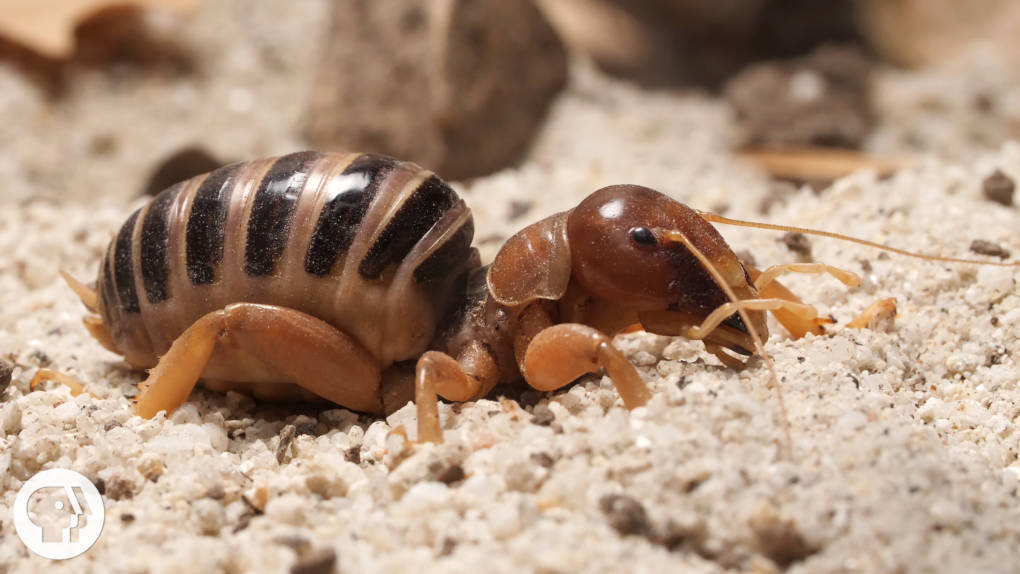
"caption": "Jerusalem cricket",
"description": null,
"title": "DL602_jcricket_marquee-UHD-phead",
"credit": "Josh Cassidy/KQED",
"status": "inherit",
"isLoading": false,
"fetchFailed": false
},
"science_1936619": {
"type": "attachments",
"id": "science_1936619",
"meta": {
"index": "attachments_1716263798",
"site": "science",
"id": "1936619",
"found": true
},
"parent": 1936465,
"imgSizes": {
"small": {
"file": "https://ww2.kqed.org/app/uploads/sites/35/2019/01/DL601_Turret_Spiders_MARQUEE_phead_UHD-520x293.jpg",
"width": 520,
"mimeType": "image/jpeg",
"height": 293
},
"twentyfourteen-full-width": {
"file": "https://ww2.kqed.org/app/uploads/sites/35/2019/01/DL601_Turret_Spiders_MARQUEE_phead_UHD-1038x576.jpg",
"width": 1038,
"mimeType": "image/jpeg",
"height": 576
},
"thumbnail": {
"file": "https://ww2.kqed.org/app/uploads/sites/35/2019/01/DL601_Turret_Spiders_MARQUEE_phead_UHD-160x90.jpg",
"width": 160,
"mimeType": "image/jpeg",
"height": 90
},
"fd-sm": {
"file": "https://ww2.kqed.org/app/uploads/sites/35/2019/01/DL601_Turret_Spiders_MARQUEE_phead_UHD-960x540.jpg",
"width": 960,
"mimeType": "image/jpeg",
"height": 540
},
"post-thumbnail": {
"file": "https://ww2.kqed.org/app/uploads/sites/35/2019/01/DL601_Turret_Spiders_MARQUEE_phead_UHD-672x372.jpg",
"width": 672,
"mimeType": "image/jpeg",
"height": 372
},
"xsmall": {
"file": "https://ww2.kqed.org/app/uploads/sites/35/2019/01/DL601_Turret_Spiders_MARQUEE_phead_UHD-375x211.jpg",
"width": 375,
"mimeType": "image/jpeg",
"height": 211
},
"kqedFullSize": {
"file": "https://ww2.kqed.org/app/uploads/sites/35/2019/01/DL601_Turret_Spiders_MARQUEE_phead_UHD.jpg",
"width": 3840,
"height": 2160
},
"large": {
"file": "https://ww2.kqed.org/app/uploads/sites/35/2019/01/DL601_Turret_Spiders_MARQUEE_phead_UHD-1020x574.jpg",
"width": 1020,
"mimeType": "image/jpeg",
"height": 574
},
"xlarge": {
"file": "https://ww2.kqed.org/app/uploads/sites/35/2019/01/DL601_Turret_Spiders_MARQUEE_phead_UHD-1180x664.jpg",
"width": 1180,
"mimeType": "image/jpeg",
"height": 664
},
"complete_open_graph": {
"file": "https://ww2.kqed.org/app/uploads/sites/35/2019/01/DL601_Turret_Spiders_MARQUEE_phead_UHD-1200x675.jpg",
"width": 1200,
"mimeType": "image/jpeg",
"height": 675
},
"guest-author-50": {
"file": "https://ww2.kqed.org/app/uploads/sites/35/2019/01/DL601_Turret_Spiders_MARQUEE_phead_UHD-50x50.jpg",
"width": 50,
"mimeType": "image/jpeg",
"height": 50
},
"guest-author-96": {
"file": "https://ww2.kqed.org/app/uploads/sites/35/2019/01/DL601_Turret_Spiders_MARQUEE_phead_UHD-96x96.jpg",
"width": 96,
"mimeType": "image/jpeg",
"height": 96
},
"medium": {
"file": "https://ww2.kqed.org/app/uploads/sites/35/2019/01/DL601_Turret_Spiders_MARQUEE_phead_UHD-800x450.jpg",
"width": 800,
"mimeType": "image/jpeg",
"height": 450
},
"guest-author-64": {
"file": "https://ww2.kqed.org/app/uploads/sites/35/2019/01/DL601_Turret_Spiders_MARQUEE_phead_UHD-64x64.jpg",
"width": 64,
"mimeType": "image/jpeg",
"height": 64
},
"guest-author-32": {
"file": "https://ww2.kqed.org/app/uploads/sites/35/2019/01/DL601_Turret_Spiders_MARQUEE_phead_UHD-32x32.jpg",
"width": 32,
"mimeType": "image/jpeg",
"height": 32
},
"fd-lrg": {
"file": "https://ww2.kqed.org/app/uploads/sites/35/2019/01/DL601_Turret_Spiders_MARQUEE_phead_UHD-1920x1080.jpg",
"width": 1920,
"mimeType": "image/jpeg",
"height": 1080
},
"fd-med": {
"file": "https://ww2.kqed.org/app/uploads/sites/35/2019/01/DL601_Turret_Spiders_MARQUEE_phead_UHD-1180x664.jpg",
"width": 1180,
"mimeType": "image/jpeg",
"height": 664
},
"full-width": {
"file": "https://ww2.kqed.org/app/uploads/sites/35/2019/01/DL601_Turret_Spiders_MARQUEE_phead_UHD-1920x1080.jpg",
"width": 1920,
"mimeType": "image/jpeg",
"height": 1080
},
"detail": {
"file": "https://ww2.kqed.org/app/uploads/sites/35/2019/01/DL601_Turret_Spiders_MARQUEE_phead_UHD-150x150.jpg",
"width": 150,
"mimeType": "image/jpeg",
"height": 150
},
"medium_large": {
"file": "https://ww2.kqed.org/app/uploads/sites/35/2019/01/DL601_Turret_Spiders_MARQUEE_phead_UHD-768x432.jpg",
"width": 768,
"mimeType": "image/jpeg",
"height": 432
},
"guest-author-128": {
"file": "https://ww2.kqed.org/app/uploads/sites/35/2019/01/DL601_Turret_Spiders_MARQUEE_phead_UHD-128x128.jpg",
"width": 128,
"mimeType": "image/jpeg",
"height": 128
},
"xxsmall": {
"file": "https://ww2.kqed.org/app/uploads/sites/35/2019/01/DL601_Turret_Spiders_MARQUEE_phead_UHD-240x135.jpg",
"width": 240,
"mimeType": "image/jpeg",
"height": 135
}
},
"publishDate": 1547151573,
"modified": 1547395972,
"caption": "A California turret spider lurks at the entrance of its turret.",
"description": null,
"title": "DL601_Turret_Spiders_MARQUEE_phead_UHD",
"credit": "Josh Cassidy/KQED",
"status": "inherit",
"isLoading": false,
"fetchFailed": false
},
"science_1936731": {
"type": "attachments",
"id": "science_1936731",
"meta": {
"index": "attachments_1716263798",
"site": "science",
"id": "1936731",
"found": true
},
"parent": 1936730,
"imgSizes": {
"small": {
"file": "https://ww2.kqed.org/app/uploads/sites/35/2019/01/whaletagging_wide-00809a38e25f7e2a7caecbcdd5c30b7bda0a6547-520x292.jpg",
"width": 520,
"mimeType": "image/jpeg",
"height": 292
},
"twentyfourteen-full-width": {
"file": "https://ww2.kqed.org/app/uploads/sites/35/2019/01/whaletagging_wide-00809a38e25f7e2a7caecbcdd5c30b7bda0a6547-1038x576.jpg",
"width": 1038,
"mimeType": "image/jpeg",
"height": 576
},
"thumbnail": {
"file": "https://ww2.kqed.org/app/uploads/sites/35/2019/01/whaletagging_wide-00809a38e25f7e2a7caecbcdd5c30b7bda0a6547-160x90.jpg",
"width": 160,
"mimeType": "image/jpeg",
"height": 90
},
"fd-sm": {
"file": "https://ww2.kqed.org/app/uploads/sites/35/2019/01/whaletagging_wide-00809a38e25f7e2a7caecbcdd5c30b7bda0a6547-960x540.jpg",
"width": 960,
"mimeType": "image/jpeg",
"height": 540
},
"post-thumbnail": {
"file": "https://ww2.kqed.org/app/uploads/sites/35/2019/01/whaletagging_wide-00809a38e25f7e2a7caecbcdd5c30b7bda0a6547-672x372.jpg",
"width": 672,
"mimeType": "image/jpeg",
"height": 372
},
"xsmall": {
"file": "https://ww2.kqed.org/app/uploads/sites/35/2019/01/whaletagging_wide-00809a38e25f7e2a7caecbcdd5c30b7bda0a6547-375x211.jpg",
"width": 375,
"mimeType": "image/jpeg",
"height": 211
},
"kqedFullSize": {
"file": "https://ww2.kqed.org/app/uploads/sites/35/2019/01/whaletagging_wide-00809a38e25f7e2a7caecbcdd5c30b7bda0a6547.jpg",
"width": 1917,
"height": 1078
},
"large": {
"file": "https://ww2.kqed.org/app/uploads/sites/35/2019/01/whaletagging_wide-00809a38e25f7e2a7caecbcdd5c30b7bda0a6547-1020x574.jpg",
"width": 1020,
"mimeType": "image/jpeg",
"height": 574
},
"xlarge": {
"file": "https://ww2.kqed.org/app/uploads/sites/35/2019/01/whaletagging_wide-00809a38e25f7e2a7caecbcdd5c30b7bda0a6547-1180x664.jpg",
"width": 1180,
"mimeType": "image/jpeg",
"height": 664
},
"complete_open_graph": {
"file": "https://ww2.kqed.org/app/uploads/sites/35/2019/01/whaletagging_wide-00809a38e25f7e2a7caecbcdd5c30b7bda0a6547-1200x675.jpg",
"width": 1200,
"mimeType": "image/jpeg",
"height": 675
},
"guest-author-50": {
"file": "https://ww2.kqed.org/app/uploads/sites/35/2019/01/whaletagging_wide-00809a38e25f7e2a7caecbcdd5c30b7bda0a6547-50x50.jpg",
"width": 50,
"mimeType": "image/jpeg",
"height": 50
},
"guest-author-96": {
"file": "https://ww2.kqed.org/app/uploads/sites/35/2019/01/whaletagging_wide-00809a38e25f7e2a7caecbcdd5c30b7bda0a6547-96x96.jpg",
"width": 96,
"mimeType": "image/jpeg",
"height": 96
},
"medium": {
"file": "https://ww2.kqed.org/app/uploads/sites/35/2019/01/whaletagging_wide-00809a38e25f7e2a7caecbcdd5c30b7bda0a6547-800x450.jpg",
"width": 800,
"mimeType": "image/jpeg",
"height": 450
},
"guest-author-64": {
"file": "https://ww2.kqed.org/app/uploads/sites/35/2019/01/whaletagging_wide-00809a38e25f7e2a7caecbcdd5c30b7bda0a6547-64x64.jpg",
"width": 64,
"mimeType": "image/jpeg",
"height": 64
},
"guest-author-32": {
"file": "https://ww2.kqed.org/app/uploads/sites/35/2019/01/whaletagging_wide-00809a38e25f7e2a7caecbcdd5c30b7bda0a6547-32x32.jpg",
"width": 32,
"mimeType": "image/jpeg",
"height": 32
},
"fd-med": {
"file": "https://ww2.kqed.org/app/uploads/sites/35/2019/01/whaletagging_wide-00809a38e25f7e2a7caecbcdd5c30b7bda0a6547-1180x664.jpg",
"width": 1180,
"mimeType": "image/jpeg",
"height": 664
},
"detail": {
"file": "https://ww2.kqed.org/app/uploads/sites/35/2019/01/whaletagging_wide-00809a38e25f7e2a7caecbcdd5c30b7bda0a6547-150x150.jpg",
"width": 150,
"mimeType": "image/jpeg",
"height": 150
},
"medium_large": {
"file": "https://ww2.kqed.org/app/uploads/sites/35/2019/01/whaletagging_wide-00809a38e25f7e2a7caecbcdd5c30b7bda0a6547-768x432.jpg",
"width": 768,
"mimeType": "image/jpeg",
"height": 432
},
"guest-author-128": {
"file": "https://ww2.kqed.org/app/uploads/sites/35/2019/01/whaletagging_wide-00809a38e25f7e2a7caecbcdd5c30b7bda0a6547-128x128.jpg",
"width": 128,
"mimeType": "image/jpeg",
"height": 128
},
"xxsmall": {
"file": "https://ww2.kqed.org/app/uploads/sites/35/2019/01/whaletagging_wide-00809a38e25f7e2a7caecbcdd5c30b7bda0a6547-240x135.jpg",
"width": 240,
"mimeType": "image/jpeg",
"height": 135
}
},
"publishDate": 1547495157,
"modified": 1547500664,
"caption": "The partial government shutdown, now in its fourth week, has led to roadblocks and delays for federally-funded research.",
"description": "The partial government shutdown had led to roadblocks and delays for federally-funded research.",
"title": "Marine biologist Ari Friedlaender tags whales as part of his research on humpback whales in the Antarctic.",
"credit": "Alison Stimpert/NMFS PERMIT 808-1735",
"status": "inherit",
"isLoading": false,
"fetchFailed": false
},
"science_1936631": {
"type": "attachments",
"id": "science_1936631",
"meta": {
"index": "attachments_1716263798",
"site": "science",
"id": "1936631",
"found": true
},
"parent": 1936630,
"imgSizes": {
"small": {
"file": "https://ww2.kqed.org/app/uploads/sites/35/2019/01/mealwormtruffle2-2f827785d57667261a374e5023691bb2f324a675-520x390.jpg",
"width": 520,
"mimeType": "image/jpeg",
"height": 390
},
"twentyfourteen-full-width": {
"file": "https://ww2.kqed.org/app/uploads/sites/35/2019/01/mealwormtruffle2-2f827785d57667261a374e5023691bb2f324a675-1038x576.jpg",
"width": 1038,
"mimeType": "image/jpeg",
"height": 576
},
"thumbnail": {
"file": "https://ww2.kqed.org/app/uploads/sites/35/2019/01/mealwormtruffle2-2f827785d57667261a374e5023691bb2f324a675-160x120.jpg",
"width": 160,
"mimeType": "image/jpeg",
"height": 120
},
"fd-sm": {
"file": "https://ww2.kqed.org/app/uploads/sites/35/2019/01/mealwormtruffle2-2f827785d57667261a374e5023691bb2f324a675-960x720.jpg",
"width": 960,
"mimeType": "image/jpeg",
"height": 720
},
"post-thumbnail": {
"file": "https://ww2.kqed.org/app/uploads/sites/35/2019/01/mealwormtruffle2-2f827785d57667261a374e5023691bb2f324a675-672x372.jpg",
"width": 672,
"mimeType": "image/jpeg",
"height": 372
},
"xsmall": {
"file": "https://ww2.kqed.org/app/uploads/sites/35/2019/01/mealwormtruffle2-2f827785d57667261a374e5023691bb2f324a675-375x281.jpg",
"width": 375,
"mimeType": "image/jpeg",
"height": 281
},
"kqedFullSize": {
"file": "https://ww2.kqed.org/app/uploads/sites/35/2019/01/mealwormtruffle2-2f827785d57667261a374e5023691bb2f324a675.jpg",
"width": 1875,
"height": 1406
},
"large": {
"file": "https://ww2.kqed.org/app/uploads/sites/35/2019/01/mealwormtruffle2-2f827785d57667261a374e5023691bb2f324a675-1020x765.jpg",
"width": 1020,
"mimeType": "image/jpeg",
"height": 765
},
"xlarge": {
"file": "https://ww2.kqed.org/app/uploads/sites/35/2019/01/mealwormtruffle2-2f827785d57667261a374e5023691bb2f324a675-1180x885.jpg",
"width": 1180,
"mimeType": "image/jpeg",
"height": 885
},
"complete_open_graph": {
"file": "https://ww2.kqed.org/app/uploads/sites/35/2019/01/mealwormtruffle2-2f827785d57667261a374e5023691bb2f324a675-1200x900.jpg",
"width": 1200,
"mimeType": "image/jpeg",
"height": 900
},
"guest-author-50": {
"file": "https://ww2.kqed.org/app/uploads/sites/35/2019/01/mealwormtruffle2-2f827785d57667261a374e5023691bb2f324a675-50x50.jpg",
"width": 50,
"mimeType": "image/jpeg",
"height": 50
},
"guest-author-96": {
"file": "https://ww2.kqed.org/app/uploads/sites/35/2019/01/mealwormtruffle2-2f827785d57667261a374e5023691bb2f324a675-96x96.jpg",
"width": 96,
"mimeType": "image/jpeg",
"height": 96
},
"medium": {
"file": "https://ww2.kqed.org/app/uploads/sites/35/2019/01/mealwormtruffle2-2f827785d57667261a374e5023691bb2f324a675-800x600.jpg",
"width": 800,
"mimeType": "image/jpeg",
"height": 600
},
"guest-author-64": {
"file": "https://ww2.kqed.org/app/uploads/sites/35/2019/01/mealwormtruffle2-2f827785d57667261a374e5023691bb2f324a675-64x64.jpg",
"width": 64,
"mimeType": "image/jpeg",
"height": 64
},
"guest-author-32": {
"file": "https://ww2.kqed.org/app/uploads/sites/35/2019/01/mealwormtruffle2-2f827785d57667261a374e5023691bb2f324a675-32x32.jpg",
"width": 32,
"mimeType": "image/jpeg",
"height": 32
},
"fd-med": {
"file": "https://ww2.kqed.org/app/uploads/sites/35/2019/01/mealwormtruffle2-2f827785d57667261a374e5023691bb2f324a675-1180x885.jpg",
"width": 1180,
"mimeType": "image/jpeg",
"height": 885
},
"detail": {
"file": "https://ww2.kqed.org/app/uploads/sites/35/2019/01/mealwormtruffle2-2f827785d57667261a374e5023691bb2f324a675-150x150.jpg",
"width": 150,
"mimeType": "image/jpeg",
"height": 150
},
"medium_large": {
"file": "https://ww2.kqed.org/app/uploads/sites/35/2019/01/mealwormtruffle2-2f827785d57667261a374e5023691bb2f324a675-768x576.jpg",
"width": 768,
"mimeType": "image/jpeg",
"height": 576
},
"guest-author-128": {
"file": "https://ww2.kqed.org/app/uploads/sites/35/2019/01/mealwormtruffle2-2f827785d57667261a374e5023691bb2f324a675-128x128.jpg",
"width": 128,
"mimeType": "image/jpeg",
"height": 128
},
"xxsmall": {
"file": "https://ww2.kqed.org/app/uploads/sites/35/2019/01/mealwormtruffle2-2f827785d57667261a374e5023691bb2f324a675-240x180.jpg",
"width": 240,
"mimeType": "image/jpeg",
"height": 180
}
},
"publishDate": 1547158450,
"modified": 1547158840,
"caption": "People were more likely to try mealworms — such as these mealworm chocolate truffles sprinkled with coconut — when the ad focused on taste and experience, a study showed.",
"description": "People were more likely to try mealworms — such as these mealworm chocolate truffles sprinkled with coconut — when the ad focused on taste and experience, a study sho",
"title": "People were more likely to try mealworms — such as these mealworm chocolate truffles sprinkled with coconut — when the ad focused on taste and experience, a study showed.",
"credit": "Oliver Brachat/for NPR",
"status": "inherit",
"isLoading": false,
"fetchFailed": false
},
"science_1936523": {
"type": "attachments",
"id": "science_1936523",
"meta": {
"index": "attachments_1716263798",
"site": "science",
"id": "1936523",
"found": true
},
"parent": 1936522,
"imgSizes": {
"small": {
"file": "https://ww2.kqed.org/app/uploads/sites/35/2019/01/weevil-e83cdaeb95549fa51f186acae94b92b5b6ac680f-520x390.jpg",
"width": 520,
"mimeType": "image/jpeg",
"height": 390
},
"twentyfourteen-full-width": {
"file": "https://ww2.kqed.org/app/uploads/sites/35/2019/01/weevil-e83cdaeb95549fa51f186acae94b92b5b6ac680f-1038x576.jpg",
"width": 1038,
"mimeType": "image/jpeg",
"height": 576
},
"thumbnail": {
"file": "https://ww2.kqed.org/app/uploads/sites/35/2019/01/weevil-e83cdaeb95549fa51f186acae94b92b5b6ac680f-160x120.jpg",
"width": 160,
"mimeType": "image/jpeg",
"height": 120
},
"fd-sm": {
"file": "https://ww2.kqed.org/app/uploads/sites/35/2019/01/weevil-e83cdaeb95549fa51f186acae94b92b5b6ac680f-960x720.jpg",
"width": 960,
"mimeType": "image/jpeg",
"height": 720
},
"post-thumbnail": {
"file": "https://ww2.kqed.org/app/uploads/sites/35/2019/01/weevil-e83cdaeb95549fa51f186acae94b92b5b6ac680f-672x372.jpg",
"width": 672,
"mimeType": "image/jpeg",
"height": 372
},
"xsmall": {
"file": "https://ww2.kqed.org/app/uploads/sites/35/2019/01/weevil-e83cdaeb95549fa51f186acae94b92b5b6ac680f-375x281.jpg",
"width": 375,
"mimeType": "image/jpeg",
"height": 281
},
"kqedFullSize": {
"file": "https://ww2.kqed.org/app/uploads/sites/35/2019/01/weevil-e83cdaeb95549fa51f186acae94b92b5b6ac680f.jpg",
"width": 4763,
"height": 3572
},
"large": {
"file": "https://ww2.kqed.org/app/uploads/sites/35/2019/01/weevil-e83cdaeb95549fa51f186acae94b92b5b6ac680f-1020x765.jpg",
"width": 1020,
"mimeType": "image/jpeg",
"height": 765
},
"xlarge": {
"file": "https://ww2.kqed.org/app/uploads/sites/35/2019/01/weevil-e83cdaeb95549fa51f186acae94b92b5b6ac680f-1180x885.jpg",
"width": 1180,
"mimeType": "image/jpeg",
"height": 885
},
"complete_open_graph": {
"file": "https://ww2.kqed.org/app/uploads/sites/35/2019/01/weevil-e83cdaeb95549fa51f186acae94b92b5b6ac680f-1200x900.jpg",
"width": 1200,
"mimeType": "image/jpeg",
"height": 900
},
"guest-author-50": {
"file": "https://ww2.kqed.org/app/uploads/sites/35/2019/01/weevil-e83cdaeb95549fa51f186acae94b92b5b6ac680f-50x50.jpg",
"width": 50,
"mimeType": "image/jpeg",
"height": 50
},
"guest-author-96": {
"file": "https://ww2.kqed.org/app/uploads/sites/35/2019/01/weevil-e83cdaeb95549fa51f186acae94b92b5b6ac680f-96x96.jpg",
"width": 96,
"mimeType": "image/jpeg",
"height": 96
},
"medium": {
"file": "https://ww2.kqed.org/app/uploads/sites/35/2019/01/weevil-e83cdaeb95549fa51f186acae94b92b5b6ac680f-800x600.jpg",
"width": 800,
"mimeType": "image/jpeg",
"height": 600
},
"guest-author-64": {
"file": "https://ww2.kqed.org/app/uploads/sites/35/2019/01/weevil-e83cdaeb95549fa51f186acae94b92b5b6ac680f-64x64.jpg",
"width": 64,
"mimeType": "image/jpeg",
"height": 64
},
"guest-author-32": {
"file": "https://ww2.kqed.org/app/uploads/sites/35/2019/01/weevil-e83cdaeb95549fa51f186acae94b92b5b6ac680f-32x32.jpg",
"width": 32,
"mimeType": "image/jpeg",
"height": 32
},
"fd-lrg": {
"file": "https://ww2.kqed.org/app/uploads/sites/35/2019/01/weevil-e83cdaeb95549fa51f186acae94b92b5b6ac680f-1920x1440.jpg",
"width": 1920,
"mimeType": "image/jpeg",
"height": 1440
},
"fd-med": {
"file": "https://ww2.kqed.org/app/uploads/sites/35/2019/01/weevil-e83cdaeb95549fa51f186acae94b92b5b6ac680f-1180x885.jpg",
"width": 1180,
"mimeType": "image/jpeg",
"height": 885
},
"full-width": {
"file": "https://ww2.kqed.org/app/uploads/sites/35/2019/01/weevil-e83cdaeb95549fa51f186acae94b92b5b6ac680f-1920x1440.jpg",
"width": 1920,
"mimeType": "image/jpeg",
"height": 1440
},
"detail": {
"file": "https://ww2.kqed.org/app/uploads/sites/35/2019/01/weevil-e83cdaeb95549fa51f186acae94b92b5b6ac680f-150x150.jpg",
"width": 150,
"mimeType": "image/jpeg",
"height": 150
},
"medium_large": {
"file": "https://ww2.kqed.org/app/uploads/sites/35/2019/01/weevil-e83cdaeb95549fa51f186acae94b92b5b6ac680f-768x576.jpg",
"width": 768,
"mimeType": "image/jpeg",
"height": 576
},
"guest-author-128": {
"file": "https://ww2.kqed.org/app/uploads/sites/35/2019/01/weevil-e83cdaeb95549fa51f186acae94b92b5b6ac680f-128x128.jpg",
"width": 128,
"mimeType": "image/jpeg",
"height": 128
},
"xxsmall": {
"file": "https://ww2.kqed.org/app/uploads/sites/35/2019/01/weevil-e83cdaeb95549fa51f186acae94b92b5b6ac680f-240x180.jpg",
"width": 240,
"mimeType": "image/jpeg",
"height": 180
}
},
"publishDate": 1546991517,
"modified": 1546995868,
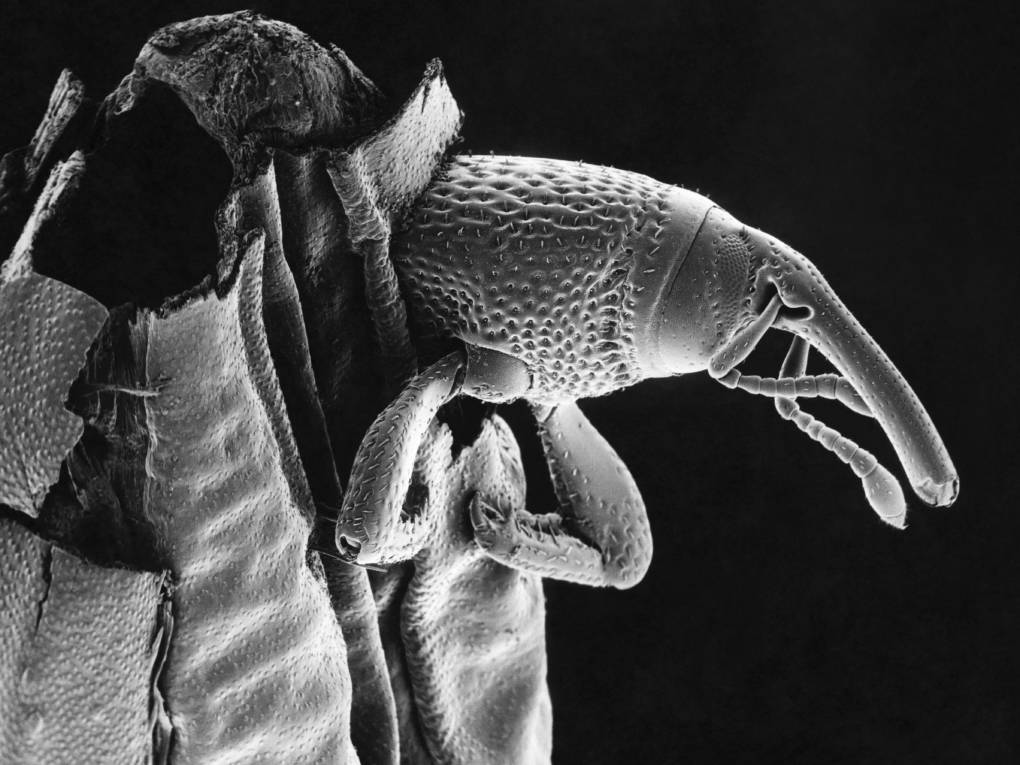
"caption": "This granary weevil has set up shop inside a kernel. Even without wings, these stealthy stowaways -- with the help of humans -- have managed to infest grains all over the world for thousands of years.",
"description": "This granary weevil has set up shop inside a kernel. Even without wings, these stealthy stowaways -- with the help of humans -- have managed to infest grains all over the world for thousands of years.",
"title": "This granary weevil has set up shop inside a kernel. Even without wings, these stealthy stowaways — with the help of humans — have managed to infest grains all over the world for thousands of years.",
"credit": "Biophoto Associates/Getty Images/Science Source",
"status": "inherit",
"isLoading": false,
"fetchFailed": false
},
"science_1936469": {
"type": "attachments",
"id": "science_1936469",
"meta": {
"index": "attachments_1716263798",
"site": "science",
"id": "1936469",
"found": true
},
"parent": 1936468,
"imgSizes": {
"small": {
"file": "https://ww2.kqed.org/app/uploads/sites/35/2019/01/last-achatinella-apexfulva-e7c1bf93edded9488de56d80943b1e6bb8db5f5d-520x390.jpg",
"width": 520,
"mimeType": "image/jpeg",
"height": 390
},
"twentyfourteen-full-width": {
"file": "https://ww2.kqed.org/app/uploads/sites/35/2019/01/last-achatinella-apexfulva-e7c1bf93edded9488de56d80943b1e6bb8db5f5d-1038x576.jpg",
"width": 1038,
"mimeType": "image/jpeg",
"height": 576
},
"thumbnail": {
"file": "https://ww2.kqed.org/app/uploads/sites/35/2019/01/last-achatinella-apexfulva-e7c1bf93edded9488de56d80943b1e6bb8db5f5d-160x120.jpg",
"width": 160,
"mimeType": "image/jpeg",
"height": 120
},
"fd-sm": {
"file": "https://ww2.kqed.org/app/uploads/sites/35/2019/01/last-achatinella-apexfulva-e7c1bf93edded9488de56d80943b1e6bb8db5f5d-960x720.jpg",
"width": 960,
"mimeType": "image/jpeg",
"height": 720
},
"post-thumbnail": {
"file": "https://ww2.kqed.org/app/uploads/sites/35/2019/01/last-achatinella-apexfulva-e7c1bf93edded9488de56d80943b1e6bb8db5f5d-672x372.jpg",
"width": 672,
"mimeType": "image/jpeg",
"height": 372
},
"xsmall": {
"file": "https://ww2.kqed.org/app/uploads/sites/35/2019/01/last-achatinella-apexfulva-e7c1bf93edded9488de56d80943b1e6bb8db5f5d-375x281.jpg",
"width": 375,
"mimeType": "image/jpeg",
"height": 281
},
"kqedFullSize": {
"file": "https://ww2.kqed.org/app/uploads/sites/35/2019/01/last-achatinella-apexfulva-e7c1bf93edded9488de56d80943b1e6bb8db5f5d.jpg",
"width": 1800,
"height": 1350
},
"large": {
"file": "https://ww2.kqed.org/app/uploads/sites/35/2019/01/last-achatinella-apexfulva-e7c1bf93edded9488de56d80943b1e6bb8db5f5d-1020x765.jpg",
"width": 1020,
"mimeType": "image/jpeg",
"height": 765
},
"xlarge": {
"file": "https://ww2.kqed.org/app/uploads/sites/35/2019/01/last-achatinella-apexfulva-e7c1bf93edded9488de56d80943b1e6bb8db5f5d-1180x885.jpg",
"width": 1180,
"mimeType": "image/jpeg",
"height": 885
},
"complete_open_graph": {
"file": "https://ww2.kqed.org/app/uploads/sites/35/2019/01/last-achatinella-apexfulva-e7c1bf93edded9488de56d80943b1e6bb8db5f5d-1200x900.jpg",
"width": 1200,
"mimeType": "image/jpeg",
"height": 900
},
"guest-author-50": {
"file": "https://ww2.kqed.org/app/uploads/sites/35/2019/01/last-achatinella-apexfulva-e7c1bf93edded9488de56d80943b1e6bb8db5f5d-50x50.jpg",
"width": 50,
"mimeType": "image/jpeg",
"height": 50
},
"guest-author-96": {
"file": "https://ww2.kqed.org/app/uploads/sites/35/2019/01/last-achatinella-apexfulva-e7c1bf93edded9488de56d80943b1e6bb8db5f5d-96x96.jpg",
"width": 96,
"mimeType": "image/jpeg",
"height": 96
},
"medium": {
"file": "https://ww2.kqed.org/app/uploads/sites/35/2019/01/last-achatinella-apexfulva-e7c1bf93edded9488de56d80943b1e6bb8db5f5d-800x600.jpg",
"width": 800,
"mimeType": "image/jpeg",
"height": 600
},
"guest-author-64": {
"file": "https://ww2.kqed.org/app/uploads/sites/35/2019/01/last-achatinella-apexfulva-e7c1bf93edded9488de56d80943b1e6bb8db5f5d-64x64.jpg",
"width": 64,
"mimeType": "image/jpeg",
"height": 64
},
"guest-author-32": {
"file": "https://ww2.kqed.org/app/uploads/sites/35/2019/01/last-achatinella-apexfulva-e7c1bf93edded9488de56d80943b1e6bb8db5f5d-32x32.jpg",
"width": 32,
"mimeType": "image/jpeg",
"height": 32
},
"fd-med": {
"file": "https://ww2.kqed.org/app/uploads/sites/35/2019/01/last-achatinella-apexfulva-e7c1bf93edded9488de56d80943b1e6bb8db5f5d-1180x885.jpg",
"width": 1180,
"mimeType": "image/jpeg",
"height": 885
},
"detail": {
"file": "https://ww2.kqed.org/app/uploads/sites/35/2019/01/last-achatinella-apexfulva-e7c1bf93edded9488de56d80943b1e6bb8db5f5d-150x150.jpg",
"width": 150,
"mimeType": "image/jpeg",
"height": 150
},
"medium_large": {
"file": "https://ww2.kqed.org/app/uploads/sites/35/2019/01/last-achatinella-apexfulva-e7c1bf93edded9488de56d80943b1e6bb8db5f5d-768x576.jpg",
"width": 768,
"mimeType": "image/jpeg",
"height": 576
},
"guest-author-128": {
"file": "https://ww2.kqed.org/app/uploads/sites/35/2019/01/last-achatinella-apexfulva-e7c1bf93edded9488de56d80943b1e6bb8db5f5d-128x128.jpg",
"width": 128,
"mimeType": "image/jpeg",
"height": 128
},
"xxsmall": {
"file": "https://ww2.kqed.org/app/uploads/sites/35/2019/01/last-achatinella-apexfulva-e7c1bf93edded9488de56d80943b1e6bb8db5f5d-240x180.jpg",
"width": 240,
"mimeType": "image/jpeg",
"height": 180
}
},
"publishDate": 1546971960,
"modified": 1546972275,
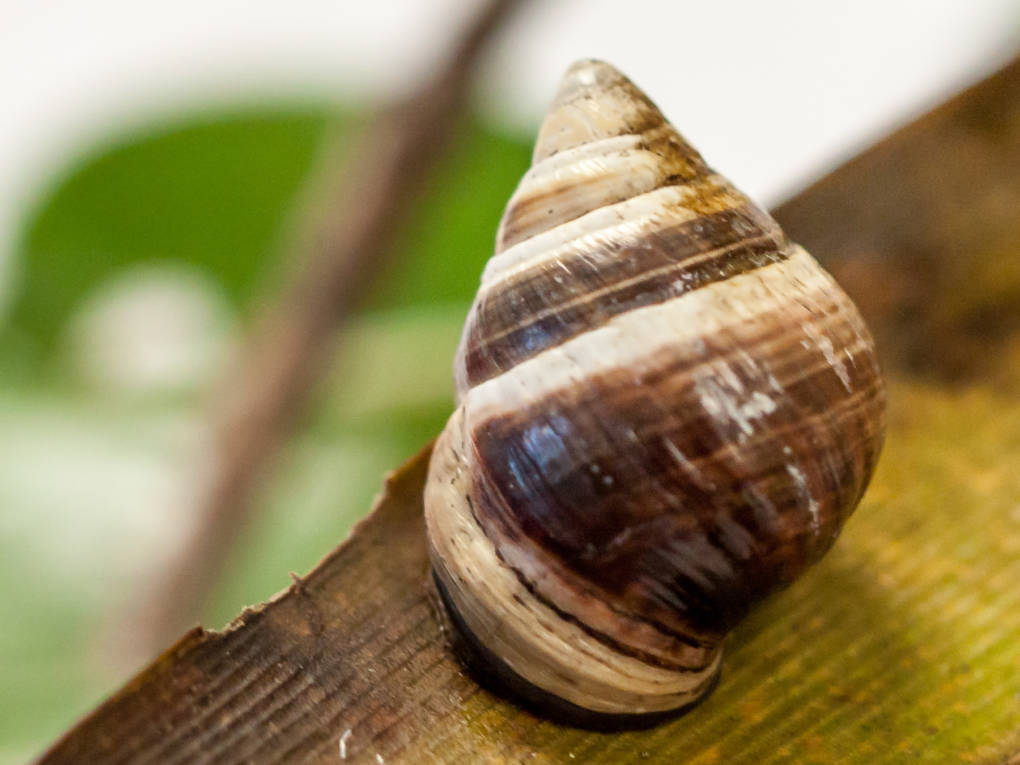
"caption": "George, the last known Achatinella apexfulva, a Hawaiian land snail, died on New Year's Day.",
"description": "George, the last known \u003cem>Achatinella apexfulva\u003c/em>, a Hawaiian land snail, died on New Year's Day.",
"title": "George, the last known Achatinella apexfulva, a Hawaiian land snail, died on New Year's Day.",
"credit": "David Sischo/Hawaii Department of Land and Natural Resources",
"status": "inherit",
"isLoading": false,
"fetchFailed": false
}
},
"audioPlayerReducer": {
"postId": "stream_live",
"isPaused": true,
"isPlaying": false,
"pfsActive": false,
"pledgeModalIsOpen": true,
"playerDrawerIsOpen": false,
"liveAudioPlayStartedAt": 0,
"liveAudioPlayContext": ""
},
"authorsReducer": {
"byline_science_1938601": {
"type": "authors",
"id": "byline_science_1938601",
"meta": {
"override": true
},
"slug": "byline_science_1938601",
"name": "Merrit Kennedy, NPR",
"isLoading": false
},
"byline_science_1937467": {
"type": "authors",
"id": "byline_science_1937467",
"meta": {
"override": true
},
"slug": "byline_science_1937467",
"name": "Rebecca Hersher\u003cbr/>NPR",
"isLoading": false
},
"byline_science_1937360": {
"type": "authors",
"id": "byline_science_1937360",
"meta": {
"override": true
},
"slug": "byline_science_1937360",
"name": "Christopher Weber\u003c/br>Associated Press",
"isLoading": false
},
"byline_science_1936730": {
"type": "authors",
"id": "byline_science_1936730",
"meta": {
"override": true
},
"slug": "byline_science_1936730",
"name": "Geoff Brumfiel\u003c/br>NPR",
"isLoading": false
},
"byline_science_1936630": {
"type": "authors",
"id": "byline_science_1936630",
"meta": {
"override": true
},
"slug": "byline_science_1936630",
"name": "Berly McCoy\u003c/br>NPR",
"isLoading": false
},
"byline_science_1936522": {
"type": "authors",
"id": "byline_science_1936522",
"meta": {
"override": true
},
"slug": "byline_science_1936522",
"name": "Lindsay Patterson\u003c/br>NPR",
"isLoading": false
},
"byline_science_1936468": {
"type": "authors",
"id": "byline_science_1936468",
"meta": {
"override": true
},
"slug": "byline_science_1936468",
"name": "Laurel Wamsley\u003cbr/>NPR",
"isLoading": false
},
"jennyoh": {
"type": "authors",
"id": "2100",
"meta": {
"index": "authors_1716337520",
"id": "2100",
"found": true
},
"name": "Jenny Oh",
"firstName": "Jenny",
"lastName": "Oh",
"slug": "jennyoh",
"email": "joh@kqed.org",
"display_author_email": false,
"staff_mastheads": [],
"title": "Audience Engagement Producer, Deep Look",
"bio": "Jenny is an Emmy Award-winning producer and is currently the Audience Engagement Producer for KQED Science's \u003cem>Deep Look\u003c/em> online video series. She was also a long-time contributor to Bay Area Bites, KQED's popular food blog. Jenny graduated with honors from New York University’s Tisch School of the Arts Film and Television program and has worked for WNET/PBS, The Learning Channel, Sundance Channel, HBO and the University of California.",
"avatar": "https://secure.gravatar.com/avatar/7ddda0ed657e46dbe66083f569967752?s=600&d=mm&r=g",
"twitter": null,
"facebook": null,
"instagram": null,
"linkedin": null,
"sites": [
{
"site": "arts",
"roles": []
},
{
"site": "pop",
"roles": []
},
{
"site": "about",
"roles": []
},
{
"site": "bayareabites",
"roles": []
},
{
"site": "science",
"roles": []
},
{
"site": "education",
"roles": []
},
{
"site": "quest",
"roles": []
},
{
"site": "food",
"roles": []
}
],
"headData": {
"title": "Jenny Oh | KQED",
"description": "Audience Engagement Producer, Deep Look",
"ogImgSrc": "https://secure.gravatar.com/avatar/7ddda0ed657e46dbe66083f569967752?s=600&d=mm&r=g",
"twImgSrc": "https://secure.gravatar.com/avatar/7ddda0ed657e46dbe66083f569967752?s=600&d=mm&r=g"
},
"isLoading": false,
"link": "/author/jennyoh"
},
"gabriela-quiros": {
"type": "authors",
"id": "6186",
"meta": {
"index": "authors_1716337520",
"id": "6186",
"found": true
},
"name": "Gabriela Quirós",
"firstName": "Gabriela",
"lastName": "Quirós",
"slug": "gabriela-quiros",
"email": "gquiros@kqed.org",
"display_author_email": false,
"staff_mastheads": [],
"title": "Supervising Producer",
"bio": "Gabriela Quirós is the \u003cstrong>supervising producer for KQED's web science video series \u003ca href=\"https://www.kqed.org/deeplook\">Deep Look\u003c/a>\u003c/strong>. She joined KQED as a TV producer when its science series QUEST started in 2006 and has covered everything from Alzheimer’s to bee die-offs to dark energy.\r\n\r\nShe won a 2022 AAAS Kavli Science Journalism Award with a team of her Deep Look colleagues. She has won six regional Emmys as a video producer and has shared eight more as the coordinating producer of Deep Look. The episode she produced about \u003ca href=\"https://www.kqed.org/science/728086/how-mosquitoes-use-six-needles-to-suck-your-blood\">How Mosquitoes Use Six Needles to Suck Your Blood\u003c/a> won a Webby \"People's Voice\" award. She has also earned awards from the Jackson Hole Wildlife Film Festival, the Society of Professional Journalists and the Society of Environmental Journalists.\r\n\r\nHer videos for KQED have also aired on NOVA scienceNOW and the PBS NewsHour, and appeared on NPR.org.\r\n\r\nAs an independent filmmaker, she produced and directed the hour-long documentary \u003ca href=\"http://lpbp.org/beautiful-sin-qa-with-producer-gabriela-quiros/\">\u003cem>Beautiful Sin\u003c/em>\u003c/a>, about the surprising story of how Costa Rica became the only country in the world to outlaw in vitro fertilization. The film aired in 2015 on public television stations throughout the U.S., and in Costa Rica.\r\n\r\nShe started her journalism career as a newspaper reporter in Costa Rica, where she grew up. She won the National Science Journalism Award there for a series of articles about organic agriculture, and developed a life-long interest in health reporting. She moved to the Bay Area in 1996 to study documentary filmmaking at the University of California, Berkeley, where she received master’s degrees in journalism and Latin American studies.",
"avatar": "https://secure.gravatar.com/avatar/6d82c20152affd1b434c31a904c40809?s=600&d=blank&r=g",
"twitter": "gabrielaquirosr",
"facebook": null,
"instagram": null,
"linkedin": null,
"sites": [
{
"site": "science",
"roles": []
},
{
"site": "quest",
"roles": [
"ef_view_calendar",
"ef_view_story_budget"
]
}
],
"headData": {
"title": "Gabriela Quirós | KQED",
"description": "Supervising Producer",
"ogImgSrc": "https://secure.gravatar.com/avatar/6d82c20152affd1b434c31a904c40809?s=600&d=blank&r=g",
"twImgSrc": "https://secure.gravatar.com/avatar/6d82c20152affd1b434c31a904c40809?s=600&d=blank&r=g"
},
"isLoading": false,
"link": "/author/gabriela-quiros"
},
"joshua-cassidy": {
"type": "authors",
"id": "6219",
"meta": {
"index": "authors_1716337520",
"id": "6219",
"found": true
},
"name": "Josh Cassidy",
"firstName": "Josh",
"lastName": "Cassidy",
"slug": "joshua-cassidy",
"email": "jcassidy@kqed.org",
"display_author_email": false,
"staff_mastheads": [
"science"
],
"title": "Digital Video Producer",
"bio": "Josh is a Senior Video Producer for KQED Science, and the Lead Producer and Cinematographer for Deep Look. After receiving his BS in Wildlife Biology from Ohio University, he went on to participate in marine mammal research for NOAA, USGS and the Intersea Foundation. He also served as the president of The Pacific Cetacean Group, a nonprofit organization dedicated to teaching students K-6 about whales. Josh studied science and natural history filmmaking at San Francisco State University and Montana State University.",
"avatar": "https://secure.gravatar.com/avatar/f2582a0801a35af53b734d56bcac2bbe?s=600&d=blank&r=g",
"twitter": null,
"facebook": null,
"instagram": null,
"linkedin": null,
"sites": [
{
"site": "science",
"roles": [
"editor"
]
},
{
"site": "quest",
"roles": [
"author",
"edit_others_posts"
]
}
],
"headData": {
"title": "Josh Cassidy | KQED",
"description": "Digital Video Producer",
"ogImgSrc": "https://secure.gravatar.com/avatar/f2582a0801a35af53b734d56bcac2bbe?s=600&d=blank&r=g",
"twImgSrc": "https://secure.gravatar.com/avatar/f2582a0801a35af53b734d56bcac2bbe?s=600&d=blank&r=g"
},
"isLoading": false,
"link": "/author/joshua-cassidy"
},
"kqedscience": {
"type": "authors",
"id": "6387",
"meta": {
"index": "authors_1716337520",
"id": "6387",
"found": true
},
"name": "KQED Science",
"firstName": "KQED",
"lastName": "Science",
"slug": "kqedscience",
"email": "kqedscience@gmail.com",
"display_author_email": false,
"staff_mastheads": [],
"title": null,
"bio": "KQED Science brings you award-winning science and environment coverage from the Bay Area and beyond by the flagship Northern California PBS and NPR affiliate.",
"avatar": "https://secure.gravatar.com/avatar/5a295ff49cf82a8c0f30937d3f788b2f?s=600&d=blank&r=g",
"twitter": null,
"facebook": null,
"instagram": null,
"linkedin": null,
"sites": [
{
"site": "science",
"roles": [
"contributor"
]
},
{
"site": "quest",
"roles": [
"editor"
]
},
{
"site": "food",
"roles": [
"contributor"
]
}
],
"headData": {
"title": "KQED Science | KQED",
"description": null,
"ogImgSrc": "https://secure.gravatar.com/avatar/5a295ff49cf82a8c0f30937d3f788b2f?s=600&d=blank&r=g",
"twImgSrc": "https://secure.gravatar.com/avatar/5a295ff49cf82a8c0f30937d3f788b2f?s=600&d=blank&r=g"
},
"isLoading": false,
"link": "/author/kqedscience"
}
},
"pagesReducer": {
"science_category_animals": {
"type": "terms",
"id": "science_2874",
"meta": {
"index": "terms_1716263798",
"site": "science",
"id": "2874",
"score": 12.286945
},
"featImg": null,
"name": "Animals",
"description": null,
"taxonomy": "category",
"headData": {
"twImgId": null,
"twTitle": null,
"ogTitle": null,
"ogImgId": null,
"twDescription": null,
"description": null,
"title": "Animals Archives | KQED Science",
"ogDescription": null
},
"ttid": 2874,
"slug": "animals",
"isLoading": false,
"title": "Animals",
"pageMeta": {
"site": "science",
"WpPageTemplate": "page-topic-editorial",
"currentPage": 24
},
"blocks": [
{
"blockName": "kqed/post-list",
"attrs": {
"layout": "cardArticle2",
"query": "posts/science?category=animals",
"seeMore": false,
"paginated": true,
"page": 24
}
},
{
"blockName": "kqed/ad"
}
]
}
},
"pfsSessionReducer": {},
"postsReducer": {
"stream_live": {
"type": "live",
"id": "stream_live",
"audioUrl": "https://streams.kqed.org/kqedradio",
"title": "Live Stream",
"excerpt": "Live Stream information currently unavailable.",
"link": "/radio",
"featImg": "",
"label": {
"name": "KQED Live",
"link": "/"
}
},
"stream_kqedNewscast": {
"type": "posts",
"id": "stream_kqedNewscast",
"audioUrl": "https://www.kqed.org/.stream/anon/radio/RDnews/newscast.mp3?_=1",
"title": "KQED Newscast",
"featImg": "",
"label": {
"name": "88.5 FM",
"link": "/"
}
},
"science_1938632": {
"type": "posts",
"id": "science_1938632",
"meta": {
"index": "posts_1716263798",
"site": "science",
"id": "1938632",
"score": null,
"sort": [
1551686468000
]
},
"guestAuthors": [],
"slug": "surprise-its-a-bipartisan-bill-and-a-gift-for-californias-desert-wildlife",
"title": "Surprise! It’s a Bipartisan Bill, and a Gift for California's Desert Wildlife",
"publishDate": 1551686468,
"format": "image",
"headTitle": "Surprise! It’s a Bipartisan Bill, and a Gift for California’s Desert Wildlife | KQED",
"labelTerm": {},
"content": "\u003cp>As anyone who has access to broadcast media, the internet, or gradeschool friend they have blocked on Facebook knows, we live in an era of hyperpartisanship. Which makes particularly noteworthy Congress’ recent \u003cem>bipartisan\u003c/em> passage of the biggest\u003ca href=\"https://www.congress.gov/bill/116th-congress/senate-bill/47/text\" target=\"_blank\" rel=\"noopener\"> land conservation bill\u003c/a> in a decade.\u003c/p>\n\u003caside class=\"pullquote alignright\">‘There will be long, beautiful vistas in a place that is really an intact ecosystem. We’re protecting the very best of what remains.’\u003ccite>David Lamfrom, National Parks Conservation Association\u003c/cite>\u003c/aside>\n\u003cp>The bill protects more than 1 million acres of wilderness across the country. It also permanently reauthorizes a program that uses revenue from oil and gas drilling leases to pay for conservation initiatives. And it closes off some areas to mining, permanently.\u003c/p>\n\u003cp>In California, the bill dramatically expands desert wilderness, and protects dozens of miles of waterways that will be newly designated as \u003ca href=\"https://www.kqed.org/science/1927927/californias-wild-and-scenic-rivers-can-they-stay-that-way\" target=\"_blank\" rel=\"noopener\">wild and scenic rivers\u003c/a>.\u003c/p>\n\u003cp>\u003ca href=\"https://www.npca.org/people/david-lamfrom\" target=\"_blank\" rel=\"noopener\">\u003cstrong>David Lamfrom\u003c/strong>\u003c/a> is the California desert and national wildlife director of the National Parks Conservation Association, and he’s worked for a decade on this legislation. He talked last week with KQED’s Brian Watt about what the bill means for the state. The following is a transcript of their conversation, edited for length and clarity.\u003c/p>\n\u003cp>\u003cstrong>So how did a bipartisan conservation bill ever get through Congress?\u003c/strong>\u003c/p>\n\u003cp>It’s a great question. The reality is nowadays you don’t see individual pieces of public lands legislation generally moving through the House or the Senate. What you see are these larger packages being put together, what are called omnibus public lands bills. Many of the pieces of legislation represented within that larger package had been waiting up to a decade to be passed. So it’s not just a matter of ‘Why now?” It’s the fact that there has been a significant backlog of legislation related to public lands. The legislation is a profound conservation victory for areas all across the country.\u003c/p>\n\u003cp>\u003cstrong>And there’s something for almost every state in this?\u003c/strong>\u003c/p>\n\u003cp>Very much so. The proof is in the pudding, in that it passed the Senate 92 to 8, and the House 363-62. So it had incredibly bipartisan support, and it basically flew through both houses of Congress.\u003c/p>\n\u003cp>\u003c!-- iframe plugin v.4.3 wordpress.org/plugins/iframe/ -->\u003cbr>\n\u003ciframe loading=\"lazy\" src=\"//datawrapper.dwcdn.net/tCsI9/23/\" scrolling=\"no\" frameborder=\"0\" style=\"width: 0; min-width: 100% !important;\" height=\"555\" width=\"100%\" class=\"iframe-class\">\u003c/iframe>\u003c/p>\n\u003cp>\u003cstrong>We’re talking about a big expansion of wilderness protection. Will any private property be taken ?\u003c/strong>\u003c/p>\n\u003cp>When we’re talking about public lands, they’re already owned by the federal government. Now there will be new levels of designation or protections added to them, but no private property was taken.\u003c/p>\n\u003cp>\u003cstrong>The legislation adds thousands of acres to \u003ca href=\"https://www.nps.gov/jotr/index.htm\" target=\"_blank\" rel=\"noopener\">Joshua Tree\u003c/a> and \u003ca href=\"https://www.nps.gov/deva/index.htm\" target=\"_blank\" rel=\"noopener\">Death Valley\u003c/a> national parks. What does that mean for people who visit those areas and for wildlife?\u003c/strong>\u003c/p>\n\u003cp>What we’ve seen in the California desert, especially over the past five years, is millions and millions more visitors every year.\u003c/p>\n\u003cp>Now we’re going to have just more remarkable landscape for people to explore, and I think visitors are going to be very excited.\u003c/p>\n\u003cp>The other piece is that this is really important as wildlife habitat and for the ecological integrity of the park. The additions to both Joshua Tree and Death Valley are really significant ecological pieces that were missing. We now have an opportunity to connect a large landscape through conservation. For example, the designation of \u003ca href=\"https://www.blm.gov/visit/soda-mountain-wilderness\" target=\"_blank\" rel=\"noopener\">Soda Mountains Wilderness\u003c/a> and \u003ca href=\"https://www.calwild.org/portfolio/avawatz-mountains-wilderness/\" target=\"_blank\" rel=\"noopener\">Avawatz Mountains Wilderness\u003c/a>, and the expansion of \u003ca href=\"https://www.nps.gov/deva/index.htm\" target=\"_blank\" rel=\"noopener\">Death Valley National Park\u003c/a>, means that the area between \u003ca href=\"https://www.nps.gov/moja/index.htm\" target=\"_blank\" rel=\"noopener\">Mojave National Preserve\u003c/a> and Death Valley will be protected in perpetuity, creating a pathway that wildlife uses and that will protect incredible cultural resources. There will also be long, beautiful vistas in a place that is really an intact ecosystem. We’re protecting the very best of what remains.\u003c/p>\n\u003cp>[ad fullwidth]\u003c/p>\n\u003cp>\u003cstrong>We heard last August that bird populations in the Mojave were \u003ca href=\"https://www.kqed.org/science/1929188/bird-species-collapse-in-the-mojave-driven-by-climate-change\" target=\"_blank\" rel=\"noopener\">collapsing\u003c/a> due to climate change. Will these new protections help animals survive the coming changes?\u003c/strong>\u003c/p>\n\u003cp>Here in the California desert, our ecosystem is going to be disproportionately affected by climate change. It’s going to affect species; it’s going to affect vegetation.\u003c/p>\n\u003cp>Connecting the areas is a core strategy to avoiding the worst impacts, so that species can move to high elevations or low elevations to avoid temperatures that aren’t as favorable as they may have once been.\u003c/p>\n\u003cp>But if we’re being really honest, that doesn’t mean every species might do well in this new regime. But at least on the landscape level, it will create opportunities for species to thrive in a rapidly changing world.\u003c/p>\n\u003cp>\u003cstrong>I understand the legislation is a really big deal for something called the \u003ca href=\"https://www.doi.gov/lwcf\" target=\"_blank\" rel=\"noopener\">Land and Water Conservation Fund\u003c/a>. Can you tell us about that?\u003c/strong>\u003c/p>\n\u003cp>Decades ago a deal was struck, as offshore drilling and leasing moved forward, to dedicate some of those revenues to conservation of land and water in the continental United States. That’s the Land and Water Conservation Fund. It’s a very, very important program, which in the California desert has been used to conserve a lot of land inside of desert national parks like Mojave National Preserve, \u003ca href=\"https://www.nps.gov/jotr/index.htm\" target=\"_blank\" rel=\"noopener\">Joshua Tree National Park\u003c/a> and \u003ca href=\"https://www.fs.fed.us/visit/sand-to-snow-national-monument\" target=\"_blank\" rel=\"noopener\">Sand to Stone National Monument\u003c/a>,\u003c/p>\n\u003cp>But every single year, in addition to the legislators having had to appropriate money to this fund, they had to reauthorize the fund itself. This new legislation permanently reauthorizes it. We’re not going to have to go through that step each and every time, and we can move forward with appropriating those funds.\u003c/p>\n\u003cp>\u003c/p>\n",
"blocks": [],
"excerpt": "The legislation, which President Trump is expected to sign, protects more than 1 million acres of wilderness across the country, including a dramatic expansion in California.",
"status": "publish",
"parent": 0,
"modified": 1727135596,
"stats": {
"hasAudio": false,
"hasVideo": false,
"hasChartOrMap": true,
"iframeSrcs": [
"//datawrapper.dwcdn.net/tCsI9/23/"
],
"hasGoogleForm": false,
"hasGallery": false,
"hasHearkenModule": false,
"hasPolis": false,
"paragraphCount": 24,
"wordCount": 928
},
"headData": {
"title": "Surprise! It’s a Bipartisan Bill, and a Gift for California's Desert Wildlife | KQED",
"description": "The legislation, which President Trump is expected to sign, protects more than 1 million acres of wilderness across the country, including a dramatic expansion in California.",
"ogTitle": "",
"ogDescription": "",
"ogImgId": "",
"twTitle": "",
"twDescription": "",
"twImgId": "",
"schema": {
"@context": "https://schema.org",
"@type": "Article",
"headline": "Surprise! It’s a Bipartisan Bill, and a Gift for California's Desert Wildlife",
"datePublished": "2019-03-04T00:01:08-08:00",
"dateModified": "2024-09-23T16:53:16-07:00",
"image": "https://cdn.kqed.org/wp-content/uploads/2020/02/KQED-OG-Image@1x.png"
}
},
"source": "Conservation",
"audioUrl": "https://www.kqed.org/.stream/anon/radio/science/2019/03/Watt2wayParksBill.mp3",
"sticky": false,
"audioTrackLength": 294,
"path": "/science/1938632/surprise-its-a-bipartisan-bill-and-a-gift-for-californias-desert-wildlife",
"parsedContent": [
{
"type": "contentString",
"content": "\u003cdiv class=\"post-body\">\u003cp>\u003cp>As anyone who has access to broadcast media, the internet, or gradeschool friend they have blocked on Facebook knows, we live in an era of hyperpartisanship. Which makes particularly noteworthy Congress’ recent \u003cem>bipartisan\u003c/em> passage of the biggest\u003ca href=\"https://www.congress.gov/bill/116th-congress/senate-bill/47/text\" target=\"_blank\" rel=\"noopener\"> land conservation bill\u003c/a> in a decade.\u003c/p>\n\u003caside class=\"pullquote alignright\">‘There will be long, beautiful vistas in a place that is really an intact ecosystem. We’re protecting the very best of what remains.’\u003ccite>David Lamfrom, National Parks Conservation Association\u003c/cite>\u003c/aside>\n\u003cp>The bill protects more than 1 million acres of wilderness across the country. It also permanently reauthorizes a program that uses revenue from oil and gas drilling leases to pay for conservation initiatives. And it closes off some areas to mining, permanently.\u003c/p>\n\u003cp>In California, the bill dramatically expands desert wilderness, and protects dozens of miles of waterways that will be newly designated as \u003ca href=\"https://www.kqed.org/science/1927927/californias-wild-and-scenic-rivers-can-they-stay-that-way\" target=\"_blank\" rel=\"noopener\">wild and scenic rivers\u003c/a>.\u003c/p>\n\u003cp>\u003ca href=\"https://www.npca.org/people/david-lamfrom\" target=\"_blank\" rel=\"noopener\">\u003cstrong>David Lamfrom\u003c/strong>\u003c/a> is the California desert and national wildlife director of the National Parks Conservation Association, and he’s worked for a decade on this legislation. He talked last week with KQED’s Brian Watt about what the bill means for the state. The following is a transcript of their conversation, edited for length and clarity.\u003c/p>\n\u003cp>\u003cstrong>So how did a bipartisan conservation bill ever get through Congress?\u003c/strong>\u003c/p>\n\u003cp>It’s a great question. The reality is nowadays you don’t see individual pieces of public lands legislation generally moving through the House or the Senate. What you see are these larger packages being put together, what are called omnibus public lands bills. Many of the pieces of legislation represented within that larger package had been waiting up to a decade to be passed. So it’s not just a matter of ‘Why now?” It’s the fact that there has been a significant backlog of legislation related to public lands. The legislation is a profound conservation victory for areas all across the country.\u003c/p>\n\u003cp>\u003cstrong>And there’s something for almost every state in this?\u003c/strong>\u003c/p>\n\u003cp>Very much so. The proof is in the pudding, in that it passed the Senate 92 to 8, and the House 363-62. So it had incredibly bipartisan support, and it basically flew through both houses of Congress.\u003c/p>\n\u003cp>\u003c!-- iframe plugin v.4.3 wordpress.org/plugins/iframe/ -->\u003cbr>\n\u003ciframe loading=\"lazy\" src=\"//datawrapper.dwcdn.net/tCsI9/23/\" scrolling=\"no\" frameborder=\"0\" style=\"width: 0; min-width: 100% !important;\" height=\"555\" width=\"100%\" class=\"iframe-class\">\u003c/iframe>\u003c/p>\n\u003cp>\u003cstrong>We’re talking about a big expansion of wilderness protection. Will any private property be taken ?\u003c/strong>\u003c/p>\n\u003cp>When we’re talking about public lands, they’re already owned by the federal government. Now there will be new levels of designation or protections added to them, but no private property was taken.\u003c/p>\n\u003cp>\u003cstrong>The legislation adds thousands of acres to \u003ca href=\"https://www.nps.gov/jotr/index.htm\" target=\"_blank\" rel=\"noopener\">Joshua Tree\u003c/a> and \u003ca href=\"https://www.nps.gov/deva/index.htm\" target=\"_blank\" rel=\"noopener\">Death Valley\u003c/a> national parks. What does that mean for people who visit those areas and for wildlife?\u003c/strong>\u003c/p>\n\u003cp>What we’ve seen in the California desert, especially over the past five years, is millions and millions more visitors every year.\u003c/p>\n\u003cp>Now we’re going to have just more remarkable landscape for people to explore, and I think visitors are going to be very excited.\u003c/p>\n\u003cp>The other piece is that this is really important as wildlife habitat and for the ecological integrity of the park. The additions to both Joshua Tree and Death Valley are really significant ecological pieces that were missing. We now have an opportunity to connect a large landscape through conservation. For example, the designation of \u003ca href=\"https://www.blm.gov/visit/soda-mountain-wilderness\" target=\"_blank\" rel=\"noopener\">Soda Mountains Wilderness\u003c/a> and \u003ca href=\"https://www.calwild.org/portfolio/avawatz-mountains-wilderness/\" target=\"_blank\" rel=\"noopener\">Avawatz Mountains Wilderness\u003c/a>, and the expansion of \u003ca href=\"https://www.nps.gov/deva/index.htm\" target=\"_blank\" rel=\"noopener\">Death Valley National Park\u003c/a>, means that the area between \u003ca href=\"https://www.nps.gov/moja/index.htm\" target=\"_blank\" rel=\"noopener\">Mojave National Preserve\u003c/a> and Death Valley will be protected in perpetuity, creating a pathway that wildlife uses and that will protect incredible cultural resources. There will also be long, beautiful vistas in a place that is really an intact ecosystem. We’re protecting the very best of what remains.\u003c/p>\n\u003cp>\u003c/p>\u003c/div>",
"attributes": {
"named": {},
"numeric": []
}
},
{
"type": "component",
"content": "",
"name": "ad",
"attributes": {
"named": {
"label": "fullwidth"
},
"numeric": [
"fullwidth"
]
}
},
{
"type": "contentString",
"content": "\u003cdiv class=\"post-body\">\u003cp>\u003c/p>\n\u003cp>\u003cstrong>We heard last August that bird populations in the Mojave were \u003ca href=\"https://www.kqed.org/science/1929188/bird-species-collapse-in-the-mojave-driven-by-climate-change\" target=\"_blank\" rel=\"noopener\">collapsing\u003c/a> due to climate change. Will these new protections help animals survive the coming changes?\u003c/strong>\u003c/p>\n\u003cp>Here in the California desert, our ecosystem is going to be disproportionately affected by climate change. It’s going to affect species; it’s going to affect vegetation.\u003c/p>\n\u003cp>Connecting the areas is a core strategy to avoiding the worst impacts, so that species can move to high elevations or low elevations to avoid temperatures that aren’t as favorable as they may have once been.\u003c/p>\n\u003cp>But if we’re being really honest, that doesn’t mean every species might do well in this new regime. But at least on the landscape level, it will create opportunities for species to thrive in a rapidly changing world.\u003c/p>\n\u003cp>\u003cstrong>I understand the legislation is a really big deal for something called the \u003ca href=\"https://www.doi.gov/lwcf\" target=\"_blank\" rel=\"noopener\">Land and Water Conservation Fund\u003c/a>. Can you tell us about that?\u003c/strong>\u003c/p>\n\u003cp>Decades ago a deal was struck, as offshore drilling and leasing moved forward, to dedicate some of those revenues to conservation of land and water in the continental United States. That’s the Land and Water Conservation Fund. It’s a very, very important program, which in the California desert has been used to conserve a lot of land inside of desert national parks like Mojave National Preserve, \u003ca href=\"https://www.nps.gov/jotr/index.htm\" target=\"_blank\" rel=\"noopener\">Joshua Tree National Park\u003c/a> and \u003ca href=\"https://www.fs.fed.us/visit/sand-to-snow-national-monument\" target=\"_blank\" rel=\"noopener\">Sand to Stone National Monument\u003c/a>,\u003c/p>\n\u003cp>But every single year, in addition to the legislators having had to appropriate money to this fund, they had to reauthorize the fund itself. This new legislation permanently reauthorizes it. We’re not going to have to go through that step each and every time, and we can move forward with appropriating those funds.\u003c/p>\n\u003cp>\u003c/p>\n\u003c/div>\u003c/p>",
"attributes": {
"named": {},
"numeric": []
}
}
],
"link": "/science/1938632/surprise-its-a-bipartisan-bill-and-a-gift-for-californias-desert-wildlife",
"authors": [
"6387"
],
"programs": [
"science_5376"
],
"categories": [
"science_2874",
"science_46",
"science_31",
"science_35",
"science_40",
"science_5141",
"science_43",
"science_3423"
],
"tags": [
"science_3841",
"science_3370",
"science_1349",
"science_3830"
],
"featImg": "science_1938672",
"label": "source_science_1938632"
},
"science_1938601": {
"type": "posts",
"id": "science_1938601",
"meta": {
"index": "posts_1716263798",
"site": "science",
"id": "1938601",
"score": null,
"sort": [
1551401103000
]
},
"parent": 0,
"labelTerm": {},
"blocks": [],
"publishDate": 1551401103,
"format": "standard",
"title": "'Strangest Fish I've Ever Seen': Rare Giant Sunfish Found in California",
"headTitle": "‘Strangest Fish I’ve Ever Seen’: Rare Giant Sunfish Found in California | KQED",
"content": "\u003cp>Stumbling upon a seven-foot-long sunfish while walking on a beach is already pretty surprising.\u003c/p>\n\u003cp>But what researchers initially thought was a common type of sunfish turned out to be much rarer – a newly discovered species thought to make its home almost entirely in the oceans of the Southern Hemisphere. This was in Santa Barbara, California — much further north than anyone expected to find it.\u003c/p>\n\u003cp>“I literally, nearly fell off my chair,” Marianne Nyegaard of Murdoch University in Australia\u003ca href=\"https://www.news.ucsb.edu/2019/019361/hoodwinked?fbclid=IwAR2WSB3QHNH9MyV9arjdUcUtflOuUQtsgf_4lHaBDSRukS1u7LyOmTqOT4M\"> said in a statement\u003c/a>. Nyegaard, a sunfish expert, discovered and described the \u003cem>Mola tecta \u003c/em>sunfish — commonly known as the hoodwinker sunfish — in 2017.\u003c/p>\n\u003cp>The more common \u003cem>Mola mola\u003c/em> ocean sunfish is known to swim in the Santa Barbara Channel. The hoodwinker has only been found in the Southern Hemisphere, aside from just \u003ca href=\"https://science.naturalis.nl/en/about-us/news/collection/new-autumn-collection-naturalis-mola-tecta/\">one known example\u003c/a> that washed up in The Netherlands in 1889.\u003c/p>\n\u003cp>Thomas Turner, an evolutionary biologist at the University of California, Santa Barbara, heard from a colleague last week about what they thought was a dead \u003cem>Mola mola\u003c/em> that had washed up at UCSB’s Coal Oil Point Reserve.\u003c/p>\n\u003cp>[ad fullwidth]\u003c/p>\n\u003cp>“I went down there with my family, my young four-year-old son and my wife, as soon as I got off work to just check it out because I wanted him to get to see a \u003cem>Mola mola\u003c/em> up close,” Turner told NPR.\u003c/p>\n\u003cp>He uploaded photos of the animal onto a \u003ca href=\"https://www.inaturalist.org/observations/20509929\" target=\"_blank\" rel=\"noopener\">website called iNaturalist\u003c/a> – a site where scientists and amateurs alike can post photos of plants and animals they observe, to help researchers track where species live.\u003c/p>\n\u003cp>“It’s the strangest fish I’ve ever seen,” he says. The creature is huge, he adds, but “they’re basically shaped like a disc. So they’re flat, and they’ve lost their tail, completely, and they just have sharp fins that stick up off the top and the bottom that they use to flap kind of like a bird’s wings.” Their faces have a “permanently surprised expression,” he says. They dive deep into the open ocean to feed, then pop up onto the surface to bask in the sun.\u003c/p>\n\u003cp>Ralph Foster, a fish expert at the South Australian Museum, saw Turner’s post on iNaturalist and said he was puzzled. “To me it looks like M. tecta,” he wrote. “It’d be quite a turn up for the books if it really is M. tecta, I think.”\u003c/p>\n\u003cp>\u003cimg loading=\"lazy\" decoding=\"async\" class=\"wp-image-1938602 size-full\" src=\"https://ww2.kqed.org/science/wp-content/uploads/sites/35/2019/02/sunfish-2_custom-181e569a4db9d9420f26c483fffdc644016b2551.jpg\" alt=\"\" width=\"640\" height=\"479\" srcset=\"https://cdn.kqed.org/wp-content/uploads/sites/35/2019/02/sunfish-2_custom-181e569a4db9d9420f26c483fffdc644016b2551.jpg 640w, https://cdn.kqed.org/wp-content/uploads/sites/35/2019/02/sunfish-2_custom-181e569a4db9d9420f26c483fffdc644016b2551-160x120.jpg 160w\" sizes=\"(max-width: 640px) 100vw, 640px\">\u003c/p>\n\u003cp>He flagged the post for Nyegaard, the scientist who discovered the hoodwinker. She replied that it “does superficially look a lot like Mola tecta,” though she needed a closer look at parts of the fish to figure out what it was.\u003c/p>\n\u003cp>“After Marianne and Ralph saw my photos, they got quite excited but were hesitant to say it’s a hoodwinker because as far as we know it doesn’t appear anywhere nearby, never been reported in the Americas,” said Turner.\u003c/p>\n\u003cp>He and his colleague Jessica Nielsen returned to the beach to try to find the fish again, and found it washed up a few hundred yards down the beach. They took photos, collected tissue samples, and a UCSB scientist dissected the dead animal.\u003c/p>\n\u003cfigure id=\"attachment_1938614\" class=\"wp-caption aligncenter\" style=\"max-width: 640px\">\u003cimg loading=\"lazy\" decoding=\"async\" class=\"wp-image-1938614 size-full\" src=\"https://ww2.kqed.org/science/wp-content/uploads/sites/35/2019/02/sunfish3.jpg\" alt=\"\" width=\"640\" height=\"479\" srcset=\"https://cdn.kqed.org/wp-content/uploads/sites/35/2019/02/sunfish3.jpg 640w, https://cdn.kqed.org/wp-content/uploads/sites/35/2019/02/sunfish3-160x120.jpg 160w\" sizes=\"(max-width: 640px) 100vw, 640px\">\u003cfigcaption class=\"wp-caption-text\">Thomas Turner, shown here with his young son, says the animal measures some seven feet long. \u003ccite>(Thomas Turner)\u003c/cite>\u003c/figcaption>\u003c/figure>\n\u003cp>Nyegaard’s response was immediate: “HOLY MOLA!!!” It was definitely a hoodwinker. While neither type has a tail, she could see that this animal still has a “back-fold,” leaving a flap-like structure, which is absent in the common type. The two species also have different types of scales.\u003c/p>\n\u003cp>“Eyes and ears and hands on the ground half a world away – wow,” Nyegaard said in the UCSB statement.\u003c/p>\n\u003cp>She’s going to test the tissue samples, Turner says, to see how closely it’s related to examples of the species found in Australia. “It’s possible we don’t really understand the range of this fish as well as we think because she so recently discovered it, or it’s possible that they just occasionally range very far out of their usual space,” he said.\u003c/p>\n\u003cp>\u003c/p>\n\u003cp>Turner’s work typically focuses on invertebrates like insects. “I’m not a fish expert,” he says. “What’s really great about this story is that anyone could have made the same discovery by posting on this site.”\u003c/p>\n\u003cdiv class=\"fullattribution\">Copyright 2019 NPR. To see more, visit https://www.npr.org.\u003cimg decoding=\"async\" src=\"https://www.google-analytics.com/__utm.gif?utmac=UA-5828686-4&utmdt=Scientists+Shocked+By+Rare%2C+Giant+Sunfish+Washed+Up+On+California+Beach&utme=8(APIKey)9(MDAxOTAwOTE4MDEyMTkxMDAzNjczZDljZA004)\">\u003c/div>\n\n",
"stats": {
"hasVideo": false,
"hasChartOrMap": false,
"hasAudio": false,
"hasPolis": false,
"wordCount": 784,
"hasGoogleForm": false,
"hasGallery": false,
"hasHearkenModule": false,
"iframeSrcs": [],
"paragraphCount": 19
},
"modified": 1704848826,
"excerpt": "Scientists initially thought it was a type of fish known to swim near Santa Barbara. But by collaborating with Australian researchers, they found it was a species never before documented in North America. ",
"headData": {
"twImgId": "",
"twTitle": "",
"ogTitle": "",
"ogImgId": "",
"twDescription": "",
"description": "Scientists initially thought it was a type of fish known to swim near Santa Barbara. But by collaborating with Australian researchers, they found it was a species never before documented in North America. ",
"title": "'Strangest Fish I've Ever Seen': Rare Giant Sunfish Found in California | KQED",
"ogDescription": "",
"schema": {
"@context": "https://schema.org",
"@type": "Article",
"headline": "'Strangest Fish I've Ever Seen': Rare Giant Sunfish Found in California",
"datePublished": "2019-02-28T16:45:03-08:00",
"dateModified": "2024-01-09T17:07:06-08:00",
"image": "https://cdn.kqed.org/wp-content/uploads/2020/02/KQED-OG-Image@1x.png"
}
},
"guestAuthors": [],
"slug": "strangest-fish-ive-ever-seen-scientists-shocked-by-rare-giant-sunfish-in-california",
"status": "publish",
"nprApiLink": "http://api.npr.org/query?id=699004730&apiKey=MDAxOTAwOTE4MDEyMTkxMDAzNjczZDljZA004",
"nprByline": "Merrit Kennedy, NPR",
"nprStoryDate": "Thu, 28 Feb 2019 18:22:34 -0500",
"nprLastModifiedDate": "Thu, 28 Feb 2019 18:22:34 -0500",
"sticky": false,
"nprHtmlLink": "https://www.npr.org/2019/02/28/699004730/scientists-shocked-by-rare-giant-sunfish-washed-up-on-california-beach?ft=nprml&f=699004730",
"nprImageAgency": "Thomas Turner",
"source": "NPR",
"nprStoryId": "699004730",
"nprRetrievedStory": "1",
"nprPubDate": "Thu, 28 Feb 2019 18:22:00 -0500",
"path": "/science/1938601/strangest-fish-ive-ever-seen-scientists-shocked-by-rare-giant-sunfish-in-california",
"audioTrackLength": null,
"parsedContent": [
{
"type": "contentString",
"content": "\u003cdiv class=\"post-body\">\u003cp>\u003cp>Stumbling upon a seven-foot-long sunfish while walking on a beach is already pretty surprising.\u003c/p>\n\u003cp>But what researchers initially thought was a common type of sunfish turned out to be much rarer – a newly discovered species thought to make its home almost entirely in the oceans of the Southern Hemisphere. This was in Santa Barbara, California — much further north than anyone expected to find it.\u003c/p>\n\u003cp>“I literally, nearly fell off my chair,” Marianne Nyegaard of Murdoch University in Australia\u003ca href=\"https://www.news.ucsb.edu/2019/019361/hoodwinked?fbclid=IwAR2WSB3QHNH9MyV9arjdUcUtflOuUQtsgf_4lHaBDSRukS1u7LyOmTqOT4M\"> said in a statement\u003c/a>. Nyegaard, a sunfish expert, discovered and described the \u003cem>Mola tecta \u003c/em>sunfish — commonly known as the hoodwinker sunfish — in 2017.\u003c/p>\n\u003cp>The more common \u003cem>Mola mola\u003c/em> ocean sunfish is known to swim in the Santa Barbara Channel. The hoodwinker has only been found in the Southern Hemisphere, aside from just \u003ca href=\"https://science.naturalis.nl/en/about-us/news/collection/new-autumn-collection-naturalis-mola-tecta/\">one known example\u003c/a> that washed up in The Netherlands in 1889.\u003c/p>\n\u003cp>Thomas Turner, an evolutionary biologist at the University of California, Santa Barbara, heard from a colleague last week about what they thought was a dead \u003cem>Mola mola\u003c/em> that had washed up at UCSB’s Coal Oil Point Reserve.\u003c/p>\n\u003cp>\u003c/p>\u003c/div>",
"attributes": {
"named": {},
"numeric": []
}
},
{
"type": "component",
"content": "",
"name": "ad",
"attributes": {
"named": {
"label": "fullwidth"
},
"numeric": [
"fullwidth"
]
}
},
{
"type": "contentString",
"content": "\u003cdiv class=\"post-body\">\u003cp>\u003c/p>\n\u003cp>“I went down there with my family, my young four-year-old son and my wife, as soon as I got off work to just check it out because I wanted him to get to see a \u003cem>Mola mola\u003c/em> up close,” Turner told NPR.\u003c/p>\n\u003cp>He uploaded photos of the animal onto a \u003ca href=\"https://www.inaturalist.org/observations/20509929\" target=\"_blank\" rel=\"noopener\">website called iNaturalist\u003c/a> – a site where scientists and amateurs alike can post photos of plants and animals they observe, to help researchers track where species live.\u003c/p>\n\u003cp>“It’s the strangest fish I’ve ever seen,” he says. The creature is huge, he adds, but “they’re basically shaped like a disc. So they’re flat, and they’ve lost their tail, completely, and they just have sharp fins that stick up off the top and the bottom that they use to flap kind of like a bird’s wings.” Their faces have a “permanently surprised expression,” he says. They dive deep into the open ocean to feed, then pop up onto the surface to bask in the sun.\u003c/p>\n\u003cp>Ralph Foster, a fish expert at the South Australian Museum, saw Turner’s post on iNaturalist and said he was puzzled. “To me it looks like M. tecta,” he wrote. “It’d be quite a turn up for the books if it really is M. tecta, I think.”\u003c/p>\n\u003cp>\u003cimg loading=\"lazy\" decoding=\"async\" class=\"wp-image-1938602 size-full\" src=\"https://ww2.kqed.org/science/wp-content/uploads/sites/35/2019/02/sunfish-2_custom-181e569a4db9d9420f26c483fffdc644016b2551.jpg\" alt=\"\" width=\"640\" height=\"479\" srcset=\"https://cdn.kqed.org/wp-content/uploads/sites/35/2019/02/sunfish-2_custom-181e569a4db9d9420f26c483fffdc644016b2551.jpg 640w, https://cdn.kqed.org/wp-content/uploads/sites/35/2019/02/sunfish-2_custom-181e569a4db9d9420f26c483fffdc644016b2551-160x120.jpg 160w\" sizes=\"(max-width: 640px) 100vw, 640px\">\u003c/p>\n\u003cp>He flagged the post for Nyegaard, the scientist who discovered the hoodwinker. She replied that it “does superficially look a lot like Mola tecta,” though she needed a closer look at parts of the fish to figure out what it was.\u003c/p>\n\u003cp>“After Marianne and Ralph saw my photos, they got quite excited but were hesitant to say it’s a hoodwinker because as far as we know it doesn’t appear anywhere nearby, never been reported in the Americas,” said Turner.\u003c/p>\n\u003cp>He and his colleague Jessica Nielsen returned to the beach to try to find the fish again, and found it washed up a few hundred yards down the beach. They took photos, collected tissue samples, and a UCSB scientist dissected the dead animal.\u003c/p>\n\u003cfigure id=\"attachment_1938614\" class=\"wp-caption aligncenter\" style=\"max-width: 640px\">\u003cimg loading=\"lazy\" decoding=\"async\" class=\"wp-image-1938614 size-full\" src=\"https://ww2.kqed.org/science/wp-content/uploads/sites/35/2019/02/sunfish3.jpg\" alt=\"\" width=\"640\" height=\"479\" srcset=\"https://cdn.kqed.org/wp-content/uploads/sites/35/2019/02/sunfish3.jpg 640w, https://cdn.kqed.org/wp-content/uploads/sites/35/2019/02/sunfish3-160x120.jpg 160w\" sizes=\"(max-width: 640px) 100vw, 640px\">\u003cfigcaption class=\"wp-caption-text\">Thomas Turner, shown here with his young son, says the animal measures some seven feet long. \u003ccite>(Thomas Turner)\u003c/cite>\u003c/figcaption>\u003c/figure>\n\u003cp>Nyegaard’s response was immediate: “HOLY MOLA!!!” It was definitely a hoodwinker. While neither type has a tail, she could see that this animal still has a “back-fold,” leaving a flap-like structure, which is absent in the common type. The two species also have different types of scales.\u003c/p>\n\u003cp>“Eyes and ears and hands on the ground half a world away – wow,” Nyegaard said in the UCSB statement.\u003c/p>\n\u003cp>She’s going to test the tissue samples, Turner says, to see how closely it’s related to examples of the species found in Australia. “It’s possible we don’t really understand the range of this fish as well as we think because she so recently discovered it, or it’s possible that they just occasionally range very far out of their usual space,” he said.\u003c/p>\n\u003cp>\u003c/p>\n\u003cp>Turner’s work typically focuses on invertebrates like insects. “I’m not a fish expert,” he says. “What’s really great about this story is that anyone could have made the same discovery by posting on this site.”\u003c/p>\n\u003cdiv class=\"fullattribution\">Copyright 2019 NPR. To see more, visit https://www.npr.org.\u003cimg decoding=\"async\" src=\"https://www.google-analytics.com/__utm.gif?utmac=UA-5828686-4&utmdt=Scientists+Shocked+By+Rare%2C+Giant+Sunfish+Washed+Up+On+California+Beach&utme=8(APIKey)9(MDAxOTAwOTE4MDEyMTkxMDAzNjczZDljZA004)\">\u003c/div>\n\n\u003c/div>\u003c/p>",
"attributes": {
"named": {},
"numeric": []
}
}
],
"link": "/science/1938601/strangest-fish-ive-ever-seen-scientists-shocked-by-rare-giant-sunfish-in-california",
"authors": [
"byline_science_1938601"
],
"categories": [
"science_2874",
"science_40"
],
"tags": [
"science_3838"
],
"featImg": "science_1938608",
"label": "source_science_1938601"
},
"science_1938255": {
"type": "posts",
"id": "science_1938255",
"meta": {
"index": "posts_1716263798",
"site": "science",
"id": "1938255",
"score": null,
"sort": [
1551189651000
]
},
"guestAuthors": [],
"slug": "how-your-dogs-nose-knows-so-much",
"title": "How Your Dog's Nose Knows So Much",
"publishDate": 1551189651,
"format": "video",
"headTitle": "How Your Dog’s Nose Knows So Much | KQED",
"labelTerm": {
"term": 1935,
"site": "science"
},
"content": "\u003cp>[dl_subscribe]On a sunny day near Martinez, California, a friendly-looking German shepherd named Zinka rushes down the crisscrossing trails of Briones Regional Park wearing a vest covered in sensors, batteries and wires. She’s followed by her trainer, Shay Cook, who keeps up at the end of a long leash.\u003c/p>\n\u003cp>The duo trains to track people who have passed through an area — hours or even days later. Their search and rescue training allows them to find a single person across backcountry woods, neighborhoods or even a bustling university campus packed full of students. They also search for missing people lost in natural disasters like fires and earthquakes.\u003c/p>\n\u003cp>But today, they’re in pursuit of something different: clues in a scientific experiment about how odors disperse over time, and how the brain deciphers information about the invisible world of smells that surround us.\u003c/p>\n\u003cp>Every dog owner knows that dogs are able to pick up scents that don’t seem to catch the attention of people. One study estimated that dogs can pick up odors up to 100,000 times better than humans can.\u003c/p>\n\u003cp>“It’s a treat to go out and watch a search and rescue dog work a trail and see them find the person at the end,” said Judy Jinn, a graduate student in the \u003ca href=\"http://jacobs.berkeley.edu/\">lab of Dr. Lucia Jacobs\u003c/a> at UC Berkeley. “If you’ve never seen it before, it’s pretty amazing.”\u003c/p>\n\u003cp>[ad fullwidth]\u003c/p>\n\u003cp>Jinn is wrapping up a study that seeks to shed some light on the surprisingly complex question of how dogs can track a target using tiny amounts of odor that people don’t even notice.\u003c/p>\n\u003cp>“It actually hasn’t been studied very well in the past,” she said. “But it’s picking up now.”\u003c/p>\n\u003cfigure id=\"attachment_1938259\" class=\"wp-caption aligncenter\" style=\"max-width: 500px\">\u003ca href=\"https://ww2.kqed.org/science/wp-content/uploads/sites/35/2019/02/DL604_DogNoses_TrackingInGrass.gif\">\u003cimg loading=\"lazy\" decoding=\"async\" src=\"https://ww2.kqed.org/science/wp-content/uploads/sites/35/2019/02/DL604_DogNoses_TrackingInGrass.gif\" alt=\"\" width=\"500\" height=\"281\" class=\"size-full wp-image-1938259\">\u003c/a>\u003cfigcaption class=\"wp-caption-text\">Search and rescue dog Zinka and her trainer Shay Cook are able to track target hikers off trail \u003ccite>(Josh Cassidy/KQED)\u003c/cite>\u003c/figcaption>\u003c/figure>\n\u003cp>The experiment is part of a collaboration between six universities across the country funded by the National Science Foundation’s Brain Initiative. It’s called the \u003ca href=\"https://odornavigation.org/\">Odor Navigation Project\u003c/a>. The collaborators come from disparate fields of study, including animal behavior, genetics, physiology and fluid mechanics, to study how animals use smell to understand their surroundings.\u003c/p>\n\u003cp>The national project has a far-reaching goal: to help develop more effective devices — perhaps even a new generation of robots that seek specific odors — to detect explosives, drugs and other dangerous chemicals in airports, subways, factories and other locations.\u003c/p>\n\u003cp>For Jinn’s contribution to the project, she set up an experiment in which a “target hiker” would walk a preset route along crisscrossing trails in the park. Then she used GPS and other sensors attached to the search dog’s harness to record how closely Zinka followed the hiker’s path.\u003c/p>\n\u003cp>In the experiment, the target hiker would get a one-hour head start — although Zinka can track people even days later. Even rain doesn’t stop her keen sense of smell.\u003c/p>\n\u003cp>By following the search team with a portable weather station, Jinn found that the dog was able to follow the target hiker’s trail more closely under humid conditions. She said she thinks the humidity might help trap scent particles on the ground and on vegetation instead of letting them be blown away by the wind. Jinn hopes to have her results published this year.\u003c/p>\n\u003cp>Researchers haven’t fully come to an agreement on exactly what it is that dogs are smelling. Jinn thinks that dogs detect traces of vapors emitted from tiny amounts of dead skin cells, hair and sweat that people shed as they walk.\u003c/p>\n\u003cp>\u003ca href=\"https://www.colorado.edu/lab/ecological-fluids/\">John Crimaldi\u003c/a>, who studies fluid mechanics at the University of Colorado Boulder, is looking at the structure of the odors themselves. He’s the lead principal investigator of the Odor Navigation Project. Crimaldi and his lab use special techniques to study the physics of how odors move around in air and water.\u003c/p>\n\u003cp>It turns out there are everyday examples of the way invisible odors disperse all around us.\u003c/p>\n\u003cp>“When you see a plume of smoke coming out of a smokestack or what milk looks like when you pour it into your coffee, it has that very complex structure to it,” Crimaldi said. “They’re actually all using the same physics.”\u003c/p>\n\u003cp>One of Crimaldi’s studies involves using lasers to measure how a fluorescent dye spreads out in a large tank of water. Researchers use the data of how the dye dissipates unevenly over time to create computer models that replicate the motion of the chemicals swirling around.\u003c/p>\n\u003cp>Then the researchers run different computer programs that inspect the model for the source of the plume. Crimaldi wants to know which algorithms do a better job of locating the source of the odor within the model.\u003c/p>\n\u003cp>“Ultimately, we want to build a mechanistic model so that we can actually understand how the brain functions when searching for an odor source,” he said. “We want to find the optimal strategies that you might use to program a robot to do similar tasks like search and rescue.”\u003c/p>\n\u003cp>While Crimaldi looks at the structure of smells, other labs participating in the Odor Navigation Project are focused on the tools animals use to detect odors by “reverse engineering a dog’s nose.”\u003c/p>\n\u003cfigure id=\"attachment_1938282\" class=\"wp-caption aligncenter\" style=\"max-width: 500px\">\u003ca href=\"https://ww2.kqed.org/science/wp-content/uploads/sites/35/2019/02/DL604_DogNoses_OlfactoryRecessProfileCompositeLabeled-1.gif\">\u003cimg loading=\"lazy\" decoding=\"async\" class=\"size-full wp-image-1938282\" src=\"https://ww2.kqed.org/science/wp-content/uploads/sites/35/2019/02/DL604_DogNoses_OlfactoryRecessProfileCompositeLabeled-1.gif\" alt=\"\" width=\"500\" height=\"281\">\u003c/a>\u003cfigcaption class=\"wp-caption-text\">Profile shot of Zinka, a black German shepherd search dog, showing the location of the nasal passageway with the olfactory recess highlighted in yellow. \u003ccite>(Josh Cassidy/KQED and Brent Craven/Penn State University)\u003c/cite>\u003c/figcaption>\u003c/figure>\n\u003cp>While working at Penn State University, Brent Craven and his colleagues looked at the anatomy of a dog’s nose, and how air moves through it.\u003c/p>\n\u003cp>Craven and his colleagues use scanning technologies like MRI to peer inside the skulls of different mammals. They’ve found that many of the animals that are considered to have a strong sense of smell, like dogs, tend to have a similar structure in the back of their noses.\u003c/p>\n\u003cp>“It’s called an olfactory recess,” Craven said. “It’s in a dead-end region like a cul-de-sac at the back of the nose. That’s where the sensors are located.”\u003c/p>\n\u003cfigure id=\"attachment_1938284\" class=\"wp-caption aligncenter\" style=\"max-width: 500px\">\u003ca href=\"https://ww2.kqed.org/science/wp-content/uploads/sites/35/2019/02/DL604_DogNoses_OlfactoryRecessMRIScan.gif\">\u003cimg loading=\"lazy\" decoding=\"async\" class=\"size-full wp-image-1938284\" src=\"https://ww2.kqed.org/science/wp-content/uploads/sites/35/2019/02/DL604_DogNoses_OlfactoryRecessMRIScan.gif\" alt=\"\" width=\"500\" height=\"281\">\u003c/a>\u003cfigcaption class=\"wp-caption-text\">MRI scan of the inside of a Labrador’s skull showing the curved turbinates. \u003ccite>((Brent Craven/Penn State University)\u003c/cite>\u003c/figcaption>\u003c/figure>\n\u003cp>It’s full of delicate bones, known as turbinates, that are covered in mucus membranes. The bones twist and coil like a maze inside the dog’s skull. The turbinates are covered with sensory cells called olfactory neurons that feed information to the brain.\u003c/p>\n\u003cp>Dogs have about 600,00 olfactory neurons. That’s 15 times what humans have.\u003c/p>\n\u003cp>Humans have olfactory neurons in a little patch at the top of the inside of their noses. Since there’s no special structure to house them, the air that people smell mixes with the rest of the air we breathe. Since all of our sensors are in the same area, they can get bombarded by smells, making it harder to distinguish individual odors.\u003c/p>\n\u003cp>But according to Craven, dogs aren’t unique when it comes to their keen sense of smell.\u003c/p>\n\u003cp>Based on the structures the scientists found in the MRI scans, many animals have a sense of smell comparable to dogs.\u003c/p>\n\u003cp>“They all have this similar olfactory recess,” Craven said. “Humans, and some other primates basically, are the ones that aren’t as good.”\u003c/p>\n\u003cp>The Penn State University researchers used data from the scans to create a computer model that mimics the anatomy of the dog’s nose, inside and out.\u003c/p>\n\u003cp>They ran tests on the computer model to see how air moved through the delicate structures to find clues that could lead to new designs for trace chemical detectors.\u003c/p>\n\u003cp>One advantage that dogs have over people is the shape of their nostrils. It has to do with those slits running along the sides of their nostrils.\u003c/p>\n\u003cp>\u003ca href=\"https://www.nist.gov/people/matthew-e-staymates\">Matthew Staymates\u003c/a> is a mechanical engineer at the National Institute of Standards and Technology, a federal government lab in Gaithersburg, Maryland. He studies ways to improve detectors for explosives, drugs and toxic industrial chemicals. And to do that, Staymates is interested in how the shape of dog nostrils helps them detect smells so accurately.\u003c/p>\n\u003cp>Staymates, whose work is funded separately from the Odor Navigation Project, took the computer model of a dog’s nose developed at Penn State and printed it out using a 3-D printer to create an anatomically correct artificial dog nose, complete with the turbinates and olfactory recess.\u003c/p>\n\u003cp>He fit the model nose with an air hose that mimics a dog’s natural sniffing speed. Dogs sniff in and out about five times per second.\u003c/p>\n\u003cp>“It sniffs like a real dog,” Staymates said.\u003c/p>\n\u003cfigure id=\"attachment_1938287\" class=\"wp-caption aligncenter\" style=\"max-width: 500px\">\u003ca href=\"https://ww2.kqed.org/science/wp-content/uploads/sites/35/2019/02/DL604_DogNoses_ArtificialNose_StaymatesNIST.gif\">\u003cimg loading=\"lazy\" decoding=\"async\" class=\"wp-image-1938287 size-full\" src=\"https://ww2.kqed.org/science/wp-content/uploads/sites/35/2019/02/DL604_DogNoses_ArtificialNose_StaymatesNIST.gif\" alt=\"\" width=\"500\" height=\"280\">\u003c/a>\u003cfigcaption class=\"wp-caption-text\">An anatomically correct 3-D printed artificial dog nose made by Matthew Staymates at the National Institute of Standards and Technology. Made using data from MRI scans of a Labrador’s skull, the shape of dog nostrils creates a low-pressure zone sucking in air from the front and exhaling the air to the rear. \u003ccite>(Matthew Staymates/National Institute of Standards and Technology)\u003c/cite>\u003c/figcaption>\u003c/figure>\n\u003cp>By viewing the nose using a specialized filming technique called Schlieren imaging, Staymates was able to see how the shape of dog nostrils allows them to inhale from the front and then shunt the exhaled air out and back. That creates a momentary low-pressure area in front of the dog’s nose.\u003c/p>\n\u003cp>Even though the artificial nose is inhaling and exhaling the same volume, air rushes in from the front to fill that area of low pressure. That allows dogs to get a fresh sample from the area in front of them with each sniff.\u003c/p>\n\u003cfigure id=\"attachment_1938290\" class=\"wp-caption aligncenter\" style=\"max-width: 500px\">\u003ca href=\"https://ww2.kqed.org/science/wp-content/uploads/sites/35/2019/02/DL604_DogNoses_NostrilVentGraphics.gif\">\u003cimg loading=\"lazy\" decoding=\"async\" class=\"wp-image-1938290 size-full\" src=\"https://ww2.kqed.org/science/wp-content/uploads/sites/35/2019/02/DL604_DogNoses_NostrilVentGraphics.gif\" alt=\"\" width=\"500\" height=\"281\">\u003c/a>\u003cfigcaption class=\"wp-caption-text\">The slits on the side of a dog’s nostrils expand and contract to sniff in fresh air from the front and exhale air back and toward the rear, as shown with graphics representing odor. \u003ccite>(Josh Cassidy/KQED)\u003c/cite>\u003c/figcaption>\u003c/figure>\n\u003cp>By mimicking the shape of the nostrils, Staymates proposes that new detectors could not only sample the area directly adjacent to the devices, but could also pull in air from farther away, allowing them to extend their reach.\u003c/p>\n\u003cp>“Most of the current generation of detectors for drugs, or chemical and biological threats, basically just suck air through a hole and analyze it,” Staymates said. “But dogs have an active sampling system that interacts with its environment in a really unique way, a very sophisticated way.”\u003c/p>\n\u003cp>[ad floatright]\u003c/p>\n\u003cp>Check out more in this \u003ca href=\"https://www.pbs.org/newshour/science/inside-nose-rescue-dog\">PBS NewsHour Video\u003c/a>\u003c/p>\n\n",
"blocks": [],
"excerpt": "Dogs have a famously great sense of smell, but what makes their noses so much more powerful than ours? They're packing some sophisticated equipment inside that squishy schnozz.",
"status": "publish",
"parent": 0,
"modified": 1738966379,
"stats": {
"hasAudio": false,
"hasVideo": false,
"hasChartOrMap": false,
"iframeSrcs": [],
"hasGoogleForm": false,
"hasGallery": false,
"hasHearkenModule": false,
"hasPolis": false,
"paragraphCount": 43,
"wordCount": 1806
},
"headData": {
"title": "How Your Dog's Nose Knows So Much | KQED",
"description": "Dogs have a famously great sense of smell, but what makes their noses so much more powerful than ours? They're packing some sophisticated equipment inside that squishy schnozz.",
"ogTitle": "",
"ogDescription": "",
"ogImgId": "",
"twTitle": "",
"twDescription": "",
"twImgId": "",
"schema": {
"@context": "https://schema.org",
"@type": "Article",
"headline": "How Your Dog's Nose Knows So Much",
"datePublished": "2019-02-26T06:00:51-08:00",
"dateModified": "2025-02-07T14:12:59-08:00",
"image": "https://cdn.kqed.org/wp-content/uploads/2020/02/KQED-OG-Image@1x.png"
}
},
"videoEmbed": "https://youtu.be/Gf4k0VgCQjg",
"pbsMediaId": "3024958213",
"sticky": false,
"excludeFromSiteSearch": "Include",
"articleAge": "0",
"path": "/science/1938255/how-your-dogs-nose-knows-so-much",
"audioTrackLength": null,
"parsedContent": [
{
"type": "contentString",
"content": "\u003cdiv class=\"post-body\">\u003cp>\u003cp>\u003c/p>\u003c/div>",
"attributes": {
"named": {},
"numeric": []
}
},
{
"type": "component",
"content": "",
"name": "dl_subscribe",
"attributes": {
"named": {
"label": ""
},
"numeric": []
}
},
{
"type": "contentString",
"content": "\u003cdiv class=\"post-body\">\u003cp>On a sunny day near Martinez, California, a friendly-looking German shepherd named Zinka rushes down the crisscrossing trails of Briones Regional Park wearing a vest covered in sensors, batteries and wires. She’s followed by her trainer, Shay Cook, who keeps up at the end of a long leash.\u003c/p>\n\u003cp>The duo trains to track people who have passed through an area — hours or even days later. Their search and rescue training allows them to find a single person across backcountry woods, neighborhoods or even a bustling university campus packed full of students. They also search for missing people lost in natural disasters like fires and earthquakes.\u003c/p>\n\u003cp>But today, they’re in pursuit of something different: clues in a scientific experiment about how odors disperse over time, and how the brain deciphers information about the invisible world of smells that surround us.\u003c/p>\n\u003cp>Every dog owner knows that dogs are able to pick up scents that don’t seem to catch the attention of people. One study estimated that dogs can pick up odors up to 100,000 times better than humans can.\u003c/p>\n\u003cp>“It’s a treat to go out and watch a search and rescue dog work a trail and see them find the person at the end,” said Judy Jinn, a graduate student in the \u003ca href=\"http://jacobs.berkeley.edu/\">lab of Dr. Lucia Jacobs\u003c/a> at UC Berkeley. “If you’ve never seen it before, it’s pretty amazing.”\u003c/p>\n\u003cp>\u003c/p>\u003c/div>",
"attributes": {
"named": {},
"numeric": []
}
},
{
"type": "component",
"content": "",
"name": "ad",
"attributes": {
"named": {
"label": "fullwidth"
},
"numeric": [
"fullwidth"
]
}
},
{
"type": "contentString",
"content": "\u003cdiv class=\"post-body\">\u003cp>\u003c/p>\n\u003cp>Jinn is wrapping up a study that seeks to shed some light on the surprisingly complex question of how dogs can track a target using tiny amounts of odor that people don’t even notice.\u003c/p>\n\u003cp>“It actually hasn’t been studied very well in the past,” she said. “But it’s picking up now.”\u003c/p>\n\u003cfigure id=\"attachment_1938259\" class=\"wp-caption aligncenter\" style=\"max-width: 500px\">\u003ca href=\"https://ww2.kqed.org/science/wp-content/uploads/sites/35/2019/02/DL604_DogNoses_TrackingInGrass.gif\">\u003cimg loading=\"lazy\" decoding=\"async\" src=\"https://ww2.kqed.org/science/wp-content/uploads/sites/35/2019/02/DL604_DogNoses_TrackingInGrass.gif\" alt=\"\" width=\"500\" height=\"281\" class=\"size-full wp-image-1938259\">\u003c/a>\u003cfigcaption class=\"wp-caption-text\">Search and rescue dog Zinka and her trainer Shay Cook are able to track target hikers off trail \u003ccite>(Josh Cassidy/KQED)\u003c/cite>\u003c/figcaption>\u003c/figure>\n\u003cp>The experiment is part of a collaboration between six universities across the country funded by the National Science Foundation’s Brain Initiative. It’s called the \u003ca href=\"https://odornavigation.org/\">Odor Navigation Project\u003c/a>. The collaborators come from disparate fields of study, including animal behavior, genetics, physiology and fluid mechanics, to study how animals use smell to understand their surroundings.\u003c/p>\n\u003cp>The national project has a far-reaching goal: to help develop more effective devices — perhaps even a new generation of robots that seek specific odors — to detect explosives, drugs and other dangerous chemicals in airports, subways, factories and other locations.\u003c/p>\n\u003cp>For Jinn’s contribution to the project, she set up an experiment in which a “target hiker” would walk a preset route along crisscrossing trails in the park. Then she used GPS and other sensors attached to the search dog’s harness to record how closely Zinka followed the hiker’s path.\u003c/p>\n\u003cp>In the experiment, the target hiker would get a one-hour head start — although Zinka can track people even days later. Even rain doesn’t stop her keen sense of smell.\u003c/p>\n\u003cp>By following the search team with a portable weather station, Jinn found that the dog was able to follow the target hiker’s trail more closely under humid conditions. She said she thinks the humidity might help trap scent particles on the ground and on vegetation instead of letting them be blown away by the wind. Jinn hopes to have her results published this year.\u003c/p>\n\u003cp>Researchers haven’t fully come to an agreement on exactly what it is that dogs are smelling. Jinn thinks that dogs detect traces of vapors emitted from tiny amounts of dead skin cells, hair and sweat that people shed as they walk.\u003c/p>\n\u003cp>\u003ca href=\"https://www.colorado.edu/lab/ecological-fluids/\">John Crimaldi\u003c/a>, who studies fluid mechanics at the University of Colorado Boulder, is looking at the structure of the odors themselves. He’s the lead principal investigator of the Odor Navigation Project. Crimaldi and his lab use special techniques to study the physics of how odors move around in air and water.\u003c/p>\n\u003cp>It turns out there are everyday examples of the way invisible odors disperse all around us.\u003c/p>\n\u003cp>“When you see a plume of smoke coming out of a smokestack or what milk looks like when you pour it into your coffee, it has that very complex structure to it,” Crimaldi said. “They’re actually all using the same physics.”\u003c/p>\n\u003cp>One of Crimaldi’s studies involves using lasers to measure how a fluorescent dye spreads out in a large tank of water. Researchers use the data of how the dye dissipates unevenly over time to create computer models that replicate the motion of the chemicals swirling around.\u003c/p>\n\u003cp>Then the researchers run different computer programs that inspect the model for the source of the plume. Crimaldi wants to know which algorithms do a better job of locating the source of the odor within the model.\u003c/p>\n\u003cp>“Ultimately, we want to build a mechanistic model so that we can actually understand how the brain functions when searching for an odor source,” he said. “We want to find the optimal strategies that you might use to program a robot to do similar tasks like search and rescue.”\u003c/p>\n\u003cp>While Crimaldi looks at the structure of smells, other labs participating in the Odor Navigation Project are focused on the tools animals use to detect odors by “reverse engineering a dog’s nose.”\u003c/p>\n\u003cfigure id=\"attachment_1938282\" class=\"wp-caption aligncenter\" style=\"max-width: 500px\">\u003ca href=\"https://ww2.kqed.org/science/wp-content/uploads/sites/35/2019/02/DL604_DogNoses_OlfactoryRecessProfileCompositeLabeled-1.gif\">\u003cimg loading=\"lazy\" decoding=\"async\" class=\"size-full wp-image-1938282\" src=\"https://ww2.kqed.org/science/wp-content/uploads/sites/35/2019/02/DL604_DogNoses_OlfactoryRecessProfileCompositeLabeled-1.gif\" alt=\"\" width=\"500\" height=\"281\">\u003c/a>\u003cfigcaption class=\"wp-caption-text\">Profile shot of Zinka, a black German shepherd search dog, showing the location of the nasal passageway with the olfactory recess highlighted in yellow. \u003ccite>(Josh Cassidy/KQED and Brent Craven/Penn State University)\u003c/cite>\u003c/figcaption>\u003c/figure>\n\u003cp>While working at Penn State University, Brent Craven and his colleagues looked at the anatomy of a dog’s nose, and how air moves through it.\u003c/p>\n\u003cp>Craven and his colleagues use scanning technologies like MRI to peer inside the skulls of different mammals. They’ve found that many of the animals that are considered to have a strong sense of smell, like dogs, tend to have a similar structure in the back of their noses.\u003c/p>\n\u003cp>“It’s called an olfactory recess,” Craven said. “It’s in a dead-end region like a cul-de-sac at the back of the nose. That’s where the sensors are located.”\u003c/p>\n\u003cfigure id=\"attachment_1938284\" class=\"wp-caption aligncenter\" style=\"max-width: 500px\">\u003ca href=\"https://ww2.kqed.org/science/wp-content/uploads/sites/35/2019/02/DL604_DogNoses_OlfactoryRecessMRIScan.gif\">\u003cimg loading=\"lazy\" decoding=\"async\" class=\"size-full wp-image-1938284\" src=\"https://ww2.kqed.org/science/wp-content/uploads/sites/35/2019/02/DL604_DogNoses_OlfactoryRecessMRIScan.gif\" alt=\"\" width=\"500\" height=\"281\">\u003c/a>\u003cfigcaption class=\"wp-caption-text\">MRI scan of the inside of a Labrador’s skull showing the curved turbinates. \u003ccite>((Brent Craven/Penn State University)\u003c/cite>\u003c/figcaption>\u003c/figure>\n\u003cp>It’s full of delicate bones, known as turbinates, that are covered in mucus membranes. The bones twist and coil like a maze inside the dog’s skull. The turbinates are covered with sensory cells called olfactory neurons that feed information to the brain.\u003c/p>\n\u003cp>Dogs have about 600,00 olfactory neurons. That’s 15 times what humans have.\u003c/p>\n\u003cp>Humans have olfactory neurons in a little patch at the top of the inside of their noses. Since there’s no special structure to house them, the air that people smell mixes with the rest of the air we breathe. Since all of our sensors are in the same area, they can get bombarded by smells, making it harder to distinguish individual odors.\u003c/p>\n\u003cp>But according to Craven, dogs aren’t unique when it comes to their keen sense of smell.\u003c/p>\n\u003cp>Based on the structures the scientists found in the MRI scans, many animals have a sense of smell comparable to dogs.\u003c/p>\n\u003cp>“They all have this similar olfactory recess,” Craven said. “Humans, and some other primates basically, are the ones that aren’t as good.”\u003c/p>\n\u003cp>The Penn State University researchers used data from the scans to create a computer model that mimics the anatomy of the dog’s nose, inside and out.\u003c/p>\n\u003cp>They ran tests on the computer model to see how air moved through the delicate structures to find clues that could lead to new designs for trace chemical detectors.\u003c/p>\n\u003cp>One advantage that dogs have over people is the shape of their nostrils. It has to do with those slits running along the sides of their nostrils.\u003c/p>\n\u003cp>\u003ca href=\"https://www.nist.gov/people/matthew-e-staymates\">Matthew Staymates\u003c/a> is a mechanical engineer at the National Institute of Standards and Technology, a federal government lab in Gaithersburg, Maryland. He studies ways to improve detectors for explosives, drugs and toxic industrial chemicals. And to do that, Staymates is interested in how the shape of dog nostrils helps them detect smells so accurately.\u003c/p>\n\u003cp>Staymates, whose work is funded separately from the Odor Navigation Project, took the computer model of a dog’s nose developed at Penn State and printed it out using a 3-D printer to create an anatomically correct artificial dog nose, complete with the turbinates and olfactory recess.\u003c/p>\n\u003cp>He fit the model nose with an air hose that mimics a dog’s natural sniffing speed. Dogs sniff in and out about five times per second.\u003c/p>\n\u003cp>“It sniffs like a real dog,” Staymates said.\u003c/p>\n\u003cfigure id=\"attachment_1938287\" class=\"wp-caption aligncenter\" style=\"max-width: 500px\">\u003ca href=\"https://ww2.kqed.org/science/wp-content/uploads/sites/35/2019/02/DL604_DogNoses_ArtificialNose_StaymatesNIST.gif\">\u003cimg loading=\"lazy\" decoding=\"async\" class=\"wp-image-1938287 size-full\" src=\"https://ww2.kqed.org/science/wp-content/uploads/sites/35/2019/02/DL604_DogNoses_ArtificialNose_StaymatesNIST.gif\" alt=\"\" width=\"500\" height=\"280\">\u003c/a>\u003cfigcaption class=\"wp-caption-text\">An anatomically correct 3-D printed artificial dog nose made by Matthew Staymates at the National Institute of Standards and Technology. Made using data from MRI scans of a Labrador’s skull, the shape of dog nostrils creates a low-pressure zone sucking in air from the front and exhaling the air to the rear. \u003ccite>(Matthew Staymates/National Institute of Standards and Technology)\u003c/cite>\u003c/figcaption>\u003c/figure>\n\u003cp>By viewing the nose using a specialized filming technique called Schlieren imaging, Staymates was able to see how the shape of dog nostrils allows them to inhale from the front and then shunt the exhaled air out and back. That creates a momentary low-pressure area in front of the dog’s nose.\u003c/p>\n\u003cp>Even though the artificial nose is inhaling and exhaling the same volume, air rushes in from the front to fill that area of low pressure. That allows dogs to get a fresh sample from the area in front of them with each sniff.\u003c/p>\n\u003cfigure id=\"attachment_1938290\" class=\"wp-caption aligncenter\" style=\"max-width: 500px\">\u003ca href=\"https://ww2.kqed.org/science/wp-content/uploads/sites/35/2019/02/DL604_DogNoses_NostrilVentGraphics.gif\">\u003cimg loading=\"lazy\" decoding=\"async\" class=\"wp-image-1938290 size-full\" src=\"https://ww2.kqed.org/science/wp-content/uploads/sites/35/2019/02/DL604_DogNoses_NostrilVentGraphics.gif\" alt=\"\" width=\"500\" height=\"281\">\u003c/a>\u003cfigcaption class=\"wp-caption-text\">The slits on the side of a dog’s nostrils expand and contract to sniff in fresh air from the front and exhale air back and toward the rear, as shown with graphics representing odor. \u003ccite>(Josh Cassidy/KQED)\u003c/cite>\u003c/figcaption>\u003c/figure>\n\u003cp>By mimicking the shape of the nostrils, Staymates proposes that new detectors could not only sample the area directly adjacent to the devices, but could also pull in air from farther away, allowing them to extend their reach.\u003c/p>\n\u003cp>“Most of the current generation of detectors for drugs, or chemical and biological threats, basically just suck air through a hole and analyze it,” Staymates said. “But dogs have an active sampling system that interacts with its environment in a really unique way, a very sophisticated way.”\u003c/p>\n\u003cp>\u003c/p>\u003c/div>",
"attributes": {
"named": {},
"numeric": []
}
},
{
"type": "component",
"content": "",
"name": "ad",
"attributes": {
"named": {
"label": "floatright"
},
"numeric": [
"floatright"
]
}
},
{
"type": "contentString",
"content": "\u003cdiv class=\"post-body\">\u003cp>\u003c/p>\n\u003cp>Check out more in this \u003ca href=\"https://www.pbs.org/newshour/science/inside-nose-rescue-dog\">PBS NewsHour Video\u003c/a>\u003c/p>\n\n\u003c/div>\u003c/p>",
"attributes": {
"named": {},
"numeric": []
}
}
],
"link": "/science/1938255/how-your-dogs-nose-knows-so-much",
"authors": [
"6219"
],
"series": [
"science_1935"
],
"categories": [
"science_2874",
"science_30",
"science_86"
],
"tags": [
"science_3370"
],
"featImg": "science_1938257",
"label": "science_1935"
},
"science_1937775": {
"type": "posts",
"id": "science_1937775",
"meta": {
"index": "posts_1716263798",
"site": "science",
"id": "1937775",
"score": null,
"sort": [
1549988427000
]
},
"guestAuthors": [],
"slug": "these-hairworms-eat-a-cricket-alive-and-control-its-mind",
"title": "These Hairworms Eat a Cricket Alive and Control Its Mind",
"publishDate": 1549988427,
"format": "video",
"headTitle": "These Hairworms Eat a Cricket Alive and Control Its Mind | KQED",
"labelTerm": {
"term": 1935,
"site": "science"
},
"content": "\u003cp>[dl_subscribe]The rains in California bring out more than mushrooms and newts. If you’re looking down at the puddles this winter or spring, you might spot a long, brown spaghetti-shaped creature whipping around madly in a figure 8.\u003c/p>\n\u003cp>It’s a \u003ca href=\"http://www.nematomorpha.net\">hairworm\u003c/a> — also known as a horsehair worm or Gordian worm. Good news: It isn’t interested in infecting or attacking humans. But if you had happened on the puddle a few hours earlier, you might have witnessed a gruesome spectacle — the hairworm wriggling out of a cricket’s body, pushing its way out like the baby monster in the movie “Alien.”\u003c/p>\n\u003cfigure id=\"attachment_1937830\" class=\"wp-caption aligncenter\" style=\"max-width: 500px\">\u003ca href=\"https://ww2.kqed.org/science/wp-content/uploads/sites/35/2019/02/DL_603Hairworms_vs_Crickets_HAIRWORMS_EMERGE_FM_CRICKET.gif\">\u003cimg loading=\"lazy\" decoding=\"async\" class=\"size-full wp-image-1937830\" src=\"https://ww2.kqed.org/science/wp-content/uploads/sites/35/2019/02/DL_603Hairworms_vs_Crickets_HAIRWORMS_EMERGE_FM_CRICKET.gif\" alt=\"\" width=\"500\" height=\"281\">\u003c/a>\u003cfigcaption class=\"wp-caption-text\">Three hairworms emerge from a cricket in the lab of biologist Ben Hanelt, at the University of New Mexico in Albuquerque. The darker-colored hairworm, a male, curls around the lighter-colored females in an attempt to mate. \u003ccite>(Ben Hanelt/University of New Mexico)\u003c/cite>\u003c/figcaption>\u003c/figure>\n\u003cp>How a hairworm ends up in a puddle, or another water source such as a stream, hot tub or a pet’s water dish, is a complex story. A young hairworm finds its way into a cricket or similar insect like a beetle or grasshopper, and once it has grown into an adult, it takes over its host’s brain to hitch a ride to the water.\u003c/p>\n\u003cfigure id=\"attachment_1937817\" class=\"wp-caption aligncenter\" style=\"max-width: 500px\">\u003ca href=\"https://ww2.kqed.org/science/wp-content/uploads/sites/35/2019/02/DL_603Hairworms_vs_Crickets_HAIRWORM_SWIMS_IN_PET_WATER_DISH_CLOSEUP2.gif\">\u003cimg loading=\"lazy\" decoding=\"async\" class=\"size-full wp-image-1937817\" src=\"https://ww2.kqed.org/science/wp-content/uploads/sites/35/2019/02/DL_603Hairworms_vs_Crickets_HAIRWORM_SWIMS_IN_PET_WATER_DISH_CLOSEUP2.gif\" alt=\"\" width=\"500\" height=\"281\">\u003c/a>\u003cfigcaption class=\"wp-caption-text\">Pet owners sometimes find a hairworm swimming in their cat or dog’s water dish. \u003ccite>(Josh Cassidy/KQED)\u003c/cite>\u003c/figcaption>\u003c/figure>\n\u003cp>Scientists are slowly unraveling the details of the hairworm’s and cricket’s relationship. What they learn could shed light on parasites that impact human health, such as toxoplasma, which is transmitted in the feces of cats and lodges in the human brain. That parasite can cause brain damage in the babies of infected mothers.\u003c/p>\n\u003cp>“Toxoplasma is one that gets into your brain and changes your behavior. And that’s really hard to study in humans,” said \u003ca href=\"https://biology.unm.edu/core-faculty/hanelt.shtml\">Ben Hanelt\u003c/a>, a biologist at the University of New Mexico who researches hairworms. “So we need models to study that, and we know that the horsehair worm system is one where the worm does manipulate the host to do certain things for the worm. And so it’s interesting to sort of look at exactly how this manipulation takes place.”\u003c/p>\n\u003cp>[ad fullwidth]\u003c/p>\n\u003cp>Researchers have described about 350 species of hairworms around the world. Different ones infect different hosts and have slightly different life cycles. But in general, a hairworm’s journey starts in a river or stream, as one of many eggs in a long, whitish egg string laid by a female hairworm.\u003c/p>\n\u003cp>The eggs grow into squiggly larvae, which get eaten by other developing insects at the bottom of the river, like mayflies. Once inside a mayfly larva, the hairworm larva burrows into the mayfly’s flesh. Then it curls up, grows a hard shell and waits. But the mayfly is just an intermediate host; the hairworm can’t grow inside it. It can develop only inside a cricket, its final host.\u003c/p>\n\u003cfigure id=\"attachment_1937819\" class=\"wp-caption aligncenter\" style=\"max-width: 500px\">\u003ca href=\"https://ww2.kqed.org/science/wp-content/uploads/sites/35/2019/02/DL_603Hairworms_vs_Crickets_PARAGORDIUS_VARIUS_HAIRWORM_LARVA.gif\">\u003cimg loading=\"lazy\" decoding=\"async\" class=\"size-full wp-image-1937819\" src=\"https://ww2.kqed.org/science/wp-content/uploads/sites/35/2019/02/DL_603Hairworms_vs_Crickets_PARAGORDIUS_VARIUS_HAIRWORM_LARVA.gif\" alt=\"\" width=\"500\" height=\"281\">\u003c/a>\u003cfigcaption class=\"wp-caption-text\">A hairworm larva uses this pointy part to burrow into the flesh of a host such as a mayfly, where it lies dormant until the mayfly is eaten by a cricket. \u003ccite>(Josh Cassidy/KQED )\u003c/cite>\u003c/figcaption>\u003c/figure>\n\u003cp>So the hairworm sits tight while the mayfly larva grows into an adult and heads to dry land. Crickets like to eat dead mayflies, and that’s how the hairworm gets inside the cricket, uncurls and starts feeding on fat inside the cricket’s body.\u003c/p>\n\u003cp>“When they’re infected, the worm takes over and the worm grows, and those crickets are in a developmental hiatus,” said \u003ca href=\"http://canaya19.wixsite.com/hairwormproject\">Christina Anaya\u003c/a>, who is writing her doctoral dissertation on hairworms and crickets at Oklahoma State University.\u003c/p>\n\u003cfigure id=\"attachment_1937823\" class=\"wp-caption aligncenter\" style=\"max-width: 1921px\">\u003ca href=\"https://ww2.kqed.org/science/wp-content/uploads/sites/35/2019/02/Anaya_hairworm_1920.jpg\">\u003cimg loading=\"lazy\" decoding=\"async\" class=\"size-full wp-image-1937823\" src=\"https://ww2.kqed.org/science/wp-content/uploads/sites/35/2019/02/Anaya_hairworm_1920.jpg\" alt=\"\" width=\"1921\" height=\"1080\" srcset=\"https://cdn.kqed.org/wp-content/uploads/sites/35/2019/02/Anaya_hairworm_1920.jpg 1921w, https://cdn.kqed.org/wp-content/uploads/sites/35/2019/02/Anaya_hairworm_1920-160x90.jpg 160w, https://cdn.kqed.org/wp-content/uploads/sites/35/2019/02/Anaya_hairworm_1920-800x450.jpg 800w, https://cdn.kqed.org/wp-content/uploads/sites/35/2019/02/Anaya_hairworm_1920-768x432.jpg 768w, https://cdn.kqed.org/wp-content/uploads/sites/35/2019/02/Anaya_hairworm_1920-1020x573.jpg 1020w, https://cdn.kqed.org/wp-content/uploads/sites/35/2019/02/Anaya_hairworm_1920-1200x675.jpg 1200w, https://cdn.kqed.org/wp-content/uploads/sites/35/2019/02/Anaya_hairworm_1920-1920x1079.jpg 1920w\" sizes=\"auto, (max-width: 1921px) 100vw, 1921px\">\u003c/a>\u003cfigcaption class=\"wp-caption-text\">This hairworm, collected in a rain puddle in San Luis Obispo, measured 31 inches. \u003ccite>(Christina Anaya/Oklahoma State University)\u003c/cite>\u003c/figcaption>\u003c/figure>\n\u003cp>Anaya found that over the course of the month it took hairworms to grow inside crickets in the lab, the hairworms absorbed all of the crickets’ lipids, which are the insects’ source of energy. As a result of this deprivation, crickets stop growing and reproducing.\u003c/p>\n\u003cp>Male crickets infected by hairworms even lose their chirp, said Hanelt, who studied this phenomenon with a team at Texas A&M University-San Antonio. Chirping is the sound male crickets create by rubbing their wings together to keep the competition away and attract a mate. By preventing crickets from chirping, hairworms minimize the amount of energy the crickets need and also protect them both.\u003c/p>\n\u003cp>“When the male chirps, he draws in predators, possibly,” Hanelt said. “The worm wants to just shut all that down and ensure the survival of the host.”\u003c/p>\n\u003cfigure id=\"attachment_1937818\" class=\"wp-caption aligncenter\" style=\"max-width: 500px\">\u003ca href=\"https://ww2.kqed.org/science/wp-content/uploads/sites/35/2019/02/DL_603Hairworms_vs_Crickets_MALE_HOUSE_CRICKET_CHIRPS.gif\">\u003cimg loading=\"lazy\" decoding=\"async\" class=\"size-full wp-image-1937818\" src=\"https://ww2.kqed.org/science/wp-content/uploads/sites/35/2019/02/DL_603Hairworms_vs_Crickets_MALE_HOUSE_CRICKET_CHIRPS.gif\" alt=\"\" width=\"500\" height=\"281\">\u003c/a>\u003cfigcaption class=\"wp-caption-text\">A male house cricket chirps by rubbing its wings together. \u003ccite>(Josh Cassidy/KQED)\u003c/cite>\u003c/figcaption>\u003c/figure>\n\u003cp>So even as the hairworm is hurting the cricket by absorbing all its energy stores, it’s also keeping it alive. In fact, Hanelt believes that the hairworm transfers its own immune system to the cricket to keep it healthy.\u003c/p>\n\u003cp>The hairworm needs to keep the cricket alive to hitch a ride to the water. Crickets usually avoid bodies of water — they’re not great swimmers and become an easy target for birds and fish.\u003c/p>\n\u003cp>So after the hairworm has reached adulthood — growing from 1 to 2 feet long — it takes over, boosting chemicals in the cricket’s brain that make the cricket walk around mindlessly, until it happens to reach water.\u003c/p>\n\u003cp>It’s not that the crickets can smell the water, or sense it from far away. Frédéric Thomas, of the IRD research institute in Montpellier, France, watched and performed experiments on crickets infected by hairworms in a forest in the south of France. After two summers, he and his colleagues concluded that infected crickets weren’t somehow detecting water from afar. Instead, the researchers believe that the hairworms made the crickets walk around erratically so that sooner or later they would arrive at a body of water. Once the crickets were close to the water — a thermal pool, in one experiment – then they jumped in. In video recordings, the hairworm bursts out almost immediately from the cricket and, after thrashing around to extract itself, swims away.\u003c/p>\n\u003cfigure id=\"attachment_1937816\" class=\"wp-caption aligncenter\" style=\"max-width: 750px\">\u003ca href=\"https://ww2.kqed.org/science/wp-content/uploads/sites/35/2019/02/DL_603Hairworms_vs_Crickets_HAIRWORM_WRIGGLES_OUT_OF_CRICKET_Credit_Yves_Elie_VB_Films.gif\">\u003cimg loading=\"lazy\" decoding=\"async\" class=\"size-full wp-image-1937816\" src=\"https://ww2.kqed.org/science/wp-content/uploads/sites/35/2019/02/DL_603Hairworms_vs_Crickets_HAIRWORM_WRIGGLES_OUT_OF_CRICKET_Credit_Yves_Elie_VB_Films.gif\" alt=\"\" width=\"750\" height=\"421\">\u003c/a>\u003cfigcaption class=\"wp-caption-text\">A hairworm finishes emerging from a cricket and swims away in a thermal pool in Avène, in the south of France. \u003ccite>(Film \"Toto le Némato,\" by Yves Elie/VB Films)\u003c/cite>\u003c/figcaption>\u003c/figure>\n\u003cp>Sometimes more than one hairworm is inside. And when several emerge from a single cricket, they don’t waste any time, curling around each other to mate, even before they’re fully outside the cricket. Then they lay egg strings and the cycle continues.\u003c/p>\n\u003cp>As for the crickets, if they end up in a stream, the current can carry them away and they’ll drown. Researchers believe that some hairworm hosts, like Jerusalem crickets, die when the hairworm emerges, regardless of whether they drown or not. But Anaya, at Oklahoma State University, has done research that shows that, in the lab at least, most crickets actually survive after the hairworm emerges.\u003c/p>\n\u003cfigure id=\"attachment_1937820\" class=\"wp-caption aligncenter\" style=\"max-width: 500px\">\u003ca href=\"https://ww2.kqed.org/science/wp-content/uploads/sites/35/2019/02/DL_603Hairworms_vs_Crickets_HOUSE_CRICKET_CLIMBS.gif\">\u003cimg loading=\"lazy\" decoding=\"async\" class=\"size-full wp-image-1937820\" src=\"https://ww2.kqed.org/science/wp-content/uploads/sites/35/2019/02/DL_603Hairworms_vs_Crickets_HOUSE_CRICKET_CLIMBS.gif\" alt=\"\" width=\"500\" height=\"281\">\u003c/a>\u003cfigcaption class=\"wp-caption-text\">In lab experiments, biologist Christina Anaya, at Oklahoma State University, found that house crickets like this one can survive infection by hairworms. \u003ccite>(Josh Cassidy/KQED)\u003c/cite>\u003c/figcaption>\u003c/figure>\n\u003cp>Anaya tested female house crickets — the kind that are commonly sold at pet stores and widely used in the lab by hairworm researchers. All but one of the 22 infected female crickets survived after a hairworm, or several hairworms, had grown inside them and emerged.\u003c/p>\n\u003cp>“Once those worms emerge, then they can start being a cricket again and growing and living a daily life, so to speak,” Anaya said.\u003c/p>\n\u003cp>Whether the male crickets ever get their chirps back remains an open question.\u003c/p>\n\u003cp>[ad floatright]\u003c/p>\n\u003cp>\u003cem>Amanda Heidt contributed reporting. \u003c/em>\u003c/p>\n\n",
"blocks": [],
"excerpt": "Learning about the relationship between these two animals could help scientists understand parasites that affect human health. ",
"status": "publish",
"parent": 0,
"modified": 1738966453,
"stats": {
"hasAudio": false,
"hasVideo": false,
"hasChartOrMap": false,
"iframeSrcs": [],
"hasGoogleForm": false,
"hasGallery": false,
"hasHearkenModule": false,
"hasPolis": false,
"paragraphCount": 24,
"wordCount": 1329
},
"headData": {
"title": "These Hairworms Eat a Cricket Alive and Control Its Mind | KQED",
"description": "Learning about the relationship between these two animals could help scientists understand parasites that affect human health. ",
"ogTitle": "",
"ogDescription": "",
"ogImgId": "",
"twTitle": "",
"twDescription": "",
"twImgId": "",
"schema": {
"@context": "https://schema.org",
"@type": "Article",
"headline": "These Hairworms Eat a Cricket Alive and Control Its Mind",
"datePublished": "2019-02-12T08:20:27-08:00",
"dateModified": "2025-02-07T14:14:13-08:00",
"image": "https://cdn.kqed.org/wp-content/uploads/2020/02/KQED-OG-Image@1x.png"
}
},
"videoEmbed": "https://youtu.be/YB6O7jS_VBM",
"pbsMediaId": "3023892061",
"sticky": false,
"excludeFromSiteSearch": "Include",
"articleAge": "0",
"path": "/science/1937775/these-hairworms-eat-a-cricket-alive-and-control-its-mind",
"audioTrackLength": null,
"parsedContent": [
{
"type": "contentString",
"content": "\u003cdiv class=\"post-body\">\u003cp>\u003cp>\u003c/p>\u003c/div>",
"attributes": {
"named": {},
"numeric": []
}
},
{
"type": "component",
"content": "",
"name": "dl_subscribe",
"attributes": {
"named": {
"label": ""
},
"numeric": []
}
},
{
"type": "contentString",
"content": "\u003cdiv class=\"post-body\">\u003cp>The rains in California bring out more than mushrooms and newts. If you’re looking down at the puddles this winter or spring, you might spot a long, brown spaghetti-shaped creature whipping around madly in a figure 8.\u003c/p>\n\u003cp>It’s a \u003ca href=\"http://www.nematomorpha.net\">hairworm\u003c/a> — also known as a horsehair worm or Gordian worm. Good news: It isn’t interested in infecting or attacking humans. But if you had happened on the puddle a few hours earlier, you might have witnessed a gruesome spectacle — the hairworm wriggling out of a cricket’s body, pushing its way out like the baby monster in the movie “Alien.”\u003c/p>\n\u003cfigure id=\"attachment_1937830\" class=\"wp-caption aligncenter\" style=\"max-width: 500px\">\u003ca href=\"https://ww2.kqed.org/science/wp-content/uploads/sites/35/2019/02/DL_603Hairworms_vs_Crickets_HAIRWORMS_EMERGE_FM_CRICKET.gif\">\u003cimg loading=\"lazy\" decoding=\"async\" class=\"size-full wp-image-1937830\" src=\"https://ww2.kqed.org/science/wp-content/uploads/sites/35/2019/02/DL_603Hairworms_vs_Crickets_HAIRWORMS_EMERGE_FM_CRICKET.gif\" alt=\"\" width=\"500\" height=\"281\">\u003c/a>\u003cfigcaption class=\"wp-caption-text\">Three hairworms emerge from a cricket in the lab of biologist Ben Hanelt, at the University of New Mexico in Albuquerque. The darker-colored hairworm, a male, curls around the lighter-colored females in an attempt to mate. \u003ccite>(Ben Hanelt/University of New Mexico)\u003c/cite>\u003c/figcaption>\u003c/figure>\n\u003cp>How a hairworm ends up in a puddle, or another water source such as a stream, hot tub or a pet’s water dish, is a complex story. A young hairworm finds its way into a cricket or similar insect like a beetle or grasshopper, and once it has grown into an adult, it takes over its host’s brain to hitch a ride to the water.\u003c/p>\n\u003cfigure id=\"attachment_1937817\" class=\"wp-caption aligncenter\" style=\"max-width: 500px\">\u003ca href=\"https://ww2.kqed.org/science/wp-content/uploads/sites/35/2019/02/DL_603Hairworms_vs_Crickets_HAIRWORM_SWIMS_IN_PET_WATER_DISH_CLOSEUP2.gif\">\u003cimg loading=\"lazy\" decoding=\"async\" class=\"size-full wp-image-1937817\" src=\"https://ww2.kqed.org/science/wp-content/uploads/sites/35/2019/02/DL_603Hairworms_vs_Crickets_HAIRWORM_SWIMS_IN_PET_WATER_DISH_CLOSEUP2.gif\" alt=\"\" width=\"500\" height=\"281\">\u003c/a>\u003cfigcaption class=\"wp-caption-text\">Pet owners sometimes find a hairworm swimming in their cat or dog’s water dish. \u003ccite>(Josh Cassidy/KQED)\u003c/cite>\u003c/figcaption>\u003c/figure>\n\u003cp>Scientists are slowly unraveling the details of the hairworm’s and cricket’s relationship. What they learn could shed light on parasites that impact human health, such as toxoplasma, which is transmitted in the feces of cats and lodges in the human brain. That parasite can cause brain damage in the babies of infected mothers.\u003c/p>\n\u003cp>“Toxoplasma is one that gets into your brain and changes your behavior. And that’s really hard to study in humans,” said \u003ca href=\"https://biology.unm.edu/core-faculty/hanelt.shtml\">Ben Hanelt\u003c/a>, a biologist at the University of New Mexico who researches hairworms. “So we need models to study that, and we know that the horsehair worm system is one where the worm does manipulate the host to do certain things for the worm. And so it’s interesting to sort of look at exactly how this manipulation takes place.”\u003c/p>\n\u003cp>\u003c/p>\u003c/div>",
"attributes": {
"named": {},
"numeric": []
}
},
{
"type": "component",
"content": "",
"name": "ad",
"attributes": {
"named": {
"label": "fullwidth"
},
"numeric": [
"fullwidth"
]
}
},
{
"type": "contentString",
"content": "\u003cdiv class=\"post-body\">\u003cp>\u003c/p>\n\u003cp>Researchers have described about 350 species of hairworms around the world. Different ones infect different hosts and have slightly different life cycles. But in general, a hairworm’s journey starts in a river or stream, as one of many eggs in a long, whitish egg string laid by a female hairworm.\u003c/p>\n\u003cp>The eggs grow into squiggly larvae, which get eaten by other developing insects at the bottom of the river, like mayflies. Once inside a mayfly larva, the hairworm larva burrows into the mayfly’s flesh. Then it curls up, grows a hard shell and waits. But the mayfly is just an intermediate host; the hairworm can’t grow inside it. It can develop only inside a cricket, its final host.\u003c/p>\n\u003cfigure id=\"attachment_1937819\" class=\"wp-caption aligncenter\" style=\"max-width: 500px\">\u003ca href=\"https://ww2.kqed.org/science/wp-content/uploads/sites/35/2019/02/DL_603Hairworms_vs_Crickets_PARAGORDIUS_VARIUS_HAIRWORM_LARVA.gif\">\u003cimg loading=\"lazy\" decoding=\"async\" class=\"size-full wp-image-1937819\" src=\"https://ww2.kqed.org/science/wp-content/uploads/sites/35/2019/02/DL_603Hairworms_vs_Crickets_PARAGORDIUS_VARIUS_HAIRWORM_LARVA.gif\" alt=\"\" width=\"500\" height=\"281\">\u003c/a>\u003cfigcaption class=\"wp-caption-text\">A hairworm larva uses this pointy part to burrow into the flesh of a host such as a mayfly, where it lies dormant until the mayfly is eaten by a cricket. \u003ccite>(Josh Cassidy/KQED )\u003c/cite>\u003c/figcaption>\u003c/figure>\n\u003cp>So the hairworm sits tight while the mayfly larva grows into an adult and heads to dry land. Crickets like to eat dead mayflies, and that’s how the hairworm gets inside the cricket, uncurls and starts feeding on fat inside the cricket’s body.\u003c/p>\n\u003cp>“When they’re infected, the worm takes over and the worm grows, and those crickets are in a developmental hiatus,” said \u003ca href=\"http://canaya19.wixsite.com/hairwormproject\">Christina Anaya\u003c/a>, who is writing her doctoral dissertation on hairworms and crickets at Oklahoma State University.\u003c/p>\n\u003cfigure id=\"attachment_1937823\" class=\"wp-caption aligncenter\" style=\"max-width: 1921px\">\u003ca href=\"https://ww2.kqed.org/science/wp-content/uploads/sites/35/2019/02/Anaya_hairworm_1920.jpg\">\u003cimg loading=\"lazy\" decoding=\"async\" class=\"size-full wp-image-1937823\" src=\"https://ww2.kqed.org/science/wp-content/uploads/sites/35/2019/02/Anaya_hairworm_1920.jpg\" alt=\"\" width=\"1921\" height=\"1080\" srcset=\"https://cdn.kqed.org/wp-content/uploads/sites/35/2019/02/Anaya_hairworm_1920.jpg 1921w, https://cdn.kqed.org/wp-content/uploads/sites/35/2019/02/Anaya_hairworm_1920-160x90.jpg 160w, https://cdn.kqed.org/wp-content/uploads/sites/35/2019/02/Anaya_hairworm_1920-800x450.jpg 800w, https://cdn.kqed.org/wp-content/uploads/sites/35/2019/02/Anaya_hairworm_1920-768x432.jpg 768w, https://cdn.kqed.org/wp-content/uploads/sites/35/2019/02/Anaya_hairworm_1920-1020x573.jpg 1020w, https://cdn.kqed.org/wp-content/uploads/sites/35/2019/02/Anaya_hairworm_1920-1200x675.jpg 1200w, https://cdn.kqed.org/wp-content/uploads/sites/35/2019/02/Anaya_hairworm_1920-1920x1079.jpg 1920w\" sizes=\"auto, (max-width: 1921px) 100vw, 1921px\">\u003c/a>\u003cfigcaption class=\"wp-caption-text\">This hairworm, collected in a rain puddle in San Luis Obispo, measured 31 inches. \u003ccite>(Christina Anaya/Oklahoma State University)\u003c/cite>\u003c/figcaption>\u003c/figure>\n\u003cp>Anaya found that over the course of the month it took hairworms to grow inside crickets in the lab, the hairworms absorbed all of the crickets’ lipids, which are the insects’ source of energy. As a result of this deprivation, crickets stop growing and reproducing.\u003c/p>\n\u003cp>Male crickets infected by hairworms even lose their chirp, said Hanelt, who studied this phenomenon with a team at Texas A&M University-San Antonio. Chirping is the sound male crickets create by rubbing their wings together to keep the competition away and attract a mate. By preventing crickets from chirping, hairworms minimize the amount of energy the crickets need and also protect them both.\u003c/p>\n\u003cp>“When the male chirps, he draws in predators, possibly,” Hanelt said. “The worm wants to just shut all that down and ensure the survival of the host.”\u003c/p>\n\u003cfigure id=\"attachment_1937818\" class=\"wp-caption aligncenter\" style=\"max-width: 500px\">\u003ca href=\"https://ww2.kqed.org/science/wp-content/uploads/sites/35/2019/02/DL_603Hairworms_vs_Crickets_MALE_HOUSE_CRICKET_CHIRPS.gif\">\u003cimg loading=\"lazy\" decoding=\"async\" class=\"size-full wp-image-1937818\" src=\"https://ww2.kqed.org/science/wp-content/uploads/sites/35/2019/02/DL_603Hairworms_vs_Crickets_MALE_HOUSE_CRICKET_CHIRPS.gif\" alt=\"\" width=\"500\" height=\"281\">\u003c/a>\u003cfigcaption class=\"wp-caption-text\">A male house cricket chirps by rubbing its wings together. \u003ccite>(Josh Cassidy/KQED)\u003c/cite>\u003c/figcaption>\u003c/figure>\n\u003cp>So even as the hairworm is hurting the cricket by absorbing all its energy stores, it’s also keeping it alive. In fact, Hanelt believes that the hairworm transfers its own immune system to the cricket to keep it healthy.\u003c/p>\n\u003cp>The hairworm needs to keep the cricket alive to hitch a ride to the water. Crickets usually avoid bodies of water — they’re not great swimmers and become an easy target for birds and fish.\u003c/p>\n\u003cp>So after the hairworm has reached adulthood — growing from 1 to 2 feet long — it takes over, boosting chemicals in the cricket’s brain that make the cricket walk around mindlessly, until it happens to reach water.\u003c/p>\n\u003cp>It’s not that the crickets can smell the water, or sense it from far away. Frédéric Thomas, of the IRD research institute in Montpellier, France, watched and performed experiments on crickets infected by hairworms in a forest in the south of France. After two summers, he and his colleagues concluded that infected crickets weren’t somehow detecting water from afar. Instead, the researchers believe that the hairworms made the crickets walk around erratically so that sooner or later they would arrive at a body of water. Once the crickets were close to the water — a thermal pool, in one experiment – then they jumped in. In video recordings, the hairworm bursts out almost immediately from the cricket and, after thrashing around to extract itself, swims away.\u003c/p>\n\u003cfigure id=\"attachment_1937816\" class=\"wp-caption aligncenter\" style=\"max-width: 750px\">\u003ca href=\"https://ww2.kqed.org/science/wp-content/uploads/sites/35/2019/02/DL_603Hairworms_vs_Crickets_HAIRWORM_WRIGGLES_OUT_OF_CRICKET_Credit_Yves_Elie_VB_Films.gif\">\u003cimg loading=\"lazy\" decoding=\"async\" class=\"size-full wp-image-1937816\" src=\"https://ww2.kqed.org/science/wp-content/uploads/sites/35/2019/02/DL_603Hairworms_vs_Crickets_HAIRWORM_WRIGGLES_OUT_OF_CRICKET_Credit_Yves_Elie_VB_Films.gif\" alt=\"\" width=\"750\" height=\"421\">\u003c/a>\u003cfigcaption class=\"wp-caption-text\">A hairworm finishes emerging from a cricket and swims away in a thermal pool in Avène, in the south of France. \u003ccite>(Film \"Toto le Némato,\" by Yves Elie/VB Films)\u003c/cite>\u003c/figcaption>\u003c/figure>\n\u003cp>Sometimes more than one hairworm is inside. And when several emerge from a single cricket, they don’t waste any time, curling around each other to mate, even before they’re fully outside the cricket. Then they lay egg strings and the cycle continues.\u003c/p>\n\u003cp>As for the crickets, if they end up in a stream, the current can carry them away and they’ll drown. Researchers believe that some hairworm hosts, like Jerusalem crickets, die when the hairworm emerges, regardless of whether they drown or not. But Anaya, at Oklahoma State University, has done research that shows that, in the lab at least, most crickets actually survive after the hairworm emerges.\u003c/p>\n\u003cfigure id=\"attachment_1937820\" class=\"wp-caption aligncenter\" style=\"max-width: 500px\">\u003ca href=\"https://ww2.kqed.org/science/wp-content/uploads/sites/35/2019/02/DL_603Hairworms_vs_Crickets_HOUSE_CRICKET_CLIMBS.gif\">\u003cimg loading=\"lazy\" decoding=\"async\" class=\"size-full wp-image-1937820\" src=\"https://ww2.kqed.org/science/wp-content/uploads/sites/35/2019/02/DL_603Hairworms_vs_Crickets_HOUSE_CRICKET_CLIMBS.gif\" alt=\"\" width=\"500\" height=\"281\">\u003c/a>\u003cfigcaption class=\"wp-caption-text\">In lab experiments, biologist Christina Anaya, at Oklahoma State University, found that house crickets like this one can survive infection by hairworms. \u003ccite>(Josh Cassidy/KQED)\u003c/cite>\u003c/figcaption>\u003c/figure>\n\u003cp>Anaya tested female house crickets — the kind that are commonly sold at pet stores and widely used in the lab by hairworm researchers. All but one of the 22 infected female crickets survived after a hairworm, or several hairworms, had grown inside them and emerged.\u003c/p>\n\u003cp>“Once those worms emerge, then they can start being a cricket again and growing and living a daily life, so to speak,” Anaya said.\u003c/p>\n\u003cp>Whether the male crickets ever get their chirps back remains an open question.\u003c/p>\n\u003cp>\u003c/p>\u003c/div>",
"attributes": {
"named": {},
"numeric": []
}
},
{
"type": "component",
"content": "",
"name": "ad",
"attributes": {
"named": {
"label": "floatright"
},
"numeric": [
"floatright"
]
}
},
{
"type": "contentString",
"content": "\u003cdiv class=\"post-body\">\u003cp>\u003c/p>\n\u003cp>\u003cem>Amanda Heidt contributed reporting. \u003c/em>\u003c/p>\n\n\u003c/div>\u003c/p>",
"attributes": {
"named": {},
"numeric": []
}
}
],
"link": "/science/1937775/these-hairworms-eat-a-cricket-alive-and-control-its-mind",
"authors": [
"6186"
],
"series": [
"science_1935"
],
"categories": [
"science_2874",
"science_86"
],
"tags": [
"science_1970"
],
"featImg": "science_1937824",
"label": "science_1935"
},
"science_1937467": {
"type": "posts",
"id": "science_1937467",
"meta": {
"index": "posts_1716263798",
"site": "science",
"id": "1937467",
"score": null,
"sort": [
1548971866000
]
},
"parent": 0,
"labelTerm": {},
"blocks": [],
"publishDate": 1548971866,
"format": "standard",
"title": "Historic Sea Star Die-Off Tied To Global Warming",
"headTitle": "Historic Sea Star Die-Off Tied To Global Warming | KQED",
"content": "\u003cp>The skin lesions are the first sign that something is wrong. Then limbs fall off and the body disintegrates, collapsing in on itself as it liquefies. In the end, what was once a sea star is only a puddle on the ocean floor.\u003c/p>\n\u003cp>Since 2013, sea star wasting disease has killed so many starfish along the \u003ca href=\"http://data.piscoweb.org/marine1/seastardisease.html\" target=\"_blank\" rel=\"noopener\">Pacific Coast\u003c/a> that scientists say it’s the largest disease epidemic ever observed in wild marine animals. Where there used to be dozens of stars, scuba divers now report seeing none.\u003c/p>\n\u003cp>And while the epidemic itself is a naturally occurring (if particularly devastating) phenomenon, newly published research suggests that climate change may have exacerbated the disease’s deadliness.\u003c/p>\n\u003cp>“What we think is that the warm water anomalies made these starfish more susceptible to the disease that was already out there,” says Joe Gaydos, the science director at the University of California, Davis’ SeaDoc Society and one author of a \u003ca href=\"http://advances.sciencemag.org/content/5/1/eaau7042\" target=\"_blank\" rel=\"noopener\">study\u003c/a> out Wednesday in the journal \u003cem>Science Advances\u003c/em>.\u003c/p>\n\u003cp>He and co-authors analyzed data collected by scuba divers and found that divers were less likely to see living sea stars when the water temperatures were abnormally high.\u003c/p>\n\u003cp>[ad fullwidth]\u003c/p>\n\u003cp>“To think that warmer water temperature itself can cause animals to get disease quicker, or make them more susceptible, it’s kind of a like a one-two punch,” Gaydos says. “It’s a little nerve-wracking.”\u003c/p>\n\u003cfigure id=\"attachment_1937469\" class=\"wp-caption alignnone\" style=\"max-width: 800px\">\u003cimg loading=\"lazy\" decoding=\"async\" class=\"size-medium wp-image-1937469\" src=\"https://ww2.kqed.org/science/wp-content/uploads/sites/35/2019/01/photo-1_harvell1hr-ef295009b2b670f41c915dba1b986c6efa5f6a24-800x600.jpg\" alt=\"\" width=\"800\" height=\"600\" srcset=\"https://cdn.kqed.org/wp-content/uploads/sites/35/2019/01/photo-1_harvell1hr-ef295009b2b670f41c915dba1b986c6efa5f6a24-800x600.jpg 800w, https://cdn.kqed.org/wp-content/uploads/sites/35/2019/01/photo-1_harvell1hr-ef295009b2b670f41c915dba1b986c6efa5f6a24-160x120.jpg 160w, https://cdn.kqed.org/wp-content/uploads/sites/35/2019/01/photo-1_harvell1hr-ef295009b2b670f41c915dba1b986c6efa5f6a24-768x576.jpg 768w, https://cdn.kqed.org/wp-content/uploads/sites/35/2019/01/photo-1_harvell1hr-ef295009b2b670f41c915dba1b986c6efa5f6a24-1020x765.jpg 1020w, https://cdn.kqed.org/wp-content/uploads/sites/35/2019/01/photo-1_harvell1hr-ef295009b2b670f41c915dba1b986c6efa5f6a24-1200x900.jpg 1200w, https://cdn.kqed.org/wp-content/uploads/sites/35/2019/01/photo-1_harvell1hr-ef295009b2b670f41c915dba1b986c6efa5f6a24-1920x1440.jpg 1920w\" sizes=\"(max-width: 800px) 100vw, 800px\">\u003cfigcaption class=\"wp-caption-text\">A dying sunflower star afflicted with sea star wasting disease. \u003ccite>(Ed Gullekson/Science Advances)\u003c/cite>\u003c/figcaption>\u003c/figure>\n\u003cp>Worldwide, sea surface temperatures have been \u003ca href=\"https://cpo.noaa.gov/warmingworld/sea_surface_temperature.html\" target=\"_blank\" rel=\"noopener\">steadily rising\u003c/a> as the Earth warms due to human-caused climate change.\u003c/p>\n\u003cp>The study did not examine why warmer water might make sea stars more susceptible to disease. The authors hypothesize that the animals’ relatively simple immune systems might be weaker when sea stars get hot.\u003c/p>\n\u003cp>And the same scuba diver survey data also confirm a previous finding: that the mass die-off of sea stars is triggering a cascade of other ecosystem changes. The sea urchins that starfish usually eat are proliferating with abandon. Whole rocks that were once covered in sea stars are now covered in urchins.\u003c/p>\n\u003cp>The urchins eat kelp.\u003c/p>\n\u003cp>“We see these big urchin barrens where the urchins have gone through and eaten all the kelp,” Gaydos says. Kelp forests, like tree forests, are a place lots of different species to live and feed.\u003c/p>\n\u003cp>“We have higher biodiversity when we have more kelp. So it’s setting off a cascade,” he adds. “If you looked on land, it would almost be akin to clear-cutting a forest.”\u003c/p>\n\u003cp>\u003c/p>\n\u003cp>It’s unclear whether sea star populations will recover en mass in the coming years. Research published last year \u003ca href=\"https://www.pnas.org/content/115/27/7069\" target=\"_blank\" rel=\"noopener\">suggested\u003c/a> that some sea stars might be capable of surviving the disease, offering hope that the animals will bounce back over time.\u003c/p>\n\u003cdiv class=\"fullattribution\">\u003cem>Copyright 2019 \u003ca href=\"http://www.npr.org\" target=\"_blank\" rel=\"noopener\">NPR\u003c/a>.\u003c/em>\u003c/div>\n\n",
"stats": {
"hasVideo": false,
"hasChartOrMap": false,
"hasAudio": false,
"hasPolis": false,
"wordCount": 486,
"hasGoogleForm": false,
"hasGallery": false,
"hasHearkenModule": false,
"iframeSrcs": [],
"paragraphCount": 15
},
"modified": 1704848865,
"excerpt": "Sea stars along the Pacific Coast are dying in the largest disease epidemic ever documented in a wild marine species. New research suggests warmer water is making the disease even more deadly.",
"headData": {
"twImgId": "",
"twTitle": "",
"ogTitle": "",
"ogImgId": "",
"twDescription": "",
"description": "Sea stars along the Pacific Coast are dying in the largest disease epidemic ever documented in a wild marine species. New research suggests warmer water is making the disease even more deadly.",
"title": "Historic Sea Star Die-Off Tied To Global Warming | KQED",
"ogDescription": "",
"schema": {
"@context": "https://schema.org",
"@type": "Article",
"headline": "Historic Sea Star Die-Off Tied To Global Warming",
"datePublished": "2019-01-31T13:57:46-08:00",
"dateModified": "2024-01-09T17:07:45-08:00",
"image": "https://cdn.kqed.org/wp-content/uploads/2020/02/KQED-OG-Image@1x.png"
}
},
"guestAuthors": [],
"slug": "historic-sea-star-die-off-tied-to-global-warming",
"status": "publish",
"nprApiLink": "http://api.npr.org/query?id=690003678&apiKey=MDAxOTAwOTE4MDEyMTkxMDAzNjczZDljZA004",
"nprByline": "Rebecca Hersher\u003cbr/>NPR",
"nprStoryDate": "Wed, 30 Jan 2019 15:10:13 -0500",
"nprLastModifiedDate": "Wed, 30 Jan 2019 15:16:18 -0500",
"sticky": false,
"nprHtmlLink": "https://www.npr.org/2019/01/30/690003678/massive-starfish-die-off-is-tied-to-global-warming?ft=nprml&f=690003678",
"nprImageAgency": "Science Advances",
"nprImageCredit": "Ed Gullekson",
"source": "Oceans",
"nprStoryId": "690003678",
"nprRetrievedStory": "1",
"nprPubDate": "Wed, 30 Jan 2019 15:16:00 -0500",
"path": "/science/1937467/historic-sea-star-die-off-tied-to-global-warming",
"audioTrackLength": null,
"parsedContent": [
{
"type": "contentString",
"content": "\u003cdiv class=\"post-body\">\u003cp>\u003cp>The skin lesions are the first sign that something is wrong. Then limbs fall off and the body disintegrates, collapsing in on itself as it liquefies. In the end, what was once a sea star is only a puddle on the ocean floor.\u003c/p>\n\u003cp>Since 2013, sea star wasting disease has killed so many starfish along the \u003ca href=\"http://data.piscoweb.org/marine1/seastardisease.html\" target=\"_blank\" rel=\"noopener\">Pacific Coast\u003c/a> that scientists say it’s the largest disease epidemic ever observed in wild marine animals. Where there used to be dozens of stars, scuba divers now report seeing none.\u003c/p>\n\u003cp>And while the epidemic itself is a naturally occurring (if particularly devastating) phenomenon, newly published research suggests that climate change may have exacerbated the disease’s deadliness.\u003c/p>\n\u003cp>“What we think is that the warm water anomalies made these starfish more susceptible to the disease that was already out there,” says Joe Gaydos, the science director at the University of California, Davis’ SeaDoc Society and one author of a \u003ca href=\"http://advances.sciencemag.org/content/5/1/eaau7042\" target=\"_blank\" rel=\"noopener\">study\u003c/a> out Wednesday in the journal \u003cem>Science Advances\u003c/em>.\u003c/p>\n\u003cp>He and co-authors analyzed data collected by scuba divers and found that divers were less likely to see living sea stars when the water temperatures were abnormally high.\u003c/p>\n\u003cp>\u003c/p>\u003c/div>",
"attributes": {
"named": {},
"numeric": []
}
},
{
"type": "component",
"content": "",
"name": "ad",
"attributes": {
"named": {
"label": "fullwidth"
},
"numeric": [
"fullwidth"
]
}
},
{
"type": "contentString",
"content": "\u003cdiv class=\"post-body\">\u003cp>\u003c/p>\n\u003cp>“To think that warmer water temperature itself can cause animals to get disease quicker, or make them more susceptible, it’s kind of a like a one-two punch,” Gaydos says. “It’s a little nerve-wracking.”\u003c/p>\n\u003cfigure id=\"attachment_1937469\" class=\"wp-caption alignnone\" style=\"max-width: 800px\">\u003cimg loading=\"lazy\" decoding=\"async\" class=\"size-medium wp-image-1937469\" src=\"https://ww2.kqed.org/science/wp-content/uploads/sites/35/2019/01/photo-1_harvell1hr-ef295009b2b670f41c915dba1b986c6efa5f6a24-800x600.jpg\" alt=\"\" width=\"800\" height=\"600\" srcset=\"https://cdn.kqed.org/wp-content/uploads/sites/35/2019/01/photo-1_harvell1hr-ef295009b2b670f41c915dba1b986c6efa5f6a24-800x600.jpg 800w, https://cdn.kqed.org/wp-content/uploads/sites/35/2019/01/photo-1_harvell1hr-ef295009b2b670f41c915dba1b986c6efa5f6a24-160x120.jpg 160w, https://cdn.kqed.org/wp-content/uploads/sites/35/2019/01/photo-1_harvell1hr-ef295009b2b670f41c915dba1b986c6efa5f6a24-768x576.jpg 768w, https://cdn.kqed.org/wp-content/uploads/sites/35/2019/01/photo-1_harvell1hr-ef295009b2b670f41c915dba1b986c6efa5f6a24-1020x765.jpg 1020w, https://cdn.kqed.org/wp-content/uploads/sites/35/2019/01/photo-1_harvell1hr-ef295009b2b670f41c915dba1b986c6efa5f6a24-1200x900.jpg 1200w, https://cdn.kqed.org/wp-content/uploads/sites/35/2019/01/photo-1_harvell1hr-ef295009b2b670f41c915dba1b986c6efa5f6a24-1920x1440.jpg 1920w\" sizes=\"(max-width: 800px) 100vw, 800px\">\u003cfigcaption class=\"wp-caption-text\">A dying sunflower star afflicted with sea star wasting disease. \u003ccite>(Ed Gullekson/Science Advances)\u003c/cite>\u003c/figcaption>\u003c/figure>\n\u003cp>Worldwide, sea surface temperatures have been \u003ca href=\"https://cpo.noaa.gov/warmingworld/sea_surface_temperature.html\" target=\"_blank\" rel=\"noopener\">steadily rising\u003c/a> as the Earth warms due to human-caused climate change.\u003c/p>\n\u003cp>The study did not examine why warmer water might make sea stars more susceptible to disease. The authors hypothesize that the animals’ relatively simple immune systems might be weaker when sea stars get hot.\u003c/p>\n\u003cp>And the same scuba diver survey data also confirm a previous finding: that the mass die-off of sea stars is triggering a cascade of other ecosystem changes. The sea urchins that starfish usually eat are proliferating with abandon. Whole rocks that were once covered in sea stars are now covered in urchins.\u003c/p>\n\u003cp>The urchins eat kelp.\u003c/p>\n\u003cp>“We see these big urchin barrens where the urchins have gone through and eaten all the kelp,” Gaydos says. Kelp forests, like tree forests, are a place lots of different species to live and feed.\u003c/p>\n\u003cp>“We have higher biodiversity when we have more kelp. So it’s setting off a cascade,” he adds. “If you looked on land, it would almost be akin to clear-cutting a forest.”\u003c/p>\n\u003cp>\u003c/p>\n\u003cp>It’s unclear whether sea star populations will recover en mass in the coming years. Research published last year \u003ca href=\"https://www.pnas.org/content/115/27/7069\" target=\"_blank\" rel=\"noopener\">suggested\u003c/a> that some sea stars might be capable of surviving the disease, offering hope that the animals will bounce back over time.\u003c/p>\n\u003cdiv class=\"fullattribution\">\u003cem>Copyright 2019 \u003ca href=\"http://www.npr.org\" target=\"_blank\" rel=\"noopener\">NPR\u003c/a>.\u003c/em>\u003c/div>\n\n\u003c/div>\u003c/p>",
"attributes": {
"named": {},
"numeric": []
}
}
],
"link": "/science/1937467/historic-sea-star-die-off-tied-to-global-warming",
"authors": [
"byline_science_1937467"
],
"categories": [
"science_2874",
"science_31",
"science_35",
"science_16",
"science_40",
"science_2873"
],
"tags": [
"science_556",
"science_3838",
"science_324",
"science_1155",
"science_3266"
],
"featImg": "science_1937468",
"label": "source_science_1937467"
},
"science_1937360": {
"type": "posts",
"id": "science_1937360",
"meta": {
"index": "posts_1716263798",
"site": "science",
"id": "1937360",
"score": null,
"sort": [
1548794536000
]
},
"parent": 0,
"labelTerm": {},
"blocks": [],
"publishDate": 1548794536,
"format": "image",
"title": "Judge Rules Gray Wolves Can Stay in California",
"headTitle": "Judge Rules Gray Wolves Can Stay in California | KQED",
"content": "\u003cp>A California judge on Monday upheld protection for \u003ca href=\"https://www.kqed.org/science/1925619/california-comeback-for-gray-wolf-hits-farthest-point-south\" target=\"_blank\" rel=\"noopener\">gray wolves\u003c/a> under the state’s \u003ca href=\"https://www.wildlife.ca.gov/Conservation/CESA\" target=\"_blank\" rel=\"noopener\">Endangered Species Act\u003c/a>, rejecting a legal challenge from ranchers and farmers who fear the predators will threaten their livestock.\u003c/p>\n\u003cp>[contextly_sidebar id=”4c1NkWlYdcFNareS7hlPT6LnxRx1bUe0″]The judge in San Diego ruled that California was right to list the wolves as endangered in 2014. A lawsuit on behalf of the California Farm Bureau Federation and the California Cattlemen’s Association argued the listing was arbitrary because there are so few wolves in California.\u003c/p>\n\u003cp>The \u003ca href=\"https://pacificlegal.org/wp-content/uploads/2018/08/Opening-Brief-Gray-Wolf.pdf\" target=\"_blank\" rel=\"noopener\">suit\u003c/a>, filed by the Pacific Legal Foundation in January of 2017, claimed the type of gray wolf recently observed in California is a “non-native subspecies,” and challenged whether it had sufficiently established a range in the state.\u003c/p>\n\u003cp>According to Jim Houston, the Farm Bureau’s manager of legal and governmental affairs, the suit was filed to give ranchers “more flexibility in co-existing with wolves.”\u003c/p>\n\u003cp>Houston said in a statement that the group is committed to working with the state to reduce “the burdens of raising livestock in areas with wolves, but we do not expect it to be easy.”\u003c/p>\n\u003cp>[ad fullwidth]\u003c/p>\n\u003cp>The trial court ruling held on Monday that the claims presented in the lawsuit to challenge the species’ place on the endangered list were false.\u003c/p>\n\u003cfigure id=\"attachment_1937369\" class=\"wp-caption alignnone\" style=\"max-width: 800px\">\u003cimg loading=\"lazy\" decoding=\"async\" class=\"size-medium wp-image-1937369\" src=\"https://ww2.kqed.org/science/wp-content/uploads/sites/35/2019/01/RS25927_wolf-61-800x450.jpg\" alt=\"\" width=\"800\" height=\"450\" srcset=\"https://cdn.kqed.org/wp-content/uploads/sites/35/2019/01/RS25927_wolf-61-800x450.jpg 800w, https://cdn.kqed.org/wp-content/uploads/sites/35/2019/01/RS25927_wolf-61-160x90.jpg 160w, https://cdn.kqed.org/wp-content/uploads/sites/35/2019/01/RS25927_wolf-61-768x432.jpg 768w, https://cdn.kqed.org/wp-content/uploads/sites/35/2019/01/RS25927_wolf-61-1020x574.jpg 1020w, https://cdn.kqed.org/wp-content/uploads/sites/35/2019/01/RS25927_wolf-61-1200x675.jpg 1200w, https://cdn.kqed.org/wp-content/uploads/sites/35/2019/01/RS25927_wolf-61-1920x1080.jpg 1920w\" sizes=\"(max-width: 800px) 100vw, 800px\">\u003cfigcaption class=\"wp-caption-text\">A gray wolf pup photographed by remote camera in Lassen National Forest in June 2017. \u003ccite>(U.S. Forest Service)\u003c/cite>\u003c/figcaption>\u003c/figure>\n\u003cp>Amaroq Weiss is the West Coast Wolf Advocate with the Center for Biological Diversity, which joined the state in defending the gray wolf’s endangered status. She says this week’s ruling is a major victory for the species.\u003c/p>\n\u003cp>“There are so few opportunities in our lifetime to be able to recover a species that we once tried to wipe off the face of the Earth, Weiss says. “That all by itself is just a miracle to have wolves coming back.”\u003c/p>\n\u003cp>There’s also an ecological value of having wolves back in the state, according to Weiss.\u003c/p>\n\u003cp>“They are key players in keeping wild nature healthy. And with our changing climate and changing habitat as a result of climate change and human development,” Weiss says, “It’s all the more important that we have players back on the ground like wolves.”\u003c/p>\n\u003cp>Weiss says the state ruling is especially important as the Trump administration is expected to try to strip wolves of their existing federal protections.\u003c/p>\n\u003cp>In 2011, a wolf known as OR-7 made headlines when it traveled south from Oregon — making it the first known wolf in California since 1924. One of OR-7’s \u003ca href=\"https://www.sfchronicle.com/science/article/Wolf-family-sprouts-in-Lassen-National-Forest-11268765.php\" target=\"_blank\" rel=\"noopener\">offspring\u003c/a> has become the breeding male of the only known wolf pack in California. Two of OR-7’s female pups also ventured into the Golden State, and one has traveled as far south as Lake Tahoe.\u003c/p>\n\u003cp>The California Fish and Game Commission granted the gray wolf protections under the state’s endangered species act, despite opposition from hunting and livestock groups who worry an unchecked population will kill deer and valuable cattle. Under California’s protections, gray wolves can’t be killed or hunted.\u003c/p>\n\u003cp>OR-7 eventually returned to Oregon in 2014 and the wolf has successfully reproduced each year since. It was so-named because he was the seventh wolf captured and collared in Oregon.\u003c/p>\n\u003cp>The Pacific Legal Foundation didn’t respond to a request for comment.\u003c/p>\n\u003cp>\u003cem>Copyright 2019 \u003ca href=\"https://www.apnews.com/837292910fdc426eab1ad6171beabc41\">Associated Press\u003c/a>.\u003c/em>\u003c/p>\n\u003cp>\u003c/p>\n\u003cp>\u003cem>KQED Science contributed to this report.\u003c/em>\u003c/p>\n\n",
"stats": {
"hasVideo": false,
"hasChartOrMap": false,
"hasAudio": false,
"hasPolis": false,
"wordCount": 596,
"hasGoogleForm": false,
"hasGallery": false,
"hasHearkenModule": false,
"iframeSrcs": [],
"paragraphCount": 19
},
"modified": 1704848873,
"excerpt": "A San Diego judge on Monday upheld protection for gray wolves under the California's Endangered Species Act, rejecting a legal challenge from ranchers and farmers who fear the predators will threaten their livestock.",
"headData": {
"twImgId": "",
"twTitle": "",
"ogTitle": "",
"ogImgId": "",
"twDescription": "",
"description": "A San Diego judge on Monday upheld protection for gray wolves under the California's Endangered Species Act, rejecting a legal challenge from ranchers and farmers who fear the predators will threaten their livestock.",
"title": "Judge Rules Gray Wolves Can Stay in California | KQED",
"ogDescription": "",
"schema": {
"@context": "https://schema.org",
"@type": "Article",
"headline": "Judge Rules Gray Wolves Can Stay in California",
"datePublished": "2019-01-29T12:42:16-08:00",
"dateModified": "2024-01-09T17:07:53-08:00",
"image": "https://cdn.kqed.org/wp-content/uploads/2020/02/KQED-OG-Image@1x.png"
}
},
"guestAuthors": [],
"slug": "judge-rules-gray-wolves-can-stay-in-california",
"status": "publish",
"nprByline": "Christopher Weber\u003c/br>Associated Press",
"sticky": false,
"source": "Animals",
"path": "/science/1937360/judge-rules-gray-wolves-can-stay-in-california",
"audioTrackLength": null,
"parsedContent": [
{
"type": "contentString",
"content": "\u003cdiv class=\"post-body\">\u003cp>\u003cp>A California judge on Monday upheld protection for \u003ca href=\"https://www.kqed.org/science/1925619/california-comeback-for-gray-wolf-hits-farthest-point-south\" target=\"_blank\" rel=\"noopener\">gray wolves\u003c/a> under the state’s \u003ca href=\"https://www.wildlife.ca.gov/Conservation/CESA\" target=\"_blank\" rel=\"noopener\">Endangered Species Act\u003c/a>, rejecting a legal challenge from ranchers and farmers who fear the predators will threaten their livestock.\u003c/p>\n\u003cp>\u003c/p>\u003cp>\u003c/p>\u003cp>The judge in San Diego ruled that California was right to list the wolves as endangered in 2014. A lawsuit on behalf of the California Farm Bureau Federation and the California Cattlemen’s Association argued the listing was arbitrary because there are so few wolves in California.\u003c/p>\n\u003cp>The \u003ca href=\"https://pacificlegal.org/wp-content/uploads/2018/08/Opening-Brief-Gray-Wolf.pdf\" target=\"_blank\" rel=\"noopener\">suit\u003c/a>, filed by the Pacific Legal Foundation in January of 2017, claimed the type of gray wolf recently observed in California is a “non-native subspecies,” and challenged whether it had sufficiently established a range in the state.\u003c/p>\n\u003cp>According to Jim Houston, the Farm Bureau’s manager of legal and governmental affairs, the suit was filed to give ranchers “more flexibility in co-existing with wolves.”\u003c/p>\n\u003cp>Houston said in a statement that the group is committed to working with the state to reduce “the burdens of raising livestock in areas with wolves, but we do not expect it to be easy.”\u003c/p>\n\u003cp>\u003c/p>\u003c/div>",
"attributes": {
"named": {},
"numeric": []
}
},
{
"type": "component",
"content": "",
"name": "ad",
"attributes": {
"named": {
"label": "fullwidth"
},
"numeric": [
"fullwidth"
]
}
},
{
"type": "contentString",
"content": "\u003cdiv class=\"post-body\">\u003cp>\u003c/p>\n\u003cp>The trial court ruling held on Monday that the claims presented in the lawsuit to challenge the species’ place on the endangered list were false.\u003c/p>\n\u003cfigure id=\"attachment_1937369\" class=\"wp-caption alignnone\" style=\"max-width: 800px\">\u003cimg loading=\"lazy\" decoding=\"async\" class=\"size-medium wp-image-1937369\" src=\"https://ww2.kqed.org/science/wp-content/uploads/sites/35/2019/01/RS25927_wolf-61-800x450.jpg\" alt=\"\" width=\"800\" height=\"450\" srcset=\"https://cdn.kqed.org/wp-content/uploads/sites/35/2019/01/RS25927_wolf-61-800x450.jpg 800w, https://cdn.kqed.org/wp-content/uploads/sites/35/2019/01/RS25927_wolf-61-160x90.jpg 160w, https://cdn.kqed.org/wp-content/uploads/sites/35/2019/01/RS25927_wolf-61-768x432.jpg 768w, https://cdn.kqed.org/wp-content/uploads/sites/35/2019/01/RS25927_wolf-61-1020x574.jpg 1020w, https://cdn.kqed.org/wp-content/uploads/sites/35/2019/01/RS25927_wolf-61-1200x675.jpg 1200w, https://cdn.kqed.org/wp-content/uploads/sites/35/2019/01/RS25927_wolf-61-1920x1080.jpg 1920w\" sizes=\"(max-width: 800px) 100vw, 800px\">\u003cfigcaption class=\"wp-caption-text\">A gray wolf pup photographed by remote camera in Lassen National Forest in June 2017. \u003ccite>(U.S. Forest Service)\u003c/cite>\u003c/figcaption>\u003c/figure>\n\u003cp>Amaroq Weiss is the West Coast Wolf Advocate with the Center for Biological Diversity, which joined the state in defending the gray wolf’s endangered status. She says this week’s ruling is a major victory for the species.\u003c/p>\n\u003cp>“There are so few opportunities in our lifetime to be able to recover a species that we once tried to wipe off the face of the Earth, Weiss says. “That all by itself is just a miracle to have wolves coming back.”\u003c/p>\n\u003cp>There’s also an ecological value of having wolves back in the state, according to Weiss.\u003c/p>\n\u003cp>“They are key players in keeping wild nature healthy. And with our changing climate and changing habitat as a result of climate change and human development,” Weiss says, “It’s all the more important that we have players back on the ground like wolves.”\u003c/p>\n\u003cp>Weiss says the state ruling is especially important as the Trump administration is expected to try to strip wolves of their existing federal protections.\u003c/p>\n\u003cp>In 2011, a wolf known as OR-7 made headlines when it traveled south from Oregon — making it the first known wolf in California since 1924. One of OR-7’s \u003ca href=\"https://www.sfchronicle.com/science/article/Wolf-family-sprouts-in-Lassen-National-Forest-11268765.php\" target=\"_blank\" rel=\"noopener\">offspring\u003c/a> has become the breeding male of the only known wolf pack in California. Two of OR-7’s female pups also ventured into the Golden State, and one has traveled as far south as Lake Tahoe.\u003c/p>\n\u003cp>The California Fish and Game Commission granted the gray wolf protections under the state’s endangered species act, despite opposition from hunting and livestock groups who worry an unchecked population will kill deer and valuable cattle. Under California’s protections, gray wolves can’t be killed or hunted.\u003c/p>\n\u003cp>OR-7 eventually returned to Oregon in 2014 and the wolf has successfully reproduced each year since. It was so-named because he was the seventh wolf captured and collared in Oregon.\u003c/p>\n\u003cp>The Pacific Legal Foundation didn’t respond to a request for comment.\u003c/p>\n\u003cp>\u003cem>Copyright 2019 \u003ca href=\"https://www.apnews.com/837292910fdc426eab1ad6171beabc41\">Associated Press\u003c/a>.\u003c/em>\u003c/p>\n\u003cp>\u003c/p>\n\u003cp>\u003cem>KQED Science contributed to this report.\u003c/em>\u003c/p>\n\n\u003c/div>\u003c/p>",
"attributes": {
"named": {},
"numeric": []
}
}
],
"link": "/science/1937360/judge-rules-gray-wolves-can-stay-in-california",
"authors": [
"byline_science_1937360"
],
"categories": [
"science_2874",
"science_35",
"science_16",
"science_40"
],
"tags": [
"science_2259",
"science_1119",
"science_3838",
"science_3649"
],
"featImg": "science_1937367",
"label": "source_science_1937360"
},
"science_1932923": {
"type": "posts",
"id": "science_1932923",
"meta": {
"index": "posts_1716263798",
"site": "science",
"id": "1932923",
"score": null,
"sort": [
1548770439000
]
},
"guestAuthors": [],
"slug": "jerusalem-crickets-only-date-drummers",
"title": "Jerusalem Crickets Only Date Drummers",
"publishDate": 1548770439,
"format": "video",
"headTitle": "Jerusalem Crickets Only Date Drummers | KQED",
"labelTerm": {
"term": 1935,
"site": "science"
},
"content": "\u003cp>[dl_subscribe]Potato Bug. Child of the Earth. Old Bald-Headed Man. Skull Insects. Devil’s Baby. Spawn of Satan. There’s a fairly long list of imaginative nicknames that refer to Jerusalem crickets, those six-legged insects with eerily humanlike faces and prominent striped abdomens. And they can get quite large, too: Some measure over 3 inches long and weigh more than a mouse, so they can be quite unnerving if you see them crawling around in your backyard in summertime.\u003c/p>\n\u003cfigure id=\"attachment_1935419\" class=\"wp-caption aligncenter\" style=\"max-width: 640px\">\u003cimg loading=\"lazy\" decoding=\"async\" class=\"wp-image-1935419 size-large\" src=\"https://ww2.kqed.org/science/wp-content/uploads/sites/35/2018/12/DL_602JerusalemCricket_CLOSEUP_FACE-1020x574.jpg\" alt=\"Jerusalem cricket\" width=\"640\" height=\"360\" srcset=\"https://cdn.kqed.org/wp-content/uploads/sites/35/2018/12/DL_602JerusalemCricket_CLOSEUP_FACE-1020x574.jpg 1020w, https://cdn.kqed.org/wp-content/uploads/sites/35/2018/12/DL_602JerusalemCricket_CLOSEUP_FACE-160x90.jpg 160w, https://cdn.kqed.org/wp-content/uploads/sites/35/2018/12/DL_602JerusalemCricket_CLOSEUP_FACE-800x450.jpg 800w, https://cdn.kqed.org/wp-content/uploads/sites/35/2018/12/DL_602JerusalemCricket_CLOSEUP_FACE-768x432.jpg 768w, https://cdn.kqed.org/wp-content/uploads/sites/35/2018/12/DL_602JerusalemCricket_CLOSEUP_FACE-1200x675.jpg 1200w, https://cdn.kqed.org/wp-content/uploads/sites/35/2018/12/DL_602JerusalemCricket_CLOSEUP_FACE-1920x1080.jpg 1920w, https://cdn.kqed.org/wp-content/uploads/sites/35/2018/12/DL_602JerusalemCricket_CLOSEUP_FACE-1180x664.jpg 1180w, https://cdn.kqed.org/wp-content/uploads/sites/35/2018/12/DL_602JerusalemCricket_CLOSEUP_FACE-960x540.jpg 960w, https://cdn.kqed.org/wp-content/uploads/sites/35/2018/12/DL_602JerusalemCricket_CLOSEUP_FACE-240x135.jpg 240w, https://cdn.kqed.org/wp-content/uploads/sites/35/2018/12/DL_602JerusalemCricket_CLOSEUP_FACE-375x211.jpg 375w, https://cdn.kqed.org/wp-content/uploads/sites/35/2018/12/DL_602JerusalemCricket_CLOSEUP_FACE-520x293.jpg 520w\" sizes=\"auto, (max-width: 640px) 100vw, 640px\">\u003cfigcaption class=\"wp-caption-text\">The beady-eyed gaze of a male Jerusalem cricket. \u003ccite>(Josh Cassidy/KQED)\u003c/cite>\u003c/figcaption>\u003c/figure>\n\u003cp>One individual who finds them compelling, and not creepy, has been \u003ca href=\"https://books.google.com/books?id=CFItJVfOFDAC&pg=PR5&lpg=PR5&dq=North+and+Central+America+Jerusalem+crickets+(Orthoptera:+Stenopelmatidae):+taxonomy,+distribution,+life+cycle,+ecology+and+related+biology+of+the+American+species&source=bl&ots=z4nC#v=onepage&q=North%20and%20Central%20America%20Jerusalem%20crickets%20(Orthoptera%3A%20Stenopelmatidae)%3A%20taxonomy%2C%20distribution%2C%20life%20cycle%2C%20ecology%20and%20related%20biology%20of%20the%20American%20species&f=false\" target=\"_blank\" rel=\"noopener\">studying Jerusalem crickets for over 40 years\u003c/a>: David Weissman, a research associate in entomology affiliated with the \u003ca href=\"https://www.calacademy.org/\" target=\"_blank\" rel=\"noopener\">California Academy of Sciences\u003c/a> in San Francisco. He’s now considered the world’s foremost expert, since no one else has been as captivated or singlemindedly devoted to learning more about them.\u003c/p>\n\u003cfigure id=\"attachment_1935368\" class=\"wp-caption alignleft\" style=\"max-width: 300px\">\u003cimg loading=\"lazy\" decoding=\"async\" class=\"wp-image-1935368\" src=\"https://ww2.kqed.org/science/wp-content/uploads/sites/35/2018/12/David_Weissman-e1544121188909.jpg\" alt=\"David Weissmann\" width=\"300\" height=\"400\">\u003cfigcaption class=\"wp-caption-text\">David Weissman, research associate in entomology with the California Academy of Sciences \u003ccite>(Courtesy of David Weissman)\u003c/cite>\u003c/figcaption>\u003c/figure>\n\u003cp>“In the past, entomologists have focused on insects that are out in the daytime — beetles, butterflies — that are pretty and easier to collect,” Weissman says. “I think it’s great spending the night out collecting bugs, but most people don’t.”\u003c/p>\n\u003cp>Splitting his time between his career as an entomologist and anesthesiologist, which helped support his field work, he didn’t think it would be that difficult to catalog all the different species of Jerusalem crickets. But now he’s planning on publishing a paper in the next two years that will name and describe more than 60 species, which aren’t actually true crickets although they’re somewhat related. And they’re primarily found in the western United States, Mexico and Central America — not Jerusalem.\u003c/p>\n\u003cp>“People have asked me, ‘Why don’t you go to the tropics for field work?’ ” says Weissman. “And I’ve been there. It’s wonderful, but it’s overwhelming, too. There’s so much there. And why go to tropics when you have such neat problems in your own backyard?”\u003c/p>\n\u003cfigure id=\"attachment_1935627\" class=\"wp-caption alignright\" style=\"max-width: 500px\">\u003cimg loading=\"lazy\" decoding=\"async\" class=\"size-full wp-image-1935627\" src=\"https://ww2.kqed.org/science/wp-content/uploads/sites/35/2018/12/DL602_FEMALE_DRUM.gif\" alt=\"A female Jerusalem cricket drums to respond to a mate.\" width=\"500\" height=\"281\">\u003cfigcaption class=\"wp-caption-text\">A female Jerusalem cricket drums in response to a potential mate. \u003ccite>(Josh Cassidy/KQED)\u003c/cite>\u003c/figcaption>\u003c/figure>\n\u003cp>While much of their general behavior is still not widely understood, Jerusalem crickets typically live solitary lives underground. They’ll emerge at night to scavenge for roots, tubers and smaller insects for their meals. And it’s also when they come out to serenade potential partners with a musical ritual: To attract a mate, adult crickets use their abdomens to drum the ground and generate low-frequency sound waves.\u003c/p>\n\u003cp>[ad fullwidth]\u003c/p>\n\u003cp>“Drumming makes sense in Jerusalem crickets,” says Weissman. “The adults are out at night wandering around. It’s dark. They don’t fly. They don’t have wings to sing with. How do they find each other?”\u003c/p>\n\u003cp>If a male begins drumming and a female senses the vibrations, she’ll respond with a longer drumming sequence so that he’ll have enough time to track her down. The drumming can vary between one beat every other second up to 40 beats per second.\u003c/p>\n\u003cp>[youtube https://www.youtube.com/watch?v=Nrx37y63ZCM&w=560&h=315]\u003c/p>\n\u003cp>This duet is actually quite rare among insects. With crickets and katydids, Weissman says, “the male sings and the female comes to the male.” But with Jerusalem crickets, both of them participate in this percussive courtship.\u003c/p>\n\u003cp>“They have very keen vibratory sensors to help locate each other because they don’t have ears, so they’re actually feeling the vibrations,” says Weissman. These are located in all six of their legs and might be the most vibration-sensitive organs in the animal kingdom.\u003c/p>\n\u003cp>Many Jerusalem cricket species have their own unique drum pattern; they only respond to the tune of their own kind. Some Jerusalem cricket species also produce “sex clarification drums,” a distinct drum rhythm where males indicate which sex they are.\u003c/p>\n\u003cp>[youtube https://www.youtube.com/watch?v=IJJi1W6SOsE&w=560&h=315]\u003c/p>\n\u003cp>When they finally mate, they maneuver themselves into a position that would test the prowess of skilled gymnasts. And occasionally, the female will eat the male afterward. Weissman and other researchers aren’t sure why this happens.\u003c/p>\n\u003cp>“Praying mantises and black widows are a little bit different than Jerusalem crickets. In those cases, the female eats the male either during mating or before they mate. In Jerusalem crickets, the female doesn’t eat the male until after they’re done mating. The question is: Why? The male just lies there. Why would he let himself get eaten after he’s already done his thing and could easily run away?”\u003c/p>\n\u003cp>\u003c/p>\n\u003cp>Weissman theorizes that perhaps the female “only mates once. Therefore, by letting her eat him, he fertilizes all her eggs and gives her good nutrients for his offspring. But there’s a problem with that. She can mate repeatedly in the laboratory. And he can also mate repeatedly. I don’t know why he lets her do that. It doesn’t happen very often … around 5 percent of the time. We can come up with all kinds of theories, but these hypotheses could take a lifetime to prove.”\u003c/p>\n\n",
"blocks": [],
"excerpt": "With their big heads and beady black eyes, Jerusalem crickets aren't winning any beauty contests. But that doesn't stop them from finding mates. They use their bulbous bellies to serenade each other with some furious drumming. \r\n",
"status": "publish",
"parent": 0,
"modified": 1738966544,
"stats": {
"hasAudio": false,
"hasVideo": true,
"hasChartOrMap": false,
"iframeSrcs": [],
"hasGoogleForm": false,
"hasGallery": false,
"hasHearkenModule": false,
"hasPolis": false,
"paragraphCount": 18,
"wordCount": 921
},
"headData": {
"title": "Jerusalem Crickets Only Date Drummers | KQED",
"description": "With their big heads and beady black eyes, Jerusalem crickets aren't winning any beauty contests. But that doesn't stop them from finding mates. They use their bulbous bellies to serenade each other with some furious drumming. \r\n",
"ogTitle": "",
"ogDescription": "",
"ogImgId": "",
"twTitle": "",
"twDescription": "",
"twImgId": "",
"schema": {
"@context": "https://schema.org",
"@type": "Article",
"headline": "Jerusalem Crickets Only Date Drummers",
"datePublished": "2019-01-29T06:00:39-08:00",
"dateModified": "2025-02-07T14:15:44-08:00",
"image": "https://cdn.kqed.org/wp-content/uploads/2020/02/KQED-OG-Image@1x.png"
}
},
"videoEmbed": "https://youtu.be/mHbwC-AIyTE",
"pbsMediaId": "3049179593",
"sticky": false,
"nprStoryId": "kqed-1932923",
"excludeFromSiteSearch": "Include",
"articleAge": "0",
"path": "/science/1932923/jerusalem-crickets-only-date-drummers",
"audioTrackLength": null,
"parsedContent": [
{
"type": "contentString",
"content": "\u003cdiv class=\"post-body\">\u003cp>\u003cp>\u003c/p>\u003c/div>",
"attributes": {
"named": {},
"numeric": []
}
},
{
"type": "component",
"content": "",
"name": "dl_subscribe",
"attributes": {
"named": {
"label": ""
},
"numeric": []
}
},
{
"type": "contentString",
"content": "\u003cdiv class=\"post-body\">\u003cp>Potato Bug. Child of the Earth. Old Bald-Headed Man. Skull Insects. Devil’s Baby. Spawn of Satan. There’s a fairly long list of imaginative nicknames that refer to Jerusalem crickets, those six-legged insects with eerily humanlike faces and prominent striped abdomens. And they can get quite large, too: Some measure over 3 inches long and weigh more than a mouse, so they can be quite unnerving if you see them crawling around in your backyard in summertime.\u003c/p>\n\u003cfigure id=\"attachment_1935419\" class=\"wp-caption aligncenter\" style=\"max-width: 640px\">\u003cimg loading=\"lazy\" decoding=\"async\" class=\"wp-image-1935419 size-large\" src=\"https://ww2.kqed.org/science/wp-content/uploads/sites/35/2018/12/DL_602JerusalemCricket_CLOSEUP_FACE-1020x574.jpg\" alt=\"Jerusalem cricket\" width=\"640\" height=\"360\" srcset=\"https://cdn.kqed.org/wp-content/uploads/sites/35/2018/12/DL_602JerusalemCricket_CLOSEUP_FACE-1020x574.jpg 1020w, https://cdn.kqed.org/wp-content/uploads/sites/35/2018/12/DL_602JerusalemCricket_CLOSEUP_FACE-160x90.jpg 160w, https://cdn.kqed.org/wp-content/uploads/sites/35/2018/12/DL_602JerusalemCricket_CLOSEUP_FACE-800x450.jpg 800w, https://cdn.kqed.org/wp-content/uploads/sites/35/2018/12/DL_602JerusalemCricket_CLOSEUP_FACE-768x432.jpg 768w, https://cdn.kqed.org/wp-content/uploads/sites/35/2018/12/DL_602JerusalemCricket_CLOSEUP_FACE-1200x675.jpg 1200w, https://cdn.kqed.org/wp-content/uploads/sites/35/2018/12/DL_602JerusalemCricket_CLOSEUP_FACE-1920x1080.jpg 1920w, https://cdn.kqed.org/wp-content/uploads/sites/35/2018/12/DL_602JerusalemCricket_CLOSEUP_FACE-1180x664.jpg 1180w, https://cdn.kqed.org/wp-content/uploads/sites/35/2018/12/DL_602JerusalemCricket_CLOSEUP_FACE-960x540.jpg 960w, https://cdn.kqed.org/wp-content/uploads/sites/35/2018/12/DL_602JerusalemCricket_CLOSEUP_FACE-240x135.jpg 240w, https://cdn.kqed.org/wp-content/uploads/sites/35/2018/12/DL_602JerusalemCricket_CLOSEUP_FACE-375x211.jpg 375w, https://cdn.kqed.org/wp-content/uploads/sites/35/2018/12/DL_602JerusalemCricket_CLOSEUP_FACE-520x293.jpg 520w\" sizes=\"auto, (max-width: 640px) 100vw, 640px\">\u003cfigcaption class=\"wp-caption-text\">The beady-eyed gaze of a male Jerusalem cricket. \u003ccite>(Josh Cassidy/KQED)\u003c/cite>\u003c/figcaption>\u003c/figure>\n\u003cp>One individual who finds them compelling, and not creepy, has been \u003ca href=\"https://books.google.com/books?id=CFItJVfOFDAC&pg=PR5&lpg=PR5&dq=North+and+Central+America+Jerusalem+crickets+(Orthoptera:+Stenopelmatidae):+taxonomy,+distribution,+life+cycle,+ecology+and+related+biology+of+the+American+species&source=bl&ots=z4nC#v=onepage&q=North%20and%20Central%20America%20Jerusalem%20crickets%20(Orthoptera%3A%20Stenopelmatidae)%3A%20taxonomy%2C%20distribution%2C%20life%20cycle%2C%20ecology%20and%20related%20biology%20of%20the%20American%20species&f=false\" target=\"_blank\" rel=\"noopener\">studying Jerusalem crickets for over 40 years\u003c/a>: David Weissman, a research associate in entomology affiliated with the \u003ca href=\"https://www.calacademy.org/\" target=\"_blank\" rel=\"noopener\">California Academy of Sciences\u003c/a> in San Francisco. He’s now considered the world’s foremost expert, since no one else has been as captivated or singlemindedly devoted to learning more about them.\u003c/p>\n\u003cfigure id=\"attachment_1935368\" class=\"wp-caption alignleft\" style=\"max-width: 300px\">\u003cimg loading=\"lazy\" decoding=\"async\" class=\"wp-image-1935368\" src=\"https://ww2.kqed.org/science/wp-content/uploads/sites/35/2018/12/David_Weissman-e1544121188909.jpg\" alt=\"David Weissmann\" width=\"300\" height=\"400\">\u003cfigcaption class=\"wp-caption-text\">David Weissman, research associate in entomology with the California Academy of Sciences \u003ccite>(Courtesy of David Weissman)\u003c/cite>\u003c/figcaption>\u003c/figure>\n\u003cp>“In the past, entomologists have focused on insects that are out in the daytime — beetles, butterflies — that are pretty and easier to collect,” Weissman says. “I think it’s great spending the night out collecting bugs, but most people don’t.”\u003c/p>\n\u003cp>Splitting his time between his career as an entomologist and anesthesiologist, which helped support his field work, he didn’t think it would be that difficult to catalog all the different species of Jerusalem crickets. But now he’s planning on publishing a paper in the next two years that will name and describe more than 60 species, which aren’t actually true crickets although they’re somewhat related. And they’re primarily found in the western United States, Mexico and Central America — not Jerusalem.\u003c/p>\n\u003cp>“People have asked me, ‘Why don’t you go to the tropics for field work?’ ” says Weissman. “And I’ve been there. It’s wonderful, but it’s overwhelming, too. There’s so much there. And why go to tropics when you have such neat problems in your own backyard?”\u003c/p>\n\u003cfigure id=\"attachment_1935627\" class=\"wp-caption alignright\" style=\"max-width: 500px\">\u003cimg loading=\"lazy\" decoding=\"async\" class=\"size-full wp-image-1935627\" src=\"https://ww2.kqed.org/science/wp-content/uploads/sites/35/2018/12/DL602_FEMALE_DRUM.gif\" alt=\"A female Jerusalem cricket drums to respond to a mate.\" width=\"500\" height=\"281\">\u003cfigcaption class=\"wp-caption-text\">A female Jerusalem cricket drums in response to a potential mate. \u003ccite>(Josh Cassidy/KQED)\u003c/cite>\u003c/figcaption>\u003c/figure>\n\u003cp>While much of their general behavior is still not widely understood, Jerusalem crickets typically live solitary lives underground. They’ll emerge at night to scavenge for roots, tubers and smaller insects for their meals. And it’s also when they come out to serenade potential partners with a musical ritual: To attract a mate, adult crickets use their abdomens to drum the ground and generate low-frequency sound waves.\u003c/p>\n\u003cp>\u003c/p>\u003c/div>",
"attributes": {
"named": {},
"numeric": []
}
},
{
"type": "component",
"content": "",
"name": "ad",
"attributes": {
"named": {
"label": "fullwidth"
},
"numeric": [
"fullwidth"
]
}
},
{
"type": "contentString",
"content": "\u003cdiv class=\"post-body\">\u003cp>\u003c/p>\n\u003cp>“Drumming makes sense in Jerusalem crickets,” says Weissman. “The adults are out at night wandering around. It’s dark. They don’t fly. They don’t have wings to sing with. How do they find each other?”\u003c/p>\n\u003cp>If a male begins drumming and a female senses the vibrations, she’ll respond with a longer drumming sequence so that he’ll have enough time to track her down. The drumming can vary between one beat every other second up to 40 beats per second.\u003c/p>\n\u003cp>\u003c/p>\u003cp>\u003cspan class='utils-parseShortcode-shortcodes-__youtubeShortcode__embedYoutube'>\n \u003cspan class='utils-parseShortcode-shortcodes-__youtubeShortcode__embedYoutubeInside'>\n \u003ciframe\n loading='lazy'\n class='utils-parseShortcode-shortcodes-__youtubeShortcode__youtubePlayer'\n type='text/html'\n src='//www.youtube.com/embed/Nrx37y63ZCM'\n title='//www.youtube.com/embed/Nrx37y63ZCM'\n allowfullscreen='true'\n style='border:0;'>\u003c/iframe>\n \u003c/span>\n \u003c/span>\u003c/p>\u003cp>\u003c/p>\n\u003cp>This duet is actually quite rare among insects. With crickets and katydids, Weissman says, “the male sings and the female comes to the male.” But with Jerusalem crickets, both of them participate in this percussive courtship.\u003c/p>\n\u003cp>“They have very keen vibratory sensors to help locate each other because they don’t have ears, so they’re actually feeling the vibrations,” says Weissman. These are located in all six of their legs and might be the most vibration-sensitive organs in the animal kingdom.\u003c/p>\n\u003cp>Many Jerusalem cricket species have their own unique drum pattern; they only respond to the tune of their own kind. Some Jerusalem cricket species also produce “sex clarification drums,” a distinct drum rhythm where males indicate which sex they are.\u003c/p>\n\u003cp>\u003c/p>\u003cp>\u003cspan class='utils-parseShortcode-shortcodes-__youtubeShortcode__embedYoutube'>\n \u003cspan class='utils-parseShortcode-shortcodes-__youtubeShortcode__embedYoutubeInside'>\n \u003ciframe\n loading='lazy'\n class='utils-parseShortcode-shortcodes-__youtubeShortcode__youtubePlayer'\n type='text/html'\n src='//www.youtube.com/embed/IJJi1W6SOsE'\n title='//www.youtube.com/embed/IJJi1W6SOsE'\n allowfullscreen='true'\n style='border:0;'>\u003c/iframe>\n \u003c/span>\n \u003c/span>\u003c/p>\u003cp>\u003c/p>\n\u003cp>When they finally mate, they maneuver themselves into a position that would test the prowess of skilled gymnasts. And occasionally, the female will eat the male afterward. Weissman and other researchers aren’t sure why this happens.\u003c/p>\n\u003cp>“Praying mantises and black widows are a little bit different than Jerusalem crickets. In those cases, the female eats the male either during mating or before they mate. In Jerusalem crickets, the female doesn’t eat the male until after they’re done mating. The question is: Why? The male just lies there. Why would he let himself get eaten after he’s already done his thing and could easily run away?”\u003c/p>\n\u003cp>\u003c/p>\n\u003cp>Weissman theorizes that perhaps the female “only mates once. Therefore, by letting her eat him, he fertilizes all her eggs and gives her good nutrients for his offspring. But there’s a problem with that. She can mate repeatedly in the laboratory. And he can also mate repeatedly. I don’t know why he lets her do that. It doesn’t happen very often … around 5 percent of the time. We can come up with all kinds of theories, but these hypotheses could take a lifetime to prove.”\u003c/p>\n\n\u003c/div>\u003c/p>",
"attributes": {
"named": {},
"numeric": []
}
}
],
"link": "/science/1932923/jerusalem-crickets-only-date-drummers",
"authors": [
"2100"
],
"series": [
"science_1935"
],
"categories": [
"science_2874",
"science_30",
"science_86"
],
"tags": [
"science_3370",
"science_83"
],
"featImg": "science_1935654",
"label": "science_1935"
},
"science_1936465": {
"type": "posts",
"id": "science_1936465",
"meta": {
"index": "posts_1716263798",
"site": "science",
"id": "1936465",
"score": null,
"sort": [
1547560817000
]
},
"guestAuthors": [],
"slug": "turret-spiders-launch-sneak-attacks-from-tiny-towers",
"title": "Turret Spiders Launch Sneak Attacks From Tiny Towers",
"publishDate": 1547560817,
"format": "video",
"headTitle": "Turret Spiders Launch Sneak Attacks From Tiny Towers | KQED",
"labelTerm": {
"term": 1935,
"site": "science"
},
"content": "\u003cp>[dl_subscribe]Most Bay Area hikers pass right by without ever noticing, but a careful eye can spot tiny towers rising up from the forest floor. These mysterious little tubes, barely an inch high, are the homes of a particularly sneaky predator — the California turret spider.\u003c/p>\n\u003cp>“To me, the turrets look just like the rook in a chess set,” said Trent Pearce, a naturalist for the East Bay Regional Park District, as he scanned the terrain at Briones Regional Park in Martinez. “The spiders themselves are super-burly — like a tiny tarantula the size of your pinky nail.”\u003c/p>\n\u003cfigure id=\"attachment_1936601\" class=\"wp-caption aligncenter\" style=\"max-width: 640px\">\u003ca href=\"https://ww2.kqed.org/science/wp-content/uploads/sites/35/2019/01/DL601_Turret_Spider_hidden01b.jpg\">\u003cimg loading=\"lazy\" decoding=\"async\" class=\"size-large wp-image-1936601\" src=\"https://ww2.kqed.org/science/wp-content/uploads/sites/35/2019/01/DL601_Turret_Spider_hidden01b-1020x574.jpg\" alt=\"\" width=\"640\" height=\"360\" srcset=\"https://cdn.kqed.org/wp-content/uploads/sites/35/2019/01/DL601_Turret_Spider_hidden01b-1020x574.jpg 1020w, https://cdn.kqed.org/wp-content/uploads/sites/35/2019/01/DL601_Turret_Spider_hidden01b-160x90.jpg 160w, https://cdn.kqed.org/wp-content/uploads/sites/35/2019/01/DL601_Turret_Spider_hidden01b-800x450.jpg 800w, https://cdn.kqed.org/wp-content/uploads/sites/35/2019/01/DL601_Turret_Spider_hidden01b-768x432.jpg 768w, https://cdn.kqed.org/wp-content/uploads/sites/35/2019/01/DL601_Turret_Spider_hidden01b-1200x675.jpg 1200w, https://cdn.kqed.org/wp-content/uploads/sites/35/2019/01/DL601_Turret_Spider_hidden01b-1920x1080.jpg 1920w, https://cdn.kqed.org/wp-content/uploads/sites/35/2019/01/DL601_Turret_Spider_hidden01b-1180x664.jpg 1180w, https://cdn.kqed.org/wp-content/uploads/sites/35/2019/01/DL601_Turret_Spider_hidden01b-960x540.jpg 960w, https://cdn.kqed.org/wp-content/uploads/sites/35/2019/01/DL601_Turret_Spider_hidden01b-240x135.jpg 240w, https://cdn.kqed.org/wp-content/uploads/sites/35/2019/01/DL601_Turret_Spider_hidden01b-375x211.jpg 375w, https://cdn.kqed.org/wp-content/uploads/sites/35/2019/01/DL601_Turret_Spider_hidden01b-520x293.jpg 520w\" sizes=\"auto, (max-width: 640px) 100vw, 640px\">\u003c/a>\u003cfigcaption class=\"wp-caption-text\">Turret spiders are ambush hunters, remaining motionless while they wait for unsuspecting prey to approach within striking distance. \u003ccite>(Josh Cassidy/KQED)\u003c/cite>\u003c/figcaption>\u003c/figure>\n\u003cp>Turret spiders build their towers along creekbeds and under fallen trees in forested areas throughout Central and Northern California. They use whatever mud, moss, bark and leaves they can find nearby, making their turrets extremely well camouflaged.\u003c/p>\n\u003cp>They line the inside of their tiny castles with pearly white silk, which makes the structure supple and resilient.\u003c/p>\n\u003cp>Each turret leads down to a burrow that can extend 6 inches underground. The spiders spend their days down there in the dark, protected from the sun and predators.\u003c/p>\n\u003cfigure id=\"attachment_1936603\" class=\"wp-caption aligncenter\" style=\"max-width: 640px\">\u003ca href=\"https://ww2.kqed.org/science/wp-content/uploads/sites/35/2019/01/DL601_Turret_Spider_silk_turret.jpg\">\u003cimg loading=\"lazy\" decoding=\"async\" class=\"wp-image-1936603 size-large\" src=\"https://ww2.kqed.org/science/wp-content/uploads/sites/35/2019/01/DL601_Turret_Spider_silk_turret-1020x574.jpg\" alt=\"\" width=\"640\" height=\"360\" srcset=\"https://cdn.kqed.org/wp-content/uploads/sites/35/2019/01/DL601_Turret_Spider_silk_turret-1020x574.jpg 1020w, https://cdn.kqed.org/wp-content/uploads/sites/35/2019/01/DL601_Turret_Spider_silk_turret-160x90.jpg 160w, https://cdn.kqed.org/wp-content/uploads/sites/35/2019/01/DL601_Turret_Spider_silk_turret-800x450.jpg 800w, https://cdn.kqed.org/wp-content/uploads/sites/35/2019/01/DL601_Turret_Spider_silk_turret-768x432.jpg 768w, https://cdn.kqed.org/wp-content/uploads/sites/35/2019/01/DL601_Turret_Spider_silk_turret-1200x675.jpg 1200w, https://cdn.kqed.org/wp-content/uploads/sites/35/2019/01/DL601_Turret_Spider_silk_turret-1920x1080.jpg 1920w, https://cdn.kqed.org/wp-content/uploads/sites/35/2019/01/DL601_Turret_Spider_silk_turret-1180x664.jpg 1180w, https://cdn.kqed.org/wp-content/uploads/sites/35/2019/01/DL601_Turret_Spider_silk_turret-960x540.jpg 960w, https://cdn.kqed.org/wp-content/uploads/sites/35/2019/01/DL601_Turret_Spider_silk_turret-240x135.jpg 240w, https://cdn.kqed.org/wp-content/uploads/sites/35/2019/01/DL601_Turret_Spider_silk_turret-375x211.jpg 375w, https://cdn.kqed.org/wp-content/uploads/sites/35/2019/01/DL601_Turret_Spider_silk_turret-520x293.jpg 520w\" sizes=\"auto, (max-width: 640px) 100vw, 640px\">\u003c/a>\u003cfigcaption class=\"wp-caption-text\">Turret spiders use their silk to line their turrets, giving the tower structure and flexibility. \u003ccite>(Josh Cassidy/KQED)\u003c/cite>\u003c/figcaption>\u003c/figure>\n\u003cp>As night falls, they climb up to the entrance of the turrets to wait for unsuspecting prey, like beetles, to happen by.\u003c/p>\n\u003cp>[ad fullwidth]\u003c/p>\n\u003cp>Turret spiders are ambush hunters. While remaining hidden inside their turrets, they’re able to sense the vibrations created by their prey’s footsteps.\u003c/p>\n\u003cp>That’s when the turret spider strikes, busting out of the hollow tower like an eight-legged jack-in-the-box. With lightning speed the spider swings its fangs down like daggers, injecting venom into its prey before dragging it down into the burrow.\u003c/p>\n\u003cp>“It’s like the scene in a horror movie where the monster appears out of nowhere — you can’t not jump,” Pearce said.\u003c/p>\n\u003cp>But human footsteps and loud voices are enough to scare turret spiders into retreating down into their burrows. So it takes patience to get a glimpse of one in action.\u003c/p>\n\u003cfigure id=\"attachment_1936606\" class=\"wp-caption aligncenter\" style=\"max-width: 500px\">\u003ca href=\"https://ww2.kqed.org/science/wp-content/uploads/sites/35/2019/01/DL601_TurretSpiders_StrikeBeetle01.gif\">\u003cimg loading=\"lazy\" decoding=\"async\" class=\"size-full wp-image-1936606\" src=\"https://ww2.kqed.org/science/wp-content/uploads/sites/35/2019/01/DL601_TurretSpiders_StrikeBeetle01.gif\" alt=\"\" width=\"500\" height=\"281\">\u003c/a>\u003cfigcaption class=\"wp-caption-text\">Turret spiders are ambush hunters, bursting out from their camouflaged turrets to capture their prey before dragging it down into their underground burrows. \u003ccite>(Josh Cassidy/KQED)\u003c/cite>\u003c/figcaption>\u003c/figure>\n\u003cp>Turret spiders belong to a group called mygalomorphs, along with their more famous relatives, such as tarantulas. While most spiders build webs to ensnare their prey, mygalomorphs tend to live underground. They have large fangs that point down instead of pinching together from the sides, like most spiders.\u003c/p>\n\u003cp>Different mygalomorph spiders can be found all over the world, but it turns out California is a bit of a hot spot.\u003c/p>\n\u003cfigure id=\"attachment_1936611\" class=\"wp-caption aligncenter\" style=\"max-width: 640px\">\u003ca href=\"https://ww2.kqed.org/science/wp-content/uploads/sites/35/2019/01/DL601_Turret_Spider_tarantula.jpg\">\u003cimg loading=\"lazy\" decoding=\"async\" class=\"size-large wp-image-1936611\" src=\"https://ww2.kqed.org/science/wp-content/uploads/sites/35/2019/01/DL601_Turret_Spider_tarantula-1020x574.jpg\" alt=\"\" width=\"640\" height=\"360\" srcset=\"https://cdn.kqed.org/wp-content/uploads/sites/35/2019/01/DL601_Turret_Spider_tarantula-1020x574.jpg 1020w, https://cdn.kqed.org/wp-content/uploads/sites/35/2019/01/DL601_Turret_Spider_tarantula-160x90.jpg 160w, https://cdn.kqed.org/wp-content/uploads/sites/35/2019/01/DL601_Turret_Spider_tarantula-800x450.jpg 800w, https://cdn.kqed.org/wp-content/uploads/sites/35/2019/01/DL601_Turret_Spider_tarantula-768x432.jpg 768w, https://cdn.kqed.org/wp-content/uploads/sites/35/2019/01/DL601_Turret_Spider_tarantula-1200x675.jpg 1200w, https://cdn.kqed.org/wp-content/uploads/sites/35/2019/01/DL601_Turret_Spider_tarantula-1920x1080.jpg 1920w, https://cdn.kqed.org/wp-content/uploads/sites/35/2019/01/DL601_Turret_Spider_tarantula-1180x664.jpg 1180w, https://cdn.kqed.org/wp-content/uploads/sites/35/2019/01/DL601_Turret_Spider_tarantula-960x540.jpg 960w, https://cdn.kqed.org/wp-content/uploads/sites/35/2019/01/DL601_Turret_Spider_tarantula-240x135.jpg 240w, https://cdn.kqed.org/wp-content/uploads/sites/35/2019/01/DL601_Turret_Spider_tarantula-375x211.jpg 375w, https://cdn.kqed.org/wp-content/uploads/sites/35/2019/01/DL601_Turret_Spider_tarantula-520x293.jpg 520w\" sizes=\"auto, (max-width: 640px) 100vw, 640px\">\u003c/a>\u003cfigcaption class=\"wp-caption-text\">Like turret spiders, tarantulas also live underground and ambush prey from their homes at night. \u003ccite>(Craig Rosa/KQED)\u003c/cite>\u003c/figcaption>\u003c/figure>\n\u003cp>While tarantulas and trapdoor spiders tend to get more attention, turret spiders have captured the interest of James Starrett, a researcher from UC Davis.\u003c/p>\n\u003cp>Starrett scours the state, comparing the genetics of different populations of turret spiders throughout their range. He works with his colleague, Marshal Hedin of San Diego State University, to better understand how the changing environment might have shaped how they evolved in California.\u003c/p>\n\u003cp>“Geologic activity shaped the mountain ranges, which in turn affected the path of rivers,” Starrett said, “and the movement of those ranges influenced how the spider populations got to be isolated or come back into contact over time.”\u003c/p>\n\u003cfigure id=\"attachment_1936615\" class=\"wp-caption aligncenter\" style=\"max-width: 500px\">\u003ca href=\"https://ww2.kqed.org/science/wp-content/uploads/sites/35/2019/01/DL601_TurretSpiders_LungeAtLeaf.gif\">\u003cimg loading=\"lazy\" decoding=\"async\" class=\"size-full wp-image-1936615\" src=\"https://ww2.kqed.org/science/wp-content/uploads/sites/35/2019/01/DL601_TurretSpiders_LungeAtLeaf.gif\" alt=\"\" width=\"500\" height=\"281\">\u003c/a>\u003cfigcaption class=\"wp-caption-text\">Using a leaf or blade of grass to gently tickle a spider’s turret at night can sometimes provoke a strike. \u003ccite>(Josh Cassidy/KQED)\u003c/cite>\u003c/figcaption>\u003c/figure>\n\u003cp>Starrett has become an expert in finding the well-hidden turrets. He explains that turret spiders are long-lived. Females may stay in the same burrow for up to 16 years.\u003c/p>\n\u003cp>In the fall, mature male spiders venture out from their burrows in search of mates. It’s a risky endeavor to approach an agreeable female spider without falling victim to an ambush. Males typically die after mating. The females eventually lay eggs inside their burrows.\u003c/p>\n\u003cp>In the next few months, as winter and spring rains saturate California forests, the turret spiderlings will hatch and venture out from their mother’s turret. They usually dig their own individual burrows close by, so it’s common to find a large turret surrounded by several smaller ones.\u003c/p>\n\u003cp>\u003c/p>\n\u003cp>“That turns that little area into a minefield for a moth or bug that lands on the ground,” Starrett said. “It never really gets old seeing them jump out and grab their prey. It always makes you jump back.”\u003c/p>\n\n",
"blocks": [],
"excerpt": "There are strange little towers on the forest floor. Neat, right? Nope. Inside hides a spider that's cunning, patient and ruthless.",
"status": "publish",
"parent": 0,
"modified": 1738966623,
"stats": {
"hasAudio": false,
"hasVideo": false,
"hasChartOrMap": false,
"iframeSrcs": [],
"hasGoogleForm": false,
"hasGallery": false,
"hasHearkenModule": false,
"hasPolis": false,
"paragraphCount": 21,
"wordCount": 799
},
"headData": {
"title": "Turret Spiders Launch Sneak Attacks From Tiny Towers | KQED",
"description": "There are strange little towers on the forest floor. Neat, right? Nope. Inside hides a spider that's cunning, patient and ruthless.",
"ogTitle": "",
"ogDescription": "",
"ogImgId": "",
"twTitle": "",
"twDescription": "",
"twImgId": "",
"schema": {
"@context": "https://schema.org",
"@type": "Article",
"headline": "Turret Spiders Launch Sneak Attacks From Tiny Towers",
"datePublished": "2019-01-15T06:00:17-08:00",
"dateModified": "2025-02-07T14:17:03-08:00",
"image": "https://cdn.kqed.org/wp-content/uploads/2020/02/KQED-OG-Image@1x.png"
}
},
"videoEmbed": "https://youtu.be/9bEjYunwByw",
"pbsMediaId": "3021681644",
"sticky": false,
"nprStoryId": "kqed-1936465",
"excludeFromSiteSearch": "Include",
"articleAge": "0",
"path": "/science/1936465/turret-spiders-launch-sneak-attacks-from-tiny-towers",
"audioTrackLength": null,
"parsedContent": [
{
"type": "contentString",
"content": "\u003cdiv class=\"post-body\">\u003cp>\u003cp>\u003c/p>\u003c/div>",
"attributes": {
"named": {},
"numeric": []
}
},
{
"type": "component",
"content": "",
"name": "dl_subscribe",
"attributes": {
"named": {
"label": ""
},
"numeric": []
}
},
{
"type": "contentString",
"content": "\u003cdiv class=\"post-body\">\u003cp>Most Bay Area hikers pass right by without ever noticing, but a careful eye can spot tiny towers rising up from the forest floor. These mysterious little tubes, barely an inch high, are the homes of a particularly sneaky predator — the California turret spider.\u003c/p>\n\u003cp>“To me, the turrets look just like the rook in a chess set,” said Trent Pearce, a naturalist for the East Bay Regional Park District, as he scanned the terrain at Briones Regional Park in Martinez. “The spiders themselves are super-burly — like a tiny tarantula the size of your pinky nail.”\u003c/p>\n\u003cfigure id=\"attachment_1936601\" class=\"wp-caption aligncenter\" style=\"max-width: 640px\">\u003ca href=\"https://ww2.kqed.org/science/wp-content/uploads/sites/35/2019/01/DL601_Turret_Spider_hidden01b.jpg\">\u003cimg loading=\"lazy\" decoding=\"async\" class=\"size-large wp-image-1936601\" src=\"https://ww2.kqed.org/science/wp-content/uploads/sites/35/2019/01/DL601_Turret_Spider_hidden01b-1020x574.jpg\" alt=\"\" width=\"640\" height=\"360\" srcset=\"https://cdn.kqed.org/wp-content/uploads/sites/35/2019/01/DL601_Turret_Spider_hidden01b-1020x574.jpg 1020w, https://cdn.kqed.org/wp-content/uploads/sites/35/2019/01/DL601_Turret_Spider_hidden01b-160x90.jpg 160w, https://cdn.kqed.org/wp-content/uploads/sites/35/2019/01/DL601_Turret_Spider_hidden01b-800x450.jpg 800w, https://cdn.kqed.org/wp-content/uploads/sites/35/2019/01/DL601_Turret_Spider_hidden01b-768x432.jpg 768w, https://cdn.kqed.org/wp-content/uploads/sites/35/2019/01/DL601_Turret_Spider_hidden01b-1200x675.jpg 1200w, https://cdn.kqed.org/wp-content/uploads/sites/35/2019/01/DL601_Turret_Spider_hidden01b-1920x1080.jpg 1920w, https://cdn.kqed.org/wp-content/uploads/sites/35/2019/01/DL601_Turret_Spider_hidden01b-1180x664.jpg 1180w, https://cdn.kqed.org/wp-content/uploads/sites/35/2019/01/DL601_Turret_Spider_hidden01b-960x540.jpg 960w, https://cdn.kqed.org/wp-content/uploads/sites/35/2019/01/DL601_Turret_Spider_hidden01b-240x135.jpg 240w, https://cdn.kqed.org/wp-content/uploads/sites/35/2019/01/DL601_Turret_Spider_hidden01b-375x211.jpg 375w, https://cdn.kqed.org/wp-content/uploads/sites/35/2019/01/DL601_Turret_Spider_hidden01b-520x293.jpg 520w\" sizes=\"auto, (max-width: 640px) 100vw, 640px\">\u003c/a>\u003cfigcaption class=\"wp-caption-text\">Turret spiders are ambush hunters, remaining motionless while they wait for unsuspecting prey to approach within striking distance. \u003ccite>(Josh Cassidy/KQED)\u003c/cite>\u003c/figcaption>\u003c/figure>\n\u003cp>Turret spiders build their towers along creekbeds and under fallen trees in forested areas throughout Central and Northern California. They use whatever mud, moss, bark and leaves they can find nearby, making their turrets extremely well camouflaged.\u003c/p>\n\u003cp>They line the inside of their tiny castles with pearly white silk, which makes the structure supple and resilient.\u003c/p>\n\u003cp>Each turret leads down to a burrow that can extend 6 inches underground. The spiders spend their days down there in the dark, protected from the sun and predators.\u003c/p>\n\u003cfigure id=\"attachment_1936603\" class=\"wp-caption aligncenter\" style=\"max-width: 640px\">\u003ca href=\"https://ww2.kqed.org/science/wp-content/uploads/sites/35/2019/01/DL601_Turret_Spider_silk_turret.jpg\">\u003cimg loading=\"lazy\" decoding=\"async\" class=\"wp-image-1936603 size-large\" src=\"https://ww2.kqed.org/science/wp-content/uploads/sites/35/2019/01/DL601_Turret_Spider_silk_turret-1020x574.jpg\" alt=\"\" width=\"640\" height=\"360\" srcset=\"https://cdn.kqed.org/wp-content/uploads/sites/35/2019/01/DL601_Turret_Spider_silk_turret-1020x574.jpg 1020w, https://cdn.kqed.org/wp-content/uploads/sites/35/2019/01/DL601_Turret_Spider_silk_turret-160x90.jpg 160w, https://cdn.kqed.org/wp-content/uploads/sites/35/2019/01/DL601_Turret_Spider_silk_turret-800x450.jpg 800w, https://cdn.kqed.org/wp-content/uploads/sites/35/2019/01/DL601_Turret_Spider_silk_turret-768x432.jpg 768w, https://cdn.kqed.org/wp-content/uploads/sites/35/2019/01/DL601_Turret_Spider_silk_turret-1200x675.jpg 1200w, https://cdn.kqed.org/wp-content/uploads/sites/35/2019/01/DL601_Turret_Spider_silk_turret-1920x1080.jpg 1920w, https://cdn.kqed.org/wp-content/uploads/sites/35/2019/01/DL601_Turret_Spider_silk_turret-1180x664.jpg 1180w, https://cdn.kqed.org/wp-content/uploads/sites/35/2019/01/DL601_Turret_Spider_silk_turret-960x540.jpg 960w, https://cdn.kqed.org/wp-content/uploads/sites/35/2019/01/DL601_Turret_Spider_silk_turret-240x135.jpg 240w, https://cdn.kqed.org/wp-content/uploads/sites/35/2019/01/DL601_Turret_Spider_silk_turret-375x211.jpg 375w, https://cdn.kqed.org/wp-content/uploads/sites/35/2019/01/DL601_Turret_Spider_silk_turret-520x293.jpg 520w\" sizes=\"auto, (max-width: 640px) 100vw, 640px\">\u003c/a>\u003cfigcaption class=\"wp-caption-text\">Turret spiders use their silk to line their turrets, giving the tower structure and flexibility. \u003ccite>(Josh Cassidy/KQED)\u003c/cite>\u003c/figcaption>\u003c/figure>\n\u003cp>As night falls, they climb up to the entrance of the turrets to wait for unsuspecting prey, like beetles, to happen by.\u003c/p>\n\u003cp>\u003c/p>\u003c/div>",
"attributes": {
"named": {},
"numeric": []
}
},
{
"type": "component",
"content": "",
"name": "ad",
"attributes": {
"named": {
"label": "fullwidth"
},
"numeric": [
"fullwidth"
]
}
},
{
"type": "contentString",
"content": "\u003cdiv class=\"post-body\">\u003cp>\u003c/p>\n\u003cp>Turret spiders are ambush hunters. While remaining hidden inside their turrets, they’re able to sense the vibrations created by their prey’s footsteps.\u003c/p>\n\u003cp>That’s when the turret spider strikes, busting out of the hollow tower like an eight-legged jack-in-the-box. With lightning speed the spider swings its fangs down like daggers, injecting venom into its prey before dragging it down into the burrow.\u003c/p>\n\u003cp>“It’s like the scene in a horror movie where the monster appears out of nowhere — you can’t not jump,” Pearce said.\u003c/p>\n\u003cp>But human footsteps and loud voices are enough to scare turret spiders into retreating down into their burrows. So it takes patience to get a glimpse of one in action.\u003c/p>\n\u003cfigure id=\"attachment_1936606\" class=\"wp-caption aligncenter\" style=\"max-width: 500px\">\u003ca href=\"https://ww2.kqed.org/science/wp-content/uploads/sites/35/2019/01/DL601_TurretSpiders_StrikeBeetle01.gif\">\u003cimg loading=\"lazy\" decoding=\"async\" class=\"size-full wp-image-1936606\" src=\"https://ww2.kqed.org/science/wp-content/uploads/sites/35/2019/01/DL601_TurretSpiders_StrikeBeetle01.gif\" alt=\"\" width=\"500\" height=\"281\">\u003c/a>\u003cfigcaption class=\"wp-caption-text\">Turret spiders are ambush hunters, bursting out from their camouflaged turrets to capture their prey before dragging it down into their underground burrows. \u003ccite>(Josh Cassidy/KQED)\u003c/cite>\u003c/figcaption>\u003c/figure>\n\u003cp>Turret spiders belong to a group called mygalomorphs, along with their more famous relatives, such as tarantulas. While most spiders build webs to ensnare their prey, mygalomorphs tend to live underground. They have large fangs that point down instead of pinching together from the sides, like most spiders.\u003c/p>\n\u003cp>Different mygalomorph spiders can be found all over the world, but it turns out California is a bit of a hot spot.\u003c/p>\n\u003cfigure id=\"attachment_1936611\" class=\"wp-caption aligncenter\" style=\"max-width: 640px\">\u003ca href=\"https://ww2.kqed.org/science/wp-content/uploads/sites/35/2019/01/DL601_Turret_Spider_tarantula.jpg\">\u003cimg loading=\"lazy\" decoding=\"async\" class=\"size-large wp-image-1936611\" src=\"https://ww2.kqed.org/science/wp-content/uploads/sites/35/2019/01/DL601_Turret_Spider_tarantula-1020x574.jpg\" alt=\"\" width=\"640\" height=\"360\" srcset=\"https://cdn.kqed.org/wp-content/uploads/sites/35/2019/01/DL601_Turret_Spider_tarantula-1020x574.jpg 1020w, https://cdn.kqed.org/wp-content/uploads/sites/35/2019/01/DL601_Turret_Spider_tarantula-160x90.jpg 160w, https://cdn.kqed.org/wp-content/uploads/sites/35/2019/01/DL601_Turret_Spider_tarantula-800x450.jpg 800w, https://cdn.kqed.org/wp-content/uploads/sites/35/2019/01/DL601_Turret_Spider_tarantula-768x432.jpg 768w, https://cdn.kqed.org/wp-content/uploads/sites/35/2019/01/DL601_Turret_Spider_tarantula-1200x675.jpg 1200w, https://cdn.kqed.org/wp-content/uploads/sites/35/2019/01/DL601_Turret_Spider_tarantula-1920x1080.jpg 1920w, https://cdn.kqed.org/wp-content/uploads/sites/35/2019/01/DL601_Turret_Spider_tarantula-1180x664.jpg 1180w, https://cdn.kqed.org/wp-content/uploads/sites/35/2019/01/DL601_Turret_Spider_tarantula-960x540.jpg 960w, https://cdn.kqed.org/wp-content/uploads/sites/35/2019/01/DL601_Turret_Spider_tarantula-240x135.jpg 240w, https://cdn.kqed.org/wp-content/uploads/sites/35/2019/01/DL601_Turret_Spider_tarantula-375x211.jpg 375w, https://cdn.kqed.org/wp-content/uploads/sites/35/2019/01/DL601_Turret_Spider_tarantula-520x293.jpg 520w\" sizes=\"auto, (max-width: 640px) 100vw, 640px\">\u003c/a>\u003cfigcaption class=\"wp-caption-text\">Like turret spiders, tarantulas also live underground and ambush prey from their homes at night. \u003ccite>(Craig Rosa/KQED)\u003c/cite>\u003c/figcaption>\u003c/figure>\n\u003cp>While tarantulas and trapdoor spiders tend to get more attention, turret spiders have captured the interest of James Starrett, a researcher from UC Davis.\u003c/p>\n\u003cp>Starrett scours the state, comparing the genetics of different populations of turret spiders throughout their range. He works with his colleague, Marshal Hedin of San Diego State University, to better understand how the changing environment might have shaped how they evolved in California.\u003c/p>\n\u003cp>“Geologic activity shaped the mountain ranges, which in turn affected the path of rivers,” Starrett said, “and the movement of those ranges influenced how the spider populations got to be isolated or come back into contact over time.”\u003c/p>\n\u003cfigure id=\"attachment_1936615\" class=\"wp-caption aligncenter\" style=\"max-width: 500px\">\u003ca href=\"https://ww2.kqed.org/science/wp-content/uploads/sites/35/2019/01/DL601_TurretSpiders_LungeAtLeaf.gif\">\u003cimg loading=\"lazy\" decoding=\"async\" class=\"size-full wp-image-1936615\" src=\"https://ww2.kqed.org/science/wp-content/uploads/sites/35/2019/01/DL601_TurretSpiders_LungeAtLeaf.gif\" alt=\"\" width=\"500\" height=\"281\">\u003c/a>\u003cfigcaption class=\"wp-caption-text\">Using a leaf or blade of grass to gently tickle a spider’s turret at night can sometimes provoke a strike. \u003ccite>(Josh Cassidy/KQED)\u003c/cite>\u003c/figcaption>\u003c/figure>\n\u003cp>Starrett has become an expert in finding the well-hidden turrets. He explains that turret spiders are long-lived. Females may stay in the same burrow for up to 16 years.\u003c/p>\n\u003cp>In the fall, mature male spiders venture out from their burrows in search of mates. It’s a risky endeavor to approach an agreeable female spider without falling victim to an ambush. Males typically die after mating. The females eventually lay eggs inside their burrows.\u003c/p>\n\u003cp>In the next few months, as winter and spring rains saturate California forests, the turret spiderlings will hatch and venture out from their mother’s turret. They usually dig their own individual burrows close by, so it’s common to find a large turret surrounded by several smaller ones.\u003c/p>\n\u003cp>\u003c/p>\n\u003cp>“That turns that little area into a minefield for a moth or bug that lands on the ground,” Starrett said. “It never really gets old seeing them jump out and grab their prey. It always makes you jump back.”\u003c/p>\n\n\u003c/div>\u003c/p>",
"attributes": {
"named": {},
"numeric": []
}
}
],
"link": "/science/1936465/turret-spiders-launch-sneak-attacks-from-tiny-towers",
"authors": [
"6219"
],
"series": [
"science_1935"
],
"categories": [
"science_2874",
"science_30",
"science_86"
],
"tags": [
"science_3370"
],
"featImg": "science_1936619",
"label": "science_1935"
},
"science_1936730": {
"type": "posts",
"id": "science_1936730",
"meta": {
"index": "posts_1716263798",
"site": "science",
"id": "1936730",
"score": null,
"sort": [
1547502045000
]
},
"parent": 0,
"labelTerm": {},
"blocks": [],
"publishDate": 1547502045,
"format": "standard",
"title": "As Government Shutdown Drags On, Science Sputters",
"headTitle": "As Government Shutdown Drags On, Science Sputters | KQED",
"content": "\u003cp>Big, important scientific breakthroughs are built of small, incremental experiments. And the partial government shutdown is already interfering with some of that research.\u003c/p>\n\u003cp>Scientists often depend on the government for grant funding, expertise and — in some cases — even regulatory approval. With the shutdown, some researchers are missing those key elements of scientific collaboration. Here’s how some scientists say the shutdown is affecting their work.\u003c/p>\n\u003cp>\u003ca href=\"http://plantandmicrobiology.berkeley.edu/profile/tuesday-b-simmons\" target=\"_blank\" rel=\"noopener\">\u003cstrong>Tuesday Simmons\u003c/strong>\u003c/a>\u003cstrong>, a graduate student in microbiology at the University of California, Berkeley, \u003c/strong>writes, “I’m a grad student at Berkeley, but my PI [principal investigator] works for the \u003ca href=\"https://www.usda.gov/topics/research-and-science\" target=\"_blank\" rel=\"noopener\">USDA\u003c/a> (like several PIs in my department). While the grad students continue to work, it is difficult for us without our advisers here.” She says this affects her in two primary ways. “I am trying to complete a manuscript with my adviser and I need to meet with him to discuss figures and text edits,” Simmons says. And she says she is “trying to plan a new experiment where I’m adding synthetic microbial communities to sorghum plants, and I need to iron out the details with him before starting the experiment.”\u003c/p>\n\u003caside class=\"pullquote alignright\">‘The loss of support sucks away my ability to continue research.’\u003ccite>Christopher Horvat, Brown University climate scientist\u003c/cite>\u003c/aside>\n\u003cp>Simmons points out that it’s hard to hit the pause button on plant research. “The plants continue to grow and need care (such as water and maintained growth chambers). During this time, many plants are dying, time points for experiments aren’t being collected, and plants are maturing without people to collect their seeds. This can set experiments back weeks, months or, in some cases, up to a year. Honestly, the labs with grad students are the lucky ones, because we’re allowed in to take care of plants.”\u003c/p>\n\u003cp>\u003ca href=\"http://leiferlab.princeton.edu/\" target=\"_blank\" rel=\"noopener\">\u003cstrong>Andrew Leifer\u003c/strong>\u003c/a>\u003cstrong>, a physicist at Princeton, \u003c/strong>says, “I’m a newer assistant professor and I’ve been trying hard to land my first federal grant, which is crucial for funding my research into how the neurons in a worm’s brain generate its behavior.”\u003c/p>\n\u003cp>[ad fullwidth]\u003c/p>\n\u003cp>In mid-December, he was on the cusp of hearing whether he was about to receive a grant from the NSF. He says they were going to let him know in the new year.\u003c/p>\n\u003cp>“And then the shutdown happened and so for the past three weeks I have been anxiously waiting to hear if my research will get funded,” Leifer says. “It is my understanding that NSF employees are barred from even checking their email and are not allowed to discuss any NSF related business. So I will just wait. But not knowing impedes my ability to plan or to hire people, or even knowing whether I should be trying to recruit additional grad students. Admittedly, this is minor in the scheme of things, but I think it illustrates just how pervasive the negative consequences of the shutdown are for science, and it will only get worse with time.”\u003c/p>\n\u003cp>\u003ca href=\"https://urldefense.proofpoint.com/v2/url?u=https-3A__www.mlml.calstate.edu_people_research-2Dfaculty_alison-2Dstimpert_&d=DwMFaQ&c=E2nBno7hEddFhl23N5nD1Q&r=xsHAhkZXy4VnIyVKWrbYEA&m=NY92TDSc8AyfcRwAqSmo-iR4SZ4b8ilzMT15jOJq2TU&s=0HyUrpwWxG39kWTmHtRQSIB3Ec6VYBySAWPG0Tjp0iw&e=\" target=\"_blank\" rel=\"noopener\">\u003cstrong>Alison Stimpert\u003c/strong>\u003c/a>\u003cstrong>, a marine biologist with California State University, \u003c/strong>writes, “Even though I am continuing to work, many of my collaborators (\u003ca href=\"https://urldefense.proofpoint.com/v2/url?u=https-3A__www.usgs.gov_&d=DwMFaQ&c=E2nBno7hEddFhl23N5nD1Q&r=xsHAhkZXy4VnIyVKWrbYEA&m=NY92TDSc8AyfcRwAqSmo-iR4SZ4b8ilzMT15jOJq2TU&s=i2HFJF-bNWuTGhsal1os8PCvyq0dAHgqsfwdClL8FTk&e=\" target=\"_blank\" rel=\"noopener\">USGS\u003c/a>, \u003ca href=\"https://urldefense.proofpoint.com/v2/url?u=https-3A__www.noaa.gov_&d=DwMFaQ&c=E2nBno7hEddFhl23N5nD1Q&r=xsHAhkZXy4VnIyVKWrbYEA&m=NY92TDSc8AyfcRwAqSmo-iR4SZ4b8ilzMT15jOJq2TU&s=jK8CaRolj7riqEo7-hd-CVop8JZ1kCPjGUcJ4v-4s9s&e=\" target=\"_blank\" rel=\"noopener\">NOAA\u003c/a>) are furloughed and projects we are working on together cannot move forward.” She says that means “project planning meetings are being delayed, as well as permit applications for upcoming work.”\u003c/p>\n\u003cp>Stimpert studies bioacoustics — “acoustic behavior and effects of noise on marine species,” she explains — in waters off of California, Hawaii, Massachusetts, Alaska and Antarctica. She says that in some cases, the shutdown means she may have to reorganize some travel or wait to start a phase of research until collaborators can work. In other areas, it might have more serious implications: “We might miss an opportunity to deploy an instrument, which makes us miss collecting an entire season of data.” And Stimpert says that if she or her collaborators have future federal funding delays, it could mean that “I can’t purchase an instrument that I need, but might (and I am not alone in this) mean my other funding runs out and I can no longer fund my position, making me lose my benefits.”\u003c/p>\n\u003cp>\u003ca href=\"http://www.chrv.at/\" target=\"_blank\" rel=\"noopener\">\u003cstrong>Christopher Horvat\u003c/strong>\u003c/a>\u003cstrong>, a climate scientist at Brown University, \u003c/strong>tells NPR, “I’m a postdoc, and while I am in a lucky position to have a reasonably-paying fellowship, the loss of support sucks away my ability to continue research.” His funding comes from the National Oceanic and Atmospheric Administration via a contractor, and NOAA is closed during the shutdown.\u003c/p>\n\u003cp>“Already, the high relative cost of travel for research my means I must float significant amounts of money relative to my salary on credit cards,” he says. “With the shutdown, reimbursements for research and travel expenditures are not being paid.”\u003c/p>\n\u003cp>Horvat researches the Arctic climate system –“aspects of its sea ice, ocean and ecology emerging as a result of the last century of rapid change, like massive under-ice phytoplankton blooms or rapid sea ice breakup events. I also do kayak-based field research in the high Arctic where we use drones to map changes to the sea ice in Arctic waterways.”\u003c/p>\n\u003cp>He says his employer has provided two options: “(1) be furloughed, or (2) have subsequent pay periods at half our typical rates, with the hope that at the conclusion of the shutdown we will get back pay accounting for the drop in pay.\u003c/p>\n\u003cp>\u003c/p>\n\u003cp>“As a contractor, in the case of a furlough I would not be paid for the time I did not work and so I would likely go on unemployment. I do not know how long option (2) will last, but I assume it is for at least the next few weeks before a forced furlough happens. While earning half rates seems like the best option, unemployment would pay a similar wage and have more certainty, while prolonging my appointment.”\u003c/p>\n\u003cdiv class=\"fullattribution\">\u003cem>Copyright 2019 NPR. To see more, visit \u003ca href=\"http://www.npr.com\" target=\"_blank\" rel=\"noopener\">www.npr.org\u003c/a>.\u003c/em>\u003c/div>\n\n",
"stats": {
"hasVideo": false,
"hasChartOrMap": false,
"hasAudio": false,
"hasPolis": false,
"wordCount": 1022,
"hasGoogleForm": false,
"hasGallery": false,
"hasHearkenModule": false,
"iframeSrcs": [],
"paragraphCount": 16
},
"modified": 1704927202,
"excerpt": "Government, academic and industry researchers often depend on each others' work and funding. The partial shutdown is getting in the way of some of that collaboration and research.",
"headData": {
"twImgId": "",
"twTitle": "",
"ogTitle": "",
"ogImgId": "",
"twDescription": "",
"description": "Government, academic and industry researchers often depend on each others' work and funding. The partial shutdown is getting in the way of some of that collaboration and research.",
"title": "As Government Shutdown Drags On, Science Sputters | KQED",
"ogDescription": "",
"schema": {
"@context": "https://schema.org",
"@type": "Article",
"headline": "As Government Shutdown Drags On, Science Sputters",
"datePublished": "2019-01-14T13:40:45-08:00",
"dateModified": "2024-01-10T14:53:22-08:00",
"image": "https://cdn.kqed.org/wp-content/uploads/2020/02/KQED-OG-Image@1x.png"
}
},
"guestAuthors": [],
"slug": "as-government-shutdown-drags-on-science-sputters",
"status": "publish",
"nprApiLink": "http://api.npr.org/query?id=683716451&apiKey=MDAxOTAwOTE4MDEyMTkxMDAzNjczZDljZA004",
"nprByline": "Geoff Brumfiel\u003c/br>NPR",
"nprStoryDate": "Thu, 10 Jan 2019 13:51:34 -0500",
"nprLastModifiedDate": "Thu, 10 Jan 2019 18:27:47 -0500",
"sticky": false,
"nprHtmlLink": "https://www.npr.org/2019/01/10/683716451/with-key-government-agencies-shut-down-science-sputters?ft=nprml&f=683716451",
"nprImageAgency": "Alison Stimpert/NMFS PERMIT 808-1735",
"source": "NPR",
"nprStoryId": "683716451",
"nprRetrievedStory": "1",
"nprPubDate": "Thu, 10 Jan 2019 18:27:00 -0500",
"path": "/science/1936730/as-government-shutdown-drags-on-science-sputters",
"audioTrackLength": null,
"parsedContent": [
{
"type": "contentString",
"content": "\u003cdiv class=\"post-body\">\u003cp>\u003cp>Big, important scientific breakthroughs are built of small, incremental experiments. And the partial government shutdown is already interfering with some of that research.\u003c/p>\n\u003cp>Scientists often depend on the government for grant funding, expertise and — in some cases — even regulatory approval. With the shutdown, some researchers are missing those key elements of scientific collaboration. Here’s how some scientists say the shutdown is affecting their work.\u003c/p>\n\u003cp>\u003ca href=\"http://plantandmicrobiology.berkeley.edu/profile/tuesday-b-simmons\" target=\"_blank\" rel=\"noopener\">\u003cstrong>Tuesday Simmons\u003c/strong>\u003c/a>\u003cstrong>, a graduate student in microbiology at the University of California, Berkeley, \u003c/strong>writes, “I’m a grad student at Berkeley, but my PI [principal investigator] works for the \u003ca href=\"https://www.usda.gov/topics/research-and-science\" target=\"_blank\" rel=\"noopener\">USDA\u003c/a> (like several PIs in my department). While the grad students continue to work, it is difficult for us without our advisers here.” She says this affects her in two primary ways. “I am trying to complete a manuscript with my adviser and I need to meet with him to discuss figures and text edits,” Simmons says. And she says she is “trying to plan a new experiment where I’m adding synthetic microbial communities to sorghum plants, and I need to iron out the details with him before starting the experiment.”\u003c/p>\n\u003caside class=\"pullquote alignright\">‘The loss of support sucks away my ability to continue research.’\u003ccite>Christopher Horvat, Brown University climate scientist\u003c/cite>\u003c/aside>\n\u003cp>Simmons points out that it’s hard to hit the pause button on plant research. “The plants continue to grow and need care (such as water and maintained growth chambers). During this time, many plants are dying, time points for experiments aren’t being collected, and plants are maturing without people to collect their seeds. This can set experiments back weeks, months or, in some cases, up to a year. Honestly, the labs with grad students are the lucky ones, because we’re allowed in to take care of plants.”\u003c/p>\n\u003cp>\u003ca href=\"http://leiferlab.princeton.edu/\" target=\"_blank\" rel=\"noopener\">\u003cstrong>Andrew Leifer\u003c/strong>\u003c/a>\u003cstrong>, a physicist at Princeton, \u003c/strong>says, “I’m a newer assistant professor and I’ve been trying hard to land my first federal grant, which is crucial for funding my research into how the neurons in a worm’s brain generate its behavior.”\u003c/p>\n\u003cp>\u003c/p>\u003c/div>",
"attributes": {
"named": {},
"numeric": []
}
},
{
"type": "component",
"content": "",
"name": "ad",
"attributes": {
"named": {
"label": "fullwidth"
},
"numeric": [
"fullwidth"
]
}
},
{
"type": "contentString",
"content": "\u003cdiv class=\"post-body\">\u003cp>\u003c/p>\n\u003cp>In mid-December, he was on the cusp of hearing whether he was about to receive a grant from the NSF. He says they were going to let him know in the new year.\u003c/p>\n\u003cp>“And then the shutdown happened and so for the past three weeks I have been anxiously waiting to hear if my research will get funded,” Leifer says. “It is my understanding that NSF employees are barred from even checking their email and are not allowed to discuss any NSF related business. So I will just wait. But not knowing impedes my ability to plan or to hire people, or even knowing whether I should be trying to recruit additional grad students. Admittedly, this is minor in the scheme of things, but I think it illustrates just how pervasive the negative consequences of the shutdown are for science, and it will only get worse with time.”\u003c/p>\n\u003cp>\u003ca href=\"https://urldefense.proofpoint.com/v2/url?u=https-3A__www.mlml.calstate.edu_people_research-2Dfaculty_alison-2Dstimpert_&d=DwMFaQ&c=E2nBno7hEddFhl23N5nD1Q&r=xsHAhkZXy4VnIyVKWrbYEA&m=NY92TDSc8AyfcRwAqSmo-iR4SZ4b8ilzMT15jOJq2TU&s=0HyUrpwWxG39kWTmHtRQSIB3Ec6VYBySAWPG0Tjp0iw&e=\" target=\"_blank\" rel=\"noopener\">\u003cstrong>Alison Stimpert\u003c/strong>\u003c/a>\u003cstrong>, a marine biologist with California State University, \u003c/strong>writes, “Even though I am continuing to work, many of my collaborators (\u003ca href=\"https://urldefense.proofpoint.com/v2/url?u=https-3A__www.usgs.gov_&d=DwMFaQ&c=E2nBno7hEddFhl23N5nD1Q&r=xsHAhkZXy4VnIyVKWrbYEA&m=NY92TDSc8AyfcRwAqSmo-iR4SZ4b8ilzMT15jOJq2TU&s=i2HFJF-bNWuTGhsal1os8PCvyq0dAHgqsfwdClL8FTk&e=\" target=\"_blank\" rel=\"noopener\">USGS\u003c/a>, \u003ca href=\"https://urldefense.proofpoint.com/v2/url?u=https-3A__www.noaa.gov_&d=DwMFaQ&c=E2nBno7hEddFhl23N5nD1Q&r=xsHAhkZXy4VnIyVKWrbYEA&m=NY92TDSc8AyfcRwAqSmo-iR4SZ4b8ilzMT15jOJq2TU&s=jK8CaRolj7riqEo7-hd-CVop8JZ1kCPjGUcJ4v-4s9s&e=\" target=\"_blank\" rel=\"noopener\">NOAA\u003c/a>) are furloughed and projects we are working on together cannot move forward.” She says that means “project planning meetings are being delayed, as well as permit applications for upcoming work.”\u003c/p>\n\u003cp>Stimpert studies bioacoustics — “acoustic behavior and effects of noise on marine species,” she explains — in waters off of California, Hawaii, Massachusetts, Alaska and Antarctica. She says that in some cases, the shutdown means she may have to reorganize some travel or wait to start a phase of research until collaborators can work. In other areas, it might have more serious implications: “We might miss an opportunity to deploy an instrument, which makes us miss collecting an entire season of data.” And Stimpert says that if she or her collaborators have future federal funding delays, it could mean that “I can’t purchase an instrument that I need, but might (and I am not alone in this) mean my other funding runs out and I can no longer fund my position, making me lose my benefits.”\u003c/p>\n\u003cp>\u003ca href=\"http://www.chrv.at/\" target=\"_blank\" rel=\"noopener\">\u003cstrong>Christopher Horvat\u003c/strong>\u003c/a>\u003cstrong>, a climate scientist at Brown University, \u003c/strong>tells NPR, “I’m a postdoc, and while I am in a lucky position to have a reasonably-paying fellowship, the loss of support sucks away my ability to continue research.” His funding comes from the National Oceanic and Atmospheric Administration via a contractor, and NOAA is closed during the shutdown.\u003c/p>\n\u003cp>“Already, the high relative cost of travel for research my means I must float significant amounts of money relative to my salary on credit cards,” he says. “With the shutdown, reimbursements for research and travel expenditures are not being paid.”\u003c/p>\n\u003cp>Horvat researches the Arctic climate system –“aspects of its sea ice, ocean and ecology emerging as a result of the last century of rapid change, like massive under-ice phytoplankton blooms or rapid sea ice breakup events. I also do kayak-based field research in the high Arctic where we use drones to map changes to the sea ice in Arctic waterways.”\u003c/p>\n\u003cp>He says his employer has provided two options: “(1) be furloughed, or (2) have subsequent pay periods at half our typical rates, with the hope that at the conclusion of the shutdown we will get back pay accounting for the drop in pay.\u003c/p>\n\u003cp>\u003c/p>\n\u003cp>“As a contractor, in the case of a furlough I would not be paid for the time I did not work and so I would likely go on unemployment. I do not know how long option (2) will last, but I assume it is for at least the next few weeks before a forced furlough happens. While earning half rates seems like the best option, unemployment would pay a similar wage and have more certainty, while prolonging my appointment.”\u003c/p>\n\u003cdiv class=\"fullattribution\">\u003cem>Copyright 2019 NPR. To see more, visit \u003ca href=\"http://www.npr.com\" target=\"_blank\" rel=\"noopener\">www.npr.org\u003c/a>.\u003c/em>\u003c/div>\n\n\u003c/div>\u003c/p>",
"attributes": {
"named": {},
"numeric": []
}
}
],
"link": "/science/1936730/as-government-shutdown-drags-on-science-sputters",
"authors": [
"byline_science_1936730"
],
"categories": [
"science_2874",
"science_31",
"science_35",
"science_16",
"science_40",
"science_2873"
],
"tags": [
"science_182",
"science_192",
"science_3838"
],
"featImg": "science_1936731",
"label": "source_science_1936730"
},
"science_1936630": {
"type": "posts",
"id": "science_1936630",
"meta": {
"index": "posts_1716263798",
"site": "science",
"id": "1936630",
"score": null,
"sort": [
1547160857000
]
},
"parent": 0,
"labelTerm": {},
"blocks": [],
"publishDate": 1547160857,
"format": "standard",
"title": "Perception is Key to Getting People on Board With Edible Bugs",
"headTitle": "Perception is Key to Getting People on Board With Edible Bugs | KQED",
"content": "\u003cp>Farming insects may be more sustainable than raising meat, but so far that hasn’t been quite enough to convince most Westerners to eat them.\u003c/p>\n\u003cp>Marketing them as delicious, exquisite delicacies, though? That might do the trick.\u003c/p>\n\u003cp>The global demand for meat drives environmental decline, from forest depletion and soil erosion to increased water use and the release of greenhouse gases.\u003c/p>\n\u003cp>Insect farming is easier on the environment, says Joost Van Itterbeeck, visiting scientist at Rikkyo University in Tokyo and co-author of the book \u003ca href=\"http://www.fao.org/docrep/018/i3253e/i3253e00.htm\">\u003cem>Edible Insects: Future Prospects for Food and Feed Security\u003c/em>\u003c/a>. And, he adds, “The nutritional benefits are very obvious in terms of proteins, minerals and vitamins.”\u003c/p>\n\u003cp>But as nice as that all sounds, Westerners are just plain disgusted by bugs on the dinner plate. And save-the-planet discussions don’t seem to be changing their minds.\u003c/p>\n\u003cp>[ad fullwidth]\u003c/p>\n\u003cp>Current marketing tactics for eating insects tend to point out environmental and health benefits. But a \u003ca href=\"https://www.frontiersin.org/articles/10.3389/fnut.2018.00088/full\">new study\u003c/a> published in \u003cem>Frontiers in Nutrition\u003c/em> suggests it might be better to focus on taste and experience, such as highlighting how much dragonflies taste like soft-shelled crabs.\u003c/p>\n\u003cp>\u003cstrong>Hiding crickets in cookies\u003c/strong>\u003c/p>\n\u003cp>This doesn’t come as a surprise to Kathy Rolin, who knows something about getting people to try edible insects.\u003c/p>\n\u003cp>She and her husband, James, originally started their business, \u003ca href=\"https://www.cowboycrickets.com/\">Cowboy Cricket Farms\u003c/a>, to sell whole frozen crickets to food manufacturers. After finding that more first-time bug eaters opt for cookies baked with cricket flour instead of a whole cricket, they decided to expand their business to sell Chocolate Chirp Cookies directly to consumers.\u003c/p>\n\u003caside class=\"pullquote alignright\">Telling people to eat insects for the sake of the planet, the researchers argue, won’t convince a stomach that has already said ‘no.’\u003c/aside>\n\u003cp>They found the Chocolate Chirps had better profit margins. “We mainly market the cookies, because who doesn’t like a chocolate cookie?” says Kathy Rolin.\u003c/p>\n\u003cp>There have been \u003ca href=\"https://www.npr.org/sections/thesalt/2015/05/27/410013224/bugs-its-not-whats-for-dinner-until-theyre-tastier-maybe\">calls to appeal to consumers’ tastes\u003c/a> before, but now there is evidence that appealing to the senses might actually work.\u003c/p>\n\u003cp>The study shows that a willingness to try edible insects — in this case, a chocolate-covered mealworm — depends on what advertisement a person reads before deciding whether to eat it. When the ad focused on taste and experience, rather than environmental or health claims, more people would try the worms.\u003c/p>\n\u003cp>In the study, 180 volunteers reviewed informational flyers on an edible insect start-up company. The wording differed only in one sentence: “Eating meat has never been so _______,” meat referring to the meaty part of the insect in this case. The sentence ended with either “good for the environment,” “good for the body,” “exotic” or “delicious.” The latter two were considered by the researchers as hedonic marketing that appealed to the senses.\u003c/p>\n\u003cp>After reflecting on the ad, participants were then given the option to try a chocolate mealworm truffle, which contained whole and visible worms. Participants who read the hedonic marketing claims were more likely to try the truffle, which the researchers attributed to higher-quality expectations suggested by the advertisements.\u003c/p>\n\u003cp>\u003cstrong>Fighting disgust\u003c/strong>\u003c/p>\n\u003cp>Promoting taste may convince more people to try insects because it veers our reaction away from disgust. “It’s not a rational response,” says Val Curtis, a professor at the London School of Hygiene & Tropical Medicine and author of the book \u003cem>\u003ca href=\"https://www.amazon.com/Dont-Look-Touch-Eat-Revulsion-ebook/dp/B00EYZQWOK\">Don’t Look, Don’t Touch, the Science Behind Revulsion\u003c/a>\u003c/em>. “We have an innate response to things that might make us sick by feeling disgusted and, therefore, don’t want to consume them.”\u003c/p>\n\u003cp>Disgust can be easily generalized, and bugs on the dinner plate trigger the “ick” reaction because we associate them with the cockroach scurrying across the floor. The result? A ruined appetite.\u003c/p>\n\u003cp>Telling people to eat insects for the sake of the planet, the researchers argue, won’t convince a stomach that has already said “no.”\u003c/p>\n\u003cp>“Saving the planet is not something we’ve evolved to do,” notes Curtis.\u003c/p>\n\u003cp>Instead, the researchers suggest that hedonic advertising is a better way to entice would-be diners to eat bugs, because it helps prevent the disgust response.\u003c/p>\n\u003cp>\u003cstrong>The cockroach rises\u003c/strong>\u003c/p>\n\u003cp>If we can clear that hurdle, insects could potentially become as common as lobster — which was once referred to as the “cockroach of the sea” and fed to prisoners and servants. But when railways began to spread across America and lobster was served to unsuspecting travelers — who didn’t know that the crustaceans were considered “trash food” — the passengers took a liking to the taste, and lobster began to soar in popularity.\u003c/p>\n\u003cp>A related story surrounds sushi, which didn’t start \u003ca href=\"https://www.tandfonline.com/doi/full/10.1080/07409710.2017.1420353\">gaining widespread acceptance\u003c/a> in the U.S. until the mid-’60s. When high-end restaurants started serving raw fish, it went from unpalatable to popular.\u003c/p>\n\u003cp>Now, both lobster and sushi are considered delicacies, a trend that was propelled by another effective form of advertising: status appeal.\u003c/p>\n\u003cp>Rolin thinks insects could follow the same trend. “We’ve noticed that there’s been quite a few celebrities that have endorsed the idea of [eating] insects.” Recently, actress Nicole Kidman revealed her “secret talent” of bug consumption in a \u003cem>Vanity Fair\u003c/em> \u003ca href=\"https://www.youtube.com/watch?v=e3UqLAtdZ04\">video\u003c/a> by eating a four-course insect meal complete with fried grasshopper dessert, and singer Justin Timberlake served up bug dishes at a recent album release party.\u003c/p>\n\u003cp>Marketing campaigns that focus on a favorable bug-eating \u003cem>experience\u003c/em>, perhaps by showing celebrities eating them, might be enough to distract people from the disgust response long enough to get them to try it.\u003c/p>\n\u003cp>\u003cstrong>Reframing the bug\u003c/strong>\u003c/p>\n\u003cp>“I would say if you’re going to market insects, you take them as far away from anything slimy or crawling or creepy or too leggy,” says Curtis. “Meat is sold as a tasty product, and all pictures of animals have been taken off the packaging. I would say just do exactly the same with insects.”\u003c/p>\n\u003cp>One way to do this is by changing the name of the dish. We’ve done this with other foods: We eat pork, not pig; and beef, not cow. When serving ant larvae, it may be better to use their alternative food name: escamoles, a delicacy served in Mexico City.\u003c/p>\n\u003cp>While taste and experience may prove to be a good way to promote eating insects, that shouldn’t discount environmental claims. Eco-friendly campaigns do get people to think more about food sustainability; they’re just \u003ca href=\"http://library.wur.nl/WebQuery/wurpubs/520272\">not quite enough\u003c/a> to get most people to put their money where their mouth is, so to speak.\u003c/p>\n\u003cp>But by advertising escamoles in garlic sauce with cilantro and chipotle? It just might.\u003c/p>\n\u003cp>\u003cem>Copyright 2019 NPR. To see more, visit \u003ca href=\"http://www.npr.org\">www.npr.org\u003c/a>.\u003cimg decoding=\"async\" src=\"https://www.google-analytics.com/__utm.gif?utmac=UA-5828686-4&utmdt=Should+Hyping+Edible+Bugs+Focus+On+The+Experience+Instead+Of+The+Environment%3F&utme=8(APIKey)9(MDAxOTAwOTE4MDEyMTkxMDAzNjczZDljZA004)\">\u003c/em>\u003c/p>\n\u003cp>[ad floatright]\u003c/p>\n\u003cp>\u003cem>Berly McCoy is a freelance science writer living in Northwest Montana. Follow her on Twitter: \u003ca href=\"https://twitter.com/travlinscientst\">@travlinscientst\u003c/a>\u003c/em>\u003c/p>\n\n",
"stats": {
"hasVideo": false,
"hasChartOrMap": false,
"hasAudio": false,
"hasPolis": false,
"wordCount": 1183,
"hasGoogleForm": false,
"hasGallery": false,
"hasHearkenModule": false,
"iframeSrcs": [],
"paragraphCount": 35
},
"modified": 1704927207,
"excerpt": "A new study shows that when ads made enticing marketing claims, such as \"exotic\" or \"delicious,\" rather than targeting environmental interests, more people were willing to try eating insects.",
"headData": {
"twImgId": "",
"twTitle": "",
"ogTitle": "",
"ogImgId": "",
"twDescription": "",
"description": "A new study shows that when ads made enticing marketing claims, such as "exotic" or "delicious," rather than targeting environmental interests, more people were willing to try eating insects.",
"title": "Perception is Key to Getting People on Board With Edible Bugs | KQED",
"ogDescription": "",
"schema": {
"@context": "https://schema.org",
"@type": "Article",
"headline": "Perception is Key to Getting People on Board With Edible Bugs",
"datePublished": "2019-01-10T14:54:17-08:00",
"dateModified": "2024-01-10T14:53:27-08:00",
"image": "https://cdn.kqed.org/wp-content/uploads/2020/02/KQED-OG-Image@1x.png"
}
},
"guestAuthors": [],
"slug": "perception-is-key-to-getting-people-on-board-with-edible-bugs-study-shows",
"status": "publish",
"nprApiLink": "http://api.npr.org/query?id=677826823&apiKey=MDAxOTAwOTE4MDEyMTkxMDAzNjczZDljZA004",
"nprByline": "Berly McCoy\u003c/br>NPR",
"nprStoryDate": "Thu, 10 Jan 2019 11:49:00 -0500",
"nprLastModifiedDate": "Thu, 10 Jan 2019 11:49:43 -0500",
"sticky": false,
"nprHtmlLink": "https://www.npr.org/sections/thesalt/2019/01/10/677826823/should-hyping-edible-bugs-focus-on-the-experience-instead-of-the-environment?ft=nprml&f=677826823",
"nprImageAgency": "for NPR",
"nprImageCredit": "Oliver Brachat",
"source": "Food",
"nprStoryId": "677826823",
"nprRetrievedStory": "1",
"nprPubDate": "Thu, 10 Jan 2019 11:49:00 -0500",
"path": "/science/1936630/perception-is-key-to-getting-people-on-board-with-edible-bugs-study-shows",
"audioTrackLength": null,
"parsedContent": [
{
"type": "contentString",
"content": "\u003cdiv class=\"post-body\">\u003cp>\u003cp>Farming insects may be more sustainable than raising meat, but so far that hasn’t been quite enough to convince most Westerners to eat them.\u003c/p>\n\u003cp>Marketing them as delicious, exquisite delicacies, though? That might do the trick.\u003c/p>\n\u003cp>The global demand for meat drives environmental decline, from forest depletion and soil erosion to increased water use and the release of greenhouse gases.\u003c/p>\n\u003cp>Insect farming is easier on the environment, says Joost Van Itterbeeck, visiting scientist at Rikkyo University in Tokyo and co-author of the book \u003ca href=\"http://www.fao.org/docrep/018/i3253e/i3253e00.htm\">\u003cem>Edible Insects: Future Prospects for Food and Feed Security\u003c/em>\u003c/a>. And, he adds, “The nutritional benefits are very obvious in terms of proteins, minerals and vitamins.”\u003c/p>\n\u003cp>But as nice as that all sounds, Westerners are just plain disgusted by bugs on the dinner plate. And save-the-planet discussions don’t seem to be changing their minds.\u003c/p>\n\u003cp>\u003c/p>\u003c/div>",
"attributes": {
"named": {},
"numeric": []
}
},
{
"type": "component",
"content": "",
"name": "ad",
"attributes": {
"named": {
"label": "fullwidth"
},
"numeric": [
"fullwidth"
]
}
},
{
"type": "contentString",
"content": "\u003cdiv class=\"post-body\">\u003cp>\u003c/p>\n\u003cp>Current marketing tactics for eating insects tend to point out environmental and health benefits. But a \u003ca href=\"https://www.frontiersin.org/articles/10.3389/fnut.2018.00088/full\">new study\u003c/a> published in \u003cem>Frontiers in Nutrition\u003c/em> suggests it might be better to focus on taste and experience, such as highlighting how much dragonflies taste like soft-shelled crabs.\u003c/p>\n\u003cp>\u003cstrong>Hiding crickets in cookies\u003c/strong>\u003c/p>\n\u003cp>This doesn’t come as a surprise to Kathy Rolin, who knows something about getting people to try edible insects.\u003c/p>\n\u003cp>She and her husband, James, originally started their business, \u003ca href=\"https://www.cowboycrickets.com/\">Cowboy Cricket Farms\u003c/a>, to sell whole frozen crickets to food manufacturers. After finding that more first-time bug eaters opt for cookies baked with cricket flour instead of a whole cricket, they decided to expand their business to sell Chocolate Chirp Cookies directly to consumers.\u003c/p>\n\u003caside class=\"pullquote alignright\">Telling people to eat insects for the sake of the planet, the researchers argue, won’t convince a stomach that has already said ‘no.’\u003c/aside>\n\u003cp>They found the Chocolate Chirps had better profit margins. “We mainly market the cookies, because who doesn’t like a chocolate cookie?” says Kathy Rolin.\u003c/p>\n\u003cp>There have been \u003ca href=\"https://www.npr.org/sections/thesalt/2015/05/27/410013224/bugs-its-not-whats-for-dinner-until-theyre-tastier-maybe\">calls to appeal to consumers’ tastes\u003c/a> before, but now there is evidence that appealing to the senses might actually work.\u003c/p>\n\u003cp>The study shows that a willingness to try edible insects — in this case, a chocolate-covered mealworm — depends on what advertisement a person reads before deciding whether to eat it. When the ad focused on taste and experience, rather than environmental or health claims, more people would try the worms.\u003c/p>\n\u003cp>In the study, 180 volunteers reviewed informational flyers on an edible insect start-up company. The wording differed only in one sentence: “Eating meat has never been so _______,” meat referring to the meaty part of the insect in this case. The sentence ended with either “good for the environment,” “good for the body,” “exotic” or “delicious.” The latter two were considered by the researchers as hedonic marketing that appealed to the senses.\u003c/p>\n\u003cp>After reflecting on the ad, participants were then given the option to try a chocolate mealworm truffle, which contained whole and visible worms. Participants who read the hedonic marketing claims were more likely to try the truffle, which the researchers attributed to higher-quality expectations suggested by the advertisements.\u003c/p>\n\u003cp>\u003cstrong>Fighting disgust\u003c/strong>\u003c/p>\n\u003cp>Promoting taste may convince more people to try insects because it veers our reaction away from disgust. “It’s not a rational response,” says Val Curtis, a professor at the London School of Hygiene & Tropical Medicine and author of the book \u003cem>\u003ca href=\"https://www.amazon.com/Dont-Look-Touch-Eat-Revulsion-ebook/dp/B00EYZQWOK\">Don’t Look, Don’t Touch, the Science Behind Revulsion\u003c/a>\u003c/em>. “We have an innate response to things that might make us sick by feeling disgusted and, therefore, don’t want to consume them.”\u003c/p>\n\u003cp>Disgust can be easily generalized, and bugs on the dinner plate trigger the “ick” reaction because we associate them with the cockroach scurrying across the floor. The result? A ruined appetite.\u003c/p>\n\u003cp>Telling people to eat insects for the sake of the planet, the researchers argue, won’t convince a stomach that has already said “no.”\u003c/p>\n\u003cp>“Saving the planet is not something we’ve evolved to do,” notes Curtis.\u003c/p>\n\u003cp>Instead, the researchers suggest that hedonic advertising is a better way to entice would-be diners to eat bugs, because it helps prevent the disgust response.\u003c/p>\n\u003cp>\u003cstrong>The cockroach rises\u003c/strong>\u003c/p>\n\u003cp>If we can clear that hurdle, insects could potentially become as common as lobster — which was once referred to as the “cockroach of the sea” and fed to prisoners and servants. But when railways began to spread across America and lobster was served to unsuspecting travelers — who didn’t know that the crustaceans were considered “trash food” — the passengers took a liking to the taste, and lobster began to soar in popularity.\u003c/p>\n\u003cp>A related story surrounds sushi, which didn’t start \u003ca href=\"https://www.tandfonline.com/doi/full/10.1080/07409710.2017.1420353\">gaining widespread acceptance\u003c/a> in the U.S. until the mid-’60s. When high-end restaurants started serving raw fish, it went from unpalatable to popular.\u003c/p>\n\u003cp>Now, both lobster and sushi are considered delicacies, a trend that was propelled by another effective form of advertising: status appeal.\u003c/p>\n\u003cp>Rolin thinks insects could follow the same trend. “We’ve noticed that there’s been quite a few celebrities that have endorsed the idea of [eating] insects.” Recently, actress Nicole Kidman revealed her “secret talent” of bug consumption in a \u003cem>Vanity Fair\u003c/em> \u003ca href=\"https://www.youtube.com/watch?v=e3UqLAtdZ04\">video\u003c/a> by eating a four-course insect meal complete with fried grasshopper dessert, and singer Justin Timberlake served up bug dishes at a recent album release party.\u003c/p>\n\u003cp>Marketing campaigns that focus on a favorable bug-eating \u003cem>experience\u003c/em>, perhaps by showing celebrities eating them, might be enough to distract people from the disgust response long enough to get them to try it.\u003c/p>\n\u003cp>\u003cstrong>Reframing the bug\u003c/strong>\u003c/p>\n\u003cp>“I would say if you’re going to market insects, you take them as far away from anything slimy or crawling or creepy or too leggy,” says Curtis. “Meat is sold as a tasty product, and all pictures of animals have been taken off the packaging. I would say just do exactly the same with insects.”\u003c/p>\n\u003cp>One way to do this is by changing the name of the dish. We’ve done this with other foods: We eat pork, not pig; and beef, not cow. When serving ant larvae, it may be better to use their alternative food name: escamoles, a delicacy served in Mexico City.\u003c/p>\n\u003cp>While taste and experience may prove to be a good way to promote eating insects, that shouldn’t discount environmental claims. Eco-friendly campaigns do get people to think more about food sustainability; they’re just \u003ca href=\"http://library.wur.nl/WebQuery/wurpubs/520272\">not quite enough\u003c/a> to get most people to put their money where their mouth is, so to speak.\u003c/p>\n\u003cp>But by advertising escamoles in garlic sauce with cilantro and chipotle? It just might.\u003c/p>\n\u003cp>\u003cem>Copyright 2019 NPR. To see more, visit \u003ca href=\"http://www.npr.org\">www.npr.org\u003c/a>.\u003cimg decoding=\"async\" src=\"https://www.google-analytics.com/__utm.gif?utmac=UA-5828686-4&utmdt=Should+Hyping+Edible+Bugs+Focus+On+The+Experience+Instead+Of+The+Environment%3F&utme=8(APIKey)9(MDAxOTAwOTE4MDEyMTkxMDAzNjczZDljZA004)\">\u003c/em>\u003c/p>\n\u003cp>\u003c/p>\u003c/div>",
"attributes": {
"named": {},
"numeric": []
}
},
{
"type": "component",
"content": "",
"name": "ad",
"attributes": {
"named": {
"label": "floatright"
},
"numeric": [
"floatright"
]
}
},
{
"type": "contentString",
"content": "\u003cdiv class=\"post-body\">\u003cp>\u003c/p>\n\u003cp>\u003cem>Berly McCoy is a freelance science writer living in Northwest Montana. Follow her on Twitter: \u003ca href=\"https://twitter.com/travlinscientst\">@travlinscientst\u003c/a>\u003c/em>\u003c/p>\n\n\u003c/div>\u003c/p>",
"attributes": {
"named": {},
"numeric": []
}
}
],
"link": "/science/1936630/perception-is-key-to-getting-people-on-board-with-edible-bugs-study-shows",
"authors": [
"byline_science_1936630"
],
"categories": [
"science_2874",
"science_35",
"science_36",
"science_16",
"science_40"
],
"tags": [
"science_192",
"science_1452",
"science_507",
"science_3838",
"science_157"
],
"featImg": "science_1936631",
"label": "source_science_1936630"
},
"science_1936522": {
"type": "posts",
"id": "science_1936522",
"meta": {
"index": "posts_1716263798",
"site": "science",
"id": "1936522",
"score": null,
"sort": [
1547049641000
]
},
"parent": 0,
"labelTerm": {},
"blocks": [],
"publishDate": 1547049641,
"format": "standard",
"title": "Meet the Granary Weevil, the Tiny Bug Who Resides in Our Pantries",
"headTitle": "Meet the Granary Weevil, the Tiny Bug Who Resides in Our Pantries | KQED",
"content": "\u003cp>If you store grains in your pantry, you’ve probably had the unfortunate experience of opening a package or jar to find tiny bugs living inside.\u003c/p>\n\u003cp>You’re not alone — there are more than 200 species of these pesky grain insects ruining dinner plans around the world on a daily basis. It’s no accident that they’ve made a home in your pantry — they’ve evolved along with humans. In a way, they contain a fascinating natural history of our own domestication.\u003c/p>\n\u003cp>This is particularly true of the granary weevil. A reddish-brown beetle that turns up in oats, rice, corn, dry pasta and more, it’s the only grain insect that has never been found outside of human food-storage situations.\u003c/p>\n\u003cp>Most grain insects are equal opportunity pests — feasting on animals’ food supplies in addition to our own. But the granary weevil has outplayed the others with a special adaptation that at first appears to be a disadvantage: It can’t fly. Its wings have fused together, encasing it in a solid exoskeleton. (Imagine getting knocked around by grains the size of your own body — you’d definitely want a protective suit like the granary weevils’.) But that also makes it hard to get anywhere outside its pile of grain.\u003c/p>\n\u003cp>And yet, the granary weevil has managed to infest grains all over the world for thousands of years. It even slipped its way into an Egyptian tomb — eating the grain meant for a pharaoh’s afterlife.\u003c/p>\n\u003cp>[ad fullwidth]\u003c/p>\n\u003cp>\u003cstrong>We are being used\u003c/strong>\u003c/p>\n\u003cp>This puzzled Rudy Plarre, a scientist who studies insect pests at Freie University in Berlin. “They need to deposit their eggs to new food sources for the next generation,” he said. “How is this done by a beetle that cannot fly?”\u003c/p>\n\u003cp>He had a suspicion: Granary weevils are using \u003cem>us\u003c/em>.\u003c/p>\n\u003cp>To find out if he was right, Plarre decided to try to re-create the granary weevils’ natural and cultural history. He started with the idea that human trade was key to its survival. Roughly past the dawn of the Neolithic Revolution about 12,000 years ago, humans began to trade grains among settlements. Before then, Plarre said it would have been virtually impossible for granary weevils to find enough food to survive, much less spread globally.\u003c/p>\n\u003cp>The beetles act like stowaways, hiding as larvae within the kernel of a grain while they develop. “People would have traded grain that was infested because they didn’t know it was infested,” Plarre said. In other words, granary weevils don’t find their way into your food \u003cem>after\u003c/em> you put it into your pantry — the larvae are already there. The weevils’ ability to remain undetected is more proof of their human-influenced natural selection.\u003c/p>\n\u003cp>But if granary weevils are entirely dependent on human trade to reproduce, that means they would have branched off from other species of its genus, \u003cem>Sitophilius\u003c/em>, and evolved on an incredible timeline. Evolutionarily speaking, 12,000 years goes by in a flash.\u003c/p>\n\u003cp>The granary weevil likely came from humble beginnings, on the southwestern slopes of the Himalayan Mountains. That’s where you can still find other species of \u003cem>Sitophilius\u003c/em> living off tree fruits. When nearby humans began to farm and amass sizable stores of food, some \u003cem>Sitophilius\u003c/em> populations saw an opportunity. “There are probably six to seven \u003cem>Sitophilius\u003c/em> species,” said Plarre. “Only three of them — \u003cem>sitophilius granarius\u003c/em>, the granary weevil; \u003cem>sitophilus oryzae\u003c/em>, the rice weevil; and \u003cem>sitophilius zeamais\u003c/em>, the maize weevil — were able to make the evolutionary step into human environments.”\u003c/p>\n\u003cp>\u003cstrong>“Cosmopolitan pests”\u003c/strong>\u003c/p>\n\u003cp>These weevils are now known as “cosmopolitan pests,” meaning they made it out of their small mountain habitat to spread across the world. But unlike the granary weevil, the maize and rice weevils can fly, and they’re still found roughing it outside human storage situations. Plarre believes that the granary weevil was the only insect pest to take it to the next level: Post-human contact, they lost their wings and hitched their destiny to ours.\u003c/p>\n\u003cp>Signs of the granary weevils’ success pop up throughout history. They were excavated from an Egyptian tomb dating back to 2300 B.C., as well as from stables in Amarna from mid-14th century B.C. Sumerian cuneiform tablets, one of the earliest forms of writing, mention grain-eating pests interpreted to be granary weevils. The beetles were found within volcanic ash and lava that preserved early Roman settlements in Santorini, as well as in other Roman settlements ranging from Italy up to York, England. As the Roman Empire spread throughout Europe, they unknowingly helped establish the granary weevils’ empire, too.\u003c/p>\n\u003cp>Later, granary weevils appeared in art and science. One specimen was depicted in a 1630 drawing by Italian scientist Francesco Stelluti, who was among the first to use a microscope to study nature. Dutch scientist Antonie van Leeuwenhoeck, who is considered the first microbiologist, used granary weevils to help disprove spontaneous generation, the long-held theory that new organisms can come from dead things. People apparently thought that the grains themselves were breeding the insects.\u003c/p>\n\u003cp>\u003cstrong>The big bug battle\u003c/strong>\u003c/p>\n\u003cp>Despite granary weevils’ contributions to science and their faithful (clingy) companionship to humans through history, they have been bugging us the whole time.\u003c/p>\n\u003cp>In response, we’ve been doggedly trying to annihilate the pest of our own creation.\u003c/p>\n\u003cp>“There’s a huge industry just built around managing these insects and keeping infestations from happening. It might be surprising just how much thought and effort goes into it all the way through the chain,” said Jim Campbell, an entomologist at the USDA Agricultural Research Service in Manhattan, Kan.\u003c/p>\n\u003cp>Humans wage battles against grain insects from the fields, to silos, to packaging and shipping, even on the shelves of your local grocery store. For much of the history of our co-evolution, humans had only the tools of creating dry environments and tightly sealed storage to fight pests like the granary weevil. Today, we have insecticides, sophisticated packaging, and even an “Infestation Destroyer” that uses centrifugal force to fling insects to meet their high-impact deaths.\u003c/p>\n\u003cp>The effort is worthwhile. Campbell said that grain insects cause the loss of 2 to 5 percent of harvested grains in developed countries. That number shoots up to 50 percent in less-developed countries. It’s difficult to quantify the economic effects, because they’re distributed so widely through the manufacturing chain.\u003c/p>\n\u003cp>While granary weevils have evolved at an extraordinary pace, human progress might be faster than even those hard-core adapters can catch up with. “It’s way more rare for people to find insects in their food than they did just a generation ago,” said Campbell.\u003c/p>\n\u003cp>So the next time you disgustedly dump an insect-infested supply of rice, oats or pasta in the trash, take a moment to reluctantly tip your hat to the tenacity and dedication of the humble granary weevil — and its extraordinary, millennia-long journey to ruin your dinner.\u003c/p>\n\u003cp>[ad floatright]\u003c/p>\n\u003cp>\u003cem>Lindsay Patterson is the producer and co-host of \u003c/em>\u003ca href=\"https://urldefense.proofpoint.com/v2/url?u=http-3A__www.sciencepodcastforkids.com&d=DwMFaQ&c=E2nBno7hEddFhl23N5nD1Q&r=Xtci2Fudeb2mFuRu4fVJZeBvP4ufVbP6taPEukEjs-s&m=WP7sw9aBa6lDn_O0wOrUc8CIKEqmSoK_6mlLrtssxOE&s=Iso5FsIFyFliZSPf8yb79tFUs--MLpKpqNLbYWnuF-4&e=\">\u003cem>Tumble\u003c/em>\u003c/a>\u003cem>, a science podcast for kids. She lives in Barcelona with her husband and son. Follow her on Twitter: \u003c/em>\u003ca href=\"https://twitter.com/TumbleCast?ref_src=twsrc%5Egoogle%7Ctwcamp%5Eserp%7Ctwgr%5Eauthor\">\u003cem>@tumblecast\u003c/em>\u003c/a>\u003c/p>\n\u003cdiv class=\"fullattribution\">\u003cem>Copyright 2019 NPR. To see more, visit \u003ca href=\"http://www.npr.org\">www.npr.org\u003c/a>.\u003cimg decoding=\"async\" src=\"https://www.google-analytics.com/__utm.gif?utmac=UA-5828686-4&utmdt=Meet+The+Granary+Weevil%2C+The+Pantry+Monster+Of+Our+Own+Creation&utme=8(APIKey)9(MDAxOTAwOTE4MDEyMTkxMDAzNjczZDljZA004)\">\u003c/em>\u003c/div>\n\n",
"stats": {
"hasVideo": false,
"hasChartOrMap": false,
"hasAudio": false,
"hasPolis": false,
"wordCount": 1250,
"hasGoogleForm": false,
"hasGallery": false,
"hasHearkenModule": false,
"iframeSrcs": [],
"paragraphCount": 27
},
"modified": 1704927212,
"excerpt": "Granary weevils are different from similar species: They can't fly. That's because they figured out how to use humans to get around the globe, and we are getting tired of this clingy relationship.",
"headData": {
"twImgId": "",
"twTitle": "",
"ogTitle": "",
"ogImgId": "",
"twDescription": "",
"description": "Granary weevils are different from similar species: They can't fly. That's because they figured out how to use humans to get around the globe, and we are getting tired of this clingy relationship.",
"title": "Meet the Granary Weevil, the Tiny Bug Who Resides in Our Pantries | KQED",
"ogDescription": "",
"schema": {
"@context": "https://schema.org",
"@type": "Article",
"headline": "Meet the Granary Weevil, the Tiny Bug Who Resides in Our Pantries",
"datePublished": "2019-01-09T08:00:41-08:00",
"dateModified": "2024-01-10T14:53:32-08:00",
"image": "https://cdn.kqed.org/wp-content/uploads/2020/02/KQED-OG-Image@1x.png"
}
},
"guestAuthors": [],
"slug": "meet-the-granary-weevil-the-tiny-bug-who-resides-in-our-pantries",
"status": "publish",
"nprApiLink": "http://api.npr.org/query?id=677763131&apiKey=MDAxOTAwOTE4MDEyMTkxMDAzNjczZDljZA004",
"nprByline": "Lindsay Patterson\u003c/br>NPR",
"nprStoryDate": "Tue, 08 Jan 2019 08:02:49 -0500",
"nprLastModifiedDate": "Tue, 08 Jan 2019 10:37:49 -0500",
"sticky": false,
"nprHtmlLink": "https://www.npr.org/sections/thesalt/2019/01/08/677763131/meet-the-granary-weevil-the-pantry-monster-of-our-own-creation?ft=nprml&f=677763131",
"nprImageAgency": "Getty Images/Science Source",
"nprImageCredit": "Biophoto Associates",
"source": "Animals",
"nprStoryId": "677763131",
"nprRetrievedStory": "1",
"nprPubDate": "Tue, 08 Jan 2019 10:37:00 -0500",
"path": "/science/1936522/meet-the-granary-weevil-the-tiny-bug-who-resides-in-our-pantries",
"audioTrackLength": null,
"parsedContent": [
{
"type": "contentString",
"content": "\u003cdiv class=\"post-body\">\u003cp>\u003cp>If you store grains in your pantry, you’ve probably had the unfortunate experience of opening a package or jar to find tiny bugs living inside.\u003c/p>\n\u003cp>You’re not alone — there are more than 200 species of these pesky grain insects ruining dinner plans around the world on a daily basis. It’s no accident that they’ve made a home in your pantry — they’ve evolved along with humans. In a way, they contain a fascinating natural history of our own domestication.\u003c/p>\n\u003cp>This is particularly true of the granary weevil. A reddish-brown beetle that turns up in oats, rice, corn, dry pasta and more, it’s the only grain insect that has never been found outside of human food-storage situations.\u003c/p>\n\u003cp>Most grain insects are equal opportunity pests — feasting on animals’ food supplies in addition to our own. But the granary weevil has outplayed the others with a special adaptation that at first appears to be a disadvantage: It can’t fly. Its wings have fused together, encasing it in a solid exoskeleton. (Imagine getting knocked around by grains the size of your own body — you’d definitely want a protective suit like the granary weevils’.) But that also makes it hard to get anywhere outside its pile of grain.\u003c/p>\n\u003cp>And yet, the granary weevil has managed to infest grains all over the world for thousands of years. It even slipped its way into an Egyptian tomb — eating the grain meant for a pharaoh’s afterlife.\u003c/p>\n\u003cp>\u003c/p>\u003c/div>",
"attributes": {
"named": {},
"numeric": []
}
},
{
"type": "component",
"content": "",
"name": "ad",
"attributes": {
"named": {
"label": "fullwidth"
},
"numeric": [
"fullwidth"
]
}
},
{
"type": "contentString",
"content": "\u003cdiv class=\"post-body\">\u003cp>\u003c/p>\n\u003cp>\u003cstrong>We are being used\u003c/strong>\u003c/p>\n\u003cp>This puzzled Rudy Plarre, a scientist who studies insect pests at Freie University in Berlin. “They need to deposit their eggs to new food sources for the next generation,” he said. “How is this done by a beetle that cannot fly?”\u003c/p>\n\u003cp>He had a suspicion: Granary weevils are using \u003cem>us\u003c/em>.\u003c/p>\n\u003cp>To find out if he was right, Plarre decided to try to re-create the granary weevils’ natural and cultural history. He started with the idea that human trade was key to its survival. Roughly past the dawn of the Neolithic Revolution about 12,000 years ago, humans began to trade grains among settlements. Before then, Plarre said it would have been virtually impossible for granary weevils to find enough food to survive, much less spread globally.\u003c/p>\n\u003cp>The beetles act like stowaways, hiding as larvae within the kernel of a grain while they develop. “People would have traded grain that was infested because they didn’t know it was infested,” Plarre said. In other words, granary weevils don’t find their way into your food \u003cem>after\u003c/em> you put it into your pantry — the larvae are already there. The weevils’ ability to remain undetected is more proof of their human-influenced natural selection.\u003c/p>\n\u003cp>But if granary weevils are entirely dependent on human trade to reproduce, that means they would have branched off from other species of its genus, \u003cem>Sitophilius\u003c/em>, and evolved on an incredible timeline. Evolutionarily speaking, 12,000 years goes by in a flash.\u003c/p>\n\u003cp>The granary weevil likely came from humble beginnings, on the southwestern slopes of the Himalayan Mountains. That’s where you can still find other species of \u003cem>Sitophilius\u003c/em> living off tree fruits. When nearby humans began to farm and amass sizable stores of food, some \u003cem>Sitophilius\u003c/em> populations saw an opportunity. “There are probably six to seven \u003cem>Sitophilius\u003c/em> species,” said Plarre. “Only three of them — \u003cem>sitophilius granarius\u003c/em>, the granary weevil; \u003cem>sitophilus oryzae\u003c/em>, the rice weevil; and \u003cem>sitophilius zeamais\u003c/em>, the maize weevil — were able to make the evolutionary step into human environments.”\u003c/p>\n\u003cp>\u003cstrong>“Cosmopolitan pests”\u003c/strong>\u003c/p>\n\u003cp>These weevils are now known as “cosmopolitan pests,” meaning they made it out of their small mountain habitat to spread across the world. But unlike the granary weevil, the maize and rice weevils can fly, and they’re still found roughing it outside human storage situations. Plarre believes that the granary weevil was the only insect pest to take it to the next level: Post-human contact, they lost their wings and hitched their destiny to ours.\u003c/p>\n\u003cp>Signs of the granary weevils’ success pop up throughout history. They were excavated from an Egyptian tomb dating back to 2300 B.C., as well as from stables in Amarna from mid-14th century B.C. Sumerian cuneiform tablets, one of the earliest forms of writing, mention grain-eating pests interpreted to be granary weevils. The beetles were found within volcanic ash and lava that preserved early Roman settlements in Santorini, as well as in other Roman settlements ranging from Italy up to York, England. As the Roman Empire spread throughout Europe, they unknowingly helped establish the granary weevils’ empire, too.\u003c/p>\n\u003cp>Later, granary weevils appeared in art and science. One specimen was depicted in a 1630 drawing by Italian scientist Francesco Stelluti, who was among the first to use a microscope to study nature. Dutch scientist Antonie van Leeuwenhoeck, who is considered the first microbiologist, used granary weevils to help disprove spontaneous generation, the long-held theory that new organisms can come from dead things. People apparently thought that the grains themselves were breeding the insects.\u003c/p>\n\u003cp>\u003cstrong>The big bug battle\u003c/strong>\u003c/p>\n\u003cp>Despite granary weevils’ contributions to science and their faithful (clingy) companionship to humans through history, they have been bugging us the whole time.\u003c/p>\n\u003cp>In response, we’ve been doggedly trying to annihilate the pest of our own creation.\u003c/p>\n\u003cp>“There’s a huge industry just built around managing these insects and keeping infestations from happening. It might be surprising just how much thought and effort goes into it all the way through the chain,” said Jim Campbell, an entomologist at the USDA Agricultural Research Service in Manhattan, Kan.\u003c/p>\n\u003cp>Humans wage battles against grain insects from the fields, to silos, to packaging and shipping, even on the shelves of your local grocery store. For much of the history of our co-evolution, humans had only the tools of creating dry environments and tightly sealed storage to fight pests like the granary weevil. Today, we have insecticides, sophisticated packaging, and even an “Infestation Destroyer” that uses centrifugal force to fling insects to meet their high-impact deaths.\u003c/p>\n\u003cp>The effort is worthwhile. Campbell said that grain insects cause the loss of 2 to 5 percent of harvested grains in developed countries. That number shoots up to 50 percent in less-developed countries. It’s difficult to quantify the economic effects, because they’re distributed so widely through the manufacturing chain.\u003c/p>\n\u003cp>While granary weevils have evolved at an extraordinary pace, human progress might be faster than even those hard-core adapters can catch up with. “It’s way more rare for people to find insects in their food than they did just a generation ago,” said Campbell.\u003c/p>\n\u003cp>So the next time you disgustedly dump an insect-infested supply of rice, oats or pasta in the trash, take a moment to reluctantly tip your hat to the tenacity and dedication of the humble granary weevil — and its extraordinary, millennia-long journey to ruin your dinner.\u003c/p>\n\u003cp>\u003c/p>\u003c/div>",
"attributes": {
"named": {},
"numeric": []
}
},
{
"type": "component",
"content": "",
"name": "ad",
"attributes": {
"named": {
"label": "floatright"
},
"numeric": [
"floatright"
]
}
},
{
"type": "contentString",
"content": "\u003cdiv class=\"post-body\">\u003cp>\u003c/p>\n\u003cp>\u003cem>Lindsay Patterson is the producer and co-host of \u003c/em>\u003ca href=\"https://urldefense.proofpoint.com/v2/url?u=http-3A__www.sciencepodcastforkids.com&d=DwMFaQ&c=E2nBno7hEddFhl23N5nD1Q&r=Xtci2Fudeb2mFuRu4fVJZeBvP4ufVbP6taPEukEjs-s&m=WP7sw9aBa6lDn_O0wOrUc8CIKEqmSoK_6mlLrtssxOE&s=Iso5FsIFyFliZSPf8yb79tFUs--MLpKpqNLbYWnuF-4&e=\">\u003cem>Tumble\u003c/em>\u003c/a>\u003cem>, a science podcast for kids. She lives in Barcelona with her husband and son. Follow her on Twitter: \u003c/em>\u003ca href=\"https://twitter.com/TumbleCast?ref_src=twsrc%5Egoogle%7Ctwcamp%5Eserp%7Ctwgr%5Eauthor\">\u003cem>@tumblecast\u003c/em>\u003c/a>\u003c/p>\n\u003cdiv class=\"fullattribution\">\u003cem>Copyright 2019 NPR. To see more, visit \u003ca href=\"http://www.npr.org\">www.npr.org\u003c/a>.\u003cimg decoding=\"async\" src=\"https://www.google-analytics.com/__utm.gif?utmac=UA-5828686-4&utmdt=Meet+The+Granary+Weevil%2C+The+Pantry+Monster+Of+Our+Own+Creation&utme=8(APIKey)9(MDAxOTAwOTE4MDEyMTkxMDAzNjczZDljZA004)\">\u003c/em>\u003c/div>\n\n\u003c/div>\u003c/p>",
"attributes": {
"named": {},
"numeric": []
}
}
],
"link": "/science/1936522/meet-the-granary-weevil-the-tiny-bug-who-resides-in-our-pantries",
"authors": [
"byline_science_1936522"
],
"categories": [
"science_2874",
"science_35",
"science_36",
"science_16",
"science_40"
],
"tags": [
"science_1120",
"science_507",
"science_157"
],
"featImg": "science_1936523",
"label": "source_science_1936522"
},
"science_1936468": {
"type": "posts",
"id": "science_1936468",
"meta": {
"index": "posts_1716263798",
"site": "science",
"id": "1936468",
"score": null,
"sort": [
1546975083000
]
},
"parent": 0,
"labelTerm": {},
"blocks": [],
"publishDate": 1546975083,
"format": "standard",
"title": "George, Reclusive Hawaiian Snail and Last of His Kind, Dies at 14",
"headTitle": "George, Reclusive Hawaiian Snail and Last of His Kind, Dies at 14 | KQED",
"content": "\u003cp>George, the last of his species of Hawaiian land snail, died on New Year’s Day. He was approximately 14 years old.\u003c/p>\n\u003cp>His death was \u003ca href=\"http://dlnr.hawaii.gov/blog/2019/01/04/nr18-249/\">confirmed\u003c/a> by Hawaii’s Department of Land and Natural Resources.\u003c/p>\n\u003cp>George was born as part of a last-ditch effort to save his species. Back in 1997, the last 10 known \u003cem>Achatinella apexfulva \u003c/em>were brought into a University of Hawaii lab to try to increase their numbers. Some offspring resulted, but all of them died – except for George.\u003c/p>\n\u003cp>As the last remaining \u003cem>A. apexfulva\u003c/em>, George lived out his days alone in a cage at DLNR’s snail lab in Kailua, Oahu, alongside 30 other species close to extinction.\u003c/p>\n\u003cp>Those who knew George say he kept to himself.\u003c/p>\n\u003cp>[ad fullwidth]\u003c/p>\n\u003cp>“For a snail he was a little bit of a hermit,” David Sischo, a wildlife biologist with the Hawaii Invertebrate Program, tells NPR. “I very rarely saw him outside of his shell.”\u003c/p>\n\u003cp>Sischo said George likely died of old age, as 14 is “up there in snail years.”\u003c/p>\n\u003cp>While those who knew George use male pronouns to talk about him, George was a hermaphrodite. With both male and female parts, some snails can reproduce without a partner. But seemingly not \u003cem>A. apexfulva\u003c/em>: George leaves no survivors.\u003c/p>\n\u003cp>And while George (named for \u003ca href=\"https://www.galapagos.org/about_galapagos/about-galapagos/lonesome-george/\">the last surviving\u003c/a> Pinta Island Galapagos tortoise) was but one shy snail, his death takes place amid a crisis for native snails in the Hawaiian Islands, which have been \u003ca href=\"https://www.washingtonpost.com/national/health-science/is-hawaii-the-extinction-capital-of-the-world-exhibit-a-the-alala-bird/2016/04/25/3f45c6ac-f210-11e5-89c3-a647fcce95e0_story.html?utm_term=.3b138cd45e44\">called\u003c/a> “the extinction capital of the world.”\u003c/p>\n\u003cp>“Island flora and fauna in general are pretty susceptible to pressures that are brought in from outside areas, such as introduced species,” Sischo explains. “A lot of the animals that evolved here don’t have a lot of natural defenses to mammalian predators and diseases that are brought in from mainland areas.”\u003c/p>\n\u003cfigure id=\"attachment_1936474\" class=\"wp-caption alignnone\" style=\"max-width: 800px\">\u003cimg loading=\"lazy\" decoding=\"async\" class=\"size-medium wp-image-1936474\" src=\"https://ww2.kqed.org/science/wp-content/uploads/sites/35/2019/01/achatinellinae-subfamily-snail-collage__sq-fd712f7cc941324a6fb3b79145e79a046af00530-s800-c85-800x800.jpg\" alt=\"\" width=\"800\" height=\"800\" srcset=\"https://cdn.kqed.org/wp-content/uploads/sites/35/2019/01/achatinellinae-subfamily-snail-collage__sq-fd712f7cc941324a6fb3b79145e79a046af00530-s800-c85.jpg 800w, https://cdn.kqed.org/wp-content/uploads/sites/35/2019/01/achatinellinae-subfamily-snail-collage__sq-fd712f7cc941324a6fb3b79145e79a046af00530-s800-c85-160x160.jpg 160w, https://cdn.kqed.org/wp-content/uploads/sites/35/2019/01/achatinellinae-subfamily-snail-collage__sq-fd712f7cc941324a6fb3b79145e79a046af00530-s800-c85-768x768.jpg 768w, https://cdn.kqed.org/wp-content/uploads/sites/35/2019/01/achatinellinae-subfamily-snail-collage__sq-fd712f7cc941324a6fb3b79145e79a046af00530-s800-c85-240x240.jpg 240w, https://cdn.kqed.org/wp-content/uploads/sites/35/2019/01/achatinellinae-subfamily-snail-collage__sq-fd712f7cc941324a6fb3b79145e79a046af00530-s800-c85-375x375.jpg 375w, https://cdn.kqed.org/wp-content/uploads/sites/35/2019/01/achatinellinae-subfamily-snail-collage__sq-fd712f7cc941324a6fb3b79145e79a046af00530-s800-c85-520x520.jpg 520w, https://cdn.kqed.org/wp-content/uploads/sites/35/2019/01/achatinellinae-subfamily-snail-collage__sq-fd712f7cc941324a6fb3b79145e79a046af00530-s800-c85-32x32.jpg 32w, https://cdn.kqed.org/wp-content/uploads/sites/35/2019/01/achatinellinae-subfamily-snail-collage__sq-fd712f7cc941324a6fb3b79145e79a046af00530-s800-c85-50x50.jpg 50w, https://cdn.kqed.org/wp-content/uploads/sites/35/2019/01/achatinellinae-subfamily-snail-collage__sq-fd712f7cc941324a6fb3b79145e79a046af00530-s800-c85-64x64.jpg 64w, https://cdn.kqed.org/wp-content/uploads/sites/35/2019/01/achatinellinae-subfamily-snail-collage__sq-fd712f7cc941324a6fb3b79145e79a046af00530-s800-c85-96x96.jpg 96w, https://cdn.kqed.org/wp-content/uploads/sites/35/2019/01/achatinellinae-subfamily-snail-collage__sq-fd712f7cc941324a6fb3b79145e79a046af00530-s800-c85-128x128.jpg 128w, https://cdn.kqed.org/wp-content/uploads/sites/35/2019/01/achatinellinae-subfamily-snail-collage__sq-fd712f7cc941324a6fb3b79145e79a046af00530-s800-c85-150x150.jpg 150w\" sizes=\"(max-width: 800px) 100vw, 800px\">\u003cfigcaption class=\"wp-caption-text\">Hawaii’s Snail Extinction Prevention Program works to save rare and endangered snail species, like those seen here. These species, endemic to the Hawaiian Islands, occur nowhere else in the world. \u003ccite>(David Sischo/Hawaii Department of Land and Natural Resources)\u003c/cite>\u003c/figcaption>\u003c/figure>\n\u003cp>Hawaii’s native snail populations have been decimated by a series of invasive species arriving there, including \u003ca href=\"http://dlnr.hawaii.gov/removerats/home/impacts-of-rodents-mongooses/\">rats\u003c/a> and \u003ca href=\"https://dlnr.hawaii.gov/hisc/info/invasive-species-profiles/jacksons-chameleon/\">Jackson’s chameleons\u003c/a>, a native of Kenya brought to the islands as pets.\u003c/p>\n\u003cp>Then there is Snail Enemy Number One: the \u003ca href=\"http://www.tsusinvasives.org/home/database/euglandina-rosea\">rosy wolfsnail\u003c/a>. A predatory Florida snail introduced to Hawaii in the 1950s to control agricultural pests, it has an enormous appetite for other snails.\u003c/p>\n\u003cp>“Unfortunately it hasn’t been a great bio control for what it was brought in for, and it’s just completely devouring our native snail fauna,” Sischo says. “That particular invasive species is probably the main driver of extinction.”\u003c/p>\n\u003cp>To try to save Hawaii’s imperiled snails, Sischo and his colleagues at the state’s \u003ca href=\"https://dlnr.hawaii.gov/ecosystems/hip/sep/\">Snail Extinction Prevention Program\u003c/a> will jump into action if they recognize that a species’ population is crashing or spot a very rare snail. They will bring members of the species into captivity, put up predator-proof fencing around small habitat areas, and then reintroduce species into those areas. Sischo calls these measures “manning the lifeboats” – a sort of stopgap against extinction.\u003c/p>\n\u003cp>But time is running short: Sischo suspects most of the large tree snail species on the islands that are alive now will be extinct in the wild within the next five to 10 years.\u003c/p>\n\u003cp>“We have the tools to protect these species, it’s just a matter of if we can do it in enough time,” he says. “It’s hard to convey that timeframe to people because they don’t understand how quickly we’re losing these things.”\u003c/p>\n\u003cp>In the longer term, biotechnology like \u003ca href=\"https://www.nature.com/articles/d41586-018-05665-1\">CRISPR “gene drives”\u003c/a> may be able to eliminate predators. And in 2017, a couple millimeters from George’s foot were taken to San Diego’s \u003ca href=\"https://institute.sandiegozoo.org/resources/frozen-zoo%C2%AE\">Frozen Zoo\u003c/a>, where his cells live on in deep freeze, waiting for advances in snail cloning. But those technologies aren’t here yet, so for now, Sischo and his colleagues move as fast as they can, scooping up rare snails and installing fences.\u003c/p>\n\u003caside class=\"aligncenter noborder\">\n\u003c!-- iframe plugin v.4.3 wordpress.org/plugins/iframe/ -->\u003cbr>\n\u003ciframe loading=\"lazy\" width=\"640\" height=\"360\" src=\"https://www.youtube.com/embed/gIm16jdqlTM\" frameborder=\"0\" scrolling=\"yes\" class=\"iframe-class\">\u003c/iframe>\n\u003cp class=\"wp-caption-text\">In 2017, Honolulu Magazine visited George at the snail lab. (HONOLULUMagazine YouTube)\u003c/p>\n\u003c/aside>\n\u003cp>Snails have major cultural importance in the Hawaiian Islands, where folklore often depicts snails as being able to sing. People who grew up in the islands have told Sischo about walking up the hill from their houses, shaking the trees and collecting snails by the bucketload.\u003c/p>\n\u003cp>But now, “it’s a ghost town” if you’re looking for native snails, Sischo says. “We go to these areas and the host plants are there, and the conditions are right, and they’re just not there.”\u003c/p>\n\u003cp>In Sischo’s line of work, witnessing the last days of a species is common. He estimates that since he began working with snails in 2007, he’s been the last person to see 10 or 20 species in the wild.\u003c/p>\n\u003cp>Even so, his heart sank a bit when he learned that George had died.\u003c/p>\n\u003cp>“It’s not so much that this one particular snail died, but it’s all of the history that goes with George,” he says, explaining that \u003cem>A. apexfulva \u003c/em>was the very first snail species in the Hawaiian Islands to be described by Western science.\u003c/p>\n\u003cp>\u003c/p>\n\u003cp>“I mean, he’s the last of his kind. … To have that last individual perish under your watch, it’s pretty depressing.”\u003c/p>\n\u003cdiv class=\"fullattribution\">\u003cem>Copyright 2019 NPR. To see more, visit \u003ca href=\"http://www.npr.org\">www.npr.org\u003c/a>.\u003cimg decoding=\"async\" src=\"https://www.google-analytics.com/__utm.gif?utmac=UA-5828686-4&utmdt=George%2C+Reclusive+Hawaiian+Snail+And+Last+Of+His+Kind%2C+Dies+At+14&utme=8(APIKey)9(MDAxOTAwOTE4MDEyMTkxMDAzNjczZDljZA004)\">\u003c/em>\u003c/div>\n\n",
"stats": {
"hasVideo": true,
"hasChartOrMap": false,
"hasAudio": false,
"hasPolis": false,
"wordCount": 966,
"hasGoogleForm": false,
"hasGallery": false,
"hasHearkenModule": false,
"iframeSrcs": [],
"paragraphCount": 25
},
"modified": 1704927217,
"excerpt": "While he was but one very lonely \u003cem>Achatinella apexfulva\u003c/em>, his death takes place amid a crisis for Hawaii's native snails, whose populations have been decimated by invasive species.",
"headData": {
"twImgId": "",
"twTitle": "",
"ogTitle": "",
"ogImgId": "",
"twDescription": "",
"description": "While he was but one very lonely Achatinella apexfulva, his death takes place amid a crisis for Hawaii's native snails, whose populations have been decimated by invasive species.",
"title": "George, Reclusive Hawaiian Snail and Last of His Kind, Dies at 14 | KQED",
"ogDescription": "",
"schema": {
"@context": "https://schema.org",
"@type": "Article",
"headline": "George, Reclusive Hawaiian Snail and Last of His Kind, Dies at 14",
"datePublished": "2019-01-08T11:18:03-08:00",
"dateModified": "2024-01-10T14:53:37-08:00",
"image": "https://cdn.kqed.org/wp-content/uploads/2020/02/KQED-OG-Image@1x.png"
}
},
"guestAuthors": [],
"slug": "george-reclusive-hawaiian-snail-and-last-of-his-kind-dies-at-14",
"status": "publish",
"nprApiLink": "http://api.npr.org/query?id=682908544&apiKey=MDAxOTAwOTE4MDEyMTkxMDAzNjczZDljZA004",
"nprByline": "Laurel Wamsley\u003cbr/>NPR",
"nprStoryDate": "Mon, 07 Jan 2019 18:36:14 -0500",
"nprLastModifiedDate": "Mon, 07 Jan 2019 18:36:26 -0500",
"sticky": false,
"nprHtmlLink": "https://www.npr.org/2019/01/07/682908544/george-reclusive-hawaiian-snail-and-last-of-his-kind-dies-at-14?ft=nprml&f=682908544",
"nprImageAgency": "Hawaii Department of Land and Natural Resources",
"nprImageCredit": "David Sischo",
"source": "Animals",
"nprStoryId": "682908544",
"nprRetrievedStory": "1",
"nprPubDate": "Mon, 07 Jan 2019 18:36:00 -0500",
"path": "/science/1936468/george-reclusive-hawaiian-snail-and-last-of-his-kind-dies-at-14",
"audioTrackLength": null,
"parsedContent": [
{
"type": "contentString",
"content": "\u003cdiv class=\"post-body\">\u003cp>\u003cp>George, the last of his species of Hawaiian land snail, died on New Year’s Day. He was approximately 14 years old.\u003c/p>\n\u003cp>His death was \u003ca href=\"http://dlnr.hawaii.gov/blog/2019/01/04/nr18-249/\">confirmed\u003c/a> by Hawaii’s Department of Land and Natural Resources.\u003c/p>\n\u003cp>George was born as part of a last-ditch effort to save his species. Back in 1997, the last 10 known \u003cem>Achatinella apexfulva \u003c/em>were brought into a University of Hawaii lab to try to increase their numbers. Some offspring resulted, but all of them died – except for George.\u003c/p>\n\u003cp>As the last remaining \u003cem>A. apexfulva\u003c/em>, George lived out his days alone in a cage at DLNR’s snail lab in Kailua, Oahu, alongside 30 other species close to extinction.\u003c/p>\n\u003cp>Those who knew George say he kept to himself.\u003c/p>\n\u003cp>\u003c/p>\u003c/div>",
"attributes": {
"named": {},
"numeric": []
}
},
{
"type": "component",
"content": "",
"name": "ad",
"attributes": {
"named": {
"label": "fullwidth"
},
"numeric": [
"fullwidth"
]
}
},
{
"type": "contentString",
"content": "\u003cdiv class=\"post-body\">\u003cp>\u003c/p>\n\u003cp>“For a snail he was a little bit of a hermit,” David Sischo, a wildlife biologist with the Hawaii Invertebrate Program, tells NPR. “I very rarely saw him outside of his shell.”\u003c/p>\n\u003cp>Sischo said George likely died of old age, as 14 is “up there in snail years.”\u003c/p>\n\u003cp>While those who knew George use male pronouns to talk about him, George was a hermaphrodite. With both male and female parts, some snails can reproduce without a partner. But seemingly not \u003cem>A. apexfulva\u003c/em>: George leaves no survivors.\u003c/p>\n\u003cp>And while George (named for \u003ca href=\"https://www.galapagos.org/about_galapagos/about-galapagos/lonesome-george/\">the last surviving\u003c/a> Pinta Island Galapagos tortoise) was but one shy snail, his death takes place amid a crisis for native snails in the Hawaiian Islands, which have been \u003ca href=\"https://www.washingtonpost.com/national/health-science/is-hawaii-the-extinction-capital-of-the-world-exhibit-a-the-alala-bird/2016/04/25/3f45c6ac-f210-11e5-89c3-a647fcce95e0_story.html?utm_term=.3b138cd45e44\">called\u003c/a> “the extinction capital of the world.”\u003c/p>\n\u003cp>“Island flora and fauna in general are pretty susceptible to pressures that are brought in from outside areas, such as introduced species,” Sischo explains. “A lot of the animals that evolved here don’t have a lot of natural defenses to mammalian predators and diseases that are brought in from mainland areas.”\u003c/p>\n\u003cfigure id=\"attachment_1936474\" class=\"wp-caption alignnone\" style=\"max-width: 800px\">\u003cimg loading=\"lazy\" decoding=\"async\" class=\"size-medium wp-image-1936474\" src=\"https://ww2.kqed.org/science/wp-content/uploads/sites/35/2019/01/achatinellinae-subfamily-snail-collage__sq-fd712f7cc941324a6fb3b79145e79a046af00530-s800-c85-800x800.jpg\" alt=\"\" width=\"800\" height=\"800\" srcset=\"https://cdn.kqed.org/wp-content/uploads/sites/35/2019/01/achatinellinae-subfamily-snail-collage__sq-fd712f7cc941324a6fb3b79145e79a046af00530-s800-c85.jpg 800w, https://cdn.kqed.org/wp-content/uploads/sites/35/2019/01/achatinellinae-subfamily-snail-collage__sq-fd712f7cc941324a6fb3b79145e79a046af00530-s800-c85-160x160.jpg 160w, https://cdn.kqed.org/wp-content/uploads/sites/35/2019/01/achatinellinae-subfamily-snail-collage__sq-fd712f7cc941324a6fb3b79145e79a046af00530-s800-c85-768x768.jpg 768w, https://cdn.kqed.org/wp-content/uploads/sites/35/2019/01/achatinellinae-subfamily-snail-collage__sq-fd712f7cc941324a6fb3b79145e79a046af00530-s800-c85-240x240.jpg 240w, https://cdn.kqed.org/wp-content/uploads/sites/35/2019/01/achatinellinae-subfamily-snail-collage__sq-fd712f7cc941324a6fb3b79145e79a046af00530-s800-c85-375x375.jpg 375w, https://cdn.kqed.org/wp-content/uploads/sites/35/2019/01/achatinellinae-subfamily-snail-collage__sq-fd712f7cc941324a6fb3b79145e79a046af00530-s800-c85-520x520.jpg 520w, https://cdn.kqed.org/wp-content/uploads/sites/35/2019/01/achatinellinae-subfamily-snail-collage__sq-fd712f7cc941324a6fb3b79145e79a046af00530-s800-c85-32x32.jpg 32w, https://cdn.kqed.org/wp-content/uploads/sites/35/2019/01/achatinellinae-subfamily-snail-collage__sq-fd712f7cc941324a6fb3b79145e79a046af00530-s800-c85-50x50.jpg 50w, https://cdn.kqed.org/wp-content/uploads/sites/35/2019/01/achatinellinae-subfamily-snail-collage__sq-fd712f7cc941324a6fb3b79145e79a046af00530-s800-c85-64x64.jpg 64w, https://cdn.kqed.org/wp-content/uploads/sites/35/2019/01/achatinellinae-subfamily-snail-collage__sq-fd712f7cc941324a6fb3b79145e79a046af00530-s800-c85-96x96.jpg 96w, https://cdn.kqed.org/wp-content/uploads/sites/35/2019/01/achatinellinae-subfamily-snail-collage__sq-fd712f7cc941324a6fb3b79145e79a046af00530-s800-c85-128x128.jpg 128w, https://cdn.kqed.org/wp-content/uploads/sites/35/2019/01/achatinellinae-subfamily-snail-collage__sq-fd712f7cc941324a6fb3b79145e79a046af00530-s800-c85-150x150.jpg 150w\" sizes=\"(max-width: 800px) 100vw, 800px\">\u003cfigcaption class=\"wp-caption-text\">Hawaii’s Snail Extinction Prevention Program works to save rare and endangered snail species, like those seen here. These species, endemic to the Hawaiian Islands, occur nowhere else in the world. \u003ccite>(David Sischo/Hawaii Department of Land and Natural Resources)\u003c/cite>\u003c/figcaption>\u003c/figure>\n\u003cp>Hawaii’s native snail populations have been decimated by a series of invasive species arriving there, including \u003ca href=\"http://dlnr.hawaii.gov/removerats/home/impacts-of-rodents-mongooses/\">rats\u003c/a> and \u003ca href=\"https://dlnr.hawaii.gov/hisc/info/invasive-species-profiles/jacksons-chameleon/\">Jackson’s chameleons\u003c/a>, a native of Kenya brought to the islands as pets.\u003c/p>\n\u003cp>Then there is Snail Enemy Number One: the \u003ca href=\"http://www.tsusinvasives.org/home/database/euglandina-rosea\">rosy wolfsnail\u003c/a>. A predatory Florida snail introduced to Hawaii in the 1950s to control agricultural pests, it has an enormous appetite for other snails.\u003c/p>\n\u003cp>“Unfortunately it hasn’t been a great bio control for what it was brought in for, and it’s just completely devouring our native snail fauna,” Sischo says. “That particular invasive species is probably the main driver of extinction.”\u003c/p>\n\u003cp>To try to save Hawaii’s imperiled snails, Sischo and his colleagues at the state’s \u003ca href=\"https://dlnr.hawaii.gov/ecosystems/hip/sep/\">Snail Extinction Prevention Program\u003c/a> will jump into action if they recognize that a species’ population is crashing or spot a very rare snail. They will bring members of the species into captivity, put up predator-proof fencing around small habitat areas, and then reintroduce species into those areas. Sischo calls these measures “manning the lifeboats” – a sort of stopgap against extinction.\u003c/p>\n\u003cp>But time is running short: Sischo suspects most of the large tree snail species on the islands that are alive now will be extinct in the wild within the next five to 10 years.\u003c/p>\n\u003cp>“We have the tools to protect these species, it’s just a matter of if we can do it in enough time,” he says. “It’s hard to convey that timeframe to people because they don’t understand how quickly we’re losing these things.”\u003c/p>\n\u003cp>In the longer term, biotechnology like \u003ca href=\"https://www.nature.com/articles/d41586-018-05665-1\">CRISPR “gene drives”\u003c/a> may be able to eliminate predators. And in 2017, a couple millimeters from George’s foot were taken to San Diego’s \u003ca href=\"https://institute.sandiegozoo.org/resources/frozen-zoo%C2%AE\">Frozen Zoo\u003c/a>, where his cells live on in deep freeze, waiting for advances in snail cloning. But those technologies aren’t here yet, so for now, Sischo and his colleagues move as fast as they can, scooping up rare snails and installing fences.\u003c/p>\n\u003caside class=\"aligncenter noborder\">\n\u003c!-- iframe plugin v.4.3 wordpress.org/plugins/iframe/ -->\u003cbr>\n\u003ciframe loading=\"lazy\" width=\"640\" height=\"360\" src=\"https://www.youtube.com/embed/gIm16jdqlTM\" frameborder=\"0\" scrolling=\"yes\" class=\"iframe-class\">\u003c/iframe>\n\u003cp class=\"wp-caption-text\">In 2017, Honolulu Magazine visited George at the snail lab. (HONOLULUMagazine YouTube)\u003c/p>\n\u003c/aside>\n\u003cp>Snails have major cultural importance in the Hawaiian Islands, where folklore often depicts snails as being able to sing. People who grew up in the islands have told Sischo about walking up the hill from their houses, shaking the trees and collecting snails by the bucketload.\u003c/p>\n\u003cp>But now, “it’s a ghost town” if you’re looking for native snails, Sischo says. “We go to these areas and the host plants are there, and the conditions are right, and they’re just not there.”\u003c/p>\n\u003cp>In Sischo’s line of work, witnessing the last days of a species is common. He estimates that since he began working with snails in 2007, he’s been the last person to see 10 or 20 species in the wild.\u003c/p>\n\u003cp>Even so, his heart sank a bit when he learned that George had died.\u003c/p>\n\u003cp>“It’s not so much that this one particular snail died, but it’s all of the history that goes with George,” he says, explaining that \u003cem>A. apexfulva \u003c/em>was the very first snail species in the Hawaiian Islands to be described by Western science.\u003c/p>\n\u003cp>\u003c/p>\n\u003cp>“I mean, he’s the last of his kind. … To have that last individual perish under your watch, it’s pretty depressing.”\u003c/p>\n\u003cdiv class=\"fullattribution\">\u003cem>Copyright 2019 NPR. To see more, visit \u003ca href=\"http://www.npr.org\">www.npr.org\u003c/a>.\u003cimg decoding=\"async\" src=\"https://www.google-analytics.com/__utm.gif?utmac=UA-5828686-4&utmdt=George%2C+Reclusive+Hawaiian+Snail+And+Last+Of+His+Kind%2C+Dies+At+14&utme=8(APIKey)9(MDAxOTAwOTE4MDEyMTkxMDAzNjczZDljZA004)\">\u003c/em>\u003c/div>\n\n\u003c/div>\u003c/p>",
"attributes": {
"named": {},
"numeric": []
}
}
],
"link": "/science/1936468/george-reclusive-hawaiian-snail-and-last-of-his-kind-dies-at-14",
"authors": [
"byline_science_1936468"
],
"categories": [
"science_2874",
"science_35",
"science_16",
"science_40"
],
"tags": [
"science_1120",
"science_261",
"science_192",
"science_260",
"science_3838",
"science_1320"
],
"featImg": "science_1936469",
"label": "source_science_1936468"
}
},
"podcastsReducer": {
"isFetching": false,
"fetchFailed": false,
"hasFetched": false,
"podcasts": {}
},
"radioProgramsReducer": {
"isFetching": false,
"fetchFailed": false,
"hasFetched": false,
"radioPrograms": {}
},
"radioSearchSegmentsReducer": {},
"programsReducer": {
"all-things-considered": {
"id": "all-things-considered",
"title": "All Things Considered",
"info": "Every weekday, \u003cem>All Things Considered\u003c/em> hosts Robert Siegel, Audie Cornish, Ari Shapiro, and Kelly McEvers present the program's trademark mix of news, interviews, commentaries, reviews, and offbeat features. Michel Martin hosts on the weekends.",
"airtime": "MON-FRI 1pm-2pm, 4:30pm-6:30pm\u003cbr />SAT-SUN 5pm-6pm",
"imageSrc": "https://cdn.kqed.org/wp-content/uploads/2024/04/All-Things-Considered-Podcast-Tile-360x360-1.jpg",
"officialWebsiteLink": "https://www.npr.org/programs/all-things-considered/",
"meta": {
"site": "news",
"source": "npr"
},
"link": "/radio/program/all-things-considered"
},
"american-suburb-podcast": {
"id": "american-suburb-podcast",
"title": "American Suburb: The Podcast",
"tagline": "The flip side of gentrification, told through one town",
"info": "Gentrification is changing cities across America, forcing people from neighborhoods they have long called home. Call them the displaced. Now those priced out of the Bay Area are looking for a better life in an unlikely place. American Suburb follows this migration to one California town along the Delta, 45 miles from San Francisco. But is this once sleepy suburb ready for them?",
"imageSrc": "https://cdn.kqed.org/wp-content/uploads/2024/04/American-Suburb-Podcast-Tile-703x703-1.jpg",
"officialWebsiteLink": "/news/series/american-suburb-podcast",
"meta": {
"site": "news",
"source": "kqed",
"order": 19
},
"link": "/news/series/american-suburb-podcast/",
"subscribe": {
"npr": "https://rpb3r.app.goo.gl/RBrW",
"apple": "https://itunes.apple.com/WebObjects/MZStore.woa/wa/viewPodcast?mt=2&id=1287748328",
"tuneIn": "https://tunein.com/radio/American-Suburb-p1086805/",
"rss": "https://ww2.kqed.org/news/series/american-suburb-podcast/feed/podcast",
"google": "https://podcasts.google.com/feed/aHR0cHM6Ly9mZWVkcy5tZWdhcGhvbmUuZm0vS1FJTkMzMDExODgxNjA5"
}
},
"baycurious": {
"id": "baycurious",
"title": "Bay Curious",
"tagline": "Exploring the Bay Area, one question at a time",
"info": "KQED’s new podcast, Bay Curious, gets to the bottom of the mysteries — both profound and peculiar — that give the Bay Area its unique identity. And we’ll do it with your help! You ask the questions. You decide what Bay Curious investigates. And you join us on the journey to find the answers.",
"imageSrc": "https://cdn.kqed.org/wp-content/uploads/2024/04/Bay-Curious-Podcast-Tile-703x703-1.jpg",
"imageAlt": "KQED Bay Curious",
"officialWebsiteLink": "/news/series/baycurious",
"meta": {
"site": "news",
"source": "kqed",
"order": 3
},
"link": "/podcasts/baycurious",
"subscribe": {
"apple": "https://podcasts.apple.com/us/podcast/bay-curious/id1172473406",
"npr": "https://www.npr.org/podcasts/500557090/bay-curious",
"rss": "https://ww2.kqed.org/news/category/bay-curious-podcast/feed/podcast",
"amazon": "https://music.amazon.com/podcasts/9a90d476-aa04-455d-9a4c-0871ed6216d4/bay-curious",
"stitcher": "https://www.stitcher.com/podcast/kqed/bay-curious",
"spotify": "https://open.spotify.com/show/6O76IdmhixfijmhTZLIJ8k"
}
},
"bbc-world-service": {
"id": "bbc-world-service",
"title": "BBC World Service",
"info": "The day's top stories from BBC News compiled twice daily in the week, once at weekends.",
"airtime": "MON-FRI 9pm-10pm, TUE-FRI 1am-2am",
"imageSrc": "https://cdn.kqed.org/wp-content/uploads/2024/04/BBC-World-Service-Podcast-Tile-360x360-1.jpg",
"officialWebsiteLink": "https://www.bbc.co.uk/sounds/play/live:bbc_world_service",
"meta": {
"site": "news",
"source": "BBC World Service"
},
"link": "/radio/program/bbc-world-service",
"subscribe": {
"apple": "https://itunes.apple.com/us/podcast/global-news-podcast/id135067274?mt=2",
"tuneIn": "https://tunein.com/radio/BBC-World-Service-p455581/",
"rss": "https://podcasts.files.bbci.co.uk/p02nq0gn.rss"
}
},
"californiareport": {
"id": "californiareport",
"title": "The California Report",
"tagline": "California, day by day",
"info": "KQED’s statewide radio news program providing daily coverage of issues, trends and public policy decisions.",
"imageSrc": "https://cdn.kqed.org/wp-content/uploads/2024/04/The-California-Report-Podcast-Tile-703x703-1.jpg",
"imageAlt": "KQED The California Report",
"officialWebsiteLink": "/californiareport",
"meta": {
"site": "news",
"source": "kqed",
"order": 8
},
"link": "/californiareport",
"subscribe": {
"apple": "https://podcasts.apple.com/us/podcast/kqeds-the-california-report/id79681292",
"amazon": "https://music.amazon.com/podcasts/26099305-72af-4542-9dde-ac1807fe36d5/kqed-s-the-california-report",
"npr": "https://www.npr.org/podcasts/432285393/the-california-report",
"stitcher": "https://www.stitcher.com/podcast/kqedfm-kqeds-the-california-report-podcast-8838",
"rss": "https://ww2.kqed.org/news/tag/tcram/feed/podcast"
}
},
"californiareportmagazine": {
"id": "californiareportmagazine",
"title": "The California Report Magazine",
"tagline": "Your state, your stories",
"info": "Every week, The California Report Magazine takes you on a road trip for the ears: to visit the places and meet the people who make California unique. The in-depth storytelling podcast from the California Report.",
"airtime": "FRI 4:30pm-5pm, 6:30pm-7pm, 11pm-11:30pm",
"imageSrc": "https://cdn.kqed.org/wp-content/uploads/2024/04/The-California-Report-Magazine-Podcast-Tile-703x703-1.jpg",
"imageAlt": "KQED The California Report Magazine",
"officialWebsiteLink": "/californiareportmagazine",
"meta": {
"site": "news",
"source": "kqed",
"order": 10
},
"link": "/californiareportmagazine",
"subscribe": {
"apple": "https://podcasts.apple.com/us/podcast/the-california-report-magazine/id1314750545",
"google": "https://podcasts.google.com/feed/aHR0cHM6Ly9mZWVkcy5tZWdhcGhvbmUuZm0vS1FJTkM3NjkwNjk1OTAz",
"npr": "https://www.npr.org/podcasts/564733126/the-california-report-magazine",
"stitcher": "https://www.stitcher.com/podcast/kqed/the-california-report-magazine",
"rss": "https://ww2.kqed.org/news/tag/tcrmag/feed/podcast"
}
},
"city-arts": {
"id": "city-arts",
"title": "City Arts & Lectures",
"info": "A one-hour radio program to hear celebrated writers, artists and thinkers address contemporary ideas and values, often discussing the creative process. Please note: tapes or transcripts are not available",
"imageSrc": "https://ww2.kqed.org/radio/wp-content/uploads/sites/50/2018/05/cityartsandlecture-300x300.jpg",
"officialWebsiteLink": "https://www.cityarts.net/",
"airtime": "SUN 1pm-2pm, TUE 10pm, WED 1am",
"meta": {
"site": "news",
"source": "City Arts & Lectures"
},
"link": "https://www.cityarts.net",
"subscribe": {
"tuneIn": "https://tunein.com/radio/City-Arts-and-Lectures-p692/",
"rss": "https://www.cityarts.net/feed/"
}
},
"closealltabs": {
"id": "closealltabs",
"title": "Close All Tabs",
"tagline": "Your irreverent guide to the trends redefining our world",
"info": "Close All Tabs breaks down how digital culture shapes our world through thoughtful insights and irreverent humor.",
"imageSrc": "https://cdn.kqed.org/wp-content/uploads/2025/02/CAT_2_Tile-scaled.jpg",
"imageAlt": "KQED Close All Tabs",
"officialWebsiteLink": "/podcasts/closealltabs",
"meta": {
"site": "news",
"source": "kqed",
"order": 1
},
"link": "/podcasts/closealltabs",
"subscribe": {
"apple": "https://podcasts.apple.com/us/podcast/close-all-tabs/id214663465",
"rss": "https://feeds.megaphone.fm/KQINC6993880386",
"amazon": "https://music.amazon.com/podcasts/92d9d4ac-67a3-4eed-b10a-fb45d45b1ef2/close-all-tabs",
"spotify": "https://open.spotify.com/show/6LAJFHnGK1pYXYzv6SIol6?si=deb0cae19813417c"
}
},
"code-switch-life-kit": {
"id": "code-switch-life-kit",
"title": "Code Switch / Life Kit",
"info": "\u003cem>Code Switch\u003c/em>, which listeners will hear in the first part of the hour, has fearless and much-needed conversations about race. Hosted by journalists of color, the show tackles the subject of race head-on, exploring how it impacts every part of society — from politics and pop culture to history, sports and more.\u003cbr />\u003cbr />\u003cem>Life Kit\u003c/em>, which will be in the second part of the hour, guides you through spaces and feelings no one prepares you for — from finances to mental health, from workplace microaggressions to imposter syndrome, from relationships to parenting. The show features experts with real world experience and shares their knowledge. Because everyone needs a little help being human.\u003cbr />\u003cbr />\u003ca href=\"https://www.npr.org/podcasts/510312/codeswitch\">\u003cem>Code Switch\u003c/em> offical site and podcast\u003c/a>\u003cbr />\u003ca href=\"https://www.npr.org/lifekit\">\u003cem>Life Kit\u003c/em> offical site and podcast\u003c/a>\u003cbr />",
"airtime": "SUN 9pm-10pm",
"imageSrc": "https://cdn.kqed.org/wp-content/uploads/2024/04/Code-Switch-Life-Kit-Podcast-Tile-360x360-1.jpg",
"meta": {
"site": "radio",
"source": "npr"
},
"link": "/radio/program/code-switch-life-kit",
"subscribe": {
"apple": "https://podcasts.apple.com/podcast/1112190608?mt=2&at=11l79Y&ct=nprdirectory",
"google": "https://podcasts.google.com/feed/aHR0cHM6Ly93d3cubnByLm9yZy9yc3MvcG9kY2FzdC5waHA_aWQ9NTEwMzEy",
"spotify": "https://open.spotify.com/show/3bExJ9JQpkwNhoHvaIIuyV",
"rss": "https://feeds.npr.org/510312/podcast.xml"
}
},
"commonwealth-club": {
"id": "commonwealth-club",
"title": "Commonwealth Club of California Podcast",
"info": "The Commonwealth Club of California is the nation's oldest and largest public affairs forum. As a non-partisan forum, The Club brings to the public airwaves diverse viewpoints on important topics. The Club's weekly radio broadcast - the oldest in the U.S., dating back to 1924 - is carried across the nation on public radio stations and is now podcasting. Our website archive features audio of our recent programs, as well as selected speeches from our long and distinguished history. This podcast feed is usually updated twice a week and is always un-edited.",
"airtime": "THU 10pm, FRI 1am",
"imageSrc": "https://cdn.kqed.org/wp-content/uploads/2024/04/Commonwealth-Club-Podcast-Tile-360x360-1.jpg",
"officialWebsiteLink": "https://www.commonwealthclub.org/podcasts",
"meta": {
"site": "news",
"source": "Commonwealth Club of California"
},
"link": "/radio/program/commonwealth-club",
"subscribe": {
"apple": "https://itunes.apple.com/us/podcast/commonwealth-club-of-california-podcast/id976334034?mt=2",
"google": "https://podcasts.google.com/feed/aHR0cDovL3d3dy5jb21tb253ZWFsdGhjbHViLm9yZy9hdWRpby9wb2RjYXN0L3dlZWtseS54bWw",
"tuneIn": "https://tunein.com/radio/Commonwealth-Club-of-California-p1060/"
}
},
"forum": {
"id": "forum",
"title": "Forum",
"tagline": "The conversation starts here",
"info": "KQED’s live call-in program discussing local, state, national and international issues, as well as in-depth interviews.",
"airtime": "MON-FRI 9am-11am, 10pm-11pm",
"imageSrc": "https://cdn.kqed.org/wp-content/uploads/2024/04/Forum-Podcast-Tile-703x703-1.jpg",
"imageAlt": "KQED Forum with Mina Kim and Alexis Madrigal",
"officialWebsiteLink": "/forum",
"meta": {
"site": "news",
"source": "kqed",
"order": 9
},
"link": "/forum",
"subscribe": {
"apple": "https://podcasts.apple.com/us/podcast/kqeds-forum/id73329719",
"google": "https://podcasts.google.com/feed/aHR0cHM6Ly9mZWVkcy5tZWdhcGhvbmUuZm0vS1FJTkM5NTU3MzgxNjMz",
"npr": "https://www.npr.org/podcasts/432307980/forum",
"stitcher": "https://www.stitcher.com/podcast/kqedfm-kqeds-forum-podcast",
"rss": "https://feeds.megaphone.fm/KQINC9557381633"
}
},
"freakonomics-radio": {
"id": "freakonomics-radio",
"title": "Freakonomics Radio",
"info": "Freakonomics Radio is a one-hour award-winning podcast and public-radio project hosted by Stephen Dubner, with co-author Steve Levitt as a regular guest. It is produced in partnership with WNYC.",
"imageSrc": "https://ww2.kqed.org/news/wp-content/uploads/sites/10/2018/05/freakonomicsRadio.png",
"officialWebsiteLink": "http://freakonomics.com/",
"airtime": "SUN 1am-2am, SAT 3pm-4pm",
"meta": {
"site": "radio",
"source": "WNYC"
},
"link": "/radio/program/freakonomics-radio",
"subscribe": {
"npr": "https://rpb3r.app.goo.gl/4s8b",
"apple": "https://itunes.apple.com/us/podcast/freakonomics-radio/id354668519",
"tuneIn": "https://tunein.com/podcasts/WNYC-Podcasts/Freakonomics-Radio-p272293/",
"rss": "https://feeds.feedburner.com/freakonomicsradio"
}
},
"fresh-air": {
"id": "fresh-air",
"title": "Fresh Air",
"info": "Hosted by Terry Gross, \u003cem>Fresh Air from WHYY\u003c/em> is the Peabody Award-winning weekday magazine of contemporary arts and issues. One of public radio's most popular programs, Fresh Air features intimate conversations with today's biggest luminaries.",
"airtime": "MON-FRI 7pm-8pm",
"imageSrc": "https://cdn.kqed.org/wp-content/uploads/2024/04/Fresh-Air-Podcast-Tile-360x360-1.jpg",
"officialWebsiteLink": "https://www.npr.org/programs/fresh-air/",
"meta": {
"site": "radio",
"source": "npr"
},
"link": "/radio/program/fresh-air",
"subscribe": {
"npr": "https://rpb3r.app.goo.gl/4s8b",
"apple": "https://itunes.apple.com/WebObjects/MZStore.woa/wa/viewPodcast?s=143441&mt=2&id=214089682&at=11l79Y&ct=nprdirectory",
"tuneIn": "https://tunein.com/radio/Fresh-Air-p17/",
"rss": "https://feeds.npr.org/381444908/podcast.xml"
}
},
"here-and-now": {
"id": "here-and-now",
"title": "Here & Now",
"info": "A live production of NPR and WBUR Boston, in collaboration with stations across the country, Here & Now reflects the fluid world of news as it's happening in the middle of the day, with timely, in-depth news, interviews and conversation. Hosted by Robin Young, Jeremy Hobson and Tonya Mosley.",
"airtime": "MON-THU 11am-12pm",
"imageSrc": "https://cdn.kqed.org/wp-content/uploads/2024/04/Here-And-Now-Podcast-Tile-360x360-1.jpg",
"officialWebsiteLink": "http://www.wbur.org/hereandnow",
"meta": {
"site": "news",
"source": "npr"
},
"link": "/radio/program/here-and-now",
"subsdcribe": {
"apple": "https://itunes.apple.com/WebObjects/MZStore.woa/wa/viewPodcast?mt=2&id=426698661",
"tuneIn": "https://tunein.com/radio/Here--Now-p211/",
"rss": "https://feeds.npr.org/510051/podcast.xml"
}
},
"hidden-brain": {
"id": "hidden-brain",
"title": "Hidden Brain",
"info": "Shankar Vedantam uses science and storytelling to reveal the unconscious patterns that drive human behavior, shape our choices and direct our relationships.",
"imageSrc": "https://ww2.kqed.org/radio/wp-content/uploads/sites/50/2018/05/hiddenbrain.jpg",
"officialWebsiteLink": "https://www.npr.org/series/423302056/hidden-brain",
"airtime": "SUN 7pm-8pm",
"meta": {
"site": "news",
"source": "NPR"
},
"link": "/radio/program/hidden-brain",
"subscribe": {
"apple": "https://itunes.apple.com/us/podcast/hidden-brain/id1028908750?mt=2",
"tuneIn": "https://tunein.com/podcasts/Science-Podcasts/Hidden-Brain-p787503/",
"rss": "https://feeds.npr.org/510308/podcast.xml"
}
},
"how-i-built-this": {
"id": "how-i-built-this",
"title": "How I Built This with Guy Raz",
"info": "Guy Raz dives into the stories behind some of the world's best known companies. How I Built This weaves a narrative journey about innovators, entrepreneurs and idealists—and the movements they built.",
"imageSrc": "https://ww2.kqed.org/news/wp-content/uploads/sites/10/2018/05/howIBuiltThis.png",
"officialWebsiteLink": "https://www.npr.org/podcasts/510313/how-i-built-this",
"airtime": "SUN 7:30pm-8pm",
"meta": {
"site": "news",
"source": "npr"
},
"link": "/radio/program/how-i-built-this",
"subscribe": {
"npr": "https://rpb3r.app.goo.gl/3zxy",
"apple": "https://itunes.apple.com/us/podcast/how-i-built-this-with-guy-raz/id1150510297?mt=2",
"tuneIn": "https://tunein.com/podcasts/Arts--Culture-Podcasts/How-I-Built-This-p910896/",
"rss": "https://feeds.npr.org/510313/podcast.xml"
}
},
"hyphenacion": {
"id": "hyphenacion",
"title": "Hyphenación",
"tagline": "Where conversation and cultura meet",
"info": "What kind of no sabo word is Hyphenación? For us, it’s about living within a hyphenation. Like being a third-gen Mexican-American from the Texas border now living that Bay Area Chicano life. Like Xorje! Each week we bring together a couple of hyphenated Latinos to talk all about personal life choices: family, careers, relationships, belonging … everything is on the table. ",
"imageSrc": "https://cdn.kqed.org/wp-content/uploads/2025/03/Hyphenacion_FinalAssets_PodcastTile.png",
"imageAlt": "KQED Hyphenación",
"officialWebsiteLink": "/podcasts/hyphenacion",
"meta": {
"site": "news",
"source": "kqed",
"order": 15
},
"link": "/podcasts/hyphenacion",
"subscribe": {
"apple": "https://podcasts.apple.com/us/podcast/hyphenaci%C3%B3n/id1191591838",
"spotify": "https://open.spotify.com/show/2p3Fifq96nw9BPcmFdIq0o?si=39209f7b25774f38",
"youtube": "https://www.youtube.com/c/kqedarts",
"amazon": "https://music.amazon.com/podcasts/6c3dd23c-93fb-4aab-97ba-1725fa6315f1/hyphenaci%C3%B3n",
"rss": "https://feeds.megaphone.fm/KQINC2275451163"
}
},
"jerrybrown": {
"id": "jerrybrown",
"title": "The Political Mind of Jerry Brown",
"tagline": "Lessons from a lifetime in politics",
"info": "The Political Mind of Jerry Brown brings listeners the wisdom of the former Governor, Mayor, and presidential candidate. Scott Shafer interviewed Brown for more than 40 hours, covering the former governor's life and half-century in the political game – and Brown has some lessons he'd like to share. ",
"imageSrc": "https://cdn.kqed.org/wp-content/uploads/2024/04/The-Political-Mind-of-Jerry-Brown-Podcast-Tile-703x703-1.jpg",
"imageAlt": "KQED The Political Mind of Jerry Brown",
"officialWebsiteLink": "/podcasts/jerrybrown",
"meta": {
"site": "news",
"source": "kqed",
"order": 18
},
"link": "/podcasts/jerrybrown",
"subscribe": {
"npr": "https://www.npr.org/podcasts/790253322/the-political-mind-of-jerry-brown",
"apple": "https://itunes.apple.com/us/podcast/id1492194549",
"rss": "https://ww2.kqed.org/news/series/jerrybrown/feed/podcast/",
"tuneIn": "http://tun.in/pjGcK",
"stitcher": "https://www.stitcher.com/podcast/kqed/the-political-mind-of-jerry-brown",
"spotify": "https://open.spotify.com/show/54C1dmuyFyKMFttY6X2j6r?si=K8SgRCoISNK6ZbjpXrX5-w",
"amazon": "https://music.amazon.com/podcasts/44420f75-3b0e-4301-ab3b-16da6b09e543/the-political-mind-of-jerry-brown"
}
},
"latino-usa": {
"id": "latino-usa",
"title": "Latino USA",
"airtime": "MON 1am-2am, SUN 6pm-7pm",
"info": "Latino USA, the radio journal of news and culture, is the only national, English-language radio program produced from a Latino perspective.",
"imageSrc": "https://ww2.kqed.org/radio/wp-content/uploads/sites/50/2018/04/latinoUsa.jpg",
"officialWebsiteLink": "http://latinousa.org/",
"meta": {
"site": "news",
"source": "npr"
},
"link": "/radio/program/latino-usa",
"subscribe": {
"npr": "https://rpb3r.app.goo.gl/xtTd",
"apple": "https://itunes.apple.com/WebObjects/MZStore.woa/wa/viewPodcast?s=143441&mt=2&id=79681317&at=11l79Y&ct=nprdirectory",
"tuneIn": "https://tunein.com/radio/Latino-USA-p621/",
"rss": "https://feeds.npr.org/510016/podcast.xml"
}
},
"marketplace": {
"id": "marketplace",
"title": "Marketplace",
"info": "Our flagship program, helmed by Kai Ryssdal, examines what the day in money delivered, through stories, conversations, newsworthy numbers and more. Updated Monday through Friday at about 3:30 p.m. PT.",
"airtime": "MON-FRI 4pm-4:30pm, MON-WED 6:30pm-7pm",
"imageSrc": "https://cdn.kqed.org/wp-content/uploads/2024/04/Marketplace-Podcast-Tile-360x360-1.jpg",
"officialWebsiteLink": "https://www.marketplace.org/",
"meta": {
"site": "news",
"source": "American Public Media"
},
"link": "/radio/program/marketplace",
"subscribe": {
"apple": "https://itunes.apple.com/WebObjects/MZStore.woa/wa/viewPodcast?s=143441&mt=2&id=201853034&at=11l79Y&ct=nprdirectory",
"tuneIn": "https://tunein.com/radio/APM-Marketplace-p88/",
"rss": "https://feeds.publicradio.org/public_feeds/marketplace-pm/rss/rss"
}
},
"masters-of-scale": {
"id": "masters-of-scale",
"title": "Masters of Scale",
"info": "Masters of Scale is an original podcast in which LinkedIn co-founder and Greylock Partner Reid Hoffman sets out to describe and prove theories that explain how great entrepreneurs take their companies from zero to a gazillion in ingenious fashion.",
"airtime": "Every other Wednesday June 12 through October 16 at 8pm (repeats Thursdays at 2am)",
"imageSrc": "https://cdn.kqed.org/wp-content/uploads/2024/04/Masters-of-Scale-Podcast-Tile-360x360-1.jpg",
"officialWebsiteLink": "https://mastersofscale.com/",
"meta": {
"site": "radio",
"source": "WaitWhat"
},
"link": "/radio/program/masters-of-scale",
"subscribe": {
"apple": "http://mastersofscale.app.link/",
"rss": "https://rss.art19.com/masters-of-scale"
}
},
"mindshift": {
"id": "mindshift",
"title": "MindShift",
"tagline": "A podcast about the future of learning and how we raise our kids",
"info": "The MindShift podcast explores the innovations in education that are shaping how kids learn. Hosts Ki Sung and Katrina Schwartz introduce listeners to educators, researchers, parents and students who are developing effective ways to improve how kids learn. We cover topics like how fed-up administrators are developing surprising tactics to deal with classroom disruptions; how listening to podcasts are helping kids develop reading skills; the consequences of overparenting; and why interdisciplinary learning can engage students on all ends of the traditional achievement spectrum. This podcast is part of the MindShift education site, a division of KQED News. KQED is an NPR/PBS member station based in San Francisco. You can also visit the MindShift website for episodes and supplemental blog posts or tweet us \u003ca href=\"https://twitter.com/MindShiftKQED\">@MindShiftKQED\u003c/a> or visit us at \u003ca href=\"/mindshift\">MindShift.KQED.org\u003c/a>",
"imageSrc": "https://cdn.kqed.org/wp-content/uploads/2024/04/Mindshift-Podcast-Tile-703x703-1.jpg",
"imageAlt": "KQED MindShift: How We Will Learn",
"officialWebsiteLink": "/mindshift/",
"meta": {
"site": "news",
"source": "kqed",
"order": 12
},
"link": "/podcasts/mindshift",
"subscribe": {
"apple": "https://podcasts.apple.com/us/podcast/mindshift-podcast/id1078765985",
"google": "https://podcasts.google.com/feed/aHR0cHM6Ly9mZWVkcy5tZWdhcGhvbmUuZm0vS1FJTkM1NzY0NjAwNDI5",
"npr": "https://www.npr.org/podcasts/464615685/mind-shift-podcast",
"stitcher": "https://www.stitcher.com/podcast/kqed/stories-teachers-share",
"spotify": "https://open.spotify.com/show/0MxSpNYZKNprFLCl7eEtyx"
}
},
"morning-edition": {
"id": "morning-edition",
"title": "Morning Edition",
"info": "\u003cem>Morning Edition\u003c/em> takes listeners around the country and the world with multi-faceted stories and commentaries every weekday. Hosts Steve Inskeep, David Greene and Rachel Martin bring you the latest breaking news and features to prepare you for the day.",
"airtime": "MON-FRI 3am-9am",
"imageSrc": "https://cdn.kqed.org/wp-content/uploads/2024/04/Morning-Edition-Podcast-Tile-360x360-1.jpg",
"officialWebsiteLink": "https://www.npr.org/programs/morning-edition/",
"meta": {
"site": "news",
"source": "npr"
},
"link": "/radio/program/morning-edition"
},
"onourwatch": {
"id": "onourwatch",
"title": "On Our Watch",
"tagline": "Deeply-reported investigative journalism",
"info": "For decades, the process for how police police themselves has been inconsistent – if not opaque. In some states, like California, these proceedings were completely hidden. After a new police transparency law unsealed scores of internal affairs files, our reporters set out to examine these cases and the shadow world of police discipline. On Our Watch brings listeners into the rooms where officers are questioned and witnesses are interrogated to find out who this system is really protecting. Is it the officers, or the public they've sworn to serve?",
"imageSrc": "https://cdn.kqed.org/wp-content/uploads/2024/04/On-Our-Watch-Podcast-Tile-703x703-1.jpg",
"imageAlt": "On Our Watch from NPR and KQED",
"officialWebsiteLink": "/podcasts/onourwatch",
"meta": {
"site": "news",
"source": "kqed",
"order": 11
},
"link": "/podcasts/onourwatch",
"subscribe": {
"apple": "https://podcasts.apple.com/podcast/id1567098962",
"google": "https://podcasts.google.com/feed/aHR0cHM6Ly9mZWVkcy5ucHIub3JnLzUxMDM2MC9wb2RjYXN0LnhtbD9zYz1nb29nbGVwb2RjYXN0cw",
"npr": "https://rpb3r.app.goo.gl/onourwatch",
"spotify": "https://open.spotify.com/show/0OLWoyizopu6tY1XiuX70x",
"tuneIn": "https://tunein.com/radio/On-Our-Watch-p1436229/",
"stitcher": "https://www.stitcher.com/show/on-our-watch",
"rss": "https://feeds.npr.org/510360/podcast.xml"
}
},
"on-the-media": {
"id": "on-the-media",
"title": "On The Media",
"info": "Our weekly podcast explores how the media 'sausage' is made, casts an incisive eye on fluctuations in the marketplace of ideas, and examines threats to the freedom of information and expression in America and abroad. For one hour a week, the show tries to lift the veil from the process of \"making media,\" especially news media, because it's through that lens that we see the world and the world sees us",
"airtime": "SUN 2pm-3pm, MON 12am-1am",
"imageSrc": "https://ww2.kqed.org/radio/wp-content/uploads/sites/50/2018/04/onTheMedia.png",
"officialWebsiteLink": "https://www.wnycstudios.org/shows/otm",
"meta": {
"site": "news",
"source": "wnyc"
},
"link": "/radio/program/on-the-media",
"subscribe": {
"apple": "https://itunes.apple.com/us/podcast/on-the-media/id73330715?mt=2",
"tuneIn": "https://tunein.com/radio/On-the-Media-p69/",
"rss": "http://feeds.wnyc.org/onthemedia"
}
},
"pbs-newshour": {
"id": "pbs-newshour",
"title": "PBS NewsHour",
"info": "Analysis, background reports and updates from the PBS NewsHour putting today's news in context.",
"airtime": "MON-FRI 3pm-4pm",
"imageSrc": "https://cdn.kqed.org/wp-content/uploads/2024/04/PBS-News-Hour-Podcast-Tile-360x360-1.jpg",
"officialWebsiteLink": "https://www.pbs.org/newshour/",
"meta": {
"site": "news",
"source": "pbs"
},
"link": "/radio/program/pbs-newshour",
"subscribe": {
"apple": "https://itunes.apple.com/us/podcast/pbs-newshour-full-show/id394432287?mt=2",
"tuneIn": "https://tunein.com/radio/PBS-NewsHour---Full-Show-p425698/",
"rss": "https://www.pbs.org/newshour/feeds/rss/podcasts/show"
}
},
"perspectives": {
"id": "perspectives",
"title": "Perspectives",
"tagline": "KQED's series of daily listener commentaries since 1991",
"info": "KQED's series of daily listener commentaries since 1991.",
"imageSrc": "https://cdn.kqed.org/wp-content/uploads/2025/01/Perspectives_Tile_Final.jpg",
"imageAlt": "KQED Perspectives",
"officialWebsiteLink": "/perspectives/",
"meta": {
"site": "radio",
"source": "kqed",
"order": 14
},
"link": "/perspectives",
"subscribe": {
"apple": "https://podcasts.apple.com/us/podcast/id73801135",
"npr": "https://www.npr.org/podcasts/432309616/perspectives",
"rss": "https://ww2.kqed.org/perspectives/category/perspectives/feed/",
"google": "https://podcasts.google.com/feed/aHR0cHM6Ly93dzIua3FlZC5vcmcvcGVyc3BlY3RpdmVzL2NhdGVnb3J5L3BlcnNwZWN0aXZlcy9mZWVkLw"
}
},
"planet-money": {
"id": "planet-money",
"title": "Planet Money",
"info": "The economy explained. Imagine you could call up a friend and say, Meet me at the bar and tell me what's going on with the economy. Now imagine that's actually a fun evening.",
"airtime": "SUN 3pm-4pm",
"imageSrc": "https://ww2.kqed.org/radio/wp-content/uploads/sites/50/2018/04/planetmoney.jpg",
"officialWebsiteLink": "https://www.npr.org/sections/money/",
"meta": {
"site": "news",
"source": "npr"
},
"link": "/radio/program/planet-money",
"subscribe": {
"npr": "https://rpb3r.app.goo.gl/M4f5",
"apple": "https://itunes.apple.com/us/podcast/planet-money/id290783428?mt=2",
"tuneIn": "https://tunein.com/podcasts/Business--Economics-Podcasts/Planet-Money-p164680/",
"rss": "https://feeds.npr.org/510289/podcast.xml"
}
},
"politicalbreakdown": {
"id": "politicalbreakdown",
"title": "Political Breakdown",
"tagline": "Politics from a personal perspective",
"info": "Political Breakdown is a new series that explores the political intersection of California and the nation. Each week hosts Scott Shafer and Marisa Lagos are joined with a new special guest to unpack politics -- with personality — and offer an insider’s glimpse at how politics happens.",
"airtime": "THU 6:30pm-7pm",
"imageSrc": "https://cdn.kqed.org/wp-content/uploads/2024/04/Political-Breakdown-2024-Podcast-Tile-703x703-1.jpg",
"imageAlt": "KQED Political Breakdown",
"officialWebsiteLink": "/podcasts/politicalbreakdown",
"meta": {
"site": "radio",
"source": "kqed",
"order": 5
},
"link": "/podcasts/politicalbreakdown",
"subscribe": {
"apple": "https://podcasts.apple.com/us/podcast/political-breakdown/id1327641087",
"amazon": "https://music.amazon.com/podcasts/e0c2d153-ad36-4c8d-901d-f1da6a724824/political-breakdown",
"npr": "https://www.npr.org/podcasts/572155894/political-breakdown",
"stitcher": "https://www.stitcher.com/podcast/kqed/political-breakdown",
"spotify": "https://open.spotify.com/show/07RVyIjIdk2WDuVehvBMoN",
"rss": "https://ww2.kqed.org/news/tag/political-breakdown/feed/podcast"
}
},
"possible": {
"id": "possible",
"title": "Possible",
"info": "Possible is hosted by entrepreneur Reid Hoffman and writer Aria Finger. Together in Possible, Hoffman and Finger lead enlightening discussions about building a brighter collective future. The show features interviews with visionary guests like Trevor Noah, Sam Altman and Janette Sadik-Khan. Possible paints an optimistic portrait of the world we can create through science, policy, business, art and our shared humanity. It asks: What if everything goes right for once? How can we get there? Each episode also includes a short fiction story generated by advanced AI GPT-4, serving as a thought-provoking springboard to speculate how humanity could leverage technology for good.",
"airtime": "SUN 2pm",
"imageSrc": "https://cdn.kqed.org/wp-content/uploads/2024/04/Possible-Podcast-Tile-360x360-1.jpg",
"officialWebsiteLink": "https://www.possible.fm/",
"meta": {
"site": "news",
"source": "Possible"
},
"link": "/radio/program/possible",
"subscribe": {
"apple": "https://podcasts.apple.com/us/podcast/possible/id1677184070",
"spotify": "https://open.spotify.com/show/730YpdUSNlMyPQwNnyjp4k"
}
},
"pri-the-world": {
"id": "pri-the-world",
"title": "PRI's The World: Latest Edition",
"info": "Each weekday, host Marco Werman and his team of producers bring you the world's most interesting stories in an hour of radio that reminds us just how small our planet really is.",
"airtime": "MON-FRI 2pm-3pm",
"imageSrc": "https://cdn.kqed.org/wp-content/uploads/2024/04/The-World-Podcast-Tile-360x360-1.jpg",
"officialWebsiteLink": "https://www.pri.org/programs/the-world",
"meta": {
"site": "news",
"source": "PRI"
},
"link": "/radio/program/pri-the-world",
"subscribe": {
"apple": "https://itunes.apple.com/us/podcast/pris-the-world-latest-edition/id278196007?mt=2",
"tuneIn": "https://tunein.com/podcasts/News--Politics-Podcasts/PRIs-The-World-p24/",
"rss": "http://feeds.feedburner.com/pri/theworld"
}
},
"radiolab": {
"id": "radiolab",
"title": "Radiolab",
"info": "A two-time Peabody Award-winner, Radiolab is an investigation told through sounds and stories, and centered around one big idea. In the Radiolab world, information sounds like music and science and culture collide. Hosted by Jad Abumrad and Robert Krulwich, the show is designed for listeners who demand skepticism, but appreciate wonder. WNYC Studios is the producer of other leading podcasts including Freakonomics Radio, Death, Sex & Money, On the Media and many more.",
"airtime": "SUN 12am-1am, SAT 2pm-3pm",
"imageSrc": "https://ww2.kqed.org/radio/wp-content/uploads/sites/50/2018/04/radiolab1400.png",
"officialWebsiteLink": "https://www.wnycstudios.org/shows/radiolab/",
"meta": {
"site": "science",
"source": "WNYC"
},
"link": "/radio/program/radiolab",
"subscribe": {
"apple": "https://itunes.apple.com/us/podcast/radiolab/id152249110?mt=2",
"tuneIn": "https://tunein.com/radio/RadioLab-p68032/",
"rss": "https://feeds.wnyc.org/radiolab"
}
},
"reveal": {
"id": "reveal",
"title": "Reveal",
"info": "Created by The Center for Investigative Reporting and PRX, Reveal is public radios first one-hour weekly radio show and podcast dedicated to investigative reporting. Credible, fact based and without a partisan agenda, Reveal combines the power and artistry of driveway moment storytelling with data-rich reporting on critically important issues. The result is stories that inform and inspire, arming our listeners with information to right injustices, hold the powerful accountable and improve lives.Reveal is hosted by Al Letson and showcases the award-winning work of CIR and newsrooms large and small across the nation. In a radio and podcast market crowded with choices, Reveal focuses on important and often surprising stories that illuminate the world for our listeners.",
"airtime": "SAT 4pm-5pm",
"imageSrc": "https://ww2.kqed.org/radio/wp-content/uploads/sites/50/2018/04/reveal300px.png",
"officialWebsiteLink": "https://www.revealnews.org/episodes/",
"meta": {
"site": "news",
"source": "npr"
},
"link": "/radio/program/reveal",
"subscribe": {
"apple": "https://itunes.apple.com/us/podcast/reveal/id886009669",
"tuneIn": "https://tunein.com/radio/Reveal-p679597/",
"rss": "http://feeds.revealradio.org/revealpodcast"
}
},
"rightnowish": {
"id": "rightnowish",
"title": "Rightnowish",
"tagline": "Art is where you find it",
"info": "Rightnowish digs into life in the Bay Area right now… ish. Journalist Pendarvis Harshaw takes us to galleries painted on the sides of liquor stores in West Oakland. We'll dance in warehouses in the Bayview, make smoothies with kids in South Berkeley, and listen to classical music in a 1984 Cutlass Supreme in Richmond. Every week, Pen talks to movers and shakers about how the Bay Area shapes what they create, and how they shape the place we call home.",
"imageSrc": "https://cdn.kqed.org/wp-content/uploads/2024/04/Rightnowish-Podcast-Tile-500x500-1.jpg",
"imageAlt": "KQED Rightnowish with Pendarvis Harshaw",
"officialWebsiteLink": "/podcasts/rightnowish",
"meta": {
"site": "arts",
"source": "kqed",
"order": 16
},
"link": "/podcasts/rightnowish",
"subscribe": {
"npr": "https://www.npr.org/podcasts/721590300/rightnowish",
"rss": "https://ww2.kqed.org/arts/programs/rightnowish/feed/podcast",
"apple": "https://podcasts.apple.com/us/podcast/rightnowish/id1482187648",
"stitcher": "https://www.stitcher.com/podcast/kqed/rightnowish",
"google": "https://podcasts.google.com/feed/aHR0cHM6Ly9mZWVkcy5tZWdhcGhvbmUuZm0vS1FJTkMxMjU5MTY3NDc4",
"spotify": "https://open.spotify.com/show/7kEJuafTzTVan7B78ttz1I"
}
},
"science-friday": {
"id": "science-friday",
"title": "Science Friday",
"info": "Science Friday is a weekly science talk show, broadcast live over public radio stations nationwide. Each week, the show focuses on science topics that are in the news and tries to bring an educated, balanced discussion to bear on the scientific issues at hand. Panels of expert guests join host Ira Flatow, a veteran science journalist, to discuss science and to take questions from listeners during the call-in portion of the program.",
"airtime": "FRI 11am-1pm",
"imageSrc": "https://cdn.kqed.org/wp-content/uploads/2024/04/Science-Friday-Podcast-Tile-360x360-1.jpg",
"officialWebsiteLink": "https://www.wnycstudios.org/shows/science-friday",
"meta": {
"site": "news",
"source": "npr"
},
"link": "/radio/program/science-friday",
"subscribe": {
"apple": "https://itunes.apple.com/WebObjects/MZStore.woa/wa/viewPodcast?s=143441&mt=2&id=73329284&at=11l79Y&ct=nprdirectory",
"tuneIn": "https://tunein.com/radio/Science-Friday-p394/",
"rss": "http://feeds.wnyc.org/science-friday"
}
},
"snap-judgment": {
"id": "snap-judgment",
"title": "Snap Judgment",
"tagline": "Real stories with killer beats",
"info": "The Snap Judgment radio show and podcast mixes real stories with killer beats to produce cinematic, dramatic radio. Snap's musical brand of storytelling dares listeners to see the world through the eyes of another. This is storytelling... with a BEAT!! Snap first aired on public radio stations nationwide in July 2010. Today, Snap Judgment airs on over 450 public radio stations and is brought to the airwaves by KQED & PRX.",
"airtime": "SAT 1pm-2pm, 9pm-10pm",
"imageSrc": "https://cdn.kqed.org/wp-content/uploads/2024/05/Snap-Judgment-Podcast-Tile-703x703-1.jpg",
"imageAlt": "KQED Snap Judgment",
"officialWebsiteLink": "https://snapjudgment.org",
"meta": {
"site": "arts",
"source": "kqed",
"order": 4
},
"link": "https://snapjudgment.org",
"subscribe": {
"apple": "https://podcasts.apple.com/us/podcast/snap-judgment/id283657561",
"npr": "https://www.npr.org/podcasts/449018144/snap-judgment",
"stitcher": "https://www.pandora.com/podcast/snap-judgment/PC:241?source=stitcher-sunset",
"spotify": "https://open.spotify.com/show/3Cct7ZWmxHNAtLgBTqjC5v",
"rss": "https://snap.feed.snapjudgment.org/"
}
},
"soldout": {
"id": "soldout",
"title": "SOLD OUT: Rethinking Housing in America",
"tagline": "A new future for housing",
"info": "Sold Out: Rethinking Housing in America",
"imageSrc": "https://cdn.kqed.org/wp-content/uploads/2024/04/Sold-Out-Podcast-Tile-703x703-1.jpg",
"imageAlt": "KQED Sold Out: Rethinking Housing in America",
"officialWebsiteLink": "/podcasts/soldout",
"meta": {
"site": "news",
"source": "kqed",
"order": 13
},
"link": "/podcasts/soldout",
"subscribe": {
"npr": "https://www.npr.org/podcasts/911586047/s-o-l-d-o-u-t-a-new-future-for-housing",
"apple": "https://podcasts.apple.com/us/podcast/introducing-sold-out-rethinking-housing-in-america/id1531354937",
"rss": "https://feeds.megaphone.fm/soldout",
"spotify": "https://open.spotify.com/show/38dTBSk2ISFoPiyYNoKn1X",
"stitcher": "https://www.stitcher.com/podcast/kqed/sold-out-rethinking-housing-in-america",
"tunein": "https://tunein.com/radio/SOLD-OUT-Rethinking-Housing-in-America-p1365871/"
}
},
"spooked": {
"id": "spooked",
"title": "Spooked",
"tagline": "True-life supernatural stories",
"info": "",
"imageSrc": "https://cdn.kqed.org/wp-content/uploads/2024/10/Spooked-Podcast-Tile-703x703-1.jpg",
"imageAlt": "KQED Spooked",
"officialWebsiteLink": "https://spookedpodcast.org/",
"meta": {
"site": "news",
"source": "kqed",
"order": 7
},
"link": "https://spookedpodcast.org/",
"subscribe": {
"apple": "https://podcasts.apple.com/us/podcast/spooked/id1279361017",
"npr": "https://www.npr.org/podcasts/549547848/snap-judgment-presents-spooked",
"spotify": "https://open.spotify.com/show/76571Rfl3m7PLJQZKQIGCT",
"rss": "https://feeds.simplecast.com/TBotaapn"
}
},
"tech-nation": {
"id": "tech-nation",
"title": "Tech Nation Radio Podcast",
"info": "Tech Nation is a weekly public radio program, hosted by Dr. Moira Gunn. Founded in 1993, it has grown from a simple interview show to a multi-faceted production, featuring conversations with noted technology and science leaders, and a weekly science and technology-related commentary.",
"airtime": "FRI 10pm",
"imageSrc": "https://cdn.kqed.org/wp-content/uploads/2024/04/Tech-Nation-Radio-Podcast-Tile-360x360-1.jpg",
"officialWebsiteLink": "http://technation.podomatic.com/",
"meta": {
"site": "science",
"source": "Tech Nation Media"
},
"link": "/radio/program/tech-nation",
"subscribe": {
"rss": "https://technation.podomatic.com/rss2.xml"
}
},
"ted-radio-hour": {
"id": "ted-radio-hour",
"title": "TED Radio Hour",
"info": "The TED Radio Hour is a journey through fascinating ideas, astonishing inventions, fresh approaches to old problems, and new ways to think and create.",
"airtime": "SUN 3pm-4pm, SAT 10pm-11pm",
"imageSrc": "https://ww2.kqed.org/radio/wp-content/uploads/sites/50/2018/04/tedRadioHour.jpg",
"officialWebsiteLink": "https://www.npr.org/programs/ted-radio-hour/?showDate=2018-06-22",
"meta": {
"site": "news",
"source": "npr"
},
"link": "/radio/program/ted-radio-hour",
"subscribe": {
"npr": "https://rpb3r.app.goo.gl/8vsS",
"apple": "https://itunes.apple.com/WebObjects/MZStore.woa/wa/viewPodcast?s=143441&mt=2&id=523121474&at=11l79Y&ct=nprdirectory",
"tuneIn": "https://tunein.com/radio/TED-Radio-Hour-p418021/",
"rss": "https://feeds.npr.org/510298/podcast.xml"
}
},
"thebay": {
"id": "thebay",
"title": "The Bay",
"tagline": "Local news to keep you rooted",
"info": "Host Devin Katayama walks you through the biggest story of the day with reporters and newsmakers.",
"imageSrc": "https://cdn.kqed.org/wp-content/uploads/2024/04/The-Bay-Podcast-Tile-703x703-1.jpg",
"imageAlt": "KQED The Bay",
"officialWebsiteLink": "/podcasts/thebay",
"meta": {
"site": "radio",
"source": "kqed",
"order": 2
},
"link": "/podcasts/thebay",
"subscribe": {
"apple": "https://podcasts.apple.com/us/podcast/the-bay/id1350043452",
"amazon": "https://music.amazon.com/podcasts/d800ea4c-7a2c-42f2-b861-edaf78a5db0b/the-bay",
"npr": "https://www.npr.org/podcasts/586725995/the-bay",
"stitcher": "https://www.stitcher.com/podcast/kqed/the-bay",
"spotify": "https://open.spotify.com/show/4BIKBKIujizLHlIlBNaAqQ",
"rss": "https://feeds.megaphone.fm/KQINC8259786327"
}
},
"thelatest": {
"id": "thelatest",
"title": "The Latest",
"tagline": "Trusted local news in real time",
"info": "",
"imageSrc": "https://cdn.kqed.org/wp-content/uploads/2025/05/The-Latest-2025-Podcast-Tile-703x703-1.jpg",
"imageAlt": "KQED The Latest",
"officialWebsiteLink": "/thelatest",
"meta": {
"site": "news",
"source": "kqed",
"order": 6
},
"link": "/thelatest",
"subscribe": {
"apple": "https://podcasts.apple.com/us/podcast/the-latest-from-kqed/id1197721799",
"npr": "https://www.npr.org/podcasts/1257949365/the-latest-from-k-q-e-d",
"spotify": "https://open.spotify.com/show/5KIIXMgM9GTi5AepwOYvIZ?si=bd3053fec7244dba",
"rss": "https://feeds.megaphone.fm/KQINC9137121918"
}
},
"theleap": {
"id": "theleap",
"title": "The Leap",
"tagline": "What if you closed your eyes, and jumped?",
"info": "Stories about people making dramatic, risky changes, told by award-winning public radio reporter Judy Campbell.",
"imageSrc": "https://cdn.kqed.org/wp-content/uploads/2024/04/The-Leap-Podcast-Tile-703x703-1.jpg",
"imageAlt": "KQED The Leap",
"officialWebsiteLink": "/podcasts/theleap",
"meta": {
"site": "news",
"source": "kqed",
"order": 17
},
"link": "/podcasts/theleap",
"subscribe": {
"apple": "https://podcasts.apple.com/us/podcast/the-leap/id1046668171",
"npr": "https://www.npr.org/podcasts/447248267/the-leap",
"stitcher": "https://www.stitcher.com/podcast/kqed/the-leap",
"spotify": "https://open.spotify.com/show/3sSlVHHzU0ytLwuGs1SD1U",
"rss": "https://ww2.kqed.org/news/programs/the-leap/feed/podcast"
}
},
"the-moth-radio-hour": {
"id": "the-moth-radio-hour",
"title": "The Moth Radio Hour",
"info": "Since its launch in 1997, The Moth has presented thousands of true stories, told live and without notes, to standing-room-only crowds worldwide. Moth storytellers stand alone, under a spotlight, with only a microphone and a roomful of strangers. The storyteller and the audience embark on a high-wire act of shared experience which is both terrifying and exhilarating. Since 2008, The Moth podcast has featured many of our favorite stories told live on Moth stages around the country. For information on all of our programs and live events, visit themoth.org.",
"airtime": "SAT 8pm-9pm and SUN 11am-12pm",
"imageSrc": "https://ww2.kqed.org/radio/wp-content/uploads/sites/50/2018/04/theMoth.jpg",
"officialWebsiteLink": "https://themoth.org/",
"meta": {
"site": "arts",
"source": "prx"
},
"link": "/radio/program/the-moth-radio-hour",
"subscribe": {
"apple": "https://itunes.apple.com/us/podcast/the-moth-podcast/id275699983?mt=2",
"tuneIn": "https://tunein.com/radio/The-Moth-p273888/",
"rss": "http://feeds.themoth.org/themothpodcast"
}
},
"the-new-yorker-radio-hour": {
"id": "the-new-yorker-radio-hour",
"title": "The New Yorker Radio Hour",
"info": "The New Yorker Radio Hour is a weekly program presented by the magazine's editor, David Remnick, and produced by WNYC Studios and The New Yorker. Each episode features a diverse mix of interviews, profiles, storytelling, and an occasional burst of humor inspired by the magazine, and shaped by its writers, artists, and editors. This isn't a radio version of a magazine, but something all its own, reflecting the rich possibilities of audio storytelling and conversation. Theme music for the show was composed and performed by Merrill Garbus of tUnE-YArDs.",
"airtime": "SAT 10am-11am",
"imageSrc": "https://cdn.kqed.org/wp-content/uploads/2024/04/The-New-Yorker-Podcast-Tile-360x360-1.jpg",
"officialWebsiteLink": "https://www.wnycstudios.org/shows/tnyradiohour",
"meta": {
"site": "arts",
"source": "WNYC"
},
"link": "/radio/program/the-new-yorker-radio-hour",
"subscribe": {
"apple": "https://itunes.apple.com/us/podcast/id1050430296",
"tuneIn": "https://tunein.com/podcasts/WNYC-Podcasts/New-Yorker-Radio-Hour-p803804/",
"rss": "https://feeds.feedburner.com/newyorkerradiohour"
}
},
"the-sam-sanders-show": {
"id": "the-sam-sanders-show",
"title": "The Sam Sanders Show",
"info": "One of public radio's most dynamic voices, Sam Sanders helped launch The NPR Politics Podcast and hosted NPR's hit show It's Been A Minute. Now, the award-winning host returns with something brand new, The Sam Sanders Show. Every week, Sam Sanders and friends dig into the culture that shapes our lives: what's driving the biggest trends, how artists really think, and even the memes you can't stop scrolling past. Sam is beloved for his way of unpacking the world and bringing you up close to fresh currents and engaging conversations. The Sam Sanders Show is smart, funny and always a good time.",
"airtime": "FRI 12-1pm AND SAT 11am-12pm",
"imageSrc": "https://cdn.kqed.org/wp-content/uploads/2025/11/The-Sam-Sanders-Show-Podcast-Tile-400x400-1.jpg",
"officialWebsiteLink": "https://www.kcrw.com/shows/the-sam-sanders-show/latest",
"meta": {
"site": "arts",
"source": "KCRW"
},
"link": "https://www.kcrw.com/shows/the-sam-sanders-show/latest",
"subscribe": {
"rss": "https://feed.cdnstream1.com/zjb/feed/download/ac/28/59/ac28594c-e1d0-4231-8728-61865cdc80e8.xml"
}
},
"the-splendid-table": {
"id": "the-splendid-table",
"title": "The Splendid Table",
"info": "\u003cem>The Splendid Table\u003c/em> hosts our nation's conversations about cooking, sustainability and food culture.",
"imageSrc": "https://cdn.kqed.org/wp-content/uploads/2024/04/The-Splendid-Table-Podcast-Tile-360x360-1.jpg",
"officialWebsiteLink": "https://www.splendidtable.org/",
"airtime": "SUN 10-11 pm",
"meta": {
"site": "radio",
"source": "npr"
},
"link": "/radio/program/the-splendid-table"
},
"this-american-life": {
"id": "this-american-life",
"title": "This American Life",
"info": "This American Life is a weekly public radio show, heard by 2.2 million people on more than 500 stations. Another 2.5 million people download the weekly podcast. It is hosted by Ira Glass, produced in collaboration with Chicago Public Media, delivered to stations by PRX The Public Radio Exchange, and has won all of the major broadcasting awards.",
"airtime": "SAT 12pm-1pm, 7pm-8pm",
"imageSrc": "https://ww2.kqed.org/radio/wp-content/uploads/sites/50/2018/04/thisAmericanLife.png",
"officialWebsiteLink": "https://www.thisamericanlife.org/",
"meta": {
"site": "news",
"source": "wbez"
},
"link": "/radio/program/this-american-life",
"subscribe": {
"apple": "https://itunes.apple.com/WebObjects/MZStore.woa/wa/viewPodcast?s=143441&mt=2&id=201671138&at=11l79Y&ct=nprdirectory",
"rss": "https://www.thisamericanlife.org/podcast/rss.xml"
}
},
"tinydeskradio": {
"id": "tinydeskradio",
"title": "Tiny Desk Radio",
"info": "We're bringing the best of Tiny Desk to the airwaves, only on public radio.",
"airtime": "SUN 8pm and SAT 9pm",
"imageSrc": "https://cdn.kqed.org/wp-content/uploads/2025/04/300x300-For-Member-Station-Logo-Tiny-Desk-Radio-@2x.png",
"officialWebsiteLink": "https://www.npr.org/series/g-s1-52030/tiny-desk-radio",
"meta": {
"site": "news",
"source": "npr"
},
"link": "/radio/program/tinydeskradio",
"subscribe": {
"rss": "https://feeds.npr.org/g-s1-52030/rss.xml"
}
},
"wait-wait-dont-tell-me": {
"id": "wait-wait-dont-tell-me",
"title": "Wait Wait... Don't Tell Me!",
"info": "Peter Sagal and Bill Kurtis host the weekly NPR News quiz show alongside some of the best and brightest news and entertainment personalities.",
"airtime": "SUN 10am-11am, SAT 11am-12pm, SAT 6pm-7pm",
"imageSrc": "https://cdn.kqed.org/wp-content/uploads/2024/04/Wait-Wait-Podcast-Tile-300x300-1.jpg",
"officialWebsiteLink": "https://www.npr.org/programs/wait-wait-dont-tell-me/",
"meta": {
"site": "news",
"source": "npr"
},
"link": "/radio/program/wait-wait-dont-tell-me",
"subscribe": {
"npr": "https://rpb3r.app.goo.gl/Xogv",
"apple": "https://itunes.apple.com/WebObjects/MZStore.woa/wa/viewPodcast?s=143441&mt=2&id=121493804&at=11l79Y&ct=nprdirectory",
"tuneIn": "https://tunein.com/radio/Wait-Wait-Dont-Tell-Me-p46/",
"rss": "https://feeds.npr.org/344098539/podcast.xml"
}
},
"weekend-edition-saturday": {
"id": "weekend-edition-saturday",
"title": "Weekend Edition Saturday",
"info": "Weekend Edition Saturday wraps up the week's news and offers a mix of analysis and features on a wide range of topics, including arts, sports, entertainment, and human interest stories. The two-hour program is hosted by NPR's Peabody Award-winning Scott Simon.",
"airtime": "SAT 5am-10am",
"imageSrc": "https://cdn.kqed.org/wp-content/uploads/2024/04/Weekend-Edition-Podcast-Tile-360x360-1.jpg",
"officialWebsiteLink": "https://www.npr.org/programs/weekend-edition-saturday/",
"meta": {
"site": "news",
"source": "npr"
},
"link": "/radio/program/weekend-edition-saturday"
},
"weekend-edition-sunday": {
"id": "weekend-edition-sunday",
"title": "Weekend Edition Sunday",
"info": "Weekend Edition Sunday features interviews with newsmakers, artists, scientists, politicians, musicians, writers, theologians and historians. The program has covered news events from Nelson Mandela's 1990 release from a South African prison to the capture of Saddam Hussein.",
"airtime": "SUN 5am-10am",
"imageSrc": "https://cdn.kqed.org/wp-content/uploads/2024/04/Weekend-Edition-Podcast-Tile-360x360-1.jpg",
"officialWebsiteLink": "https://www.npr.org/programs/weekend-edition-sunday/",
"meta": {
"site": "news",
"source": "npr"
},
"link": "/radio/program/weekend-edition-sunday"
}
},
"racesReducer": {},
"racesGenElectionReducer": {},
"racesGenElection2026Reducer": {},
"racesGenElection2026PresidentialReducer": {},
"radioSchedulesReducer": {},
"listsReducer": {
"posts/science?category=animals": {
"isFetching": false,
"latestQuery": {
"from": 276,
"size": 12
},
"vitalsOnly": false,
"totalRequested": 12,
"isLoading": false,
"isLoadingMore": true,
"total": {
"value": 476,
"relation": "eq"
},
"items": [
"science_1938632",
"science_1938601",
"science_1938255",
"science_1937775",
"science_1937467",
"science_1937360",
"science_1932923",
"science_1936465",
"science_1936730",
"science_1936630",
"science_1936522",
"science_1936468"
],
"complete": true
}
},
"recallGuideReducer": {
"intros": {},
"policy": {},
"candidates": {}
},
"savedArticleReducer": {
"articles": [],
"status": {}
},
"newslettersReducer": {
"isFetching": false,
"fetchFailed": false,
"hasFetched": false,
"newsletters": {},
"isSubscribing": false,
"isUnsubscribing": false,
"subscribedNewsletters": {}
},
"termsReducer": {
"about": {
"name": "About",
"type": "terms",
"id": "about",
"slug": "about",
"link": "/about",
"taxonomy": "site"
},
"arts": {
"name": "Arts & Culture",
"grouping": [
"arts",
"pop",
"trulyca"
],
"description": "KQED Arts provides daily in-depth coverage of the Bay Area's music, art, film, performing arts, literature and arts news, as well as cultural commentary and criticism.",
"type": "terms",
"id": "arts",
"slug": "arts",
"link": "/arts",
"taxonomy": "site"
},
"artschool": {
"name": "Art School",
"parent": "arts",
"type": "terms",
"id": "artschool",
"slug": "artschool",
"link": "/artschool",
"taxonomy": "site"
},
"bayareabites": {
"name": "KQED food",
"grouping": [
"food",
"bayareabites",
"checkplease"
],
"parent": "food",
"type": "terms",
"id": "bayareabites",
"slug": "bayareabites",
"link": "/food",
"taxonomy": "site"
},
"bayareahiphop": {
"name": "Bay Area Hiphop",
"type": "terms",
"id": "bayareahiphop",
"slug": "bayareahiphop",
"link": "/bayareahiphop",
"taxonomy": "site"
},
"campaign21": {
"name": "Campaign 21",
"type": "terms",
"id": "campaign21",
"slug": "campaign21",
"link": "/campaign21",
"taxonomy": "site"
},
"careers": {
"name": "Careers",
"type": "terms",
"id": "careers",
"slug": "careers",
"link": "/careers",
"taxonomy": "site"
},
"checkplease": {
"name": "KQED food",
"grouping": [
"food",
"bayareabites",
"checkplease"
],
"parent": "food",
"type": "terms",
"id": "checkplease",
"slug": "checkplease",
"link": "/food",
"taxonomy": "site"
},
"education": {
"name": "Education",
"grouping": [
"education"
],
"type": "terms",
"id": "education",
"slug": "education",
"link": "/education",
"taxonomy": "site"
},
"elections": {
"name": "Elections",
"type": "terms",
"id": "elections",
"slug": "elections",
"link": "/elections",
"taxonomy": "site"
},
"events": {
"name": "Events",
"type": "terms",
"id": "events",
"slug": "events",
"link": "/events",
"taxonomy": "site"
},
"event": {
"name": "Event",
"alias": "events",
"type": "terms",
"id": "event",
"slug": "event",
"link": "/event",
"taxonomy": "site"
},
"filmschoolshorts": {
"name": "Film School Shorts",
"type": "terms",
"id": "filmschoolshorts",
"slug": "filmschoolshorts",
"link": "/filmschoolshorts",
"taxonomy": "site"
},
"food": {
"name": "KQED food",
"grouping": [
"food",
"bayareabites",
"checkplease"
],
"type": "terms",
"id": "food",
"slug": "food",
"link": "/food",
"taxonomy": "site"
},
"forum": {
"name": "Forum",
"relatedContentQuery": "posts/forum?",
"parent": "news",
"type": "terms",
"id": "forum",
"slug": "forum",
"link": "/forum",
"taxonomy": "site"
},
"futureofyou": {
"name": "Future of You",
"grouping": [
"science",
"futureofyou"
],
"parent": "science",
"type": "terms",
"id": "futureofyou",
"slug": "futureofyou",
"link": "/futureofyou",
"taxonomy": "site"
},
"jpepinheart": {
"name": "KQED food",
"relatedContentQuery": "posts/food,bayareabites,checkplease",
"parent": "food",
"type": "terms",
"id": "jpepinheart",
"slug": "jpepinheart",
"link": "/food",
"taxonomy": "site"
},
"liveblog": {
"name": "Live Blog",
"type": "terms",
"id": "liveblog",
"slug": "liveblog",
"link": "/liveblog",
"taxonomy": "site"
},
"livetv": {
"name": "Live TV",
"parent": "tv",
"type": "terms",
"id": "livetv",
"slug": "livetv",
"link": "/livetv",
"taxonomy": "site"
},
"lowdown": {
"name": "The Lowdown",
"relatedContentQuery": "posts/lowdown?",
"parent": "news",
"type": "terms",
"id": "lowdown",
"slug": "lowdown",
"link": "/lowdown",
"taxonomy": "site"
},
"mindshift": {
"name": "Mindshift",
"parent": "news",
"description": "MindShift explores the future of education by highlighting the innovative – and sometimes counterintuitive – ways educators and parents are helping all children succeed.",
"type": "terms",
"id": "mindshift",
"slug": "mindshift",
"link": "/mindshift",
"taxonomy": "site"
},
"news": {
"name": "News",
"grouping": [
"news",
"forum"
],
"type": "terms",
"id": "news",
"slug": "news",
"link": "/news",
"taxonomy": "site"
},
"newsletters": {
"name": "newsletters",
"type": "terms",
"id": "newsletters",
"slug": "newsletters",
"link": "/newsletters",
"taxonomy": "site"
},
"perspectives": {
"name": "Perspectives",
"parent": "radio",
"type": "terms",
"id": "perspectives",
"slug": "perspectives",
"link": "/perspectives",
"taxonomy": "site"
},
"podcasts": {
"name": "Podcasts",
"type": "terms",
"id": "podcasts",
"slug": "podcasts",
"link": "/podcasts",
"taxonomy": "site"
},
"pop": {
"name": "Pop",
"parent": "arts",
"type": "terms",
"id": "pop",
"slug": "pop",
"link": "/pop",
"taxonomy": "site"
},
"pressroom": {
"name": "Pressroom",
"type": "terms",
"id": "pressroom",
"slug": "pressroom",
"link": "/pressroom",
"taxonomy": "site"
},
"quest": {
"name": "Quest",
"parent": "science",
"type": "terms",
"id": "quest",
"slug": "quest",
"link": "/quest",
"taxonomy": "site"
},
"radio": {
"name": "Radio",
"grouping": [
"forum",
"perspectives"
],
"description": "Listen to KQED Public Radio – home of Forum and The California Report – on 88.5 FM in San Francisco, 89.3 FM in Sacramento, 88.3 FM in Santa Rosa and 88.1 FM in Martinez.",
"type": "terms",
"id": "radio",
"slug": "radio",
"link": "/radio",
"taxonomy": "site"
},
"root": {
"name": "KQED",
"image": "https://ww2.kqed.org/app/uploads/2020/02/KQED-OG-Image@1x.png",
"imageWidth": 1200,
"imageHeight": 630,
"headData": {
"title": "KQED | News, Radio, Podcasts, TV | Public Media for Northern California",
"description": "KQED provides public radio, television, and independent reporting on issues that matter to the Bay Area. We’re the NPR and PBS member station for Northern California."
},
"type": "terms",
"id": "root",
"slug": "root",
"link": "/root",
"taxonomy": "site"
},
"science": {
"name": "Science",
"grouping": [
"science",
"futureofyou"
],
"description": "KQED Science brings you award-winning science and environment coverage from the Bay Area and beyond.",
"type": "terms",
"id": "science",
"slug": "science",
"link": "/science",
"taxonomy": "site"
},
"stateofhealth": {
"name": "State of Health",
"parent": "science",
"type": "terms",
"id": "stateofhealth",
"slug": "stateofhealth",
"link": "/stateofhealth",
"taxonomy": "site"
},
"support": {
"name": "Support",
"type": "terms",
"id": "support",
"slug": "support",
"link": "/support",
"taxonomy": "site"
},
"thedolist": {
"name": "The Do List",
"parent": "arts",
"type": "terms",
"id": "thedolist",
"slug": "thedolist",
"link": "/thedolist",
"taxonomy": "site"
},
"trulyca": {
"name": "Truly CA",
"grouping": [
"arts",
"pop",
"trulyca"
],
"parent": "arts",
"type": "terms",
"id": "trulyca",
"slug": "trulyca",
"link": "/trulyca",
"taxonomy": "site"
},
"tv": {
"name": "TV",
"type": "terms",
"id": "tv",
"slug": "tv",
"link": "/tv",
"taxonomy": "site"
},
"voterguide": {
"name": "Voter Guide",
"parent": "elections",
"alias": "elections",
"type": "terms",
"id": "voterguide",
"slug": "voterguide",
"link": "/voterguide",
"taxonomy": "site"
},
"guiaelectoral": {
"name": "Guia Electoral",
"parent": "elections",
"alias": "elections",
"type": "terms",
"id": "guiaelectoral",
"slug": "guiaelectoral",
"link": "/guiaelectoral",
"taxonomy": "site"
},
"science_category_animals": {
"isLoading": true
},
"science_2874": {
"type": "terms",
"id": "science_2874",
"meta": {
"index": "terms_1716263798",
"site": "science",
"id": "2874",
"found": true
},
"relationships": {},
"featImg": null,
"name": "Animals",
"description": null,
"taxonomy": "category",
"headData": {
"twImgId": null,
"twTitle": null,
"ogTitle": null,
"ogImgId": null,
"twDescription": null,
"description": null,
"title": "Animals Archives | KQED Science",
"ogDescription": null
},
"ttid": 2874,
"slug": "animals",
"isLoading": false,
"link": "/science/category/animals"
},
"source_science_1938632": {
"type": "terms",
"id": "source_science_1938632",
"meta": {
"override": true
},
"name": "Conservation",
"isLoading": false
},
"source_science_1938601": {
"type": "terms",
"id": "source_science_1938601",
"meta": {
"override": true
},
"name": "NPR",
"isLoading": false
},
"source_science_1937467": {
"type": "terms",
"id": "source_science_1937467",
"meta": {
"override": true
},
"name": "Oceans",
"isLoading": false
},
"source_science_1937360": {
"type": "terms",
"id": "source_science_1937360",
"meta": {
"override": true
},
"name": "Animals",
"isLoading": false
},
"source_science_1936730": {
"type": "terms",
"id": "source_science_1936730",
"meta": {
"override": true
},
"name": "NPR",
"isLoading": false
},
"source_science_1936630": {
"type": "terms",
"id": "source_science_1936630",
"meta": {
"override": true
},
"name": "Food",
"isLoading": false
},
"source_science_1936522": {
"type": "terms",
"id": "source_science_1936522",
"meta": {
"override": true
},
"name": "Animals",
"isLoading": false
},
"source_science_1936468": {
"type": "terms",
"id": "source_science_1936468",
"meta": {
"override": true
},
"name": "Animals",
"isLoading": false
},
"science_5376": {
"type": "terms",
"id": "science_5376",
"meta": {
"index": "terms_1716263798",
"site": "science",
"id": "5376",
"found": true
},
"relationships": {},
"name": "Science Podcast",
"slug": "science-podcast",
"taxonomy": "program",
"description": null,
"featImg": null,
"headData": {
"title": "Science Podcast | KQED Science",
"description": null,
"ogTitle": null,
"ogDescription": null,
"ogImgId": null,
"twTitle": null,
"twDescription": null,
"twImgId": null
},
"ttid": 5376,
"isLoading": false,
"link": "/science/program/science-podcast"
},
"science_46": {
"type": "terms",
"id": "science_46",
"meta": {
"index": "terms_1716263798",
"site": "science",
"id": "46",
"found": true
},
"relationships": {},
"featImg": null,
"name": "Audio",
"description": null,
"taxonomy": "category",
"headData": {
"twImgId": null,
"twTitle": null,
"ogTitle": null,
"ogImgId": null,
"twDescription": null,
"description": null,
"title": "Audio Archives | KQED Science",
"ogDescription": null
},
"ttid": 48,
"slug": "audio",
"isLoading": false,
"link": "/science/category/audio"
},
"science_31": {
"type": "terms",
"id": "science_31",
"meta": {
"index": "terms_1716263798",
"site": "science",
"id": "31",
"found": true
},
"relationships": {},
"featImg": null,
"name": "Climate",
"description": null,
"taxonomy": "category",
"headData": {
"twImgId": null,
"twTitle": null,
"ogTitle": null,
"ogImgId": null,
"twDescription": null,
"description": null,
"title": "Climate Archives | KQED Science",
"ogDescription": null
},
"ttid": 33,
"slug": "climate",
"isLoading": false,
"link": "/science/category/climate"
},
"science_35": {
"type": "terms",
"id": "science_35",
"meta": {
"index": "terms_1716263798",
"site": "science",
"id": "35",
"found": true
},
"relationships": {},
"featImg": null,
"name": "Environment",
"description": null,
"taxonomy": "category",
"headData": {
"twImgId": null,
"twTitle": null,
"ogTitle": null,
"ogImgId": null,
"twDescription": null,
"description": null,
"title": "Environment Archives | KQED Science",
"ogDescription": null
},
"ttid": 37,
"slug": "environment",
"isLoading": false,
"link": "/science/category/environment"
},
"science_40": {
"type": "terms",
"id": "science_40",
"meta": {
"index": "terms_1716263798",
"site": "science",
"id": "40",
"found": true
},
"relationships": {},
"featImg": null,
"name": "News",
"description": null,
"taxonomy": "category",
"headData": {
"twImgId": null,
"twTitle": null,
"ogTitle": null,
"ogImgId": null,
"twDescription": null,
"description": null,
"title": "News Archives | KQED Science",
"ogDescription": null
},
"ttid": 42,
"slug": "news",
"isLoading": false,
"link": "/science/category/news"
},
"science_5141": {
"type": "terms",
"id": "science_5141",
"meta": {
"index": "terms_1716263798",
"site": "science",
"id": "5141",
"found": true
},
"relationships": {},
"featImg": null,
"name": "Podcast",
"description": null,
"taxonomy": "category",
"headData": {
"twImgId": null,
"twTitle": null,
"ogTitle": null,
"ogImgId": null,
"twDescription": null,
"description": null,
"title": "Podcast Archives | KQED Science",
"ogDescription": null
},
"ttid": 5141,
"slug": "podcast",
"isLoading": false,
"link": "/science/category/podcast"
},
"science_43": {
"type": "terms",
"id": "science_43",
"meta": {
"index": "terms_1716263798",
"site": "science",
"id": "43",
"found": true
},
"relationships": {},
"featImg": null,
"name": "Radio",
"description": null,
"taxonomy": "category",
"headData": {
"twImgId": null,
"twTitle": null,
"ogTitle": null,
"ogImgId": null,
"twDescription": null,
"description": null,
"title": "Radio Archives | KQED Science",
"ogDescription": null
},
"ttid": 45,
"slug": "radio",
"isLoading": false,
"link": "/science/category/radio"
},
"science_3423": {
"type": "terms",
"id": "science_3423",
"meta": {
"index": "terms_1716263798",
"site": "science",
"id": "3423",
"found": true
},
"relationships": {},
"featImg": null,
"name": "Science Podcast",
"description": null,
"taxonomy": "category",
"headData": {
"twImgId": null,
"twTitle": null,
"socialTitle": "Bay Area Science: Stories & Insights with KQED's Science Podcasts",
"ogTitle": null,
"ogImgId": null,
"twDescription": null,
"description": "Our captivating podcasts take you on a journey through the Bay Area's vibrant scientific landscape. Discover groundbreaking research & hear expert insights.",
"title": "Bay Area Science: Stories & Insights with KQED's Science Podcasts",
"ogDescription": null
},
"ttid": 3423,
"slug": "science-podcast",
"isLoading": false,
"link": "/science/category/science-podcast"
},
"science_3841": {
"type": "terms",
"id": "science_3841",
"meta": {
"index": "terms_1716263798",
"site": "science",
"id": "3841",
"found": true
},
"relationships": {},
"featImg": null,
"name": "2way",
"description": null,
"taxonomy": "tag",
"headData": {
"twImgId": null,
"twTitle": null,
"ogTitle": null,
"ogImgId": null,
"twDescription": null,
"description": null,
"title": "2way Archives | KQED Science",
"ogDescription": null
},
"ttid": 3841,
"slug": "2way",
"isLoading": false,
"link": "/science/tag/2way"
},
"science_3370": {
"type": "terms",
"id": "science_3370",
"meta": {
"index": "terms_1716263798",
"site": "science",
"id": "3370",
"found": true
},
"relationships": {},
"featImg": null,
"name": "featured",
"description": null,
"taxonomy": "tag",
"headData": {
"twImgId": null,
"twTitle": null,
"ogTitle": null,
"ogImgId": null,
"twDescription": null,
"description": null,
"title": "featured Archives | KQED Science",
"ogDescription": null
},
"ttid": 3370,
"slug": "featured",
"isLoading": false,
"link": "/science/tag/featured"
},
"science_1349": {
"type": "terms",
"id": "science_1349",
"meta": {
"index": "terms_1716263798",
"site": "science",
"id": "1349",
"found": true
},
"relationships": {},
"featImg": null,
"name": "national parks",
"description": null,
"taxonomy": "tag",
"headData": {
"twImgId": null,
"twTitle": null,
"ogTitle": null,
"ogImgId": null,
"twDescription": null,
"description": null,
"title": "national parks Archives | KQED Science",
"ogDescription": null
},
"ttid": 1358,
"slug": "national-parks",
"isLoading": false,
"link": "/science/tag/national-parks"
},
"science_3830": {
"type": "terms",
"id": "science_3830",
"meta": {
"index": "terms_1716263798",
"site": "science",
"id": "3830",
"found": true
},
"relationships": {},
"featImg": null,
"name": "Staff",
"description": null,
"taxonomy": "tag",
"headData": {
"twImgId": null,
"twTitle": null,
"ogTitle": null,
"ogImgId": null,
"twDescription": null,
"description": null,
"title": "Staff Archives | KQED Science",
"ogDescription": null
},
"ttid": 3830,
"slug": "staff",
"isLoading": false,
"link": "/science/tag/staff"
},
"science_3838": {
"type": "terms",
"id": "science_3838",
"meta": {
"index": "terms_1716263798",
"site": "science",
"id": "3838",
"found": true
},
"relationships": {},
"featImg": null,
"name": "ingest",
"description": null,
"taxonomy": "tag",
"headData": {
"twImgId": null,
"twTitle": null,
"ogTitle": null,
"ogImgId": null,
"twDescription": null,
"description": null,
"title": "ingest Archives | KQED Science",
"ogDescription": null
},
"ttid": 3838,
"slug": "ingest",
"isLoading": false,
"link": "/science/tag/ingest"
},
"science_1935": {
"type": "terms",
"id": "science_1935",
"meta": {
"index": "terms_1716263798",
"site": "science",
"id": "1935",
"found": true
},
"relationships": {},
"featImg": null,
"name": "Deep Look",
"description": "[youtube https://www.youtube.com/watch?v=mpAc7SyETD4?rel=0&w=640&h=360]\r\n\r\n\u003cbr/>\r\n\r\n\u003ch2>About Deep Look\u003c/h2>\r\n\r\n[dl_subscribe]\r\n\r\n\u003cp>See the unseen at the very edge of our visible world. Get a new perspective on our place in the universe and meet extraordinary new friends. Explore big scientific mysteries by going incredibly small with Deep Look, a new ultra-HD (4K) short video series created by KQED San Francisco and presented by PBS Digital Studios.\u003c/p>\r\n\r\n\u003cp>Don't miss an episode! \u003ca href=\"http://goo.gl/8NwXqt\">SUBSCRIBE to Deep Look on YouTube.\u003c/a>\u003c/p>\r\n",
"taxonomy": "series",
"headData": {
"twImgId": null,
"twTitle": null,
"ogTitle": null,
"ogImgId": null,
"twDescription": null,
"description": "[youtube https://www.youtube.com/watch?v=mpAc7SyETD4?rel=0&w=640&h=360] About Deep Look [dl_subscribe] See the unseen at the very edge of our visible world. Get a new perspective on our place in the universe and meet extraordinary new friends. Explore big scientific mysteries by going incredibly small with Deep Look, a new ultra-HD (4K) short video series created by KQED San Francisco and presented by PBS Digital Studios. Don't miss an episode! SUBSCRIBE to Deep Look on YouTube.",
"title": "Deep Look Archives | KQED Science",
"ogDescription": null
},
"ttid": 1946,
"slug": "deep-look",
"isLoading": false,
"link": "/science/series/deep-look"
},
"science_30": {
"type": "terms",
"id": "science_30",
"meta": {
"index": "terms_1716263798",
"site": "science",
"id": "30",
"found": true
},
"relationships": {},
"featImg": null,
"name": "Biology",
"description": null,
"taxonomy": "category",
"headData": {
"twImgId": null,
"twTitle": null,
"ogTitle": null,
"ogImgId": null,
"twDescription": null,
"description": null,
"title": "Biology Archives | KQED Science",
"ogDescription": null
},
"ttid": 32,
"slug": "biology",
"isLoading": false,
"link": "/science/category/biology"
},
"science_86": {
"type": "terms",
"id": "science_86",
"meta": {
"index": "terms_1716263798",
"site": "science",
"id": "86",
"found": true
},
"relationships": {},
"featImg": null,
"name": "Video",
"description": null,
"taxonomy": "category",
"headData": {
"twImgId": null,
"twTitle": null,
"ogTitle": null,
"ogImgId": null,
"twDescription": null,
"description": null,
"title": "Video Archives | KQED Science",
"ogDescription": null
},
"ttid": 89,
"slug": "video",
"isLoading": false,
"link": "/science/category/video"
},
"science_1970": {
"type": "terms",
"id": "science_1970",
"meta": {
"index": "terms_1716263798",
"site": "science",
"id": "1970",
"found": true
},
"relationships": {},
"featImg": null,
"name": "deep look",
"description": null,
"taxonomy": "tag",
"headData": {
"twImgId": null,
"twTitle": null,
"ogTitle": null,
"ogImgId": null,
"twDescription": null,
"description": null,
"title": "deep look Archives | KQED Science",
"ogDescription": null
},
"ttid": 1981,
"slug": "deep-look-2",
"isLoading": false,
"link": "/science/tag/deep-look-2"
},
"science_16": {
"type": "terms",
"id": "science_16",
"meta": {
"index": "terms_1716263798",
"site": "science",
"id": "16",
"found": true
},
"relationships": {},
"featImg": null,
"name": "Import",
"description": null,
"taxonomy": "category",
"headData": {
"twImgId": null,
"twTitle": null,
"ogTitle": null,
"ogImgId": null,
"twDescription": null,
"description": null,
"title": "Import Archives | KQED Science",
"ogDescription": null
},
"ttid": 17,
"slug": "import",
"isLoading": false,
"link": "/science/category/import"
},
"science_2873": {
"type": "terms",
"id": "science_2873",
"meta": {
"index": "terms_1716263798",
"site": "science",
"id": "2873",
"found": true
},
"relationships": {},
"featImg": null,
"name": "Oceans",
"description": null,
"taxonomy": "category",
"headData": {
"twImgId": null,
"twTitle": null,
"ogTitle": null,
"ogImgId": null,
"twDescription": null,
"description": null,
"title": "Oceans Archives | KQED Science",
"ogDescription": null
},
"ttid": 2873,
"slug": "oceans",
"isLoading": false,
"link": "/science/category/oceans"
},
"science_556": {
"type": "terms",
"id": "science_556",
"meta": {
"index": "terms_1716263798",
"site": "science",
"id": "556",
"found": true
},
"relationships": {},
"featImg": null,
"name": "global warming",
"description": null,
"taxonomy": "tag",
"headData": {
"twImgId": null,
"twTitle": null,
"ogTitle": null,
"ogImgId": null,
"twDescription": null,
"description": null,
"title": "global warming Archives | KQED Science",
"ogDescription": null
},
"ttid": 562,
"slug": "global-warming",
"isLoading": false,
"link": "/science/tag/global-warming"
},
"science_324": {
"type": "terms",
"id": "science_324",
"meta": {
"index": "terms_1716263798",
"site": "science",
"id": "324",
"found": true
},
"relationships": {},
"featImg": null,
"name": "oceans",
"description": null,
"taxonomy": "tag",
"headData": {
"twImgId": null,
"twTitle": null,
"ogTitle": null,
"ogImgId": null,
"twDescription": null,
"description": null,
"title": "oceans Archives | KQED Science",
"ogDescription": null
},
"ttid": 330,
"slug": "oceans",
"isLoading": false,
"link": "/science/tag/oceans"
},
"science_1155": {
"type": "terms",
"id": "science_1155",
"meta": {
"index": "terms_1716263798",
"site": "science",
"id": "1155",
"found": true
},
"relationships": {},
"featImg": null,
"name": "pacific ocean",
"description": null,
"taxonomy": "tag",
"headData": {
"twImgId": null,
"twTitle": null,
"ogTitle": null,
"ogImgId": null,
"twDescription": null,
"description": null,
"title": "pacific ocean Archives | KQED Science",
"ogDescription": null
},
"ttid": 1164,
"slug": "pacific-ocean",
"isLoading": false,
"link": "/science/tag/pacific-ocean"
},
"science_3266": {
"type": "terms",
"id": "science_3266",
"meta": {
"index": "terms_1716263798",
"site": "science",
"id": "3266",
"found": true
},
"relationships": {},
"featImg": null,
"name": "sea star wasting disease",
"description": null,
"taxonomy": "tag",
"headData": {
"twImgId": null,
"twTitle": null,
"ogTitle": null,
"ogImgId": null,
"twDescription": null,
"description": null,
"title": "sea star wasting disease Archives | KQED Science",
"ogDescription": null
},
"ttid": 3266,
"slug": "sea-star-wasting-disease",
"isLoading": false,
"link": "/science/tag/sea-star-wasting-disease"
},
"science_2259": {
"type": "terms",
"id": "science_2259",
"meta": {
"index": "terms_1716263798",
"site": "science",
"id": "2259",
"found": true
},
"relationships": {},
"featImg": null,
"name": "California Department of Fish and Wildlife",
"description": null,
"taxonomy": "tag",
"headData": {
"twImgId": null,
"twTitle": null,
"ogTitle": null,
"ogImgId": null,
"twDescription": null,
"description": null,
"title": "California Department of Fish and Wildlife Archives | KQED Science",
"ogDescription": null
},
"ttid": 2271,
"slug": "california-department-of-fish-and-wildlife",
"isLoading": false,
"link": "/science/tag/california-department-of-fish-and-wildlife"
},
"science_1119": {
"type": "terms",
"id": "science_1119",
"meta": {
"index": "terms_1716263798",
"site": "science",
"id": "1119",
"found": true
},
"relationships": {},
"featImg": null,
"name": "endangered species act",
"description": null,
"taxonomy": "tag",
"headData": {
"twImgId": null,
"twTitle": null,
"ogTitle": null,
"ogImgId": null,
"twDescription": null,
"description": null,
"title": "endangered species act Archives | KQED Science",
"ogDescription": null
},
"ttid": 1127,
"slug": "endangered-species-act",
"isLoading": false,
"link": "/science/tag/endangered-species-act"
},
"science_3649": {
"type": "terms",
"id": "science_3649",
"meta": {
"index": "terms_1716263798",
"site": "science",
"id": "3649",
"found": true
},
"relationships": {},
"featImg": null,
"name": "wolves",
"description": null,
"taxonomy": "tag",
"headData": {
"twImgId": null,
"twTitle": null,
"ogTitle": null,
"ogImgId": null,
"twDescription": null,
"description": null,
"title": "wolves Archives | KQED Science",
"ogDescription": null
},
"ttid": 3649,
"slug": "wolves",
"isLoading": false,
"link": "/science/tag/wolves"
},
"science_83": {
"type": "terms",
"id": "science_83",
"meta": {
"index": "terms_1716263798",
"site": "science",
"id": "83",
"found": true
},
"relationships": {},
"featImg": null,
"name": "insect",
"description": null,
"taxonomy": "tag",
"headData": {
"twImgId": null,
"twTitle": null,
"ogTitle": null,
"ogImgId": null,
"twDescription": null,
"description": null,
"title": "insect Archives | KQED Science",
"ogDescription": null
},
"ttid": 86,
"slug": "insect",
"isLoading": false,
"link": "/science/tag/insect"
},
"science_182": {
"type": "terms",
"id": "science_182",
"meta": {
"index": "terms_1716263798",
"site": "science",
"id": "182",
"found": true
},
"relationships": {},
"featImg": null,
"name": "climate",
"description": null,
"taxonomy": "tag",
"headData": {
"twImgId": null,
"twTitle": null,
"ogTitle": null,
"ogImgId": null,
"twDescription": null,
"description": null,
"title": "climate Archives | KQED Science",
"ogDescription": null
},
"ttid": 186,
"slug": "climate-2",
"isLoading": false,
"link": "/science/tag/climate-2"
},
"science_192": {
"type": "terms",
"id": "science_192",
"meta": {
"index": "terms_1716263798",
"site": "science",
"id": "192",
"found": true
},
"relationships": {},
"featImg": null,
"name": "environment",
"description": null,
"taxonomy": "tag",
"headData": {
"twImgId": null,
"twTitle": null,
"ogTitle": null,
"ogImgId": null,
"twDescription": null,
"description": null,
"title": "environment Archives | KQED Science",
"ogDescription": null
},
"ttid": 196,
"slug": "environment-2",
"isLoading": false,
"link": "/science/tag/environment-2"
},
"science_36": {
"type": "terms",
"id": "science_36",
"meta": {
"index": "terms_1716263798",
"site": "science",
"id": "36",
"found": true
},
"relationships": {},
"featImg": null,
"name": "Food",
"description": null,
"taxonomy": "category",
"headData": {
"twImgId": null,
"twTitle": null,
"ogTitle": null,
"ogImgId": null,
"twDescription": null,
"description": null,
"title": "Food Archives | KQED Science",
"ogDescription": null
},
"ttid": 38,
"slug": "food",
"isLoading": false,
"link": "/science/category/food"
},
"science_1452": {
"type": "terms",
"id": "science_1452",
"meta": {
"index": "terms_1716263798",
"site": "science",
"id": "1452",
"found": true
},
"relationships": {},
"featImg": null,
"name": "farming",
"description": null,
"taxonomy": "tag",
"headData": {
"twImgId": null,
"twTitle": null,
"ogTitle": null,
"ogImgId": null,
"twDescription": null,
"description": null,
"title": "farming Archives | KQED Science",
"ogDescription": null
},
"ttid": 1461,
"slug": "farming",
"isLoading": false,
"link": "/science/tag/farming"
},
"science_507": {
"type": "terms",
"id": "science_507",
"meta": {
"index": "terms_1716263798",
"site": "science",
"id": "507",
"found": true
},
"relationships": {},
"featImg": null,
"name": "food",
"description": null,
"taxonomy": "tag",
"headData": {
"twImgId": null,
"twTitle": null,
"ogTitle": null,
"ogImgId": null,
"twDescription": null,
"description": null,
"title": "food Archives | KQED Science",
"ogDescription": null
},
"ttid": 513,
"slug": "food-2",
"isLoading": false,
"link": "/science/tag/food-2"
},
"science_157": {
"type": "terms",
"id": "science_157",
"meta": {
"index": "terms_1716263798",
"site": "science",
"id": "157",
"found": true
},
"relationships": {},
"featImg": null,
"name": "insects",
"description": null,
"taxonomy": "tag",
"headData": {
"twImgId": null,
"twTitle": null,
"ogTitle": null,
"ogImgId": null,
"twDescription": null,
"description": null,
"title": "insects Archives | KQED Science",
"ogDescription": null
},
"ttid": 161,
"slug": "insects",
"isLoading": false,
"link": "/science/tag/insects"
},
"science_1120": {
"type": "terms",
"id": "science_1120",
"meta": {
"index": "terms_1716263798",
"site": "science",
"id": "1120",
"found": true
},
"relationships": {},
"featImg": null,
"name": "animals",
"description": null,
"taxonomy": "tag",
"headData": {
"twImgId": null,
"twTitle": null,
"ogTitle": null,
"ogImgId": null,
"twDescription": null,
"description": null,
"title": "animals Archives | KQED Science",
"ogDescription": null
},
"ttid": 1128,
"slug": "animals",
"isLoading": false,
"link": "/science/tag/animals"
},
"science_261": {
"type": "terms",
"id": "science_261",
"meta": {
"index": "terms_1716263798",
"site": "science",
"id": "261",
"found": true
},
"relationships": {},
"featImg": null,
"name": "endangered species",
"description": null,
"taxonomy": "tag",
"headData": {
"twImgId": null,
"twTitle": null,
"ogTitle": null,
"ogImgId": null,
"twDescription": null,
"description": null,
"title": "endangered species Archives | KQED Science",
"ogDescription": null
},
"ttid": 265,
"slug": "endangered-species",
"isLoading": false,
"link": "/science/tag/endangered-species"
},
"science_260": {
"type": "terms",
"id": "science_260",
"meta": {
"index": "terms_1716263798",
"site": "science",
"id": "260",
"found": true
},
"relationships": {},
"featImg": null,
"name": "extinction",
"description": null,
"taxonomy": "tag",
"headData": {
"twImgId": null,
"twTitle": null,
"ogTitle": null,
"ogImgId": null,
"twDescription": null,
"description": null,
"title": "extinction Archives | KQED Science",
"ogDescription": null
},
"ttid": 264,
"slug": "extinction",
"isLoading": false,
"link": "/science/tag/extinction"
},
"science_1320": {
"type": "terms",
"id": "science_1320",
"meta": {
"index": "terms_1716263798",
"site": "science",
"id": "1320",
"found": true
},
"relationships": {},
"featImg": null,
"name": "invasive species",
"description": null,
"taxonomy": "tag",
"headData": {
"twImgId": null,
"twTitle": null,
"ogTitle": null,
"ogImgId": null,
"twDescription": null,
"description": null,
"title": "invasive species Archives | KQED Science",
"ogDescription": null
},
"ttid": 1329,
"slug": "invasive-species",
"isLoading": false,
"link": "/science/tag/invasive-species"
}
},
"userPermissionsReducer": {
"wpLoggedIn": false
},
"eventsReducer": {},
"fssReducer": {},
"tvDailyScheduleReducer": {},
"tvWeeklyScheduleReducer": {},
"tvPrimetimeScheduleReducer": {},
"tvMonthlyScheduleReducer": {},
"userAccountReducer": {
"user": {
"email": null,
"emailStatus": "EMAIL_UNVALIDATED",
"loggedStatus": "LOGGED_OUT",
"loggingChecked": false,
"articles": [],
"firstName": null,
"lastName": null,
"phoneNumber": null,
"fetchingMembership": false,
"membershipError": false,
"memberships": [
{
"id": null,
"startDate": null,
"firstName": null,
"lastName": null,
"familyNumber": null,
"memberNumber": null,
"memberSince": null,
"expirationDate": null,
"pfsEligible": false,
"isSustaining": false,
"membershipLevel": "Prospect",
"membershipStatus": "Non Member",
"lastGiftDate": null,
"renewalDate": null,
"lastDonationAmount": null
}
]
},
"authModal": {
"isOpen": false,
"view": "LANDING_VIEW"
},
"error": null
},
"youthMediaReducer": {},
"checkPleaseReducer": {
"filterData": {
"region": {
"key": "Restaurant Region",
"filters": [
"Any Region"
]
},
"cuisine": {
"key": "Restaurant Cuisine",
"filters": [
"Any Cuisine"
]
}
},
"restaurantDataById": {},
"restaurantIdsSorted": [],
"error": null
},
"userAgentReducer": {
"userAgent": "Mozilla/5.0 AppleWebKit/537.36 (KHTML, like Gecko; compatible; ClaudeBot/1.0; +claudebot@anthropic.com)",
"isBot": true
},
"requestOutcomesReducer": {
"notFound": []
}
}