Inside a Race to Safeguard California’s Red Abalone Through a Historic El Niño
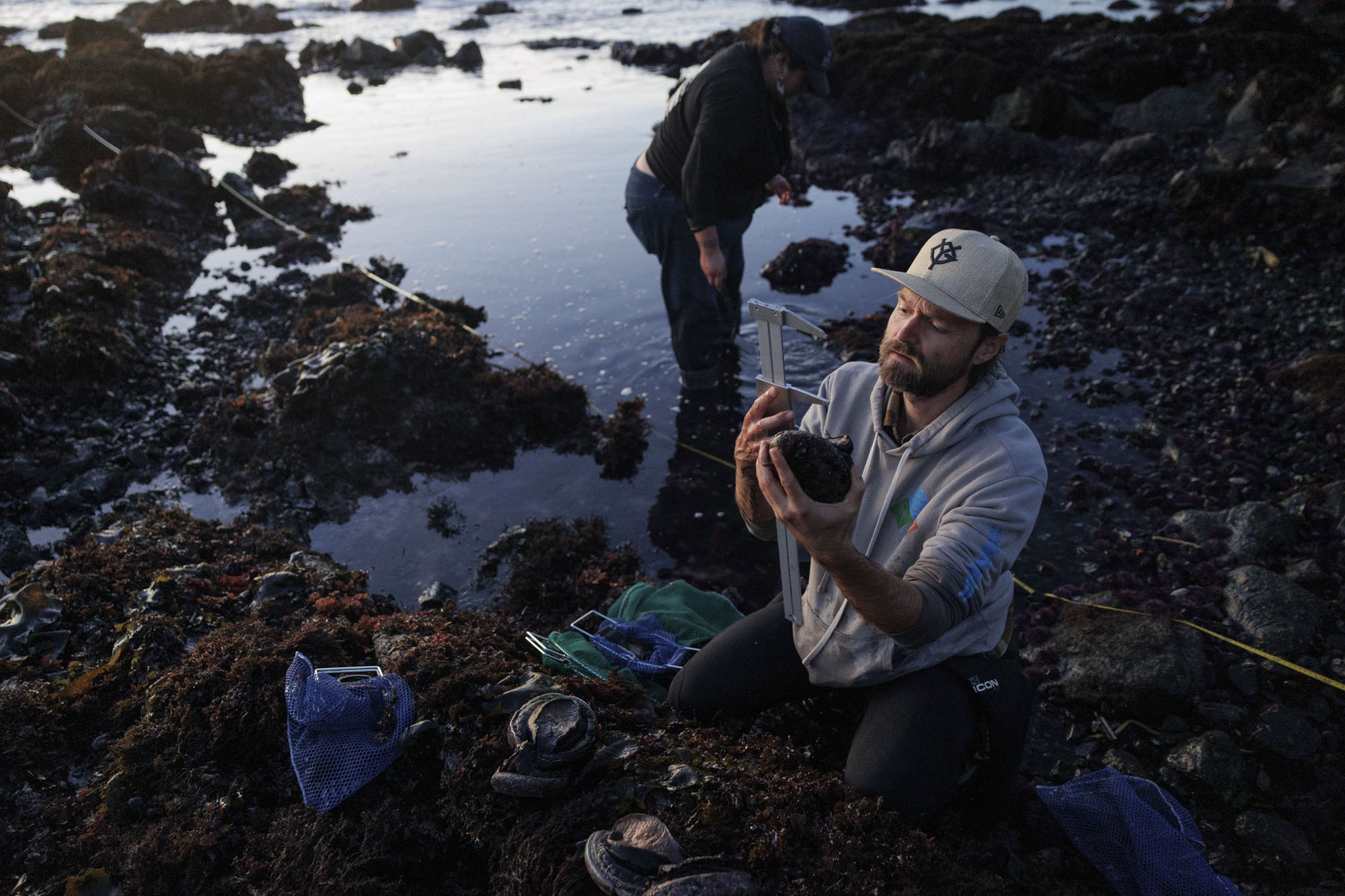
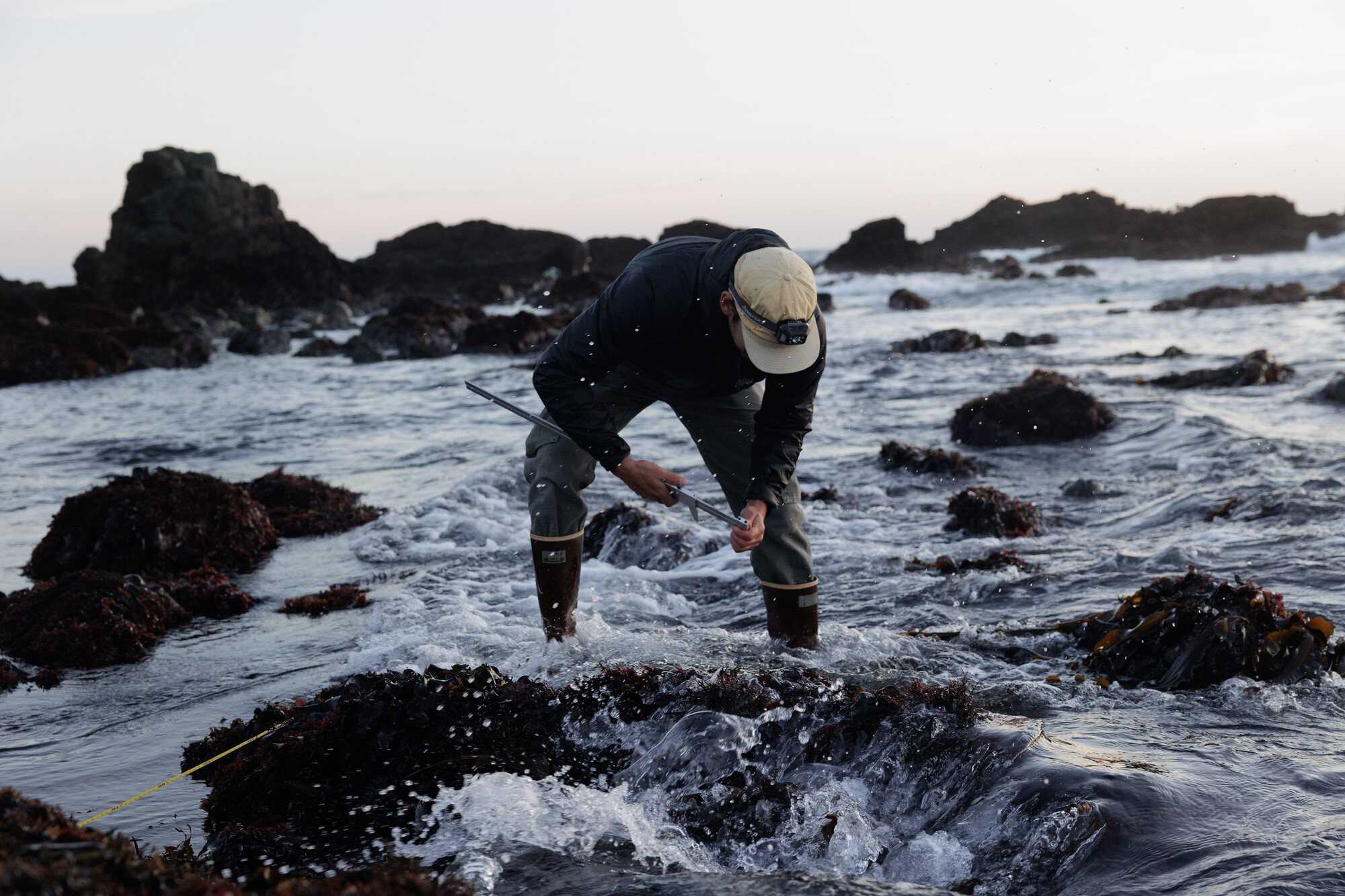
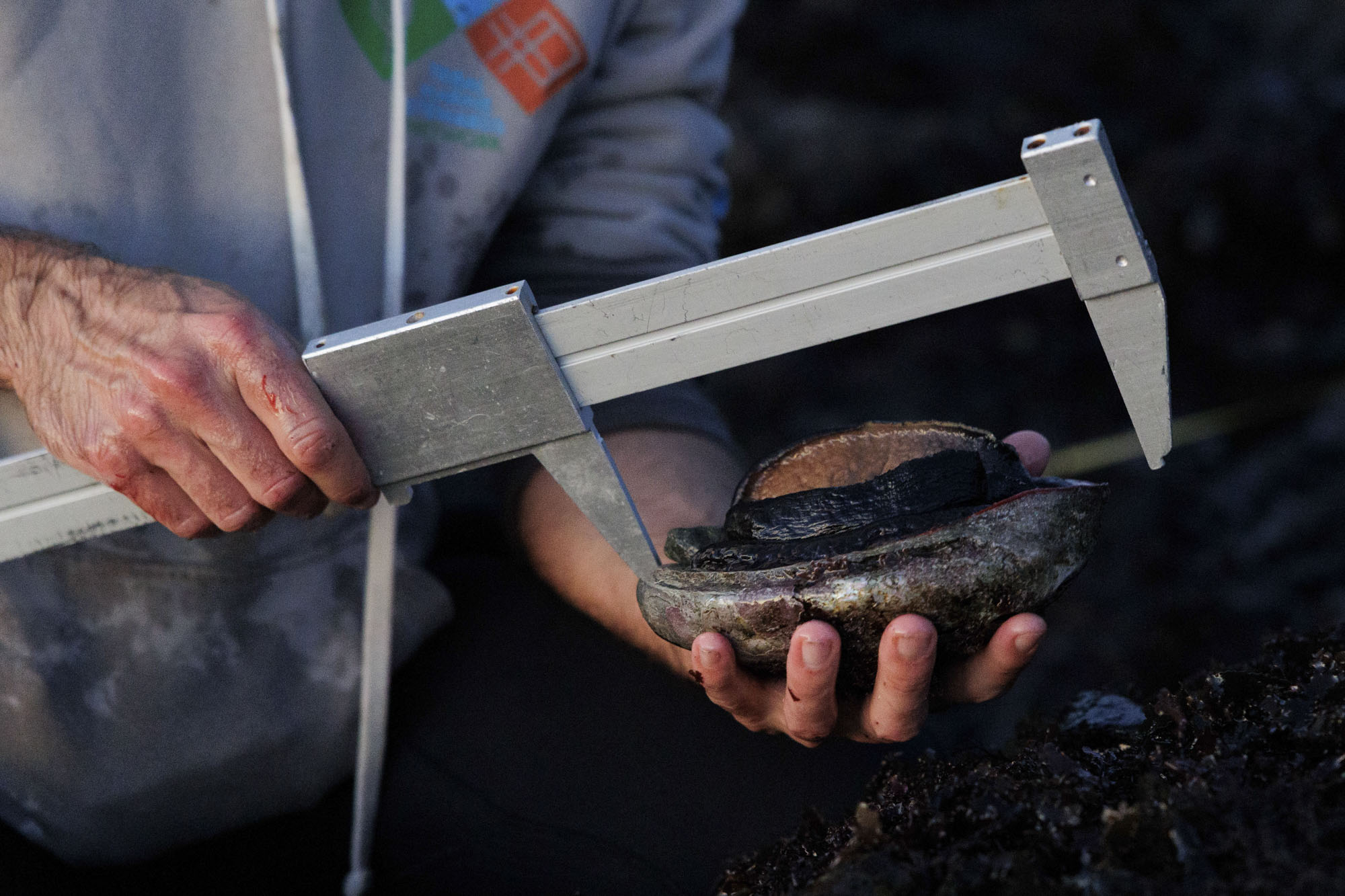
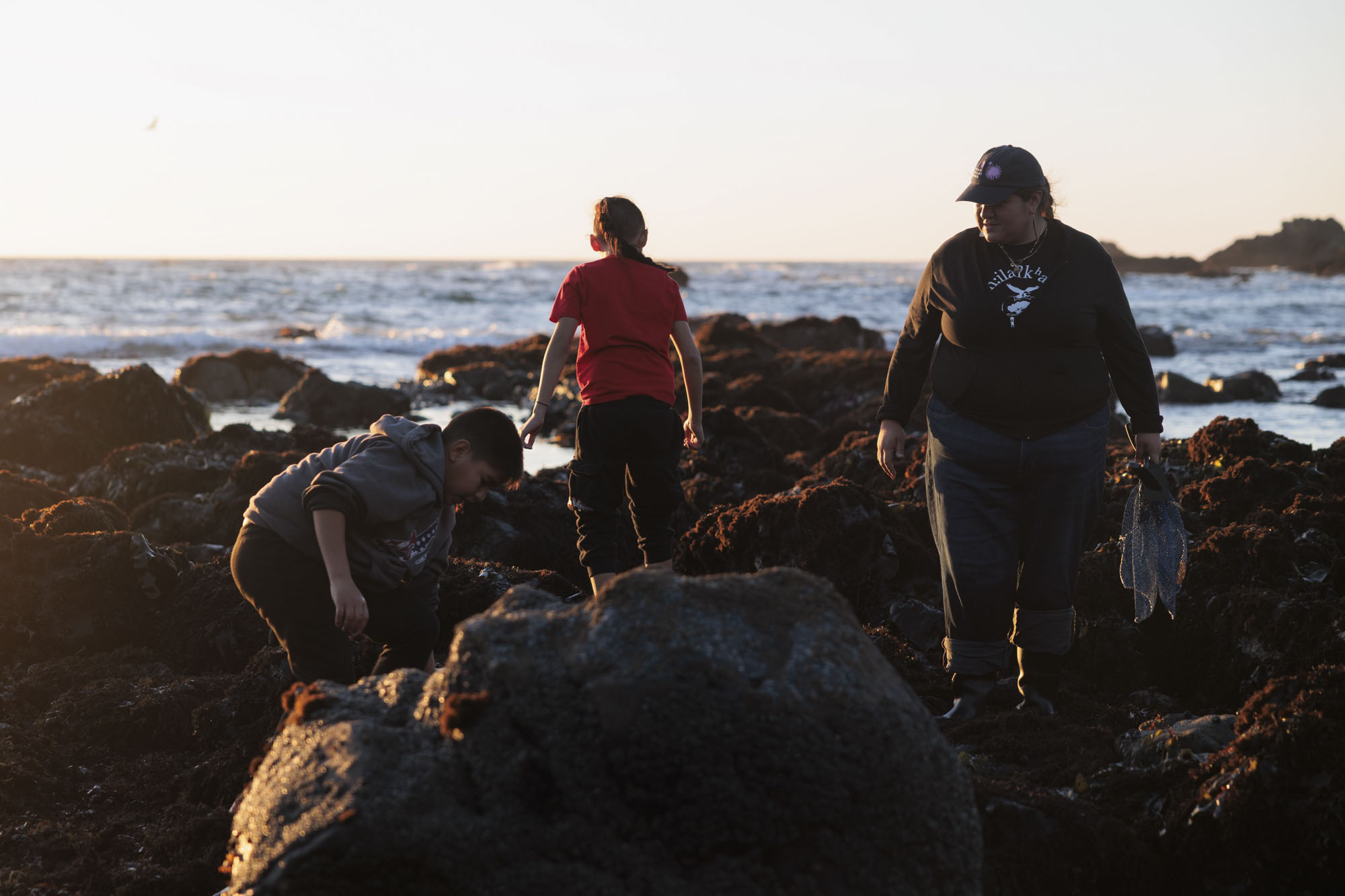
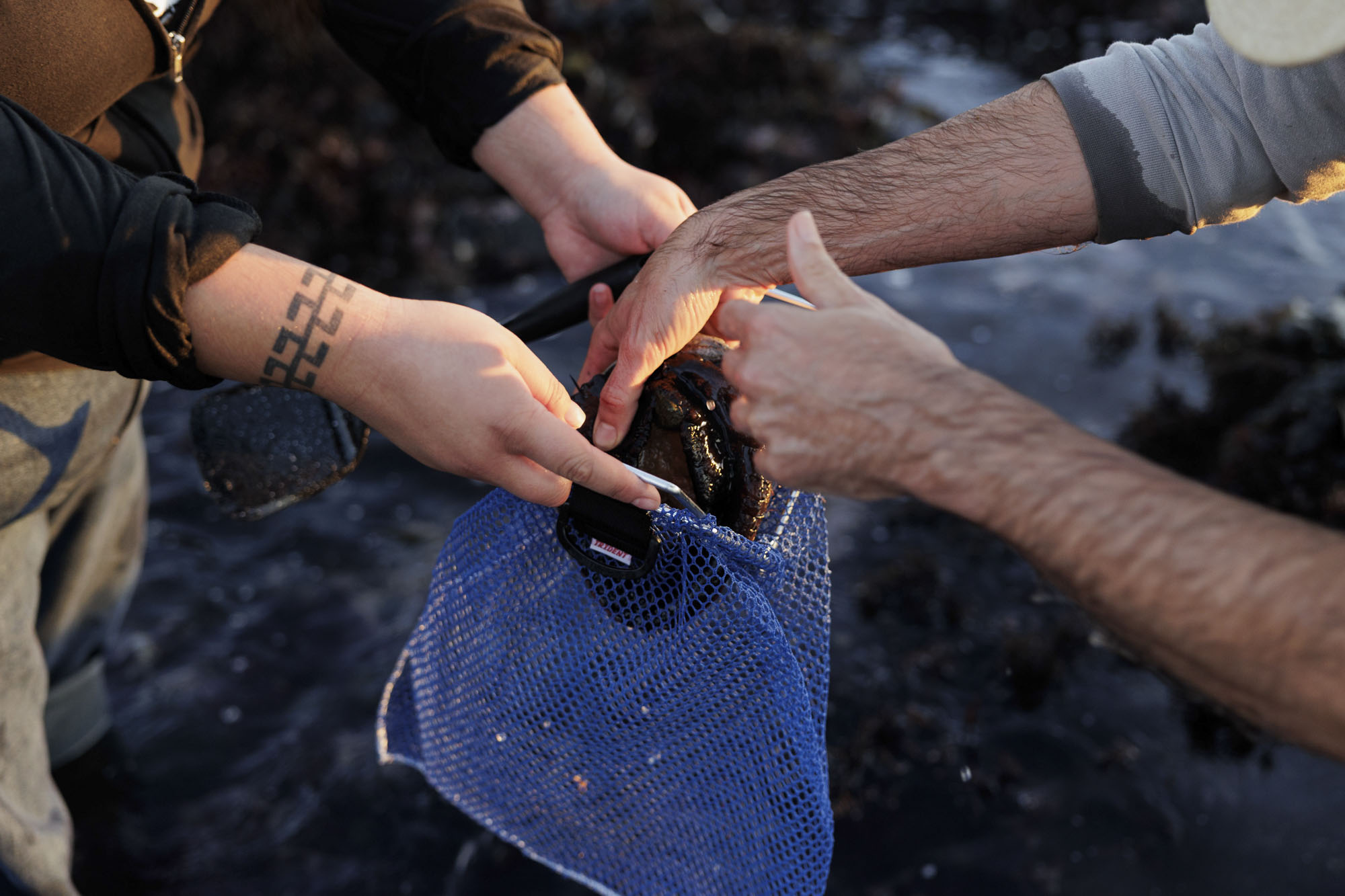
Arella Larose dipped a black spatula into a tide pool off the coast of Sea Ranch, slipping its flat edge between a red abalone‘s fleshy foot and a rock. The shelled marine animal plopped into her hand.
“That one was huge,” said Larose, a 23-year-old member of the Kashia Band of Pomo Indians. “We need six more.”
Larose collected 10 of the edible sea snails from this area of Sonoma County, part of a mission to save the endangered species from El Niño’s warming waters, which are sloshing up the California coast. Sea temperatures at Arena Cove, about 20 miles north of Sea Ranch and the closest National Oceanic and Atmospheric Administration station, are slightly above 64 degrees. That’s about 9 degrees above average for this time of year.
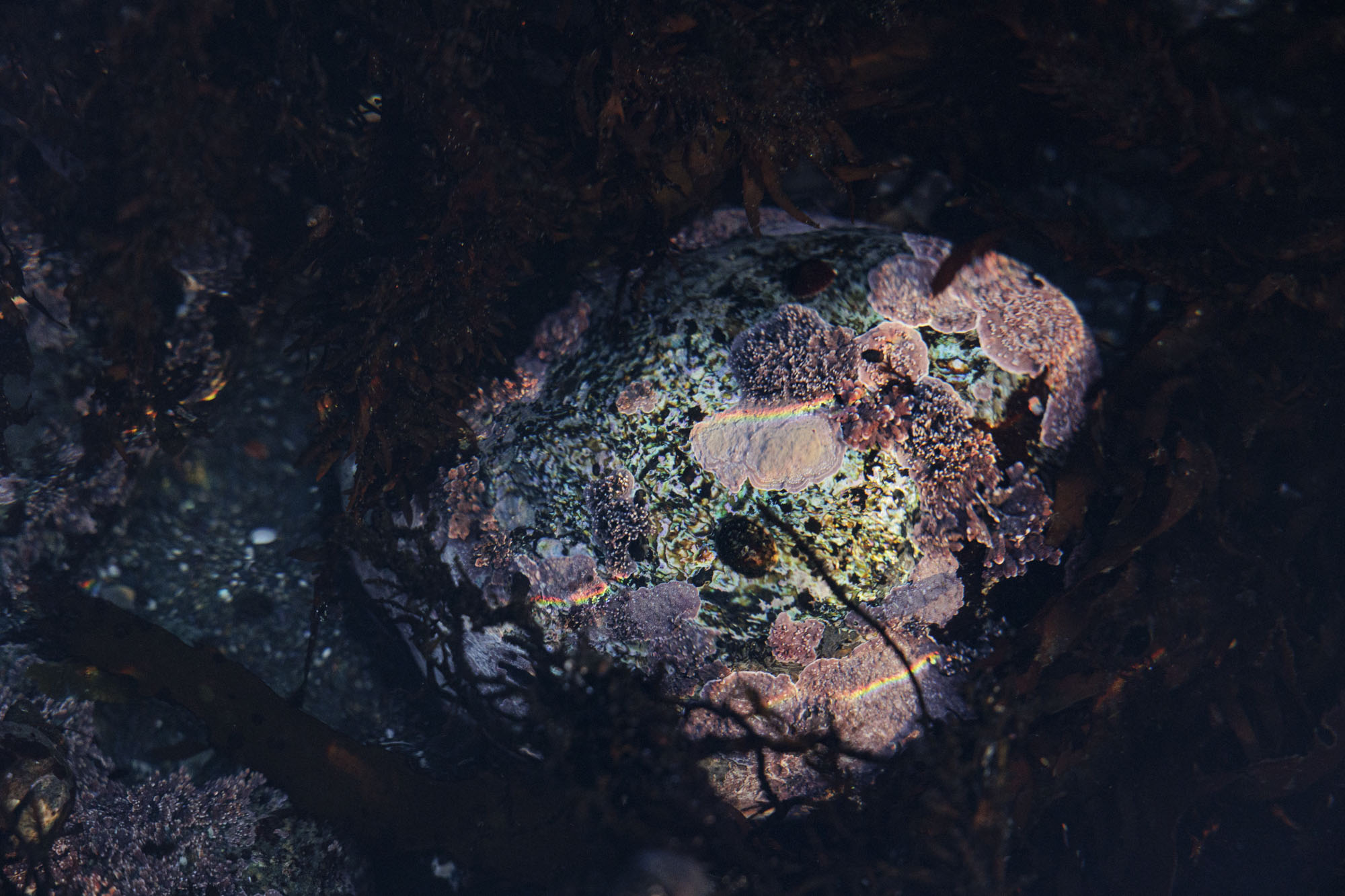
The tidal pool is several hundred feet wide. Spiky purple urchins cluster all around the sea ears, a common name for abalone, searching for the kelp both species love to munch.
“It’s overwhelming because this is how it looks when you’re down deeper in the water too,” Larose said. “These abalone are just absolutely outnumbered. There’s a problem, and we’re working on the solution.”
The plant-eating marine snails have dramatically declined, partly because the Pacific Ocean warmed during the last super El Niño about a decade ago. As it did, the purple urchin population exploded and voraciously ate the thick kelp forests, forcing abalone to search for other food sources. This triggered a massive die-off of the rare species, and its population plummeted by up to 90%.
Red abalone are a cultural keystone species for the Kashia Band of Pomo Indians, a federally recognized tribe, which has helped care for the mollusks for millennia. The animals served as a traditional food source and are tied to spiritual rituals, as well as jewelry, baskets and dance headdresses.
“The abalone has been our way of life,” Larose said, wearing rectangular iridescent red abalone shell earrings. “We would eat the meat and transform the shell and work it very intricately into pieces for regalia that would go into ceremony.”
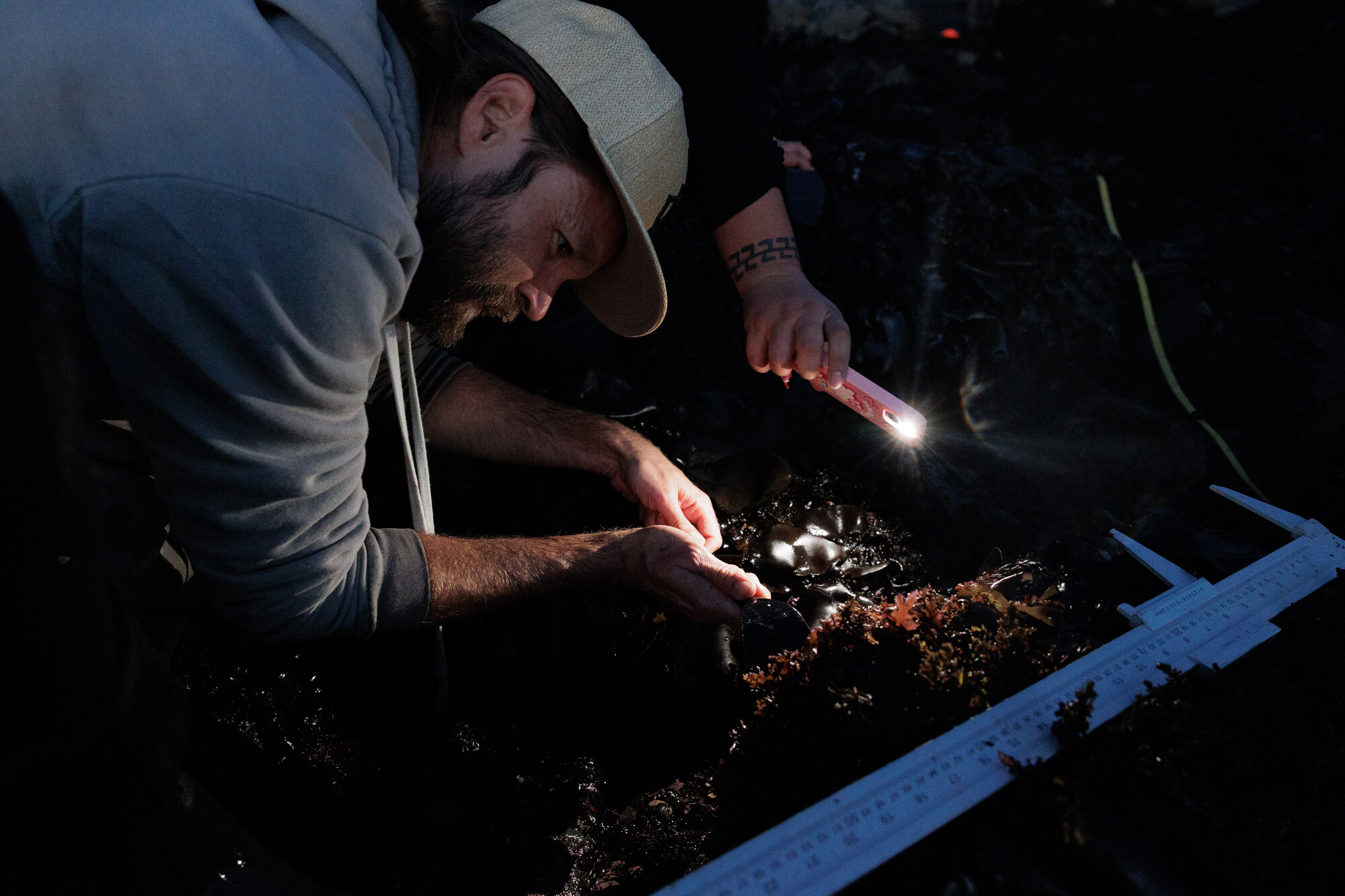
Now, as a super El Niño intensifies into what could be historic conditions, the tribe and marine scientists worry the remaining population, which is largely not reproducing in the wild, could be virtually lost altogether this winter. In response, they have scrambled to collect 80 red abalone from across the Sonoma and Mendocino coastlines and plan to breed them in the lab.
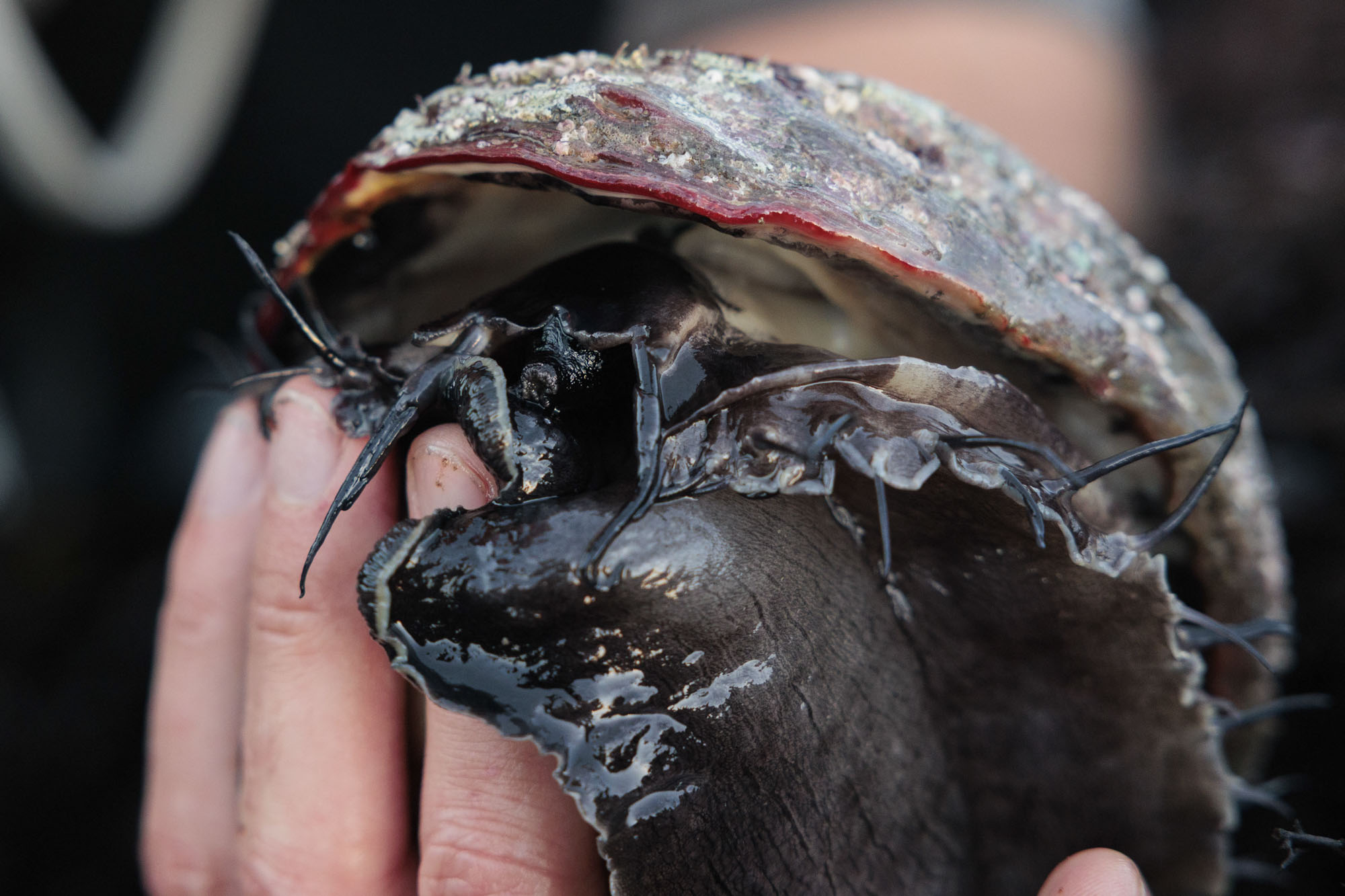
The scientists said abalone are a bellwether for how other marine species will be impacted by El Niño and the effects of human-caused climate change on the Pacific Ocean, like kelp and the critters that rely on them.
“It’s mildly terrifying and overwhelming,” said Dan Okamoto, a professor in the Department of Integrative Biology at UC Berkeley who helped lead the effort. “This could be a really strong kind of double whammy for this species and ecosystems.”
The warmer the water gets, Okamoto said, the more likely animals will go hungry and suffer from infections.
“They’re crawling out into the intertidal where there’s a small sanctuary of scraps of food because they are desperate,” Okamoto said.
There’s a 60% chance that this year’s El Niño will become “historic” this fall and winter, according to a November outlook from NOAA’s Climate Prediction Center.
El Niño doesn’t occur in California. It is a climate pattern characterized by warm waters thousands of miles away in the equatorial Pacific. Persistent trade winds reverse, and a massive bulge of warm water lurches toward South America. That water splits north and slowly moves up the coastline, warming and thickening the ocean’s surface.
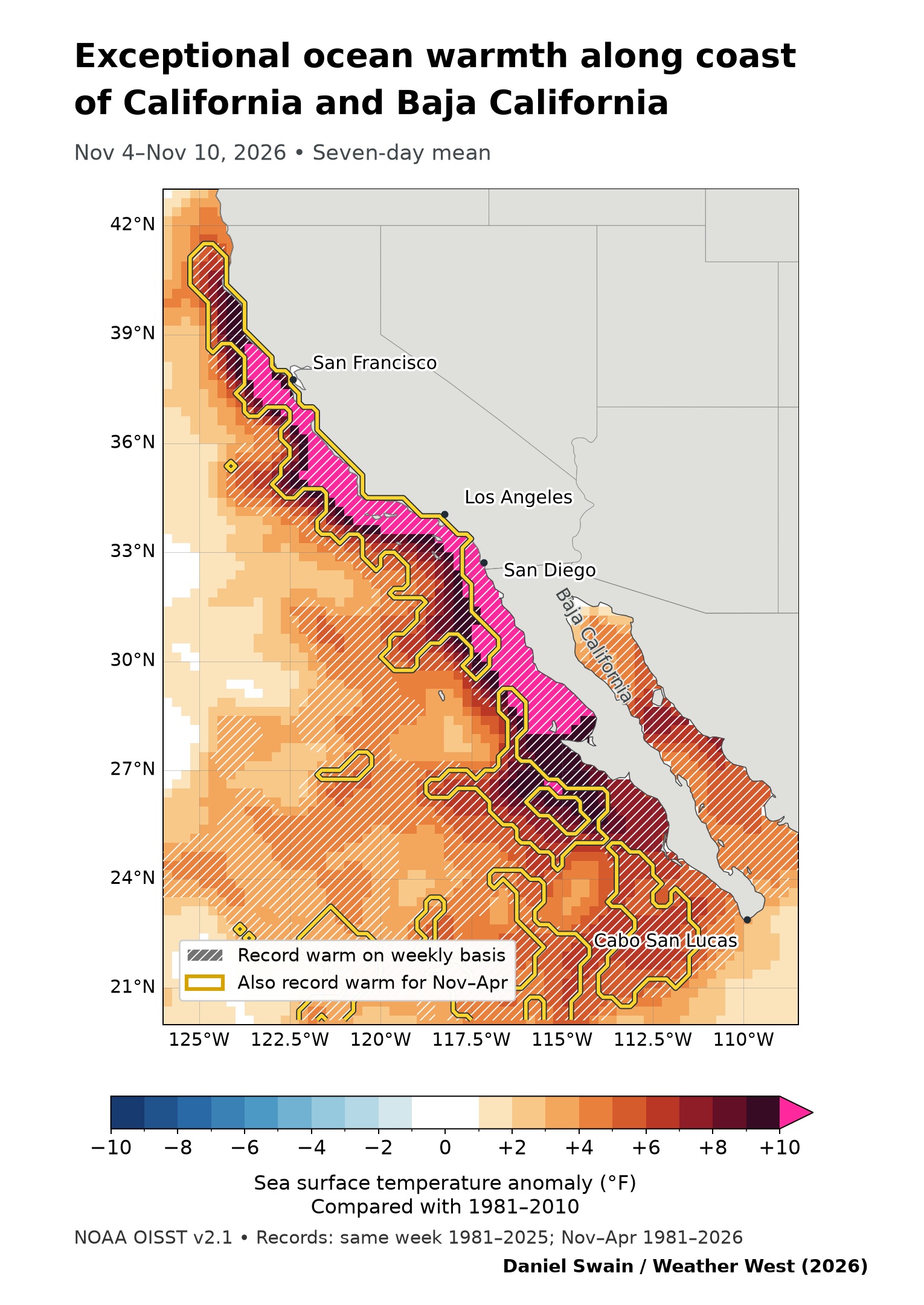
Climate scientist Daniel Swain, with UC Agriculture and Natural Resources, said he expects El Niño’s effects to be outsized and to be felt for months, especially since the marine heatwave now extends from Laguna Beach to Eureka.
“It is so extraordinary that we do actually now have a double-digit Fahrenheit marine heat wave along almost the entire California coast,” Swain said in a recent YouTube briefing. “Not only is the water warmer than it’s ever been at this time of year, but in fact, it is warmer than it has ever been at any point after November 1st and before May in any previous year. These are record-shattering temperatures for the cool season.”
Water off the coast of Southern California has reached the mid-70s in places like San Diego and Long Beach. Further north, temperatures in Monterey Bay are roughly 64 degrees Fahrenheit, surpassing a high set during an El Niño back in 1997.
“If it follows other El Niños, it’ll keep getting warmer and stay warm for six or more months,” said Francisco Chavez, senior scientist with the Monterey Bay Aquarium Research Institute. “But we won’t get as warm as Southern California has gotten.”
Temperatures along the North Coast, near Sonoma County’s Sea Ranch, Okamoto said, are similar to the last super El Niño a decade ago.
“It is that tipping point difference between where we start to see things like increased appetite by urchins and abalone and really strong impacts on bull kelp, which is a species that likes cooler water,” Okamoto said. “We’ve seen some evidence of die-offs happening during this heat wave further up the coast.”
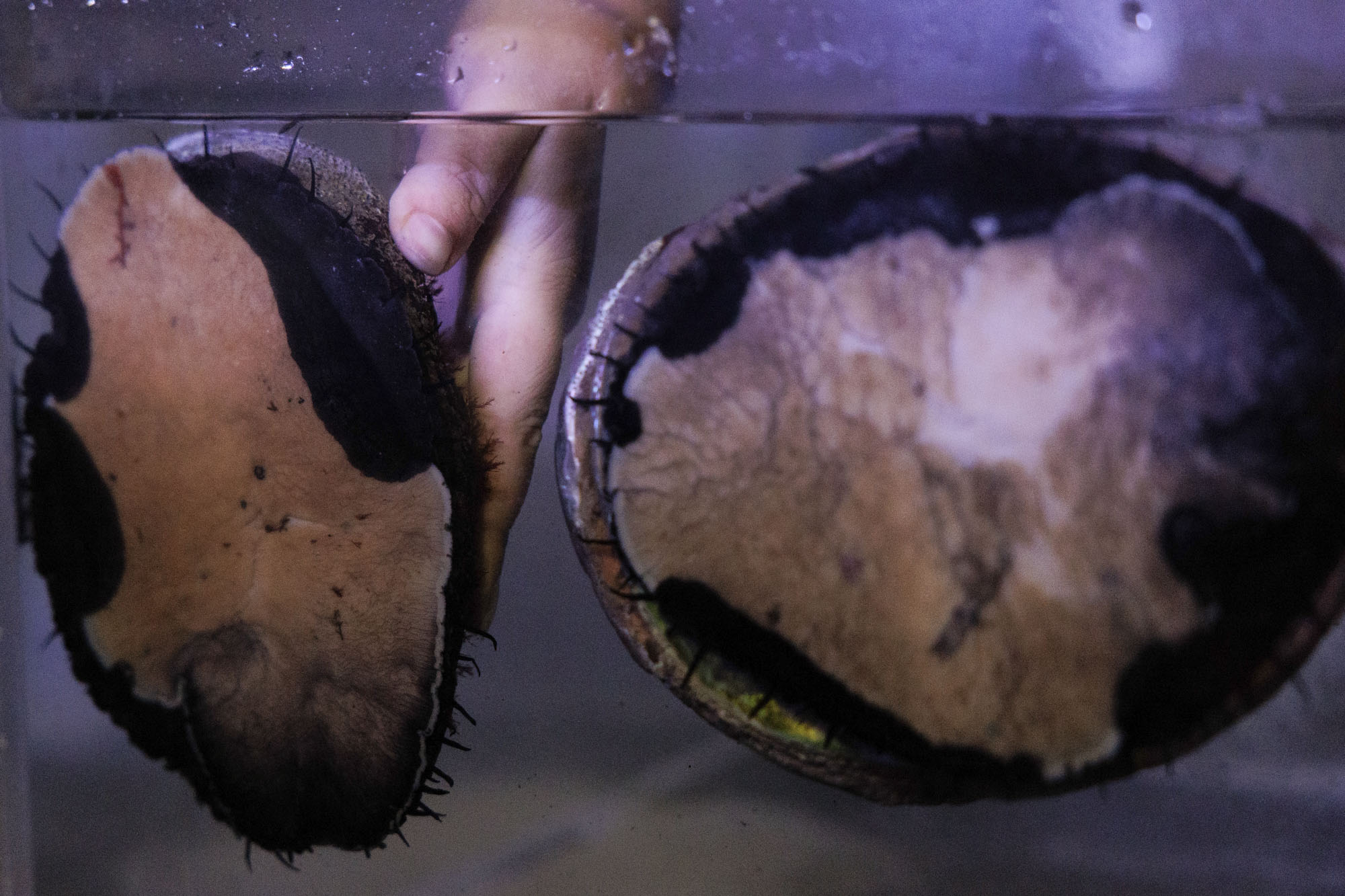
After collecting the abalone, the groups relocated them to the UC Davis Bodega Marine Laboratory in Sonoma County and the Noyo Center for Marine Science in Mendocino County, where they may take several years to breed successfully.
“We want to see what happens with El Niño this year and if things are as bad as we are thinking,” said Dan Swezey, director of oceans and aquaculture for the Kashia Band of Pomo Indians. “But in our past experience, it takes them a long time to get ready. If in a year or two we have a successful spawn, then it takes three years probably to raise animals big enough to go into the wild.”
For now, the animals are in tanks labeled with the Kashia names for the places where they were collected. The coastline where Sea Ranch is located is described in the Kashia language as “Tule ah’ ale yo” or “under the hummingbird tree.”
“I hope that they understand what’s going on, that I didn’t hurt any of them and that they weren’t too uncomfortable on the drive here,” Larose said.
Looking through the glass tank and at the animals adjusting to their new home, Larose hopes the effort to breed the abalone works, so an integral link to her culture isn’t lost in the warming sea.
“It would be very sad, but there’s still hope because we will have the ones at the lab,” Larose said. “Even if the population takes a hit, we’ll know that we will have some that we’re trying to get to reproduce that could eventually get back into the water.”