El Niño Is Warming Monterey Bay, Causing Trouble for Ocean Life
Ocean water temperatures in Monterey Bay are now the warmest observed in more than 30 years — clear evidence of El Niño’s arrival on the Central Coast, according to the Monterey Bay Aquarium Research Institute.
Researchers said the warming is partly due to Kelvin waves, a giant underwater swell that slowly delivers El Niño-associated warm water across the Pacific Ocean.
As many as three Kelvin waves have already moved up the California coast. Scientists tracking the phenomenon found a strong influx of warm water at depth, around 200 feet below the ocean’s surface, which is a “definitive signature of the arrival of El Niño,” researchers wrote in a recent post.
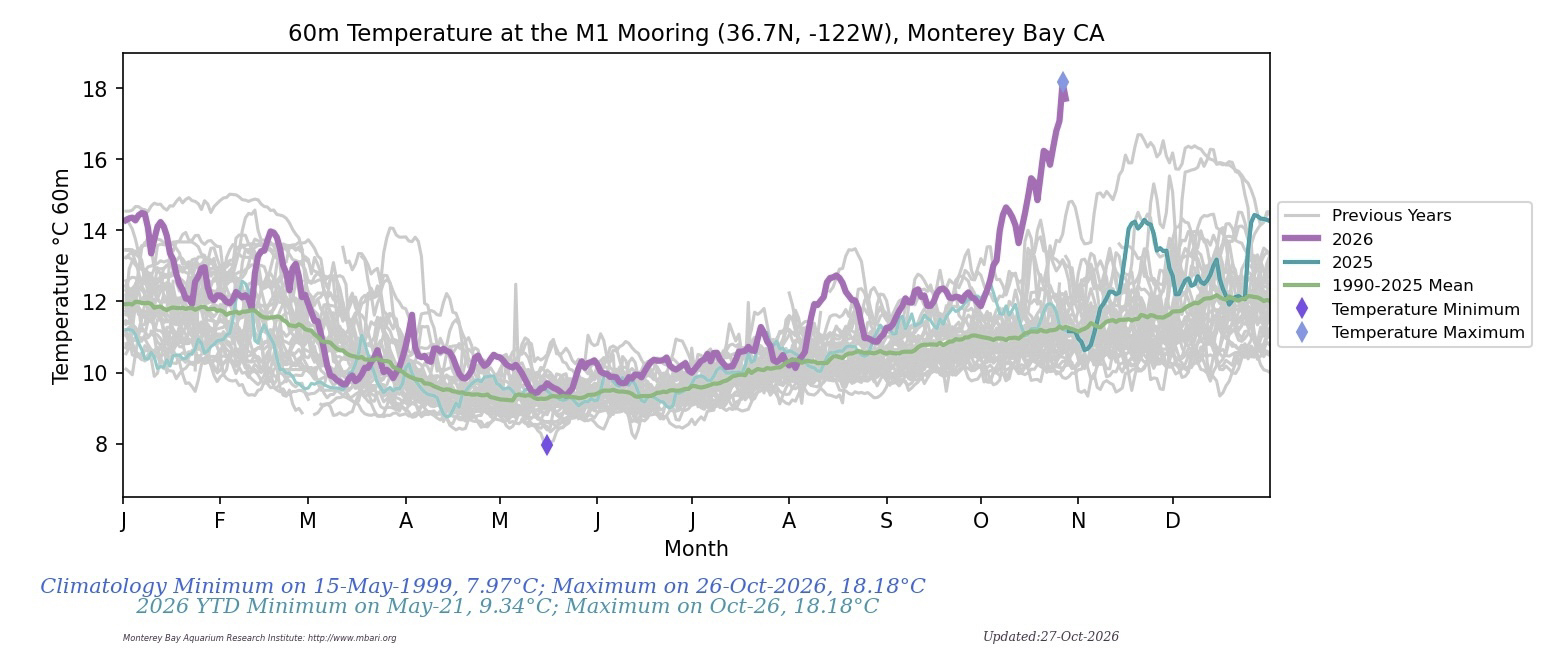
Researchers wrote that as of Oct. 26, the temperature reached 18.18 degrees Celsius — roughly 64 degrees Fahrenheit — “surpassing the time-series record high set on November 19, 1997, during a previous El Niño event.”
“This current El Niño has been forecasted to be one of the strongest of the modern record and the M1 mooring confirms this forecast for Monterey Bay,” said senior scientist Francisco Chavez, of the institute’s buoy with instruments to about 300 feet below the surface of the ocean.
There’s an 83% chance that this year’s El Niño will become “historic” this fall and winter, according to an October outlook from the National Oceanic and Atmospheric Administration’s Climate Prediction Center.
The seasonal climate pattern is marked by warming in the Pacific Ocean’s surface layer. When tropical trade winds weaken or reverse, warm ocean water near Asia can slosh toward the Pacific Coast.
That warming has many effects: it can reshape the jet stream and bring stormier weather, disrupt the ocean’s nutrient-rich upwelling, heat coastal waters, raise sea levels and stress marine life.
The absence of cool water near the surface can have major ramifications on ocean life. Chavez said the strongest impacts will likely occur this winter and spring.
“If it follows other El Niños, it’ll keep getting warmer and stay warm for six or more months,” Chavez said.
“But we won’t get as warm as Southern California has gotten.”
The scientists are closely tracking daily temperatures to provide context for ecological observations in the coming months.
The influx and presence of warm water for months will likely mean less food for whales, birds and other species.
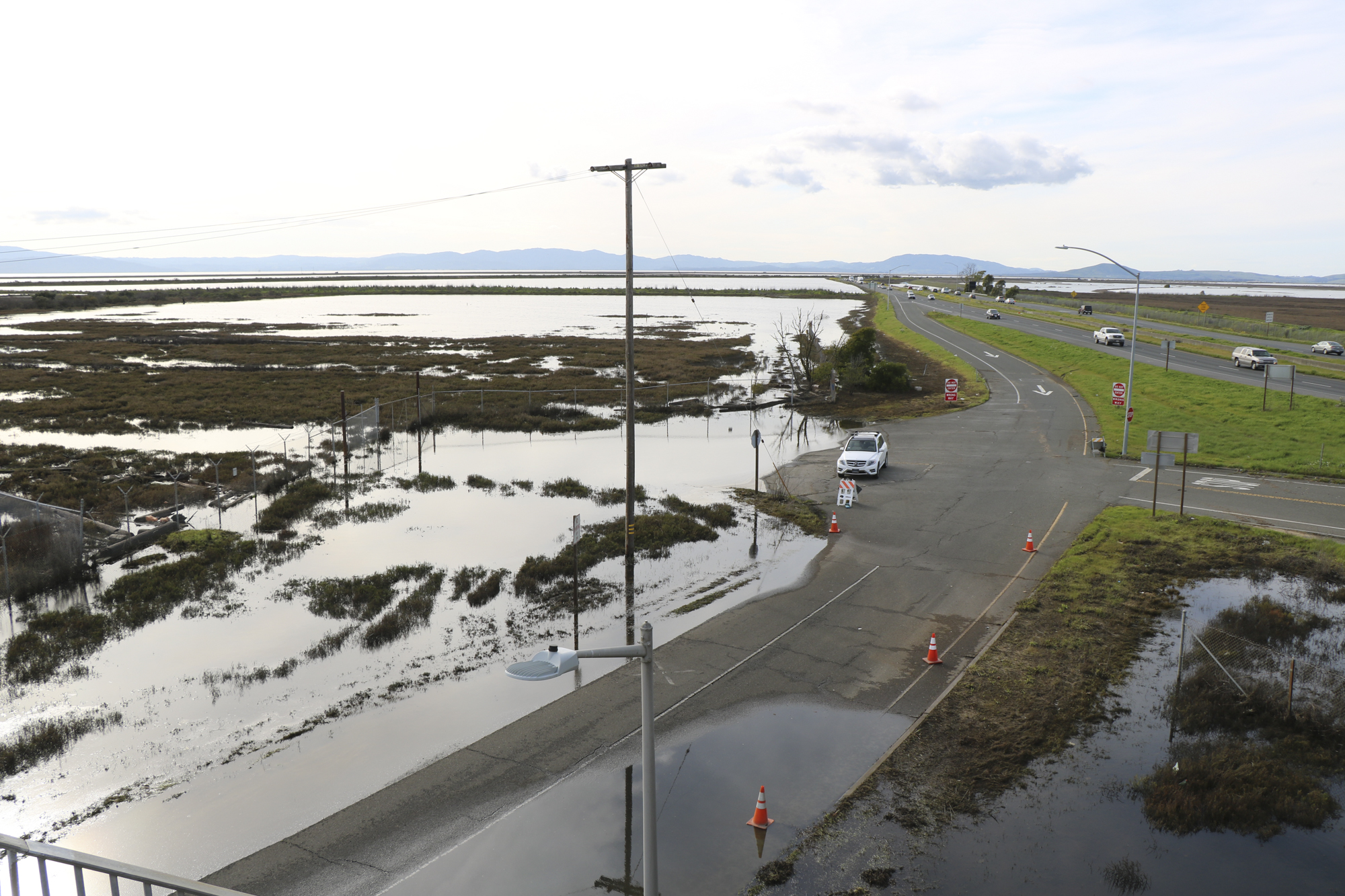
Kelp could die or recede. It could also lead to meteorological impacts like intense rainfall and flooding.
Experts have already sighted warm-water species near the surface that aren’t usually seen in the region, including tropical species like the winged comb jelly and a rose siphonophore. They also saw schools of halfmoon fish, which are usually found in Southern California.
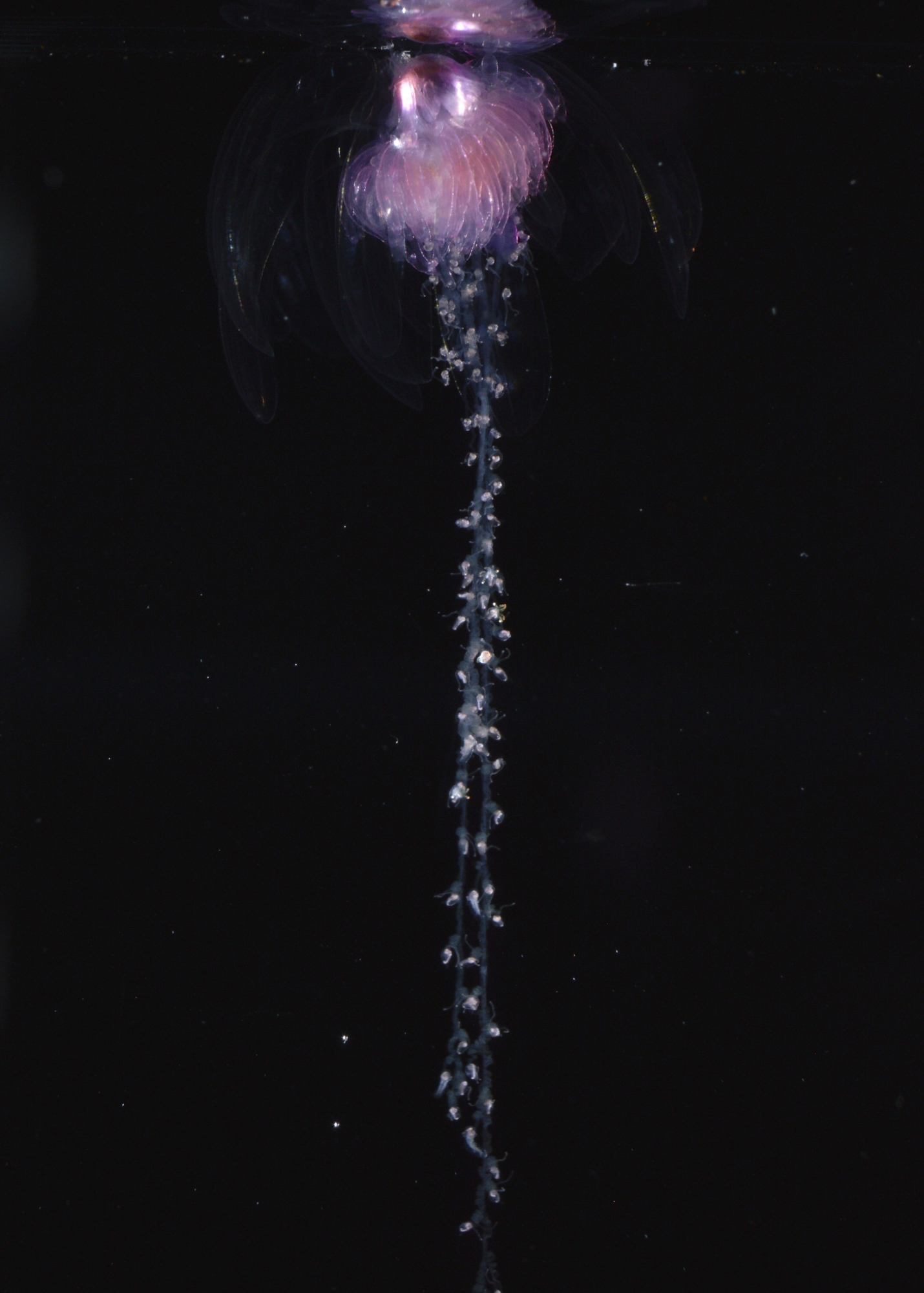
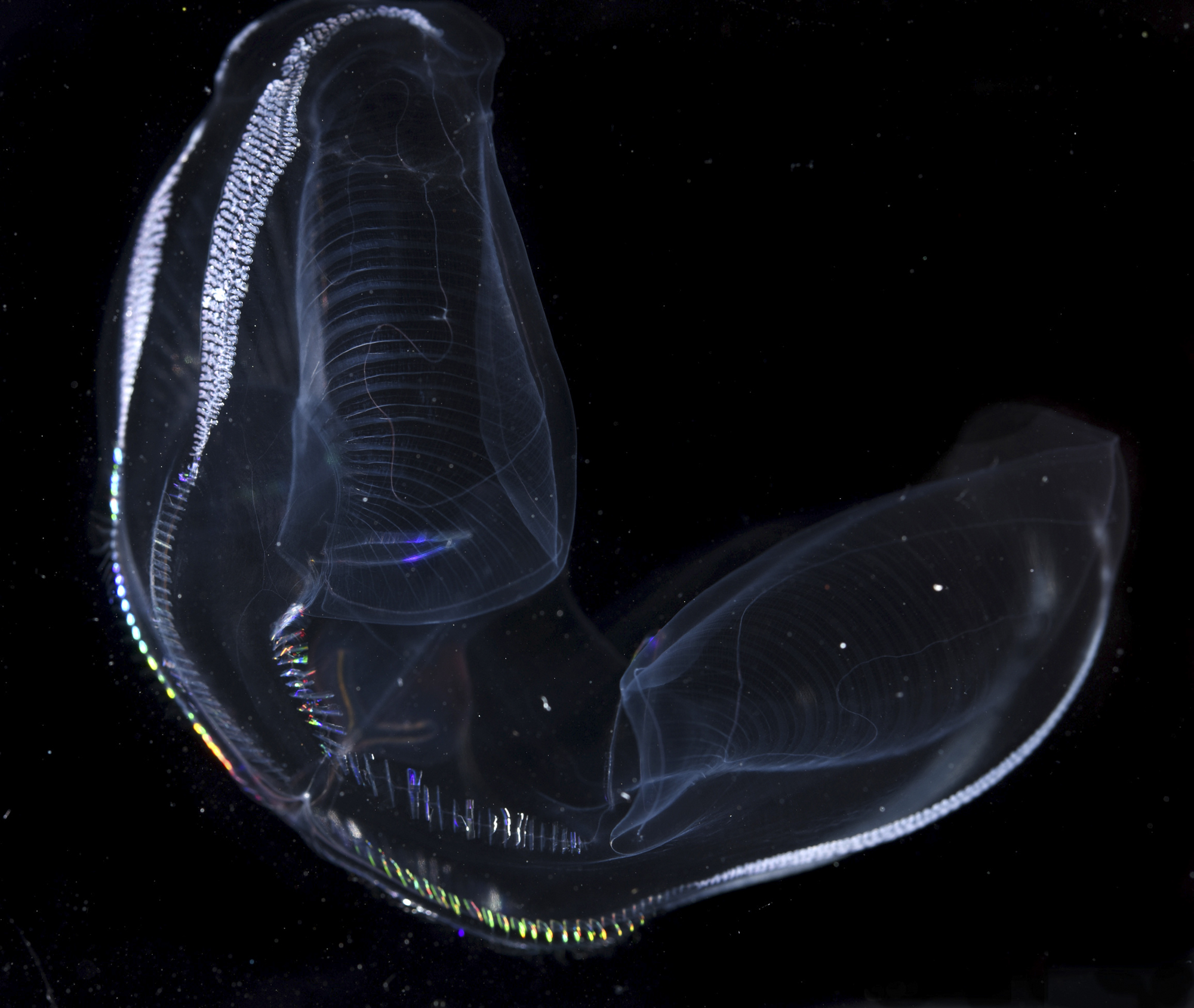
“Typically, we collect tropical species like [winged comb jelly] while diving near Hawaii,” said Steven Haddock, a senior scientist with the institute. “Finding large reproductive individuals right in our own backyard was a real surprise.”
The warm-water species can affect local marine life and cause “cascading effects on the ocean food web,” researchers wrote.
“Seabirds are especially vulnerable to shifting food supplies, while whales find their habitat and feeding grounds compressed near the coast.”
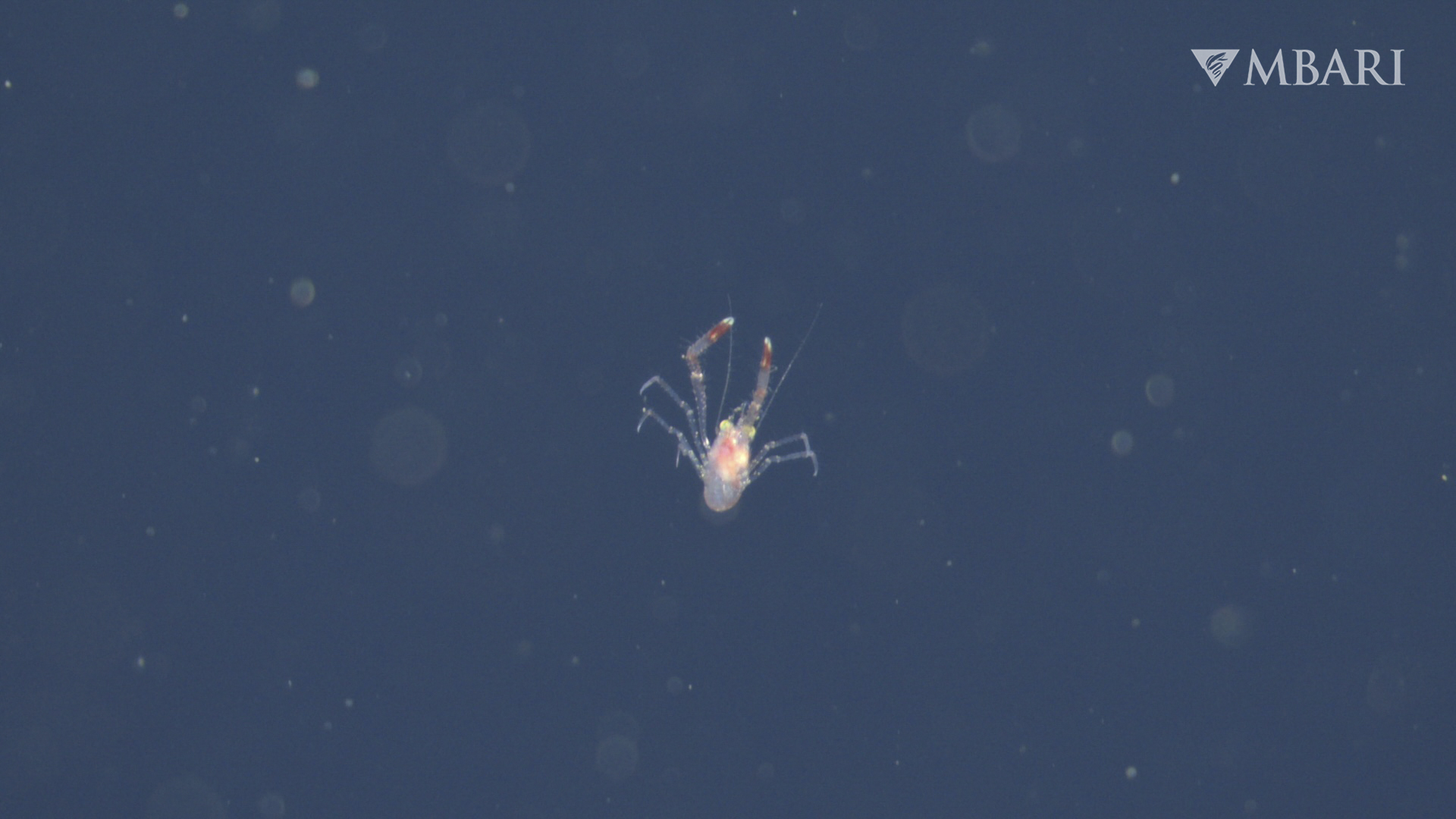
Other researchers have also spotted species at lower depths not usually found in Monterey Bay, including juvenile pelagic red crabs and several Humboldt squid.
“As a rule, these warm-water species are uncommon here in the cool depths of Monterey Bay,” BARI Senior Scientist Bruce Robison said. “These sightings are likely the first indicators of a transition in deep midwater community composition and structure, linked to the impending El Niño.”