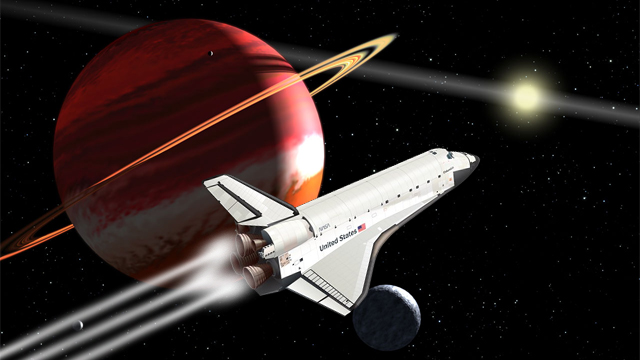
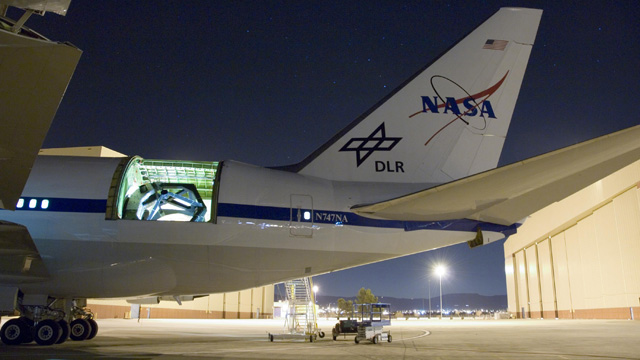
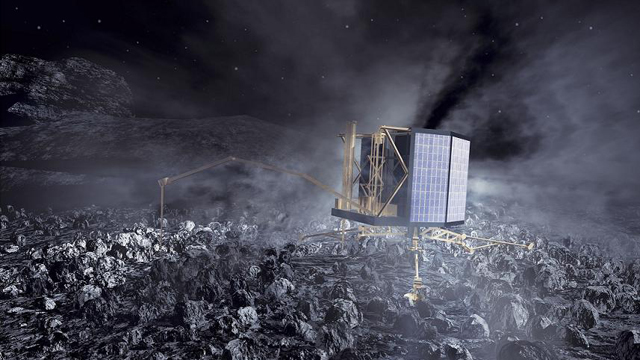
window.__IS_SSR__=true
window.__INITIAL_STATE__={
"attachmentsReducer": {
"audio_0": {
"type": "attachments",
"id": "audio_0",
"imgSizes": {
"kqedFullSize": {
"file": "https://ww2.kqed.org/news/wp-content/themes/KQED-unified/img/audio_bgs/background0.jpg"
}
}
},
"audio_1": {
"type": "attachments",
"id": "audio_1",
"imgSizes": {
"kqedFullSize": {
"file": "https://ww2.kqed.org/news/wp-content/themes/KQED-unified/img/audio_bgs/background1.jpg"
}
}
},
"audio_2": {
"type": "attachments",
"id": "audio_2",
"imgSizes": {
"kqedFullSize": {
"file": "https://ww2.kqed.org/news/wp-content/themes/KQED-unified/img/audio_bgs/background2.jpg"
}
}
},
"audio_3": {
"type": "attachments",
"id": "audio_3",
"imgSizes": {
"kqedFullSize": {
"file": "https://ww2.kqed.org/news/wp-content/themes/KQED-unified/img/audio_bgs/background3.jpg"
}
}
},
"audio_4": {
"type": "attachments",
"id": "audio_4",
"imgSizes": {
"kqedFullSize": {
"file": "https://ww2.kqed.org/news/wp-content/themes/KQED-unified/img/audio_bgs/background4.jpg"
}
}
},
"placeholder": {
"type": "attachments",
"id": "placeholder",
"imgSizes": {
"thumbnail": {
"file": "https://cdn.kqed.org/wp-content/uploads/2024/12/KQED-Default-Image-816638274-2000x1333-1-160x107.jpg",
"width": 160,
"height": 107,
"mimeType": "image/jpeg"
},
"medium": {
"file": "https://cdn.kqed.org/wp-content/uploads/2024/12/KQED-Default-Image-816638274-2000x1333-1-800x533.jpg",
"width": 800,
"height": 533,
"mimeType": "image/jpeg"
},
"medium_large": {
"file": "https://cdn.kqed.org/wp-content/uploads/2024/12/KQED-Default-Image-816638274-2000x1333-1-768x512.jpg",
"width": 768,
"height": 512,
"mimeType": "image/jpeg"
},
"large": {
"file": "https://cdn.kqed.org/wp-content/uploads/2024/12/KQED-Default-Image-816638274-2000x1333-1-1020x680.jpg",
"width": 1020,
"height": 680,
"mimeType": "image/jpeg"
},
"1536x1536": {
"file": "https://cdn.kqed.org/wp-content/uploads/2024/12/KQED-Default-Image-816638274-2000x1333-1-1536x1024.jpg",
"width": 1536,
"height": 1024,
"mimeType": "image/jpeg"
},
"fd-lrg": {
"file": "https://cdn.kqed.org/wp-content/uploads/2024/12/KQED-Default-Image-816638274-2000x1333-1-1536x1024.jpg",
"width": 1536,
"height": 1024,
"mimeType": "image/jpeg"
},
"fd-med": {
"file": "https://cdn.kqed.org/wp-content/uploads/2024/12/KQED-Default-Image-816638274-2000x1333-1-1020x680.jpg",
"width": 1020,
"height": 680,
"mimeType": "image/jpeg"
},
"fd-sm": {
"file": "https://cdn.kqed.org/wp-content/uploads/2024/12/KQED-Default-Image-816638274-2000x1333-1-800x533.jpg",
"width": 800,
"height": 533,
"mimeType": "image/jpeg"
},
"post-thumbnail": {
"file": "https://cdn.kqed.org/wp-content/uploads/2024/12/KQED-Default-Image-816638274-2000x1333-1-672x372.jpg",
"width": 672,
"height": 372,
"mimeType": "image/jpeg"
},
"twentyfourteen-full-width": {
"file": "https://cdn.kqed.org/wp-content/uploads/2024/12/KQED-Default-Image-816638274-2000x1333-1-1038x576.jpg",
"width": 1038,
"height": 576,
"mimeType": "image/jpeg"
},
"xxsmall": {
"file": "https://cdn.kqed.org/wp-content/uploads/2024/12/KQED-Default-Image-816638274-2000x1333-1-160x107.jpg",
"width": 160,
"height": 107,
"mimeType": "image/jpeg"
},
"xsmall": {
"file": "https://cdn.kqed.org/wp-content/uploads/2024/12/KQED-Default-Image-816638274-2000x1333-1-672x372.jpg",
"width": 672,
"height": 372,
"mimeType": "image/jpeg"
},
"small": {
"file": "https://cdn.kqed.org/wp-content/uploads/2024/12/KQED-Default-Image-816638274-2000x1333-1-672x372.jpg",
"width": 672,
"height": 372,
"mimeType": "image/jpeg"
},
"xlarge": {
"file": "https://cdn.kqed.org/wp-content/uploads/2024/12/KQED-Default-Image-816638274-2000x1333-1-1020x680.jpg",
"width": 1020,
"height": 680,
"mimeType": "image/jpeg"
},
"full-width": {
"file": "https://cdn.kqed.org/wp-content/uploads/2024/12/KQED-Default-Image-816638274-2000x1333-1-1920x1280.jpg",
"width": 1920,
"height": 1280,
"mimeType": "image/jpeg"
},
"guest-author-32": {
"file": "https://cdn.kqed.org/wp-content/uploads/2025/01/KQED-Default-Image-816638274-1333x1333-1-160x160.jpg",
"width": 32,
"height": 32,
"mimeType": "image/jpeg"
},
"guest-author-50": {
"file": "https://cdn.kqed.org/wp-content/uploads/2025/01/KQED-Default-Image-816638274-1333x1333-1-160x160.jpg",
"width": 50,
"height": 50,
"mimeType": "image/jpeg"
},
"guest-author-64": {
"file": "https://cdn.kqed.org/wp-content/uploads/2025/01/KQED-Default-Image-816638274-1333x1333-1-160x160.jpg",
"width": 64,
"height": 64,
"mimeType": "image/jpeg"
},
"guest-author-96": {
"file": "https://cdn.kqed.org/wp-content/uploads/2025/01/KQED-Default-Image-816638274-1333x1333-1-160x160.jpg",
"width": 96,
"height": 96,
"mimeType": "image/jpeg"
},
"guest-author-128": {
"file": "https://cdn.kqed.org/wp-content/uploads/2025/01/KQED-Default-Image-816638274-1333x1333-1-160x160.jpg",
"width": 128,
"height": 128,
"mimeType": "image/jpeg"
},
"detail": {
"file": "https://cdn.kqed.org/wp-content/uploads/2025/01/KQED-Default-Image-816638274-1333x1333-1-160x160.jpg",
"width": 160,
"height": 160,
"mimeType": "image/jpeg"
},
"kqedFullSize": {
"file": "https://cdn.kqed.org/wp-content/uploads/2024/12/KQED-Default-Image-816638274-2000x1333-1.jpg",
"width": 2000,
"height": 1333
}
}
},
"quest_31191": {
"type": "attachments",
"id": "quest_31191",
"meta": {
"index": "attachments_1716263798",
"site": "quest",
"id": "31191",
"found": true
},
"parent": 31187,
"imgSizes": {
"thumbnail": {
"file": "https://ww2.kqed.org/app/uploads/sites/39/2012/02/spaceshuttle-epsiloneridani-400x225.jpg",
"width": 400,
"mimeType": "image/jpeg",
"height": 225
},
"kqedFullSize": {
"file": "https://ww2.kqed.org/app/uploads/sites/39/2012/02/spaceshuttle-epsiloneridani.jpg",
"width": 640,
"height": 360
},
"guest-author-96": {
"file": "https://ww2.kqed.org/app/uploads/sites/39/2012/02/spaceshuttle-epsiloneridani-96x96.jpg",
"width": 96,
"mimeType": "image/jpeg",
"height": 96
},
"guest-author-64": {
"file": "https://ww2.kqed.org/app/uploads/sites/39/2012/02/spaceshuttle-epsiloneridani-64x64.jpg",
"width": 64,
"mimeType": "image/jpeg",
"height": 64
},
"detail": {
"file": "https://ww2.kqed.org/app/uploads/sites/39/2012/02/spaceshuttle-epsiloneridani-75x75.jpg",
"width": 75,
"mimeType": "image/jpeg",
"height": 75
},
"guest-author-32": {
"file": "https://ww2.kqed.org/app/uploads/sites/39/2012/02/spaceshuttle-epsiloneridani-32x32.jpg",
"width": 32,
"mimeType": "image/jpeg",
"height": 32
},
"guest-author-128": {
"file": "https://ww2.kqed.org/app/uploads/sites/39/2012/02/spaceshuttle-epsiloneridani-128x128.jpg",
"width": 128,
"mimeType": "image/jpeg",
"height": 128
}
},
"publishDate": 1329946322,
"modified": 1329946322,
"caption": "Hypothetical Space Shuttle at Epsilon Eridani",
"description": "Hypothetical Space Shuttle at Epsilon Eridani",
"title": "Hypothetical Space Shuttle at Epsilon Eridani",
"credit": null,
"status": "inherit",
"isLoading": false,
"fetchFailed": false
},
"quest_26551": {
"type": "attachments",
"id": "quest_26551",
"meta": {
"index": "attachments_1716263798",
"site": "quest",
"id": "26551",
"found": true
},
"parent": 26549,
"imgSizes": {
"thumbnail": {
"file": "https://ww2.kqed.org/app/uploads/sites/39/2011/10/NASA-Sofia-400x225.jpg",
"width": 400,
"mimeType": "image/jpeg",
"height": 225
},
"kqedFullSize": {
"file": "https://ww2.kqed.org/app/uploads/sites/39/2011/10/NASA-Sofia.jpg",
"width": 640,
"height": 360
},
"guest-author-96": {
"file": "https://ww2.kqed.org/app/uploads/sites/39/2011/10/NASA-Sofia-96x96.jpg",
"width": 96,
"mimeType": "image/jpeg",
"height": 96
},
"guest-author-64": {
"file": "https://ww2.kqed.org/app/uploads/sites/39/2011/10/NASA-Sofia-64x64.jpg",
"width": 64,
"mimeType": "image/jpeg",
"height": 64
},
"detail": {
"file": "https://ww2.kqed.org/app/uploads/sites/39/2011/10/NASA-Sofia-75x75.jpg",
"width": 75,
"mimeType": "image/jpeg",
"height": 75
},
"guest-author-32": {
"file": "https://ww2.kqed.org/app/uploads/sites/39/2011/10/NASA-Sofia-32x32.jpg",
"width": 32,
"mimeType": "image/jpeg",
"height": 32
},
"guest-author-128": {
"file": "https://ww2.kqed.org/app/uploads/sites/39/2011/10/NASA-Sofia-128x128.jpg",
"width": 128,
"mimeType": "image/jpeg",
"height": 128
}
},
"publishDate": 1319850333,
"modified": 1319850333,
"caption": "NASA's Stratospheric Observatory for Infrared Astronomy, also known as SOFIA. (Photo: NASA)",
"description": null,
"title": "NASA-Sofia",
"credit": null,
"status": "inherit",
"isLoading": false,
"fetchFailed": false
},
"quest_30304": {
"type": "attachments",
"id": "quest_30304",
"meta": {
"index": "attachments_1716263798",
"site": "quest",
"id": "30304",
"found": true
},
"parent": 30303,
"imgSizes": {
"thumbnail": {
"file": "https://ww2.kqed.org/app/uploads/sites/39/2012/02/rosetta-philae-lander-at-work-400x225.jpg",
"width": 400,
"mimeType": "image/jpeg",
"height": 225
},
"kqedFullSize": {
"file": "https://ww2.kqed.org/app/uploads/sites/39/2012/02/rosetta-philae-lander-at-work.jpg",
"width": 640,
"height": 360
},
"guest-author-96": {
"file": "https://ww2.kqed.org/app/uploads/sites/39/2012/02/rosetta-philae-lander-at-work-96x96.jpg",
"width": 96,
"mimeType": "image/jpeg",
"height": 96
},
"guest-author-64": {
"file": "https://ww2.kqed.org/app/uploads/sites/39/2012/02/rosetta-philae-lander-at-work-64x64.jpg",
"width": 64,
"mimeType": "image/jpeg",
"height": 64
},
"detail": {
"file": "https://ww2.kqed.org/app/uploads/sites/39/2012/02/rosetta-philae-lander-at-work-75x75.jpg",
"width": 75,
"mimeType": "image/jpeg",
"height": 75
},
"guest-author-32": {
"file": "https://ww2.kqed.org/app/uploads/sites/39/2012/02/rosetta-philae-lander-at-work-32x32.jpg",
"width": 32,
"mimeType": "image/jpeg",
"height": 32
},
"guest-author-128": {
"file": "https://ww2.kqed.org/app/uploads/sites/39/2012/02/rosetta-philae-lander-at-work-128x128.jpg",
"width": 128,
"mimeType": "image/jpeg",
"height": 128
}
},
"publishDate": 1328728439,
"modified": 1328728439,
"caption": "Rosetta-Philae lander on Comet 67P/Churyumov-Gerasimenko - artist concept",
"description": "Rosetta-Philae lander on Comet 67P/Churyumov-Gerasimenko - artist concept",
"title": "Rosetta-Philae lander on Comet 67P/Churyumov-Gerasimenko - artist concept",
"credit": null,
"status": "inherit",
"isLoading": false,
"fetchFailed": false
},
"quest_30340": {
"type": "attachments",
"id": "quest_30340",
"meta": {
"index": "attachments_1716263798",
"site": "quest",
"id": "30340",
"found": true
},
"parent": 30338,
"imgSizes": {
"thumbnail": {
"file": "https://ww2.kqed.org/app/uploads/sites/39/2012/02/europatop-400x225.jpg",
"width": 400,
"mimeType": "image/jpeg",
"height": 225
},
"kqedFullSize": {
"file": "https://ww2.kqed.org/app/uploads/sites/39/2012/02/europatop.jpg",
"width": 640,
"height": 360
},
"guest-author-96": {
"file": "https://ww2.kqed.org/app/uploads/sites/39/2012/02/europatop-96x96.jpg",
"width": 96,
"mimeType": "image/jpeg",
"height": 96
},
"guest-author-64": {
"file": "https://ww2.kqed.org/app/uploads/sites/39/2012/02/europatop-64x64.jpg",
"width": 64,
"mimeType": "image/jpeg",
"height": 64
},
"detail": {
"file": "https://ww2.kqed.org/app/uploads/sites/39/2012/02/europatop-75x75.jpg",
"width": 75,
"mimeType": "image/jpeg",
"height": 75
},
"guest-author-32": {
"file": "https://ww2.kqed.org/app/uploads/sites/39/2012/02/europatop-32x32.jpg",
"width": 32,
"mimeType": "image/jpeg",
"height": 32
},
"guest-author-128": {
"file": "https://ww2.kqed.org/app/uploads/sites/39/2012/02/europatop-128x128.jpg",
"width": 128,
"mimeType": "image/jpeg",
"height": 128
}
},
"publishDate": 1328768638,
"modified": 1328768638,
"caption": "Europa has a thick crust of ice over an ocean. Lake Vostok, miles beneath the Antarctic ice, is similar. But lessons from one may not apply to the other. NASA image",
"description": null,
"title": "europatop",
"credit": null,
"status": "inherit",
"isLoading": false,
"fetchFailed": false
},
"quest_29788": {
"type": "attachments",
"id": "quest_29788",
"meta": {
"index": "attachments_1716263798",
"site": "quest",
"id": "29788",
"found": true
},
"parent": 29784,
"imgSizes": {
"thumbnail": {
"file": "https://ww2.kqed.org/app/uploads/sites/39/2012/01/SDO-m9flare-012312-400x225.gif",
"width": 400,
"mimeType": "image/gif",
"height": 225
},
"kqedFullSize": {
"file": "https://ww2.kqed.org/app/uploads/sites/39/2012/01/SDO-m9flare-012312.gif",
"width": 640,
"height": 360
},
"guest-author-96": {
"file": "https://ww2.kqed.org/app/uploads/sites/39/2012/01/SDO-m9flare-012312-96x96.gif",
"width": 96,
"mimeType": "image/gif",
"height": 96
},
"guest-author-64": {
"file": "https://ww2.kqed.org/app/uploads/sites/39/2012/01/SDO-m9flare-012312-64x64.gif",
"width": 64,
"mimeType": "image/gif",
"height": 64
},
"detail": {
"file": "https://ww2.kqed.org/app/uploads/sites/39/2012/01/SDO-m9flare-012312-75x75.gif",
"width": 75,
"mimeType": "image/gif",
"height": 75
},
"guest-author-32": {
"file": "https://ww2.kqed.org/app/uploads/sites/39/2012/01/SDO-m9flare-012312-32x32.gif",
"width": 32,
"mimeType": "image/gif",
"height": 32
},
"guest-author-128": {
"file": "https://ww2.kqed.org/app/uploads/sites/39/2012/01/SDO-m9flare-012312-128x128.gif",
"width": 128,
"mimeType": "image/gif",
"height": 128
}
},
"publishDate": 1327528427,
"modified": 1327528427,
"caption": "M9 Solar Flare of January 23 2012; credit: Solar Dynamics Observatory",
"description": "M9 Solar Flare of January 23 2012; credit: Solar Dynamics Observatory",
"title": "M9 Solar Flare of January 23 2012; credit: Solar Dynamics Observatory",
"credit": null,
"status": "inherit",
"isLoading": false,
"fetchFailed": false
},
"quest_29538": {
"type": "attachments",
"id": "quest_29538",
"meta": {
"index": "attachments_1716263798",
"site": "quest",
"id": "29538",
"found": true
},
"parent": 29537,
"imgSizes": {
"thumbnail": {
"file": "https://ww2.kqed.org/app/uploads/sites/39/2012/01/meteoritetop-400x225.jpg",
"width": 400,
"mimeType": "image/jpeg",
"height": 225
},
"kqedFullSize": {
"file": "https://ww2.kqed.org/app/uploads/sites/39/2012/01/meteoritetop.jpg",
"width": 640,
"height": 360
},
"guest-author-96": {
"file": "https://ww2.kqed.org/app/uploads/sites/39/2012/01/meteoritetop-96x96.jpg",
"width": 96,
"mimeType": "image/jpeg",
"height": 96
},
"guest-author-64": {
"file": "https://ww2.kqed.org/app/uploads/sites/39/2012/01/meteoritetop-64x64.jpg",
"width": 64,
"mimeType": "image/jpeg",
"height": 64
},
"detail": {
"file": "https://ww2.kqed.org/app/uploads/sites/39/2012/01/meteoritetop-75x75.jpg",
"width": 75,
"mimeType": "image/jpeg",
"height": 75
},
"guest-author-32": {
"file": "https://ww2.kqed.org/app/uploads/sites/39/2012/01/meteoritetop-32x32.jpg",
"width": 32,
"mimeType": "image/jpeg",
"height": 32
},
"guest-author-128": {
"file": "https://ww2.kqed.org/app/uploads/sites/39/2012/01/meteoritetop-128x128.jpg",
"width": 128,
"mimeType": "image/jpeg",
"height": 128
}
},
"publishDate": 1326952307,
"modified": 1326952307,
"caption": "To those who know rocks, this chondrite meteorite could not be mistaken for an Earthly stone. Photos by Andrew Alden",
"description": null,
"title": "meteoritetop",
"credit": null,
"status": "inherit",
"isLoading": false,
"fetchFailed": false
},
"quest_29205": {
"type": "attachments",
"id": "quest_29205",
"meta": {
"index": "attachments_1716263798",
"site": "quest",
"id": "29205",
"found": true
},
"parent": 29198,
"imgSizes": {
"thumbnail": {
"file": "https://ww2.kqed.org/app/uploads/sites/39/2012/01/orion-deathvalley1-400x225.gif",
"width": 400,
"mimeType": "image/gif",
"height": 225
},
"kqedFullSize": {
"file": "https://ww2.kqed.org/app/uploads/sites/39/2012/01/orion-deathvalley1.gif",
"width": 640,
"height": 360
},
"guest-author-96": {
"file": "https://ww2.kqed.org/app/uploads/sites/39/2012/01/orion-deathvalley1-96x96.gif",
"width": 96,
"mimeType": "image/gif",
"height": 96
},
"guest-author-64": {
"file": "https://ww2.kqed.org/app/uploads/sites/39/2012/01/orion-deathvalley1-64x64.gif",
"width": 64,
"mimeType": "image/gif",
"height": 64
},
"detail": {
"file": "https://ww2.kqed.org/app/uploads/sites/39/2012/01/orion-deathvalley1-75x75.gif",
"width": 75,
"mimeType": "image/gif",
"height": 75
},
"guest-author-32": {
"file": "https://ww2.kqed.org/app/uploads/sites/39/2012/01/orion-deathvalley1-32x32.gif",
"width": 32,
"mimeType": "image/gif",
"height": 32
},
"guest-author-128": {
"file": "https://ww2.kqed.org/app/uploads/sites/39/2012/01/orion-deathvalley1-128x128.gif",
"width": 128,
"mimeType": "image/gif",
"height": 128
}
},
"publishDate": 1326299613,
"modified": 1326299613,
"caption": "Orion rising in Death Valley",
"description": "Orion rising in Death Valley",
"title": "Orion rising in Death Valley",
"credit": null,
"status": "inherit",
"isLoading": false,
"fetchFailed": false
},
"quest_29074": {
"type": "attachments",
"id": "quest_29074",
"meta": {
"index": "attachments_1716263798",
"site": "quest",
"id": "29074",
"found": true
},
"parent": 29072,
"imgSizes": {
"thumbnail": {
"file": "https://ww2.kqed.org/app/uploads/sites/39/2012/01/marsgypsum1-400x225.jpg",
"width": 400,
"mimeType": "image/jpeg",
"height": 225
},
"kqedFullSize": {
"file": "https://ww2.kqed.org/app/uploads/sites/39/2012/01/marsgypsum1.jpg",
"width": 640,
"height": 360
},
"guest-author-96": {
"file": "https://ww2.kqed.org/app/uploads/sites/39/2012/01/marsgypsum1-96x96.jpg",
"width": 96,
"mimeType": "image/jpeg",
"height": 96
},
"guest-author-64": {
"file": "https://ww2.kqed.org/app/uploads/sites/39/2012/01/marsgypsum1-64x64.jpg",
"width": 64,
"mimeType": "image/jpeg",
"height": 64
},
"detail": {
"file": "https://ww2.kqed.org/app/uploads/sites/39/2012/01/marsgypsum1-75x75.jpg",
"width": 75,
"mimeType": "image/jpeg",
"height": 75
},
"guest-author-32": {
"file": "https://ww2.kqed.org/app/uploads/sites/39/2012/01/marsgypsum1-32x32.jpg",
"width": 32,
"mimeType": "image/jpeg",
"height": 32
},
"guest-author-128": {
"file": "https://ww2.kqed.org/app/uploads/sites/39/2012/01/marsgypsum1-128x128.jpg",
"width": 128,
"mimeType": "image/jpeg",
"height": 128
}
},
"publishDate": 1325739954,
"modified": 1325739954,
"caption": "This solid vein of white mineral near Endeavour crater, up to 2 centimeters thick, has every appearance of the well-known mineral gypsum. NASA/JPL-Caltech/Cornell/ASU image.",
"description": null,
"title": "marsgypsum",
"credit": null,
"status": "inherit",
"isLoading": false,
"fetchFailed": false
},
"quest_29014": {
"type": "attachments",
"id": "quest_29014",
"meta": {
"index": "attachments_1716263798",
"site": "quest",
"id": "29014",
"found": true
},
"parent": 29011,
"imgSizes": {
"thumbnail": {
"file": "https://ww2.kqed.org/app/uploads/sites/39/2011/12/farallones-400x225.jpg",
"width": 400,
"mimeType": "image/jpeg",
"height": 225
},
"kqedFullSize": {
"file": "https://ww2.kqed.org/app/uploads/sites/39/2011/12/farallones.jpg",
"width": 640,
"height": 360
},
"guest-author-96": {
"file": "https://ww2.kqed.org/app/uploads/sites/39/2011/12/farallones-96x96.jpg",
"width": 96,
"mimeType": "image/jpeg",
"height": 96
},
"guest-author-64": {
"file": "https://ww2.kqed.org/app/uploads/sites/39/2011/12/farallones-64x64.jpg",
"width": 64,
"mimeType": "image/jpeg",
"height": 64
},
"detail": {
"file": "https://ww2.kqed.org/app/uploads/sites/39/2011/12/farallones-75x75.jpg",
"width": 75,
"mimeType": "image/jpeg",
"height": 75
},
"guest-author-32": {
"file": "https://ww2.kqed.org/app/uploads/sites/39/2011/12/farallones-32x32.jpg",
"width": 32,
"mimeType": "image/jpeg",
"height": 32
},
"guest-author-128": {
"file": "https://ww2.kqed.org/app/uploads/sites/39/2011/12/farallones-128x128.jpg",
"width": 128,
"mimeType": "image/jpeg",
"height": 128
}
},
"publishDate": 1325273286,
"modified": 1325273286,
"caption": "Do you have a unique voice that sets you apart from the crowd? Contribute your stories to QUEST!",
"description": null,
"title": "farallones",
"credit": null,
"status": "inherit",
"isLoading": false,
"fetchFailed": false
},
"quest_28626": {
"type": "attachments",
"id": "quest_28626",
"meta": {
"index": "attachments_1716263798",
"site": "quest",
"id": "28626",
"found": true
},
"parent": 28624,
"imgSizes": {
"thumbnail": {
"file": "https://ww2.kqed.org/app/uploads/sites/39/2011/12/vesta-dawn-400x225.jpg",
"width": 400,
"mimeType": "image/jpeg",
"height": 225
},
"kqedFullSize": {
"file": "https://ww2.kqed.org/app/uploads/sites/39/2011/12/vesta-dawn.jpg",
"width": 640,
"height": 360
},
"guest-author-96": {
"file": "https://ww2.kqed.org/app/uploads/sites/39/2011/12/vesta-dawn-96x96.jpg",
"width": 96,
"mimeType": "image/jpeg",
"height": 96
},
"guest-author-64": {
"file": "https://ww2.kqed.org/app/uploads/sites/39/2011/12/vesta-dawn-64x64.jpg",
"width": 64,
"mimeType": "image/jpeg",
"height": 64
},
"detail": {
"file": "https://ww2.kqed.org/app/uploads/sites/39/2011/12/vesta-dawn-75x75.jpg",
"width": 75,
"mimeType": "image/jpeg",
"height": 75
},
"guest-author-32": {
"file": "https://ww2.kqed.org/app/uploads/sites/39/2011/12/vesta-dawn-32x32.jpg",
"width": 32,
"mimeType": "image/jpeg",
"height": 32
},
"guest-author-128": {
"file": "https://ww2.kqed.org/app/uploads/sites/39/2011/12/vesta-dawn-128x128.jpg",
"width": 128,
"mimeType": "image/jpeg",
"height": 128
}
},
"publishDate": 1324412035,
"modified": 1324412035,
"caption": "Asteroid Vesta - Images from the Dawn Spacecraft",
"description": "Asteroid Vesta - Images from the Dawn Spacecraft",
"title": "Asteroid Vesta - Images from the Dawn Spacecraft",
"credit": null,
"status": "inherit",
"isLoading": false,
"fetchFailed": false
},
"quest_28041": {
"type": "attachments",
"id": "quest_28041",
"meta": {
"index": "attachments_1716263798",
"site": "quest",
"id": "28041",
"found": true
},
"parent": 28033,
"imgSizes": {
"thumbnail": {
"file": "https://ww2.kqed.org/app/uploads/sites/39/2011/12/nano-400x225.jpg",
"width": 400,
"mimeType": "image/jpeg",
"height": 225
},
"kqedFullSize": {
"file": "https://ww2.kqed.org/app/uploads/sites/39/2011/12/nano.jpg",
"width": 640,
"height": 360
},
"guest-author-96": {
"file": "https://ww2.kqed.org/app/uploads/sites/39/2011/12/nano-96x96.jpg",
"width": 96,
"mimeType": "image/jpeg",
"height": 96
},
"guest-author-64": {
"file": "https://ww2.kqed.org/app/uploads/sites/39/2011/12/nano-64x64.jpg",
"width": 64,
"mimeType": "image/jpeg",
"height": 64
},
"detail": {
"file": "https://ww2.kqed.org/app/uploads/sites/39/2011/12/nano-75x75.jpg",
"width": 75,
"mimeType": "image/jpeg",
"height": 75
},
"guest-author-32": {
"file": "https://ww2.kqed.org/app/uploads/sites/39/2011/12/nano-32x32.jpg",
"width": 32,
"mimeType": "image/jpeg",
"height": 32
},
"guest-author-128": {
"file": "https://ww2.kqed.org/app/uploads/sites/39/2011/12/nano-128x128.jpg",
"width": 128,
"mimeType": "image/jpeg",
"height": 128
}
},
"publishDate": 1322860848,
"modified": 1322860848,
"caption": null,
"description": null,
"title": "nano",
"credit": null,
"status": "inherit",
"isLoading": false,
"fetchFailed": false
}
},
"audioPlayerReducer": {
"postId": "stream_live",
"isPaused": true,
"isPlaying": false,
"pfsActive": false,
"pledgeModalIsOpen": true,
"playerDrawerIsOpen": false,
"liveAudioPlayStartedAt": 0,
"liveAudioPlayContext": ""
},
"authorsReducer": {
"laurensommer": {
"type": "authors",
"id": "239",
"meta": {
"index": "authors_1716337520",
"id": "239",
"found": true
},
"name": "Lauren Sommer",
"firstName": "Lauren",
"lastName": "Sommer",
"slug": "laurensommer",
"email": "lsommer@kqed.org",
"display_author_email": false,
"staff_mastheads": [],
"title": "KQED Contributor",
"bio": "Lauren is a radio reporter formerly covering environment, water, and energy for KQED Science. As part of her day job, she has scaled Sierra Nevada peaks, run from charging elephant seals, and desperately tried to get her sea legs - all in pursuit of good radio. Her work has appeared on Marketplace, Living on Earth, Science Friday and NPR's Morning Edition and All Things Considered. You can find her on Twitter at \u003ca href=\"https://twitter.com/lesommer\">@lesommer\u003c/a>.",
"avatar": "https://secure.gravatar.com/avatar/33aa3772bb86c6ad45b8aca6a238bbdf?s=600&d=blank&r=g",
"twitter": null,
"facebook": null,
"instagram": null,
"linkedin": null,
"sites": [
{
"site": "news",
"roles": [
"author"
]
},
{
"site": "science",
"roles": [
"editor",
"manage_content_types",
"manage_taxonomies"
]
},
{
"site": "quest",
"roles": [
"editor"
]
}
],
"headData": {
"title": "Lauren Sommer | KQED",
"description": "KQED Contributor",
"ogImgSrc": "https://secure.gravatar.com/avatar/33aa3772bb86c6ad45b8aca6a238bbdf?s=600&d=blank&r=g",
"twImgSrc": "https://secure.gravatar.com/avatar/33aa3772bb86c6ad45b8aca6a238bbdf?s=600&d=blank&r=g"
},
"isLoading": false,
"link": "/author/laurensommer"
},
"jennyoh": {
"type": "authors",
"id": "2100",
"meta": {
"index": "authors_1716337520",
"id": "2100",
"found": true
},
"name": "Jenny Oh",
"firstName": "Jenny",
"lastName": "Oh",
"slug": "jennyoh",
"email": "joh@kqed.org",
"display_author_email": false,
"staff_mastheads": [],
"title": "Audience Engagement Producer, Deep Look",
"bio": "Jenny is an Emmy Award-winning producer and is currently the Audience Engagement Producer for KQED Science's \u003cem>Deep Look\u003c/em> online video series. She was also a long-time contributor to Bay Area Bites, KQED's popular food blog. Jenny graduated with honors from New York University’s Tisch School of the Arts Film and Television program and has worked for WNET/PBS, The Learning Channel, Sundance Channel, HBO and the University of California.",
"avatar": "https://secure.gravatar.com/avatar/7ddda0ed657e46dbe66083f569967752?s=600&d=mm&r=g",
"twitter": null,
"facebook": null,
"instagram": null,
"linkedin": null,
"sites": [
{
"site": "arts",
"roles": []
},
{
"site": "pop",
"roles": []
},
{
"site": "about",
"roles": []
},
{
"site": "bayareabites",
"roles": []
},
{
"site": "science",
"roles": []
},
{
"site": "education",
"roles": []
},
{
"site": "quest",
"roles": []
},
{
"site": "food",
"roles": []
}
],
"headData": {
"title": "Jenny Oh | KQED",
"description": "Audience Engagement Producer, Deep Look",
"ogImgSrc": "https://secure.gravatar.com/avatar/7ddda0ed657e46dbe66083f569967752?s=600&d=mm&r=g",
"twImgSrc": "https://secure.gravatar.com/avatar/7ddda0ed657e46dbe66083f569967752?s=600&d=mm&r=g"
},
"isLoading": false,
"link": "/author/jennyoh"
},
"craig-rosa": {
"type": "authors",
"id": "6166",
"meta": {
"index": "authors_1716337520",
"id": "6166",
"found": true
},
"name": "Craig Rosa",
"firstName": "Craig",
"lastName": "Rosa",
"slug": "craig-rosa",
"email": "crosa@kqed.org",
"display_author_email": false,
"staff_mastheads": [],
"title": "Senior Digital Editor",
"bio": "Craig Rosa is KQED's \u003cstrong>Senior Digital Editor for Science\u003c/strong>. Additionally he serves as the Series Producer for the Webby award-winning science & wildlife video series, Deep Look, presented by PBS Digital Studios. Prior to joining KQED in October of 2006, he spent 11 years with \u003ca href=\"http://www.thetech.org/\">The Tech Museum of Innovation\u003c/a> in San Jose, where he worked to create innovative educational visitor experiences online and within the museum space. He was also responsible for the museum's Information Services operations. He began his informal science interpretation career at the \u003ca href=\"http://www.brooklynkids.org/\">Brooklyn Children's Museum\u003c/a> as an Assistant Exhibit Developer and Greenhouse Program Coordinator. Craig has a B.A. in World Arts and Cultures from UCLA, and an M.A. in Performance Studies from New York University.",
"avatar": "https://secure.gravatar.com/avatar/63a0ca473162a5bba6aec0097cde139b?s=600&d=blank&r=g",
"twitter": null,
"facebook": null,
"instagram": null,
"linkedin": null,
"sites": [
{
"site": "science",
"roles": []
},
{
"site": "quest",
"roles": [
"edit_theme_options",
"edit_users",
"level_10",
"level_8",
"level_9",
"unfiltered_html",
"unfiltered_upload"
]
}
],
"headData": {
"title": "Craig Rosa | KQED",
"description": "Senior Digital Editor",
"ogImgSrc": "https://secure.gravatar.com/avatar/63a0ca473162a5bba6aec0097cde139b?s=600&d=blank&r=g",
"twImgSrc": "https://secure.gravatar.com/avatar/63a0ca473162a5bba6aec0097cde139b?s=600&d=blank&r=g"
},
"isLoading": false,
"link": "/author/craig-rosa"
},
"ben-burress": {
"type": "authors",
"id": "6180",
"meta": {
"index": "authors_1716337520",
"id": "6180",
"found": true
},
"name": "Ben Burress",
"firstName": "Ben",
"lastName": "Burress",
"slug": "ben-burress",
"email": "bburress@chabotspace.org",
"display_author_email": false,
"staff_mastheads": [],
"title": null,
"bio": "\u003cstrong>Benjamin Burress\u003c/strong> has been a staff astronomer at Chabot Space & Science Center since July 1999. He graduated from Sonoma State University in 1985 with a bachelor’s degree in physics (and minor in astronomy), after which he signed on for a two-year stint in the Peace Corps, where he taught physics and mathematics in the African nation of Cameroon. From 1989-96 he served on the crew of NASA’s Kuiper Airborne Observatory at Ames Research Center in Mountain View, CA. From 1996-99, he was Head Observer at the Naval Prototype Optical Interferometer program at Lowell Observatory in Flagstaff, AZ.\r\n\r\nRead his \u003ca href=\"http://science.kqed.org/quest/author/ben-burress/\">previous contributions\u003c/a> to \u003ca href=\"http://science.kqed.org/quest/\">QUEST\u003c/a>, a project dedicated to exploring the Science of Sustainability.",
"avatar": "https://secure.gravatar.com/avatar/8263bffa345b7e4923a0b8b9f0f6a161?s=600&d=blank&r=g",
"twitter": null,
"facebook": null,
"instagram": null,
"linkedin": null,
"sites": [
{
"site": "science",
"roles": [
"editor"
]
},
{
"site": "quest",
"roles": [
"subscriber"
]
}
],
"headData": {
"title": "Ben Burress | KQED",
"description": null,
"ogImgSrc": "https://secure.gravatar.com/avatar/8263bffa345b7e4923a0b8b9f0f6a161?s=600&d=blank&r=g",
"twImgSrc": "https://secure.gravatar.com/avatar/8263bffa345b7e4923a0b8b9f0f6a161?s=600&d=blank&r=g"
},
"isLoading": false,
"link": "/author/ben-burress"
},
"andrew-alden": {
"type": "authors",
"id": "6228",
"meta": {
"index": "authors_1716337520",
"id": "6228",
"found": true
},
"name": "Andrew Alden",
"firstName": "Andrew",
"lastName": "Alden",
"slug": "andrew-alden",
"email": "alden@andrew-alden.com",
"display_author_email": false,
"staff_mastheads": [],
"title": null,
"bio": "Andrew Alden earned his geology degree at the University of New Hampshire and moved back to the Bay Area to work at the U.S. Geological Survey for six years. He has \u003ca href=\"http://geology.about.com/\">written on geology for About.com\u003c/a> since its founding in 1997. In 2007, he started the Oakland Geology blog, which won recognition as \"Best of the East Bay\" from the \u003ci>East Bay Express\u003c/i> in 2010. In writing about geology in the Bay Area and surroundings, he hopes to share some of the useful and pleasurable insights that geologists give us—not just facts about the deep past, but an attitude that might be called the \u003ci>deep present\u003c/i>.\r\n\r\nRead his \u003ca href=\"http://science.kqed.org/quest/author/andrew-alden/\">previous contributions\u003c/a> to \u003ca href=\"http://http://science.kqed.org/quest/\">QUEST\u003c/a>, a project dedicated to exploring the Science of Sustainability.",
"avatar": "https://secure.gravatar.com/avatar/9eaa0afc32f98c5fc7ce634437334a64?s=600&d=blank&r=g",
"twitter": null,
"facebook": null,
"instagram": null,
"linkedin": null,
"sites": [
{
"site": "science",
"roles": [
"author"
]
},
{
"site": "quest",
"roles": [
"subscriber"
]
}
],
"headData": {
"title": "Andrew Alden | KQED",
"description": null,
"ogImgSrc": "https://secure.gravatar.com/avatar/9eaa0afc32f98c5fc7ce634437334a64?s=600&d=blank&r=g",
"twImgSrc": "https://secure.gravatar.com/avatar/9eaa0afc32f98c5fc7ce634437334a64?s=600&d=blank&r=g"
},
"isLoading": false,
"link": "/author/andrew-alden"
}
},
"pagesReducer": {
"quest_category_astronomy": {
"type": "terms",
"id": "quest_3",
"meta": {
"index": "terms_1716263798",
"site": "quest",
"id": "3",
"score": 12.939345
},
"featImg": null,
"name": "Astronomy",
"description": null,
"taxonomy": "category",
"headData": {
"twImgId": null,
"twTitle": null,
"ogTitle": null,
"ogImgId": null,
"twDescription": null,
"description": null,
"title": "Astronomy Archives | KQED Arts",
"ogDescription": null
},
"ttid": 3,
"slug": "astronomy",
"isLoading": false,
"title": "Astronomy",
"pageMeta": {
"site": "quest",
"WpPageTemplate": "page-topic-editorial",
"currentPage": 6
},
"blocks": [
{
"blockName": "kqed/post-list",
"attrs": {
"layout": "cardArticle2",
"query": "posts/quest?category=astronomy",
"seeMore": false,
"paginated": true,
"page": 6
}
},
{
"blockName": "kqed/ad"
}
]
}
},
"pfsSessionReducer": {},
"postsReducer": {
"stream_live": {
"type": "live",
"id": "stream_live",
"audioUrl": "https://hls.kqed.org/hls/kqed_app/playlist.m3u8",
"title": "Live Stream",
"excerpt": "Live Stream information currently unavailable.",
"link": "/radio",
"featImg": "",
"label": {
"name": "KQED Live",
"link": "/"
}
},
"stream_kqedNewscast": {
"type": "posts",
"id": "stream_kqedNewscast",
"audioUrl": "https://www.kqed.org/.stream/anon/radio/RDnews/newscast.mp3?_=1",
"title": "KQED Newscast",
"featImg": "",
"label": {
"name": "88.5 FM",
"link": "/"
}
},
"quest_31187": {
"type": "posts",
"id": "quest_31187",
"meta": {
"index": "posts_1716263798",
"site": "quest",
"id": "31187",
"score": null,
"sort": [
1330102853000
]
},
"parent": 0,
"labelTerm": {
"site": "quest"
},
"blocks": [],
"publishDate": 1330102853,
"format": "standard",
"disqusTitle": "Starship Math: Are the Stars Our Destiny?",
"title": "Starship Math: Are the Stars Our Destiny?",
"headTitle": "QUEST | KQED Science",
"content": "\u003cfigure id=\"attachment_31191\" class=\"wp-caption alignnone\" style=\"max-width: 640px\">\u003ca href=\"http://ww2.kqed.org/quest/2012/02/24/starship-math-are-the-stars-our-destiny/spaceshuttle-epsiloneridani/\" rel=\"attachment wp-att-31191\">\u003cimg src=\"http://ww2.kqed.org/quest/wp-content/uploads/sites/39/2012/02/spaceshuttle-epsiloneridani.jpg\" alt=\"Hypothetical Space Shuttle at Epsilon Eridani\" title=\"Hypothetical Space Shuttle at Epsilon Eridani\" width=\"640\" height=\"360\" class=\"size-full wp-image-31191\" srcset=\"https://ww2.kqed.org/app/uploads/sites/39/2012/02/spaceshuttle-epsiloneridani.jpg 640w, https://ww2.kqed.org/app/uploads/sites/39/2012/02/spaceshuttle-epsiloneridani-400x225.jpg 400w\" sizes=\"(max-width: 640px) 100vw, 640px\">\u003c/a>\u003cfigcaption class=\"wp-caption-text\">Hypothetical Space Shuttle at Epsilon Eridani. Credit for base image: NASA\u003c/figcaption>\u003c/figure>\n\u003cp>Once again I have drifted off thinking about the size and scale of space--the things in it and the distances between them--and once again have brought pen and paper, math, and a spreadsheet to bear on the question: are the stars in our destiny, or is the notion of physically reaching them (in person, at least) beyond the available realities?\u003c/p>\n\u003cp>With all of the science fiction stories devised to get their characters to other stars not only within their lifetimes, but sometimes within a few paltry days, it’s easy to think of interstellar travel as something we might eventually get around to, given the technology, time, and money. We just need to figure out how warp drive or hyperspace work, and how to exploit them, and we’re off!\u003c/p>\n\u003cp>But putting teleportation and wormhole expressways and their ilk on the shelf labeled, “Cool, but probably just fancy” for a moment, what are the Newtonian-Einsteinian requirements to get us to, say, the nearest known \u003ca href=\"http://exoplanet.eu/catalog.php\" title=\"Exoplanet Database\" target=\"_blank\">extrasolar planet\u003c/a>, which orbits the star Epsilon Eridani, 10.4 light years away from us? It’s a gas giant planet larger than Jupiter and orbits well beyond its star’s habitable zone, but it’s a planet after all, and we star-seekers just love planets.\u003c/p>\n\u003cp>Now the math that will get us there. I had to assume a mass for our would-be starship, conservatively chosen as 2000 metric tons, or about the weight of the Space Shuttle. In reality that’s far too small a ship for any human interstellar journey, unless the crew are all frozen. And keep in mind, my calculation does not take into account the weight of any fuel we need to carry with us. I’m also choosing a top cruising (coasting) speed of one-tenth the speed of light, or 30,000 kilometers per second. A tenth light speed is pretty darned fast, but not so fast that we need to worry much about \u003ca href=\"http://www.1728.org/reltivty.htm\" title=\"Relativity Calculator\" target=\"_blank\">relativistic mass\u003c/a>—that is, the increase in the spaceship’s effective mass when traveling a significant fraction of the speed of light.\u003c/p>\n\u003cp>If our engines can produce thrust sufficient to accelerate our 2000 ton spaceship at a rate of “1 gee”, or one Earth-gravity equivalent (~10 meters per second, per second), then to achieve a velocity of one-tenth light speed we’ll need to run those engines for about 35 days, non-stop. We should assume our engines are powered by nuclear fusion or even antimatter reaction (possible future technologies that today present technical challenges, but which aren’t on that shelf of sci-fi fancy). \u003c/p>\n\u003cp>[ad fullwidth]\u003c/p>\n\u003cp>The energy required for this 1-gee, 35-day engine burn of our 2000 ton spaceship is about 900,000,000,000,000 (yes, 900 trillion) MegaJoules, or 250 trillion kilowatt-hours. That’s the same amount of energy required to launch 20 million normal Space Shuttle flights to low Earth orbit, or almost twice the world’s annual energy consumption. And that’s just to get this little ship accelerated to cruising speed. We’d need another like amount of energy to slow it down to its destination in the Epsilon Eridani system. \u003c/p>\n\u003cp>As for how long the trip would take, forgetting the 35 days spent getting up to speed and the 35 days spent slowing down again, traveling 10.4 light years at one-tenth the speed of light would take 104 years, one way. (Although, moving at a tenth light speed, the trip would only feel like 103.5 years due to relativistic effects.)\u003c/p>\n\u003cp>What about the weight of fuel required to do the job? Forget normal rocket fuel; we’d need the energy contained in about 20 billion tons of it just to get to cruising speed—and that doesn’t take into account the mass of the fuel itself, which would also need to be accelerated. Two-thousand ton spacecraft + 20 billion tons of fuel = not practical.\u003c/p>\n\u003cp>If our engine is powered by hydrogen fusion, we may only need about 3000 tons of fuel (and I’m assuming our fuel is also our propellant—the mass we need to fling out of the engine to accelerate the ship by reaction force; probably not a conservative assumption, in reality). \u003c/p>\n\u003cp>And if we could use antimatter as our fuel, as does the Starship Enterprise, releasing energy by mixing equal parts antimatter with normal matter, we could carry in our fuel tanks as little as 5 tons of the stuff (plus, I think, 5 tons of normal matter to react with) to achieve cruising speed. \u003c/p>\n\u003cp>And of course double the fuel amounts if you plan to come to a stop at your destination, 104 years from now.\u003c/p>\n\u003cp>\u003c/p>\n\u003cp>In summary: tiny cramped ship, 20 tons of antimatter/matter fuel to pack the necessary 500 trillion kilowatt-hours of energy, and 104 years to delivery you to the fabulous Epsilon Eridani system with its one known super-Jupiter sized planet. Anyone interested? Or should we leave space travel to the robot crowd....\u003c/p>\n\n",
"disqusIdentifier": "31187 http://science.kqed.org/quest/?p=31187",
"disqusUrl": "https://ww2.kqed.org/quest/2012/02/24/starship-math-are-the-stars-our-destiny/",
"stats": {
"hasVideo": false,
"hasChartOrMap": false,
"hasAudio": false,
"hasPolis": false,
"wordCount": 877,
"hasGoogleForm": false,
"hasGallery": false,
"hasHearkenModule": false,
"iframeSrcs": [],
"paragraphCount": 14
},
"modified": 1370999188,
"excerpt": "What would it take to send a spaceship to another star, all science fiction devices aside?",
"headData": {
"twImgId": "",
"twTitle": "",
"ogTitle": "",
"ogImgId": "",
"twDescription": "",
"description": "What would it take to send a spaceship to another star, all science fiction devices aside?",
"title": "Starship Math: Are the Stars Our Destiny? | KQED",
"ogDescription": "",
"schema": {
"@context": "https://schema.org",
"@type": "Article",
"headline": "Starship Math: Are the Stars Our Destiny?",
"datePublished": "2012-02-24T09:00:53-08:00",
"dateModified": "2013-06-11T18:06:28-07:00",
"image": "https://cdn.kqed.org/wp-content/uploads/2020/02/KQED-OG-Image@1x.png"
}
},
"guestAuthors": [],
"slug": "starship-math-are-the-stars-our-destiny",
"status": "publish",
"path": "/quest/31187/starship-math-are-the-stars-our-destiny",
"audioTrackLength": null,
"parsedContent": [
{
"type": "contentString",
"content": "\u003cdiv class=\"post-body\">\u003cp>\u003cfigure id=\"attachment_31191\" class=\"wp-caption alignnone\" style=\"max-width: 640px\">\u003ca href=\"http://ww2.kqed.org/quest/2012/02/24/starship-math-are-the-stars-our-destiny/spaceshuttle-epsiloneridani/\" rel=\"attachment wp-att-31191\">\u003cimg src=\"http://ww2.kqed.org/quest/wp-content/uploads/sites/39/2012/02/spaceshuttle-epsiloneridani.jpg\" alt=\"Hypothetical Space Shuttle at Epsilon Eridani\" title=\"Hypothetical Space Shuttle at Epsilon Eridani\" width=\"640\" height=\"360\" class=\"size-full wp-image-31191\" srcset=\"https://ww2.kqed.org/app/uploads/sites/39/2012/02/spaceshuttle-epsiloneridani.jpg 640w, https://ww2.kqed.org/app/uploads/sites/39/2012/02/spaceshuttle-epsiloneridani-400x225.jpg 400w\" sizes=\"(max-width: 640px) 100vw, 640px\">\u003c/a>\u003cfigcaption class=\"wp-caption-text\">Hypothetical Space Shuttle at Epsilon Eridani. Credit for base image: NASA\u003c/figcaption>\u003c/figure>\n\u003cp>Once again I have drifted off thinking about the size and scale of space--the things in it and the distances between them--and once again have brought pen and paper, math, and a spreadsheet to bear on the question: are the stars in our destiny, or is the notion of physically reaching them (in person, at least) beyond the available realities?\u003c/p>\n\u003cp>With all of the science fiction stories devised to get their characters to other stars not only within their lifetimes, but sometimes within a few paltry days, it’s easy to think of interstellar travel as something we might eventually get around to, given the technology, time, and money. We just need to figure out how warp drive or hyperspace work, and how to exploit them, and we’re off!\u003c/p>\n\u003cp>But putting teleportation and wormhole expressways and their ilk on the shelf labeled, “Cool, but probably just fancy” for a moment, what are the Newtonian-Einsteinian requirements to get us to, say, the nearest known \u003ca href=\"http://exoplanet.eu/catalog.php\" title=\"Exoplanet Database\" target=\"_blank\">extrasolar planet\u003c/a>, which orbits the star Epsilon Eridani, 10.4 light years away from us? It’s a gas giant planet larger than Jupiter and orbits well beyond its star’s habitable zone, but it’s a planet after all, and we star-seekers just love planets.\u003c/p>\n\u003cp>Now the math that will get us there. I had to assume a mass for our would-be starship, conservatively chosen as 2000 metric tons, or about the weight of the Space Shuttle. In reality that’s far too small a ship for any human interstellar journey, unless the crew are all frozen. And keep in mind, my calculation does not take into account the weight of any fuel we need to carry with us. I’m also choosing a top cruising (coasting) speed of one-tenth the speed of light, or 30,000 kilometers per second. A tenth light speed is pretty darned fast, but not so fast that we need to worry much about \u003ca href=\"http://www.1728.org/reltivty.htm\" title=\"Relativity Calculator\" target=\"_blank\">relativistic mass\u003c/a>—that is, the increase in the spaceship’s effective mass when traveling a significant fraction of the speed of light.\u003c/p>\n\u003cp>If our engines can produce thrust sufficient to accelerate our 2000 ton spaceship at a rate of “1 gee”, or one Earth-gravity equivalent (~10 meters per second, per second), then to achieve a velocity of one-tenth light speed we’ll need to run those engines for about 35 days, non-stop. We should assume our engines are powered by nuclear fusion or even antimatter reaction (possible future technologies that today present technical challenges, but which aren’t on that shelf of sci-fi fancy). \u003c/p>\n\u003cp>\u003c/p>\u003c/div>",
"attributes": {
"named": {},
"numeric": []
}
},
{
"type": "component",
"content": "",
"name": "ad",
"attributes": {
"named": {
"label": "fullwidth"
},
"numeric": [
"fullwidth"
]
}
},
{
"type": "contentString",
"content": "\u003cdiv class=\"post-body\">\u003cp>\u003c/p>\n\u003cp>The energy required for this 1-gee, 35-day engine burn of our 2000 ton spaceship is about 900,000,000,000,000 (yes, 900 trillion) MegaJoules, or 250 trillion kilowatt-hours. That’s the same amount of energy required to launch 20 million normal Space Shuttle flights to low Earth orbit, or almost twice the world’s annual energy consumption. And that’s just to get this little ship accelerated to cruising speed. We’d need another like amount of energy to slow it down to its destination in the Epsilon Eridani system. \u003c/p>\n\u003cp>As for how long the trip would take, forgetting the 35 days spent getting up to speed and the 35 days spent slowing down again, traveling 10.4 light years at one-tenth the speed of light would take 104 years, one way. (Although, moving at a tenth light speed, the trip would only feel like 103.5 years due to relativistic effects.)\u003c/p>\n\u003cp>What about the weight of fuel required to do the job? Forget normal rocket fuel; we’d need the energy contained in about 20 billion tons of it just to get to cruising speed—and that doesn’t take into account the mass of the fuel itself, which would also need to be accelerated. Two-thousand ton spacecraft + 20 billion tons of fuel = not practical.\u003c/p>\n\u003cp>If our engine is powered by hydrogen fusion, we may only need about 3000 tons of fuel (and I’m assuming our fuel is also our propellant—the mass we need to fling out of the engine to accelerate the ship by reaction force; probably not a conservative assumption, in reality). \u003c/p>\n\u003cp>And if we could use antimatter as our fuel, as does the Starship Enterprise, releasing energy by mixing equal parts antimatter with normal matter, we could carry in our fuel tanks as little as 5 tons of the stuff (plus, I think, 5 tons of normal matter to react with) to achieve cruising speed. \u003c/p>\n\u003cp>And of course double the fuel amounts if you plan to come to a stop at your destination, 104 years from now.\u003c/p>\n\u003cp>\u003c/p>\n\u003cp>In summary: tiny cramped ship, 20 tons of antimatter/matter fuel to pack the necessary 500 trillion kilowatt-hours of energy, and 104 years to delivery you to the fabulous Epsilon Eridani system with its one known super-Jupiter sized planet. Anyone interested? Or should we leave space travel to the robot crowd....\u003c/p>\n\n\u003c/div>\u003c/p>",
"attributes": {
"named": {},
"numeric": []
}
}
],
"link": "/quest/31187/starship-math-are-the-stars-our-destiny",
"authors": [
"6180"
],
"categories": [
"quest_3",
"quest_16"
],
"tags": [
"quest_183",
"quest_544",
"quest_1156",
"quest_10726",
"quest_13202",
"quest_10727",
"quest_10725"
],
"featImg": "quest_31191",
"label": "quest"
},
"quest_26549": {
"type": "posts",
"id": "quest_26549",
"meta": {
"index": "posts_1716263798",
"site": "quest",
"id": "26549",
"score": null,
"sort": [
1329498023000
]
},
"parent": 0,
"labelTerm": {
"site": "quest"
},
"blocks": [],
"publishDate": 1329498023,
"format": "audio",
"disqusTitle": "Up All Night on NASA's Flying Telescope",
"title": "Up All Night on NASA's Flying Telescope",
"headTitle": "QUEST | KQED Science",
"content": "\u003cp>http://www.kqed.org/.stream/anon/radio/quest/2012/02/2012-02-20-quest.mp3\u003c/p>\n\u003cfigure id=\"attachment_26551\" class=\"wp-caption alignleft\" style=\"max-width: 300px\">\u003ca href=\"http://ww2.kqed.org/quest/wp-content/uploads/sites/39/2011/10/NASA-Sofia.jpg\">\u003cimg src=\"http://ww2.kqed.org/quest/wp-content/uploads/sites/39/2011/10/NASA-Sofia-300x169.jpg\" alt=\"\" title=\"NASA-Sofia\" width=\"300\" height=\"169\" class=\"size-thumbnail wp-image-26551\">\u003c/a>\u003cfigcaption class=\"wp-caption-text\">NASA's Stratospheric Observatory for Infrared Astronomy, also known as SOFIA. (Photo: NASA)\u003c/figcaption>\u003c/figure>\n\u003cp>The new \u003ca href=\"http://www.sofia.usra.edu/\">SOFIA observatory\u003c/a> isn't your average NASA project. Engineers took a 30-year old 747 airplane, cut a hole in the side and installed a 17-ton telescope. Most telescopes are either on the ground or somewhere in orbit, but SOFIA falls somewhere in the middle, flying around at about 40,000 feet.\u003c/p>\n\u003cp>I got the chance to hitch a ride on one of its recent research flights as the plane left Moffett Field at the \u003ca href=\"http://www.nasa.gov/centers/ames/home/index.html\">NASA Ames Research Center\u003c/a>. It's definitely not the kind of flight where you get a bag of peanuts and movie. \u003c/p>\n\u003cp>The researchers take advantage of the nighttime sky, so we left at dusk for 10-hour tour flying zigzags across the Pacific Ocean. Each leg of the journey is carefully calculated so the telescope can pinpoint a far away star. The plane interior is packed with computers and equipment. It also lacks insulation since much of it was removed to install the telescope, so it's both cold and loud inside. \u003c/p>\n\u003cp>At four in the morning, the astronomers are still hard at work. If they're as tired as I am, they certainly aren't showing it.\u003c/p>\n\u003cp>[ad fullwidth]\u003c/p>\n\u003cp>\"For me, this is very exciting,\" says Ian McLean, a professor at the University of California-Los Angeles. He usually works on the ground. \"All my career has been ground-based astronomy. So, it's only my second flight.\"\u003c/p>\n\u003cp>McLean says there's a good reason to do astronomy in the stratosphere. The atmosphere is thinner, which means it's easier for the telescope to see the stars. \"It's almost as good as space,\" says McLean. \"Not quite, but almost.\" \u003c/p>\n\u003cp>And unlike the \u003ca href=\"http://hubblesite.org/\">Hubble Space Telescope\u003c/a>, this telescope lands everyday, which means the scientists can update and fix the equipment. \"By the time you get a mission into orbit, the technology you're using is relatively old. Here we can stay state of the art all the time,\" says McLean. NASA began developing SOFIA in 1997 and almost cancelled the project at one point. It flew its first science mission in November 2010 and now costs about $80 million a year to operate.\u003c/p>\n\u003cp>\u003cstrong>Searching for a \"Holy Grail\"\u003c/strong>\u003c/p>\n\u003cp>McLean says the SOFIA telescope could show astronomers something that's considered a Holy Grail in their field: seeing a star being born. It happens in huge, dusty clouds – stellar nurseries, as Mclean calls them. \"The cloud is huge, light years across and it's gradually contracting to form a whole nursery of stars.\"\u003c/p>\n\u003cfigure id=\"attachment_26560\" class=\"wp-caption alignright\" style=\"max-width: 320px\">\u003ca href=\"http://ww2.kqed.org/quest/wp-content/uploads/sites/39/2011/10/SOFIA_101711_JoshC_7679.jpg\">\u003cimg src=\"http://ww2.kqed.org/quest/wp-content/uploads/sites/39/2011/10/SOFIA_101711_JoshC_7679.jpg\" alt=\"\" title=\"SOFIA_101711_JoshC_7679\" width=\"320\" height=\"207\" class=\"size-full wp-image-26560\">\u003c/a>\u003cfigcaption class=\"wp-caption-text\">Inside NASA's SOFIA Observatory, somewhere over the Pacific Ocean.\u003c/figcaption>\u003c/figure>\n\u003cp>But there's a problem. Astronomers can't see what's happening inside the clouds because, once again, they're made of dust and it's hard to see through.\u003c/p>\n\u003cp>\"We don't mean dust bunnies, but we mean little, tiny little grains of solid material. Doesn't matter how big a telescope you have, you can't see inside it,\" McLean says.\u003c/p>\n\u003cp>That's why SOFIA looks at a special kind of light called \u003ca href=\"http://science.hq.nasa.gov/kids/imagers/ems/index.html\">infrared light\u003c/a>. If you look through a telescope on the ground, you're looking at the visible light from space – the light our eyes can see. Infrared light is invisible to us, but it penetrates space dust, which means the telescope can see through the dust too.\u003c/p>\n\u003cp>\"You get to see what you can't see with your eye. It's like a window has been opened,\" says McLean. They're looking for exactly how stellar nurseries give birth to young stars. McLean says catching a star as it's forming can reveal clues about how own solar system formed. \u003c/p>\n\u003cp>But star birth isn't the only thing these researchers want to see. They're also looking at the way stars die.\u003c/p>\n\u003cp>\u003cstrong>A Star on the Way Out\u003c/strong>\u003c/p>\n\u003cp>As the plane makes as sharp right turn, the telescope focuses on an object called NGC 7027. It's a \u003ca href=\"http://en.wikipedia.org/wiki/Planetary_nebula\">planetary nebula\u003c/a> – also known as a dying star. McLean and his team are capturing an infrared image of the nebula, which is about 3,000 light years away. They can also see what it's made of.\u003c/p>\n\u003cp>\"It has a distinctive shape. It's oval. There's a hole in the middle and that's because it literally is a shell of gas that came off the star,\" says McLean.\u003c/p>\n\u003cp>7027 is dying because the star has run out of fuel – the same fate that our sun will face in about five billion years. As it dies, the star casts off its outer layers, shedding huge amounts of material to form a cloud around it. But it's not entirely a sad story.\u003c/p>\n\u003cp>\"It won't be wasted,\" says McLean. \"The material that was thrown off by that star in its dying phase, somewhere, millions, perhaps billions of years from now, will find its way into a new star and the planets that form around it.\"\u003c/p>\n\u003cp>From dead stars come new stars – and planets like our own. The oxygen and nitrogen in our bodies were once formed inside a star. \"The cosmos is within us,\" as astronomer \u003ca href=\"http://www.carlsagan.com/\">Carl Sagan\u003c/a> once said. \"We're made of star stuff.\"\u003c/p>\n\u003cp>As sky begins to lighten, we descend towards the Dryden Aircraft Operations Facility in the Mojave Desert, where the plane is based. The SOFIA telescope is now undergoing service upgrades and then will return to the skies three times a week. Astronomers from around the world are lining up to get on board.\u003c/p>\n\u003cp>\u003c/p>\n\u003cp>\u003ciframe src=\"http://kqed03.streamguys.us/anon.kqed/slideshow/sofia_slideshow/_files/iframe.html?noscale=640x393\" width=\"640\" height=\"393\" scrolling=\"no\" frameborder=\"0\">\u003c/iframe>\u003c/p>\n\n",
"disqusIdentifier": "26549 http://science.kqed.org/quest/audio/up-all-night-on-nasas-flying-telescope/",
"disqusUrl": "https://ww2.kqed.org/quest/2012/02/17/up-all-night-on-nasas-flying-telescope/",
"stats": {
"hasVideo": false,
"hasChartOrMap": true,
"hasAudio": true,
"hasPolis": false,
"wordCount": 947,
"hasGoogleForm": false,
"hasGallery": false,
"hasHearkenModule": false,
"iframeSrcs": [
"http://kqed03.streamguys.us/anon.kqed/slideshow/sofia_slideshow/_files/iframe.html"
],
"paragraphCount": 24
},
"modified": 1329840247,
"excerpt": "The Obama Administration’s new budget for NASA was released last week, and calls for cuts to many space programs. But one California-based project is likely to get more money. The SOFIA flying observatory, a telescope mounted on an airplane, is considered more nimble and cost-effective than other projects. Reporter Lauren Sommer recently caught a ride as it flew over the Pacific Ocean.",
"headData": {
"twImgId": "",
"twTitle": "",
"ogTitle": "",
"ogImgId": "",
"twDescription": "",
"description": "",
"title": "Up All Night on NASA's Flying Telescope | KQED",
"ogDescription": "",
"schema": {
"@context": "https://schema.org",
"@type": "Article",
"headline": "Up All Night on NASA's Flying Telescope",
"datePublished": "2012-02-17T09:00:23-08:00",
"dateModified": "2012-02-21T08:04:07-08:00",
"image": "https://cdn.kqed.org/wp-content/uploads/2020/02/KQED-OG-Image@1x.png"
}
},
"guestAuthors": [],
"slug": "up-all-night-on-nasas-flying-telescope",
"status": "publish",
"path": "/quest/26549/up-all-night-on-nasas-flying-telescope",
"audioUrl": "http://www.kqed.org/.stream/anon/radio/quest/2012/02/2012-02-20-quest.mp3",
"audioDuration": null,
"audioTrackLength": null,
"parsedContent": [
{
"type": "contentString",
"content": "\u003cdiv class=\"post-body\">\u003cp>\u003cp>http://www.kqed.org/.stream/anon/radio/quest/2012/02/2012-02-20-quest.mp3\u003c/p>\n\u003cfigure id=\"attachment_26551\" class=\"wp-caption alignleft\" style=\"max-width: 300px\">\u003ca href=\"http://ww2.kqed.org/quest/wp-content/uploads/sites/39/2011/10/NASA-Sofia.jpg\">\u003cimg src=\"http://ww2.kqed.org/quest/wp-content/uploads/sites/39/2011/10/NASA-Sofia-300x169.jpg\" alt=\"\" title=\"NASA-Sofia\" width=\"300\" height=\"169\" class=\"size-thumbnail wp-image-26551\">\u003c/a>\u003cfigcaption class=\"wp-caption-text\">NASA's Stratospheric Observatory for Infrared Astronomy, also known as SOFIA. (Photo: NASA)\u003c/figcaption>\u003c/figure>\n\u003cp>The new \u003ca href=\"http://www.sofia.usra.edu/\">SOFIA observatory\u003c/a> isn't your average NASA project. Engineers took a 30-year old 747 airplane, cut a hole in the side and installed a 17-ton telescope. Most telescopes are either on the ground or somewhere in orbit, but SOFIA falls somewhere in the middle, flying around at about 40,000 feet.\u003c/p>\n\u003cp>I got the chance to hitch a ride on one of its recent research flights as the plane left Moffett Field at the \u003ca href=\"http://www.nasa.gov/centers/ames/home/index.html\">NASA Ames Research Center\u003c/a>. It's definitely not the kind of flight where you get a bag of peanuts and movie. \u003c/p>\n\u003cp>The researchers take advantage of the nighttime sky, so we left at dusk for 10-hour tour flying zigzags across the Pacific Ocean. Each leg of the journey is carefully calculated so the telescope can pinpoint a far away star. The plane interior is packed with computers and equipment. It also lacks insulation since much of it was removed to install the telescope, so it's both cold and loud inside. \u003c/p>\n\u003cp>At four in the morning, the astronomers are still hard at work. If they're as tired as I am, they certainly aren't showing it.\u003c/p>\n\u003cp>\u003c/p>\u003c/div>",
"attributes": {
"named": {},
"numeric": []
}
},
{
"type": "component",
"content": "",
"name": "ad",
"attributes": {
"named": {
"label": "fullwidth"
},
"numeric": [
"fullwidth"
]
}
},
{
"type": "contentString",
"content": "\u003cdiv class=\"post-body\">\u003cp>\u003c/p>\n\u003cp>\"For me, this is very exciting,\" says Ian McLean, a professor at the University of California-Los Angeles. He usually works on the ground. \"All my career has been ground-based astronomy. So, it's only my second flight.\"\u003c/p>\n\u003cp>McLean says there's a good reason to do astronomy in the stratosphere. The atmosphere is thinner, which means it's easier for the telescope to see the stars. \"It's almost as good as space,\" says McLean. \"Not quite, but almost.\" \u003c/p>\n\u003cp>And unlike the \u003ca href=\"http://hubblesite.org/\">Hubble Space Telescope\u003c/a>, this telescope lands everyday, which means the scientists can update and fix the equipment. \"By the time you get a mission into orbit, the technology you're using is relatively old. Here we can stay state of the art all the time,\" says McLean. NASA began developing SOFIA in 1997 and almost cancelled the project at one point. It flew its first science mission in November 2010 and now costs about $80 million a year to operate.\u003c/p>\n\u003cp>\u003cstrong>Searching for a \"Holy Grail\"\u003c/strong>\u003c/p>\n\u003cp>McLean says the SOFIA telescope could show astronomers something that's considered a Holy Grail in their field: seeing a star being born. It happens in huge, dusty clouds – stellar nurseries, as Mclean calls them. \"The cloud is huge, light years across and it's gradually contracting to form a whole nursery of stars.\"\u003c/p>\n\u003cfigure id=\"attachment_26560\" class=\"wp-caption alignright\" style=\"max-width: 320px\">\u003ca href=\"http://ww2.kqed.org/quest/wp-content/uploads/sites/39/2011/10/SOFIA_101711_JoshC_7679.jpg\">\u003cimg src=\"http://ww2.kqed.org/quest/wp-content/uploads/sites/39/2011/10/SOFIA_101711_JoshC_7679.jpg\" alt=\"\" title=\"SOFIA_101711_JoshC_7679\" width=\"320\" height=\"207\" class=\"size-full wp-image-26560\">\u003c/a>\u003cfigcaption class=\"wp-caption-text\">Inside NASA's SOFIA Observatory, somewhere over the Pacific Ocean.\u003c/figcaption>\u003c/figure>\n\u003cp>But there's a problem. Astronomers can't see what's happening inside the clouds because, once again, they're made of dust and it's hard to see through.\u003c/p>\n\u003cp>\"We don't mean dust bunnies, but we mean little, tiny little grains of solid material. Doesn't matter how big a telescope you have, you can't see inside it,\" McLean says.\u003c/p>\n\u003cp>That's why SOFIA looks at a special kind of light called \u003ca href=\"http://science.hq.nasa.gov/kids/imagers/ems/index.html\">infrared light\u003c/a>. If you look through a telescope on the ground, you're looking at the visible light from space – the light our eyes can see. Infrared light is invisible to us, but it penetrates space dust, which means the telescope can see through the dust too.\u003c/p>\n\u003cp>\"You get to see what you can't see with your eye. It's like a window has been opened,\" says McLean. They're looking for exactly how stellar nurseries give birth to young stars. McLean says catching a star as it's forming can reveal clues about how own solar system formed. \u003c/p>\n\u003cp>But star birth isn't the only thing these researchers want to see. They're also looking at the way stars die.\u003c/p>\n\u003cp>\u003cstrong>A Star on the Way Out\u003c/strong>\u003c/p>\n\u003cp>As the plane makes as sharp right turn, the telescope focuses on an object called NGC 7027. It's a \u003ca href=\"http://en.wikipedia.org/wiki/Planetary_nebula\">planetary nebula\u003c/a> – also known as a dying star. McLean and his team are capturing an infrared image of the nebula, which is about 3,000 light years away. They can also see what it's made of.\u003c/p>\n\u003cp>\"It has a distinctive shape. It's oval. There's a hole in the middle and that's because it literally is a shell of gas that came off the star,\" says McLean.\u003c/p>\n\u003cp>7027 is dying because the star has run out of fuel – the same fate that our sun will face in about five billion years. As it dies, the star casts off its outer layers, shedding huge amounts of material to form a cloud around it. But it's not entirely a sad story.\u003c/p>\n\u003cp>\"It won't be wasted,\" says McLean. \"The material that was thrown off by that star in its dying phase, somewhere, millions, perhaps billions of years from now, will find its way into a new star and the planets that form around it.\"\u003c/p>\n\u003cp>From dead stars come new stars – and planets like our own. The oxygen and nitrogen in our bodies were once formed inside a star. \"The cosmos is within us,\" as astronomer \u003ca href=\"http://www.carlsagan.com/\">Carl Sagan\u003c/a> once said. \"We're made of star stuff.\"\u003c/p>\n\u003cp>As sky begins to lighten, we descend towards the Dryden Aircraft Operations Facility in the Mojave Desert, where the plane is based. The SOFIA telescope is now undergoing service upgrades and then will return to the skies three times a week. Astronomers from around the world are lining up to get on board.\u003c/p>\n\u003cp>\u003c/p>\n\u003cp>\u003ciframe src=\"http://kqed03.streamguys.us/anon.kqed/slideshow/sofia_slideshow/_files/iframe.html?noscale=640x393\" width=\"640\" height=\"393\" scrolling=\"no\" frameborder=\"0\">\u003c/iframe>\u003c/p>\n\n\u003c/div>\u003c/p>",
"attributes": {
"named": {},
"numeric": []
}
}
],
"link": "/quest/26549/up-all-night-on-nasas-flying-telescope",
"authors": [
"239"
],
"categories": [
"quest_3",
"quest_8"
],
"tags": [
"quest_13192",
"quest_246",
"quest_252",
"quest_3577",
"quest_1469",
"quest_1657",
"quest_1918",
"quest_13203",
"quest_2033",
"quest_13202",
"quest_2739",
"quest_2780",
"quest_2808",
"quest_2891",
"quest_3034"
],
"featImg": "quest_26551",
"label": "quest"
},
"quest_30303": {
"type": "posts",
"id": "quest_30303",
"meta": {
"index": "posts_1716263798",
"site": "quest",
"id": "30303",
"score": null,
"sort": [
1328893251000
]
},
"parent": 0,
"labelTerm": {
"site": "quest"
},
"blocks": [],
"publishDate": 1328893251,
"format": "standard",
"disqusTitle": "European Comet Blockbuster Currently in Production ",
"title": "European Comet Blockbuster Currently in Production ",
"headTitle": "QUEST | KQED Science",
"content": "\u003cfigure id=\"attachment_30304\" class=\"wp-caption alignnone\" style=\"max-width: 640px\">\u003ca href=\"http://ww2.kqed.org/quest/2012/02/10/european-comet-blockbuster-currently-in-production/rosetta-philae-lander-at-work/\" rel=\"attachment wp-att-30304\">\u003cimg src=\"http://ww2.kqed.org/quest/wp-content/uploads/sites/39/2012/02/rosetta-philae-lander-at-work.jpg\" alt=\"Rosetta-Philae lander on Comet 67P/Churyumov-Gerasimenko - artist concept\" title=\"Rosetta-Philae lander on Comet 67P/Churyumov-Gerasimenko - artist concept\" width=\"640\" height=\"360\" class=\"size-full wp-image-30304\" srcset=\"https://ww2.kqed.org/app/uploads/sites/39/2012/02/rosetta-philae-lander-at-work.jpg 640w, https://ww2.kqed.org/app/uploads/sites/39/2012/02/rosetta-philae-lander-at-work-400x225.jpg 400w\" sizes=\"(max-width: 640px) 100vw, 640px\">\u003c/a>\u003cfigcaption class=\"wp-caption-text\">Rosetta-Philae lander on Comet 67P/Churyumov-Gerasimenko - artist concept\u003c/figcaption>\u003c/figure>\n\u003cp>Scene: Spacecraft hurtling through space, approaching a giant 4-kilometer flying mountain of ice and rock. The two hurtle on together, flying closer and closer to the hot, radiant Sun. Things get dicey as the comet, under fire from the Sun's intense rays, begins to come apart, erupting with great jets of gas and dust liberated from eons of frozen preservation. \u003c/p>\n\u003cp>Then, the spacecraft deploys a lander, maneuvering dangerously close to the hard ice and unpredictable blasts of shrapnel from within. The lander manages to safely set down, shooting harpoon anchors into the ice to fasten it securely to the comet in the low gravity environment. \u003c/p>\n\u003cp>(If you're envisioning explosions right and left, great shards of sharp ice ejecting skyward, frozen cutting shrapnel flying in every direction and bouncing off the lander's armored hull, please continue; it could add to the dramatic effect….)\u003c/p>\n\u003cp>Then… (wavy curtain distortions indicating that we're entering a dream state) …the hatch opens and out steps Bruce Willis, a custom-made comet-smashing bazooka in one hand, a rocket-powered grappling hook that would make Batman proud in the other…. (End wavy curtain distortions; back to reality, alas….)\u003c/p>\n\u003cp>Sounds like a thrilling blockbuster movie. But it gets better! (Yes, minus the wavy curtains….)\u003c/p>\n\u003cp>[ad fullwidth]\u003c/p>\n\u003cp>The European Space Agency's (ESA) Rosetta spacecraft is currently hibernating its way through space, en route to comet (get your pen ready) \u003ca href=\"http://www.esa.int/esaMI/Rosetta/ESAGJF7708D_0.html\" target=\"_blank\">67P/Churyumov-Gerasimenko\u003c/a>, which is also currently in comet-hibernation far out in space. \u003ca href=\"http://www.perihelio.org/67porb.htm\" target=\"_blank\">At this moment\u003c/a>, in fact, the comet is almost as far from the Sun as it gets: about 5.6 Astronomical Units, or a little beyond the orbit of Jupiter. The comet and the spacecraft will rendezvous in 2014, then together swing closest to the Sun in mid-2015, at a distance somewhat within Mars' orbit (1.29 AU). \u003c/p>\n\u003cp>The \u003ca href=\"http://www.youtube.com/watch?v=FoePrO4-fGQ&noredirect=1\" target=\"_blank\">TRUE mission of Rosetta\u003c/a>, and its lander Philae, are not to save the comet from destruction, or to destroy it—but a kind of combination of the two: to observe and study it while the comet is in the process of falling apart, under duress from the Sun. The Rosetta orbiter and Philae lander will accompany the comet from a point in space still relatively distant from the Sun, and follow it along its eccentric orbit sunward. The comet and its stalking spacecraft will swing by the Sun, then outward into deep space again.\u003c/p>\n\u003cp>All the while, we will witness, for the first time, the process of a comet heating up under increasingly intense solar radiation, up close—not only up close from orbit, but with an observer \"on the ground\" as well. \u003c/p>\n\u003cp>We've watched comets do their Inner Solar System dance with the Sun since prehistoric times. The image of a comet that probably comes to your mind is what humans have watched in the skies, periodically, since long before telescopes: the fuzzy knot of the comet's coma—the shroud of gas surrounding the icy nucleus—and the long blurry, feather-like smear of its tail, blown off into space by the solar wind. This is the characteristic appearance of comets that human eyes are able to see, at least the ones that come close enough to the Sun to be warmed and exude a tail (or tails—usually one tail of gas, another of dust) and close enough to Earth to become a fixture in our night skies.\u003c/p>\n\u003cp>In recent years we've begun to witness comets up close with several fly-by spacecraft missions: comets \u003ca href=\"http://apod.nasa.gov/apod/ap961210.html\" target=\"_blank\">Halley\u003c/a>, \u003ca href=\"http://www.jpl.nasa.gov/news/news.cfm?release=2010-371\" target=\"_blank\">Hartley 2\u003c/a>, \u003ca href=\"http://stardust.jpl.nasa.gov/photo/cometwild2.html\" target=\"_blank\">Wild 2\u003c/a>, and some others. The Stardust mission actually captured dust particles from the tail of its comet quarry and returned the sample to Earth. \u003c/p>\n\u003cp>Rosetta will not only be our first up-close look at Comet 67P (etc.), it will be the first mission to follow the progress of a comet as it swings by the Sun, erupting in all its comet glory, then back out again toward another deep freeze cycle. It will also be the first landing on a comet ever. Should be pretty exciting. \u003c/p>\n\u003cp>\u003c/p>\n\u003cp>I expect the time-compressed movie constructed from images taken by Rosetta and Philae to show a lot of explosions, sharp icy shrapnel bouncing off of armor…oh, and of course a treasure trove of less flashy but more substantial scientific knowledge of the life and times of a frozen time capsule that hasn't changed much since the formation of the Solar System five billion years ago….\u003c/p>\n\n",
"disqusIdentifier": "30303 http://science.kqed.org/quest/?p=30303",
"disqusUrl": "https://ww2.kqed.org/quest/2012/02/10/european-comet-blockbuster-currently-in-production/",
"stats": {
"hasVideo": false,
"hasChartOrMap": false,
"hasAudio": false,
"hasPolis": false,
"wordCount": 772,
"hasGoogleForm": false,
"hasGallery": false,
"hasHearkenModule": false,
"iframeSrcs": [],
"paragraphCount": 14
},
"modified": 1370999228,
"excerpt": "If the European Space Agency is successful, we'll be enjoying an exciting comet-landing mission blockbuster extravaganza in only 2-3 years!",
"headData": {
"twImgId": "",
"twTitle": "",
"ogTitle": "",
"ogImgId": "",
"twDescription": "",
"description": "If the European Space Agency is successful, we'll be enjoying an exciting comet-landing mission blockbuster extravaganza in only 2-3 years!",
"title": "European Comet Blockbuster Currently in Production | KQED",
"ogDescription": "",
"schema": {
"@context": "https://schema.org",
"@type": "Article",
"headline": "European Comet Blockbuster Currently in Production ",
"datePublished": "2012-02-10T09:00:51-08:00",
"dateModified": "2013-06-11T18:07:08-07:00",
"image": "https://cdn.kqed.org/wp-content/uploads/2020/02/KQED-OG-Image@1x.png"
}
},
"guestAuthors": [],
"slug": "european-comet-blockbuster-currently-in-production",
"status": "publish",
"path": "/quest/30303/european-comet-blockbuster-currently-in-production",
"audioTrackLength": null,
"parsedContent": [
{
"type": "contentString",
"content": "\u003cdiv class=\"post-body\">\u003cp>\u003cfigure id=\"attachment_30304\" class=\"wp-caption alignnone\" style=\"max-width: 640px\">\u003ca href=\"http://ww2.kqed.org/quest/2012/02/10/european-comet-blockbuster-currently-in-production/rosetta-philae-lander-at-work/\" rel=\"attachment wp-att-30304\">\u003cimg src=\"http://ww2.kqed.org/quest/wp-content/uploads/sites/39/2012/02/rosetta-philae-lander-at-work.jpg\" alt=\"Rosetta-Philae lander on Comet 67P/Churyumov-Gerasimenko - artist concept\" title=\"Rosetta-Philae lander on Comet 67P/Churyumov-Gerasimenko - artist concept\" width=\"640\" height=\"360\" class=\"size-full wp-image-30304\" srcset=\"https://ww2.kqed.org/app/uploads/sites/39/2012/02/rosetta-philae-lander-at-work.jpg 640w, https://ww2.kqed.org/app/uploads/sites/39/2012/02/rosetta-philae-lander-at-work-400x225.jpg 400w\" sizes=\"(max-width: 640px) 100vw, 640px\">\u003c/a>\u003cfigcaption class=\"wp-caption-text\">Rosetta-Philae lander on Comet 67P/Churyumov-Gerasimenko - artist concept\u003c/figcaption>\u003c/figure>\n\u003cp>Scene: Spacecraft hurtling through space, approaching a giant 4-kilometer flying mountain of ice and rock. The two hurtle on together, flying closer and closer to the hot, radiant Sun. Things get dicey as the comet, under fire from the Sun's intense rays, begins to come apart, erupting with great jets of gas and dust liberated from eons of frozen preservation. \u003c/p>\n\u003cp>Then, the spacecraft deploys a lander, maneuvering dangerously close to the hard ice and unpredictable blasts of shrapnel from within. The lander manages to safely set down, shooting harpoon anchors into the ice to fasten it securely to the comet in the low gravity environment. \u003c/p>\n\u003cp>(If you're envisioning explosions right and left, great shards of sharp ice ejecting skyward, frozen cutting shrapnel flying in every direction and bouncing off the lander's armored hull, please continue; it could add to the dramatic effect….)\u003c/p>\n\u003cp>Then… (wavy curtain distortions indicating that we're entering a dream state) …the hatch opens and out steps Bruce Willis, a custom-made comet-smashing bazooka in one hand, a rocket-powered grappling hook that would make Batman proud in the other…. (End wavy curtain distortions; back to reality, alas….)\u003c/p>\n\u003cp>Sounds like a thrilling blockbuster movie. But it gets better! (Yes, minus the wavy curtains….)\u003c/p>\n\u003cp>\u003c/p>\u003c/div>",
"attributes": {
"named": {},
"numeric": []
}
},
{
"type": "component",
"content": "",
"name": "ad",
"attributes": {
"named": {
"label": "fullwidth"
},
"numeric": [
"fullwidth"
]
}
},
{
"type": "contentString",
"content": "\u003cdiv class=\"post-body\">\u003cp>\u003c/p>\n\u003cp>The European Space Agency's (ESA) Rosetta spacecraft is currently hibernating its way through space, en route to comet (get your pen ready) \u003ca href=\"http://www.esa.int/esaMI/Rosetta/ESAGJF7708D_0.html\" target=\"_blank\">67P/Churyumov-Gerasimenko\u003c/a>, which is also currently in comet-hibernation far out in space. \u003ca href=\"http://www.perihelio.org/67porb.htm\" target=\"_blank\">At this moment\u003c/a>, in fact, the comet is almost as far from the Sun as it gets: about 5.6 Astronomical Units, or a little beyond the orbit of Jupiter. The comet and the spacecraft will rendezvous in 2014, then together swing closest to the Sun in mid-2015, at a distance somewhat within Mars' orbit (1.29 AU). \u003c/p>\n\u003cp>The \u003ca href=\"http://www.youtube.com/watch?v=FoePrO4-fGQ&noredirect=1\" target=\"_blank\">TRUE mission of Rosetta\u003c/a>, and its lander Philae, are not to save the comet from destruction, or to destroy it—but a kind of combination of the two: to observe and study it while the comet is in the process of falling apart, under duress from the Sun. The Rosetta orbiter and Philae lander will accompany the comet from a point in space still relatively distant from the Sun, and follow it along its eccentric orbit sunward. The comet and its stalking spacecraft will swing by the Sun, then outward into deep space again.\u003c/p>\n\u003cp>All the while, we will witness, for the first time, the process of a comet heating up under increasingly intense solar radiation, up close—not only up close from orbit, but with an observer \"on the ground\" as well. \u003c/p>\n\u003cp>We've watched comets do their Inner Solar System dance with the Sun since prehistoric times. The image of a comet that probably comes to your mind is what humans have watched in the skies, periodically, since long before telescopes: the fuzzy knot of the comet's coma—the shroud of gas surrounding the icy nucleus—and the long blurry, feather-like smear of its tail, blown off into space by the solar wind. This is the characteristic appearance of comets that human eyes are able to see, at least the ones that come close enough to the Sun to be warmed and exude a tail (or tails—usually one tail of gas, another of dust) and close enough to Earth to become a fixture in our night skies.\u003c/p>\n\u003cp>In recent years we've begun to witness comets up close with several fly-by spacecraft missions: comets \u003ca href=\"http://apod.nasa.gov/apod/ap961210.html\" target=\"_blank\">Halley\u003c/a>, \u003ca href=\"http://www.jpl.nasa.gov/news/news.cfm?release=2010-371\" target=\"_blank\">Hartley 2\u003c/a>, \u003ca href=\"http://stardust.jpl.nasa.gov/photo/cometwild2.html\" target=\"_blank\">Wild 2\u003c/a>, and some others. The Stardust mission actually captured dust particles from the tail of its comet quarry and returned the sample to Earth. \u003c/p>\n\u003cp>Rosetta will not only be our first up-close look at Comet 67P (etc.), it will be the first mission to follow the progress of a comet as it swings by the Sun, erupting in all its comet glory, then back out again toward another deep freeze cycle. It will also be the first landing on a comet ever. Should be pretty exciting. \u003c/p>\n\u003cp>\u003c/p>\n\u003cp>I expect the time-compressed movie constructed from images taken by Rosetta and Philae to show a lot of explosions, sharp icy shrapnel bouncing off of armor…oh, and of course a treasure trove of less flashy but more substantial scientific knowledge of the life and times of a frozen time capsule that hasn't changed much since the formation of the Solar System five billion years ago….\u003c/p>\n\n\u003c/div>\u003c/p>",
"attributes": {
"named": {},
"numeric": []
}
}
],
"link": "/quest/30303/european-comet-blockbuster-currently-in-production",
"authors": [
"6180"
],
"categories": [
"quest_3"
],
"tags": [
"quest_10681",
"quest_544",
"quest_658",
"quest_1019",
"quest_13202",
"quest_10682"
],
"featImg": "quest_30304",
"label": "quest"
},
"quest_30338": {
"type": "posts",
"id": "quest_30338",
"meta": {
"index": "posts_1716263798",
"site": "quest",
"id": "30338",
"score": null,
"sort": [
1328803239000
]
},
"parent": 0,
"labelTerm": {
"site": "quest"
},
"blocks": [],
"publishDate": 1328803239,
"format": "standard",
"disqusTitle": "What Can Lake Vostok Tell Us About Europa?",
"title": "What Can Lake Vostok Tell Us About Europa?",
"headTitle": "QUEST | KQED Science",
"content": "\u003cfigure id=\"attachment_30340\" class=\"wp-caption alignleft\" style=\"max-width: 300px\">\u003ca href=\"http://ww2.kqed.org/quest/2012/02/09/vostok-and-europa/europatop/\" rel=\"attachment wp-att-30340\">\u003cimg src=\"http://ww2.kqed.org/quest/wp-content/uploads/sites/39/2012/02/europatop-300x169.jpg\" alt=\"\" title=\"europatop\" width=\"300\" height=\"169\" class=\"size-thumbnail wp-image-30340\">\u003c/a>\u003cfigcaption class=\"wp-caption-text\">Europa has a thick crust of ice over an ocean. Lake Vostok, miles beneath the Antarctic ice, is similar. But lessons from one may not apply to the other. NASA image\u003c/figcaption>\u003c/figure>\n\u003cp>It was a thrill to learn that on Sunday, Russian scientists managed to poke a drill tip through miles of Antarctic ice into Lake Vostok. Samples of water from this extreme environment promise to provide one of biology's severest tests of life on Earth. Scientists are talking up the possibility that this experiment, the first of several in progress in Antarctica, could tell us more about possible life on the icy satellite of Jupiter named Europa. Is that a stretch? \u003c/p>\n\u003cp>We're asking different questions here. At Vostok, we want to know if life has survived; at Europa we want to know if life could have arisen. In that context I think that Vostok and Europa are worlds apart; their similarities are superficial. Let's look at the two places in a bit more detail.\u003c/p>\n\u003cp>Lake Vostok is a large tectonic basin, rather like Lake Tahoe, that happened to be overrun some 15 million years ago by the growing Antarctic ice cap. It has been sealed in profound darkness and freezing cold ever since, with the ice flowing slowly over it. Here's a diagram of the situation.\u003c/p>\n\u003cfigure id=\"attachment_30341\" class=\"wp-caption aligncenter\" style=\"max-width: 640px\">\u003ca href=\"http://ww2.kqed.org/quest/2012/02/09/vostok-and-europa/vostok/\" rel=\"attachment wp-att-30341\">\u003cimg src=\"http://ww2.kqed.org/quest/wp-content/uploads/sites/39/2012/02/vostok.png\" alt=\"\" title=\"vostok\" width=\"640\" height=\"407\" class=\"size-full wp-image-30341\" srcset=\"https://ww2.kqed.org/app/uploads/sites/39/2012/02/vostok.png 640w, https://ww2.kqed.org/app/uploads/sites/39/2012/02/vostok-400x254.png 400w\" sizes=\"(max-width: 640px) 100vw, 640px\">\u003c/a>\u003cfigcaption class=\"wp-caption-text\">National Science Foundation image\u003c/figcaption>\u003c/figure>\n\u003cp>The lake is kept unfrozen because of a trickle of heat from the Earth's crust beneath plus the effect of great pressure in depressing the freezing point. Ice melts at the upstream end and lake water freezes at the downstream end, so on the geological time scale there's an exchange of water, and the water itself must be charged with air carried in by the ice. But the amount of minerals and nutrients entering the lake this way must be astronomically small. Somewhat larger amounts may come from the rock and sediment of the lake's floor, but the picture is still disheartening.\u003c/p>\n\u003cp>And yet we have found life everywhere on Earth, from temperatures above the boiling point to below freezing. Microbes are recovered from within the ice cap itself. I believe that the microbes originally sealed into Lake Vostok survive today, because that's the way to bet on this planet. However, from everything we know, life could never have \u003ci>arisen\u003c/i> in such a place. The raw ingredients and energy required are absent.\u003c/p>\n\u003cp>[ad fullwidth]\u003c/p>\n\u003cp>Is that true for Europa? It's colder on its warmest day than anywhere on Earth, true. But Europa should have much more of the assets for life than Vostok.\u003c/p>\n\u003cp>Europa is an old world that formed along with the rest of the planets. Like Earth, Europa separated into a dense interior and a light shell, only with a greater share of water. Its rocks, like those of the early Earth, had lots of natural radioactivity that must have generated enough heat to keep part of the overlying water melted throughout its history. (More recently, Jupiter's four major satellites have fallen into mutually resonant orbits that wring them with changing tidal forces. The innermost moon, Io, is heated to volcanism this way, and Europa and Ganymede are heated to lesser extents.) The heat must have expressed itself in hydrothermal vents, too, exactly like Earth's seafloor \"black smoker\" vents.\u003c/p>\n\u003cp>In a word, as far as planetary scientists can tell Europa should have started out with the same setting that is commonly thought to have spawned life on Earth. The first structures that served as cell membranes could have arisen at hydrothermal vents, which would exist on Europa just as they do on Earth: springs of hot, chemically active water on the floor of a big cold sea. The water itself should contain ammonia, sulfates, even hydrocarbons. All of this is straightforward modeling based on what we already know about the solar system.\u003c/p>\n\u003cfigure id=\"attachment_30342\" class=\"wp-caption alignleft\" style=\"max-width: 640px\">\u003ca href=\"http://ww2.kqed.org/quest/2012/02/09/vostok-and-europa/europacrust/\" rel=\"attachment wp-att-30342\">\u003cimg src=\"http://ww2.kqed.org/quest/wp-content/uploads/sites/39/2012/02/europacrust.jpg\" alt=\"\" title=\"europacrust\" width=\"640\" height=\"390\" class=\"size-full wp-image-30342\" srcset=\"https://ww2.kqed.org/app/uploads/sites/39/2012/02/europacrust.jpg 640w, https://ww2.kqed.org/app/uploads/sites/39/2012/02/europacrust-400x244.jpg 400w\" sizes=\"(max-width: 640px) 100vw, 640px\">\u003c/a>\u003cfigcaption class=\"wp-caption-text\">Model of the icy crust of Europa. Jet Propulsion Laboratory image\u003c/figcaption>\u003c/figure>\n\u003cp>Planetary modelers are finding that the thick ice shell of Europa should have some interesting activity, too. The eerie striped pattern of Europa's surface shows that the ice fractures regularly due to tidal forces. When that happens, water would rise and its dissolved gases would come out in bubbles. These \"Perrier ocean\" eruptions would spray over the surface, where the ice and its organic compounds would bake and polymerize and react in the radiation from Jupiter and the Sun. \u003c/p>\n\u003cp>\u003c/p>\n\u003cp>Eventually, after approximately a billion years, the entire icy crust would become replaced with ice bearing this baked material. And at that point you would have a nutrient cycle. In sum, it's quite plausible for life to arise and persist on Europa where it's quite impossible in Lake Vostok. If we ever get a spacecraft to Europa—proposals keep being submitted—our experience drilling to Vostok would help us drill through Europa's crust. But a more elegant proposal is to simply swoop over Europa in low orbit and scoop up bits of dust from its icy surface raised by micrometeorite impacts. Just like on Earth, if life is on Europa its signs should be everywhere.\u003c/p>\n\n",
"disqusIdentifier": "30338 http://science.kqed.org/quest/?p=30338",
"disqusUrl": "https://ww2.kqed.org/quest/2012/02/09/vostok-and-europa/",
"stats": {
"hasVideo": false,
"hasChartOrMap": false,
"hasAudio": false,
"hasPolis": false,
"wordCount": 856,
"hasGoogleForm": false,
"hasGallery": false,
"hasHearkenModule": false,
"iframeSrcs": [],
"paragraphCount": 12
},
"modified": 1329840454,
"excerpt": "Does the prospect of life in subglacial Lake Vostok really point to the same on the icy satellite Europa? The answer may surprise you.",
"headData": {
"twImgId": "",
"twTitle": "",
"ogTitle": "",
"ogImgId": "",
"twDescription": "",
"description": "Does the prospect of life in subglacial Lake Vostok really point to the same on the icy satellite Europa? The answer may surprise you.",
"title": "What Can Lake Vostok Tell Us About Europa? | KQED",
"ogDescription": "",
"schema": {
"@context": "https://schema.org",
"@type": "Article",
"headline": "What Can Lake Vostok Tell Us About Europa?",
"datePublished": "2012-02-09T08:00:39-08:00",
"dateModified": "2012-02-21T08:07:34-08:00",
"image": "https://cdn.kqed.org/wp-content/uploads/2020/02/KQED-OG-Image@1x.png"
}
},
"guestAuthors": [],
"slug": "vostok-and-europa",
"status": "publish",
"path": "/quest/30338/vostok-and-europa",
"audioTrackLength": null,
"parsedContent": [
{
"type": "contentString",
"content": "\u003cdiv class=\"post-body\">\u003cp>\u003cfigure id=\"attachment_30340\" class=\"wp-caption alignleft\" style=\"max-width: 300px\">\u003ca href=\"http://ww2.kqed.org/quest/2012/02/09/vostok-and-europa/europatop/\" rel=\"attachment wp-att-30340\">\u003cimg src=\"http://ww2.kqed.org/quest/wp-content/uploads/sites/39/2012/02/europatop-300x169.jpg\" alt=\"\" title=\"europatop\" width=\"300\" height=\"169\" class=\"size-thumbnail wp-image-30340\">\u003c/a>\u003cfigcaption class=\"wp-caption-text\">Europa has a thick crust of ice over an ocean. Lake Vostok, miles beneath the Antarctic ice, is similar. But lessons from one may not apply to the other. NASA image\u003c/figcaption>\u003c/figure>\n\u003cp>It was a thrill to learn that on Sunday, Russian scientists managed to poke a drill tip through miles of Antarctic ice into Lake Vostok. Samples of water from this extreme environment promise to provide one of biology's severest tests of life on Earth. Scientists are talking up the possibility that this experiment, the first of several in progress in Antarctica, could tell us more about possible life on the icy satellite of Jupiter named Europa. Is that a stretch? \u003c/p>\n\u003cp>We're asking different questions here. At Vostok, we want to know if life has survived; at Europa we want to know if life could have arisen. In that context I think that Vostok and Europa are worlds apart; their similarities are superficial. Let's look at the two places in a bit more detail.\u003c/p>\n\u003cp>Lake Vostok is a large tectonic basin, rather like Lake Tahoe, that happened to be overrun some 15 million years ago by the growing Antarctic ice cap. It has been sealed in profound darkness and freezing cold ever since, with the ice flowing slowly over it. Here's a diagram of the situation.\u003c/p>\n\u003cfigure id=\"attachment_30341\" class=\"wp-caption aligncenter\" style=\"max-width: 640px\">\u003ca href=\"http://ww2.kqed.org/quest/2012/02/09/vostok-and-europa/vostok/\" rel=\"attachment wp-att-30341\">\u003cimg src=\"http://ww2.kqed.org/quest/wp-content/uploads/sites/39/2012/02/vostok.png\" alt=\"\" title=\"vostok\" width=\"640\" height=\"407\" class=\"size-full wp-image-30341\" srcset=\"https://ww2.kqed.org/app/uploads/sites/39/2012/02/vostok.png 640w, https://ww2.kqed.org/app/uploads/sites/39/2012/02/vostok-400x254.png 400w\" sizes=\"(max-width: 640px) 100vw, 640px\">\u003c/a>\u003cfigcaption class=\"wp-caption-text\">National Science Foundation image\u003c/figcaption>\u003c/figure>\n\u003cp>The lake is kept unfrozen because of a trickle of heat from the Earth's crust beneath plus the effect of great pressure in depressing the freezing point. Ice melts at the upstream end and lake water freezes at the downstream end, so on the geological time scale there's an exchange of water, and the water itself must be charged with air carried in by the ice. But the amount of minerals and nutrients entering the lake this way must be astronomically small. Somewhat larger amounts may come from the rock and sediment of the lake's floor, but the picture is still disheartening.\u003c/p>\n\u003cp>And yet we have found life everywhere on Earth, from temperatures above the boiling point to below freezing. Microbes are recovered from within the ice cap itself. I believe that the microbes originally sealed into Lake Vostok survive today, because that's the way to bet on this planet. However, from everything we know, life could never have \u003ci>arisen\u003c/i> in such a place. The raw ingredients and energy required are absent.\u003c/p>\n\u003cp>\u003c/p>\u003c/div>",
"attributes": {
"named": {},
"numeric": []
}
},
{
"type": "component",
"content": "",
"name": "ad",
"attributes": {
"named": {
"label": "fullwidth"
},
"numeric": [
"fullwidth"
]
}
},
{
"type": "contentString",
"content": "\u003cdiv class=\"post-body\">\u003cp>\u003c/p>\n\u003cp>Is that true for Europa? It's colder on its warmest day than anywhere on Earth, true. But Europa should have much more of the assets for life than Vostok.\u003c/p>\n\u003cp>Europa is an old world that formed along with the rest of the planets. Like Earth, Europa separated into a dense interior and a light shell, only with a greater share of water. Its rocks, like those of the early Earth, had lots of natural radioactivity that must have generated enough heat to keep part of the overlying water melted throughout its history. (More recently, Jupiter's four major satellites have fallen into mutually resonant orbits that wring them with changing tidal forces. The innermost moon, Io, is heated to volcanism this way, and Europa and Ganymede are heated to lesser extents.) The heat must have expressed itself in hydrothermal vents, too, exactly like Earth's seafloor \"black smoker\" vents.\u003c/p>\n\u003cp>In a word, as far as planetary scientists can tell Europa should have started out with the same setting that is commonly thought to have spawned life on Earth. The first structures that served as cell membranes could have arisen at hydrothermal vents, which would exist on Europa just as they do on Earth: springs of hot, chemically active water on the floor of a big cold sea. The water itself should contain ammonia, sulfates, even hydrocarbons. All of this is straightforward modeling based on what we already know about the solar system.\u003c/p>\n\u003cfigure id=\"attachment_30342\" class=\"wp-caption alignleft\" style=\"max-width: 640px\">\u003ca href=\"http://ww2.kqed.org/quest/2012/02/09/vostok-and-europa/europacrust/\" rel=\"attachment wp-att-30342\">\u003cimg src=\"http://ww2.kqed.org/quest/wp-content/uploads/sites/39/2012/02/europacrust.jpg\" alt=\"\" title=\"europacrust\" width=\"640\" height=\"390\" class=\"size-full wp-image-30342\" srcset=\"https://ww2.kqed.org/app/uploads/sites/39/2012/02/europacrust.jpg 640w, https://ww2.kqed.org/app/uploads/sites/39/2012/02/europacrust-400x244.jpg 400w\" sizes=\"(max-width: 640px) 100vw, 640px\">\u003c/a>\u003cfigcaption class=\"wp-caption-text\">Model of the icy crust of Europa. Jet Propulsion Laboratory image\u003c/figcaption>\u003c/figure>\n\u003cp>Planetary modelers are finding that the thick ice shell of Europa should have some interesting activity, too. The eerie striped pattern of Europa's surface shows that the ice fractures regularly due to tidal forces. When that happens, water would rise and its dissolved gases would come out in bubbles. These \"Perrier ocean\" eruptions would spray over the surface, where the ice and its organic compounds would bake and polymerize and react in the radiation from Jupiter and the Sun. \u003c/p>\n\u003cp>\u003c/p>\n\u003cp>Eventually, after approximately a billion years, the entire icy crust would become replaced with ice bearing this baked material. And at that point you would have a nutrient cycle. In sum, it's quite plausible for life to arise and persist on Europa where it's quite impossible in Lake Vostok. If we ever get a spacecraft to Europa—proposals keep being submitted—our experience drilling to Vostok would help us drill through Europa's crust. But a more elegant proposal is to simply swoop over Europa in low orbit and scoop up bits of dust from its icy surface raised by micrometeorite impacts. Just like on Earth, if life is on Europa its signs should be everywhere.\u003c/p>\n\n\u003c/div>\u003c/p>",
"attributes": {
"named": {},
"numeric": []
}
}
],
"link": "/quest/30338/vostok-and-europa",
"authors": [
"6228"
],
"categories": [
"quest_3",
"quest_4",
"quest_11"
],
"tags": [
"quest_176",
"quest_1027",
"quest_10683",
"quest_1054",
"quest_2218",
"quest_13202"
],
"featImg": "quest_30340",
"label": "quest"
},
"quest_29784": {
"type": "posts",
"id": "quest_29784",
"meta": {
"index": "posts_1716263798",
"site": "quest",
"id": "29784",
"score": null,
"sort": [
1327680020000
]
},
"parent": 0,
"labelTerm": {
"site": "quest"
},
"blocks": [],
"publishDate": 1327680020,
"format": "standard",
"disqusTitle": "The Sun Shows A Flare for the Dramatic ",
"title": "The Sun Shows A Flare for the Dramatic ",
"headTitle": "QUEST | KQED Science",
"content": "\u003cfigure id=\"attachment_29788\" class=\"wp-caption alignnone\" style=\"max-width: 640px\">\u003ca href=\"http://ww2.kqed.org/quest/2012/01/27/the-sun-shows-a-flare-for-the-dramatic/sdo-m9flare-012312/\" rel=\"attachment wp-att-29788\">\u003cimg src=\"http://ww2.kqed.org/quest/wp-content/uploads/sites/39/2012/01/SDO-m9flare-012312.gif\" alt=\"M9 Solar Flare of January 23 2012; credit: Solar Dynamics Observatory\" title=\"M9 Solar Flare of January 23 2012; credit: Solar Dynamics Observatory\" width=\"640\" height=\"360\" class=\"size-full wp-image-29788\">\u003c/a>\u003cfigcaption class=\"wp-caption-text\">M9 Solar Flare of January 23 2012; credit: Solar Dynamics Observatory\u003c/figcaption>\u003c/figure>\n\u003cp>Let's see, what's the weather like right now (sticks finger into the air). Speed, 1.2 million miles per hour, density 1.1 protons per cubic centimeter, temperature 200,000 degrees Celsius. Sound a bit extreme? Surely climate change hasn't made things THAT batty. As a matter of fact, conditions have calmed down in the last several hours. \u003c/p>\n\u003cp>Okay, I'm not talking Earth weather—if I were, we'd all be dead, fast. I'm talking space weather, and a subsidence in its condition following a powerful solar flare whose ejecta struck Earth on Tuesday, causing a strong \u003ca href=\"http://www.swpc.noaa.gov/NOAAscales/#GeomagneticStorms\" target=\"_blank\">geomagnetic storm\u003c/a>, and some pretty \u003ca href=\"http://spaceweather.com/archive.php?view=1&day=25&month=01&year=2012\" target=\"_blank\">Northern and Southern Lights\u003c/a>.\u003c/p>\n\u003cp>The flare in question, associated with the big sunspot numbered 1402, erupted on January 23rd, launching a coronal mass ejection--a \"cantaloupe\" of plasma that makes Earth look like a grape. Rated as an M9-class flare, it packed umph just shy of what's necessary for adult \"X-class\" flaredom, the most power kind. \u003c/p>\n\u003cp>When it reached us the megablob of plasma struck Earth's magnetic field, causing the geomagnetic storm and a minor list of annoyances (communications interference, for the most part, and some reported concern to an electrical grid operator). On the showier side of solar activity, the storm generated spectacular auroras in high latitudes. \u003c/p>\n\u003cp>The Sun's magnetic activity—the source of disturbances like flares and oft-associated coronal mass ejections—has been on the rise for the last couple of years, heading for a forecasted peak in activity (\"Solar Maximum\") in 2013. We're in \"storm season,\" with respect to the Sun's 11-year magnetic activity cycle, so we can expect more, and stronger, flares and geomagnetic storms in the next year or two to come. \u003c/p>\n\u003cp>[ad fullwidth]\u003c/p>\n\u003cp>Back when I was growing up (1960's) I learned that space is a vacuum, void of the gases we find in Earth's atmosphere. It was a stark picture of emptiness, at least as this child comprehended the data. Sure, sunlight and starlight streams through that vacuum, but other than that, Dr. Science explained, if I took one space-step outside of my personal Mercury space capsule without protection, I'd suffocate and my blood would boil and freeze at the same time—not to mention that I'd get cooked by the dangerous ultraviolet and X-ray radiation shining from the Sun. \u003c/p>\n\u003cp>Okay, close the Time-Life science series book entitled \"Space\" and open an astrophysics textbook of my 1960's youth era, and I would have learned that there's more to the vacuum of space than nothing. \u003c/p>\n\u003cp>\u003ca href=\"http://sdo.gsfc.nasa.gov/\" target=\"_blank\">Our Sun\u003c/a>, a gargantuan fusion bomb that consumes a mass of hydrogen comparable to that of the entire human race each second, continually spews more than just sunlight into the space around it. Hot, electrically charged gas (plasma), mostly hydrogen nuclei and electrons, blended with an accompaniment of magnetic fields, blow outward from the Sun's surface and atmosphere all the time. \u003c/p>\n\u003cp>\u003c/p>\n\u003cp>That's the solar wind, and its conditions, whether normal or stormy, is what makes space weather. So when you're curious about the weather conditions in the space surrounding Earth and its protective magnetic field, poke your finger skyward and extend your arm—oh—about 50,000 miles…or just go to a space weather website like \u003ca href=\"http://spaceweather.com/\" target=\"_blank\">Spaceweather.com\u003c/a>. \u003c/p>\n\n",
"disqusIdentifier": "29784 http://science.kqed.org/quest/?p=29784",
"disqusUrl": "https://ww2.kqed.org/quest/2012/01/27/the-sun-shows-a-flare-for-the-dramatic/",
"stats": {
"hasVideo": false,
"hasChartOrMap": false,
"hasAudio": false,
"hasPolis": false,
"wordCount": 576,
"hasGoogleForm": false,
"hasGallery": false,
"hasHearkenModule": false,
"iframeSrcs": [],
"paragraphCount": 11
},
"modified": 1370999257,
"excerpt": "A solar flare, associated with the big sunspot numbered 1402, erupted on January 23rd, launching a coronal mass ejection--a \"cantaloupe\" of plasma that makes Earth look like a grape. Rated as an M9-class flare, it packed umph just shy of what's necessary for adult \"X-class\" flaredom, the most powerful kind. ",
"headData": {
"twImgId": "",
"twTitle": "",
"ogTitle": "",
"ogImgId": "",
"twDescription": "",
"description": "A solar flare, associated with the big sunspot numbered 1402, erupted on January 23rd, launching a coronal mass ejection--a "cantaloupe" of plasma that makes Earth look like a grape. Rated as an M9-class flare, it packed umph just shy of what's necessary for adult "X-class" flaredom, the most powerful kind. ",
"title": "The Sun Shows A Flare for the Dramatic | KQED",
"ogDescription": "",
"schema": {
"@context": "https://schema.org",
"@type": "Article",
"headline": "The Sun Shows A Flare for the Dramatic ",
"datePublished": "2012-01-27T08:00:20-08:00",
"dateModified": "2013-06-11T18:07:37-07:00",
"image": "https://cdn.kqed.org/wp-content/uploads/2020/02/KQED-OG-Image@1x.png"
}
},
"guestAuthors": [],
"slug": "the-sun-shows-a-flare-for-the-dramatic",
"status": "publish",
"path": "/quest/29784/the-sun-shows-a-flare-for-the-dramatic",
"audioTrackLength": null,
"parsedContent": [
{
"type": "contentString",
"content": "\u003cdiv class=\"post-body\">\u003cp>\u003cfigure id=\"attachment_29788\" class=\"wp-caption alignnone\" style=\"max-width: 640px\">\u003ca href=\"http://ww2.kqed.org/quest/2012/01/27/the-sun-shows-a-flare-for-the-dramatic/sdo-m9flare-012312/\" rel=\"attachment wp-att-29788\">\u003cimg src=\"http://ww2.kqed.org/quest/wp-content/uploads/sites/39/2012/01/SDO-m9flare-012312.gif\" alt=\"M9 Solar Flare of January 23 2012; credit: Solar Dynamics Observatory\" title=\"M9 Solar Flare of January 23 2012; credit: Solar Dynamics Observatory\" width=\"640\" height=\"360\" class=\"size-full wp-image-29788\">\u003c/a>\u003cfigcaption class=\"wp-caption-text\">M9 Solar Flare of January 23 2012; credit: Solar Dynamics Observatory\u003c/figcaption>\u003c/figure>\n\u003cp>Let's see, what's the weather like right now (sticks finger into the air). Speed, 1.2 million miles per hour, density 1.1 protons per cubic centimeter, temperature 200,000 degrees Celsius. Sound a bit extreme? Surely climate change hasn't made things THAT batty. As a matter of fact, conditions have calmed down in the last several hours. \u003c/p>\n\u003cp>Okay, I'm not talking Earth weather—if I were, we'd all be dead, fast. I'm talking space weather, and a subsidence in its condition following a powerful solar flare whose ejecta struck Earth on Tuesday, causing a strong \u003ca href=\"http://www.swpc.noaa.gov/NOAAscales/#GeomagneticStorms\" target=\"_blank\">geomagnetic storm\u003c/a>, and some pretty \u003ca href=\"http://spaceweather.com/archive.php?view=1&day=25&month=01&year=2012\" target=\"_blank\">Northern and Southern Lights\u003c/a>.\u003c/p>\n\u003cp>The flare in question, associated with the big sunspot numbered 1402, erupted on January 23rd, launching a coronal mass ejection--a \"cantaloupe\" of plasma that makes Earth look like a grape. Rated as an M9-class flare, it packed umph just shy of what's necessary for adult \"X-class\" flaredom, the most power kind. \u003c/p>\n\u003cp>When it reached us the megablob of plasma struck Earth's magnetic field, causing the geomagnetic storm and a minor list of annoyances (communications interference, for the most part, and some reported concern to an electrical grid operator). On the showier side of solar activity, the storm generated spectacular auroras in high latitudes. \u003c/p>\n\u003cp>The Sun's magnetic activity—the source of disturbances like flares and oft-associated coronal mass ejections—has been on the rise for the last couple of years, heading for a forecasted peak in activity (\"Solar Maximum\") in 2013. We're in \"storm season,\" with respect to the Sun's 11-year magnetic activity cycle, so we can expect more, and stronger, flares and geomagnetic storms in the next year or two to come. \u003c/p>\n\u003cp>\u003c/p>\u003c/div>",
"attributes": {
"named": {},
"numeric": []
}
},
{
"type": "component",
"content": "",
"name": "ad",
"attributes": {
"named": {
"label": "fullwidth"
},
"numeric": [
"fullwidth"
]
}
},
{
"type": "contentString",
"content": "\u003cdiv class=\"post-body\">\u003cp>\u003c/p>\n\u003cp>Back when I was growing up (1960's) I learned that space is a vacuum, void of the gases we find in Earth's atmosphere. It was a stark picture of emptiness, at least as this child comprehended the data. Sure, sunlight and starlight streams through that vacuum, but other than that, Dr. Science explained, if I took one space-step outside of my personal Mercury space capsule without protection, I'd suffocate and my blood would boil and freeze at the same time—not to mention that I'd get cooked by the dangerous ultraviolet and X-ray radiation shining from the Sun. \u003c/p>\n\u003cp>Okay, close the Time-Life science series book entitled \"Space\" and open an astrophysics textbook of my 1960's youth era, and I would have learned that there's more to the vacuum of space than nothing. \u003c/p>\n\u003cp>\u003ca href=\"http://sdo.gsfc.nasa.gov/\" target=\"_blank\">Our Sun\u003c/a>, a gargantuan fusion bomb that consumes a mass of hydrogen comparable to that of the entire human race each second, continually spews more than just sunlight into the space around it. Hot, electrically charged gas (plasma), mostly hydrogen nuclei and electrons, blended with an accompaniment of magnetic fields, blow outward from the Sun's surface and atmosphere all the time. \u003c/p>\n\u003cp>\u003c/p>\n\u003cp>That's the solar wind, and its conditions, whether normal or stormy, is what makes space weather. So when you're curious about the weather conditions in the space surrounding Earth and its protective magnetic field, poke your finger skyward and extend your arm—oh—about 50,000 miles…or just go to a space weather website like \u003ca href=\"http://spaceweather.com/\" target=\"_blank\">Spaceweather.com\u003c/a>. \u003c/p>\n\n\u003c/div>\u003c/p>",
"attributes": {
"named": {},
"numeric": []
}
}
],
"link": "/quest/29784/the-sun-shows-a-flare-for-the-dramatic",
"authors": [
"6180"
],
"categories": [
"quest_3"
],
"tags": [
"quest_544",
"quest_3533",
"quest_10645",
"quest_13202",
"quest_2693",
"quest_2694",
"quest_2704",
"quest_2718",
"quest_2741",
"quest_2827",
"quest_10644"
],
"featImg": "quest_29788",
"label": "quest"
},
"quest_29537": {
"type": "posts",
"id": "quest_29537",
"meta": {
"index": "posts_1716263798",
"site": "quest",
"id": "29537",
"score": null,
"sort": [
1326989560000
]
},
"parent": 0,
"labelTerm": {
"site": "quest"
},
"blocks": [],
"publishDate": 1326989560,
"format": "standard",
"disqusTitle": "Treasure from the Sky",
"title": "Treasure from the Sky",
"headTitle": "QUEST | KQED Science",
"content": "\u003cfigure id=\"attachment_29538\" class=\"wp-caption aligncenter\" style=\"max-width: 640px\">\u003ca href=\"http://ww2.kqed.org/quest/2012/01/19/treasure-from-the-sky/meteoritetop/\" rel=\"attachment wp-att-29538\">\u003cimg src=\"http://ww2.kqed.org/quest/wp-content/uploads/sites/39/2012/01/meteoritetop.jpg\" alt=\"\" title=\"meteoritetop\" width=\"640\" height=\"360\" class=\"size-full wp-image-29538\" srcset=\"https://ww2.kqed.org/app/uploads/sites/39/2012/01/meteoritetop.jpg 640w, https://ww2.kqed.org/app/uploads/sites/39/2012/01/meteoritetop-400x225.jpg 400w\" sizes=\"(max-width: 640px) 100vw, 640px\">\u003c/a>\u003cfigcaption class=\"wp-caption-text\">To those who know rocks, this chondrite meteorite could not be mistaken for an Earthly stone. Photos by Andrew Alden\u003c/figcaption>\u003c/figure>\n\u003cp>The other week I mentioned, in \u003ca href=\"http://ww2.kqed.org/quest/2012/01/12/confounding-concretions/\">talking about concretions\u003c/a>, that people can be fixated on the idea that they have found a dinosaur egg or meteorite. This last week meteorites featured in two news stories, one excitingly true and the other almost certainly bogus.\u003c/p>\n\u003cp>The exciting story was about a set of meteorites recovered in the desert of Morocco, a few months after their fall from space had been recorded. That doesn't happen very often—once meteors arrive in the atmosphere, their unguided trajectory means that a rather large area must be searched to find them. What was extraordinary was that these rocks were from Mars, \u003ca href=\"http://www.google.com/hostednews/afp/article/ALeqM5hH-S9IfUThOHwaT8hY2e2W_x8FbQ\">certified as such this week by an expert scientific panel\u003c/a>.\u003c/p>\n\u003cp>Meteorite hunting has become a cottage industry in the Sahara Desert, where conditions are ideal for space rocks to be preserved and for practiced observers to spot them. The locals who found the new Martian rocks sold them to dealers, who in turn marked up the price to almost a thousand dollars per gram even before the meteorites were formally certified as Martian.\u003c/p>\n\u003cp>Meteorites are most easily found in two places on Earth, the Sahara and Antarctica. In the case of Antarctica, they fall on the ice cap, where no other rocks exist at all. Movements of the ice can concentrate these meteorites, including the rarest stones from Mars and the Moon, in certain areas that are surveyed regularly and exclusively by scientists. That's good for science. For its part, the Sahara is good for the rest of us who can acquire these rarities for our own pleasure. And scientists can still study Saharan stones because meteorite hunters must donate pieces of their finds to a museum to qualify for authentication, without which the stones have no value. It's a tidy system with little impact on the environment.\u003c/p>\n\u003cp>The California deserts are also promising places for meteorite hunters. At least one Martian stone has already come from the Mojave. Meteorite hunting is simple in principle, yes, but far from a casual hobby. First you acquire a very intimate knowledge of the rocks that belong there, and then you examine approximately a million rocks to find one that doesn't belong there. And with that, you \u003ci>start\u003c/i> to learn about meteorites. I love rocks inordinately, but I think I would still go mad. Dr. Randy Korotev is a genuine meteorite expert at Washington University who gets torrents of email from would-be meteorite finders. On \u003ca href=\"http://meteorites.wustl.edu/what_to_do.htm\">his excellent \"What to Do\" page\u003c/a>, he says that of over 2000 serious inquiries over the years, only eight people had real meteorites. \u003c/p>\n\u003cp>[ad fullwidth]\u003c/p>\n\u003cp>Easier to dream of fabulous wealth falling into your back yard. That dream, fed by an extremely rare handful of true stories, can blind people to the obvious. And that leads me to the Castro Valley man who got a reporter to feature his story \u003ca href=\"http://www.mercurynews.com/news/ci_19738810\">in the \u003ci>San Jose Mercury News\u003c/i> last week\u003c/a>. His story did not even point to a meteorite, let alone prove it. He said he responded to his dog's barking and found a fresh pit in his back yard with a smoking, red-hot stone in it. That scenario is a old urban legend about meteorites that is never true. He said he talked to experts from Lawrence Livermore National Lab, who had him hold a magnet against the stone and try to cut off a piece of it. He claimed that after finding it both non-magnetic and hard enough to break a hacksaw blade, those experts told him that was positive evidence. None of that is what an expert would say. And the object he showed a photographer had a silvery color and finish (which could not be iron because it was non-magnetic), and a multiply-layered structure that is very common in Earth rocks. In short, it looked nothing like a fresh meteorite and everything like an ordinary metamorphic rock. But he was fervent enough in his belief to fool a reporter, and at least one editor, into running the story anyway. \u003c/p>\n\u003cfigure id=\"attachment_29539\" class=\"wp-caption aligncenter\" style=\"max-width: 600px\">\u003ca href=\"http://ww2.kqed.org/quest/2012/01/19/treasure-from-the-sky/meteoritecrust/\" rel=\"attachment wp-att-29539\">\u003cimg src=\"http://ww2.kqed.org/quest/wp-content/uploads/sites/39/2012/01/meteoritecrust.jpg\" alt=\"\" title=\"meteoritecrust\" width=\"600\" height=\"427\" class=\"size-full wp-image-29539\" srcset=\"https://ww2.kqed.org/app/uploads/sites/39/2012/01/meteoritecrust.jpg 600w, https://ww2.kqed.org/app/uploads/sites/39/2012/01/meteoritecrust-400x285.jpg 400w\" sizes=\"(max-width: 600px) 100vw, 600px\">\u003c/a>\u003cfigcaption class=\"wp-caption-text\">This is the back side of the chondrite shown at the top. Note the dark fusion crust and the hollows, called regmaglypts, carved by erosion in passing through the Earth's atmosphere. And a magnet sticks to it because it has small grains of iron metal throughout it.\u003c/figcaption>\u003c/figure>\n\u003cp>Easier to save up some of your birthday money and buy a nice little meteorite at a rock show from a large, well-run dealership. My advice is to wait until the afternoon of the last day for the best price; dealers hate to pack up their inventory. That's how I got my 1/3-pound chunk of meteoritic nickel-iron from the Sikhote-Alin fall. There's nothing like the feeling of this ancient space metal in your hand.\u003c/p>\n\u003cfigure id=\"attachment_29540\" class=\"wp-caption aligncenter\" style=\"max-width: 600px\">\u003ca href=\"http://ww2.kqed.org/quest/2012/01/19/treasure-from-the-sky/meteoriteiron/\" rel=\"attachment wp-att-29540\">\u003cimg src=\"http://ww2.kqed.org/quest/wp-content/uploads/sites/39/2012/01/meteoriteiron.jpg\" alt=\"\" title=\"meteoriteiron\" width=\"600\" height=\"460\" class=\"size-full wp-image-29540\" srcset=\"https://ww2.kqed.org/app/uploads/sites/39/2012/01/meteoriteiron.jpg 600w, https://ww2.kqed.org/app/uploads/sites/39/2012/01/meteoriteiron-400x307.jpg 400w\" sizes=\"(max-width: 600px) 100vw, 600px\">\u003c/a>\u003cfigcaption class=\"wp-caption-text\">The Sikhote-Alin fall occurred in eastern Siberia in 1947. Specimens like this are readily available.\u003c/figcaption>\u003c/figure>\n\u003cp>\u003c/p>\n\u003cp>I've written \u003ca href=\"http://www.imca.cc/mars/martian-meteorites.htm\">more about Martian and lunar meteorites\u003c/a> on my About.com site. I also have a \u003ca href=\"http://geology.about.com/od/meteorites/ig/meteorites/\">photo gallery\u003c/a> there. Dr. Tony Irving has a deep and erudite \u003ca href=\"http://www.imca.cc/mars/martian-meteorites.htm\">page on Martian meteorites\u003c/a>.\u003c/p>\n\n",
"disqusIdentifier": "29537 http://science.kqed.org/quest/?p=29537",
"disqusUrl": "https://ww2.kqed.org/quest/2012/01/19/treasure-from-the-sky/",
"stats": {
"hasVideo": false,
"hasChartOrMap": false,
"hasAudio": false,
"hasPolis": false,
"wordCount": 878,
"hasGoogleForm": false,
"hasGallery": false,
"hasHearkenModule": false,
"iframeSrcs": [],
"paragraphCount": 10
},
"modified": 1329183736,
"excerpt": "The recently authenticated fall of meteorites from Mars excites fever dreams as well as scientific fervor.",
"headData": {
"twImgId": "",
"twTitle": "",
"ogTitle": "",
"ogImgId": "",
"twDescription": "",
"description": "The recently authenticated fall of meteorites from Mars excites fever dreams as well as scientific fervor.",
"title": "Treasure from the Sky | KQED",
"ogDescription": "",
"schema": {
"@context": "https://schema.org",
"@type": "Article",
"headline": "Treasure from the Sky",
"datePublished": "2012-01-19T08:12:40-08:00",
"dateModified": "2012-02-13T17:42:16-08:00",
"image": "https://cdn.kqed.org/wp-content/uploads/2020/02/KQED-OG-Image@1x.png"
}
},
"guestAuthors": [],
"slug": "treasure-from-the-sky",
"status": "publish",
"path": "/quest/29537/treasure-from-the-sky",
"audioTrackLength": null,
"parsedContent": [
{
"type": "contentString",
"content": "\u003cdiv class=\"post-body\">\u003cp>\u003cfigure id=\"attachment_29538\" class=\"wp-caption aligncenter\" style=\"max-width: 640px\">\u003ca href=\"http://ww2.kqed.org/quest/2012/01/19/treasure-from-the-sky/meteoritetop/\" rel=\"attachment wp-att-29538\">\u003cimg src=\"http://ww2.kqed.org/quest/wp-content/uploads/sites/39/2012/01/meteoritetop.jpg\" alt=\"\" title=\"meteoritetop\" width=\"640\" height=\"360\" class=\"size-full wp-image-29538\" srcset=\"https://ww2.kqed.org/app/uploads/sites/39/2012/01/meteoritetop.jpg 640w, https://ww2.kqed.org/app/uploads/sites/39/2012/01/meteoritetop-400x225.jpg 400w\" sizes=\"(max-width: 640px) 100vw, 640px\">\u003c/a>\u003cfigcaption class=\"wp-caption-text\">To those who know rocks, this chondrite meteorite could not be mistaken for an Earthly stone. Photos by Andrew Alden\u003c/figcaption>\u003c/figure>\n\u003cp>The other week I mentioned, in \u003ca href=\"http://ww2.kqed.org/quest/2012/01/12/confounding-concretions/\">talking about concretions\u003c/a>, that people can be fixated on the idea that they have found a dinosaur egg or meteorite. This last week meteorites featured in two news stories, one excitingly true and the other almost certainly bogus.\u003c/p>\n\u003cp>The exciting story was about a set of meteorites recovered in the desert of Morocco, a few months after their fall from space had been recorded. That doesn't happen very often—once meteors arrive in the atmosphere, their unguided trajectory means that a rather large area must be searched to find them. What was extraordinary was that these rocks were from Mars, \u003ca href=\"http://www.google.com/hostednews/afp/article/ALeqM5hH-S9IfUThOHwaT8hY2e2W_x8FbQ\">certified as such this week by an expert scientific panel\u003c/a>.\u003c/p>\n\u003cp>Meteorite hunting has become a cottage industry in the Sahara Desert, where conditions are ideal for space rocks to be preserved and for practiced observers to spot them. The locals who found the new Martian rocks sold them to dealers, who in turn marked up the price to almost a thousand dollars per gram even before the meteorites were formally certified as Martian.\u003c/p>\n\u003cp>Meteorites are most easily found in two places on Earth, the Sahara and Antarctica. In the case of Antarctica, they fall on the ice cap, where no other rocks exist at all. Movements of the ice can concentrate these meteorites, including the rarest stones from Mars and the Moon, in certain areas that are surveyed regularly and exclusively by scientists. That's good for science. For its part, the Sahara is good for the rest of us who can acquire these rarities for our own pleasure. And scientists can still study Saharan stones because meteorite hunters must donate pieces of their finds to a museum to qualify for authentication, without which the stones have no value. It's a tidy system with little impact on the environment.\u003c/p>\n\u003cp>The California deserts are also promising places for meteorite hunters. At least one Martian stone has already come from the Mojave. Meteorite hunting is simple in principle, yes, but far from a casual hobby. First you acquire a very intimate knowledge of the rocks that belong there, and then you examine approximately a million rocks to find one that doesn't belong there. And with that, you \u003ci>start\u003c/i> to learn about meteorites. I love rocks inordinately, but I think I would still go mad. Dr. Randy Korotev is a genuine meteorite expert at Washington University who gets torrents of email from would-be meteorite finders. On \u003ca href=\"http://meteorites.wustl.edu/what_to_do.htm\">his excellent \"What to Do\" page\u003c/a>, he says that of over 2000 serious inquiries over the years, only eight people had real meteorites. \u003c/p>\n\u003cp>\u003c/p>\u003c/div>",
"attributes": {
"named": {},
"numeric": []
}
},
{
"type": "component",
"content": "",
"name": "ad",
"attributes": {
"named": {
"label": "fullwidth"
},
"numeric": [
"fullwidth"
]
}
},
{
"type": "contentString",
"content": "\u003cdiv class=\"post-body\">\u003cp>\u003c/p>\n\u003cp>Easier to dream of fabulous wealth falling into your back yard. That dream, fed by an extremely rare handful of true stories, can blind people to the obvious. And that leads me to the Castro Valley man who got a reporter to feature his story \u003ca href=\"http://www.mercurynews.com/news/ci_19738810\">in the \u003ci>San Jose Mercury News\u003c/i> last week\u003c/a>. His story did not even point to a meteorite, let alone prove it. He said he responded to his dog's barking and found a fresh pit in his back yard with a smoking, red-hot stone in it. That scenario is a old urban legend about meteorites that is never true. He said he talked to experts from Lawrence Livermore National Lab, who had him hold a magnet against the stone and try to cut off a piece of it. He claimed that after finding it both non-magnetic and hard enough to break a hacksaw blade, those experts told him that was positive evidence. None of that is what an expert would say. And the object he showed a photographer had a silvery color and finish (which could not be iron because it was non-magnetic), and a multiply-layered structure that is very common in Earth rocks. In short, it looked nothing like a fresh meteorite and everything like an ordinary metamorphic rock. But he was fervent enough in his belief to fool a reporter, and at least one editor, into running the story anyway. \u003c/p>\n\u003cfigure id=\"attachment_29539\" class=\"wp-caption aligncenter\" style=\"max-width: 600px\">\u003ca href=\"http://ww2.kqed.org/quest/2012/01/19/treasure-from-the-sky/meteoritecrust/\" rel=\"attachment wp-att-29539\">\u003cimg src=\"http://ww2.kqed.org/quest/wp-content/uploads/sites/39/2012/01/meteoritecrust.jpg\" alt=\"\" title=\"meteoritecrust\" width=\"600\" height=\"427\" class=\"size-full wp-image-29539\" srcset=\"https://ww2.kqed.org/app/uploads/sites/39/2012/01/meteoritecrust.jpg 600w, https://ww2.kqed.org/app/uploads/sites/39/2012/01/meteoritecrust-400x285.jpg 400w\" sizes=\"(max-width: 600px) 100vw, 600px\">\u003c/a>\u003cfigcaption class=\"wp-caption-text\">This is the back side of the chondrite shown at the top. Note the dark fusion crust and the hollows, called regmaglypts, carved by erosion in passing through the Earth's atmosphere. And a magnet sticks to it because it has small grains of iron metal throughout it.\u003c/figcaption>\u003c/figure>\n\u003cp>Easier to save up some of your birthday money and buy a nice little meteorite at a rock show from a large, well-run dealership. My advice is to wait until the afternoon of the last day for the best price; dealers hate to pack up their inventory. That's how I got my 1/3-pound chunk of meteoritic nickel-iron from the Sikhote-Alin fall. There's nothing like the feeling of this ancient space metal in your hand.\u003c/p>\n\u003cfigure id=\"attachment_29540\" class=\"wp-caption aligncenter\" style=\"max-width: 600px\">\u003ca href=\"http://ww2.kqed.org/quest/2012/01/19/treasure-from-the-sky/meteoriteiron/\" rel=\"attachment wp-att-29540\">\u003cimg src=\"http://ww2.kqed.org/quest/wp-content/uploads/sites/39/2012/01/meteoriteiron.jpg\" alt=\"\" title=\"meteoriteiron\" width=\"600\" height=\"460\" class=\"size-full wp-image-29540\" srcset=\"https://ww2.kqed.org/app/uploads/sites/39/2012/01/meteoriteiron.jpg 600w, https://ww2.kqed.org/app/uploads/sites/39/2012/01/meteoriteiron-400x307.jpg 400w\" sizes=\"(max-width: 600px) 100vw, 600px\">\u003c/a>\u003cfigcaption class=\"wp-caption-text\">The Sikhote-Alin fall occurred in eastern Siberia in 1947. Specimens like this are readily available.\u003c/figcaption>\u003c/figure>\n\u003cp>\u003c/p>\n\u003cp>I've written \u003ca href=\"http://www.imca.cc/mars/martian-meteorites.htm\">more about Martian and lunar meteorites\u003c/a> on my About.com site. I also have a \u003ca href=\"http://geology.about.com/od/meteorites/ig/meteorites/\">photo gallery\u003c/a> there. Dr. Tony Irving has a deep and erudite \u003ca href=\"http://www.imca.cc/mars/martian-meteorites.htm\">page on Martian meteorites\u003c/a>.\u003c/p>\n\n\u003c/div>\u003c/p>",
"attributes": {
"named": {},
"numeric": []
}
}
],
"link": "/quest/29537/treasure-from-the-sky",
"authors": [
"6228"
],
"categories": [
"quest_3",
"quest_11"
],
"tags": [
"quest_1751",
"quest_1800",
"quest_10630",
"quest_13202",
"quest_10631"
],
"featImg": "quest_29538",
"label": "quest"
},
"quest_29198": {
"type": "posts",
"id": "quest_29198",
"meta": {
"index": "posts_1716263798",
"site": "quest",
"id": "29198",
"score": null,
"sort": [
1326439139000
]
},
"parent": 0,
"labelTerm": {
"site": "quest"
},
"blocks": [],
"publishDate": 1326439139,
"format": "standard",
"disqusTitle": "The Stars Within an Eyelash's Reach",
"title": "The Stars Within an Eyelash's Reach",
"headTitle": "QUEST | KQED Science",
"content": "\u003cfigure id=\"attachment_29205\" class=\"wp-caption alignnone\" style=\"max-width: 640px\">\u003ca href=\"http://ww2.kqed.org/quest/2012/01/12/the-stars-within-an-eyelashs-reach/orion-deathvalley-2/\" rel=\"attachment wp-att-29205\">\u003cimg src=\"http://ww2.kqed.org/quest/wp-content/uploads/sites/39/2012/01/orion-deathvalley1.gif\" alt=\"Orion rising in Death Valley\" title=\"Orion rising in Death Valley\" width=\"640\" height=\"360\" class=\"size-full wp-image-29205\">\u003c/a>\u003cfigcaption class=\"wp-caption-text\">Orion rising in Death Valley - Credit: Ben Burress\u003c/figcaption>\u003c/figure>\n\u003cp>I want to take a moment, again, to contemplate the vastness of the Universe…and expect an epic fail….\u003c/p>\n\u003cp>What brings this on? Well, the skies of Death Valley, actually, which I just returned from (Death Valley, not its skies!) over the holiday break. My daughter and I went down there, mainly to crawl around the sand dunes and canyons, visit sites of the Gold Rush pioneers who gave the valley its [English] name, and get another good, up-close look at the raw Earth….\u003c/p>\n\u003cp>…but, as always, at night, when the campfire sparks warmly, I end up looking to the stars, which are extraordinarily bright in the dark desert skies. And I just get to thinking…again….\u003c/p>\n\u003cp>My touchstone on the vastness of the Universe is the knowledge that all the stars we can see in the night sky, with our unaided eyes, are quite starkly the closest things to us in the Universe—and even from those objects, light, traveling at 186,300 miles per second, takes years, decades, even centuries just to reach us. These \"local neighborhood\" stars are all within our Milky Way galaxy, and all among the very closest of them.\u003c/p>\n\u003cp>So, the stars of the night sky are a sort of \"front drop\"—like a big sheet of paper with stars printed on it, held before us--and the stars and galaxies of the rest of the Universe, beyond this \"front drop,\" are too far away for our eyes to perceive their light (without the help of a telescope). \u003c/p>\n\u003cp>[ad fullwidth]\u003c/p>\n\u003cp>Trying to put the scale into perspective (trying very hard!), if this \"sheet of paper\" with stars printed on it, held in front of our collective Earthly \"face\", was, say, 1000 light years away (6000 trillion miles—which is actually about the greatest distance that our unassisted eyes can detect individual stars, and only stars of the most luminous type at that), this would be analogous in scale to an individual person holding a star-printed sheet of paper about two tenths of an inch before their eyes (yeah, I know, too close to focus on the printed stars…), with the surrounding Bay Area representing \"the rest of the Universe.\"\u003c/p>\n\u003cp>What? I didn’t hear you…. What I said was, if the entire Bay Area represents the Universe, then the stars we can see with our eyes are found within two tenths of an inch of our eyeballs…. Even the Andromeda Galaxy, the most distant object unaided human eyes can perceive (and which I did spot as a very faint smudge on the dark Death Valley sky!), at a distance of about 2.5 million light years, would be less than 4 feet away from you in your Bay-Area-scaled Universe. \u003c/p>\n\u003cp>It’s here that my mind boggles, and it becomes doubtful to me that our brains have the capacity to really wrap around the Universal scale. It’s hard enough imagining the distances to the \"nearby\" local stars, a space in which light spends centuries crossing; trying to see beyond that big sheet of paper, to the 13.7 billion light year extent of space and time…boggle…fail…. \u003c/p>\n\u003cp>So, the next time you find yourself gazing at the stars, remember that those are just the spots flittering around in front of our collective eyeball, no more than an eyelash away….\u003c/p>\n\u003cp>\u003c/p>\n\u003cp>And if that makes you feel small, cheer up; you live in a Universe that is altogether astonishing and magnificent, and not just a run-of-the-mill Universe of comprehendible size. I feel honored and proud….\u003c/p>\n\n",
"disqusIdentifier": "29198 http://science.kqed.org/quest/?p=29198",
"disqusUrl": "https://ww2.kqed.org/quest/2012/01/12/the-stars-within-an-eyelashs-reach/",
"stats": {
"hasVideo": false,
"hasChartOrMap": false,
"hasAudio": false,
"hasPolis": false,
"wordCount": 625,
"hasGoogleForm": false,
"hasGallery": false,
"hasHearkenModule": false,
"iframeSrcs": [],
"paragraphCount": 12
},
"modified": 1370999290,
"excerpt": "I want to take a moment, again, to contemplate the vastness of the Universe…and expect an epic fail….",
"headData": {
"twImgId": "",
"twTitle": "",
"ogTitle": "",
"ogImgId": "",
"twDescription": "",
"description": "I want to take a moment, again, to contemplate the vastness of the Universe…and expect an epic fail….",
"title": "The Stars Within an Eyelash's Reach | KQED",
"ogDescription": "",
"schema": {
"@context": "https://schema.org",
"@type": "Article",
"headline": "The Stars Within an Eyelash's Reach",
"datePublished": "2012-01-12T23:18:59-08:00",
"dateModified": "2013-06-11T18:08:10-07:00",
"image": "https://cdn.kqed.org/wp-content/uploads/2020/02/KQED-OG-Image@1x.png"
}
},
"guestAuthors": [],
"slug": "the-stars-within-an-eyelashs-reach",
"status": "publish",
"path": "/quest/29198/the-stars-within-an-eyelashs-reach",
"audioTrackLength": null,
"parsedContent": [
{
"type": "contentString",
"content": "\u003cdiv class=\"post-body\">\u003cp>\u003cfigure id=\"attachment_29205\" class=\"wp-caption alignnone\" style=\"max-width: 640px\">\u003ca href=\"http://ww2.kqed.org/quest/2012/01/12/the-stars-within-an-eyelashs-reach/orion-deathvalley-2/\" rel=\"attachment wp-att-29205\">\u003cimg src=\"http://ww2.kqed.org/quest/wp-content/uploads/sites/39/2012/01/orion-deathvalley1.gif\" alt=\"Orion rising in Death Valley\" title=\"Orion rising in Death Valley\" width=\"640\" height=\"360\" class=\"size-full wp-image-29205\">\u003c/a>\u003cfigcaption class=\"wp-caption-text\">Orion rising in Death Valley - Credit: Ben Burress\u003c/figcaption>\u003c/figure>\n\u003cp>I want to take a moment, again, to contemplate the vastness of the Universe…and expect an epic fail….\u003c/p>\n\u003cp>What brings this on? Well, the skies of Death Valley, actually, which I just returned from (Death Valley, not its skies!) over the holiday break. My daughter and I went down there, mainly to crawl around the sand dunes and canyons, visit sites of the Gold Rush pioneers who gave the valley its [English] name, and get another good, up-close look at the raw Earth….\u003c/p>\n\u003cp>…but, as always, at night, when the campfire sparks warmly, I end up looking to the stars, which are extraordinarily bright in the dark desert skies. And I just get to thinking…again….\u003c/p>\n\u003cp>My touchstone on the vastness of the Universe is the knowledge that all the stars we can see in the night sky, with our unaided eyes, are quite starkly the closest things to us in the Universe—and even from those objects, light, traveling at 186,300 miles per second, takes years, decades, even centuries just to reach us. These \"local neighborhood\" stars are all within our Milky Way galaxy, and all among the very closest of them.\u003c/p>\n\u003cp>So, the stars of the night sky are a sort of \"front drop\"—like a big sheet of paper with stars printed on it, held before us--and the stars and galaxies of the rest of the Universe, beyond this \"front drop,\" are too far away for our eyes to perceive their light (without the help of a telescope). \u003c/p>\n\u003cp>\u003c/p>\u003c/div>",
"attributes": {
"named": {},
"numeric": []
}
},
{
"type": "component",
"content": "",
"name": "ad",
"attributes": {
"named": {
"label": "fullwidth"
},
"numeric": [
"fullwidth"
]
}
},
{
"type": "contentString",
"content": "\u003cdiv class=\"post-body\">\u003cp>\u003c/p>\n\u003cp>Trying to put the scale into perspective (trying very hard!), if this \"sheet of paper\" with stars printed on it, held in front of our collective Earthly \"face\", was, say, 1000 light years away (6000 trillion miles—which is actually about the greatest distance that our unassisted eyes can detect individual stars, and only stars of the most luminous type at that), this would be analogous in scale to an individual person holding a star-printed sheet of paper about two tenths of an inch before their eyes (yeah, I know, too close to focus on the printed stars…), with the surrounding Bay Area representing \"the rest of the Universe.\"\u003c/p>\n\u003cp>What? I didn’t hear you…. What I said was, if the entire Bay Area represents the Universe, then the stars we can see with our eyes are found within two tenths of an inch of our eyeballs…. Even the Andromeda Galaxy, the most distant object unaided human eyes can perceive (and which I did spot as a very faint smudge on the dark Death Valley sky!), at a distance of about 2.5 million light years, would be less than 4 feet away from you in your Bay-Area-scaled Universe. \u003c/p>\n\u003cp>It’s here that my mind boggles, and it becomes doubtful to me that our brains have the capacity to really wrap around the Universal scale. It’s hard enough imagining the distances to the \"nearby\" local stars, a space in which light spends centuries crossing; trying to see beyond that big sheet of paper, to the 13.7 billion light year extent of space and time…boggle…fail…. \u003c/p>\n\u003cp>So, the next time you find yourself gazing at the stars, remember that those are just the spots flittering around in front of our collective eyeball, no more than an eyelash away….\u003c/p>\n\u003cp>\u003c/p>\n\u003cp>And if that makes you feel small, cheer up; you live in a Universe that is altogether astonishing and magnificent, and not just a run-of-the-mill Universe of comprehendible size. I feel honored and proud….\u003c/p>\n\n\u003c/div>\u003c/p>",
"attributes": {
"named": {},
"numeric": []
}
}
],
"link": "/quest/29198/the-stars-within-an-eyelashs-reach",
"authors": [
"6180"
],
"categories": [
"quest_3"
],
"tags": [
"quest_10616",
"quest_544",
"quest_841",
"quest_10615",
"quest_13202",
"quest_2780"
],
"featImg": "quest_29205",
"label": "quest"
},
"quest_29072": {
"type": "posts",
"id": "quest_29072",
"meta": {
"index": "posts_1716263798",
"site": "quest",
"id": "29072",
"score": null,
"sort": [
1325783837000
]
},
"parent": 0,
"labelTerm": {
"site": "quest"
},
"blocks": [],
"publishDate": 1325783837,
"format": "standard",
"disqusTitle": "A Most Earthly Mineral on Mars",
"title": "A Most Earthly Mineral on Mars",
"headTitle": "QUEST | KQED Science",
"content": "\u003cfigure id=\"attachment_29074\" class=\"wp-caption aligncenter\" style=\"max-width: 640px\">\u003ca href=\"http://ww2.kqed.org/quest/2012/01/05/a-most-earthly-mineral-on-mars/marsgypsum-2/\" rel=\"attachment wp-att-29074\">\u003cimg src=\"http://ww2.kqed.org/quest/wp-content/uploads/sites/39/2012/01/marsgypsum1.jpg\" alt=\"\" title=\"marsgypsum\" width=\"640\" height=\"360\" class=\"size-full wp-image-29074\" srcset=\"https://ww2.kqed.org/app/uploads/sites/39/2012/01/marsgypsum1.jpg 640w, https://ww2.kqed.org/app/uploads/sites/39/2012/01/marsgypsum1-400x225.jpg 400w\" sizes=\"(max-width: 640px) 100vw, 640px\">\u003c/a>\u003cfigcaption class=\"wp-caption-text\">This solid vein of white mineral near Endeavour crater, up to 2 centimeters thick, has every appearance of the well-known mineral gypsum. NASA/JPL-Caltech/Cornell/ASU image.\u003c/figcaption>\u003c/figure>\n\u003cp>We have been studying Mars with spacecraft for almost 40 years now, starting with fly-bys and progressing to landers and then rovers. Each of these scientific missions has been more ambitious than the one before, and each has found more and more Earth-like features on Mars. The latest example was announced last month in San Francisco at the \u003ca href=\"http://ww2.kqed.org/quest/2011/12/08/agu-twenty-thousand-geeks-by-the-sea/\">annual AGU meeting\u003c/a>: Mars has veins of gypsum. I've seen gypsum veins myself, right here in California. And you can too.\u003c/p>\n\u003cp>The currently operating Mars rover is named \u003ca href=\"http://marsrovers.jpl.nasa.gov/home/index.html\">Opportunity\u003c/a>, and it has managed to roll across the pristine Martian ground for more than 33 kilometers since it landed in 2004. Nosing around the rampart of the crater Endeavour in a monotonous area of basalt rock, Opportunity came upon the vein of solid bone-white mineral shown above. It approached closer and turned its alpha particle X-ray spectrometer on the stuff, along with its close-up camera. The spectrometer indicated sulfur and calcium in the right proportions, and the camera images reminded NASA scientists of nothing but \u003ca href=\"http://geology.about.com/od/minerals/ig/minpicsulfates/minpicgypsum.htm\">gypsum\u003c/a>, hydrated calcium sulfate or CaSO\u003csub>4\u003c/sub>·2H\u003csub>2\u003c/sub>O.\u003c/p>\n\u003cfigure id=\"attachment_29078\" class=\"wp-caption aligncenter\" style=\"max-width: 600px\">\u003ca href=\"http://ww2.kqed.org/quest/2012/01/05/a-most-earthly-mineral-on-mars/marsgypclose/\" rel=\"attachment wp-att-29078\">\u003cimg src=\"http://ww2.kqed.org/quest/wp-content/uploads/sites/39/2012/01/marsgypclose.gif\" alt=\"\" title=\"marsgypclose\" width=\"600\" height=\"395\" class=\"size-full wp-image-29078\">\u003c/a>\u003cfigcaption class=\"wp-caption-text\">Close-up of the Martian gypsum vein. NASA/JPL-Caltech/Cornell/ASU image.\u003c/figcaption>\u003c/figure>\n\u003cp>All right, so what? Well, gypsum points directly and unmistakably to liquid water, something that we've been looking for on Mars but never quite proving. There is gypsum-like dust blowing around parts of Mars, like it does at White Sands in New Mexico, but no sign of its origin. The mission's chief scientist, Steve Squyres, said at the AGU press conference, \"This stuff was formed right here. There was a fracture in the rock, water flowed through it, gypsum was precipitated from the water. End of story. Okay, there is no ambiguity about this. This is what makes it so cool. . . . Here the chemistry and mineralogy of it just scream of water.\"\u003c/p>\n\u003cp>On Earth, gypsum is found in two main settings: wherever seawater begins to dry up, gypsum comes out of solution first and can accumulate in thick beds. And wherever hot-spring type fluids concentrate dissolved matter, gypsum is a likely mineral. The Martian vein appears to be of the latter, hydrothermal type. California's Central Valley, for much of recent geologic time, has been the former type of setting—a shallow sea basin or brackish lake. \u003c/p>\n\u003cp>Gypsum is especially abundant in the Kettleman Hills, an area of former Central Valley seabed that has been gently lifted by recent tectonic activity. If you have an extra hour next time you're on Interstate 5 going to Los Angeles, turn off at 25th Avenue, south of Kettleman City, and pull over once you enter the hills. Gypsum litters the ground there, and farther south near Lost Hills gypsum is being mined to make drywall, soil additives and plaster of Paris.\u003c/p>\n\u003cfigure id=\"attachment_29077\" class=\"wp-caption aligncenter\" style=\"max-width: 600px\">\u003ca href=\"http://ww2.kqed.org/quest/2012/01/05/a-most-earthly-mineral-on-mars/kettlemangyp/\" rel=\"attachment wp-att-29077\">\u003cimg src=\"http://ww2.kqed.org/quest/wp-content/uploads/sites/39/2012/01/kettlemangyp.jpg\" alt=\"\" title=\"kettlemangyp\" width=\"600\" height=\"483\" class=\"size-full wp-image-29077\" srcset=\"https://ww2.kqed.org/app/uploads/sites/39/2012/01/kettlemangyp.jpg 600w, https://ww2.kqed.org/app/uploads/sites/39/2012/01/kettlemangyp-400x322.jpg 400w\" sizes=\"(max-width: 600px) 100vw, 600px\">\u003c/a>\u003cfigcaption class=\"wp-caption-text\">Gypsum of the Kettleman Hills. Photo by Andrew Alden.\u003c/figcaption>\u003c/figure>\n\u003cp>If you're there in nice weather, enjoy the scene and think of Mars. Maybe you'll share the tantalizing feeling that the discovery of Martian gypsum arouses in geologists despite their best mental effort.\u003c/p>\n\u003cfigure id=\"attachment_29076\" class=\"wp-caption aligncenter\" style=\"max-width: 640px\">\u003ca href=\"http://ww2.kqed.org/quest/2012/01/05/a-most-earthly-mineral-on-mars/kettleman/\" rel=\"attachment wp-att-29076\">\u003cimg src=\"http://ww2.kqed.org/quest/wp-content/uploads/sites/39/2012/01/kettleman.jpg\" alt=\"\" title=\"kettleman\" width=\"640\" height=\"360\" class=\"size-full wp-image-29076\" srcset=\"https://ww2.kqed.org/app/uploads/sites/39/2012/01/kettleman.jpg 640w, https://ww2.kqed.org/app/uploads/sites/39/2012/01/kettleman-400x225.jpg 400w\" sizes=\"(max-width: 640px) 100vw, 640px\">\u003c/a>\u003cfigcaption class=\"wp-caption-text\">Kettleman Hills, 26 May 2010. Photo by Andrew Alden.\u003c/figcaption>\u003c/figure>\n\u003cfigure id=\"attachment_29075\" class=\"wp-caption aligncenter\" style=\"max-width: 640px\">\u003ca href=\"http://ww2.kqed.org/quest/2012/01/05/a-most-earthly-mineral-on-mars/endeavour/\" rel=\"attachment wp-att-29075\">\u003cimg src=\"http://ww2.kqed.org/quest/wp-content/uploads/sites/39/2012/01/endeavour.jpg\" alt=\"\" title=\"endeavour\" width=\"640\" height=\"360\" class=\"size-full wp-image-29075\" srcset=\"https://ww2.kqed.org/app/uploads/sites/39/2012/01/endeavour.jpg 640w, https://ww2.kqed.org/app/uploads/sites/39/2012/01/endeavour-400x225.jpg 400w\" sizes=\"(max-width: 640px) 100vw, 640px\">\u003c/a>\u003cfigcaption class=\"wp-caption-text\">Endeavour crater, Mars, 6 August 2011. NASA/JPL-Caltech/Cornell/ASU image.\u003c/figcaption>\u003c/figure>\n\u003cp>Like one of those 1950s-vintage Cuban taxis, Opportunity has hung on far longer than people originally planned. Planetary space missions have a fairly short \"prime mission\" of a few months or maybe a year, but everyone knows without admitting it that the rugged, overdesigned machinery will last a lot longer. NASA makes a big deal out of extending the mission, a year or so at a time, and we all feel good about getting our money's worth. In the case of Opportunity, its prime mission began eight years ago and the solar-powered contraption is still plugging along. Imagine what its successor, the rover \u003ca href=\"http://mars.jpl.nasa.gov/msl/\">Curiosity\u003c/a>, might do once it lands in Gale crater in August of this year.\u003c/p>\n\u003cp>[ad fullwidth]\u003c/p>\n\u003cp>\u003c/p>\n\u003cp>\u003ca href=\"http://www.nasa.gov/mission_pages/mer/news/mer20111207.html\">Read more about the discovery from NASA.\u003c/a>\u003c/p>\n\n",
"disqusIdentifier": "29072 http://science.kqed.org/quest/?p=29072",
"disqusUrl": "https://ww2.kqed.org/quest/2012/01/05/a-most-earthly-mineral-on-mars/",
"stats": {
"hasVideo": false,
"hasChartOrMap": false,
"hasAudio": false,
"hasPolis": false,
"wordCount": 696,
"hasGoogleForm": false,
"hasGallery": false,
"hasHearkenModule": false,
"iframeSrcs": [],
"paragraphCount": 10
},
"modified": 1326485675,
"excerpt": "The planet Mars tantalizes with its resemblance to parts of Earth. Now space geologists with their trusty field assistant, the rover Opportunity, have found gypsum veins there like those in our own countryside.",
"headData": {
"twImgId": "",
"twTitle": "",
"ogTitle": "",
"ogImgId": "",
"twDescription": "",
"description": "The planet Mars tantalizes with its resemblance to parts of Earth. Now space geologists with their trusty field assistant, the rover Opportunity, have found gypsum veins there like those in our own countryside.",
"title": "A Most Earthly Mineral on Mars | KQED",
"ogDescription": "",
"schema": {
"@context": "https://schema.org",
"@type": "Article",
"headline": "A Most Earthly Mineral on Mars",
"datePublished": "2012-01-05T09:17:17-08:00",
"dateModified": "2012-01-13T12:14:35-08:00",
"image": "https://cdn.kqed.org/wp-content/uploads/2020/02/KQED-OG-Image@1x.png"
}
},
"guestAuthors": [],
"slug": "a-most-earthly-mineral-on-mars",
"status": "publish",
"path": "/quest/29072/a-most-earthly-mineral-on-mars",
"audioTrackLength": null,
"parsedContent": [
{
"type": "contentString",
"content": "\u003cdiv class=\"post-body\">\u003cp>\u003cfigure id=\"attachment_29074\" class=\"wp-caption aligncenter\" style=\"max-width: 640px\">\u003ca href=\"http://ww2.kqed.org/quest/2012/01/05/a-most-earthly-mineral-on-mars/marsgypsum-2/\" rel=\"attachment wp-att-29074\">\u003cimg src=\"http://ww2.kqed.org/quest/wp-content/uploads/sites/39/2012/01/marsgypsum1.jpg\" alt=\"\" title=\"marsgypsum\" width=\"640\" height=\"360\" class=\"size-full wp-image-29074\" srcset=\"https://ww2.kqed.org/app/uploads/sites/39/2012/01/marsgypsum1.jpg 640w, https://ww2.kqed.org/app/uploads/sites/39/2012/01/marsgypsum1-400x225.jpg 400w\" sizes=\"(max-width: 640px) 100vw, 640px\">\u003c/a>\u003cfigcaption class=\"wp-caption-text\">This solid vein of white mineral near Endeavour crater, up to 2 centimeters thick, has every appearance of the well-known mineral gypsum. NASA/JPL-Caltech/Cornell/ASU image.\u003c/figcaption>\u003c/figure>\n\u003cp>We have been studying Mars with spacecraft for almost 40 years now, starting with fly-bys and progressing to landers and then rovers. Each of these scientific missions has been more ambitious than the one before, and each has found more and more Earth-like features on Mars. The latest example was announced last month in San Francisco at the \u003ca href=\"http://ww2.kqed.org/quest/2011/12/08/agu-twenty-thousand-geeks-by-the-sea/\">annual AGU meeting\u003c/a>: Mars has veins of gypsum. I've seen gypsum veins myself, right here in California. And you can too.\u003c/p>\n\u003cp>The currently operating Mars rover is named \u003ca href=\"http://marsrovers.jpl.nasa.gov/home/index.html\">Opportunity\u003c/a>, and it has managed to roll across the pristine Martian ground for more than 33 kilometers since it landed in 2004. Nosing around the rampart of the crater Endeavour in a monotonous area of basalt rock, Opportunity came upon the vein of solid bone-white mineral shown above. It approached closer and turned its alpha particle X-ray spectrometer on the stuff, along with its close-up camera. The spectrometer indicated sulfur and calcium in the right proportions, and the camera images reminded NASA scientists of nothing but \u003ca href=\"http://geology.about.com/od/minerals/ig/minpicsulfates/minpicgypsum.htm\">gypsum\u003c/a>, hydrated calcium sulfate or CaSO\u003csub>4\u003c/sub>·2H\u003csub>2\u003c/sub>O.\u003c/p>\n\u003cfigure id=\"attachment_29078\" class=\"wp-caption aligncenter\" style=\"max-width: 600px\">\u003ca href=\"http://ww2.kqed.org/quest/2012/01/05/a-most-earthly-mineral-on-mars/marsgypclose/\" rel=\"attachment wp-att-29078\">\u003cimg src=\"http://ww2.kqed.org/quest/wp-content/uploads/sites/39/2012/01/marsgypclose.gif\" alt=\"\" title=\"marsgypclose\" width=\"600\" height=\"395\" class=\"size-full wp-image-29078\">\u003c/a>\u003cfigcaption class=\"wp-caption-text\">Close-up of the Martian gypsum vein. NASA/JPL-Caltech/Cornell/ASU image.\u003c/figcaption>\u003c/figure>\n\u003cp>All right, so what? Well, gypsum points directly and unmistakably to liquid water, something that we've been looking for on Mars but never quite proving. There is gypsum-like dust blowing around parts of Mars, like it does at White Sands in New Mexico, but no sign of its origin. The mission's chief scientist, Steve Squyres, said at the AGU press conference, \"This stuff was formed right here. There was a fracture in the rock, water flowed through it, gypsum was precipitated from the water. End of story. Okay, there is no ambiguity about this. This is what makes it so cool. . . . Here the chemistry and mineralogy of it just scream of water.\"\u003c/p>\n\u003cp>On Earth, gypsum is found in two main settings: wherever seawater begins to dry up, gypsum comes out of solution first and can accumulate in thick beds. And wherever hot-spring type fluids concentrate dissolved matter, gypsum is a likely mineral. The Martian vein appears to be of the latter, hydrothermal type. California's Central Valley, for much of recent geologic time, has been the former type of setting—a shallow sea basin or brackish lake. \u003c/p>\n\u003cp>Gypsum is especially abundant in the Kettleman Hills, an area of former Central Valley seabed that has been gently lifted by recent tectonic activity. If you have an extra hour next time you're on Interstate 5 going to Los Angeles, turn off at 25th Avenue, south of Kettleman City, and pull over once you enter the hills. Gypsum litters the ground there, and farther south near Lost Hills gypsum is being mined to make drywall, soil additives and plaster of Paris.\u003c/p>\n\u003cfigure id=\"attachment_29077\" class=\"wp-caption aligncenter\" style=\"max-width: 600px\">\u003ca href=\"http://ww2.kqed.org/quest/2012/01/05/a-most-earthly-mineral-on-mars/kettlemangyp/\" rel=\"attachment wp-att-29077\">\u003cimg src=\"http://ww2.kqed.org/quest/wp-content/uploads/sites/39/2012/01/kettlemangyp.jpg\" alt=\"\" title=\"kettlemangyp\" width=\"600\" height=\"483\" class=\"size-full wp-image-29077\" srcset=\"https://ww2.kqed.org/app/uploads/sites/39/2012/01/kettlemangyp.jpg 600w, https://ww2.kqed.org/app/uploads/sites/39/2012/01/kettlemangyp-400x322.jpg 400w\" sizes=\"(max-width: 600px) 100vw, 600px\">\u003c/a>\u003cfigcaption class=\"wp-caption-text\">Gypsum of the Kettleman Hills. Photo by Andrew Alden.\u003c/figcaption>\u003c/figure>\n\u003cp>If you're there in nice weather, enjoy the scene and think of Mars. Maybe you'll share the tantalizing feeling that the discovery of Martian gypsum arouses in geologists despite their best mental effort.\u003c/p>\n\u003cfigure id=\"attachment_29076\" class=\"wp-caption aligncenter\" style=\"max-width: 640px\">\u003ca href=\"http://ww2.kqed.org/quest/2012/01/05/a-most-earthly-mineral-on-mars/kettleman/\" rel=\"attachment wp-att-29076\">\u003cimg src=\"http://ww2.kqed.org/quest/wp-content/uploads/sites/39/2012/01/kettleman.jpg\" alt=\"\" title=\"kettleman\" width=\"640\" height=\"360\" class=\"size-full wp-image-29076\" srcset=\"https://ww2.kqed.org/app/uploads/sites/39/2012/01/kettleman.jpg 640w, https://ww2.kqed.org/app/uploads/sites/39/2012/01/kettleman-400x225.jpg 400w\" sizes=\"(max-width: 640px) 100vw, 640px\">\u003c/a>\u003cfigcaption class=\"wp-caption-text\">Kettleman Hills, 26 May 2010. Photo by Andrew Alden.\u003c/figcaption>\u003c/figure>\n\u003cfigure id=\"attachment_29075\" class=\"wp-caption aligncenter\" style=\"max-width: 640px\">\u003ca href=\"http://ww2.kqed.org/quest/2012/01/05/a-most-earthly-mineral-on-mars/endeavour/\" rel=\"attachment wp-att-29075\">\u003cimg src=\"http://ww2.kqed.org/quest/wp-content/uploads/sites/39/2012/01/endeavour.jpg\" alt=\"\" title=\"endeavour\" width=\"640\" height=\"360\" class=\"size-full wp-image-29075\" srcset=\"https://ww2.kqed.org/app/uploads/sites/39/2012/01/endeavour.jpg 640w, https://ww2.kqed.org/app/uploads/sites/39/2012/01/endeavour-400x225.jpg 400w\" sizes=\"(max-width: 640px) 100vw, 640px\">\u003c/a>\u003cfigcaption class=\"wp-caption-text\">Endeavour crater, Mars, 6 August 2011. NASA/JPL-Caltech/Cornell/ASU image.\u003c/figcaption>\u003c/figure>\n\u003cp>Like one of those 1950s-vintage Cuban taxis, Opportunity has hung on far longer than people originally planned. Planetary space missions have a fairly short \"prime mission\" of a few months or maybe a year, but everyone knows without admitting it that the rugged, overdesigned machinery will last a lot longer. NASA makes a big deal out of extending the mission, a year or so at a time, and we all feel good about getting our money's worth. In the case of Opportunity, its prime mission began eight years ago and the solar-powered contraption is still plugging along. Imagine what its successor, the rover \u003ca href=\"http://mars.jpl.nasa.gov/msl/\">Curiosity\u003c/a>, might do once it lands in Gale crater in August of this year.\u003c/p>\n\u003cp>\u003c/p>\u003c/div>",
"attributes": {
"named": {},
"numeric": []
}
},
{
"type": "component",
"content": "",
"name": "ad",
"attributes": {
"named": {
"label": "fullwidth"
},
"numeric": [
"fullwidth"
]
}
},
{
"type": "contentString",
"content": "\u003cdiv class=\"post-body\">\u003cp>\u003c/p>\n\u003cp>\u003c/p>\n\u003cp>\u003ca href=\"http://www.nasa.gov/mission_pages/mer/news/mer20111207.html\">Read more about the discovery from NASA.\u003c/a>\u003c/p>\n\n\u003c/div>\u003c/p>",
"attributes": {
"named": {},
"numeric": []
}
}
],
"link": "/quest/29072/a-most-earthly-mineral-on-mars",
"authors": [
"6228"
],
"categories": [
"quest_3",
"quest_11"
],
"tags": [
"quest_9946",
"quest_10609",
"quest_1751",
"quest_9996",
"quest_13202"
],
"featImg": "quest_29074",
"label": "quest"
},
"quest_29011": {
"type": "posts",
"id": "quest_29011",
"meta": {
"index": "posts_1716263798",
"site": "quest",
"id": "29011",
"score": null,
"sort": [
1325530838000
]
},
"parent": 0,
"labelTerm": {
"site": "quest"
},
"blocks": [],
"publishDate": 1325530838,
"format": "standard",
"disqusTitle": "Got Science on the Brain? Come Blog with QUEST",
"title": "Got Science on the Brain? Come Blog with QUEST",
"headTitle": "QUEST | KQED Science",
"content": "\u003cfigure id=\"attachment_29014\" class=\"wp-caption alignnone\" style=\"max-width: 640px\">\u003ca href=\"http://ww2.kqed.org/quest/wp-content/uploads/sites/39/2011/12/farallones.jpg\">\u003cimg src=\"http://ww2.kqed.org/quest/wp-content/uploads/sites/39/2011/12/farallones.jpg\" alt=\"farallones\" title=\"farallones\" width=\"640\" height=\"360\" class=\"size-full wp-image-29014\" srcset=\"https://ww2.kqed.org/app/uploads/sites/39/2011/12/farallones.jpg 640w, https://ww2.kqed.org/app/uploads/sites/39/2011/12/farallones-400x225.jpg 400w\" sizes=\"(max-width: 640px) 100vw, 640px\">\u003c/a>\u003cfigcaption class=\"wp-caption-text\">Do you have a unique voice that sets you apart from the crowd? Contribute your stories to QUEST!\u003c/figcaption>\u003c/figure>\n\u003cp>We're looking to include folks who are actively involved in the science, environment and nature blogging community – e.g. have a blog, guest post on others' site, and comment / participate in relevant discussions. And we're looking locally. Our blog has a strong SF Bay Area focus, though we do occasionally cover and/or perform analysis on how this stuff elsewhere that affects the Bay Area.\u003c/p>\n\u003cp>\u003cstrong>What we cover\u003c/strong>\u003c/p>\n\u003cp>QUEST’s geographic coverage is from Mendocino to Monterey and from Sacramento to Santa Clara, and generally covers 9 content areas: astronomy, biology, chemistry, engineering, environment, geology, health, physics and weather.\u003c/p>\n\u003cp>\u003cstrong>Requirements\u003c/strong>\u003c/p>\n\u003cp>• Original posts, 3-500 words with at least 1 image. Schedule determined on availability, but weekly or bi-monthly is preferred.\u003cbr>\n• Posts should relate back to at least one of our 9 themes for the program: Astronomy, Chemistry, Engineering, Physics, Weather, Geology, Biology, Environment, Health.\u003cbr>\n• Topic should be something about which you have some expertise and/or passion.\u003cbr>\n• A unique voice and ability to follow our QUEST writing guidelines (see below).\u003cbr>\n• Experience with WordPress or similar blogging platform.\u003cbr>\n• Willingness to occasionally be assigned a post topic by the editor as current events dictate.\u003cbr>\n• Respect for copyright and fair use.\u003c/p>\n\u003cp>[ad fullwidth]\u003c/p>\n\u003cp>\u003cstrong>Would I get paid?\u003c/strong>\u003c/p>\n\u003cp>Yes – we offer a small stipend on a per post basis.\u003c/p>\n\u003cp>\u003cstrong>Alrighty, then. How do I apply?\u003c/strong>\u003c/p>\n\u003cp>Email us a note and bio to questeditor@kqed.org explaining what you'd like to write for us. Please also include some links to relevant blogs you admire, and/or participate in, and why. Send us a writing sample or two (links are fine), and we'll review it in the next couple weeks. Last day to submit is February 1st. Our hope is to bring aboard a few new bloggers by mid-February.\u003c/p>\n\u003cp>\u003cstrong>Some beats we're interested in \u003c/strong>\u003c/p>\n\u003cp>Although we want to hear from a wide range of writers, here are a few coverage areas we're keen on in particular:\u003c/p>\n\u003cp>• Bay ecology background and issues\u003cbr>\n• Science education\u003cbr>\n• Silicon Valley / engineering innovations\u003cbr>\n• Hacks, DIY, and hands-on science activities\u003cbr>\n• Hiking and outdoors (with a science focus)\u003cbr>\n• Food science\u003cbr>\n• Convergence of art & science\u003cbr>\n• Nature & science photography\u003c/p>\n\u003cp>\u003cstrong>Writing Guidelines\u003c/strong>\u003c/p>\n\u003cp>(As laid out by our managing editor, Paul Rogers)\u003c/p>\n\u003cp>\u003cstrong>Why does my grandmother care? \u003c/strong>A key requirement of QUEST bloggers will be to explain scientific and environmental issues in a way that the general public can understand. Our audience is mostly made up of people who aren’t scientists or environmental activists. Posts should explain why the topics they are writing about are relevant to Bay Area residents.\u003c/p>\n\u003cp>\u003cstrong>Get to the point.\u003c/strong> Studies have shown that readers spend only a minute or two on most web sites before moving on. The average reader reads about 200 words a minute. Write tight, and lively. Keep it interesting and informative.\u003c/p>\n\u003cp>\u003cstrong>Avoid jargon.\u003c/strong> The purpose of good writing is to communicate clearly. Don’t use complex, esoteric scientific terms. Instead of saying \"non-point source pollution,\" say \"polluted runoff.\" Instead of \"extravehicular activity,\" say “space walk.”\u003c/p>\n\u003cp>\u003cstrong>Be personal.\u003c/strong> Relate personal experiences. Speak in the first person. Tell them where you saw the blue herons or which movie best depicts what a real moon base might look like. Find your own voice and write in a compelling, approachable way.\u003c/p>\n\u003cp>\u003cstrong>Be passionate.\u003c/strong> Write about subjects and topics that you care about. Please don’t feel you have to stick to a script or formula. Express yourself.\u003c/p>\n\u003cp>\u003cstrong>Drive traffic to the blog.\u003c/strong> Place a link in your correspondence and comments to the blog. Mention it on other web forums.\u003c/p>\n\u003cp>\u003cstrong>Write for the bigger picture.\u003c/strong> Don’t view the blog as a place just to promote your institution or pet cause. Keep in mind your audience is made up of a wide diversity of people, with wide interests. \u003c/p>\n\u003cp>\u003cstrong>Speak your mind, but check your facts.\u003c/strong> Or your audience will do it for you with painful results.\u003c/p>\n\u003cp>\u003c/p>\n\u003cp>\u003cstrong>Know your fellow bloggers.\u003c/strong> You'll be part of a vibrant community with fresh ideas and discussions nearly every day. Don't be afraid to comment on their posts, or link to their entries. Have fun with it! Dreary bloggers or insufferable policy wonks need not apply.\u003c/p>\n\n",
"disqusIdentifier": "29011 http://science.kqed.org/quest/2012/01/02/got-science-on-the-brain-come-blog-with-quest/",
"disqusUrl": "https://ww2.kqed.org/quest/2012/01/02/got-science-on-the-brain-come-blog-with-quest/",
"stats": {
"hasVideo": false,
"hasChartOrMap": false,
"hasAudio": false,
"hasPolis": false,
"wordCount": 744,
"hasGoogleForm": false,
"hasGallery": false,
"hasHearkenModule": false,
"iframeSrcs": [],
"paragraphCount": 25
},
"modified": 1367115489,
"excerpt": "Got science on the brain? Come blog with us. KQED’s QUEST is looking to add new voices to our blog, which already offers commentary from our producers, reporters, and several writers from science organizations in our region. pply by February 1st.",
"headData": {
"twImgId": "",
"twTitle": "",
"ogTitle": "",
"ogImgId": "",
"twDescription": "",
"description": "Got science on the brain? Come blog with us. KQED’s QUEST is looking to add new voices to our blog, which already offers commentary from our producers, reporters, and several writers from science organizations in our region. pply by February 1st.",
"title": "Got Science on the Brain? Come Blog with QUEST | KQED",
"ogDescription": "",
"schema": {
"@context": "https://schema.org",
"@type": "Article",
"headline": "Got Science on the Brain? Come Blog with QUEST",
"datePublished": "2012-01-02T11:00:38-08:00",
"dateModified": "2013-04-27T19:18:09-07:00",
"image": "https://cdn.kqed.org/wp-content/uploads/2020/02/KQED-OG-Image@1x.png"
}
},
"guestAuthors": [],
"slug": "got-science-on-the-brain-come-blog-with-quest",
"status": "publish",
"path": "/quest/29011/got-science-on-the-brain-come-blog-with-quest",
"audioTrackLength": null,
"parsedContent": [
{
"type": "contentString",
"content": "\u003cdiv class=\"post-body\">\u003cp>\u003cfigure id=\"attachment_29014\" class=\"wp-caption alignnone\" style=\"max-width: 640px\">\u003ca href=\"http://ww2.kqed.org/quest/wp-content/uploads/sites/39/2011/12/farallones.jpg\">\u003cimg src=\"http://ww2.kqed.org/quest/wp-content/uploads/sites/39/2011/12/farallones.jpg\" alt=\"farallones\" title=\"farallones\" width=\"640\" height=\"360\" class=\"size-full wp-image-29014\" srcset=\"https://ww2.kqed.org/app/uploads/sites/39/2011/12/farallones.jpg 640w, https://ww2.kqed.org/app/uploads/sites/39/2011/12/farallones-400x225.jpg 400w\" sizes=\"(max-width: 640px) 100vw, 640px\">\u003c/a>\u003cfigcaption class=\"wp-caption-text\">Do you have a unique voice that sets you apart from the crowd? Contribute your stories to QUEST!\u003c/figcaption>\u003c/figure>\n\u003cp>We're looking to include folks who are actively involved in the science, environment and nature blogging community – e.g. have a blog, guest post on others' site, and comment / participate in relevant discussions. And we're looking locally. Our blog has a strong SF Bay Area focus, though we do occasionally cover and/or perform analysis on how this stuff elsewhere that affects the Bay Area.\u003c/p>\n\u003cp>\u003cstrong>What we cover\u003c/strong>\u003c/p>\n\u003cp>QUEST’s geographic coverage is from Mendocino to Monterey and from Sacramento to Santa Clara, and generally covers 9 content areas: astronomy, biology, chemistry, engineering, environment, geology, health, physics and weather.\u003c/p>\n\u003cp>\u003cstrong>Requirements\u003c/strong>\u003c/p>\n\u003cp>• Original posts, 3-500 words with at least 1 image. Schedule determined on availability, but weekly or bi-monthly is preferred.\u003cbr>\n• Posts should relate back to at least one of our 9 themes for the program: Astronomy, Chemistry, Engineering, Physics, Weather, Geology, Biology, Environment, Health.\u003cbr>\n• Topic should be something about which you have some expertise and/or passion.\u003cbr>\n• A unique voice and ability to follow our QUEST writing guidelines (see below).\u003cbr>\n• Experience with WordPress or similar blogging platform.\u003cbr>\n• Willingness to occasionally be assigned a post topic by the editor as current events dictate.\u003cbr>\n• Respect for copyright and fair use.\u003c/p>\n\u003cp>\u003c/p>\u003c/div>",
"attributes": {
"named": {},
"numeric": []
}
},
{
"type": "component",
"content": "",
"name": "ad",
"attributes": {
"named": {
"label": "fullwidth"
},
"numeric": [
"fullwidth"
]
}
},
{
"type": "contentString",
"content": "\u003cdiv class=\"post-body\">\u003cp>\u003c/p>\n\u003cp>\u003cstrong>Would I get paid?\u003c/strong>\u003c/p>\n\u003cp>Yes – we offer a small stipend on a per post basis.\u003c/p>\n\u003cp>\u003cstrong>Alrighty, then. How do I apply?\u003c/strong>\u003c/p>\n\u003cp>Email us a note and bio to questeditor@kqed.org explaining what you'd like to write for us. Please also include some links to relevant blogs you admire, and/or participate in, and why. Send us a writing sample or two (links are fine), and we'll review it in the next couple weeks. Last day to submit is February 1st. Our hope is to bring aboard a few new bloggers by mid-February.\u003c/p>\n\u003cp>\u003cstrong>Some beats we're interested in \u003c/strong>\u003c/p>\n\u003cp>Although we want to hear from a wide range of writers, here are a few coverage areas we're keen on in particular:\u003c/p>\n\u003cp>• Bay ecology background and issues\u003cbr>\n• Science education\u003cbr>\n• Silicon Valley / engineering innovations\u003cbr>\n• Hacks, DIY, and hands-on science activities\u003cbr>\n• Hiking and outdoors (with a science focus)\u003cbr>\n• Food science\u003cbr>\n• Convergence of art & science\u003cbr>\n• Nature & science photography\u003c/p>\n\u003cp>\u003cstrong>Writing Guidelines\u003c/strong>\u003c/p>\n\u003cp>(As laid out by our managing editor, Paul Rogers)\u003c/p>\n\u003cp>\u003cstrong>Why does my grandmother care? \u003c/strong>A key requirement of QUEST bloggers will be to explain scientific and environmental issues in a way that the general public can understand. Our audience is mostly made up of people who aren’t scientists or environmental activists. Posts should explain why the topics they are writing about are relevant to Bay Area residents.\u003c/p>\n\u003cp>\u003cstrong>Get to the point.\u003c/strong> Studies have shown that readers spend only a minute or two on most web sites before moving on. The average reader reads about 200 words a minute. Write tight, and lively. Keep it interesting and informative.\u003c/p>\n\u003cp>\u003cstrong>Avoid jargon.\u003c/strong> The purpose of good writing is to communicate clearly. Don’t use complex, esoteric scientific terms. Instead of saying \"non-point source pollution,\" say \"polluted runoff.\" Instead of \"extravehicular activity,\" say “space walk.”\u003c/p>\n\u003cp>\u003cstrong>Be personal.\u003c/strong> Relate personal experiences. Speak in the first person. Tell them where you saw the blue herons or which movie best depicts what a real moon base might look like. Find your own voice and write in a compelling, approachable way.\u003c/p>\n\u003cp>\u003cstrong>Be passionate.\u003c/strong> Write about subjects and topics that you care about. Please don’t feel you have to stick to a script or formula. Express yourself.\u003c/p>\n\u003cp>\u003cstrong>Drive traffic to the blog.\u003c/strong> Place a link in your correspondence and comments to the blog. Mention it on other web forums.\u003c/p>\n\u003cp>\u003cstrong>Write for the bigger picture.\u003c/strong> Don’t view the blog as a place just to promote your institution or pet cause. Keep in mind your audience is made up of a wide diversity of people, with wide interests. \u003c/p>\n\u003cp>\u003cstrong>Speak your mind, but check your facts.\u003c/strong> Or your audience will do it for you with painful results.\u003c/p>\n\u003cp>\u003c/p>\n\u003cp>\u003cstrong>Know your fellow bloggers.\u003c/strong> You'll be part of a vibrant community with fresh ideas and discussions nearly every day. Don't be afraid to comment on their posts, or link to their entries. Have fun with it! Dreary bloggers or insufferable policy wonks need not apply.\u003c/p>\n\n\u003c/div>\u003c/p>",
"attributes": {
"named": {},
"numeric": []
}
}
],
"link": "/quest/29011/got-science-on-the-brain-come-blog-with-quest",
"authors": [
"6166"
],
"categories": [
"quest_3",
"quest_4",
"quest_5",
"quest_6",
"quest_8",
"quest_9",
"quest_11",
"quest_12",
"quest_16"
],
"tags": [
"quest_346",
"quest_347",
"quest_666",
"quest_13198",
"quest_1153",
"quest_3351",
"quest_1944",
"quest_2128",
"quest_2349",
"quest_13202",
"quest_3188"
],
"featImg": "quest_29014",
"label": "quest"
},
"quest_28624": {
"type": "posts",
"id": "quest_28624",
"meta": {
"index": "posts_1716263798",
"site": "quest",
"id": "28624",
"score": null,
"sort": [
1325266827000
]
},
"parent": 0,
"labelTerm": {
"site": "quest"
},
"blocks": [],
"publishDate": 1325266827,
"format": "standard",
"disqusTitle": "Operation Vesta: Pluto's Devious Plan to Regain Status? ",
"title": "Operation Vesta: Pluto's Devious Plan to Regain Status? ",
"headTitle": "QUEST | KQED Science",
"content": "\u003cfigure id=\"attachment_28626\" class=\"wp-caption alignnone\" style=\"max-width: 640px\">\u003ca href=\"http://ww2.kqed.org/quest/2011/12/30/operation-vesta-plutos-devious-plan-to-regain-status/vesta-dawn/\" rel=\"attachment wp-att-28626\">\u003cimg src=\"http://ww2.kqed.org/quest/wp-content/uploads/sites/39/2011/12/vesta-dawn.jpg\" alt=\"Asteroid Vesta - Images from the Dawn Spacecraft\" title=\"Asteroid Vesta - Images from the Dawn Spacecraft\" width=\"640\" height=\"360\" class=\"size-full wp-image-28626\" srcset=\"https://ww2.kqed.org/app/uploads/sites/39/2011/12/vesta-dawn.jpg 640w, https://ww2.kqed.org/app/uploads/sites/39/2011/12/vesta-dawn-400x225.jpg 400w\" sizes=\"(max-width: 640px) 100vw, 640px\">\u003c/a>\u003cfigcaption class=\"wp-caption-text\">Asteroid Vesta - Images from the Dawn Spacecraft\u003c/figcaption>\u003c/figure>\n\u003cp>With the \u003ca href=\"http://pluto.jhuapl.edu/mission/whereis_nh.php\" target=\"_blank\">New Horizons\u003c/a> spacecraft hurtling toward its 2014 encounter with Pluto, and with the Dawn spacecraft now at its most up-close and personal encounter with Vesta, we are in the process of learning scads of information about two objects that are among the poorest understood and least explored bodies in the Solar System. \u003c/p>\n\u003cp>Before NASA's Dawn settled into orbit around the asteroid Vesta—the second largest object in the Main Asteroid Belt, after the Dwarf Planet Ceres—we knew very little about it. That it is mega-mountain of rock 330 miles across that rotates rather quickly in space and is slightly egg-shaped, these things we knew—but not much more.\u003c/p>\n\u003cp>\u003ca href=\"http://dawn.jpl.nasa.gov/multimedia/vesta_dawn_gallery.asp\" target=\"_blank\">What Dawn has revealed to us\u003c/a>, however, is a tiny world with unexpected complexities, inside and out. \u003c/p>\n\u003cp>Inside, Vesta's anatomy may not be unlike Earth and the other Terrestrial planets, which all developed cores heavy with iron and mantles and crusts made of lighter silicate rocks when they were young and molten. This \"differentiation\" occurs for the same reason that gold particles sink to the bottom of a gold-pan as a prospector shakes the water-sand slurry back and forth: the gold is denser, the sand lighter, so the materials separate.\u003c/p>\n\u003cp>Outside, Vesta's surface offers amazing landscape vista opportunities for a future robot lander or astronaut: complex topography of valleys, cliffs, troughs, ridges, and a huge mountain, with elevation differences deviating above and below the global average elevation by as much as 15 miles—that's three Mount Everests, or two Marianas Trenches! \u003c/p>\n\u003cp>[ad fullwidth]\u003c/p>\n\u003cp>Parts of the surface resemble some of the basaltic formations of cooled lava in Hawaii, suggesting that, long ago, there may have been active volcanoes on Vesta, spewing out lava to shape the young surface. \u003c/p>\n\u003cp>What a sight it must have been—and it makes me smile when I think about the children's book \"The Little Prince.\" My favorite part of that story was the description of how the Prince, on his little asteroid world (which was only twenty or thirty feet across, I'd guess), cooked his meals on a frying pan held over a miniature volcano, which he made sure to keep clean and functional with a periodic cleaning using a giant Q-tip….\u003c/p>\n\u003cp>All of these revelations—the core/mantle differentiation, complicated geography, possible tectonic features, and signs of past volcanism--have prompted some scientists to ask, should Vesta be reclassified as a Dwarf Planet, along with Ceres, Pluto, and the others thus dubbed? \u003c/p>\n\u003cp>I have on my desk at work a letter from a 3rd Grader. It starts, \"I think Pluto should be a planet (not a Dwarf Planet)….\" The letter continues in richer detail and quite a bit of passionate defense of Pluto, but I was struck by the fact that this 3rd Grader was, at the time Pluto was originally \"demoted,\" three years old. (And some thought the Pluto controversy would end with the previous generation of kids….)\u003c/p>\n\u003cp>But it did get me wondering. If Dawn has changed our view of Vesta from a mere large asteroid to something maybe worthy of promotion to Dwarf Planet, what might New Horizons do to our current view of Pluto? I'm not suggesting the International Astronomical Union will reinstate Pluto as a planet when we get our first up-close images of its surface—after all, no matter what Pluto's surface may hold in store for us, this Dwarf Planet can't meet one of the \u003ca href=\"http://space.about.com/od/glossaries/g/planet.htm\" target=\"_blank\">three conditions\u003c/a> for planethood: being massive enough to clear the region of space in which it revolves. Alas, Pluto shares its orbital space with other objects. \u003c/p>\n\u003cp>\u003c/p>\n\u003cp>But I fully expect that New Horizons will change \u003ca href=\"http://solarsystem.nasa.gov/planets/profile.cfm?Object=Pluto\" target=\"_blank\">our perspective on Pluto\u003c/a>, as Dawn is doing for Vesta. The more we learn of the rich details of mysterious places like these, the more, I think, we regard them as \"worlds\"—regardless of their classification as asteroid, dwarf planet, or planet.\u003c/p>\n\n",
"disqusIdentifier": "28624 http://science.kqed.org/quest/?p=28624",
"disqusUrl": "https://ww2.kqed.org/quest/2011/12/30/operation-vesta-plutos-devious-plan-to-regain-status/",
"stats": {
"hasVideo": false,
"hasChartOrMap": false,
"hasAudio": false,
"hasPolis": false,
"wordCount": 680,
"hasGoogleForm": false,
"hasGallery": false,
"hasHearkenModule": false,
"iframeSrcs": [],
"paragraphCount": 13
},
"modified": 1370999319,
"excerpt": "With the New Horizons spacecraft hurtling toward its 2014 encounter with Pluto, and with the Dawn spacecraft now at its most up-close and personal encounter with Vesta, we are in the process of learning scads of information about two objects that are among the least understood and most under-explored bodies in the Solar System. ",
"headData": {
"twImgId": "",
"twTitle": "",
"ogTitle": "",
"ogImgId": "",
"twDescription": "",
"description": "With the New Horizons spacecraft hurtling toward its 2014 encounter with Pluto, and with the Dawn spacecraft now at its most up-close and personal encounter with Vesta, we are in the process of learning scads of information about two objects that are among the least understood and most under-explored bodies in the Solar System. ",
"title": "Operation Vesta: Pluto's Devious Plan to Regain Status? | KQED",
"ogDescription": "",
"schema": {
"@context": "https://schema.org",
"@type": "Article",
"headline": "Operation Vesta: Pluto's Devious Plan to Regain Status? ",
"datePublished": "2011-12-30T09:40:27-08:00",
"dateModified": "2013-06-11T18:08:39-07:00",
"image": "https://cdn.kqed.org/wp-content/uploads/2020/02/KQED-OG-Image@1x.png"
}
},
"guestAuthors": [],
"slug": "operation-vesta-plutos-devious-plan-to-regain-status",
"status": "publish",
"path": "/quest/28624/operation-vesta-plutos-devious-plan-to-regain-status",
"audioTrackLength": null,
"parsedContent": [
{
"type": "contentString",
"content": "\u003cdiv class=\"post-body\">\u003cp>\u003cfigure id=\"attachment_28626\" class=\"wp-caption alignnone\" style=\"max-width: 640px\">\u003ca href=\"http://ww2.kqed.org/quest/2011/12/30/operation-vesta-plutos-devious-plan-to-regain-status/vesta-dawn/\" rel=\"attachment wp-att-28626\">\u003cimg src=\"http://ww2.kqed.org/quest/wp-content/uploads/sites/39/2011/12/vesta-dawn.jpg\" alt=\"Asteroid Vesta - Images from the Dawn Spacecraft\" title=\"Asteroid Vesta - Images from the Dawn Spacecraft\" width=\"640\" height=\"360\" class=\"size-full wp-image-28626\" srcset=\"https://ww2.kqed.org/app/uploads/sites/39/2011/12/vesta-dawn.jpg 640w, https://ww2.kqed.org/app/uploads/sites/39/2011/12/vesta-dawn-400x225.jpg 400w\" sizes=\"(max-width: 640px) 100vw, 640px\">\u003c/a>\u003cfigcaption class=\"wp-caption-text\">Asteroid Vesta - Images from the Dawn Spacecraft\u003c/figcaption>\u003c/figure>\n\u003cp>With the \u003ca href=\"http://pluto.jhuapl.edu/mission/whereis_nh.php\" target=\"_blank\">New Horizons\u003c/a> spacecraft hurtling toward its 2014 encounter with Pluto, and with the Dawn spacecraft now at its most up-close and personal encounter with Vesta, we are in the process of learning scads of information about two objects that are among the poorest understood and least explored bodies in the Solar System. \u003c/p>\n\u003cp>Before NASA's Dawn settled into orbit around the asteroid Vesta—the second largest object in the Main Asteroid Belt, after the Dwarf Planet Ceres—we knew very little about it. That it is mega-mountain of rock 330 miles across that rotates rather quickly in space and is slightly egg-shaped, these things we knew—but not much more.\u003c/p>\n\u003cp>\u003ca href=\"http://dawn.jpl.nasa.gov/multimedia/vesta_dawn_gallery.asp\" target=\"_blank\">What Dawn has revealed to us\u003c/a>, however, is a tiny world with unexpected complexities, inside and out. \u003c/p>\n\u003cp>Inside, Vesta's anatomy may not be unlike Earth and the other Terrestrial planets, which all developed cores heavy with iron and mantles and crusts made of lighter silicate rocks when they were young and molten. This \"differentiation\" occurs for the same reason that gold particles sink to the bottom of a gold-pan as a prospector shakes the water-sand slurry back and forth: the gold is denser, the sand lighter, so the materials separate.\u003c/p>\n\u003cp>Outside, Vesta's surface offers amazing landscape vista opportunities for a future robot lander or astronaut: complex topography of valleys, cliffs, troughs, ridges, and a huge mountain, with elevation differences deviating above and below the global average elevation by as much as 15 miles—that's three Mount Everests, or two Marianas Trenches! \u003c/p>\n\u003cp>\u003c/p>\u003c/div>",
"attributes": {
"named": {},
"numeric": []
}
},
{
"type": "component",
"content": "",
"name": "ad",
"attributes": {
"named": {
"label": "fullwidth"
},
"numeric": [
"fullwidth"
]
}
},
{
"type": "contentString",
"content": "\u003cdiv class=\"post-body\">\u003cp>\u003c/p>\n\u003cp>Parts of the surface resemble some of the basaltic formations of cooled lava in Hawaii, suggesting that, long ago, there may have been active volcanoes on Vesta, spewing out lava to shape the young surface. \u003c/p>\n\u003cp>What a sight it must have been—and it makes me smile when I think about the children's book \"The Little Prince.\" My favorite part of that story was the description of how the Prince, on his little asteroid world (which was only twenty or thirty feet across, I'd guess), cooked his meals on a frying pan held over a miniature volcano, which he made sure to keep clean and functional with a periodic cleaning using a giant Q-tip….\u003c/p>\n\u003cp>All of these revelations—the core/mantle differentiation, complicated geography, possible tectonic features, and signs of past volcanism--have prompted some scientists to ask, should Vesta be reclassified as a Dwarf Planet, along with Ceres, Pluto, and the others thus dubbed? \u003c/p>\n\u003cp>I have on my desk at work a letter from a 3rd Grader. It starts, \"I think Pluto should be a planet (not a Dwarf Planet)….\" The letter continues in richer detail and quite a bit of passionate defense of Pluto, but I was struck by the fact that this 3rd Grader was, at the time Pluto was originally \"demoted,\" three years old. (And some thought the Pluto controversy would end with the previous generation of kids….)\u003c/p>\n\u003cp>But it did get me wondering. If Dawn has changed our view of Vesta from a mere large asteroid to something maybe worthy of promotion to Dwarf Planet, what might New Horizons do to our current view of Pluto? I'm not suggesting the International Astronomical Union will reinstate Pluto as a planet when we get our first up-close images of its surface—after all, no matter what Pluto's surface may hold in store for us, this Dwarf Planet can't meet one of the \u003ca href=\"http://space.about.com/od/glossaries/g/planet.htm\" target=\"_blank\">three conditions\u003c/a> for planethood: being massive enough to clear the region of space in which it revolves. Alas, Pluto shares its orbital space with other objects. \u003c/p>\n\u003cp>\u003c/p>\n\u003cp>But I fully expect that New Horizons will change \u003ca href=\"http://solarsystem.nasa.gov/planets/profile.cfm?Object=Pluto\" target=\"_blank\">our perspective on Pluto\u003c/a>, as Dawn is doing for Vesta. The more we learn of the rich details of mysterious places like these, the more, I think, we regard them as \"worlds\"—regardless of their classification as asteroid, dwarf planet, or planet.\u003c/p>\n\n\u003c/div>\u003c/p>",
"attributes": {
"named": {},
"numeric": []
}
}
],
"link": "/quest/28624/operation-vesta-plutos-devious-plan-to-regain-status",
"authors": [
"6180"
],
"categories": [
"quest_3"
],
"tags": [
"quest_233",
"quest_544",
"quest_3959",
"quest_897",
"quest_1918",
"quest_10582",
"quest_2237",
"quest_13202",
"quest_3983"
],
"featImg": "quest_28626",
"label": "quest"
},
"quest_28033": {
"type": "posts",
"id": "quest_28033",
"meta": {
"index": "posts_1716263798",
"site": "quest",
"id": "28033",
"score": null,
"sort": [
1324489157000
]
},
"parent": 0,
"labelTerm": {
"site": "quest"
},
"blocks": [],
"publishDate": 1324489157,
"format": "video",
"title": "Top KQED QUEST Stories of 2011",
"headTitle": "Top KQED QUEST Stories of 2011 | KQED",
"content": "\u003cp>\u003ca href=\"http://ww2.kqed.org/quest/wp-content/uploads/sites/39/2011/12/nano.jpg\">\u003cimg decoding=\"async\" loading=\"lazy\" src=\"http://ww2.kqed.org/quest/wp-content/uploads/sites/39/2011/12/nano-300x169.jpg\" alt=\"nano\" title=\"nano\" width=\"300\" height=\"169\" class=\"alignleft size-thumbnail wp-image-28041\">\u003c/a>\u003c/p>\n\u003cp>From hackerspaces to banana slugs, flying telescopes to cheese — it’s been a quite a diverse year of storytelling here at QUEST. Here’s a round-up of the top 10 video and audio stories and blog posts (based on page views) that you’ve enjoyed from the past year. Please let us know what other stories you’ve enjoyed in the comments section below, and if there’s anything you’d like to see in the coming season!\u003cbr>\n\u003cbr>\u003c/p>\n\u003cp>\u003ca href=\"http://ww2.kqed.org/quest/video/stem-cell-gold-rush/\" target=\"_blank\" rel=\"noopener\">Stem Cell Gold Rush \u003c/a>\u003cbr>\n\u003ca href=\"http://ww2.kqed.org/quest/video/science-on-the-spot-banana-slugs-unpeeled/\" target=\"_blank\" rel=\"noopener\">Science on the SPOT: Banana Slugs Unpeeled \u003c/a>\u003cbr>\n\u003ca href=\"http://ww2.kqed.org/quest/video/dark-energy/\" target=\"_blank\" rel=\"noopener\">Berkeley Lab Physicist Shares Nobel\u003c/a>\u003cbr>\n\u003ca href=\"http://ww2.kqed.org/quest/video/science-on-the-spot-open-source-creativity-hackerspaces/\" target=\"_blank\" rel=\"noopener\">Science on the SPOT: Open Source Creativity – Hackerspaces\u003c/a>\u003cbr>\n\u003ca href=\"http://ww2.kqed.org/quest/video/super-laser-at-the-national-ignition-facility/\" target=\"_blank\" rel=\"noopener\">Super Laser at the National Ignition Facility\u003c/a>\u003cbr>\n\u003ca href=\"http://ww2.kqed.org/quest/video/the-worlds-most-powerful-microscope/\" target=\"_blank\" rel=\"noopener\">The World’s Most Powerful Microscope \u003c/a>\u003cbr>\n\u003ca href=\"http://ww2.kqed.org/quest/video/the-science-art-of-cheese/\" target=\"_blank\" rel=\"noopener\">The Science & Art of Cheese \u003c/a>\u003cbr>\n\u003ca href=\"http://ww2.kqed.org/quest/video/mt-umunhum-return-to-the-summit/\" target=\"_blank\" rel=\"noopener\">Mt. Umunhum: Return to the Summit\u003c/a>\u003cbr>\n\u003ca href=\"http://ww2.kqed.org/quest/video/the-fierce-humboldt-squid/\" target=\"_blank\" rel=\"noopener\">The Fierce Humboldt Squid \u003c/a>\u003c/p>\n\u003cp>\u003cstrong>AUDIO:\u003c/strong>\u003c/p>\n\u003cp>\u003ca href=\"http://ww2.kqed.org/quest/audio/up-all-night-on-nasas-flying-telescope/\" target=\"_blank\" rel=\"noopener\">\u003cstrong>Up All Night on NASA’s Flying Telescope/a>\u003c/strong>\u003c/a>\u003c/p>\n\u003cp>[ad fullwidth]\u003c/p>\n\u003cp>\u003ca href=\"http://ww2.kqed.org/quest/audio/the-lost-lagoon/\" target=\"_blank\" rel=\"noopener\">The Lost Lagoon\u003c/a>\u003cbr>\n\u003ca href=\"/quest/audio/energy-saving-windows-get-smarter/\" target=\"_blank\" rel=\"noopener\">Energy-Saving Windows Get Smarter \u003c/a>\u003cbr>\n\u003ca href=\"http://ww2.kqed.org/quest/audio/the-amazing-transformation-of-san-franciscos-sludge-puddle/\" target=\"_blank\" rel=\"noopener\">The Amazing Transformation of San Francisco’s “Sludge Puddle” \u003c/a>\u003cbr>\n\u003ca href=\"http://ww2.kqed.org/quest/2011/06/24/supercomputing-draft/\" target=\"_blank\" rel=\"noopener\">Supercomputers Hit an Energy Wall \u003c/a>\u003cbr>\n\u003ca href=\"http://ww2.kqed.org/quest/audio/from-tunnel-to-tap-quake-proofing-our-water-supply/\" target=\"_blank\" rel=\"noopener\">From Tunnel to Tap: Quake-Proofing Our Water Supply \u003c/a>\u003cbr>\n\u003ca href=\"http://ww2.kqed.org/quest/audio/a-big-captivating-idea-the-bay-area-ridge-trail/\" target=\"_blank\" rel=\"noopener\">“A Big, Captivating Idea”: The Bay Area Ridge Trail \u003c/a>\u003cbr>\n\u003ca href=\"http://ww2.kqed.org/quest/audio/architecture-for-the-birds/\" target=\"_blank\" rel=\"noopener\">Architecture for the Birds \u003c/a>\u003cbr>\n\u003ca href=\"http://ww2.kqed.org/quest/audio/gulls-threaten-south-bay-salt-pond-restoration-work/\" target=\"_blank\" rel=\"noopener\">Gulls Threaten South Bay Salt Pond Restoration Work \u003c/a>\u003cbr>\n\u003ca href=\"http://ww2.kqed.org/quest/audio/in-a-sea-of-energy-data-utilities-try-to-inspire-conservation/\" target=\"_blank\" rel=\"noopener\">In a Sea of Energy Data, Utilities Try to Inspire Conservation \u003c/a>\u003c/p>\n\u003cp>\u003cstrong>BLOG:\u003c/strong>\u003c/p>\n\u003cp>\u003c/p>\n\u003cp>\u003ca href=\"http://ww2.kqed.org/quest/2008/03/17/explosive-hypothesis-about-humans-lack-of-genetic-diversity/\" target=\"_blank\" rel=\"noopener\">Explosive hypothesis about humans’ lack of genetic diversity \u003c/a>\u003cbr>\n\u003ca href=\"http://ww2.kqed.org/quest/2011/07/01/diet-sodas-may-not-be-as-harmless-as-you-think/\" target=\"_blank\" rel=\"noopener\">Diet Sodas May Not Be As Harmless As You Think\u003c/a>\u003cbr>\n\u003ca href=\"http://ww2.kqed.org/quest/2010/10/13/health-officials-to-consider-tightening-vaccine-exemptions/\" target=\"_blank\" rel=\"noopener\">Health Officials to Consider Tightening Vaccine Exemptions\u003c/a>\u003cbr>\n\u003ca href=\"http://ww2.kqed.org/quest/2011/02/18/scientists-understand-heart-disease-better-still-give-bad-advice/\" target=\"_blank\" rel=\"noopener\">Scientists Understand Heart Disease Better, Still Give Bad Advice\u003c/a>\u003cbr>\n\u003ca href=\"http://ww2.kqed.org/quest/2009/06/24/the-megalodons-descendents/\" target=\"_blank\" rel=\"noopener\">The Megalodon’s Descendants \u003c/a>\u003cbr>\n\u003ca href=\"http://ww2.kqed.org/quest/2008/02/20/famous-african-american-scientists-innovators-part-ii/\" target=\"_blank\" rel=\"noopener\">Famous African American Scientists & Innovators: Part II\u003cbr>\n\u003c/a>\u003ca href=\"http://ww2.kqed.org/quest/2009/04/30/swine-flu-a-virus-or-a-bacteria/\" target=\"_blank\" rel=\"noopener\">Swine Flu – A Virus or a Bacteria? \u003c/a>\u003cbr>\n\u003ca href=\"http://ww2.kqed.org/quest/2010/11/16/dont-get-hacked-by-firesheep-over-open-wi-fi/\" target=\"_blank\" rel=\"noopener\">Cyber Wolves in (Fire)Sheep Clothing\u003c/a>\u003cbr>\n\u003ca href=\"http://ww2.kqed.org/quest/2007/07/05/why-mosquitoes-buzz-in-peoples-ears/\" target=\"_blank\" rel=\"noopener\">Why Do Mosquitoes Buzz in People’s Ears?\u003c/a>\u003cbr>\n\u003ca href=\"http://ww2.kqed.org/quest/2011/01/19/15-months-later-rediscovered-san-francisco-plant-thrives/\" target=\"_blank\" rel=\"noopener\">15 Months Later, Rediscovered San Francisco Plant Thrives\u003c/a>\u003c/p>\n\n",
"stats": {
"hasVideo": false,
"hasChartOrMap": false,
"hasAudio": false,
"hasPolis": false,
"wordCount": 303,
"hasGoogleForm": false,
"hasGallery": false,
"hasHearkenModule": false,
"iframeSrcs": [],
"paragraphCount": 10
},
"modified": 1684973859,
"excerpt": "From hackerspaces to banana slugs, flying telescopes to cheese - it's been a quite a diverse year of storytelling here at QUEST. Here's a round-up of the top 10 video and audio stories and blog posts that you've enjoyed from the past year.",
"headData": {
"twImgId": "",
"twTitle": "",
"ogTitle": "",
"ogImgId": "",
"twDescription": "",
"description": "From hackerspaces to banana slugs, flying telescopes to cheese - it's been a quite a diverse year of storytelling here at QUEST. Here's a round-up of the top 10 video and audio stories and blog posts that you've enjoyed from the past year.",
"title": "Top KQED QUEST Stories of 2011 | KQED",
"ogDescription": "",
"schema": {
"@context": "https://schema.org",
"@type": "Article",
"headline": "Top KQED QUEST Stories of 2011",
"datePublished": "2011-12-21T09:39:17-08:00",
"dateModified": "2023-05-24T17:17:39-07:00",
"image": "https://cdn.kqed.org/wp-content/uploads/2020/02/KQED-OG-Image@1x.png"
}
},
"guestAuthors": [],
"slug": "top-kqed-quest-stories-of-2011",
"status": "publish",
"templateType": "standard",
"excludeFromSiteSearch": "Include",
"featuredImageType": "standard",
"articleAge": "0",
"path": "/quest/28033/top-kqed-quest-stories-of-2011",
"audioTrackLength": null,
"parsedContent": [
{
"type": "contentString",
"content": "\u003cdiv class=\"post-body\">\u003cp>\u003cp>\u003ca href=\"http://ww2.kqed.org/quest/wp-content/uploads/sites/39/2011/12/nano.jpg\">\u003cimg decoding=\"async\" loading=\"lazy\" src=\"http://ww2.kqed.org/quest/wp-content/uploads/sites/39/2011/12/nano-300x169.jpg\" alt=\"nano\" title=\"nano\" width=\"300\" height=\"169\" class=\"alignleft size-thumbnail wp-image-28041\">\u003c/a>\u003c/p>\n\u003cp>From hackerspaces to banana slugs, flying telescopes to cheese — it’s been a quite a diverse year of storytelling here at QUEST. Here’s a round-up of the top 10 video and audio stories and blog posts (based on page views) that you’ve enjoyed from the past year. Please let us know what other stories you’ve enjoyed in the comments section below, and if there’s anything you’d like to see in the coming season!\u003cbr>\n\u003cbr>\u003c/p>\n\u003cp>\u003ca href=\"http://ww2.kqed.org/quest/video/stem-cell-gold-rush/\" target=\"_blank\" rel=\"noopener\">Stem Cell Gold Rush \u003c/a>\u003cbr>\n\u003ca href=\"http://ww2.kqed.org/quest/video/science-on-the-spot-banana-slugs-unpeeled/\" target=\"_blank\" rel=\"noopener\">Science on the SPOT: Banana Slugs Unpeeled \u003c/a>\u003cbr>\n\u003ca href=\"http://ww2.kqed.org/quest/video/dark-energy/\" target=\"_blank\" rel=\"noopener\">Berkeley Lab Physicist Shares Nobel\u003c/a>\u003cbr>\n\u003ca href=\"http://ww2.kqed.org/quest/video/science-on-the-spot-open-source-creativity-hackerspaces/\" target=\"_blank\" rel=\"noopener\">Science on the SPOT: Open Source Creativity – Hackerspaces\u003c/a>\u003cbr>\n\u003ca href=\"http://ww2.kqed.org/quest/video/super-laser-at-the-national-ignition-facility/\" target=\"_blank\" rel=\"noopener\">Super Laser at the National Ignition Facility\u003c/a>\u003cbr>\n\u003ca href=\"http://ww2.kqed.org/quest/video/the-worlds-most-powerful-microscope/\" target=\"_blank\" rel=\"noopener\">The World’s Most Powerful Microscope \u003c/a>\u003cbr>\n\u003ca href=\"http://ww2.kqed.org/quest/video/the-science-art-of-cheese/\" target=\"_blank\" rel=\"noopener\">The Science & Art of Cheese \u003c/a>\u003cbr>\n\u003ca href=\"http://ww2.kqed.org/quest/video/mt-umunhum-return-to-the-summit/\" target=\"_blank\" rel=\"noopener\">Mt. Umunhum: Return to the Summit\u003c/a>\u003cbr>\n\u003ca href=\"http://ww2.kqed.org/quest/video/the-fierce-humboldt-squid/\" target=\"_blank\" rel=\"noopener\">The Fierce Humboldt Squid \u003c/a>\u003c/p>\n\u003cp>\u003cstrong>AUDIO:\u003c/strong>\u003c/p>\n\u003cp>\u003ca href=\"http://ww2.kqed.org/quest/audio/up-all-night-on-nasas-flying-telescope/\" target=\"_blank\" rel=\"noopener\">\u003cstrong>Up All Night on NASA’s Flying Telescope/a>\u003c/strong>\u003c/a>\u003c/p>\n\u003cp>\u003c/p>\u003c/div>",
"attributes": {
"named": {},
"numeric": []
}
},
{
"type": "component",
"content": "",
"name": "ad",
"attributes": {
"named": {
"label": "fullwidth"
},
"numeric": [
"fullwidth"
]
}
},
{
"type": "contentString",
"content": "\u003cdiv class=\"post-body\">\u003cp>\u003c/p>\n\u003cp>\u003ca href=\"http://ww2.kqed.org/quest/audio/the-lost-lagoon/\" target=\"_blank\" rel=\"noopener\">The Lost Lagoon\u003c/a>\u003cbr>\n\u003ca href=\"/quest/audio/energy-saving-windows-get-smarter/\" target=\"_blank\" rel=\"noopener\">Energy-Saving Windows Get Smarter \u003c/a>\u003cbr>\n\u003ca href=\"http://ww2.kqed.org/quest/audio/the-amazing-transformation-of-san-franciscos-sludge-puddle/\" target=\"_blank\" rel=\"noopener\">The Amazing Transformation of San Francisco’s “Sludge Puddle” \u003c/a>\u003cbr>\n\u003ca href=\"http://ww2.kqed.org/quest/2011/06/24/supercomputing-draft/\" target=\"_blank\" rel=\"noopener\">Supercomputers Hit an Energy Wall \u003c/a>\u003cbr>\n\u003ca href=\"http://ww2.kqed.org/quest/audio/from-tunnel-to-tap-quake-proofing-our-water-supply/\" target=\"_blank\" rel=\"noopener\">From Tunnel to Tap: Quake-Proofing Our Water Supply \u003c/a>\u003cbr>\n\u003ca href=\"http://ww2.kqed.org/quest/audio/a-big-captivating-idea-the-bay-area-ridge-trail/\" target=\"_blank\" rel=\"noopener\">“A Big, Captivating Idea”: The Bay Area Ridge Trail \u003c/a>\u003cbr>\n\u003ca href=\"http://ww2.kqed.org/quest/audio/architecture-for-the-birds/\" target=\"_blank\" rel=\"noopener\">Architecture for the Birds \u003c/a>\u003cbr>\n\u003ca href=\"http://ww2.kqed.org/quest/audio/gulls-threaten-south-bay-salt-pond-restoration-work/\" target=\"_blank\" rel=\"noopener\">Gulls Threaten South Bay Salt Pond Restoration Work \u003c/a>\u003cbr>\n\u003ca href=\"http://ww2.kqed.org/quest/audio/in-a-sea-of-energy-data-utilities-try-to-inspire-conservation/\" target=\"_blank\" rel=\"noopener\">In a Sea of Energy Data, Utilities Try to Inspire Conservation \u003c/a>\u003c/p>\n\u003cp>\u003cstrong>BLOG:\u003c/strong>\u003c/p>\n\u003cp>\u003c/p>\n\u003cp>\u003ca href=\"http://ww2.kqed.org/quest/2008/03/17/explosive-hypothesis-about-humans-lack-of-genetic-diversity/\" target=\"_blank\" rel=\"noopener\">Explosive hypothesis about humans’ lack of genetic diversity \u003c/a>\u003cbr>\n\u003ca href=\"http://ww2.kqed.org/quest/2011/07/01/diet-sodas-may-not-be-as-harmless-as-you-think/\" target=\"_blank\" rel=\"noopener\">Diet Sodas May Not Be As Harmless As You Think\u003c/a>\u003cbr>\n\u003ca href=\"http://ww2.kqed.org/quest/2010/10/13/health-officials-to-consider-tightening-vaccine-exemptions/\" target=\"_blank\" rel=\"noopener\">Health Officials to Consider Tightening Vaccine Exemptions\u003c/a>\u003cbr>\n\u003ca href=\"http://ww2.kqed.org/quest/2011/02/18/scientists-understand-heart-disease-better-still-give-bad-advice/\" target=\"_blank\" rel=\"noopener\">Scientists Understand Heart Disease Better, Still Give Bad Advice\u003c/a>\u003cbr>\n\u003ca href=\"http://ww2.kqed.org/quest/2009/06/24/the-megalodons-descendents/\" target=\"_blank\" rel=\"noopener\">The Megalodon’s Descendants \u003c/a>\u003cbr>\n\u003ca href=\"http://ww2.kqed.org/quest/2008/02/20/famous-african-american-scientists-innovators-part-ii/\" target=\"_blank\" rel=\"noopener\">Famous African American Scientists & Innovators: Part II\u003cbr>\n\u003c/a>\u003ca href=\"http://ww2.kqed.org/quest/2009/04/30/swine-flu-a-virus-or-a-bacteria/\" target=\"_blank\" rel=\"noopener\">Swine Flu – A Virus or a Bacteria? \u003c/a>\u003cbr>\n\u003ca href=\"http://ww2.kqed.org/quest/2010/11/16/dont-get-hacked-by-firesheep-over-open-wi-fi/\" target=\"_blank\" rel=\"noopener\">Cyber Wolves in (Fire)Sheep Clothing\u003c/a>\u003cbr>\n\u003ca href=\"http://ww2.kqed.org/quest/2007/07/05/why-mosquitoes-buzz-in-peoples-ears/\" target=\"_blank\" rel=\"noopener\">Why Do Mosquitoes Buzz in People’s Ears?\u003c/a>\u003cbr>\n\u003ca href=\"http://ww2.kqed.org/quest/2011/01/19/15-months-later-rediscovered-san-francisco-plant-thrives/\" target=\"_blank\" rel=\"noopener\">15 Months Later, Rediscovered San Francisco Plant Thrives\u003c/a>\u003c/p>\n\n\u003c/div>\u003c/p>",
"attributes": {
"named": {},
"numeric": []
}
}
],
"link": "/quest/28033/top-kqed-quest-stories-of-2011",
"authors": [
"2100"
],
"categories": [
"quest_3",
"quest_4",
"quest_5",
"quest_6",
"quest_8",
"quest_9",
"quest_11",
"quest_12",
"quest_16"
],
"tags": [
"quest_10583",
"quest_252",
"quest_3351",
"quest_2349",
"quest_13",
"quest_10524",
"quest_3071"
],
"featImg": "quest_28041",
"label": "quest"
},
"quest_28420": {
"type": "posts",
"id": "quest_28420",
"meta": {
"index": "posts_1716263798",
"site": "quest",
"id": "28420",
"score": null,
"sort": [
1324051227000
]
},
"parent": 0,
"labelTerm": {
"site": "quest"
},
"blocks": [],
"publishDate": 1324051227,
"format": "standard",
"disqusTitle": "Kepler 22B: Exoplanet Dress-up Doll ",
"title": "Kepler 22B: Exoplanet Dress-up Doll ",
"headTitle": "QUEST | KQED Science",
"content": "\u003cfigure id=\"attachment_28422\" class=\"wp-caption aligncenter\" style=\"max-width: 640px\">\u003ca href=\"http://ww2.kqed.org/quest/2011/12/16/kepler-22b-exoplanet-dress-up-doll/kepler22b/\" rel=\"attachment wp-att-28422\">\u003cimg src=\"http://ww2.kqed.org/quest/wp-content/uploads/sites/39/2011/12/kepler22b.jpg\" alt=\"Kepler 22B compared to the solar terrestrial planets\" title=\"Kepler 22B compared to the solar terrestrial planets\" width=\"640\" height=\"360\" class=\"size-full wp-image-28422\" srcset=\"https://ww2.kqed.org/app/uploads/sites/39/2011/12/kepler22b.jpg 640w, https://ww2.kqed.org/app/uploads/sites/39/2011/12/kepler22b-400x225.jpg 400w\" sizes=\"(max-width: 640px) 100vw, 640px\">\u003c/a>\u003cfigcaption class=\"wp-caption-text\">Kepler 22B compared to the solar terrestrial planets\u003c/figcaption>\u003c/figure>\n\u003cp>It's 600 light years from Earth, orbits a star very similar to our Sun in a period of about 290 days, and has a diameter about two and a half times that of Earth. What is it? It's the \u003ca href=\"http://www.nasa.gov/mission_pages/kepler/news/kepscicon-briefing.html\" target=\"_blank\">NASA Kepler mission's most recent exciting confirmed discovery\u003c/a>, the extrasolar-planet (exoplanet) Kepler 22B. \u003c/p>\n\u003cp>Another real, Earth-sized planet to imagine? Cool! I'm on it….\u003c/p>\n\u003cp>It's fun to play around with the \u003ca href=\"http://www.guardian.co.uk/commentisfree/2011/dec/09/kepler-22-b-helliconia-new-earth-nasa?newsfeed=true\" target=\"_blank\">planetary possibilities\u003c/a>, as science fiction writers have done for decades, but having a real find out there to pin our thoughts on is something more. On that blank ball-shaped canvass we can paint whatever atmosphere, hydrosphere, lithosphere--and who knows, biosphere?--we care to imagine, at least until scientific observation starts to fill in those details. \u003c/p>\n\u003cp>But, Kepler 22B offers something more to our fancy than a mere Earthoid dress-up doll. Being somewhat larger than our world, though still smaller than a Neptune or a Uranus, places it in the category of \"super-Earth,\" a type of planet that we have very little experience with. \u003c/p>\n\u003cp>What do we know of Kepler 22B beyond the barebone figures revealed by the Kepler spacecraft? In a word, not much. Kepler—a really big camera orbiting the Sun and staring at a patch of 150,000 or so stars in the constellation Cygnus—was designed to detect the presence of Earth-like exoplanets. Using the \"transit\" method of exoplanet detection, Kepler watches unblinkingly for the slight dimming of a star's light as one of its planets \"transits,\" or moves across, its face. \u003c/p>\n\u003cp>[ad fullwidth]\u003c/p>\n\u003cp>That dimming can tell us exactly three things: the approximate diameter of the planet by how much of the star's light is blocked, the orbital period of the planet by how often it transits, and the distance between the planet and its star (because once you know the orbital period, you can calculate that distance--or \u003ca href=\"http://www.calctool.org/CALC/phys/astronomy/planet_orbit\" target=\"_blank\">visa versa\u003c/a>--as long as you know the mass of the star the planet orbits…which we do). \u003c/p>\n\u003cp>Being relatively close to the size of the Earth makes Kepler 22B an important find, but maybe more important is the fact of the planet's distance from its star. Kepler's mission isn't merely to find Earth-sized planets, but ones that are within their stars' habitable zones: the right distance so that, given a sufficient atmosphere, liquid water could exist on their surfaces. \u003c/p>\n\u003cp>Kepler 22B is at that correct distance. Though it is closer to its star than Earth is from the Sun, that star is slightly cooler than the Sun, so its habitable zone is closer in. (Earth is obviously in the Sun's habitable zone; if you're not sure, go get yourself a glass of water.)\u003c/p>\n\u003cp>But back to what we know, and don't know, about Kepler 22B. Not having a super-Earth in our own Solar System, we don't have an up-close example to study. Is it like Earth, a rocky sphere from the core right up to the visible surface, with an apple-peel thin layer of gas and liquid on top? Or is it more like Uranus, with a solid core deep down with massive layers of fluid and gas upholstered around it? Or something between?\u003c/p>\n\u003cp>We don't know. Future observations may reveal more about this planet, and others. One day we might know more about Kepler 22B's atmosphere (if it has one) through spectroscopic measurements. If we can make a measurement of the planet's mass, we could calculate its average density and better place it on the spectrum between super-Earth and infra-Uranus. \u003c/p>\n\u003cp>Were we to travel there, could we land, step outside and breathe the air (as well as strain under a super-Earth's gravity)? Would we sink into the fluid envelope around the hidden core, falling to ever greater depths and atmospheric pressure? Would we find ourselves surrounded by human-sized chimpanzees? \u003c/p>\n\u003cp>\u003c/p>\n\u003cp>That adventure is yet far in the future…but a lot of fun to imagine in the meantime….\u003c/p>\n\n",
"disqusIdentifier": "28420 http://science.kqed.org/quest/?p=28420",
"disqusUrl": "https://ww2.kqed.org/quest/2011/12/16/kepler-22b-exoplanet-dress-up-doll/",
"stats": {
"hasVideo": false,
"hasChartOrMap": false,
"hasAudio": false,
"hasPolis": false,
"wordCount": 698,
"hasGoogleForm": false,
"hasGallery": false,
"hasHearkenModule": false,
"iframeSrcs": [],
"paragraphCount": 14
},
"modified": 1371059867,
"excerpt": "It's 600 light years from Earth, orbits a star very similar to our Sun in a period of about 290 days, and has a diameter about two and a half times that of Earth. What is it? It's the NASA Kepler mission's most recent exciting confirmed discovery, the extrasolar-planet Kepler 22B. \r\n",
"headData": {
"twImgId": "",
"twTitle": "",
"ogTitle": "",
"ogImgId": "",
"twDescription": "",
"description": "It's 600 light years from Earth, orbits a star very similar to our Sun in a period of about 290 days, and has a diameter about two and a half times that of Earth. What is it? It's the NASA Kepler mission's most recent exciting confirmed discovery, the extrasolar-planet Kepler 22B. \r\n",
"title": "Kepler 22B: Exoplanet Dress-up Doll | KQED",
"ogDescription": "",
"schema": {
"@context": "https://schema.org",
"@type": "Article",
"headline": "Kepler 22B: Exoplanet Dress-up Doll ",
"datePublished": "2011-12-16T08:00:27-08:00",
"dateModified": "2013-06-12T10:57:47-07:00",
"image": "https://cdn.kqed.org/wp-content/uploads/2020/02/KQED-OG-Image@1x.png"
}
},
"guestAuthors": [],
"slug": "kepler-22b-exoplanet-dress-up-doll",
"status": "publish",
"path": "/quest/28420/kepler-22b-exoplanet-dress-up-doll",
"audioTrackLength": null,
"parsedContent": [
{
"type": "contentString",
"content": "\u003cdiv class=\"post-body\">\u003cp>\u003cfigure id=\"attachment_28422\" class=\"wp-caption aligncenter\" style=\"max-width: 640px\">\u003ca href=\"http://ww2.kqed.org/quest/2011/12/16/kepler-22b-exoplanet-dress-up-doll/kepler22b/\" rel=\"attachment wp-att-28422\">\u003cimg src=\"http://ww2.kqed.org/quest/wp-content/uploads/sites/39/2011/12/kepler22b.jpg\" alt=\"Kepler 22B compared to the solar terrestrial planets\" title=\"Kepler 22B compared to the solar terrestrial planets\" width=\"640\" height=\"360\" class=\"size-full wp-image-28422\" srcset=\"https://ww2.kqed.org/app/uploads/sites/39/2011/12/kepler22b.jpg 640w, https://ww2.kqed.org/app/uploads/sites/39/2011/12/kepler22b-400x225.jpg 400w\" sizes=\"(max-width: 640px) 100vw, 640px\">\u003c/a>\u003cfigcaption class=\"wp-caption-text\">Kepler 22B compared to the solar terrestrial planets\u003c/figcaption>\u003c/figure>\n\u003cp>It's 600 light years from Earth, orbits a star very similar to our Sun in a period of about 290 days, and has a diameter about two and a half times that of Earth. What is it? It's the \u003ca href=\"http://www.nasa.gov/mission_pages/kepler/news/kepscicon-briefing.html\" target=\"_blank\">NASA Kepler mission's most recent exciting confirmed discovery\u003c/a>, the extrasolar-planet (exoplanet) Kepler 22B. \u003c/p>\n\u003cp>Another real, Earth-sized planet to imagine? Cool! I'm on it….\u003c/p>\n\u003cp>It's fun to play around with the \u003ca href=\"http://www.guardian.co.uk/commentisfree/2011/dec/09/kepler-22-b-helliconia-new-earth-nasa?newsfeed=true\" target=\"_blank\">planetary possibilities\u003c/a>, as science fiction writers have done for decades, but having a real find out there to pin our thoughts on is something more. On that blank ball-shaped canvass we can paint whatever atmosphere, hydrosphere, lithosphere--and who knows, biosphere?--we care to imagine, at least until scientific observation starts to fill in those details. \u003c/p>\n\u003cp>But, Kepler 22B offers something more to our fancy than a mere Earthoid dress-up doll. Being somewhat larger than our world, though still smaller than a Neptune or a Uranus, places it in the category of \"super-Earth,\" a type of planet that we have very little experience with. \u003c/p>\n\u003cp>What do we know of Kepler 22B beyond the barebone figures revealed by the Kepler spacecraft? In a word, not much. Kepler—a really big camera orbiting the Sun and staring at a patch of 150,000 or so stars in the constellation Cygnus—was designed to detect the presence of Earth-like exoplanets. Using the \"transit\" method of exoplanet detection, Kepler watches unblinkingly for the slight dimming of a star's light as one of its planets \"transits,\" or moves across, its face. \u003c/p>\n\u003cp>\u003c/p>\u003c/div>",
"attributes": {
"named": {},
"numeric": []
}
},
{
"type": "component",
"content": "",
"name": "ad",
"attributes": {
"named": {
"label": "fullwidth"
},
"numeric": [
"fullwidth"
]
}
},
{
"type": "contentString",
"content": "\u003cdiv class=\"post-body\">\u003cp>\u003c/p>\n\u003cp>That dimming can tell us exactly three things: the approximate diameter of the planet by how much of the star's light is blocked, the orbital period of the planet by how often it transits, and the distance between the planet and its star (because once you know the orbital period, you can calculate that distance--or \u003ca href=\"http://www.calctool.org/CALC/phys/astronomy/planet_orbit\" target=\"_blank\">visa versa\u003c/a>--as long as you know the mass of the star the planet orbits…which we do). \u003c/p>\n\u003cp>Being relatively close to the size of the Earth makes Kepler 22B an important find, but maybe more important is the fact of the planet's distance from its star. Kepler's mission isn't merely to find Earth-sized planets, but ones that are within their stars' habitable zones: the right distance so that, given a sufficient atmosphere, liquid water could exist on their surfaces. \u003c/p>\n\u003cp>Kepler 22B is at that correct distance. Though it is closer to its star than Earth is from the Sun, that star is slightly cooler than the Sun, so its habitable zone is closer in. (Earth is obviously in the Sun's habitable zone; if you're not sure, go get yourself a glass of water.)\u003c/p>\n\u003cp>But back to what we know, and don't know, about Kepler 22B. Not having a super-Earth in our own Solar System, we don't have an up-close example to study. Is it like Earth, a rocky sphere from the core right up to the visible surface, with an apple-peel thin layer of gas and liquid on top? Or is it more like Uranus, with a solid core deep down with massive layers of fluid and gas upholstered around it? Or something between?\u003c/p>\n\u003cp>We don't know. Future observations may reveal more about this planet, and others. One day we might know more about Kepler 22B's atmosphere (if it has one) through spectroscopic measurements. If we can make a measurement of the planet's mass, we could calculate its average density and better place it on the spectrum between super-Earth and infra-Uranus. \u003c/p>\n\u003cp>Were we to travel there, could we land, step outside and breathe the air (as well as strain under a super-Earth's gravity)? Would we sink into the fluid envelope around the hidden core, falling to ever greater depths and atmospheric pressure? Would we find ourselves surrounded by human-sized chimpanzees? \u003c/p>\n\u003cp>\u003c/p>\n\u003cp>That adventure is yet far in the future…but a lot of fun to imagine in the meantime….\u003c/p>\n\n\u003c/div>\u003c/p>",
"attributes": {
"named": {},
"numeric": []
}
}
],
"link": "/quest/28420/kepler-22b-exoplanet-dress-up-doll",
"authors": [
"6180"
],
"categories": [
"quest_3"
],
"tags": [
"quest_10550",
"quest_13192",
"quest_544",
"quest_1037",
"quest_1050",
"quest_1564",
"quest_1918",
"quest_13202"
],
"label": "quest"
}
},
"podcastsReducer": {
"isFetching": false,
"fetchFailed": false,
"hasFetched": false,
"podcasts": {}
},
"radioProgramsReducer": {
"isFetching": false,
"fetchFailed": false,
"hasFetched": false,
"radioPrograms": {}
},
"radioSearchSegmentsReducer": {},
"programsReducer": {
"all-things-considered": {
"id": "all-things-considered",
"title": "All Things Considered",
"info": "Every weekday, \u003cem>All Things Considered\u003c/em> hosts Robert Siegel, Audie Cornish, Ari Shapiro, and Kelly McEvers present the program's trademark mix of news, interviews, commentaries, reviews, and offbeat features. Michel Martin hosts on the weekends.",
"airtime": "MON-FRI 1pm-2pm, 4:30pm-6:30pm\u003cbr />SAT-SUN 5pm-6pm",
"imageSrc": "https://cdn.kqed.org/wp-content/uploads/2024/04/All-Things-Considered-Podcast-Tile-360x360-1.jpg",
"officialWebsiteLink": "https://www.npr.org/programs/all-things-considered/",
"meta": {
"site": "news",
"source": "npr"
},
"link": "/radio/program/all-things-considered"
},
"american-suburb-podcast": {
"id": "american-suburb-podcast",
"title": "American Suburb: The Podcast",
"tagline": "The flip side of gentrification, told through one town",
"info": "Gentrification is changing cities across America, forcing people from neighborhoods they have long called home. Call them the displaced. Now those priced out of the Bay Area are looking for a better life in an unlikely place. American Suburb follows this migration to one California town along the Delta, 45 miles from San Francisco. But is this once sleepy suburb ready for them?",
"imageSrc": "https://cdn.kqed.org/wp-content/uploads/2024/04/American-Suburb-Podcast-Tile-703x703-1.jpg",
"officialWebsiteLink": "/news/series/american-suburb-podcast",
"meta": {
"site": "news",
"source": "kqed",
"order": 19
},
"link": "/news/series/american-suburb-podcast/",
"subscribe": {
"npr": "https://rpb3r.app.goo.gl/RBrW",
"apple": "https://itunes.apple.com/WebObjects/MZStore.woa/wa/viewPodcast?mt=2&id=1287748328",
"tuneIn": "https://tunein.com/radio/American-Suburb-p1086805/",
"rss": "https://ww2.kqed.org/news/series/american-suburb-podcast/feed/podcast",
"google": "https://podcasts.google.com/feed/aHR0cHM6Ly9mZWVkcy5tZWdhcGhvbmUuZm0vS1FJTkMzMDExODgxNjA5"
}
},
"baycurious": {
"id": "baycurious",
"title": "Bay Curious",
"tagline": "Exploring the Bay Area, one question at a time",
"info": "KQED’s new podcast, Bay Curious, gets to the bottom of the mysteries — both profound and peculiar — that give the Bay Area its unique identity. And we’ll do it with your help! You ask the questions. You decide what Bay Curious investigates. And you join us on the journey to find the answers.",
"imageSrc": "https://cdn.kqed.org/wp-content/uploads/2024/04/Bay-Curious-Podcast-Tile-703x703-1.jpg",
"imageAlt": "KQED Bay Curious",
"officialWebsiteLink": "/news/series/baycurious",
"meta": {
"site": "news",
"source": "kqed",
"order": 3
},
"link": "/podcasts/baycurious",
"subscribe": {
"apple": "https://podcasts.apple.com/us/podcast/bay-curious/id1172473406",
"npr": "https://www.npr.org/podcasts/500557090/bay-curious",
"rss": "https://ww2.kqed.org/news/category/bay-curious-podcast/feed/podcast",
"amazon": "https://music.amazon.com/podcasts/9a90d476-aa04-455d-9a4c-0871ed6216d4/bay-curious",
"stitcher": "https://www.stitcher.com/podcast/kqed/bay-curious",
"spotify": "https://open.spotify.com/show/6O76IdmhixfijmhTZLIJ8k"
}
},
"bbc-world-service": {
"id": "bbc-world-service",
"title": "BBC World Service",
"info": "The day's top stories from BBC News compiled twice daily in the week, once at weekends.",
"airtime": "MON-FRI 9pm-10pm, TUE-FRI 1am-2am",
"imageSrc": "https://cdn.kqed.org/wp-content/uploads/2024/04/BBC-World-Service-Podcast-Tile-360x360-1.jpg",
"officialWebsiteLink": "https://www.bbc.co.uk/sounds/play/live:bbc_world_service",
"meta": {
"site": "news",
"source": "BBC World Service"
},
"link": "/radio/program/bbc-world-service",
"subscribe": {
"apple": "https://itunes.apple.com/us/podcast/global-news-podcast/id135067274?mt=2",
"tuneIn": "https://tunein.com/radio/BBC-World-Service-p455581/",
"rss": "https://podcasts.files.bbci.co.uk/p02nq0gn.rss"
}
},
"californiareport": {
"id": "californiareport",
"title": "The California Report",
"tagline": "California, day by day",
"info": "KQED’s statewide radio news program providing daily coverage of issues, trends and public policy decisions.",
"imageSrc": "https://cdn.kqed.org/wp-content/uploads/2024/04/The-California-Report-Podcast-Tile-703x703-1.jpg",
"imageAlt": "KQED The California Report",
"officialWebsiteLink": "/californiareport",
"meta": {
"site": "news",
"source": "kqed",
"order": 8
},
"link": "/californiareport",
"subscribe": {
"apple": "https://podcasts.apple.com/us/podcast/kqeds-the-california-report/id79681292",
"amazon": "https://music.amazon.com/podcasts/26099305-72af-4542-9dde-ac1807fe36d5/kqed-s-the-california-report",
"npr": "https://www.npr.org/podcasts/432285393/the-california-report",
"stitcher": "https://www.stitcher.com/podcast/kqedfm-kqeds-the-california-report-podcast-8838",
"rss": "https://ww2.kqed.org/news/tag/tcram/feed/podcast"
}
},
"californiareportmagazine": {
"id": "californiareportmagazine",
"title": "The California Report Magazine",
"tagline": "Your state, your stories",
"info": "Every week, The California Report Magazine takes you on a road trip for the ears: to visit the places and meet the people who make California unique. The in-depth storytelling podcast from the California Report.",
"airtime": "FRI 4:30pm-5pm, 6:30pm-7pm, 11pm-11:30pm",
"imageSrc": "https://cdn.kqed.org/wp-content/uploads/2024/04/The-California-Report-Magazine-Podcast-Tile-703x703-1.jpg",
"imageAlt": "KQED The California Report Magazine",
"officialWebsiteLink": "/californiareportmagazine",
"meta": {
"site": "news",
"source": "kqed",
"order": 10
},
"link": "/californiareportmagazine",
"subscribe": {
"apple": "https://podcasts.apple.com/us/podcast/the-california-report-magazine/id1314750545",
"google": "https://podcasts.google.com/feed/aHR0cHM6Ly9mZWVkcy5tZWdhcGhvbmUuZm0vS1FJTkM3NjkwNjk1OTAz",
"npr": "https://www.npr.org/podcasts/564733126/the-california-report-magazine",
"stitcher": "https://www.stitcher.com/podcast/kqed/the-california-report-magazine",
"rss": "https://ww2.kqed.org/news/tag/tcrmag/feed/podcast"
}
},
"city-arts": {
"id": "city-arts",
"title": "City Arts & Lectures",
"info": "A one-hour radio program to hear celebrated writers, artists and thinkers address contemporary ideas and values, often discussing the creative process. Please note: tapes or transcripts are not available",
"imageSrc": "https://ww2.kqed.org/radio/wp-content/uploads/sites/50/2018/05/cityartsandlecture-300x300.jpg",
"officialWebsiteLink": "https://www.cityarts.net/",
"airtime": "SUN 1pm-2pm, TUE 10pm, WED 1am",
"meta": {
"site": "news",
"source": "City Arts & Lectures"
},
"link": "https://www.cityarts.net",
"subscribe": {
"tuneIn": "https://tunein.com/radio/City-Arts-and-Lectures-p692/",
"rss": "https://www.cityarts.net/feed/"
}
},
"closealltabs": {
"id": "closealltabs",
"title": "Close All Tabs",
"tagline": "Your irreverent guide to the trends redefining our world",
"info": "Close All Tabs breaks down how digital culture shapes our world through thoughtful insights and irreverent humor.",
"imageSrc": "https://cdn.kqed.org/wp-content/uploads/2025/02/CAT_2_Tile-scaled.jpg",
"imageAlt": "KQED Close All Tabs",
"officialWebsiteLink": "/podcasts/closealltabs",
"meta": {
"site": "news",
"source": "kqed",
"order": 1
},
"link": "/podcasts/closealltabs",
"subscribe": {
"apple": "https://podcasts.apple.com/us/podcast/close-all-tabs/id214663465",
"rss": "https://feeds.megaphone.fm/KQINC6993880386",
"amazon": "https://music.amazon.com/podcasts/92d9d4ac-67a3-4eed-b10a-fb45d45b1ef2/close-all-tabs",
"spotify": "https://open.spotify.com/show/6LAJFHnGK1pYXYzv6SIol6?si=deb0cae19813417c"
}
},
"code-switch-life-kit": {
"id": "code-switch-life-kit",
"title": "Code Switch / Life Kit",
"info": "\u003cem>Code Switch\u003c/em>, which listeners will hear in the first part of the hour, has fearless and much-needed conversations about race. Hosted by journalists of color, the show tackles the subject of race head-on, exploring how it impacts every part of society — from politics and pop culture to history, sports and more.\u003cbr />\u003cbr />\u003cem>Life Kit\u003c/em>, which will be in the second part of the hour, guides you through spaces and feelings no one prepares you for — from finances to mental health, from workplace microaggressions to imposter syndrome, from relationships to parenting. The show features experts with real world experience and shares their knowledge. Because everyone needs a little help being human.\u003cbr />\u003cbr />\u003ca href=\"https://www.npr.org/podcasts/510312/codeswitch\">\u003cem>Code Switch\u003c/em> offical site and podcast\u003c/a>\u003cbr />\u003ca href=\"https://www.npr.org/lifekit\">\u003cem>Life Kit\u003c/em> offical site and podcast\u003c/a>\u003cbr />",
"airtime": "SUN 9pm-10pm",
"imageSrc": "https://cdn.kqed.org/wp-content/uploads/2024/04/Code-Switch-Life-Kit-Podcast-Tile-360x360-1.jpg",
"meta": {
"site": "radio",
"source": "npr"
},
"link": "/radio/program/code-switch-life-kit",
"subscribe": {
"apple": "https://podcasts.apple.com/podcast/1112190608?mt=2&at=11l79Y&ct=nprdirectory",
"google": "https://podcasts.google.com/feed/aHR0cHM6Ly93d3cubnByLm9yZy9yc3MvcG9kY2FzdC5waHA_aWQ9NTEwMzEy",
"spotify": "https://open.spotify.com/show/3bExJ9JQpkwNhoHvaIIuyV",
"rss": "https://feeds.npr.org/510312/podcast.xml"
}
},
"commonwealth-club": {
"id": "commonwealth-club",
"title": "Commonwealth Club of California Podcast",
"info": "The Commonwealth Club of California is the nation's oldest and largest public affairs forum. As a non-partisan forum, The Club brings to the public airwaves diverse viewpoints on important topics. The Club's weekly radio broadcast - the oldest in the U.S., dating back to 1924 - is carried across the nation on public radio stations and is now podcasting. Our website archive features audio of our recent programs, as well as selected speeches from our long and distinguished history. This podcast feed is usually updated twice a week and is always un-edited.",
"airtime": "THU 10pm, FRI 1am",
"imageSrc": "https://cdn.kqed.org/wp-content/uploads/2024/04/Commonwealth-Club-Podcast-Tile-360x360-1.jpg",
"officialWebsiteLink": "https://www.commonwealthclub.org/podcasts",
"meta": {
"site": "news",
"source": "Commonwealth Club of California"
},
"link": "/radio/program/commonwealth-club",
"subscribe": {
"apple": "https://itunes.apple.com/us/podcast/commonwealth-club-of-california-podcast/id976334034?mt=2",
"google": "https://podcasts.google.com/feed/aHR0cDovL3d3dy5jb21tb253ZWFsdGhjbHViLm9yZy9hdWRpby9wb2RjYXN0L3dlZWtseS54bWw",
"tuneIn": "https://tunein.com/radio/Commonwealth-Club-of-California-p1060/"
}
},
"forum": {
"id": "forum",
"title": "Forum",
"tagline": "The conversation starts here",
"info": "KQED’s live call-in program discussing local, state, national and international issues, as well as in-depth interviews.",
"airtime": "MON-FRI 9am-11am, 10pm-11pm",
"imageSrc": "https://cdn.kqed.org/wp-content/uploads/2024/04/Forum-Podcast-Tile-703x703-1.jpg",
"imageAlt": "KQED Forum with Mina Kim and Alexis Madrigal",
"officialWebsiteLink": "/forum",
"meta": {
"site": "news",
"source": "kqed",
"order": 9
},
"link": "/forum",
"subscribe": {
"apple": "https://podcasts.apple.com/us/podcast/kqeds-forum/id73329719",
"google": "https://podcasts.google.com/feed/aHR0cHM6Ly9mZWVkcy5tZWdhcGhvbmUuZm0vS1FJTkM5NTU3MzgxNjMz",
"npr": "https://www.npr.org/podcasts/432307980/forum",
"stitcher": "https://www.stitcher.com/podcast/kqedfm-kqeds-forum-podcast",
"rss": "https://feeds.megaphone.fm/KQINC9557381633"
}
},
"freakonomics-radio": {
"id": "freakonomics-radio",
"title": "Freakonomics Radio",
"info": "Freakonomics Radio is a one-hour award-winning podcast and public-radio project hosted by Stephen Dubner, with co-author Steve Levitt as a regular guest. It is produced in partnership with WNYC.",
"imageSrc": "https://ww2.kqed.org/news/wp-content/uploads/sites/10/2018/05/freakonomicsRadio.png",
"officialWebsiteLink": "http://freakonomics.com/",
"airtime": "SUN 1am-2am, SAT 3pm-4pm",
"meta": {
"site": "radio",
"source": "WNYC"
},
"link": "/radio/program/freakonomics-radio",
"subscribe": {
"npr": "https://rpb3r.app.goo.gl/4s8b",
"apple": "https://itunes.apple.com/us/podcast/freakonomics-radio/id354668519",
"tuneIn": "https://tunein.com/podcasts/WNYC-Podcasts/Freakonomics-Radio-p272293/",
"rss": "https://feeds.feedburner.com/freakonomicsradio"
}
},
"fresh-air": {
"id": "fresh-air",
"title": "Fresh Air",
"info": "Hosted by Terry Gross, \u003cem>Fresh Air from WHYY\u003c/em> is the Peabody Award-winning weekday magazine of contemporary arts and issues. One of public radio's most popular programs, Fresh Air features intimate conversations with today's biggest luminaries.",
"airtime": "MON-FRI 7pm-8pm",
"imageSrc": "https://cdn.kqed.org/wp-content/uploads/2024/04/Fresh-Air-Podcast-Tile-360x360-1.jpg",
"officialWebsiteLink": "https://www.npr.org/programs/fresh-air/",
"meta": {
"site": "radio",
"source": "npr"
},
"link": "/radio/program/fresh-air",
"subscribe": {
"npr": "https://rpb3r.app.goo.gl/4s8b",
"apple": "https://itunes.apple.com/WebObjects/MZStore.woa/wa/viewPodcast?s=143441&mt=2&id=214089682&at=11l79Y&ct=nprdirectory",
"tuneIn": "https://tunein.com/radio/Fresh-Air-p17/",
"rss": "https://feeds.npr.org/381444908/podcast.xml"
}
},
"here-and-now": {
"id": "here-and-now",
"title": "Here & Now",
"info": "A live production of NPR and WBUR Boston, in collaboration with stations across the country, Here & Now reflects the fluid world of news as it's happening in the middle of the day, with timely, in-depth news, interviews and conversation. Hosted by Robin Young, Jeremy Hobson and Tonya Mosley.",
"airtime": "MON-THU 11am-12pm",
"imageSrc": "https://cdn.kqed.org/wp-content/uploads/2024/04/Here-And-Now-Podcast-Tile-360x360-1.jpg",
"officialWebsiteLink": "http://www.wbur.org/hereandnow",
"meta": {
"site": "news",
"source": "npr"
},
"link": "/radio/program/here-and-now",
"subsdcribe": {
"apple": "https://itunes.apple.com/WebObjects/MZStore.woa/wa/viewPodcast?mt=2&id=426698661",
"tuneIn": "https://tunein.com/radio/Here--Now-p211/",
"rss": "https://feeds.npr.org/510051/podcast.xml"
}
},
"hidden-brain": {
"id": "hidden-brain",
"title": "Hidden Brain",
"info": "Shankar Vedantam uses science and storytelling to reveal the unconscious patterns that drive human behavior, shape our choices and direct our relationships.",
"imageSrc": "https://ww2.kqed.org/radio/wp-content/uploads/sites/50/2018/05/hiddenbrain.jpg",
"officialWebsiteLink": "https://www.npr.org/series/423302056/hidden-brain",
"airtime": "SUN 7pm-8pm",
"meta": {
"site": "news",
"source": "NPR"
},
"link": "/radio/program/hidden-brain",
"subscribe": {
"apple": "https://itunes.apple.com/us/podcast/hidden-brain/id1028908750?mt=2",
"tuneIn": "https://tunein.com/podcasts/Science-Podcasts/Hidden-Brain-p787503/",
"rss": "https://feeds.npr.org/510308/podcast.xml"
}
},
"how-i-built-this": {
"id": "how-i-built-this",
"title": "How I Built This with Guy Raz",
"info": "Guy Raz dives into the stories behind some of the world's best known companies. How I Built This weaves a narrative journey about innovators, entrepreneurs and idealists—and the movements they built.",
"imageSrc": "https://ww2.kqed.org/news/wp-content/uploads/sites/10/2018/05/howIBuiltThis.png",
"officialWebsiteLink": "https://www.npr.org/podcasts/510313/how-i-built-this",
"airtime": "SUN 7:30pm-8pm",
"meta": {
"site": "news",
"source": "npr"
},
"link": "/radio/program/how-i-built-this",
"subscribe": {
"npr": "https://rpb3r.app.goo.gl/3zxy",
"apple": "https://itunes.apple.com/us/podcast/how-i-built-this-with-guy-raz/id1150510297?mt=2",
"tuneIn": "https://tunein.com/podcasts/Arts--Culture-Podcasts/How-I-Built-This-p910896/",
"rss": "https://feeds.npr.org/510313/podcast.xml"
}
},
"hyphenacion": {
"id": "hyphenacion",
"title": "Hyphenación",
"tagline": "Where conversation and cultura meet",
"info": "What kind of no sabo word is Hyphenación? For us, it’s about living within a hyphenation. Like being a third-gen Mexican-American from the Texas border now living that Bay Area Chicano life. Like Xorje! Each week we bring together a couple of hyphenated Latinos to talk all about personal life choices: family, careers, relationships, belonging … everything is on the table. ",
"imageSrc": "https://cdn.kqed.org/wp-content/uploads/2025/03/Hyphenacion_FinalAssets_PodcastTile.png",
"imageAlt": "KQED Hyphenación",
"officialWebsiteLink": "/podcasts/hyphenacion",
"meta": {
"site": "news",
"source": "kqed",
"order": 15
},
"link": "/podcasts/hyphenacion",
"subscribe": {
"apple": "https://podcasts.apple.com/us/podcast/hyphenaci%C3%B3n/id1191591838",
"spotify": "https://open.spotify.com/show/2p3Fifq96nw9BPcmFdIq0o?si=39209f7b25774f38",
"youtube": "https://www.youtube.com/c/kqedarts",
"amazon": "https://music.amazon.com/podcasts/6c3dd23c-93fb-4aab-97ba-1725fa6315f1/hyphenaci%C3%B3n",
"rss": "https://feeds.megaphone.fm/KQINC2275451163"
}
},
"jerrybrown": {
"id": "jerrybrown",
"title": "The Political Mind of Jerry Brown",
"tagline": "Lessons from a lifetime in politics",
"info": "The Political Mind of Jerry Brown brings listeners the wisdom of the former Governor, Mayor, and presidential candidate. Scott Shafer interviewed Brown for more than 40 hours, covering the former governor's life and half-century in the political game – and Brown has some lessons he'd like to share. ",
"imageSrc": "https://cdn.kqed.org/wp-content/uploads/2024/04/The-Political-Mind-of-Jerry-Brown-Podcast-Tile-703x703-1.jpg",
"imageAlt": "KQED The Political Mind of Jerry Brown",
"officialWebsiteLink": "/podcasts/jerrybrown",
"meta": {
"site": "news",
"source": "kqed",
"order": 18
},
"link": "/podcasts/jerrybrown",
"subscribe": {
"npr": "https://www.npr.org/podcasts/790253322/the-political-mind-of-jerry-brown",
"apple": "https://itunes.apple.com/us/podcast/id1492194549",
"rss": "https://ww2.kqed.org/news/series/jerrybrown/feed/podcast/",
"tuneIn": "http://tun.in/pjGcK",
"stitcher": "https://www.stitcher.com/podcast/kqed/the-political-mind-of-jerry-brown",
"spotify": "https://open.spotify.com/show/54C1dmuyFyKMFttY6X2j6r?si=K8SgRCoISNK6ZbjpXrX5-w",
"amazon": "https://music.amazon.com/podcasts/44420f75-3b0e-4301-ab3b-16da6b09e543/the-political-mind-of-jerry-brown"
}
},
"latino-usa": {
"id": "latino-usa",
"title": "Latino USA",
"airtime": "MON 1am-2am, SUN 6pm-7pm",
"info": "Latino USA, the radio journal of news and culture, is the only national, English-language radio program produced from a Latino perspective.",
"imageSrc": "https://ww2.kqed.org/radio/wp-content/uploads/sites/50/2018/04/latinoUsa.jpg",
"officialWebsiteLink": "http://latinousa.org/",
"meta": {
"site": "news",
"source": "npr"
},
"link": "/radio/program/latino-usa",
"subscribe": {
"npr": "https://rpb3r.app.goo.gl/xtTd",
"apple": "https://itunes.apple.com/WebObjects/MZStore.woa/wa/viewPodcast?s=143441&mt=2&id=79681317&at=11l79Y&ct=nprdirectory",
"tuneIn": "https://tunein.com/radio/Latino-USA-p621/",
"rss": "https://feeds.npr.org/510016/podcast.xml"
}
},
"marketplace": {
"id": "marketplace",
"title": "Marketplace",
"info": "Our flagship program, helmed by Kai Ryssdal, examines what the day in money delivered, through stories, conversations, newsworthy numbers and more. Updated Monday through Friday at about 3:30 p.m. PT.",
"airtime": "MON-FRI 4pm-4:30pm, MON-WED 6:30pm-7pm",
"imageSrc": "https://cdn.kqed.org/wp-content/uploads/2024/04/Marketplace-Podcast-Tile-360x360-1.jpg",
"officialWebsiteLink": "https://www.marketplace.org/",
"meta": {
"site": "news",
"source": "American Public Media"
},
"link": "/radio/program/marketplace",
"subscribe": {
"apple": "https://itunes.apple.com/WebObjects/MZStore.woa/wa/viewPodcast?s=143441&mt=2&id=201853034&at=11l79Y&ct=nprdirectory",
"tuneIn": "https://tunein.com/radio/APM-Marketplace-p88/",
"rss": "https://feeds.publicradio.org/public_feeds/marketplace-pm/rss/rss"
}
},
"masters-of-scale": {
"id": "masters-of-scale",
"title": "Masters of Scale",
"info": "Masters of Scale is an original podcast in which LinkedIn co-founder and Greylock Partner Reid Hoffman sets out to describe and prove theories that explain how great entrepreneurs take their companies from zero to a gazillion in ingenious fashion.",
"airtime": "Every other Wednesday June 12 through October 16 at 8pm (repeats Thursdays at 2am)",
"imageSrc": "https://cdn.kqed.org/wp-content/uploads/2024/04/Masters-of-Scale-Podcast-Tile-360x360-1.jpg",
"officialWebsiteLink": "https://mastersofscale.com/",
"meta": {
"site": "radio",
"source": "WaitWhat"
},
"link": "/radio/program/masters-of-scale",
"subscribe": {
"apple": "http://mastersofscale.app.link/",
"rss": "https://rss.art19.com/masters-of-scale"
}
},
"mindshift": {
"id": "mindshift",
"title": "MindShift",
"tagline": "A podcast about the future of learning and how we raise our kids",
"info": "The MindShift podcast explores the innovations in education that are shaping how kids learn. Hosts Ki Sung and Katrina Schwartz introduce listeners to educators, researchers, parents and students who are developing effective ways to improve how kids learn. We cover topics like how fed-up administrators are developing surprising tactics to deal with classroom disruptions; how listening to podcasts are helping kids develop reading skills; the consequences of overparenting; and why interdisciplinary learning can engage students on all ends of the traditional achievement spectrum. This podcast is part of the MindShift education site, a division of KQED News. KQED is an NPR/PBS member station based in San Francisco. You can also visit the MindShift website for episodes and supplemental blog posts or tweet us \u003ca href=\"https://twitter.com/MindShiftKQED\">@MindShiftKQED\u003c/a> or visit us at \u003ca href=\"/mindshift\">MindShift.KQED.org\u003c/a>",
"imageSrc": "https://cdn.kqed.org/wp-content/uploads/2024/04/Mindshift-Podcast-Tile-703x703-1.jpg",
"imageAlt": "KQED MindShift: How We Will Learn",
"officialWebsiteLink": "/mindshift/",
"meta": {
"site": "news",
"source": "kqed",
"order": 12
},
"link": "/podcasts/mindshift",
"subscribe": {
"apple": "https://podcasts.apple.com/us/podcast/mindshift-podcast/id1078765985",
"google": "https://podcasts.google.com/feed/aHR0cHM6Ly9mZWVkcy5tZWdhcGhvbmUuZm0vS1FJTkM1NzY0NjAwNDI5",
"npr": "https://www.npr.org/podcasts/464615685/mind-shift-podcast",
"stitcher": "https://www.stitcher.com/podcast/kqed/stories-teachers-share",
"spotify": "https://open.spotify.com/show/0MxSpNYZKNprFLCl7eEtyx"
}
},
"morning-edition": {
"id": "morning-edition",
"title": "Morning Edition",
"info": "\u003cem>Morning Edition\u003c/em> takes listeners around the country and the world with multi-faceted stories and commentaries every weekday. Hosts Steve Inskeep, David Greene and Rachel Martin bring you the latest breaking news and features to prepare you for the day.",
"airtime": "MON-FRI 3am-9am",
"imageSrc": "https://cdn.kqed.org/wp-content/uploads/2024/04/Morning-Edition-Podcast-Tile-360x360-1.jpg",
"officialWebsiteLink": "https://www.npr.org/programs/morning-edition/",
"meta": {
"site": "news",
"source": "npr"
},
"link": "/radio/program/morning-edition"
},
"onourwatch": {
"id": "onourwatch",
"title": "On Our Watch",
"tagline": "Deeply-reported investigative journalism",
"info": "For decades, the process for how police police themselves has been inconsistent – if not opaque. In some states, like California, these proceedings were completely hidden. After a new police transparency law unsealed scores of internal affairs files, our reporters set out to examine these cases and the shadow world of police discipline. On Our Watch brings listeners into the rooms where officers are questioned and witnesses are interrogated to find out who this system is really protecting. Is it the officers, or the public they've sworn to serve?",
"imageSrc": "https://cdn.kqed.org/wp-content/uploads/2024/04/On-Our-Watch-Podcast-Tile-703x703-1.jpg",
"imageAlt": "On Our Watch from NPR and KQED",
"officialWebsiteLink": "/podcasts/onourwatch",
"meta": {
"site": "news",
"source": "kqed",
"order": 11
},
"link": "/podcasts/onourwatch",
"subscribe": {
"apple": "https://podcasts.apple.com/podcast/id1567098962",
"google": "https://podcasts.google.com/feed/aHR0cHM6Ly9mZWVkcy5ucHIub3JnLzUxMDM2MC9wb2RjYXN0LnhtbD9zYz1nb29nbGVwb2RjYXN0cw",
"npr": "https://rpb3r.app.goo.gl/onourwatch",
"spotify": "https://open.spotify.com/show/0OLWoyizopu6tY1XiuX70x",
"tuneIn": "https://tunein.com/radio/On-Our-Watch-p1436229/",
"stitcher": "https://www.stitcher.com/show/on-our-watch",
"rss": "https://feeds.npr.org/510360/podcast.xml"
}
},
"on-the-media": {
"id": "on-the-media",
"title": "On The Media",
"info": "Our weekly podcast explores how the media 'sausage' is made, casts an incisive eye on fluctuations in the marketplace of ideas, and examines threats to the freedom of information and expression in America and abroad. For one hour a week, the show tries to lift the veil from the process of \"making media,\" especially news media, because it's through that lens that we see the world and the world sees us",
"airtime": "SUN 2pm-3pm, MON 12am-1am",
"imageSrc": "https://ww2.kqed.org/radio/wp-content/uploads/sites/50/2018/04/onTheMedia.png",
"officialWebsiteLink": "https://www.wnycstudios.org/shows/otm",
"meta": {
"site": "news",
"source": "wnyc"
},
"link": "/radio/program/on-the-media",
"subscribe": {
"apple": "https://itunes.apple.com/us/podcast/on-the-media/id73330715?mt=2",
"tuneIn": "https://tunein.com/radio/On-the-Media-p69/",
"rss": "http://feeds.wnyc.org/onthemedia"
}
},
"pbs-newshour": {
"id": "pbs-newshour",
"title": "PBS NewsHour",
"info": "Analysis, background reports and updates from the PBS NewsHour putting today's news in context.",
"airtime": "MON-FRI 3pm-4pm",
"imageSrc": "https://cdn.kqed.org/wp-content/uploads/2024/04/PBS-News-Hour-Podcast-Tile-360x360-1.jpg",
"officialWebsiteLink": "https://www.pbs.org/newshour/",
"meta": {
"site": "news",
"source": "pbs"
},
"link": "/radio/program/pbs-newshour",
"subscribe": {
"apple": "https://itunes.apple.com/us/podcast/pbs-newshour-full-show/id394432287?mt=2",
"tuneIn": "https://tunein.com/radio/PBS-NewsHour---Full-Show-p425698/",
"rss": "https://www.pbs.org/newshour/feeds/rss/podcasts/show"
}
},
"perspectives": {
"id": "perspectives",
"title": "Perspectives",
"tagline": "KQED's series of daily listener commentaries since 1991",
"info": "KQED's series of daily listener commentaries since 1991.",
"imageSrc": "https://cdn.kqed.org/wp-content/uploads/2025/01/Perspectives_Tile_Final.jpg",
"imageAlt": "KQED Perspectives",
"officialWebsiteLink": "/perspectives/",
"meta": {
"site": "radio",
"source": "kqed",
"order": 14
},
"link": "/perspectives",
"subscribe": {
"apple": "https://podcasts.apple.com/us/podcast/id73801135",
"npr": "https://www.npr.org/podcasts/432309616/perspectives",
"rss": "https://ww2.kqed.org/perspectives/category/perspectives/feed/",
"google": "https://podcasts.google.com/feed/aHR0cHM6Ly93dzIua3FlZC5vcmcvcGVyc3BlY3RpdmVzL2NhdGVnb3J5L3BlcnNwZWN0aXZlcy9mZWVkLw"
}
},
"planet-money": {
"id": "planet-money",
"title": "Planet Money",
"info": "The economy explained. Imagine you could call up a friend and say, Meet me at the bar and tell me what's going on with the economy. Now imagine that's actually a fun evening.",
"airtime": "SUN 3pm-4pm",
"imageSrc": "https://ww2.kqed.org/radio/wp-content/uploads/sites/50/2018/04/planetmoney.jpg",
"officialWebsiteLink": "https://www.npr.org/sections/money/",
"meta": {
"site": "news",
"source": "npr"
},
"link": "/radio/program/planet-money",
"subscribe": {
"npr": "https://rpb3r.app.goo.gl/M4f5",
"apple": "https://itunes.apple.com/us/podcast/planet-money/id290783428?mt=2",
"tuneIn": "https://tunein.com/podcasts/Business--Economics-Podcasts/Planet-Money-p164680/",
"rss": "https://feeds.npr.org/510289/podcast.xml"
}
},
"politicalbreakdown": {
"id": "politicalbreakdown",
"title": "Political Breakdown",
"tagline": "Politics from a personal perspective",
"info": "Political Breakdown is a new series that explores the political intersection of California and the nation. Each week hosts Scott Shafer and Marisa Lagos are joined with a new special guest to unpack politics -- with personality — and offer an insider’s glimpse at how politics happens.",
"airtime": "THU 6:30pm-7pm",
"imageSrc": "https://cdn.kqed.org/wp-content/uploads/2024/04/Political-Breakdown-2024-Podcast-Tile-703x703-1.jpg",
"imageAlt": "KQED Political Breakdown",
"officialWebsiteLink": "/podcasts/politicalbreakdown",
"meta": {
"site": "radio",
"source": "kqed",
"order": 5
},
"link": "/podcasts/politicalbreakdown",
"subscribe": {
"apple": "https://podcasts.apple.com/us/podcast/political-breakdown/id1327641087",
"amazon": "https://music.amazon.com/podcasts/e0c2d153-ad36-4c8d-901d-f1da6a724824/political-breakdown",
"npr": "https://www.npr.org/podcasts/572155894/political-breakdown",
"stitcher": "https://www.stitcher.com/podcast/kqed/political-breakdown",
"spotify": "https://open.spotify.com/show/07RVyIjIdk2WDuVehvBMoN",
"rss": "https://ww2.kqed.org/news/tag/political-breakdown/feed/podcast"
}
},
"possible": {
"id": "possible",
"title": "Possible",
"info": "Possible is hosted by entrepreneur Reid Hoffman and writer Aria Finger. Together in Possible, Hoffman and Finger lead enlightening discussions about building a brighter collective future. The show features interviews with visionary guests like Trevor Noah, Sam Altman and Janette Sadik-Khan. Possible paints an optimistic portrait of the world we can create through science, policy, business, art and our shared humanity. It asks: What if everything goes right for once? How can we get there? Each episode also includes a short fiction story generated by advanced AI GPT-4, serving as a thought-provoking springboard to speculate how humanity could leverage technology for good.",
"airtime": "SUN 2pm",
"imageSrc": "https://cdn.kqed.org/wp-content/uploads/2024/04/Possible-Podcast-Tile-360x360-1.jpg",
"officialWebsiteLink": "https://www.possible.fm/",
"meta": {
"site": "news",
"source": "Possible"
},
"link": "/radio/program/possible",
"subscribe": {
"apple": "https://podcasts.apple.com/us/podcast/possible/id1677184070",
"spotify": "https://open.spotify.com/show/730YpdUSNlMyPQwNnyjp4k"
}
},
"pri-the-world": {
"id": "pri-the-world",
"title": "PRI's The World: Latest Edition",
"info": "Each weekday, host Marco Werman and his team of producers bring you the world's most interesting stories in an hour of radio that reminds us just how small our planet really is.",
"airtime": "MON-FRI 2pm-3pm",
"imageSrc": "https://cdn.kqed.org/wp-content/uploads/2024/04/The-World-Podcast-Tile-360x360-1.jpg",
"officialWebsiteLink": "https://www.pri.org/programs/the-world",
"meta": {
"site": "news",
"source": "PRI"
},
"link": "/radio/program/pri-the-world",
"subscribe": {
"apple": "https://itunes.apple.com/us/podcast/pris-the-world-latest-edition/id278196007?mt=2",
"tuneIn": "https://tunein.com/podcasts/News--Politics-Podcasts/PRIs-The-World-p24/",
"rss": "http://feeds.feedburner.com/pri/theworld"
}
},
"radiolab": {
"id": "radiolab",
"title": "Radiolab",
"info": "A two-time Peabody Award-winner, Radiolab is an investigation told through sounds and stories, and centered around one big idea. In the Radiolab world, information sounds like music and science and culture collide. Hosted by Jad Abumrad and Robert Krulwich, the show is designed for listeners who demand skepticism, but appreciate wonder. WNYC Studios is the producer of other leading podcasts including Freakonomics Radio, Death, Sex & Money, On the Media and many more.",
"airtime": "SUN 12am-1am, SAT 2pm-3pm",
"imageSrc": "https://ww2.kqed.org/radio/wp-content/uploads/sites/50/2018/04/radiolab1400.png",
"officialWebsiteLink": "https://www.wnycstudios.org/shows/radiolab/",
"meta": {
"site": "science",
"source": "WNYC"
},
"link": "/radio/program/radiolab",
"subscribe": {
"apple": "https://itunes.apple.com/us/podcast/radiolab/id152249110?mt=2",
"tuneIn": "https://tunein.com/radio/RadioLab-p68032/",
"rss": "https://feeds.wnyc.org/radiolab"
}
},
"reveal": {
"id": "reveal",
"title": "Reveal",
"info": "Created by The Center for Investigative Reporting and PRX, Reveal is public radios first one-hour weekly radio show and podcast dedicated to investigative reporting. Credible, fact based and without a partisan agenda, Reveal combines the power and artistry of driveway moment storytelling with data-rich reporting on critically important issues. The result is stories that inform and inspire, arming our listeners with information to right injustices, hold the powerful accountable and improve lives.Reveal is hosted by Al Letson and showcases the award-winning work of CIR and newsrooms large and small across the nation. In a radio and podcast market crowded with choices, Reveal focuses on important and often surprising stories that illuminate the world for our listeners.",
"airtime": "SAT 4pm-5pm",
"imageSrc": "https://ww2.kqed.org/radio/wp-content/uploads/sites/50/2018/04/reveal300px.png",
"officialWebsiteLink": "https://www.revealnews.org/episodes/",
"meta": {
"site": "news",
"source": "npr"
},
"link": "/radio/program/reveal",
"subscribe": {
"apple": "https://itunes.apple.com/us/podcast/reveal/id886009669",
"tuneIn": "https://tunein.com/radio/Reveal-p679597/",
"rss": "http://feeds.revealradio.org/revealpodcast"
}
},
"rightnowish": {
"id": "rightnowish",
"title": "Rightnowish",
"tagline": "Art is where you find it",
"info": "Rightnowish digs into life in the Bay Area right now… ish. Journalist Pendarvis Harshaw takes us to galleries painted on the sides of liquor stores in West Oakland. We'll dance in warehouses in the Bayview, make smoothies with kids in South Berkeley, and listen to classical music in a 1984 Cutlass Supreme in Richmond. Every week, Pen talks to movers and shakers about how the Bay Area shapes what they create, and how they shape the place we call home.",
"imageSrc": "https://cdn.kqed.org/wp-content/uploads/2024/04/Rightnowish-Podcast-Tile-500x500-1.jpg",
"imageAlt": "KQED Rightnowish with Pendarvis Harshaw",
"officialWebsiteLink": "/podcasts/rightnowish",
"meta": {
"site": "arts",
"source": "kqed",
"order": 16
},
"link": "/podcasts/rightnowish",
"subscribe": {
"npr": "https://www.npr.org/podcasts/721590300/rightnowish",
"rss": "https://ww2.kqed.org/arts/programs/rightnowish/feed/podcast",
"apple": "https://podcasts.apple.com/us/podcast/rightnowish/id1482187648",
"stitcher": "https://www.stitcher.com/podcast/kqed/rightnowish",
"google": "https://podcasts.google.com/feed/aHR0cHM6Ly9mZWVkcy5tZWdhcGhvbmUuZm0vS1FJTkMxMjU5MTY3NDc4",
"spotify": "https://open.spotify.com/show/7kEJuafTzTVan7B78ttz1I"
}
},
"science-friday": {
"id": "science-friday",
"title": "Science Friday",
"info": "Science Friday is a weekly science talk show, broadcast live over public radio stations nationwide. Each week, the show focuses on science topics that are in the news and tries to bring an educated, balanced discussion to bear on the scientific issues at hand. Panels of expert guests join host Ira Flatow, a veteran science journalist, to discuss science and to take questions from listeners during the call-in portion of the program.",
"airtime": "FRI 11am-1pm",
"imageSrc": "https://cdn.kqed.org/wp-content/uploads/2024/04/Science-Friday-Podcast-Tile-360x360-1.jpg",
"officialWebsiteLink": "https://www.wnycstudios.org/shows/science-friday",
"meta": {
"site": "news",
"source": "npr"
},
"link": "/radio/program/science-friday",
"subscribe": {
"apple": "https://itunes.apple.com/WebObjects/MZStore.woa/wa/viewPodcast?s=143441&mt=2&id=73329284&at=11l79Y&ct=nprdirectory",
"tuneIn": "https://tunein.com/radio/Science-Friday-p394/",
"rss": "http://feeds.wnyc.org/science-friday"
}
},
"snap-judgment": {
"id": "snap-judgment",
"title": "Snap Judgment",
"tagline": "Real stories with killer beats",
"info": "The Snap Judgment radio show and podcast mixes real stories with killer beats to produce cinematic, dramatic radio. Snap's musical brand of storytelling dares listeners to see the world through the eyes of another. This is storytelling... with a BEAT!! Snap first aired on public radio stations nationwide in July 2010. Today, Snap Judgment airs on over 450 public radio stations and is brought to the airwaves by KQED & PRX.",
"airtime": "SAT 1pm-2pm, 9pm-10pm",
"imageSrc": "https://cdn.kqed.org/wp-content/uploads/2024/05/Snap-Judgment-Podcast-Tile-703x703-1.jpg",
"imageAlt": "KQED Snap Judgment",
"officialWebsiteLink": "https://snapjudgment.org",
"meta": {
"site": "arts",
"source": "kqed",
"order": 4
},
"link": "https://snapjudgment.org",
"subscribe": {
"apple": "https://podcasts.apple.com/us/podcast/snap-judgment/id283657561",
"npr": "https://www.npr.org/podcasts/449018144/snap-judgment",
"stitcher": "https://www.pandora.com/podcast/snap-judgment/PC:241?source=stitcher-sunset",
"spotify": "https://open.spotify.com/show/3Cct7ZWmxHNAtLgBTqjC5v",
"rss": "https://snap.feed.snapjudgment.org/"
}
},
"soldout": {
"id": "soldout",
"title": "SOLD OUT: Rethinking Housing in America",
"tagline": "A new future for housing",
"info": "Sold Out: Rethinking Housing in America",
"imageSrc": "https://cdn.kqed.org/wp-content/uploads/2024/04/Sold-Out-Podcast-Tile-703x703-1.jpg",
"imageAlt": "KQED Sold Out: Rethinking Housing in America",
"officialWebsiteLink": "/podcasts/soldout",
"meta": {
"site": "news",
"source": "kqed",
"order": 13
},
"link": "/podcasts/soldout",
"subscribe": {
"npr": "https://www.npr.org/podcasts/911586047/s-o-l-d-o-u-t-a-new-future-for-housing",
"apple": "https://podcasts.apple.com/us/podcast/introducing-sold-out-rethinking-housing-in-america/id1531354937",
"rss": "https://feeds.megaphone.fm/soldout",
"spotify": "https://open.spotify.com/show/38dTBSk2ISFoPiyYNoKn1X",
"stitcher": "https://www.stitcher.com/podcast/kqed/sold-out-rethinking-housing-in-america",
"tunein": "https://tunein.com/radio/SOLD-OUT-Rethinking-Housing-in-America-p1365871/"
}
},
"spooked": {
"id": "spooked",
"title": "Spooked",
"tagline": "True-life supernatural stories",
"info": "",
"imageSrc": "https://cdn.kqed.org/wp-content/uploads/2024/10/Spooked-Podcast-Tile-703x703-1.jpg",
"imageAlt": "KQED Spooked",
"officialWebsiteLink": "https://spookedpodcast.org/",
"meta": {
"site": "news",
"source": "kqed",
"order": 7
},
"link": "https://spookedpodcast.org/",
"subscribe": {
"apple": "https://podcasts.apple.com/us/podcast/spooked/id1279361017",
"npr": "https://www.npr.org/podcasts/549547848/snap-judgment-presents-spooked",
"spotify": "https://open.spotify.com/show/76571Rfl3m7PLJQZKQIGCT",
"rss": "https://feeds.simplecast.com/TBotaapn"
}
},
"tech-nation": {
"id": "tech-nation",
"title": "Tech Nation Radio Podcast",
"info": "Tech Nation is a weekly public radio program, hosted by Dr. Moira Gunn. Founded in 1993, it has grown from a simple interview show to a multi-faceted production, featuring conversations with noted technology and science leaders, and a weekly science and technology-related commentary.",
"airtime": "FRI 10pm",
"imageSrc": "https://cdn.kqed.org/wp-content/uploads/2024/04/Tech-Nation-Radio-Podcast-Tile-360x360-1.jpg",
"officialWebsiteLink": "http://technation.podomatic.com/",
"meta": {
"site": "science",
"source": "Tech Nation Media"
},
"link": "/radio/program/tech-nation",
"subscribe": {
"rss": "https://technation.podomatic.com/rss2.xml"
}
},
"ted-radio-hour": {
"id": "ted-radio-hour",
"title": "TED Radio Hour",
"info": "The TED Radio Hour is a journey through fascinating ideas, astonishing inventions, fresh approaches to old problems, and new ways to think and create.",
"airtime": "SUN 3pm-4pm, SAT 10pm-11pm",
"imageSrc": "https://ww2.kqed.org/radio/wp-content/uploads/sites/50/2018/04/tedRadioHour.jpg",
"officialWebsiteLink": "https://www.npr.org/programs/ted-radio-hour/?showDate=2018-06-22",
"meta": {
"site": "news",
"source": "npr"
},
"link": "/radio/program/ted-radio-hour",
"subscribe": {
"npr": "https://rpb3r.app.goo.gl/8vsS",
"apple": "https://itunes.apple.com/WebObjects/MZStore.woa/wa/viewPodcast?s=143441&mt=2&id=523121474&at=11l79Y&ct=nprdirectory",
"tuneIn": "https://tunein.com/radio/TED-Radio-Hour-p418021/",
"rss": "https://feeds.npr.org/510298/podcast.xml"
}
},
"thebay": {
"id": "thebay",
"title": "The Bay",
"tagline": "Local news to keep you rooted",
"info": "Host Devin Katayama walks you through the biggest story of the day with reporters and newsmakers.",
"imageSrc": "https://cdn.kqed.org/wp-content/uploads/2024/04/The-Bay-Podcast-Tile-703x703-1.jpg",
"imageAlt": "KQED The Bay",
"officialWebsiteLink": "/podcasts/thebay",
"meta": {
"site": "radio",
"source": "kqed",
"order": 2
},
"link": "/podcasts/thebay",
"subscribe": {
"apple": "https://podcasts.apple.com/us/podcast/the-bay/id1350043452",
"amazon": "https://music.amazon.com/podcasts/d800ea4c-7a2c-42f2-b861-edaf78a5db0b/the-bay",
"npr": "https://www.npr.org/podcasts/586725995/the-bay",
"stitcher": "https://www.stitcher.com/podcast/kqed/the-bay",
"spotify": "https://open.spotify.com/show/4BIKBKIujizLHlIlBNaAqQ",
"rss": "https://feeds.megaphone.fm/KQINC8259786327"
}
},
"thelatest": {
"id": "thelatest",
"title": "The Latest",
"tagline": "Trusted local news in real time",
"info": "",
"imageSrc": "https://cdn.kqed.org/wp-content/uploads/2025/05/The-Latest-2025-Podcast-Tile-703x703-1.jpg",
"imageAlt": "KQED The Latest",
"officialWebsiteLink": "/thelatest",
"meta": {
"site": "news",
"source": "kqed",
"order": 6
},
"link": "/thelatest",
"subscribe": {
"apple": "https://podcasts.apple.com/us/podcast/the-latest-from-kqed/id1197721799",
"npr": "https://www.npr.org/podcasts/1257949365/the-latest-from-k-q-e-d",
"spotify": "https://open.spotify.com/show/5KIIXMgM9GTi5AepwOYvIZ?si=bd3053fec7244dba",
"rss": "https://feeds.megaphone.fm/KQINC9137121918"
}
},
"theleap": {
"id": "theleap",
"title": "The Leap",
"tagline": "What if you closed your eyes, and jumped?",
"info": "Stories about people making dramatic, risky changes, told by award-winning public radio reporter Judy Campbell.",
"imageSrc": "https://cdn.kqed.org/wp-content/uploads/2024/04/The-Leap-Podcast-Tile-703x703-1.jpg",
"imageAlt": "KQED The Leap",
"officialWebsiteLink": "/podcasts/theleap",
"meta": {
"site": "news",
"source": "kqed",
"order": 17
},
"link": "/podcasts/theleap",
"subscribe": {
"apple": "https://podcasts.apple.com/us/podcast/the-leap/id1046668171",
"npr": "https://www.npr.org/podcasts/447248267/the-leap",
"stitcher": "https://www.stitcher.com/podcast/kqed/the-leap",
"spotify": "https://open.spotify.com/show/3sSlVHHzU0ytLwuGs1SD1U",
"rss": "https://ww2.kqed.org/news/programs/the-leap/feed/podcast"
}
},
"the-moth-radio-hour": {
"id": "the-moth-radio-hour",
"title": "The Moth Radio Hour",
"info": "Since its launch in 1997, The Moth has presented thousands of true stories, told live and without notes, to standing-room-only crowds worldwide. Moth storytellers stand alone, under a spotlight, with only a microphone and a roomful of strangers. The storyteller and the audience embark on a high-wire act of shared experience which is both terrifying and exhilarating. Since 2008, The Moth podcast has featured many of our favorite stories told live on Moth stages around the country. For information on all of our programs and live events, visit themoth.org.",
"airtime": "SAT 8pm-9pm and SUN 11am-12pm",
"imageSrc": "https://ww2.kqed.org/radio/wp-content/uploads/sites/50/2018/04/theMoth.jpg",
"officialWebsiteLink": "https://themoth.org/",
"meta": {
"site": "arts",
"source": "prx"
},
"link": "/radio/program/the-moth-radio-hour",
"subscribe": {
"apple": "https://itunes.apple.com/us/podcast/the-moth-podcast/id275699983?mt=2",
"tuneIn": "https://tunein.com/radio/The-Moth-p273888/",
"rss": "http://feeds.themoth.org/themothpodcast"
}
},
"the-new-yorker-radio-hour": {
"id": "the-new-yorker-radio-hour",
"title": "The New Yorker Radio Hour",
"info": "The New Yorker Radio Hour is a weekly program presented by the magazine's editor, David Remnick, and produced by WNYC Studios and The New Yorker. Each episode features a diverse mix of interviews, profiles, storytelling, and an occasional burst of humor inspired by the magazine, and shaped by its writers, artists, and editors. This isn't a radio version of a magazine, but something all its own, reflecting the rich possibilities of audio storytelling and conversation. Theme music for the show was composed and performed by Merrill Garbus of tUnE-YArDs.",
"airtime": "SAT 10am-11am",
"imageSrc": "https://cdn.kqed.org/wp-content/uploads/2024/04/The-New-Yorker-Podcast-Tile-360x360-1.jpg",
"officialWebsiteLink": "https://www.wnycstudios.org/shows/tnyradiohour",
"meta": {
"site": "arts",
"source": "WNYC"
},
"link": "/radio/program/the-new-yorker-radio-hour",
"subscribe": {
"apple": "https://itunes.apple.com/us/podcast/id1050430296",
"tuneIn": "https://tunein.com/podcasts/WNYC-Podcasts/New-Yorker-Radio-Hour-p803804/",
"rss": "https://feeds.feedburner.com/newyorkerradiohour"
}
},
"the-sam-sanders-show": {
"id": "the-sam-sanders-show",
"title": "The Sam Sanders Show",
"info": "One of public radio's most dynamic voices, Sam Sanders helped launch The NPR Politics Podcast and hosted NPR's hit show It's Been A Minute. Now, the award-winning host returns with something brand new, The Sam Sanders Show. Every week, Sam Sanders and friends dig into the culture that shapes our lives: what's driving the biggest trends, how artists really think, and even the memes you can't stop scrolling past. Sam is beloved for his way of unpacking the world and bringing you up close to fresh currents and engaging conversations. The Sam Sanders Show is smart, funny and always a good time.",
"airtime": "FRI 12-1pm AND SAT 11am-12pm",
"imageSrc": "https://cdn.kqed.org/wp-content/uploads/2025/11/The-Sam-Sanders-Show-Podcast-Tile-400x400-1.jpg",
"officialWebsiteLink": "https://www.kcrw.com/shows/the-sam-sanders-show/latest",
"meta": {
"site": "arts",
"source": "KCRW"
},
"link": "https://www.kcrw.com/shows/the-sam-sanders-show/latest",
"subscribe": {
"rss": "https://feed.cdnstream1.com/zjb/feed/download/ac/28/59/ac28594c-e1d0-4231-8728-61865cdc80e8.xml"
}
},
"the-splendid-table": {
"id": "the-splendid-table",
"title": "The Splendid Table",
"info": "\u003cem>The Splendid Table\u003c/em> hosts our nation's conversations about cooking, sustainability and food culture.",
"imageSrc": "https://cdn.kqed.org/wp-content/uploads/2024/04/The-Splendid-Table-Podcast-Tile-360x360-1.jpg",
"officialWebsiteLink": "https://www.splendidtable.org/",
"airtime": "SUN 10-11 pm",
"meta": {
"site": "radio",
"source": "npr"
},
"link": "/radio/program/the-splendid-table"
},
"this-american-life": {
"id": "this-american-life",
"title": "This American Life",
"info": "This American Life is a weekly public radio show, heard by 2.2 million people on more than 500 stations. Another 2.5 million people download the weekly podcast. It is hosted by Ira Glass, produced in collaboration with Chicago Public Media, delivered to stations by PRX The Public Radio Exchange, and has won all of the major broadcasting awards.",
"airtime": "SAT 12pm-1pm, 7pm-8pm",
"imageSrc": "https://ww2.kqed.org/radio/wp-content/uploads/sites/50/2018/04/thisAmericanLife.png",
"officialWebsiteLink": "https://www.thisamericanlife.org/",
"meta": {
"site": "news",
"source": "wbez"
},
"link": "/radio/program/this-american-life",
"subscribe": {
"apple": "https://itunes.apple.com/WebObjects/MZStore.woa/wa/viewPodcast?s=143441&mt=2&id=201671138&at=11l79Y&ct=nprdirectory",
"rss": "https://www.thisamericanlife.org/podcast/rss.xml"
}
},
"tinydeskradio": {
"id": "tinydeskradio",
"title": "Tiny Desk Radio",
"info": "We're bringing the best of Tiny Desk to the airwaves, only on public radio.",
"airtime": "SUN 8pm and SAT 9pm",
"imageSrc": "https://cdn.kqed.org/wp-content/uploads/2025/04/300x300-For-Member-Station-Logo-Tiny-Desk-Radio-@2x.png",
"officialWebsiteLink": "https://www.npr.org/series/g-s1-52030/tiny-desk-radio",
"meta": {
"site": "news",
"source": "npr"
},
"link": "/radio/program/tinydeskradio",
"subscribe": {
"rss": "https://feeds.npr.org/g-s1-52030/rss.xml"
}
},
"wait-wait-dont-tell-me": {
"id": "wait-wait-dont-tell-me",
"title": "Wait Wait... Don't Tell Me!",
"info": "Peter Sagal and Bill Kurtis host the weekly NPR News quiz show alongside some of the best and brightest news and entertainment personalities.",
"airtime": "SUN 10am-11am, SAT 11am-12pm, SAT 6pm-7pm",
"imageSrc": "https://cdn.kqed.org/wp-content/uploads/2024/04/Wait-Wait-Podcast-Tile-300x300-1.jpg",
"officialWebsiteLink": "https://www.npr.org/programs/wait-wait-dont-tell-me/",
"meta": {
"site": "news",
"source": "npr"
},
"link": "/radio/program/wait-wait-dont-tell-me",
"subscribe": {
"npr": "https://rpb3r.app.goo.gl/Xogv",
"apple": "https://itunes.apple.com/WebObjects/MZStore.woa/wa/viewPodcast?s=143441&mt=2&id=121493804&at=11l79Y&ct=nprdirectory",
"tuneIn": "https://tunein.com/radio/Wait-Wait-Dont-Tell-Me-p46/",
"rss": "https://feeds.npr.org/344098539/podcast.xml"
}
},
"weekend-edition-saturday": {
"id": "weekend-edition-saturday",
"title": "Weekend Edition Saturday",
"info": "Weekend Edition Saturday wraps up the week's news and offers a mix of analysis and features on a wide range of topics, including arts, sports, entertainment, and human interest stories. The two-hour program is hosted by NPR's Peabody Award-winning Scott Simon.",
"airtime": "SAT 5am-10am",
"imageSrc": "https://cdn.kqed.org/wp-content/uploads/2024/04/Weekend-Edition-Podcast-Tile-360x360-1.jpg",
"officialWebsiteLink": "https://www.npr.org/programs/weekend-edition-saturday/",
"meta": {
"site": "news",
"source": "npr"
},
"link": "/radio/program/weekend-edition-saturday"
},
"weekend-edition-sunday": {
"id": "weekend-edition-sunday",
"title": "Weekend Edition Sunday",
"info": "Weekend Edition Sunday features interviews with newsmakers, artists, scientists, politicians, musicians, writers, theologians and historians. The program has covered news events from Nelson Mandela's 1990 release from a South African prison to the capture of Saddam Hussein.",
"airtime": "SUN 5am-10am",
"imageSrc": "https://cdn.kqed.org/wp-content/uploads/2024/04/Weekend-Edition-Podcast-Tile-360x360-1.jpg",
"officialWebsiteLink": "https://www.npr.org/programs/weekend-edition-sunday/",
"meta": {
"site": "news",
"source": "npr"
},
"link": "/radio/program/weekend-edition-sunday"
}
},
"racesReducer": {},
"racesGenElectionReducer": {},
"racesGenElection2026Reducer": {},
"racesGeneralEl2026Reducer": {},
"radioSchedulesReducer": {},
"listsReducer": {
"posts/quest?category=astronomy": {
"isFetching": false,
"latestQuery": {
"from": 60,
"size": 12
},
"vitalsOnly": false,
"totalRequested": 12,
"isLoading": false,
"isLoadingMore": true,
"total": {
"value": 319,
"relation": "eq"
},
"items": [
"quest_31187",
"quest_26549",
"quest_30303",
"quest_30338",
"quest_29784",
"quest_29537",
"quest_29198",
"quest_29072",
"quest_29011",
"quest_28624",
"quest_28033",
"quest_28420"
],
"complete": true
}
},
"recallGuideReducer": {
"intros": {},
"policy": {},
"candidates": {}
},
"savedArticleReducer": {
"articles": [],
"status": {}
},
"newslettersReducer": {
"isFetching": false,
"fetchFailed": false,
"hasFetched": false,
"newsletters": {},
"isSubscribing": false,
"isUnsubscribing": false,
"subscribedNewsletters": {}
},
"termsReducer": {
"about": {
"name": "About",
"type": "terms",
"id": "about",
"slug": "about",
"link": "/about",
"taxonomy": "site"
},
"arts": {
"name": "Arts & Culture",
"grouping": [
"arts",
"pop",
"trulyca"
],
"description": "KQED Arts provides daily in-depth coverage of the Bay Area's music, art, film, performing arts, literature and arts news, as well as cultural commentary and criticism.",
"type": "terms",
"id": "arts",
"slug": "arts",
"link": "/arts",
"taxonomy": "site"
},
"artschool": {
"name": "Art School",
"parent": "arts",
"type": "terms",
"id": "artschool",
"slug": "artschool",
"link": "/artschool",
"taxonomy": "site"
},
"bayareabites": {
"name": "KQED food",
"grouping": [
"food",
"bayareabites",
"checkplease"
],
"parent": "food",
"type": "terms",
"id": "bayareabites",
"slug": "bayareabites",
"link": "/food",
"taxonomy": "site"
},
"bayareahiphop": {
"name": "Bay Area Hiphop",
"type": "terms",
"id": "bayareahiphop",
"slug": "bayareahiphop",
"link": "/bayareahiphop",
"taxonomy": "site"
},
"campaign21": {
"name": "Campaign 21",
"type": "terms",
"id": "campaign21",
"slug": "campaign21",
"link": "/campaign21",
"taxonomy": "site"
},
"careers": {
"name": "Careers",
"type": "terms",
"id": "careers",
"slug": "careers",
"link": "/careers",
"taxonomy": "site"
},
"checkplease": {
"name": "KQED food",
"grouping": [
"food",
"bayareabites",
"checkplease"
],
"parent": "food",
"type": "terms",
"id": "checkplease",
"slug": "checkplease",
"link": "/food",
"taxonomy": "site"
},
"education": {
"name": "Education",
"grouping": [
"education"
],
"type": "terms",
"id": "education",
"slug": "education",
"link": "/education",
"taxonomy": "site"
},
"elections": {
"name": "Elections",
"type": "terms",
"id": "elections",
"slug": "elections",
"link": "/elections",
"taxonomy": "site"
},
"events": {
"name": "Events",
"type": "terms",
"id": "events",
"slug": "events",
"link": "/events",
"taxonomy": "site"
},
"event": {
"name": "Event",
"alias": "events",
"type": "terms",
"id": "event",
"slug": "event",
"link": "/event",
"taxonomy": "site"
},
"filmschoolshorts": {
"name": "Film School Shorts",
"type": "terms",
"id": "filmschoolshorts",
"slug": "filmschoolshorts",
"link": "/filmschoolshorts",
"taxonomy": "site"
},
"food": {
"name": "KQED food",
"grouping": [
"food",
"bayareabites",
"checkplease"
],
"type": "terms",
"id": "food",
"slug": "food",
"link": "/food",
"taxonomy": "site"
},
"forum": {
"name": "Forum",
"relatedContentQuery": "posts/forum?",
"parent": "news",
"type": "terms",
"id": "forum",
"slug": "forum",
"link": "/forum",
"taxonomy": "site"
},
"futureofyou": {
"name": "Future of You",
"grouping": [
"science",
"futureofyou"
],
"parent": "science",
"type": "terms",
"id": "futureofyou",
"slug": "futureofyou",
"link": "/futureofyou",
"taxonomy": "site"
},
"jpepinheart": {
"name": "KQED food",
"relatedContentQuery": "posts/food,bayareabites,checkplease",
"parent": "food",
"type": "terms",
"id": "jpepinheart",
"slug": "jpepinheart",
"link": "/food",
"taxonomy": "site"
},
"liveblog": {
"name": "Live Blog",
"type": "terms",
"id": "liveblog",
"slug": "liveblog",
"link": "/liveblog",
"taxonomy": "site"
},
"livetv": {
"name": "Live TV",
"parent": "tv",
"type": "terms",
"id": "livetv",
"slug": "livetv",
"link": "/livetv",
"taxonomy": "site"
},
"lowdown": {
"name": "The Lowdown",
"relatedContentQuery": "posts/lowdown?",
"parent": "news",
"type": "terms",
"id": "lowdown",
"slug": "lowdown",
"link": "/lowdown",
"taxonomy": "site"
},
"mindshift": {
"name": "Mindshift",
"parent": "news",
"description": "MindShift explores the future of education by highlighting the innovative – and sometimes counterintuitive – ways educators and parents are helping all children succeed.",
"type": "terms",
"id": "mindshift",
"slug": "mindshift",
"link": "/mindshift",
"taxonomy": "site"
},
"news": {
"name": "News",
"grouping": [
"news",
"forum"
],
"type": "terms",
"id": "news",
"slug": "news",
"link": "/news",
"taxonomy": "site"
},
"newsletters": {
"name": "newsletters",
"type": "terms",
"id": "newsletters",
"slug": "newsletters",
"link": "/newsletters",
"taxonomy": "site"
},
"perspectives": {
"name": "Perspectives",
"parent": "radio",
"type": "terms",
"id": "perspectives",
"slug": "perspectives",
"link": "/perspectives",
"taxonomy": "site"
},
"podcasts": {
"name": "Podcasts",
"type": "terms",
"id": "podcasts",
"slug": "podcasts",
"link": "/podcasts",
"taxonomy": "site"
},
"pop": {
"name": "Pop",
"parent": "arts",
"type": "terms",
"id": "pop",
"slug": "pop",
"link": "/pop",
"taxonomy": "site"
},
"pressroom": {
"name": "Pressroom",
"type": "terms",
"id": "pressroom",
"slug": "pressroom",
"link": "/pressroom",
"taxonomy": "site"
},
"quest": {
"name": "Quest",
"parent": "science",
"type": "terms",
"id": "quest",
"slug": "quest",
"link": "/quest",
"taxonomy": "site"
},
"radio": {
"name": "Radio",
"grouping": [
"forum",
"perspectives"
],
"description": "Listen to KQED Public Radio – home of Forum and The California Report – on 88.5 FM in San Francisco, 89.3 FM in Sacramento, 88.3 FM in Santa Rosa and 88.1 FM in Martinez.",
"type": "terms",
"id": "radio",
"slug": "radio",
"link": "/radio",
"taxonomy": "site"
},
"root": {
"name": "KQED",
"image": "https://ww2.kqed.org/app/uploads/2020/02/KQED-OG-Image@1x.png",
"imageWidth": 1200,
"imageHeight": 630,
"headData": {
"title": "KQED | News, Radio, Podcasts, TV | Public Media for Northern California",
"description": "KQED provides public radio, television, and independent reporting on issues that matter to the Bay Area. We’re the NPR and PBS member station for Northern California."
},
"type": "terms",
"id": "root",
"slug": "root",
"link": "/root",
"taxonomy": "site"
},
"science": {
"name": "Science",
"grouping": [
"science",
"futureofyou"
],
"description": "KQED Science brings you award-winning science and environment coverage from the Bay Area and beyond.",
"type": "terms",
"id": "science",
"slug": "science",
"link": "/science",
"taxonomy": "site"
},
"stateofhealth": {
"name": "State of Health",
"parent": "science",
"type": "terms",
"id": "stateofhealth",
"slug": "stateofhealth",
"link": "/stateofhealth",
"taxonomy": "site"
},
"support": {
"name": "Support",
"type": "terms",
"id": "support",
"slug": "support",
"link": "/support",
"taxonomy": "site"
},
"thedolist": {
"name": "The Do List",
"parent": "arts",
"type": "terms",
"id": "thedolist",
"slug": "thedolist",
"link": "/thedolist",
"taxonomy": "site"
},
"trulyca": {
"name": "Truly CA",
"grouping": [
"arts",
"pop",
"trulyca"
],
"parent": "arts",
"type": "terms",
"id": "trulyca",
"slug": "trulyca",
"link": "/trulyca",
"taxonomy": "site"
},
"tv": {
"name": "TV",
"type": "terms",
"id": "tv",
"slug": "tv",
"link": "/tv",
"taxonomy": "site"
},
"voterguide": {
"name": "Voter Guide",
"parent": "elections",
"alias": "elections",
"type": "terms",
"id": "voterguide",
"slug": "voterguide",
"link": "/voterguide",
"taxonomy": "site"
},
"guiaelectoral": {
"name": "Guia Electoral",
"parent": "elections",
"alias": "elections",
"type": "terms",
"id": "guiaelectoral",
"slug": "guiaelectoral",
"link": "/guiaelectoral",
"taxonomy": "site"
},
"quest_category_astronomy": {
"isLoading": true
},
"quest_3": {
"type": "terms",
"id": "quest_3",
"meta": {
"index": "terms_1716263798",
"site": "quest",
"id": "3",
"found": true
},
"relationships": {},
"featImg": null,
"name": "Astronomy",
"description": null,
"taxonomy": "category",
"headData": {
"twImgId": null,
"twTitle": null,
"ogTitle": null,
"ogImgId": null,
"twDescription": null,
"description": null,
"title": "Astronomy Archives | KQED Arts",
"ogDescription": null
},
"ttid": 3,
"slug": "astronomy",
"isLoading": false,
"link": "/quest/category/astronomy"
},
"quest_16": {
"type": "terms",
"id": "quest_16",
"meta": {
"index": "terms_1716263798",
"site": "quest",
"id": "16",
"found": true
},
"relationships": {},
"featImg": null,
"name": "Physics",
"description": null,
"taxonomy": "category",
"headData": {
"twImgId": null,
"twTitle": null,
"ogTitle": null,
"ogImgId": null,
"twDescription": null,
"description": null,
"title": "Physics Archives | KQED Arts",
"ogDescription": null
},
"ttid": 17,
"slug": "physics",
"isLoading": false,
"link": "/quest/category/physics"
},
"quest_183": {
"type": "terms",
"id": "quest_183",
"meta": {
"index": "terms_1716263798",
"site": "quest",
"id": "183",
"found": true
},
"relationships": {},
"featImg": null,
"name": "antimatter",
"description": null,
"taxonomy": "tag",
"headData": {
"twImgId": null,
"twTitle": null,
"ogTitle": null,
"ogImgId": null,
"twDescription": null,
"description": null,
"title": "antimatter Archives | KQED Arts",
"ogDescription": null
},
"ttid": 184,
"slug": "antimatter",
"isLoading": false,
"link": "/quest/tag/antimatter"
},
"quest_544": {
"type": "terms",
"id": "quest_544",
"meta": {
"index": "terms_1716263798",
"site": "quest",
"id": "544",
"found": true
},
"relationships": {},
"featImg": null,
"name": "Chabot Space & Science Center",
"description": "http://www.chabotspace.org/",
"taxonomy": "tag",
"headData": {
"twImgId": null,
"twTitle": null,
"ogTitle": null,
"ogImgId": null,
"twDescription": null,
"description": "http://www.chabotspace.org/",
"title": "Chabot Space & Science Center Archives | KQED Arts",
"ogDescription": null
},
"ttid": 3332,
"slug": "chabot-space-science-center",
"isLoading": false,
"link": "/quest/tag/chabot-space-science-center"
},
"quest_1156": {
"type": "terms",
"id": "quest_1156",
"meta": {
"index": "terms_1716263798",
"site": "quest",
"id": "1156",
"found": true
},
"relationships": {},
"featImg": null,
"name": "fusion",
"description": null,
"taxonomy": "tag",
"headData": {
"twImgId": null,
"twTitle": null,
"ogTitle": null,
"ogImgId": null,
"twDescription": null,
"description": null,
"title": "fusion Archives | KQED Arts",
"ogDescription": null
},
"ttid": 1165,
"slug": "fusion",
"isLoading": false,
"link": "/quest/tag/fusion"
},
"quest_10726": {
"type": "terms",
"id": "quest_10726",
"meta": {
"index": "terms_1716263798",
"site": "quest",
"id": "10726",
"found": true
},
"relationships": {},
"featImg": null,
"name": "interstellar",
"description": null,
"taxonomy": "tag",
"headData": {
"twImgId": null,
"twTitle": null,
"ogTitle": null,
"ogImgId": null,
"twDescription": null,
"description": null,
"title": "interstellar Archives | KQED Arts",
"ogDescription": null
},
"ttid": 10759,
"slug": "interstellar",
"isLoading": false,
"link": "/quest/tag/interstellar"
},
"quest_13202": {
"type": "terms",
"id": "quest_13202",
"meta": {
"index": "terms_1716263798",
"site": "quest",
"id": "13202",
"found": true
},
"relationships": {},
"featImg": null,
"name": "QUEST Northern California",
"description": "KQED serves the people of Northern California with a public-supported alternative to commercial media. Home to the most listened-to public radio station in the nation, one of the highest-rated public television services and an award-winning education program, and as a leader and innovator in interactive technology, KQED takes people of all ages on journeys of exploration — exposing them to new people, places and ideas.",
"taxonomy": "tag",
"headData": {
"twImgId": null,
"twTitle": null,
"ogTitle": null,
"ogImgId": null,
"twDescription": null,
"description": "KQED serves the people of Northern California with a public-supported alternative to commercial media. Home to the most listened-to public radio station in the nation, one of the highest-rated public television services and an award-winning education program, and as a leader and innovator in interactive technology, KQED takes people of all ages on journeys of exploration — exposing them to new people, places and ideas.",
"title": "QUEST Northern California Archives | KQED Arts",
"ogDescription": null
},
"ttid": 3254,
"slug": "northern-california",
"isLoading": false,
"link": "/quest/tag/northern-california"
},
"quest_10727": {
"type": "terms",
"id": "quest_10727",
"meta": {
"index": "terms_1716263798",
"site": "quest",
"id": "10727",
"found": true
},
"relationships": {},
"featImg": null,
"name": "spaceship",
"description": null,
"taxonomy": "tag",
"headData": {
"twImgId": null,
"twTitle": null,
"ogTitle": null,
"ogImgId": null,
"twDescription": null,
"description": null,
"title": "spaceship Archives | KQED Arts",
"ogDescription": null
},
"ttid": 10760,
"slug": "spaceship",
"isLoading": false,
"link": "/quest/tag/spaceship"
},
"quest_10725": {
"type": "terms",
"id": "quest_10725",
"meta": {
"index": "terms_1716263798",
"site": "quest",
"id": "10725",
"found": true
},
"relationships": {},
"featImg": null,
"name": "starship",
"description": null,
"taxonomy": "tag",
"headData": {
"twImgId": null,
"twTitle": null,
"ogTitle": null,
"ogImgId": null,
"twDescription": null,
"description": null,
"title": "starship Archives | KQED Arts",
"ogDescription": null
},
"ttid": 10758,
"slug": "starship",
"isLoading": false,
"link": "/quest/tag/starship"
},
"quest_8": {
"type": "terms",
"id": "quest_8",
"meta": {
"index": "terms_1716263798",
"site": "quest",
"id": "8",
"found": true
},
"relationships": {},
"featImg": null,
"name": "Engineering",
"description": null,
"taxonomy": "category",
"headData": {
"twImgId": null,
"twTitle": null,
"ogTitle": null,
"ogImgId": null,
"twDescription": null,
"description": null,
"title": "Engineering Archives | KQED Arts",
"ogDescription": null
},
"ttid": 9,
"slug": "engineering",
"isLoading": false,
"link": "/quest/category/engineering"
},
"quest_13192": {
"type": "terms",
"id": "quest_13192",
"meta": {
"index": "terms_1716263798",
"site": "quest",
"id": "13192",
"found": true
},
"relationships": {},
"featImg": null,
"name": "Astronomy",
"description": null,
"taxonomy": "tag",
"headData": {
"twImgId": null,
"twTitle": null,
"ogTitle": null,
"ogImgId": null,
"twDescription": null,
"description": null,
"title": "Astronomy Archives | KQED Arts",
"ogDescription": null
},
"ttid": 245,
"slug": "astronomy",
"isLoading": false,
"link": "/quest/tag/astronomy"
},
"quest_246": {
"type": "terms",
"id": "quest_246",
"meta": {
"index": "terms_1716263798",
"site": "quest",
"id": "246",
"found": true
},
"relationships": {},
"featImg": null,
"name": "atmosphere",
"description": null,
"taxonomy": "tag",
"headData": {
"twImgId": null,
"twTitle": null,
"ogTitle": null,
"ogImgId": null,
"twDescription": null,
"description": null,
"title": "atmosphere Archives | KQED Arts",
"ogDescription": null
},
"ttid": 248,
"slug": "atmosphere",
"isLoading": false,
"link": "/quest/tag/atmosphere"
},
"quest_252": {
"type": "terms",
"id": "quest_252",
"meta": {
"index": "terms_1716263798",
"site": "quest",
"id": "252",
"found": true
},
"relationships": {},
"featImg": null,
"name": "audio",
"description": null,
"taxonomy": "tag",
"headData": {
"twImgId": null,
"twTitle": null,
"ogTitle": null,
"ogImgId": null,
"twDescription": null,
"description": null,
"title": "audio Archives | KQED Arts",
"ogDescription": null
},
"ttid": 254,
"slug": "audio",
"isLoading": false,
"link": "/quest/tag/audio"
},
"quest_3577": {
"type": "terms",
"id": "quest_3577",
"meta": {
"index": "terms_1716263798",
"site": "quest",
"id": "3577",
"found": true
},
"relationships": {},
"featImg": null,
"name": "flight",
"description": null,
"taxonomy": "tag",
"headData": {
"twImgId": null,
"twTitle": null,
"ogTitle": null,
"ogImgId": null,
"twDescription": null,
"description": null,
"title": "flight Archives | KQED Arts",
"ogDescription": null
},
"ttid": 3604,
"slug": "flight",
"isLoading": false,
"link": "/quest/tag/flight"
},
"quest_1469": {
"type": "terms",
"id": "quest_1469",
"meta": {
"index": "terms_1716263798",
"site": "quest",
"id": "1469",
"found": true
},
"relationships": {},
"featImg": null,
"name": "infrared light",
"description": null,
"taxonomy": "tag",
"headData": {
"twImgId": null,
"twTitle": null,
"ogTitle": null,
"ogImgId": null,
"twDescription": null,
"description": null,
"title": "infrared light Archives | KQED Arts",
"ogDescription": null
},
"ttid": 1480,
"slug": "infrared-light",
"isLoading": false,
"link": "/quest/tag/infrared-light"
},
"quest_1657": {
"type": "terms",
"id": "quest_1657",
"meta": {
"index": "terms_1716263798",
"site": "quest",
"id": "1657",
"found": true
},
"relationships": {},
"featImg": null,
"name": "light",
"description": null,
"taxonomy": "tag",
"headData": {
"twImgId": null,
"twTitle": null,
"ogTitle": null,
"ogImgId": null,
"twDescription": null,
"description": null,
"title": "light Archives | KQED Arts",
"ogDescription": null
},
"ttid": 1669,
"slug": "light",
"isLoading": false,
"link": "/quest/tag/light"
},
"quest_1918": {
"type": "terms",
"id": "quest_1918",
"meta": {
"index": "terms_1716263798",
"site": "quest",
"id": "1918",
"found": true
},
"relationships": {},
"featImg": null,
"name": "nasa",
"description": null,
"taxonomy": "tag",
"headData": {
"twImgId": null,
"twTitle": null,
"ogTitle": null,
"ogImgId": null,
"twDescription": null,
"description": null,
"title": "nasa Archives | KQED Arts",
"ogDescription": null
},
"ttid": 1930,
"slug": "nasa",
"isLoading": false,
"link": "/quest/tag/nasa"
},
"quest_13203": {
"type": "terms",
"id": "quest_13203",
"meta": {
"index": "terms_1716263798",
"site": "quest",
"id": "13203",
"found": true
},
"relationships": {},
"featImg": null,
"name": "News",
"description": null,
"taxonomy": "tag",
"headData": {
"twImgId": null,
"twTitle": null,
"ogTitle": null,
"ogImgId": null,
"twDescription": null,
"description": null,
"title": "News Archives | KQED Arts",
"ogDescription": null
},
"ttid": 2001,
"slug": "news",
"isLoading": false,
"link": "/quest/tag/news"
},
"quest_2033": {
"type": "terms",
"id": "quest_2033",
"meta": {
"index": "terms_1716263798",
"site": "quest",
"id": "2033",
"found": true
},
"relationships": {},
"featImg": null,
"name": "observatory",
"description": null,
"taxonomy": "tag",
"headData": {
"twImgId": null,
"twTitle": null,
"ogTitle": null,
"ogImgId": null,
"twDescription": null,
"description": null,
"title": "observatory Archives | KQED Arts",
"ogDescription": null
},
"ttid": 2046,
"slug": "observatory",
"isLoading": false,
"link": "/quest/tag/observatory"
},
"quest_2739": {
"type": "terms",
"id": "quest_2739",
"meta": {
"index": "terms_1716263798",
"site": "quest",
"id": "2739",
"found": true
},
"relationships": {},
"featImg": null,
"name": "space",
"description": null,
"taxonomy": "tag",
"headData": {
"twImgId": null,
"twTitle": null,
"ogTitle": null,
"ogImgId": null,
"twDescription": null,
"description": null,
"title": "space Archives | KQED Arts",
"ogDescription": null
},
"ttid": 2755,
"slug": "space",
"isLoading": false,
"link": "/quest/tag/space"
},
"quest_2780": {
"type": "terms",
"id": "quest_2780",
"meta": {
"index": "terms_1716263798",
"site": "quest",
"id": "2780",
"found": true
},
"relationships": {},
"featImg": null,
"name": "stars",
"description": null,
"taxonomy": "tag",
"headData": {
"twImgId": null,
"twTitle": null,
"ogTitle": null,
"ogImgId": null,
"twDescription": null,
"description": null,
"title": "stars Archives | KQED Arts",
"ogDescription": null
},
"ttid": 2796,
"slug": "stars",
"isLoading": false,
"link": "/quest/tag/stars"
},
"quest_2808": {
"type": "terms",
"id": "quest_2808",
"meta": {
"index": "terms_1716263798",
"site": "quest",
"id": "2808",
"found": true
},
"relationships": {},
"featImg": null,
"name": "Stratospheric Observatory For Infrared Astronomy",
"description": null,
"taxonomy": "tag",
"headData": {
"twImgId": null,
"twTitle": null,
"ogTitle": null,
"ogImgId": null,
"twDescription": null,
"description": null,
"title": "Stratospheric Observatory For Infrared Astronomy Archives | KQED Arts",
"ogDescription": null
},
"ttid": 2824,
"slug": "stratospheric-observatory-for-infrared-astronomy",
"isLoading": false,
"link": "/quest/tag/stratospheric-observatory-for-infrared-astronomy"
},
"quest_2891": {
"type": "terms",
"id": "quest_2891",
"meta": {
"index": "terms_1716263798",
"site": "quest",
"id": "2891",
"found": true
},
"relationships": {},
"featImg": null,
"name": "telescope",
"description": null,
"taxonomy": "tag",
"headData": {
"twImgId": null,
"twTitle": null,
"ogTitle": null,
"ogImgId": null,
"twDescription": null,
"description": null,
"title": "telescope Archives | KQED Arts",
"ogDescription": null
},
"ttid": 2907,
"slug": "telescope",
"isLoading": false,
"link": "/quest/tag/telescope"
},
"quest_3034": {
"type": "terms",
"id": "quest_3034",
"meta": {
"index": "terms_1716263798",
"site": "quest",
"id": "3034",
"found": true
},
"relationships": {},
"featImg": null,
"name": "universe",
"description": null,
"taxonomy": "tag",
"headData": {
"twImgId": null,
"twTitle": null,
"ogTitle": null,
"ogImgId": null,
"twDescription": null,
"description": null,
"title": "universe Archives | KQED Arts",
"ogDescription": null
},
"ttid": 3051,
"slug": "universe",
"isLoading": false,
"link": "/quest/tag/universe"
},
"quest_10681": {
"type": "terms",
"id": "quest_10681",
"meta": {
"index": "terms_1716263798",
"site": "quest",
"id": "10681",
"found": true
},
"relationships": {},
"featImg": null,
"name": "67P",
"description": null,
"taxonomy": "tag",
"headData": {
"twImgId": null,
"twTitle": null,
"ogTitle": null,
"ogImgId": null,
"twDescription": null,
"description": null,
"title": "67P Archives | KQED Arts",
"ogDescription": null
},
"ttid": 10714,
"slug": "67p",
"isLoading": false,
"link": "/quest/tag/67p"
},
"quest_658": {
"type": "terms",
"id": "quest_658",
"meta": {
"index": "terms_1716263798",
"site": "quest",
"id": "658",
"found": true
},
"relationships": {},
"featImg": null,
"name": "comet",
"description": null,
"taxonomy": "tag",
"headData": {
"twImgId": null,
"twTitle": null,
"ogTitle": null,
"ogImgId": null,
"twDescription": null,
"description": null,
"title": "comet Archives | KQED Arts",
"ogDescription": null
},
"ttid": 663,
"slug": "comet",
"isLoading": false,
"link": "/quest/tag/comet"
},
"quest_1019": {
"type": "terms",
"id": "quest_1019",
"meta": {
"index": "terms_1716263798",
"site": "quest",
"id": "1019",
"found": true
},
"relationships": {},
"featImg": null,
"name": "ESA",
"description": null,
"taxonomy": "tag",
"headData": {
"twImgId": null,
"twTitle": null,
"ogTitle": null,
"ogImgId": null,
"twDescription": null,
"description": null,
"title": "ESA Archives | KQED Arts",
"ogDescription": null
},
"ttid": 1027,
"slug": "esa",
"isLoading": false,
"link": "/quest/tag/esa"
},
"quest_10682": {
"type": "terms",
"id": "quest_10682",
"meta": {
"index": "terms_1716263798",
"site": "quest",
"id": "10682",
"found": true
},
"relationships": {},
"featImg": null,
"name": "rosetta",
"description": null,
"taxonomy": "tag",
"headData": {
"twImgId": null,
"twTitle": null,
"ogTitle": null,
"ogImgId": null,
"twDescription": null,
"description": null,
"title": "rosetta Archives | KQED Arts",
"ogDescription": null
},
"ttid": 10715,
"slug": "rosetta",
"isLoading": false,
"link": "/quest/tag/rosetta"
},
"quest_4": {
"type": "terms",
"id": "quest_4",
"meta": {
"index": "terms_1716263798",
"site": "quest",
"id": "4",
"found": true
},
"relationships": {},
"featImg": null,
"name": "Biology",
"description": null,
"taxonomy": "category",
"headData": {
"twImgId": null,
"twTitle": null,
"ogTitle": null,
"ogImgId": null,
"twDescription": null,
"description": null,
"title": "Biology Archives | KQED Arts",
"ogDescription": null
},
"ttid": 4,
"slug": "biology",
"isLoading": false,
"link": "/quest/category/biology"
},
"quest_11": {
"type": "terms",
"id": "quest_11",
"meta": {
"index": "terms_1716263798",
"site": "quest",
"id": "11",
"found": true
},
"relationships": {},
"featImg": null,
"name": "Geology",
"description": null,
"taxonomy": "category",
"headData": {
"twImgId": null,
"twTitle": null,
"ogTitle": null,
"ogImgId": null,
"twDescription": null,
"description": null,
"title": "Geology Archives | KQED Arts",
"ogDescription": null
},
"ttid": 12,
"slug": "geology",
"isLoading": false,
"link": "/quest/category/geology"
},
"quest_176": {
"type": "terms",
"id": "quest_176",
"meta": {
"index": "terms_1716263798",
"site": "quest",
"id": "176",
"found": true
},
"relationships": {},
"featImg": null,
"name": "antarctica",
"description": null,
"taxonomy": "tag",
"headData": {
"twImgId": null,
"twTitle": null,
"ogTitle": null,
"ogImgId": null,
"twDescription": null,
"description": null,
"title": "antarctica Archives | KQED Arts",
"ogDescription": null
},
"ttid": 177,
"slug": "antarctica",
"isLoading": false,
"link": "/quest/tag/antarctica"
},
"quest_1027": {
"type": "terms",
"id": "quest_1027",
"meta": {
"index": "terms_1716263798",
"site": "quest",
"id": "1027",
"found": true
},
"relationships": {},
"featImg": null,
"name": "europa",
"description": null,
"taxonomy": "tag",
"headData": {
"twImgId": null,
"twTitle": null,
"ogTitle": null,
"ogImgId": null,
"twDescription": null,
"description": null,
"title": "europa Archives | KQED Arts",
"ogDescription": null
},
"ttid": 1035,
"slug": "europa",
"isLoading": false,
"link": "/quest/tag/europa"
},
"quest_10683": {
"type": "terms",
"id": "quest_10683",
"meta": {
"index": "terms_1716263798",
"site": "quest",
"id": "10683",
"found": true
},
"relationships": {},
"featImg": null,
"name": "extraterrestrial life",
"description": null,
"taxonomy": "tag",
"headData": {
"twImgId": null,
"twTitle": null,
"ogTitle": null,
"ogImgId": null,
"twDescription": null,
"description": null,
"title": "extraterrestrial life Archives | KQED Arts",
"ogDescription": null
},
"ttid": 10716,
"slug": "extraterrestrial-life",
"isLoading": false,
"link": "/quest/tag/extraterrestrial-life"
},
"quest_1054": {
"type": "terms",
"id": "quest_1054",
"meta": {
"index": "terms_1716263798",
"site": "quest",
"id": "1054",
"found": true
},
"relationships": {},
"featImg": null,
"name": "extremophiles",
"description": null,
"taxonomy": "tag",
"headData": {
"twImgId": null,
"twTitle": null,
"ogTitle": null,
"ogImgId": null,
"twDescription": null,
"description": null,
"title": "extremophiles Archives | KQED Arts",
"ogDescription": null
},
"ttid": 1063,
"slug": "extremophiles",
"isLoading": false,
"link": "/quest/tag/extremophiles"
},
"quest_2218": {
"type": "terms",
"id": "quest_2218",
"meta": {
"index": "terms_1716263798",
"site": "quest",
"id": "2218",
"found": true
},
"relationships": {},
"featImg": null,
"name": "planets",
"description": null,
"taxonomy": "tag",
"headData": {
"twImgId": null,
"twTitle": null,
"ogTitle": null,
"ogImgId": null,
"twDescription": null,
"description": null,
"title": "planets Archives | KQED Arts",
"ogDescription": null
},
"ttid": 2233,
"slug": "planets",
"isLoading": false,
"link": "/quest/tag/planets"
},
"quest_3533": {
"type": "terms",
"id": "quest_3533",
"meta": {
"index": "terms_1716263798",
"site": "quest",
"id": "3533",
"found": true
},
"relationships": {},
"featImg": null,
"name": "coronal mass ejection",
"description": null,
"taxonomy": "tag",
"headData": {
"twImgId": null,
"twTitle": null,
"ogTitle": null,
"ogImgId": null,
"twDescription": null,
"description": null,
"title": "coronal mass ejection Archives | KQED Arts",
"ogDescription": null
},
"ttid": 3560,
"slug": "coronal-mass-ejection",
"isLoading": false,
"link": "/quest/tag/coronal-mass-ejection"
},
"quest_10645": {
"type": "terms",
"id": "quest_10645",
"meta": {
"index": "terms_1716263798",
"site": "quest",
"id": "10645",
"found": true
},
"relationships": {},
"featImg": null,
"name": "geomagnetic storm",
"description": null,
"taxonomy": "tag",
"headData": {
"twImgId": null,
"twTitle": null,
"ogTitle": null,
"ogImgId": null,
"twDescription": null,
"description": null,
"title": "geomagnetic storm Archives | KQED Arts",
"ogDescription": null
},
"ttid": 10678,
"slug": "geomagnetic-storm",
"isLoading": false,
"link": "/quest/tag/geomagnetic-storm"
},
"quest_2693": {
"type": "terms",
"id": "quest_2693",
"meta": {
"index": "terms_1716263798",
"site": "quest",
"id": "2693",
"found": true
},
"relationships": {},
"featImg": null,
"name": "solar",
"description": null,
"taxonomy": "tag",
"headData": {
"twImgId": null,
"twTitle": null,
"ogTitle": null,
"ogImgId": null,
"twDescription": null,
"description": null,
"title": "solar Archives | KQED Arts",
"ogDescription": null
},
"ttid": 2709,
"slug": "solar",
"isLoading": false,
"link": "/quest/tag/solar"
},
"quest_2694": {
"type": "terms",
"id": "quest_2694",
"meta": {
"index": "terms_1716263798",
"site": "quest",
"id": "2694",
"found": true
},
"relationships": {},
"featImg": null,
"name": "solar activity",
"description": null,
"taxonomy": "tag",
"headData": {
"twImgId": null,
"twTitle": null,
"ogTitle": null,
"ogImgId": null,
"twDescription": null,
"description": null,
"title": "solar activity Archives | KQED Arts",
"ogDescription": null
},
"ttid": 2710,
"slug": "solar-activity",
"isLoading": false,
"link": "/quest/tag/solar-activity"
},
"quest_2704": {
"type": "terms",
"id": "quest_2704",
"meta": {
"index": "terms_1716263798",
"site": "quest",
"id": "2704",
"found": true
},
"relationships": {},
"featImg": null,
"name": "solar flare",
"description": null,
"taxonomy": "tag",
"headData": {
"twImgId": null,
"twTitle": null,
"ogTitle": null,
"ogImgId": null,
"twDescription": null,
"description": null,
"title": "solar flare Archives | KQED Arts",
"ogDescription": null
},
"ttid": 2720,
"slug": "solar-flare",
"isLoading": false,
"link": "/quest/tag/solar-flare"
},
"quest_2718": {
"type": "terms",
"id": "quest_2718",
"meta": {
"index": "terms_1716263798",
"site": "quest",
"id": "2718",
"found": true
},
"relationships": {},
"featImg": null,
"name": "solar wind",
"description": null,
"taxonomy": "tag",
"headData": {
"twImgId": null,
"twTitle": null,
"ogTitle": null,
"ogImgId": null,
"twDescription": null,
"description": null,
"title": "solar wind Archives | KQED Arts",
"ogDescription": null
},
"ttid": 2734,
"slug": "solar-wind",
"isLoading": false,
"link": "/quest/tag/solar-wind"
},
"quest_2741": {
"type": "terms",
"id": "quest_2741",
"meta": {
"index": "terms_1716263798",
"site": "quest",
"id": "2741",
"found": true
},
"relationships": {},
"featImg": null,
"name": "space weather",
"description": null,
"taxonomy": "tag",
"headData": {
"twImgId": null,
"twTitle": null,
"ogTitle": null,
"ogImgId": null,
"twDescription": null,
"description": null,
"title": "space weather Archives | KQED Arts",
"ogDescription": null
},
"ttid": 2757,
"slug": "space-weather",
"isLoading": false,
"link": "/quest/tag/space-weather"
},
"quest_2827": {
"type": "terms",
"id": "quest_2827",
"meta": {
"index": "terms_1716263798",
"site": "quest",
"id": "2827",
"found": true
},
"relationships": {},
"featImg": null,
"name": "sun",
"description": null,
"taxonomy": "tag",
"headData": {
"twImgId": null,
"twTitle": null,
"ogTitle": null,
"ogImgId": null,
"twDescription": null,
"description": null,
"title": "sun Archives | KQED Arts",
"ogDescription": null
},
"ttid": 2843,
"slug": "sun",
"isLoading": false,
"link": "/quest/tag/sun"
},
"quest_10644": {
"type": "terms",
"id": "quest_10644",
"meta": {
"index": "terms_1716263798",
"site": "quest",
"id": "10644",
"found": true
},
"relationships": {},
"featImg": null,
"name": "sunspot 1402",
"description": null,
"taxonomy": "tag",
"headData": {
"twImgId": null,
"twTitle": null,
"ogTitle": null,
"ogImgId": null,
"twDescription": null,
"description": null,
"title": "sunspot 1402 Archives | KQED Arts",
"ogDescription": null
},
"ttid": 10677,
"slug": "sunspot-1402",
"isLoading": false,
"link": "/quest/tag/sunspot-1402"
},
"quest_1751": {
"type": "terms",
"id": "quest_1751",
"meta": {
"index": "terms_1716263798",
"site": "quest",
"id": "1751",
"found": true
},
"relationships": {},
"featImg": null,
"name": "mars",
"description": null,
"taxonomy": "tag",
"headData": {
"twImgId": null,
"twTitle": null,
"ogTitle": null,
"ogImgId": null,
"twDescription": null,
"description": null,
"title": "mars Archives | KQED Arts",
"ogDescription": null
},
"ttid": 1763,
"slug": "mars",
"isLoading": false,
"link": "/quest/tag/mars"
},
"quest_1800": {
"type": "terms",
"id": "quest_1800",
"meta": {
"index": "terms_1716263798",
"site": "quest",
"id": "1800",
"found": true
},
"relationships": {},
"featImg": null,
"name": "meteorite",
"description": null,
"taxonomy": "tag",
"headData": {
"twImgId": null,
"twTitle": null,
"ogTitle": null,
"ogImgId": null,
"twDescription": null,
"description": null,
"title": "meteorite Archives | KQED Arts",
"ogDescription": null
},
"ttid": 1812,
"slug": "meteorite",
"isLoading": false,
"link": "/quest/tag/meteorite"
},
"quest_10630": {
"type": "terms",
"id": "quest_10630",
"meta": {
"index": "terms_1716263798",
"site": "quest",
"id": "10630",
"found": true
},
"relationships": {},
"featImg": null,
"name": "Mojave Desert",
"description": null,
"taxonomy": "tag",
"headData": {
"twImgId": null,
"twTitle": null,
"ogTitle": null,
"ogImgId": null,
"twDescription": null,
"description": null,
"title": "Mojave Desert Archives | KQED Arts",
"ogDescription": null
},
"ttid": 10663,
"slug": "mojave-desert",
"isLoading": false,
"link": "/quest/tag/mojave-desert"
},
"quest_10631": {
"type": "terms",
"id": "quest_10631",
"meta": {
"index": "terms_1716263798",
"site": "quest",
"id": "10631",
"found": true
},
"relationships": {},
"featImg": null,
"name": "rock collecting",
"description": null,
"taxonomy": "tag",
"headData": {
"twImgId": null,
"twTitle": null,
"ogTitle": null,
"ogImgId": null,
"twDescription": null,
"description": null,
"title": "rock collecting Archives | KQED Arts",
"ogDescription": null
},
"ttid": 10664,
"slug": "rock-collecting",
"isLoading": false,
"link": "/quest/tag/rock-collecting"
},
"quest_10616": {
"type": "terms",
"id": "quest_10616",
"meta": {
"index": "terms_1716263798",
"site": "quest",
"id": "10616",
"found": true
},
"relationships": {},
"featImg": null,
"name": "andromeda",
"description": null,
"taxonomy": "tag",
"headData": {
"twImgId": null,
"twTitle": null,
"ogTitle": null,
"ogImgId": null,
"twDescription": null,
"description": null,
"title": "andromeda Archives | KQED Arts",
"ogDescription": null
},
"ttid": 10649,
"slug": "andromeda",
"isLoading": false,
"link": "/quest/tag/andromeda"
},
"quest_841": {
"type": "terms",
"id": "quest_841",
"meta": {
"index": "terms_1716263798",
"site": "quest",
"id": "841",
"found": true
},
"relationships": {},
"featImg": null,
"name": "distance",
"description": null,
"taxonomy": "tag",
"headData": {
"twImgId": null,
"twTitle": null,
"ogTitle": null,
"ogImgId": null,
"twDescription": null,
"description": null,
"title": "distance Archives | KQED Arts",
"ogDescription": null
},
"ttid": 846,
"slug": "distance",
"isLoading": false,
"link": "/quest/tag/distance"
},
"quest_10615": {
"type": "terms",
"id": "quest_10615",
"meta": {
"index": "terms_1716263798",
"site": "quest",
"id": "10615",
"found": true
},
"relationships": {},
"featImg": null,
"name": "light year",
"description": null,
"taxonomy": "tag",
"headData": {
"twImgId": null,
"twTitle": null,
"ogTitle": null,
"ogImgId": null,
"twDescription": null,
"description": null,
"title": "light year Archives | KQED Arts",
"ogDescription": null
},
"ttid": 10648,
"slug": "light-year",
"isLoading": false,
"link": "/quest/tag/light-year"
},
"quest_9946": {
"type": "terms",
"id": "quest_9946",
"meta": {
"index": "terms_1716263798",
"site": "quest",
"id": "9946",
"found": true
},
"relationships": {},
"featImg": null,
"name": "California Central Valley",
"description": null,
"taxonomy": "tag",
"headData": {
"twImgId": null,
"twTitle": null,
"ogTitle": null,
"ogImgId": null,
"twDescription": null,
"description": null,
"title": "California Central Valley Archives | KQED Arts",
"ogDescription": null
},
"ttid": 9976,
"slug": "california-central-valley",
"isLoading": false,
"link": "/quest/tag/california-central-valley"
},
"quest_10609": {
"type": "terms",
"id": "quest_10609",
"meta": {
"index": "terms_1716263798",
"site": "quest",
"id": "10609",
"found": true
},
"relationships": {},
"featImg": null,
"name": "gypsum",
"description": null,
"taxonomy": "tag",
"headData": {
"twImgId": null,
"twTitle": null,
"ogTitle": null,
"ogImgId": null,
"twDescription": null,
"description": null,
"title": "gypsum Archives | KQED Arts",
"ogDescription": null
},
"ttid": 10642,
"slug": "gypsum",
"isLoading": false,
"link": "/quest/tag/gypsum"
},
"quest_9996": {
"type": "terms",
"id": "quest_9996",
"meta": {
"index": "terms_1716263798",
"site": "quest",
"id": "9996",
"found": true
},
"relationships": {},
"featImg": null,
"name": "minerals",
"description": null,
"taxonomy": "tag",
"headData": {
"twImgId": null,
"twTitle": null,
"ogTitle": null,
"ogImgId": null,
"twDescription": null,
"description": null,
"title": "minerals Archives | KQED Arts",
"ogDescription": null
},
"ttid": 10026,
"slug": "minerals",
"isLoading": false,
"link": "/quest/tag/minerals"
},
"quest_5": {
"type": "terms",
"id": "quest_5",
"meta": {
"index": "terms_1716263798",
"site": "quest",
"id": "5",
"found": true
},
"relationships": {},
"featImg": null,
"name": "Chemistry",
"description": null,
"taxonomy": "category",
"headData": {
"twImgId": null,
"twTitle": null,
"ogTitle": null,
"ogImgId": null,
"twDescription": null,
"description": null,
"title": "Chemistry Archives | KQED Arts",
"ogDescription": null
},
"ttid": 6,
"slug": "chemistry",
"isLoading": false,
"link": "/quest/category/chemistry"
},
"quest_6": {
"type": "terms",
"id": "quest_6",
"meta": {
"index": "terms_1716263798",
"site": "quest",
"id": "6",
"found": true
},
"relationships": {},
"featImg": null,
"name": "Climate",
"description": null,
"taxonomy": "category",
"headData": {
"twImgId": null,
"twTitle": null,
"ogTitle": null,
"ogImgId": null,
"twDescription": null,
"description": null,
"title": "Climate Archives | KQED Arts",
"ogDescription": null
},
"ttid": 7,
"slug": "climate",
"isLoading": false,
"link": "/quest/category/climate"
},
"quest_9": {
"type": "terms",
"id": "quest_9",
"meta": {
"index": "terms_1716263798",
"site": "quest",
"id": "9",
"found": true
},
"relationships": {},
"featImg": null,
"name": "Environment",
"description": null,
"taxonomy": "category",
"headData": {
"twImgId": null,
"twTitle": null,
"ogTitle": null,
"ogImgId": null,
"twDescription": null,
"description": null,
"title": "Environment Archives | KQED Arts",
"ogDescription": null
},
"ttid": 10,
"slug": "environment",
"isLoading": false,
"link": "/quest/category/environment"
},
"quest_12": {
"type": "terms",
"id": "quest_12",
"meta": {
"index": "terms_1716263798",
"site": "quest",
"id": "12",
"found": true
},
"relationships": {},
"featImg": null,
"name": "Health",
"description": null,
"taxonomy": "category",
"headData": {
"twImgId": null,
"twTitle": null,
"ogTitle": null,
"ogImgId": null,
"twDescription": null,
"description": null,
"title": "Health Archives | KQED Arts",
"ogDescription": null
},
"ttid": 13,
"slug": "health",
"isLoading": false,
"link": "/quest/category/health"
},
"quest_346": {
"type": "terms",
"id": "quest_346",
"meta": {
"index": "terms_1716263798",
"site": "quest",
"id": "346",
"found": true
},
"relationships": {},
"featImg": null,
"name": "blog",
"description": null,
"taxonomy": "tag",
"headData": {
"twImgId": null,
"twTitle": null,
"ogTitle": null,
"ogImgId": null,
"twDescription": null,
"description": null,
"title": "blog Archives | KQED Arts",
"ogDescription": null
},
"ttid": 349,
"slug": "blog",
"isLoading": false,
"link": "/quest/tag/blog"
},
"quest_347": {
"type": "terms",
"id": "quest_347",
"meta": {
"index": "terms_1716263798",
"site": "quest",
"id": "347",
"found": true
},
"relationships": {},
"featImg": null,
"name": "blogger",
"description": null,
"taxonomy": "tag",
"headData": {
"twImgId": null,
"twTitle": null,
"ogTitle": null,
"ogImgId": null,
"twDescription": null,
"description": null,
"title": "blogger Archives | KQED Arts",
"ogDescription": null
},
"ttid": 350,
"slug": "blogger",
"isLoading": false,
"link": "/quest/tag/blogger"
},
"quest_666": {
"type": "terms",
"id": "quest_666",
"meta": {
"index": "terms_1716263798",
"site": "quest",
"id": "666",
"found": true
},
"relationships": {},
"featImg": null,
"name": "community",
"description": null,
"taxonomy": "tag",
"headData": {
"twImgId": null,
"twTitle": null,
"ogTitle": null,
"ogImgId": null,
"twDescription": null,
"description": null,
"title": "community Archives | KQED Arts",
"ogDescription": null
},
"ttid": 671,
"slug": "community",
"isLoading": false,
"link": "/quest/tag/community"
},
"quest_13198": {
"type": "terms",
"id": "quest_13198",
"meta": {
"index": "terms_1716263798",
"site": "quest",
"id": "13198",
"found": true
},
"relationships": {},
"featImg": null,
"name": "Environment",
"description": null,
"taxonomy": "tag",
"headData": {
"twImgId": null,
"twTitle": null,
"ogTitle": null,
"ogImgId": null,
"twDescription": null,
"description": null,
"title": "Environment Archives | KQED Arts",
"ogDescription": null
},
"ttid": 1014,
"slug": "environment",
"isLoading": false,
"link": "/quest/tag/environment"
},
"quest_1153": {
"type": "terms",
"id": "quest_1153",
"meta": {
"index": "terms_1716263798",
"site": "quest",
"id": "1153",
"found": true
},
"relationships": {},
"featImg": null,
"name": "fun",
"description": null,
"taxonomy": "tag",
"headData": {
"twImgId": null,
"twTitle": null,
"ogTitle": null,
"ogImgId": null,
"twDescription": null,
"description": null,
"title": "fun Archives | KQED Arts",
"ogDescription": null
},
"ttid": 1162,
"slug": "fun",
"isLoading": false,
"link": "/quest/tag/fun"
},
"quest_3351": {
"type": "terms",
"id": "quest_3351",
"meta": {
"index": "terms_1716263798",
"site": "quest",
"id": "3351",
"found": true
},
"relationships": {},
"featImg": null,
"name": "kqed",
"description": null,
"taxonomy": "tag",
"headData": {
"twImgId": null,
"twTitle": null,
"ogTitle": null,
"ogImgId": null,
"twDescription": null,
"description": null,
"title": "kqed Archives | KQED Arts",
"ogDescription": null
},
"ttid": 3376,
"slug": "kqed",
"isLoading": false,
"link": "/quest/tag/kqed"
},
"quest_1944": {
"type": "terms",
"id": "quest_1944",
"meta": {
"index": "terms_1716263798",
"site": "quest",
"id": "1944",
"found": true
},
"relationships": {},
"featImg": null,
"name": "nature",
"description": null,
"taxonomy": "tag",
"headData": {
"twImgId": null,
"twTitle": null,
"ogTitle": null,
"ogImgId": null,
"twDescription": null,
"description": null,
"title": "nature Archives | KQED Arts",
"ogDescription": null
},
"ttid": 1956,
"slug": "nature",
"isLoading": false,
"link": "/quest/tag/nature"
},
"quest_2128": {
"type": "terms",
"id": "quest_2128",
"meta": {
"index": "terms_1716263798",
"site": "quest",
"id": "2128",
"found": true
},
"relationships": {},
"featImg": null,
"name": "participation",
"description": null,
"taxonomy": "tag",
"headData": {
"twImgId": null,
"twTitle": null,
"ogTitle": null,
"ogImgId": null,
"twDescription": null,
"description": null,
"title": "participation Archives | KQED Arts",
"ogDescription": null
},
"ttid": 2141,
"slug": "participation",
"isLoading": false,
"link": "/quest/tag/participation"
},
"quest_2349": {
"type": "terms",
"id": "quest_2349",
"meta": {
"index": "terms_1716263798",
"site": "quest",
"id": "2349",
"found": true
},
"relationships": {},
"featImg": null,
"name": "QUEST",
"description": null,
"taxonomy": "tag",
"headData": {
"twImgId": null,
"twTitle": null,
"ogTitle": null,
"ogImgId": null,
"twDescription": null,
"description": null,
"title": "QUEST Archives | KQED Arts",
"ogDescription": null
},
"ttid": 2364,
"slug": "quest",
"isLoading": false,
"link": "/quest/tag/quest"
},
"quest_3188": {
"type": "terms",
"id": "quest_3188",
"meta": {
"index": "terms_1716263798",
"site": "quest",
"id": "3188",
"found": true
},
"relationships": {},
"featImg": null,
"name": "writer",
"description": null,
"taxonomy": "tag",
"headData": {
"twImgId": null,
"twTitle": null,
"ogTitle": null,
"ogImgId": null,
"twDescription": null,
"description": null,
"title": "writer Archives | KQED Arts",
"ogDescription": null
},
"ttid": 3206,
"slug": "writer",
"isLoading": false,
"link": "/quest/tag/writer"
},
"quest_233": {
"type": "terms",
"id": "quest_233",
"meta": {
"index": "terms_1716263798",
"site": "quest",
"id": "233",
"found": true
},
"relationships": {},
"featImg": null,
"name": "asteroid",
"description": null,
"taxonomy": "tag",
"headData": {
"twImgId": null,
"twTitle": null,
"ogTitle": null,
"ogImgId": null,
"twDescription": null,
"description": null,
"title": "asteroid Archives | KQED Arts",
"ogDescription": null
},
"ttid": 234,
"slug": "asteroid",
"isLoading": false,
"link": "/quest/tag/asteroid"
},
"quest_3959": {
"type": "terms",
"id": "quest_3959",
"meta": {
"index": "terms_1716263798",
"site": "quest",
"id": "3959",
"found": true
},
"relationships": {},
"featImg": null,
"name": "dawn",
"description": null,
"taxonomy": "tag",
"headData": {
"twImgId": null,
"twTitle": null,
"ogTitle": null,
"ogImgId": null,
"twDescription": null,
"description": null,
"title": "dawn Archives | KQED Arts",
"ogDescription": null
},
"ttid": 3987,
"slug": "dawn",
"isLoading": false,
"link": "/quest/tag/dawn"
},
"quest_897": {
"type": "terms",
"id": "quest_897",
"meta": {
"index": "terms_1716263798",
"site": "quest",
"id": "897",
"found": true
},
"relationships": {},
"featImg": null,
"name": "dwarf planet",
"description": null,
"taxonomy": "tag",
"headData": {
"twImgId": null,
"twTitle": null,
"ogTitle": null,
"ogImgId": null,
"twDescription": null,
"description": null,
"title": "dwarf planet Archives | KQED Arts",
"ogDescription": null
},
"ttid": 902,
"slug": "dwarf-planet",
"isLoading": false,
"link": "/quest/tag/dwarf-planet"
},
"quest_10582": {
"type": "terms",
"id": "quest_10582",
"meta": {
"index": "terms_1716263798",
"site": "quest",
"id": "10582",
"found": true
},
"relationships": {},
"featImg": null,
"name": "new horizons",
"description": null,
"taxonomy": "tag",
"headData": {
"twImgId": null,
"twTitle": null,
"ogTitle": null,
"ogImgId": null,
"twDescription": null,
"description": null,
"title": "new horizons Archives | KQED Arts",
"ogDescription": null
},
"ttid": 10615,
"slug": "new-horizons",
"isLoading": false,
"link": "/quest/tag/new-horizons"
},
"quest_2237": {
"type": "terms",
"id": "quest_2237",
"meta": {
"index": "terms_1716263798",
"site": "quest",
"id": "2237",
"found": true
},
"relationships": {},
"featImg": null,
"name": "pluto",
"description": null,
"taxonomy": "tag",
"headData": {
"twImgId": null,
"twTitle": null,
"ogTitle": null,
"ogImgId": null,
"twDescription": null,
"description": null,
"title": "pluto Archives | KQED Arts",
"ogDescription": null
},
"ttid": 2252,
"slug": "pluto",
"isLoading": false,
"link": "/quest/tag/pluto"
},
"quest_3983": {
"type": "terms",
"id": "quest_3983",
"meta": {
"index": "terms_1716263798",
"site": "quest",
"id": "3983",
"found": true
},
"relationships": {},
"featImg": null,
"name": "vesta",
"description": null,
"taxonomy": "tag",
"headData": {
"twImgId": null,
"twTitle": null,
"ogTitle": null,
"ogImgId": null,
"twDescription": null,
"description": null,
"title": "vesta Archives | KQED Arts",
"ogDescription": null
},
"ttid": 4011,
"slug": "vesta",
"isLoading": false,
"link": "/quest/tag/vesta"
},
"quest_10583": {
"type": "terms",
"id": "quest_10583",
"meta": {
"index": "terms_1716263798",
"site": "quest",
"id": "10583",
"found": true
},
"relationships": {},
"featImg": null,
"name": "2011",
"description": null,
"taxonomy": "tag",
"headData": {
"twImgId": null,
"twTitle": null,
"ogTitle": null,
"ogImgId": null,
"twDescription": null,
"description": null,
"title": "2011 Archives | KQED Arts",
"ogDescription": null
},
"ttid": 10616,
"slug": "2011",
"isLoading": false,
"link": "/quest/tag/2011"
},
"quest_13": {
"type": "terms",
"id": "quest_13",
"meta": {
"index": "terms_1716263798",
"site": "quest",
"id": "13",
"found": true
},
"relationships": {},
"featImg": null,
"name": "QUEST Northern California",
"description": null,
"taxonomy": "tag",
"headData": {
"twImgId": null,
"twTitle": null,
"ogTitle": null,
"ogImgId": null,
"twDescription": null,
"description": null,
"title": "QUEST Northern California Archives | KQED Arts",
"ogDescription": null
},
"ttid": 1594,
"slug": "northern-california",
"isLoading": false,
"link": "/quest/tag/northern-california"
},
"quest_10524": {
"type": "terms",
"id": "quest_10524",
"meta": {
"index": "terms_1716263798",
"site": "quest",
"id": "10524",
"found": true
},
"relationships": {},
"featImg": null,
"name": "top 10 stories",
"description": null,
"taxonomy": "tag",
"headData": {
"twImgId": null,
"twTitle": null,
"ogTitle": null,
"ogImgId": null,
"twDescription": null,
"description": null,
"title": "top 10 stories Archives | KQED Arts",
"ogDescription": null
},
"ttid": 10557,
"slug": "top-10-stories",
"isLoading": false,
"link": "/quest/tag/top-10-stories"
},
"quest_3071": {
"type": "terms",
"id": "quest_3071",
"meta": {
"index": "terms_1716263798",
"site": "quest",
"id": "3071",
"found": true
},
"relationships": {},
"featImg": null,
"name": "video",
"description": null,
"taxonomy": "tag",
"headData": {
"twImgId": null,
"twTitle": null,
"ogTitle": null,
"ogImgId": null,
"twDescription": null,
"description": null,
"title": "video Archives | KQED Arts",
"ogDescription": null
},
"ttid": 3088,
"slug": "tag-video",
"isLoading": false,
"link": "/quest/tag/tag-video"
},
"quest_10550": {
"type": "terms",
"id": "quest_10550",
"meta": {
"index": "terms_1716263798",
"site": "quest",
"id": "10550",
"found": true
},
"relationships": {},
"featImg": null,
"name": "22B",
"description": null,
"taxonomy": "tag",
"headData": {
"twImgId": null,
"twTitle": null,
"ogTitle": null,
"ogImgId": null,
"twDescription": null,
"description": null,
"title": "22B Archives | KQED Arts",
"ogDescription": null
},
"ttid": 10583,
"slug": "22b",
"isLoading": false,
"link": "/quest/tag/22b"
},
"quest_1037": {
"type": "terms",
"id": "quest_1037",
"meta": {
"index": "terms_1716263798",
"site": "quest",
"id": "1037",
"found": true
},
"relationships": {},
"featImg": null,
"name": "exoplanet",
"description": null,
"taxonomy": "tag",
"headData": {
"twImgId": null,
"twTitle": null,
"ogTitle": null,
"ogImgId": null,
"twDescription": null,
"description": null,
"title": "exoplanet Archives | KQED Arts",
"ogDescription": null
},
"ttid": 1046,
"slug": "exoplanet",
"isLoading": false,
"link": "/quest/tag/exoplanet"
},
"quest_1050": {
"type": "terms",
"id": "quest_1050",
"meta": {
"index": "terms_1716263798",
"site": "quest",
"id": "1050",
"found": true
},
"relationships": {},
"featImg": null,
"name": "extrasolar planet",
"description": null,
"taxonomy": "tag",
"headData": {
"twImgId": null,
"twTitle": null,
"ogTitle": null,
"ogImgId": null,
"twDescription": null,
"description": null,
"title": "extrasolar planet Archives | KQED Arts",
"ogDescription": null
},
"ttid": 1059,
"slug": "extrasolar-planet",
"isLoading": false,
"link": "/quest/tag/extrasolar-planet"
},
"quest_1564": {
"type": "terms",
"id": "quest_1564",
"meta": {
"index": "terms_1716263798",
"site": "quest",
"id": "1564",
"found": true
},
"relationships": {},
"featImg": null,
"name": "kepler",
"description": null,
"taxonomy": "tag",
"headData": {
"twImgId": null,
"twTitle": null,
"ogTitle": null,
"ogImgId": null,
"twDescription": null,
"description": null,
"title": "kepler Archives | KQED Arts",
"ogDescription": null
},
"ttid": 1575,
"slug": "kepler",
"isLoading": false,
"link": "/quest/tag/kepler"
}
},
"userPermissionsReducer": {
"wpLoggedIn": false
},
"eventsReducer": {},
"fssReducer": {},
"tvDailyScheduleReducer": {},
"tvWeeklyScheduleReducer": {},
"tvPrimetimeScheduleReducer": {},
"tvMonthlyScheduleReducer": {},
"userAccountReducer": {
"user": {
"email": null,
"emailStatus": "EMAIL_UNVALIDATED",
"loggedStatus": "LOGGED_OUT",
"loggingChecked": false,
"articles": [],
"firstName": null,
"lastName": null,
"phoneNumber": null,
"fetchingMembership": false,
"membershipError": false,
"memberships": [
{
"id": null,
"startDate": null,
"firstName": null,
"lastName": null,
"familyNumber": null,
"memberNumber": null,
"memberSince": null,
"expirationDate": null,
"pfsEligible": false,
"isSustaining": false,
"membershipLevel": "Prospect",
"membershipStatus": "Non Member",
"lastGiftDate": null,
"renewalDate": null,
"lastDonationAmount": null
}
]
},
"authModal": {
"isOpen": false,
"view": "LANDING_VIEW"
},
"error": null
},
"youthMediaReducer": {},
"checkPleaseReducer": {
"filterData": {
"region": {
"key": "Restaurant Region",
"filters": [
"Any Region"
]
},
"cuisine": {
"key": "Restaurant Cuisine",
"filters": [
"Any Cuisine"
]
}
},
"restaurantDataById": {},
"restaurantIdsSorted": [],
"error": null
},
"userAgentReducer": {
"userAgent": "Mozilla/5.0 AppleWebKit/537.36 (KHTML, like Gecko; compatible; ClaudeBot/1.0; +claudebot@anthropic.com)",
"isBot": true
},
"requestOutcomesReducer": {
"notFound": []
},
"navPromosReducer": {
"isFetching": false,
"fetchFailed": false,
"hasFetched": true,
"promos": {
"news": {
"name": "2026 Voter Guide",
"link": "/voterguide",
"imageURL": "https://cdn.kqed.org/wp-content/uploads/2026/10/Nav-News-Nov2026ElectionCoverage@2x-7bd4aad4.png",
"description": "Get informed in minutes with our Voter Guide for California’s November 3 election."
},
"podcasts-radio": {},
"video-tv": {},
"events": {},
"support": {}
}
}
}