window.__IS_SSR__=true
window.__INITIAL_STATE__={
"attachmentsReducer": {
"audio_0": {
"type": "attachments",
"id": "audio_0",
"imgSizes": {
"kqedFullSize": {
"file": "https://ww2.kqed.org/news/wp-content/themes/KQED-unified/img/audio_bgs/background0.jpg"
}
}
},
"audio_1": {
"type": "attachments",
"id": "audio_1",
"imgSizes": {
"kqedFullSize": {
"file": "https://ww2.kqed.org/news/wp-content/themes/KQED-unified/img/audio_bgs/background1.jpg"
}
}
},
"audio_2": {
"type": "attachments",
"id": "audio_2",
"imgSizes": {
"kqedFullSize": {
"file": "https://ww2.kqed.org/news/wp-content/themes/KQED-unified/img/audio_bgs/background2.jpg"
}
}
},
"audio_3": {
"type": "attachments",
"id": "audio_3",
"imgSizes": {
"kqedFullSize": {
"file": "https://ww2.kqed.org/news/wp-content/themes/KQED-unified/img/audio_bgs/background3.jpg"
}
}
},
"audio_4": {
"type": "attachments",
"id": "audio_4",
"imgSizes": {
"kqedFullSize": {
"file": "https://ww2.kqed.org/news/wp-content/themes/KQED-unified/img/audio_bgs/background4.jpg"
}
}
},
"placeholder": {
"type": "attachments",
"id": "placeholder",
"imgSizes": {
"thumbnail": {
"file": "https://cdn.kqed.org/wp-content/uploads/2024/12/KQED-Default-Image-816638274-2000x1333-1-160x107.jpg",
"width": 160,
"height": 107,
"mimeType": "image/jpeg"
},
"medium": {
"file": "https://cdn.kqed.org/wp-content/uploads/2024/12/KQED-Default-Image-816638274-2000x1333-1-800x533.jpg",
"width": 800,
"height": 533,
"mimeType": "image/jpeg"
},
"medium_large": {
"file": "https://cdn.kqed.org/wp-content/uploads/2024/12/KQED-Default-Image-816638274-2000x1333-1-768x512.jpg",
"width": 768,
"height": 512,
"mimeType": "image/jpeg"
},
"large": {
"file": "https://cdn.kqed.org/wp-content/uploads/2024/12/KQED-Default-Image-816638274-2000x1333-1-1020x680.jpg",
"width": 1020,
"height": 680,
"mimeType": "image/jpeg"
},
"1536x1536": {
"file": "https://cdn.kqed.org/wp-content/uploads/2024/12/KQED-Default-Image-816638274-2000x1333-1-1536x1024.jpg",
"width": 1536,
"height": 1024,
"mimeType": "image/jpeg"
},
"fd-lrg": {
"file": "https://cdn.kqed.org/wp-content/uploads/2024/12/KQED-Default-Image-816638274-2000x1333-1-1536x1024.jpg",
"width": 1536,
"height": 1024,
"mimeType": "image/jpeg"
},
"fd-med": {
"file": "https://cdn.kqed.org/wp-content/uploads/2024/12/KQED-Default-Image-816638274-2000x1333-1-1020x680.jpg",
"width": 1020,
"height": 680,
"mimeType": "image/jpeg"
},
"fd-sm": {
"file": "https://cdn.kqed.org/wp-content/uploads/2024/12/KQED-Default-Image-816638274-2000x1333-1-800x533.jpg",
"width": 800,
"height": 533,
"mimeType": "image/jpeg"
},
"post-thumbnail": {
"file": "https://cdn.kqed.org/wp-content/uploads/2024/12/KQED-Default-Image-816638274-2000x1333-1-672x372.jpg",
"width": 672,
"height": 372,
"mimeType": "image/jpeg"
},
"twentyfourteen-full-width": {
"file": "https://cdn.kqed.org/wp-content/uploads/2024/12/KQED-Default-Image-816638274-2000x1333-1-1038x576.jpg",
"width": 1038,
"height": 576,
"mimeType": "image/jpeg"
},
"xxsmall": {
"file": "https://cdn.kqed.org/wp-content/uploads/2024/12/KQED-Default-Image-816638274-2000x1333-1-160x107.jpg",
"width": 160,
"height": 107,
"mimeType": "image/jpeg"
},
"xsmall": {
"file": "https://cdn.kqed.org/wp-content/uploads/2024/12/KQED-Default-Image-816638274-2000x1333-1-672x372.jpg",
"width": 672,
"height": 372,
"mimeType": "image/jpeg"
},
"small": {
"file": "https://cdn.kqed.org/wp-content/uploads/2024/12/KQED-Default-Image-816638274-2000x1333-1-672x372.jpg",
"width": 672,
"height": 372,
"mimeType": "image/jpeg"
},
"xlarge": {
"file": "https://cdn.kqed.org/wp-content/uploads/2024/12/KQED-Default-Image-816638274-2000x1333-1-1020x680.jpg",
"width": 1020,
"height": 680,
"mimeType": "image/jpeg"
},
"full-width": {
"file": "https://cdn.kqed.org/wp-content/uploads/2024/12/KQED-Default-Image-816638274-2000x1333-1-1920x1280.jpg",
"width": 1920,
"height": 1280,
"mimeType": "image/jpeg"
},
"guest-author-32": {
"file": "https://cdn.kqed.org/wp-content/uploads/2025/01/KQED-Default-Image-816638274-1333x1333-1-160x160.jpg",
"width": 32,
"height": 32,
"mimeType": "image/jpeg"
},
"guest-author-50": {
"file": "https://cdn.kqed.org/wp-content/uploads/2025/01/KQED-Default-Image-816638274-1333x1333-1-160x160.jpg",
"width": 50,
"height": 50,
"mimeType": "image/jpeg"
},
"guest-author-64": {
"file": "https://cdn.kqed.org/wp-content/uploads/2025/01/KQED-Default-Image-816638274-1333x1333-1-160x160.jpg",
"width": 64,
"height": 64,
"mimeType": "image/jpeg"
},
"guest-author-96": {
"file": "https://cdn.kqed.org/wp-content/uploads/2025/01/KQED-Default-Image-816638274-1333x1333-1-160x160.jpg",
"width": 96,
"height": 96,
"mimeType": "image/jpeg"
},
"guest-author-128": {
"file": "https://cdn.kqed.org/wp-content/uploads/2025/01/KQED-Default-Image-816638274-1333x1333-1-160x160.jpg",
"width": 128,
"height": 128,
"mimeType": "image/jpeg"
},
"detail": {
"file": "https://cdn.kqed.org/wp-content/uploads/2025/01/KQED-Default-Image-816638274-1333x1333-1-160x160.jpg",
"width": 160,
"height": 160,
"mimeType": "image/jpeg"
},
"kqedFullSize": {
"file": "https://cdn.kqed.org/wp-content/uploads/2024/12/KQED-Default-Image-816638274-2000x1333-1.jpg",
"width": 2000,
"height": 1333
}
}
},
"news_11723424": {
"type": "attachments",
"id": "news_11723424",
"meta": {
"index": "attachments_1716263798",
"site": "news",
"id": "11723424",
"found": true
},
"parent": 11723347,
"imgSizes": {
"twentyfourteen-full-width": {
"file": "https://ww2.kqed.org/app/uploads/sites/10/2019/02/GettyImages-904333356-1038x576.jpg",
"width": 1038,
"mimeType": "image/jpeg",
"height": 576
},
"thumbnail": {
"file": "https://ww2.kqed.org/app/uploads/sites/10/2019/02/GettyImages-904333356-160x107.jpg",
"width": 160,
"mimeType": "image/jpeg",
"height": 107
},
"post-thumbnail": {
"file": "https://ww2.kqed.org/app/uploads/sites/10/2019/02/GettyImages-904333356-672x372.jpg",
"width": 672,
"mimeType": "image/jpeg",
"height": 372
},
"kqedFullSize": {
"file": "https://ww2.kqed.org/app/uploads/sites/10/2019/02/GettyImages-904333356-e1549329358657.jpg",
"width": 1920,
"height": 1281
},
"large": {
"file": "https://ww2.kqed.org/app/uploads/sites/10/2019/02/GettyImages-904333356-1020x680.jpg",
"width": 1020,
"mimeType": "image/jpeg",
"height": 680
},
"complete_open_graph": {
"file": "https://ww2.kqed.org/app/uploads/sites/10/2019/02/GettyImages-904333356-1200x801.jpg",
"width": 1200,
"mimeType": "image/jpeg",
"height": 801
},
"guest-author-50": {
"file": "https://ww2.kqed.org/app/uploads/sites/10/2019/02/GettyImages-904333356-50x50.jpg",
"width": 50,
"mimeType": "image/jpeg",
"height": 50
},
"guest-author-96": {
"file": "https://ww2.kqed.org/app/uploads/sites/10/2019/02/GettyImages-904333356-96x96.jpg",
"width": 96,
"mimeType": "image/jpeg",
"height": 96
},
"medium": {
"file": "https://ww2.kqed.org/app/uploads/sites/10/2019/02/GettyImages-904333356-800x534.jpg",
"width": 800,
"mimeType": "image/jpeg",
"height": 534
},
"guest-author-64": {
"file": "https://ww2.kqed.org/app/uploads/sites/10/2019/02/GettyImages-904333356-64x64.jpg",
"width": 64,
"mimeType": "image/jpeg",
"height": 64
},
"guest-author-32": {
"file": "https://ww2.kqed.org/app/uploads/sites/10/2019/02/GettyImages-904333356-32x32.jpg",
"width": 32,
"mimeType": "image/jpeg",
"height": 32
},
"full-width": {
"file": "https://ww2.kqed.org/app/uploads/sites/10/2019/02/GettyImages-904333356-1920x1281.jpg",
"width": 1920,
"mimeType": "image/jpeg",
"height": 1281
},
"detail": {
"file": "https://ww2.kqed.org/app/uploads/sites/10/2019/02/GettyImages-904333356-150x150.jpg",
"width": 150,
"mimeType": "image/jpeg",
"height": 150
},
"guest-author-128": {
"file": "https://ww2.kqed.org/app/uploads/sites/10/2019/02/GettyImages-904333356-128x128.jpg",
"width": 128,
"mimeType": "image/jpeg",
"height": 128
}
},
"publishDate": 1549329291,
"modified": 1549329352,
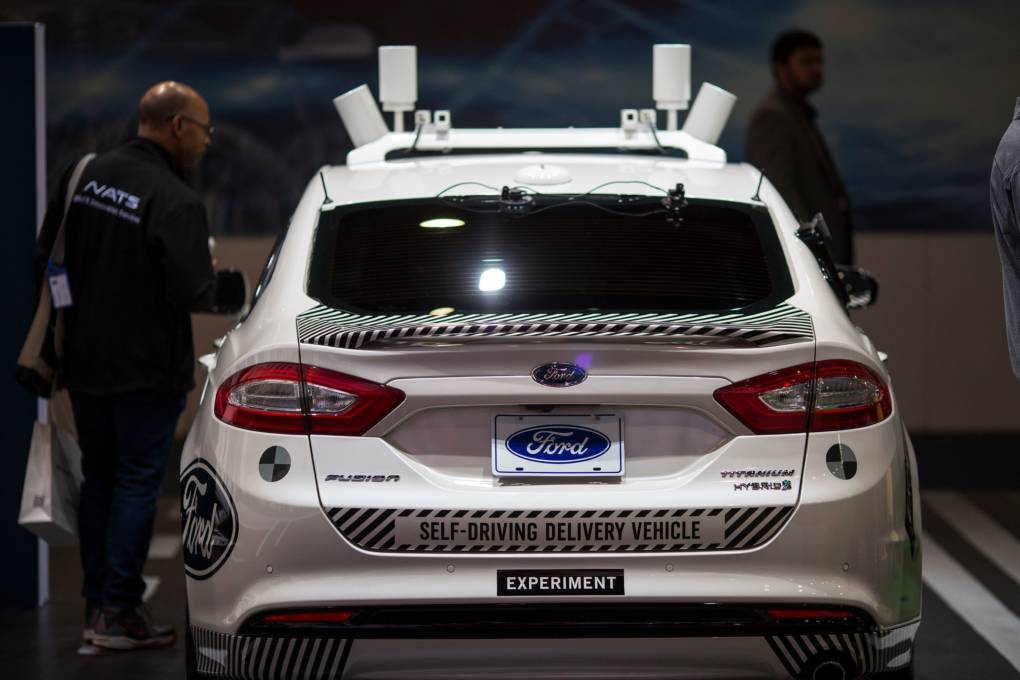
"caption": "An experimental Ford Fusion self-driving delivery car is displayed at CES in Las Vegas, Nevada.",
"description": null,
"title": "US-LIFESTYLE-IT-CES",
"credit": "David McNew/AFP/Getty Images",
"status": "inherit",
"isLoading": false,
"fetchFailed": false
},
"news_11671884": {
"type": "attachments",
"id": "news_11671884",
"meta": {
"index": "attachments_1716263798",
"site": "news",
"id": "11671884",
"found": true
},
"parent": 11671752,
"imgSizes": {
"small": {
"file": "https://ww2.kqed.org/app/uploads/sites/10/2018/05/GettyImages-956206144-520x347.jpg",
"width": 520,
"mimeType": "image/jpeg",
"height": 347
},
"twentyfourteen-full-width": {
"file": "https://ww2.kqed.org/app/uploads/sites/10/2018/05/GettyImages-956206144-1038x576.jpg",
"width": 1038,
"mimeType": "image/jpeg",
"height": 576
},
"thumbnail": {
"file": "https://ww2.kqed.org/app/uploads/sites/10/2018/05/GettyImages-956206144-160x107.jpg",
"width": 160,
"mimeType": "image/jpeg",
"height": 107
},
"fd-sm": {
"file": "https://ww2.kqed.org/app/uploads/sites/10/2018/05/GettyImages-956206144-960x640.jpg",
"width": 960,
"mimeType": "image/jpeg",
"height": 640
},
"post-thumbnail": {
"file": "https://ww2.kqed.org/app/uploads/sites/10/2018/05/GettyImages-956206144-672x372.jpg",
"width": 672,
"mimeType": "image/jpeg",
"height": 372
},
"xsmall": {
"file": "https://ww2.kqed.org/app/uploads/sites/10/2018/05/GettyImages-956206144-375x250.jpg",
"width": 375,
"mimeType": "image/jpeg",
"height": 250
},
"kqedFullSize": {
"file": "https://ww2.kqed.org/app/uploads/sites/10/2018/05/GettyImages-956206144-e1527834763255.jpg",
"width": 1920,
"height": 1280
},
"large": {
"file": "https://ww2.kqed.org/app/uploads/sites/10/2018/05/GettyImages-956206144-1020x680.jpg",
"width": 1020,
"mimeType": "image/jpeg",
"height": 680
},
"xlarge": {
"file": "https://ww2.kqed.org/app/uploads/sites/10/2018/05/GettyImages-956206144-1180x787.jpg",
"width": 1180,
"mimeType": "image/jpeg",
"height": 787
},
"complete_open_graph": {
"file": "https://ww2.kqed.org/app/uploads/sites/10/2018/05/GettyImages-956206144-1200x800.jpg",
"width": 1200,
"mimeType": "image/jpeg",
"height": 800
},
"guest-author-50": {
"file": "https://ww2.kqed.org/app/uploads/sites/10/2018/05/GettyImages-956206144-50x50.jpg",
"width": 50,
"mimeType": "image/jpeg",
"height": 50
},
"guest-author-96": {
"file": "https://ww2.kqed.org/app/uploads/sites/10/2018/05/GettyImages-956206144-96x96.jpg",
"width": 96,
"mimeType": "image/jpeg",
"height": 96
},
"medium": {
"file": "https://ww2.kqed.org/app/uploads/sites/10/2018/05/GettyImages-956206144-800x533.jpg",
"width": 800,
"mimeType": "image/jpeg",
"height": 533
},
"guest-author-64": {
"file": "https://ww2.kqed.org/app/uploads/sites/10/2018/05/GettyImages-956206144-64x64.jpg",
"width": 64,
"mimeType": "image/jpeg",
"height": 64
},
"guest-author-32": {
"file": "https://ww2.kqed.org/app/uploads/sites/10/2018/05/GettyImages-956206144-32x32.jpg",
"width": 32,
"mimeType": "image/jpeg",
"height": 32
},
"fd-lrg": {
"file": "https://ww2.kqed.org/app/uploads/sites/10/2018/05/GettyImages-956206144-1920x1280.jpg",
"width": 1920,
"mimeType": "image/jpeg",
"height": 1280
},
"fd-med": {
"file": "https://ww2.kqed.org/app/uploads/sites/10/2018/05/GettyImages-956206144-1180x787.jpg",
"width": 1180,
"mimeType": "image/jpeg",
"height": 787
},
"full-width": {
"file": "https://ww2.kqed.org/app/uploads/sites/10/2018/05/GettyImages-956206144-1920x1280.jpg",
"width": 1920,
"mimeType": "image/jpeg",
"height": 1280
},
"detail": {
"file": "https://ww2.kqed.org/app/uploads/sites/10/2018/05/GettyImages-956206144-150x150.jpg",
"width": 150,
"mimeType": "image/jpeg",
"height": 150
},
"guest-author-128": {
"file": "https://ww2.kqed.org/app/uploads/sites/10/2018/05/GettyImages-956206144-128x128.jpg",
"width": 128,
"mimeType": "image/jpeg",
"height": 128
},
"xxsmall": {
"file": "https://ww2.kqed.org/app/uploads/sites/10/2018/05/GettyImages-956206144-240x160.jpg",
"width": 240,
"mimeType": "image/jpeg",
"height": 160
}
},
"publishDate": 1527834681,
"modified": 1527834750,
"caption": "Waymo self-driving vehicles are displayed at the Google I/O 2018 Conference last month in Mountain View.",
"description": null,
"title": "Waymo Autonomous Vehicles",
"credit": "Justin Sullivan/Getty Images",
"status": "inherit",
"isLoading": false,
"fetchFailed": false
},
"news_11649033": {
"type": "attachments",
"id": "news_11649033",
"meta": {
"index": "attachments_1716263798",
"site": "news",
"id": "11649033",
"found": true
},
"parent": 11649032,
"imgSizes": {
"small": {
"file": "https://ww2.kqed.org/app/uploads/sites/10/2018/02/waymo_020918_final-520x520.jpg",
"width": 520,
"mimeType": "image/jpeg",
"height": 520
},
"twentyfourteen-full-width": {
"file": "https://ww2.kqed.org/app/uploads/sites/10/2018/02/waymo_020918_final-1038x576.jpg",
"width": 1038,
"mimeType": "image/jpeg",
"height": 576
},
"thumbnail": {
"file": "https://ww2.kqed.org/app/uploads/sites/10/2018/02/waymo_020918_final-160x160.jpg",
"width": 160,
"mimeType": "image/jpeg",
"height": 160
},
"fd-sm": {
"file": "https://ww2.kqed.org/app/uploads/sites/10/2018/02/waymo_020918_final-960x960.jpg",
"width": 960,
"mimeType": "image/jpeg",
"height": 960
},
"post-thumbnail": {
"file": "https://ww2.kqed.org/app/uploads/sites/10/2018/02/waymo_020918_final-672x372.jpg",
"width": 672,
"mimeType": "image/jpeg",
"height": 372
},
"xsmall": {
"file": "https://ww2.kqed.org/app/uploads/sites/10/2018/02/waymo_020918_final-375x375.jpg",
"width": 375,
"mimeType": "image/jpeg",
"height": 375
},
"kqedFullSize": {
"file": "https://ww2.kqed.org/app/uploads/sites/10/2018/02/waymo_020918_final.jpg",
"width": 1920,
"height": 1920
},
"large": {
"file": "https://ww2.kqed.org/app/uploads/sites/10/2018/02/waymo_020918_final-1020x1020.jpg",
"width": 1020,
"mimeType": "image/jpeg",
"height": 1020
},
"xlarge": {
"file": "https://ww2.kqed.org/app/uploads/sites/10/2018/02/waymo_020918_final-1180x1180.jpg",
"width": 1180,
"mimeType": "image/jpeg",
"height": 1180
},
"guest-author-50": {
"file": "https://ww2.kqed.org/app/uploads/sites/10/2018/02/waymo_020918_final-50x50.jpg",
"width": 50,
"mimeType": "image/jpeg",
"height": 50
},
"guest-author-96": {
"file": "https://ww2.kqed.org/app/uploads/sites/10/2018/02/waymo_020918_final-96x96.jpg",
"width": 96,
"mimeType": "image/jpeg",
"height": 96
},
"medium": {
"file": "https://ww2.kqed.org/app/uploads/sites/10/2018/02/waymo_020918_final-800x800.jpg",
"width": 800,
"mimeType": "image/jpeg",
"height": 800
},
"guest-author-64": {
"file": "https://ww2.kqed.org/app/uploads/sites/10/2018/02/waymo_020918_final-64x64.jpg",
"width": 64,
"mimeType": "image/jpeg",
"height": 64
},
"guest-author-32": {
"file": "https://ww2.kqed.org/app/uploads/sites/10/2018/02/waymo_020918_final-32x32.jpg",
"width": 32,
"mimeType": "image/jpeg",
"height": 32
},
"fd-lrg": {
"file": "https://ww2.kqed.org/app/uploads/sites/10/2018/02/waymo_020918_final-1920x1920.jpg",
"width": 1920,
"mimeType": "image/jpeg",
"height": 1920
},
"fd-med": {
"file": "https://ww2.kqed.org/app/uploads/sites/10/2018/02/waymo_020918_final-1180x1180.jpg",
"width": 1180,
"mimeType": "image/jpeg",
"height": 1180
},
"full-width": {
"file": "https://ww2.kqed.org/app/uploads/sites/10/2018/02/waymo_020918_final-1920x1920.jpg",
"width": 1920,
"mimeType": "image/jpeg",
"height": 1920
},
"detail": {
"file": "https://ww2.kqed.org/app/uploads/sites/10/2018/02/waymo_020918_final-150x150.jpg",
"width": 150,
"mimeType": "image/jpeg",
"height": 150
},
"guest-author-128": {
"file": "https://ww2.kqed.org/app/uploads/sites/10/2018/02/waymo_020918_final-128x128.jpg",
"width": 128,
"mimeType": "image/jpeg",
"height": 128
},
"xxsmall": {
"file": "https://ww2.kqed.org/app/uploads/sites/10/2018/02/waymo_020918_final-240x240.jpg",
"width": 240,
"mimeType": "image/jpeg",
"height": 240
}
},
"publishDate": 1518203526,
"modified": 1518203550,
"caption": null,
"description": null,
"title": "waymo_020918_final",
"credit": null,
"status": "inherit",
"isLoading": false,
"fetchFailed": false
},
"news_11649026": {
"type": "attachments",
"id": "news_11649026",
"meta": {
"index": "attachments_1716263798",
"site": "news",
"id": "11649026",
"found": true
},
"parent": 11649025,
"imgSizes": {
"small": {
"file": "https://ww2.kqed.org/app/uploads/sites/10/2018/02/gettyimages-609845718-3bc701fd4ceaea1fff28c9ef9d78ededbd38b0ff-520x390.jpg",
"width": 520,
"mimeType": "image/jpeg",
"height": 390
},
"twentyfourteen-full-width": {
"file": "https://ww2.kqed.org/app/uploads/sites/10/2018/02/gettyimages-609845718-3bc701fd4ceaea1fff28c9ef9d78ededbd38b0ff-1038x576.jpg",
"width": 1038,
"mimeType": "image/jpeg",
"height": 576
},
"thumbnail": {
"file": "https://ww2.kqed.org/app/uploads/sites/10/2018/02/gettyimages-609845718-3bc701fd4ceaea1fff28c9ef9d78ededbd38b0ff-160x120.jpg",
"width": 160,
"mimeType": "image/jpeg",
"height": 120
},
"fd-sm": {
"file": "https://ww2.kqed.org/app/uploads/sites/10/2018/02/gettyimages-609845718-3bc701fd4ceaea1fff28c9ef9d78ededbd38b0ff-960x720.jpg",
"width": 960,
"mimeType": "image/jpeg",
"height": 720
},
"post-thumbnail": {
"file": "https://ww2.kqed.org/app/uploads/sites/10/2018/02/gettyimages-609845718-3bc701fd4ceaea1fff28c9ef9d78ededbd38b0ff-672x372.jpg",
"width": 672,
"mimeType": "image/jpeg",
"height": 372
},
"xsmall": {
"file": "https://ww2.kqed.org/app/uploads/sites/10/2018/02/gettyimages-609845718-3bc701fd4ceaea1fff28c9ef9d78ededbd38b0ff-375x281.jpg",
"width": 375,
"mimeType": "image/jpeg",
"height": 281
},
"kqedFullSize": {
"file": "https://ww2.kqed.org/app/uploads/sites/10/2018/02/gettyimages-609845718-3bc701fd4ceaea1fff28c9ef9d78ededbd38b0ff-e1518201051765.jpg",
"width": 1920,
"height": 1439
},
"large": {
"file": "https://ww2.kqed.org/app/uploads/sites/10/2018/02/gettyimages-609845718-3bc701fd4ceaea1fff28c9ef9d78ededbd38b0ff-1020x765.jpg",
"width": 1020,
"mimeType": "image/jpeg",
"height": 765
},
"xlarge": {
"file": "https://ww2.kqed.org/app/uploads/sites/10/2018/02/gettyimages-609845718-3bc701fd4ceaea1fff28c9ef9d78ededbd38b0ff-1180x885.jpg",
"width": 1180,
"mimeType": "image/jpeg",
"height": 885
},
"guest-author-50": {
"file": "https://ww2.kqed.org/app/uploads/sites/10/2018/02/gettyimages-609845718-3bc701fd4ceaea1fff28c9ef9d78ededbd38b0ff-50x50.jpg",
"width": 50,
"mimeType": "image/jpeg",
"height": 50
},
"guest-author-96": {
"file": "https://ww2.kqed.org/app/uploads/sites/10/2018/02/gettyimages-609845718-3bc701fd4ceaea1fff28c9ef9d78ededbd38b0ff-96x96.jpg",
"width": 96,
"mimeType": "image/jpeg",
"height": 96
},
"medium": {
"file": "https://ww2.kqed.org/app/uploads/sites/10/2018/02/gettyimages-609845718-3bc701fd4ceaea1fff28c9ef9d78ededbd38b0ff-800x600.jpg",
"width": 800,
"mimeType": "image/jpeg",
"height": 600
},
"guest-author-64": {
"file": "https://ww2.kqed.org/app/uploads/sites/10/2018/02/gettyimages-609845718-3bc701fd4ceaea1fff28c9ef9d78ededbd38b0ff-64x64.jpg",
"width": 64,
"mimeType": "image/jpeg",
"height": 64
},
"guest-author-32": {
"file": "https://ww2.kqed.org/app/uploads/sites/10/2018/02/gettyimages-609845718-3bc701fd4ceaea1fff28c9ef9d78ededbd38b0ff-32x32.jpg",
"width": 32,
"mimeType": "image/jpeg",
"height": 32
},
"fd-lrg": {
"file": "https://ww2.kqed.org/app/uploads/sites/10/2018/02/gettyimages-609845718-3bc701fd4ceaea1fff28c9ef9d78ededbd38b0ff-1920x1439.jpg",
"width": 1920,
"mimeType": "image/jpeg",
"height": 1439
},
"fd-med": {
"file": "https://ww2.kqed.org/app/uploads/sites/10/2018/02/gettyimages-609845718-3bc701fd4ceaea1fff28c9ef9d78ededbd38b0ff-1180x885.jpg",
"width": 1180,
"mimeType": "image/jpeg",
"height": 885
},
"full-width": {
"file": "https://ww2.kqed.org/app/uploads/sites/10/2018/02/gettyimages-609845718-3bc701fd4ceaea1fff28c9ef9d78ededbd38b0ff-1920x1439.jpg",
"width": 1920,
"mimeType": "image/jpeg",
"height": 1439
},
"detail": {
"file": "https://ww2.kqed.org/app/uploads/sites/10/2018/02/gettyimages-609845718-3bc701fd4ceaea1fff28c9ef9d78ededbd38b0ff-150x150.jpg",
"width": 150,
"mimeType": "image/jpeg",
"height": 150
},
"guest-author-128": {
"file": "https://ww2.kqed.org/app/uploads/sites/10/2018/02/gettyimages-609845718-3bc701fd4ceaea1fff28c9ef9d78ededbd38b0ff-128x128.jpg",
"width": 128,
"mimeType": "image/jpeg",
"height": 128
},
"xxsmall": {
"file": "https://ww2.kqed.org/app/uploads/sites/10/2018/02/gettyimages-609845718-3bc701fd4ceaea1fff28c9ef9d78ededbd38b0ff-240x180.jpg",
"width": 240,
"mimeType": "image/jpeg",
"height": 180
}
},
"publishDate": 1518200985,
"modified": 1518216183,
"caption": "An Uber driverless Ford Fusion drives in Pittsburgh in 2016. On Friday, Uber and Google's Waymo self-driving unit announced a settlement in their trade secrets case.",
"description": "An Uber driverless Ford Fusion drives in Pittsburgh in 2016. On Friday, Uber and Google's Waymo self-driving unit announced a settlement in their trade-secrets case.",
"title": "An Uber driverless Ford Fusion drives in Pittsburgh in 2016. On Friday, Uber and Google's Waymo self-driving unit announced a settlement in their trade-secrets case.",
"credit": "Jeff Swensen/Getty Images",
"status": "inherit",
"isLoading": false,
"fetchFailed": false
},
"news_11647956": {
"type": "attachments",
"id": "news_11647956",
"meta": {
"index": "attachments_1716263798",
"site": "news",
"id": "11647956",
"found": true
},
"parent": 11647949,
"imgSizes": {
"small": {
"file": "https://ww2.kqed.org/app/uploads/sites/10/2018/02/RS25356_GettyImages-605519582-520x346.jpg",
"width": 520,
"mimeType": "image/jpeg",
"height": 346
},
"twentyfourteen-full-width": {
"file": "https://ww2.kqed.org/app/uploads/sites/10/2018/02/RS25356_GettyImages-605519582-1038x576.jpg",
"width": 1038,
"mimeType": "image/jpeg",
"height": 576
},
"thumbnail": {
"file": "https://ww2.kqed.org/app/uploads/sites/10/2018/02/RS25356_GettyImages-605519582-160x106.jpg",
"width": 160,
"mimeType": "image/jpeg",
"height": 106
},
"fd-sm": {
"file": "https://ww2.kqed.org/app/uploads/sites/10/2018/02/RS25356_GettyImages-605519582-960x639.jpg",
"width": 960,
"mimeType": "image/jpeg",
"height": 639
},
"post-thumbnail": {
"file": "https://ww2.kqed.org/app/uploads/sites/10/2018/02/RS25356_GettyImages-605519582-672x372.jpg",
"width": 672,
"mimeType": "image/jpeg",
"height": 372
},
"xsmall": {
"file": "https://ww2.kqed.org/app/uploads/sites/10/2018/02/RS25356_GettyImages-605519582-375x250.jpg",
"width": 375,
"mimeType": "image/jpeg",
"height": 250
},
"kqedFullSize": {
"file": "https://ww2.kqed.org/app/uploads/sites/10/2018/02/RS25356_GettyImages-605519582-e1517774836258.jpg",
"width": 1920,
"height": 1278
},
"large": {
"file": "https://ww2.kqed.org/app/uploads/sites/10/2018/02/RS25356_GettyImages-605519582-1020x679.jpg",
"width": 1020,
"mimeType": "image/jpeg",
"height": 679
},
"xlarge": {
"file": "https://ww2.kqed.org/app/uploads/sites/10/2018/02/RS25356_GettyImages-605519582-1180x785.jpg",
"width": 1180,
"mimeType": "image/jpeg",
"height": 785
},
"guest-author-50": {
"file": "https://ww2.kqed.org/app/uploads/sites/10/2018/02/RS25356_GettyImages-605519582-50x50.jpg",
"width": 50,
"mimeType": "image/jpeg",
"height": 50
},
"guest-author-96": {
"file": "https://ww2.kqed.org/app/uploads/sites/10/2018/02/RS25356_GettyImages-605519582-96x96.jpg",
"width": 96,
"mimeType": "image/jpeg",
"height": 96
},
"medium": {
"file": "https://ww2.kqed.org/app/uploads/sites/10/2018/02/RS25356_GettyImages-605519582-800x532.jpg",
"width": 800,
"mimeType": "image/jpeg",
"height": 532
},
"guest-author-64": {
"file": "https://ww2.kqed.org/app/uploads/sites/10/2018/02/RS25356_GettyImages-605519582-64x64.jpg",
"width": 64,
"mimeType": "image/jpeg",
"height": 64
},
"guest-author-32": {
"file": "https://ww2.kqed.org/app/uploads/sites/10/2018/02/RS25356_GettyImages-605519582-32x32.jpg",
"width": 32,
"mimeType": "image/jpeg",
"height": 32
},
"fd-lrg": {
"file": "https://ww2.kqed.org/app/uploads/sites/10/2018/02/RS25356_GettyImages-605519582-1920x1278.jpg",
"width": 1920,
"mimeType": "image/jpeg",
"height": 1278
},
"fd-med": {
"file": "https://ww2.kqed.org/app/uploads/sites/10/2018/02/RS25356_GettyImages-605519582-1180x785.jpg",
"width": 1180,
"mimeType": "image/jpeg",
"height": 785
},
"full-width": {
"file": "https://ww2.kqed.org/app/uploads/sites/10/2018/02/RS25356_GettyImages-605519582-1920x1278.jpg",
"width": 1920,
"mimeType": "image/jpeg",
"height": 1278
},
"detail": {
"file": "https://ww2.kqed.org/app/uploads/sites/10/2018/02/RS25356_GettyImages-605519582-150x150.jpg",
"width": 150,
"mimeType": "image/jpeg",
"height": 150
},
"guest-author-128": {
"file": "https://ww2.kqed.org/app/uploads/sites/10/2018/02/RS25356_GettyImages-605519582-128x128.jpg",
"width": 128,
"mimeType": "image/jpeg",
"height": 128
},
"xxsmall": {
"file": "https://ww2.kqed.org/app/uploads/sites/10/2018/02/RS25356_GettyImages-605519582-240x160.jpg",
"width": 240,
"mimeType": "image/jpeg",
"height": 160
}
},
"publishDate": 1517774815,
"modified": 1517774870,
"caption": "The trial opening Monday in San Francisco federal court comes nearly a year after Google spin-off Waymo sued Uber, accusing it of ripping off key pieces of its self-driving car technology in 2016.",
"description": "The trial opening Monday in San Francisco federal court comes nearly a year after Google spin-off Waymo sued Uber, accusing it of ripping off key pieces of its self-driving car technology in 2016.",
"title": "US-TRANSPORT-TECHNOLOGY-UBER-AUTO",
"credit": "ANGELO MERENDINO/AFP/Getty Images",
"status": "inherit",
"isLoading": false,
"fetchFailed": false
},
"news_11459363": {
"type": "attachments",
"id": "news_11459363",
"meta": {
"index": "attachments_1716263798",
"site": "news",
"id": "11459363",
"found": true
},
"parent": 11459348,
"imgSizes": {
"small": {
"file": "https://ww2.kqed.org/app/uploads/sites/10/2017/05/UberSelfDriving-520x342.jpg",
"width": 520,
"mimeType": "image/jpeg",
"height": 342
},
"twentyfourteen-full-width": {
"file": "https://ww2.kqed.org/app/uploads/sites/10/2017/05/UberSelfDriving-1038x576.jpg",
"width": 1038,
"mimeType": "image/jpeg",
"height": 576
},
"thumbnail": {
"file": "https://ww2.kqed.org/app/uploads/sites/10/2017/05/UberSelfDriving-160x105.jpg",
"width": 160,
"mimeType": "image/jpeg",
"height": 105
},
"fd-sm": {
"file": "https://ww2.kqed.org/app/uploads/sites/10/2017/05/UberSelfDriving-960x631.jpg",
"width": 960,
"mimeType": "image/jpeg",
"height": 631
},
"post-thumbnail": {
"file": "https://ww2.kqed.org/app/uploads/sites/10/2017/05/UberSelfDriving-672x372.jpg",
"width": 672,
"mimeType": "image/jpeg",
"height": 372
},
"xsmall": {
"file": "https://ww2.kqed.org/app/uploads/sites/10/2017/05/UberSelfDriving-375x246.jpg",
"width": 375,
"mimeType": "image/jpeg",
"height": 246
},
"kqedFullSize": {
"file": "https://ww2.kqed.org/app/uploads/sites/10/2017/05/UberSelfDriving.jpg",
"width": 1920,
"height": 1262
},
"large": {
"file": "https://ww2.kqed.org/app/uploads/sites/10/2017/05/UberSelfDriving-1020x670.jpg",
"width": 1020,
"mimeType": "image/jpeg",
"height": 670
},
"xlarge": {
"file": "https://ww2.kqed.org/app/uploads/sites/10/2017/05/UberSelfDriving-1180x776.jpg",
"width": 1180,
"mimeType": "image/jpeg",
"height": 776
},
"guest-author-50": {
"file": "https://ww2.kqed.org/app/uploads/sites/10/2017/05/UberSelfDriving-50x50.jpg",
"width": 50,
"mimeType": "image/jpeg",
"height": 50
},
"guest-author-96": {
"file": "https://ww2.kqed.org/app/uploads/sites/10/2017/05/UberSelfDriving-96x96.jpg",
"width": 96,
"mimeType": "image/jpeg",
"height": 96
},
"medium": {
"file": "https://ww2.kqed.org/app/uploads/sites/10/2017/05/UberSelfDriving-800x526.jpg",
"width": 800,
"mimeType": "image/jpeg",
"height": 526
},
"guest-author-64": {
"file": "https://ww2.kqed.org/app/uploads/sites/10/2017/05/UberSelfDriving-64x64.jpg",
"width": 64,
"mimeType": "image/jpeg",
"height": 64
},
"guest-author-32": {
"file": "https://ww2.kqed.org/app/uploads/sites/10/2017/05/UberSelfDriving-32x32.jpg",
"width": 32,
"mimeType": "image/jpeg",
"height": 32
},
"fd-lrg": {
"file": "https://ww2.kqed.org/app/uploads/sites/10/2017/05/UberSelfDriving-1920x1262.jpg",
"width": 1920,
"mimeType": "image/jpeg",
"height": 1262
},
"fd-med": {
"file": "https://ww2.kqed.org/app/uploads/sites/10/2017/05/UberSelfDriving-1180x776.jpg",
"width": 1180,
"mimeType": "image/jpeg",
"height": 776
},
"full-width": {
"file": "https://ww2.kqed.org/app/uploads/sites/10/2017/05/UberSelfDriving-1920x1262.jpg",
"width": 1920,
"mimeType": "image/jpeg",
"height": 1262
},
"detail": {
"file": "https://ww2.kqed.org/app/uploads/sites/10/2017/05/UberSelfDriving-150x150.jpg",
"width": 150,
"mimeType": "image/jpeg",
"height": 150
},
"guest-author-128": {
"file": "https://ww2.kqed.org/app/uploads/sites/10/2017/05/UberSelfDriving-128x128.jpg",
"width": 128,
"mimeType": "image/jpeg",
"height": 128
},
"xxsmall": {
"file": "https://ww2.kqed.org/app/uploads/sites/10/2017/05/UberSelfDriving-240x158.jpg",
"width": 240,
"mimeType": "image/jpeg",
"height": 158
}
},
"publishDate": 1494877595,
"modified": 1494882669,
"caption": "Pilot models of Uber's self-driving car on display in September 2016.",
"description": "Pilot models of Uber's self-driving car on display in Sept., 2016.",
"title": "UberSelfDriving",
"credit": "ANGELO MERENDINO/AFP/Getty Images",
"status": "inherit",
"isLoading": false,
"fetchFailed": false
},
"news_11331660": {
"type": "attachments",
"id": "news_11331660",
"meta": {
"index": "attachments_1716263798",
"site": "news",
"id": "11331660",
"found": true
},
"parent": 11331659,
"imgSizes": {
"small": {
"file": "https://ww2.kqed.org/app/uploads/sites/10/2017/02/gettyimages-605519778_wide-84be63e7d6ce264f7d32f536902a6aca490dd050-520x292.jpg",
"width": 520,
"mimeType": "image/jpeg",
"height": 292
},
"twentyfourteen-full-width": {
"file": "https://ww2.kqed.org/app/uploads/sites/10/2017/02/gettyimages-605519778_wide-84be63e7d6ce264f7d32f536902a6aca490dd050-1038x576.jpg",
"width": 1038,
"mimeType": "image/jpeg",
"height": 576
},
"thumbnail": {
"file": "https://ww2.kqed.org/app/uploads/sites/10/2017/02/gettyimages-605519778_wide-84be63e7d6ce264f7d32f536902a6aca490dd050-160x90.jpg",
"width": 160,
"mimeType": "image/jpeg",
"height": 90
},
"fd-sm": {
"file": "https://ww2.kqed.org/app/uploads/sites/10/2017/02/gettyimages-605519778_wide-84be63e7d6ce264f7d32f536902a6aca490dd050-960x540.jpg",
"width": 960,
"mimeType": "image/jpeg",
"height": 540
},
"post-thumbnail": {
"file": "https://ww2.kqed.org/app/uploads/sites/10/2017/02/gettyimages-605519778_wide-84be63e7d6ce264f7d32f536902a6aca490dd050-672x372.jpg",
"width": 672,
"mimeType": "image/jpeg",
"height": 372
},
"xsmall": {
"file": "https://ww2.kqed.org/app/uploads/sites/10/2017/02/gettyimages-605519778_wide-84be63e7d6ce264f7d32f536902a6aca490dd050-375x211.jpg",
"width": 375,
"mimeType": "image/jpeg",
"height": 211
},
"kqedFullSize": {
"file": "https://ww2.kqed.org/app/uploads/sites/10/2017/02/gettyimages-605519778_wide-84be63e7d6ce264f7d32f536902a6aca490dd050-e1487956150560.jpg",
"width": 1920,
"height": 1080
},
"large": {
"file": "https://ww2.kqed.org/app/uploads/sites/10/2017/02/gettyimages-605519778_wide-84be63e7d6ce264f7d32f536902a6aca490dd050-1020x574.jpg",
"width": 1020,
"mimeType": "image/jpeg",
"height": 574
},
"xlarge": {
"file": "https://ww2.kqed.org/app/uploads/sites/10/2017/02/gettyimages-605519778_wide-84be63e7d6ce264f7d32f536902a6aca490dd050-1180x664.jpg",
"width": 1180,
"mimeType": "image/jpeg",
"height": 664
},
"guest-author-50": {
"file": "https://ww2.kqed.org/app/uploads/sites/10/2017/02/gettyimages-605519778_wide-84be63e7d6ce264f7d32f536902a6aca490dd050-50x50.jpg",
"width": 50,
"mimeType": "image/jpeg",
"height": 50
},
"guest-author-96": {
"file": "https://ww2.kqed.org/app/uploads/sites/10/2017/02/gettyimages-605519778_wide-84be63e7d6ce264f7d32f536902a6aca490dd050-96x96.jpg",
"width": 96,
"mimeType": "image/jpeg",
"height": 96
},
"medium": {
"file": "https://ww2.kqed.org/app/uploads/sites/10/2017/02/gettyimages-605519778_wide-84be63e7d6ce264f7d32f536902a6aca490dd050-800x450.jpg",
"width": 800,
"mimeType": "image/jpeg",
"height": 450
},
"guest-author-64": {
"file": "https://ww2.kqed.org/app/uploads/sites/10/2017/02/gettyimages-605519778_wide-84be63e7d6ce264f7d32f536902a6aca490dd050-64x64.jpg",
"width": 64,
"mimeType": "image/jpeg",
"height": 64
},
"guest-author-32": {
"file": "https://ww2.kqed.org/app/uploads/sites/10/2017/02/gettyimages-605519778_wide-84be63e7d6ce264f7d32f536902a6aca490dd050-32x32.jpg",
"width": 32,
"mimeType": "image/jpeg",
"height": 32
},
"fd-lrg": {
"file": "https://ww2.kqed.org/app/uploads/sites/10/2017/02/gettyimages-605519778_wide-84be63e7d6ce264f7d32f536902a6aca490dd050-1920x1080.jpg",
"width": 1920,
"mimeType": "image/jpeg",
"height": 1080
},
"fd-med": {
"file": "https://ww2.kqed.org/app/uploads/sites/10/2017/02/gettyimages-605519778_wide-84be63e7d6ce264f7d32f536902a6aca490dd050-1180x664.jpg",
"width": 1180,
"mimeType": "image/jpeg",
"height": 664
},
"full-width": {
"file": "https://ww2.kqed.org/app/uploads/sites/10/2017/02/gettyimages-605519778_wide-84be63e7d6ce264f7d32f536902a6aca490dd050-1920x1080.jpg",
"width": 1920,
"mimeType": "image/jpeg",
"height": 1080
},
"detail": {
"file": "https://ww2.kqed.org/app/uploads/sites/10/2017/02/gettyimages-605519778_wide-84be63e7d6ce264f7d32f536902a6aca490dd050-150x150.jpg",
"width": 150,
"mimeType": "image/jpeg",
"height": 150
},
"guest-author-128": {
"file": "https://ww2.kqed.org/app/uploads/sites/10/2017/02/gettyimages-605519778_wide-84be63e7d6ce264f7d32f536902a6aca490dd050-128x128.jpg",
"width": 128,
"mimeType": "image/jpeg",
"height": 128
},
"xxsmall": {
"file": "https://ww2.kqed.org/app/uploads/sites/10/2017/02/gettyimages-605519778_wide-84be63e7d6ce264f7d32f536902a6aca490dd050-240x135.jpg",
"width": 240,
"mimeType": "image/jpeg",
"height": 135
}
},
"publishDate": 1487956115,
"modified": 1488241224,
"caption": "Anthony Levandowski, Otto co-founder and the head of Uber's self-driving-vehicle project, is accused of taking proprietary designs and information with him when he left Waymo, a subsidiary of Alphabet.",
"description": "Anthony Levandowski, Otto co-founder the head of Uber's self-driving-vehicle project, is accused of taking proprietary designs and information with him when he left Waymo, a subsidiary of Alphabet.",
"title": "Uber-Anthony Levandowski",
"credit": "AFP-Getty Images",
"status": "inherit",
"isLoading": false,
"fetchFailed": false
}
},
"audioPlayerReducer": {
"postId": "stream_live",
"isPaused": true,
"isPlaying": false,
"pfsActive": false,
"pledgeModalIsOpen": true,
"playerDrawerIsOpen": false,
"liveAudioPlayStartedAt": 0,
"liveAudioPlayContext": ""
},
"authorsReducer": {
"byline_news_11723347": {
"type": "authors",
"id": "byline_news_11723347",
"meta": {
"override": true
},
"slug": "byline_news_11723347",
"name": "\u003cstrong>Tom Krisher\u003c/strong>\u003cbr>Associated Press",
"isLoading": false
},
"byline_news_11649025": {
"type": "authors",
"id": "byline_news_11649025",
"meta": {
"override": true
},
"slug": "byline_news_11649025",
"name": "\u003cstrong>Ian Wren\u003cbr />NPR\u003c/strong>",
"isLoading": false
},
"byline_news_11647949": {
"type": "authors",
"id": "byline_news_11647949",
"meta": {
"override": true
},
"slug": "byline_news_11647949",
"name": "\u003cstrong>Michael Liedtke\u003c/strong> \u003c/br>Associated Press",
"isLoading": false
},
"byline_news_11459348": {
"type": "authors",
"id": "byline_news_11459348",
"meta": {
"override": true
},
"slug": "byline_news_11459348",
"name": "Tom Krisher \u003cbr> Associated Press",
"isLoading": false
},
"byline_news_11331659": {
"type": "authors",
"id": "byline_news_11331659",
"meta": {
"override": true
},
"slug": "byline_news_11331659",
"name": "\u003cstrong>Bill Chappell\u003cbr />NPR\u003c/strong>",
"isLoading": false
},
"danbrekke": {
"type": "authors",
"id": "222",
"meta": {
"index": "authors_1716337520",
"id": "222",
"found": true
},
"name": "Dan Brekke",
"firstName": "Dan",
"lastName": "Brekke",
"slug": "danbrekke",
"email": "dbrekke@kqed.org",
"display_author_email": true,
"staff_mastheads": [
"news",
"science"
],
"title": "KQED Editor and Reporter",
"bio": "Dan Brekke is a reporter and editor for KQED News, responsible for coverage of topics ranging from California water issues to the Bay Area's transportation challenges. In a newsroom career that began in Chicago in 1972, Dan has worked for \u003cem>The San Francisco Examiner,\u003c/em> Wired and TechTV and has been published in The New York Times, The New York Times Magazine, Business 2.0, Salon and elsewhere.\r\n\r\nSince joining KQED in 2007, Dan has reported, edited and produced both radio and online features and breaking news pieces. He has shared as both editor and reporter in four Society of Professional Journalists Norcal Excellence in Journalism awards and one Edward R. Murrow regional award. He was chosen for a spring 2017 residency at the Mesa Refuge to advance his research on California salmon.\r\n\r\nEmail Dan at: \u003ca href=\"mailto:dbrekke@kqed.org\">dbrekke@kqed.org\u003c/a>\r\n\r\n\u003cstrong>Twitter:\u003c/strong> \u003ca href=\"https://twitter.com/danbrekke\" rel=\"noopener noreferrer\">twitter.com/danbrekke\u003c/a>\r\n\u003cstrong>Facebook:\u003c/strong> \u003ca href=\"https://www.facebook.com/danbrekke\" rel=\"noopener noreferrer\">www.facebook.com/danbrekke\u003c/a>\r\n\u003cstrong>LinkedIn:\u003c/strong> \u003ca href=\"https://www.linkedin.com/in/danbrekke\" rel=\"noopener noreferrer\">www.linkedin.com/in/danbrekke\u003c/a>",
"avatar": "https://secure.gravatar.com/avatar/8f1f0d2a978fb3b23426c922c7e2af558fa36905b49c4ce76a97dc3c72d27226?s=600&d=mm&r=g",
"twitter": "danbrekke",
"bluesky": null,
"facebook": null,
"instagram": "https://www.instagram.com/dan.brekke/",
"linkedin": "https://www.linkedin.com/in/danbrekke/",
"sites": [
{
"site": "news",
"roles": [
"administrator",
"create_posts"
]
},
{
"site": "stateofhealth",
"roles": [
"editor"
]
},
{
"site": "science",
"roles": [
"editor"
]
},
{
"site": "quest",
"roles": [
"contributor"
]
},
{
"site": "food",
"roles": [
"contributor"
]
},
{
"site": "forum",
"roles": [
"contributor"
]
},
{
"site": "elections",
"roles": [
"editor"
]
},
{
"site": "liveblog",
"roles": [
"editor"
]
}
],
"headData": {
"title": "Dan Brekke | KQED",
"description": "KQED Editor and Reporter",
"ogImgSrc": "https://secure.gravatar.com/avatar/8f1f0d2a978fb3b23426c922c7e2af558fa36905b49c4ce76a97dc3c72d27226?s=600&d=mm&r=g",
"twImgSrc": "https://secure.gravatar.com/avatar/8f1f0d2a978fb3b23426c922c7e2af558fa36905b49c4ce76a97dc3c72d27226?s=600&d=mm&r=g"
},
"isLoading": false,
"link": "/author/danbrekke"
},
"markfiore": {
"type": "authors",
"id": "3236",
"meta": {
"index": "authors_1716337520",
"id": "3236",
"found": true
},
"name": "Mark Fiore",
"firstName": "Mark",
"lastName": "Fiore",
"slug": "markfiore",
"email": "mark@markfiore.com",
"display_author_email": false,
"staff_mastheads": [
"news"
],
"title": "KQED News Cartoonist",
"bio": "\u003ca href=\"http://www.MarkFiore.com\">MarkFiore.com\u003c/a> | \u003ca href=\"https://twitter.com/markfiore\">Follow on Twitter\u003c/a> | \u003ca href=\"https://www.facebook.com/pages/Mark-Fiore-Animated-Political-Cartoons/94451707396?ref=bookmarks\">Facebook\u003c/a> | \u003ca href=\"mailto:mark@markfiore.com\">email\u003c/a>\r\n\r\nPulitzer Prize-winner, Mark Fiore, who the Wall Street Journal has called “the undisputed guru of the form,” creates animated political cartoons in San Francisco, where his work has been featured regularly on the San Francisco Chronicle’s web site, SFGate.com. His work has appeared on Newsweek.com, Slate.com, CBSNews.com, MotherJones.com, DailyKos.com and NPR’s web site. Fiore’s political animation has appeared on CNN, Frontline, Bill Moyers Journal, Salon.com and cable and broadcast outlets across the globe.\r\n\r\nBeginning his professional life by drawing traditional political cartoons for newspapers, Fiore’s work appeared in publications ranging from the Washington Post to the Los Angeles Times. In the late 1990s, he began to experiment with animating political cartoons and, after a short stint at the San Jose Mercury News as their staff cartoonist, Fiore devoted all his energies to animation.\r\nGrowing up in California, Fiore also spent a good portion of his life in the backwoods of Idaho. It was this combination that shaped him politically. Mark majored in political science at Colorado College, where, in a perfect send-off for a cartoonist, he received his diploma in 1991 as commencement speaker Dick Cheney smiled approvingly.\r\nMark Fiore was awarded the Pulitzer Prize for political cartooning in 2010, a Robert F. Kennedy Journalism Award in 2004 and has twice received an Online Journalism Award for commentary from the Online News Association (2002, 2008). Fiore has received two awards for his work in new media from the National Cartoonists Society (2001, 2002), and in 2006 received The James Madison Freedom of Information Award from The Society of Professional Journalists.",
"avatar": "https://secure.gravatar.com/avatar/fc4e2a612b15b67bad0c6f0e1db4ca9b?s=600&d=blank&r=g",
"twitter": "MarkFiore",
"facebook": null,
"instagram": "https://www.instagram.com/markfiore/?hl=en",
"linkedin": null,
"sites": [
{
"site": "arts",
"roles": [
"contributor"
]
},
{
"site": "news",
"roles": [
"editor"
]
},
{
"site": "futureofyou",
"roles": [
"editor"
]
},
{
"site": "science",
"roles": [
"editor"
]
}
],
"headData": {
"title": "Mark Fiore | KQED",
"description": "KQED News Cartoonist",
"ogImgSrc": "https://secure.gravatar.com/avatar/fc4e2a612b15b67bad0c6f0e1db4ca9b?s=600&d=blank&r=g",
"twImgSrc": "https://secure.gravatar.com/avatar/fc4e2a612b15b67bad0c6f0e1db4ca9b?s=600&d=blank&r=g"
},
"isLoading": false,
"link": "/author/markfiore"
}
},
"pagesReducer": {
"news_tag_waymo": {
"type": "terms",
"id": "news_20576",
"meta": {
"index": "terms_1716263798",
"site": "news",
"id": "20576",
"score": 9.557308
},
"featImg": null,
"name": "Waymo",
"description": null,
"taxonomy": "tag",
"headData": {
"twImgId": null,
"twTitle": null,
"ogTitle": null,
"ogImgId": null,
"twDescription": null,
"description": null,
"title": "Waymo Archives | KQED News",
"ogDescription": null
},
"ttid": 20593,
"slug": "waymo",
"isLoading": false,
"title": "Waymo",
"pageMeta": {
"site": "news",
"WpPageTemplate": "page-topic-editorial",
"currentPage": 4
},
"blocks": [
{
"blockName": "kqed/post-list",
"attrs": {
"layout": "cardArticle2",
"query": "posts/news?tag=waymo",
"seeMore": false,
"paginated": true,
"page": 4
}
},
{
"blockName": "kqed/ad"
}
]
}
},
"pfsSessionReducer": {},
"postsReducer": {
"stream_live": {
"type": "live",
"id": "stream_live",
"audioUrl": "https://streams.kqed.org/kqedradio",
"title": "Live Stream",
"excerpt": "Live Stream information currently unavailable.",
"link": "/radio",
"featImg": "",
"label": {
"name": "KQED Live",
"link": "/"
}
},
"stream_kqedNewscast": {
"type": "posts",
"id": "stream_kqedNewscast",
"audioUrl": "https://www.kqed.org/.stream/anon/radio/RDnews/newscast.mp3?_=1",
"title": "KQED Newscast",
"featImg": "",
"label": {
"name": "88.5 FM",
"link": "/"
}
},
"news_11723347": {
"type": "posts",
"id": "news_11723347",
"meta": {
"index": "posts_1716263798",
"site": "news",
"id": "11723347",
"score": null,
"sort": [
1549724401000
]
},
"parent": 0,
"labelTerm": {},
"blocks": [],
"publishDate": 1549724401,
"format": "image",
"disqusTitle": "5 Reasons Why Self-Driving Cars Aren't Coming Anytime Soon",
"title": "5 Reasons Why Self-Driving Cars Aren't Coming Anytime Soon",
"headTitle": "The California Report | KQED News",
"content": "\u003cp>In the world of autonomous vehicles, Pittsburgh and Silicon Valley are bustling hubs of development and testing. But ask those involved in self-driving vehicles when we might actually see them carrying passengers in every city, and you'll get an almost universal answer: Not anytime soon.\u003c/p>\n\u003caside class=\"alignright\">\n\u003ch3>\u003ca href=\"https://www.kqed.org/news/11723058/will-self-driving-cars-put-us-in-transportation-heaven-or-hell\">Will Self-Driving Cars Put Us in Transportation Heaven or Hell?\u003c/a>\u003c/h3>\n\u003cfigure>\u003ca href=\"https://www.kqed.org/news/11723058/will-self-driving-cars-put-us-in-transportation-heaven-or-hell\">\u003cimg class=\"\" src=\"https://ww2.kqed.org/wp-content/uploads/sites/10/2019/02/RS8358_152766339-1020x711.jpg\" alt=\"\" width=\"389\" height=\"271\">\u003c/a>\u003c/figure>\n\u003c/aside>\n\u003cp>An optimistic assessment is 10 years. Many others say decades as researchers try to conquer a number of obstacles. The vehicles themselves will debut in limited, well-mapped areas within cities and spread outward.\u003c/p>\n\u003cp>The \u003ca href=\"https://www.kqed.org/news/11657306/police-release-video-of-fatal-crash-involving-uber-self-driving-car\">fatal crash in Arizona\u003c/a> involving an Uber autonomous vehicle in March slowed progress, largely because it hurt the public's perception of the safety of vehicles.\u003c/p>\n\u003cp>Companies slowed research to be more careful. Google's Waymo, for instance, decided not to launch a fully autonomous ride-hailing service in the Phoenix area and will rely on human backup drivers to ferry passengers, at least for now.\u003c/p>\n\u003cp>Here are the problems that researchers must overcome to start giving rides without humans behind the wheel:\u003c/p>\n\u003ch3>Snow and Weather\u003c/h3>\n\u003cp>When it's heavy enough to cover the pavement, snow blocks the view of lane lines that vehicle cameras use to find their way. Researchers so far haven't figured out a way around this. That's why much of the testing is done in warm-weather climates such as Arizona and California.\u003c/p>\n\u003cp>Heavy snow, rain, fog and sandstorms can obstruct the view of cameras. Light beams sent out by laser sensors can bounce off snowflakes and think they are obstacles. Radar can see through the weather, but it doesn't show the shape of an object needed for computers to figure out what it is.\u003c/p>\n\u003caside class=\"alignright\">\n\u003ch3>\u003ca href=\"https://www.kqed.org/science/1933667/should-self-driving-cars-have-ethics\">Should Self-Driving Cars Have Ethics?\u003c/a>\u003c/h3>\n\u003cfigure>\u003ca href=\"https://www.kqed.org/science/1933667/should-self-driving-cars-have-ethics\">\u003cimg src=\"https://ww2.kqed.org/wp-content/uploads/sites/35/2018/10/gettyimages-843272498-80183887af24176749966ee5ee5cd0e22bf46cf5-1180x885.jpg\" alt=\"\">\u003c/a>\u003c/figure>\n\u003c/aside>\n\u003cp>\"It's like losing part of your vision,\" says Raj Rajkumar, an electrical and computer engineering professor at Carnegie Mellon University.\u003cbr>\nResearchers are working on laser sensors that use a different light beam wavelength to see through snowflakes, said Greg McGuire, director of the MCity autonomous vehicle testing lab at the University of Michigan. Software also is being developed so vehicles can differentiate between real obstacles and snowflakes, rain, fog, and other conditions.\u003c/p>\n\u003cp>But many companies are still trying to master the difficult task of driving on a clear day with steady traction.\u003c/p>\n\u003cp>\"Once we are able to have a system reliably perform in those, then we'll start working toward expanding to those more challenging conditions,\" said Noah Zych, Uber's head of system safety for self-driving cars.\u003cbr>\n[ad fullwidth]\u003c/p>\n\u003ch3>Pavement Lines and Curbs\u003c/h3>\n\u003cp>Across the globe, roadway marking lines are different, or they may not even exist. Lane lines aren't standardized, so vehicles have to learn how to drive differently in each city. Sometimes there aren't any curbs to help vehicles judge lane width.\u003c/p>\n\u003cp>For instance, in Pittsburgh's industrial \"Strip District,\" where many self-driving vehicles are tested, the city draws lines across the narrow lanes to mark where vehicles should stop for stop signs. Sometimes the lines are so far back and buildings are so close to the street that autonomous cars can't see traffic on the cross street if they stop at the line. One workaround is to program vehicles to stop for the line and creep forward.\u003c/p>\n\u003cp>\"Is it better to do a double stop?\" asked Pete Rander, president of Argo AI, an autonomous vehicle company in which Ford has invested heavily. \"Since intersections vary, it's not that easy.\"\u003c/p>\n\u003ch3>Dealing With Human Drivers\u003c/h3>\n\u003cp>For many years, autonomous vehicles will have to deal with humans who don't always play by the rules. They double-park or walk in front of cars. Recently in Pittsburgh, an Argo backup driver had to take over when his car stopped during a right turn, blocking an intersection when it couldn't immediately decide whether to go around a double-parked delivery truck.\u003c/p>\n\u003caside class=\"alignright\">\n\u003ch3>\u003ca href=\"https://www.kqed.org/news/11668523/distracted-autopilot\">Mark Fiore: Distracted Autopilot\u003c/a>\u003c/h3>\n\u003cfigure>\u003ca href=\"https://www.kqed.org/news/11668523/distracted-autopilot\">\u003cimg src=\"https://ww2.kqed.org/wp-content/uploads/sites/10/2018/05/distracted_051518_final-1180x753.jpg\" alt=\"\">\u003c/a>\u003c/figure>\n\u003c/aside>\n\u003cp>\"Even if the car might eventually figure something out, it's shared space, and it's socially unacceptable\" to block traffic, Rander said.\u003c/p>\n\u003cp>Humans also make eye contact with other drivers to make sure they're looking in the right direction, something still being developed for autonomous vehicles.\u003c/p>\n\u003cp>Add to that the antagonism that some feel toward robots. People have reportedly been harassing Waymo's autonomous test vehicles near Phoenix. The Arizona Republic reported in December that police is suburban Chandler have documented at least 21 cases in the past two years, including a man waiving a gun at a Waymo van and people who slashed tires and threw rocks. One Jeep forced the vans off the road six times.\u003c/p>\n\u003ch3>Left Turns\u003c/h3>\n\u003cp>Deciding when to turn left in front of oncoming traffic without a green arrow is one of the more difficult tasks for human drivers and one that causes many crashes. Autonomous vehicles have the same trouble.\u003c/p>\n\u003caside class=\"pullquote alignright\">'I think the things that humans have challenges with, we're challenged with as well.'\u003ccite>Waymo CEO John Krafcik\u003c/cite>\u003c/aside>\n\u003cp>Waymo CEO John Krafcik said in a recent interview that his company's vehicles are still encountering occasional problems at intersections.\u003c/p>\n\u003cp>\"I think the things that humans have challenges with, we're challenged with as well,\" he said. \"So sometimes unprotected lefts are super challenging for a human, sometimes they're super challenging for us.\"\u003c/p>\n\u003ch3>Consumer Acceptance\u003c/h3>\n\u003cp>The fatal Uber crash near Phoenix last year did more than push the pause button on testing. It also rattled consumers who someday will be asked to ride in self-driving vehicles.\u003c/p>\n\u003caside class=\"alignright\">\n\u003ch3>\u003ca href=\"https://www.kqed.org/news/11658245/arizona-suspends-ubers-self-driving-vehicle-testing-after-fatal-crash\">Uber Won't Seek California Permit Renewal to Test Self-Driving Vehicles After Fatal Crash\u003c/a>\u003c/h3>\n\u003cfigure>\u003ca href=\"https://www.kqed.org/news/11658245/arizona-suspends-ubers-self-driving-vehicle-testing-after-fatal-crash\">\u003cimg src=\"https://ww2.kqed.org/wp-content/uploads/sites/10/2018/03/ntsb-uber-ff64f5bdd733572617aece2b246b2f335d0c9033-1180x885.jpg\" alt=\"\">\u003c/a>\u003c/figure>\n\u003c/aside>\n\u003cp>Surveys taken after the Uber crash showed that drivers are reluctant to give up control to a computer. One by AAA found that 73 percent of American drivers would be too fearful to ride in a fully self-driving vehicle. That's up from 63 percent in late 2017.\u003c/p>\n\u003cp>Autonomous vehicle companies are showing test passengers information on screens about where the vehicles are headed and what its sensors are seeing. The more people ride, the more they trust the vehicles, says Waymo's Krafcik.\u003c/p>\n\u003cp>\"After they become more and more confident they rarely look at the screens, and they're on their phones or relaxing or sleeping,\" he said.\u003c/p>\n\u003cp>\u003c/p>\n",
"disqusIdentifier": "11723347 https://ww2.kqed.org/news/?p=11723347",
"disqusUrl": "https://ww2.kqed.org/news/2019/02/09/5-reasons-why-autonomous-cars-arent-coming-anytime-soon/",
"stats": {
"hasVideo": false,
"hasChartOrMap": false,
"hasAudio": false,
"hasPolis": false,
"wordCount": 1045,
"hasGoogleForm": false,
"hasGallery": false,
"hasHearkenModule": false,
"iframeSrcs": [],
"paragraphCount": 25
},
"modified": 1549727046,
"excerpt": "An optimistic assessment is 10 years. But many others say decades as researchers try to conquer a number of obstacles.",
"headData": {
"twImgId": "",
"twTitle": "",
"ogTitle": "",
"ogImgId": "",
"twDescription": "",
"description": "An optimistic assessment is 10 years. But many others say decades as researchers try to conquer a number of obstacles.",
"title": "5 Reasons Why Self-Driving Cars Aren't Coming Anytime Soon | KQED",
"ogDescription": "",
"schema": {
"@context": "https://schema.org",
"@type": "NewsArticle",
"headline": "5 Reasons Why Self-Driving Cars Aren't Coming Anytime Soon",
"datePublished": "2019-02-09T07:00:01-08:00",
"dateModified": "2019-02-09T07:44:06-08:00",
"image": "https://cdn.kqed.org/wp-content/uploads/2020/02/KQED-OG-Image@1x.png",
"isAccessibleForFree": "True",
"publisher": {
"@type": "NewsMediaOrganization",
"@id": "https://www.kqed.org/#organization",
"name": "KQED",
"logo": "https://cdn.kqed.org/wp-content/uploads/2020/02/KQED-OG-Image@1x.png",
"url": "https://www.kqed.org",
"sameAs": [
"https://www.facebook.com/KQED",
"https://twitter.com/KQED",
"https://www.instagram.com/kqed/",
"https://www.tiktok.com/@kqedofficial",
"https://www.linkedin.com/company/kqed",
"https://www.youtube.com/channel/UCeC0IOo7i1P_61zVUWbJ4nw"
]
}
}
},
"guestAuthors": [],
"slug": "5-reasons-why-autonomous-cars-arent-coming-anytime-soon",
"status": "publish",
"nprByline": "\u003cstrong>Tom Krisher\u003c/strong>\u003cbr>Associated Press",
"source": "Associated Press",
"path": "/news/11723347/5-reasons-why-autonomous-cars-arent-coming-anytime-soon",
"audioTrackLength": null,
"parsedContent": [
{
"type": "contentString",
"content": "\u003cdiv class=\"post-body\">\u003cp>\u003cp>In the world of autonomous vehicles, Pittsburgh and Silicon Valley are bustling hubs of development and testing. But ask those involved in self-driving vehicles when we might actually see them carrying passengers in every city, and you'll get an almost universal answer: Not anytime soon.\u003c/p>\n\u003caside class=\"alignright\">\n\u003ch3>\u003ca href=\"https://www.kqed.org/news/11723058/will-self-driving-cars-put-us-in-transportation-heaven-or-hell\">Will Self-Driving Cars Put Us in Transportation Heaven or Hell?\u003c/a>\u003c/h3>\n\u003cfigure>\u003ca href=\"https://www.kqed.org/news/11723058/will-self-driving-cars-put-us-in-transportation-heaven-or-hell\">\u003cimg class=\"\" src=\"https://ww2.kqed.org/wp-content/uploads/sites/10/2019/02/RS8358_152766339-1020x711.jpg\" alt=\"\" width=\"389\" height=\"271\">\u003c/a>\u003c/figure>\n\u003c/aside>\n\u003cp>An optimistic assessment is 10 years. Many others say decades as researchers try to conquer a number of obstacles. The vehicles themselves will debut in limited, well-mapped areas within cities and spread outward.\u003c/p>\n\u003cp>The \u003ca href=\"https://www.kqed.org/news/11657306/police-release-video-of-fatal-crash-involving-uber-self-driving-car\">fatal crash in Arizona\u003c/a> involving an Uber autonomous vehicle in March slowed progress, largely because it hurt the public's perception of the safety of vehicles.\u003c/p>\n\u003cp>Companies slowed research to be more careful. Google's Waymo, for instance, decided not to launch a fully autonomous ride-hailing service in the Phoenix area and will rely on human backup drivers to ferry passengers, at least for now.\u003c/p>\n\u003cp>Here are the problems that researchers must overcome to start giving rides without humans behind the wheel:\u003c/p>\n\u003ch3>Snow and Weather\u003c/h3>\n\u003cp>When it's heavy enough to cover the pavement, snow blocks the view of lane lines that vehicle cameras use to find their way. Researchers so far haven't figured out a way around this. That's why much of the testing is done in warm-weather climates such as Arizona and California.\u003c/p>\n\u003cp>Heavy snow, rain, fog and sandstorms can obstruct the view of cameras. Light beams sent out by laser sensors can bounce off snowflakes and think they are obstacles. Radar can see through the weather, but it doesn't show the shape of an object needed for computers to figure out what it is.\u003c/p>\n\u003caside class=\"alignright\">\n\u003ch3>\u003ca href=\"https://www.kqed.org/science/1933667/should-self-driving-cars-have-ethics\">Should Self-Driving Cars Have Ethics?\u003c/a>\u003c/h3>\n\u003cfigure>\u003ca href=\"https://www.kqed.org/science/1933667/should-self-driving-cars-have-ethics\">\u003cimg src=\"https://ww2.kqed.org/wp-content/uploads/sites/35/2018/10/gettyimages-843272498-80183887af24176749966ee5ee5cd0e22bf46cf5-1180x885.jpg\" alt=\"\">\u003c/a>\u003c/figure>\n\u003c/aside>\n\u003cp>\"It's like losing part of your vision,\" says Raj Rajkumar, an electrical and computer engineering professor at Carnegie Mellon University.\u003cbr>\nResearchers are working on laser sensors that use a different light beam wavelength to see through snowflakes, said Greg McGuire, director of the MCity autonomous vehicle testing lab at the University of Michigan. Software also is being developed so vehicles can differentiate between real obstacles and snowflakes, rain, fog, and other conditions.\u003c/p>\n\u003cp>But many companies are still trying to master the difficult task of driving on a clear day with steady traction.\u003c/p>\n\u003cp>\"Once we are able to have a system reliably perform in those, then we'll start working toward expanding to those more challenging conditions,\" said Noah Zych, Uber's head of system safety for self-driving cars.\u003cbr>\n\u003c/p>\u003c/div>",
"attributes": {
"named": {},
"numeric": []
}
},
{
"type": "component",
"content": "",
"name": "ad",
"attributes": {
"named": {
"label": "fullwidth"
},
"numeric": [
"fullwidth"
]
}
},
{
"type": "contentString",
"content": "\u003cdiv class=\"post-body\">\u003cp>\u003c/p>\n\u003ch3>Pavement Lines and Curbs\u003c/h3>\n\u003cp>Across the globe, roadway marking lines are different, or they may not even exist. Lane lines aren't standardized, so vehicles have to learn how to drive differently in each city. Sometimes there aren't any curbs to help vehicles judge lane width.\u003c/p>\n\u003cp>For instance, in Pittsburgh's industrial \"Strip District,\" where many self-driving vehicles are tested, the city draws lines across the narrow lanes to mark where vehicles should stop for stop signs. Sometimes the lines are so far back and buildings are so close to the street that autonomous cars can't see traffic on the cross street if they stop at the line. One workaround is to program vehicles to stop for the line and creep forward.\u003c/p>\n\u003cp>\"Is it better to do a double stop?\" asked Pete Rander, president of Argo AI, an autonomous vehicle company in which Ford has invested heavily. \"Since intersections vary, it's not that easy.\"\u003c/p>\n\u003ch3>Dealing With Human Drivers\u003c/h3>\n\u003cp>For many years, autonomous vehicles will have to deal with humans who don't always play by the rules. They double-park or walk in front of cars. Recently in Pittsburgh, an Argo backup driver had to take over when his car stopped during a right turn, blocking an intersection when it couldn't immediately decide whether to go around a double-parked delivery truck.\u003c/p>\n\u003caside class=\"alignright\">\n\u003ch3>\u003ca href=\"https://www.kqed.org/news/11668523/distracted-autopilot\">Mark Fiore: Distracted Autopilot\u003c/a>\u003c/h3>\n\u003cfigure>\u003ca href=\"https://www.kqed.org/news/11668523/distracted-autopilot\">\u003cimg src=\"https://ww2.kqed.org/wp-content/uploads/sites/10/2018/05/distracted_051518_final-1180x753.jpg\" alt=\"\">\u003c/a>\u003c/figure>\n\u003c/aside>\n\u003cp>\"Even if the car might eventually figure something out, it's shared space, and it's socially unacceptable\" to block traffic, Rander said.\u003c/p>\n\u003cp>Humans also make eye contact with other drivers to make sure they're looking in the right direction, something still being developed for autonomous vehicles.\u003c/p>\n\u003cp>Add to that the antagonism that some feel toward robots. People have reportedly been harassing Waymo's autonomous test vehicles near Phoenix. The Arizona Republic reported in December that police is suburban Chandler have documented at least 21 cases in the past two years, including a man waiving a gun at a Waymo van and people who slashed tires and threw rocks. One Jeep forced the vans off the road six times.\u003c/p>\n\u003ch3>Left Turns\u003c/h3>\n\u003cp>Deciding when to turn left in front of oncoming traffic without a green arrow is one of the more difficult tasks for human drivers and one that causes many crashes. Autonomous vehicles have the same trouble.\u003c/p>\n\u003caside class=\"pullquote alignright\">'I think the things that humans have challenges with, we're challenged with as well.'\u003ccite>Waymo CEO John Krafcik\u003c/cite>\u003c/aside>\n\u003cp>Waymo CEO John Krafcik said in a recent interview that his company's vehicles are still encountering occasional problems at intersections.\u003c/p>\n\u003cp>\"I think the things that humans have challenges with, we're challenged with as well,\" he said. \"So sometimes unprotected lefts are super challenging for a human, sometimes they're super challenging for us.\"\u003c/p>\n\u003ch3>Consumer Acceptance\u003c/h3>\n\u003cp>The fatal Uber crash near Phoenix last year did more than push the pause button on testing. It also rattled consumers who someday will be asked to ride in self-driving vehicles.\u003c/p>\n\u003caside class=\"alignright\">\n\u003ch3>\u003ca href=\"https://www.kqed.org/news/11658245/arizona-suspends-ubers-self-driving-vehicle-testing-after-fatal-crash\">Uber Won't Seek California Permit Renewal to Test Self-Driving Vehicles After Fatal Crash\u003c/a>\u003c/h3>\n\u003cfigure>\u003ca href=\"https://www.kqed.org/news/11658245/arizona-suspends-ubers-self-driving-vehicle-testing-after-fatal-crash\">\u003cimg src=\"https://ww2.kqed.org/wp-content/uploads/sites/10/2018/03/ntsb-uber-ff64f5bdd733572617aece2b246b2f335d0c9033-1180x885.jpg\" alt=\"\">\u003c/a>\u003c/figure>\n\u003c/aside>\n\u003cp>Surveys taken after the Uber crash showed that drivers are reluctant to give up control to a computer. One by AAA found that 73 percent of American drivers would be too fearful to ride in a fully self-driving vehicle. That's up from 63 percent in late 2017.\u003c/p>\n\u003cp>Autonomous vehicle companies are showing test passengers information on screens about where the vehicles are headed and what its sensors are seeing. The more people ride, the more they trust the vehicles, says Waymo's Krafcik.\u003c/p>\n\u003cp>\"After they become more and more confident they rarely look at the screens, and they're on their phones or relaxing or sleeping,\" he said.\u003c/p>\n\u003cp>\u003c/p>\n\u003c/div>\u003c/p>",
"attributes": {
"named": {},
"numeric": []
}
}
],
"link": "/news/11723347/5-reasons-why-autonomous-cars-arent-coming-anytime-soon",
"authors": [
"byline_news_11723347"
],
"programs": [
"news_72"
],
"categories": [
"news_8",
"news_356",
"news_248",
"news_1397"
],
"tags": [
"news_20291",
"news_19542",
"news_93",
"news_18078",
"news_57",
"news_4523",
"news_20576"
],
"featImg": "news_11723424",
"label": "source_news_11723347"
},
"news_11671752": {
"type": "posts",
"id": "news_11671752",
"meta": {
"index": "posts_1716263798",
"site": "news",
"id": "11671752",
"score": null,
"sort": [
1527835837000
]
},
"parent": 0,
"labelTerm": {
"site": "news",
"term": 72
},
"blocks": [],
"publishDate": 1527835837,
"format": "standard",
"disqusTitle": "Regulators OK Test of Driverless Passenger Service on California Roads",
"title": "Regulators OK Test of Driverless Passenger Service on California Roads",
"headTitle": "The California Report | KQED News",
"content": "\u003cp>When will Californians get to ride in fully autonomous vehicles -- cars navigating the roads with no driver behind the wheel and, perhaps, no wheel to be behind?\u003c/p>\n\u003cp>That's's coming -- though \u003ca href=\"http://docs.cpuc.ca.gov/PublishedDocs/Published/G000/M215/K278/215278591.PDF\" target=\"_blank\" rel=\"noopener\">a decision\u003c/a> from state regulators on Thursday suggests there are still a couple of regulatory twists and turns ahead before you take your first ride in a truly driverless vehicle.\u003c/p>\n\u003cp>The California Public Utilities Commission on Thursday unveiled a pilot project that will allow companies operating both \"drivered\" and driverless autonomous vehicles to carry passengers. One feature of the pilot that prospective riders are sure to like: Vehicle companies will not be allowed to charge for trips.\u003c/p>\n\u003cp>But the pilot project comes with some strings attached.\u003c/p>\n\u003cp>Most important, autonomous vehicle operators who want to start carrying passengers must obtain permits from the Department of Motor Vehicles.\u003c/p>\n\u003cp>[ad fullwidth]\u003c/p>\n\u003cp>\u003ca href=\"https://www.dmv.ca.gov/portal/dmv/detail/vr/autonomous/permit\" target=\"_blank\" rel=\"noopener\">More than 50 firms\u003c/a> have gotten DMV clearance to test autonomous vehicle technology on public roads with a driver behind the wheel. In theory, and with the proper CPUC permit, any of those firms could line up now to carry members of the general public.\u003c/p>\n\u003cp>But so far, the DMV says, only two firms have applied for permits to operate fully autonomous/totally driverless vehicles on the state's public roads. The Department of Motor Vehicles won't identify those companies, but \u003ca href=\"https://spectrum.ieee.org/cars-that-think/transportation/self-driving/waymo-filings-give-new-details-on-its-driverless-taxis\" target=\"_blank\" rel=\"noopener\">a report in IEEE Spectrum\u003c/a> last month based on state Public Records Act requests identified the applicants as Alphabet's Waymo and a U.S-Chinese startup called JingChi.ai.\u003c/p>\n\u003cp>A DMV spokesperson said in an email Thursday that two driverless AV applications are under review and there is no timeline for approval.\u003c/p>\n\u003cp>The CPUC's newly approved pilot project also carries another important condition: It's open only to companies registered as transportation charter-party carriers, or TCPs -- firms that own and operate their own fleets\u003c/p>\n\u003cp>That's an important detail in part because it will affect the ability of the big players in the ride-hailing business, Uber and Lyft, to deploy autonomous vehicles to carry passengers. Those firms currently hold permits as transportation network companies (TNCs) whose business model relies on contracting with drivers using their own vehicles to provide service.\u003c/p>\n\u003cp>Requiring operators of drivered AVs to hold a TCP permit also imposes more stringent conditions than those for TNCs. For instance, TCP drivers are barred from consuming or being under the influence of drugs or alcohol while on duty and they're subject to rigorous ongoing review of their driving record.\u003c/p>\n\u003cp>A CPUC spokesperson was unable on Thursday to say how many of the dozens of companies holding DMV permits to test \"drivered\" autonomous vehicles already hold TCP permits.\u003c/p>\n\u003cp>In its filing with the state, Waymo anticipates a driverless rollout that could involve several Silicon Valley towns, including Palo Alto, Mountain View, Los Altos, Los Altos Hills and Sunnyvale. Both DMV regulations and the newly adopted CPUC decision require the company to notify local jurisdictions before launching their vehicles onto the roads.\u003c/p>\n\u003cp>The company's \u003ca href=\"https://assets.documentcloud.org/documents/4458000/Waymo-Driverless-AV-Application.pdf\" target=\"_blank\" rel=\"noopener\">DMV application\u003c/a> lists a fleet of 52 Chrysler Pacifica plug-in electric hybrid minivans. Passengers during the testing period would include Waymo and Alphabet employees and contractors and \"members of the public as passengers ... without any\u003cbr>\nfee charged.\"\u003c/p>\n\u003cp>\u003c/p>\n\u003cp>One indication of Waymo's ambitions for its driverless vehicle services came Thursday, when the company announced \u003ca href=\"https://www.theverge.com/2018/5/31/17412908/waymo-chrysler-pacifica-minvan-self-driving-fleet\" target=\"_blank\" rel=\"noopener\">an agreement\u003c/a> with Fiat Chrysler to purchase 62,000 more of the Pacifica plug-ins. The two companies are reportedly also discussing retail sales of autonomous vehicles to individual customers.\u003c/p>\n\n",
"disqusIdentifier": "11671752 https://ww2.kqed.org/news/?p=11671752",
"disqusUrl": "https://ww2.kqed.org/news/2018/05/31/regulators-ok-test-of-driverless-passenger-service-on-california-roads/",
"stats": {
"hasVideo": false,
"hasChartOrMap": false,
"hasAudio": false,
"hasPolis": false,
"wordCount": 586,
"hasGoogleForm": false,
"hasGallery": false,
"hasHearkenModule": false,
"iframeSrcs": [],
"paragraphCount": 17
},
"modified": 1527891068,
"excerpt": "California Public Utilities Commission approves pilot project for autonomous vehicles that have obtained permits to operate from the DMV. ",
"headData": {
"twImgId": "",
"twTitle": "",
"ogTitle": "",
"ogImgId": "",
"twDescription": "",
"description": "California Public Utilities Commission approves pilot project for autonomous vehicles that have obtained permits to operate from the DMV. ",
"title": "Regulators OK Test of Driverless Passenger Service on California Roads | KQED",
"ogDescription": "",
"schema": {
"@context": "https://schema.org",
"@type": "NewsArticle",
"headline": "Regulators OK Test of Driverless Passenger Service on California Roads",
"datePublished": "2018-05-31T23:50:37-07:00",
"dateModified": "2018-06-01T15:11:08-07:00",
"image": "https://cdn.kqed.org/wp-content/uploads/2020/02/KQED-OG-Image@1x.png",
"isAccessibleForFree": "True",
"publisher": {
"@type": "NewsMediaOrganization",
"@id": "https://www.kqed.org/#organization",
"name": "KQED",
"logo": "https://cdn.kqed.org/wp-content/uploads/2020/02/KQED-OG-Image@1x.png",
"url": "https://www.kqed.org",
"sameAs": [
"https://www.facebook.com/KQED",
"https://twitter.com/KQED",
"https://www.instagram.com/kqed/",
"https://www.tiktok.com/@kqedofficial",
"https://www.linkedin.com/company/kqed",
"https://www.youtube.com/channel/UCeC0IOo7i1P_61zVUWbJ4nw"
]
}
}
},
"guestAuthors": [],
"slug": "regulators-ok-test-of-driverless-passenger-service-on-california-roads",
"status": "publish",
"path": "/news/11671752/regulators-ok-test-of-driverless-passenger-service-on-california-roads",
"audioTrackLength": null,
"parsedContent": [
{
"type": "contentString",
"content": "\u003cdiv class=\"post-body\">\u003cp>\u003cp>When will Californians get to ride in fully autonomous vehicles -- cars navigating the roads with no driver behind the wheel and, perhaps, no wheel to be behind?\u003c/p>\n\u003cp>That's's coming -- though \u003ca href=\"http://docs.cpuc.ca.gov/PublishedDocs/Published/G000/M215/K278/215278591.PDF\" target=\"_blank\" rel=\"noopener\">a decision\u003c/a> from state regulators on Thursday suggests there are still a couple of regulatory twists and turns ahead before you take your first ride in a truly driverless vehicle.\u003c/p>\n\u003cp>The California Public Utilities Commission on Thursday unveiled a pilot project that will allow companies operating both \"drivered\" and driverless autonomous vehicles to carry passengers. One feature of the pilot that prospective riders are sure to like: Vehicle companies will not be allowed to charge for trips.\u003c/p>\n\u003cp>But the pilot project comes with some strings attached.\u003c/p>\n\u003cp>Most important, autonomous vehicle operators who want to start carrying passengers must obtain permits from the Department of Motor Vehicles.\u003c/p>\n\u003cp>\u003c/p>\u003c/div>",
"attributes": {
"named": {},
"numeric": []
}
},
{
"type": "component",
"content": "",
"name": "ad",
"attributes": {
"named": {
"label": "fullwidth"
},
"numeric": [
"fullwidth"
]
}
},
{
"type": "contentString",
"content": "\u003cdiv class=\"post-body\">\u003cp>\u003c/p>\n\u003cp>\u003ca href=\"https://www.dmv.ca.gov/portal/dmv/detail/vr/autonomous/permit\" target=\"_blank\" rel=\"noopener\">More than 50 firms\u003c/a> have gotten DMV clearance to test autonomous vehicle technology on public roads with a driver behind the wheel. In theory, and with the proper CPUC permit, any of those firms could line up now to carry members of the general public.\u003c/p>\n\u003cp>But so far, the DMV says, only two firms have applied for permits to operate fully autonomous/totally driverless vehicles on the state's public roads. The Department of Motor Vehicles won't identify those companies, but \u003ca href=\"https://spectrum.ieee.org/cars-that-think/transportation/self-driving/waymo-filings-give-new-details-on-its-driverless-taxis\" target=\"_blank\" rel=\"noopener\">a report in IEEE Spectrum\u003c/a> last month based on state Public Records Act requests identified the applicants as Alphabet's Waymo and a U.S-Chinese startup called JingChi.ai.\u003c/p>\n\u003cp>A DMV spokesperson said in an email Thursday that two driverless AV applications are under review and there is no timeline for approval.\u003c/p>\n\u003cp>The CPUC's newly approved pilot project also carries another important condition: It's open only to companies registered as transportation charter-party carriers, or TCPs -- firms that own and operate their own fleets\u003c/p>\n\u003cp>That's an important detail in part because it will affect the ability of the big players in the ride-hailing business, Uber and Lyft, to deploy autonomous vehicles to carry passengers. Those firms currently hold permits as transportation network companies (TNCs) whose business model relies on contracting with drivers using their own vehicles to provide service.\u003c/p>\n\u003cp>Requiring operators of drivered AVs to hold a TCP permit also imposes more stringent conditions than those for TNCs. For instance, TCP drivers are barred from consuming or being under the influence of drugs or alcohol while on duty and they're subject to rigorous ongoing review of their driving record.\u003c/p>\n\u003cp>A CPUC spokesperson was unable on Thursday to say how many of the dozens of companies holding DMV permits to test \"drivered\" autonomous vehicles already hold TCP permits.\u003c/p>\n\u003cp>In its filing with the state, Waymo anticipates a driverless rollout that could involve several Silicon Valley towns, including Palo Alto, Mountain View, Los Altos, Los Altos Hills and Sunnyvale. Both DMV regulations and the newly adopted CPUC decision require the company to notify local jurisdictions before launching their vehicles onto the roads.\u003c/p>\n\u003cp>The company's \u003ca href=\"https://assets.documentcloud.org/documents/4458000/Waymo-Driverless-AV-Application.pdf\" target=\"_blank\" rel=\"noopener\">DMV application\u003c/a> lists a fleet of 52 Chrysler Pacifica plug-in electric hybrid minivans. Passengers during the testing period would include Waymo and Alphabet employees and contractors and \"members of the public as passengers ... without any\u003cbr>\nfee charged.\"\u003c/p>\n\u003cp>\u003c/p>\n\u003cp>One indication of Waymo's ambitions for its driverless vehicle services came Thursday, when the company announced \u003ca href=\"https://www.theverge.com/2018/5/31/17412908/waymo-chrysler-pacifica-minvan-self-driving-fleet\" target=\"_blank\" rel=\"noopener\">an agreement\u003c/a> with Fiat Chrysler to purchase 62,000 more of the Pacifica plug-ins. The two companies are reportedly also discussing retail sales of autonomous vehicles to individual customers.\u003c/p>\n\n\u003c/div>\u003c/p>",
"attributes": {
"named": {},
"numeric": []
}
}
],
"link": "/news/11671752/regulators-ok-test-of-driverless-passenger-service-on-california-roads",
"authors": [
"222"
],
"programs": [
"news_72"
],
"categories": [
"news_8",
"news_248",
"news_1397"
],
"tags": [
"news_1066",
"news_17636",
"news_20576"
],
"featImg": "news_11671884",
"label": "news_72"
},
"news_11649032": {
"type": "posts",
"id": "news_11649032",
"meta": {
"index": "posts_1716263798",
"site": "news",
"id": "11649032",
"score": null,
"sort": [
1518205849000
]
},
"parent": 0,
"labelTerm": {
"site": "news",
"term": 18515
},
"blocks": [],
"publishDate": 1518205849,
"format": "standard",
"disqusTitle": "Self-Driving All the Way to the Bank",
"title": "Self-Driving All the Way to the Bank",
"headTitle": "Mark Fiore: Drawn to the Bay | KQED News",
"content": "\u003cp>Uber has agreed to pay Google's self-driving car company Waymo $245 million in equity to \u003ca href=\"http://bit.ly/fioresettle\">settle their trade secrets case\u003c/a>.\u003c/p>\n\u003cp>Waymo argued that Uber's self-driving car efforts were largely based on files stolen from Google's self-driving car project.\u003c/p>\n\u003cp>Uber CEO Dara Khosrowshahi said, \"“While I cannot erase the past, I can commit, on behalf of every Uber employee, that we will learn from it, and it will inform our actions going forward.”\u003c/p>\n\u003cp>[ad fullwidth]\u003c/p>\u003cp>\u003c/p>\n",
"disqusIdentifier": "11649032 https://ww2.kqed.org/news/?p=11649032",
"disqusUrl": "https://ww2.kqed.org/news/2018/02/09/self-driving-all-the-way-to-the-bank/",
"stats": {
"hasVideo": false,
"hasChartOrMap": false,
"hasAudio": false,
"hasPolis": false,
"wordCount": 83,
"hasGoogleForm": false,
"hasGallery": false,
"hasHearkenModule": false,
"iframeSrcs": [],
"paragraphCount": 5
},
"modified": 1518205849,
"excerpt": "Uber has agreed to pay Google's self-driving car company Waymo $245 million in equity to settle a trade secrets case.",
"headData": {
"twImgId": "",
"twTitle": "",
"ogTitle": "",
"ogImgId": "",
"twDescription": "",
"description": "Uber has agreed to pay Google's self-driving car company Waymo $245 million in equity to settle a trade secrets case.",
"title": "Self-Driving All the Way to the Bank | KQED",
"ogDescription": "",
"schema": {
"@context": "https://schema.org",
"@type": "NewsArticle",
"headline": "Self-Driving All the Way to the Bank",
"datePublished": "2018-02-09T11:50:49-08:00",
"dateModified": "2018-02-09T11:50:49-08:00",
"image": "https://cdn.kqed.org/wp-content/uploads/2020/02/KQED-OG-Image@1x.png",
"isAccessibleForFree": "True",
"publisher": {
"@type": "NewsMediaOrganization",
"@id": "https://www.kqed.org/#organization",
"name": "KQED",
"logo": "https://cdn.kqed.org/wp-content/uploads/2020/02/KQED-OG-Image@1x.png",
"url": "https://www.kqed.org",
"sameAs": [
"https://www.facebook.com/KQED",
"https://twitter.com/KQED",
"https://www.instagram.com/kqed/",
"https://www.tiktok.com/@kqedofficial",
"https://www.linkedin.com/company/kqed",
"https://www.youtube.com/channel/UCeC0IOo7i1P_61zVUWbJ4nw"
]
}
}
},
"guestAuthors": [],
"slug": "self-driving-all-the-way-to-the-bank",
"status": "publish",
"path": "/news/11649032/self-driving-all-the-way-to-the-bank",
"audioTrackLength": null,
"parsedContent": [
{
"type": "contentString",
"content": "\u003cdiv class=\"post-body\">\u003cp>\u003cp>Uber has agreed to pay Google's self-driving car company Waymo $245 million in equity to \u003ca href=\"http://bit.ly/fioresettle\">settle their trade secrets case\u003c/a>.\u003c/p>\n\u003cp>Waymo argued that Uber's self-driving car efforts were largely based on files stolen from Google's self-driving car project.\u003c/p>\n\u003cp>Uber CEO Dara Khosrowshahi said, \"“While I cannot erase the past, I can commit, on behalf of every Uber employee, that we will learn from it, and it will inform our actions going forward.”\u003c/p>\n\u003cp>\u003c/p>\u003c/div>",
"attributes": {
"named": {},
"numeric": []
}
},
{
"type": "component",
"content": "",
"name": "ad",
"attributes": {
"named": {
"label": "fullwidth"
},
"numeric": [
"fullwidth"
]
}
},
{
"type": "contentString",
"content": "\u003cdiv class=\"post-body\">\u003cp>\u003c/p>\u003cp>\u003c/p>\n\u003c/div>\u003c/p>",
"attributes": {
"named": {},
"numeric": []
}
}
],
"link": "/news/11649032/self-driving-all-the-way-to-the-bank",
"authors": [
"3236"
],
"series": [
"news_18515"
],
"categories": [
"news_6188",
"news_8",
"news_248",
"news_1397"
],
"tags": [
"news_20150",
"news_93",
"news_20949",
"news_18078",
"news_4523",
"news_20576"
],
"featImg": "news_11649033",
"label": "news_18515"
},
"news_11649025": {
"type": "posts",
"id": "news_11649025",
"meta": {
"index": "posts_1716263798",
"site": "news",
"id": "11649025",
"score": null,
"sort": [
1518201635000
]
},
"parent": 0,
"labelTerm": {},
"blocks": [],
"publishDate": 1518201635,
"format": "standard",
"disqusTitle": "Uber, Google's Waymo Settle Case Over Trade Secrets for Self-Driving Cars",
"title": "Uber, Google's Waymo Settle Case Over Trade Secrets for Self-Driving Cars",
"headTitle": "The California Report | KQED News",
"content": "\u003cp>Uber has reached a settlement valued at $245 million with Google's self-driving car subsidiary, Waymo, in a \u003ca href=\"https://www.npr.org/2018/02/05/583367084/battle-over-self-driving-cars-goes-to-court-in-case-between-googles-waymo-and-ub\" target=\"_blank\" rel=\"noopener\">major trade secrets trial\u003c/a> that began Monday.\u003c/p>\n\u003cp>Federal District Judge William Alsup \u003ca href=\"https://www.theverge.com/2018/2/9/16995254/waymo-uber-lawsuit-trial-settlement\" target=\"_blank\" rel=\"noopener\">revealed news\u003c/a> of the settlement Friday morning in a San Francisco courtroom. The settlement caps a week of contentious proceedings, including \u003ca href=\"https://www.bloomberg.com/news/articles/2018-02-07/uber-s-kalanick-stands-up-to-google-at-trial-as-scrappy-underdog\" target=\"_blank\" rel=\"noopener\">testimony\u003c/a> from embattled former Uber CEO Travis Kalanick.\u003c/p>\n\u003cp>Waymo, the company spun off from Google's self-driving project, had accused Uber of poaching its top self-driving car engineer, Anthony Levandowski, who had led Google's efforts on autonomous vehicles since 2011.\u003c/p>\n\u003cp>Waymo alleged that Levandowski downloaded over 14,000 files before leaving the company to found his own startup, which was bought less than a year later by Uber.\u003c/p>\n\u003cp>Representatives for both companies confirmed news of the settlement. A source at Uber familiar with the agreement said the ride-hailing company will provide Waymo with a 0.34 percent equity stake in Uber, which has been valued at $72 billion. That percentage would equal about $245 million.\u003c/p>\n\u003cp>[ad fullwidth]\u003c/p>\n\u003cp>Waymo had originally requested $1 billion in cash to settle the suit, according to the source.\u003c/p>\n\u003cp>The settlement ends a potentially long and costly legal battle for Uber, which is looking to \u003ca href=\"https://techcrunch.com/2017/11/09/uber-ceo-says-2019-is-the-target-for-ipo/\" target=\"_blank\" rel=\"noopener\">go public\u003c/a> next year. The source says that while Uber may have to modify its Lidar technology -- the focus of the trade secrets dispute -- it will not be leaving the self-driving car business.\u003c/p>\n\u003cp>\"We are taking steps with Waymo to ensure our Lidar and software represents just our good work,\" Uber CEO Dara Khosrowshahi said in a \u003ca href=\"https://www.uber.com/newsroom/uber-waymo-settlement/\" target=\"_blank\" rel=\"noopener\">statement posted Friday morning\u003c/a>.\u003c/p>\n\u003cp>\"While I cannot erase the past, I can commit, on behalf of every Uber employee, that we will learn from it, and it will inform our actions going forward,\" he said.\u003c/p>\n\u003cp>\u003c/p>\n\u003cp>Copyright 2018 NPR. To see more, visit http://www.npr.org/.\u003c/p>\n\n",
"disqusIdentifier": "11649025 https://ww2.kqed.org/news/?p=11649025",
"disqusUrl": "https://ww2.kqed.org/news/2018/02/09/uber-googles-waymo-settle-case-over-trade-secrets-for-self-driving-cars/",
"stats": {
"hasVideo": false,
"hasChartOrMap": false,
"hasAudio": false,
"hasPolis": false,
"wordCount": 308,
"hasGoogleForm": false,
"hasGallery": false,
"hasHearkenModule": false,
"iframeSrcs": [],
"paragraphCount": 12
},
"modified": 1518216330,
"excerpt": "Representatives for both companies confirmed they reached a settlement valued at $245 million, ending a week of courtroom drama. Google had accused Uber of poaching its top self-driving engineer.",
"headData": {
"twImgId": "",
"twTitle": "",
"ogTitle": "",
"ogImgId": "",
"twDescription": "",
"description": "Representatives for both companies confirmed they reached a settlement valued at $245 million, ending a week of courtroom drama. Google had accused Uber of poaching its top self-driving engineer.",
"title": "Uber, Google's Waymo Settle Case Over Trade Secrets for Self-Driving Cars | KQED",
"ogDescription": "",
"schema": {
"@context": "https://schema.org",
"@type": "NewsArticle",
"headline": "Uber, Google's Waymo Settle Case Over Trade Secrets for Self-Driving Cars",
"datePublished": "2018-02-09T10:40:35-08:00",
"dateModified": "2018-02-09T14:45:30-08:00",
"image": "https://cdn.kqed.org/wp-content/uploads/2020/02/KQED-OG-Image@1x.png",
"isAccessibleForFree": "True",
"publisher": {
"@type": "NewsMediaOrganization",
"@id": "https://www.kqed.org/#organization",
"name": "KQED",
"logo": "https://cdn.kqed.org/wp-content/uploads/2020/02/KQED-OG-Image@1x.png",
"url": "https://www.kqed.org",
"sameAs": [
"https://www.facebook.com/KQED",
"https://twitter.com/KQED",
"https://www.instagram.com/kqed/",
"https://www.tiktok.com/@kqedofficial",
"https://www.linkedin.com/company/kqed",
"https://www.youtube.com/channel/UCeC0IOo7i1P_61zVUWbJ4nw"
]
}
}
},
"guestAuthors": [],
"slug": "uber-googles-waymo-settle-case-over-trade-secrets-for-self-driving-cars",
"status": "publish",
"sourceUrl": "https://www.npr.org/",
"nprApiLink": "http://api.npr.org/query?id=584522541&apiKey=MDAxOTAwOTE4MDEyMTkxMDAzNjczZDljZA004",
"nprByline": "\u003cstrong>Ian Wren\u003cbr />NPR\u003c/strong>",
"nprStoryDate": "Fri, 09 Feb 2018 12:17:20 -0500",
"nprLastModifiedDate": "Fri, 09 Feb 2018 12:17:20 -0500",
"nprHtmlLink": "https://www.npr.org/sections/thetwo-way/2018/02/09/584522541/uber-googles-waymo-settle-case-over-trade-secrets-for-self-driving-cars?ft=nprml&f=584522541",
"nprImageAgency": "Getty Images",
"nprImageCredit": "Jeff Swensen",
"source": "NPR",
"nprStoryId": "584522541",
"nprRetrievedStory": "1",
"nprPubDate": "Fri, 09 Feb 2018 12:17:00 -0500",
"path": "/news/11649025/uber-googles-waymo-settle-case-over-trade-secrets-for-self-driving-cars",
"audioTrackLength": null,
"parsedContent": [
{
"type": "contentString",
"content": "\u003cdiv class=\"post-body\">\u003cp>\u003cp>Uber has reached a settlement valued at $245 million with Google's self-driving car subsidiary, Waymo, in a \u003ca href=\"https://www.npr.org/2018/02/05/583367084/battle-over-self-driving-cars-goes-to-court-in-case-between-googles-waymo-and-ub\" target=\"_blank\" rel=\"noopener\">major trade secrets trial\u003c/a> that began Monday.\u003c/p>\n\u003cp>Federal District Judge William Alsup \u003ca href=\"https://www.theverge.com/2018/2/9/16995254/waymo-uber-lawsuit-trial-settlement\" target=\"_blank\" rel=\"noopener\">revealed news\u003c/a> of the settlement Friday morning in a San Francisco courtroom. The settlement caps a week of contentious proceedings, including \u003ca href=\"https://www.bloomberg.com/news/articles/2018-02-07/uber-s-kalanick-stands-up-to-google-at-trial-as-scrappy-underdog\" target=\"_blank\" rel=\"noopener\">testimony\u003c/a> from embattled former Uber CEO Travis Kalanick.\u003c/p>\n\u003cp>Waymo, the company spun off from Google's self-driving project, had accused Uber of poaching its top self-driving car engineer, Anthony Levandowski, who had led Google's efforts on autonomous vehicles since 2011.\u003c/p>\n\u003cp>Waymo alleged that Levandowski downloaded over 14,000 files before leaving the company to found his own startup, which was bought less than a year later by Uber.\u003c/p>\n\u003cp>Representatives for both companies confirmed news of the settlement. A source at Uber familiar with the agreement said the ride-hailing company will provide Waymo with a 0.34 percent equity stake in Uber, which has been valued at $72 billion. That percentage would equal about $245 million.\u003c/p>\n\u003cp>\u003c/p>\u003c/div>",
"attributes": {
"named": {},
"numeric": []
}
},
{
"type": "component",
"content": "",
"name": "ad",
"attributes": {
"named": {
"label": "fullwidth"
},
"numeric": [
"fullwidth"
]
}
},
{
"type": "contentString",
"content": "\u003cdiv class=\"post-body\">\u003cp>\u003c/p>\n\u003cp>Waymo had originally requested $1 billion in cash to settle the suit, according to the source.\u003c/p>\n\u003cp>The settlement ends a potentially long and costly legal battle for Uber, which is looking to \u003ca href=\"https://techcrunch.com/2017/11/09/uber-ceo-says-2019-is-the-target-for-ipo/\" target=\"_blank\" rel=\"noopener\">go public\u003c/a> next year. The source says that while Uber may have to modify its Lidar technology -- the focus of the trade secrets dispute -- it will not be leaving the self-driving car business.\u003c/p>\n\u003cp>\"We are taking steps with Waymo to ensure our Lidar and software represents just our good work,\" Uber CEO Dara Khosrowshahi said in a \u003ca href=\"https://www.uber.com/newsroom/uber-waymo-settlement/\" target=\"_blank\" rel=\"noopener\">statement posted Friday morning\u003c/a>.\u003c/p>\n\u003cp>\"While I cannot erase the past, I can commit, on behalf of every Uber employee, that we will learn from it, and it will inform our actions going forward,\" he said.\u003c/p>\n\u003cp>\u003c/p>\n\u003cp>Copyright 2018 NPR. To see more, visit http://www.npr.org/.\u003c/p>\n\n\u003c/div>\u003c/p>",
"attributes": {
"named": {},
"numeric": []
}
}
],
"link": "/news/11649025/uber-googles-waymo-settle-case-over-trade-secrets-for-self-driving-cars",
"authors": [
"byline_news_11649025"
],
"programs": [
"news_6944",
"news_72"
],
"categories": [
"news_8",
"news_248"
],
"tags": [
"news_93",
"news_4523",
"news_20576"
],
"featImg": "news_11649026",
"label": "source_news_11649025"
},
"news_11647949": {
"type": "posts",
"id": "news_11647949",
"meta": {
"index": "posts_1716263798",
"site": "news",
"id": "11647949",
"score": null,
"sort": [
1517775597000
]
},
"parent": 0,
"labelTerm": {},
"blocks": [],
"publishDate": 1517775597,
"format": "standard",
"disqusTitle": "A Raucous Google-Uber Fight is Finally Heading to Trial",
"title": "A Raucous Google-Uber Fight is Finally Heading to Trial",
"headTitle": "News Fix | KQED News",
"content": "\u003cp>A Google-bred pioneer in self-driving cars and Uber's beleaguered ride-hailing service are colliding in a courtroom showdown revolving around allegations of deceit, betrayal, espionage and a high-tech heist that tore apart one-time allies.\u003c/p>\n\u003cp>The trial opening Monday in San Francisco federal court comes nearly a year after Google spin-off Waymo sued Uber, accusing it of ripping off key pieces of its self-driving car technology in 2016. Uber paid $680 million for a startup run by Anthony Levandowski, one of the top engineers in a robotic vehicle project that Google began in 2009 and later spun out into Waymo.\u003c/p>\n\u003cp>Google was also an early investor in Uber, a relationship that later soured. Its parent company Alphabet also owns Waymo.\u003c/p>\n\u003cp>Waymo has drawn a sordid picture, contending that Levandowski heisted thousands of documents containing Google trade secrets before defecting to Uber. Waymo says Levandowski conspired with former Uber CEO Travis Kalanick to use the purloined technology in Uber's own fleet of self-driving cars. [contextly_sidebar id=\"C5xxGqW5dXIURiL24z2hXVvPtKcIHAes\"]\u003c/p>\n\u003cp>Uber has vehemently denied the allegations in the civil case, which has also triggered a criminal investigation by the U.S. Department of Justice. It's not clear whether that probe is focused on Uber or Levandowski, who has consistently exercised his right against self-incrimination and is expected to do so again if called to testify during the trial.\u003c/p>\n\u003cp>[ad fullwidth]\u003c/p>\n\u003cp>Levandowski's refusal to relinquish his Fifth Amendment rights eventually led Uber to fire him last May, even though he had developed a close relationship with Kalanick.\u003c/p>\n\u003cp>The stakes in the trial are huge. Waymo is demanding damages that its expert estimated at nearly $2 billion. It also wants a court order that would prevent Uber from using any of the technology that it says was stolen, a move that could hobble the ride-hailing service's push to design self-driving cars.\u003c/p>\n\u003cp>\"This is the biggest case in the history of Uber,\" William Carmody, a Uber lawyer, said during a pre-trial hearing last week.\u003c/p>\n\u003cp>The courtroom drama will feature an intriguing cast of characters. The list of expected witnesses includes both the combative Kalanick and Silicon Valley venture capitalist Bill Gurley, an early Uber backer who later helped engineer Kalanick's departure as Uber's CEO. \u003ca href=\"https://ww2.kqed.org/news/2017/06/21/uber-investors-force-ceo-travis-kalanick-to-quit-post/\" rel=\"noopener\" target=\"_blank\">(Kalanick resigned under pressure last June.\u003c/a>)\u003c/p>\n\u003cp>Two of the world's richest people, Google co-founders Larry Page and Sergey Brin, also may testify about the importance of Waymo's self-driving project and Levandowski's role in it.\u003c/p>\n\u003cp>Waymo and Uber will each only have a total of 16 hours to make their case. That time restraint could prove more daunting for Waymo. It will have to educate a 10-person jury about the intricacies of the eight trade secrets that Uber is accused of stealing, then prove the ride-hailing service used the technology in its vehicles or improperly shared it with others. [contextly_sidebar id=\"Jb3RheFgOdMlj5erRxPxjo249c0YUeW1\"]\u003c/p>\n\u003cp>The lawsuit has already produced internal documents and sworn testimony that exposed spying programs and other shady tactics deployed by Uber to expand its business. Those disclosures have compounded the company's challenges as it tries to burnish a public image tarnished by the exposure of its own toxic behavior.\u003c/p>\n\u003cp>Among other things, Uber has acknowledged allowing rampant sexual harassment to occur within its ranks, a yearlong cover-up of a major computer break-in and a $100,000 ransom paid to the hackers and the use of duplicitous software to thwart government regulators. \u003c/p>\n\u003cp>U.S. District Judge William Alsup frequently admonished Uber for its conduct leading up to the trial. But he's also emphasized that Waymo faces the difficult challenge of proving that the ride-hailing service used stolen technology in its self-driving cars.\u003c/p>\n\u003cp>\u003c/p>\n\u003cp>\"The central issue in this case remains whether or not Uber misappropriated Waymo's trade secrets, not whether or not Uber is an evil corporation,\" Alsup wrote in one of his final orders leading up to the trial.\u003c/p>\n\n",
"disqusIdentifier": "11647949 https://ww2.kqed.org/news/?p=11647949",
"disqusUrl": "https://ww2.kqed.org/news/2018/02/04/a-raucous-google-uber-fight-is-finally-heading-to-trial/",
"stats": {
"hasVideo": false,
"hasChartOrMap": false,
"hasAudio": false,
"hasPolis": false,
"wordCount": 667,
"hasGoogleForm": false,
"hasGallery": false,
"hasHearkenModule": false,
"iframeSrcs": [],
"paragraphCount": 17
},
"modified": 1517781334,
"excerpt": "The trial opening comes nearly a year after Google spin-off Waymo sued Uber, accusing it of ripping off key pieces of its self-driving car technology in 2016.",
"headData": {
"twImgId": "",
"twTitle": "",
"ogTitle": "",
"ogImgId": "",
"twDescription": "",
"description": "The trial opening comes nearly a year after Google spin-off Waymo sued Uber, accusing it of ripping off key pieces of its self-driving car technology in 2016.",
"title": "A Raucous Google-Uber Fight is Finally Heading to Trial | KQED",
"ogDescription": "",
"schema": {
"@context": "https://schema.org",
"@type": "NewsArticle",
"headline": "A Raucous Google-Uber Fight is Finally Heading to Trial",
"datePublished": "2018-02-04T12:19:57-08:00",
"dateModified": "2018-02-04T13:55:34-08:00",
"image": "https://cdn.kqed.org/wp-content/uploads/2020/02/KQED-OG-Image@1x.png",
"isAccessibleForFree": "True",
"publisher": {
"@type": "NewsMediaOrganization",
"@id": "https://www.kqed.org/#organization",
"name": "KQED",
"logo": "https://cdn.kqed.org/wp-content/uploads/2020/02/KQED-OG-Image@1x.png",
"url": "https://www.kqed.org",
"sameAs": [
"https://www.facebook.com/KQED",
"https://twitter.com/KQED",
"https://www.instagram.com/kqed/",
"https://www.tiktok.com/@kqedofficial",
"https://www.linkedin.com/company/kqed",
"https://www.youtube.com/channel/UCeC0IOo7i1P_61zVUWbJ4nw"
]
}
}
},
"guestAuthors": [],
"slug": "a-raucous-google-uber-fight-is-finally-heading-to-trial",
"status": "publish",
"nprByline": "\u003cstrong>Michael Liedtke\u003c/strong> \u003c/br>Associated Press",
"source": "Associated Press",
"path": "/news/11647949/a-raucous-google-uber-fight-is-finally-heading-to-trial",
"audioTrackLength": null,
"parsedContent": [
{
"type": "contentString",
"content": "\u003cdiv class=\"post-body\">\u003cp>\u003cp>A Google-bred pioneer in self-driving cars and Uber's beleaguered ride-hailing service are colliding in a courtroom showdown revolving around allegations of deceit, betrayal, espionage and a high-tech heist that tore apart one-time allies.\u003c/p>\n\u003cp>The trial opening Monday in San Francisco federal court comes nearly a year after Google spin-off Waymo sued Uber, accusing it of ripping off key pieces of its self-driving car technology in 2016. Uber paid $680 million for a startup run by Anthony Levandowski, one of the top engineers in a robotic vehicle project that Google began in 2009 and later spun out into Waymo.\u003c/p>\n\u003cp>Google was also an early investor in Uber, a relationship that later soured. Its parent company Alphabet also owns Waymo.\u003c/p>\n\u003cp>Waymo has drawn a sordid picture, contending that Levandowski heisted thousands of documents containing Google trade secrets before defecting to Uber. Waymo says Levandowski conspired with former Uber CEO Travis Kalanick to use the purloined technology in Uber's own fleet of self-driving cars. \u003c/p>\u003cp>\u003c/p>\u003cp>\u003c/p>\n\u003cp>Uber has vehemently denied the allegations in the civil case, which has also triggered a criminal investigation by the U.S. Department of Justice. It's not clear whether that probe is focused on Uber or Levandowski, who has consistently exercised his right against self-incrimination and is expected to do so again if called to testify during the trial.\u003c/p>\n\u003cp>\u003c/p>\u003c/div>",
"attributes": {
"named": {},
"numeric": []
}
},
{
"type": "component",
"content": "",
"name": "ad",
"attributes": {
"named": {
"label": "fullwidth"
},
"numeric": [
"fullwidth"
]
}
},
{
"type": "contentString",
"content": "\u003cdiv class=\"post-body\">\u003cp>\u003c/p>\n\u003cp>Levandowski's refusal to relinquish his Fifth Amendment rights eventually led Uber to fire him last May, even though he had developed a close relationship with Kalanick.\u003c/p>\n\u003cp>The stakes in the trial are huge. Waymo is demanding damages that its expert estimated at nearly $2 billion. It also wants a court order that would prevent Uber from using any of the technology that it says was stolen, a move that could hobble the ride-hailing service's push to design self-driving cars.\u003c/p>\n\u003cp>\"This is the biggest case in the history of Uber,\" William Carmody, a Uber lawyer, said during a pre-trial hearing last week.\u003c/p>\n\u003cp>The courtroom drama will feature an intriguing cast of characters. The list of expected witnesses includes both the combative Kalanick and Silicon Valley venture capitalist Bill Gurley, an early Uber backer who later helped engineer Kalanick's departure as Uber's CEO. \u003ca href=\"https://ww2.kqed.org/news/2017/06/21/uber-investors-force-ceo-travis-kalanick-to-quit-post/\" rel=\"noopener\" target=\"_blank\">(Kalanick resigned under pressure last June.\u003c/a>)\u003c/p>\n\u003cp>Two of the world's richest people, Google co-founders Larry Page and Sergey Brin, also may testify about the importance of Waymo's self-driving project and Levandowski's role in it.\u003c/p>\n\u003cp>Waymo and Uber will each only have a total of 16 hours to make their case. That time restraint could prove more daunting for Waymo. It will have to educate a 10-person jury about the intricacies of the eight trade secrets that Uber is accused of stealing, then prove the ride-hailing service used the technology in its vehicles or improperly shared it with others. \u003c/p>\u003cp>\u003c/p>\u003cp>\u003c/p>\n\u003cp>The lawsuit has already produced internal documents and sworn testimony that exposed spying programs and other shady tactics deployed by Uber to expand its business. Those disclosures have compounded the company's challenges as it tries to burnish a public image tarnished by the exposure of its own toxic behavior.\u003c/p>\n\u003cp>Among other things, Uber has acknowledged allowing rampant sexual harassment to occur within its ranks, a yearlong cover-up of a major computer break-in and a $100,000 ransom paid to the hackers and the use of duplicitous software to thwart government regulators. \u003c/p>\n\u003cp>U.S. District Judge William Alsup frequently admonished Uber for its conduct leading up to the trial. But he's also emphasized that Waymo faces the difficult challenge of proving that the ride-hailing service used stolen technology in its self-driving cars.\u003c/p>\n\u003cp>\u003c/p>\n\u003cp>\"The central issue in this case remains whether or not Uber misappropriated Waymo's trade secrets, not whether or not Uber is an evil corporation,\" Alsup wrote in one of his final orders leading up to the trial.\u003c/p>\n\n\u003c/div>\u003c/p>",
"attributes": {
"named": {},
"numeric": []
}
}
],
"link": "/news/11647949/a-raucous-google-uber-fight-is-finally-heading-to-trial",
"authors": [
"byline_news_11647949"
],
"programs": [
"news_6944"
],
"categories": [
"news_8",
"news_248",
"news_1397"
],
"tags": [
"news_93",
"news_4523",
"news_20576"
],
"featImg": "news_11647956",
"label": "source_news_11647949"
},
"news_11459348": {
"type": "posts",
"id": "news_11459348",
"meta": {
"index": "posts_1716263798",
"site": "news",
"id": "11459348",
"score": null,
"sort": [
1494879465000
]
},
"parent": 0,
"labelTerm": {
"site": "news",
"term": 72
},
"blocks": [],
"publishDate": 1494879465,
"format": "image",
"disqusTitle": "Judge Orders Uber Not to Use Technology Taken From Waymo",
"title": "Judge Orders Uber Not to Use Technology Taken From Waymo",
"headTitle": "The California Report | KQED News",
"content": "\u003cp>DETROIT — A federal judge's order that bars Uber from using technology taken by a star engineer before he left Waymo is bad news for Uber and likely will hurt the ride-hailing company's own self-driving research, according to legal experts.\u003c/p>\n\u003cp>The ruling by District Judge William Alsup in San Francisco Monday was mainly a victory for Waymo, the autonomous car unit spun off from Google, even though the judge refused to order a halt to Uber's autonomous car research as Waymo had requested, the experts said.\u003c/p>\n\u003cp>Waymo showed \"compelling evidence\" that a former Waymo engineer named Anthony Levandowski downloaded thousands of confidential files before leaving the company, the order said. Levandowski set up his own firms, which then were sold to Uber for $680 million. Evidence showed that Levandowski and Uber planned the acquisitions before Levandowski left Waymo, Alsup's order said.\u003c/p>\n\u003cp>\"He clearly believes that Levandowski is guilty as sin and that Uber hired him, knowing this full well,\" said John Coffee, a Columbia University law professor who specializes in white-collar crime and corporate governance. \"He is ruling that some of this information is stolen (or \"misappropriated\"), and in the long run that will likely have a devastating impact on Uber.\"\u003c/p>\n\u003cp>[contextly_sidebar id=\"yWajGW1N6igWyBiSKpFUSxT3P2ykOew5\"]\u003c/p>\n\u003cp>Waymo \u003ca href=\"https://ww2.kqed.org/news/2017/02/24/google-spin-off-sues-uber-saying-leader-of-autonomous-vehicle-unit-stole-key-designs/\" target=\"_blank\" rel=\"noopener noreferrer\">sued Uber in February\u003c/a> alleging that the ride-hailing company is using stolen self-driving technology to build its own autonomous cars. Monday's ruling prevents Uber from using the technology on a laser navigational tool called Lidar that robotic cars use to see what's around them.\u003c/p>\n\u003cp>[ad fullwidth]\u003c/p>\n\u003cp>\"The bottom line is the evidence indicates that Uber hired Levandowski, even though it knew or should have known that he possessed over 14,000 confidential Waymo files,\" Alsup wrote. \"At least some information from those files, if not the files themselves, has seeped into Uber's own Lidar development efforts.\" Uber was ordered to return all downloaded materials to Waymo by noon on May 31.\u003c/p>\n\u003cp>Alsup ordered Uber to remove Levandowski from any role in Lidar, and that it stop him from copying or otherwise using the downloaded materials.\u003c/p>\n\u003cfigure id=\"attachment_11459442\" class=\"wp-caption aligncenter\" style=\"max-width: 800px\">\u003cimg class=\"size-medium wp-image-11459442\" src=\"https://ww2.kqed.org/news/wp-content/uploads/sites/10/2017/05/UberSelfDriving2-800x508.jpg\" alt=\"The judge's ruling prevents Uber from using technology on a laser navigational tool called Lidar that robotic cars use to see what’s around them.\" width=\"800\" height=\"508\" srcset=\"https://ww2.kqed.org/app/uploads/sites/10/2017/05/UberSelfDriving2-800x508.jpg 800w, https://ww2.kqed.org/app/uploads/sites/10/2017/05/UberSelfDriving2-160x102.jpg 160w, https://ww2.kqed.org/app/uploads/sites/10/2017/05/UberSelfDriving2-1020x648.jpg 1020w, https://ww2.kqed.org/app/uploads/sites/10/2017/05/UberSelfDriving2.jpg 1920w, https://ww2.kqed.org/app/uploads/sites/10/2017/05/UberSelfDriving2-1180x750.jpg 1180w, https://ww2.kqed.org/app/uploads/sites/10/2017/05/UberSelfDriving2-960x610.jpg 960w, https://ww2.kqed.org/app/uploads/sites/10/2017/05/UberSelfDriving2-240x153.jpg 240w, https://ww2.kqed.org/app/uploads/sites/10/2017/05/UberSelfDriving2-375x238.jpg 375w, https://ww2.kqed.org/app/uploads/sites/10/2017/05/UberSelfDriving2-520x330.jpg 520w\" sizes=\"(max-width: 800px) 100vw, 800px\">\u003cfigcaption class=\"wp-caption-text\">The judge's ruling prevents Uber from using technology on a laser navigational tool called Lidar that robotic cars use to see what’s around them. \u003ccite>(Jeff Swensen/Getty Images)\u003c/cite>\u003c/figcaption>\u003c/figure>\n\u003cp>Waymo had sought to shut down Uber's autonomous car program until the dispute is settled. But Alsup determined that Waymo's patent infringement theories were too weak to support such an order. The judge ruled that although it's hard to imagine that Levandowski \"plundered Waymo's vault the way he did\" with no intent to use the material, Waymo still fell short of showing that the trade secrets were used.\u003c/p>\n\u003cp>Uber said in a statement Monday that it's pleased the court allowed it to continue the research, including its own Lidar innovations. \"We look forward to moving toward trial and continuing to demonstrate that our technology has been built independently from the ground up,\" the statement said.\u003c/p>\n\u003cp>Waymo, which is part of Google parent Alphabet Inc., said it welcomed the order stopping Uber from using \"stolen documents containing trade secrets.\"\u003c/p>\n\u003cp>The ruling, coupled with Alsup's order last week referring the case to federal prosecutors, signals that Alsup is leaning toward Waymo based on evidence thus far, said Carl Tobias, a law professor at the University of Richmond. \"I think it's pretty clear that he sees it for the plaintiffs as opposed to defendants,\" Tobias said.\u003c/p>\n\u003cp>The high-stakes corporate espionage case now will proceed to evidence exchanges between both sides and will go to trial if not settled, Tobias said. It could take months or more than a year to be resolved.\u003c/p>\n\u003cp>The ruling will hamper Uber's ability to develop a self-driving car more quickly than Waymo, Coffee said, but it's too early to say if Uber will be crippled by the ruling.\u003c/p>\n\u003cp>Levandowski formed Ottomotto, a self-driving vehicle startup, on Jan. 15, 2016. Twelve days later, he resigned from Waymo without any notice. The following August, Uber bought Ottomotto and hired Levandowski to lead its self-driving car efforts.\u003c/p>\n\u003cp>Last week Alsup took the rare step of referring the case to federal prosecutors for an investigation of possible criminal misconduct. The U.S. Attorney's Office in San Francisco hasn't responded to requests for comment.\u003c/p>\n\u003cp>\u003c/p>\n\u003cp>Also Monday, Waymo confirmed that it is teaming up to test autonomous vehicles with Lyft, Uber's main ride-hailing competitor, in a potential challenge to Uber.\u003c/p>\n\n",
"disqusIdentifier": "11459348 https://ww2.kqed.org/news/?p=11459348",
"disqusUrl": "https://ww2.kqed.org/news/2017/05/15/judge-orders-uber-not-to-use-technology-taken-from-waymo/",
"stats": {
"hasVideo": false,
"hasChartOrMap": false,
"hasAudio": false,
"hasPolis": false,
"wordCount": 756,
"hasGoogleForm": false,
"hasGallery": false,
"hasHearkenModule": false,
"iframeSrcs": [],
"paragraphCount": 19
},
"modified": 1494882730,
"excerpt": "At stake is the direction of Uber's self-driving car program, which its CEO has said is the key to the company's future.",
"headData": {
"twImgId": "",
"twTitle": "",
"ogTitle": "",
"ogImgId": "",
"twDescription": "",
"description": "At stake is the direction of Uber's self-driving car program, which its CEO has said is the key to the company's future.",
"title": "Judge Orders Uber Not to Use Technology Taken From Waymo | KQED",
"ogDescription": "",
"schema": {
"@context": "https://schema.org",
"@type": "NewsArticle",
"headline": "Judge Orders Uber Not to Use Technology Taken From Waymo",
"datePublished": "2017-05-15T13:17:45-07:00",
"dateModified": "2017-05-15T14:12:10-07:00",
"image": "https://cdn.kqed.org/wp-content/uploads/2020/02/KQED-OG-Image@1x.png",
"isAccessibleForFree": "True",
"publisher": {
"@type": "NewsMediaOrganization",
"@id": "https://www.kqed.org/#organization",
"name": "KQED",
"logo": "https://cdn.kqed.org/wp-content/uploads/2020/02/KQED-OG-Image@1x.png",
"url": "https://www.kqed.org",
"sameAs": [
"https://www.facebook.com/KQED",
"https://twitter.com/KQED",
"https://www.instagram.com/kqed/",
"https://www.tiktok.com/@kqedofficial",
"https://www.linkedin.com/company/kqed",
"https://www.youtube.com/channel/UCeC0IOo7i1P_61zVUWbJ4nw"
]
}
}
},
"guestAuthors": [],
"slug": "judge-orders-uber-not-to-use-technology-taken-from-waymo",
"status": "publish",
"nprByline": "Tom Krisher \u003cbr> Associated Press",
"path": "/news/11459348/judge-orders-uber-not-to-use-technology-taken-from-waymo",
"audioTrackLength": null,
"parsedContent": [
{
"type": "contentString",
"content": "\u003cdiv class=\"post-body\">\u003cp>\u003cp>DETROIT — A federal judge's order that bars Uber from using technology taken by a star engineer before he left Waymo is bad news for Uber and likely will hurt the ride-hailing company's own self-driving research, according to legal experts.\u003c/p>\n\u003cp>The ruling by District Judge William Alsup in San Francisco Monday was mainly a victory for Waymo, the autonomous car unit spun off from Google, even though the judge refused to order a halt to Uber's autonomous car research as Waymo had requested, the experts said.\u003c/p>\n\u003cp>Waymo showed \"compelling evidence\" that a former Waymo engineer named Anthony Levandowski downloaded thousands of confidential files before leaving the company, the order said. Levandowski set up his own firms, which then were sold to Uber for $680 million. Evidence showed that Levandowski and Uber planned the acquisitions before Levandowski left Waymo, Alsup's order said.\u003c/p>\n\u003cp>\"He clearly believes that Levandowski is guilty as sin and that Uber hired him, knowing this full well,\" said John Coffee, a Columbia University law professor who specializes in white-collar crime and corporate governance. \"He is ruling that some of this information is stolen (or \"misappropriated\"), and in the long run that will likely have a devastating impact on Uber.\"\u003c/p>\n\u003cp>\u003c/p>\u003cp>\u003c/p>\u003cp>\u003c/p>\n\u003cp>Waymo \u003ca href=\"https://ww2.kqed.org/news/2017/02/24/google-spin-off-sues-uber-saying-leader-of-autonomous-vehicle-unit-stole-key-designs/\" target=\"_blank\" rel=\"noopener noreferrer\">sued Uber in February\u003c/a> alleging that the ride-hailing company is using stolen self-driving technology to build its own autonomous cars. Monday's ruling prevents Uber from using the technology on a laser navigational tool called Lidar that robotic cars use to see what's around them.\u003c/p>\n\u003cp>\u003c/p>\u003c/div>",
"attributes": {
"named": {},
"numeric": []
}
},
{
"type": "component",
"content": "",
"name": "ad",
"attributes": {
"named": {
"label": "fullwidth"
},
"numeric": [
"fullwidth"
]
}
},
{
"type": "contentString",
"content": "\u003cdiv class=\"post-body\">\u003cp>\u003c/p>\n\u003cp>\"The bottom line is the evidence indicates that Uber hired Levandowski, even though it knew or should have known that he possessed over 14,000 confidential Waymo files,\" Alsup wrote. \"At least some information from those files, if not the files themselves, has seeped into Uber's own Lidar development efforts.\" Uber was ordered to return all downloaded materials to Waymo by noon on May 31.\u003c/p>\n\u003cp>Alsup ordered Uber to remove Levandowski from any role in Lidar, and that it stop him from copying or otherwise using the downloaded materials.\u003c/p>\n\u003cfigure id=\"attachment_11459442\" class=\"wp-caption aligncenter\" style=\"max-width: 800px\">\u003cimg class=\"size-medium wp-image-11459442\" src=\"https://ww2.kqed.org/news/wp-content/uploads/sites/10/2017/05/UberSelfDriving2-800x508.jpg\" alt=\"The judge's ruling prevents Uber from using technology on a laser navigational tool called Lidar that robotic cars use to see what’s around them.\" width=\"800\" height=\"508\" srcset=\"https://ww2.kqed.org/app/uploads/sites/10/2017/05/UberSelfDriving2-800x508.jpg 800w, https://ww2.kqed.org/app/uploads/sites/10/2017/05/UberSelfDriving2-160x102.jpg 160w, https://ww2.kqed.org/app/uploads/sites/10/2017/05/UberSelfDriving2-1020x648.jpg 1020w, https://ww2.kqed.org/app/uploads/sites/10/2017/05/UberSelfDriving2.jpg 1920w, https://ww2.kqed.org/app/uploads/sites/10/2017/05/UberSelfDriving2-1180x750.jpg 1180w, https://ww2.kqed.org/app/uploads/sites/10/2017/05/UberSelfDriving2-960x610.jpg 960w, https://ww2.kqed.org/app/uploads/sites/10/2017/05/UberSelfDriving2-240x153.jpg 240w, https://ww2.kqed.org/app/uploads/sites/10/2017/05/UberSelfDriving2-375x238.jpg 375w, https://ww2.kqed.org/app/uploads/sites/10/2017/05/UberSelfDriving2-520x330.jpg 520w\" sizes=\"(max-width: 800px) 100vw, 800px\">\u003cfigcaption class=\"wp-caption-text\">The judge's ruling prevents Uber from using technology on a laser navigational tool called Lidar that robotic cars use to see what’s around them. \u003ccite>(Jeff Swensen/Getty Images)\u003c/cite>\u003c/figcaption>\u003c/figure>\n\u003cp>Waymo had sought to shut down Uber's autonomous car program until the dispute is settled. But Alsup determined that Waymo's patent infringement theories were too weak to support such an order. The judge ruled that although it's hard to imagine that Levandowski \"plundered Waymo's vault the way he did\" with no intent to use the material, Waymo still fell short of showing that the trade secrets were used.\u003c/p>\n\u003cp>Uber said in a statement Monday that it's pleased the court allowed it to continue the research, including its own Lidar innovations. \"We look forward to moving toward trial and continuing to demonstrate that our technology has been built independently from the ground up,\" the statement said.\u003c/p>\n\u003cp>Waymo, which is part of Google parent Alphabet Inc., said it welcomed the order stopping Uber from using \"stolen documents containing trade secrets.\"\u003c/p>\n\u003cp>The ruling, coupled with Alsup's order last week referring the case to federal prosecutors, signals that Alsup is leaning toward Waymo based on evidence thus far, said Carl Tobias, a law professor at the University of Richmond. \"I think it's pretty clear that he sees it for the plaintiffs as opposed to defendants,\" Tobias said.\u003c/p>\n\u003cp>The high-stakes corporate espionage case now will proceed to evidence exchanges between both sides and will go to trial if not settled, Tobias said. It could take months or more than a year to be resolved.\u003c/p>\n\u003cp>The ruling will hamper Uber's ability to develop a self-driving car more quickly than Waymo, Coffee said, but it's too early to say if Uber will be crippled by the ruling.\u003c/p>\n\u003cp>Levandowski formed Ottomotto, a self-driving vehicle startup, on Jan. 15, 2016. Twelve days later, he resigned from Waymo without any notice. The following August, Uber bought Ottomotto and hired Levandowski to lead its self-driving car efforts.\u003c/p>\n\u003cp>Last week Alsup took the rare step of referring the case to federal prosecutors for an investigation of possible criminal misconduct. The U.S. Attorney's Office in San Francisco hasn't responded to requests for comment.\u003c/p>\n\u003cp>\u003c/p>\n\u003cp>Also Monday, Waymo confirmed that it is teaming up to test autonomous vehicles with Lyft, Uber's main ride-hailing competitor, in a potential challenge to Uber.\u003c/p>\n\n\u003c/div>\u003c/p>",
"attributes": {
"named": {},
"numeric": []
}
}
],
"link": "/news/11459348/judge-orders-uber-not-to-use-technology-taken-from-waymo",
"authors": [
"byline_news_11459348"
],
"programs": [
"news_6944",
"news_72"
],
"categories": [
"news_1758",
"news_8",
"news_248",
"news_1397"
],
"tags": [
"news_17611",
"news_18078",
"news_17286",
"news_4523",
"news_20576"
],
"featImg": "news_11459363",
"label": "news_72"
},
"news_11331659": {
"type": "posts",
"id": "news_11331659",
"meta": {
"index": "posts_1716263798",
"site": "news",
"id": "11331659",
"score": null,
"sort": [
1487957056000
]
},
"parent": 0,
"labelTerm": {
"site": "news",
"term": 72
},
"blocks": [],
"publishDate": 1487957056,
"format": "standard",
"disqusTitle": "Google Spinoff Sues Uber, Saying Chief of Self-Driving-Car Effort Stole Secrets",
"title": "Google Spinoff Sues Uber, Saying Chief of Self-Driving-Car Effort Stole Secrets",
"headTitle": "The California Report | KQED News",
"content": "\u003cp>Waymo, the company that began as Google's self-driving-car project, is suing Uber, saying that when the company bought a startup founded by Waymo veterans, it also acquired thousands of design files stolen by those same former Waymo employees. Waymo \u003ca href=\"https://medium.com/waymo/a-note-on-our-lawsuit-against-otto-and-uber-86f4f98902a1#.78q96tknf\" target=\"_blank\">is citing\u003c/a> forensic evidence — and an email that the company says inadvertently blew its former employees' cover.\u003c/p>\n\u003cp>The startup in question is Otto, which was only months old when Uber bought it for \u003ca href=\"http://www.reuters.com/article/us-uber-tech-volvo-otto-idUSKCN10T1TR\">roughly $680 million\u003c/a> last summer. The deal resulted in Uber putting Otto co-founder Anthony Levandowski in charge of its self-driving-vehicle effort — which includes both trucking, a field Otto had focused on, and personal vehicles.\u003c/p>\n\u003cp>The problem, according to Waymo and Alphabet (Google's umbrella company) is that before he left, Levandowski \"took extraordinary efforts to raid Waymo's design server and then conceal his activities.\"\u003c/p>\n\u003cp>Waymo \u003ca href=\"https://medium.com/waymo/a-note-on-our-lawsuit-against-otto-and-uber-86f4f98902a1#.9s91snwmx\">says it views Levandowski's actions\u003c/a> as \"part of a concerted plan to steal Waymo's trade secrets and intellectual property.\" In its court filing, the company says the plan was meant to help Uber recover from being \"more than five years behind\" in the race to develop reliable autonomous vehicles.\u003c/p>\n\u003cp>Requests for comment on the case from Uber and Otto were unanswered as of Friday morning.\u003c/p>\n\u003cp>[ad fullwidth]\u003c/p>\n\u003cp>Waymo's accusations center on LiDAR — essentially, the technology that allows self-driving vehicles to see the world around them by using lasers to shape an evolving 3-D image of other objects on the road. Waymo says it invested millions of dollars and thousands of hours to develop its advanced and cost-effective LiDAR sensors.\u003c/p>\n\u003cp>Waymo says Levandowski, who worked as a manager in its self-driving car project, downloaded nearly 10 gigabytes of data — more than 14,000 files — and attached an external hard drive to his company computer. A big chunk of that data, Waymo says, was related to LiDAR technology — including \"confidential specifications for each version of every generation of Waymo's LiDAR circuit boards,\" the company says.\u003c/p>\n\u003cp>In its lawsuit, Waymo also says its former employees who left to join Levandowski's new venture brought proprietary information with them.\u003c/p>\n\u003cp>\"These secrets included confidential supplier lists, manufacturing details and statements of work with highly technical information,\" the company says in its complaint, \"all of which reflected the results of Waymo's months-long, resource-intensive research into suppliers for highly specialized LiDAR sensor components.\"\u003c/p>\n\u003cp>LiDAR is also at the heart of an email that seems to have been sent to Waymo by mistake by a vendor who copied the company on a message to Uber.\u003c/p>\n\u003cp>From \u003ca href=\"https://drive.google.com/file/d/0B7dzPLynxaXuQjY3dkllZ2ZKb0k/view\">the complaint\u003c/a> filed in U.S. District Court:\u003c/p>\n\u003cp>\"Waymo was recently – and apparently inadvertently – copied on an email from one of its LiDAR component vendors. The email attached machine drawings of what purports to be an Uber LiDAR circuit board. This circuit board bears a striking resemblance to Waymo's own highly confidential and proprietary design and reflects Waymo trade secrets.\"\u003c/p>\n\u003cp>Waymo accuses Levandowski of attempting to conceal his activity in the Waymo design server, saying that he installed a new operating system on his company-issued laptop in an attempt to wipe the laptop clean — and that after that activity, he only used the laptop again for a few minutes.\u003c/p>\n\u003cp>Here's the rough timeline of events Waymo alleges in its court filing:\u003c/p>\n\u003cul>\n\u003cli>Dec. 11, 2015: Using special software, Levandowski downloads more than 14,000 files. Seven days later, he reformats the laptop.\u003c/li>\n\u003cli>Jan. 14, 2016: Levandowski attends a high-level meeting at Uber's headquarters, according to Waymo.\u003c/li>\n\u003cli>Jan 15, 2016: Levandowski forms a new venture called 280 Systems, which will later becomes OttoMotto.\u003c/li>\n\u003cli>Jan. 27, 2016: Levandowski resigns from Waymo without notice, the company says.\u003c/li>\n\u003cli>Feb. 1, 2016: Otto Trucking is officially formed.\u003c/li>\n\u003cli>August 18, 2016: Uber \u003ca href=\"https://newsroom.uber.com/rethinking-transportation/\">announces deal to acquire Otto\u003c/a> — \"shortly after Mr. Levandowski received his final multi-million-dollar payment from Google,\" Waymo notes.\u003c/li>\n\u003cli>Dec. 13, 2016: Waymo receives an errant email from a LiDAR-component vendor, including an attached image of a circuit board that Waymo says strongly resembles its \"highly confidential current-generation LiDAR circuit board.\"\u003c/li>\n\u003cli>Feb. 9, 2016: Waymo receives documents from Nevada regulatory authorities that show Otto mentioned an \"[i]n-house custom built 64-laser\" LiDAR system that it said it had developed shortly before being acquired by Uber.\u003c/li>\n\u003c/ul>\n\u003cp>Along the way, Otto and Uber marked two high-profile milestones. Last September, Uber \u003ca href=\"https://newsroom.uber.com/pittsburgh-self-driving-uber/\">enacted a pilot program\u003c/a> using self-driving cars in Pittsburgh. And in October, Otto performed what was called \"\u003ca href=\"https://www.wired.com/2016/10/ubers-self-driving-truck-makes-first-delivery-50000-beers/\">the world's first autonomous truck delivery\u003c/a>\" in Colorado.\u003c/p>\n\u003cp>While at Google, Anthony Levandowski was widely regarded as a star, a gifted engineer with a knack for integrating his work into the real world. The Ghost Rider robotic motorcycle he led the development of now belongs to \u003ca href=\"http://americanhistory.si.edu/collections/search/object/nmah_1332301\">the Smithsonian\u003c/a>. He joined Google back in 2007 — and in 2013, a \u003ca href=\"http://www.newyorker.com/magazine/2013/11/25/auto-correct\">New Yorker profile\u003c/a> said of him, \"Levandowski is equal parts idealist and voracious capitalist. He wants to fix the world and make a fortune doing it.\"\u003c/p>\n\u003cp>When that article was published, Levandowski worked at Google X, the company's experimental lab. It's unclear how the current dispute might affect his reputation.\u003c/p>\n\u003cp>Waymo's lawsuit is the latest in a series of dramatic shifts in the relationship between Alphabet and Uber. Back in 2013, Google Ventures \u003ca href=\"https://techcrunch.com/2013/08/22/google-ventures-puts-258m-into-uber-its-largest-deal-ever/\">invested more than $250 million\u003c/a> in the car service. At the same time, David Drummond, an Alphabet executive in corporate development, joined Uber's board — but he stepped down last summer, as the companies' roles as competitors became clear.\u003c/p>\n\u003cp>\u003c/p>\n\u003cp>Last month, \u003ca href=\"http://www.cnbc.com/2017/01/20/key-google-executive-heads-to-uber.html\">Uber hired Amit Singhal\u003c/a>, a former Google executive who led the company's search unit before retiring one year ago.\u003c/p>\n\u003cdiv class=\"fullattribution\">Copyright 2017 NPR. To see more, visit http://www.npr.org/.\u003cimg src=\"http://www.google-analytics.com/__utm.gif?utmac=UA-5828686-4&utmdt=Google+Spin-Off+Sues+Uber%2C+Saying+Leader+Of+Autonomous+Vehicle+Unit+Stole+Key+Designs&utme=8(APIKey)9(MDAxOTAwOTE4MDEyMTkxMDAzNjczZDljZA004)\">\u003c/div>\n\n",
"disqusIdentifier": "11331659 https://ww2.kqed.org/news/?p=11331659",
"disqusUrl": "https://ww2.kqed.org/news/2017/02/24/google-spin-off-sues-uber-saying-leader-of-autonomous-vehicle-unit-stole-key-designs/",
"stats": {
"hasVideo": false,
"hasChartOrMap": false,
"hasAudio": false,
"hasPolis": false,
"wordCount": 974,
"hasGoogleForm": false,
"hasGallery": false,
"hasHearkenModule": false,
"iframeSrcs": [],
"paragraphCount": 21
},
"modified": 1488241286,
"excerpt": "Waymo, the company that began as Google's self-driving-car project, says a former manager stole trade secrets and took them to rival firm. ",
"headData": {
"twImgId": "",
"twTitle": "",
"ogTitle": "",
"ogImgId": "",
"twDescription": "",
"description": "Waymo, the company that began as Google's self-driving-car project, says a former manager stole trade secrets and took them to rival firm. ",
"title": "Google Spinoff Sues Uber, Saying Chief of Self-Driving-Car Effort Stole Secrets | KQED",
"ogDescription": "",
"schema": {
"@context": "https://schema.org",
"@type": "NewsArticle",
"headline": "Google Spinoff Sues Uber, Saying Chief of Self-Driving-Car Effort Stole Secrets",
"datePublished": "2017-02-24T09:24:16-08:00",
"dateModified": "2017-02-27T16:21:26-08:00",
"image": "https://cdn.kqed.org/wp-content/uploads/2020/02/KQED-OG-Image@1x.png",
"isAccessibleForFree": "True",
"publisher": {
"@type": "NewsMediaOrganization",
"@id": "https://www.kqed.org/#organization",
"name": "KQED",
"logo": "https://cdn.kqed.org/wp-content/uploads/2020/02/KQED-OG-Image@1x.png",
"url": "https://www.kqed.org",
"sameAs": [
"https://www.facebook.com/KQED",
"https://twitter.com/KQED",
"https://www.instagram.com/kqed/",
"https://www.tiktok.com/@kqedofficial",
"https://www.linkedin.com/company/kqed",
"https://www.youtube.com/channel/UCeC0IOo7i1P_61zVUWbJ4nw"
]
}
}
},
"guestAuthors": [],
"slug": "google-spin-off-sues-uber-saying-leader-of-autonomous-vehicle-unit-stole-key-designs",
"status": "publish",
"nprApiLink": "http://api.npr.org/query?id=517027719&apiKey=MDAxOTAwOTE4MDEyMTkxMDAzNjczZDljZA004",
"nprByline": "\u003cstrong>Bill Chappell\u003cbr />NPR\u003c/strong>",
"nprStoryDate": "Fri, 24 Feb 2017 11:38:00 -0500",
"nprLastModifiedDate": "Fri, 24 Feb 2017 11:38:27 -0500",
"nprHtmlLink": "http://www.npr.org/sections/thetwo-way/2017/02/24/517027719/google-spin-off-sues-uber-saying-leader-of-autonomous-vehicle-unit-stole-key-des?ft=nprml&f=517027719",
"nprImageAgency": "AFP/Getty Images",
"nprImageCredit": "AFP",
"nprStoryId": "517027719",
"nprRetrievedStory": "1",
"nprPubDate": "Fri, 24 Feb 2017 11:38:00 -0500",
"path": "/news/11331659/google-spin-off-sues-uber-saying-leader-of-autonomous-vehicle-unit-stole-key-designs",
"audioTrackLength": null,
"parsedContent": [
{
"type": "contentString",
"content": "\u003cdiv class=\"post-body\">\u003cp>\u003cp>Waymo, the company that began as Google's self-driving-car project, is suing Uber, saying that when the company bought a startup founded by Waymo veterans, it also acquired thousands of design files stolen by those same former Waymo employees. Waymo \u003ca href=\"https://medium.com/waymo/a-note-on-our-lawsuit-against-otto-and-uber-86f4f98902a1#.78q96tknf\" target=\"_blank\">is citing\u003c/a> forensic evidence — and an email that the company says inadvertently blew its former employees' cover.\u003c/p>\n\u003cp>The startup in question is Otto, which was only months old when Uber bought it for \u003ca href=\"http://www.reuters.com/article/us-uber-tech-volvo-otto-idUSKCN10T1TR\">roughly $680 million\u003c/a> last summer. The deal resulted in Uber putting Otto co-founder Anthony Levandowski in charge of its self-driving-vehicle effort — which includes both trucking, a field Otto had focused on, and personal vehicles.\u003c/p>\n\u003cp>The problem, according to Waymo and Alphabet (Google's umbrella company) is that before he left, Levandowski \"took extraordinary efforts to raid Waymo's design server and then conceal his activities.\"\u003c/p>\n\u003cp>Waymo \u003ca href=\"https://medium.com/waymo/a-note-on-our-lawsuit-against-otto-and-uber-86f4f98902a1#.9s91snwmx\">says it views Levandowski's actions\u003c/a> as \"part of a concerted plan to steal Waymo's trade secrets and intellectual property.\" In its court filing, the company says the plan was meant to help Uber recover from being \"more than five years behind\" in the race to develop reliable autonomous vehicles.\u003c/p>\n\u003cp>Requests for comment on the case from Uber and Otto were unanswered as of Friday morning.\u003c/p>\n\u003cp>\u003c/p>\u003c/div>",
"attributes": {
"named": {},
"numeric": []
}
},
{
"type": "component",
"content": "",
"name": "ad",
"attributes": {
"named": {
"label": "fullwidth"
},
"numeric": [
"fullwidth"
]
}
},
{
"type": "contentString",
"content": "\u003cdiv class=\"post-body\">\u003cp>\u003c/p>\n\u003cp>Waymo's accusations center on LiDAR — essentially, the technology that allows self-driving vehicles to see the world around them by using lasers to shape an evolving 3-D image of other objects on the road. Waymo says it invested millions of dollars and thousands of hours to develop its advanced and cost-effective LiDAR sensors.\u003c/p>\n\u003cp>Waymo says Levandowski, who worked as a manager in its self-driving car project, downloaded nearly 10 gigabytes of data — more than 14,000 files — and attached an external hard drive to his company computer. A big chunk of that data, Waymo says, was related to LiDAR technology — including \"confidential specifications for each version of every generation of Waymo's LiDAR circuit boards,\" the company says.\u003c/p>\n\u003cp>In its lawsuit, Waymo also says its former employees who left to join Levandowski's new venture brought proprietary information with them.\u003c/p>\n\u003cp>\"These secrets included confidential supplier lists, manufacturing details and statements of work with highly technical information,\" the company says in its complaint, \"all of which reflected the results of Waymo's months-long, resource-intensive research into suppliers for highly specialized LiDAR sensor components.\"\u003c/p>\n\u003cp>LiDAR is also at the heart of an email that seems to have been sent to Waymo by mistake by a vendor who copied the company on a message to Uber.\u003c/p>\n\u003cp>From \u003ca href=\"https://drive.google.com/file/d/0B7dzPLynxaXuQjY3dkllZ2ZKb0k/view\">the complaint\u003c/a> filed in U.S. District Court:\u003c/p>\n\u003cp>\"Waymo was recently – and apparently inadvertently – copied on an email from one of its LiDAR component vendors. The email attached machine drawings of what purports to be an Uber LiDAR circuit board. This circuit board bears a striking resemblance to Waymo's own highly confidential and proprietary design and reflects Waymo trade secrets.\"\u003c/p>\n\u003cp>Waymo accuses Levandowski of attempting to conceal his activity in the Waymo design server, saying that he installed a new operating system on his company-issued laptop in an attempt to wipe the laptop clean — and that after that activity, he only used the laptop again for a few minutes.\u003c/p>\n\u003cp>Here's the rough timeline of events Waymo alleges in its court filing:\u003c/p>\n\u003cul>\n\u003cli>Dec. 11, 2015: Using special software, Levandowski downloads more than 14,000 files. Seven days later, he reformats the laptop.\u003c/li>\n\u003cli>Jan. 14, 2016: Levandowski attends a high-level meeting at Uber's headquarters, according to Waymo.\u003c/li>\n\u003cli>Jan 15, 2016: Levandowski forms a new venture called 280 Systems, which will later becomes OttoMotto.\u003c/li>\n\u003cli>Jan. 27, 2016: Levandowski resigns from Waymo without notice, the company says.\u003c/li>\n\u003cli>Feb. 1, 2016: Otto Trucking is officially formed.\u003c/li>\n\u003cli>August 18, 2016: Uber \u003ca href=\"https://newsroom.uber.com/rethinking-transportation/\">announces deal to acquire Otto\u003c/a> — \"shortly after Mr. Levandowski received his final multi-million-dollar payment from Google,\" Waymo notes.\u003c/li>\n\u003cli>Dec. 13, 2016: Waymo receives an errant email from a LiDAR-component vendor, including an attached image of a circuit board that Waymo says strongly resembles its \"highly confidential current-generation LiDAR circuit board.\"\u003c/li>\n\u003cli>Feb. 9, 2016: Waymo receives documents from Nevada regulatory authorities that show Otto mentioned an \"[i]n-house custom built 64-laser\" LiDAR system that it said it had developed shortly before being acquired by Uber.\u003c/li>\n\u003c/ul>\n\u003cp>Along the way, Otto and Uber marked two high-profile milestones. Last September, Uber \u003ca href=\"https://newsroom.uber.com/pittsburgh-self-driving-uber/\">enacted a pilot program\u003c/a> using self-driving cars in Pittsburgh. And in October, Otto performed what was called \"\u003ca href=\"https://www.wired.com/2016/10/ubers-self-driving-truck-makes-first-delivery-50000-beers/\">the world's first autonomous truck delivery\u003c/a>\" in Colorado.\u003c/p>\n\u003cp>While at Google, Anthony Levandowski was widely regarded as a star, a gifted engineer with a knack for integrating his work into the real world. The Ghost Rider robotic motorcycle he led the development of now belongs to \u003ca href=\"http://americanhistory.si.edu/collections/search/object/nmah_1332301\">the Smithsonian\u003c/a>. He joined Google back in 2007 — and in 2013, a \u003ca href=\"http://www.newyorker.com/magazine/2013/11/25/auto-correct\">New Yorker profile\u003c/a> said of him, \"Levandowski is equal parts idealist and voracious capitalist. He wants to fix the world and make a fortune doing it.\"\u003c/p>\n\u003cp>When that article was published, Levandowski worked at Google X, the company's experimental lab. It's unclear how the current dispute might affect his reputation.\u003c/p>\n\u003cp>Waymo's lawsuit is the latest in a series of dramatic shifts in the relationship between Alphabet and Uber. Back in 2013, Google Ventures \u003ca href=\"https://techcrunch.com/2013/08/22/google-ventures-puts-258m-into-uber-its-largest-deal-ever/\">invested more than $250 million\u003c/a> in the car service. At the same time, David Drummond, an Alphabet executive in corporate development, joined Uber's board — but he stepped down last summer, as the companies' roles as competitors became clear.\u003c/p>\n\u003cp>\u003c/p>\n\u003cp>Last month, \u003ca href=\"http://www.cnbc.com/2017/01/20/key-google-executive-heads-to-uber.html\">Uber hired Amit Singhal\u003c/a>, a former Google executive who led the company's search unit before retiring one year ago.\u003c/p>\n\u003cdiv class=\"fullattribution\">Copyright 2017 NPR. To see more, visit http://www.npr.org/.\u003cimg src=\"http://www.google-analytics.com/__utm.gif?utmac=UA-5828686-4&utmdt=Google+Spin-Off+Sues+Uber%2C+Saying+Leader+Of+Autonomous+Vehicle+Unit+Stole+Key+Designs&utme=8(APIKey)9(MDAxOTAwOTE4MDEyMTkxMDAzNjczZDljZA004)\">\u003c/div>\n\n\u003c/div>\u003c/p>",
"attributes": {
"named": {},
"numeric": []
}
}
],
"link": "/news/11331659/google-spin-off-sues-uber-saying-leader-of-autonomous-vehicle-unit-stole-key-designs",
"authors": [
"byline_news_11331659"
],
"programs": [
"news_6944",
"news_72"
],
"categories": [
"news_1758",
"news_248",
"news_1397"
],
"tags": [
"news_4523",
"news_20576"
],
"featImg": "news_11331660",
"label": "news_72"
}
},
"podcastsReducer": {
"isFetching": false,
"fetchFailed": false,
"hasFetched": false,
"podcasts": {}
},
"radioProgramsReducer": {
"isFetching": false,
"fetchFailed": false,
"hasFetched": false,
"radioPrograms": {}
},
"radioSearchSegmentsReducer": {},
"programsReducer": {
"all-things-considered": {
"id": "all-things-considered",
"title": "All Things Considered",
"info": "Every weekday, \u003cem>All Things Considered\u003c/em> hosts Robert Siegel, Audie Cornish, Ari Shapiro, and Kelly McEvers present the program's trademark mix of news, interviews, commentaries, reviews, and offbeat features. Michel Martin hosts on the weekends.",
"airtime": "MON-FRI 1pm-2pm, 4:30pm-6:30pm\u003cbr />SAT-SUN 5pm-6pm",
"imageSrc": "https://cdn.kqed.org/wp-content/uploads/2024/04/All-Things-Considered-Podcast-Tile-360x360-1.jpg",
"officialWebsiteLink": "https://www.npr.org/programs/all-things-considered/",
"meta": {
"site": "news",
"source": "npr"
},
"link": "/radio/program/all-things-considered"
},
"american-suburb-podcast": {
"id": "american-suburb-podcast",
"title": "American Suburb: The Podcast",
"tagline": "The flip side of gentrification, told through one town",
"info": "Gentrification is changing cities across America, forcing people from neighborhoods they have long called home. Call them the displaced. Now those priced out of the Bay Area are looking for a better life in an unlikely place. American Suburb follows this migration to one California town along the Delta, 45 miles from San Francisco. But is this once sleepy suburb ready for them?",
"imageSrc": "https://cdn.kqed.org/wp-content/uploads/2024/04/American-Suburb-Podcast-Tile-703x703-1.jpg",
"officialWebsiteLink": "/news/series/american-suburb-podcast",
"meta": {
"site": "news",
"source": "kqed",
"order": 19
},
"link": "/news/series/american-suburb-podcast/",
"subscribe": {
"npr": "https://rpb3r.app.goo.gl/RBrW",
"apple": "https://itunes.apple.com/WebObjects/MZStore.woa/wa/viewPodcast?mt=2&id=1287748328",
"tuneIn": "https://tunein.com/radio/American-Suburb-p1086805/",
"rss": "https://ww2.kqed.org/news/series/american-suburb-podcast/feed/podcast",
"google": "https://podcasts.google.com/feed/aHR0cHM6Ly9mZWVkcy5tZWdhcGhvbmUuZm0vS1FJTkMzMDExODgxNjA5"
}
},
"baycurious": {
"id": "baycurious",
"title": "Bay Curious",
"tagline": "Exploring the Bay Area, one question at a time",
"info": "KQED’s new podcast, Bay Curious, gets to the bottom of the mysteries — both profound and peculiar — that give the Bay Area its unique identity. And we’ll do it with your help! You ask the questions. You decide what Bay Curious investigates. And you join us on the journey to find the answers.",
"imageSrc": "https://cdn.kqed.org/wp-content/uploads/2024/04/Bay-Curious-Podcast-Tile-703x703-1.jpg",
"imageAlt": "KQED Bay Curious",
"officialWebsiteLink": "/news/series/baycurious",
"meta": {
"site": "news",
"source": "kqed",
"order": 3
},
"link": "/podcasts/baycurious",
"subscribe": {
"apple": "https://podcasts.apple.com/us/podcast/bay-curious/id1172473406",
"npr": "https://www.npr.org/podcasts/500557090/bay-curious",
"rss": "https://ww2.kqed.org/news/category/bay-curious-podcast/feed/podcast",
"amazon": "https://music.amazon.com/podcasts/9a90d476-aa04-455d-9a4c-0871ed6216d4/bay-curious",
"stitcher": "https://www.stitcher.com/podcast/kqed/bay-curious",
"spotify": "https://open.spotify.com/show/6O76IdmhixfijmhTZLIJ8k"
}
},
"bbc-world-service": {
"id": "bbc-world-service",
"title": "BBC World Service",
"info": "The day's top stories from BBC News compiled twice daily in the week, once at weekends.",
"airtime": "MON-FRI 9pm-10pm, TUE-FRI 1am-2am",
"imageSrc": "https://cdn.kqed.org/wp-content/uploads/2024/04/BBC-World-Service-Podcast-Tile-360x360-1.jpg",
"officialWebsiteLink": "https://www.bbc.co.uk/sounds/play/live:bbc_world_service",
"meta": {
"site": "news",
"source": "BBC World Service"
},
"link": "/radio/program/bbc-world-service",
"subscribe": {
"apple": "https://itunes.apple.com/us/podcast/global-news-podcast/id135067274?mt=2",
"tuneIn": "https://tunein.com/radio/BBC-World-Service-p455581/",
"rss": "https://podcasts.files.bbci.co.uk/p02nq0gn.rss"
}
},
"californiareport": {
"id": "californiareport",
"title": "The California Report",
"tagline": "California, day by day",
"info": "KQED’s statewide radio news program providing daily coverage of issues, trends and public policy decisions.",
"imageSrc": "https://cdn.kqed.org/wp-content/uploads/2024/04/The-California-Report-Podcast-Tile-703x703-1.jpg",
"imageAlt": "KQED The California Report",
"officialWebsiteLink": "/californiareport",
"meta": {
"site": "news",
"source": "kqed",
"order": 8
},
"link": "/californiareport",
"subscribe": {
"apple": "https://podcasts.apple.com/us/podcast/kqeds-the-california-report/id79681292",
"amazon": "https://music.amazon.com/podcasts/26099305-72af-4542-9dde-ac1807fe36d5/kqed-s-the-california-report",
"npr": "https://www.npr.org/podcasts/432285393/the-california-report",
"stitcher": "https://www.stitcher.com/podcast/kqedfm-kqeds-the-california-report-podcast-8838",
"rss": "https://ww2.kqed.org/news/tag/tcram/feed/podcast"
}
},
"californiareportmagazine": {
"id": "californiareportmagazine",
"title": "The California Report Magazine",
"tagline": "Your state, your stories",
"info": "Every week, The California Report Magazine takes you on a road trip for the ears: to visit the places and meet the people who make California unique. The in-depth storytelling podcast from the California Report.",
"airtime": "FRI 4:30pm-5pm, 6:30pm-7pm, 11pm-11:30pm",
"imageSrc": "https://cdn.kqed.org/wp-content/uploads/2024/04/The-California-Report-Magazine-Podcast-Tile-703x703-1.jpg",
"imageAlt": "KQED The California Report Magazine",
"officialWebsiteLink": "/californiareportmagazine",
"meta": {
"site": "news",
"source": "kqed",
"order": 10
},
"link": "/californiareportmagazine",
"subscribe": {
"apple": "https://podcasts.apple.com/us/podcast/the-california-report-magazine/id1314750545",
"google": "https://podcasts.google.com/feed/aHR0cHM6Ly9mZWVkcy5tZWdhcGhvbmUuZm0vS1FJTkM3NjkwNjk1OTAz",
"npr": "https://www.npr.org/podcasts/564733126/the-california-report-magazine",
"stitcher": "https://www.stitcher.com/podcast/kqed/the-california-report-magazine",
"rss": "https://ww2.kqed.org/news/tag/tcrmag/feed/podcast"
}
},
"city-arts": {
"id": "city-arts",
"title": "City Arts & Lectures",
"info": "A one-hour radio program to hear celebrated writers, artists and thinkers address contemporary ideas and values, often discussing the creative process. Please note: tapes or transcripts are not available",
"imageSrc": "https://ww2.kqed.org/radio/wp-content/uploads/sites/50/2018/05/cityartsandlecture-300x300.jpg",
"officialWebsiteLink": "https://www.cityarts.net/",
"airtime": "SUN 1pm-2pm, TUE 10pm, WED 1am",
"meta": {
"site": "news",
"source": "City Arts & Lectures"
},
"link": "https://www.cityarts.net",
"subscribe": {
"tuneIn": "https://tunein.com/radio/City-Arts-and-Lectures-p692/",
"rss": "https://www.cityarts.net/feed/"
}
},
"closealltabs": {
"id": "closealltabs",
"title": "Close All Tabs",
"tagline": "Your irreverent guide to the trends redefining our world",
"info": "Close All Tabs breaks down how digital culture shapes our world through thoughtful insights and irreverent humor.",
"imageSrc": "https://cdn.kqed.org/wp-content/uploads/2025/02/CAT_2_Tile-scaled.jpg",
"imageAlt": "KQED Close All Tabs",
"officialWebsiteLink": "/podcasts/closealltabs",
"meta": {
"site": "news",
"source": "kqed",
"order": 1
},
"link": "/podcasts/closealltabs",
"subscribe": {
"apple": "https://podcasts.apple.com/us/podcast/close-all-tabs/id214663465",
"rss": "https://feeds.megaphone.fm/KQINC6993880386",
"amazon": "https://music.amazon.com/podcasts/92d9d4ac-67a3-4eed-b10a-fb45d45b1ef2/close-all-tabs",
"spotify": "https://open.spotify.com/show/6LAJFHnGK1pYXYzv6SIol6?si=deb0cae19813417c"
}
},
"code-switch-life-kit": {
"id": "code-switch-life-kit",
"title": "Code Switch / Life Kit",
"info": "\u003cem>Code Switch\u003c/em>, which listeners will hear in the first part of the hour, has fearless and much-needed conversations about race. Hosted by journalists of color, the show tackles the subject of race head-on, exploring how it impacts every part of society — from politics and pop culture to history, sports and more.\u003cbr />\u003cbr />\u003cem>Life Kit\u003c/em>, which will be in the second part of the hour, guides you through spaces and feelings no one prepares you for — from finances to mental health, from workplace microaggressions to imposter syndrome, from relationships to parenting. The show features experts with real world experience and shares their knowledge. Because everyone needs a little help being human.\u003cbr />\u003cbr />\u003ca href=\"https://www.npr.org/podcasts/510312/codeswitch\">\u003cem>Code Switch\u003c/em> offical site and podcast\u003c/a>\u003cbr />\u003ca href=\"https://www.npr.org/lifekit\">\u003cem>Life Kit\u003c/em> offical site and podcast\u003c/a>\u003cbr />",
"airtime": "SUN 9pm-10pm",
"imageSrc": "https://cdn.kqed.org/wp-content/uploads/2024/04/Code-Switch-Life-Kit-Podcast-Tile-360x360-1.jpg",
"meta": {
"site": "radio",
"source": "npr"
},
"link": "/radio/program/code-switch-life-kit",
"subscribe": {
"apple": "https://podcasts.apple.com/podcast/1112190608?mt=2&at=11l79Y&ct=nprdirectory",
"google": "https://podcasts.google.com/feed/aHR0cHM6Ly93d3cubnByLm9yZy9yc3MvcG9kY2FzdC5waHA_aWQ9NTEwMzEy",
"spotify": "https://open.spotify.com/show/3bExJ9JQpkwNhoHvaIIuyV",
"rss": "https://feeds.npr.org/510312/podcast.xml"
}
},
"commonwealth-club": {
"id": "commonwealth-club",
"title": "Commonwealth Club of California Podcast",
"info": "The Commonwealth Club of California is the nation's oldest and largest public affairs forum. As a non-partisan forum, The Club brings to the public airwaves diverse viewpoints on important topics. The Club's weekly radio broadcast - the oldest in the U.S., dating back to 1924 - is carried across the nation on public radio stations and is now podcasting. Our website archive features audio of our recent programs, as well as selected speeches from our long and distinguished history. This podcast feed is usually updated twice a week and is always un-edited.",
"airtime": "THU 10pm, FRI 1am",
"imageSrc": "https://cdn.kqed.org/wp-content/uploads/2024/04/Commonwealth-Club-Podcast-Tile-360x360-1.jpg",
"officialWebsiteLink": "https://www.commonwealthclub.org/podcasts",
"meta": {
"site": "news",
"source": "Commonwealth Club of California"
},
"link": "/radio/program/commonwealth-club",
"subscribe": {
"apple": "https://itunes.apple.com/us/podcast/commonwealth-club-of-california-podcast/id976334034?mt=2",
"google": "https://podcasts.google.com/feed/aHR0cDovL3d3dy5jb21tb253ZWFsdGhjbHViLm9yZy9hdWRpby9wb2RjYXN0L3dlZWtseS54bWw",
"tuneIn": "https://tunein.com/radio/Commonwealth-Club-of-California-p1060/"
}
},
"forum": {
"id": "forum",
"title": "Forum",
"tagline": "The conversation starts here",
"info": "KQED’s live call-in program discussing local, state, national and international issues, as well as in-depth interviews.",
"airtime": "MON-FRI 9am-11am, 10pm-11pm",
"imageSrc": "https://cdn.kqed.org/wp-content/uploads/2024/04/Forum-Podcast-Tile-703x703-1.jpg",
"imageAlt": "KQED Forum with Mina Kim and Alexis Madrigal",
"officialWebsiteLink": "/forum",
"meta": {
"site": "news",
"source": "kqed",
"order": 9
},
"link": "/forum",
"subscribe": {
"apple": "https://podcasts.apple.com/us/podcast/kqeds-forum/id73329719",
"google": "https://podcasts.google.com/feed/aHR0cHM6Ly9mZWVkcy5tZWdhcGhvbmUuZm0vS1FJTkM5NTU3MzgxNjMz",
"npr": "https://www.npr.org/podcasts/432307980/forum",
"stitcher": "https://www.stitcher.com/podcast/kqedfm-kqeds-forum-podcast",
"rss": "https://feeds.megaphone.fm/KQINC9557381633"
}
},
"freakonomics-radio": {
"id": "freakonomics-radio",
"title": "Freakonomics Radio",
"info": "Freakonomics Radio is a one-hour award-winning podcast and public-radio project hosted by Stephen Dubner, with co-author Steve Levitt as a regular guest. It is produced in partnership with WNYC.",
"imageSrc": "https://ww2.kqed.org/news/wp-content/uploads/sites/10/2018/05/freakonomicsRadio.png",
"officialWebsiteLink": "http://freakonomics.com/",
"airtime": "SUN 1am-2am, SAT 3pm-4pm",
"meta": {
"site": "radio",
"source": "WNYC"
},
"link": "/radio/program/freakonomics-radio",
"subscribe": {
"npr": "https://rpb3r.app.goo.gl/4s8b",
"apple": "https://itunes.apple.com/us/podcast/freakonomics-radio/id354668519",
"tuneIn": "https://tunein.com/podcasts/WNYC-Podcasts/Freakonomics-Radio-p272293/",
"rss": "https://feeds.feedburner.com/freakonomicsradio"
}
},
"fresh-air": {
"id": "fresh-air",
"title": "Fresh Air",
"info": "Hosted by Terry Gross, \u003cem>Fresh Air from WHYY\u003c/em> is the Peabody Award-winning weekday magazine of contemporary arts and issues. One of public radio's most popular programs, Fresh Air features intimate conversations with today's biggest luminaries.",
"airtime": "MON-FRI 7pm-8pm",
"imageSrc": "https://cdn.kqed.org/wp-content/uploads/2024/04/Fresh-Air-Podcast-Tile-360x360-1.jpg",
"officialWebsiteLink": "https://www.npr.org/programs/fresh-air/",
"meta": {
"site": "radio",
"source": "npr"
},
"link": "/radio/program/fresh-air",
"subscribe": {
"npr": "https://rpb3r.app.goo.gl/4s8b",
"apple": "https://itunes.apple.com/WebObjects/MZStore.woa/wa/viewPodcast?s=143441&mt=2&id=214089682&at=11l79Y&ct=nprdirectory",
"tuneIn": "https://tunein.com/radio/Fresh-Air-p17/",
"rss": "https://feeds.npr.org/381444908/podcast.xml"
}
},
"here-and-now": {
"id": "here-and-now",
"title": "Here & Now",
"info": "A live production of NPR and WBUR Boston, in collaboration with stations across the country, Here & Now reflects the fluid world of news as it's happening in the middle of the day, with timely, in-depth news, interviews and conversation. Hosted by Robin Young, Jeremy Hobson and Tonya Mosley.",
"airtime": "MON-THU 11am-12pm",
"imageSrc": "https://cdn.kqed.org/wp-content/uploads/2024/04/Here-And-Now-Podcast-Tile-360x360-1.jpg",
"officialWebsiteLink": "http://www.wbur.org/hereandnow",
"meta": {
"site": "news",
"source": "npr"
},
"link": "/radio/program/here-and-now",
"subsdcribe": {
"apple": "https://itunes.apple.com/WebObjects/MZStore.woa/wa/viewPodcast?mt=2&id=426698661",
"tuneIn": "https://tunein.com/radio/Here--Now-p211/",
"rss": "https://feeds.npr.org/510051/podcast.xml"
}
},
"hidden-brain": {
"id": "hidden-brain",
"title": "Hidden Brain",
"info": "Shankar Vedantam uses science and storytelling to reveal the unconscious patterns that drive human behavior, shape our choices and direct our relationships.",
"imageSrc": "https://ww2.kqed.org/radio/wp-content/uploads/sites/50/2018/05/hiddenbrain.jpg",
"officialWebsiteLink": "https://www.npr.org/series/423302056/hidden-brain",
"airtime": "SUN 7pm-8pm",
"meta": {
"site": "news",
"source": "NPR"
},
"link": "/radio/program/hidden-brain",
"subscribe": {
"apple": "https://itunes.apple.com/us/podcast/hidden-brain/id1028908750?mt=2",
"tuneIn": "https://tunein.com/podcasts/Science-Podcasts/Hidden-Brain-p787503/",
"rss": "https://feeds.npr.org/510308/podcast.xml"
}
},
"how-i-built-this": {
"id": "how-i-built-this",
"title": "How I Built This with Guy Raz",
"info": "Guy Raz dives into the stories behind some of the world's best known companies. How I Built This weaves a narrative journey about innovators, entrepreneurs and idealists—and the movements they built.",
"imageSrc": "https://ww2.kqed.org/news/wp-content/uploads/sites/10/2018/05/howIBuiltThis.png",
"officialWebsiteLink": "https://www.npr.org/podcasts/510313/how-i-built-this",
"airtime": "SUN 7:30pm-8pm",
"meta": {
"site": "news",
"source": "npr"
},
"link": "/radio/program/how-i-built-this",
"subscribe": {
"npr": "https://rpb3r.app.goo.gl/3zxy",
"apple": "https://itunes.apple.com/us/podcast/how-i-built-this-with-guy-raz/id1150510297?mt=2",
"tuneIn": "https://tunein.com/podcasts/Arts--Culture-Podcasts/How-I-Built-This-p910896/",
"rss": "https://feeds.npr.org/510313/podcast.xml"
}
},
"hyphenacion": {
"id": "hyphenacion",
"title": "Hyphenación",
"tagline": "Where conversation and cultura meet",
"info": "What kind of no sabo word is Hyphenación? For us, it’s about living within a hyphenation. Like being a third-gen Mexican-American from the Texas border now living that Bay Area Chicano life. Like Xorje! Each week we bring together a couple of hyphenated Latinos to talk all about personal life choices: family, careers, relationships, belonging … everything is on the table. ",
"imageSrc": "https://cdn.kqed.org/wp-content/uploads/2025/03/Hyphenacion_FinalAssets_PodcastTile.png",
"imageAlt": "KQED Hyphenación",
"officialWebsiteLink": "/podcasts/hyphenacion",
"meta": {
"site": "news",
"source": "kqed",
"order": 15
},
"link": "/podcasts/hyphenacion",
"subscribe": {
"apple": "https://podcasts.apple.com/us/podcast/hyphenaci%C3%B3n/id1191591838",
"spotify": "https://open.spotify.com/show/2p3Fifq96nw9BPcmFdIq0o?si=39209f7b25774f38",
"youtube": "https://www.youtube.com/c/kqedarts",
"amazon": "https://music.amazon.com/podcasts/6c3dd23c-93fb-4aab-97ba-1725fa6315f1/hyphenaci%C3%B3n",
"rss": "https://feeds.megaphone.fm/KQINC2275451163"
}
},
"jerrybrown": {
"id": "jerrybrown",
"title": "The Political Mind of Jerry Brown",
"tagline": "Lessons from a lifetime in politics",
"info": "The Political Mind of Jerry Brown brings listeners the wisdom of the former Governor, Mayor, and presidential candidate. Scott Shafer interviewed Brown for more than 40 hours, covering the former governor's life and half-century in the political game – and Brown has some lessons he'd like to share. ",
"imageSrc": "https://cdn.kqed.org/wp-content/uploads/2024/04/The-Political-Mind-of-Jerry-Brown-Podcast-Tile-703x703-1.jpg",
"imageAlt": "KQED The Political Mind of Jerry Brown",
"officialWebsiteLink": "/podcasts/jerrybrown",
"meta": {
"site": "news",
"source": "kqed",
"order": 18
},
"link": "/podcasts/jerrybrown",
"subscribe": {
"npr": "https://www.npr.org/podcasts/790253322/the-political-mind-of-jerry-brown",
"apple": "https://itunes.apple.com/us/podcast/id1492194549",
"rss": "https://ww2.kqed.org/news/series/jerrybrown/feed/podcast/",
"tuneIn": "http://tun.in/pjGcK",
"stitcher": "https://www.stitcher.com/podcast/kqed/the-political-mind-of-jerry-brown",
"spotify": "https://open.spotify.com/show/54C1dmuyFyKMFttY6X2j6r?si=K8SgRCoISNK6ZbjpXrX5-w",
"amazon": "https://music.amazon.com/podcasts/44420f75-3b0e-4301-ab3b-16da6b09e543/the-political-mind-of-jerry-brown"
}
},
"latino-usa": {
"id": "latino-usa",
"title": "Latino USA",
"airtime": "MON 1am-2am, SUN 6pm-7pm",
"info": "Latino USA, the radio journal of news and culture, is the only national, English-language radio program produced from a Latino perspective.",
"imageSrc": "https://ww2.kqed.org/radio/wp-content/uploads/sites/50/2018/04/latinoUsa.jpg",
"officialWebsiteLink": "http://latinousa.org/",
"meta": {
"site": "news",
"source": "npr"
},
"link": "/radio/program/latino-usa",
"subscribe": {
"npr": "https://rpb3r.app.goo.gl/xtTd",
"apple": "https://itunes.apple.com/WebObjects/MZStore.woa/wa/viewPodcast?s=143441&mt=2&id=79681317&at=11l79Y&ct=nprdirectory",
"tuneIn": "https://tunein.com/radio/Latino-USA-p621/",
"rss": "https://feeds.npr.org/510016/podcast.xml"
}
},
"marketplace": {
"id": "marketplace",
"title": "Marketplace",
"info": "Our flagship program, helmed by Kai Ryssdal, examines what the day in money delivered, through stories, conversations, newsworthy numbers and more. Updated Monday through Friday at about 3:30 p.m. PT.",
"airtime": "MON-FRI 4pm-4:30pm, MON-WED 6:30pm-7pm",
"imageSrc": "https://cdn.kqed.org/wp-content/uploads/2024/04/Marketplace-Podcast-Tile-360x360-1.jpg",
"officialWebsiteLink": "https://www.marketplace.org/",
"meta": {
"site": "news",
"source": "American Public Media"
},
"link": "/radio/program/marketplace",
"subscribe": {
"apple": "https://itunes.apple.com/WebObjects/MZStore.woa/wa/viewPodcast?s=143441&mt=2&id=201853034&at=11l79Y&ct=nprdirectory",
"tuneIn": "https://tunein.com/radio/APM-Marketplace-p88/",
"rss": "https://feeds.publicradio.org/public_feeds/marketplace-pm/rss/rss"
}
},
"masters-of-scale": {
"id": "masters-of-scale",
"title": "Masters of Scale",
"info": "Masters of Scale is an original podcast in which LinkedIn co-founder and Greylock Partner Reid Hoffman sets out to describe and prove theories that explain how great entrepreneurs take their companies from zero to a gazillion in ingenious fashion.",
"airtime": "Every other Wednesday June 12 through October 16 at 8pm (repeats Thursdays at 2am)",
"imageSrc": "https://cdn.kqed.org/wp-content/uploads/2024/04/Masters-of-Scale-Podcast-Tile-360x360-1.jpg",
"officialWebsiteLink": "https://mastersofscale.com/",
"meta": {
"site": "radio",
"source": "WaitWhat"
},
"link": "/radio/program/masters-of-scale",
"subscribe": {
"apple": "http://mastersofscale.app.link/",
"rss": "https://rss.art19.com/masters-of-scale"
}
},
"mindshift": {
"id": "mindshift",
"title": "MindShift",
"tagline": "A podcast about the future of learning and how we raise our kids",
"info": "The MindShift podcast explores the innovations in education that are shaping how kids learn. Hosts Ki Sung and Katrina Schwartz introduce listeners to educators, researchers, parents and students who are developing effective ways to improve how kids learn. We cover topics like how fed-up administrators are developing surprising tactics to deal with classroom disruptions; how listening to podcasts are helping kids develop reading skills; the consequences of overparenting; and why interdisciplinary learning can engage students on all ends of the traditional achievement spectrum. This podcast is part of the MindShift education site, a division of KQED News. KQED is an NPR/PBS member station based in San Francisco. You can also visit the MindShift website for episodes and supplemental blog posts or tweet us \u003ca href=\"https://twitter.com/MindShiftKQED\">@MindShiftKQED\u003c/a> or visit us at \u003ca href=\"/mindshift\">MindShift.KQED.org\u003c/a>",
"imageSrc": "https://cdn.kqed.org/wp-content/uploads/2024/04/Mindshift-Podcast-Tile-703x703-1.jpg",
"imageAlt": "KQED MindShift: How We Will Learn",
"officialWebsiteLink": "/mindshift/",
"meta": {
"site": "news",
"source": "kqed",
"order": 12
},
"link": "/podcasts/mindshift",
"subscribe": {
"apple": "https://podcasts.apple.com/us/podcast/mindshift-podcast/id1078765985",
"google": "https://podcasts.google.com/feed/aHR0cHM6Ly9mZWVkcy5tZWdhcGhvbmUuZm0vS1FJTkM1NzY0NjAwNDI5",
"npr": "https://www.npr.org/podcasts/464615685/mind-shift-podcast",
"stitcher": "https://www.stitcher.com/podcast/kqed/stories-teachers-share",
"spotify": "https://open.spotify.com/show/0MxSpNYZKNprFLCl7eEtyx"
}
},
"morning-edition": {
"id": "morning-edition",
"title": "Morning Edition",
"info": "\u003cem>Morning Edition\u003c/em> takes listeners around the country and the world with multi-faceted stories and commentaries every weekday. Hosts Steve Inskeep, David Greene and Rachel Martin bring you the latest breaking news and features to prepare you for the day.",
"airtime": "MON-FRI 3am-9am",
"imageSrc": "https://cdn.kqed.org/wp-content/uploads/2024/04/Morning-Edition-Podcast-Tile-360x360-1.jpg",
"officialWebsiteLink": "https://www.npr.org/programs/morning-edition/",
"meta": {
"site": "news",
"source": "npr"
},
"link": "/radio/program/morning-edition"
},
"onourwatch": {
"id": "onourwatch",
"title": "On Our Watch",
"tagline": "Deeply-reported investigative journalism",
"info": "For decades, the process for how police police themselves has been inconsistent – if not opaque. In some states, like California, these proceedings were completely hidden. After a new police transparency law unsealed scores of internal affairs files, our reporters set out to examine these cases and the shadow world of police discipline. On Our Watch brings listeners into the rooms where officers are questioned and witnesses are interrogated to find out who this system is really protecting. Is it the officers, or the public they've sworn to serve?",
"imageSrc": "https://cdn.kqed.org/wp-content/uploads/2024/04/On-Our-Watch-Podcast-Tile-703x703-1.jpg",
"imageAlt": "On Our Watch from NPR and KQED",
"officialWebsiteLink": "/podcasts/onourwatch",
"meta": {
"site": "news",
"source": "kqed",
"order": 11
},
"link": "/podcasts/onourwatch",
"subscribe": {
"apple": "https://podcasts.apple.com/podcast/id1567098962",
"google": "https://podcasts.google.com/feed/aHR0cHM6Ly9mZWVkcy5ucHIub3JnLzUxMDM2MC9wb2RjYXN0LnhtbD9zYz1nb29nbGVwb2RjYXN0cw",
"npr": "https://rpb3r.app.goo.gl/onourwatch",
"spotify": "https://open.spotify.com/show/0OLWoyizopu6tY1XiuX70x",
"tuneIn": "https://tunein.com/radio/On-Our-Watch-p1436229/",
"stitcher": "https://www.stitcher.com/show/on-our-watch",
"rss": "https://feeds.npr.org/510360/podcast.xml"
}
},
"on-the-media": {
"id": "on-the-media",
"title": "On The Media",
"info": "Our weekly podcast explores how the media 'sausage' is made, casts an incisive eye on fluctuations in the marketplace of ideas, and examines threats to the freedom of information and expression in America and abroad. For one hour a week, the show tries to lift the veil from the process of \"making media,\" especially news media, because it's through that lens that we see the world and the world sees us",
"airtime": "SUN 2pm-3pm, MON 12am-1am",
"imageSrc": "https://ww2.kqed.org/radio/wp-content/uploads/sites/50/2018/04/onTheMedia.png",
"officialWebsiteLink": "https://www.wnycstudios.org/shows/otm",
"meta": {
"site": "news",
"source": "wnyc"
},
"link": "/radio/program/on-the-media",
"subscribe": {
"apple": "https://itunes.apple.com/us/podcast/on-the-media/id73330715?mt=2",
"tuneIn": "https://tunein.com/radio/On-the-Media-p69/",
"rss": "http://feeds.wnyc.org/onthemedia"
}
},
"pbs-newshour": {
"id": "pbs-newshour",
"title": "PBS NewsHour",
"info": "Analysis, background reports and updates from the PBS NewsHour putting today's news in context.",
"airtime": "MON-FRI 3pm-4pm",
"imageSrc": "https://cdn.kqed.org/wp-content/uploads/2024/04/PBS-News-Hour-Podcast-Tile-360x360-1.jpg",
"officialWebsiteLink": "https://www.pbs.org/newshour/",
"meta": {
"site": "news",
"source": "pbs"
},
"link": "/radio/program/pbs-newshour",
"subscribe": {
"apple": "https://itunes.apple.com/us/podcast/pbs-newshour-full-show/id394432287?mt=2",
"tuneIn": "https://tunein.com/radio/PBS-NewsHour---Full-Show-p425698/",
"rss": "https://www.pbs.org/newshour/feeds/rss/podcasts/show"
}
},
"perspectives": {
"id": "perspectives",
"title": "Perspectives",
"tagline": "KQED's series of daily listener commentaries since 1991",
"info": "KQED's series of daily listener commentaries since 1991.",
"imageSrc": "https://cdn.kqed.org/wp-content/uploads/2025/01/Perspectives_Tile_Final.jpg",
"imageAlt": "KQED Perspectives",
"officialWebsiteLink": "/perspectives/",
"meta": {
"site": "radio",
"source": "kqed",
"order": 14
},
"link": "/perspectives",
"subscribe": {
"apple": "https://podcasts.apple.com/us/podcast/id73801135",
"npr": "https://www.npr.org/podcasts/432309616/perspectives",
"rss": "https://ww2.kqed.org/perspectives/category/perspectives/feed/",
"google": "https://podcasts.google.com/feed/aHR0cHM6Ly93dzIua3FlZC5vcmcvcGVyc3BlY3RpdmVzL2NhdGVnb3J5L3BlcnNwZWN0aXZlcy9mZWVkLw"
}
},
"planet-money": {
"id": "planet-money",
"title": "Planet Money",
"info": "The economy explained. Imagine you could call up a friend and say, Meet me at the bar and tell me what's going on with the economy. Now imagine that's actually a fun evening.",
"airtime": "SUN 3pm-4pm",
"imageSrc": "https://ww2.kqed.org/radio/wp-content/uploads/sites/50/2018/04/planetmoney.jpg",
"officialWebsiteLink": "https://www.npr.org/sections/money/",
"meta": {
"site": "news",
"source": "npr"
},
"link": "/radio/program/planet-money",
"subscribe": {
"npr": "https://rpb3r.app.goo.gl/M4f5",
"apple": "https://itunes.apple.com/us/podcast/planet-money/id290783428?mt=2",
"tuneIn": "https://tunein.com/podcasts/Business--Economics-Podcasts/Planet-Money-p164680/",
"rss": "https://feeds.npr.org/510289/podcast.xml"
}
},
"politicalbreakdown": {
"id": "politicalbreakdown",
"title": "Political Breakdown",
"tagline": "Politics from a personal perspective",
"info": "Political Breakdown is a new series that explores the political intersection of California and the nation. Each week hosts Scott Shafer and Marisa Lagos are joined with a new special guest to unpack politics -- with personality — and offer an insider’s glimpse at how politics happens.",
"airtime": "THU 6:30pm-7pm",
"imageSrc": "https://cdn.kqed.org/wp-content/uploads/2024/04/Political-Breakdown-2024-Podcast-Tile-703x703-1.jpg",
"imageAlt": "KQED Political Breakdown",
"officialWebsiteLink": "/podcasts/politicalbreakdown",
"meta": {
"site": "radio",
"source": "kqed",
"order": 5
},
"link": "/podcasts/politicalbreakdown",
"subscribe": {
"apple": "https://podcasts.apple.com/us/podcast/political-breakdown/id1327641087",
"amazon": "https://music.amazon.com/podcasts/e0c2d153-ad36-4c8d-901d-f1da6a724824/political-breakdown",
"npr": "https://www.npr.org/podcasts/572155894/political-breakdown",
"stitcher": "https://www.stitcher.com/podcast/kqed/political-breakdown",
"spotify": "https://open.spotify.com/show/07RVyIjIdk2WDuVehvBMoN",
"rss": "https://ww2.kqed.org/news/tag/political-breakdown/feed/podcast"
}
},
"possible": {
"id": "possible",
"title": "Possible",
"info": "Possible is hosted by entrepreneur Reid Hoffman and writer Aria Finger. Together in Possible, Hoffman and Finger lead enlightening discussions about building a brighter collective future. The show features interviews with visionary guests like Trevor Noah, Sam Altman and Janette Sadik-Khan. Possible paints an optimistic portrait of the world we can create through science, policy, business, art and our shared humanity. It asks: What if everything goes right for once? How can we get there? Each episode also includes a short fiction story generated by advanced AI GPT-4, serving as a thought-provoking springboard to speculate how humanity could leverage technology for good.",
"airtime": "SUN 2pm",
"imageSrc": "https://cdn.kqed.org/wp-content/uploads/2024/04/Possible-Podcast-Tile-360x360-1.jpg",
"officialWebsiteLink": "https://www.possible.fm/",
"meta": {
"site": "news",
"source": "Possible"
},
"link": "/radio/program/possible",
"subscribe": {
"apple": "https://podcasts.apple.com/us/podcast/possible/id1677184070",
"spotify": "https://open.spotify.com/show/730YpdUSNlMyPQwNnyjp4k"
}
},
"pri-the-world": {
"id": "pri-the-world",
"title": "PRI's The World: Latest Edition",
"info": "Each weekday, host Marco Werman and his team of producers bring you the world's most interesting stories in an hour of radio that reminds us just how small our planet really is.",
"airtime": "MON-FRI 2pm-3pm",
"imageSrc": "https://cdn.kqed.org/wp-content/uploads/2024/04/The-World-Podcast-Tile-360x360-1.jpg",
"officialWebsiteLink": "https://www.pri.org/programs/the-world",
"meta": {
"site": "news",
"source": "PRI"
},
"link": "/radio/program/pri-the-world",
"subscribe": {
"apple": "https://itunes.apple.com/us/podcast/pris-the-world-latest-edition/id278196007?mt=2",
"tuneIn": "https://tunein.com/podcasts/News--Politics-Podcasts/PRIs-The-World-p24/",
"rss": "http://feeds.feedburner.com/pri/theworld"
}
},
"radiolab": {
"id": "radiolab",
"title": "Radiolab",
"info": "A two-time Peabody Award-winner, Radiolab is an investigation told through sounds and stories, and centered around one big idea. In the Radiolab world, information sounds like music and science and culture collide. Hosted by Jad Abumrad and Robert Krulwich, the show is designed for listeners who demand skepticism, but appreciate wonder. WNYC Studios is the producer of other leading podcasts including Freakonomics Radio, Death, Sex & Money, On the Media and many more.",
"airtime": "SUN 12am-1am, SAT 2pm-3pm",
"imageSrc": "https://ww2.kqed.org/radio/wp-content/uploads/sites/50/2018/04/radiolab1400.png",
"officialWebsiteLink": "https://www.wnycstudios.org/shows/radiolab/",
"meta": {
"site": "science",
"source": "WNYC"
},
"link": "/radio/program/radiolab",
"subscribe": {
"apple": "https://itunes.apple.com/us/podcast/radiolab/id152249110?mt=2",
"tuneIn": "https://tunein.com/radio/RadioLab-p68032/",
"rss": "https://feeds.wnyc.org/radiolab"
}
},
"reveal": {
"id": "reveal",
"title": "Reveal",
"info": "Created by The Center for Investigative Reporting and PRX, Reveal is public radios first one-hour weekly radio show and podcast dedicated to investigative reporting. Credible, fact based and without a partisan agenda, Reveal combines the power and artistry of driveway moment storytelling with data-rich reporting on critically important issues. The result is stories that inform and inspire, arming our listeners with information to right injustices, hold the powerful accountable and improve lives.Reveal is hosted by Al Letson and showcases the award-winning work of CIR and newsrooms large and small across the nation. In a radio and podcast market crowded with choices, Reveal focuses on important and often surprising stories that illuminate the world for our listeners.",
"airtime": "SAT 4pm-5pm",
"imageSrc": "https://ww2.kqed.org/radio/wp-content/uploads/sites/50/2018/04/reveal300px.png",
"officialWebsiteLink": "https://www.revealnews.org/episodes/",
"meta": {
"site": "news",
"source": "npr"
},
"link": "/radio/program/reveal",
"subscribe": {
"apple": "https://itunes.apple.com/us/podcast/reveal/id886009669",
"tuneIn": "https://tunein.com/radio/Reveal-p679597/",
"rss": "http://feeds.revealradio.org/revealpodcast"
}
},
"rightnowish": {
"id": "rightnowish",
"title": "Rightnowish",
"tagline": "Art is where you find it",
"info": "Rightnowish digs into life in the Bay Area right now… ish. Journalist Pendarvis Harshaw takes us to galleries painted on the sides of liquor stores in West Oakland. We'll dance in warehouses in the Bayview, make smoothies with kids in South Berkeley, and listen to classical music in a 1984 Cutlass Supreme in Richmond. Every week, Pen talks to movers and shakers about how the Bay Area shapes what they create, and how they shape the place we call home.",
"imageSrc": "https://cdn.kqed.org/wp-content/uploads/2024/04/Rightnowish-Podcast-Tile-500x500-1.jpg",
"imageAlt": "KQED Rightnowish with Pendarvis Harshaw",
"officialWebsiteLink": "/podcasts/rightnowish",
"meta": {
"site": "arts",
"source": "kqed",
"order": 16
},
"link": "/podcasts/rightnowish",
"subscribe": {
"npr": "https://www.npr.org/podcasts/721590300/rightnowish",
"rss": "https://ww2.kqed.org/arts/programs/rightnowish/feed/podcast",
"apple": "https://podcasts.apple.com/us/podcast/rightnowish/id1482187648",
"stitcher": "https://www.stitcher.com/podcast/kqed/rightnowish",
"google": "https://podcasts.google.com/feed/aHR0cHM6Ly9mZWVkcy5tZWdhcGhvbmUuZm0vS1FJTkMxMjU5MTY3NDc4",
"spotify": "https://open.spotify.com/show/7kEJuafTzTVan7B78ttz1I"
}
},
"science-friday": {
"id": "science-friday",
"title": "Science Friday",
"info": "Science Friday is a weekly science talk show, broadcast live over public radio stations nationwide. Each week, the show focuses on science topics that are in the news and tries to bring an educated, balanced discussion to bear on the scientific issues at hand. Panels of expert guests join host Ira Flatow, a veteran science journalist, to discuss science and to take questions from listeners during the call-in portion of the program.",
"airtime": "FRI 11am-1pm",
"imageSrc": "https://cdn.kqed.org/wp-content/uploads/2024/04/Science-Friday-Podcast-Tile-360x360-1.jpg",
"officialWebsiteLink": "https://www.wnycstudios.org/shows/science-friday",
"meta": {
"site": "news",
"source": "npr"
},
"link": "/radio/program/science-friday",
"subscribe": {
"apple": "https://itunes.apple.com/WebObjects/MZStore.woa/wa/viewPodcast?s=143441&mt=2&id=73329284&at=11l79Y&ct=nprdirectory",
"tuneIn": "https://tunein.com/radio/Science-Friday-p394/",
"rss": "http://feeds.wnyc.org/science-friday"
}
},
"snap-judgment": {
"id": "snap-judgment",
"title": "Snap Judgment",
"tagline": "Real stories with killer beats",
"info": "The Snap Judgment radio show and podcast mixes real stories with killer beats to produce cinematic, dramatic radio. Snap's musical brand of storytelling dares listeners to see the world through the eyes of another. This is storytelling... with a BEAT!! Snap first aired on public radio stations nationwide in July 2010. Today, Snap Judgment airs on over 450 public radio stations and is brought to the airwaves by KQED & PRX.",
"airtime": "SAT 1pm-2pm, 9pm-10pm",
"imageSrc": "https://cdn.kqed.org/wp-content/uploads/2024/05/Snap-Judgment-Podcast-Tile-703x703-1.jpg",
"imageAlt": "KQED Snap Judgment",
"officialWebsiteLink": "https://snapjudgment.org",
"meta": {
"site": "arts",
"source": "kqed",
"order": 4
},
"link": "https://snapjudgment.org",
"subscribe": {
"apple": "https://podcasts.apple.com/us/podcast/snap-judgment/id283657561",
"npr": "https://www.npr.org/podcasts/449018144/snap-judgment",
"stitcher": "https://www.pandora.com/podcast/snap-judgment/PC:241?source=stitcher-sunset",
"spotify": "https://open.spotify.com/show/3Cct7ZWmxHNAtLgBTqjC5v",
"rss": "https://snap.feed.snapjudgment.org/"
}
},
"soldout": {
"id": "soldout",
"title": "SOLD OUT: Rethinking Housing in America",
"tagline": "A new future for housing",
"info": "Sold Out: Rethinking Housing in America",
"imageSrc": "https://cdn.kqed.org/wp-content/uploads/2024/04/Sold-Out-Podcast-Tile-703x703-1.jpg",
"imageAlt": "KQED Sold Out: Rethinking Housing in America",
"officialWebsiteLink": "/podcasts/soldout",
"meta": {
"site": "news",
"source": "kqed",
"order": 13
},
"link": "/podcasts/soldout",
"subscribe": {
"npr": "https://www.npr.org/podcasts/911586047/s-o-l-d-o-u-t-a-new-future-for-housing",
"apple": "https://podcasts.apple.com/us/podcast/introducing-sold-out-rethinking-housing-in-america/id1531354937",
"rss": "https://feeds.megaphone.fm/soldout",
"spotify": "https://open.spotify.com/show/38dTBSk2ISFoPiyYNoKn1X",
"stitcher": "https://www.stitcher.com/podcast/kqed/sold-out-rethinking-housing-in-america",
"tunein": "https://tunein.com/radio/SOLD-OUT-Rethinking-Housing-in-America-p1365871/"
}
},
"spooked": {
"id": "spooked",
"title": "Spooked",
"tagline": "True-life supernatural stories",
"info": "",
"imageSrc": "https://cdn.kqed.org/wp-content/uploads/2024/10/Spooked-Podcast-Tile-703x703-1.jpg",
"imageAlt": "KQED Spooked",
"officialWebsiteLink": "https://spookedpodcast.org/",
"meta": {
"site": "news",
"source": "kqed",
"order": 7
},
"link": "https://spookedpodcast.org/",
"subscribe": {
"apple": "https://podcasts.apple.com/us/podcast/spooked/id1279361017",
"npr": "https://www.npr.org/podcasts/549547848/snap-judgment-presents-spooked",
"spotify": "https://open.spotify.com/show/76571Rfl3m7PLJQZKQIGCT",
"rss": "https://feeds.simplecast.com/TBotaapn"
}
},
"tech-nation": {
"id": "tech-nation",
"title": "Tech Nation Radio Podcast",
"info": "Tech Nation is a weekly public radio program, hosted by Dr. Moira Gunn. Founded in 1993, it has grown from a simple interview show to a multi-faceted production, featuring conversations with noted technology and science leaders, and a weekly science and technology-related commentary.",
"airtime": "FRI 10pm",
"imageSrc": "https://cdn.kqed.org/wp-content/uploads/2024/04/Tech-Nation-Radio-Podcast-Tile-360x360-1.jpg",
"officialWebsiteLink": "http://technation.podomatic.com/",
"meta": {
"site": "science",
"source": "Tech Nation Media"
},
"link": "/radio/program/tech-nation",
"subscribe": {
"rss": "https://technation.podomatic.com/rss2.xml"
}
},
"ted-radio-hour": {
"id": "ted-radio-hour",
"title": "TED Radio Hour",
"info": "The TED Radio Hour is a journey through fascinating ideas, astonishing inventions, fresh approaches to old problems, and new ways to think and create.",
"airtime": "SUN 3pm-4pm, SAT 10pm-11pm",
"imageSrc": "https://ww2.kqed.org/radio/wp-content/uploads/sites/50/2018/04/tedRadioHour.jpg",
"officialWebsiteLink": "https://www.npr.org/programs/ted-radio-hour/?showDate=2018-06-22",
"meta": {
"site": "news",
"source": "npr"
},
"link": "/radio/program/ted-radio-hour",
"subscribe": {
"npr": "https://rpb3r.app.goo.gl/8vsS",
"apple": "https://itunes.apple.com/WebObjects/MZStore.woa/wa/viewPodcast?s=143441&mt=2&id=523121474&at=11l79Y&ct=nprdirectory",
"tuneIn": "https://tunein.com/radio/TED-Radio-Hour-p418021/",
"rss": "https://feeds.npr.org/510298/podcast.xml"
}
},
"thebay": {
"id": "thebay",
"title": "The Bay",
"tagline": "Local news to keep you rooted",
"info": "Host Devin Katayama walks you through the biggest story of the day with reporters and newsmakers.",
"imageSrc": "https://cdn.kqed.org/wp-content/uploads/2024/04/The-Bay-Podcast-Tile-703x703-1.jpg",
"imageAlt": "KQED The Bay",
"officialWebsiteLink": "/podcasts/thebay",
"meta": {
"site": "radio",
"source": "kqed",
"order": 2
},
"link": "/podcasts/thebay",
"subscribe": {
"apple": "https://podcasts.apple.com/us/podcast/the-bay/id1350043452",
"amazon": "https://music.amazon.com/podcasts/d800ea4c-7a2c-42f2-b861-edaf78a5db0b/the-bay",
"npr": "https://www.npr.org/podcasts/586725995/the-bay",
"stitcher": "https://www.stitcher.com/podcast/kqed/the-bay",
"spotify": "https://open.spotify.com/show/4BIKBKIujizLHlIlBNaAqQ",
"rss": "https://feeds.megaphone.fm/KQINC8259786327"
}
},
"thelatest": {
"id": "thelatest",
"title": "The Latest",
"tagline": "Trusted local news in real time",
"info": "",
"imageSrc": "https://cdn.kqed.org/wp-content/uploads/2025/05/The-Latest-2025-Podcast-Tile-703x703-1.jpg",
"imageAlt": "KQED The Latest",
"officialWebsiteLink": "/thelatest",
"meta": {
"site": "news",
"source": "kqed",
"order": 6
},
"link": "/thelatest",
"subscribe": {
"apple": "https://podcasts.apple.com/us/podcast/the-latest-from-kqed/id1197721799",
"npr": "https://www.npr.org/podcasts/1257949365/the-latest-from-k-q-e-d",
"spotify": "https://open.spotify.com/show/5KIIXMgM9GTi5AepwOYvIZ?si=bd3053fec7244dba",
"rss": "https://feeds.megaphone.fm/KQINC9137121918"
}
},
"theleap": {
"id": "theleap",
"title": "The Leap",
"tagline": "What if you closed your eyes, and jumped?",
"info": "Stories about people making dramatic, risky changes, told by award-winning public radio reporter Judy Campbell.",
"imageSrc": "https://cdn.kqed.org/wp-content/uploads/2024/04/The-Leap-Podcast-Tile-703x703-1.jpg",
"imageAlt": "KQED The Leap",
"officialWebsiteLink": "/podcasts/theleap",
"meta": {
"site": "news",
"source": "kqed",
"order": 17
},
"link": "/podcasts/theleap",
"subscribe": {
"apple": "https://podcasts.apple.com/us/podcast/the-leap/id1046668171",
"npr": "https://www.npr.org/podcasts/447248267/the-leap",
"stitcher": "https://www.stitcher.com/podcast/kqed/the-leap",
"spotify": "https://open.spotify.com/show/3sSlVHHzU0ytLwuGs1SD1U",
"rss": "https://ww2.kqed.org/news/programs/the-leap/feed/podcast"
}
},
"the-moth-radio-hour": {
"id": "the-moth-radio-hour",
"title": "The Moth Radio Hour",
"info": "Since its launch in 1997, The Moth has presented thousands of true stories, told live and without notes, to standing-room-only crowds worldwide. Moth storytellers stand alone, under a spotlight, with only a microphone and a roomful of strangers. The storyteller and the audience embark on a high-wire act of shared experience which is both terrifying and exhilarating. Since 2008, The Moth podcast has featured many of our favorite stories told live on Moth stages around the country. For information on all of our programs and live events, visit themoth.org.",
"airtime": "SAT 8pm-9pm and SUN 11am-12pm",
"imageSrc": "https://ww2.kqed.org/radio/wp-content/uploads/sites/50/2018/04/theMoth.jpg",
"officialWebsiteLink": "https://themoth.org/",
"meta": {
"site": "arts",
"source": "prx"
},
"link": "/radio/program/the-moth-radio-hour",
"subscribe": {
"apple": "https://itunes.apple.com/us/podcast/the-moth-podcast/id275699983?mt=2",
"tuneIn": "https://tunein.com/radio/The-Moth-p273888/",
"rss": "http://feeds.themoth.org/themothpodcast"
}
},
"the-new-yorker-radio-hour": {
"id": "the-new-yorker-radio-hour",
"title": "The New Yorker Radio Hour",
"info": "The New Yorker Radio Hour is a weekly program presented by the magazine's editor, David Remnick, and produced by WNYC Studios and The New Yorker. Each episode features a diverse mix of interviews, profiles, storytelling, and an occasional burst of humor inspired by the magazine, and shaped by its writers, artists, and editors. This isn't a radio version of a magazine, but something all its own, reflecting the rich possibilities of audio storytelling and conversation. Theme music for the show was composed and performed by Merrill Garbus of tUnE-YArDs.",
"airtime": "SAT 10am-11am",
"imageSrc": "https://cdn.kqed.org/wp-content/uploads/2024/04/The-New-Yorker-Podcast-Tile-360x360-1.jpg",
"officialWebsiteLink": "https://www.wnycstudios.org/shows/tnyradiohour",
"meta": {
"site": "arts",
"source": "WNYC"
},
"link": "/radio/program/the-new-yorker-radio-hour",
"subscribe": {
"apple": "https://itunes.apple.com/us/podcast/id1050430296",
"tuneIn": "https://tunein.com/podcasts/WNYC-Podcasts/New-Yorker-Radio-Hour-p803804/",
"rss": "https://feeds.feedburner.com/newyorkerradiohour"
}
},
"the-sam-sanders-show": {
"id": "the-sam-sanders-show",
"title": "The Sam Sanders Show",
"info": "One of public radio's most dynamic voices, Sam Sanders helped launch The NPR Politics Podcast and hosted NPR's hit show It's Been A Minute. Now, the award-winning host returns with something brand new, The Sam Sanders Show. Every week, Sam Sanders and friends dig into the culture that shapes our lives: what's driving the biggest trends, how artists really think, and even the memes you can't stop scrolling past. Sam is beloved for his way of unpacking the world and bringing you up close to fresh currents and engaging conversations. The Sam Sanders Show is smart, funny and always a good time.",
"airtime": "FRI 12-1pm AND SAT 11am-12pm",
"imageSrc": "https://cdn.kqed.org/wp-content/uploads/2025/11/The-Sam-Sanders-Show-Podcast-Tile-400x400-1.jpg",
"officialWebsiteLink": "https://www.kcrw.com/shows/the-sam-sanders-show/latest",
"meta": {
"site": "arts",
"source": "KCRW"
},
"link": "https://www.kcrw.com/shows/the-sam-sanders-show/latest",
"subscribe": {
"rss": "https://feed.cdnstream1.com/zjb/feed/download/ac/28/59/ac28594c-e1d0-4231-8728-61865cdc80e8.xml"
}
},
"the-splendid-table": {
"id": "the-splendid-table",
"title": "The Splendid Table",
"info": "\u003cem>The Splendid Table\u003c/em> hosts our nation's conversations about cooking, sustainability and food culture.",
"imageSrc": "https://cdn.kqed.org/wp-content/uploads/2024/04/The-Splendid-Table-Podcast-Tile-360x360-1.jpg",
"officialWebsiteLink": "https://www.splendidtable.org/",
"airtime": "SUN 10-11 pm",
"meta": {
"site": "radio",
"source": "npr"
},
"link": "/radio/program/the-splendid-table"
},
"this-american-life": {
"id": "this-american-life",
"title": "This American Life",
"info": "This American Life is a weekly public radio show, heard by 2.2 million people on more than 500 stations. Another 2.5 million people download the weekly podcast. It is hosted by Ira Glass, produced in collaboration with Chicago Public Media, delivered to stations by PRX The Public Radio Exchange, and has won all of the major broadcasting awards.",
"airtime": "SAT 12pm-1pm, 7pm-8pm",
"imageSrc": "https://ww2.kqed.org/radio/wp-content/uploads/sites/50/2018/04/thisAmericanLife.png",
"officialWebsiteLink": "https://www.thisamericanlife.org/",
"meta": {
"site": "news",
"source": "wbez"
},
"link": "/radio/program/this-american-life",
"subscribe": {
"apple": "https://itunes.apple.com/WebObjects/MZStore.woa/wa/viewPodcast?s=143441&mt=2&id=201671138&at=11l79Y&ct=nprdirectory",
"rss": "https://www.thisamericanlife.org/podcast/rss.xml"
}
},
"tinydeskradio": {
"id": "tinydeskradio",
"title": "Tiny Desk Radio",
"info": "We're bringing the best of Tiny Desk to the airwaves, only on public radio.",
"airtime": "SUN 8pm and SAT 9pm",
"imageSrc": "https://cdn.kqed.org/wp-content/uploads/2025/04/300x300-For-Member-Station-Logo-Tiny-Desk-Radio-@2x.png",
"officialWebsiteLink": "https://www.npr.org/series/g-s1-52030/tiny-desk-radio",
"meta": {
"site": "news",
"source": "npr"
},
"link": "/radio/program/tinydeskradio",
"subscribe": {
"rss": "https://feeds.npr.org/g-s1-52030/rss.xml"
}
},
"wait-wait-dont-tell-me": {
"id": "wait-wait-dont-tell-me",
"title": "Wait Wait... Don't Tell Me!",
"info": "Peter Sagal and Bill Kurtis host the weekly NPR News quiz show alongside some of the best and brightest news and entertainment personalities.",
"airtime": "SUN 10am-11am, SAT 11am-12pm, SAT 6pm-7pm",
"imageSrc": "https://cdn.kqed.org/wp-content/uploads/2024/04/Wait-Wait-Podcast-Tile-300x300-1.jpg",
"officialWebsiteLink": "https://www.npr.org/programs/wait-wait-dont-tell-me/",
"meta": {
"site": "news",
"source": "npr"
},
"link": "/radio/program/wait-wait-dont-tell-me",
"subscribe": {
"npr": "https://rpb3r.app.goo.gl/Xogv",
"apple": "https://itunes.apple.com/WebObjects/MZStore.woa/wa/viewPodcast?s=143441&mt=2&id=121493804&at=11l79Y&ct=nprdirectory",
"tuneIn": "https://tunein.com/radio/Wait-Wait-Dont-Tell-Me-p46/",
"rss": "https://feeds.npr.org/344098539/podcast.xml"
}
},
"weekend-edition-saturday": {
"id": "weekend-edition-saturday",
"title": "Weekend Edition Saturday",
"info": "Weekend Edition Saturday wraps up the week's news and offers a mix of analysis and features on a wide range of topics, including arts, sports, entertainment, and human interest stories. The two-hour program is hosted by NPR's Peabody Award-winning Scott Simon.",
"airtime": "SAT 5am-10am",
"imageSrc": "https://cdn.kqed.org/wp-content/uploads/2024/04/Weekend-Edition-Podcast-Tile-360x360-1.jpg",
"officialWebsiteLink": "https://www.npr.org/programs/weekend-edition-saturday/",
"meta": {
"site": "news",
"source": "npr"
},
"link": "/radio/program/weekend-edition-saturday"
},
"weekend-edition-sunday": {
"id": "weekend-edition-sunday",
"title": "Weekend Edition Sunday",
"info": "Weekend Edition Sunday features interviews with newsmakers, artists, scientists, politicians, musicians, writers, theologians and historians. The program has covered news events from Nelson Mandela's 1990 release from a South African prison to the capture of Saddam Hussein.",
"airtime": "SUN 5am-10am",
"imageSrc": "https://cdn.kqed.org/wp-content/uploads/2024/04/Weekend-Edition-Podcast-Tile-360x360-1.jpg",
"officialWebsiteLink": "https://www.npr.org/programs/weekend-edition-sunday/",
"meta": {
"site": "news",
"source": "npr"
},
"link": "/radio/program/weekend-edition-sunday"
}
},
"racesReducer": {},
"racesGenElectionReducer": {},
"racesGenElection2026Reducer": {},
"racesGenElection2026PresidentialReducer": {},
"radioSchedulesReducer": {},
"listsReducer": {
"posts/news?tag=waymo": {
"isFetching": false,
"latestQuery": {
"from": 36,
"size": 12
},
"vitalsOnly": false,
"totalRequested": 7,
"isLoading": false,
"isLoadingMore": true,
"total": {
"value": 43,
"relation": "eq"
},
"items": [
"news_11723347",
"news_11671752",
"news_11649032",
"news_11649025",
"news_11647949",
"news_11459348",
"news_11331659"
],
"complete": true
}
},
"recallGuideReducer": {
"intros": {},
"policy": {},
"candidates": {}
},
"savedArticleReducer": {
"articles": [],
"status": {}
},
"newslettersReducer": {
"isFetching": false,
"fetchFailed": false,
"hasFetched": false,
"newsletters": {},
"isSubscribing": false,
"isUnsubscribing": false,
"subscribedNewsletters": {}
},
"termsReducer": {
"about": {
"name": "About",
"type": "terms",
"id": "about",
"slug": "about",
"link": "/about",
"taxonomy": "site"
},
"arts": {
"name": "Arts & Culture",
"grouping": [
"arts",
"pop",
"trulyca"
],
"description": "KQED Arts provides daily in-depth coverage of the Bay Area's music, art, film, performing arts, literature and arts news, as well as cultural commentary and criticism.",
"type": "terms",
"id": "arts",
"slug": "arts",
"link": "/arts",
"taxonomy": "site"
},
"artschool": {
"name": "Art School",
"parent": "arts",
"type": "terms",
"id": "artschool",
"slug": "artschool",
"link": "/artschool",
"taxonomy": "site"
},
"bayareabites": {
"name": "KQED food",
"grouping": [
"food",
"bayareabites",
"checkplease"
],
"parent": "food",
"type": "terms",
"id": "bayareabites",
"slug": "bayareabites",
"link": "/food",
"taxonomy": "site"
},
"bayareahiphop": {
"name": "Bay Area Hiphop",
"type": "terms",
"id": "bayareahiphop",
"slug": "bayareahiphop",
"link": "/bayareahiphop",
"taxonomy": "site"
},
"campaign21": {
"name": "Campaign 21",
"type": "terms",
"id": "campaign21",
"slug": "campaign21",
"link": "/campaign21",
"taxonomy": "site"
},
"careers": {
"name": "Careers",
"type": "terms",
"id": "careers",
"slug": "careers",
"link": "/careers",
"taxonomy": "site"
},
"checkplease": {
"name": "KQED food",
"grouping": [
"food",
"bayareabites",
"checkplease"
],
"parent": "food",
"type": "terms",
"id": "checkplease",
"slug": "checkplease",
"link": "/food",
"taxonomy": "site"
},
"education": {
"name": "Education",
"grouping": [
"education"
],
"type": "terms",
"id": "education",
"slug": "education",
"link": "/education",
"taxonomy": "site"
},
"elections": {
"name": "Elections",
"type": "terms",
"id": "elections",
"slug": "elections",
"link": "/elections",
"taxonomy": "site"
},
"events": {
"name": "Events",
"type": "terms",
"id": "events",
"slug": "events",
"link": "/events",
"taxonomy": "site"
},
"event": {
"name": "Event",
"alias": "events",
"type": "terms",
"id": "event",
"slug": "event",
"link": "/event",
"taxonomy": "site"
},
"filmschoolshorts": {
"name": "Film School Shorts",
"type": "terms",
"id": "filmschoolshorts",
"slug": "filmschoolshorts",
"link": "/filmschoolshorts",
"taxonomy": "site"
},
"food": {
"name": "KQED food",
"grouping": [
"food",
"bayareabites",
"checkplease"
],
"type": "terms",
"id": "food",
"slug": "food",
"link": "/food",
"taxonomy": "site"
},
"forum": {
"name": "Forum",
"relatedContentQuery": "posts/forum?",
"parent": "news",
"type": "terms",
"id": "forum",
"slug": "forum",
"link": "/forum",
"taxonomy": "site"
},
"futureofyou": {
"name": "Future of You",
"grouping": [
"science",
"futureofyou"
],
"parent": "science",
"type": "terms",
"id": "futureofyou",
"slug": "futureofyou",
"link": "/futureofyou",
"taxonomy": "site"
},
"jpepinheart": {
"name": "KQED food",
"relatedContentQuery": "posts/food,bayareabites,checkplease",
"parent": "food",
"type": "terms",
"id": "jpepinheart",
"slug": "jpepinheart",
"link": "/food",
"taxonomy": "site"
},
"liveblog": {
"name": "Live Blog",
"type": "terms",
"id": "liveblog",
"slug": "liveblog",
"link": "/liveblog",
"taxonomy": "site"
},
"livetv": {
"name": "Live TV",
"parent": "tv",
"type": "terms",
"id": "livetv",
"slug": "livetv",
"link": "/livetv",
"taxonomy": "site"
},
"lowdown": {
"name": "The Lowdown",
"relatedContentQuery": "posts/lowdown?",
"parent": "news",
"type": "terms",
"id": "lowdown",
"slug": "lowdown",
"link": "/lowdown",
"taxonomy": "site"
},
"mindshift": {
"name": "Mindshift",
"parent": "news",
"description": "MindShift explores the future of education by highlighting the innovative – and sometimes counterintuitive – ways educators and parents are helping all children succeed.",
"type": "terms",
"id": "mindshift",
"slug": "mindshift",
"link": "/mindshift",
"taxonomy": "site"
},
"news": {
"name": "News",
"grouping": [
"news",
"forum"
],
"type": "terms",
"id": "news",
"slug": "news",
"link": "/news",
"taxonomy": "site"
},
"newsletters": {
"name": "newsletters",
"type": "terms",
"id": "newsletters",
"slug": "newsletters",
"link": "/newsletters",
"taxonomy": "site"
},
"perspectives": {
"name": "Perspectives",
"parent": "radio",
"type": "terms",
"id": "perspectives",
"slug": "perspectives",
"link": "/perspectives",
"taxonomy": "site"
},
"podcasts": {
"name": "Podcasts",
"type": "terms",
"id": "podcasts",
"slug": "podcasts",
"link": "/podcasts",
"taxonomy": "site"
},
"pop": {
"name": "Pop",
"parent": "arts",
"type": "terms",
"id": "pop",
"slug": "pop",
"link": "/pop",
"taxonomy": "site"
},
"pressroom": {
"name": "Pressroom",
"type": "terms",
"id": "pressroom",
"slug": "pressroom",
"link": "/pressroom",
"taxonomy": "site"
},
"quest": {
"name": "Quest",
"parent": "science",
"type": "terms",
"id": "quest",
"slug": "quest",
"link": "/quest",
"taxonomy": "site"
},
"radio": {
"name": "Radio",
"grouping": [
"forum",
"perspectives"
],
"description": "Listen to KQED Public Radio – home of Forum and The California Report – on 88.5 FM in San Francisco, 89.3 FM in Sacramento, 88.3 FM in Santa Rosa and 88.1 FM in Martinez.",
"type": "terms",
"id": "radio",
"slug": "radio",
"link": "/radio",
"taxonomy": "site"
},
"root": {
"name": "KQED",
"image": "https://ww2.kqed.org/app/uploads/2020/02/KQED-OG-Image@1x.png",
"imageWidth": 1200,
"imageHeight": 630,
"headData": {
"title": "KQED | News, Radio, Podcasts, TV | Public Media for Northern California",
"description": "KQED provides public radio, television, and independent reporting on issues that matter to the Bay Area. We’re the NPR and PBS member station for Northern California."
},
"type": "terms",
"id": "root",
"slug": "root",
"link": "/root",
"taxonomy": "site"
},
"science": {
"name": "Science",
"grouping": [
"science",
"futureofyou"
],
"description": "KQED Science brings you award-winning science and environment coverage from the Bay Area and beyond.",
"type": "terms",
"id": "science",
"slug": "science",
"link": "/science",
"taxonomy": "site"
},
"stateofhealth": {
"name": "State of Health",
"parent": "science",
"type": "terms",
"id": "stateofhealth",
"slug": "stateofhealth",
"link": "/stateofhealth",
"taxonomy": "site"
},
"support": {
"name": "Support",
"type": "terms",
"id": "support",
"slug": "support",
"link": "/support",
"taxonomy": "site"
},
"thedolist": {
"name": "The Do List",
"parent": "arts",
"type": "terms",
"id": "thedolist",
"slug": "thedolist",
"link": "/thedolist",
"taxonomy": "site"
},
"trulyca": {
"name": "Truly CA",
"grouping": [
"arts",
"pop",
"trulyca"
],
"parent": "arts",
"type": "terms",
"id": "trulyca",
"slug": "trulyca",
"link": "/trulyca",
"taxonomy": "site"
},
"tv": {
"name": "TV",
"type": "terms",
"id": "tv",
"slug": "tv",
"link": "/tv",
"taxonomy": "site"
},
"voterguide": {
"name": "Voter Guide",
"parent": "elections",
"alias": "elections",
"type": "terms",
"id": "voterguide",
"slug": "voterguide",
"link": "/voterguide",
"taxonomy": "site"
},
"guiaelectoral": {
"name": "Guia Electoral",
"parent": "elections",
"alias": "elections",
"type": "terms",
"id": "guiaelectoral",
"slug": "guiaelectoral",
"link": "/guiaelectoral",
"taxonomy": "site"
},
"news_tag_waymo": {
"isLoading": true
},
"news_20576": {
"type": "terms",
"id": "news_20576",
"meta": {
"index": "terms_1716263798",
"site": "news",
"id": "20576",
"found": true
},
"relationships": {},
"featImg": null,
"name": "Waymo",
"description": null,
"taxonomy": "tag",
"headData": {
"twImgId": null,
"twTitle": null,
"ogTitle": null,
"ogImgId": null,
"twDescription": null,
"description": null,
"title": "Waymo Archives | KQED News",
"ogDescription": null
},
"ttid": 20593,
"slug": "waymo",
"isLoading": false,
"link": "/news/tag/waymo"
},
"source_news_11723347": {
"type": "terms",
"id": "source_news_11723347",
"meta": {
"override": true
},
"name": "Associated Press",
"isLoading": false
},
"source_news_11649025": {
"type": "terms",
"id": "source_news_11649025",
"meta": {
"override": true
},
"name": "NPR",
"link": "https://www.npr.org/",
"isLoading": false
},
"source_news_11647949": {
"type": "terms",
"id": "source_news_11647949",
"meta": {
"override": true
},
"name": "Associated Press",
"isLoading": false
},
"news_72": {
"type": "terms",
"id": "news_72",
"meta": {
"index": "terms_1716263798",
"site": "news",
"id": "72",
"found": true
},
"relationships": {},
"featImg": "https://ww2.kqed.org/app/uploads/sites/10/2014/10/TCR-2-Logo-Web-Banners-03.png",
"name": "The California Report",
"description": null,
"taxonomy": "program",
"headData": {
"twImgId": null,
"twTitle": null,
"ogTitle": null,
"ogImgId": null,
"twDescription": null,
"description": null,
"title": "The California Report Archives | KQED News",
"ogDescription": null
},
"ttid": 6969,
"slug": "the-california-report",
"isLoading": false,
"link": "/news/program/the-california-report"
},
"news_8": {
"type": "terms",
"id": "news_8",
"meta": {
"index": "terms_1716263798",
"site": "news",
"id": "8",
"found": true
},
"relationships": {},
"featImg": null,
"name": "News",
"description": null,
"taxonomy": "category",
"headData": {
"twImgId": null,
"twTitle": null,
"ogTitle": null,
"ogImgId": null,
"twDescription": null,
"description": null,
"title": "News Archives | KQED News",
"ogDescription": null
},
"ttid": 8,
"slug": "news",
"isLoading": false,
"link": "/news/category/news"
},
"news_356": {
"type": "terms",
"id": "news_356",
"meta": {
"index": "terms_1716263798",
"site": "news",
"id": "356",
"found": true
},
"relationships": {},
"featImg": null,
"name": "Science",
"description": null,
"taxonomy": "category",
"headData": {
"twImgId": null,
"twTitle": null,
"ogTitle": null,
"ogImgId": null,
"twDescription": null,
"description": null,
"title": "Science Archives | KQED News",
"ogDescription": null
},
"ttid": 364,
"slug": "science",
"isLoading": false,
"link": "/news/category/science"
},
"news_248": {
"type": "terms",
"id": "news_248",
"meta": {
"index": "terms_1716263798",
"site": "news",
"id": "248",
"found": true
},
"relationships": {},
"featImg": null,
"name": "Technology",
"description": null,
"taxonomy": "category",
"headData": {
"twImgId": null,
"twTitle": null,
"ogTitle": null,
"ogImgId": null,
"twDescription": null,
"description": null,
"title": "Technology Archives | KQED News",
"ogDescription": null
},
"ttid": 256,
"slug": "technology",
"isLoading": false,
"link": "/news/category/technology"
},
"news_1397": {
"type": "terms",
"id": "news_1397",
"meta": {
"index": "terms_1716263798",
"site": "news",
"id": "1397",
"found": true
},
"relationships": {},
"featImg": null,
"name": "Transportation",
"description": null,
"taxonomy": "category",
"headData": {
"twImgId": null,
"twTitle": null,
"ogTitle": null,
"ogImgId": null,
"twDescription": null,
"description": null,
"title": "Transportation Archives | KQED News",
"ogDescription": null
},
"ttid": 1409,
"slug": "transportation",
"isLoading": false,
"link": "/news/category/transportation"
},
"news_19542": {
"type": "terms",
"id": "news_19542",
"meta": {
"index": "terms_1716263798",
"site": "news",
"id": "19542",
"found": true
},
"relationships": {},
"featImg": null,
"name": "featured",
"description": null,
"taxonomy": "tag",
"headData": {
"twImgId": null,
"twTitle": null,
"ogTitle": null,
"ogImgId": null,
"twDescription": null,
"description": null,
"title": "featured Archives | KQED News",
"ogDescription": null
},
"ttid": 19559,
"slug": "featured",
"isLoading": false,
"link": "/news/tag/featured"
},
"news_93": {
"type": "terms",
"id": "news_93",
"meta": {
"index": "terms_1716263798",
"site": "news",
"id": "93",
"found": true
},
"relationships": {},
"featImg": null,
"name": "Google",
"description": null,
"taxonomy": "tag",
"headData": {
"twImgId": null,
"twTitle": null,
"ogTitle": null,
"ogImgId": null,
"twDescription": null,
"description": null,
"title": "Google Archives | KQED News",
"ogDescription": null
},
"ttid": 96,
"slug": "google",
"isLoading": false,
"link": "/news/tag/google"
},
"news_18078": {
"type": "terms",
"id": "news_18078",
"meta": {
"index": "terms_1716263798",
"site": "news",
"id": "18078",
"found": true
},
"relationships": {},
"featImg": null,
"name": "self-driving cars",
"description": null,
"taxonomy": "tag",
"headData": {
"twImgId": null,
"twTitle": null,
"ogTitle": null,
"ogImgId": null,
"twDescription": null,
"description": null,
"title": "self-driving cars Archives | KQED News",
"ogDescription": null
},
"ttid": 18112,
"slug": "self-driving-cars",
"isLoading": false,
"link": "/news/tag/self-driving-cars"
},
"news_57": {
"type": "terms",
"id": "news_57",
"meta": {
"index": "terms_1716263798",
"site": "news",
"id": "57",
"found": true
},
"relationships": {},
"featImg": null,
"name": "Tesla",
"description": null,
"taxonomy": "tag",
"headData": {
"twImgId": null,
"twTitle": null,
"ogTitle": null,
"ogImgId": null,
"twDescription": null,
"description": null,
"title": "Tesla Archives | KQED News",
"ogDescription": null
},
"ttid": 57,
"slug": "tesla",
"isLoading": false,
"link": "/news/tag/tesla"
},
"news_4523": {
"type": "terms",
"id": "news_4523",
"meta": {
"index": "terms_1716263798",
"site": "news",
"id": "4523",
"found": true
},
"relationships": {},
"featImg": null,
"name": "Uber",
"description": null,
"taxonomy": "tag",
"headData": {
"twImgId": null,
"twTitle": null,
"ogTitle": null,
"ogImgId": null,
"twDescription": null,
"description": null,
"title": "Uber Archives | KQED News",
"ogDescription": null
},
"ttid": 4542,
"slug": "uber",
"isLoading": false,
"link": "/news/tag/uber"
},
"news_1066": {
"type": "terms",
"id": "news_1066",
"meta": {
"index": "terms_1716263798",
"site": "news",
"id": "1066",
"found": true
},
"relationships": {},
"featImg": null,
"name": "California Public Utilities Commission",
"description": null,
"taxonomy": "tag",
"headData": {
"twImgId": null,
"twTitle": null,
"ogTitle": null,
"ogImgId": null,
"twDescription": null,
"description": null,
"title": "California Public Utilities Commission Archives | KQED News",
"ogDescription": null
},
"ttid": 1077,
"slug": "california-public-utilities-commission",
"isLoading": false,
"link": "/news/tag/california-public-utilities-commission"
},
"news_17636": {
"type": "terms",
"id": "news_17636",
"meta": {
"index": "terms_1716263798",
"site": "news",
"id": "17636",
"found": true
},
"relationships": {},
"featImg": null,
"name": "DMV",
"description": null,
"taxonomy": "tag",
"headData": {
"twImgId": null,
"twTitle": null,
"ogTitle": null,
"ogImgId": null,
"twDescription": null,
"description": null,
"title": "DMV Archives | KQED News",
"ogDescription": null
},
"ttid": 17670,
"slug": "dmv",
"isLoading": false,
"link": "/news/tag/dmv"
},
"news_18515": {
"type": "terms",
"id": "news_18515",
"meta": {
"index": "terms_1716263798",
"site": "news",
"id": "18515",
"found": true
},
"relationships": {},
"featImg": "https://ww2.kqed.org/app/uploads/sites/10/2015/09/DrawnBayHeader.jpg",
"name": "Mark Fiore: Drawn to the Bay",
"description": "\"Mark Fiore: Drawn to the Bay\" is a look at the Bay Area through the eyes of a longtime local cartoonist. Sometimes current, sometimes quirky, always interesting and engaging, you can find Drawn to the Bay here and on KQED’s Facebook, Twitter and Instagram feeds Monday through Friday. Mark Fiore is a Pulitzer Prize-winning political animator and cartoonist who hatched in California before the Intertubes were even invented.\r\n",
"taxonomy": "series",
"headData": {
"twImgId": null,
"twTitle": null,
"ogTitle": null,
"ogImgId": null,
"twDescription": null,
"description": "\"Mark Fiore: Drawn to the Bay\" is a look at the Bay Area through the eyes of a longtime local cartoonist. Sometimes current, sometimes quirky, always interesting and engaging, you can find Drawn to the Bay here and on KQED’s Facebook, Twitter and Instagram feeds Monday through Friday. Mark Fiore is a Pulitzer Prize-winning political animator and cartoonist who hatched in California before the Intertubes were even invented.",
"title": "Mark Fiore: Drawn to the Bay Archives | KQED News",
"ogDescription": null
},
"ttid": 18549,
"slug": "mark-fiore-drawn-to-the-bay",
"isLoading": false,
"link": "/news/series/mark-fiore-drawn-to-the-bay"
},
"news_6188": {
"type": "terms",
"id": "news_6188",
"meta": {
"index": "terms_1716263798",
"site": "news",
"id": "6188",
"found": true
},
"relationships": {},
"featImg": null,
"name": "Law and Justice",
"description": null,
"taxonomy": "category",
"headData": {
"twImgId": null,
"twTitle": null,
"ogTitle": null,
"ogImgId": null,
"twDescription": null,
"description": null,
"title": "Law and Justice Archives | KQED News",
"ogDescription": null
},
"ttid": 6212,
"slug": "law-and-justice",
"isLoading": false,
"link": "/news/category/law-and-justice"
},
"news_20150": {
"type": "terms",
"id": "news_20150",
"meta": {
"index": "terms_1716263798",
"site": "news",
"id": "20150",
"found": true
},
"relationships": {},
"featImg": null,
"name": "exclude",
"description": null,
"taxonomy": "tag",
"headData": {
"twImgId": null,
"twTitle": null,
"ogTitle": null,
"ogImgId": null,
"twDescription": null,
"description": null,
"title": "exclude Archives | KQED News",
"ogDescription": null
},
"ttid": 20167,
"slug": "exclude",
"isLoading": false,
"link": "/news/tag/exclude"
},
"news_20949": {
"type": "terms",
"id": "news_20949",
"meta": {
"index": "terms_1716263798",
"site": "news",
"id": "20949",
"found": true
},
"relationships": {},
"featImg": null,
"name": "mark-fiore-drawn-to-the-bay-featured",
"description": null,
"taxonomy": "tag",
"headData": {
"twImgId": null,
"twTitle": null,
"ogTitle": null,
"ogImgId": null,
"twDescription": null,
"description": null,
"title": "mark-fiore-drawn-to-the-bay-featured Archives | KQED News",
"ogDescription": null
},
"ttid": 20966,
"slug": "mark-fiore-drawn-to-the-bay-featured",
"isLoading": false,
"link": "/news/tag/mark-fiore-drawn-to-the-bay-featured"
},
"news_6944": {
"type": "terms",
"id": "news_6944",
"meta": {
"index": "terms_1716263798",
"site": "news",
"id": "6944",
"found": true
},
"relationships": {},
"featImg": "https://ww2.kqed.org/app/uploads/sites/10/2014/10/News-Fix-Logo-Web-Banners-04.png",
"name": "News Fix",
"description": null,
"taxonomy": "program",
"headData": {
"twImgId": null,
"twTitle": null,
"ogTitle": null,
"ogImgId": null,
"twDescription": null,
"description": "The News Fix is a daily news podcast from KQED that breaks down the latest headlines and provides in-depth analysis of the stories that matter to the Bay Area.",
"title": "News Fix - Daily Dose of Bay Area News | KQED",
"ogDescription": null
},
"ttid": 6968,
"slug": "news-fix",
"isLoading": false,
"link": "/news/program/news-fix"
},
"news_1758": {
"type": "terms",
"id": "news_1758",
"meta": {
"index": "terms_1716263798",
"site": "news",
"id": "1758",
"found": true
},
"relationships": {},
"featImg": null,
"name": "Economy",
"description": null,
"taxonomy": "category",
"headData": {
"twImgId": null,
"twTitle": null,
"ogTitle": null,
"ogImgId": null,
"twDescription": null,
"description": "Full coverage of the economy",
"title": "Economy Archives | KQED News",
"ogDescription": null
},
"ttid": 2648,
"slug": "economy",
"isLoading": false,
"link": "/news/category/economy"
},
"news_17611": {
"type": "terms",
"id": "news_17611",
"meta": {
"index": "terms_1716263798",
"site": "news",
"id": "17611",
"found": true
},
"relationships": {},
"featImg": null,
"name": "business",
"description": null,
"taxonomy": "tag",
"headData": {
"twImgId": null,
"twTitle": null,
"ogTitle": null,
"ogImgId": null,
"twDescription": null,
"description": null,
"title": "business Archives | KQED News",
"ogDescription": null
},
"ttid": 17645,
"slug": "business",
"isLoading": false,
"link": "/news/tag/business"
},
"news_17286": {
"type": "terms",
"id": "news_17286",
"meta": {
"index": "terms_1716263798",
"site": "news",
"id": "17286",
"found": true
},
"relationships": {},
"featImg": null,
"name": "tcr",
"description": null,
"taxonomy": "tag",
"headData": {
"twImgId": null,
"twTitle": null,
"ogTitle": null,
"ogImgId": null,
"twDescription": null,
"description": null,
"title": "tcr Archives | KQED News",
"ogDescription": null
},
"ttid": 17318,
"slug": "tcr",
"isLoading": false,
"link": "/news/tag/tcr"
}
},
"userPermissionsReducer": {
"wpLoggedIn": false
},
"eventsReducer": {},
"fssReducer": {},
"tvDailyScheduleReducer": {},
"tvWeeklyScheduleReducer": {},
"tvPrimetimeScheduleReducer": {},
"tvMonthlyScheduleReducer": {},
"userAccountReducer": {
"user": {
"email": null,
"emailStatus": "EMAIL_UNVALIDATED",
"loggedStatus": "LOGGED_OUT",
"loggingChecked": false,
"articles": [],
"firstName": null,
"lastName": null,
"phoneNumber": null,
"fetchingMembership": false,
"membershipError": false,
"memberships": [
{
"id": null,
"startDate": null,
"firstName": null,
"lastName": null,
"familyNumber": null,
"memberNumber": null,
"memberSince": null,
"expirationDate": null,
"pfsEligible": false,
"isSustaining": false,
"membershipLevel": "Prospect",
"membershipStatus": "Non Member",
"lastGiftDate": null,
"renewalDate": null,
"lastDonationAmount": null
}
]
},
"authModal": {
"isOpen": false,
"view": "LANDING_VIEW"
},
"error": null
},
"youthMediaReducer": {},
"checkPleaseReducer": {
"filterData": {
"region": {
"key": "Restaurant Region",
"filters": [
"Any Region"
]
},
"cuisine": {
"key": "Restaurant Cuisine",
"filters": [
"Any Cuisine"
]
}
},
"restaurantDataById": {},
"restaurantIdsSorted": [],
"error": null
},
"userAgentReducer": {
"userAgent": "Mozilla/5.0 AppleWebKit/537.36 (KHTML, like Gecko; compatible; ClaudeBot/1.0; +claudebot@anthropic.com)",
"isBot": true
},
"requestOutcomesReducer": {
"notFound": []
}
}