window.__IS_SSR__=true
window.__INITIAL_STATE__={
"attachmentsReducer": {
"audio_0": {
"type": "attachments",
"id": "audio_0",
"imgSizes": {
"kqedFullSize": {
"file": "https://ww2.kqed.org/news/wp-content/themes/KQED-unified/img/audio_bgs/background0.jpg"
}
}
},
"audio_1": {
"type": "attachments",
"id": "audio_1",
"imgSizes": {
"kqedFullSize": {
"file": "https://ww2.kqed.org/news/wp-content/themes/KQED-unified/img/audio_bgs/background1.jpg"
}
}
},
"audio_2": {
"type": "attachments",
"id": "audio_2",
"imgSizes": {
"kqedFullSize": {
"file": "https://ww2.kqed.org/news/wp-content/themes/KQED-unified/img/audio_bgs/background2.jpg"
}
}
},
"audio_3": {
"type": "attachments",
"id": "audio_3",
"imgSizes": {
"kqedFullSize": {
"file": "https://ww2.kqed.org/news/wp-content/themes/KQED-unified/img/audio_bgs/background3.jpg"
}
}
},
"audio_4": {
"type": "attachments",
"id": "audio_4",
"imgSizes": {
"kqedFullSize": {
"file": "https://ww2.kqed.org/news/wp-content/themes/KQED-unified/img/audio_bgs/background4.jpg"
}
}
},
"placeholder": {
"type": "attachments",
"id": "placeholder",
"imgSizes": {
"thumbnail": {
"file": "https://cdn.kqed.org/wp-content/uploads/2024/12/KQED-Default-Image-816638274-2000x1333-1-160x107.jpg",
"width": 160,
"height": 107,
"mimeType": "image/jpeg"
},
"medium": {
"file": "https://cdn.kqed.org/wp-content/uploads/2024/12/KQED-Default-Image-816638274-2000x1333-1-800x533.jpg",
"width": 800,
"height": 533,
"mimeType": "image/jpeg"
},
"medium_large": {
"file": "https://cdn.kqed.org/wp-content/uploads/2024/12/KQED-Default-Image-816638274-2000x1333-1-768x512.jpg",
"width": 768,
"height": 512,
"mimeType": "image/jpeg"
},
"large": {
"file": "https://cdn.kqed.org/wp-content/uploads/2024/12/KQED-Default-Image-816638274-2000x1333-1-1020x680.jpg",
"width": 1020,
"height": 680,
"mimeType": "image/jpeg"
},
"1536x1536": {
"file": "https://cdn.kqed.org/wp-content/uploads/2024/12/KQED-Default-Image-816638274-2000x1333-1-1536x1024.jpg",
"width": 1536,
"height": 1024,
"mimeType": "image/jpeg"
},
"fd-lrg": {
"file": "https://cdn.kqed.org/wp-content/uploads/2024/12/KQED-Default-Image-816638274-2000x1333-1-1536x1024.jpg",
"width": 1536,
"height": 1024,
"mimeType": "image/jpeg"
},
"fd-med": {
"file": "https://cdn.kqed.org/wp-content/uploads/2024/12/KQED-Default-Image-816638274-2000x1333-1-1020x680.jpg",
"width": 1020,
"height": 680,
"mimeType": "image/jpeg"
},
"fd-sm": {
"file": "https://cdn.kqed.org/wp-content/uploads/2024/12/KQED-Default-Image-816638274-2000x1333-1-800x533.jpg",
"width": 800,
"height": 533,
"mimeType": "image/jpeg"
},
"post-thumbnail": {
"file": "https://cdn.kqed.org/wp-content/uploads/2024/12/KQED-Default-Image-816638274-2000x1333-1-672x372.jpg",
"width": 672,
"height": 372,
"mimeType": "image/jpeg"
},
"twentyfourteen-full-width": {
"file": "https://cdn.kqed.org/wp-content/uploads/2024/12/KQED-Default-Image-816638274-2000x1333-1-1038x576.jpg",
"width": 1038,
"height": 576,
"mimeType": "image/jpeg"
},
"xxsmall": {
"file": "https://cdn.kqed.org/wp-content/uploads/2024/12/KQED-Default-Image-816638274-2000x1333-1-160x107.jpg",
"width": 160,
"height": 107,
"mimeType": "image/jpeg"
},
"xsmall": {
"file": "https://cdn.kqed.org/wp-content/uploads/2024/12/KQED-Default-Image-816638274-2000x1333-1-672x372.jpg",
"width": 672,
"height": 372,
"mimeType": "image/jpeg"
},
"small": {
"file": "https://cdn.kqed.org/wp-content/uploads/2024/12/KQED-Default-Image-816638274-2000x1333-1-672x372.jpg",
"width": 672,
"height": 372,
"mimeType": "image/jpeg"
},
"xlarge": {
"file": "https://cdn.kqed.org/wp-content/uploads/2024/12/KQED-Default-Image-816638274-2000x1333-1-1020x680.jpg",
"width": 1020,
"height": 680,
"mimeType": "image/jpeg"
},
"full-width": {
"file": "https://cdn.kqed.org/wp-content/uploads/2024/12/KQED-Default-Image-816638274-2000x1333-1-1920x1280.jpg",
"width": 1920,
"height": 1280,
"mimeType": "image/jpeg"
},
"guest-author-32": {
"file": "https://cdn.kqed.org/wp-content/uploads/2025/01/KQED-Default-Image-816638274-1333x1333-1-160x160.jpg",
"width": 32,
"height": 32,
"mimeType": "image/jpeg"
},
"guest-author-50": {
"file": "https://cdn.kqed.org/wp-content/uploads/2025/01/KQED-Default-Image-816638274-1333x1333-1-160x160.jpg",
"width": 50,
"height": 50,
"mimeType": "image/jpeg"
},
"guest-author-64": {
"file": "https://cdn.kqed.org/wp-content/uploads/2025/01/KQED-Default-Image-816638274-1333x1333-1-160x160.jpg",
"width": 64,
"height": 64,
"mimeType": "image/jpeg"
},
"guest-author-96": {
"file": "https://cdn.kqed.org/wp-content/uploads/2025/01/KQED-Default-Image-816638274-1333x1333-1-160x160.jpg",
"width": 96,
"height": 96,
"mimeType": "image/jpeg"
},
"guest-author-128": {
"file": "https://cdn.kqed.org/wp-content/uploads/2025/01/KQED-Default-Image-816638274-1333x1333-1-160x160.jpg",
"width": 128,
"height": 128,
"mimeType": "image/jpeg"
},
"detail": {
"file": "https://cdn.kqed.org/wp-content/uploads/2025/01/KQED-Default-Image-816638274-1333x1333-1-160x160.jpg",
"width": 160,
"height": 160,
"mimeType": "image/jpeg"
},
"kqedFullSize": {
"file": "https://cdn.kqed.org/wp-content/uploads/2024/12/KQED-Default-Image-816638274-2000x1333-1.jpg",
"width": 2000,
"height": 1333
}
}
},
"news_11971737": {
"type": "attachments",
"id": "news_11971737",
"meta": {
"index": "attachments_1716263798",
"site": "news",
"id": "11971737",
"found": true
},
"parent": 11971577,
"imgSizes": {
"twentyfourteen-full-width": {
"file": "https://cdn.kqed.org/wp-content/uploads/sites/10/2024/01/240104-PEOPLES-PARK-MD-02-KQED-1038x576.jpg",
"width": 1038,
"mimeType": "image/jpeg",
"height": 576
},
"thumbnail": {
"file": "https://cdn.kqed.org/wp-content/uploads/sites/10/2024/01/240104-PEOPLES-PARK-MD-02-KQED-160x107.jpg",
"width": 160,
"mimeType": "image/jpeg",
"height": 107
},
"post-thumbnail": {
"file": "https://cdn.kqed.org/wp-content/uploads/sites/10/2024/01/240104-PEOPLES-PARK-MD-02-KQED-672x372.jpg",
"width": 672,
"mimeType": "image/jpeg",
"height": 372
},
"kqedFullSize": {
"file": "https://cdn.kqed.org/wp-content/uploads/sites/10/2024/01/240104-PEOPLES-PARK-MD-02-KQED.jpg?ver=1704910052",
"width": 2000,
"height": 1333
},
"large": {
"file": "https://cdn.kqed.org/wp-content/uploads/sites/10/2024/01/240104-PEOPLES-PARK-MD-02-KQED-1020x680.jpg",
"width": 1020,
"mimeType": "image/jpeg",
"height": 680
},
"1536x1536": {
"file": "https://cdn.kqed.org/wp-content/uploads/sites/10/2024/01/240104-PEOPLES-PARK-MD-02-KQED-1536x1024.jpg",
"width": 1536,
"mimeType": "image/jpeg",
"height": 1024
},
"full-width": {
"file": "https://cdn.kqed.org/wp-content/uploads/sites/10/2024/01/240104-PEOPLES-PARK-MD-02-KQED-1920x1280.jpg",
"width": 1920,
"mimeType": "image/jpeg",
"height": 1280
},
"medium": {
"file": "https://cdn.kqed.org/wp-content/uploads/sites/10/2024/01/240104-PEOPLES-PARK-MD-02-KQED-800x533.jpg",
"width": 800,
"mimeType": "image/jpeg",
"height": 533
}
},
"publishDate": 1704424820,
"modified": 1704910068,
"caption": "Construction crews work in People’s Park in Berkeley on Jan. 4, 2024.",
"description": null,
"title": "Construction crews work at People’s Park in Berkeley on Jan. 4, 2024.",
"credit": "Martin do Nascimento/KQED",
"status": "inherit",
"altTag": null,
"isLoading": false,
"fetchFailed": false
},
"news_11971982": {
"type": "attachments",
"id": "news_11971982",
"meta": {
"index": "attachments_1716263798",
"site": "news",
"id": "11971982",
"found": true
},
"parent": 0,
"imgSizes": {
"twentyfourteen-full-width": {
"file": "https://cdn.kqed.org/wp-content/uploads/sites/10/2024/01/240108-LEV-MARCUS-MD-01-KQED-1038x576.jpg",
"width": 1038,
"mimeType": "image/jpeg",
"height": 576
},
"thumbnail": {
"file": "https://cdn.kqed.org/wp-content/uploads/sites/10/2024/01/240108-LEV-MARCUS-MD-01-KQED-160x107.jpg",
"width": 160,
"mimeType": "image/jpeg",
"height": 107
},
"post-thumbnail": {
"file": "https://cdn.kqed.org/wp-content/uploads/sites/10/2024/01/240108-LEV-MARCUS-MD-01-KQED-672x372.jpg",
"width": 672,
"mimeType": "image/jpeg",
"height": 372
},
"kqedFullSize": {
"file": "https://cdn.kqed.org/wp-content/uploads/sites/10/2024/01/240108-LEV-MARCUS-MD-01-KQED.jpg",
"width": 2000,
"height": 1333
},
"large": {
"file": "https://cdn.kqed.org/wp-content/uploads/sites/10/2024/01/240108-LEV-MARCUS-MD-01-KQED-1020x680.jpg",
"width": 1020,
"mimeType": "image/jpeg",
"height": 680
},
"1536x1536": {
"file": "https://cdn.kqed.org/wp-content/uploads/sites/10/2024/01/240108-LEV-MARCUS-MD-01-KQED-1536x1024.jpg",
"width": 1536,
"mimeType": "image/jpeg",
"height": 1024
},
"full-width": {
"file": "https://cdn.kqed.org/wp-content/uploads/sites/10/2024/01/240108-LEV-MARCUS-MD-01-KQED-1920x1280.jpg",
"width": 1920,
"mimeType": "image/jpeg",
"height": 1280
},
"medium": {
"file": "https://cdn.kqed.org/wp-content/uploads/sites/10/2024/01/240108-LEV-MARCUS-MD-01-KQED-800x533.jpg",
"width": 800,
"mimeType": "image/jpeg",
"height": 533
}
},
"publishDate": 1704759863,
"modified": 1704770420,
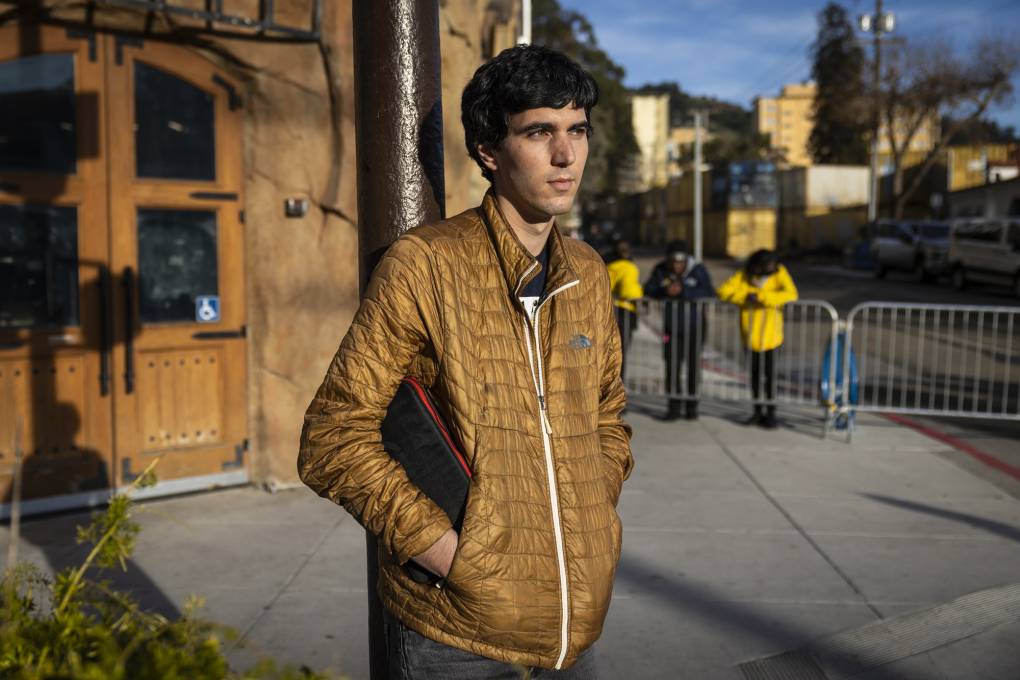
"caption": "Lev Marcus stands on the corner of Telegraph and Haste in Berkeley on Jan. 8, 2024.",
"description": null,
"title": "240108-LEV MARCUS-MD-01-KQED",
"credit": "Martin do Nascimento/KQED",
"status": "inherit",
"altTag": "A person in a light brown jacket stands on a street corner.",
"isLoading": false,
"fetchFailed": false
},
"news_11969860": {
"type": "attachments",
"id": "news_11969860",
"meta": {
"index": "attachments_1716263798",
"site": "news",
"id": "11969860",
"found": true
},
"parent": 11969801,
"imgSizes": {
"twentyfourteen-full-width": {
"file": "https://cdn.kqed.org/wp-content/uploads/sites/10/2023/12/AP071009163149-1038x576.jpg",
"width": 1038,
"mimeType": "image/jpeg",
"height": 576
},
"thumbnail": {
"file": "https://cdn.kqed.org/wp-content/uploads/sites/10/2023/12/AP071009163149-160x104.jpg",
"width": 160,
"mimeType": "image/jpeg",
"height": 104
},
"post-thumbnail": {
"file": "https://cdn.kqed.org/wp-content/uploads/sites/10/2023/12/AP071009163149-672x372.jpg",
"width": 672,
"mimeType": "image/jpeg",
"height": 372
},
"kqedFullSize": {
"file": "https://cdn.kqed.org/wp-content/uploads/sites/10/2023/12/AP071009163149-scaled.jpg",
"width": 2560,
"height": 1666
},
"2048x2048": {
"file": "https://cdn.kqed.org/wp-content/uploads/sites/10/2023/12/AP071009163149-2048x1333.jpg",
"width": 2048,
"mimeType": "image/jpeg",
"height": 1333
},
"large": {
"file": "https://cdn.kqed.org/wp-content/uploads/sites/10/2023/12/AP071009163149-1020x664.jpg",
"width": 1020,
"mimeType": "image/jpeg",
"height": 664
},
"1536x1536": {
"file": "https://cdn.kqed.org/wp-content/uploads/sites/10/2023/12/AP071009163149-1536x999.jpg",
"width": 1536,
"mimeType": "image/jpeg",
"height": 999
},
"full-width": {
"file": "https://cdn.kqed.org/wp-content/uploads/sites/10/2023/12/AP071009163149-1920x1249.jpg",
"width": 1920,
"mimeType": "image/jpeg",
"height": 1249
},
"medium": {
"file": "https://cdn.kqed.org/wp-content/uploads/sites/10/2023/12/AP071009163149-800x521.jpg",
"width": 800,
"mimeType": "image/jpeg",
"height": 521
}
},
"publishDate": 1702583202,
"modified": 1702583259,
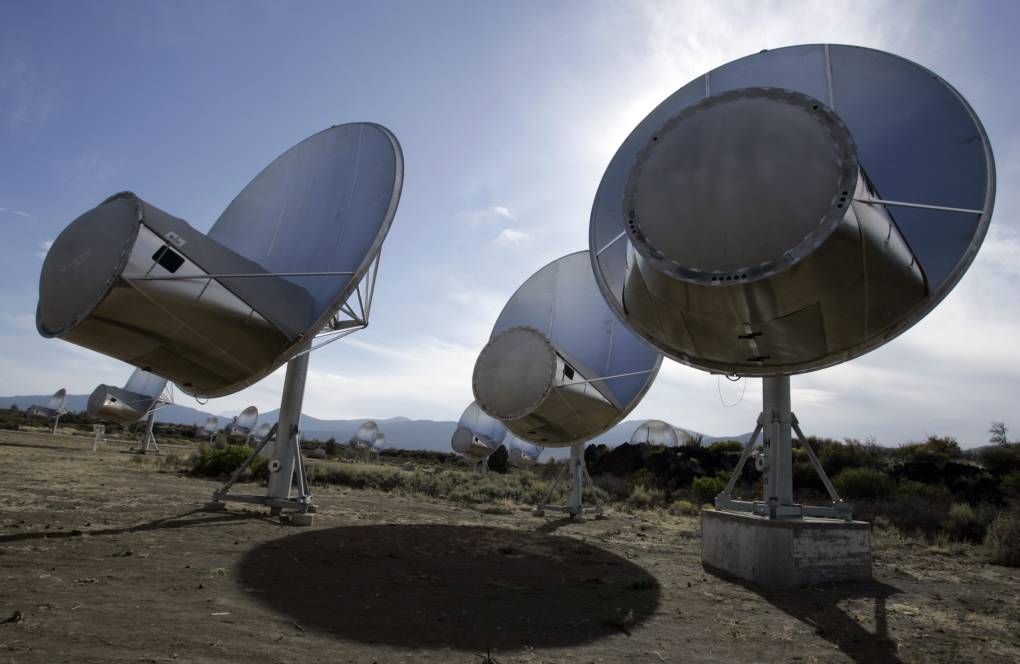
"caption": "In this Oct. 9, 2007 file photo, radio telescopes of the Allen Telescope Array are seen in Hat Creek. ",
"description": null,
"title": "Star Search Shutdown",
"credit": "Ben Margot/The Associated Press",
"status": "inherit",
"altTag": "Large telescopes in a field.",
"isLoading": false,
"fetchFailed": false
},
"news_11969172": {
"type": "attachments",
"id": "news_11969172",
"meta": {
"index": "attachments_1716263798",
"site": "news",
"id": "11969172",
"found": true
},
"parent": 11969165,
"imgSizes": {
"twentyfourteen-full-width": {
"file": "https://cdn.kqed.org/wp-content/uploads/sites/10/2023/12/UCB_046-2048x1152-1-1038x576.jpg",
"width": 1038,
"mimeType": "image/jpeg",
"height": 576
},
"thumbnail": {
"file": "https://cdn.kqed.org/wp-content/uploads/sites/10/2023/12/UCB_046-2048x1152-1-160x90.jpg",
"width": 160,
"mimeType": "image/jpeg",
"height": 90
},
"post-thumbnail": {
"file": "https://cdn.kqed.org/wp-content/uploads/sites/10/2023/12/UCB_046-2048x1152-1-672x372.jpg",
"width": 672,
"mimeType": "image/jpeg",
"height": 372
},
"kqedFullSize": {
"file": "https://cdn.kqed.org/wp-content/uploads/sites/10/2023/12/UCB_046-2048x1152-1.jpg",
"width": 2048,
"height": 1152
},
"large": {
"file": "https://cdn.kqed.org/wp-content/uploads/sites/10/2023/12/UCB_046-2048x1152-1-1020x574.jpg",
"width": 1020,
"mimeType": "image/jpeg",
"height": 574
},
"1536x1536": {
"file": "https://cdn.kqed.org/wp-content/uploads/sites/10/2023/12/UCB_046-2048x1152-1-1536x864.jpg",
"width": 1536,
"mimeType": "image/jpeg",
"height": 864
},
"full-width": {
"file": "https://cdn.kqed.org/wp-content/uploads/sites/10/2023/12/UCB_046-2048x1152-1-1920x1080.jpg",
"width": 1920,
"mimeType": "image/jpeg",
"height": 1080
},
"medium": {
"file": "https://cdn.kqed.org/wp-content/uploads/sites/10/2023/12/UCB_046-2048x1152-1-800x450.jpg",
"width": 800,
"mimeType": "image/jpeg",
"height": 450
}
},
"publishDate": 1701898558,
"modified": 1701909168,
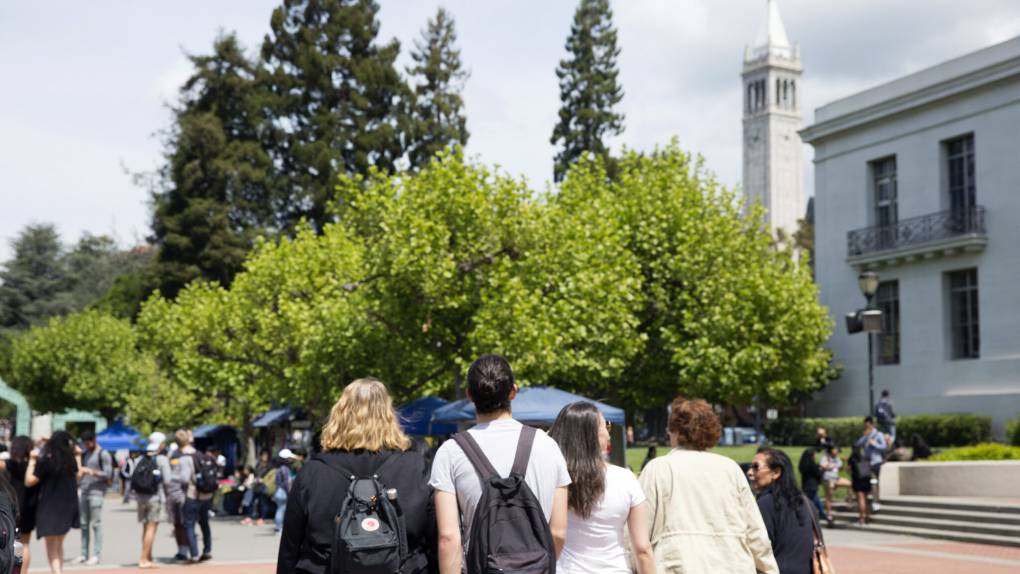
"caption": "University of California at Berkeley students on campus on Sather Road in Berkeley on Wednesday, April 19, 2017.",
"description": null,
"title": "alisonyin.com",
"credit": "Alison Yin/EdSource",
"status": "inherit",
"altTag": "People are seen walking around a campus.",
"isLoading": false,
"fetchFailed": false
},
"news_11965710": {
"type": "attachments",
"id": "news_11965710",
"meta": {
"index": "attachments_1716263798",
"site": "news",
"id": "11965710",
"found": true
},
"parent": 0,
"imgSizes": {
"twentyfourteen-full-width": {
"file": "https://ww2.kqed.org/app/uploads/sites/10/2023/10/231025-UCBerkeleyProfessor-12-BL-KQED-1038x576.jpg",
"width": 1038,
"mimeType": "image/jpeg",
"height": 576
},
"thumbnail": {
"file": "https://ww2.kqed.org/app/uploads/sites/10/2023/10/231025-UCBerkeleyProfessor-12-BL-KQED-160x107.jpg",
"width": 160,
"mimeType": "image/jpeg",
"height": 107
},
"post-thumbnail": {
"file": "https://ww2.kqed.org/app/uploads/sites/10/2023/10/231025-UCBerkeleyProfessor-12-BL-KQED-672x372.jpg",
"width": 672,
"mimeType": "image/jpeg",
"height": 372
},
"kqedFullSize": {
"file": "https://ww2.kqed.org/app/uploads/sites/10/2023/10/231025-UCBerkeleyProfessor-12-BL-KQED.jpg",
"width": 2000,
"height": 1333
},
"large": {
"file": "https://ww2.kqed.org/app/uploads/sites/10/2023/10/231025-UCBerkeleyProfessor-12-BL-KQED-1020x680.jpg",
"width": 1020,
"mimeType": "image/jpeg",
"height": 680
},
"1536x1536": {
"file": "https://ww2.kqed.org/app/uploads/sites/10/2023/10/231025-UCBerkeleyProfessor-12-BL-KQED-1536x1024.jpg",
"width": 1536,
"mimeType": "image/jpeg",
"height": 1024
},
"full-width": {
"file": "https://ww2.kqed.org/app/uploads/sites/10/2023/10/231025-UCBerkeleyProfessor-12-BL-KQED-1920x1280.jpg",
"width": 1920,
"mimeType": "image/jpeg",
"height": 1280
},
"medium": {
"file": "https://ww2.kqed.org/app/uploads/sites/10/2023/10/231025-UCBerkeleyProfessor-12-BL-KQED-800x533.jpg",
"width": 800,
"mimeType": "image/jpeg",
"height": 533
}
},
"publishDate": 1698348173,
"modified": 1698453218,
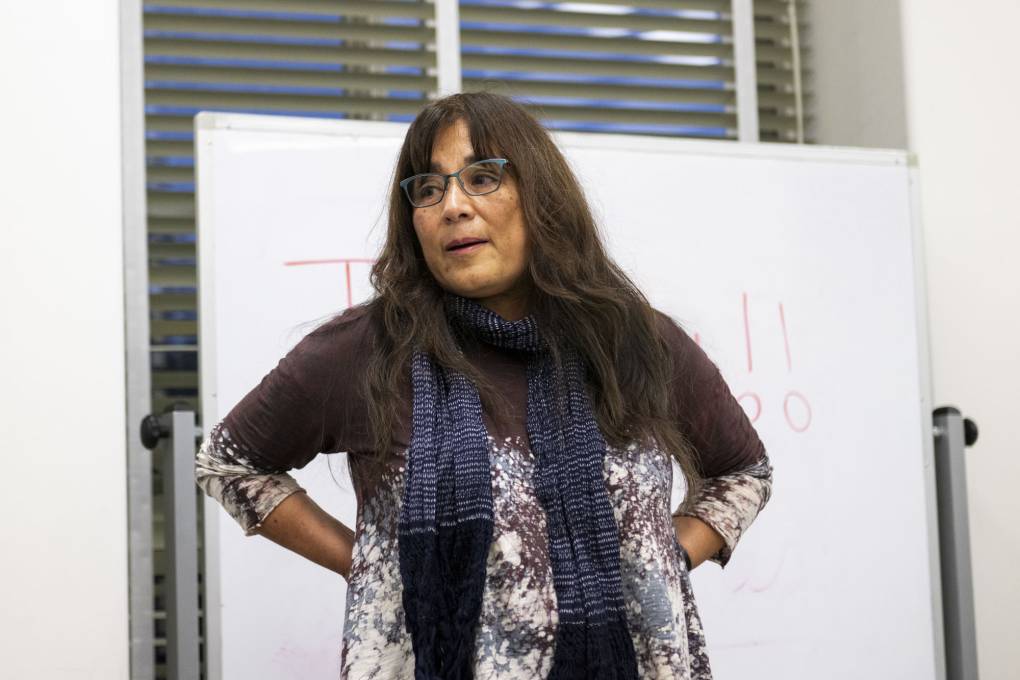
"caption": "Professor Ivonne del Valle speaks during a student-led town hall meeting to discuss progress and future actions to reinstate the professor at the University of California, Berkeley, on Oct. 25, 2023.",
"description": null,
"title": "231025-UCBerkeleyProfessor-12-BL-KQED",
"credit": "Beth LaBerge/KQED",
"status": "inherit",
"altTag": "a Latina woman with long hair and glasses stands in front of a whiteboard",
"isLoading": false,
"fetchFailed": false
},
"news_11963516": {
"type": "attachments",
"id": "news_11963516",
"meta": {
"index": "attachments_1716263798",
"site": "news",
"id": "11963516",
"found": true
},
"parent": 0,
"imgSizes": {
"twentyfourteen-full-width": {
"file": "https://ww2.kqed.org/app/uploads/sites/10/2023/10/231005-CAL-FOOTBALL-GETTY-MC-KQED-1038x576.jpg",
"width": 1038,
"mimeType": "image/jpeg",
"height": 576
},
"thumbnail": {
"file": "https://ww2.kqed.org/app/uploads/sites/10/2023/10/231005-CAL-FOOTBALL-GETTY-MC-KQED-160x107.jpg",
"width": 160,
"mimeType": "image/jpeg",
"height": 107
},
"post-thumbnail": {
"file": "https://ww2.kqed.org/app/uploads/sites/10/2023/10/231005-CAL-FOOTBALL-GETTY-MC-KQED-672x372.jpg",
"width": 672,
"mimeType": "image/jpeg",
"height": 372
},
"kqedFullSize": {
"file": "https://ww2.kqed.org/app/uploads/sites/10/2023/10/231005-CAL-FOOTBALL-GETTY-MC-KQED.jpg",
"width": 2000,
"height": 1333
},
"large": {
"file": "https://ww2.kqed.org/app/uploads/sites/10/2023/10/231005-CAL-FOOTBALL-GETTY-MC-KQED-1020x680.jpg",
"width": 1020,
"mimeType": "image/jpeg",
"height": 680
},
"1536x1536": {
"file": "https://ww2.kqed.org/app/uploads/sites/10/2023/10/231005-CAL-FOOTBALL-GETTY-MC-KQED-1536x1024.jpg",
"width": 1536,
"mimeType": "image/jpeg",
"height": 1024
},
"full-width": {
"file": "https://ww2.kqed.org/app/uploads/sites/10/2023/10/231005-CAL-FOOTBALL-GETTY-MC-KQED-1920x1280.jpg",
"width": 1920,
"mimeType": "image/jpeg",
"height": 1280
},
"medium": {
"file": "https://ww2.kqed.org/app/uploads/sites/10/2023/10/231005-CAL-FOOTBALL-GETTY-MC-KQED-800x533.jpg",
"width": 800,
"mimeType": "image/jpeg",
"height": 533
}
},
"publishDate": 1696523003,
"modified": 1696523272,
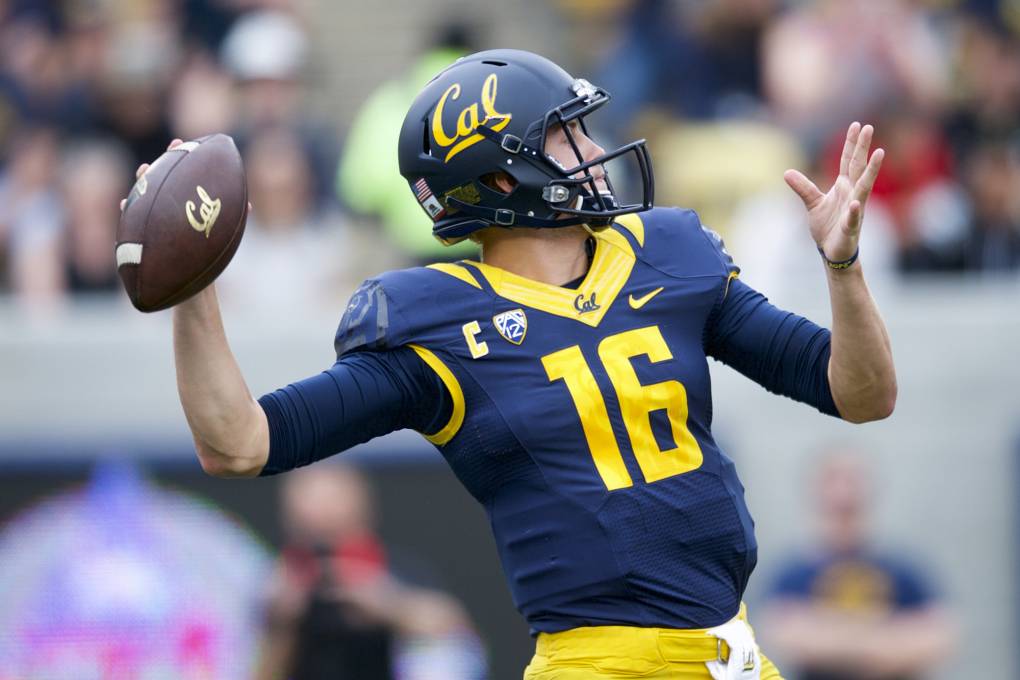
"caption": "The California Golden Bears play the San Diego State Aztecs at Memorial Stadium in Berkeley on Sept. 12, 2015.",
"description": null,
"title": "NCAA FOOTBALL: SEP 12 San Diego State at Cal",
"credit": "Matt Cohen/Icon Sportswire/Corbis/Icon Sportswire via Getty Images",
"status": "inherit",
"altTag": "A football player wearing Cal's blue and gold uniform winds up to pass the ball.",
"isLoading": false,
"fetchFailed": false
},
"news_11959527": {
"type": "attachments",
"id": "news_11959527",
"meta": {
"index": "attachments_1716263798",
"site": "news",
"id": "11959527",
"found": true
},
"parent": 0,
"imgSizes": {
"twentyfourteen-full-width": {
"file": "https://ww2.kqed.org/app/uploads/sites/10/2023/08/RS61468_DSC09292-KQED-1038x576.jpg",
"width": 1038,
"mimeType": "image/jpeg",
"height": 576
},
"thumbnail": {
"file": "https://ww2.kqed.org/app/uploads/sites/10/2023/08/RS61468_DSC09292-KQED-160x107.jpg",
"width": 160,
"mimeType": "image/jpeg",
"height": 107
},
"post-thumbnail": {
"file": "https://ww2.kqed.org/app/uploads/sites/10/2023/08/RS61468_DSC09292-KQED-672x372.jpg",
"width": 672,
"mimeType": "image/jpeg",
"height": 372
},
"kqedFullSize": {
"file": "https://ww2.kqed.org/app/uploads/sites/10/2023/08/RS61468_DSC09292-KQED.jpg",
"width": 2000,
"height": 1333
},
"large": {
"file": "https://ww2.kqed.org/app/uploads/sites/10/2023/08/RS61468_DSC09292-KQED-1020x680.jpg",
"width": 1020,
"mimeType": "image/jpeg",
"height": 680
},
"1536x1536": {
"file": "https://ww2.kqed.org/app/uploads/sites/10/2023/08/RS61468_DSC09292-KQED-1536x1024.jpg",
"width": 1536,
"mimeType": "image/jpeg",
"height": 1024
},
"full-width": {
"file": "https://ww2.kqed.org/app/uploads/sites/10/2023/08/RS61468_DSC09292-KQED-1920x1280.jpg",
"width": 1920,
"mimeType": "image/jpeg",
"height": 1280
},
"medium": {
"file": "https://ww2.kqed.org/app/uploads/sites/10/2023/08/RS61468_DSC09292-KQED-800x533.jpg",
"width": 800,
"mimeType": "image/jpeg",
"height": 533
}
},
"publishDate": 1693351681,
"modified": 1693359134,
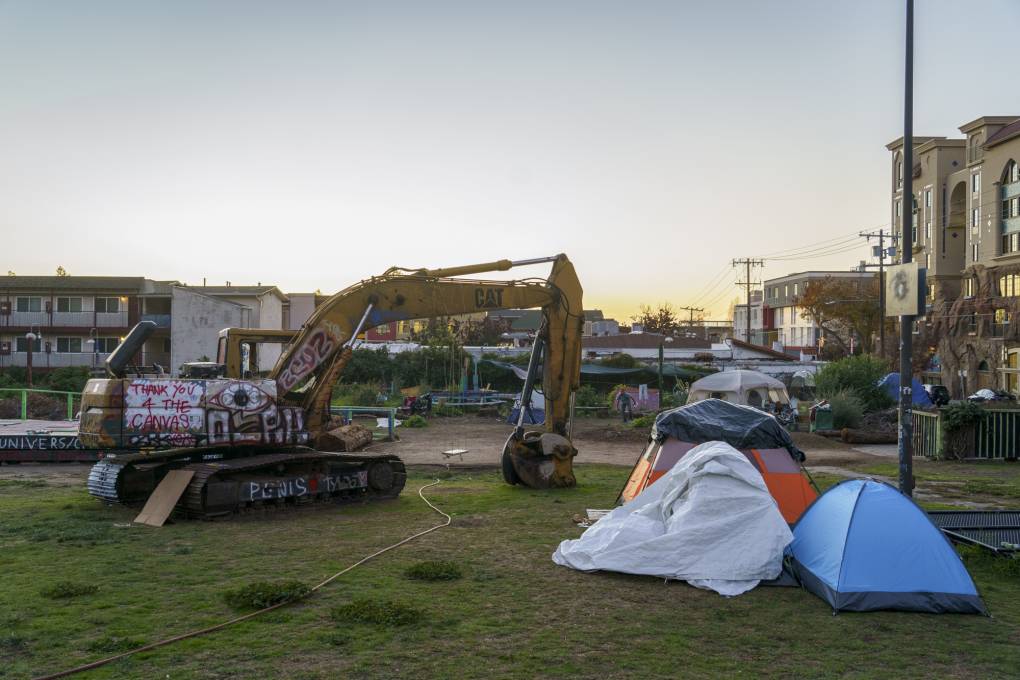
"caption": "People's Park in Berkeley, November 2022.",
"description": null,
"title": "RS61468_DSC09292-KQED",
"credit": "Aryk Copley/KQED",
"status": "inherit",
"altTag": "A large open outdoor space with an excavator and some tents in it.",
"isLoading": false,
"fetchFailed": false
},
"news_11959990": {
"type": "attachments",
"id": "news_11959990",
"meta": {
"index": "attachments_1716263798",
"site": "news",
"id": "11959990",
"found": true
},
"parent": 11959989,
"imgSizes": {
"twentyfourteen-full-width": {
"file": "https://ww2.kqed.org/app/uploads/sites/10/2023/09/GettyImages-1443354055-1024x576.jpg",
"width": 1024,
"mimeType": "image/jpeg",
"height": 576
},
"thumbnail": {
"file": "https://ww2.kqed.org/app/uploads/sites/10/2023/09/GettyImages-1443354055-160x110.jpg",
"width": 160,
"mimeType": "image/jpeg",
"height": 110
},
"post-thumbnail": {
"file": "https://ww2.kqed.org/app/uploads/sites/10/2023/09/GettyImages-1443354055-672x372.jpg",
"width": 672,
"mimeType": "image/jpeg",
"height": 372
},
"kqedFullSize": {
"file": "https://ww2.kqed.org/app/uploads/sites/10/2023/09/GettyImages-1443354055.jpg",
"width": 1024,
"height": 704
},
"large": {
"file": "https://ww2.kqed.org/app/uploads/sites/10/2023/09/GettyImages-1443354055-1020x701.jpg",
"width": 1020,
"mimeType": "image/jpeg",
"height": 701
},
"medium": {
"file": "https://ww2.kqed.org/app/uploads/sites/10/2023/09/GettyImages-1443354055-800x550.jpg",
"width": 800,
"mimeType": "image/jpeg",
"height": 550
}
},
"publishDate": 1693687756,
"modified": 1693687871,
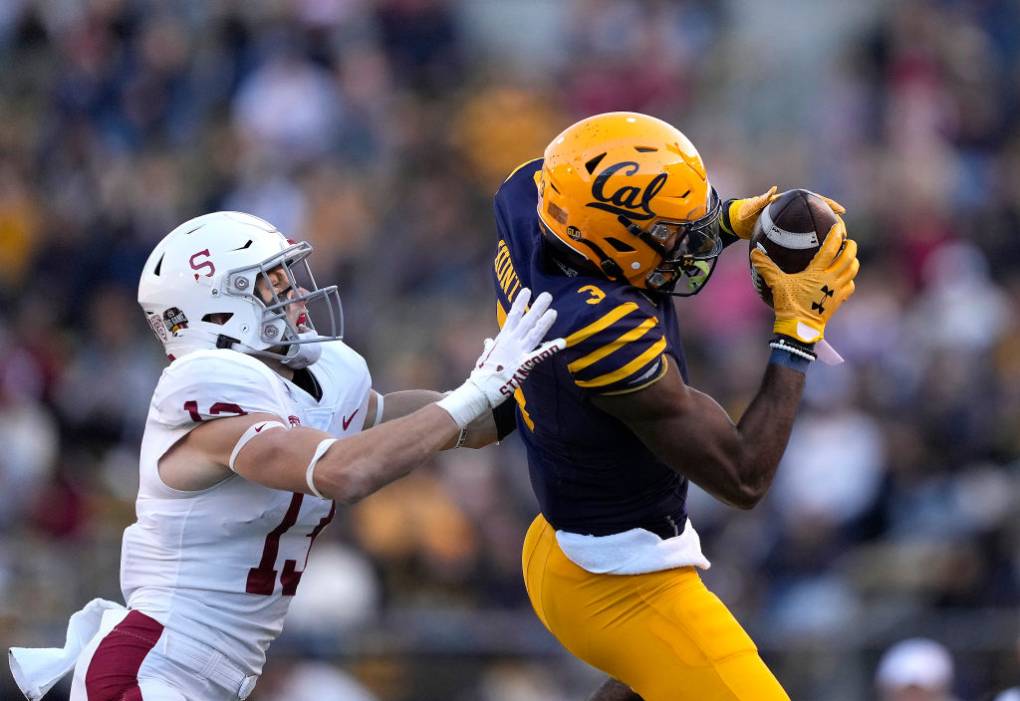
"caption": "Jeremiah Hunter of the California Golden Bears catches a pass over Ethan Bonner of the Stanford Cardinal during the first quarter at California Memorial Stadium on Nov. 19, 2022 in Berkeley. ",
"description": null,
"title": "Stanford v California",
"credit": "Thearon W. Henderson/Getty Images",
"status": "inherit",
"altTag": "Two college footballers, one from Stanford, the other from UC Berkeley, in action during a football match.",
"isLoading": false,
"fetchFailed": false
},
"news_11959636": {
"type": "attachments",
"id": "news_11959636",
"meta": {
"index": "attachments_1716263798",
"site": "news",
"id": "11959636",
"found": true
},
"parent": 11959618,
"imgSizes": {
"twentyfourteen-full-width": {
"file": "https://ww2.kqed.org/app/uploads/sites/10/2023/08/081623_Berkeley-Student-Housing_SN_CM_19-1038x576.jpeg",
"width": 1038,
"mimeType": "image/jpeg",
"height": 576
},
"thumbnail": {
"file": "https://ww2.kqed.org/app/uploads/sites/10/2023/08/081623_Berkeley-Student-Housing_SN_CM_19-160x107.jpeg",
"width": 160,
"mimeType": "image/jpeg",
"height": 107
},
"post-thumbnail": {
"file": "https://ww2.kqed.org/app/uploads/sites/10/2023/08/081623_Berkeley-Student-Housing_SN_CM_19-672x372.jpeg",
"width": 672,
"mimeType": "image/jpeg",
"height": 372
},
"kqedFullSize": {
"file": "https://ww2.kqed.org/app/uploads/sites/10/2023/08/081623_Berkeley-Student-Housing_SN_CM_19.jpeg",
"width": 2000,
"height": 1334
},
"large": {
"file": "https://ww2.kqed.org/app/uploads/sites/10/2023/08/081623_Berkeley-Student-Housing_SN_CM_19-1020x680.jpeg",
"width": 1020,
"mimeType": "image/jpeg",
"height": 680
},
"1536x1536": {
"file": "https://ww2.kqed.org/app/uploads/sites/10/2023/08/081623_Berkeley-Student-Housing_SN_CM_19-1536x1025.jpeg",
"width": 1536,
"mimeType": "image/jpeg",
"height": 1025
},
"full-width": {
"file": "https://ww2.kqed.org/app/uploads/sites/10/2023/08/081623_Berkeley-Student-Housing_SN_CM_19-1920x1281.jpeg",
"width": 1920,
"mimeType": "image/jpeg",
"height": 1281
},
"medium": {
"file": "https://ww2.kqed.org/app/uploads/sites/10/2023/08/081623_Berkeley-Student-Housing_SN_CM_19-800x534.jpeg",
"width": 800,
"mimeType": "image/jpeg",
"height": 534
}
},
"publishDate": 1693429968,
"modified": 1693430031,
"caption": "Students move into the University of California, Berkeley dorms in Berkeley on Aug. 16, 2023. ",
"description": null,
"title": "081623_Berkeley-Student-Housing_SN_CM_19",
"credit": "Semantha Norris/CalMatters",
"status": "inherit",
"altTag": "A woman sits with a blue bag on top of a purple suitcase in front of a tree.",
"isLoading": false,
"fetchFailed": false
},
"news_11956628": {
"type": "attachments",
"id": "news_11956628",
"meta": {
"index": "attachments_1716263798",
"site": "news",
"id": "11956628",
"found": true
},
"parent": 0,
"imgSizes": {
"twentyfourteen-full-width": {
"file": "https://ww2.kqed.org/app/uploads/sites/10/2023/07/Portrait-with-Blur-1-1038x576.jpg",
"width": 1038,
"mimeType": "image/jpeg",
"height": 576
},
"thumbnail": {
"file": "https://ww2.kqed.org/app/uploads/sites/10/2023/07/Portrait-with-Blur-1-160x115.jpg",
"width": 160,
"mimeType": "image/jpeg",
"height": 115
},
"post-thumbnail": {
"file": "https://ww2.kqed.org/app/uploads/sites/10/2023/07/Portrait-with-Blur-1-672x372.jpg",
"width": 672,
"mimeType": "image/jpeg",
"height": 372
},
"kqedFullSize": {
"file": "https://ww2.kqed.org/app/uploads/sites/10/2023/07/Portrait-with-Blur-1.jpg",
"width": 1920,
"height": 1378
},
"large": {
"file": "https://ww2.kqed.org/app/uploads/sites/10/2023/07/Portrait-with-Blur-1-1020x732.jpg",
"width": 1020,
"mimeType": "image/jpeg",
"height": 732
},
"1536x1536": {
"file": "https://ww2.kqed.org/app/uploads/sites/10/2023/07/Portrait-with-Blur-1-1536x1102.jpg",
"width": 1536,
"mimeType": "image/jpeg",
"height": 1102
},
"medium": {
"file": "https://ww2.kqed.org/app/uploads/sites/10/2023/07/Portrait-with-Blur-1-800x574.jpg",
"width": 800,
"mimeType": "image/jpeg",
"height": 574
}
},
"publishDate": 1690415095,
"modified": 1690418099,
"caption": "American theoretical physicist Dr. J. Robert Oppenheimer (1904–1967) smokes a cigarette as he sits in a chair, 1945.",
"description": null,
"title": "Portrait with Blur",
"credit": "PhotoQuest/Getty Images",
"status": "inherit",
"altTag": "Black and white image of a man sitting in a chair smoking a cigarette.",
"isLoading": false,
"fetchFailed": false
},
"news_11913358": {
"type": "attachments",
"id": "news_11913358",
"meta": {
"index": "attachments_1716263798",
"site": "news",
"id": "11913358",
"found": true
},
"parent": 11913341,
"imgSizes": {
"twentyfourteen-full-width": {
"file": "https://ww2.kqed.org/app/uploads/sites/10/2022/05/image12-1038x576.jpg",
"width": 1038,
"mimeType": "image/jpeg",
"height": 576
},
"thumbnail": {
"file": "https://ww2.kqed.org/app/uploads/sites/10/2022/05/image12-160x106.jpg",
"width": 160,
"mimeType": "image/jpeg",
"height": 106
},
"post-thumbnail": {
"file": "https://ww2.kqed.org/app/uploads/sites/10/2022/05/image12-672x372.jpg",
"width": 672,
"mimeType": "image/jpeg",
"height": 372
},
"kqedFullSize": {
"file": "https://ww2.kqed.org/app/uploads/sites/10/2022/05/image12.jpg",
"width": 1999,
"height": 1330
},
"large": {
"file": "https://ww2.kqed.org/app/uploads/sites/10/2022/05/image12-1020x679.jpg",
"width": 1020,
"mimeType": "image/jpeg",
"height": 679
},
"1536x1536": {
"file": "https://ww2.kqed.org/app/uploads/sites/10/2022/05/image12-1536x1022.jpg",
"width": 1536,
"mimeType": "image/jpeg",
"height": 1022
},
"full-width": {
"file": "https://ww2.kqed.org/app/uploads/sites/10/2022/05/image12-1920x1277.jpg",
"width": 1920,
"mimeType": "image/jpeg",
"height": 1277
},
"medium": {
"file": "https://ww2.kqed.org/app/uploads/sites/10/2022/05/image12-800x532.jpg",
"width": 800,
"mimeType": "image/jpeg",
"height": 532
}
},
"publishDate": 1651790890,
"modified": 1651877426,
"caption": "Anirvan Chatterjee leads a tour group on Telegraph Avenue near campus in Berkeley.",
"description": null,
"title": "image12",
"credit": "Courtesy of Preeti Mangalashekhar",
"status": "inherit",
"altTag": "A tour guide points to something, as his tour group stands on the street.",
"isLoading": false,
"fetchFailed": false
},
"news_11930102": {
"type": "attachments",
"id": "news_11930102",
"meta": {
"index": "attachments_1716263798",
"site": "news",
"id": "11930102",
"found": true
},
"parent": 11930085,
"imgSizes": {
"twentyfourteen-full-width": {
"file": "https://ww2.kqed.org/app/uploads/sites/10/2022/10/GettyImages-1408774696-1024x576.jpg",
"width": 1024,
"mimeType": "image/jpeg",
"height": 576
},
"thumbnail": {
"file": "https://ww2.kqed.org/app/uploads/sites/10/2022/10/GettyImages-1408774696-160x110.jpg",
"width": 160,
"mimeType": "image/jpeg",
"height": 110
},
"post-thumbnail": {
"file": "https://ww2.kqed.org/app/uploads/sites/10/2022/10/GettyImages-1408774696-672x372.jpg",
"width": 672,
"mimeType": "image/jpeg",
"height": 372
},
"kqedFullSize": {
"file": "https://ww2.kqed.org/app/uploads/sites/10/2022/10/GettyImages-1408774696.jpg",
"width": 1024,
"height": 705
},
"large": {
"file": "https://ww2.kqed.org/app/uploads/sites/10/2022/10/GettyImages-1408774696-1020x702.jpg",
"width": 1020,
"mimeType": "image/jpeg",
"height": 702
},
"medium": {
"file": "https://ww2.kqed.org/app/uploads/sites/10/2022/10/GettyImages-1408774696-800x551.jpg",
"width": 800,
"mimeType": "image/jpeg",
"height": 551
}
},
"publishDate": 1666725195,
"modified": 1685577180,
"caption": "Former District Attorney Chesa Boudin is seen outside the Hall of Justice in San Francisco on Dec. 30, 2020.",
"description": null,
"title": "District Attorney Chesa Boudin is seen outside of the Hall of Justice in San Francisco, Calif. on Wednesday, Dec. 30, 2020",
"credit": "Paul Chinn/The San Francisco Chronicle via Getty Images",
"status": "inherit",
"altTag": "A young white man with a beard stands in a blue suit outside a gray building",
"isLoading": false,
"fetchFailed": false
}
},
"audioPlayerReducer": {
"postId": "stream_live",
"isPaused": true,
"isPlaying": false,
"pfsActive": false,
"pledgeModalIsOpen": true,
"playerDrawerIsOpen": false,
"liveAudioPlayStartedAt": 0,
"liveAudioPlayContext": ""
},
"authorsReducer": {
"byline_news_11969165": {
"type": "authors",
"id": "byline_news_11969165",
"meta": {
"override": true
},
"slug": "byline_news_11969165",
"name": "Karen D'Souza",
"isLoading": false
},
"byline_news_11959618": {
"type": "authors",
"id": "byline_news_11959618",
"meta": {
"override": true
},
"slug": "byline_news_11959618",
"name": "\u003ca href=\"https://calmatters.org/author/mikhailzinshteyn/\">Mikhail Zinshteyn\u003c/a>",
"isLoading": false
},
"kqed": {
"type": "authors",
"id": "236",
"meta": {
"index": "authors_1716337520",
"id": "236",
"found": true
},
"name": "KQED News Staff",
"firstName": "KQED News Staff",
"lastName": null,
"slug": "kqed",
"email": "faq@kqed.org",
"display_author_email": false,
"staff_mastheads": [],
"title": null,
"bio": null,
"avatar": "https://secure.gravatar.com/avatar/ef0e801a68c4c54afa9180db14084167?s=600&d=blank&r=g",
"twitter": null,
"facebook": null,
"instagram": null,
"linkedin": null,
"sites": [
{
"site": "arts",
"roles": [
"contributor"
]
},
{
"site": "news",
"roles": [
"editor"
]
},
{
"site": "futureofyou",
"roles": [
"author"
]
}
],
"headData": {
"title": "KQED News Staff | KQED",
"description": null,
"ogImgSrc": "https://secure.gravatar.com/avatar/ef0e801a68c4c54afa9180db14084167?s=600&d=blank&r=g",
"twImgSrc": "https://secure.gravatar.com/avatar/ef0e801a68c4c54afa9180db14084167?s=600&d=blank&r=g"
},
"isLoading": false,
"link": "/author/kqed"
},
"kqednewsstaffandwires": {
"type": "authors",
"id": "237",
"meta": {
"index": "authors_1716337520",
"id": "237",
"found": true
},
"name": "KQED News Staff and Wires",
"firstName": "KQED News Staff and Wires",
"lastName": null,
"slug": "kqednewsstaffandwires",
"email": "onlinenewsstaff@kqed.org",
"display_author_email": false,
"staff_mastheads": [],
"title": null,
"bio": null,
"avatar": "https://secure.gravatar.com/avatar/72295af8ebbfbd19a4948f5271285664?s=600&d=blank&r=g",
"twitter": null,
"facebook": null,
"instagram": null,
"linkedin": null,
"sites": [
{
"site": "arts",
"roles": [
"contributor"
]
},
{
"site": "news",
"roles": [
"contributor"
]
},
{
"site": "lowdown",
"roles": [
"author"
]
},
{
"site": "stateofhealth",
"roles": [
"contributor"
]
},
{
"site": "food",
"roles": [
"author"
]
}
],
"headData": {
"title": "KQED News Staff and Wires | KQED",
"description": null,
"ogImgSrc": "https://secure.gravatar.com/avatar/72295af8ebbfbd19a4948f5271285664?s=600&d=blank&r=g",
"twImgSrc": "https://secure.gravatar.com/avatar/72295af8ebbfbd19a4948f5271285664?s=600&d=blank&r=g"
},
"isLoading": false,
"link": "/author/kqednewsstaffandwires"
},
"sasha-khokha": {
"type": "authors",
"id": "254",
"meta": {
"index": "authors_1716337520",
"id": "254",
"found": true
},
"name": "Sasha Khokha",
"firstName": "Sasha",
"lastName": "Khokha",
"slug": "sasha-khokha",
"email": "skhokha@kqed.org",
"display_author_email": true,
"staff_mastheads": [
"news"
],
"title": "Host, The California Report Magazine",
"bio": "Sasha Khokha is the host of \u003cem>The California Report's \u003c/em> weekly magazine program, which takes listeners on sound-rich excursions to meet the people that make the Golden State unique -- through audio documentaries and long-form stories. As \u003cem>The California Report's\u003c/em> Central Valley Bureau Chief based in Fresno for nearly a dozen years, Sasha brought the lives and concerns of rural Californians to listeners around the state. Her reporting helped expose the hidden price immigrant women janitors and farmworkers may pay to keep their jobs: sexual assault at work. It inspired two new California laws to protect them from sexual harassment. She was a key member of the reporting team for the Frontline film \u003cem>Rape on the Night Shift, \u003c/em>which was nominated for two national Emmys. Sasha has also won a national Edward R. Murrow and a national PRNDI award for investigative reporting, as well as multiple prizes from the Society for Professional Journalists. Sasha is a proud alum of the UC Berkeley Graduate School of Journalism and Brown University and a member of the South Asian Journalists Association.",
"avatar": "https://secure.gravatar.com/avatar/e4b5e1541aaeea2aa356aa1fb2a68950?s=600&d=blank&r=g",
"twitter": "KQEDSashaKhokha",
"facebook": null,
"instagram": null,
"linkedin": null,
"sites": [
{
"site": "news",
"roles": [
"editor"
]
},
{
"site": "stateofhealth",
"roles": [
"author"
]
},
{
"site": "science",
"roles": [
"author"
]
},
{
"site": "quest",
"roles": [
"subscriber"
]
}
],
"headData": {
"title": "Sasha Khokha | KQED",
"description": "Host, The California Report Magazine",
"ogImgSrc": "https://secure.gravatar.com/avatar/e4b5e1541aaeea2aa356aa1fb2a68950?s=600&d=blank&r=g",
"twImgSrc": "https://secure.gravatar.com/avatar/e4b5e1541aaeea2aa356aa1fb2a68950?s=600&d=blank&r=g"
},
"isLoading": false,
"link": "/author/sasha-khokha"
},
"kdomara": {
"type": "authors",
"id": "1459",
"meta": {
"index": "authors_1716337520",
"id": "1459",
"found": true
},
"name": "Kelly O'Mara",
"firstName": "Kelly",
"lastName": "O'Mara",
"slug": "kdomara",
"email": "komara@kqed.org",
"display_author_email": false,
"staff_mastheads": [
"news"
],
"title": "KQED Contributor",
"bio": "Kelly O'Mara is a writer and reporter in the San Francisco Bay Area. She writes about food, health, sports, travel, business and California news. Her work has appeared on KQED, online for Outside Magazine, epsnW, VICE and in Competitor Magazine, among others. Follow Kelly on Twitter \u003ca href=\"https://twitter.com/kellydomara\">@kellydomara\u003c/a>.",
"avatar": "https://secure.gravatar.com/avatar/768fec7412028b72f13bdd0f5f9d8186?s=600&d=blank&r=g",
"twitter": null,
"facebook": null,
"instagram": null,
"linkedin": null,
"sites": [
{
"site": "arts",
"roles": []
},
{
"site": "news",
"roles": []
},
{
"site": "bayareabites",
"roles": []
},
{
"site": "stateofhealth",
"roles": []
},
{
"site": "science",
"roles": []
},
{
"site": "checkplease",
"roles": [
"editor"
]
},
{
"site": "food",
"roles": []
},
{
"site": "forum",
"roles": [
"editor"
]
},
{
"site": "liveblog",
"roles": [
"editor"
]
}
],
"headData": {
"title": "Kelly O'Mara | KQED",
"description": "KQED Contributor",
"ogImgSrc": "https://secure.gravatar.com/avatar/768fec7412028b72f13bdd0f5f9d8186?s=600&d=blank&r=g",
"twImgSrc": "https://secure.gravatar.com/avatar/768fec7412028b72f13bdd0f5f9d8186?s=600&d=blank&r=g"
},
"isLoading": false,
"link": "/author/kdomara"
},
"mlagos": {
"type": "authors",
"id": "3239",
"meta": {
"index": "authors_1716337520",
"id": "3239",
"found": true
},
"name": "Marisa Lagos",
"firstName": "Marisa",
"lastName": "Lagos",
"slug": "mlagos",
"email": "mlagos@kqed.org",
"display_author_email": false,
"staff_mastheads": [
"news"
],
"title": "KQED Contributor",
"bio": "Marisa Lagos is a correspondent for KQED’s California Politics and Government Desk and co-hosts the award-winning show and podcast, Political Breakdown. At KQED, Lagos also conducts reporting, analysis and investigations into state, local and national politics for radio, TV, online and onstage. In 2022, she and co-host, Scott Shafer, moderated the only gubernatorial debate in California. In 2020, the \u003ci>Washington Post\u003c/i> named her one of the top political journalists in California; she was nominated for a Peabody and won several other awards for her work investigating the 2017 California wildfires. She has worked at the \u003ci>San Francisco Chronicle\u003c/i>, \u003ci>San Francisco Examiner\u003c/i> and \u003ci>Los Angeles Times\u003c/i>. A UC Santa Barbara graduate, she lives in San Francisco with her two sons and husband.",
"avatar": "https://secure.gravatar.com/avatar/a261a0d3696fc066871ef96b85b5e7d2?s=600&d=blank&r=g",
"twitter": "@mlagos",
"facebook": null,
"instagram": null,
"linkedin": null,
"sites": [
{
"site": "arts",
"roles": [
"author"
]
},
{
"site": "news",
"roles": [
"editor"
]
},
{
"site": "science",
"roles": [
"editor"
]
},
{
"site": "forum",
"roles": [
"author"
]
},
{
"site": "liveblog",
"roles": [
"author"
]
}
],
"headData": {
"title": "Marisa Lagos | KQED",
"description": "KQED Contributor",
"ogImgSrc": "https://secure.gravatar.com/avatar/a261a0d3696fc066871ef96b85b5e7d2?s=600&d=blank&r=g",
"twImgSrc": "https://secure.gravatar.com/avatar/a261a0d3696fc066871ef96b85b5e7d2?s=600&d=blank&r=g"
},
"isLoading": false,
"link": "/author/mlagos"
},
"afont": {
"type": "authors",
"id": "8637",
"meta": {
"index": "authors_1716337520",
"id": "8637",
"found": true
},
"name": "Amanda Font",
"firstName": "Amanda",
"lastName": "Font",
"slug": "afont",
"email": "afont@kqed.org",
"display_author_email": false,
"staff_mastheads": [],
"title": "KQED Contributor",
"bio": "Amanda Font is a producer on \u003cem>The Latest\u003c/em> podcast, and the host and co-producer of the series \u003cem>Audible Cosmos\u003c/em>. She has previously worked as a producer and reporter on the \u003cem>Bay Curious\u003c/em> podcast, and director of \u003cem>The California Report Magazine\u003c/em>. She grew up in the deserts of Southern California and moved north for the trees. Amanda earned a B.A. from the BECA program at San Francisco State, where she worked in the university's radio station. Amanda Font is represented by SAG-AFTRA.",
"avatar": "https://secure.gravatar.com/avatar/d9e81cf0117d5849b9cfb7ab4b1422f1?s=600&d=blank&r=g",
"twitter": null,
"facebook": null,
"instagram": null,
"linkedin": null,
"sites": [
{
"site": "news",
"roles": [
"add_users",
"create_users"
]
},
{
"site": "science",
"roles": []
},
{
"site": "forum",
"roles": [
"administrator"
]
},
{
"site": "perspectives",
"roles": [
"administrator"
]
},
{
"site": "radio",
"roles": [
"administrator"
]
}
],
"headData": {
"title": "Amanda Font | KQED",
"description": "KQED Contributor",
"ogImgSrc": "https://secure.gravatar.com/avatar/d9e81cf0117d5849b9cfb7ab4b1422f1?s=600&d=blank&r=g",
"twImgSrc": "https://secure.gravatar.com/avatar/d9e81cf0117d5849b9cfb7ab4b1422f1?s=600&d=blank&r=g"
},
"isLoading": false,
"link": "/author/afont"
},
"ecruzguevarra": {
"type": "authors",
"id": "8654",
"meta": {
"index": "authors_1716337520",
"id": "8654",
"found": true
},
"name": "Ericka Cruz Guevarra",
"firstName": "Ericka",
"lastName": "Cruz Guevarra",
"slug": "ecruzguevarra",
"email": "ecruzguevarra@kqed.org",
"display_author_email": true,
"staff_mastheads": [
"news"
],
"title": "Producer, The Bay Podcast",
"bio": "Ericka Cruz Guevarra is host of \u003ca href=\"https://www.kqed.org/podcasts/thebay\">\u003cem>The Bay\u003c/em>\u003c/a> podcast at KQED. Before host, she was the show’s producer. Her work in that capacity includes a three-part reported series on policing in Vallejo, which won a 2020 excellence in journalism award from the Society of Professional Journalists. Ericka has worked as a breaking news reporter at Oregon Public Broadcasting, helped produce the Code Switch podcast, and was KQED’s inaugural Raul Ramirez Diversity Fund intern. She’s also an alumna of NPR’s Next Generation Radio program. Send her an email if you have strong feelings about whether Fairfield and Suisun City are the Bay. Ericka is represented by SAG-AFTRA.",
"avatar": "https://secure.gravatar.com/avatar/accefc1de4bafc7e234b69bcb9b6f6536c130fd84709bc3069ef11a78787e1bb?s=600&d=blank&r=g",
"twitter": "NotoriousECG",
"bluesky": null,
"facebook": null,
"instagram": null,
"linkedin": null,
"sites": [
{
"site": "arts",
"roles": [
"subscriber"
]
},
{
"site": "news",
"roles": [
"editor",
"manage_categories"
]
},
{
"site": "futureofyou",
"roles": [
"subscriber"
]
},
{
"site": "stateofhealth",
"roles": [
"subscriber"
]
},
{
"site": "science",
"roles": [
"editor"
]
},
{
"site": "forum",
"roles": [
"subscriber"
]
}
],
"headData": {
"title": "Ericka Cruz Guevarra | KQED",
"description": "Producer, The Bay Podcast",
"ogImgSrc": "https://secure.gravatar.com/avatar/accefc1de4bafc7e234b69bcb9b6f6536c130fd84709bc3069ef11a78787e1bb?s=600&d=blank&r=g",
"twImgSrc": "https://secure.gravatar.com/avatar/accefc1de4bafc7e234b69bcb9b6f6536c130fd84709bc3069ef11a78787e1bb?s=600&d=blank&r=g"
},
"isLoading": false,
"link": "/author/ecruzguevarra"
},
"lesleymcclurg": {
"type": "authors",
"id": "11229",
"meta": {
"index": "authors_1716337520",
"id": "11229",
"found": true
},
"name": "Lesley McClurg",
"firstName": "Lesley",
"lastName": "McClurg",
"slug": "lesleymcclurg",
"email": "lmcclurg@KQED.org",
"display_author_email": false,
"staff_mastheads": [
"news",
"science"
],
"title": "KQED Health Correspondent",
"bio": "Lesley McClurg is a health correspondent and fill-in host whose work is regularly rebroadcast on NPR and PBS programs. She’s earned multiple regional Emmy awards, a national and a regional Edward R. Murrow award, and was named Best Beat Reporter by the Association of Health Care Journalists. The Society of Professional Journalists has recognized her work several times, and the Society of Environmental Journalists spotlighted her coverage of California’s historic drought.\r\n\r\nBefore joining KQED in 2016, Lesley covered food and sustainability for Capital Public Radio, environmental issues for Colorado Public Radio, and reported for KUOW and KCTS 9 in Seattle. Away from the newsroom, she loves skiing with her daughter, mountain biking with her partner, and playing with Ollie, the family’s goldendoodle. On deadline, she runs almost entirely on chocolate chips.\r\n\r\n ",
"avatar": "https://secure.gravatar.com/avatar/bab49e972ea10c774fe0f5e29dba1722b158f7c0d58a360923d1389d380b2978?s=600&d=blank&r=g",
"twitter": "lesleywmcclurg",
"bluesky": null,
"facebook": null,
"instagram": null,
"linkedin": null,
"sites": [
{
"site": "arts",
"roles": [
"author"
]
},
{
"site": "news",
"roles": [
"editor"
]
},
{
"site": "futureofyou",
"roles": [
"editor"
]
},
{
"site": "stateofhealth",
"roles": [
"author"
]
},
{
"site": "science",
"roles": [
"editor"
]
},
{
"site": "quest",
"roles": [
"subscriber"
]
},
{
"site": "forum",
"roles": [
"administrator"
]
},
{
"site": "liveblog",
"roles": [
"author"
]
}
],
"headData": {
"title": "Lesley McClurg | KQED",
"description": "KQED Health Correspondent",
"ogImgSrc": "https://secure.gravatar.com/avatar/bab49e972ea10c774fe0f5e29dba1722b158f7c0d58a360923d1389d380b2978?s=600&d=blank&r=g",
"twImgSrc": "https://secure.gravatar.com/avatar/bab49e972ea10c774fe0f5e29dba1722b158f7c0d58a360923d1389d380b2978?s=600&d=blank&r=g"
},
"isLoading": false,
"link": "/author/lesleymcclurg"
},
"bwatt": {
"type": "authors",
"id": "11238",
"meta": {
"index": "authors_1716337520",
"id": "11238",
"found": true
},
"name": "Brian Watt",
"firstName": "Brian",
"lastName": "Watt",
"slug": "bwatt",
"email": "bwatt@KQED.org",
"display_author_email": false,
"staff_mastheads": [
"news"
],
"title": "Morning News Anchor",
"bio": "Brian Watt is KQED's morning radio news anchor. He joined the KQED News team in April of 2016. Prior to that, he worked as a Reporter for KPCC in Los Angeles and a producer at \u003cem>Marketplace.\u003c/em>\r\n\r\nDuring eight years at KPCC, Brian covered business and economics, and his work won several awards. In 2008, he won the Los Angeles Press Club’s first-place award for Business and Financial Reporting, Broadcast. He’s also received honorable mention and been first runner up for the Press Club’s Radio Journalist of the Year. He won two Golden Mike awards from the Radio and TV News Association of Southern California.\r\n\r\nBrian holds degrees in theater from Yale University and the Sorbonne, and has worked as an actor in France, Italy, Brazil, Hungary and . . . Hollywood. He appeared in a few television shows, including \u003cem>The West Wing, Judging Amy\u003c/em> and \u003cem>The District.\u003c/em>\r\n\r\nEmail: bwatt@KQED.org Twitter: @RadioBWatt",
"avatar": "https://secure.gravatar.com/avatar/55393ff57ed34e2be773ba4789dd6a19?s=600&d=blank&r=g",
"twitter": "@RadioBWatt",
"facebook": null,
"instagram": null,
"linkedin": null,
"sites": [
{
"site": "arts",
"roles": [
"contributor"
]
},
{
"site": "news",
"roles": [
"editor"
]
}
],
"headData": {
"title": "Brian Watt | KQED",
"description": "Morning News Anchor",
"ogImgSrc": "https://secure.gravatar.com/avatar/55393ff57ed34e2be773ba4789dd6a19?s=600&d=blank&r=g",
"twImgSrc": "https://secure.gravatar.com/avatar/55393ff57ed34e2be773ba4789dd6a19?s=600&d=blank&r=g"
},
"isLoading": false,
"link": "/author/bwatt"
},
"vrancano": {
"type": "authors",
"id": "11276",
"meta": {
"index": "authors_1716337520",
"id": "11276",
"found": true
},
"name": "Vanessa Rancaño",
"firstName": "Vanessa",
"lastName": "Rancaño",
"slug": "vrancano",
"email": "vrancano@kqed.org",
"display_author_email": false,
"staff_mastheads": [
"news"
],
"title": "Reporter",
"bio": "Vanessa Rancaño is a features reporter for KQED. She’s also covered homelessness and education for the station and reported from the Central Valley. Her work has aired across public radio, from flagship national news shows to longform narrative podcasts. Before taking up a mic, she worked as a freelance print journalist. She’s been recognized with a number of national and regional awards. Vanessa grew up in California's Central Valley. She's a former NPR Kroc Fellow, and a graduate of the UC Berkeley Graduate School of Journalism.",
"avatar": "https://secure.gravatar.com/avatar/b3a383dfb0e7ee1c17568f2cf067904ab654d6e3de9743fc661f3c788ade1bed?s=600&d=blank&r=g",
"twitter": "vanessarancano",
"bluesky": null,
"facebook": null,
"instagram": null,
"linkedin": null,
"sites": [
{
"site": "arts",
"roles": [
"editor"
]
},
{
"site": "news",
"roles": [
"editor"
]
},
{
"site": "liveblog",
"roles": [
"contributor"
]
}
],
"headData": {
"title": "Vanessa Rancaño | KQED",
"description": "Reporter",
"ogImgSrc": "https://secure.gravatar.com/avatar/b3a383dfb0e7ee1c17568f2cf067904ab654d6e3de9743fc661f3c788ade1bed?s=600&d=blank&r=g",
"twImgSrc": "https://secure.gravatar.com/avatar/b3a383dfb0e7ee1c17568f2cf067904ab654d6e3de9743fc661f3c788ade1bed?s=600&d=blank&r=g"
},
"isLoading": false,
"link": "/author/vrancano"
},
"hmcdede": {
"type": "authors",
"id": "11635",
"meta": {
"index": "authors_1716337520",
"id": "11635",
"found": true
},
"name": "Holly McDede",
"firstName": "Holly",
"lastName": "McDede",
"slug": "hmcdede",
"email": "hmcdede@KQED.org",
"display_author_email": false,
"staff_mastheads": [],
"title": "KQED Contributor",
"bio": null,
"avatar": "https://secure.gravatar.com/avatar/999d9bf31bb3a2f0511932d99526cb3e?s=600&d=blank&r=g",
"twitter": null,
"facebook": null,
"instagram": null,
"linkedin": null,
"sites": [
{
"site": "arts",
"roles": [
"editor"
]
},
{
"site": "news",
"roles": [
"edit_others_posts",
"editor"
]
},
{
"site": "science",
"roles": [
"editor"
]
},
{
"site": "forum",
"roles": [
"editor"
]
},
{
"site": "perspectives",
"roles": [
"administrator"
]
}
],
"headData": {
"title": "Holly McDede | KQED",
"description": "KQED Contributor",
"ogImgSrc": "https://secure.gravatar.com/avatar/999d9bf31bb3a2f0511932d99526cb3e?s=600&d=blank&r=g",
"twImgSrc": "https://secure.gravatar.com/avatar/999d9bf31bb3a2f0511932d99526cb3e?s=600&d=blank&r=g"
},
"isLoading": false,
"link": "/author/hmcdede"
},
"amontecillo": {
"type": "authors",
"id": "11649",
"meta": {
"index": "authors_1716337520",
"id": "11649",
"found": true
},
"name": "Alan Montecillo",
"firstName": "Alan",
"lastName": "Montecillo",
"slug": "amontecillo",
"email": "amontecillo@kqed.org",
"display_author_email": false,
"staff_mastheads": [
"news"
],
"title": "KQED Contributor",
"bio": "Alan Montecillo is the senior editor of \u003cem>\u003ca href=\"http://kqed.org/thebay\">The Bay\u003c/a>, \u003c/em> KQED's local news podcast. Before moving to the Bay Area, he worked as a senior talk show producer for WILL in Champaign-Urbana, Illinois and at Oregon Public Broadcasting in Portland, Oregon. He has won journalism awards from the Society of Professional Journalists Northern California, the Public Media Journalists Association, The Signal Awards, and has also received a regional Edward R. Murrow award. Alan is a Filipino American from Hong Kong and a graduate of Reed College.",
"avatar": "https://secure.gravatar.com/avatar/268f53a2066899ea9efdd8a5900218b17c822d9862cbc9326cccec53ef41d349?s=600&d=blank&r=g",
"twitter": "alanmontecillo",
"bluesky": null,
"facebook": null,
"instagram": null,
"linkedin": null,
"sites": [
{
"site": "",
"roles": [
"editor"
]
},
{
"site": "news",
"roles": [
"editor",
"manage_categories"
]
}
],
"headData": {
"title": "Alan Montecillo | KQED",
"description": "KQED Contributor",
"ogImgSrc": "https://secure.gravatar.com/avatar/268f53a2066899ea9efdd8a5900218b17c822d9862cbc9326cccec53ef41d349?s=600&d=blank&r=g",
"twImgSrc": "https://secure.gravatar.com/avatar/268f53a2066899ea9efdd8a5900218b17c822d9862cbc9326cccec53ef41d349?s=600&d=blank&r=g"
},
"isLoading": false,
"link": "/author/amontecillo"
},
"mesquinca": {
"type": "authors",
"id": "11802",
"meta": {
"index": "authors_1716337520",
"id": "11802",
"found": true
},
"name": "Maria Esquinca",
"firstName": "Maria",
"lastName": "Esquinca",
"slug": "mesquinca",
"email": "mesquinca@kqed.org",
"display_author_email": false,
"staff_mastheads": [],
"title": "Producer, The Bay",
"bio": "María Esquinca is a producer of The Bay. Before that, she was a New York Women’s Foundation IGNITE Fellow at Latino USA. She worked at Radio Bilingue where she covered the San Joaquin Valley. Maria has interned at WLRN, News 21, The New York Times Student Journalism Institute and at Crain’s Detroit Business as a Dow Jones News Fund Business Reporting Intern. She is an MFA graduate from the University of Miami. In 2017, she graduated from the Walter Cronkite School of Journalism and Mass Communication with a Master of Mass Communication. A fronteriza, she was born in Ciudad Juárez, Chihuahua, Mexico and grew up in El Paso, Texas.",
"avatar": "https://secure.gravatar.com/avatar/77cedba18aae91da775038ba06dcd8d0?s=600&d=blank&r=g",
"twitter": "@m_esquinca",
"facebook": null,
"instagram": null,
"linkedin": null,
"sites": [
{
"site": "news",
"roles": []
}
],
"headData": {
"title": "Maria Esquinca | KQED",
"description": "Producer, The Bay",
"ogImgSrc": "https://secure.gravatar.com/avatar/77cedba18aae91da775038ba06dcd8d0?s=600&d=blank&r=g",
"twImgSrc": "https://secure.gravatar.com/avatar/77cedba18aae91da775038ba06dcd8d0?s=600&d=blank&r=g"
},
"isLoading": false,
"link": "/author/mesquinca"
},
"kmonahan": {
"type": "authors",
"id": "11842",
"meta": {
"index": "authors_1716337520",
"id": "11842",
"found": true
},
"name": "Katherine Monahan",
"firstName": "Katherine",
"lastName": "Monahan",
"slug": "kmonahan",
"email": "kmonahan@kqed.org",
"display_author_email": true,
"staff_mastheads": [],
"title": "Reporter / Sound Engineer",
"bio": "I cover state and local news. I’m also a sound engineer at the station, mixing stories and running live broadcasts. I link to source materials so that readers can draw their own conclusions, and seek comment from a range of perspectives, including from people directly affected by events. Awards received include from the Society of Professional Journalists, Northern California chapter and the Alaska Press Club. I speak multiple languages and have reported and engineered in the Bay Area, Alaska, West Africa and Latin America.",
"avatar": "https://secure.gravatar.com/avatar/ff257b3a5da88893781a3d3266904b2d2f91c7f0e1bbf728f61f5fb81b74a669?s=600&d=blank&r=g",
"twitter": null,
"bluesky": null,
"facebook": null,
"instagram": null,
"linkedin": null,
"sites": [
{
"site": "news",
"roles": [
"editor"
]
},
{
"site": "science",
"roles": [
"contributor"
]
}
],
"headData": {
"title": "Katherine Monahan | KQED",
"description": "Reporter / Sound Engineer",
"ogImgSrc": "https://secure.gravatar.com/avatar/ff257b3a5da88893781a3d3266904b2d2f91c7f0e1bbf728f61f5fb81b74a669?s=600&d=blank&r=g",
"twImgSrc": "https://secure.gravatar.com/avatar/ff257b3a5da88893781a3d3266904b2d2f91c7f0e1bbf728f61f5fb81b74a669?s=600&d=blank&r=g"
},
"isLoading": false,
"link": "/author/kmonahan"
}
},
"pagesReducer": {
"news_tag_uc-berkeley": {
"type": "terms",
"id": "news_17597",
"meta": {
"index": "terms_1716263798",
"site": "news",
"id": "17597",
"score": 8.45815
},
"featImg": null,
"name": "UC Berkeley",
"description": null,
"taxonomy": "tag",
"headData": {
"twImgId": null,
"twTitle": null,
"ogTitle": null,
"ogImgId": null,
"twDescription": null,
"description": null,
"title": "UC Berkeley Archives | KQED News",
"ogDescription": null
},
"ttid": 17631,
"slug": "uc-berkeley",
"isLoading": false,
"title": "UC Berkeley",
"pageMeta": {
"site": "news",
"WpPageTemplate": "page-topic-editorial",
"currentPage": 8
},
"blocks": [
{
"blockName": "kqed/post-list",
"attrs": {
"layout": "cardArticle2",
"query": "posts/news?tag=uc-berkeley",
"seeMore": false,
"paginated": true,
"page": 8
}
},
{
"blockName": "kqed/ad"
}
]
}
},
"pfsSessionReducer": {},
"postsReducer": {
"stream_live": {
"type": "live",
"id": "stream_live",
"audioUrl": "https://streams.kqed.org/kqedradio",
"title": "Live Stream",
"excerpt": "Live Stream information currently unavailable.",
"link": "/radio",
"featImg": "",
"label": {
"name": "KQED Live",
"link": "/"
}
},
"stream_kqedNewscast": {
"type": "posts",
"id": "stream_kqedNewscast",
"audioUrl": "https://www.kqed.org/.stream/anon/radio/RDnews/newscast.mp3?_=1",
"title": "KQED Newscast",
"featImg": "",
"label": {
"name": "88.5 FM",
"link": "/"
}
},
"news_11972091": {
"type": "posts",
"id": "news_11972091",
"meta": {
"index": "posts_1716263798",
"site": "news",
"id": "11972091",
"score": null,
"sort": [
1704884443000
]
},
"guestAuthors": [],
"slug": "will-uc-berkeley-finally-win-the-battle-over-peoples-park",
"title": "Will UC Berkeley Finally Win the Battle Over People’s Park?",
"publishDate": 1704884443,
"format": "audio",
"headTitle": "Will UC Berkeley Finally Win the Battle Over People’s Park? | KQED",
"labelTerm": {},
"content": "\u003cp>\u003ca href=\"#episode-transcript\">\u003ci>\u003cspan style=\"font-weight: 400\">View the full episode transcript.\u003c/span>\u003c/i>\u003c/a>\u003c/p>\n\u003cp>Since its founding in 1969, People’s Park has been a symbol of Berkeley’s radical history of protest, resistance and mutual aid. But after years of efforts by UC Berkeley to build on the land, the university is getting closer and closer to taking back control. KQED’s Vanessa Rancaño breaks it down.\u003c/p>\n\u003cp>\u003c!-- iframe plugin v.4.3 wordpress.org/plugins/iframe/ -->\u003cbr>\n\u003ciframe loading=\"lazy\" frameborder=\"0\" height=\"200\" scrolling=\"no\" src=\"https://playlist.megaphone.fm/?e=KQINC3961822451\" width=\"100%\" class=\"iframe-class\">\u003c/iframe>\u003c/p>\n\u003cp>\u003cstrong>Links:\u003c/strong>\u003c/p>\n\u003cul>\n\u003cli style=\"font-weight: 400\">\u003ca href=\"https://www.kqed.org/arts/13917145/a-brief-history-battle-peoples-park-berkeley-protests\">A Brief History of the Never-Ending Battle for People’s Park\u003c/a>\u003c/li>\n\u003cli style=\"font-weight: 400\">\u003ca href=\"https://www.kqed.org/news/11971858/berkeley-locals-lament-the-closure-of-peoples-park-as-shipping-container-barricades-go-up\">Berkeley Locals Lament the Closure of People’s Park as Shipping Container Barricades Go Up\u003c/a>\u003c/li>\n\u003c/ul>\n\u003ch2 id=\"episode-transcript\">Episode Transcript\u003c/h2>\n\u003cp>\u003ci>\u003cspan style=\"font-weight: 400\">This is a computer-generated transcript. While our team has reviewed it, there may be errors.\u003c/span>\u003c/i>\u003c/p>\n\u003cp>[ad fullwidth]\u003c/p>\n\u003cp>\u003cstrong>Ericka Cruz Guevarra: \u003c/strong>I’m Ericka Cruz Guevarra and welcome to the Bay. Local news to keep you rooted. People’s Park looks much different than how locals might remember it. This once public green space and symbol of Berkeley’s history of protest, resistance and mutual aid is now surrounded on all sides by shipping containers.\u003c/p>\n\u003cp>\u003cstrong>\u003cem> \u003c/em>\u003c/strong>\u003cem>[protest audio] \u003c/em>\u003c/p>\n\u003cp>\u003cstrong>Ericka Cruz Guevarra: \u003c/strong>But not before protests by defenders of the park who came face to face with police in riot gear in an attempt to stop UC Berkeley from closing off the area in order to build student housing.\u003c/p>\n\u003cp>\u003cstrong>Enrique Marisol: \u003c/strong>They’ve mutilated what it was, but, like, give me the park, how it was 4 or 5 years ago. Like that was beautiful. I don’t know why we can’t work toward restoring that.\u003c/p>\n\u003cp>\u003cstrong>Ericka Cruz Guevarra: \u003c/strong>Since its founding in 1969, People’s Park has always been a contested space. UC Berkeley has tried to take back control of the land for years, but this time around, the university is closer than it’s ever been to doing what it wants with the land.\u003c/p>\n\u003cp>\u003cstrong>Kyle Gibson: \u003c/strong>We’re looking at taking more than just 1100 students with this project alone out of the private Berkeley rental market. So that not only helps our students, but helps raise up over a thousand units of housing for the broader Berkeley community.\u003c/p>\n\u003cp>\u003cstrong>Ericka Cruz Guevarra: \u003c/strong>Today, the latest battle over People’s Park.\u003c/p>\n\u003cp>\u003cstrong>Vanessa Rancaño: \u003c/strong>This is the university’s latest attempt to prepare the land for development.\u003c/p>\n\u003cp>\u003cstrong>Ericka Cruz Guevarra: \u003c/strong>Vanessa Rancaño is a housing reporter for KQED.\u003c/p>\n\u003cp>\u003cstrong>Vanessa Rancaño: \u003c/strong>It was pretty wild to see what the park looked like after law enforcement had cleared it early that Thursday morning. There was a ton of law enforcement like at one point, this failing of officers was like 20 or 30 or in riot gear. They had helmets, face shields, these padded vests, pads strapped to their arms and legs. They were carrying batons.\u003c/p>\n\u003cp>\u003cstrong>Vanessa Rancaño: \u003c/strong>Meanwhile, these enormous shipping containers are getting stacked, uh, along the edge of the park and inside at the park itself had largely been raised. There were these huge piles of debris. Trees that had been cut down were piled up, heavy machinery in their tire tracks all over the place. And you could see some remnants of the people who’d spent time there, like I saw a crumpled Palestinian flag on the ground. And it was weirdly quiet, kind of eerily quiet.\u003c/p>\n\u003cp>\u003cem>[protest audio]\u003c/em>\u003c/p>\n\u003cp>\u003cstrong>Vanessa Rancaño: \u003c/strong>And then around 11 a.m., more protesters started showing up outside the barricade on Telegraph. You know, around 100 people chanting and passion speeches and the 100ft or so behind these barricades, there was just a line of officers in riot gear facing the protesters.\u003c/p>\n\u003cp>\u003cstrong>Ericka Cruz Guevarra: \u003c/strong>Who’d you talk to while you were at the park, Vanessa?\u003c/p>\n\u003cp>\u003cstrong>Vanessa Rancaño: \u003c/strong>One of the people I talked to was Enrique Marisol, they’re 23 years old and just graduated from Cal.\u003c/p>\n\u003cp>\u003cstrong>Enrique Marisol: \u003c/strong>I live two blocks down. I mean, I’ve slept in the park a lot. I’ve been homeless for sporadic periods myself, but, um, I currently have an apartment. Yeah.\u003c/p>\n\u003cp>\u003cstrong>Vanessa Rancaño: \u003c/strong>The night before I met Enrique, they were in the park, in the building that functioned as the kitchen with a few other people. When they got a call that law enforcement was on the way.\u003c/p>\n\u003cp>\u003cstrong>Enrique Marisol: \u003c/strong>And then I heard a bunch of screaming and yelling from outside. And before I could even, like, climb back up to get out of the kitchen, there was two more people climbing in and slamming the door behind them. And like we locked in.\u003c/p>\n\u003cp>\u003cstrong>Vanessa Rancaño: \u003c/strong>They said they were surrounded by law enforcement. Officials started using a chainsaw to try to get into this building.\u003c/p>\n\u003cp>\u003cstrong>Enrique Marisol: \u003c/strong>They they were hitting screws and stuff, so it was causing sparks and smoke and flames and like we had a fire extinguisher in there because obviously it’s a kitchen. We need to be prepared. Um, so I picked up the fire extinguisher and I was holding it like pointing it out where they were cutting, because that’s where the flames were coming from.\u003c/p>\n\u003cp>\u003cstrong>Vanessa Rancaño: \u003c/strong>One of the law enforcement officials and pointed a gun, a rifle. I think they said at them.\u003c/p>\n\u003cp>\u003cstrong>Enrique Marisol: \u003c/strong>They had cut a hole like a little window where they could look through. And when I was holding up the extinguisher, one of the police pointed his rifle like in my face and told me to drop the extinguisher and put my hands up. So we were just like standing there.\u003c/p>\n\u003cp>\u003cstrong>Vanessa Rancaño: \u003c/strong>It was very scary for them and they did end up getting arrested.\u003c/p>\n\u003cp>\u003cstrong>Ericka Cruz Guevarra: \u003c/strong>Especially if you’re in Berkeley, you’re probably very familiar with People’s Park and the role it’s played in Berkeley’s radical history. But just remind us, why is what’s happening to this plot of land in Berkeley so contentious in this city specifically?\u003c/p>\n\u003cp>\u003cstrong>Vanessa Rancaño: \u003c/strong>This space has been contested since its creation. The university bought this plot of land back in 1967. Initially, they intended to build some kind of playing field on it. They didn’t get very far before they ran out of money, and then this lot just sat empty and became sort of a dumping ground. And then a couple years later, in 1969, this group of locals, young people, hippies, artists, they planted trees and flowers and made it into a park.\u003c/p>\n\u003cp>I’m Chief Beale of the Berkeley Police Department. At five minutes of nine, we declared this to be an unlawful assembly. There is no permit for this meeting.\u003c/p>\n\u003cp>\u003cstrong>Vanessa Rancaño: \u003c/strong>The university tried to take it back. And there were these major protests that have gone down in history. There was a lot of tear gas. Someone ended up getting killed. Governor Ronald Reagan at the time called in the National Guard. And really, ever since then, the fight over the future of this park has existed in some form. The university has made other attempts to build, and the park, meanwhile, has acted as this site of protest and community organizing.\u003c/p>\n\u003cp>\u003cem>[protest audio]\u003c/em>\u003c/p>\n\u003cp>\u003cstrong>Vanessa Rancaño: \u003c/strong>The fight for the park has often been tied to bigger fights against what I think people see as abuses of state power, like anti-Vietnam protests, freedom in South Africa. And out there today you hear people talking about Gaza.\u003c/p>\n\u003cp>\u003cstrong>Ericka Cruz Guevarra: \u003c/strong>Okay, so it has that history. And that’s sort of roots in Berkeley’s radical history. But the university, as you were just saying, has always wanted to use this land for something else. What does the university plan to build on this land, exactly?\u003c/p>\n\u003cp>\u003cstrong>Vanessa Rancaño: \u003c/strong>UC Berkeley is planning to build a housing complex that would include apartments for about 1100 students, plus some permanent supportive housing for very low income and formerly unhoused people. This particular effort goes back to around 2018, and the plan does call for leaving about two thirds of the space as a park, but a much more developed park that includes, like cement walkways and some kind of tribute to the park’s history.\u003c/p>\n\u003cp>\u003cstrong>Ericka Cruz Guevarra: \u003c/strong>And what does the university say about why it wants to build on this land?\u003c/p>\n\u003cp>\u003cstrong>Vanessa Rancaño: \u003c/strong>Now, they say this is primarily about the fact that there’s a dire housing shortage in California and a student housing shortage. UC Berkeley has the lowest percentage of beds for students of any campus in the UC system.\u003c/p>\n\u003cp>\u003cstrong>Kyle Gibson: \u003c/strong>At this point, we’ve had a very successful morning. We are closing the park, and our goal is to close the park and not pause this operation.\u003c/p>\n\u003cp>\u003cstrong>Vanessa Rancaño: \u003c/strong>Kyle Gibson is the communications director for the university. And yeah, he talks about the need for student housing. He says they are building on other available sites, but that they really have to move on every piece of land that they have the potential to build on because the situation is so serious.\u003c/p>\n\u003cp>\u003cstrong>Kyle Gibson: \u003c/strong>The housing we looking at building here, including at People’s Park, is where the students who are already here. And I would emphasize part of the reason that we’re doing that is not for enrollment growth, but we’re looking at taking more than just 1100 students with this project alone out of the private Berkeley rental market.\u003c/p>\n\u003cp>\u003cstrong>Vanessa Rancaño: \u003c/strong>That’s the main thing. But they also argue that this is about safety. They point to this increase in criminal activity in People’s Park in the last few years or so.\u003c/p>\n\u003cp>\u003cstrong>Kyle Gibson: \u003c/strong>We need to close the site for public safety when construction begins. And the best time to do that is at a moment when there is as few people around as possible. So we can basically control the streets like we are currently doing. These are large vehicles, large pieces of equipment, and doing this a time when our students and a lot of the City of Berkeley population not around is a good thing.\u003c/p>\n\u003cp>\u003cstrong>Vanessa Rancaño: \u003c/strong>There have been unhoused folks on this land for a long time, but during the pandemic, there was a real change, um, an encampment of the kind that we had not seen previously on this park developed. And there were complaints. You know, the way that we see complaints about encampments all over the state, and this has become part of their argument for why the project is necessary.\u003c/p>\n\u003cp>\u003cstrong>Ericka Cruz Guevarra: \u003c/strong>Coming up, why UC Berkeley might be closer than it’s ever been to building housing on People’s Park.\u003c/p>\n\u003cp>\u003cstrong>Ericka Cruz Guevarra: \u003c/strong>Well, I mean, Vanessa, if you’re a student in the Bay area, I feel like you know very well the need for housing, how difficult it can be to find housing. And I know that the university tried to break ground on this development before, including back in August of 2022. Can you remind us briefly what happened then and how this moment compares?\u003c/p>\n\u003cp>\u003cstrong>Vanessa Rancaño: \u003c/strong>There were big protests back then. People tore down the fencing around the park that the university have had put up. They vandalized construction equipment in there. A handful of people were arrested, and ultimately a court order was issued that temporarily halted construction.\u003c/p>\n\u003cp>\u003cstrong>Ericka Cruz Guevarra: \u003c/strong>Why does it seem like the university is actually getting closer to actually starting development on this land this time around?\u003c/p>\n\u003cp>\u003cstrong>Vanessa Rancaño: \u003c/strong>This project has been mired in legal challenges for years, and it now looks like the university may have gotten a break. Um, there’s this case moving through the state Supreme Court that stems back to a 2021 lawsuit arguing that the university should have considered alternative sites for this project. An appeals court sided with them and said that student noise in this housing complex could violate the state’s environmental law. What’s happened since then is that Assembly member Buffy Wicks introduced a piece of legislation that Governor Newsom signed this past fall.\u003c/p>\n\u003cp>\u003cstrong>Vanessa Rancaño: \u003c/strong>That seems like it could clear the way for this housing to go forward. And a lot of people think that it undermines the appeals court’s ruling. So we still got to wait for a decision. Um, the university can’t start building until we have one, but it looks like they’re in a better position than they have been in years. I think you can see from the pretty major action that they’re taking here that they are really, uh, setting themselves up to be able to move as soon as they get a decision, which they, uh, seem to expect is going to go in their favor.\u003c/p>\n\u003cp>\u003cstrong>Ericka Cruz Guevarra: \u003c/strong>Well, Vanessa, I can’t imagine that the folks who have been defending People’s Park for decades are very happy. Who are the people protesting this project now? And who are the what are the objections that you’re hearing from from those protesters?\u003c/p>\n\u003cp>\u003cstrong>Vanessa Rancaño: \u003c/strong>It’s a mix of Berkeley ites who know and love the park from growing up with it. Folks who have come to Berkeley from all corners and found community in this park, and young people, students, former students, and Marisol was one of them.\u003c/p>\n\u003cp>\u003cstrong>Enrique Marisol: \u003c/strong>It’s horrible to see what they’ve done to the park in just the last three years with I mean, I don’t even know how many trees they cut down last night because we haven’t been able to go in and do it count. But they cut down 47 last year.\u003c/p>\n\u003cp>\u003cstrong>Vanessa Rancaño: \u003c/strong>They told me something that I heard from a lot of people out there, which is that they they feel like the university has really neglected the park, failed to manage it. They talked about all the trees that have been cut down over the years, a lack of maintenance. And they see this as like a deliberate effort to undermine the park, to make a stronger case, uh, for, for developing the land.\u003c/p>\n\u003cp>\u003cstrong>Enrique Marisol: \u003c/strong>Like the vast majority of the problems in the park are caused by either larger social problems that occur everywhere, or specific actions by the university to undermine the health of the community here.\u003c/p>\n\u003cp>\u003cstrong>Ericka Cruz Guevarra: \u003c/strong>Well, I know you also spoke with someone in student government who has concerns about the university’s plan for People’s Park. Can you tell me about Nick Grosh?\u003c/p>\n\u003cp>\u003cstrong>Vanessa Rancaño: \u003c/strong>Nick Grosh is a third year student at Cal, and he chairs the student government’s housing commission.\u003c/p>\n\u003cp>\u003cstrong>Nick Grosh \u003c/strong>I I’m, I like I was saying, in support of new housing, I’m not necessarily in support of the housing that’s going on in People’s Park.\u003c/p>\n\u003cp>\u003cstrong>Vanessa Rancaño: \u003c/strong>He says the university should have moved on every other possible site available to them first. Um, he talked about feeling like there wasn’t enough of an effort to get community input in and buy in.\u003c/p>\n\u003cp>\u003cstrong>Nick Grosh: \u003c/strong>Students aren’t the only group that’s invested in that area. He said, there’s a there’s a history to it. There are people living on it, and I don’t think they were taking their consideration, the opinions of those people.\u003c/p>\n\u003cp>\u003cstrong>Vanessa Rancaño: \u003c/strong>And he expressed doubts that the housing will actually end up being affordable for students. One of the other things that he and other folks have expressed concerns about is the fact that the nonprofit developer that was partnered with the university to build the permanent supportive housing for low income and unhoused folks has pulled out of the project, and the university has yet to select another developer.\u003c/p>\n\u003cp>\u003cstrong>Ericka Cruz Guevarra: \u003c/strong>I mean, Vanessa, this has been an ongoing fight on this land since the 1960s and since the creation of People’s Park. And in many ways, what we’re seeing now seems to be kind of the same fight. But do you think it’s safe to say that the university is closer than it’s ever been to finally building housing on People’s Park?\u003c/p>\n\u003cp>\u003cstrong>Vanessa Rancaño: \u003c/strong>It does feel that way, and we’ll see what the court decides. We’ll see what activists throw at this. But the university is making a stronger stand than we’ve seen. It looks like they are closer to taking back control of this land than they have been for many decades.\u003c/p>\n\u003cp>\u003cstrong>Ericka Cruz Guevarra: \u003c/strong>What do you think is, uh, at the heart of this conflict?\u003c/p>\n\u003cp>\u003cstrong>Vanessa Rancaño: \u003c/strong>I think the park is really meaningful for some people, both symbolically and practically. People talk about finding meaning there in the community that it draws. They see it as a place where outsiders belong. And one of the last remaining vestiges of a radical Berkeley that has largely faded away.\u003c/p>\n\u003cp>\u003cem>[protest audio]\u003c/em>\u003c/p>\n\u003cp>\u003cstrong>Vanessa Rancaño: \u003c/strong>So I went by Monday night to see where things stand.\u003c/p>\n\u003cp>\u003cem>[protest audio]\u003c/em>\u003c/p>\n\u003cp>\u003cstrong>Vanessa Rancaño: \u003c/strong>And there was a guy in front of one of the barricades performing music, and he was talking about what it had meant for him to be able to come to the park as a young person and get free meals and to be able to perform on the stage in the park. So I think for some people, that’s the crux of it.\u003c/p>\n\u003cp>\u003cem>[protest audio]\u003c/em>\u003c/p>\n\u003cp>\u003cstrong>Ericka Cruz Guevarra: \u003c/strong>Vanessa, thank you so much.\u003c/p>\n\u003cp>\u003cstrong>Vanessa Rancaño: \u003c/strong>Thank you.\u003c/p>\n\u003cp>\u003cstrong>Ericka Cruz Guevarra: \u003c/strong>That was Vanessa Rancaño, a housing reporter for KQED. This 40 minute conversation with Vanessa was cut down and edited by producer Maria Esquinca. Alan Montecillo is our senior editor. He scored this episode and added all the tape music courtesy of First Calm Music and Blue Dot sessions. If you’re new to the Bay, welcome.\u003c/p>\n\u003cp>[ad floatright]\u003c/p>\n\u003cp>\u003cstrong>Ericka Cruz Guevarra: \u003c/strong>Maybe it is a goal of yours in the New Year to be more informed about what’s happening in the Bay area on everything from local politics to schools to climate change. The biggest stories, really, of our region. I’m here to tell you, you have come to the right place, my friend. If you haven’t already, make sure you hit that subscribe button so you never miss a beat. The Bay is a production of member supported KQED Public Media in San Francisco. I’m Ericka Cruz Guevarra. Thank you for listening. Talk to you next time.\u003c/p>\n\n",
"blocks": [],
"excerpt": "UC Berkeley has gotten closer than it ever has in recent days to taking back control of People's Park",
"status": "publish",
"parent": 0,
"modified": 1725927159,
"stats": {
"hasAudio": true,
"hasVideo": false,
"hasChartOrMap": false,
"iframeSrcs": [],
"hasGoogleForm": false,
"hasGallery": false,
"hasHearkenModule": false,
"hasPolis": false,
"paragraphCount": 75,
"wordCount": 3212
},
"headData": {
"title": "Will UC Berkeley Finally Win the Battle Over People’s Park? | KQED",
"description": "UC Berkeley has gotten closer than it ever has in recent days to taking back control of People's Park",
"ogTitle": "",
"ogDescription": "",
"ogImgId": "",
"twTitle": "",
"twDescription": "",
"twImgId": "",
"schema": {
"@context": "https://schema.org",
"@type": "NewsArticle",
"headline": "Will UC Berkeley Finally Win the Battle Over People’s Park?",
"datePublished": "2024-01-10T03:00:43-08:00",
"dateModified": "2024-09-09T17:12:39-07:00",
"image": "https://cdn.kqed.org/wp-content/uploads/2020/02/KQED-OG-Image@1x.png",
"isAccessibleForFree": "True",
"publisher": {
"@type": "NewsMediaOrganization",
"@id": "https://www.kqed.org/#organization",
"name": "KQED",
"logo": "https://cdn.kqed.org/wp-content/uploads/2020/02/KQED-OG-Image@1x.png",
"url": "https://www.kqed.org",
"sameAs": [
"https://www.facebook.com/KQED",
"https://twitter.com/KQED",
"https://www.instagram.com/kqed/",
"https://www.tiktok.com/@kqedofficial",
"https://www.linkedin.com/company/kqed",
"https://www.youtube.com/channel/UCeC0IOo7i1P_61zVUWbJ4nw"
]
}
}
},
"source": "The Bay",
"sourceUrl": "https://www.kqed.org/podcasts/thebay",
"audioUrl": "https://www.podtrac.com/pts/redirect.mp3/chrt.fm/track/G6C7C3/traffic.megaphone.fm/KQINC3961822451.mp3?updated=1704835624",
"sticky": false,
"excludeFromSiteSearch": "Include",
"articleAge": "0",
"path": "/news/11972091/will-uc-berkeley-finally-win-the-battle-over-peoples-park",
"audioTrackLength": null,
"parsedContent": [
{
"type": "contentString",
"content": "\u003cdiv class=\"post-body\">\u003cp>\u003cp>\u003ca href=\"#episode-transcript\">\u003ci>\u003cspan style=\"font-weight: 400\">View the full episode transcript.\u003c/span>\u003c/i>\u003c/a>\u003c/p>\n\u003cp>Since its founding in 1969, People’s Park has been a symbol of Berkeley’s radical history of protest, resistance and mutual aid. But after years of efforts by UC Berkeley to build on the land, the university is getting closer and closer to taking back control. KQED’s Vanessa Rancaño breaks it down.\u003c/p>\n\u003cp>\u003c!-- iframe plugin v.4.3 wordpress.org/plugins/iframe/ -->\u003cbr>\n\u003ciframe loading=\"lazy\" frameborder=\"0\" height=\"200\" scrolling=\"no\" src=\"https://playlist.megaphone.fm/?e=KQINC3961822451\" width=\"100%\" class=\"iframe-class\">\u003c/iframe>\u003c/p>\n\u003cp>\u003cstrong>Links:\u003c/strong>\u003c/p>\n\u003cul>\n\u003cli style=\"font-weight: 400\">\u003ca href=\"https://www.kqed.org/arts/13917145/a-brief-history-battle-peoples-park-berkeley-protests\">A Brief History of the Never-Ending Battle for People’s Park\u003c/a>\u003c/li>\n\u003cli style=\"font-weight: 400\">\u003ca href=\"https://www.kqed.org/news/11971858/berkeley-locals-lament-the-closure-of-peoples-park-as-shipping-container-barricades-go-up\">Berkeley Locals Lament the Closure of People’s Park as Shipping Container Barricades Go Up\u003c/a>\u003c/li>\n\u003c/ul>\u003c/div>",
"attributes": {
"named": {},
"numeric": []
}
},
{
"type": "contentString",
"content": "\u003cdiv class=\"post-content post-body\">\u003ch2 id=\"episode-transcript\">Episode Transcript\u003c/h2>\n\u003cp>\u003ci>\u003cspan style=\"font-weight: 400\">This is a computer-generated transcript. While our team has reviewed it, there may be errors.\u003c/span>\u003c/i>\u003c/p>\n\u003cp>\u003c/p>\n\u003cp>\u003cstrong>Ericka Cruz Guevarra: \u003c/strong>I’m Ericka Cruz Guevarra and welcome to the Bay. Local news to keep you rooted. People’s Park looks much different than how locals might remember it. This once public green space and symbol of Berkeley’s history of protest, resistance and mutual aid is now surrounded on all sides by shipping containers.\u003c/p>\n\u003cp>\u003cstrong>\u003cem> \u003c/em>\u003c/strong>\u003cem>[protest audio] \u003c/em>\u003c/p>\n\u003cp>\u003cstrong>Ericka Cruz Guevarra: \u003c/strong>But not before protests by defenders of the park who came face to face with police in riot gear in an attempt to stop UC Berkeley from closing off the area in order to build student housing.\u003c/p>\n\u003cp>\u003cstrong>Enrique Marisol: \u003c/strong>They’ve mutilated what it was, but, like, give me the park, how it was 4 or 5 years ago. Like that was beautiful. I don’t know why we can’t work toward restoring that.\u003c/p>\n\u003cp>\u003cstrong>Ericka Cruz Guevarra: \u003c/strong>Since its founding in 1969, People’s Park has always been a contested space. UC Berkeley has tried to take back control of the land for years, but this time around, the university is closer than it’s ever been to doing what it wants with the land.\u003c/p>\n\u003cp>\u003cstrong>Kyle Gibson: \u003c/strong>We’re looking at taking more than just 1100 students with this project alone out of the private Berkeley rental market. So that not only helps our students, but helps raise up over a thousand units of housing for the broader Berkeley community.\u003c/p>\n\u003cp>\u003cstrong>Ericka Cruz Guevarra: \u003c/strong>Today, the latest battle over People’s Park.\u003c/p>\n\u003cp>\u003cstrong>Vanessa Rancaño: \u003c/strong>This is the university’s latest attempt to prepare the land for development.\u003c/p>\n\u003cp>\u003cstrong>Ericka Cruz Guevarra: \u003c/strong>Vanessa Rancaño is a housing reporter for KQED.\u003c/p>\n\u003cp>\u003cstrong>Vanessa Rancaño: \u003c/strong>It was pretty wild to see what the park looked like after law enforcement had cleared it early that Thursday morning. There was a ton of law enforcement like at one point, this failing of officers was like 20 or 30 or in riot gear. They had helmets, face shields, these padded vests, pads strapped to their arms and legs. They were carrying batons.\u003c/p>\n\u003cp>\u003cstrong>Vanessa Rancaño: \u003c/strong>Meanwhile, these enormous shipping containers are getting stacked, uh, along the edge of the park and inside at the park itself had largely been raised. There were these huge piles of debris. Trees that had been cut down were piled up, heavy machinery in their tire tracks all over the place. And you could see some remnants of the people who’d spent time there, like I saw a crumpled Palestinian flag on the ground. And it was weirdly quiet, kind of eerily quiet.\u003c/p>\n\u003cp>\u003cem>[protest audio]\u003c/em>\u003c/p>\n\u003cp>\u003cstrong>Vanessa Rancaño: \u003c/strong>And then around 11 a.m., more protesters started showing up outside the barricade on Telegraph. You know, around 100 people chanting and passion speeches and the 100ft or so behind these barricades, there was just a line of officers in riot gear facing the protesters.\u003c/p>\n\u003cp>\u003cstrong>Ericka Cruz Guevarra: \u003c/strong>Who’d you talk to while you were at the park, Vanessa?\u003c/p>\n\u003cp>\u003cstrong>Vanessa Rancaño: \u003c/strong>One of the people I talked to was Enrique Marisol, they’re 23 years old and just graduated from Cal.\u003c/p>\n\u003cp>\u003cstrong>Enrique Marisol: \u003c/strong>I live two blocks down. I mean, I’ve slept in the park a lot. I’ve been homeless for sporadic periods myself, but, um, I currently have an apartment. Yeah.\u003c/p>\n\u003cp>\u003cstrong>Vanessa Rancaño: \u003c/strong>The night before I met Enrique, they were in the park, in the building that functioned as the kitchen with a few other people. When they got a call that law enforcement was on the way.\u003c/p>\n\u003cp>\u003cstrong>Enrique Marisol: \u003c/strong>And then I heard a bunch of screaming and yelling from outside. And before I could even, like, climb back up to get out of the kitchen, there was two more people climbing in and slamming the door behind them. And like we locked in.\u003c/p>\n\u003cp>\u003cstrong>Vanessa Rancaño: \u003c/strong>They said they were surrounded by law enforcement. Officials started using a chainsaw to try to get into this building.\u003c/p>\n\u003cp>\u003cstrong>Enrique Marisol: \u003c/strong>They they were hitting screws and stuff, so it was causing sparks and smoke and flames and like we had a fire extinguisher in there because obviously it’s a kitchen. We need to be prepared. Um, so I picked up the fire extinguisher and I was holding it like pointing it out where they were cutting, because that’s where the flames were coming from.\u003c/p>\n\u003cp>\u003cstrong>Vanessa Rancaño: \u003c/strong>One of the law enforcement officials and pointed a gun, a rifle. I think they said at them.\u003c/p>\n\u003cp>\u003cstrong>Enrique Marisol: \u003c/strong>They had cut a hole like a little window where they could look through. And when I was holding up the extinguisher, one of the police pointed his rifle like in my face and told me to drop the extinguisher and put my hands up. So we were just like standing there.\u003c/p>\n\u003cp>\u003cstrong>Vanessa Rancaño: \u003c/strong>It was very scary for them and they did end up getting arrested.\u003c/p>\n\u003cp>\u003cstrong>Ericka Cruz Guevarra: \u003c/strong>Especially if you’re in Berkeley, you’re probably very familiar with People’s Park and the role it’s played in Berkeley’s radical history. But just remind us, why is what’s happening to this plot of land in Berkeley so contentious in this city specifically?\u003c/p>\n\u003cp>\u003cstrong>Vanessa Rancaño: \u003c/strong>This space has been contested since its creation. The university bought this plot of land back in 1967. Initially, they intended to build some kind of playing field on it. They didn’t get very far before they ran out of money, and then this lot just sat empty and became sort of a dumping ground. And then a couple years later, in 1969, this group of locals, young people, hippies, artists, they planted trees and flowers and made it into a park.\u003c/p>\n\u003cp>I’m Chief Beale of the Berkeley Police Department. At five minutes of nine, we declared this to be an unlawful assembly. There is no permit for this meeting.\u003c/p>\n\u003cp>\u003cstrong>Vanessa Rancaño: \u003c/strong>The university tried to take it back. And there were these major protests that have gone down in history. There was a lot of tear gas. Someone ended up getting killed. Governor Ronald Reagan at the time called in the National Guard. And really, ever since then, the fight over the future of this park has existed in some form. The university has made other attempts to build, and the park, meanwhile, has acted as this site of protest and community organizing.\u003c/p>\n\u003cp>\u003cem>[protest audio]\u003c/em>\u003c/p>\n\u003cp>\u003cstrong>Vanessa Rancaño: \u003c/strong>The fight for the park has often been tied to bigger fights against what I think people see as abuses of state power, like anti-Vietnam protests, freedom in South Africa. And out there today you hear people talking about Gaza.\u003c/p>\n\u003cp>\u003cstrong>Ericka Cruz Guevarra: \u003c/strong>Okay, so it has that history. And that’s sort of roots in Berkeley’s radical history. But the university, as you were just saying, has always wanted to use this land for something else. What does the university plan to build on this land, exactly?\u003c/p>\n\u003cp>\u003cstrong>Vanessa Rancaño: \u003c/strong>UC Berkeley is planning to build a housing complex that would include apartments for about 1100 students, plus some permanent supportive housing for very low income and formerly unhoused people. This particular effort goes back to around 2018, and the plan does call for leaving about two thirds of the space as a park, but a much more developed park that includes, like cement walkways and some kind of tribute to the park’s history.\u003c/p>\n\u003cp>\u003cstrong>Ericka Cruz Guevarra: \u003c/strong>And what does the university say about why it wants to build on this land?\u003c/p>\n\u003cp>\u003cstrong>Vanessa Rancaño: \u003c/strong>Now, they say this is primarily about the fact that there’s a dire housing shortage in California and a student housing shortage. UC Berkeley has the lowest percentage of beds for students of any campus in the UC system.\u003c/p>\n\u003cp>\u003cstrong>Kyle Gibson: \u003c/strong>At this point, we’ve had a very successful morning. We are closing the park, and our goal is to close the park and not pause this operation.\u003c/p>\n\u003cp>\u003cstrong>Vanessa Rancaño: \u003c/strong>Kyle Gibson is the communications director for the university. And yeah, he talks about the need for student housing. He says they are building on other available sites, but that they really have to move on every piece of land that they have the potential to build on because the situation is so serious.\u003c/p>\n\u003cp>\u003cstrong>Kyle Gibson: \u003c/strong>The housing we looking at building here, including at People’s Park, is where the students who are already here. And I would emphasize part of the reason that we’re doing that is not for enrollment growth, but we’re looking at taking more than just 1100 students with this project alone out of the private Berkeley rental market.\u003c/p>\n\u003cp>\u003cstrong>Vanessa Rancaño: \u003c/strong>That’s the main thing. But they also argue that this is about safety. They point to this increase in criminal activity in People’s Park in the last few years or so.\u003c/p>\n\u003cp>\u003cstrong>Kyle Gibson: \u003c/strong>We need to close the site for public safety when construction begins. And the best time to do that is at a moment when there is as few people around as possible. So we can basically control the streets like we are currently doing. These are large vehicles, large pieces of equipment, and doing this a time when our students and a lot of the City of Berkeley population not around is a good thing.\u003c/p>\n\u003cp>\u003cstrong>Vanessa Rancaño: \u003c/strong>There have been unhoused folks on this land for a long time, but during the pandemic, there was a real change, um, an encampment of the kind that we had not seen previously on this park developed. And there were complaints. You know, the way that we see complaints about encampments all over the state, and this has become part of their argument for why the project is necessary.\u003c/p>\n\u003cp>\u003cstrong>Ericka Cruz Guevarra: \u003c/strong>Coming up, why UC Berkeley might be closer than it’s ever been to building housing on People’s Park.\u003c/p>\n\u003cp>\u003cstrong>Ericka Cruz Guevarra: \u003c/strong>Well, I mean, Vanessa, if you’re a student in the Bay area, I feel like you know very well the need for housing, how difficult it can be to find housing. And I know that the university tried to break ground on this development before, including back in August of 2022. Can you remind us briefly what happened then and how this moment compares?\u003c/p>\n\u003cp>\u003cstrong>Vanessa Rancaño: \u003c/strong>There were big protests back then. People tore down the fencing around the park that the university have had put up. They vandalized construction equipment in there. A handful of people were arrested, and ultimately a court order was issued that temporarily halted construction.\u003c/p>\n\u003cp>\u003cstrong>Ericka Cruz Guevarra: \u003c/strong>Why does it seem like the university is actually getting closer to actually starting development on this land this time around?\u003c/p>\n\u003cp>\u003cstrong>Vanessa Rancaño: \u003c/strong>This project has been mired in legal challenges for years, and it now looks like the university may have gotten a break. Um, there’s this case moving through the state Supreme Court that stems back to a 2021 lawsuit arguing that the university should have considered alternative sites for this project. An appeals court sided with them and said that student noise in this housing complex could violate the state’s environmental law. What’s happened since then is that Assembly member Buffy Wicks introduced a piece of legislation that Governor Newsom signed this past fall.\u003c/p>\n\u003cp>\u003cstrong>Vanessa Rancaño: \u003c/strong>That seems like it could clear the way for this housing to go forward. And a lot of people think that it undermines the appeals court’s ruling. So we still got to wait for a decision. Um, the university can’t start building until we have one, but it looks like they’re in a better position than they have been in years. I think you can see from the pretty major action that they’re taking here that they are really, uh, setting themselves up to be able to move as soon as they get a decision, which they, uh, seem to expect is going to go in their favor.\u003c/p>\n\u003cp>\u003cstrong>Ericka Cruz Guevarra: \u003c/strong>Well, Vanessa, I can’t imagine that the folks who have been defending People’s Park for decades are very happy. Who are the people protesting this project now? And who are the what are the objections that you’re hearing from from those protesters?\u003c/p>\n\u003cp>\u003cstrong>Vanessa Rancaño: \u003c/strong>It’s a mix of Berkeley ites who know and love the park from growing up with it. Folks who have come to Berkeley from all corners and found community in this park, and young people, students, former students, and Marisol was one of them.\u003c/p>\n\u003cp>\u003cstrong>Enrique Marisol: \u003c/strong>It’s horrible to see what they’ve done to the park in just the last three years with I mean, I don’t even know how many trees they cut down last night because we haven’t been able to go in and do it count. But they cut down 47 last year.\u003c/p>\n\u003cp>\u003cstrong>Vanessa Rancaño: \u003c/strong>They told me something that I heard from a lot of people out there, which is that they they feel like the university has really neglected the park, failed to manage it. They talked about all the trees that have been cut down over the years, a lack of maintenance. And they see this as like a deliberate effort to undermine the park, to make a stronger case, uh, for, for developing the land.\u003c/p>\n\u003cp>\u003cstrong>Enrique Marisol: \u003c/strong>Like the vast majority of the problems in the park are caused by either larger social problems that occur everywhere, or specific actions by the university to undermine the health of the community here.\u003c/p>\n\u003cp>\u003cstrong>Ericka Cruz Guevarra: \u003c/strong>Well, I know you also spoke with someone in student government who has concerns about the university’s plan for People’s Park. Can you tell me about Nick Grosh?\u003c/p>\n\u003cp>\u003cstrong>Vanessa Rancaño: \u003c/strong>Nick Grosh is a third year student at Cal, and he chairs the student government’s housing commission.\u003c/p>\n\u003cp>\u003cstrong>Nick Grosh \u003c/strong>I I’m, I like I was saying, in support of new housing, I’m not necessarily in support of the housing that’s going on in People’s Park.\u003c/p>\n\u003cp>\u003cstrong>Vanessa Rancaño: \u003c/strong>He says the university should have moved on every other possible site available to them first. Um, he talked about feeling like there wasn’t enough of an effort to get community input in and buy in.\u003c/p>\n\u003cp>\u003cstrong>Nick Grosh: \u003c/strong>Students aren’t the only group that’s invested in that area. He said, there’s a there’s a history to it. There are people living on it, and I don’t think they were taking their consideration, the opinions of those people.\u003c/p>\n\u003cp>\u003cstrong>Vanessa Rancaño: \u003c/strong>And he expressed doubts that the housing will actually end up being affordable for students. One of the other things that he and other folks have expressed concerns about is the fact that the nonprofit developer that was partnered with the university to build the permanent supportive housing for low income and unhoused folks has pulled out of the project, and the university has yet to select another developer.\u003c/p>\n\u003cp>\u003cstrong>Ericka Cruz Guevarra: \u003c/strong>I mean, Vanessa, this has been an ongoing fight on this land since the 1960s and since the creation of People’s Park. And in many ways, what we’re seeing now seems to be kind of the same fight. But do you think it’s safe to say that the university is closer than it’s ever been to finally building housing on People’s Park?\u003c/p>\n\u003cp>\u003cstrong>Vanessa Rancaño: \u003c/strong>It does feel that way, and we’ll see what the court decides. We’ll see what activists throw at this. But the university is making a stronger stand than we’ve seen. It looks like they are closer to taking back control of this land than they have been for many decades.\u003c/p>\n\u003cp>\u003cstrong>Ericka Cruz Guevarra: \u003c/strong>What do you think is, uh, at the heart of this conflict?\u003c/p>\n\u003cp>\u003cstrong>Vanessa Rancaño: \u003c/strong>I think the park is really meaningful for some people, both symbolically and practically. People talk about finding meaning there in the community that it draws. They see it as a place where outsiders belong. And one of the last remaining vestiges of a radical Berkeley that has largely faded away.\u003c/p>\n\u003cp>\u003cem>[protest audio]\u003c/em>\u003c/p>\n\u003cp>\u003cstrong>Vanessa Rancaño: \u003c/strong>So I went by Monday night to see where things stand.\u003c/p>\n\u003cp>\u003cem>[protest audio]\u003c/em>\u003c/p>\n\u003cp>\u003cstrong>Vanessa Rancaño: \u003c/strong>And there was a guy in front of one of the barricades performing music, and he was talking about what it had meant for him to be able to come to the park as a young person and get free meals and to be able to perform on the stage in the park. So I think for some people, that’s the crux of it.\u003c/p>\n\u003cp>\u003cem>[protest audio]\u003c/em>\u003c/p>\n\u003cp>\u003cstrong>Ericka Cruz Guevarra: \u003c/strong>Vanessa, thank you so much.\u003c/p>\n\u003cp>\u003cstrong>Vanessa Rancaño: \u003c/strong>Thank you.\u003c/p>\n\u003cp>\u003cstrong>Ericka Cruz Guevarra: \u003c/strong>That was Vanessa Rancaño, a housing reporter for KQED. This 40 minute conversation with Vanessa was cut down and edited by producer Maria Esquinca. Alan Montecillo is our senior editor. He scored this episode and added all the tape music courtesy of First Calm Music and Blue Dot sessions. If you’re new to the Bay, welcome.\u003c/p>\n\u003cp>\u003c/p>\n\u003cp>\u003cstrong>Ericka Cruz Guevarra: \u003c/strong>Maybe it is a goal of yours in the New Year to be more informed about what’s happening in the Bay area on everything from local politics to schools to climate change. The biggest stories, really, of our region. I’m here to tell you, you have come to the right place, my friend. If you haven’t already, make sure you hit that subscribe button so you never miss a beat. The Bay is a production of member supported KQED Public Media in San Francisco. I’m Ericka Cruz Guevarra. Thank you for listening. Talk to you next time.\u003c/p>\n\n\u003c/div>"
}
],
"link": "/news/11972091/will-uc-berkeley-finally-win-the-battle-over-peoples-park",
"authors": [
"8654",
"11276",
"11802",
"11649"
],
"categories": [
"news_6266",
"news_8"
],
"tags": [
"news_3921",
"news_29198",
"news_22598",
"news_17597"
],
"featImg": "news_11971737",
"label": "source_news_11972091"
},
"news_11971915": {
"type": "posts",
"id": "news_11971915",
"meta": {
"index": "posts_1716263798",
"site": "news",
"id": "11971915",
"score": null,
"sort": [
1704801622000
]
},
"parent": 0,
"labelTerm": {
"site": "news"
},
"blocks": [],
"publishDate": 1704801622,
"format": "standard",
"title": "People's Park Fight Pits Housing Against History",
"headTitle": "People’s Park Fight Pits Housing Against History | KQED",
"content": "\u003cp>When protesters gathered last week at People’s Park, facing law enforcement officials in riot gear, Lev Marcus’s voice was one of the loudest in the crowd.\u003c/p>\n\u003cp>As a Berkeley kid, Marcus grew up with People’s Park as part of his cultural identity. “People’s Park is definitely a special place,” the 28-year-old said.\u003cbr>\n[pullquote size=\"medium\" align=\"right\" citation=\"Nick Grosh, UC Berkeley student and chair of the student government’s Housing Commission\"] ‘I think that there is a future where there could be housing on People’s Park if it’s done right. But the way the university is going about it is, I think it’s the wrong way to do it.’[/pullquote]\u003c/p>\n\u003cp>Nearly a dozen activists protesting a yearslong effort to build new student housing there were arrested last week as law enforcement cleared the site and crews walled it off with a barricade of shipping containers.\u003c/p>\n\u003cp>It’s only the latest flashpoint for a historic park that has been the \u003ca href=\"https://www.kqed.org/arts/13917145/a-brief-history-battle-peoples-park-berkeley-protests\">site of controversy for over 50 years\u003c/a>.\u003c/p>\n\u003cp>The University of California \u003ca href=\"https://guides.lib.berkeley.edu/peoplespark/home\">bought the lot\u003c/a> where the park now sits in the late ’60s, knocked down a few buildings, then ran out of money for development. The land became a dump, full of trash and abandoned cars.\u003c/p>\n\u003cfigure id=\"attachment_11972289\" class=\"wp-caption alignnone\" style=\"max-width: 2000px\">\u003cimg loading=\"lazy\" decoding=\"async\" class=\"wp-image-11972289 size-full\" src=\"https://cdn.kqed.org/wp-content/uploads/sites/10/2024/01/240110-PEOPLES-PARK-ARCHIVAL-01-KQED.jpg\" alt=\"People's Park in Berkeley on July 28, 1972.\" width=\"2000\" height=\"1303\" srcset=\"https://cdn.kqed.org/wp-content/uploads/sites/10/2024/01/240110-PEOPLES-PARK-ARCHIVAL-01-KQED.jpg 2000w, https://cdn.kqed.org/wp-content/uploads/sites/10/2024/01/240110-PEOPLES-PARK-ARCHIVAL-01-KQED-800x521.jpg 800w, https://cdn.kqed.org/wp-content/uploads/sites/10/2024/01/240110-PEOPLES-PARK-ARCHIVAL-01-KQED-1020x665.jpg 1020w, https://cdn.kqed.org/wp-content/uploads/sites/10/2024/01/240110-PEOPLES-PARK-ARCHIVAL-01-KQED-160x104.jpg 160w, https://cdn.kqed.org/wp-content/uploads/sites/10/2024/01/240110-PEOPLES-PARK-ARCHIVAL-01-KQED-1536x1001.jpg 1536w, https://cdn.kqed.org/wp-content/uploads/sites/10/2024/01/240110-PEOPLES-PARK-ARCHIVAL-01-KQED-1920x1251.jpg 1920w\" sizes=\"(max-width: 2000px) 100vw, 2000px\">\u003cfigcaption class=\"wp-caption-text\">People’s Park in Berkeley on July 28, 1972. \u003ccite>(Jim Edelen/Bay Area News Group/Bay Area News via Getty Images)\u003c/cite>\u003c/figcaption>\u003c/figure>\n\u003cp>In 1969, residents turned it into a park. They planted trees, made artwork and held anti-war protests. Marcus’s parents were among them.\u003c/p>\n\u003cp>“It was a place I heard about growing up. It was where my parents’ generation did a lot of their protesting,” he said.[aside postID=arts_13917145]When the University fought to reclaim the land, a confrontation between protestors and law enforcement broke out that came to be known as Bloody Thursday.\u003c/p>\n\u003cp>Sheriff’s deputies killed one man, another was blinded. Then-Gov. Ronald Reagan declared a state of emergency in Berkeley and sent in 2,000 National Guard troops, who stayed more than two weeks. A curfew was imposed and tear gas filled the streets.\u003c/p>\n\u003cfigure id=\"attachment_11971937\" class=\"wp-caption alignnone\" style=\"max-width: 800px\">\u003cimg loading=\"lazy\" decoding=\"async\" class=\"size-full wp-image-11971937\" src=\"https://cdn.kqed.org/wp-content/uploads/sites/10/2024/01/GettyImages-514677964-800x538-1.jpg\" alt=\"Black and white photo of several people running on a street with smoke behind them.\" width=\"800\" height=\"538\" srcset=\"https://cdn.kqed.org/wp-content/uploads/sites/10/2024/01/GettyImages-514677964-800x538-1.jpg 800w, https://cdn.kqed.org/wp-content/uploads/sites/10/2024/01/GettyImages-514677964-800x538-1-160x108.jpg 160w\" sizes=\"(max-width: 800px) 100vw, 800px\">\u003cfigcaption class=\"wp-caption-text\">1969: Demonstrators running from tear gas deployed by police during a protest over People’s Park. \u003ccite>(Bettmann/Getty Images Contributor)\u003c/cite>\u003c/figcaption>\u003c/figure>\n\u003cp>In the decades since tensions over control of the park have continued. The park has recently been home to a community garden and kitchen. Unhoused people have long camped in the park, and it’s been a hub for homeless services. University officials say there’s been an \u003ca href=\"https://peoplesparkhousing.berkeley.edu/safety#:~:text=Criminal%20activity%20at%20the%20park,been%20charged%20with%20attempted%20murder.\">increase in criminal activity\u003c/a>. Still, it’s remained an important gathering place for Berkeleyites like Lev Marcus.\u003c/p>\n\u003cp>“It’s a place where I’ve met a lot of really cool, interesting people that I wouldn’t have been able to otherwise,” he said. It’s where he started playing chess during the pandemic, a hobby he keeps up. “The park has always been a place for outsiders,” he said.\u003c/p>\n\u003cp>https://www.instagram.com/reel/C1vWqNPrRyl/\u003c/p>\n\u003cp>People’s Park is now \u003ca href=\"https://www.nps.gov/subjects/nationalregister/database-research.htm\">on the National Register of Historic Places\u003c/a>. But California has a dire housing shortage, and students aren’t immune.\u003c/p>\n\u003cp>A \u003ca href=\"https://www.csac.ca.gov/food-and-housing-survey\">recent survey\u003c/a> from the California Student Aid Commission found over half of college students who applied for financial aid don’t have secure housing.\u003c/p>\n\u003cp>UC Berkeley’s response to the crisis calls for adding more than 9,000 new beds for students, said Kyle Gibson, director of communications for the university.\u003c/p>\n\u003cp>As part of that effort, the university has been trying to build a student housing complex on People’s Park \u003ca href=\"https://guides.lib.berkeley.edu/peoplespark/history_aftermath\">since 2018\u003c/a>.\u003c/p>\n\u003cp>“We’re looking at taking more than just 1,100 students with this project alone out of the private Berkeley rental market,” Gibson said. “So that not only helps our students but helps free up over a thousand units of housing for the broader Berkeley community.”\u003c/p>\n\u003cp>There will also be permanent supportive housing for about \u003ca href=\"https://peoplesparkhousing.berkeley.edu/\">100 unhoused people\u003c/a>.\u003c/p>\n\u003cp>UC Berkeley third-year Nick Grosh thinks a lot about his classmates’ housing needs as chair of the student government’s \u003ca href=\"https://housingcomm.berkeley.edu/about/\">Housing Commission\u003c/a>. But he has reservations about this project.[aside tag=\"berkeley, housing\" label=\"More Related Stories\"]“Just because I’m in support of student housing…it doesn’t mean that all student housing, no matter the context, is good,” he said.\u003c/p>\n\u003cp>Grosh says he would have liked to see the university do more to include community input in the process. And he’s concerned that the new student housing might not wind up being affordable.\u003c/p>\n\u003cp>“I think that there is a future where there could be housing on People’s Park if it’s done right,” he said. “But the way the university is going about it is, I think it’s the wrong way to do it.”\u003c/p>\n\u003cp>The university’s Gibson counters that extensive community outreach informed the final shape of the housing project and said all school housing is below market rate.\u003c/p>\n\u003cp>They plan to keep two-thirds of the site as a public park. But objectors say it won’t be the same.\u003c/p>\n\u003cp>While the university prepares the lot for development, it’s blocked from beginning construction by an ongoing lawsuit in the state Supreme Court.\u003c/p>\n\u003cp>[ad fullwidth]\u003c/p>\n\u003cp>\u003c/p>\n",
"stats": {
"hasVideo": false,
"hasChartOrMap": false,
"hasAudio": false,
"hasPolis": false,
"wordCount": 927,
"hasGoogleForm": false,
"hasGallery": false,
"hasHearkenModule": false,
"iframeSrcs": [],
"paragraphCount": 24
},
"modified": 1705107831,
"excerpt": "While the university is preparing the lot for development, it’s blocked from beginning construction by an ongoing lawsuit in the state Supreme Court.",
"headData": {
"twImgId": "",
"twTitle": "",
"ogTitle": "",
"ogImgId": "",
"twDescription": "",
"description": "While the university is preparing the lot for development, it’s blocked from beginning construction by an ongoing lawsuit in the state Supreme Court.",
"title": "People's Park Fight Pits Housing Against History | KQED",
"ogDescription": "",
"schema": {
"@context": "https://schema.org",
"@type": "NewsArticle",
"headline": "People's Park Fight Pits Housing Against History",
"datePublished": "2024-01-09T04:00:22-08:00",
"dateModified": "2024-01-12T17:03:51-08:00",
"image": "https://cdn.kqed.org/wp-content/uploads/2020/02/KQED-OG-Image@1x.png",
"isAccessibleForFree": "True",
"publisher": {
"@type": "NewsMediaOrganization",
"@id": "https://www.kqed.org/#organization",
"name": "KQED",
"logo": "https://cdn.kqed.org/wp-content/uploads/2020/02/KQED-OG-Image@1x.png",
"url": "https://www.kqed.org",
"sameAs": [
"https://www.facebook.com/KQED",
"https://twitter.com/KQED",
"https://www.instagram.com/kqed/",
"https://www.tiktok.com/@kqedofficial",
"https://www.linkedin.com/company/kqed",
"https://www.youtube.com/channel/UCeC0IOo7i1P_61zVUWbJ4nw"
]
}
}
},
"guestAuthors": [],
"slug": "peoples-park-fight-pits-housing-against-history",
"status": "publish",
"audioUrl": "https://traffic.omny.fm/d/clips/0af137ef-751e-4b19-a055-aaef00d2d578/ffca7e9f-6831-4[…]f-aaef00f5a073/2708721c-cf1c-45ad-8fa9-b0f20150f893/audio.mp3",
"excludeFromSiteSearch": "Include",
"sticky": false,
"articleAge": "0",
"path": "/news/11971915/peoples-park-fight-pits-housing-against-history",
"audioTrackLength": null,
"parsedContent": [
{
"type": "contentString",
"content": "\u003cdiv class=\"post-body\">\u003cp>\u003cp>When protesters gathered last week at People’s Park, facing law enforcement officials in riot gear, Lev Marcus’s voice was one of the loudest in the crowd.\u003c/p>\n\u003cp>As a Berkeley kid, Marcus grew up with People’s Park as part of his cultural identity. “People’s Park is definitely a special place,” the 28-year-old said.\u003cbr>\n\u003c/p>\u003c/div>",
"attributes": {
"named": {},
"numeric": []
}
},
{
"type": "component",
"content": " ‘I think that there is a future where there could be housing on People’s Park if it’s done right. But the way the university is going about it is, I think it’s the wrong way to do it.’",
"name": "pullquote",
"attributes": {
"named": {
"size": "medium",
"align": "right",
"citation": "Nick Grosh, UC Berkeley student and chair of the student government’s Housing Commission",
"label": ""
},
"numeric": []
}
},
{
"type": "contentString",
"content": "\u003cdiv class=\"post-body\">\u003cp>\u003c/p>\n\u003cp>Nearly a dozen activists protesting a yearslong effort to build new student housing there were arrested last week as law enforcement cleared the site and crews walled it off with a barricade of shipping containers.\u003c/p>\n\u003cp>It’s only the latest flashpoint for a historic park that has been the \u003ca href=\"https://www.kqed.org/arts/13917145/a-brief-history-battle-peoples-park-berkeley-protests\">site of controversy for over 50 years\u003c/a>.\u003c/p>\n\u003cp>The University of California \u003ca href=\"https://guides.lib.berkeley.edu/peoplespark/home\">bought the lot\u003c/a> where the park now sits in the late ’60s, knocked down a few buildings, then ran out of money for development. The land became a dump, full of trash and abandoned cars.\u003c/p>\n\u003cfigure id=\"attachment_11972289\" class=\"wp-caption alignnone\" style=\"max-width: 2000px\">\u003cimg loading=\"lazy\" decoding=\"async\" class=\"wp-image-11972289 size-full\" src=\"https://cdn.kqed.org/wp-content/uploads/sites/10/2024/01/240110-PEOPLES-PARK-ARCHIVAL-01-KQED.jpg\" alt=\"People's Park in Berkeley on July 28, 1972.\" width=\"2000\" height=\"1303\" srcset=\"https://cdn.kqed.org/wp-content/uploads/sites/10/2024/01/240110-PEOPLES-PARK-ARCHIVAL-01-KQED.jpg 2000w, https://cdn.kqed.org/wp-content/uploads/sites/10/2024/01/240110-PEOPLES-PARK-ARCHIVAL-01-KQED-800x521.jpg 800w, https://cdn.kqed.org/wp-content/uploads/sites/10/2024/01/240110-PEOPLES-PARK-ARCHIVAL-01-KQED-1020x665.jpg 1020w, https://cdn.kqed.org/wp-content/uploads/sites/10/2024/01/240110-PEOPLES-PARK-ARCHIVAL-01-KQED-160x104.jpg 160w, https://cdn.kqed.org/wp-content/uploads/sites/10/2024/01/240110-PEOPLES-PARK-ARCHIVAL-01-KQED-1536x1001.jpg 1536w, https://cdn.kqed.org/wp-content/uploads/sites/10/2024/01/240110-PEOPLES-PARK-ARCHIVAL-01-KQED-1920x1251.jpg 1920w\" sizes=\"(max-width: 2000px) 100vw, 2000px\">\u003cfigcaption class=\"wp-caption-text\">People’s Park in Berkeley on July 28, 1972. \u003ccite>(Jim Edelen/Bay Area News Group/Bay Area News via Getty Images)\u003c/cite>\u003c/figcaption>\u003c/figure>\n\u003cp>In 1969, residents turned it into a park. They planted trees, made artwork and held anti-war protests. Marcus’s parents were among them.\u003c/p>\n\u003cp>“It was a place I heard about growing up. It was where my parents’ generation did a lot of their protesting,” he said.\u003c/p>\u003c/div>",
"attributes": {
"named": {},
"numeric": []
}
},
{
"type": "component",
"content": "",
"name": "aside",
"attributes": {
"named": {
"postid": "arts_13917145",
"label": ""
},
"numeric": []
}
},
{
"type": "contentString",
"content": "\u003cdiv class=\"post-body\">\u003cp>When the University fought to reclaim the land, a confrontation between protestors and law enforcement broke out that came to be known as Bloody Thursday.\u003c/p>\n\u003cp>Sheriff’s deputies killed one man, another was blinded. Then-Gov. Ronald Reagan declared a state of emergency in Berkeley and sent in 2,000 National Guard troops, who stayed more than two weeks. A curfew was imposed and tear gas filled the streets.\u003c/p>\n\u003cfigure id=\"attachment_11971937\" class=\"wp-caption alignnone\" style=\"max-width: 800px\">\u003cimg loading=\"lazy\" decoding=\"async\" class=\"size-full wp-image-11971937\" src=\"https://cdn.kqed.org/wp-content/uploads/sites/10/2024/01/GettyImages-514677964-800x538-1.jpg\" alt=\"Black and white photo of several people running on a street with smoke behind them.\" width=\"800\" height=\"538\" srcset=\"https://cdn.kqed.org/wp-content/uploads/sites/10/2024/01/GettyImages-514677964-800x538-1.jpg 800w, https://cdn.kqed.org/wp-content/uploads/sites/10/2024/01/GettyImages-514677964-800x538-1-160x108.jpg 160w\" sizes=\"(max-width: 800px) 100vw, 800px\">\u003cfigcaption class=\"wp-caption-text\">1969: Demonstrators running from tear gas deployed by police during a protest over People’s Park. \u003ccite>(Bettmann/Getty Images Contributor)\u003c/cite>\u003c/figcaption>\u003c/figure>\n\u003cp>In the decades since tensions over control of the park have continued. The park has recently been home to a community garden and kitchen. Unhoused people have long camped in the park, and it’s been a hub for homeless services. University officials say there’s been an \u003ca href=\"https://peoplesparkhousing.berkeley.edu/safety#:~:text=Criminal%20activity%20at%20the%20park,been%20charged%20with%20attempted%20murder.\">increase in criminal activity\u003c/a>. Still, it’s remained an important gathering place for Berkeleyites like Lev Marcus.\u003c/p>\n\u003cp>“It’s a place where I’ve met a lot of really cool, interesting people that I wouldn’t have been able to otherwise,” he said. It’s where he started playing chess during the pandemic, a hobby he keeps up. “The park has always been a place for outsiders,” he said.\u003c/p>\u003c/p>\u003c/div>",
"attributes": {
"named": {},
"numeric": []
}
},
{
"type": "component",
"content": "",
"name": "instagramLink",
"attributes": {
"named": {
"instagramUrl": "https://www.instagram.com/reel/C1vWqNPrRyl/"
},
"numeric": []
}
},
{
"type": "contentString",
"content": "\u003cdiv class=\"post-body\">\u003cp>\u003cp>People’s Park is now \u003ca href=\"https://www.nps.gov/subjects/nationalregister/database-research.htm\">on the National Register of Historic Places\u003c/a>. But California has a dire housing shortage, and students aren’t immune.\u003c/p>\n\u003cp>A \u003ca href=\"https://www.csac.ca.gov/food-and-housing-survey\">recent survey\u003c/a> from the California Student Aid Commission found over half of college students who applied for financial aid don’t have secure housing.\u003c/p>\n\u003cp>UC Berkeley’s response to the crisis calls for adding more than 9,000 new beds for students, said Kyle Gibson, director of communications for the university.\u003c/p>\n\u003cp>As part of that effort, the university has been trying to build a student housing complex on People’s Park \u003ca href=\"https://guides.lib.berkeley.edu/peoplespark/history_aftermath\">since 2018\u003c/a>.\u003c/p>\n\u003cp>“We’re looking at taking more than just 1,100 students with this project alone out of the private Berkeley rental market,” Gibson said. “So that not only helps our students but helps free up over a thousand units of housing for the broader Berkeley community.”\u003c/p>\n\u003cp>There will also be permanent supportive housing for about \u003ca href=\"https://peoplesparkhousing.berkeley.edu/\">100 unhoused people\u003c/a>.\u003c/p>\n\u003cp>UC Berkeley third-year Nick Grosh thinks a lot about his classmates’ housing needs as chair of the student government’s \u003ca href=\"https://housingcomm.berkeley.edu/about/\">Housing Commission\u003c/a>. But he has reservations about this project.\u003c/p>\u003c/div>",
"attributes": {
"named": {},
"numeric": []
}
},
{
"type": "component",
"content": "",
"name": "aside",
"attributes": {
"named": {
"tag": "berkeley, housing",
"label": "More Related Stories "
},
"numeric": []
}
},
{
"type": "contentString",
"content": "\u003cdiv class=\"post-body\">\u003cp>“Just because I’m in support of student housing…it doesn’t mean that all student housing, no matter the context, is good,” he said.\u003c/p>\n\u003cp>Grosh says he would have liked to see the university do more to include community input in the process. And he’s concerned that the new student housing might not wind up being affordable.\u003c/p>\n\u003cp>“I think that there is a future where there could be housing on People’s Park if it’s done right,” he said. “But the way the university is going about it is, I think it’s the wrong way to do it.”\u003c/p>\n\u003cp>The university’s Gibson counters that extensive community outreach informed the final shape of the housing project and said all school housing is below market rate.\u003c/p>\n\u003cp>They plan to keep two-thirds of the site as a public park. But objectors say it won’t be the same.\u003c/p>\n\u003cp>While the university prepares the lot for development, it’s blocked from beginning construction by an ongoing lawsuit in the state Supreme Court.\u003c/p>\n\u003cp>\u003c/p>\u003c/div>",
"attributes": {
"named": {},
"numeric": []
}
},
{
"type": "component",
"content": "",
"name": "ad",
"attributes": {
"named": {
"label": "fullwidth"
},
"numeric": [
"fullwidth"
]
}
},
{
"type": "contentString",
"content": "\u003cdiv class=\"post-body\">\u003cp>\u003c/p>\n\u003cp>\u003c/p>\n\u003c/div>\u003c/p>",
"attributes": {
"named": {},
"numeric": []
}
}
],
"link": "/news/11971915/peoples-park-fight-pits-housing-against-history",
"authors": [
"11276"
],
"categories": [
"news_6266",
"news_28250",
"news_8"
],
"tags": [
"news_3921",
"news_129",
"news_27626",
"news_1775",
"news_29198",
"news_17597"
],
"featImg": "news_11971982",
"label": "news"
},
"news_11969801": {
"type": "posts",
"id": "news_11969801",
"meta": {
"index": "posts_1716263798",
"site": "news",
"id": "11969801",
"score": null,
"sort": [
1702663214000
]
},
"guestAuthors": [],
"slug": "this-california-facility-is-fully-devoted-to-the-search-for-alien-life",
"title": "This California Facility Is Fully Devoted to the Search for Alien Life",
"publishDate": 1702663214,
"format": "standard",
"headTitle": "This California Facility Is Fully Devoted to the Search for Alien Life | KQED",
"labelTerm": {
"term": 26731,
"site": "news"
},
"content": "\u003cp>An hour-and-a-half east of Redding, out past the cow pastures, is the tiny town of Hat Creek — population 266. It’s the perfect place to listen for transmissions from space. The mountains surrounding it block interference from human sources, which there aren’t many of out here.\u003c/p>\n\u003cp>“We are constantly searching the skies in order to find evidence of other life in the universe,” said Dr. Vishal Gajjar, a staff astronomer with \u003ca href=\"https://www.seti.org/\">the SETI Institute\u003c/a>. “This is actually the only site in the world which is dedicated 24/7 to do this research.”\u003cbr>\n[pullquote size=\"medium\" align=\"right\" citation=\"Dr. Vishal Gajjar, staff astronomer, SETI Institute\"]‘If you want to communicate across large interstellar distances, radio waves are the best possible way to do that.’[/pullquote]Forty-two giant white radio \u003ca href=\"https://www.seti.org/ata-technical-overview\">telescopes\u003c/a> are positioned across a field. Each one is the size of a three-story building. They’re not like the cylindrical telescopes often used for stargazing. These look more like giant satellite dishes. They rotate together to face new sources in the sky. And when they do, they look almost like meerkats.\u003c/p>\n\u003cfigure id=\"attachment_11969858\" class=\"wp-caption aligncenter\" style=\"max-width: 1920px\">\u003ca href=\"https://cdn.kqed.org/wp-content/uploads/sites/10/2023/12/IMG_1921-scaled.jpg\">\u003cimg loading=\"lazy\" decoding=\"async\" class=\"size-full wp-image-11969858\" src=\"https://cdn.kqed.org/wp-content/uploads/sites/10/2023/12/IMG_1921-scaled.jpg\" alt=\"An machine that resembles a Christmas tree encased in glass in a room.\" width=\"1920\" height=\"2560\" srcset=\"https://cdn.kqed.org/wp-content/uploads/sites/10/2023/12/IMG_1921-scaled.jpg 1920w, https://cdn.kqed.org/wp-content/uploads/sites/10/2023/12/IMG_1921-800x1067.jpg 800w, https://cdn.kqed.org/wp-content/uploads/sites/10/2023/12/IMG_1921-1020x1360.jpg 1020w, https://cdn.kqed.org/wp-content/uploads/sites/10/2023/12/IMG_1921-160x213.jpg 160w, https://cdn.kqed.org/wp-content/uploads/sites/10/2023/12/IMG_1921-1152x1536.jpg 1152w, https://cdn.kqed.org/wp-content/uploads/sites/10/2023/12/IMG_1921-1536x2048.jpg 1536w\" sizes=\"(max-width: 1920px) 100vw, 1920px\">\u003c/a>\u003cfigcaption class=\"wp-caption-text\">There is a log periodic antenna like this one inside each telescope. It converts radio waves into electrical signals. \u003ccite>(Katherine Monahan/KQED)\u003c/cite>\u003c/figcaption>\u003c/figure>\n\u003cp>Hidden inside the telescopes are specialized antennas that look like golden Christmas trees. Technically, they’re called log periodic antennas, which work to convert radio waves into electrical signals. Each of their golden branches is the length of the wavelength it is designed to receive.\u003c/p>\n\u003cp>[ad fullwidth]\u003c/p>\n\u003cp>“If you want to communicate across large interstellar distances, radio waves are the best possible way to do that,” Gajjar said.\u003c/p>\n\u003cp>Radio waves have longer wavelengths than visible light, so they don’t get absorbed as easily and can travel farther through space. They’re also observable both day and night.\u003c/p>\n\u003cp>[aside postID=\"science_992707,science_1983602\" label=\"Related Stories\"]For now, the Allen Telescope Array is all about listening.\u003c/p>\n\u003cp>“We are not broadcasting,” Gajjar said. “We are a very new kid in this big jungle. So we shouldn’t start shouting; we should first listen to what’s out there.”\u003c/p>\n\u003cp>The input gathered by the telescopes runs underground through optical cables to a main lab, where it is processed and displayed on screens. Scientists monitor the display for the appearance of a streak running through it, indicating an intense radio signal.\u003c/p>\n\u003cp>If they have a temperature, all objects in the universe emit radio waves at some level. Stars emit them, and so do humans. But they’re usually pretty weak.\u003c/p>\n\u003cfigure id=\"attachment_11969859\" class=\"wp-caption aligncenter\" style=\"max-width: 2560px\">\u003ca href=\"https://cdn.kqed.org/wp-content/uploads/sites/10/2023/12/IMG_1940-scaled.jpg\">\u003cimg loading=\"lazy\" decoding=\"async\" class=\"size-full wp-image-11969859\" src=\"https://cdn.kqed.org/wp-content/uploads/sites/10/2023/12/IMG_1940-scaled.jpg\" alt=\"A large telescopic machine in a field.\" width=\"2560\" height=\"1920\" srcset=\"https://cdn.kqed.org/wp-content/uploads/sites/10/2023/12/IMG_1940-scaled.jpg 2560w, https://cdn.kqed.org/wp-content/uploads/sites/10/2023/12/IMG_1940-800x600.jpg 800w, https://cdn.kqed.org/wp-content/uploads/sites/10/2023/12/IMG_1940-1020x765.jpg 1020w, https://cdn.kqed.org/wp-content/uploads/sites/10/2023/12/IMG_1940-160x120.jpg 160w, https://cdn.kqed.org/wp-content/uploads/sites/10/2023/12/IMG_1940-1536x1152.jpg 1536w, https://cdn.kqed.org/wp-content/uploads/sites/10/2023/12/IMG_1940-2048x1536.jpg 2048w, https://cdn.kqed.org/wp-content/uploads/sites/10/2023/12/IMG_1940-1920x1440.jpg 1920w\" sizes=\"(max-width: 2560px) 100vw, 2560px\">\u003c/a>\u003cfigcaption class=\"wp-caption-text\">A decommissioned telescope at the Hat Creek Radio Observatory. \u003ccite>(Katherine Monahan/KQED)\u003c/cite>\u003c/figcaption>\u003c/figure>\n\u003cp>Technological sources emit stronger signals. And that’s what Gajjar and his colleagues look for because it could indicate an extraterrestrial life form that’s intelligent enough to build machines.\u003c/p>\n\u003cp>“If we can detect it, we assume it would be an intentional communication,” said Grayce Brown, an associate researcher and observer at the Allen Telescope Array.\u003c/p>\n\u003cp>“I mean, when I first heard of it, I was like, ‘Aliens? What? There’s no way we’re doing real science on that,’” Brown said. “But people are seriously looking into it. And it blows my mind just how forward-thinking we can be and how plausible actually some of this stuff is.”\u003c/p>\n\u003cp>In the last decade, \u003ca href=\"https://www.space.com/24903-kepler-space-telescope.html\">scientists observed thousands of new planets\u003c/a>, which has ramped up the search for extraterrestrial intelligence.\u003c/p>\n\u003cp>“Almost every star you see at night has some planet around it,” Gajjar said. “And half of them have Earth-like planets within the habitable zone. So we are definitely not likely to be alone. There must be other life out there.”\u003c/p>\n\u003cp>Scientists have yet to find a clear signal of extraterrestrial intelligence, but Gajjar hopes they do within his lifetime.\u003c/p>\n\u003cp>“One day,” he said, “these telescopes might be contributing to the biggest discovery humanity has ever made.”\u003c/p>\n\u003cp>\u003ca href=\"https://www.seti.org/ata\">\u003cem>The Allen Telescope Array at the Hat Creek Radio Observatory\u003c/em>\u003c/a>\u003cem> is open to visitors on Thursdays and Fridays.\u003c/em>\u003c/p>\n\u003cp>\u003c/p>\n",
"blocks": [],
"excerpt": "The Allen Telescope Array, located outside Redding, is the only site in the world entirely devoted to the continuous pursuit of listening for extraterrestrial life.",
"status": "publish",
"parent": 0,
"modified": 1718730826,
"stats": {
"hasAudio": false,
"hasVideo": false,
"hasChartOrMap": false,
"iframeSrcs": [],
"hasGoogleForm": false,
"hasGallery": false,
"hasHearkenModule": false,
"hasPolis": false,
"paragraphCount": 19,
"wordCount": 704
},
"headData": {
"title": "This California Facility Is Fully Devoted to the Search for Alien Life | KQED",
"description": "The Allen Telescope Array, located outside Redding, is the only site in the world entirely devoted to the continuous pursuit of listening for extraterrestrial life.",
"ogTitle": "",
"ogDescription": "",
"ogImgId": "",
"twTitle": "",
"twDescription": "",
"twImgId": "",
"schema": {
"@context": "https://schema.org",
"@type": "NewsArticle",
"headline": "This California Facility Is Fully Devoted to the Search for Alien Life",
"datePublished": "2023-12-15T10:00:14-08:00",
"dateModified": "2024-06-18T10:13:46-07:00",
"image": "https://cdn.kqed.org/wp-content/uploads/2020/02/KQED-OG-Image@1x.png",
"isAccessibleForFree": "True",
"publisher": {
"@type": "NewsMediaOrganization",
"@id": "https://www.kqed.org/#organization",
"name": "KQED",
"logo": "https://cdn.kqed.org/wp-content/uploads/2020/02/KQED-OG-Image@1x.png",
"url": "https://www.kqed.org",
"sameAs": [
"https://www.facebook.com/KQED",
"https://twitter.com/KQED",
"https://www.instagram.com/kqed/",
"https://www.tiktok.com/@kqedofficial",
"https://www.linkedin.com/company/kqed",
"https://www.youtube.com/channel/UCeC0IOo7i1P_61zVUWbJ4nw"
]
}
}
},
"audioUrl": "https://traffic.omny.fm/d/clips/0af137ef-751e-4b19-a055-aaef00d2d578/ffca7e9f-6831-41c5-bcaf-aaef00f5a073/08d5947a-e05b-4d62-8330-b0d90133f768/audio.mp3",
"sticky": false,
"excludeFromSiteSearch": "Include",
"showOnAuthorArchivePages": "No",
"articleAge": "0",
"path": "/news/11969801/this-california-facility-is-fully-devoted-to-the-search-for-alien-life",
"audioTrackLength": null,
"parsedContent": [
{
"type": "contentString",
"content": "\u003cdiv class=\"post-body\">\u003cp>\u003cp>An hour-and-a-half east of Redding, out past the cow pastures, is the tiny town of Hat Creek — population 266. It’s the perfect place to listen for transmissions from space. The mountains surrounding it block interference from human sources, which there aren’t many of out here.\u003c/p>\n\u003cp>“We are constantly searching the skies in order to find evidence of other life in the universe,” said Dr. Vishal Gajjar, a staff astronomer with \u003ca href=\"https://www.seti.org/\">the SETI Institute\u003c/a>. “This is actually the only site in the world which is dedicated 24/7 to do this research.”\u003cbr>\n\u003c/p>\u003c/div>",
"attributes": {
"named": {},
"numeric": []
}
},
{
"type": "component",
"content": "‘If you want to communicate across large interstellar distances, radio waves are the best possible way to do that.’",
"name": "pullquote",
"attributes": {
"named": {
"size": "medium",
"align": "right",
"citation": "Dr. Vishal Gajjar, staff astronomer, SETI Institute",
"label": ""
},
"numeric": []
}
},
{
"type": "contentString",
"content": "\u003cdiv class=\"post-body\">\u003cp>Forty-two giant white radio \u003ca href=\"https://www.seti.org/ata-technical-overview\">telescopes\u003c/a> are positioned across a field. Each one is the size of a three-story building. They’re not like the cylindrical telescopes often used for stargazing. These look more like giant satellite dishes. They rotate together to face new sources in the sky. And when they do, they look almost like meerkats.\u003c/p>\n\u003cfigure id=\"attachment_11969858\" class=\"wp-caption aligncenter\" style=\"max-width: 1920px\">\u003ca href=\"https://cdn.kqed.org/wp-content/uploads/sites/10/2023/12/IMG_1921-scaled.jpg\">\u003cimg loading=\"lazy\" decoding=\"async\" class=\"size-full wp-image-11969858\" src=\"https://cdn.kqed.org/wp-content/uploads/sites/10/2023/12/IMG_1921-scaled.jpg\" alt=\"An machine that resembles a Christmas tree encased in glass in a room.\" width=\"1920\" height=\"2560\" srcset=\"https://cdn.kqed.org/wp-content/uploads/sites/10/2023/12/IMG_1921-scaled.jpg 1920w, https://cdn.kqed.org/wp-content/uploads/sites/10/2023/12/IMG_1921-800x1067.jpg 800w, https://cdn.kqed.org/wp-content/uploads/sites/10/2023/12/IMG_1921-1020x1360.jpg 1020w, https://cdn.kqed.org/wp-content/uploads/sites/10/2023/12/IMG_1921-160x213.jpg 160w, https://cdn.kqed.org/wp-content/uploads/sites/10/2023/12/IMG_1921-1152x1536.jpg 1152w, https://cdn.kqed.org/wp-content/uploads/sites/10/2023/12/IMG_1921-1536x2048.jpg 1536w\" sizes=\"(max-width: 1920px) 100vw, 1920px\">\u003c/a>\u003cfigcaption class=\"wp-caption-text\">There is a log periodic antenna like this one inside each telescope. It converts radio waves into electrical signals. \u003ccite>(Katherine Monahan/KQED)\u003c/cite>\u003c/figcaption>\u003c/figure>\n\u003cp>Hidden inside the telescopes are specialized antennas that look like golden Christmas trees. Technically, they’re called log periodic antennas, which work to convert radio waves into electrical signals. Each of their golden branches is the length of the wavelength it is designed to receive.\u003c/p>\n\u003cp>\u003c/p>\u003c/div>",
"attributes": {
"named": {},
"numeric": []
}
},
{
"type": "component",
"content": "",
"name": "ad",
"attributes": {
"named": {
"label": "fullwidth"
},
"numeric": [
"fullwidth"
]
}
},
{
"type": "contentString",
"content": "\u003cdiv class=\"post-body\">\u003cp>\u003c/p>\n\u003cp>“If you want to communicate across large interstellar distances, radio waves are the best possible way to do that,” Gajjar said.\u003c/p>\n\u003cp>Radio waves have longer wavelengths than visible light, so they don’t get absorbed as easily and can travel farther through space. They’re also observable both day and night.\u003c/p>\n\u003cp>\u003c/p>\u003c/div>",
"attributes": {
"named": {},
"numeric": []
}
},
{
"type": "component",
"content": "",
"name": "aside",
"attributes": {
"named": {
"postid": "science_992707,science_1983602",
"label": "Related Stories "
},
"numeric": []
}
},
{
"type": "contentString",
"content": "\u003cdiv class=\"post-body\">\u003cp>For now, the Allen Telescope Array is all about listening.\u003c/p>\n\u003cp>“We are not broadcasting,” Gajjar said. “We are a very new kid in this big jungle. So we shouldn’t start shouting; we should first listen to what’s out there.”\u003c/p>\n\u003cp>The input gathered by the telescopes runs underground through optical cables to a main lab, where it is processed and displayed on screens. Scientists monitor the display for the appearance of a streak running through it, indicating an intense radio signal.\u003c/p>\n\u003cp>If they have a temperature, all objects in the universe emit radio waves at some level. Stars emit them, and so do humans. But they’re usually pretty weak.\u003c/p>\n\u003cfigure id=\"attachment_11969859\" class=\"wp-caption aligncenter\" style=\"max-width: 2560px\">\u003ca href=\"https://cdn.kqed.org/wp-content/uploads/sites/10/2023/12/IMG_1940-scaled.jpg\">\u003cimg loading=\"lazy\" decoding=\"async\" class=\"size-full wp-image-11969859\" src=\"https://cdn.kqed.org/wp-content/uploads/sites/10/2023/12/IMG_1940-scaled.jpg\" alt=\"A large telescopic machine in a field.\" width=\"2560\" height=\"1920\" srcset=\"https://cdn.kqed.org/wp-content/uploads/sites/10/2023/12/IMG_1940-scaled.jpg 2560w, https://cdn.kqed.org/wp-content/uploads/sites/10/2023/12/IMG_1940-800x600.jpg 800w, https://cdn.kqed.org/wp-content/uploads/sites/10/2023/12/IMG_1940-1020x765.jpg 1020w, https://cdn.kqed.org/wp-content/uploads/sites/10/2023/12/IMG_1940-160x120.jpg 160w, https://cdn.kqed.org/wp-content/uploads/sites/10/2023/12/IMG_1940-1536x1152.jpg 1536w, https://cdn.kqed.org/wp-content/uploads/sites/10/2023/12/IMG_1940-2048x1536.jpg 2048w, https://cdn.kqed.org/wp-content/uploads/sites/10/2023/12/IMG_1940-1920x1440.jpg 1920w\" sizes=\"(max-width: 2560px) 100vw, 2560px\">\u003c/a>\u003cfigcaption class=\"wp-caption-text\">A decommissioned telescope at the Hat Creek Radio Observatory. \u003ccite>(Katherine Monahan/KQED)\u003c/cite>\u003c/figcaption>\u003c/figure>\n\u003cp>Technological sources emit stronger signals. And that’s what Gajjar and his colleagues look for because it could indicate an extraterrestrial life form that’s intelligent enough to build machines.\u003c/p>\n\u003cp>“If we can detect it, we assume it would be an intentional communication,” said Grayce Brown, an associate researcher and observer at the Allen Telescope Array.\u003c/p>\n\u003cp>“I mean, when I first heard of it, I was like, ‘Aliens? What? There’s no way we’re doing real science on that,’” Brown said. “But people are seriously looking into it. And it blows my mind just how forward-thinking we can be and how plausible actually some of this stuff is.”\u003c/p>\n\u003cp>In the last decade, \u003ca href=\"https://www.space.com/24903-kepler-space-telescope.html\">scientists observed thousands of new planets\u003c/a>, which has ramped up the search for extraterrestrial intelligence.\u003c/p>\n\u003cp>“Almost every star you see at night has some planet around it,” Gajjar said. “And half of them have Earth-like planets within the habitable zone. So we are definitely not likely to be alone. There must be other life out there.”\u003c/p>\n\u003cp>Scientists have yet to find a clear signal of extraterrestrial intelligence, but Gajjar hopes they do within his lifetime.\u003c/p>\n\u003cp>“One day,” he said, “these telescopes might be contributing to the biggest discovery humanity has ever made.”\u003c/p>\n\u003cp>\u003ca href=\"https://www.seti.org/ata\">\u003cem>The Allen Telescope Array at the Hat Creek Radio Observatory\u003c/em>\u003c/a>\u003cem> is open to visitors on Thursdays and Fridays.\u003c/em>\u003c/p>\n\u003cp>\u003c/p>\n\u003c/div>\u003c/p>",
"attributes": {
"named": {},
"numeric": []
}
}
],
"link": "/news/11969801/this-california-facility-is-fully-devoted-to-the-search-for-alien-life",
"authors": [
"11842"
],
"programs": [
"news_26731"
],
"categories": [
"news_31795",
"news_8",
"news_356"
],
"tags": [
"news_29555",
"news_1312",
"news_27626",
"news_3187",
"news_1299",
"news_17597"
],
"featImg": "news_11969860",
"label": "news_26731"
},
"news_11969165": {
"type": "posts",
"id": "news_11969165",
"meta": {
"index": "posts_1716263798",
"site": "news",
"id": "11969165",
"score": null,
"sort": [
1701963045000
]
},
"parent": 0,
"labelTerm": {},
"blocks": [],
"publishDate": 1701963045,
"format": "standard",
"title": "UC Berkeley Faces Discrimination Lawsuit Over Free Speech",
"headTitle": "UC Berkeley Faces Discrimination Lawsuit Over Free Speech | KQED",
"content": "\u003cp>Long revered as the birthplace of the free speech movement in the ’60s, UC Berkeley now finds itself at the center of a fractious debate about First Amendment protections and religious intolerance amid the unfolding tragedy in the Middle East.\u003c/p>\n\u003cp>Tempers are running high on all sides amid the bloodshed in the Middle East, which has already claimed thousands of lives, exposing ideological rifts between students and professors at the law school, spurring a \u003ca class=\"external\" href=\"https://brandeiscenter.com/wp-content/uploads/2023/11/Brandeis-Center-Complaint-11.28.2023.pdf\" target=\"_blank\" rel=\"noopener\">discrimination lawsuit (PDF) \u003c/a>against the UC system and setting off a broader a debate over who gets to define the boundaries of First Amendment protections, a drama heightened by Berkeley’s legendary status as the heart of the ’60s student protest movement.\u003c/p>\n\u003cp>“It’s emblematic of the polarized times that we live in. We can’t begin to decide what the contours of expressive rights are,” said Will Creeley, the legal director of the Foundation for Individual Rights and Expression, a free-speech advocacy group. “In our pluralistic democracy, there are going to be groups out there with beliefs that you don’t share, that maybe the majority of Americans don’t share. But that’s what our system of government kind of defends and requires. We believe in groups of citizens banding together, even groups of citizens with unpopular ideas. That’s what the First Amendment protects.”\u003c/p>\n\u003cp>[pullquote size=\"medium\" align=\"right\" citation=\"Will Creeley, legal director, Foundation for Individual Rights and Expression\"]‘Student groups have an associational right, protected by the First Amendment, to band together over a shared belief, even if that belief is noxious to some, many, or even most.’[/pullquote]The war of words first flared last summer when a student group, Law Students for Justice in Palestine, adopted a bylaw that banned supporters of Zionism from speaking at its events. Roughly 22 other student groups have adopted variations of this bylaw.\u003c/p>\n\u003cp>“As law students, we must utilize our privilege in amplifying the voices of indigenous movements for liberation and engage in the academic and political boycott that is essential to furthering goals of freedom,” as the LSJP group noted on its \u003ca class=\"external\" href=\"https://www.instagram.com/p/CyQ5vo9rkyX/?hl=en\" target=\"_blank\" rel=\"noopener\">Instagram\u003c/a> page, framing the bylaw issue as a matter of free speech. Members of the group did not respond to messages seeking comment.\u003c/p>\n\u003cp>[ad fullwidth]\u003c/p>\n\u003cp>Others view the bylaws as discriminatory toward Jewish students, faculty and invited speakers. Steven Davidoff Solomon, a noted professor of corporate law, took offense at the bylaw, firing off \u003ca class=\"external\" href=\"https://www.wsj.com/articles/dont-hire-my-anti-semitic-law-students-protests-colleges-universities-jews-palestine-6ad86ad5\" target=\"_blank\" rel=\"noopener\">an op-ed in the Wall Street Journal \u003c/a>urging employers: “Don’t Hire My Anti-Semitic Law Students.”\u003c/p>\n\u003cp>“The student conduct at Berkeley is part of the broader attitude against Jews on university campuses that made last week’s massacre possible,” he wrote in the aftermath of the Hamas attack on Israel on Oct. 7.\u003c/p>\n\u003cp>In response to that commentary, a group of alumni wrote an open letter to Erwin Chemerinsky, the dean of the law school, calling on him to uphold the rights of all students. The letter argued that Solomon conflated “support for the Palestinian people or criticism of the Israeli government with antisemitism.”\u003c/p>\n\u003cp>Chemerinsky responded by voicing the school’s commitment to freedom of speech, including language that “others find offensive, even deeply offensive.” Excluding speakers based on race, religion, sex or sexual orientation would not be allowed, he said, but excluding speakers based on viewpoint is a different matter.\u003c/p>\n\u003cp>“Student organizations have the First Amendment right to choose speakers based on viewpoint,” Chemerinsky said. “The College Republicans can choose to invite only conservative speakers. The Women of Berkeley Law can choose to invite only pro-choice speakers. I think that is quite clear.”\u003c/p>\n\u003cp>However, if you consider anti-Zionist to be synonymous with antisemitic, as some do, then excluding Zionist speakers can be seen as a discriminatory act.\u003c/p>\n\u003cp>“Nobody’s saying you have to include a program on a position that you disagree with,” said Alyza D. Lewin, president of the Brandeis Center For Human Rights under the Law. “They’re saying you cannot exclude an individual on the basis of their identity. That is a form of discrimination they need to address. You can’t have groups saying, ‘Zionists aren’t welcome,’ because that’s excluding Jews on the basis of an integral component of what it means to be a Jew.”\u003c/p>\n\u003cp>That’s among the reasons the Brandeis Center and Jewish Americans for Fairness in Education are \u003ca class=\"external\" href=\"https://brandeiscenter.com/brandeis-center-sues-uc-berkeley-for-longstanding-unchecked-spread-of-anti-semitism-11-28-23/\" target=\"_blank\" rel=\"noopener\">suing\u003c/a> UC Berkeley for what they characterize as the “longstanding, unchecked spread of anti-Semitism” on campus. The suit argues that anti-Zionism is a form of antisemitism and that the student group bylaws violate the 14th Amendment’s equal protection clause, the First Amendment right to freedom of religion and Title VI of the Civil Rights Act.\u003c/p>\n\u003cp>“Conditioning a Jew’s ability to participate in a student group on his or her renunciation of a core component of Jewish identity is no less pernicious than demanding the renunciation of some other core element of a student’s identity — whether based on race, ethnicity, gender, or sexual identity,” as the \u003ca class=\"external\" href=\"https://brandeiscenter.com/brandeis-center-sues-uc-berkeley-for-longstanding-unchecked-spread-of-anti-semitism-11-28-23/\" target=\"_blank\" rel=\"noopener\">lawsuit \u003c/a>said.\u003c/p>\n\u003cp>Others reject the notion of equating antisemitism with anti-Zionism.\u003c/p>\n\u003cp>“I am wary of that argument for a couple reasons. First of all, I do think there is a distinction between anti-Zionism and antisemitism,” Creeley said. “You have a First Amendment right to criticize Israel. That’s core political speech.”\u003c/p>\n\u003cp>Still, the question became a hot-button issue when more than two dozen Wall Street law firms signed a \u003ca class=\"external\" href=\"https://fingfx.thomsonreuters.com/gfx/legaldocs/xmvjlxxodvr/Letter%20to%20Law%20School%20Deans.pdf\" target=\"_blank\" rel=\"noopener\">letter warning deans at top law schools (PDF)\u003c/a> that they have “zero tolerance policies for any form of discrimination or harassment, much less the kind that has been taking place on some law school campuses.” \u003ca class=\"external\" href=\"https://www.reuters.com/legal/litigation/davis-polk-revokes-jobs-harvard-columbia-law-students-over-statements-israel-2023-10-17/\" target=\"_blank\" rel=\"noopener\">Harvard, Columbia\u003c/a> and \u003ca class=\"external\" href=\"https://www.businesswire.com/news/home/20231010192191/en/\" target=\"_blank\" rel=\"noopener\">NYU\u003c/a> students have already lost job offers over “inflammatory remarks.”\u003c/p>\n\u003cp>Other voices, however, defend the right of student groups to invite whomever they choose to speak on campus. For instance, it has been noted that some\u003ca class=\"external\" href=\"https://www.insidehighered.com/news/2013/12/11/swarthmore-hillel-rejects-ban-anti-israel-speakers#:~:text=Those%20guidelines%20stipulate%20that%20Hillel,sanctions%20(BDS)%20movement%20against%20Israel\" target=\"_blank\" rel=\"noopener\"> chapters of Hillel,\u003c/a> the Jewish student group on college campuses, have rules prohibiting speakers who “delegitimize” Israel.\u003c/p>\n\u003cp>“If you are a public university, you can’t require your belief-based student groups to either adopt or disavow certain beliefs,” said Creeley. “Student groups have an associational right, protected by the First Amendment, to band together over a shared belief, even if that belief is noxious to some, many, or even most.”\u003c/p>\n\u003cp>But some argue that freedom of speech should not trample on the freedom of religion. Kenneth Marcus, chairman and founder of the Brandeis Center as well as \u003ca class=\"external\" href=\"https://www.nytimes.com/2020/07/27/us/politics/kenneth-marcus-education-department.html\" target=\"_blank\" rel=\"noopener\">the civil rights chief\u003c/a> of the U.S. Education Department during the Trump administration, has likened the bylaws to the \u003ca class=\"external\" href=\"https://jewishjournal.com/commentary/opinion/351854/berkeley-develops-jewish-free-zones/\" target=\"_blank\" rel=\"noopener\">“Jewish-free zones”\u003c/a> of the past.\u003c/p>\n\u003cp>“The school is quick to address other types of hatred, but why not antisemitism?” as Marcus, a Berkeley law school alumnus, has put it. “Berkeley, once a beacon of free speech, civil rights and equal treatment of persons regardless of race, religion, ethnicity, national origin, gender and sexual orientation, is heading down a very different and dangerous path from the one I proudly attended as a Jewish law student.”\u003c/p>\n\u003cp>Hannah Schlacter, a second-year MBA student at UC Berkeley’s Haas School of Business who is part of Jewish Americans for Fairness in Education, one of the plaintiffs in the lawsuit, said she feels unsafe on campus.\u003c/p>\n\u003cp>“I sense a hostile campus environment towards Jewish students who express their Jewish identity in certain ways. This was the case before 10/7, but it became even more so after 10/7,” she said. “If I express a part of my Jewish identity, like holding a flag of the Jewish homeland, then if I am assaulted, the university has demonstrated they will not investigate nor call it hate crime.”\u003c/p>\n\u003cp>The dean of the law school, a constitutional law scholar who is Jewish, refutes the central tenet of the suit.\u003c/p>\n\u003cp>“There is no ‘longstanding, unchecked antisemitism’ on the Berkeley campus,” Chemerinsky said. “I have been here six and a half years, and it is just a false narrative. I doubt the people who wrote it have been on campus.”\u003c/p>\n\u003cp>At the core of the debate is how you define freedom of speech, which has become an increasingly contentious matter in itself in recent years. Some say there’s not as much common ground on what constitutes free speech and its critical role in feeding a lively marketplace of ideas, the foundation of any participatory democracy, as there once was.\u003c/p>\n\u003cp>“I have been teaching First Amendment law for 44 years, and I think there is less consensus about free speech than there used to be,” Chemerinsky said. “The first seven weeks of this semester were calm and easy. Since Oct. 7, it has been difficult on our campus and on campuses across the country.”\u003c/p>\n\u003cp>For his part, the dean has also blamed the media, suggesting that many outlets \u003ca class=\"external\" href=\"https://www.thedailybeast.com/there-are-no-jewish-free-zones-on-the-uc-berkeley-campus\" target=\"_blank\" rel=\"noopener\">have overblown the controversy\u003c/a>, pouring fuel on the fire.\u003c/p>\n\u003cp>“What is the proper role of the university? To be a place where all ideas and views are discussed,” he wrote. “At my law school, the Law Students for Justice in Palestine bring in speakers and hold programs to express their views. At the same time, the Helen Diller Institute for Jewish Law and Israel Studies holds many programs.”\u003c/p>\n\u003cp>Lewin disagrees that institutional neutrality is the best approach to combat a rising tide of bias. The suit argues that the university failed to address antisemitic incidents on campus following the Oct. 7 Hamas attacks on Israel. In one campus incident, the lawsuit alleges, a Jewish student draped in an Israeli flag was assaulted by two protesters who hit him in the head with his water bottle.\u003c/p>\n\u003cp>There has also been a rise in anti-Islamic incidents. Pro-Palestinian students have reported being harassed and threatened in the wake of Oct. 7, \u003ca class=\"external\" href=\"https://news.berkeley.edu/2023/11/03/chancellor-carol-christ-reaffirming-our-community\" target=\"_blank\" rel=\"noopener\">according to university officials.\u003c/a>\u003c/p>\n\u003cp>“Hate doesn’t start with violence. Hate starts with biased attitudes,” Lewin said. “It starts with stereotypes. And then it builds. The reason we’re now seeing the violence is because for all those years when the biased attitudes, the stereotypes, the slurs, the shunning were taking place, the university said we’re not doing anything.”\u003c/p>\n\u003cp>Certainly, the law school is far from being alone in grappling with these thorny issues. Cases of both Islamophobia and antisemitism have been spiking on campuses across the country. These mounting incidents have prompted a federal response, with President Joe Biden’s Department of Education \u003ca class=\"external\" href=\"https://www.axios.com/2023/11/29/harvard-nyc-public-schools-antisemitism-investigation\" target=\"_blank\" rel=\"noopener\">announcing investigations\u003c/a> into antisemitism and Islamophobia at a growing number of universities, including Harvard, Columbia and Cornell.\u003c/p>\n\u003cp>“Of all the issues we deal with, of all the topics of speech, abortion, Trump, politics, whatever, Israel and Palestine has always been the most intensely felt. And that was true before Oct. 7. Now, holy moly,” Creeley said. “It’s the intensity of the feelings on both sides and the decades of historical precedent, the general feeling of bitterness and hopelessness. It all coagulates into a very toxic stew on campus.”\u003c/p>\n\u003cp>The social strife rampant on campuses across the country, experts say, may reflect a \u003ca class=\"external\" href=\"https://www.mercurynews.com/2023/11/22/heckling-to-be-heard-why-bay-area-protesters-have-increasingly-become-government-disruptors/\" target=\"_blank\" rel=\"noopener\">deeply divided nation\u003c/a> coping with myriad crises, foreign and domestic. This has spread far beyond campuses to society at large, with \u003ca class=\"external\" href=\"https://apnews.com/article/oakland-israel-hamas-cease-fire-947cc31f56055c056768136100d09547\" target=\"_blank\" rel=\"noopener\">Oakland’s City Council\u003c/a> passing a resolution calling for a cease-fire in Gaza. Demonstrators recently \u003ca class=\"external\" href=\"https://www.cbsnews.com/sanfrancisco/pictures/photos-demonstration-demanding-cease-fire-in-gaza-shuts-down-westbound-bay-bridge/\" target=\"_blank\" rel=\"noopener\">shut down the San Francisco Bay Bridge\u003c/a> while others staged a \u003ca class=\"external\" href=\"https://www.mercurynews.com/2023/11/13/calling-for-ceasefire-in-gaza-protesters-take-over-oakland-federal-building/\" target=\"_blank\" rel=\"noopener\">sit-in\u003c/a> at Oakland’s Ronald V. Dellums Federal Building, also urging a cease-fire. Protesters have also delayed a ship, which was believed to be carrying military supplies, for nine hours at the Port of Oakland. The use of \u003ca class=\"external\" href=\"https://www.nytimes.com/2023/11/15/technology/hate-speech-israel-gaza-internet.html#:~:text=Fueled%20by%20the%20conflict%20between,Facebook%20and%20Instagram%2C%20researchers%20said.&text=Sheera%20Frenkel%20and%20Steven%20Lee%20Myers%20reviewed%20thousands%20of%20social,with%20antisemitic%20and%20Islamophobic%20hashtags.\" target=\"_blank\" rel=\"noopener\">hate speech is also rising online.\u003c/a> Common ground is proving elusive on all fronts.\u003c/p>\n\u003cp>Grappling for ways to combat the rising tide of hate, \u003ca href=\"https://edsource.org/2023/uc-pledges-7-million-to-address-islamophobia-antisemitism-on-campuses/700780\">UC President Michael Drake\u003c/a> has pledged $7 million toward addressing “acts of bigotry, intolerance, and intimidation” on campuses.\u003c/p>\n\u003cp>“We have a crisis today on America’s campuses,” as Marcus said in his testimony before the House Committee on Education in a hearing titled “\u003ca class=\"external\" href=\"https://edworkforce.house.gov/news/documentsingle.aspx?DocumentID=409731\" target=\"_blank\" rel=\"noopener\">Confronting the Scourge of Antisemitism on Campus\u003c/a>.” “This is an emergency, and I would suggest to this committee that when the problem is exceptional and unprecedented, the solutions need to be unprecedented and exceptional.”\u003c/p>\n\u003cp>Chemerinsky, for one, takes a pragmatic approach to the discord on and off campus in these polarized times. At the law school, he said he hopes to engender a greater sense of civility in the discourse.\u003c/p>\n\u003cp>[ad floatright]\u003c/p>\n\u003cp>“I don’t think we can aspire to unity,” he said. “But we can work to create community and to make all students feel included and respected.”\u003c/p>\n\n",
"stats": {
"hasVideo": false,
"hasChartOrMap": false,
"hasAudio": false,
"hasPolis": false,
"wordCount": 2218,
"hasGoogleForm": false,
"hasGallery": false,
"hasHearkenModule": false,
"iframeSrcs": [],
"paragraphCount": 41
},
"modified": 1702085448,
"excerpt": "UC Berkeley finds itself at the center of a fractious debate about First Amendment protections and religious intolerance amid the unfolding tragedy in the Middle East.\r\n",
"headData": {
"twImgId": "",
"twTitle": "",
"ogTitle": "",
"ogImgId": "",
"twDescription": "",
"description": "UC Berkeley finds itself at the center of a fractious debate about First Amendment protections and religious intolerance amid the unfolding tragedy in the Middle East.\r\n",
"title": "UC Berkeley Faces Discrimination Lawsuit Over Free Speech | KQED",
"ogDescription": "",
"schema": {
"@context": "https://schema.org",
"@type": "NewsArticle",
"headline": "UC Berkeley Faces Discrimination Lawsuit Over Free Speech",
"datePublished": "2023-12-07T07:30:45-08:00",
"dateModified": "2023-12-08T17:30:48-08:00",
"image": "https://cdn.kqed.org/wp-content/uploads/2020/02/KQED-OG-Image@1x.png",
"isAccessibleForFree": "True",
"publisher": {
"@type": "NewsMediaOrganization",
"@id": "https://www.kqed.org/#organization",
"name": "KQED",
"logo": "https://cdn.kqed.org/wp-content/uploads/2020/02/KQED-OG-Image@1x.png",
"url": "https://www.kqed.org",
"sameAs": [
"https://www.facebook.com/KQED",
"https://twitter.com/KQED",
"https://www.instagram.com/kqed/",
"https://www.tiktok.com/@kqedofficial",
"https://www.linkedin.com/company/kqed",
"https://www.youtube.com/channel/UCeC0IOo7i1P_61zVUWbJ4nw"
]
}
}
},
"guestAuthors": [],
"slug": "lawsuit-intensifies-spotlight-on-free-speech-controversies-at-uc-berkeley",
"status": "publish",
"sourceUrl": "https://edsource.org/",
"templateType": "standard",
"nprByline": "Karen D'Souza",
"excludeFromSiteSearch": "Include",
"featuredImageType": "standard",
"sticky": false,
"source": "EdSource",
"showOnAuthorArchivePages": "No",
"articleAge": "0",
"path": "/news/11969165/lawsuit-intensifies-spotlight-on-free-speech-controversies-at-uc-berkeley",
"audioTrackLength": null,
"parsedContent": [
{
"type": "contentString",
"content": "\u003cdiv class=\"post-body\">\u003cp>\u003cp>Long revered as the birthplace of the free speech movement in the ’60s, UC Berkeley now finds itself at the center of a fractious debate about First Amendment protections and religious intolerance amid the unfolding tragedy in the Middle East.\u003c/p>\n\u003cp>Tempers are running high on all sides amid the bloodshed in the Middle East, which has already claimed thousands of lives, exposing ideological rifts between students and professors at the law school, spurring a \u003ca class=\"external\" href=\"https://brandeiscenter.com/wp-content/uploads/2023/11/Brandeis-Center-Complaint-11.28.2023.pdf\" target=\"_blank\" rel=\"noopener\">discrimination lawsuit (PDF) \u003c/a>against the UC system and setting off a broader a debate over who gets to define the boundaries of First Amendment protections, a drama heightened by Berkeley’s legendary status as the heart of the ’60s student protest movement.\u003c/p>\n\u003cp>“It’s emblematic of the polarized times that we live in. We can’t begin to decide what the contours of expressive rights are,” said Will Creeley, the legal director of the Foundation for Individual Rights and Expression, a free-speech advocacy group. “In our pluralistic democracy, there are going to be groups out there with beliefs that you don’t share, that maybe the majority of Americans don’t share. But that’s what our system of government kind of defends and requires. We believe in groups of citizens banding together, even groups of citizens with unpopular ideas. That’s what the First Amendment protects.”\u003c/p>\n\u003cp>\u003c/p>\u003c/div>",
"attributes": {
"named": {},
"numeric": []
}
},
{
"type": "component",
"content": "‘Student groups have an associational right, protected by the First Amendment, to band together over a shared belief, even if that belief is noxious to some, many, or even most.’",
"name": "pullquote",
"attributes": {
"named": {
"size": "medium",
"align": "right",
"citation": "Will Creeley, legal director, Foundation for Individual Rights and Expression",
"label": ""
},
"numeric": []
}
},
{
"type": "contentString",
"content": "\u003cdiv class=\"post-body\">\u003cp>The war of words first flared last summer when a student group, Law Students for Justice in Palestine, adopted a bylaw that banned supporters of Zionism from speaking at its events. Roughly 22 other student groups have adopted variations of this bylaw.\u003c/p>\n\u003cp>“As law students, we must utilize our privilege in amplifying the voices of indigenous movements for liberation and engage in the academic and political boycott that is essential to furthering goals of freedom,” as the LSJP group noted on its \u003ca class=\"external\" href=\"https://www.instagram.com/p/CyQ5vo9rkyX/?hl=en\" target=\"_blank\" rel=\"noopener\">Instagram\u003c/a> page, framing the bylaw issue as a matter of free speech. Members of the group did not respond to messages seeking comment.\u003c/p>\n\u003cp>\u003c/p>\u003c/div>",
"attributes": {
"named": {},
"numeric": []
}
},
{
"type": "component",
"content": "",
"name": "ad",
"attributes": {
"named": {
"label": "fullwidth"
},
"numeric": [
"fullwidth"
]
}
},
{
"type": "contentString",
"content": "\u003cdiv class=\"post-body\">\u003cp>\u003c/p>\n\u003cp>Others view the bylaws as discriminatory toward Jewish students, faculty and invited speakers. Steven Davidoff Solomon, a noted professor of corporate law, took offense at the bylaw, firing off \u003ca class=\"external\" href=\"https://www.wsj.com/articles/dont-hire-my-anti-semitic-law-students-protests-colleges-universities-jews-palestine-6ad86ad5\" target=\"_blank\" rel=\"noopener\">an op-ed in the Wall Street Journal \u003c/a>urging employers: “Don’t Hire My Anti-Semitic Law Students.”\u003c/p>\n\u003cp>“The student conduct at Berkeley is part of the broader attitude against Jews on university campuses that made last week’s massacre possible,” he wrote in the aftermath of the Hamas attack on Israel on Oct. 7.\u003c/p>\n\u003cp>In response to that commentary, a group of alumni wrote an open letter to Erwin Chemerinsky, the dean of the law school, calling on him to uphold the rights of all students. The letter argued that Solomon conflated “support for the Palestinian people or criticism of the Israeli government with antisemitism.”\u003c/p>\n\u003cp>Chemerinsky responded by voicing the school’s commitment to freedom of speech, including language that “others find offensive, even deeply offensive.” Excluding speakers based on race, religion, sex or sexual orientation would not be allowed, he said, but excluding speakers based on viewpoint is a different matter.\u003c/p>\n\u003cp>“Student organizations have the First Amendment right to choose speakers based on viewpoint,” Chemerinsky said. “The College Republicans can choose to invite only conservative speakers. The Women of Berkeley Law can choose to invite only pro-choice speakers. I think that is quite clear.”\u003c/p>\n\u003cp>However, if you consider anti-Zionist to be synonymous with antisemitic, as some do, then excluding Zionist speakers can be seen as a discriminatory act.\u003c/p>\n\u003cp>“Nobody’s saying you have to include a program on a position that you disagree with,” said Alyza D. Lewin, president of the Brandeis Center For Human Rights under the Law. “They’re saying you cannot exclude an individual on the basis of their identity. That is a form of discrimination they need to address. You can’t have groups saying, ‘Zionists aren’t welcome,’ because that’s excluding Jews on the basis of an integral component of what it means to be a Jew.”\u003c/p>\n\u003cp>That’s among the reasons the Brandeis Center and Jewish Americans for Fairness in Education are \u003ca class=\"external\" href=\"https://brandeiscenter.com/brandeis-center-sues-uc-berkeley-for-longstanding-unchecked-spread-of-anti-semitism-11-28-23/\" target=\"_blank\" rel=\"noopener\">suing\u003c/a> UC Berkeley for what they characterize as the “longstanding, unchecked spread of anti-Semitism” on campus. The suit argues that anti-Zionism is a form of antisemitism and that the student group bylaws violate the 14th Amendment’s equal protection clause, the First Amendment right to freedom of religion and Title VI of the Civil Rights Act.\u003c/p>\n\u003cp>“Conditioning a Jew’s ability to participate in a student group on his or her renunciation of a core component of Jewish identity is no less pernicious than demanding the renunciation of some other core element of a student’s identity — whether based on race, ethnicity, gender, or sexual identity,” as the \u003ca class=\"external\" href=\"https://brandeiscenter.com/brandeis-center-sues-uc-berkeley-for-longstanding-unchecked-spread-of-anti-semitism-11-28-23/\" target=\"_blank\" rel=\"noopener\">lawsuit \u003c/a>said.\u003c/p>\n\u003cp>Others reject the notion of equating antisemitism with anti-Zionism.\u003c/p>\n\u003cp>“I am wary of that argument for a couple reasons. First of all, I do think there is a distinction between anti-Zionism and antisemitism,” Creeley said. “You have a First Amendment right to criticize Israel. That’s core political speech.”\u003c/p>\n\u003cp>Still, the question became a hot-button issue when more than two dozen Wall Street law firms signed a \u003ca class=\"external\" href=\"https://fingfx.thomsonreuters.com/gfx/legaldocs/xmvjlxxodvr/Letter%20to%20Law%20School%20Deans.pdf\" target=\"_blank\" rel=\"noopener\">letter warning deans at top law schools (PDF)\u003c/a> that they have “zero tolerance policies for any form of discrimination or harassment, much less the kind that has been taking place on some law school campuses.” \u003ca class=\"external\" href=\"https://www.reuters.com/legal/litigation/davis-polk-revokes-jobs-harvard-columbia-law-students-over-statements-israel-2023-10-17/\" target=\"_blank\" rel=\"noopener\">Harvard, Columbia\u003c/a> and \u003ca class=\"external\" href=\"https://www.businesswire.com/news/home/20231010192191/en/\" target=\"_blank\" rel=\"noopener\">NYU\u003c/a> students have already lost job offers over “inflammatory remarks.”\u003c/p>\n\u003cp>Other voices, however, defend the right of student groups to invite whomever they choose to speak on campus. For instance, it has been noted that some\u003ca class=\"external\" href=\"https://www.insidehighered.com/news/2013/12/11/swarthmore-hillel-rejects-ban-anti-israel-speakers#:~:text=Those%20guidelines%20stipulate%20that%20Hillel,sanctions%20(BDS)%20movement%20against%20Israel\" target=\"_blank\" rel=\"noopener\"> chapters of Hillel,\u003c/a> the Jewish student group on college campuses, have rules prohibiting speakers who “delegitimize” Israel.\u003c/p>\n\u003cp>“If you are a public university, you can’t require your belief-based student groups to either adopt or disavow certain beliefs,” said Creeley. “Student groups have an associational right, protected by the First Amendment, to band together over a shared belief, even if that belief is noxious to some, many, or even most.”\u003c/p>\n\u003cp>But some argue that freedom of speech should not trample on the freedom of religion. Kenneth Marcus, chairman and founder of the Brandeis Center as well as \u003ca class=\"external\" href=\"https://www.nytimes.com/2020/07/27/us/politics/kenneth-marcus-education-department.html\" target=\"_blank\" rel=\"noopener\">the civil rights chief\u003c/a> of the U.S. Education Department during the Trump administration, has likened the bylaws to the \u003ca class=\"external\" href=\"https://jewishjournal.com/commentary/opinion/351854/berkeley-develops-jewish-free-zones/\" target=\"_blank\" rel=\"noopener\">“Jewish-free zones”\u003c/a> of the past.\u003c/p>\n\u003cp>“The school is quick to address other types of hatred, but why not antisemitism?” as Marcus, a Berkeley law school alumnus, has put it. “Berkeley, once a beacon of free speech, civil rights and equal treatment of persons regardless of race, religion, ethnicity, national origin, gender and sexual orientation, is heading down a very different and dangerous path from the one I proudly attended as a Jewish law student.”\u003c/p>\n\u003cp>Hannah Schlacter, a second-year MBA student at UC Berkeley’s Haas School of Business who is part of Jewish Americans for Fairness in Education, one of the plaintiffs in the lawsuit, said she feels unsafe on campus.\u003c/p>\n\u003cp>“I sense a hostile campus environment towards Jewish students who express their Jewish identity in certain ways. This was the case before 10/7, but it became even more so after 10/7,” she said. “If I express a part of my Jewish identity, like holding a flag of the Jewish homeland, then if I am assaulted, the university has demonstrated they will not investigate nor call it hate crime.”\u003c/p>\n\u003cp>The dean of the law school, a constitutional law scholar who is Jewish, refutes the central tenet of the suit.\u003c/p>\n\u003cp>“There is no ‘longstanding, unchecked antisemitism’ on the Berkeley campus,” Chemerinsky said. “I have been here six and a half years, and it is just a false narrative. I doubt the people who wrote it have been on campus.”\u003c/p>\n\u003cp>At the core of the debate is how you define freedom of speech, which has become an increasingly contentious matter in itself in recent years. Some say there’s not as much common ground on what constitutes free speech and its critical role in feeding a lively marketplace of ideas, the foundation of any participatory democracy, as there once was.\u003c/p>\n\u003cp>“I have been teaching First Amendment law for 44 years, and I think there is less consensus about free speech than there used to be,” Chemerinsky said. “The first seven weeks of this semester were calm and easy. Since Oct. 7, it has been difficult on our campus and on campuses across the country.”\u003c/p>\n\u003cp>For his part, the dean has also blamed the media, suggesting that many outlets \u003ca class=\"external\" href=\"https://www.thedailybeast.com/there-are-no-jewish-free-zones-on-the-uc-berkeley-campus\" target=\"_blank\" rel=\"noopener\">have overblown the controversy\u003c/a>, pouring fuel on the fire.\u003c/p>\n\u003cp>“What is the proper role of the university? To be a place where all ideas and views are discussed,” he wrote. “At my law school, the Law Students for Justice in Palestine bring in speakers and hold programs to express their views. At the same time, the Helen Diller Institute for Jewish Law and Israel Studies holds many programs.”\u003c/p>\n\u003cp>Lewin disagrees that institutional neutrality is the best approach to combat a rising tide of bias. The suit argues that the university failed to address antisemitic incidents on campus following the Oct. 7 Hamas attacks on Israel. In one campus incident, the lawsuit alleges, a Jewish student draped in an Israeli flag was assaulted by two protesters who hit him in the head with his water bottle.\u003c/p>\n\u003cp>There has also been a rise in anti-Islamic incidents. Pro-Palestinian students have reported being harassed and threatened in the wake of Oct. 7, \u003ca class=\"external\" href=\"https://news.berkeley.edu/2023/11/03/chancellor-carol-christ-reaffirming-our-community\" target=\"_blank\" rel=\"noopener\">according to university officials.\u003c/a>\u003c/p>\n\u003cp>“Hate doesn’t start with violence. Hate starts with biased attitudes,” Lewin said. “It starts with stereotypes. And then it builds. The reason we’re now seeing the violence is because for all those years when the biased attitudes, the stereotypes, the slurs, the shunning were taking place, the university said we’re not doing anything.”\u003c/p>\n\u003cp>Certainly, the law school is far from being alone in grappling with these thorny issues. Cases of both Islamophobia and antisemitism have been spiking on campuses across the country. These mounting incidents have prompted a federal response, with President Joe Biden’s Department of Education \u003ca class=\"external\" href=\"https://www.axios.com/2023/11/29/harvard-nyc-public-schools-antisemitism-investigation\" target=\"_blank\" rel=\"noopener\">announcing investigations\u003c/a> into antisemitism and Islamophobia at a growing number of universities, including Harvard, Columbia and Cornell.\u003c/p>\n\u003cp>“Of all the issues we deal with, of all the topics of speech, abortion, Trump, politics, whatever, Israel and Palestine has always been the most intensely felt. And that was true before Oct. 7. Now, holy moly,” Creeley said. “It’s the intensity of the feelings on both sides and the decades of historical precedent, the general feeling of bitterness and hopelessness. It all coagulates into a very toxic stew on campus.”\u003c/p>\n\u003cp>The social strife rampant on campuses across the country, experts say, may reflect a \u003ca class=\"external\" href=\"https://www.mercurynews.com/2023/11/22/heckling-to-be-heard-why-bay-area-protesters-have-increasingly-become-government-disruptors/\" target=\"_blank\" rel=\"noopener\">deeply divided nation\u003c/a> coping with myriad crises, foreign and domestic. This has spread far beyond campuses to society at large, with \u003ca class=\"external\" href=\"https://apnews.com/article/oakland-israel-hamas-cease-fire-947cc31f56055c056768136100d09547\" target=\"_blank\" rel=\"noopener\">Oakland’s City Council\u003c/a> passing a resolution calling for a cease-fire in Gaza. Demonstrators recently \u003ca class=\"external\" href=\"https://www.cbsnews.com/sanfrancisco/pictures/photos-demonstration-demanding-cease-fire-in-gaza-shuts-down-westbound-bay-bridge/\" target=\"_blank\" rel=\"noopener\">shut down the San Francisco Bay Bridge\u003c/a> while others staged a \u003ca class=\"external\" href=\"https://www.mercurynews.com/2023/11/13/calling-for-ceasefire-in-gaza-protesters-take-over-oakland-federal-building/\" target=\"_blank\" rel=\"noopener\">sit-in\u003c/a> at Oakland’s Ronald V. Dellums Federal Building, also urging a cease-fire. Protesters have also delayed a ship, which was believed to be carrying military supplies, for nine hours at the Port of Oakland. The use of \u003ca class=\"external\" href=\"https://www.nytimes.com/2023/11/15/technology/hate-speech-israel-gaza-internet.html#:~:text=Fueled%20by%20the%20conflict%20between,Facebook%20and%20Instagram%2C%20researchers%20said.&text=Sheera%20Frenkel%20and%20Steven%20Lee%20Myers%20reviewed%20thousands%20of%20social,with%20antisemitic%20and%20Islamophobic%20hashtags.\" target=\"_blank\" rel=\"noopener\">hate speech is also rising online.\u003c/a> Common ground is proving elusive on all fronts.\u003c/p>\n\u003cp>Grappling for ways to combat the rising tide of hate, \u003ca href=\"https://edsource.org/2023/uc-pledges-7-million-to-address-islamophobia-antisemitism-on-campuses/700780\">UC President Michael Drake\u003c/a> has pledged $7 million toward addressing “acts of bigotry, intolerance, and intimidation” on campuses.\u003c/p>\n\u003cp>“We have a crisis today on America’s campuses,” as Marcus said in his testimony before the House Committee on Education in a hearing titled “\u003ca class=\"external\" href=\"https://edworkforce.house.gov/news/documentsingle.aspx?DocumentID=409731\" target=\"_blank\" rel=\"noopener\">Confronting the Scourge of Antisemitism on Campus\u003c/a>.” “This is an emergency, and I would suggest to this committee that when the problem is exceptional and unprecedented, the solutions need to be unprecedented and exceptional.”\u003c/p>\n\u003cp>Chemerinsky, for one, takes a pragmatic approach to the discord on and off campus in these polarized times. At the law school, he said he hopes to engender a greater sense of civility in the discourse.\u003c/p>\n\u003cp>\u003c/p>\u003c/div>",
"attributes": {
"named": {},
"numeric": []
}
},
{
"type": "component",
"content": "",
"name": "ad",
"attributes": {
"named": {
"label": "floatright"
},
"numeric": [
"floatright"
]
}
},
{
"type": "contentString",
"content": "\u003cdiv class=\"post-body\">\u003cp>\u003c/p>\n\u003cp>“I don’t think we can aspire to unity,” he said. “But we can work to create community and to make all students feel included and respected.”\u003c/p>\n\n\u003c/div>\u003c/p>",
"attributes": {
"named": {},
"numeric": []
}
}
],
"link": "/news/11969165/lawsuit-intensifies-spotlight-on-free-speech-controversies-at-uc-berkeley",
"authors": [
"byline_news_11969165"
],
"categories": [
"news_8"
],
"tags": [
"news_27626",
"news_23960",
"news_18797",
"news_17597"
],
"featImg": "news_11969172",
"label": "source_news_11969165"
},
"news_11965822": {
"type": "posts",
"id": "news_11965822",
"meta": {
"index": "posts_1716263798",
"site": "news",
"id": "11965822",
"score": null,
"sort": [
1698490848000
]
},
"parent": 0,
"labelTerm": {
"site": "news"
},
"blocks": [],
"publishDate": 1698490848,
"format": "standard",
"title": "UC Berkeley Students Threaten Hunger Strike to Reinstate Professor Suspended for Stalking",
"headTitle": "UC Berkeley Students Threaten Hunger Strike to Reinstate Professor Suspended for Stalking | KQED",
"content": "\u003cp>\u003ci>This story contains a clarification.\u003c/i>\u003c/p>\n\u003cp>A growing group of UC Berkeley students has been staging a months-long protest campaign demanding that the university bring a suspended Spanish and Portuguese professor back to campus. They’ve shared testimonies highlighting how influential Ivonne del Valle has been both as a mentor and as a leading scholar at a school with few Latinx faculty.\u003c/p>\n\u003cp>“Professor del Valle isn’t just any faculty member, she’s the top expert in colonial studies,” said Emily Chamale, a second year UC Berkeley student, at a protest last month. “The question that haunts me is: If someone as respected as her is going through such things at Berkeley, what might the future be for the rest of us?”\u003c/p>\n\u003cp>But records obtained by KQED paint a troubling picture of what led to del Valle’s suspension. Over three investigations, which looked into behavior that began in 2018 and continued through 2022, the university found del Valle had repeatedly harassed, stalked and retaliated against Joshua Clover, an English and Comparative Literature professor at UC Davis, and then violated orders not to contact him.\u003c/p>\n\u003cp>[pullquote size=\"medium\" align=\"right\" citation=\"Christián González Reyes, Ph.D. student\"]‘We want Ivonne back. We’re not going to be silent anymore.’[/pullquote]Clover declined to comment on the record.\u003c/p>\n\u003cp>Student supporters contend del Valle was acting out of desperation, believing that she is actually the victim of harassment and online stalking. They are preparing to disrupt the Cal football game against the University of Southern California in an undisclosed manner on Saturday.\u003c/p>\n\u003cp>“We want Ivonne back,” said Christián González Reyes, a Ph.D. student studying comparative literature, who is organizing with the campaign. “We’re not going to be silent anymore.”\u003c/p>\n\u003cp>The supporters say del Valle is beloved at the university, where she is the only first-generation Mexican woman among faculty in the school’s Spanish and Portuguese Department.\u003c/p>\n\u003cp>If del Valle is not reinstated, a group of students plan to stage a hunger strike.\u003c/p>\n\u003cfigure id=\"attachment_11965711\" class=\"wp-caption aligncenter\" style=\"max-width: 2000px\">\u003ca href=\"https://ww2.kqed.org/news/231025-ucberkeleyprofessor-20-bl-kqed/\">\u003cimg decoding=\"async\" loading=\"lazy\" class=\"size-full wp-image-11965711\" src=\"https://ww2.kqed.org/app/uploads/sites/10/2023/10/231025-UCBerkeleyProfessor-20-BL-KQED.jpg\" alt=\"signs posted on a school door\" width=\"2000\" height=\"1333\" srcset=\"https://ww2.kqed.org/app/uploads/sites/10/2023/10/231025-UCBerkeleyProfessor-20-BL-KQED.jpg 2000w, https://ww2.kqed.org/app/uploads/sites/10/2023/10/231025-UCBerkeleyProfessor-20-BL-KQED-800x533.jpg 800w, https://ww2.kqed.org/app/uploads/sites/10/2023/10/231025-UCBerkeleyProfessor-20-BL-KQED-1020x680.jpg 1020w, https://ww2.kqed.org/app/uploads/sites/10/2023/10/231025-UCBerkeleyProfessor-20-BL-KQED-160x107.jpg 160w, https://ww2.kqed.org/app/uploads/sites/10/2023/10/231025-UCBerkeleyProfessor-20-BL-KQED-1536x1024.jpg 1536w, https://ww2.kqed.org/app/uploads/sites/10/2023/10/231025-UCBerkeleyProfessor-20-BL-KQED-1920x1280.jpg 1920w\" sizes=\"(max-width: 2000px) 100vw, 2000px\">\u003c/a>\u003cfigcaption class=\"wp-caption-text\">A poster says, ‘Justice 4 Ivonne’ outside of a student-led town hall meeting to discuss future actions to reinstate professor del Valle. \u003ccite>(Beth LaBerge/KQED)\u003c/cite>\u003c/figcaption>\u003c/figure>\n\u003cp>In an interview with KQED, del Valle acknowledged some of the behavior described in the investigative reports, including keying Clover’s car, vandalizing the area outside his apartment door, contacting his friends, posting an image of his partner online and leaving messages outside the home of his mother. Those messages included one that said “I raised a psychopath,” according to the university’s investigative reports. She has also acknowledged in the report calling Clover’s office phone line at least ten times within 90 minutes.\u003c/p>\n\u003cp>Throughout each official investigation, del Valle maintains that her actions were the result of being hacked, and that she was not receiving the support she needed.\u003c/p>\n\u003cp>“I did write outside his door, ‘Here lives a pervert.’ I did that. And again, I’m not proud,” del Valle said. “If I had the opportunity to do things differently, I would do them differently.”\u003c/p>\n\u003cp>[ad fullwidth]\u003c/p>\n\u003cp>Del Valle said that she regretted visiting the mother’s home, but disagreed that the message towards Clover’s mother was a threat or that any of her behavior was sexual harassment.\u003c/p>\n\u003cp>She said she had been trying hard to get the attention of anyone who could help her.\u003c/p>\n\u003cp>“I never received help from anybody,” she said.\u003c/p>\n\u003cp>A UC Berkeley spokesperson, Janet Gilmore, declined to comment on the specifics of the case, citing privacy laws.\u003c/p>\n\u003cp>“This means that the university may not publicly disclose confidential information or correct the record if others choose to share — or misrepresent — information related to a private matter,” Gilmore said.\u003c/p>\n\u003cp>Gilmore added that faculty misconduct allegations are not unilaterally handled by the administration, and that if the Academic Senate’s Privilege and Tenure Committee determines that it is more likely than not in sexual harassment cases that misconduct occurred, then the committee forwards a disciplinary recommendation, up to and including termination, to the chancellor.\u003c/p>\n\u003cp>However, termination of a tenured faculty member then requires approval by the UC Board of Regents, Gilmore said.\u003c/p>\n\u003ch2>Three investigations find misconduct\u003c/h2>\n\u003cp>The first investigation, which was completed by UC Berkeley’s Office for the Prevention of Harassment and Discrimination in 2019, found a preponderance of evidence — determined to be more likely to be true than not — that del Valle violated the university’s provisions against stalking and sexual harassment and retaliated against Clover.\u003c/p>\n\u003cp>“The evidence additionally demonstrates that Respondent monitored, followed, observed, and threatened Complainant, both electronically and in person, and interfered with his property,” the 2019 investigative report concludes.\u003c/p>\n\u003cp>Del Valle, who has been at UC Berkeley since 2009, said that she was attempting to defend herself when university officials and police all failed to take her concerns that she had been hacked seriously.\u003c/p>\n\u003cp>[pullquote size=\"medium\" align=\"right\" citation=\"UC Berkeley's 2019 investigative report into professor del Valle's behavior\"]‘The evidence additionally demonstrates that Respondent monitored, followed, observed, and threatened Complainant, both electronically and in person, and interfered with his property.’[/pullquote]KQED could not substantiate del Valle’s allegations that her devices had been hacked by Clover or anyone else. She provided documentation of an analysis of her laptop and cell phone, which found the phone had been compromised, but the computer showed no evidence of hacking or cyber attack. The analysis falls short of proving that any particular person, including Clover, illegally accessed her devices.\u003c/p>\n\u003cp>In the 2019 investigative report, the UC Berkeley Office for the Prevention of Harassment and Discrimination found there was “insufficient evidence to support a finding” that Clover had “engaged in any hacking of Respondent’s electronic devices and is harassing or stalking her online.”\u003c/p>\n\u003cp>Del Valle says after writing messages to friends or family members on her phone or computer, tweets from the professor on similar topics would appear. However, documentation provided by del Valle does not prove that anyone has eavesdropped on her messages.\u003c/p>\n\u003cp>She provided KQED 261 pages in multiple documents that she addressed to a UC Berkeley administrator and review committee. The documents include several dozen instances of why she believes she was hacked. For example, she cites writing a message to a relative in April 2019 mentioning trucks, and then a Twitter account she claimed belonged to Clover tweeted about “similar trucks” that same day.\u003c/p>\n\u003cp>The investigator also wrote that substantiating the hacking claims was outside their scope and did not “negate the preponderance of the evidence” that del Valle’s conduct “would cause a reasonable person to fear for their safety or suffer substantial emotional distress.”\u003c/p>\n\u003cp>The earliest investigated complaint goes back to May 2018, when del Valle, who met Clover after he gave a talk at UC Berkeley, began sending him Twitter messages saying someone was bothering her and calling her names, according to the investigative report.\u003c/p>\n\u003cp>In December that same year, del Valle acknowledged in the investigation knocking on Clover’s apartment door and telling him she “was not leaving until he opened the door and explained what he was doing by hacking her.”\u003c/p>\n\u003cp>While sitting outside Clover’s apartment, according to the report, del Valle slid a note under his door that said, “If you make me leave, it’ll be worse” and then later left him a voicemail, saying, “I can do whatever the fuck I want piece of shit” and “You need to still call me and apologize or you’ll see what I’m going to do.”\u003c/p>\n\u003cp>Soon after that, del Valle vandalized Clover’s car and residence, investigators found. Del Valle also acknowledges those actions in the report.\u003c/p>\n\u003cp>Clover told investigators he moved out of his apartment building in large part because of a “persistent sense of and considerable lack of safety.”\u003c/p>\n\u003cp>He said in the report that the whole experience has been psychologically destructive. He described a hyper vigilance that is “accompanied by an anxiety that is similarly corrosive. It’s miserable and I don’t think it will ever go away.”\u003c/p>\n\u003cp>In a settlement agreement in 2020, del Valle agreed not to contact Clover or any of his friends, family, relatives or students. But the following year, del Valle violated that agreement, according to the second investigation conducted by UC Berkeley in 2021, when she left messages outside and near the home of Clover’s mother, among other violations.\u003c/p>\n\u003cp>“I do understand it’s hard to side with me in that moment, and I was punished for that without salary and benefits,” del Valle said.\u003c/p>\n\u003cp>Following that violation, Del Valle was suspended for nine months beginning in November 2021. In its third investigation, the university then found she had again violated the no-contact order in 2022. She said that in the most recent violation she was asking for help from the police on social media, and that she had shared a photograph of Clover’s partner online.\u003c/p>\n\u003cp>[pullquote size=\"medium\" align=\"right\" citation=\"UC Berkeley Professor Ivonne del Valle\"]‘My life is completely destroyed. I don’t want UC Berkeley to think that they can do this to a minority woman in order to protect a white, senior professor. It’s not acceptable.’[/pullquote]Del Valle said since the suspension in the fall of 2021, she has not been teaching at UC Berkeley and has been living out of two suitcases because of the uncertainty around her future. She said she could accept an 18-month suspension UC Berkeley offered as a settlement, but has no plans to do so. If she doesn’t accept that outcome, the case could instead be brought before the university’s Privilege and Tenure Committee, and she could lose her tenure and be fired.\u003c/p>\n\u003cp>“My life is completely destroyed,” del Valle said. “I don’t want UC Berkeley to think that they can do this to a minority woman in order to protect a white, senior professor. It’s not acceptable.”\u003c/p>\n\u003cp>Clover has stirred his own share of controversy. He was widely criticized for a 2014 tweet saying he was thankful that all living police officers “would one day be dead.” He later advocated killing police officers, and suggested the easiest way would be to shoot them in the back. UC Davis’ chancellor \u003ca href=\"https://www.ucdavis.edu/news/statements-regarding-public-comments-made-by-tenured-member-faculty\">condemned those statements\u003c/a> in 2019 but said they were protected free speech.\u003c/p>\n\u003ch2>The campaign to bring del Valle back\u003c/h2>\n\u003cp>Those involved in the push to reinstate del Valle and who have testified to her character say the university should have thoroughly investigated her claims of electronic hacking and provided institutional support.\u003c/p>\n\u003cp>The campaign has been publishing written, anonymous testimonies on social media about the positive impact del Valle has had on the academic and personal lives of students and alums. Nearly 30 letters posted so far describe how del Valle made her students feel welcome, inspired them to study colonial Latin America and shaped the course of their academic careers.\u003c/p>\n\u003cp>“Ivonne’s vast knowledge of Hispanic culture was not the only thing I was immediately shaken by; it was also her professional, humble, and welcoming attitude toward us first-year students,” one letter says. “She was doubtlessly wise and an extremely ethical, politically engaged, and ethically committed professor.”\u003c/p>\n\u003cp>[pullquote size=\"medium\" align=\"right\" citation=\"Alejandra Decker, Ph.D. student\"]‘Our department is missing an entire field of study, so we have no one that is an expert on colonial studies.’[/pullquote]Alejandra Decker, a Ph.D. candidate studying Mexican literature and culture and organizer with the campaign to reinstate del Valle, said the outcrying of support shows how missed del Valle is at UC Berkeley.\u003c/p>\n\u003cp>“Our department is missing an entire field of study, so we have no one that is an expert on colonial studies,” Decker said. “And so no one is coming to Berkeley right now to study colonial studies because we have no one to advise them.”\u003c/p>\n\u003cp>Decker began her Ph.D. at UC Berkeley in 2018, and del Valle would soon become her primary faculty mentor in the field of Mexican Studies. She took every single graduate and undergraduate class with del Valle that she could, she said, and saw her as a “gem” of an academic advisor who welcomed students, checked in on whether they needed help and offered to write them letters of recommendation before they even asked.\u003c/p>\n\u003cp>When del Valle was suspended in 2021, Decker says students were concerned and began seeking answers.\u003c/p>\n\u003cp>“And for this entire time, there was never any official communication from our department, which was very hard for us,” Decker said. “Had we not had these conversations with Professor Ivonne, we really would have just thought that our professor had disappeared and no one could tell us why, which takes the rug out [from under] your feet and makes you feel really unstable.”\u003c/p>\n\u003cfigure id=\"attachment_11965718\" class=\"wp-caption aligncenter\" style=\"max-width: 2000px\">\u003ca href=\"https://ww2.kqed.org/news/231026-ivonne-del-valle-hm-kqed/\">\u003cimg decoding=\"async\" loading=\"lazy\" class=\"size-full wp-image-11965718\" src=\"https://ww2.kqed.org/app/uploads/sites/10/2023/10/231026-IVONNE-DEL-VALLE-HM-KQED.jpg\" alt=\"A person speaks into a megaphone in an outdoor setting in front of a large group of young people.\" width=\"2000\" height=\"1333\" srcset=\"https://ww2.kqed.org/app/uploads/sites/10/2023/10/231026-IVONNE-DEL-VALLE-HM-KQED.jpg 2000w, https://ww2.kqed.org/app/uploads/sites/10/2023/10/231026-IVONNE-DEL-VALLE-HM-KQED-800x533.jpg 800w, https://ww2.kqed.org/app/uploads/sites/10/2023/10/231026-IVONNE-DEL-VALLE-HM-KQED-1020x680.jpg 1020w, https://ww2.kqed.org/app/uploads/sites/10/2023/10/231026-IVONNE-DEL-VALLE-HM-KQED-160x107.jpg 160w, https://ww2.kqed.org/app/uploads/sites/10/2023/10/231026-IVONNE-DEL-VALLE-HM-KQED-1536x1024.jpg 1536w, https://ww2.kqed.org/app/uploads/sites/10/2023/10/231026-IVONNE-DEL-VALLE-HM-KQED-1920x1280.jpg 1920w\" sizes=\"(max-width: 2000px) 100vw, 2000px\">\u003c/a>\u003cfigcaption class=\"wp-caption-text\">Students rally on Sept. 21 at the University of California, Berkeley, calling for the reinstatement of Ivonne del Valle. \u003ccite>(Holly McDede/KQED)\u003c/cite>\u003c/figcaption>\u003c/figure>\n\u003cp>She said she and other students have read the records describing del Valle’s behavior. But she says organizers still stand by del Valle, and that it’s not her place to judge a woman’s actions when in turmoil and isolated.\u003c/p>\n\u003cp>“Those reports — anyone who reads them, I think we can all admit that they are difficult to read because they paint Professor Ivonne in a way that personally I’ve never seen,” Decker said. “It’s a woman’s actions in her biggest moments of survival.”\u003c/p>\n\u003ch2>The hunger strike\u003c/h2>\n\u003cp>Decker is not alone. More than 275 people and more than 15 organizations have also signed an online petition calling for her reinstatement. Supporters have begun preparing for this Saturday’s football game and the hunger strike to follow.\u003c/p>\n\u003cp>In their Oct. 11 letter announcing the plan, students reference Berkeley’s long history of activism, including the 1999 Ethnic Studies Strike. That strike led to the Multicultural Community Center and the Center of Race and Gender on campus.\u003c/p>\n\u003cp>“We reiterate, how far are you willing to go before you fix an injustice?” the letter says. “Are you willing to risk students’ lives over this?”\u003c/p>\n\u003cp>Del Valle has said that if she does lose her job at UC Berkeley, she plans to return to Mexico.\u003c/p>\n\u003cp>But for now, she does not want to give up on staying at UC Berkeley.\u003c/p>\n\u003cp>“It is my university. They are my students. I obtained a job here that I deserve,” she said. “I’m a good teacher, the service I’ve brought to the university, I think it’s significant.”\u003c/p>\n\u003cp>\u003ci>Oct. 28: UC Berkeley initially described the standard of evidence applied by the Academic Senate’s Privilege and Tenure Committee as a clear and convincing standard. After publication of this story, a university spokesperson clarified that in sexual harassment cases, the standard of evidence is a preponderance of evidence. The story has been updated to clarify this.\u003c/i>\u003c/p>\n\u003cp>[ad floatright]\u003c/p>\n",
"stats": {
"hasVideo": false,
"hasChartOrMap": false,
"hasAudio": false,
"hasPolis": false,
"wordCount": 2629,
"hasGoogleForm": false,
"hasGallery": false,
"hasHearkenModule": false,
"iframeSrcs": [],
"paragraphCount": 58
},
"modified": 1698687668,
"excerpt": "Following multiple investigations by the university, UC Berkeley professor Ivonne del Valle was suspended for harassment, retaliatory behavior and violating no-contact orders regarding a UC Davis professor.",
"headData": {
"twImgId": "",
"twTitle": "",
"ogTitle": "",
"ogImgId": "",
"twDescription": "",
"description": "Following multiple investigations by the university, UC Berkeley professor Ivonne del Valle was suspended for harassment, retaliatory behavior and violating no-contact orders regarding a UC Davis professor.",
"title": "UC Berkeley Students Threaten Hunger Strike to Reinstate Professor Suspended for Stalking | KQED",
"ogDescription": "",
"schema": {
"@context": "https://schema.org",
"@type": "NewsArticle",
"headline": "UC Berkeley Students Threaten Hunger Strike to Reinstate Professor Suspended for Stalking",
"datePublished": "2023-10-28T04:00:48-07:00",
"dateModified": "2023-10-30T10:41:08-07:00",
"image": "https://cdn.kqed.org/wp-content/uploads/2020/02/KQED-OG-Image@1x.png",
"isAccessibleForFree": "True",
"publisher": {
"@type": "NewsMediaOrganization",
"@id": "https://www.kqed.org/#organization",
"name": "KQED",
"logo": "https://cdn.kqed.org/wp-content/uploads/2020/02/KQED-OG-Image@1x.png",
"url": "https://www.kqed.org",
"sameAs": [
"https://www.facebook.com/KQED",
"https://twitter.com/KQED",
"https://www.instagram.com/kqed/",
"https://www.tiktok.com/@kqedofficial",
"https://www.linkedin.com/company/kqed",
"https://www.youtube.com/channel/UCeC0IOo7i1P_61zVUWbJ4nw"
]
}
}
},
"guestAuthors": [],
"slug": "uc-berkeley-students-threaten-hunger-strike-to-reinstate-professor-suspended-for-stalking",
"status": "publish",
"excludeFromSiteSearch": "Include",
"articleAge": "0",
"path": "/news/11965822/uc-berkeley-students-threaten-hunger-strike-to-reinstate-professor-suspended-for-stalking",
"audioTrackLength": null,
"parsedContent": [
{
"type": "contentString",
"content": "\u003cdiv class=\"post-body\">\u003cp>\u003cp>\u003ci>This story contains a clarification.\u003c/i>\u003c/p>\n\u003cp>A growing group of UC Berkeley students has been staging a months-long protest campaign demanding that the university bring a suspended Spanish and Portuguese professor back to campus. They’ve shared testimonies highlighting how influential Ivonne del Valle has been both as a mentor and as a leading scholar at a school with few Latinx faculty.\u003c/p>\n\u003cp>“Professor del Valle isn’t just any faculty member, she’s the top expert in colonial studies,” said Emily Chamale, a second year UC Berkeley student, at a protest last month. “The question that haunts me is: If someone as respected as her is going through such things at Berkeley, what might the future be for the rest of us?”\u003c/p>\n\u003cp>But records obtained by KQED paint a troubling picture of what led to del Valle’s suspension. Over three investigations, which looked into behavior that began in 2018 and continued through 2022, the university found del Valle had repeatedly harassed, stalked and retaliated against Joshua Clover, an English and Comparative Literature professor at UC Davis, and then violated orders not to contact him.\u003c/p>\n\u003cp>\u003c/p>\u003c/div>",
"attributes": {
"named": {},
"numeric": []
}
},
{
"type": "component",
"content": "‘We want Ivonne back. We’re not going to be silent anymore.’",
"name": "pullquote",
"attributes": {
"named": {
"size": "medium",
"align": "right",
"citation": "Christián González Reyes, Ph.D. student",
"label": ""
},
"numeric": []
}
},
{
"type": "contentString",
"content": "\u003cdiv class=\"post-body\">\u003cp>Clover declined to comment on the record.\u003c/p>\n\u003cp>Student supporters contend del Valle was acting out of desperation, believing that she is actually the victim of harassment and online stalking. They are preparing to disrupt the Cal football game against the University of Southern California in an undisclosed manner on Saturday.\u003c/p>\n\u003cp>“We want Ivonne back,” said Christián González Reyes, a Ph.D. student studying comparative literature, who is organizing with the campaign. “We’re not going to be silent anymore.”\u003c/p>\n\u003cp>The supporters say del Valle is beloved at the university, where she is the only first-generation Mexican woman among faculty in the school’s Spanish and Portuguese Department.\u003c/p>\n\u003cp>If del Valle is not reinstated, a group of students plan to stage a hunger strike.\u003c/p>\n\u003cfigure id=\"attachment_11965711\" class=\"wp-caption aligncenter\" style=\"max-width: 2000px\">\u003ca href=\"https://ww2.kqed.org/news/231025-ucberkeleyprofessor-20-bl-kqed/\">\u003cimg decoding=\"async\" loading=\"lazy\" class=\"size-full wp-image-11965711\" src=\"https://ww2.kqed.org/app/uploads/sites/10/2023/10/231025-UCBerkeleyProfessor-20-BL-KQED.jpg\" alt=\"signs posted on a school door\" width=\"2000\" height=\"1333\" srcset=\"https://ww2.kqed.org/app/uploads/sites/10/2023/10/231025-UCBerkeleyProfessor-20-BL-KQED.jpg 2000w, https://ww2.kqed.org/app/uploads/sites/10/2023/10/231025-UCBerkeleyProfessor-20-BL-KQED-800x533.jpg 800w, https://ww2.kqed.org/app/uploads/sites/10/2023/10/231025-UCBerkeleyProfessor-20-BL-KQED-1020x680.jpg 1020w, https://ww2.kqed.org/app/uploads/sites/10/2023/10/231025-UCBerkeleyProfessor-20-BL-KQED-160x107.jpg 160w, https://ww2.kqed.org/app/uploads/sites/10/2023/10/231025-UCBerkeleyProfessor-20-BL-KQED-1536x1024.jpg 1536w, https://ww2.kqed.org/app/uploads/sites/10/2023/10/231025-UCBerkeleyProfessor-20-BL-KQED-1920x1280.jpg 1920w\" sizes=\"(max-width: 2000px) 100vw, 2000px\">\u003c/a>\u003cfigcaption class=\"wp-caption-text\">A poster says, ‘Justice 4 Ivonne’ outside of a student-led town hall meeting to discuss future actions to reinstate professor del Valle. \u003ccite>(Beth LaBerge/KQED)\u003c/cite>\u003c/figcaption>\u003c/figure>\n\u003cp>In an interview with KQED, del Valle acknowledged some of the behavior described in the investigative reports, including keying Clover’s car, vandalizing the area outside his apartment door, contacting his friends, posting an image of his partner online and leaving messages outside the home of his mother. Those messages included one that said “I raised a psychopath,” according to the university’s investigative reports. She has also acknowledged in the report calling Clover’s office phone line at least ten times within 90 minutes.\u003c/p>\n\u003cp>Throughout each official investigation, del Valle maintains that her actions were the result of being hacked, and that she was not receiving the support she needed.\u003c/p>\n\u003cp>“I did write outside his door, ‘Here lives a pervert.’ I did that. And again, I’m not proud,” del Valle said. “If I had the opportunity to do things differently, I would do them differently.”\u003c/p>\n\u003cp>\u003c/p>\u003c/div>",
"attributes": {
"named": {},
"numeric": []
}
},
{
"type": "component",
"content": "",
"name": "ad",
"attributes": {
"named": {
"label": "fullwidth"
},
"numeric": [
"fullwidth"
]
}
},
{
"type": "contentString",
"content": "\u003cdiv class=\"post-body\">\u003cp>\u003c/p>\n\u003cp>Del Valle said that she regretted visiting the mother’s home, but disagreed that the message towards Clover’s mother was a threat or that any of her behavior was sexual harassment.\u003c/p>\n\u003cp>She said she had been trying hard to get the attention of anyone who could help her.\u003c/p>\n\u003cp>“I never received help from anybody,” she said.\u003c/p>\n\u003cp>A UC Berkeley spokesperson, Janet Gilmore, declined to comment on the specifics of the case, citing privacy laws.\u003c/p>\n\u003cp>“This means that the university may not publicly disclose confidential information or correct the record if others choose to share — or misrepresent — information related to a private matter,” Gilmore said.\u003c/p>\n\u003cp>Gilmore added that faculty misconduct allegations are not unilaterally handled by the administration, and that if the Academic Senate’s Privilege and Tenure Committee determines that it is more likely than not in sexual harassment cases that misconduct occurred, then the committee forwards a disciplinary recommendation, up to and including termination, to the chancellor.\u003c/p>\n\u003cp>However, termination of a tenured faculty member then requires approval by the UC Board of Regents, Gilmore said.\u003c/p>\n\u003ch2>Three investigations find misconduct\u003c/h2>\n\u003cp>The first investigation, which was completed by UC Berkeley’s Office for the Prevention of Harassment and Discrimination in 2019, found a preponderance of evidence — determined to be more likely to be true than not — that del Valle violated the university’s provisions against stalking and sexual harassment and retaliated against Clover.\u003c/p>\n\u003cp>“The evidence additionally demonstrates that Respondent monitored, followed, observed, and threatened Complainant, both electronically and in person, and interfered with his property,” the 2019 investigative report concludes.\u003c/p>\n\u003cp>Del Valle, who has been at UC Berkeley since 2009, said that she was attempting to defend herself when university officials and police all failed to take her concerns that she had been hacked seriously.\u003c/p>\n\u003cp>\u003c/p>\u003c/div>",
"attributes": {
"named": {},
"numeric": []
}
},
{
"type": "component",
"content": "‘The evidence additionally demonstrates that Respondent monitored, followed, observed, and threatened Complainant, both electronically and in person, and interfered with his property.’",
"name": "pullquote",
"attributes": {
"named": {
"size": "medium",
"align": "right",
"citation": "UC Berkeley's 2019 investigative report into professor del Valle's behavior",
"label": ""
},
"numeric": []
}
},
{
"type": "contentString",
"content": "\u003cdiv class=\"post-body\">\u003cp>KQED could not substantiate del Valle’s allegations that her devices had been hacked by Clover or anyone else. She provided documentation of an analysis of her laptop and cell phone, which found the phone had been compromised, but the computer showed no evidence of hacking or cyber attack. The analysis falls short of proving that any particular person, including Clover, illegally accessed her devices.\u003c/p>\n\u003cp>In the 2019 investigative report, the UC Berkeley Office for the Prevention of Harassment and Discrimination found there was “insufficient evidence to support a finding” that Clover had “engaged in any hacking of Respondent’s electronic devices and is harassing or stalking her online.”\u003c/p>\n\u003cp>Del Valle says after writing messages to friends or family members on her phone or computer, tweets from the professor on similar topics would appear. However, documentation provided by del Valle does not prove that anyone has eavesdropped on her messages.\u003c/p>\n\u003cp>She provided KQED 261 pages in multiple documents that she addressed to a UC Berkeley administrator and review committee. The documents include several dozen instances of why she believes she was hacked. For example, she cites writing a message to a relative in April 2019 mentioning trucks, and then a Twitter account she claimed belonged to Clover tweeted about “similar trucks” that same day.\u003c/p>\n\u003cp>The investigator also wrote that substantiating the hacking claims was outside their scope and did not “negate the preponderance of the evidence” that del Valle’s conduct “would cause a reasonable person to fear for their safety or suffer substantial emotional distress.”\u003c/p>\n\u003cp>The earliest investigated complaint goes back to May 2018, when del Valle, who met Clover after he gave a talk at UC Berkeley, began sending him Twitter messages saying someone was bothering her and calling her names, according to the investigative report.\u003c/p>\n\u003cp>In December that same year, del Valle acknowledged in the investigation knocking on Clover’s apartment door and telling him she “was not leaving until he opened the door and explained what he was doing by hacking her.”\u003c/p>\n\u003cp>While sitting outside Clover’s apartment, according to the report, del Valle slid a note under his door that said, “If you make me leave, it’ll be worse” and then later left him a voicemail, saying, “I can do whatever the fuck I want piece of shit” and “You need to still call me and apologize or you’ll see what I’m going to do.”\u003c/p>\n\u003cp>Soon after that, del Valle vandalized Clover’s car and residence, investigators found. Del Valle also acknowledges those actions in the report.\u003c/p>\n\u003cp>Clover told investigators he moved out of his apartment building in large part because of a “persistent sense of and considerable lack of safety.”\u003c/p>\n\u003cp>He said in the report that the whole experience has been psychologically destructive. He described a hyper vigilance that is “accompanied by an anxiety that is similarly corrosive. It’s miserable and I don’t think it will ever go away.”\u003c/p>\n\u003cp>In a settlement agreement in 2020, del Valle agreed not to contact Clover or any of his friends, family, relatives or students. But the following year, del Valle violated that agreement, according to the second investigation conducted by UC Berkeley in 2021, when she left messages outside and near the home of Clover’s mother, among other violations.\u003c/p>\n\u003cp>“I do understand it’s hard to side with me in that moment, and I was punished for that without salary and benefits,” del Valle said.\u003c/p>\n\u003cp>Following that violation, Del Valle was suspended for nine months beginning in November 2021. In its third investigation, the university then found she had again violated the no-contact order in 2022. She said that in the most recent violation she was asking for help from the police on social media, and that she had shared a photograph of Clover’s partner online.\u003c/p>\n\u003cp>\u003c/p>\u003c/div>",
"attributes": {
"named": {},
"numeric": []
}
},
{
"type": "component",
"content": "‘My life is completely destroyed. I don’t want UC Berkeley to think that they can do this to a minority woman in order to protect a white, senior professor. It’s not acceptable.’",
"name": "pullquote",
"attributes": {
"named": {
"size": "medium",
"align": "right",
"citation": "UC Berkeley Professor Ivonne del Valle",
"label": ""
},
"numeric": []
}
},
{
"type": "contentString",
"content": "\u003cdiv class=\"post-body\">\u003cp>Del Valle said since the suspension in the fall of 2021, she has not been teaching at UC Berkeley and has been living out of two suitcases because of the uncertainty around her future. She said she could accept an 18-month suspension UC Berkeley offered as a settlement, but has no plans to do so. If she doesn’t accept that outcome, the case could instead be brought before the university’s Privilege and Tenure Committee, and she could lose her tenure and be fired.\u003c/p>\n\u003cp>“My life is completely destroyed,” del Valle said. “I don’t want UC Berkeley to think that they can do this to a minority woman in order to protect a white, senior professor. It’s not acceptable.”\u003c/p>\n\u003cp>Clover has stirred his own share of controversy. He was widely criticized for a 2014 tweet saying he was thankful that all living police officers “would one day be dead.” He later advocated killing police officers, and suggested the easiest way would be to shoot them in the back. UC Davis’ chancellor \u003ca href=\"https://www.ucdavis.edu/news/statements-regarding-public-comments-made-by-tenured-member-faculty\">condemned those statements\u003c/a> in 2019 but said they were protected free speech.\u003c/p>\n\u003ch2>The campaign to bring del Valle back\u003c/h2>\n\u003cp>Those involved in the push to reinstate del Valle and who have testified to her character say the university should have thoroughly investigated her claims of electronic hacking and provided institutional support.\u003c/p>\n\u003cp>The campaign has been publishing written, anonymous testimonies on social media about the positive impact del Valle has had on the academic and personal lives of students and alums. Nearly 30 letters posted so far describe how del Valle made her students feel welcome, inspired them to study colonial Latin America and shaped the course of their academic careers.\u003c/p>\n\u003cp>“Ivonne’s vast knowledge of Hispanic culture was not the only thing I was immediately shaken by; it was also her professional, humble, and welcoming attitude toward us first-year students,” one letter says. “She was doubtlessly wise and an extremely ethical, politically engaged, and ethically committed professor.”\u003c/p>\n\u003cp>\u003c/p>\u003c/div>",
"attributes": {
"named": {},
"numeric": []
}
},
{
"type": "component",
"content": "‘Our department is missing an entire field of study, so we have no one that is an expert on colonial studies.’",
"name": "pullquote",
"attributes": {
"named": {
"size": "medium",
"align": "right",
"citation": "Alejandra Decker, Ph.D. student",
"label": ""
},
"numeric": []
}
},
{
"type": "contentString",
"content": "\u003cdiv class=\"post-body\">\u003cp>Alejandra Decker, a Ph.D. candidate studying Mexican literature and culture and organizer with the campaign to reinstate del Valle, said the outcrying of support shows how missed del Valle is at UC Berkeley.\u003c/p>\n\u003cp>“Our department is missing an entire field of study, so we have no one that is an expert on colonial studies,” Decker said. “And so no one is coming to Berkeley right now to study colonial studies because we have no one to advise them.”\u003c/p>\n\u003cp>Decker began her Ph.D. at UC Berkeley in 2018, and del Valle would soon become her primary faculty mentor in the field of Mexican Studies. She took every single graduate and undergraduate class with del Valle that she could, she said, and saw her as a “gem” of an academic advisor who welcomed students, checked in on whether they needed help and offered to write them letters of recommendation before they even asked.\u003c/p>\n\u003cp>When del Valle was suspended in 2021, Decker says students were concerned and began seeking answers.\u003c/p>\n\u003cp>“And for this entire time, there was never any official communication from our department, which was very hard for us,” Decker said. “Had we not had these conversations with Professor Ivonne, we really would have just thought that our professor had disappeared and no one could tell us why, which takes the rug out [from under] your feet and makes you feel really unstable.”\u003c/p>\n\u003cfigure id=\"attachment_11965718\" class=\"wp-caption aligncenter\" style=\"max-width: 2000px\">\u003ca href=\"https://ww2.kqed.org/news/231026-ivonne-del-valle-hm-kqed/\">\u003cimg decoding=\"async\" loading=\"lazy\" class=\"size-full wp-image-11965718\" src=\"https://ww2.kqed.org/app/uploads/sites/10/2023/10/231026-IVONNE-DEL-VALLE-HM-KQED.jpg\" alt=\"A person speaks into a megaphone in an outdoor setting in front of a large group of young people.\" width=\"2000\" height=\"1333\" srcset=\"https://ww2.kqed.org/app/uploads/sites/10/2023/10/231026-IVONNE-DEL-VALLE-HM-KQED.jpg 2000w, https://ww2.kqed.org/app/uploads/sites/10/2023/10/231026-IVONNE-DEL-VALLE-HM-KQED-800x533.jpg 800w, https://ww2.kqed.org/app/uploads/sites/10/2023/10/231026-IVONNE-DEL-VALLE-HM-KQED-1020x680.jpg 1020w, https://ww2.kqed.org/app/uploads/sites/10/2023/10/231026-IVONNE-DEL-VALLE-HM-KQED-160x107.jpg 160w, https://ww2.kqed.org/app/uploads/sites/10/2023/10/231026-IVONNE-DEL-VALLE-HM-KQED-1536x1024.jpg 1536w, https://ww2.kqed.org/app/uploads/sites/10/2023/10/231026-IVONNE-DEL-VALLE-HM-KQED-1920x1280.jpg 1920w\" sizes=\"(max-width: 2000px) 100vw, 2000px\">\u003c/a>\u003cfigcaption class=\"wp-caption-text\">Students rally on Sept. 21 at the University of California, Berkeley, calling for the reinstatement of Ivonne del Valle. \u003ccite>(Holly McDede/KQED)\u003c/cite>\u003c/figcaption>\u003c/figure>\n\u003cp>She said she and other students have read the records describing del Valle’s behavior. But she says organizers still stand by del Valle, and that it’s not her place to judge a woman’s actions when in turmoil and isolated.\u003c/p>\n\u003cp>“Those reports — anyone who reads them, I think we can all admit that they are difficult to read because they paint Professor Ivonne in a way that personally I’ve never seen,” Decker said. “It’s a woman’s actions in her biggest moments of survival.”\u003c/p>\n\u003ch2>The hunger strike\u003c/h2>\n\u003cp>Decker is not alone. More than 275 people and more than 15 organizations have also signed an online petition calling for her reinstatement. Supporters have begun preparing for this Saturday’s football game and the hunger strike to follow.\u003c/p>\n\u003cp>In their Oct. 11 letter announcing the plan, students reference Berkeley’s long history of activism, including the 1999 Ethnic Studies Strike. That strike led to the Multicultural Community Center and the Center of Race and Gender on campus.\u003c/p>\n\u003cp>“We reiterate, how far are you willing to go before you fix an injustice?” the letter says. “Are you willing to risk students’ lives over this?”\u003c/p>\n\u003cp>Del Valle has said that if she does lose her job at UC Berkeley, she plans to return to Mexico.\u003c/p>\n\u003cp>But for now, she does not want to give up on staying at UC Berkeley.\u003c/p>\n\u003cp>“It is my university. They are my students. I obtained a job here that I deserve,” she said. “I’m a good teacher, the service I’ve brought to the university, I think it’s significant.”\u003c/p>\n\u003cp>\u003ci>Oct. 28: UC Berkeley initially described the standard of evidence applied by the Academic Senate’s Privilege and Tenure Committee as a clear and convincing standard. After publication of this story, a university spokesperson clarified that in sexual harassment cases, the standard of evidence is a preponderance of evidence. The story has been updated to clarify this.\u003c/i>\u003c/p>\n\u003cp>\u003c/p>\u003c/div>",
"attributes": {
"named": {},
"numeric": []
}
},
{
"type": "component",
"content": "",
"name": "ad",
"attributes": {
"named": {
"label": "floatright"
},
"numeric": [
"floatright"
]
}
},
{
"type": "contentString",
"content": "\u003cdiv class=\"post-body\">\u003cp>\u003c/p>\n\u003c/div>\u003c/p>",
"attributes": {
"named": {},
"numeric": []
}
}
],
"link": "/news/11965822/uc-berkeley-students-threaten-hunger-strike-to-reinstate-professor-suspended-for-stalking",
"authors": [
"11635"
],
"categories": [
"news_8"
],
"tags": [
"news_21892",
"news_17597"
],
"featImg": "news_11965710",
"label": "news"
},
"news_11962779": {
"type": "posts",
"id": "news_11962779",
"meta": {
"index": "posts_1716263798",
"site": "news",
"id": "11962779",
"score": null,
"sort": [
1696158013000
]
},
"parent": 0,
"labelTerm": {
"site": "news"
},
"blocks": [],
"publishDate": 1696158013,
"format": "standard",
"title": "A School By Any Other Name: Branding Committee Recommends Cal Sports Add 'Berkeley' to Its Sports Logo",
"headTitle": "A School By Any Other Name: Branding Committee Recommends Cal Sports Add ‘Berkeley’ to Its Sports Logo | KQED",
"content": "\u003cp>Cal? UC Berkeley? Cal-Berkeley? Or the official-sounding, University of California, Berkeley?\u003c/p>\n\u003cp>In the Bay Area, we’ve grown accustomed to hearing that giant university in the city of Berkeley go by a few different names. But, outside the Bay, the school’s multiple personalities may be causing more than a little confusion.\u003c/p>\n\u003cp>“We’re all pretty used to calling it Cal or Berkeley interchangeably,” said Sam Littrell, a senior in computer science. “But I do notice that a lot of people that aren’t from Berkeley don’t always know it is Cal. So if we say Cal, people are like: ‘I don’t really know what that is?’”\u003c/p>\n\u003cp>Littrell has a point.\u003c/p>\n\u003cp>[ad fullwidth]\u003c/p>\n\u003cp>Last September, the university convened \u003ca href=\"https://chancellor.berkeley.edu/berkeleycal-identity-task-force\">a Cal/Berkeley Identity Task Force\u003c/a> to help create one unified identity for the school. Now, the task force has released \u003ca href=\"https://chancellor.berkeley.edu/sites/default/files/berkeley_cal_identity_task_force_recommendations_3.pdf\">its report (PDF) \u003c/a>— and among the findings: People don’t realize all these names are actually the same school.\u003c/p>\n\u003cp>In a national survey, when asked if they knew “Berkeley,” “UC Berkeley,” “Cal Berkeley” and “Cal” referred to the same university, 42% said they didn’t know and another 24% said they weren’t sure. Even within California, 36% didn’t know the names were connected.\u003c/p>\n\u003cp>The difference is that “California” (in cursive script) or “Cal” tends to refer to sports teams (or is a term of endearment by alumni), where “Berkeley” is what’s known among academic and research settings.\u003c/p>\n\u003cp>“I don’t think that Oppenheimer ever once said ‘Cal,’” said journalism professor Bill Drummond — who first came to Cal as an undergrad in 1961 and returned as a professor in 1983. Nor, for that matter, he added, “did any of the Nobel Prize winners refer to it as ‘Cal.’”\u003c/p>\n\u003cp>Why does that matter?\u003c/p>\n\u003cp>[pullquote align=\"right\" size=\"medium\" citation=\"Bill Drummond, journalism professor, UC Berkeley\"]‘They want to homogenize it. That flies in the face of what this whole thing is about. … It’s not the kind of community where you can regiment them. That’s its strength.’[/pullquote]“Having two distinct identities for one entity is highly problematic from a branding perspective,” \u003ca href=\"https://chancellor.berkeley.edu/sites/default/files/identity_task_force_charge_letter.pdf\">wrote Chancellor Carol Christ to the task force last fall (PDF)\u003c/a>. This will come up even more often as Cal moves into the Atlantic Coast Conference next year, where East Coast viewers are unlikely to know what school “California” is.\u003c/p>\n\u003cp>The problem with this, reads the task force’s report, is that the full scope of what UC Berkeley offers is then missed. “The breadth of the institution is lost on them,” says the report.\u003c/p>\n\u003cp>The solution they recommend: Moving sports teams to the name “Cal Berkeley.” Cal script on top, Berkeley written underneath or next to.\u003c/p>\n\u003cp>But Drummond says it’s all just a bunch of marketing that doesn’t have anything to do with most of the students, the labs, the work or the research that happens at the school. “They need to create something the people who sell that, as a product, can hang their hat on,” he said.\u003c/p>\n\u003cp>“It’s not going to work,” he added.\u003c/p>\n\u003cp>And he believes it won’t work for precisely the reason that makes UC Berkeley or Cal or Berkeley (whatever you want to call it) such a great place: all the different communities co-existing together in one place. “They want to homogenize it,” he said. “That flies in the face of what this whole thing is about.”\u003c/p>\n\u003cp>“It’s not the kind of community where you can regiment them,” said Drummond. “That’s its strength.”\u003c/p>\n\u003cp>But that’s not going to stop the school from trying to wrestle this thing into one cohesive name. The other recommendation from the task force is to use “Berkeley” as the principal campus brand and to let Cal and Golden Bears be used in conjunction for community building.\u003c/p>\n\u003cp>[aside postID=news_11959989 hero='https://ww2.kqed.org/app/uploads/sites/10/2023/09/GettyImages-1443354055-1020x701.jpg']This was another issue Chancellor Christ called out \u003ca href=\"https://chancellor.berkeley.edu/sites/default/files/identity_task_force_charge_letter.pdf\">in her letter (PDF)\u003c/a>: The term “bears” or bear imagery actually cannot currently be used, per brand guidelines, with the word “Berkeley,” and the word “Cal” is only allowed in reference to sports. “Some students, such as student-athletes, feel excluded from the UC Berkeley identity because they’re only allowed to use Cal in athletics contexts. Similarly, multiple affinity groups have expressed concerns that current restrictions on the use of the Cal name hinder their equity and inclusion efforts,” she wrote.\u003c/p>\n\u003cp>Many people don’t even realize the school has \u003ca href=\"https://brand.berkeley.edu/berkeley-brand/our-name\">official branding guidelines \u003c/a>— which ban the use of UC-Berkeley, UCB, and University of California at Berkeley — as well as separate \u003ca href=\"https://calbears.com/documents/2017/6/1/17_Cal_BrandGuidelines.pdf\">Cal Athletics branding rules (PDF)\u003c/a>. What’s allowed under the Cal sports parameters? California, Golden Bears, Cal Bears — absolutely not Cal Berkeley. At least not yet.\u003c/p>\n\u003cp>That directive, it turns out, was a remnant of a previous round of discussion about 30 years ago, said Drummond, when people associated with the sports teams started calling it “Cal-Berkeley.”\u003c/p>\n\u003cp>This isn’t the first time someone has aimed to tame the unruly campus community and create order. “Better people have tried,” he joked.\u003c/p>\n\u003cp>The task force’s recommendations, the report said, were based on the history of the UC system. Whereas other state school systems typically have a known flagship that’s referred to by the state (e.g., “Michigan” refers to the main school in Ann Arbor), the University of California’s schools all have developed distinct identities (e.g., UCLA, UC Davis, UCSF).\u003c/p>\n\u003cp>The task force also noted, “concerns were raised about George Berkeley’s \u003ca href=\"https://www.sfchronicle.com/bayarea/article/uc-berkeley-name-change-18086129.php\">legacy of white supremacy\u003c/a>. The vice chancellor for equity and inclusion has been asked to help lead the university’s examination of these issues. These concerns are being considered as part of implementing these recommendations.”\u003c/p>\n\u003cp> \u003c/p>\n\u003cp>\u003c/p>\n",
"stats": {
"hasVideo": false,
"hasChartOrMap": false,
"hasAudio": false,
"hasPolis": false,
"wordCount": 1078,
"hasGoogleForm": false,
"hasGallery": false,
"hasHearkenModule": false,
"iframeSrcs": [],
"paragraphCount": 25
},
"modified": 1696523171,
"excerpt": "UC Berkeley’s branding task force is attempting to reconcile the 'Cal' and 'Berkeley' identities into one.",
"headData": {
"twImgId": "",
"twTitle": "",
"ogTitle": "",
"ogImgId": "",
"twDescription": "",
"description": "UC Berkeley’s branding task force is attempting to reconcile the 'Cal' and 'Berkeley' identities into one.",
"title": "A School By Any Other Name: Branding Committee Recommends Cal Sports Add 'Berkeley' to Its Sports Logo | KQED",
"ogDescription": "",
"schema": {
"@context": "https://schema.org",
"@type": "NewsArticle",
"headline": "A School By Any Other Name: Branding Committee Recommends Cal Sports Add 'Berkeley' to Its Sports Logo",
"datePublished": "2023-10-01T04:00:13-07:00",
"dateModified": "2023-10-05T09:26:11-07:00",
"image": "https://cdn.kqed.org/wp-content/uploads/2020/02/KQED-OG-Image@1x.png",
"isAccessibleForFree": "True",
"publisher": {
"@type": "NewsMediaOrganization",
"@id": "https://www.kqed.org/#organization",
"name": "KQED",
"logo": "https://cdn.kqed.org/wp-content/uploads/2020/02/KQED-OG-Image@1x.png",
"url": "https://www.kqed.org",
"sameAs": [
"https://www.facebook.com/KQED",
"https://twitter.com/KQED",
"https://www.instagram.com/kqed/",
"https://www.tiktok.com/@kqedofficial",
"https://www.linkedin.com/company/kqed",
"https://www.youtube.com/channel/UCeC0IOo7i1P_61zVUWbJ4nw"
]
}
}
},
"guestAuthors": [],
"slug": "a-school-by-any-other-name-branding-committee-recommends-cal-sports-add-berkeley-to-its-sports-logo",
"status": "publish",
"audioUrl": "https://traffic.omny.fm/d/clips/0af137ef-751e-4b19-a055-aaef00d2d578/ffca7e9f-6831-41c5-bcaf-aaef00f5a073/2583a0f1-7b9d-4ab9-a76b-b08b0101d868/audio.mp3",
"excludeFromSiteSearch": "Include",
"articleAge": "0",
"path": "/news/11962779/a-school-by-any-other-name-branding-committee-recommends-cal-sports-add-berkeley-to-its-sports-logo",
"audioTrackLength": null,
"parsedContent": [
{
"type": "contentString",
"content": "\u003cdiv class=\"post-body\">\u003cp>\u003cp>Cal? UC Berkeley? Cal-Berkeley? Or the official-sounding, University of California, Berkeley?\u003c/p>\n\u003cp>In the Bay Area, we’ve grown accustomed to hearing that giant university in the city of Berkeley go by a few different names. But, outside the Bay, the school’s multiple personalities may be causing more than a little confusion.\u003c/p>\n\u003cp>“We’re all pretty used to calling it Cal or Berkeley interchangeably,” said Sam Littrell, a senior in computer science. “But I do notice that a lot of people that aren’t from Berkeley don’t always know it is Cal. So if we say Cal, people are like: ‘I don’t really know what that is?’”\u003c/p>\n\u003cp>Littrell has a point.\u003c/p>\n\u003cp>\u003c/p>\u003c/div>",
"attributes": {
"named": {},
"numeric": []
}
},
{
"type": "component",
"content": "",
"name": "ad",
"attributes": {
"named": {
"label": "fullwidth"
},
"numeric": [
"fullwidth"
]
}
},
{
"type": "contentString",
"content": "\u003cdiv class=\"post-body\">\u003cp>\u003c/p>\n\u003cp>Last September, the university convened \u003ca href=\"https://chancellor.berkeley.edu/berkeleycal-identity-task-force\">a Cal/Berkeley Identity Task Force\u003c/a> to help create one unified identity for the school. Now, the task force has released \u003ca href=\"https://chancellor.berkeley.edu/sites/default/files/berkeley_cal_identity_task_force_recommendations_3.pdf\">its report (PDF) \u003c/a>— and among the findings: People don’t realize all these names are actually the same school.\u003c/p>\n\u003cp>In a national survey, when asked if they knew “Berkeley,” “UC Berkeley,” “Cal Berkeley” and “Cal” referred to the same university, 42% said they didn’t know and another 24% said they weren’t sure. Even within California, 36% didn’t know the names were connected.\u003c/p>\n\u003cp>The difference is that “California” (in cursive script) or “Cal” tends to refer to sports teams (or is a term of endearment by alumni), where “Berkeley” is what’s known among academic and research settings.\u003c/p>\n\u003cp>“I don’t think that Oppenheimer ever once said ‘Cal,’” said journalism professor Bill Drummond — who first came to Cal as an undergrad in 1961 and returned as a professor in 1983. Nor, for that matter, he added, “did any of the Nobel Prize winners refer to it as ‘Cal.’”\u003c/p>\n\u003cp>Why does that matter?\u003c/p>\n\u003cp>\u003c/p>\u003c/div>",
"attributes": {
"named": {},
"numeric": []
}
},
{
"type": "component",
"content": "‘They want to homogenize it. That flies in the face of what this whole thing is about. … It’s not the kind of community where you can regiment them. That’s its strength.’",
"name": "pullquote",
"attributes": {
"named": {
"align": "right",
"size": "medium",
"citation": "Bill Drummond, journalism professor, UC Berkeley",
"label": ""
},
"numeric": []
}
},
{
"type": "contentString",
"content": "\u003cdiv class=\"post-body\">\u003cp>“Having two distinct identities for one entity is highly problematic from a branding perspective,” \u003ca href=\"https://chancellor.berkeley.edu/sites/default/files/identity_task_force_charge_letter.pdf\">wrote Chancellor Carol Christ to the task force last fall (PDF)\u003c/a>. This will come up even more often as Cal moves into the Atlantic Coast Conference next year, where East Coast viewers are unlikely to know what school “California” is.\u003c/p>\n\u003cp>The problem with this, reads the task force’s report, is that the full scope of what UC Berkeley offers is then missed. “The breadth of the institution is lost on them,” says the report.\u003c/p>\n\u003cp>The solution they recommend: Moving sports teams to the name “Cal Berkeley.” Cal script on top, Berkeley written underneath or next to.\u003c/p>\n\u003cp>But Drummond says it’s all just a bunch of marketing that doesn’t have anything to do with most of the students, the labs, the work or the research that happens at the school. “They need to create something the people who sell that, as a product, can hang their hat on,” he said.\u003c/p>\n\u003cp>“It’s not going to work,” he added.\u003c/p>\n\u003cp>And he believes it won’t work for precisely the reason that makes UC Berkeley or Cal or Berkeley (whatever you want to call it) such a great place: all the different communities co-existing together in one place. “They want to homogenize it,” he said. “That flies in the face of what this whole thing is about.”\u003c/p>\n\u003cp>“It’s not the kind of community where you can regiment them,” said Drummond. “That’s its strength.”\u003c/p>\n\u003cp>But that’s not going to stop the school from trying to wrestle this thing into one cohesive name. The other recommendation from the task force is to use “Berkeley” as the principal campus brand and to let Cal and Golden Bears be used in conjunction for community building.\u003c/p>\n\u003cp>\u003c/p>\u003c/div>",
"attributes": {
"named": {},
"numeric": []
}
},
{
"type": "component",
"content": "",
"name": "aside",
"attributes": {
"named": {
"postid": "news_11959989",
"hero": "https://ww2.kqed.org/app/uploads/sites/10/2023/09/GettyImages-1443354055-1020x701.jpg",
"label": ""
},
"numeric": []
}
},
{
"type": "contentString",
"content": "\u003cdiv class=\"post-body\">\u003cp>This was another issue Chancellor Christ called out \u003ca href=\"https://chancellor.berkeley.edu/sites/default/files/identity_task_force_charge_letter.pdf\">in her letter (PDF)\u003c/a>: The term “bears” or bear imagery actually cannot currently be used, per brand guidelines, with the word “Berkeley,” and the word “Cal” is only allowed in reference to sports. “Some students, such as student-athletes, feel excluded from the UC Berkeley identity because they’re only allowed to use Cal in athletics contexts. Similarly, multiple affinity groups have expressed concerns that current restrictions on the use of the Cal name hinder their equity and inclusion efforts,” she wrote.\u003c/p>\n\u003cp>Many people don’t even realize the school has \u003ca href=\"https://brand.berkeley.edu/berkeley-brand/our-name\">official branding guidelines \u003c/a>— which ban the use of UC-Berkeley, UCB, and University of California at Berkeley — as well as separate \u003ca href=\"https://calbears.com/documents/2017/6/1/17_Cal_BrandGuidelines.pdf\">Cal Athletics branding rules (PDF)\u003c/a>. What’s allowed under the Cal sports parameters? California, Golden Bears, Cal Bears — absolutely not Cal Berkeley. At least not yet.\u003c/p>\n\u003cp>That directive, it turns out, was a remnant of a previous round of discussion about 30 years ago, said Drummond, when people associated with the sports teams started calling it “Cal-Berkeley.”\u003c/p>\n\u003cp>This isn’t the first time someone has aimed to tame the unruly campus community and create order. “Better people have tried,” he joked.\u003c/p>\n\u003cp>The task force’s recommendations, the report said, were based on the history of the UC system. Whereas other state school systems typically have a known flagship that’s referred to by the state (e.g., “Michigan” refers to the main school in Ann Arbor), the University of California’s schools all have developed distinct identities (e.g., UCLA, UC Davis, UCSF).\u003c/p>\n\u003cp>The task force also noted, “concerns were raised about George Berkeley’s \u003ca href=\"https://www.sfchronicle.com/bayarea/article/uc-berkeley-name-change-18086129.php\">legacy of white supremacy\u003c/a>. The vice chancellor for equity and inclusion has been asked to help lead the university’s examination of these issues. These concerns are being considered as part of implementing these recommendations.”\u003c/p>\n\u003cp> \u003c/p>\n\u003cp>\u003c/p>\n\u003c/div>\u003c/p>",
"attributes": {
"named": {},
"numeric": []
}
}
],
"link": "/news/11962779/a-school-by-any-other-name-branding-committee-recommends-cal-sports-add-berkeley-to-its-sports-logo",
"authors": [
"1459",
"11238"
],
"categories": [
"news_18540",
"news_8",
"news_10"
],
"tags": [
"news_316",
"news_751",
"news_17597"
],
"featImg": "news_11963516",
"label": "news"
},
"news_11959483": {
"type": "posts",
"id": "news_11959483",
"meta": {
"index": "posts_1716263798",
"site": "news",
"id": "11959483",
"score": null,
"sort": [
1694214036000
]
},
"guestAuthors": [],
"slug": "legislation-that-could-push-peoples-park-student-housing-project-forward-heads-to-newsom",
"title": "Newsom Signs Bill Paving Way to Build New Student Housing at People's Park in Berkeley",
"publishDate": 1694214036,
"format": "standard",
"headTitle": "Newsom Signs Bill Paving Way to Build New Student Housing at People’s Park in Berkeley | KQED",
"labelTerm": {
"site": "news"
},
"content": "\u003cp>\u003cem>This story was first published Aug. 30 and updated Friday, Sept. 8 at 3:45 p.m.\u003c/em>\u003c/p>\n\u003cp>Gov. Gavin Newsom signed a bill this week aimed at clearing the way for construction of a controversial UC Berkeley \u003ca href=\"https://apnews.com/article/health-california-berkeley-university-of-c0b263490acde542c3a67a656a56d02e\">student housing project in Berkeley’s historic People’s Park\u003c/a>.\u003c/p>\n\u003cp>\u003ca href=\"https://leginfo.legislature.ca.gov/faces/billVotesClient.xhtml?bill_id=202320240AB1307\">AB 1307\u003c/a>, which takes effect immediately, amends California’s sweeping Environmental Quality Act (CEQA) by no longer requiring housing developers to first study potential noise levels generated by future tenants.\u003c/p>\n\u003cp>“California will not allow NIMBYism to take hold, blocking critically needed housing for years and even decades,” Newsom said in a statement about the new law, which both houses of the state Legislature unanimously approved last month.\u003c/p>\n\u003cp>The bill, introduced by Assemblymember Buffy Wicks (D-Oakland), whose district includes Berkeley, also eliminates the need for universities to prepare an environmental impact report that considers alternative housing sites for residential or mixed-use housing projects.\u003c/p>\n\u003cp>The law makes it clear that “people are not pollution,” Wicks said in a statement.\u003c/p>\n\u003cp>https://youtu.be/W6X3EI70U5g\u003c/p>\n\u003cp> \u003c/p>\n\u003cp>Wicks authored the legislation after an appeals court in February blocked the university from breaking ground on the project, ruling that it had failed to study potential noise issues and consider alternative sites. The state Supreme Court in May agreed to hear the case and will make the final ruling on whether the university can resume construction.\u003c/p>\n\u003cp>The controversial $312 million project would create sorely needed housing for some 1,100 UC Berkeley students. A separate facility would also house roughly 125 of the unhoused people that currently live on the 2.8-acre site south of campus that is owned by the university.\u003c/p>\n\u003cp>Newsom filed an amicus brief in April urging the state Supreme Court to allow UC Berkeley to continue with the housing project.\u003c/p>\n\u003cp>A UC Berkeley spokesperson said the university will ask the Supreme Court to consider the new law in its ruling.\u003c/p>\n\u003cp>“The campus will resume construction of the People’s Park project when the lawsuit is resolved and hopes that the new law will substantially hasten the resolution of the lawsuit,” UC spokesperson Dan Mogulof said in a statement.\u003c/p>\n\u003cp>Last month, Berkeley Mayor Jesse Arreguín called the passage of the bill a big win.\u003c/p>\n\u003cp>“This is a victory for affordable housing and that means it’s a victory in our ongoing efforts to tackle homelessness,” he said in a press release on Aug. 28. “These laws were designed to protect the environment, but they’re most often used to stop dense, infill projects which add affordable housing while reducing sprawl and pollution. These are the types of projects which, at scale, help fight the housing crisis which has been a leading cause of homelessness.”[aside label=\"more people's park coverage\" tag=\"peoples-park\"]But opponents of the project say the bill effectively rewards UC Berkeley for its failure to comply with longstanding state environmental regulations.\u003c/p>\n\u003cp>“People’s Park is a National Register of Historic Places site and deserves individual and special attention, and therefore this should be required in an analysis of alternative sites, which would not in any conceivable way obstruct California’s housing needs — needs that we acknowledge to be real,” leaders of the People’s Park Historic District Advocacy Group and the Make UC A Good Neighbor, the two main opposition groups that have been embroiled in ongoing litigation with the university over the project, wrote in a letter to the state Assembly.\u003c/p>\n\u003cp>In the letter, the two groups argue that the university has identified other locations for student housing that would provide more units than what is currently proposed for the park. They also emphasize that, despite their opposition to the project, they support the development of more housing for students.\u003c/p>\n\u003cp>“There is no need for this legislation since there is a path forward for UCB to build the much-needed student and supportive housing on a site other than People’s Park, thus preserving a nationally recognized historical resource and a valuable public open space,” the groups stated.\u003c/p>\n\u003cp>The university has tried for decades to build housing at the park, but those efforts have been met with fierce resistance from opponents. The latest failed attempt to break ground, \u003ca href=\"https://www.kqed.org/news/11921415/protesters-block-construction-at-berkeleys-peoples-park-after-standoff-with-police\">last August\u003c/a>, spurred major protests, including several violent clashes with law enforcement and the wholesale destruction of major construction equipment that had been brought onto the site.\u003c/p>\n\u003cp>“While CEQA was a groundbreaking law developed to protect the environment at the time of its passage in 1970, in recent decades the process has been used to block projects for non-environmental reasons,” the city said in a statement.\u003c/p>\n\u003cp>\u003cem>This story includes reporting from Bay City News, The Associated Press and KQED’s Marnette Federis.\u003c/em>\u003cbr>\n[ad fullwidth]\u003c/p>\n\u003cp>\u003c/p>\n",
"blocks": [],
"excerpt": "The proposed development in the park, which is owned by UC Berkeley, has been fiercely contested by opponents for years, and was most recently placed on hold after a court in February ruled the university must mitigate potential noise issues and consider alternative sites.",
"status": "publish",
"parent": 0,
"modified": 1725922358,
"stats": {
"hasAudio": false,
"hasVideo": false,
"hasChartOrMap": false,
"iframeSrcs": [],
"hasGoogleForm": false,
"hasGallery": false,
"hasHearkenModule": false,
"hasPolis": false,
"paragraphCount": 20,
"wordCount": 815
},
"headData": {
"title": "Newsom Signs Bill Paving Way to Build New Student Housing at People's Park in Berkeley | KQED",
"description": "The proposed development in the park, which is owned by UC Berkeley, has been fiercely contested by opponents for years, and was most recently placed on hold after a court in February ruled the university must mitigate potential noise issues and consider alternative sites.",
"ogTitle": "",
"ogDescription": "",
"ogImgId": "",
"twTitle": "",
"twDescription": "",
"twImgId": "",
"schema": {
"@context": "https://schema.org",
"@type": "NewsArticle",
"headline": "Newsom Signs Bill Paving Way to Build New Student Housing at People's Park in Berkeley",
"datePublished": "2023-09-08T16:00:36-07:00",
"dateModified": "2024-09-09T15:52:38-07:00",
"image": "https://cdn.kqed.org/wp-content/uploads/2020/02/KQED-OG-Image@1x.png",
"isAccessibleForFree": "True",
"publisher": {
"@type": "NewsMediaOrganization",
"@id": "https://www.kqed.org/#organization",
"name": "KQED",
"logo": "https://cdn.kqed.org/wp-content/uploads/2020/02/KQED-OG-Image@1x.png",
"url": "https://www.kqed.org",
"sameAs": [
"https://www.facebook.com/KQED",
"https://twitter.com/KQED",
"https://www.instagram.com/kqed/",
"https://www.tiktok.com/@kqedofficial",
"https://www.linkedin.com/company/kqed",
"https://www.youtube.com/channel/UCeC0IOo7i1P_61zVUWbJ4nw"
]
}
}
},
"sticky": false,
"excludeFromSiteSearch": "Include",
"articleAge": "0",
"path": "/news/11959483/legislation-that-could-push-peoples-park-student-housing-project-forward-heads-to-newsom",
"audioTrackLength": null,
"parsedContent": [
{
"type": "contentString",
"content": "\u003cdiv class=\"post-body\">\u003cp>\u003cp>\u003cem>This story was first published Aug. 30 and updated Friday, Sept. 8 at 3:45 p.m.\u003c/em>\u003c/p>\n\u003cp>Gov. Gavin Newsom signed a bill this week aimed at clearing the way for construction of a controversial UC Berkeley \u003ca href=\"https://apnews.com/article/health-california-berkeley-university-of-c0b263490acde542c3a67a656a56d02e\">student housing project in Berkeley’s historic People’s Park\u003c/a>.\u003c/p>\n\u003cp>\u003ca href=\"https://leginfo.legislature.ca.gov/faces/billVotesClient.xhtml?bill_id=202320240AB1307\">AB 1307\u003c/a>, which takes effect immediately, amends California’s sweeping Environmental Quality Act (CEQA) by no longer requiring housing developers to first study potential noise levels generated by future tenants.\u003c/p>\n\u003cp>“California will not allow NIMBYism to take hold, blocking critically needed housing for years and even decades,” Newsom said in a statement about the new law, which both houses of the state Legislature unanimously approved last month.\u003c/p>\n\u003cp>The bill, introduced by Assemblymember Buffy Wicks (D-Oakland), whose district includes Berkeley, also eliminates the need for universities to prepare an environmental impact report that considers alternative housing sites for residential or mixed-use housing projects.\u003c/p>\n\u003cp>The law makes it clear that “people are not pollution,” Wicks said in a statement.\u003c/p>\u003c/p>\u003cp>\u003cspan class='utils-parseShortcode-shortcodes-__youtubeShortcode__embedYoutube'>\n \u003cspan class='utils-parseShortcode-shortcodes-__youtubeShortcode__embedYoutubeInside'>\n \u003ciframe\n loading='lazy'\n class='utils-parseShortcode-shortcodes-__youtubeShortcode__youtubePlayer'\n type='text/html'\n src='//www.youtube.com/embed/W6X3EI70U5g'\n title='//www.youtube.com/embed/W6X3EI70U5g'\n allowfullscreen='true'\n style='border:0;'>\u003c/iframe>\n \u003c/span>\n \u003c/span>\u003c/p>\u003cp>\u003cp> \u003c/p>\n\u003cp>Wicks authored the legislation after an appeals court in February blocked the university from breaking ground on the project, ruling that it had failed to study potential noise issues and consider alternative sites. The state Supreme Court in May agreed to hear the case and will make the final ruling on whether the university can resume construction.\u003c/p>\n\u003cp>The controversial $312 million project would create sorely needed housing for some 1,100 UC Berkeley students. A separate facility would also house roughly 125 of the unhoused people that currently live on the 2.8-acre site south of campus that is owned by the university.\u003c/p>\n\u003cp>Newsom filed an amicus brief in April urging the state Supreme Court to allow UC Berkeley to continue with the housing project.\u003c/p>\n\u003cp>A UC Berkeley spokesperson said the university will ask the Supreme Court to consider the new law in its ruling.\u003c/p>\n\u003cp>“The campus will resume construction of the People’s Park project when the lawsuit is resolved and hopes that the new law will substantially hasten the resolution of the lawsuit,” UC spokesperson Dan Mogulof said in a statement.\u003c/p>\n\u003cp>Last month, Berkeley Mayor Jesse Arreguín called the passage of the bill a big win.\u003c/p>\n\u003cp>“This is a victory for affordable housing and that means it’s a victory in our ongoing efforts to tackle homelessness,” he said in a press release on Aug. 28. “These laws were designed to protect the environment, but they’re most often used to stop dense, infill projects which add affordable housing while reducing sprawl and pollution. These are the types of projects which, at scale, help fight the housing crisis which has been a leading cause of homelessness.”\u003c/p>\u003c/div>",
"attributes": {
"named": {},
"numeric": []
}
},
{
"type": "component",
"content": "",
"name": "aside",
"attributes": {
"named": {
"label": "more people's park coverage ",
"tag": "peoples-park"
},
"numeric": []
}
},
{
"type": "contentString",
"content": "\u003cdiv class=\"post-body\">\u003cp>But opponents of the project say the bill effectively rewards UC Berkeley for its failure to comply with longstanding state environmental regulations.\u003c/p>\n\u003cp>“People’s Park is a National Register of Historic Places site and deserves individual and special attention, and therefore this should be required in an analysis of alternative sites, which would not in any conceivable way obstruct California’s housing needs — needs that we acknowledge to be real,” leaders of the People’s Park Historic District Advocacy Group and the Make UC A Good Neighbor, the two main opposition groups that have been embroiled in ongoing litigation with the university over the project, wrote in a letter to the state Assembly.\u003c/p>\n\u003cp>In the letter, the two groups argue that the university has identified other locations for student housing that would provide more units than what is currently proposed for the park. They also emphasize that, despite their opposition to the project, they support the development of more housing for students.\u003c/p>\n\u003cp>“There is no need for this legislation since there is a path forward for UCB to build the much-needed student and supportive housing on a site other than People’s Park, thus preserving a nationally recognized historical resource and a valuable public open space,” the groups stated.\u003c/p>\n\u003cp>The university has tried for decades to build housing at the park, but those efforts have been met with fierce resistance from opponents. The latest failed attempt to break ground, \u003ca href=\"https://www.kqed.org/news/11921415/protesters-block-construction-at-berkeleys-peoples-park-after-standoff-with-police\">last August\u003c/a>, spurred major protests, including several violent clashes with law enforcement and the wholesale destruction of major construction equipment that had been brought onto the site.\u003c/p>\n\u003cp>“While CEQA was a groundbreaking law developed to protect the environment at the time of its passage in 1970, in recent decades the process has been used to block projects for non-environmental reasons,” the city said in a statement.\u003c/p>\n\u003cp>\u003cem>This story includes reporting from Bay City News, The Associated Press and KQED’s Marnette Federis.\u003c/em>\u003cbr>\n\u003c/p>\u003c/div>",
"attributes": {
"named": {},
"numeric": []
}
},
{
"type": "component",
"content": "",
"name": "ad",
"attributes": {
"named": {
"label": "fullwidth"
},
"numeric": [
"fullwidth"
]
}
},
{
"type": "contentString",
"content": "\u003cdiv class=\"post-body\">\u003cp>\u003c/p>\n\u003cp>\u003c/p>\n\u003c/div>\u003c/p>",
"attributes": {
"named": {},
"numeric": []
}
}
],
"link": "/news/11959483/legislation-that-could-push-peoples-park-student-housing-project-forward-heads-to-newsom",
"authors": [
"236"
],
"categories": [
"news_6266",
"news_8"
],
"tags": [
"news_129",
"news_20179",
"news_1775",
"news_29198",
"news_17597"
],
"featImg": "news_11959527",
"label": "news"
},
"news_11959989": {
"type": "posts",
"id": "news_11959989",
"meta": {
"index": "posts_1716263798",
"site": "news",
"id": "11959989",
"score": null,
"sort": [
1693698335000
]
},
"parent": 0,
"labelTerm": {
"site": "news"
},
"blocks": [],
"publishDate": 1693698335,
"format": "standard",
"title": "'I'm Done' — Fans Disappointed as Stanford and UC Berkeley Join Atlantic Coast Conference",
"headTitle": "‘I’m Done’ — Fans Disappointed as Stanford and UC Berkeley Join Atlantic Coast Conference | KQED",
"content": "\u003cp>Bay Area college sports fans and Cal supporters were disappointed by the news that Stanford University and the University of California, Berkeley will leave a disintegrating Pac-12 to join the Atlantic Coast Conference for the 2024–25 school year after the ACC voted on Friday to add the two schools, along with Southern Methodist University.\u003c/p>\n\u003cp>“Our conference really identified with the West Coast. … It’s sad to think that it’s not going to be there anymore, and all the local rivalries,” said Rich Kennedy, who told KQED he’s been a Cal fan all his life. “You can stand up and you can see the Pacific Ocean, and now we’re going to be in the Atlantic Coast Conference. Makes no sense.”\u003c/p>\n\u003cp>In statements Friday, both\u003ca href=\"https://gostanford.com/news/2023/9/1/athletics-stanford-to-join-the-atlantic-coast-conference-in-august-2024.aspx\"> Stanford\u003c/a> and\u003ca href=\"https://calbears.com/news/2023/9/1/athletics-news-uc-berkeley-to-join-acc-for-2024-25-academic-year.aspx\"> UC Berkeley\u003c/a> welcomed the move, which would bring to nine the number of ACC schools that are members of the\u003ca href=\"https://www.aau.edu/\"> Association of American Universities\u003c/a>.\u003c/p>\n\u003cp>“We are very pleased with the outcome, which will support the best interests of our student-athletes and aligns with Berkeley’s values,” said UC Berkeley Chancellor Carol T. Christ, while Jerry Yang, chair of the Stanford University Board of Trustees, said “We appreciate the invitation of the ACC member schools, and we are excited to join them.”[pullquote align=\"right\" size=\"medium\" citation=\"John Reinthaler, Cal Bears fan\"]‘Big money has taken over not only the rest of our professional sports, but taken over the NCAA. Everybody chases the money and that’s what it’s all about.’[/pullquote]But for diehard Cal fans, the news came as a shock.\u003c/p>\n\u003cp>“I’m done, I’m done with all that stuff,” said John Reinthaler, a Cal Bears fan since age 6. “Big money has taken over not only the rest of our professional sports, but taken over the NCAA. Everybody chases the money and that’s what it’s all about. Everyone worries about our attendance and stuff at the stadium, which is nice, but it’s all driven by TV.”\u003c/p>\n\u003cp>“As a student, you want to be able to support your teams, I think that’s a part of the college experience,” said Christian Tate, while watching an NCAA football game between Cal and North Texas. “You have to have a level of disposable income to go and travel to a football game … so I think it makes it hard to root for your team outside of the few home games.”\u003c/p>\n\u003cp>The move by Stanford and UC Berkeley to\u003ca href=\"https://apnews.com/article/acc-conference-realignment-expansion-stanford-cal-smu-95e7d6f990dd35a638f9bef72fe96ee7\"> the Atlantic Coast Conference\u003c/a> was one born out of need, not convenience.\u003c/p>\n\u003cp>[ad fullwidth]\u003c/p>\n\u003cp>After watching \u003ca href=\"https://apnews.com/article/conference-realignment-at-a-glance-ae641134398b930f57abf2ec7c03f215\">seven fellow Pac-12 schools\u003c/a> follow conference flagships Southern California and UCLA to new homes last month, the success-rich programs at Stanford and Cal had no viable options left other than joining a conference based on the other side of the continent.\u003c/p>\n\u003cp>“Conference affiliations and the broadcast revenue they generate provide key financial support for the wide array of sports that Stanford offers,” said Stanford’s Jaquish & Kenninger Director of Athletics Bernard Muir, in a statement Friday. “Joining the ACC will ensure the Power Conference competitive infrastructure and long-term media revenues that are critical for our student-athletes to compete.”\u003c/p>\n\u003cp>Lifelong Cal fan Dan Sanford blames the Pac-12 commissioner for the disintegration of the conference.\u003c/p>\n\u003cp>“T\u003cspan style=\"font-weight: 400\">he PAC 12 Commissioner didn’t have the foresight to anticipate this, and they kind of took an aggressive line with the television networks, and as a result of that, they got burned,” said Sanford in an interview with KQED. “When USC and UCLA decided to leave the conference, they left the door open for that to happen because of the timing, and they didn’t arrange an alternative to it fast enough. So the whole thing imploded. Very sad circumstances for Cal, Stanford, Washington State and Oregon State, because they were the four left standing at the end of the day.”\u003c/span>\u003c/p>\n\u003cp>The Bay Area schools located just miles from the Pacific Ocean accepted invitations, along with Dallas-based SMU, to the ACC on Friday to be part of a conference with schools almost exclusively in states on the Eastern seaboard.\u003c/p>\n\u003cp>“We’ve talked a lot to our student-athletes and got feedback that they want to play at the highest level,” Cal athletic director Jim Knowlton said. “They want to still have opportunities to compete for national championships, to produce Olympians and they want to compete against schools like us.”[pullquote align=\"right\" size=\"medium\" citation=\"Bernard Muir, director of athletics, Stanford\"]‘Joining the ACC will ensure the Power Conference competitive infrastructure and long-term media revenues that are critical for our student-athletes to compete.’[/pullquote]The seeds for the move were planted when USC and UCLA accepted invitations in June 2022 to join the Big Ten next season. With a diminished Pac-12 unable to get a media rights deal with the revenue and distribution to satisfy many of the remaining schools, the conference started to break up this summer.\u003c/p>\n\u003cp>Colorado, Arizona, Arizona State and Utah left for the Big 12, with Oregon and Washington headed to the Big Ten. That left Stanford, Cal, Oregon State and Washington State as the only Pac-12 schools.\u003c/p>\n\u003cp>The Bay Area schools had more options because of their location and rich athletic traditions. Both schools felt the move to the ACC was the best financially and to allow the nonrevenue Olympic sports to compete at the top level of college athletics, which would have been difficult in a Pac-12 made up of the remaining four schools and other available additions.\u003c/p>\n\u003cp>“The athletes care deeply about being able to play at the highest level of competition and to play with like schools,” UC Berkeley Chancellor Carol Christ said. “This move guarantees or achieves those two goals. A reconstituted Pac-12, though there’s a lot of imaginative attractiveness about that, it’s also very uncertain about whether it would achieve those two goals.”\u003c/p>\n\u003cp>Stanford has won a record 134 NCAA championships — including at least one in 46 straight years — and produced 296 medals at the Summer Olympics. Cal is not far behind with 103 national championships and 223 Olympic medals.\u003c/p>\n\u003cp>The move doesn’t come without costs with increased travel in many sports and a reduction in revenue.\u003c/p>\n\u003cp>Cal and Stanford will receive a partial share of ACC Tier 1 media revenue for the next nine years before getting a full payment in the final three years of the conference’s deal with ESPN, according to a person familiar with the terms. The person spoke on condition of anonymity because the ACC and the schools have not disclosed the finances.\u003c/p>\n\u003cp>Cal and Stanford will get a 30% share in the first seven years, followed by 70% and 75% the next years before getting the full amount, the person said. The schools will immediately get full shares of money from the ACC Network, the College Football Playoff, bowl games and NCAA men’s basketball tournament units.[aside postID=forum_2010101893987 hero='https://ww2.kqed.org/app/uploads/sites/43/2023/08/GettyImages-1236700753-1-1020x611.jpg']There will be an initial gap of about $15 million a year from what the schools were currently getting from the Pac-12. Cal will make up some of that gap through a “tax” that the UC Regents placed on UCLA for going to the Big Ten, which will be between $2 million and $10 million a year. Christ said the final determination will be made after the regents get the full details of the contracts.\u003c/p>\n\u003cp>Neither school plans to cut any sports and will seek to close the funding gap through other campus sources.\u003c/p>\n\u003cp>“Conference affiliations and the broadcast revenue they generate provide key financial support for the wide array of sports that Stanford offers,” athletic director Bernard Muir said. “Joining the ACC will ensure the power conference competitive infrastructure and long-term media revenues that are critical for our student-athletes to compete.”\u003c/p>\n\u003cp>As for travel, both Cal and Stanford said the majority of their teams will see little or no impact on their schedules. Both school have several teams (six at Cal and 11 at Stanford) that compete in sports not sponsored by the ACC.\u003c/p>\n\u003cp>For sports like golf, tennis, gymnastics, track and swimming that mostly participate in tournaments and meets, there will be little need to travel East other than for the conference championships with some in-season meets possibly being held in the Dallas area.\u003c/p>\n\u003cp>For nonrevenue team sports like soccer, baseball, softball and volleyball, teams at Cal and Stanford will likely only need to make two regular season trips to the East Coast. Most of those teams typically make one trip East for nonconference play but will now only do it for ACC games.\u003c/p>\n\u003cp>The basketball and football teams will likely make three of four trips East each, with some of the basketball trips likely aligned with school breaks.\u003c/p>\n\u003cp>“I just feel like we’ll just have to switch our traveling and just stay home in November and December and travel in January and February,” Stanford women’s basketball coach Tara VanDerveer said. “Our players want that kind of competition.”\u003c/p>\n\u003cp>\u003cem>This story includes reporting from Josh Dubow of The Associated Press and KQED’s Dana Cronin.\u003c/em>\u003c/p>\n\u003cp> \u003c/p>\n\u003cp> \u003c/p>\n\u003cp>[ad floatright]\u003c/p>\n",
"stats": {
"hasVideo": false,
"hasChartOrMap": false,
"hasAudio": false,
"hasPolis": false,
"wordCount": 1625,
"hasGoogleForm": false,
"hasGallery": false,
"hasHearkenModule": false,
"iframeSrcs": [],
"paragraphCount": 30
},
"modified": 1693702495,
"excerpt": "The Bay Area schools felt the invitation to the ACC was the best financially and the only way to allow its nonrevenue Olympic sports to compete at the highest level, but some fans are disappointed.",
"headData": {
"twImgId": "",
"twTitle": "",
"ogTitle": "",
"ogImgId": "",
"twDescription": "",
"description": "The Bay Area schools felt the invitation to the ACC was the best financially and the only way to allow its nonrevenue Olympic sports to compete at the highest level, but some fans are disappointed.",
"title": "'I'm Done' — Fans Disappointed as Stanford and UC Berkeley Join Atlantic Coast Conference | KQED",
"ogDescription": "",
"schema": {
"@context": "https://schema.org",
"@type": "NewsArticle",
"headline": "'I'm Done' — Fans Disappointed as Stanford and UC Berkeley Join Atlantic Coast Conference",
"datePublished": "2023-09-02T16:45:35-07:00",
"dateModified": "2023-09-02T17:54:55-07:00",
"image": "https://cdn.kqed.org/wp-content/uploads/2020/02/KQED-OG-Image@1x.png",
"isAccessibleForFree": "True",
"publisher": {
"@type": "NewsMediaOrganization",
"@id": "https://www.kqed.org/#organization",
"name": "KQED",
"logo": "https://cdn.kqed.org/wp-content/uploads/2020/02/KQED-OG-Image@1x.png",
"url": "https://www.kqed.org",
"sameAs": [
"https://www.facebook.com/KQED",
"https://twitter.com/KQED",
"https://www.instagram.com/kqed/",
"https://www.tiktok.com/@kqedofficial",
"https://www.linkedin.com/company/kqed",
"https://www.youtube.com/channel/UCeC0IOo7i1P_61zVUWbJ4nw"
]
}
}
},
"guestAuthors": [],
"slug": "stanford-uc-berkeley-will-join-the-atlantic-coast-conference-next-year",
"status": "publish",
"excludeFromSiteSearch": "Include",
"showOnAuthorArchivePages": "No",
"articleAge": "0",
"path": "/news/11959989/stanford-uc-berkeley-will-join-the-atlantic-coast-conference-next-year",
"audioTrackLength": null,
"parsedContent": [
{
"type": "contentString",
"content": "\u003cdiv class=\"post-body\">\u003cp>\u003cp>Bay Area college sports fans and Cal supporters were disappointed by the news that Stanford University and the University of California, Berkeley will leave a disintegrating Pac-12 to join the Atlantic Coast Conference for the 2024–25 school year after the ACC voted on Friday to add the two schools, along with Southern Methodist University.\u003c/p>\n\u003cp>“Our conference really identified with the West Coast. … It’s sad to think that it’s not going to be there anymore, and all the local rivalries,” said Rich Kennedy, who told KQED he’s been a Cal fan all his life. “You can stand up and you can see the Pacific Ocean, and now we’re going to be in the Atlantic Coast Conference. Makes no sense.”\u003c/p>\n\u003cp>In statements Friday, both\u003ca href=\"https://gostanford.com/news/2023/9/1/athletics-stanford-to-join-the-atlantic-coast-conference-in-august-2024.aspx\"> Stanford\u003c/a> and\u003ca href=\"https://calbears.com/news/2023/9/1/athletics-news-uc-berkeley-to-join-acc-for-2024-25-academic-year.aspx\"> UC Berkeley\u003c/a> welcomed the move, which would bring to nine the number of ACC schools that are members of the\u003ca href=\"https://www.aau.edu/\"> Association of American Universities\u003c/a>.\u003c/p>\n\u003cp>“We are very pleased with the outcome, which will support the best interests of our student-athletes and aligns with Berkeley’s values,” said UC Berkeley Chancellor Carol T. Christ, while Jerry Yang, chair of the Stanford University Board of Trustees, said “We appreciate the invitation of the ACC member schools, and we are excited to join them.”\u003c/p>\u003c/div>",
"attributes": {
"named": {},
"numeric": []
}
},
{
"type": "component",
"content": "‘Big money has taken over not only the rest of our professional sports, but taken over the NCAA. Everybody chases the money and that’s what it’s all about.’",
"name": "pullquote",
"attributes": {
"named": {
"align": "right",
"size": "medium",
"citation": "John Reinthaler, Cal Bears fan",
"label": ""
},
"numeric": []
}
},
{
"type": "contentString",
"content": "\u003cdiv class=\"post-body\">\u003cp>But for diehard Cal fans, the news came as a shock.\u003c/p>\n\u003cp>“I’m done, I’m done with all that stuff,” said John Reinthaler, a Cal Bears fan since age 6. “Big money has taken over not only the rest of our professional sports, but taken over the NCAA. Everybody chases the money and that’s what it’s all about. Everyone worries about our attendance and stuff at the stadium, which is nice, but it’s all driven by TV.”\u003c/p>\n\u003cp>“As a student, you want to be able to support your teams, I think that’s a part of the college experience,” said Christian Tate, while watching an NCAA football game between Cal and North Texas. “You have to have a level of disposable income to go and travel to a football game … so I think it makes it hard to root for your team outside of the few home games.”\u003c/p>\n\u003cp>The move by Stanford and UC Berkeley to\u003ca href=\"https://apnews.com/article/acc-conference-realignment-expansion-stanford-cal-smu-95e7d6f990dd35a638f9bef72fe96ee7\"> the Atlantic Coast Conference\u003c/a> was one born out of need, not convenience.\u003c/p>\n\u003cp>\u003c/p>\u003c/div>",
"attributes": {
"named": {},
"numeric": []
}
},
{
"type": "component",
"content": "",
"name": "ad",
"attributes": {
"named": {
"label": "fullwidth"
},
"numeric": [
"fullwidth"
]
}
},
{
"type": "contentString",
"content": "\u003cdiv class=\"post-body\">\u003cp>\u003c/p>\n\u003cp>After watching \u003ca href=\"https://apnews.com/article/conference-realignment-at-a-glance-ae641134398b930f57abf2ec7c03f215\">seven fellow Pac-12 schools\u003c/a> follow conference flagships Southern California and UCLA to new homes last month, the success-rich programs at Stanford and Cal had no viable options left other than joining a conference based on the other side of the continent.\u003c/p>\n\u003cp>“Conference affiliations and the broadcast revenue they generate provide key financial support for the wide array of sports that Stanford offers,” said Stanford’s Jaquish & Kenninger Director of Athletics Bernard Muir, in a statement Friday. “Joining the ACC will ensure the Power Conference competitive infrastructure and long-term media revenues that are critical for our student-athletes to compete.”\u003c/p>\n\u003cp>Lifelong Cal fan Dan Sanford blames the Pac-12 commissioner for the disintegration of the conference.\u003c/p>\n\u003cp>“T\u003cspan style=\"font-weight: 400\">he PAC 12 Commissioner didn’t have the foresight to anticipate this, and they kind of took an aggressive line with the television networks, and as a result of that, they got burned,” said Sanford in an interview with KQED. “When USC and UCLA decided to leave the conference, they left the door open for that to happen because of the timing, and they didn’t arrange an alternative to it fast enough. So the whole thing imploded. Very sad circumstances for Cal, Stanford, Washington State and Oregon State, because they were the four left standing at the end of the day.”\u003c/span>\u003c/p>\n\u003cp>The Bay Area schools located just miles from the Pacific Ocean accepted invitations, along with Dallas-based SMU, to the ACC on Friday to be part of a conference with schools almost exclusively in states on the Eastern seaboard.\u003c/p>\n\u003cp>“We’ve talked a lot to our student-athletes and got feedback that they want to play at the highest level,” Cal athletic director Jim Knowlton said. “They want to still have opportunities to compete for national championships, to produce Olympians and they want to compete against schools like us.”\u003c/p>\u003c/div>",
"attributes": {
"named": {},
"numeric": []
}
},
{
"type": "component",
"content": "‘Joining the ACC will ensure the Power Conference competitive infrastructure and long-term media revenues that are critical for our student-athletes to compete.’",
"name": "pullquote",
"attributes": {
"named": {
"align": "right",
"size": "medium",
"citation": "Bernard Muir, director of athletics, Stanford",
"label": ""
},
"numeric": []
}
},
{
"type": "contentString",
"content": "\u003cdiv class=\"post-body\">\u003cp>The seeds for the move were planted when USC and UCLA accepted invitations in June 2022 to join the Big Ten next season. With a diminished Pac-12 unable to get a media rights deal with the revenue and distribution to satisfy many of the remaining schools, the conference started to break up this summer.\u003c/p>\n\u003cp>Colorado, Arizona, Arizona State and Utah left for the Big 12, with Oregon and Washington headed to the Big Ten. That left Stanford, Cal, Oregon State and Washington State as the only Pac-12 schools.\u003c/p>\n\u003cp>The Bay Area schools had more options because of their location and rich athletic traditions. Both schools felt the move to the ACC was the best financially and to allow the nonrevenue Olympic sports to compete at the top level of college athletics, which would have been difficult in a Pac-12 made up of the remaining four schools and other available additions.\u003c/p>\n\u003cp>“The athletes care deeply about being able to play at the highest level of competition and to play with like schools,” UC Berkeley Chancellor Carol Christ said. “This move guarantees or achieves those two goals. A reconstituted Pac-12, though there’s a lot of imaginative attractiveness about that, it’s also very uncertain about whether it would achieve those two goals.”\u003c/p>\n\u003cp>Stanford has won a record 134 NCAA championships — including at least one in 46 straight years — and produced 296 medals at the Summer Olympics. Cal is not far behind with 103 national championships and 223 Olympic medals.\u003c/p>\n\u003cp>The move doesn’t come without costs with increased travel in many sports and a reduction in revenue.\u003c/p>\n\u003cp>Cal and Stanford will receive a partial share of ACC Tier 1 media revenue for the next nine years before getting a full payment in the final three years of the conference’s deal with ESPN, according to a person familiar with the terms. The person spoke on condition of anonymity because the ACC and the schools have not disclosed the finances.\u003c/p>\n\u003cp>Cal and Stanford will get a 30% share in the first seven years, followed by 70% and 75% the next years before getting the full amount, the person said. The schools will immediately get full shares of money from the ACC Network, the College Football Playoff, bowl games and NCAA men’s basketball tournament units.\u003c/p>\u003c/div>",
"attributes": {
"named": {},
"numeric": []
}
},
{
"type": "component",
"content": "",
"name": "aside",
"attributes": {
"named": {
"postid": "forum_2010101893987",
"hero": "https://ww2.kqed.org/app/uploads/sites/43/2023/08/GettyImages-1236700753-1-1020x611.jpg",
"label": ""
},
"numeric": []
}
},
{
"type": "contentString",
"content": "\u003cdiv class=\"post-body\">\u003cp>There will be an initial gap of about $15 million a year from what the schools were currently getting from the Pac-12. Cal will make up some of that gap through a “tax” that the UC Regents placed on UCLA for going to the Big Ten, which will be between $2 million and $10 million a year. Christ said the final determination will be made after the regents get the full details of the contracts.\u003c/p>\n\u003cp>Neither school plans to cut any sports and will seek to close the funding gap through other campus sources.\u003c/p>\n\u003cp>“Conference affiliations and the broadcast revenue they generate provide key financial support for the wide array of sports that Stanford offers,” athletic director Bernard Muir said. “Joining the ACC will ensure the power conference competitive infrastructure and long-term media revenues that are critical for our student-athletes to compete.”\u003c/p>\n\u003cp>As for travel, both Cal and Stanford said the majority of their teams will see little or no impact on their schedules. Both school have several teams (six at Cal and 11 at Stanford) that compete in sports not sponsored by the ACC.\u003c/p>\n\u003cp>For sports like golf, tennis, gymnastics, track and swimming that mostly participate in tournaments and meets, there will be little need to travel East other than for the conference championships with some in-season meets possibly being held in the Dallas area.\u003c/p>\n\u003cp>For nonrevenue team sports like soccer, baseball, softball and volleyball, teams at Cal and Stanford will likely only need to make two regular season trips to the East Coast. Most of those teams typically make one trip East for nonconference play but will now only do it for ACC games.\u003c/p>\n\u003cp>The basketball and football teams will likely make three of four trips East each, with some of the basketball trips likely aligned with school breaks.\u003c/p>\n\u003cp>“I just feel like we’ll just have to switch our traveling and just stay home in November and December and travel in January and February,” Stanford women’s basketball coach Tara VanDerveer said. “Our players want that kind of competition.”\u003c/p>\n\u003cp>\u003cem>This story includes reporting from Josh Dubow of The Associated Press and KQED’s Dana Cronin.\u003c/em>\u003c/p>\n\u003cp> \u003c/p>\n\u003cp> \u003c/p>\n\u003cp>\u003c/p>\u003c/div>",
"attributes": {
"named": {},
"numeric": []
}
},
{
"type": "component",
"content": "",
"name": "ad",
"attributes": {
"named": {
"label": "floatright"
},
"numeric": [
"floatright"
]
}
},
{
"type": "contentString",
"content": "\u003cdiv class=\"post-body\">\u003cp>\u003c/p>\n\u003c/div>\u003c/p>",
"attributes": {
"named": {},
"numeric": []
}
}
],
"link": "/news/11959989/stanford-uc-berkeley-will-join-the-atlantic-coast-conference-next-year",
"authors": [
"237"
],
"categories": [
"news_8",
"news_10"
],
"tags": [
"news_33129",
"news_33128",
"news_33130",
"news_33131",
"news_178",
"news_17597"
],
"featImg": "news_11959990",
"label": "news"
},
"news_11959618": {
"type": "posts",
"id": "news_11959618",
"meta": {
"index": "posts_1716263798",
"site": "news",
"id": "11959618",
"score": null,
"sort": [
1693433895000
]
},
"guestAuthors": [],
"slug": "why-new-uc-berkeley-housing-law-if-approved-wont-clear-the-way-to-build-dorms-yet",
"title": "Why New UC Berkeley Housing Law, if Approved, Won’t Clear the Way to Build Dorms Yet",
"publishDate": 1693433895,
"format": "standard",
"headTitle": "Why New UC Berkeley Housing Law, if Approved, Won’t Clear the Way to Build Dorms Yet | KQED",
"labelTerm": {
"term": 18481,
"site": "news"
},
"content": "\u003cp>Yes, a bill meant to help UC Berkeley build dorms for 1,100 students passed the Legislature this week, but the campus said it cannot begin construction until the state’s judicial system gives the green light.\u003c/p>\n\u003cp>The Legislature’s goal with \u003ca href=\"https://leginfo.legislature.ca.gov/faces/billTextClient.xhtml?bill_id=202320240AB1307\">AB 1307\u003c/a> is to reverse a state court decision that in effect blocked UC Berkeley from building dorms on the grounds of the \u003ca href=\"https://www.berkeleyside.org/2022/05/31/peoples-park-listed-on-national-register-of-historic-places\">storied People’s Park\u003c/a> in Berkeley. A key part of that decision was that human noise caused by housing development is a kind of pollution in California, \u003ca href=\"https://calmatters.org/housing/2023/08/ceqa-noise-pollution/\">a new legal standard\u003c/a> that the bill seeks to refute. But for UC Berkeley, the bill’s impact will take time, as the issue must still play out in courts, even if Gov. Gavin Newsom signs the bill as many expect.\u003c/p>\n\u003cp>“The (state) Supreme Court still has jurisdiction to resolve our pending appeal of the appellate court ruling, even if the statute is adopted,” wrote Dan Mogulof, a senior spokesperson for UC Berkeley, in an email to CalMatters. “The campus will resume construction of the People’s Park project when the lawsuit is resolved and hopes that the new law will substantially hasten the resolution of the lawsuit.”\u003c/p>\n\u003cp>[ad fullwidth]\u003c/p>\n\u003cp>A spokesperson for Assemblymember Buffy Wicks, a Democrat from Oakland who is the lead author of the bill, echoed that sentiment. “The bill would let the court process run its course, but give (it) direction,” wrote Erin Ivie, in an email.\u003c/p>\n\u003cp>When the courts will make a conclusive ruling on the case is unclear. “It depends on the specific issue before the court and the effect of the legislation,” said Cathal Conneely, a spokesperson for the California Supreme Court.\u003c/p>\n\u003cp>Nor will the bill stymie one of the groups suing UC Berkeley. Harvey Smith, president of the People’s Park Historic District Advocacy Group, said in an interview they’ll “absolutely” proceed with their legal complaint against the campus. How they’ll respond to the bill is to be determined, he added. “Our legal team has been focused on the Supreme Court case, and so, it’s kind of like for us one step at a time.”\u003c/p>\n\u003cp>UC Berkeley’s project has been stalled since last summer and has incurred higher projected costs of “many millions of dollars,” Mogulof said, though he declined to give a precise figure.\u003c/p>\n\u003cp>Construction costs in the Bay Area and Los Angeles have \u003ca href=\"https://www.dgs.ca.gov/RESD/Resources/Page-Content/Real-Estate-Services-Division-Resources-List-Folder/DGS-California-Construction-Cost-Index-CCCI\">increased by 21% in the past two years\u003c/a>. The project cost was \u003ca href=\"https://calmatters.org/wp-content/uploads/2023/08/UCB-SB169-COBCP.pdf\">$312 million in 2021 (PDF)\u003c/a>, a third of that backed by a \u003ca href=\"https://calmatters.org/education/higher-education/2022/07/student-housing-affordable-dorms/\">state student housing program\u003c/a> to support at least 300 beds for lower-income students who’ll pay cheaper rents.\u003c/p>\n\u003ch2>How did we get here?\u003c/h2>\n\u003cp>The February appellate court decision overturned a lower court’s ruling that sided with UC Berkeley. \u003ca href=\"https://calmatters.org/newsletters/whatmatters/2023/02/california-cannabis-emerald-triangle/#wm-story-1\">The appellate court wrote\u003c/a> that the university ran afoul of the California Environmental Quality Act on two fronts: that UC Berkeley needs to study and mitigate the potential “\u003ca href=\"https://www.courts.ca.gov/opinions/revpub/A165451M.PDF#page=6\">noise impacts from loud student parties (PDF)\u003c/a>” and that UC Berkeley should have considered a different site for its proposed dorms — arguments made by two neighborhood groups that sued UC Berkeley. The University of California appealed and now the case is before the state Supreme Court.[pullquote size=\"medium\" align=\"right\" citation=\"Harvey Smith, president, People’s Park Historic District Advocacy Group\"]‘We don’t see students as pollution, but noise can be an issue, and we certainly are not NIMBY neighbors.’[/pullquote]UC Berkeley for years has struggled to build enough housing for its growing student population — a legacy that came to a head last year when a court nearly forced the campus to enroll fewer new students \u003ca href=\"https://calmatters.org/education/2022/03/uc-enrollment-cap-fix/\">before lawmakers and the governor intervened\u003c/a>.\u003c/p>\n\u003cp>UCLA legal scholar Jonathan Zasloff wrote that UC Berkeley lost its February appellate case \u003ca href=\"https://legal-planet.org/2023/02/28/ceqa-and-uc-berkeley-housing-dont-panic/#:~:text=Calm%20down.%20This%20isn%E2%80%99t%20a%20good%20decision%2C%20but%20it%20isn%E2%80%99t%20an%20awful%20one%2C%20either.%20It%20shows%20a%20Court%20trying%20to%20figure%20things%20out%3A%20while%20it%20could%20have%20been%20more%20creative%2C%20and%20the%20statute%20is%20badly%20flawed%2C%20the%20biggest%20problem%20comes%20from%20the%20university%2C%20which%20basically%20didn%E2%80%99t%20do%20its%20homework.\">largely because it “didn’t do its homework.”\u003c/a> The campus itself \u003ca href=\"https://www.courts.ca.gov/opinions/revpub/A165451M.PDF#page=36\">previously conceded to the court (PDF)\u003c/a> that its students make a lot of noise, yet \u003ca href=\"https://legal-planet.org/2023/02/28/ceqa-and-uc-berkeley-housing-dont-panic/#:~:text=And%20then%20the%20University%20just%20chose%20not%20to%20deal%20with%20it%20in%20the%20EIR.%20That%E2%80%99s%20on%20the%20University%2C%20not%20CEQA.\">didn’t address that point\u003c/a> in its environmental review.\u003c/p>\n\u003cp>Smith’s group wants UC Berkeley to instead build the dorms one block over, on the site of what they say is a 60-year-old parking structure that needs to be demolished soon anyway.\u003c/p>\n\u003cp>“We don’t see students as pollution, but noise can be an issue, and we certainly are not NIMBY neighbors,” Smith said in an interview. “We want UC to build housing. We want them to do what they neglected to do for nearly a half century. But we see it’s a big problem if you destroy an open space.”\u003c/p>\n\u003cp>Since the February ruling, another state court cited it in a decision that pumped the brakes on a residential development in Los Angeles, \u003ca href=\"https://calmatters.org/housing/2023/08/ceqa-noise-pollution/\">reanimating worries that the February decision\u003c/a> will encourage other neighborhood groups to sue developers from creating much-needed housing in California. Environmentalists argue the February decision was the right one, in large part because noise of any kind was always viewed as a potentially significant environmental impact under the state environmental law.\u003c/p>\n\u003cp>Lawmakers showed no love for that appellate court ruling, never once voting against the bill during any of its hearings.\u003c/p>\n\u003cp>Wicks said in May her proposed law “will reverse the bizarre ‘people is pollution’ decision that was created by the recent appellate court decision (in) the UC Berkeley People’s Park case.” She made the comments during an Assembly hearing.\u003c/p>\n\u003cp>The bill was introduced in March and along the way had input from the University of California Office of the President, a spokesperson for Wicks wrote in an email. For its part, UC Berkeley “did not ask for or initiate the legislation,” Mogulof wrote.\u003c/p>\n\u003cp>Just before lawmakers sent the bill to Newsom’s desk Monday, Wicks underscored that the proposed law “has been done in response to the court case (at) UC Berkeley; folks are trying to fight student housing there.”\u003c/p>\n\u003cp>Unlike most bills, if Newsom signs the bill, it will take effect immediately because it secured two-thirds of the votes in both chambers of the Legislature. Bills that pass with less than two-thirds in each chamber take effect at the start of the next year.\u003c/p>\n\u003cp>Still, a signature from Newsom isn’t enough to give UC Berkeley the green light to start building.\u003c/p>\n\u003ch2>Why won’t this law guarantee student housing at UC Berkeley?\u003c/h2>\n\u003cp>In short, the Legislature cannot tell the courts how to handle a case, even with a new law, so a parallel process in the judicial branch of government must proceed.[pullquote size=\"medium\" align=\"right\" citation=\"Asm. Buffy Wicks (D-Oakland)\"]The proposed law ‘will reverse the bizarre ‘people is pollution’ decision that was created by the recent appellate court decision (in) the UC Berkeley People’s Park case.’[/pullquote]What that process looks like, no one can say with certainty. Legal experts CalMatters spoke with said that what’ll likely happen first is that lawyers representing the University of California and UC Berkeley will write a letter or brief to the Supreme Court noting that Wicks’ bill is now law.\u003c/p>\n\u003cp>That’ll probably prompt the court to determine whether it should continue reviewing the case or kick it back to the appellate court to redo its ruling given the new law. It’s doubtful that the Supreme Court will want to hear the case because there’ll be no thorny legal issue at hand if Newsom signs Wicks’ bill — assuming the bill fully neutralized what the appellate court ruled in February, said Brandon Stracener, a senior research fellow at the California Constitution Center, in an interview.\u003c/p>\n\u003cp>In the event the case goes back to the appellate court, then both the UC and the neighborhood groups can file more legal briefs within a 30-day window.\u003c/p>\n\u003cp>If the appellate court sees nothing wrong with the new law, it’ll probably de-publish its original ruling so that other courts cannot cite it as precedent, Stracener added.[aside postID=news_119429754,news_11959483]But even if the old ruling is de-published, UC Berkeley still needs to complete required paperwork, though it’ll likely have the legal upper hand if Newsom signs the bill, said Zasloff, who focuses on environmental, housing and land-use issues, in an interview.\u003c/p>\n\u003cp>He said if he were legal counsel for UC Berkeley, he’d tell administrators that they will probably need to submit an environmental impact report — the same document that the appellate court ruled was in violation of state environmental law. But in this scenario, because Wicks’ bill would be law, UC Berkeley can use the same draft it submitted the first time and “the neighbors won’t be able to sue you over the things that they sued you” for the last time, Zasloff said.\u003c/p>\n\u003cp>The draft report would require another round of public comment, which takes at least 30 days, \u003ca href=\"https://www.califaep.org/docs/CEQA_Handbook_2023_final.pdf#page=267\">according to state guidance (PDF)\u003c/a>. After that, the UC regents will probably have to approve the environmental report to make it final, which will allow UC Berkeley to start building the dorms.\u003c/p>\n\u003cp>Whether neighborhood groups can mount another round of legal maneuvers over the same draft environmental report is unclear, Zasloff said. Regardless, he said they may choose to sue again and basically say, “we’re just going to keep delaying you unless you make a deal with us.”\u003c/p>\n\u003cp>[ad floatright]\u003c/p>\n",
"blocks": [],
"excerpt": "Asm. Buffy Wicks proposed legislation to help get around a court's rejection of a UC Berkeley housing plan. But even if the law is approved, its fate is in the hands of the state Supreme Court.",
"status": "publish",
"parent": 0,
"modified": 1721146188,
"stats": {
"hasAudio": false,
"hasVideo": false,
"hasChartOrMap": false,
"iframeSrcs": [],
"hasGoogleForm": false,
"hasGallery": false,
"hasHearkenModule": false,
"hasPolis": false,
"paragraphCount": 28,
"wordCount": 1629
},
"headData": {
"title": "Why New UC Berkeley Housing Law, if Approved, Won’t Clear the Way to Build Dorms Yet | KQED",
"description": "Asm. Buffy Wicks proposed legislation to help get around a court's rejection of a UC Berkeley housing plan. But even if the law is approved, its fate is in the hands of the state Supreme Court.",
"ogTitle": "",
"ogDescription": "",
"ogImgId": "",
"twTitle": "",
"twDescription": "",
"twImgId": "",
"schema": {
"@context": "https://schema.org",
"@type": "NewsArticle",
"headline": "Why New UC Berkeley Housing Law, if Approved, Won’t Clear the Way to Build Dorms Yet",
"datePublished": "2023-08-30T15:18:15-07:00",
"dateModified": "2024-07-16T09:09:48-07:00",
"image": "https://cdn.kqed.org/wp-content/uploads/2020/02/KQED-OG-Image@1x.png",
"isAccessibleForFree": "True",
"publisher": {
"@type": "NewsMediaOrganization",
"@id": "https://www.kqed.org/#organization",
"name": "KQED",
"logo": "https://cdn.kqed.org/wp-content/uploads/2020/02/KQED-OG-Image@1x.png",
"url": "https://www.kqed.org",
"sameAs": [
"https://www.facebook.com/KQED",
"https://twitter.com/KQED",
"https://www.instagram.com/kqed/",
"https://www.tiktok.com/@kqedofficial",
"https://www.linkedin.com/company/kqed",
"https://www.youtube.com/channel/UCeC0IOo7i1P_61zVUWbJ4nw"
]
}
}
},
"sticky": false,
"nprByline": "\u003ca href=\"https://calmatters.org/author/mikhailzinshteyn/\">Mikhail Zinshteyn\u003c/a>",
"excludeFromSiteSearch": "Include",
"showOnAuthorArchivePages": "No",
"articleAge": "0",
"path": "/news/11959618/why-new-uc-berkeley-housing-law-if-approved-wont-clear-the-way-to-build-dorms-yet",
"audioTrackLength": null,
"parsedContent": [
{
"type": "contentString",
"content": "\u003cdiv class=\"post-body\">\u003cp>\u003cp>Yes, a bill meant to help UC Berkeley build dorms for 1,100 students passed the Legislature this week, but the campus said it cannot begin construction until the state’s judicial system gives the green light.\u003c/p>\n\u003cp>The Legislature’s goal with \u003ca href=\"https://leginfo.legislature.ca.gov/faces/billTextClient.xhtml?bill_id=202320240AB1307\">AB 1307\u003c/a> is to reverse a state court decision that in effect blocked UC Berkeley from building dorms on the grounds of the \u003ca href=\"https://www.berkeleyside.org/2022/05/31/peoples-park-listed-on-national-register-of-historic-places\">storied People’s Park\u003c/a> in Berkeley. A key part of that decision was that human noise caused by housing development is a kind of pollution in California, \u003ca href=\"https://calmatters.org/housing/2023/08/ceqa-noise-pollution/\">a new legal standard\u003c/a> that the bill seeks to refute. But for UC Berkeley, the bill’s impact will take time, as the issue must still play out in courts, even if Gov. Gavin Newsom signs the bill as many expect.\u003c/p>\n\u003cp>“The (state) Supreme Court still has jurisdiction to resolve our pending appeal of the appellate court ruling, even if the statute is adopted,” wrote Dan Mogulof, a senior spokesperson for UC Berkeley, in an email to CalMatters. “The campus will resume construction of the People’s Park project when the lawsuit is resolved and hopes that the new law will substantially hasten the resolution of the lawsuit.”\u003c/p>\n\u003cp>\u003c/p>\u003c/div>",
"attributes": {
"named": {},
"numeric": []
}
},
{
"type": "component",
"content": "",
"name": "ad",
"attributes": {
"named": {
"label": "fullwidth"
},
"numeric": [
"fullwidth"
]
}
},
{
"type": "contentString",
"content": "\u003cdiv class=\"post-body\">\u003cp>\u003c/p>\n\u003cp>A spokesperson for Assemblymember Buffy Wicks, a Democrat from Oakland who is the lead author of the bill, echoed that sentiment. “The bill would let the court process run its course, but give (it) direction,” wrote Erin Ivie, in an email.\u003c/p>\n\u003cp>When the courts will make a conclusive ruling on the case is unclear. “It depends on the specific issue before the court and the effect of the legislation,” said Cathal Conneely, a spokesperson for the California Supreme Court.\u003c/p>\n\u003cp>Nor will the bill stymie one of the groups suing UC Berkeley. Harvey Smith, president of the People’s Park Historic District Advocacy Group, said in an interview they’ll “absolutely” proceed with their legal complaint against the campus. How they’ll respond to the bill is to be determined, he added. “Our legal team has been focused on the Supreme Court case, and so, it’s kind of like for us one step at a time.”\u003c/p>\n\u003cp>UC Berkeley’s project has been stalled since last summer and has incurred higher projected costs of “many millions of dollars,” Mogulof said, though he declined to give a precise figure.\u003c/p>\n\u003cp>Construction costs in the Bay Area and Los Angeles have \u003ca href=\"https://www.dgs.ca.gov/RESD/Resources/Page-Content/Real-Estate-Services-Division-Resources-List-Folder/DGS-California-Construction-Cost-Index-CCCI\">increased by 21% in the past two years\u003c/a>. The project cost was \u003ca href=\"https://calmatters.org/wp-content/uploads/2023/08/UCB-SB169-COBCP.pdf\">$312 million in 2021 (PDF)\u003c/a>, a third of that backed by a \u003ca href=\"https://calmatters.org/education/higher-education/2022/07/student-housing-affordable-dorms/\">state student housing program\u003c/a> to support at least 300 beds for lower-income students who’ll pay cheaper rents.\u003c/p>\n\u003ch2>How did we get here?\u003c/h2>\n\u003cp>The February appellate court decision overturned a lower court’s ruling that sided with UC Berkeley. \u003ca href=\"https://calmatters.org/newsletters/whatmatters/2023/02/california-cannabis-emerald-triangle/#wm-story-1\">The appellate court wrote\u003c/a> that the university ran afoul of the California Environmental Quality Act on two fronts: that UC Berkeley needs to study and mitigate the potential “\u003ca href=\"https://www.courts.ca.gov/opinions/revpub/A165451M.PDF#page=6\">noise impacts from loud student parties (PDF)\u003c/a>” and that UC Berkeley should have considered a different site for its proposed dorms — arguments made by two neighborhood groups that sued UC Berkeley. The University of California appealed and now the case is before the state Supreme Court.\u003c/p>\u003c/div>",
"attributes": {
"named": {},
"numeric": []
}
},
{
"type": "component",
"content": "‘We don’t see students as pollution, but noise can be an issue, and we certainly are not NIMBY neighbors.’",
"name": "pullquote",
"attributes": {
"named": {
"size": "medium",
"align": "right",
"citation": "Harvey Smith, president, People’s Park Historic District Advocacy Group",
"label": ""
},
"numeric": []
}
},
{
"type": "contentString",
"content": "\u003cdiv class=\"post-body\">\u003cp>UC Berkeley for years has struggled to build enough housing for its growing student population — a legacy that came to a head last year when a court nearly forced the campus to enroll fewer new students \u003ca href=\"https://calmatters.org/education/2022/03/uc-enrollment-cap-fix/\">before lawmakers and the governor intervened\u003c/a>.\u003c/p>\n\u003cp>UCLA legal scholar Jonathan Zasloff wrote that UC Berkeley lost its February appellate case \u003ca href=\"https://legal-planet.org/2023/02/28/ceqa-and-uc-berkeley-housing-dont-panic/#:~:text=Calm%20down.%20This%20isn%E2%80%99t%20a%20good%20decision%2C%20but%20it%20isn%E2%80%99t%20an%20awful%20one%2C%20either.%20It%20shows%20a%20Court%20trying%20to%20figure%20things%20out%3A%20while%20it%20could%20have%20been%20more%20creative%2C%20and%20the%20statute%20is%20badly%20flawed%2C%20the%20biggest%20problem%20comes%20from%20the%20university%2C%20which%20basically%20didn%E2%80%99t%20do%20its%20homework.\">largely because it “didn’t do its homework.”\u003c/a> The campus itself \u003ca href=\"https://www.courts.ca.gov/opinions/revpub/A165451M.PDF#page=36\">previously conceded to the court (PDF)\u003c/a> that its students make a lot of noise, yet \u003ca href=\"https://legal-planet.org/2023/02/28/ceqa-and-uc-berkeley-housing-dont-panic/#:~:text=And%20then%20the%20University%20just%20chose%20not%20to%20deal%20with%20it%20in%20the%20EIR.%20That%E2%80%99s%20on%20the%20University%2C%20not%20CEQA.\">didn’t address that point\u003c/a> in its environmental review.\u003c/p>\n\u003cp>Smith’s group wants UC Berkeley to instead build the dorms one block over, on the site of what they say is a 60-year-old parking structure that needs to be demolished soon anyway.\u003c/p>\n\u003cp>“We don’t see students as pollution, but noise can be an issue, and we certainly are not NIMBY neighbors,” Smith said in an interview. “We want UC to build housing. We want them to do what they neglected to do for nearly a half century. But we see it’s a big problem if you destroy an open space.”\u003c/p>\n\u003cp>Since the February ruling, another state court cited it in a decision that pumped the brakes on a residential development in Los Angeles, \u003ca href=\"https://calmatters.org/housing/2023/08/ceqa-noise-pollution/\">reanimating worries that the February decision\u003c/a> will encourage other neighborhood groups to sue developers from creating much-needed housing in California. Environmentalists argue the February decision was the right one, in large part because noise of any kind was always viewed as a potentially significant environmental impact under the state environmental law.\u003c/p>\n\u003cp>Lawmakers showed no love for that appellate court ruling, never once voting against the bill during any of its hearings.\u003c/p>\n\u003cp>Wicks said in May her proposed law “will reverse the bizarre ‘people is pollution’ decision that was created by the recent appellate court decision (in) the UC Berkeley People’s Park case.” She made the comments during an Assembly hearing.\u003c/p>\n\u003cp>The bill was introduced in March and along the way had input from the University of California Office of the President, a spokesperson for Wicks wrote in an email. For its part, UC Berkeley “did not ask for or initiate the legislation,” Mogulof wrote.\u003c/p>\n\u003cp>Just before lawmakers sent the bill to Newsom’s desk Monday, Wicks underscored that the proposed law “has been done in response to the court case (at) UC Berkeley; folks are trying to fight student housing there.”\u003c/p>\n\u003cp>Unlike most bills, if Newsom signs the bill, it will take effect immediately because it secured two-thirds of the votes in both chambers of the Legislature. Bills that pass with less than two-thirds in each chamber take effect at the start of the next year.\u003c/p>\n\u003cp>Still, a signature from Newsom isn’t enough to give UC Berkeley the green light to start building.\u003c/p>\n\u003ch2>Why won’t this law guarantee student housing at UC Berkeley?\u003c/h2>\n\u003cp>In short, the Legislature cannot tell the courts how to handle a case, even with a new law, so a parallel process in the judicial branch of government must proceed.\u003c/p>\u003c/div>",
"attributes": {
"named": {},
"numeric": []
}
},
{
"type": "component",
"content": "The proposed law ‘will reverse the bizarre ‘people is pollution’ decision that was created by the recent appellate court decision (in) the UC Berkeley People’s Park case.’",
"name": "pullquote",
"attributes": {
"named": {
"size": "medium",
"align": "right",
"citation": "Asm. Buffy Wicks (D-Oakland)",
"label": ""
},
"numeric": []
}
},
{
"type": "contentString",
"content": "\u003cdiv class=\"post-body\">\u003cp>What that process looks like, no one can say with certainty. Legal experts CalMatters spoke with said that what’ll likely happen first is that lawyers representing the University of California and UC Berkeley will write a letter or brief to the Supreme Court noting that Wicks’ bill is now law.\u003c/p>\n\u003cp>That’ll probably prompt the court to determine whether it should continue reviewing the case or kick it back to the appellate court to redo its ruling given the new law. It’s doubtful that the Supreme Court will want to hear the case because there’ll be no thorny legal issue at hand if Newsom signs Wicks’ bill — assuming the bill fully neutralized what the appellate court ruled in February, said Brandon Stracener, a senior research fellow at the California Constitution Center, in an interview.\u003c/p>\n\u003cp>In the event the case goes back to the appellate court, then both the UC and the neighborhood groups can file more legal briefs within a 30-day window.\u003c/p>\n\u003cp>If the appellate court sees nothing wrong with the new law, it’ll probably de-publish its original ruling so that other courts cannot cite it as precedent, Stracener added.\u003c/p>\u003c/div>",
"attributes": {
"named": {},
"numeric": []
}
},
{
"type": "component",
"content": "",
"name": "aside",
"attributes": {
"named": {
"postid": "news_119429754,news_11959483",
"label": ""
},
"numeric": []
}
},
{
"type": "contentString",
"content": "\u003cdiv class=\"post-body\">\u003cp>But even if the old ruling is de-published, UC Berkeley still needs to complete required paperwork, though it’ll likely have the legal upper hand if Newsom signs the bill, said Zasloff, who focuses on environmental, housing and land-use issues, in an interview.\u003c/p>\n\u003cp>He said if he were legal counsel for UC Berkeley, he’d tell administrators that they will probably need to submit an environmental impact report — the same document that the appellate court ruled was in violation of state environmental law. But in this scenario, because Wicks’ bill would be law, UC Berkeley can use the same draft it submitted the first time and “the neighbors won’t be able to sue you over the things that they sued you” for the last time, Zasloff said.\u003c/p>\n\u003cp>The draft report would require another round of public comment, which takes at least 30 days, \u003ca href=\"https://www.califaep.org/docs/CEQA_Handbook_2023_final.pdf#page=267\">according to state guidance (PDF)\u003c/a>. After that, the UC regents will probably have to approve the environmental report to make it final, which will allow UC Berkeley to start building the dorms.\u003c/p>\n\u003cp>Whether neighborhood groups can mount another round of legal maneuvers over the same draft environmental report is unclear, Zasloff said. Regardless, he said they may choose to sue again and basically say, “we’re just going to keep delaying you unless you make a deal with us.”\u003c/p>\n\u003cp>\u003c/p>\u003c/div>",
"attributes": {
"named": {},
"numeric": []
}
},
{
"type": "component",
"content": "",
"name": "ad",
"attributes": {
"named": {
"label": "floatright"
},
"numeric": [
"floatright"
]
}
},
{
"type": "contentString",
"content": "\u003cdiv class=\"post-body\">\u003cp>\u003c/p>\n\u003c/div>\u003c/p>",
"attributes": {
"named": {},
"numeric": []
}
}
],
"link": "/news/11959618/why-new-uc-berkeley-housing-law-if-approved-wont-clear-the-way-to-build-dorms-yet",
"authors": [
"byline_news_11959618"
],
"categories": [
"news_31795",
"news_1758",
"news_18540",
"news_6266",
"news_8"
],
"tags": [
"news_316",
"news_20013",
"news_1775",
"news_29198",
"news_17597"
],
"affiliates": [
"news_18481"
],
"featImg": "news_11959636",
"label": "news_18481"
},
"news_11956611": {
"type": "posts",
"id": "news_11956611",
"meta": {
"index": "posts_1716263798",
"site": "news",
"id": "11956611",
"score": null,
"sort": [
1690452049000
]
},
"guestAuthors": [],
"slug": "from-berkeley-to-the-bomb-oppenheimer-before-los-alamos",
"title": "From Berkeley to the Bomb: Oppenheimer Before Los Alamos",
"publishDate": 1690452049,
"format": "standard",
"headTitle": "From Berkeley to the Bomb: Oppenheimer Before Los Alamos | KQED",
"labelTerm": {},
"content": "\u003cp>\u003cem>\u003ca href=\"http://bit.ly/3KfNyJE\">Read a transcript of this episode (PDF).\u003c/a> \u003c/em>\u003c/p>\n\u003cp>Unless you’ve been living on a remote island somewhere, you’ve probably heard the buzz about the new film \u003cem>\u003ca href=\"https://www.youtube.com/watch?v=uYPbbksJxIg\">Oppenheimer\u003c/a>\u003c/em>. It’s a three-hour biographical thriller about the life and work of physicist J. Robert Oppenheimer, widely considered to be the father of the atomic bomb. But before the Manhattan Project led Oppenheimer to Los Alamos, he was a professor at UC Berkeley, and some of the initial research into nuclear physics that led to the creation of the bomb was done at the university.\u003c/p>\n\u003ch2>Arrival in Berkeley\u003c/h2>\n\u003cp>Oppenheimer began teaching at Berkeley after returning from work at universities in the Netherlands and Switzerland in the fall of 1928. So in-demand was he that the school worked out a deal to allow Oppenheimer to spend part of his time teaching at CalTech in Pasadena in order to get him to accept the job at UC Berkeley.[baycuriouspodcastinfo]\u003c/p>\n\u003cp>His research interests included theoretical astronomy, nuclear physics, quantum field theory, and later, astrophysics. When he wasn’t in the classroom, Oppenheimer enjoyed campus life, and spent his spare time studying other languages, including Sanskrit.\u003c/p>\n\u003cp>“He thought deeply about literature and philosophy and cared about culture and politics by the 1930s in a way that made him a kind of renaissance man,” said UC Berkeley History Department Chair Cathryn Carson.\u003c/p>\n\u003cfigure id=\"attachment_11956613\" class=\"wp-caption aligncenter\" style=\"max-width: 800px\">\u003ca href=\"https://ww2.kqed.org/app/uploads/sites/10/2023/07/Oppenheimer-Fermi-Lawrence.jpg\">\u003cimg loading=\"lazy\" decoding=\"async\" class=\"size-medium wp-image-11956613\" src=\"https://ww2.kqed.org/app/uploads/sites/10/2023/07/Oppenheimer-Fermi-Lawrence-800x694.jpg\" alt=\"Black and white image of three men in suits standing on the grounds of a college campus.\" width=\"800\" height=\"694\" srcset=\"https://cdn.kqed.org/wp-content/uploads/sites/10/2023/07/Oppenheimer-Fermi-Lawrence-800x694.jpg 800w, https://cdn.kqed.org/wp-content/uploads/sites/10/2023/07/Oppenheimer-Fermi-Lawrence-1020x885.jpg 1020w, https://cdn.kqed.org/wp-content/uploads/sites/10/2023/07/Oppenheimer-Fermi-Lawrence-160x139.jpg 160w, https://cdn.kqed.org/wp-content/uploads/sites/10/2023/07/Oppenheimer-Fermi-Lawrence-1536x1332.jpg 1536w, https://cdn.kqed.org/wp-content/uploads/sites/10/2023/07/Oppenheimer-Fermi-Lawrence.jpg 1920w\" sizes=\"(max-width: 800px) 100vw, 800px\">\u003c/a>\u003cfigcaption class=\"wp-caption-text\">From left, J. Robert Oppenheimer, Enrico Fermi and Ernest O. Lawrence on the campus at UC Berkeley. \u003ccite>(Roy Kaltschmidt/Courtesy of Lawrence Berkeley National Laboratory)\u003c/cite>\u003c/figcaption>\u003c/figure>\n\u003cp>It was also at UC Berkeley that Oppenheimer met a fellow professor who would become an important scientific collaborator, Ernest Lawrence. The two men became close friends — Lawrence even named one of his sons Robert, after Oppenheimer.\u003c/p>\n\u003cp>“Oppenheimer was a theorist. Lawrence was an experimentalist,” said Carson, “And together they both realized that the new frontier of science in the 1920s and 30s was going to be the atomic nucleus.”\u003c/p>\n\u003cp>[ad fullwidth]\u003c/p>\n\u003cp>In 1929, Lawrence was working in Berkeley’s Radiation Laboratory, now named the Lawrence Berkeley National Laboratory in honor of him. There Lawrence designed the first cyclotron, a type of particle accelerator, which later won him a Nobel Prize.\u003c/p>\n\u003cp>The cyclotron was also the means by which plutonium was first discovered and synthesized at UC Berkeley, an element that would later be used in the first atomic bomb test, as well as in the bomb dropped on Nagasaki, Japan.\u003c/p>\n\u003cfigure id=\"attachment_11956616\" class=\"wp-caption aligncenter\" style=\"max-width: 800px\">\u003ca href=\"https://ww2.kqed.org/app/uploads/sites/10/2023/07/Cyclotron.jpg\">\u003cimg loading=\"lazy\" decoding=\"async\" class=\"size-medium wp-image-11956616\" src=\"https://ww2.kqed.org/app/uploads/sites/10/2023/07/Cyclotron-800x640.jpg\" alt=\"Black and white archival image of 5 men in suits sitting beneath a large, round metal machine, looking up at it.\" width=\"800\" height=\"640\" srcset=\"https://cdn.kqed.org/wp-content/uploads/sites/10/2023/07/Cyclotron-800x640.jpg 800w, https://cdn.kqed.org/wp-content/uploads/sites/10/2023/07/Cyclotron-1020x816.jpg 1020w, https://cdn.kqed.org/wp-content/uploads/sites/10/2023/07/Cyclotron-160x128.jpg 160w, https://cdn.kqed.org/wp-content/uploads/sites/10/2023/07/Cyclotron-1536x1229.jpg 1536w, https://cdn.kqed.org/wp-content/uploads/sites/10/2023/07/Cyclotron.jpg 1920w\" sizes=\"(max-width: 800px) 100vw, 800px\">\u003c/a>\u003cfigcaption class=\"wp-caption-text\">A press visit to the 184-cyclotron, taken in the spring of1946. (Left to right: Donald Cooksey, Ernest Orlando Lawrence, Robert Thornton, J. Robert Oppenheimer, and William Brobeck) \u003ccite>(Marilee B Bailey/Courtesy of Lawrence Berkeley National Laboratory)\u003c/cite>\u003c/figcaption>\u003c/figure>\n\u003cp>Oppenheimer and Lawrence worked together on research to break apart the center of an atom to release energy. It was the early days of nuclear physics. At the time they had no idea that they were laying the foundational science for the atomic bomb.\u003c/p>\n\u003ch2>Into the desert\u003c/h2>\n\u003cp>In 1938, two German scientists released a paper demonstrating that uranium is subject to nuclear fission, setting off alarm bells in the United States. Albert Einstein — who had left Germany by that point — drafted a letter to then U.S. president Franklin D. Roosevelt, warning that nuclear fission could result in an extraordinary weapon of war.\u003c/p>\n\u003cp>American military leaders immediately began discussing plans for a secret laboratory to beat the Third Reich to it by creating their own weapon. Los Alamos, New Mexico, was selected as the site for this top secret research facility, and Oppenheimer was tapped to lead the project. The University of California would manage the lab, and brilliant scientists from all over would be brought to the site to work on creating two bombs — one using uranium, and one plutonium.\u003c/p>\n\u003cp>Lawrence and Oppenheimer lived with their families on a lone mesa in New Mexico. Oppenheimer had previously spent time in New Mexico and had a ranch he called Perro Caliente.\u003c/p>\n\u003cfigure id=\"attachment_11956614\" class=\"wp-caption aligncenter\" style=\"max-width: 800px\">\u003ca href=\"https://ww2.kqed.org/app/uploads/sites/10/2023/07/Oppenheimer-and-Lawrence-in-NM.jpg\">\u003cimg loading=\"lazy\" decoding=\"async\" class=\"size-medium wp-image-11956614\" src=\"https://ww2.kqed.org/app/uploads/sites/10/2023/07/Oppenheimer-and-Lawrence-in-NM-800x524.jpg\" alt=\"Black and white image. Two men stand in the open desert, with bright sun blazing. One is leaning against the back corner of a 1930s car while the other stand a little off to the right. They are both wearing knee high black leather boots.\" width=\"800\" height=\"524\" srcset=\"https://cdn.kqed.org/wp-content/uploads/sites/10/2023/07/Oppenheimer-and-Lawrence-in-NM-800x524.jpg 800w, https://cdn.kqed.org/wp-content/uploads/sites/10/2023/07/Oppenheimer-and-Lawrence-in-NM-1020x668.jpg 1020w, https://cdn.kqed.org/wp-content/uploads/sites/10/2023/07/Oppenheimer-and-Lawrence-in-NM-160x105.jpg 160w, https://cdn.kqed.org/wp-content/uploads/sites/10/2023/07/Oppenheimer-and-Lawrence-in-NM-1536x1006.jpg 1536w, https://cdn.kqed.org/wp-content/uploads/sites/10/2023/07/Oppenheimer-and-Lawrence-in-NM.jpg 1920w\" sizes=\"(max-width: 800px) 100vw, 800px\">\u003c/a>\u003cfigcaption class=\"wp-caption-text\">Robert Oppenheimer (left) and Ernest Orlando Lawrence at Oppenheimer’s New Mexico ranch, 1931. The two men were close friends and scientific collaborators. \u003ccite>(Courtesy of Berkeley Lab)\u003c/cite>\u003c/figcaption>\u003c/figure>\n\u003cp>“It’s a crash program. It’s intense. It’s isolated,” said Carson, “Everything that’s being done in the laboratory or in the seminar room is being tracked against the progress of the war in Europe and the war in the Pacific.”\u003c/p>\n\u003cp>Intelligence from Germany was sparse, so the scientists in Los Alamos just had to work as quickly as possible and hope they were ahead.\u003c/p>\n\u003ch2>A weapon of catastrophic proportions\u003c/h2>\n\u003cp>The scientists worked diligently and in isolation in the New Mexico desert for several years. At its peak, the Manhattan Project employed 130,000 people and the government would eventually spend billions of dollars. In the spring of 1945, the war in Europe was basically over. Germany had surrendered in May of that year, but the war in Japan raged on so the Manhattan Project continued.\u003c/p>\n\u003cp>A plutonium implosion-type weapon, a style of bomb nicknamed “Fat Man,” was developed in Los Alamos, and the U.S. government wanted to test it. On June 16, 1945, the device was set off in a remote section of desert in central New Mexico. It was dubbed the Trinity Test.\u003c/p>\n\u003cp>https://www.youtube.com/watch?v=18ZFUCOT8Xc\u003c/p>\n\u003cp> \u003c/p>\n\u003cp>In an interview with NBC, Oppenheimer recalled his reaction upon seeing the destructive capabilities of the atomic bomb during the Trinity Test.\u003c/p>\n\u003cblockquote>\u003cp>“We knew the world would not be the same. Few people laughed. Few people cried. Most people were silent. I remembered the line from the Hindu scripture of the Bhagavad Gita. Vishnu is trying to persuade the prince that he should do his duty and to impress him takes on his multi armed form and says, ‘Now I am become death, the destroyer of worlds.’ I suppose we all thought that one way or another.”\u003c/p>\u003c/blockquote>\n\u003cp>On August 6, 1945, the US government dropped the first atomic bomb in the war, a uranium device, on Hiroshima, Japan. Three days later they dropped a plutonium device, like the one tested in New Mexico, on Nagasaki.\u003c/p>\n\u003cp>It’s estimated that 200,000 people died as a result of the explosions and in the aftermath of the bombings. By this time in the war, more than 400,000 Americans had also been killed.\u003c/p>\n\u003cp>“In the end, the American leaders who decided to use the atomic bombs were thinking about the fact that they had a weapon that could end the war,” said Carson, “And if they didn’t use it, how would they explain that choice?”\u003c/p>\n\u003cp>It was only after the bombings that anyone outside the strict zone of secrecy realizes what UC Berkeley’s contribution to the war effort is.\u003c/p>\n\u003cp>“Because this is the bomb that marks the end of the war, it is hugely, extraordinarily celebrated,” said Carson, “It’s a spectacular weapon. And when the news breaks, it’s understood that the University of California has put itself in the service of the nation. And Oppenheimer is seen as the father of the bomb.”\u003c/p>\n\u003cfigure id=\"attachment_11956617\" class=\"wp-caption aligncenter\" style=\"max-width: 800px\">\u003ca href=\"https://ww2.kqed.org/app/uploads/sites/10/2023/07/Oppenheimer-and-LBJ.jpg\">\u003cimg loading=\"lazy\" decoding=\"async\" class=\"size-medium wp-image-11956617\" src=\"https://ww2.kqed.org/app/uploads/sites/10/2023/07/Oppenheimer-and-LBJ-800x578.jpg\" alt=\"Archival black and white photo of 6 men in dark suits standing in a row inside the White House.\" width=\"800\" height=\"578\" srcset=\"https://cdn.kqed.org/wp-content/uploads/sites/10/2023/07/Oppenheimer-and-LBJ-800x578.jpg 800w, https://cdn.kqed.org/wp-content/uploads/sites/10/2023/07/Oppenheimer-and-LBJ-1020x737.jpg 1020w, https://cdn.kqed.org/wp-content/uploads/sites/10/2023/07/Oppenheimer-and-LBJ-160x116.jpg 160w, https://cdn.kqed.org/wp-content/uploads/sites/10/2023/07/Oppenheimer-and-LBJ-1536x1110.jpg 1536w, https://cdn.kqed.org/wp-content/uploads/sites/10/2023/07/Oppenheimer-and-LBJ.jpg 1920w\" sizes=\"(max-width: 800px) 100vw, 800px\">\u003c/a>\u003cfigcaption class=\"wp-caption-text\">Enrico Fermi Award ceremony in December, 1963 at White House with Robert Oppenheimer (center), Glenn Seaborg and President Lyndon B. Johnson. \u003ccite>(Roy Kaltschmidt/Courtesy of Lawrence Berkeley National Laboratory)\u003c/cite>\u003c/figcaption>\u003c/figure>\n\u003cp>Oppenheimer never said he regretted the use of the bomb, but he always said that he was very sorry that it had to happen.\u003c/p>\n\u003cp>Over the years the University of California has continued to support the study and development of nuclear weapons. However, UC Berkeley’s connection to federal weapon laboratories is not nearly as strong today as it was immediately after World War II.\u003c/p>\n\u003cp>[baycuriousquestion]\u003c/p>\n\u003cp>[ad floatright]\u003c/p>\n",
"blocks": [],
"excerpt": "Before he became the 'father of the atomic bomb,' J. Robert Oppenheimer was a professor at UC Berkeley. ",
"status": "publish",
"parent": 0,
"modified": 1721102608,
"stats": {
"hasAudio": false,
"hasVideo": true,
"hasChartOrMap": false,
"iframeSrcs": [],
"hasGoogleForm": false,
"hasGallery": false,
"hasHearkenModule": true,
"hasPolis": false,
"paragraphCount": 29,
"wordCount": 1312
},
"headData": {
"title": "From Berkeley to the Bomb: Oppenheimer Before Los Alamos | KQED",
"description": "Before he became the 'father of the atomic bomb,' J. Robert Oppenheimer was a professor at UC Berkeley. ",
"ogTitle": "",
"ogDescription": "",
"ogImgId": "",
"twTitle": "",
"twDescription": "",
"twImgId": "",
"schema": {
"@context": "https://schema.org",
"@type": "NewsArticle",
"headline": "From Berkeley to the Bomb: Oppenheimer Before Los Alamos",
"datePublished": "2023-07-27T03:00:49-07:00",
"dateModified": "2024-07-15T21:03:28-07:00",
"image": "https://cdn.kqed.org/wp-content/uploads/2020/02/KQED-OG-Image@1x.png",
"isAccessibleForFree": "True",
"publisher": {
"@type": "NewsMediaOrganization",
"@id": "https://www.kqed.org/#organization",
"name": "KQED",
"logo": "https://cdn.kqed.org/wp-content/uploads/2020/02/KQED-OG-Image@1x.png",
"url": "https://www.kqed.org",
"sameAs": [
"https://www.facebook.com/KQED",
"https://twitter.com/KQED",
"https://www.instagram.com/kqed/",
"https://www.tiktok.com/@kqedofficial",
"https://www.linkedin.com/company/kqed",
"https://www.youtube.com/channel/UCeC0IOo7i1P_61zVUWbJ4nw"
]
}
}
},
"source": "Bay Curious",
"sourceUrl": "https://baycurious.org/",
"audioUrl": "https://www.podtrac.com/pts/redirect.mp3/pdst.fm/e/chrt.fm/track/G6C7C3/traffic.megaphone.fm/KQINC6572392643.mp3?updated=1690405229",
"sticky": false,
"excludeFromSiteSearch": "Include",
"articleAge": "0",
"path": "/news/11956611/from-berkeley-to-the-bomb-oppenheimer-before-los-alamos",
"audioTrackLength": null,
"parsedContent": [
{
"type": "contentString",
"content": "\u003cdiv class=\"post-body\">\u003cp>\u003cp>\u003cem>\u003ca href=\"http://bit.ly/3KfNyJE\">Read a transcript of this episode (PDF).\u003c/a> \u003c/em>\u003c/p>\n\u003cp>Unless you’ve been living on a remote island somewhere, you’ve probably heard the buzz about the new film \u003cem>\u003ca href=\"https://www.youtube.com/watch?v=uYPbbksJxIg\">Oppenheimer\u003c/a>\u003c/em>. It’s a three-hour biographical thriller about the life and work of physicist J. Robert Oppenheimer, widely considered to be the father of the atomic bomb. But before the Manhattan Project led Oppenheimer to Los Alamos, he was a professor at UC Berkeley, and some of the initial research into nuclear physics that led to the creation of the bomb was done at the university.\u003c/p>\n\u003ch2>Arrival in Berkeley\u003c/h2>\n\u003cp>Oppenheimer began teaching at Berkeley after returning from work at universities in the Netherlands and Switzerland in the fall of 1928. So in-demand was he that the school worked out a deal to allow Oppenheimer to spend part of his time teaching at CalTech in Pasadena in order to get him to accept the job at UC Berkeley.\u003c/p>\u003cp>\u003caside class=\"alignleft utils-parseShortcode-shortcodes-__bayCuriousPodcastShortcode__bayCurious\">\u003cimg src=https://cdn.kqed.org/wp-content/uploads/2023/02/bayCuriousLogo.png alt=\"Bay Curious Podcast\" loading=\"lazy\" />\n \u003ca href=\"/news/series/baycurious\">Bay Curious\u003c/a> is a podcast that answers your questions about the Bay Area.\n Subscribe on \u003ca href=\"https://itunes.apple.com/us/podcast/bay-curious/id1172473406\" target=\"_blank\" rel=\"noopener noreferrer\">Apple Podcasts\u003c/a>,\n \u003ca href=\"http://www.npr.org/podcasts/500557090/bay-curious\" target=\"_blank\" rel=\"noopener noreferrer\">NPR One\u003c/a> or your favorite podcast platform.\u003c/aside>\u003c/p>\u003cp>\u003c/p>\n\u003cp>His research interests included theoretical astronomy, nuclear physics, quantum field theory, and later, astrophysics. When he wasn’t in the classroom, Oppenheimer enjoyed campus life, and spent his spare time studying other languages, including Sanskrit.\u003c/p>\n\u003cp>“He thought deeply about literature and philosophy and cared about culture and politics by the 1930s in a way that made him a kind of renaissance man,” said UC Berkeley History Department Chair Cathryn Carson.\u003c/p>\n\u003cfigure id=\"attachment_11956613\" class=\"wp-caption aligncenter\" style=\"max-width: 800px\">\u003ca href=\"https://ww2.kqed.org/app/uploads/sites/10/2023/07/Oppenheimer-Fermi-Lawrence.jpg\">\u003cimg loading=\"lazy\" decoding=\"async\" class=\"size-medium wp-image-11956613\" src=\"https://ww2.kqed.org/app/uploads/sites/10/2023/07/Oppenheimer-Fermi-Lawrence-800x694.jpg\" alt=\"Black and white image of three men in suits standing on the grounds of a college campus.\" width=\"800\" height=\"694\" srcset=\"https://cdn.kqed.org/wp-content/uploads/sites/10/2023/07/Oppenheimer-Fermi-Lawrence-800x694.jpg 800w, https://cdn.kqed.org/wp-content/uploads/sites/10/2023/07/Oppenheimer-Fermi-Lawrence-1020x885.jpg 1020w, https://cdn.kqed.org/wp-content/uploads/sites/10/2023/07/Oppenheimer-Fermi-Lawrence-160x139.jpg 160w, https://cdn.kqed.org/wp-content/uploads/sites/10/2023/07/Oppenheimer-Fermi-Lawrence-1536x1332.jpg 1536w, https://cdn.kqed.org/wp-content/uploads/sites/10/2023/07/Oppenheimer-Fermi-Lawrence.jpg 1920w\" sizes=\"(max-width: 800px) 100vw, 800px\">\u003c/a>\u003cfigcaption class=\"wp-caption-text\">From left, J. Robert Oppenheimer, Enrico Fermi and Ernest O. Lawrence on the campus at UC Berkeley. \u003ccite>(Roy Kaltschmidt/Courtesy of Lawrence Berkeley National Laboratory)\u003c/cite>\u003c/figcaption>\u003c/figure>\n\u003cp>It was also at UC Berkeley that Oppenheimer met a fellow professor who would become an important scientific collaborator, Ernest Lawrence. The two men became close friends — Lawrence even named one of his sons Robert, after Oppenheimer.\u003c/p>\n\u003cp>“Oppenheimer was a theorist. Lawrence was an experimentalist,” said Carson, “And together they both realized that the new frontier of science in the 1920s and 30s was going to be the atomic nucleus.”\u003c/p>\n\u003cp>\u003c/p>\u003c/div>",
"attributes": {
"named": {},
"numeric": []
}
},
{
"type": "component",
"content": "",
"name": "ad",
"attributes": {
"named": {
"label": "fullwidth"
},
"numeric": [
"fullwidth"
]
}
},
{
"type": "contentString",
"content": "\u003cdiv class=\"post-body\">\u003cp>\u003c/p>\n\u003cp>In 1929, Lawrence was working in Berkeley’s Radiation Laboratory, now named the Lawrence Berkeley National Laboratory in honor of him. There Lawrence designed the first cyclotron, a type of particle accelerator, which later won him a Nobel Prize.\u003c/p>\n\u003cp>The cyclotron was also the means by which plutonium was first discovered and synthesized at UC Berkeley, an element that would later be used in the first atomic bomb test, as well as in the bomb dropped on Nagasaki, Japan.\u003c/p>\n\u003cfigure id=\"attachment_11956616\" class=\"wp-caption aligncenter\" style=\"max-width: 800px\">\u003ca href=\"https://ww2.kqed.org/app/uploads/sites/10/2023/07/Cyclotron.jpg\">\u003cimg loading=\"lazy\" decoding=\"async\" class=\"size-medium wp-image-11956616\" src=\"https://ww2.kqed.org/app/uploads/sites/10/2023/07/Cyclotron-800x640.jpg\" alt=\"Black and white archival image of 5 men in suits sitting beneath a large, round metal machine, looking up at it.\" width=\"800\" height=\"640\" srcset=\"https://cdn.kqed.org/wp-content/uploads/sites/10/2023/07/Cyclotron-800x640.jpg 800w, https://cdn.kqed.org/wp-content/uploads/sites/10/2023/07/Cyclotron-1020x816.jpg 1020w, https://cdn.kqed.org/wp-content/uploads/sites/10/2023/07/Cyclotron-160x128.jpg 160w, https://cdn.kqed.org/wp-content/uploads/sites/10/2023/07/Cyclotron-1536x1229.jpg 1536w, https://cdn.kqed.org/wp-content/uploads/sites/10/2023/07/Cyclotron.jpg 1920w\" sizes=\"(max-width: 800px) 100vw, 800px\">\u003c/a>\u003cfigcaption class=\"wp-caption-text\">A press visit to the 184-cyclotron, taken in the spring of1946. (Left to right: Donald Cooksey, Ernest Orlando Lawrence, Robert Thornton, J. Robert Oppenheimer, and William Brobeck) \u003ccite>(Marilee B Bailey/Courtesy of Lawrence Berkeley National Laboratory)\u003c/cite>\u003c/figcaption>\u003c/figure>\n\u003cp>Oppenheimer and Lawrence worked together on research to break apart the center of an atom to release energy. It was the early days of nuclear physics. At the time they had no idea that they were laying the foundational science for the atomic bomb.\u003c/p>\n\u003ch2>Into the desert\u003c/h2>\n\u003cp>In 1938, two German scientists released a paper demonstrating that uranium is subject to nuclear fission, setting off alarm bells in the United States. Albert Einstein — who had left Germany by that point — drafted a letter to then U.S. president Franklin D. Roosevelt, warning that nuclear fission could result in an extraordinary weapon of war.\u003c/p>\n\u003cp>American military leaders immediately began discussing plans for a secret laboratory to beat the Third Reich to it by creating their own weapon. Los Alamos, New Mexico, was selected as the site for this top secret research facility, and Oppenheimer was tapped to lead the project. The University of California would manage the lab, and brilliant scientists from all over would be brought to the site to work on creating two bombs — one using uranium, and one plutonium.\u003c/p>\n\u003cp>Lawrence and Oppenheimer lived with their families on a lone mesa in New Mexico. Oppenheimer had previously spent time in New Mexico and had a ranch he called Perro Caliente.\u003c/p>\n\u003cfigure id=\"attachment_11956614\" class=\"wp-caption aligncenter\" style=\"max-width: 800px\">\u003ca href=\"https://ww2.kqed.org/app/uploads/sites/10/2023/07/Oppenheimer-and-Lawrence-in-NM.jpg\">\u003cimg loading=\"lazy\" decoding=\"async\" class=\"size-medium wp-image-11956614\" src=\"https://ww2.kqed.org/app/uploads/sites/10/2023/07/Oppenheimer-and-Lawrence-in-NM-800x524.jpg\" alt=\"Black and white image. Two men stand in the open desert, with bright sun blazing. One is leaning against the back corner of a 1930s car while the other stand a little off to the right. They are both wearing knee high black leather boots.\" width=\"800\" height=\"524\" srcset=\"https://cdn.kqed.org/wp-content/uploads/sites/10/2023/07/Oppenheimer-and-Lawrence-in-NM-800x524.jpg 800w, https://cdn.kqed.org/wp-content/uploads/sites/10/2023/07/Oppenheimer-and-Lawrence-in-NM-1020x668.jpg 1020w, https://cdn.kqed.org/wp-content/uploads/sites/10/2023/07/Oppenheimer-and-Lawrence-in-NM-160x105.jpg 160w, https://cdn.kqed.org/wp-content/uploads/sites/10/2023/07/Oppenheimer-and-Lawrence-in-NM-1536x1006.jpg 1536w, https://cdn.kqed.org/wp-content/uploads/sites/10/2023/07/Oppenheimer-and-Lawrence-in-NM.jpg 1920w\" sizes=\"(max-width: 800px) 100vw, 800px\">\u003c/a>\u003cfigcaption class=\"wp-caption-text\">Robert Oppenheimer (left) and Ernest Orlando Lawrence at Oppenheimer’s New Mexico ranch, 1931. The two men were close friends and scientific collaborators. \u003ccite>(Courtesy of Berkeley Lab)\u003c/cite>\u003c/figcaption>\u003c/figure>\n\u003cp>“It’s a crash program. It’s intense. It’s isolated,” said Carson, “Everything that’s being done in the laboratory or in the seminar room is being tracked against the progress of the war in Europe and the war in the Pacific.”\u003c/p>\n\u003cp>Intelligence from Germany was sparse, so the scientists in Los Alamos just had to work as quickly as possible and hope they were ahead.\u003c/p>\n\u003ch2>A weapon of catastrophic proportions\u003c/h2>\n\u003cp>The scientists worked diligently and in isolation in the New Mexico desert for several years. At its peak, the Manhattan Project employed 130,000 people and the government would eventually spend billions of dollars. In the spring of 1945, the war in Europe was basically over. Germany had surrendered in May of that year, but the war in Japan raged on so the Manhattan Project continued.\u003c/p>\n\u003cp>A plutonium implosion-type weapon, a style of bomb nicknamed “Fat Man,” was developed in Los Alamos, and the U.S. government wanted to test it. On June 16, 1945, the device was set off in a remote section of desert in central New Mexico. It was dubbed the Trinity Test.\u003c/p>\u003c/p>\u003cp>\u003cspan class='utils-parseShortcode-shortcodes-__youtubeShortcode__embedYoutube'>\n \u003cspan class='utils-parseShortcode-shortcodes-__youtubeShortcode__embedYoutubeInside'>\n \u003ciframe\n loading='lazy'\n class='utils-parseShortcode-shortcodes-__youtubeShortcode__youtubePlayer'\n type='text/html'\n src='//www.youtube.com/embed/18ZFUCOT8Xc'\n title='//www.youtube.com/embed/18ZFUCOT8Xc'\n allowfullscreen='true'\n style='border:0;'>\u003c/iframe>\n \u003c/span>\n \u003c/span>\u003c/p>\u003cp>\u003cp> \u003c/p>\n\u003cp>In an interview with NBC, Oppenheimer recalled his reaction upon seeing the destructive capabilities of the atomic bomb during the Trinity Test.\u003c/p>\n\u003cblockquote>\u003cp>“We knew the world would not be the same. Few people laughed. Few people cried. Most people were silent. I remembered the line from the Hindu scripture of the Bhagavad Gita. Vishnu is trying to persuade the prince that he should do his duty and to impress him takes on his multi armed form and says, ‘Now I am become death, the destroyer of worlds.’ I suppose we all thought that one way or another.”\u003c/p>\u003c/blockquote>\n\u003cp>On August 6, 1945, the US government dropped the first atomic bomb in the war, a uranium device, on Hiroshima, Japan. Three days later they dropped a plutonium device, like the one tested in New Mexico, on Nagasaki.\u003c/p>\n\u003cp>It’s estimated that 200,000 people died as a result of the explosions and in the aftermath of the bombings. By this time in the war, more than 400,000 Americans had also been killed.\u003c/p>\n\u003cp>“In the end, the American leaders who decided to use the atomic bombs were thinking about the fact that they had a weapon that could end the war,” said Carson, “And if they didn’t use it, how would they explain that choice?”\u003c/p>\n\u003cp>It was only after the bombings that anyone outside the strict zone of secrecy realizes what UC Berkeley’s contribution to the war effort is.\u003c/p>\n\u003cp>“Because this is the bomb that marks the end of the war, it is hugely, extraordinarily celebrated,” said Carson, “It’s a spectacular weapon. And when the news breaks, it’s understood that the University of California has put itself in the service of the nation. And Oppenheimer is seen as the father of the bomb.”\u003c/p>\n\u003cfigure id=\"attachment_11956617\" class=\"wp-caption aligncenter\" style=\"max-width: 800px\">\u003ca href=\"https://ww2.kqed.org/app/uploads/sites/10/2023/07/Oppenheimer-and-LBJ.jpg\">\u003cimg loading=\"lazy\" decoding=\"async\" class=\"size-medium wp-image-11956617\" src=\"https://ww2.kqed.org/app/uploads/sites/10/2023/07/Oppenheimer-and-LBJ-800x578.jpg\" alt=\"Archival black and white photo of 6 men in dark suits standing in a row inside the White House.\" width=\"800\" height=\"578\" srcset=\"https://cdn.kqed.org/wp-content/uploads/sites/10/2023/07/Oppenheimer-and-LBJ-800x578.jpg 800w, https://cdn.kqed.org/wp-content/uploads/sites/10/2023/07/Oppenheimer-and-LBJ-1020x737.jpg 1020w, https://cdn.kqed.org/wp-content/uploads/sites/10/2023/07/Oppenheimer-and-LBJ-160x116.jpg 160w, https://cdn.kqed.org/wp-content/uploads/sites/10/2023/07/Oppenheimer-and-LBJ-1536x1110.jpg 1536w, https://cdn.kqed.org/wp-content/uploads/sites/10/2023/07/Oppenheimer-and-LBJ.jpg 1920w\" sizes=\"(max-width: 800px) 100vw, 800px\">\u003c/a>\u003cfigcaption class=\"wp-caption-text\">Enrico Fermi Award ceremony in December, 1963 at White House with Robert Oppenheimer (center), Glenn Seaborg and President Lyndon B. Johnson. \u003ccite>(Roy Kaltschmidt/Courtesy of Lawrence Berkeley National Laboratory)\u003c/cite>\u003c/figcaption>\u003c/figure>\n\u003cp>Oppenheimer never said he regretted the use of the bomb, but he always said that he was very sorry that it had to happen.\u003c/p>\n\u003cp>Over the years the University of California has continued to support the study and development of nuclear weapons. However, UC Berkeley’s connection to federal weapon laboratories is not nearly as strong today as it was immediately after World War II.\u003c/p>\n\u003cp>\u003c/p>\u003c/div>",
"attributes": {
"named": {},
"numeric": []
}
},
{
"type": "component",
"content": "",
"name": "baycuriousquestion",
"attributes": {
"named": {
"label": ""
},
"numeric": []
}
},
{
"type": "contentString",
"content": "\u003cdiv class=\"post-body\">\u003cp>\u003c/p>\n\u003cp>\u003c/p>\u003c/div>",
"attributes": {
"named": {},
"numeric": []
}
},
{
"type": "component",
"content": "",
"name": "ad",
"attributes": {
"named": {
"label": "floatright"
},
"numeric": [
"floatright"
]
}
},
{
"type": "contentString",
"content": "\u003cdiv class=\"post-body\">\u003cp>\u003c/p>\n\u003c/div>\u003c/p>",
"attributes": {
"named": {},
"numeric": []
}
}
],
"link": "/news/11956611/from-berkeley-to-the-bomb-oppenheimer-before-los-alamos",
"authors": [
"8637",
"11229"
],
"programs": [
"news_33523"
],
"series": [
"news_17986"
],
"categories": [
"news_8",
"news_33520"
],
"tags": [
"news_28366",
"news_27626",
"news_3187",
"news_17597",
"news_23120"
],
"featImg": "news_11956628",
"label": "source_news_11956611"
},
"news_11913378": {
"type": "posts",
"id": "news_11913378",
"meta": {
"index": "posts_1716263798",
"site": "news",
"id": "11913378",
"score": null,
"sort": [
1688758256000
]
},
"guestAuthors": [],
"slug": "mapping-a-radical-legacy-of-south-asian-activism-in-the-bay-area",
"title": "Mapping a Radical Legacy of South Asian Activism in the Bay Area",
"publishDate": 1688758256,
"format": "audio",
"headTitle": "Mapping a Radical Legacy of South Asian Activism in the Bay Area | KQED",
"labelTerm": {},
"content": "\u003cp>\u003cem>An earlier version of this story was originally published on May 6, 2022.\u003c/em>\u003c/p>\n\u003cp>You’ve probably heard of Bobby Seale and The Black Panthers, and Mario Savio and The Free Speech Movement. But California and the Bay Area also were a hotbed of radical South Asian activism that began more than 100 years ago.\u003c/p>\n\u003cp>Throughout the 20th century, immigrants from India, Pakistan, Bangladesh and other countries in the region — along with their children — laid the groundwork for social movements that still resonate in California today. And while this Desi legacy has largely been overlooked, two community historians in Berkeley have spent the last decade bringing these stories to life.\u003c/p>\n\u003cp>Barnali Ghosh and Anirvan Chatterjee run the \u003ca href=\"https://www.berkeleysouthasian.org/\">Berkeley South Asian Radical History Walking Tour\u003c/a>. The three-hour tour visits sites where there are often no plaques or markers. But the pair make the history come alive through photographs and props. The two even act out historical quotes and scenes.\u003c/p>\n\u003cp>They share tales of South Asians from California you probably know, like Vice President Kamala Harris, as well as those you may never have heard of, like freedom fighter Kartar Singh Sarabha. Below, we hit a handful of the stops on the in-depth tour and give you a taste of this little-known history. You also can listen to the full audio episode (above) for a deeper dive into the story.\u003c/p>\n\u003cp>[ad fullwidth]\u003c/p>\n\u003cp>[View a \u003ca href=\"https://uploads.knightlab.com/storymapjs/d62a4059f59eab8dbc86920af1aa79e4/the-berkeley-south-asian-radical-history-walking-tour/draft.html\">full-screen version of the interactive here\u003c/a>.]\u003c/p>\n\u003cdiv style=\"width: 100%\">\n\u003c!-- iframe plugin v.4.3 wordpress.org/plugins/iframe/ -->\u003cbr>\n\u003ciframe loading=\"lazy\" src=\"https://uploads.knightlab.com/storymapjs/d62a4059f59eab8dbc86920af1aa79e4/the-berkeley-south-asian-radical-history-walking-tour/draft.html\" frameborder=\"0\" width=\"1400\" height=\"800\" scrolling=\"yes\" class=\"iframe-class\">\u003c/iframe>\n\u003c/div>\n\u003cp>\u003c/p>\n\u003cp> \u003c/p>\n\n",
"blocks": [],
"excerpt": "California and the Bay Area were a hotbed of radical South Asian activism that began more than 100 years ago. Two community historians in Berkeley bring those stories to life.",
"status": "publish",
"parent": 0,
"modified": 1721158655,
"stats": {
"hasAudio": false,
"hasVideo": false,
"hasChartOrMap": true,
"iframeSrcs": [
"https://uploads.knightlab.com/storymapjs/d62a4059f59eab8dbc86920af1aa79e4/the-berkeley-south-asian-radical-history-walking-tour/draft.html"
],
"hasGoogleForm": false,
"hasGallery": false,
"hasHearkenModule": false,
"hasPolis": false,
"paragraphCount": 8,
"wordCount": 245
},
"headData": {
"title": "Mapping a Radical Legacy of South Asian Activism in the Bay Area | KQED",
"description": "California and the Bay Area were a hotbed of radical South Asian activism that began more than 100 years ago. Two community historians in Berkeley bring those stories to life.",
"ogTitle": "",
"ogDescription": "",
"ogImgId": "",
"twTitle": "",
"twDescription": "",
"twImgId": "",
"schema": {
"@context": "https://schema.org",
"@type": "NewsArticle",
"headline": "Mapping a Radical Legacy of South Asian Activism in the Bay Area",
"datePublished": "2023-07-07T12:30:56-07:00",
"dateModified": "2024-07-16T12:37:35-07:00",
"image": "https://cdn.kqed.org/wp-content/uploads/2020/02/KQED-OG-Image@1x.png",
"isAccessibleForFree": "True",
"publisher": {
"@type": "NewsMediaOrganization",
"@id": "https://www.kqed.org/#organization",
"name": "KQED",
"logo": "https://cdn.kqed.org/wp-content/uploads/2020/02/KQED-OG-Image@1x.png",
"url": "https://www.kqed.org",
"sameAs": [
"https://www.facebook.com/KQED",
"https://twitter.com/KQED",
"https://www.instagram.com/kqed/",
"https://www.tiktok.com/@kqedofficial",
"https://www.linkedin.com/company/kqed",
"https://www.youtube.com/channel/UCeC0IOo7i1P_61zVUWbJ4nw"
]
}
}
},
"source": "The California Report Magazine",
"sourceUrl": "https://www.kqed.org/californiareportmagazine",
"audioUrl": "https://www.podtrac.com/pts/redirect.mp3/chrt.fm/track/G6C7C3/traffic.megaphone.fm/KQINC4695403814.mp3?updated=1688659511",
"sticky": false,
"excludeFromSiteSearch": "Include",
"articleAge": "0",
"path": "/news/11913378/mapping-a-radical-legacy-of-south-asian-activism-in-the-bay-area",
"audioTrackLength": null,
"parsedContent": [
{
"type": "contentString",
"content": "\u003cdiv class=\"post-body\">\u003cp>\u003cp>\u003cem>An earlier version of this story was originally published on May 6, 2022.\u003c/em>\u003c/p>\n\u003cp>You’ve probably heard of Bobby Seale and The Black Panthers, and Mario Savio and The Free Speech Movement. But California and the Bay Area also were a hotbed of radical South Asian activism that began more than 100 years ago.\u003c/p>\n\u003cp>Throughout the 20th century, immigrants from India, Pakistan, Bangladesh and other countries in the region — along with their children — laid the groundwork for social movements that still resonate in California today. And while this Desi legacy has largely been overlooked, two community historians in Berkeley have spent the last decade bringing these stories to life.\u003c/p>\n\u003cp>Barnali Ghosh and Anirvan Chatterjee run the \u003ca href=\"https://www.berkeleysouthasian.org/\">Berkeley South Asian Radical History Walking Tour\u003c/a>. The three-hour tour visits sites where there are often no plaques or markers. But the pair make the history come alive through photographs and props. The two even act out historical quotes and scenes.\u003c/p>\n\u003cp>They share tales of South Asians from California you probably know, like Vice President Kamala Harris, as well as those you may never have heard of, like freedom fighter Kartar Singh Sarabha. Below, we hit a handful of the stops on the in-depth tour and give you a taste of this little-known history. You also can listen to the full audio episode (above) for a deeper dive into the story.\u003c/p>\n\u003cp>\u003c/p>\u003c/div>",
"attributes": {
"named": {},
"numeric": []
}
},
{
"type": "component",
"content": "",
"name": "ad",
"attributes": {
"named": {
"label": "fullwidth"
},
"numeric": [
"fullwidth"
]
}
},
{
"type": "contentString",
"content": "\u003cdiv class=\"post-body\">\u003cp>\u003c/p>\n\u003cp>[View a \u003ca href=\"https://uploads.knightlab.com/storymapjs/d62a4059f59eab8dbc86920af1aa79e4/the-berkeley-south-asian-radical-history-walking-tour/draft.html\">full-screen version of the interactive here\u003c/a>.]\u003c/p>\n\u003cdiv style=\"width: 100%\">\n\u003c!-- iframe plugin v.4.3 wordpress.org/plugins/iframe/ -->\u003cbr>\n\u003ciframe loading=\"lazy\" src=\"https://uploads.knightlab.com/storymapjs/d62a4059f59eab8dbc86920af1aa79e4/the-berkeley-south-asian-radical-history-walking-tour/draft.html\" frameborder=\"0\" width=\"1400\" height=\"800\" scrolling=\"yes\" class=\"iframe-class\">\u003c/iframe>\n\u003c/div>\n\u003cp>\u003c/p>\n\u003cp> \u003c/p>\n\n\u003c/div>\u003c/p>",
"attributes": {
"named": {},
"numeric": []
}
}
],
"link": "/news/11913378/mapping-a-radical-legacy-of-south-asian-activism-in-the-bay-area",
"authors": [
"254",
"3239"
],
"programs": [
"news_26731",
"news_72"
],
"categories": [
"news_223",
"news_8"
],
"tags": [
"news_21077",
"news_129",
"news_18538",
"news_20397",
"news_28528",
"news_17597"
],
"featImg": "news_11913358",
"label": "source_news_11913378"
},
"news_11951826": {
"type": "posts",
"id": "news_11951826",
"meta": {
"index": "posts_1716263798",
"site": "news",
"id": "11951826",
"score": null,
"sort": [
1685577302000
]
},
"parent": 0,
"labelTerm": {
"site": "news"
},
"blocks": [],
"publishDate": 1685577302,
"format": "standard",
"title": "Ousted SF DA Chesa Boudin to Lead New UC Berkeley Criminal Justice Program",
"headTitle": "Ousted SF DA Chesa Boudin to Lead New UC Berkeley Criminal Justice Program | KQED",
"content": "\u003cp>Chesa Boudin, San Francisco’s controversial former top prosecutor, announced Wednesday he will not run for his old job, choosing instead to serve as executive director of a new criminal law research and advocacy center at UC Berkeley’s law school.\u003c/p>\n\u003cp>“It really brings together my practical experience as a public defender, as an elected prosecutor, and my lived experience visiting my biological parents in prison my entire life for a combined 62 years,” Boudin told KQED, of the new Criminal Law and Justice Center he will lead. “So much of legal teaching and even lawmaking in our Capitol is really divorced from real-world experience.”[pullquote size=\"medium\" align=\"right\" citation=\"Chesa Boudin, former San Francisco DA\"]‘So much of legal teaching and even lawmaking in our capital is really divorced from real-world experience.’[/pullquote]Boudin was \u003ca href=\"https://apnews.com/article/2022-california-primary-san-francisco-district-attorney-29f92d448a0281fd6d8e647e4edb3ede\">ousted as district attorney last year\u003c/a> in a divisive recall election, driven by \u003ca href=\"https://apnews.com/article/crime-government-and-politics-san-francisco-seniors-c865bc8fa7006fb806b6e5b639f64857\">critics who said his progressive attitude\u003c/a> toward crime was making the city less safe. He was replaced by \u003ca href=\"https://apnews.com/article/elections-california-san-francisco-recall-government-and-politics-d12b7f4e8402497843b004d43c263048\">Brooke Jenkins\u003c/a>, who promised more consequences for criminal defendants. Boudin said he learned that one elected official can’t solve San Francisco’s problems on their own.\u003c/p>\n\u003cp>“We had a mayor and a police department that were unwilling to work with our office in the midst of the COVID pandemic. That made it extremely difficult for us,” said Boudin. “I think what we’re seeing in San Francisco right now is that there continues to not be a government response that’s coordinated.”\u003c/p>\n\u003cp>Boudin said his brief stint as district attorney demonstrated that winning elections isn’t enough to solve the deeply embedded problems that lead to crime and mass incarceration.\u003c/p>\n\u003cp>“We need to do the longer-term work, the institution building, the infrastructure building to ensure that no matter who wins a particular office, there’s the political space to follow the science and the data to implement best practices rather than following polls or viral tweets,” he said.\u003c/p>\n\u003cp>[ad fullwidth]\u003c/p>\n\u003cp>[aside postID=\"news_11950226,news_11940624,news_11950595\" label=\"Related Posts\"]Boudin’s parents were leftist radicals who spent decades in prison for their role in a botched 1981 heist of a Brink’s armored truck. \u003ca href=\"https://apnews.com/article/kathy-boudin-obituary-weather-underground-0e89b7c87c29a8f123db35ea28bca1ae\">Kathy Boudin died\u003c/a> last year, soon after \u003ca href=\"https://apnews.com/article/david-gilbert-brinks-robbery-parole-00031ee4e41661034cc79086e2aa6ade\">David Gilbert was granted parole\u003c/a>.\u003c/p>\n\u003cp>Boudin said in an \u003ca href=\"https://www.sfchronicle.com/opinion/openforum/article/chesa-boudin-district-attorney-uc-berkeley-18127707.php\">op-ed published in \u003cem>The San Francisco Chronicle\u003c/em>\u003c/a> Wednesday that his new job “is still consistent with my lifelong commitment to fixing the criminal legal system, ending mass incarceration, and innovating data-driven solutions to public safety challenges.”\u003c/p>\n\u003cp>He said UC Berkeley’s new criminal justice center will evaluate the outcomes of specific policies and communicate to the public what is needed to make communities safe.\u003c/p>\n\u003cp>“We now clearly have two different systems of justice — one for police and security guards who are above the law, who can shoot and kill with impunity, and a different system for everybody else,” Boudin said. “It’s not making us safer and it’s doing tremendous damage to the integrity of the justice system.”\u003c/p>\n\u003cp>\u003c/p>\n\u003cp>\u003cem>This story includes reporting from KQED’s Riley Palmer and The Associated Press.\u003c/em>\u003c/p>\n\n",
"stats": {
"hasVideo": false,
"hasChartOrMap": false,
"hasAudio": false,
"hasPolis": false,
"wordCount": 548,
"hasGoogleForm": false,
"hasGallery": false,
"hasHearkenModule": false,
"iframeSrcs": [],
"paragraphCount": 12
},
"modified": 1685592946,
"excerpt": "Boudin, who was recalled from office last year, won’t run again for the job in 2024.",
"headData": {
"twImgId": "",
"twTitle": "",
"ogTitle": "",
"ogImgId": "",
"twDescription": "",
"description": "Boudin, who was recalled from office last year, won’t run again for the job in 2024.",
"title": "Ousted SF DA Chesa Boudin to Lead New UC Berkeley Criminal Justice Program | KQED",
"ogDescription": "",
"schema": {
"@context": "https://schema.org",
"@type": "NewsArticle",
"headline": "Ousted SF DA Chesa Boudin to Lead New UC Berkeley Criminal Justice Program",
"datePublished": "2023-05-31T16:55:02-07:00",
"dateModified": "2023-05-31T21:15:46-07:00",
"image": "https://cdn.kqed.org/wp-content/uploads/2020/02/KQED-OG-Image@1x.png",
"isAccessibleForFree": "True",
"publisher": {
"@type": "NewsMediaOrganization",
"@id": "https://www.kqed.org/#organization",
"name": "KQED",
"logo": "https://cdn.kqed.org/wp-content/uploads/2020/02/KQED-OG-Image@1x.png",
"url": "https://www.kqed.org",
"sameAs": [
"https://www.facebook.com/KQED",
"https://twitter.com/KQED",
"https://www.instagram.com/kqed/",
"https://www.tiktok.com/@kqedofficial",
"https://www.linkedin.com/company/kqed",
"https://www.youtube.com/channel/UCeC0IOo7i1P_61zVUWbJ4nw"
]
}
}
},
"guestAuthors": [],
"slug": "ousted-sf-da-chesa-boudin-to-lead-new-uc-berkeley-criminal-justice-program-forgoing-bid-for-old-job",
"status": "publish",
"excludeFromSiteSearch": "Include",
"articleAge": "0",
"path": "/news/11951826/ousted-sf-da-chesa-boudin-to-lead-new-uc-berkeley-criminal-justice-program-forgoing-bid-for-old-job",
"audioTrackLength": null,
"parsedContent": [
{
"type": "contentString",
"content": "\u003cdiv class=\"post-body\">\u003cp>\u003cp>Chesa Boudin, San Francisco’s controversial former top prosecutor, announced Wednesday he will not run for his old job, choosing instead to serve as executive director of a new criminal law research and advocacy center at UC Berkeley’s law school.\u003c/p>\n\u003cp>“It really brings together my practical experience as a public defender, as an elected prosecutor, and my lived experience visiting my biological parents in prison my entire life for a combined 62 years,” Boudin told KQED, of the new Criminal Law and Justice Center he will lead. “So much of legal teaching and even lawmaking in our Capitol is really divorced from real-world experience.”\u003c/p>\u003c/div>",
"attributes": {
"named": {},
"numeric": []
}
},
{
"type": "component",
"content": "‘So much of legal teaching and even lawmaking in our capital is really divorced from real-world experience.’",
"name": "pullquote",
"attributes": {
"named": {
"size": "medium",
"align": "right",
"citation": "Chesa Boudin, former San Francisco DA",
"label": ""
},
"numeric": []
}
},
{
"type": "contentString",
"content": "\u003cdiv class=\"post-body\">\u003cp>Boudin was \u003ca href=\"https://apnews.com/article/2022-california-primary-san-francisco-district-attorney-29f92d448a0281fd6d8e647e4edb3ede\">ousted as district attorney last year\u003c/a> in a divisive recall election, driven by \u003ca href=\"https://apnews.com/article/crime-government-and-politics-san-francisco-seniors-c865bc8fa7006fb806b6e5b639f64857\">critics who said his progressive attitude\u003c/a> toward crime was making the city less safe. He was replaced by \u003ca href=\"https://apnews.com/article/elections-california-san-francisco-recall-government-and-politics-d12b7f4e8402497843b004d43c263048\">Brooke Jenkins\u003c/a>, who promised more consequences for criminal defendants. Boudin said he learned that one elected official can’t solve San Francisco’s problems on their own.\u003c/p>\n\u003cp>“We had a mayor and a police department that were unwilling to work with our office in the midst of the COVID pandemic. That made it extremely difficult for us,” said Boudin. “I think what we’re seeing in San Francisco right now is that there continues to not be a government response that’s coordinated.”\u003c/p>\n\u003cp>Boudin said his brief stint as district attorney demonstrated that winning elections isn’t enough to solve the deeply embedded problems that lead to crime and mass incarceration.\u003c/p>\n\u003cp>“We need to do the longer-term work, the institution building, the infrastructure building to ensure that no matter who wins a particular office, there’s the political space to follow the science and the data to implement best practices rather than following polls or viral tweets,” he said.\u003c/p>\n\u003cp>\u003c/p>\u003c/div>",
"attributes": {
"named": {},
"numeric": []
}
},
{
"type": "component",
"content": "",
"name": "ad",
"attributes": {
"named": {
"label": "fullwidth"
},
"numeric": [
"fullwidth"
]
}
},
{
"type": "contentString",
"content": "\u003cdiv class=\"post-body\">\u003cp>\u003c/p>\n\u003cp>\u003c/p>\u003c/div>",
"attributes": {
"named": {},
"numeric": []
}
},
{
"type": "component",
"content": "",
"name": "aside",
"attributes": {
"named": {
"postid": "news_11950226,news_11940624,news_11950595",
"label": "Related Posts "
},
"numeric": []
}
},
{
"type": "contentString",
"content": "\u003cdiv class=\"post-body\">\u003cp>Boudin’s parents were leftist radicals who spent decades in prison for their role in a botched 1981 heist of a Brink’s armored truck. \u003ca href=\"https://apnews.com/article/kathy-boudin-obituary-weather-underground-0e89b7c87c29a8f123db35ea28bca1ae\">Kathy Boudin died\u003c/a> last year, soon after \u003ca href=\"https://apnews.com/article/david-gilbert-brinks-robbery-parole-00031ee4e41661034cc79086e2aa6ade\">David Gilbert was granted parole\u003c/a>.\u003c/p>\n\u003cp>Boudin said in an \u003ca href=\"https://www.sfchronicle.com/opinion/openforum/article/chesa-boudin-district-attorney-uc-berkeley-18127707.php\">op-ed published in \u003cem>The San Francisco Chronicle\u003c/em>\u003c/a> Wednesday that his new job “is still consistent with my lifelong commitment to fixing the criminal legal system, ending mass incarceration, and innovating data-driven solutions to public safety challenges.”\u003c/p>\n\u003cp>He said UC Berkeley’s new criminal justice center will evaluate the outcomes of specific policies and communicate to the public what is needed to make communities safe.\u003c/p>\n\u003cp>“We now clearly have two different systems of justice — one for police and security guards who are above the law, who can shoot and kill with impunity, and a different system for everybody else,” Boudin said. “It’s not making us safer and it’s doing tremendous damage to the integrity of the justice system.”\u003c/p>\n\u003cp>\u003c/p>\n\u003cp>\u003cem>This story includes reporting from KQED’s Riley Palmer and The Associated Press.\u003c/em>\u003c/p>\n\n\u003c/div>\u003c/p>",
"attributes": {
"named": {},
"numeric": []
}
}
],
"link": "/news/11951826/ousted-sf-da-chesa-boudin-to-lead-new-uc-berkeley-criminal-justice-program-forgoing-bid-for-old-job",
"authors": [
"237"
],
"categories": [
"news_8"
],
"tags": [
"news_24162",
"news_17725",
"news_21479",
"news_32778",
"news_38",
"news_17597"
],
"featImg": "news_11930102",
"label": "news"
}
},
"podcastsReducer": {
"isFetching": false,
"fetchFailed": false,
"hasFetched": false,
"podcasts": {}
},
"radioProgramsReducer": {
"isFetching": false,
"fetchFailed": false,
"hasFetched": false,
"radioPrograms": {}
},
"radioSearchSegmentsReducer": {},
"programsReducer": {
"all-things-considered": {
"id": "all-things-considered",
"title": "All Things Considered",
"info": "Every weekday, \u003cem>All Things Considered\u003c/em> hosts Robert Siegel, Audie Cornish, Ari Shapiro, and Kelly McEvers present the program's trademark mix of news, interviews, commentaries, reviews, and offbeat features. Michel Martin hosts on the weekends.",
"airtime": "MON-FRI 1pm-2pm, 4:30pm-6:30pm\u003cbr />SAT-SUN 5pm-6pm",
"imageSrc": "https://cdn.kqed.org/wp-content/uploads/2024/04/All-Things-Considered-Podcast-Tile-360x360-1.jpg",
"officialWebsiteLink": "https://www.npr.org/programs/all-things-considered/",
"meta": {
"site": "news",
"source": "npr"
},
"link": "/radio/program/all-things-considered"
},
"american-suburb-podcast": {
"id": "american-suburb-podcast",
"title": "American Suburb: The Podcast",
"tagline": "The flip side of gentrification, told through one town",
"info": "Gentrification is changing cities across America, forcing people from neighborhoods they have long called home. Call them the displaced. Now those priced out of the Bay Area are looking for a better life in an unlikely place. American Suburb follows this migration to one California town along the Delta, 45 miles from San Francisco. But is this once sleepy suburb ready for them?",
"imageSrc": "https://cdn.kqed.org/wp-content/uploads/2024/04/American-Suburb-Podcast-Tile-703x703-1.jpg",
"officialWebsiteLink": "/news/series/american-suburb-podcast",
"meta": {
"site": "news",
"source": "kqed",
"order": 19
},
"link": "/news/series/american-suburb-podcast/",
"subscribe": {
"npr": "https://rpb3r.app.goo.gl/RBrW",
"apple": "https://itunes.apple.com/WebObjects/MZStore.woa/wa/viewPodcast?mt=2&id=1287748328",
"tuneIn": "https://tunein.com/radio/American-Suburb-p1086805/",
"rss": "https://ww2.kqed.org/news/series/american-suburb-podcast/feed/podcast",
"google": "https://podcasts.google.com/feed/aHR0cHM6Ly9mZWVkcy5tZWdhcGhvbmUuZm0vS1FJTkMzMDExODgxNjA5"
}
},
"baycurious": {
"id": "baycurious",
"title": "Bay Curious",
"tagline": "Exploring the Bay Area, one question at a time",
"info": "KQED’s new podcast, Bay Curious, gets to the bottom of the mysteries — both profound and peculiar — that give the Bay Area its unique identity. And we’ll do it with your help! You ask the questions. You decide what Bay Curious investigates. And you join us on the journey to find the answers.",
"imageSrc": "https://cdn.kqed.org/wp-content/uploads/2024/04/Bay-Curious-Podcast-Tile-703x703-1.jpg",
"imageAlt": "KQED Bay Curious",
"officialWebsiteLink": "/news/series/baycurious",
"meta": {
"site": "news",
"source": "kqed",
"order": 3
},
"link": "/podcasts/baycurious",
"subscribe": {
"apple": "https://podcasts.apple.com/us/podcast/bay-curious/id1172473406",
"npr": "https://www.npr.org/podcasts/500557090/bay-curious",
"rss": "https://ww2.kqed.org/news/category/bay-curious-podcast/feed/podcast",
"amazon": "https://music.amazon.com/podcasts/9a90d476-aa04-455d-9a4c-0871ed6216d4/bay-curious",
"stitcher": "https://www.stitcher.com/podcast/kqed/bay-curious",
"spotify": "https://open.spotify.com/show/6O76IdmhixfijmhTZLIJ8k"
}
},
"bbc-world-service": {
"id": "bbc-world-service",
"title": "BBC World Service",
"info": "The day's top stories from BBC News compiled twice daily in the week, once at weekends.",
"airtime": "MON-FRI 9pm-10pm, TUE-FRI 1am-2am",
"imageSrc": "https://cdn.kqed.org/wp-content/uploads/2024/04/BBC-World-Service-Podcast-Tile-360x360-1.jpg",
"officialWebsiteLink": "https://www.bbc.co.uk/sounds/play/live:bbc_world_service",
"meta": {
"site": "news",
"source": "BBC World Service"
},
"link": "/radio/program/bbc-world-service",
"subscribe": {
"apple": "https://itunes.apple.com/us/podcast/global-news-podcast/id135067274?mt=2",
"tuneIn": "https://tunein.com/radio/BBC-World-Service-p455581/",
"rss": "https://podcasts.files.bbci.co.uk/p02nq0gn.rss"
}
},
"californiareport": {
"id": "californiareport",
"title": "The California Report",
"tagline": "California, day by day",
"info": "KQED’s statewide radio news program providing daily coverage of issues, trends and public policy decisions.",
"imageSrc": "https://cdn.kqed.org/wp-content/uploads/2024/04/The-California-Report-Podcast-Tile-703x703-1.jpg",
"imageAlt": "KQED The California Report",
"officialWebsiteLink": "/californiareport",
"meta": {
"site": "news",
"source": "kqed",
"order": 8
},
"link": "/californiareport",
"subscribe": {
"apple": "https://podcasts.apple.com/us/podcast/kqeds-the-california-report/id79681292",
"amazon": "https://music.amazon.com/podcasts/26099305-72af-4542-9dde-ac1807fe36d5/kqed-s-the-california-report",
"npr": "https://www.npr.org/podcasts/432285393/the-california-report",
"stitcher": "https://www.stitcher.com/podcast/kqedfm-kqeds-the-california-report-podcast-8838",
"rss": "https://ww2.kqed.org/news/tag/tcram/feed/podcast"
}
},
"californiareportmagazine": {
"id": "californiareportmagazine",
"title": "The California Report Magazine",
"tagline": "Your state, your stories",
"info": "Every week, The California Report Magazine takes you on a road trip for the ears: to visit the places and meet the people who make California unique. The in-depth storytelling podcast from the California Report.",
"airtime": "FRI 4:30pm-5pm, 6:30pm-7pm, 11pm-11:30pm",
"imageSrc": "https://cdn.kqed.org/wp-content/uploads/2024/04/The-California-Report-Magazine-Podcast-Tile-703x703-1.jpg",
"imageAlt": "KQED The California Report Magazine",
"officialWebsiteLink": "/californiareportmagazine",
"meta": {
"site": "news",
"source": "kqed",
"order": 10
},
"link": "/californiareportmagazine",
"subscribe": {
"apple": "https://podcasts.apple.com/us/podcast/the-california-report-magazine/id1314750545",
"google": "https://podcasts.google.com/feed/aHR0cHM6Ly9mZWVkcy5tZWdhcGhvbmUuZm0vS1FJTkM3NjkwNjk1OTAz",
"npr": "https://www.npr.org/podcasts/564733126/the-california-report-magazine",
"stitcher": "https://www.stitcher.com/podcast/kqed/the-california-report-magazine",
"rss": "https://ww2.kqed.org/news/tag/tcrmag/feed/podcast"
}
},
"city-arts": {
"id": "city-arts",
"title": "City Arts & Lectures",
"info": "A one-hour radio program to hear celebrated writers, artists and thinkers address contemporary ideas and values, often discussing the creative process. Please note: tapes or transcripts are not available",
"imageSrc": "https://ww2.kqed.org/radio/wp-content/uploads/sites/50/2018/05/cityartsandlecture-300x300.jpg",
"officialWebsiteLink": "https://www.cityarts.net/",
"airtime": "SUN 1pm-2pm, TUE 10pm, WED 1am",
"meta": {
"site": "news",
"source": "City Arts & Lectures"
},
"link": "https://www.cityarts.net",
"subscribe": {
"tuneIn": "https://tunein.com/radio/City-Arts-and-Lectures-p692/",
"rss": "https://www.cityarts.net/feed/"
}
},
"closealltabs": {
"id": "closealltabs",
"title": "Close All Tabs",
"tagline": "Your irreverent guide to the trends redefining our world",
"info": "Close All Tabs breaks down how digital culture shapes our world through thoughtful insights and irreverent humor.",
"imageSrc": "https://cdn.kqed.org/wp-content/uploads/2025/02/CAT_2_Tile-scaled.jpg",
"imageAlt": "KQED Close All Tabs",
"officialWebsiteLink": "/podcasts/closealltabs",
"meta": {
"site": "news",
"source": "kqed",
"order": 1
},
"link": "/podcasts/closealltabs",
"subscribe": {
"apple": "https://podcasts.apple.com/us/podcast/close-all-tabs/id214663465",
"rss": "https://feeds.megaphone.fm/KQINC6993880386",
"amazon": "https://music.amazon.com/podcasts/92d9d4ac-67a3-4eed-b10a-fb45d45b1ef2/close-all-tabs",
"spotify": "https://open.spotify.com/show/6LAJFHnGK1pYXYzv6SIol6?si=deb0cae19813417c"
}
},
"code-switch-life-kit": {
"id": "code-switch-life-kit",
"title": "Code Switch / Life Kit",
"info": "\u003cem>Code Switch\u003c/em>, which listeners will hear in the first part of the hour, has fearless and much-needed conversations about race. Hosted by journalists of color, the show tackles the subject of race head-on, exploring how it impacts every part of society — from politics and pop culture to history, sports and more.\u003cbr />\u003cbr />\u003cem>Life Kit\u003c/em>, which will be in the second part of the hour, guides you through spaces and feelings no one prepares you for — from finances to mental health, from workplace microaggressions to imposter syndrome, from relationships to parenting. The show features experts with real world experience and shares their knowledge. Because everyone needs a little help being human.\u003cbr />\u003cbr />\u003ca href=\"https://www.npr.org/podcasts/510312/codeswitch\">\u003cem>Code Switch\u003c/em> offical site and podcast\u003c/a>\u003cbr />\u003ca href=\"https://www.npr.org/lifekit\">\u003cem>Life Kit\u003c/em> offical site and podcast\u003c/a>\u003cbr />",
"airtime": "SUN 9pm-10pm",
"imageSrc": "https://cdn.kqed.org/wp-content/uploads/2024/04/Code-Switch-Life-Kit-Podcast-Tile-360x360-1.jpg",
"meta": {
"site": "radio",
"source": "npr"
},
"link": "/radio/program/code-switch-life-kit",
"subscribe": {
"apple": "https://podcasts.apple.com/podcast/1112190608?mt=2&at=11l79Y&ct=nprdirectory",
"google": "https://podcasts.google.com/feed/aHR0cHM6Ly93d3cubnByLm9yZy9yc3MvcG9kY2FzdC5waHA_aWQ9NTEwMzEy",
"spotify": "https://open.spotify.com/show/3bExJ9JQpkwNhoHvaIIuyV",
"rss": "https://feeds.npr.org/510312/podcast.xml"
}
},
"commonwealth-club": {
"id": "commonwealth-club",
"title": "Commonwealth Club of California Podcast",
"info": "The Commonwealth Club of California is the nation's oldest and largest public affairs forum. As a non-partisan forum, The Club brings to the public airwaves diverse viewpoints on important topics. The Club's weekly radio broadcast - the oldest in the U.S., dating back to 1924 - is carried across the nation on public radio stations and is now podcasting. Our website archive features audio of our recent programs, as well as selected speeches from our long and distinguished history. This podcast feed is usually updated twice a week and is always un-edited.",
"airtime": "THU 10pm, FRI 1am",
"imageSrc": "https://cdn.kqed.org/wp-content/uploads/2024/04/Commonwealth-Club-Podcast-Tile-360x360-1.jpg",
"officialWebsiteLink": "https://www.commonwealthclub.org/podcasts",
"meta": {
"site": "news",
"source": "Commonwealth Club of California"
},
"link": "/radio/program/commonwealth-club",
"subscribe": {
"apple": "https://itunes.apple.com/us/podcast/commonwealth-club-of-california-podcast/id976334034?mt=2",
"google": "https://podcasts.google.com/feed/aHR0cDovL3d3dy5jb21tb253ZWFsdGhjbHViLm9yZy9hdWRpby9wb2RjYXN0L3dlZWtseS54bWw",
"tuneIn": "https://tunein.com/radio/Commonwealth-Club-of-California-p1060/"
}
},
"forum": {
"id": "forum",
"title": "Forum",
"tagline": "The conversation starts here",
"info": "KQED’s live call-in program discussing local, state, national and international issues, as well as in-depth interviews.",
"airtime": "MON-FRI 9am-11am, 10pm-11pm",
"imageSrc": "https://cdn.kqed.org/wp-content/uploads/2024/04/Forum-Podcast-Tile-703x703-1.jpg",
"imageAlt": "KQED Forum with Mina Kim and Alexis Madrigal",
"officialWebsiteLink": "/forum",
"meta": {
"site": "news",
"source": "kqed",
"order": 9
},
"link": "/forum",
"subscribe": {
"apple": "https://podcasts.apple.com/us/podcast/kqeds-forum/id73329719",
"google": "https://podcasts.google.com/feed/aHR0cHM6Ly9mZWVkcy5tZWdhcGhvbmUuZm0vS1FJTkM5NTU3MzgxNjMz",
"npr": "https://www.npr.org/podcasts/432307980/forum",
"stitcher": "https://www.stitcher.com/podcast/kqedfm-kqeds-forum-podcast",
"rss": "https://feeds.megaphone.fm/KQINC9557381633"
}
},
"freakonomics-radio": {
"id": "freakonomics-radio",
"title": "Freakonomics Radio",
"info": "Freakonomics Radio is a one-hour award-winning podcast and public-radio project hosted by Stephen Dubner, with co-author Steve Levitt as a regular guest. It is produced in partnership with WNYC.",
"imageSrc": "https://ww2.kqed.org/news/wp-content/uploads/sites/10/2018/05/freakonomicsRadio.png",
"officialWebsiteLink": "http://freakonomics.com/",
"airtime": "SUN 1am-2am, SAT 3pm-4pm",
"meta": {
"site": "radio",
"source": "WNYC"
},
"link": "/radio/program/freakonomics-radio",
"subscribe": {
"npr": "https://rpb3r.app.goo.gl/4s8b",
"apple": "https://itunes.apple.com/us/podcast/freakonomics-radio/id354668519",
"tuneIn": "https://tunein.com/podcasts/WNYC-Podcasts/Freakonomics-Radio-p272293/",
"rss": "https://feeds.feedburner.com/freakonomicsradio"
}
},
"fresh-air": {
"id": "fresh-air",
"title": "Fresh Air",
"info": "Hosted by Terry Gross, \u003cem>Fresh Air from WHYY\u003c/em> is the Peabody Award-winning weekday magazine of contemporary arts and issues. One of public radio's most popular programs, Fresh Air features intimate conversations with today's biggest luminaries.",
"airtime": "MON-FRI 7pm-8pm",
"imageSrc": "https://cdn.kqed.org/wp-content/uploads/2024/04/Fresh-Air-Podcast-Tile-360x360-1.jpg",
"officialWebsiteLink": "https://www.npr.org/programs/fresh-air/",
"meta": {
"site": "radio",
"source": "npr"
},
"link": "/radio/program/fresh-air",
"subscribe": {
"npr": "https://rpb3r.app.goo.gl/4s8b",
"apple": "https://itunes.apple.com/WebObjects/MZStore.woa/wa/viewPodcast?s=143441&mt=2&id=214089682&at=11l79Y&ct=nprdirectory",
"tuneIn": "https://tunein.com/radio/Fresh-Air-p17/",
"rss": "https://feeds.npr.org/381444908/podcast.xml"
}
},
"here-and-now": {
"id": "here-and-now",
"title": "Here & Now",
"info": "A live production of NPR and WBUR Boston, in collaboration with stations across the country, Here & Now reflects the fluid world of news as it's happening in the middle of the day, with timely, in-depth news, interviews and conversation. Hosted by Robin Young, Jeremy Hobson and Tonya Mosley.",
"airtime": "MON-THU 11am-12pm",
"imageSrc": "https://cdn.kqed.org/wp-content/uploads/2024/04/Here-And-Now-Podcast-Tile-360x360-1.jpg",
"officialWebsiteLink": "http://www.wbur.org/hereandnow",
"meta": {
"site": "news",
"source": "npr"
},
"link": "/radio/program/here-and-now",
"subsdcribe": {
"apple": "https://itunes.apple.com/WebObjects/MZStore.woa/wa/viewPodcast?mt=2&id=426698661",
"tuneIn": "https://tunein.com/radio/Here--Now-p211/",
"rss": "https://feeds.npr.org/510051/podcast.xml"
}
},
"hidden-brain": {
"id": "hidden-brain",
"title": "Hidden Brain",
"info": "Shankar Vedantam uses science and storytelling to reveal the unconscious patterns that drive human behavior, shape our choices and direct our relationships.",
"imageSrc": "https://ww2.kqed.org/radio/wp-content/uploads/sites/50/2018/05/hiddenbrain.jpg",
"officialWebsiteLink": "https://www.npr.org/series/423302056/hidden-brain",
"airtime": "SUN 7pm-8pm",
"meta": {
"site": "news",
"source": "NPR"
},
"link": "/radio/program/hidden-brain",
"subscribe": {
"apple": "https://itunes.apple.com/us/podcast/hidden-brain/id1028908750?mt=2",
"tuneIn": "https://tunein.com/podcasts/Science-Podcasts/Hidden-Brain-p787503/",
"rss": "https://feeds.npr.org/510308/podcast.xml"
}
},
"how-i-built-this": {
"id": "how-i-built-this",
"title": "How I Built This with Guy Raz",
"info": "Guy Raz dives into the stories behind some of the world's best known companies. How I Built This weaves a narrative journey about innovators, entrepreneurs and idealists—and the movements they built.",
"imageSrc": "https://ww2.kqed.org/news/wp-content/uploads/sites/10/2018/05/howIBuiltThis.png",
"officialWebsiteLink": "https://www.npr.org/podcasts/510313/how-i-built-this",
"airtime": "SUN 7:30pm-8pm",
"meta": {
"site": "news",
"source": "npr"
},
"link": "/radio/program/how-i-built-this",
"subscribe": {
"npr": "https://rpb3r.app.goo.gl/3zxy",
"apple": "https://itunes.apple.com/us/podcast/how-i-built-this-with-guy-raz/id1150510297?mt=2",
"tuneIn": "https://tunein.com/podcasts/Arts--Culture-Podcasts/How-I-Built-This-p910896/",
"rss": "https://feeds.npr.org/510313/podcast.xml"
}
},
"hyphenacion": {
"id": "hyphenacion",
"title": "Hyphenación",
"tagline": "Where conversation and cultura meet",
"info": "What kind of no sabo word is Hyphenación? For us, it’s about living within a hyphenation. Like being a third-gen Mexican-American from the Texas border now living that Bay Area Chicano life. Like Xorje! Each week we bring together a couple of hyphenated Latinos to talk all about personal life choices: family, careers, relationships, belonging … everything is on the table. ",
"imageSrc": "https://cdn.kqed.org/wp-content/uploads/2025/03/Hyphenacion_FinalAssets_PodcastTile.png",
"imageAlt": "KQED Hyphenación",
"officialWebsiteLink": "/podcasts/hyphenacion",
"meta": {
"site": "news",
"source": "kqed",
"order": 15
},
"link": "/podcasts/hyphenacion",
"subscribe": {
"apple": "https://podcasts.apple.com/us/podcast/hyphenaci%C3%B3n/id1191591838",
"spotify": "https://open.spotify.com/show/2p3Fifq96nw9BPcmFdIq0o?si=39209f7b25774f38",
"youtube": "https://www.youtube.com/c/kqedarts",
"amazon": "https://music.amazon.com/podcasts/6c3dd23c-93fb-4aab-97ba-1725fa6315f1/hyphenaci%C3%B3n",
"rss": "https://feeds.megaphone.fm/KQINC2275451163"
}
},
"jerrybrown": {
"id": "jerrybrown",
"title": "The Political Mind of Jerry Brown",
"tagline": "Lessons from a lifetime in politics",
"info": "The Political Mind of Jerry Brown brings listeners the wisdom of the former Governor, Mayor, and presidential candidate. Scott Shafer interviewed Brown for more than 40 hours, covering the former governor's life and half-century in the political game – and Brown has some lessons he'd like to share. ",
"imageSrc": "https://cdn.kqed.org/wp-content/uploads/2024/04/The-Political-Mind-of-Jerry-Brown-Podcast-Tile-703x703-1.jpg",
"imageAlt": "KQED The Political Mind of Jerry Brown",
"officialWebsiteLink": "/podcasts/jerrybrown",
"meta": {
"site": "news",
"source": "kqed",
"order": 18
},
"link": "/podcasts/jerrybrown",
"subscribe": {
"npr": "https://www.npr.org/podcasts/790253322/the-political-mind-of-jerry-brown",
"apple": "https://itunes.apple.com/us/podcast/id1492194549",
"rss": "https://ww2.kqed.org/news/series/jerrybrown/feed/podcast/",
"tuneIn": "http://tun.in/pjGcK",
"stitcher": "https://www.stitcher.com/podcast/kqed/the-political-mind-of-jerry-brown",
"spotify": "https://open.spotify.com/show/54C1dmuyFyKMFttY6X2j6r?si=K8SgRCoISNK6ZbjpXrX5-w",
"amazon": "https://music.amazon.com/podcasts/44420f75-3b0e-4301-ab3b-16da6b09e543/the-political-mind-of-jerry-brown"
}
},
"latino-usa": {
"id": "latino-usa",
"title": "Latino USA",
"airtime": "MON 1am-2am, SUN 6pm-7pm",
"info": "Latino USA, the radio journal of news and culture, is the only national, English-language radio program produced from a Latino perspective.",
"imageSrc": "https://ww2.kqed.org/radio/wp-content/uploads/sites/50/2018/04/latinoUsa.jpg",
"officialWebsiteLink": "http://latinousa.org/",
"meta": {
"site": "news",
"source": "npr"
},
"link": "/radio/program/latino-usa",
"subscribe": {
"npr": "https://rpb3r.app.goo.gl/xtTd",
"apple": "https://itunes.apple.com/WebObjects/MZStore.woa/wa/viewPodcast?s=143441&mt=2&id=79681317&at=11l79Y&ct=nprdirectory",
"tuneIn": "https://tunein.com/radio/Latino-USA-p621/",
"rss": "https://feeds.npr.org/510016/podcast.xml"
}
},
"marketplace": {
"id": "marketplace",
"title": "Marketplace",
"info": "Our flagship program, helmed by Kai Ryssdal, examines what the day in money delivered, through stories, conversations, newsworthy numbers and more. Updated Monday through Friday at about 3:30 p.m. PT.",
"airtime": "MON-FRI 4pm-4:30pm, MON-WED 6:30pm-7pm",
"imageSrc": "https://cdn.kqed.org/wp-content/uploads/2024/04/Marketplace-Podcast-Tile-360x360-1.jpg",
"officialWebsiteLink": "https://www.marketplace.org/",
"meta": {
"site": "news",
"source": "American Public Media"
},
"link": "/radio/program/marketplace",
"subscribe": {
"apple": "https://itunes.apple.com/WebObjects/MZStore.woa/wa/viewPodcast?s=143441&mt=2&id=201853034&at=11l79Y&ct=nprdirectory",
"tuneIn": "https://tunein.com/radio/APM-Marketplace-p88/",
"rss": "https://feeds.publicradio.org/public_feeds/marketplace-pm/rss/rss"
}
},
"masters-of-scale": {
"id": "masters-of-scale",
"title": "Masters of Scale",
"info": "Masters of Scale is an original podcast in which LinkedIn co-founder and Greylock Partner Reid Hoffman sets out to describe and prove theories that explain how great entrepreneurs take their companies from zero to a gazillion in ingenious fashion.",
"airtime": "Every other Wednesday June 12 through October 16 at 8pm (repeats Thursdays at 2am)",
"imageSrc": "https://cdn.kqed.org/wp-content/uploads/2024/04/Masters-of-Scale-Podcast-Tile-360x360-1.jpg",
"officialWebsiteLink": "https://mastersofscale.com/",
"meta": {
"site": "radio",
"source": "WaitWhat"
},
"link": "/radio/program/masters-of-scale",
"subscribe": {
"apple": "http://mastersofscale.app.link/",
"rss": "https://rss.art19.com/masters-of-scale"
}
},
"mindshift": {
"id": "mindshift",
"title": "MindShift",
"tagline": "A podcast about the future of learning and how we raise our kids",
"info": "The MindShift podcast explores the innovations in education that are shaping how kids learn. Hosts Ki Sung and Katrina Schwartz introduce listeners to educators, researchers, parents and students who are developing effective ways to improve how kids learn. We cover topics like how fed-up administrators are developing surprising tactics to deal with classroom disruptions; how listening to podcasts are helping kids develop reading skills; the consequences of overparenting; and why interdisciplinary learning can engage students on all ends of the traditional achievement spectrum. This podcast is part of the MindShift education site, a division of KQED News. KQED is an NPR/PBS member station based in San Francisco. You can also visit the MindShift website for episodes and supplemental blog posts or tweet us \u003ca href=\"https://twitter.com/MindShiftKQED\">@MindShiftKQED\u003c/a> or visit us at \u003ca href=\"/mindshift\">MindShift.KQED.org\u003c/a>",
"imageSrc": "https://cdn.kqed.org/wp-content/uploads/2024/04/Mindshift-Podcast-Tile-703x703-1.jpg",
"imageAlt": "KQED MindShift: How We Will Learn",
"officialWebsiteLink": "/mindshift/",
"meta": {
"site": "news",
"source": "kqed",
"order": 12
},
"link": "/podcasts/mindshift",
"subscribe": {
"apple": "https://podcasts.apple.com/us/podcast/mindshift-podcast/id1078765985",
"google": "https://podcasts.google.com/feed/aHR0cHM6Ly9mZWVkcy5tZWdhcGhvbmUuZm0vS1FJTkM1NzY0NjAwNDI5",
"npr": "https://www.npr.org/podcasts/464615685/mind-shift-podcast",
"stitcher": "https://www.stitcher.com/podcast/kqed/stories-teachers-share",
"spotify": "https://open.spotify.com/show/0MxSpNYZKNprFLCl7eEtyx"
}
},
"morning-edition": {
"id": "morning-edition",
"title": "Morning Edition",
"info": "\u003cem>Morning Edition\u003c/em> takes listeners around the country and the world with multi-faceted stories and commentaries every weekday. Hosts Steve Inskeep, David Greene and Rachel Martin bring you the latest breaking news and features to prepare you for the day.",
"airtime": "MON-FRI 3am-9am",
"imageSrc": "https://cdn.kqed.org/wp-content/uploads/2024/04/Morning-Edition-Podcast-Tile-360x360-1.jpg",
"officialWebsiteLink": "https://www.npr.org/programs/morning-edition/",
"meta": {
"site": "news",
"source": "npr"
},
"link": "/radio/program/morning-edition"
},
"onourwatch": {
"id": "onourwatch",
"title": "On Our Watch",
"tagline": "Deeply-reported investigative journalism",
"info": "For decades, the process for how police police themselves has been inconsistent – if not opaque. In some states, like California, these proceedings were completely hidden. After a new police transparency law unsealed scores of internal affairs files, our reporters set out to examine these cases and the shadow world of police discipline. On Our Watch brings listeners into the rooms where officers are questioned and witnesses are interrogated to find out who this system is really protecting. Is it the officers, or the public they've sworn to serve?",
"imageSrc": "https://cdn.kqed.org/wp-content/uploads/2024/04/On-Our-Watch-Podcast-Tile-703x703-1.jpg",
"imageAlt": "On Our Watch from NPR and KQED",
"officialWebsiteLink": "/podcasts/onourwatch",
"meta": {
"site": "news",
"source": "kqed",
"order": 11
},
"link": "/podcasts/onourwatch",
"subscribe": {
"apple": "https://podcasts.apple.com/podcast/id1567098962",
"google": "https://podcasts.google.com/feed/aHR0cHM6Ly9mZWVkcy5ucHIub3JnLzUxMDM2MC9wb2RjYXN0LnhtbD9zYz1nb29nbGVwb2RjYXN0cw",
"npr": "https://rpb3r.app.goo.gl/onourwatch",
"spotify": "https://open.spotify.com/show/0OLWoyizopu6tY1XiuX70x",
"tuneIn": "https://tunein.com/radio/On-Our-Watch-p1436229/",
"stitcher": "https://www.stitcher.com/show/on-our-watch",
"rss": "https://feeds.npr.org/510360/podcast.xml"
}
},
"on-the-media": {
"id": "on-the-media",
"title": "On The Media",
"info": "Our weekly podcast explores how the media 'sausage' is made, casts an incisive eye on fluctuations in the marketplace of ideas, and examines threats to the freedom of information and expression in America and abroad. For one hour a week, the show tries to lift the veil from the process of \"making media,\" especially news media, because it's through that lens that we see the world and the world sees us",
"airtime": "SUN 2pm-3pm, MON 12am-1am",
"imageSrc": "https://ww2.kqed.org/radio/wp-content/uploads/sites/50/2018/04/onTheMedia.png",
"officialWebsiteLink": "https://www.wnycstudios.org/shows/otm",
"meta": {
"site": "news",
"source": "wnyc"
},
"link": "/radio/program/on-the-media",
"subscribe": {
"apple": "https://itunes.apple.com/us/podcast/on-the-media/id73330715?mt=2",
"tuneIn": "https://tunein.com/radio/On-the-Media-p69/",
"rss": "http://feeds.wnyc.org/onthemedia"
}
},
"pbs-newshour": {
"id": "pbs-newshour",
"title": "PBS NewsHour",
"info": "Analysis, background reports and updates from the PBS NewsHour putting today's news in context.",
"airtime": "MON-FRI 3pm-4pm",
"imageSrc": "https://cdn.kqed.org/wp-content/uploads/2024/04/PBS-News-Hour-Podcast-Tile-360x360-1.jpg",
"officialWebsiteLink": "https://www.pbs.org/newshour/",
"meta": {
"site": "news",
"source": "pbs"
},
"link": "/radio/program/pbs-newshour",
"subscribe": {
"apple": "https://itunes.apple.com/us/podcast/pbs-newshour-full-show/id394432287?mt=2",
"tuneIn": "https://tunein.com/radio/PBS-NewsHour---Full-Show-p425698/",
"rss": "https://www.pbs.org/newshour/feeds/rss/podcasts/show"
}
},
"perspectives": {
"id": "perspectives",
"title": "Perspectives",
"tagline": "KQED's series of daily listener commentaries since 1991",
"info": "KQED's series of daily listener commentaries since 1991.",
"imageSrc": "https://cdn.kqed.org/wp-content/uploads/2025/01/Perspectives_Tile_Final.jpg",
"imageAlt": "KQED Perspectives",
"officialWebsiteLink": "/perspectives/",
"meta": {
"site": "radio",
"source": "kqed",
"order": 14
},
"link": "/perspectives",
"subscribe": {
"apple": "https://podcasts.apple.com/us/podcast/id73801135",
"npr": "https://www.npr.org/podcasts/432309616/perspectives",
"rss": "https://ww2.kqed.org/perspectives/category/perspectives/feed/",
"google": "https://podcasts.google.com/feed/aHR0cHM6Ly93dzIua3FlZC5vcmcvcGVyc3BlY3RpdmVzL2NhdGVnb3J5L3BlcnNwZWN0aXZlcy9mZWVkLw"
}
},
"planet-money": {
"id": "planet-money",
"title": "Planet Money",
"info": "The economy explained. Imagine you could call up a friend and say, Meet me at the bar and tell me what's going on with the economy. Now imagine that's actually a fun evening.",
"airtime": "SUN 3pm-4pm",
"imageSrc": "https://ww2.kqed.org/radio/wp-content/uploads/sites/50/2018/04/planetmoney.jpg",
"officialWebsiteLink": "https://www.npr.org/sections/money/",
"meta": {
"site": "news",
"source": "npr"
},
"link": "/radio/program/planet-money",
"subscribe": {
"npr": "https://rpb3r.app.goo.gl/M4f5",
"apple": "https://itunes.apple.com/us/podcast/planet-money/id290783428?mt=2",
"tuneIn": "https://tunein.com/podcasts/Business--Economics-Podcasts/Planet-Money-p164680/",
"rss": "https://feeds.npr.org/510289/podcast.xml"
}
},
"politicalbreakdown": {
"id": "politicalbreakdown",
"title": "Political Breakdown",
"tagline": "Politics from a personal perspective",
"info": "Political Breakdown is a new series that explores the political intersection of California and the nation. Each week hosts Scott Shafer and Marisa Lagos are joined with a new special guest to unpack politics -- with personality — and offer an insider’s glimpse at how politics happens.",
"airtime": "THU 6:30pm-7pm",
"imageSrc": "https://cdn.kqed.org/wp-content/uploads/2024/04/Political-Breakdown-2024-Podcast-Tile-703x703-1.jpg",
"imageAlt": "KQED Political Breakdown",
"officialWebsiteLink": "/podcasts/politicalbreakdown",
"meta": {
"site": "radio",
"source": "kqed",
"order": 5
},
"link": "/podcasts/politicalbreakdown",
"subscribe": {
"apple": "https://podcasts.apple.com/us/podcast/political-breakdown/id1327641087",
"amazon": "https://music.amazon.com/podcasts/e0c2d153-ad36-4c8d-901d-f1da6a724824/political-breakdown",
"npr": "https://www.npr.org/podcasts/572155894/political-breakdown",
"stitcher": "https://www.stitcher.com/podcast/kqed/political-breakdown",
"spotify": "https://open.spotify.com/show/07RVyIjIdk2WDuVehvBMoN",
"rss": "https://ww2.kqed.org/news/tag/political-breakdown/feed/podcast"
}
},
"possible": {
"id": "possible",
"title": "Possible",
"info": "Possible is hosted by entrepreneur Reid Hoffman and writer Aria Finger. Together in Possible, Hoffman and Finger lead enlightening discussions about building a brighter collective future. The show features interviews with visionary guests like Trevor Noah, Sam Altman and Janette Sadik-Khan. Possible paints an optimistic portrait of the world we can create through science, policy, business, art and our shared humanity. It asks: What if everything goes right for once? How can we get there? Each episode also includes a short fiction story generated by advanced AI GPT-4, serving as a thought-provoking springboard to speculate how humanity could leverage technology for good.",
"airtime": "SUN 2pm",
"imageSrc": "https://cdn.kqed.org/wp-content/uploads/2024/04/Possible-Podcast-Tile-360x360-1.jpg",
"officialWebsiteLink": "https://www.possible.fm/",
"meta": {
"site": "news",
"source": "Possible"
},
"link": "/radio/program/possible",
"subscribe": {
"apple": "https://podcasts.apple.com/us/podcast/possible/id1677184070",
"spotify": "https://open.spotify.com/show/730YpdUSNlMyPQwNnyjp4k"
}
},
"pri-the-world": {
"id": "pri-the-world",
"title": "PRI's The World: Latest Edition",
"info": "Each weekday, host Marco Werman and his team of producers bring you the world's most interesting stories in an hour of radio that reminds us just how small our planet really is.",
"airtime": "MON-FRI 2pm-3pm",
"imageSrc": "https://cdn.kqed.org/wp-content/uploads/2024/04/The-World-Podcast-Tile-360x360-1.jpg",
"officialWebsiteLink": "https://www.pri.org/programs/the-world",
"meta": {
"site": "news",
"source": "PRI"
},
"link": "/radio/program/pri-the-world",
"subscribe": {
"apple": "https://itunes.apple.com/us/podcast/pris-the-world-latest-edition/id278196007?mt=2",
"tuneIn": "https://tunein.com/podcasts/News--Politics-Podcasts/PRIs-The-World-p24/",
"rss": "http://feeds.feedburner.com/pri/theworld"
}
},
"radiolab": {
"id": "radiolab",
"title": "Radiolab",
"info": "A two-time Peabody Award-winner, Radiolab is an investigation told through sounds and stories, and centered around one big idea. In the Radiolab world, information sounds like music and science and culture collide. Hosted by Jad Abumrad and Robert Krulwich, the show is designed for listeners who demand skepticism, but appreciate wonder. WNYC Studios is the producer of other leading podcasts including Freakonomics Radio, Death, Sex & Money, On the Media and many more.",
"airtime": "SUN 12am-1am, SAT 2pm-3pm",
"imageSrc": "https://ww2.kqed.org/radio/wp-content/uploads/sites/50/2018/04/radiolab1400.png",
"officialWebsiteLink": "https://www.wnycstudios.org/shows/radiolab/",
"meta": {
"site": "science",
"source": "WNYC"
},
"link": "/radio/program/radiolab",
"subscribe": {
"apple": "https://itunes.apple.com/us/podcast/radiolab/id152249110?mt=2",
"tuneIn": "https://tunein.com/radio/RadioLab-p68032/",
"rss": "https://feeds.wnyc.org/radiolab"
}
},
"reveal": {
"id": "reveal",
"title": "Reveal",
"info": "Created by The Center for Investigative Reporting and PRX, Reveal is public radios first one-hour weekly radio show and podcast dedicated to investigative reporting. Credible, fact based and without a partisan agenda, Reveal combines the power and artistry of driveway moment storytelling with data-rich reporting on critically important issues. The result is stories that inform and inspire, arming our listeners with information to right injustices, hold the powerful accountable and improve lives.Reveal is hosted by Al Letson and showcases the award-winning work of CIR and newsrooms large and small across the nation. In a radio and podcast market crowded with choices, Reveal focuses on important and often surprising stories that illuminate the world for our listeners.",
"airtime": "SAT 4pm-5pm",
"imageSrc": "https://ww2.kqed.org/radio/wp-content/uploads/sites/50/2018/04/reveal300px.png",
"officialWebsiteLink": "https://www.revealnews.org/episodes/",
"meta": {
"site": "news",
"source": "npr"
},
"link": "/radio/program/reveal",
"subscribe": {
"apple": "https://itunes.apple.com/us/podcast/reveal/id886009669",
"tuneIn": "https://tunein.com/radio/Reveal-p679597/",
"rss": "http://feeds.revealradio.org/revealpodcast"
}
},
"rightnowish": {
"id": "rightnowish",
"title": "Rightnowish",
"tagline": "Art is where you find it",
"info": "Rightnowish digs into life in the Bay Area right now… ish. Journalist Pendarvis Harshaw takes us to galleries painted on the sides of liquor stores in West Oakland. We'll dance in warehouses in the Bayview, make smoothies with kids in South Berkeley, and listen to classical music in a 1984 Cutlass Supreme in Richmond. Every week, Pen talks to movers and shakers about how the Bay Area shapes what they create, and how they shape the place we call home.",
"imageSrc": "https://cdn.kqed.org/wp-content/uploads/2024/04/Rightnowish-Podcast-Tile-500x500-1.jpg",
"imageAlt": "KQED Rightnowish with Pendarvis Harshaw",
"officialWebsiteLink": "/podcasts/rightnowish",
"meta": {
"site": "arts",
"source": "kqed",
"order": 16
},
"link": "/podcasts/rightnowish",
"subscribe": {
"npr": "https://www.npr.org/podcasts/721590300/rightnowish",
"rss": "https://ww2.kqed.org/arts/programs/rightnowish/feed/podcast",
"apple": "https://podcasts.apple.com/us/podcast/rightnowish/id1482187648",
"stitcher": "https://www.stitcher.com/podcast/kqed/rightnowish",
"google": "https://podcasts.google.com/feed/aHR0cHM6Ly9mZWVkcy5tZWdhcGhvbmUuZm0vS1FJTkMxMjU5MTY3NDc4",
"spotify": "https://open.spotify.com/show/7kEJuafTzTVan7B78ttz1I"
}
},
"science-friday": {
"id": "science-friday",
"title": "Science Friday",
"info": "Science Friday is a weekly science talk show, broadcast live over public radio stations nationwide. Each week, the show focuses on science topics that are in the news and tries to bring an educated, balanced discussion to bear on the scientific issues at hand. Panels of expert guests join host Ira Flatow, a veteran science journalist, to discuss science and to take questions from listeners during the call-in portion of the program.",
"airtime": "FRI 11am-1pm",
"imageSrc": "https://cdn.kqed.org/wp-content/uploads/2024/04/Science-Friday-Podcast-Tile-360x360-1.jpg",
"officialWebsiteLink": "https://www.wnycstudios.org/shows/science-friday",
"meta": {
"site": "news",
"source": "npr"
},
"link": "/radio/program/science-friday",
"subscribe": {
"apple": "https://itunes.apple.com/WebObjects/MZStore.woa/wa/viewPodcast?s=143441&mt=2&id=73329284&at=11l79Y&ct=nprdirectory",
"tuneIn": "https://tunein.com/radio/Science-Friday-p394/",
"rss": "http://feeds.wnyc.org/science-friday"
}
},
"snap-judgment": {
"id": "snap-judgment",
"title": "Snap Judgment",
"tagline": "Real stories with killer beats",
"info": "The Snap Judgment radio show and podcast mixes real stories with killer beats to produce cinematic, dramatic radio. Snap's musical brand of storytelling dares listeners to see the world through the eyes of another. This is storytelling... with a BEAT!! Snap first aired on public radio stations nationwide in July 2010. Today, Snap Judgment airs on over 450 public radio stations and is brought to the airwaves by KQED & PRX.",
"airtime": "SAT 1pm-2pm, 9pm-10pm",
"imageSrc": "https://cdn.kqed.org/wp-content/uploads/2024/05/Snap-Judgment-Podcast-Tile-703x703-1.jpg",
"imageAlt": "KQED Snap Judgment",
"officialWebsiteLink": "https://snapjudgment.org",
"meta": {
"site": "arts",
"source": "kqed",
"order": 4
},
"link": "https://snapjudgment.org",
"subscribe": {
"apple": "https://podcasts.apple.com/us/podcast/snap-judgment/id283657561",
"npr": "https://www.npr.org/podcasts/449018144/snap-judgment",
"stitcher": "https://www.pandora.com/podcast/snap-judgment/PC:241?source=stitcher-sunset",
"spotify": "https://open.spotify.com/show/3Cct7ZWmxHNAtLgBTqjC5v",
"rss": "https://snap.feed.snapjudgment.org/"
}
},
"soldout": {
"id": "soldout",
"title": "SOLD OUT: Rethinking Housing in America",
"tagline": "A new future for housing",
"info": "Sold Out: Rethinking Housing in America",
"imageSrc": "https://cdn.kqed.org/wp-content/uploads/2024/04/Sold-Out-Podcast-Tile-703x703-1.jpg",
"imageAlt": "KQED Sold Out: Rethinking Housing in America",
"officialWebsiteLink": "/podcasts/soldout",
"meta": {
"site": "news",
"source": "kqed",
"order": 13
},
"link": "/podcasts/soldout",
"subscribe": {
"npr": "https://www.npr.org/podcasts/911586047/s-o-l-d-o-u-t-a-new-future-for-housing",
"apple": "https://podcasts.apple.com/us/podcast/introducing-sold-out-rethinking-housing-in-america/id1531354937",
"rss": "https://feeds.megaphone.fm/soldout",
"spotify": "https://open.spotify.com/show/38dTBSk2ISFoPiyYNoKn1X",
"stitcher": "https://www.stitcher.com/podcast/kqed/sold-out-rethinking-housing-in-america",
"tunein": "https://tunein.com/radio/SOLD-OUT-Rethinking-Housing-in-America-p1365871/"
}
},
"spooked": {
"id": "spooked",
"title": "Spooked",
"tagline": "True-life supernatural stories",
"info": "",
"imageSrc": "https://cdn.kqed.org/wp-content/uploads/2024/10/Spooked-Podcast-Tile-703x703-1.jpg",
"imageAlt": "KQED Spooked",
"officialWebsiteLink": "https://spookedpodcast.org/",
"meta": {
"site": "news",
"source": "kqed",
"order": 7
},
"link": "https://spookedpodcast.org/",
"subscribe": {
"apple": "https://podcasts.apple.com/us/podcast/spooked/id1279361017",
"npr": "https://www.npr.org/podcasts/549547848/snap-judgment-presents-spooked",
"spotify": "https://open.spotify.com/show/76571Rfl3m7PLJQZKQIGCT",
"rss": "https://feeds.simplecast.com/TBotaapn"
}
},
"tech-nation": {
"id": "tech-nation",
"title": "Tech Nation Radio Podcast",
"info": "Tech Nation is a weekly public radio program, hosted by Dr. Moira Gunn. Founded in 1993, it has grown from a simple interview show to a multi-faceted production, featuring conversations with noted technology and science leaders, and a weekly science and technology-related commentary.",
"airtime": "FRI 10pm",
"imageSrc": "https://cdn.kqed.org/wp-content/uploads/2024/04/Tech-Nation-Radio-Podcast-Tile-360x360-1.jpg",
"officialWebsiteLink": "http://technation.podomatic.com/",
"meta": {
"site": "science",
"source": "Tech Nation Media"
},
"link": "/radio/program/tech-nation",
"subscribe": {
"rss": "https://technation.podomatic.com/rss2.xml"
}
},
"ted-radio-hour": {
"id": "ted-radio-hour",
"title": "TED Radio Hour",
"info": "The TED Radio Hour is a journey through fascinating ideas, astonishing inventions, fresh approaches to old problems, and new ways to think and create.",
"airtime": "SUN 3pm-4pm, SAT 10pm-11pm",
"imageSrc": "https://ww2.kqed.org/radio/wp-content/uploads/sites/50/2018/04/tedRadioHour.jpg",
"officialWebsiteLink": "https://www.npr.org/programs/ted-radio-hour/?showDate=2018-06-22",
"meta": {
"site": "news",
"source": "npr"
},
"link": "/radio/program/ted-radio-hour",
"subscribe": {
"npr": "https://rpb3r.app.goo.gl/8vsS",
"apple": "https://itunes.apple.com/WebObjects/MZStore.woa/wa/viewPodcast?s=143441&mt=2&id=523121474&at=11l79Y&ct=nprdirectory",
"tuneIn": "https://tunein.com/radio/TED-Radio-Hour-p418021/",
"rss": "https://feeds.npr.org/510298/podcast.xml"
}
},
"thebay": {
"id": "thebay",
"title": "The Bay",
"tagline": "Local news to keep you rooted",
"info": "Host Devin Katayama walks you through the biggest story of the day with reporters and newsmakers.",
"imageSrc": "https://cdn.kqed.org/wp-content/uploads/2024/04/The-Bay-Podcast-Tile-703x703-1.jpg",
"imageAlt": "KQED The Bay",
"officialWebsiteLink": "/podcasts/thebay",
"meta": {
"site": "radio",
"source": "kqed",
"order": 2
},
"link": "/podcasts/thebay",
"subscribe": {
"apple": "https://podcasts.apple.com/us/podcast/the-bay/id1350043452",
"amazon": "https://music.amazon.com/podcasts/d800ea4c-7a2c-42f2-b861-edaf78a5db0b/the-bay",
"npr": "https://www.npr.org/podcasts/586725995/the-bay",
"stitcher": "https://www.stitcher.com/podcast/kqed/the-bay",
"spotify": "https://open.spotify.com/show/4BIKBKIujizLHlIlBNaAqQ",
"rss": "https://feeds.megaphone.fm/KQINC8259786327"
}
},
"thelatest": {
"id": "thelatest",
"title": "The Latest",
"tagline": "Trusted local news in real time",
"info": "",
"imageSrc": "https://cdn.kqed.org/wp-content/uploads/2025/05/The-Latest-2025-Podcast-Tile-703x703-1.jpg",
"imageAlt": "KQED The Latest",
"officialWebsiteLink": "/thelatest",
"meta": {
"site": "news",
"source": "kqed",
"order": 6
},
"link": "/thelatest",
"subscribe": {
"apple": "https://podcasts.apple.com/us/podcast/the-latest-from-kqed/id1197721799",
"npr": "https://www.npr.org/podcasts/1257949365/the-latest-from-k-q-e-d",
"spotify": "https://open.spotify.com/show/5KIIXMgM9GTi5AepwOYvIZ?si=bd3053fec7244dba",
"rss": "https://feeds.megaphone.fm/KQINC9137121918"
}
},
"theleap": {
"id": "theleap",
"title": "The Leap",
"tagline": "What if you closed your eyes, and jumped?",
"info": "Stories about people making dramatic, risky changes, told by award-winning public radio reporter Judy Campbell.",
"imageSrc": "https://cdn.kqed.org/wp-content/uploads/2024/04/The-Leap-Podcast-Tile-703x703-1.jpg",
"imageAlt": "KQED The Leap",
"officialWebsiteLink": "/podcasts/theleap",
"meta": {
"site": "news",
"source": "kqed",
"order": 17
},
"link": "/podcasts/theleap",
"subscribe": {
"apple": "https://podcasts.apple.com/us/podcast/the-leap/id1046668171",
"npr": "https://www.npr.org/podcasts/447248267/the-leap",
"stitcher": "https://www.stitcher.com/podcast/kqed/the-leap",
"spotify": "https://open.spotify.com/show/3sSlVHHzU0ytLwuGs1SD1U",
"rss": "https://ww2.kqed.org/news/programs/the-leap/feed/podcast"
}
},
"the-moth-radio-hour": {
"id": "the-moth-radio-hour",
"title": "The Moth Radio Hour",
"info": "Since its launch in 1997, The Moth has presented thousands of true stories, told live and without notes, to standing-room-only crowds worldwide. Moth storytellers stand alone, under a spotlight, with only a microphone and a roomful of strangers. The storyteller and the audience embark on a high-wire act of shared experience which is both terrifying and exhilarating. Since 2008, The Moth podcast has featured many of our favorite stories told live on Moth stages around the country. For information on all of our programs and live events, visit themoth.org.",
"airtime": "SAT 8pm-9pm and SUN 11am-12pm",
"imageSrc": "https://ww2.kqed.org/radio/wp-content/uploads/sites/50/2018/04/theMoth.jpg",
"officialWebsiteLink": "https://themoth.org/",
"meta": {
"site": "arts",
"source": "prx"
},
"link": "/radio/program/the-moth-radio-hour",
"subscribe": {
"apple": "https://itunes.apple.com/us/podcast/the-moth-podcast/id275699983?mt=2",
"tuneIn": "https://tunein.com/radio/The-Moth-p273888/",
"rss": "http://feeds.themoth.org/themothpodcast"
}
},
"the-new-yorker-radio-hour": {
"id": "the-new-yorker-radio-hour",
"title": "The New Yorker Radio Hour",
"info": "The New Yorker Radio Hour is a weekly program presented by the magazine's editor, David Remnick, and produced by WNYC Studios and The New Yorker. Each episode features a diverse mix of interviews, profiles, storytelling, and an occasional burst of humor inspired by the magazine, and shaped by its writers, artists, and editors. This isn't a radio version of a magazine, but something all its own, reflecting the rich possibilities of audio storytelling and conversation. Theme music for the show was composed and performed by Merrill Garbus of tUnE-YArDs.",
"airtime": "SAT 10am-11am",
"imageSrc": "https://cdn.kqed.org/wp-content/uploads/2024/04/The-New-Yorker-Podcast-Tile-360x360-1.jpg",
"officialWebsiteLink": "https://www.wnycstudios.org/shows/tnyradiohour",
"meta": {
"site": "arts",
"source": "WNYC"
},
"link": "/radio/program/the-new-yorker-radio-hour",
"subscribe": {
"apple": "https://itunes.apple.com/us/podcast/id1050430296",
"tuneIn": "https://tunein.com/podcasts/WNYC-Podcasts/New-Yorker-Radio-Hour-p803804/",
"rss": "https://feeds.feedburner.com/newyorkerradiohour"
}
},
"the-sam-sanders-show": {
"id": "the-sam-sanders-show",
"title": "The Sam Sanders Show",
"info": "One of public radio's most dynamic voices, Sam Sanders helped launch The NPR Politics Podcast and hosted NPR's hit show It's Been A Minute. Now, the award-winning host returns with something brand new, The Sam Sanders Show. Every week, Sam Sanders and friends dig into the culture that shapes our lives: what's driving the biggest trends, how artists really think, and even the memes you can't stop scrolling past. Sam is beloved for his way of unpacking the world and bringing you up close to fresh currents and engaging conversations. The Sam Sanders Show is smart, funny and always a good time.",
"airtime": "FRI 12-1pm AND SAT 11am-12pm",
"imageSrc": "https://cdn.kqed.org/wp-content/uploads/2025/11/The-Sam-Sanders-Show-Podcast-Tile-400x400-1.jpg",
"officialWebsiteLink": "https://www.kcrw.com/shows/the-sam-sanders-show/latest",
"meta": {
"site": "arts",
"source": "KCRW"
},
"link": "https://www.kcrw.com/shows/the-sam-sanders-show/latest",
"subscribe": {
"rss": "https://feed.cdnstream1.com/zjb/feed/download/ac/28/59/ac28594c-e1d0-4231-8728-61865cdc80e8.xml"
}
},
"the-splendid-table": {
"id": "the-splendid-table",
"title": "The Splendid Table",
"info": "\u003cem>The Splendid Table\u003c/em> hosts our nation's conversations about cooking, sustainability and food culture.",
"imageSrc": "https://cdn.kqed.org/wp-content/uploads/2024/04/The-Splendid-Table-Podcast-Tile-360x360-1.jpg",
"officialWebsiteLink": "https://www.splendidtable.org/",
"airtime": "SUN 10-11 pm",
"meta": {
"site": "radio",
"source": "npr"
},
"link": "/radio/program/the-splendid-table"
},
"this-american-life": {
"id": "this-american-life",
"title": "This American Life",
"info": "This American Life is a weekly public radio show, heard by 2.2 million people on more than 500 stations. Another 2.5 million people download the weekly podcast. It is hosted by Ira Glass, produced in collaboration with Chicago Public Media, delivered to stations by PRX The Public Radio Exchange, and has won all of the major broadcasting awards.",
"airtime": "SAT 12pm-1pm, 7pm-8pm",
"imageSrc": "https://ww2.kqed.org/radio/wp-content/uploads/sites/50/2018/04/thisAmericanLife.png",
"officialWebsiteLink": "https://www.thisamericanlife.org/",
"meta": {
"site": "news",
"source": "wbez"
},
"link": "/radio/program/this-american-life",
"subscribe": {
"apple": "https://itunes.apple.com/WebObjects/MZStore.woa/wa/viewPodcast?s=143441&mt=2&id=201671138&at=11l79Y&ct=nprdirectory",
"rss": "https://www.thisamericanlife.org/podcast/rss.xml"
}
},
"tinydeskradio": {
"id": "tinydeskradio",
"title": "Tiny Desk Radio",
"info": "We're bringing the best of Tiny Desk to the airwaves, only on public radio.",
"airtime": "SUN 8pm and SAT 9pm",
"imageSrc": "https://cdn.kqed.org/wp-content/uploads/2025/04/300x300-For-Member-Station-Logo-Tiny-Desk-Radio-@2x.png",
"officialWebsiteLink": "https://www.npr.org/series/g-s1-52030/tiny-desk-radio",
"meta": {
"site": "news",
"source": "npr"
},
"link": "/radio/program/tinydeskradio",
"subscribe": {
"rss": "https://feeds.npr.org/g-s1-52030/rss.xml"
}
},
"wait-wait-dont-tell-me": {
"id": "wait-wait-dont-tell-me",
"title": "Wait Wait... Don't Tell Me!",
"info": "Peter Sagal and Bill Kurtis host the weekly NPR News quiz show alongside some of the best and brightest news and entertainment personalities.",
"airtime": "SUN 10am-11am, SAT 11am-12pm, SAT 6pm-7pm",
"imageSrc": "https://cdn.kqed.org/wp-content/uploads/2024/04/Wait-Wait-Podcast-Tile-300x300-1.jpg",
"officialWebsiteLink": "https://www.npr.org/programs/wait-wait-dont-tell-me/",
"meta": {
"site": "news",
"source": "npr"
},
"link": "/radio/program/wait-wait-dont-tell-me",
"subscribe": {
"npr": "https://rpb3r.app.goo.gl/Xogv",
"apple": "https://itunes.apple.com/WebObjects/MZStore.woa/wa/viewPodcast?s=143441&mt=2&id=121493804&at=11l79Y&ct=nprdirectory",
"tuneIn": "https://tunein.com/radio/Wait-Wait-Dont-Tell-Me-p46/",
"rss": "https://feeds.npr.org/344098539/podcast.xml"
}
},
"weekend-edition-saturday": {
"id": "weekend-edition-saturday",
"title": "Weekend Edition Saturday",
"info": "Weekend Edition Saturday wraps up the week's news and offers a mix of analysis and features on a wide range of topics, including arts, sports, entertainment, and human interest stories. The two-hour program is hosted by NPR's Peabody Award-winning Scott Simon.",
"airtime": "SAT 5am-10am",
"imageSrc": "https://cdn.kqed.org/wp-content/uploads/2024/04/Weekend-Edition-Podcast-Tile-360x360-1.jpg",
"officialWebsiteLink": "https://www.npr.org/programs/weekend-edition-saturday/",
"meta": {
"site": "news",
"source": "npr"
},
"link": "/radio/program/weekend-edition-saturday"
},
"weekend-edition-sunday": {
"id": "weekend-edition-sunday",
"title": "Weekend Edition Sunday",
"info": "Weekend Edition Sunday features interviews with newsmakers, artists, scientists, politicians, musicians, writers, theologians and historians. The program has covered news events from Nelson Mandela's 1990 release from a South African prison to the capture of Saddam Hussein.",
"airtime": "SUN 5am-10am",
"imageSrc": "https://cdn.kqed.org/wp-content/uploads/2024/04/Weekend-Edition-Podcast-Tile-360x360-1.jpg",
"officialWebsiteLink": "https://www.npr.org/programs/weekend-edition-sunday/",
"meta": {
"site": "news",
"source": "npr"
},
"link": "/radio/program/weekend-edition-sunday"
}
},
"racesReducer": {},
"racesGenElectionReducer": {},
"racesGenElection2026Reducer": {},
"radioSchedulesReducer": {},
"listsReducer": {
"posts/news?tag=uc-berkeley": {
"isFetching": false,
"latestQuery": {
"from": 84,
"size": 12
},
"vitalsOnly": false,
"totalRequested": 12,
"isLoading": false,
"isLoadingMore": true,
"total": {
"value": 289,
"relation": "eq"
},
"items": [
"news_11972091",
"news_11971915",
"news_11969801",
"news_11969165",
"news_11965822",
"news_11962779",
"news_11959483",
"news_11959989",
"news_11959618",
"news_11956611",
"news_11913378",
"news_11951826"
],
"complete": true
}
},
"recallGuideReducer": {
"intros": {},
"policy": {},
"candidates": {}
},
"savedArticleReducer": {
"articles": [],
"status": {}
},
"newslettersReducer": {
"isFetching": false,
"fetchFailed": false,
"hasFetched": false,
"newsletters": {},
"isSubscribing": false,
"isUnsubscribing": false,
"subscribedNewsletters": {}
},
"termsReducer": {
"about": {
"name": "About",
"type": "terms",
"id": "about",
"slug": "about",
"link": "/about",
"taxonomy": "site"
},
"arts": {
"name": "Arts & Culture",
"grouping": [
"arts",
"pop",
"trulyca"
],
"description": "KQED Arts provides daily in-depth coverage of the Bay Area's music, art, film, performing arts, literature and arts news, as well as cultural commentary and criticism.",
"type": "terms",
"id": "arts",
"slug": "arts",
"link": "/arts",
"taxonomy": "site"
},
"artschool": {
"name": "Art School",
"parent": "arts",
"type": "terms",
"id": "artschool",
"slug": "artschool",
"link": "/artschool",
"taxonomy": "site"
},
"bayareabites": {
"name": "KQED food",
"grouping": [
"food",
"bayareabites",
"checkplease"
],
"parent": "food",
"type": "terms",
"id": "bayareabites",
"slug": "bayareabites",
"link": "/food",
"taxonomy": "site"
},
"bayareahiphop": {
"name": "Bay Area Hiphop",
"type": "terms",
"id": "bayareahiphop",
"slug": "bayareahiphop",
"link": "/bayareahiphop",
"taxonomy": "site"
},
"campaign21": {
"name": "Campaign 21",
"type": "terms",
"id": "campaign21",
"slug": "campaign21",
"link": "/campaign21",
"taxonomy": "site"
},
"careers": {
"name": "Careers",
"type": "terms",
"id": "careers",
"slug": "careers",
"link": "/careers",
"taxonomy": "site"
},
"checkplease": {
"name": "KQED food",
"grouping": [
"food",
"bayareabites",
"checkplease"
],
"parent": "food",
"type": "terms",
"id": "checkplease",
"slug": "checkplease",
"link": "/food",
"taxonomy": "site"
},
"education": {
"name": "Education",
"grouping": [
"education"
],
"type": "terms",
"id": "education",
"slug": "education",
"link": "/education",
"taxonomy": "site"
},
"elections": {
"name": "Elections",
"type": "terms",
"id": "elections",
"slug": "elections",
"link": "/elections",
"taxonomy": "site"
},
"events": {
"name": "Events",
"type": "terms",
"id": "events",
"slug": "events",
"link": "/events",
"taxonomy": "site"
},
"event": {
"name": "Event",
"alias": "events",
"type": "terms",
"id": "event",
"slug": "event",
"link": "/event",
"taxonomy": "site"
},
"filmschoolshorts": {
"name": "Film School Shorts",
"type": "terms",
"id": "filmschoolshorts",
"slug": "filmschoolshorts",
"link": "/filmschoolshorts",
"taxonomy": "site"
},
"food": {
"name": "KQED food",
"grouping": [
"food",
"bayareabites",
"checkplease"
],
"type": "terms",
"id": "food",
"slug": "food",
"link": "/food",
"taxonomy": "site"
},
"forum": {
"name": "Forum",
"relatedContentQuery": "posts/forum?",
"parent": "news",
"type": "terms",
"id": "forum",
"slug": "forum",
"link": "/forum",
"taxonomy": "site"
},
"futureofyou": {
"name": "Future of You",
"grouping": [
"science",
"futureofyou"
],
"parent": "science",
"type": "terms",
"id": "futureofyou",
"slug": "futureofyou",
"link": "/futureofyou",
"taxonomy": "site"
},
"jpepinheart": {
"name": "KQED food",
"relatedContentQuery": "posts/food,bayareabites,checkplease",
"parent": "food",
"type": "terms",
"id": "jpepinheart",
"slug": "jpepinheart",
"link": "/food",
"taxonomy": "site"
},
"liveblog": {
"name": "Live Blog",
"type": "terms",
"id": "liveblog",
"slug": "liveblog",
"link": "/liveblog",
"taxonomy": "site"
},
"livetv": {
"name": "Live TV",
"parent": "tv",
"type": "terms",
"id": "livetv",
"slug": "livetv",
"link": "/livetv",
"taxonomy": "site"
},
"lowdown": {
"name": "The Lowdown",
"relatedContentQuery": "posts/lowdown?",
"parent": "news",
"type": "terms",
"id": "lowdown",
"slug": "lowdown",
"link": "/lowdown",
"taxonomy": "site"
},
"mindshift": {
"name": "Mindshift",
"parent": "news",
"description": "MindShift explores the future of education by highlighting the innovative – and sometimes counterintuitive – ways educators and parents are helping all children succeed.",
"type": "terms",
"id": "mindshift",
"slug": "mindshift",
"link": "/mindshift",
"taxonomy": "site"
},
"news": {
"name": "News",
"grouping": [
"news",
"forum"
],
"type": "terms",
"id": "news",
"slug": "news",
"link": "/news",
"taxonomy": "site"
},
"newsletters": {
"name": "newsletters",
"type": "terms",
"id": "newsletters",
"slug": "newsletters",
"link": "/newsletters",
"taxonomy": "site"
},
"perspectives": {
"name": "Perspectives",
"parent": "radio",
"type": "terms",
"id": "perspectives",
"slug": "perspectives",
"link": "/perspectives",
"taxonomy": "site"
},
"podcasts": {
"name": "Podcasts",
"type": "terms",
"id": "podcasts",
"slug": "podcasts",
"link": "/podcasts",
"taxonomy": "site"
},
"pop": {
"name": "Pop",
"parent": "arts",
"type": "terms",
"id": "pop",
"slug": "pop",
"link": "/pop",
"taxonomy": "site"
},
"pressroom": {
"name": "Pressroom",
"type": "terms",
"id": "pressroom",
"slug": "pressroom",
"link": "/pressroom",
"taxonomy": "site"
},
"quest": {
"name": "Quest",
"parent": "science",
"type": "terms",
"id": "quest",
"slug": "quest",
"link": "/quest",
"taxonomy": "site"
},
"radio": {
"name": "Radio",
"grouping": [
"forum",
"perspectives"
],
"description": "Listen to KQED Public Radio – home of Forum and The California Report – on 88.5 FM in San Francisco, 89.3 FM in Sacramento, 88.3 FM in Santa Rosa and 88.1 FM in Martinez.",
"type": "terms",
"id": "radio",
"slug": "radio",
"link": "/radio",
"taxonomy": "site"
},
"root": {
"name": "KQED",
"image": "https://ww2.kqed.org/app/uploads/2020/02/KQED-OG-Image@1x.png",
"imageWidth": 1200,
"imageHeight": 630,
"headData": {
"title": "KQED | News, Radio, Podcasts, TV | Public Media for Northern California",
"description": "KQED provides public radio, television, and independent reporting on issues that matter to the Bay Area. We’re the NPR and PBS member station for Northern California."
},
"type": "terms",
"id": "root",
"slug": "root",
"link": "/root",
"taxonomy": "site"
},
"science": {
"name": "Science",
"grouping": [
"science",
"futureofyou"
],
"description": "KQED Science brings you award-winning science and environment coverage from the Bay Area and beyond.",
"type": "terms",
"id": "science",
"slug": "science",
"link": "/science",
"taxonomy": "site"
},
"stateofhealth": {
"name": "State of Health",
"parent": "science",
"type": "terms",
"id": "stateofhealth",
"slug": "stateofhealth",
"link": "/stateofhealth",
"taxonomy": "site"
},
"support": {
"name": "Support",
"type": "terms",
"id": "support",
"slug": "support",
"link": "/support",
"taxonomy": "site"
},
"thedolist": {
"name": "The Do List",
"parent": "arts",
"type": "terms",
"id": "thedolist",
"slug": "thedolist",
"link": "/thedolist",
"taxonomy": "site"
},
"trulyca": {
"name": "Truly CA",
"grouping": [
"arts",
"pop",
"trulyca"
],
"parent": "arts",
"type": "terms",
"id": "trulyca",
"slug": "trulyca",
"link": "/trulyca",
"taxonomy": "site"
},
"tv": {
"name": "TV",
"type": "terms",
"id": "tv",
"slug": "tv",
"link": "/tv",
"taxonomy": "site"
},
"voterguide": {
"name": "Voter Guide",
"parent": "elections",
"alias": "elections",
"type": "terms",
"id": "voterguide",
"slug": "voterguide",
"link": "/voterguide",
"taxonomy": "site"
},
"guiaelectoral": {
"name": "Guia Electoral",
"parent": "elections",
"alias": "elections",
"type": "terms",
"id": "guiaelectoral",
"slug": "guiaelectoral",
"link": "/guiaelectoral",
"taxonomy": "site"
},
"news_tag_uc-berkeley": {
"isLoading": true
},
"news_17597": {
"type": "terms",
"id": "news_17597",
"meta": {
"index": "terms_1716263798",
"site": "news",
"id": "17597",
"found": true
},
"relationships": {},
"featImg": null,
"name": "UC Berkeley",
"description": null,
"taxonomy": "tag",
"headData": {
"twImgId": null,
"twTitle": null,
"ogTitle": null,
"ogImgId": null,
"twDescription": null,
"description": null,
"title": "UC Berkeley Archives | KQED News",
"ogDescription": null
},
"ttid": 17631,
"slug": "uc-berkeley",
"isLoading": false,
"link": "/news/tag/uc-berkeley"
},
"source_news_11972091": {
"type": "terms",
"id": "source_news_11972091",
"meta": {
"override": true
},
"name": "The Bay",
"link": "https://www.kqed.org/podcasts/thebay",
"isLoading": false
},
"source_news_11969165": {
"type": "terms",
"id": "source_news_11969165",
"meta": {
"override": true
},
"name": "EdSource",
"link": "https://edsource.org/",
"isLoading": false
},
"source_news_11956611": {
"type": "terms",
"id": "source_news_11956611",
"meta": {
"override": true
},
"name": "Bay Curious",
"link": "https://baycurious.org/",
"isLoading": false
},
"source_news_11913378": {
"type": "terms",
"id": "source_news_11913378",
"meta": {
"override": true
},
"name": "The California Report Magazine",
"link": "https://www.kqed.org/californiareportmagazine",
"isLoading": false
},
"news_6266": {
"type": "terms",
"id": "news_6266",
"meta": {
"index": "terms_1716263798",
"site": "news",
"id": "6266",
"found": true
},
"relationships": {},
"featImg": null,
"name": "Housing",
"description": null,
"taxonomy": "category",
"headData": {
"twImgId": null,
"twTitle": null,
"ogTitle": null,
"ogImgId": null,
"twDescription": null,
"description": null,
"title": "Housing Archives | KQED News",
"ogDescription": null
},
"ttid": 6290,
"slug": "housing",
"isLoading": false,
"link": "/news/category/housing"
},
"news_8": {
"type": "terms",
"id": "news_8",
"meta": {
"index": "terms_1716263798",
"site": "news",
"id": "8",
"found": true
},
"relationships": {},
"featImg": null,
"name": "News",
"description": null,
"taxonomy": "category",
"headData": {
"twImgId": null,
"twTitle": null,
"ogTitle": null,
"ogImgId": null,
"twDescription": null,
"description": null,
"title": "News Archives | KQED News",
"ogDescription": null
},
"ttid": 8,
"slug": "news",
"isLoading": false,
"link": "/news/category/news"
},
"news_3921": {
"type": "terms",
"id": "news_3921",
"meta": {
"index": "terms_1716263798",
"site": "news",
"id": "3921",
"found": true
},
"relationships": {},
"featImg": null,
"name": "affordable housing",
"description": null,
"taxonomy": "tag",
"headData": {
"twImgId": null,
"twTitle": null,
"ogTitle": null,
"ogImgId": null,
"twDescription": null,
"description": null,
"title": "affordable housing Archives | KQED News",
"ogDescription": null
},
"ttid": 3940,
"slug": "affordable-housing",
"isLoading": false,
"link": "/news/tag/affordable-housing"
},
"news_29198": {
"type": "terms",
"id": "news_29198",
"meta": {
"index": "terms_1716263798",
"site": "news",
"id": "29198",
"found": true
},
"relationships": {},
"featImg": null,
"name": "people's park",
"description": null,
"taxonomy": "tag",
"headData": {
"twImgId": null,
"twTitle": null,
"ogTitle": null,
"ogImgId": null,
"twDescription": null,
"description": null,
"title": "people's park Archives | KQED News",
"ogDescription": null
},
"ttid": 29215,
"slug": "peoples-park",
"isLoading": false,
"link": "/news/tag/peoples-park"
},
"news_22598": {
"type": "terms",
"id": "news_22598",
"meta": {
"index": "terms_1716263798",
"site": "news",
"id": "22598",
"found": true
},
"relationships": {},
"featImg": null,
"name": "The Bay",
"description": "\u003cimg class=\"alignnone size-medium wp-image-11638190\" src=\"https://ww2.kqed.org/news/wp-content/uploads/sites/10/2018/02/TheBay_1200x6301.png\" alt=\"\" />\r\n\u003cbr/>\r\n\r\nEvery good story starts local. So that’s where we start. \u003ci>The Bay\u003c/i> is storytelling for daily news. KQED host Devin Katayama talks with reporters to help us make sense of what’s happening in the Bay Area. One story. One conversation. One idea.\r\n\r\n\u003cstrong>Subscribe to The Bay:\u003c/strong>\r\n\r\n\u003ca href=\"https://itunes.apple.com/us/podcast/the-bay/id1350043452?mt=2\">\u003cimg src=\"https://ww2.kqed.org/news/wp-content/uploads/sites/10/2018/01/Listen_on_Apple_Podcasts_sRGB_US-e1515635079510.png\" />\u003c/a>",
"taxonomy": "tag",
"headData": {
"twImgId": null,
"twTitle": null,
"ogTitle": null,
"ogImgId": null,
"twDescription": null,
"description": "Every good story starts local. So that’s where we start. The Bay is storytelling for daily news. KQED host Devin Katayama talks with reporters to help us make sense of what’s happening in the Bay Area. One story. One conversation. One idea. Subscribe to The Bay:",
"title": "The Bay Archives | KQED News",
"ogDescription": null
},
"ttid": 22615,
"slug": "the-bay",
"isLoading": false,
"link": "/news/tag/the-bay"
},
"news_28250": {
"type": "terms",
"id": "news_28250",
"meta": {
"index": "terms_1716263798",
"site": "news",
"id": "28250",
"found": true
},
"relationships": {},
"featImg": null,
"name": "Local",
"description": null,
"taxonomy": "category",
"headData": {
"twImgId": null,
"twTitle": null,
"ogTitle": null,
"ogImgId": null,
"twDescription": null,
"description": null,
"title": "Local Archives | KQED News",
"ogDescription": null
},
"ttid": 28267,
"slug": "local",
"isLoading": false,
"link": "/news/category/local"
},
"news_129": {
"type": "terms",
"id": "news_129",
"meta": {
"index": "terms_1716263798",
"site": "news",
"id": "129",
"found": true
},
"relationships": {},
"featImg": null,
"name": "Berkeley",
"description": null,
"taxonomy": "tag",
"headData": {
"twImgId": null,
"twTitle": null,
"ogTitle": null,
"ogImgId": null,
"twDescription": null,
"description": null,
"title": "Berkeley Archives | KQED News",
"ogDescription": null
},
"ttid": 133,
"slug": "berkeley",
"isLoading": false,
"link": "/news/tag/berkeley"
},
"news_27626": {
"type": "terms",
"id": "news_27626",
"meta": {
"index": "terms_1716263798",
"site": "news",
"id": "27626",
"found": true
},
"relationships": {},
"featImg": null,
"name": "featured-news",
"description": null,
"taxonomy": "tag",
"headData": {
"twImgId": null,
"twTitle": null,
"ogTitle": null,
"ogImgId": null,
"twDescription": null,
"description": null,
"title": "featured-news Archives | KQED News",
"ogDescription": null
},
"ttid": 27643,
"slug": "featured-news",
"isLoading": false,
"link": "/news/tag/featured-news"
},
"news_1775": {
"type": "terms",
"id": "news_1775",
"meta": {
"index": "terms_1716263798",
"site": "news",
"id": "1775",
"found": true
},
"relationships": {},
"featImg": null,
"name": "housing",
"description": null,
"taxonomy": "tag",
"headData": {
"twImgId": null,
"twTitle": null,
"ogTitle": null,
"ogImgId": null,
"twDescription": null,
"description": null,
"title": "housing Archives | KQED News",
"ogDescription": null
},
"ttid": 1790,
"slug": "housing",
"isLoading": false,
"link": "/news/tag/housing"
},
"news_26731": {
"type": "terms",
"id": "news_26731",
"meta": {
"index": "terms_1716263798",
"site": "news",
"id": "26731",
"found": true
},
"relationships": {},
"featImg": null,
"name": "The California Report Magazine",
"description": null,
"taxonomy": "program",
"headData": {
"twImgId": null,
"twTitle": null,
"ogTitle": null,
"ogImgId": null,
"twDescription": null,
"description": null,
"title": "The California Report Magazine Archives | KQED News",
"ogDescription": null
},
"ttid": 26748,
"slug": "the-california-report-magazine",
"isLoading": false,
"link": "/news/program/the-california-report-magazine"
},
"news_31795": {
"type": "terms",
"id": "news_31795",
"meta": {
"index": "terms_1716263798",
"site": "news",
"id": "31795",
"found": true
},
"relationships": {},
"featImg": null,
"name": "California",
"description": null,
"taxonomy": "category",
"headData": {
"twImgId": null,
"twTitle": null,
"ogTitle": null,
"ogImgId": null,
"twDescription": null,
"description": null,
"title": "California Archives | KQED News",
"ogDescription": null
},
"ttid": 31812,
"slug": "california",
"isLoading": false,
"link": "/news/category/california"
},
"news_356": {
"type": "terms",
"id": "news_356",
"meta": {
"index": "terms_1716263798",
"site": "news",
"id": "356",
"found": true
},
"relationships": {},
"featImg": null,
"name": "Science",
"description": null,
"taxonomy": "category",
"headData": {
"twImgId": null,
"twTitle": null,
"ogTitle": null,
"ogImgId": null,
"twDescription": null,
"description": null,
"title": "Science Archives | KQED News",
"ogDescription": null
},
"ttid": 364,
"slug": "science",
"isLoading": false,
"link": "/news/category/science"
},
"news_29555": {
"type": "terms",
"id": "news_29555",
"meta": {
"index": "terms_1716263798",
"site": "news",
"id": "29555",
"found": true
},
"relationships": {},
"name": "aliens",
"slug": "aliens",
"taxonomy": "tag",
"description": null,
"featImg": null,
"headData": {
"title": "aliens | KQED News",
"description": null,
"ogTitle": null,
"ogDescription": null,
"ogImgId": null,
"twTitle": null,
"twDescription": null,
"twImgId": null,
"metaRobotsNoIndex": "noindex"
},
"ttid": 29572,
"isLoading": false,
"link": "/news/tag/aliens"
},
"news_1312": {
"type": "terms",
"id": "news_1312",
"meta": {
"index": "terms_1716263798",
"site": "news",
"id": "1312",
"found": true
},
"relationships": {},
"name": "Allen Telescope Array",
"slug": "allen-telescope-array",
"taxonomy": "tag",
"description": null,
"featImg": null,
"headData": {
"title": "Allen Telescope Array | KQED News",
"description": null,
"ogTitle": null,
"ogDescription": null,
"ogImgId": null,
"twTitle": null,
"twDescription": null,
"twImgId": null,
"metaRobotsNoIndex": "noindex"
},
"ttid": 1324,
"isLoading": false,
"link": "/news/tag/allen-telescope-array"
},
"news_3187": {
"type": "terms",
"id": "news_3187",
"meta": {
"index": "terms_1716263798",
"site": "news",
"id": "3187",
"found": true
},
"relationships": {},
"featImg": null,
"name": "science",
"description": null,
"taxonomy": "tag",
"headData": {
"twImgId": null,
"twTitle": null,
"ogTitle": null,
"ogImgId": null,
"twDescription": null,
"description": null,
"title": "science Archives | KQED News",
"ogDescription": null
},
"ttid": 3205,
"slug": "science-2",
"isLoading": false,
"link": "/news/tag/science-2"
},
"news_1299": {
"type": "terms",
"id": "news_1299",
"meta": {
"index": "terms_1716263798",
"site": "news",
"id": "1299",
"found": true
},
"relationships": {},
"featImg": null,
"name": "SETI",
"description": null,
"taxonomy": "tag",
"headData": {
"twImgId": null,
"twTitle": null,
"ogTitle": null,
"ogImgId": null,
"twDescription": null,
"description": null,
"title": "SETI Archives | KQED News",
"ogDescription": null
},
"ttid": 1311,
"slug": "seti",
"isLoading": false,
"link": "/news/tag/seti"
},
"news_23960": {
"type": "terms",
"id": "news_23960",
"meta": {
"index": "terms_1716263798",
"site": "news",
"id": "23960",
"found": true
},
"relationships": {},
"featImg": null,
"name": "First Amendment",
"description": null,
"taxonomy": "tag",
"headData": {
"twImgId": null,
"twTitle": null,
"ogTitle": null,
"ogImgId": null,
"twDescription": null,
"description": null,
"title": "First Amendment Archives | KQED News",
"ogDescription": null
},
"ttid": 23977,
"slug": "first-amendment",
"isLoading": false,
"link": "/news/tag/first-amendment"
},
"news_18797": {
"type": "terms",
"id": "news_18797",
"meta": {
"index": "terms_1716263798",
"site": "news",
"id": "18797",
"found": true
},
"relationships": {},
"featImg": null,
"name": "free speech",
"description": null,
"taxonomy": "tag",
"headData": {
"twImgId": null,
"twTitle": null,
"ogTitle": null,
"ogImgId": null,
"twDescription": null,
"description": null,
"title": "free speech Archives | KQED News",
"ogDescription": null
},
"ttid": 18814,
"slug": "free-speech",
"isLoading": false,
"link": "/news/tag/free-speech"
},
"news_21892": {
"type": "terms",
"id": "news_21892",
"meta": {
"index": "terms_1716263798",
"site": "news",
"id": "21892",
"found": true
},
"relationships": {},
"featImg": null,
"name": "Harassment",
"description": null,
"taxonomy": "tag",
"headData": {
"twImgId": null,
"twTitle": null,
"ogTitle": null,
"ogImgId": null,
"twDescription": null,
"description": null,
"title": "Harassment Archives | KQED News",
"ogDescription": null
},
"ttid": 21909,
"slug": "harassment",
"isLoading": false,
"link": "/news/tag/harassment"
},
"news_18540": {
"type": "terms",
"id": "news_18540",
"meta": {
"index": "terms_1716263798",
"site": "news",
"id": "18540",
"found": true
},
"relationships": {},
"featImg": null,
"name": "Education",
"description": null,
"taxonomy": "category",
"headData": {
"twImgId": null,
"twTitle": null,
"ogTitle": null,
"ogImgId": null,
"twDescription": null,
"description": null,
"title": "Education Archives | KQED News",
"ogDescription": null
},
"ttid": 2595,
"slug": "education",
"isLoading": false,
"link": "/news/category/education"
},
"news_10": {
"type": "terms",
"id": "news_10",
"meta": {
"index": "terms_1716263798",
"site": "news",
"id": "10",
"found": true
},
"relationships": {},
"featImg": null,
"name": "Sports",
"description": null,
"taxonomy": "category",
"headData": {
"twImgId": null,
"twTitle": null,
"ogTitle": null,
"ogImgId": null,
"twDescription": null,
"description": null,
"title": "Sports Archives | KQED News",
"ogDescription": null
},
"ttid": 10,
"slug": "sports",
"isLoading": false,
"link": "/news/category/sports"
},
"news_316": {
"type": "terms",
"id": "news_316",
"meta": {
"index": "terms_1716263798",
"site": "news",
"id": "316",
"found": true
},
"relationships": {},
"featImg": null,
"name": "Cal",
"description": null,
"taxonomy": "tag",
"headData": {
"twImgId": null,
"twTitle": null,
"ogTitle": null,
"ogImgId": null,
"twDescription": null,
"description": null,
"title": "Cal Archives | KQED News",
"ogDescription": null
},
"ttid": 324,
"slug": "cal",
"isLoading": false,
"link": "/news/tag/cal"
},
"news_751": {
"type": "terms",
"id": "news_751",
"meta": {
"index": "terms_1716263798",
"site": "news",
"id": "751",
"found": true
},
"relationships": {},
"name": "Cal Sports",
"slug": "cal-sports",
"taxonomy": "tag",
"description": null,
"featImg": null,
"headData": {
"title": "Cal Sports | KQED News",
"description": null,
"ogTitle": null,
"ogDescription": null,
"ogImgId": null,
"twTitle": null,
"twDescription": null,
"twImgId": null,
"metaRobotsNoIndex": "noindex"
},
"ttid": 760,
"isLoading": false,
"link": "/news/tag/cal-sports"
},
"news_20179": {
"type": "terms",
"id": "news_20179",
"meta": {
"index": "terms_1716263798",
"site": "news",
"id": "20179",
"found": true
},
"relationships": {},
"featImg": null,
"name": "Buffy Wicks",
"description": null,
"taxonomy": "tag",
"headData": {
"twImgId": null,
"twTitle": null,
"ogTitle": null,
"ogImgId": null,
"twDescription": null,
"description": null,
"title": "Buffy Wicks Archives | KQED News",
"ogDescription": null
},
"ttid": 20196,
"slug": "buffy-wicks",
"isLoading": false,
"link": "/news/tag/buffy-wicks"
},
"news_33130": {
"type": "terms",
"id": "news_33130",
"meta": {
"index": "terms_1716263798",
"site": "news",
"id": "33130",
"found": true
},
"relationships": {},
"featImg": null,
"name": "Bay Area sports",
"description": null,
"taxonomy": "tag",
"headData": {
"twImgId": null,
"twTitle": null,
"ogTitle": null,
"ogImgId": null,
"twDescription": null,
"description": null,
"title": "Bay Area sports Archives | KQED News",
"ogDescription": null
},
"ttid": 33147,
"slug": "bay-area-sports",
"isLoading": false,
"link": "/news/tag/bay-area-sports"
},
"news_178": {
"type": "terms",
"id": "news_178",
"meta": {
"index": "terms_1716263798",
"site": "news",
"id": "178",
"found": true
},
"relationships": {},
"featImg": null,
"name": "Stanford",
"description": null,
"taxonomy": "tag",
"headData": {
"twImgId": null,
"twTitle": null,
"ogTitle": null,
"ogImgId": null,
"twDescription": null,
"description": null,
"title": "Stanford Archives | KQED News",
"ogDescription": null
},
"ttid": 185,
"slug": "stanford",
"isLoading": false,
"link": "/news/tag/stanford"
},
"news_1758": {
"type": "terms",
"id": "news_1758",
"meta": {
"index": "terms_1716263798",
"site": "news",
"id": "1758",
"found": true
},
"relationships": {},
"featImg": null,
"name": "Economy",
"description": null,
"taxonomy": "category",
"headData": {
"twImgId": null,
"twTitle": null,
"ogTitle": null,
"ogImgId": null,
"twDescription": null,
"description": "Full coverage of the economy",
"title": "Economy Archives | KQED News",
"ogDescription": null
},
"ttid": 2648,
"slug": "economy",
"isLoading": false,
"link": "/news/category/economy"
},
"news_20013": {
"type": "terms",
"id": "news_20013",
"meta": {
"index": "terms_1716263798",
"site": "news",
"id": "20013",
"found": true
},
"relationships": {},
"featImg": null,
"name": "education",
"description": null,
"taxonomy": "tag",
"headData": {
"twImgId": null,
"twTitle": null,
"ogTitle": null,
"ogImgId": null,
"twDescription": null,
"description": null,
"title": "education Archives | KQED News",
"ogDescription": null
},
"ttid": 20030,
"slug": "education",
"isLoading": false,
"link": "/news/tag/education"
},
"news_18481": {
"type": "terms",
"id": "news_18481",
"meta": {
"index": "terms_1716263798",
"site": "news",
"id": "18481",
"found": true
},
"relationships": {},
"featImg": null,
"name": "CALmatters",
"description": null,
"taxonomy": "affiliate",
"headData": {
"twImgId": null,
"twTitle": null,
"ogTitle": null,
"ogImgId": null,
"twDescription": null,
"description": null,
"title": "CALmatters Archives | KQED Arts",
"ogDescription": null
},
"ttid": 18515,
"slug": "calmatters",
"isLoading": false,
"link": "/news/affiliate/calmatters"
},
"news_33523": {
"type": "terms",
"id": "news_33523",
"meta": {
"index": "terms_1716263798",
"site": "news",
"id": "33523",
"found": true
},
"relationships": {},
"featImg": null,
"name": "Bay Curious",
"description": null,
"taxonomy": "program",
"headData": {
"twImgId": null,
"twTitle": null,
"ogTitle": null,
"ogImgId": null,
"twDescription": null,
"description": null,
"title": "Bay Curious Archives | KQED News",
"ogDescription": null
},
"ttid": 33540,
"slug": "bay-curious",
"isLoading": false,
"link": "/news/program/bay-curious"
},
"news_17986": {
"type": "terms",
"id": "news_17986",
"meta": {
"index": "terms_1716263798",
"site": "news",
"id": "17986",
"found": true
},
"relationships": {},
"featImg": "https://ww2.kqed.org/app/uploads/sites/10/2016/11/BayCuriousLogoFinal01-e1493662037229.png",
"name": "Bay Curious",
"description": "\u003ch2>A podcast exploring the Bay Area one question at a time\u003c/h2>\r\n\r\n\u003caside>\r\n\u003cdiv style=\"width: 100%; padding-right: 20px;\">\r\n\r\nKQED’s \u003cstrong>Bay Curious\u003c/strong> gets to the bottom of the mysteries — both profound and peculiar — that give the Bay Area its unique identity. And we’ll do it with your help! You ask the questions. You decide what Bay Curious investigates. And you join us on the journey to find the answers.\r\n\u003cbr />\r\n\u003cspan class=\"alignleft\">\u003ca href=\"https://itunes.apple.com/us/podcast/id1172473406\">\u003cimg width=\"75px\" src=\"https://ww2.kqed.org/news/wp-content/uploads/sites/10/2016/11/DownloadOniTunes_100x100.png\">\u003c/a> \u003ca href=\"https://goo.gl/app/playmusic?ibi=com.google.PlayMusic&isi=691797987&ius=googleplaymusic&link=https://play.google.com/music/m/Ipi2mc5aqfen4nr2daayiziiyuy?t%3DBay_Curious\">\u003cimg width=\"75px\" src=\"https://ww2.kqed.org/news/wp-content/uploads/sites/10/2016/11/Google_Play_100x100.png\">\u003c/a>\u003c/span>\u003c/div>\r\n\u003c/aside> \r\n\u003ch2>What's your question?\u003c/h2>\r\n\u003cdiv id=\"huxq6\" class=\"curiosity-module\" data-pym-src=\"//modules.wearehearken.com/kqed/curiosity_modules/133\">\u003c/div>\r\n\u003cscript src=\"//assets.wearehearken.com/production/thirdparty/p.m.js\">\u003c/script>\r\n\u003ch2>Bay Curious monthly newsletter\u003c/h2>\r\nWe're launching it soon! \u003ca href=\"https://docs.google.com/forms/d/e/1FAIpQLSdEtzbyNbSQkRHCCAkKhoGiAl3Bd0zWxhk0ZseJ1KH_o_ZDjQ/viewform\" target=\"_blank\">Sign up\u003c/a> so you don't miss it when it drops.\r\n",
"taxonomy": "series",
"headData": {
"twImgId": null,
"twTitle": null,
"ogTitle": null,
"ogImgId": null,
"twDescription": null,
"description": "A podcast exploring the Bay Area one question at a time KQED’s Bay Curious gets to the bottom of the mysteries — both profound and peculiar — that give the Bay Area its unique identity. And we’ll do it with your help! You ask the questions. You decide what Bay Curious investigates. And you join us on the journey to find the answers. What's your question? Bay Curious monthly newsletter We're launching it soon! Sign up so you don't miss it when it drops.",
"title": "Bay Curious Archives | KQED News",
"ogDescription": null
},
"ttid": 18020,
"slug": "baycurious",
"isLoading": false,
"link": "/news/series/baycurious"
},
"news_33520": {
"type": "terms",
"id": "news_33520",
"meta": {
"index": "terms_1716263798",
"site": "news",
"id": "33520",
"found": true
},
"relationships": {},
"featImg": null,
"name": "Podcast",
"description": null,
"taxonomy": "category",
"headData": {
"twImgId": null,
"twTitle": null,
"ogTitle": null,
"ogImgId": null,
"twDescription": null,
"description": null,
"title": "Podcast Archives | KQED News",
"ogDescription": null
},
"ttid": 33537,
"slug": "podcast",
"isLoading": false,
"link": "/news/category/podcast"
},
"news_28366": {
"type": "terms",
"id": "news_28366",
"meta": {
"index": "terms_1716263798",
"site": "news",
"id": "28366",
"found": true
},
"relationships": {},
"name": "atomic bomb",
"slug": "atomic-bomb",
"taxonomy": "tag",
"description": null,
"featImg": null,
"headData": {
"title": "atomic bomb | KQED News",
"description": null,
"ogTitle": null,
"ogDescription": null,
"ogImgId": null,
"twTitle": null,
"twDescription": null,
"twImgId": null,
"metaRobotsNoIndex": "noindex"
},
"ttid": 28383,
"isLoading": false,
"link": "/news/tag/atomic-bomb"
},
"news_23120": {
"type": "terms",
"id": "news_23120",
"meta": {
"index": "terms_1716263798",
"site": "news",
"id": "23120",
"found": true
},
"relationships": {},
"featImg": null,
"name": "WWII",
"description": null,
"taxonomy": "tag",
"headData": {
"twImgId": null,
"twTitle": null,
"ogTitle": null,
"ogImgId": null,
"twDescription": null,
"description": null,
"title": "WWII Archives | KQED News",
"ogDescription": null
},
"ttid": 23137,
"slug": "wwii",
"isLoading": false,
"link": "/news/tag/wwii"
},
"news_72": {
"type": "terms",
"id": "news_72",
"meta": {
"index": "terms_1716263798",
"site": "news",
"id": "72",
"found": true
},
"relationships": {},
"featImg": "https://ww2.kqed.org/app/uploads/sites/10/2014/10/TCR-2-Logo-Web-Banners-03.png",
"name": "The California Report",
"description": null,
"taxonomy": "program",
"headData": {
"twImgId": null,
"twTitle": null,
"ogTitle": null,
"ogImgId": null,
"twDescription": null,
"description": null,
"title": "The California Report Archives | KQED News",
"ogDescription": null
},
"ttid": 6969,
"slug": "the-california-report",
"isLoading": false,
"link": "/news/program/the-california-report"
},
"news_223": {
"type": "terms",
"id": "news_223",
"meta": {
"index": "terms_1716263798",
"site": "news",
"id": "223",
"found": true
},
"relationships": {},
"featImg": null,
"name": "Arts and Culture",
"description": null,
"taxonomy": "category",
"headData": {
"twImgId": null,
"twTitle": null,
"ogTitle": null,
"ogImgId": null,
"twDescription": null,
"description": null,
"title": "Arts and Culture Archives | KQED News",
"ogDescription": null
},
"ttid": 231,
"slug": "arts-and-culture",
"isLoading": false,
"link": "/news/category/arts-and-culture"
},
"news_21077": {
"type": "terms",
"id": "news_21077",
"meta": {
"index": "terms_1716263798",
"site": "news",
"id": "21077",
"found": true
},
"relationships": {},
"featImg": null,
"name": "activism",
"description": null,
"taxonomy": "tag",
"headData": {
"twImgId": null,
"twTitle": null,
"ogTitle": null,
"ogImgId": null,
"twDescription": null,
"description": null,
"title": "activism Archives | KQED News",
"ogDescription": null
},
"ttid": 21094,
"slug": "activism",
"isLoading": false,
"link": "/news/tag/activism"
},
"news_18538": {
"type": "terms",
"id": "news_18538",
"meta": {
"index": "terms_1716263798",
"site": "news",
"id": "18538",
"found": true
},
"relationships": {},
"featImg": null,
"name": "California",
"description": null,
"taxonomy": "tag",
"headData": {
"twImgId": null,
"twTitle": null,
"ogTitle": null,
"ogImgId": null,
"twDescription": null,
"description": null,
"title": "California Archives | KQED News",
"ogDescription": null
},
"ttid": 31,
"slug": "california",
"isLoading": false,
"link": "/news/tag/california"
},
"news_20397": {
"type": "terms",
"id": "news_20397",
"meta": {
"index": "terms_1716263798",
"site": "news",
"id": "20397",
"found": true
},
"relationships": {},
"featImg": null,
"name": "California history",
"description": null,
"taxonomy": "tag",
"headData": {
"twImgId": null,
"twTitle": null,
"ogTitle": null,
"ogImgId": null,
"twDescription": null,
"description": null,
"title": "California history Archives | KQED News",
"ogDescription": null
},
"ttid": 20414,
"slug": "california-history",
"isLoading": false,
"link": "/news/tag/california-history"
},
"news_28528": {
"type": "terms",
"id": "news_28528",
"meta": {
"index": "terms_1716263798",
"site": "news",
"id": "28528",
"found": true
},
"relationships": {},
"featImg": null,
"name": "south asian",
"description": null,
"taxonomy": "tag",
"headData": {
"twImgId": null,
"twTitle": null,
"ogTitle": null,
"ogImgId": null,
"twDescription": null,
"description": null,
"title": "south asian Archives | KQED News",
"ogDescription": null
},
"ttid": 28545,
"slug": "south-asian",
"isLoading": false,
"link": "/news/tag/south-asian"
},
"news_24162": {
"type": "terms",
"id": "news_24162",
"meta": {
"index": "terms_1716263798",
"site": "news",
"id": "24162",
"found": true
},
"relationships": {},
"featImg": null,
"name": "Chesa Boudin",
"description": null,
"taxonomy": "tag",
"headData": {
"twImgId": null,
"twTitle": null,
"ogTitle": null,
"ogImgId": null,
"twDescription": null,
"description": null,
"title": "Chesa Boudin Archives | KQED News",
"ogDescription": null
},
"ttid": 24179,
"slug": "chesa-boudin",
"isLoading": false,
"link": "/news/tag/chesa-boudin"
},
"news_17725": {
"type": "terms",
"id": "news_17725",
"meta": {
"index": "terms_1716263798",
"site": "news",
"id": "17725",
"found": true
},
"relationships": {},
"featImg": null,
"name": "criminal justice",
"description": null,
"taxonomy": "tag",
"headData": {
"twImgId": null,
"twTitle": null,
"ogTitle": null,
"ogImgId": null,
"twDescription": null,
"description": null,
"title": "criminal justice Archives | KQED News",
"ogDescription": null
},
"ttid": 17759,
"slug": "criminal-justice",
"isLoading": false,
"link": "/news/tag/criminal-justice"
},
"news_21479": {
"type": "terms",
"id": "news_21479",
"meta": {
"index": "terms_1716263798",
"site": "news",
"id": "21479",
"found": true
},
"relationships": {},
"featImg": null,
"name": "District Attorney",
"description": null,
"taxonomy": "tag",
"headData": {
"twImgId": null,
"twTitle": null,
"ogTitle": null,
"ogImgId": null,
"twDescription": null,
"description": null,
"title": "District Attorney Archives | KQED News",
"ogDescription": null
},
"ttid": 21496,
"slug": "district-attorney",
"isLoading": false,
"link": "/news/tag/district-attorney"
},
"news_38": {
"type": "terms",
"id": "news_38",
"meta": {
"index": "terms_1716263798",
"site": "news",
"id": "38",
"found": true
},
"relationships": {},
"featImg": null,
"name": "San Francisco",
"description": null,
"taxonomy": "tag",
"headData": {
"twImgId": null,
"twTitle": null,
"ogTitle": null,
"ogImgId": null,
"twDescription": null,
"description": null,
"title": "San Francisco Archives | KQED News",
"ogDescription": null
},
"ttid": 58,
"slug": "san-francisco",
"isLoading": false,
"link": "/news/tag/san-francisco"
}
},
"userPermissionsReducer": {
"wpLoggedIn": false
},
"eventsReducer": {},
"fssReducer": {},
"tvDailyScheduleReducer": {},
"tvWeeklyScheduleReducer": {},
"tvPrimetimeScheduleReducer": {},
"tvMonthlyScheduleReducer": {},
"userAccountReducer": {
"user": {
"email": null,
"emailStatus": "EMAIL_UNVALIDATED",
"loggedStatus": "LOGGED_OUT",
"loggingChecked": false,
"articles": [],
"firstName": null,
"lastName": null,
"phoneNumber": null,
"fetchingMembership": false,
"membershipError": false,
"memberships": [
{
"id": null,
"startDate": null,
"firstName": null,
"lastName": null,
"familyNumber": null,
"memberNumber": null,
"memberSince": null,
"expirationDate": null,
"pfsEligible": false,
"isSustaining": false,
"membershipLevel": "Prospect",
"membershipStatus": "Non Member",
"lastGiftDate": null,
"renewalDate": null,
"lastDonationAmount": null
}
]
},
"authModal": {
"isOpen": false,
"view": "LANDING_VIEW"
},
"error": null
},
"youthMediaReducer": {},
"checkPleaseReducer": {
"filterData": {
"region": {
"key": "Restaurant Region",
"filters": [
"Any Region"
]
},
"cuisine": {
"key": "Restaurant Cuisine",
"filters": [
"Any Cuisine"
]
}
},
"restaurantDataById": {},
"restaurantIdsSorted": [],
"error": null
},
"userAgentReducer": {
"userAgent": "Mozilla/5.0 AppleWebKit/537.36 (KHTML, like Gecko; compatible; ClaudeBot/1.0; +claudebot@anthropic.com)",
"isBot": true
},
"requestOutcomesReducer": {
"notFound": []
}
}