window.__IS_SSR__=true
window.__INITIAL_STATE__={
"attachmentsReducer": {
"audio_0": {
"type": "attachments",
"id": "audio_0",
"imgSizes": {
"kqedFullSize": {
"file": "https://ww2.kqed.org/news/wp-content/themes/KQED-unified/img/audio_bgs/background0.jpg"
}
}
},
"audio_1": {
"type": "attachments",
"id": "audio_1",
"imgSizes": {
"kqedFullSize": {
"file": "https://ww2.kqed.org/news/wp-content/themes/KQED-unified/img/audio_bgs/background1.jpg"
}
}
},
"audio_2": {
"type": "attachments",
"id": "audio_2",
"imgSizes": {
"kqedFullSize": {
"file": "https://ww2.kqed.org/news/wp-content/themes/KQED-unified/img/audio_bgs/background2.jpg"
}
}
},
"audio_3": {
"type": "attachments",
"id": "audio_3",
"imgSizes": {
"kqedFullSize": {
"file": "https://ww2.kqed.org/news/wp-content/themes/KQED-unified/img/audio_bgs/background3.jpg"
}
}
},
"audio_4": {
"type": "attachments",
"id": "audio_4",
"imgSizes": {
"kqedFullSize": {
"file": "https://ww2.kqed.org/news/wp-content/themes/KQED-unified/img/audio_bgs/background4.jpg"
}
}
},
"placeholder": {
"type": "attachments",
"id": "placeholder",
"imgSizes": {
"thumbnail": {
"file": "https://cdn.kqed.org/wp-content/uploads/2024/12/KQED-Default-Image-816638274-2000x1333-1-160x107.jpg",
"width": 160,
"height": 107,
"mimeType": "image/jpeg"
},
"medium": {
"file": "https://cdn.kqed.org/wp-content/uploads/2024/12/KQED-Default-Image-816638274-2000x1333-1-800x533.jpg",
"width": 800,
"height": 533,
"mimeType": "image/jpeg"
},
"medium_large": {
"file": "https://cdn.kqed.org/wp-content/uploads/2024/12/KQED-Default-Image-816638274-2000x1333-1-768x512.jpg",
"width": 768,
"height": 512,
"mimeType": "image/jpeg"
},
"large": {
"file": "https://cdn.kqed.org/wp-content/uploads/2024/12/KQED-Default-Image-816638274-2000x1333-1-1020x680.jpg",
"width": 1020,
"height": 680,
"mimeType": "image/jpeg"
},
"1536x1536": {
"file": "https://cdn.kqed.org/wp-content/uploads/2024/12/KQED-Default-Image-816638274-2000x1333-1-1536x1024.jpg",
"width": 1536,
"height": 1024,
"mimeType": "image/jpeg"
},
"fd-lrg": {
"file": "https://cdn.kqed.org/wp-content/uploads/2024/12/KQED-Default-Image-816638274-2000x1333-1-1536x1024.jpg",
"width": 1536,
"height": 1024,
"mimeType": "image/jpeg"
},
"fd-med": {
"file": "https://cdn.kqed.org/wp-content/uploads/2024/12/KQED-Default-Image-816638274-2000x1333-1-1020x680.jpg",
"width": 1020,
"height": 680,
"mimeType": "image/jpeg"
},
"fd-sm": {
"file": "https://cdn.kqed.org/wp-content/uploads/2024/12/KQED-Default-Image-816638274-2000x1333-1-800x533.jpg",
"width": 800,
"height": 533,
"mimeType": "image/jpeg"
},
"post-thumbnail": {
"file": "https://cdn.kqed.org/wp-content/uploads/2024/12/KQED-Default-Image-816638274-2000x1333-1-672x372.jpg",
"width": 672,
"height": 372,
"mimeType": "image/jpeg"
},
"twentyfourteen-full-width": {
"file": "https://cdn.kqed.org/wp-content/uploads/2024/12/KQED-Default-Image-816638274-2000x1333-1-1038x576.jpg",
"width": 1038,
"height": 576,
"mimeType": "image/jpeg"
},
"xxsmall": {
"file": "https://cdn.kqed.org/wp-content/uploads/2024/12/KQED-Default-Image-816638274-2000x1333-1-160x107.jpg",
"width": 160,
"height": 107,
"mimeType": "image/jpeg"
},
"xsmall": {
"file": "https://cdn.kqed.org/wp-content/uploads/2024/12/KQED-Default-Image-816638274-2000x1333-1-672x372.jpg",
"width": 672,
"height": 372,
"mimeType": "image/jpeg"
},
"small": {
"file": "https://cdn.kqed.org/wp-content/uploads/2024/12/KQED-Default-Image-816638274-2000x1333-1-672x372.jpg",
"width": 672,
"height": 372,
"mimeType": "image/jpeg"
},
"xlarge": {
"file": "https://cdn.kqed.org/wp-content/uploads/2024/12/KQED-Default-Image-816638274-2000x1333-1-1020x680.jpg",
"width": 1020,
"height": 680,
"mimeType": "image/jpeg"
},
"full-width": {
"file": "https://cdn.kqed.org/wp-content/uploads/2024/12/KQED-Default-Image-816638274-2000x1333-1-1920x1280.jpg",
"width": 1920,
"height": 1280,
"mimeType": "image/jpeg"
},
"guest-author-32": {
"file": "https://cdn.kqed.org/wp-content/uploads/2025/01/KQED-Default-Image-816638274-1333x1333-1-160x160.jpg",
"width": 32,
"height": 32,
"mimeType": "image/jpeg"
},
"guest-author-50": {
"file": "https://cdn.kqed.org/wp-content/uploads/2025/01/KQED-Default-Image-816638274-1333x1333-1-160x160.jpg",
"width": 50,
"height": 50,
"mimeType": "image/jpeg"
},
"guest-author-64": {
"file": "https://cdn.kqed.org/wp-content/uploads/2025/01/KQED-Default-Image-816638274-1333x1333-1-160x160.jpg",
"width": 64,
"height": 64,
"mimeType": "image/jpeg"
},
"guest-author-96": {
"file": "https://cdn.kqed.org/wp-content/uploads/2025/01/KQED-Default-Image-816638274-1333x1333-1-160x160.jpg",
"width": 96,
"height": 96,
"mimeType": "image/jpeg"
},
"guest-author-128": {
"file": "https://cdn.kqed.org/wp-content/uploads/2025/01/KQED-Default-Image-816638274-1333x1333-1-160x160.jpg",
"width": 128,
"height": 128,
"mimeType": "image/jpeg"
},
"detail": {
"file": "https://cdn.kqed.org/wp-content/uploads/2025/01/KQED-Default-Image-816638274-1333x1333-1-160x160.jpg",
"width": 160,
"height": 160,
"mimeType": "image/jpeg"
},
"kqedFullSize": {
"file": "https://cdn.kqed.org/wp-content/uploads/2024/12/KQED-Default-Image-816638274-2000x1333-1.jpg",
"width": 2000,
"height": 1333
}
}
},
"news_11985864": {
"type": "attachments",
"id": "news_11985864",
"meta": {
"index": "attachments_1716263798",
"site": "news",
"id": "11985864",
"found": true
},
"parent": 11985856,
"imgSizes": {
"twentyfourteen-full-width": {
"file": "https://cdn.kqed.org/wp-content/uploads/sites/10/2024/05/DSC8380_qut-1038x576.jpg",
"width": 1038,
"mimeType": "image/jpeg",
"height": 576
},
"thumbnail": {
"file": "https://cdn.kqed.org/wp-content/uploads/sites/10/2024/05/DSC8380_qut-160x107.jpg",
"width": 160,
"mimeType": "image/jpeg",
"height": 107
},
"post-thumbnail": {
"file": "https://cdn.kqed.org/wp-content/uploads/sites/10/2024/05/DSC8380_qut-672x372.jpg",
"width": 672,
"mimeType": "image/jpeg",
"height": 372
},
"kqedFullSize": {
"file": "https://cdn.kqed.org/wp-content/uploads/sites/10/2024/05/DSC8380_qut.jpg",
"width": 1920,
"height": 1280
},
"large": {
"file": "https://cdn.kqed.org/wp-content/uploads/sites/10/2024/05/DSC8380_qut-1020x680.jpg",
"width": 1020,
"mimeType": "image/jpeg",
"height": 680
},
"1536x1536": {
"file": "https://cdn.kqed.org/wp-content/uploads/sites/10/2024/05/DSC8380_qut-1536x1024.jpg",
"width": 1536,
"mimeType": "image/jpeg",
"height": 1024
},
"medium": {
"file": "https://cdn.kqed.org/wp-content/uploads/sites/10/2024/05/DSC8380_qut-800x533.jpg",
"width": 800,
"mimeType": "image/jpeg",
"height": 533
}
},
"publishDate": 1715475606,
"modified": 1715629227,
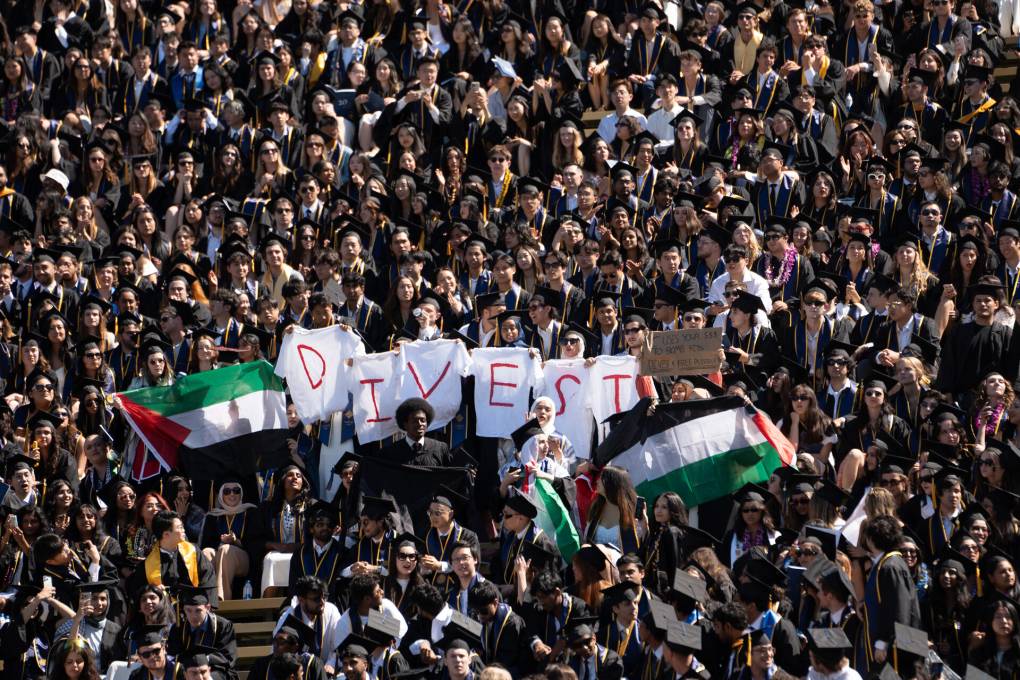
"caption": "Students hold up homemade signs and shirts to protest against UC Berkeley's links to companies in Israel or those that they say profit from Israel's war in Gaza during the 2024 commencement ceremony at the California Memorial Stadium in Berkeley on May 11, 2024.",
"description": null,
"title": "_DSC8380_qut",
"credit": "Aryk Copley/KQED",
"status": "inherit",
"altTag": null,
"isLoading": false,
"fetchFailed": false
},
"news_11985803": {
"type": "attachments",
"id": "news_11985803",
"meta": {
"index": "attachments_1716263798",
"site": "news",
"id": "11985803",
"found": true
},
"parent": 11985802,
"imgSizes": {
"twentyfourteen-full-width": {
"file": "https://cdn.kqed.org/wp-content/uploads/sites/10/2024/05/AP24131131133334-1038x576.jpg",
"width": 1038,
"mimeType": "image/jpeg",
"height": 576
},
"thumbnail": {
"file": "https://cdn.kqed.org/wp-content/uploads/sites/10/2024/05/AP24131131133334-160x107.jpg",
"width": 160,
"mimeType": "image/jpeg",
"height": 107
},
"post-thumbnail": {
"file": "https://cdn.kqed.org/wp-content/uploads/sites/10/2024/05/AP24131131133334-672x372.jpg",
"width": 672,
"mimeType": "image/jpeg",
"height": 372
},
"kqedFullSize": {
"file": "https://cdn.kqed.org/wp-content/uploads/sites/10/2024/05/AP24131131133334-scaled.jpg",
"width": 2560,
"height": 1707
},
"2048x2048": {
"file": "https://cdn.kqed.org/wp-content/uploads/sites/10/2024/05/AP24131131133334-2048x1365.jpg",
"width": 2048,
"mimeType": "image/jpeg",
"height": 1365
},
"large": {
"file": "https://cdn.kqed.org/wp-content/uploads/sites/10/2024/05/AP24131131133334-1020x680.jpg",
"width": 1020,
"mimeType": "image/jpeg",
"height": 680
},
"1536x1536": {
"file": "https://cdn.kqed.org/wp-content/uploads/sites/10/2024/05/AP24131131133334-1536x1024.jpg",
"width": 1536,
"mimeType": "image/jpeg",
"height": 1024
},
"full-width": {
"file": "https://cdn.kqed.org/wp-content/uploads/sites/10/2024/05/AP24131131133334-1920x1280.jpg",
"width": 1920,
"mimeType": "image/jpeg",
"height": 1280
},
"medium": {
"file": "https://cdn.kqed.org/wp-content/uploads/sites/10/2024/05/AP24131131133334-800x533.jpg",
"width": 800,
"mimeType": "image/jpeg",
"height": 533
}
},
"publishDate": 1715389528,
"modified": 1715389590,
"caption": "A Pac-12 logo is shown on the floor of Haas Pavilion as California forward Fardaws Aimaq (00) looks to pass while being defended by UCLA guard Brandon Williams during an NCAA college basketball game in Berkeley, Feb. 10, 2024. The University of California Board of Regents is expected to accept a recommendation that UCLA pay University of California at Berkeley $10 million a year for 6 years as a result of the Bruins’ upcoming move to the Big Ten and the demise of the Pac-12. ",
"description": null,
"title": "Fardaws AimaqBrandon Williams",
"credit": "Jeff Chiu/AP Photo",
"status": "inherit",
"altTag": null,
"isLoading": false,
"fetchFailed": false
},
"news_11984510": {
"type": "attachments",
"id": "news_11984510",
"meta": {
"index": "attachments_1716263798",
"site": "news",
"id": "11984510",
"found": true
},
"parent": 11984645,
"imgSizes": {
"twentyfourteen-full-width": {
"file": "https://cdn.kqed.org/wp-content/uploads/sites/10/2024/04/240425-STANFORDGAZAPROTEST-011-BL-KQED-1038x576.jpg",
"width": 1038,
"mimeType": "image/jpeg",
"height": 576
},
"thumbnail": {
"file": "https://cdn.kqed.org/wp-content/uploads/sites/10/2024/04/240425-STANFORDGAZAPROTEST-011-BL-KQED-160x107.jpg",
"width": 160,
"mimeType": "image/jpeg",
"height": 107
},
"post-thumbnail": {
"file": "https://cdn.kqed.org/wp-content/uploads/sites/10/2024/04/240425-STANFORDGAZAPROTEST-011-BL-KQED-672x372.jpg",
"width": 672,
"mimeType": "image/jpeg",
"height": 372
},
"kqedFullSize": {
"file": "https://cdn.kqed.org/wp-content/uploads/sites/10/2024/04/240425-STANFORDGAZAPROTEST-011-BL-KQED.jpg",
"width": 2000,
"height": 1333
},
"large": {
"file": "https://cdn.kqed.org/wp-content/uploads/sites/10/2024/04/240425-STANFORDGAZAPROTEST-011-BL-KQED-1020x680.jpg",
"width": 1020,
"mimeType": "image/jpeg",
"height": 680
},
"1536x1536": {
"file": "https://cdn.kqed.org/wp-content/uploads/sites/10/2024/04/240425-STANFORDGAZAPROTEST-011-BL-KQED-1536x1024.jpg",
"width": 1536,
"mimeType": "image/jpeg",
"height": 1024
},
"full-width": {
"file": "https://cdn.kqed.org/wp-content/uploads/sites/10/2024/04/240425-STANFORDGAZAPROTEST-011-BL-KQED-1920x1280.jpg",
"width": 1920,
"mimeType": "image/jpeg",
"height": 1280
},
"medium": {
"file": "https://cdn.kqed.org/wp-content/uploads/sites/10/2024/04/240425-STANFORDGAZAPROTEST-011-BL-KQED-800x533.jpg",
"width": 800,
"mimeType": "image/jpeg",
"height": 533
}
},
"publishDate": 1714504701,
"modified": 1714593712,
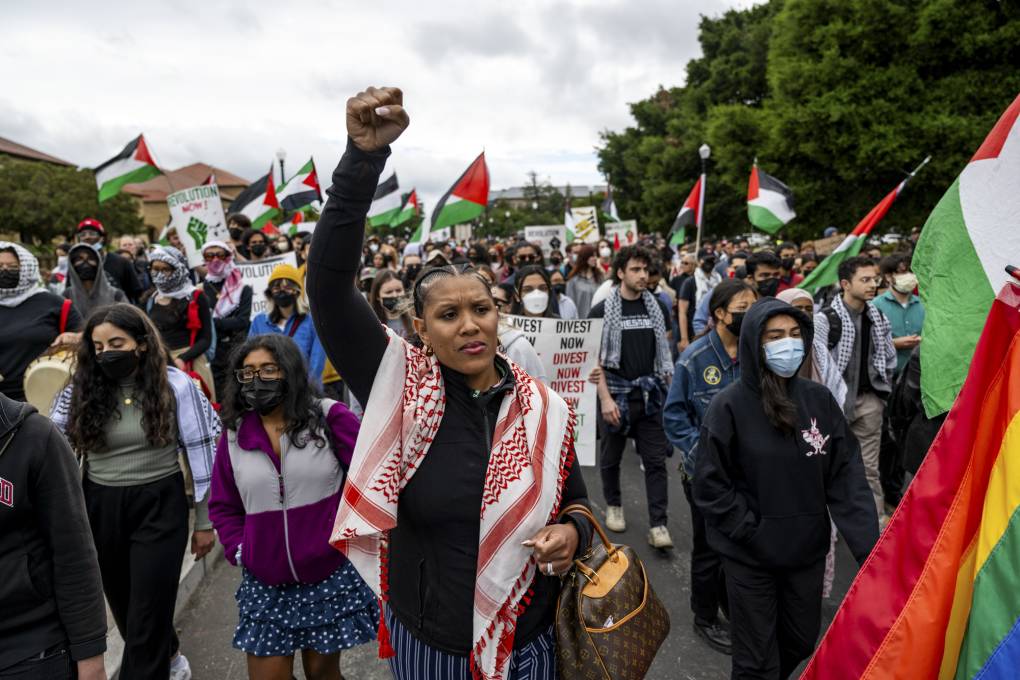
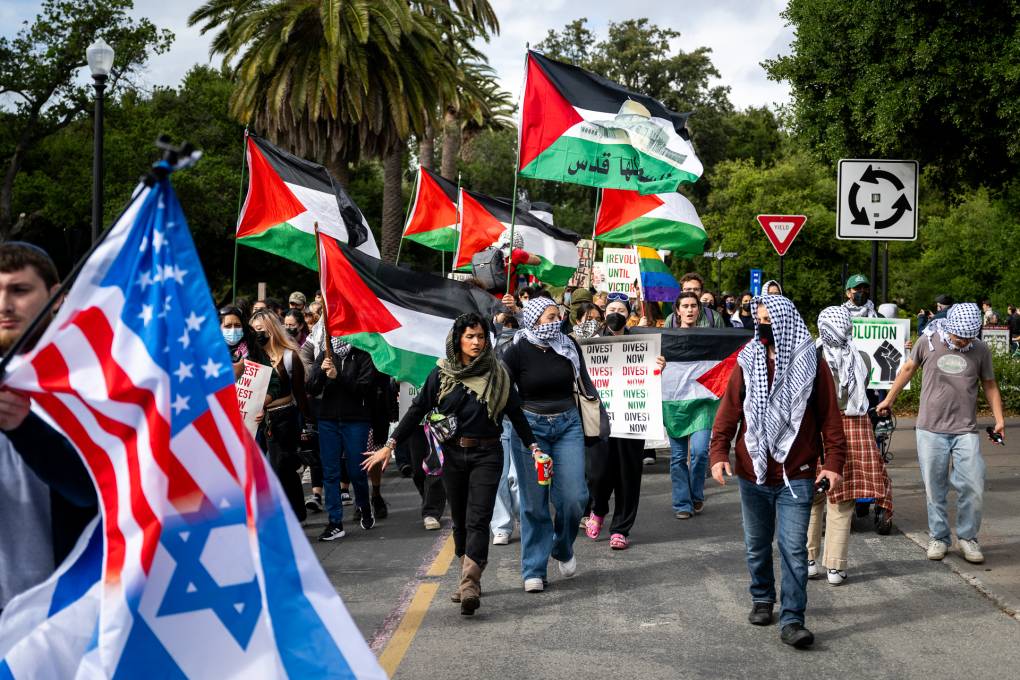
"caption": "Pro-Palestinian demonstrators march through the Stanford University campus in Palo Alto on April 25, calling for the university to divest from Israel.",
"description": null,
"title": "240425-STANFORDGAZAPROTEST-011-BL-KQED",
"credit": "Beth LaBerge/KQED",
"status": "inherit",
"altTag": null,
"isLoading": false,
"fetchFailed": false
},
"news_11985260": {
"type": "attachments",
"id": "news_11985260",
"meta": {
"index": "attachments_1716263798",
"site": "news",
"id": "11985260",
"found": true
},
"parent": 11985245,
"imgSizes": {
"twentyfourteen-full-width": {
"file": "https://cdn.kqed.org/wp-content/uploads/sites/10/2024/05/240423-BERKELEY-GAZA-ENCAMPMENT-MD-07_qut-1038x576.jpg",
"width": 1038,
"mimeType": "image/jpeg",
"height": 576
},
"thumbnail": {
"file": "https://cdn.kqed.org/wp-content/uploads/sites/10/2024/05/240423-BERKELEY-GAZA-ENCAMPMENT-MD-07_qut-160x107.jpg",
"width": 160,
"mimeType": "image/jpeg",
"height": 107
},
"post-thumbnail": {
"file": "https://cdn.kqed.org/wp-content/uploads/sites/10/2024/05/240423-BERKELEY-GAZA-ENCAMPMENT-MD-07_qut-672x372.jpg",
"width": 672,
"mimeType": "image/jpeg",
"height": 372
},
"kqedFullSize": {
"file": "https://cdn.kqed.org/wp-content/uploads/sites/10/2024/05/240423-BERKELEY-GAZA-ENCAMPMENT-MD-07_qut.jpg",
"width": 1920,
"height": 1280
},
"large": {
"file": "https://cdn.kqed.org/wp-content/uploads/sites/10/2024/05/240423-BERKELEY-GAZA-ENCAMPMENT-MD-07_qut-1020x680.jpg",
"width": 1020,
"mimeType": "image/jpeg",
"height": 680
},
"1536x1536": {
"file": "https://cdn.kqed.org/wp-content/uploads/sites/10/2024/05/240423-BERKELEY-GAZA-ENCAMPMENT-MD-07_qut-1536x1024.jpg",
"width": 1536,
"mimeType": "image/jpeg",
"height": 1024
},
"medium": {
"file": "https://cdn.kqed.org/wp-content/uploads/sites/10/2024/05/240423-BERKELEY-GAZA-ENCAMPMENT-MD-07_qut-800x533.jpg",
"width": 800,
"mimeType": "image/jpeg",
"height": 533
}
},
"publishDate": 1715120452,
"modified": 1715120671,
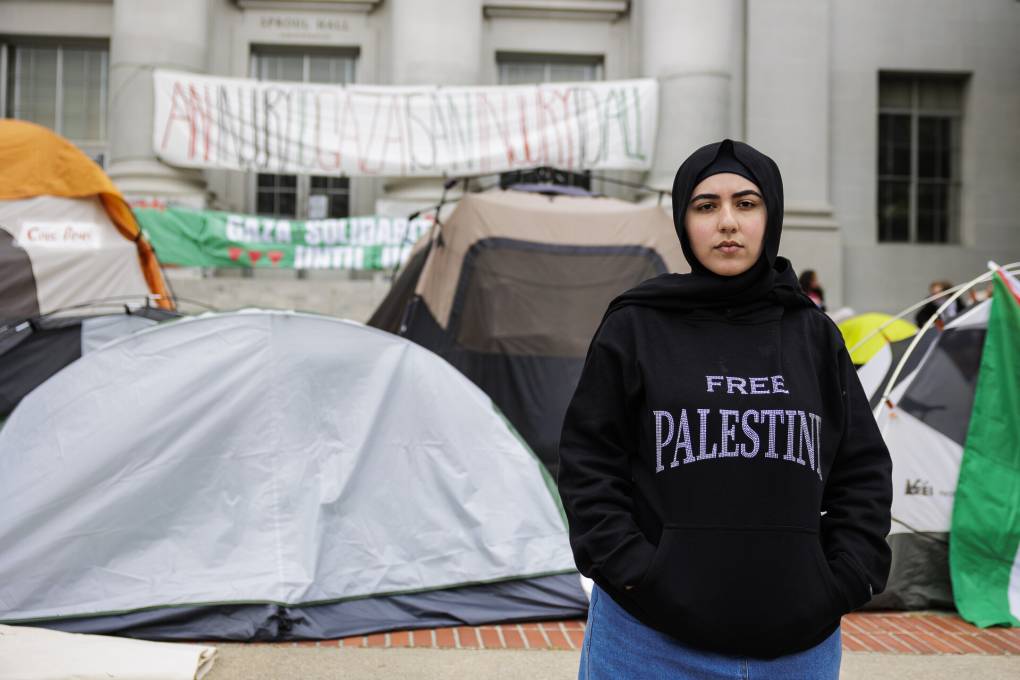
"caption": "Malak Afaneh, a Berkeley Law third-year student and co-president of Berkeley Law Students for Justice in Palestine, at the UC Berkeley Gaza Solidarity Encampment in front of Sproul Hall on April 23, 2024.",
"description": null,
"title": "240423-BERKELEY GAZA ENCAMPMENT-MD-07_qut",
"credit": "Martin do Nascimento/KQED",
"status": "inherit",
"altTag": null,
"isLoading": false,
"fetchFailed": false
},
"news_11984516": {
"type": "attachments",
"id": "news_11984516",
"meta": {
"index": "attachments_1716263798",
"site": "news",
"id": "11984516",
"found": true
},
"parent": 11984645,
"imgSizes": {
"twentyfourteen-full-width": {
"file": "https://cdn.kqed.org/wp-content/uploads/sites/10/2024/04/240429-SFSU-GAZA-RALLY-MD-11-KQED-1038x576.jpg",
"width": 1038,
"mimeType": "image/jpeg",
"height": 576
},
"thumbnail": {
"file": "https://cdn.kqed.org/wp-content/uploads/sites/10/2024/04/240429-SFSU-GAZA-RALLY-MD-11-KQED-160x107.jpg",
"width": 160,
"mimeType": "image/jpeg",
"height": 107
},
"post-thumbnail": {
"file": "https://cdn.kqed.org/wp-content/uploads/sites/10/2024/04/240429-SFSU-GAZA-RALLY-MD-11-KQED-672x372.jpg",
"width": 672,
"mimeType": "image/jpeg",
"height": 372
},
"kqedFullSize": {
"file": "https://cdn.kqed.org/wp-content/uploads/sites/10/2024/04/240429-SFSU-GAZA-RALLY-MD-11-KQED.jpg",
"width": 2000,
"height": 1333
},
"large": {
"file": "https://cdn.kqed.org/wp-content/uploads/sites/10/2024/04/240429-SFSU-GAZA-RALLY-MD-11-KQED-1020x680.jpg",
"width": 1020,
"mimeType": "image/jpeg",
"height": 680
},
"1536x1536": {
"file": "https://cdn.kqed.org/wp-content/uploads/sites/10/2024/04/240429-SFSU-GAZA-RALLY-MD-11-KQED-1536x1024.jpg",
"width": 1536,
"mimeType": "image/jpeg",
"height": 1024
},
"full-width": {
"file": "https://cdn.kqed.org/wp-content/uploads/sites/10/2024/04/240429-SFSU-GAZA-RALLY-MD-11-KQED-1920x1280.jpg",
"width": 1920,
"mimeType": "image/jpeg",
"height": 1280
},
"medium": {
"file": "https://cdn.kqed.org/wp-content/uploads/sites/10/2024/04/240429-SFSU-GAZA-RALLY-MD-11-KQED-800x533.jpg",
"width": 800,
"mimeType": "image/jpeg",
"height": 533
}
},
"publishDate": 1714504726,
"modified": 1714601006,
"caption": "San Francisco State University students rally outside SFSU's Cesar Chavez Student Center calling on the university to disclose its financial ties to Israel and divest from weapons manufacturers, on April 29.",
"description": null,
"title": "240429-SFSU GAZA RALLY-MD-11-KQED",
"credit": "Martin do Nascimento/KQED",
"status": "inherit",
"altTag": null,
"isLoading": false,
"fetchFailed": false
},
"news_10816492": {
"type": "attachments",
"id": "news_10816492",
"meta": {
"index": "attachments_1716263798",
"site": "news",
"id": "10816492",
"found": true
},
"parent": 10809415,
"imgSizes": {
"twentyfourteen-full-width": {
"file": "https://cdn.kqed.org/wp-content/uploads/sites/10/2015/12/14289_transform-1038x576.jpg",
"width": 1038,
"mimeType": "image/jpeg",
"height": 576
},
"thumbnail": {
"file": "https://cdn.kqed.org/wp-content/uploads/sites/10/2015/12/14289_transform-400x267.jpg",
"width": 400,
"mimeType": "image/jpeg",
"height": 267
},
"fd-sm": {
"file": "https://cdn.kqed.org/wp-content/uploads/sites/10/2015/12/14289_transform-960x640.jpg",
"width": 960,
"mimeType": "image/jpeg",
"height": 640
},
"post-thumbnail": {
"file": "https://cdn.kqed.org/wp-content/uploads/sites/10/2015/12/14289_transform-672x372.jpg",
"width": 672,
"mimeType": "image/jpeg",
"height": 372
},
"kqedFullSize": {
"file": "https://cdn.kqed.org/wp-content/uploads/sites/10/2015/12/14289_transform.jpg",
"width": 1920,
"height": 1280
},
"large": {
"file": "https://cdn.kqed.org/wp-content/uploads/sites/10/2015/12/14289_transform-1440x960.jpg",
"width": 1440,
"mimeType": "image/jpeg",
"height": 960
},
"guest-author-96": {
"file": "https://cdn.kqed.org/wp-content/uploads/sites/10/2015/12/14289_transform-96x96.jpg",
"width": 96,
"mimeType": "image/jpeg",
"height": 96
},
"medium": {
"file": "https://cdn.kqed.org/wp-content/uploads/sites/10/2015/12/14289_transform-800x533.jpg",
"width": 800,
"mimeType": "image/jpeg",
"height": 533
},
"guest-author-64": {
"file": "https://cdn.kqed.org/wp-content/uploads/sites/10/2015/12/14289_transform-64x64.jpg",
"width": 64,
"mimeType": "image/jpeg",
"height": 64
},
"guest-author-32": {
"file": "https://cdn.kqed.org/wp-content/uploads/sites/10/2015/12/14289_transform-32x32.jpg",
"width": 32,
"mimeType": "image/jpeg",
"height": 32
},
"jmtc-small-thumb": {
"file": "https://cdn.kqed.org/wp-content/uploads/sites/10/2015/12/14289_transform-280x150.jpg",
"width": 280,
"mimeType": "image/jpeg",
"height": 150
},
"fd-lrg": {
"file": "https://cdn.kqed.org/wp-content/uploads/sites/10/2015/12/14289_transform-1920x1280.jpg",
"width": 1920,
"mimeType": "image/jpeg",
"height": 1280
},
"fd-med": {
"file": "https://cdn.kqed.org/wp-content/uploads/sites/10/2015/12/14289_transform-1180x787.jpg",
"width": 1180,
"mimeType": "image/jpeg",
"height": 787
},
"detail": {
"file": "https://cdn.kqed.org/wp-content/uploads/sites/10/2015/12/14289_transform-75x75.jpg",
"width": 75,
"mimeType": "image/jpeg",
"height": 75
},
"medium_large": {
"file": "https://cdn.kqed.org/wp-content/uploads/sites/10/2015/12/14289_transform-768x512.jpg",
"width": 768,
"mimeType": "image/jpeg",
"height": 512
},
"guest-author-128": {
"file": "https://cdn.kqed.org/wp-content/uploads/sites/10/2015/12/14289_transform-128x128.jpg",
"width": 128,
"mimeType": "image/jpeg",
"height": 128
}
},
"publishDate": 1451601199,
"modified": 1714680162,
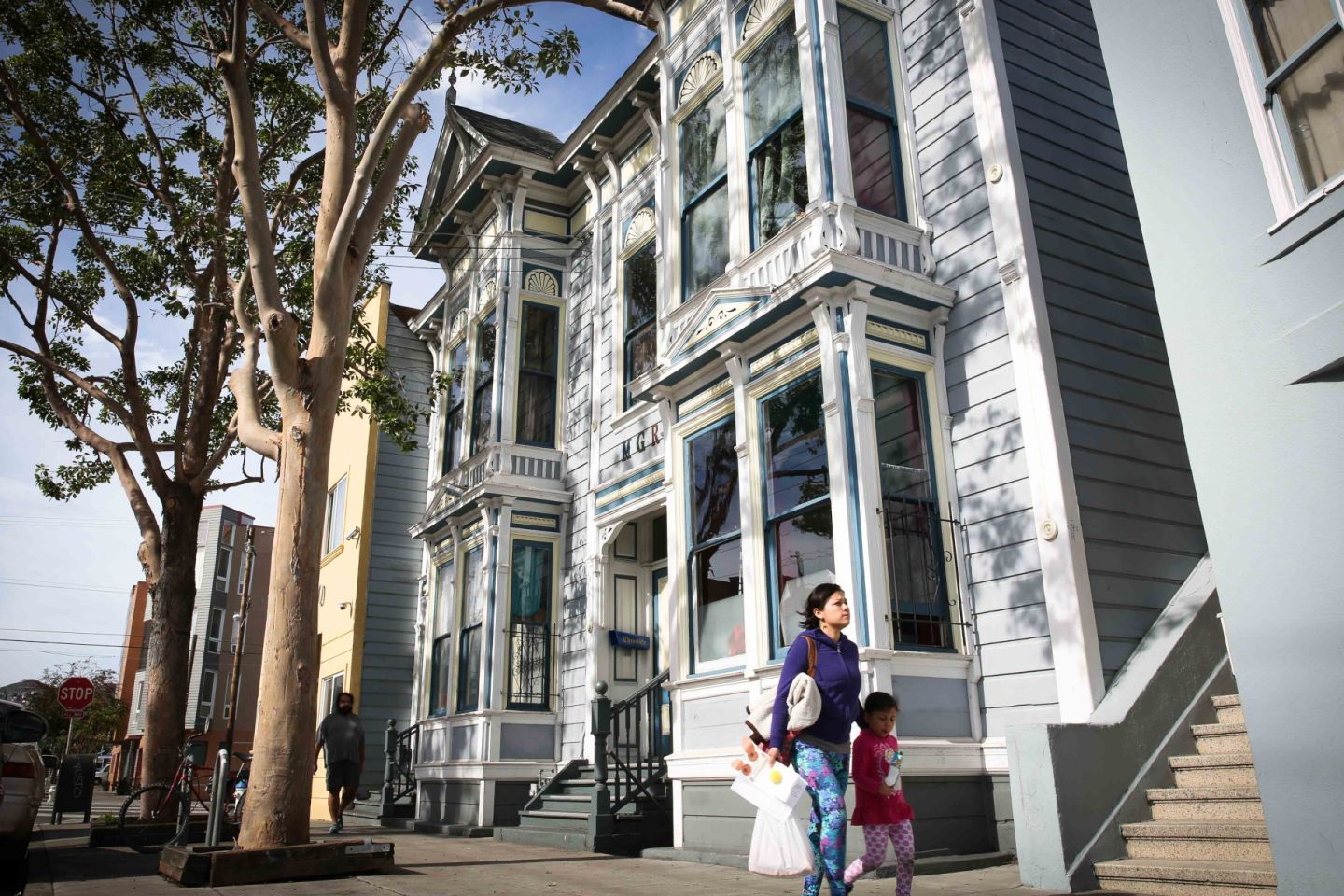
"caption": "Residents of the 14-room Mission District house made an eviction-proof deal.",
"description": null,
"title": "14289_transform",
"credit": "Jeremy Raff/KQED",
"status": "inherit",
"altTag": "A woman holding the hands of two small children walks down the street past a large home.",
"isLoading": false,
"fetchFailed": false
},
"news_11984136": {
"type": "attachments",
"id": "news_11984136",
"meta": {
"index": "attachments_1716263798",
"site": "news",
"id": "11984136",
"found": true
},
"parent": 0,
"imgSizes": {
"twentyfourteen-full-width": {
"file": "https://cdn.kqed.org/wp-content/uploads/sites/10/2024/04/240425-StanfordGazaProtest-022-BL-1038x576.jpg",
"width": 1038,
"mimeType": "image/jpeg",
"height": 576
},
"thumbnail": {
"file": "https://cdn.kqed.org/wp-content/uploads/sites/10/2024/04/240425-StanfordGazaProtest-022-BL-160x107.jpg",
"width": 160,
"mimeType": "image/jpeg",
"height": 107
},
"post-thumbnail": {
"file": "https://cdn.kqed.org/wp-content/uploads/sites/10/2024/04/240425-StanfordGazaProtest-022-BL-672x372.jpg",
"width": 672,
"mimeType": "image/jpeg",
"height": 372
},
"kqedFullSize": {
"file": "https://cdn.kqed.org/wp-content/uploads/sites/10/2024/04/240425-StanfordGazaProtest-022-BL.jpg",
"width": 1920,
"height": 1280
},
"large": {
"file": "https://cdn.kqed.org/wp-content/uploads/sites/10/2024/04/240425-StanfordGazaProtest-022-BL-1020x680.jpg",
"width": 1020,
"mimeType": "image/jpeg",
"height": 680
},
"1536x1536": {
"file": "https://cdn.kqed.org/wp-content/uploads/sites/10/2024/04/240425-StanfordGazaProtest-022-BL-1536x1024.jpg",
"width": 1536,
"mimeType": "image/jpeg",
"height": 1024
},
"medium": {
"file": "https://cdn.kqed.org/wp-content/uploads/sites/10/2024/04/240425-StanfordGazaProtest-022-BL-800x533.jpg",
"width": 800,
"mimeType": "image/jpeg",
"height": 533
}
},
"publishDate": 1714149444,
"modified": 1714178507,
"caption": "A pro-Israel counterprotester waves an Israel flag during a pro-Palestinian march through the Stanford University campus on April 25, 2024, calling for the university to divest from Israel. The rally took place during Stanford's Admit Weekend, a time for incoming students to tour the university.",
"description": null,
"title": "240425-StanfordGazaProtest-022-BL",
"credit": "Beth LaBerge/KQED",
"status": "inherit",
"altTag": null,
"isLoading": false,
"fetchFailed": false
},
"news_11982736": {
"type": "attachments",
"id": "news_11982736",
"meta": {
"index": "attachments_1716263798",
"site": "news",
"id": "11982736",
"found": true
},
"parent": 11982697,
"imgSizes": {
"twentyfourteen-full-width": {
"file": "https://cdn.kqed.org/wp-content/uploads/sites/10/2024/04/240411-BERKELEY-LAW-MD-04_1-KQED-2-1038x576.jpg",
"width": 1038,
"mimeType": "image/jpeg",
"height": 576
},
"thumbnail": {
"file": "https://cdn.kqed.org/wp-content/uploads/sites/10/2024/04/240411-BERKELEY-LAW-MD-04_1-KQED-2-160x107.jpg",
"width": 160,
"mimeType": "image/jpeg",
"height": 107
},
"post-thumbnail": {
"file": "https://cdn.kqed.org/wp-content/uploads/sites/10/2024/04/240411-BERKELEY-LAW-MD-04_1-KQED-2-672x372.jpg",
"width": 672,
"mimeType": "image/jpeg",
"height": 372
},
"kqedFullSize": {
"file": "https://cdn.kqed.org/wp-content/uploads/sites/10/2024/04/240411-BERKELEY-LAW-MD-04_1-KQED-2.jpg",
"width": 2000,
"height": 1333
},
"large": {
"file": "https://cdn.kqed.org/wp-content/uploads/sites/10/2024/04/240411-BERKELEY-LAW-MD-04_1-KQED-2-1020x680.jpg",
"width": 1020,
"mimeType": "image/jpeg",
"height": 680
},
"1536x1536": {
"file": "https://cdn.kqed.org/wp-content/uploads/sites/10/2024/04/240411-BERKELEY-LAW-MD-04_1-KQED-2-1536x1024.jpg",
"width": 1536,
"mimeType": "image/jpeg",
"height": 1024
},
"full-width": {
"file": "https://cdn.kqed.org/wp-content/uploads/sites/10/2024/04/240411-BERKELEY-LAW-MD-04_1-KQED-2-1920x1280.jpg",
"width": 1920,
"mimeType": "image/jpeg",
"height": 1280
},
"medium": {
"file": "https://cdn.kqed.org/wp-content/uploads/sites/10/2024/04/240411-BERKELEY-LAW-MD-04_1-KQED-2-800x533.jpg",
"width": 800,
"mimeType": "image/jpeg",
"height": 533
}
},
"publishDate": 1712878036,
"modified": 1712878058,
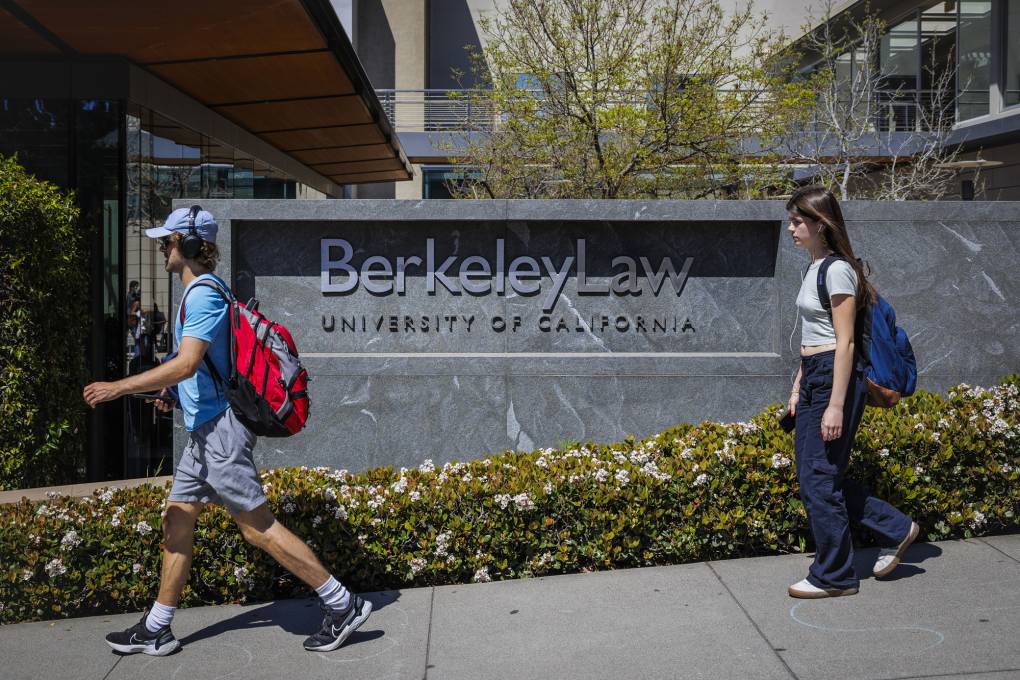
"caption": "Berkeley Law in Berkeley on April 11, 2024.",
"description": null,
"title": "Berkeley Law in Berkeley on Apr. 11, 2024.",
"credit": "Martin do Nascimento/KQED",
"status": "inherit",
"altTag": null,
"isLoading": false,
"fetchFailed": false
},
"news_11981374": {
"type": "attachments",
"id": "news_11981374",
"meta": {
"index": "attachments_1716263798",
"site": "news",
"id": "11981374",
"found": true
},
"parent": 11981358,
"imgSizes": {
"twentyfourteen-full-width": {
"file": "https://cdn.kqed.org/wp-content/uploads/sites/10/2024/03/036_Berkeley_PeoplesPark_02192021_qut-1038x576.jpg",
"width": 1038,
"mimeType": "image/jpeg",
"height": 576
},
"thumbnail": {
"file": "https://cdn.kqed.org/wp-content/uploads/sites/10/2024/03/036_Berkeley_PeoplesPark_02192021_qut-160x107.jpg",
"width": 160,
"mimeType": "image/jpeg",
"height": 107
},
"post-thumbnail": {
"file": "https://cdn.kqed.org/wp-content/uploads/sites/10/2024/03/036_Berkeley_PeoplesPark_02192021_qut-672x372.jpg",
"width": 672,
"mimeType": "image/jpeg",
"height": 372
},
"kqedFullSize": {
"file": "https://cdn.kqed.org/wp-content/uploads/sites/10/2024/03/036_Berkeley_PeoplesPark_02192021_qut.jpg",
"width": 1920,
"height": 1280
},
"large": {
"file": "https://cdn.kqed.org/wp-content/uploads/sites/10/2024/03/036_Berkeley_PeoplesPark_02192021_qut-1020x680.jpg",
"width": 1020,
"mimeType": "image/jpeg",
"height": 680
},
"1536x1536": {
"file": "https://cdn.kqed.org/wp-content/uploads/sites/10/2024/03/036_Berkeley_PeoplesPark_02192021_qut-1536x1024.jpg",
"width": 1536,
"mimeType": "image/jpeg",
"height": 1024
},
"medium": {
"file": "https://cdn.kqed.org/wp-content/uploads/sites/10/2024/03/036_Berkeley_PeoplesPark_02192021_qut-800x533.jpg",
"width": 800,
"mimeType": "image/jpeg",
"height": 533
}
},
"publishDate": 1711757778,
"modified": 1711759263,
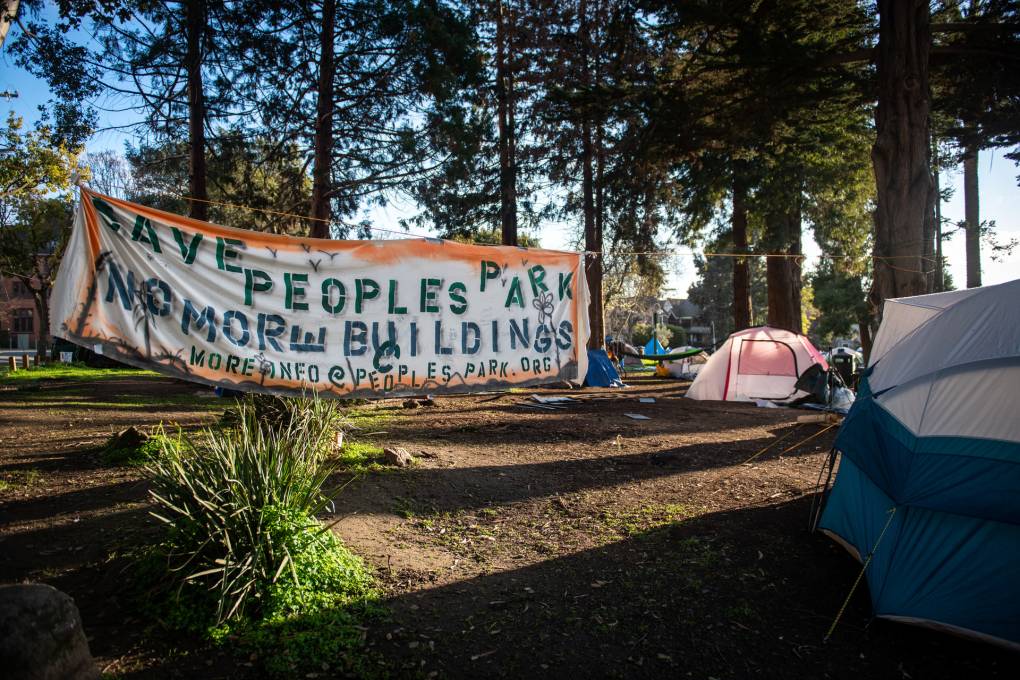
"caption": "A sign says, 'Save Peoples Park, No More Buildings' at People's Park in Berkeley in 2021.",
"description": null,
"title": "036_Berkeley_PeoplesPark_02192021_qut",
"credit": "Beth LaBerge/KQED",
"status": "inherit",
"altTag": "A sign that says 'Save people's park' is hung between trees, next to a tent, in a park.",
"isLoading": false,
"fetchFailed": false
},
"news_11978968": {
"type": "attachments",
"id": "news_11978968",
"meta": {
"index": "attachments_1716263798",
"site": "news",
"id": "11978968",
"found": true
},
"parent": 0,
"imgSizes": {
"twentyfourteen-full-width": {
"file": "https://cdn.kqed.org/wp-content/uploads/sites/10/2024/03/240311-JEWISHPROTEST-JY-31-KQED-1038x576.jpg",
"width": 1038,
"mimeType": "image/jpeg",
"height": 576
},
"thumbnail": {
"file": "https://cdn.kqed.org/wp-content/uploads/sites/10/2024/03/240311-JEWISHPROTEST-JY-31-KQED-160x107.jpg",
"width": 160,
"mimeType": "image/jpeg",
"height": 107
},
"post-thumbnail": {
"file": "https://cdn.kqed.org/wp-content/uploads/sites/10/2024/03/240311-JEWISHPROTEST-JY-31-KQED-672x372.jpg",
"width": 672,
"mimeType": "image/jpeg",
"height": 372
},
"kqedFullSize": {
"file": "https://cdn.kqed.org/wp-content/uploads/sites/10/2024/03/240311-JEWISHPROTEST-JY-31-KQED.jpg",
"width": 2000,
"height": 1333
},
"large": {
"file": "https://cdn.kqed.org/wp-content/uploads/sites/10/2024/03/240311-JEWISHPROTEST-JY-31-KQED-1020x680.jpg",
"width": 1020,
"mimeType": "image/jpeg",
"height": 680
},
"1536x1536": {
"file": "https://cdn.kqed.org/wp-content/uploads/sites/10/2024/03/240311-JEWISHPROTEST-JY-31-KQED-1536x1024.jpg",
"width": 1536,
"mimeType": "image/jpeg",
"height": 1024
},
"full-width": {
"file": "https://cdn.kqed.org/wp-content/uploads/sites/10/2024/03/240311-JEWISHPROTEST-JY-31-KQED-1920x1280.jpg",
"width": 1920,
"mimeType": "image/jpeg",
"height": 1280
},
"medium": {
"file": "https://cdn.kqed.org/wp-content/uploads/sites/10/2024/03/240311-JEWISHPROTEST-JY-31-KQED-800x533.jpg",
"width": 800,
"mimeType": "image/jpeg",
"height": 533
}
},
"publishDate": 1710194572,
"modified": 1710204689,
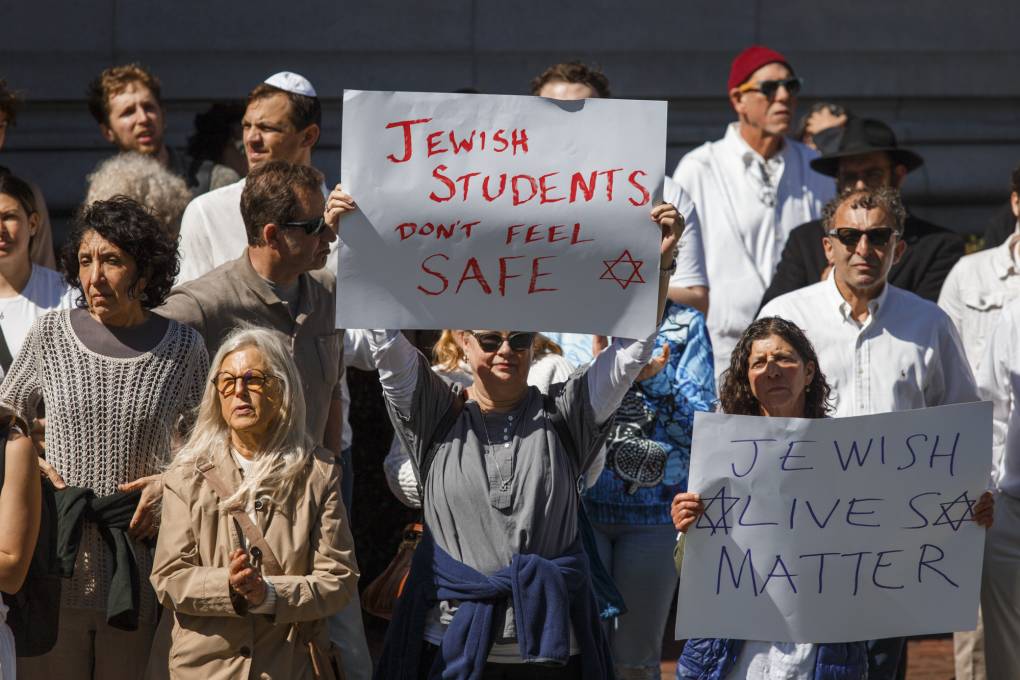
"caption": "UC Berkeley staff member Karen Shuker, center, rallies with other Jewish staff, students, faculty and community members in front of California Hall on March 11, 2024.",
"description": null,
"title": "240311-JEWISHPROTEST-JY-31-KQED",
"credit": "Juliana Yamada/KQED",
"status": "inherit",
"altTag": "A large group of people stands together, holding signs.",
"isLoading": false,
"fetchFailed": false
},
"news_11977517": {
"type": "attachments",
"id": "news_11977517",
"meta": {
"index": "attachments_1716263798",
"site": "news",
"id": "11977517",
"found": true
},
"parent": 11977500,
"imgSizes": {
"twentyfourteen-full-width": {
"file": "https://cdn.kqed.org/wp-content/uploads/sites/10/2024/02/AP24059723637958-1038x576.jpg",
"width": 1038,
"mimeType": "image/jpeg",
"height": 576
},
"thumbnail": {
"file": "https://cdn.kqed.org/wp-content/uploads/sites/10/2024/02/AP24059723637958-160x107.jpg",
"width": 160,
"mimeType": "image/jpeg",
"height": 107
},
"post-thumbnail": {
"file": "https://cdn.kqed.org/wp-content/uploads/sites/10/2024/02/AP24059723637958-672x372.jpg",
"width": 672,
"mimeType": "image/jpeg",
"height": 372
},
"kqedFullSize": {
"file": "https://cdn.kqed.org/wp-content/uploads/sites/10/2024/02/AP24059723637958-scaled.jpg",
"width": 2560,
"height": 1707
},
"2048x2048": {
"file": "https://cdn.kqed.org/wp-content/uploads/sites/10/2024/02/AP24059723637958-2048x1365.jpg",
"width": 2048,
"mimeType": "image/jpeg",
"height": 1365
},
"large": {
"file": "https://cdn.kqed.org/wp-content/uploads/sites/10/2024/02/AP24059723637958-1020x680.jpg",
"width": 1020,
"mimeType": "image/jpeg",
"height": 680
},
"1536x1536": {
"file": "https://cdn.kqed.org/wp-content/uploads/sites/10/2024/02/AP24059723637958-1536x1024.jpg",
"width": 1536,
"mimeType": "image/jpeg",
"height": 1024
},
"full-width": {
"file": "https://cdn.kqed.org/wp-content/uploads/sites/10/2024/02/AP24059723637958-1920x1280.jpg",
"width": 1920,
"mimeType": "image/jpeg",
"height": 1280
},
"medium": {
"file": "https://cdn.kqed.org/wp-content/uploads/sites/10/2024/02/AP24059723637958-800x533.jpg",
"width": 800,
"mimeType": "image/jpeg",
"height": 533
}
},
"publishDate": 1709165876,
"modified": 1709171350,
"caption": "Students make their way through Sproul Plaza on the University of California, Berkeley, campus on Tuesday, March 29, 2022, in Berkeley. Leaders of the University of California, Berkeley, denounced a protest incited on Monday, Feb. 26, 2024, against an event organized by Jewish students that forced police to evacuate attendees and a speaker from Israel for their safety.",
"description": null,
"title": "California Jewish Event Protest",
"credit": "Eric Risberg/AP Photo",
"status": "inherit",
"altTag": null,
"isLoading": false,
"fetchFailed": false
},
"news_11971733": {
"type": "attachments",
"id": "news_11971733",
"meta": {
"index": "attachments_1716263798",
"site": "news",
"id": "11971733",
"found": true
},
"title": "240104-PEOPLE'S PARK-MD-05",
"publishDate": 1704419716,
"status": "inherit",
"parent": 11971577,
"modified": 1775002315,
"caption": "Construction crews work in People’s Park in Berkeley on Jan. 4, 2024.",
"credit": "Martin do Nascimento/KQED",
"altTag": "Two construction workers stand on-site at People's Park in Berkeley.",
"description": null,
"imgSizes": {
"medium": {
"file": "https://cdn.kqed.org/wp-content/uploads/sites/10/2024/01/240104-PEOPLES-PARK-MD-05-800x533.jpg",
"width": 800,
"height": 533,
"mimeType": "image/jpeg"
},
"large": {
"file": "https://cdn.kqed.org/wp-content/uploads/sites/10/2024/01/240104-PEOPLES-PARK-MD-05-1020x680.jpg",
"width": 1020,
"height": 680,
"mimeType": "image/jpeg"
},
"thumbnail": {
"file": "https://cdn.kqed.org/wp-content/uploads/sites/10/2024/01/240104-PEOPLES-PARK-MD-05-160x107.jpg",
"width": 160,
"height": 107,
"mimeType": "image/jpeg"
},
"1536x1536": {
"file": "https://cdn.kqed.org/wp-content/uploads/sites/10/2024/01/240104-PEOPLES-PARK-MD-05-1536x1024.jpg",
"width": 1536,
"height": 1024,
"mimeType": "image/jpeg"
},
"2048x2048": {
"file": "https://cdn.kqed.org/wp-content/uploads/sites/10/2024/01/240104-PEOPLES-PARK-MD-05-2048x1365.jpg",
"width": 2048,
"height": 1365,
"mimeType": "image/jpeg"
},
"post-thumbnail": {
"file": "https://cdn.kqed.org/wp-content/uploads/sites/10/2024/01/240104-PEOPLES-PARK-MD-05-672x372.jpg",
"width": 672,
"height": 372,
"mimeType": "image/jpeg"
},
"twentyfourteen-full-width": {
"file": "https://cdn.kqed.org/wp-content/uploads/sites/10/2024/01/240104-PEOPLES-PARK-MD-05-1038x576.jpg",
"width": 1038,
"height": 576,
"mimeType": "image/jpeg"
},
"full-width": {
"file": "https://cdn.kqed.org/wp-content/uploads/sites/10/2024/01/240104-PEOPLES-PARK-MD-05-1920x1280.jpg",
"width": 1920,
"height": 1280,
"mimeType": "image/jpeg"
},
"kqedFullSize": {
"file": "https://cdn.kqed.org/wp-content/uploads/sites/10/2024/01/240104-PEOPLES-PARK-MD-05-scaled-e1775001183210.jpg",
"width": 2000,
"height": 1334
}
},
"isLoading": false,
"fetchFailed": false
}
},
"audioPlayerReducer": {
"postId": "stream_live",
"isPaused": true,
"isPlaying": false,
"pfsActive": false,
"pledgeModalIsOpen": true,
"playerDrawerIsOpen": false,
"liveAudioPlayStartedAt": 0,
"liveAudioPlayContext": ""
},
"authorsReducer": {
"byline_news_11985802": {
"type": "authors",
"id": "byline_news_11985802",
"meta": {
"override": true
},
"slug": "byline_news_11985802",
"name": "Joe Reedy\u003cbr>Associated Press",
"isLoading": false
},
"byline_news_11977500": {
"type": "authors",
"id": "byline_news_11977500",
"meta": {
"override": true
},
"slug": "byline_news_11977500",
"name": "The Associated Press",
"isLoading": false
},
"scottshafer": {
"type": "authors",
"id": "255",
"meta": {
"index": "authors_1716337520",
"id": "255",
"found": true
},
"name": "Scott Shafer",
"firstName": "Scott",
"lastName": "Shafer",
"slug": "scottshafer",
"email": "sshafer@kqed.org",
"display_author_email": false,
"staff_mastheads": [
"news"
],
"title": "KQED Contributor",
"bio": "Scott Shafer is a senior editor with the KQED Politics and Government desk. He is co-host of Political Breakdown, the award-winning radio show and podcast with a personal take on the world of politics. Scott came to KQED in 1998 to host the statewide\u003cem> California Report\u003c/em>. Prior to that he had extended stints in politics and government\u003cem>.\u003c/em> He uses that inside experience at KQED in his, reporting, hosting and analysis for the politics desk. Scott collaborated \u003cem>Political Breakdown a\u003c/em>nd on \u003cem>The Political Mind of Jerry Brown, \u003c/em>an eight-part series about the life and extraordinary political career of the former governor. For fun, he plays water polo with the San Francisco Tsunami.",
"avatar": "https://secure.gravatar.com/avatar/a62ebae45b79d7aed1a39a0e3bf68104?s=600&d=blank&r=g",
"twitter": "scottshafer",
"bluesky": null,
"facebook": null,
"instagram": null,
"linkedin": null,
"sites": [
{
"site": "news",
"roles": [
"editor"
]
},
{
"site": "stateofhealth",
"roles": [
"author"
]
},
{
"site": "science",
"roles": [
"author"
]
},
{
"site": "forum",
"roles": [
"subscriber"
]
},
{
"site": "liveblog",
"roles": [
"author"
]
}
],
"headData": {
"title": "Scott Shafer | KQED",
"description": "KQED Contributor",
"ogImgSrc": "https://secure.gravatar.com/avatar/a62ebae45b79d7aed1a39a0e3bf68104?s=600&d=blank&r=g",
"twImgSrc": "https://secure.gravatar.com/avatar/a62ebae45b79d7aed1a39a0e3bf68104?s=600&d=blank&r=g"
},
"isLoading": false,
"link": "/author/scottshafer"
},
"matthewgreen": {
"type": "authors",
"id": "1263",
"meta": {
"index": "authors_1716337520",
"id": "1263",
"found": true
},
"name": "Matthew Green",
"firstName": "Matthew",
"lastName": "Green",
"slug": "matthewgreen",
"email": "mgreen@kqed.org",
"display_author_email": false,
"staff_mastheads": [],
"title": "KQED Editor/Reporter",
"bio": "Matthew Green is a digital media producer for KQED News. He previously produced \u003ca href=\"http://www.kqed.org/lowdown\">The Lowdown\u003c/a>, KQED’s multimedia news education blog. Matthew's written for numerous Bay Area publications, including the Oakland Tribune and San Francisco Chronicle. He also taught journalism classes at Fremont High School in East Oakland.\r\n\r\nEmail: mgreen@kqed.org; Twitter: @MGreenKQED",
"avatar": "https://secure.gravatar.com/avatar/3bf498d1267ca02c8494f33d8cfc575e?s=600&d=blank&r=g",
"twitter": "MGreenKQED",
"facebook": null,
"instagram": null,
"linkedin": null,
"sites": [
{
"site": "news",
"roles": []
},
{
"site": "lowdown",
"roles": []
},
{
"site": "science",
"roles": []
},
{
"site": "education",
"roles": []
},
{
"site": "quest",
"roles": []
},
{
"site": "liveblog",
"roles": []
}
],
"headData": {
"title": "Matthew Green | KQED",
"description": "KQED Editor/Reporter",
"ogImgSrc": "https://secure.gravatar.com/avatar/3bf498d1267ca02c8494f33d8cfc575e?s=600&d=blank&r=g",
"twImgSrc": "https://secure.gravatar.com/avatar/3bf498d1267ca02c8494f33d8cfc575e?s=600&d=blank&r=g"
},
"isLoading": false,
"link": "/author/matthewgreen"
},
"ecruzguevarra": {
"type": "authors",
"id": "8654",
"meta": {
"index": "authors_1716337520",
"id": "8654",
"found": true
},
"name": "Ericka Cruz Guevarra",
"firstName": "Ericka",
"lastName": "Cruz Guevarra",
"slug": "ecruzguevarra",
"email": "ecruzguevarra@kqed.org",
"display_author_email": true,
"staff_mastheads": [
"news"
],
"title": "Producer, The Bay Podcast",
"bio": "Ericka Cruz Guevarra is host of \u003ca href=\"https://www.kqed.org/podcasts/thebay\">\u003cem>The Bay\u003c/em>\u003c/a> podcast at KQED. Before host, she was the show’s producer. Her work in that capacity includes a three-part reported series on policing in Vallejo, which won a 2020 excellence in journalism award from the Society of Professional Journalists. Ericka has worked as a breaking news reporter at Oregon Public Broadcasting, helped produce the Code Switch podcast, and was KQED’s inaugural Raul Ramirez Diversity Fund intern. She’s also an alumna of NPR’s Next Generation Radio program. Send her an email if you have strong feelings about whether Fairfield and Suisun City are the Bay. Ericka is represented by SAG-AFTRA.",
"avatar": "https://secure.gravatar.com/avatar/accefc1de4bafc7e234b69bcb9b6f6536c130fd84709bc3069ef11a78787e1bb?s=600&d=blank&r=g",
"twitter": "NotoriousECG",
"bluesky": null,
"facebook": null,
"instagram": null,
"linkedin": null,
"sites": [
{
"site": "arts",
"roles": [
"subscriber"
]
},
{
"site": "news",
"roles": [
"editor",
"manage_categories"
]
},
{
"site": "futureofyou",
"roles": [
"subscriber"
]
},
{
"site": "stateofhealth",
"roles": [
"subscriber"
]
},
{
"site": "science",
"roles": [
"editor"
]
},
{
"site": "forum",
"roles": [
"subscriber"
]
}
],
"headData": {
"title": "Ericka Cruz Guevarra | KQED",
"description": "Producer, The Bay Podcast",
"ogImgSrc": "https://secure.gravatar.com/avatar/accefc1de4bafc7e234b69bcb9b6f6536c130fd84709bc3069ef11a78787e1bb?s=600&d=blank&r=g",
"twImgSrc": "https://secure.gravatar.com/avatar/accefc1de4bafc7e234b69bcb9b6f6536c130fd84709bc3069ef11a78787e1bb?s=600&d=blank&r=g"
},
"isLoading": false,
"link": "/author/ecruzguevarra"
},
"amontecillo": {
"type": "authors",
"id": "11649",
"meta": {
"index": "authors_1716337520",
"id": "11649",
"found": true
},
"name": "Alan Montecillo",
"firstName": "Alan",
"lastName": "Montecillo",
"slug": "amontecillo",
"email": "amontecillo@kqed.org",
"display_author_email": false,
"staff_mastheads": [
"news"
],
"title": "KQED Contributor",
"bio": "Alan Montecillo is the senior editor of \u003cem>\u003ca href=\"http://kqed.org/thebay\">The Bay\u003c/a>, \u003c/em> KQED's local news podcast. Before moving to the Bay Area, he worked as a senior talk show producer for WILL in Champaign-Urbana, Illinois and at Oregon Public Broadcasting in Portland, Oregon. He has won journalism awards from the Society of Professional Journalists Northern California, the Public Media Journalists Association, The Signal Awards, and has also received a regional Edward R. Murrow award. Alan is a Filipino American from Hong Kong and a graduate of Reed College.",
"avatar": "https://secure.gravatar.com/avatar/268f53a2066899ea9efdd8a5900218b17c822d9862cbc9326cccec53ef41d349?s=600&d=blank&r=g",
"twitter": "alanmontecillo",
"bluesky": null,
"facebook": null,
"instagram": null,
"linkedin": null,
"sites": [
{
"site": "",
"roles": [
"editor"
]
},
{
"site": "news",
"roles": [
"editor",
"manage_categories"
]
}
],
"headData": {
"title": "Alan Montecillo | KQED",
"description": "KQED Contributor",
"ogImgSrc": "https://secure.gravatar.com/avatar/268f53a2066899ea9efdd8a5900218b17c822d9862cbc9326cccec53ef41d349?s=600&d=blank&r=g",
"twImgSrc": "https://secure.gravatar.com/avatar/268f53a2066899ea9efdd8a5900218b17c822d9862cbc9326cccec53ef41d349?s=600&d=blank&r=g"
},
"isLoading": false,
"link": "/author/amontecillo"
},
"ebaldassari": {
"type": "authors",
"id": "11652",
"meta": {
"index": "authors_1716337520",
"id": "11652",
"found": true
},
"name": "Erin Baldassari",
"firstName": "Erin",
"lastName": "Baldassari",
"slug": "ebaldassari",
"email": "ebaldassari@KQED.org",
"display_author_email": true,
"staff_mastheads": [
"news"
],
"title": "Staff Writer",
"bio": "Erin Baldassari covers housing for KQED. She's a former print journalist and most recently worked as the transportation reporter for the \u003cem>Mercury News\u003c/em> and \u003cem>East Bay Times. \u003c/em>There, she focused on how the Bay Area’s housing shortage has changed the way people move around the region. She also served on the \u003cem>East Bay Times\u003c/em>’ 2017 Pulitzer Prize-winning team for coverage of the Ghost Ship Fire in Oakland. Prior to that, Erin worked as a breaking news and general assignment reporter for a variety of outlets in the Bay Area and the greater Boston area. A Tufts University alumna, Erin grew up in the foothills of the Sierra Nevada mountains and in Sonoma County. She is a life-long KQED listener.",
"avatar": "https://secure.gravatar.com/avatar/5e95cad64a8ca08288082212e199d2b0cbeb4fd8e8ef5339395f361032bbe005?s=600&d=blank&r=g",
"twitter": "e_baldi",
"bluesky": null,
"facebook": null,
"instagram": null,
"linkedin": null,
"sites": [
{
"site": "news",
"roles": [
"edit_others_posts",
"editor"
]
},
{
"site": "science",
"roles": [
"editor"
]
},
{
"site": "liveblog",
"roles": [
"editor"
]
}
],
"headData": {
"title": "Erin Baldassari | KQED",
"description": "Staff Writer",
"ogImgSrc": "https://secure.gravatar.com/avatar/5e95cad64a8ca08288082212e199d2b0cbeb4fd8e8ef5339395f361032bbe005?s=600&d=blank&r=g",
"twImgSrc": "https://secure.gravatar.com/avatar/5e95cad64a8ca08288082212e199d2b0cbeb4fd8e8ef5339395f361032bbe005?s=600&d=blank&r=g"
},
"isLoading": false,
"link": "/author/ebaldassari"
},
"abandlamudi": {
"type": "authors",
"id": "11672",
"meta": {
"index": "authors_1716337520",
"id": "11672",
"found": true
},
"name": "Adhiti Bandlamudi",
"firstName": "Adhiti",
"lastName": "Bandlamudi",
"slug": "abandlamudi",
"email": "abandlamudi@kqed.org",
"display_author_email": false,
"staff_mastheads": [
"news"
],
"title": "KQED Housing Reporter",
"bio": "Adhiti Bandlamudi reports for KQED's Housing desk. She focuses on how housing gets built across the Bay Area. Before joining KQED in 2020, she reported for WUNC in Durham, North Carolina, WABE in Atlanta, Georgia and Capital Public Radio in Sacramento. In 2017, she was awarded a Kroc Fellowship at NPR where she reported on everything from sprinkles to the Golden State Killer's arrest. When she's not reporting, she's baking new recipes in her kitchen or watching movies with friends and family. She's originally from Georgia and has strong opinions about Great British Bake Off.",
"avatar": "https://secure.gravatar.com/avatar/868129c8b257bb99a3500e2c86a65400?s=600&d=mm&r=g",
"twitter": "oddity_adhiti",
"facebook": null,
"instagram": null,
"linkedin": null,
"sites": [
{
"site": "arts",
"roles": [
"author"
]
},
{
"site": "news",
"roles": [
"editor"
]
},
{
"site": "liveblog",
"roles": [
"author"
]
}
],
"headData": {
"title": "Adhiti Bandlamudi | KQED",
"description": "KQED Housing Reporter",
"ogImgSrc": "https://secure.gravatar.com/avatar/868129c8b257bb99a3500e2c86a65400?s=600&d=mm&r=g",
"twImgSrc": "https://secure.gravatar.com/avatar/868129c8b257bb99a3500e2c86a65400?s=600&d=mm&r=g"
},
"isLoading": false,
"link": "/author/abandlamudi"
},
"jrodriguez": {
"type": "authors",
"id": "11690",
"meta": {
"index": "authors_1716337520",
"id": "11690",
"found": true
},
"name": "Joe Fitzgerald Rodriguez",
"firstName": "Joe",
"lastName": "Fitzgerald Rodriguez",
"slug": "jrodriguez",
"email": "jrodriguez@kqed.org",
"display_author_email": true,
"staff_mastheads": [
"news"
],
"title": "Reporter and Producer",
"bio": "Joe Fitzgerald Rodriguez is a reporter and digital producer for KQED covering politics. Joe most recently wrote for the \u003cem>San Francisco Examiner\u003c/em> as a political columnist covering The City. He was raised in San Francisco and has spent his reporting career in his beloved, foggy, city by the bay. Joe was 12-years-old when he conducted his first interview in journalism, grilling former San Francisco Mayor Willie Brown for the Marina Middle School newspaper, \u003cem>The Penguin Press, \u003c/em>and he continues to report on the San Francisco Bay Area to this day.",
"avatar": "https://secure.gravatar.com/avatar/2247beb0564c1e9c62228d5649d2edac?s=600&d=blank&r=g",
"twitter": "FitztheReporter",
"facebook": null,
"instagram": "https://www.instagram.com/fitzthereporter/",
"linkedin": null,
"sites": [
{
"site": "",
"roles": [
"editor"
]
},
{
"site": "arts",
"roles": [
"editor"
]
},
{
"site": "news",
"roles": [
"editor"
]
},
{
"site": "science",
"roles": [
"editor"
]
},
{
"site": "elections",
"roles": [
"editor"
]
},
{
"site": "liveblog",
"roles": [
"editor"
]
}
],
"headData": {
"title": "Joe Fitzgerald Rodriguez | KQED",
"description": "Reporter and Producer",
"ogImgSrc": "https://secure.gravatar.com/avatar/2247beb0564c1e9c62228d5649d2edac?s=600&d=blank&r=g",
"twImgSrc": "https://secure.gravatar.com/avatar/2247beb0564c1e9c62228d5649d2edac?s=600&d=blank&r=g"
},
"isLoading": false,
"link": "/author/jrodriguez"
},
"jlara": {
"type": "authors",
"id": "11761",
"meta": {
"index": "authors_1716337520",
"id": "11761",
"found": true
},
"name": "Juan Carlos Lara",
"firstName": "Juan Carlos",
"lastName": "Lara",
"slug": "jlara",
"email": "jlara@kqed.org",
"display_author_email": false,
"staff_mastheads": [],
"title": "KQED Contributor",
"bio": null,
"avatar": "https://secure.gravatar.com/avatar/19e2052b9b05657c5ff2af2121846e9c?s=600&d=blank&r=g",
"twitter": null,
"facebook": null,
"instagram": null,
"linkedin": null,
"sites": [
{
"site": "arts",
"roles": [
"editor"
]
},
{
"site": "news",
"roles": [
"editor"
]
},
{
"site": "forum",
"roles": [
"editor"
]
},
{
"site": "liveblog",
"roles": [
"contributor"
]
}
],
"headData": {
"title": "Juan Carlos Lara | KQED",
"description": "KQED Contributor",
"ogImgSrc": "https://secure.gravatar.com/avatar/19e2052b9b05657c5ff2af2121846e9c?s=600&d=blank&r=g",
"twImgSrc": "https://secure.gravatar.com/avatar/19e2052b9b05657c5ff2af2121846e9c?s=600&d=blank&r=g"
},
"isLoading": false,
"link": "/author/jlara"
},
"adahlstromeckman": {
"type": "authors",
"id": "11785",
"meta": {
"index": "authors_1716337520",
"id": "11785",
"found": true
},
"name": "Azul Dahlstrom-Eckman",
"firstName": "Azul",
"lastName": "Dahlstrom-Eckman",
"slug": "adahlstromeckman",
"email": "adahlstrom-eckman@kqed.org",
"display_author_email": true,
"staff_mastheads": [],
"title": "Reporter",
"bio": "Azul is a reporter for KQED focusing on transportation and features. He joined KQED in 2021 as an alumna of KALW's Audio Academy radio journalism training program.",
"avatar": "https://secure.gravatar.com/avatar/9cb750298435add7815a777f55bf1f46845c1386bb8452555c60a7b820b5aba3?s=600&d=blank&r=g",
"twitter": "@zuliemann",
"bluesky": "@azul415.bsky.social",
"facebook": null,
"instagram": null,
"linkedin": null,
"sites": [
{
"site": "arts",
"roles": [
"editor"
]
},
{
"site": "news",
"roles": [
"editor"
]
},
{
"site": "science",
"roles": [
"editor"
]
},
{
"site": "liveblog",
"roles": [
"author"
]
}
],
"headData": {
"title": "Azul Dahlstrom-Eckman | KQED",
"description": "Reporter",
"ogImgSrc": "https://secure.gravatar.com/avatar/9cb750298435add7815a777f55bf1f46845c1386bb8452555c60a7b820b5aba3?s=600&d=blank&r=g",
"twImgSrc": "https://secure.gravatar.com/avatar/9cb750298435add7815a777f55bf1f46845c1386bb8452555c60a7b820b5aba3?s=600&d=blank&r=g"
},
"isLoading": false,
"link": "/author/adahlstromeckman"
},
"mesquinca": {
"type": "authors",
"id": "11802",
"meta": {
"index": "authors_1716337520",
"id": "11802",
"found": true
},
"name": "Maria Esquinca",
"firstName": "Maria",
"lastName": "Esquinca",
"slug": "mesquinca",
"email": "mesquinca@kqed.org",
"display_author_email": false,
"staff_mastheads": [],
"title": "Producer, The Bay",
"bio": "María Esquinca is a producer of The Bay. Before that, she was a New York Women’s Foundation IGNITE Fellow at Latino USA. She worked at Radio Bilingue where she covered the San Joaquin Valley. Maria has interned at WLRN, News 21, The New York Times Student Journalism Institute and at Crain’s Detroit Business as a Dow Jones News Fund Business Reporting Intern. She is an MFA graduate from the University of Miami. In 2017, she graduated from the Walter Cronkite School of Journalism and Mass Communication with a Master of Mass Communication. A fronteriza, she was born in Ciudad Juárez, Chihuahua, Mexico and grew up in El Paso, Texas.",
"avatar": "https://secure.gravatar.com/avatar/77cedba18aae91da775038ba06dcd8d0?s=600&d=blank&r=g",
"twitter": "@m_esquinca",
"facebook": null,
"instagram": null,
"linkedin": null,
"sites": [
{
"site": "news",
"roles": []
}
],
"headData": {
"title": "Maria Esquinca | KQED",
"description": "Producer, The Bay",
"ogImgSrc": "https://secure.gravatar.com/avatar/77cedba18aae91da775038ba06dcd8d0?s=600&d=blank&r=g",
"twImgSrc": "https://secure.gravatar.com/avatar/77cedba18aae91da775038ba06dcd8d0?s=600&d=blank&r=g"
},
"isLoading": false,
"link": "/author/mesquinca"
},
"sjohnson": {
"type": "authors",
"id": "11840",
"meta": {
"index": "authors_1716337520",
"id": "11840",
"found": true
},
"name": "Sydney Johnson",
"firstName": "Sydney",
"lastName": "Johnson",
"slug": "sjohnson",
"email": "sjohnson@kqed.org",
"display_author_email": false,
"staff_mastheads": [
"news"
],
"title": "KQED Reporter",
"bio": "Sydney Johnson is a general assignment reporter at KQED. She previously reported on public health and city government at the San Francisco Examiner, and before that, she covered statewide education policy for EdSource. Her reporting has won multiple local, state and national awards. Sydney is a graduate of the University of California, Berkeley and lives in San Francisco.",
"avatar": "https://secure.gravatar.com/avatar/97855f2719b72ad6190b7c535fe642c8?s=600&d=blank&r=g",
"twitter": "sydneyfjohnson",
"facebook": null,
"instagram": null,
"linkedin": null,
"sites": [
{
"site": "news",
"roles": [
"editor"
]
}
],
"headData": {
"title": "Sydney Johnson | KQED",
"description": "KQED Reporter",
"ogImgSrc": "https://secure.gravatar.com/avatar/97855f2719b72ad6190b7c535fe642c8?s=600&d=blank&r=g",
"twImgSrc": "https://secure.gravatar.com/avatar/97855f2719b72ad6190b7c535fe642c8?s=600&d=blank&r=g"
},
"isLoading": false,
"link": "/author/sjohnson"
}
},
"pagesReducer": {
"news_tag_uc-berkeley": {
"type": "terms",
"id": "news_17597",
"meta": {
"index": "terms_1716263798",
"site": "news",
"id": "17597",
"score": 8.45813
},
"featImg": null,
"name": "UC Berkeley",
"description": null,
"taxonomy": "tag",
"headData": {
"twImgId": null,
"twTitle": null,
"ogTitle": null,
"ogImgId": null,
"twDescription": null,
"description": null,
"title": "UC Berkeley Archives | KQED News",
"ogDescription": null
},
"ttid": 17631,
"slug": "uc-berkeley",
"isLoading": false,
"title": "UC Berkeley",
"pageMeta": {
"site": "news",
"WpPageTemplate": "page-topic-editorial",
"currentPage": 7
},
"blocks": [
{
"blockName": "kqed/post-list",
"attrs": {
"layout": "cardArticle2",
"query": "posts/news?tag=uc-berkeley",
"seeMore": false,
"paginated": true,
"page": 7
}
},
{
"blockName": "kqed/ad"
}
]
}
},
"pfsSessionReducer": {},
"postsReducer": {
"stream_live": {
"type": "live",
"id": "stream_live",
"audioUrl": "https://streams.kqed.org/kqedradio",
"title": "Live Stream",
"excerpt": "Live Stream information currently unavailable.",
"link": "/radio",
"featImg": "",
"label": {
"name": "KQED Live",
"link": "/"
}
},
"stream_kqedNewscast": {
"type": "posts",
"id": "stream_kqedNewscast",
"audioUrl": "https://www.kqed.org/.stream/anon/radio/RDnews/newscast.mp3?_=1",
"title": "KQED Newscast",
"featImg": "",
"label": {
"name": "88.5 FM",
"link": "/"
}
},
"news_11985856": {
"type": "posts",
"id": "news_11985856",
"meta": {
"index": "posts_1716263798",
"site": "news",
"id": "11985856",
"score": null,
"sort": [
1715475618000
]
},
"guestAuthors": [],
"slug": "uc-berkeley-commencement-ceremony-disrupted-by-student-protests",
"title": "UC Berkeley Commencement Ceremony Disrupted by Student Protests",
"publishDate": 1715475618,
"format": "standard",
"headTitle": "UC Berkeley Commencement Ceremony Disrupted by Student Protests | KQED",
"labelTerm": {
"site": "news"
},
"content": "\u003cp>Protesters calling for UC Berkeley to divest from companies in Israel — or those they say profit from Israel’s war in Gaza — disrupted the university’s undergraduate commencement ceremony on Saturday.\u003c/p>\n\u003cp>Minutes after the ceremony began, a few small groups of students stood up holding Palestinian flags, keffiyehs and signs reading “DIVEST.”\u003c/p>\n\u003cp>“UC Regents, what do you say? How many kids have you killed today?” Shouted students in one section.\u003c/p>\n\u003cfigure id=\"attachment_11985862\" class=\"wp-caption alignnone\" style=\"max-width: 1920px\">\u003cimg loading=\"lazy\" decoding=\"async\" class=\"size-full wp-image-11985862\" src=\"https://cdn.kqed.org/wp-content/uploads/sites/10/2024/05/L1004976_qut.jpg\" alt=\"\" width=\"1920\" height=\"1280\" srcset=\"https://cdn.kqed.org/wp-content/uploads/sites/10/2024/05/L1004976_qut.jpg 1920w, https://cdn.kqed.org/wp-content/uploads/sites/10/2024/05/L1004976_qut-800x533.jpg 800w, https://cdn.kqed.org/wp-content/uploads/sites/10/2024/05/L1004976_qut-1020x680.jpg 1020w, https://cdn.kqed.org/wp-content/uploads/sites/10/2024/05/L1004976_qut-160x107.jpg 160w, https://cdn.kqed.org/wp-content/uploads/sites/10/2024/05/L1004976_qut-1536x1024.jpg 1536w\" sizes=\"auto, (max-width: 1920px) 100vw, 1920px\">\u003cfigcaption class=\"wp-caption-text\">Pro-Palestinian protesters march down the stadium steps during UC Berkeley’s undergraduate commencement ceremony at the California Memorial Stadium in Berkeley on May 11, 2024. \u003ccite>(Aryk Copley/KQED)\u003c/cite>\u003c/figcaption>\u003c/figure>\n\u003cp>Security officials walked around and confiscated most of the flags, but the students continued undeterred and soon gathered into a larger group at a section of bleachers near the main stage.\u003c/p>\n\u003cp>The demonstration mirrored a similar event during \u003ca href=\"https://www.kqed.org/news/11982697/confrontation-at-uc-berkeley-law-school-deans-home-highlights-campus-tensions\">Friday’s law school graduation\u003c/a> at Berkeley, where students turned their back on the speakers, revealed shirts that read “DIVEST,” and chanted.\u003c/p>\n\u003cp>A student who asked not to be fully identified out of fear for their safety said that when they heard about a plan to chant and walk out of the ceremony, they immediately decided to join. “Disruption is extremely important, especially in a university institution that gets funding and funds Israel and funds the weapons that they send to bomb children in Gaza,” the student said.\u003c/p>\n\u003cfigure id=\"attachment_11985860\" class=\"wp-caption alignnone\" style=\"max-width: 1920px\">\u003cimg loading=\"lazy\" decoding=\"async\" class=\"size-full wp-image-11985860\" src=\"https://cdn.kqed.org/wp-content/uploads/sites/10/2024/05/DSC8455_qut.jpg\" alt=\"\" width=\"1920\" height=\"1280\" srcset=\"https://cdn.kqed.org/wp-content/uploads/sites/10/2024/05/DSC8455_qut.jpg 1920w, https://cdn.kqed.org/wp-content/uploads/sites/10/2024/05/DSC8455_qut-800x533.jpg 800w, https://cdn.kqed.org/wp-content/uploads/sites/10/2024/05/DSC8455_qut-1020x680.jpg 1020w, https://cdn.kqed.org/wp-content/uploads/sites/10/2024/05/DSC8455_qut-160x107.jpg 160w, https://cdn.kqed.org/wp-content/uploads/sites/10/2024/05/DSC8455_qut-1536x1024.jpg 1536w\" sizes=\"auto, (max-width: 1920px) 100vw, 1920px\">\u003cfigcaption class=\"wp-caption-text\">A protester holds up a homemade sign that reads ‘Antizionist Jews for a Free Palestine’ during the UC Berkeley commencement ceremony. \u003ccite>(Aryk Copley/KQED)\u003c/cite>\u003c/figcaption>\u003c/figure>\n\u003cp>The plan seems to have spread through word of mouth, and even those who didn’t hear the rumors said they were unsurprised, given \u003ca href=\"https://www.theguardian.com/us-news/gallery/2014/nov/15/berkeley-a-history-of-disobedience-in-pictures\">Berkeley’s decades-long history of student activism\u003c/a>.\u003c/p>\n\u003cp>Nolan Kim, an undergraduate excited to receive his degree, did not have prior knowledge of a protest happening but told KQED at the start of the event that he would not be surprised if a protest broke out.\u003c/p>\n\u003cfigure id=\"attachment_11985861\" class=\"wp-caption alignnone\" style=\"max-width: 1920px\">\u003cimg loading=\"lazy\" decoding=\"async\" class=\"size-full wp-image-11985861\" src=\"https://cdn.kqed.org/wp-content/uploads/sites/10/2024/05/L1004820_qut.jpg\" alt=\"\" width=\"1920\" height=\"1280\" srcset=\"https://cdn.kqed.org/wp-content/uploads/sites/10/2024/05/L1004820_qut.jpg 1920w, https://cdn.kqed.org/wp-content/uploads/sites/10/2024/05/L1004820_qut-800x533.jpg 800w, https://cdn.kqed.org/wp-content/uploads/sites/10/2024/05/L1004820_qut-1020x680.jpg 1020w, https://cdn.kqed.org/wp-content/uploads/sites/10/2024/05/L1004820_qut-160x107.jpg 160w, https://cdn.kqed.org/wp-content/uploads/sites/10/2024/05/L1004820_qut-1536x1024.jpg 1536w\" sizes=\"auto, (max-width: 1920px) 100vw, 1920px\">\u003cfigcaption class=\"wp-caption-text\">UC Berkeley students raise Palestinian flags to begin a protest during the 2024 commencement ceremony. \u003ccite>(Aryk Copley/KQED)\u003c/cite>\u003c/figcaption>\u003c/figure>\n\u003cp>“I was saying if there was a way to bet 50 bucks that something was going to happen, I actually would,” Kim said.\u003c/p>\n\u003cp>Kim missed his high school graduation due to the pandemic and lamented the prospect of missing a proper college commencement due to demonstrations, but he also said he understood the motivations of those seeking to disrupt the event.\u003c/p>\n\u003cp>“Obviously, what Hamas did was not right,” Kim said. “But I think what Israel is doing in retaliation to hurt the innocent Palestinian people, which is different, is crazy.”\u003c/p>\n\u003cfigure id=\"attachment_11985858\" class=\"wp-caption alignnone\" style=\"max-width: 1920px\">\u003cimg loading=\"lazy\" decoding=\"async\" class=\"size-full wp-image-11985858\" src=\"https://cdn.kqed.org/wp-content/uploads/sites/10/2024/05/DSC8405_qut.jpg\" alt=\"A young man wearing a graduation gown holds a keffiyeh over his head with a crowd of other students in academic regalia behind him.\" width=\"1920\" height=\"1280\" srcset=\"https://cdn.kqed.org/wp-content/uploads/sites/10/2024/05/DSC8405_qut.jpg 1920w, https://cdn.kqed.org/wp-content/uploads/sites/10/2024/05/DSC8405_qut-800x533.jpg 800w, https://cdn.kqed.org/wp-content/uploads/sites/10/2024/05/DSC8405_qut-1020x680.jpg 1020w, https://cdn.kqed.org/wp-content/uploads/sites/10/2024/05/DSC8405_qut-160x107.jpg 160w, https://cdn.kqed.org/wp-content/uploads/sites/10/2024/05/DSC8405_qut-1536x1024.jpg 1536w\" sizes=\"auto, (max-width: 1920px) 100vw, 1920px\">\u003cfigcaption class=\"wp-caption-text\">An anonymous protester chants along with the crowd during UC Berkeley’s commencement ceremony. \u003ccite>(Aryk Copley/KQED)\u003c/cite>\u003c/figcaption>\u003c/figure>\n\u003cp>When the first wave of protesters gathered together, they numbered in the dozens. But a steady stream of students rose from their seats to join the group until they numbered in the hundreds.\u003c/p>\n\u003cp>Several students said they felt embarrassed trying to focus on the ceremony, while others stood up for what they considered to be a worthy cause.\u003c/p>\n\u003cp>The ceremony continued, but the mass of students chanting and stomping their feet served as an effective distraction and even drowned out the speakers for those sitting nearest to the protests.\u003c/p>\n\u003cfigure id=\"attachment_11985866\" class=\"wp-caption alignnone\" style=\"max-width: 1920px\">\u003cimg loading=\"lazy\" decoding=\"async\" class=\"size-full wp-image-11985866\" src=\"https://cdn.kqed.org/wp-content/uploads/sites/10/2024/05/L1005132_qut.jpg\" alt=\"\" width=\"1920\" height=\"1280\" srcset=\"https://cdn.kqed.org/wp-content/uploads/sites/10/2024/05/L1005132_qut.jpg 1920w, https://cdn.kqed.org/wp-content/uploads/sites/10/2024/05/L1005132_qut-800x533.jpg 800w, https://cdn.kqed.org/wp-content/uploads/sites/10/2024/05/L1005132_qut-1020x680.jpg 1020w, https://cdn.kqed.org/wp-content/uploads/sites/10/2024/05/L1005132_qut-160x107.jpg 160w, https://cdn.kqed.org/wp-content/uploads/sites/10/2024/05/L1005132_qut-1536x1024.jpg 1536w\" sizes=\"auto, (max-width: 1920px) 100vw, 1920px\">\u003cfigcaption class=\"wp-caption-text\">A small crowd of pro-Palestinian protesters grew into the hundreds within 30 minutes, eventually filling an entire column of bleachers during the UC Berkeley commencement ceremony at the California Memorial Stadium in Berkeley. \u003ccite>(Aryk Copley/KQED)\u003c/cite>\u003c/figcaption>\u003c/figure>\n\u003cp>“UC Berkeley strives to celebrate the achievements of our graduates in a safe and respectful environment,” a university spokesperson said in an email. “While today’s commencement was, at times, unfortunately, disrupted, it did not prevent us from honoring the hard work and accomplishments of our students.”\u003c/p>\n\u003cp>Prior to the start of the protest, UC Berkeley Chancellor Carol Christ began her address by discussing the recent protests on the campus, including an ongoing encampment that has been up for nearly three weeks and grown continuously, now spanning dozens of tents.\u003c/p>\n\u003cfigure id=\"attachment_11985879\" class=\"wp-caption alignnone\" style=\"max-width: 1920px\">\u003cimg loading=\"lazy\" decoding=\"async\" class=\"size-full wp-image-11985879\" src=\"https://cdn.kqed.org/wp-content/uploads/sites/10/2024/05/DSC8473_qut.jpg\" alt=\"\" width=\"1920\" height=\"1280\" srcset=\"https://cdn.kqed.org/wp-content/uploads/sites/10/2024/05/DSC8473_qut.jpg 1920w, https://cdn.kqed.org/wp-content/uploads/sites/10/2024/05/DSC8473_qut-800x533.jpg 800w, https://cdn.kqed.org/wp-content/uploads/sites/10/2024/05/DSC8473_qut-1020x680.jpg 1020w, https://cdn.kqed.org/wp-content/uploads/sites/10/2024/05/DSC8473_qut-160x107.jpg 160w, https://cdn.kqed.org/wp-content/uploads/sites/10/2024/05/DSC8473_qut-1536x1024.jpg 1536w\" sizes=\"auto, (max-width: 1920px) 100vw, 1920px\">\u003cfigcaption class=\"wp-caption-text\">Christopher Ying, recipient of UC Berkeley’s 2024 University Medal, gives his commencement ceremony speech while a pro-Palestinian protest goes on in the bleachers behind him at the California Memorial Stadium. \u003ccite>(Aryk Copley/KQED)\u003c/cite>\u003c/figcaption>\u003c/figure>\n\u003cp>“They feel passionately about the brutality of the violence in Gaza. Tens of thousands of Palestinians killed, and the destruction of educational institutions and vital infrastructure. I, too, am deeply troubled by the terrible tragedy unfolding in Gaza,” Christ said to cheers from the crowd.\u003c/p>\n\u003cp>Christ went on to condemn anti-Semitism and anti-Palestinian harassment and called on attendees to “find a way to recognize our shared humanity.”\u003c/p>\n\u003cp>As the chancellor moved on to other remarks, the chants began.\u003c/p>\n\u003cfigure id=\"attachment_11985872\" class=\"wp-caption alignnone\" style=\"max-width: 1920px\">\u003cimg loading=\"lazy\" decoding=\"async\" class=\"size-full wp-image-11985872\" src=\"https://cdn.kqed.org/wp-content/uploads/sites/10/2024/05/DSC8362_qut.jpg\" alt=\"\" width=\"1920\" height=\"1280\" srcset=\"https://cdn.kqed.org/wp-content/uploads/sites/10/2024/05/DSC8362_qut.jpg 1920w, https://cdn.kqed.org/wp-content/uploads/sites/10/2024/05/DSC8362_qut-800x533.jpg 800w, https://cdn.kqed.org/wp-content/uploads/sites/10/2024/05/DSC8362_qut-1020x680.jpg 1020w, https://cdn.kqed.org/wp-content/uploads/sites/10/2024/05/DSC8362_qut-160x107.jpg 160w, https://cdn.kqed.org/wp-content/uploads/sites/10/2024/05/DSC8362_qut-1536x1024.jpg 1536w\" sizes=\"auto, (max-width: 1920px) 100vw, 1920px\">\u003cfigcaption class=\"wp-caption-text\">Chancellor Carol Christ welcomes students and faculty to the UC Berkeley commencement ceremony at the California Memorial Stadium in Berkeley on May 11, 2024. \u003ccite>(Aryk Copley/KQED)\u003c/cite>\u003c/figcaption>\u003c/figure>\n\u003cp>While some said they appreciated that Christ named Gaza, something they felt she had not done enough, others said she should have gone further.\u003c/p>\n\u003cp>The UC Berkeley Divest Coalition, the banner name for the groups operating the on-campus encampment, posted to social media on Saturday afternoon, calling for an emergency rally while referring to the chancellor as “Carol Anti-Christ.”\u003c/p>\n\u003cfigure id=\"attachment_11985873\" class=\"wp-caption alignnone\" style=\"max-width: 1920px\">\u003cimg loading=\"lazy\" decoding=\"async\" class=\"size-full wp-image-11985873\" src=\"https://cdn.kqed.org/wp-content/uploads/sites/10/2024/05/L1004753_qut-1.jpg\" alt=\"\" width=\"1920\" height=\"1280\" srcset=\"https://cdn.kqed.org/wp-content/uploads/sites/10/2024/05/L1004753_qut-1.jpg 1920w, https://cdn.kqed.org/wp-content/uploads/sites/10/2024/05/L1004753_qut-1-800x533.jpg 800w, https://cdn.kqed.org/wp-content/uploads/sites/10/2024/05/L1004753_qut-1-1020x680.jpg 1020w, https://cdn.kqed.org/wp-content/uploads/sites/10/2024/05/L1004753_qut-1-160x107.jpg 160w, https://cdn.kqed.org/wp-content/uploads/sites/10/2024/05/L1004753_qut-1-1536x1024.jpg 1536w\" sizes=\"auto, (max-width: 1920px) 100vw, 1920px\">\u003cfigcaption class=\"wp-caption-text\">Students celebrate the start of the UC Berkeley commencement ceremony at the California Memorial Stadium in Berkeley on May 11, 2024. \u003ccite>(Aryk Copley/KQED)\u003c/cite>\u003c/figcaption>\u003c/figure>\n\u003cp>In the post, the group alleges that they have tried to negotiate for their terms — primarily a disclosure of university investments and a commitment from the university to divest from the aforementioned companies — but that the university has destroyed any attempt to negotiate.\u003c/p>\n\u003cp>“They tried to sedate us, but we cannot be quelled. They tried to silence us, but our screams will not be held … Join us in making our demands as loud as the bombs that are raining down on Rafah.”\u003c/p>\n\u003cfigure id=\"attachment_11985874\" class=\"wp-caption alignnone\" style=\"max-width: 1920px\">\u003cimg loading=\"lazy\" decoding=\"async\" class=\"size-full wp-image-11985874\" src=\"https://cdn.kqed.org/wp-content/uploads/sites/10/2024/05/L1005168_qut.jpg\" alt=\"\" width=\"1920\" height=\"1280\" srcset=\"https://cdn.kqed.org/wp-content/uploads/sites/10/2024/05/L1005168_qut.jpg 1920w, https://cdn.kqed.org/wp-content/uploads/sites/10/2024/05/L1005168_qut-800x533.jpg 800w, https://cdn.kqed.org/wp-content/uploads/sites/10/2024/05/L1005168_qut-1020x680.jpg 1020w, https://cdn.kqed.org/wp-content/uploads/sites/10/2024/05/L1005168_qut-160x107.jpg 160w, https://cdn.kqed.org/wp-content/uploads/sites/10/2024/05/L1005168_qut-1536x1024.jpg 1536w\" sizes=\"auto, (max-width: 1920px) 100vw, 1920px\">\u003cfigcaption class=\"wp-caption-text\">The UC Berkeley pro-Palestinian encampment outside of Sproul Hall continues to grow in size in Berkeley on May 11, 2024. \u003ccite>(Aryk Copley/KQED)\u003c/cite>\u003c/figcaption>\u003c/figure>\n\u003cp>\u003cem>\u003cstrong>Editor’s Note:\u003c/strong> An earlier version of this story included the name of a student protester. It has been removed due to safety concerns. KQED generally does not change published stories, but we made an exception here given the extraordinary circumstances.\u003c/em>\u003c/p>\n\u003cp>[ad fullwidth]\u003c/p>\n\u003cp>[ad floatright]\u003c/p>\n",
"blocks": [],
"excerpt": "Dozens of students began chanting in protest of the university's ties to Israeli companies, their numbers eventually swelling into the hundreds through the ceremony. ",
"status": "publish",
"parent": 0,
"modified": 1758937932,
"stats": {
"hasAudio": false,
"hasVideo": false,
"hasChartOrMap": false,
"iframeSrcs": [],
"hasGoogleForm": false,
"hasGallery": false,
"hasHearkenModule": false,
"hasPolis": false,
"paragraphCount": 26,
"wordCount": 1081
},
"headData": {
"title": "UC Berkeley Commencement Ceremony Disrupted by Student Protests | KQED",
"description": "Dozens of students began chanting in protest of the university's ties to Israeli companies, their numbers eventually swelling into the hundreds through the ceremony. ",
"ogTitle": "",
"ogDescription": "",
"ogImgId": "",
"twTitle": "",
"twDescription": "",
"twImgId": "",
"schema": {
"@context": "https://schema.org",
"@type": "NewsArticle",
"headline": "UC Berkeley Commencement Ceremony Disrupted by Student Protests",
"datePublished": "2024-05-11T18:00:18-07:00",
"dateModified": "2025-09-26T18:52:12-07:00",
"image": "https://cdn.kqed.org/wp-content/uploads/2020/02/KQED-OG-Image@1x.png",
"isAccessibleForFree": "True",
"publisher": {
"@type": "NewsMediaOrganization",
"@id": "https://www.kqed.org/#organization",
"name": "KQED",
"logo": "https://cdn.kqed.org/wp-content/uploads/2020/02/KQED-OG-Image@1x.png",
"url": "https://www.kqed.org",
"sameAs": [
"https://www.facebook.com/KQED",
"https://twitter.com/KQED",
"https://www.instagram.com/kqed/",
"https://www.tiktok.com/@kqedofficial",
"https://www.linkedin.com/company/kqed",
"https://www.youtube.com/channel/UCeC0IOo7i1P_61zVUWbJ4nw"
]
}
}
},
"primaryCategory": {
"termId": 8,
"slug": "news",
"name": "News"
},
"sticky": false,
"nprStoryId": "kqed-11985856",
"templateType": "standard",
"featuredImageType": "standard",
"excludeFromSiteSearch": "Include",
"articleAge": "0",
"path": "/news/11985856/uc-berkeley-commencement-ceremony-disrupted-by-student-protests",
"audioTrackLength": null,
"parsedContent": [
{
"type": "contentString",
"content": "\u003cdiv class=\"post-body\">\u003cp>\u003cp>Protesters calling for UC Berkeley to divest from companies in Israel — or those they say profit from Israel’s war in Gaza — disrupted the university’s undergraduate commencement ceremony on Saturday.\u003c/p>\n\u003cp>Minutes after the ceremony began, a few small groups of students stood up holding Palestinian flags, keffiyehs and signs reading “DIVEST.”\u003c/p>\n\u003cp>“UC Regents, what do you say? How many kids have you killed today?” Shouted students in one section.\u003c/p>\n\u003cfigure id=\"attachment_11985862\" class=\"wp-caption alignnone\" style=\"max-width: 1920px\">\u003cimg loading=\"lazy\" decoding=\"async\" class=\"size-full wp-image-11985862\" src=\"https://cdn.kqed.org/wp-content/uploads/sites/10/2024/05/L1004976_qut.jpg\" alt=\"\" width=\"1920\" height=\"1280\" srcset=\"https://cdn.kqed.org/wp-content/uploads/sites/10/2024/05/L1004976_qut.jpg 1920w, https://cdn.kqed.org/wp-content/uploads/sites/10/2024/05/L1004976_qut-800x533.jpg 800w, https://cdn.kqed.org/wp-content/uploads/sites/10/2024/05/L1004976_qut-1020x680.jpg 1020w, https://cdn.kqed.org/wp-content/uploads/sites/10/2024/05/L1004976_qut-160x107.jpg 160w, https://cdn.kqed.org/wp-content/uploads/sites/10/2024/05/L1004976_qut-1536x1024.jpg 1536w\" sizes=\"auto, (max-width: 1920px) 100vw, 1920px\">\u003cfigcaption class=\"wp-caption-text\">Pro-Palestinian protesters march down the stadium steps during UC Berkeley’s undergraduate commencement ceremony at the California Memorial Stadium in Berkeley on May 11, 2024. \u003ccite>(Aryk Copley/KQED)\u003c/cite>\u003c/figcaption>\u003c/figure>\n\u003cp>Security officials walked around and confiscated most of the flags, but the students continued undeterred and soon gathered into a larger group at a section of bleachers near the main stage.\u003c/p>\n\u003cp>The demonstration mirrored a similar event during \u003ca href=\"https://www.kqed.org/news/11982697/confrontation-at-uc-berkeley-law-school-deans-home-highlights-campus-tensions\">Friday’s law school graduation\u003c/a> at Berkeley, where students turned their back on the speakers, revealed shirts that read “DIVEST,” and chanted.\u003c/p>\n\u003cp>A student who asked not to be fully identified out of fear for their safety said that when they heard about a plan to chant and walk out of the ceremony, they immediately decided to join. “Disruption is extremely important, especially in a university institution that gets funding and funds Israel and funds the weapons that they send to bomb children in Gaza,” the student said.\u003c/p>\n\u003cfigure id=\"attachment_11985860\" class=\"wp-caption alignnone\" style=\"max-width: 1920px\">\u003cimg loading=\"lazy\" decoding=\"async\" class=\"size-full wp-image-11985860\" src=\"https://cdn.kqed.org/wp-content/uploads/sites/10/2024/05/DSC8455_qut.jpg\" alt=\"\" width=\"1920\" height=\"1280\" srcset=\"https://cdn.kqed.org/wp-content/uploads/sites/10/2024/05/DSC8455_qut.jpg 1920w, https://cdn.kqed.org/wp-content/uploads/sites/10/2024/05/DSC8455_qut-800x533.jpg 800w, https://cdn.kqed.org/wp-content/uploads/sites/10/2024/05/DSC8455_qut-1020x680.jpg 1020w, https://cdn.kqed.org/wp-content/uploads/sites/10/2024/05/DSC8455_qut-160x107.jpg 160w, https://cdn.kqed.org/wp-content/uploads/sites/10/2024/05/DSC8455_qut-1536x1024.jpg 1536w\" sizes=\"auto, (max-width: 1920px) 100vw, 1920px\">\u003cfigcaption class=\"wp-caption-text\">A protester holds up a homemade sign that reads ‘Antizionist Jews for a Free Palestine’ during the UC Berkeley commencement ceremony. \u003ccite>(Aryk Copley/KQED)\u003c/cite>\u003c/figcaption>\u003c/figure>\n\u003cp>The plan seems to have spread through word of mouth, and even those who didn’t hear the rumors said they were unsurprised, given \u003ca href=\"https://www.theguardian.com/us-news/gallery/2014/nov/15/berkeley-a-history-of-disobedience-in-pictures\">Berkeley’s decades-long history of student activism\u003c/a>.\u003c/p>\n\u003cp>Nolan Kim, an undergraduate excited to receive his degree, did not have prior knowledge of a protest happening but told KQED at the start of the event that he would not be surprised if a protest broke out.\u003c/p>\n\u003cfigure id=\"attachment_11985861\" class=\"wp-caption alignnone\" style=\"max-width: 1920px\">\u003cimg loading=\"lazy\" decoding=\"async\" class=\"size-full wp-image-11985861\" src=\"https://cdn.kqed.org/wp-content/uploads/sites/10/2024/05/L1004820_qut.jpg\" alt=\"\" width=\"1920\" height=\"1280\" srcset=\"https://cdn.kqed.org/wp-content/uploads/sites/10/2024/05/L1004820_qut.jpg 1920w, https://cdn.kqed.org/wp-content/uploads/sites/10/2024/05/L1004820_qut-800x533.jpg 800w, https://cdn.kqed.org/wp-content/uploads/sites/10/2024/05/L1004820_qut-1020x680.jpg 1020w, https://cdn.kqed.org/wp-content/uploads/sites/10/2024/05/L1004820_qut-160x107.jpg 160w, https://cdn.kqed.org/wp-content/uploads/sites/10/2024/05/L1004820_qut-1536x1024.jpg 1536w\" sizes=\"auto, (max-width: 1920px) 100vw, 1920px\">\u003cfigcaption class=\"wp-caption-text\">UC Berkeley students raise Palestinian flags to begin a protest during the 2024 commencement ceremony. \u003ccite>(Aryk Copley/KQED)\u003c/cite>\u003c/figcaption>\u003c/figure>\n\u003cp>“I was saying if there was a way to bet 50 bucks that something was going to happen, I actually would,” Kim said.\u003c/p>\n\u003cp>Kim missed his high school graduation due to the pandemic and lamented the prospect of missing a proper college commencement due to demonstrations, but he also said he understood the motivations of those seeking to disrupt the event.\u003c/p>\n\u003cp>“Obviously, what Hamas did was not right,” Kim said. “But I think what Israel is doing in retaliation to hurt the innocent Palestinian people, which is different, is crazy.”\u003c/p>\n\u003cfigure id=\"attachment_11985858\" class=\"wp-caption alignnone\" style=\"max-width: 1920px\">\u003cimg loading=\"lazy\" decoding=\"async\" class=\"size-full wp-image-11985858\" src=\"https://cdn.kqed.org/wp-content/uploads/sites/10/2024/05/DSC8405_qut.jpg\" alt=\"A young man wearing a graduation gown holds a keffiyeh over his head with a crowd of other students in academic regalia behind him.\" width=\"1920\" height=\"1280\" srcset=\"https://cdn.kqed.org/wp-content/uploads/sites/10/2024/05/DSC8405_qut.jpg 1920w, https://cdn.kqed.org/wp-content/uploads/sites/10/2024/05/DSC8405_qut-800x533.jpg 800w, https://cdn.kqed.org/wp-content/uploads/sites/10/2024/05/DSC8405_qut-1020x680.jpg 1020w, https://cdn.kqed.org/wp-content/uploads/sites/10/2024/05/DSC8405_qut-160x107.jpg 160w, https://cdn.kqed.org/wp-content/uploads/sites/10/2024/05/DSC8405_qut-1536x1024.jpg 1536w\" sizes=\"auto, (max-width: 1920px) 100vw, 1920px\">\u003cfigcaption class=\"wp-caption-text\">An anonymous protester chants along with the crowd during UC Berkeley’s commencement ceremony. \u003ccite>(Aryk Copley/KQED)\u003c/cite>\u003c/figcaption>\u003c/figure>\n\u003cp>When the first wave of protesters gathered together, they numbered in the dozens. But a steady stream of students rose from their seats to join the group until they numbered in the hundreds.\u003c/p>\n\u003cp>Several students said they felt embarrassed trying to focus on the ceremony, while others stood up for what they considered to be a worthy cause.\u003c/p>\n\u003cp>The ceremony continued, but the mass of students chanting and stomping their feet served as an effective distraction and even drowned out the speakers for those sitting nearest to the protests.\u003c/p>\n\u003cfigure id=\"attachment_11985866\" class=\"wp-caption alignnone\" style=\"max-width: 1920px\">\u003cimg loading=\"lazy\" decoding=\"async\" class=\"size-full wp-image-11985866\" src=\"https://cdn.kqed.org/wp-content/uploads/sites/10/2024/05/L1005132_qut.jpg\" alt=\"\" width=\"1920\" height=\"1280\" srcset=\"https://cdn.kqed.org/wp-content/uploads/sites/10/2024/05/L1005132_qut.jpg 1920w, https://cdn.kqed.org/wp-content/uploads/sites/10/2024/05/L1005132_qut-800x533.jpg 800w, https://cdn.kqed.org/wp-content/uploads/sites/10/2024/05/L1005132_qut-1020x680.jpg 1020w, https://cdn.kqed.org/wp-content/uploads/sites/10/2024/05/L1005132_qut-160x107.jpg 160w, https://cdn.kqed.org/wp-content/uploads/sites/10/2024/05/L1005132_qut-1536x1024.jpg 1536w\" sizes=\"auto, (max-width: 1920px) 100vw, 1920px\">\u003cfigcaption class=\"wp-caption-text\">A small crowd of pro-Palestinian protesters grew into the hundreds within 30 minutes, eventually filling an entire column of bleachers during the UC Berkeley commencement ceremony at the California Memorial Stadium in Berkeley. \u003ccite>(Aryk Copley/KQED)\u003c/cite>\u003c/figcaption>\u003c/figure>\n\u003cp>“UC Berkeley strives to celebrate the achievements of our graduates in a safe and respectful environment,” a university spokesperson said in an email. “While today’s commencement was, at times, unfortunately, disrupted, it did not prevent us from honoring the hard work and accomplishments of our students.”\u003c/p>\n\u003cp>Prior to the start of the protest, UC Berkeley Chancellor Carol Christ began her address by discussing the recent protests on the campus, including an ongoing encampment that has been up for nearly three weeks and grown continuously, now spanning dozens of tents.\u003c/p>\n\u003cfigure id=\"attachment_11985879\" class=\"wp-caption alignnone\" style=\"max-width: 1920px\">\u003cimg loading=\"lazy\" decoding=\"async\" class=\"size-full wp-image-11985879\" src=\"https://cdn.kqed.org/wp-content/uploads/sites/10/2024/05/DSC8473_qut.jpg\" alt=\"\" width=\"1920\" height=\"1280\" srcset=\"https://cdn.kqed.org/wp-content/uploads/sites/10/2024/05/DSC8473_qut.jpg 1920w, https://cdn.kqed.org/wp-content/uploads/sites/10/2024/05/DSC8473_qut-800x533.jpg 800w, https://cdn.kqed.org/wp-content/uploads/sites/10/2024/05/DSC8473_qut-1020x680.jpg 1020w, https://cdn.kqed.org/wp-content/uploads/sites/10/2024/05/DSC8473_qut-160x107.jpg 160w, https://cdn.kqed.org/wp-content/uploads/sites/10/2024/05/DSC8473_qut-1536x1024.jpg 1536w\" sizes=\"auto, (max-width: 1920px) 100vw, 1920px\">\u003cfigcaption class=\"wp-caption-text\">Christopher Ying, recipient of UC Berkeley’s 2024 University Medal, gives his commencement ceremony speech while a pro-Palestinian protest goes on in the bleachers behind him at the California Memorial Stadium. \u003ccite>(Aryk Copley/KQED)\u003c/cite>\u003c/figcaption>\u003c/figure>\n\u003cp>“They feel passionately about the brutality of the violence in Gaza. Tens of thousands of Palestinians killed, and the destruction of educational institutions and vital infrastructure. I, too, am deeply troubled by the terrible tragedy unfolding in Gaza,” Christ said to cheers from the crowd.\u003c/p>\n\u003cp>Christ went on to condemn anti-Semitism and anti-Palestinian harassment and called on attendees to “find a way to recognize our shared humanity.”\u003c/p>\n\u003cp>As the chancellor moved on to other remarks, the chants began.\u003c/p>\n\u003cfigure id=\"attachment_11985872\" class=\"wp-caption alignnone\" style=\"max-width: 1920px\">\u003cimg loading=\"lazy\" decoding=\"async\" class=\"size-full wp-image-11985872\" src=\"https://cdn.kqed.org/wp-content/uploads/sites/10/2024/05/DSC8362_qut.jpg\" alt=\"\" width=\"1920\" height=\"1280\" srcset=\"https://cdn.kqed.org/wp-content/uploads/sites/10/2024/05/DSC8362_qut.jpg 1920w, https://cdn.kqed.org/wp-content/uploads/sites/10/2024/05/DSC8362_qut-800x533.jpg 800w, https://cdn.kqed.org/wp-content/uploads/sites/10/2024/05/DSC8362_qut-1020x680.jpg 1020w, https://cdn.kqed.org/wp-content/uploads/sites/10/2024/05/DSC8362_qut-160x107.jpg 160w, https://cdn.kqed.org/wp-content/uploads/sites/10/2024/05/DSC8362_qut-1536x1024.jpg 1536w\" sizes=\"auto, (max-width: 1920px) 100vw, 1920px\">\u003cfigcaption class=\"wp-caption-text\">Chancellor Carol Christ welcomes students and faculty to the UC Berkeley commencement ceremony at the California Memorial Stadium in Berkeley on May 11, 2024. \u003ccite>(Aryk Copley/KQED)\u003c/cite>\u003c/figcaption>\u003c/figure>\n\u003cp>While some said they appreciated that Christ named Gaza, something they felt she had not done enough, others said she should have gone further.\u003c/p>\n\u003cp>The UC Berkeley Divest Coalition, the banner name for the groups operating the on-campus encampment, posted to social media on Saturday afternoon, calling for an emergency rally while referring to the chancellor as “Carol Anti-Christ.”\u003c/p>\n\u003cfigure id=\"attachment_11985873\" class=\"wp-caption alignnone\" style=\"max-width: 1920px\">\u003cimg loading=\"lazy\" decoding=\"async\" class=\"size-full wp-image-11985873\" src=\"https://cdn.kqed.org/wp-content/uploads/sites/10/2024/05/L1004753_qut-1.jpg\" alt=\"\" width=\"1920\" height=\"1280\" srcset=\"https://cdn.kqed.org/wp-content/uploads/sites/10/2024/05/L1004753_qut-1.jpg 1920w, https://cdn.kqed.org/wp-content/uploads/sites/10/2024/05/L1004753_qut-1-800x533.jpg 800w, https://cdn.kqed.org/wp-content/uploads/sites/10/2024/05/L1004753_qut-1-1020x680.jpg 1020w, https://cdn.kqed.org/wp-content/uploads/sites/10/2024/05/L1004753_qut-1-160x107.jpg 160w, https://cdn.kqed.org/wp-content/uploads/sites/10/2024/05/L1004753_qut-1-1536x1024.jpg 1536w\" sizes=\"auto, (max-width: 1920px) 100vw, 1920px\">\u003cfigcaption class=\"wp-caption-text\">Students celebrate the start of the UC Berkeley commencement ceremony at the California Memorial Stadium in Berkeley on May 11, 2024. \u003ccite>(Aryk Copley/KQED)\u003c/cite>\u003c/figcaption>\u003c/figure>\n\u003cp>In the post, the group alleges that they have tried to negotiate for their terms — primarily a disclosure of university investments and a commitment from the university to divest from the aforementioned companies — but that the university has destroyed any attempt to negotiate.\u003c/p>\n\u003cp>“They tried to sedate us, but we cannot be quelled. They tried to silence us, but our screams will not be held … Join us in making our demands as loud as the bombs that are raining down on Rafah.”\u003c/p>\n\u003cfigure id=\"attachment_11985874\" class=\"wp-caption alignnone\" style=\"max-width: 1920px\">\u003cimg loading=\"lazy\" decoding=\"async\" class=\"size-full wp-image-11985874\" src=\"https://cdn.kqed.org/wp-content/uploads/sites/10/2024/05/L1005168_qut.jpg\" alt=\"\" width=\"1920\" height=\"1280\" srcset=\"https://cdn.kqed.org/wp-content/uploads/sites/10/2024/05/L1005168_qut.jpg 1920w, https://cdn.kqed.org/wp-content/uploads/sites/10/2024/05/L1005168_qut-800x533.jpg 800w, https://cdn.kqed.org/wp-content/uploads/sites/10/2024/05/L1005168_qut-1020x680.jpg 1020w, https://cdn.kqed.org/wp-content/uploads/sites/10/2024/05/L1005168_qut-160x107.jpg 160w, https://cdn.kqed.org/wp-content/uploads/sites/10/2024/05/L1005168_qut-1536x1024.jpg 1536w\" sizes=\"auto, (max-width: 1920px) 100vw, 1920px\">\u003cfigcaption class=\"wp-caption-text\">The UC Berkeley pro-Palestinian encampment outside of Sproul Hall continues to grow in size in Berkeley on May 11, 2024. \u003ccite>(Aryk Copley/KQED)\u003c/cite>\u003c/figcaption>\u003c/figure>\n\u003cp>\u003cem>\u003cstrong>Editor’s Note:\u003c/strong> An earlier version of this story included the name of a student protester. It has been removed due to safety concerns. KQED generally does not change published stories, but we made an exception here given the extraordinary circumstances.\u003c/em>\u003c/p>\n\u003cp>\u003c/p>\u003c/div>",
"attributes": {
"named": {},
"numeric": []
}
},
{
"type": "component",
"content": "",
"name": "ad",
"attributes": {
"named": {
"label": "fullwidth"
},
"numeric": [
"fullwidth"
]
}
},
{
"type": "contentString",
"content": "\u003cdiv class=\"post-body\">\u003cp>\u003c/p>\n\u003cp>\u003c/p>\u003c/div>",
"attributes": {
"named": {},
"numeric": []
}
},
{
"type": "component",
"content": "",
"name": "ad",
"attributes": {
"named": {
"label": "floatright"
},
"numeric": [
"floatright"
]
}
},
{
"type": "contentString",
"content": "\u003cdiv class=\"post-body\">\u003cp>\u003c/p>\n\u003c/div>\u003c/p>",
"attributes": {
"named": {},
"numeric": []
}
}
],
"link": "/news/11985856/uc-berkeley-commencement-ceremony-disrupted-by-student-protests",
"authors": [
"11761"
],
"categories": [
"news_18540",
"news_8"
],
"tags": [
"news_20013",
"news_27626",
"news_33647",
"news_17597"
],
"featImg": "news_11985864",
"label": "news"
},
"news_11985802": {
"type": "posts",
"id": "news_11985802",
"meta": {
"index": "posts_1716263798",
"site": "news",
"id": "11985802",
"score": null,
"sort": [
1715390063000
]
},
"parent": 0,
"labelTerm": {
"site": "news"
},
"blocks": [],
"publishDate": 1715390063,
"format": "standard",
"title": "UC President Recommends UCLA Pay Cal Berkeley $10 Million Per Year for 6 Years Over Bruins' Big Ten Move",
"headTitle": "UC President Recommends UCLA Pay Cal Berkeley $10 Million Per Year for 6 Years Over Bruins’ Big Ten Move | KQED",
"content": "\u003cp>The University of California Board of Regents is expected to accept a recommendation that UCLA pay University of California at Berkeley $10 million a year for six years as a result of the Bruins’ upcoming move to the Big Ten and the demise of the Pac-12.\u003c/p>\n\u003cp>The recommendation was made by UC president Michael Drake and will be voted on during a regents meeting Tuesday at UC Merced.\u003c/p>\n\u003cp>In order for the \u003ca href=\"https://apnews.com/article/sports-education-california-big-ten-conference-4ebdb9c736f46ca0a97610e87f08de97\">Regents to affirm UCLA’s move to the Big Ten\u003c/a> in December, 2022, the university agreed to pay UC Berkeley between $2 million and $10 million because of how the move would affect the Cal athletic program.\u003c/p>\n\u003cp>Cal agreed to join the Atlantic Coast Conference last year after the Pac-12 couldn’t negotiate a media deal, causing eight of its members to leave.\u003c/p>\n\u003cp>[ad fullwidth]\u003c/p>\n\u003cp>Besides increased travel costs, Cal will have a reduced share of the ACC’s media rights deal.\u003c/p>\n\u003cp>According to a report by UC’s president, the difference between UCLA’s annual media rights distribution from the Big Ten and UC Berkeley’s share from the ACC will be approximately $50 million per year.\u003c/p>\n\u003cp>Drake is also recommending that if there is a significant change in revenues and/or expenses for either school, exceeding 10% over 2024–25 projections, UCLA’s contribution can be reevaluated by the regents.\u003c/p>\n\u003cp>UCLA and the University of Southern California announced on June 30, 2022, that they were leaving the Pac-12 for the Big Ten. USC is private and not part of the UC system.\u003c/p>\n\u003cp>The Regents became involved shortly after the announcement when Democratic Gov. Gavin Newsom criticized UCLA’s move because chancellor Gene Block and athletic director Martin Jarmond did not give advance notice to the regents.\u003c/p>\n\u003cp>[aside label=\"Related Stories\" postID=\"forum_2010101893987,news_11959989\"]In 1991, campus chancellors were delegated authority by the UC Office of the President to execute their own contracts, including intercollegiate athletic agreements. But the regents heard during an August 2022, meeting that they retain the authority to review decisions impacting the UC system, meaning they could affirm, overturn or abstain from following up on UCLA’s decision.\u003c/p>\n\u003cp>The Regents voted four months later to let the move go ahead. Besides the payments to its sister school, UCLA agreed to make further investments for athletes, including nutritional support, mental health services, academic support while traveling and charter flights to reduce travel time.\u003c/p>\n\u003cp>“From the very beginning we said we understand we may need to help Berkeley. We’re OK with it and happy it is resolved,” Block said after the regents approved the move.\u003c/p>\n\u003cp>\u003c/p>\n",
"stats": {
"hasVideo": false,
"hasChartOrMap": false,
"hasAudio": false,
"hasPolis": false,
"wordCount": 450,
"hasGoogleForm": false,
"hasGallery": false,
"hasHearkenModule": false,
"iframeSrcs": [],
"paragraphCount": 14
},
"modified": 1715390351,
"excerpt": "UCLA agreed to pay UC Berkeley between $2 million and $10 million because of how the move would affect the Cal athletic program.",
"headData": {
"twImgId": "",
"twTitle": "",
"ogTitle": "",
"ogImgId": "",
"twDescription": "",
"description": "UCLA agreed to pay UC Berkeley between $2 million and $10 million because of how the move would affect the Cal athletic program.",
"title": "UC President Recommends UCLA Pay Cal Berkeley $10 Million Per Year for 6 Years Over Bruins' Big Ten Move | KQED",
"ogDescription": "",
"schema": {
"@context": "https://schema.org",
"@type": "NewsArticle",
"headline": "UC President Recommends UCLA Pay Cal Berkeley $10 Million Per Year for 6 Years Over Bruins' Big Ten Move",
"datePublished": "2024-05-10T18:14:23-07:00",
"dateModified": "2024-05-10T18:19:11-07:00",
"image": "https://cdn.kqed.org/wp-content/uploads/2020/02/KQED-OG-Image@1x.png",
"isAccessibleForFree": "True",
"publisher": {
"@type": "NewsMediaOrganization",
"@id": "https://www.kqed.org/#organization",
"name": "KQED",
"logo": "https://cdn.kqed.org/wp-content/uploads/2020/02/KQED-OG-Image@1x.png",
"url": "https://www.kqed.org",
"sameAs": [
"https://www.facebook.com/KQED",
"https://twitter.com/KQED",
"https://www.instagram.com/kqed/",
"https://www.tiktok.com/@kqedofficial",
"https://www.linkedin.com/company/kqed",
"https://www.youtube.com/channel/UCeC0IOo7i1P_61zVUWbJ4nw"
]
}
}
},
"guestAuthors": [],
"slug": "uc-president-recommends-ucla-pay-cal-berkeley-10-million-per-year-for-6-years-over-bruins-big-ten-move",
"status": "publish",
"nprByline": "Joe Reedy\u003cbr>Associated Press",
"excludeFromSiteSearch": "Include",
"sticky": false,
"showOnAuthorArchivePages": "No",
"articleAge": "0",
"nprStoryId": "kqed-11985802",
"path": "/news/11985802/uc-president-recommends-ucla-pay-cal-berkeley-10-million-per-year-for-6-years-over-bruins-big-ten-move",
"audioTrackLength": null,
"parsedContent": [
{
"type": "contentString",
"content": "\u003cdiv class=\"post-body\">\u003cp>\u003cp>The University of California Board of Regents is expected to accept a recommendation that UCLA pay University of California at Berkeley $10 million a year for six years as a result of the Bruins’ upcoming move to the Big Ten and the demise of the Pac-12.\u003c/p>\n\u003cp>The recommendation was made by UC president Michael Drake and will be voted on during a regents meeting Tuesday at UC Merced.\u003c/p>\n\u003cp>In order for the \u003ca href=\"https://apnews.com/article/sports-education-california-big-ten-conference-4ebdb9c736f46ca0a97610e87f08de97\">Regents to affirm UCLA’s move to the Big Ten\u003c/a> in December, 2022, the university agreed to pay UC Berkeley between $2 million and $10 million because of how the move would affect the Cal athletic program.\u003c/p>\n\u003cp>Cal agreed to join the Atlantic Coast Conference last year after the Pac-12 couldn’t negotiate a media deal, causing eight of its members to leave.\u003c/p>\n\u003cp>\u003c/p>\u003c/div>",
"attributes": {
"named": {},
"numeric": []
}
},
{
"type": "component",
"content": "",
"name": "ad",
"attributes": {
"named": {
"label": "fullwidth"
},
"numeric": [
"fullwidth"
]
}
},
{
"type": "contentString",
"content": "\u003cdiv class=\"post-body\">\u003cp>\u003c/p>\n\u003cp>Besides increased travel costs, Cal will have a reduced share of the ACC’s media rights deal.\u003c/p>\n\u003cp>According to a report by UC’s president, the difference between UCLA’s annual media rights distribution from the Big Ten and UC Berkeley’s share from the ACC will be approximately $50 million per year.\u003c/p>\n\u003cp>Drake is also recommending that if there is a significant change in revenues and/or expenses for either school, exceeding 10% over 2024–25 projections, UCLA’s contribution can be reevaluated by the regents.\u003c/p>\n\u003cp>UCLA and the University of Southern California announced on June 30, 2022, that they were leaving the Pac-12 for the Big Ten. USC is private and not part of the UC system.\u003c/p>\n\u003cp>The Regents became involved shortly after the announcement when Democratic Gov. Gavin Newsom criticized UCLA’s move because chancellor Gene Block and athletic director Martin Jarmond did not give advance notice to the regents.\u003c/p>\n\u003cp>\u003c/p>\u003c/div>",
"attributes": {
"named": {},
"numeric": []
}
},
{
"type": "component",
"content": "",
"name": "aside",
"attributes": {
"named": {
"label": "Related Stories ",
"postid": "forum_2010101893987,news_11959989"
},
"numeric": []
}
},
{
"type": "contentString",
"content": "\u003cdiv class=\"post-body\">\u003cp>In 1991, campus chancellors were delegated authority by the UC Office of the President to execute their own contracts, including intercollegiate athletic agreements. But the regents heard during an August 2022, meeting that they retain the authority to review decisions impacting the UC system, meaning they could affirm, overturn or abstain from following up on UCLA’s decision.\u003c/p>\n\u003cp>The Regents voted four months later to let the move go ahead. Besides the payments to its sister school, UCLA agreed to make further investments for athletes, including nutritional support, mental health services, academic support while traveling and charter flights to reduce travel time.\u003c/p>\n\u003cp>“From the very beginning we said we understand we may need to help Berkeley. We’re OK with it and happy it is resolved,” Block said after the regents approved the move.\u003c/p>\n\u003cp>\u003c/p>\n\u003c/div>\u003c/p>",
"attributes": {
"named": {},
"numeric": []
}
}
],
"link": "/news/11985802/uc-president-recommends-ucla-pay-cal-berkeley-10-million-per-year-for-6-years-over-bruins-big-ten-move",
"authors": [
"byline_news_11985802"
],
"categories": [
"news_18540",
"news_8",
"news_10"
],
"tags": [
"news_20013",
"news_111",
"news_17597",
"news_2792"
],
"featImg": "news_11985803",
"label": "news"
},
"news_11985439": {
"type": "posts",
"id": "news_11985439",
"meta": {
"index": "posts_1716263798",
"site": "news",
"id": "11985439",
"score": null,
"sort": [
1715214278000
]
},
"guestAuthors": [],
"slug": "student-journalists-on-covering-historic-gaza-protests-at-ucla-uc-berkeley",
"title": "Student Journalists on Covering Historic Gaza Protests at UCLA, UC Berkeley",
"publishDate": 1715214278,
"format": "audio",
"headTitle": "Student Journalists on Covering Historic Gaza Protests at UCLA, UC Berkeley | KQED",
"labelTerm": {},
"content": "\u003cp>Campus protests over Israel’s war in Gaza, and universities’ response to them, have attracted international attention. Months after it began, the movement shows no signs of slowing down, even as the school year comes to an end.\u003c/p>\n\u003cp>Scott is joined by two student journalists who have been on the front lines covering the protests at UC Berkeley, where the Free Speech Movement began in the 1960s, and UCLA, where the actions of police officers and counterprotesters are under scrutiny after a violent confrontation last week.\u003c/p>\n\u003cp>[ad fullwidth]\u003c/p>\u003cp>\u003c/p>\n",
"blocks": [],
"excerpt": null,
"status": "publish",
"parent": 0,
"modified": 1723236030,
"stats": {
"hasAudio": false,
"hasVideo": false,
"hasChartOrMap": false,
"iframeSrcs": [],
"hasGoogleForm": false,
"hasGallery": false,
"hasHearkenModule": false,
"hasPolis": false,
"paragraphCount": 4,
"wordCount": 90
},
"headData": {
"title": "Student Journalists on Covering Historic Gaza Protests at UCLA, UC Berkeley | KQED",
"description": "Campus protests over Israel’s war in Gaza, and universities' response to them, have attracted international attention. Months after it began, the movement shows no signs of slowing down, even as the school year comes to an end. Scott is joined by two student journalists who have been on the front lines covering the protests at UC Berkeley, where the Free Speech Movement began in the 1960s, and UCLA, where the actions of police officers and counterprotesters are under scrutiny after a violent confrontation last week.",
"ogTitle": "",
"ogDescription": "",
"ogImgId": "",
"twTitle": "",
"twDescription": "",
"twImgId": "",
"schema": {
"@context": "https://schema.org",
"@type": "NewsArticle",
"headline": "Student Journalists on Covering Historic Gaza Protests at UCLA, UC Berkeley",
"datePublished": "2024-05-08T17:24:38-07:00",
"dateModified": "2024-08-09T13:40:30-07:00",
"image": "https://cdn.kqed.org/wp-content/uploads/2020/02/KQED-OG-Image@1x.png",
"isAccessibleForFree": "True",
"publisher": {
"@type": "NewsMediaOrganization",
"@id": "https://www.kqed.org/#organization",
"name": "KQED",
"logo": "https://cdn.kqed.org/wp-content/uploads/2020/02/KQED-OG-Image@1x.png",
"url": "https://www.kqed.org",
"sameAs": [
"https://www.facebook.com/KQED",
"https://twitter.com/KQED",
"https://www.instagram.com/kqed/",
"https://www.tiktok.com/@kqedofficial",
"https://www.linkedin.com/company/kqed",
"https://www.youtube.com/channel/UCeC0IOo7i1P_61zVUWbJ4nw"
]
}
}
},
"source": "Political Breakdown",
"audioUrl": "https://www.podtrac.com/pts/redirect.mp3/chrt.fm/track/G6C7C3/traffic.megaphone.fm/KQINC9123339834.mp3?updated=1715213005",
"sticky": false,
"nprStoryId": "kqed-11985439",
"excludeFromSiteSearch": "Include",
"articleAge": "0",
"path": "/news/11985439/student-journalists-on-covering-historic-gaza-protests-at-ucla-uc-berkeley",
"audioTrackLength": null,
"parsedContent": [
{
"type": "contentString",
"content": "\u003cdiv class=\"post-body\">\u003cp>\u003cp>Campus protests over Israel’s war in Gaza, and universities’ response to them, have attracted international attention. Months after it began, the movement shows no signs of slowing down, even as the school year comes to an end.\u003c/p>\n\u003cp>Scott is joined by two student journalists who have been on the front lines covering the protests at UC Berkeley, where the Free Speech Movement began in the 1960s, and UCLA, where the actions of police officers and counterprotesters are under scrutiny after a violent confrontation last week.\u003c/p>\n\u003cp>\u003c/p>\u003c/div>",
"attributes": {
"named": {},
"numeric": []
}
},
{
"type": "component",
"content": "",
"name": "ad",
"attributes": {
"named": {
"label": "fullwidth"
},
"numeric": [
"fullwidth"
]
}
},
{
"type": "contentString",
"content": "\u003cdiv class=\"post-body\">\u003cp>\u003c/p>\u003cp>\u003c/p>\n\u003c/div>\u003c/p>",
"attributes": {
"named": {},
"numeric": []
}
}
],
"link": "/news/11985439/student-journalists-on-covering-historic-gaza-protests-at-ucla-uc-berkeley",
"authors": [
"255"
],
"programs": [
"news_33544"
],
"categories": [
"news_21291"
],
"tags": [
"news_18085",
"news_34017",
"news_32839",
"news_33673",
"news_22235",
"news_17968",
"news_17597",
"news_2792"
],
"featImg": "news_11984510",
"label": "source_news_11985439"
},
"news_11985245": {
"type": "posts",
"id": "news_11985245",
"meta": {
"index": "posts_1716263798",
"site": "news",
"id": "11985245",
"score": null,
"sort": [
1715119736000
]
},
"parent": 0,
"labelTerm": {
"site": "news"
},
"blocks": [],
"publishDate": 1715119736,
"format": "standard",
"title": "UC Berkeley Opens Civil Rights Investigation Into Confrontation at Dean’s Home",
"headTitle": "UC Berkeley Opens Civil Rights Investigation Into Confrontation at Dean’s Home | KQED",
"content": "\u003cp>UC Berkeley has opened a civil rights investigation into a professor who was seen in a viral video trying to \u003ca href=\"https://www.kqed.org/news/11982697/confrontation-at-uc-berkeley-law-school-deans-home-highlights-campus-tensions\">wrench a microphone away from a Muslim student\u003c/a> giving a pro-Palestinian protest speech at the professor’s home last month.\u003c/p>\n\u003cp>The Title IX investigation follows a complaint filed by the student, Malak Afaneh, who is Palestinian American and wears a hijab, with the university’s Office for the Prevention of Harassment and Discrimination. Afaneh hopes the investigation leads to the professor’s dismissal.\u003c/p>\n\u003cp>“I frankly don’t believe that a professor that is able to put her hands on a student should be allowed in the classroom, especially near other visibly Muslim, pro-Palestinian students,” Afaneh, 24, told KQED. She first learned of the investigation on April 26.\u003c/p>\n\u003cp>The confrontation took place at an April 9 dinner hosted by Berkeley Law professor Catherine Fisk and her husband, Erwin Chemerinsky, dean of the law school, in the backyard of their Oakland home to celebrate graduating students. As \u003ca href=\"https://www.instagram.com/p/C5lAhZ0r-kF/\">shown in the video\u003c/a>, Afaneh, a third-year UC Berkeley law student, stands on the home’s garden steps wearing a red hijab and black and white keffiyeh and begins speaking into a microphone.\u003c/p>\n\u003cp>Reading from her phone, she begins a traditional Muslim greeting of peace to mark the final night of the Islamic holy month of Ramadan. Fisk approaches Afaneh from behind, wraps one arm around her shoulders, and, with her other hand, attempts to wrestle Afaneh’s phone and microphone from her hands mid-speech.\u003c/p>\n\u003cp>[ad fullwidth]\u003c/p>\n\u003cp>“This is not your house. It is my house. And I want you to leave,” shouts Fisk, who threatens to call the police.\u003c/p>\n\u003cp>In a statement, Chemerinsky called the university’s investigation a routine response to a complaint.\u003c/p>\n\u003cp>“It is no more than that,” Chemerinsky said. “It is disturbing that the student who deliberately disrupted a dinner party at my home and refused to cease the disruption or leave when asked repeatedly to do so then had the audacity to file a complaint with the campus that she was mistreated.”\u003c/p>\n\u003cp>Afaneh is co-president of the group Law Students for Justice in Palestine, which has long demanded that UC Berkeley divest from manufacturing companies that supply weapons to Israel and called for a boycott of the dinner at Fisk and Chemerinsky’s house. After the altercation, it \u003ca href=\"https://www.instagram.com/p/C5m4-4gro1_/?igsh=MTc4MmM1YmI2Ng%3D%3D\">released a statement\u003c/a> demanding the couple’s resignations.\u003c/p>\n\u003cp>Chemerinsky, who is Jewish, has said a poster that Afaneh’s group distributed, which included a caricature of him holding a bloody knife and fork and the words “No dinner with Zionist Chem while Gaza starves,” was blatantly antisemitic.\u003c/p>\n\u003cfigure id=\"attachment_11985256\" class=\"wp-caption alignnone\" style=\"max-width: 800px\">\u003cimg loading=\"lazy\" decoding=\"async\" class=\"wp-image-11985256 size-medium\" src=\"https://cdn.kqed.org/wp-content/uploads/sites/10/2024/05/uc-berkeley-malak-afaneh-handout_qut-800x533.jpg\" alt=\"\" width=\"800\" height=\"533\" srcset=\"https://cdn.kqed.org/wp-content/uploads/sites/10/2024/05/uc-berkeley-malak-afaneh-handout_qut-800x533.jpg 800w, https://cdn.kqed.org/wp-content/uploads/sites/10/2024/05/uc-berkeley-malak-afaneh-handout_qut-1020x680.jpg 1020w, https://cdn.kqed.org/wp-content/uploads/sites/10/2024/05/uc-berkeley-malak-afaneh-handout_qut-160x107.jpg 160w, https://cdn.kqed.org/wp-content/uploads/sites/10/2024/05/uc-berkeley-malak-afaneh-handout_qut-1536x1024.jpg 1536w, https://cdn.kqed.org/wp-content/uploads/sites/10/2024/05/uc-berkeley-malak-afaneh-handout_qut.jpg 1920w\" sizes=\"(max-width: 800px) 100vw, 800px\">\u003cfigcaption class=\"wp-caption-text\">Malak Afaneh, a third-year UC Berkeley law student, speaks during a protest at the university. \u003ccite>(Courtesy of UC Berkeley Free Palestine Encampment Organizers)\u003c/cite>\u003c/figcaption>\u003c/figure>\n\u003cp>UC Berkeley Chancellor Carol Christ said in a statement last month that she was “appalled and deeply disturbed” by what happened and offered her support to Chemerinsky. “While our support for free speech is unwavering, we cannot condone using a social occasion at a person’s private residence as a platform for protest,” Christ said.\u003c/p>\n\u003cp>The San Francisco Bay Area office of the Council on American-Islamic Relations, a Muslim civil rights and advocacy organization, praised the university’s Title IX investigation.\u003c/p>\n\u003cp>“It is crucial that all students, regardless of their religious or political beliefs, are safe and respected at university-sanctioned events,” Zahra Billoo, the group’s executive director, said in a statement on Tuesday.\u003c/p>\n\u003cp>Meanwhile, pro-Palestinian student protests continue at UC Berkeley, with 170 tents at the steps of Sproul Hall as of last Friday, \u003ca href=\"https://www.berkeleyside.org/2024/05/03/free-palestine-camp-uc-berkeley-divestment-gaza\">according to local news site Berkeleyside\u003c/a>. There were at least 14 pro-Palestinian encampments on college campuses in California as of last week.\u003c/p>\n\u003cp>[aside label=\"Related Stories\" postID=\"news_11982697,forum_2010101905545,news_11978998,news_11979412\"]Israeli troops seized control of Gaza’s Rafah border crossing this week, \u003ca href=\"https://apnews.com/article/israel-palestinians-gaza-hamas-war-05-07-2024-113bf4ee5dad87dc5c003d76ed2785bf\">according to the Associated Press\u003c/a>, raising concerns of a full-scale invasion and the collapse of aid as Cindy McCain, the American director of the U.N. World Food Program, said northern Gaza is experiencing “full-blown famine.” The war in Gaza has killed more than 34,700 Palestinians, \u003ca href=\"https://apnews.com/article/gaza-israel-famine-humanitarian-aid-children-8a4cb5736c42caf50b6e204f40d83a91\">the AP reported\u003c/a>.\u003c/p>\n\u003cp>The devastation is personal for Afaneh, whose parents immigrated to the United States in 2001 from Abu Ghosh, an Arab town in Israel, and Al-Khalil, in the West Bank. Afaneh grew up in Chicago and “all over,” she said and came to Berkeley in 2021 to attend law school.\u003c/p>\n\u003cp>Since the incident in Fisk and Chemerinsky’s backyard, Afaneh has continued to protest with the UC Berkeley encampment. She played an early role in negotiations with school administrators but has since pulled back as she prepares for her next steps: graduation, the bar exam and a job at a New York City civil rights law firm.\u003c/p>\n\u003cp>The faculty member who will hand Afaneh her diploma when she walks the stage on Friday is Chemerinsky, the Berkeley Law dean who threw her out of his home.\u003c/p>\n\u003cp>Afaneh unsuccessfully asked the school to allow her to accept her diploma from another faculty member. At her graduation, Afaneh intends to wear a keffiyeh, a black-and-white checkered scarf \u003ca href=\"https://www.npr.org/2023/12/06/1216150515/keffiyeh-hamas-palestinians-israel-gaza\">that demonstrates support for Palestinian nationalism\u003c/a>.\u003c/p>\n\u003cp>She will also refuse to shake Chemerinsky’s hand.\u003c/p>\n\u003cp>\u003c/p>\n\u003cp>“I’m going to handle it as I’ve always handled it,” Afaneh said. ”I’m going to hold my head up high with grace and dignity, as I have been doing.”\u003c/p>\n\n",
"stats": {
"hasVideo": false,
"hasChartOrMap": false,
"hasAudio": false,
"hasPolis": false,
"wordCount": 955,
"hasGoogleForm": false,
"hasGallery": false,
"hasHearkenModule": false,
"iframeSrcs": [],
"paragraphCount": 23
},
"modified": 1715122666,
"excerpt": "The Title IX investigation follows a complaint by a Palestinian American student against a Berkeley Law professor who tried to wrench a microphone away from her.",
"headData": {
"twImgId": "",
"twTitle": "",
"ogTitle": "",
"ogImgId": "",
"twDescription": "",
"description": "The Title IX investigation follows a complaint by a Palestinian American student against a Berkeley Law professor who tried to wrench a microphone away from her.",
"title": "UC Berkeley Opens Civil Rights Investigation Into Confrontation at Dean’s Home | KQED",
"ogDescription": "",
"schema": {
"@context": "https://schema.org",
"@type": "NewsArticle",
"headline": "UC Berkeley Opens Civil Rights Investigation Into Confrontation at Dean’s Home",
"datePublished": "2024-05-07T15:08:56-07:00",
"dateModified": "2024-05-07T15:57:46-07:00",
"image": "https://cdn.kqed.org/wp-content/uploads/2020/02/KQED-OG-Image@1x.png",
"isAccessibleForFree": "True",
"publisher": {
"@type": "NewsMediaOrganization",
"@id": "https://www.kqed.org/#organization",
"name": "KQED",
"logo": "https://cdn.kqed.org/wp-content/uploads/2020/02/KQED-OG-Image@1x.png",
"url": "https://www.kqed.org",
"sameAs": [
"https://www.facebook.com/KQED",
"https://twitter.com/KQED",
"https://www.instagram.com/kqed/",
"https://www.tiktok.com/@kqedofficial",
"https://www.linkedin.com/company/kqed",
"https://www.youtube.com/channel/UCeC0IOo7i1P_61zVUWbJ4nw"
]
}
}
},
"guestAuthors": [],
"slug": "uc-berkeley-opens-civil-rights-investigation-into-confrontation-at-deans-home",
"status": "publish",
"excludeFromSiteSearch": "Include",
"sticky": false,
"articleAge": "0",
"nprStoryId": "kqed-11985245",
"path": "/news/11985245/uc-berkeley-opens-civil-rights-investigation-into-confrontation-at-deans-home",
"audioTrackLength": null,
"parsedContent": [
{
"type": "contentString",
"content": "\u003cdiv class=\"post-body\">\u003cp>\u003cp>UC Berkeley has opened a civil rights investigation into a professor who was seen in a viral video trying to \u003ca href=\"https://www.kqed.org/news/11982697/confrontation-at-uc-berkeley-law-school-deans-home-highlights-campus-tensions\">wrench a microphone away from a Muslim student\u003c/a> giving a pro-Palestinian protest speech at the professor’s home last month.\u003c/p>\n\u003cp>The Title IX investigation follows a complaint filed by the student, Malak Afaneh, who is Palestinian American and wears a hijab, with the university’s Office for the Prevention of Harassment and Discrimination. Afaneh hopes the investigation leads to the professor’s dismissal.\u003c/p>\n\u003cp>“I frankly don’t believe that a professor that is able to put her hands on a student should be allowed in the classroom, especially near other visibly Muslim, pro-Palestinian students,” Afaneh, 24, told KQED. She first learned of the investigation on April 26.\u003c/p>\n\u003cp>The confrontation took place at an April 9 dinner hosted by Berkeley Law professor Catherine Fisk and her husband, Erwin Chemerinsky, dean of the law school, in the backyard of their Oakland home to celebrate graduating students. As \u003ca href=\"https://www.instagram.com/p/C5lAhZ0r-kF/\">shown in the video\u003c/a>, Afaneh, a third-year UC Berkeley law student, stands on the home’s garden steps wearing a red hijab and black and white keffiyeh and begins speaking into a microphone.\u003c/p>\n\u003cp>Reading from her phone, she begins a traditional Muslim greeting of peace to mark the final night of the Islamic holy month of Ramadan. Fisk approaches Afaneh from behind, wraps one arm around her shoulders, and, with her other hand, attempts to wrestle Afaneh’s phone and microphone from her hands mid-speech.\u003c/p>\n\u003cp>\u003c/p>\u003c/div>",
"attributes": {
"named": {},
"numeric": []
}
},
{
"type": "component",
"content": "",
"name": "ad",
"attributes": {
"named": {
"label": "fullwidth"
},
"numeric": [
"fullwidth"
]
}
},
{
"type": "contentString",
"content": "\u003cdiv class=\"post-body\">\u003cp>\u003c/p>\n\u003cp>“This is not your house. It is my house. And I want you to leave,” shouts Fisk, who threatens to call the police.\u003c/p>\n\u003cp>In a statement, Chemerinsky called the university’s investigation a routine response to a complaint.\u003c/p>\n\u003cp>“It is no more than that,” Chemerinsky said. “It is disturbing that the student who deliberately disrupted a dinner party at my home and refused to cease the disruption or leave when asked repeatedly to do so then had the audacity to file a complaint with the campus that she was mistreated.”\u003c/p>\n\u003cp>Afaneh is co-president of the group Law Students for Justice in Palestine, which has long demanded that UC Berkeley divest from manufacturing companies that supply weapons to Israel and called for a boycott of the dinner at Fisk and Chemerinsky’s house. After the altercation, it \u003ca href=\"https://www.instagram.com/p/C5m4-4gro1_/?igsh=MTc4MmM1YmI2Ng%3D%3D\">released a statement\u003c/a> demanding the couple’s resignations.\u003c/p>\n\u003cp>Chemerinsky, who is Jewish, has said a poster that Afaneh’s group distributed, which included a caricature of him holding a bloody knife and fork and the words “No dinner with Zionist Chem while Gaza starves,” was blatantly antisemitic.\u003c/p>\n\u003cfigure id=\"attachment_11985256\" class=\"wp-caption alignnone\" style=\"max-width: 800px\">\u003cimg loading=\"lazy\" decoding=\"async\" class=\"wp-image-11985256 size-medium\" src=\"https://cdn.kqed.org/wp-content/uploads/sites/10/2024/05/uc-berkeley-malak-afaneh-handout_qut-800x533.jpg\" alt=\"\" width=\"800\" height=\"533\" srcset=\"https://cdn.kqed.org/wp-content/uploads/sites/10/2024/05/uc-berkeley-malak-afaneh-handout_qut-800x533.jpg 800w, https://cdn.kqed.org/wp-content/uploads/sites/10/2024/05/uc-berkeley-malak-afaneh-handout_qut-1020x680.jpg 1020w, https://cdn.kqed.org/wp-content/uploads/sites/10/2024/05/uc-berkeley-malak-afaneh-handout_qut-160x107.jpg 160w, https://cdn.kqed.org/wp-content/uploads/sites/10/2024/05/uc-berkeley-malak-afaneh-handout_qut-1536x1024.jpg 1536w, https://cdn.kqed.org/wp-content/uploads/sites/10/2024/05/uc-berkeley-malak-afaneh-handout_qut.jpg 1920w\" sizes=\"(max-width: 800px) 100vw, 800px\">\u003cfigcaption class=\"wp-caption-text\">Malak Afaneh, a third-year UC Berkeley law student, speaks during a protest at the university. \u003ccite>(Courtesy of UC Berkeley Free Palestine Encampment Organizers)\u003c/cite>\u003c/figcaption>\u003c/figure>\n\u003cp>UC Berkeley Chancellor Carol Christ said in a statement last month that she was “appalled and deeply disturbed” by what happened and offered her support to Chemerinsky. “While our support for free speech is unwavering, we cannot condone using a social occasion at a person’s private residence as a platform for protest,” Christ said.\u003c/p>\n\u003cp>The San Francisco Bay Area office of the Council on American-Islamic Relations, a Muslim civil rights and advocacy organization, praised the university’s Title IX investigation.\u003c/p>\n\u003cp>“It is crucial that all students, regardless of their religious or political beliefs, are safe and respected at university-sanctioned events,” Zahra Billoo, the group’s executive director, said in a statement on Tuesday.\u003c/p>\n\u003cp>Meanwhile, pro-Palestinian student protests continue at UC Berkeley, with 170 tents at the steps of Sproul Hall as of last Friday, \u003ca href=\"https://www.berkeleyside.org/2024/05/03/free-palestine-camp-uc-berkeley-divestment-gaza\">according to local news site Berkeleyside\u003c/a>. There were at least 14 pro-Palestinian encampments on college campuses in California as of last week.\u003c/p>\n\u003cp>\u003c/p>\u003c/div>",
"attributes": {
"named": {},
"numeric": []
}
},
{
"type": "component",
"content": "",
"name": "aside",
"attributes": {
"named": {
"label": "Related Stories ",
"postid": "news_11982697,forum_2010101905545,news_11978998,news_11979412"
},
"numeric": []
}
},
{
"type": "contentString",
"content": "\u003cdiv class=\"post-body\">\u003cp>Israeli troops seized control of Gaza’s Rafah border crossing this week, \u003ca href=\"https://apnews.com/article/israel-palestinians-gaza-hamas-war-05-07-2024-113bf4ee5dad87dc5c003d76ed2785bf\">according to the Associated Press\u003c/a>, raising concerns of a full-scale invasion and the collapse of aid as Cindy McCain, the American director of the U.N. World Food Program, said northern Gaza is experiencing “full-blown famine.” The war in Gaza has killed more than 34,700 Palestinians, \u003ca href=\"https://apnews.com/article/gaza-israel-famine-humanitarian-aid-children-8a4cb5736c42caf50b6e204f40d83a91\">the AP reported\u003c/a>.\u003c/p>\n\u003cp>The devastation is personal for Afaneh, whose parents immigrated to the United States in 2001 from Abu Ghosh, an Arab town in Israel, and Al-Khalil, in the West Bank. Afaneh grew up in Chicago and “all over,” she said and came to Berkeley in 2021 to attend law school.\u003c/p>\n\u003cp>Since the incident in Fisk and Chemerinsky’s backyard, Afaneh has continued to protest with the UC Berkeley encampment. She played an early role in negotiations with school administrators but has since pulled back as she prepares for her next steps: graduation, the bar exam and a job at a New York City civil rights law firm.\u003c/p>\n\u003cp>The faculty member who will hand Afaneh her diploma when she walks the stage on Friday is Chemerinsky, the Berkeley Law dean who threw her out of his home.\u003c/p>\n\u003cp>Afaneh unsuccessfully asked the school to allow her to accept her diploma from another faculty member. At her graduation, Afaneh intends to wear a keffiyeh, a black-and-white checkered scarf \u003ca href=\"https://www.npr.org/2023/12/06/1216150515/keffiyeh-hamas-palestinians-israel-gaza\">that demonstrates support for Palestinian nationalism\u003c/a>.\u003c/p>\n\u003cp>She will also refuse to shake Chemerinsky’s hand.\u003c/p>\n\u003cp>\u003c/p>\n\u003cp>“I’m going to handle it as I’ve always handled it,” Afaneh said. ”I’m going to hold my head up high with grace and dignity, as I have been doing.”\u003c/p>\n\n\u003c/div>\u003c/p>",
"attributes": {
"named": {},
"numeric": []
}
}
],
"link": "/news/11985245/uc-berkeley-opens-civil-rights-investigation-into-confrontation-at-deans-home",
"authors": [
"11690"
],
"categories": [
"news_18540",
"news_8"
],
"tags": [
"news_27626",
"news_33333",
"news_17597"
],
"featImg": "news_11985260",
"label": "news"
},
"news_11984904": {
"type": "posts",
"id": "news_11984904",
"meta": {
"index": "posts_1716263798",
"site": "news",
"id": "11984904",
"score": null,
"sort": [
1714730412000
]
},
"guestAuthors": [],
"slug": "the-student-journalists-covering-pro-palestine-protests-on-college-campuses",
"title": "The Student Journalists Covering Pro-Palestine Protests on College Campuses",
"publishDate": 1714730412,
"format": "audio",
"headTitle": "The Student Journalists Covering Pro-Palestine Protests on College Campuses | KQED",
"labelTerm": {},
"content": "\u003cp>\u003ca href=\"#episode-transcript\">\u003ci>View the full episode transcript.\u003c/i>\u003c/a>\u003c/p>\n\u003cp>\u003cspan style=\"font-weight: 400\">Pro-Palestine protests have popped up on college campuses nationwide, with some becoming the epicenters of violent counter-protests and arrests by police. In the Bay Area, however, what have become known as ‘solidarity encampments’ have remained largely peaceful so far. \u003c/span>\u003c/p>\n\u003cp>\u003cspan style=\"font-weight: 400\">Today, we hear from student journalists at San Francisco State, UC Berkeley, and Sonoma State about what’s be\u003c/span>\u003cspan style=\"font-weight: 400\">en happening on their respective campuses.\u003c/span>\u003c/p>\n\u003cp>\u003c!-- iframe plugin v.4.3 wordpress.org/plugins/iframe/ -->\u003cbr>\n\u003ciframe loading=\"lazy\" frameborder=\"0\" height=\"200\" scrolling=\"no\" src=\"https://playlist.megaphone.fm/?e=KQINC6414477573\" width=\"100%\" class=\"iframe-class\">\u003c/iframe>\u003c/p>\n\u003ch2 id=\"episode-transcript\">Episode Transcript\u003c/h2>\n\u003cp class=\"p1\">\u003ci>This is a computer-generated transcript. While our team has reviewed it, there may be errors.\u003c/i>\u003c/p>\n\u003cp>[ad fullwidth]\u003c/p>\n\u003cp>\u003cstrong>Ericka Cruz Guevarra: \u003c/strong>I’m Ericka Cruz Guevarra, and welcome to the Bay. Local news to keep you rooted. This week, all eyes have been on pro-Palestine encampments at college campuses across the country. Police have moved in to arrest hundreds of students at schools like Columbia, UCLA, Cal Poly, Humboldt and many more. Here in the Bay. Pro-Palestine encampments at universities have continued to grow in.\u003c/p>\n\u003cp>\u003cstrong>SFSU GUPS President: \u003c/strong>Welcome to the rally for solidarity with Gaza.\u003c/p>\n\u003cp>\u003cstrong>Ericka Cruz Guevarra: \u003c/strong>On Monday, San Francisco State became one of the latest schools to erect a solidarity encampment with Gaza.\u003c/p>\n\u003cp>\u003cstrong>SFSU GUPS President: \u003c/strong>The legacy of the 1968 student strike, with the first ever black student union, and throw to a Liberation front where the College of Ethnic Studies was born. Reminds us who we are…\u003c/p>\n\u003cp>\u003cstrong>Ericka Cruz Guevarra: \u003c/strong>At UC Berkeley. An encampment set up across the steps of Sproul Hall has been there for nearly two weeks now, and it’s grown to about 150 tents.\u003c/p>\n\u003cp>\u003cstrong>Mike Sweeney: \u003c/strong>The US government, which is the primary sponsor of the genocide in Palestine, will not change unless we make it too costly for them not to change. That’s why we’re here to interrupt business as usual, and make it very crystal clear that we’re not going to stop, until Palestine is free.\u003c/p>\n\u003cp>\u003cstrong>Ericka Cruz Guevarra: \u003c/strong>And even as graduation approaches at Sonoma State, a smaller encampment at the heart of campus remains intact.\u003c/p>\n\u003cp>\u003cstrong>Ericka Cruz Guevarra: \u003c/strong>Across all three campuses. The key demands are pretty much the same. Students are pushing their universities to disclose financial ties to Israel. Divest from them. Defend students right to protest and stand up against Israel’s occupation and siege on Gaza. And students say they’re willing to keep protesting until their demands are met.\u003c/p>\n\u003cp>\u003cstrong>Malak: \u003c/strong>I really mean it when I say that all of us are fully prepared to stay until we achieve divestment, and we see that even with Columbia occupying Hamilton Hall today, that is a very powerful strategy that has been utilized also here in California at Cal Poly Humboldt. So we will do what it takes to make sure that divestment is achieved.\u003c/p>\n\u003cp>\u003cstrong>Ericka Cruz Guevarra: \u003c/strong>Student journalists have been at the forefront of covering what’s happening on college campuses and how their university administrations have responded. So today, we talk with three student journalists covering protests at college campuses around the Bay. Can you just actually start by introducing yourself and then your name and your title?\u003c/p>\n\u003cp>\u003cstrong>Cami Dominguez: \u003c/strong>So I’m Cami Dominguez I am a staff reporter for Golden Gate Express, which is San Francisco State University’s student publication.\u003c/p>\n\u003cp>\u003cstrong>Ericka Cruz Guevarra: \u003c/strong>An encampment was erected on Monday of this week. Can you tell me about that? What was the scene like?\u003c/p>\n\u003cp>\u003cstrong>Cami Dominguez: \u003c/strong>We noticed administration surrounding the area, but there was no police presence, which kind of definitely put us at ease a little bit more. It was relatively peaceful. Students just started setting up signs and posters and mic checking the stage. Malcolm X Plaza is always used as the place where it all starts. There’s a variety of speakers and then they go in like march around campus.\u003c/p>\n\u003cp>\u003cstrong>Ericka Cruz Guevarra: \u003c/strong>And what goes on at the encampments on the day to day.\u003c/p>\n\u003cp>\u003cstrong>Cami Dominguez: \u003c/strong>They have an agenda that they put up every morning of the things that will be going on. They had a poetry reading. They were having to teach in about the importance of labor and how it intersects with, like, the Palestinian struggle. And there was a good amount of people there. They have a medic tent, lanterns, sleeping bags, pillows, blankets, tents. It’s it’s very well planned out. It wasn’t as chaotic as we had anticipated it to be.\u003c/p>\n\u003cp>\u003cstrong>Ericka Cruz Guevarra: \u003c/strong>How many tents and how many people are camped out?\u003c/p>\n\u003cp>\u003cstrong>Cami Dominguez: \u003c/strong>50 ish tents. I’m not sure how many students are inside each, but the amount it grows every night is pretty impressive. Our quad is kind of divided in four little sections of grass. And at first it started with just one section, but now it’s half of our road is now just filled with tents.\u003c/p>\n\u003cp>\u003cstrong>Ericka Cruz Guevarra: \u003c/strong>It can be. I know that as a state is a huge commuter school meeting. Like most of the students who attend class out of state, don’t live on campus, don’t live nearby, are commuting from sometimes really far away, right? How has that affected students ability to organize or protest on campus?\u003c/p>\n\u003cp>\u003cstrong>Cami Dominguez: \u003c/strong>See, I think that that’s one of the most fascinating things about state is that, yes, we are a big commuter school, but the sense that I’ve gone off of the encampment is that if anyone is a commuter student and they want to participate in the encampments, the people who do live on campus have offered their places to these people.\u003c/p>\n\u003cp>\u003cstrong>Cami Dominguez: \u003c/strong>So if anyone just needs a space to reset and just like, I don’t know, take a quick shower, just change just anything that commuter students don’t have access to. The people that live on campus have offered that. So I feel it’s it’s a very uniting thing for students right now.\u003c/p>\n\u003cp>\u003cstrong>Ericka Cruz Guevarra: \u003c/strong>Well, what has been the university’s response so far to the encampment on Monday?\u003c/p>\n\u003cp>\u003cstrong>Cami Dominguez: \u003c/strong>We did have staff reporters reach out to Lynn Mahoney’s office. She gave Goldengate Express a statement directly, but it wasn’t something that was sent out to the entire university. She said, as a state has a long history of student activism and strong engagement with social and political issues.\u003c/p>\n\u003cp>\u003cstrong>Cami Dominguez: \u003c/strong>Campus activism is part of who we are. I have also repeatedly made clear my deep commitment to freedom of expression and academic freedom. Last fall, we experienced a number of protests. The university remains committed to providing space for peaceful protests.\u003c/p>\n\u003cp>\u003cstrong>Ericka Cruz Guevarra: \u003c/strong>Okay, so sounds like they’re going to sort of let the encampment be for now. And and no sense yet, though on where they’re at and meeting the demands of the student protesters.\u003c/p>\n\u003cp>\u003cstrong>Cami Dominguez: \u003c/strong>Yeah, I know it’s hard to tell for now.\u003c/p>\n\u003cp>\u003cstrong>Ericka Cruz Guevarra: \u003c/strong>How have faculty at the university responded?\u003c/p>\n\u003cp>\u003cstrong>Cami Dominguez: \u003c/strong>The faculty response to this has been also just overwhelming. Along with the students of Gaza that formed on campus, there was also a faculty for Gaza that formed. I think that the relationship that students and faculty have built over the past semester has been one that continues to develop.\u003c/p>\n\u003cp>\u003cstrong>Cami Dominguez: \u003c/strong>Our faculty went on strike last semester and organized closely with student organizers and faculty, made it very clear that they acknowledge the amount of student support, and faculty has made it clear that they are also in support of the student movement and like what they’re fighting for.\u003c/p>\n\u003cp>\u003cstrong>Ericka Cruz Guevarra: \u003c/strong>Have there been any tensions at all or any counterprotesters on campus?\u003c/p>\n\u003cp>\u003cstrong>Cami Dominguez: \u003c/strong>There has been no counter protests. We do have a Jewish organization on campus, and we do have a Jewish studies department. So we have a reporter going out there right now and kind of getting the sense of what the other side is thinking of right now, but no public demonstrations against the encampment.\u003c/p>\n\u003cp>\u003cstrong>Ericka Cruz Guevarra: \u003c/strong>The same day the solidarity encampment went up on campus, Assaf Hillel, a Jewish student organization at San Francisco State, posted on Instagram that it was offering space away from protests if students needed it. Well, you were kind of alluding to this, Cami, but I have to imagine that as a student journalist, you’re watching what’s happening on college campuses. How have you been navigating as a journalist, the sensitivities around this topic.\u003c/p>\n\u003cp>\u003cstrong>Cami Dominguez: \u003c/strong>It’s it’s been hard. This is something that we’ve been struggling with in the newsroom. Any student that is just participating and you go up to them and you ask them like, hey, can I ask you a few questions? They will always redirect us to someone who is media trained.\u003c/p>\n\u003cp>\u003cstrong>Cami Dominguez: \u003c/strong>So we have a very select group of people that can talk to us. We have been trying to see if there’s any way around that, but we also acknowledge the fact that there is a danger to attributing and putting students names out there.\u003c/p>\n\u003cp>\u003cstrong>Ericka Cruz Guevarra: \u003c/strong>Well, how would you, I guess, describe the mood of your most recent visit to the encampment and how things are are feeling at this moment?\u003c/p>\n\u003cp>\u003cstrong>Cami Dominguez: \u003c/strong>I don’t think that there’s any active anticipation that anything is going to happen, but there is that sense of just just being aware of surroundings.\u003c/p>\n\u003cp>\u003cstrong>Ericka Cruz Guevarra: \u003c/strong>Caution.\u003c/p>\n\u003cp>\u003cstrong>Cami Dominguez: \u003c/strong>Yeah, exactly. But generally when I went there last night, it was really the community was just so overwhelming. It was really endearing, almost, to see how receptive students are to each other, how supportive they are. There was a number of students that came in and asked, hey, do you have any extra tents?\u003c/p>\n\u003cp>\u003cstrong>Cami Dominguez: \u003c/strong>There were students that were like around there and say like, oh, I can help you put up that tent. And it would be like groups of three people who would go and help other students set up tents. That sense of community has been really touching.\u003c/p>\n\u003cp>\u003cstrong>Ericka Cruz Guevarra: \u003c/strong>Cami, thank you so much for taking the time to chat with me and share your reporting with us. I really appreciate it.\u003c/p>\n\u003cp>\u003cstrong>Cami Dominguez: \u003c/strong>Yeah. Of course.\u003c/p>\n\u003cp>\u003cstrong>Ericka Cruz Guevarra: \u003c/strong>Coming up, we’ll hear about the student encampments at UC Berkeley and Sonoma State. Stay with us.\u003c/p>\n\u003cp>\u003cstrong>Rae Wymer: \u003c/strong>My name is Rae Wymer . I’m a sophomore at the University of California, Berkeley, and I am a news reporter for the Daily Californian, the Berkeley’s independent student newspaper.\u003c/p>\n\u003cp>\u003cstrong>Ericka Cruz Guevarra: \u003c/strong>What does the encampment look like right now?\u003c/p>\n\u003cp>\u003cstrong>Rae Wymer: \u003c/strong>Right now, covering the almost literally the entirety of the green area. And the Mario Savio steps in front of Sproul Hall Architects. It started out with, like with around 12 tents. When the encampment first started on the 22nd. Now it’s obviously grown. There’s around 150 of them, I want to say, as of our last count.\u003c/p>\n\u003cp>\u003cstrong>Ericka Cruz Guevarra: \u003c/strong>I know you’ve done some reporting on what life is like at the encampment, including a story that kind of looked at 24 hours at the encampment. What is a typical day like?\u003c/p>\n\u003cp>\u003cstrong>Rae Wymer: \u003c/strong>We were there from the 23rd to the 24th of April. Honestly, 24 hours at the encampment was pretty calm. It was a lot of aid coming in. A lot of people donating. We spoke to some of the organizers, and they said that they were getting donations of like around $2,000 an hour.\u003c/p>\n\u003cp>\u003cstrong>Rae Wymer: \u003c/strong>The first two days they were getting aid, they were getting more food than they can handle. They were getting supplies. And people are just coming. And the numbers were just growing and students were sleeping out, going to class, doing class work, coming back, sleeping at the encampment.\u003c/p>\n\u003cp>\u003cstrong>Rae Wymer: \u003c/strong>And it was a very permeable barrier between sleeping and staying at the encampment and going to class within the last couple of days. It’s changed a little bit. We were there from the first to the second, and with the context of the recent events at LA, it changed. Things were a lot more tense.\u003c/p>\n\u003cp>\u003cstrong>Ericka Cruz Guevarra: \u003c/strong>Yeah. So it seems like there is this sense that some of the stuff that is happening nationally, some of the violence that we’re seeing nationally at some of these campuses could potentially spill over in Berkeley as well. It seems like.\u003c/p>\n\u003cp>\u003cstrong>Rae Wymer: \u003c/strong>Yeah, there was this lingering sense of. Oh, we think something is going to happen. They didn’t know if it’s going to be a counter-protest by pro-Israeli groups. They didn’t know if it was going to be a response by police. But a lot of people went home who weren’t comfortable staying there.\u003c/p>\n\u003cp>\u003cstrong>Rae Wymer: \u003c/strong>We noticed from our reporting that when people check into the tent, they have to like Mark on their tent with like a piece of tape, whether they are planning to stay for the full stay, if there is a raid or if there is a counter protest, or they mark if they want assistance leaving.\u003c/p>\n\u003cp>\u003cstrong>Ericka Cruz Guevarra: \u003c/strong>Oh, wow.\u003c/p>\n\u003cp>\u003cstrong>Rae Wymer: \u003c/strong>So even since the beginning, a lot of people seem to be more in tune of. It’s only a matter of when rather than it’s a matter of if. But then the university has been very, very agreeable.\u003c/p>\n\u003cp>\u003cstrong>Ericka Cruz Guevarra: \u003c/strong>How has the university administration, you see, generally speaking, responded.\u003c/p>\n\u003cp>\u003cstrong>Rae Wymer: \u003c/strong>To the university statement on it was that they were not planning on changing investment policies and practices, and that basically, as long as the protest and the occupation of the steps does not interfere with the day to day functioning of the university, it’s going to be there until students want to leave.\u003c/p>\n\u003cp>\u003cstrong>Ericka Cruz Guevarra: \u003c/strong>It seems like things have remained pretty peaceful on campus at this encampment so far. Have you seen any counter protesters there at all, or any pushback from pro-Israel groups on campus?\u003c/p>\n\u003cp>\u003cstrong>Rae Wymer: \u003c/strong>There has been some pushback. Not much. On the night of the first, there was a confrontation between pro-Israel protesters and pro-Palestinian protesters at the Free Palestine encampment. There was an altercation over a flag where a pro-Palestinian protester tried to grab, an Israeli flag from a counter protester.\u003c/p>\n\u003cp>\u003cstrong>Rae Wymer: \u003c/strong>The incident was kind of contained with controlled. Everything was safe afterwards, but they were more on edge Wednesday night than earlier nights that we’ve been there. There has been new kind of self-directed barricades that have been put up that does show an increased sense of need for security, but it’s hard to know at this point.\u003c/p>\n\u003cp>\u003cstrong>Ericka Cruz Guevarra: \u003c/strong>I mean, UC Berkeley in particular. I think in kind of be under the microscope sometimes nationally and in national news. Right. Like a lot of people outside the campus like to talk about what’s going on at UC Berkeley. But what do you want people to know about what’s going on?\u003c/p>\n\u003cp>\u003cstrong>Rae Wymer: \u003c/strong>Yeah, I think really the main thing that has been great to hear and has been great to tell people, is how safe it’s been in our own internal conversations with other staffers and with other people covering it. We keep reiterating how lucky we feel. It definitely compared to some of the other universities. It’s been nice to see a difference.\u003c/p>\n\u003cp>\u003cstrong>Ericka Cruz Guevarra: \u003c/strong>Well, Rae, I want to thank you so much for taking the time out of your busy schedule to chat with us. I really appreciate it.\u003c/p>\n\u003cp>\u003cstrong>Rae Wymer: \u003c/strong>Thank you so much for having me.\u003c/p>\n\u003cp>\u003cstrong>Ericka Cruz Guevarra: \u003c/strong>On Wednesday night, the Daily Cal reported that UC Berkeley administration began negotiations with organizers of the Free Palestine encampment. While the campus spokesperson would not confirm nor deny the meeting occurred.\u003c/p>\n\u003cp>\u003cstrong>Ericka Cruz Guevarra: \u003c/strong>The Daily Cal spoke with organizers of the camp, who said they’d met with Chancellor Carol Krist and other campus representatives to discuss the coalition’s demands and an end to the encampment. The Daily Cal reports the university made few concessions to protesters demands, and that it’s unclear whether additional meetings are planned.\u003c/p>\n\u003cp>\u003cstrong>Olivia Keeler: \u003c/strong>Hi, my name is Olivia Keeler and I am a senior Communication and Media Studies major at Sonoma State. And I’m also the editor in chief of the Sonoma State Star, which is a totally student run newspaper.\u003c/p>\n\u003cp>\u003cstrong>Ericka Cruz Guevarra: \u003c/strong>When did the encampments start at Sonoma State?\u003c/p>\n\u003cp>\u003cstrong>Olivia Keeler: \u003c/strong>The encampment was first set up Friday the 26th. They started with a few tents and a few supplies, and it’s just grown from there. It is the busiest area on campus. It is on Person Lawn, which is just east of the student center. So you have to walk through person line to get to basically anywhere on campus, any time there’s a tabling, anytime there’s like a social like event, it’s it’s on that lawn.\u003c/p>\n\u003cp>\u003cstrong>Olivia Keeler: \u003c/strong>And like that, that lawn is like the center. I feel like the school doesn’t have a big social justice like feeling to it. So when it comes to protests, I feel like this might be the most notable one we’ve had in decades.\u003c/p>\n\u003cp>\u003cstrong>Ericka Cruz Guevarra: \u003c/strong>Well, what does it look like right now? How many tents? How many people are we? Are we talking about?\u003c/p>\n\u003cp>\u003cstrong>Olivia Keeler: \u003c/strong>Last time I knew the exact number, it was 20 tents. I think there’s been a few more. There’s a few canopies. There’s like an art section where people can make art, make signs, and there’s like a whole study section with a with like desks and tables and like, charging stations.\u003c/p>\n\u003cp>\u003cstrong>Olivia Keeler: \u003c/strong>There’s, a little tent with, like, a library in it. So there’s like a bunch of books in there. So it’s probably spanning about probably like 60 by 60ft, and there’s probably about 30 people staying like overnight and at all times like 30 to 40 it’s gone pretty well.\u003c/p>\n\u003cp>\u003cstrong>Ericka Cruz Guevarra: \u003c/strong>And what goes on at the encampments on the day to day.\u003c/p>\n\u003cp>\u003cstrong>Olivia Keeler: \u003c/strong>Day to day, they have little study sessions together. They have like group discussions together. They have a chance. They usually have like a chanting and around like 12 to 1. They have speakers. They had a faculty walk out where, you know, they had four faculty members speak. It’s a very peaceful yet demanding energy.\u003c/p>\n\u003cp>\u003cstrong>Olivia Keeler: \u003c/strong>Like they’re still chanting, they’re still protesting, but they’re kind of staying in that vicinity. And they’ve all formed like a little community. A lot of them have said, like, they didn’t really know each other before the encampment, and they’ve all just grown so close.\u003c/p>\n\u003cp>\u003cstrong>Ericka Cruz Guevarra: \u003c/strong>How has the university administration responded so far to to students demands and to students?\u003c/p>\n\u003cp>\u003cstrong>Olivia Keeler: \u003c/strong>Encampment demands haven’t really been acknowledged yet. Administration has been has been saying like, you know, well, we haven’t seen the reason to take any action yet. That’s like a direct quote. They said, like, we respect all students and like we respect, the voice from all sides, basically, and not really acknowledging, like, okay, we want to hear your demands.\u003c/p>\n\u003cp>\u003cstrong>Olivia Keeler: \u003c/strong>It’s more so, you know, this is your First Amendment, right? So we’re going to let you be I know that, the students told me that the chief of police came by and said that, you know, as long as you guys are peaceful, there’s no reason for us to bother you guys. So, students for Justice in Palestine have told me that the police have been pretty relaxed and haven’t given them issues.\u003c/p>\n\u003cp>\u003cstrong>Ericka Cruz Guevarra: \u003c/strong>How has the broader Sonoma community responded to the encampment on campus?\u003c/p>\n\u003cp>\u003cstrong>Olivia Keeler: \u003c/strong>The community support has just been abundant because the they have so much food. They have so many supplies. People bring, you know, an air mattress every day, a tent every day. And they have, a food train where community members can sign up for like breakfast, lunch and dinner. And every time I stop by, you know, that they’re like, oh, we have Thai food, we have Mexican food, you know?\u003c/p>\n\u003cp>\u003cstrong>Olivia Keeler: \u003c/strong>So the community’s really shown up to give them supplies and give them support. And during the day, like when they have speakers and, the, the actual, like chanting through the student center, families come. There’s been families with children as young as 2 or 3 that show up and like, participate. There’s elderly people that said, you know, I did this in my day for Vietnam, you know?\u003c/p>\n\u003cp>\u003cstrong>Olivia Keeler: \u003c/strong>So I’m sure they feel like a deep support from the community. And obviously there’s always going to be the other side where, you know, you’re going to see those messages on the articles and you’re going to see that. But they felt that the support has way like overwhelmed the negative.\u003c/p>\n\u003cp>\u003cstrong>Ericka Cruz Guevarra: \u003c/strong>Yeah, I do want to ask you about that. I mean, have there been any counter. Protests at all. Any pushback?\u003c/p>\n\u003cp>\u003cstrong>Olivia Keeler: \u003c/strong>There hasn’t been any like significant push back where there’s like, like a face to face, like tense conversation. But there has been kind of like a social media thing in the background. There was a whole thing where there’s a Holocaust memorial on, our campus and someone wrote in chalk, like, is not real in front of the, memorial, which is obviously horrible. But, SJP, students for Justice in Palestine have like, urge like, this is not us.\u003c/p>\n\u003cp>\u003cstrong>Olivia Keeler: \u003c/strong>Like anti-Zionism is completely separate from antisemitism. And after that incident, you know, they didn’t want anyone to think that they were protesting, like the actual, like Jewish community and religion. So they put up a sign that said, like, we do not allow antisemitism in any way, like on this encampment, like if you bring anti-Semitic energy here, like we just we don’t allow it.\u003c/p>\n\u003cp>\u003cstrong>Olivia Keeler: \u003c/strong>This whole situation as of now. Like, it’s it’s just a very peaceful energy. But you can tell, like at the faculty walkout, I was, taking a lot of content, a lot of videos and everything there. And you could just feel the tension. Because they go from person one into the student center. And in the student center is where, like the frats and stuff for tabling instead of person lawn where they usually table.\u003c/p>\n\u003cp>\u003cstrong>Olivia Keeler: \u003c/strong>So administration was kind of almost like surrounding those tables. And you could you could feel that it was like a protective energy of the fraternity tables. You know, it was it was almost that like they were kind of like staring over. It was just a heavy tension that particular day.\u003c/p>\n\u003cp>\u003cstrong>Ericka Cruz Guevarra: \u003c/strong>It. Is there any fear that you’re sensing among students at Sonoma State recently?\u003c/p>\n\u003cp>\u003cstrong>Olivia Keeler: \u003c/strong>Even in my classes and stuff, like sometimes it isn’t even acknowledged. Almost. So I feel like people are trying to kind of glaze over it. Sometimes people are concerned because, you know, they’re like, where is this going to go? Like, is administration going to support or end up being like pro-Israel in the situation?\u003c/p>\n\u003cp>\u003cstrong>Olivia Keeler: \u003c/strong>Like it’s just like an unsure, earnest right now. It’s just they don’t know if administration is going to end up supporting or, you know, kicking them off. And with graduations so close, you know, with graduation only two weeks away.\u003c/p>\n\u003cp>\u003cstrong>Olivia Keeler: \u003c/strong>Particular like fear that I’ve sensed or the people have told me about right now, I think that the people of the encampment, their biggest fear is just being ignored by administration until like if they just allow them to be there but they don’t take any action. They said that they just feel like they wouldn’t know what the next step was.\u003c/p>\n\u003cp>\u003cstrong>Ericka Cruz Guevarra: \u003c/strong>Well, Olivia, thank you so much for making the time to chat with us. I really appreciate it.\u003c/p>\n\u003cp>\u003cstrong>Olivia Keeler: \u003c/strong>Yeah, thank you for having me.\u003c/p>\n\u003cp>\u003cstrong>Ericka Cruz Guevarra: \u003c/strong>Thank you so much to Cami Dominguez with the Golden Gate Express. Rae Wymer, a staff reporter for the Daily Californian, and Olivia Keeler with the Sonoma State Star. These conversations were cut down and edited by senior editor Alan Montecillo, producer Maria Esquinca and me. Music courtesy of the Audio Network. Thanks as well to KQED s forum team and reporter Sara Hossaini for some of the tape that you heard at the top of this episode.\u003c/p>\n\u003cp>[ad floatright]\u003c/p>\n\u003cp>\u003cstrong>Ericka Cruz Guevarra: \u003c/strong>The Bay is made by me along with Alan Montecillo, Maria Esquinca, Ellie Prickett-Morgan with support from Jen Chien, Katie Sprenger. Cesar Saldana, Maha Sanad, Holly Kernan. The Bay is a production of listener supported KQED in San Francisco. I’m Ericka Cruz Guevarra. Thanks so much for listening. Peace.\u003c/p>\n\n",
"blocks": [],
"excerpt": null,
"status": "publish",
"parent": 0,
"modified": 1721129557,
"stats": {
"hasAudio": true,
"hasVideo": false,
"hasChartOrMap": false,
"iframeSrcs": [],
"hasGoogleForm": false,
"hasGallery": false,
"hasHearkenModule": false,
"hasPolis": false,
"paragraphCount": 100,
"wordCount": 4380
},
"headData": {
"title": "The Student Journalists Covering Pro-Palestine Protests on College Campuses | KQED",
"description": "View the full episode transcript. Pro-Palestine protests have popped up on college campuses nationwide, with some becoming the epicenters of violent counter-protests and arrests by police. In the Bay Area, however, what have become known as ‘solidarity encampments’ have remained largely peaceful so far. Today, we hear from student journalists at San Francisco State, UC",
"ogTitle": "",
"ogDescription": "",
"ogImgId": "",
"twTitle": "",
"twDescription": "",
"twImgId": "",
"schema": {
"@context": "https://schema.org",
"@type": "NewsArticle",
"headline": "The Student Journalists Covering Pro-Palestine Protests on College Campuses",
"datePublished": "2024-05-03T03:00:12-07:00",
"dateModified": "2024-07-16T04:32:37-07:00",
"image": "https://cdn.kqed.org/wp-content/uploads/2020/02/KQED-OG-Image@1x.png",
"isAccessibleForFree": "True",
"publisher": {
"@type": "NewsMediaOrganization",
"@id": "https://www.kqed.org/#organization",
"name": "KQED",
"logo": "https://cdn.kqed.org/wp-content/uploads/2020/02/KQED-OG-Image@1x.png",
"url": "https://www.kqed.org",
"sameAs": [
"https://www.facebook.com/KQED",
"https://twitter.com/KQED",
"https://www.instagram.com/kqed/",
"https://www.tiktok.com/@kqedofficial",
"https://www.linkedin.com/company/kqed",
"https://www.youtube.com/channel/UCeC0IOo7i1P_61zVUWbJ4nw"
]
}
}
},
"source": "The Bay",
"sourceUrl": "https://www.kqed.org/podcasts/thebay",
"audioUrl": "https://www.podtrac.com/pts/redirect.mp3/chrt.fm/track/G6C7C3/traffic.megaphone.fm/KQINC6414477573.mp3?updated=1714690644",
"sticky": false,
"nprStoryId": "kqed-11984904",
"excludeFromSiteSearch": "Include",
"articleAge": "0",
"path": "/news/11984904/the-student-journalists-covering-pro-palestine-protests-on-college-campuses",
"audioTrackLength": null,
"parsedContent": [
{
"type": "contentString",
"content": "\u003cdiv class=\"post-body\">\u003cp>\u003cp>\u003ca href=\"#episode-transcript\">\u003ci>View the full episode transcript.\u003c/i>\u003c/a>\u003c/p>\n\u003cp>\u003cspan style=\"font-weight: 400\">Pro-Palestine protests have popped up on college campuses nationwide, with some becoming the epicenters of violent counter-protests and arrests by police. In the Bay Area, however, what have become known as ‘solidarity encampments’ have remained largely peaceful so far. \u003c/span>\u003c/p>\n\u003cp>\u003cspan style=\"font-weight: 400\">Today, we hear from student journalists at San Francisco State, UC Berkeley, and Sonoma State about what’s be\u003c/span>\u003cspan style=\"font-weight: 400\">en happening on their respective campuses.\u003c/span>\u003c/p>\n\u003cp>\u003c!-- iframe plugin v.4.3 wordpress.org/plugins/iframe/ -->\u003cbr>\n\u003ciframe loading=\"lazy\" frameborder=\"0\" height=\"200\" scrolling=\"no\" src=\"https://playlist.megaphone.fm/?e=KQINC6414477573\" width=\"100%\" class=\"iframe-class\">\u003c/iframe>\u003c/div>",
"attributes": {
"named": {},
"numeric": []
}
},
{
"type": "contentString",
"content": "\u003cdiv class=\"post-content post-body\">\u003ch2 id=\"episode-transcript\">Episode Transcript\u003c/h2>\n\u003cp class=\"p1\">\u003ci>This is a computer-generated transcript. While our team has reviewed it, there may be errors.\u003c/i>\u003c/p>\n\u003cp>\u003c/p>\n\u003cp>\u003cstrong>Ericka Cruz Guevarra: \u003c/strong>I’m Ericka Cruz Guevarra, and welcome to the Bay. Local news to keep you rooted. This week, all eyes have been on pro-Palestine encampments at college campuses across the country. Police have moved in to arrest hundreds of students at schools like Columbia, UCLA, Cal Poly, Humboldt and many more. Here in the Bay. Pro-Palestine encampments at universities have continued to grow in.\u003c/p>\n\u003cp>\u003cstrong>SFSU GUPS President: \u003c/strong>Welcome to the rally for solidarity with Gaza.\u003c/p>\n\u003cp>\u003cstrong>Ericka Cruz Guevarra: \u003c/strong>On Monday, San Francisco State became one of the latest schools to erect a solidarity encampment with Gaza.\u003c/p>\n\u003cp>\u003cstrong>SFSU GUPS President: \u003c/strong>The legacy of the 1968 student strike, with the first ever black student union, and throw to a Liberation front where the College of Ethnic Studies was born. Reminds us who we are…\u003c/p>\n\u003cp>\u003cstrong>Ericka Cruz Guevarra: \u003c/strong>At UC Berkeley. An encampment set up across the steps of Sproul Hall has been there for nearly two weeks now, and it’s grown to about 150 tents.\u003c/p>\n\u003cp>\u003cstrong>Mike Sweeney: \u003c/strong>The US government, which is the primary sponsor of the genocide in Palestine, will not change unless we make it too costly for them not to change. That’s why we’re here to interrupt business as usual, and make it very crystal clear that we’re not going to stop, until Palestine is free.\u003c/p>\n\u003cp>\u003cstrong>Ericka Cruz Guevarra: \u003c/strong>And even as graduation approaches at Sonoma State, a smaller encampment at the heart of campus remains intact.\u003c/p>\n\u003cp>\u003cstrong>Ericka Cruz Guevarra: \u003c/strong>Across all three campuses. The key demands are pretty much the same. Students are pushing their universities to disclose financial ties to Israel. Divest from them. Defend students right to protest and stand up against Israel’s occupation and siege on Gaza. And students say they’re willing to keep protesting until their demands are met.\u003c/p>\n\u003cp>\u003cstrong>Malak: \u003c/strong>I really mean it when I say that all of us are fully prepared to stay until we achieve divestment, and we see that even with Columbia occupying Hamilton Hall today, that is a very powerful strategy that has been utilized also here in California at Cal Poly Humboldt. So we will do what it takes to make sure that divestment is achieved.\u003c/p>\n\u003cp>\u003cstrong>Ericka Cruz Guevarra: \u003c/strong>Student journalists have been at the forefront of covering what’s happening on college campuses and how their university administrations have responded. So today, we talk with three student journalists covering protests at college campuses around the Bay. Can you just actually start by introducing yourself and then your name and your title?\u003c/p>\n\u003cp>\u003cstrong>Cami Dominguez: \u003c/strong>So I’m Cami Dominguez I am a staff reporter for Golden Gate Express, which is San Francisco State University’s student publication.\u003c/p>\n\u003cp>\u003cstrong>Ericka Cruz Guevarra: \u003c/strong>An encampment was erected on Monday of this week. Can you tell me about that? What was the scene like?\u003c/p>\n\u003cp>\u003cstrong>Cami Dominguez: \u003c/strong>We noticed administration surrounding the area, but there was no police presence, which kind of definitely put us at ease a little bit more. It was relatively peaceful. Students just started setting up signs and posters and mic checking the stage. Malcolm X Plaza is always used as the place where it all starts. There’s a variety of speakers and then they go in like march around campus.\u003c/p>\n\u003cp>\u003cstrong>Ericka Cruz Guevarra: \u003c/strong>And what goes on at the encampments on the day to day.\u003c/p>\n\u003cp>\u003cstrong>Cami Dominguez: \u003c/strong>They have an agenda that they put up every morning of the things that will be going on. They had a poetry reading. They were having to teach in about the importance of labor and how it intersects with, like, the Palestinian struggle. And there was a good amount of people there. They have a medic tent, lanterns, sleeping bags, pillows, blankets, tents. It’s it’s very well planned out. It wasn’t as chaotic as we had anticipated it to be.\u003c/p>\n\u003cp>\u003cstrong>Ericka Cruz Guevarra: \u003c/strong>How many tents and how many people are camped out?\u003c/p>\n\u003cp>\u003cstrong>Cami Dominguez: \u003c/strong>50 ish tents. I’m not sure how many students are inside each, but the amount it grows every night is pretty impressive. Our quad is kind of divided in four little sections of grass. And at first it started with just one section, but now it’s half of our road is now just filled with tents.\u003c/p>\n\u003cp>\u003cstrong>Ericka Cruz Guevarra: \u003c/strong>It can be. I know that as a state is a huge commuter school meeting. Like most of the students who attend class out of state, don’t live on campus, don’t live nearby, are commuting from sometimes really far away, right? How has that affected students ability to organize or protest on campus?\u003c/p>\n\u003cp>\u003cstrong>Cami Dominguez: \u003c/strong>See, I think that that’s one of the most fascinating things about state is that, yes, we are a big commuter school, but the sense that I’ve gone off of the encampment is that if anyone is a commuter student and they want to participate in the encampments, the people who do live on campus have offered their places to these people.\u003c/p>\n\u003cp>\u003cstrong>Cami Dominguez: \u003c/strong>So if anyone just needs a space to reset and just like, I don’t know, take a quick shower, just change just anything that commuter students don’t have access to. The people that live on campus have offered that. So I feel it’s it’s a very uniting thing for students right now.\u003c/p>\n\u003cp>\u003cstrong>Ericka Cruz Guevarra: \u003c/strong>Well, what has been the university’s response so far to the encampment on Monday?\u003c/p>\n\u003cp>\u003cstrong>Cami Dominguez: \u003c/strong>We did have staff reporters reach out to Lynn Mahoney’s office. She gave Goldengate Express a statement directly, but it wasn’t something that was sent out to the entire university. She said, as a state has a long history of student activism and strong engagement with social and political issues.\u003c/p>\n\u003cp>\u003cstrong>Cami Dominguez: \u003c/strong>Campus activism is part of who we are. I have also repeatedly made clear my deep commitment to freedom of expression and academic freedom. Last fall, we experienced a number of protests. The university remains committed to providing space for peaceful protests.\u003c/p>\n\u003cp>\u003cstrong>Ericka Cruz Guevarra: \u003c/strong>Okay, so sounds like they’re going to sort of let the encampment be for now. And and no sense yet, though on where they’re at and meeting the demands of the student protesters.\u003c/p>\n\u003cp>\u003cstrong>Cami Dominguez: \u003c/strong>Yeah, I know it’s hard to tell for now.\u003c/p>\n\u003cp>\u003cstrong>Ericka Cruz Guevarra: \u003c/strong>How have faculty at the university responded?\u003c/p>\n\u003cp>\u003cstrong>Cami Dominguez: \u003c/strong>The faculty response to this has been also just overwhelming. Along with the students of Gaza that formed on campus, there was also a faculty for Gaza that formed. I think that the relationship that students and faculty have built over the past semester has been one that continues to develop.\u003c/p>\n\u003cp>\u003cstrong>Cami Dominguez: \u003c/strong>Our faculty went on strike last semester and organized closely with student organizers and faculty, made it very clear that they acknowledge the amount of student support, and faculty has made it clear that they are also in support of the student movement and like what they’re fighting for.\u003c/p>\n\u003cp>\u003cstrong>Ericka Cruz Guevarra: \u003c/strong>Have there been any tensions at all or any counterprotesters on campus?\u003c/p>\n\u003cp>\u003cstrong>Cami Dominguez: \u003c/strong>There has been no counter protests. We do have a Jewish organization on campus, and we do have a Jewish studies department. So we have a reporter going out there right now and kind of getting the sense of what the other side is thinking of right now, but no public demonstrations against the encampment.\u003c/p>\n\u003cp>\u003cstrong>Ericka Cruz Guevarra: \u003c/strong>The same day the solidarity encampment went up on campus, Assaf Hillel, a Jewish student organization at San Francisco State, posted on Instagram that it was offering space away from protests if students needed it. Well, you were kind of alluding to this, Cami, but I have to imagine that as a student journalist, you’re watching what’s happening on college campuses. How have you been navigating as a journalist, the sensitivities around this topic.\u003c/p>\n\u003cp>\u003cstrong>Cami Dominguez: \u003c/strong>It’s it’s been hard. This is something that we’ve been struggling with in the newsroom. Any student that is just participating and you go up to them and you ask them like, hey, can I ask you a few questions? They will always redirect us to someone who is media trained.\u003c/p>\n\u003cp>\u003cstrong>Cami Dominguez: \u003c/strong>So we have a very select group of people that can talk to us. We have been trying to see if there’s any way around that, but we also acknowledge the fact that there is a danger to attributing and putting students names out there.\u003c/p>\n\u003cp>\u003cstrong>Ericka Cruz Guevarra: \u003c/strong>Well, how would you, I guess, describe the mood of your most recent visit to the encampment and how things are are feeling at this moment?\u003c/p>\n\u003cp>\u003cstrong>Cami Dominguez: \u003c/strong>I don’t think that there’s any active anticipation that anything is going to happen, but there is that sense of just just being aware of surroundings.\u003c/p>\n\u003cp>\u003cstrong>Ericka Cruz Guevarra: \u003c/strong>Caution.\u003c/p>\n\u003cp>\u003cstrong>Cami Dominguez: \u003c/strong>Yeah, exactly. But generally when I went there last night, it was really the community was just so overwhelming. It was really endearing, almost, to see how receptive students are to each other, how supportive they are. There was a number of students that came in and asked, hey, do you have any extra tents?\u003c/p>\n\u003cp>\u003cstrong>Cami Dominguez: \u003c/strong>There were students that were like around there and say like, oh, I can help you put up that tent. And it would be like groups of three people who would go and help other students set up tents. That sense of community has been really touching.\u003c/p>\n\u003cp>\u003cstrong>Ericka Cruz Guevarra: \u003c/strong>Cami, thank you so much for taking the time to chat with me and share your reporting with us. I really appreciate it.\u003c/p>\n\u003cp>\u003cstrong>Cami Dominguez: \u003c/strong>Yeah. Of course.\u003c/p>\n\u003cp>\u003cstrong>Ericka Cruz Guevarra: \u003c/strong>Coming up, we’ll hear about the student encampments at UC Berkeley and Sonoma State. Stay with us.\u003c/p>\n\u003cp>\u003cstrong>Rae Wymer: \u003c/strong>My name is Rae Wymer . I’m a sophomore at the University of California, Berkeley, and I am a news reporter for the Daily Californian, the Berkeley’s independent student newspaper.\u003c/p>\n\u003cp>\u003cstrong>Ericka Cruz Guevarra: \u003c/strong>What does the encampment look like right now?\u003c/p>\n\u003cp>\u003cstrong>Rae Wymer: \u003c/strong>Right now, covering the almost literally the entirety of the green area. And the Mario Savio steps in front of Sproul Hall Architects. It started out with, like with around 12 tents. When the encampment first started on the 22nd. Now it’s obviously grown. There’s around 150 of them, I want to say, as of our last count.\u003c/p>\n\u003cp>\u003cstrong>Ericka Cruz Guevarra: \u003c/strong>I know you’ve done some reporting on what life is like at the encampment, including a story that kind of looked at 24 hours at the encampment. What is a typical day like?\u003c/p>\n\u003cp>\u003cstrong>Rae Wymer: \u003c/strong>We were there from the 23rd to the 24th of April. Honestly, 24 hours at the encampment was pretty calm. It was a lot of aid coming in. A lot of people donating. We spoke to some of the organizers, and they said that they were getting donations of like around $2,000 an hour.\u003c/p>\n\u003cp>\u003cstrong>Rae Wymer: \u003c/strong>The first two days they were getting aid, they were getting more food than they can handle. They were getting supplies. And people are just coming. And the numbers were just growing and students were sleeping out, going to class, doing class work, coming back, sleeping at the encampment.\u003c/p>\n\u003cp>\u003cstrong>Rae Wymer: \u003c/strong>And it was a very permeable barrier between sleeping and staying at the encampment and going to class within the last couple of days. It’s changed a little bit. We were there from the first to the second, and with the context of the recent events at LA, it changed. Things were a lot more tense.\u003c/p>\n\u003cp>\u003cstrong>Ericka Cruz Guevarra: \u003c/strong>Yeah. So it seems like there is this sense that some of the stuff that is happening nationally, some of the violence that we’re seeing nationally at some of these campuses could potentially spill over in Berkeley as well. It seems like.\u003c/p>\n\u003cp>\u003cstrong>Rae Wymer: \u003c/strong>Yeah, there was this lingering sense of. Oh, we think something is going to happen. They didn’t know if it’s going to be a counter-protest by pro-Israeli groups. They didn’t know if it was going to be a response by police. But a lot of people went home who weren’t comfortable staying there.\u003c/p>\n\u003cp>\u003cstrong>Rae Wymer: \u003c/strong>We noticed from our reporting that when people check into the tent, they have to like Mark on their tent with like a piece of tape, whether they are planning to stay for the full stay, if there is a raid or if there is a counter protest, or they mark if they want assistance leaving.\u003c/p>\n\u003cp>\u003cstrong>Ericka Cruz Guevarra: \u003c/strong>Oh, wow.\u003c/p>\n\u003cp>\u003cstrong>Rae Wymer: \u003c/strong>So even since the beginning, a lot of people seem to be more in tune of. It’s only a matter of when rather than it’s a matter of if. But then the university has been very, very agreeable.\u003c/p>\n\u003cp>\u003cstrong>Ericka Cruz Guevarra: \u003c/strong>How has the university administration, you see, generally speaking, responded.\u003c/p>\n\u003cp>\u003cstrong>Rae Wymer: \u003c/strong>To the university statement on it was that they were not planning on changing investment policies and practices, and that basically, as long as the protest and the occupation of the steps does not interfere with the day to day functioning of the university, it’s going to be there until students want to leave.\u003c/p>\n\u003cp>\u003cstrong>Ericka Cruz Guevarra: \u003c/strong>It seems like things have remained pretty peaceful on campus at this encampment so far. Have you seen any counter protesters there at all, or any pushback from pro-Israel groups on campus?\u003c/p>\n\u003cp>\u003cstrong>Rae Wymer: \u003c/strong>There has been some pushback. Not much. On the night of the first, there was a confrontation between pro-Israel protesters and pro-Palestinian protesters at the Free Palestine encampment. There was an altercation over a flag where a pro-Palestinian protester tried to grab, an Israeli flag from a counter protester.\u003c/p>\n\u003cp>\u003cstrong>Rae Wymer: \u003c/strong>The incident was kind of contained with controlled. Everything was safe afterwards, but they were more on edge Wednesday night than earlier nights that we’ve been there. There has been new kind of self-directed barricades that have been put up that does show an increased sense of need for security, but it’s hard to know at this point.\u003c/p>\n\u003cp>\u003cstrong>Ericka Cruz Guevarra: \u003c/strong>I mean, UC Berkeley in particular. I think in kind of be under the microscope sometimes nationally and in national news. Right. Like a lot of people outside the campus like to talk about what’s going on at UC Berkeley. But what do you want people to know about what’s going on?\u003c/p>\n\u003cp>\u003cstrong>Rae Wymer: \u003c/strong>Yeah, I think really the main thing that has been great to hear and has been great to tell people, is how safe it’s been in our own internal conversations with other staffers and with other people covering it. We keep reiterating how lucky we feel. It definitely compared to some of the other universities. It’s been nice to see a difference.\u003c/p>\n\u003cp>\u003cstrong>Ericka Cruz Guevarra: \u003c/strong>Well, Rae, I want to thank you so much for taking the time out of your busy schedule to chat with us. I really appreciate it.\u003c/p>\n\u003cp>\u003cstrong>Rae Wymer: \u003c/strong>Thank you so much for having me.\u003c/p>\n\u003cp>\u003cstrong>Ericka Cruz Guevarra: \u003c/strong>On Wednesday night, the Daily Cal reported that UC Berkeley administration began negotiations with organizers of the Free Palestine encampment. While the campus spokesperson would not confirm nor deny the meeting occurred.\u003c/p>\n\u003cp>\u003cstrong>Ericka Cruz Guevarra: \u003c/strong>The Daily Cal spoke with organizers of the camp, who said they’d met with Chancellor Carol Krist and other campus representatives to discuss the coalition’s demands and an end to the encampment. The Daily Cal reports the university made few concessions to protesters demands, and that it’s unclear whether additional meetings are planned.\u003c/p>\n\u003cp>\u003cstrong>Olivia Keeler: \u003c/strong>Hi, my name is Olivia Keeler and I am a senior Communication and Media Studies major at Sonoma State. And I’m also the editor in chief of the Sonoma State Star, which is a totally student run newspaper.\u003c/p>\n\u003cp>\u003cstrong>Ericka Cruz Guevarra: \u003c/strong>When did the encampments start at Sonoma State?\u003c/p>\n\u003cp>\u003cstrong>Olivia Keeler: \u003c/strong>The encampment was first set up Friday the 26th. They started with a few tents and a few supplies, and it’s just grown from there. It is the busiest area on campus. It is on Person Lawn, which is just east of the student center. So you have to walk through person line to get to basically anywhere on campus, any time there’s a tabling, anytime there’s like a social like event, it’s it’s on that lawn.\u003c/p>\n\u003cp>\u003cstrong>Olivia Keeler: \u003c/strong>And like that, that lawn is like the center. I feel like the school doesn’t have a big social justice like feeling to it. So when it comes to protests, I feel like this might be the most notable one we’ve had in decades.\u003c/p>\n\u003cp>\u003cstrong>Ericka Cruz Guevarra: \u003c/strong>Well, what does it look like right now? How many tents? How many people are we? Are we talking about?\u003c/p>\n\u003cp>\u003cstrong>Olivia Keeler: \u003c/strong>Last time I knew the exact number, it was 20 tents. I think there’s been a few more. There’s a few canopies. There’s like an art section where people can make art, make signs, and there’s like a whole study section with a with like desks and tables and like, charging stations.\u003c/p>\n\u003cp>\u003cstrong>Olivia Keeler: \u003c/strong>There’s, a little tent with, like, a library in it. So there’s like a bunch of books in there. So it’s probably spanning about probably like 60 by 60ft, and there’s probably about 30 people staying like overnight and at all times like 30 to 40 it’s gone pretty well.\u003c/p>\n\u003cp>\u003cstrong>Ericka Cruz Guevarra: \u003c/strong>And what goes on at the encampments on the day to day.\u003c/p>\n\u003cp>\u003cstrong>Olivia Keeler: \u003c/strong>Day to day, they have little study sessions together. They have like group discussions together. They have a chance. They usually have like a chanting and around like 12 to 1. They have speakers. They had a faculty walk out where, you know, they had four faculty members speak. It’s a very peaceful yet demanding energy.\u003c/p>\n\u003cp>\u003cstrong>Olivia Keeler: \u003c/strong>Like they’re still chanting, they’re still protesting, but they’re kind of staying in that vicinity. And they’ve all formed like a little community. A lot of them have said, like, they didn’t really know each other before the encampment, and they’ve all just grown so close.\u003c/p>\n\u003cp>\u003cstrong>Ericka Cruz Guevarra: \u003c/strong>How has the university administration responded so far to to students demands and to students?\u003c/p>\n\u003cp>\u003cstrong>Olivia Keeler: \u003c/strong>Encampment demands haven’t really been acknowledged yet. Administration has been has been saying like, you know, well, we haven’t seen the reason to take any action yet. That’s like a direct quote. They said, like, we respect all students and like we respect, the voice from all sides, basically, and not really acknowledging, like, okay, we want to hear your demands.\u003c/p>\n\u003cp>\u003cstrong>Olivia Keeler: \u003c/strong>It’s more so, you know, this is your First Amendment, right? So we’re going to let you be I know that, the students told me that the chief of police came by and said that, you know, as long as you guys are peaceful, there’s no reason for us to bother you guys. So, students for Justice in Palestine have told me that the police have been pretty relaxed and haven’t given them issues.\u003c/p>\n\u003cp>\u003cstrong>Ericka Cruz Guevarra: \u003c/strong>How has the broader Sonoma community responded to the encampment on campus?\u003c/p>\n\u003cp>\u003cstrong>Olivia Keeler: \u003c/strong>The community support has just been abundant because the they have so much food. They have so many supplies. People bring, you know, an air mattress every day, a tent every day. And they have, a food train where community members can sign up for like breakfast, lunch and dinner. And every time I stop by, you know, that they’re like, oh, we have Thai food, we have Mexican food, you know?\u003c/p>\n\u003cp>\u003cstrong>Olivia Keeler: \u003c/strong>So the community’s really shown up to give them supplies and give them support. And during the day, like when they have speakers and, the, the actual, like chanting through the student center, families come. There’s been families with children as young as 2 or 3 that show up and like, participate. There’s elderly people that said, you know, I did this in my day for Vietnam, you know?\u003c/p>\n\u003cp>\u003cstrong>Olivia Keeler: \u003c/strong>So I’m sure they feel like a deep support from the community. And obviously there’s always going to be the other side where, you know, you’re going to see those messages on the articles and you’re going to see that. But they felt that the support has way like overwhelmed the negative.\u003c/p>\n\u003cp>\u003cstrong>Ericka Cruz Guevarra: \u003c/strong>Yeah, I do want to ask you about that. I mean, have there been any counter. Protests at all. Any pushback?\u003c/p>\n\u003cp>\u003cstrong>Olivia Keeler: \u003c/strong>There hasn’t been any like significant push back where there’s like, like a face to face, like tense conversation. But there has been kind of like a social media thing in the background. There was a whole thing where there’s a Holocaust memorial on, our campus and someone wrote in chalk, like, is not real in front of the, memorial, which is obviously horrible. But, SJP, students for Justice in Palestine have like, urge like, this is not us.\u003c/p>\n\u003cp>\u003cstrong>Olivia Keeler: \u003c/strong>Like anti-Zionism is completely separate from antisemitism. And after that incident, you know, they didn’t want anyone to think that they were protesting, like the actual, like Jewish community and religion. So they put up a sign that said, like, we do not allow antisemitism in any way, like on this encampment, like if you bring anti-Semitic energy here, like we just we don’t allow it.\u003c/p>\n\u003cp>\u003cstrong>Olivia Keeler: \u003c/strong>This whole situation as of now. Like, it’s it’s just a very peaceful energy. But you can tell, like at the faculty walkout, I was, taking a lot of content, a lot of videos and everything there. And you could just feel the tension. Because they go from person one into the student center. And in the student center is where, like the frats and stuff for tabling instead of person lawn where they usually table.\u003c/p>\n\u003cp>\u003cstrong>Olivia Keeler: \u003c/strong>So administration was kind of almost like surrounding those tables. And you could you could feel that it was like a protective energy of the fraternity tables. You know, it was it was almost that like they were kind of like staring over. It was just a heavy tension that particular day.\u003c/p>\n\u003cp>\u003cstrong>Ericka Cruz Guevarra: \u003c/strong>It. Is there any fear that you’re sensing among students at Sonoma State recently?\u003c/p>\n\u003cp>\u003cstrong>Olivia Keeler: \u003c/strong>Even in my classes and stuff, like sometimes it isn’t even acknowledged. Almost. So I feel like people are trying to kind of glaze over it. Sometimes people are concerned because, you know, they’re like, where is this going to go? Like, is administration going to support or end up being like pro-Israel in the situation?\u003c/p>\n\u003cp>\u003cstrong>Olivia Keeler: \u003c/strong>Like it’s just like an unsure, earnest right now. It’s just they don’t know if administration is going to end up supporting or, you know, kicking them off. And with graduations so close, you know, with graduation only two weeks away.\u003c/p>\n\u003cp>\u003cstrong>Olivia Keeler: \u003c/strong>Particular like fear that I’ve sensed or the people have told me about right now, I think that the people of the encampment, their biggest fear is just being ignored by administration until like if they just allow them to be there but they don’t take any action. They said that they just feel like they wouldn’t know what the next step was.\u003c/p>\n\u003cp>\u003cstrong>Ericka Cruz Guevarra: \u003c/strong>Well, Olivia, thank you so much for making the time to chat with us. I really appreciate it.\u003c/p>\n\u003cp>\u003cstrong>Olivia Keeler: \u003c/strong>Yeah, thank you for having me.\u003c/p>\n\u003cp>\u003cstrong>Ericka Cruz Guevarra: \u003c/strong>Thank you so much to Cami Dominguez with the Golden Gate Express. Rae Wymer, a staff reporter for the Daily Californian, and Olivia Keeler with the Sonoma State Star. These conversations were cut down and edited by senior editor Alan Montecillo, producer Maria Esquinca and me. Music courtesy of the Audio Network. Thanks as well to KQED s forum team and reporter Sara Hossaini for some of the tape that you heard at the top of this episode.\u003c/p>\n\u003cp>\u003c/p>\n\u003cp>\u003cstrong>Ericka Cruz Guevarra: \u003c/strong>The Bay is made by me along with Alan Montecillo, Maria Esquinca, Ellie Prickett-Morgan with support from Jen Chien, Katie Sprenger. Cesar Saldana, Maha Sanad, Holly Kernan. The Bay is a production of listener supported KQED in San Francisco. I’m Ericka Cruz Guevarra. Thanks so much for listening. Peace.\u003c/p>\n\n\u003c/div>"
}
],
"link": "/news/11984904/the-student-journalists-covering-pro-palestine-protests-on-college-campuses",
"authors": [
"8654",
"11649",
"11802"
],
"categories": [
"news_8"
],
"tags": [
"news_6631",
"news_33812",
"news_2200",
"news_4981",
"news_22598",
"news_17597"
],
"featImg": "news_11984516",
"label": "source_news_11984904"
},
"news_11984656": {
"type": "posts",
"id": "news_11984656",
"meta": {
"index": "posts_1716263798",
"site": "news",
"id": "11984656",
"score": null,
"sort": [
1714665606000
]
},
"parent": 0,
"labelTerm": {
"site": "news"
},
"blocks": [],
"publishDate": 1714665606,
"format": "standard",
"title": "California Housing Is Even Less Affordable Than You Think, UC Berkeley Study Says",
"headTitle": "California Housing Is Even Less Affordable Than You Think, UC Berkeley Study Says | KQED",
"content": "\u003cp>As California tries to claw its way out of its housing affordability crisis, policymakers have been asking the wrong question, according to a new study from UC Berkeley.\u003c/p>\n\u003cp>\u003ca href=\"https://url.us.m.mimecastprotect.com/s/3YtGCn5zDjCmJQVlu9g94t?domain=ternercenter.berkeley.edu\">The study\u003c/a>, published Thursday by researchers at the Terner Center for Housing Innovation, argues the classic question — “Is a place affordable?” — should instead be supplanted with a new one: “Who can afford this place?”\u003c/p>\n\u003cp>That might seem like a subtle distinction, said Issi Romem, co-author and founder of economics research firm, \u003ca href=\"https://metrosight.com/\" target=\"_blank\" rel=\"noopener\">MetroSight\u003c/a>. But its implications are enormous.\u003c/p>\n\u003cp>“The differences are just really stark,” Romem said. “We have been, on a grand scale, misleading ourselves with our current metrics to think they are much more affordable than they are.”\u003c/p>\n\u003cp>The problem, Romem said, is that those metrics don’t account for a simple truth: People who can’t afford rent or mortgage payments in a place often don’t live there.\u003c/p>\n\u003cp>[ad fullwidth]\u003c/p>\n\u003cp>“In other words, we’ve been saying Beverly Hills is perfectly affordable because the people who live there can afford it,” Romem said. “And we’ve been doing that for a broader geography than just Beverly Hills.”\u003c/p>\n\u003cp>To determine whether a given county is affordable, policymakers might look at how many people earning the area’s median income can afford to rent or buy a median-priced home. A home is considered “affordable” if the household’s earners are paying no more than 30% of their income on rent.\u003c/p>\n\u003cp>To craft a new definition of affordability, Romem, and co-author, Dan Shoag looked at responses to a Census questionnaire that asked whether people felt they could afford their expenses after paying for housing costs comfortably, were doing OK, just getting by, or having difficulty. They then looked at a broader set of Census respondents’ incomes and housing costs and used that as the basis for determining the affordability of each county for all Californians, including those not living in the county.\u003c/p>\n\u003cp>The \u003ca href=\"https://url.us.m.mimecastprotect.com/s/o_suCo2OEkuv7Jmlszepp4?domain=ternercenter.berkeley.edu\">result is an interactive map\u003c/a> that shows how many Californians could afford to live in each county — which paints a much bleaker picture of the state’s most expensive areas than had previously been shown.\u003c/p>\n\u003cp>Take San Francisco, for example, where the median household income was close to \u003ca href=\"https://www.census.gov/quickfacts/fact/table/sanfranciscocitycalifornia/PST045222\">$137,000 in 2022.\u003c/a> Under the classic definition of affordability, 67% of renters are “comfortable” or “doing OK.” However, under the definition Romem and his colleagues created, only 23% of Californians would be able to rent there either comfortably or OK.\u003c/p>\n\u003cp>It’s an idea that resonates with 31-year-old software developer Nick Fallon. Until December, when he was laid off from his job, he was making $120,000 and paying $2,650 per month in rent for a one-bedroom apartment in the Castro District. He could afford it but felt like it was impossible to save any money.\u003c/p>\n\u003cp>“I can’t see a future where I could retire here,” Fallon said. “I don’t see a future where I could have children if I wanted them. Buying a house is completely out of the picture. Ever.”\u003c/p>\n\u003cp>[aside label='More Housing Coverage' tag='housing']But rather than simply showing that expensive places like San Francisco are indeed expensive, the Terner Center’s new tool goes further. It allows users to add transportation and childcare costs and accounts for relative differences in incomes across counties, providing a more nuanced picture of rural areas than had previously been shown.\u003c/p>\n\u003cp>It shows that access to public transportation makes urban areas more affordable than they might otherwise be, and rural places — where transit is scarce and incomes are relatively lower — end up being less affordable than they would otherwise seem.\u003c/p>\n\u003cp>That’s something Colin Sanders experienced firsthand when he moved from Oakland to Twain Harte, a small mountain community in Tuolumne County. The 34-year-old mechanic had been splitting a master bedroom in a West Oakland home for $1,600 per month. In 2020, Sanders bought a 900-square-foot, off-grid home in Twain Harte for around $100,000.\u003c/p>\n\u003cp>Although he can afford the home, Sanders said he was forced to buy a newer, more reliable truck since public transportation is nearly nonexistent, and constantly repairing an older vehicle cost him work. He travels around the county, working as a handyman and electrician, and now pays around $1,100 a month in car payments and fuel, he said.\u003c/p>\n\u003cp>“I really underestimated how much I’d be driving and how much I’d be spending on fuel,” Sanders said. “I’m not making much more out here than I did there (in Oakland), and I thought that it would go further, but it’s not.”\u003c/p>\n\u003cp>If policymakers chose to adopt the new definition of affordability, publicly funded affordable housing developers would consider not just the incomes of people who live in the area but also those who might want or need to live there, Romem said.\u003c/p>\n\u003cp>It would help solve a problem Teri Baldwin said she sees in her role as a kindergarten teacher and president of the Palo Alto Educators Association. The union is currently working with a developer on a project to \u003ca href=\"https://www.paloaltoonline.com/news/2023/04/21/new-housing-proposal-looks-to-aid-palo-alto-teachers/\">build affordable housing for Palo Alto teachers\u003c/a>.\u003c/p>\n\u003cp>A fifth of the development’s 44 apartments will be available to teachers, making between 50% to 80% of Palo Alto’s median income, which was \u003ca href=\"https://www.census.gov/quickfacts/fact/table/paloaltocitycalifornia/PST045222\">$214,118 in 2022\u003c/a>. The remaining apartments will be reserved for people making between 80% and 120% of the median income. But what counts as an “affordable” rent for people within those income bands is still pretty expensive, Baldwin said.\u003c/p>\n\u003cp>“It’s still pretty high,” she said. “It’s a high percentage of your salary going towards rent.”\u003c/p>\n\u003cp>She said even this “affordable” housing is out of reach for many of the district’s support staff, who make even less than teachers. Baldwin is hoping the state can provide deeper subsidies to developers.\u003c/p>\n\u003cp>“I would like the state to give incentives, more tax breaks or something like that to developers who want to help,” she said, adding the state should look at ways to build housing that doesn’t tie rents to the median income.\u003c/p>\n\u003cp>Doing that will be difficult this year, as the state faces an \u003ca href=\"https://lao.ca.gov/Publications/Report/4850#:~:text=Under%20LAO%20Revenue%20Update%2C%20Budget,budget%20was%20proposed%20in%20January.\">estimated $73 billion deficit\u003c/a>, said Matthew Schwartz, president and CEO of the California Housing Partnership, an affordable housing policy and advocacy organization.\u003c/p>\n\u003cp>Deepening subsidies to make it more affordable to some will mean providing less of that housing, he said.\u003c/p>\n\u003cp>“That’s a pretty Hobbesian choice, and I don’t think most of us would be in favor of it,” he said.\u003c/p>\n\u003cp>The state already saw affordable housing production shrink last year — dropping from more than 23,500 below-market-rate units in 2022 to just under 14,000 in 2023, \u003ca href=\"https://chpc.net/wp-content/uploads/2024/03/California-Affordable-Housing-Needs-Report-2024-1.pdf\">according to the partnership\u003c/a>.\u003c/p>\n\u003cp>Remedying the situation will require more money, he said. Schwartz hopes the legislature will support Assemblymember Buffy Wicks’ proposal to put a statewide \u003ca href=\"https://a14.asmdc.org/press-releases/20230425-assemblymember-wicks-announces-aim-put-10b-housing-bond-2024-primary-ballot\">$10 billion affordable housing bond\u003c/a> on the November ballot. A separate \u003ca href=\"https://mtc.ca.gov/about-mtc/authorities/bay-area-housing-finance-authority/bay-area-affordable-housing-bond\">$10 billion to $20 billion bond measure\u003c/a> is also being proposed for the Bay Area.\u003c/p>\n\u003cp>“We saw production last year decline by almost one third,” Schwartz said, adding that a big reason for that was the exhaustion of an earlier statewide affordable housing bond.\u003c/p>\n\u003cp>Building more deeply affordable housing is not the only solution, Romem argues. Instead, he said the state should encourage developers to build more housing for people at all income levels, which will slow the growth in home prices.\u003c/p>\n\u003cp>But ensuring that the housing that gets built is actually affordable requires a different approach than one the federal government and California have taken so far, he said.\u003c/p>\n\u003cp>[ad floatright]\u003c/p>\n\u003cp>“We value what we measure, and that means that we want to be measuring the right thing,” Romem said. And that requires asking the right question, he said: “How affordable San Francisco or Beverly Hills or Los Angeles are — not just to the people who have been able to make it there — but to the people who would make it there if they could.”\u003c/p>\n\n",
"stats": {
"hasVideo": false,
"hasChartOrMap": false,
"hasAudio": false,
"hasPolis": false,
"wordCount": 1418,
"hasGoogleForm": false,
"hasGallery": false,
"hasHearkenModule": false,
"iframeSrcs": [],
"paragraphCount": 34
},
"modified": 1714683809,
"excerpt": "A few major flaws exist in defining whether housing is affordable for Californians. A new study from UC Berkeley’s Terner Center for Housing Innovation seeks to remedy that.",
"headData": {
"twImgId": "",
"twTitle": "",
"ogTitle": "",
"ogImgId": "",
"twDescription": "",
"description": "A few major flaws exist in defining whether housing is affordable for Californians. A new study from UC Berkeley’s Terner Center for Housing Innovation seeks to remedy that.",
"title": "California Housing Is Even Less Affordable Than You Think, UC Berkeley Study Says | KQED",
"ogDescription": "",
"schema": {
"@context": "https://schema.org",
"@type": "NewsArticle",
"headline": "California Housing Is Even Less Affordable Than You Think, UC Berkeley Study Says",
"datePublished": "2024-05-02T09:00:06-07:00",
"dateModified": "2024-05-02T14:03:29-07:00",
"image": "https://cdn.kqed.org/wp-content/uploads/2020/02/KQED-OG-Image@1x.png",
"isAccessibleForFree": "True",
"publisher": {
"@type": "NewsMediaOrganization",
"@id": "https://www.kqed.org/#organization",
"name": "KQED",
"logo": "https://cdn.kqed.org/wp-content/uploads/2020/02/KQED-OG-Image@1x.png",
"url": "https://www.kqed.org",
"sameAs": [
"https://www.facebook.com/KQED",
"https://twitter.com/KQED",
"https://www.instagram.com/kqed/",
"https://www.tiktok.com/@kqedofficial",
"https://www.linkedin.com/company/kqed",
"https://www.youtube.com/channel/UCeC0IOo7i1P_61zVUWbJ4nw"
]
}
}
},
"guestAuthors": [],
"slug": "california-housing-is-even-less-affordable-than-you-think-uc-berkeley-study-says",
"status": "publish",
"excludeFromSiteSearch": "Include",
"sticky": false,
"articleAge": "0",
"nprStoryId": "kqed-11984656",
"path": "/news/11984656/california-housing-is-even-less-affordable-than-you-think-uc-berkeley-study-says",
"audioTrackLength": null,
"parsedContent": [
{
"type": "contentString",
"content": "\u003cdiv class=\"post-body\">\u003cp>\u003cp>As California tries to claw its way out of its housing affordability crisis, policymakers have been asking the wrong question, according to a new study from UC Berkeley.\u003c/p>\n\u003cp>\u003ca href=\"https://url.us.m.mimecastprotect.com/s/3YtGCn5zDjCmJQVlu9g94t?domain=ternercenter.berkeley.edu\">The study\u003c/a>, published Thursday by researchers at the Terner Center for Housing Innovation, argues the classic question — “Is a place affordable?” — should instead be supplanted with a new one: “Who can afford this place?”\u003c/p>\n\u003cp>That might seem like a subtle distinction, said Issi Romem, co-author and founder of economics research firm, \u003ca href=\"https://metrosight.com/\" target=\"_blank\" rel=\"noopener\">MetroSight\u003c/a>. But its implications are enormous.\u003c/p>\n\u003cp>“The differences are just really stark,” Romem said. “We have been, on a grand scale, misleading ourselves with our current metrics to think they are much more affordable than they are.”\u003c/p>\n\u003cp>The problem, Romem said, is that those metrics don’t account for a simple truth: People who can’t afford rent or mortgage payments in a place often don’t live there.\u003c/p>\n\u003cp>\u003c/p>\u003c/div>",
"attributes": {
"named": {},
"numeric": []
}
},
{
"type": "component",
"content": "",
"name": "ad",
"attributes": {
"named": {
"label": "fullwidth"
},
"numeric": [
"fullwidth"
]
}
},
{
"type": "contentString",
"content": "\u003cdiv class=\"post-body\">\u003cp>\u003c/p>\n\u003cp>“In other words, we’ve been saying Beverly Hills is perfectly affordable because the people who live there can afford it,” Romem said. “And we’ve been doing that for a broader geography than just Beverly Hills.”\u003c/p>\n\u003cp>To determine whether a given county is affordable, policymakers might look at how many people earning the area’s median income can afford to rent or buy a median-priced home. A home is considered “affordable” if the household’s earners are paying no more than 30% of their income on rent.\u003c/p>\n\u003cp>To craft a new definition of affordability, Romem, and co-author, Dan Shoag looked at responses to a Census questionnaire that asked whether people felt they could afford their expenses after paying for housing costs comfortably, were doing OK, just getting by, or having difficulty. They then looked at a broader set of Census respondents’ incomes and housing costs and used that as the basis for determining the affordability of each county for all Californians, including those not living in the county.\u003c/p>\n\u003cp>The \u003ca href=\"https://url.us.m.mimecastprotect.com/s/o_suCo2OEkuv7Jmlszepp4?domain=ternercenter.berkeley.edu\">result is an interactive map\u003c/a> that shows how many Californians could afford to live in each county — which paints a much bleaker picture of the state’s most expensive areas than had previously been shown.\u003c/p>\n\u003cp>Take San Francisco, for example, where the median household income was close to \u003ca href=\"https://www.census.gov/quickfacts/fact/table/sanfranciscocitycalifornia/PST045222\">$137,000 in 2022.\u003c/a> Under the classic definition of affordability, 67% of renters are “comfortable” or “doing OK.” However, under the definition Romem and his colleagues created, only 23% of Californians would be able to rent there either comfortably or OK.\u003c/p>\n\u003cp>It’s an idea that resonates with 31-year-old software developer Nick Fallon. Until December, when he was laid off from his job, he was making $120,000 and paying $2,650 per month in rent for a one-bedroom apartment in the Castro District. He could afford it but felt like it was impossible to save any money.\u003c/p>\n\u003cp>“I can’t see a future where I could retire here,” Fallon said. “I don’t see a future where I could have children if I wanted them. Buying a house is completely out of the picture. Ever.”\u003c/p>\n\u003cp>\u003c/p>\u003c/div>",
"attributes": {
"named": {},
"numeric": []
}
},
{
"type": "component",
"content": "",
"name": "aside",
"attributes": {
"named": {
"label": "More Housing Coverage ",
"tag": "housing"
},
"numeric": []
}
},
{
"type": "contentString",
"content": "\u003cdiv class=\"post-body\">\u003cp>But rather than simply showing that expensive places like San Francisco are indeed expensive, the Terner Center’s new tool goes further. It allows users to add transportation and childcare costs and accounts for relative differences in incomes across counties, providing a more nuanced picture of rural areas than had previously been shown.\u003c/p>\n\u003cp>It shows that access to public transportation makes urban areas more affordable than they might otherwise be, and rural places — where transit is scarce and incomes are relatively lower — end up being less affordable than they would otherwise seem.\u003c/p>\n\u003cp>That’s something Colin Sanders experienced firsthand when he moved from Oakland to Twain Harte, a small mountain community in Tuolumne County. The 34-year-old mechanic had been splitting a master bedroom in a West Oakland home for $1,600 per month. In 2020, Sanders bought a 900-square-foot, off-grid home in Twain Harte for around $100,000.\u003c/p>\n\u003cp>Although he can afford the home, Sanders said he was forced to buy a newer, more reliable truck since public transportation is nearly nonexistent, and constantly repairing an older vehicle cost him work. He travels around the county, working as a handyman and electrician, and now pays around $1,100 a month in car payments and fuel, he said.\u003c/p>\n\u003cp>“I really underestimated how much I’d be driving and how much I’d be spending on fuel,” Sanders said. “I’m not making much more out here than I did there (in Oakland), and I thought that it would go further, but it’s not.”\u003c/p>\n\u003cp>If policymakers chose to adopt the new definition of affordability, publicly funded affordable housing developers would consider not just the incomes of people who live in the area but also those who might want or need to live there, Romem said.\u003c/p>\n\u003cp>It would help solve a problem Teri Baldwin said she sees in her role as a kindergarten teacher and president of the Palo Alto Educators Association. The union is currently working with a developer on a project to \u003ca href=\"https://www.paloaltoonline.com/news/2023/04/21/new-housing-proposal-looks-to-aid-palo-alto-teachers/\">build affordable housing for Palo Alto teachers\u003c/a>.\u003c/p>\n\u003cp>A fifth of the development’s 44 apartments will be available to teachers, making between 50% to 80% of Palo Alto’s median income, which was \u003ca href=\"https://www.census.gov/quickfacts/fact/table/paloaltocitycalifornia/PST045222\">$214,118 in 2022\u003c/a>. The remaining apartments will be reserved for people making between 80% and 120% of the median income. But what counts as an “affordable” rent for people within those income bands is still pretty expensive, Baldwin said.\u003c/p>\n\u003cp>“It’s still pretty high,” she said. “It’s a high percentage of your salary going towards rent.”\u003c/p>\n\u003cp>She said even this “affordable” housing is out of reach for many of the district’s support staff, who make even less than teachers. Baldwin is hoping the state can provide deeper subsidies to developers.\u003c/p>\n\u003cp>“I would like the state to give incentives, more tax breaks or something like that to developers who want to help,” she said, adding the state should look at ways to build housing that doesn’t tie rents to the median income.\u003c/p>\n\u003cp>Doing that will be difficult this year, as the state faces an \u003ca href=\"https://lao.ca.gov/Publications/Report/4850#:~:text=Under%20LAO%20Revenue%20Update%2C%20Budget,budget%20was%20proposed%20in%20January.\">estimated $73 billion deficit\u003c/a>, said Matthew Schwartz, president and CEO of the California Housing Partnership, an affordable housing policy and advocacy organization.\u003c/p>\n\u003cp>Deepening subsidies to make it more affordable to some will mean providing less of that housing, he said.\u003c/p>\n\u003cp>“That’s a pretty Hobbesian choice, and I don’t think most of us would be in favor of it,” he said.\u003c/p>\n\u003cp>The state already saw affordable housing production shrink last year — dropping from more than 23,500 below-market-rate units in 2022 to just under 14,000 in 2023, \u003ca href=\"https://chpc.net/wp-content/uploads/2024/03/California-Affordable-Housing-Needs-Report-2024-1.pdf\">according to the partnership\u003c/a>.\u003c/p>\n\u003cp>Remedying the situation will require more money, he said. Schwartz hopes the legislature will support Assemblymember Buffy Wicks’ proposal to put a statewide \u003ca href=\"https://a14.asmdc.org/press-releases/20230425-assemblymember-wicks-announces-aim-put-10b-housing-bond-2024-primary-ballot\">$10 billion affordable housing bond\u003c/a> on the November ballot. A separate \u003ca href=\"https://mtc.ca.gov/about-mtc/authorities/bay-area-housing-finance-authority/bay-area-affordable-housing-bond\">$10 billion to $20 billion bond measure\u003c/a> is also being proposed for the Bay Area.\u003c/p>\n\u003cp>“We saw production last year decline by almost one third,” Schwartz said, adding that a big reason for that was the exhaustion of an earlier statewide affordable housing bond.\u003c/p>\n\u003cp>Building more deeply affordable housing is not the only solution, Romem argues. Instead, he said the state should encourage developers to build more housing for people at all income levels, which will slow the growth in home prices.\u003c/p>\n\u003cp>But ensuring that the housing that gets built is actually affordable requires a different approach than one the federal government and California have taken so far, he said.\u003c/p>\n\u003cp>\u003c/p>\u003c/div>",
"attributes": {
"named": {},
"numeric": []
}
},
{
"type": "component",
"content": "",
"name": "ad",
"attributes": {
"named": {
"label": "floatright"
},
"numeric": [
"floatright"
]
}
},
{
"type": "contentString",
"content": "\u003cdiv class=\"post-body\">\u003cp>\u003c/p>\n\u003cp>“We value what we measure, and that means that we want to be measuring the right thing,” Romem said. And that requires asking the right question, he said: “How affordable San Francisco or Beverly Hills or Los Angeles are — not just to the people who have been able to make it there — but to the people who would make it there if they could.”\u003c/p>\n\n\u003c/div>\u003c/p>",
"attributes": {
"named": {},
"numeric": []
}
}
],
"link": "/news/11984656/california-housing-is-even-less-affordable-than-you-think-uc-berkeley-study-says",
"authors": [
"11652"
],
"categories": [
"news_6266",
"news_8"
],
"tags": [
"news_3921",
"news_27626",
"news_1775",
"news_21358",
"news_17597"
],
"featImg": "news_10816492",
"label": "news"
},
"news_11984203": {
"type": "posts",
"id": "news_11984203",
"meta": {
"index": "posts_1716263798",
"site": "news",
"id": "11984203",
"score": null,
"sort": [
1714226413000
]
},
"parent": 0,
"labelTerm": {
"site": "news"
},
"blocks": [],
"publishDate": 1714226413,
"format": "standard",
"title": "Pro-Palestinian Protests Sweep Bay Area College Campuses Amid Surging National Movement",
"headTitle": "Pro-Palestinian Protests Sweep Bay Area College Campuses Amid Surging National Movement | KQED",
"content": "\u003cp>Capping a week where student protesters at colleges across California staged actions decrying their universities’ business dealings with Israeli-linked companies, students at Stanford University became the latest to join the fray on Thursday evening.\u003c/p>\n\u003cp>This week, students at Cal Poly Humboldt began occupying a building on that campus, police clashed with student protesters at the University of Southern California and UC Berkeley attendees started an encampment in front of Sproul Hall.\u003c/p>\n\u003cp>On Thursday, around 200 students peacefully marched around the Stanford campus for over an hour. The protest coincided with the university’s “Admit Weekend,” when prospective students are on campus for orientation activities.\u003c/p>\n\u003cfigure id=\"attachment_11984137\" class=\"wp-caption aligncenter\" style=\"max-width: 1920px\">\u003cimg loading=\"lazy\" decoding=\"async\" class=\"size-full wp-image-11984137\" src=\"https://cdn.kqed.org/wp-content/uploads/sites/10/2024/04/240425-StanfordGazaProtest-023-BL.jpg\" alt=\"\" width=\"1920\" height=\"1280\" srcset=\"https://cdn.kqed.org/wp-content/uploads/sites/10/2024/04/240425-StanfordGazaProtest-023-BL.jpg 1920w, https://cdn.kqed.org/wp-content/uploads/sites/10/2024/04/240425-StanfordGazaProtest-023-BL-800x533.jpg 800w, https://cdn.kqed.org/wp-content/uploads/sites/10/2024/04/240425-StanfordGazaProtest-023-BL-1020x680.jpg 1020w, https://cdn.kqed.org/wp-content/uploads/sites/10/2024/04/240425-StanfordGazaProtest-023-BL-160x107.jpg 160w, https://cdn.kqed.org/wp-content/uploads/sites/10/2024/04/240425-StanfordGazaProtest-023-BL-1536x1024.jpg 1536w\" sizes=\"(max-width: 1920px) 100vw, 1920px\">\u003cfigcaption class=\"wp-caption-text\">Hundreds of pro-Palestinian demonstrators march through the Stanford University campus on April 25, 2024, calling for the university to divest from Israel. \u003ccite>(Beth LaBerge/KQED)\u003c/cite>\u003c/figcaption>\u003c/figure>\n\u003cp>Once the protest passed White Plaza, what the university calls its “designated free speech zone,” students rushed to quickly form a perimeter around the plaza and throw down tents and tarps. Yungsu Kim, a student at Stanford and one of the organizers of the protest there, said they were setting up a “People’s University” and planned to stay at least through Friday and hold free classes on the subjects of Palestine and the effect of United States imperialism.\u003c/p>\n\u003cp>https://twitter.com/zuliemann/status/1783651064425877558\u003c/p>\n\u003cp>Students like Kim are not only calling on the University to divest but to first disclose their investments, saying there is a lack of transparency by Stanford in its investments.\u003c/p>\n\u003cp>“They play this shadowy game where they refuse to shed any light on which companies the university is actually invested in,” Kim said.\u003c/p>\n\u003cfigure id=\"attachment_11984143\" class=\"wp-caption aligncenter\" style=\"max-width: 1920px\">\u003cimg loading=\"lazy\" decoding=\"async\" class=\"wp-image-11984143 size-full\" src=\"https://cdn.kqed.org/wp-content/uploads/sites/10/2024/04/240425-StanfordGazaProtest-014-BL.jpg\" alt=\"\" width=\"1920\" height=\"1280\" srcset=\"https://cdn.kqed.org/wp-content/uploads/sites/10/2024/04/240425-StanfordGazaProtest-014-BL.jpg 1920w, https://cdn.kqed.org/wp-content/uploads/sites/10/2024/04/240425-StanfordGazaProtest-014-BL-800x533.jpg 800w, https://cdn.kqed.org/wp-content/uploads/sites/10/2024/04/240425-StanfordGazaProtest-014-BL-1020x680.jpg 1020w, https://cdn.kqed.org/wp-content/uploads/sites/10/2024/04/240425-StanfordGazaProtest-014-BL-160x107.jpg 160w, https://cdn.kqed.org/wp-content/uploads/sites/10/2024/04/240425-StanfordGazaProtest-014-BL-1536x1024.jpg 1536w\" sizes=\"(max-width: 1920px) 100vw, 1920px\">\u003cfigcaption class=\"wp-caption-text\">Pro-Palestinian demonstrators march through the Stanford University campus on April 25, 2024. \u003ccite>(Beth LaBerge/KQED)\u003c/cite>\u003c/figcaption>\u003c/figure>\n\u003cp>In a statement to KQED, director of university public relations Charlene Gage wrote:\u003c/p>\n\u003cp>“The university’s endowment has no direct holdings in Israeli companies, or direct holdings in defense contractors, beyond small exposures resulting from passive funds that track broad indexes such as the S&P 500,” Gage wrote.\u003c/p>\n\u003cp>But that doesn’t necessarily mean that the university doesn’t invest in companies that do business in Israel.\u003c/p>\n\u003cp>“Divestment decisions are made by Stanford’s Board of Trustees. In 2015, the Board declined a proposal to divest of certain companies doing business in Israel. The Board has not received another formal divestment petition on this subject, and its 2015 decision remains in place,” wrote Gage.\u003c/p>\n\u003cfigure id=\"attachment_11984142\" class=\"wp-caption aligncenter\" style=\"max-width: 1920px\">\u003cimg loading=\"lazy\" decoding=\"async\" class=\"wp-image-11984142 size-full\" src=\"https://cdn.kqed.org/wp-content/uploads/sites/10/2024/04/240425-StanfordGazaProtest-009-BL.jpg\" alt=\"\" width=\"1920\" height=\"1280\" srcset=\"https://cdn.kqed.org/wp-content/uploads/sites/10/2024/04/240425-StanfordGazaProtest-009-BL.jpg 1920w, https://cdn.kqed.org/wp-content/uploads/sites/10/2024/04/240425-StanfordGazaProtest-009-BL-800x533.jpg 800w, https://cdn.kqed.org/wp-content/uploads/sites/10/2024/04/240425-StanfordGazaProtest-009-BL-1020x680.jpg 1020w, https://cdn.kqed.org/wp-content/uploads/sites/10/2024/04/240425-StanfordGazaProtest-009-BL-160x107.jpg 160w, https://cdn.kqed.org/wp-content/uploads/sites/10/2024/04/240425-StanfordGazaProtest-009-BL-1536x1024.jpg 1536w\" sizes=\"(max-width: 1920px) 100vw, 1920px\">\u003cfigcaption class=\"wp-caption-text\">Pro-Palestinian demonstrators listen to speakers before marching through the Stanford University campus in Stanford on April 25, 2024. \u003ccite>(Beth LaBerge/KQED)\u003c/cite>\u003c/figcaption>\u003c/figure>\n\u003cp>Beheshta Kohistani was among the new students on campus on Thursday for Admit Weekend. The prospective student plans to study biology at Stanford and said that watching how universities respond to peaceful protests like these is “very telling,” especially after seeing how police violently arrested at least 100 people at a student encampment at Columbia University in New York City last week.\u003c/p>\n\u003cp>“I think the violent response from Columbia is very telling of the environment, and I wouldn’t want to be in that type of environment learning. So I’m really interested to see how Stanford responds to these student protests because they are largely peaceful, and I think they’re for the good,” Kohistani said.\u003c/p>\n\u003cp>[ad fullwidth]\u003c/p>\n\u003cp>Stanford has maintained that the university “respects the interest of students in advocating for their views” but has maintained that overnight camping on the campus is prohibited and poses a safety risk.\u003c/p>\n\u003cp>On Friday, Stanford President Richard Saller and Provost Jenny Martinez released a statement that said, “Last night after 8 p.m., university staff handed out letters signed by the two of us to approximately 60 students who remained on White Plaza, notifying them of the university policies they were violating.”\u003c/p>\n\u003cp>The letter said: “The submission of students’ names to the Office of Community Standards (OCS) has begun.” As graduation approaches, a previous letter from the University noted that “the initiation of an OCS proceeding at this time of year may inhibit the timely conferral of a diploma.”\u003c/p>\n\u003cfigure id=\"attachment_11984134\" class=\"wp-caption aligncenter\" style=\"max-width: 1920px\">\u003cimg loading=\"lazy\" decoding=\"async\" class=\"wp-image-11984134 size-full\" src=\"https://cdn.kqed.org/wp-content/uploads/sites/10/2024/04/240425-StanfordGazaProtest-020-BL.jpg\" alt=\"\" width=\"1920\" height=\"1280\" srcset=\"https://cdn.kqed.org/wp-content/uploads/sites/10/2024/04/240425-StanfordGazaProtest-020-BL.jpg 1920w, https://cdn.kqed.org/wp-content/uploads/sites/10/2024/04/240425-StanfordGazaProtest-020-BL-800x533.jpg 800w, https://cdn.kqed.org/wp-content/uploads/sites/10/2024/04/240425-StanfordGazaProtest-020-BL-1020x680.jpg 1020w, https://cdn.kqed.org/wp-content/uploads/sites/10/2024/04/240425-StanfordGazaProtest-020-BL-160x107.jpg 160w, https://cdn.kqed.org/wp-content/uploads/sites/10/2024/04/240425-StanfordGazaProtest-020-BL-1536x1024.jpg 1536w\" sizes=\"(max-width: 1920px) 100vw, 1920px\">\u003cfigcaption class=\"wp-caption-text\">Pro-Palestinian demonstrators march through the Stanford University campus on April 25, 2024. \u003ccite>(Beth LaBerge/KQED)\u003c/cite>\u003c/figcaption>\u003c/figure>\n\u003cp>Organizer Yungsu Kim said he is aware of the risks of protesting.\u003c/p>\n\u003cp>“I am also continuing a legacy of sorts of student involvement in mass movements, where all sectors of society are involved because they know that things like this just cannot continue. Injustice like this can’t continue,” Kim said.\u003c/p>\n\u003cp>An encampment that began Monday is ongoing and growing at UC Berkeley’s Sproul Plaza.\u003c/p>\n\u003cfigure id=\"attachment_11984220\" class=\"wp-caption aligncenter\" style=\"max-width: 1920px\">\u003cimg loading=\"lazy\" decoding=\"async\" class=\"wp-image-11984220 size-full\" src=\"https://cdn.kqed.org/wp-content/uploads/sites/10/2024/04/240424-BERKELEY-GAZA-ENCAMPMENT-MD-06_qut.jpg\" alt=\"\" width=\"1920\" height=\"1280\" srcset=\"https://cdn.kqed.org/wp-content/uploads/sites/10/2024/04/240424-BERKELEY-GAZA-ENCAMPMENT-MD-06_qut.jpg 1920w, https://cdn.kqed.org/wp-content/uploads/sites/10/2024/04/240424-BERKELEY-GAZA-ENCAMPMENT-MD-06_qut-800x533.jpg 800w, https://cdn.kqed.org/wp-content/uploads/sites/10/2024/04/240424-BERKELEY-GAZA-ENCAMPMENT-MD-06_qut-1020x680.jpg 1020w, https://cdn.kqed.org/wp-content/uploads/sites/10/2024/04/240424-BERKELEY-GAZA-ENCAMPMENT-MD-06_qut-160x107.jpg 160w, https://cdn.kqed.org/wp-content/uploads/sites/10/2024/04/240424-BERKELEY-GAZA-ENCAMPMENT-MD-06_qut-1536x1024.jpg 1536w\" sizes=\"(max-width: 1920px) 100vw, 1920px\">\u003cfigcaption class=\"wp-caption-text\">The UC Berkeley Gaza Solidarity Encampment in front of Sproul Hall on April 24, 2024. \u003ccite>(Martin do Nascimento/KQED)\u003c/cite>\u003c/figcaption>\u003c/figure>\n\u003cp>On Monday, students like Lev Collins unfurled their tents across the iconic Sproul steps, home to the 1960s Free Speech movement, which made an indelible mark on campus activism and the country at large.\u003c/p>\n\u003cp>“I am here because of the genocide that’s going on in Gaza. It is completely unacceptable and tragic, and it’s upsetting that our tuition money and our tax dollars are funding this genocide,” Collins said.\u003c/p>\n\u003cp>Students have vowed to stay there until UC stops investing in companies that benefit Israel.\u003c/p>\n\u003cfigure id=\"attachment_11984215\" class=\"wp-caption aligncenter\" style=\"max-width: 1920px\">\u003cimg loading=\"lazy\" decoding=\"async\" class=\"wp-image-11984215 size-full\" src=\"https://cdn.kqed.org/wp-content/uploads/sites/10/2024/04/240423-BERKELEY-GAZA-ENCAMPMENT-MD-05_qut.jpg\" alt=\"\" width=\"1920\" height=\"1280\" srcset=\"https://cdn.kqed.org/wp-content/uploads/sites/10/2024/04/240423-BERKELEY-GAZA-ENCAMPMENT-MD-05_qut.jpg 1920w, https://cdn.kqed.org/wp-content/uploads/sites/10/2024/04/240423-BERKELEY-GAZA-ENCAMPMENT-MD-05_qut-800x533.jpg 800w, https://cdn.kqed.org/wp-content/uploads/sites/10/2024/04/240423-BERKELEY-GAZA-ENCAMPMENT-MD-05_qut-1020x680.jpg 1020w, https://cdn.kqed.org/wp-content/uploads/sites/10/2024/04/240423-BERKELEY-GAZA-ENCAMPMENT-MD-05_qut-160x107.jpg 160w, https://cdn.kqed.org/wp-content/uploads/sites/10/2024/04/240423-BERKELEY-GAZA-ENCAMPMENT-MD-05_qut-1536x1024.jpg 1536w\" sizes=\"(max-width: 1920px) 100vw, 1920px\">\u003cfigcaption class=\"wp-caption-text\">UC Berkeley students at the UC Berkeley Gaza Solidarity Encampment in front of Sproul Hall on April 23, 2024. \u003ccite>(Martin do Nascimento/KQED)\u003c/cite>\u003c/figcaption>\u003c/figure>\n\u003cp>Yousuf Abubakr studies mechanical engineering at Cal. He has just three weeks left to graduate and said he’s doing his best to juggle his studies while running security for the new overnight encampment.\u003c/p>\n\u003cp>“A lot of us are falling behind in school, whatever. But, you know, you look at the struggles that we’re seeing on the other side of the world, and we can’t let that go,” Abubakr said.\u003c/p>\n\u003cfigure id=\"attachment_11984219\" class=\"wp-caption aligncenter\" style=\"max-width: 1920px\">\u003cimg loading=\"lazy\" decoding=\"async\" class=\"wp-image-11984219 size-full\" src=\"https://cdn.kqed.org/wp-content/uploads/sites/10/2024/04/240424-BERKELEY-GAZA-ENCAMPMENT-MD-03_qut.jpg\" alt=\"\" width=\"1920\" height=\"1280\" srcset=\"https://cdn.kqed.org/wp-content/uploads/sites/10/2024/04/240424-BERKELEY-GAZA-ENCAMPMENT-MD-03_qut.jpg 1920w, https://cdn.kqed.org/wp-content/uploads/sites/10/2024/04/240424-BERKELEY-GAZA-ENCAMPMENT-MD-03_qut-800x533.jpg 800w, https://cdn.kqed.org/wp-content/uploads/sites/10/2024/04/240424-BERKELEY-GAZA-ENCAMPMENT-MD-03_qut-1020x680.jpg 1020w, https://cdn.kqed.org/wp-content/uploads/sites/10/2024/04/240424-BERKELEY-GAZA-ENCAMPMENT-MD-03_qut-160x107.jpg 160w, https://cdn.kqed.org/wp-content/uploads/sites/10/2024/04/240424-BERKELEY-GAZA-ENCAMPMENT-MD-03_qut-1536x1024.jpg 1536w\" sizes=\"(max-width: 1920px) 100vw, 1920px\">\u003cfigcaption class=\"wp-caption-text\">Signs set beside tents at UC Berkeley Gaza Solidarity Encampment in front of Sproul Hall on April 24, 2024. \u003ccite>(Martin do Nascimento/KQED)\u003c/cite>\u003c/figcaption>\u003c/figure>\n\u003cp>In a statement, UC Berkeley said it has no plans to change its investment policies and practices, and UC’s Office of the Chief Investment Officer declined to comment.\u003c/p>\n\u003cp>\u003cem>KQED’s \u003ca href=\"https://www.kqed.org/author/shossaini\">Sara Hossaini\u003c/a> contributed reporting to this story.\u003c/em>\u003c/p>\n\u003cp>\u003c/p>\n",
"stats": {
"hasVideo": false,
"hasChartOrMap": false,
"hasAudio": false,
"hasPolis": false,
"wordCount": 1065,
"hasGoogleForm": false,
"hasGallery": false,
"hasHearkenModule": false,
"iframeSrcs": [],
"paragraphCount": 27
},
"modified": 1714506942,
"excerpt": "Protests on college campuses over the Israel-Hamas War in Gaza are spreading throughout California. KQED captured images of demonstrations taking place at UC Berkeley and Stanford University.",
"headData": {
"twImgId": "",
"twTitle": "",
"ogTitle": "",
"ogImgId": "",
"twDescription": "",
"description": "Protests on college campuses over the Israel-Hamas War in Gaza are spreading throughout California. KQED captured images of demonstrations taking place at UC Berkeley and Stanford University.",
"title": "Pro-Palestinian Protests Sweep Bay Area College Campuses Amid Surging National Movement | KQED",
"ogDescription": "",
"schema": {
"@context": "https://schema.org",
"@type": "NewsArticle",
"headline": "Pro-Palestinian Protests Sweep Bay Area College Campuses Amid Surging National Movement",
"datePublished": "2024-04-27T07:00:13-07:00",
"dateModified": "2024-04-30T12:55:42-07:00",
"image": "https://cdn.kqed.org/wp-content/uploads/2020/02/KQED-OG-Image@1x.png",
"isAccessibleForFree": "True",
"publisher": {
"@type": "NewsMediaOrganization",
"@id": "https://www.kqed.org/#organization",
"name": "KQED",
"logo": "https://cdn.kqed.org/wp-content/uploads/2020/02/KQED-OG-Image@1x.png",
"url": "https://www.kqed.org",
"sameAs": [
"https://www.facebook.com/KQED",
"https://twitter.com/KQED",
"https://www.instagram.com/kqed/",
"https://www.tiktok.com/@kqedofficial",
"https://www.linkedin.com/company/kqed",
"https://www.youtube.com/channel/UCeC0IOo7i1P_61zVUWbJ4nw"
]
}
}
},
"guestAuthors": [],
"slug": "pro-palestinian-protests-sweep-california-college-campuses-amid-israel-hamas-war",
"status": "publish",
"excludeFromSiteSearch": "Include",
"sticky": false,
"articleAge": "0",
"nprStoryId": "kqed-11984203",
"path": "/news/11984203/pro-palestinian-protests-sweep-california-college-campuses-amid-israel-hamas-war",
"audioTrackLength": null,
"parsedContent": [
{
"type": "contentString",
"content": "\u003cdiv class=\"post-body\">\u003cp>\u003cp>Capping a week where student protesters at colleges across California staged actions decrying their universities’ business dealings with Israeli-linked companies, students at Stanford University became the latest to join the fray on Thursday evening.\u003c/p>\n\u003cp>This week, students at Cal Poly Humboldt began occupying a building on that campus, police clashed with student protesters at the University of Southern California and UC Berkeley attendees started an encampment in front of Sproul Hall.\u003c/p>\n\u003cp>On Thursday, around 200 students peacefully marched around the Stanford campus for over an hour. The protest coincided with the university’s “Admit Weekend,” when prospective students are on campus for orientation activities.\u003c/p>\n\u003cfigure id=\"attachment_11984137\" class=\"wp-caption aligncenter\" style=\"max-width: 1920px\">\u003cimg loading=\"lazy\" decoding=\"async\" class=\"size-full wp-image-11984137\" src=\"https://cdn.kqed.org/wp-content/uploads/sites/10/2024/04/240425-StanfordGazaProtest-023-BL.jpg\" alt=\"\" width=\"1920\" height=\"1280\" srcset=\"https://cdn.kqed.org/wp-content/uploads/sites/10/2024/04/240425-StanfordGazaProtest-023-BL.jpg 1920w, https://cdn.kqed.org/wp-content/uploads/sites/10/2024/04/240425-StanfordGazaProtest-023-BL-800x533.jpg 800w, https://cdn.kqed.org/wp-content/uploads/sites/10/2024/04/240425-StanfordGazaProtest-023-BL-1020x680.jpg 1020w, https://cdn.kqed.org/wp-content/uploads/sites/10/2024/04/240425-StanfordGazaProtest-023-BL-160x107.jpg 160w, https://cdn.kqed.org/wp-content/uploads/sites/10/2024/04/240425-StanfordGazaProtest-023-BL-1536x1024.jpg 1536w\" sizes=\"(max-width: 1920px) 100vw, 1920px\">\u003cfigcaption class=\"wp-caption-text\">Hundreds of pro-Palestinian demonstrators march through the Stanford University campus on April 25, 2024, calling for the university to divest from Israel. \u003ccite>(Beth LaBerge/KQED)\u003c/cite>\u003c/figcaption>\u003c/figure>\n\u003cp>Once the protest passed White Plaza, what the university calls its “designated free speech zone,” students rushed to quickly form a perimeter around the plaza and throw down tents and tarps. Yungsu Kim, a student at Stanford and one of the organizers of the protest there, said they were setting up a “People’s University” and planned to stay at least through Friday and hold free classes on the subjects of Palestine and the effect of United States imperialism.\u003c/p>\u003c/p>\u003c/div>",
"attributes": {
"named": {},
"numeric": []
}
},
{
"type": "component",
"content": "",
"name": "singleTwitterStatus",
"attributes": {
"named": {
"id": "1783651064425877558"
},
"numeric": []
}
},
{
"type": "contentString",
"content": "\u003cdiv class=\"post-body\">\u003cp>\n\u003cp>Students like Kim are not only calling on the University to divest but to first disclose their investments, saying there is a lack of transparency by Stanford in its investments.\u003c/p>\n\u003cp>“They play this shadowy game where they refuse to shed any light on which companies the university is actually invested in,” Kim said.\u003c/p>\n\u003cfigure id=\"attachment_11984143\" class=\"wp-caption aligncenter\" style=\"max-width: 1920px\">\u003cimg loading=\"lazy\" decoding=\"async\" class=\"wp-image-11984143 size-full\" src=\"https://cdn.kqed.org/wp-content/uploads/sites/10/2024/04/240425-StanfordGazaProtest-014-BL.jpg\" alt=\"\" width=\"1920\" height=\"1280\" srcset=\"https://cdn.kqed.org/wp-content/uploads/sites/10/2024/04/240425-StanfordGazaProtest-014-BL.jpg 1920w, https://cdn.kqed.org/wp-content/uploads/sites/10/2024/04/240425-StanfordGazaProtest-014-BL-800x533.jpg 800w, https://cdn.kqed.org/wp-content/uploads/sites/10/2024/04/240425-StanfordGazaProtest-014-BL-1020x680.jpg 1020w, https://cdn.kqed.org/wp-content/uploads/sites/10/2024/04/240425-StanfordGazaProtest-014-BL-160x107.jpg 160w, https://cdn.kqed.org/wp-content/uploads/sites/10/2024/04/240425-StanfordGazaProtest-014-BL-1536x1024.jpg 1536w\" sizes=\"(max-width: 1920px) 100vw, 1920px\">\u003cfigcaption class=\"wp-caption-text\">Pro-Palestinian demonstrators march through the Stanford University campus on April 25, 2024. \u003ccite>(Beth LaBerge/KQED)\u003c/cite>\u003c/figcaption>\u003c/figure>\n\u003cp>In a statement to KQED, director of university public relations Charlene Gage wrote:\u003c/p>\n\u003cp>“The university’s endowment has no direct holdings in Israeli companies, or direct holdings in defense contractors, beyond small exposures resulting from passive funds that track broad indexes such as the S&P 500,” Gage wrote.\u003c/p>\n\u003cp>But that doesn’t necessarily mean that the university doesn’t invest in companies that do business in Israel.\u003c/p>\n\u003cp>“Divestment decisions are made by Stanford’s Board of Trustees. In 2015, the Board declined a proposal to divest of certain companies doing business in Israel. The Board has not received another formal divestment petition on this subject, and its 2015 decision remains in place,” wrote Gage.\u003c/p>\n\u003cfigure id=\"attachment_11984142\" class=\"wp-caption aligncenter\" style=\"max-width: 1920px\">\u003cimg loading=\"lazy\" decoding=\"async\" class=\"wp-image-11984142 size-full\" src=\"https://cdn.kqed.org/wp-content/uploads/sites/10/2024/04/240425-StanfordGazaProtest-009-BL.jpg\" alt=\"\" width=\"1920\" height=\"1280\" srcset=\"https://cdn.kqed.org/wp-content/uploads/sites/10/2024/04/240425-StanfordGazaProtest-009-BL.jpg 1920w, https://cdn.kqed.org/wp-content/uploads/sites/10/2024/04/240425-StanfordGazaProtest-009-BL-800x533.jpg 800w, https://cdn.kqed.org/wp-content/uploads/sites/10/2024/04/240425-StanfordGazaProtest-009-BL-1020x680.jpg 1020w, https://cdn.kqed.org/wp-content/uploads/sites/10/2024/04/240425-StanfordGazaProtest-009-BL-160x107.jpg 160w, https://cdn.kqed.org/wp-content/uploads/sites/10/2024/04/240425-StanfordGazaProtest-009-BL-1536x1024.jpg 1536w\" sizes=\"(max-width: 1920px) 100vw, 1920px\">\u003cfigcaption class=\"wp-caption-text\">Pro-Palestinian demonstrators listen to speakers before marching through the Stanford University campus in Stanford on April 25, 2024. \u003ccite>(Beth LaBerge/KQED)\u003c/cite>\u003c/figcaption>\u003c/figure>\n\u003cp>Beheshta Kohistani was among the new students on campus on Thursday for Admit Weekend. The prospective student plans to study biology at Stanford and said that watching how universities respond to peaceful protests like these is “very telling,” especially after seeing how police violently arrested at least 100 people at a student encampment at Columbia University in New York City last week.\u003c/p>\n\u003cp>“I think the violent response from Columbia is very telling of the environment, and I wouldn’t want to be in that type of environment learning. So I’m really interested to see how Stanford responds to these student protests because they are largely peaceful, and I think they’re for the good,” Kohistani said.\u003c/p>\n\u003cp>\u003c/p>\u003c/div>",
"attributes": {
"named": {},
"numeric": []
}
},
{
"type": "component",
"content": "",
"name": "ad",
"attributes": {
"named": {
"label": "fullwidth"
},
"numeric": [
"fullwidth"
]
}
},
{
"type": "contentString",
"content": "\u003cdiv class=\"post-body\">\u003cp>\u003c/p>\n\u003cp>Stanford has maintained that the university “respects the interest of students in advocating for their views” but has maintained that overnight camping on the campus is prohibited and poses a safety risk.\u003c/p>\n\u003cp>On Friday, Stanford President Richard Saller and Provost Jenny Martinez released a statement that said, “Last night after 8 p.m., university staff handed out letters signed by the two of us to approximately 60 students who remained on White Plaza, notifying them of the university policies they were violating.”\u003c/p>\n\u003cp>The letter said: “The submission of students’ names to the Office of Community Standards (OCS) has begun.” As graduation approaches, a previous letter from the University noted that “the initiation of an OCS proceeding at this time of year may inhibit the timely conferral of a diploma.”\u003c/p>\n\u003cfigure id=\"attachment_11984134\" class=\"wp-caption aligncenter\" style=\"max-width: 1920px\">\u003cimg loading=\"lazy\" decoding=\"async\" class=\"wp-image-11984134 size-full\" src=\"https://cdn.kqed.org/wp-content/uploads/sites/10/2024/04/240425-StanfordGazaProtest-020-BL.jpg\" alt=\"\" width=\"1920\" height=\"1280\" srcset=\"https://cdn.kqed.org/wp-content/uploads/sites/10/2024/04/240425-StanfordGazaProtest-020-BL.jpg 1920w, https://cdn.kqed.org/wp-content/uploads/sites/10/2024/04/240425-StanfordGazaProtest-020-BL-800x533.jpg 800w, https://cdn.kqed.org/wp-content/uploads/sites/10/2024/04/240425-StanfordGazaProtest-020-BL-1020x680.jpg 1020w, https://cdn.kqed.org/wp-content/uploads/sites/10/2024/04/240425-StanfordGazaProtest-020-BL-160x107.jpg 160w, https://cdn.kqed.org/wp-content/uploads/sites/10/2024/04/240425-StanfordGazaProtest-020-BL-1536x1024.jpg 1536w\" sizes=\"(max-width: 1920px) 100vw, 1920px\">\u003cfigcaption class=\"wp-caption-text\">Pro-Palestinian demonstrators march through the Stanford University campus on April 25, 2024. \u003ccite>(Beth LaBerge/KQED)\u003c/cite>\u003c/figcaption>\u003c/figure>\n\u003cp>Organizer Yungsu Kim said he is aware of the risks of protesting.\u003c/p>\n\u003cp>“I am also continuing a legacy of sorts of student involvement in mass movements, where all sectors of society are involved because they know that things like this just cannot continue. Injustice like this can’t continue,” Kim said.\u003c/p>\n\u003cp>An encampment that began Monday is ongoing and growing at UC Berkeley’s Sproul Plaza.\u003c/p>\n\u003cfigure id=\"attachment_11984220\" class=\"wp-caption aligncenter\" style=\"max-width: 1920px\">\u003cimg loading=\"lazy\" decoding=\"async\" class=\"wp-image-11984220 size-full\" src=\"https://cdn.kqed.org/wp-content/uploads/sites/10/2024/04/240424-BERKELEY-GAZA-ENCAMPMENT-MD-06_qut.jpg\" alt=\"\" width=\"1920\" height=\"1280\" srcset=\"https://cdn.kqed.org/wp-content/uploads/sites/10/2024/04/240424-BERKELEY-GAZA-ENCAMPMENT-MD-06_qut.jpg 1920w, https://cdn.kqed.org/wp-content/uploads/sites/10/2024/04/240424-BERKELEY-GAZA-ENCAMPMENT-MD-06_qut-800x533.jpg 800w, https://cdn.kqed.org/wp-content/uploads/sites/10/2024/04/240424-BERKELEY-GAZA-ENCAMPMENT-MD-06_qut-1020x680.jpg 1020w, https://cdn.kqed.org/wp-content/uploads/sites/10/2024/04/240424-BERKELEY-GAZA-ENCAMPMENT-MD-06_qut-160x107.jpg 160w, https://cdn.kqed.org/wp-content/uploads/sites/10/2024/04/240424-BERKELEY-GAZA-ENCAMPMENT-MD-06_qut-1536x1024.jpg 1536w\" sizes=\"(max-width: 1920px) 100vw, 1920px\">\u003cfigcaption class=\"wp-caption-text\">The UC Berkeley Gaza Solidarity Encampment in front of Sproul Hall on April 24, 2024. \u003ccite>(Martin do Nascimento/KQED)\u003c/cite>\u003c/figcaption>\u003c/figure>\n\u003cp>On Monday, students like Lev Collins unfurled their tents across the iconic Sproul steps, home to the 1960s Free Speech movement, which made an indelible mark on campus activism and the country at large.\u003c/p>\n\u003cp>“I am here because of the genocide that’s going on in Gaza. It is completely unacceptable and tragic, and it’s upsetting that our tuition money and our tax dollars are funding this genocide,” Collins said.\u003c/p>\n\u003cp>Students have vowed to stay there until UC stops investing in companies that benefit Israel.\u003c/p>\n\u003cfigure id=\"attachment_11984215\" class=\"wp-caption aligncenter\" style=\"max-width: 1920px\">\u003cimg loading=\"lazy\" decoding=\"async\" class=\"wp-image-11984215 size-full\" src=\"https://cdn.kqed.org/wp-content/uploads/sites/10/2024/04/240423-BERKELEY-GAZA-ENCAMPMENT-MD-05_qut.jpg\" alt=\"\" width=\"1920\" height=\"1280\" srcset=\"https://cdn.kqed.org/wp-content/uploads/sites/10/2024/04/240423-BERKELEY-GAZA-ENCAMPMENT-MD-05_qut.jpg 1920w, https://cdn.kqed.org/wp-content/uploads/sites/10/2024/04/240423-BERKELEY-GAZA-ENCAMPMENT-MD-05_qut-800x533.jpg 800w, https://cdn.kqed.org/wp-content/uploads/sites/10/2024/04/240423-BERKELEY-GAZA-ENCAMPMENT-MD-05_qut-1020x680.jpg 1020w, https://cdn.kqed.org/wp-content/uploads/sites/10/2024/04/240423-BERKELEY-GAZA-ENCAMPMENT-MD-05_qut-160x107.jpg 160w, https://cdn.kqed.org/wp-content/uploads/sites/10/2024/04/240423-BERKELEY-GAZA-ENCAMPMENT-MD-05_qut-1536x1024.jpg 1536w\" sizes=\"(max-width: 1920px) 100vw, 1920px\">\u003cfigcaption class=\"wp-caption-text\">UC Berkeley students at the UC Berkeley Gaza Solidarity Encampment in front of Sproul Hall on April 23, 2024. \u003ccite>(Martin do Nascimento/KQED)\u003c/cite>\u003c/figcaption>\u003c/figure>\n\u003cp>Yousuf Abubakr studies mechanical engineering at Cal. He has just three weeks left to graduate and said he’s doing his best to juggle his studies while running security for the new overnight encampment.\u003c/p>\n\u003cp>“A lot of us are falling behind in school, whatever. But, you know, you look at the struggles that we’re seeing on the other side of the world, and we can’t let that go,” Abubakr said.\u003c/p>\n\u003cfigure id=\"attachment_11984219\" class=\"wp-caption aligncenter\" style=\"max-width: 1920px\">\u003cimg loading=\"lazy\" decoding=\"async\" class=\"wp-image-11984219 size-full\" src=\"https://cdn.kqed.org/wp-content/uploads/sites/10/2024/04/240424-BERKELEY-GAZA-ENCAMPMENT-MD-03_qut.jpg\" alt=\"\" width=\"1920\" height=\"1280\" srcset=\"https://cdn.kqed.org/wp-content/uploads/sites/10/2024/04/240424-BERKELEY-GAZA-ENCAMPMENT-MD-03_qut.jpg 1920w, https://cdn.kqed.org/wp-content/uploads/sites/10/2024/04/240424-BERKELEY-GAZA-ENCAMPMENT-MD-03_qut-800x533.jpg 800w, https://cdn.kqed.org/wp-content/uploads/sites/10/2024/04/240424-BERKELEY-GAZA-ENCAMPMENT-MD-03_qut-1020x680.jpg 1020w, https://cdn.kqed.org/wp-content/uploads/sites/10/2024/04/240424-BERKELEY-GAZA-ENCAMPMENT-MD-03_qut-160x107.jpg 160w, https://cdn.kqed.org/wp-content/uploads/sites/10/2024/04/240424-BERKELEY-GAZA-ENCAMPMENT-MD-03_qut-1536x1024.jpg 1536w\" sizes=\"(max-width: 1920px) 100vw, 1920px\">\u003cfigcaption class=\"wp-caption-text\">Signs set beside tents at UC Berkeley Gaza Solidarity Encampment in front of Sproul Hall on April 24, 2024. \u003ccite>(Martin do Nascimento/KQED)\u003c/cite>\u003c/figcaption>\u003c/figure>\n\u003cp>In a statement, UC Berkeley said it has no plans to change its investment policies and practices, and UC’s Office of the Chief Investment Officer declined to comment.\u003c/p>\n\u003cp>\u003cem>KQED’s \u003ca href=\"https://www.kqed.org/author/shossaini\">Sara Hossaini\u003c/a> contributed reporting to this story.\u003c/em>\u003c/p>\n\u003cp>\u003c/p>\n\u003c/div>\u003c/p>",
"attributes": {
"named": {},
"numeric": []
}
}
],
"link": "/news/11984203/pro-palestinian-protests-sweep-california-college-campuses-amid-israel-hamas-war",
"authors": [
"11785"
],
"categories": [
"news_18540",
"news_8"
],
"tags": [
"news_1386",
"news_18538",
"news_20013",
"news_27626",
"news_6631",
"news_33333",
"news_745",
"news_1928",
"news_17597",
"news_33765"
],
"featImg": "news_11984136",
"label": "news"
},
"news_11982697": {
"type": "posts",
"id": "news_11982697",
"meta": {
"index": "posts_1716263798",
"site": "news",
"id": "11982697",
"score": null,
"sort": [
1712874629000
]
},
"parent": 0,
"labelTerm": {
"site": "news"
},
"blocks": [],
"publishDate": 1712874629,
"format": "standard",
"title": "Confrontation at UC Berkeley Law School Dean's Home Highlights Campus Tensions",
"headTitle": "Confrontation at UC Berkeley Law School Dean’s Home Highlights Campus Tensions | KQED",
"content": "\u003cp>A UC Berkeley Muslim law student plans to file a discrimination complaint against the university after accusing a law professor of physically assaulting her as she attempted to protest a dinner event held for graduating students at the home of the law school’s dean.\u003c/p>\n\u003cp>On Tuesday evening, several dozen law students attended the first of three dinners hosted by Dean Erwin Chemerinsky and his wife, law professor Catherine Fisk, in the backyard garden of the couple’s Oakland home in what was intended to be a celebration of the students’ final weeks of law school.\u003c/p>\n\u003cp>As captured in a \u003ca href=\"https://www.instagram.com/p/C5lAhZ0r-kF/\">now-viral video of the incident\u003c/a>, third-year law student Malak Afaneh, who is Palestinian American, stands before her classmates on the garden steps, wearing a red hijab and black and white keffiyeh around her shoulders. Speaking into a microphone, she begins with a traditional Muslim greeting of peace to mark the final night of the Islamic holy month of Ramadan.\u003c/p>\n\u003cp>[pullquote align=\"right\" size=\"medium\" citation=\"Malak Afaneh, third-year law student\"]‘No one thought that this woman would put her hands on me. … I was attacked because I was simply a Muslim woman wearing a hijab and a keffiyeh in her home.’[/pullquote]As she proceeds, Chemerinsky angrily approaches her, repeatedly demanding she leave his home. Fisk then comes from behind her, grabs the microphone with one hand, puts her other arm around Afaneh’s shoulders, touching her hijab.\u003c/p>\n\u003cp>Fisk shouts, “This is not your house. It is my house. And I want you to leave.” After Afaneh calmly argues that she has the First Amendment right to speak, Fisk threatens to call the police but then says, “I don’t prefer to,” and tries again to pull the microphone away from Afaneh, briefly pulling her up several steps.\u003c/p>\n\u003cp>The nearly three-minute confrontation ends after Afaneh threatens legal action, and she and nine other students file out of the yard.\u003c/p>\n\u003cp>One of the students, who asked to remain anonymous for fear of reprisal, told KQED that as the group walked out, Chemerinsky said they had violated the student code of conduct and threatened to report them all to the state bar association.\u003c/p>\n\u003cp>The incident is the latest flare-up in a long succession of heated protests and confrontations on UC Berkeley’s campus, which has been a hotbed of student activism and protests since the Israel-Hamas war erupted more than six months ago.\u003c/p>\n\u003cp>[ad fullwidth]\u003c/p>\n\u003cp>Afaneh said the incident had shaken her.\u003c/p>\n\u003cp>“No one thought that this woman would put her hands on me,” she told KQED. “I didn’t expect this reaction, of course. [And] I didn’t expect it when it happened. I didn’t even get the chance to talk about Palestine or UC complicity.”\u003c/p>\n\u003cp>Afaneh’s group, Law Students for Justice in Palestine (LSJP), has long demanded that UC Berkeley divest from manufacturing companies that supply weapons to Israel and accuses the school of being complicit in the \u003ca href=\"https://www.aljazeera.com/gallery/2024/4/7/6-months-of-devastation-in-gaza-war-with-no-sign-of-an-end\">widespread destruction of Gaza\u003c/a>, where more than 33,000 Palestinians have been killed by Israeli attacks since October, according to Gaza officials.\u003c/p>\n\u003cp>The group called on their peers to boycott the dinners at the couple’s house, accusing Chemerinsky of aligning with Zionist causes and repeatedly trying to silence pro-Palestinian student activism.\u003c/p>\n\u003cp>“He’s provided no support for Palestinian voices, no support for Muslims, but is very staunchly Zionist,” Afaneh said.\u003c/p>\n\u003cp>But she argues that Fisk’s aggressive response to her on Tuesday had little to do with her activism but was instead rooted in Islamophobia.\u003c/p>\n\u003cp>“I was not attacked because I was speaking about Palestine,” she said. “Quite to the contrary, I was attacked because I was simply a Muslim woman wearing a hijab and a keffiyeh in her home.”\u003c/p>\n\u003cp>Following the altercation, LSJP \u003ca href=\"https://www.instagram.com/p/C5m4-4gro1_/?igsh=MTc4MmM1YmI2Ng%3D%3D\">released a statement\u003c/a> demanding that Chemerinsky and Fisk resign and that UC Berkeley divest from the arms manufacturers and create a Palestine Studies program.\u003c/p>\n\u003cp>UC Berkeley, however, said it is standing behind the dean.\u003c/p>\n\u003cp>[pullquote align=\"right\" size=\"medium\" citation=\"Erwin Chemerinsky, dean, UC Berkeley School of Law\"]‘My house is not government property. It’s not on public property. … And the one thing that’s clear is there is no First Amendment right to use somebody else’s house for free speech messages.’[/pullquote]“I am appalled and deeply disturbed by what occurred at Dean Chemerinsky’s home last night,” Chancellor Carol Christ said in a statement on Wednesday. “I have been in touch with him to offer my support and sympathy. While our support for free speech is unwavering, we cannot condone using a social occasion at a person’s private residence as a platform for protest.”\u003c/p>\n\u003cp>In his own statement released the morning after the incident, Chemerinsky said he was “enormously sad that we have students who are so rude as to come into my home, in my backyard, and use this social occasion for their political agenda.”\u003c/p>\n\u003cp>But he said he and Fisk would not be intimidated and still planned to host the additional scheduled student dinners at their home, albeit with security measures in place. (An attendee of Wednesday’s dinner said the event transpired without incident.)\u003c/p>\n\u003cp>Chemerinsky, who is Jewish, said a poster that Afaneh’s group distributed before the event, with a caricature of him holding a bloody knife and fork and the words “No dinner with Zionist Chem while Gaza starves,” was blatantly antisemitic.\u003c/p>\n\u003cp>A First Amendment legal expert, Chemerinsky argued that free speech rights do not extend to a person’s home, insisting that he and Fisk were completely justified in preventing Afaneh from speaking out.\u003c/p>\n\u003cp>[aside label=\"Related Stories\" postID=\"news_11978998,news_11979412,news_11969165\"]“My house is not government property. It’s not on public property. It’s not paid for by the University of California,” he told KQED on Wednesday. “And the one thing that’s clear is there is no First Amendment right to use somebody else’s house for free speech messages.”\u003c/p>\n\u003cp>Chemerinsky \u003ca href=\"https://www.latimes.com/california/story/2023-11-03/a-divide-over-the-israel-hamas-war-flares-at-uc-berkeley-law\">drew sharp criticism\u003c/a> from many students and alumni in November after he defended a law school professor who published an opinion piece in \u003cem>The\u003c/em> \u003cem>Wall Street Journal\u003c/em> titled, “Don’t Hire My Anti-Semitic Law Students.” The professor, he argued, was entitled to exercise his free speech, even if people found it “deeply offensive.”\u003c/p>\n\u003cp>And while he knew some students were calling to boycott his dinner, Chemerinsky said he never expected a confrontation like this in his home.\u003c/p>\n\u003cp>“I never imagined my wife and I opening our home for dinners to students would turn into something divisive,” he said. “I never imagined the students would post such an antisemitic image of me on bulletin boards throughout the law school. And I was shocked that they would come into my house and into the backyard and then engage in disruption.”\u003c/p>\n\u003cp>“Most of all,” he added, “I’m just tremendously saddened by this.”\u003c/p>\n\u003cp>[ad floatright]\u003c/p>\n",
"stats": {
"hasVideo": false,
"hasChartOrMap": false,
"hasAudio": false,
"hasPolis": false,
"wordCount": 1221,
"hasGoogleForm": false,
"hasGallery": false,
"hasHearkenModule": false,
"iframeSrcs": [],
"paragraphCount": 29
},
"modified": 1712936404,
"excerpt": "The incident is the latest flare-up in a long succession of heated protests and confrontations on UC Berkeley’s campus, which has been a hotbed of student activism and protests since the Israel-Hamas war erupted more than six months ago.",
"headData": {
"twImgId": "",
"twTitle": "",
"ogTitle": "",
"ogImgId": "",
"twDescription": "",
"description": "The incident is the latest flare-up in a long succession of heated protests and confrontations on UC Berkeley’s campus, which has been a hotbed of student activism and protests since the Israel-Hamas war erupted more than six months ago.",
"title": "Confrontation at UC Berkeley Law School Dean's Home Highlights Campus Tensions | KQED",
"ogDescription": "",
"schema": {
"@context": "https://schema.org",
"@type": "NewsArticle",
"headline": "Confrontation at UC Berkeley Law School Dean's Home Highlights Campus Tensions",
"datePublished": "2024-04-11T15:30:29-07:00",
"dateModified": "2024-04-12T08:40:04-07:00",
"image": "https://cdn.kqed.org/wp-content/uploads/2020/02/KQED-OG-Image@1x.png",
"isAccessibleForFree": "True",
"publisher": {
"@type": "NewsMediaOrganization",
"@id": "https://www.kqed.org/#organization",
"name": "KQED",
"logo": "https://cdn.kqed.org/wp-content/uploads/2020/02/KQED-OG-Image@1x.png",
"url": "https://www.kqed.org",
"sameAs": [
"https://www.facebook.com/KQED",
"https://twitter.com/KQED",
"https://www.instagram.com/kqed/",
"https://www.tiktok.com/@kqedofficial",
"https://www.linkedin.com/company/kqed",
"https://www.youtube.com/channel/UCeC0IOo7i1P_61zVUWbJ4nw"
]
}
}
},
"guestAuthors": [],
"slug": "confrontation-at-uc-berkeley-law-school-deans-home-highlights-campus-tensions",
"status": "publish",
"excludeFromSiteSearch": "Include",
"sticky": false,
"articleAge": "0",
"path": "/news/11982697/confrontation-at-uc-berkeley-law-school-deans-home-highlights-campus-tensions",
"audioTrackLength": null,
"parsedContent": [
{
"type": "contentString",
"content": "\u003cdiv class=\"post-body\">\u003cp>\u003cp>A UC Berkeley Muslim law student plans to file a discrimination complaint against the university after accusing a law professor of physically assaulting her as she attempted to protest a dinner event held for graduating students at the home of the law school’s dean.\u003c/p>\n\u003cp>On Tuesday evening, several dozen law students attended the first of three dinners hosted by Dean Erwin Chemerinsky and his wife, law professor Catherine Fisk, in the backyard garden of the couple’s Oakland home in what was intended to be a celebration of the students’ final weeks of law school.\u003c/p>\n\u003cp>As captured in a \u003ca href=\"https://www.instagram.com/p/C5lAhZ0r-kF/\">now-viral video of the incident\u003c/a>, third-year law student Malak Afaneh, who is Palestinian American, stands before her classmates on the garden steps, wearing a red hijab and black and white keffiyeh around her shoulders. Speaking into a microphone, she begins with a traditional Muslim greeting of peace to mark the final night of the Islamic holy month of Ramadan.\u003c/p>\n\u003cp>\u003c/p>\u003c/div>",
"attributes": {
"named": {},
"numeric": []
}
},
{
"type": "component",
"content": "‘No one thought that this woman would put her hands on me. … I was attacked because I was simply a Muslim woman wearing a hijab and a keffiyeh in her home.’",
"name": "pullquote",
"attributes": {
"named": {
"align": "right",
"size": "medium",
"citation": "Malak Afaneh, third-year law student",
"label": ""
},
"numeric": []
}
},
{
"type": "contentString",
"content": "\u003cdiv class=\"post-body\">\u003cp>As she proceeds, Chemerinsky angrily approaches her, repeatedly demanding she leave his home. Fisk then comes from behind her, grabs the microphone with one hand, puts her other arm around Afaneh’s shoulders, touching her hijab.\u003c/p>\n\u003cp>Fisk shouts, “This is not your house. It is my house. And I want you to leave.” After Afaneh calmly argues that she has the First Amendment right to speak, Fisk threatens to call the police but then says, “I don’t prefer to,” and tries again to pull the microphone away from Afaneh, briefly pulling her up several steps.\u003c/p>\n\u003cp>The nearly three-minute confrontation ends after Afaneh threatens legal action, and she and nine other students file out of the yard.\u003c/p>\n\u003cp>One of the students, who asked to remain anonymous for fear of reprisal, told KQED that as the group walked out, Chemerinsky said they had violated the student code of conduct and threatened to report them all to the state bar association.\u003c/p>\n\u003cp>The incident is the latest flare-up in a long succession of heated protests and confrontations on UC Berkeley’s campus, which has been a hotbed of student activism and protests since the Israel-Hamas war erupted more than six months ago.\u003c/p>\n\u003cp>\u003c/p>\u003c/div>",
"attributes": {
"named": {},
"numeric": []
}
},
{
"type": "component",
"content": "",
"name": "ad",
"attributes": {
"named": {
"label": "fullwidth"
},
"numeric": [
"fullwidth"
]
}
},
{
"type": "contentString",
"content": "\u003cdiv class=\"post-body\">\u003cp>\u003c/p>\n\u003cp>Afaneh said the incident had shaken her.\u003c/p>\n\u003cp>“No one thought that this woman would put her hands on me,” she told KQED. “I didn’t expect this reaction, of course. [And] I didn’t expect it when it happened. I didn’t even get the chance to talk about Palestine or UC complicity.”\u003c/p>\n\u003cp>Afaneh’s group, Law Students for Justice in Palestine (LSJP), has long demanded that UC Berkeley divest from manufacturing companies that supply weapons to Israel and accuses the school of being complicit in the \u003ca href=\"https://www.aljazeera.com/gallery/2024/4/7/6-months-of-devastation-in-gaza-war-with-no-sign-of-an-end\">widespread destruction of Gaza\u003c/a>, where more than 33,000 Palestinians have been killed by Israeli attacks since October, according to Gaza officials.\u003c/p>\n\u003cp>The group called on their peers to boycott the dinners at the couple’s house, accusing Chemerinsky of aligning with Zionist causes and repeatedly trying to silence pro-Palestinian student activism.\u003c/p>\n\u003cp>“He’s provided no support for Palestinian voices, no support for Muslims, but is very staunchly Zionist,” Afaneh said.\u003c/p>\n\u003cp>But she argues that Fisk’s aggressive response to her on Tuesday had little to do with her activism but was instead rooted in Islamophobia.\u003c/p>\n\u003cp>“I was not attacked because I was speaking about Palestine,” she said. “Quite to the contrary, I was attacked because I was simply a Muslim woman wearing a hijab and a keffiyeh in her home.”\u003c/p>\n\u003cp>Following the altercation, LSJP \u003ca href=\"https://www.instagram.com/p/C5m4-4gro1_/?igsh=MTc4MmM1YmI2Ng%3D%3D\">released a statement\u003c/a> demanding that Chemerinsky and Fisk resign and that UC Berkeley divest from the arms manufacturers and create a Palestine Studies program.\u003c/p>\n\u003cp>UC Berkeley, however, said it is standing behind the dean.\u003c/p>\n\u003cp>\u003c/p>\u003c/div>",
"attributes": {
"named": {},
"numeric": []
}
},
{
"type": "component",
"content": "‘My house is not government property. It’s not on public property. … And the one thing that’s clear is there is no First Amendment right to use somebody else’s house for free speech messages.’",
"name": "pullquote",
"attributes": {
"named": {
"align": "right",
"size": "medium",
"citation": "Erwin Chemerinsky, dean, UC Berkeley School of Law",
"label": ""
},
"numeric": []
}
},
{
"type": "contentString",
"content": "\u003cdiv class=\"post-body\">\u003cp>“I am appalled and deeply disturbed by what occurred at Dean Chemerinsky’s home last night,” Chancellor Carol Christ said in a statement on Wednesday. “I have been in touch with him to offer my support and sympathy. While our support for free speech is unwavering, we cannot condone using a social occasion at a person’s private residence as a platform for protest.”\u003c/p>\n\u003cp>In his own statement released the morning after the incident, Chemerinsky said he was “enormously sad that we have students who are so rude as to come into my home, in my backyard, and use this social occasion for their political agenda.”\u003c/p>\n\u003cp>But he said he and Fisk would not be intimidated and still planned to host the additional scheduled student dinners at their home, albeit with security measures in place. (An attendee of Wednesday’s dinner said the event transpired without incident.)\u003c/p>\n\u003cp>Chemerinsky, who is Jewish, said a poster that Afaneh’s group distributed before the event, with a caricature of him holding a bloody knife and fork and the words “No dinner with Zionist Chem while Gaza starves,” was blatantly antisemitic.\u003c/p>\n\u003cp>A First Amendment legal expert, Chemerinsky argued that free speech rights do not extend to a person’s home, insisting that he and Fisk were completely justified in preventing Afaneh from speaking out.\u003c/p>\n\u003cp>\u003c/p>\u003c/div>",
"attributes": {
"named": {},
"numeric": []
}
},
{
"type": "component",
"content": "",
"name": "aside",
"attributes": {
"named": {
"label": "Related Stories ",
"postid": "news_11978998,news_11979412,news_11969165"
},
"numeric": []
}
},
{
"type": "contentString",
"content": "\u003cdiv class=\"post-body\">\u003cp>“My house is not government property. It’s not on public property. It’s not paid for by the University of California,” he told KQED on Wednesday. “And the one thing that’s clear is there is no First Amendment right to use somebody else’s house for free speech messages.”\u003c/p>\n\u003cp>Chemerinsky \u003ca href=\"https://www.latimes.com/california/story/2023-11-03/a-divide-over-the-israel-hamas-war-flares-at-uc-berkeley-law\">drew sharp criticism\u003c/a> from many students and alumni in November after he defended a law school professor who published an opinion piece in \u003cem>The\u003c/em> \u003cem>Wall Street Journal\u003c/em> titled, “Don’t Hire My Anti-Semitic Law Students.” The professor, he argued, was entitled to exercise his free speech, even if people found it “deeply offensive.”\u003c/p>\n\u003cp>And while he knew some students were calling to boycott his dinner, Chemerinsky said he never expected a confrontation like this in his home.\u003c/p>\n\u003cp>“I never imagined my wife and I opening our home for dinners to students would turn into something divisive,” he said. “I never imagined the students would post such an antisemitic image of me on bulletin boards throughout the law school. And I was shocked that they would come into my house and into the backyard and then engage in disruption.”\u003c/p>\n\u003cp>“Most of all,” he added, “I’m just tremendously saddened by this.”\u003c/p>\n\u003cp>\u003c/p>\u003c/div>",
"attributes": {
"named": {},
"numeric": []
}
},
{
"type": "component",
"content": "",
"name": "ad",
"attributes": {
"named": {
"label": "floatright"
},
"numeric": [
"floatright"
]
}
},
{
"type": "contentString",
"content": "\u003cdiv class=\"post-body\">\u003cp>\u003c/p>\n\u003c/div>\u003c/p>",
"attributes": {
"named": {},
"numeric": []
}
}
],
"link": "/news/11982697/confrontation-at-uc-berkeley-law-school-deans-home-highlights-campus-tensions",
"authors": [
"1263"
],
"categories": [
"news_18540",
"news_8"
],
"tags": [
"news_27626",
"news_33333",
"news_17597"
],
"featImg": "news_11982736",
"label": "news"
},
"news_11981358": {
"type": "posts",
"id": "news_11981358",
"meta": {
"index": "posts_1716263798",
"site": "news",
"id": "11981358",
"score": null,
"sort": [
1711976455000
]
},
"parent": 0,
"labelTerm": {
"site": "news"
},
"blocks": [],
"publishDate": 1711976455,
"format": "standard",
"title": "UC Berkeley's Plan to Build Housing on People's Park Heads to California Supreme Court",
"headTitle": "UC Berkeley’s Plan to Build Housing on People’s Park Heads to California Supreme Court | KQED",
"content": "\u003cp>The California Supreme Court will hear oral arguments on Wednesday in a case brought by two groups opposed to UC Berkeley’s plan to build student housing at People’s Park.\u003c/p>\n\u003cp>The case hinges on whether the court considers noise from future residents a form of pollution and whether housing developers should be held to stricter standards when it comes to studying alternative sites for proposed projects. Depending on how the court rules, it could empower community members to demand that developers do extra studies before building new housing, potentially lengthening an already tedious process.\u003c/p>\n\u003cp>“If a person is vehemently opposed to a project, they can go to court and say ‘tell them to do more studies,’” said Chris Elmendorf, a professor at UC Davis specializing in land-use law. “Maybe the court agrees, or maybe the court disagrees, but while the project is in court, it’s effectively on hold.”\u003c/p>\n\u003cp>[aside postID=news_11971858,news_11972091,news_11971577 label='What Happened in Peoples Park']This case, over the planned development of People’s Park, stems from a 2021 lawsuit brought by Make UC A Good Neighbor and The People’s Park Historic District Advocacy Group against UC Berkeley’s heavily contested \u003ca href=\"https://capitalstrategies.berkeley.edu/planning-documents\">Long Range Development Plan\u003c/a>, which aims to add nearly 12,000 new student beds and 8 million square feet of new classrooms, research labs, libraries and other amenities.\u003c/p>\n\u003cp>The most controversial development in the plan is the proposal to build housing on People’s Park, including a dormitory for students and \u003ca href=\"https://www.kqed.org/news/11972108/uc-berkeleys-housing-project-in-peoples-park-still-needs-a-developer\">nonprofit-run\u003c/a> apartments for unhoused and low-income people. Many who oppose the project \u003ca href=\"https://www.kqed.org/news/11971915/peoples-park-fight-pits-housing-against-history\">want, instead, to preserve the park and its history as a site for political activism in the 1960s and 1970s\u003c/a>.\u003c/p>\n\u003cp>The suit argues that UC Berkeley didn’t adequately consider alternative sites for all of the new structures in the expansion plan, including the People’s Park housing development, and didn’t properly analyze how noise from students on the newly expanded campus would impact neighbors and city residents.\u003c/p>\n\u003cp>Though a new state law was passed to clear the way for housing at the park following the original filing of the lawsuit, it is narrowly tailored to this project and to others like it. Legal experts say the court’s decision, though, may still have wide-ranging implications for the California Environmental Quality Act (CEQA) and its power over future housing projects across the state.\u003c/p>\n\u003cp>Under CEQA, noise is considered a form of pollution but had previously been considered in cases regarding concert venues or industrial sites, for example. This suit is the first to argue that noise generated by future residents is a form of environmental pollution.\u003c/p>\n\u003cp>In February 2023, an appellate court agreed and ruled that UC Berkeley needed to go back to the drawing board to consider alternative sites for both the new housing at People’s Park and the housing being built elsewhere on campus and that it needed to assess the impact of potential noise from future residents on the surrounding neighborhood.\u003c/p>\n\u003cp>[aside postID=news_11971915 hero='https://cdn.kqed.org/wp-content/uploads/sites/10/2024/01/240108-LEV-MARCUS-MD-01-KQED-1020x680.jpg']“This case, to me, presents such a stark violation of CEQA,” said Thomas Lippe, an attorney for the two plaintiffs. “Some people might have been surprised by [the appellate court’s] noise ruling, but the alternative location ruling, it’s really just black letter law. You have to do it.”\u003c/p>\n\u003cp>California’s legislators disagreed. They quickly \u003ca href=\"https://www.kqed.org/news/11959483/legislation-that-could-push-peoples-park-student-housing-project-forward-heads-to-newsom\">passed\u003c/a> AB 1307 by Assemblymember Buffy Wicks (D-Berkeley), which amended CEQA so developers don’t have to consider noise generated by future residents as having a “significant effect on the environment” and so that public universities did not have to consider alternative locations for projects. The law was narrowly tailored to the People’s Park project and other housing projects located on public college or university campus grounds. Under the law, the housing development can be no larger than five acres, must be surrounded by urban space, and must have already completed an environmental impact report.\u003c/p>\n\u003cp>That means housing developers — at UC Berkeley or at any other university across the state — may still have to consider noise from future residents when evaluating projects if they extend outside of those limitations.\u003c/p>\n\u003cp>However, Elmendorf argued that this case could still have wider implications. Depending on the California Supreme Court’s decision, he said it could determine whether lower courts will continue to interpret and apply CEQA in the broadest possible way, yielding future legal surprises that delay, or ultimately kill, housing developments.\u003c/p>\n\u003cp>[ad fullwidth]\u003c/p>\n\u003cp>As California’s housing and climate crises grow more dire, CEQA’s impact is even more salient. Since he took office in 2019, Gov. Gavin Newsom has signed more than 20 bills into law that seek to limit CEQA’s scope, including Wicks’ law, in an effort to fast-track more housing being built. Advocates argue that while people wait for housing to be built, they live farther away from city centers, commute more and exacerbate the effects of climate change.\u003c/p>\n\u003cp>“The assumption that it’s always better to take more time making up your mind before doing something and that’s always going to be better for the environment — that assumption does not make sense anymore,” Elmendorf said.\u003c/p>\n\u003cp>[pullquote size=\"medium\" align=\"right\" citation=\"Chris Elmendorf, UC Davis professor\"]‘The assumption that it’s always better to take more time making up your mind before doing something and that’s always going to be better for the environment — that assumption does not make sense anymore.’[/pullquote]The university currently provides the lowest amount of student housing within the UC system: about 22% of its more than 45,000 undergraduate and graduate students have access to university-provided housing. The People’s Park project, along with other housing included in the long-range plan, would effectively double the number of beds it currently provides.\u003c/p>\n\u003cp>Depending on how the Supreme Court rules, UC Berkeley could be required to consider alternative sites or conduct additional environmental studies. The court will hear oral arguments on Wednesday and is expected to release a decision within 90 days of that hearing.\u003c/p>\n\u003cp>Regardless of what happens, UC Berkeley officials said they remain committed to the decision to build housing at People’s Park and to expand the campus. If they have to do additional studies, they will.\u003c/p>\n\u003cp>“Even if the Supreme Court should rule against us, that won’t stop the project,” UC Berkeley spokesperson Dan Mogulof said. “If, by some chance, the Supreme Court asks for additional environmental analysis, that’s exactly what we’ll do.”\u003c/p>\n\u003cp>[ad floatright]\u003c/p>\n",
"stats": {
"hasVideo": false,
"hasChartOrMap": false,
"hasAudio": false,
"hasPolis": false,
"wordCount": 1161,
"hasGoogleForm": false,
"hasGallery": false,
"hasHearkenModule": false,
"iframeSrcs": [],
"paragraphCount": 21
},
"modified": 1711979978,
"excerpt": "The California Supreme Court will hear arguments this week in a case brought over plans to build on the historic People’s Park — which could have larger implications for housing in the state.",
"headData": {
"twImgId": "",
"twTitle": "",
"ogTitle": "",
"ogImgId": "",
"twDescription": "",
"description": "The California Supreme Court will hear arguments this week in a case brought over plans to build on the historic People’s Park — which could have larger implications for housing in the state.",
"title": "UC Berkeley's Plan to Build Housing on People's Park Heads to California Supreme Court | KQED",
"ogDescription": "",
"schema": {
"@context": "https://schema.org",
"@type": "NewsArticle",
"headline": "UC Berkeley's Plan to Build Housing on People's Park Heads to California Supreme Court",
"datePublished": "2024-04-01T06:00:55-07:00",
"dateModified": "2024-04-01T06:59:38-07:00",
"image": "https://cdn.kqed.org/wp-content/uploads/2020/02/KQED-OG-Image@1x.png",
"isAccessibleForFree": "True",
"publisher": {
"@type": "NewsMediaOrganization",
"@id": "https://www.kqed.org/#organization",
"name": "KQED",
"logo": "https://cdn.kqed.org/wp-content/uploads/2020/02/KQED-OG-Image@1x.png",
"url": "https://www.kqed.org",
"sameAs": [
"https://www.facebook.com/KQED",
"https://twitter.com/KQED",
"https://www.instagram.com/kqed/",
"https://www.tiktok.com/@kqedofficial",
"https://www.linkedin.com/company/kqed",
"https://www.youtube.com/channel/UCeC0IOo7i1P_61zVUWbJ4nw"
]
}
}
},
"guestAuthors": [],
"slug": "uc-berkeleys-plan-to-build-housing-on-peoples-park-heads-to-california-supreme-court",
"status": "publish",
"excludeFromSiteSearch": "Include",
"sticky": false,
"articleAge": "0",
"path": "/news/11981358/uc-berkeleys-plan-to-build-housing-on-peoples-park-heads-to-california-supreme-court",
"audioTrackLength": null,
"parsedContent": [
{
"type": "contentString",
"content": "\u003cdiv class=\"post-body\">\u003cp>\u003cp>The California Supreme Court will hear oral arguments on Wednesday in a case brought by two groups opposed to UC Berkeley’s plan to build student housing at People’s Park.\u003c/p>\n\u003cp>The case hinges on whether the court considers noise from future residents a form of pollution and whether housing developers should be held to stricter standards when it comes to studying alternative sites for proposed projects. Depending on how the court rules, it could empower community members to demand that developers do extra studies before building new housing, potentially lengthening an already tedious process.\u003c/p>\n\u003cp>“If a person is vehemently opposed to a project, they can go to court and say ‘tell them to do more studies,’” said Chris Elmendorf, a professor at UC Davis specializing in land-use law. “Maybe the court agrees, or maybe the court disagrees, but while the project is in court, it’s effectively on hold.”\u003c/p>\n\u003cp>\u003c/p>\u003c/div>",
"attributes": {
"named": {},
"numeric": []
}
},
{
"type": "component",
"content": "",
"name": "aside",
"attributes": {
"named": {
"postid": "news_11971858,news_11972091,news_11971577",
"label": "What Happened in Peoples Park "
},
"numeric": []
}
},
{
"type": "contentString",
"content": "\u003cdiv class=\"post-body\">\u003cp>This case, over the planned development of People’s Park, stems from a 2021 lawsuit brought by Make UC A Good Neighbor and The People’s Park Historic District Advocacy Group against UC Berkeley’s heavily contested \u003ca href=\"https://capitalstrategies.berkeley.edu/planning-documents\">Long Range Development Plan\u003c/a>, which aims to add nearly 12,000 new student beds and 8 million square feet of new classrooms, research labs, libraries and other amenities.\u003c/p>\n\u003cp>The most controversial development in the plan is the proposal to build housing on People’s Park, including a dormitory for students and \u003ca href=\"https://www.kqed.org/news/11972108/uc-berkeleys-housing-project-in-peoples-park-still-needs-a-developer\">nonprofit-run\u003c/a> apartments for unhoused and low-income people. Many who oppose the project \u003ca href=\"https://www.kqed.org/news/11971915/peoples-park-fight-pits-housing-against-history\">want, instead, to preserve the park and its history as a site for political activism in the 1960s and 1970s\u003c/a>.\u003c/p>\n\u003cp>The suit argues that UC Berkeley didn’t adequately consider alternative sites for all of the new structures in the expansion plan, including the People’s Park housing development, and didn’t properly analyze how noise from students on the newly expanded campus would impact neighbors and city residents.\u003c/p>\n\u003cp>Though a new state law was passed to clear the way for housing at the park following the original filing of the lawsuit, it is narrowly tailored to this project and to others like it. Legal experts say the court’s decision, though, may still have wide-ranging implications for the California Environmental Quality Act (CEQA) and its power over future housing projects across the state.\u003c/p>\n\u003cp>Under CEQA, noise is considered a form of pollution but had previously been considered in cases regarding concert venues or industrial sites, for example. This suit is the first to argue that noise generated by future residents is a form of environmental pollution.\u003c/p>\n\u003cp>In February 2023, an appellate court agreed and ruled that UC Berkeley needed to go back to the drawing board to consider alternative sites for both the new housing at People’s Park and the housing being built elsewhere on campus and that it needed to assess the impact of potential noise from future residents on the surrounding neighborhood.\u003c/p>\n\u003cp>\u003c/p>\u003c/div>",
"attributes": {
"named": {},
"numeric": []
}
},
{
"type": "component",
"content": "",
"name": "aside",
"attributes": {
"named": {
"postid": "news_11971915",
"hero": "https://cdn.kqed.org/wp-content/uploads/sites/10/2024/01/240108-LEV-MARCUS-MD-01-KQED-1020x680.jpg",
"label": ""
},
"numeric": []
}
},
{
"type": "contentString",
"content": "\u003cdiv class=\"post-body\">\u003cp>“This case, to me, presents such a stark violation of CEQA,” said Thomas Lippe, an attorney for the two plaintiffs. “Some people might have been surprised by [the appellate court’s] noise ruling, but the alternative location ruling, it’s really just black letter law. You have to do it.”\u003c/p>\n\u003cp>California’s legislators disagreed. They quickly \u003ca href=\"https://www.kqed.org/news/11959483/legislation-that-could-push-peoples-park-student-housing-project-forward-heads-to-newsom\">passed\u003c/a> AB 1307 by Assemblymember Buffy Wicks (D-Berkeley), which amended CEQA so developers don’t have to consider noise generated by future residents as having a “significant effect on the environment” and so that public universities did not have to consider alternative locations for projects. The law was narrowly tailored to the People’s Park project and other housing projects located on public college or university campus grounds. Under the law, the housing development can be no larger than five acres, must be surrounded by urban space, and must have already completed an environmental impact report.\u003c/p>\n\u003cp>That means housing developers — at UC Berkeley or at any other university across the state — may still have to consider noise from future residents when evaluating projects if they extend outside of those limitations.\u003c/p>\n\u003cp>However, Elmendorf argued that this case could still have wider implications. Depending on the California Supreme Court’s decision, he said it could determine whether lower courts will continue to interpret and apply CEQA in the broadest possible way, yielding future legal surprises that delay, or ultimately kill, housing developments.\u003c/p>\n\u003cp>\u003c/p>\u003c/div>",
"attributes": {
"named": {},
"numeric": []
}
},
{
"type": "component",
"content": "",
"name": "ad",
"attributes": {
"named": {
"label": "fullwidth"
},
"numeric": [
"fullwidth"
]
}
},
{
"type": "contentString",
"content": "\u003cdiv class=\"post-body\">\u003cp>\u003c/p>\n\u003cp>As California’s housing and climate crises grow more dire, CEQA’s impact is even more salient. Since he took office in 2019, Gov. Gavin Newsom has signed more than 20 bills into law that seek to limit CEQA’s scope, including Wicks’ law, in an effort to fast-track more housing being built. Advocates argue that while people wait for housing to be built, they live farther away from city centers, commute more and exacerbate the effects of climate change.\u003c/p>\n\u003cp>“The assumption that it’s always better to take more time making up your mind before doing something and that’s always going to be better for the environment — that assumption does not make sense anymore,” Elmendorf said.\u003c/p>\n\u003cp>\u003c/p>\u003c/div>",
"attributes": {
"named": {},
"numeric": []
}
},
{
"type": "component",
"content": "‘The assumption that it’s always better to take more time making up your mind before doing something and that’s always going to be better for the environment — that assumption does not make sense anymore.’",
"name": "pullquote",
"attributes": {
"named": {
"size": "medium",
"align": "right",
"citation": "Chris Elmendorf, UC Davis professor",
"label": ""
},
"numeric": []
}
},
{
"type": "contentString",
"content": "\u003cdiv class=\"post-body\">\u003cp>The university currently provides the lowest amount of student housing within the UC system: about 22% of its more than 45,000 undergraduate and graduate students have access to university-provided housing. The People’s Park project, along with other housing included in the long-range plan, would effectively double the number of beds it currently provides.\u003c/p>\n\u003cp>Depending on how the Supreme Court rules, UC Berkeley could be required to consider alternative sites or conduct additional environmental studies. The court will hear oral arguments on Wednesday and is expected to release a decision within 90 days of that hearing.\u003c/p>\n\u003cp>Regardless of what happens, UC Berkeley officials said they remain committed to the decision to build housing at People’s Park and to expand the campus. If they have to do additional studies, they will.\u003c/p>\n\u003cp>“Even if the Supreme Court should rule against us, that won’t stop the project,” UC Berkeley spokesperson Dan Mogulof said. “If, by some chance, the Supreme Court asks for additional environmental analysis, that’s exactly what we’ll do.”\u003c/p>\n\u003cp>\u003c/p>\u003c/div>",
"attributes": {
"named": {},
"numeric": []
}
},
{
"type": "component",
"content": "",
"name": "ad",
"attributes": {
"named": {
"label": "floatright"
},
"numeric": [
"floatright"
]
}
},
{
"type": "contentString",
"content": "\u003cdiv class=\"post-body\">\u003cp>\u003c/p>\n\u003c/div>\u003c/p>",
"attributes": {
"named": {},
"numeric": []
}
}
],
"link": "/news/11981358/uc-berkeleys-plan-to-build-housing-on-peoples-park-heads-to-california-supreme-court",
"authors": [
"11672"
],
"categories": [
"news_6266",
"news_8"
],
"tags": [
"news_4248",
"news_1775",
"news_29198",
"news_17597"
],
"featImg": "news_11981374",
"label": "news"
},
"news_11978998": {
"type": "posts",
"id": "news_11978998",
"meta": {
"index": "posts_1716263798",
"site": "news",
"id": "11978998",
"score": null,
"sort": [
1710202029000
]
},
"parent": 0,
"labelTerm": {
"site": "news"
},
"blocks": [],
"publishDate": 1710202029,
"format": "standard",
"title": "UC Berkeley Jewish Community Members March on Campus Amid Rising Tensions",
"headTitle": "UC Berkeley Jewish Community Members March on Campus Amid Rising Tensions | KQED",
"content": "\u003cp>Approximately 180 Jewish community members and students at UC Berkeley gathered on campus Monday to protest what they said were university failures to adhere to its campus access policies as well as the handling of recent claims of discrimination and harassment on campus.\u003c/p>\n\u003cp>The mostly mellow march follows months of high tensions between students following Hamas’ Oct. 7 attack on Israel and Israel’s ongoing assault on Gaza. It also comes on top of “dozens” of claims of discrimination from people identifying as Jewish or Muslim in the campus community made since Oct. 7, according to campus officials.\u003c/p>\n\u003cp>“Jewish students have had to avoid harassment, have had to walk in a creek, avoid classes out of fear of going through [Sather] Gate,” said Noah Cohen, a third-year law student at UC Berkeley who helped lead the march on Monday. He and other students are seeking for the university to enforce policies around blocking the gate, a landmark on the university’s south side that spans Strawberry Creek and connects Sproul Plaza to the rest of campus.\u003c/p>\n\u003cp>[ad fullwidth]\u003c/p>\n\u003cp>For nearly four weeks, members of Graduate Students for Justice in Palestine have placed caution tape and erected a sign at the gate calling attention to the more than 29,000 Palestinians who have been killed by Israeli air strikes and other violence since Oct. 7, according to the Gaza Health Ministry.\u003c/p>\n\u003cp>The sign covers the central opening of the gate, but two side walkways remain open. University officials confirmed to KQED that the group never fully blocked the thoroughfare.\u003c/p>\n\u003cp>“In no way are we against free speech or protests, but we are against the university permitting violating those policies when it comes at the expense of Jewish students,” Cohen said, arguing that the group violated policies against blocking the gate and playing loud noise.\u003c/p>\n\u003cp>The demonstration did previously violate university protest rules against affixing a sign directly to the gate and amplifying sound, according to UC Berkeley spokesman Dan Mogulof. But by Monday, the sign was no longer affixed to the gate, and the noise issue had been resolved, he said.\u003c/p>\n\u003cp>At the same time, the university also maintains a policy to prioritize avoiding conflict in the course of nonviolent civil disobedience rather than emphasizing enforcement of campus rules, which arose following student protests in 2008.\u003c/p>\n\u003cp>“That is the policy and practice that we follow with every group that engages with nonviolent protest,” Mogulof said. “We have been making efforts to end those aspects of the nonviolent protest at Sather Gate that violate those restrictions.”\u003c/p>\n\u003cfigure id=\"attachment_11978963\" class=\"wp-caption aligncenter\" style=\"max-width: 2000px\">\u003cimg loading=\"lazy\" decoding=\"async\" class=\"size-full wp-image-11978963\" src=\"https://cdn.kqed.org/wp-content/uploads/sites/10/2024/03/240311-JEWISHPROTEST-JY-13-KQED.jpg\" alt=\"A group of people stand near each other in front of an ornate gateway.\" width=\"2000\" height=\"1333\" srcset=\"https://cdn.kqed.org/wp-content/uploads/sites/10/2024/03/240311-JEWISHPROTEST-JY-13-KQED.jpg 2000w, https://cdn.kqed.org/wp-content/uploads/sites/10/2024/03/240311-JEWISHPROTEST-JY-13-KQED-800x533.jpg 800w, https://cdn.kqed.org/wp-content/uploads/sites/10/2024/03/240311-JEWISHPROTEST-JY-13-KQED-1020x680.jpg 1020w, https://cdn.kqed.org/wp-content/uploads/sites/10/2024/03/240311-JEWISHPROTEST-JY-13-KQED-160x107.jpg 160w, https://cdn.kqed.org/wp-content/uploads/sites/10/2024/03/240311-JEWISHPROTEST-JY-13-KQED-1536x1024.jpg 1536w, https://cdn.kqed.org/wp-content/uploads/sites/10/2024/03/240311-JEWISHPROTEST-JY-13-KQED-1920x1280.jpg 1920w\" sizes=\"(max-width: 2000px) 100vw, 2000px\">\u003cfigcaption class=\"wp-caption-text\">Jewish UC Berkeley students, faculty and community members stand in lines in front of Sather Gate on Monday. The group attempted to block foot traffic to protest what they said were ongoing blockages by pro-Palestinian protesters, stating that the university had not been enforcing its policy of keeping the path clear. \u003ccite>(Juliana Yamada/KQED)\u003c/cite>\u003c/figcaption>\u003c/figure>\n\u003cp>On Monday, Ethan Katz, director of the UC-Berkeley Center for Jewish Studies, addressed the crowd after a bagel brunch in front of Zellerbach Playhouse before protesters started the silent march at noon.\u003c/p>\n\u003cp>“UC-Berkeley Jewish students and our allies insist that this campus be a safe and harassment-free environment for all of us,” Hannah Schlachter, a student at the Haas School of Business who organized the march, said in an email after the event ended.\u003c/p>\n\u003cp>Over at Sather Gate, pro-Palestinian students held a banner that read, “Today is the first day of Ramadan. Israel and the U.S. are starving 2.2. million. Gazans have nothing to break their fast with.”\u003c/p>\n\u003cp>Banan Abdelrahman, a graduate student at UC Berkeley, was holding the sign with fellow supporters on Monday. She said the group’s goal is to draw attention to ongoing violence against Palestinians and to put pressure on campus officials to divest from companies like BlackRock, which invests in weapons producers like Lockheed Martin and Boeing.\u003c/p>\n\u003cp>“Both sides of the gate are freely open. A full blockade is what’s in Gaza, where you don’t let anything in. This is not a blockade,” Abdelrahman told KQED. “We make sure the sides are open to make sure our community is able to pass through and walk freely and is ADA compliant.”\u003c/p>\n\u003cfigure id=\"attachment_11978960\" class=\"wp-caption aligncenter\" style=\"max-width: 2000px\">\u003cimg loading=\"lazy\" decoding=\"async\" class=\"size-full wp-image-11978960\" src=\"https://cdn.kqed.org/wp-content/uploads/sites/10/2024/03/240311-JEWISHPROTEST-JY-05-KQED.jpg\" alt=\"A sign blocks passage through an ornate gateway.\" width=\"2000\" height=\"1333\" srcset=\"https://cdn.kqed.org/wp-content/uploads/sites/10/2024/03/240311-JEWISHPROTEST-JY-05-KQED.jpg 2000w, https://cdn.kqed.org/wp-content/uploads/sites/10/2024/03/240311-JEWISHPROTEST-JY-05-KQED-800x533.jpg 800w, https://cdn.kqed.org/wp-content/uploads/sites/10/2024/03/240311-JEWISHPROTEST-JY-05-KQED-1020x680.jpg 1020w, https://cdn.kqed.org/wp-content/uploads/sites/10/2024/03/240311-JEWISHPROTEST-JY-05-KQED-160x107.jpg 160w, https://cdn.kqed.org/wp-content/uploads/sites/10/2024/03/240311-JEWISHPROTEST-JY-05-KQED-1536x1024.jpg 1536w, https://cdn.kqed.org/wp-content/uploads/sites/10/2024/03/240311-JEWISHPROTEST-JY-05-KQED-1920x1280.jpg 1920w\" sizes=\"(max-width: 2000px) 100vw, 2000px\">\u003cfigcaption class=\"wp-caption-text\">A large pro-Palestine banner held by students blocks the central entrance to Sather Gate on the Berkeley campus on Monday. The banner reads, ‘Today is the first day of Ramadan. Israel and the U.S. are starving 2.2. million. Gazans have nothing to break their fast with.’ Walkways through the gate on either side of the banner remain open. \u003ccite>(Juliana Yamada/KQED)\u003c/cite>\u003c/figcaption>\u003c/figure>\n\u003cp>Things escalated on Feb. 26 when a group of pro-Palestinian students protested a talk by Israeli attorney and former Israeli Defense Forces member Ran Bar-Yoshafat. Students opposing the speaking event criticized Bar-Yoshafat for promoting violence against Palestinians and for spreading “propaganda,” the student newspaper \u003cem>The Daily Californian\u003c/em> reported.\u003c/p>\n\u003cp>[aside label='Related Coverage' tag='gaza']But the event was shut down before Bar-Yoshafat spoke. Nearly 200 protesters crowded the entrances of Zellerbach Playhouse, where the talk was set to take place after being moved at the last minute from Wheeler Hall. The university sent out a WarnMe notification to the entire campus community about the protest activity. It has subsequently opened up a criminal investigation into the protest.\u003c/p>\n\u003cp>“This university has a long history of commitment to and support for nonviolent political protest that respects the First Amendment rights of others,” UC Berkeley Chancellor Carol Christ wrote to the campus community on March 4. “That is not what occurred on Feb. 26. It was not peaceful civil disobedience. We condemn it in the strongest possible terms.”\u003c/p>\n\u003cp>The message didn’t appease some students, regardless of whether they were protesting or supporting the event on Feb. 26.\u003c/p>\n\u003cp>“Repeatedly, she said she was concerned and dismayed, but nothing has happened,” Cohen said.\u003c/p>\n\u003cp>Mogulof said the campus administration is “aware and is concerned about rising tensions on campus.”\u003c/p>\n\u003cfigure id=\"attachment_11978967\" class=\"wp-caption aligncenter\" style=\"max-width: 2000px\">\u003cimg loading=\"lazy\" decoding=\"async\" class=\"size-full wp-image-11978967\" src=\"https://cdn.kqed.org/wp-content/uploads/sites/10/2024/03/240311-JEWISHPROTEST-JY-22-KQED.jpg\" alt='A person stands in an outdoor setting in front of a large group of people holding a sign that reads \"Jews Against Genocide in Palestine\".' width=\"2000\" height=\"1333\" srcset=\"https://cdn.kqed.org/wp-content/uploads/sites/10/2024/03/240311-JEWISHPROTEST-JY-22-KQED.jpg 2000w, https://cdn.kqed.org/wp-content/uploads/sites/10/2024/03/240311-JEWISHPROTEST-JY-22-KQED-800x533.jpg 800w, https://cdn.kqed.org/wp-content/uploads/sites/10/2024/03/240311-JEWISHPROTEST-JY-22-KQED-1020x680.jpg 1020w, https://cdn.kqed.org/wp-content/uploads/sites/10/2024/03/240311-JEWISHPROTEST-JY-22-KQED-160x107.jpg 160w, https://cdn.kqed.org/wp-content/uploads/sites/10/2024/03/240311-JEWISHPROTEST-JY-22-KQED-1536x1024.jpg 1536w, https://cdn.kqed.org/wp-content/uploads/sites/10/2024/03/240311-JEWISHPROTEST-JY-22-KQED-1920x1280.jpg 1920w\" sizes=\"(max-width: 2000px) 100vw, 2000px\">\u003cfigcaption class=\"wp-caption-text\">Berkeley resident Laurie Winestock holds a sign stating her support for Palestine as Jewish UC Berkeley students, faculty and community members rally on campus on Monday. \u003ccite>(Juliana Yamada/KQED)\u003c/cite>\u003c/figcaption>\u003c/figure>\n\u003cp>Pro-Palestinian student groups were invited to speak with Chancellor Christ on Monday. Students declined the opportunity because they said they are seeking a commitment around divestment, which the Chancellor has yet to signal any openness to. In 2018, all 10 UC chancellors signed on to a letter opposing an academic boycott of Israel.\u003c/p>\n\u003cp>“Unless she is willing to take tangible steps toward divestment, there is nothing we can tell her that she hasn’t heard before,” Abdelrahman said.\u003c/p>\n\u003cp>Meanwhile, the U.S. Department of Education has opened up a separate inquiry into possible discrimination based on ancestry on UC Berkeley’s campus.\u003c/p>\n\u003cp>“We recognize and are responding to the unavoidable challenges that arise when groups with strongly held and conflicting views exercise their First Amendment rights,” Mogulof said, “rights that we are compelled to uphold.”\u003c/p>\n\u003cp>\u003cem>KQED’s Sara Hossaini contributed to this story.\u003c/em>\u003c/p>\n\u003cp>[ad floatright]\u003c/p>\n",
"stats": {
"hasVideo": false,
"hasChartOrMap": false,
"hasAudio": false,
"hasPolis": false,
"wordCount": 1217,
"hasGoogleForm": false,
"hasGallery": false,
"hasHearkenModule": false,
"iframeSrcs": [],
"paragraphCount": 27
},
"modified": 1710204998,
"excerpt": "About 180 Jewish community members and students at UC Berkeley marched on Monday to protest what they said were university failures to adhere to campus policies as well as the handling of recent claims of discrimination and harassment on campus.",
"headData": {
"twImgId": "",
"twTitle": "",
"ogTitle": "",
"ogImgId": "",
"twDescription": "",
"description": "About 180 Jewish community members and students at UC Berkeley marched on Monday to protest what they said were university failures to adhere to campus policies as well as the handling of recent claims of discrimination and harassment on campus.",
"title": "UC Berkeley Jewish Community Members March on Campus Amid Rising Tensions | KQED",
"ogDescription": "",
"schema": {
"@context": "https://schema.org",
"@type": "NewsArticle",
"headline": "UC Berkeley Jewish Community Members March on Campus Amid Rising Tensions",
"datePublished": "2024-03-11T17:07:09-07:00",
"dateModified": "2024-03-11T17:56:38-07:00",
"image": "https://cdn.kqed.org/wp-content/uploads/2020/02/KQED-OG-Image@1x.png",
"isAccessibleForFree": "True",
"publisher": {
"@type": "NewsMediaOrganization",
"@id": "https://www.kqed.org/#organization",
"name": "KQED",
"logo": "https://cdn.kqed.org/wp-content/uploads/2020/02/KQED-OG-Image@1x.png",
"url": "https://www.kqed.org",
"sameAs": [
"https://www.facebook.com/KQED",
"https://twitter.com/KQED",
"https://www.instagram.com/kqed/",
"https://www.tiktok.com/@kqedofficial",
"https://www.linkedin.com/company/kqed",
"https://www.youtube.com/channel/UCeC0IOo7i1P_61zVUWbJ4nw"
]
}
}
},
"guestAuthors": [],
"slug": "uc-berkeley-jewish-community-members-march-on-campus-amid-rising-tensions",
"status": "publish",
"excludeFromSiteSearch": "Include",
"sticky": false,
"articleAge": "0",
"path": "/news/11978998/uc-berkeley-jewish-community-members-march-on-campus-amid-rising-tensions",
"audioTrackLength": null,
"parsedContent": [
{
"type": "contentString",
"content": "\u003cdiv class=\"post-body\">\u003cp>\u003cp>Approximately 180 Jewish community members and students at UC Berkeley gathered on campus Monday to protest what they said were university failures to adhere to its campus access policies as well as the handling of recent claims of discrimination and harassment on campus.\u003c/p>\n\u003cp>The mostly mellow march follows months of high tensions between students following Hamas’ Oct. 7 attack on Israel and Israel’s ongoing assault on Gaza. It also comes on top of “dozens” of claims of discrimination from people identifying as Jewish or Muslim in the campus community made since Oct. 7, according to campus officials.\u003c/p>\n\u003cp>“Jewish students have had to avoid harassment, have had to walk in a creek, avoid classes out of fear of going through [Sather] Gate,” said Noah Cohen, a third-year law student at UC Berkeley who helped lead the march on Monday. He and other students are seeking for the university to enforce policies around blocking the gate, a landmark on the university’s south side that spans Strawberry Creek and connects Sproul Plaza to the rest of campus.\u003c/p>\n\u003cp>\u003c/p>\u003c/div>",
"attributes": {
"named": {},
"numeric": []
}
},
{
"type": "component",
"content": "",
"name": "ad",
"attributes": {
"named": {
"label": "fullwidth"
},
"numeric": [
"fullwidth"
]
}
},
{
"type": "contentString",
"content": "\u003cdiv class=\"post-body\">\u003cp>\u003c/p>\n\u003cp>For nearly four weeks, members of Graduate Students for Justice in Palestine have placed caution tape and erected a sign at the gate calling attention to the more than 29,000 Palestinians who have been killed by Israeli air strikes and other violence since Oct. 7, according to the Gaza Health Ministry.\u003c/p>\n\u003cp>The sign covers the central opening of the gate, but two side walkways remain open. University officials confirmed to KQED that the group never fully blocked the thoroughfare.\u003c/p>\n\u003cp>“In no way are we against free speech or protests, but we are against the university permitting violating those policies when it comes at the expense of Jewish students,” Cohen said, arguing that the group violated policies against blocking the gate and playing loud noise.\u003c/p>\n\u003cp>The demonstration did previously violate university protest rules against affixing a sign directly to the gate and amplifying sound, according to UC Berkeley spokesman Dan Mogulof. But by Monday, the sign was no longer affixed to the gate, and the noise issue had been resolved, he said.\u003c/p>\n\u003cp>At the same time, the university also maintains a policy to prioritize avoiding conflict in the course of nonviolent civil disobedience rather than emphasizing enforcement of campus rules, which arose following student protests in 2008.\u003c/p>\n\u003cp>“That is the policy and practice that we follow with every group that engages with nonviolent protest,” Mogulof said. “We have been making efforts to end those aspects of the nonviolent protest at Sather Gate that violate those restrictions.”\u003c/p>\n\u003cfigure id=\"attachment_11978963\" class=\"wp-caption aligncenter\" style=\"max-width: 2000px\">\u003cimg loading=\"lazy\" decoding=\"async\" class=\"size-full wp-image-11978963\" src=\"https://cdn.kqed.org/wp-content/uploads/sites/10/2024/03/240311-JEWISHPROTEST-JY-13-KQED.jpg\" alt=\"A group of people stand near each other in front of an ornate gateway.\" width=\"2000\" height=\"1333\" srcset=\"https://cdn.kqed.org/wp-content/uploads/sites/10/2024/03/240311-JEWISHPROTEST-JY-13-KQED.jpg 2000w, https://cdn.kqed.org/wp-content/uploads/sites/10/2024/03/240311-JEWISHPROTEST-JY-13-KQED-800x533.jpg 800w, https://cdn.kqed.org/wp-content/uploads/sites/10/2024/03/240311-JEWISHPROTEST-JY-13-KQED-1020x680.jpg 1020w, https://cdn.kqed.org/wp-content/uploads/sites/10/2024/03/240311-JEWISHPROTEST-JY-13-KQED-160x107.jpg 160w, https://cdn.kqed.org/wp-content/uploads/sites/10/2024/03/240311-JEWISHPROTEST-JY-13-KQED-1536x1024.jpg 1536w, https://cdn.kqed.org/wp-content/uploads/sites/10/2024/03/240311-JEWISHPROTEST-JY-13-KQED-1920x1280.jpg 1920w\" sizes=\"(max-width: 2000px) 100vw, 2000px\">\u003cfigcaption class=\"wp-caption-text\">Jewish UC Berkeley students, faculty and community members stand in lines in front of Sather Gate on Monday. The group attempted to block foot traffic to protest what they said were ongoing blockages by pro-Palestinian protesters, stating that the university had not been enforcing its policy of keeping the path clear. \u003ccite>(Juliana Yamada/KQED)\u003c/cite>\u003c/figcaption>\u003c/figure>\n\u003cp>On Monday, Ethan Katz, director of the UC-Berkeley Center for Jewish Studies, addressed the crowd after a bagel brunch in front of Zellerbach Playhouse before protesters started the silent march at noon.\u003c/p>\n\u003cp>“UC-Berkeley Jewish students and our allies insist that this campus be a safe and harassment-free environment for all of us,” Hannah Schlachter, a student at the Haas School of Business who organized the march, said in an email after the event ended.\u003c/p>\n\u003cp>Over at Sather Gate, pro-Palestinian students held a banner that read, “Today is the first day of Ramadan. Israel and the U.S. are starving 2.2. million. Gazans have nothing to break their fast with.”\u003c/p>\n\u003cp>Banan Abdelrahman, a graduate student at UC Berkeley, was holding the sign with fellow supporters on Monday. She said the group’s goal is to draw attention to ongoing violence against Palestinians and to put pressure on campus officials to divest from companies like BlackRock, which invests in weapons producers like Lockheed Martin and Boeing.\u003c/p>\n\u003cp>“Both sides of the gate are freely open. A full blockade is what’s in Gaza, where you don’t let anything in. This is not a blockade,” Abdelrahman told KQED. “We make sure the sides are open to make sure our community is able to pass through and walk freely and is ADA compliant.”\u003c/p>\n\u003cfigure id=\"attachment_11978960\" class=\"wp-caption aligncenter\" style=\"max-width: 2000px\">\u003cimg loading=\"lazy\" decoding=\"async\" class=\"size-full wp-image-11978960\" src=\"https://cdn.kqed.org/wp-content/uploads/sites/10/2024/03/240311-JEWISHPROTEST-JY-05-KQED.jpg\" alt=\"A sign blocks passage through an ornate gateway.\" width=\"2000\" height=\"1333\" srcset=\"https://cdn.kqed.org/wp-content/uploads/sites/10/2024/03/240311-JEWISHPROTEST-JY-05-KQED.jpg 2000w, https://cdn.kqed.org/wp-content/uploads/sites/10/2024/03/240311-JEWISHPROTEST-JY-05-KQED-800x533.jpg 800w, https://cdn.kqed.org/wp-content/uploads/sites/10/2024/03/240311-JEWISHPROTEST-JY-05-KQED-1020x680.jpg 1020w, https://cdn.kqed.org/wp-content/uploads/sites/10/2024/03/240311-JEWISHPROTEST-JY-05-KQED-160x107.jpg 160w, https://cdn.kqed.org/wp-content/uploads/sites/10/2024/03/240311-JEWISHPROTEST-JY-05-KQED-1536x1024.jpg 1536w, https://cdn.kqed.org/wp-content/uploads/sites/10/2024/03/240311-JEWISHPROTEST-JY-05-KQED-1920x1280.jpg 1920w\" sizes=\"(max-width: 2000px) 100vw, 2000px\">\u003cfigcaption class=\"wp-caption-text\">A large pro-Palestine banner held by students blocks the central entrance to Sather Gate on the Berkeley campus on Monday. The banner reads, ‘Today is the first day of Ramadan. Israel and the U.S. are starving 2.2. million. Gazans have nothing to break their fast with.’ Walkways through the gate on either side of the banner remain open. \u003ccite>(Juliana Yamada/KQED)\u003c/cite>\u003c/figcaption>\u003c/figure>\n\u003cp>Things escalated on Feb. 26 when a group of pro-Palestinian students protested a talk by Israeli attorney and former Israeli Defense Forces member Ran Bar-Yoshafat. Students opposing the speaking event criticized Bar-Yoshafat for promoting violence against Palestinians and for spreading “propaganda,” the student newspaper \u003cem>The Daily Californian\u003c/em> reported.\u003c/p>\n\u003cp>\u003c/p>\u003c/div>",
"attributes": {
"named": {},
"numeric": []
}
},
{
"type": "component",
"content": "",
"name": "aside",
"attributes": {
"named": {
"label": "Related Coverage ",
"tag": "gaza"
},
"numeric": []
}
},
{
"type": "contentString",
"content": "\u003cdiv class=\"post-body\">\u003cp>But the event was shut down before Bar-Yoshafat spoke. Nearly 200 protesters crowded the entrances of Zellerbach Playhouse, where the talk was set to take place after being moved at the last minute from Wheeler Hall. The university sent out a WarnMe notification to the entire campus community about the protest activity. It has subsequently opened up a criminal investigation into the protest.\u003c/p>\n\u003cp>“This university has a long history of commitment to and support for nonviolent political protest that respects the First Amendment rights of others,” UC Berkeley Chancellor Carol Christ wrote to the campus community on March 4. “That is not what occurred on Feb. 26. It was not peaceful civil disobedience. We condemn it in the strongest possible terms.”\u003c/p>\n\u003cp>The message didn’t appease some students, regardless of whether they were protesting or supporting the event on Feb. 26.\u003c/p>\n\u003cp>“Repeatedly, she said she was concerned and dismayed, but nothing has happened,” Cohen said.\u003c/p>\n\u003cp>Mogulof said the campus administration is “aware and is concerned about rising tensions on campus.”\u003c/p>\n\u003cfigure id=\"attachment_11978967\" class=\"wp-caption aligncenter\" style=\"max-width: 2000px\">\u003cimg loading=\"lazy\" decoding=\"async\" class=\"size-full wp-image-11978967\" src=\"https://cdn.kqed.org/wp-content/uploads/sites/10/2024/03/240311-JEWISHPROTEST-JY-22-KQED.jpg\" alt='A person stands in an outdoor setting in front of a large group of people holding a sign that reads \"Jews Against Genocide in Palestine\".' width=\"2000\" height=\"1333\" srcset=\"https://cdn.kqed.org/wp-content/uploads/sites/10/2024/03/240311-JEWISHPROTEST-JY-22-KQED.jpg 2000w, https://cdn.kqed.org/wp-content/uploads/sites/10/2024/03/240311-JEWISHPROTEST-JY-22-KQED-800x533.jpg 800w, https://cdn.kqed.org/wp-content/uploads/sites/10/2024/03/240311-JEWISHPROTEST-JY-22-KQED-1020x680.jpg 1020w, https://cdn.kqed.org/wp-content/uploads/sites/10/2024/03/240311-JEWISHPROTEST-JY-22-KQED-160x107.jpg 160w, https://cdn.kqed.org/wp-content/uploads/sites/10/2024/03/240311-JEWISHPROTEST-JY-22-KQED-1536x1024.jpg 1536w, https://cdn.kqed.org/wp-content/uploads/sites/10/2024/03/240311-JEWISHPROTEST-JY-22-KQED-1920x1280.jpg 1920w\" sizes=\"(max-width: 2000px) 100vw, 2000px\">\u003cfigcaption class=\"wp-caption-text\">Berkeley resident Laurie Winestock holds a sign stating her support for Palestine as Jewish UC Berkeley students, faculty and community members rally on campus on Monday. \u003ccite>(Juliana Yamada/KQED)\u003c/cite>\u003c/figcaption>\u003c/figure>\n\u003cp>Pro-Palestinian student groups were invited to speak with Chancellor Christ on Monday. Students declined the opportunity because they said they are seeking a commitment around divestment, which the Chancellor has yet to signal any openness to. In 2018, all 10 UC chancellors signed on to a letter opposing an academic boycott of Israel.\u003c/p>\n\u003cp>“Unless she is willing to take tangible steps toward divestment, there is nothing we can tell her that she hasn’t heard before,” Abdelrahman said.\u003c/p>\n\u003cp>Meanwhile, the U.S. Department of Education has opened up a separate inquiry into possible discrimination based on ancestry on UC Berkeley’s campus.\u003c/p>\n\u003cp>“We recognize and are responding to the unavoidable challenges that arise when groups with strongly held and conflicting views exercise their First Amendment rights,” Mogulof said, “rights that we are compelled to uphold.”\u003c/p>\n\u003cp>\u003cem>KQED’s Sara Hossaini contributed to this story.\u003c/em>\u003c/p>\n\u003cp>\u003c/p>\u003c/div>",
"attributes": {
"named": {},
"numeric": []
}
},
{
"type": "component",
"content": "",
"name": "ad",
"attributes": {
"named": {
"label": "floatright"
},
"numeric": [
"floatright"
]
}
},
{
"type": "contentString",
"content": "\u003cdiv class=\"post-body\">\u003cp>\u003c/p>\n\u003c/div>\u003c/p>",
"attributes": {
"named": {},
"numeric": []
}
}
],
"link": "/news/11978998/uc-berkeley-jewish-community-members-march-on-campus-amid-rising-tensions",
"authors": [
"11840"
],
"categories": [
"news_18540",
"news_8",
"news_13"
],
"tags": [
"news_20013",
"news_27626",
"news_6631",
"news_17597"
],
"featImg": "news_11978968",
"label": "news"
},
"news_11977500": {
"type": "posts",
"id": "news_11977500",
"meta": {
"index": "posts_1716263798",
"site": "news",
"id": "11977500",
"score": null,
"sort": [
1709168728000
]
},
"guestAuthors": [],
"slug": "uc-berkeley-officials-denounce-protest-that-forced-police-evacuation-at-jewish-student-event",
"title": "UC Berkeley Officials Denounce Protest That Forced Police to Evacuate Students at Jewish Event on Campus",
"publishDate": 1709168728,
"format": "standard",
"headTitle": "UC Berkeley Officials Denounce Protest That Forced Police to Evacuate Students at Jewish Event on Campus | KQED",
"labelTerm": {
"site": "news"
},
"content": "\u003cp>\u003cem>Updated, 11 a.m. Thursday\u003c/em>\u003c/p>\n\u003cp>Leaders of the UC Berkeley have denounced a protest against an event organized by Jewish students that forced police to evacuate attendees and a speaker from Israel for their safety after demonstrators broke through doors.\u003c/p>\n\u003cp>A criminal investigation has begun, the university announced Wednesday.\u003c/p>\n\u003cp>The incident Monday night “violated not only our rules but also some of our most fundamental values,” Chancellor Carol Christ and Executive Vice Chancellor and Provost Benjamin Hermalin said in a \u003ca href=\"https://news.berkeley.edu/2024/02/27/upholding-our-values\">statement\u003c/a> to the university community.\u003c/p>\n\u003cp>Minutes before the event was to start, a crowd of about 200 protesters began to surround the building, Zellerbach Playhouse, Christ and Hermalin said in their statement.\u003c/p>\n\u003cp>[pullquote align=\"right\" size=\"medium\" citation=\"UC Berkeley statement\"]‘Doors were broken open and the protesters gained unauthorized entry to the building. The event was canceled, and the building was evacuated to protect the speaker and members of the audience.’[/pullquote]“Doors were broken open and the protesters gained unauthorized entry to the building,” they said. “The event was canceled, and the building was evacuated to protect the speaker and members of the audience.”\u003c/p>\n\u003cp>University campuses have been a \u003ca href=\"https://apnews.com/article/israel-palestinian-hamas-college-protest-tulane-29dca6e670639b73f5bfe7bfcf6befee\">hotbed of protest activity\u003c/a> surrounding the \u003ca href=\"https://apnews.com/hub/israel-hamas-war\">Israel-Hamas war\u003c/a>, which began following Hamas’ \u003ca href=\"https://apnews.com/article/israel-palestinians-gaza-hamas-rockets-airstrikes-tel-aviv-11fb98655c256d54ecb5329284fc37d2\">deadly Oct. 7 attack\u003c/a> on Israel. Israel’s \u003ca href=\"https://apnews.com/article/israel-hamas-war-news-02-19-2024-81c2d362340b611a98e4b929b4b5d0a4\">responding assault on Gaza\u003c/a> has killed 29,000 Palestinians, according to the Gaza Health Ministry.\u003c/p>\n\u003cp>Berkeley’s student newspaper, \u003ca href=\"https://www.dailycal.org/news/campus/student-life/protests-shut-down-event-with-israeli-attorney-ran-bar-yoshafat/article_3107e976-d52e-11ee-bec1-1f866f1b32b7.html\">\u003cem>The Daily Californian\u003c/em>\u003c/a>, reported that the event was a lecture by Ran Bar-Yoshafat, an Israeli attorney and former member of the Israeli Defense Forces.\u003c/p>\n\u003cp>The newspaper reported that protesters chanted “Long live the intifada,” “Hey hey, ho ho, the occupation has got to go,” and “Killers on campus.”\u003c/p>\n\u003cp>The campus group Bears for Palestine had posted on social media about the event, urging students to “shut it down.” Bears is a reference to Golden Bears, the name of the university’s sports teams.\u003c/p>\n\u003cp>[ad fullwidth]\u003c/p>\n\u003cp>Student group Bears for Israel’s Vice President Sharon Knafelman told KQED on Wednesday the university should suspend Bears for Palestine.\u003c/p>\n\u003cp>“We didn’t expect two of our girls to get assaulted,” Knafelman said. “I didn’t expect my friend to get yelled at ‘Jew, you dirty Jew,’ and being spat at. And we didn’t expect them to be so angry and so vicious that they banged on the glass doors of Zellerbach playhouse to the point that they shattered.”\u003c/p>\n\u003cp>The event had been moved to Zellerbach because it was believed to be more secure than the original location, and a team of university police had been sent there. But it wasn’t possible to ensure student safety and that the event could go forward “given the size of the crowd and the threat of violence,” the statement said.\u003c/p>\n\u003cp>Bears for Palestine, in a subsequent statement, said it was “unfortunate” that a window had been broken during the protest, but described it as an isolated incident out of step with the group’s “intent on prioritizing community safety and explicit instructions of non-violent protest.” \u003c/p>\n\u003cp>The group said that when the university was notified of plans for the protest, it “preemptively heavily militarized the event location with at least 20 armed UCPD officers, who used excessive force to barricade the building and barre pro-Palestinian entry.”\u003c/p>\n\u003cp>Bears for Palestine called Yoshafat “a dangerous war criminal” and accused the university of protecting him “at the cost of student safety.”\u003c/p>\n\u003cp>This was “an exemplary act of UC Berkeley upholding their values of deeply systemic anti-Palestinian racism that permeates within this institution,” the group said.\u003c/p>\n\u003cp>UC Berkeley spokesperson Dan Mogulof said Wednesday that the university has opened a formal criminal investigation and has initiated its student code-of-conduct process.\u003c/p>\n\u003cp>[aside label=\"Related Stories\" postID=\"news_11969165,news_11972999,news_11972100\"]“We’ve had four formal reports made to our police department,” Mogulof said. “We’ve opened that criminal investigation because we believe there should be consequences for the kind of behavior that we saw on Monday night.”\u003c/p>\n\u003cp>An allegation of battery along with antisemitic slurs is being investigated as a hate crime, Mogulof said. A second report alleges a victim was spit at and kicked. A third alleges battery, and the fourth alleges the victim was injured in a scuffle while attempting to hold a door closed. The injuries were described as minor.\u003c/p>\n\u003cp>None of the alleged assailants have been identified, Mogulof said.\u003c/p>\n\u003cp>“That’s what the investigation is about,” he said. “All of the video will be reviewed. Social media posts will be reviewed. Unfortunately, most of the protesters were masked.”\u003c/p>\n\u003cp>There were not sufficient police resources to make arrests at the scene, he said.\u003c/p>\n\u003cp>Christ and Hermalin said they respect the right to protest “as intrinsic to the values of democracy and an institution of higher education” but cannot ignore protests that interfere with the rights of others to hear and express their own perspectives.\u003c/p>\n\u003cp>\u003cem>KQED’s Alex Emslie contributed reporting to this story.\u003c/em>\u003c/p>\n\u003cp>\u003c/p>\n",
"blocks": [],
"excerpt": "The incident Monday 'violated not only our rules but also some of our most fundamental values,' said Chancellor Carol Christ and Executive Vice Chancellor and Provost Benjamin Hermalin in a statement.",
"status": "publish",
"parent": 0,
"modified": 1721151715,
"stats": {
"hasAudio": false,
"hasVideo": false,
"hasChartOrMap": false,
"iframeSrcs": [],
"hasGoogleForm": false,
"hasGallery": false,
"hasHearkenModule": false,
"hasPolis": false,
"paragraphCount": 27,
"wordCount": 889
},
"headData": {
"title": "UC Berkeley Officials Denounce Protest That Forced Police to Evacuate Students at Jewish Event on Campus | KQED",
"description": "The incident Monday 'violated not only our rules but also some of our most fundamental values,' said Chancellor Carol Christ and Executive Vice Chancellor and Provost Benjamin Hermalin in a statement.",
"ogTitle": "",
"ogDescription": "",
"ogImgId": "",
"twTitle": "",
"twDescription": "",
"twImgId": "",
"schema": {
"@context": "https://schema.org",
"@type": "NewsArticle",
"headline": "UC Berkeley Officials Denounce Protest That Forced Police to Evacuate Students at Jewish Event on Campus",
"datePublished": "2024-02-28T17:05:28-08:00",
"dateModified": "2024-07-16T10:41:55-07:00",
"image": "https://cdn.kqed.org/wp-content/uploads/2020/02/KQED-OG-Image@1x.png",
"isAccessibleForFree": "True",
"publisher": {
"@type": "NewsMediaOrganization",
"@id": "https://www.kqed.org/#organization",
"name": "KQED",
"logo": "https://cdn.kqed.org/wp-content/uploads/2020/02/KQED-OG-Image@1x.png",
"url": "https://www.kqed.org",
"sameAs": [
"https://www.facebook.com/KQED",
"https://twitter.com/KQED",
"https://www.instagram.com/kqed/",
"https://www.tiktok.com/@kqedofficial",
"https://www.linkedin.com/company/kqed",
"https://www.youtube.com/channel/UCeC0IOo7i1P_61zVUWbJ4nw"
]
}
}
},
"sticky": false,
"nprByline": "The Associated Press",
"excludeFromSiteSearch": "Include",
"showOnAuthorArchivePages": "No",
"articleAge": "0",
"path": "/news/11977500/uc-berkeley-officials-denounce-protest-that-forced-police-evacuation-at-jewish-student-event",
"audioTrackLength": null,
"parsedContent": [
{
"type": "contentString",
"content": "\u003cdiv class=\"post-body\">\u003cp>\u003cp>\u003cem>Updated, 11 a.m. Thursday\u003c/em>\u003c/p>\n\u003cp>Leaders of the UC Berkeley have denounced a protest against an event organized by Jewish students that forced police to evacuate attendees and a speaker from Israel for their safety after demonstrators broke through doors.\u003c/p>\n\u003cp>A criminal investigation has begun, the university announced Wednesday.\u003c/p>\n\u003cp>The incident Monday night “violated not only our rules but also some of our most fundamental values,” Chancellor Carol Christ and Executive Vice Chancellor and Provost Benjamin Hermalin said in a \u003ca href=\"https://news.berkeley.edu/2024/02/27/upholding-our-values\">statement\u003c/a> to the university community.\u003c/p>\n\u003cp>Minutes before the event was to start, a crowd of about 200 protesters began to surround the building, Zellerbach Playhouse, Christ and Hermalin said in their statement.\u003c/p>\n\u003cp>\u003c/p>\u003c/div>",
"attributes": {
"named": {},
"numeric": []
}
},
{
"type": "component",
"content": "‘Doors were broken open and the protesters gained unauthorized entry to the building. The event was canceled, and the building was evacuated to protect the speaker and members of the audience.’",
"name": "pullquote",
"attributes": {
"named": {
"align": "right",
"size": "medium",
"citation": "UC Berkeley statement",
"label": ""
},
"numeric": []
}
},
{
"type": "contentString",
"content": "\u003cdiv class=\"post-body\">\u003cp>“Doors were broken open and the protesters gained unauthorized entry to the building,” they said. “The event was canceled, and the building was evacuated to protect the speaker and members of the audience.”\u003c/p>\n\u003cp>University campuses have been a \u003ca href=\"https://apnews.com/article/israel-palestinian-hamas-college-protest-tulane-29dca6e670639b73f5bfe7bfcf6befee\">hotbed of protest activity\u003c/a> surrounding the \u003ca href=\"https://apnews.com/hub/israel-hamas-war\">Israel-Hamas war\u003c/a>, which began following Hamas’ \u003ca href=\"https://apnews.com/article/israel-palestinians-gaza-hamas-rockets-airstrikes-tel-aviv-11fb98655c256d54ecb5329284fc37d2\">deadly Oct. 7 attack\u003c/a> on Israel. Israel’s \u003ca href=\"https://apnews.com/article/israel-hamas-war-news-02-19-2024-81c2d362340b611a98e4b929b4b5d0a4\">responding assault on Gaza\u003c/a> has killed 29,000 Palestinians, according to the Gaza Health Ministry.\u003c/p>\n\u003cp>Berkeley’s student newspaper, \u003ca href=\"https://www.dailycal.org/news/campus/student-life/protests-shut-down-event-with-israeli-attorney-ran-bar-yoshafat/article_3107e976-d52e-11ee-bec1-1f866f1b32b7.html\">\u003cem>The Daily Californian\u003c/em>\u003c/a>, reported that the event was a lecture by Ran Bar-Yoshafat, an Israeli attorney and former member of the Israeli Defense Forces.\u003c/p>\n\u003cp>The newspaper reported that protesters chanted “Long live the intifada,” “Hey hey, ho ho, the occupation has got to go,” and “Killers on campus.”\u003c/p>\n\u003cp>The campus group Bears for Palestine had posted on social media about the event, urging students to “shut it down.” Bears is a reference to Golden Bears, the name of the university’s sports teams.\u003c/p>\n\u003cp>\u003c/p>\u003c/div>",
"attributes": {
"named": {},
"numeric": []
}
},
{
"type": "component",
"content": "",
"name": "ad",
"attributes": {
"named": {
"label": "fullwidth"
},
"numeric": [
"fullwidth"
]
}
},
{
"type": "contentString",
"content": "\u003cdiv class=\"post-body\">\u003cp>\u003c/p>\n\u003cp>Student group Bears for Israel’s Vice President Sharon Knafelman told KQED on Wednesday the university should suspend Bears for Palestine.\u003c/p>\n\u003cp>“We didn’t expect two of our girls to get assaulted,” Knafelman said. “I didn’t expect my friend to get yelled at ‘Jew, you dirty Jew,’ and being spat at. And we didn’t expect them to be so angry and so vicious that they banged on the glass doors of Zellerbach playhouse to the point that they shattered.”\u003c/p>\n\u003cp>The event had been moved to Zellerbach because it was believed to be more secure than the original location, and a team of university police had been sent there. But it wasn’t possible to ensure student safety and that the event could go forward “given the size of the crowd and the threat of violence,” the statement said.\u003c/p>\n\u003cp>Bears for Palestine, in a subsequent statement, said it was “unfortunate” that a window had been broken during the protest, but described it as an isolated incident out of step with the group’s “intent on prioritizing community safety and explicit instructions of non-violent protest.” \u003c/p>\n\u003cp>The group said that when the university was notified of plans for the protest, it “preemptively heavily militarized the event location with at least 20 armed UCPD officers, who used excessive force to barricade the building and barre pro-Palestinian entry.”\u003c/p>\n\u003cp>Bears for Palestine called Yoshafat “a dangerous war criminal” and accused the university of protecting him “at the cost of student safety.”\u003c/p>\n\u003cp>This was “an exemplary act of UC Berkeley upholding their values of deeply systemic anti-Palestinian racism that permeates within this institution,” the group said.\u003c/p>\n\u003cp>UC Berkeley spokesperson Dan Mogulof said Wednesday that the university has opened a formal criminal investigation and has initiated its student code-of-conduct process.\u003c/p>\n\u003cp>\u003c/p>\u003c/div>",
"attributes": {
"named": {},
"numeric": []
}
},
{
"type": "component",
"content": "",
"name": "aside",
"attributes": {
"named": {
"label": "Related Stories ",
"postid": "news_11969165,news_11972999,news_11972100"
},
"numeric": []
}
},
{
"type": "contentString",
"content": "\u003cdiv class=\"post-body\">\u003cp>“We’ve had four formal reports made to our police department,” Mogulof said. “We’ve opened that criminal investigation because we believe there should be consequences for the kind of behavior that we saw on Monday night.”\u003c/p>\n\u003cp>An allegation of battery along with antisemitic slurs is being investigated as a hate crime, Mogulof said. A second report alleges a victim was spit at and kicked. A third alleges battery, and the fourth alleges the victim was injured in a scuffle while attempting to hold a door closed. The injuries were described as minor.\u003c/p>\n\u003cp>None of the alleged assailants have been identified, Mogulof said.\u003c/p>\n\u003cp>“That’s what the investigation is about,” he said. “All of the video will be reviewed. Social media posts will be reviewed. Unfortunately, most of the protesters were masked.”\u003c/p>\n\u003cp>There were not sufficient police resources to make arrests at the scene, he said.\u003c/p>\n\u003cp>Christ and Hermalin said they respect the right to protest “as intrinsic to the values of democracy and an institution of higher education” but cannot ignore protests that interfere with the rights of others to hear and express their own perspectives.\u003c/p>\n\u003cp>\u003cem>KQED’s Alex Emslie contributed reporting to this story.\u003c/em>\u003c/p>\n\u003cp>\u003c/p>\n\u003c/div>\u003c/p>",
"attributes": {
"named": {},
"numeric": []
}
}
],
"link": "/news/11977500/uc-berkeley-officials-denounce-protest-that-forced-police-evacuation-at-jewish-student-event",
"authors": [
"byline_news_11977500"
],
"categories": [
"news_8"
],
"tags": [
"news_33333",
"news_33338",
"news_33647",
"news_17597"
],
"featImg": "news_11977517",
"label": "news"
},
"news_11972108": {
"type": "posts",
"id": "news_11972108",
"meta": {
"index": "posts_1716263798",
"site": "news",
"id": "11972108",
"score": null,
"sort": [
1704900655000
]
},
"parent": 0,
"labelTerm": {
"site": "news"
},
"blocks": [],
"publishDate": 1704900655,
"format": "standard",
"title": "UC Berkeley's Promised Supportive Housing in People's Park Still Doesn't Have a Developer",
"headTitle": "UC Berkeley’s Promised Supportive Housing in People’s Park Still Doesn’t Have a Developer | KQED",
"content": "\u003cp>As part of its plans to redevelop People’s Park, UC Berkeley has long vowed to build about 100 units of housing for low-income and unhoused people alongside a thousand units for students.\u003c/p>\n\u003cp>The developer for the low-income housing, however, exited the project last spring, and the university has not selected a new one to take its place.\u003c/p>\n\u003cp>Resources for Community Development (RCD) left the project just months after \u003ca href=\"https://www.kqed.org/news/11941907/appeals-court-sends-uc-berkeley-back-to-the-drawing-board-on-peoples-park-development\">an appellate court\u003c/a> ruled UC Berkeley couldn’t move forward with construction until it evaluated other possible development sites and assessed potential noise impacts to students and other neighbors as part of its environmental review. [pullquote size=\"medium\" align=\"right\" citation=\"Dan Mogulof, assistant vice chancellor, UC Berkeley\"]‘As soon as the legal issues are settled, we’ll work to find a developer.’[/pullquote]In a statement, RCD spokesperson Lauren Lyon said the company reallocated its “limited resources to other developments,” citing delays caused by the appellate court decision. She added that the ruling “sets a dangerous precedent for housing development, especially for the creation of new affordable housing which is so desperately needed.”\u003c/p>\n\u003cp>“It’s clear that the legal issues have to be addressed, then the developers don’t have to worry about delays,” said Dan Mogulof, the assistant vice chancellor of the university. “As soon as the legal issues are settled, we’ll work to find a developer.”\u003c/p>\n\u003cp>The appellate court decision stems from a 2021 lawsuit filed by neighbors and activists who were concerned the students and residents in the new housing developments would negatively impact the neighborhood. The university has appealed the case to the state supreme court and is still awaiting a hearing.\u003c/p>\n\u003cp>[ad fullwidth]\u003c/p>\n\u003cp>The decision could be affected by legislation signed by Gov. Gavin Newsom in September. AB 1307, written specifically to help UC Berkeley in its quest to build at People’s Park, states that noise generated by a building’s future residents doesn’t qualify as a significant environmental impact and eliminates the need for public universities to consider alternative sites for certain projects.\u003c/p>\n\u003cp>UC Berkeley is steadfast in its plan to build the 1,100-unit student housing and 125-unit supportive housing project. The university plans to develop the student housing itself. As for the supportive housing, it plans to offer the land, worth millions of dollars, to a third-party developer at no cost.\u003c/p>\n\u003cp>“The project is not just about student housing,” Mogulof said. “Supportive housing is an inseparable part of the project. We can find a developer to handle that part of the project.” [aside label='More on People’s Park' tag='peoples-park']UC Berkeley currently provides housing to only 22% of its more than 40,000 undergraduate and graduate students, the smallest percentage out of all schools in the UC system. In 2017, the university launched a Student Housing Initiative aiming to add 9,000 student beds. The project on People’s Park is part of that plan.\u003c/p>\n\u003cp>The plan to build housing at People’s Park has support from local city leaders. In December 2021, the City of Berkeley allocated $14 million for the project as part of a package of $67 million that included six other affordable housing developments across the city.\u003c/p>\n\u003cp>“The proposed student housing is urgently needed to alleviate our housing crisis and the permanent supportive housing at People’s Park will be the most significant homeless services and affordable housing project in the history of the neighborhood,” said former councilmember and mayoral candidate Rigel Robinson, who represents the district.\u003c/p>\n\u003cp>On Tuesday, Robinson resigned from his seat on the city council and quit the mayoral race after facing harassment, stalking and threats — often from those opposing his position on the park’s development.\u003c/p>\n\u003cfigure id=\"attachment_11971863\" class=\"wp-caption aligncenter\" style=\"max-width: 1920px\">\u003cimg loading=\"lazy\" decoding=\"async\" class=\"size-full wp-image-11971863\" src=\"https://cdn.kqed.org/wp-content/uploads/sites/10/2024/01/240104-PEOPLES-PARK-MD-17-qut.jpg\" alt=\"Several people hold signs outdoors.\" width=\"1920\" height=\"1280\" srcset=\"https://cdn.kqed.org/wp-content/uploads/sites/10/2024/01/240104-PEOPLES-PARK-MD-17-qut.jpg 1920w, https://cdn.kqed.org/wp-content/uploads/sites/10/2024/01/240104-PEOPLES-PARK-MD-17-qut-800x533.jpg 800w, https://cdn.kqed.org/wp-content/uploads/sites/10/2024/01/240104-PEOPLES-PARK-MD-17-qut-1020x680.jpg 1020w, https://cdn.kqed.org/wp-content/uploads/sites/10/2024/01/240104-PEOPLES-PARK-MD-17-qut-160x107.jpg 160w, https://cdn.kqed.org/wp-content/uploads/sites/10/2024/01/240104-PEOPLES-PARK-MD-17-qut-1536x1024.jpg 1536w\" sizes=\"(max-width: 1920px) 100vw, 1920px\">\u003cfigcaption class=\"wp-caption-text\">People demonstrate outside of People’s Park as law enforcement prevent them from entering the premises in Berkeley on Jan. 4, 2024. \u003ccite>(Martin do Nascimento/KQED)\u003c/cite>\u003c/figcaption>\u003c/figure>\n\u003cp>“Generally, I have accepted this as simply being part of the job,” he said in an \u003ca href=\"https://www.berkeleyside.org/2024/01/09/opinion-why-i-am-stepping-down-from-the-berkeley-city-council\">op-ed published in Berkeleyside\u003c/a>. “But when these behaviors affect my loved ones, I have to draw the line. It’s time for me to prioritize my well-being and my family.”\u003c/p>\n\u003cp>UC Berkeley offered housing, transportation and social services to unhoused residents of the park, according to Mogulof. Still, the decision to clear People’s Park before the court decided on the case seemed sinister to activists seeking to protect the park.\u003c/p>\n\u003cp>Lisa Teague, an organizer with the People’s Park Committee said they felt the university was trying to “fake it until they make it” by removing encampments and makeshift tree houses and hoping the state’s supreme court rules in their favor. [pullquote size=\"medium\" align=\"right\" citation=\"Lisa Teague, organizer, People’s Park Committee\"]‘[The university’s] desire to build on People’s Park is stronger than their desire to actually put up student housing. Any other site would have [been built] with relatively little controversy.’[/pullquote]“[The university’s] desire to build on People’s Park is stronger than their desire to actually put up student housing,” Teague said. “Any other site would have [been built] with relatively little controversy.”\u003c/p>\n\u003cp>Now part of the National Register of Historic Places, People’s Park was the site of anti-war and environmental justice demonstrations in the 1960s and 1970s and has long been a place for homeless residents to camp and find services. Some Berkeley residents worry that history will be erased, despite the university’s promise to create permanent commemorations onsite.\u003c/p>\n\u003cp>Harvey Smith, the president of the People’s Park Historic District Advocacy Group, said the site is an international destination.\u003c/p>\n\u003cp>“[Our group is] not privileged NIMBY neighbors, we’re people all over Berkeley and California that support People’s Park,” he said. “The issues that the park represents, whether it’s environmental, antiwar or free speech — so much of that is relevant right now to what we’re dealing with today.”\u003c/p>\n\u003cp>While the university and those hoping to protect the park wait for the court’s decision, the large shipping containers surrounding the site will remain in place.\u003c/p>\n\u003cp>“They will stay there until construction is finished,” said Mogulof, which could continue for the next several years.\u003c/p>\n\u003cp>[ad floatright]\u003c/p>\n",
"stats": {
"hasVideo": false,
"hasChartOrMap": false,
"hasAudio": false,
"hasPolis": false,
"wordCount": 1106,
"hasGoogleForm": false,
"hasGallery": false,
"hasHearkenModule": false,
"iframeSrcs": [],
"paragraphCount": 21
},
"modified": 1705469631,
"excerpt": "Despite throngs of protesters and activists who want to protect People’s Park, UC Berkeley is steadfast in its plan to build thousands of housing units for students and those exiting homelessness. One of those projects still needs a developer. ",
"headData": {
"twImgId": "",
"twTitle": "",
"ogTitle": "",
"ogImgId": "",
"twDescription": "",
"description": "Despite throngs of protesters and activists who want to protect People’s Park, UC Berkeley is steadfast in its plan to build thousands of housing units for students and those exiting homelessness. One of those projects still needs a developer. ",
"title": "UC Berkeley's Promised Supportive Housing in People's Park Still Doesn't Have a Developer | KQED",
"ogDescription": "",
"schema": {
"@context": "https://schema.org",
"@type": "NewsArticle",
"headline": "UC Berkeley's Promised Supportive Housing in People's Park Still Doesn't Have a Developer",
"datePublished": "2024-01-10T07:30:55-08:00",
"dateModified": "2024-01-16T21:33:51-08:00",
"image": "https://cdn.kqed.org/wp-content/uploads/2020/02/KQED-OG-Image@1x.png",
"isAccessibleForFree": "True",
"publisher": {
"@type": "NewsMediaOrganization",
"@id": "https://www.kqed.org/#organization",
"name": "KQED",
"logo": "https://cdn.kqed.org/wp-content/uploads/2020/02/KQED-OG-Image@1x.png",
"url": "https://www.kqed.org",
"sameAs": [
"https://www.facebook.com/KQED",
"https://twitter.com/KQED",
"https://www.instagram.com/kqed/",
"https://www.tiktok.com/@kqedofficial",
"https://www.linkedin.com/company/kqed",
"https://www.youtube.com/channel/UCeC0IOo7i1P_61zVUWbJ4nw"
]
}
}
},
"guestAuthors": [],
"slug": "uc-berkeleys-housing-project-in-peoples-park-still-needs-a-developer",
"status": "publish",
"excludeFromSiteSearch": "Include",
"sticky": false,
"articleAge": "0",
"path": "/news/11972108/uc-berkeleys-housing-project-in-peoples-park-still-needs-a-developer",
"audioTrackLength": null,
"parsedContent": [
{
"type": "contentString",
"content": "\u003cdiv class=\"post-body\">\u003cp>\u003cp>As part of its plans to redevelop People’s Park, UC Berkeley has long vowed to build about 100 units of housing for low-income and unhoused people alongside a thousand units for students.\u003c/p>\n\u003cp>The developer for the low-income housing, however, exited the project last spring, and the university has not selected a new one to take its place.\u003c/p>\n\u003cp>Resources for Community Development (RCD) left the project just months after \u003ca href=\"https://www.kqed.org/news/11941907/appeals-court-sends-uc-berkeley-back-to-the-drawing-board-on-peoples-park-development\">an appellate court\u003c/a> ruled UC Berkeley couldn’t move forward with construction until it evaluated other possible development sites and assessed potential noise impacts to students and other neighbors as part of its environmental review. \u003c/p>\u003c/div>",
"attributes": {
"named": {},
"numeric": []
}
},
{
"type": "component",
"content": "‘As soon as the legal issues are settled, we’ll work to find a developer.’",
"name": "pullquote",
"attributes": {
"named": {
"size": "medium",
"align": "right",
"citation": "Dan Mogulof, assistant vice chancellor, UC Berkeley",
"label": ""
},
"numeric": []
}
},
{
"type": "contentString",
"content": "\u003cdiv class=\"post-body\">\u003cp>In a statement, RCD spokesperson Lauren Lyon said the company reallocated its “limited resources to other developments,” citing delays caused by the appellate court decision. She added that the ruling “sets a dangerous precedent for housing development, especially for the creation of new affordable housing which is so desperately needed.”\u003c/p>\n\u003cp>“It’s clear that the legal issues have to be addressed, then the developers don’t have to worry about delays,” said Dan Mogulof, the assistant vice chancellor of the university. “As soon as the legal issues are settled, we’ll work to find a developer.”\u003c/p>\n\u003cp>The appellate court decision stems from a 2021 lawsuit filed by neighbors and activists who were concerned the students and residents in the new housing developments would negatively impact the neighborhood. The university has appealed the case to the state supreme court and is still awaiting a hearing.\u003c/p>\n\u003cp>\u003c/p>\u003c/div>",
"attributes": {
"named": {},
"numeric": []
}
},
{
"type": "component",
"content": "",
"name": "ad",
"attributes": {
"named": {
"label": "fullwidth"
},
"numeric": [
"fullwidth"
]
}
},
{
"type": "contentString",
"content": "\u003cdiv class=\"post-body\">\u003cp>\u003c/p>\n\u003cp>The decision could be affected by legislation signed by Gov. Gavin Newsom in September. AB 1307, written specifically to help UC Berkeley in its quest to build at People’s Park, states that noise generated by a building’s future residents doesn’t qualify as a significant environmental impact and eliminates the need for public universities to consider alternative sites for certain projects.\u003c/p>\n\u003cp>UC Berkeley is steadfast in its plan to build the 1,100-unit student housing and 125-unit supportive housing project. The university plans to develop the student housing itself. As for the supportive housing, it plans to offer the land, worth millions of dollars, to a third-party developer at no cost.\u003c/p>\n\u003cp>“The project is not just about student housing,” Mogulof said. “Supportive housing is an inseparable part of the project. We can find a developer to handle that part of the project.” \u003c/p>\u003c/div>",
"attributes": {
"named": {},
"numeric": []
}
},
{
"type": "component",
"content": "",
"name": "aside",
"attributes": {
"named": {
"label": "More on Peoples Park ",
"tag": "peoples-park"
},
"numeric": []
}
},
{
"type": "contentString",
"content": "\u003cdiv class=\"post-body\">\u003cp>UC Berkeley currently provides housing to only 22% of its more than 40,000 undergraduate and graduate students, the smallest percentage out of all schools in the UC system. In 2017, the university launched a Student Housing Initiative aiming to add 9,000 student beds. The project on People’s Park is part of that plan.\u003c/p>\n\u003cp>The plan to build housing at People’s Park has support from local city leaders. In December 2021, the City of Berkeley allocated $14 million for the project as part of a package of $67 million that included six other affordable housing developments across the city.\u003c/p>\n\u003cp>“The proposed student housing is urgently needed to alleviate our housing crisis and the permanent supportive housing at People’s Park will be the most significant homeless services and affordable housing project in the history of the neighborhood,” said former councilmember and mayoral candidate Rigel Robinson, who represents the district.\u003c/p>\n\u003cp>On Tuesday, Robinson resigned from his seat on the city council and quit the mayoral race after facing harassment, stalking and threats — often from those opposing his position on the park’s development.\u003c/p>\n\u003cfigure id=\"attachment_11971863\" class=\"wp-caption aligncenter\" style=\"max-width: 1920px\">\u003cimg loading=\"lazy\" decoding=\"async\" class=\"size-full wp-image-11971863\" src=\"https://cdn.kqed.org/wp-content/uploads/sites/10/2024/01/240104-PEOPLES-PARK-MD-17-qut.jpg\" alt=\"Several people hold signs outdoors.\" width=\"1920\" height=\"1280\" srcset=\"https://cdn.kqed.org/wp-content/uploads/sites/10/2024/01/240104-PEOPLES-PARK-MD-17-qut.jpg 1920w, https://cdn.kqed.org/wp-content/uploads/sites/10/2024/01/240104-PEOPLES-PARK-MD-17-qut-800x533.jpg 800w, https://cdn.kqed.org/wp-content/uploads/sites/10/2024/01/240104-PEOPLES-PARK-MD-17-qut-1020x680.jpg 1020w, https://cdn.kqed.org/wp-content/uploads/sites/10/2024/01/240104-PEOPLES-PARK-MD-17-qut-160x107.jpg 160w, https://cdn.kqed.org/wp-content/uploads/sites/10/2024/01/240104-PEOPLES-PARK-MD-17-qut-1536x1024.jpg 1536w\" sizes=\"(max-width: 1920px) 100vw, 1920px\">\u003cfigcaption class=\"wp-caption-text\">People demonstrate outside of People’s Park as law enforcement prevent them from entering the premises in Berkeley on Jan. 4, 2024. \u003ccite>(Martin do Nascimento/KQED)\u003c/cite>\u003c/figcaption>\u003c/figure>\n\u003cp>“Generally, I have accepted this as simply being part of the job,” he said in an \u003ca href=\"https://www.berkeleyside.org/2024/01/09/opinion-why-i-am-stepping-down-from-the-berkeley-city-council\">op-ed published in Berkeleyside\u003c/a>. “But when these behaviors affect my loved ones, I have to draw the line. It’s time for me to prioritize my well-being and my family.”\u003c/p>\n\u003cp>UC Berkeley offered housing, transportation and social services to unhoused residents of the park, according to Mogulof. Still, the decision to clear People’s Park before the court decided on the case seemed sinister to activists seeking to protect the park.\u003c/p>\n\u003cp>Lisa Teague, an organizer with the People’s Park Committee said they felt the university was trying to “fake it until they make it” by removing encampments and makeshift tree houses and hoping the state’s supreme court rules in their favor. \u003c/p>\u003c/div>",
"attributes": {
"named": {},
"numeric": []
}
},
{
"type": "component",
"content": "‘[The university’s] desire to build on People’s Park is stronger than their desire to actually put up student housing. Any other site would have [been built] with relatively little controversy.’",
"name": "pullquote",
"attributes": {
"named": {
"size": "medium",
"align": "right",
"citation": "Lisa Teague, organizer, People’s Park Committee",
"label": ""
},
"numeric": []
}
},
{
"type": "contentString",
"content": "\u003cdiv class=\"post-body\">\u003cp>“[The university’s] desire to build on People’s Park is stronger than their desire to actually put up student housing,” Teague said. “Any other site would have [been built] with relatively little controversy.”\u003c/p>\n\u003cp>Now part of the National Register of Historic Places, People’s Park was the site of anti-war and environmental justice demonstrations in the 1960s and 1970s and has long been a place for homeless residents to camp and find services. Some Berkeley residents worry that history will be erased, despite the university’s promise to create permanent commemorations onsite.\u003c/p>\n\u003cp>Harvey Smith, the president of the People’s Park Historic District Advocacy Group, said the site is an international destination.\u003c/p>\n\u003cp>“[Our group is] not privileged NIMBY neighbors, we’re people all over Berkeley and California that support People’s Park,” he said. “The issues that the park represents, whether it’s environmental, antiwar or free speech — so much of that is relevant right now to what we’re dealing with today.”\u003c/p>\n\u003cp>While the university and those hoping to protect the park wait for the court’s decision, the large shipping containers surrounding the site will remain in place.\u003c/p>\n\u003cp>“They will stay there until construction is finished,” said Mogulof, which could continue for the next several years.\u003c/p>\n\u003cp>\u003c/p>\u003c/div>",
"attributes": {
"named": {},
"numeric": []
}
},
{
"type": "component",
"content": "",
"name": "ad",
"attributes": {
"named": {
"label": "floatright"
},
"numeric": [
"floatright"
]
}
},
{
"type": "contentString",
"content": "\u003cdiv class=\"post-body\">\u003cp>\u003c/p>\n\u003c/div>\u003c/p>",
"attributes": {
"named": {},
"numeric": []
}
}
],
"link": "/news/11972108/uc-berkeleys-housing-project-in-peoples-park-still-needs-a-developer",
"authors": [
"11672"
],
"categories": [
"news_6266",
"news_8"
],
"tags": [
"news_3921",
"news_129",
"news_27626",
"news_1775",
"news_29198",
"news_17597"
],
"featImg": "news_11971733",
"label": "news"
}
},
"podcastsReducer": {
"isFetching": false,
"fetchFailed": false,
"hasFetched": false,
"podcasts": {}
},
"radioProgramsReducer": {
"isFetching": false,
"fetchFailed": false,
"hasFetched": false,
"radioPrograms": {}
},
"radioSearchSegmentsReducer": {},
"programsReducer": {
"all-things-considered": {
"id": "all-things-considered",
"title": "All Things Considered",
"info": "Every weekday, \u003cem>All Things Considered\u003c/em> hosts Robert Siegel, Audie Cornish, Ari Shapiro, and Kelly McEvers present the program's trademark mix of news, interviews, commentaries, reviews, and offbeat features. Michel Martin hosts on the weekends.",
"airtime": "MON-FRI 1pm-2pm, 4:30pm-6:30pm\u003cbr />SAT-SUN 5pm-6pm",
"imageSrc": "https://cdn.kqed.org/wp-content/uploads/2024/04/All-Things-Considered-Podcast-Tile-360x360-1.jpg",
"officialWebsiteLink": "https://www.npr.org/programs/all-things-considered/",
"meta": {
"site": "news",
"source": "npr"
},
"link": "/radio/program/all-things-considered"
},
"american-suburb-podcast": {
"id": "american-suburb-podcast",
"title": "American Suburb: The Podcast",
"tagline": "The flip side of gentrification, told through one town",
"info": "Gentrification is changing cities across America, forcing people from neighborhoods they have long called home. Call them the displaced. Now those priced out of the Bay Area are looking for a better life in an unlikely place. American Suburb follows this migration to one California town along the Delta, 45 miles from San Francisco. But is this once sleepy suburb ready for them?",
"imageSrc": "https://cdn.kqed.org/wp-content/uploads/2024/04/American-Suburb-Podcast-Tile-703x703-1.jpg",
"officialWebsiteLink": "/news/series/american-suburb-podcast",
"meta": {
"site": "news",
"source": "kqed",
"order": 19
},
"link": "/news/series/american-suburb-podcast/",
"subscribe": {
"npr": "https://rpb3r.app.goo.gl/RBrW",
"apple": "https://itunes.apple.com/WebObjects/MZStore.woa/wa/viewPodcast?mt=2&id=1287748328",
"tuneIn": "https://tunein.com/radio/American-Suburb-p1086805/",
"rss": "https://ww2.kqed.org/news/series/american-suburb-podcast/feed/podcast",
"google": "https://podcasts.google.com/feed/aHR0cHM6Ly9mZWVkcy5tZWdhcGhvbmUuZm0vS1FJTkMzMDExODgxNjA5"
}
},
"baycurious": {
"id": "baycurious",
"title": "Bay Curious",
"tagline": "Exploring the Bay Area, one question at a time",
"info": "KQED’s new podcast, Bay Curious, gets to the bottom of the mysteries — both profound and peculiar — that give the Bay Area its unique identity. And we’ll do it with your help! You ask the questions. You decide what Bay Curious investigates. And you join us on the journey to find the answers.",
"imageSrc": "https://cdn.kqed.org/wp-content/uploads/2024/04/Bay-Curious-Podcast-Tile-703x703-1.jpg",
"imageAlt": "KQED Bay Curious",
"officialWebsiteLink": "/news/series/baycurious",
"meta": {
"site": "news",
"source": "kqed",
"order": 3
},
"link": "/podcasts/baycurious",
"subscribe": {
"apple": "https://podcasts.apple.com/us/podcast/bay-curious/id1172473406",
"npr": "https://www.npr.org/podcasts/500557090/bay-curious",
"rss": "https://ww2.kqed.org/news/category/bay-curious-podcast/feed/podcast",
"amazon": "https://music.amazon.com/podcasts/9a90d476-aa04-455d-9a4c-0871ed6216d4/bay-curious",
"stitcher": "https://www.stitcher.com/podcast/kqed/bay-curious",
"spotify": "https://open.spotify.com/show/6O76IdmhixfijmhTZLIJ8k"
}
},
"bbc-world-service": {
"id": "bbc-world-service",
"title": "BBC World Service",
"info": "The day's top stories from BBC News compiled twice daily in the week, once at weekends.",
"airtime": "MON-FRI 9pm-10pm, TUE-FRI 1am-2am",
"imageSrc": "https://cdn.kqed.org/wp-content/uploads/2024/04/BBC-World-Service-Podcast-Tile-360x360-1.jpg",
"officialWebsiteLink": "https://www.bbc.co.uk/sounds/play/live:bbc_world_service",
"meta": {
"site": "news",
"source": "BBC World Service"
},
"link": "/radio/program/bbc-world-service",
"subscribe": {
"apple": "https://itunes.apple.com/us/podcast/global-news-podcast/id135067274?mt=2",
"tuneIn": "https://tunein.com/radio/BBC-World-Service-p455581/",
"rss": "https://podcasts.files.bbci.co.uk/p02nq0gn.rss"
}
},
"californiareport": {
"id": "californiareport",
"title": "The California Report",
"tagline": "California, day by day",
"info": "KQED’s statewide radio news program providing daily coverage of issues, trends and public policy decisions.",
"imageSrc": "https://cdn.kqed.org/wp-content/uploads/2024/04/The-California-Report-Podcast-Tile-703x703-1.jpg",
"imageAlt": "KQED The California Report",
"officialWebsiteLink": "/californiareport",
"meta": {
"site": "news",
"source": "kqed",
"order": 8
},
"link": "/californiareport",
"subscribe": {
"apple": "https://podcasts.apple.com/us/podcast/kqeds-the-california-report/id79681292",
"amazon": "https://music.amazon.com/podcasts/26099305-72af-4542-9dde-ac1807fe36d5/kqed-s-the-california-report",
"npr": "https://www.npr.org/podcasts/432285393/the-california-report",
"stitcher": "https://www.stitcher.com/podcast/kqedfm-kqeds-the-california-report-podcast-8838",
"rss": "https://ww2.kqed.org/news/tag/tcram/feed/podcast"
}
},
"californiareportmagazine": {
"id": "californiareportmagazine",
"title": "The California Report Magazine",
"tagline": "Your state, your stories",
"info": "Every week, The California Report Magazine takes you on a road trip for the ears: to visit the places and meet the people who make California unique. The in-depth storytelling podcast from the California Report.",
"airtime": "FRI 4:30pm-5pm, 6:30pm-7pm, 11pm-11:30pm",
"imageSrc": "https://cdn.kqed.org/wp-content/uploads/2024/04/The-California-Report-Magazine-Podcast-Tile-703x703-1.jpg",
"imageAlt": "KQED The California Report Magazine",
"officialWebsiteLink": "/californiareportmagazine",
"meta": {
"site": "news",
"source": "kqed",
"order": 10
},
"link": "/californiareportmagazine",
"subscribe": {
"apple": "https://podcasts.apple.com/us/podcast/the-california-report-magazine/id1314750545",
"google": "https://podcasts.google.com/feed/aHR0cHM6Ly9mZWVkcy5tZWdhcGhvbmUuZm0vS1FJTkM3NjkwNjk1OTAz",
"npr": "https://www.npr.org/podcasts/564733126/the-california-report-magazine",
"stitcher": "https://www.stitcher.com/podcast/kqed/the-california-report-magazine",
"rss": "https://ww2.kqed.org/news/tag/tcrmag/feed/podcast"
}
},
"city-arts": {
"id": "city-arts",
"title": "City Arts & Lectures",
"info": "A one-hour radio program to hear celebrated writers, artists and thinkers address contemporary ideas and values, often discussing the creative process. Please note: tapes or transcripts are not available",
"imageSrc": "https://ww2.kqed.org/radio/wp-content/uploads/sites/50/2018/05/cityartsandlecture-300x300.jpg",
"officialWebsiteLink": "https://www.cityarts.net/",
"airtime": "SUN 1pm-2pm, TUE 10pm, WED 1am",
"meta": {
"site": "news",
"source": "City Arts & Lectures"
},
"link": "https://www.cityarts.net",
"subscribe": {
"tuneIn": "https://tunein.com/radio/City-Arts-and-Lectures-p692/",
"rss": "https://www.cityarts.net/feed/"
}
},
"closealltabs": {
"id": "closealltabs",
"title": "Close All Tabs",
"tagline": "Your irreverent guide to the trends redefining our world",
"info": "Close All Tabs breaks down how digital culture shapes our world through thoughtful insights and irreverent humor.",
"imageSrc": "https://cdn.kqed.org/wp-content/uploads/2025/02/CAT_2_Tile-scaled.jpg",
"imageAlt": "KQED Close All Tabs",
"officialWebsiteLink": "/podcasts/closealltabs",
"meta": {
"site": "news",
"source": "kqed",
"order": 1
},
"link": "/podcasts/closealltabs",
"subscribe": {
"apple": "https://podcasts.apple.com/us/podcast/close-all-tabs/id214663465",
"rss": "https://feeds.megaphone.fm/KQINC6993880386",
"amazon": "https://music.amazon.com/podcasts/92d9d4ac-67a3-4eed-b10a-fb45d45b1ef2/close-all-tabs",
"spotify": "https://open.spotify.com/show/6LAJFHnGK1pYXYzv6SIol6?si=deb0cae19813417c"
}
},
"code-switch-life-kit": {
"id": "code-switch-life-kit",
"title": "Code Switch / Life Kit",
"info": "\u003cem>Code Switch\u003c/em>, which listeners will hear in the first part of the hour, has fearless and much-needed conversations about race. Hosted by journalists of color, the show tackles the subject of race head-on, exploring how it impacts every part of society — from politics and pop culture to history, sports and more.\u003cbr />\u003cbr />\u003cem>Life Kit\u003c/em>, which will be in the second part of the hour, guides you through spaces and feelings no one prepares you for — from finances to mental health, from workplace microaggressions to imposter syndrome, from relationships to parenting. The show features experts with real world experience and shares their knowledge. Because everyone needs a little help being human.\u003cbr />\u003cbr />\u003ca href=\"https://www.npr.org/podcasts/510312/codeswitch\">\u003cem>Code Switch\u003c/em> offical site and podcast\u003c/a>\u003cbr />\u003ca href=\"https://www.npr.org/lifekit\">\u003cem>Life Kit\u003c/em> offical site and podcast\u003c/a>\u003cbr />",
"airtime": "SUN 9pm-10pm",
"imageSrc": "https://cdn.kqed.org/wp-content/uploads/2024/04/Code-Switch-Life-Kit-Podcast-Tile-360x360-1.jpg",
"meta": {
"site": "radio",
"source": "npr"
},
"link": "/radio/program/code-switch-life-kit",
"subscribe": {
"apple": "https://podcasts.apple.com/podcast/1112190608?mt=2&at=11l79Y&ct=nprdirectory",
"google": "https://podcasts.google.com/feed/aHR0cHM6Ly93d3cubnByLm9yZy9yc3MvcG9kY2FzdC5waHA_aWQ9NTEwMzEy",
"spotify": "https://open.spotify.com/show/3bExJ9JQpkwNhoHvaIIuyV",
"rss": "https://feeds.npr.org/510312/podcast.xml"
}
},
"commonwealth-club": {
"id": "commonwealth-club",
"title": "Commonwealth Club of California Podcast",
"info": "The Commonwealth Club of California is the nation's oldest and largest public affairs forum. As a non-partisan forum, The Club brings to the public airwaves diverse viewpoints on important topics. The Club's weekly radio broadcast - the oldest in the U.S., dating back to 1924 - is carried across the nation on public radio stations and is now podcasting. Our website archive features audio of our recent programs, as well as selected speeches from our long and distinguished history. This podcast feed is usually updated twice a week and is always un-edited.",
"airtime": "THU 10pm, FRI 1am",
"imageSrc": "https://cdn.kqed.org/wp-content/uploads/2024/04/Commonwealth-Club-Podcast-Tile-360x360-1.jpg",
"officialWebsiteLink": "https://www.commonwealthclub.org/podcasts",
"meta": {
"site": "news",
"source": "Commonwealth Club of California"
},
"link": "/radio/program/commonwealth-club",
"subscribe": {
"apple": "https://itunes.apple.com/us/podcast/commonwealth-club-of-california-podcast/id976334034?mt=2",
"google": "https://podcasts.google.com/feed/aHR0cDovL3d3dy5jb21tb253ZWFsdGhjbHViLm9yZy9hdWRpby9wb2RjYXN0L3dlZWtseS54bWw",
"tuneIn": "https://tunein.com/radio/Commonwealth-Club-of-California-p1060/"
}
},
"forum": {
"id": "forum",
"title": "Forum",
"tagline": "The conversation starts here",
"info": "KQED’s live call-in program discussing local, state, national and international issues, as well as in-depth interviews.",
"airtime": "MON-FRI 9am-11am, 10pm-11pm",
"imageSrc": "https://cdn.kqed.org/wp-content/uploads/2024/04/Forum-Podcast-Tile-703x703-1.jpg",
"imageAlt": "KQED Forum with Mina Kim and Alexis Madrigal",
"officialWebsiteLink": "/forum",
"meta": {
"site": "news",
"source": "kqed",
"order": 9
},
"link": "/forum",
"subscribe": {
"apple": "https://podcasts.apple.com/us/podcast/kqeds-forum/id73329719",
"google": "https://podcasts.google.com/feed/aHR0cHM6Ly9mZWVkcy5tZWdhcGhvbmUuZm0vS1FJTkM5NTU3MzgxNjMz",
"npr": "https://www.npr.org/podcasts/432307980/forum",
"stitcher": "https://www.stitcher.com/podcast/kqedfm-kqeds-forum-podcast",
"rss": "https://feeds.megaphone.fm/KQINC9557381633"
}
},
"freakonomics-radio": {
"id": "freakonomics-radio",
"title": "Freakonomics Radio",
"info": "Freakonomics Radio is a one-hour award-winning podcast and public-radio project hosted by Stephen Dubner, with co-author Steve Levitt as a regular guest. It is produced in partnership with WNYC.",
"imageSrc": "https://ww2.kqed.org/news/wp-content/uploads/sites/10/2018/05/freakonomicsRadio.png",
"officialWebsiteLink": "http://freakonomics.com/",
"airtime": "SUN 1am-2am, SAT 3pm-4pm",
"meta": {
"site": "radio",
"source": "WNYC"
},
"link": "/radio/program/freakonomics-radio",
"subscribe": {
"npr": "https://rpb3r.app.goo.gl/4s8b",
"apple": "https://itunes.apple.com/us/podcast/freakonomics-radio/id354668519",
"tuneIn": "https://tunein.com/podcasts/WNYC-Podcasts/Freakonomics-Radio-p272293/",
"rss": "https://feeds.feedburner.com/freakonomicsradio"
}
},
"fresh-air": {
"id": "fresh-air",
"title": "Fresh Air",
"info": "Hosted by Terry Gross, \u003cem>Fresh Air from WHYY\u003c/em> is the Peabody Award-winning weekday magazine of contemporary arts and issues. One of public radio's most popular programs, Fresh Air features intimate conversations with today's biggest luminaries.",
"airtime": "MON-FRI 7pm-8pm",
"imageSrc": "https://cdn.kqed.org/wp-content/uploads/2024/04/Fresh-Air-Podcast-Tile-360x360-1.jpg",
"officialWebsiteLink": "https://www.npr.org/programs/fresh-air/",
"meta": {
"site": "radio",
"source": "npr"
},
"link": "/radio/program/fresh-air",
"subscribe": {
"npr": "https://rpb3r.app.goo.gl/4s8b",
"apple": "https://itunes.apple.com/WebObjects/MZStore.woa/wa/viewPodcast?s=143441&mt=2&id=214089682&at=11l79Y&ct=nprdirectory",
"tuneIn": "https://tunein.com/radio/Fresh-Air-p17/",
"rss": "https://feeds.npr.org/381444908/podcast.xml"
}
},
"here-and-now": {
"id": "here-and-now",
"title": "Here & Now",
"info": "A live production of NPR and WBUR Boston, in collaboration with stations across the country, Here & Now reflects the fluid world of news as it's happening in the middle of the day, with timely, in-depth news, interviews and conversation. Hosted by Robin Young, Jeremy Hobson and Tonya Mosley.",
"airtime": "MON-THU 11am-12pm",
"imageSrc": "https://cdn.kqed.org/wp-content/uploads/2024/04/Here-And-Now-Podcast-Tile-360x360-1.jpg",
"officialWebsiteLink": "http://www.wbur.org/hereandnow",
"meta": {
"site": "news",
"source": "npr"
},
"link": "/radio/program/here-and-now",
"subsdcribe": {
"apple": "https://itunes.apple.com/WebObjects/MZStore.woa/wa/viewPodcast?mt=2&id=426698661",
"tuneIn": "https://tunein.com/radio/Here--Now-p211/",
"rss": "https://feeds.npr.org/510051/podcast.xml"
}
},
"hidden-brain": {
"id": "hidden-brain",
"title": "Hidden Brain",
"info": "Shankar Vedantam uses science and storytelling to reveal the unconscious patterns that drive human behavior, shape our choices and direct our relationships.",
"imageSrc": "https://ww2.kqed.org/radio/wp-content/uploads/sites/50/2018/05/hiddenbrain.jpg",
"officialWebsiteLink": "https://www.npr.org/series/423302056/hidden-brain",
"airtime": "SUN 7pm-8pm",
"meta": {
"site": "news",
"source": "NPR"
},
"link": "/radio/program/hidden-brain",
"subscribe": {
"apple": "https://itunes.apple.com/us/podcast/hidden-brain/id1028908750?mt=2",
"tuneIn": "https://tunein.com/podcasts/Science-Podcasts/Hidden-Brain-p787503/",
"rss": "https://feeds.npr.org/510308/podcast.xml"
}
},
"how-i-built-this": {
"id": "how-i-built-this",
"title": "How I Built This with Guy Raz",
"info": "Guy Raz dives into the stories behind some of the world's best known companies. How I Built This weaves a narrative journey about innovators, entrepreneurs and idealists—and the movements they built.",
"imageSrc": "https://ww2.kqed.org/news/wp-content/uploads/sites/10/2018/05/howIBuiltThis.png",
"officialWebsiteLink": "https://www.npr.org/podcasts/510313/how-i-built-this",
"airtime": "SUN 7:30pm-8pm",
"meta": {
"site": "news",
"source": "npr"
},
"link": "/radio/program/how-i-built-this",
"subscribe": {
"npr": "https://rpb3r.app.goo.gl/3zxy",
"apple": "https://itunes.apple.com/us/podcast/how-i-built-this-with-guy-raz/id1150510297?mt=2",
"tuneIn": "https://tunein.com/podcasts/Arts--Culture-Podcasts/How-I-Built-This-p910896/",
"rss": "https://feeds.npr.org/510313/podcast.xml"
}
},
"hyphenacion": {
"id": "hyphenacion",
"title": "Hyphenación",
"tagline": "Where conversation and cultura meet",
"info": "What kind of no sabo word is Hyphenación? For us, it’s about living within a hyphenation. Like being a third-gen Mexican-American from the Texas border now living that Bay Area Chicano life. Like Xorje! Each week we bring together a couple of hyphenated Latinos to talk all about personal life choices: family, careers, relationships, belonging … everything is on the table. ",
"imageSrc": "https://cdn.kqed.org/wp-content/uploads/2025/03/Hyphenacion_FinalAssets_PodcastTile.png",
"imageAlt": "KQED Hyphenación",
"officialWebsiteLink": "/podcasts/hyphenacion",
"meta": {
"site": "news",
"source": "kqed",
"order": 15
},
"link": "/podcasts/hyphenacion",
"subscribe": {
"apple": "https://podcasts.apple.com/us/podcast/hyphenaci%C3%B3n/id1191591838",
"spotify": "https://open.spotify.com/show/2p3Fifq96nw9BPcmFdIq0o?si=39209f7b25774f38",
"youtube": "https://www.youtube.com/c/kqedarts",
"amazon": "https://music.amazon.com/podcasts/6c3dd23c-93fb-4aab-97ba-1725fa6315f1/hyphenaci%C3%B3n",
"rss": "https://feeds.megaphone.fm/KQINC2275451163"
}
},
"jerrybrown": {
"id": "jerrybrown",
"title": "The Political Mind of Jerry Brown",
"tagline": "Lessons from a lifetime in politics",
"info": "The Political Mind of Jerry Brown brings listeners the wisdom of the former Governor, Mayor, and presidential candidate. Scott Shafer interviewed Brown for more than 40 hours, covering the former governor's life and half-century in the political game – and Brown has some lessons he'd like to share. ",
"imageSrc": "https://cdn.kqed.org/wp-content/uploads/2024/04/The-Political-Mind-of-Jerry-Brown-Podcast-Tile-703x703-1.jpg",
"imageAlt": "KQED The Political Mind of Jerry Brown",
"officialWebsiteLink": "/podcasts/jerrybrown",
"meta": {
"site": "news",
"source": "kqed",
"order": 18
},
"link": "/podcasts/jerrybrown",
"subscribe": {
"npr": "https://www.npr.org/podcasts/790253322/the-political-mind-of-jerry-brown",
"apple": "https://itunes.apple.com/us/podcast/id1492194549",
"rss": "https://ww2.kqed.org/news/series/jerrybrown/feed/podcast/",
"tuneIn": "http://tun.in/pjGcK",
"stitcher": "https://www.stitcher.com/podcast/kqed/the-political-mind-of-jerry-brown",
"spotify": "https://open.spotify.com/show/54C1dmuyFyKMFttY6X2j6r?si=K8SgRCoISNK6ZbjpXrX5-w",
"amazon": "https://music.amazon.com/podcasts/44420f75-3b0e-4301-ab3b-16da6b09e543/the-political-mind-of-jerry-brown"
}
},
"latino-usa": {
"id": "latino-usa",
"title": "Latino USA",
"airtime": "MON 1am-2am, SUN 6pm-7pm",
"info": "Latino USA, the radio journal of news and culture, is the only national, English-language radio program produced from a Latino perspective.",
"imageSrc": "https://ww2.kqed.org/radio/wp-content/uploads/sites/50/2018/04/latinoUsa.jpg",
"officialWebsiteLink": "http://latinousa.org/",
"meta": {
"site": "news",
"source": "npr"
},
"link": "/radio/program/latino-usa",
"subscribe": {
"npr": "https://rpb3r.app.goo.gl/xtTd",
"apple": "https://itunes.apple.com/WebObjects/MZStore.woa/wa/viewPodcast?s=143441&mt=2&id=79681317&at=11l79Y&ct=nprdirectory",
"tuneIn": "https://tunein.com/radio/Latino-USA-p621/",
"rss": "https://feeds.npr.org/510016/podcast.xml"
}
},
"marketplace": {
"id": "marketplace",
"title": "Marketplace",
"info": "Our flagship program, helmed by Kai Ryssdal, examines what the day in money delivered, through stories, conversations, newsworthy numbers and more. Updated Monday through Friday at about 3:30 p.m. PT.",
"airtime": "MON-FRI 4pm-4:30pm, MON-WED 6:30pm-7pm",
"imageSrc": "https://cdn.kqed.org/wp-content/uploads/2024/04/Marketplace-Podcast-Tile-360x360-1.jpg",
"officialWebsiteLink": "https://www.marketplace.org/",
"meta": {
"site": "news",
"source": "American Public Media"
},
"link": "/radio/program/marketplace",
"subscribe": {
"apple": "https://itunes.apple.com/WebObjects/MZStore.woa/wa/viewPodcast?s=143441&mt=2&id=201853034&at=11l79Y&ct=nprdirectory",
"tuneIn": "https://tunein.com/radio/APM-Marketplace-p88/",
"rss": "https://feeds.publicradio.org/public_feeds/marketplace-pm/rss/rss"
}
},
"masters-of-scale": {
"id": "masters-of-scale",
"title": "Masters of Scale",
"info": "Masters of Scale is an original podcast in which LinkedIn co-founder and Greylock Partner Reid Hoffman sets out to describe and prove theories that explain how great entrepreneurs take their companies from zero to a gazillion in ingenious fashion.",
"airtime": "Every other Wednesday June 12 through October 16 at 8pm (repeats Thursdays at 2am)",
"imageSrc": "https://cdn.kqed.org/wp-content/uploads/2024/04/Masters-of-Scale-Podcast-Tile-360x360-1.jpg",
"officialWebsiteLink": "https://mastersofscale.com/",
"meta": {
"site": "radio",
"source": "WaitWhat"
},
"link": "/radio/program/masters-of-scale",
"subscribe": {
"apple": "http://mastersofscale.app.link/",
"rss": "https://rss.art19.com/masters-of-scale"
}
},
"mindshift": {
"id": "mindshift",
"title": "MindShift",
"tagline": "A podcast about the future of learning and how we raise our kids",
"info": "The MindShift podcast explores the innovations in education that are shaping how kids learn. Hosts Ki Sung and Katrina Schwartz introduce listeners to educators, researchers, parents and students who are developing effective ways to improve how kids learn. We cover topics like how fed-up administrators are developing surprising tactics to deal with classroom disruptions; how listening to podcasts are helping kids develop reading skills; the consequences of overparenting; and why interdisciplinary learning can engage students on all ends of the traditional achievement spectrum. This podcast is part of the MindShift education site, a division of KQED News. KQED is an NPR/PBS member station based in San Francisco. You can also visit the MindShift website for episodes and supplemental blog posts or tweet us \u003ca href=\"https://twitter.com/MindShiftKQED\">@MindShiftKQED\u003c/a> or visit us at \u003ca href=\"/mindshift\">MindShift.KQED.org\u003c/a>",
"imageSrc": "https://cdn.kqed.org/wp-content/uploads/2024/04/Mindshift-Podcast-Tile-703x703-1.jpg",
"imageAlt": "KQED MindShift: How We Will Learn",
"officialWebsiteLink": "/mindshift/",
"meta": {
"site": "news",
"source": "kqed",
"order": 12
},
"link": "/podcasts/mindshift",
"subscribe": {
"apple": "https://podcasts.apple.com/us/podcast/mindshift-podcast/id1078765985",
"google": "https://podcasts.google.com/feed/aHR0cHM6Ly9mZWVkcy5tZWdhcGhvbmUuZm0vS1FJTkM1NzY0NjAwNDI5",
"npr": "https://www.npr.org/podcasts/464615685/mind-shift-podcast",
"stitcher": "https://www.stitcher.com/podcast/kqed/stories-teachers-share",
"spotify": "https://open.spotify.com/show/0MxSpNYZKNprFLCl7eEtyx"
}
},
"morning-edition": {
"id": "morning-edition",
"title": "Morning Edition",
"info": "\u003cem>Morning Edition\u003c/em> takes listeners around the country and the world with multi-faceted stories and commentaries every weekday. Hosts Steve Inskeep, David Greene and Rachel Martin bring you the latest breaking news and features to prepare you for the day.",
"airtime": "MON-FRI 3am-9am",
"imageSrc": "https://cdn.kqed.org/wp-content/uploads/2024/04/Morning-Edition-Podcast-Tile-360x360-1.jpg",
"officialWebsiteLink": "https://www.npr.org/programs/morning-edition/",
"meta": {
"site": "news",
"source": "npr"
},
"link": "/radio/program/morning-edition"
},
"onourwatch": {
"id": "onourwatch",
"title": "On Our Watch",
"tagline": "Deeply-reported investigative journalism",
"info": "For decades, the process for how police police themselves has been inconsistent – if not opaque. In some states, like California, these proceedings were completely hidden. After a new police transparency law unsealed scores of internal affairs files, our reporters set out to examine these cases and the shadow world of police discipline. On Our Watch brings listeners into the rooms where officers are questioned and witnesses are interrogated to find out who this system is really protecting. Is it the officers, or the public they've sworn to serve?",
"imageSrc": "https://cdn.kqed.org/wp-content/uploads/2024/04/On-Our-Watch-Podcast-Tile-703x703-1.jpg",
"imageAlt": "On Our Watch from NPR and KQED",
"officialWebsiteLink": "/podcasts/onourwatch",
"meta": {
"site": "news",
"source": "kqed",
"order": 11
},
"link": "/podcasts/onourwatch",
"subscribe": {
"apple": "https://podcasts.apple.com/podcast/id1567098962",
"google": "https://podcasts.google.com/feed/aHR0cHM6Ly9mZWVkcy5ucHIub3JnLzUxMDM2MC9wb2RjYXN0LnhtbD9zYz1nb29nbGVwb2RjYXN0cw",
"npr": "https://rpb3r.app.goo.gl/onourwatch",
"spotify": "https://open.spotify.com/show/0OLWoyizopu6tY1XiuX70x",
"tuneIn": "https://tunein.com/radio/On-Our-Watch-p1436229/",
"stitcher": "https://www.stitcher.com/show/on-our-watch",
"rss": "https://feeds.npr.org/510360/podcast.xml"
}
},
"on-the-media": {
"id": "on-the-media",
"title": "On The Media",
"info": "Our weekly podcast explores how the media 'sausage' is made, casts an incisive eye on fluctuations in the marketplace of ideas, and examines threats to the freedom of information and expression in America and abroad. For one hour a week, the show tries to lift the veil from the process of \"making media,\" especially news media, because it's through that lens that we see the world and the world sees us",
"airtime": "SUN 2pm-3pm, MON 12am-1am",
"imageSrc": "https://ww2.kqed.org/radio/wp-content/uploads/sites/50/2018/04/onTheMedia.png",
"officialWebsiteLink": "https://www.wnycstudios.org/shows/otm",
"meta": {
"site": "news",
"source": "wnyc"
},
"link": "/radio/program/on-the-media",
"subscribe": {
"apple": "https://itunes.apple.com/us/podcast/on-the-media/id73330715?mt=2",
"tuneIn": "https://tunein.com/radio/On-the-Media-p69/",
"rss": "http://feeds.wnyc.org/onthemedia"
}
},
"pbs-newshour": {
"id": "pbs-newshour",
"title": "PBS NewsHour",
"info": "Analysis, background reports and updates from the PBS NewsHour putting today's news in context.",
"airtime": "MON-FRI 3pm-4pm",
"imageSrc": "https://cdn.kqed.org/wp-content/uploads/2024/04/PBS-News-Hour-Podcast-Tile-360x360-1.jpg",
"officialWebsiteLink": "https://www.pbs.org/newshour/",
"meta": {
"site": "news",
"source": "pbs"
},
"link": "/radio/program/pbs-newshour",
"subscribe": {
"apple": "https://itunes.apple.com/us/podcast/pbs-newshour-full-show/id394432287?mt=2",
"tuneIn": "https://tunein.com/radio/PBS-NewsHour---Full-Show-p425698/",
"rss": "https://www.pbs.org/newshour/feeds/rss/podcasts/show"
}
},
"perspectives": {
"id": "perspectives",
"title": "Perspectives",
"tagline": "KQED's series of daily listener commentaries since 1991",
"info": "KQED's series of daily listener commentaries since 1991.",
"imageSrc": "https://cdn.kqed.org/wp-content/uploads/2025/01/Perspectives_Tile_Final.jpg",
"imageAlt": "KQED Perspectives",
"officialWebsiteLink": "/perspectives/",
"meta": {
"site": "radio",
"source": "kqed",
"order": 14
},
"link": "/perspectives",
"subscribe": {
"apple": "https://podcasts.apple.com/us/podcast/id73801135",
"npr": "https://www.npr.org/podcasts/432309616/perspectives",
"rss": "https://ww2.kqed.org/perspectives/category/perspectives/feed/",
"google": "https://podcasts.google.com/feed/aHR0cHM6Ly93dzIua3FlZC5vcmcvcGVyc3BlY3RpdmVzL2NhdGVnb3J5L3BlcnNwZWN0aXZlcy9mZWVkLw"
}
},
"planet-money": {
"id": "planet-money",
"title": "Planet Money",
"info": "The economy explained. Imagine you could call up a friend and say, Meet me at the bar and tell me what's going on with the economy. Now imagine that's actually a fun evening.",
"airtime": "SUN 3pm-4pm",
"imageSrc": "https://ww2.kqed.org/radio/wp-content/uploads/sites/50/2018/04/planetmoney.jpg",
"officialWebsiteLink": "https://www.npr.org/sections/money/",
"meta": {
"site": "news",
"source": "npr"
},
"link": "/radio/program/planet-money",
"subscribe": {
"npr": "https://rpb3r.app.goo.gl/M4f5",
"apple": "https://itunes.apple.com/us/podcast/planet-money/id290783428?mt=2",
"tuneIn": "https://tunein.com/podcasts/Business--Economics-Podcasts/Planet-Money-p164680/",
"rss": "https://feeds.npr.org/510289/podcast.xml"
}
},
"politicalbreakdown": {
"id": "politicalbreakdown",
"title": "Political Breakdown",
"tagline": "Politics from a personal perspective",
"info": "Political Breakdown is a new series that explores the political intersection of California and the nation. Each week hosts Scott Shafer and Marisa Lagos are joined with a new special guest to unpack politics -- with personality — and offer an insider’s glimpse at how politics happens.",
"airtime": "THU 6:30pm-7pm",
"imageSrc": "https://cdn.kqed.org/wp-content/uploads/2024/04/Political-Breakdown-2024-Podcast-Tile-703x703-1.jpg",
"imageAlt": "KQED Political Breakdown",
"officialWebsiteLink": "/podcasts/politicalbreakdown",
"meta": {
"site": "radio",
"source": "kqed",
"order": 5
},
"link": "/podcasts/politicalbreakdown",
"subscribe": {
"apple": "https://podcasts.apple.com/us/podcast/political-breakdown/id1327641087",
"amazon": "https://music.amazon.com/podcasts/e0c2d153-ad36-4c8d-901d-f1da6a724824/political-breakdown",
"npr": "https://www.npr.org/podcasts/572155894/political-breakdown",
"stitcher": "https://www.stitcher.com/podcast/kqed/political-breakdown",
"spotify": "https://open.spotify.com/show/07RVyIjIdk2WDuVehvBMoN",
"rss": "https://ww2.kqed.org/news/tag/political-breakdown/feed/podcast"
}
},
"possible": {
"id": "possible",
"title": "Possible",
"info": "Possible is hosted by entrepreneur Reid Hoffman and writer Aria Finger. Together in Possible, Hoffman and Finger lead enlightening discussions about building a brighter collective future. The show features interviews with visionary guests like Trevor Noah, Sam Altman and Janette Sadik-Khan. Possible paints an optimistic portrait of the world we can create through science, policy, business, art and our shared humanity. It asks: What if everything goes right for once? How can we get there? Each episode also includes a short fiction story generated by advanced AI GPT-4, serving as a thought-provoking springboard to speculate how humanity could leverage technology for good.",
"airtime": "SUN 2pm",
"imageSrc": "https://cdn.kqed.org/wp-content/uploads/2024/04/Possible-Podcast-Tile-360x360-1.jpg",
"officialWebsiteLink": "https://www.possible.fm/",
"meta": {
"site": "news",
"source": "Possible"
},
"link": "/radio/program/possible",
"subscribe": {
"apple": "https://podcasts.apple.com/us/podcast/possible/id1677184070",
"spotify": "https://open.spotify.com/show/730YpdUSNlMyPQwNnyjp4k"
}
},
"pri-the-world": {
"id": "pri-the-world",
"title": "PRI's The World: Latest Edition",
"info": "Each weekday, host Marco Werman and his team of producers bring you the world's most interesting stories in an hour of radio that reminds us just how small our planet really is.",
"airtime": "MON-FRI 2pm-3pm",
"imageSrc": "https://cdn.kqed.org/wp-content/uploads/2024/04/The-World-Podcast-Tile-360x360-1.jpg",
"officialWebsiteLink": "https://www.pri.org/programs/the-world",
"meta": {
"site": "news",
"source": "PRI"
},
"link": "/radio/program/pri-the-world",
"subscribe": {
"apple": "https://itunes.apple.com/us/podcast/pris-the-world-latest-edition/id278196007?mt=2",
"tuneIn": "https://tunein.com/podcasts/News--Politics-Podcasts/PRIs-The-World-p24/",
"rss": "http://feeds.feedburner.com/pri/theworld"
}
},
"radiolab": {
"id": "radiolab",
"title": "Radiolab",
"info": "A two-time Peabody Award-winner, Radiolab is an investigation told through sounds and stories, and centered around one big idea. In the Radiolab world, information sounds like music and science and culture collide. Hosted by Jad Abumrad and Robert Krulwich, the show is designed for listeners who demand skepticism, but appreciate wonder. WNYC Studios is the producer of other leading podcasts including Freakonomics Radio, Death, Sex & Money, On the Media and many more.",
"airtime": "SUN 12am-1am, SAT 2pm-3pm",
"imageSrc": "https://ww2.kqed.org/radio/wp-content/uploads/sites/50/2018/04/radiolab1400.png",
"officialWebsiteLink": "https://www.wnycstudios.org/shows/radiolab/",
"meta": {
"site": "science",
"source": "WNYC"
},
"link": "/radio/program/radiolab",
"subscribe": {
"apple": "https://itunes.apple.com/us/podcast/radiolab/id152249110?mt=2",
"tuneIn": "https://tunein.com/radio/RadioLab-p68032/",
"rss": "https://feeds.wnyc.org/radiolab"
}
},
"reveal": {
"id": "reveal",
"title": "Reveal",
"info": "Created by The Center for Investigative Reporting and PRX, Reveal is public radios first one-hour weekly radio show and podcast dedicated to investigative reporting. Credible, fact based and without a partisan agenda, Reveal combines the power and artistry of driveway moment storytelling with data-rich reporting on critically important issues. The result is stories that inform and inspire, arming our listeners with information to right injustices, hold the powerful accountable and improve lives.Reveal is hosted by Al Letson and showcases the award-winning work of CIR and newsrooms large and small across the nation. In a radio and podcast market crowded with choices, Reveal focuses on important and often surprising stories that illuminate the world for our listeners.",
"airtime": "SAT 4pm-5pm",
"imageSrc": "https://ww2.kqed.org/radio/wp-content/uploads/sites/50/2018/04/reveal300px.png",
"officialWebsiteLink": "https://www.revealnews.org/episodes/",
"meta": {
"site": "news",
"source": "npr"
},
"link": "/radio/program/reveal",
"subscribe": {
"apple": "https://itunes.apple.com/us/podcast/reveal/id886009669",
"tuneIn": "https://tunein.com/radio/Reveal-p679597/",
"rss": "http://feeds.revealradio.org/revealpodcast"
}
},
"rightnowish": {
"id": "rightnowish",
"title": "Rightnowish",
"tagline": "Art is where you find it",
"info": "Rightnowish digs into life in the Bay Area right now… ish. Journalist Pendarvis Harshaw takes us to galleries painted on the sides of liquor stores in West Oakland. We'll dance in warehouses in the Bayview, make smoothies with kids in South Berkeley, and listen to classical music in a 1984 Cutlass Supreme in Richmond. Every week, Pen talks to movers and shakers about how the Bay Area shapes what they create, and how they shape the place we call home.",
"imageSrc": "https://cdn.kqed.org/wp-content/uploads/2024/04/Rightnowish-Podcast-Tile-500x500-1.jpg",
"imageAlt": "KQED Rightnowish with Pendarvis Harshaw",
"officialWebsiteLink": "/podcasts/rightnowish",
"meta": {
"site": "arts",
"source": "kqed",
"order": 16
},
"link": "/podcasts/rightnowish",
"subscribe": {
"npr": "https://www.npr.org/podcasts/721590300/rightnowish",
"rss": "https://ww2.kqed.org/arts/programs/rightnowish/feed/podcast",
"apple": "https://podcasts.apple.com/us/podcast/rightnowish/id1482187648",
"stitcher": "https://www.stitcher.com/podcast/kqed/rightnowish",
"google": "https://podcasts.google.com/feed/aHR0cHM6Ly9mZWVkcy5tZWdhcGhvbmUuZm0vS1FJTkMxMjU5MTY3NDc4",
"spotify": "https://open.spotify.com/show/7kEJuafTzTVan7B78ttz1I"
}
},
"science-friday": {
"id": "science-friday",
"title": "Science Friday",
"info": "Science Friday is a weekly science talk show, broadcast live over public radio stations nationwide. Each week, the show focuses on science topics that are in the news and tries to bring an educated, balanced discussion to bear on the scientific issues at hand. Panels of expert guests join host Ira Flatow, a veteran science journalist, to discuss science and to take questions from listeners during the call-in portion of the program.",
"airtime": "FRI 11am-1pm",
"imageSrc": "https://cdn.kqed.org/wp-content/uploads/2024/04/Science-Friday-Podcast-Tile-360x360-1.jpg",
"officialWebsiteLink": "https://www.wnycstudios.org/shows/science-friday",
"meta": {
"site": "news",
"source": "npr"
},
"link": "/radio/program/science-friday",
"subscribe": {
"apple": "https://itunes.apple.com/WebObjects/MZStore.woa/wa/viewPodcast?s=143441&mt=2&id=73329284&at=11l79Y&ct=nprdirectory",
"tuneIn": "https://tunein.com/radio/Science-Friday-p394/",
"rss": "http://feeds.wnyc.org/science-friday"
}
},
"snap-judgment": {
"id": "snap-judgment",
"title": "Snap Judgment",
"tagline": "Real stories with killer beats",
"info": "The Snap Judgment radio show and podcast mixes real stories with killer beats to produce cinematic, dramatic radio. Snap's musical brand of storytelling dares listeners to see the world through the eyes of another. This is storytelling... with a BEAT!! Snap first aired on public radio stations nationwide in July 2010. Today, Snap Judgment airs on over 450 public radio stations and is brought to the airwaves by KQED & PRX.",
"airtime": "SAT 1pm-2pm, 9pm-10pm",
"imageSrc": "https://cdn.kqed.org/wp-content/uploads/2024/05/Snap-Judgment-Podcast-Tile-703x703-1.jpg",
"imageAlt": "KQED Snap Judgment",
"officialWebsiteLink": "https://snapjudgment.org",
"meta": {
"site": "arts",
"source": "kqed",
"order": 4
},
"link": "https://snapjudgment.org",
"subscribe": {
"apple": "https://podcasts.apple.com/us/podcast/snap-judgment/id283657561",
"npr": "https://www.npr.org/podcasts/449018144/snap-judgment",
"stitcher": "https://www.pandora.com/podcast/snap-judgment/PC:241?source=stitcher-sunset",
"spotify": "https://open.spotify.com/show/3Cct7ZWmxHNAtLgBTqjC5v",
"rss": "https://snap.feed.snapjudgment.org/"
}
},
"soldout": {
"id": "soldout",
"title": "SOLD OUT: Rethinking Housing in America",
"tagline": "A new future for housing",
"info": "Sold Out: Rethinking Housing in America",
"imageSrc": "https://cdn.kqed.org/wp-content/uploads/2024/04/Sold-Out-Podcast-Tile-703x703-1.jpg",
"imageAlt": "KQED Sold Out: Rethinking Housing in America",
"officialWebsiteLink": "/podcasts/soldout",
"meta": {
"site": "news",
"source": "kqed",
"order": 13
},
"link": "/podcasts/soldout",
"subscribe": {
"npr": "https://www.npr.org/podcasts/911586047/s-o-l-d-o-u-t-a-new-future-for-housing",
"apple": "https://podcasts.apple.com/us/podcast/introducing-sold-out-rethinking-housing-in-america/id1531354937",
"rss": "https://feeds.megaphone.fm/soldout",
"spotify": "https://open.spotify.com/show/38dTBSk2ISFoPiyYNoKn1X",
"stitcher": "https://www.stitcher.com/podcast/kqed/sold-out-rethinking-housing-in-america",
"tunein": "https://tunein.com/radio/SOLD-OUT-Rethinking-Housing-in-America-p1365871/"
}
},
"spooked": {
"id": "spooked",
"title": "Spooked",
"tagline": "True-life supernatural stories",
"info": "",
"imageSrc": "https://cdn.kqed.org/wp-content/uploads/2024/10/Spooked-Podcast-Tile-703x703-1.jpg",
"imageAlt": "KQED Spooked",
"officialWebsiteLink": "https://spookedpodcast.org/",
"meta": {
"site": "news",
"source": "kqed",
"order": 7
},
"link": "https://spookedpodcast.org/",
"subscribe": {
"apple": "https://podcasts.apple.com/us/podcast/spooked/id1279361017",
"npr": "https://www.npr.org/podcasts/549547848/snap-judgment-presents-spooked",
"spotify": "https://open.spotify.com/show/76571Rfl3m7PLJQZKQIGCT",
"rss": "https://feeds.simplecast.com/TBotaapn"
}
},
"tech-nation": {
"id": "tech-nation",
"title": "Tech Nation Radio Podcast",
"info": "Tech Nation is a weekly public radio program, hosted by Dr. Moira Gunn. Founded in 1993, it has grown from a simple interview show to a multi-faceted production, featuring conversations with noted technology and science leaders, and a weekly science and technology-related commentary.",
"airtime": "FRI 10pm",
"imageSrc": "https://cdn.kqed.org/wp-content/uploads/2024/04/Tech-Nation-Radio-Podcast-Tile-360x360-1.jpg",
"officialWebsiteLink": "http://technation.podomatic.com/",
"meta": {
"site": "science",
"source": "Tech Nation Media"
},
"link": "/radio/program/tech-nation",
"subscribe": {
"rss": "https://technation.podomatic.com/rss2.xml"
}
},
"ted-radio-hour": {
"id": "ted-radio-hour",
"title": "TED Radio Hour",
"info": "The TED Radio Hour is a journey through fascinating ideas, astonishing inventions, fresh approaches to old problems, and new ways to think and create.",
"airtime": "SUN 3pm-4pm, SAT 10pm-11pm",
"imageSrc": "https://ww2.kqed.org/radio/wp-content/uploads/sites/50/2018/04/tedRadioHour.jpg",
"officialWebsiteLink": "https://www.npr.org/programs/ted-radio-hour/?showDate=2018-06-22",
"meta": {
"site": "news",
"source": "npr"
},
"link": "/radio/program/ted-radio-hour",
"subscribe": {
"npr": "https://rpb3r.app.goo.gl/8vsS",
"apple": "https://itunes.apple.com/WebObjects/MZStore.woa/wa/viewPodcast?s=143441&mt=2&id=523121474&at=11l79Y&ct=nprdirectory",
"tuneIn": "https://tunein.com/radio/TED-Radio-Hour-p418021/",
"rss": "https://feeds.npr.org/510298/podcast.xml"
}
},
"thebay": {
"id": "thebay",
"title": "The Bay",
"tagline": "Local news to keep you rooted",
"info": "Host Devin Katayama walks you through the biggest story of the day with reporters and newsmakers.",
"imageSrc": "https://cdn.kqed.org/wp-content/uploads/2024/04/The-Bay-Podcast-Tile-703x703-1.jpg",
"imageAlt": "KQED The Bay",
"officialWebsiteLink": "/podcasts/thebay",
"meta": {
"site": "radio",
"source": "kqed",
"order": 2
},
"link": "/podcasts/thebay",
"subscribe": {
"apple": "https://podcasts.apple.com/us/podcast/the-bay/id1350043452",
"amazon": "https://music.amazon.com/podcasts/d800ea4c-7a2c-42f2-b861-edaf78a5db0b/the-bay",
"npr": "https://www.npr.org/podcasts/586725995/the-bay",
"stitcher": "https://www.stitcher.com/podcast/kqed/the-bay",
"spotify": "https://open.spotify.com/show/4BIKBKIujizLHlIlBNaAqQ",
"rss": "https://feeds.megaphone.fm/KQINC8259786327"
}
},
"thelatest": {
"id": "thelatest",
"title": "The Latest",
"tagline": "Trusted local news in real time",
"info": "",
"imageSrc": "https://cdn.kqed.org/wp-content/uploads/2025/05/The-Latest-2025-Podcast-Tile-703x703-1.jpg",
"imageAlt": "KQED The Latest",
"officialWebsiteLink": "/thelatest",
"meta": {
"site": "news",
"source": "kqed",
"order": 6
},
"link": "/thelatest",
"subscribe": {
"apple": "https://podcasts.apple.com/us/podcast/the-latest-from-kqed/id1197721799",
"npr": "https://www.npr.org/podcasts/1257949365/the-latest-from-k-q-e-d",
"spotify": "https://open.spotify.com/show/5KIIXMgM9GTi5AepwOYvIZ?si=bd3053fec7244dba",
"rss": "https://feeds.megaphone.fm/KQINC9137121918"
}
},
"theleap": {
"id": "theleap",
"title": "The Leap",
"tagline": "What if you closed your eyes, and jumped?",
"info": "Stories about people making dramatic, risky changes, told by award-winning public radio reporter Judy Campbell.",
"imageSrc": "https://cdn.kqed.org/wp-content/uploads/2024/04/The-Leap-Podcast-Tile-703x703-1.jpg",
"imageAlt": "KQED The Leap",
"officialWebsiteLink": "/podcasts/theleap",
"meta": {
"site": "news",
"source": "kqed",
"order": 17
},
"link": "/podcasts/theleap",
"subscribe": {
"apple": "https://podcasts.apple.com/us/podcast/the-leap/id1046668171",
"npr": "https://www.npr.org/podcasts/447248267/the-leap",
"stitcher": "https://www.stitcher.com/podcast/kqed/the-leap",
"spotify": "https://open.spotify.com/show/3sSlVHHzU0ytLwuGs1SD1U",
"rss": "https://ww2.kqed.org/news/programs/the-leap/feed/podcast"
}
},
"the-moth-radio-hour": {
"id": "the-moth-radio-hour",
"title": "The Moth Radio Hour",
"info": "Since its launch in 1997, The Moth has presented thousands of true stories, told live and without notes, to standing-room-only crowds worldwide. Moth storytellers stand alone, under a spotlight, with only a microphone and a roomful of strangers. The storyteller and the audience embark on a high-wire act of shared experience which is both terrifying and exhilarating. Since 2008, The Moth podcast has featured many of our favorite stories told live on Moth stages around the country. For information on all of our programs and live events, visit themoth.org.",
"airtime": "SAT 8pm-9pm and SUN 11am-12pm",
"imageSrc": "https://ww2.kqed.org/radio/wp-content/uploads/sites/50/2018/04/theMoth.jpg",
"officialWebsiteLink": "https://themoth.org/",
"meta": {
"site": "arts",
"source": "prx"
},
"link": "/radio/program/the-moth-radio-hour",
"subscribe": {
"apple": "https://itunes.apple.com/us/podcast/the-moth-podcast/id275699983?mt=2",
"tuneIn": "https://tunein.com/radio/The-Moth-p273888/",
"rss": "http://feeds.themoth.org/themothpodcast"
}
},
"the-new-yorker-radio-hour": {
"id": "the-new-yorker-radio-hour",
"title": "The New Yorker Radio Hour",
"info": "The New Yorker Radio Hour is a weekly program presented by the magazine's editor, David Remnick, and produced by WNYC Studios and The New Yorker. Each episode features a diverse mix of interviews, profiles, storytelling, and an occasional burst of humor inspired by the magazine, and shaped by its writers, artists, and editors. This isn't a radio version of a magazine, but something all its own, reflecting the rich possibilities of audio storytelling and conversation. Theme music for the show was composed and performed by Merrill Garbus of tUnE-YArDs.",
"airtime": "SAT 10am-11am",
"imageSrc": "https://cdn.kqed.org/wp-content/uploads/2024/04/The-New-Yorker-Podcast-Tile-360x360-1.jpg",
"officialWebsiteLink": "https://www.wnycstudios.org/shows/tnyradiohour",
"meta": {
"site": "arts",
"source": "WNYC"
},
"link": "/radio/program/the-new-yorker-radio-hour",
"subscribe": {
"apple": "https://itunes.apple.com/us/podcast/id1050430296",
"tuneIn": "https://tunein.com/podcasts/WNYC-Podcasts/New-Yorker-Radio-Hour-p803804/",
"rss": "https://feeds.feedburner.com/newyorkerradiohour"
}
},
"the-sam-sanders-show": {
"id": "the-sam-sanders-show",
"title": "The Sam Sanders Show",
"info": "One of public radio's most dynamic voices, Sam Sanders helped launch The NPR Politics Podcast and hosted NPR's hit show It's Been A Minute. Now, the award-winning host returns with something brand new, The Sam Sanders Show. Every week, Sam Sanders and friends dig into the culture that shapes our lives: what's driving the biggest trends, how artists really think, and even the memes you can't stop scrolling past. Sam is beloved for his way of unpacking the world and bringing you up close to fresh currents and engaging conversations. The Sam Sanders Show is smart, funny and always a good time.",
"airtime": "FRI 12-1pm AND SAT 11am-12pm",
"imageSrc": "https://cdn.kqed.org/wp-content/uploads/2025/11/The-Sam-Sanders-Show-Podcast-Tile-400x400-1.jpg",
"officialWebsiteLink": "https://www.kcrw.com/shows/the-sam-sanders-show/latest",
"meta": {
"site": "arts",
"source": "KCRW"
},
"link": "https://www.kcrw.com/shows/the-sam-sanders-show/latest",
"subscribe": {
"rss": "https://feed.cdnstream1.com/zjb/feed/download/ac/28/59/ac28594c-e1d0-4231-8728-61865cdc80e8.xml"
}
},
"the-splendid-table": {
"id": "the-splendid-table",
"title": "The Splendid Table",
"info": "\u003cem>The Splendid Table\u003c/em> hosts our nation's conversations about cooking, sustainability and food culture.",
"imageSrc": "https://cdn.kqed.org/wp-content/uploads/2024/04/The-Splendid-Table-Podcast-Tile-360x360-1.jpg",
"officialWebsiteLink": "https://www.splendidtable.org/",
"airtime": "SUN 10-11 pm",
"meta": {
"site": "radio",
"source": "npr"
},
"link": "/radio/program/the-splendid-table"
},
"this-american-life": {
"id": "this-american-life",
"title": "This American Life",
"info": "This American Life is a weekly public radio show, heard by 2.2 million people on more than 500 stations. Another 2.5 million people download the weekly podcast. It is hosted by Ira Glass, produced in collaboration with Chicago Public Media, delivered to stations by PRX The Public Radio Exchange, and has won all of the major broadcasting awards.",
"airtime": "SAT 12pm-1pm, 7pm-8pm",
"imageSrc": "https://ww2.kqed.org/radio/wp-content/uploads/sites/50/2018/04/thisAmericanLife.png",
"officialWebsiteLink": "https://www.thisamericanlife.org/",
"meta": {
"site": "news",
"source": "wbez"
},
"link": "/radio/program/this-american-life",
"subscribe": {
"apple": "https://itunes.apple.com/WebObjects/MZStore.woa/wa/viewPodcast?s=143441&mt=2&id=201671138&at=11l79Y&ct=nprdirectory",
"rss": "https://www.thisamericanlife.org/podcast/rss.xml"
}
},
"tinydeskradio": {
"id": "tinydeskradio",
"title": "Tiny Desk Radio",
"info": "We're bringing the best of Tiny Desk to the airwaves, only on public radio.",
"airtime": "SUN 8pm and SAT 9pm",
"imageSrc": "https://cdn.kqed.org/wp-content/uploads/2025/04/300x300-For-Member-Station-Logo-Tiny-Desk-Radio-@2x.png",
"officialWebsiteLink": "https://www.npr.org/series/g-s1-52030/tiny-desk-radio",
"meta": {
"site": "news",
"source": "npr"
},
"link": "/radio/program/tinydeskradio",
"subscribe": {
"rss": "https://feeds.npr.org/g-s1-52030/rss.xml"
}
},
"wait-wait-dont-tell-me": {
"id": "wait-wait-dont-tell-me",
"title": "Wait Wait... Don't Tell Me!",
"info": "Peter Sagal and Bill Kurtis host the weekly NPR News quiz show alongside some of the best and brightest news and entertainment personalities.",
"airtime": "SUN 10am-11am, SAT 11am-12pm, SAT 6pm-7pm",
"imageSrc": "https://cdn.kqed.org/wp-content/uploads/2024/04/Wait-Wait-Podcast-Tile-300x300-1.jpg",
"officialWebsiteLink": "https://www.npr.org/programs/wait-wait-dont-tell-me/",
"meta": {
"site": "news",
"source": "npr"
},
"link": "/radio/program/wait-wait-dont-tell-me",
"subscribe": {
"npr": "https://rpb3r.app.goo.gl/Xogv",
"apple": "https://itunes.apple.com/WebObjects/MZStore.woa/wa/viewPodcast?s=143441&mt=2&id=121493804&at=11l79Y&ct=nprdirectory",
"tuneIn": "https://tunein.com/radio/Wait-Wait-Dont-Tell-Me-p46/",
"rss": "https://feeds.npr.org/344098539/podcast.xml"
}
},
"weekend-edition-saturday": {
"id": "weekend-edition-saturday",
"title": "Weekend Edition Saturday",
"info": "Weekend Edition Saturday wraps up the week's news and offers a mix of analysis and features on a wide range of topics, including arts, sports, entertainment, and human interest stories. The two-hour program is hosted by NPR's Peabody Award-winning Scott Simon.",
"airtime": "SAT 5am-10am",
"imageSrc": "https://cdn.kqed.org/wp-content/uploads/2024/04/Weekend-Edition-Podcast-Tile-360x360-1.jpg",
"officialWebsiteLink": "https://www.npr.org/programs/weekend-edition-saturday/",
"meta": {
"site": "news",
"source": "npr"
},
"link": "/radio/program/weekend-edition-saturday"
},
"weekend-edition-sunday": {
"id": "weekend-edition-sunday",
"title": "Weekend Edition Sunday",
"info": "Weekend Edition Sunday features interviews with newsmakers, artists, scientists, politicians, musicians, writers, theologians and historians. The program has covered news events from Nelson Mandela's 1990 release from a South African prison to the capture of Saddam Hussein.",
"airtime": "SUN 5am-10am",
"imageSrc": "https://cdn.kqed.org/wp-content/uploads/2024/04/Weekend-Edition-Podcast-Tile-360x360-1.jpg",
"officialWebsiteLink": "https://www.npr.org/programs/weekend-edition-sunday/",
"meta": {
"site": "news",
"source": "npr"
},
"link": "/radio/program/weekend-edition-sunday"
}
},
"racesReducer": {},
"racesGenElectionReducer": {},
"racesGenElection2026Reducer": {},
"radioSchedulesReducer": {},
"listsReducer": {
"posts/news?tag=uc-berkeley": {
"isFetching": false,
"latestQuery": {
"from": 72,
"size": 12
},
"vitalsOnly": false,
"totalRequested": 12,
"isLoading": false,
"isLoadingMore": true,
"total": {
"value": 289,
"relation": "eq"
},
"items": [
"news_11985856",
"news_11985802",
"news_11985439",
"news_11985245",
"news_11984904",
"news_11984656",
"news_11984203",
"news_11982697",
"news_11981358",
"news_11978998",
"news_11977500",
"news_11972108"
],
"complete": true
}
},
"recallGuideReducer": {
"intros": {},
"policy": {},
"candidates": {}
},
"savedArticleReducer": {
"articles": [],
"status": {}
},
"newslettersReducer": {
"isFetching": false,
"fetchFailed": false,
"hasFetched": false,
"newsletters": {},
"isSubscribing": false,
"isUnsubscribing": false,
"subscribedNewsletters": {}
},
"termsReducer": {
"about": {
"name": "About",
"type": "terms",
"id": "about",
"slug": "about",
"link": "/about",
"taxonomy": "site"
},
"arts": {
"name": "Arts & Culture",
"grouping": [
"arts",
"pop",
"trulyca"
],
"description": "KQED Arts provides daily in-depth coverage of the Bay Area's music, art, film, performing arts, literature and arts news, as well as cultural commentary and criticism.",
"type": "terms",
"id": "arts",
"slug": "arts",
"link": "/arts",
"taxonomy": "site"
},
"artschool": {
"name": "Art School",
"parent": "arts",
"type": "terms",
"id": "artschool",
"slug": "artschool",
"link": "/artschool",
"taxonomy": "site"
},
"bayareabites": {
"name": "KQED food",
"grouping": [
"food",
"bayareabites",
"checkplease"
],
"parent": "food",
"type": "terms",
"id": "bayareabites",
"slug": "bayareabites",
"link": "/food",
"taxonomy": "site"
},
"bayareahiphop": {
"name": "Bay Area Hiphop",
"type": "terms",
"id": "bayareahiphop",
"slug": "bayareahiphop",
"link": "/bayareahiphop",
"taxonomy": "site"
},
"campaign21": {
"name": "Campaign 21",
"type": "terms",
"id": "campaign21",
"slug": "campaign21",
"link": "/campaign21",
"taxonomy": "site"
},
"careers": {
"name": "Careers",
"type": "terms",
"id": "careers",
"slug": "careers",
"link": "/careers",
"taxonomy": "site"
},
"checkplease": {
"name": "KQED food",
"grouping": [
"food",
"bayareabites",
"checkplease"
],
"parent": "food",
"type": "terms",
"id": "checkplease",
"slug": "checkplease",
"link": "/food",
"taxonomy": "site"
},
"education": {
"name": "Education",
"grouping": [
"education"
],
"type": "terms",
"id": "education",
"slug": "education",
"link": "/education",
"taxonomy": "site"
},
"elections": {
"name": "Elections",
"type": "terms",
"id": "elections",
"slug": "elections",
"link": "/elections",
"taxonomy": "site"
},
"events": {
"name": "Events",
"type": "terms",
"id": "events",
"slug": "events",
"link": "/events",
"taxonomy": "site"
},
"event": {
"name": "Event",
"alias": "events",
"type": "terms",
"id": "event",
"slug": "event",
"link": "/event",
"taxonomy": "site"
},
"filmschoolshorts": {
"name": "Film School Shorts",
"type": "terms",
"id": "filmschoolshorts",
"slug": "filmschoolshorts",
"link": "/filmschoolshorts",
"taxonomy": "site"
},
"food": {
"name": "KQED food",
"grouping": [
"food",
"bayareabites",
"checkplease"
],
"type": "terms",
"id": "food",
"slug": "food",
"link": "/food",
"taxonomy": "site"
},
"forum": {
"name": "Forum",
"relatedContentQuery": "posts/forum?",
"parent": "news",
"type": "terms",
"id": "forum",
"slug": "forum",
"link": "/forum",
"taxonomy": "site"
},
"futureofyou": {
"name": "Future of You",
"grouping": [
"science",
"futureofyou"
],
"parent": "science",
"type": "terms",
"id": "futureofyou",
"slug": "futureofyou",
"link": "/futureofyou",
"taxonomy": "site"
},
"jpepinheart": {
"name": "KQED food",
"relatedContentQuery": "posts/food,bayareabites,checkplease",
"parent": "food",
"type": "terms",
"id": "jpepinheart",
"slug": "jpepinheart",
"link": "/food",
"taxonomy": "site"
},
"liveblog": {
"name": "Live Blog",
"type": "terms",
"id": "liveblog",
"slug": "liveblog",
"link": "/liveblog",
"taxonomy": "site"
},
"livetv": {
"name": "Live TV",
"parent": "tv",
"type": "terms",
"id": "livetv",
"slug": "livetv",
"link": "/livetv",
"taxonomy": "site"
},
"lowdown": {
"name": "The Lowdown",
"relatedContentQuery": "posts/lowdown?",
"parent": "news",
"type": "terms",
"id": "lowdown",
"slug": "lowdown",
"link": "/lowdown",
"taxonomy": "site"
},
"mindshift": {
"name": "Mindshift",
"parent": "news",
"description": "MindShift explores the future of education by highlighting the innovative – and sometimes counterintuitive – ways educators and parents are helping all children succeed.",
"type": "terms",
"id": "mindshift",
"slug": "mindshift",
"link": "/mindshift",
"taxonomy": "site"
},
"news": {
"name": "News",
"grouping": [
"news",
"forum"
],
"type": "terms",
"id": "news",
"slug": "news",
"link": "/news",
"taxonomy": "site"
},
"newsletters": {
"name": "newsletters",
"type": "terms",
"id": "newsletters",
"slug": "newsletters",
"link": "/newsletters",
"taxonomy": "site"
},
"perspectives": {
"name": "Perspectives",
"parent": "radio",
"type": "terms",
"id": "perspectives",
"slug": "perspectives",
"link": "/perspectives",
"taxonomy": "site"
},
"podcasts": {
"name": "Podcasts",
"type": "terms",
"id": "podcasts",
"slug": "podcasts",
"link": "/podcasts",
"taxonomy": "site"
},
"pop": {
"name": "Pop",
"parent": "arts",
"type": "terms",
"id": "pop",
"slug": "pop",
"link": "/pop",
"taxonomy": "site"
},
"pressroom": {
"name": "Pressroom",
"type": "terms",
"id": "pressroom",
"slug": "pressroom",
"link": "/pressroom",
"taxonomy": "site"
},
"quest": {
"name": "Quest",
"parent": "science",
"type": "terms",
"id": "quest",
"slug": "quest",
"link": "/quest",
"taxonomy": "site"
},
"radio": {
"name": "Radio",
"grouping": [
"forum",
"perspectives"
],
"description": "Listen to KQED Public Radio – home of Forum and The California Report – on 88.5 FM in San Francisco, 89.3 FM in Sacramento, 88.3 FM in Santa Rosa and 88.1 FM in Martinez.",
"type": "terms",
"id": "radio",
"slug": "radio",
"link": "/radio",
"taxonomy": "site"
},
"root": {
"name": "KQED",
"image": "https://ww2.kqed.org/app/uploads/2020/02/KQED-OG-Image@1x.png",
"imageWidth": 1200,
"imageHeight": 630,
"headData": {
"title": "KQED | News, Radio, Podcasts, TV | Public Media for Northern California",
"description": "KQED provides public radio, television, and independent reporting on issues that matter to the Bay Area. We’re the NPR and PBS member station for Northern California."
},
"type": "terms",
"id": "root",
"slug": "root",
"link": "/root",
"taxonomy": "site"
},
"science": {
"name": "Science",
"grouping": [
"science",
"futureofyou"
],
"description": "KQED Science brings you award-winning science and environment coverage from the Bay Area and beyond.",
"type": "terms",
"id": "science",
"slug": "science",
"link": "/science",
"taxonomy": "site"
},
"stateofhealth": {
"name": "State of Health",
"parent": "science",
"type": "terms",
"id": "stateofhealth",
"slug": "stateofhealth",
"link": "/stateofhealth",
"taxonomy": "site"
},
"support": {
"name": "Support",
"type": "terms",
"id": "support",
"slug": "support",
"link": "/support",
"taxonomy": "site"
},
"thedolist": {
"name": "The Do List",
"parent": "arts",
"type": "terms",
"id": "thedolist",
"slug": "thedolist",
"link": "/thedolist",
"taxonomy": "site"
},
"trulyca": {
"name": "Truly CA",
"grouping": [
"arts",
"pop",
"trulyca"
],
"parent": "arts",
"type": "terms",
"id": "trulyca",
"slug": "trulyca",
"link": "/trulyca",
"taxonomy": "site"
},
"tv": {
"name": "TV",
"type": "terms",
"id": "tv",
"slug": "tv",
"link": "/tv",
"taxonomy": "site"
},
"voterguide": {
"name": "Voter Guide",
"parent": "elections",
"alias": "elections",
"type": "terms",
"id": "voterguide",
"slug": "voterguide",
"link": "/voterguide",
"taxonomy": "site"
},
"guiaelectoral": {
"name": "Guia Electoral",
"parent": "elections",
"alias": "elections",
"type": "terms",
"id": "guiaelectoral",
"slug": "guiaelectoral",
"link": "/guiaelectoral",
"taxonomy": "site"
},
"news_tag_uc-berkeley": {
"isLoading": true
},
"news_17597": {
"type": "terms",
"id": "news_17597",
"meta": {
"index": "terms_1716263798",
"site": "news",
"id": "17597",
"found": true
},
"relationships": {},
"featImg": null,
"name": "UC Berkeley",
"description": null,
"taxonomy": "tag",
"headData": {
"twImgId": null,
"twTitle": null,
"ogTitle": null,
"ogImgId": null,
"twDescription": null,
"description": null,
"title": "UC Berkeley Archives | KQED News",
"ogDescription": null
},
"ttid": 17631,
"slug": "uc-berkeley",
"isLoading": false,
"link": "/news/tag/uc-berkeley"
},
"source_news_11985439": {
"type": "terms",
"id": "source_news_11985439",
"meta": {
"override": true
},
"name": "Political Breakdown",
"isLoading": false
},
"source_news_11984904": {
"type": "terms",
"id": "source_news_11984904",
"meta": {
"override": true
},
"name": "The Bay",
"link": "https://www.kqed.org/podcasts/thebay",
"isLoading": false
},
"news_18540": {
"type": "terms",
"id": "news_18540",
"meta": {
"index": "terms_1716263798",
"site": "news",
"id": "18540",
"found": true
},
"relationships": {},
"featImg": null,
"name": "Education",
"description": null,
"taxonomy": "category",
"headData": {
"twImgId": null,
"twTitle": null,
"ogTitle": null,
"ogImgId": null,
"twDescription": null,
"description": null,
"title": "Education Archives | KQED News",
"ogDescription": null
},
"ttid": 2595,
"slug": "education",
"isLoading": false,
"link": "/news/category/education"
},
"news_8": {
"type": "terms",
"id": "news_8",
"meta": {
"index": "terms_1716263798",
"site": "news",
"id": "8",
"found": true
},
"relationships": {},
"featImg": null,
"name": "News",
"description": null,
"taxonomy": "category",
"headData": {
"twImgId": null,
"twTitle": null,
"ogTitle": null,
"ogImgId": null,
"twDescription": null,
"description": null,
"title": "News Archives | KQED News",
"ogDescription": null
},
"ttid": 8,
"slug": "news",
"isLoading": false,
"link": "/news/category/news"
},
"news_20013": {
"type": "terms",
"id": "news_20013",
"meta": {
"index": "terms_1716263798",
"site": "news",
"id": "20013",
"found": true
},
"relationships": {},
"featImg": null,
"name": "education",
"description": null,
"taxonomy": "tag",
"headData": {
"twImgId": null,
"twTitle": null,
"ogTitle": null,
"ogImgId": null,
"twDescription": null,
"description": null,
"title": "education Archives | KQED News",
"ogDescription": null
},
"ttid": 20030,
"slug": "education",
"isLoading": false,
"link": "/news/tag/education"
},
"news_27626": {
"type": "terms",
"id": "news_27626",
"meta": {
"index": "terms_1716263798",
"site": "news",
"id": "27626",
"found": true
},
"relationships": {},
"featImg": null,
"name": "featured-news",
"description": null,
"taxonomy": "tag",
"headData": {
"twImgId": null,
"twTitle": null,
"ogTitle": null,
"ogImgId": null,
"twDescription": null,
"description": null,
"title": "featured-news Archives | KQED News",
"ogDescription": null
},
"ttid": 27643,
"slug": "featured-news",
"isLoading": false,
"link": "/news/tag/featured-news"
},
"news_33647": {
"type": "terms",
"id": "news_33647",
"meta": {
"index": "terms_1716263798",
"site": "news",
"id": "33647",
"found": true
},
"relationships": {},
"featImg": null,
"name": "pro-palestinian protest",
"description": null,
"taxonomy": "tag",
"headData": {
"twImgId": null,
"twTitle": null,
"ogTitle": null,
"ogImgId": null,
"twDescription": null,
"description": null,
"title": "pro-palestinian protest Archives | KQED News",
"ogDescription": null
},
"ttid": 33664,
"slug": "pro-palestinian-protest",
"isLoading": false,
"link": "/news/tag/pro-palestinian-protest"
},
"news_33736": {
"type": "terms",
"id": "news_33736",
"meta": {
"index": "terms_1716263798",
"site": "news",
"id": "33736",
"found": true
},
"relationships": {},
"featImg": null,
"name": "Arts and Culture",
"description": null,
"taxonomy": "interest",
"headData": {
"twImgId": null,
"twTitle": null,
"ogTitle": null,
"ogImgId": null,
"twDescription": null,
"description": null,
"title": "Arts and Culture Archives | KQED News",
"ogDescription": null
},
"ttid": 33753,
"slug": "arts-and-culture",
"isLoading": false,
"link": "/news/interest/arts-and-culture"
},
"news_33742": {
"type": "terms",
"id": "news_33742",
"meta": {
"index": "terms_1716263798",
"site": "news",
"id": "33742",
"found": true
},
"relationships": {},
"featImg": null,
"name": "Berkeley",
"description": null,
"taxonomy": "interest",
"headData": {
"twImgId": null,
"twTitle": null,
"ogTitle": null,
"ogImgId": null,
"twDescription": null,
"description": null,
"title": "Berkeley Archives | KQED News",
"ogDescription": null
},
"ttid": 33759,
"slug": "berkeley",
"isLoading": false,
"link": "/news/interest/berkeley"
},
"news_33746": {
"type": "terms",
"id": "news_33746",
"meta": {
"index": "terms_1716263798",
"site": "news",
"id": "33746",
"found": true
},
"relationships": {},
"featImg": null,
"name": "Education",
"description": null,
"taxonomy": "interest",
"headData": {
"twImgId": null,
"twTitle": null,
"ogTitle": null,
"ogImgId": null,
"twDescription": null,
"description": null,
"title": "Education Archives | KQED News",
"ogDescription": null
},
"ttid": 33763,
"slug": "education",
"isLoading": false,
"link": "/news/interest/education"
},
"news_33733": {
"type": "terms",
"id": "news_33733",
"meta": {
"index": "terms_1716263798",
"site": "news",
"id": "33733",
"found": true
},
"relationships": {},
"featImg": null,
"name": "News",
"description": null,
"taxonomy": "interest",
"headData": {
"twImgId": null,
"twTitle": null,
"ogTitle": null,
"ogImgId": null,
"twDescription": null,
"description": null,
"title": "News Archives | KQED News",
"ogDescription": null
},
"ttid": 33750,
"slug": "news",
"isLoading": false,
"link": "/news/interest/news"
},
"news_10": {
"type": "terms",
"id": "news_10",
"meta": {
"index": "terms_1716263798",
"site": "news",
"id": "10",
"found": true
},
"relationships": {},
"featImg": null,
"name": "Sports",
"description": null,
"taxonomy": "category",
"headData": {
"twImgId": null,
"twTitle": null,
"ogTitle": null,
"ogImgId": null,
"twDescription": null,
"description": null,
"title": "Sports Archives | KQED News",
"ogDescription": null
},
"ttid": 10,
"slug": "sports",
"isLoading": false,
"link": "/news/category/sports"
},
"news_2792": {
"type": "terms",
"id": "news_2792",
"meta": {
"index": "terms_1716263798",
"site": "news",
"id": "2792",
"found": true
},
"relationships": {},
"featImg": null,
"name": "UCLA",
"description": null,
"taxonomy": "tag",
"headData": {
"twImgId": null,
"twTitle": null,
"ogTitle": null,
"ogImgId": null,
"twDescription": null,
"description": null,
"title": "UCLA Archives | KQED News",
"ogDescription": null
},
"ttid": 2810,
"slug": "ucla",
"isLoading": false,
"link": "/news/tag/ucla"
},
"news_33544": {
"type": "terms",
"id": "news_33544",
"meta": {
"index": "terms_1716263798",
"site": "news",
"id": "33544",
"found": true
},
"relationships": {},
"featImg": null,
"name": "Political Breakdown",
"description": null,
"taxonomy": "program",
"headData": {
"twImgId": null,
"twTitle": null,
"ogTitle": null,
"ogImgId": null,
"twDescription": null,
"description": null,
"title": "Political Breakdown Archives | KQED News",
"ogDescription": null
},
"ttid": 33561,
"slug": "political-breakdown",
"isLoading": false,
"link": "/news/program/political-breakdown"
},
"news_21291": {
"type": "terms",
"id": "news_21291",
"meta": {
"index": "terms_1716263798",
"site": "news",
"id": "21291",
"found": true
},
"relationships": {},
"featImg": null,
"name": "Uncategorized",
"description": null,
"taxonomy": "category",
"headData": {
"twImgId": null,
"twTitle": null,
"ogTitle": null,
"ogImgId": null,
"twDescription": null,
"description": null,
"title": "Uncategorized Archives | KQED News",
"ogDescription": null
},
"ttid": 21308,
"slug": "uncategorized",
"isLoading": false,
"link": "/news/category/uncategorized"
},
"news_18085": {
"type": "terms",
"id": "news_18085",
"meta": {
"index": "terms_1716263798",
"site": "news",
"id": "18085",
"found": true
},
"relationships": {},
"name": "College",
"slug": "college",
"taxonomy": "tag",
"description": null,
"featImg": null,
"headData": {
"title": "College | KQED News",
"description": null,
"ogTitle": null,
"ogDescription": null,
"ogImgId": null,
"twTitle": null,
"twDescription": null,
"twImgId": null
},
"ttid": 18119,
"isLoading": false,
"link": "/news/tag/college"
},
"news_34017": {
"type": "terms",
"id": "news_34017",
"meta": {
"index": "terms_1716263798",
"site": "news",
"id": "34017",
"found": true
},
"relationships": {},
"featImg": null,
"name": "college protests",
"description": null,
"taxonomy": "tag",
"headData": {
"twImgId": null,
"twTitle": null,
"ogTitle": null,
"ogImgId": null,
"twDescription": null,
"description": null,
"title": "college protests Archives | KQED News",
"ogDescription": null
},
"ttid": 34034,
"slug": "college-protests",
"isLoading": false,
"link": "/news/tag/college-protests"
},
"news_32839": {
"type": "terms",
"id": "news_32839",
"meta": {
"index": "terms_1716263798",
"site": "news",
"id": "32839",
"found": true
},
"relationships": {},
"featImg": null,
"name": "Election 2024",
"description": null,
"taxonomy": "tag",
"headData": {
"twImgId": null,
"twTitle": null,
"ogTitle": null,
"ogImgId": null,
"twDescription": null,
"description": null,
"title": "Election 2024 Archives | KQED News",
"ogDescription": null
},
"ttid": 32856,
"slug": "election-2024",
"isLoading": false,
"link": "/news/tag/election-2024"
},
"news_33673": {
"type": "terms",
"id": "news_33673",
"meta": {
"index": "terms_1716263798",
"site": "news",
"id": "33673",
"found": true
},
"relationships": {},
"featImg": null,
"name": "israel-gaza war",
"description": null,
"taxonomy": "tag",
"headData": {
"twImgId": null,
"twTitle": null,
"ogTitle": null,
"ogImgId": null,
"twDescription": null,
"description": null,
"title": "israel-gaza war Archives | KQED News",
"ogDescription": null
},
"ttid": 33690,
"slug": "israel-gaza-war",
"isLoading": false,
"link": "/news/tag/israel-gaza-war"
},
"news_22235": {
"type": "terms",
"id": "news_22235",
"meta": {
"index": "terms_1716263798",
"site": "news",
"id": "22235",
"found": true
},
"relationships": {},
"featImg": null,
"name": "Political Breakdown",
"description": "\u003cimg class=\"alignnone size-medium wp-image-11638190\" src=\"https://ww2.kqed.org/news/wp-content/uploads/sites/10/2018/01/PB-for-FB-links.png\" alt=\"\" />\r\n\r\nJoin hosts\u003cstrong> Scott Shafer\u003c/strong> and \u003cstrong>Marisa Lagos\u003c/strong> as they unpack the week in politics with a California perspective. Featuring interviews with reporters and other insiders involved in the craft of politics—including elected officials, candidates, pollsters, campaign managers, fundraisers, and other political players—\u003ci>Political Breakdown \u003c/i>pulls back the curtain to offer an insider’s glimpse at how politics works today.\r\n\r\n\u003ca href=\"https://itunes.apple.com/us/podcast/political-breakdown/id1327641087?mt=2\">\u003cimg src=\"https://ww2.kqed.org/news/wp-content/uploads/sites/10/2018/01/Listen_on_Apple_Podcasts_sRGB_US-e1515635079510.png\" />\u003c/a>",
"taxonomy": "tag",
"headData": {
"twImgId": null,
"twTitle": null,
"ogTitle": null,
"ogImgId": null,
"twDescription": null,
"description": "Join hosts Scott Shafer and Marisa Lagos as they unpack the week in politics with a California perspective. Featuring interviews with reporters and other insiders involved in the craft of politics—including elected officials, candidates, pollsters, campaign managers, fundraisers, and other political players—Political Breakdown pulls back the curtain to offer an insider’s glimpse at how politics works today.",
"title": "Political Breakdown Archives | KQED News",
"ogDescription": null
},
"ttid": 22252,
"slug": "political-breakdown",
"isLoading": false,
"link": "/news/tag/political-breakdown"
},
"news_17968": {
"type": "terms",
"id": "news_17968",
"meta": {
"index": "terms_1716263798",
"site": "news",
"id": "17968",
"found": true
},
"relationships": {},
"name": "Politics",
"slug": "politics",
"taxonomy": "tag",
"description": null,
"featImg": null,
"headData": {
"title": "Politics | KQED News",
"description": null,
"ogTitle": null,
"ogDescription": null,
"ogImgId": null,
"twTitle": null,
"twDescription": null,
"twImgId": null
},
"ttid": 18002,
"isLoading": false,
"link": "/news/tag/politics"
},
"news_33333": {
"type": "terms",
"id": "news_33333",
"meta": {
"index": "terms_1716263798",
"site": "news",
"id": "33333",
"found": true
},
"relationships": {},
"featImg": null,
"name": "Israel-Hamas War",
"description": null,
"taxonomy": "tag",
"headData": {
"twImgId": null,
"twTitle": null,
"ogTitle": null,
"ogImgId": null,
"twDescription": null,
"description": null,
"title": "Israel-Hamas War Archives | KQED News",
"ogDescription": null
},
"ttid": 33350,
"slug": "israel-hamas-war",
"isLoading": false,
"link": "/news/tag/israel-hamas-war"
},
"news_33738": {
"type": "terms",
"id": "news_33738",
"meta": {
"index": "terms_1716263798",
"site": "news",
"id": "33738",
"found": true
},
"relationships": {},
"featImg": null,
"name": "California",
"description": null,
"taxonomy": "interest",
"headData": {
"twImgId": null,
"twTitle": null,
"ogTitle": null,
"ogImgId": null,
"twDescription": null,
"description": null,
"title": "California Archives | KQED News",
"ogDescription": null
},
"ttid": 33755,
"slug": "california",
"isLoading": false,
"link": "/news/interest/california"
},
"news_6631": {
"type": "terms",
"id": "news_6631",
"meta": {
"index": "terms_1716263798",
"site": "news",
"id": "6631",
"found": true
},
"relationships": {},
"featImg": null,
"name": "Gaza",
"description": null,
"taxonomy": "tag",
"headData": {
"twImgId": null,
"twTitle": null,
"ogTitle": null,
"ogImgId": null,
"twDescription": null,
"description": null,
"title": "Gaza Archives | KQED News",
"ogDescription": null
},
"ttid": 6655,
"slug": "gaza",
"isLoading": false,
"link": "/news/tag/gaza"
},
"news_33812": {
"type": "terms",
"id": "news_33812",
"meta": {
"index": "terms_1716263798",
"site": "news",
"id": "33812",
"found": true
},
"relationships": {},
"featImg": null,
"name": "Interests",
"description": null,
"taxonomy": "tag",
"headData": {
"twImgId": null,
"twTitle": null,
"ogTitle": null,
"ogImgId": null,
"twDescription": null,
"description": null,
"title": "Interests Archives | KQED News",
"ogDescription": null
},
"ttid": 33829,
"slug": "interests",
"isLoading": false,
"link": "/news/tag/interests"
},
"news_2200": {
"type": "terms",
"id": "news_2200",
"meta": {
"index": "terms_1716263798",
"site": "news",
"id": "2200",
"found": true
},
"relationships": {},
"featImg": null,
"name": "San Francisco State University",
"description": null,
"taxonomy": "tag",
"headData": {
"twImgId": null,
"twTitle": null,
"ogTitle": null,
"ogImgId": null,
"twDescription": null,
"description": null,
"title": "San Francisco State University Archives | KQED News",
"ogDescription": null
},
"ttid": 2215,
"slug": "san-francisco-state-university",
"isLoading": false,
"link": "/news/tag/san-francisco-state-university"
},
"news_4981": {
"type": "terms",
"id": "news_4981",
"meta": {
"index": "terms_1716263798",
"site": "news",
"id": "4981",
"found": true
},
"relationships": {},
"featImg": null,
"name": "Sonoma County",
"description": null,
"taxonomy": "tag",
"headData": {
"twImgId": null,
"twTitle": null,
"ogTitle": null,
"ogImgId": null,
"twDescription": null,
"description": null,
"title": "Sonoma County Archives | KQED News",
"ogDescription": null
},
"ttid": 5000,
"slug": "sonoma-county",
"isLoading": false,
"link": "/news/tag/sonoma-county"
},
"news_22598": {
"type": "terms",
"id": "news_22598",
"meta": {
"index": "terms_1716263798",
"site": "news",
"id": "22598",
"found": true
},
"relationships": {},
"featImg": null,
"name": "The Bay",
"description": "\u003cimg class=\"alignnone size-medium wp-image-11638190\" src=\"https://ww2.kqed.org/news/wp-content/uploads/sites/10/2018/02/TheBay_1200x6301.png\" alt=\"\" />\r\n\u003cbr/>\r\n\r\nEvery good story starts local. So that’s where we start. \u003ci>The Bay\u003c/i> is storytelling for daily news. KQED host Devin Katayama talks with reporters to help us make sense of what’s happening in the Bay Area. One story. One conversation. One idea.\r\n\r\n\u003cstrong>Subscribe to The Bay:\u003c/strong>\r\n\r\n\u003ca href=\"https://itunes.apple.com/us/podcast/the-bay/id1350043452?mt=2\">\u003cimg src=\"https://ww2.kqed.org/news/wp-content/uploads/sites/10/2018/01/Listen_on_Apple_Podcasts_sRGB_US-e1515635079510.png\" />\u003c/a>",
"taxonomy": "tag",
"headData": {
"twImgId": null,
"twTitle": null,
"ogTitle": null,
"ogImgId": null,
"twDescription": null,
"description": "Every good story starts local. So that’s where we start. The Bay is storytelling for daily news. KQED host Devin Katayama talks with reporters to help us make sense of what’s happening in the Bay Area. One story. One conversation. One idea. Subscribe to The Bay:",
"title": "The Bay Archives | KQED News",
"ogDescription": null
},
"ttid": 22615,
"slug": "the-bay",
"isLoading": false,
"link": "/news/tag/the-bay"
},
"news_6266": {
"type": "terms",
"id": "news_6266",
"meta": {
"index": "terms_1716263798",
"site": "news",
"id": "6266",
"found": true
},
"relationships": {},
"featImg": null,
"name": "Housing",
"description": null,
"taxonomy": "category",
"headData": {
"twImgId": null,
"twTitle": null,
"ogTitle": null,
"ogImgId": null,
"twDescription": null,
"description": null,
"title": "Housing Archives | KQED News",
"ogDescription": null
},
"ttid": 6290,
"slug": "housing",
"isLoading": false,
"link": "/news/category/housing"
},
"news_3921": {
"type": "terms",
"id": "news_3921",
"meta": {
"index": "terms_1716263798",
"site": "news",
"id": "3921",
"found": true
},
"relationships": {},
"featImg": null,
"name": "affordable housing",
"description": null,
"taxonomy": "tag",
"headData": {
"twImgId": null,
"twTitle": null,
"ogTitle": null,
"ogImgId": null,
"twDescription": null,
"description": null,
"title": "affordable housing Archives | KQED News",
"ogDescription": null
},
"ttid": 3940,
"slug": "affordable-housing",
"isLoading": false,
"link": "/news/tag/affordable-housing"
},
"news_1775": {
"type": "terms",
"id": "news_1775",
"meta": {
"index": "terms_1716263798",
"site": "news",
"id": "1775",
"found": true
},
"relationships": {},
"featImg": null,
"name": "housing",
"description": null,
"taxonomy": "tag",
"headData": {
"twImgId": null,
"twTitle": null,
"ogTitle": null,
"ogImgId": null,
"twDescription": null,
"description": null,
"title": "housing Archives | KQED News",
"ogDescription": null
},
"ttid": 1790,
"slug": "housing",
"isLoading": false,
"link": "/news/tag/housing"
},
"news_21358": {
"type": "terms",
"id": "news_21358",
"meta": {
"index": "terms_1716263798",
"site": "news",
"id": "21358",
"found": true
},
"relationships": {},
"featImg": null,
"name": "housing crisis",
"description": null,
"taxonomy": "tag",
"headData": {
"twImgId": null,
"twTitle": null,
"ogTitle": null,
"ogImgId": null,
"twDescription": null,
"description": null,
"title": "housing crisis Archives | KQED News",
"ogDescription": null
},
"ttid": 21375,
"slug": "housing-crisis",
"isLoading": false,
"link": "/news/tag/housing-crisis"
},
"news_33739": {
"type": "terms",
"id": "news_33739",
"meta": {
"index": "terms_1716263798",
"site": "news",
"id": "33739",
"found": true
},
"relationships": {},
"featImg": null,
"name": "Housing",
"description": null,
"taxonomy": "interest",
"headData": {
"twImgId": null,
"twTitle": null,
"ogTitle": null,
"ogImgId": null,
"twDescription": null,
"description": null,
"title": "Housing Archives | KQED News",
"ogDescription": null
},
"ttid": 33756,
"slug": "housing",
"isLoading": false,
"link": "/news/interest/housing"
},
"news_1386": {
"type": "terms",
"id": "news_1386",
"meta": {
"index": "terms_1716263798",
"site": "news",
"id": "1386",
"found": true
},
"relationships": {},
"featImg": null,
"name": "Bay Area",
"description": null,
"taxonomy": "tag",
"headData": {
"twImgId": null,
"twTitle": null,
"ogTitle": null,
"ogImgId": null,
"twDescription": null,
"description": null,
"title": "Bay Area Archives | KQED News",
"ogDescription": null
},
"ttid": 1398,
"slug": "bay-area",
"isLoading": false,
"link": "/news/tag/bay-area"
},
"news_18538": {
"type": "terms",
"id": "news_18538",
"meta": {
"index": "terms_1716263798",
"site": "news",
"id": "18538",
"found": true
},
"relationships": {},
"featImg": null,
"name": "California",
"description": null,
"taxonomy": "tag",
"headData": {
"twImgId": null,
"twTitle": null,
"ogTitle": null,
"ogImgId": null,
"twDescription": null,
"description": null,
"title": "California Archives | KQED News",
"ogDescription": null
},
"ttid": 31,
"slug": "california",
"isLoading": false,
"link": "/news/tag/california"
},
"news_745": {
"type": "terms",
"id": "news_745",
"meta": {
"index": "terms_1716263798",
"site": "news",
"id": "745",
"found": true
},
"relationships": {},
"featImg": null,
"name": "protests",
"description": null,
"taxonomy": "tag",
"headData": {
"twImgId": null,
"twTitle": null,
"ogTitle": null,
"ogImgId": null,
"twDescription": null,
"description": null,
"title": "protests Archives | KQED News",
"ogDescription": null
},
"ttid": 754,
"slug": "protests",
"isLoading": false,
"link": "/news/tag/protests"
},
"news_1928": {
"type": "terms",
"id": "news_1928",
"meta": {
"index": "terms_1716263798",
"site": "news",
"id": "1928",
"found": true
},
"relationships": {},
"featImg": null,
"name": "Stanford University",
"description": null,
"taxonomy": "tag",
"headData": {
"twImgId": null,
"twTitle": null,
"ogTitle": null,
"ogImgId": null,
"twDescription": null,
"description": null,
"title": "Stanford University Archives | KQED News",
"ogDescription": null
},
"ttid": 1943,
"slug": "stanford-university",
"isLoading": false,
"link": "/news/tag/stanford-university"
},
"news_33765": {
"type": "terms",
"id": "news_33765",
"meta": {
"index": "terms_1716263798",
"site": "news",
"id": "33765",
"found": true
},
"relationships": {},
"featImg": null,
"name": "universities",
"description": null,
"taxonomy": "tag",
"headData": {
"twImgId": null,
"twTitle": null,
"ogTitle": null,
"ogImgId": null,
"twDescription": null,
"description": null,
"title": "universities Archives | KQED News",
"ogDescription": null
},
"ttid": 33782,
"slug": "universities",
"isLoading": false,
"link": "/news/tag/universities"
},
"news_4248": {
"type": "terms",
"id": "news_4248",
"meta": {
"index": "terms_1716263798",
"site": "news",
"id": "4248",
"found": true
},
"relationships": {},
"featImg": null,
"name": "ceqa",
"description": null,
"taxonomy": "tag",
"headData": {
"twImgId": null,
"twTitle": null,
"ogTitle": null,
"ogImgId": null,
"twDescription": null,
"description": null,
"title": "ceqa Archives | KQED News",
"ogDescription": null
},
"ttid": 4267,
"slug": "ceqa",
"isLoading": false,
"link": "/news/tag/ceqa"
},
"news_29198": {
"type": "terms",
"id": "news_29198",
"meta": {
"index": "terms_1716263798",
"site": "news",
"id": "29198",
"found": true
},
"relationships": {},
"featImg": null,
"name": "people's park",
"description": null,
"taxonomy": "tag",
"headData": {
"twImgId": null,
"twTitle": null,
"ogTitle": null,
"ogImgId": null,
"twDescription": null,
"description": null,
"title": "people's park Archives | KQED News",
"ogDescription": null
},
"ttid": 29215,
"slug": "peoples-park",
"isLoading": false,
"link": "/news/tag/peoples-park"
},
"news_13": {
"type": "terms",
"id": "news_13",
"meta": {
"index": "terms_1716263798",
"site": "news",
"id": "13",
"found": true
},
"relationships": {},
"name": "Politics",
"slug": "politics",
"taxonomy": "category",
"description": null,
"featImg": null,
"headData": {
"title": "Politics | KQED News",
"description": null,
"ogTitle": null,
"ogDescription": null,
"ogImgId": null,
"twTitle": null,
"twDescription": null,
"twImgId": null
},
"ttid": 13,
"isLoading": false,
"link": "/news/category/politics"
},
"news_33338": {
"type": "terms",
"id": "news_33338",
"meta": {
"index": "terms_1716263798",
"site": "news",
"id": "33338",
"found": true
},
"relationships": {},
"featImg": null,
"name": "Palestinian",
"description": null,
"taxonomy": "tag",
"headData": {
"twImgId": null,
"twTitle": null,
"ogTitle": null,
"ogImgId": null,
"twDescription": null,
"description": null,
"title": "Palestinian Archives | KQED News",
"ogDescription": null
},
"ttid": 33355,
"slug": "palestinian",
"isLoading": false,
"link": "/news/tag/palestinian"
},
"news_129": {
"type": "terms",
"id": "news_129",
"meta": {
"index": "terms_1716263798",
"site": "news",
"id": "129",
"found": true
},
"relationships": {},
"featImg": null,
"name": "Berkeley",
"description": null,
"taxonomy": "tag",
"headData": {
"twImgId": null,
"twTitle": null,
"ogTitle": null,
"ogImgId": null,
"twDescription": null,
"description": null,
"title": "Berkeley Archives | KQED News",
"ogDescription": null
},
"ttid": 133,
"slug": "berkeley",
"isLoading": false,
"link": "/news/tag/berkeley"
}
},
"userPermissionsReducer": {
"wpLoggedIn": false
},
"eventsReducer": {},
"fssReducer": {},
"tvDailyScheduleReducer": {},
"tvWeeklyScheduleReducer": {},
"tvPrimetimeScheduleReducer": {},
"tvMonthlyScheduleReducer": {},
"userAccountReducer": {
"user": {
"email": null,
"emailStatus": "EMAIL_UNVALIDATED",
"loggedStatus": "LOGGED_OUT",
"loggingChecked": false,
"articles": [],
"firstName": null,
"lastName": null,
"phoneNumber": null,
"fetchingMembership": false,
"membershipError": false,
"memberships": [
{
"id": null,
"startDate": null,
"firstName": null,
"lastName": null,
"familyNumber": null,
"memberNumber": null,
"memberSince": null,
"expirationDate": null,
"pfsEligible": false,
"isSustaining": false,
"membershipLevel": "Prospect",
"membershipStatus": "Non Member",
"lastGiftDate": null,
"renewalDate": null,
"lastDonationAmount": null
}
]
},
"authModal": {
"isOpen": false,
"view": "LANDING_VIEW"
},
"error": null
},
"youthMediaReducer": {},
"checkPleaseReducer": {
"filterData": {
"region": {
"key": "Restaurant Region",
"filters": [
"Any Region"
]
},
"cuisine": {
"key": "Restaurant Cuisine",
"filters": [
"Any Cuisine"
]
}
},
"restaurantDataById": {},
"restaurantIdsSorted": [],
"error": null
},
"userAgentReducer": {
"userAgent": "Mozilla/5.0 AppleWebKit/537.36 (KHTML, like Gecko; compatible; ClaudeBot/1.0; +claudebot@anthropic.com)",
"isBot": true
},
"requestOutcomesReducer": {
"notFound": []
}
}