window.__IS_SSR__=true
window.__INITIAL_STATE__={
"attachmentsReducer": {
"audio_0": {
"type": "attachments",
"id": "audio_0",
"imgSizes": {
"kqedFullSize": {
"file": "https://ww2.kqed.org/news/wp-content/themes/KQED-unified/img/audio_bgs/background0.jpg"
}
}
},
"audio_1": {
"type": "attachments",
"id": "audio_1",
"imgSizes": {
"kqedFullSize": {
"file": "https://ww2.kqed.org/news/wp-content/themes/KQED-unified/img/audio_bgs/background1.jpg"
}
}
},
"audio_2": {
"type": "attachments",
"id": "audio_2",
"imgSizes": {
"kqedFullSize": {
"file": "https://ww2.kqed.org/news/wp-content/themes/KQED-unified/img/audio_bgs/background2.jpg"
}
}
},
"audio_3": {
"type": "attachments",
"id": "audio_3",
"imgSizes": {
"kqedFullSize": {
"file": "https://ww2.kqed.org/news/wp-content/themes/KQED-unified/img/audio_bgs/background3.jpg"
}
}
},
"audio_4": {
"type": "attachments",
"id": "audio_4",
"imgSizes": {
"kqedFullSize": {
"file": "https://ww2.kqed.org/news/wp-content/themes/KQED-unified/img/audio_bgs/background4.jpg"
}
}
},
"placeholder": {
"type": "attachments",
"id": "placeholder",
"imgSizes": {
"thumbnail": {
"file": "https://cdn.kqed.org/wp-content/uploads/2024/12/KQED-Default-Image-816638274-2000x1333-1-160x107.jpg",
"width": 160,
"height": 107,
"mimeType": "image/jpeg"
},
"medium": {
"file": "https://cdn.kqed.org/wp-content/uploads/2024/12/KQED-Default-Image-816638274-2000x1333-1-800x533.jpg",
"width": 800,
"height": 533,
"mimeType": "image/jpeg"
},
"medium_large": {
"file": "https://cdn.kqed.org/wp-content/uploads/2024/12/KQED-Default-Image-816638274-2000x1333-1-768x512.jpg",
"width": 768,
"height": 512,
"mimeType": "image/jpeg"
},
"large": {
"file": "https://cdn.kqed.org/wp-content/uploads/2024/12/KQED-Default-Image-816638274-2000x1333-1-1020x680.jpg",
"width": 1020,
"height": 680,
"mimeType": "image/jpeg"
},
"1536x1536": {
"file": "https://cdn.kqed.org/wp-content/uploads/2024/12/KQED-Default-Image-816638274-2000x1333-1-1536x1024.jpg",
"width": 1536,
"height": 1024,
"mimeType": "image/jpeg"
},
"fd-lrg": {
"file": "https://cdn.kqed.org/wp-content/uploads/2024/12/KQED-Default-Image-816638274-2000x1333-1-1536x1024.jpg",
"width": 1536,
"height": 1024,
"mimeType": "image/jpeg"
},
"fd-med": {
"file": "https://cdn.kqed.org/wp-content/uploads/2024/12/KQED-Default-Image-816638274-2000x1333-1-1020x680.jpg",
"width": 1020,
"height": 680,
"mimeType": "image/jpeg"
},
"fd-sm": {
"file": "https://cdn.kqed.org/wp-content/uploads/2024/12/KQED-Default-Image-816638274-2000x1333-1-800x533.jpg",
"width": 800,
"height": 533,
"mimeType": "image/jpeg"
},
"post-thumbnail": {
"file": "https://cdn.kqed.org/wp-content/uploads/2024/12/KQED-Default-Image-816638274-2000x1333-1-672x372.jpg",
"width": 672,
"height": 372,
"mimeType": "image/jpeg"
},
"twentyfourteen-full-width": {
"file": "https://cdn.kqed.org/wp-content/uploads/2024/12/KQED-Default-Image-816638274-2000x1333-1-1038x576.jpg",
"width": 1038,
"height": 576,
"mimeType": "image/jpeg"
},
"xxsmall": {
"file": "https://cdn.kqed.org/wp-content/uploads/2024/12/KQED-Default-Image-816638274-2000x1333-1-160x107.jpg",
"width": 160,
"height": 107,
"mimeType": "image/jpeg"
},
"xsmall": {
"file": "https://cdn.kqed.org/wp-content/uploads/2024/12/KQED-Default-Image-816638274-2000x1333-1-672x372.jpg",
"width": 672,
"height": 372,
"mimeType": "image/jpeg"
},
"small": {
"file": "https://cdn.kqed.org/wp-content/uploads/2024/12/KQED-Default-Image-816638274-2000x1333-1-672x372.jpg",
"width": 672,
"height": 372,
"mimeType": "image/jpeg"
},
"xlarge": {
"file": "https://cdn.kqed.org/wp-content/uploads/2024/12/KQED-Default-Image-816638274-2000x1333-1-1020x680.jpg",
"width": 1020,
"height": 680,
"mimeType": "image/jpeg"
},
"full-width": {
"file": "https://cdn.kqed.org/wp-content/uploads/2024/12/KQED-Default-Image-816638274-2000x1333-1-1920x1280.jpg",
"width": 1920,
"height": 1280,
"mimeType": "image/jpeg"
},
"guest-author-32": {
"file": "https://cdn.kqed.org/wp-content/uploads/2025/01/KQED-Default-Image-816638274-1333x1333-1-160x160.jpg",
"width": 32,
"height": 32,
"mimeType": "image/jpeg"
},
"guest-author-50": {
"file": "https://cdn.kqed.org/wp-content/uploads/2025/01/KQED-Default-Image-816638274-1333x1333-1-160x160.jpg",
"width": 50,
"height": 50,
"mimeType": "image/jpeg"
},
"guest-author-64": {
"file": "https://cdn.kqed.org/wp-content/uploads/2025/01/KQED-Default-Image-816638274-1333x1333-1-160x160.jpg",
"width": 64,
"height": 64,
"mimeType": "image/jpeg"
},
"guest-author-96": {
"file": "https://cdn.kqed.org/wp-content/uploads/2025/01/KQED-Default-Image-816638274-1333x1333-1-160x160.jpg",
"width": 96,
"height": 96,
"mimeType": "image/jpeg"
},
"guest-author-128": {
"file": "https://cdn.kqed.org/wp-content/uploads/2025/01/KQED-Default-Image-816638274-1333x1333-1-160x160.jpg",
"width": 128,
"height": 128,
"mimeType": "image/jpeg"
},
"detail": {
"file": "https://cdn.kqed.org/wp-content/uploads/2025/01/KQED-Default-Image-816638274-1333x1333-1-160x160.jpg",
"width": 160,
"height": 160,
"mimeType": "image/jpeg"
},
"kqedFullSize": {
"file": "https://cdn.kqed.org/wp-content/uploads/2024/12/KQED-Default-Image-816638274-2000x1333-1.jpg",
"width": 2000,
"height": 1333
}
}
},
"news_11997446": {
"type": "attachments",
"id": "news_11997446",
"meta": {
"index": "attachments_1716263798",
"site": "news",
"id": "11997446",
"found": true
},
"title": "240725-UC BERKELEY FIREBOMB-01-KQED",
"publishDate": 1721943589,
"status": "inherit",
"parent": 0,
"modified": 1736974083,
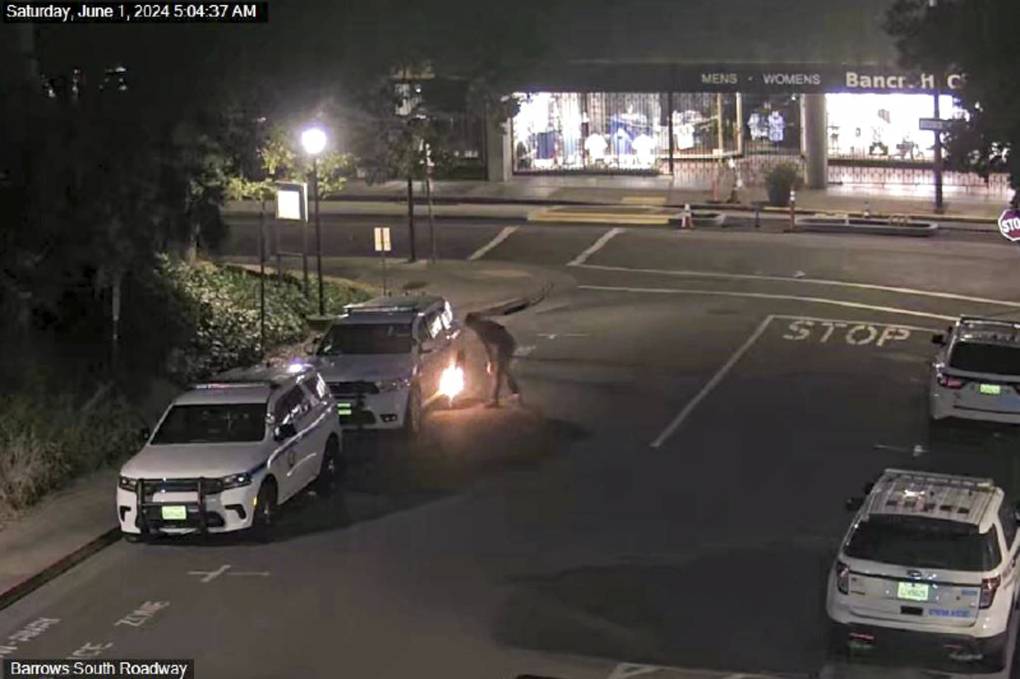
"caption": "An image from the indictment against Casey Robert Goonan filed on July 24, 2024. \"Goonan kicked the shopping bag underneath the fuel tank of a marked UCPD patrol vehicle and ignited the Molotov cocktails,\" reads the indictment.",
"credit": "Courtesy of U.S. District Court of Norther California",
"altTag": null,
"description": null,
"imgSizes": {
"medium": {
"file": "https://cdn.kqed.org/wp-content/uploads/sites/10/2024/07/240725-UC-BERKELEY-FIREBOMB-01-KQED-800x533.jpg",
"width": 800,
"height": 533,
"mimeType": "image/jpeg"
},
"large": {
"file": "https://cdn.kqed.org/wp-content/uploads/sites/10/2024/07/240725-UC-BERKELEY-FIREBOMB-01-KQED-1020x679.jpg",
"width": 1020,
"height": 679,
"mimeType": "image/jpeg"
},
"thumbnail": {
"file": "https://cdn.kqed.org/wp-content/uploads/sites/10/2024/07/240725-UC-BERKELEY-FIREBOMB-01-KQED-160x107.jpg",
"width": 160,
"height": 107,
"mimeType": "image/jpeg"
},
"1536x1536": {
"file": "https://cdn.kqed.org/wp-content/uploads/sites/10/2024/07/240725-UC-BERKELEY-FIREBOMB-01-KQED-1536x1023.jpg",
"width": 1536,
"height": 1023,
"mimeType": "image/jpeg"
},
"post-thumbnail": {
"file": "https://cdn.kqed.org/wp-content/uploads/sites/10/2024/07/240725-UC-BERKELEY-FIREBOMB-01-KQED-672x372.jpg",
"width": 672,
"height": 372,
"mimeType": "image/jpeg"
},
"twentyfourteen-full-width": {
"file": "https://cdn.kqed.org/wp-content/uploads/sites/10/2024/07/240725-UC-BERKELEY-FIREBOMB-01-KQED-1038x576.jpg",
"width": 1038,
"height": 576,
"mimeType": "image/jpeg"
},
"full-width": {
"file": "https://cdn.kqed.org/wp-content/uploads/sites/10/2024/07/240725-UC-BERKELEY-FIREBOMB-01-KQED-1920x1279.jpg",
"width": 1920,
"height": 1279,
"mimeType": "image/jpeg"
},
"kqedFullSize": {
"file": "https://cdn.kqed.org/wp-content/uploads/sites/10/2024/07/240725-UC-BERKELEY-FIREBOMB-01-KQED.jpg",
"width": 2000,
"height": 1332
}
},
"isLoading": false,
"fetchFailed": false
},
"news_11994144": {
"type": "attachments",
"id": "news_11994144",
"meta": {
"index": "attachments_1716263798",
"site": "news",
"id": "11994144",
"found": true
},
"title": "Former President Donald Trump Indicted On Federal Charges",
"publishDate": 1721078107,
"status": "inherit",
"parent": 0,
"modified": 1721078153,
"caption": "Stacks of boxes in a bathroom and shower in The Mar-a-Lago Club’s Lake Room at former U.S. President Donald Trump's Mar-a-Lago estate in Palm Beach, Florida. ",
"credit": "U.S. Department of Justice via Getty Images",
"altTag": null,
"description": null,
"imgSizes": {
"medium": {
"file": "https://cdn.kqed.org/wp-content/uploads/sites/10/2024/07/GETTYIMAGES-1258566797-KQED-800x533.jpg",
"width": 800,
"height": 533,
"mimeType": "image/jpeg"
},
"large": {
"file": "https://cdn.kqed.org/wp-content/uploads/sites/10/2024/07/GETTYIMAGES-1258566797-KQED-1020x680.jpg",
"width": 1020,
"height": 680,
"mimeType": "image/jpeg"
},
"thumbnail": {
"file": "https://cdn.kqed.org/wp-content/uploads/sites/10/2024/07/GETTYIMAGES-1258566797-KQED-160x107.jpg",
"width": 160,
"height": 107,
"mimeType": "image/jpeg"
},
"1536x1536": {
"file": "https://cdn.kqed.org/wp-content/uploads/sites/10/2024/07/GETTYIMAGES-1258566797-KQED-1536x1024.jpg",
"width": 1536,
"height": 1024,
"mimeType": "image/jpeg"
},
"post-thumbnail": {
"file": "https://cdn.kqed.org/wp-content/uploads/sites/10/2024/07/GETTYIMAGES-1258566797-KQED-672x372.jpg",
"width": 672,
"height": 372,
"mimeType": "image/jpeg"
},
"twentyfourteen-full-width": {
"file": "https://cdn.kqed.org/wp-content/uploads/sites/10/2024/07/GETTYIMAGES-1258566797-KQED-1038x576.jpg",
"width": 1038,
"height": 576,
"mimeType": "image/jpeg"
},
"full-width": {
"file": "https://cdn.kqed.org/wp-content/uploads/sites/10/2024/07/GETTYIMAGES-1258566797-KQED-1920x1280.jpg",
"width": 1920,
"height": 1280,
"mimeType": "image/jpeg"
},
"kqedFullSize": {
"file": "https://cdn.kqed.org/wp-content/uploads/sites/10/2024/07/GETTYIMAGES-1258566797-KQED.jpg",
"width": 2000,
"height": 1333
}
},
"isLoading": false,
"fetchFailed": false
},
"news_11993683": {
"type": "attachments",
"id": "news_11993683",
"meta": {
"index": "attachments_1716263798",
"site": "news",
"id": "11993683",
"found": true
},
"title": "L1005168_qed",
"publishDate": 1720727168,
"status": "inherit",
"parent": 11993676,
"modified": 1744397783,
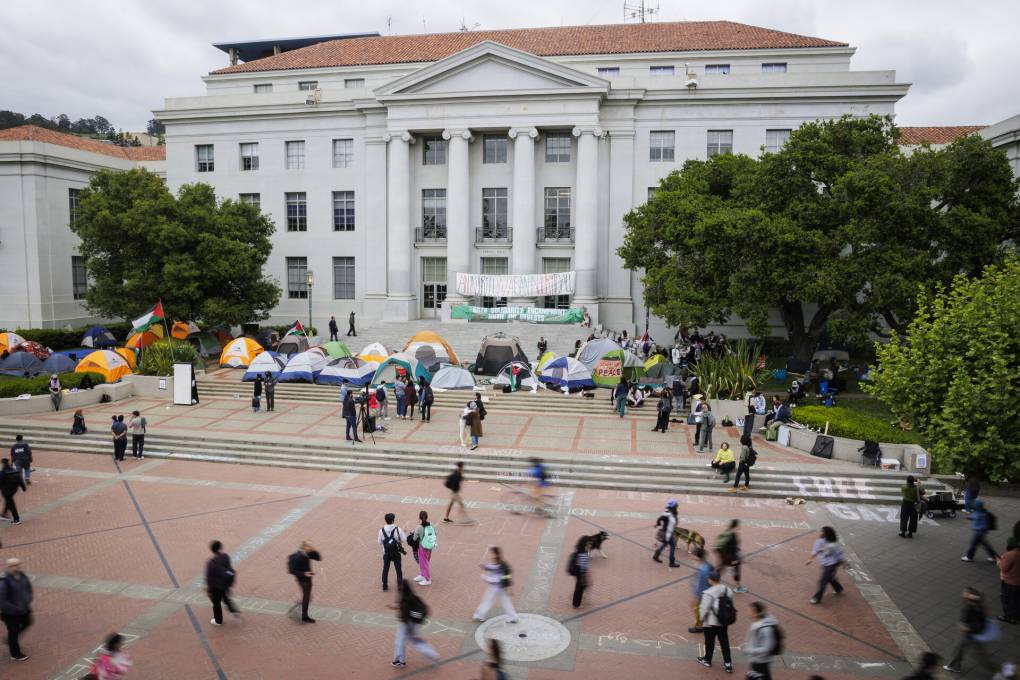
"caption": "The UC Berkeley pro-Palestinian encampment outside of Sproul Hall in Berkeley, California, on May 11, 2024.",
"credit": "Aryk Copley/KQED",
"altTag": null,
"description": null,
"imgSizes": {
"medium": {
"file": "https://cdn.kqed.org/wp-content/uploads/sites/10/2024/07/L1005168_qed-800x533.jpg",
"width": 800,
"height": 533,
"mimeType": "image/jpeg"
},
"large": {
"file": "https://cdn.kqed.org/wp-content/uploads/sites/10/2024/07/L1005168_qed-1020x680.jpg",
"width": 1020,
"height": 680,
"mimeType": "image/jpeg"
},
"thumbnail": {
"file": "https://cdn.kqed.org/wp-content/uploads/sites/10/2024/07/L1005168_qed-160x107.jpg",
"width": 160,
"height": 107,
"mimeType": "image/jpeg"
},
"1536x1536": {
"file": "https://cdn.kqed.org/wp-content/uploads/sites/10/2024/07/L1005168_qed-1536x1024.jpg",
"width": 1536,
"height": 1024,
"mimeType": "image/jpeg"
},
"post-thumbnail": {
"file": "https://cdn.kqed.org/wp-content/uploads/sites/10/2024/07/L1005168_qed-672x372.jpg",
"width": 672,
"height": 372,
"mimeType": "image/jpeg"
},
"twentyfourteen-full-width": {
"file": "https://cdn.kqed.org/wp-content/uploads/sites/10/2024/07/L1005168_qed-1038x576.jpg",
"width": 1038,
"height": 576,
"mimeType": "image/jpeg"
},
"full-width": {
"file": "https://cdn.kqed.org/wp-content/uploads/sites/10/2024/07/L1005168_qed-1920x1280.jpg",
"width": 1920,
"height": 1280,
"mimeType": "image/jpeg"
},
"kqedFullSize": {
"file": "https://cdn.kqed.org/wp-content/uploads/sites/10/2024/07/L1005168_qed.jpg",
"width": 2000,
"height": 1333
}
},
"isLoading": false,
"fetchFailed": false
},
"news_11984220": {
"type": "attachments",
"id": "news_11984220",
"meta": {
"index": "attachments_1716263798",
"site": "news",
"id": "11984220",
"found": true
},
"parent": 11984203,
"imgSizes": {
"twentyfourteen-full-width": {
"file": "https://cdn.kqed.org/wp-content/uploads/sites/10/2024/04/240424-BERKELEY-GAZA-ENCAMPMENT-MD-06_qut-1038x576.jpg",
"width": 1038,
"mimeType": "image/jpeg",
"height": 576
},
"thumbnail": {
"file": "https://cdn.kqed.org/wp-content/uploads/sites/10/2024/04/240424-BERKELEY-GAZA-ENCAMPMENT-MD-06_qut-160x107.jpg",
"width": 160,
"mimeType": "image/jpeg",
"height": 107
},
"post-thumbnail": {
"file": "https://cdn.kqed.org/wp-content/uploads/sites/10/2024/04/240424-BERKELEY-GAZA-ENCAMPMENT-MD-06_qut-672x372.jpg",
"width": 672,
"mimeType": "image/jpeg",
"height": 372
},
"kqedFullSize": {
"file": "https://cdn.kqed.org/wp-content/uploads/sites/10/2024/04/240424-BERKELEY-GAZA-ENCAMPMENT-MD-06_qut.jpg",
"width": 1920,
"height": 1280
},
"large": {
"file": "https://cdn.kqed.org/wp-content/uploads/sites/10/2024/04/240424-BERKELEY-GAZA-ENCAMPMENT-MD-06_qut-1020x680.jpg",
"width": 1020,
"mimeType": "image/jpeg",
"height": 680
},
"1536x1536": {
"file": "https://cdn.kqed.org/wp-content/uploads/sites/10/2024/04/240424-BERKELEY-GAZA-ENCAMPMENT-MD-06_qut-1536x1024.jpg",
"width": 1536,
"mimeType": "image/jpeg",
"height": 1024
},
"medium": {
"file": "https://cdn.kqed.org/wp-content/uploads/sites/10/2024/04/240424-BERKELEY-GAZA-ENCAMPMENT-MD-06_qut-800x533.jpg",
"width": 800,
"mimeType": "image/jpeg",
"height": 533
}
},
"publishDate": 1714165963,
"modified": 1714593047,
"caption": "The UC Berkeley Gaza Solidarity Encampment in front of Sproul Hall in Berkeley on April 24.",
"description": null,
"title": "240424-BERKELEY GAZA ENCAMPMENT-MD-06_qut",
"credit": "Martin do Nascimento/KQED",
"status": "inherit",
"altTag": null,
"isLoading": false,
"fetchFailed": false
},
"news_11990955": {
"type": "attachments",
"id": "news_11990955",
"meta": {
"index": "attachments_1716263798",
"site": "news",
"id": "11990955",
"found": true
},
"title": "Psilocybin Mushrooms Increasingly Sought For Therapeutic Purposes",
"publishDate": 1718742931,
"status": "inherit",
"parent": 11990945,
"modified": 1718743046,
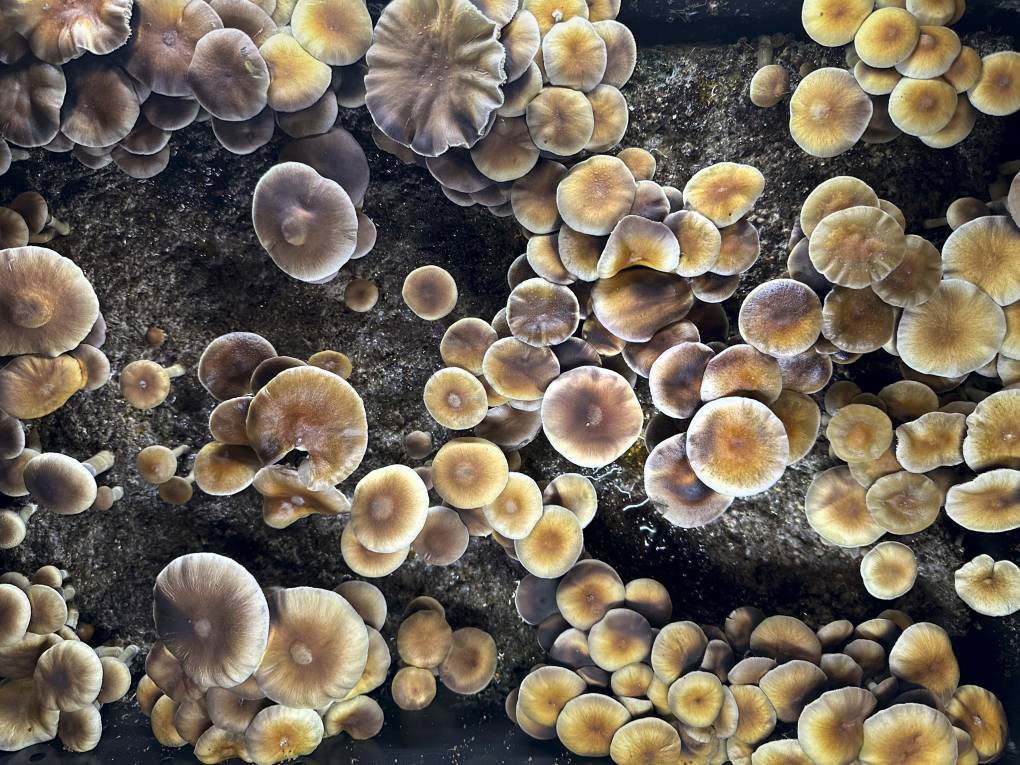
"caption": "UC Berkeley's first human study of psilocybin, a Schedule 1 drug, marks a pivotal moment in the growing movement to use psychedelics for medical purposes.",
"credit": "John Moore/Getty Images",
"altTag": null,
"description": null,
"imgSizes": {
"medium": {
"file": "https://cdn.kqed.org/wp-content/uploads/sites/10/2024/06/GettyImages-1887885559-800x600.jpg",
"width": 800,
"height": 600,
"mimeType": "image/jpeg"
},
"large": {
"file": "https://cdn.kqed.org/wp-content/uploads/sites/10/2024/06/GettyImages-1887885559-1020x765.jpg",
"width": 1020,
"height": 765,
"mimeType": "image/jpeg"
},
"thumbnail": {
"file": "https://cdn.kqed.org/wp-content/uploads/sites/10/2024/06/GettyImages-1887885559-160x120.jpg",
"width": 160,
"height": 120,
"mimeType": "image/jpeg"
},
"1536x1536": {
"file": "https://cdn.kqed.org/wp-content/uploads/sites/10/2024/06/GettyImages-1887885559-1536x1152.jpg",
"width": 1536,
"height": 1152,
"mimeType": "image/jpeg"
},
"2048x2048": {
"file": "https://cdn.kqed.org/wp-content/uploads/sites/10/2024/06/GettyImages-1887885559-2048x1536.jpg",
"width": 2048,
"height": 1536,
"mimeType": "image/jpeg"
},
"post-thumbnail": {
"file": "https://cdn.kqed.org/wp-content/uploads/sites/10/2024/06/GettyImages-1887885559-672x372.jpg",
"width": 672,
"height": 372,
"mimeType": "image/jpeg"
},
"twentyfourteen-full-width": {
"file": "https://cdn.kqed.org/wp-content/uploads/sites/10/2024/06/GettyImages-1887885559-1038x576.jpg",
"width": 1038,
"height": 576,
"mimeType": "image/jpeg"
},
"full-width": {
"file": "https://cdn.kqed.org/wp-content/uploads/sites/10/2024/06/GettyImages-1887885559-1920x1440.jpg",
"width": 1920,
"height": 1440,
"mimeType": "image/jpeg"
},
"kqedFullSize": {
"file": "https://cdn.kqed.org/wp-content/uploads/sites/10/2024/06/GettyImages-1887885559-scaled.jpg",
"width": 2560,
"height": 1920
}
},
"isLoading": false,
"fetchFailed": false
},
"news_11988725": {
"type": "attachments",
"id": "news_11988725",
"meta": {
"index": "attachments_1716263798",
"site": "news",
"id": "11988725",
"found": true
},
"title": "20240601-PEOPLESPARK-JY-035-KQED",
"publishDate": 1717441213,
"status": "inherit",
"parent": 0,
"modified": 1718252957,
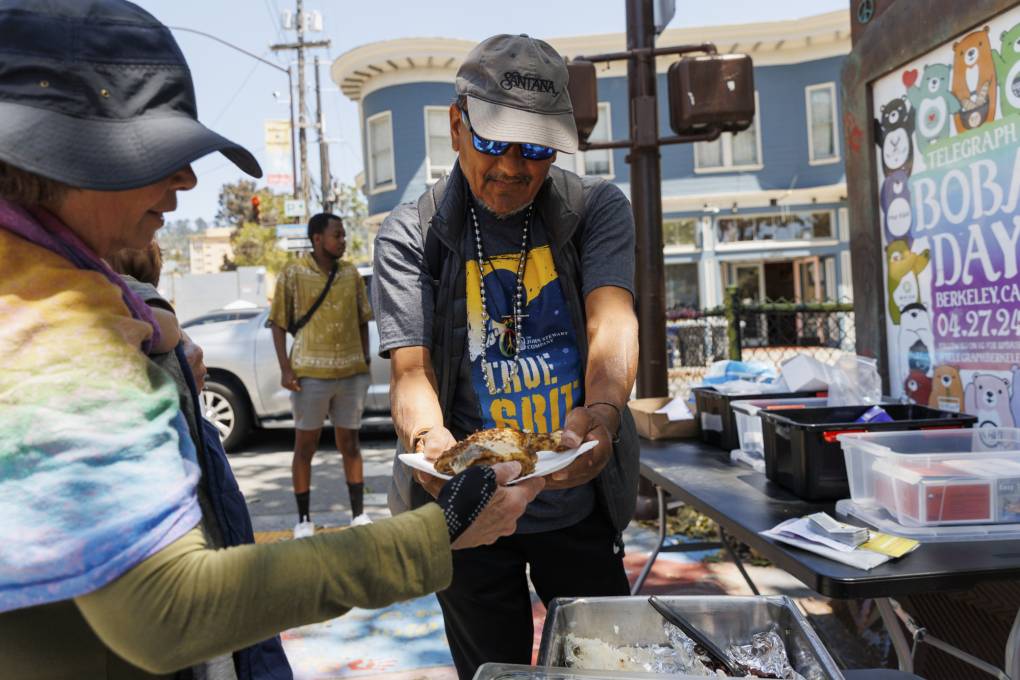
"caption": "Lisa Teague, left, serves Richard Rodriguez a plate of food on June 1, 2024, at a small open space near People's Park in Berkeley. Teague, a local community activist, volunteered at the park until UC Berkeley closed it in January to build new student and low-income housing on the site.",
"credit": "Juliana Yamada/KQED",
"altTag": "A woman serves a man food on a street.",
"description": null,
"imgSizes": {
"medium": {
"file": "https://cdn.kqed.org/wp-content/uploads/sites/10/2024/06/20240601-PEOPLESPARK-JY-035-KQED-800x533.jpg",
"width": 800,
"height": 533,
"mimeType": "image/jpeg"
},
"large": {
"file": "https://cdn.kqed.org/wp-content/uploads/sites/10/2024/06/20240601-PEOPLESPARK-JY-035-KQED-1020x680.jpg",
"width": 1020,
"height": 680,
"mimeType": "image/jpeg"
},
"thumbnail": {
"file": "https://cdn.kqed.org/wp-content/uploads/sites/10/2024/06/20240601-PEOPLESPARK-JY-035-KQED-160x107.jpg",
"width": 160,
"height": 107,
"mimeType": "image/jpeg"
},
"1536x1536": {
"file": "https://cdn.kqed.org/wp-content/uploads/sites/10/2024/06/20240601-PEOPLESPARK-JY-035-KQED-1536x1024.jpg",
"width": 1536,
"height": 1024,
"mimeType": "image/jpeg"
},
"post-thumbnail": {
"file": "https://cdn.kqed.org/wp-content/uploads/sites/10/2024/06/20240601-PEOPLESPARK-JY-035-KQED-672x372.jpg",
"width": 672,
"height": 372,
"mimeType": "image/jpeg"
},
"twentyfourteen-full-width": {
"file": "https://cdn.kqed.org/wp-content/uploads/sites/10/2024/06/20240601-PEOPLESPARK-JY-035-KQED-1038x576.jpg",
"width": 1038,
"height": 576,
"mimeType": "image/jpeg"
},
"full-width": {
"file": "https://cdn.kqed.org/wp-content/uploads/sites/10/2024/06/20240601-PEOPLESPARK-JY-035-KQED-1920x1280.jpg",
"width": 1920,
"height": 1280,
"mimeType": "image/jpeg"
},
"kqedFullSize": {
"file": "https://cdn.kqed.org/wp-content/uploads/sites/10/2024/06/20240601-PEOPLESPARK-JY-035-KQED.jpg",
"width": 2000,
"height": 1333
}
},
"isLoading": false,
"fetchFailed": false
},
"news_11989242": {
"type": "attachments",
"id": "news_11989242",
"meta": {
"index": "attachments_1716263798",
"site": "news",
"id": "11989242",
"found": true
},
"title": "Construction crews work at People’s Park in Berkeley on Jan. 4, 2024.",
"publishDate": 1717694682,
"status": "inherit",
"parent": 11989237,
"modified": 1717694903,
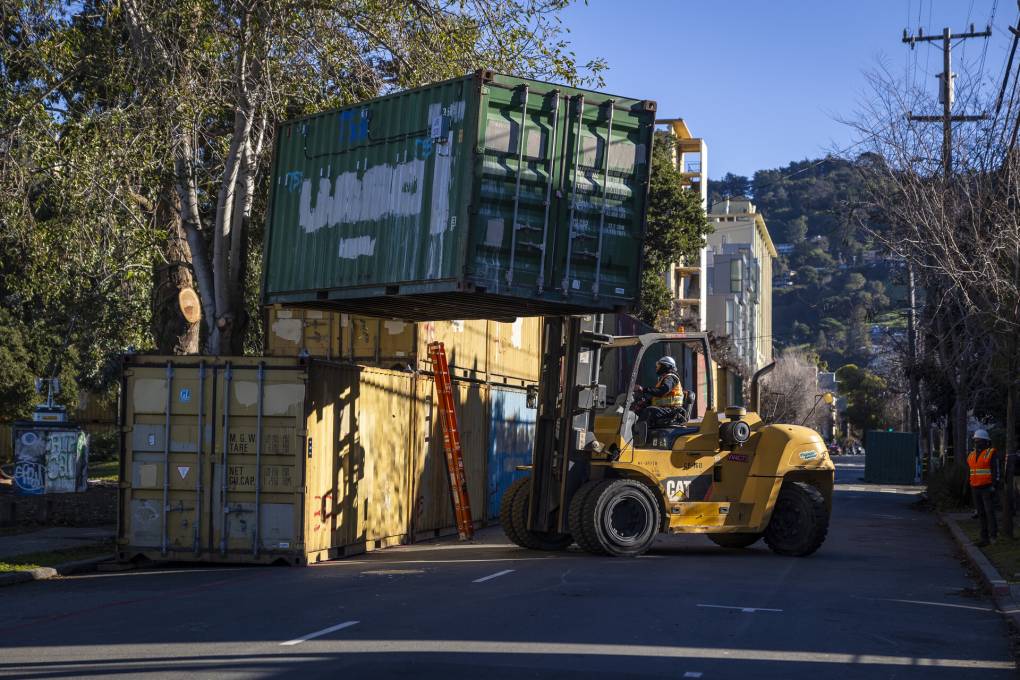
"caption": "Construction crews work to install shipping containers closing off People’s Park in Berkeley on Jan. 4, 2024.",
"credit": "Martin do Nascimento/KQED",
"altTag": null,
"description": null,
"imgSizes": {
"medium": {
"file": "https://cdn.kqed.org/wp-content/uploads/sites/10/2024/06/240104-PEOPLES-PARK-MD-10_qut-800x533.jpg",
"width": 800,
"height": 533,
"mimeType": "image/jpeg"
},
"large": {
"file": "https://cdn.kqed.org/wp-content/uploads/sites/10/2024/06/240104-PEOPLES-PARK-MD-10_qut-1020x680.jpg",
"width": 1020,
"height": 680,
"mimeType": "image/jpeg"
},
"thumbnail": {
"file": "https://cdn.kqed.org/wp-content/uploads/sites/10/2024/06/240104-PEOPLES-PARK-MD-10_qut-160x107.jpg",
"width": 160,
"height": 107,
"mimeType": "image/jpeg"
},
"1536x1536": {
"file": "https://cdn.kqed.org/wp-content/uploads/sites/10/2024/06/240104-PEOPLES-PARK-MD-10_qut-1536x1024.jpg",
"width": 1536,
"height": 1024,
"mimeType": "image/jpeg"
},
"post-thumbnail": {
"file": "https://cdn.kqed.org/wp-content/uploads/sites/10/2024/06/240104-PEOPLES-PARK-MD-10_qut-672x372.jpg",
"width": 672,
"height": 372,
"mimeType": "image/jpeg"
},
"twentyfourteen-full-width": {
"file": "https://cdn.kqed.org/wp-content/uploads/sites/10/2024/06/240104-PEOPLES-PARK-MD-10_qut-1038x576.jpg",
"width": 1038,
"height": 576,
"mimeType": "image/jpeg"
},
"kqedFullSize": {
"file": "https://cdn.kqed.org/wp-content/uploads/sites/10/2024/06/240104-PEOPLES-PARK-MD-10_qut.jpg",
"width": 1920,
"height": 1280
}
},
"isLoading": false,
"fetchFailed": false
},
"news_11986579": {
"type": "attachments",
"id": "news_11986579",
"meta": {
"index": "attachments_1716263798",
"site": "news",
"id": "11986579",
"found": true
},
"parent": 11986546,
"imgSizes": {
"twentyfourteen-full-width": {
"file": "https://cdn.kqed.org/wp-content/uploads/sites/10/2024/05/E08245BF-C0B5-4CAF-A719-C712141E530F_qut-1038x576.jpg",
"width": 1038,
"mimeType": "image/jpeg",
"height": 576
},
"thumbnail": {
"file": "https://cdn.kqed.org/wp-content/uploads/sites/10/2024/05/E08245BF-C0B5-4CAF-A719-C712141E530F_qut-160x107.jpg",
"width": 160,
"mimeType": "image/jpeg",
"height": 107
},
"post-thumbnail": {
"file": "https://cdn.kqed.org/wp-content/uploads/sites/10/2024/05/E08245BF-C0B5-4CAF-A719-C712141E530F_qut-672x372.jpg",
"width": 672,
"mimeType": "image/jpeg",
"height": 372
},
"kqedFullSize": {
"file": "https://cdn.kqed.org/wp-content/uploads/sites/10/2024/05/E08245BF-C0B5-4CAF-A719-C712141E530F_qut.jpg",
"width": 1920,
"height": 1280
},
"large": {
"file": "https://cdn.kqed.org/wp-content/uploads/sites/10/2024/05/E08245BF-C0B5-4CAF-A719-C712141E530F_qut-1020x680.jpg",
"width": 1020,
"mimeType": "image/jpeg",
"height": 680
},
"1536x1536": {
"file": "https://cdn.kqed.org/wp-content/uploads/sites/10/2024/05/E08245BF-C0B5-4CAF-A719-C712141E530F_qut-1536x1024.jpg",
"width": 1536,
"mimeType": "image/jpeg",
"height": 1024
},
"medium": {
"file": "https://cdn.kqed.org/wp-content/uploads/sites/10/2024/05/E08245BF-C0B5-4CAF-A719-C712141E530F_qut-800x533.jpg",
"width": 800,
"mimeType": "image/jpeg",
"height": 533
}
},
"publishDate": 1715893464,
"modified": 1715969143,
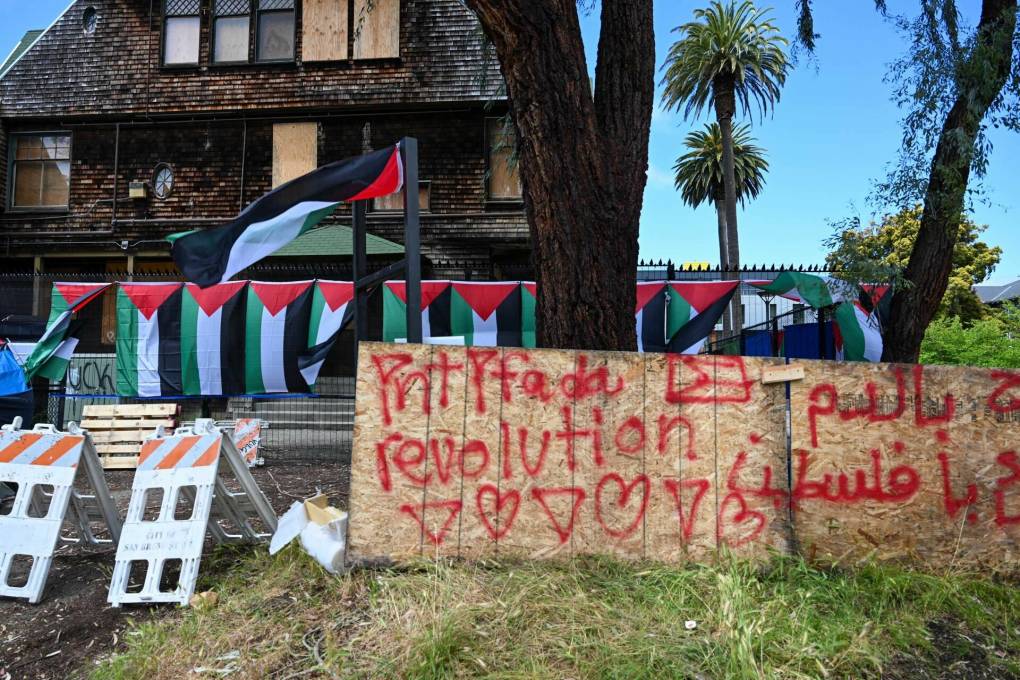
"caption": "Barricades and flags surround Anna Head Alumnae Hall in Berkeley on May 16, 2024. The building is an abandoned UC Berkeley building near People’s Park, which pro-Palestinian activists occupy.",
"description": null,
"title": "E08245BF-C0B5-4CAF-A719-C712141E530F_qut",
"credit": "Beth LaBerge/KQED",
"status": "inherit",
"altTag": null,
"isLoading": false,
"fetchFailed": false
},
"news_11986578": {
"type": "attachments",
"id": "news_11986578",
"meta": {
"index": "attachments_1716263798",
"site": "news",
"id": "11986578",
"found": true
},
"parent": 11986546,
"imgSizes": {
"twentyfourteen-full-width": {
"file": "https://cdn.kqed.org/wp-content/uploads/sites/10/2024/05/020FAA02-736A-40D4-834F-1886DEB22C6E_qut-1038x576.jpg",
"width": 1038,
"mimeType": "image/jpeg",
"height": 576
},
"thumbnail": {
"file": "https://cdn.kqed.org/wp-content/uploads/sites/10/2024/05/020FAA02-736A-40D4-834F-1886DEB22C6E_qut-160x107.jpg",
"width": 160,
"mimeType": "image/jpeg",
"height": 107
},
"post-thumbnail": {
"file": "https://cdn.kqed.org/wp-content/uploads/sites/10/2024/05/020FAA02-736A-40D4-834F-1886DEB22C6E_qut-672x372.jpg",
"width": 672,
"mimeType": "image/jpeg",
"height": 372
},
"kqedFullSize": {
"file": "https://cdn.kqed.org/wp-content/uploads/sites/10/2024/05/020FAA02-736A-40D4-834F-1886DEB22C6E_qut.jpg",
"width": 1920,
"height": 1280
},
"large": {
"file": "https://cdn.kqed.org/wp-content/uploads/sites/10/2024/05/020FAA02-736A-40D4-834F-1886DEB22C6E_qut-1020x680.jpg",
"width": 1020,
"mimeType": "image/jpeg",
"height": 680
},
"1536x1536": {
"file": "https://cdn.kqed.org/wp-content/uploads/sites/10/2024/05/020FAA02-736A-40D4-834F-1886DEB22C6E_qut-1536x1024.jpg",
"width": 1536,
"mimeType": "image/jpeg",
"height": 1024
},
"medium": {
"file": "https://cdn.kqed.org/wp-content/uploads/sites/10/2024/05/020FAA02-736A-40D4-834F-1886DEB22C6E_qut-800x533.jpg",
"width": 800,
"mimeType": "image/jpeg",
"height": 533
}
},
"publishDate": 1715893461,
"modified": 1715895988,
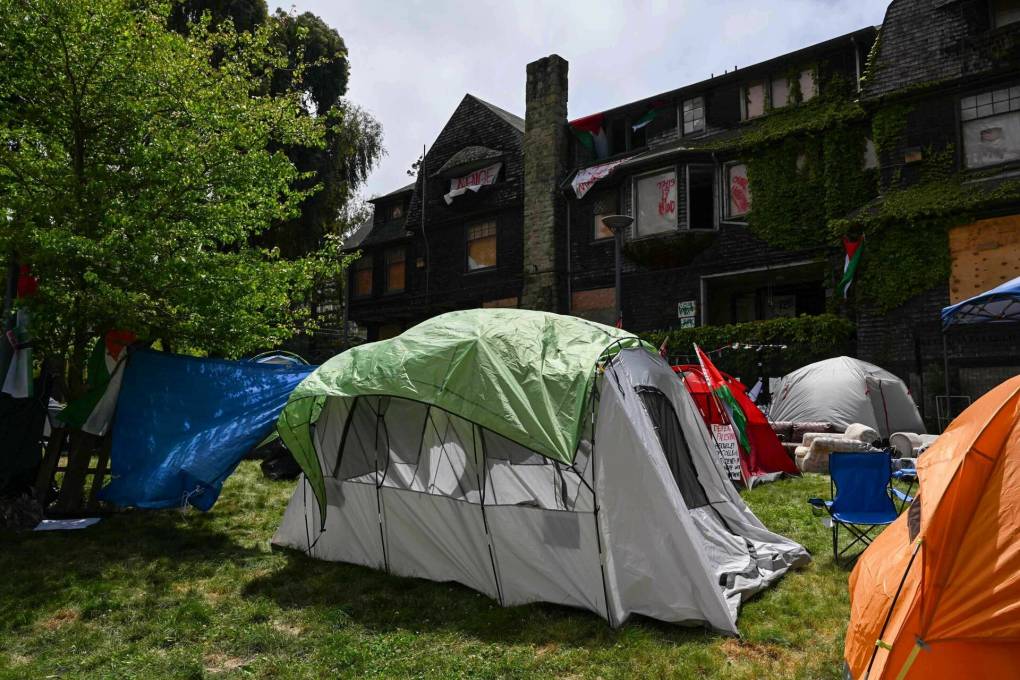
"caption": "Tents fill the yard at Anna Head Alumnae Hall in Berkeley on May 16, 2024, an abandoned UC Berkeley building near People’s Park that is occupied by pro-Palestinian activists.",
"description": null,
"title": "020FAA02-736A-40D4-834F-1886DEB22C6E_qut",
"credit": "Beth LaBerge/KQED",
"status": "inherit",
"altTag": null,
"isLoading": false,
"fetchFailed": false
},
"news_11986327": {
"type": "attachments",
"id": "news_11986327",
"meta": {
"index": "attachments_1716263798",
"site": "news",
"id": "11986327",
"found": true
},
"parent": 11986306,
"imgSizes": {
"twentyfourteen-full-width": {
"file": "https://cdn.kqed.org/wp-content/uploads/sites/10/2024/05/IMG_5164-MG-01-KQED-1038x576.jpg",
"width": 1038,
"mimeType": "image/jpeg",
"height": 576
},
"thumbnail": {
"file": "https://cdn.kqed.org/wp-content/uploads/sites/10/2024/05/IMG_5164-MG-01-KQED-160x107.jpg",
"width": 160,
"mimeType": "image/jpeg",
"height": 107
},
"post-thumbnail": {
"file": "https://cdn.kqed.org/wp-content/uploads/sites/10/2024/05/IMG_5164-MG-01-KQED-672x372.jpg",
"width": 672,
"mimeType": "image/jpeg",
"height": 372
},
"kqedFullSize": {
"file": "https://cdn.kqed.org/wp-content/uploads/sites/10/2024/05/IMG_5164-MG-01-KQED.jpg",
"width": 2000,
"height": 1333
},
"large": {
"file": "https://cdn.kqed.org/wp-content/uploads/sites/10/2024/05/IMG_5164-MG-01-KQED-1020x680.jpg",
"width": 1020,
"mimeType": "image/jpeg",
"height": 680
},
"1536x1536": {
"file": "https://cdn.kqed.org/wp-content/uploads/sites/10/2024/05/IMG_5164-MG-01-KQED-1536x1024.jpg",
"width": 1536,
"mimeType": "image/jpeg",
"height": 1024
},
"full-width": {
"file": "https://cdn.kqed.org/wp-content/uploads/sites/10/2024/05/IMG_5164-MG-01-KQED-1920x1280.jpg",
"width": 1920,
"mimeType": "image/jpeg",
"height": 1280
},
"medium": {
"file": "https://cdn.kqed.org/wp-content/uploads/sites/10/2024/05/IMG_5164-MG-01-KQED-800x533.jpg",
"width": 800,
"mimeType": "image/jpeg",
"height": 533
}
},
"publishDate": 1715797693,
"modified": 1715797995,
"caption": "The pro-Palestinian protest encampment on UC Berkeley's Sproul Plaza is dismantled on Tuesday, May 14, 2024, after an agreement between students and the university.",
"description": null,
"title": "IMG_5164-MG-01-KQED",
"credit": "Matthew Green/KQED",
"status": "inherit",
"altTag": null,
"isLoading": false,
"fetchFailed": false
},
"news_11984188": {
"type": "attachments",
"id": "news_11984188",
"meta": {
"index": "attachments_1716263798",
"site": "news",
"id": "11984188",
"found": true
},
"parent": 11984140,
"imgSizes": {
"twentyfourteen-full-width": {
"file": "https://cdn.kqed.org/wp-content/uploads/sites/10/2024/04/240423-BERKELEY-GAZA-ENCAMPMENT-MD-02_qut-1-1038x576.jpg",
"width": 1038,
"mimeType": "image/jpeg",
"height": 576
},
"thumbnail": {
"file": "https://cdn.kqed.org/wp-content/uploads/sites/10/2024/04/240423-BERKELEY-GAZA-ENCAMPMENT-MD-02_qut-1-160x107.jpg",
"width": 160,
"mimeType": "image/jpeg",
"height": 107
},
"post-thumbnail": {
"file": "https://cdn.kqed.org/wp-content/uploads/sites/10/2024/04/240423-BERKELEY-GAZA-ENCAMPMENT-MD-02_qut-1-672x372.jpg",
"width": 672,
"mimeType": "image/jpeg",
"height": 372
},
"kqedFullSize": {
"file": "https://cdn.kqed.org/wp-content/uploads/sites/10/2024/04/240423-BERKELEY-GAZA-ENCAMPMENT-MD-02_qut-1.jpg",
"width": 1920,
"height": 1280
},
"large": {
"file": "https://cdn.kqed.org/wp-content/uploads/sites/10/2024/04/240423-BERKELEY-GAZA-ENCAMPMENT-MD-02_qut-1-1020x680.jpg",
"width": 1020,
"mimeType": "image/jpeg",
"height": 680
},
"1536x1536": {
"file": "https://cdn.kqed.org/wp-content/uploads/sites/10/2024/04/240423-BERKELEY-GAZA-ENCAMPMENT-MD-02_qut-1-1536x1024.jpg",
"width": 1536,
"mimeType": "image/jpeg",
"height": 1024
},
"medium": {
"file": "https://cdn.kqed.org/wp-content/uploads/sites/10/2024/04/240423-BERKELEY-GAZA-ENCAMPMENT-MD-02_qut-1-800x533.jpg",
"width": 800,
"mimeType": "image/jpeg",
"height": 533
}
},
"publishDate": 1714162142,
"modified": 1715798157,
"caption": "The UC Berkeley Gaza Solidarity Encampment in front of Sproul Hall on April 23, 2024.",
"description": null,
"title": "240423-BERKELEY GAZA ENCAMPMENT-MD-02_qut (1)",
"credit": "Martin do Nascimento/KQED",
"status": "inherit",
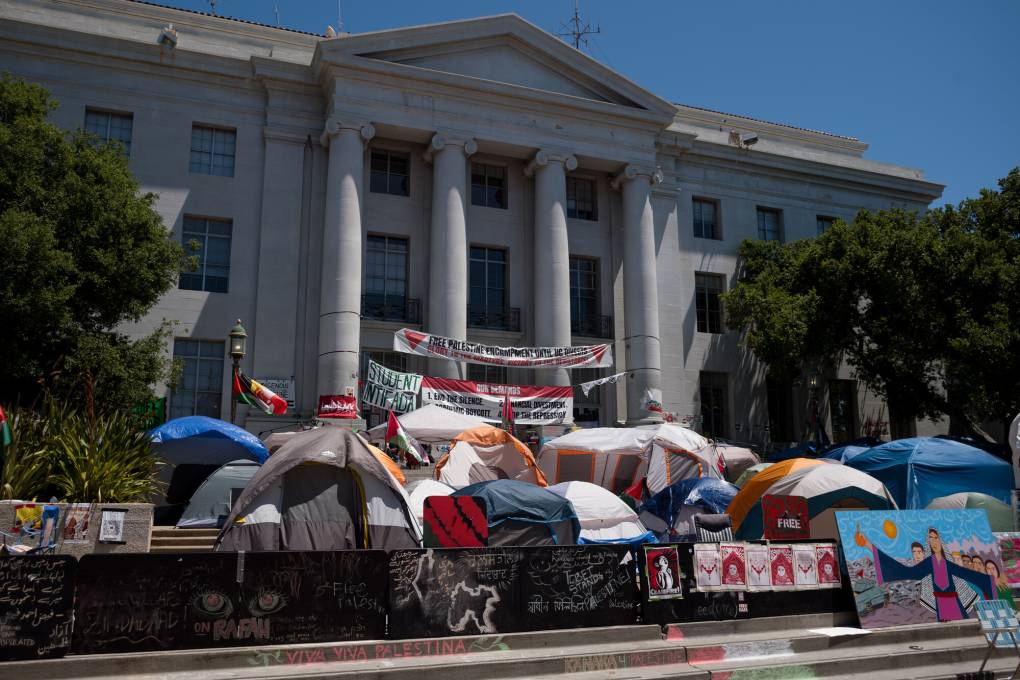
"altTag": "Tents are set up on the steps leading up to a building. A red-white-green-black Palestinian flag hangs from one tent. One banner hung from the building in the background says: 'An injury to Gaza is an injury to us all.' Another says: 'Divest.'",
"isLoading": false,
"fetchFailed": false
},
"news_11966205": {
"type": "attachments",
"id": "news_11966205",
"meta": {
"index": "attachments_1716263798",
"site": "news",
"id": "11966205",
"found": true
},
"parent": 0,
"imgSizes": {
"twentyfourteen-full-width": {
"file": "https://cdn.kqed.org/wp-content/uploads/sites/10/2023/11/231102-CRISTINA-MORA-MD-08-KQED-1038x576.jpg",
"width": 1038,
"mimeType": "image/jpeg",
"height": 576
},
"thumbnail": {
"file": "https://cdn.kqed.org/wp-content/uploads/sites/10/2023/11/231102-CRISTINA-MORA-MD-08-KQED-160x107.jpg",
"width": 160,
"mimeType": "image/jpeg",
"height": 107
},
"post-thumbnail": {
"file": "https://cdn.kqed.org/wp-content/uploads/sites/10/2023/11/231102-CRISTINA-MORA-MD-08-KQED-672x372.jpg",
"width": 672,
"mimeType": "image/jpeg",
"height": 372
},
"kqedFullSize": {
"file": "https://cdn.kqed.org/wp-content/uploads/sites/10/2023/11/231102-CRISTINA-MORA-MD-08-KQED.jpg?ver=1698939138",
"width": 2000,
"height": 1333
},
"large": {
"file": "https://cdn.kqed.org/wp-content/uploads/sites/10/2023/11/231102-CRISTINA-MORA-MD-08-KQED-1020x680.jpg",
"width": 1020,
"mimeType": "image/jpeg",
"height": 680
},
"1536x1536": {
"file": "https://cdn.kqed.org/wp-content/uploads/sites/10/2023/11/231102-CRISTINA-MORA-MD-08-KQED-1536x1024.jpg",
"width": 1536,
"mimeType": "image/jpeg",
"height": 1024
},
"full-width": {
"file": "https://cdn.kqed.org/wp-content/uploads/sites/10/2023/11/231102-CRISTINA-MORA-MD-08-KQED-1920x1280.jpg",
"width": 1920,
"mimeType": "image/jpeg",
"height": 1280
},
"medium": {
"file": "https://cdn.kqed.org/wp-content/uploads/sites/10/2023/11/231102-CRISTINA-MORA-MD-08-KQED-800x533.jpg",
"width": 800,
"mimeType": "image/jpeg",
"height": 533
}
},
"publishDate": 1698932680,
"modified": 1715721173,
"caption": "UC Berkeley Professor G. Cristina Mora outside the Social Sciences Building on Nov. 1, 2023.",
"description": null,
"title": "231102-CRISTINA MORA-MD-08-KQED",
"credit": "Martin do Nascimento/KQED",
"status": "inherit",
"altTag": "A person with long hair in a teal sport coat stands on a cement outdoor staircase and looks at the camera.",
"isLoading": false,
"fetchFailed": false
}
},
"audioPlayerReducer": {
"postId": "stream_live",
"isPaused": true,
"isPlaying": false,
"pfsActive": false,
"pledgeModalIsOpen": true,
"playerDrawerIsOpen": false,
"liveAudioPlayStartedAt": 0,
"liveAudioPlayContext": ""
},
"authorsReducer": {
"byline_news_11986280": {
"type": "authors",
"id": "byline_news_11986280",
"meta": {
"override": true
},
"slug": "byline_news_11986280",
"name": "Michael Burke, EdSource",
"isLoading": false
},
"shossaini": {
"type": "authors",
"id": "3214",
"meta": {
"index": "authors_1716337520",
"id": "3214",
"found": true
},
"name": "Sara Hossaini",
"firstName": "Sara",
"lastName": "Hossaini",
"slug": "shossaini",
"email": "shossaini@kqed.org",
"display_author_email": true,
"staff_mastheads": [
"news"
],
"title": "KQED Reporter",
"bio": "Sara Hossaini came to general assignment reporting at KQED in 2013 after two winters reporting at Wyoming Public Radio. She holds a bachelor's degree in broadcast journalism from the University of Nebraska-Lincoln. Her radio romance began after a bitter breakup with documentary film (Ok, maybe it's still complicated). Her first simultaneous jobs in San Francisco were as Associate Producer on a PBS film series through the Center for Asian American Media and as a butler. She likes to trot, plot and make things with her hands.",
"avatar": "https://secure.gravatar.com/avatar/060e9f56b9554e17942e89f413242774?s=600&d=blank&r=g",
"twitter": "mshossaini",
"facebook": null,
"instagram": null,
"linkedin": null,
"sites": [
{
"site": "news",
"roles": [
"author"
]
},
{
"site": "stateofhealth",
"roles": [
"author"
]
}
],
"headData": {
"title": "Sara Hossaini | KQED",
"description": "KQED Reporter",
"ogImgSrc": "https://secure.gravatar.com/avatar/060e9f56b9554e17942e89f413242774?s=600&d=blank&r=g",
"twImgSrc": "https://secure.gravatar.com/avatar/060e9f56b9554e17942e89f413242774?s=600&d=blank&r=g"
},
"isLoading": false,
"link": "/author/shossaini"
},
"lesleymcclurg": {
"type": "authors",
"id": "11229",
"meta": {
"index": "authors_1716337520",
"id": "11229",
"found": true
},
"name": "Lesley McClurg",
"firstName": "Lesley",
"lastName": "McClurg",
"slug": "lesleymcclurg",
"email": "lmcclurg@KQED.org",
"display_author_email": false,
"staff_mastheads": [
"news",
"science"
],
"title": "KQED Health Correspondent",
"bio": "Lesley McClurg is a health correspondent and fill-in host whose work is regularly rebroadcast on NPR and PBS programs. She’s earned multiple regional Emmy awards, a national and a regional Edward R. Murrow award, and was named Best Beat Reporter by the Association of Health Care Journalists. The Society of Professional Journalists has recognized her work several times, and the Society of Environmental Journalists spotlighted her coverage of California’s historic drought.\r\n\r\nBefore joining KQED in 2016, Lesley covered food and sustainability for Capital Public Radio, environmental issues for Colorado Public Radio, and reported for KUOW and KCTS 9 in Seattle. Away from the newsroom, she loves skiing with her daughter, mountain biking with her partner, and playing with Ollie, the family’s goldendoodle. On deadline, she runs almost entirely on chocolate chips.\r\n\r\n ",
"avatar": "https://secure.gravatar.com/avatar/bab49e972ea10c774fe0f5e29dba1722b158f7c0d58a360923d1389d380b2978?s=600&d=blank&r=g",
"twitter": "lesleywmcclurg",
"bluesky": null,
"facebook": null,
"instagram": null,
"linkedin": null,
"sites": [
{
"site": "arts",
"roles": [
"author"
]
},
{
"site": "news",
"roles": [
"editor"
]
},
{
"site": "futureofyou",
"roles": [
"editor"
]
},
{
"site": "stateofhealth",
"roles": [
"author"
]
},
{
"site": "science",
"roles": [
"editor"
]
},
{
"site": "quest",
"roles": [
"subscriber"
]
},
{
"site": "forum",
"roles": [
"administrator"
]
},
{
"site": "liveblog",
"roles": [
"author"
]
}
],
"headData": {
"title": "Lesley McClurg | KQED",
"description": "KQED Health Correspondent",
"ogImgSrc": "https://secure.gravatar.com/avatar/bab49e972ea10c774fe0f5e29dba1722b158f7c0d58a360923d1389d380b2978?s=600&d=blank&r=g",
"twImgSrc": "https://secure.gravatar.com/avatar/bab49e972ea10c774fe0f5e29dba1722b158f7c0d58a360923d1389d380b2978?s=600&d=blank&r=g"
},
"isLoading": false,
"link": "/author/lesleymcclurg"
},
"btorres": {
"type": "authors",
"id": "11666",
"meta": {
"index": "authors_1716337520",
"id": "11666",
"found": true
},
"name": "Blanca Torres",
"firstName": "Blanca",
"lastName": "Torres",
"slug": "btorres",
"email": "btorres@kqed.org",
"display_author_email": true,
"staff_mastheads": [
"news"
],
"title": "Producer, Forum",
"bio": "Blanca Torres brings sharp news judgement and keen sense of lively conversation to her work as producer for Forum. She loves producing shows that leave listeners feeling like they heard distinctive voices, learned something new and gained a fresh perspective.\r\n\r\nShe joined KQED in January of 2020 after 16 years of working as a newspaper reporter most recently at the \u003cem>San Francisco Business Times,\u003c/em> where she wrote about real estate and economic development. Before that, she covered a variety of beats including crime, education, retail, workplace, the economy, consumer issues, and small business for the \u003cem>Contra Costa Times, Baltimore Sun\u003c/em> and\u003cem> The Seattle Times\u003c/em>. In addition to reporting, she worked as an editorial writer and columnist for the \u003cem>Seattle Times\u003c/em>. From 2017 to 2020, Blanca won a total of ten awards from the National Association of Real Estate Editors and won first place for land use reporting from the California News Publishers Association two years in a row. She is also a member and former board member for the National Association of Hispanic Journalists.\r\n\r\nA native of the Pacific Northwest, Blanca earned her bachelor's degree from Vanderbilt University in Nashville and a master's in fine arts in creative writing at Mills College. She lives in the East Bay with her family.",
"avatar": "https://secure.gravatar.com/avatar/50b49d19b14a1eed34f26ebf4681152cdd81574ed21851100871ccd29e578cdc?s=600&d=blank&r=g",
"twitter": "@blancawrites",
"bluesky": null,
"facebook": null,
"instagram": null,
"linkedin": null,
"sites": [
{
"site": "arts",
"roles": [
"editor"
]
},
{
"site": "news",
"roles": [
"editor"
]
},
{
"site": "forum",
"roles": [
"editor"
]
}
],
"headData": {
"title": "Blanca Torres | KQED",
"description": "Producer, Forum",
"ogImgSrc": "https://secure.gravatar.com/avatar/50b49d19b14a1eed34f26ebf4681152cdd81574ed21851100871ccd29e578cdc?s=600&d=blank&r=g",
"twImgSrc": "https://secure.gravatar.com/avatar/50b49d19b14a1eed34f26ebf4681152cdd81574ed21851100871ccd29e578cdc?s=600&d=blank&r=g"
},
"isLoading": false,
"link": "/author/btorres"
},
"abandlamudi": {
"type": "authors",
"id": "11672",
"meta": {
"index": "authors_1716337520",
"id": "11672",
"found": true
},
"name": "Adhiti Bandlamudi",
"firstName": "Adhiti",
"lastName": "Bandlamudi",
"slug": "abandlamudi",
"email": "abandlamudi@kqed.org",
"display_author_email": false,
"staff_mastheads": [
"news"
],
"title": "KQED Housing Reporter",
"bio": "Adhiti Bandlamudi reports for KQED's Housing desk. She focuses on how housing gets built across the Bay Area. Before joining KQED in 2020, she reported for WUNC in Durham, North Carolina, WABE in Atlanta, Georgia and Capital Public Radio in Sacramento. In 2017, she was awarded a Kroc Fellowship at NPR where she reported on everything from sprinkles to the Golden State Killer's arrest. When she's not reporting, she's baking new recipes in her kitchen or watching movies with friends and family. She's originally from Georgia and has strong opinions about Great British Bake Off.",
"avatar": "https://secure.gravatar.com/avatar/868129c8b257bb99a3500e2c86a65400?s=600&d=mm&r=g",
"twitter": "oddity_adhiti",
"facebook": null,
"instagram": null,
"linkedin": null,
"sites": [
{
"site": "arts",
"roles": [
"author"
]
},
{
"site": "news",
"roles": [
"editor"
]
},
{
"site": "liveblog",
"roles": [
"author"
]
}
],
"headData": {
"title": "Adhiti Bandlamudi | KQED",
"description": "KQED Housing Reporter",
"ogImgSrc": "https://secure.gravatar.com/avatar/868129c8b257bb99a3500e2c86a65400?s=600&d=mm&r=g",
"twImgSrc": "https://secure.gravatar.com/avatar/868129c8b257bb99a3500e2c86a65400?s=600&d=mm&r=g"
},
"isLoading": false,
"link": "/author/abandlamudi"
},
"jrodriguez": {
"type": "authors",
"id": "11690",
"meta": {
"index": "authors_1716337520",
"id": "11690",
"found": true
},
"name": "Joe Fitzgerald Rodriguez",
"firstName": "Joe",
"lastName": "Fitzgerald Rodriguez",
"slug": "jrodriguez",
"email": "jrodriguez@kqed.org",
"display_author_email": true,
"staff_mastheads": [
"news"
],
"title": "Reporter and Producer",
"bio": "Joe Fitzgerald Rodriguez is a reporter and digital producer for KQED covering politics. Joe most recently wrote for the \u003cem>San Francisco Examiner\u003c/em> as a political columnist covering The City. He was raised in San Francisco and has spent his reporting career in his beloved, foggy, city by the bay. Joe was 12-years-old when he conducted his first interview in journalism, grilling former San Francisco Mayor Willie Brown for the Marina Middle School newspaper, \u003cem>The Penguin Press, \u003c/em>and he continues to report on the San Francisco Bay Area to this day.",
"avatar": "https://secure.gravatar.com/avatar/2247beb0564c1e9c62228d5649d2edac?s=600&d=blank&r=g",
"twitter": "FitztheReporter",
"facebook": null,
"instagram": "https://www.instagram.com/fitzthereporter/",
"linkedin": null,
"sites": [
{
"site": "",
"roles": [
"editor"
]
},
{
"site": "arts",
"roles": [
"editor"
]
},
{
"site": "news",
"roles": [
"editor"
]
},
{
"site": "science",
"roles": [
"editor"
]
},
{
"site": "elections",
"roles": [
"editor"
]
},
{
"site": "liveblog",
"roles": [
"editor"
]
}
],
"headData": {
"title": "Joe Fitzgerald Rodriguez | KQED",
"description": "Reporter and Producer",
"ogImgSrc": "https://secure.gravatar.com/avatar/2247beb0564c1e9c62228d5649d2edac?s=600&d=blank&r=g",
"twImgSrc": "https://secure.gravatar.com/avatar/2247beb0564c1e9c62228d5649d2edac?s=600&d=blank&r=g"
},
"isLoading": false,
"link": "/author/jrodriguez"
},
"kdebenedetti": {
"type": "authors",
"id": "11913",
"meta": {
"index": "authors_1716337520",
"id": "11913",
"found": true
},
"name": "Katie DeBenedetti",
"firstName": "Katie",
"lastName": "DeBenedetti",
"slug": "kdebenedetti",
"email": "kdebenedetti@kqed.org",
"display_author_email": false,
"staff_mastheads": [
"news",
"science"
],
"title": "KQED Contributor",
"bio": "Katie DeBenedetti is a digital reporter covering daily news for the Express Desk. Prior to joining KQED as a culture reporting intern in January 2024, she covered education and city government for the Napa Valley Register.",
"avatar": "https://secure.gravatar.com/avatar/6e31073cb8f7e4214ab03f42771d0f45?s=600&d=blank&r=g",
"twitter": null,
"facebook": null,
"instagram": null,
"linkedin": null,
"sites": [
{
"site": "news",
"roles": [
"author"
]
},
{
"site": "science",
"roles": [
"author"
]
},
{
"site": "liveblog",
"roles": [
"author"
]
}
],
"headData": {
"title": "Katie DeBenedetti | KQED",
"description": "KQED Contributor",
"ogImgSrc": "https://secure.gravatar.com/avatar/6e31073cb8f7e4214ab03f42771d0f45?s=600&d=blank&r=g",
"twImgSrc": "https://secure.gravatar.com/avatar/6e31073cb8f7e4214ab03f42771d0f45?s=600&d=blank&r=g"
},
"isLoading": false,
"link": "/author/kdebenedetti"
},
"slim": {
"type": "authors",
"id": "11920",
"meta": {
"index": "authors_1716337520",
"id": "11920",
"found": true
},
"name": "Samantha Lim",
"firstName": "Samantha",
"lastName": "Lim",
"slug": "slim",
"email": "slim@KQED.org",
"display_author_email": false,
"staff_mastheads": [],
"title": "KQED Contributor",
"bio": null,
"avatar": "https://secure.gravatar.com/avatar/82e592e6c15fe1a04d385e8ad0fb0b4e?s=600&d=blank&r=g",
"twitter": null,
"facebook": null,
"instagram": null,
"linkedin": null,
"sites": [
{
"site": "news",
"roles": []
}
],
"headData": {
"title": "Samantha Lim | KQED",
"description": "KQED Contributor",
"ogImgSrc": "https://secure.gravatar.com/avatar/82e592e6c15fe1a04d385e8ad0fb0b4e?s=600&d=blank&r=g",
"twImgSrc": "https://secure.gravatar.com/avatar/82e592e6c15fe1a04d385e8ad0fb0b4e?s=600&d=blank&r=g"
},
"isLoading": false,
"link": "/author/slim"
}
},
"pagesReducer": {
"news_tag_uc-berkeley": {
"type": "terms",
"id": "news_17597",
"meta": {
"index": "terms_1716263798",
"site": "news",
"id": "17597",
"score": 8.45815
},
"featImg": null,
"name": "UC Berkeley",
"description": null,
"taxonomy": "tag",
"headData": {
"twImgId": null,
"twTitle": null,
"ogTitle": null,
"ogImgId": null,
"twDescription": null,
"description": null,
"title": "UC Berkeley Archives | KQED News",
"ogDescription": null
},
"ttid": 17631,
"slug": "uc-berkeley",
"isLoading": false,
"title": "UC Berkeley",
"pageMeta": {
"site": "news",
"WpPageTemplate": "page-topic-editorial",
"currentPage": 6
},
"blocks": [
{
"blockName": "kqed/post-list",
"attrs": {
"layout": "cardArticle2",
"query": "posts/news?tag=uc-berkeley",
"seeMore": false,
"paginated": true,
"page": 6
}
},
{
"blockName": "kqed/ad"
}
]
}
},
"pfsSessionReducer": {},
"postsReducer": {
"stream_live": {
"type": "live",
"id": "stream_live",
"audioUrl": "https://streams.kqed.org/kqedradio",
"title": "Live Stream",
"excerpt": "Live Stream information currently unavailable.",
"link": "/radio",
"featImg": "",
"label": {
"name": "KQED Live",
"link": "/"
}
},
"stream_kqedNewscast": {
"type": "posts",
"id": "stream_kqedNewscast",
"audioUrl": "https://www.kqed.org/.stream/anon/radio/RDnews/newscast.mp3?_=1",
"title": "KQED Newscast",
"featImg": "",
"label": {
"name": "88.5 FM",
"link": "/"
}
},
"news_11997386": {
"type": "posts",
"id": "news_11997386",
"meta": {
"index": "posts_1716263798",
"site": "news",
"id": "11997386",
"score": null,
"sort": [
1721945192000
]
},
"guestAuthors": [],
"slug": "person-suspected-of-torching-uc-berkeley-police-car-is-indicted-by-federal-grand-jury",
"title": "Person Suspected of Torching UC Berkeley Police Car Is Indicted by Federal Grand Jury",
"publishDate": 1721945192,
"format": "standard",
"headTitle": "Person Suspected of Torching UC Berkeley Police Car Is Indicted by Federal Grand Jury | KQED",
"labelTerm": {
"site": "news"
},
"content": "\u003cp>The person suspected of \u003ca href=\"https://www.kqed.org/news/11993676/suspect-in-firebombing-of-uc-berkeley-police-vehicle-could-face-20-years-in-prison\">igniting Molotov cocktails\u003c/a> under a UC Berkeley police vehicle last month, as protests over the war in Gaza roiled campuses across the nation, has been indicted by a federal grand jury.\u003c/p>\n\u003cp>Casey Robert Goonan, 34, now faces formal charges after the grand jury this week signaled there was enough evidence to prosecute. The federal indictment, issued Tuesday, includes two counts of arson and one count of possession of an unregistered firearm. Goonan, who is currently in custody at Santa Rita Jail, faces serious prison time and hefty fines if found guilty.\u003c/p>\n\u003cp>Goonan was arrested June 17 in connection \u003ca href=\"https://www.kqed.org/news/11993446/uc-berkeley-firebomb-suspect-to-face-federal-charges-within-days-attorney-says\">with four arson attacks\u003c/a> — including the firebombing of the UC Berkeley police vehicle — after an investigation led by state arson investigators along with federal agents and university police, according to Cal Fire. They initially faced state charges in Alameda County before federal prosecutors took over the case.\u003c/p>\n\u003cp>[ad fullwidth]\u003c/p>\n\u003cp>After the police vehicle was torched early the morning of June 1, the suspect returned to document the aftermath, blogging photos under a headline proclaiming “Student Intifada,” according to a statement from an FBI agent included in the criminal complaint.\u003c/p>\n\u003cp>Defense attorney Jeff Wozniak reiterated Wednesday that Goonan, whom he described as a Bay Area native with a Ph.D in African American studies, will fight the charges and said the case had been politicized because of Goonan’s anti-war activism.[aside postID=news_11994110 hero='https://cdn.kqed.org/wp-content/uploads/sites/10/2024/07/GETTYIMAGES-1258566797-KQED-1020x680.jpg']“There’s a long history of prosecutors trying to take people’s political beliefs and their music and their art and things that they have said out of context to try to make them guilty by association,” Wozniak said. “Dr. Goonan’s political beliefs in a free Palestine and against the ongoing genocide in Gaza are well established, but those beliefs do not make Dr. Goonan guilty of these allegations.”\u003c/p>\n\u003cp>Wozniak also called the inclusion of an unregistered firearm charge “a strange charging decision,” noting that it was likely related to the alleged use of an explosive device and that “there’s no gun or what we would typically think of as a firearm involved in these allegations.”\u003c/p>\n\u003cp>Goonan is expected to plead not guilty in court on Friday. If convicted, they face five to 20 years in prison for each of the arson counts, up to 10 years for the firearm count, and a $250,000 penalty for each of the three counts.\u003c/p>\n\u003cp>The U.S. attorney’s office declined to comment, writing it cannot comment on an active case.\u003c/p>\n\u003cp>\u003c/p>\n",
"blocks": [],
"excerpt": "Casey Robert Goonan now faces formal charges after the grand jury signaled there was enough evidence to prosecute.",
"status": "publish",
"parent": 0,
"modified": 1721948092,
"stats": {
"hasAudio": false,
"hasVideo": false,
"hasChartOrMap": false,
"iframeSrcs": [],
"hasGoogleForm": false,
"hasGallery": false,
"hasHearkenModule": false,
"hasPolis": false,
"paragraphCount": 10,
"wordCount": 452
},
"headData": {
"title": "Person Suspected of Torching UC Berkeley Police Car Is Indicted by Federal Grand Jury | KQED",
"description": "Casey Robert Goonan now faces formal charges after the grand jury signaled there was enough evidence to prosecute.",
"ogTitle": "",
"ogDescription": "",
"ogImgId": "",
"twTitle": "",
"twDescription": "",
"twImgId": "",
"schema": {
"@context": "https://schema.org",
"@type": "NewsArticle",
"headline": "Person Suspected of Torching UC Berkeley Police Car Is Indicted by Federal Grand Jury",
"datePublished": "2024-07-25T15:06:32-07:00",
"dateModified": "2024-07-25T15:54:52-07:00",
"image": "https://cdn.kqed.org/wp-content/uploads/2020/02/KQED-OG-Image@1x.png",
"isAccessibleForFree": "True",
"publisher": {
"@type": "NewsMediaOrganization",
"@id": "https://www.kqed.org/#organization",
"name": "KQED",
"logo": "https://cdn.kqed.org/wp-content/uploads/2020/02/KQED-OG-Image@1x.png",
"url": "https://www.kqed.org",
"sameAs": [
"https://www.facebook.com/KQED",
"https://twitter.com/KQED",
"https://www.instagram.com/kqed/",
"https://www.tiktok.com/@kqedofficial",
"https://www.linkedin.com/company/kqed",
"https://www.youtube.com/channel/UCeC0IOo7i1P_61zVUWbJ4nw"
]
}
}
},
"sticky": false,
"nprStoryId": "kqed-11997386",
"excludeFromSiteSearch": "Include",
"articleAge": "0",
"path": "/news/11997386/person-suspected-of-torching-uc-berkeley-police-car-is-indicted-by-federal-grand-jury",
"audioTrackLength": null,
"parsedContent": [
{
"type": "contentString",
"content": "\u003cdiv class=\"post-body\">\u003cp>\u003cp>The person suspected of \u003ca href=\"https://www.kqed.org/news/11993676/suspect-in-firebombing-of-uc-berkeley-police-vehicle-could-face-20-years-in-prison\">igniting Molotov cocktails\u003c/a> under a UC Berkeley police vehicle last month, as protests over the war in Gaza roiled campuses across the nation, has been indicted by a federal grand jury.\u003c/p>\n\u003cp>Casey Robert Goonan, 34, now faces formal charges after the grand jury this week signaled there was enough evidence to prosecute. The federal indictment, issued Tuesday, includes two counts of arson and one count of possession of an unregistered firearm. Goonan, who is currently in custody at Santa Rita Jail, faces serious prison time and hefty fines if found guilty.\u003c/p>\n\u003cp>Goonan was arrested June 17 in connection \u003ca href=\"https://www.kqed.org/news/11993446/uc-berkeley-firebomb-suspect-to-face-federal-charges-within-days-attorney-says\">with four arson attacks\u003c/a> — including the firebombing of the UC Berkeley police vehicle — after an investigation led by state arson investigators along with federal agents and university police, according to Cal Fire. They initially faced state charges in Alameda County before federal prosecutors took over the case.\u003c/p>\n\u003cp>\u003c/p>\u003c/div>",
"attributes": {
"named": {},
"numeric": []
}
},
{
"type": "component",
"content": "",
"name": "ad",
"attributes": {
"named": {
"label": "fullwidth"
},
"numeric": [
"fullwidth"
]
}
},
{
"type": "contentString",
"content": "\u003cdiv class=\"post-body\">\u003cp>\u003c/p>\n\u003cp>After the police vehicle was torched early the morning of June 1, the suspect returned to document the aftermath, blogging photos under a headline proclaiming “Student Intifada,” according to a statement from an FBI agent included in the criminal complaint.\u003c/p>\n\u003cp>Defense attorney Jeff Wozniak reiterated Wednesday that Goonan, whom he described as a Bay Area native with a Ph.D in African American studies, will fight the charges and said the case had been politicized because of Goonan’s anti-war activism.\u003c/p>\u003c/div>",
"attributes": {
"named": {},
"numeric": []
}
},
{
"type": "component",
"content": "",
"name": "aside",
"attributes": {
"named": {
"postid": "news_11994110",
"hero": "https://cdn.kqed.org/wp-content/uploads/sites/10/2024/07/GETTYIMAGES-1258566797-KQED-1020x680.jpg",
"label": ""
},
"numeric": []
}
},
{
"type": "contentString",
"content": "\u003cdiv class=\"post-body\">\u003cp>“There’s a long history of prosecutors trying to take people’s political beliefs and their music and their art and things that they have said out of context to try to make them guilty by association,” Wozniak said. “Dr. Goonan’s political beliefs in a free Palestine and against the ongoing genocide in Gaza are well established, but those beliefs do not make Dr. Goonan guilty of these allegations.”\u003c/p>\n\u003cp>Wozniak also called the inclusion of an unregistered firearm charge “a strange charging decision,” noting that it was likely related to the alleged use of an explosive device and that “there’s no gun or what we would typically think of as a firearm involved in these allegations.”\u003c/p>\n\u003cp>Goonan is expected to plead not guilty in court on Friday. If convicted, they face five to 20 years in prison for each of the arson counts, up to 10 years for the firearm count, and a $250,000 penalty for each of the three counts.\u003c/p>\n\u003cp>The U.S. attorney’s office declined to comment, writing it cannot comment on an active case.\u003c/p>\n\u003cp>\u003c/p>\n\u003c/div>\u003c/p>",
"attributes": {
"named": {},
"numeric": []
}
}
],
"link": "/news/11997386/person-suspected-of-torching-uc-berkeley-police-car-is-indicted-by-federal-grand-jury",
"authors": [
"3214"
],
"categories": [
"news_8"
],
"tags": [
"news_17626",
"news_27626",
"news_6631",
"news_33333",
"news_17597"
],
"featImg": "news_11997446",
"label": "news"
},
"news_11994110": {
"type": "posts",
"id": "news_11994110",
"meta": {
"index": "posts_1716263798",
"site": "news",
"id": "11994110",
"score": null,
"sort": [
1721084772000
]
},
"guestAuthors": [],
"slug": "judges-dismissal-of-trump-documents-case-was-stunning-and-wrong-berkeley-law-dean-says",
"title": "Judge's Dismissal of Trump Documents Case Was 'Stunning and Wrong,' Berkeley Law Dean Says",
"publishDate": 1721084772,
"format": "standard",
"headTitle": "Judge’s Dismissal of Trump Documents Case Was ‘Stunning and Wrong,’ Berkeley Law Dean Says | KQED",
"labelTerm": {
"site": "news"
},
"content": "\u003cp>After a Florida judge dismissed the \u003ca href=\"https://www.kqed.org/forum/2010101906341/federal-judge-dismisses-trump-classified-documents-case\">federal classified documents case\u003c/a> brought by a special counsel against former President Donald Trump, one Bay Area legal scholar called the decision “stunning and wrong” and suggested the Justice Department refile the case itself.\u003c/p>\n\u003cp>The indictment, once seen as the strongest of the four criminal cases against Trump, alleged that the former president illegally retained classified documents after leaving the White House in 2021 and obstructed the FBI’s efforts to retrieve them. In \u003ca href=\"https://www.pbs.org/newshour/politics/read-the-full-filing-tossing-trumps-classified-documents-trial\">an order\u003c/a> on Monday morning dismissing the case, Judge Aileen M. Cannon said that the appointment of special counsel Jack Smith was unconstitutional.\u003c/p>\n\u003cp>None of the statutes cited as legal authority for the appointment gave Attorney General Merrick Garland broad appointing power or “bestows upon him the right to appoint a federal officer with the kind of prosecutorial power wielded by Special Counsel Smith,” Cannon wrote in the order.\u003c/p>\n\u003cp>Erwin Chemerinsky, the dean of UC Berkeley School of Law, called Cannon’s decision the “accepting of a fringe theory” pushed by some conservatives, including Justice Clarence Thomas, who has previously questioned whether the attorney general has the right to appoint special counsels.\u003c/p>\n\u003cp>[ad fullwidth]\u003c/p>\n\u003cp>Cannon’s decision goes against “every court before today” that has ruled on the issue, Chemerinsky said, noting that the Supreme Court has made clear that such special counsel appointments were constitutional and that several federal courts have agreed.\u003c/p>\n\u003cp>“It’s what the attorney general did back in Watergate … it’s what was done with regard to the Hunter Biden prosecution. It’s been done so many times, and so many courts have upheld it before today,” he told KQED.\u003c/p>\n\u003cp>Cannon’s handling of the documents case has raised eyebrows since its beginning, according to Chemerinsky. The Trump-appointed judge previously asked the FBI to halt reviewing records obtained in a search of the former president’s Mar-a-Lago residence until a third party could review them for any information covered by attorney-client or executive privileges — a decision the 11th U.S. Circuit Court of Appeals later rejected.\u003c/p>\n\u003cp>Throughout the case, “her rulings, like today’s, have strongly favored Donald Trump,” Chemerinsky said.\u003c/p>\n\u003cp>The dismissal comes on the first day of the Republican National Convention, where Trump officially became the party’s presidential nominee and \u003ca href=\"https://www.kqed.org/news/11994052/trump-picks-j-d-vance-as-vice-presidential-running-mate\">announced Ohio Sen. J.D. Vance\u003c/a> as his running mate.\u003c/p>\n\u003cp>He still faces three other criminal cases. Though he was \u003ca href=\"https://www.kqed.org/news/11988282/former-president-trump-is-found-guilty-in-historic-new-york-criminal-case\">convicted in May\u003c/a> of falsifying business records in a New York hush-money case, sentencing has been pushed back in light of a \u003ca href=\"https://www.kqed.org/news/11992777/extreme-court-puts-trump-above-the-law-in-immunity-ruling-california-democrats-say\">Supreme Court decision\u003c/a> granting former presidents broad immunity for official acts. That ruling will have major consequences for a separate federal case over Trump’s attempts to subvert the 2020 election and his role in the Jan. 6 insurrection. Another election interference case filed in Georgia has been delayed amid turmoil in the Fulton County district attorney’s office.\u003c/p>\n\u003cp>Smith can appeal Monday’s decision in the classified documents case and likely will, but Chemerinsky is urging Garland to have the Justice Department refile the indictment itself through the United States attorney.\u003c/p>\n\u003cp>Although that would circumvent the lengthy appeals process, Chemerinsky said it does undermine part of the appeal of a special counsel — separating the case from politics.\u003c/p>\n\u003cp>“There is a loss of public confidence when the investigator, the prosecutor, is responsible to a political appointee, the attorney general,” he said. “The value of having a special counsel is that it’s somebody who has a degree of independence, and we are more likely to have confidence in the investigation and prosecution.”\u003c/p>\n\u003cp>Either through an appeal or a refiling, Chemerinsky believes it is “inconceivable” that the case be tried before November, solidifying that if Trump is elected, he will likely pardon himself with regard to the charges. Whether this is legal is a question that hasn’t yet been answered.\u003c/p>\n\u003cp>\u003cem>KQED’s Sukey Lewis contributed to this report.\u003c/em>\u003c/p>\n\u003cp>\u003c/p>\n",
"blocks": [],
"excerpt": "The dismissal of the classified-documents case rests on a ‘fringe theory’ targeting the attorney general’s right to appoint a special counsel, Dean Erwin Chemerinsky says.",
"status": "publish",
"parent": 0,
"modified": 1725490675,
"stats": {
"hasAudio": false,
"hasVideo": false,
"hasChartOrMap": false,
"iframeSrcs": [],
"hasGoogleForm": false,
"hasGallery": false,
"hasHearkenModule": false,
"hasPolis": false,
"paragraphCount": 17,
"wordCount": 689
},
"headData": {
"title": "Judge's Dismissal of Trump Documents Case Was 'Stunning and Wrong,' Berkeley Law Dean Says | KQED",
"description": "The dismissal of the classified-documents case rests on a ‘fringe theory’ targeting the attorney general’s right to appoint a special counsel, Dean Erwin Chemerinsky says.",
"ogTitle": "",
"ogDescription": "",
"ogImgId": "",
"twTitle": "",
"twDescription": "",
"twImgId": "",
"schema": {
"@context": "https://schema.org",
"@type": "NewsArticle",
"headline": "Judge's Dismissal of Trump Documents Case Was 'Stunning and Wrong,' Berkeley Law Dean Says",
"datePublished": "2024-07-15T16:06:12-07:00",
"dateModified": "2024-09-04T15:57:55-07:00",
"image": "https://cdn.kqed.org/wp-content/uploads/2020/02/KQED-OG-Image@1x.png",
"isAccessibleForFree": "True",
"publisher": {
"@type": "NewsMediaOrganization",
"@id": "https://www.kqed.org/#organization",
"name": "KQED",
"logo": "https://cdn.kqed.org/wp-content/uploads/2020/02/KQED-OG-Image@1x.png",
"url": "https://www.kqed.org",
"sameAs": [
"https://www.facebook.com/KQED",
"https://twitter.com/KQED",
"https://www.instagram.com/kqed/",
"https://www.tiktok.com/@kqedofficial",
"https://www.linkedin.com/company/kqed",
"https://www.youtube.com/channel/UCeC0IOo7i1P_61zVUWbJ4nw"
]
}
}
},
"sticky": false,
"nprStoryId": "kqed-11994110",
"excludeFromSiteSearch": "Include",
"articleAge": "0",
"path": "/news/11994110/judges-dismissal-of-trump-documents-case-was-stunning-and-wrong-berkeley-law-dean-says",
"audioTrackLength": null,
"parsedContent": [
{
"type": "contentString",
"content": "\u003cdiv class=\"post-body\">\u003cp>\u003cp>After a Florida judge dismissed the \u003ca href=\"https://www.kqed.org/forum/2010101906341/federal-judge-dismisses-trump-classified-documents-case\">federal classified documents case\u003c/a> brought by a special counsel against former President Donald Trump, one Bay Area legal scholar called the decision “stunning and wrong” and suggested the Justice Department refile the case itself.\u003c/p>\n\u003cp>The indictment, once seen as the strongest of the four criminal cases against Trump, alleged that the former president illegally retained classified documents after leaving the White House in 2021 and obstructed the FBI’s efforts to retrieve them. In \u003ca href=\"https://www.pbs.org/newshour/politics/read-the-full-filing-tossing-trumps-classified-documents-trial\">an order\u003c/a> on Monday morning dismissing the case, Judge Aileen M. Cannon said that the appointment of special counsel Jack Smith was unconstitutional.\u003c/p>\n\u003cp>None of the statutes cited as legal authority for the appointment gave Attorney General Merrick Garland broad appointing power or “bestows upon him the right to appoint a federal officer with the kind of prosecutorial power wielded by Special Counsel Smith,” Cannon wrote in the order.\u003c/p>\n\u003cp>Erwin Chemerinsky, the dean of UC Berkeley School of Law, called Cannon’s decision the “accepting of a fringe theory” pushed by some conservatives, including Justice Clarence Thomas, who has previously questioned whether the attorney general has the right to appoint special counsels.\u003c/p>\n\u003cp>\u003c/p>\u003c/div>",
"attributes": {
"named": {},
"numeric": []
}
},
{
"type": "component",
"content": "",
"name": "ad",
"attributes": {
"named": {
"label": "fullwidth"
},
"numeric": [
"fullwidth"
]
}
},
{
"type": "contentString",
"content": "\u003cdiv class=\"post-body\">\u003cp>\u003c/p>\n\u003cp>Cannon’s decision goes against “every court before today” that has ruled on the issue, Chemerinsky said, noting that the Supreme Court has made clear that such special counsel appointments were constitutional and that several federal courts have agreed.\u003c/p>\n\u003cp>“It’s what the attorney general did back in Watergate … it’s what was done with regard to the Hunter Biden prosecution. It’s been done so many times, and so many courts have upheld it before today,” he told KQED.\u003c/p>\n\u003cp>Cannon’s handling of the documents case has raised eyebrows since its beginning, according to Chemerinsky. The Trump-appointed judge previously asked the FBI to halt reviewing records obtained in a search of the former president’s Mar-a-Lago residence until a third party could review them for any information covered by attorney-client or executive privileges — a decision the 11th U.S. Circuit Court of Appeals later rejected.\u003c/p>\n\u003cp>Throughout the case, “her rulings, like today’s, have strongly favored Donald Trump,” Chemerinsky said.\u003c/p>\n\u003cp>The dismissal comes on the first day of the Republican National Convention, where Trump officially became the party’s presidential nominee and \u003ca href=\"https://www.kqed.org/news/11994052/trump-picks-j-d-vance-as-vice-presidential-running-mate\">announced Ohio Sen. J.D. Vance\u003c/a> as his running mate.\u003c/p>\n\u003cp>He still faces three other criminal cases. Though he was \u003ca href=\"https://www.kqed.org/news/11988282/former-president-trump-is-found-guilty-in-historic-new-york-criminal-case\">convicted in May\u003c/a> of falsifying business records in a New York hush-money case, sentencing has been pushed back in light of a \u003ca href=\"https://www.kqed.org/news/11992777/extreme-court-puts-trump-above-the-law-in-immunity-ruling-california-democrats-say\">Supreme Court decision\u003c/a> granting former presidents broad immunity for official acts. That ruling will have major consequences for a separate federal case over Trump’s attempts to subvert the 2020 election and his role in the Jan. 6 insurrection. Another election interference case filed in Georgia has been delayed amid turmoil in the Fulton County district attorney’s office.\u003c/p>\n\u003cp>Smith can appeal Monday’s decision in the classified documents case and likely will, but Chemerinsky is urging Garland to have the Justice Department refile the indictment itself through the United States attorney.\u003c/p>\n\u003cp>Although that would circumvent the lengthy appeals process, Chemerinsky said it does undermine part of the appeal of a special counsel — separating the case from politics.\u003c/p>\n\u003cp>“There is a loss of public confidence when the investigator, the prosecutor, is responsible to a political appointee, the attorney general,” he said. “The value of having a special counsel is that it’s somebody who has a degree of independence, and we are more likely to have confidence in the investigation and prosecution.”\u003c/p>\n\u003cp>Either through an appeal or a refiling, Chemerinsky believes it is “inconceivable” that the case be tried before November, solidifying that if Trump is elected, he will likely pardon himself with regard to the charges. Whether this is legal is a question that hasn’t yet been answered.\u003c/p>\n\u003cp>\u003cem>KQED’s Sukey Lewis contributed to this report.\u003c/em>\u003c/p>\n\u003cp>\u003c/p>\n\u003c/div>\u003c/p>",
"attributes": {
"named": {},
"numeric": []
}
}
],
"link": "/news/11994110/judges-dismissal-of-trump-documents-case-was-stunning-and-wrong-berkeley-law-dean-says",
"authors": [
"11913"
],
"categories": [
"news_8"
],
"tags": [
"news_1323",
"news_17968",
"news_17597"
],
"featImg": "news_11994144",
"label": "news"
},
"news_11993676": {
"type": "posts",
"id": "news_11993676",
"meta": {
"index": "posts_1716263798",
"site": "news",
"id": "11993676",
"score": null,
"sort": [
1720728465000
]
},
"guestAuthors": [],
"slug": "suspect-in-firebombing-of-uc-berkeley-police-vehicle-could-face-20-years-in-prison",
"title": "Suspect Used Molotov Cocktails to Torch UC Berkeley Police Car, Feds Say",
"publishDate": 1720728465,
"format": "standard",
"headTitle": "Suspect Used Molotov Cocktails to Torch UC Berkeley Police Car, Feds Say | KQED",
"labelTerm": {
"site": "news"
},
"content": "\u003cp>The person accused of carrying out \u003ca href=\"https://www.kqed.org/news/11993446/uc-berkeley-firebomb-suspect-to-face-federal-charges-within-days-attorney-says\">a string of arson attacks\u003c/a> on UC Berkeley’s campus in June is facing a federal charge that carries a maximum penalty of 20 years in prison, according to a criminal complaint unsealed Thursday.\u003c/p>\n\u003cp>Casey Robert Goonan, 34, is charged with damaging or destroying property owned or leased by an agency receiving federal financing by means of fire or explosives. They could face five to 20 years in prison and a $250,000 fine if found guilty.\u003c/p>\n\u003cp>Goonan, who appeared Thursday in federal court in Oakland, was arrested June 17 in connection with four arson attacks — including the firebombing of a UC Berkeley police vehicle — after an investigation led by the Office of the State Fire Marshal’s Arson and Bomb Unit, along with the FBI, the Bureau of Alcohol, Tobacco, Firearms and Explosives, and university police, according to Cal Fire. They initially faced state charges in Alameda County before federal prosecutors took over the case.\u003c/p>\n\u003cp>Jeff Wozniak, Goonan’s attorney, said Thursday that the federal charge, which pertains to the alleged firebombing, was expected and that Goonan plans to plead not guilty.\u003c/p>\n\u003cp>[ad fullwidth]\u003c/p>\n\u003cp>“Mr. Goonan is preparing his legal team and preparing his defense and will fight these charges,” he told KQED.\u003c/p>\n\u003cp>In an affidavit, FBI special agent Tiffany Speirs said she had probable cause to believe that Goonan “used several destructive devices — Molotov cocktails — to damage and destroy a parked University of California Police Department vehicle” during the early morning hours of June 1.\u003c/p>\n\u003cp>Security camera footage showed a person matching Goonan’s description exit the passenger side of a car with a license plate associated with them and set down a reusable shopping bag under the fuel tank area of a marked UCPD vehicle, Speirs said. A later search of the bag revealed that it contained six Molotov cocktails or improvised explosives.\u003c/p>\n\u003cp>Shortly after, a witness reported to UCPD that they had seen a person “use a blow torch style lighter” to ignite an object near the rear tire of a police car.\u003c/p>\n\u003cp>On June 4, law enforcement officials said they found the suspect vehicle outside the Pleasant Hill home where Goonan’s mother lives.\u003c/p>\n\u003cp>Three other arson attacks were included in the state charges, which have since been dropped. Cal Fire spokesperson Kara Garrett said that she could not elaborate on the details of the other attacks, but daily campus police logs report suspected arson at a construction site near the Dwinelle Annex on June 16 and two additional suspected arson attacks earlier in the month — outside Koshland Hall on June 13 and at the C.V. Starr East Asian Library on June 1.\u003c/p>\n\u003cp>Speirs’ affidavit notes that a blog post on “Abolition Media” from June 2 declares that the firebombing was done in retaliation against UCPD and the University of California. The post specifically references an “attack on students yesterday on a different campus” related to a pro-Palestinian protest. On May 31, about 80 protesters at UC Santa Cruz were \u003ca href=\"https://www.kqed.org/news/11988397/many-protesters-arrested-at-uc-santa-cruz-pro-palestinian-encampment\">arrested\u003c/a>.\u003c/p>\n\u003cp>“This attempt to torch a police car in front of the university was in solidarity with our Palestinian siblings assaulted by the zionist state in Rafah. It came from a place of love for Palestine, and love for revolution and liberation of all oppressed people,” the post reads.\u003c/p>\n\u003cp>The post included information that was not made public, Speirs said, leading her to believe it could only have been written by someone with “intimate knowledge of the attack … likely either [Goonan] or the driver of the suspect vehicle.”\u003c/p>\n\u003cp>Wozniak said Thursday that he has seen no evidence connecting Goonan to the statements.\u003c/p>\n\u003cp>“Mr. Goonan has his political beliefs, those have been well established. He believes in a free Palestine, he was against the ongoing genocide, but those beliefs do not make him guilty of these charges,” he told KQED on Thursday.\u003c/p>\n\u003cp>Goonan is expected to appear in court again on July 18.\u003c/p>\n\u003cp>\u003c/p>\n",
"blocks": [],
"excerpt": "The federal charge against Casey Goonan, who is accused of a string of arson attacks on UC Berkeley's campus last month, was unsealed Thursday.",
"status": "publish",
"parent": 0,
"modified": 1720738457,
"stats": {
"hasAudio": false,
"hasVideo": false,
"hasChartOrMap": false,
"iframeSrcs": [],
"hasGoogleForm": false,
"hasGallery": false,
"hasHearkenModule": false,
"hasPolis": false,
"paragraphCount": 18,
"wordCount": 683
},
"headData": {
"title": "Suspect Used Molotov Cocktails to Torch UC Berkeley Police Car, Feds Say | KQED",
"description": "The federal charge against Casey Goonan, who is accused of a string of arson attacks on UC Berkeley's campus last month, was unsealed Thursday.",
"ogTitle": "",
"ogDescription": "",
"ogImgId": "",
"twTitle": "",
"twDescription": "",
"twImgId": "",
"schema": {
"@context": "https://schema.org",
"@type": "NewsArticle",
"headline": "Suspect Used Molotov Cocktails to Torch UC Berkeley Police Car, Feds Say",
"datePublished": "2024-07-11T13:07:45-07:00",
"dateModified": "2024-07-11T15:54:17-07:00",
"image": "https://cdn.kqed.org/wp-content/uploads/2020/02/KQED-OG-Image@1x.png",
"isAccessibleForFree": "True",
"publisher": {
"@type": "NewsMediaOrganization",
"@id": "https://www.kqed.org/#organization",
"name": "KQED",
"logo": "https://cdn.kqed.org/wp-content/uploads/2020/02/KQED-OG-Image@1x.png",
"url": "https://www.kqed.org",
"sameAs": [
"https://www.facebook.com/KQED",
"https://twitter.com/KQED",
"https://www.instagram.com/kqed/",
"https://www.tiktok.com/@kqedofficial",
"https://www.linkedin.com/company/kqed",
"https://www.youtube.com/channel/UCeC0IOo7i1P_61zVUWbJ4nw"
]
}
}
},
"sticky": false,
"nprStoryId": "kqed-11993676",
"excludeFromSiteSearch": "Include",
"articleAge": "0",
"path": "/news/11993676/suspect-in-firebombing-of-uc-berkeley-police-vehicle-could-face-20-years-in-prison",
"audioTrackLength": null,
"parsedContent": [
{
"type": "contentString",
"content": "\u003cdiv class=\"post-body\">\u003cp>\u003cp>The person accused of carrying out \u003ca href=\"https://www.kqed.org/news/11993446/uc-berkeley-firebomb-suspect-to-face-federal-charges-within-days-attorney-says\">a string of arson attacks\u003c/a> on UC Berkeley’s campus in June is facing a federal charge that carries a maximum penalty of 20 years in prison, according to a criminal complaint unsealed Thursday.\u003c/p>\n\u003cp>Casey Robert Goonan, 34, is charged with damaging or destroying property owned or leased by an agency receiving federal financing by means of fire or explosives. They could face five to 20 years in prison and a $250,000 fine if found guilty.\u003c/p>\n\u003cp>Goonan, who appeared Thursday in federal court in Oakland, was arrested June 17 in connection with four arson attacks — including the firebombing of a UC Berkeley police vehicle — after an investigation led by the Office of the State Fire Marshal’s Arson and Bomb Unit, along with the FBI, the Bureau of Alcohol, Tobacco, Firearms and Explosives, and university police, according to Cal Fire. They initially faced state charges in Alameda County before federal prosecutors took over the case.\u003c/p>\n\u003cp>Jeff Wozniak, Goonan’s attorney, said Thursday that the federal charge, which pertains to the alleged firebombing, was expected and that Goonan plans to plead not guilty.\u003c/p>\n\u003cp>\u003c/p>\u003c/div>",
"attributes": {
"named": {},
"numeric": []
}
},
{
"type": "component",
"content": "",
"name": "ad",
"attributes": {
"named": {
"label": "fullwidth"
},
"numeric": [
"fullwidth"
]
}
},
{
"type": "contentString",
"content": "\u003cdiv class=\"post-body\">\u003cp>\u003c/p>\n\u003cp>“Mr. Goonan is preparing his legal team and preparing his defense and will fight these charges,” he told KQED.\u003c/p>\n\u003cp>In an affidavit, FBI special agent Tiffany Speirs said she had probable cause to believe that Goonan “used several destructive devices — Molotov cocktails — to damage and destroy a parked University of California Police Department vehicle” during the early morning hours of June 1.\u003c/p>\n\u003cp>Security camera footage showed a person matching Goonan’s description exit the passenger side of a car with a license plate associated with them and set down a reusable shopping bag under the fuel tank area of a marked UCPD vehicle, Speirs said. A later search of the bag revealed that it contained six Molotov cocktails or improvised explosives.\u003c/p>\n\u003cp>Shortly after, a witness reported to UCPD that they had seen a person “use a blow torch style lighter” to ignite an object near the rear tire of a police car.\u003c/p>\n\u003cp>On June 4, law enforcement officials said they found the suspect vehicle outside the Pleasant Hill home where Goonan’s mother lives.\u003c/p>\n\u003cp>Three other arson attacks were included in the state charges, which have since been dropped. Cal Fire spokesperson Kara Garrett said that she could not elaborate on the details of the other attacks, but daily campus police logs report suspected arson at a construction site near the Dwinelle Annex on June 16 and two additional suspected arson attacks earlier in the month — outside Koshland Hall on June 13 and at the C.V. Starr East Asian Library on June 1.\u003c/p>\n\u003cp>Speirs’ affidavit notes that a blog post on “Abolition Media” from June 2 declares that the firebombing was done in retaliation against UCPD and the University of California. The post specifically references an “attack on students yesterday on a different campus” related to a pro-Palestinian protest. On May 31, about 80 protesters at UC Santa Cruz were \u003ca href=\"https://www.kqed.org/news/11988397/many-protesters-arrested-at-uc-santa-cruz-pro-palestinian-encampment\">arrested\u003c/a>.\u003c/p>\n\u003cp>“This attempt to torch a police car in front of the university was in solidarity with our Palestinian siblings assaulted by the zionist state in Rafah. It came from a place of love for Palestine, and love for revolution and liberation of all oppressed people,” the post reads.\u003c/p>\n\u003cp>The post included information that was not made public, Speirs said, leading her to believe it could only have been written by someone with “intimate knowledge of the attack … likely either [Goonan] or the driver of the suspect vehicle.”\u003c/p>\n\u003cp>Wozniak said Thursday that he has seen no evidence connecting Goonan to the statements.\u003c/p>\n\u003cp>“Mr. Goonan has his political beliefs, those have been well established. He believes in a free Palestine, he was against the ongoing genocide, but those beliefs do not make him guilty of these charges,” he told KQED on Thursday.\u003c/p>\n\u003cp>Goonan is expected to appear in court again on July 18.\u003c/p>\n\u003cp>\u003c/p>\n\u003c/div>\u003c/p>",
"attributes": {
"named": {},
"numeric": []
}
}
],
"link": "/news/11993676/suspect-in-firebombing-of-uc-berkeley-police-vehicle-could-face-20-years-in-prison",
"authors": [
"11913"
],
"categories": [
"news_8"
],
"tags": [
"news_24350",
"news_17626",
"news_6631",
"news_33333",
"news_17968",
"news_22646",
"news_17597"
],
"featImg": "news_11993683",
"label": "news"
},
"news_11993446": {
"type": "posts",
"id": "news_11993446",
"meta": {
"index": "posts_1716263798",
"site": "news",
"id": "11993446",
"score": null,
"sort": [
1720622767000
]
},
"guestAuthors": [],
"slug": "uc-berkeley-firebomb-suspect-to-face-federal-charges-within-days-attorney-says",
"title": "UC Berkeley Firebomb Suspect to Face Federal Charges Within Days, Attorney Says",
"publishDate": 1720622767,
"format": "standard",
"headTitle": "UC Berkeley Firebomb Suspect to Face Federal Charges Within Days, Attorney Says | KQED",
"labelTerm": {
"site": "news"
},
"content": "\u003cp>The person accused of carrying out a string of arson attacks at UC Berkeley will be transferred to federal custody to face federal charges in the next week, according to their attorney.\u003c/p>\n\u003cp>Casey Robert Goonan, 34, was arrested in connection with four arson attacks — including the firebombing of a police vehicle — on the university’s campus last month. Pro-Palestinian activists have claimed responsibility for the attacks in online posts.\u003c/p>\n\u003cp>Goonan was initially charged in Alameda County with multiple counts of arson and the possession and use of destructive devices, according to a \u003ca href=\"https://34c031f8-c9fd-4018-8c5a-4159cdff6b0d-cdn-endpoint.azureedge.net/-/media/calfire-website/about/communications/624-fei-berkeley-arson-arrest-news-release.pdf?rev=2ea91a3cd20644db8aba5bf21120148d&hash=631197A3A9F969E49C2F5DD1903D2753\">press release (PDF)\u003c/a> from Cal Fire. On Tuesday, the Alameda County District Attorney’s Office said that the United States Office of the Attorney General had taken over prosecution of Goonan, though the details of the federal case are unknown because it is sealed.\u003c/p>\n\u003cp>“Mr. Goonan is aware of the federal charges and is ready to fight them, and is looking forward to their day in court,” Goonan’s attorney, Jeff Wozniak, told KQED.\u003c/p>\n\u003cp>Goonan, a Pleasant Hill resident, was also charged with vandalism and resisting arrest resulting in injury to an officer in connection with a separate incident in San Francisco last September. They appeared at a custody status hearing on Tuesday related to that case and were released by San Francisco Superior Court to face the federal charges, Wozniak said. A status hearing in the San Francisco case is scheduled for July 19.\u003c/p>\n\u003cp>[ad fullwidth]\u003c/p>\n\u003cp>The exact charges in the federal case will be unsealed when Goonan appears in federal court, which Wozniak expects to happen “by the end of this week or at the beginning of next week,” he said. In the meantime, he said, Goonan will be transferred from San Francisco custody to federal custody at Alameda County’s Santa Rita Jail.\u003c/p>\n\u003cp>Goonan was originally arrested on June 17 in connection with the UC Berkeley arson attacks after an investigation led by the Office of the State Fire Marshal’s Arson and Bomb Unit, along with the FBI, the Bureau of Alcohol, Tobacco, Firearms and Explosives, and university police, according to Cal Fire.\u003c/p>\n\u003cp>Cal Fire’s announcement of the charges last month did not elaborate on the details of the arson attacks aside from mentioning the firebombing of a UC Berkeley Police Department vehicle, but daily campus police logs report suspected arson at a construction site near the Dwinelle Annex on June 16 and two additional suspected arson attacks earlier in the month — outside Koshland Hall on June 13 and at the C.V. Starr East Asian Library on June 1.\u003c/p>\n\u003cp>Unidentified pro-Palestinian activists have claimed responsibility for the string of fires through anonymous posts on the website Indybay.com. A \u003ca href=\"https://www.indybay.org/newsitems/2024/06/16/18867409.php\">post\u003c/a> published under the name “marilyn’s daughters” said they set the fire at the construction site near Dwinelle Annex as part of a weeklong effort “in retaliation for [University of California police]’s violent assaults on vulnerable student demonstrators,” citing incidents at UCLA and \u003ca href=\"https://www.kqed.org/news/11988397/many-protesters-arrested-at-uc-santa-cruz-pro-palestinian-encampment\">UC Santa Cruz\u003c/a>.\u003c/p>\n\u003cp>The post also claimed responsibility for the firebombing of a UCPD vehicle; the “burning of dry grass hills,” similar to the arson described in a June 2 campus warning regarding the fire at the C.V. Starr library; and “torching a building on the perimeter of campus,” which fits the description of Koshland Hall.\u003c/p>\n\u003cp>Under the name “student intifada,” \u003ca href=\"https://www.indybay.org/newsitems/2024/06/13/18867336.php\">another post\u003c/a> claimed responsibility for the fire shortly after midnight on June 13, though it did not identify the location. It said that the attack was in response to an altercation between campus officials and UCLA student protesters on June 10, referencing the arrest of a young woman with a megaphone that was \u003ca href=\"https://x.com/ACatWithNews/status/1800405549689024949\">caught on video\u003c/a> and spread widely on social media. The post called on the UC system to “divest from Israel or face our wrath of revenge.”\u003c/p>\n\u003cp>On Tuesday, another fire was started on the roof of UC Berkeley’s Golden Bear Cafe, located at the end of the campus’ student center. University spokesperson Janet Gilmore said that UCPD detectives are investigating it as arson but that the “case does not appear to have any connection to the June arson series.”\u003c/p>\n\u003cp>\u003c/p>\n\u003cp>\u003cem>KQED’s Rachael Myrow contributed to this report.\u003c/em>\u003c/p>\n\n",
"blocks": [],
"excerpt": "Casey Goonan, 34, was arrested in connection with four arson attacks that came at the height of pro-Palestinian protests at UC Berkeley.",
"status": "publish",
"parent": 0,
"modified": 1720631839,
"stats": {
"hasAudio": false,
"hasVideo": false,
"hasChartOrMap": false,
"iframeSrcs": [],
"hasGoogleForm": false,
"hasGallery": false,
"hasHearkenModule": false,
"hasPolis": false,
"paragraphCount": 15,
"wordCount": 729
},
"headData": {
"title": "UC Berkeley Firebomb Suspect to Face Federal Charges Within Days, Attorney Says | KQED",
"description": "Casey Goonan, 34, was arrested in connection with four arson attacks that came at the height of pro-Palestinian protests at UC Berkeley.",
"ogTitle": "",
"ogDescription": "",
"ogImgId": "",
"twTitle": "",
"twDescription": "",
"twImgId": "",
"schema": {
"@context": "https://schema.org",
"@type": "NewsArticle",
"headline": "UC Berkeley Firebomb Suspect to Face Federal Charges Within Days, Attorney Says",
"datePublished": "2024-07-10T07:46:07-07:00",
"dateModified": "2024-07-10T10:17:19-07:00",
"image": "https://cdn.kqed.org/wp-content/uploads/2020/02/KQED-OG-Image@1x.png",
"isAccessibleForFree": "True",
"publisher": {
"@type": "NewsMediaOrganization",
"@id": "https://www.kqed.org/#organization",
"name": "KQED",
"logo": "https://cdn.kqed.org/wp-content/uploads/2020/02/KQED-OG-Image@1x.png",
"url": "https://www.kqed.org",
"sameAs": [
"https://www.facebook.com/KQED",
"https://twitter.com/KQED",
"https://www.instagram.com/kqed/",
"https://www.tiktok.com/@kqedofficial",
"https://www.linkedin.com/company/kqed",
"https://www.youtube.com/channel/UCeC0IOo7i1P_61zVUWbJ4nw"
]
}
}
},
"sticky": false,
"nprStoryId": "kqed-11993446",
"excludeFromSiteSearch": "Include",
"articleAge": "0",
"path": "/news/11993446/uc-berkeley-firebomb-suspect-to-face-federal-charges-within-days-attorney-says",
"audioTrackLength": null,
"parsedContent": [
{
"type": "contentString",
"content": "\u003cdiv class=\"post-body\">\u003cp>\u003cp>The person accused of carrying out a string of arson attacks at UC Berkeley will be transferred to federal custody to face federal charges in the next week, according to their attorney.\u003c/p>\n\u003cp>Casey Robert Goonan, 34, was arrested in connection with four arson attacks — including the firebombing of a police vehicle — on the university’s campus last month. Pro-Palestinian activists have claimed responsibility for the attacks in online posts.\u003c/p>\n\u003cp>Goonan was initially charged in Alameda County with multiple counts of arson and the possession and use of destructive devices, according to a \u003ca href=\"https://34c031f8-c9fd-4018-8c5a-4159cdff6b0d-cdn-endpoint.azureedge.net/-/media/calfire-website/about/communications/624-fei-berkeley-arson-arrest-news-release.pdf?rev=2ea91a3cd20644db8aba5bf21120148d&hash=631197A3A9F969E49C2F5DD1903D2753\">press release (PDF)\u003c/a> from Cal Fire. On Tuesday, the Alameda County District Attorney’s Office said that the United States Office of the Attorney General had taken over prosecution of Goonan, though the details of the federal case are unknown because it is sealed.\u003c/p>\n\u003cp>“Mr. Goonan is aware of the federal charges and is ready to fight them, and is looking forward to their day in court,” Goonan’s attorney, Jeff Wozniak, told KQED.\u003c/p>\n\u003cp>Goonan, a Pleasant Hill resident, was also charged with vandalism and resisting arrest resulting in injury to an officer in connection with a separate incident in San Francisco last September. They appeared at a custody status hearing on Tuesday related to that case and were released by San Francisco Superior Court to face the federal charges, Wozniak said. A status hearing in the San Francisco case is scheduled for July 19.\u003c/p>\n\u003cp>\u003c/p>\u003c/div>",
"attributes": {
"named": {},
"numeric": []
}
},
{
"type": "component",
"content": "",
"name": "ad",
"attributes": {
"named": {
"label": "fullwidth"
},
"numeric": [
"fullwidth"
]
}
},
{
"type": "contentString",
"content": "\u003cdiv class=\"post-body\">\u003cp>\u003c/p>\n\u003cp>The exact charges in the federal case will be unsealed when Goonan appears in federal court, which Wozniak expects to happen “by the end of this week or at the beginning of next week,” he said. In the meantime, he said, Goonan will be transferred from San Francisco custody to federal custody at Alameda County’s Santa Rita Jail.\u003c/p>\n\u003cp>Goonan was originally arrested on June 17 in connection with the UC Berkeley arson attacks after an investigation led by the Office of the State Fire Marshal’s Arson and Bomb Unit, along with the FBI, the Bureau of Alcohol, Tobacco, Firearms and Explosives, and university police, according to Cal Fire.\u003c/p>\n\u003cp>Cal Fire’s announcement of the charges last month did not elaborate on the details of the arson attacks aside from mentioning the firebombing of a UC Berkeley Police Department vehicle, but daily campus police logs report suspected arson at a construction site near the Dwinelle Annex on June 16 and two additional suspected arson attacks earlier in the month — outside Koshland Hall on June 13 and at the C.V. Starr East Asian Library on June 1.\u003c/p>\n\u003cp>Unidentified pro-Palestinian activists have claimed responsibility for the string of fires through anonymous posts on the website Indybay.com. A \u003ca href=\"https://www.indybay.org/newsitems/2024/06/16/18867409.php\">post\u003c/a> published under the name “marilyn’s daughters” said they set the fire at the construction site near Dwinelle Annex as part of a weeklong effort “in retaliation for [University of California police]’s violent assaults on vulnerable student demonstrators,” citing incidents at UCLA and \u003ca href=\"https://www.kqed.org/news/11988397/many-protesters-arrested-at-uc-santa-cruz-pro-palestinian-encampment\">UC Santa Cruz\u003c/a>.\u003c/p>\n\u003cp>The post also claimed responsibility for the firebombing of a UCPD vehicle; the “burning of dry grass hills,” similar to the arson described in a June 2 campus warning regarding the fire at the C.V. Starr library; and “torching a building on the perimeter of campus,” which fits the description of Koshland Hall.\u003c/p>\n\u003cp>Under the name “student intifada,” \u003ca href=\"https://www.indybay.org/newsitems/2024/06/13/18867336.php\">another post\u003c/a> claimed responsibility for the fire shortly after midnight on June 13, though it did not identify the location. It said that the attack was in response to an altercation between campus officials and UCLA student protesters on June 10, referencing the arrest of a young woman with a megaphone that was \u003ca href=\"https://x.com/ACatWithNews/status/1800405549689024949\">caught on video\u003c/a> and spread widely on social media. The post called on the UC system to “divest from Israel or face our wrath of revenge.”\u003c/p>\n\u003cp>On Tuesday, another fire was started on the roof of UC Berkeley’s Golden Bear Cafe, located at the end of the campus’ student center. University spokesperson Janet Gilmore said that UCPD detectives are investigating it as arson but that the “case does not appear to have any connection to the June arson series.”\u003c/p>\n\u003cp>\u003c/p>\n\u003cp>\u003cem>KQED’s Rachael Myrow contributed to this report.\u003c/em>\u003c/p>\n\n\u003c/div>\u003c/p>",
"attributes": {
"named": {},
"numeric": []
}
}
],
"link": "/news/11993446/uc-berkeley-firebomb-suspect-to-face-federal-charges-within-days-attorney-says",
"authors": [
"11913"
],
"categories": [
"news_6188",
"news_8"
],
"tags": [
"news_24350",
"news_129",
"news_27626",
"news_4462",
"news_33647",
"news_17597"
],
"featImg": "news_11984220",
"label": "news"
},
"news_11990945": {
"type": "posts",
"id": "news_11990945",
"meta": {
"index": "posts_1716263798",
"site": "news",
"id": "11990945",
"score": null,
"sort": [
1718744150000
]
},
"guestAuthors": [],
"slug": "uc-berkeley-launches-landmark-study-how-exactly-do-magic-mushrooms-alter-the-brain",
"title": "UC Berkeley Launches Landmark Study: How Exactly Do Magic Mushrooms Alter the Brain?",
"publishDate": 1718744150,
"format": "standard",
"headTitle": "UC Berkeley Launches Landmark Study: How Exactly Do Magic Mushrooms Alter the Brain? | KQED",
"labelTerm": {
"site": "news"
},
"content": "\u003cp>\u003cem>Updated 3 p.m. Tuesday\u003c/em>\u003c/p>\n\u003cp>Amid mounting efforts to legalize psychedelic drugs, UC Berkeley researchers will use neuroimaging to observe how psilocybin alters the brain — the university’s first human study involving a Schedule 1 substance.\u003c/p>\n\u003cp>While previous research has predominantly focused on the drug’s influence on clinical symptoms or human behavior, this study aims to uncover how the brain constructs reality under the influence of psilocybin, the psychoactive compound in magic mushrooms.\u003c/p>\n\u003cp>Healthy participants will ingest psilocybin and then perform simple perceptual tasks while activity in the part of the brain that processes visual information is recorded using functional magnetic resonance imaging, or fMRI.\u003c/p>\n\u003cp>[ad fullwidth]\u003c/p>\n\u003cp>“We have this incredible opportunity to characterize the psychedelic experience in real-time — while it’s happening — using modern neuroimaging methods,” Michael Silver, the director of the UC Berkeley Center for the Science of Psychedelics and the study’s lead investigator, said in a recent university \u003ca href=\"https://news.berkeley.edu/2024/06/11/psychedelics-change-how-we-see-the-world-a-uc-berkeley-study-aims-to-find-out-why/\">press release\u003c/a>. “Understanding the actions of psychedelics at a neuroscientific level will generate insights into how they’re working as medicines and will hopefully help us develop more effective treatments for mental health disorders.”\u003c/p>\n\u003cp>A growing \u003ca href=\"https://pubmed.ncbi.nlm.nih.gov/37844352/\">body of research\u003c/a> suggests psilocybin, when administered in controlled conditions with supportive therapy, is \u003ca href=\"https://www.kqed.org/science/1992997/advocates-for-legalized-psychedelics-in-california-plan-a-ballot-measure-push\">a promising treatment for psychiatric disorders\u003c/a> such as addiction and anxiety. Individuals suffering from long-term, debilitating depression have reported significant relief after a single session of psychedelic-assisted therapy.\u003c/p>\n\u003cp>Still, several recent attempts to reintroduce banned drugs into medical practice have hit roadblocks. Earlier this year, \u003ca href=\"https://leginfo.legislature.ca.gov/faces/billTextClient.xhtml?bill_id=202320240SB1012&search_keywords=mushrooms\">SB 1012\u003c/a>, a bill championed by Sen. Scott Wiener (D-San Francisco) to legalize psychedelic-assisted therapy, failed to advance to a full Senate vote. The \u003ca href=\"https://leginfo.legislature.ca.gov/faces/billAnalysisClient.xhtml?bill_id=202320240SB1012\">Senate analysis\u003c/a> indicated “unknown significant ongoing costs, likely ranging in the low millions of dollars,” a daunting prospect given the state’s \u003ca href=\"https://www.kqed.org/news/11986700/california-budget-deficit-forces-lawmakers-to-shelve-bills-on-psychedelic-therapy-reparations\">projected $56 billion budget deficit\u003c/a>.[aside postID=science_1992363 hero='https://cdn.kqed.org/wp-content/uploads/sites/35/2024/04/GettyImages-1449327777-1020x680.jpg']Last year, Gov. Gavin Newsom vetoed a bill to decriminalize the possession and personal use of hallucinogenic drugs, citing the need for more rigorous guidelines to ensure safe use. Similarly, this spring, federal health advisors decisively rejected \u003ca href=\"https://www.kqed.org/forum/2010101893344/the-history-controversy-and-promise-of-mdma\">MDMA-aided therapy\u003c/a> for post-traumatic stress disorder in a 10-1 vote, citing flawed study data, questionable research practices and significant drug risks, including potential heart complications.\u003c/p>\n\u003cp>Despite these setbacks, advocates remain undeterred, pushing for more targeted initiatives. State Senate Minority Leader Brian Jones (R-San Diego) and Sen. Josh Becker (D-Menlo Park) have introduced \u003ca href=\"https://leginfo.legislature.ca.gov/faces/billNavClient.xhtml?bill_id=202320240SB803\">legislation\u003c/a> for a three-year psychedelic therapy pilot program in San Francisco, Santa Cruz, and San Diego counties, focusing on veterans and first responders.\u003c/p>\n\u003cp>“To be clear, I’m not calling for the widespread legalization of psychedelic drugs. Rather, I’m championing a targeted medical treatment aimed specifically at aiding veterans and first responders in their recovery,” Jones said in a \u003ca href=\"https://sr40.senate.ca.gov/content/leader-jones-and-senator-becker-introduce-legislation-authorizing-psychedelic-medical\">statement\u003c/a>.\u003c/p>\n\u003cp>Psilocybin, belonging to the same class of psychedelics as LSD and mescaline, activates serotonin receptors, particularly in the prefrontal cortex. Its effects can include euphoria and hallucinations, spiritual experiences, panic and feelings of detachment.\u003c/p>\n\u003cp>“Psychedelics have always seemed like an interesting, extreme case of how the brain can create really fantastical and amazing visual representations,” said Sean Noah, a UC Berkeley postdoctoral researcher. “I think there’s a lot of unexplored potential in using psychedelics as tools to understand how the brain constructs our visual representation of the world and how the brain is related to consciousness in general.”\u003c/p>\n\u003cp>As researchers in the UC Berkeley study enroll volunteers and begin screening participants, they hope their efforts will solidify the scientific credibility of psilocybin. The recent policy setbacks indicate legislators are not convinced by current evidence, but further clinical trials can help pave the way for more informed policy decisions as advocates continue to push for legalization.\u003c/p>\n\u003cp>“The knowledge we gain from this foundational research will be essential for harnessing the therapeutic potential of psychedelics and improving mental health outcomes for countless individuals in need,” Silver, the study’s lead investigator, said in an email.\u003c/p>\n\u003cp>\u003c/p>\n",
"blocks": [],
"excerpt": "The psilocybin research, UC Berkeley’s first human study involving a Schedule 1 drug, comes amid mounting efforts to use psychedelics for medical purposes.",
"status": "publish",
"parent": 0,
"modified": 1726004351,
"stats": {
"hasAudio": false,
"hasVideo": false,
"hasChartOrMap": false,
"iframeSrcs": [],
"hasGoogleForm": false,
"hasGallery": false,
"hasHearkenModule": false,
"hasPolis": false,
"paragraphCount": 15,
"wordCount": 700
},
"headData": {
"title": "UC Berkeley Launches Landmark Study: How Exactly Do Magic Mushrooms Alter the Brain? | KQED",
"description": "The psilocybin research, UC Berkeley’s first human study involving a Schedule 1 drug, comes amid mounting efforts to use psychedelics for medical purposes.",
"ogTitle": "",
"ogDescription": "",
"ogImgId": "",
"twTitle": "",
"twDescription": "",
"twImgId": "",
"schema": {
"@context": "https://schema.org",
"@type": "NewsArticle",
"headline": "UC Berkeley Launches Landmark Study: How Exactly Do Magic Mushrooms Alter the Brain?",
"datePublished": "2024-06-18T13:55:50-07:00",
"dateModified": "2024-09-10T14:39:11-07:00",
"image": "https://cdn.kqed.org/wp-content/uploads/2020/02/KQED-OG-Image@1x.png",
"isAccessibleForFree": "True",
"publisher": {
"@type": "NewsMediaOrganization",
"@id": "https://www.kqed.org/#organization",
"name": "KQED",
"logo": "https://cdn.kqed.org/wp-content/uploads/2020/02/KQED-OG-Image@1x.png",
"url": "https://www.kqed.org",
"sameAs": [
"https://www.facebook.com/KQED",
"https://twitter.com/KQED",
"https://www.instagram.com/kqed/",
"https://www.tiktok.com/@kqedofficial",
"https://www.linkedin.com/company/kqed",
"https://www.youtube.com/channel/UCeC0IOo7i1P_61zVUWbJ4nw"
]
}
}
},
"sticky": false,
"nprStoryId": "kqed-11990945",
"excludeFromSiteSearch": "Include",
"articleAge": "0",
"path": "/news/11990945/uc-berkeley-launches-landmark-study-how-exactly-do-magic-mushrooms-alter-the-brain",
"audioTrackLength": null,
"parsedContent": [
{
"type": "contentString",
"content": "\u003cdiv class=\"post-body\">\u003cp>\u003cp>\u003cem>Updated 3 p.m. Tuesday\u003c/em>\u003c/p>\n\u003cp>Amid mounting efforts to legalize psychedelic drugs, UC Berkeley researchers will use neuroimaging to observe how psilocybin alters the brain — the university’s first human study involving a Schedule 1 substance.\u003c/p>\n\u003cp>While previous research has predominantly focused on the drug’s influence on clinical symptoms or human behavior, this study aims to uncover how the brain constructs reality under the influence of psilocybin, the psychoactive compound in magic mushrooms.\u003c/p>\n\u003cp>Healthy participants will ingest psilocybin and then perform simple perceptual tasks while activity in the part of the brain that processes visual information is recorded using functional magnetic resonance imaging, or fMRI.\u003c/p>\n\u003cp>\u003c/p>\u003c/div>",
"attributes": {
"named": {},
"numeric": []
}
},
{
"type": "component",
"content": "",
"name": "ad",
"attributes": {
"named": {
"label": "fullwidth"
},
"numeric": [
"fullwidth"
]
}
},
{
"type": "contentString",
"content": "\u003cdiv class=\"post-body\">\u003cp>\u003c/p>\n\u003cp>“We have this incredible opportunity to characterize the psychedelic experience in real-time — while it’s happening — using modern neuroimaging methods,” Michael Silver, the director of the UC Berkeley Center for the Science of Psychedelics and the study’s lead investigator, said in a recent university \u003ca href=\"https://news.berkeley.edu/2024/06/11/psychedelics-change-how-we-see-the-world-a-uc-berkeley-study-aims-to-find-out-why/\">press release\u003c/a>. “Understanding the actions of psychedelics at a neuroscientific level will generate insights into how they’re working as medicines and will hopefully help us develop more effective treatments for mental health disorders.”\u003c/p>\n\u003cp>A growing \u003ca href=\"https://pubmed.ncbi.nlm.nih.gov/37844352/\">body of research\u003c/a> suggests psilocybin, when administered in controlled conditions with supportive therapy, is \u003ca href=\"https://www.kqed.org/science/1992997/advocates-for-legalized-psychedelics-in-california-plan-a-ballot-measure-push\">a promising treatment for psychiatric disorders\u003c/a> such as addiction and anxiety. Individuals suffering from long-term, debilitating depression have reported significant relief after a single session of psychedelic-assisted therapy.\u003c/p>\n\u003cp>Still, several recent attempts to reintroduce banned drugs into medical practice have hit roadblocks. Earlier this year, \u003ca href=\"https://leginfo.legislature.ca.gov/faces/billTextClient.xhtml?bill_id=202320240SB1012&search_keywords=mushrooms\">SB 1012\u003c/a>, a bill championed by Sen. Scott Wiener (D-San Francisco) to legalize psychedelic-assisted therapy, failed to advance to a full Senate vote. The \u003ca href=\"https://leginfo.legislature.ca.gov/faces/billAnalysisClient.xhtml?bill_id=202320240SB1012\">Senate analysis\u003c/a> indicated “unknown significant ongoing costs, likely ranging in the low millions of dollars,” a daunting prospect given the state’s \u003ca href=\"https://www.kqed.org/news/11986700/california-budget-deficit-forces-lawmakers-to-shelve-bills-on-psychedelic-therapy-reparations\">projected $56 billion budget deficit\u003c/a>.\u003c/p>\u003c/div>",
"attributes": {
"named": {},
"numeric": []
}
},
{
"type": "component",
"content": "",
"name": "aside",
"attributes": {
"named": {
"postid": "science_1992363",
"hero": "https://cdn.kqed.org/wp-content/uploads/sites/35/2024/04/GettyImages-1449327777-1020x680.jpg",
"label": ""
},
"numeric": []
}
},
{
"type": "contentString",
"content": "\u003cdiv class=\"post-body\">\u003cp>Last year, Gov. Gavin Newsom vetoed a bill to decriminalize the possession and personal use of hallucinogenic drugs, citing the need for more rigorous guidelines to ensure safe use. Similarly, this spring, federal health advisors decisively rejected \u003ca href=\"https://www.kqed.org/forum/2010101893344/the-history-controversy-and-promise-of-mdma\">MDMA-aided therapy\u003c/a> for post-traumatic stress disorder in a 10-1 vote, citing flawed study data, questionable research practices and significant drug risks, including potential heart complications.\u003c/p>\n\u003cp>Despite these setbacks, advocates remain undeterred, pushing for more targeted initiatives. State Senate Minority Leader Brian Jones (R-San Diego) and Sen. Josh Becker (D-Menlo Park) have introduced \u003ca href=\"https://leginfo.legislature.ca.gov/faces/billNavClient.xhtml?bill_id=202320240SB803\">legislation\u003c/a> for a three-year psychedelic therapy pilot program in San Francisco, Santa Cruz, and San Diego counties, focusing on veterans and first responders.\u003c/p>\n\u003cp>“To be clear, I’m not calling for the widespread legalization of psychedelic drugs. Rather, I’m championing a targeted medical treatment aimed specifically at aiding veterans and first responders in their recovery,” Jones said in a \u003ca href=\"https://sr40.senate.ca.gov/content/leader-jones-and-senator-becker-introduce-legislation-authorizing-psychedelic-medical\">statement\u003c/a>.\u003c/p>\n\u003cp>Psilocybin, belonging to the same class of psychedelics as LSD and mescaline, activates serotonin receptors, particularly in the prefrontal cortex. Its effects can include euphoria and hallucinations, spiritual experiences, panic and feelings of detachment.\u003c/p>\n\u003cp>“Psychedelics have always seemed like an interesting, extreme case of how the brain can create really fantastical and amazing visual representations,” said Sean Noah, a UC Berkeley postdoctoral researcher. “I think there’s a lot of unexplored potential in using psychedelics as tools to understand how the brain constructs our visual representation of the world and how the brain is related to consciousness in general.”\u003c/p>\n\u003cp>As researchers in the UC Berkeley study enroll volunteers and begin screening participants, they hope their efforts will solidify the scientific credibility of psilocybin. The recent policy setbacks indicate legislators are not convinced by current evidence, but further clinical trials can help pave the way for more informed policy decisions as advocates continue to push for legalization.\u003c/p>\n\u003cp>“The knowledge we gain from this foundational research will be essential for harnessing the therapeutic potential of psychedelics and improving mental health outcomes for countless individuals in need,” Silver, the study’s lead investigator, said in an email.\u003c/p>\n\u003cp>\u003c/p>\n\u003c/div>\u003c/p>",
"attributes": {
"named": {},
"numeric": []
}
}
],
"link": "/news/11990945/uc-berkeley-launches-landmark-study-how-exactly-do-magic-mushrooms-alter-the-brain",
"authors": [
"11229"
],
"categories": [
"news_457",
"news_8",
"news_356"
],
"tags": [
"news_25806",
"news_20634",
"news_25959",
"news_2587",
"news_28199",
"news_18543",
"news_2109",
"news_29536",
"news_6617",
"news_3187",
"news_17597"
],
"featImg": "news_11990955",
"label": "news"
},
"news_11989984": {
"type": "posts",
"id": "news_11989984",
"meta": {
"index": "posts_1716263798",
"site": "news",
"id": "11989984",
"score": null,
"sort": [
1718283601000
]
},
"guestAuthors": [],
"slug": "six-months-after-peoples-park-closure-many-former-residents-and-supporters-struggle-to-adjust",
"title": "6 Months After People’s Park Closure, Many Former Residents and Supporters Struggle to Adjust",
"publishDate": 1718283601,
"format": "standard",
"headTitle": "6 Months After People’s Park Closure, Many Former Residents and Supporters Struggle to Adjust | KQED",
"labelTerm": {
"site": "news"
},
"content": "\u003cp>At Berkeley’s Quality Inn, resident Kenneth Brookins can often be found beneath a canopy in the parking lot, sitting on a plastic chair.\u003c/p>\n\u003cp>Beside him, two other plastic chairs are an invitation for others to join him in quiet conversation. Since residents aren’t allowed into each other’s rooms, catching people on their way in and out of the inn is one of the only ways to connect, he said.\u003c/p>\n\u003cp>“My connection with people is when they come by,” Brookins said.\u003c/p>\n\u003cp>Those conversations offer a semblance of the community he once had at People’s Park before UC Berkeley \u003ca href=\"https://www.kqed.org/news/11971577/berkeleys-peoples-park-cleared-by-police-7-arrested\">closed the park on Jan. 3\u003c/a> to make way for student housing after a prolonged battle over its fate. When it did, the university allowed some former residents of the park and regular visitors like Brookins, who were also experiencing homelessness, to move to the Quality Inn.\u003c/p>\n\u003cp>With the university’s lease of the hotel expiring at the end of June, Brookins and around two dozen other residents who moved from People’s Park may soon be forced to split up, further splintering a group of people who had become accustomed to the park serving as a place to find both camaraderie and resources.\u003c/p>\n\u003cp>“People’s Park did a lot for me,” Brookins said. “I hate that they closed the park. They messed up a good thing.”\u003c/p>\n\u003cfigure id=\"attachment_11988722\" class=\"wp-caption alignnone\" style=\"max-width: 2000px\">\u003ca href=\"https://cdn.kqed.org/wp-content/uploads/sites/10/2024/06/20240601-PEOPLESPARK-JY-012-KQED.jpg\">\u003cimg loading=\"lazy\" decoding=\"async\" class=\"size-full wp-image-11988722\" src=\"https://cdn.kqed.org/wp-content/uploads/sites/10/2024/06/20240601-PEOPLESPARK-JY-012-KQED.jpg\" alt=\"\" width=\"2000\" height=\"1333\" srcset=\"https://cdn.kqed.org/wp-content/uploads/sites/10/2024/06/20240601-PEOPLESPARK-JY-012-KQED.jpg 2000w, https://cdn.kqed.org/wp-content/uploads/sites/10/2024/06/20240601-PEOPLESPARK-JY-012-KQED-800x533.jpg 800w, https://cdn.kqed.org/wp-content/uploads/sites/10/2024/06/20240601-PEOPLESPARK-JY-012-KQED-1020x680.jpg 1020w, https://cdn.kqed.org/wp-content/uploads/sites/10/2024/06/20240601-PEOPLESPARK-JY-012-KQED-160x107.jpg 160w, https://cdn.kqed.org/wp-content/uploads/sites/10/2024/06/20240601-PEOPLESPARK-JY-012-KQED-1536x1024.jpg 1536w, https://cdn.kqed.org/wp-content/uploads/sites/10/2024/06/20240601-PEOPLESPARK-JY-012-KQED-1920x1280.jpg 1920w\" sizes=\"(max-width: 2000px) 100vw, 2000px\">\u003c/a>\u003cfigcaption class=\"wp-caption-text\">Security officers guard People’s Park in Berkeley on June 1, 2024. UC Berkeley, which owns the site, closed the park in January and placed shipping containers around the perimeter to prevent entry as it waited to begin construction. \u003ccite>(Juliana Yamada/KQED)\u003c/cite>\u003c/figcaption>\u003c/figure>\n\u003cp>Like many who frequented the park, his relationship with the space was an informal one; he wasn’t a resident there but a frequent visitor. Volunteers say that’s what made the space so critical: For decades, it served as a historic landmark, open green space and gathering place for unhoused and housed residents alike to get a free meal, a fresh set of donated clothing, medical care, or even just some respite. But concerns over crime and recreational drug use at the park, along with \u003ca href=\"https://www.kqed.org/news/11959483/legislation-that-could-push-peoples-park-student-housing-project-forward-heads-to-newsom\">the lack of accessible student housing\u003c/a> around UC Berkeley’s campus, led to disputes over the space.\u003c/p>\n\u003cp>Earlier this month, the \u003ca href=\"https://www.kqed.org/news/11989237/uc-berkeley-can-start-building-on-peoples-park-california-supreme-court-rules\">California Supreme Court ruled\u003c/a> that UC Berkeley could proceed with a \u003ca href=\"https://berkeleyca.gov/sites/default/files/documents/2021-04-13%20Special%20Item%2001%20University%20of%20California%20Berkeley.pdf\">plan to construct\u003c/a> a 1,100-bed dormitory at the park for students, along with 125 apartments for low-income residents — marking the end of the legal battle that capped a contentious, \u003ca href=\"https://www.kqed.org/news/11971915/peoples-park-fight-pits-housing-against-history\">more than half-century-long fight\u003c/a> over the park’s fate.\u003c/p>\n\u003cp>For many of the park’s visitors, including unhoused people like Brookins, volunteers, activists and neighbors, the ruling marks a turning point as each group comes to terms with the closure and seeks different ways to adapt.[aside label=\"more people's park coverage\" tag=\"peoples-park\"]At a press conference following the decision, Berkeley Mayor Jesse Arreguín said it was important for the university to honor the park’s history while still moving forward with its plan to build housing.\u003c/p>\n\u003cp>“History should not stop us from progress,” he said. “And the reality is that the current state of People’s Park — with rampant crime, widespread homelessness — is unacceptable.”\u003c/p>\n\u003cp>Brookins has been unhoused on and off for at least three years. He said he didn’t sleep at the park regularly, preferring instead to spend some nights in shelters and other nights moving between cities within the Bay Area. But he often visited the open space when looking for a place to rest or to get free food, clothing and other resources that local nonprofits provided there.\u003c/p>\n\u003cp>The park’s closure has made distributing those services a lot harder, said Enrique Marisol, a volunteer who helped provide harm reduction and mutual aid services to park residents and visitors. Marisol said they, along with other volunteers, tried to look for a new location to move their operations — at Sproul Plaza and the “chess corner,” at the intersection of Telegraph Avenue and Haste Street, where people gather to play informal games — but got stymied by UC and city of Berkeley police, who told them they had to move their operations elsewhere.\u003c/p>\n\u003cp>The volunteers have settled on a small triangular strip of open space at the intersection of Dwight and Telegraph avenues — unofficially known as the Peace and Freedom Memorial Park — but Marisol said they continue to face police interference there, too.\u003c/p>\n\u003cp>[ad fullwidth]\u003c/p>\n\u003cp>“There is literally nowhere for everyone in our neighborhood to go,” Marisol said. “There’s not a space where people can feel safe to gather and discuss community issues and work on community issues without being watched.”\u003c/p>\n\u003cp>Berkeley Police Department spokesperson Byron White said in an email that the city does not allow loitering at the triangle park, which \u003ca href=\"https://www.berkeleyside.org/2024/01/19/with-peoples-park-walled-off-its-community-keeps-mutual-aid-alive-on-telegraph\">the city downgraded to a median\u003c/a> about five years ago.\u003c/p>\n\u003cp>“While there is no increase in police presence for the area, the officers that regularly patrol the area have warned people that they are not permitted to loiter there,” wrote White, who also noted that the nearby “chess corner” involves private property.\u003c/p>\n\u003cp>UC Berkeley police did not immediately respond to requests for comment.\u003c/p>\n\u003cp>In April, volunteers, community members and former park residents met at the triangle park to celebrate the 55th anniversary of People’s Park. Activists and city residents first took over the barren lot that would become People’s Park in 1969, planting trees and painting murals to transform it into a \u003ca href=\"https://www.kqed.org/news/11971915/peoples-park-fight-pits-housing-against-history\">community space\u003c/a>.\u003c/p>\n\u003cp>Lisa Teague, a local volunteer and community activist, said the group planted seeds to mark the park’s anniversary and commemorate its legacy. But the triangle park — a small plot of concrete on city-owned land between the intersections of several busy streets — is a far cry from the open space previously provided by People’s Park, despite efforts by volunteers to beautify the area.\u003c/p>\n\u003cp>She said people are still trying to find other ways to come together.\u003c/p>\n\u003cp>“You need extra space — spaces that you inhabit when you’re not at home and spaces where you just hang out,” she said. “The loss of that is really difficult, especially for people who have been hanging out for years.”\u003c/p>\n\u003cfigure id=\"attachment_11988723\" class=\"wp-caption alignnone\" style=\"max-width: 2000px\">\u003ca href=\"https://cdn.kqed.org/wp-content/uploads/sites/10/2024/06/20240601-PEOPLESPARK-JY-026-KQED.jpg\">\u003cimg loading=\"lazy\" decoding=\"async\" class=\"size-full wp-image-11988723\" src=\"https://cdn.kqed.org/wp-content/uploads/sites/10/2024/06/20240601-PEOPLESPARK-JY-026-KQED.jpg\" alt=\"People on a street provide food and other aid to others. A man sits eating on the sidewalk. \" width=\"2000\" height=\"1333\" srcset=\"https://cdn.kqed.org/wp-content/uploads/sites/10/2024/06/20240601-PEOPLESPARK-JY-026-KQED.jpg 2000w, https://cdn.kqed.org/wp-content/uploads/sites/10/2024/06/20240601-PEOPLESPARK-JY-026-KQED-800x533.jpg 800w, https://cdn.kqed.org/wp-content/uploads/sites/10/2024/06/20240601-PEOPLESPARK-JY-026-KQED-1020x680.jpg 1020w, https://cdn.kqed.org/wp-content/uploads/sites/10/2024/06/20240601-PEOPLESPARK-JY-026-KQED-160x107.jpg 160w, https://cdn.kqed.org/wp-content/uploads/sites/10/2024/06/20240601-PEOPLESPARK-JY-026-KQED-1536x1024.jpg 1536w, https://cdn.kqed.org/wp-content/uploads/sites/10/2024/06/20240601-PEOPLESPARK-JY-026-KQED-1920x1280.jpg 1920w\" sizes=\"(max-width: 2000px) 100vw, 2000px\">\u003c/a>\u003cfigcaption class=\"wp-caption-text\">Community members provide food to unhoused residents in Berkeley on June 1, 2024, at a small open space near People’s Park, which UC Berkeley closed in January. \u003ccite>(Juliana Yamada/KQED)\u003c/cite>\u003c/figcaption>\u003c/figure>\n\u003cp>For other neighbors and residents, People’s Park has long played a pivotal role in Black history and activism — even inspiring Marvin Gaye’s iconic anti-war anthem, “What’s Going On,” which was written in response to \u003ca href=\"https://www.sfchronicle.com/chronicle_vault/article/People-s-Park-Bloody-Thursday-50-years-later-13845759.php\">a bloody clash in 1969\u003c/a> between protestors and police that led to the death of a 25-year-old bystander named James Rector. Some fear that the park’s closure puts the preservation of this history at risk.\u003c/p>\n\u003cp>“People’s Park is a historic location of Black organizing in the Bay Area, and that is an important reason why it needs to endure as an open space to gather, to remember and celebrate that history,” said Whitney Sparks, a longtime neighbor of the park. “It’s not about housing. It’s always been about silencing movements for civil rights.”\u003c/p>\n\u003cp>In an interview with KQED, UC Berkeley spokesperson Dan Mogulof acknowledged the historical significance of People’s Park. He said the university plans to highlight the park’s important history by installing commemorative plaques and murals in collaboration with the community.\u003c/p>\n\u003cp>As for the unhoused residents who relied on the park for services, Mogulof said the university collaborated with the First Presbyterian Church of Berkeley and the nonprofit Village of Love to provide community members with a \u003ca href=\"https://thevillageoflove.org/drop-in-center\">new daytime gathering center\u003c/a>. There, visitors are provided with amenities, including showers, restrooms and mental and physical health services, Mogulof said.\u003c/p>\n\u003cp>“Before we closed the park, the university committed — and made good on the commitment — that we would not close the park unless and until we could provide those who have been gathering in the park with an alternative gathering place during the day,” Mogulof said.\u003c/p>\n\u003cp>Mogulof noted that \u003ca href=\"https://peoplesparkhousing.berkeley.edu/\">60% of the site will remain open green space\u003c/a>, while 40% will be developed into housing. There’s no exact date yet for when construction will start, but Mogulof said it would likely begin sometime this summer.\u003c/p>\n\u003cp>To secure the site for construction, the university in January installed shipping containers stacked more than 17 feet high around the full perimeter of the park, blocking public access to the space after \u003ca href=\"https://www.kqed.org/news/11921415/protesters-block-construction-at-berkeleys-peoples-park-after-standoff-with-police\">previous demonstrations there\u003c/a> had resulted in damage to construction equipment.\u003c/p>\n\u003cfigure id=\"attachment_11988721\" class=\"wp-caption alignnone\" style=\"max-width: 2000px\">\u003ca href=\"https://cdn.kqed.org/wp-content/uploads/sites/10/2024/06/20240601-PEOPLESPARK-JY-001-KQED.jpg\">\u003cimg loading=\"lazy\" decoding=\"async\" class=\"size-full wp-image-11988721\" src=\"https://cdn.kqed.org/wp-content/uploads/sites/10/2024/06/20240601-PEOPLESPARK-JY-001-KQED.jpg\" alt=\"A sign says 'No Trespassing'\" width=\"2000\" height=\"1333\" srcset=\"https://cdn.kqed.org/wp-content/uploads/sites/10/2024/06/20240601-PEOPLESPARK-JY-001-KQED.jpg 2000w, https://cdn.kqed.org/wp-content/uploads/sites/10/2024/06/20240601-PEOPLESPARK-JY-001-KQED-800x533.jpg 800w, https://cdn.kqed.org/wp-content/uploads/sites/10/2024/06/20240601-PEOPLESPARK-JY-001-KQED-1020x680.jpg 1020w, https://cdn.kqed.org/wp-content/uploads/sites/10/2024/06/20240601-PEOPLESPARK-JY-001-KQED-160x107.jpg 160w, https://cdn.kqed.org/wp-content/uploads/sites/10/2024/06/20240601-PEOPLESPARK-JY-001-KQED-1536x1024.jpg 1536w, https://cdn.kqed.org/wp-content/uploads/sites/10/2024/06/20240601-PEOPLESPARK-JY-001-KQED-1920x1280.jpg 1920w\" sizes=\"(max-width: 2000px) 100vw, 2000px\">\u003c/a>\u003cfigcaption class=\"wp-caption-text\">A ‘No Trespassing’ sign is displayed on a shipping container at People’s Park in Berkeley. \u003ccite>(Juliana Yamada/KQED)\u003c/cite>\u003c/figcaption>\u003c/figure>\n\u003cp>Teague said her home used to look out onto trees, grass and people playing basketball. Since the park’s closure in January, it’s just been shipping containers.\u003c/p>\n\u003cp>“The shipping containers kind of bring down the neighborhood,” she said.\u003c/p>\n\u003cp>Shortly before the closure of People’s Park at the beginning of the year, UC Berkeley leased the Quality Inn and partnered with the local nonprofit Dorothy Day House to turn the motel into transitional housing.\u003c/p>\n\u003cp>Robbi Montoya, executive director of Dorothy Day, said plans are in place to help former park residents relocate to one of the organization’s other shelters and its transitional housing sites while staffers continue working with residents to find permanent housing.\u003c/p>\n\u003cp>“The permanent supportive housing way can be hard on people,” Montoya said, noting it can take anywhere from six months to a year to find someone a permanent home. In the meantime, her group has worked to help move former park residents into transitional housing, a task that she said has been no small feat. “We look at them as big successes.”\u003c/p>\n\u003cp>In the short term, Brookins plans on moving to another motel managed by Dorothy Day House. But in the long term, he hopes to find permanent housing in Berkeley.\u003c/p>\n\u003cp>“Berkeley did a lot for me, and it’s still doing a lot for me,” Brookins said. “It’s a place to stay.”\u003c/p>\n\u003cp>[ad floatright]\u003c/p>\n",
"blocks": [],
"excerpt": "Many of the park's former residents and supporters continue to mourn the loss of the park, where UC Berkeley has long sought to build student and low-income housing. Last week, the California Supreme Court said the school could proceed with its construction plans.",
"status": "publish",
"parent": 0,
"modified": 1722535206,
"stats": {
"hasAudio": false,
"hasVideo": false,
"hasChartOrMap": false,
"iframeSrcs": [],
"hasGoogleForm": false,
"hasGallery": false,
"hasHearkenModule": false,
"hasPolis": false,
"paragraphCount": 37,
"wordCount": 1780
},
"headData": {
"title": "6 Months After People’s Park Closure, Many Former Residents and Supporters Struggle to Adjust | KQED",
"description": "Many of the park's former residents and supporters continue to mourn the loss of the park, where UC Berkeley has long sought to build student and low-income housing. Last week, the California Supreme Court said the school could proceed with its construction plans.",
"ogTitle": "",
"ogDescription": "",
"ogImgId": "",
"twTitle": "",
"twDescription": "",
"twImgId": "",
"schema": {
"@context": "https://schema.org",
"@type": "NewsArticle",
"headline": "6 Months After People’s Park Closure, Many Former Residents and Supporters Struggle to Adjust",
"datePublished": "2024-06-13T06:00:01-07:00",
"dateModified": "2024-08-01T11:00:06-07:00",
"image": "https://cdn.kqed.org/wp-content/uploads/2020/02/KQED-OG-Image@1x.png",
"isAccessibleForFree": "True",
"publisher": {
"@type": "NewsMediaOrganization",
"@id": "https://www.kqed.org/#organization",
"name": "KQED",
"logo": "https://cdn.kqed.org/wp-content/uploads/2020/02/KQED-OG-Image@1x.png",
"url": "https://www.kqed.org",
"sameAs": [
"https://www.facebook.com/KQED",
"https://twitter.com/KQED",
"https://www.instagram.com/kqed/",
"https://www.tiktok.com/@kqedofficial",
"https://www.linkedin.com/company/kqed",
"https://www.youtube.com/channel/UCeC0IOo7i1P_61zVUWbJ4nw"
]
}
}
},
"audioUrl": "https://traffic.omny.fm/d/clips/0af137ef-751e-4b19-a055-aaef00d2d578/ffca7e9f-6831-41c5-bcaf-aaef00f5a073/68c7f4f5-2043-4c00-9c92-b193010877e3/audio.mp3",
"sticky": false,
"nprStoryId": "kqed-11989984",
"excludeFromSiteSearch": "Include",
"showOnAuthorArchivePages": "No",
"articleAge": "0",
"path": "/news/11989984/six-months-after-peoples-park-closure-many-former-residents-and-supporters-struggle-to-adjust",
"audioTrackLength": null,
"parsedContent": [
{
"type": "contentString",
"content": "\u003cdiv class=\"post-body\">\u003cp>\u003cp>At Berkeley’s Quality Inn, resident Kenneth Brookins can often be found beneath a canopy in the parking lot, sitting on a plastic chair.\u003c/p>\n\u003cp>Beside him, two other plastic chairs are an invitation for others to join him in quiet conversation. Since residents aren’t allowed into each other’s rooms, catching people on their way in and out of the inn is one of the only ways to connect, he said.\u003c/p>\n\u003cp>“My connection with people is when they come by,” Brookins said.\u003c/p>\n\u003cp>Those conversations offer a semblance of the community he once had at People’s Park before UC Berkeley \u003ca href=\"https://www.kqed.org/news/11971577/berkeleys-peoples-park-cleared-by-police-7-arrested\">closed the park on Jan. 3\u003c/a> to make way for student housing after a prolonged battle over its fate. When it did, the university allowed some former residents of the park and regular visitors like Brookins, who were also experiencing homelessness, to move to the Quality Inn.\u003c/p>\n\u003cp>With the university’s lease of the hotel expiring at the end of June, Brookins and around two dozen other residents who moved from People’s Park may soon be forced to split up, further splintering a group of people who had become accustomed to the park serving as a place to find both camaraderie and resources.\u003c/p>\n\u003cp>“People’s Park did a lot for me,” Brookins said. “I hate that they closed the park. They messed up a good thing.”\u003c/p>\n\u003cfigure id=\"attachment_11988722\" class=\"wp-caption alignnone\" style=\"max-width: 2000px\">\u003ca href=\"https://cdn.kqed.org/wp-content/uploads/sites/10/2024/06/20240601-PEOPLESPARK-JY-012-KQED.jpg\">\u003cimg loading=\"lazy\" decoding=\"async\" class=\"size-full wp-image-11988722\" src=\"https://cdn.kqed.org/wp-content/uploads/sites/10/2024/06/20240601-PEOPLESPARK-JY-012-KQED.jpg\" alt=\"\" width=\"2000\" height=\"1333\" srcset=\"https://cdn.kqed.org/wp-content/uploads/sites/10/2024/06/20240601-PEOPLESPARK-JY-012-KQED.jpg 2000w, https://cdn.kqed.org/wp-content/uploads/sites/10/2024/06/20240601-PEOPLESPARK-JY-012-KQED-800x533.jpg 800w, https://cdn.kqed.org/wp-content/uploads/sites/10/2024/06/20240601-PEOPLESPARK-JY-012-KQED-1020x680.jpg 1020w, https://cdn.kqed.org/wp-content/uploads/sites/10/2024/06/20240601-PEOPLESPARK-JY-012-KQED-160x107.jpg 160w, https://cdn.kqed.org/wp-content/uploads/sites/10/2024/06/20240601-PEOPLESPARK-JY-012-KQED-1536x1024.jpg 1536w, https://cdn.kqed.org/wp-content/uploads/sites/10/2024/06/20240601-PEOPLESPARK-JY-012-KQED-1920x1280.jpg 1920w\" sizes=\"(max-width: 2000px) 100vw, 2000px\">\u003c/a>\u003cfigcaption class=\"wp-caption-text\">Security officers guard People’s Park in Berkeley on June 1, 2024. UC Berkeley, which owns the site, closed the park in January and placed shipping containers around the perimeter to prevent entry as it waited to begin construction. \u003ccite>(Juliana Yamada/KQED)\u003c/cite>\u003c/figcaption>\u003c/figure>\n\u003cp>Like many who frequented the park, his relationship with the space was an informal one; he wasn’t a resident there but a frequent visitor. Volunteers say that’s what made the space so critical: For decades, it served as a historic landmark, open green space and gathering place for unhoused and housed residents alike to get a free meal, a fresh set of donated clothing, medical care, or even just some respite. But concerns over crime and recreational drug use at the park, along with \u003ca href=\"https://www.kqed.org/news/11959483/legislation-that-could-push-peoples-park-student-housing-project-forward-heads-to-newsom\">the lack of accessible student housing\u003c/a> around UC Berkeley’s campus, led to disputes over the space.\u003c/p>\n\u003cp>Earlier this month, the \u003ca href=\"https://www.kqed.org/news/11989237/uc-berkeley-can-start-building-on-peoples-park-california-supreme-court-rules\">California Supreme Court ruled\u003c/a> that UC Berkeley could proceed with a \u003ca href=\"https://berkeleyca.gov/sites/default/files/documents/2021-04-13%20Special%20Item%2001%20University%20of%20California%20Berkeley.pdf\">plan to construct\u003c/a> a 1,100-bed dormitory at the park for students, along with 125 apartments for low-income residents — marking the end of the legal battle that capped a contentious, \u003ca href=\"https://www.kqed.org/news/11971915/peoples-park-fight-pits-housing-against-history\">more than half-century-long fight\u003c/a> over the park’s fate.\u003c/p>\n\u003cp>For many of the park’s visitors, including unhoused people like Brookins, volunteers, activists and neighbors, the ruling marks a turning point as each group comes to terms with the closure and seeks different ways to adapt.\u003c/p>\u003c/div>",
"attributes": {
"named": {},
"numeric": []
}
},
{
"type": "component",
"content": "",
"name": "aside",
"attributes": {
"named": {
"label": "more people's park coverage ",
"tag": "peoples-park"
},
"numeric": []
}
},
{
"type": "contentString",
"content": "\u003cdiv class=\"post-body\">\u003cp>At a press conference following the decision, Berkeley Mayor Jesse Arreguín said it was important for the university to honor the park’s history while still moving forward with its plan to build housing.\u003c/p>\n\u003cp>“History should not stop us from progress,” he said. “And the reality is that the current state of People’s Park — with rampant crime, widespread homelessness — is unacceptable.”\u003c/p>\n\u003cp>Brookins has been unhoused on and off for at least three years. He said he didn’t sleep at the park regularly, preferring instead to spend some nights in shelters and other nights moving between cities within the Bay Area. But he often visited the open space when looking for a place to rest or to get free food, clothing and other resources that local nonprofits provided there.\u003c/p>\n\u003cp>The park’s closure has made distributing those services a lot harder, said Enrique Marisol, a volunteer who helped provide harm reduction and mutual aid services to park residents and visitors. Marisol said they, along with other volunteers, tried to look for a new location to move their operations — at Sproul Plaza and the “chess corner,” at the intersection of Telegraph Avenue and Haste Street, where people gather to play informal games — but got stymied by UC and city of Berkeley police, who told them they had to move their operations elsewhere.\u003c/p>\n\u003cp>The volunteers have settled on a small triangular strip of open space at the intersection of Dwight and Telegraph avenues — unofficially known as the Peace and Freedom Memorial Park — but Marisol said they continue to face police interference there, too.\u003c/p>\n\u003cp>\u003c/p>\u003c/div>",
"attributes": {
"named": {},
"numeric": []
}
},
{
"type": "component",
"content": "",
"name": "ad",
"attributes": {
"named": {
"label": "fullwidth"
},
"numeric": [
"fullwidth"
]
}
},
{
"type": "contentString",
"content": "\u003cdiv class=\"post-body\">\u003cp>\u003c/p>\n\u003cp>“There is literally nowhere for everyone in our neighborhood to go,” Marisol said. “There’s not a space where people can feel safe to gather and discuss community issues and work on community issues without being watched.”\u003c/p>\n\u003cp>Berkeley Police Department spokesperson Byron White said in an email that the city does not allow loitering at the triangle park, which \u003ca href=\"https://www.berkeleyside.org/2024/01/19/with-peoples-park-walled-off-its-community-keeps-mutual-aid-alive-on-telegraph\">the city downgraded to a median\u003c/a> about five years ago.\u003c/p>\n\u003cp>“While there is no increase in police presence for the area, the officers that regularly patrol the area have warned people that they are not permitted to loiter there,” wrote White, who also noted that the nearby “chess corner” involves private property.\u003c/p>\n\u003cp>UC Berkeley police did not immediately respond to requests for comment.\u003c/p>\n\u003cp>In April, volunteers, community members and former park residents met at the triangle park to celebrate the 55th anniversary of People’s Park. Activists and city residents first took over the barren lot that would become People’s Park in 1969, planting trees and painting murals to transform it into a \u003ca href=\"https://www.kqed.org/news/11971915/peoples-park-fight-pits-housing-against-history\">community space\u003c/a>.\u003c/p>\n\u003cp>Lisa Teague, a local volunteer and community activist, said the group planted seeds to mark the park’s anniversary and commemorate its legacy. But the triangle park — a small plot of concrete on city-owned land between the intersections of several busy streets — is a far cry from the open space previously provided by People’s Park, despite efforts by volunteers to beautify the area.\u003c/p>\n\u003cp>She said people are still trying to find other ways to come together.\u003c/p>\n\u003cp>“You need extra space — spaces that you inhabit when you’re not at home and spaces where you just hang out,” she said. “The loss of that is really difficult, especially for people who have been hanging out for years.”\u003c/p>\n\u003cfigure id=\"attachment_11988723\" class=\"wp-caption alignnone\" style=\"max-width: 2000px\">\u003ca href=\"https://cdn.kqed.org/wp-content/uploads/sites/10/2024/06/20240601-PEOPLESPARK-JY-026-KQED.jpg\">\u003cimg loading=\"lazy\" decoding=\"async\" class=\"size-full wp-image-11988723\" src=\"https://cdn.kqed.org/wp-content/uploads/sites/10/2024/06/20240601-PEOPLESPARK-JY-026-KQED.jpg\" alt=\"People on a street provide food and other aid to others. A man sits eating on the sidewalk. \" width=\"2000\" height=\"1333\" srcset=\"https://cdn.kqed.org/wp-content/uploads/sites/10/2024/06/20240601-PEOPLESPARK-JY-026-KQED.jpg 2000w, https://cdn.kqed.org/wp-content/uploads/sites/10/2024/06/20240601-PEOPLESPARK-JY-026-KQED-800x533.jpg 800w, https://cdn.kqed.org/wp-content/uploads/sites/10/2024/06/20240601-PEOPLESPARK-JY-026-KQED-1020x680.jpg 1020w, https://cdn.kqed.org/wp-content/uploads/sites/10/2024/06/20240601-PEOPLESPARK-JY-026-KQED-160x107.jpg 160w, https://cdn.kqed.org/wp-content/uploads/sites/10/2024/06/20240601-PEOPLESPARK-JY-026-KQED-1536x1024.jpg 1536w, https://cdn.kqed.org/wp-content/uploads/sites/10/2024/06/20240601-PEOPLESPARK-JY-026-KQED-1920x1280.jpg 1920w\" sizes=\"(max-width: 2000px) 100vw, 2000px\">\u003c/a>\u003cfigcaption class=\"wp-caption-text\">Community members provide food to unhoused residents in Berkeley on June 1, 2024, at a small open space near People’s Park, which UC Berkeley closed in January. \u003ccite>(Juliana Yamada/KQED)\u003c/cite>\u003c/figcaption>\u003c/figure>\n\u003cp>For other neighbors and residents, People’s Park has long played a pivotal role in Black history and activism — even inspiring Marvin Gaye’s iconic anti-war anthem, “What’s Going On,” which was written in response to \u003ca href=\"https://www.sfchronicle.com/chronicle_vault/article/People-s-Park-Bloody-Thursday-50-years-later-13845759.php\">a bloody clash in 1969\u003c/a> between protestors and police that led to the death of a 25-year-old bystander named James Rector. Some fear that the park’s closure puts the preservation of this history at risk.\u003c/p>\n\u003cp>“People’s Park is a historic location of Black organizing in the Bay Area, and that is an important reason why it needs to endure as an open space to gather, to remember and celebrate that history,” said Whitney Sparks, a longtime neighbor of the park. “It’s not about housing. It’s always been about silencing movements for civil rights.”\u003c/p>\n\u003cp>In an interview with KQED, UC Berkeley spokesperson Dan Mogulof acknowledged the historical significance of People’s Park. He said the university plans to highlight the park’s important history by installing commemorative plaques and murals in collaboration with the community.\u003c/p>\n\u003cp>As for the unhoused residents who relied on the park for services, Mogulof said the university collaborated with the First Presbyterian Church of Berkeley and the nonprofit Village of Love to provide community members with a \u003ca href=\"https://thevillageoflove.org/drop-in-center\">new daytime gathering center\u003c/a>. There, visitors are provided with amenities, including showers, restrooms and mental and physical health services, Mogulof said.\u003c/p>\n\u003cp>“Before we closed the park, the university committed — and made good on the commitment — that we would not close the park unless and until we could provide those who have been gathering in the park with an alternative gathering place during the day,” Mogulof said.\u003c/p>\n\u003cp>Mogulof noted that \u003ca href=\"https://peoplesparkhousing.berkeley.edu/\">60% of the site will remain open green space\u003c/a>, while 40% will be developed into housing. There’s no exact date yet for when construction will start, but Mogulof said it would likely begin sometime this summer.\u003c/p>\n\u003cp>To secure the site for construction, the university in January installed shipping containers stacked more than 17 feet high around the full perimeter of the park, blocking public access to the space after \u003ca href=\"https://www.kqed.org/news/11921415/protesters-block-construction-at-berkeleys-peoples-park-after-standoff-with-police\">previous demonstrations there\u003c/a> had resulted in damage to construction equipment.\u003c/p>\n\u003cfigure id=\"attachment_11988721\" class=\"wp-caption alignnone\" style=\"max-width: 2000px\">\u003ca href=\"https://cdn.kqed.org/wp-content/uploads/sites/10/2024/06/20240601-PEOPLESPARK-JY-001-KQED.jpg\">\u003cimg loading=\"lazy\" decoding=\"async\" class=\"size-full wp-image-11988721\" src=\"https://cdn.kqed.org/wp-content/uploads/sites/10/2024/06/20240601-PEOPLESPARK-JY-001-KQED.jpg\" alt=\"A sign says 'No Trespassing'\" width=\"2000\" height=\"1333\" srcset=\"https://cdn.kqed.org/wp-content/uploads/sites/10/2024/06/20240601-PEOPLESPARK-JY-001-KQED.jpg 2000w, https://cdn.kqed.org/wp-content/uploads/sites/10/2024/06/20240601-PEOPLESPARK-JY-001-KQED-800x533.jpg 800w, https://cdn.kqed.org/wp-content/uploads/sites/10/2024/06/20240601-PEOPLESPARK-JY-001-KQED-1020x680.jpg 1020w, https://cdn.kqed.org/wp-content/uploads/sites/10/2024/06/20240601-PEOPLESPARK-JY-001-KQED-160x107.jpg 160w, https://cdn.kqed.org/wp-content/uploads/sites/10/2024/06/20240601-PEOPLESPARK-JY-001-KQED-1536x1024.jpg 1536w, https://cdn.kqed.org/wp-content/uploads/sites/10/2024/06/20240601-PEOPLESPARK-JY-001-KQED-1920x1280.jpg 1920w\" sizes=\"(max-width: 2000px) 100vw, 2000px\">\u003c/a>\u003cfigcaption class=\"wp-caption-text\">A ‘No Trespassing’ sign is displayed on a shipping container at People’s Park in Berkeley. \u003ccite>(Juliana Yamada/KQED)\u003c/cite>\u003c/figcaption>\u003c/figure>\n\u003cp>Teague said her home used to look out onto trees, grass and people playing basketball. Since the park’s closure in January, it’s just been shipping containers.\u003c/p>\n\u003cp>“The shipping containers kind of bring down the neighborhood,” she said.\u003c/p>\n\u003cp>Shortly before the closure of People’s Park at the beginning of the year, UC Berkeley leased the Quality Inn and partnered with the local nonprofit Dorothy Day House to turn the motel into transitional housing.\u003c/p>\n\u003cp>Robbi Montoya, executive director of Dorothy Day, said plans are in place to help former park residents relocate to one of the organization’s other shelters and its transitional housing sites while staffers continue working with residents to find permanent housing.\u003c/p>\n\u003cp>“The permanent supportive housing way can be hard on people,” Montoya said, noting it can take anywhere from six months to a year to find someone a permanent home. In the meantime, her group has worked to help move former park residents into transitional housing, a task that she said has been no small feat. “We look at them as big successes.”\u003c/p>\n\u003cp>In the short term, Brookins plans on moving to another motel managed by Dorothy Day House. But in the long term, he hopes to find permanent housing in Berkeley.\u003c/p>\n\u003cp>“Berkeley did a lot for me, and it’s still doing a lot for me,” Brookins said. “It’s a place to stay.”\u003c/p>\n\u003cp>\u003c/p>\u003c/div>",
"attributes": {
"named": {},
"numeric": []
}
},
{
"type": "component",
"content": "",
"name": "ad",
"attributes": {
"named": {
"label": "floatright"
},
"numeric": [
"floatright"
]
}
},
{
"type": "contentString",
"content": "\u003cdiv class=\"post-body\">\u003cp>\u003c/p>\n\u003c/div>\u003c/p>",
"attributes": {
"named": {},
"numeric": []
}
}
],
"link": "/news/11989984/six-months-after-peoples-park-closure-many-former-residents-and-supporters-struggle-to-adjust",
"authors": [
"11920"
],
"categories": [
"news_6266",
"news_8",
"news_27832"
],
"tags": [
"news_129",
"news_27626",
"news_4020",
"news_1775",
"news_29198",
"news_17597"
],
"featImg": "news_11988725",
"label": "news"
},
"news_11989237": {
"type": "posts",
"id": "news_11989237",
"meta": {
"index": "posts_1716263798",
"site": "news",
"id": "11989237",
"score": null,
"sort": [
1717696660000
]
},
"guestAuthors": [],
"slug": "uc-berkeley-can-start-building-on-peoples-park-california-supreme-court-rules",
"title": "UC Berkeley Can Start Building on People's Park, California Supreme Court Rules",
"publishDate": 1717696660,
"format": "standard",
"headTitle": "UC Berkeley Can Start Building on People’s Park, California Supreme Court Rules | KQED",
"labelTerm": {
"site": "news"
},
"content": "\u003cp>\u003cem>Updated 2:30 p.m. Friday, June 7.\u003c/em>\u003c/p>\n\u003cp>Capping a decades-long \u003ca href=\"https://www.kqed.org/news/11971915/peoples-park-fight-pits-housing-against-history\">battle over the fate of People’s Park\u003c/a>, the California Supreme Court ruled Thursday that UC Berkeley can start constructing a student dormitory and supportive housing facility on the property.\u003c/p>\n\u003cp>The case stemmed from a 2021 lawsuit against UC Berkeley’s \u003ca href=\"https://capitalstrategies.berkeley.edu/planning-documents\">Long Range Development Plan\u003c/a>, which aims to add nearly 12,000 new student beds and 8 million square feet of new classrooms, research labs, libraries and other amenities.\u003c/p>\n\u003cp>“We are pleased and relieved that the Supreme Court’s decision enables the campus to resume construction at People’s Park,” Kyle Gibson, UC Berkeley’s director of communications, said in a statement. “The housing components of the project are desperately needed by our students and unhoused people.”\u003c/p>\n\u003cp>Two neighborhood groups, Make UC A Good Neighbor and the People’s Park Historic District Advocacy Group, brought the initial lawsuit, arguing that the park should be protected as a historic landmark.\u003c/p>\n\u003cp>[ad fullwidth]\u003c/p>\n\u003cp>“We’ll be losing a lot with People’s Park,” Harvey Smith, president of the People’s Park Historic District Advocacy Group, said on Thursday. “It’s a national historic site, so this goes beyond Berkeley; it goes beyond the state of California. All that is being ignored.”\u003c/p>\n\u003cp>Speaking to reporters from his Berkeley office Friday, Mayor Jesse \u003cspan style=\"font-weight: 400\">Arreguín \u003c/span>\u003cspan style=\"font-weight: 400\">acknowledged the park’s more than half-century-long role as a center for political activism and community building. But, he said, “H\u003c/span>istory should not stop us from progress\u003ci>.”\u003c/i>\u003c/p>\n\u003cp>“We face these huge challenges as a city, as a region, as a state, of rampant homelessness and housing affordability,” he said. “And I think that the city of Berkeley and the university need to do something to address those those challenges, too.”\u003c/p>\n\u003cp>The neighborhood groups had sought to make a novel case under state environmental law, arguing that noise generated by the future student residents would be a form of pollution, requiring UC Berkeley to study the impacts on neighbors. Although noise is considered pollution under the California Environmental Quality Act (CEQA), it had previously been used exclusively in arguments against concert venues or industrial sites.\u003c/p>\n\u003cp>In February 2023, an appellate court agreed with the groups and ruled that the university had to study the noise from future residents and its impact on neighbors, as well as consider alternative sites for the proposed development at People’s Park and housing built elsewhere on campus.\u003c/p>\n\u003cp>The Supreme Court ruled that none of Make UC A Good Neighbor’s claims about social noise had merit and reversed the Court of Appeal’s judgment.\u003c/p>\n\u003cp>“We decline to consider Good Neighbor’s alternative locations argument with respect to potential future housing projects,” the opinion read. “In short, as all parties have effectively acknowledged, this lawsuit poses no obstacle to the development of the People’s Park housing project.”\u003c/p>\n\u003cp>[aside postID=news_11981358,news_11971915,news_11971858 label='related coverage']In the face of the state’s and UC Berkeley’s student housing crisis, many California legislators had sought alternative ways to protect the university’s campus expansion plan. Assemblymember Buffy Wicks (D-Berkeley) \u003ca href=\"https://www.kqed.org/news/11959483/legislation-that-could-push-peoples-park-student-housing-project-forward-heads-to-newsom\">penned AB 1307\u003c/a>, a bill specifically tailored to this project. It amended CEQA so developers don’t have to consider noise generated by future residents as having a “significant effect on the environment” and allowed public universities not to have to consider alternative locations for projects.\u003c/p>\n\u003cp>That bill was quickly signed into law and effectively cleared the way for the People’s Park development, but it left the door open on whether UC Berkeley would have to study noise impacts and consider alternative sites for other housing projects in its Long Range Development Plan.\u003c/p>\n\u003cp>Thursday’s Supreme Court ruling closed that door, stating that “the new law applies to both the People’s Park housing project and the development plan.”\u003c/p>\n\u003cp>\u003cspan style=\"font-weight: 400\">Arreguín, who is \u003ca href=\"https://oaklandside.org/2024/03/06/state-senate-results-district-7-berkeley-oakland/\">running for a state Senate seat\u003c/a>, lauded the ruling, calling the lower court’s decision “misguided” and “not based in fact or law.”\u003c/span>\u003c/p>\n\u003cp>“Imagine how that could be weaponized by NIMBYs throughout California to stop affordable housing, to stop permanent supportive housing and stop student housing?” he said. “Thankfully, that will no longer be a barrier for this project or any project in California.”\u003c/p>\n\u003cp>Historically, courts have taken a more expansive view of CEQA seeking to protect the environment, according to UC Davis land-use law professor Chris Elmendorf. This ruling suggests a shift in perspective.\u003c/p>\n\u003cp>“The California Supreme Court is interpreting CEQA in light of current legislative sentiments rather than in light of judicial sentiments from the 1970s,” Elmendorf said. “The court is sort of trying to make CEQA responsive to present-day needs, as expressed by the political branches of government, rather than carrying forward a vision of CEQA that was first advanced in the courts in the 1970s.”\u003c/p>\n\u003cp>The university currently provides the lowest amount of student housing within the UC system: about 22% of its more than 45,000 undergraduate and graduate students have access to university-provided housing. The People’s Park project and other housing included in the long-range plan would effectively double the number of beds the university provides.\u003c/p>\n\u003cp>“The campus is turning its attention to the timeline for resuming construction now that all legal challenges have been resolved by the California Supreme Court,” Gibson said.\u003c/p>\n\u003cp>\u003c/p>\n\u003cp>\u003cem>KQED’s Erin Baldassari contributed to this story. \u003c/em>\u003c/p>\n\n",
"blocks": [],
"excerpt": "Capping a decadeslong battle, the state’s highest court is allowing UC Berkeley to construct a student dormitory and supportive housing facility on the historic People’s Park.",
"status": "publish",
"parent": 0,
"modified": 1740612341,
"stats": {
"hasAudio": false,
"hasVideo": false,
"hasChartOrMap": false,
"iframeSrcs": [],
"hasGoogleForm": false,
"hasGallery": false,
"hasHearkenModule": false,
"hasPolis": false,
"paragraphCount": 24,
"wordCount": 960
},
"headData": {
"title": "UC Berkeley Can Start Building on People's Park, California Supreme Court Rules | KQED",
"description": "Capping a decadeslong battle, the state’s highest court is allowing UC Berkeley to construct a student dormitory and supportive housing facility on the historic People’s Park.",
"ogTitle": "",
"ogDescription": "",
"ogImgId": "",
"twTitle": "",
"twDescription": "",
"twImgId": "",
"schema": {
"@context": "https://schema.org",
"@type": "NewsArticle",
"headline": "UC Berkeley Can Start Building on People's Park, California Supreme Court Rules",
"datePublished": "2024-06-06T10:57:40-07:00",
"dateModified": "2025-02-26T15:25:41-08:00",
"image": "https://cdn.kqed.org/wp-content/uploads/2020/02/KQED-OG-Image@1x.png",
"isAccessibleForFree": "True",
"publisher": {
"@type": "NewsMediaOrganization",
"@id": "https://www.kqed.org/#organization",
"name": "KQED",
"logo": "https://cdn.kqed.org/wp-content/uploads/2020/02/KQED-OG-Image@1x.png",
"url": "https://www.kqed.org",
"sameAs": [
"https://www.facebook.com/KQED",
"https://twitter.com/KQED",
"https://www.instagram.com/kqed/",
"https://www.tiktok.com/@kqedofficial",
"https://www.linkedin.com/company/kqed",
"https://www.youtube.com/channel/UCeC0IOo7i1P_61zVUWbJ4nw"
]
}
}
},
"sticky": false,
"nprStoryId": "kqed-11989237",
"excludeFromSiteSearch": "Include",
"articleAge": "0",
"path": "/news/11989237/uc-berkeley-can-start-building-on-peoples-park-california-supreme-court-rules",
"audioTrackLength": null,
"parsedContent": [
{
"type": "contentString",
"content": "\u003cdiv class=\"post-body\">\u003cp>\u003cp>\u003cem>Updated 2:30 p.m. Friday, June 7.\u003c/em>\u003c/p>\n\u003cp>Capping a decades-long \u003ca href=\"https://www.kqed.org/news/11971915/peoples-park-fight-pits-housing-against-history\">battle over the fate of People’s Park\u003c/a>, the California Supreme Court ruled Thursday that UC Berkeley can start constructing a student dormitory and supportive housing facility on the property.\u003c/p>\n\u003cp>The case stemmed from a 2021 lawsuit against UC Berkeley’s \u003ca href=\"https://capitalstrategies.berkeley.edu/planning-documents\">Long Range Development Plan\u003c/a>, which aims to add nearly 12,000 new student beds and 8 million square feet of new classrooms, research labs, libraries and other amenities.\u003c/p>\n\u003cp>“We are pleased and relieved that the Supreme Court’s decision enables the campus to resume construction at People’s Park,” Kyle Gibson, UC Berkeley’s director of communications, said in a statement. “The housing components of the project are desperately needed by our students and unhoused people.”\u003c/p>\n\u003cp>Two neighborhood groups, Make UC A Good Neighbor and the People’s Park Historic District Advocacy Group, brought the initial lawsuit, arguing that the park should be protected as a historic landmark.\u003c/p>\n\u003cp>\u003c/p>\u003c/div>",
"attributes": {
"named": {},
"numeric": []
}
},
{
"type": "component",
"content": "",
"name": "ad",
"attributes": {
"named": {
"label": "fullwidth"
},
"numeric": [
"fullwidth"
]
}
},
{
"type": "contentString",
"content": "\u003cdiv class=\"post-body\">\u003cp>\u003c/p>\n\u003cp>“We’ll be losing a lot with People’s Park,” Harvey Smith, president of the People’s Park Historic District Advocacy Group, said on Thursday. “It’s a national historic site, so this goes beyond Berkeley; it goes beyond the state of California. All that is being ignored.”\u003c/p>\n\u003cp>Speaking to reporters from his Berkeley office Friday, Mayor Jesse \u003cspan style=\"font-weight: 400\">Arreguín \u003c/span>\u003cspan style=\"font-weight: 400\">acknowledged the park’s more than half-century-long role as a center for political activism and community building. But, he said, “H\u003c/span>istory should not stop us from progress\u003ci>.”\u003c/i>\u003c/p>\n\u003cp>“We face these huge challenges as a city, as a region, as a state, of rampant homelessness and housing affordability,” he said. “And I think that the city of Berkeley and the university need to do something to address those those challenges, too.”\u003c/p>\n\u003cp>The neighborhood groups had sought to make a novel case under state environmental law, arguing that noise generated by the future student residents would be a form of pollution, requiring UC Berkeley to study the impacts on neighbors. Although noise is considered pollution under the California Environmental Quality Act (CEQA), it had previously been used exclusively in arguments against concert venues or industrial sites.\u003c/p>\n\u003cp>In February 2023, an appellate court agreed with the groups and ruled that the university had to study the noise from future residents and its impact on neighbors, as well as consider alternative sites for the proposed development at People’s Park and housing built elsewhere on campus.\u003c/p>\n\u003cp>The Supreme Court ruled that none of Make UC A Good Neighbor’s claims about social noise had merit and reversed the Court of Appeal’s judgment.\u003c/p>\n\u003cp>“We decline to consider Good Neighbor’s alternative locations argument with respect to potential future housing projects,” the opinion read. “In short, as all parties have effectively acknowledged, this lawsuit poses no obstacle to the development of the People’s Park housing project.”\u003c/p>\n\u003cp>\u003c/p>\u003c/div>",
"attributes": {
"named": {},
"numeric": []
}
},
{
"type": "component",
"content": "",
"name": "aside",
"attributes": {
"named": {
"postid": "news_11981358,news_11971915,news_11971858",
"label": "related coverage "
},
"numeric": []
}
},
{
"type": "contentString",
"content": "\u003cdiv class=\"post-body\">\u003cp>In the face of the state’s and UC Berkeley’s student housing crisis, many California legislators had sought alternative ways to protect the university’s campus expansion plan. Assemblymember Buffy Wicks (D-Berkeley) \u003ca href=\"https://www.kqed.org/news/11959483/legislation-that-could-push-peoples-park-student-housing-project-forward-heads-to-newsom\">penned AB 1307\u003c/a>, a bill specifically tailored to this project. It amended CEQA so developers don’t have to consider noise generated by future residents as having a “significant effect on the environment” and allowed public universities not to have to consider alternative locations for projects.\u003c/p>\n\u003cp>That bill was quickly signed into law and effectively cleared the way for the People’s Park development, but it left the door open on whether UC Berkeley would have to study noise impacts and consider alternative sites for other housing projects in its Long Range Development Plan.\u003c/p>\n\u003cp>Thursday’s Supreme Court ruling closed that door, stating that “the new law applies to both the People’s Park housing project and the development plan.”\u003c/p>\n\u003cp>\u003cspan style=\"font-weight: 400\">Arreguín, who is \u003ca href=\"https://oaklandside.org/2024/03/06/state-senate-results-district-7-berkeley-oakland/\">running for a state Senate seat\u003c/a>, lauded the ruling, calling the lower court’s decision “misguided” and “not based in fact or law.”\u003c/span>\u003c/p>\n\u003cp>“Imagine how that could be weaponized by NIMBYs throughout California to stop affordable housing, to stop permanent supportive housing and stop student housing?” he said. “Thankfully, that will no longer be a barrier for this project or any project in California.”\u003c/p>\n\u003cp>Historically, courts have taken a more expansive view of CEQA seeking to protect the environment, according to UC Davis land-use law professor Chris Elmendorf. This ruling suggests a shift in perspective.\u003c/p>\n\u003cp>“The California Supreme Court is interpreting CEQA in light of current legislative sentiments rather than in light of judicial sentiments from the 1970s,” Elmendorf said. “The court is sort of trying to make CEQA responsive to present-day needs, as expressed by the political branches of government, rather than carrying forward a vision of CEQA that was first advanced in the courts in the 1970s.”\u003c/p>\n\u003cp>The university currently provides the lowest amount of student housing within the UC system: about 22% of its more than 45,000 undergraduate and graduate students have access to university-provided housing. The People’s Park project and other housing included in the long-range plan would effectively double the number of beds the university provides.\u003c/p>\n\u003cp>“The campus is turning its attention to the timeline for resuming construction now that all legal challenges have been resolved by the California Supreme Court,” Gibson said.\u003c/p>\n\u003cp>\u003c/p>\n\u003cp>\u003cem>KQED’s Erin Baldassari contributed to this story. \u003c/em>\u003c/p>\n\n\u003c/div>\u003c/p>",
"attributes": {
"named": {},
"numeric": []
}
}
],
"link": "/news/11989237/uc-berkeley-can-start-building-on-peoples-park-california-supreme-court-rules",
"authors": [
"11672"
],
"categories": [
"news_18540",
"news_6266",
"news_8"
],
"tags": [
"news_3921",
"news_129",
"news_548",
"news_4248",
"news_20013",
"news_27626",
"news_1775",
"news_3457",
"news_17597"
],
"featImg": "news_11989242",
"label": "news"
},
"news_11986708": {
"type": "posts",
"id": "news_11986708",
"meta": {
"index": "posts_1716263798",
"site": "news",
"id": "11986708",
"score": null,
"sort": [
1715968076000
]
},
"parent": 0,
"labelTerm": {
"site": "news"
},
"blocks": [],
"publishDate": 1715968076,
"format": "standard",
"title": "Police Arrest Pro-Palestinian Protesters Occupying Abandoned UC Berkeley Building",
"headTitle": "Police Arrest Pro-Palestinian Protesters Occupying Abandoned UC Berkeley Building | KQED",
"content": "\u003cp>Police arrested 12 protesters occupying an abandoned UC Berkeley building on Thursday night in a reportedly violent confrontation, according to the university.\u003c/p>\n\u003cp>Only one of those arrested was an enrolled student, UC Berkeley spokesperson Dan Mogulof said. All face charges, including burglary, vandalism and conspiracy to commit a crime.\u003c/p>\n\u003cp>Some protesters swung crowbars at University of California Police Department officers who were protected from injury by helmets, Mogulof said. Protesters had blocked entrances to Anna Head Alumnae Hall with plywood assembled into a makeshift barricade.\u003c/p>\n\u003cp>“UCPD is investigating and reviewing video to see if they can ID those who attacked the officers, so more charges may be pending,” Mogulof said in a statement.\u003c/p>\n\u003cp>The arrests came after an estimated 60 pro-Palestinian protesters, including some students, on Wednesday afternoon first \u003ca href=\"https://www.kqed.org/news/11986546/pro-palestinian-activists-occupy-abandoned-uc-berkeley-building-near-peoples-park\">occupied Anna Head Alumnae Hall\u003c/a>, a historic site near People’s Park that was built in 1927 and acquired by UC Berkeley in 1964. A sprawling encampment at UC Berkeley urging university officials to divest in companies supporting Israel \u003ca href=\"https://www.kqed.org/news/11986306/uc-berkeley-encampment-is-packing-up-for-merced-heres-what-admin-agreed-to\">had just voluntarily disassembled the day before\u003c/a>. About a dozen tents sat on the boarded-up, dilapidated hall’s lawn as of Thursday afternoon.\u003c/p>\n\u003cp>[ad fullwidth]\u003c/p>\n\u003cp>More than 20 law enforcement agencies provided officers on Thursday night, including UCPD, the California Highway Patrol and the San Francisco Police Department. People outside the building on its lawn were allowed to disperse.\u003c/p>\n\u003cp>Video on the \u003ca href=\"https://www.instagram.com/peoplesparkberkeley/\">Instagram page @PeoplesParkBerkeley\u003c/a> showed dozens of protesters arm-in-arm, standing at a police barricade, facing the officers, chanting “Free, free Palestine!” and a chair being thrown at officers. The protesters estimated 50–60 officers at the scene.\u003c/p>\n\u003cp>According to Mogulof, the occupation was not initiated by the coalition that the university agreed with Tuesday to end the weeks-long encampment on campus.\u003c/p>\n\u003cp>Protesters who took the building said 18% of the university’s $32 billion California endowment is “invested in assets that support Israeli occupation.”\u003c/p>\n\u003cp>Photos of graffiti inside the building equating Zionism to Nazism and the Star of David to a swastika were shared online by the Jewish Community Relations Council Bay Area, which \u003ca href=\"https://twitter.com/SFJCRC/status/1790938003831136720\">said it was “deeply disturbed.”\u003c/a>\u003c/p>\n\u003cp>\u003c/p>\n\u003cp>Protesters had also scrawled graffiti on the outside reading “Free Gaza” and “Avenge Al Shifa,” referring to Gaza’s Al-Shifa Hospital, whose destruction significantly reduced the effectiveness of the region’s ailing health system, according to the World Health Organization.\u003c/p>\n\n",
"stats": {
"hasVideo": false,
"hasChartOrMap": false,
"hasAudio": false,
"hasPolis": false,
"wordCount": 412,
"hasGoogleForm": false,
"hasGallery": false,
"hasHearkenModule": false,
"iframeSrcs": [],
"paragraphCount": 13
},
"modified": 1715969246,
"excerpt": "Twelve were arrested near People’s Park, including one student, after a confrontation in which some swung crowbars at police, according to the university.",
"headData": {
"twImgId": "",
"twTitle": "",
"ogTitle": "",
"ogImgId": "",
"twDescription": "",
"description": "Twelve were arrested near People’s Park, including one student, after a confrontation in which some swung crowbars at police, according to the university.",
"title": "Police Arrest Pro-Palestinian Protesters Occupying Abandoned UC Berkeley Building | KQED",
"ogDescription": "",
"schema": {
"@context": "https://schema.org",
"@type": "NewsArticle",
"headline": "Police Arrest Pro-Palestinian Protesters Occupying Abandoned UC Berkeley Building",
"datePublished": "2024-05-17T10:47:56-07:00",
"dateModified": "2024-05-17T11:07:26-07:00",
"image": "https://cdn.kqed.org/wp-content/uploads/2020/02/KQED-OG-Image@1x.png",
"isAccessibleForFree": "True",
"publisher": {
"@type": "NewsMediaOrganization",
"@id": "https://www.kqed.org/#organization",
"name": "KQED",
"logo": "https://cdn.kqed.org/wp-content/uploads/2020/02/KQED-OG-Image@1x.png",
"url": "https://www.kqed.org",
"sameAs": [
"https://www.facebook.com/KQED",
"https://twitter.com/KQED",
"https://www.instagram.com/kqed/",
"https://www.tiktok.com/@kqedofficial",
"https://www.linkedin.com/company/kqed",
"https://www.youtube.com/channel/UCeC0IOo7i1P_61zVUWbJ4nw"
]
}
}
},
"guestAuthors": [],
"slug": "police-arrest-pro-palestinian-protesters-occupying-abandoned-uc-berkeley-building",
"status": "publish",
"excludeFromSiteSearch": "Include",
"sticky": false,
"articleAge": "0",
"nprStoryId": "kqed-11986708",
"path": "/news/11986708/police-arrest-pro-palestinian-protesters-occupying-abandoned-uc-berkeley-building",
"audioTrackLength": null,
"parsedContent": [
{
"type": "contentString",
"content": "\u003cdiv class=\"post-body\">\u003cp>\u003cp>Police arrested 12 protesters occupying an abandoned UC Berkeley building on Thursday night in a reportedly violent confrontation, according to the university.\u003c/p>\n\u003cp>Only one of those arrested was an enrolled student, UC Berkeley spokesperson Dan Mogulof said. All face charges, including burglary, vandalism and conspiracy to commit a crime.\u003c/p>\n\u003cp>Some protesters swung crowbars at University of California Police Department officers who were protected from injury by helmets, Mogulof said. Protesters had blocked entrances to Anna Head Alumnae Hall with plywood assembled into a makeshift barricade.\u003c/p>\n\u003cp>“UCPD is investigating and reviewing video to see if they can ID those who attacked the officers, so more charges may be pending,” Mogulof said in a statement.\u003c/p>\n\u003cp>The arrests came after an estimated 60 pro-Palestinian protesters, including some students, on Wednesday afternoon first \u003ca href=\"https://www.kqed.org/news/11986546/pro-palestinian-activists-occupy-abandoned-uc-berkeley-building-near-peoples-park\">occupied Anna Head Alumnae Hall\u003c/a>, a historic site near People’s Park that was built in 1927 and acquired by UC Berkeley in 1964. A sprawling encampment at UC Berkeley urging university officials to divest in companies supporting Israel \u003ca href=\"https://www.kqed.org/news/11986306/uc-berkeley-encampment-is-packing-up-for-merced-heres-what-admin-agreed-to\">had just voluntarily disassembled the day before\u003c/a>. About a dozen tents sat on the boarded-up, dilapidated hall’s lawn as of Thursday afternoon.\u003c/p>\n\u003cp>\u003c/p>\u003c/div>",
"attributes": {
"named": {},
"numeric": []
}
},
{
"type": "component",
"content": "",
"name": "ad",
"attributes": {
"named": {
"label": "fullwidth"
},
"numeric": [
"fullwidth"
]
}
},
{
"type": "contentString",
"content": "\u003cdiv class=\"post-body\">\u003cp>\u003c/p>\n\u003cp>More than 20 law enforcement agencies provided officers on Thursday night, including UCPD, the California Highway Patrol and the San Francisco Police Department. People outside the building on its lawn were allowed to disperse.\u003c/p>\n\u003cp>Video on the \u003ca href=\"https://www.instagram.com/peoplesparkberkeley/\">Instagram page @PeoplesParkBerkeley\u003c/a> showed dozens of protesters arm-in-arm, standing at a police barricade, facing the officers, chanting “Free, free Palestine!” and a chair being thrown at officers. The protesters estimated 50–60 officers at the scene.\u003c/p>\n\u003cp>According to Mogulof, the occupation was not initiated by the coalition that the university agreed with Tuesday to end the weeks-long encampment on campus.\u003c/p>\n\u003cp>Protesters who took the building said 18% of the university’s $32 billion California endowment is “invested in assets that support Israeli occupation.”\u003c/p>\n\u003cp>Photos of graffiti inside the building equating Zionism to Nazism and the Star of David to a swastika were shared online by the Jewish Community Relations Council Bay Area, which \u003ca href=\"https://twitter.com/SFJCRC/status/1790938003831136720\">said it was “deeply disturbed.”\u003c/a>\u003c/p>\n\u003cp>\u003c/p>\n\u003cp>Protesters had also scrawled graffiti on the outside reading “Free Gaza” and “Avenge Al Shifa,” referring to Gaza’s Al-Shifa Hospital, whose destruction significantly reduced the effectiveness of the region’s ailing health system, according to the World Health Organization.\u003c/p>\n\n\u003c/div>\u003c/p>",
"attributes": {
"named": {},
"numeric": []
}
}
],
"link": "/news/11986708/police-arrest-pro-palestinian-protesters-occupying-abandoned-uc-berkeley-building",
"authors": [
"11690"
],
"categories": [
"news_18540",
"news_8"
],
"tags": [
"news_33333",
"news_745",
"news_17597"
],
"featImg": "news_11986579",
"label": "news"
},
"news_11986546": {
"type": "posts",
"id": "news_11986546",
"meta": {
"index": "posts_1716263798",
"site": "news",
"id": "11986546",
"score": null,
"sort": [
1715885560000
]
},
"parent": 0,
"labelTerm": {
"site": "news"
},
"blocks": [],
"publishDate": 1715885560,
"format": "standard",
"title": "Pro-Palestinian Activists Occupy Abandoned UC Berkeley Building Near People’s Park",
"headTitle": "Pro-Palestinian Activists Occupy Abandoned UC Berkeley Building Near People’s Park | KQED",
"content": "\u003cp>Dozens of pro-Palestinian protesters are occupying an abandoned UC Berkeley building near People’s Park, setting up just a day after \u003ca href=\"https://www.kqed.org/news/11986306/uc-berkeley-encampment-is-packing-up-for-merced-heres-what-admin-agreed-to\">students ended a sprawling encampment on campus\u003c/a>.\u003c/p>\n\u003cp>UC Berkeley is treating the protest, which began Wednesday afternoon, as a criminal act, though no arrests have yet been made, said Dan Mogulof, a university spokesperson.\u003c/p>\n\u003cp>“We are treating the site as an active crime scene,” Mogulof said. “This is not nonviolent civil disobedience.”\u003c/p>\n\u003cp>According to the university, roughly 60 people are occupying Anna Head Alumnae Hall, a historic site built in 1927 and \u003ca href=\"https://eventservices.berkeley.edu/venues/indoor-venues/anna-head-alumnae-hall/\">acquired by UC Berkeley in 1964\u003c/a> that is now boarded up and in disrepair. Mogulof said the site is unsafe.\u003c/p>\n\u003cp>[ad fullwidth]\u003c/p>\n\u003cp>A dozen tents remained outside the building Thursday. Boards and crates were piled on the front lawn to form a makeshift fence, and on Instagram, protesters asked for more supplies to fortify the fence. Food and water were laid out on tables standing against the building, suggesting the campers intend a long stay. A dozen private security guards roamed the perimeter.\u003c/p>\n\u003cp>Signs hung by the protesters and graffiti on the building read “Free Gaza” and “Avenge Al Shifa,” referring to Gaza’s Al-Shifa Hospital, whose destruction has \u003ca href=\"https://www.who.int/news/item/06-04-2024-six-months-of-war-leave-al-shifa-hospital-in-ruins--who-mission-reports\">“broken the backbone” of the region’s ailing health system\u003c/a>, according to the World Health Organization.\u003c/p>\n\u003cp>Protesters allege 18% of the university’s $32 billion California endowment is “invested in assets that support Israeli occupation.”\u003c/p>\n\u003cp>Photos of graffiti inside the building equating Zionism to Nazism and the Star of David to a swastika were shared online by the Jewish Community Relations Council Bay Area, which \u003ca href=\"https://twitter.com/SFJCRC/status/1790938003831136720\">said it was “deeply disturbed.”\u003c/a>\u003c/p>\n\u003cfigure id=\"attachment_11986579\" class=\"wp-caption alignnone\" style=\"max-width: 1920px\">\u003cimg loading=\"lazy\" decoding=\"async\" class=\"size-full wp-image-11986579\" src=\"https://cdn.kqed.org/wp-content/uploads/sites/10/2024/05/E08245BF-C0B5-4CAF-A719-C712141E530F_qut.jpg\" alt=\"\" width=\"1920\" height=\"1280\" srcset=\"https://cdn.kqed.org/wp-content/uploads/sites/10/2024/05/E08245BF-C0B5-4CAF-A719-C712141E530F_qut.jpg 1920w, https://cdn.kqed.org/wp-content/uploads/sites/10/2024/05/E08245BF-C0B5-4CAF-A719-C712141E530F_qut-800x533.jpg 800w, https://cdn.kqed.org/wp-content/uploads/sites/10/2024/05/E08245BF-C0B5-4CAF-A719-C712141E530F_qut-1020x680.jpg 1020w, https://cdn.kqed.org/wp-content/uploads/sites/10/2024/05/E08245BF-C0B5-4CAF-A719-C712141E530F_qut-160x107.jpg 160w, https://cdn.kqed.org/wp-content/uploads/sites/10/2024/05/E08245BF-C0B5-4CAF-A719-C712141E530F_qut-1536x1024.jpg 1536w\" sizes=\"(max-width: 1920px) 100vw, 1920px\">\u003cfigcaption class=\"wp-caption-text\">Barricades and flags surround Anna Head Alumnae Hall in Berkeley on May 16, 2024, an abandoned UC Berkeley building near People’s Park that is occupied by pro-Palestinian activists. \u003ccite>(Beth LaBerge/KQED)\u003c/cite>\u003c/figcaption>\u003c/figure>\n\u003cp>According to Mogulof, the occupation was not initiated by the coalition that the university agreed with Tuesday to end the weeks-long encampment on campus. “Some portion” of the protesters occupying the building “appear to be students,” he said.\u003c/p>\n\u003cp>UC Berkeley Graduate Students for Justice in Palestine, a protest group, \u003ca href=\"https://www.instagram.com/p/C7BSv4oOyBL/?igsh=MzRlODBiNWFlZA%3D%3D&img_index=4\">pushed back against the university’s support of a police response\u003c/a> to the occupation.\u003c/p>\n\u003cp>“Let it be clear: the administration CAN NOT and MUST NOT respond to the protesters occupying Hind’s House with police violence,” the group wrote on Instagram, using a new moniker for the building from protesters. “Sanctioning police brutality will only entrench UC Berkeley further in their genocidal complicity.”\u003c/p>\n\u003cfigure id=\"attachment_11986580\" class=\"wp-caption alignnone\" style=\"max-width: 1920px\">\u003cimg loading=\"lazy\" decoding=\"async\" class=\"size-full wp-image-11986580\" src=\"https://cdn.kqed.org/wp-content/uploads/sites/10/2024/05/591D962C-935F-4A8E-8E07-25A7D95B5467_qut.jpg\" alt=\"\" width=\"1920\" height=\"1280\" srcset=\"https://cdn.kqed.org/wp-content/uploads/sites/10/2024/05/591D962C-935F-4A8E-8E07-25A7D95B5467_qut.jpg 1920w, https://cdn.kqed.org/wp-content/uploads/sites/10/2024/05/591D962C-935F-4A8E-8E07-25A7D95B5467_qut-800x533.jpg 800w, https://cdn.kqed.org/wp-content/uploads/sites/10/2024/05/591D962C-935F-4A8E-8E07-25A7D95B5467_qut-1020x680.jpg 1020w, https://cdn.kqed.org/wp-content/uploads/sites/10/2024/05/591D962C-935F-4A8E-8E07-25A7D95B5467_qut-160x107.jpg 160w, https://cdn.kqed.org/wp-content/uploads/sites/10/2024/05/591D962C-935F-4A8E-8E07-25A7D95B5467_qut-1536x1024.jpg 1536w\" sizes=\"(max-width: 1920px) 100vw, 1920px\">\u003cfigcaption class=\"wp-caption-text\">A message says, “This is 4 Hind” on a window at Anna Head Alumnae Hall in Berkeley on May 16, 2024, an abandoned UC Berkeley building near People’s Park that is occupied by pro-Palestinian activists. \u003ccite>(Beth LaBerge/KQED)\u003c/cite>\u003c/figcaption>\u003c/figure>\n\u003cp>The group critiqued Mogulof in particular, saying he is trying to divide pro-Palestinian advocates.\u003c/p>\n\u003cp>“We reject the ‘good protester’ vs ‘bad protester’ and ‘inside’ vs ‘outside’ dichotomy,” the group wrote. “We are united in this movement.”\u003c/p>\n\u003cp>The occupation of Anna Head Alumnae Hall comes as protesters continue pressuring academic institutions in California. On Wednesday, several hundred pro-Palestinian protesters entered a UC Irvine building and surrounded it, leading police to arrest 50 people, \u003ca href=\"https://abcnews.go.com/US/uc-irvine-protest-escalates-demonstrators-occupy-campus-building/story?id=110282898\">according to ABC News\u003c/a>. A UC Board of Regents’ Academic and Student Affairs Committee meeting was disrupted by pro-Palestinian protesters on UC Merced’s campus, \u003ca href=\"https://www.kvpr.org/local-news/2024-05-15/passions-flare-during-uc-regents-meeting-pro-palestine-protestors-escorted-out-of-gathering\">according to local NPR affiliate KVPR\u003c/a>.\u003c/p>\n\u003cp>\u003c/p>\n",
"stats": {
"hasVideo": false,
"hasChartOrMap": false,
"hasAudio": false,
"hasPolis": false,
"wordCount": 612,
"hasGoogleForm": false,
"hasGallery": false,
"hasHearkenModule": false,
"iframeSrcs": [],
"paragraphCount": 16
},
"modified": 1715895990,
"excerpt": "Dozens of protesters are occupying Anna Head Alumnae Hall, setting up just a day after students ended a sprawling encampment on campus.",
"headData": {
"twImgId": "",
"twTitle": "",
"ogTitle": "",
"ogImgId": "",
"twDescription": "",
"description": "Dozens of protesters are occupying Anna Head Alumnae Hall, setting up just a day after students ended a sprawling encampment on campus.",
"title": "Pro-Palestinian Activists Occupy Abandoned UC Berkeley Building Near People’s Park | KQED",
"ogDescription": "",
"schema": {
"@context": "https://schema.org",
"@type": "NewsArticle",
"headline": "Pro-Palestinian Activists Occupy Abandoned UC Berkeley Building Near People’s Park",
"datePublished": "2024-05-16T11:52:40-07:00",
"dateModified": "2024-05-16T14:46:30-07:00",
"image": "https://cdn.kqed.org/wp-content/uploads/2020/02/KQED-OG-Image@1x.png",
"isAccessibleForFree": "True",
"publisher": {
"@type": "NewsMediaOrganization",
"@id": "https://www.kqed.org/#organization",
"name": "KQED",
"logo": "https://cdn.kqed.org/wp-content/uploads/2020/02/KQED-OG-Image@1x.png",
"url": "https://www.kqed.org",
"sameAs": [
"https://www.facebook.com/KQED",
"https://twitter.com/KQED",
"https://www.instagram.com/kqed/",
"https://www.tiktok.com/@kqedofficial",
"https://www.linkedin.com/company/kqed",
"https://www.youtube.com/channel/UCeC0IOo7i1P_61zVUWbJ4nw"
]
}
}
},
"guestAuthors": [],
"slug": "pro-palestinian-activists-occupy-abandoned-uc-berkeley-building-near-peoples-park",
"status": "publish",
"excludeFromSiteSearch": "Include",
"sticky": false,
"articleAge": "0",
"nprStoryId": "kqed-11986546",
"path": "/news/11986546/pro-palestinian-activists-occupy-abandoned-uc-berkeley-building-near-peoples-park",
"audioTrackLength": null,
"parsedContent": [
{
"type": "contentString",
"content": "\u003cdiv class=\"post-body\">\u003cp>\u003cp>Dozens of pro-Palestinian protesters are occupying an abandoned UC Berkeley building near People’s Park, setting up just a day after \u003ca href=\"https://www.kqed.org/news/11986306/uc-berkeley-encampment-is-packing-up-for-merced-heres-what-admin-agreed-to\">students ended a sprawling encampment on campus\u003c/a>.\u003c/p>\n\u003cp>UC Berkeley is treating the protest, which began Wednesday afternoon, as a criminal act, though no arrests have yet been made, said Dan Mogulof, a university spokesperson.\u003c/p>\n\u003cp>“We are treating the site as an active crime scene,” Mogulof said. “This is not nonviolent civil disobedience.”\u003c/p>\n\u003cp>According to the university, roughly 60 people are occupying Anna Head Alumnae Hall, a historic site built in 1927 and \u003ca href=\"https://eventservices.berkeley.edu/venues/indoor-venues/anna-head-alumnae-hall/\">acquired by UC Berkeley in 1964\u003c/a> that is now boarded up and in disrepair. Mogulof said the site is unsafe.\u003c/p>\n\u003cp>\u003c/p>\u003c/div>",
"attributes": {
"named": {},
"numeric": []
}
},
{
"type": "component",
"content": "",
"name": "ad",
"attributes": {
"named": {
"label": "fullwidth"
},
"numeric": [
"fullwidth"
]
}
},
{
"type": "contentString",
"content": "\u003cdiv class=\"post-body\">\u003cp>\u003c/p>\n\u003cp>A dozen tents remained outside the building Thursday. Boards and crates were piled on the front lawn to form a makeshift fence, and on Instagram, protesters asked for more supplies to fortify the fence. Food and water were laid out on tables standing against the building, suggesting the campers intend a long stay. A dozen private security guards roamed the perimeter.\u003c/p>\n\u003cp>Signs hung by the protesters and graffiti on the building read “Free Gaza” and “Avenge Al Shifa,” referring to Gaza’s Al-Shifa Hospital, whose destruction has \u003ca href=\"https://www.who.int/news/item/06-04-2024-six-months-of-war-leave-al-shifa-hospital-in-ruins--who-mission-reports\">“broken the backbone” of the region’s ailing health system\u003c/a>, according to the World Health Organization.\u003c/p>\n\u003cp>Protesters allege 18% of the university’s $32 billion California endowment is “invested in assets that support Israeli occupation.”\u003c/p>\n\u003cp>Photos of graffiti inside the building equating Zionism to Nazism and the Star of David to a swastika were shared online by the Jewish Community Relations Council Bay Area, which \u003ca href=\"https://twitter.com/SFJCRC/status/1790938003831136720\">said it was “deeply disturbed.”\u003c/a>\u003c/p>\n\u003cfigure id=\"attachment_11986579\" class=\"wp-caption alignnone\" style=\"max-width: 1920px\">\u003cimg loading=\"lazy\" decoding=\"async\" class=\"size-full wp-image-11986579\" src=\"https://cdn.kqed.org/wp-content/uploads/sites/10/2024/05/E08245BF-C0B5-4CAF-A719-C712141E530F_qut.jpg\" alt=\"\" width=\"1920\" height=\"1280\" srcset=\"https://cdn.kqed.org/wp-content/uploads/sites/10/2024/05/E08245BF-C0B5-4CAF-A719-C712141E530F_qut.jpg 1920w, https://cdn.kqed.org/wp-content/uploads/sites/10/2024/05/E08245BF-C0B5-4CAF-A719-C712141E530F_qut-800x533.jpg 800w, https://cdn.kqed.org/wp-content/uploads/sites/10/2024/05/E08245BF-C0B5-4CAF-A719-C712141E530F_qut-1020x680.jpg 1020w, https://cdn.kqed.org/wp-content/uploads/sites/10/2024/05/E08245BF-C0B5-4CAF-A719-C712141E530F_qut-160x107.jpg 160w, https://cdn.kqed.org/wp-content/uploads/sites/10/2024/05/E08245BF-C0B5-4CAF-A719-C712141E530F_qut-1536x1024.jpg 1536w\" sizes=\"(max-width: 1920px) 100vw, 1920px\">\u003cfigcaption class=\"wp-caption-text\">Barricades and flags surround Anna Head Alumnae Hall in Berkeley on May 16, 2024, an abandoned UC Berkeley building near People’s Park that is occupied by pro-Palestinian activists. \u003ccite>(Beth LaBerge/KQED)\u003c/cite>\u003c/figcaption>\u003c/figure>\n\u003cp>According to Mogulof, the occupation was not initiated by the coalition that the university agreed with Tuesday to end the weeks-long encampment on campus. “Some portion” of the protesters occupying the building “appear to be students,” he said.\u003c/p>\n\u003cp>UC Berkeley Graduate Students for Justice in Palestine, a protest group, \u003ca href=\"https://www.instagram.com/p/C7BSv4oOyBL/?igsh=MzRlODBiNWFlZA%3D%3D&img_index=4\">pushed back against the university’s support of a police response\u003c/a> to the occupation.\u003c/p>\n\u003cp>“Let it be clear: the administration CAN NOT and MUST NOT respond to the protesters occupying Hind’s House with police violence,” the group wrote on Instagram, using a new moniker for the building from protesters. “Sanctioning police brutality will only entrench UC Berkeley further in their genocidal complicity.”\u003c/p>\n\u003cfigure id=\"attachment_11986580\" class=\"wp-caption alignnone\" style=\"max-width: 1920px\">\u003cimg loading=\"lazy\" decoding=\"async\" class=\"size-full wp-image-11986580\" src=\"https://cdn.kqed.org/wp-content/uploads/sites/10/2024/05/591D962C-935F-4A8E-8E07-25A7D95B5467_qut.jpg\" alt=\"\" width=\"1920\" height=\"1280\" srcset=\"https://cdn.kqed.org/wp-content/uploads/sites/10/2024/05/591D962C-935F-4A8E-8E07-25A7D95B5467_qut.jpg 1920w, https://cdn.kqed.org/wp-content/uploads/sites/10/2024/05/591D962C-935F-4A8E-8E07-25A7D95B5467_qut-800x533.jpg 800w, https://cdn.kqed.org/wp-content/uploads/sites/10/2024/05/591D962C-935F-4A8E-8E07-25A7D95B5467_qut-1020x680.jpg 1020w, https://cdn.kqed.org/wp-content/uploads/sites/10/2024/05/591D962C-935F-4A8E-8E07-25A7D95B5467_qut-160x107.jpg 160w, https://cdn.kqed.org/wp-content/uploads/sites/10/2024/05/591D962C-935F-4A8E-8E07-25A7D95B5467_qut-1536x1024.jpg 1536w\" sizes=\"(max-width: 1920px) 100vw, 1920px\">\u003cfigcaption class=\"wp-caption-text\">A message says, “This is 4 Hind” on a window at Anna Head Alumnae Hall in Berkeley on May 16, 2024, an abandoned UC Berkeley building near People’s Park that is occupied by pro-Palestinian activists. \u003ccite>(Beth LaBerge/KQED)\u003c/cite>\u003c/figcaption>\u003c/figure>\n\u003cp>The group critiqued Mogulof in particular, saying he is trying to divide pro-Palestinian advocates.\u003c/p>\n\u003cp>“We reject the ‘good protester’ vs ‘bad protester’ and ‘inside’ vs ‘outside’ dichotomy,” the group wrote. “We are united in this movement.”\u003c/p>\n\u003cp>The occupation of Anna Head Alumnae Hall comes as protesters continue pressuring academic institutions in California. On Wednesday, several hundred pro-Palestinian protesters entered a UC Irvine building and surrounded it, leading police to arrest 50 people, \u003ca href=\"https://abcnews.go.com/US/uc-irvine-protest-escalates-demonstrators-occupy-campus-building/story?id=110282898\">according to ABC News\u003c/a>. A UC Board of Regents’ Academic and Student Affairs Committee meeting was disrupted by pro-Palestinian protesters on UC Merced’s campus, \u003ca href=\"https://www.kvpr.org/local-news/2024-05-15/passions-flare-during-uc-regents-meeting-pro-palestine-protestors-escorted-out-of-gathering\">according to local NPR affiliate KVPR\u003c/a>.\u003c/p>\n\u003cp>\u003c/p>\n\u003c/div>\u003c/p>",
"attributes": {
"named": {},
"numeric": []
}
}
],
"link": "/news/11986546/pro-palestinian-activists-occupy-abandoned-uc-berkeley-building-near-peoples-park",
"authors": [
"11690"
],
"categories": [
"news_18540",
"news_8"
],
"tags": [
"news_33333",
"news_745",
"news_17597"
],
"featImg": "news_11986578",
"label": "news"
},
"news_11986306": {
"type": "posts",
"id": "news_11986306",
"meta": {
"index": "posts_1716263798",
"site": "news",
"id": "11986306",
"score": null,
"sort": [
1715796671000
]
},
"guestAuthors": [],
"slug": "uc-berkeley-encampment-is-packing-up-for-merced-heres-what-admin-agreed-to",
"title": "UC Berkeley Encampment is Packing Up for Merced. Here’s What Admin Agreed To",
"publishDate": 1715796671,
"format": "standard",
"headTitle": "UC Berkeley Encampment is Packing Up for Merced. Here’s What Admin Agreed To | KQED",
"labelTerm": {
"site": "news"
},
"content": "\u003cp>Pro-Palestinian activists at UC Berkeley ended their weekslong encampment on the campus’ central plaza following last week’s commencement ceremonies and a letter from the university detailing steps it had agreed to take based on protesters’ demands.\u003c/p>\n\u003cp>Ria Raniwala, the executive news editor of the Daily Californian, told KQED that as of Wednesday morning, all that remains on Berkeley’s Sproul Plaza is a large sign reading “Off to Merced,” where Berkeley activists are gathering with \u003ca href=\"https://www.kqed.org/news/11986194/pro-palestinian-protesters-stay-put-on-ucsf-campus-a-day-after-initial-police-sweep\">other UC campus coalitions\u003c/a> to protest as the Board of Regents meets there this week.\u003c/p>\n\u003cp>University Chancellor Carol T. Christ said she was greatly relieved to “bring this protest to a peaceful end.” The camp was set up on April 22 to put pressure on the university to divest from companies with ties to Israel.\u003c/p>\n\u003cp>Christ agreed to take steps to review the campus’ investments and develop a transparent process for assessing whether any of its global exchange and internship programs are out of step with the UC’s Anti-Discrimination Policy, according to \u003ca href=\"https://chancellor.berkeley.edu/sites/default/files/encampment_letter_051424.pdf\">a letter Christ sent Tuesday\u003c/a> to the Free Palestine Encampment detailing the agreement between the university and encampment representatives.\u003c/p>\n\u003cp>[ad fullwidth]\u003c/p>\n\u003cp>Christ said in her letter that the campus is committed to ensuring investments are aligned with the UN Principles of Responsible Investments and will be “investigating the alignment of UC Berkeley’s investments with our institution’s core values,” including respect for equality, human rights, and abhorrence of war, although she noted that the University of California Office of the President has stated that “divestment from companies on the basis of whether or not they do business with or in Israel is not supported.” She also said that the decision to sell direct investments is decided by the UC regents, not the university chancellor.\u003c/p>\n\u003cp>“We realized a lot of the power lies with the regents. A lot of this … is not as local as UC Berkeley,” Yousuf, a student organizer who gave only his first name for fear of retaliation, told KQED. “These tents are going down, but, you know, people are going to be here — today, tomorrow, the next day after that, and next semester especially.”\u003c/p>\n\u003cp>As regents hold their bimonthly meetings at UC Merced — including committees related to investment and finance — activists are setting up a joint encampment on the campus, according to Raniwala.\u003c/p>\n\u003cp>“A lot of these tents have packed up and gone to Merced,” Raniwala told KQED. “The California regents have been meeting there yesterday, today and tomorrow to discuss investments, academic policy, and a lot of other things, and I guess the protests across UC campuses plan to congregate there.”\u003c/p>\n\u003cp>[aside label=\"Related Stories\" postID=\"news_11986194,news_11985856,news_11985245\"]Another of the UC Berkeley encampment’s demands was an academic boycott of Israel, which Christ said she did not support. However, the university agreed to review its global exchange and internship programs to ensure they are not violating the UC’s Anti-Discrimination Policy, Christ said in her letter, adding that any programs found in violation will be remedied or terminated.\u003c/p>\n\u003cp>Future programs will also be evaluated on a continuing basis, and the campus will develop a transparent process for reviewing complaints about academic programs by December. Christ said the UCB Divest Coalition and the Academic Senate Committee on Diversity, Equity, and Campus Climate will be invited to participate in the development of this process.\u003c/p>\n\u003cp>Christ also said she would make a public statement “by the end of the month sharing my personal support for government officials’ efforts to secure an immediate and permanent cease-fire. Such support for the plight of Palestinians, including protest, should not be conflated with hatred or antisemitism.”\u003c/p>\n\u003cp>While other universities have called in police or \u003ca href=\"https://www.kqed.org/news/11984762/ucs-campus-safety-plan-under-fire-as-violence-breaks-out-at-ucla-protest\">seen violence at similar protests\u003c/a>, Berkeley’s camp has been largely peaceful.\u003c/p>\n\u003cp>The UC Office of the President, meanwhile, confirmed that the building in Oakland was damaged by vandalism on Saturday and was working with law enforcement to investigate. According to \u003ca href=\"https://www.indybay.org/newsitems/2024/05/14/18866217.php\">an anonymous post on Indybay.org\u003c/a>, a Bay Area independent media collective, people acting “in solidarity with the Palestinian Resistance” said they smashed seven windows, used a fire extinguisher to spray red paint on the building and released hundreds of cockroaches inside.\u003c/p>\n\u003cp>\u003cem>Matthew Green of KQED News contributed to this report.\u003c/em>\u003c/p>\n\u003cp>\u003c/p>\n",
"blocks": [],
"excerpt": "The pro-Palestinian encampment at UC Berkeley is ending after an agreement with the university. Protesters plan to head to UC Merced for the regents meeting.",
"status": "publish",
"parent": 0,
"modified": 1719342940,
"stats": {
"hasAudio": false,
"hasVideo": false,
"hasChartOrMap": false,
"iframeSrcs": [],
"hasGoogleForm": false,
"hasGallery": false,
"hasHearkenModule": false,
"hasPolis": false,
"paragraphCount": 16,
"wordCount": 745
},
"headData": {
"title": "UC Berkeley Encampment is Packing Up for Merced. Here’s What Admin Agreed To | KQED",
"description": "The pro-Palestinian encampment at UC Berkeley is ending after an agreement with the university. Protesters plan to head to UC Merced for the regents meeting.",
"ogTitle": "",
"ogDescription": "",
"ogImgId": "",
"twTitle": "",
"twDescription": "",
"twImgId": "",
"schema": {
"@context": "https://schema.org",
"@type": "NewsArticle",
"headline": "UC Berkeley Encampment is Packing Up for Merced. Here’s What Admin Agreed To",
"datePublished": "2024-05-15T11:11:11-07:00",
"dateModified": "2024-06-25T12:15:40-07:00",
"image": "https://cdn.kqed.org/wp-content/uploads/2020/02/KQED-OG-Image@1x.png",
"isAccessibleForFree": "True",
"publisher": {
"@type": "NewsMediaOrganization",
"@id": "https://www.kqed.org/#organization",
"name": "KQED",
"logo": "https://cdn.kqed.org/wp-content/uploads/2020/02/KQED-OG-Image@1x.png",
"url": "https://www.kqed.org",
"sameAs": [
"https://www.facebook.com/KQED",
"https://twitter.com/KQED",
"https://www.instagram.com/kqed/",
"https://www.tiktok.com/@kqedofficial",
"https://www.linkedin.com/company/kqed",
"https://www.youtube.com/channel/UCeC0IOo7i1P_61zVUWbJ4nw"
]
}
}
},
"sticky": false,
"nprStoryId": "kqed-11986306",
"excludeFromSiteSearch": "Include",
"showOnAuthorArchivePages": "No",
"articleAge": "0",
"path": "/news/11986306/uc-berkeley-encampment-is-packing-up-for-merced-heres-what-admin-agreed-to",
"audioTrackLength": null,
"parsedContent": [
{
"type": "contentString",
"content": "\u003cdiv class=\"post-body\">\u003cp>\u003cp>Pro-Palestinian activists at UC Berkeley ended their weekslong encampment on the campus’ central plaza following last week’s commencement ceremonies and a letter from the university detailing steps it had agreed to take based on protesters’ demands.\u003c/p>\n\u003cp>Ria Raniwala, the executive news editor of the Daily Californian, told KQED that as of Wednesday morning, all that remains on Berkeley’s Sproul Plaza is a large sign reading “Off to Merced,” where Berkeley activists are gathering with \u003ca href=\"https://www.kqed.org/news/11986194/pro-palestinian-protesters-stay-put-on-ucsf-campus-a-day-after-initial-police-sweep\">other UC campus coalitions\u003c/a> to protest as the Board of Regents meets there this week.\u003c/p>\n\u003cp>University Chancellor Carol T. Christ said she was greatly relieved to “bring this protest to a peaceful end.” The camp was set up on April 22 to put pressure on the university to divest from companies with ties to Israel.\u003c/p>\n\u003cp>Christ agreed to take steps to review the campus’ investments and develop a transparent process for assessing whether any of its global exchange and internship programs are out of step with the UC’s Anti-Discrimination Policy, according to \u003ca href=\"https://chancellor.berkeley.edu/sites/default/files/encampment_letter_051424.pdf\">a letter Christ sent Tuesday\u003c/a> to the Free Palestine Encampment detailing the agreement between the university and encampment representatives.\u003c/p>\n\u003cp>\u003c/p>\u003c/div>",
"attributes": {
"named": {},
"numeric": []
}
},
{
"type": "component",
"content": "",
"name": "ad",
"attributes": {
"named": {
"label": "fullwidth"
},
"numeric": [
"fullwidth"
]
}
},
{
"type": "contentString",
"content": "\u003cdiv class=\"post-body\">\u003cp>\u003c/p>\n\u003cp>Christ said in her letter that the campus is committed to ensuring investments are aligned with the UN Principles of Responsible Investments and will be “investigating the alignment of UC Berkeley’s investments with our institution’s core values,” including respect for equality, human rights, and abhorrence of war, although she noted that the University of California Office of the President has stated that “divestment from companies on the basis of whether or not they do business with or in Israel is not supported.” She also said that the decision to sell direct investments is decided by the UC regents, not the university chancellor.\u003c/p>\n\u003cp>“We realized a lot of the power lies with the regents. A lot of this … is not as local as UC Berkeley,” Yousuf, a student organizer who gave only his first name for fear of retaliation, told KQED. “These tents are going down, but, you know, people are going to be here — today, tomorrow, the next day after that, and next semester especially.”\u003c/p>\n\u003cp>As regents hold their bimonthly meetings at UC Merced — including committees related to investment and finance — activists are setting up a joint encampment on the campus, according to Raniwala.\u003c/p>\n\u003cp>“A lot of these tents have packed up and gone to Merced,” Raniwala told KQED. “The California regents have been meeting there yesterday, today and tomorrow to discuss investments, academic policy, and a lot of other things, and I guess the protests across UC campuses plan to congregate there.”\u003c/p>\n\u003cp>\u003c/p>\u003c/div>",
"attributes": {
"named": {},
"numeric": []
}
},
{
"type": "component",
"content": "",
"name": "aside",
"attributes": {
"named": {
"label": "Related Stories ",
"postid": "news_11986194,news_11985856,news_11985245"
},
"numeric": []
}
},
{
"type": "contentString",
"content": "\u003cdiv class=\"post-body\">\u003cp>Another of the UC Berkeley encampment’s demands was an academic boycott of Israel, which Christ said she did not support. However, the university agreed to review its global exchange and internship programs to ensure they are not violating the UC’s Anti-Discrimination Policy, Christ said in her letter, adding that any programs found in violation will be remedied or terminated.\u003c/p>\n\u003cp>Future programs will also be evaluated on a continuing basis, and the campus will develop a transparent process for reviewing complaints about academic programs by December. Christ said the UCB Divest Coalition and the Academic Senate Committee on Diversity, Equity, and Campus Climate will be invited to participate in the development of this process.\u003c/p>\n\u003cp>Christ also said she would make a public statement “by the end of the month sharing my personal support for government officials’ efforts to secure an immediate and permanent cease-fire. Such support for the plight of Palestinians, including protest, should not be conflated with hatred or antisemitism.”\u003c/p>\n\u003cp>While other universities have called in police or \u003ca href=\"https://www.kqed.org/news/11984762/ucs-campus-safety-plan-under-fire-as-violence-breaks-out-at-ucla-protest\">seen violence at similar protests\u003c/a>, Berkeley’s camp has been largely peaceful.\u003c/p>\n\u003cp>The UC Office of the President, meanwhile, confirmed that the building in Oakland was damaged by vandalism on Saturday and was working with law enforcement to investigate. According to \u003ca href=\"https://www.indybay.org/newsitems/2024/05/14/18866217.php\">an anonymous post on Indybay.org\u003c/a>, a Bay Area independent media collective, people acting “in solidarity with the Palestinian Resistance” said they smashed seven windows, used a fire extinguisher to spray red paint on the building and released hundreds of cockroaches inside.\u003c/p>\n\u003cp>\u003cem>Matthew Green of KQED News contributed to this report.\u003c/em>\u003c/p>\n\u003cp>\u003c/p>\n\u003c/div>\u003c/p>",
"attributes": {
"named": {},
"numeric": []
}
}
],
"link": "/news/11986306/uc-berkeley-encampment-is-packing-up-for-merced-heres-what-admin-agreed-to",
"authors": [
"11913"
],
"categories": [
"news_18540",
"news_8"
],
"tags": [
"news_20013",
"news_27626",
"news_33333",
"news_33647",
"news_17597"
],
"featImg": "news_11986327",
"label": "news"
},
"news_11986280": {
"type": "posts",
"id": "news_11986280",
"meta": {
"index": "posts_1716263798",
"site": "news",
"id": "11986280",
"score": null,
"sort": [
1715796593000
]
},
"parent": 0,
"labelTerm": {
"site": "news",
"term": 33681
},
"blocks": [],
"publishDate": 1715796593,
"format": "standard",
"title": "UC Stands Firm on $32 Billion Investment Plans Amid Pro-Palestinian Calls for Withdrawal",
"headTitle": "UC Stands Firm on $32 Billion Investment Plans Amid Pro-Palestinian Calls for Withdrawal | KQED",
"content": "\u003cp>The University of California disclosed Tuesday that it has $32 billion invested in assets that pro-Palestinian protesters demand the university divest from, including weapons manufacturers that sell to Israel.\u003c/p>\n\u003cp>The disclosure came the same day that pro-Palestinian demonstrators at UC Berkeley, who have camped out in Sproul Plaza for nearly a month, \u003ca href=\"https://www.kqed.org/news/11986306/uc-berkeley-encampment-is-packing-up-for-merced-heres-what-admin-agreed-to\">dismantled their tents\u003c/a> after Chancellor Carol Christ met with organizers and\u003ca href=\"https://chancellor.berkeley.edu/sites/default/files/encampment_letter_051424.pdf\"> agreed to take steps\u003c/a> to review the university’s investments to make sure they align with its “core values.”\u003c/p>\n\u003cp>“Those values include a respect for equality, human rights, a commitment to fostering the conditions for human growth and development, and an abhorrence of war,” Christ wrote in a letter to demonstrators on Tuesday. ” We should examine whether UC Berkeley’s investments continue to align with our values or should be modified in order to do so.”\u003c/p>\n\u003cp>Christ added that the university will also develop a transparent process for assessing whether any of its global exchange and internship programs are out of step with the UC Anti-Discrimination Policy.\u003c/p>\n\u003cp>A number of activists who participated in the UC Berkeley encampment said they were headed to UC Merced, where the UC Board of Regents is holding its bimonthly meeting.\u003c/p>\n\u003cp>Ahead of the regents meeting, protesters at UC Merced\u003ca href=\"https://abc30.com/post/pro-palestinian-protest-underway-uc-merced-campus-encampment/14810224/\"> set up a pro-Palestinian encampment on the campus\u003c/a>, making it the latest of UC’s 10 campuses to establish such an encampment.\u003c/p>\n\u003cp>In a statement posted on Instagram, organizers of the encampment wrote that they are demanding UC to divest, call for a cease-fire in Gaza and end ties with Israel, including study-abroad programs.\u003c/p>\n\u003cp>“The UC regents are meeting on our campus. … They will hear us!” the organizers wrote.\u003c/p>\n\u003cp>UC Chief Investment Officer Jagdeep Singh Bachher outlined UC’s current investment portfolio on Tuesday, the first day of the three-day regents meeting at UC Merced.\u003c/p>\n\u003cp>Bachher’s list responded to specific demands from the protesters and included broader investments in U.S. treasuries, which he added in response to the request that UC divest from assets that support Israel. “The answer to that question is the U.S. government,” he said, referring to the aid and weapons that the government sends to Israel.\u003c/p>\n\u003cp>[ad fullwidth]\u003c/p>\n\u003cp>The full list of investments include:\u003c/p>\n\u003cul>\n\u003cli>$3.3 billion in weapons manufacturers\u003c/li>\n\u003cli>$12 billion in U.S. Treasurys\u003c/li>\n\u003cli>$163 million in BlackRock, an asset manager that owns shares of companies that support Israel\u003c/li>\n\u003cli>$2.1 billion in investments managed for UC by BlackRock\u003c/li>\n\u003cli>$8.6 billion in the investment firm Blackstone, also targeted by protesters\u003c/li>\n\u003cli>$3.2 billion in 24 other companies targeted by protesters, including Coca-Cola and Disney\u003c/li>\n\u003c/ul>\n\u003cp>“So if I interpret the questions and the responses mathematically with numbers, the letter sent to us would suggest that we should sell $32 billion of assets out of the $175 billion,” Bachher said, referring to the system’s entire investment portfolio.\u003c/p>\n\u003cp>The investments committee took no action toward divestment on Tuesday, nor did it suggest they considered doing so.\u003c/p>\n\u003cp>When reached Tuesday, a spokesperson for the system also said UC stands behind its April 26 statement opposing the idea of divestment.\u003c/p>\n\u003cp>“The University of California has consistently opposed calls for boycott against and divestment from Israel,” UC said at the time. “While the University affirms the right of our community members to express diverse viewpoints, a boycott of this sort impinges on the academic freedom of our students and faculty and the unfettered exchange of ideas on our campuses.”[aside label='Related Coverage' tag='israel-hamas-war']Demands for UC and other universities to divest from Israel have heightened in recent weeks as pro-Palestinian encampments and protests have swept the country since last month, including at UCLA and other UC campuses.\u003c/p>\n\u003cp>Driving the encampments are calls for divestment from companies doing significant business with Israel. The protesters see universities as complicit in Israel’s war in Gaza. More than 35,000 people have been killed in Gaza, including many women and children, according to health authorities. Israel’s bombardment of Gaza followed the Oct. 7 Hamas attack on Israel, which killed about 1,200 people.\u003c/p>\n\u003cp>Tuesday’s financial disclosures followed a lengthy public comment period in which many commenters called on UC to divest.\u003c/p>\n\u003cp>“I wanted to emphasize my support for the Palestinian encampment students and faculty and to strongly support their call for divestment from all investments in the military-industrial complex,” said Darlene Lee, a faculty member in UCLA’s teacher education program and a UCLA alum. “Educational funds should go towards education and community and not war.”\u003c/p>\n\u003cp>\u003cem>\u003ca href=\"https://edsource.org/2024/uc-has-32-billion-in-assets-targeted-by-pro-palestinian-protesters-but-no-plans-to-divest/711864\">This story was first published on EdSource\u003c/a>.\u003c/em>\u003c/p>\n\u003cp>\u003c/p>\n",
"stats": {
"hasVideo": false,
"hasChartOrMap": false,
"hasAudio": false,
"hasPolis": false,
"wordCount": 802,
"hasGoogleForm": false,
"hasGallery": false,
"hasHearkenModule": false,
"iframeSrcs": [],
"paragraphCount": 21
},
"modified": 1715809192,
"excerpt": "UC's chief investment officer disclosed the university's investments in assets tied to Israel during Tuesday's meeting of the system's board of regents. ",
"headData": {
"twImgId": "",
"twTitle": "",
"ogTitle": "",
"ogImgId": "",
"twDescription": "",
"description": "UC's chief investment officer disclosed the university's investments in assets tied to Israel during Tuesday's meeting of the system's board of regents. ",
"title": "UC Stands Firm on $32 Billion Investment Plans Amid Pro-Palestinian Calls for Withdrawal | KQED",
"ogDescription": "",
"schema": {
"@context": "https://schema.org",
"@type": "NewsArticle",
"headline": "UC Stands Firm on $32 Billion Investment Plans Amid Pro-Palestinian Calls for Withdrawal",
"datePublished": "2024-05-15T11:09:53-07:00",
"dateModified": "2024-05-15T14:39:52-07:00",
"image": "https://cdn.kqed.org/wp-content/uploads/2020/02/KQED-OG-Image@1x.png",
"isAccessibleForFree": "True",
"publisher": {
"@type": "NewsMediaOrganization",
"@id": "https://www.kqed.org/#organization",
"name": "KQED",
"logo": "https://cdn.kqed.org/wp-content/uploads/2020/02/KQED-OG-Image@1x.png",
"url": "https://www.kqed.org",
"sameAs": [
"https://www.facebook.com/KQED",
"https://twitter.com/KQED",
"https://www.instagram.com/kqed/",
"https://www.tiktok.com/@kqedofficial",
"https://www.linkedin.com/company/kqed",
"https://www.youtube.com/channel/UCeC0IOo7i1P_61zVUWbJ4nw"
]
}
}
},
"guestAuthors": [],
"slug": "uc-stands-firm-on-32-billion-investment-plans-amid-pro-palestinian-calls-for-withdrawal",
"status": "publish",
"nprByline": "Michael Burke, EdSource",
"excludeFromSiteSearch": "Include",
"sticky": false,
"showOnAuthorArchivePages": "No",
"articleAge": "0",
"nprStoryId": "kqed-11986280",
"path": "/news/11986280/uc-stands-firm-on-32-billion-investment-plans-amid-pro-palestinian-calls-for-withdrawal",
"audioTrackLength": null,
"parsedContent": [
{
"type": "contentString",
"content": "\u003cdiv class=\"post-body\">\u003cp>\u003cp>The University of California disclosed Tuesday that it has $32 billion invested in assets that pro-Palestinian protesters demand the university divest from, including weapons manufacturers that sell to Israel.\u003c/p>\n\u003cp>The disclosure came the same day that pro-Palestinian demonstrators at UC Berkeley, who have camped out in Sproul Plaza for nearly a month, \u003ca href=\"https://www.kqed.org/news/11986306/uc-berkeley-encampment-is-packing-up-for-merced-heres-what-admin-agreed-to\">dismantled their tents\u003c/a> after Chancellor Carol Christ met with organizers and\u003ca href=\"https://chancellor.berkeley.edu/sites/default/files/encampment_letter_051424.pdf\"> agreed to take steps\u003c/a> to review the university’s investments to make sure they align with its “core values.”\u003c/p>\n\u003cp>“Those values include a respect for equality, human rights, a commitment to fostering the conditions for human growth and development, and an abhorrence of war,” Christ wrote in a letter to demonstrators on Tuesday. ” We should examine whether UC Berkeley’s investments continue to align with our values or should be modified in order to do so.”\u003c/p>\n\u003cp>Christ added that the university will also develop a transparent process for assessing whether any of its global exchange and internship programs are out of step with the UC Anti-Discrimination Policy.\u003c/p>\n\u003cp>A number of activists who participated in the UC Berkeley encampment said they were headed to UC Merced, where the UC Board of Regents is holding its bimonthly meeting.\u003c/p>\n\u003cp>Ahead of the regents meeting, protesters at UC Merced\u003ca href=\"https://abc30.com/post/pro-palestinian-protest-underway-uc-merced-campus-encampment/14810224/\"> set up a pro-Palestinian encampment on the campus\u003c/a>, making it the latest of UC’s 10 campuses to establish such an encampment.\u003c/p>\n\u003cp>In a statement posted on Instagram, organizers of the encampment wrote that they are demanding UC to divest, call for a cease-fire in Gaza and end ties with Israel, including study-abroad programs.\u003c/p>\n\u003cp>“The UC regents are meeting on our campus. … They will hear us!” the organizers wrote.\u003c/p>\n\u003cp>UC Chief Investment Officer Jagdeep Singh Bachher outlined UC’s current investment portfolio on Tuesday, the first day of the three-day regents meeting at UC Merced.\u003c/p>\n\u003cp>Bachher’s list responded to specific demands from the protesters and included broader investments in U.S. treasuries, which he added in response to the request that UC divest from assets that support Israel. “The answer to that question is the U.S. government,” he said, referring to the aid and weapons that the government sends to Israel.\u003c/p>\n\u003cp>\u003c/p>\u003c/div>",
"attributes": {
"named": {},
"numeric": []
}
},
{
"type": "component",
"content": "",
"name": "ad",
"attributes": {
"named": {
"label": "fullwidth"
},
"numeric": [
"fullwidth"
]
}
},
{
"type": "contentString",
"content": "\u003cdiv class=\"post-body\">\u003cp>\u003c/p>\n\u003cp>The full list of investments include:\u003c/p>\n\u003cul>\n\u003cli>$3.3 billion in weapons manufacturers\u003c/li>\n\u003cli>$12 billion in U.S. Treasurys\u003c/li>\n\u003cli>$163 million in BlackRock, an asset manager that owns shares of companies that support Israel\u003c/li>\n\u003cli>$2.1 billion in investments managed for UC by BlackRock\u003c/li>\n\u003cli>$8.6 billion in the investment firm Blackstone, also targeted by protesters\u003c/li>\n\u003cli>$3.2 billion in 24 other companies targeted by protesters, including Coca-Cola and Disney\u003c/li>\n\u003c/ul>\n\u003cp>“So if I interpret the questions and the responses mathematically with numbers, the letter sent to us would suggest that we should sell $32 billion of assets out of the $175 billion,” Bachher said, referring to the system’s entire investment portfolio.\u003c/p>\n\u003cp>The investments committee took no action toward divestment on Tuesday, nor did it suggest they considered doing so.\u003c/p>\n\u003cp>When reached Tuesday, a spokesperson for the system also said UC stands behind its April 26 statement opposing the idea of divestment.\u003c/p>\n\u003cp>“The University of California has consistently opposed calls for boycott against and divestment from Israel,” UC said at the time. “While the University affirms the right of our community members to express diverse viewpoints, a boycott of this sort impinges on the academic freedom of our students and faculty and the unfettered exchange of ideas on our campuses.”\u003c/p>\u003c/div>",
"attributes": {
"named": {},
"numeric": []
}
},
{
"type": "component",
"content": "",
"name": "aside",
"attributes": {
"named": {
"label": "Related Coverage ",
"tag": "israel-hamas-war"
},
"numeric": []
}
},
{
"type": "contentString",
"content": "\u003cdiv class=\"post-body\">\u003cp>Demands for UC and other universities to divest from Israel have heightened in recent weeks as pro-Palestinian encampments and protests have swept the country since last month, including at UCLA and other UC campuses.\u003c/p>\n\u003cp>Driving the encampments are calls for divestment from companies doing significant business with Israel. The protesters see universities as complicit in Israel’s war in Gaza. More than 35,000 people have been killed in Gaza, including many women and children, according to health authorities. Israel’s bombardment of Gaza followed the Oct. 7 Hamas attack on Israel, which killed about 1,200 people.\u003c/p>\n\u003cp>Tuesday’s financial disclosures followed a lengthy public comment period in which many commenters called on UC to divest.\u003c/p>\n\u003cp>“I wanted to emphasize my support for the Palestinian encampment students and faculty and to strongly support their call for divestment from all investments in the military-industrial complex,” said Darlene Lee, a faculty member in UCLA’s teacher education program and a UCLA alum. “Educational funds should go towards education and community and not war.”\u003c/p>\n\u003cp>\u003cem>\u003ca href=\"https://edsource.org/2024/uc-has-32-billion-in-assets-targeted-by-pro-palestinian-protesters-but-no-plans-to-divest/711864\">This story was first published on EdSource\u003c/a>.\u003c/em>\u003c/p>\n\u003cp>\u003c/p>\n\u003c/div>\u003c/p>",
"attributes": {
"named": {},
"numeric": []
}
}
],
"link": "/news/11986280/uc-stands-firm-on-32-billion-investment-plans-amid-pro-palestinian-calls-for-withdrawal",
"authors": [
"byline_news_11986280"
],
"categories": [
"news_31795",
"news_18540",
"news_8"
],
"tags": [
"news_6631",
"news_33333",
"news_17597"
],
"affiliates": [
"news_33681"
],
"featImg": "news_11984188",
"label": "news_33681"
},
"news_11985985": {
"type": "posts",
"id": "news_11985985",
"meta": {
"index": "posts_1716263798",
"site": "news",
"id": "11985985",
"score": null,
"sort": [
1715649799000
]
},
"parent": 0,
"labelTerm": {
"site": "news"
},
"blocks": [],
"publishDate": 1715649799,
"format": "standard",
"title": "The UC Berkeley Professor Centering the Latino Experience on Campus",
"headTitle": "The UC Berkeley Professor Centering the Latino Experience on Campus | KQED",
"content": "\u003cp>I met UC Berkeley professor G. Cristina Mora a year ago when she invited me to one of her classes about Latinos in the media.\u003c/p>\n\u003cp>She created Latino Sociology, a course that “examines the historical and contemporary experiences of Latinxs in the United States.” It’s exactly the kind of class Mora wished she had been able to take as an undergraduate at Berkeley.\u003c/p>\n\u003cp>I wanted to learn more about what she is doing to make Berkeley a place that welcomes and celebrates the Latinx experience.\u003c/p>\n\u003cp>When Mora, a UC Berkeley graduate, arrived for her freshman year, she thought she would become a teacher and maybe a principal. Growing up in Pacoima, a city in the San Fernando Valley, the only people she knew who had college degrees worked in education.\u003c/p>\n\u003cp>In her first two years at Berkeley, she took some part-time jobs working with middle school students and quickly realized she didn’t want to be a teacher. In her junior year, the ambition to become a professor materialized. She knew she was facing difficult odds. Higher education is a competitive field, especially for a first-generation college student from a working-class, Mexican American background.\u003c/p>\n\u003cp>[ad fullwidth]\u003c/p>\n\u003cp>At Berkeley and across academia, Latinx college students need institutions to recognize Latinidad as an academic discipline, Mora told me.\u003c/p>\n\u003cp>Roughly 50% of students who graduate from high school in California are Latino. Meanwhile, Latinos make up about \u003ca href=\"https://thriving.berkeley.edu/initiatives/latinx-thriving-initiatives-lti/hsi-data\">19% of Berkeley undergraduate students\u003c/a>. The university has a \u003ca href=\"https://thriving.berkeley.edu/initiatives/lti/overview\">goal of reaching 25%\u003c/a> by 2027.\u003c/p>\n\u003cp>\u003ca href=\"https://thriving.berkeley.edu/initiatives/latinx-thriving-initiatives-lti/hsi-data\">However, Latinos only make up 7% of Berkeley’s core faculty\u003c/a>. Mora recalled that when she was an undergraduate majoring in sociology, she took a lot of amazing classes that completely left out the Latinx experience.\u003c/p>\n\u003cp>“I hardly ever got to read texts about my own community,” she said. “I always remember thinking there was this huge gap. I ask myself, ‘What are the things that I can produce and do that I would have loved to read?’”\u003c/p>\n\u003cp>Mora graduated in 2003 and earned a doctorate in sociology from Princeton University. She is now a tenured professor of sociology and co-director of UC Berkeley’s Institute of Governmental Studies, which conducts research and polls on politics and policy issues. As a Latina in higher education, she feels a duty to also fight against the erasure of our value.\u003c/p>\n\u003cp>A \u003ca href=\"https://lrc.berkeley.edu/2023/04/05/latino-studies-stagnation/\">2023 report\u003c/a> she co-authored found that only 4% of colleges and universities in the U.S. offer a major centered on the Latinx experience. She and her fellow researchers scoured course catalogs for majors such as Latino Studies, Mexican American Studies, Chicano Studies and Puerto Rican Studies.\u003c/p>\n\u003cp>“It’s incredibly easy for [academia] to write off Latinos as foreigners, as newcomers, as people that live in the outside over there and to overlook the tremendous contributions of Latino communities in the founding history and development of the country,” Mora said.\u003c/p>\n\u003cp>In the Bay Area, schools such as San Francisco State University and San Jose State University were pioneers in establishing robust Chicano and Latino studies programs, whereas more prestigious schools such as Berkeley and Stanford have lagged, she said.\u003c/p>\n\u003cp>Many Latinx students go to college to land a well-paying job. So why would it matter if a school offers a Latinx-centered major, given that it may not lead directly into a career?\u003c/p>\n\u003cp>“The world is complex,” Mora said. “To really understand engineering, you probably need to know society really well, right? You probably need to understand what are the social dynamics around what happens when a freeway is constructed or a bridge is constructed.”\u003c/p>\n\u003cp>She shared her insights in her office in the social sciences building. I sat on the same couch as dozens of students who had unburdened themselves to her.\u003c/p>\n\u003cp>Even students not enrolled in her classes, who hear about her through word of mouth, seek her out for guidance and support. They see a part of themselves in her, whether because she’s a child of immigrants or because she, too, had to juggle working multiple jobs while attending Berkeley.\u003c/p>\n\u003cp>I see some of myself in Mora. We are both in our early 40s, moms and live in the East Bay. I felt like an outsider on my college campus. I want future generations of Latinx students, including my own children, to feel welcomed and represented.\u003c/p>\n\u003cp>Talking with Mora made me think of how complicated higher education is for many Latinos. On one hand, attending college allows you to access knowledge, pursue careers, achieve financial stability and become a more conscious member of society. On the other hand, you might feel like you have to find a way to blend in or constantly feel at odds with your surroundings.\u003c/p>\n\u003cp>When I attended Vanderbilt University 20 years ago, the percentage of Hispanic students was 3.4 to 4.1% (now close to 12%). I majored in English and minored in Latin American Studies, with an emphasis on Mexico.\u003c/p>\n\u003cp>The only class I took that centered on the Latino experience in the U.S., as opposed to Latin America, was a Latino literature course taught by acclaimed Puerto Rican writer Judith Ortiz Cofer, who was a visiting professor. It exposed me to a world of writers I had never encountered and showed me that Latino literature was a thriving genre.\u003c/p>\n\u003cp>Chicana writer Lorraine Lopez was the only professor who encouraged me to go to graduate school. I earned a master’s in creative writing from Mills College.\u003c/p>\n\u003cp>I mention all of this to second what Mora told me: The ability for students to see themselves reflected in faculty and course material isn’t the be-all and end-all, but it can lead to meaningful, life-altering connections.\u003c/p>\n\u003cp>What I really admire about Mora is that she is focused on changing how Latino students experience higher education in ways that benefit non-Latino students and faculty, too. Still, revamping any longstanding, powerful institution is challenging and daunting. I asked what keeps her going.\u003c/p>\n\u003cp>“I don’t have an option but to keep pushing,” Mora said. “I’ve had the chance to move to the East Coast or become a professor at an elite private school. I choose to stay here, and many of my colleagues choose to stay here.\u003c/p>\n\u003cp>“We stay here because we believe in teaching the students here. We believe in the future of California. We believe that this place can be better.”\u003c/p>\n\u003cp>[ad floatright]\u003c/p>\n\u003cp>\u003cem>This story was reported for K Onda KQED, a monthly newsletter focused on the Bay Area’s Latinx community. \u003ca href=\"https://www.kqed.org/newsletters/k-onda\">Click here to subscribe.\u003c/a>\u003c/em>\u003c/p>\n\n",
"stats": {
"hasVideo": false,
"hasChartOrMap": false,
"hasAudio": false,
"hasPolis": false,
"wordCount": 1127,
"hasGoogleForm": false,
"hasGallery": false,
"hasHearkenModule": false,
"iframeSrcs": [],
"paragraphCount": 29
},
"modified": 1715721492,
"excerpt": "Latinos are roughly 19% of UC Berkeley's undergraduate students. The university has a goal of reaching 25% in three years. \r\n",
"headData": {
"twImgId": "",
"twTitle": "",
"ogTitle": "",
"ogImgId": "",
"twDescription": "",
"description": "Latinos are roughly 19% of UC Berkeley's undergraduate students. The university has a goal of reaching 25% in three years. \r\n",
"title": "The UC Berkeley Professor Centering the Latino Experience on Campus | KQED",
"ogDescription": "",
"schema": {
"@context": "https://schema.org",
"@type": "NewsArticle",
"headline": "The UC Berkeley Professor Centering the Latino Experience on Campus",
"datePublished": "2024-05-13T18:23:19-07:00",
"dateModified": "2024-05-14T14:18:12-07:00",
"image": "https://cdn.kqed.org/wp-content/uploads/2020/02/KQED-OG-Image@1x.png",
"isAccessibleForFree": "True",
"publisher": {
"@type": "NewsMediaOrganization",
"@id": "https://www.kqed.org/#organization",
"name": "KQED",
"logo": "https://cdn.kqed.org/wp-content/uploads/2020/02/KQED-OG-Image@1x.png",
"url": "https://www.kqed.org",
"sameAs": [
"https://www.facebook.com/KQED",
"https://twitter.com/KQED",
"https://www.instagram.com/kqed/",
"https://www.tiktok.com/@kqedofficial",
"https://www.linkedin.com/company/kqed",
"https://www.youtube.com/channel/UCeC0IOo7i1P_61zVUWbJ4nw"
]
}
}
},
"guestAuthors": [],
"slug": "the-uc-berkeley-professor-centering-the-latino-experience-on-campus",
"status": "publish",
"excludeFromSiteSearch": "Include",
"sticky": false,
"articleAge": "0",
"nprStoryId": "kqed-11985985",
"path": "/news/11985985/the-uc-berkeley-professor-centering-the-latino-experience-on-campus",
"audioTrackLength": null,
"parsedContent": [
{
"type": "contentString",
"content": "\u003cdiv class=\"post-body\">\u003cp>\u003cp>I met UC Berkeley professor G. Cristina Mora a year ago when she invited me to one of her classes about Latinos in the media.\u003c/p>\n\u003cp>She created Latino Sociology, a course that “examines the historical and contemporary experiences of Latinxs in the United States.” It’s exactly the kind of class Mora wished she had been able to take as an undergraduate at Berkeley.\u003c/p>\n\u003cp>I wanted to learn more about what she is doing to make Berkeley a place that welcomes and celebrates the Latinx experience.\u003c/p>\n\u003cp>When Mora, a UC Berkeley graduate, arrived for her freshman year, she thought she would become a teacher and maybe a principal. Growing up in Pacoima, a city in the San Fernando Valley, the only people she knew who had college degrees worked in education.\u003c/p>\n\u003cp>In her first two years at Berkeley, she took some part-time jobs working with middle school students and quickly realized she didn’t want to be a teacher. In her junior year, the ambition to become a professor materialized. She knew she was facing difficult odds. Higher education is a competitive field, especially for a first-generation college student from a working-class, Mexican American background.\u003c/p>\n\u003cp>\u003c/p>\u003c/div>",
"attributes": {
"named": {},
"numeric": []
}
},
{
"type": "component",
"content": "",
"name": "ad",
"attributes": {
"named": {
"label": "fullwidth"
},
"numeric": [
"fullwidth"
]
}
},
{
"type": "contentString",
"content": "\u003cdiv class=\"post-body\">\u003cp>\u003c/p>\n\u003cp>At Berkeley and across academia, Latinx college students need institutions to recognize Latinidad as an academic discipline, Mora told me.\u003c/p>\n\u003cp>Roughly 50% of students who graduate from high school in California are Latino. Meanwhile, Latinos make up about \u003ca href=\"https://thriving.berkeley.edu/initiatives/latinx-thriving-initiatives-lti/hsi-data\">19% of Berkeley undergraduate students\u003c/a>. The university has a \u003ca href=\"https://thriving.berkeley.edu/initiatives/lti/overview\">goal of reaching 25%\u003c/a> by 2027.\u003c/p>\n\u003cp>\u003ca href=\"https://thriving.berkeley.edu/initiatives/latinx-thriving-initiatives-lti/hsi-data\">However, Latinos only make up 7% of Berkeley’s core faculty\u003c/a>. Mora recalled that when she was an undergraduate majoring in sociology, she took a lot of amazing classes that completely left out the Latinx experience.\u003c/p>\n\u003cp>“I hardly ever got to read texts about my own community,” she said. “I always remember thinking there was this huge gap. I ask myself, ‘What are the things that I can produce and do that I would have loved to read?’”\u003c/p>\n\u003cp>Mora graduated in 2003 and earned a doctorate in sociology from Princeton University. She is now a tenured professor of sociology and co-director of UC Berkeley’s Institute of Governmental Studies, which conducts research and polls on politics and policy issues. As a Latina in higher education, she feels a duty to also fight against the erasure of our value.\u003c/p>\n\u003cp>A \u003ca href=\"https://lrc.berkeley.edu/2023/04/05/latino-studies-stagnation/\">2023 report\u003c/a> she co-authored found that only 4% of colleges and universities in the U.S. offer a major centered on the Latinx experience. She and her fellow researchers scoured course catalogs for majors such as Latino Studies, Mexican American Studies, Chicano Studies and Puerto Rican Studies.\u003c/p>\n\u003cp>“It’s incredibly easy for [academia] to write off Latinos as foreigners, as newcomers, as people that live in the outside over there and to overlook the tremendous contributions of Latino communities in the founding history and development of the country,” Mora said.\u003c/p>\n\u003cp>In the Bay Area, schools such as San Francisco State University and San Jose State University were pioneers in establishing robust Chicano and Latino studies programs, whereas more prestigious schools such as Berkeley and Stanford have lagged, she said.\u003c/p>\n\u003cp>Many Latinx students go to college to land a well-paying job. So why would it matter if a school offers a Latinx-centered major, given that it may not lead directly into a career?\u003c/p>\n\u003cp>“The world is complex,” Mora said. “To really understand engineering, you probably need to know society really well, right? You probably need to understand what are the social dynamics around what happens when a freeway is constructed or a bridge is constructed.”\u003c/p>\n\u003cp>She shared her insights in her office in the social sciences building. I sat on the same couch as dozens of students who had unburdened themselves to her.\u003c/p>\n\u003cp>Even students not enrolled in her classes, who hear about her through word of mouth, seek her out for guidance and support. They see a part of themselves in her, whether because she’s a child of immigrants or because she, too, had to juggle working multiple jobs while attending Berkeley.\u003c/p>\n\u003cp>I see some of myself in Mora. We are both in our early 40s, moms and live in the East Bay. I felt like an outsider on my college campus. I want future generations of Latinx students, including my own children, to feel welcomed and represented.\u003c/p>\n\u003cp>Talking with Mora made me think of how complicated higher education is for many Latinos. On one hand, attending college allows you to access knowledge, pursue careers, achieve financial stability and become a more conscious member of society. On the other hand, you might feel like you have to find a way to blend in or constantly feel at odds with your surroundings.\u003c/p>\n\u003cp>When I attended Vanderbilt University 20 years ago, the percentage of Hispanic students was 3.4 to 4.1% (now close to 12%). I majored in English and minored in Latin American Studies, with an emphasis on Mexico.\u003c/p>\n\u003cp>The only class I took that centered on the Latino experience in the U.S., as opposed to Latin America, was a Latino literature course taught by acclaimed Puerto Rican writer Judith Ortiz Cofer, who was a visiting professor. It exposed me to a world of writers I had never encountered and showed me that Latino literature was a thriving genre.\u003c/p>\n\u003cp>Chicana writer Lorraine Lopez was the only professor who encouraged me to go to graduate school. I earned a master’s in creative writing from Mills College.\u003c/p>\n\u003cp>I mention all of this to second what Mora told me: The ability for students to see themselves reflected in faculty and course material isn’t the be-all and end-all, but it can lead to meaningful, life-altering connections.\u003c/p>\n\u003cp>What I really admire about Mora is that she is focused on changing how Latino students experience higher education in ways that benefit non-Latino students and faculty, too. Still, revamping any longstanding, powerful institution is challenging and daunting. I asked what keeps her going.\u003c/p>\n\u003cp>“I don’t have an option but to keep pushing,” Mora said. “I’ve had the chance to move to the East Coast or become a professor at an elite private school. I choose to stay here, and many of my colleagues choose to stay here.\u003c/p>\n\u003cp>“We stay here because we believe in teaching the students here. We believe in the future of California. We believe that this place can be better.”\u003c/p>\n\u003cp>\u003c/p>\u003c/div>",
"attributes": {
"named": {},
"numeric": []
}
},
{
"type": "component",
"content": "",
"name": "ad",
"attributes": {
"named": {
"label": "floatright"
},
"numeric": [
"floatright"
]
}
},
{
"type": "contentString",
"content": "\u003cdiv class=\"post-body\">\u003cp>\u003c/p>\n\u003cp>\u003cem>This story was reported for K Onda KQED, a monthly newsletter focused on the Bay Area’s Latinx community. \u003ca href=\"https://www.kqed.org/newsletters/k-onda\">Click here to subscribe.\u003c/a>\u003c/em>\u003c/p>\n\n\u003c/div>\u003c/p>",
"attributes": {
"named": {},
"numeric": []
}
}
],
"link": "/news/11985985/the-uc-berkeley-professor-centering-the-latino-experience-on-campus",
"authors": [
"11666"
],
"categories": [
"news_31795",
"news_18540",
"news_1169",
"news_8"
],
"tags": [
"news_25409",
"news_17597"
],
"featImg": "news_11966205",
"label": "news"
}
},
"podcastsReducer": {
"isFetching": false,
"fetchFailed": false,
"hasFetched": false,
"podcasts": {}
},
"radioProgramsReducer": {
"isFetching": false,
"fetchFailed": false,
"hasFetched": false,
"radioPrograms": {}
},
"radioSearchSegmentsReducer": {},
"programsReducer": {
"all-things-considered": {
"id": "all-things-considered",
"title": "All Things Considered",
"info": "Every weekday, \u003cem>All Things Considered\u003c/em> hosts Robert Siegel, Audie Cornish, Ari Shapiro, and Kelly McEvers present the program's trademark mix of news, interviews, commentaries, reviews, and offbeat features. Michel Martin hosts on the weekends.",
"airtime": "MON-FRI 1pm-2pm, 4:30pm-6:30pm\u003cbr />SAT-SUN 5pm-6pm",
"imageSrc": "https://cdn.kqed.org/wp-content/uploads/2024/04/All-Things-Considered-Podcast-Tile-360x360-1.jpg",
"officialWebsiteLink": "https://www.npr.org/programs/all-things-considered/",
"meta": {
"site": "news",
"source": "npr"
},
"link": "/radio/program/all-things-considered"
},
"american-suburb-podcast": {
"id": "american-suburb-podcast",
"title": "American Suburb: The Podcast",
"tagline": "The flip side of gentrification, told through one town",
"info": "Gentrification is changing cities across America, forcing people from neighborhoods they have long called home. Call them the displaced. Now those priced out of the Bay Area are looking for a better life in an unlikely place. American Suburb follows this migration to one California town along the Delta, 45 miles from San Francisco. But is this once sleepy suburb ready for them?",
"imageSrc": "https://cdn.kqed.org/wp-content/uploads/2024/04/American-Suburb-Podcast-Tile-703x703-1.jpg",
"officialWebsiteLink": "/news/series/american-suburb-podcast",
"meta": {
"site": "news",
"source": "kqed",
"order": 19
},
"link": "/news/series/american-suburb-podcast/",
"subscribe": {
"npr": "https://rpb3r.app.goo.gl/RBrW",
"apple": "https://itunes.apple.com/WebObjects/MZStore.woa/wa/viewPodcast?mt=2&id=1287748328",
"tuneIn": "https://tunein.com/radio/American-Suburb-p1086805/",
"rss": "https://ww2.kqed.org/news/series/american-suburb-podcast/feed/podcast",
"google": "https://podcasts.google.com/feed/aHR0cHM6Ly9mZWVkcy5tZWdhcGhvbmUuZm0vS1FJTkMzMDExODgxNjA5"
}
},
"baycurious": {
"id": "baycurious",
"title": "Bay Curious",
"tagline": "Exploring the Bay Area, one question at a time",
"info": "KQED’s new podcast, Bay Curious, gets to the bottom of the mysteries — both profound and peculiar — that give the Bay Area its unique identity. And we’ll do it with your help! You ask the questions. You decide what Bay Curious investigates. And you join us on the journey to find the answers.",
"imageSrc": "https://cdn.kqed.org/wp-content/uploads/2024/04/Bay-Curious-Podcast-Tile-703x703-1.jpg",
"imageAlt": "KQED Bay Curious",
"officialWebsiteLink": "/news/series/baycurious",
"meta": {
"site": "news",
"source": "kqed",
"order": 3
},
"link": "/podcasts/baycurious",
"subscribe": {
"apple": "https://podcasts.apple.com/us/podcast/bay-curious/id1172473406",
"npr": "https://www.npr.org/podcasts/500557090/bay-curious",
"rss": "https://ww2.kqed.org/news/category/bay-curious-podcast/feed/podcast",
"amazon": "https://music.amazon.com/podcasts/9a90d476-aa04-455d-9a4c-0871ed6216d4/bay-curious",
"stitcher": "https://www.stitcher.com/podcast/kqed/bay-curious",
"spotify": "https://open.spotify.com/show/6O76IdmhixfijmhTZLIJ8k"
}
},
"bbc-world-service": {
"id": "bbc-world-service",
"title": "BBC World Service",
"info": "The day's top stories from BBC News compiled twice daily in the week, once at weekends.",
"airtime": "MON-FRI 9pm-10pm, TUE-FRI 1am-2am",
"imageSrc": "https://cdn.kqed.org/wp-content/uploads/2024/04/BBC-World-Service-Podcast-Tile-360x360-1.jpg",
"officialWebsiteLink": "https://www.bbc.co.uk/sounds/play/live:bbc_world_service",
"meta": {
"site": "news",
"source": "BBC World Service"
},
"link": "/radio/program/bbc-world-service",
"subscribe": {
"apple": "https://itunes.apple.com/us/podcast/global-news-podcast/id135067274?mt=2",
"tuneIn": "https://tunein.com/radio/BBC-World-Service-p455581/",
"rss": "https://podcasts.files.bbci.co.uk/p02nq0gn.rss"
}
},
"californiareport": {
"id": "californiareport",
"title": "The California Report",
"tagline": "California, day by day",
"info": "KQED’s statewide radio news program providing daily coverage of issues, trends and public policy decisions.",
"imageSrc": "https://cdn.kqed.org/wp-content/uploads/2024/04/The-California-Report-Podcast-Tile-703x703-1.jpg",
"imageAlt": "KQED The California Report",
"officialWebsiteLink": "/californiareport",
"meta": {
"site": "news",
"source": "kqed",
"order": 8
},
"link": "/californiareport",
"subscribe": {
"apple": "https://podcasts.apple.com/us/podcast/kqeds-the-california-report/id79681292",
"amazon": "https://music.amazon.com/podcasts/26099305-72af-4542-9dde-ac1807fe36d5/kqed-s-the-california-report",
"npr": "https://www.npr.org/podcasts/432285393/the-california-report",
"stitcher": "https://www.stitcher.com/podcast/kqedfm-kqeds-the-california-report-podcast-8838",
"rss": "https://ww2.kqed.org/news/tag/tcram/feed/podcast"
}
},
"californiareportmagazine": {
"id": "californiareportmagazine",
"title": "The California Report Magazine",
"tagline": "Your state, your stories",
"info": "Every week, The California Report Magazine takes you on a road trip for the ears: to visit the places and meet the people who make California unique. The in-depth storytelling podcast from the California Report.",
"airtime": "FRI 4:30pm-5pm, 6:30pm-7pm, 11pm-11:30pm",
"imageSrc": "https://cdn.kqed.org/wp-content/uploads/2024/04/The-California-Report-Magazine-Podcast-Tile-703x703-1.jpg",
"imageAlt": "KQED The California Report Magazine",
"officialWebsiteLink": "/californiareportmagazine",
"meta": {
"site": "news",
"source": "kqed",
"order": 10
},
"link": "/californiareportmagazine",
"subscribe": {
"apple": "https://podcasts.apple.com/us/podcast/the-california-report-magazine/id1314750545",
"google": "https://podcasts.google.com/feed/aHR0cHM6Ly9mZWVkcy5tZWdhcGhvbmUuZm0vS1FJTkM3NjkwNjk1OTAz",
"npr": "https://www.npr.org/podcasts/564733126/the-california-report-magazine",
"stitcher": "https://www.stitcher.com/podcast/kqed/the-california-report-magazine",
"rss": "https://ww2.kqed.org/news/tag/tcrmag/feed/podcast"
}
},
"city-arts": {
"id": "city-arts",
"title": "City Arts & Lectures",
"info": "A one-hour radio program to hear celebrated writers, artists and thinkers address contemporary ideas and values, often discussing the creative process. Please note: tapes or transcripts are not available",
"imageSrc": "https://ww2.kqed.org/radio/wp-content/uploads/sites/50/2018/05/cityartsandlecture-300x300.jpg",
"officialWebsiteLink": "https://www.cityarts.net/",
"airtime": "SUN 1pm-2pm, TUE 10pm, WED 1am",
"meta": {
"site": "news",
"source": "City Arts & Lectures"
},
"link": "https://www.cityarts.net",
"subscribe": {
"tuneIn": "https://tunein.com/radio/City-Arts-and-Lectures-p692/",
"rss": "https://www.cityarts.net/feed/"
}
},
"closealltabs": {
"id": "closealltabs",
"title": "Close All Tabs",
"tagline": "Your irreverent guide to the trends redefining our world",
"info": "Close All Tabs breaks down how digital culture shapes our world through thoughtful insights and irreverent humor.",
"imageSrc": "https://cdn.kqed.org/wp-content/uploads/2025/02/CAT_2_Tile-scaled.jpg",
"imageAlt": "KQED Close All Tabs",
"officialWebsiteLink": "/podcasts/closealltabs",
"meta": {
"site": "news",
"source": "kqed",
"order": 1
},
"link": "/podcasts/closealltabs",
"subscribe": {
"apple": "https://podcasts.apple.com/us/podcast/close-all-tabs/id214663465",
"rss": "https://feeds.megaphone.fm/KQINC6993880386",
"amazon": "https://music.amazon.com/podcasts/92d9d4ac-67a3-4eed-b10a-fb45d45b1ef2/close-all-tabs",
"spotify": "https://open.spotify.com/show/6LAJFHnGK1pYXYzv6SIol6?si=deb0cae19813417c"
}
},
"code-switch-life-kit": {
"id": "code-switch-life-kit",
"title": "Code Switch / Life Kit",
"info": "\u003cem>Code Switch\u003c/em>, which listeners will hear in the first part of the hour, has fearless and much-needed conversations about race. Hosted by journalists of color, the show tackles the subject of race head-on, exploring how it impacts every part of society — from politics and pop culture to history, sports and more.\u003cbr />\u003cbr />\u003cem>Life Kit\u003c/em>, which will be in the second part of the hour, guides you through spaces and feelings no one prepares you for — from finances to mental health, from workplace microaggressions to imposter syndrome, from relationships to parenting. The show features experts with real world experience and shares their knowledge. Because everyone needs a little help being human.\u003cbr />\u003cbr />\u003ca href=\"https://www.npr.org/podcasts/510312/codeswitch\">\u003cem>Code Switch\u003c/em> offical site and podcast\u003c/a>\u003cbr />\u003ca href=\"https://www.npr.org/lifekit\">\u003cem>Life Kit\u003c/em> offical site and podcast\u003c/a>\u003cbr />",
"airtime": "SUN 9pm-10pm",
"imageSrc": "https://cdn.kqed.org/wp-content/uploads/2024/04/Code-Switch-Life-Kit-Podcast-Tile-360x360-1.jpg",
"meta": {
"site": "radio",
"source": "npr"
},
"link": "/radio/program/code-switch-life-kit",
"subscribe": {
"apple": "https://podcasts.apple.com/podcast/1112190608?mt=2&at=11l79Y&ct=nprdirectory",
"google": "https://podcasts.google.com/feed/aHR0cHM6Ly93d3cubnByLm9yZy9yc3MvcG9kY2FzdC5waHA_aWQ9NTEwMzEy",
"spotify": "https://open.spotify.com/show/3bExJ9JQpkwNhoHvaIIuyV",
"rss": "https://feeds.npr.org/510312/podcast.xml"
}
},
"commonwealth-club": {
"id": "commonwealth-club",
"title": "Commonwealth Club of California Podcast",
"info": "The Commonwealth Club of California is the nation's oldest and largest public affairs forum. As a non-partisan forum, The Club brings to the public airwaves diverse viewpoints on important topics. The Club's weekly radio broadcast - the oldest in the U.S., dating back to 1924 - is carried across the nation on public radio stations and is now podcasting. Our website archive features audio of our recent programs, as well as selected speeches from our long and distinguished history. This podcast feed is usually updated twice a week and is always un-edited.",
"airtime": "THU 10pm, FRI 1am",
"imageSrc": "https://cdn.kqed.org/wp-content/uploads/2024/04/Commonwealth-Club-Podcast-Tile-360x360-1.jpg",
"officialWebsiteLink": "https://www.commonwealthclub.org/podcasts",
"meta": {
"site": "news",
"source": "Commonwealth Club of California"
},
"link": "/radio/program/commonwealth-club",
"subscribe": {
"apple": "https://itunes.apple.com/us/podcast/commonwealth-club-of-california-podcast/id976334034?mt=2",
"google": "https://podcasts.google.com/feed/aHR0cDovL3d3dy5jb21tb253ZWFsdGhjbHViLm9yZy9hdWRpby9wb2RjYXN0L3dlZWtseS54bWw",
"tuneIn": "https://tunein.com/radio/Commonwealth-Club-of-California-p1060/"
}
},
"forum": {
"id": "forum",
"title": "Forum",
"tagline": "The conversation starts here",
"info": "KQED’s live call-in program discussing local, state, national and international issues, as well as in-depth interviews.",
"airtime": "MON-FRI 9am-11am, 10pm-11pm",
"imageSrc": "https://cdn.kqed.org/wp-content/uploads/2024/04/Forum-Podcast-Tile-703x703-1.jpg",
"imageAlt": "KQED Forum with Mina Kim and Alexis Madrigal",
"officialWebsiteLink": "/forum",
"meta": {
"site": "news",
"source": "kqed",
"order": 9
},
"link": "/forum",
"subscribe": {
"apple": "https://podcasts.apple.com/us/podcast/kqeds-forum/id73329719",
"google": "https://podcasts.google.com/feed/aHR0cHM6Ly9mZWVkcy5tZWdhcGhvbmUuZm0vS1FJTkM5NTU3MzgxNjMz",
"npr": "https://www.npr.org/podcasts/432307980/forum",
"stitcher": "https://www.stitcher.com/podcast/kqedfm-kqeds-forum-podcast",
"rss": "https://feeds.megaphone.fm/KQINC9557381633"
}
},
"freakonomics-radio": {
"id": "freakonomics-radio",
"title": "Freakonomics Radio",
"info": "Freakonomics Radio is a one-hour award-winning podcast and public-radio project hosted by Stephen Dubner, with co-author Steve Levitt as a regular guest. It is produced in partnership with WNYC.",
"imageSrc": "https://ww2.kqed.org/news/wp-content/uploads/sites/10/2018/05/freakonomicsRadio.png",
"officialWebsiteLink": "http://freakonomics.com/",
"airtime": "SUN 1am-2am, SAT 3pm-4pm",
"meta": {
"site": "radio",
"source": "WNYC"
},
"link": "/radio/program/freakonomics-radio",
"subscribe": {
"npr": "https://rpb3r.app.goo.gl/4s8b",
"apple": "https://itunes.apple.com/us/podcast/freakonomics-radio/id354668519",
"tuneIn": "https://tunein.com/podcasts/WNYC-Podcasts/Freakonomics-Radio-p272293/",
"rss": "https://feeds.feedburner.com/freakonomicsradio"
}
},
"fresh-air": {
"id": "fresh-air",
"title": "Fresh Air",
"info": "Hosted by Terry Gross, \u003cem>Fresh Air from WHYY\u003c/em> is the Peabody Award-winning weekday magazine of contemporary arts and issues. One of public radio's most popular programs, Fresh Air features intimate conversations with today's biggest luminaries.",
"airtime": "MON-FRI 7pm-8pm",
"imageSrc": "https://cdn.kqed.org/wp-content/uploads/2024/04/Fresh-Air-Podcast-Tile-360x360-1.jpg",
"officialWebsiteLink": "https://www.npr.org/programs/fresh-air/",
"meta": {
"site": "radio",
"source": "npr"
},
"link": "/radio/program/fresh-air",
"subscribe": {
"npr": "https://rpb3r.app.goo.gl/4s8b",
"apple": "https://itunes.apple.com/WebObjects/MZStore.woa/wa/viewPodcast?s=143441&mt=2&id=214089682&at=11l79Y&ct=nprdirectory",
"tuneIn": "https://tunein.com/radio/Fresh-Air-p17/",
"rss": "https://feeds.npr.org/381444908/podcast.xml"
}
},
"here-and-now": {
"id": "here-and-now",
"title": "Here & Now",
"info": "A live production of NPR and WBUR Boston, in collaboration with stations across the country, Here & Now reflects the fluid world of news as it's happening in the middle of the day, with timely, in-depth news, interviews and conversation. Hosted by Robin Young, Jeremy Hobson and Tonya Mosley.",
"airtime": "MON-THU 11am-12pm",
"imageSrc": "https://cdn.kqed.org/wp-content/uploads/2024/04/Here-And-Now-Podcast-Tile-360x360-1.jpg",
"officialWebsiteLink": "http://www.wbur.org/hereandnow",
"meta": {
"site": "news",
"source": "npr"
},
"link": "/radio/program/here-and-now",
"subsdcribe": {
"apple": "https://itunes.apple.com/WebObjects/MZStore.woa/wa/viewPodcast?mt=2&id=426698661",
"tuneIn": "https://tunein.com/radio/Here--Now-p211/",
"rss": "https://feeds.npr.org/510051/podcast.xml"
}
},
"hidden-brain": {
"id": "hidden-brain",
"title": "Hidden Brain",
"info": "Shankar Vedantam uses science and storytelling to reveal the unconscious patterns that drive human behavior, shape our choices and direct our relationships.",
"imageSrc": "https://ww2.kqed.org/radio/wp-content/uploads/sites/50/2018/05/hiddenbrain.jpg",
"officialWebsiteLink": "https://www.npr.org/series/423302056/hidden-brain",
"airtime": "SUN 7pm-8pm",
"meta": {
"site": "news",
"source": "NPR"
},
"link": "/radio/program/hidden-brain",
"subscribe": {
"apple": "https://itunes.apple.com/us/podcast/hidden-brain/id1028908750?mt=2",
"tuneIn": "https://tunein.com/podcasts/Science-Podcasts/Hidden-Brain-p787503/",
"rss": "https://feeds.npr.org/510308/podcast.xml"
}
},
"how-i-built-this": {
"id": "how-i-built-this",
"title": "How I Built This with Guy Raz",
"info": "Guy Raz dives into the stories behind some of the world's best known companies. How I Built This weaves a narrative journey about innovators, entrepreneurs and idealists—and the movements they built.",
"imageSrc": "https://ww2.kqed.org/news/wp-content/uploads/sites/10/2018/05/howIBuiltThis.png",
"officialWebsiteLink": "https://www.npr.org/podcasts/510313/how-i-built-this",
"airtime": "SUN 7:30pm-8pm",
"meta": {
"site": "news",
"source": "npr"
},
"link": "/radio/program/how-i-built-this",
"subscribe": {
"npr": "https://rpb3r.app.goo.gl/3zxy",
"apple": "https://itunes.apple.com/us/podcast/how-i-built-this-with-guy-raz/id1150510297?mt=2",
"tuneIn": "https://tunein.com/podcasts/Arts--Culture-Podcasts/How-I-Built-This-p910896/",
"rss": "https://feeds.npr.org/510313/podcast.xml"
}
},
"hyphenacion": {
"id": "hyphenacion",
"title": "Hyphenación",
"tagline": "Where conversation and cultura meet",
"info": "What kind of no sabo word is Hyphenación? For us, it’s about living within a hyphenation. Like being a third-gen Mexican-American from the Texas border now living that Bay Area Chicano life. Like Xorje! Each week we bring together a couple of hyphenated Latinos to talk all about personal life choices: family, careers, relationships, belonging … everything is on the table. ",
"imageSrc": "https://cdn.kqed.org/wp-content/uploads/2025/03/Hyphenacion_FinalAssets_PodcastTile.png",
"imageAlt": "KQED Hyphenación",
"officialWebsiteLink": "/podcasts/hyphenacion",
"meta": {
"site": "news",
"source": "kqed",
"order": 15
},
"link": "/podcasts/hyphenacion",
"subscribe": {
"apple": "https://podcasts.apple.com/us/podcast/hyphenaci%C3%B3n/id1191591838",
"spotify": "https://open.spotify.com/show/2p3Fifq96nw9BPcmFdIq0o?si=39209f7b25774f38",
"youtube": "https://www.youtube.com/c/kqedarts",
"amazon": "https://music.amazon.com/podcasts/6c3dd23c-93fb-4aab-97ba-1725fa6315f1/hyphenaci%C3%B3n",
"rss": "https://feeds.megaphone.fm/KQINC2275451163"
}
},
"jerrybrown": {
"id": "jerrybrown",
"title": "The Political Mind of Jerry Brown",
"tagline": "Lessons from a lifetime in politics",
"info": "The Political Mind of Jerry Brown brings listeners the wisdom of the former Governor, Mayor, and presidential candidate. Scott Shafer interviewed Brown for more than 40 hours, covering the former governor's life and half-century in the political game – and Brown has some lessons he'd like to share. ",
"imageSrc": "https://cdn.kqed.org/wp-content/uploads/2024/04/The-Political-Mind-of-Jerry-Brown-Podcast-Tile-703x703-1.jpg",
"imageAlt": "KQED The Political Mind of Jerry Brown",
"officialWebsiteLink": "/podcasts/jerrybrown",
"meta": {
"site": "news",
"source": "kqed",
"order": 18
},
"link": "/podcasts/jerrybrown",
"subscribe": {
"npr": "https://www.npr.org/podcasts/790253322/the-political-mind-of-jerry-brown",
"apple": "https://itunes.apple.com/us/podcast/id1492194549",
"rss": "https://ww2.kqed.org/news/series/jerrybrown/feed/podcast/",
"tuneIn": "http://tun.in/pjGcK",
"stitcher": "https://www.stitcher.com/podcast/kqed/the-political-mind-of-jerry-brown",
"spotify": "https://open.spotify.com/show/54C1dmuyFyKMFttY6X2j6r?si=K8SgRCoISNK6ZbjpXrX5-w",
"amazon": "https://music.amazon.com/podcasts/44420f75-3b0e-4301-ab3b-16da6b09e543/the-political-mind-of-jerry-brown"
}
},
"latino-usa": {
"id": "latino-usa",
"title": "Latino USA",
"airtime": "MON 1am-2am, SUN 6pm-7pm",
"info": "Latino USA, the radio journal of news and culture, is the only national, English-language radio program produced from a Latino perspective.",
"imageSrc": "https://ww2.kqed.org/radio/wp-content/uploads/sites/50/2018/04/latinoUsa.jpg",
"officialWebsiteLink": "http://latinousa.org/",
"meta": {
"site": "news",
"source": "npr"
},
"link": "/radio/program/latino-usa",
"subscribe": {
"npr": "https://rpb3r.app.goo.gl/xtTd",
"apple": "https://itunes.apple.com/WebObjects/MZStore.woa/wa/viewPodcast?s=143441&mt=2&id=79681317&at=11l79Y&ct=nprdirectory",
"tuneIn": "https://tunein.com/radio/Latino-USA-p621/",
"rss": "https://feeds.npr.org/510016/podcast.xml"
}
},
"marketplace": {
"id": "marketplace",
"title": "Marketplace",
"info": "Our flagship program, helmed by Kai Ryssdal, examines what the day in money delivered, through stories, conversations, newsworthy numbers and more. Updated Monday through Friday at about 3:30 p.m. PT.",
"airtime": "MON-FRI 4pm-4:30pm, MON-WED 6:30pm-7pm",
"imageSrc": "https://cdn.kqed.org/wp-content/uploads/2024/04/Marketplace-Podcast-Tile-360x360-1.jpg",
"officialWebsiteLink": "https://www.marketplace.org/",
"meta": {
"site": "news",
"source": "American Public Media"
},
"link": "/radio/program/marketplace",
"subscribe": {
"apple": "https://itunes.apple.com/WebObjects/MZStore.woa/wa/viewPodcast?s=143441&mt=2&id=201853034&at=11l79Y&ct=nprdirectory",
"tuneIn": "https://tunein.com/radio/APM-Marketplace-p88/",
"rss": "https://feeds.publicradio.org/public_feeds/marketplace-pm/rss/rss"
}
},
"masters-of-scale": {
"id": "masters-of-scale",
"title": "Masters of Scale",
"info": "Masters of Scale is an original podcast in which LinkedIn co-founder and Greylock Partner Reid Hoffman sets out to describe and prove theories that explain how great entrepreneurs take their companies from zero to a gazillion in ingenious fashion.",
"airtime": "Every other Wednesday June 12 through October 16 at 8pm (repeats Thursdays at 2am)",
"imageSrc": "https://cdn.kqed.org/wp-content/uploads/2024/04/Masters-of-Scale-Podcast-Tile-360x360-1.jpg",
"officialWebsiteLink": "https://mastersofscale.com/",
"meta": {
"site": "radio",
"source": "WaitWhat"
},
"link": "/radio/program/masters-of-scale",
"subscribe": {
"apple": "http://mastersofscale.app.link/",
"rss": "https://rss.art19.com/masters-of-scale"
}
},
"mindshift": {
"id": "mindshift",
"title": "MindShift",
"tagline": "A podcast about the future of learning and how we raise our kids",
"info": "The MindShift podcast explores the innovations in education that are shaping how kids learn. Hosts Ki Sung and Katrina Schwartz introduce listeners to educators, researchers, parents and students who are developing effective ways to improve how kids learn. We cover topics like how fed-up administrators are developing surprising tactics to deal with classroom disruptions; how listening to podcasts are helping kids develop reading skills; the consequences of overparenting; and why interdisciplinary learning can engage students on all ends of the traditional achievement spectrum. This podcast is part of the MindShift education site, a division of KQED News. KQED is an NPR/PBS member station based in San Francisco. You can also visit the MindShift website for episodes and supplemental blog posts or tweet us \u003ca href=\"https://twitter.com/MindShiftKQED\">@MindShiftKQED\u003c/a> or visit us at \u003ca href=\"/mindshift\">MindShift.KQED.org\u003c/a>",
"imageSrc": "https://cdn.kqed.org/wp-content/uploads/2024/04/Mindshift-Podcast-Tile-703x703-1.jpg",
"imageAlt": "KQED MindShift: How We Will Learn",
"officialWebsiteLink": "/mindshift/",
"meta": {
"site": "news",
"source": "kqed",
"order": 12
},
"link": "/podcasts/mindshift",
"subscribe": {
"apple": "https://podcasts.apple.com/us/podcast/mindshift-podcast/id1078765985",
"google": "https://podcasts.google.com/feed/aHR0cHM6Ly9mZWVkcy5tZWdhcGhvbmUuZm0vS1FJTkM1NzY0NjAwNDI5",
"npr": "https://www.npr.org/podcasts/464615685/mind-shift-podcast",
"stitcher": "https://www.stitcher.com/podcast/kqed/stories-teachers-share",
"spotify": "https://open.spotify.com/show/0MxSpNYZKNprFLCl7eEtyx"
}
},
"morning-edition": {
"id": "morning-edition",
"title": "Morning Edition",
"info": "\u003cem>Morning Edition\u003c/em> takes listeners around the country and the world with multi-faceted stories and commentaries every weekday. Hosts Steve Inskeep, David Greene and Rachel Martin bring you the latest breaking news and features to prepare you for the day.",
"airtime": "MON-FRI 3am-9am",
"imageSrc": "https://cdn.kqed.org/wp-content/uploads/2024/04/Morning-Edition-Podcast-Tile-360x360-1.jpg",
"officialWebsiteLink": "https://www.npr.org/programs/morning-edition/",
"meta": {
"site": "news",
"source": "npr"
},
"link": "/radio/program/morning-edition"
},
"onourwatch": {
"id": "onourwatch",
"title": "On Our Watch",
"tagline": "Deeply-reported investigative journalism",
"info": "For decades, the process for how police police themselves has been inconsistent – if not opaque. In some states, like California, these proceedings were completely hidden. After a new police transparency law unsealed scores of internal affairs files, our reporters set out to examine these cases and the shadow world of police discipline. On Our Watch brings listeners into the rooms where officers are questioned and witnesses are interrogated to find out who this system is really protecting. Is it the officers, or the public they've sworn to serve?",
"imageSrc": "https://cdn.kqed.org/wp-content/uploads/2024/04/On-Our-Watch-Podcast-Tile-703x703-1.jpg",
"imageAlt": "On Our Watch from NPR and KQED",
"officialWebsiteLink": "/podcasts/onourwatch",
"meta": {
"site": "news",
"source": "kqed",
"order": 11
},
"link": "/podcasts/onourwatch",
"subscribe": {
"apple": "https://podcasts.apple.com/podcast/id1567098962",
"google": "https://podcasts.google.com/feed/aHR0cHM6Ly9mZWVkcy5ucHIub3JnLzUxMDM2MC9wb2RjYXN0LnhtbD9zYz1nb29nbGVwb2RjYXN0cw",
"npr": "https://rpb3r.app.goo.gl/onourwatch",
"spotify": "https://open.spotify.com/show/0OLWoyizopu6tY1XiuX70x",
"tuneIn": "https://tunein.com/radio/On-Our-Watch-p1436229/",
"stitcher": "https://www.stitcher.com/show/on-our-watch",
"rss": "https://feeds.npr.org/510360/podcast.xml"
}
},
"on-the-media": {
"id": "on-the-media",
"title": "On The Media",
"info": "Our weekly podcast explores how the media 'sausage' is made, casts an incisive eye on fluctuations in the marketplace of ideas, and examines threats to the freedom of information and expression in America and abroad. For one hour a week, the show tries to lift the veil from the process of \"making media,\" especially news media, because it's through that lens that we see the world and the world sees us",
"airtime": "SUN 2pm-3pm, MON 12am-1am",
"imageSrc": "https://ww2.kqed.org/radio/wp-content/uploads/sites/50/2018/04/onTheMedia.png",
"officialWebsiteLink": "https://www.wnycstudios.org/shows/otm",
"meta": {
"site": "news",
"source": "wnyc"
},
"link": "/radio/program/on-the-media",
"subscribe": {
"apple": "https://itunes.apple.com/us/podcast/on-the-media/id73330715?mt=2",
"tuneIn": "https://tunein.com/radio/On-the-Media-p69/",
"rss": "http://feeds.wnyc.org/onthemedia"
}
},
"pbs-newshour": {
"id": "pbs-newshour",
"title": "PBS NewsHour",
"info": "Analysis, background reports and updates from the PBS NewsHour putting today's news in context.",
"airtime": "MON-FRI 3pm-4pm",
"imageSrc": "https://cdn.kqed.org/wp-content/uploads/2024/04/PBS-News-Hour-Podcast-Tile-360x360-1.jpg",
"officialWebsiteLink": "https://www.pbs.org/newshour/",
"meta": {
"site": "news",
"source": "pbs"
},
"link": "/radio/program/pbs-newshour",
"subscribe": {
"apple": "https://itunes.apple.com/us/podcast/pbs-newshour-full-show/id394432287?mt=2",
"tuneIn": "https://tunein.com/radio/PBS-NewsHour---Full-Show-p425698/",
"rss": "https://www.pbs.org/newshour/feeds/rss/podcasts/show"
}
},
"perspectives": {
"id": "perspectives",
"title": "Perspectives",
"tagline": "KQED's series of daily listener commentaries since 1991",
"info": "KQED's series of daily listener commentaries since 1991.",
"imageSrc": "https://cdn.kqed.org/wp-content/uploads/2025/01/Perspectives_Tile_Final.jpg",
"imageAlt": "KQED Perspectives",
"officialWebsiteLink": "/perspectives/",
"meta": {
"site": "radio",
"source": "kqed",
"order": 14
},
"link": "/perspectives",
"subscribe": {
"apple": "https://podcasts.apple.com/us/podcast/id73801135",
"npr": "https://www.npr.org/podcasts/432309616/perspectives",
"rss": "https://ww2.kqed.org/perspectives/category/perspectives/feed/",
"google": "https://podcasts.google.com/feed/aHR0cHM6Ly93dzIua3FlZC5vcmcvcGVyc3BlY3RpdmVzL2NhdGVnb3J5L3BlcnNwZWN0aXZlcy9mZWVkLw"
}
},
"planet-money": {
"id": "planet-money",
"title": "Planet Money",
"info": "The economy explained. Imagine you could call up a friend and say, Meet me at the bar and tell me what's going on with the economy. Now imagine that's actually a fun evening.",
"airtime": "SUN 3pm-4pm",
"imageSrc": "https://ww2.kqed.org/radio/wp-content/uploads/sites/50/2018/04/planetmoney.jpg",
"officialWebsiteLink": "https://www.npr.org/sections/money/",
"meta": {
"site": "news",
"source": "npr"
},
"link": "/radio/program/planet-money",
"subscribe": {
"npr": "https://rpb3r.app.goo.gl/M4f5",
"apple": "https://itunes.apple.com/us/podcast/planet-money/id290783428?mt=2",
"tuneIn": "https://tunein.com/podcasts/Business--Economics-Podcasts/Planet-Money-p164680/",
"rss": "https://feeds.npr.org/510289/podcast.xml"
}
},
"politicalbreakdown": {
"id": "politicalbreakdown",
"title": "Political Breakdown",
"tagline": "Politics from a personal perspective",
"info": "Political Breakdown is a new series that explores the political intersection of California and the nation. Each week hosts Scott Shafer and Marisa Lagos are joined with a new special guest to unpack politics -- with personality — and offer an insider’s glimpse at how politics happens.",
"airtime": "THU 6:30pm-7pm",
"imageSrc": "https://cdn.kqed.org/wp-content/uploads/2024/04/Political-Breakdown-2024-Podcast-Tile-703x703-1.jpg",
"imageAlt": "KQED Political Breakdown",
"officialWebsiteLink": "/podcasts/politicalbreakdown",
"meta": {
"site": "radio",
"source": "kqed",
"order": 5
},
"link": "/podcasts/politicalbreakdown",
"subscribe": {
"apple": "https://podcasts.apple.com/us/podcast/political-breakdown/id1327641087",
"amazon": "https://music.amazon.com/podcasts/e0c2d153-ad36-4c8d-901d-f1da6a724824/political-breakdown",
"npr": "https://www.npr.org/podcasts/572155894/political-breakdown",
"stitcher": "https://www.stitcher.com/podcast/kqed/political-breakdown",
"spotify": "https://open.spotify.com/show/07RVyIjIdk2WDuVehvBMoN",
"rss": "https://ww2.kqed.org/news/tag/political-breakdown/feed/podcast"
}
},
"possible": {
"id": "possible",
"title": "Possible",
"info": "Possible is hosted by entrepreneur Reid Hoffman and writer Aria Finger. Together in Possible, Hoffman and Finger lead enlightening discussions about building a brighter collective future. The show features interviews with visionary guests like Trevor Noah, Sam Altman and Janette Sadik-Khan. Possible paints an optimistic portrait of the world we can create through science, policy, business, art and our shared humanity. It asks: What if everything goes right for once? How can we get there? Each episode also includes a short fiction story generated by advanced AI GPT-4, serving as a thought-provoking springboard to speculate how humanity could leverage technology for good.",
"airtime": "SUN 2pm",
"imageSrc": "https://cdn.kqed.org/wp-content/uploads/2024/04/Possible-Podcast-Tile-360x360-1.jpg",
"officialWebsiteLink": "https://www.possible.fm/",
"meta": {
"site": "news",
"source": "Possible"
},
"link": "/radio/program/possible",
"subscribe": {
"apple": "https://podcasts.apple.com/us/podcast/possible/id1677184070",
"spotify": "https://open.spotify.com/show/730YpdUSNlMyPQwNnyjp4k"
}
},
"pri-the-world": {
"id": "pri-the-world",
"title": "PRI's The World: Latest Edition",
"info": "Each weekday, host Marco Werman and his team of producers bring you the world's most interesting stories in an hour of radio that reminds us just how small our planet really is.",
"airtime": "MON-FRI 2pm-3pm",
"imageSrc": "https://cdn.kqed.org/wp-content/uploads/2024/04/The-World-Podcast-Tile-360x360-1.jpg",
"officialWebsiteLink": "https://www.pri.org/programs/the-world",
"meta": {
"site": "news",
"source": "PRI"
},
"link": "/radio/program/pri-the-world",
"subscribe": {
"apple": "https://itunes.apple.com/us/podcast/pris-the-world-latest-edition/id278196007?mt=2",
"tuneIn": "https://tunein.com/podcasts/News--Politics-Podcasts/PRIs-The-World-p24/",
"rss": "http://feeds.feedburner.com/pri/theworld"
}
},
"radiolab": {
"id": "radiolab",
"title": "Radiolab",
"info": "A two-time Peabody Award-winner, Radiolab is an investigation told through sounds and stories, and centered around one big idea. In the Radiolab world, information sounds like music and science and culture collide. Hosted by Jad Abumrad and Robert Krulwich, the show is designed for listeners who demand skepticism, but appreciate wonder. WNYC Studios is the producer of other leading podcasts including Freakonomics Radio, Death, Sex & Money, On the Media and many more.",
"airtime": "SUN 12am-1am, SAT 2pm-3pm",
"imageSrc": "https://ww2.kqed.org/radio/wp-content/uploads/sites/50/2018/04/radiolab1400.png",
"officialWebsiteLink": "https://www.wnycstudios.org/shows/radiolab/",
"meta": {
"site": "science",
"source": "WNYC"
},
"link": "/radio/program/radiolab",
"subscribe": {
"apple": "https://itunes.apple.com/us/podcast/radiolab/id152249110?mt=2",
"tuneIn": "https://tunein.com/radio/RadioLab-p68032/",
"rss": "https://feeds.wnyc.org/radiolab"
}
},
"reveal": {
"id": "reveal",
"title": "Reveal",
"info": "Created by The Center for Investigative Reporting and PRX, Reveal is public radios first one-hour weekly radio show and podcast dedicated to investigative reporting. Credible, fact based and without a partisan agenda, Reveal combines the power and artistry of driveway moment storytelling with data-rich reporting on critically important issues. The result is stories that inform and inspire, arming our listeners with information to right injustices, hold the powerful accountable and improve lives.Reveal is hosted by Al Letson and showcases the award-winning work of CIR and newsrooms large and small across the nation. In a radio and podcast market crowded with choices, Reveal focuses on important and often surprising stories that illuminate the world for our listeners.",
"airtime": "SAT 4pm-5pm",
"imageSrc": "https://ww2.kqed.org/radio/wp-content/uploads/sites/50/2018/04/reveal300px.png",
"officialWebsiteLink": "https://www.revealnews.org/episodes/",
"meta": {
"site": "news",
"source": "npr"
},
"link": "/radio/program/reveal",
"subscribe": {
"apple": "https://itunes.apple.com/us/podcast/reveal/id886009669",
"tuneIn": "https://tunein.com/radio/Reveal-p679597/",
"rss": "http://feeds.revealradio.org/revealpodcast"
}
},
"rightnowish": {
"id": "rightnowish",
"title": "Rightnowish",
"tagline": "Art is where you find it",
"info": "Rightnowish digs into life in the Bay Area right now… ish. Journalist Pendarvis Harshaw takes us to galleries painted on the sides of liquor stores in West Oakland. We'll dance in warehouses in the Bayview, make smoothies with kids in South Berkeley, and listen to classical music in a 1984 Cutlass Supreme in Richmond. Every week, Pen talks to movers and shakers about how the Bay Area shapes what they create, and how they shape the place we call home.",
"imageSrc": "https://cdn.kqed.org/wp-content/uploads/2024/04/Rightnowish-Podcast-Tile-500x500-1.jpg",
"imageAlt": "KQED Rightnowish with Pendarvis Harshaw",
"officialWebsiteLink": "/podcasts/rightnowish",
"meta": {
"site": "arts",
"source": "kqed",
"order": 16
},
"link": "/podcasts/rightnowish",
"subscribe": {
"npr": "https://www.npr.org/podcasts/721590300/rightnowish",
"rss": "https://ww2.kqed.org/arts/programs/rightnowish/feed/podcast",
"apple": "https://podcasts.apple.com/us/podcast/rightnowish/id1482187648",
"stitcher": "https://www.stitcher.com/podcast/kqed/rightnowish",
"google": "https://podcasts.google.com/feed/aHR0cHM6Ly9mZWVkcy5tZWdhcGhvbmUuZm0vS1FJTkMxMjU5MTY3NDc4",
"spotify": "https://open.spotify.com/show/7kEJuafTzTVan7B78ttz1I"
}
},
"science-friday": {
"id": "science-friday",
"title": "Science Friday",
"info": "Science Friday is a weekly science talk show, broadcast live over public radio stations nationwide. Each week, the show focuses on science topics that are in the news and tries to bring an educated, balanced discussion to bear on the scientific issues at hand. Panels of expert guests join host Ira Flatow, a veteran science journalist, to discuss science and to take questions from listeners during the call-in portion of the program.",
"airtime": "FRI 11am-1pm",
"imageSrc": "https://cdn.kqed.org/wp-content/uploads/2024/04/Science-Friday-Podcast-Tile-360x360-1.jpg",
"officialWebsiteLink": "https://www.wnycstudios.org/shows/science-friday",
"meta": {
"site": "news",
"source": "npr"
},
"link": "/radio/program/science-friday",
"subscribe": {
"apple": "https://itunes.apple.com/WebObjects/MZStore.woa/wa/viewPodcast?s=143441&mt=2&id=73329284&at=11l79Y&ct=nprdirectory",
"tuneIn": "https://tunein.com/radio/Science-Friday-p394/",
"rss": "http://feeds.wnyc.org/science-friday"
}
},
"snap-judgment": {
"id": "snap-judgment",
"title": "Snap Judgment",
"tagline": "Real stories with killer beats",
"info": "The Snap Judgment radio show and podcast mixes real stories with killer beats to produce cinematic, dramatic radio. Snap's musical brand of storytelling dares listeners to see the world through the eyes of another. This is storytelling... with a BEAT!! Snap first aired on public radio stations nationwide in July 2010. Today, Snap Judgment airs on over 450 public radio stations and is brought to the airwaves by KQED & PRX.",
"airtime": "SAT 1pm-2pm, 9pm-10pm",
"imageSrc": "https://cdn.kqed.org/wp-content/uploads/2024/05/Snap-Judgment-Podcast-Tile-703x703-1.jpg",
"imageAlt": "KQED Snap Judgment",
"officialWebsiteLink": "https://snapjudgment.org",
"meta": {
"site": "arts",
"source": "kqed",
"order": 4
},
"link": "https://snapjudgment.org",
"subscribe": {
"apple": "https://podcasts.apple.com/us/podcast/snap-judgment/id283657561",
"npr": "https://www.npr.org/podcasts/449018144/snap-judgment",
"stitcher": "https://www.pandora.com/podcast/snap-judgment/PC:241?source=stitcher-sunset",
"spotify": "https://open.spotify.com/show/3Cct7ZWmxHNAtLgBTqjC5v",
"rss": "https://snap.feed.snapjudgment.org/"
}
},
"soldout": {
"id": "soldout",
"title": "SOLD OUT: Rethinking Housing in America",
"tagline": "A new future for housing",
"info": "Sold Out: Rethinking Housing in America",
"imageSrc": "https://cdn.kqed.org/wp-content/uploads/2024/04/Sold-Out-Podcast-Tile-703x703-1.jpg",
"imageAlt": "KQED Sold Out: Rethinking Housing in America",
"officialWebsiteLink": "/podcasts/soldout",
"meta": {
"site": "news",
"source": "kqed",
"order": 13
},
"link": "/podcasts/soldout",
"subscribe": {
"npr": "https://www.npr.org/podcasts/911586047/s-o-l-d-o-u-t-a-new-future-for-housing",
"apple": "https://podcasts.apple.com/us/podcast/introducing-sold-out-rethinking-housing-in-america/id1531354937",
"rss": "https://feeds.megaphone.fm/soldout",
"spotify": "https://open.spotify.com/show/38dTBSk2ISFoPiyYNoKn1X",
"stitcher": "https://www.stitcher.com/podcast/kqed/sold-out-rethinking-housing-in-america",
"tunein": "https://tunein.com/radio/SOLD-OUT-Rethinking-Housing-in-America-p1365871/"
}
},
"spooked": {
"id": "spooked",
"title": "Spooked",
"tagline": "True-life supernatural stories",
"info": "",
"imageSrc": "https://cdn.kqed.org/wp-content/uploads/2024/10/Spooked-Podcast-Tile-703x703-1.jpg",
"imageAlt": "KQED Spooked",
"officialWebsiteLink": "https://spookedpodcast.org/",
"meta": {
"site": "news",
"source": "kqed",
"order": 7
},
"link": "https://spookedpodcast.org/",
"subscribe": {
"apple": "https://podcasts.apple.com/us/podcast/spooked/id1279361017",
"npr": "https://www.npr.org/podcasts/549547848/snap-judgment-presents-spooked",
"spotify": "https://open.spotify.com/show/76571Rfl3m7PLJQZKQIGCT",
"rss": "https://feeds.simplecast.com/TBotaapn"
}
},
"tech-nation": {
"id": "tech-nation",
"title": "Tech Nation Radio Podcast",
"info": "Tech Nation is a weekly public radio program, hosted by Dr. Moira Gunn. Founded in 1993, it has grown from a simple interview show to a multi-faceted production, featuring conversations with noted technology and science leaders, and a weekly science and technology-related commentary.",
"airtime": "FRI 10pm",
"imageSrc": "https://cdn.kqed.org/wp-content/uploads/2024/04/Tech-Nation-Radio-Podcast-Tile-360x360-1.jpg",
"officialWebsiteLink": "http://technation.podomatic.com/",
"meta": {
"site": "science",
"source": "Tech Nation Media"
},
"link": "/radio/program/tech-nation",
"subscribe": {
"rss": "https://technation.podomatic.com/rss2.xml"
}
},
"ted-radio-hour": {
"id": "ted-radio-hour",
"title": "TED Radio Hour",
"info": "The TED Radio Hour is a journey through fascinating ideas, astonishing inventions, fresh approaches to old problems, and new ways to think and create.",
"airtime": "SUN 3pm-4pm, SAT 10pm-11pm",
"imageSrc": "https://ww2.kqed.org/radio/wp-content/uploads/sites/50/2018/04/tedRadioHour.jpg",
"officialWebsiteLink": "https://www.npr.org/programs/ted-radio-hour/?showDate=2018-06-22",
"meta": {
"site": "news",
"source": "npr"
},
"link": "/radio/program/ted-radio-hour",
"subscribe": {
"npr": "https://rpb3r.app.goo.gl/8vsS",
"apple": "https://itunes.apple.com/WebObjects/MZStore.woa/wa/viewPodcast?s=143441&mt=2&id=523121474&at=11l79Y&ct=nprdirectory",
"tuneIn": "https://tunein.com/radio/TED-Radio-Hour-p418021/",
"rss": "https://feeds.npr.org/510298/podcast.xml"
}
},
"thebay": {
"id": "thebay",
"title": "The Bay",
"tagline": "Local news to keep you rooted",
"info": "Host Devin Katayama walks you through the biggest story of the day with reporters and newsmakers.",
"imageSrc": "https://cdn.kqed.org/wp-content/uploads/2024/04/The-Bay-Podcast-Tile-703x703-1.jpg",
"imageAlt": "KQED The Bay",
"officialWebsiteLink": "/podcasts/thebay",
"meta": {
"site": "radio",
"source": "kqed",
"order": 2
},
"link": "/podcasts/thebay",
"subscribe": {
"apple": "https://podcasts.apple.com/us/podcast/the-bay/id1350043452",
"amazon": "https://music.amazon.com/podcasts/d800ea4c-7a2c-42f2-b861-edaf78a5db0b/the-bay",
"npr": "https://www.npr.org/podcasts/586725995/the-bay",
"stitcher": "https://www.stitcher.com/podcast/kqed/the-bay",
"spotify": "https://open.spotify.com/show/4BIKBKIujizLHlIlBNaAqQ",
"rss": "https://feeds.megaphone.fm/KQINC8259786327"
}
},
"thelatest": {
"id": "thelatest",
"title": "The Latest",
"tagline": "Trusted local news in real time",
"info": "",
"imageSrc": "https://cdn.kqed.org/wp-content/uploads/2025/05/The-Latest-2025-Podcast-Tile-703x703-1.jpg",
"imageAlt": "KQED The Latest",
"officialWebsiteLink": "/thelatest",
"meta": {
"site": "news",
"source": "kqed",
"order": 6
},
"link": "/thelatest",
"subscribe": {
"apple": "https://podcasts.apple.com/us/podcast/the-latest-from-kqed/id1197721799",
"npr": "https://www.npr.org/podcasts/1257949365/the-latest-from-k-q-e-d",
"spotify": "https://open.spotify.com/show/5KIIXMgM9GTi5AepwOYvIZ?si=bd3053fec7244dba",
"rss": "https://feeds.megaphone.fm/KQINC9137121918"
}
},
"theleap": {
"id": "theleap",
"title": "The Leap",
"tagline": "What if you closed your eyes, and jumped?",
"info": "Stories about people making dramatic, risky changes, told by award-winning public radio reporter Judy Campbell.",
"imageSrc": "https://cdn.kqed.org/wp-content/uploads/2024/04/The-Leap-Podcast-Tile-703x703-1.jpg",
"imageAlt": "KQED The Leap",
"officialWebsiteLink": "/podcasts/theleap",
"meta": {
"site": "news",
"source": "kqed",
"order": 17
},
"link": "/podcasts/theleap",
"subscribe": {
"apple": "https://podcasts.apple.com/us/podcast/the-leap/id1046668171",
"npr": "https://www.npr.org/podcasts/447248267/the-leap",
"stitcher": "https://www.stitcher.com/podcast/kqed/the-leap",
"spotify": "https://open.spotify.com/show/3sSlVHHzU0ytLwuGs1SD1U",
"rss": "https://ww2.kqed.org/news/programs/the-leap/feed/podcast"
}
},
"the-moth-radio-hour": {
"id": "the-moth-radio-hour",
"title": "The Moth Radio Hour",
"info": "Since its launch in 1997, The Moth has presented thousands of true stories, told live and without notes, to standing-room-only crowds worldwide. Moth storytellers stand alone, under a spotlight, with only a microphone and a roomful of strangers. The storyteller and the audience embark on a high-wire act of shared experience which is both terrifying and exhilarating. Since 2008, The Moth podcast has featured many of our favorite stories told live on Moth stages around the country. For information on all of our programs and live events, visit themoth.org.",
"airtime": "SAT 8pm-9pm and SUN 11am-12pm",
"imageSrc": "https://ww2.kqed.org/radio/wp-content/uploads/sites/50/2018/04/theMoth.jpg",
"officialWebsiteLink": "https://themoth.org/",
"meta": {
"site": "arts",
"source": "prx"
},
"link": "/radio/program/the-moth-radio-hour",
"subscribe": {
"apple": "https://itunes.apple.com/us/podcast/the-moth-podcast/id275699983?mt=2",
"tuneIn": "https://tunein.com/radio/The-Moth-p273888/",
"rss": "http://feeds.themoth.org/themothpodcast"
}
},
"the-new-yorker-radio-hour": {
"id": "the-new-yorker-radio-hour",
"title": "The New Yorker Radio Hour",
"info": "The New Yorker Radio Hour is a weekly program presented by the magazine's editor, David Remnick, and produced by WNYC Studios and The New Yorker. Each episode features a diverse mix of interviews, profiles, storytelling, and an occasional burst of humor inspired by the magazine, and shaped by its writers, artists, and editors. This isn't a radio version of a magazine, but something all its own, reflecting the rich possibilities of audio storytelling and conversation. Theme music for the show was composed and performed by Merrill Garbus of tUnE-YArDs.",
"airtime": "SAT 10am-11am",
"imageSrc": "https://cdn.kqed.org/wp-content/uploads/2024/04/The-New-Yorker-Podcast-Tile-360x360-1.jpg",
"officialWebsiteLink": "https://www.wnycstudios.org/shows/tnyradiohour",
"meta": {
"site": "arts",
"source": "WNYC"
},
"link": "/radio/program/the-new-yorker-radio-hour",
"subscribe": {
"apple": "https://itunes.apple.com/us/podcast/id1050430296",
"tuneIn": "https://tunein.com/podcasts/WNYC-Podcasts/New-Yorker-Radio-Hour-p803804/",
"rss": "https://feeds.feedburner.com/newyorkerradiohour"
}
},
"the-sam-sanders-show": {
"id": "the-sam-sanders-show",
"title": "The Sam Sanders Show",
"info": "One of public radio's most dynamic voices, Sam Sanders helped launch The NPR Politics Podcast and hosted NPR's hit show It's Been A Minute. Now, the award-winning host returns with something brand new, The Sam Sanders Show. Every week, Sam Sanders and friends dig into the culture that shapes our lives: what's driving the biggest trends, how artists really think, and even the memes you can't stop scrolling past. Sam is beloved for his way of unpacking the world and bringing you up close to fresh currents and engaging conversations. The Sam Sanders Show is smart, funny and always a good time.",
"airtime": "FRI 12-1pm AND SAT 11am-12pm",
"imageSrc": "https://cdn.kqed.org/wp-content/uploads/2025/11/The-Sam-Sanders-Show-Podcast-Tile-400x400-1.jpg",
"officialWebsiteLink": "https://www.kcrw.com/shows/the-sam-sanders-show/latest",
"meta": {
"site": "arts",
"source": "KCRW"
},
"link": "https://www.kcrw.com/shows/the-sam-sanders-show/latest",
"subscribe": {
"rss": "https://feed.cdnstream1.com/zjb/feed/download/ac/28/59/ac28594c-e1d0-4231-8728-61865cdc80e8.xml"
}
},
"the-splendid-table": {
"id": "the-splendid-table",
"title": "The Splendid Table",
"info": "\u003cem>The Splendid Table\u003c/em> hosts our nation's conversations about cooking, sustainability and food culture.",
"imageSrc": "https://cdn.kqed.org/wp-content/uploads/2024/04/The-Splendid-Table-Podcast-Tile-360x360-1.jpg",
"officialWebsiteLink": "https://www.splendidtable.org/",
"airtime": "SUN 10-11 pm",
"meta": {
"site": "radio",
"source": "npr"
},
"link": "/radio/program/the-splendid-table"
},
"this-american-life": {
"id": "this-american-life",
"title": "This American Life",
"info": "This American Life is a weekly public radio show, heard by 2.2 million people on more than 500 stations. Another 2.5 million people download the weekly podcast. It is hosted by Ira Glass, produced in collaboration with Chicago Public Media, delivered to stations by PRX The Public Radio Exchange, and has won all of the major broadcasting awards.",
"airtime": "SAT 12pm-1pm, 7pm-8pm",
"imageSrc": "https://ww2.kqed.org/radio/wp-content/uploads/sites/50/2018/04/thisAmericanLife.png",
"officialWebsiteLink": "https://www.thisamericanlife.org/",
"meta": {
"site": "news",
"source": "wbez"
},
"link": "/radio/program/this-american-life",
"subscribe": {
"apple": "https://itunes.apple.com/WebObjects/MZStore.woa/wa/viewPodcast?s=143441&mt=2&id=201671138&at=11l79Y&ct=nprdirectory",
"rss": "https://www.thisamericanlife.org/podcast/rss.xml"
}
},
"tinydeskradio": {
"id": "tinydeskradio",
"title": "Tiny Desk Radio",
"info": "We're bringing the best of Tiny Desk to the airwaves, only on public radio.",
"airtime": "SUN 8pm and SAT 9pm",
"imageSrc": "https://cdn.kqed.org/wp-content/uploads/2025/04/300x300-For-Member-Station-Logo-Tiny-Desk-Radio-@2x.png",
"officialWebsiteLink": "https://www.npr.org/series/g-s1-52030/tiny-desk-radio",
"meta": {
"site": "news",
"source": "npr"
},
"link": "/radio/program/tinydeskradio",
"subscribe": {
"rss": "https://feeds.npr.org/g-s1-52030/rss.xml"
}
},
"wait-wait-dont-tell-me": {
"id": "wait-wait-dont-tell-me",
"title": "Wait Wait... Don't Tell Me!",
"info": "Peter Sagal and Bill Kurtis host the weekly NPR News quiz show alongside some of the best and brightest news and entertainment personalities.",
"airtime": "SUN 10am-11am, SAT 11am-12pm, SAT 6pm-7pm",
"imageSrc": "https://cdn.kqed.org/wp-content/uploads/2024/04/Wait-Wait-Podcast-Tile-300x300-1.jpg",
"officialWebsiteLink": "https://www.npr.org/programs/wait-wait-dont-tell-me/",
"meta": {
"site": "news",
"source": "npr"
},
"link": "/radio/program/wait-wait-dont-tell-me",
"subscribe": {
"npr": "https://rpb3r.app.goo.gl/Xogv",
"apple": "https://itunes.apple.com/WebObjects/MZStore.woa/wa/viewPodcast?s=143441&mt=2&id=121493804&at=11l79Y&ct=nprdirectory",
"tuneIn": "https://tunein.com/radio/Wait-Wait-Dont-Tell-Me-p46/",
"rss": "https://feeds.npr.org/344098539/podcast.xml"
}
},
"weekend-edition-saturday": {
"id": "weekend-edition-saturday",
"title": "Weekend Edition Saturday",
"info": "Weekend Edition Saturday wraps up the week's news and offers a mix of analysis and features on a wide range of topics, including arts, sports, entertainment, and human interest stories. The two-hour program is hosted by NPR's Peabody Award-winning Scott Simon.",
"airtime": "SAT 5am-10am",
"imageSrc": "https://cdn.kqed.org/wp-content/uploads/2024/04/Weekend-Edition-Podcast-Tile-360x360-1.jpg",
"officialWebsiteLink": "https://www.npr.org/programs/weekend-edition-saturday/",
"meta": {
"site": "news",
"source": "npr"
},
"link": "/radio/program/weekend-edition-saturday"
},
"weekend-edition-sunday": {
"id": "weekend-edition-sunday",
"title": "Weekend Edition Sunday",
"info": "Weekend Edition Sunday features interviews with newsmakers, artists, scientists, politicians, musicians, writers, theologians and historians. The program has covered news events from Nelson Mandela's 1990 release from a South African prison to the capture of Saddam Hussein.",
"airtime": "SUN 5am-10am",
"imageSrc": "https://cdn.kqed.org/wp-content/uploads/2024/04/Weekend-Edition-Podcast-Tile-360x360-1.jpg",
"officialWebsiteLink": "https://www.npr.org/programs/weekend-edition-sunday/",
"meta": {
"site": "news",
"source": "npr"
},
"link": "/radio/program/weekend-edition-sunday"
}
},
"racesReducer": {},
"racesGenElectionReducer": {},
"racesGenElection2026Reducer": {},
"radioSchedulesReducer": {},
"listsReducer": {
"posts/news?tag=uc-berkeley": {
"isFetching": false,
"latestQuery": {
"from": 60,
"size": 12
},
"vitalsOnly": false,
"totalRequested": 12,
"isLoading": false,
"isLoadingMore": true,
"total": {
"value": 289,
"relation": "eq"
},
"items": [
"news_11997386",
"news_11994110",
"news_11993676",
"news_11993446",
"news_11990945",
"news_11989984",
"news_11989237",
"news_11986708",
"news_11986546",
"news_11986306",
"news_11986280",
"news_11985985"
],
"complete": true
}
},
"recallGuideReducer": {
"intros": {},
"policy": {},
"candidates": {}
},
"savedArticleReducer": {
"articles": [],
"status": {}
},
"newslettersReducer": {
"isFetching": false,
"fetchFailed": false,
"hasFetched": false,
"newsletters": {},
"isSubscribing": false,
"isUnsubscribing": false,
"subscribedNewsletters": {}
},
"termsReducer": {
"about": {
"name": "About",
"type": "terms",
"id": "about",
"slug": "about",
"link": "/about",
"taxonomy": "site"
},
"arts": {
"name": "Arts & Culture",
"grouping": [
"arts",
"pop",
"trulyca"
],
"description": "KQED Arts provides daily in-depth coverage of the Bay Area's music, art, film, performing arts, literature and arts news, as well as cultural commentary and criticism.",
"type": "terms",
"id": "arts",
"slug": "arts",
"link": "/arts",
"taxonomy": "site"
},
"artschool": {
"name": "Art School",
"parent": "arts",
"type": "terms",
"id": "artschool",
"slug": "artschool",
"link": "/artschool",
"taxonomy": "site"
},
"bayareabites": {
"name": "KQED food",
"grouping": [
"food",
"bayareabites",
"checkplease"
],
"parent": "food",
"type": "terms",
"id": "bayareabites",
"slug": "bayareabites",
"link": "/food",
"taxonomy": "site"
},
"bayareahiphop": {
"name": "Bay Area Hiphop",
"type": "terms",
"id": "bayareahiphop",
"slug": "bayareahiphop",
"link": "/bayareahiphop",
"taxonomy": "site"
},
"campaign21": {
"name": "Campaign 21",
"type": "terms",
"id": "campaign21",
"slug": "campaign21",
"link": "/campaign21",
"taxonomy": "site"
},
"careers": {
"name": "Careers",
"type": "terms",
"id": "careers",
"slug": "careers",
"link": "/careers",
"taxonomy": "site"
},
"checkplease": {
"name": "KQED food",
"grouping": [
"food",
"bayareabites",
"checkplease"
],
"parent": "food",
"type": "terms",
"id": "checkplease",
"slug": "checkplease",
"link": "/food",
"taxonomy": "site"
},
"education": {
"name": "Education",
"grouping": [
"education"
],
"type": "terms",
"id": "education",
"slug": "education",
"link": "/education",
"taxonomy": "site"
},
"elections": {
"name": "Elections",
"type": "terms",
"id": "elections",
"slug": "elections",
"link": "/elections",
"taxonomy": "site"
},
"events": {
"name": "Events",
"type": "terms",
"id": "events",
"slug": "events",
"link": "/events",
"taxonomy": "site"
},
"event": {
"name": "Event",
"alias": "events",
"type": "terms",
"id": "event",
"slug": "event",
"link": "/event",
"taxonomy": "site"
},
"filmschoolshorts": {
"name": "Film School Shorts",
"type": "terms",
"id": "filmschoolshorts",
"slug": "filmschoolshorts",
"link": "/filmschoolshorts",
"taxonomy": "site"
},
"food": {
"name": "KQED food",
"grouping": [
"food",
"bayareabites",
"checkplease"
],
"type": "terms",
"id": "food",
"slug": "food",
"link": "/food",
"taxonomy": "site"
},
"forum": {
"name": "Forum",
"relatedContentQuery": "posts/forum?",
"parent": "news",
"type": "terms",
"id": "forum",
"slug": "forum",
"link": "/forum",
"taxonomy": "site"
},
"futureofyou": {
"name": "Future of You",
"grouping": [
"science",
"futureofyou"
],
"parent": "science",
"type": "terms",
"id": "futureofyou",
"slug": "futureofyou",
"link": "/futureofyou",
"taxonomy": "site"
},
"jpepinheart": {
"name": "KQED food",
"relatedContentQuery": "posts/food,bayareabites,checkplease",
"parent": "food",
"type": "terms",
"id": "jpepinheart",
"slug": "jpepinheart",
"link": "/food",
"taxonomy": "site"
},
"liveblog": {
"name": "Live Blog",
"type": "terms",
"id": "liveblog",
"slug": "liveblog",
"link": "/liveblog",
"taxonomy": "site"
},
"livetv": {
"name": "Live TV",
"parent": "tv",
"type": "terms",
"id": "livetv",
"slug": "livetv",
"link": "/livetv",
"taxonomy": "site"
},
"lowdown": {
"name": "The Lowdown",
"relatedContentQuery": "posts/lowdown?",
"parent": "news",
"type": "terms",
"id": "lowdown",
"slug": "lowdown",
"link": "/lowdown",
"taxonomy": "site"
},
"mindshift": {
"name": "Mindshift",
"parent": "news",
"description": "MindShift explores the future of education by highlighting the innovative – and sometimes counterintuitive – ways educators and parents are helping all children succeed.",
"type": "terms",
"id": "mindshift",
"slug": "mindshift",
"link": "/mindshift",
"taxonomy": "site"
},
"news": {
"name": "News",
"grouping": [
"news",
"forum"
],
"type": "terms",
"id": "news",
"slug": "news",
"link": "/news",
"taxonomy": "site"
},
"newsletters": {
"name": "newsletters",
"type": "terms",
"id": "newsletters",
"slug": "newsletters",
"link": "/newsletters",
"taxonomy": "site"
},
"perspectives": {
"name": "Perspectives",
"parent": "radio",
"type": "terms",
"id": "perspectives",
"slug": "perspectives",
"link": "/perspectives",
"taxonomy": "site"
},
"podcasts": {
"name": "Podcasts",
"type": "terms",
"id": "podcasts",
"slug": "podcasts",
"link": "/podcasts",
"taxonomy": "site"
},
"pop": {
"name": "Pop",
"parent": "arts",
"type": "terms",
"id": "pop",
"slug": "pop",
"link": "/pop",
"taxonomy": "site"
},
"pressroom": {
"name": "Pressroom",
"type": "terms",
"id": "pressroom",
"slug": "pressroom",
"link": "/pressroom",
"taxonomy": "site"
},
"quest": {
"name": "Quest",
"parent": "science",
"type": "terms",
"id": "quest",
"slug": "quest",
"link": "/quest",
"taxonomy": "site"
},
"radio": {
"name": "Radio",
"grouping": [
"forum",
"perspectives"
],
"description": "Listen to KQED Public Radio – home of Forum and The California Report – on 88.5 FM in San Francisco, 89.3 FM in Sacramento, 88.3 FM in Santa Rosa and 88.1 FM in Martinez.",
"type": "terms",
"id": "radio",
"slug": "radio",
"link": "/radio",
"taxonomy": "site"
},
"root": {
"name": "KQED",
"image": "https://ww2.kqed.org/app/uploads/2020/02/KQED-OG-Image@1x.png",
"imageWidth": 1200,
"imageHeight": 630,
"headData": {
"title": "KQED | News, Radio, Podcasts, TV | Public Media for Northern California",
"description": "KQED provides public radio, television, and independent reporting on issues that matter to the Bay Area. We’re the NPR and PBS member station for Northern California."
},
"type": "terms",
"id": "root",
"slug": "root",
"link": "/root",
"taxonomy": "site"
},
"science": {
"name": "Science",
"grouping": [
"science",
"futureofyou"
],
"description": "KQED Science brings you award-winning science and environment coverage from the Bay Area and beyond.",
"type": "terms",
"id": "science",
"slug": "science",
"link": "/science",
"taxonomy": "site"
},
"stateofhealth": {
"name": "State of Health",
"parent": "science",
"type": "terms",
"id": "stateofhealth",
"slug": "stateofhealth",
"link": "/stateofhealth",
"taxonomy": "site"
},
"support": {
"name": "Support",
"type": "terms",
"id": "support",
"slug": "support",
"link": "/support",
"taxonomy": "site"
},
"thedolist": {
"name": "The Do List",
"parent": "arts",
"type": "terms",
"id": "thedolist",
"slug": "thedolist",
"link": "/thedolist",
"taxonomy": "site"
},
"trulyca": {
"name": "Truly CA",
"grouping": [
"arts",
"pop",
"trulyca"
],
"parent": "arts",
"type": "terms",
"id": "trulyca",
"slug": "trulyca",
"link": "/trulyca",
"taxonomy": "site"
},
"tv": {
"name": "TV",
"type": "terms",
"id": "tv",
"slug": "tv",
"link": "/tv",
"taxonomy": "site"
},
"voterguide": {
"name": "Voter Guide",
"parent": "elections",
"alias": "elections",
"type": "terms",
"id": "voterguide",
"slug": "voterguide",
"link": "/voterguide",
"taxonomy": "site"
},
"guiaelectoral": {
"name": "Guia Electoral",
"parent": "elections",
"alias": "elections",
"type": "terms",
"id": "guiaelectoral",
"slug": "guiaelectoral",
"link": "/guiaelectoral",
"taxonomy": "site"
},
"news_tag_uc-berkeley": {
"isLoading": true
},
"news_17597": {
"type": "terms",
"id": "news_17597",
"meta": {
"index": "terms_1716263798",
"site": "news",
"id": "17597",
"found": true
},
"relationships": {},
"featImg": null,
"name": "UC Berkeley",
"description": null,
"taxonomy": "tag",
"headData": {
"twImgId": null,
"twTitle": null,
"ogTitle": null,
"ogImgId": null,
"twDescription": null,
"description": null,
"title": "UC Berkeley Archives | KQED News",
"ogDescription": null
},
"ttid": 17631,
"slug": "uc-berkeley",
"isLoading": false,
"link": "/news/tag/uc-berkeley"
},
"news_8": {
"type": "terms",
"id": "news_8",
"meta": {
"index": "terms_1716263798",
"site": "news",
"id": "8",
"found": true
},
"relationships": {},
"featImg": null,
"name": "News",
"description": null,
"taxonomy": "category",
"headData": {
"twImgId": null,
"twTitle": null,
"ogTitle": null,
"ogImgId": null,
"twDescription": null,
"description": null,
"title": "News Archives | KQED News",
"ogDescription": null
},
"ttid": 8,
"slug": "news",
"isLoading": false,
"link": "/news/category/news"
},
"news_17626": {
"type": "terms",
"id": "news_17626",
"meta": {
"index": "terms_1716263798",
"site": "news",
"id": "17626",
"found": true
},
"relationships": {},
"featImg": null,
"name": "crime",
"description": null,
"taxonomy": "tag",
"headData": {
"twImgId": null,
"twTitle": null,
"ogTitle": null,
"ogImgId": null,
"twDescription": null,
"description": null,
"title": "crime Archives | KQED News",
"ogDescription": null
},
"ttid": 17660,
"slug": "crime",
"isLoading": false,
"link": "/news/tag/crime"
},
"news_27626": {
"type": "terms",
"id": "news_27626",
"meta": {
"index": "terms_1716263798",
"site": "news",
"id": "27626",
"found": true
},
"relationships": {},
"featImg": null,
"name": "featured-news",
"description": null,
"taxonomy": "tag",
"headData": {
"twImgId": null,
"twTitle": null,
"ogTitle": null,
"ogImgId": null,
"twDescription": null,
"description": null,
"title": "featured-news Archives | KQED News",
"ogDescription": null
},
"ttid": 27643,
"slug": "featured-news",
"isLoading": false,
"link": "/news/tag/featured-news"
},
"news_6631": {
"type": "terms",
"id": "news_6631",
"meta": {
"index": "terms_1716263798",
"site": "news",
"id": "6631",
"found": true
},
"relationships": {},
"featImg": null,
"name": "Gaza",
"description": null,
"taxonomy": "tag",
"headData": {
"twImgId": null,
"twTitle": null,
"ogTitle": null,
"ogImgId": null,
"twDescription": null,
"description": null,
"title": "Gaza Archives | KQED News",
"ogDescription": null
},
"ttid": 6655,
"slug": "gaza",
"isLoading": false,
"link": "/news/tag/gaza"
},
"news_33333": {
"type": "terms",
"id": "news_33333",
"meta": {
"index": "terms_1716263798",
"site": "news",
"id": "33333",
"found": true
},
"relationships": {},
"featImg": null,
"name": "Israel-Hamas War",
"description": null,
"taxonomy": "tag",
"headData": {
"twImgId": null,
"twTitle": null,
"ogTitle": null,
"ogImgId": null,
"twDescription": null,
"description": null,
"title": "Israel-Hamas War Archives | KQED News",
"ogDescription": null
},
"ttid": 33350,
"slug": "israel-hamas-war",
"isLoading": false,
"link": "/news/tag/israel-hamas-war"
},
"news_33742": {
"type": "terms",
"id": "news_33742",
"meta": {
"index": "terms_1716263798",
"site": "news",
"id": "33742",
"found": true
},
"relationships": {},
"featImg": null,
"name": "Berkeley",
"description": null,
"taxonomy": "interest",
"headData": {
"twImgId": null,
"twTitle": null,
"ogTitle": null,
"ogImgId": null,
"twDescription": null,
"description": null,
"title": "Berkeley Archives | KQED News",
"ogDescription": null
},
"ttid": 33759,
"slug": "berkeley",
"isLoading": false,
"link": "/news/interest/berkeley"
},
"news_33733": {
"type": "terms",
"id": "news_33733",
"meta": {
"index": "terms_1716263798",
"site": "news",
"id": "33733",
"found": true
},
"relationships": {},
"featImg": null,
"name": "News",
"description": null,
"taxonomy": "interest",
"headData": {
"twImgId": null,
"twTitle": null,
"ogTitle": null,
"ogImgId": null,
"twDescription": null,
"description": null,
"title": "News Archives | KQED News",
"ogDescription": null
},
"ttid": 33750,
"slug": "news",
"isLoading": false,
"link": "/news/interest/news"
},
"news_1323": {
"type": "terms",
"id": "news_1323",
"meta": {
"index": "terms_1716263798",
"site": "news",
"id": "1323",
"found": true
},
"relationships": {},
"featImg": null,
"name": "Donald Trump",
"description": null,
"taxonomy": "tag",
"headData": {
"twImgId": null,
"twTitle": null,
"ogTitle": null,
"ogImgId": null,
"twDescription": null,
"description": null,
"title": "Donald Trump Archives | KQED News",
"ogDescription": null
},
"ttid": 1335,
"slug": "donald-trump",
"isLoading": false,
"link": "/news/tag/donald-trump"
},
"news_17968": {
"type": "terms",
"id": "news_17968",
"meta": {
"index": "terms_1716263798",
"site": "news",
"id": "17968",
"found": true
},
"relationships": {},
"name": "Politics",
"slug": "politics",
"taxonomy": "tag",
"description": null,
"featImg": null,
"headData": {
"title": "Politics | KQED News",
"description": null,
"ogTitle": null,
"ogDescription": null,
"ogImgId": null,
"twTitle": null,
"twDescription": null,
"twImgId": null
},
"ttid": 18002,
"isLoading": false,
"link": "/news/tag/politics"
},
"news_33734": {
"type": "terms",
"id": "news_33734",
"meta": {
"index": "terms_1716263798",
"site": "news",
"id": "33734",
"found": true
},
"relationships": {},
"featImg": null,
"name": "Local Politics",
"description": null,
"taxonomy": "interest",
"headData": {
"twImgId": null,
"twTitle": null,
"ogTitle": null,
"ogImgId": null,
"twDescription": null,
"description": null,
"title": "Local Politics Archives | KQED News",
"ogDescription": null
},
"ttid": 33751,
"slug": "local-politics",
"isLoading": false,
"link": "/news/interest/local-politics"
},
"news_24350": {
"type": "terms",
"id": "news_24350",
"meta": {
"index": "terms_1716263798",
"site": "news",
"id": "24350",
"found": true
},
"relationships": {},
"featImg": null,
"name": "arson",
"description": null,
"taxonomy": "tag",
"headData": {
"twImgId": null,
"twTitle": null,
"ogTitle": null,
"ogImgId": null,
"twDescription": null,
"description": null,
"title": "arson Archives | KQED News",
"ogDescription": null
},
"ttid": 24367,
"slug": "arson",
"isLoading": false,
"link": "/news/tag/arson"
},
"news_22646": {
"type": "terms",
"id": "news_22646",
"meta": {
"index": "terms_1716263798",
"site": "news",
"id": "22646",
"found": true
},
"relationships": {},
"featImg": null,
"name": "student activism",
"description": null,
"taxonomy": "tag",
"headData": {
"twImgId": null,
"twTitle": null,
"ogTitle": null,
"ogImgId": null,
"twDescription": null,
"description": null,
"title": "student activism Archives | KQED News",
"ogDescription": null
},
"ttid": 22663,
"slug": "student-activism",
"isLoading": false,
"link": "/news/tag/student-activism"
},
"news_6188": {
"type": "terms",
"id": "news_6188",
"meta": {
"index": "terms_1716263798",
"site": "news",
"id": "6188",
"found": true
},
"relationships": {},
"featImg": null,
"name": "Law and Justice",
"description": null,
"taxonomy": "category",
"headData": {
"twImgId": null,
"twTitle": null,
"ogTitle": null,
"ogImgId": null,
"twDescription": null,
"description": null,
"title": "Law and Justice Archives | KQED News",
"ogDescription": null
},
"ttid": 6212,
"slug": "law-and-justice",
"isLoading": false,
"link": "/news/category/law-and-justice"
},
"news_129": {
"type": "terms",
"id": "news_129",
"meta": {
"index": "terms_1716263798",
"site": "news",
"id": "129",
"found": true
},
"relationships": {},
"featImg": null,
"name": "Berkeley",
"description": null,
"taxonomy": "tag",
"headData": {
"twImgId": null,
"twTitle": null,
"ogTitle": null,
"ogImgId": null,
"twDescription": null,
"description": null,
"title": "Berkeley Archives | KQED News",
"ogDescription": null
},
"ttid": 133,
"slug": "berkeley",
"isLoading": false,
"link": "/news/tag/berkeley"
},
"news_4462": {
"type": "terms",
"id": "news_4462",
"meta": {
"index": "terms_1716263798",
"site": "news",
"id": "4462",
"found": true
},
"relationships": {},
"featImg": null,
"name": "fires",
"description": null,
"taxonomy": "tag",
"headData": {
"twImgId": null,
"twTitle": null,
"ogTitle": null,
"ogImgId": null,
"twDescription": null,
"description": null,
"title": "fires Archives | KQED News",
"ogDescription": null
},
"ttid": 4481,
"slug": "fires",
"isLoading": false,
"link": "/news/tag/fires"
},
"news_33647": {
"type": "terms",
"id": "news_33647",
"meta": {
"index": "terms_1716263798",
"site": "news",
"id": "33647",
"found": true
},
"relationships": {},
"featImg": null,
"name": "pro-palestinian protest",
"description": null,
"taxonomy": "tag",
"headData": {
"twImgId": null,
"twTitle": null,
"ogTitle": null,
"ogImgId": null,
"twDescription": null,
"description": null,
"title": "pro-palestinian protest Archives | KQED News",
"ogDescription": null
},
"ttid": 33664,
"slug": "pro-palestinian-protest",
"isLoading": false,
"link": "/news/tag/pro-palestinian-protest"
},
"news_33738": {
"type": "terms",
"id": "news_33738",
"meta": {
"index": "terms_1716263798",
"site": "news",
"id": "33738",
"found": true
},
"relationships": {},
"featImg": null,
"name": "California",
"description": null,
"taxonomy": "interest",
"headData": {
"twImgId": null,
"twTitle": null,
"ogTitle": null,
"ogImgId": null,
"twDescription": null,
"description": null,
"title": "California Archives | KQED News",
"ogDescription": null
},
"ttid": 33755,
"slug": "california",
"isLoading": false,
"link": "/news/interest/california"
},
"news_33745": {
"type": "terms",
"id": "news_33745",
"meta": {
"index": "terms_1716263798",
"site": "news",
"id": "33745",
"found": true
},
"relationships": {},
"featImg": null,
"name": "Criminal Justice",
"description": null,
"taxonomy": "interest",
"headData": {
"twImgId": null,
"twTitle": null,
"ogTitle": null,
"ogImgId": null,
"twDescription": null,
"description": null,
"title": "Criminal Justice Archives | KQED News",
"ogDescription": null
},
"ttid": 33762,
"slug": "criminal-justice",
"isLoading": false,
"link": "/news/interest/criminal-justice"
},
"news_33741": {
"type": "terms",
"id": "news_33741",
"meta": {
"index": "terms_1716263798",
"site": "news",
"id": "33741",
"found": true
},
"relationships": {},
"featImg": null,
"name": "East Bay",
"description": null,
"taxonomy": "interest",
"headData": {
"twImgId": null,
"twTitle": null,
"ogTitle": null,
"ogImgId": null,
"twDescription": null,
"description": null,
"title": "East Bay Archives | KQED News",
"ogDescription": null
},
"ttid": 33758,
"slug": "east-bay",
"isLoading": false,
"link": "/news/interest/east-bay"
},
"news_457": {
"type": "terms",
"id": "news_457",
"meta": {
"index": "terms_1716263798",
"site": "news",
"id": "457",
"found": true
},
"relationships": {},
"featImg": null,
"name": "Health",
"description": null,
"taxonomy": "category",
"headData": {
"twImgId": null,
"twTitle": null,
"ogTitle": null,
"ogImgId": null,
"twDescription": null,
"description": null,
"title": "Health Archives | KQED News",
"ogDescription": null
},
"ttid": 16998,
"slug": "health",
"isLoading": false,
"link": "/news/category/health"
},
"news_356": {
"type": "terms",
"id": "news_356",
"meta": {
"index": "terms_1716263798",
"site": "news",
"id": "356",
"found": true
},
"relationships": {},
"featImg": null,
"name": "Science",
"description": null,
"taxonomy": "category",
"headData": {
"twImgId": null,
"twTitle": null,
"ogTitle": null,
"ogImgId": null,
"twDescription": null,
"description": null,
"title": "Science Archives | KQED News",
"ogDescription": null
},
"ttid": 364,
"slug": "science",
"isLoading": false,
"link": "/news/category/science"
},
"news_25806": {
"type": "terms",
"id": "news_25806",
"meta": {
"index": "terms_1716263798",
"site": "news",
"id": "25806",
"found": true
},
"relationships": {},
"featImg": null,
"name": "anxiety",
"description": null,
"taxonomy": "tag",
"headData": {
"twImgId": null,
"twTitle": null,
"ogTitle": null,
"ogImgId": null,
"twDescription": null,
"description": null,
"title": "anxiety Archives | KQED News",
"ogDescription": null
},
"ttid": 25823,
"slug": "anxiety",
"isLoading": false,
"link": "/news/tag/anxiety"
},
"news_20634": {
"type": "terms",
"id": "news_20634",
"meta": {
"index": "terms_1716263798",
"site": "news",
"id": "20634",
"found": true
},
"relationships": {},
"featImg": null,
"name": "Depression",
"description": null,
"taxonomy": "tag",
"headData": {
"twImgId": null,
"twTitle": null,
"ogTitle": null,
"ogImgId": null,
"twDescription": null,
"description": null,
"title": "Depression Archives | KQED News",
"ogDescription": null
},
"ttid": 20651,
"slug": "depression",
"isLoading": false,
"link": "/news/tag/depression"
},
"news_25959": {
"type": "terms",
"id": "news_25959",
"meta": {
"index": "terms_1716263798",
"site": "news",
"id": "25959",
"found": true
},
"relationships": {},
"featImg": null,
"name": "drug treatment",
"description": null,
"taxonomy": "tag",
"headData": {
"twImgId": null,
"twTitle": null,
"ogTitle": null,
"ogImgId": null,
"twDescription": null,
"description": null,
"title": "drug treatment Archives | KQED News",
"ogDescription": null
},
"ttid": 25976,
"slug": "drug-treatment",
"isLoading": false,
"link": "/news/tag/drug-treatment"
},
"news_2587": {
"type": "terms",
"id": "news_2587",
"meta": {
"index": "terms_1716263798",
"site": "news",
"id": "2587",
"found": true
},
"relationships": {},
"featImg": null,
"name": "drugs",
"description": null,
"taxonomy": "tag",
"headData": {
"twImgId": null,
"twTitle": null,
"ogTitle": null,
"ogImgId": null,
"twDescription": null,
"description": null,
"title": "drugs Archives | KQED News",
"ogDescription": null
},
"ttid": 2603,
"slug": "drugs",
"isLoading": false,
"link": "/news/tag/drugs"
},
"news_28199": {
"type": "terms",
"id": "news_28199",
"meta": {
"index": "terms_1716263798",
"site": "news",
"id": "28199",
"found": true
},
"relationships": {},
"featImg": null,
"name": "featured-science",
"description": null,
"taxonomy": "tag",
"headData": {
"twImgId": null,
"twTitle": null,
"ogTitle": null,
"ogImgId": null,
"twDescription": null,
"description": null,
"title": "featured-science Archives | KQED News",
"ogDescription": null
},
"ttid": 28216,
"slug": "featured-science",
"isLoading": false,
"link": "/news/tag/featured-science"
},
"news_18543": {
"type": "terms",
"id": "news_18543",
"meta": {
"index": "terms_1716263798",
"site": "news",
"id": "18543",
"found": true
},
"relationships": {},
"featImg": null,
"name": "Health",
"description": null,
"taxonomy": "tag",
"headData": {
"twImgId": null,
"twTitle": null,
"ogTitle": null,
"ogImgId": null,
"twDescription": null,
"description": null,
"title": "Health Archives | KQED News",
"ogDescription": null
},
"ttid": 466,
"slug": "health",
"isLoading": false,
"link": "/news/tag/health"
},
"news_2109": {
"type": "terms",
"id": "news_2109",
"meta": {
"index": "terms_1716263798",
"site": "news",
"id": "2109",
"found": true
},
"relationships": {},
"featImg": null,
"name": "mental health",
"description": null,
"taxonomy": "tag",
"headData": {
"twImgId": null,
"twTitle": null,
"ogTitle": null,
"ogImgId": null,
"twDescription": null,
"description": null,
"title": "mental health Archives | KQED News",
"ogDescription": null
},
"ttid": 2124,
"slug": "mental-health",
"isLoading": false,
"link": "/news/tag/mental-health"
},
"news_29536": {
"type": "terms",
"id": "news_29536",
"meta": {
"index": "terms_1716263798",
"site": "news",
"id": "29536",
"found": true
},
"relationships": {},
"featImg": null,
"name": "psychedelics",
"description": null,
"taxonomy": "tag",
"headData": {
"twImgId": null,
"twTitle": null,
"ogTitle": null,
"ogImgId": null,
"twDescription": null,
"description": null,
"title": "psychedelics Archives | KQED News",
"ogDescription": null
},
"ttid": 29553,
"slug": "psychedelics",
"isLoading": false,
"link": "/news/tag/psychedelics"
},
"news_6617": {
"type": "terms",
"id": "news_6617",
"meta": {
"index": "terms_1716263798",
"site": "news",
"id": "6617",
"found": true
},
"relationships": {},
"featImg": null,
"name": "psychiatric care",
"description": null,
"taxonomy": "tag",
"headData": {
"twImgId": null,
"twTitle": null,
"ogTitle": null,
"ogImgId": null,
"twDescription": null,
"description": null,
"title": "psychiatric care Archives | KQED News",
"ogDescription": null
},
"ttid": 6641,
"slug": "psychiatric-care",
"isLoading": false,
"link": "/news/tag/psychiatric-care"
},
"news_3187": {
"type": "terms",
"id": "news_3187",
"meta": {
"index": "terms_1716263798",
"site": "news",
"id": "3187",
"found": true
},
"relationships": {},
"featImg": null,
"name": "science",
"description": null,
"taxonomy": "tag",
"headData": {
"twImgId": null,
"twTitle": null,
"ogTitle": null,
"ogImgId": null,
"twDescription": null,
"description": null,
"title": "science Archives | KQED News",
"ogDescription": null
},
"ttid": 3205,
"slug": "science-2",
"isLoading": false,
"link": "/news/tag/science-2"
},
"news_33747": {
"type": "terms",
"id": "news_33747",
"meta": {
"index": "terms_1716263798",
"site": "news",
"id": "33747",
"found": true
},
"relationships": {},
"featImg": null,
"name": "Health",
"description": null,
"taxonomy": "interest",
"headData": {
"twImgId": null,
"twTitle": null,
"ogTitle": null,
"ogImgId": null,
"twDescription": null,
"description": null,
"title": "Health Archives | KQED News",
"ogDescription": null
},
"ttid": 33764,
"slug": "health",
"isLoading": false,
"link": "/news/interest/health"
},
"news_6266": {
"type": "terms",
"id": "news_6266",
"meta": {
"index": "terms_1716263798",
"site": "news",
"id": "6266",
"found": true
},
"relationships": {},
"featImg": null,
"name": "Housing",
"description": null,
"taxonomy": "category",
"headData": {
"twImgId": null,
"twTitle": null,
"ogTitle": null,
"ogImgId": null,
"twDescription": null,
"description": null,
"title": "Housing Archives | KQED News",
"ogDescription": null
},
"ttid": 6290,
"slug": "housing",
"isLoading": false,
"link": "/news/category/housing"
},
"news_27832": {
"type": "terms",
"id": "news_27832",
"meta": {
"index": "terms_1716263798",
"site": "news",
"id": "27832",
"found": true
},
"relationships": {},
"featImg": null,
"name": "Youth Senior Year",
"description": null,
"taxonomy": "category",
"headData": {
"twImgId": null,
"twTitle": null,
"ogTitle": null,
"ogImgId": null,
"twDescription": null,
"description": null,
"title": "Youth Senior Year Archives | KQED News",
"ogDescription": null
},
"ttid": 27849,
"slug": "youth-senior-year",
"isLoading": false,
"link": "/news/category/youth-senior-year"
},
"news_4020": {
"type": "terms",
"id": "news_4020",
"meta": {
"index": "terms_1716263798",
"site": "news",
"id": "4020",
"found": true
},
"relationships": {},
"name": "Homelessness",
"slug": "homelessness",
"taxonomy": "tag",
"description": null,
"featImg": null,
"headData": {
"title": "Homelessness | KQED News",
"description": null,
"ogTitle": null,
"ogDescription": null,
"ogImgId": null,
"twTitle": null,
"twDescription": null,
"twImgId": null,
"metaRobotsNoIndex": "index"
},
"ttid": 4039,
"isLoading": false,
"link": "/news/tag/homelessness"
},
"news_1775": {
"type": "terms",
"id": "news_1775",
"meta": {
"index": "terms_1716263798",
"site": "news",
"id": "1775",
"found": true
},
"relationships": {},
"featImg": null,
"name": "housing",
"description": null,
"taxonomy": "tag",
"headData": {
"twImgId": null,
"twTitle": null,
"ogTitle": null,
"ogImgId": null,
"twDescription": null,
"description": null,
"title": "housing Archives | KQED News",
"ogDescription": null
},
"ttid": 1790,
"slug": "housing",
"isLoading": false,
"link": "/news/tag/housing"
},
"news_29198": {
"type": "terms",
"id": "news_29198",
"meta": {
"index": "terms_1716263798",
"site": "news",
"id": "29198",
"found": true
},
"relationships": {},
"featImg": null,
"name": "people's park",
"description": null,
"taxonomy": "tag",
"headData": {
"twImgId": null,
"twTitle": null,
"ogTitle": null,
"ogImgId": null,
"twDescription": null,
"description": null,
"title": "people's park Archives | KQED News",
"ogDescription": null
},
"ttid": 29215,
"slug": "peoples-park",
"isLoading": false,
"link": "/news/tag/peoples-park"
},
"news_18540": {
"type": "terms",
"id": "news_18540",
"meta": {
"index": "terms_1716263798",
"site": "news",
"id": "18540",
"found": true
},
"relationships": {},
"featImg": null,
"name": "Education",
"description": null,
"taxonomy": "category",
"headData": {
"twImgId": null,
"twTitle": null,
"ogTitle": null,
"ogImgId": null,
"twDescription": null,
"description": null,
"title": "Education Archives | KQED News",
"ogDescription": null
},
"ttid": 2595,
"slug": "education",
"isLoading": false,
"link": "/news/category/education"
},
"news_3921": {
"type": "terms",
"id": "news_3921",
"meta": {
"index": "terms_1716263798",
"site": "news",
"id": "3921",
"found": true
},
"relationships": {},
"featImg": null,
"name": "affordable housing",
"description": null,
"taxonomy": "tag",
"headData": {
"twImgId": null,
"twTitle": null,
"ogTitle": null,
"ogImgId": null,
"twDescription": null,
"description": null,
"title": "affordable housing Archives | KQED News",
"ogDescription": null
},
"ttid": 3940,
"slug": "affordable-housing",
"isLoading": false,
"link": "/news/tag/affordable-housing"
},
"news_548": {
"type": "terms",
"id": "news_548",
"meta": {
"index": "terms_1716263798",
"site": "news",
"id": "548",
"found": true
},
"relationships": {},
"featImg": null,
"name": "California Supreme Court",
"description": null,
"taxonomy": "tag",
"headData": {
"twImgId": null,
"twTitle": null,
"ogTitle": null,
"ogImgId": null,
"twDescription": null,
"description": null,
"title": "California Supreme Court Archives | KQED News",
"ogDescription": null
},
"ttid": 557,
"slug": "california-supreme-court",
"isLoading": false,
"link": "/news/tag/california-supreme-court"
},
"news_4248": {
"type": "terms",
"id": "news_4248",
"meta": {
"index": "terms_1716263798",
"site": "news",
"id": "4248",
"found": true
},
"relationships": {},
"featImg": null,
"name": "ceqa",
"description": null,
"taxonomy": "tag",
"headData": {
"twImgId": null,
"twTitle": null,
"ogTitle": null,
"ogImgId": null,
"twDescription": null,
"description": null,
"title": "ceqa Archives | KQED News",
"ogDescription": null
},
"ttid": 4267,
"slug": "ceqa",
"isLoading": false,
"link": "/news/tag/ceqa"
},
"news_20013": {
"type": "terms",
"id": "news_20013",
"meta": {
"index": "terms_1716263798",
"site": "news",
"id": "20013",
"found": true
},
"relationships": {},
"featImg": null,
"name": "education",
"description": null,
"taxonomy": "tag",
"headData": {
"twImgId": null,
"twTitle": null,
"ogTitle": null,
"ogImgId": null,
"twDescription": null,
"description": null,
"title": "education Archives | KQED News",
"ogDescription": null
},
"ttid": 20030,
"slug": "education",
"isLoading": false,
"link": "/news/tag/education"
},
"news_3457": {
"type": "terms",
"id": "news_3457",
"meta": {
"index": "terms_1716263798",
"site": "news",
"id": "3457",
"found": true
},
"relationships": {},
"name": "Students",
"slug": "students",
"taxonomy": "tag",
"description": null,
"featImg": null,
"headData": {
"title": "Students | KQED News",
"description": null,
"ogTitle": null,
"ogDescription": null,
"ogImgId": null,
"twTitle": null,
"twDescription": null,
"twImgId": null
},
"ttid": 3475,
"isLoading": false,
"link": "/news/tag/students"
},
"news_33746": {
"type": "terms",
"id": "news_33746",
"meta": {
"index": "terms_1716263798",
"site": "news",
"id": "33746",
"found": true
},
"relationships": {},
"featImg": null,
"name": "Education",
"description": null,
"taxonomy": "interest",
"headData": {
"twImgId": null,
"twTitle": null,
"ogTitle": null,
"ogImgId": null,
"twDescription": null,
"description": null,
"title": "Education Archives | KQED News",
"ogDescription": null
},
"ttid": 33763,
"slug": "education",
"isLoading": false,
"link": "/news/interest/education"
},
"news_33739": {
"type": "terms",
"id": "news_33739",
"meta": {
"index": "terms_1716263798",
"site": "news",
"id": "33739",
"found": true
},
"relationships": {},
"featImg": null,
"name": "Housing",
"description": null,
"taxonomy": "interest",
"headData": {
"twImgId": null,
"twTitle": null,
"ogTitle": null,
"ogImgId": null,
"twDescription": null,
"description": null,
"title": "Housing Archives | KQED News",
"ogDescription": null
},
"ttid": 33756,
"slug": "housing",
"isLoading": false,
"link": "/news/interest/housing"
},
"news_745": {
"type": "terms",
"id": "news_745",
"meta": {
"index": "terms_1716263798",
"site": "news",
"id": "745",
"found": true
},
"relationships": {},
"featImg": null,
"name": "protests",
"description": null,
"taxonomy": "tag",
"headData": {
"twImgId": null,
"twTitle": null,
"ogTitle": null,
"ogImgId": null,
"twDescription": null,
"description": null,
"title": "protests Archives | KQED News",
"ogDescription": null
},
"ttid": 754,
"slug": "protests",
"isLoading": false,
"link": "/news/tag/protests"
},
"news_31795": {
"type": "terms",
"id": "news_31795",
"meta": {
"index": "terms_1716263798",
"site": "news",
"id": "31795",
"found": true
},
"relationships": {},
"featImg": null,
"name": "California",
"description": null,
"taxonomy": "category",
"headData": {
"twImgId": null,
"twTitle": null,
"ogTitle": null,
"ogImgId": null,
"twDescription": null,
"description": null,
"title": "California Archives | KQED News",
"ogDescription": null
},
"ttid": 31812,
"slug": "california",
"isLoading": false,
"link": "/news/category/california"
},
"news_33681": {
"type": "terms",
"id": "news_33681",
"meta": {
"index": "terms_1716263798",
"site": "news",
"id": "33681",
"found": true
},
"relationships": {},
"featImg": null,
"name": "EdSource",
"description": null,
"taxonomy": "affiliate",
"headData": {
"twImgId": null,
"twTitle": null,
"ogTitle": null,
"ogImgId": null,
"twDescription": null,
"description": null,
"title": "EdSource Archives | KQED News",
"ogDescription": null
},
"ttid": 33698,
"slug": "edsource",
"isLoading": false,
"link": "/news/affiliate/edsource"
},
"news_1169": {
"type": "terms",
"id": "news_1169",
"meta": {
"index": "terms_1716263798",
"site": "news",
"id": "1169",
"found": true
},
"relationships": {},
"featImg": null,
"name": "Immigration",
"description": null,
"taxonomy": "category",
"headData": {
"twImgId": null,
"twTitle": null,
"ogTitle": null,
"ogImgId": null,
"twDescription": null,
"description": null,
"title": "Immigration Archives | KQED News",
"ogDescription": null
},
"ttid": 1180,
"slug": "immigration",
"isLoading": false,
"link": "/news/category/immigration"
},
"news_25409": {
"type": "terms",
"id": "news_25409",
"meta": {
"index": "terms_1716263798",
"site": "news",
"id": "25409",
"found": true
},
"relationships": {},
"featImg": null,
"name": "Latinx",
"description": null,
"taxonomy": "tag",
"headData": {
"twImgId": null,
"twTitle": null,
"ogTitle": null,
"ogImgId": null,
"twDescription": null,
"description": null,
"title": "Latinx Archives | KQED News",
"ogDescription": null
},
"ttid": 25426,
"slug": "latinx",
"isLoading": false,
"link": "/news/tag/latinx"
},
"news_33748": {
"type": "terms",
"id": "news_33748",
"meta": {
"index": "terms_1716263798",
"site": "news",
"id": "33748",
"found": true
},
"relationships": {},
"featImg": null,
"name": "Immigration",
"description": null,
"taxonomy": "interest",
"headData": {
"twImgId": null,
"twTitle": null,
"ogTitle": null,
"ogImgId": null,
"twDescription": null,
"description": null,
"title": "Immigration Archives | KQED News",
"ogDescription": null
},
"ttid": 33765,
"slug": "immigration",
"isLoading": false,
"link": "/news/interest/immigration"
}
},
"userPermissionsReducer": {
"wpLoggedIn": false
},
"eventsReducer": {},
"fssReducer": {},
"tvDailyScheduleReducer": {},
"tvWeeklyScheduleReducer": {},
"tvPrimetimeScheduleReducer": {},
"tvMonthlyScheduleReducer": {},
"userAccountReducer": {
"user": {
"email": null,
"emailStatus": "EMAIL_UNVALIDATED",
"loggedStatus": "LOGGED_OUT",
"loggingChecked": false,
"articles": [],
"firstName": null,
"lastName": null,
"phoneNumber": null,
"fetchingMembership": false,
"membershipError": false,
"memberships": [
{
"id": null,
"startDate": null,
"firstName": null,
"lastName": null,
"familyNumber": null,
"memberNumber": null,
"memberSince": null,
"expirationDate": null,
"pfsEligible": false,
"isSustaining": false,
"membershipLevel": "Prospect",
"membershipStatus": "Non Member",
"lastGiftDate": null,
"renewalDate": null,
"lastDonationAmount": null
}
]
},
"authModal": {
"isOpen": false,
"view": "LANDING_VIEW"
},
"error": null
},
"youthMediaReducer": {},
"checkPleaseReducer": {
"filterData": {
"region": {
"key": "Restaurant Region",
"filters": [
"Any Region"
]
},
"cuisine": {
"key": "Restaurant Cuisine",
"filters": [
"Any Cuisine"
]
}
},
"restaurantDataById": {},
"restaurantIdsSorted": [],
"error": null
},
"userAgentReducer": {
"userAgent": "Mozilla/5.0 AppleWebKit/537.36 (KHTML, like Gecko; compatible; ClaudeBot/1.0; +claudebot@anthropic.com)",
"isBot": true
},
"requestOutcomesReducer": {
"notFound": []
}
}