window.__IS_SSR__=true
window.__INITIAL_STATE__={
"attachmentsReducer": {
"audio_0": {
"type": "attachments",
"id": "audio_0",
"imgSizes": {
"kqedFullSize": {
"file": "https://ww2.kqed.org/news/wp-content/themes/KQED-unified/img/audio_bgs/background0.jpg"
}
}
},
"audio_1": {
"type": "attachments",
"id": "audio_1",
"imgSizes": {
"kqedFullSize": {
"file": "https://ww2.kqed.org/news/wp-content/themes/KQED-unified/img/audio_bgs/background1.jpg"
}
}
},
"audio_2": {
"type": "attachments",
"id": "audio_2",
"imgSizes": {
"kqedFullSize": {
"file": "https://ww2.kqed.org/news/wp-content/themes/KQED-unified/img/audio_bgs/background2.jpg"
}
}
},
"audio_3": {
"type": "attachments",
"id": "audio_3",
"imgSizes": {
"kqedFullSize": {
"file": "https://ww2.kqed.org/news/wp-content/themes/KQED-unified/img/audio_bgs/background3.jpg"
}
}
},
"audio_4": {
"type": "attachments",
"id": "audio_4",
"imgSizes": {
"kqedFullSize": {
"file": "https://ww2.kqed.org/news/wp-content/themes/KQED-unified/img/audio_bgs/background4.jpg"
}
}
},
"placeholder": {
"type": "attachments",
"id": "placeholder",
"imgSizes": {
"thumbnail": {
"file": "https://cdn.kqed.org/wp-content/uploads/2024/12/KQED-Default-Image-816638274-2000x1333-1-160x107.jpg",
"width": 160,
"height": 107,
"mimeType": "image/jpeg"
},
"medium": {
"file": "https://cdn.kqed.org/wp-content/uploads/2024/12/KQED-Default-Image-816638274-2000x1333-1-800x533.jpg",
"width": 800,
"height": 533,
"mimeType": "image/jpeg"
},
"medium_large": {
"file": "https://cdn.kqed.org/wp-content/uploads/2024/12/KQED-Default-Image-816638274-2000x1333-1-768x512.jpg",
"width": 768,
"height": 512,
"mimeType": "image/jpeg"
},
"large": {
"file": "https://cdn.kqed.org/wp-content/uploads/2024/12/KQED-Default-Image-816638274-2000x1333-1-1020x680.jpg",
"width": 1020,
"height": 680,
"mimeType": "image/jpeg"
},
"1536x1536": {
"file": "https://cdn.kqed.org/wp-content/uploads/2024/12/KQED-Default-Image-816638274-2000x1333-1-1536x1024.jpg",
"width": 1536,
"height": 1024,
"mimeType": "image/jpeg"
},
"fd-lrg": {
"file": "https://cdn.kqed.org/wp-content/uploads/2024/12/KQED-Default-Image-816638274-2000x1333-1-1536x1024.jpg",
"width": 1536,
"height": 1024,
"mimeType": "image/jpeg"
},
"fd-med": {
"file": "https://cdn.kqed.org/wp-content/uploads/2024/12/KQED-Default-Image-816638274-2000x1333-1-1020x680.jpg",
"width": 1020,
"height": 680,
"mimeType": "image/jpeg"
},
"fd-sm": {
"file": "https://cdn.kqed.org/wp-content/uploads/2024/12/KQED-Default-Image-816638274-2000x1333-1-800x533.jpg",
"width": 800,
"height": 533,
"mimeType": "image/jpeg"
},
"post-thumbnail": {
"file": "https://cdn.kqed.org/wp-content/uploads/2024/12/KQED-Default-Image-816638274-2000x1333-1-672x372.jpg",
"width": 672,
"height": 372,
"mimeType": "image/jpeg"
},
"twentyfourteen-full-width": {
"file": "https://cdn.kqed.org/wp-content/uploads/2024/12/KQED-Default-Image-816638274-2000x1333-1-1038x576.jpg",
"width": 1038,
"height": 576,
"mimeType": "image/jpeg"
},
"xxsmall": {
"file": "https://cdn.kqed.org/wp-content/uploads/2024/12/KQED-Default-Image-816638274-2000x1333-1-160x107.jpg",
"width": 160,
"height": 107,
"mimeType": "image/jpeg"
},
"xsmall": {
"file": "https://cdn.kqed.org/wp-content/uploads/2024/12/KQED-Default-Image-816638274-2000x1333-1-672x372.jpg",
"width": 672,
"height": 372,
"mimeType": "image/jpeg"
},
"small": {
"file": "https://cdn.kqed.org/wp-content/uploads/2024/12/KQED-Default-Image-816638274-2000x1333-1-672x372.jpg",
"width": 672,
"height": 372,
"mimeType": "image/jpeg"
},
"xlarge": {
"file": "https://cdn.kqed.org/wp-content/uploads/2024/12/KQED-Default-Image-816638274-2000x1333-1-1020x680.jpg",
"width": 1020,
"height": 680,
"mimeType": "image/jpeg"
},
"full-width": {
"file": "https://cdn.kqed.org/wp-content/uploads/2024/12/KQED-Default-Image-816638274-2000x1333-1-1920x1280.jpg",
"width": 1920,
"height": 1280,
"mimeType": "image/jpeg"
},
"guest-author-32": {
"file": "https://cdn.kqed.org/wp-content/uploads/2025/01/KQED-Default-Image-816638274-1333x1333-1-160x160.jpg",
"width": 32,
"height": 32,
"mimeType": "image/jpeg"
},
"guest-author-50": {
"file": "https://cdn.kqed.org/wp-content/uploads/2025/01/KQED-Default-Image-816638274-1333x1333-1-160x160.jpg",
"width": 50,
"height": 50,
"mimeType": "image/jpeg"
},
"guest-author-64": {
"file": "https://cdn.kqed.org/wp-content/uploads/2025/01/KQED-Default-Image-816638274-1333x1333-1-160x160.jpg",
"width": 64,
"height": 64,
"mimeType": "image/jpeg"
},
"guest-author-96": {
"file": "https://cdn.kqed.org/wp-content/uploads/2025/01/KQED-Default-Image-816638274-1333x1333-1-160x160.jpg",
"width": 96,
"height": 96,
"mimeType": "image/jpeg"
},
"guest-author-128": {
"file": "https://cdn.kqed.org/wp-content/uploads/2025/01/KQED-Default-Image-816638274-1333x1333-1-160x160.jpg",
"width": 128,
"height": 128,
"mimeType": "image/jpeg"
},
"detail": {
"file": "https://cdn.kqed.org/wp-content/uploads/2025/01/KQED-Default-Image-816638274-1333x1333-1-160x160.jpg",
"width": 160,
"height": 160,
"mimeType": "image/jpeg"
},
"kqedFullSize": {
"file": "https://cdn.kqed.org/wp-content/uploads/2024/12/KQED-Default-Image-816638274-2000x1333-1.jpg",
"width": 2000,
"height": 1333
}
}
},
"news_11997446": {
"type": "attachments",
"id": "news_11997446",
"meta": {
"index": "attachments_1716263798",
"site": "news",
"id": "11997446",
"found": true
},
"title": "240725-UC BERKELEY FIREBOMB-01-KQED",
"publishDate": 1721943589,
"status": "inherit",
"parent": 0,
"modified": 1736974083,
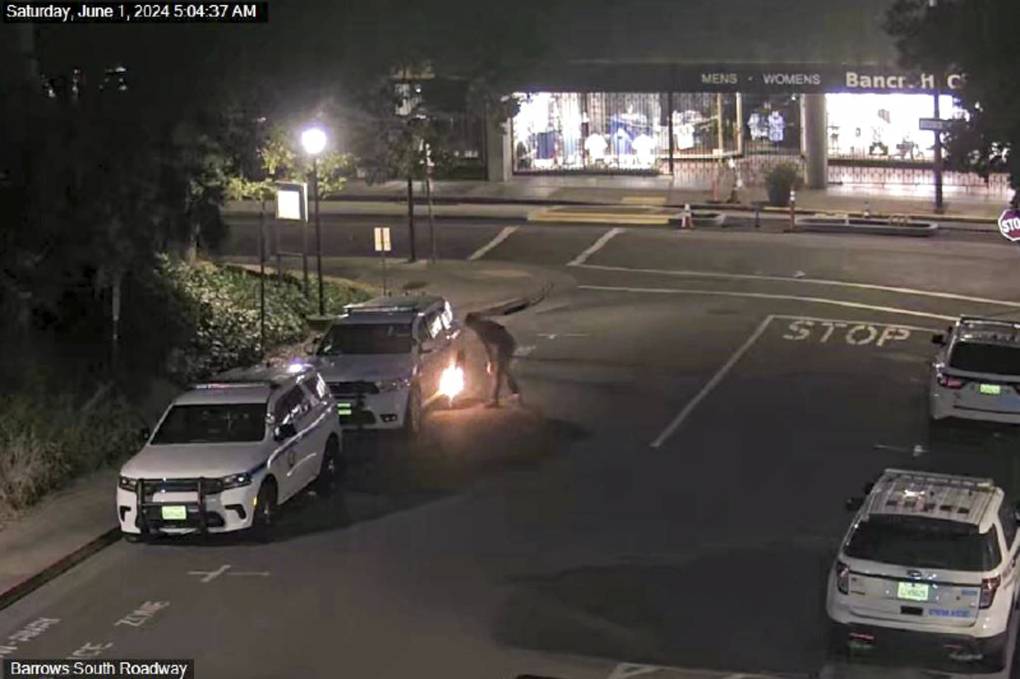
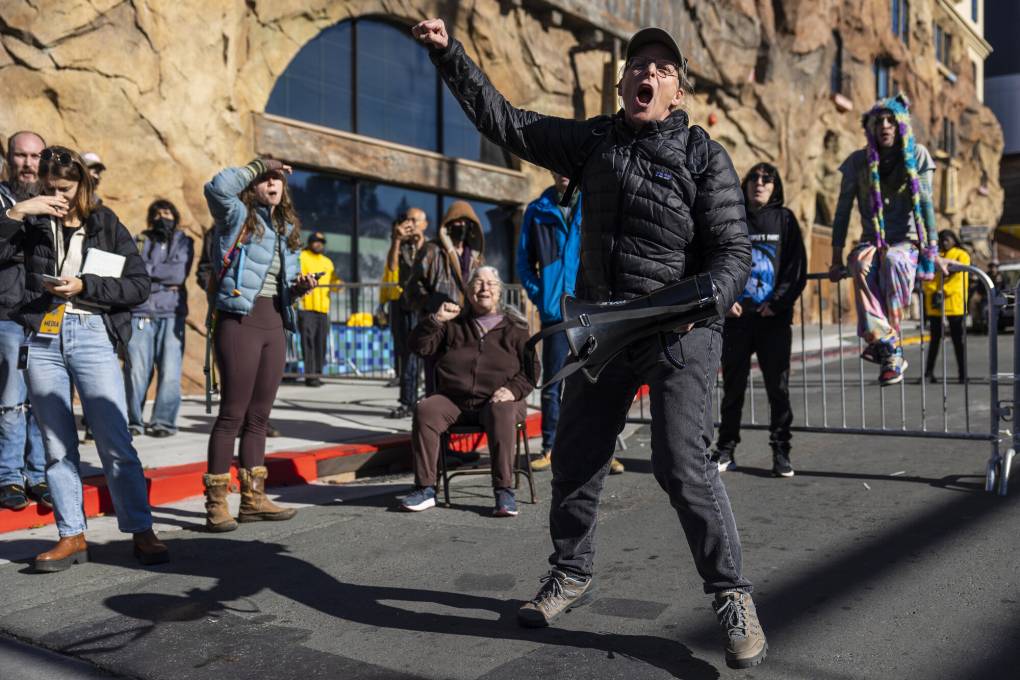
"caption": "An image from the indictment against Casey Robert Goonan filed on July 24, 2024. Goonan, 34, pleaded guilty on Tuesday to lighting Molotov cocktails under a UC Berkeley police vehicle as protests over the war in Gaza gripped the campus in June.",
"credit": "Courtesy of U.S. District Court of Norther California",
"altTag": null,
"description": null,
"imgSizes": {
"medium": {
"file": "https://cdn.kqed.org/wp-content/uploads/sites/10/2024/07/240725-UC-BERKELEY-FIREBOMB-01-KQED-800x533.jpg",
"width": 800,
"height": 533,
"mimeType": "image/jpeg"
},
"large": {
"file": "https://cdn.kqed.org/wp-content/uploads/sites/10/2024/07/240725-UC-BERKELEY-FIREBOMB-01-KQED-1020x679.jpg",
"width": 1020,
"height": 679,
"mimeType": "image/jpeg"
},
"thumbnail": {
"file": "https://cdn.kqed.org/wp-content/uploads/sites/10/2024/07/240725-UC-BERKELEY-FIREBOMB-01-KQED-160x107.jpg",
"width": 160,
"height": 107,
"mimeType": "image/jpeg"
},
"1536x1536": {
"file": "https://cdn.kqed.org/wp-content/uploads/sites/10/2024/07/240725-UC-BERKELEY-FIREBOMB-01-KQED-1536x1023.jpg",
"width": 1536,
"height": 1023,
"mimeType": "image/jpeg"
},
"post-thumbnail": {
"file": "https://cdn.kqed.org/wp-content/uploads/sites/10/2024/07/240725-UC-BERKELEY-FIREBOMB-01-KQED-672x372.jpg",
"width": 672,
"height": 372,
"mimeType": "image/jpeg"
},
"twentyfourteen-full-width": {
"file": "https://cdn.kqed.org/wp-content/uploads/sites/10/2024/07/240725-UC-BERKELEY-FIREBOMB-01-KQED-1038x576.jpg",
"width": 1038,
"height": 576,
"mimeType": "image/jpeg"
},
"full-width": {
"file": "https://cdn.kqed.org/wp-content/uploads/sites/10/2024/07/240725-UC-BERKELEY-FIREBOMB-01-KQED-1920x1279.jpg",
"width": 1920,
"height": 1279,
"mimeType": "image/jpeg"
},
"kqedFullSize": {
"file": "https://cdn.kqed.org/wp-content/uploads/sites/10/2024/07/240725-UC-BERKELEY-FIREBOMB-01-KQED.jpg",
"width": 2000,
"height": 1332
}
},
"isLoading": false,
"fetchFailed": false
},
"news_12016604": {
"type": "attachments",
"id": "news_12016604",
"meta": {
"index": "attachments_1716263798",
"site": "news",
"id": "12016604",
"found": true
},
"title": "The UC Berkeley Campus in Berkeley on Aug. 17, 2023.",
"publishDate": 1733334753,
"status": "inherit",
"parent": 12016602,
"modified": 1733334766,
"caption": "The UC Berkeley Campus in Berkeley on Aug. 17, 2023.",
"credit": "Martin do Nascimento/KQED",
"altTag": null,
"description": null,
"imgSizes": {
"medium": {
"file": "https://cdn.kqed.org/wp-content/uploads/sites/10/2024/12/230817-UC-BERKELEY-CAMPUS-MD-02_qed-800x533.jpg",
"width": 800,
"height": 533,
"mimeType": "image/jpeg"
},
"large": {
"file": "https://cdn.kqed.org/wp-content/uploads/sites/10/2024/12/230817-UC-BERKELEY-CAMPUS-MD-02_qed-1020x680.jpg",
"width": 1020,
"height": 680,
"mimeType": "image/jpeg"
},
"thumbnail": {
"file": "https://cdn.kqed.org/wp-content/uploads/sites/10/2024/12/230817-UC-BERKELEY-CAMPUS-MD-02_qed-160x107.jpg",
"width": 160,
"height": 107,
"mimeType": "image/jpeg"
},
"1536x1536": {
"file": "https://cdn.kqed.org/wp-content/uploads/sites/10/2024/12/230817-UC-BERKELEY-CAMPUS-MD-02_qed-1536x1024.jpg",
"width": 1536,
"height": 1024,
"mimeType": "image/jpeg"
},
"post-thumbnail": {
"file": "https://cdn.kqed.org/wp-content/uploads/sites/10/2024/12/230817-UC-BERKELEY-CAMPUS-MD-02_qed-672x372.jpg",
"width": 672,
"height": 372,
"mimeType": "image/jpeg"
},
"twentyfourteen-full-width": {
"file": "https://cdn.kqed.org/wp-content/uploads/sites/10/2024/12/230817-UC-BERKELEY-CAMPUS-MD-02_qed-1038x576.jpg",
"width": 1038,
"height": 576,
"mimeType": "image/jpeg"
},
"full-width": {
"file": "https://cdn.kqed.org/wp-content/uploads/sites/10/2024/12/230817-UC-BERKELEY-CAMPUS-MD-02_qed-1920x1280.jpg",
"width": 1920,
"height": 1280,
"mimeType": "image/jpeg"
},
"kqedFullSize": {
"file": "https://cdn.kqed.org/wp-content/uploads/sites/10/2024/12/230817-UC-BERKELEY-CAMPUS-MD-02_qed.jpg",
"width": 2000,
"height": 1333
}
},
"isLoading": false,
"fetchFailed": false
},
"news_12008663": {
"type": "attachments",
"id": "news_12008663",
"meta": {
"index": "attachments_1716263798",
"site": "news",
"id": "12008663",
"found": true
},
"title": "241008-UCB CAMPUS WALKOUT-MD-09-KQED",
"publishDate": 1728431201,
"status": "inherit",
"parent": 12032046,
"modified": 1742415507,
"caption": "A walkout and rally for Gaza and Lebanon at the University of California, Berkeley, on Oct. 8, 2024.",
"credit": "Martin do Nascimento/KQED",
"altTag": null,
"description": null,
"imgSizes": {
"medium": {
"file": "https://cdn.kqed.org/wp-content/uploads/sites/10/2024/10/241008-UCB-CAMPUS-WALKOUT-MD-09-KQED-800x533.jpg",
"width": 800,
"height": 533,
"mimeType": "image/jpeg"
},
"large": {
"file": "https://cdn.kqed.org/wp-content/uploads/sites/10/2024/10/241008-UCB-CAMPUS-WALKOUT-MD-09-KQED-1020x680.jpg",
"width": 1020,
"height": 680,
"mimeType": "image/jpeg"
},
"thumbnail": {
"file": "https://cdn.kqed.org/wp-content/uploads/sites/10/2024/10/241008-UCB-CAMPUS-WALKOUT-MD-09-KQED-160x107.jpg",
"width": 160,
"height": 107,
"mimeType": "image/jpeg"
},
"1536x1536": {
"file": "https://cdn.kqed.org/wp-content/uploads/sites/10/2024/10/241008-UCB-CAMPUS-WALKOUT-MD-09-KQED-1536x1024.jpg",
"width": 1536,
"height": 1024,
"mimeType": "image/jpeg"
},
"post-thumbnail": {
"file": "https://cdn.kqed.org/wp-content/uploads/sites/10/2024/10/241008-UCB-CAMPUS-WALKOUT-MD-09-KQED-672x372.jpg",
"width": 672,
"height": 372,
"mimeType": "image/jpeg"
},
"twentyfourteen-full-width": {
"file": "https://cdn.kqed.org/wp-content/uploads/sites/10/2024/10/241008-UCB-CAMPUS-WALKOUT-MD-09-KQED-1038x576.jpg",
"width": 1038,
"height": 576,
"mimeType": "image/jpeg"
},
"full-width": {
"file": "https://cdn.kqed.org/wp-content/uploads/sites/10/2024/10/241008-UCB-CAMPUS-WALKOUT-MD-09-KQED-1920x1280.jpg",
"width": 1920,
"height": 1280,
"mimeType": "image/jpeg"
},
"kqedFullSize": {
"file": "https://cdn.kqed.org/wp-content/uploads/sites/10/2024/10/241008-UCB-CAMPUS-WALKOUT-MD-09-KQED.jpg",
"width": 2000,
"height": 1333
}
},
"isLoading": false,
"fetchFailed": false
},
"news_12005757": {
"type": "attachments",
"id": "news_12005757",
"meta": {
"index": "attachments_1716263798",
"site": "news",
"id": "12005757",
"found": true
},
"title": "Cal-Twitter-Graphic_2_2",
"publishDate": 1726873701,
"status": "inherit",
"parent": 12005663,
"modified": 1726873873,
"caption": "From \"property of antifa\" to \"the woke agenda,\" college football memes leaning into the UC Berkeley stereotype have gone viral thanks to the \"Calgorithm.\"",
"credit": "Illustration by Darren Tu/KQED",
"altTag": "An illustration shows the outline of a person looking at their phone, overlaid with screenshots of memes about Cal football",
"description": null,
"imgSizes": {
"medium": {
"file": "https://cdn.kqed.org/wp-content/uploads/sites/10/2024/09/Cal-Twitter-Graphic_2_2-800x517.jpg",
"width": 800,
"height": 517,
"mimeType": "image/jpeg"
},
"large": {
"file": "https://cdn.kqed.org/wp-content/uploads/sites/10/2024/09/Cal-Twitter-Graphic_2_2-1020x659.jpg",
"width": 1020,
"height": 659,
"mimeType": "image/jpeg"
},
"thumbnail": {
"file": "https://cdn.kqed.org/wp-content/uploads/sites/10/2024/09/Cal-Twitter-Graphic_2_2-160x103.jpg",
"width": 160,
"height": 103,
"mimeType": "image/jpeg"
},
"1536x1536": {
"file": "https://cdn.kqed.org/wp-content/uploads/sites/10/2024/09/Cal-Twitter-Graphic_2_2-1536x992.jpg",
"width": 1536,
"height": 992,
"mimeType": "image/jpeg"
},
"post-thumbnail": {
"file": "https://cdn.kqed.org/wp-content/uploads/sites/10/2024/09/Cal-Twitter-Graphic_2_2-672x372.jpg",
"width": 672,
"height": 372,
"mimeType": "image/jpeg"
},
"twentyfourteen-full-width": {
"file": "https://cdn.kqed.org/wp-content/uploads/sites/10/2024/09/Cal-Twitter-Graphic_2_2-1038x576.jpg",
"width": 1038,
"height": 576,
"mimeType": "image/jpeg"
},
"kqedFullSize": {
"file": "https://cdn.kqed.org/wp-content/uploads/sites/10/2024/09/Cal-Twitter-Graphic_2_2.jpg",
"width": 1920,
"height": 1240
}
},
"isLoading": false,
"fetchFailed": false
},
"news_12004344": {
"type": "attachments",
"id": "news_12004344",
"meta": {
"index": "attachments_1716263798",
"site": "news",
"id": "12004344",
"found": true
},
"title": "UCBerkeleyMakdisi",
"publishDate": 1726072360,
"status": "inherit",
"parent": 12047251,
"modified": 1752606871,
"caption": "UC Berkeley history professor Ussama Makdisi.",
"credit": "Courtesy of Sofia Liashcheva via UC Berkeley",
"altTag": null,
"description": null,
"imgSizes": {
"medium": {
"file": "https://cdn.kqed.org/wp-content/uploads/sites/10/2024/09/UCBerkeleyMakdisi-800x547.jpg",
"width": 800,
"height": 547,
"mimeType": "image/jpeg"
},
"large": {
"file": "https://cdn.kqed.org/wp-content/uploads/sites/10/2024/09/UCBerkeleyMakdisi-1020x698.jpg",
"width": 1020,
"height": 698,
"mimeType": "image/jpeg"
},
"thumbnail": {
"file": "https://cdn.kqed.org/wp-content/uploads/sites/10/2024/09/UCBerkeleyMakdisi-160x109.jpg",
"width": 160,
"height": 109,
"mimeType": "image/jpeg"
},
"1536x1536": {
"file": "https://cdn.kqed.org/wp-content/uploads/sites/10/2024/09/UCBerkeleyMakdisi-1536x1051.jpg",
"width": 1536,
"height": 1051,
"mimeType": "image/jpeg"
},
"post-thumbnail": {
"file": "https://cdn.kqed.org/wp-content/uploads/sites/10/2024/09/UCBerkeleyMakdisi-672x372.jpg",
"width": 672,
"height": 372,
"mimeType": "image/jpeg"
},
"twentyfourteen-full-width": {
"file": "https://cdn.kqed.org/wp-content/uploads/sites/10/2024/09/UCBerkeleyMakdisi-1038x576.jpg",
"width": 1038,
"height": 576,
"mimeType": "image/jpeg"
},
"full-width": {
"file": "https://cdn.kqed.org/wp-content/uploads/sites/10/2024/09/UCBerkeleyMakdisi-1920x1313.jpg",
"width": 1920,
"height": 1313,
"mimeType": "image/jpeg"
},
"kqedFullSize": {
"file": "https://cdn.kqed.org/wp-content/uploads/sites/10/2024/09/UCBerkeleyMakdisi.jpg",
"width": 2000,
"height": 1368
}
},
"isLoading": false,
"fetchFailed": false
},
"news_12002167": {
"type": "attachments",
"id": "news_12002167",
"meta": {
"index": "attachments_1716263798",
"site": "news",
"id": "12002167",
"found": true
},
"title": "240104-PEOPLE'S PARK-MD-19_qed",
"publishDate": 1724870544,
"status": "inherit",
"parent": 12002150,
"modified": 1724870591,
"caption": "Andrea Pritchett leads the crowd of demonstrators in chanting \"Whose park? Our Park\" outside of People's Park in Berkeley on Jan. 4, 2024.",
"credit": "Martin do Nascimento/KQED",
"altTag": null,
"description": null,
"imgSizes": {
"medium": {
"file": "https://cdn.kqed.org/wp-content/uploads/sites/10/2024/08/240104-PEOPLES-PARK-MD-19_qed-800x533.jpg",
"width": 800,
"height": 533,
"mimeType": "image/jpeg"
},
"large": {
"file": "https://cdn.kqed.org/wp-content/uploads/sites/10/2024/08/240104-PEOPLES-PARK-MD-19_qed-1020x680.jpg",
"width": 1020,
"height": 680,
"mimeType": "image/jpeg"
},
"thumbnail": {
"file": "https://cdn.kqed.org/wp-content/uploads/sites/10/2024/08/240104-PEOPLES-PARK-MD-19_qed-160x107.jpg",
"width": 160,
"height": 107,
"mimeType": "image/jpeg"
},
"1536x1536": {
"file": "https://cdn.kqed.org/wp-content/uploads/sites/10/2024/08/240104-PEOPLES-PARK-MD-19_qed-1536x1024.jpg",
"width": 1536,
"height": 1024,
"mimeType": "image/jpeg"
},
"post-thumbnail": {
"file": "https://cdn.kqed.org/wp-content/uploads/sites/10/2024/08/240104-PEOPLES-PARK-MD-19_qed-672x372.jpg",
"width": 672,
"height": 372,
"mimeType": "image/jpeg"
},
"twentyfourteen-full-width": {
"file": "https://cdn.kqed.org/wp-content/uploads/sites/10/2024/08/240104-PEOPLES-PARK-MD-19_qed-1038x576.jpg",
"width": 1038,
"height": 576,
"mimeType": "image/jpeg"
},
"full-width": {
"file": "https://cdn.kqed.org/wp-content/uploads/sites/10/2024/08/240104-PEOPLES-PARK-MD-19_qed-1920x1280.jpg",
"width": 1920,
"height": 1280,
"mimeType": "image/jpeg"
},
"kqedFullSize": {
"file": "https://cdn.kqed.org/wp-content/uploads/sites/10/2024/08/240104-PEOPLES-PARK-MD-19_qed.jpg",
"width": 2000,
"height": 1333
}
},
"isLoading": false,
"fetchFailed": false
},
"news_12000970": {
"type": "attachments",
"id": "news_12000970",
"meta": {
"index": "attachments_1716263798",
"site": "news",
"id": "12000970",
"found": true
},
"title": "UC Berkeley Chancellor Rich Lyons in his office on campus on Aug. 20, 2024.",
"publishDate": 1724185095,
"status": "inherit",
"parent": 0,
"modified": 1724798574,
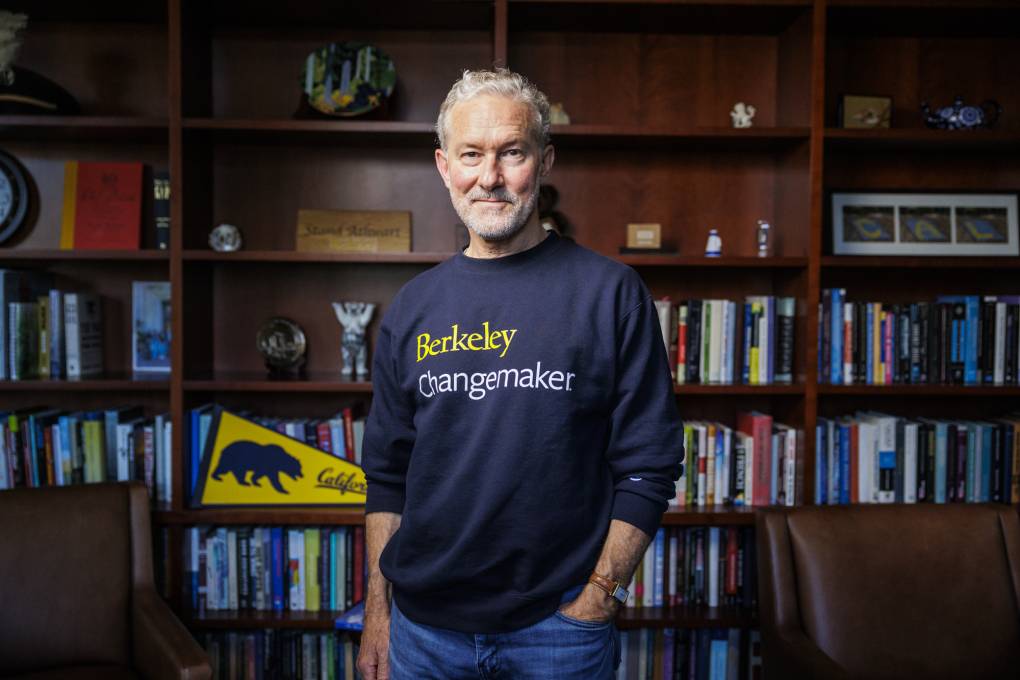
"caption": "UC Berkeley Chancellor Rich Lyons in his office on campus in Berkeley on Aug. 20.",
"credit": "Martin do Nascimento/KQED",
"altTag": null,
"description": null,
"imgSizes": {
"medium": {
"file": "https://cdn.kqed.org/wp-content/uploads/sites/10/2024/08/240820-UCB-CHANCELLOR-LYONS-MD-01-KQED-800x533.jpg",
"width": 800,
"height": 533,
"mimeType": "image/jpeg"
},
"large": {
"file": "https://cdn.kqed.org/wp-content/uploads/sites/10/2024/08/240820-UCB-CHANCELLOR-LYONS-MD-01-KQED-1020x680.jpg",
"width": 1020,
"height": 680,
"mimeType": "image/jpeg"
},
"thumbnail": {
"file": "https://cdn.kqed.org/wp-content/uploads/sites/10/2024/08/240820-UCB-CHANCELLOR-LYONS-MD-01-KQED-160x107.jpg",
"width": 160,
"height": 107,
"mimeType": "image/jpeg"
},
"1536x1536": {
"file": "https://cdn.kqed.org/wp-content/uploads/sites/10/2024/08/240820-UCB-CHANCELLOR-LYONS-MD-01-KQED-1536x1024.jpg",
"width": 1536,
"height": 1024,
"mimeType": "image/jpeg"
},
"post-thumbnail": {
"file": "https://cdn.kqed.org/wp-content/uploads/sites/10/2024/08/240820-UCB-CHANCELLOR-LYONS-MD-01-KQED-672x372.jpg",
"width": 672,
"height": 372,
"mimeType": "image/jpeg"
},
"twentyfourteen-full-width": {
"file": "https://cdn.kqed.org/wp-content/uploads/sites/10/2024/08/240820-UCB-CHANCELLOR-LYONS-MD-01-KQED-1038x576.jpg",
"width": 1038,
"height": 576,
"mimeType": "image/jpeg"
},
"full-width": {
"file": "https://cdn.kqed.org/wp-content/uploads/sites/10/2024/08/240820-UCB-CHANCELLOR-LYONS-MD-01-KQED-1920x1280.jpg",
"width": 1920,
"height": 1280,
"mimeType": "image/jpeg"
},
"kqedFullSize": {
"file": "https://cdn.kqed.org/wp-content/uploads/sites/10/2024/08/240820-UCB-CHANCELLOR-LYONS-MD-01-KQED.jpg",
"width": 2000,
"height": 1333
}
},
"isLoading": false,
"fetchFailed": false
},
"news_12000772": {
"type": "attachments",
"id": "news_12000772",
"meta": {
"index": "attachments_1716263798",
"site": "news",
"id": "12000772",
"found": true
},
"title": "240424-BERKELEY GAZA ENCAMPMENT-MD-06_qed",
"publishDate": 1724099018,
"status": "inherit",
"parent": 12000770,
"modified": 1724099051,
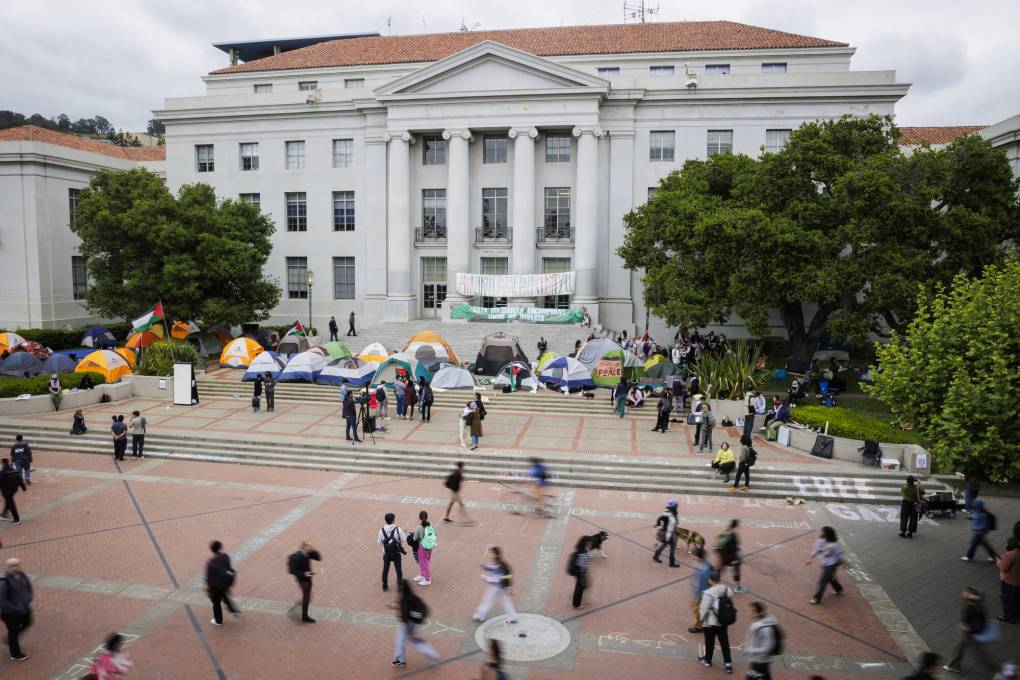
"caption": "The UC Berkeley Gaza Solidarity Encampment in front of Sproul Hall on April 23, 2024.",
"credit": "Martin do Nascimento/KQED",
"altTag": null,
"description": null,
"imgSizes": {
"medium": {
"file": "https://cdn.kqed.org/wp-content/uploads/sites/10/2024/08/240424-BERKELEY-GAZA-ENCAMPMENT-MD-06_qed-800x533.jpg",
"width": 800,
"height": 533,
"mimeType": "image/jpeg"
},
"large": {
"file": "https://cdn.kqed.org/wp-content/uploads/sites/10/2024/08/240424-BERKELEY-GAZA-ENCAMPMENT-MD-06_qed-1020x680.jpg",
"width": 1020,
"height": 680,
"mimeType": "image/jpeg"
},
"thumbnail": {
"file": "https://cdn.kqed.org/wp-content/uploads/sites/10/2024/08/240424-BERKELEY-GAZA-ENCAMPMENT-MD-06_qed-160x107.jpg",
"width": 160,
"height": 107,
"mimeType": "image/jpeg"
},
"1536x1536": {
"file": "https://cdn.kqed.org/wp-content/uploads/sites/10/2024/08/240424-BERKELEY-GAZA-ENCAMPMENT-MD-06_qed-1536x1024.jpg",
"width": 1536,
"height": 1024,
"mimeType": "image/jpeg"
},
"post-thumbnail": {
"file": "https://cdn.kqed.org/wp-content/uploads/sites/10/2024/08/240424-BERKELEY-GAZA-ENCAMPMENT-MD-06_qed-672x372.jpg",
"width": 672,
"height": 372,
"mimeType": "image/jpeg"
},
"twentyfourteen-full-width": {
"file": "https://cdn.kqed.org/wp-content/uploads/sites/10/2024/08/240424-BERKELEY-GAZA-ENCAMPMENT-MD-06_qed-1038x576.jpg",
"width": 1038,
"height": 576,
"mimeType": "image/jpeg"
},
"full-width": {
"file": "https://cdn.kqed.org/wp-content/uploads/sites/10/2024/08/240424-BERKELEY-GAZA-ENCAMPMENT-MD-06_qed-1920x1280.jpg",
"width": 1920,
"height": 1280,
"mimeType": "image/jpeg"
},
"kqedFullSize": {
"file": "https://cdn.kqed.org/wp-content/uploads/sites/10/2024/08/240424-BERKELEY-GAZA-ENCAMPMENT-MD-06_qed.jpg",
"width": 2000,
"height": 1333
}
},
"isLoading": false,
"fetchFailed": false
},
"news_11999988": {
"type": "attachments",
"id": "news_11999988",
"meta": {
"index": "attachments_1716263798",
"site": "news",
"id": "11999988",
"found": true
},
"title": "California Earthquake Early Warning App",
"publishDate": 1723572548,
"status": "inherit",
"parent": 11999982,
"modified": 1723576682,
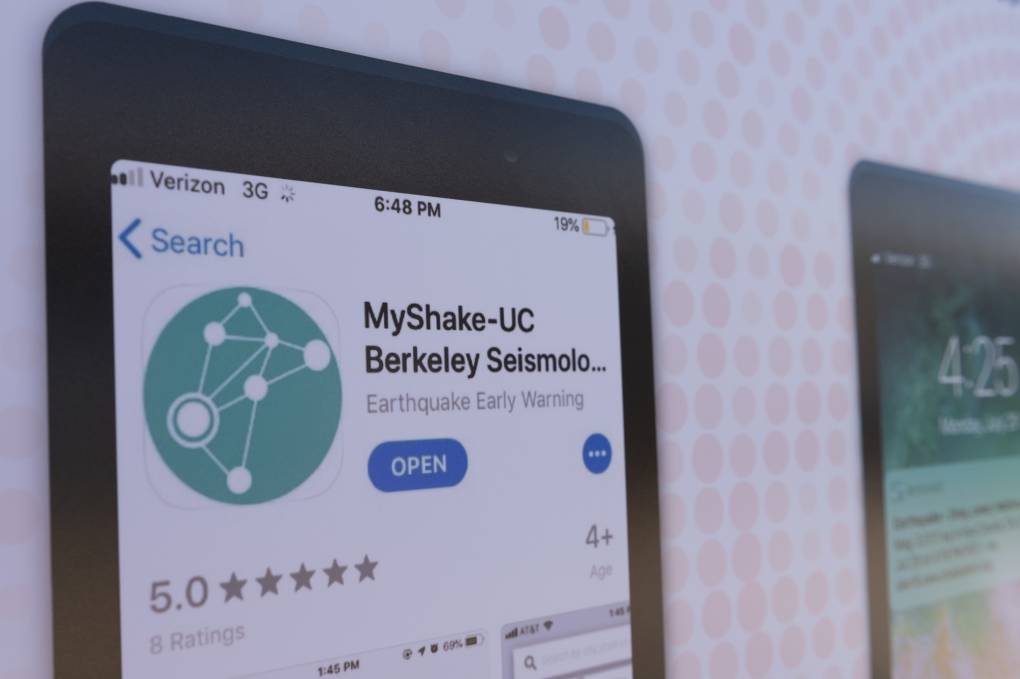
"caption": "The nation's first statewide Earthquake Early Warning System, also known as the MyShake app, developed by professor Richard Allen, director of the UC Berkeley Seismological Laboratory, is displayed in Oakland, California, on Oct. 17, 2019.",
"credit": "Yichuan Cao/NurPhoto via Getty Images",
"altTag": null,
"description": null,
"imgSizes": {
"medium": {
"file": "https://cdn.kqed.org/wp-content/uploads/sites/10/2024/08/MyShakeUCBerkeley-800x532.jpg",
"width": 800,
"height": 532,
"mimeType": "image/jpeg"
},
"large": {
"file": "https://cdn.kqed.org/wp-content/uploads/sites/10/2024/08/MyShakeUCBerkeley-1020x679.jpg",
"width": 1020,
"height": 679,
"mimeType": "image/jpeg"
},
"thumbnail": {
"file": "https://cdn.kqed.org/wp-content/uploads/sites/10/2024/08/MyShakeUCBerkeley-160x106.jpg",
"width": 160,
"height": 106,
"mimeType": "image/jpeg"
},
"1536x1536": {
"file": "https://cdn.kqed.org/wp-content/uploads/sites/10/2024/08/MyShakeUCBerkeley-1536x1022.jpg",
"width": 1536,
"height": 1022,
"mimeType": "image/jpeg"
},
"post-thumbnail": {
"file": "https://cdn.kqed.org/wp-content/uploads/sites/10/2024/08/MyShakeUCBerkeley-672x372.jpg",
"width": 672,
"height": 372,
"mimeType": "image/jpeg"
},
"twentyfourteen-full-width": {
"file": "https://cdn.kqed.org/wp-content/uploads/sites/10/2024/08/MyShakeUCBerkeley-1038x576.jpg",
"width": 1038,
"height": 576,
"mimeType": "image/jpeg"
},
"full-width": {
"file": "https://cdn.kqed.org/wp-content/uploads/sites/10/2024/08/MyShakeUCBerkeley-1920x1278.jpg",
"width": 1920,
"height": 1278,
"mimeType": "image/jpeg"
},
"kqedFullSize": {
"file": "https://cdn.kqed.org/wp-content/uploads/sites/10/2024/08/MyShakeUCBerkeley.jpg",
"width": 2000,
"height": 1331
}
},
"isLoading": false,
"fetchFailed": false
},
"news_11998181": {
"type": "attachments",
"id": "news_11998181",
"meta": {
"index": "attachments_1716263798",
"site": "news",
"id": "11998181",
"found": true
},
"title": "default",
"publishDate": 1722449094,
"status": "inherit",
"parent": 0,
"modified": 1722449915,
"caption": "Construction at People's Park on July 31, 2024.",
"credit": "Martin do Nascimento/KQED",
"altTag": null,
"description": null,
"imgSizes": {
"medium": {
"file": "https://cdn.kqed.org/wp-content/uploads/sites/10/2024/07/240731-PEOPLES-PARK-CONSTRUCTION-MD-01-KQED-800x533.jpg",
"width": 800,
"height": 533,
"mimeType": "image/jpeg"
},
"large": {
"file": "https://cdn.kqed.org/wp-content/uploads/sites/10/2024/07/240731-PEOPLES-PARK-CONSTRUCTION-MD-01-KQED-1020x680.jpg",
"width": 1020,
"height": 680,
"mimeType": "image/jpeg"
},
"thumbnail": {
"file": "https://cdn.kqed.org/wp-content/uploads/sites/10/2024/07/240731-PEOPLES-PARK-CONSTRUCTION-MD-01-KQED-160x107.jpg",
"width": 160,
"height": 107,
"mimeType": "image/jpeg"
},
"1536x1536": {
"file": "https://cdn.kqed.org/wp-content/uploads/sites/10/2024/07/240731-PEOPLES-PARK-CONSTRUCTION-MD-01-KQED-1536x1024.jpg",
"width": 1536,
"height": 1024,
"mimeType": "image/jpeg"
},
"post-thumbnail": {
"file": "https://cdn.kqed.org/wp-content/uploads/sites/10/2024/07/240731-PEOPLES-PARK-CONSTRUCTION-MD-01-KQED-672x372.jpg",
"width": 672,
"height": 372,
"mimeType": "image/jpeg"
},
"twentyfourteen-full-width": {
"file": "https://cdn.kqed.org/wp-content/uploads/sites/10/2024/07/240731-PEOPLES-PARK-CONSTRUCTION-MD-01-KQED-1038x576.jpg",
"width": 1038,
"height": 576,
"mimeType": "image/jpeg"
},
"full-width": {
"file": "https://cdn.kqed.org/wp-content/uploads/sites/10/2024/07/240731-PEOPLES-PARK-CONSTRUCTION-MD-01-KQED-1920x1280.jpg",
"width": 1920,
"height": 1280,
"mimeType": "image/jpeg"
},
"kqedFullSize": {
"file": "https://cdn.kqed.org/wp-content/uploads/sites/10/2024/07/240731-PEOPLES-PARK-CONSTRUCTION-MD-01-KQED.jpg?ver=1722449813",
"width": 2000,
"height": 1333
}
},
"isLoading": false,
"fetchFailed": false
},
"news_11997416": {
"type": "attachments",
"id": "news_11997416",
"meta": {
"index": "attachments_1716263798",
"site": "news",
"id": "11997416",
"found": true
},
"title": "The UC Berkeley Campus in Berkeley on Aug. 17, 2023.",
"publishDate": 1721931779,
"status": "inherit",
"parent": 11997386,
"modified": 1721931933,
"caption": "The UC Berkeley Campus in Berkeley on Aug. 17, 2023.",
"credit": "Martin do Nascimento/KQED",
"altTag": null,
"description": null,
"imgSizes": {
"medium": {
"file": "https://cdn.kqed.org/wp-content/uploads/sites/10/2024/07/230817-UC-BERKELEY-CAMPUS-MD-03-800x533.jpg",
"width": 800,
"height": 533,
"mimeType": "image/jpeg"
},
"large": {
"file": "https://cdn.kqed.org/wp-content/uploads/sites/10/2024/07/230817-UC-BERKELEY-CAMPUS-MD-03-1020x680.jpg",
"width": 1020,
"height": 680,
"mimeType": "image/jpeg"
},
"thumbnail": {
"file": "https://cdn.kqed.org/wp-content/uploads/sites/10/2024/07/230817-UC-BERKELEY-CAMPUS-MD-03-160x107.jpg",
"width": 160,
"height": 107,
"mimeType": "image/jpeg"
},
"1536x1536": {
"file": "https://cdn.kqed.org/wp-content/uploads/sites/10/2024/07/230817-UC-BERKELEY-CAMPUS-MD-03-1536x1024.jpg",
"width": 1536,
"height": 1024,
"mimeType": "image/jpeg"
},
"post-thumbnail": {
"file": "https://cdn.kqed.org/wp-content/uploads/sites/10/2024/07/230817-UC-BERKELEY-CAMPUS-MD-03-672x372.jpg",
"width": 672,
"height": 372,
"mimeType": "image/jpeg"
},
"twentyfourteen-full-width": {
"file": "https://cdn.kqed.org/wp-content/uploads/sites/10/2024/07/230817-UC-BERKELEY-CAMPUS-MD-03-1038x576.jpg",
"width": 1038,
"height": 576,
"mimeType": "image/jpeg"
},
"full-width": {
"file": "https://cdn.kqed.org/wp-content/uploads/sites/10/2024/07/230817-UC-BERKELEY-CAMPUS-MD-03-1920x1280.jpg",
"width": 1920,
"height": 1280,
"mimeType": "image/jpeg"
},
"kqedFullSize": {
"file": "https://cdn.kqed.org/wp-content/uploads/sites/10/2024/07/230817-UC-BERKELEY-CAMPUS-MD-03.jpg",
"width": 2000,
"height": 1333
}
},
"isLoading": false,
"fetchFailed": false
},
"news_11997254": {
"type": "attachments",
"id": "news_11997254",
"meta": {
"index": "attachments_1716263798",
"site": "news",
"id": "11997254",
"found": true
},
"title": "WWP: USA vs Hungary",
"publishDate": 1721861426,
"status": "inherit",
"parent": 0,
"modified": 1721952235,
"caption": "Maggie Steffens (left) and Dorottya Szilagyi during a USA vs. Hungary game at Avery Aquatic Center in Palo Alto on July 5, 2024.",
"credit": "Catharyn Hayne/KLC fotos",
"altTag": "Two women wearing swimming attire play water polo in a pool.",
"description": null,
"imgSizes": {
"medium": {
"file": "https://cdn.kqed.org/wp-content/uploads/sites/10/2024/07/240724-WATER-POLO-04-KQED-800x533.jpg",
"width": 800,
"height": 533,
"mimeType": "image/jpeg"
},
"large": {
"file": "https://cdn.kqed.org/wp-content/uploads/sites/10/2024/07/240724-WATER-POLO-04-KQED-1020x680.jpg",
"width": 1020,
"height": 680,
"mimeType": "image/jpeg"
},
"thumbnail": {
"file": "https://cdn.kqed.org/wp-content/uploads/sites/10/2024/07/240724-WATER-POLO-04-KQED-160x107.jpg",
"width": 160,
"height": 107,
"mimeType": "image/jpeg"
},
"1536x1536": {
"file": "https://cdn.kqed.org/wp-content/uploads/sites/10/2024/07/240724-WATER-POLO-04-KQED-1536x1024.jpg",
"width": 1536,
"height": 1024,
"mimeType": "image/jpeg"
},
"post-thumbnail": {
"file": "https://cdn.kqed.org/wp-content/uploads/sites/10/2024/07/240724-WATER-POLO-04-KQED-672x372.jpg",
"width": 672,
"height": 372,
"mimeType": "image/jpeg"
},
"twentyfourteen-full-width": {
"file": "https://cdn.kqed.org/wp-content/uploads/sites/10/2024/07/240724-WATER-POLO-04-KQED-1038x576.jpg",
"width": 1038,
"height": 576,
"mimeType": "image/jpeg"
},
"full-width": {
"file": "https://cdn.kqed.org/wp-content/uploads/sites/10/2024/07/240724-WATER-POLO-04-KQED-1920x1280.jpg",
"width": 1920,
"height": 1280,
"mimeType": "image/jpeg"
},
"kqedFullSize": {
"file": "https://cdn.kqed.org/wp-content/uploads/sites/10/2024/07/240724-WATER-POLO-04-KQED.jpg",
"width": 2000,
"height": 1333
}
},
"isLoading": false,
"fetchFailed": false
}
},
"audioPlayerReducer": {
"postId": "stream_live",
"isPaused": true,
"isPlaying": false,
"pfsActive": false,
"pledgeModalIsOpen": true,
"playerDrawerIsOpen": false,
"liveAudioPlayStartedAt": 0,
"liveAudioPlayContext": ""
},
"authorsReducer": {
"shossaini": {
"type": "authors",
"id": "3214",
"meta": {
"index": "authors_1716337520",
"id": "3214",
"found": true
},
"name": "Sara Hossaini",
"firstName": "Sara",
"lastName": "Hossaini",
"slug": "shossaini",
"email": "shossaini@kqed.org",
"display_author_email": true,
"staff_mastheads": [
"news"
],
"title": "KQED Reporter",
"bio": "Sara Hossaini came to general assignment reporting at KQED in 2013 after two winters reporting at Wyoming Public Radio. She holds a bachelor's degree in broadcast journalism from the University of Nebraska-Lincoln. Her radio romance began after a bitter breakup with documentary film (Ok, maybe it's still complicated). Her first simultaneous jobs in San Francisco were as Associate Producer on a PBS film series through the Center for Asian American Media and as a butler. She likes to trot, plot and make things with her hands.",
"avatar": "https://secure.gravatar.com/avatar/060e9f56b9554e17942e89f413242774?s=600&d=blank&r=g",
"twitter": "mshossaini",
"facebook": null,
"instagram": null,
"linkedin": null,
"sites": [
{
"site": "news",
"roles": [
"author"
]
},
{
"site": "stateofhealth",
"roles": [
"author"
]
}
],
"headData": {
"title": "Sara Hossaini | KQED",
"description": "KQED Reporter",
"ogImgSrc": "https://secure.gravatar.com/avatar/060e9f56b9554e17942e89f413242774?s=600&d=blank&r=g",
"twImgSrc": "https://secure.gravatar.com/avatar/060e9f56b9554e17942e89f413242774?s=600&d=blank&r=g"
},
"isLoading": false,
"link": "/author/shossaini"
},
"bwatt": {
"type": "authors",
"id": "11238",
"meta": {
"index": "authors_1716337520",
"id": "11238",
"found": true
},
"name": "Brian Watt",
"firstName": "Brian",
"lastName": "Watt",
"slug": "bwatt",
"email": "bwatt@KQED.org",
"display_author_email": false,
"staff_mastheads": [
"news"
],
"title": "Morning News Anchor",
"bio": "Brian Watt is KQED's morning radio news anchor. He joined the KQED News team in April of 2016. Prior to that, he worked as a Reporter for KPCC in Los Angeles and a producer at \u003cem>Marketplace.\u003c/em>\r\n\r\nDuring eight years at KPCC, Brian covered business and economics, and his work won several awards. In 2008, he won the Los Angeles Press Club’s first-place award for Business and Financial Reporting, Broadcast. He’s also received honorable mention and been first runner up for the Press Club’s Radio Journalist of the Year. He won two Golden Mike awards from the Radio and TV News Association of Southern California.\r\n\r\nBrian holds degrees in theater from Yale University and the Sorbonne, and has worked as an actor in France, Italy, Brazil, Hungary and . . . Hollywood. He appeared in a few television shows, including \u003cem>The West Wing, Judging Amy\u003c/em> and \u003cem>The District.\u003c/em>\r\n\r\nEmail: bwatt@KQED.org Twitter: @RadioBWatt",
"avatar": "https://secure.gravatar.com/avatar/55393ff57ed34e2be773ba4789dd6a19?s=600&d=blank&r=g",
"twitter": "@RadioBWatt",
"facebook": null,
"instagram": null,
"linkedin": null,
"sites": [
{
"site": "arts",
"roles": [
"contributor"
]
},
{
"site": "news",
"roles": [
"editor"
]
}
],
"headData": {
"title": "Brian Watt | KQED",
"description": "Morning News Anchor",
"ogImgSrc": "https://secure.gravatar.com/avatar/55393ff57ed34e2be773ba4789dd6a19?s=600&d=blank&r=g",
"twImgSrc": "https://secure.gravatar.com/avatar/55393ff57ed34e2be773ba4789dd6a19?s=600&d=blank&r=g"
},
"isLoading": false,
"link": "/author/bwatt"
},
"ahall": {
"type": "authors",
"id": "11490",
"meta": {
"index": "authors_1716337520",
"id": "11490",
"found": true
},
"name": "Alex Hall",
"firstName": "Alex",
"lastName": "Hall",
"slug": "ahall",
"email": "ahall@kqed.org",
"display_author_email": false,
"staff_mastheads": [
"news"
],
"title": "KQED Enterprise & Accountability Reporter",
"bio": "Alex Hall is KQED's Enterprise and Accountability Reporter. She previously covered the Central Valley for five years from KQED's bureau in Fresno. Before joining KQED, Alex was an investigative reporting fellow at Wisconsin Public Radio and the Wisconsin Center for Investigative Journalism. She has also worked as a bilingual producer for NPR's investigative unit and freelance video producer for Reuters TV on the Latin America desk. She got her start in journalism in South America, where she worked as a radio producer and Spanish-English translator for CNN Chile. Her documentary and investigation into the series of deadly COVID-19 outbreaks at Foster Farms won a national Edward R. Murrow award and was named an Investigative Reporters & Editors award finalist. Alex's reporting for Reveal on the Wisconsin dairy industry's reliance on undocumented immigrant labor was made into a film, Los Lecheros, which won a regional Edward R. Murrow award for best news documentary.",
"avatar": "https://secure.gravatar.com/avatar/defcbeb88b0bf591ff9af41f22644051?s=600&d=blank&r=g",
"twitter": "@chalexhall",
"facebook": null,
"instagram": null,
"linkedin": null,
"sites": [
{
"site": "news",
"roles": [
"editor"
]
},
{
"site": "liveblog",
"roles": [
"author"
]
}
],
"headData": {
"title": "Alex Hall | KQED",
"description": "KQED Enterprise & Accountability Reporter",
"ogImgSrc": "https://secure.gravatar.com/avatar/defcbeb88b0bf591ff9af41f22644051?s=600&d=blank&r=g",
"twImgSrc": "https://secure.gravatar.com/avatar/defcbeb88b0bf591ff9af41f22644051?s=600&d=blank&r=g"
},
"isLoading": false,
"link": "/author/ahall"
},
"agonzalez": {
"type": "authors",
"id": "11724",
"meta": {
"index": "authors_1716337520",
"id": "11724",
"found": true
},
"name": "Alexander Gonzalez",
"firstName": "Alexander",
"lastName": "Gonzalez",
"slug": "agonzalez",
"email": "AlexanderGonzalez@KQED.org",
"display_author_email": false,
"staff_mastheads": [
"news"
],
"title": "KQED Contributor",
"bio": null,
"avatar": "https://secure.gravatar.com/avatar/9e291ed34e154df4c662edf858b641d70b4859939bfe40be478408f9dfd057d2?s=600&d=blank&r=g",
"twitter": null,
"bluesky": null,
"facebook": null,
"instagram": null,
"linkedin": null,
"sites": [
{
"site": "arts",
"roles": [
"editor"
]
},
{
"site": "news",
"roles": [
"editor"
]
},
{
"site": "science",
"roles": [
"editor"
]
}
],
"headData": {
"title": "Alexander Gonzalez | KQED",
"description": "KQED Contributor",
"ogImgSrc": "https://secure.gravatar.com/avatar/9e291ed34e154df4c662edf858b641d70b4859939bfe40be478408f9dfd057d2?s=600&d=blank&r=g",
"twImgSrc": "https://secure.gravatar.com/avatar/9e291ed34e154df4c662edf858b641d70b4859939bfe40be478408f9dfd057d2?s=600&d=blank&r=g"
},
"isLoading": false,
"link": "/author/agonzalez"
},
"jlara": {
"type": "authors",
"id": "11761",
"meta": {
"index": "authors_1716337520",
"id": "11761",
"found": true
},
"name": "Juan Carlos Lara",
"firstName": "Juan Carlos",
"lastName": "Lara",
"slug": "jlara",
"email": "jlara@kqed.org",
"display_author_email": false,
"staff_mastheads": [],
"title": "KQED Contributor",
"bio": null,
"avatar": "https://secure.gravatar.com/avatar/19e2052b9b05657c5ff2af2121846e9c?s=600&d=blank&r=g",
"twitter": null,
"facebook": null,
"instagram": null,
"linkedin": null,
"sites": [
{
"site": "arts",
"roles": [
"editor"
]
},
{
"site": "news",
"roles": [
"editor"
]
},
{
"site": "forum",
"roles": [
"editor"
]
},
{
"site": "liveblog",
"roles": [
"contributor"
]
}
],
"headData": {
"title": "Juan Carlos Lara | KQED",
"description": "KQED Contributor",
"ogImgSrc": "https://secure.gravatar.com/avatar/19e2052b9b05657c5ff2af2121846e9c?s=600&d=blank&r=g",
"twImgSrc": "https://secure.gravatar.com/avatar/19e2052b9b05657c5ff2af2121846e9c?s=600&d=blank&r=g"
},
"isLoading": false,
"link": "/author/jlara"
},
"adahlstromeckman": {
"type": "authors",
"id": "11785",
"meta": {
"index": "authors_1716337520",
"id": "11785",
"found": true
},
"name": "Azul Dahlstrom-Eckman",
"firstName": "Azul",
"lastName": "Dahlstrom-Eckman",
"slug": "adahlstromeckman",
"email": "adahlstrom-eckman@kqed.org",
"display_author_email": true,
"staff_mastheads": [],
"title": "Reporter",
"bio": "Azul is a reporter for KQED focusing on transportation and features. He joined KQED in 2021 as an alumna of KALW's Audio Academy radio journalism training program.",
"avatar": "https://secure.gravatar.com/avatar/9cb750298435add7815a777f55bf1f46845c1386bb8452555c60a7b820b5aba3?s=600&d=blank&r=g",
"twitter": "@zuliemann",
"bluesky": "@azul415.bsky.social",
"facebook": null,
"instagram": null,
"linkedin": null,
"sites": [
{
"site": "arts",
"roles": [
"editor"
]
},
{
"site": "news",
"roles": [
"editor"
]
},
{
"site": "science",
"roles": [
"editor"
]
},
{
"site": "liveblog",
"roles": [
"author"
]
}
],
"headData": {
"title": "Azul Dahlstrom-Eckman | KQED",
"description": "Reporter",
"ogImgSrc": "https://secure.gravatar.com/avatar/9cb750298435add7815a777f55bf1f46845c1386bb8452555c60a7b820b5aba3?s=600&d=blank&r=g",
"twImgSrc": "https://secure.gravatar.com/avatar/9cb750298435add7815a777f55bf1f46845c1386bb8452555c60a7b820b5aba3?s=600&d=blank&r=g"
},
"isLoading": false,
"link": "/author/adahlstromeckman"
},
"kdebenedetti": {
"type": "authors",
"id": "11913",
"meta": {
"index": "authors_1716337520",
"id": "11913",
"found": true
},
"name": "Katie DeBenedetti",
"firstName": "Katie",
"lastName": "DeBenedetti",
"slug": "kdebenedetti",
"email": "kdebenedetti@kqed.org",
"display_author_email": false,
"staff_mastheads": [
"news",
"science"
],
"title": "KQED Contributor",
"bio": "Katie DeBenedetti is a digital reporter covering daily news for the Express Desk. Prior to joining KQED as a culture reporting intern in January 2024, she covered education and city government for the Napa Valley Register.",
"avatar": "https://secure.gravatar.com/avatar/6e31073cb8f7e4214ab03f42771d0f45?s=600&d=blank&r=g",
"twitter": null,
"facebook": null,
"instagram": null,
"linkedin": null,
"sites": [
{
"site": "news",
"roles": [
"author"
]
},
{
"site": "science",
"roles": [
"author"
]
},
{
"site": "liveblog",
"roles": [
"author"
]
}
],
"headData": {
"title": "Katie DeBenedetti | KQED",
"description": "KQED Contributor",
"ogImgSrc": "https://secure.gravatar.com/avatar/6e31073cb8f7e4214ab03f42771d0f45?s=600&d=blank&r=g",
"twImgSrc": "https://secure.gravatar.com/avatar/6e31073cb8f7e4214ab03f42771d0f45?s=600&d=blank&r=g"
},
"isLoading": false,
"link": "/author/kdebenedetti"
},
"slim": {
"type": "authors",
"id": "11920",
"meta": {
"index": "authors_1716337520",
"id": "11920",
"found": true
},
"name": "Samantha Lim",
"firstName": "Samantha",
"lastName": "Lim",
"slug": "slim",
"email": "slim@KQED.org",
"display_author_email": false,
"staff_mastheads": [],
"title": "KQED Contributor",
"bio": null,
"avatar": "https://secure.gravatar.com/avatar/82e592e6c15fe1a04d385e8ad0fb0b4e?s=600&d=blank&r=g",
"twitter": null,
"facebook": null,
"instagram": null,
"linkedin": null,
"sites": [
{
"site": "news",
"roles": []
}
],
"headData": {
"title": "Samantha Lim | KQED",
"description": "KQED Contributor",
"ogImgSrc": "https://secure.gravatar.com/avatar/82e592e6c15fe1a04d385e8ad0fb0b4e?s=600&d=blank&r=g",
"twImgSrc": "https://secure.gravatar.com/avatar/82e592e6c15fe1a04d385e8ad0fb0b4e?s=600&d=blank&r=g"
},
"isLoading": false,
"link": "/author/slim"
},
"emanoukian": {
"type": "authors",
"id": "11925",
"meta": {
"index": "authors_1716337520",
"id": "11925",
"found": true
},
"name": "Elize Manoukian",
"firstName": "Elize",
"lastName": "Manoukian",
"slug": "emanoukian",
"email": "emanoukian@KQED.org",
"display_author_email": false,
"staff_mastheads": [
"news"
],
"title": "Digital News Editor",
"bio": "Elize Manoukian is an award-winning audio producer and Senior Editor on the Express Desk, KQED's digital news platform. Her work has appeared on KPFA, Interlochen Public Radio, Oregon Public Broadcast, the New York Daily News, LA Times and the San Diego Union-Tribune.",
"avatar": "https://secure.gravatar.com/avatar/4525f1a8e46ccb30933b32653d9772064cfefe3fa655eb45b3b3a80341f6bdad?s=600&d=blank&r=g",
"twitter": null,
"bluesky": null,
"facebook": null,
"instagram": null,
"linkedin": null,
"sites": [
{
"site": "arts",
"roles": [
"editor"
]
},
{
"site": "news",
"roles": [
"editor"
]
},
{
"site": "science",
"roles": [
"editor"
]
}
],
"headData": {
"title": "Elize Manoukian | KQED",
"description": "Digital News Editor",
"ogImgSrc": "https://secure.gravatar.com/avatar/4525f1a8e46ccb30933b32653d9772064cfefe3fa655eb45b3b3a80341f6bdad?s=600&d=blank&r=g",
"twImgSrc": "https://secure.gravatar.com/avatar/4525f1a8e46ccb30933b32653d9772064cfefe3fa655eb45b3b3a80341f6bdad?s=600&d=blank&r=g"
},
"isLoading": false,
"link": "/author/emanoukian"
}
},
"pagesReducer": {
"news_tag_uc-berkeley": {
"type": "terms",
"id": "news_17597",
"meta": {
"index": "terms_1716263798",
"site": "news",
"id": "17597",
"score": 8.45813
},
"featImg": null,
"name": "UC Berkeley",
"description": null,
"taxonomy": "tag",
"headData": {
"twImgId": null,
"twTitle": null,
"ogTitle": null,
"ogImgId": null,
"twDescription": null,
"description": null,
"title": "UC Berkeley Archives | KQED News",
"ogDescription": null
},
"ttid": 17631,
"slug": "uc-berkeley",
"isLoading": false,
"title": "UC Berkeley",
"pageMeta": {
"site": "news",
"WpPageTemplate": "page-topic-editorial",
"currentPage": 5
},
"blocks": [
{
"blockName": "kqed/post-list",
"attrs": {
"layout": "cardArticle2",
"query": "posts/news?tag=uc-berkeley",
"seeMore": false,
"paginated": true,
"page": 5
}
},
{
"blockName": "kqed/ad"
}
]
}
},
"pfsSessionReducer": {},
"postsReducer": {
"stream_live": {
"type": "live",
"id": "stream_live",
"audioUrl": "https://streams.kqed.org/kqedradio",
"title": "Live Stream",
"excerpt": "Live Stream information currently unavailable.",
"link": "/radio",
"featImg": "",
"label": {
"name": "KQED Live",
"link": "/"
}
},
"stream_kqedNewscast": {
"type": "posts",
"id": "stream_kqedNewscast",
"audioUrl": "https://www.kqed.org/.stream/anon/radio/RDnews/newscast.mp3?_=1",
"title": "KQED Newscast",
"featImg": "",
"label": {
"name": "88.5 FM",
"link": "/"
}
},
"news_12022359": {
"type": "posts",
"id": "news_12022359",
"meta": {
"index": "posts_1716263798",
"site": "news",
"id": "12022359",
"score": null,
"sort": [
1736974869000
]
},
"guestAuthors": [],
"slug": "pro-palestinian-activist-admits-torching-uc-berkeley-police-car-4-other-fires",
"title": "Pro-Palestinian Activist Admits to Torching UC Berkeley Police Car and 4 Other Fires",
"publishDate": 1736974869,
"format": "standard",
"headTitle": "Pro-Palestinian Activist Admits to Torching UC Berkeley Police Car and 4 Other Fires | KQED",
"labelTerm": {
"site": "news"
},
"content": "\u003cp>The person accused of firebombing a \u003ca href=\"https://www.kqed.org/news/tag/uc-berkeley\">UC Berkeley\u003c/a> police vehicle pleaded guilty to setting the blaze and took responsibility for four other acts of arson in the East Bay last June as part of the plea deal.\u003c/p>\n\u003cp>Casey Robert Goonan, 34, pleaded guilty Tuesday to one federal count of arson for the June 1 firebombing after previously \u003ca href=\"https://www.kqed.org/news/11997528/uc-berkeley-firebombing-suspect-pleads-not-guilty-in-federal-court\">pleading not guilty\u003c/a> in July. They were originally \u003ca href=\"https://www.kqed.org/news/11993676/suspect-in-firebombing-of-uc-berkeley-police-vehicle-could-face-20-years-in-prison\">indicted by a federal grand jury\u003c/a> on two arson charges and a third for possession of an unregistered firearm.\u003c/p>\n\u003cp>The deal was initially \u003ca href=\"https://www.kqed.org/news/12016602/uc-berkeley-firebombing-suspect-reaches-plea-deal-federal-arson-charge\">reached last month\u003c/a> when Goonan agreed to plead guilty to damaging property used in or affecting interstate commerce by fire in exchange for dropping the other two charges. Goonan officially changed their plea in Tuesday’s hearing.\u003c/p>\n\u003cp>[ad fullwidth]\u003c/p>\n\u003cp>They took responsibility for setting a university police vehicle on fire by lighting Molotov cocktails under it and starting three other blazes on the campus as protests over the war in Gaza took hold of UC Berkeley and colleges throughout the country last June. Goonan also claimed responsibility for attempting to set fire to the Ronald V. Dellums Federal Building and U.S. Courthouse in downtown Oakland.\u003c/p>\n\u003cp>According to the Department of Justice, Goonan planned to throw three Molotov cocktails into the Oakland federal building but, after being seen by law enforcement officials, set fire to the explosives in a planter outside the building instead.\u003c/p>\n\u003cp>Goonan’s attorney, Jeff Wozniak, said that between now and the sentencing, he plans to introduce information about Goonan’s mental state leading up to the arsons.\u003c/p>\n\u003cp>[aside postID=news_12022344 hero='https://cdn.kqed.org/wp-content/uploads/sites/10/2025/01/CeasefireGazaAP-1020x680.jpg']\u003c/p>\n\u003cp>“Casey has long been an activist, long cared about Palestinian liberation and been very vocal against the ongoing genocide,” Wozniak told KQED. “This is not the type of action that Casey was involved in before, and so we’re going to provide more information, more context about Casey’s mental health struggles and specifically what was going on before these acts happened.”\u003c/p>\n\u003cp>The three other fires at the campus were set near the C.V. Starr East Asian Library on June 1, outside Koshland Hall on June 13, and at a construction site near Dwinelle Annex on June 16.\u003c/p>\n\u003cp>At the time, unidentified pro-Palestinian activists claimed responsibility for the firebombing and the three other arsons on campus.\u003c/p>\n\u003cp>A post published anonymously on Indybay.com under the name “marilyn’s daughters” said they set the fire at the construction site near Dwinelle Annex as part of a weeklong effort “in retaliation for [University of California police]’s violent assaults on vulnerable student demonstrators,” citing incidents at UCLA and UC Santa Cruz.\u003c/p>\n\u003cp>Goonan is being held without bail at Santa Rita Jail until their sentencing on April 8. They could face up to 20 years in federal prison.\u003c/p>\n\u003cp>Wozniak said Wednesday that he hopes a forthcoming memorandum detailing their mental state and the backdrop of the war in Gaza will provide context about the crimes linked to Goonan, an activist with a doctorate in African American studies.\u003c/p>\n\u003cp>“Dr. Goonan’s other attorney and I are going to put together a robust sentencing memorandum contextualizing Dr. Goonan’s acts within the ongoing genocide in Gaza, the impact on Dr. Goonan that that had, the mental health struggles that Dr. Goonan had around the time and right before leading up to the arsons,” he said. “We are hoping for a fair sentence from Judge White.”\u003c/p>\n\u003cp>\u003c/p>\n",
"blocks": [],
"excerpt": "Casey Robert Goonan, 34, pleaded guilty to lighting Molotov cocktails under a UC Berkeley police vehicle as protests over the war in Gaza gripped the campus in June.",
"status": "publish",
"parent": 0,
"modified": 1736976622,
"stats": {
"hasAudio": false,
"hasVideo": false,
"hasChartOrMap": false,
"iframeSrcs": [],
"hasGoogleForm": false,
"hasGallery": false,
"hasHearkenModule": false,
"hasPolis": false,
"paragraphCount": 16,
"wordCount": 601
},
"headData": {
"title": "Pro-Palestinian Activist Admits to Torching UC Berkeley Police Car and 4 Other Fires | KQED",
"description": "Casey Robert Goonan, 34, pleaded guilty to lighting Molotov cocktails under a UC Berkeley police vehicle as protests over the war in Gaza gripped the campus in June.",
"ogTitle": "",
"ogDescription": "",
"ogImgId": "",
"twTitle": "",
"twDescription": "",
"twImgId": "",
"schema": {
"@context": "https://schema.org",
"@type": "NewsArticle",
"headline": "Pro-Palestinian Activist Admits to Torching UC Berkeley Police Car and 4 Other Fires",
"datePublished": "2025-01-15T13:01:09-08:00",
"dateModified": "2025-01-15T13:30:22-08:00",
"image": "https://cdn.kqed.org/wp-content/uploads/2020/02/KQED-OG-Image@1x.png",
"isAccessibleForFree": "True",
"publisher": {
"@type": "NewsMediaOrganization",
"@id": "https://www.kqed.org/#organization",
"name": "KQED",
"logo": "https://cdn.kqed.org/wp-content/uploads/2020/02/KQED-OG-Image@1x.png",
"url": "https://www.kqed.org",
"sameAs": [
"https://www.facebook.com/KQED",
"https://twitter.com/KQED",
"https://www.instagram.com/kqed/",
"https://www.tiktok.com/@kqedofficial",
"https://www.linkedin.com/company/kqed",
"https://www.youtube.com/channel/UCeC0IOo7i1P_61zVUWbJ4nw"
]
}
}
},
"sticky": false,
"nprStoryId": "kqed-12022359",
"excludeFromSiteSearch": "Include",
"articleAge": "0",
"path": "/news/12022359/pro-palestinian-activist-admits-torching-uc-berkeley-police-car-4-other-fires",
"audioTrackLength": null,
"parsedContent": [
{
"type": "contentString",
"content": "\u003cdiv class=\"post-body\">\u003cp>\u003cp>The person accused of firebombing a \u003ca href=\"https://www.kqed.org/news/tag/uc-berkeley\">UC Berkeley\u003c/a> police vehicle pleaded guilty to setting the blaze and took responsibility for four other acts of arson in the East Bay last June as part of the plea deal.\u003c/p>\n\u003cp>Casey Robert Goonan, 34, pleaded guilty Tuesday to one federal count of arson for the June 1 firebombing after previously \u003ca href=\"https://www.kqed.org/news/11997528/uc-berkeley-firebombing-suspect-pleads-not-guilty-in-federal-court\">pleading not guilty\u003c/a> in July. They were originally \u003ca href=\"https://www.kqed.org/news/11993676/suspect-in-firebombing-of-uc-berkeley-police-vehicle-could-face-20-years-in-prison\">indicted by a federal grand jury\u003c/a> on two arson charges and a third for possession of an unregistered firearm.\u003c/p>\n\u003cp>The deal was initially \u003ca href=\"https://www.kqed.org/news/12016602/uc-berkeley-firebombing-suspect-reaches-plea-deal-federal-arson-charge\">reached last month\u003c/a> when Goonan agreed to plead guilty to damaging property used in or affecting interstate commerce by fire in exchange for dropping the other two charges. Goonan officially changed their plea in Tuesday’s hearing.\u003c/p>\n\u003cp>\u003c/p>\u003c/div>",
"attributes": {
"named": {},
"numeric": []
}
},
{
"type": "component",
"content": "",
"name": "ad",
"attributes": {
"named": {
"label": "fullwidth"
},
"numeric": [
"fullwidth"
]
}
},
{
"type": "contentString",
"content": "\u003cdiv class=\"post-body\">\u003cp>\u003c/p>\n\u003cp>They took responsibility for setting a university police vehicle on fire by lighting Molotov cocktails under it and starting three other blazes on the campus as protests over the war in Gaza took hold of UC Berkeley and colleges throughout the country last June. Goonan also claimed responsibility for attempting to set fire to the Ronald V. Dellums Federal Building and U.S. Courthouse in downtown Oakland.\u003c/p>\n\u003cp>According to the Department of Justice, Goonan planned to throw three Molotov cocktails into the Oakland federal building but, after being seen by law enforcement officials, set fire to the explosives in a planter outside the building instead.\u003c/p>\n\u003cp>Goonan’s attorney, Jeff Wozniak, said that between now and the sentencing, he plans to introduce information about Goonan’s mental state leading up to the arsons.\u003c/p>\n\u003cp>\u003c/p>\u003c/div>",
"attributes": {
"named": {},
"numeric": []
}
},
{
"type": "component",
"content": "",
"name": "aside",
"attributes": {
"named": {
"postid": "news_12022344",
"hero": "https://cdn.kqed.org/wp-content/uploads/sites/10/2025/01/CeasefireGazaAP-1020x680.jpg",
"label": ""
},
"numeric": []
}
},
{
"type": "contentString",
"content": "\u003cdiv class=\"post-body\">\u003cp>\u003c/p>\n\u003cp>“Casey has long been an activist, long cared about Palestinian liberation and been very vocal against the ongoing genocide,” Wozniak told KQED. “This is not the type of action that Casey was involved in before, and so we’re going to provide more information, more context about Casey’s mental health struggles and specifically what was going on before these acts happened.”\u003c/p>\n\u003cp>The three other fires at the campus were set near the C.V. Starr East Asian Library on June 1, outside Koshland Hall on June 13, and at a construction site near Dwinelle Annex on June 16.\u003c/p>\n\u003cp>At the time, unidentified pro-Palestinian activists claimed responsibility for the firebombing and the three other arsons on campus.\u003c/p>\n\u003cp>A post published anonymously on Indybay.com under the name “marilyn’s daughters” said they set the fire at the construction site near Dwinelle Annex as part of a weeklong effort “in retaliation for [University of California police]’s violent assaults on vulnerable student demonstrators,” citing incidents at UCLA and UC Santa Cruz.\u003c/p>\n\u003cp>Goonan is being held without bail at Santa Rita Jail until their sentencing on April 8. They could face up to 20 years in federal prison.\u003c/p>\n\u003cp>Wozniak said Wednesday that he hopes a forthcoming memorandum detailing their mental state and the backdrop of the war in Gaza will provide context about the crimes linked to Goonan, an activist with a doctorate in African American studies.\u003c/p>\n\u003cp>“Dr. Goonan’s other attorney and I are going to put together a robust sentencing memorandum contextualizing Dr. Goonan’s acts within the ongoing genocide in Gaza, the impact on Dr. Goonan that that had, the mental health struggles that Dr. Goonan had around the time and right before leading up to the arsons,” he said. “We are hoping for a fair sentence from Judge White.”\u003c/p>\n\u003cp>\u003c/p>\n\u003c/div>\u003c/p>",
"attributes": {
"named": {},
"numeric": []
}
}
],
"link": "/news/12022359/pro-palestinian-activist-admits-torching-uc-berkeley-police-car-4-other-fires",
"authors": [
"11913"
],
"categories": [
"news_34167",
"news_18540",
"news_8"
],
"tags": [
"news_129",
"news_2385",
"news_18538",
"news_17725",
"news_20013",
"news_6631",
"news_33333",
"news_17597"
],
"featImg": "news_11997446",
"label": "news"
},
"news_12016602": {
"type": "posts",
"id": "news_12016602",
"meta": {
"index": "posts_1716263798",
"site": "news",
"id": "12016602",
"score": null,
"sort": [
1733336357000
]
},
"guestAuthors": [],
"slug": "uc-berkeley-firebombing-suspect-reaches-plea-deal-federal-arson-charge",
"title": "UC Berkeley Firebombing Suspect Reaches Plea Deal on Federal Arson Charge",
"publishDate": 1733336357,
"format": "standard",
"headTitle": "UC Berkeley Firebombing Suspect Reaches Plea Deal on Federal Arson Charge | KQED",
"labelTerm": {
"site": "news"
},
"content": "\u003cp>\u003cem>Updated 3:05 p.m. Wednesday\u003c/em>\u003c/p>\n\u003cp>The person accused of firebombing a UC Berkeley police vehicle this year has reached a plea deal, according to court documents filed late Tuesday.\u003c/p>\n\u003cp>Casey Robert Goonan, 34, previously \u003ca href=\"https://www.kqed.org/news/11997528/uc-berkeley-firebombing-suspect-pleads-not-guilty-in-federal-court\">pleaded not guilty\u003c/a> after being \u003ca href=\"https://www.kqed.org/news/11993676/suspect-in-firebombing-of-uc-berkeley-police-vehicle-could-face-20-years-in-prison\">indicted by a federal grand jury\u003c/a> in July on two arson charges and a third for possession of an unregistered firearm.\u003c/p>\n\u003cp>U.S. Senior District Judge Jeffrey White ordered that Goonan appear for a change of plea hearing next month after defense lawyers and the U.S. attorney’s office filed a joint status report Tuesday saying Goonan had agreed to plead guilty to one of the charges. Goonan will plead guilty to damaging property used in or affecting interstate commerce by fire, in exchange for dropping the other two charges.\u003c/p>\n\u003cp>[ad fullwidth]\u003c/p>\n\u003cp>Goonan is accused of lighting Molotov cocktails under the university police vehicle in June, as protests over the war in Gaza took hold of UC Berkeley’s campus and others throughout the country. They were arrested on June 17 in connection with four arson attacks — including the firebombing of the vehicle — that took place at UC Berkeley that month. Before Goonan’s arrest, anonymous pro-Palestinian activists took credit for the incidents on social media.\u003c/p>\n\u003cp>Tuesday’s report also indicates that the parties expect Goonan to admit to involvement in other “arsons and attacks,” including one on the Oakland federal building that also occurred in June, as part of their change in plea.\u003c/p>\n\u003cfigure id=\"attachment_11997446\" class=\"wp-caption aligncenter\" style=\"max-width: 2000px\">\u003cimg loading=\"lazy\" decoding=\"async\" class=\"size-full wp-image-11997446\" src=\"https://cdn.kqed.org/wp-content/uploads/sites/10/2024/07/240725-UC-BERKELEY-FIREBOMB-01-KQED.jpg\" alt=\"\" width=\"2000\" height=\"1332\" srcset=\"https://cdn.kqed.org/wp-content/uploads/sites/10/2024/07/240725-UC-BERKELEY-FIREBOMB-01-KQED.jpg 2000w, https://cdn.kqed.org/wp-content/uploads/sites/10/2024/07/240725-UC-BERKELEY-FIREBOMB-01-KQED-800x533.jpg 800w, https://cdn.kqed.org/wp-content/uploads/sites/10/2024/07/240725-UC-BERKELEY-FIREBOMB-01-KQED-1020x679.jpg 1020w, https://cdn.kqed.org/wp-content/uploads/sites/10/2024/07/240725-UC-BERKELEY-FIREBOMB-01-KQED-160x107.jpg 160w, https://cdn.kqed.org/wp-content/uploads/sites/10/2024/07/240725-UC-BERKELEY-FIREBOMB-01-KQED-1536x1023.jpg 1536w, https://cdn.kqed.org/wp-content/uploads/sites/10/2024/07/240725-UC-BERKELEY-FIREBOMB-01-KQED-1920x1279.jpg 1920w\" sizes=\"(max-width: 2000px) 100vw, 2000px\">\u003cfigcaption class=\"wp-caption-text\">An image from the indictment against Casey Robert Goonan that was filed on July 24, 2024. “Goonan kicked the shopping bag underneath the fuel tank of a marked UCPD patrol vehicle and ignited the Molotov cocktails,” reads the indictment. \u003ccite>(Courtesy of US District Court of Norther California)\u003c/cite>\u003c/figcaption>\u003c/figure>\n\u003cp>Initially, Goonan faced state charges in Alameda County before federal prosecutors took over the case.\u003c/p>\n\u003cp>In an \u003ca href=\"https://www.kqed.org/news/11993676/suspect-in-firebombing-of-uc-berkeley-police-vehicle-could-face-20-years-in-prison\">affidavit unsealed\u003c/a> ahead of the grand jury hearing, FBI special agent Tiffany Speirs said she had probable cause to believe that Goonan “used several destructive devices — Molotov cocktails — to damage and destroy a parked University of California Police Department vehicle.”\u003c/p>\n\u003cp>[aside postID=news_12000770 hero='https://cdn.kqed.org/wp-content/uploads/sites/10/2024/08/240424-BERKELEY-GAZA-ENCAMPMENT-MD-06_qed-1020x680.jpg']\u003c/p>\n\u003cp>Security footage showed a person matching Goonan’s description exiting the passenger side of a car that had a license plate associated with them. They set down a reusable shopping bag — which was later found to have six Molotov cocktails in it — under the fuel tank area of a marked UCPD vehicle, Speirs said.\u003c/p>\n\u003cp>Shortly afterward, a witness reported seeing a person use a “blow torch style lighter” to ignite an object near the rear tire of a police vehicle, and days later, the vehicle the suspect exited was found outside Goonan’s mother’s home in Pleasant Hill.\u003c/p>\n\u003cp>The criminal complaint also alleges that Goonan later returned to document the aftermath, posting the photos online with the headline “Student Intifada.”\u003c/p>\n\u003cp>The U.S. attorney’s office declined to comment on the deal.\u003c/p>\n\u003cp>The order filed Tuesday vacates Goonan’s status hearing next week and sets their change of plea hearing for Jan. 14. \u003c/p>\n\u003cp>\u003c/p>\n",
"blocks": [],
"excerpt": "Casey Robert Goonan, 34, is accused of lighting Molotov cocktails under a UC Berkeley police vehicle as protests over the war in Gaza gripped the campus in June.",
"status": "publish",
"parent": 0,
"modified": 1733353761,
"stats": {
"hasAudio": false,
"hasVideo": false,
"hasChartOrMap": false,
"iframeSrcs": [],
"hasGoogleForm": false,
"hasGallery": false,
"hasHearkenModule": false,
"hasPolis": false,
"paragraphCount": 16,
"wordCount": 553
},
"headData": {
"title": "UC Berkeley Firebombing Suspect Reaches Plea Deal on Federal Arson Charge | KQED",
"description": "Casey Robert Goonan, 34, is accused of lighting Molotov cocktails under a UC Berkeley police vehicle as protests over the war in Gaza gripped the campus in June.",
"ogTitle": "",
"ogDescription": "",
"ogImgId": "",
"twTitle": "",
"twDescription": "",
"twImgId": "",
"schema": {
"@context": "https://schema.org",
"@type": "NewsArticle",
"headline": "UC Berkeley Firebombing Suspect Reaches Plea Deal on Federal Arson Charge",
"datePublished": "2024-12-04T10:19:17-08:00",
"dateModified": "2024-12-04T15:09:21-08:00",
"image": "https://cdn.kqed.org/wp-content/uploads/2020/02/KQED-OG-Image@1x.png",
"isAccessibleForFree": "True",
"publisher": {
"@type": "NewsMediaOrganization",
"@id": "https://www.kqed.org/#organization",
"name": "KQED",
"logo": "https://cdn.kqed.org/wp-content/uploads/2020/02/KQED-OG-Image@1x.png",
"url": "https://www.kqed.org",
"sameAs": [
"https://www.facebook.com/KQED",
"https://twitter.com/KQED",
"https://www.instagram.com/kqed/",
"https://www.tiktok.com/@kqedofficial",
"https://www.linkedin.com/company/kqed",
"https://www.youtube.com/channel/UCeC0IOo7i1P_61zVUWbJ4nw"
]
}
}
},
"sticky": false,
"nprStoryId": "kqed-12016602",
"excludeFromSiteSearch": "Include",
"articleAge": "0",
"path": "/news/12016602/uc-berkeley-firebombing-suspect-reaches-plea-deal-federal-arson-charge",
"audioTrackLength": null,
"parsedContent": [
{
"type": "contentString",
"content": "\u003cdiv class=\"post-body\">\u003cp>\u003cp>\u003cem>Updated 3:05 p.m. Wednesday\u003c/em>\u003c/p>\n\u003cp>The person accused of firebombing a UC Berkeley police vehicle this year has reached a plea deal, according to court documents filed late Tuesday.\u003c/p>\n\u003cp>Casey Robert Goonan, 34, previously \u003ca href=\"https://www.kqed.org/news/11997528/uc-berkeley-firebombing-suspect-pleads-not-guilty-in-federal-court\">pleaded not guilty\u003c/a> after being \u003ca href=\"https://www.kqed.org/news/11993676/suspect-in-firebombing-of-uc-berkeley-police-vehicle-could-face-20-years-in-prison\">indicted by a federal grand jury\u003c/a> in July on two arson charges and a third for possession of an unregistered firearm.\u003c/p>\n\u003cp>U.S. Senior District Judge Jeffrey White ordered that Goonan appear for a change of plea hearing next month after defense lawyers and the U.S. attorney’s office filed a joint status report Tuesday saying Goonan had agreed to plead guilty to one of the charges. Goonan will plead guilty to damaging property used in or affecting interstate commerce by fire, in exchange for dropping the other two charges.\u003c/p>\n\u003cp>\u003c/p>\u003c/div>",
"attributes": {
"named": {},
"numeric": []
}
},
{
"type": "component",
"content": "",
"name": "ad",
"attributes": {
"named": {
"label": "fullwidth"
},
"numeric": [
"fullwidth"
]
}
},
{
"type": "contentString",
"content": "\u003cdiv class=\"post-body\">\u003cp>\u003c/p>\n\u003cp>Goonan is accused of lighting Molotov cocktails under the university police vehicle in June, as protests over the war in Gaza took hold of UC Berkeley’s campus and others throughout the country. They were arrested on June 17 in connection with four arson attacks — including the firebombing of the vehicle — that took place at UC Berkeley that month. Before Goonan’s arrest, anonymous pro-Palestinian activists took credit for the incidents on social media.\u003c/p>\n\u003cp>Tuesday’s report also indicates that the parties expect Goonan to admit to involvement in other “arsons and attacks,” including one on the Oakland federal building that also occurred in June, as part of their change in plea.\u003c/p>\n\u003cfigure id=\"attachment_11997446\" class=\"wp-caption aligncenter\" style=\"max-width: 2000px\">\u003cimg loading=\"lazy\" decoding=\"async\" class=\"size-full wp-image-11997446\" src=\"https://cdn.kqed.org/wp-content/uploads/sites/10/2024/07/240725-UC-BERKELEY-FIREBOMB-01-KQED.jpg\" alt=\"\" width=\"2000\" height=\"1332\" srcset=\"https://cdn.kqed.org/wp-content/uploads/sites/10/2024/07/240725-UC-BERKELEY-FIREBOMB-01-KQED.jpg 2000w, https://cdn.kqed.org/wp-content/uploads/sites/10/2024/07/240725-UC-BERKELEY-FIREBOMB-01-KQED-800x533.jpg 800w, https://cdn.kqed.org/wp-content/uploads/sites/10/2024/07/240725-UC-BERKELEY-FIREBOMB-01-KQED-1020x679.jpg 1020w, https://cdn.kqed.org/wp-content/uploads/sites/10/2024/07/240725-UC-BERKELEY-FIREBOMB-01-KQED-160x107.jpg 160w, https://cdn.kqed.org/wp-content/uploads/sites/10/2024/07/240725-UC-BERKELEY-FIREBOMB-01-KQED-1536x1023.jpg 1536w, https://cdn.kqed.org/wp-content/uploads/sites/10/2024/07/240725-UC-BERKELEY-FIREBOMB-01-KQED-1920x1279.jpg 1920w\" sizes=\"(max-width: 2000px) 100vw, 2000px\">\u003cfigcaption class=\"wp-caption-text\">An image from the indictment against Casey Robert Goonan that was filed on July 24, 2024. “Goonan kicked the shopping bag underneath the fuel tank of a marked UCPD patrol vehicle and ignited the Molotov cocktails,” reads the indictment. \u003ccite>(Courtesy of US District Court of Norther California)\u003c/cite>\u003c/figcaption>\u003c/figure>\n\u003cp>Initially, Goonan faced state charges in Alameda County before federal prosecutors took over the case.\u003c/p>\n\u003cp>In an \u003ca href=\"https://www.kqed.org/news/11993676/suspect-in-firebombing-of-uc-berkeley-police-vehicle-could-face-20-years-in-prison\">affidavit unsealed\u003c/a> ahead of the grand jury hearing, FBI special agent Tiffany Speirs said she had probable cause to believe that Goonan “used several destructive devices — Molotov cocktails — to damage and destroy a parked University of California Police Department vehicle.”\u003c/p>\n\u003cp>\u003c/p>\u003c/div>",
"attributes": {
"named": {},
"numeric": []
}
},
{
"type": "component",
"content": "",
"name": "aside",
"attributes": {
"named": {
"postid": "news_12000770",
"hero": "https://cdn.kqed.org/wp-content/uploads/sites/10/2024/08/240424-BERKELEY-GAZA-ENCAMPMENT-MD-06_qed-1020x680.jpg",
"label": ""
},
"numeric": []
}
},
{
"type": "contentString",
"content": "\u003cdiv class=\"post-body\">\u003cp>\u003c/p>\n\u003cp>Security footage showed a person matching Goonan’s description exiting the passenger side of a car that had a license plate associated with them. They set down a reusable shopping bag — which was later found to have six Molotov cocktails in it — under the fuel tank area of a marked UCPD vehicle, Speirs said.\u003c/p>\n\u003cp>Shortly afterward, a witness reported seeing a person use a “blow torch style lighter” to ignite an object near the rear tire of a police vehicle, and days later, the vehicle the suspect exited was found outside Goonan’s mother’s home in Pleasant Hill.\u003c/p>\n\u003cp>The criminal complaint also alleges that Goonan later returned to document the aftermath, posting the photos online with the headline “Student Intifada.”\u003c/p>\n\u003cp>The U.S. attorney’s office declined to comment on the deal.\u003c/p>\n\u003cp>The order filed Tuesday vacates Goonan’s status hearing next week and sets their change of plea hearing for Jan. 14. \u003c/p>\n\u003cp>\u003c/p>\n\u003c/div>\u003c/p>",
"attributes": {
"named": {},
"numeric": []
}
}
],
"link": "/news/12016602/uc-berkeley-firebombing-suspect-reaches-plea-deal-federal-arson-charge",
"authors": [
"11913"
],
"categories": [
"news_34167",
"news_28250",
"news_8"
],
"tags": [
"news_2385",
"news_17626",
"news_17725",
"news_6631",
"news_33333",
"news_17597"
],
"featImg": "news_12016604",
"label": "news"
},
"news_12008430": {
"type": "posts",
"id": "news_12008430",
"meta": {
"index": "posts_1716263798",
"site": "news",
"id": "12008430",
"score": null,
"sort": [
1728429352000
]
},
"guestAuthors": [],
"slug": "uc-berkeley-walkout-grows-tense-bay-area-college-students-mark-1-year-war-gaza",
"title": "UC Berkeley Walkout Grows Tense as Bay Area College Students Mark 1 Year of War in Gaza",
"publishDate": 1728429352,
"format": "standard",
"headTitle": "UC Berkeley Walkout Grows Tense as Bay Area College Students Mark 1 Year of War in Gaza | KQED",
"labelTerm": {
"site": "news"
},
"content": "\u003cp>\u003cem>Updated 5:25 p.m. Tuesday\u003c/em>\u003c/p>\n\u003cp>A walkout at \u003ca href=\"https://www.kqed.org/news/tag/uc-berkeley\">UC Berkeley\u003c/a> in support of the Palestinian people, one year into the deadly siege that followed Hamas’ surprise attacks in \u003ca href=\"https://www.kqed.org/news/tag/israel\">Israel\u003c/a> last October, grew tense on Tuesday afternoon amid a standoff with pro-Israel counterprotesters.\u003c/p>\n\u003cp>As hundreds of people gathered at Sproul Plaza, the site of last school year’s pro-Palestinian encampment, a group of about half a dozen counterprotesters draped in Israeli flags walked across the steps behind the speakers and started shouting things like, “Bring them home.”\u003c/p>\n\u003cp>Some of the pro-Palestinian protesters formed a circle around them, and both sides shouted at each other.\u003c/p>\n\u003cp>[ad fullwidth]\u003c/p>\n\u003cp>Despite the tense mood, students like Yousuf Abubakr of Students for Justice in Palestine were undeterred. He said although he doesn’t believe student protests will be enough to “free Palestine,” he believes it will help move the needle.\u003c/p>\n\u003cp>“We enjoy the fact that, you know, we piss off university officials,” Abubakr said. “The fact that they had these new encampment and new masking policies, I smile because it’s like … we have their attention.”\u003c/p>\n\u003cfigure id=\"attachment_12008683\" class=\"wp-caption aligncenter\" style=\"max-width: 2000px\">\u003cimg loading=\"lazy\" decoding=\"async\" class=\"wp-image-12008683 size-full\" src=\"https://cdn.kqed.org/wp-content/uploads/sites/10/2024/10/1W9A8664-KQED.jpg\" alt=\"\" width=\"2000\" height=\"1333\" srcset=\"https://cdn.kqed.org/wp-content/uploads/sites/10/2024/10/1W9A8664-KQED.jpg 2000w, https://cdn.kqed.org/wp-content/uploads/sites/10/2024/10/1W9A8664-KQED-800x533.jpg 800w, https://cdn.kqed.org/wp-content/uploads/sites/10/2024/10/1W9A8664-KQED-1020x680.jpg 1020w, https://cdn.kqed.org/wp-content/uploads/sites/10/2024/10/1W9A8664-KQED-160x107.jpg 160w, https://cdn.kqed.org/wp-content/uploads/sites/10/2024/10/1W9A8664-KQED-1536x1024.jpg 1536w, https://cdn.kqed.org/wp-content/uploads/sites/10/2024/10/1W9A8664-KQED-1920x1280.jpg 1920w\" sizes=\"auto, (max-width: 2000px) 100vw, 2000px\">\u003cfigcaption class=\"wp-caption-text\">Students cheer at a rally for Gaza and Lebanon at the University of California, Berkeley on Oct. 8, 2024. \u003ccite>(Martin do Nascimento/KQED)\u003c/cite>\u003c/figcaption>\u003c/figure>\n\u003cp>As a man chanted, “No Zionist racists,” Jewish transfer student Ethan Tallman said he came out to show his support for the Israeli community.\u003c/p>\n\u003cp>“[My] reasons are for the hostages, for their families, and for the world to see that they matter,” Tallman said, adding that he found the crowd overwhelming.\u003c/p>\n\u003cp>Signs carried by the protesters included messages like “No Votes for Genocide,” featuring the image of Democratic presidential nominee Kamala Harris.\u003c/p>\n\u003cfigure id=\"attachment_12008657\" class=\"wp-caption alignnone\" style=\"max-width: 2000px\">\u003cimg loading=\"lazy\" decoding=\"async\" class=\"wp-image-12008657 size-full\" src=\"https://cdn.kqed.org/wp-content/uploads/sites/10/2024/10/241008-UCB-CAMPUS-WALKOUT-MD-03-KQED.jpg\" alt=\"\" width=\"2000\" height=\"1333\" srcset=\"https://cdn.kqed.org/wp-content/uploads/sites/10/2024/10/241008-UCB-CAMPUS-WALKOUT-MD-03-KQED.jpg 2000w, https://cdn.kqed.org/wp-content/uploads/sites/10/2024/10/241008-UCB-CAMPUS-WALKOUT-MD-03-KQED-800x533.jpg 800w, https://cdn.kqed.org/wp-content/uploads/sites/10/2024/10/241008-UCB-CAMPUS-WALKOUT-MD-03-KQED-1020x680.jpg 1020w, https://cdn.kqed.org/wp-content/uploads/sites/10/2024/10/241008-UCB-CAMPUS-WALKOUT-MD-03-KQED-160x107.jpg 160w, https://cdn.kqed.org/wp-content/uploads/sites/10/2024/10/241008-UCB-CAMPUS-WALKOUT-MD-03-KQED-1536x1024.jpg 1536w, https://cdn.kqed.org/wp-content/uploads/sites/10/2024/10/241008-UCB-CAMPUS-WALKOUT-MD-03-KQED-1920x1280.jpg 1920w\" sizes=\"auto, (max-width: 2000px) 100vw, 2000px\">\u003cfigcaption class=\"wp-caption-text\">Rally attendees hold signs that read “No Votes for Genocide” at a walkout and rally for Gaza and Lebanon at the University of California, Berkeley on Oct. 8, 2024. \u003ccite>(Martin do Nascimento/KQED)\u003c/cite>\u003c/figcaption>\u003c/figure>\n\u003cp>Sameeha Ahmed, who studies cognitive science and public health at Berkeley, said Tuesday morning that she planned to take time away from the busy midterm season to participate in the walkout.\u003c/p>\n\u003cp>\u003cstrong>“\u003c/strong>We’ve gotten to a point in the movement where I think people are able to sort of turn a blind eye toward the horrors that are happening in Gaza just because this has been going on for so long. People are becoming so desensitized to all of the injustice that’s been occurring,” said Ahmed, who added that she is focused on the call for the University of California to divest from Israel and its war effort.\u003c/p>\n\u003cp>“I think that makes it all the more imperative for us to … continue showing that we are not going to stand for this any longer,” Ahmed said.\u003c/p>\n\u003cfigure id=\"attachment_12008655\" class=\"wp-caption alignnone\" style=\"max-width: 2000px\">\u003cimg loading=\"lazy\" decoding=\"async\" class=\"wp-image-12008655 size-full\" src=\"https://cdn.kqed.org/wp-content/uploads/sites/10/2024/10/241008-UCB-CAMPUS-WALKOUT-MD-01-KQED.jpg\" alt=\"\" width=\"2000\" height=\"1333\" srcset=\"https://cdn.kqed.org/wp-content/uploads/sites/10/2024/10/241008-UCB-CAMPUS-WALKOUT-MD-01-KQED.jpg 2000w, https://cdn.kqed.org/wp-content/uploads/sites/10/2024/10/241008-UCB-CAMPUS-WALKOUT-MD-01-KQED-800x533.jpg 800w, https://cdn.kqed.org/wp-content/uploads/sites/10/2024/10/241008-UCB-CAMPUS-WALKOUT-MD-01-KQED-1020x680.jpg 1020w, https://cdn.kqed.org/wp-content/uploads/sites/10/2024/10/241008-UCB-CAMPUS-WALKOUT-MD-01-KQED-160x107.jpg 160w, https://cdn.kqed.org/wp-content/uploads/sites/10/2024/10/241008-UCB-CAMPUS-WALKOUT-MD-01-KQED-1536x1024.jpg 1536w, https://cdn.kqed.org/wp-content/uploads/sites/10/2024/10/241008-UCB-CAMPUS-WALKOUT-MD-01-KQED-1920x1280.jpg 1920w\" sizes=\"auto, (max-width: 2000px) 100vw, 2000px\">\u003cfigcaption class=\"wp-caption-text\">A walkout and rally for Gaza and Lebanon on the steps of Sproul Hall at the University of California, Berkeley on Oct. 8, 2024. \u003ccite>(Martin do Nascimento/KQED)\u003c/cite>\u003c/figcaption>\u003c/figure>\n\u003cp>In a social media \u003ca href=\"https://www.instagram.com/p/DA1CDoLPVJa/?img_index=1\">post\u003c/a>, a group calling itself UC Berkeley Faculty and Staff for Justice in Palestine wrote “The university, too, has blood on its hands. The University of California system has long committed to war and destruction through research and development of nuclear weapons, drones and other military technologies — as well as investments in weapons manufacturing, fossil fuel, and settler industries profiting from this atrocity.”\u003c/p>\n\u003cp>The group also cited accusations that the UC has supported the firing, arrests and investigations of professors, the approval of military surplus for UC police forces, and the chilling of \u003ca href=\"https://www.kqed.org/news/12005478/university-of-california-is-accused-of-trying-to-silence-faculty-speech-about-war-in-gaza\">free speech\u003c/a>.\u003c/p>\n\u003cp>In a statement, Stett Holbrook, a UC Office of the President spokesperson, said while most protests over the past year were peaceful and lawful, administrators have had to take steps to address some that were not.\u003c/p>\n\u003cp>“In some instances, campuses faced significant disruptions due to protests that resulted in violence, vandalism, class and research interruption, and restricted access to public spaces,” he said. “While we provide many opportunities and venues for the expression of diverse viewpoints at UC campuses, activities that violate the law, University policy, or both, will not be tolerated.”\u003c/p>\n\u003cp>Holbrook added that UCPD’s equipment is not military surplus, military-grade nor designed for military use.\u003c/p>\n\u003cp>“The University’s use of this equipment provides UC police officers with non-lethal alternatives to standard-issue firearms, enabling them to de-escalate situations and respond without the use of deadly force,” he said.\u003c/p>\n\u003cfigure id=\"attachment_12008658\" class=\"wp-caption alignnone\" style=\"max-width: 2000px\">\u003cimg loading=\"lazy\" decoding=\"async\" class=\"wp-image-12008658 size-full\" src=\"https://cdn.kqed.org/wp-content/uploads/sites/10/2024/10/241008-UCB-CAMPUS-WALKOUT-MD-04-KQED.jpg\" alt=\"\" width=\"2000\" height=\"1333\" srcset=\"https://cdn.kqed.org/wp-content/uploads/sites/10/2024/10/241008-UCB-CAMPUS-WALKOUT-MD-04-KQED.jpg 2000w, https://cdn.kqed.org/wp-content/uploads/sites/10/2024/10/241008-UCB-CAMPUS-WALKOUT-MD-04-KQED-800x533.jpg 800w, https://cdn.kqed.org/wp-content/uploads/sites/10/2024/10/241008-UCB-CAMPUS-WALKOUT-MD-04-KQED-1020x680.jpg 1020w, https://cdn.kqed.org/wp-content/uploads/sites/10/2024/10/241008-UCB-CAMPUS-WALKOUT-MD-04-KQED-160x107.jpg 160w, https://cdn.kqed.org/wp-content/uploads/sites/10/2024/10/241008-UCB-CAMPUS-WALKOUT-MD-04-KQED-1536x1024.jpg 1536w, https://cdn.kqed.org/wp-content/uploads/sites/10/2024/10/241008-UCB-CAMPUS-WALKOUT-MD-04-KQED-1920x1280.jpg 1920w\" sizes=\"auto, (max-width: 2000px) 100vw, 2000px\">\u003cfigcaption class=\"wp-caption-text\">Ethan Tallman (center), a pro-Israel student at Berkeley, counter-protests a walkout and rally for Gaza and Lebanon at the University of California, Berkeley on Oct. 8, 2024. \u003ccite>(Martin do Nascimento/KQED)\u003c/cite>\u003c/figcaption>\u003c/figure>\n\u003cp>UC Berkeley spokesperson Dan Mogulof said the campus had been planning for walkouts and other events since July. “We’re aware what moment in time we’re in,” said Mogulof.\u003c/p>\n\u003cp>Meanwhile, at San Francisco State University, protesters were back at the picket lines and faculty-led teachouts after a midday rally.\u003c/p>\n\u003cp>During the event, a crowd of about 200 broke into chants like, “Not another penny, not another dollar, we won’t pay for Israel’s slaughter,” and “I can’t even pay my rent; still more bombs are being sent.”\u003c/p>\n\u003cfigure id=\"attachment_12008656\" class=\"wp-caption alignnone\" style=\"max-width: 2000px\">\u003cimg loading=\"lazy\" decoding=\"async\" class=\"wp-image-12008656 size-full\" src=\"https://cdn.kqed.org/wp-content/uploads/sites/10/2024/10/241008-UCB-CAMPUS-WALKOUT-MD-02-KQED.jpg\" alt=\"\" width=\"2000\" height=\"1333\" srcset=\"https://cdn.kqed.org/wp-content/uploads/sites/10/2024/10/241008-UCB-CAMPUS-WALKOUT-MD-02-KQED.jpg 2000w, https://cdn.kqed.org/wp-content/uploads/sites/10/2024/10/241008-UCB-CAMPUS-WALKOUT-MD-02-KQED-800x533.jpg 800w, https://cdn.kqed.org/wp-content/uploads/sites/10/2024/10/241008-UCB-CAMPUS-WALKOUT-MD-02-KQED-1020x680.jpg 1020w, https://cdn.kqed.org/wp-content/uploads/sites/10/2024/10/241008-UCB-CAMPUS-WALKOUT-MD-02-KQED-160x107.jpg 160w, https://cdn.kqed.org/wp-content/uploads/sites/10/2024/10/241008-UCB-CAMPUS-WALKOUT-MD-02-KQED-1536x1024.jpg 1536w, https://cdn.kqed.org/wp-content/uploads/sites/10/2024/10/241008-UCB-CAMPUS-WALKOUT-MD-02-KQED-1920x1280.jpg 1920w\" sizes=\"auto, (max-width: 2000px) 100vw, 2000px\">\u003cfigcaption class=\"wp-caption-text\">Harry Singh (center), a pro-Israel student at Berkeley, counter-protests a walkout and rally for Gaza and Lebanon at the University of California, Berkeley on Oct. 8, 2024. \u003ccite>(Martin do Nascimento/KQED)\u003c/cite>\u003c/figcaption>\u003c/figure>\n\u003cp>Speaker Omar Zahzah told the demonstrators that enough was enough.\u003c/p>\n\u003cp>“We are here because we feel the connection because we’re suffering through the connections,” Zahzah said. “So long as they keep putting money towards genocide, we say no. We are here to do a critical education project where all of us are united as students and as teachers and as people embodying multiple roles. And this work that we’re starting today on Oct. 8 is just the beginning.”\u003c/p>\n\u003cp>[aside postID=news_12008405 hero='https://cdn.kqed.org/wp-content/uploads/sites/10/2024/10/SFUSDStudentsGetty-1020x681.jpg']\u003c/p>\n\u003cp>SFSU student Rithik Hemanth came to support the Students for Gaza picket, in part because he sees conditions for Palestinians and students on campus as connected. He cited Gov. Gavin Newsom’s recent signing of \u003ca href=\"https://www.dailycal.org/news/uc/newsom-approves-bill-to-prevent-hostile-protest-environments-on-college-campuses/article_c5316348-8217-11ef-8828-5bba697a269a.html\">SB1287\u003c/a>, the “Equity in Higher Education Act: prohibition on violence, harassment, intimidation, and discrimination,” which \u003ca href=\"https://www.kqed.org/news/12001778/students-suspended-over-pro-palestinian-protests-tread-a-fine-line-as-fall-semester-begins-at-bay-area-universities\">some see\u003c/a> as an assault on free speech and student protests.\u003c/p>\n\u003cp>“We’re out here to demand that our money, our taxpayer dollars goes to our education, towards these classrooms that are falling apart — every single one that have mold in them and everything — instead of the genocide that’s currently occurring and the war machine across the world,” Hemanth said.\u003c/p>\n\u003cp>In August, pro-Palestinian student organizers announced they had worked with SFSU to \u003ca href=\"https://www.kqed.org/news/12002307/san-francisco-state-divests-from-weapons-makers-after-working-with-student-activists\">identify for divestment\u003c/a> four companies tied to weapons manufacturing or the war in Gaza.\u003c/p>\n\u003cp>Bobby King, an SFSU spokesperson, said the university was not engaged in any unusual planning for Tuesday’s events but said he had not heard of any disruptions to operations at the school.\u003c/p>\n\u003cp>“SF State has a long tradition of honoring the rights of its community members to peacefully protest while preserving a safe campus environment, and we expect that will continue today,” King said.\u003c/p>\n\u003cp>\u003cem>KQED’s \u003c/em>\u003ca href=\"https://www.kqed.org/author/adahlstromeckman\">\u003cem>Azul Dahlstrom-Eckman\u003c/em>\u003c/a>\u003cem> and Samantha Kennedy contributed to this report.\u003c/em>\u003c/p>\n\u003cp>[ad floatright]\u003c/p>\n",
"blocks": [],
"excerpt": "Walkouts at UC Berkeley and San Francisco State come months after the spring’s pro-Palestinian encampments and protests.",
"status": "publish",
"parent": 0,
"modified": 1787076335,
"stats": {
"hasAudio": false,
"hasVideo": false,
"hasChartOrMap": false,
"iframeSrcs": [],
"hasGoogleForm": false,
"hasGallery": false,
"hasHearkenModule": false,
"hasPolis": false,
"paragraphCount": 32,
"wordCount": 1260
},
"headData": {
"title": "UC Berkeley Walkout Grows Tense as Bay Area College Students Mark 1 Year of War in Gaza | KQED",
"description": "Walkouts at UC Berkeley and San Francisco State come months after the spring’s pro-Palestinian encampments and protests.",
"ogTitle": "",
"ogDescription": "",
"ogImgId": "",
"twTitle": "",
"twDescription": "",
"twImgId": "",
"schema": {
"@context": "https://schema.org",
"@type": "NewsArticle",
"headline": "UC Berkeley Walkout Grows Tense as Bay Area College Students Mark 1 Year of War in Gaza",
"datePublished": "2024-10-08T16:15:52-07:00",
"dateModified": "2026-08-18T11:05:35-07:00",
"image": "https://cdn.kqed.org/wp-content/uploads/2020/02/KQED-OG-Image@1x.png",
"isAccessibleForFree": "True",
"publisher": {
"@type": "NewsMediaOrganization",
"@id": "https://www.kqed.org/#organization",
"name": "KQED",
"logo": "https://cdn.kqed.org/wp-content/uploads/2020/02/KQED-OG-Image@1x.png",
"url": "https://www.kqed.org",
"sameAs": [
"https://www.facebook.com/KQED",
"https://twitter.com/KQED",
"https://www.instagram.com/kqed/",
"https://www.tiktok.com/@kqedofficial",
"https://www.linkedin.com/company/kqed",
"https://www.youtube.com/channel/UCeC0IOo7i1P_61zVUWbJ4nw"
]
}
}
},
"primaryCategory": {
"termId": 8,
"slug": "news",
"name": "News"
},
"audioUrl": "https://traffic.omny.fm/d/clips/0af137ef-751e-4b19-a055-aaef00d2d578/ffca7e9f-6831-41c5-bcaf-aaef00f5a073/82b6b1e8-c712-4ee0-aa81-b204010899a6/audio.mp3",
"sticky": false,
"WpOldSlug": "bay-area-college-students-walk-out-mark-1-year-war-gaza",
"nprStoryId": "kqed-12008430",
"templateType": "standard",
"featuredImageType": "standard",
"excludeFromSiteSearch": "Include",
"articleAge": "0",
"path": "/news/12008430/uc-berkeley-walkout-grows-tense-bay-area-college-students-mark-1-year-war-gaza",
"audioTrackLength": null,
"parsedContent": [
{
"type": "contentString",
"content": "\u003cdiv class=\"post-body\">\u003cp>\u003cp>\u003cem>Updated 5:25 p.m. Tuesday\u003c/em>\u003c/p>\n\u003cp>A walkout at \u003ca href=\"https://www.kqed.org/news/tag/uc-berkeley\">UC Berkeley\u003c/a> in support of the Palestinian people, one year into the deadly siege that followed Hamas’ surprise attacks in \u003ca href=\"https://www.kqed.org/news/tag/israel\">Israel\u003c/a> last October, grew tense on Tuesday afternoon amid a standoff with pro-Israel counterprotesters.\u003c/p>\n\u003cp>As hundreds of people gathered at Sproul Plaza, the site of last school year’s pro-Palestinian encampment, a group of about half a dozen counterprotesters draped in Israeli flags walked across the steps behind the speakers and started shouting things like, “Bring them home.”\u003c/p>\n\u003cp>Some of the pro-Palestinian protesters formed a circle around them, and both sides shouted at each other.\u003c/p>\n\u003cp>\u003c/p>\u003c/div>",
"attributes": {
"named": {},
"numeric": []
}
},
{
"type": "component",
"content": "",
"name": "ad",
"attributes": {
"named": {
"label": "fullwidth"
},
"numeric": [
"fullwidth"
]
}
},
{
"type": "contentString",
"content": "\u003cdiv class=\"post-body\">\u003cp>\u003c/p>\n\u003cp>Despite the tense mood, students like Yousuf Abubakr of Students for Justice in Palestine were undeterred. He said although he doesn’t believe student protests will be enough to “free Palestine,” he believes it will help move the needle.\u003c/p>\n\u003cp>“We enjoy the fact that, you know, we piss off university officials,” Abubakr said. “The fact that they had these new encampment and new masking policies, I smile because it’s like … we have their attention.”\u003c/p>\n\u003cfigure id=\"attachment_12008683\" class=\"wp-caption aligncenter\" style=\"max-width: 2000px\">\u003cimg loading=\"lazy\" decoding=\"async\" class=\"wp-image-12008683 size-full\" src=\"https://cdn.kqed.org/wp-content/uploads/sites/10/2024/10/1W9A8664-KQED.jpg\" alt=\"\" width=\"2000\" height=\"1333\" srcset=\"https://cdn.kqed.org/wp-content/uploads/sites/10/2024/10/1W9A8664-KQED.jpg 2000w, https://cdn.kqed.org/wp-content/uploads/sites/10/2024/10/1W9A8664-KQED-800x533.jpg 800w, https://cdn.kqed.org/wp-content/uploads/sites/10/2024/10/1W9A8664-KQED-1020x680.jpg 1020w, https://cdn.kqed.org/wp-content/uploads/sites/10/2024/10/1W9A8664-KQED-160x107.jpg 160w, https://cdn.kqed.org/wp-content/uploads/sites/10/2024/10/1W9A8664-KQED-1536x1024.jpg 1536w, https://cdn.kqed.org/wp-content/uploads/sites/10/2024/10/1W9A8664-KQED-1920x1280.jpg 1920w\" sizes=\"auto, (max-width: 2000px) 100vw, 2000px\">\u003cfigcaption class=\"wp-caption-text\">Students cheer at a rally for Gaza and Lebanon at the University of California, Berkeley on Oct. 8, 2024. \u003ccite>(Martin do Nascimento/KQED)\u003c/cite>\u003c/figcaption>\u003c/figure>\n\u003cp>As a man chanted, “No Zionist racists,” Jewish transfer student Ethan Tallman said he came out to show his support for the Israeli community.\u003c/p>\n\u003cp>“[My] reasons are for the hostages, for their families, and for the world to see that they matter,” Tallman said, adding that he found the crowd overwhelming.\u003c/p>\n\u003cp>Signs carried by the protesters included messages like “No Votes for Genocide,” featuring the image of Democratic presidential nominee Kamala Harris.\u003c/p>\n\u003cfigure id=\"attachment_12008657\" class=\"wp-caption alignnone\" style=\"max-width: 2000px\">\u003cimg loading=\"lazy\" decoding=\"async\" class=\"wp-image-12008657 size-full\" src=\"https://cdn.kqed.org/wp-content/uploads/sites/10/2024/10/241008-UCB-CAMPUS-WALKOUT-MD-03-KQED.jpg\" alt=\"\" width=\"2000\" height=\"1333\" srcset=\"https://cdn.kqed.org/wp-content/uploads/sites/10/2024/10/241008-UCB-CAMPUS-WALKOUT-MD-03-KQED.jpg 2000w, https://cdn.kqed.org/wp-content/uploads/sites/10/2024/10/241008-UCB-CAMPUS-WALKOUT-MD-03-KQED-800x533.jpg 800w, https://cdn.kqed.org/wp-content/uploads/sites/10/2024/10/241008-UCB-CAMPUS-WALKOUT-MD-03-KQED-1020x680.jpg 1020w, https://cdn.kqed.org/wp-content/uploads/sites/10/2024/10/241008-UCB-CAMPUS-WALKOUT-MD-03-KQED-160x107.jpg 160w, https://cdn.kqed.org/wp-content/uploads/sites/10/2024/10/241008-UCB-CAMPUS-WALKOUT-MD-03-KQED-1536x1024.jpg 1536w, https://cdn.kqed.org/wp-content/uploads/sites/10/2024/10/241008-UCB-CAMPUS-WALKOUT-MD-03-KQED-1920x1280.jpg 1920w\" sizes=\"auto, (max-width: 2000px) 100vw, 2000px\">\u003cfigcaption class=\"wp-caption-text\">Rally attendees hold signs that read “No Votes for Genocide” at a walkout and rally for Gaza and Lebanon at the University of California, Berkeley on Oct. 8, 2024. \u003ccite>(Martin do Nascimento/KQED)\u003c/cite>\u003c/figcaption>\u003c/figure>\n\u003cp>Sameeha Ahmed, who studies cognitive science and public health at Berkeley, said Tuesday morning that she planned to take time away from the busy midterm season to participate in the walkout.\u003c/p>\n\u003cp>\u003cstrong>“\u003c/strong>We’ve gotten to a point in the movement where I think people are able to sort of turn a blind eye toward the horrors that are happening in Gaza just because this has been going on for so long. People are becoming so desensitized to all of the injustice that’s been occurring,” said Ahmed, who added that she is focused on the call for the University of California to divest from Israel and its war effort.\u003c/p>\n\u003cp>“I think that makes it all the more imperative for us to … continue showing that we are not going to stand for this any longer,” Ahmed said.\u003c/p>\n\u003cfigure id=\"attachment_12008655\" class=\"wp-caption alignnone\" style=\"max-width: 2000px\">\u003cimg loading=\"lazy\" decoding=\"async\" class=\"wp-image-12008655 size-full\" src=\"https://cdn.kqed.org/wp-content/uploads/sites/10/2024/10/241008-UCB-CAMPUS-WALKOUT-MD-01-KQED.jpg\" alt=\"\" width=\"2000\" height=\"1333\" srcset=\"https://cdn.kqed.org/wp-content/uploads/sites/10/2024/10/241008-UCB-CAMPUS-WALKOUT-MD-01-KQED.jpg 2000w, https://cdn.kqed.org/wp-content/uploads/sites/10/2024/10/241008-UCB-CAMPUS-WALKOUT-MD-01-KQED-800x533.jpg 800w, https://cdn.kqed.org/wp-content/uploads/sites/10/2024/10/241008-UCB-CAMPUS-WALKOUT-MD-01-KQED-1020x680.jpg 1020w, https://cdn.kqed.org/wp-content/uploads/sites/10/2024/10/241008-UCB-CAMPUS-WALKOUT-MD-01-KQED-160x107.jpg 160w, https://cdn.kqed.org/wp-content/uploads/sites/10/2024/10/241008-UCB-CAMPUS-WALKOUT-MD-01-KQED-1536x1024.jpg 1536w, https://cdn.kqed.org/wp-content/uploads/sites/10/2024/10/241008-UCB-CAMPUS-WALKOUT-MD-01-KQED-1920x1280.jpg 1920w\" sizes=\"auto, (max-width: 2000px) 100vw, 2000px\">\u003cfigcaption class=\"wp-caption-text\">A walkout and rally for Gaza and Lebanon on the steps of Sproul Hall at the University of California, Berkeley on Oct. 8, 2024. \u003ccite>(Martin do Nascimento/KQED)\u003c/cite>\u003c/figcaption>\u003c/figure>\n\u003cp>In a social media \u003ca href=\"https://www.instagram.com/p/DA1CDoLPVJa/?img_index=1\">post\u003c/a>, a group calling itself UC Berkeley Faculty and Staff for Justice in Palestine wrote “The university, too, has blood on its hands. The University of California system has long committed to war and destruction through research and development of nuclear weapons, drones and other military technologies — as well as investments in weapons manufacturing, fossil fuel, and settler industries profiting from this atrocity.”\u003c/p>\n\u003cp>The group also cited accusations that the UC has supported the firing, arrests and investigations of professors, the approval of military surplus for UC police forces, and the chilling of \u003ca href=\"https://www.kqed.org/news/12005478/university-of-california-is-accused-of-trying-to-silence-faculty-speech-about-war-in-gaza\">free speech\u003c/a>.\u003c/p>\n\u003cp>In a statement, Stett Holbrook, a UC Office of the President spokesperson, said while most protests over the past year were peaceful and lawful, administrators have had to take steps to address some that were not.\u003c/p>\n\u003cp>“In some instances, campuses faced significant disruptions due to protests that resulted in violence, vandalism, class and research interruption, and restricted access to public spaces,” he said. “While we provide many opportunities and venues for the expression of diverse viewpoints at UC campuses, activities that violate the law, University policy, or both, will not be tolerated.”\u003c/p>\n\u003cp>Holbrook added that UCPD’s equipment is not military surplus, military-grade nor designed for military use.\u003c/p>\n\u003cp>“The University’s use of this equipment provides UC police officers with non-lethal alternatives to standard-issue firearms, enabling them to de-escalate situations and respond without the use of deadly force,” he said.\u003c/p>\n\u003cfigure id=\"attachment_12008658\" class=\"wp-caption alignnone\" style=\"max-width: 2000px\">\u003cimg loading=\"lazy\" decoding=\"async\" class=\"wp-image-12008658 size-full\" src=\"https://cdn.kqed.org/wp-content/uploads/sites/10/2024/10/241008-UCB-CAMPUS-WALKOUT-MD-04-KQED.jpg\" alt=\"\" width=\"2000\" height=\"1333\" srcset=\"https://cdn.kqed.org/wp-content/uploads/sites/10/2024/10/241008-UCB-CAMPUS-WALKOUT-MD-04-KQED.jpg 2000w, https://cdn.kqed.org/wp-content/uploads/sites/10/2024/10/241008-UCB-CAMPUS-WALKOUT-MD-04-KQED-800x533.jpg 800w, https://cdn.kqed.org/wp-content/uploads/sites/10/2024/10/241008-UCB-CAMPUS-WALKOUT-MD-04-KQED-1020x680.jpg 1020w, https://cdn.kqed.org/wp-content/uploads/sites/10/2024/10/241008-UCB-CAMPUS-WALKOUT-MD-04-KQED-160x107.jpg 160w, https://cdn.kqed.org/wp-content/uploads/sites/10/2024/10/241008-UCB-CAMPUS-WALKOUT-MD-04-KQED-1536x1024.jpg 1536w, https://cdn.kqed.org/wp-content/uploads/sites/10/2024/10/241008-UCB-CAMPUS-WALKOUT-MD-04-KQED-1920x1280.jpg 1920w\" sizes=\"auto, (max-width: 2000px) 100vw, 2000px\">\u003cfigcaption class=\"wp-caption-text\">Ethan Tallman (center), a pro-Israel student at Berkeley, counter-protests a walkout and rally for Gaza and Lebanon at the University of California, Berkeley on Oct. 8, 2024. \u003ccite>(Martin do Nascimento/KQED)\u003c/cite>\u003c/figcaption>\u003c/figure>\n\u003cp>UC Berkeley spokesperson Dan Mogulof said the campus had been planning for walkouts and other events since July. “We’re aware what moment in time we’re in,” said Mogulof.\u003c/p>\n\u003cp>Meanwhile, at San Francisco State University, protesters were back at the picket lines and faculty-led teachouts after a midday rally.\u003c/p>\n\u003cp>During the event, a crowd of about 200 broke into chants like, “Not another penny, not another dollar, we won’t pay for Israel’s slaughter,” and “I can’t even pay my rent; still more bombs are being sent.”\u003c/p>\n\u003cfigure id=\"attachment_12008656\" class=\"wp-caption alignnone\" style=\"max-width: 2000px\">\u003cimg loading=\"lazy\" decoding=\"async\" class=\"wp-image-12008656 size-full\" src=\"https://cdn.kqed.org/wp-content/uploads/sites/10/2024/10/241008-UCB-CAMPUS-WALKOUT-MD-02-KQED.jpg\" alt=\"\" width=\"2000\" height=\"1333\" srcset=\"https://cdn.kqed.org/wp-content/uploads/sites/10/2024/10/241008-UCB-CAMPUS-WALKOUT-MD-02-KQED.jpg 2000w, https://cdn.kqed.org/wp-content/uploads/sites/10/2024/10/241008-UCB-CAMPUS-WALKOUT-MD-02-KQED-800x533.jpg 800w, https://cdn.kqed.org/wp-content/uploads/sites/10/2024/10/241008-UCB-CAMPUS-WALKOUT-MD-02-KQED-1020x680.jpg 1020w, https://cdn.kqed.org/wp-content/uploads/sites/10/2024/10/241008-UCB-CAMPUS-WALKOUT-MD-02-KQED-160x107.jpg 160w, https://cdn.kqed.org/wp-content/uploads/sites/10/2024/10/241008-UCB-CAMPUS-WALKOUT-MD-02-KQED-1536x1024.jpg 1536w, https://cdn.kqed.org/wp-content/uploads/sites/10/2024/10/241008-UCB-CAMPUS-WALKOUT-MD-02-KQED-1920x1280.jpg 1920w\" sizes=\"auto, (max-width: 2000px) 100vw, 2000px\">\u003cfigcaption class=\"wp-caption-text\">Harry Singh (center), a pro-Israel student at Berkeley, counter-protests a walkout and rally for Gaza and Lebanon at the University of California, Berkeley on Oct. 8, 2024. \u003ccite>(Martin do Nascimento/KQED)\u003c/cite>\u003c/figcaption>\u003c/figure>\n\u003cp>Speaker Omar Zahzah told the demonstrators that enough was enough.\u003c/p>\n\u003cp>“We are here because we feel the connection because we’re suffering through the connections,” Zahzah said. “So long as they keep putting money towards genocide, we say no. We are here to do a critical education project where all of us are united as students and as teachers and as people embodying multiple roles. And this work that we’re starting today on Oct. 8 is just the beginning.”\u003c/p>\n\u003cp>\u003c/p>\u003c/div>",
"attributes": {
"named": {},
"numeric": []
}
},
{
"type": "component",
"content": "",
"name": "aside",
"attributes": {
"named": {
"postid": "news_12008405",
"hero": "https://cdn.kqed.org/wp-content/uploads/sites/10/2024/10/SFUSDStudentsGetty-1020x681.jpg",
"label": ""
},
"numeric": []
}
},
{
"type": "contentString",
"content": "\u003cdiv class=\"post-body\">\u003cp>\u003c/p>\n\u003cp>SFSU student Rithik Hemanth came to support the Students for Gaza picket, in part because he sees conditions for Palestinians and students on campus as connected. He cited Gov. Gavin Newsom’s recent signing of \u003ca href=\"https://www.dailycal.org/news/uc/newsom-approves-bill-to-prevent-hostile-protest-environments-on-college-campuses/article_c5316348-8217-11ef-8828-5bba697a269a.html\">SB1287\u003c/a>, the “Equity in Higher Education Act: prohibition on violence, harassment, intimidation, and discrimination,” which \u003ca href=\"https://www.kqed.org/news/12001778/students-suspended-over-pro-palestinian-protests-tread-a-fine-line-as-fall-semester-begins-at-bay-area-universities\">some see\u003c/a> as an assault on free speech and student protests.\u003c/p>\n\u003cp>“We’re out here to demand that our money, our taxpayer dollars goes to our education, towards these classrooms that are falling apart — every single one that have mold in them and everything — instead of the genocide that’s currently occurring and the war machine across the world,” Hemanth said.\u003c/p>\n\u003cp>In August, pro-Palestinian student organizers announced they had worked with SFSU to \u003ca href=\"https://www.kqed.org/news/12002307/san-francisco-state-divests-from-weapons-makers-after-working-with-student-activists\">identify for divestment\u003c/a> four companies tied to weapons manufacturing or the war in Gaza.\u003c/p>\n\u003cp>Bobby King, an SFSU spokesperson, said the university was not engaged in any unusual planning for Tuesday’s events but said he had not heard of any disruptions to operations at the school.\u003c/p>\n\u003cp>“SF State has a long tradition of honoring the rights of its community members to peacefully protest while preserving a safe campus environment, and we expect that will continue today,” King said.\u003c/p>\n\u003cp>\u003cem>KQED’s \u003c/em>\u003ca href=\"https://www.kqed.org/author/adahlstromeckman\">\u003cem>Azul Dahlstrom-Eckman\u003c/em>\u003c/a>\u003cem> and Samantha Kennedy contributed to this report.\u003c/em>\u003c/p>\n\u003cp>\u003c/p>\u003c/div>",
"attributes": {
"named": {},
"numeric": []
}
},
{
"type": "component",
"content": "",
"name": "ad",
"attributes": {
"named": {
"label": "floatright"
},
"numeric": [
"floatright"
]
}
},
{
"type": "contentString",
"content": "\u003cdiv class=\"post-body\">\u003cp>\u003c/p>\n\u003c/div>\u003c/p>",
"attributes": {
"named": {},
"numeric": []
}
}
],
"link": "/news/12008430/uc-berkeley-walkout-grows-tense-bay-area-college-students-mark-1-year-war-gaza",
"authors": [
"3214"
],
"categories": [
"news_31795",
"news_18540",
"news_8",
"news_13"
],
"tags": [
"news_129",
"news_18538",
"news_20013",
"news_6631",
"news_33333",
"news_17968",
"news_33647",
"news_38",
"news_1260",
"news_2200",
"news_17597"
],
"featImg": "news_12008663",
"label": "news"
},
"news_12005663": {
"type": "posts",
"id": "news_12005663",
"meta": {
"index": "posts_1716263798",
"site": "news",
"id": "12005663",
"score": null,
"sort": [
1726929014000
]
},
"guestAuthors": [],
"slug": "woke-cal-twitter-is-taking-over-college-football-meet-its-extremely-online-posters",
"title": "‘Woke’ Cal Twitter Is Taking Over College Football. Meet Its Extremely Online Posters",
"publishDate": 1726929014,
"format": "standard",
"headTitle": "‘Woke’ Cal Twitter Is Taking Over College Football. Meet Its Extremely Online Posters | KQED",
"labelTerm": {
"site": "news"
},
"content": "\u003cp>Auburn University football fans felt pretty good going into a home game against UC Berkeley this month. After all, Cal — an afterthought in the \u003ca href=\"https://www.kqed.org/forum/2010101893987/what-happens-to-cal-and-stanford-as-the-pac-12-collapses\">power conference realignment that blew up the Pac-12\u003c/a> and rocked college athletics — was traveling to the heart of the Southeastern Conference, where fans say “it just means more.”\u003c/p>\n\u003cp>Unfortunately for the Tigers faithful, they seemed to have poked the wrong bear: X’s “Calgorithm.”\u003c/p>\n\u003cp>College football smack talk is nothing new; many schools have a coalition of fan accounts that post memes, scores and predictions ahead of Saturday games. But the posts coming out of \u003ca href=\"https://writeforcalifornia.com/p/flowers-to-cal-twitter-a-community\">Cal Twitter\u003c/a>, as the community on the social media platform now called X is known, have quickly garnered national attention amid the Golden Bears’ hot start.\u003c/p>\n\u003cp>Before the teams’ Sept. 7 matchup, Auburn and Cal fans jabbed back and forth on social media, with some pro-Auburn posts remarking that Cal wasn’t likely to have a big group of supporters traveling to the game. They were “likely too busy thinking of a new woke topic that hurts their feels to travel to Alabama,” one X user \u003ca href=\"https://x.com/spanx_ftw/status/1831051179801051325\">said\u003c/a>.\u003c/p>\n\u003cp>[ad fullwidth]\u003c/p>\n\u003cp>But Cal pulled off an upset 21-14 win at Jordan-Hare Stadium — now “property of antifa,” as \u003ca href=\"https://x.com/terencelau/status/1832882511665308062\">one meme declared\u003c/a> — where the stands seemed to have a small but mighty \u003ca href=\"https://x.com/avinashkunnath/status/1832531739203285018\">blue and gold\u003c/a> contingency. Cal Twitter responded, leaning into the “woke” stereotypes about Berkeley.\u003c/p>\n\u003cp>“The reputation that Cal has as a fairly left leaning progressive institution since a long time ago — people try to use it against us, especially in the South,” said Mike Davie, known as “\u003ca href=\"https://x.com/linusalf\">Mike the Hot Dog Mayor\u003c/a>” on X.\u003c/p>\n\u003cp>“We kind of flipped the script on that, like, ‘That’s right, and we’re coming armed with pronouns and woke flags.’”\u003c/p>\n\u003cp>After the game, \u003ca href=\"https://x.com/golDonbear/status/1832555206569292233\">a meme\u003c/a> showing a Democratic-winning election map overlaid with images of Kamala Harris, a rainbow, players including quarterback Fernando Mendoza, and mascot Oski the bear circulated within Cal’s community of “burner” accounts on X. “You just lost to the woke agenda,” it declared.\u003c/p>\n\u003cp>https://twitter.com/golDonbear/status/1832555206569292233\u003c/p>\n\u003cp>More memes started flowing, riffing on jokes about Cal students’ reputations for holding far-left and even communist beliefs.\u003c/p>\n\u003cp>“Pretty quickly it went from just like small California or Alabama stereotypes to just full on ‘We’re going to make fun of you for being quote-unquote “out of touch,” and then at the same time, we’re going to make fun of ourselves a little bit for for going a little too far into the woke ideology,’” said the person behind the X account “\u003ca href=\"https://x.com/wokemobfootball\">Liberal Calgorithm\u003c/a>,” who uses the handle @wokemobfootball to keep posts separate from work and personal life and did not want to be identified. “I think by the time we had won, all hell had broken loose, and the ‘\u003ca href=\"https://x.com/terencelau/status/1832882511665308062\">Antifa Stadium\u003c/a>’ [meme] had been dropped.”\u003c/p>\n\u003cp>Now, Bears fans are focused on another road trip to unfamiliar territory ahead of Saturday afternoon’s game at Florida State. The memes have included AI-generated photos of FSU fans \u003ca href=\"https://x.com/CAL_SPORTS_/status/1835839235112481092\">cheering while holding rainbow Pride flags\u003c/a> at Tallahassee’s Doak Campbell Stadium — make that \u003ca href=\"https://x.com/AdmiralBear01/status/1836992053126836530\">“Woke” Campbell Stadium\u003c/a> — and promoting \u003ca href=\"https://x.com/CAL_SPORTS_/status/1836265389145362774\">spirit game themes\u003c/a> like “pronoun awareness” and “pride celebration.”\u003c/p>\n\u003cp>https://twitter.com/HaasOfOtt/status/1835902311018770551\u003c/p>\n\u003cp>Cal has had a surprisingly strong season so far, going 3-0 ahead of its \u003ca href=\"https://www.kqed.org/news/11959989/stanford-uc-berkeley-will-join-the-atlantic-coast-conference-next-year\">Atlantic Coast Conference debut\u003c/a>, while FSU, a preseason top-10 team, is 0-3.\u003c/p>\n\u003cp>On X, the Bears have been even more dominant. “Never seen a fanbase so organized and so locked in on trolling their opponents,” one college football fan from Iowa \u003ca href=\"https://x.com/ZSteins_/status/1836159356607344910\">posted\u003c/a>. “Hand Cal the natty, they’ve earned it.”\u003c/p>\n\u003cp>While Cal’s presence in the football Twittersphere has exploded recently, the “burner community,” as Davie refers to them, has been around for years, posting memes and interacting online with one another and with the separate “\u003ca href=\"https://writeforcalifornia.com/\">Write for California\u003c/a>” Substack, which says it posts content by, for, and about the Golden Bears.\u003c/p>\n\u003cp>One of the burners’ first coordinated meme campaigns came last year when the football team hired former interim head coach Jake Spavital to be the new offensive coordinator after the 2022 season.\u003c/p>\n\u003cp>“He was very public that he’s going to target offensive linemen, [also known as] hogs,” Davie said. The meme on many burner accounts became centered on the team needing more offensive linemen for Spavital, or #hogs4spav, \u003ca href=\"https://www.dailycal.org/sports/msports/football/hogs4spav-behind-cal-football-s-twitter-contingent/article_0b9b5994-7596-11ef-ac77-67c7e4b44f41.html\">the Daily Cal\u003c/a> reported.\u003c/p>\n\u003cp>Lots of burners have been around since then, but even more have joined the ranks in the past few weeks.\u003c/p>\n\u003cp>The person behind the @wokemobfootball account grew up as a Cal fan and has attended a few games a year since college, but she said she didn’t end up in the Calgorithm until this season after “Cal tweets started creeping up on my main Twitter page.”\u003c/p>\n\u003cp>https://twitter.com/wokemobfootball/status/1835698640113029631\u003c/p>\n\u003cp>To the outside world, many of the burners are anonymous, but @wokemobfootball said they have group chats where they workshop memes, quote tweet and comment on each other’s content actively, and even meet up IRL.\u003c/p>\n\u003cp>Davie said he started going to “Write for California” tailgates and met other burners there.\u003c/p>\n\u003cp>“That becoming the burner tailgate is something that just happened this year,” he said.\u003c/p>\n\u003cp>The team has even gotten in on the action, he said. Team staffers Marshall Cherrington and Benji Palu have dropped by one of their tailgates, and the quarterback, Mendoza, appeared for a post-game interview wearing a T-shirt from a line started by one of the burners.\u003c/p>\n\u003cp>One player’s dad even said he thought the memes about his son were hilarious.\u003c/p>\n\u003cp>Davie said being connected to the wider community helps make sure that burners are kept in check when they post edgier jokes.\u003c/p>\n\u003cp>[aside postID=news_11959989 hero='https://cdn.kqed.org/wp-content/uploads/sites/10/2023/09/GettyImages-1443354055-1020x701.jpg']\u003c/p>\n\u003cp>Many of the accounts meme-ing about diversity, equity and inclusion (DEI) initiatives and communist ideology are also interspersed with left-leaning political content — links to Kamala Harris’s campaign website, for example, and a repost of the Miami Heat denouncing disproved claims about Haitian immigrants after \u003ca href=\"https://www.kqed.org/news/12004928/are-journalists-too-timid-in-holding-trump-and-harris-accountable\">former President Donald Trump falsely said\u003c/a> during a Sept. 10 debate that they were eating pets in Ohio.\u003c/p>\n\u003cp>“I think one of the best ways that we have of ensuring that we toe the line is that we do have a very diverse group of people in our community who all have very wildly different experiences and can kind of jump in,” @wokemobfootball said. “What we aim not to do is punch down on people, whether they’re people of color or gay or trans — the point of the joke is mostly specifically to make fun of the other person’s ideology.”\u003c/p>\n\u003cp>While the torrent of posts threatening to bring communist football and California’s woke agenda doesn’t seem likely to let up anytime soon, Davie said at the end of the day, it’s all for the love of the game.\u003c/p>\n\u003cp>“If this whole thing was for a Cal [versus] Florida State game in Berkeley this Saturday, we would welcome Florida State fans,” he said. “’Hey, have a beer, have a shot of Malört, we have a massive food spread and enjoy yourselves.’ We’re good people here.”\u003c/p>\n\u003cp>[ad floatright]\u003c/p>\n",
"blocks": [],
"excerpt": "From ‘property of antifa’ to ‘the woke agenda,’ memes leaning into the UC Berkeley stereotype have gone viral thanks to the ‘Calgorithm.’",
"status": "publish",
"parent": 0,
"modified": 1726878630,
"stats": {
"hasAudio": false,
"hasVideo": false,
"hasChartOrMap": false,
"iframeSrcs": [],
"hasGoogleForm": false,
"hasGallery": false,
"hasHearkenModule": false,
"hasPolis": false,
"paragraphCount": 31,
"wordCount": 1319
},
"headData": {
"title": "‘Woke’ Cal Twitter Is Taking Over College Football. Meet Its Extremely Online Posters | KQED",
"description": "From ‘property of antifa’ to ‘the woke agenda,’ memes leaning into the UC Berkeley stereotype have gone viral thanks to the ‘Calgorithm.’",
"ogTitle": "",
"ogDescription": "",
"ogImgId": "",
"twTitle": "",
"twDescription": "",
"twImgId": "",
"schema": {
"@context": "https://schema.org",
"@type": "NewsArticle",
"headline": "‘Woke’ Cal Twitter Is Taking Over College Football. Meet Its Extremely Online Posters",
"datePublished": "2024-09-21T07:30:14-07:00",
"dateModified": "2024-09-20T17:30:30-07:00",
"image": "https://cdn.kqed.org/wp-content/uploads/2020/02/KQED-OG-Image@1x.png",
"isAccessibleForFree": "True",
"publisher": {
"@type": "NewsMediaOrganization",
"@id": "https://www.kqed.org/#organization",
"name": "KQED",
"logo": "https://cdn.kqed.org/wp-content/uploads/2020/02/KQED-OG-Image@1x.png",
"url": "https://www.kqed.org",
"sameAs": [
"https://www.facebook.com/KQED",
"https://twitter.com/KQED",
"https://www.instagram.com/kqed/",
"https://www.tiktok.com/@kqedofficial",
"https://www.linkedin.com/company/kqed",
"https://www.youtube.com/channel/UCeC0IOo7i1P_61zVUWbJ4nw"
]
}
}
},
"sticky": false,
"excludeFromSiteSearch": "Include",
"articleAge": "0",
"path": "/news/12005663/woke-cal-twitter-is-taking-over-college-football-meet-its-extremely-online-posters",
"audioTrackLength": null,
"parsedContent": [
{
"type": "contentString",
"content": "\u003cdiv class=\"post-body\">\u003cp>\u003cp>Auburn University football fans felt pretty good going into a home game against UC Berkeley this month. After all, Cal — an afterthought in the \u003ca href=\"https://www.kqed.org/forum/2010101893987/what-happens-to-cal-and-stanford-as-the-pac-12-collapses\">power conference realignment that blew up the Pac-12\u003c/a> and rocked college athletics — was traveling to the heart of the Southeastern Conference, where fans say “it just means more.”\u003c/p>\n\u003cp>Unfortunately for the Tigers faithful, they seemed to have poked the wrong bear: X’s “Calgorithm.”\u003c/p>\n\u003cp>College football smack talk is nothing new; many schools have a coalition of fan accounts that post memes, scores and predictions ahead of Saturday games. But the posts coming out of \u003ca href=\"https://writeforcalifornia.com/p/flowers-to-cal-twitter-a-community\">Cal Twitter\u003c/a>, as the community on the social media platform now called X is known, have quickly garnered national attention amid the Golden Bears’ hot start.\u003c/p>\n\u003cp>Before the teams’ Sept. 7 matchup, Auburn and Cal fans jabbed back and forth on social media, with some pro-Auburn posts remarking that Cal wasn’t likely to have a big group of supporters traveling to the game. They were “likely too busy thinking of a new woke topic that hurts their feels to travel to Alabama,” one X user \u003ca href=\"https://x.com/spanx_ftw/status/1831051179801051325\">said\u003c/a>.\u003c/p>\n\u003cp>\u003c/p>\u003c/div>",
"attributes": {
"named": {},
"numeric": []
}
},
{
"type": "component",
"content": "",
"name": "ad",
"attributes": {
"named": {
"label": "fullwidth"
},
"numeric": [
"fullwidth"
]
}
},
{
"type": "contentString",
"content": "\u003cdiv class=\"post-body\">\u003cp>\u003c/p>\n\u003cp>But Cal pulled off an upset 21-14 win at Jordan-Hare Stadium — now “property of antifa,” as \u003ca href=\"https://x.com/terencelau/status/1832882511665308062\">one meme declared\u003c/a> — where the stands seemed to have a small but mighty \u003ca href=\"https://x.com/avinashkunnath/status/1832531739203285018\">blue and gold\u003c/a> contingency. Cal Twitter responded, leaning into the “woke” stereotypes about Berkeley.\u003c/p>\n\u003cp>“The reputation that Cal has as a fairly left leaning progressive institution since a long time ago — people try to use it against us, especially in the South,” said Mike Davie, known as “\u003ca href=\"https://x.com/linusalf\">Mike the Hot Dog Mayor\u003c/a>” on X.\u003c/p>\n\u003cp>“We kind of flipped the script on that, like, ‘That’s right, and we’re coming armed with pronouns and woke flags.’”\u003c/p>\n\u003cp>After the game, \u003ca href=\"https://x.com/golDonbear/status/1832555206569292233\">a meme\u003c/a> showing a Democratic-winning election map overlaid with images of Kamala Harris, a rainbow, players including quarterback Fernando Mendoza, and mascot Oski the bear circulated within Cal’s community of “burner” accounts on X. “You just lost to the woke agenda,” it declared.\u003c/p>\u003c/p>\u003c/div>",
"attributes": {
"named": {},
"numeric": []
}
},
{
"type": "component",
"content": "",
"name": "singleTwitterStatus",
"attributes": {
"named": {
"id": "1832555206569292233"
},
"numeric": []
}
},
{
"type": "contentString",
"content": "\u003cdiv class=\"post-body\">\u003cp>\n\u003cp>More memes started flowing, riffing on jokes about Cal students’ reputations for holding far-left and even communist beliefs.\u003c/p>\n\u003cp>“Pretty quickly it went from just like small California or Alabama stereotypes to just full on ‘We’re going to make fun of you for being quote-unquote “out of touch,” and then at the same time, we’re going to make fun of ourselves a little bit for for going a little too far into the woke ideology,’” said the person behind the X account “\u003ca href=\"https://x.com/wokemobfootball\">Liberal Calgorithm\u003c/a>,” who uses the handle @wokemobfootball to keep posts separate from work and personal life and did not want to be identified. “I think by the time we had won, all hell had broken loose, and the ‘\u003ca href=\"https://x.com/terencelau/status/1832882511665308062\">Antifa Stadium\u003c/a>’ [meme] had been dropped.”\u003c/p>\n\u003cp>Now, Bears fans are focused on another road trip to unfamiliar territory ahead of Saturday afternoon’s game at Florida State. The memes have included AI-generated photos of FSU fans \u003ca href=\"https://x.com/CAL_SPORTS_/status/1835839235112481092\">cheering while holding rainbow Pride flags\u003c/a> at Tallahassee’s Doak Campbell Stadium — make that \u003ca href=\"https://x.com/AdmiralBear01/status/1836992053126836530\">“Woke” Campbell Stadium\u003c/a> — and promoting \u003ca href=\"https://x.com/CAL_SPORTS_/status/1836265389145362774\">spirit game themes\u003c/a> like “pronoun awareness” and “pride celebration.”\u003c/p>\u003c/p>\u003c/div>",
"attributes": {
"named": {},
"numeric": []
}
},
{
"type": "component",
"content": "",
"name": "singleTwitterStatus",
"attributes": {
"named": {
"id": "1835902311018770551"
},
"numeric": []
}
},
{
"type": "contentString",
"content": "\u003cdiv class=\"post-body\">\u003cp>\n\u003cp>Cal has had a surprisingly strong season so far, going 3-0 ahead of its \u003ca href=\"https://www.kqed.org/news/11959989/stanford-uc-berkeley-will-join-the-atlantic-coast-conference-next-year\">Atlantic Coast Conference debut\u003c/a>, while FSU, a preseason top-10 team, is 0-3.\u003c/p>\n\u003cp>On X, the Bears have been even more dominant. “Never seen a fanbase so organized and so locked in on trolling their opponents,” one college football fan from Iowa \u003ca href=\"https://x.com/ZSteins_/status/1836159356607344910\">posted\u003c/a>. “Hand Cal the natty, they’ve earned it.”\u003c/p>\n\u003cp>While Cal’s presence in the football Twittersphere has exploded recently, the “burner community,” as Davie refers to them, has been around for years, posting memes and interacting online with one another and with the separate “\u003ca href=\"https://writeforcalifornia.com/\">Write for California\u003c/a>” Substack, which says it posts content by, for, and about the Golden Bears.\u003c/p>\n\u003cp>One of the burners’ first coordinated meme campaigns came last year when the football team hired former interim head coach Jake Spavital to be the new offensive coordinator after the 2022 season.\u003c/p>\n\u003cp>“He was very public that he’s going to target offensive linemen, [also known as] hogs,” Davie said. The meme on many burner accounts became centered on the team needing more offensive linemen for Spavital, or #hogs4spav, \u003ca href=\"https://www.dailycal.org/sports/msports/football/hogs4spav-behind-cal-football-s-twitter-contingent/article_0b9b5994-7596-11ef-ac77-67c7e4b44f41.html\">the Daily Cal\u003c/a> reported.\u003c/p>\n\u003cp>Lots of burners have been around since then, but even more have joined the ranks in the past few weeks.\u003c/p>\n\u003cp>The person behind the @wokemobfootball account grew up as a Cal fan and has attended a few games a year since college, but she said she didn’t end up in the Calgorithm until this season after “Cal tweets started creeping up on my main Twitter page.”\u003c/p>\u003c/p>\u003c/div>",
"attributes": {
"named": {},
"numeric": []
}
},
{
"type": "component",
"content": "",
"name": "singleTwitterStatus",
"attributes": {
"named": {
"id": "1835698640113029631"
},
"numeric": []
}
},
{
"type": "contentString",
"content": "\u003cdiv class=\"post-body\">\u003cp>\n\u003cp>To the outside world, many of the burners are anonymous, but @wokemobfootball said they have group chats where they workshop memes, quote tweet and comment on each other’s content actively, and even meet up IRL.\u003c/p>\n\u003cp>Davie said he started going to “Write for California” tailgates and met other burners there.\u003c/p>\n\u003cp>“That becoming the burner tailgate is something that just happened this year,” he said.\u003c/p>\n\u003cp>The team has even gotten in on the action, he said. Team staffers Marshall Cherrington and Benji Palu have dropped by one of their tailgates, and the quarterback, Mendoza, appeared for a post-game interview wearing a T-shirt from a line started by one of the burners.\u003c/p>\n\u003cp>One player’s dad even said he thought the memes about his son were hilarious.\u003c/p>\n\u003cp>Davie said being connected to the wider community helps make sure that burners are kept in check when they post edgier jokes.\u003c/p>\n\u003cp>\u003c/p>\u003c/div>",
"attributes": {
"named": {},
"numeric": []
}
},
{
"type": "component",
"content": "",
"name": "aside",
"attributes": {
"named": {
"postid": "news_11959989",
"hero": "https://cdn.kqed.org/wp-content/uploads/sites/10/2023/09/GettyImages-1443354055-1020x701.jpg",
"label": ""
},
"numeric": []
}
},
{
"type": "contentString",
"content": "\u003cdiv class=\"post-body\">\u003cp>\u003c/p>\n\u003cp>Many of the accounts meme-ing about diversity, equity and inclusion (DEI) initiatives and communist ideology are also interspersed with left-leaning political content — links to Kamala Harris’s campaign website, for example, and a repost of the Miami Heat denouncing disproved claims about Haitian immigrants after \u003ca href=\"https://www.kqed.org/news/12004928/are-journalists-too-timid-in-holding-trump-and-harris-accountable\">former President Donald Trump falsely said\u003c/a> during a Sept. 10 debate that they were eating pets in Ohio.\u003c/p>\n\u003cp>“I think one of the best ways that we have of ensuring that we toe the line is that we do have a very diverse group of people in our community who all have very wildly different experiences and can kind of jump in,” @wokemobfootball said. “What we aim not to do is punch down on people, whether they’re people of color or gay or trans — the point of the joke is mostly specifically to make fun of the other person’s ideology.”\u003c/p>\n\u003cp>While the torrent of posts threatening to bring communist football and California’s woke agenda doesn’t seem likely to let up anytime soon, Davie said at the end of the day, it’s all for the love of the game.\u003c/p>\n\u003cp>“If this whole thing was for a Cal [versus] Florida State game in Berkeley this Saturday, we would welcome Florida State fans,” he said. “’Hey, have a beer, have a shot of Malört, we have a massive food spread and enjoy yourselves.’ We’re good people here.”\u003c/p>\n\u003cp>\u003c/p>\u003c/div>",
"attributes": {
"named": {},
"numeric": []
}
},
{
"type": "component",
"content": "",
"name": "ad",
"attributes": {
"named": {
"label": "floatright"
},
"numeric": [
"floatright"
]
}
},
{
"type": "contentString",
"content": "\u003cdiv class=\"post-body\">\u003cp>\u003c/p>\n\u003c/div>\u003c/p>",
"attributes": {
"named": {},
"numeric": []
}
}
],
"link": "/news/12005663/woke-cal-twitter-is-taking-over-college-football-meet-its-extremely-online-posters",
"authors": [
"11913"
],
"categories": [
"news_223",
"news_31795",
"news_18540",
"news_8",
"news_10"
],
"tags": [
"news_6163",
"news_751",
"news_34547",
"news_22973",
"news_27626",
"news_2231",
"news_3137",
"news_1089",
"news_34078",
"news_17597"
],
"featImg": "news_12005757",
"label": "news"
},
"news_12003861": {
"type": "posts",
"id": "news_12003861",
"meta": {
"index": "posts_1716263798",
"site": "news",
"id": "12003861",
"score": null,
"sort": [
1726091350000
]
},
"guestAuthors": [],
"slug": "uc-berkeley-launches-new-palestinian-studies-program-this-fall",
"title": "UC Berkeley Launches New Palestinian Studies Program This Fall",
"publishDate": 1726091350,
"format": "audio",
"headTitle": "UC Berkeley Launches New Palestinian Studies Program This Fall | KQED",
"labelTerm": {
"site": "news"
},
"content": "\u003cp>\u003ca href=\"https://www.kqed.org/news/tag/uc-berkeley\">UC Berkeley\u003c/a> will launch an endowed program and chair in Palestinian and Arab Studies — one of the first in the nation — amid an ongoing war between Israel and Hamas that has fueled high student demand and interest in better understanding the region.\u003c/p>\n\u003cp>Ussama Makdisi, a UC Berkeley history professor and leading scholar of modern Arab history, was named the program’s inaugural chair. Makdisi said the program, announced Monday, represents an opportunity to build more understanding about the Palestinian people, who are often seen through the lens of conflict but who have a rich history of their own.\u003c/p>\n\u003cp>He said it would also allow students and faculty to connect Palestinian history more deeply with related fields such as Indigenous, Latinx and Black studies.\u003c/p>\n\u003cp>“It’s really important for us to contextualize and understand more deeply all the beauty, all the complexity of a pluralist people who have been very unfairly maligned and defamed. And at the same time, it can teach us a lot about ourselves,” Makdisi said.\u003c/p>\n\u003cp>[ad fullwidth]\u003c/p>\n\u003cp>“It’s a beautiful history that needs to be brought out. Of course, there are also tragic aspects to the history that we’re seeing play out right now.”\u003c/p>\n\u003cp>A $3.25 million gift by anonymous donors led to the establishment of the program and the May Ziadeh Chair in Palestinian and Arab Studies, which holds a mandate of providing students with an opportunity to discuss and learn freely about Palestinian and Arab history, culture, politics and society.\u003c/p>\n\u003cp>May Ziadeh was a pioneering Palestinian-Lebanese feminist, poet and writer, who played a key role in the Arab cultural renaissance in the modern Middle East. Ziadeh “personified the deep interconnections between Palestinians and the rest of the Arab world,” the University said in a release.\u003c/p>\n\u003cp>[aside postID=science_1994014 hero='https://cdn.kqed.org/wp-content/uploads/sites/35/2020/01/RS36479_GettyImages-110129474_Justin-Sullivan-qut-1020x701.jpg']\u003c/p>\n\u003cp>The University has also contributed $500,000 to student-facing activities, undergraduate scholarships and conferences.\u003c/p>\n\u003cp>Makdisi said there has been a high demand for courses about Palestinian history and culture since he first began teaching at the University in 2022, but it has increased since the war kicked off by Hamas’ attack on Oct. 7.\u003c/p>\n\u003cp>“There’s just a tremendous hunger to know more about Palestinian history, more about Palestinian society, more about Palestinian culture, more about their life, more about their context,” Makdisi said.\u003c/p>\n\u003cp>“Most people in this country are just not exposed to any of this knowledge.”\u003c/p>\n\u003cp>Makdisi joined UC Berkeley in 2022 from Rice University, where he was the first holder of the Arab-American Educational Foundation Chair of Arab Studies.\u003c/p>\n\u003cp>UC Berkeley’s new program, which will be housed in the University’s Social Science Department, is believed to be one of a few to focus on Palestinians in the nation, according\u003ca href=\"https://www.latimes.com/california/story/2024-09-10/uc-berkeley-launches-palestinian-studies-amid-high-demand\"> to the\u003cem> Los Angeles Times\u003c/em>\u003c/a>.\u003c/p>\n\u003cp>“At a time when understanding the complexities of the Middle East is more crucial than ever, this gift allows the Social Sciences to take a leading role in fostering critical scholarship and dialogue,” Berkeley Social Sciences Dean Raka Ray said in a statement.\u003c/p>\n\u003cp>Makdisi also highlighted the urgency of grappling with this history in light of the obliteration of education institutions, teachers, and students in Gaza, which the UN has termed “scholasticide.”\u003c/p>\n\u003cp>“There’s a huge amount of work ahead of us,” Makdisi said.\u003c/p>\n\u003cp>The program will host its inaugural conference on Nov. 12 and 13.\u003c/p>\n\u003cp>The announcement of the program came just as students returned to Berkeley’s campuses after a turbulent spring that saw mass protests and encampments over University investments in weapons companies. After state legislators decided to \u003ca href=\"https://www.dailycal.org/news/uc/state-withholds-25m-from-uc-until-systemwide-free-speech-rules-enforced/article_7d1339d4-44db-11ef-bc87-d33ae1af64bb.html\">withhold $25 million in funding\u003c/a> from the UC, \u003ca href=\"https://www.kqed.org/news/12001778/students-suspended-over-pro-palestinian-protests-tread-a-fine-line-as-fall-semester-begins-at-bay-area-universities\">university leaders announced policy changes to campus free speech\u003c/a>.\u003c/p>\n\u003cp>“Historians understand that there’s a desperate need to provide our students a better sense of what’s going on now,” Makdisi said.\u003c/p>\n\u003cp>“But it’s also important to provide what Berkeley is all about — a first-class education.”\u003c/p>\n\u003cp>\u003c/p>\n",
"blocks": [],
"excerpt": "UC Berkeley has launched a new program to meet huge student demand to understand Palestinian history in the context of the Israel-Hamas war.",
"status": "publish",
"parent": 0,
"modified": 1726687083,
"stats": {
"hasAudio": false,
"hasVideo": false,
"hasChartOrMap": false,
"iframeSrcs": [],
"hasGoogleForm": false,
"hasGallery": false,
"hasHearkenModule": false,
"hasPolis": false,
"paragraphCount": 23,
"wordCount": 699
},
"headData": {
"title": "UC Berkeley Launches New Palestinian Studies Program This Fall | KQED",
"description": "UC Berkeley has launched a new program to meet huge student demand to understand Palestinian history in the context of the Israel-Hamas war.",
"ogTitle": "",
"ogDescription": "",
"ogImgId": "",
"twTitle": "",
"twDescription": "",
"twImgId": "",
"schema": {
"@context": "https://schema.org",
"@type": "NewsArticle",
"headline": "UC Berkeley Launches New Palestinian Studies Program This Fall",
"datePublished": "2024-09-11T14:49:10-07:00",
"dateModified": "2024-09-18T12:18:03-07:00",
"image": "https://cdn.kqed.org/wp-content/uploads/2020/02/KQED-OG-Image@1x.png",
"isAccessibleForFree": "True",
"publisher": {
"@type": "NewsMediaOrganization",
"@id": "https://www.kqed.org/#organization",
"name": "KQED",
"logo": "https://cdn.kqed.org/wp-content/uploads/2020/02/KQED-OG-Image@1x.png",
"url": "https://www.kqed.org",
"sameAs": [
"https://www.facebook.com/KQED",
"https://twitter.com/KQED",
"https://www.instagram.com/kqed/",
"https://www.tiktok.com/@kqedofficial",
"https://www.linkedin.com/company/kqed",
"https://www.youtube.com/channel/UCeC0IOo7i1P_61zVUWbJ4nw"
]
}
}
},
"audioUrl": "https://traffic.omny.fm/d/clips/0af137ef-751e-4b19-a055-aaef00d2d578/ffca7e9f-6831-4[…]f-aaef00f5a073/bc326bae-7ac4-4d36-8676-b1e9000abb82/audio.mp3",
"sticky": false,
"nprStoryId": "kqed-12003861",
"excludeFromSiteSearch": "Include",
"articleAge": "0",
"path": "/news/12003861/uc-berkeley-launches-new-palestinian-studies-program-this-fall",
"audioTrackLength": null,
"parsedContent": [
{
"type": "contentString",
"content": "\u003cdiv class=\"post-body\">\u003cp>\u003cp>\u003ca href=\"https://www.kqed.org/news/tag/uc-berkeley\">UC Berkeley\u003c/a> will launch an endowed program and chair in Palestinian and Arab Studies — one of the first in the nation — amid an ongoing war between Israel and Hamas that has fueled high student demand and interest in better understanding the region.\u003c/p>\n\u003cp>Ussama Makdisi, a UC Berkeley history professor and leading scholar of modern Arab history, was named the program’s inaugural chair. Makdisi said the program, announced Monday, represents an opportunity to build more understanding about the Palestinian people, who are often seen through the lens of conflict but who have a rich history of their own.\u003c/p>\n\u003cp>He said it would also allow students and faculty to connect Palestinian history more deeply with related fields such as Indigenous, Latinx and Black studies.\u003c/p>\n\u003cp>“It’s really important for us to contextualize and understand more deeply all the beauty, all the complexity of a pluralist people who have been very unfairly maligned and defamed. And at the same time, it can teach us a lot about ourselves,” Makdisi said.\u003c/p>\n\u003cp>\u003c/p>\u003c/div>",
"attributes": {
"named": {},
"numeric": []
}
},
{
"type": "component",
"content": "",
"name": "ad",
"attributes": {
"named": {
"label": "fullwidth"
},
"numeric": [
"fullwidth"
]
}
},
{
"type": "contentString",
"content": "\u003cdiv class=\"post-body\">\u003cp>\u003c/p>\n\u003cp>“It’s a beautiful history that needs to be brought out. Of course, there are also tragic aspects to the history that we’re seeing play out right now.”\u003c/p>\n\u003cp>A $3.25 million gift by anonymous donors led to the establishment of the program and the May Ziadeh Chair in Palestinian and Arab Studies, which holds a mandate of providing students with an opportunity to discuss and learn freely about Palestinian and Arab history, culture, politics and society.\u003c/p>\n\u003cp>May Ziadeh was a pioneering Palestinian-Lebanese feminist, poet and writer, who played a key role in the Arab cultural renaissance in the modern Middle East. Ziadeh “personified the deep interconnections between Palestinians and the rest of the Arab world,” the University said in a release.\u003c/p>\n\u003cp>\u003c/p>\u003c/div>",
"attributes": {
"named": {},
"numeric": []
}
},
{
"type": "component",
"content": "",
"name": "aside",
"attributes": {
"named": {
"postid": "science_1994014",
"hero": "https://cdn.kqed.org/wp-content/uploads/sites/35/2020/01/RS36479_GettyImages-110129474_Justin-Sullivan-qut-1020x701.jpg",
"label": ""
},
"numeric": []
}
},
{
"type": "contentString",
"content": "\u003cdiv class=\"post-body\">\u003cp>\u003c/p>\n\u003cp>The University has also contributed $500,000 to student-facing activities, undergraduate scholarships and conferences.\u003c/p>\n\u003cp>Makdisi said there has been a high demand for courses about Palestinian history and culture since he first began teaching at the University in 2022, but it has increased since the war kicked off by Hamas’ attack on Oct. 7.\u003c/p>\n\u003cp>“There’s just a tremendous hunger to know more about Palestinian history, more about Palestinian society, more about Palestinian culture, more about their life, more about their context,” Makdisi said.\u003c/p>\n\u003cp>“Most people in this country are just not exposed to any of this knowledge.”\u003c/p>\n\u003cp>Makdisi joined UC Berkeley in 2022 from Rice University, where he was the first holder of the Arab-American Educational Foundation Chair of Arab Studies.\u003c/p>\n\u003cp>UC Berkeley’s new program, which will be housed in the University’s Social Science Department, is believed to be one of a few to focus on Palestinians in the nation, according\u003ca href=\"https://www.latimes.com/california/story/2024-09-10/uc-berkeley-launches-palestinian-studies-amid-high-demand\"> to the\u003cem> Los Angeles Times\u003c/em>\u003c/a>.\u003c/p>\n\u003cp>“At a time when understanding the complexities of the Middle East is more crucial than ever, this gift allows the Social Sciences to take a leading role in fostering critical scholarship and dialogue,” Berkeley Social Sciences Dean Raka Ray said in a statement.\u003c/p>\n\u003cp>Makdisi also highlighted the urgency of grappling with this history in light of the obliteration of education institutions, teachers, and students in Gaza, which the UN has termed “scholasticide.”\u003c/p>\n\u003cp>“There’s a huge amount of work ahead of us,” Makdisi said.\u003c/p>\n\u003cp>The program will host its inaugural conference on Nov. 12 and 13.\u003c/p>\n\u003cp>The announcement of the program came just as students returned to Berkeley’s campuses after a turbulent spring that saw mass protests and encampments over University investments in weapons companies. After state legislators decided to \u003ca href=\"https://www.dailycal.org/news/uc/state-withholds-25m-from-uc-until-systemwide-free-speech-rules-enforced/article_7d1339d4-44db-11ef-bc87-d33ae1af64bb.html\">withhold $25 million in funding\u003c/a> from the UC, \u003ca href=\"https://www.kqed.org/news/12001778/students-suspended-over-pro-palestinian-protests-tread-a-fine-line-as-fall-semester-begins-at-bay-area-universities\">university leaders announced policy changes to campus free speech\u003c/a>.\u003c/p>\n\u003cp>“Historians understand that there’s a desperate need to provide our students a better sense of what’s going on now,” Makdisi said.\u003c/p>\n\u003cp>“But it’s also important to provide what Berkeley is all about — a first-class education.”\u003c/p>\n\u003cp>\u003c/p>\n\u003c/div>\u003c/p>",
"attributes": {
"named": {},
"numeric": []
}
}
],
"link": "/news/12003861/uc-berkeley-launches-new-palestinian-studies-program-this-fall",
"authors": [
"11925"
],
"categories": [
"news_31795",
"news_18540",
"news_8"
],
"tags": [
"news_1386",
"news_129",
"news_20013",
"news_6631",
"news_33333",
"news_33439",
"news_33440",
"news_17597"
],
"featImg": "news_12004344",
"label": "news"
},
"news_12002150": {
"type": "posts",
"id": "news_12002150",
"meta": {
"index": "posts_1716263798",
"site": "news",
"id": "12002150",
"score": null,
"sort": [
1724881647000
]
},
"guestAuthors": [],
"slug": "uc-academic-workers-union-says-new-protest-policies-will-limit-free-speech",
"title": "UC Academic Workers Union Says New Protest Policies Will Limit Free Speech",
"publishDate": 1724881647,
"format": "standard",
"headTitle": "UC Academic Workers Union Says New Protest Policies Will Limit Free Speech | KQED",
"labelTerm": {
"site": "news"
},
"content": "\u003cp>The University of California academic workers’ union is demanding that administrators bargain with them over recently announced \u003ca href=\"https://www.kqed.org/news/12000770/uc-president-orders-new-rules-on-encampments-masks-as-students-return-to-school\">changes to campus protest policies\u003c/a>.\u003c/p>\n\u003cp>In a \u003ca href=\"https://news.berkeley.edu/wp-content/uploads/2024/08/Letter-from-President-Drake-Chancellors-Policies-Impacting-Expressive-Activity.pdf\">directive last week\u003c/a>, UC President Michael V. Drake instructed chancellors at all 10 UC campuses to compile all of their protest-related policies, which he said specifically should include bans on the blocking of walkways or doorways, unauthorized structures and masking to conceal one’s identity or intimidate others.\u003c/p>\n\u003cp>Officials with United Auto Workers Local 4811, representing some 48,000 academic workers, said the policies would limit their ability to exercise their free speech rights within the workplace.\u003c/p>\n\u003cp>[ad fullwidth]\u003c/p>\n\u003cp>“The law is clear — UC cannot unilaterally change the terms of our employment,” said Max Green, a graduate student researcher at UC Berkeley. “We are demanding that UC come to the bargaining table to negotiate this profound new limit on our ability to exercise our free speech rights within our workplace.”\u003c/p>\n\u003cp>[aside postID=news_12000770 hero='https://cdn.kqed.org/wp-content/uploads/sites/10/2024/08/240424-BERKELEY-GAZA-ENCAMPMENT-MD-06_qed-1020x680.jpg']\u003c/p>\n\u003cp>In a statement, UAW 4811 President Rafael Jaime said the new policies have “a significant and consequential impact on the terms and conditions of employment for members of UAW bargaining units.”\u003c/p>\n\u003cp>Green and other students have said they believe the new policies are \u003ca href=\"https://www.kqed.org/news/12001778/students-suspended-over-pro-palestinian-protests-tread-a-fine-line-as-fall-semester-begins-at-bay-area-universities\">targeting demonstrations against Israel’s war in Gaza\u003c/a> and university investments in companies they say are complicit in that war.\u003c/p>\n\u003cp>The union officially called for a ceasefire in Gaza last October. In the spring, it filed unfair labor practice charges against the UC over the university’s handling of on-campus pro-Palestinian protests, including the use of police to clear encampments. Those charges were followed by \u003ca href=\"https://www.kqed.org/news/11988823/state-board-upholds-uc-workers-right-to-strike-over-response-to-campus-protests\">rolling walkout strikes\u003c/a> on campuses across the state.\u003c/p>\n\u003cp>The university \u003ca href=\"https://www.kqed.org/news/11989178/uc-sues-academic-workers-union-to-halt-pro-palestinian-solidarity-strikes\">sued the union\u003c/a> and ultimately won \u003ca href=\"https://www.kqed.org/news/11989563/judge-orders-temporary-halt-to-uc-academic-workers-strike-over-war-in-gaza\">a temporary restraining order to stop the strikes\u003c/a>, though Green pointed out that the restraining order expired in late July.\u003c/p>\n\u003cp>University administrators did not respond to a request for comment.\u003c/p>\n\u003cp>\u003c/p>\n",
"blocks": [],
"excerpt": "The union representing some 48,000 University of California academic workers is demanding that administrators bargain with them over the changes to campus protest policies.",
"status": "publish",
"parent": 0,
"modified": 1724882805,
"stats": {
"hasAudio": false,
"hasVideo": false,
"hasChartOrMap": false,
"iframeSrcs": [],
"hasGoogleForm": false,
"hasGallery": false,
"hasHearkenModule": false,
"hasPolis": false,
"paragraphCount": 12,
"wordCount": 345
},
"headData": {
"title": "UC Academic Workers Union Says New Protest Policies Will Limit Free Speech | KQED",
"description": "The union representing some 48,000 University of California academic workers is demanding that administrators bargain with them over the changes to campus protest policies.",
"ogTitle": "",
"ogDescription": "",
"ogImgId": "",
"twTitle": "",
"twDescription": "",
"twImgId": "",
"schema": {
"@context": "https://schema.org",
"@type": "NewsArticle",
"headline": "UC Academic Workers Union Says New Protest Policies Will Limit Free Speech",
"datePublished": "2024-08-28T14:47:27-07:00",
"dateModified": "2024-08-28T15:06:45-07:00",
"image": "https://cdn.kqed.org/wp-content/uploads/2020/02/KQED-OG-Image@1x.png",
"isAccessibleForFree": "True",
"publisher": {
"@type": "NewsMediaOrganization",
"@id": "https://www.kqed.org/#organization",
"name": "KQED",
"logo": "https://cdn.kqed.org/wp-content/uploads/2020/02/KQED-OG-Image@1x.png",
"url": "https://www.kqed.org",
"sameAs": [
"https://www.facebook.com/KQED",
"https://twitter.com/KQED",
"https://www.instagram.com/kqed/",
"https://www.tiktok.com/@kqedofficial",
"https://www.linkedin.com/company/kqed",
"https://www.youtube.com/channel/UCeC0IOo7i1P_61zVUWbJ4nw"
]
}
}
},
"sticky": false,
"nprStoryId": "kqed-12002150",
"excludeFromSiteSearch": "Include",
"articleAge": "0",
"path": "/news/12002150/uc-academic-workers-union-says-new-protest-policies-will-limit-free-speech",
"audioTrackLength": null,
"parsedContent": [
{
"type": "contentString",
"content": "\u003cdiv class=\"post-body\">\u003cp>\u003cp>The University of California academic workers’ union is demanding that administrators bargain with them over recently announced \u003ca href=\"https://www.kqed.org/news/12000770/uc-president-orders-new-rules-on-encampments-masks-as-students-return-to-school\">changes to campus protest policies\u003c/a>.\u003c/p>\n\u003cp>In a \u003ca href=\"https://news.berkeley.edu/wp-content/uploads/2024/08/Letter-from-President-Drake-Chancellors-Policies-Impacting-Expressive-Activity.pdf\">directive last week\u003c/a>, UC President Michael V. Drake instructed chancellors at all 10 UC campuses to compile all of their protest-related policies, which he said specifically should include bans on the blocking of walkways or doorways, unauthorized structures and masking to conceal one’s identity or intimidate others.\u003c/p>\n\u003cp>Officials with United Auto Workers Local 4811, representing some 48,000 academic workers, said the policies would limit their ability to exercise their free speech rights within the workplace.\u003c/p>\n\u003cp>\u003c/p>\u003c/div>",
"attributes": {
"named": {},
"numeric": []
}
},
{
"type": "component",
"content": "",
"name": "ad",
"attributes": {
"named": {
"label": "fullwidth"
},
"numeric": [
"fullwidth"
]
}
},
{
"type": "contentString",
"content": "\u003cdiv class=\"post-body\">\u003cp>\u003c/p>\n\u003cp>“The law is clear — UC cannot unilaterally change the terms of our employment,” said Max Green, a graduate student researcher at UC Berkeley. “We are demanding that UC come to the bargaining table to negotiate this profound new limit on our ability to exercise our free speech rights within our workplace.”\u003c/p>\n\u003cp>\u003c/p>\u003c/div>",
"attributes": {
"named": {},
"numeric": []
}
},
{
"type": "component",
"content": "",
"name": "aside",
"attributes": {
"named": {
"postid": "news_12000770",
"hero": "https://cdn.kqed.org/wp-content/uploads/sites/10/2024/08/240424-BERKELEY-GAZA-ENCAMPMENT-MD-06_qed-1020x680.jpg",
"label": ""
},
"numeric": []
}
},
{
"type": "contentString",
"content": "\u003cdiv class=\"post-body\">\u003cp>\u003c/p>\n\u003cp>In a statement, UAW 4811 President Rafael Jaime said the new policies have “a significant and consequential impact on the terms and conditions of employment for members of UAW bargaining units.”\u003c/p>\n\u003cp>Green and other students have said they believe the new policies are \u003ca href=\"https://www.kqed.org/news/12001778/students-suspended-over-pro-palestinian-protests-tread-a-fine-line-as-fall-semester-begins-at-bay-area-universities\">targeting demonstrations against Israel’s war in Gaza\u003c/a> and university investments in companies they say are complicit in that war.\u003c/p>\n\u003cp>The union officially called for a ceasefire in Gaza last October. In the spring, it filed unfair labor practice charges against the UC over the university’s handling of on-campus pro-Palestinian protests, including the use of police to clear encampments. Those charges were followed by \u003ca href=\"https://www.kqed.org/news/11988823/state-board-upholds-uc-workers-right-to-strike-over-response-to-campus-protests\">rolling walkout strikes\u003c/a> on campuses across the state.\u003c/p>\n\u003cp>The university \u003ca href=\"https://www.kqed.org/news/11989178/uc-sues-academic-workers-union-to-halt-pro-palestinian-solidarity-strikes\">sued the union\u003c/a> and ultimately won \u003ca href=\"https://www.kqed.org/news/11989563/judge-orders-temporary-halt-to-uc-academic-workers-strike-over-war-in-gaza\">a temporary restraining order to stop the strikes\u003c/a>, though Green pointed out that the restraining order expired in late July.\u003c/p>\n\u003cp>University administrators did not respond to a request for comment.\u003c/p>\n\u003cp>\u003c/p>\n\u003c/div>\u003c/p>",
"attributes": {
"named": {},
"numeric": []
}
}
],
"link": "/news/12002150/uc-academic-workers-union-says-new-protest-policies-will-limit-free-speech",
"authors": [
"11761"
],
"categories": [
"news_31795",
"news_18540",
"news_8"
],
"tags": [
"news_1386",
"news_129",
"news_17423",
"news_18538",
"news_20013",
"news_27626",
"news_20482",
"news_745",
"news_17597",
"news_794"
],
"featImg": "news_12002167",
"label": "news"
},
"news_12002011": {
"type": "posts",
"id": "news_12002011",
"meta": {
"index": "posts_1716263798",
"site": "news",
"id": "12002011",
"score": null,
"sort": [
1724842914000
]
},
"guestAuthors": [],
"slug": "new-uc-berkeley-chancellor-sees-opportunity-as-new-semester-of-campus-activism-kicks-off",
"title": "UC Berkeley's New Chancellor Aims for 'Institutional Neutrality' on Gaza Activism, Talks People's Park and Cal Athletics",
"publishDate": 1724842914,
"format": "standard",
"headTitle": "UC Berkeley’s New Chancellor Aims for ‘Institutional Neutrality’ on Gaza Activism, Talks People’s Park and Cal Athletics | KQED",
"labelTerm": {
"site": "news"
},
"content": "\u003cp>Rich Lyons is reliving his college years every day at work, leading UC Berkeley, his alma mater, as its 12th chancellor.\u003c/p>\n\u003cp>“It’s not like I thought it was very likely. But I did start thinking, ‘Wow, that would be a crazy job,’” he said, sporting an unusually non-presidential look — faded jeans, white sneakers and a Berkeley-branded sweatshirt.\u003c/p>\n\u003cp>Lyons, who took office in July, was dressed for move-in day, a week before the start of the new semester, which begins Wednesday. His large office — the kind befitting the president of a flagship university — belies the personable tenor of its primary occupant.\u003c/p>\n\u003cp>[ad fullwidth]\u003c/p>\n\u003cp>“Why do you stay with any institution for so darn long? It’s because your values align well with what the institution is about,” he said.\u003c/p>\n\u003cp>Lyons was a member of Cal’s undergraduate class of 1982 and went on to become an economist. He returned to campus about a decade later to teach at the Haas School of Business, eventually becoming the school’s dean. Most recently, he led efforts to promote entrepreneurship and innovation on campus.\u003c/p>\n\u003cp>Lyons — who grew up in the South Bay and attended Los Altos High School — says the Silicon Valley spirit, rooted in the potential for start-ups to generate social good, is at the core of his vision for the university.\u003c/p>\n\u003cp>“I view this next decade as among the most positively exciting, in terms of higher education, of my lifetime,” he said. “Berkeley’s undergraduates, over the last 10 years, have produced more funded start-ups than any university in the world. It’s like we’re all entrepreneurs with the way we manage our careers and our lives. So that’s a really good development for Berkeley.”\u003c/p>\n\u003cp>Despite that optimism, being a university president is probably one of the hardest jobs in higher education right now. Just in the last year, three presidents of Ivy League universities have resigned over their responses to protests over Israel’s war in Gaza that rocked campuses across the country last spring.\u003c/p>\n\u003cp>Pro-Palestinian demonstrators camped out for weeks. They echoed calls for a global cease-fire and demanded that administrators divest from companies that do business with Israel.\u003c/p>\n\u003cp>[aside postID=news_12001778 hero='https://cdn.kqed.org/wp-content/uploads/sites/10/2024/08/240821-GAZACAMPUSPROTESTS-05-BL-KQED-1020x680.jpg']\u003c/p>\n\u003cp>Tensions flared at some California campuses, like \u003ca href=\"https://www.kqed.org/news/11984636/violence-erupts-at-ucla-as-protests-over-israels-war-in-gaza-escalate-across-the-u-s\">UCLA.\u003c/a> In one incident, counter-demonstrators attacked pro-Palestinian protesters. It took police hours to intervene.\u003c/p>\n\u003cp>At UC Berkeley, the home of the Free Speech Movement and 1960s anti-war protests, hundreds of students rallied peacefully and eventually dismantled their encampments after reaching an agreement with the administration.\u003c/p>\n\u003cp>While UC Regents alone make investment-related decisions, Carol Christ, Lyons’ predecessor, \u003ca href=\"https://chancellor.berkeley.edu/sites/default/files/encampment_letter_051424.pdf\">said\u003c/a> she supported a review of investments in certain industries that profit from “weapons manufacturing, mass incarceration and/or surveillance industries.”\u003c/p>\n\u003cp>“That discussion is actually taking place,” Lyons said. “[Christ] drew a firm line around any kind of divestment connected to Israel or Israeli companies, and that was absolutely the right thing to hold the line on.”\u003c/p>\n\u003cp>With the prospect of pro-Palestinian demonstrations recommencing this semester, Michael V. Drake, president of the UC system, \u003ca href=\"https://www.kqed.org/news/12000770/uc-president-orders-new-rules-on-encampments-masks-as-students-return-to-school\">recently directed chancellors\u003c/a>, in a controversial move, to strictly enforce rules against encampments and protests that block hallways.\u003c/p>\n\u003cp>“We have to make sure people across all different kinds of needs and wants are feeling welcome at Berkeley and that they’re not being met with harassment and intimidation in their daily lives here,” Lyons said in response to the order. “These are not easy things to balance because if there’s a free speech university, it is Berkeley.”\u003c/p>\n\u003cp>\u003cem>Lyons spoke more with KQED’s Brian Watt about how he plans to navigate this challenging political moment, his thoughts on the controversy over housing at historic People’s Park, and where he stands on the future of Cal’s athletic program.\u003c/em>\u003c/p>\n\u003cp>\u003cem>Here’s an excerpt from their conversation, edited for brevity and clarity.\u003c/em>\u003c/p>\n\u003cp>\u003cstrong>Brian Watt: Activism is part of the Berkeley brand. Do you remember that being part of the culture when you were a student?\u003c/strong>\u003c/p>\n\u003cp>\u003cstrong>Rich Lyons:\u003c/strong> And it’s still here. So we sometimes use the phrase ‘Question the status quo,’ right? This mindset — there’s got to be a better way to do this. Oh, I love people who think that way; I really do. I thrive on that.\u003c/p>\n\u003cp>Conjure in your mind the president of a great private university in this country. I won’t specify anyone, but just imagine one that you’re very familiar with. And then imagine me as the president of that university standing up and saying, ‘This university, we’re all about questioning the status quo.’ Ain’t going to happen. It doesn’t mean their scholars aren’t questioning the status quo. But it’s not where they come from. It’s not their history. It’s sort of like, are you ready to say ‘question the status quo’ and stand by it? So Berkeley still says that.\u003c/p>\n\u003cp>\u003cstrong>Activism is probably the biggest issue on college campuses right now. How are you thinking about that as this new school year, the first of your tenure as chancellor, begins?\u003c/strong>\u003c/p>\n\u003cp>One of the things that’s distinguishing what we’re going through right now is if you thought about the Free Speech Movement or anti-Vietnam, a lot of those were sort of students versus the administration. Here, it’s students opposing students. It’s faculty opposing faculty. It’s staff opposing staff. And we’re up against that in society. The idea that being in Berkeley is a reflection of society.\u003c/p>\n\u003cp>If we think about how do we manage that? There’s actually an opportunity to lead. How do we get people talking to each other more and understanding a little bit better and empathizing a little bit more across these deep divisions, these identity divisions in many cases?\u003c/p>\n\u003cp>So when people ask me, ‘What are you going to do if X happens?’ it’s sort of like, OK, if X happens, are we talking about a Berkeley student? Or is X driven by an unaffiliated person who’s on the Berkeley campus? That’s a consideration. Is it designed to be intimidating and harassing? Or is it not? There are limits to free speech in this country. Inciting lawlessness is not OK under the First Amendment.\u003c/p>\n\u003cp>The way I think about it is there are hundreds of places on the Berkeley campus and hundreds of ways for our students to express their free speech rights. We don’t just condone that; we encourage it. So if a student is standing in front of the main gate on campus and is professing views, it’s sort of like, good on you. If they then block an opening, then the idea is you’ve just stepped into civil disobedience, which is a different thing.\u003c/p>\n\u003cp>\u003cstrong>One of the criticisms about the way UCLA handled its protests was that it didn’t equally protect both Jewish and pro-Palestinian students. How do you work to feel that both of those student communities feel safe on a campus like UC Berkeley?\u003c/strong>\u003c/p>\n\u003cp>We actually have a positive obligation under what’s called Title IX of the Civil Rights Act to make sure that students are given full access to all the educational opportunities without harassment, without intimidation. And at the same time, we have a positive obligation to allow for free speech under the First Amendment.\u003c/p>\n\u003cp>So I think part of it is how do we do the best that we can in a content-neutral way? That’s the key idea here. If somebody says, we’re going to allow that to happen because it feels like it’s more likely to be on the right side of history, it’s like, No! We’re not going to do that anymore. I’m moving this university in the direction of institutional neutrality.\u003c/p>\n\u003cp>[aside label='Related Coverage' tag='uc-berkeley']\u003c/p>\n\u003cp>\u003cstrong>Let’s talk a little bit about housing. Construction of a new housing project has begun at People’s Park. And there’s a lot of controversy, partly due to the history of that place. This decision predates your chancellorship. But do you think it was the right call to build housing there?\u003c/strong>\u003c/p>\n\u003cp>We go back to the mission. I know it sounds hokey to do that, but that’s what we do. And then you start thinking about, how do we get students who can’t afford private housing to be able to come to Berkeley when we have a housing stock at Berkeley that covers so much lower a percentage of our students than a lot of other public universities? We’re not providing the access and the excellence together that we are promising people.\u003c/p>\n\u003cp>So now we have an opportunity to build 1,000 more beds, to make affordable and accessible 1,000 more living situations. And were there trade-offs? Absolutely. Was it hard on the community? Absolutely. Are we going to make sure that we codify and celebrate that part of Berkeley’s history? Absolutely. And I think Berkeley made the right decision, and I’m going to continue down that path. But I recognize that this was not the right decision for everyone.\u003c/p>\n\u003cp>\u003cstrong>On sports, Cal has joined the Atlantic Coast Conference. That is going to require student-athletes traveling thousands of miles during an academic year to be competitive. Are you concerned about that?\u003c/strong>\u003c/p>\n\u003cp>They have to be [traveling]. That’s a reality. We believe we can manage it, and we’re doing everything we can to support our scholar-athletes. They’re really students first. And we’re putting a lot of investment into trying to mitigate that and support that. But it is a challenge.\u003c/p>\n\u003cp>\u003cstrong>Some students have recommended that “Cal Berkeley” be on the school’s athletic uniforms rather than just “Cal.” How do you feel about that? Do you feel like that’s an important distinction in terms of how people come to know the institution?\u003c/strong>\u003c/p>\n\u003cp>The root source of Berkeley’s reputation is fundamental research. We are known the world around because CRISPR comes out of Berkeley because immunotherapy in cancer comes out of Berkeley. That’s a UC Berkeley thing. Cal is largely historically an athletics brand. I believe what we have to end is the idea that you walk into New York City or Atlanta or name your city, and people don’t know that Cal or California is UC Berkeley. That does not serve us.\u003c/p>\n\u003cp>Now, are we going to force everybody into Cal or into Berkeley or into some kind of crazy permutation of the two? That’s not necessary. But for example, when I go into Memorial Stadium on a Saturday, I want people to see not just Cal, which is all appropriate and all over there, but you don’t see Berkeley in very many places. You have to really look for it. And I promise you, this fall, you will see UC Berkeley in California Memorial Stadium. We want people to understand that these are the same great institution.\u003c/p>\n\u003cp>[ad floatright]\u003c/p>\n",
"blocks": [],
"excerpt": "In a KQED interview, Rich Lyons indicated he won't change course on divestment and said People's Park housing was the right decision.",
"status": "publish",
"parent": 0,
"modified": 1724864156,
"stats": {
"hasAudio": false,
"hasVideo": false,
"hasChartOrMap": false,
"iframeSrcs": [],
"hasGoogleForm": false,
"hasGallery": false,
"hasHearkenModule": false,
"hasPolis": false,
"paragraphCount": 40,
"wordCount": 1971
},
"headData": {
"title": "UC Berkeley's New Chancellor Aims for 'Institutional Neutrality' on Gaza Activism, Talks People's Park and Cal Athletics | KQED",
"description": "In a KQED interview, Rich Lyons indicated he won't change course on divestment and said People's Park housing was the right decision.",
"ogTitle": "",
"ogDescription": "",
"ogImgId": "",
"twTitle": "",
"twDescription": "",
"twImgId": "",
"schema": {
"@context": "https://schema.org",
"@type": "NewsArticle",
"headline": "UC Berkeley's New Chancellor Aims for 'Institutional Neutrality' on Gaza Activism, Talks People's Park and Cal Athletics",
"datePublished": "2024-08-28T04:01:54-07:00",
"dateModified": "2024-08-28T09:55:56-07:00",
"image": "https://cdn.kqed.org/wp-content/uploads/2020/02/KQED-OG-Image@1x.png",
"isAccessibleForFree": "True",
"publisher": {
"@type": "NewsMediaOrganization",
"@id": "https://www.kqed.org/#organization",
"name": "KQED",
"logo": "https://cdn.kqed.org/wp-content/uploads/2020/02/KQED-OG-Image@1x.png",
"url": "https://www.kqed.org",
"sameAs": [
"https://www.facebook.com/KQED",
"https://twitter.com/KQED",
"https://www.instagram.com/kqed/",
"https://www.tiktok.com/@kqedofficial",
"https://www.linkedin.com/company/kqed",
"https://www.youtube.com/channel/UCeC0IOo7i1P_61zVUWbJ4nw"
]
}
}
},
"audioUrl": "https://traffic.omny.fm/d/clips/0af137ef-751e-4b19-a055-aaef00d2d578/ffca7e9f-6831-41c5-bcaf-aaef00f5a073/91fa82d0-2ae9-4fd8-a4ca-b1da010cd16b/audio.mp3",
"sticky": false,
"nprStoryId": "kqed-12002011",
"excludeFromSiteSearch": "Include",
"articleAge": "0",
"path": "/news/12002011/new-uc-berkeley-chancellor-sees-opportunity-as-new-semester-of-campus-activism-kicks-off",
"audioTrackLength": null,
"parsedContent": [
{
"type": "contentString",
"content": "\u003cdiv class=\"post-body\">\u003cp>\u003cp>Rich Lyons is reliving his college years every day at work, leading UC Berkeley, his alma mater, as its 12th chancellor.\u003c/p>\n\u003cp>“It’s not like I thought it was very likely. But I did start thinking, ‘Wow, that would be a crazy job,’” he said, sporting an unusually non-presidential look — faded jeans, white sneakers and a Berkeley-branded sweatshirt.\u003c/p>\n\u003cp>Lyons, who took office in July, was dressed for move-in day, a week before the start of the new semester, which begins Wednesday. His large office — the kind befitting the president of a flagship university — belies the personable tenor of its primary occupant.\u003c/p>\n\u003cp>\u003c/p>\u003c/div>",
"attributes": {
"named": {},
"numeric": []
}
},
{
"type": "component",
"content": "",
"name": "ad",
"attributes": {
"named": {
"label": "fullwidth"
},
"numeric": [
"fullwidth"
]
}
},
{
"type": "contentString",
"content": "\u003cdiv class=\"post-body\">\u003cp>\u003c/p>\n\u003cp>“Why do you stay with any institution for so darn long? It’s because your values align well with what the institution is about,” he said.\u003c/p>\n\u003cp>Lyons was a member of Cal’s undergraduate class of 1982 and went on to become an economist. He returned to campus about a decade later to teach at the Haas School of Business, eventually becoming the school’s dean. Most recently, he led efforts to promote entrepreneurship and innovation on campus.\u003c/p>\n\u003cp>Lyons — who grew up in the South Bay and attended Los Altos High School — says the Silicon Valley spirit, rooted in the potential for start-ups to generate social good, is at the core of his vision for the university.\u003c/p>\n\u003cp>“I view this next decade as among the most positively exciting, in terms of higher education, of my lifetime,” he said. “Berkeley’s undergraduates, over the last 10 years, have produced more funded start-ups than any university in the world. It’s like we’re all entrepreneurs with the way we manage our careers and our lives. So that’s a really good development for Berkeley.”\u003c/p>\n\u003cp>Despite that optimism, being a university president is probably one of the hardest jobs in higher education right now. Just in the last year, three presidents of Ivy League universities have resigned over their responses to protests over Israel’s war in Gaza that rocked campuses across the country last spring.\u003c/p>\n\u003cp>Pro-Palestinian demonstrators camped out for weeks. They echoed calls for a global cease-fire and demanded that administrators divest from companies that do business with Israel.\u003c/p>\n\u003cp>\u003c/p>\u003c/div>",
"attributes": {
"named": {},
"numeric": []
}
},
{
"type": "component",
"content": "",
"name": "aside",
"attributes": {
"named": {
"postid": "news_12001778",
"hero": "https://cdn.kqed.org/wp-content/uploads/sites/10/2024/08/240821-GAZACAMPUSPROTESTS-05-BL-KQED-1020x680.jpg",
"label": ""
},
"numeric": []
}
},
{
"type": "contentString",
"content": "\u003cdiv class=\"post-body\">\u003cp>\u003c/p>\n\u003cp>Tensions flared at some California campuses, like \u003ca href=\"https://www.kqed.org/news/11984636/violence-erupts-at-ucla-as-protests-over-israels-war-in-gaza-escalate-across-the-u-s\">UCLA.\u003c/a> In one incident, counter-demonstrators attacked pro-Palestinian protesters. It took police hours to intervene.\u003c/p>\n\u003cp>At UC Berkeley, the home of the Free Speech Movement and 1960s anti-war protests, hundreds of students rallied peacefully and eventually dismantled their encampments after reaching an agreement with the administration.\u003c/p>\n\u003cp>While UC Regents alone make investment-related decisions, Carol Christ, Lyons’ predecessor, \u003ca href=\"https://chancellor.berkeley.edu/sites/default/files/encampment_letter_051424.pdf\">said\u003c/a> she supported a review of investments in certain industries that profit from “weapons manufacturing, mass incarceration and/or surveillance industries.”\u003c/p>\n\u003cp>“That discussion is actually taking place,” Lyons said. “[Christ] drew a firm line around any kind of divestment connected to Israel or Israeli companies, and that was absolutely the right thing to hold the line on.”\u003c/p>\n\u003cp>With the prospect of pro-Palestinian demonstrations recommencing this semester, Michael V. Drake, president of the UC system, \u003ca href=\"https://www.kqed.org/news/12000770/uc-president-orders-new-rules-on-encampments-masks-as-students-return-to-school\">recently directed chancellors\u003c/a>, in a controversial move, to strictly enforce rules against encampments and protests that block hallways.\u003c/p>\n\u003cp>“We have to make sure people across all different kinds of needs and wants are feeling welcome at Berkeley and that they’re not being met with harassment and intimidation in their daily lives here,” Lyons said in response to the order. “These are not easy things to balance because if there’s a free speech university, it is Berkeley.”\u003c/p>\n\u003cp>\u003cem>Lyons spoke more with KQED’s Brian Watt about how he plans to navigate this challenging political moment, his thoughts on the controversy over housing at historic People’s Park, and where he stands on the future of Cal’s athletic program.\u003c/em>\u003c/p>\n\u003cp>\u003cem>Here’s an excerpt from their conversation, edited for brevity and clarity.\u003c/em>\u003c/p>\n\u003cp>\u003cstrong>Brian Watt: Activism is part of the Berkeley brand. Do you remember that being part of the culture when you were a student?\u003c/strong>\u003c/p>\n\u003cp>\u003cstrong>Rich Lyons:\u003c/strong> And it’s still here. So we sometimes use the phrase ‘Question the status quo,’ right? This mindset — there’s got to be a better way to do this. Oh, I love people who think that way; I really do. I thrive on that.\u003c/p>\n\u003cp>Conjure in your mind the president of a great private university in this country. I won’t specify anyone, but just imagine one that you’re very familiar with. And then imagine me as the president of that university standing up and saying, ‘This university, we’re all about questioning the status quo.’ Ain’t going to happen. It doesn’t mean their scholars aren’t questioning the status quo. But it’s not where they come from. It’s not their history. It’s sort of like, are you ready to say ‘question the status quo’ and stand by it? So Berkeley still says that.\u003c/p>\n\u003cp>\u003cstrong>Activism is probably the biggest issue on college campuses right now. How are you thinking about that as this new school year, the first of your tenure as chancellor, begins?\u003c/strong>\u003c/p>\n\u003cp>One of the things that’s distinguishing what we’re going through right now is if you thought about the Free Speech Movement or anti-Vietnam, a lot of those were sort of students versus the administration. Here, it’s students opposing students. It’s faculty opposing faculty. It’s staff opposing staff. And we’re up against that in society. The idea that being in Berkeley is a reflection of society.\u003c/p>\n\u003cp>If we think about how do we manage that? There’s actually an opportunity to lead. How do we get people talking to each other more and understanding a little bit better and empathizing a little bit more across these deep divisions, these identity divisions in many cases?\u003c/p>\n\u003cp>So when people ask me, ‘What are you going to do if X happens?’ it’s sort of like, OK, if X happens, are we talking about a Berkeley student? Or is X driven by an unaffiliated person who’s on the Berkeley campus? That’s a consideration. Is it designed to be intimidating and harassing? Or is it not? There are limits to free speech in this country. Inciting lawlessness is not OK under the First Amendment.\u003c/p>\n\u003cp>The way I think about it is there are hundreds of places on the Berkeley campus and hundreds of ways for our students to express their free speech rights. We don’t just condone that; we encourage it. So if a student is standing in front of the main gate on campus and is professing views, it’s sort of like, good on you. If they then block an opening, then the idea is you’ve just stepped into civil disobedience, which is a different thing.\u003c/p>\n\u003cp>\u003cstrong>One of the criticisms about the way UCLA handled its protests was that it didn’t equally protect both Jewish and pro-Palestinian students. How do you work to feel that both of those student communities feel safe on a campus like UC Berkeley?\u003c/strong>\u003c/p>\n\u003cp>We actually have a positive obligation under what’s called Title IX of the Civil Rights Act to make sure that students are given full access to all the educational opportunities without harassment, without intimidation. And at the same time, we have a positive obligation to allow for free speech under the First Amendment.\u003c/p>\n\u003cp>So I think part of it is how do we do the best that we can in a content-neutral way? That’s the key idea here. If somebody says, we’re going to allow that to happen because it feels like it’s more likely to be on the right side of history, it’s like, No! We’re not going to do that anymore. I’m moving this university in the direction of institutional neutrality.\u003c/p>\n\u003cp>\u003c/p>\u003c/div>",
"attributes": {
"named": {},
"numeric": []
}
},
{
"type": "component",
"content": "",
"name": "aside",
"attributes": {
"named": {
"label": "Related Coverage ",
"tag": "uc-berkeley"
},
"numeric": []
}
},
{
"type": "contentString",
"content": "\u003cdiv class=\"post-body\">\u003cp>\u003c/p>\n\u003cp>\u003cstrong>Let’s talk a little bit about housing. Construction of a new housing project has begun at People’s Park. And there’s a lot of controversy, partly due to the history of that place. This decision predates your chancellorship. But do you think it was the right call to build housing there?\u003c/strong>\u003c/p>\n\u003cp>We go back to the mission. I know it sounds hokey to do that, but that’s what we do. And then you start thinking about, how do we get students who can’t afford private housing to be able to come to Berkeley when we have a housing stock at Berkeley that covers so much lower a percentage of our students than a lot of other public universities? We’re not providing the access and the excellence together that we are promising people.\u003c/p>\n\u003cp>So now we have an opportunity to build 1,000 more beds, to make affordable and accessible 1,000 more living situations. And were there trade-offs? Absolutely. Was it hard on the community? Absolutely. Are we going to make sure that we codify and celebrate that part of Berkeley’s history? Absolutely. And I think Berkeley made the right decision, and I’m going to continue down that path. But I recognize that this was not the right decision for everyone.\u003c/p>\n\u003cp>\u003cstrong>On sports, Cal has joined the Atlantic Coast Conference. That is going to require student-athletes traveling thousands of miles during an academic year to be competitive. Are you concerned about that?\u003c/strong>\u003c/p>\n\u003cp>They have to be [traveling]. That’s a reality. We believe we can manage it, and we’re doing everything we can to support our scholar-athletes. They’re really students first. And we’re putting a lot of investment into trying to mitigate that and support that. But it is a challenge.\u003c/p>\n\u003cp>\u003cstrong>Some students have recommended that “Cal Berkeley” be on the school’s athletic uniforms rather than just “Cal.” How do you feel about that? Do you feel like that’s an important distinction in terms of how people come to know the institution?\u003c/strong>\u003c/p>\n\u003cp>The root source of Berkeley’s reputation is fundamental research. We are known the world around because CRISPR comes out of Berkeley because immunotherapy in cancer comes out of Berkeley. That’s a UC Berkeley thing. Cal is largely historically an athletics brand. I believe what we have to end is the idea that you walk into New York City or Atlanta or name your city, and people don’t know that Cal or California is UC Berkeley. That does not serve us.\u003c/p>\n\u003cp>Now, are we going to force everybody into Cal or into Berkeley or into some kind of crazy permutation of the two? That’s not necessary. But for example, when I go into Memorial Stadium on a Saturday, I want people to see not just Cal, which is all appropriate and all over there, but you don’t see Berkeley in very many places. You have to really look for it. And I promise you, this fall, you will see UC Berkeley in California Memorial Stadium. We want people to understand that these are the same great institution.\u003c/p>\n\u003cp>\u003c/p>\u003c/div>",
"attributes": {
"named": {},
"numeric": []
}
},
{
"type": "component",
"content": "",
"name": "ad",
"attributes": {
"named": {
"label": "floatright"
},
"numeric": [
"floatright"
]
}
},
{
"type": "contentString",
"content": "\u003cdiv class=\"post-body\">\u003cp>\u003c/p>\n\u003c/div>\u003c/p>",
"attributes": {
"named": {},
"numeric": []
}
}
],
"link": "/news/12002011/new-uc-berkeley-chancellor-sees-opportunity-as-new-semester-of-campus-activism-kicks-off",
"authors": [
"11724",
"11238"
],
"categories": [
"news_31795",
"news_18540",
"news_8"
],
"tags": [
"news_20013",
"news_27626",
"news_17597"
],
"featImg": "news_12000970",
"label": "news"
},
"news_12000770": {
"type": "posts",
"id": "news_12000770",
"meta": {
"index": "posts_1716263798",
"site": "news",
"id": "12000770",
"score": null,
"sort": [
1724099479000
]
},
"guestAuthors": [],
"slug": "uc-president-orders-new-rules-on-encampments-masks-as-students-return-to-school",
"title": "UC President Orders New Rules on Encampments, Masks as Students Return to School",
"publishDate": 1724099479,
"format": "standard",
"headTitle": "UC President Orders New Rules on Encampments, Masks as Students Return to School | KQED",
"labelTerm": {
"site": "news"
},
"content": "\u003cp>\u003cem>Updated 4 p.m. Monday\u003c/em>\u003c/p>\n\u003cp>University of California President Michael V. Drake directed campus leaders on Monday to communicate and enforce rules on protest encampments as students prepare to return to class after last spring’s demonstrations against the war in \u003ca href=\"https://www.kqed.org/news/tag/gaza\">Gaza\u003c/a>.\u003c/p>\n\u003cp>In a \u003ca href=\"https://www.documentcloud.org/documents/25051187-letter-from-president-drake-chancellors-policies-impacting-expressive-activity-003\">letter to the chancellors of the 10 UC campuses\u003c/a>, which does not specifically mention the last year’s protests or violence at some schools, Drake outlined required policies that ban putting up tents and campsites on university property, blocking access to university buildings and masking to evade being recognized.\u003c/p>\n\u003cp>“As we prepare to begin a new academic year, it is important that we reaffirm our commitment to fostering an environment that encourages free expression and debate while protecting the rights of all community members to teach, study, live, provide and receive clinical care, and work safely,” the letter reads.\u003c/p>\n\u003cp>The policies also require that people on campuses identify themselves to university officials.\u003c/p>\n\u003cp>[ad fullwidth]\u003c/p>\n\u003cp>Drake acknowledged that existing policies cover the requirements at most campuses but directed chancellors to develop or amend policies where they don’t.\u003c/p>\n\u003cp>A spokesperson for UC Berkeley confirmed that the school’s chancellor, Richard K. Lyons, had received the letter, which was distributed to all students, staff and faculty Monday morning.\u003c/p>\n\u003cp>Lyons, who took office last month, said in a \u003ca href=\"https://news.berkeley.edu/2024/08/19/embracing-our-principles-of-community-honoring-our-legacy-of-free-speech/\">video message\u003c/a> that the directives were consistent with the university’s existing practices and that the university will “continue to respond in a quick and concerted manner to violence, to violations of laws and to words or deeds that rise to the level of harassment and/or discrimination.”\u003c/p>\n\u003cp>\u003cspan style=\"font-weight: 400\">[aside postID=news_11999854 hero='https://cdn.kqed.org/wp-content/uploads/sites/10/2024/04/DSC_0201-1020x680.jpg']\u003c/span>\u003c/p>\n\u003cp>“Behavior of that sort will not be tolerated,” he said.\u003c/p>\n\u003cp>In a separate letter addressed \u003ca href=\"https://www.universityofcalifornia.edu/press-room/updates-uc-campus-climate-efforts\">to the UC community\u003c/a>, Drake said that campus leaders had spent the summer reflecting on the events of the past year and that consistent policies and laws were key to achieving a balance between free speech and the need to maintain safety and university operations.\u003c/p>\n\u003cp>Amid months of nationwide student protests against the ongoing war between Hamas and Israel and universities’ investments in Israel, the last school year’s demonstrations at UC campuses led to “significant disruptions that resulted in violence, vandalism, class and research interruption, and restricted access to public spaces,” the University of California Office of the President said in a statement to KQED.\u003c/p>\n\u003cp>“While we provide many opportunities and venues for the expression of diverse viewpoints at UC campuses, activities that violate the law, University policy, or both will not be tolerated,” the statement reads.\u003c/p>\n\u003cp>The letters come as students return to California campuses for a new school year — starting this month at UC Berkeley and UC Merced and next month at the other eight campuses.\u003c/p>\n\u003cp>“I think what they’re trying to do is make more consistent their authoritarian crackdown on these protests,” said Graeme Blair, an associate professor of political science at UCLA and a member of the Faculty for Justice in Palestine, in a phone interview with KQED. “We plan to challenge these, and I think that some of the policies that they are suggesting are clearly unconstitutional and won’t stand up to legal scrutiny.”\u003c/p>\n\u003cp>Jamie Hindery, a UCLA graduate student and former negotiator for the UC Santa Cruz encampment, criticized the policy on masking.\u003c/p>\n\u003cp>“To receive an email signed by a medical doctor that outlines a potential ban on masking was extremely unsettling and disconcerting,” Hindery said, pointing to an increase in COVID-19 cases. “Banning masks, whether to conceal identity or to protect from illness, is a violation of our First Amendment rights and any enforcement of that policy would surely result in lawsuits against the university.”\u003c/p>\n\u003cp>When asked how campuses would distinguish between prohibited masks and those used to protect from COVID-19, a spokesperson for the UC Office of the President said officials will evaluate the intent behind their use.\u003c/p>\n\u003cp>“If a mask is worn in a context where the wearer is violating policies or laws, officials may determine that the mask is being used to evade identification,” the spokesperson said. “Individuals or groups believed to be engaging in prohibited conduct will be informed about the violation[s], asked to, and then directed to take corrective actions and modify their behavior.”\u003c/p>\n\u003cp>In an emailed statement, the Bay Area Chapter of the Palestinian Youth Movement said the UC system’s response to the protests “exposes their priorities in repressing and silencing students and campus community members across California, and ultimately ignoring the core popular demands to divest from entities that fuel Israel’s ongoing genocide in Gaza — a genocide that has led to massacring of well over 40,000 Palestinians.”\u003c/p>\n\u003cp>\u003c/p>\n",
"blocks": [],
"excerpt": "After last school year’s protests against the war in Gaza, the University of California president outlined required policies against putting up tents, blocking access to buildings and masking to intimidate or evade recognition.",
"status": "publish",
"parent": 0,
"modified": 1740521529,
"stats": {
"hasAudio": false,
"hasVideo": false,
"hasChartOrMap": false,
"iframeSrcs": [],
"hasGoogleForm": false,
"hasGallery": false,
"hasHearkenModule": false,
"hasPolis": false,
"paragraphCount": 22,
"wordCount": 827
},
"headData": {
"title": "UC President Orders New Rules on Encampments, Masks as Students Return to School | KQED",
"description": "After last school year’s protests against the war in Gaza, the University of California president outlined required policies against putting up tents, blocking access to buildings and masking to intimidate or evade recognition.",
"ogTitle": "",
"ogDescription": "",
"ogImgId": "",
"twTitle": "",
"twDescription": "",
"twImgId": "",
"schema": {
"@context": "https://schema.org",
"@type": "NewsArticle",
"headline": "UC President Orders New Rules on Encampments, Masks as Students Return to School",
"datePublished": "2024-08-19T13:31:19-07:00",
"dateModified": "2025-02-25T14:12:09-08:00",
"image": "https://cdn.kqed.org/wp-content/uploads/2020/02/KQED-OG-Image@1x.png",
"isAccessibleForFree": "True",
"publisher": {
"@type": "NewsMediaOrganization",
"@id": "https://www.kqed.org/#organization",
"name": "KQED",
"logo": "https://cdn.kqed.org/wp-content/uploads/2020/02/KQED-OG-Image@1x.png",
"url": "https://www.kqed.org",
"sameAs": [
"https://www.facebook.com/KQED",
"https://twitter.com/KQED",
"https://www.instagram.com/kqed/",
"https://www.tiktok.com/@kqedofficial",
"https://www.linkedin.com/company/kqed",
"https://www.youtube.com/channel/UCeC0IOo7i1P_61zVUWbJ4nw"
]
}
}
},
"sticky": false,
"nprStoryId": "kqed-12000770",
"excludeFromSiteSearch": "Include",
"articleAge": "0",
"path": "/news/12000770/uc-president-orders-new-rules-on-encampments-masks-as-students-return-to-school",
"audioTrackLength": null,
"parsedContent": [
{
"type": "contentString",
"content": "\u003cdiv class=\"post-body\">\u003cp>\u003cp>\u003cem>Updated 4 p.m. Monday\u003c/em>\u003c/p>\n\u003cp>University of California President Michael V. Drake directed campus leaders on Monday to communicate and enforce rules on protest encampments as students prepare to return to class after last spring’s demonstrations against the war in \u003ca href=\"https://www.kqed.org/news/tag/gaza\">Gaza\u003c/a>.\u003c/p>\n\u003cp>In a \u003ca href=\"https://www.documentcloud.org/documents/25051187-letter-from-president-drake-chancellors-policies-impacting-expressive-activity-003\">letter to the chancellors of the 10 UC campuses\u003c/a>, which does not specifically mention the last year’s protests or violence at some schools, Drake outlined required policies that ban putting up tents and campsites on university property, blocking access to university buildings and masking to evade being recognized.\u003c/p>\n\u003cp>“As we prepare to begin a new academic year, it is important that we reaffirm our commitment to fostering an environment that encourages free expression and debate while protecting the rights of all community members to teach, study, live, provide and receive clinical care, and work safely,” the letter reads.\u003c/p>\n\u003cp>The policies also require that people on campuses identify themselves to university officials.\u003c/p>\n\u003cp>\u003c/p>\u003c/div>",
"attributes": {
"named": {},
"numeric": []
}
},
{
"type": "component",
"content": "",
"name": "ad",
"attributes": {
"named": {
"label": "fullwidth"
},
"numeric": [
"fullwidth"
]
}
},
{
"type": "contentString",
"content": "\u003cdiv class=\"post-body\">\u003cp>\u003c/p>\n\u003cp>Drake acknowledged that existing policies cover the requirements at most campuses but directed chancellors to develop or amend policies where they don’t.\u003c/p>\n\u003cp>A spokesperson for UC Berkeley confirmed that the school’s chancellor, Richard K. Lyons, had received the letter, which was distributed to all students, staff and faculty Monday morning.\u003c/p>\n\u003cp>Lyons, who took office last month, said in a \u003ca href=\"https://news.berkeley.edu/2024/08/19/embracing-our-principles-of-community-honoring-our-legacy-of-free-speech/\">video message\u003c/a> that the directives were consistent with the university’s existing practices and that the university will “continue to respond in a quick and concerted manner to violence, to violations of laws and to words or deeds that rise to the level of harassment and/or discrimination.”\u003c/p>\n\u003cp>\u003cspan style=\"font-weight: 400\">\u003c/p>\u003c/div>",
"attributes": {
"named": {},
"numeric": []
}
},
{
"type": "component",
"content": "",
"name": "aside",
"attributes": {
"named": {
"postid": "news_11999854",
"hero": "https://cdn.kqed.org/wp-content/uploads/sites/10/2024/04/DSC_0201-1020x680.jpg",
"label": ""
},
"numeric": []
}
},
{
"type": "contentString",
"content": "\u003cdiv class=\"post-body\">\u003cp>\u003c/span>\u003c/p>\n\u003cp>“Behavior of that sort will not be tolerated,” he said.\u003c/p>\n\u003cp>In a separate letter addressed \u003ca href=\"https://www.universityofcalifornia.edu/press-room/updates-uc-campus-climate-efforts\">to the UC community\u003c/a>, Drake said that campus leaders had spent the summer reflecting on the events of the past year and that consistent policies and laws were key to achieving a balance between free speech and the need to maintain safety and university operations.\u003c/p>\n\u003cp>Amid months of nationwide student protests against the ongoing war between Hamas and Israel and universities’ investments in Israel, the last school year’s demonstrations at UC campuses led to “significant disruptions that resulted in violence, vandalism, class and research interruption, and restricted access to public spaces,” the University of California Office of the President said in a statement to KQED.\u003c/p>\n\u003cp>“While we provide many opportunities and venues for the expression of diverse viewpoints at UC campuses, activities that violate the law, University policy, or both will not be tolerated,” the statement reads.\u003c/p>\n\u003cp>The letters come as students return to California campuses for a new school year — starting this month at UC Berkeley and UC Merced and next month at the other eight campuses.\u003c/p>\n\u003cp>“I think what they’re trying to do is make more consistent their authoritarian crackdown on these protests,” said Graeme Blair, an associate professor of political science at UCLA and a member of the Faculty for Justice in Palestine, in a phone interview with KQED. “We plan to challenge these, and I think that some of the policies that they are suggesting are clearly unconstitutional and won’t stand up to legal scrutiny.”\u003c/p>\n\u003cp>Jamie Hindery, a UCLA graduate student and former negotiator for the UC Santa Cruz encampment, criticized the policy on masking.\u003c/p>\n\u003cp>“To receive an email signed by a medical doctor that outlines a potential ban on masking was extremely unsettling and disconcerting,” Hindery said, pointing to an increase in COVID-19 cases. “Banning masks, whether to conceal identity or to protect from illness, is a violation of our First Amendment rights and any enforcement of that policy would surely result in lawsuits against the university.”\u003c/p>\n\u003cp>When asked how campuses would distinguish between prohibited masks and those used to protect from COVID-19, a spokesperson for the UC Office of the President said officials will evaluate the intent behind their use.\u003c/p>\n\u003cp>“If a mask is worn in a context where the wearer is violating policies or laws, officials may determine that the mask is being used to evade identification,” the spokesperson said. “Individuals or groups believed to be engaging in prohibited conduct will be informed about the violation[s], asked to, and then directed to take corrective actions and modify their behavior.”\u003c/p>\n\u003cp>In an emailed statement, the Bay Area Chapter of the Palestinian Youth Movement said the UC system’s response to the protests “exposes their priorities in repressing and silencing students and campus community members across California, and ultimately ignoring the core popular demands to divest from entities that fuel Israel’s ongoing genocide in Gaza — a genocide that has led to massacring of well over 40,000 Palestinians.”\u003c/p>\n\u003cp>\u003c/p>\n\u003c/div>\u003c/p>",
"attributes": {
"named": {},
"numeric": []
}
}
],
"link": "/news/12000770/uc-president-orders-new-rules-on-encampments-masks-as-students-return-to-school",
"authors": [
"11490"
],
"categories": [
"news_18540",
"news_8"
],
"tags": [
"news_17423",
"news_34008",
"news_20013",
"news_27626",
"news_6631",
"news_21214",
"news_33333",
"news_22456",
"news_17597"
],
"featImg": "news_12000772",
"label": "news"
},
"news_11999982": {
"type": "posts",
"id": "news_11999982",
"meta": {
"index": "posts_1716263798",
"site": "news",
"id": "11999982",
"score": null,
"sort": [
1723575253000
]
},
"guestAuthors": [],
"slug": "recent-california-earthquakes-had-a-few-seconds-warning-in-the-big-one-that-could-save-lives",
"title": "Recent California Earthquakes Had a Few Seconds’ Warning. In the Big One, That Could Save Lives",
"publishDate": 1723575253,
"format": "standard",
"headTitle": "Recent California Earthquakes Had a Few Seconds’ Warning. In the Big One, That Could Save Lives | KQED",
"labelTerm": {
"site": "news"
},
"content": "\u003cp>Unbeknownst to those walking around Pasadena at lunchtime on Monday, rapid, shallow waves rippling up to the Earth’s surface set off urgent warnings to nearby seismic sensors. The waves pinged a nearby\u003ca href=\"https://www.kqed.org/news/tag/earthquake\"> earthquake\u003c/a> processing center as they spread, and seconds later, phones began to buzz.\u003c/p>\n\u003cp>The \u003ca href=\"https://earthquake.usgs.gov/earthquakes/eventpage/ci40699207/executive\">magnitude 4.4 earthquake\u003c/a> centered in northeast Los Angeles was the latest to rattle Southern California in recent days. Early warnings sent straight to people’s phones, once an impossibility, are partly thanks to the UC Berkeley Seismology Lab, which developed the MyShake app in partnership with the U.S. Geological Survey and state officials.\u003c/p>\n\u003cp>Between the shaking in L.A. and a \u003ca href=\"https://earthquake.usgs.gov/earthquakes/eventpage/ci40865184/executive\">magnitude 5.2 quake\u003c/a> near Bakersfield last week, 800,000 devices got early detection notices through MyShake or other platforms.\u003c/p>\n\u003cp>Even that brief warning can be vital for keeping people safe, especially in a larger earthquake.\u003c/p>\n\u003cp>[ad fullwidth]\u003c/p>\n\u003cp>“As we’re talking right now, we can have a massive earthquake, and we have no way of knowing except for this tool, and what it does is it gives you valuable seconds that could potentially save your life,” said Jon Gudel, who works with earthquake early warnings at the California Governor’s Office of Emergency Services.\u003c/p>\n\u003cp>Sensors spanning the West Coast from Baja California to Canada, including \u003ca href=\"https://earthquake.ca.gov/frequently-asked-questions/\">900 in California\u003c/a>, detect the first pressure, or “p,” waves generated by an earthquake, said Angie Lux, a project scientist for the Berkeley Seismology Lab’s earthquake early warning program.\u003c/p>\n\u003cp>When these first p waves, which move fast but are usually weaker than the secondary “s” waves that follow, are picked up by four earthquake sensors, they send data to local processing centers where algorithms developed at Berkeley get to work. Within seconds, an estimated magnitude and level of shaking are generated, and a ShakeAlert message is sent to MyShake, Google and the federal Wireless Emergency Alerts system, which sends push alerts to registered devices in the area.\u003c/p>\n\u003cp>[aside postID=news_11965063 hero='https://cdn.kqed.org/wp-content/uploads/sites/10/2023/07/230701-FRESNO-UNHOUSED-HEAT-MHN-01-KQED-1020x680.jpg']\u003c/p>\n\u003cp>All of this happened within four seconds, though some devices might not have picked up the notification for a few more.\u003c/p>\n\u003cp>“It’s doing everything really, really fast. And the goal is simply to warn as many people who may feel shaking, particularly strong shaking, as much as we can,” she said.\u003c/p>\n\u003cp>Unlike main seismic networks that determine magnitude after a quake, the MyShake app uses a very small sample of data and works very quickly, she said. This means that sometimes, the initial detection might slightly miscalculate the magnitude, but it recalibrates quickly.\u003c/p>\n\u003cp>Getting a warning before an earthquake still feels unusual — Californians have learned from a young age that they’re unpredictable and come on quickly. The idea of an early notification feels impossible — and in some cases, it still is.\u003c/p>\n\u003cp>“If you’re right on top of the epicenter and you are closer than our four closest stations, you will probably not receive a warning before you feel the shifting,” Lux said. That area is called the late alert zone.\u003c/p>\n\u003cp>“Studies that show that this can still be useful to people because sometimes, especially if it’s not as big of an earthquake, sometimes that initial p wave, people kind of feel and they look around and be like, ‘Do you feel that?’ But if you have that alert come in, you’re like, ‘Oh yeah, it is an earthquake.’”\u003c/p>\n\u003cp>The farther from the epicenter you are, the longer the warning time you can usually get. Lux said the instructions for people who get the notification are the same: duck, cover and hold on.\u003c/p>\n\u003cp>“We’ve seen that for many earthquakes, particularly on the West Coast, in California, the people that are injured are injured by things falling on them because they’re trying to get to safety,” Lux said. “It’s really hard to move during an earthquake.”\u003c/p>\n\u003cp>\u003cspan style=\"margin: 0px;padding: 0px\">While the recent string of earthquakes doesn’t mean much in terms of lessening tectonic pressures or subduing the Big One, installing early detection technology on your smartphone and \u003ca href=\"https://www.kqed.org/science/1949019/its-about-time-how-to-get-ready-for-the-next-emergency\" target=\"_blank\" rel=\"noopener\">taking other preparedness measures\u003c/a> like making an emergency kit and coming up with a household plan might make you safer if one does hit.\u003c/span>\u003c/p>\n\u003cp>\u003cem>KQED’s \u003ca href=\"https://www.kqed.org/author/wcruz\">Billy Cruz\u003c/a> contributed to this report.\u003c/em>\u003c/p>\n\u003cp>\u003c/p>\n",
"blocks": [],
"excerpt": "Hundreds of thousands of people received early warnings for Monday’s Los Angeles earthquake and others, thanks in part to the MyShake app developed at UC Berkeley.",
"status": "publish",
"parent": 0,
"modified": 1723577139,
"stats": {
"hasAudio": false,
"hasVideo": false,
"hasChartOrMap": false,
"iframeSrcs": [],
"hasGoogleForm": false,
"hasGallery": false,
"hasHearkenModule": false,
"hasPolis": false,
"paragraphCount": 20,
"wordCount": 759
},
"headData": {
"title": "Recent California Earthquakes Had a Few Seconds’ Warning. In the Big One, That Could Save Lives | KQED",
"description": "Hundreds of thousands of people received early warnings for Monday’s Los Angeles earthquake and others, thanks in part to the MyShake app developed at UC Berkeley.",
"ogTitle": "",
"ogDescription": "",
"ogImgId": "",
"twTitle": "",
"twDescription": "",
"twImgId": "",
"schema": {
"@context": "https://schema.org",
"@type": "NewsArticle",
"headline": "Recent California Earthquakes Had a Few Seconds’ Warning. In the Big One, That Could Save Lives",
"datePublished": "2024-08-13T11:54:13-07:00",
"dateModified": "2024-08-13T12:25:39-07:00",
"image": "https://cdn.kqed.org/wp-content/uploads/2020/02/KQED-OG-Image@1x.png",
"isAccessibleForFree": "True",
"publisher": {
"@type": "NewsMediaOrganization",
"@id": "https://www.kqed.org/#organization",
"name": "KQED",
"logo": "https://cdn.kqed.org/wp-content/uploads/2020/02/KQED-OG-Image@1x.png",
"url": "https://www.kqed.org",
"sameAs": [
"https://www.facebook.com/KQED",
"https://twitter.com/KQED",
"https://www.instagram.com/kqed/",
"https://www.tiktok.com/@kqedofficial",
"https://www.linkedin.com/company/kqed",
"https://www.youtube.com/channel/UCeC0IOo7i1P_61zVUWbJ4nw"
]
}
}
},
"sticky": false,
"nprStoryId": "kqed-11999982",
"excludeFromSiteSearch": "Include",
"articleAge": "0",
"path": "/news/11999982/recent-california-earthquakes-had-a-few-seconds-warning-in-the-big-one-that-could-save-lives",
"audioTrackLength": null,
"parsedContent": [
{
"type": "contentString",
"content": "\u003cdiv class=\"post-body\">\u003cp>\u003cp>Unbeknownst to those walking around Pasadena at lunchtime on Monday, rapid, shallow waves rippling up to the Earth’s surface set off urgent warnings to nearby seismic sensors. The waves pinged a nearby\u003ca href=\"https://www.kqed.org/news/tag/earthquake\"> earthquake\u003c/a> processing center as they spread, and seconds later, phones began to buzz.\u003c/p>\n\u003cp>The \u003ca href=\"https://earthquake.usgs.gov/earthquakes/eventpage/ci40699207/executive\">magnitude 4.4 earthquake\u003c/a> centered in northeast Los Angeles was the latest to rattle Southern California in recent days. Early warnings sent straight to people’s phones, once an impossibility, are partly thanks to the UC Berkeley Seismology Lab, which developed the MyShake app in partnership with the U.S. Geological Survey and state officials.\u003c/p>\n\u003cp>Between the shaking in L.A. and a \u003ca href=\"https://earthquake.usgs.gov/earthquakes/eventpage/ci40865184/executive\">magnitude 5.2 quake\u003c/a> near Bakersfield last week, 800,000 devices got early detection notices through MyShake or other platforms.\u003c/p>\n\u003cp>Even that brief warning can be vital for keeping people safe, especially in a larger earthquake.\u003c/p>\n\u003cp>\u003c/p>\u003c/div>",
"attributes": {
"named": {},
"numeric": []
}
},
{
"type": "component",
"content": "",
"name": "ad",
"attributes": {
"named": {
"label": "fullwidth"
},
"numeric": [
"fullwidth"
]
}
},
{
"type": "contentString",
"content": "\u003cdiv class=\"post-body\">\u003cp>\u003c/p>\n\u003cp>“As we’re talking right now, we can have a massive earthquake, and we have no way of knowing except for this tool, and what it does is it gives you valuable seconds that could potentially save your life,” said Jon Gudel, who works with earthquake early warnings at the California Governor’s Office of Emergency Services.\u003c/p>\n\u003cp>Sensors spanning the West Coast from Baja California to Canada, including \u003ca href=\"https://earthquake.ca.gov/frequently-asked-questions/\">900 in California\u003c/a>, detect the first pressure, or “p,” waves generated by an earthquake, said Angie Lux, a project scientist for the Berkeley Seismology Lab’s earthquake early warning program.\u003c/p>\n\u003cp>When these first p waves, which move fast but are usually weaker than the secondary “s” waves that follow, are picked up by four earthquake sensors, they send data to local processing centers where algorithms developed at Berkeley get to work. Within seconds, an estimated magnitude and level of shaking are generated, and a ShakeAlert message is sent to MyShake, Google and the federal Wireless Emergency Alerts system, which sends push alerts to registered devices in the area.\u003c/p>\n\u003cp>\u003c/p>\u003c/div>",
"attributes": {
"named": {},
"numeric": []
}
},
{
"type": "component",
"content": "",
"name": "aside",
"attributes": {
"named": {
"postid": "news_11965063",
"hero": "https://cdn.kqed.org/wp-content/uploads/sites/10/2023/07/230701-FRESNO-UNHOUSED-HEAT-MHN-01-KQED-1020x680.jpg",
"label": ""
},
"numeric": []
}
},
{
"type": "contentString",
"content": "\u003cdiv class=\"post-body\">\u003cp>\u003c/p>\n\u003cp>All of this happened within four seconds, though some devices might not have picked up the notification for a few more.\u003c/p>\n\u003cp>“It’s doing everything really, really fast. And the goal is simply to warn as many people who may feel shaking, particularly strong shaking, as much as we can,” she said.\u003c/p>\n\u003cp>Unlike main seismic networks that determine magnitude after a quake, the MyShake app uses a very small sample of data and works very quickly, she said. This means that sometimes, the initial detection might slightly miscalculate the magnitude, but it recalibrates quickly.\u003c/p>\n\u003cp>Getting a warning before an earthquake still feels unusual — Californians have learned from a young age that they’re unpredictable and come on quickly. The idea of an early notification feels impossible — and in some cases, it still is.\u003c/p>\n\u003cp>“If you’re right on top of the epicenter and you are closer than our four closest stations, you will probably not receive a warning before you feel the shifting,” Lux said. That area is called the late alert zone.\u003c/p>\n\u003cp>“Studies that show that this can still be useful to people because sometimes, especially if it’s not as big of an earthquake, sometimes that initial p wave, people kind of feel and they look around and be like, ‘Do you feel that?’ But if you have that alert come in, you’re like, ‘Oh yeah, it is an earthquake.’”\u003c/p>\n\u003cp>The farther from the epicenter you are, the longer the warning time you can usually get. Lux said the instructions for people who get the notification are the same: duck, cover and hold on.\u003c/p>\n\u003cp>“We’ve seen that for many earthquakes, particularly on the West Coast, in California, the people that are injured are injured by things falling on them because they’re trying to get to safety,” Lux said. “It’s really hard to move during an earthquake.”\u003c/p>\n\u003cp>\u003cspan style=\"margin: 0px;padding: 0px\">While the recent string of earthquakes doesn’t mean much in terms of lessening tectonic pressures or subduing the Big One, installing early detection technology on your smartphone and \u003ca href=\"https://www.kqed.org/science/1949019/its-about-time-how-to-get-ready-for-the-next-emergency\" target=\"_blank\" rel=\"noopener\">taking other preparedness measures\u003c/a> like making an emergency kit and coming up with a household plan might make you safer if one does hit.\u003c/span>\u003c/p>\n\u003cp>\u003cem>KQED’s \u003ca href=\"https://www.kqed.org/author/wcruz\">Billy Cruz\u003c/a> contributed to this report.\u003c/em>\u003c/p>\n\u003cp>\u003c/p>\n\u003c/div>\u003c/p>",
"attributes": {
"named": {},
"numeric": []
}
}
],
"link": "/news/11999982/recent-california-earthquakes-had-a-few-seconds-warning-in-the-big-one-that-could-save-lives",
"authors": [
"11913"
],
"categories": [
"news_8"
],
"tags": [
"news_18538",
"news_1012",
"news_17826",
"news_24504",
"news_27017",
"news_1631",
"news_17597"
],
"featImg": "news_11999988",
"label": "news"
},
"news_11998188": {
"type": "posts",
"id": "news_11998188",
"meta": {
"index": "posts_1716263798",
"site": "news",
"id": "11998188",
"score": null,
"sort": [
1722461917000
]
},
"guestAuthors": [],
"slug": "uc-berkeley-quietly-starts-construction-at-peoples-park-capping-decades-of-conflict",
"title": "UC Berkeley Quietly Starts Construction at People’s Park, Capping Decades of Conflict",
"publishDate": 1722461917,
"format": "standard",
"headTitle": "UC Berkeley Quietly Starts Construction at People’s Park, Capping Decades of Conflict | KQED",
"labelTerm": {
"site": "news"
},
"content": "\u003cp>After decades of conflict and legal dispute over the \u003ca href=\"https://www.kqed.org/news/11971915/peoples-park-fight-pits-housing-against-history\">fate of People’s Park\u003c/a>, UC Berkeley quietly began the construction of its controversial housing development there last week.\u003c/p>\n\u003cp>The first phase of construction is focused on site preparation and landscaping efforts, according to a campus press release. Contractors and crews hired by the university cleared the area of existing structures and fixtures while also performing earthwork and ground grading procedures.\u003c/p>\n\u003cp>What once was a nearly 3-acre green space famed for its folk art, protests and role in the free speech movement is now a leveled-off dirt lot, still surrounded by the \u003ca href=\"https://www.kqed.org/news/11971858/berkeley-locals-lament-the-closure-of-peoples-park-as-shipping-container-barricades-go-up\">shipping container barriers\u003c/a> that were put up in January after police cleared anti-development demonstrators from the park.\u003c/p>\n\u003cp>In the coming years, crews will build a dormitory with capacity for more than 1,000 students and a supportive housing facility for dozens of low-income and formerly unhoused residents.\u003c/p>\n\u003cp>[ad fullwidth]\u003c/p>\n\u003cp>The start of construction at People’s Park comes nearly two months after a \u003ca href=\"https://www.kqed.org/news/11989237/uc-berkeley-can-start-building-on-peoples-park-california-supreme-court-rules\">California Supreme Court ruling\u003c/a> cleared the way for UC Berkeley to break ground.\u003c/p>\n\u003cp>That decision ended a case stemming from an environmental lawsuit first brought against the university in 2021 by two neighborhood groups, Make UC A Good Neighbor and the People’s Park Historic District. Pushing against the university’s Long Range Development Plan, which aims to add nearly 12,000 student beds among other facilities, advocates argued that the park should be protected as a historic landmark.\u003c/p>\n\u003cp>“Everybody’s grieving,” Lisa Teague, a local volunteer and longtime park activist, said of the construction. “For the people who’ve been fighting for it for 40, 50 years, or even all 55 years, it’s devastating. That’s a significant part of your life.”\u003c/p>\n\u003cdiv style=\"width: 100%;\" align=\"center\">\n\u003c!-- iframe plugin v.4.3 wordpress.org/plugins/iframe/ -->\u003cbr>\n\u003ciframe loading=\"lazy\" width=\"500\" height=\"800\" src=\"https://www.instagram.com/reel/C-JCr9-hp5z/embed\" frameborder=\"0\" scrolling=\"yes\" class=\"iframe-class\">\u003c/iframe>\n\u003c/div>\n\u003cdiv align=\"center\">\u003c/div>\n\u003cp>The university originally purchased the lot that would become People’s Park in the 1960s. After the land sat abandoned for nearly a decade, collecting garbage and old cars, Berkeley residents began turning the space into an open park and a gathering spot for community activists. It was around this time that UC Berkeley fought to reclaim the land, beginning the decades-long dispute over its right to develop.\u003c/p>\n\u003cp>Still, People’s Park persisted as the city’s primary open green space and a reliable location for unhoused individuals to find resources and medical assistance. Some neighbors, meanwhile, expressed concerns over crime and recreational drug use taking place in the area.\u003c/p>\n\u003cp>Although Teague called the loss of People’s Park a “huge disappointment,” she noted that \u003ca href=\"https://www.kqed.org/news/11989984/six-months-after-peoples-park-closure-many-former-residents-and-supporters-struggle-to-adjust\">volunteers have continued their efforts\u003c/a> to support the community. They’ve been meeting at the Chuck P. Herrick Peace and Freedom Memorial Park, a tiny triangle of open space at the intersection of Dwight Way and Telegraph Avenue, to continue providing residents with mutual aid services.\u003c/p>\n\u003cp>Dan Mogulof, a spokesperson for UC Berkeley, said the student housing unit should be open by 2027.\u003c/p>\n\u003cp>“The university really appreciates the profound amount of support we’ve received from the mayor, from elected representatives in Berkeley, from our students [and] from members of the community,” Mogulof said.\u003c/p>\n\u003cp>He added that the university is also in the process of securing a contractor for the supportive housing component of its development plan, which would provide the city with 100 units of new housing.\u003c/p>\n\u003cp>\u003c/p>\n",
"blocks": [],
"excerpt": "The park, an icon of the free speech movement, is now a leveled-off dirt lot in preparation for a controversial university housing development.",
"status": "publish",
"parent": 0,
"modified": 1725921759,
"stats": {
"hasAudio": false,
"hasVideo": false,
"hasChartOrMap": true,
"iframeSrcs": [
"https://www.instagram.com/reel/C-JCr9-hp5z/embed"
],
"hasGoogleForm": false,
"hasGallery": false,
"hasHearkenModule": false,
"hasPolis": false,
"paragraphCount": 15,
"wordCount": 568
},
"headData": {
"title": "UC Berkeley Quietly Starts Construction at People’s Park, Capping Decades of Conflict | KQED",
"description": "The park, an icon of the free speech movement, is now a leveled-off dirt lot in preparation for a controversial university housing development.",
"ogTitle": "",
"ogDescription": "",
"ogImgId": "",
"twTitle": "",
"twDescription": "",
"twImgId": "",
"schema": {
"@context": "https://schema.org",
"@type": "NewsArticle",
"headline": "UC Berkeley Quietly Starts Construction at People’s Park, Capping Decades of Conflict",
"datePublished": "2024-07-31T14:38:37-07:00",
"dateModified": "2024-09-09T15:42:39-07:00",
"image": "https://cdn.kqed.org/wp-content/uploads/2020/02/KQED-OG-Image@1x.png",
"isAccessibleForFree": "True",
"publisher": {
"@type": "NewsMediaOrganization",
"@id": "https://www.kqed.org/#organization",
"name": "KQED",
"logo": "https://cdn.kqed.org/wp-content/uploads/2020/02/KQED-OG-Image@1x.png",
"url": "https://www.kqed.org",
"sameAs": [
"https://www.facebook.com/KQED",
"https://twitter.com/KQED",
"https://www.instagram.com/kqed/",
"https://www.tiktok.com/@kqedofficial",
"https://www.linkedin.com/company/kqed",
"https://www.youtube.com/channel/UCeC0IOo7i1P_61zVUWbJ4nw"
]
}
}
},
"sticky": false,
"nprStoryId": "kqed-11998188",
"excludeFromSiteSearch": "Include",
"showOnAuthorArchivePages": "No",
"articleAge": "0",
"path": "/news/11998188/uc-berkeley-quietly-starts-construction-at-peoples-park-capping-decades-of-conflict",
"audioTrackLength": null,
"parsedContent": [
{
"type": "contentString",
"content": "\u003cdiv class=\"post-body\">\u003cp>\u003cp>After decades of conflict and legal dispute over the \u003ca href=\"https://www.kqed.org/news/11971915/peoples-park-fight-pits-housing-against-history\">fate of People’s Park\u003c/a>, UC Berkeley quietly began the construction of its controversial housing development there last week.\u003c/p>\n\u003cp>The first phase of construction is focused on site preparation and landscaping efforts, according to a campus press release. Contractors and crews hired by the university cleared the area of existing structures and fixtures while also performing earthwork and ground grading procedures.\u003c/p>\n\u003cp>What once was a nearly 3-acre green space famed for its folk art, protests and role in the free speech movement is now a leveled-off dirt lot, still surrounded by the \u003ca href=\"https://www.kqed.org/news/11971858/berkeley-locals-lament-the-closure-of-peoples-park-as-shipping-container-barricades-go-up\">shipping container barriers\u003c/a> that were put up in January after police cleared anti-development demonstrators from the park.\u003c/p>\n\u003cp>In the coming years, crews will build a dormitory with capacity for more than 1,000 students and a supportive housing facility for dozens of low-income and formerly unhoused residents.\u003c/p>\n\u003cp>\u003c/p>\u003c/div>",
"attributes": {
"named": {},
"numeric": []
}
},
{
"type": "component",
"content": "",
"name": "ad",
"attributes": {
"named": {
"label": "fullwidth"
},
"numeric": [
"fullwidth"
]
}
},
{
"type": "contentString",
"content": "\u003cdiv class=\"post-body\">\u003cp>\u003c/p>\n\u003cp>The start of construction at People’s Park comes nearly two months after a \u003ca href=\"https://www.kqed.org/news/11989237/uc-berkeley-can-start-building-on-peoples-park-california-supreme-court-rules\">California Supreme Court ruling\u003c/a> cleared the way for UC Berkeley to break ground.\u003c/p>\n\u003cp>That decision ended a case stemming from an environmental lawsuit first brought against the university in 2021 by two neighborhood groups, Make UC A Good Neighbor and the People’s Park Historic District. Pushing against the university’s Long Range Development Plan, which aims to add nearly 12,000 student beds among other facilities, advocates argued that the park should be protected as a historic landmark.\u003c/p>\n\u003cp>“Everybody’s grieving,” Lisa Teague, a local volunteer and longtime park activist, said of the construction. “For the people who’ve been fighting for it for 40, 50 years, or even all 55 years, it’s devastating. That’s a significant part of your life.”\u003c/p>\n\u003cdiv style=\"width: 100%;\" align=\"center\">\n\u003c!-- iframe plugin v.4.3 wordpress.org/plugins/iframe/ -->\u003cbr>\n\u003ciframe loading=\"lazy\" width=\"500\" height=\"800\" src=\"https://www.instagram.com/reel/C-JCr9-hp5z/embed\" frameborder=\"0\" scrolling=\"yes\" class=\"iframe-class\">\u003c/iframe>\n\u003c/div>\n\u003cdiv align=\"center\">\u003c/div>\n\u003cp>The university originally purchased the lot that would become People’s Park in the 1960s. After the land sat abandoned for nearly a decade, collecting garbage and old cars, Berkeley residents began turning the space into an open park and a gathering spot for community activists. It was around this time that UC Berkeley fought to reclaim the land, beginning the decades-long dispute over its right to develop.\u003c/p>\n\u003cp>Still, People’s Park persisted as the city’s primary open green space and a reliable location for unhoused individuals to find resources and medical assistance. Some neighbors, meanwhile, expressed concerns over crime and recreational drug use taking place in the area.\u003c/p>\n\u003cp>Although Teague called the loss of People’s Park a “huge disappointment,” she noted that \u003ca href=\"https://www.kqed.org/news/11989984/six-months-after-peoples-park-closure-many-former-residents-and-supporters-struggle-to-adjust\">volunteers have continued their efforts\u003c/a> to support the community. They’ve been meeting at the Chuck P. Herrick Peace and Freedom Memorial Park, a tiny triangle of open space at the intersection of Dwight Way and Telegraph Avenue, to continue providing residents with mutual aid services.\u003c/p>\n\u003cp>Dan Mogulof, a spokesperson for UC Berkeley, said the student housing unit should be open by 2027.\u003c/p>\n\u003cp>“The university really appreciates the profound amount of support we’ve received from the mayor, from elected representatives in Berkeley, from our students [and] from members of the community,” Mogulof said.\u003c/p>\n\u003cp>He added that the university is also in the process of securing a contractor for the supportive housing component of its development plan, which would provide the city with 100 units of new housing.\u003c/p>\n\u003cp>\u003c/p>\n\u003c/div>\u003c/p>",
"attributes": {
"named": {},
"numeric": []
}
}
],
"link": "/news/11998188/uc-berkeley-quietly-starts-construction-at-peoples-park-capping-decades-of-conflict",
"authors": [
"11920"
],
"categories": [
"news_6266",
"news_8"
],
"tags": [
"news_3921",
"news_21863",
"news_27626",
"news_1775",
"news_29198",
"news_17597"
],
"featImg": "news_11998181",
"label": "news"
},
"news_11997528": {
"type": "posts",
"id": "news_11997528",
"meta": {
"index": "posts_1716263798",
"site": "news",
"id": "11997528",
"score": null,
"sort": [
1722023074000
]
},
"guestAuthors": [],
"slug": "uc-berkeley-firebombing-suspect-pleads-not-guilty-in-federal-court",
"title": "UC Berkeley Firebombing Suspect Pleads Not Guilty in Federal Court",
"publishDate": 1722023074,
"format": "standard",
"headTitle": "UC Berkeley Firebombing Suspect Pleads Not Guilty in Federal Court | KQED",
"labelTerm": {
"site": "news"
},
"content": "\u003cp>The person accused of setting fire to a \u003ca href=\"https://www.kqed.org/news/tag/uc-berkeley\">UC Berkeley\u003c/a> police car with Molotov cocktails last month pleaded not guilty in federal court on Friday morning.\u003c/p>\n\u003cp>During the brief court appearance in Oakland, Magistrate Judge Donna M. Ryu explained the charges to Casey Robert Goonan, 34, before they entered their plea.\u003c/p>\n\u003cp>A federal grand jury \u003ca href=\"https://www.kqed.org/news/11997386/person-suspected-of-torching-uc-berkeley-police-car-is-indicted-by-federal-grand-jury\">indicted Goonan\u003c/a> this week on two counts of arson and one count of possession of an unregistered firearm. If convicted, they face five to 20 years in prison for each of the arson counts, up to 10 years for the firearm count, and a $250,000 penalty for each of the three counts.\u003c/p>\n\u003cp>[ad fullwidth]\u003c/p>\n\u003cp>An attorney for Goonan said they are not seeking bail at this time.\u003c/p>\n\u003cp>Goonan was arrested June 17 in connection \u003ca href=\"https://www.kqed.org/news/11993446/uc-berkeley-firebomb-suspect-to-face-federal-charges-within-days-attorney-says\">with four arson attacks\u003c/a> — including the firebombing of the UC Berkeley police vehicle — after an investigation led by state arson investigators along with federal agents and university police, according to Cal Fire. They initially faced state charges in Alameda County before federal prosecutors took over the case and pursued charges in only the police vehicle fire.[aside postID=news_11994110 hero='https://cdn.kqed.org/wp-content/uploads/sites/10/2024/07/GETTYIMAGES-1258566797-KQED-1020x680.jpg']Defense attorney Jeff Wozniak told KQED on Wednesday that Goonan, whom he described as a Bay Area native with a Ph.D. in African American studies, will fight the charges and said the case had been politicized because of Goonan’s anti-war activism.\u003c/p>\n\u003cp>“There’s a long history of prosecutors trying to take people’s political beliefs and their music and their art and things that they have said out of context to try to make them guilty by association,” Wozniak said. “Dr. Goonan’s political beliefs in a free Palestine and against the ongoing genocide in Gaza are well established, but those beliefs do not make Dr. Goonan guilty of these allegations.”\u003c/p>\n\u003cp>Wozniak also called the inclusion of an unregistered firearm charge “a strange charging decision,” noting that it was likely related to the alleged use of an explosive device and that “there’s no gun or what we would typically think of as a firearm involved in these allegations.”\u003c/p>\n\u003cp>The U.S. attorney’s office declined to comment, writing it cannot comment on an active case.\u003c/p>\n\u003cp>Goonan is set to appear in court again on Sept. 17.\u003c/p>\n\u003cp>\u003cem>KQED’s \u003ca href=\"https://www.kqed.org/author/shossaini\">Sara Hossaini\u003c/a> contributed to this report.\u003c/em>\u003c/p>\n\u003cp>\u003c/p>\n",
"blocks": [],
"excerpt": "Casey Robert Goonan is accused of setting fire to a UC Berkeley police vehicle with Molotov cocktails last month.",
"status": "publish",
"parent": 0,
"modified": 1725490521,
"stats": {
"hasAudio": false,
"hasVideo": false,
"hasChartOrMap": false,
"iframeSrcs": [],
"hasGoogleForm": false,
"hasGallery": false,
"hasHearkenModule": false,
"hasPolis": false,
"paragraphCount": 12,
"wordCount": 421
},
"headData": {
"title": "UC Berkeley Firebombing Suspect Pleads Not Guilty in Federal Court | KQED",
"description": "Casey Robert Goonan is accused of setting fire to a UC Berkeley police vehicle with Molotov cocktails last month.",
"ogTitle": "",
"ogDescription": "",
"ogImgId": "",
"twTitle": "",
"twDescription": "",
"twImgId": "",
"schema": {
"@context": "https://schema.org",
"@type": "NewsArticle",
"headline": "UC Berkeley Firebombing Suspect Pleads Not Guilty in Federal Court",
"datePublished": "2024-07-26T12:44:34-07:00",
"dateModified": "2024-09-04T15:55:21-07:00",
"image": "https://cdn.kqed.org/wp-content/uploads/2020/02/KQED-OG-Image@1x.png",
"isAccessibleForFree": "True",
"publisher": {
"@type": "NewsMediaOrganization",
"@id": "https://www.kqed.org/#organization",
"name": "KQED",
"logo": "https://cdn.kqed.org/wp-content/uploads/2020/02/KQED-OG-Image@1x.png",
"url": "https://www.kqed.org",
"sameAs": [
"https://www.facebook.com/KQED",
"https://twitter.com/KQED",
"https://www.instagram.com/kqed/",
"https://www.tiktok.com/@kqedofficial",
"https://www.linkedin.com/company/kqed",
"https://www.youtube.com/channel/UCeC0IOo7i1P_61zVUWbJ4nw"
]
}
}
},
"sticky": false,
"nprStoryId": "kqed-11997528",
"excludeFromSiteSearch": "Include",
"articleAge": "0",
"path": "/news/11997528/uc-berkeley-firebombing-suspect-pleads-not-guilty-in-federal-court",
"audioTrackLength": null,
"parsedContent": [
{
"type": "contentString",
"content": "\u003cdiv class=\"post-body\">\u003cp>\u003cp>The person accused of setting fire to a \u003ca href=\"https://www.kqed.org/news/tag/uc-berkeley\">UC Berkeley\u003c/a> police car with Molotov cocktails last month pleaded not guilty in federal court on Friday morning.\u003c/p>\n\u003cp>During the brief court appearance in Oakland, Magistrate Judge Donna M. Ryu explained the charges to Casey Robert Goonan, 34, before they entered their plea.\u003c/p>\n\u003cp>A federal grand jury \u003ca href=\"https://www.kqed.org/news/11997386/person-suspected-of-torching-uc-berkeley-police-car-is-indicted-by-federal-grand-jury\">indicted Goonan\u003c/a> this week on two counts of arson and one count of possession of an unregistered firearm. If convicted, they face five to 20 years in prison for each of the arson counts, up to 10 years for the firearm count, and a $250,000 penalty for each of the three counts.\u003c/p>\n\u003cp>\u003c/p>\u003c/div>",
"attributes": {
"named": {},
"numeric": []
}
},
{
"type": "component",
"content": "",
"name": "ad",
"attributes": {
"named": {
"label": "fullwidth"
},
"numeric": [
"fullwidth"
]
}
},
{
"type": "contentString",
"content": "\u003cdiv class=\"post-body\">\u003cp>\u003c/p>\n\u003cp>An attorney for Goonan said they are not seeking bail at this time.\u003c/p>\n\u003cp>Goonan was arrested June 17 in connection \u003ca href=\"https://www.kqed.org/news/11993446/uc-berkeley-firebomb-suspect-to-face-federal-charges-within-days-attorney-says\">with four arson attacks\u003c/a> — including the firebombing of the UC Berkeley police vehicle — after an investigation led by state arson investigators along with federal agents and university police, according to Cal Fire. They initially faced state charges in Alameda County before federal prosecutors took over the case and pursued charges in only the police vehicle fire.\u003c/p>\u003c/div>",
"attributes": {
"named": {},
"numeric": []
}
},
{
"type": "component",
"content": "",
"name": "aside",
"attributes": {
"named": {
"postid": "news_11994110",
"hero": "https://cdn.kqed.org/wp-content/uploads/sites/10/2024/07/GETTYIMAGES-1258566797-KQED-1020x680.jpg",
"label": ""
},
"numeric": []
}
},
{
"type": "contentString",
"content": "\u003cdiv class=\"post-body\">\u003cp>Defense attorney Jeff Wozniak told KQED on Wednesday that Goonan, whom he described as a Bay Area native with a Ph.D. in African American studies, will fight the charges and said the case had been politicized because of Goonan’s anti-war activism.\u003c/p>\n\u003cp>“There’s a long history of prosecutors trying to take people’s political beliefs and their music and their art and things that they have said out of context to try to make them guilty by association,” Wozniak said. “Dr. Goonan’s political beliefs in a free Palestine and against the ongoing genocide in Gaza are well established, but those beliefs do not make Dr. Goonan guilty of these allegations.”\u003c/p>\n\u003cp>Wozniak also called the inclusion of an unregistered firearm charge “a strange charging decision,” noting that it was likely related to the alleged use of an explosive device and that “there’s no gun or what we would typically think of as a firearm involved in these allegations.”\u003c/p>\n\u003cp>The U.S. attorney’s office declined to comment, writing it cannot comment on an active case.\u003c/p>\n\u003cp>Goonan is set to appear in court again on Sept. 17.\u003c/p>\n\u003cp>\u003cem>KQED’s \u003ca href=\"https://www.kqed.org/author/shossaini\">Sara Hossaini\u003c/a> contributed to this report.\u003c/em>\u003c/p>\n\u003cp>\u003c/p>\n\u003c/div>\u003c/p>",
"attributes": {
"named": {},
"numeric": []
}
}
],
"link": "/news/11997528/uc-berkeley-firebombing-suspect-pleads-not-guilty-in-federal-court",
"authors": [
"11761"
],
"categories": [
"news_8"
],
"tags": [
"news_24350",
"news_17626",
"news_6631",
"news_33333",
"news_17968",
"news_17597"
],
"featImg": "news_11997416",
"label": "news"
},
"news_11997442": {
"type": "posts",
"id": "news_11997442",
"meta": {
"index": "posts_1716263798",
"site": "news",
"id": "11997442",
"score": null,
"sort": [
1722020452000
]
},
"guestAuthors": [],
"slug": "us-olympic-water-polo-teams-have-strong-bay-area-and-california-ties",
"title": "US Olympic Water Polo Teams Have Strong Bay Area and California Ties",
"publishDate": 1722020452,
"format": "standard",
"headTitle": "US Olympic Water Polo Teams Have Strong Bay Area and California Ties | KQED",
"labelTerm": {
"site": "news"
},
"content": "\u003cp>Southern California is typically known as the hub that cultivates top-notch water polo players, many of whom go on to compete in the Olympics, but the Bay Area has gradually developed its own network of talent.\u003c/p>\n\u003cp>“When I first started, there was one team in all of Marin County, but all the water polo players that really loved the sport converged on this one club, Sleepy Hollow SHAQ, and that made it a hotbed in the area,” said Dylan Woodhead of San Anselmo, an athlete on the U.S. men’s water polo team competing at Summer Games in Paris, which kick off on Friday.\u003c/p>\n\u003cp>He said this small community in Marin inspired him to love the sport.\u003c/p>\n\u003cp>“That made the sport so much more exciting, to be around coaches that are good role models and friends that I really enjoy being around. And that helped me just dive headfirst into the sport,” he added.\u003c/p>\n\u003cp>In the U.S., water polo is a relatively niche sport. According to USA Water Polo, the nonprofit federation that promotes the sport and selects the U.S. Olympic team, there are more than 50,000 affiliated members and 500 clubs nationwide. That number is dwarfed by other American sports, like baseball, which has more than 15 million amateur players across the country.\u003c/p>\n\u003cp>[ad fullwidth]\u003c/p>\n\u003cp>Despite the small footprint, water polo dominates in California. This year, all but 3 of the 26 players on the U.S. men’s and women’s Olympic teams are from the state. \u003ca href=\"https://www.ncsasports.org/mens-water-polo/colleges\">Three-quarters\u003c/a> of all high school players in the country live in California, according to Next College Student Athlete, a college athlete recruiting company.\u003c/p>\n\u003cp>“It’s definitely a California team. The state will have its stamp on the team culture for sure,” said Woodhead, whose position on the U.S. men’s team is attacker. “The Southern California guys definitely talk about traffic more than anyone else I’ve ever met.”\u003c/p>\n\u003cfigure id=\"attachment_11997462\" class=\"wp-caption aligncenter\" style=\"max-width: 1920px\">\u003ca href=\"https://cdn.kqed.org/wp-content/uploads/sites/10/2024/07/IMG_4977-scaled.jpg\">\u003cimg loading=\"lazy\" decoding=\"async\" class=\"size-full wp-image-11997462\" src=\"https://cdn.kqed.org/wp-content/uploads/sites/10/2024/07/IMG_4977-scaled.jpg\" alt=\"Multiple people sit with their feet in the water at a pool.\" width=\"1920\" height=\"2560\" srcset=\"https://cdn.kqed.org/wp-content/uploads/sites/10/2024/07/IMG_4977-scaled.jpg 1920w, https://cdn.kqed.org/wp-content/uploads/sites/10/2024/07/IMG_4977-800x1067.jpg 800w, https://cdn.kqed.org/wp-content/uploads/sites/10/2024/07/IMG_4977-1020x1360.jpg 1020w, https://cdn.kqed.org/wp-content/uploads/sites/10/2024/07/IMG_4977-160x213.jpg 160w, https://cdn.kqed.org/wp-content/uploads/sites/10/2024/07/IMG_4977-1152x1536.jpg 1152w, https://cdn.kqed.org/wp-content/uploads/sites/10/2024/07/IMG_4977-1536x2048.jpg 1536w\" sizes=\"(max-width: 1920px) 100vw, 1920px\">\u003c/a>\u003cfigcaption class=\"wp-caption-text\">Athletes on the UC Berkeley Men’s water polo team rest during practice on July 18, 2024. \u003ccite>(Azul Dahlstrom-Eckman/KQED)\u003c/cite>\u003c/figcaption>\u003c/figure>\n\u003cp>Jenna Flynn, a Stanford sophomore who grew up in San José, attributes her success in making the Olympic team to the small scene for the sport in her hometown. She said there, she found a supportive community where she could hone her skills.\u003c/p>\n\u003cp>“I think that that’s something that we have over Southern California water polo,” said Flynn, a 20-year-old attacker on Team USA. “It’s an amazing opportunity to feel like I am a representative of NorCal water polo.”\u003c/p>\n\u003cp>The U.S. women’s team is considered a top contender for a gold medal this year. They have won the gold medal in the past three Olympics and appear to be in good form after winning a gold medal at the World Aquatics Championships in Qatar this year. Flynn scored 11 goals in the competition.\u003c/p>\n\u003cp>The last time the U.S. men’s team won medals was in the 2008 Olympics, earning silver. This summer, the team to beat is Serbia, which has won the gold medal in the past two Olympics.\u003c/p>\n\u003cp>Despite the small following for water polo, the sport got a pop culture moment earlier this month. Rapper Flavor Flav from the group Public Enemy dropped by the women’s team’s practice and dove into the pool.\u003c/p>\n\u003cp>“He was just like, ‘I’m gonna get in with you guys and see how hard this is!’” Flynn recalled.\u003c/p>\n\u003cp>Flav announced that he had signed a five-year sponsorship deal with the U.S. men’s and women’s senior national team and agreed to be the teams’ official hype man. He \u003ca href=\"https://www.youtube.com/watch?v=8CWpLnnTUMY&t=126s\">told CBS\u003c/a> he was moved to help the team after seeing an \u003ca href=\"https://www.instagram.com/p/C6j4IeUsLvY/?utm--source=ig--web--copy--link&igsh=MzRlODBiNWFlZA%3D%3D&img_index=1\">Instagram post\u003c/a> by women’s team captain Maggie Steffens, a native of Danville.\u003c/p>\n\u003cp>“Some may not know this, but most Olympians need a 2nd (or 3rd) job to support chasing the dream (myself included!) and most teams rely on sponsors for travel, accommodations, nutritional support, rent/lodging, and simply affording to live in this day and age,” Stephens posted on social media.\u003c/p>\n\u003cfigure id=\"attachment_11997465\" class=\"wp-caption aligncenter\" style=\"max-width: 1920px\">\u003ca href=\"https://cdn.kqed.org/wp-content/uploads/sites/10/2024/07/IMG_4980-scaled.jpg\">\u003cimg loading=\"lazy\" decoding=\"async\" class=\"size-full wp-image-11997465\" src=\"https://cdn.kqed.org/wp-content/uploads/sites/10/2024/07/IMG_4980-scaled.jpg\" alt='Two plaques on a wall that say \"Olympians\" with a list of names.' width=\"1920\" height=\"2560\" srcset=\"https://cdn.kqed.org/wp-content/uploads/sites/10/2024/07/IMG_4980-scaled.jpg 1920w, https://cdn.kqed.org/wp-content/uploads/sites/10/2024/07/IMG_4980-800x1067.jpg 800w, https://cdn.kqed.org/wp-content/uploads/sites/10/2024/07/IMG_4980-1020x1360.jpg 1020w, https://cdn.kqed.org/wp-content/uploads/sites/10/2024/07/IMG_4980-160x213.jpg 160w, https://cdn.kqed.org/wp-content/uploads/sites/10/2024/07/IMG_4980-1152x1536.jpg 1152w, https://cdn.kqed.org/wp-content/uploads/sites/10/2024/07/IMG_4980-1536x2048.jpg 1536w\" sizes=\"(max-width: 1920px) 100vw, 1920px\">\u003c/a>\u003cfigcaption class=\"wp-caption-text\">A plaque at Spieker Pool on the UC Berkeley Campus shows the names of past students who competed in the Olympics, with room for additional names. \u003ccite>(Azul Dahlstrom-Eckman/KQED)\u003c/cite>\u003c/figcaption>\u003c/figure>\n\u003cp>Without a professional water polo league in the U.S., the pinnacle for many American players remains the Olympics.\u003c/p>\n\u003cp>“It’s two weeks, and that might be the only time anybody ever sees the sport of water polo,” said Kirk Everist, coach of the men’s water polo at UC Berkeley for the past 22 seasons and a former two-time Olympian himself. “But they’ve been playing in tournaments and playing a lot for four years to get there. It’s not just that one tournament.”\u003c/p>\n\u003cp>Bay Area institutions of higher education have made their mark on this year’s Olympic teams. More than half of the men’s team this year played for either Stanford or UC Berkeley when they were students, and five members of the women’s team either currently play or played for Stanford.\u003c/p>\n\u003cp>Jake Howerton, a fifth-year senior, transferred from Pepperdine University in Los Angeles to play at Cal. He said he enjoys the Olympics because it gives the sport he loves, as well as California, a spotlight on the world stage.\u003c/p>\n\u003cp>“I grew up in a household where we sat down and watched the Olympics all day for that month,” he said, “It means the world to all of us, basically.”\u003c/p>\n\u003cp>He plans to do what many players do after college – head to Europe to play professionally until he can try out for the U.S. Olympic Team.\u003c/p>\n\u003cp>\u003c/p>\n\u003cp>\u003cem>You can find the schedule of water polo matches \u003c/em>\u003ca href=\"https://olympics.com/en/paris-2024/schedule/water-polo?day=27-july\">\u003cem>here.\u003c/em>\u003c/a>\u003cem> You can learn more about the Bay Area athletes competing in the Paris Olympics \u003c/em>\u003ca href=\"https://www.kqed.org/news/11993783/paris-2024-olympic-games-san-francisco-bay-area-athletes-competing\">\u003cem>here.\u003c/em>\u003c/a>\u003c/p>\n\n",
"blocks": [],
"excerpt": "This year’s teams have a strong showing from Cal and Stanford alums and current students. ",
"status": "publish",
"parent": 0,
"modified": 1722106875,
"stats": {
"hasAudio": false,
"hasVideo": false,
"hasChartOrMap": false,
"iframeSrcs": [],
"hasGoogleForm": false,
"hasGallery": false,
"hasHearkenModule": false,
"hasPolis": false,
"paragraphCount": 24,
"wordCount": 1033
},
"headData": {
"title": "US Olympic Water Polo Teams Have Strong Bay Area and California Ties | KQED",
"description": "This year’s teams have a strong showing from Cal and Stanford alums and current students. ",
"ogTitle": "",
"ogDescription": "",
"ogImgId": "",
"twTitle": "",
"twDescription": "",
"twImgId": "",
"schema": {
"@context": "https://schema.org",
"@type": "NewsArticle",
"headline": "US Olympic Water Polo Teams Have Strong Bay Area and California Ties",
"datePublished": "2024-07-26T12:00:52-07:00",
"dateModified": "2024-07-27T12:01:15-07:00",
"image": "https://cdn.kqed.org/wp-content/uploads/2020/02/KQED-OG-Image@1x.png",
"isAccessibleForFree": "True",
"publisher": {
"@type": "NewsMediaOrganization",
"@id": "https://www.kqed.org/#organization",
"name": "KQED",
"logo": "https://cdn.kqed.org/wp-content/uploads/2020/02/KQED-OG-Image@1x.png",
"url": "https://www.kqed.org",
"sameAs": [
"https://www.facebook.com/KQED",
"https://twitter.com/KQED",
"https://www.instagram.com/kqed/",
"https://www.tiktok.com/@kqedofficial",
"https://www.linkedin.com/company/kqed",
"https://www.youtube.com/channel/UCeC0IOo7i1P_61zVUWbJ4nw"
]
}
}
},
"audioUrl": "https://traffic.omny.fm/d/clips/0af137ef-751e-4b19-a055-aaef00d2d578/ffca7e9f-6831-41c5-bcaf-aaef00f5a073/880cd982-941e-43c8-88c7-b1b9010df45c/audio.mp3",
"sticky": false,
"nprStoryId": "kqed-11997442",
"excludeFromSiteSearch": "Include",
"articleAge": "0",
"path": "/news/11997442/us-olympic-water-polo-teams-have-strong-bay-area-and-california-ties",
"audioTrackLength": null,
"parsedContent": [
{
"type": "contentString",
"content": "\u003cdiv class=\"post-body\">\u003cp>\u003cp>Southern California is typically known as the hub that cultivates top-notch water polo players, many of whom go on to compete in the Olympics, but the Bay Area has gradually developed its own network of talent.\u003c/p>\n\u003cp>“When I first started, there was one team in all of Marin County, but all the water polo players that really loved the sport converged on this one club, Sleepy Hollow SHAQ, and that made it a hotbed in the area,” said Dylan Woodhead of San Anselmo, an athlete on the U.S. men’s water polo team competing at Summer Games in Paris, which kick off on Friday.\u003c/p>\n\u003cp>He said this small community in Marin inspired him to love the sport.\u003c/p>\n\u003cp>“That made the sport so much more exciting, to be around coaches that are good role models and friends that I really enjoy being around. And that helped me just dive headfirst into the sport,” he added.\u003c/p>\n\u003cp>In the U.S., water polo is a relatively niche sport. According to USA Water Polo, the nonprofit federation that promotes the sport and selects the U.S. Olympic team, there are more than 50,000 affiliated members and 500 clubs nationwide. That number is dwarfed by other American sports, like baseball, which has more than 15 million amateur players across the country.\u003c/p>\n\u003cp>\u003c/p>\u003c/div>",
"attributes": {
"named": {},
"numeric": []
}
},
{
"type": "component",
"content": "",
"name": "ad",
"attributes": {
"named": {
"label": "fullwidth"
},
"numeric": [
"fullwidth"
]
}
},
{
"type": "contentString",
"content": "\u003cdiv class=\"post-body\">\u003cp>\u003c/p>\n\u003cp>Despite the small footprint, water polo dominates in California. This year, all but 3 of the 26 players on the U.S. men’s and women’s Olympic teams are from the state. \u003ca href=\"https://www.ncsasports.org/mens-water-polo/colleges\">Three-quarters\u003c/a> of all high school players in the country live in California, according to Next College Student Athlete, a college athlete recruiting company.\u003c/p>\n\u003cp>“It’s definitely a California team. The state will have its stamp on the team culture for sure,” said Woodhead, whose position on the U.S. men’s team is attacker. “The Southern California guys definitely talk about traffic more than anyone else I’ve ever met.”\u003c/p>\n\u003cfigure id=\"attachment_11997462\" class=\"wp-caption aligncenter\" style=\"max-width: 1920px\">\u003ca href=\"https://cdn.kqed.org/wp-content/uploads/sites/10/2024/07/IMG_4977-scaled.jpg\">\u003cimg loading=\"lazy\" decoding=\"async\" class=\"size-full wp-image-11997462\" src=\"https://cdn.kqed.org/wp-content/uploads/sites/10/2024/07/IMG_4977-scaled.jpg\" alt=\"Multiple people sit with their feet in the water at a pool.\" width=\"1920\" height=\"2560\" srcset=\"https://cdn.kqed.org/wp-content/uploads/sites/10/2024/07/IMG_4977-scaled.jpg 1920w, https://cdn.kqed.org/wp-content/uploads/sites/10/2024/07/IMG_4977-800x1067.jpg 800w, https://cdn.kqed.org/wp-content/uploads/sites/10/2024/07/IMG_4977-1020x1360.jpg 1020w, https://cdn.kqed.org/wp-content/uploads/sites/10/2024/07/IMG_4977-160x213.jpg 160w, https://cdn.kqed.org/wp-content/uploads/sites/10/2024/07/IMG_4977-1152x1536.jpg 1152w, https://cdn.kqed.org/wp-content/uploads/sites/10/2024/07/IMG_4977-1536x2048.jpg 1536w\" sizes=\"(max-width: 1920px) 100vw, 1920px\">\u003c/a>\u003cfigcaption class=\"wp-caption-text\">Athletes on the UC Berkeley Men’s water polo team rest during practice on July 18, 2024. \u003ccite>(Azul Dahlstrom-Eckman/KQED)\u003c/cite>\u003c/figcaption>\u003c/figure>\n\u003cp>Jenna Flynn, a Stanford sophomore who grew up in San José, attributes her success in making the Olympic team to the small scene for the sport in her hometown. She said there, she found a supportive community where she could hone her skills.\u003c/p>\n\u003cp>“I think that that’s something that we have over Southern California water polo,” said Flynn, a 20-year-old attacker on Team USA. “It’s an amazing opportunity to feel like I am a representative of NorCal water polo.”\u003c/p>\n\u003cp>The U.S. women’s team is considered a top contender for a gold medal this year. They have won the gold medal in the past three Olympics and appear to be in good form after winning a gold medal at the World Aquatics Championships in Qatar this year. Flynn scored 11 goals in the competition.\u003c/p>\n\u003cp>The last time the U.S. men’s team won medals was in the 2008 Olympics, earning silver. This summer, the team to beat is Serbia, which has won the gold medal in the past two Olympics.\u003c/p>\n\u003cp>Despite the small following for water polo, the sport got a pop culture moment earlier this month. Rapper Flavor Flav from the group Public Enemy dropped by the women’s team’s practice and dove into the pool.\u003c/p>\n\u003cp>“He was just like, ‘I’m gonna get in with you guys and see how hard this is!’” Flynn recalled.\u003c/p>\n\u003cp>Flav announced that he had signed a five-year sponsorship deal with the U.S. men’s and women’s senior national team and agreed to be the teams’ official hype man. He \u003ca href=\"https://www.youtube.com/watch?v=8CWpLnnTUMY&t=126s\">told CBS\u003c/a> he was moved to help the team after seeing an \u003ca href=\"https://www.instagram.com/p/C6j4IeUsLvY/?utm--source=ig--web--copy--link&igsh=MzRlODBiNWFlZA%3D%3D&img_index=1\">Instagram post\u003c/a> by women’s team captain Maggie Steffens, a native of Danville.\u003c/p>\n\u003cp>“Some may not know this, but most Olympians need a 2nd (or 3rd) job to support chasing the dream (myself included!) and most teams rely on sponsors for travel, accommodations, nutritional support, rent/lodging, and simply affording to live in this day and age,” Stephens posted on social media.\u003c/p>\n\u003cfigure id=\"attachment_11997465\" class=\"wp-caption aligncenter\" style=\"max-width: 1920px\">\u003ca href=\"https://cdn.kqed.org/wp-content/uploads/sites/10/2024/07/IMG_4980-scaled.jpg\">\u003cimg loading=\"lazy\" decoding=\"async\" class=\"size-full wp-image-11997465\" src=\"https://cdn.kqed.org/wp-content/uploads/sites/10/2024/07/IMG_4980-scaled.jpg\" alt='Two plaques on a wall that say \"Olympians\" with a list of names.' width=\"1920\" height=\"2560\" srcset=\"https://cdn.kqed.org/wp-content/uploads/sites/10/2024/07/IMG_4980-scaled.jpg 1920w, https://cdn.kqed.org/wp-content/uploads/sites/10/2024/07/IMG_4980-800x1067.jpg 800w, https://cdn.kqed.org/wp-content/uploads/sites/10/2024/07/IMG_4980-1020x1360.jpg 1020w, https://cdn.kqed.org/wp-content/uploads/sites/10/2024/07/IMG_4980-160x213.jpg 160w, https://cdn.kqed.org/wp-content/uploads/sites/10/2024/07/IMG_4980-1152x1536.jpg 1152w, https://cdn.kqed.org/wp-content/uploads/sites/10/2024/07/IMG_4980-1536x2048.jpg 1536w\" sizes=\"(max-width: 1920px) 100vw, 1920px\">\u003c/a>\u003cfigcaption class=\"wp-caption-text\">A plaque at Spieker Pool on the UC Berkeley Campus shows the names of past students who competed in the Olympics, with room for additional names. \u003ccite>(Azul Dahlstrom-Eckman/KQED)\u003c/cite>\u003c/figcaption>\u003c/figure>\n\u003cp>Without a professional water polo league in the U.S., the pinnacle for many American players remains the Olympics.\u003c/p>\n\u003cp>“It’s two weeks, and that might be the only time anybody ever sees the sport of water polo,” said Kirk Everist, coach of the men’s water polo at UC Berkeley for the past 22 seasons and a former two-time Olympian himself. “But they’ve been playing in tournaments and playing a lot for four years to get there. It’s not just that one tournament.”\u003c/p>\n\u003cp>Bay Area institutions of higher education have made their mark on this year’s Olympic teams. More than half of the men’s team this year played for either Stanford or UC Berkeley when they were students, and five members of the women’s team either currently play or played for Stanford.\u003c/p>\n\u003cp>Jake Howerton, a fifth-year senior, transferred from Pepperdine University in Los Angeles to play at Cal. He said he enjoys the Olympics because it gives the sport he loves, as well as California, a spotlight on the world stage.\u003c/p>\n\u003cp>“I grew up in a household where we sat down and watched the Olympics all day for that month,” he said, “It means the world to all of us, basically.”\u003c/p>\n\u003cp>He plans to do what many players do after college – head to Europe to play professionally until he can try out for the U.S. Olympic Team.\u003c/p>\n\u003cp>\u003c/p>\n\u003cp>\u003cem>You can find the schedule of water polo matches \u003c/em>\u003ca href=\"https://olympics.com/en/paris-2024/schedule/water-polo?day=27-july\">\u003cem>here.\u003c/em>\u003c/a>\u003cem> You can learn more about the Bay Area athletes competing in the Paris Olympics \u003c/em>\u003ca href=\"https://www.kqed.org/news/11993783/paris-2024-olympic-games-san-francisco-bay-area-athletes-competing\">\u003cem>here.\u003c/em>\u003c/a>\u003c/p>\n\n\u003c/div>\u003c/p>",
"attributes": {
"named": {},
"numeric": []
}
}
],
"link": "/news/11997442/us-olympic-water-polo-teams-have-strong-bay-area-and-california-ties",
"authors": [
"11785"
],
"categories": [
"news_8",
"news_10"
],
"tags": [
"news_6454",
"news_1386",
"news_2835",
"news_1928",
"news_18383",
"news_17597",
"news_2933"
],
"featImg": "news_11997254",
"label": "news"
}
},
"podcastsReducer": {
"isFetching": false,
"fetchFailed": false,
"hasFetched": false,
"podcasts": {}
},
"radioProgramsReducer": {
"isFetching": false,
"fetchFailed": false,
"hasFetched": false,
"radioPrograms": {}
},
"radioSearchSegmentsReducer": {},
"programsReducer": {
"all-things-considered": {
"id": "all-things-considered",
"title": "All Things Considered",
"info": "Every weekday, \u003cem>All Things Considered\u003c/em> hosts Robert Siegel, Audie Cornish, Ari Shapiro, and Kelly McEvers present the program's trademark mix of news, interviews, commentaries, reviews, and offbeat features. Michel Martin hosts on the weekends.",
"airtime": "MON-FRI 1pm-2pm, 4:30pm-6:30pm\u003cbr />SAT-SUN 5pm-6pm",
"imageSrc": "https://cdn.kqed.org/wp-content/uploads/2024/04/All-Things-Considered-Podcast-Tile-360x360-1.jpg",
"officialWebsiteLink": "https://www.npr.org/programs/all-things-considered/",
"meta": {
"site": "news",
"source": "npr"
},
"link": "/radio/program/all-things-considered"
},
"american-suburb-podcast": {
"id": "american-suburb-podcast",
"title": "American Suburb: The Podcast",
"tagline": "The flip side of gentrification, told through one town",
"info": "Gentrification is changing cities across America, forcing people from neighborhoods they have long called home. Call them the displaced. Now those priced out of the Bay Area are looking for a better life in an unlikely place. American Suburb follows this migration to one California town along the Delta, 45 miles from San Francisco. But is this once sleepy suburb ready for them?",
"imageSrc": "https://cdn.kqed.org/wp-content/uploads/2024/04/American-Suburb-Podcast-Tile-703x703-1.jpg",
"officialWebsiteLink": "/news/series/american-suburb-podcast",
"meta": {
"site": "news",
"source": "kqed",
"order": 19
},
"link": "/news/series/american-suburb-podcast/",
"subscribe": {
"npr": "https://rpb3r.app.goo.gl/RBrW",
"apple": "https://itunes.apple.com/WebObjects/MZStore.woa/wa/viewPodcast?mt=2&id=1287748328",
"tuneIn": "https://tunein.com/radio/American-Suburb-p1086805/",
"rss": "https://ww2.kqed.org/news/series/american-suburb-podcast/feed/podcast",
"google": "https://podcasts.google.com/feed/aHR0cHM6Ly9mZWVkcy5tZWdhcGhvbmUuZm0vS1FJTkMzMDExODgxNjA5"
}
},
"baycurious": {
"id": "baycurious",
"title": "Bay Curious",
"tagline": "Exploring the Bay Area, one question at a time",
"info": "KQED’s new podcast, Bay Curious, gets to the bottom of the mysteries — both profound and peculiar — that give the Bay Area its unique identity. And we’ll do it with your help! You ask the questions. You decide what Bay Curious investigates. And you join us on the journey to find the answers.",
"imageSrc": "https://cdn.kqed.org/wp-content/uploads/2024/04/Bay-Curious-Podcast-Tile-703x703-1.jpg",
"imageAlt": "KQED Bay Curious",
"officialWebsiteLink": "/news/series/baycurious",
"meta": {
"site": "news",
"source": "kqed",
"order": 3
},
"link": "/podcasts/baycurious",
"subscribe": {
"apple": "https://podcasts.apple.com/us/podcast/bay-curious/id1172473406",
"npr": "https://www.npr.org/podcasts/500557090/bay-curious",
"rss": "https://ww2.kqed.org/news/category/bay-curious-podcast/feed/podcast",
"amazon": "https://music.amazon.com/podcasts/9a90d476-aa04-455d-9a4c-0871ed6216d4/bay-curious",
"stitcher": "https://www.stitcher.com/podcast/kqed/bay-curious",
"spotify": "https://open.spotify.com/show/6O76IdmhixfijmhTZLIJ8k"
}
},
"bbc-world-service": {
"id": "bbc-world-service",
"title": "BBC World Service",
"info": "The day's top stories from BBC News compiled twice daily in the week, once at weekends.",
"airtime": "MON-FRI 9pm-10pm, TUE-FRI 1am-2am",
"imageSrc": "https://cdn.kqed.org/wp-content/uploads/2024/04/BBC-World-Service-Podcast-Tile-360x360-1.jpg",
"officialWebsiteLink": "https://www.bbc.co.uk/sounds/play/live:bbc_world_service",
"meta": {
"site": "news",
"source": "BBC World Service"
},
"link": "/radio/program/bbc-world-service",
"subscribe": {
"apple": "https://itunes.apple.com/us/podcast/global-news-podcast/id135067274?mt=2",
"tuneIn": "https://tunein.com/radio/BBC-World-Service-p455581/",
"rss": "https://podcasts.files.bbci.co.uk/p02nq0gn.rss"
}
},
"californiareport": {
"id": "californiareport",
"title": "The California Report",
"tagline": "California, day by day",
"info": "KQED’s statewide radio news program providing daily coverage of issues, trends and public policy decisions.",
"imageSrc": "https://cdn.kqed.org/wp-content/uploads/2024/04/The-California-Report-Podcast-Tile-703x703-1.jpg",
"imageAlt": "KQED The California Report",
"officialWebsiteLink": "/californiareport",
"meta": {
"site": "news",
"source": "kqed",
"order": 8
},
"link": "/californiareport",
"subscribe": {
"apple": "https://podcasts.apple.com/us/podcast/kqeds-the-california-report/id79681292",
"amazon": "https://music.amazon.com/podcasts/26099305-72af-4542-9dde-ac1807fe36d5/kqed-s-the-california-report",
"npr": "https://www.npr.org/podcasts/432285393/the-california-report",
"stitcher": "https://www.stitcher.com/podcast/kqedfm-kqeds-the-california-report-podcast-8838",
"rss": "https://ww2.kqed.org/news/tag/tcram/feed/podcast"
}
},
"californiareportmagazine": {
"id": "californiareportmagazine",
"title": "The California Report Magazine",
"tagline": "Your state, your stories",
"info": "Every week, The California Report Magazine takes you on a road trip for the ears: to visit the places and meet the people who make California unique. The in-depth storytelling podcast from the California Report.",
"airtime": "FRI 4:30pm-5pm, 6:30pm-7pm, 11pm-11:30pm",
"imageSrc": "https://cdn.kqed.org/wp-content/uploads/2024/04/The-California-Report-Magazine-Podcast-Tile-703x703-1.jpg",
"imageAlt": "KQED The California Report Magazine",
"officialWebsiteLink": "/californiareportmagazine",
"meta": {
"site": "news",
"source": "kqed",
"order": 10
},
"link": "/californiareportmagazine",
"subscribe": {
"apple": "https://podcasts.apple.com/us/podcast/the-california-report-magazine/id1314750545",
"google": "https://podcasts.google.com/feed/aHR0cHM6Ly9mZWVkcy5tZWdhcGhvbmUuZm0vS1FJTkM3NjkwNjk1OTAz",
"npr": "https://www.npr.org/podcasts/564733126/the-california-report-magazine",
"stitcher": "https://www.stitcher.com/podcast/kqed/the-california-report-magazine",
"rss": "https://ww2.kqed.org/news/tag/tcrmag/feed/podcast"
}
},
"city-arts": {
"id": "city-arts",
"title": "City Arts & Lectures",
"info": "A one-hour radio program to hear celebrated writers, artists and thinkers address contemporary ideas and values, often discussing the creative process. Please note: tapes or transcripts are not available",
"imageSrc": "https://ww2.kqed.org/radio/wp-content/uploads/sites/50/2018/05/cityartsandlecture-300x300.jpg",
"officialWebsiteLink": "https://www.cityarts.net/",
"airtime": "SUN 1pm-2pm, TUE 10pm, WED 1am",
"meta": {
"site": "news",
"source": "City Arts & Lectures"
},
"link": "https://www.cityarts.net",
"subscribe": {
"tuneIn": "https://tunein.com/radio/City-Arts-and-Lectures-p692/",
"rss": "https://www.cityarts.net/feed/"
}
},
"closealltabs": {
"id": "closealltabs",
"title": "Close All Tabs",
"tagline": "Your irreverent guide to the trends redefining our world",
"info": "Close All Tabs breaks down how digital culture shapes our world through thoughtful insights and irreverent humor.",
"imageSrc": "https://cdn.kqed.org/wp-content/uploads/2025/02/CAT_2_Tile-scaled.jpg",
"imageAlt": "KQED Close All Tabs",
"officialWebsiteLink": "/podcasts/closealltabs",
"meta": {
"site": "news",
"source": "kqed",
"order": 1
},
"link": "/podcasts/closealltabs",
"subscribe": {
"apple": "https://podcasts.apple.com/us/podcast/close-all-tabs/id214663465",
"rss": "https://feeds.megaphone.fm/KQINC6993880386",
"amazon": "https://music.amazon.com/podcasts/92d9d4ac-67a3-4eed-b10a-fb45d45b1ef2/close-all-tabs",
"spotify": "https://open.spotify.com/show/6LAJFHnGK1pYXYzv6SIol6?si=deb0cae19813417c"
}
},
"code-switch-life-kit": {
"id": "code-switch-life-kit",
"title": "Code Switch / Life Kit",
"info": "\u003cem>Code Switch\u003c/em>, which listeners will hear in the first part of the hour, has fearless and much-needed conversations about race. Hosted by journalists of color, the show tackles the subject of race head-on, exploring how it impacts every part of society — from politics and pop culture to history, sports and more.\u003cbr />\u003cbr />\u003cem>Life Kit\u003c/em>, which will be in the second part of the hour, guides you through spaces and feelings no one prepares you for — from finances to mental health, from workplace microaggressions to imposter syndrome, from relationships to parenting. The show features experts with real world experience and shares their knowledge. Because everyone needs a little help being human.\u003cbr />\u003cbr />\u003ca href=\"https://www.npr.org/podcasts/510312/codeswitch\">\u003cem>Code Switch\u003c/em> offical site and podcast\u003c/a>\u003cbr />\u003ca href=\"https://www.npr.org/lifekit\">\u003cem>Life Kit\u003c/em> offical site and podcast\u003c/a>\u003cbr />",
"airtime": "SUN 9pm-10pm",
"imageSrc": "https://cdn.kqed.org/wp-content/uploads/2024/04/Code-Switch-Life-Kit-Podcast-Tile-360x360-1.jpg",
"meta": {
"site": "radio",
"source": "npr"
},
"link": "/radio/program/code-switch-life-kit",
"subscribe": {
"apple": "https://podcasts.apple.com/podcast/1112190608?mt=2&at=11l79Y&ct=nprdirectory",
"google": "https://podcasts.google.com/feed/aHR0cHM6Ly93d3cubnByLm9yZy9yc3MvcG9kY2FzdC5waHA_aWQ9NTEwMzEy",
"spotify": "https://open.spotify.com/show/3bExJ9JQpkwNhoHvaIIuyV",
"rss": "https://feeds.npr.org/510312/podcast.xml"
}
},
"commonwealth-club": {
"id": "commonwealth-club",
"title": "Commonwealth Club of California Podcast",
"info": "The Commonwealth Club of California is the nation's oldest and largest public affairs forum. As a non-partisan forum, The Club brings to the public airwaves diverse viewpoints on important topics. The Club's weekly radio broadcast - the oldest in the U.S., dating back to 1924 - is carried across the nation on public radio stations and is now podcasting. Our website archive features audio of our recent programs, as well as selected speeches from our long and distinguished history. This podcast feed is usually updated twice a week and is always un-edited.",
"airtime": "THU 10pm, FRI 1am",
"imageSrc": "https://cdn.kqed.org/wp-content/uploads/2024/04/Commonwealth-Club-Podcast-Tile-360x360-1.jpg",
"officialWebsiteLink": "https://www.commonwealthclub.org/podcasts",
"meta": {
"site": "news",
"source": "Commonwealth Club of California"
},
"link": "/radio/program/commonwealth-club",
"subscribe": {
"apple": "https://itunes.apple.com/us/podcast/commonwealth-club-of-california-podcast/id976334034?mt=2",
"google": "https://podcasts.google.com/feed/aHR0cDovL3d3dy5jb21tb253ZWFsdGhjbHViLm9yZy9hdWRpby9wb2RjYXN0L3dlZWtseS54bWw",
"tuneIn": "https://tunein.com/radio/Commonwealth-Club-of-California-p1060/"
}
},
"forum": {
"id": "forum",
"title": "Forum",
"tagline": "The conversation starts here",
"info": "KQED’s live call-in program discussing local, state, national and international issues, as well as in-depth interviews.",
"airtime": "MON-FRI 9am-11am, 10pm-11pm",
"imageSrc": "https://cdn.kqed.org/wp-content/uploads/2024/04/Forum-Podcast-Tile-703x703-1.jpg",
"imageAlt": "KQED Forum with Mina Kim and Alexis Madrigal",
"officialWebsiteLink": "/forum",
"meta": {
"site": "news",
"source": "kqed",
"order": 9
},
"link": "/forum",
"subscribe": {
"apple": "https://podcasts.apple.com/us/podcast/kqeds-forum/id73329719",
"google": "https://podcasts.google.com/feed/aHR0cHM6Ly9mZWVkcy5tZWdhcGhvbmUuZm0vS1FJTkM5NTU3MzgxNjMz",
"npr": "https://www.npr.org/podcasts/432307980/forum",
"stitcher": "https://www.stitcher.com/podcast/kqedfm-kqeds-forum-podcast",
"rss": "https://feeds.megaphone.fm/KQINC9557381633"
}
},
"freakonomics-radio": {
"id": "freakonomics-radio",
"title": "Freakonomics Radio",
"info": "Freakonomics Radio is a one-hour award-winning podcast and public-radio project hosted by Stephen Dubner, with co-author Steve Levitt as a regular guest. It is produced in partnership with WNYC.",
"imageSrc": "https://ww2.kqed.org/news/wp-content/uploads/sites/10/2018/05/freakonomicsRadio.png",
"officialWebsiteLink": "http://freakonomics.com/",
"airtime": "SUN 1am-2am, SAT 3pm-4pm",
"meta": {
"site": "radio",
"source": "WNYC"
},
"link": "/radio/program/freakonomics-radio",
"subscribe": {
"npr": "https://rpb3r.app.goo.gl/4s8b",
"apple": "https://itunes.apple.com/us/podcast/freakonomics-radio/id354668519",
"tuneIn": "https://tunein.com/podcasts/WNYC-Podcasts/Freakonomics-Radio-p272293/",
"rss": "https://feeds.feedburner.com/freakonomicsradio"
}
},
"fresh-air": {
"id": "fresh-air",
"title": "Fresh Air",
"info": "Hosted by Terry Gross, \u003cem>Fresh Air from WHYY\u003c/em> is the Peabody Award-winning weekday magazine of contemporary arts and issues. One of public radio's most popular programs, Fresh Air features intimate conversations with today's biggest luminaries.",
"airtime": "MON-FRI 7pm-8pm",
"imageSrc": "https://cdn.kqed.org/wp-content/uploads/2024/04/Fresh-Air-Podcast-Tile-360x360-1.jpg",
"officialWebsiteLink": "https://www.npr.org/programs/fresh-air/",
"meta": {
"site": "radio",
"source": "npr"
},
"link": "/radio/program/fresh-air",
"subscribe": {
"npr": "https://rpb3r.app.goo.gl/4s8b",
"apple": "https://itunes.apple.com/WebObjects/MZStore.woa/wa/viewPodcast?s=143441&mt=2&id=214089682&at=11l79Y&ct=nprdirectory",
"tuneIn": "https://tunein.com/radio/Fresh-Air-p17/",
"rss": "https://feeds.npr.org/381444908/podcast.xml"
}
},
"here-and-now": {
"id": "here-and-now",
"title": "Here & Now",
"info": "A live production of NPR and WBUR Boston, in collaboration with stations across the country, Here & Now reflects the fluid world of news as it's happening in the middle of the day, with timely, in-depth news, interviews and conversation. Hosted by Robin Young, Jeremy Hobson and Tonya Mosley.",
"airtime": "MON-THU 11am-12pm",
"imageSrc": "https://cdn.kqed.org/wp-content/uploads/2024/04/Here-And-Now-Podcast-Tile-360x360-1.jpg",
"officialWebsiteLink": "http://www.wbur.org/hereandnow",
"meta": {
"site": "news",
"source": "npr"
},
"link": "/radio/program/here-and-now",
"subsdcribe": {
"apple": "https://itunes.apple.com/WebObjects/MZStore.woa/wa/viewPodcast?mt=2&id=426698661",
"tuneIn": "https://tunein.com/radio/Here--Now-p211/",
"rss": "https://feeds.npr.org/510051/podcast.xml"
}
},
"hidden-brain": {
"id": "hidden-brain",
"title": "Hidden Brain",
"info": "Shankar Vedantam uses science and storytelling to reveal the unconscious patterns that drive human behavior, shape our choices and direct our relationships.",
"imageSrc": "https://ww2.kqed.org/radio/wp-content/uploads/sites/50/2018/05/hiddenbrain.jpg",
"officialWebsiteLink": "https://www.npr.org/series/423302056/hidden-brain",
"airtime": "SUN 7pm-8pm",
"meta": {
"site": "news",
"source": "NPR"
},
"link": "/radio/program/hidden-brain",
"subscribe": {
"apple": "https://itunes.apple.com/us/podcast/hidden-brain/id1028908750?mt=2",
"tuneIn": "https://tunein.com/podcasts/Science-Podcasts/Hidden-Brain-p787503/",
"rss": "https://feeds.npr.org/510308/podcast.xml"
}
},
"how-i-built-this": {
"id": "how-i-built-this",
"title": "How I Built This with Guy Raz",
"info": "Guy Raz dives into the stories behind some of the world's best known companies. How I Built This weaves a narrative journey about innovators, entrepreneurs and idealists—and the movements they built.",
"imageSrc": "https://ww2.kqed.org/news/wp-content/uploads/sites/10/2018/05/howIBuiltThis.png",
"officialWebsiteLink": "https://www.npr.org/podcasts/510313/how-i-built-this",
"airtime": "SUN 7:30pm-8pm",
"meta": {
"site": "news",
"source": "npr"
},
"link": "/radio/program/how-i-built-this",
"subscribe": {
"npr": "https://rpb3r.app.goo.gl/3zxy",
"apple": "https://itunes.apple.com/us/podcast/how-i-built-this-with-guy-raz/id1150510297?mt=2",
"tuneIn": "https://tunein.com/podcasts/Arts--Culture-Podcasts/How-I-Built-This-p910896/",
"rss": "https://feeds.npr.org/510313/podcast.xml"
}
},
"hyphenacion": {
"id": "hyphenacion",
"title": "Hyphenación",
"tagline": "Where conversation and cultura meet",
"info": "What kind of no sabo word is Hyphenación? For us, it’s about living within a hyphenation. Like being a third-gen Mexican-American from the Texas border now living that Bay Area Chicano life. Like Xorje! Each week we bring together a couple of hyphenated Latinos to talk all about personal life choices: family, careers, relationships, belonging … everything is on the table. ",
"imageSrc": "https://cdn.kqed.org/wp-content/uploads/2025/03/Hyphenacion_FinalAssets_PodcastTile.png",
"imageAlt": "KQED Hyphenación",
"officialWebsiteLink": "/podcasts/hyphenacion",
"meta": {
"site": "news",
"source": "kqed",
"order": 15
},
"link": "/podcasts/hyphenacion",
"subscribe": {
"apple": "https://podcasts.apple.com/us/podcast/hyphenaci%C3%B3n/id1191591838",
"spotify": "https://open.spotify.com/show/2p3Fifq96nw9BPcmFdIq0o?si=39209f7b25774f38",
"youtube": "https://www.youtube.com/c/kqedarts",
"amazon": "https://music.amazon.com/podcasts/6c3dd23c-93fb-4aab-97ba-1725fa6315f1/hyphenaci%C3%B3n",
"rss": "https://feeds.megaphone.fm/KQINC2275451163"
}
},
"jerrybrown": {
"id": "jerrybrown",
"title": "The Political Mind of Jerry Brown",
"tagline": "Lessons from a lifetime in politics",
"info": "The Political Mind of Jerry Brown brings listeners the wisdom of the former Governor, Mayor, and presidential candidate. Scott Shafer interviewed Brown for more than 40 hours, covering the former governor's life and half-century in the political game – and Brown has some lessons he'd like to share. ",
"imageSrc": "https://cdn.kqed.org/wp-content/uploads/2024/04/The-Political-Mind-of-Jerry-Brown-Podcast-Tile-703x703-1.jpg",
"imageAlt": "KQED The Political Mind of Jerry Brown",
"officialWebsiteLink": "/podcasts/jerrybrown",
"meta": {
"site": "news",
"source": "kqed",
"order": 18
},
"link": "/podcasts/jerrybrown",
"subscribe": {
"npr": "https://www.npr.org/podcasts/790253322/the-political-mind-of-jerry-brown",
"apple": "https://itunes.apple.com/us/podcast/id1492194549",
"rss": "https://ww2.kqed.org/news/series/jerrybrown/feed/podcast/",
"tuneIn": "http://tun.in/pjGcK",
"stitcher": "https://www.stitcher.com/podcast/kqed/the-political-mind-of-jerry-brown",
"spotify": "https://open.spotify.com/show/54C1dmuyFyKMFttY6X2j6r?si=K8SgRCoISNK6ZbjpXrX5-w",
"amazon": "https://music.amazon.com/podcasts/44420f75-3b0e-4301-ab3b-16da6b09e543/the-political-mind-of-jerry-brown"
}
},
"latino-usa": {
"id": "latino-usa",
"title": "Latino USA",
"airtime": "MON 1am-2am, SUN 6pm-7pm",
"info": "Latino USA, the radio journal of news and culture, is the only national, English-language radio program produced from a Latino perspective.",
"imageSrc": "https://ww2.kqed.org/radio/wp-content/uploads/sites/50/2018/04/latinoUsa.jpg",
"officialWebsiteLink": "http://latinousa.org/",
"meta": {
"site": "news",
"source": "npr"
},
"link": "/radio/program/latino-usa",
"subscribe": {
"npr": "https://rpb3r.app.goo.gl/xtTd",
"apple": "https://itunes.apple.com/WebObjects/MZStore.woa/wa/viewPodcast?s=143441&mt=2&id=79681317&at=11l79Y&ct=nprdirectory",
"tuneIn": "https://tunein.com/radio/Latino-USA-p621/",
"rss": "https://feeds.npr.org/510016/podcast.xml"
}
},
"marketplace": {
"id": "marketplace",
"title": "Marketplace",
"info": "Our flagship program, helmed by Kai Ryssdal, examines what the day in money delivered, through stories, conversations, newsworthy numbers and more. Updated Monday through Friday at about 3:30 p.m. PT.",
"airtime": "MON-FRI 4pm-4:30pm, MON-WED 6:30pm-7pm",
"imageSrc": "https://cdn.kqed.org/wp-content/uploads/2024/04/Marketplace-Podcast-Tile-360x360-1.jpg",
"officialWebsiteLink": "https://www.marketplace.org/",
"meta": {
"site": "news",
"source": "American Public Media"
},
"link": "/radio/program/marketplace",
"subscribe": {
"apple": "https://itunes.apple.com/WebObjects/MZStore.woa/wa/viewPodcast?s=143441&mt=2&id=201853034&at=11l79Y&ct=nprdirectory",
"tuneIn": "https://tunein.com/radio/APM-Marketplace-p88/",
"rss": "https://feeds.publicradio.org/public_feeds/marketplace-pm/rss/rss"
}
},
"masters-of-scale": {
"id": "masters-of-scale",
"title": "Masters of Scale",
"info": "Masters of Scale is an original podcast in which LinkedIn co-founder and Greylock Partner Reid Hoffman sets out to describe and prove theories that explain how great entrepreneurs take their companies from zero to a gazillion in ingenious fashion.",
"airtime": "Every other Wednesday June 12 through October 16 at 8pm (repeats Thursdays at 2am)",
"imageSrc": "https://cdn.kqed.org/wp-content/uploads/2024/04/Masters-of-Scale-Podcast-Tile-360x360-1.jpg",
"officialWebsiteLink": "https://mastersofscale.com/",
"meta": {
"site": "radio",
"source": "WaitWhat"
},
"link": "/radio/program/masters-of-scale",
"subscribe": {
"apple": "http://mastersofscale.app.link/",
"rss": "https://rss.art19.com/masters-of-scale"
}
},
"mindshift": {
"id": "mindshift",
"title": "MindShift",
"tagline": "A podcast about the future of learning and how we raise our kids",
"info": "The MindShift podcast explores the innovations in education that are shaping how kids learn. Hosts Ki Sung and Katrina Schwartz introduce listeners to educators, researchers, parents and students who are developing effective ways to improve how kids learn. We cover topics like how fed-up administrators are developing surprising tactics to deal with classroom disruptions; how listening to podcasts are helping kids develop reading skills; the consequences of overparenting; and why interdisciplinary learning can engage students on all ends of the traditional achievement spectrum. This podcast is part of the MindShift education site, a division of KQED News. KQED is an NPR/PBS member station based in San Francisco. You can also visit the MindShift website for episodes and supplemental blog posts or tweet us \u003ca href=\"https://twitter.com/MindShiftKQED\">@MindShiftKQED\u003c/a> or visit us at \u003ca href=\"/mindshift\">MindShift.KQED.org\u003c/a>",
"imageSrc": "https://cdn.kqed.org/wp-content/uploads/2024/04/Mindshift-Podcast-Tile-703x703-1.jpg",
"imageAlt": "KQED MindShift: How We Will Learn",
"officialWebsiteLink": "/mindshift/",
"meta": {
"site": "news",
"source": "kqed",
"order": 12
},
"link": "/podcasts/mindshift",
"subscribe": {
"apple": "https://podcasts.apple.com/us/podcast/mindshift-podcast/id1078765985",
"google": "https://podcasts.google.com/feed/aHR0cHM6Ly9mZWVkcy5tZWdhcGhvbmUuZm0vS1FJTkM1NzY0NjAwNDI5",
"npr": "https://www.npr.org/podcasts/464615685/mind-shift-podcast",
"stitcher": "https://www.stitcher.com/podcast/kqed/stories-teachers-share",
"spotify": "https://open.spotify.com/show/0MxSpNYZKNprFLCl7eEtyx"
}
},
"morning-edition": {
"id": "morning-edition",
"title": "Morning Edition",
"info": "\u003cem>Morning Edition\u003c/em> takes listeners around the country and the world with multi-faceted stories and commentaries every weekday. Hosts Steve Inskeep, David Greene and Rachel Martin bring you the latest breaking news and features to prepare you for the day.",
"airtime": "MON-FRI 3am-9am",
"imageSrc": "https://cdn.kqed.org/wp-content/uploads/2024/04/Morning-Edition-Podcast-Tile-360x360-1.jpg",
"officialWebsiteLink": "https://www.npr.org/programs/morning-edition/",
"meta": {
"site": "news",
"source": "npr"
},
"link": "/radio/program/morning-edition"
},
"onourwatch": {
"id": "onourwatch",
"title": "On Our Watch",
"tagline": "Deeply-reported investigative journalism",
"info": "For decades, the process for how police police themselves has been inconsistent – if not opaque. In some states, like California, these proceedings were completely hidden. After a new police transparency law unsealed scores of internal affairs files, our reporters set out to examine these cases and the shadow world of police discipline. On Our Watch brings listeners into the rooms where officers are questioned and witnesses are interrogated to find out who this system is really protecting. Is it the officers, or the public they've sworn to serve?",
"imageSrc": "https://cdn.kqed.org/wp-content/uploads/2024/04/On-Our-Watch-Podcast-Tile-703x703-1.jpg",
"imageAlt": "On Our Watch from NPR and KQED",
"officialWebsiteLink": "/podcasts/onourwatch",
"meta": {
"site": "news",
"source": "kqed",
"order": 11
},
"link": "/podcasts/onourwatch",
"subscribe": {
"apple": "https://podcasts.apple.com/podcast/id1567098962",
"google": "https://podcasts.google.com/feed/aHR0cHM6Ly9mZWVkcy5ucHIub3JnLzUxMDM2MC9wb2RjYXN0LnhtbD9zYz1nb29nbGVwb2RjYXN0cw",
"npr": "https://rpb3r.app.goo.gl/onourwatch",
"spotify": "https://open.spotify.com/show/0OLWoyizopu6tY1XiuX70x",
"tuneIn": "https://tunein.com/radio/On-Our-Watch-p1436229/",
"stitcher": "https://www.stitcher.com/show/on-our-watch",
"rss": "https://feeds.npr.org/510360/podcast.xml"
}
},
"on-the-media": {
"id": "on-the-media",
"title": "On The Media",
"info": "Our weekly podcast explores how the media 'sausage' is made, casts an incisive eye on fluctuations in the marketplace of ideas, and examines threats to the freedom of information and expression in America and abroad. For one hour a week, the show tries to lift the veil from the process of \"making media,\" especially news media, because it's through that lens that we see the world and the world sees us",
"airtime": "SUN 2pm-3pm, MON 12am-1am",
"imageSrc": "https://ww2.kqed.org/radio/wp-content/uploads/sites/50/2018/04/onTheMedia.png",
"officialWebsiteLink": "https://www.wnycstudios.org/shows/otm",
"meta": {
"site": "news",
"source": "wnyc"
},
"link": "/radio/program/on-the-media",
"subscribe": {
"apple": "https://itunes.apple.com/us/podcast/on-the-media/id73330715?mt=2",
"tuneIn": "https://tunein.com/radio/On-the-Media-p69/",
"rss": "http://feeds.wnyc.org/onthemedia"
}
},
"pbs-newshour": {
"id": "pbs-newshour",
"title": "PBS NewsHour",
"info": "Analysis, background reports and updates from the PBS NewsHour putting today's news in context.",
"airtime": "MON-FRI 3pm-4pm",
"imageSrc": "https://cdn.kqed.org/wp-content/uploads/2024/04/PBS-News-Hour-Podcast-Tile-360x360-1.jpg",
"officialWebsiteLink": "https://www.pbs.org/newshour/",
"meta": {
"site": "news",
"source": "pbs"
},
"link": "/radio/program/pbs-newshour",
"subscribe": {
"apple": "https://itunes.apple.com/us/podcast/pbs-newshour-full-show/id394432287?mt=2",
"tuneIn": "https://tunein.com/radio/PBS-NewsHour---Full-Show-p425698/",
"rss": "https://www.pbs.org/newshour/feeds/rss/podcasts/show"
}
},
"perspectives": {
"id": "perspectives",
"title": "Perspectives",
"tagline": "KQED's series of daily listener commentaries since 1991",
"info": "KQED's series of daily listener commentaries since 1991.",
"imageSrc": "https://cdn.kqed.org/wp-content/uploads/2025/01/Perspectives_Tile_Final.jpg",
"imageAlt": "KQED Perspectives",
"officialWebsiteLink": "/perspectives/",
"meta": {
"site": "radio",
"source": "kqed",
"order": 14
},
"link": "/perspectives",
"subscribe": {
"apple": "https://podcasts.apple.com/us/podcast/id73801135",
"npr": "https://www.npr.org/podcasts/432309616/perspectives",
"rss": "https://ww2.kqed.org/perspectives/category/perspectives/feed/",
"google": "https://podcasts.google.com/feed/aHR0cHM6Ly93dzIua3FlZC5vcmcvcGVyc3BlY3RpdmVzL2NhdGVnb3J5L3BlcnNwZWN0aXZlcy9mZWVkLw"
}
},
"planet-money": {
"id": "planet-money",
"title": "Planet Money",
"info": "The economy explained. Imagine you could call up a friend and say, Meet me at the bar and tell me what's going on with the economy. Now imagine that's actually a fun evening.",
"airtime": "SUN 3pm-4pm",
"imageSrc": "https://ww2.kqed.org/radio/wp-content/uploads/sites/50/2018/04/planetmoney.jpg",
"officialWebsiteLink": "https://www.npr.org/sections/money/",
"meta": {
"site": "news",
"source": "npr"
},
"link": "/radio/program/planet-money",
"subscribe": {
"npr": "https://rpb3r.app.goo.gl/M4f5",
"apple": "https://itunes.apple.com/us/podcast/planet-money/id290783428?mt=2",
"tuneIn": "https://tunein.com/podcasts/Business--Economics-Podcasts/Planet-Money-p164680/",
"rss": "https://feeds.npr.org/510289/podcast.xml"
}
},
"politicalbreakdown": {
"id": "politicalbreakdown",
"title": "Political Breakdown",
"tagline": "Politics from a personal perspective",
"info": "Political Breakdown is a new series that explores the political intersection of California and the nation. Each week hosts Scott Shafer and Marisa Lagos are joined with a new special guest to unpack politics -- with personality — and offer an insider’s glimpse at how politics happens.",
"airtime": "THU 6:30pm-7pm",
"imageSrc": "https://cdn.kqed.org/wp-content/uploads/2024/04/Political-Breakdown-2024-Podcast-Tile-703x703-1.jpg",
"imageAlt": "KQED Political Breakdown",
"officialWebsiteLink": "/podcasts/politicalbreakdown",
"meta": {
"site": "radio",
"source": "kqed",
"order": 5
},
"link": "/podcasts/politicalbreakdown",
"subscribe": {
"apple": "https://podcasts.apple.com/us/podcast/political-breakdown/id1327641087",
"amazon": "https://music.amazon.com/podcasts/e0c2d153-ad36-4c8d-901d-f1da6a724824/political-breakdown",
"npr": "https://www.npr.org/podcasts/572155894/political-breakdown",
"stitcher": "https://www.stitcher.com/podcast/kqed/political-breakdown",
"spotify": "https://open.spotify.com/show/07RVyIjIdk2WDuVehvBMoN",
"rss": "https://ww2.kqed.org/news/tag/political-breakdown/feed/podcast"
}
},
"possible": {
"id": "possible",
"title": "Possible",
"info": "Possible is hosted by entrepreneur Reid Hoffman and writer Aria Finger. Together in Possible, Hoffman and Finger lead enlightening discussions about building a brighter collective future. The show features interviews with visionary guests like Trevor Noah, Sam Altman and Janette Sadik-Khan. Possible paints an optimistic portrait of the world we can create through science, policy, business, art and our shared humanity. It asks: What if everything goes right for once? How can we get there? Each episode also includes a short fiction story generated by advanced AI GPT-4, serving as a thought-provoking springboard to speculate how humanity could leverage technology for good.",
"airtime": "SUN 2pm",
"imageSrc": "https://cdn.kqed.org/wp-content/uploads/2024/04/Possible-Podcast-Tile-360x360-1.jpg",
"officialWebsiteLink": "https://www.possible.fm/",
"meta": {
"site": "news",
"source": "Possible"
},
"link": "/radio/program/possible",
"subscribe": {
"apple": "https://podcasts.apple.com/us/podcast/possible/id1677184070",
"spotify": "https://open.spotify.com/show/730YpdUSNlMyPQwNnyjp4k"
}
},
"pri-the-world": {
"id": "pri-the-world",
"title": "PRI's The World: Latest Edition",
"info": "Each weekday, host Marco Werman and his team of producers bring you the world's most interesting stories in an hour of radio that reminds us just how small our planet really is.",
"airtime": "MON-FRI 2pm-3pm",
"imageSrc": "https://cdn.kqed.org/wp-content/uploads/2024/04/The-World-Podcast-Tile-360x360-1.jpg",
"officialWebsiteLink": "https://www.pri.org/programs/the-world",
"meta": {
"site": "news",
"source": "PRI"
},
"link": "/radio/program/pri-the-world",
"subscribe": {
"apple": "https://itunes.apple.com/us/podcast/pris-the-world-latest-edition/id278196007?mt=2",
"tuneIn": "https://tunein.com/podcasts/News--Politics-Podcasts/PRIs-The-World-p24/",
"rss": "http://feeds.feedburner.com/pri/theworld"
}
},
"radiolab": {
"id": "radiolab",
"title": "Radiolab",
"info": "A two-time Peabody Award-winner, Radiolab is an investigation told through sounds and stories, and centered around one big idea. In the Radiolab world, information sounds like music and science and culture collide. Hosted by Jad Abumrad and Robert Krulwich, the show is designed for listeners who demand skepticism, but appreciate wonder. WNYC Studios is the producer of other leading podcasts including Freakonomics Radio, Death, Sex & Money, On the Media and many more.",
"airtime": "SUN 12am-1am, SAT 2pm-3pm",
"imageSrc": "https://ww2.kqed.org/radio/wp-content/uploads/sites/50/2018/04/radiolab1400.png",
"officialWebsiteLink": "https://www.wnycstudios.org/shows/radiolab/",
"meta": {
"site": "science",
"source": "WNYC"
},
"link": "/radio/program/radiolab",
"subscribe": {
"apple": "https://itunes.apple.com/us/podcast/radiolab/id152249110?mt=2",
"tuneIn": "https://tunein.com/radio/RadioLab-p68032/",
"rss": "https://feeds.wnyc.org/radiolab"
}
},
"reveal": {
"id": "reveal",
"title": "Reveal",
"info": "Created by The Center for Investigative Reporting and PRX, Reveal is public radios first one-hour weekly radio show and podcast dedicated to investigative reporting. Credible, fact based and without a partisan agenda, Reveal combines the power and artistry of driveway moment storytelling with data-rich reporting on critically important issues. The result is stories that inform and inspire, arming our listeners with information to right injustices, hold the powerful accountable and improve lives.Reveal is hosted by Al Letson and showcases the award-winning work of CIR and newsrooms large and small across the nation. In a radio and podcast market crowded with choices, Reveal focuses on important and often surprising stories that illuminate the world for our listeners.",
"airtime": "SAT 4pm-5pm",
"imageSrc": "https://ww2.kqed.org/radio/wp-content/uploads/sites/50/2018/04/reveal300px.png",
"officialWebsiteLink": "https://www.revealnews.org/episodes/",
"meta": {
"site": "news",
"source": "npr"
},
"link": "/radio/program/reveal",
"subscribe": {
"apple": "https://itunes.apple.com/us/podcast/reveal/id886009669",
"tuneIn": "https://tunein.com/radio/Reveal-p679597/",
"rss": "http://feeds.revealradio.org/revealpodcast"
}
},
"rightnowish": {
"id": "rightnowish",
"title": "Rightnowish",
"tagline": "Art is where you find it",
"info": "Rightnowish digs into life in the Bay Area right now… ish. Journalist Pendarvis Harshaw takes us to galleries painted on the sides of liquor stores in West Oakland. We'll dance in warehouses in the Bayview, make smoothies with kids in South Berkeley, and listen to classical music in a 1984 Cutlass Supreme in Richmond. Every week, Pen talks to movers and shakers about how the Bay Area shapes what they create, and how they shape the place we call home.",
"imageSrc": "https://cdn.kqed.org/wp-content/uploads/2024/04/Rightnowish-Podcast-Tile-500x500-1.jpg",
"imageAlt": "KQED Rightnowish with Pendarvis Harshaw",
"officialWebsiteLink": "/podcasts/rightnowish",
"meta": {
"site": "arts",
"source": "kqed",
"order": 16
},
"link": "/podcasts/rightnowish",
"subscribe": {
"npr": "https://www.npr.org/podcasts/721590300/rightnowish",
"rss": "https://ww2.kqed.org/arts/programs/rightnowish/feed/podcast",
"apple": "https://podcasts.apple.com/us/podcast/rightnowish/id1482187648",
"stitcher": "https://www.stitcher.com/podcast/kqed/rightnowish",
"google": "https://podcasts.google.com/feed/aHR0cHM6Ly9mZWVkcy5tZWdhcGhvbmUuZm0vS1FJTkMxMjU5MTY3NDc4",
"spotify": "https://open.spotify.com/show/7kEJuafTzTVan7B78ttz1I"
}
},
"science-friday": {
"id": "science-friday",
"title": "Science Friday",
"info": "Science Friday is a weekly science talk show, broadcast live over public radio stations nationwide. Each week, the show focuses on science topics that are in the news and tries to bring an educated, balanced discussion to bear on the scientific issues at hand. Panels of expert guests join host Ira Flatow, a veteran science journalist, to discuss science and to take questions from listeners during the call-in portion of the program.",
"airtime": "FRI 11am-1pm",
"imageSrc": "https://cdn.kqed.org/wp-content/uploads/2024/04/Science-Friday-Podcast-Tile-360x360-1.jpg",
"officialWebsiteLink": "https://www.wnycstudios.org/shows/science-friday",
"meta": {
"site": "news",
"source": "npr"
},
"link": "/radio/program/science-friday",
"subscribe": {
"apple": "https://itunes.apple.com/WebObjects/MZStore.woa/wa/viewPodcast?s=143441&mt=2&id=73329284&at=11l79Y&ct=nprdirectory",
"tuneIn": "https://tunein.com/radio/Science-Friday-p394/",
"rss": "http://feeds.wnyc.org/science-friday"
}
},
"snap-judgment": {
"id": "snap-judgment",
"title": "Snap Judgment",
"tagline": "Real stories with killer beats",
"info": "The Snap Judgment radio show and podcast mixes real stories with killer beats to produce cinematic, dramatic radio. Snap's musical brand of storytelling dares listeners to see the world through the eyes of another. This is storytelling... with a BEAT!! Snap first aired on public radio stations nationwide in July 2010. Today, Snap Judgment airs on over 450 public radio stations and is brought to the airwaves by KQED & PRX.",
"airtime": "SAT 1pm-2pm, 9pm-10pm",
"imageSrc": "https://cdn.kqed.org/wp-content/uploads/2024/05/Snap-Judgment-Podcast-Tile-703x703-1.jpg",
"imageAlt": "KQED Snap Judgment",
"officialWebsiteLink": "https://snapjudgment.org",
"meta": {
"site": "arts",
"source": "kqed",
"order": 4
},
"link": "https://snapjudgment.org",
"subscribe": {
"apple": "https://podcasts.apple.com/us/podcast/snap-judgment/id283657561",
"npr": "https://www.npr.org/podcasts/449018144/snap-judgment",
"stitcher": "https://www.pandora.com/podcast/snap-judgment/PC:241?source=stitcher-sunset",
"spotify": "https://open.spotify.com/show/3Cct7ZWmxHNAtLgBTqjC5v",
"rss": "https://snap.feed.snapjudgment.org/"
}
},
"soldout": {
"id": "soldout",
"title": "SOLD OUT: Rethinking Housing in America",
"tagline": "A new future for housing",
"info": "Sold Out: Rethinking Housing in America",
"imageSrc": "https://cdn.kqed.org/wp-content/uploads/2024/04/Sold-Out-Podcast-Tile-703x703-1.jpg",
"imageAlt": "KQED Sold Out: Rethinking Housing in America",
"officialWebsiteLink": "/podcasts/soldout",
"meta": {
"site": "news",
"source": "kqed",
"order": 13
},
"link": "/podcasts/soldout",
"subscribe": {
"npr": "https://www.npr.org/podcasts/911586047/s-o-l-d-o-u-t-a-new-future-for-housing",
"apple": "https://podcasts.apple.com/us/podcast/introducing-sold-out-rethinking-housing-in-america/id1531354937",
"rss": "https://feeds.megaphone.fm/soldout",
"spotify": "https://open.spotify.com/show/38dTBSk2ISFoPiyYNoKn1X",
"stitcher": "https://www.stitcher.com/podcast/kqed/sold-out-rethinking-housing-in-america",
"tunein": "https://tunein.com/radio/SOLD-OUT-Rethinking-Housing-in-America-p1365871/"
}
},
"spooked": {
"id": "spooked",
"title": "Spooked",
"tagline": "True-life supernatural stories",
"info": "",
"imageSrc": "https://cdn.kqed.org/wp-content/uploads/2024/10/Spooked-Podcast-Tile-703x703-1.jpg",
"imageAlt": "KQED Spooked",
"officialWebsiteLink": "https://spookedpodcast.org/",
"meta": {
"site": "news",
"source": "kqed",
"order": 7
},
"link": "https://spookedpodcast.org/",
"subscribe": {
"apple": "https://podcasts.apple.com/us/podcast/spooked/id1279361017",
"npr": "https://www.npr.org/podcasts/549547848/snap-judgment-presents-spooked",
"spotify": "https://open.spotify.com/show/76571Rfl3m7PLJQZKQIGCT",
"rss": "https://feeds.simplecast.com/TBotaapn"
}
},
"tech-nation": {
"id": "tech-nation",
"title": "Tech Nation Radio Podcast",
"info": "Tech Nation is a weekly public radio program, hosted by Dr. Moira Gunn. Founded in 1993, it has grown from a simple interview show to a multi-faceted production, featuring conversations with noted technology and science leaders, and a weekly science and technology-related commentary.",
"airtime": "FRI 10pm",
"imageSrc": "https://cdn.kqed.org/wp-content/uploads/2024/04/Tech-Nation-Radio-Podcast-Tile-360x360-1.jpg",
"officialWebsiteLink": "http://technation.podomatic.com/",
"meta": {
"site": "science",
"source": "Tech Nation Media"
},
"link": "/radio/program/tech-nation",
"subscribe": {
"rss": "https://technation.podomatic.com/rss2.xml"
}
},
"ted-radio-hour": {
"id": "ted-radio-hour",
"title": "TED Radio Hour",
"info": "The TED Radio Hour is a journey through fascinating ideas, astonishing inventions, fresh approaches to old problems, and new ways to think and create.",
"airtime": "SUN 3pm-4pm, SAT 10pm-11pm",
"imageSrc": "https://ww2.kqed.org/radio/wp-content/uploads/sites/50/2018/04/tedRadioHour.jpg",
"officialWebsiteLink": "https://www.npr.org/programs/ted-radio-hour/?showDate=2018-06-22",
"meta": {
"site": "news",
"source": "npr"
},
"link": "/radio/program/ted-radio-hour",
"subscribe": {
"npr": "https://rpb3r.app.goo.gl/8vsS",
"apple": "https://itunes.apple.com/WebObjects/MZStore.woa/wa/viewPodcast?s=143441&mt=2&id=523121474&at=11l79Y&ct=nprdirectory",
"tuneIn": "https://tunein.com/radio/TED-Radio-Hour-p418021/",
"rss": "https://feeds.npr.org/510298/podcast.xml"
}
},
"thebay": {
"id": "thebay",
"title": "The Bay",
"tagline": "Local news to keep you rooted",
"info": "Host Devin Katayama walks you through the biggest story of the day with reporters and newsmakers.",
"imageSrc": "https://cdn.kqed.org/wp-content/uploads/2024/04/The-Bay-Podcast-Tile-703x703-1.jpg",
"imageAlt": "KQED The Bay",
"officialWebsiteLink": "/podcasts/thebay",
"meta": {
"site": "radio",
"source": "kqed",
"order": 2
},
"link": "/podcasts/thebay",
"subscribe": {
"apple": "https://podcasts.apple.com/us/podcast/the-bay/id1350043452",
"amazon": "https://music.amazon.com/podcasts/d800ea4c-7a2c-42f2-b861-edaf78a5db0b/the-bay",
"npr": "https://www.npr.org/podcasts/586725995/the-bay",
"stitcher": "https://www.stitcher.com/podcast/kqed/the-bay",
"spotify": "https://open.spotify.com/show/4BIKBKIujizLHlIlBNaAqQ",
"rss": "https://feeds.megaphone.fm/KQINC8259786327"
}
},
"thelatest": {
"id": "thelatest",
"title": "The Latest",
"tagline": "Trusted local news in real time",
"info": "",
"imageSrc": "https://cdn.kqed.org/wp-content/uploads/2025/05/The-Latest-2025-Podcast-Tile-703x703-1.jpg",
"imageAlt": "KQED The Latest",
"officialWebsiteLink": "/thelatest",
"meta": {
"site": "news",
"source": "kqed",
"order": 6
},
"link": "/thelatest",
"subscribe": {
"apple": "https://podcasts.apple.com/us/podcast/the-latest-from-kqed/id1197721799",
"npr": "https://www.npr.org/podcasts/1257949365/the-latest-from-k-q-e-d",
"spotify": "https://open.spotify.com/show/5KIIXMgM9GTi5AepwOYvIZ?si=bd3053fec7244dba",
"rss": "https://feeds.megaphone.fm/KQINC9137121918"
}
},
"theleap": {
"id": "theleap",
"title": "The Leap",
"tagline": "What if you closed your eyes, and jumped?",
"info": "Stories about people making dramatic, risky changes, told by award-winning public radio reporter Judy Campbell.",
"imageSrc": "https://cdn.kqed.org/wp-content/uploads/2024/04/The-Leap-Podcast-Tile-703x703-1.jpg",
"imageAlt": "KQED The Leap",
"officialWebsiteLink": "/podcasts/theleap",
"meta": {
"site": "news",
"source": "kqed",
"order": 17
},
"link": "/podcasts/theleap",
"subscribe": {
"apple": "https://podcasts.apple.com/us/podcast/the-leap/id1046668171",
"npr": "https://www.npr.org/podcasts/447248267/the-leap",
"stitcher": "https://www.stitcher.com/podcast/kqed/the-leap",
"spotify": "https://open.spotify.com/show/3sSlVHHzU0ytLwuGs1SD1U",
"rss": "https://ww2.kqed.org/news/programs/the-leap/feed/podcast"
}
},
"the-moth-radio-hour": {
"id": "the-moth-radio-hour",
"title": "The Moth Radio Hour",
"info": "Since its launch in 1997, The Moth has presented thousands of true stories, told live and without notes, to standing-room-only crowds worldwide. Moth storytellers stand alone, under a spotlight, with only a microphone and a roomful of strangers. The storyteller and the audience embark on a high-wire act of shared experience which is both terrifying and exhilarating. Since 2008, The Moth podcast has featured many of our favorite stories told live on Moth stages around the country. For information on all of our programs and live events, visit themoth.org.",
"airtime": "SAT 8pm-9pm and SUN 11am-12pm",
"imageSrc": "https://ww2.kqed.org/radio/wp-content/uploads/sites/50/2018/04/theMoth.jpg",
"officialWebsiteLink": "https://themoth.org/",
"meta": {
"site": "arts",
"source": "prx"
},
"link": "/radio/program/the-moth-radio-hour",
"subscribe": {
"apple": "https://itunes.apple.com/us/podcast/the-moth-podcast/id275699983?mt=2",
"tuneIn": "https://tunein.com/radio/The-Moth-p273888/",
"rss": "http://feeds.themoth.org/themothpodcast"
}
},
"the-new-yorker-radio-hour": {
"id": "the-new-yorker-radio-hour",
"title": "The New Yorker Radio Hour",
"info": "The New Yorker Radio Hour is a weekly program presented by the magazine's editor, David Remnick, and produced by WNYC Studios and The New Yorker. Each episode features a diverse mix of interviews, profiles, storytelling, and an occasional burst of humor inspired by the magazine, and shaped by its writers, artists, and editors. This isn't a radio version of a magazine, but something all its own, reflecting the rich possibilities of audio storytelling and conversation. Theme music for the show was composed and performed by Merrill Garbus of tUnE-YArDs.",
"airtime": "SAT 10am-11am",
"imageSrc": "https://cdn.kqed.org/wp-content/uploads/2024/04/The-New-Yorker-Podcast-Tile-360x360-1.jpg",
"officialWebsiteLink": "https://www.wnycstudios.org/shows/tnyradiohour",
"meta": {
"site": "arts",
"source": "WNYC"
},
"link": "/radio/program/the-new-yorker-radio-hour",
"subscribe": {
"apple": "https://itunes.apple.com/us/podcast/id1050430296",
"tuneIn": "https://tunein.com/podcasts/WNYC-Podcasts/New-Yorker-Radio-Hour-p803804/",
"rss": "https://feeds.feedburner.com/newyorkerradiohour"
}
},
"the-sam-sanders-show": {
"id": "the-sam-sanders-show",
"title": "The Sam Sanders Show",
"info": "One of public radio's most dynamic voices, Sam Sanders helped launch The NPR Politics Podcast and hosted NPR's hit show It's Been A Minute. Now, the award-winning host returns with something brand new, The Sam Sanders Show. Every week, Sam Sanders and friends dig into the culture that shapes our lives: what's driving the biggest trends, how artists really think, and even the memes you can't stop scrolling past. Sam is beloved for his way of unpacking the world and bringing you up close to fresh currents and engaging conversations. The Sam Sanders Show is smart, funny and always a good time.",
"airtime": "FRI 12-1pm AND SAT 11am-12pm",
"imageSrc": "https://cdn.kqed.org/wp-content/uploads/2025/11/The-Sam-Sanders-Show-Podcast-Tile-400x400-1.jpg",
"officialWebsiteLink": "https://www.kcrw.com/shows/the-sam-sanders-show/latest",
"meta": {
"site": "arts",
"source": "KCRW"
},
"link": "https://www.kcrw.com/shows/the-sam-sanders-show/latest",
"subscribe": {
"rss": "https://feed.cdnstream1.com/zjb/feed/download/ac/28/59/ac28594c-e1d0-4231-8728-61865cdc80e8.xml"
}
},
"the-splendid-table": {
"id": "the-splendid-table",
"title": "The Splendid Table",
"info": "\u003cem>The Splendid Table\u003c/em> hosts our nation's conversations about cooking, sustainability and food culture.",
"imageSrc": "https://cdn.kqed.org/wp-content/uploads/2024/04/The-Splendid-Table-Podcast-Tile-360x360-1.jpg",
"officialWebsiteLink": "https://www.splendidtable.org/",
"airtime": "SUN 10-11 pm",
"meta": {
"site": "radio",
"source": "npr"
},
"link": "/radio/program/the-splendid-table"
},
"this-american-life": {
"id": "this-american-life",
"title": "This American Life",
"info": "This American Life is a weekly public radio show, heard by 2.2 million people on more than 500 stations. Another 2.5 million people download the weekly podcast. It is hosted by Ira Glass, produced in collaboration with Chicago Public Media, delivered to stations by PRX The Public Radio Exchange, and has won all of the major broadcasting awards.",
"airtime": "SAT 12pm-1pm, 7pm-8pm",
"imageSrc": "https://ww2.kqed.org/radio/wp-content/uploads/sites/50/2018/04/thisAmericanLife.png",
"officialWebsiteLink": "https://www.thisamericanlife.org/",
"meta": {
"site": "news",
"source": "wbez"
},
"link": "/radio/program/this-american-life",
"subscribe": {
"apple": "https://itunes.apple.com/WebObjects/MZStore.woa/wa/viewPodcast?s=143441&mt=2&id=201671138&at=11l79Y&ct=nprdirectory",
"rss": "https://www.thisamericanlife.org/podcast/rss.xml"
}
},
"tinydeskradio": {
"id": "tinydeskradio",
"title": "Tiny Desk Radio",
"info": "We're bringing the best of Tiny Desk to the airwaves, only on public radio.",
"airtime": "SUN 8pm and SAT 9pm",
"imageSrc": "https://cdn.kqed.org/wp-content/uploads/2025/04/300x300-For-Member-Station-Logo-Tiny-Desk-Radio-@2x.png",
"officialWebsiteLink": "https://www.npr.org/series/g-s1-52030/tiny-desk-radio",
"meta": {
"site": "news",
"source": "npr"
},
"link": "/radio/program/tinydeskradio",
"subscribe": {
"rss": "https://feeds.npr.org/g-s1-52030/rss.xml"
}
},
"wait-wait-dont-tell-me": {
"id": "wait-wait-dont-tell-me",
"title": "Wait Wait... Don't Tell Me!",
"info": "Peter Sagal and Bill Kurtis host the weekly NPR News quiz show alongside some of the best and brightest news and entertainment personalities.",
"airtime": "SUN 10am-11am, SAT 11am-12pm, SAT 6pm-7pm",
"imageSrc": "https://cdn.kqed.org/wp-content/uploads/2024/04/Wait-Wait-Podcast-Tile-300x300-1.jpg",
"officialWebsiteLink": "https://www.npr.org/programs/wait-wait-dont-tell-me/",
"meta": {
"site": "news",
"source": "npr"
},
"link": "/radio/program/wait-wait-dont-tell-me",
"subscribe": {
"npr": "https://rpb3r.app.goo.gl/Xogv",
"apple": "https://itunes.apple.com/WebObjects/MZStore.woa/wa/viewPodcast?s=143441&mt=2&id=121493804&at=11l79Y&ct=nprdirectory",
"tuneIn": "https://tunein.com/radio/Wait-Wait-Dont-Tell-Me-p46/",
"rss": "https://feeds.npr.org/344098539/podcast.xml"
}
},
"weekend-edition-saturday": {
"id": "weekend-edition-saturday",
"title": "Weekend Edition Saturday",
"info": "Weekend Edition Saturday wraps up the week's news and offers a mix of analysis and features on a wide range of topics, including arts, sports, entertainment, and human interest stories. The two-hour program is hosted by NPR's Peabody Award-winning Scott Simon.",
"airtime": "SAT 5am-10am",
"imageSrc": "https://cdn.kqed.org/wp-content/uploads/2024/04/Weekend-Edition-Podcast-Tile-360x360-1.jpg",
"officialWebsiteLink": "https://www.npr.org/programs/weekend-edition-saturday/",
"meta": {
"site": "news",
"source": "npr"
},
"link": "/radio/program/weekend-edition-saturday"
},
"weekend-edition-sunday": {
"id": "weekend-edition-sunday",
"title": "Weekend Edition Sunday",
"info": "Weekend Edition Sunday features interviews with newsmakers, artists, scientists, politicians, musicians, writers, theologians and historians. The program has covered news events from Nelson Mandela's 1990 release from a South African prison to the capture of Saddam Hussein.",
"airtime": "SUN 5am-10am",
"imageSrc": "https://cdn.kqed.org/wp-content/uploads/2024/04/Weekend-Edition-Podcast-Tile-360x360-1.jpg",
"officialWebsiteLink": "https://www.npr.org/programs/weekend-edition-sunday/",
"meta": {
"site": "news",
"source": "npr"
},
"link": "/radio/program/weekend-edition-sunday"
}
},
"racesReducer": {},
"racesGenElectionReducer": {},
"racesGenElection2026Reducer": {},
"radioSchedulesReducer": {},
"listsReducer": {
"posts/news?tag=uc-berkeley": {
"isFetching": false,
"latestQuery": {
"from": 48,
"size": 12
},
"vitalsOnly": false,
"totalRequested": 12,
"isLoading": false,
"isLoadingMore": true,
"total": {
"value": 289,
"relation": "eq"
},
"items": [
"news_12022359",
"news_12016602",
"news_12008430",
"news_12005663",
"news_12003861",
"news_12002150",
"news_12002011",
"news_12000770",
"news_11999982",
"news_11998188",
"news_11997528",
"news_11997442"
],
"complete": true
}
},
"recallGuideReducer": {
"intros": {},
"policy": {},
"candidates": {}
},
"savedArticleReducer": {
"articles": [],
"status": {}
},
"newslettersReducer": {
"isFetching": false,
"fetchFailed": false,
"hasFetched": false,
"newsletters": {},
"isSubscribing": false,
"isUnsubscribing": false,
"subscribedNewsletters": {}
},
"termsReducer": {
"about": {
"name": "About",
"type": "terms",
"id": "about",
"slug": "about",
"link": "/about",
"taxonomy": "site"
},
"arts": {
"name": "Arts & Culture",
"grouping": [
"arts",
"pop",
"trulyca"
],
"description": "KQED Arts provides daily in-depth coverage of the Bay Area's music, art, film, performing arts, literature and arts news, as well as cultural commentary and criticism.",
"type": "terms",
"id": "arts",
"slug": "arts",
"link": "/arts",
"taxonomy": "site"
},
"artschool": {
"name": "Art School",
"parent": "arts",
"type": "terms",
"id": "artschool",
"slug": "artschool",
"link": "/artschool",
"taxonomy": "site"
},
"bayareabites": {
"name": "KQED food",
"grouping": [
"food",
"bayareabites",
"checkplease"
],
"parent": "food",
"type": "terms",
"id": "bayareabites",
"slug": "bayareabites",
"link": "/food",
"taxonomy": "site"
},
"bayareahiphop": {
"name": "Bay Area Hiphop",
"type": "terms",
"id": "bayareahiphop",
"slug": "bayareahiphop",
"link": "/bayareahiphop",
"taxonomy": "site"
},
"campaign21": {
"name": "Campaign 21",
"type": "terms",
"id": "campaign21",
"slug": "campaign21",
"link": "/campaign21",
"taxonomy": "site"
},
"careers": {
"name": "Careers",
"type": "terms",
"id": "careers",
"slug": "careers",
"link": "/careers",
"taxonomy": "site"
},
"checkplease": {
"name": "KQED food",
"grouping": [
"food",
"bayareabites",
"checkplease"
],
"parent": "food",
"type": "terms",
"id": "checkplease",
"slug": "checkplease",
"link": "/food",
"taxonomy": "site"
},
"education": {
"name": "Education",
"grouping": [
"education"
],
"type": "terms",
"id": "education",
"slug": "education",
"link": "/education",
"taxonomy": "site"
},
"elections": {
"name": "Elections",
"type": "terms",
"id": "elections",
"slug": "elections",
"link": "/elections",
"taxonomy": "site"
},
"events": {
"name": "Events",
"type": "terms",
"id": "events",
"slug": "events",
"link": "/events",
"taxonomy": "site"
},
"event": {
"name": "Event",
"alias": "events",
"type": "terms",
"id": "event",
"slug": "event",
"link": "/event",
"taxonomy": "site"
},
"filmschoolshorts": {
"name": "Film School Shorts",
"type": "terms",
"id": "filmschoolshorts",
"slug": "filmschoolshorts",
"link": "/filmschoolshorts",
"taxonomy": "site"
},
"food": {
"name": "KQED food",
"grouping": [
"food",
"bayareabites",
"checkplease"
],
"type": "terms",
"id": "food",
"slug": "food",
"link": "/food",
"taxonomy": "site"
},
"forum": {
"name": "Forum",
"relatedContentQuery": "posts/forum?",
"parent": "news",
"type": "terms",
"id": "forum",
"slug": "forum",
"link": "/forum",
"taxonomy": "site"
},
"futureofyou": {
"name": "Future of You",
"grouping": [
"science",
"futureofyou"
],
"parent": "science",
"type": "terms",
"id": "futureofyou",
"slug": "futureofyou",
"link": "/futureofyou",
"taxonomy": "site"
},
"jpepinheart": {
"name": "KQED food",
"relatedContentQuery": "posts/food,bayareabites,checkplease",
"parent": "food",
"type": "terms",
"id": "jpepinheart",
"slug": "jpepinheart",
"link": "/food",
"taxonomy": "site"
},
"liveblog": {
"name": "Live Blog",
"type": "terms",
"id": "liveblog",
"slug": "liveblog",
"link": "/liveblog",
"taxonomy": "site"
},
"livetv": {
"name": "Live TV",
"parent": "tv",
"type": "terms",
"id": "livetv",
"slug": "livetv",
"link": "/livetv",
"taxonomy": "site"
},
"lowdown": {
"name": "The Lowdown",
"relatedContentQuery": "posts/lowdown?",
"parent": "news",
"type": "terms",
"id": "lowdown",
"slug": "lowdown",
"link": "/lowdown",
"taxonomy": "site"
},
"mindshift": {
"name": "Mindshift",
"parent": "news",
"description": "MindShift explores the future of education by highlighting the innovative – and sometimes counterintuitive – ways educators and parents are helping all children succeed.",
"type": "terms",
"id": "mindshift",
"slug": "mindshift",
"link": "/mindshift",
"taxonomy": "site"
},
"news": {
"name": "News",
"grouping": [
"news",
"forum"
],
"type": "terms",
"id": "news",
"slug": "news",
"link": "/news",
"taxonomy": "site"
},
"newsletters": {
"name": "newsletters",
"type": "terms",
"id": "newsletters",
"slug": "newsletters",
"link": "/newsletters",
"taxonomy": "site"
},
"perspectives": {
"name": "Perspectives",
"parent": "radio",
"type": "terms",
"id": "perspectives",
"slug": "perspectives",
"link": "/perspectives",
"taxonomy": "site"
},
"podcasts": {
"name": "Podcasts",
"type": "terms",
"id": "podcasts",
"slug": "podcasts",
"link": "/podcasts",
"taxonomy": "site"
},
"pop": {
"name": "Pop",
"parent": "arts",
"type": "terms",
"id": "pop",
"slug": "pop",
"link": "/pop",
"taxonomy": "site"
},
"pressroom": {
"name": "Pressroom",
"type": "terms",
"id": "pressroom",
"slug": "pressroom",
"link": "/pressroom",
"taxonomy": "site"
},
"quest": {
"name": "Quest",
"parent": "science",
"type": "terms",
"id": "quest",
"slug": "quest",
"link": "/quest",
"taxonomy": "site"
},
"radio": {
"name": "Radio",
"grouping": [
"forum",
"perspectives"
],
"description": "Listen to KQED Public Radio – home of Forum and The California Report – on 88.5 FM in San Francisco, 89.3 FM in Sacramento, 88.3 FM in Santa Rosa and 88.1 FM in Martinez.",
"type": "terms",
"id": "radio",
"slug": "radio",
"link": "/radio",
"taxonomy": "site"
},
"root": {
"name": "KQED",
"image": "https://ww2.kqed.org/app/uploads/2020/02/KQED-OG-Image@1x.png",
"imageWidth": 1200,
"imageHeight": 630,
"headData": {
"title": "KQED | News, Radio, Podcasts, TV | Public Media for Northern California",
"description": "KQED provides public radio, television, and independent reporting on issues that matter to the Bay Area. We’re the NPR and PBS member station for Northern California."
},
"type": "terms",
"id": "root",
"slug": "root",
"link": "/root",
"taxonomy": "site"
},
"science": {
"name": "Science",
"grouping": [
"science",
"futureofyou"
],
"description": "KQED Science brings you award-winning science and environment coverage from the Bay Area and beyond.",
"type": "terms",
"id": "science",
"slug": "science",
"link": "/science",
"taxonomy": "site"
},
"stateofhealth": {
"name": "State of Health",
"parent": "science",
"type": "terms",
"id": "stateofhealth",
"slug": "stateofhealth",
"link": "/stateofhealth",
"taxonomy": "site"
},
"support": {
"name": "Support",
"type": "terms",
"id": "support",
"slug": "support",
"link": "/support",
"taxonomy": "site"
},
"thedolist": {
"name": "The Do List",
"parent": "arts",
"type": "terms",
"id": "thedolist",
"slug": "thedolist",
"link": "/thedolist",
"taxonomy": "site"
},
"trulyca": {
"name": "Truly CA",
"grouping": [
"arts",
"pop",
"trulyca"
],
"parent": "arts",
"type": "terms",
"id": "trulyca",
"slug": "trulyca",
"link": "/trulyca",
"taxonomy": "site"
},
"tv": {
"name": "TV",
"type": "terms",
"id": "tv",
"slug": "tv",
"link": "/tv",
"taxonomy": "site"
},
"voterguide": {
"name": "Voter Guide",
"parent": "elections",
"alias": "elections",
"type": "terms",
"id": "voterguide",
"slug": "voterguide",
"link": "/voterguide",
"taxonomy": "site"
},
"guiaelectoral": {
"name": "Guia Electoral",
"parent": "elections",
"alias": "elections",
"type": "terms",
"id": "guiaelectoral",
"slug": "guiaelectoral",
"link": "/guiaelectoral",
"taxonomy": "site"
},
"news_tag_uc-berkeley": {
"isLoading": true
},
"news_17597": {
"type": "terms",
"id": "news_17597",
"meta": {
"index": "terms_1716263798",
"site": "news",
"id": "17597",
"found": true
},
"relationships": {},
"featImg": null,
"name": "UC Berkeley",
"description": null,
"taxonomy": "tag",
"headData": {
"twImgId": null,
"twTitle": null,
"ogTitle": null,
"ogImgId": null,
"twDescription": null,
"description": null,
"title": "UC Berkeley Archives | KQED News",
"ogDescription": null
},
"ttid": 17631,
"slug": "uc-berkeley",
"isLoading": false,
"link": "/news/tag/uc-berkeley"
},
"news_34167": {
"type": "terms",
"id": "news_34167",
"meta": {
"index": "terms_1716263798",
"site": "news",
"id": "34167",
"found": true
},
"relationships": {},
"name": "Criminal Justice",
"slug": "criminal-justice",
"taxonomy": "category",
"description": null,
"featImg": null,
"headData": {
"title": "Criminal Justice Archives | KQED News",
"description": null,
"ogTitle": null,
"ogDescription": null,
"ogImgId": null,
"twTitle": null,
"twDescription": null,
"twImgId": null
},
"ttid": 34184,
"isLoading": false,
"link": "/news/category/criminal-justice"
},
"news_18540": {
"type": "terms",
"id": "news_18540",
"meta": {
"index": "terms_1716263798",
"site": "news",
"id": "18540",
"found": true
},
"relationships": {},
"featImg": null,
"name": "Education",
"description": null,
"taxonomy": "category",
"headData": {
"twImgId": null,
"twTitle": null,
"ogTitle": null,
"ogImgId": null,
"twDescription": null,
"description": null,
"title": "Education Archives | KQED News",
"ogDescription": null
},
"ttid": 2595,
"slug": "education",
"isLoading": false,
"link": "/news/category/education"
},
"news_8": {
"type": "terms",
"id": "news_8",
"meta": {
"index": "terms_1716263798",
"site": "news",
"id": "8",
"found": true
},
"relationships": {},
"featImg": null,
"name": "News",
"description": null,
"taxonomy": "category",
"headData": {
"twImgId": null,
"twTitle": null,
"ogTitle": null,
"ogImgId": null,
"twDescription": null,
"description": null,
"title": "News Archives | KQED News",
"ogDescription": null
},
"ttid": 8,
"slug": "news",
"isLoading": false,
"link": "/news/category/news"
},
"news_129": {
"type": "terms",
"id": "news_129",
"meta": {
"index": "terms_1716263798",
"site": "news",
"id": "129",
"found": true
},
"relationships": {},
"featImg": null,
"name": "Berkeley",
"description": null,
"taxonomy": "tag",
"headData": {
"twImgId": null,
"twTitle": null,
"ogTitle": null,
"ogImgId": null,
"twDescription": null,
"description": null,
"title": "Berkeley Archives | KQED News",
"ogDescription": null
},
"ttid": 133,
"slug": "berkeley",
"isLoading": false,
"link": "/news/tag/berkeley"
},
"news_2385": {
"type": "terms",
"id": "news_2385",
"meta": {
"index": "terms_1716263798",
"site": "news",
"id": "2385",
"found": true
},
"relationships": {},
"featImg": null,
"name": "Berkeley Police",
"description": null,
"taxonomy": "tag",
"headData": {
"twImgId": null,
"twTitle": null,
"ogTitle": null,
"ogImgId": null,
"twDescription": null,
"description": null,
"title": "Berkeley Police Archives | KQED News",
"ogDescription": null
},
"ttid": 2400,
"slug": "berkeley-police",
"isLoading": false,
"link": "/news/tag/berkeley-police"
},
"news_18538": {
"type": "terms",
"id": "news_18538",
"meta": {
"index": "terms_1716263798",
"site": "news",
"id": "18538",
"found": true
},
"relationships": {},
"featImg": null,
"name": "California",
"description": null,
"taxonomy": "tag",
"headData": {
"twImgId": null,
"twTitle": null,
"ogTitle": null,
"ogImgId": null,
"twDescription": null,
"description": null,
"title": "California Archives | KQED News",
"ogDescription": null
},
"ttid": 31,
"slug": "california",
"isLoading": false,
"link": "/news/tag/california"
},
"news_17725": {
"type": "terms",
"id": "news_17725",
"meta": {
"index": "terms_1716263798",
"site": "news",
"id": "17725",
"found": true
},
"relationships": {},
"featImg": null,
"name": "criminal justice",
"description": null,
"taxonomy": "tag",
"headData": {
"twImgId": null,
"twTitle": null,
"ogTitle": null,
"ogImgId": null,
"twDescription": null,
"description": null,
"title": "criminal justice Archives | KQED News",
"ogDescription": null
},
"ttid": 17759,
"slug": "criminal-justice",
"isLoading": false,
"link": "/news/tag/criminal-justice"
},
"news_20013": {
"type": "terms",
"id": "news_20013",
"meta": {
"index": "terms_1716263798",
"site": "news",
"id": "20013",
"found": true
},
"relationships": {},
"featImg": null,
"name": "education",
"description": null,
"taxonomy": "tag",
"headData": {
"twImgId": null,
"twTitle": null,
"ogTitle": null,
"ogImgId": null,
"twDescription": null,
"description": null,
"title": "education Archives | KQED News",
"ogDescription": null
},
"ttid": 20030,
"slug": "education",
"isLoading": false,
"link": "/news/tag/education"
},
"news_6631": {
"type": "terms",
"id": "news_6631",
"meta": {
"index": "terms_1716263798",
"site": "news",
"id": "6631",
"found": true
},
"relationships": {},
"featImg": null,
"name": "Gaza",
"description": null,
"taxonomy": "tag",
"headData": {
"twImgId": null,
"twTitle": null,
"ogTitle": null,
"ogImgId": null,
"twDescription": null,
"description": null,
"title": "Gaza Archives | KQED News",
"ogDescription": null
},
"ttid": 6655,
"slug": "gaza",
"isLoading": false,
"link": "/news/tag/gaza"
},
"news_33333": {
"type": "terms",
"id": "news_33333",
"meta": {
"index": "terms_1716263798",
"site": "news",
"id": "33333",
"found": true
},
"relationships": {},
"featImg": null,
"name": "Israel-Hamas War",
"description": null,
"taxonomy": "tag",
"headData": {
"twImgId": null,
"twTitle": null,
"ogTitle": null,
"ogImgId": null,
"twDescription": null,
"description": null,
"title": "Israel-Hamas War Archives | KQED News",
"ogDescription": null
},
"ttid": 33350,
"slug": "israel-hamas-war",
"isLoading": false,
"link": "/news/tag/israel-hamas-war"
},
"news_33742": {
"type": "terms",
"id": "news_33742",
"meta": {
"index": "terms_1716263798",
"site": "news",
"id": "33742",
"found": true
},
"relationships": {},
"featImg": null,
"name": "Berkeley",
"description": null,
"taxonomy": "interest",
"headData": {
"twImgId": null,
"twTitle": null,
"ogTitle": null,
"ogImgId": null,
"twDescription": null,
"description": null,
"title": "Berkeley Archives | KQED News",
"ogDescription": null
},
"ttid": 33759,
"slug": "berkeley",
"isLoading": false,
"link": "/news/interest/berkeley"
},
"news_33745": {
"type": "terms",
"id": "news_33745",
"meta": {
"index": "terms_1716263798",
"site": "news",
"id": "33745",
"found": true
},
"relationships": {},
"featImg": null,
"name": "Criminal Justice",
"description": null,
"taxonomy": "interest",
"headData": {
"twImgId": null,
"twTitle": null,
"ogTitle": null,
"ogImgId": null,
"twDescription": null,
"description": null,
"title": "Criminal Justice Archives | KQED News",
"ogDescription": null
},
"ttid": 33762,
"slug": "criminal-justice",
"isLoading": false,
"link": "/news/interest/criminal-justice"
},
"news_33733": {
"type": "terms",
"id": "news_33733",
"meta": {
"index": "terms_1716263798",
"site": "news",
"id": "33733",
"found": true
},
"relationships": {},
"featImg": null,
"name": "News",
"description": null,
"taxonomy": "interest",
"headData": {
"twImgId": null,
"twTitle": null,
"ogTitle": null,
"ogImgId": null,
"twDescription": null,
"description": null,
"title": "News Archives | KQED News",
"ogDescription": null
},
"ttid": 33750,
"slug": "news",
"isLoading": false,
"link": "/news/interest/news"
},
"news_28250": {
"type": "terms",
"id": "news_28250",
"meta": {
"index": "terms_1716263798",
"site": "news",
"id": "28250",
"found": true
},
"relationships": {},
"featImg": null,
"name": "Local",
"description": null,
"taxonomy": "category",
"headData": {
"twImgId": null,
"twTitle": null,
"ogTitle": null,
"ogImgId": null,
"twDescription": null,
"description": null,
"title": "Local Archives | KQED News",
"ogDescription": null
},
"ttid": 28267,
"slug": "local",
"isLoading": false,
"link": "/news/category/local"
},
"news_17626": {
"type": "terms",
"id": "news_17626",
"meta": {
"index": "terms_1716263798",
"site": "news",
"id": "17626",
"found": true
},
"relationships": {},
"featImg": null,
"name": "crime",
"description": null,
"taxonomy": "tag",
"headData": {
"twImgId": null,
"twTitle": null,
"ogTitle": null,
"ogImgId": null,
"twDescription": null,
"description": null,
"title": "crime Archives | KQED News",
"ogDescription": null
},
"ttid": 17660,
"slug": "crime",
"isLoading": false,
"link": "/news/tag/crime"
},
"news_31795": {
"type": "terms",
"id": "news_31795",
"meta": {
"index": "terms_1716263798",
"site": "news",
"id": "31795",
"found": true
},
"relationships": {},
"featImg": null,
"name": "California",
"description": null,
"taxonomy": "category",
"headData": {
"twImgId": null,
"twTitle": null,
"ogTitle": null,
"ogImgId": null,
"twDescription": null,
"description": null,
"title": "California Archives | KQED News",
"ogDescription": null
},
"ttid": 31812,
"slug": "california",
"isLoading": false,
"link": "/news/category/california"
},
"news_13": {
"type": "terms",
"id": "news_13",
"meta": {
"index": "terms_1716263798",
"site": "news",
"id": "13",
"found": true
},
"relationships": {},
"name": "Politics",
"slug": "politics",
"taxonomy": "category",
"description": null,
"featImg": null,
"headData": {
"title": "Politics | KQED News",
"description": null,
"ogTitle": null,
"ogDescription": null,
"ogImgId": null,
"twTitle": null,
"twDescription": null,
"twImgId": null
},
"ttid": 13,
"isLoading": false,
"link": "/news/category/politics"
},
"news_17968": {
"type": "terms",
"id": "news_17968",
"meta": {
"index": "terms_1716263798",
"site": "news",
"id": "17968",
"found": true
},
"relationships": {},
"name": "Politics",
"slug": "politics",
"taxonomy": "tag",
"description": null,
"featImg": null,
"headData": {
"title": "Politics | KQED News",
"description": null,
"ogTitle": null,
"ogDescription": null,
"ogImgId": null,
"twTitle": null,
"twDescription": null,
"twImgId": null
},
"ttid": 18002,
"isLoading": false,
"link": "/news/tag/politics"
},
"news_33647": {
"type": "terms",
"id": "news_33647",
"meta": {
"index": "terms_1716263798",
"site": "news",
"id": "33647",
"found": true
},
"relationships": {},
"featImg": null,
"name": "pro-palestinian protest",
"description": null,
"taxonomy": "tag",
"headData": {
"twImgId": null,
"twTitle": null,
"ogTitle": null,
"ogImgId": null,
"twDescription": null,
"description": null,
"title": "pro-palestinian protest Archives | KQED News",
"ogDescription": null
},
"ttid": 33664,
"slug": "pro-palestinian-protest",
"isLoading": false,
"link": "/news/tag/pro-palestinian-protest"
},
"news_38": {
"type": "terms",
"id": "news_38",
"meta": {
"index": "terms_1716263798",
"site": "news",
"id": "38",
"found": true
},
"relationships": {},
"featImg": null,
"name": "San Francisco",
"description": null,
"taxonomy": "tag",
"headData": {
"twImgId": null,
"twTitle": null,
"ogTitle": null,
"ogImgId": null,
"twDescription": null,
"description": null,
"title": "San Francisco Archives | KQED News",
"ogDescription": null
},
"ttid": 58,
"slug": "san-francisco",
"isLoading": false,
"link": "/news/tag/san-francisco"
},
"news_1260": {
"type": "terms",
"id": "news_1260",
"meta": {
"index": "terms_1716263798",
"site": "news",
"id": "1260",
"found": true
},
"relationships": {},
"featImg": null,
"name": "San Francisco State",
"description": null,
"taxonomy": "tag",
"headData": {
"twImgId": null,
"twTitle": null,
"ogTitle": null,
"ogImgId": null,
"twDescription": null,
"description": null,
"title": "San Francisco State Archives | KQED News",
"ogDescription": null
},
"ttid": 1272,
"slug": "san-francisco-state",
"isLoading": false,
"link": "/news/tag/san-francisco-state"
},
"news_2200": {
"type": "terms",
"id": "news_2200",
"meta": {
"index": "terms_1716263798",
"site": "news",
"id": "2200",
"found": true
},
"relationships": {},
"featImg": null,
"name": "San Francisco State University",
"description": null,
"taxonomy": "tag",
"headData": {
"twImgId": null,
"twTitle": null,
"ogTitle": null,
"ogImgId": null,
"twDescription": null,
"description": null,
"title": "San Francisco State University Archives | KQED News",
"ogDescription": null
},
"ttid": 2215,
"slug": "san-francisco-state-university",
"isLoading": false,
"link": "/news/tag/san-francisco-state-university"
},
"news_33746": {
"type": "terms",
"id": "news_33746",
"meta": {
"index": "terms_1716263798",
"site": "news",
"id": "33746",
"found": true
},
"relationships": {},
"featImg": null,
"name": "Education",
"description": null,
"taxonomy": "interest",
"headData": {
"twImgId": null,
"twTitle": null,
"ogTitle": null,
"ogImgId": null,
"twDescription": null,
"description": null,
"title": "Education Archives | KQED News",
"ogDescription": null
},
"ttid": 33763,
"slug": "education",
"isLoading": false,
"link": "/news/interest/education"
},
"news_33729": {
"type": "terms",
"id": "news_33729",
"meta": {
"index": "terms_1716263798",
"site": "news",
"id": "33729",
"found": true
},
"relationships": {},
"featImg": null,
"name": "San Francisco",
"description": null,
"taxonomy": "interest",
"headData": {
"twImgId": null,
"twTitle": null,
"ogTitle": null,
"ogImgId": null,
"twDescription": null,
"description": null,
"title": "San Francisco Archives | KQED News",
"ogDescription": null
},
"ttid": 33746,
"slug": "san-francisco",
"isLoading": false,
"link": "/news/interest/san-francisco"
},
"news_223": {
"type": "terms",
"id": "news_223",
"meta": {
"index": "terms_1716263798",
"site": "news",
"id": "223",
"found": true
},
"relationships": {},
"featImg": null,
"name": "Arts and Culture",
"description": null,
"taxonomy": "category",
"headData": {
"twImgId": null,
"twTitle": null,
"ogTitle": null,
"ogImgId": null,
"twDescription": null,
"description": null,
"title": "Arts and Culture Archives | KQED News",
"ogDescription": null
},
"ttid": 231,
"slug": "arts-and-culture",
"isLoading": false,
"link": "/news/category/arts-and-culture"
},
"news_10": {
"type": "terms",
"id": "news_10",
"meta": {
"index": "terms_1716263798",
"site": "news",
"id": "10",
"found": true
},
"relationships": {},
"featImg": null,
"name": "Sports",
"description": null,
"taxonomy": "category",
"headData": {
"twImgId": null,
"twTitle": null,
"ogTitle": null,
"ogImgId": null,
"twDescription": null,
"description": null,
"title": "Sports Archives | KQED News",
"ogDescription": null
},
"ttid": 10,
"slug": "sports",
"isLoading": false,
"link": "/news/category/sports"
},
"news_6163": {
"type": "terms",
"id": "news_6163",
"meta": {
"index": "terms_1716263798",
"site": "news",
"id": "6163",
"found": true
},
"relationships": {},
"featImg": null,
"name": "cal football",
"description": null,
"taxonomy": "tag",
"headData": {
"twImgId": null,
"twTitle": null,
"ogTitle": null,
"ogImgId": null,
"twDescription": null,
"description": null,
"title": "cal football Archives | KQED News",
"ogDescription": null
},
"ttid": 6187,
"slug": "cal-football",
"isLoading": false,
"link": "/news/tag/cal-football"
},
"news_751": {
"type": "terms",
"id": "news_751",
"meta": {
"index": "terms_1716263798",
"site": "news",
"id": "751",
"found": true
},
"relationships": {},
"name": "Cal Sports",
"slug": "cal-sports",
"taxonomy": "tag",
"description": null,
"featImg": null,
"headData": {
"title": "Cal Sports | KQED News",
"description": null,
"ogTitle": null,
"ogDescription": null,
"ogImgId": null,
"twTitle": null,
"twDescription": null,
"twImgId": null,
"metaRobotsNoIndex": "noindex"
},
"ttid": 760,
"isLoading": false,
"link": "/news/tag/cal-sports"
},
"news_34547": {
"type": "terms",
"id": "news_34547",
"meta": {
"index": "terms_1716263798",
"site": "news",
"id": "34547",
"found": true
},
"relationships": {},
"name": "college athletics",
"slug": "college-athletics",
"taxonomy": "tag",
"description": null,
"featImg": null,
"headData": {
"title": "college athletics | KQED News",
"description": null,
"ogTitle": null,
"ogDescription": null,
"ogImgId": null,
"twTitle": null,
"twDescription": null,
"twImgId": null
},
"ttid": 34564,
"isLoading": false,
"link": "/news/tag/college-athletics"
},
"news_22973": {
"type": "terms",
"id": "news_22973",
"meta": {
"index": "terms_1716263798",
"site": "news",
"id": "22973",
"found": true
},
"relationships": {},
"featImg": null,
"name": "culture",
"description": null,
"taxonomy": "tag",
"headData": {
"twImgId": null,
"twTitle": null,
"ogTitle": null,
"ogImgId": null,
"twDescription": null,
"description": null,
"title": "culture Archives | KQED News",
"ogDescription": null
},
"ttid": 22990,
"slug": "culture",
"isLoading": false,
"link": "/news/tag/culture"
},
"news_27626": {
"type": "terms",
"id": "news_27626",
"meta": {
"index": "terms_1716263798",
"site": "news",
"id": "27626",
"found": true
},
"relationships": {},
"featImg": null,
"name": "featured-news",
"description": null,
"taxonomy": "tag",
"headData": {
"twImgId": null,
"twTitle": null,
"ogTitle": null,
"ogImgId": null,
"twDescription": null,
"description": null,
"title": "featured-news Archives | KQED News",
"ogDescription": null
},
"ttid": 27643,
"slug": "featured-news",
"isLoading": false,
"link": "/news/tag/featured-news"
},
"news_2231": {
"type": "terms",
"id": "news_2231",
"meta": {
"index": "terms_1716263798",
"site": "news",
"id": "2231",
"found": true
},
"relationships": {},
"featImg": null,
"name": "Football",
"description": null,
"taxonomy": "tag",
"headData": {
"twImgId": null,
"twTitle": null,
"ogTitle": null,
"ogImgId": null,
"twDescription": null,
"description": null,
"title": "Football Archives | KQED News",
"ogDescription": null
},
"ttid": 2246,
"slug": "football",
"isLoading": false,
"link": "/news/tag/football"
},
"news_3137": {
"type": "terms",
"id": "news_3137",
"meta": {
"index": "terms_1716263798",
"site": "news",
"id": "3137",
"found": true
},
"relationships": {},
"featImg": null,
"name": "internet",
"description": null,
"taxonomy": "tag",
"headData": {
"twImgId": null,
"twTitle": null,
"ogTitle": null,
"ogImgId": null,
"twDescription": null,
"description": null,
"title": "internet Archives | KQED News",
"ogDescription": null
},
"ttid": 3155,
"slug": "internet",
"isLoading": false,
"link": "/news/tag/internet"
},
"news_1089": {
"type": "terms",
"id": "news_1089",
"meta": {
"index": "terms_1716263798",
"site": "news",
"id": "1089",
"found": true
},
"relationships": {},
"featImg": null,
"name": "social media",
"description": null,
"taxonomy": "tag",
"headData": {
"twImgId": null,
"twTitle": null,
"ogTitle": null,
"ogImgId": null,
"twDescription": null,
"description": null,
"title": "social media Archives | KQED News",
"ogDescription": null
},
"ttid": 1100,
"slug": "social-media",
"isLoading": false,
"link": "/news/tag/social-media"
},
"news_34078": {
"type": "terms",
"id": "news_34078",
"meta": {
"index": "terms_1716263798",
"site": "news",
"id": "34078",
"found": true
},
"relationships": {},
"featImg": null,
"name": "sports",
"description": null,
"taxonomy": "tag",
"headData": {
"twImgId": null,
"twTitle": null,
"ogTitle": null,
"ogImgId": null,
"twDescription": null,
"description": null,
"title": "sports Archives | KQED News",
"ogDescription": null
},
"ttid": 34095,
"slug": "sports",
"isLoading": false,
"link": "/news/tag/sports"
},
"news_33736": {
"type": "terms",
"id": "news_33736",
"meta": {
"index": "terms_1716263798",
"site": "news",
"id": "33736",
"found": true
},
"relationships": {},
"featImg": null,
"name": "Arts and Culture",
"description": null,
"taxonomy": "interest",
"headData": {
"twImgId": null,
"twTitle": null,
"ogTitle": null,
"ogImgId": null,
"twDescription": null,
"description": null,
"title": "Arts and Culture Archives | KQED News",
"ogDescription": null
},
"ttid": 33753,
"slug": "arts-and-culture",
"isLoading": false,
"link": "/news/interest/arts-and-culture"
},
"news_33741": {
"type": "terms",
"id": "news_33741",
"meta": {
"index": "terms_1716263798",
"site": "news",
"id": "33741",
"found": true
},
"relationships": {},
"featImg": null,
"name": "East Bay",
"description": null,
"taxonomy": "interest",
"headData": {
"twImgId": null,
"twTitle": null,
"ogTitle": null,
"ogImgId": null,
"twDescription": null,
"description": null,
"title": "East Bay Archives | KQED News",
"ogDescription": null
},
"ttid": 33758,
"slug": "east-bay",
"isLoading": false,
"link": "/news/interest/east-bay"
},
"news_1386": {
"type": "terms",
"id": "news_1386",
"meta": {
"index": "terms_1716263798",
"site": "news",
"id": "1386",
"found": true
},
"relationships": {},
"featImg": null,
"name": "Bay Area",
"description": null,
"taxonomy": "tag",
"headData": {
"twImgId": null,
"twTitle": null,
"ogTitle": null,
"ogImgId": null,
"twDescription": null,
"description": null,
"title": "Bay Area Archives | KQED News",
"ogDescription": null
},
"ttid": 1398,
"slug": "bay-area",
"isLoading": false,
"link": "/news/tag/bay-area"
},
"news_33439": {
"type": "terms",
"id": "news_33439",
"meta": {
"index": "terms_1716263798",
"site": "news",
"id": "33439",
"found": true
},
"relationships": {},
"featImg": null,
"name": "Palestinian-Americans",
"description": null,
"taxonomy": "tag",
"headData": {
"twImgId": null,
"twTitle": null,
"ogTitle": null,
"ogImgId": null,
"twDescription": null,
"description": null,
"title": "Palestinian-Americans Archives | KQED News",
"ogDescription": null
},
"ttid": 33456,
"slug": "palestinian-americans",
"isLoading": false,
"link": "/news/tag/palestinian-americans"
},
"news_33440": {
"type": "terms",
"id": "news_33440",
"meta": {
"index": "terms_1716263798",
"site": "news",
"id": "33440",
"found": true
},
"relationships": {},
"featImg": null,
"name": "Palestinians",
"description": null,
"taxonomy": "tag",
"headData": {
"twImgId": null,
"twTitle": null,
"ogTitle": null,
"ogImgId": null,
"twDescription": null,
"description": null,
"title": "Palestinians Archives | KQED News",
"ogDescription": null
},
"ttid": 33457,
"slug": "palestinians",
"isLoading": false,
"link": "/news/tag/palestinians"
},
"news_17423": {
"type": "terms",
"id": "news_17423",
"meta": {
"index": "terms_1716263798",
"site": "news",
"id": "17423",
"found": true
},
"relationships": {},
"featImg": null,
"name": "Berkeley protests",
"description": null,
"taxonomy": "tag",
"headData": {
"twImgId": null,
"twTitle": null,
"ogTitle": null,
"ogImgId": null,
"twDescription": null,
"description": null,
"title": "Berkeley protests Archives | KQED News",
"ogDescription": null
},
"ttid": 17456,
"slug": "berkeley-protests",
"isLoading": false,
"link": "/news/tag/berkeley-protests"
},
"news_20482": {
"type": "terms",
"id": "news_20482",
"meta": {
"index": "terms_1716263798",
"site": "news",
"id": "20482",
"found": true
},
"relationships": {},
"featImg": null,
"name": "labor unions",
"description": null,
"taxonomy": "tag",
"headData": {
"twImgId": null,
"twTitle": null,
"ogTitle": null,
"ogImgId": null,
"twDescription": null,
"description": null,
"title": "labor unions Archives | KQED News",
"ogDescription": null
},
"ttid": 20499,
"slug": "labor-unions",
"isLoading": false,
"link": "/news/tag/labor-unions"
},
"news_745": {
"type": "terms",
"id": "news_745",
"meta": {
"index": "terms_1716263798",
"site": "news",
"id": "745",
"found": true
},
"relationships": {},
"featImg": null,
"name": "protests",
"description": null,
"taxonomy": "tag",
"headData": {
"twImgId": null,
"twTitle": null,
"ogTitle": null,
"ogImgId": null,
"twDescription": null,
"description": null,
"title": "protests Archives | KQED News",
"ogDescription": null
},
"ttid": 754,
"slug": "protests",
"isLoading": false,
"link": "/news/tag/protests"
},
"news_794": {
"type": "terms",
"id": "news_794",
"meta": {
"index": "terms_1716263798",
"site": "news",
"id": "794",
"found": true
},
"relationships": {},
"name": "Unions",
"slug": "unions",
"taxonomy": "tag",
"description": null,
"featImg": null,
"headData": {
"title": "Unions | KQED News",
"description": null,
"ogTitle": null,
"ogDescription": null,
"ogImgId": null,
"twTitle": null,
"twDescription": null,
"twImgId": null
},
"ttid": 804,
"isLoading": false,
"link": "/news/tag/unions"
},
"news_33738": {
"type": "terms",
"id": "news_33738",
"meta": {
"index": "terms_1716263798",
"site": "news",
"id": "33738",
"found": true
},
"relationships": {},
"featImg": null,
"name": "California",
"description": null,
"taxonomy": "interest",
"headData": {
"twImgId": null,
"twTitle": null,
"ogTitle": null,
"ogImgId": null,
"twDescription": null,
"description": null,
"title": "California Archives | KQED News",
"ogDescription": null
},
"ttid": 33755,
"slug": "california",
"isLoading": false,
"link": "/news/interest/california"
},
"news_34008": {
"type": "terms",
"id": "news_34008",
"meta": {
"index": "terms_1716263798",
"site": "news",
"id": "34008",
"found": true
},
"relationships": {},
"featImg": null,
"name": "campus protests",
"description": null,
"taxonomy": "tag",
"headData": {
"twImgId": null,
"twTitle": null,
"ogTitle": null,
"ogImgId": null,
"twDescription": null,
"description": null,
"title": "campus protests Archives | KQED News",
"ogDescription": null
},
"ttid": 34025,
"slug": "campus-protests",
"isLoading": false,
"link": "/news/tag/campus-protests"
},
"news_21214": {
"type": "terms",
"id": "news_21214",
"meta": {
"index": "terms_1716263798",
"site": "news",
"id": "21214",
"found": true
},
"relationships": {},
"featImg": null,
"name": "homeless encampments",
"description": null,
"taxonomy": "tag",
"headData": {
"twImgId": null,
"twTitle": null,
"ogTitle": null,
"ogImgId": null,
"twDescription": null,
"description": null,
"title": "homeless encampments Archives | KQED News",
"ogDescription": null
},
"ttid": 21231,
"slug": "homeless-encampments",
"isLoading": false,
"link": "/news/tag/homeless-encampments"
},
"news_22456": {
"type": "terms",
"id": "news_22456",
"meta": {
"index": "terms_1716263798",
"site": "news",
"id": "22456",
"found": true
},
"relationships": {},
"featImg": null,
"name": "public safety",
"description": null,
"taxonomy": "tag",
"headData": {
"twImgId": null,
"twTitle": null,
"ogTitle": null,
"ogImgId": null,
"twDescription": null,
"description": null,
"title": "public safety Archives | KQED News",
"ogDescription": null
},
"ttid": 22473,
"slug": "public-safety",
"isLoading": false,
"link": "/news/tag/public-safety"
},
"news_33734": {
"type": "terms",
"id": "news_33734",
"meta": {
"index": "terms_1716263798",
"site": "news",
"id": "33734",
"found": true
},
"relationships": {},
"featImg": null,
"name": "Local Politics",
"description": null,
"taxonomy": "interest",
"headData": {
"twImgId": null,
"twTitle": null,
"ogTitle": null,
"ogImgId": null,
"twDescription": null,
"description": null,
"title": "Local Politics Archives | KQED News",
"ogDescription": null
},
"ttid": 33751,
"slug": "local-politics",
"isLoading": false,
"link": "/news/interest/local-politics"
},
"news_1012": {
"type": "terms",
"id": "news_1012",
"meta": {
"index": "terms_1716263798",
"site": "news",
"id": "1012",
"found": true
},
"relationships": {},
"featImg": null,
"name": "earthquake",
"description": null,
"taxonomy": "tag",
"headData": {
"twImgId": null,
"twTitle": null,
"ogTitle": null,
"ogImgId": null,
"twDescription": null,
"description": null,
"title": "earthquake Archives | KQED News",
"ogDescription": null
},
"ttid": 1022,
"slug": "earthquake",
"isLoading": false,
"link": "/news/tag/earthquake"
},
"news_17826": {
"type": "terms",
"id": "news_17826",
"meta": {
"index": "terms_1716263798",
"site": "news",
"id": "17826",
"found": true
},
"relationships": {},
"featImg": null,
"name": "earthquakes",
"description": null,
"taxonomy": "tag",
"headData": {
"twImgId": null,
"twTitle": null,
"ogTitle": null,
"ogImgId": null,
"twDescription": null,
"description": null,
"title": "earthquakes Archives | KQED News",
"ogDescription": null
},
"ttid": 17860,
"slug": "earthquakes",
"isLoading": false,
"link": "/news/tag/earthquakes"
},
"news_24504": {
"type": "terms",
"id": "news_24504",
"meta": {
"index": "terms_1716263798",
"site": "news",
"id": "24504",
"found": true
},
"relationships": {},
"featImg": null,
"name": "emergency alerts",
"description": null,
"taxonomy": "tag",
"headData": {
"twImgId": null,
"twTitle": null,
"ogTitle": null,
"ogImgId": null,
"twDescription": null,
"description": null,
"title": "emergency alerts Archives | KQED News",
"ogDescription": null
},
"ttid": 24521,
"slug": "emergency-alerts",
"isLoading": false,
"link": "/news/tag/emergency-alerts"
},
"news_27017": {
"type": "terms",
"id": "news_27017",
"meta": {
"index": "terms_1716263798",
"site": "news",
"id": "27017",
"found": true
},
"relationships": {},
"featImg": null,
"name": "emergency preparedness",
"description": null,
"taxonomy": "tag",
"headData": {
"twImgId": null,
"twTitle": null,
"ogTitle": null,
"ogImgId": null,
"twDescription": null,
"description": null,
"title": "emergency preparedness Archives | KQED News",
"ogDescription": null
},
"ttid": 27034,
"slug": "emergency-preparedness",
"isLoading": false,
"link": "/news/tag/emergency-preparedness"
},
"news_1631": {
"type": "terms",
"id": "news_1631",
"meta": {
"index": "terms_1716263798",
"site": "news",
"id": "1631",
"found": true
},
"relationships": {},
"name": "Technology",
"slug": "technology",
"taxonomy": "tag",
"description": null,
"featImg": null,
"headData": {
"title": "Technology | KQED News",
"description": null,
"ogTitle": null,
"ogDescription": null,
"ogImgId": null,
"twTitle": null,
"twDescription": null,
"twImgId": null
},
"ttid": 1643,
"isLoading": false,
"link": "/news/tag/technology"
},
"news_33732": {
"type": "terms",
"id": "news_33732",
"meta": {
"index": "terms_1716263798",
"site": "news",
"id": "33732",
"found": true
},
"relationships": {},
"featImg": null,
"name": "Technology",
"description": null,
"taxonomy": "interest",
"headData": {
"twImgId": null,
"twTitle": null,
"ogTitle": null,
"ogImgId": null,
"twDescription": null,
"description": null,
"title": "Technology Archives | KQED News",
"ogDescription": null
},
"ttid": 33749,
"slug": "technology",
"isLoading": false,
"link": "/news/interest/technology"
},
"news_6266": {
"type": "terms",
"id": "news_6266",
"meta": {
"index": "terms_1716263798",
"site": "news",
"id": "6266",
"found": true
},
"relationships": {},
"featImg": null,
"name": "Housing",
"description": null,
"taxonomy": "category",
"headData": {
"twImgId": null,
"twTitle": null,
"ogTitle": null,
"ogImgId": null,
"twDescription": null,
"description": null,
"title": "Housing Archives | KQED News",
"ogDescription": null
},
"ttid": 6290,
"slug": "housing",
"isLoading": false,
"link": "/news/category/housing"
},
"news_3921": {
"type": "terms",
"id": "news_3921",
"meta": {
"index": "terms_1716263798",
"site": "news",
"id": "3921",
"found": true
},
"relationships": {},
"featImg": null,
"name": "affordable housing",
"description": null,
"taxonomy": "tag",
"headData": {
"twImgId": null,
"twTitle": null,
"ogTitle": null,
"ogImgId": null,
"twDescription": null,
"description": null,
"title": "affordable housing Archives | KQED News",
"ogDescription": null
},
"ttid": 3940,
"slug": "affordable-housing",
"isLoading": false,
"link": "/news/tag/affordable-housing"
},
"news_21863": {
"type": "terms",
"id": "news_21863",
"meta": {
"index": "terms_1716263798",
"site": "news",
"id": "21863",
"found": true
},
"relationships": {},
"featImg": null,
"name": "development",
"description": null,
"taxonomy": "tag",
"headData": {
"twImgId": null,
"twTitle": null,
"ogTitle": null,
"ogImgId": null,
"twDescription": null,
"description": null,
"title": "development Archives | KQED News",
"ogDescription": null
},
"ttid": 21880,
"slug": "development",
"isLoading": false,
"link": "/news/tag/development"
},
"news_1775": {
"type": "terms",
"id": "news_1775",
"meta": {
"index": "terms_1716263798",
"site": "news",
"id": "1775",
"found": true
},
"relationships": {},
"featImg": null,
"name": "housing",
"description": null,
"taxonomy": "tag",
"headData": {
"twImgId": null,
"twTitle": null,
"ogTitle": null,
"ogImgId": null,
"twDescription": null,
"description": null,
"title": "housing Archives | KQED News",
"ogDescription": null
},
"ttid": 1790,
"slug": "housing",
"isLoading": false,
"link": "/news/tag/housing"
},
"news_29198": {
"type": "terms",
"id": "news_29198",
"meta": {
"index": "terms_1716263798",
"site": "news",
"id": "29198",
"found": true
},
"relationships": {},
"featImg": null,
"name": "people's park",
"description": null,
"taxonomy": "tag",
"headData": {
"twImgId": null,
"twTitle": null,
"ogTitle": null,
"ogImgId": null,
"twDescription": null,
"description": null,
"title": "people's park Archives | KQED News",
"ogDescription": null
},
"ttid": 29215,
"slug": "peoples-park",
"isLoading": false,
"link": "/news/tag/peoples-park"
},
"news_33739": {
"type": "terms",
"id": "news_33739",
"meta": {
"index": "terms_1716263798",
"site": "news",
"id": "33739",
"found": true
},
"relationships": {},
"featImg": null,
"name": "Housing",
"description": null,
"taxonomy": "interest",
"headData": {
"twImgId": null,
"twTitle": null,
"ogTitle": null,
"ogImgId": null,
"twDescription": null,
"description": null,
"title": "Housing Archives | KQED News",
"ogDescription": null
},
"ttid": 33756,
"slug": "housing",
"isLoading": false,
"link": "/news/interest/housing"
},
"news_24350": {
"type": "terms",
"id": "news_24350",
"meta": {
"index": "terms_1716263798",
"site": "news",
"id": "24350",
"found": true
},
"relationships": {},
"featImg": null,
"name": "arson",
"description": null,
"taxonomy": "tag",
"headData": {
"twImgId": null,
"twTitle": null,
"ogTitle": null,
"ogImgId": null,
"twDescription": null,
"description": null,
"title": "arson Archives | KQED News",
"ogDescription": null
},
"ttid": 24367,
"slug": "arson",
"isLoading": false,
"link": "/news/tag/arson"
},
"news_6454": {
"type": "terms",
"id": "news_6454",
"meta": {
"index": "terms_1716263798",
"site": "news",
"id": "6454",
"found": true
},
"relationships": {},
"name": "2024 Olympics",
"slug": "2024-olympics",
"taxonomy": "tag",
"description": null,
"featImg": null,
"headData": {
"title": "2024 Olympics | KQED News",
"description": null,
"ogTitle": null,
"ogDescription": null,
"ogImgId": null,
"twTitle": null,
"twDescription": null,
"twImgId": null,
"metaRobotsNoIndex": "noindex"
},
"ttid": 6478,
"isLoading": false,
"link": "/news/tag/2024-olympics"
},
"news_2835": {
"type": "terms",
"id": "news_2835",
"meta": {
"index": "terms_1716263798",
"site": "news",
"id": "2835",
"found": true
},
"relationships": {},
"name": "medals",
"slug": "medals",
"taxonomy": "tag",
"description": null,
"featImg": null,
"headData": {
"title": "medals | KQED News",
"description": null,
"ogTitle": null,
"ogDescription": null,
"ogImgId": null,
"twTitle": null,
"twDescription": null,
"twImgId": null,
"metaRobotsNoIndex": "noindex"
},
"ttid": 2853,
"isLoading": false,
"link": "/news/tag/medals"
},
"news_1928": {
"type": "terms",
"id": "news_1928",
"meta": {
"index": "terms_1716263798",
"site": "news",
"id": "1928",
"found": true
},
"relationships": {},
"featImg": null,
"name": "Stanford University",
"description": null,
"taxonomy": "tag",
"headData": {
"twImgId": null,
"twTitle": null,
"ogTitle": null,
"ogImgId": null,
"twDescription": null,
"description": null,
"title": "Stanford University Archives | KQED News",
"ogDescription": null
},
"ttid": 1943,
"slug": "stanford-university",
"isLoading": false,
"link": "/news/tag/stanford-university"
},
"news_18383": {
"type": "terms",
"id": "news_18383",
"meta": {
"index": "terms_1716263798",
"site": "news",
"id": "18383",
"found": true
},
"relationships": {},
"featImg": null,
"name": "swimming",
"description": null,
"taxonomy": "tag",
"headData": {
"twImgId": null,
"twTitle": null,
"ogTitle": null,
"ogImgId": null,
"twDescription": null,
"description": null,
"title": "swimming Archives | KQED News",
"ogDescription": null
},
"ttid": 18417,
"slug": "swimming",
"isLoading": false,
"link": "/news/tag/swimming"
},
"news_2933": {
"type": "terms",
"id": "news_2933",
"meta": {
"index": "terms_1716263798",
"site": "news",
"id": "2933",
"found": true
},
"relationships": {},
"name": "water polo",
"slug": "water-polo",
"taxonomy": "tag",
"description": null,
"featImg": null,
"headData": {
"title": "water polo | KQED News",
"description": null,
"ogTitle": null,
"ogDescription": null,
"ogImgId": null,
"twTitle": null,
"twDescription": null,
"twImgId": null,
"metaRobotsNoIndex": "noindex"
},
"ttid": 2951,
"isLoading": false,
"link": "/news/tag/water-polo"
}
},
"userPermissionsReducer": {
"wpLoggedIn": false
},
"eventsReducer": {},
"fssReducer": {},
"tvDailyScheduleReducer": {},
"tvWeeklyScheduleReducer": {},
"tvPrimetimeScheduleReducer": {},
"tvMonthlyScheduleReducer": {},
"userAccountReducer": {
"user": {
"email": null,
"emailStatus": "EMAIL_UNVALIDATED",
"loggedStatus": "LOGGED_OUT",
"loggingChecked": false,
"articles": [],
"firstName": null,
"lastName": null,
"phoneNumber": null,
"fetchingMembership": false,
"membershipError": false,
"memberships": [
{
"id": null,
"startDate": null,
"firstName": null,
"lastName": null,
"familyNumber": null,
"memberNumber": null,
"memberSince": null,
"expirationDate": null,
"pfsEligible": false,
"isSustaining": false,
"membershipLevel": "Prospect",
"membershipStatus": "Non Member",
"lastGiftDate": null,
"renewalDate": null,
"lastDonationAmount": null
}
]
},
"authModal": {
"isOpen": false,
"view": "LANDING_VIEW"
},
"error": null
},
"youthMediaReducer": {},
"checkPleaseReducer": {
"filterData": {
"region": {
"key": "Restaurant Region",
"filters": [
"Any Region"
]
},
"cuisine": {
"key": "Restaurant Cuisine",
"filters": [
"Any Cuisine"
]
}
},
"restaurantDataById": {},
"restaurantIdsSorted": [],
"error": null
},
"userAgentReducer": {
"userAgent": "Mozilla/5.0 AppleWebKit/537.36 (KHTML, like Gecko; compatible; ClaudeBot/1.0; +claudebot@anthropic.com)",
"isBot": true
},
"requestOutcomesReducer": {
"notFound": []
}
}