window.__IS_SSR__=true
window.__INITIAL_STATE__={
"attachmentsReducer": {
"audio_0": {
"type": "attachments",
"id": "audio_0",
"imgSizes": {
"kqedFullSize": {
"file": "https://ww2.kqed.org/news/wp-content/themes/KQED-unified/img/audio_bgs/background0.jpg"
}
}
},
"audio_1": {
"type": "attachments",
"id": "audio_1",
"imgSizes": {
"kqedFullSize": {
"file": "https://ww2.kqed.org/news/wp-content/themes/KQED-unified/img/audio_bgs/background1.jpg"
}
}
},
"audio_2": {
"type": "attachments",
"id": "audio_2",
"imgSizes": {
"kqedFullSize": {
"file": "https://ww2.kqed.org/news/wp-content/themes/KQED-unified/img/audio_bgs/background2.jpg"
}
}
},
"audio_3": {
"type": "attachments",
"id": "audio_3",
"imgSizes": {
"kqedFullSize": {
"file": "https://ww2.kqed.org/news/wp-content/themes/KQED-unified/img/audio_bgs/background3.jpg"
}
}
},
"audio_4": {
"type": "attachments",
"id": "audio_4",
"imgSizes": {
"kqedFullSize": {
"file": "https://ww2.kqed.org/news/wp-content/themes/KQED-unified/img/audio_bgs/background4.jpg"
}
}
},
"placeholder": {
"type": "attachments",
"id": "placeholder",
"imgSizes": {
"thumbnail": {
"file": "https://cdn.kqed.org/wp-content/uploads/2024/12/KQED-Default-Image-816638274-2000x1333-1-160x107.jpg",
"width": 160,
"height": 107,
"mimeType": "image/jpeg"
},
"medium": {
"file": "https://cdn.kqed.org/wp-content/uploads/2024/12/KQED-Default-Image-816638274-2000x1333-1-800x533.jpg",
"width": 800,
"height": 533,
"mimeType": "image/jpeg"
},
"medium_large": {
"file": "https://cdn.kqed.org/wp-content/uploads/2024/12/KQED-Default-Image-816638274-2000x1333-1-768x512.jpg",
"width": 768,
"height": 512,
"mimeType": "image/jpeg"
},
"large": {
"file": "https://cdn.kqed.org/wp-content/uploads/2024/12/KQED-Default-Image-816638274-2000x1333-1-1020x680.jpg",
"width": 1020,
"height": 680,
"mimeType": "image/jpeg"
},
"1536x1536": {
"file": "https://cdn.kqed.org/wp-content/uploads/2024/12/KQED-Default-Image-816638274-2000x1333-1-1536x1024.jpg",
"width": 1536,
"height": 1024,
"mimeType": "image/jpeg"
},
"fd-lrg": {
"file": "https://cdn.kqed.org/wp-content/uploads/2024/12/KQED-Default-Image-816638274-2000x1333-1-1536x1024.jpg",
"width": 1536,
"height": 1024,
"mimeType": "image/jpeg"
},
"fd-med": {
"file": "https://cdn.kqed.org/wp-content/uploads/2024/12/KQED-Default-Image-816638274-2000x1333-1-1020x680.jpg",
"width": 1020,
"height": 680,
"mimeType": "image/jpeg"
},
"fd-sm": {
"file": "https://cdn.kqed.org/wp-content/uploads/2024/12/KQED-Default-Image-816638274-2000x1333-1-800x533.jpg",
"width": 800,
"height": 533,
"mimeType": "image/jpeg"
},
"post-thumbnail": {
"file": "https://cdn.kqed.org/wp-content/uploads/2024/12/KQED-Default-Image-816638274-2000x1333-1-672x372.jpg",
"width": 672,
"height": 372,
"mimeType": "image/jpeg"
},
"twentyfourteen-full-width": {
"file": "https://cdn.kqed.org/wp-content/uploads/2024/12/KQED-Default-Image-816638274-2000x1333-1-1038x576.jpg",
"width": 1038,
"height": 576,
"mimeType": "image/jpeg"
},
"xxsmall": {
"file": "https://cdn.kqed.org/wp-content/uploads/2024/12/KQED-Default-Image-816638274-2000x1333-1-160x107.jpg",
"width": 160,
"height": 107,
"mimeType": "image/jpeg"
},
"xsmall": {
"file": "https://cdn.kqed.org/wp-content/uploads/2024/12/KQED-Default-Image-816638274-2000x1333-1-672x372.jpg",
"width": 672,
"height": 372,
"mimeType": "image/jpeg"
},
"small": {
"file": "https://cdn.kqed.org/wp-content/uploads/2024/12/KQED-Default-Image-816638274-2000x1333-1-672x372.jpg",
"width": 672,
"height": 372,
"mimeType": "image/jpeg"
},
"xlarge": {
"file": "https://cdn.kqed.org/wp-content/uploads/2024/12/KQED-Default-Image-816638274-2000x1333-1-1020x680.jpg",
"width": 1020,
"height": 680,
"mimeType": "image/jpeg"
},
"full-width": {
"file": "https://cdn.kqed.org/wp-content/uploads/2024/12/KQED-Default-Image-816638274-2000x1333-1-1920x1280.jpg",
"width": 1920,
"height": 1280,
"mimeType": "image/jpeg"
},
"guest-author-32": {
"file": "https://cdn.kqed.org/wp-content/uploads/2025/01/KQED-Default-Image-816638274-1333x1333-1-160x160.jpg",
"width": 32,
"height": 32,
"mimeType": "image/jpeg"
},
"guest-author-50": {
"file": "https://cdn.kqed.org/wp-content/uploads/2025/01/KQED-Default-Image-816638274-1333x1333-1-160x160.jpg",
"width": 50,
"height": 50,
"mimeType": "image/jpeg"
},
"guest-author-64": {
"file": "https://cdn.kqed.org/wp-content/uploads/2025/01/KQED-Default-Image-816638274-1333x1333-1-160x160.jpg",
"width": 64,
"height": 64,
"mimeType": "image/jpeg"
},
"guest-author-96": {
"file": "https://cdn.kqed.org/wp-content/uploads/2025/01/KQED-Default-Image-816638274-1333x1333-1-160x160.jpg",
"width": 96,
"height": 96,
"mimeType": "image/jpeg"
},
"guest-author-128": {
"file": "https://cdn.kqed.org/wp-content/uploads/2025/01/KQED-Default-Image-816638274-1333x1333-1-160x160.jpg",
"width": 128,
"height": 128,
"mimeType": "image/jpeg"
},
"detail": {
"file": "https://cdn.kqed.org/wp-content/uploads/2025/01/KQED-Default-Image-816638274-1333x1333-1-160x160.jpg",
"width": 160,
"height": 160,
"mimeType": "image/jpeg"
},
"kqedFullSize": {
"file": "https://cdn.kqed.org/wp-content/uploads/2024/12/KQED-Default-Image-816638274-2000x1333-1.jpg",
"width": 2000,
"height": 1333
}
}
},
"news_11652257": {
"type": "attachments",
"id": "news_11652257",
"meta": {
"index": "attachments_1716263798",
"site": "news",
"id": "11652257",
"found": true
},
"parent": 11652256,
"imgSizes": {
"small": {
"file": "https://ww2.kqed.org/app/uploads/sites/10/2018/02/gettyimages-522284718_wide-bcc78efa9e1d3f2f331e06a786a0ef40f38c1941-520x292.jpg",
"width": 520,
"mimeType": "image/jpeg",
"height": 292
},
"twentyfourteen-full-width": {
"file": "https://ww2.kqed.org/app/uploads/sites/10/2018/02/gettyimages-522284718_wide-bcc78efa9e1d3f2f331e06a786a0ef40f38c1941-1038x576.jpg",
"width": 1038,
"mimeType": "image/jpeg",
"height": 576
},
"thumbnail": {
"file": "https://ww2.kqed.org/app/uploads/sites/10/2018/02/gettyimages-522284718_wide-bcc78efa9e1d3f2f331e06a786a0ef40f38c1941-160x90.jpg",
"width": 160,
"mimeType": "image/jpeg",
"height": 90
},
"fd-sm": {
"file": "https://ww2.kqed.org/app/uploads/sites/10/2018/02/gettyimages-522284718_wide-bcc78efa9e1d3f2f331e06a786a0ef40f38c1941-960x540.jpg",
"width": 960,
"mimeType": "image/jpeg",
"height": 540
},
"post-thumbnail": {
"file": "https://ww2.kqed.org/app/uploads/sites/10/2018/02/gettyimages-522284718_wide-bcc78efa9e1d3f2f331e06a786a0ef40f38c1941-672x372.jpg",
"width": 672,
"mimeType": "image/jpeg",
"height": 372
},
"xsmall": {
"file": "https://ww2.kqed.org/app/uploads/sites/10/2018/02/gettyimages-522284718_wide-bcc78efa9e1d3f2f331e06a786a0ef40f38c1941-375x211.jpg",
"width": 375,
"mimeType": "image/jpeg",
"height": 211
},
"kqedFullSize": {
"file": "https://ww2.kqed.org/app/uploads/sites/10/2018/02/gettyimages-522284718_wide-bcc78efa9e1d3f2f331e06a786a0ef40f38c1941-e1519658978938.jpg",
"width": 1920,
"height": 1080
},
"large": {
"file": "https://ww2.kqed.org/app/uploads/sites/10/2018/02/gettyimages-522284718_wide-bcc78efa9e1d3f2f331e06a786a0ef40f38c1941-1020x574.jpg",
"width": 1020,
"mimeType": "image/jpeg",
"height": 574
},
"xlarge": {
"file": "https://ww2.kqed.org/app/uploads/sites/10/2018/02/gettyimages-522284718_wide-bcc78efa9e1d3f2f331e06a786a0ef40f38c1941-1180x664.jpg",
"width": 1180,
"mimeType": "image/jpeg",
"height": 664
},
"guest-author-50": {
"file": "https://ww2.kqed.org/app/uploads/sites/10/2018/02/gettyimages-522284718_wide-bcc78efa9e1d3f2f331e06a786a0ef40f38c1941-50x50.jpg",
"width": 50,
"mimeType": "image/jpeg",
"height": 50
},
"guest-author-96": {
"file": "https://ww2.kqed.org/app/uploads/sites/10/2018/02/gettyimages-522284718_wide-bcc78efa9e1d3f2f331e06a786a0ef40f38c1941-96x96.jpg",
"width": 96,
"mimeType": "image/jpeg",
"height": 96
},
"medium": {
"file": "https://ww2.kqed.org/app/uploads/sites/10/2018/02/gettyimages-522284718_wide-bcc78efa9e1d3f2f331e06a786a0ef40f38c1941-800x450.jpg",
"width": 800,
"mimeType": "image/jpeg",
"height": 450
},
"guest-author-64": {
"file": "https://ww2.kqed.org/app/uploads/sites/10/2018/02/gettyimages-522284718_wide-bcc78efa9e1d3f2f331e06a786a0ef40f38c1941-64x64.jpg",
"width": 64,
"mimeType": "image/jpeg",
"height": 64
},
"guest-author-32": {
"file": "https://ww2.kqed.org/app/uploads/sites/10/2018/02/gettyimages-522284718_wide-bcc78efa9e1d3f2f331e06a786a0ef40f38c1941-32x32.jpg",
"width": 32,
"mimeType": "image/jpeg",
"height": 32
},
"fd-lrg": {
"file": "https://ww2.kqed.org/app/uploads/sites/10/2018/02/gettyimages-522284718_wide-bcc78efa9e1d3f2f331e06a786a0ef40f38c1941-1920x1080.jpg",
"width": 1920,
"mimeType": "image/jpeg",
"height": 1080
},
"fd-med": {
"file": "https://ww2.kqed.org/app/uploads/sites/10/2018/02/gettyimages-522284718_wide-bcc78efa9e1d3f2f331e06a786a0ef40f38c1941-1180x664.jpg",
"width": 1180,
"mimeType": "image/jpeg",
"height": 664
},
"full-width": {
"file": "https://ww2.kqed.org/app/uploads/sites/10/2018/02/gettyimages-522284718_wide-bcc78efa9e1d3f2f331e06a786a0ef40f38c1941-1920x1080.jpg",
"width": 1920,
"mimeType": "image/jpeg",
"height": 1080
},
"detail": {
"file": "https://ww2.kqed.org/app/uploads/sites/10/2018/02/gettyimages-522284718_wide-bcc78efa9e1d3f2f331e06a786a0ef40f38c1941-150x150.jpg",
"width": 150,
"mimeType": "image/jpeg",
"height": 150
},
"guest-author-128": {
"file": "https://ww2.kqed.org/app/uploads/sites/10/2018/02/gettyimages-522284718_wide-bcc78efa9e1d3f2f331e06a786a0ef40f38c1941-128x128.jpg",
"width": 128,
"mimeType": "image/jpeg",
"height": 128
},
"xxsmall": {
"file": "https://ww2.kqed.org/app/uploads/sites/10/2018/02/gettyimages-522284718_wide-bcc78efa9e1d3f2f331e06a786a0ef40f38c1941-240x135.jpg",
"width": 240,
"mimeType": "image/jpeg",
"height": 135
}
},
"publishDate": 1519658928,
"modified": 1519658971,
"caption": "Six-year-old Sophie Cruz speaks during a rally in front of the Supreme Court next to her father Raul Cruz and supporter Jose Antonio Vargas in 2016.",
"description": "Six-year-old Sophie Cruz speaks during a rally in front of the Supreme Court next to her father Raul Cruz and supporter Jose Antonio Vargas in 2016.",
"title": "Supreme Court-DACA",
"credit": "Alex Wong/Getty Images",
"status": "inherit",
"isLoading": false,
"fetchFailed": false
},
"news_11651428": {
"type": "attachments",
"id": "news_11651428",
"meta": {
"index": "attachments_1716263798",
"site": "news",
"id": "11651428",
"found": true
},
"parent": 11651424,
"imgSizes": {
"small": {
"file": "https://ww2.kqed.org/app/uploads/sites/10/2018/02/cooling_022118_final-520x520.jpg",
"width": 520,
"mimeType": "image/jpeg",
"height": 520
},
"twentyfourteen-full-width": {
"file": "https://ww2.kqed.org/app/uploads/sites/10/2018/02/cooling_022118_final-1038x576.jpg",
"width": 1038,
"mimeType": "image/jpeg",
"height": 576
},
"thumbnail": {
"file": "https://ww2.kqed.org/app/uploads/sites/10/2018/02/cooling_022118_final-160x160.jpg",
"width": 160,
"mimeType": "image/jpeg",
"height": 160
},
"fd-sm": {
"file": "https://ww2.kqed.org/app/uploads/sites/10/2018/02/cooling_022118_final-960x960.jpg",
"width": 960,
"mimeType": "image/jpeg",
"height": 960
},
"post-thumbnail": {
"file": "https://ww2.kqed.org/app/uploads/sites/10/2018/02/cooling_022118_final-672x372.jpg",
"width": 672,
"mimeType": "image/jpeg",
"height": 372
},
"xsmall": {
"file": "https://ww2.kqed.org/app/uploads/sites/10/2018/02/cooling_022118_final-375x375.jpg",
"width": 375,
"mimeType": "image/jpeg",
"height": 375
},
"kqedFullSize": {
"file": "https://ww2.kqed.org/app/uploads/sites/10/2018/02/cooling_022118_final.jpg",
"width": 1920,
"height": 1920
},
"large": {
"file": "https://ww2.kqed.org/app/uploads/sites/10/2018/02/cooling_022118_final-1020x1020.jpg",
"width": 1020,
"mimeType": "image/jpeg",
"height": 1020
},
"xlarge": {
"file": "https://ww2.kqed.org/app/uploads/sites/10/2018/02/cooling_022118_final-1180x1180.jpg",
"width": 1180,
"mimeType": "image/jpeg",
"height": 1180
},
"guest-author-50": {
"file": "https://ww2.kqed.org/app/uploads/sites/10/2018/02/cooling_022118_final-50x50.jpg",
"width": 50,
"mimeType": "image/jpeg",
"height": 50
},
"guest-author-96": {
"file": "https://ww2.kqed.org/app/uploads/sites/10/2018/02/cooling_022118_final-96x96.jpg",
"width": 96,
"mimeType": "image/jpeg",
"height": 96
},
"medium": {
"file": "https://ww2.kqed.org/app/uploads/sites/10/2018/02/cooling_022118_final-800x800.jpg",
"width": 800,
"mimeType": "image/jpeg",
"height": 800
},
"guest-author-64": {
"file": "https://ww2.kqed.org/app/uploads/sites/10/2018/02/cooling_022118_final-64x64.jpg",
"width": 64,
"mimeType": "image/jpeg",
"height": 64
},
"guest-author-32": {
"file": "https://ww2.kqed.org/app/uploads/sites/10/2018/02/cooling_022118_final-32x32.jpg",
"width": 32,
"mimeType": "image/jpeg",
"height": 32
},
"fd-lrg": {
"file": "https://ww2.kqed.org/app/uploads/sites/10/2018/02/cooling_022118_final-1920x1920.jpg",
"width": 1920,
"mimeType": "image/jpeg",
"height": 1920
},
"fd-med": {
"file": "https://ww2.kqed.org/app/uploads/sites/10/2018/02/cooling_022118_final-1180x1180.jpg",
"width": 1180,
"mimeType": "image/jpeg",
"height": 1180
},
"full-width": {
"file": "https://ww2.kqed.org/app/uploads/sites/10/2018/02/cooling_022118_final-1920x1920.jpg",
"width": 1920,
"mimeType": "image/jpeg",
"height": 1920
},
"detail": {
"file": "https://ww2.kqed.org/app/uploads/sites/10/2018/02/cooling_022118_final-150x150.jpg",
"width": 150,
"mimeType": "image/jpeg",
"height": 150
},
"guest-author-128": {
"file": "https://ww2.kqed.org/app/uploads/sites/10/2018/02/cooling_022118_final-128x128.jpg",
"width": 128,
"mimeType": "image/jpeg",
"height": 128
},
"xxsmall": {
"file": "https://ww2.kqed.org/app/uploads/sites/10/2018/02/cooling_022118_final-240x240.jpg",
"width": 240,
"mimeType": "image/jpeg",
"height": 240
}
},
"publishDate": 1519254057,
"modified": 1519254077,
"caption": null,
"description": null,
"title": "cooling_022118_final",
"credit": null,
"status": "inherit",
"isLoading": false,
"fetchFailed": false
},
"news_11651143": {
"type": "attachments",
"id": "news_11651143",
"meta": {
"index": "attachments_1716263798",
"site": "news",
"id": "11651143",
"found": true
},
"parent": 11650582,
"imgSizes": {
"small": {
"file": "https://ww2.kqed.org/app/uploads/sites/10/2018/02/RS29494_IMG_1384-qut-1-520x347.jpg",
"width": 520,
"mimeType": "image/jpeg",
"height": 347
},
"twentyfourteen-full-width": {
"file": "https://ww2.kqed.org/app/uploads/sites/10/2018/02/RS29494_IMG_1384-qut-1-1038x576.jpg",
"width": 1038,
"mimeType": "image/jpeg",
"height": 576
},
"thumbnail": {
"file": "https://ww2.kqed.org/app/uploads/sites/10/2018/02/RS29494_IMG_1384-qut-1-160x107.jpg",
"width": 160,
"mimeType": "image/jpeg",
"height": 107
},
"fd-sm": {
"file": "https://ww2.kqed.org/app/uploads/sites/10/2018/02/RS29494_IMG_1384-qut-1-960x640.jpg",
"width": 960,
"mimeType": "image/jpeg",
"height": 640
},
"post-thumbnail": {
"file": "https://ww2.kqed.org/app/uploads/sites/10/2018/02/RS29494_IMG_1384-qut-1-672x372.jpg",
"width": 672,
"mimeType": "image/jpeg",
"height": 372
},
"xsmall": {
"file": "https://ww2.kqed.org/app/uploads/sites/10/2018/02/RS29494_IMG_1384-qut-1-375x250.jpg",
"width": 375,
"mimeType": "image/jpeg",
"height": 250
},
"kqedFullSize": {
"file": "https://ww2.kqed.org/app/uploads/sites/10/2018/02/RS29494_IMG_1384-qut-1.jpg",
"width": 1920,
"height": 1280
},
"large": {
"file": "https://ww2.kqed.org/app/uploads/sites/10/2018/02/RS29494_IMG_1384-qut-1-1020x680.jpg",
"width": 1020,
"mimeType": "image/jpeg",
"height": 680
},
"xlarge": {
"file": "https://ww2.kqed.org/app/uploads/sites/10/2018/02/RS29494_IMG_1384-qut-1-1180x787.jpg",
"width": 1180,
"mimeType": "image/jpeg",
"height": 787
},
"guest-author-50": {
"file": "https://ww2.kqed.org/app/uploads/sites/10/2018/02/RS29494_IMG_1384-qut-1-50x50.jpg",
"width": 50,
"mimeType": "image/jpeg",
"height": 50
},
"guest-author-96": {
"file": "https://ww2.kqed.org/app/uploads/sites/10/2018/02/RS29494_IMG_1384-qut-1-96x96.jpg",
"width": 96,
"mimeType": "image/jpeg",
"height": 96
},
"medium": {
"file": "https://ww2.kqed.org/app/uploads/sites/10/2018/02/RS29494_IMG_1384-qut-1-800x533.jpg",
"width": 800,
"mimeType": "image/jpeg",
"height": 533
},
"guest-author-64": {
"file": "https://ww2.kqed.org/app/uploads/sites/10/2018/02/RS29494_IMG_1384-qut-1-64x64.jpg",
"width": 64,
"mimeType": "image/jpeg",
"height": 64
},
"guest-author-32": {
"file": "https://ww2.kqed.org/app/uploads/sites/10/2018/02/RS29494_IMG_1384-qut-1-32x32.jpg",
"width": 32,
"mimeType": "image/jpeg",
"height": 32
},
"fd-lrg": {
"file": "https://ww2.kqed.org/app/uploads/sites/10/2018/02/RS29494_IMG_1384-qut-1-1920x1280.jpg",
"width": 1920,
"mimeType": "image/jpeg",
"height": 1280
},
"fd-med": {
"file": "https://ww2.kqed.org/app/uploads/sites/10/2018/02/RS29494_IMG_1384-qut-1-1180x787.jpg",
"width": 1180,
"mimeType": "image/jpeg",
"height": 787
},
"full-width": {
"file": "https://ww2.kqed.org/app/uploads/sites/10/2018/02/RS29494_IMG_1384-qut-1-1920x1280.jpg",
"width": 1920,
"mimeType": "image/jpeg",
"height": 1280
},
"detail": {
"file": "https://ww2.kqed.org/app/uploads/sites/10/2018/02/RS29494_IMG_1384-qut-1-150x150.jpg",
"width": 150,
"mimeType": "image/jpeg",
"height": 150
},
"guest-author-128": {
"file": "https://ww2.kqed.org/app/uploads/sites/10/2018/02/RS29494_IMG_1384-qut-1-128x128.jpg",
"width": 128,
"mimeType": "image/jpeg",
"height": 128
},
"xxsmall": {
"file": "https://ww2.kqed.org/app/uploads/sites/10/2018/02/RS29494_IMG_1384-qut-1-240x160.jpg",
"width": 240,
"mimeType": "image/jpeg",
"height": 160
}
},
"publishDate": 1519153867,
"modified": 1519171471,
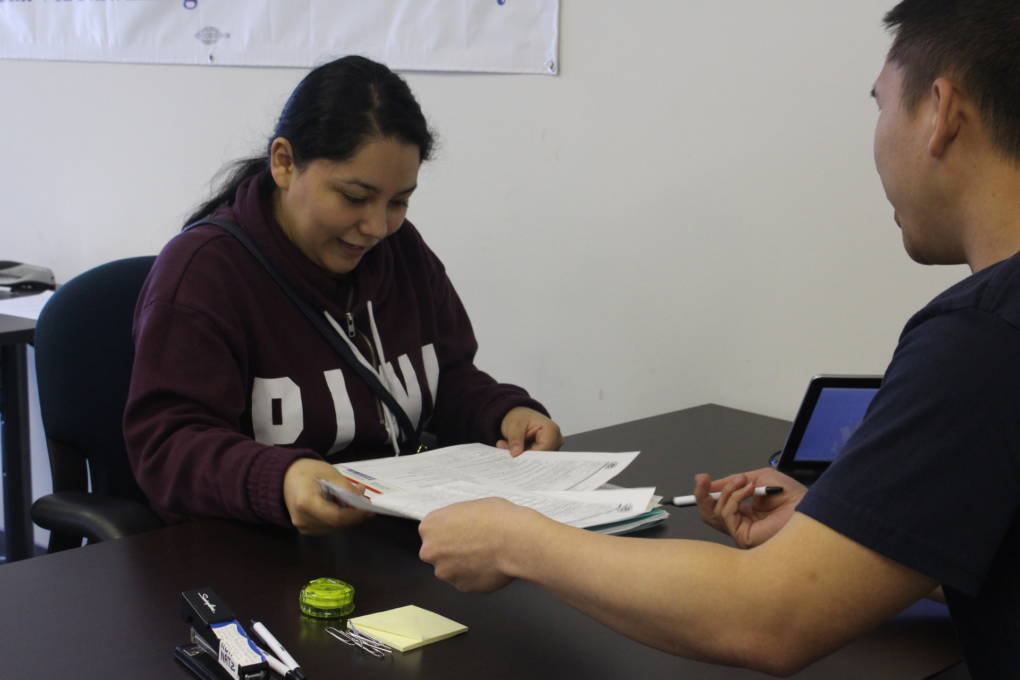
"caption": "Karla Lopez, 25, prepares her DACA renewal application with help from volunteer Michael Nguyen at a legal clinic in San Jose on Feb. 7, 2018. A federal judge in January temporarily blocked the Trump administration's moves to phase out the program.",
"description": null,
"title": "RS29494_IMG_1384-qut (1)",
"credit": "Farida Jhabvala Romero/KQED",
"status": "inherit",
"isLoading": false,
"fetchFailed": false
},
"news_11642346": {
"type": "attachments",
"id": "news_11642346",
"meta": {
"index": "attachments_1716263798",
"site": "news",
"id": "11642346",
"found": true
},
"parent": 11642345,
"imgSizes": {
"small": {
"file": "https://ww2.kqed.org/app/uploads/sites/10/2018/01/gettyimages-893664968-5c96c0a769caa33e2d72c2af940db8d277fe2c82-520x390.jpg",
"width": 520,
"mimeType": "image/jpeg",
"height": 390
},
"twentyfourteen-full-width": {
"file": "https://ww2.kqed.org/app/uploads/sites/10/2018/01/gettyimages-893664968-5c96c0a769caa33e2d72c2af940db8d277fe2c82-1038x576.jpg",
"width": 1038,
"mimeType": "image/jpeg",
"height": 576
},
"thumbnail": {
"file": "https://ww2.kqed.org/app/uploads/sites/10/2018/01/gettyimages-893664968-5c96c0a769caa33e2d72c2af940db8d277fe2c82-160x120.jpg",
"width": 160,
"mimeType": "image/jpeg",
"height": 120
},
"fd-sm": {
"file": "https://ww2.kqed.org/app/uploads/sites/10/2018/01/gettyimages-893664968-5c96c0a769caa33e2d72c2af940db8d277fe2c82-960x720.jpg",
"width": 960,
"mimeType": "image/jpeg",
"height": 720
},
"post-thumbnail": {
"file": "https://ww2.kqed.org/app/uploads/sites/10/2018/01/gettyimages-893664968-5c96c0a769caa33e2d72c2af940db8d277fe2c82-672x372.jpg",
"width": 672,
"mimeType": "image/jpeg",
"height": 372
},
"xsmall": {
"file": "https://ww2.kqed.org/app/uploads/sites/10/2018/01/gettyimages-893664968-5c96c0a769caa33e2d72c2af940db8d277fe2c82-375x281.jpg",
"width": 375,
"mimeType": "image/jpeg",
"height": 281
},
"kqedFullSize": {
"file": "https://ww2.kqed.org/app/uploads/sites/10/2018/01/gettyimages-893664968-5c96c0a769caa33e2d72c2af940db8d277fe2c82-e1516154828418.jpg",
"width": 1920,
"height": 1439
},
"large": {
"file": "https://ww2.kqed.org/app/uploads/sites/10/2018/01/gettyimages-893664968-5c96c0a769caa33e2d72c2af940db8d277fe2c82-1020x765.jpg",
"width": 1020,
"mimeType": "image/jpeg",
"height": 765
},
"xlarge": {
"file": "https://ww2.kqed.org/app/uploads/sites/10/2018/01/gettyimages-893664968-5c96c0a769caa33e2d72c2af940db8d277fe2c82-1180x884.jpg",
"width": 1180,
"mimeType": "image/jpeg",
"height": 884
},
"guest-author-50": {
"file": "https://ww2.kqed.org/app/uploads/sites/10/2018/01/gettyimages-893664968-5c96c0a769caa33e2d72c2af940db8d277fe2c82-50x50.jpg",
"width": 50,
"mimeType": "image/jpeg",
"height": 50
},
"guest-author-96": {
"file": "https://ww2.kqed.org/app/uploads/sites/10/2018/01/gettyimages-893664968-5c96c0a769caa33e2d72c2af940db8d277fe2c82-96x96.jpg",
"width": 96,
"mimeType": "image/jpeg",
"height": 96
},
"medium": {
"file": "https://ww2.kqed.org/app/uploads/sites/10/2018/01/gettyimages-893664968-5c96c0a769caa33e2d72c2af940db8d277fe2c82-800x600.jpg",
"width": 800,
"mimeType": "image/jpeg",
"height": 600
},
"guest-author-64": {
"file": "https://ww2.kqed.org/app/uploads/sites/10/2018/01/gettyimages-893664968-5c96c0a769caa33e2d72c2af940db8d277fe2c82-64x64.jpg",
"width": 64,
"mimeType": "image/jpeg",
"height": 64
},
"guest-author-32": {
"file": "https://ww2.kqed.org/app/uploads/sites/10/2018/01/gettyimages-893664968-5c96c0a769caa33e2d72c2af940db8d277fe2c82-32x32.jpg",
"width": 32,
"mimeType": "image/jpeg",
"height": 32
},
"fd-lrg": {
"file": "https://ww2.kqed.org/app/uploads/sites/10/2018/01/gettyimages-893664968-5c96c0a769caa33e2d72c2af940db8d277fe2c82-1920x1439.jpg",
"width": 1920,
"mimeType": "image/jpeg",
"height": 1439
},
"fd-med": {
"file": "https://ww2.kqed.org/app/uploads/sites/10/2018/01/gettyimages-893664968-5c96c0a769caa33e2d72c2af940db8d277fe2c82-1180x884.jpg",
"width": 1180,
"mimeType": "image/jpeg",
"height": 884
},
"full-width": {
"file": "https://ww2.kqed.org/app/uploads/sites/10/2018/01/gettyimages-893664968-5c96c0a769caa33e2d72c2af940db8d277fe2c82-1920x1439.jpg",
"width": 1920,
"mimeType": "image/jpeg",
"height": 1439
},
"detail": {
"file": "https://ww2.kqed.org/app/uploads/sites/10/2018/01/gettyimages-893664968-5c96c0a769caa33e2d72c2af940db8d277fe2c82-150x150.jpg",
"width": 150,
"mimeType": "image/jpeg",
"height": 150
},
"guest-author-128": {
"file": "https://ww2.kqed.org/app/uploads/sites/10/2018/01/gettyimages-893664968-5c96c0a769caa33e2d72c2af940db8d277fe2c82-128x128.jpg",
"width": 128,
"mimeType": "image/jpeg",
"height": 128
},
"xxsmall": {
"file": "https://ww2.kqed.org/app/uploads/sites/10/2018/01/gettyimages-893664968-5c96c0a769caa33e2d72c2af940db8d277fe2c82-240x180.jpg",
"width": 240,
"mimeType": "image/jpeg",
"height": 180
}
},
"publishDate": 1516154629,
"modified": 1516154818,
"caption": "U.S. Attorney General Jeff Sessions is appealing a court ruling that reinstated DACA renewals.",
"description": "U.S. Attorney General Jeff Sessions is appealing a court ruling that reinstated DACA renewals.",
"title": "U.S. Attorney General Jeff Sessions is appealing a court ruling that reinstated DACA renewals.",
"credit": "Chip Somodevilla/Getty Images",
"status": "inherit",
"isLoading": false,
"fetchFailed": false
},
"news_11641336": {
"type": "attachments",
"id": "news_11641336",
"meta": {
"index": "attachments_1716263798",
"site": "news",
"id": "11641336",
"found": true
},
"parent": 11641317,
"imgSizes": {
"small": {
"file": "https://ww2.kqed.org/app/uploads/sites/10/2018/01/courtrulings_011018_final-520x520.jpg",
"width": 520,
"mimeType": "image/jpeg",
"height": 520
},
"twentyfourteen-full-width": {
"file": "https://ww2.kqed.org/app/uploads/sites/10/2018/01/courtrulings_011018_final-1038x576.jpg",
"width": 1038,
"mimeType": "image/jpeg",
"height": 576
},
"thumbnail": {
"file": "https://ww2.kqed.org/app/uploads/sites/10/2018/01/courtrulings_011018_final-160x160.jpg",
"width": 160,
"mimeType": "image/jpeg",
"height": 160
},
"fd-sm": {
"file": "https://ww2.kqed.org/app/uploads/sites/10/2018/01/courtrulings_011018_final-960x960.jpg",
"width": 960,
"mimeType": "image/jpeg",
"height": 960
},
"post-thumbnail": {
"file": "https://ww2.kqed.org/app/uploads/sites/10/2018/01/courtrulings_011018_final-672x372.jpg",
"width": 672,
"mimeType": "image/jpeg",
"height": 372
},
"xsmall": {
"file": "https://ww2.kqed.org/app/uploads/sites/10/2018/01/courtrulings_011018_final-375x375.jpg",
"width": 375,
"mimeType": "image/jpeg",
"height": 375
},
"kqedFullSize": {
"file": "https://ww2.kqed.org/app/uploads/sites/10/2018/01/courtrulings_011018_final.jpg",
"width": 1920,
"height": 1920
},
"large": {
"file": "https://ww2.kqed.org/app/uploads/sites/10/2018/01/courtrulings_011018_final-1020x1020.jpg",
"width": 1020,
"mimeType": "image/jpeg",
"height": 1020
},
"xlarge": {
"file": "https://ww2.kqed.org/app/uploads/sites/10/2018/01/courtrulings_011018_final-1180x1180.jpg",
"width": 1180,
"mimeType": "image/jpeg",
"height": 1180
},
"guest-author-50": {
"file": "https://ww2.kqed.org/app/uploads/sites/10/2018/01/courtrulings_011018_final-50x50.jpg",
"width": 50,
"mimeType": "image/jpeg",
"height": 50
},
"guest-author-96": {
"file": "https://ww2.kqed.org/app/uploads/sites/10/2018/01/courtrulings_011018_final-96x96.jpg",
"width": 96,
"mimeType": "image/jpeg",
"height": 96
},
"medium": {
"file": "https://ww2.kqed.org/app/uploads/sites/10/2018/01/courtrulings_011018_final-800x800.jpg",
"width": 800,
"mimeType": "image/jpeg",
"height": 800
},
"guest-author-64": {
"file": "https://ww2.kqed.org/app/uploads/sites/10/2018/01/courtrulings_011018_final-64x64.jpg",
"width": 64,
"mimeType": "image/jpeg",
"height": 64
},
"guest-author-32": {
"file": "https://ww2.kqed.org/app/uploads/sites/10/2018/01/courtrulings_011018_final-32x32.jpg",
"width": 32,
"mimeType": "image/jpeg",
"height": 32
},
"fd-lrg": {
"file": "https://ww2.kqed.org/app/uploads/sites/10/2018/01/courtrulings_011018_final-1920x1920.jpg",
"width": 1920,
"mimeType": "image/jpeg",
"height": 1920
},
"fd-med": {
"file": "https://ww2.kqed.org/app/uploads/sites/10/2018/01/courtrulings_011018_final-1180x1180.jpg",
"width": 1180,
"mimeType": "image/jpeg",
"height": 1180
},
"full-width": {
"file": "https://ww2.kqed.org/app/uploads/sites/10/2018/01/courtrulings_011018_final-1920x1920.jpg",
"width": 1920,
"mimeType": "image/jpeg",
"height": 1920
},
"detail": {
"file": "https://ww2.kqed.org/app/uploads/sites/10/2018/01/courtrulings_011018_final-150x150.jpg",
"width": 150,
"mimeType": "image/jpeg",
"height": 150
},
"guest-author-128": {
"file": "https://ww2.kqed.org/app/uploads/sites/10/2018/01/courtrulings_011018_final-128x128.jpg",
"width": 128,
"mimeType": "image/jpeg",
"height": 128
},
"xxsmall": {
"file": "https://ww2.kqed.org/app/uploads/sites/10/2018/01/courtrulings_011018_final-240x240.jpg",
"width": 240,
"mimeType": "image/jpeg",
"height": 240
}
},
"publishDate": 1515624831,
"modified": 1515624865,
"caption": null,
"description": null,
"title": "courtrulings_011018_final",
"credit": null,
"status": "inherit",
"isLoading": false,
"fetchFailed": false
},
"news_11620232": {
"type": "attachments",
"id": "news_11620232",
"meta": {
"index": "attachments_1716263798",
"site": "news",
"id": "11620232",
"found": true
},
"parent": 11619749,
"imgSizes": {
"small": {
"file": "https://ww2.kqed.org/app/uploads/sites/10/2017/09/SCOTUSbldg-520x328.jpg",
"width": 520,
"mimeType": "image/jpeg",
"height": 328
},
"twentyfourteen-full-width": {
"file": "https://ww2.kqed.org/app/uploads/sites/10/2017/09/SCOTUSbldg-1038x576.jpg",
"width": 1038,
"mimeType": "image/jpeg",
"height": 576
},
"thumbnail": {
"file": "https://ww2.kqed.org/app/uploads/sites/10/2017/09/SCOTUSbldg-160x101.jpg",
"width": 160,
"mimeType": "image/jpeg",
"height": 101
},
"fd-sm": {
"file": "https://ww2.kqed.org/app/uploads/sites/10/2017/09/SCOTUSbldg-960x606.jpg",
"width": 960,
"mimeType": "image/jpeg",
"height": 606
},
"post-thumbnail": {
"file": "https://ww2.kqed.org/app/uploads/sites/10/2017/09/SCOTUSbldg-672x372.jpg",
"width": 672,
"mimeType": "image/jpeg",
"height": 372
},
"xsmall": {
"file": "https://ww2.kqed.org/app/uploads/sites/10/2017/09/SCOTUSbldg-375x237.jpg",
"width": 375,
"mimeType": "image/jpeg",
"height": 237
},
"kqedFullSize": {
"file": "https://ww2.kqed.org/app/uploads/sites/10/2017/09/SCOTUSbldg.jpg",
"width": 1920,
"height": 1212
},
"large": {
"file": "https://ww2.kqed.org/app/uploads/sites/10/2017/09/SCOTUSbldg-1020x644.jpg",
"width": 1020,
"mimeType": "image/jpeg",
"height": 644
},
"xlarge": {
"file": "https://ww2.kqed.org/app/uploads/sites/10/2017/09/SCOTUSbldg-1180x745.jpg",
"width": 1180,
"mimeType": "image/jpeg",
"height": 745
},
"guest-author-50": {
"file": "https://ww2.kqed.org/app/uploads/sites/10/2017/09/SCOTUSbldg-50x50.jpg",
"width": 50,
"mimeType": "image/jpeg",
"height": 50
},
"guest-author-96": {
"file": "https://ww2.kqed.org/app/uploads/sites/10/2017/09/SCOTUSbldg-96x96.jpg",
"width": 96,
"mimeType": "image/jpeg",
"height": 96
},
"medium": {
"file": "https://ww2.kqed.org/app/uploads/sites/10/2017/09/SCOTUSbldg-800x505.jpg",
"width": 800,
"mimeType": "image/jpeg",
"height": 505
},
"guest-author-64": {
"file": "https://ww2.kqed.org/app/uploads/sites/10/2017/09/SCOTUSbldg-64x64.jpg",
"width": 64,
"mimeType": "image/jpeg",
"height": 64
},
"guest-author-32": {
"file": "https://ww2.kqed.org/app/uploads/sites/10/2017/09/SCOTUSbldg-32x32.jpg",
"width": 32,
"mimeType": "image/jpeg",
"height": 32
},
"fd-lrg": {
"file": "https://ww2.kqed.org/app/uploads/sites/10/2017/09/SCOTUSbldg-1920x1212.jpg",
"width": 1920,
"mimeType": "image/jpeg",
"height": 1212
},
"fd-med": {
"file": "https://ww2.kqed.org/app/uploads/sites/10/2017/09/SCOTUSbldg-1180x745.jpg",
"width": 1180,
"mimeType": "image/jpeg",
"height": 745
},
"full-width": {
"file": "https://ww2.kqed.org/app/uploads/sites/10/2017/09/SCOTUSbldg-1920x1212.jpg",
"width": 1920,
"mimeType": "image/jpeg",
"height": 1212
},
"detail": {
"file": "https://ww2.kqed.org/app/uploads/sites/10/2017/09/SCOTUSbldg-150x150.jpg",
"width": 150,
"mimeType": "image/jpeg",
"height": 150
},
"guest-author-128": {
"file": "https://ww2.kqed.org/app/uploads/sites/10/2017/09/SCOTUSbldg-128x128.jpg",
"width": 128,
"mimeType": "image/jpeg",
"height": 128
},
"xxsmall": {
"file": "https://ww2.kqed.org/app/uploads/sites/10/2017/09/SCOTUSbldg-240x152.jpg",
"width": 240,
"mimeType": "image/jpeg",
"height": 152
}
},
"publishDate": 1506736633,
"modified": 1506983470,
"caption": "The U.S. Supreme Court will issue a decision by the end of June — just a few months before next year’s congressional elections. The outcome could affect which party controls Congress.",
"description": "The U.S. Supreme Court will issue a decision by the end of June — just a few months before next year’s Congressional elections. The outcome could affect which party controls Congress.",
"title": "SCOTUSbldg",
"credit": "ZACH GIBSON/AFP/Getty Images",
"status": "inherit",
"isLoading": false,
"fetchFailed": false
},
"news_10913239": {
"type": "attachments",
"id": "news_10913239",
"meta": {
"index": "attachments_1716263798",
"site": "news",
"id": "10913239",
"found": true
},
"parent": 10913040,
"imgSizes": {
"twentyfourteen-full-width": {
"file": "https://ww2.kqed.org/app/uploads/sites/10/2016/03/SCOTUS-1038x576.jpg",
"width": 1038,
"mimeType": "image/jpeg",
"height": 576
},
"thumbnail": {
"file": "https://ww2.kqed.org/app/uploads/sites/10/2016/03/SCOTUS-400x267.jpg",
"width": 400,
"mimeType": "image/jpeg",
"height": 267
},
"fd-sm": {
"file": "https://ww2.kqed.org/app/uploads/sites/10/2016/03/SCOTUS-960x640.jpg",
"width": 960,
"mimeType": "image/jpeg",
"height": 640
},
"post-thumbnail": {
"file": "https://ww2.kqed.org/app/uploads/sites/10/2016/03/SCOTUS-672x372.jpg",
"width": 672,
"mimeType": "image/jpeg",
"height": 372
},
"kqedFullSize": {
"file": "https://ww2.kqed.org/app/uploads/sites/10/2016/03/SCOTUS.jpg",
"width": 1920,
"height": 1280
},
"large": {
"file": "https://ww2.kqed.org/app/uploads/sites/10/2016/03/SCOTUS-1920x1280.jpg",
"width": 1920,
"mimeType": "image/jpeg",
"height": 1280
},
"guest-author-96": {
"file": "https://ww2.kqed.org/app/uploads/sites/10/2016/03/SCOTUS-96x96.jpg",
"width": 96,
"mimeType": "image/jpeg",
"height": 96
},
"medium": {
"file": "https://ww2.kqed.org/app/uploads/sites/10/2016/03/SCOTUS-800x533.jpg",
"width": 800,
"mimeType": "image/jpeg",
"height": 533
},
"guest-author-64": {
"file": "https://ww2.kqed.org/app/uploads/sites/10/2016/03/SCOTUS-64x64.jpg",
"width": 64,
"mimeType": "image/jpeg",
"height": 64
},
"guest-author-32": {
"file": "https://ww2.kqed.org/app/uploads/sites/10/2016/03/SCOTUS-32x32.jpg",
"width": 32,
"mimeType": "image/jpeg",
"height": 32
},
"jmtc-small-thumb": {
"file": "https://ww2.kqed.org/app/uploads/sites/10/2016/03/SCOTUS-280x150.jpg",
"width": 280,
"mimeType": "image/jpeg",
"height": 150
},
"fd-lrg": {
"file": "https://ww2.kqed.org/app/uploads/sites/10/2016/03/SCOTUS-1920x1280.jpg",
"width": 1920,
"mimeType": "image/jpeg",
"height": 1280
},
"fd-med": {
"file": "https://ww2.kqed.org/app/uploads/sites/10/2016/03/SCOTUS-1180x787.jpg",
"width": 1180,
"mimeType": "image/jpeg",
"height": 787
},
"detail": {
"file": "https://ww2.kqed.org/app/uploads/sites/10/2016/03/SCOTUS-75x75.jpg",
"width": 75,
"mimeType": "image/jpeg",
"height": 75
},
"guest-author-128": {
"file": "https://ww2.kqed.org/app/uploads/sites/10/2016/03/SCOTUS-128x128.jpg",
"width": 128,
"mimeType": "image/jpeg",
"height": 128
}
},
"publishDate": 1459277144,
"modified": 1459277175,
"caption": "The U.S. Supreme Court in Washington, D.C.",
"description": "The U.S. Supreme Court in Washington, D.C.",
"title": "SCOTUS",
"credit": "Win McNamee/Getty Images",
"status": "inherit",
"isLoading": false,
"fetchFailed": false
},
"news_11533505": {
"type": "attachments",
"id": "news_11533505",
"meta": {
"index": "attachments_1716263798",
"site": "news",
"id": "11533505",
"found": true
},
"parent": 11533504,
"imgSizes": {
"small": {
"file": "https://ww2.kqed.org/app/uploads/sites/10/2017/06/yearning_062617_final-520x520.jpg",
"width": 520,
"mimeType": "image/jpeg",
"height": 520
},
"twentyfourteen-full-width": {
"file": "https://ww2.kqed.org/app/uploads/sites/10/2017/06/yearning_062617_final-1038x576.jpg",
"width": 1038,
"mimeType": "image/jpeg",
"height": 576
},
"thumbnail": {
"file": "https://ww2.kqed.org/app/uploads/sites/10/2017/06/yearning_062617_final-160x160.jpg",
"width": 160,
"mimeType": "image/jpeg",
"height": 160
},
"fd-sm": {
"file": "https://ww2.kqed.org/app/uploads/sites/10/2017/06/yearning_062617_final-960x960.jpg",
"width": 960,
"mimeType": "image/jpeg",
"height": 960
},
"post-thumbnail": {
"file": "https://ww2.kqed.org/app/uploads/sites/10/2017/06/yearning_062617_final-672x372.jpg",
"width": 672,
"mimeType": "image/jpeg",
"height": 372
},
"xsmall": {
"file": "https://ww2.kqed.org/app/uploads/sites/10/2017/06/yearning_062617_final-375x375.jpg",
"width": 375,
"mimeType": "image/jpeg",
"height": 375
},
"kqedFullSize": {
"file": "https://ww2.kqed.org/app/uploads/sites/10/2017/06/yearning_062617_final.jpg",
"width": 1920,
"height": 1920
},
"large": {
"file": "https://ww2.kqed.org/app/uploads/sites/10/2017/06/yearning_062617_final-1020x1020.jpg",
"width": 1020,
"mimeType": "image/jpeg",
"height": 1020
},
"xlarge": {
"file": "https://ww2.kqed.org/app/uploads/sites/10/2017/06/yearning_062617_final-1180x1180.jpg",
"width": 1180,
"mimeType": "image/jpeg",
"height": 1180
},
"guest-author-50": {
"file": "https://ww2.kqed.org/app/uploads/sites/10/2017/06/yearning_062617_final-50x50.jpg",
"width": 50,
"mimeType": "image/jpeg",
"height": 50
},
"guest-author-96": {
"file": "https://ww2.kqed.org/app/uploads/sites/10/2017/06/yearning_062617_final-96x96.jpg",
"width": 96,
"mimeType": "image/jpeg",
"height": 96
},
"medium": {
"file": "https://ww2.kqed.org/app/uploads/sites/10/2017/06/yearning_062617_final-800x800.jpg",
"width": 800,
"mimeType": "image/jpeg",
"height": 800
},
"guest-author-64": {
"file": "https://ww2.kqed.org/app/uploads/sites/10/2017/06/yearning_062617_final-64x64.jpg",
"width": 64,
"mimeType": "image/jpeg",
"height": 64
},
"guest-author-32": {
"file": "https://ww2.kqed.org/app/uploads/sites/10/2017/06/yearning_062617_final-32x32.jpg",
"width": 32,
"mimeType": "image/jpeg",
"height": 32
},
"fd-lrg": {
"file": "https://ww2.kqed.org/app/uploads/sites/10/2017/06/yearning_062617_final-1920x1920.jpg",
"width": 1920,
"mimeType": "image/jpeg",
"height": 1920
},
"fd-med": {
"file": "https://ww2.kqed.org/app/uploads/sites/10/2017/06/yearning_062617_final-1180x1180.jpg",
"width": 1180,
"mimeType": "image/jpeg",
"height": 1180
},
"full-width": {
"file": "https://ww2.kqed.org/app/uploads/sites/10/2017/06/yearning_062617_final-1920x1920.jpg",
"width": 1920,
"mimeType": "image/jpeg",
"height": 1920
},
"detail": {
"file": "https://ww2.kqed.org/app/uploads/sites/10/2017/06/yearning_062617_final-150x150.jpg",
"width": 150,
"mimeType": "image/jpeg",
"height": 150
},
"guest-author-128": {
"file": "https://ww2.kqed.org/app/uploads/sites/10/2017/06/yearning_062617_final-128x128.jpg",
"width": 128,
"mimeType": "image/jpeg",
"height": 128
},
"xxsmall": {
"file": "https://ww2.kqed.org/app/uploads/sites/10/2017/06/yearning_062617_final-240x240.jpg",
"width": 240,
"mimeType": "image/jpeg",
"height": 240
}
},
"publishDate": 1498506783,
"modified": 1498506810,
"caption": null,
"description": null,
"title": "yearning_062617_final",
"credit": null,
"status": "inherit",
"isLoading": false,
"fetchFailed": false
},
"news_11351507": {
"type": "attachments",
"id": "news_11351507",
"meta": {
"index": "attachments_1716263798",
"site": "news",
"id": "11351507",
"found": true
},
"parent": 11351494,
"imgSizes": {
"small": {
"file": "https://ww2.kqed.org/app/uploads/sites/10/2017/03/ban-protest-1920-520x347.jpg",
"width": 520,
"mimeType": "image/jpeg",
"height": 347
},
"twentyfourteen-full-width": {
"file": "https://ww2.kqed.org/app/uploads/sites/10/2017/03/ban-protest-1920-1038x576.jpg",
"width": 1038,
"mimeType": "image/jpeg",
"height": 576
},
"thumbnail": {
"file": "https://ww2.kqed.org/app/uploads/sites/10/2017/03/ban-protest-1920-160x107.jpg",
"width": 160,
"mimeType": "image/jpeg",
"height": 107
},
"fd-sm": {
"file": "https://ww2.kqed.org/app/uploads/sites/10/2017/03/ban-protest-1920-960x640.jpg",
"width": 960,
"mimeType": "image/jpeg",
"height": 640
},
"post-thumbnail": {
"file": "https://ww2.kqed.org/app/uploads/sites/10/2017/03/ban-protest-1920-672x372.jpg",
"width": 672,
"mimeType": "image/jpeg",
"height": 372
},
"xsmall": {
"file": "https://ww2.kqed.org/app/uploads/sites/10/2017/03/ban-protest-1920-375x250.jpg",
"width": 375,
"mimeType": "image/jpeg",
"height": 250
},
"kqedFullSize": {
"file": "https://ww2.kqed.org/app/uploads/sites/10/2017/03/ban-protest-1920.jpg",
"width": 1920,
"height": 1280
},
"large": {
"file": "https://ww2.kqed.org/app/uploads/sites/10/2017/03/ban-protest-1920-1020x680.jpg",
"width": 1020,
"mimeType": "image/jpeg",
"height": 680
},
"xlarge": {
"file": "https://ww2.kqed.org/app/uploads/sites/10/2017/03/ban-protest-1920-1180x787.jpg",
"width": 1180,
"mimeType": "image/jpeg",
"height": 787
},
"guest-author-50": {
"file": "https://ww2.kqed.org/app/uploads/sites/10/2017/03/ban-protest-1920-50x50.jpg",
"width": 50,
"mimeType": "image/jpeg",
"height": 50
},
"guest-author-96": {
"file": "https://ww2.kqed.org/app/uploads/sites/10/2017/03/ban-protest-1920-96x96.jpg",
"width": 96,
"mimeType": "image/jpeg",
"height": 96
},
"medium": {
"file": "https://ww2.kqed.org/app/uploads/sites/10/2017/03/ban-protest-1920-800x533.jpg",
"width": 800,
"mimeType": "image/jpeg",
"height": 533
},
"guest-author-64": {
"file": "https://ww2.kqed.org/app/uploads/sites/10/2017/03/ban-protest-1920-64x64.jpg",
"width": 64,
"mimeType": "image/jpeg",
"height": 64
},
"guest-author-32": {
"file": "https://ww2.kqed.org/app/uploads/sites/10/2017/03/ban-protest-1920-32x32.jpg",
"width": 32,
"mimeType": "image/jpeg",
"height": 32
},
"fd-lrg": {
"file": "https://ww2.kqed.org/app/uploads/sites/10/2017/03/ban-protest-1920-1920x1280.jpg",
"width": 1920,
"mimeType": "image/jpeg",
"height": 1280
},
"fd-med": {
"file": "https://ww2.kqed.org/app/uploads/sites/10/2017/03/ban-protest-1920-1180x787.jpg",
"width": 1180,
"mimeType": "image/jpeg",
"height": 787
},
"full-width": {
"file": "https://ww2.kqed.org/app/uploads/sites/10/2017/03/ban-protest-1920-1920x1280.jpg",
"width": 1920,
"mimeType": "image/jpeg",
"height": 1280
},
"detail": {
"file": "https://ww2.kqed.org/app/uploads/sites/10/2017/03/ban-protest-1920-150x150.jpg",
"width": 150,
"mimeType": "image/jpeg",
"height": 150
},
"guest-author-128": {
"file": "https://ww2.kqed.org/app/uploads/sites/10/2017/03/ban-protest-1920-128x128.jpg",
"width": 128,
"mimeType": "image/jpeg",
"height": 128
},
"xxsmall": {
"file": "https://ww2.kqed.org/app/uploads/sites/10/2017/03/ban-protest-1920-240x160.jpg",
"width": 240,
"mimeType": "image/jpeg",
"height": 160
}
},
"publishDate": 1489078304,
"modified": 1498498700,
"caption": "Demonstrators gather near the White House to protest President Trump's travel ban on Jan. 29, 2017, in Washington, D.C. Trump signed the controversial executive order that halted refugees and residents from predominantly Muslim countries -- currently six of them -- from entering the United States.",
"description": "Demonstrators gather near the White House to protest President Trump's travel ban on Jan. 29, 2017, in Washington, D.C. Trump signed the controversial executive order that halted refugees and residents from predominantly Muslim countries -- currently six of them -- from entering the United States.",
"title": "ban-protest-1920",
"credit": "Zach Gibson/Getty Images",
"status": "inherit",
"isLoading": false,
"fetchFailed": false
},
"news_10547237": {
"type": "attachments",
"id": "news_10547237",
"meta": {
"index": "attachments_1716263798",
"site": "news",
"id": "10547237",
"found": true
},
"parent": 10547231,
"imgSizes": {
"twentyfourteen-full-width": {
"file": "https://ww2.kqed.org/app/uploads/sites/10/2015/06/Supreme-Court-1038x576.jpg",
"width": 1038,
"mimeType": "image/jpeg",
"height": 576
},
"thumbnail": {
"file": "https://ww2.kqed.org/app/uploads/sites/10/2015/06/Supreme-Court-400x274.jpg",
"width": 400,
"mimeType": "image/jpeg",
"height": 274
},
"fd-sm": {
"file": "https://ww2.kqed.org/app/uploads/sites/10/2015/06/Supreme-Court-960x658.jpg",
"width": 960,
"mimeType": "image/jpeg",
"height": 658
},
"post-thumbnail": {
"file": "https://ww2.kqed.org/app/uploads/sites/10/2015/06/Supreme-Court-672x372.jpg",
"width": 672,
"mimeType": "image/jpeg",
"height": 372
},
"kqedFullSize": {
"file": "https://ww2.kqed.org/app/uploads/sites/10/2015/06/Supreme-Court-e1433185318554.jpg",
"width": 1920,
"height": 1316
},
"large": {
"file": "https://ww2.kqed.org/app/uploads/sites/10/2015/06/Supreme-Court-1440x987.jpg",
"width": 1440,
"mimeType": "image/jpeg",
"height": 987
},
"guest-author-96": {
"file": "https://ww2.kqed.org/app/uploads/sites/10/2015/06/Supreme-Court-96x96.jpg",
"width": 96,
"mimeType": "image/jpeg",
"height": 96
},
"medium": {
"file": "https://ww2.kqed.org/app/uploads/sites/10/2015/06/Supreme-Court-800x548.jpg",
"width": 800,
"mimeType": "image/jpeg",
"height": 548
},
"guest-author-64": {
"file": "https://ww2.kqed.org/app/uploads/sites/10/2015/06/Supreme-Court-64x64.jpg",
"width": 64,
"mimeType": "image/jpeg",
"height": 64
},
"guest-author-32": {
"file": "https://ww2.kqed.org/app/uploads/sites/10/2015/06/Supreme-Court-32x32.jpg",
"width": 32,
"mimeType": "image/jpeg",
"height": 32
},
"fd-med": {
"file": "https://ww2.kqed.org/app/uploads/sites/10/2015/06/Supreme-Court-1180x809.jpg",
"width": 1180,
"mimeType": "image/jpeg",
"height": 809
},
"detail": {
"file": "https://ww2.kqed.org/app/uploads/sites/10/2015/06/Supreme-Court-75x75.jpg",
"width": 75,
"mimeType": "image/jpeg",
"height": 75
},
"guest-author-128": {
"file": "https://ww2.kqed.org/app/uploads/sites/10/2015/06/Supreme-Court-128x128.jpg",
"width": 128,
"mimeType": "image/jpeg",
"height": 128
}
},
"publishDate": 1433185256,
"modified": 1466708914,
"caption": "U.S. Supreme Court",
"description": null,
"title": "Visitors an employees arrive at the US S",
"credit": "Paul J. Richards/AFP/Getty Images",
"status": "inherit",
"isLoading": false,
"fetchFailed": false
},
"news_11408830": {
"type": "attachments",
"id": "news_11408830",
"meta": {
"index": "attachments_1716263798",
"site": "news",
"id": "11408830",
"found": true
},
"parent": 11408633,
"imgSizes": {
"small": {
"file": "https://ww2.kqed.org/app/uploads/sites/10/2017/04/SfCityAttorneys-520x352.jpg",
"width": 520,
"mimeType": "image/jpeg",
"height": 352
},
"twentyfourteen-full-width": {
"file": "https://ww2.kqed.org/app/uploads/sites/10/2017/04/SfCityAttorneys-1038x576.jpg",
"width": 1038,
"mimeType": "image/jpeg",
"height": 576
},
"thumbnail": {
"file": "https://ww2.kqed.org/app/uploads/sites/10/2017/04/SfCityAttorneys-160x108.jpg",
"width": 160,
"mimeType": "image/jpeg",
"height": 108
},
"fd-sm": {
"file": "https://ww2.kqed.org/app/uploads/sites/10/2017/04/SfCityAttorneys-960x650.jpg",
"width": 960,
"mimeType": "image/jpeg",
"height": 650
},
"post-thumbnail": {
"file": "https://ww2.kqed.org/app/uploads/sites/10/2017/04/SfCityAttorneys-672x372.jpg",
"width": 672,
"mimeType": "image/jpeg",
"height": 372
},
"xsmall": {
"file": "https://ww2.kqed.org/app/uploads/sites/10/2017/04/SfCityAttorneys-375x254.jpg",
"width": 375,
"mimeType": "image/jpeg",
"height": 254
},
"kqedFullSize": {
"file": "https://ww2.kqed.org/app/uploads/sites/10/2017/04/SfCityAttorneys.jpg",
"width": 1920,
"height": 1300
},
"large": {
"file": "https://ww2.kqed.org/app/uploads/sites/10/2017/04/SfCityAttorneys-1020x691.jpg",
"width": 1020,
"mimeType": "image/jpeg",
"height": 691
},
"xlarge": {
"file": "https://ww2.kqed.org/app/uploads/sites/10/2017/04/SfCityAttorneys-1180x799.jpg",
"width": 1180,
"mimeType": "image/jpeg",
"height": 799
},
"guest-author-50": {
"file": "https://ww2.kqed.org/app/uploads/sites/10/2017/04/SfCityAttorneys-50x50.jpg",
"width": 50,
"mimeType": "image/jpeg",
"height": 50
},
"guest-author-96": {
"file": "https://ww2.kqed.org/app/uploads/sites/10/2017/04/SfCityAttorneys-96x96.jpg",
"width": 96,
"mimeType": "image/jpeg",
"height": 96
},
"medium": {
"file": "https://ww2.kqed.org/app/uploads/sites/10/2017/04/SfCityAttorneys-800x542.jpg",
"width": 800,
"mimeType": "image/jpeg",
"height": 542
},
"guest-author-64": {
"file": "https://ww2.kqed.org/app/uploads/sites/10/2017/04/SfCityAttorneys-64x64.jpg",
"width": 64,
"mimeType": "image/jpeg",
"height": 64
},
"guest-author-32": {
"file": "https://ww2.kqed.org/app/uploads/sites/10/2017/04/SfCityAttorneys-32x32.jpg",
"width": 32,
"mimeType": "image/jpeg",
"height": 32
},
"fd-lrg": {
"file": "https://ww2.kqed.org/app/uploads/sites/10/2017/04/SfCityAttorneys-1920x1300.jpg",
"width": 1920,
"mimeType": "image/jpeg",
"height": 1300
},
"fd-med": {
"file": "https://ww2.kqed.org/app/uploads/sites/10/2017/04/SfCityAttorneys-1180x799.jpg",
"width": 1180,
"mimeType": "image/jpeg",
"height": 799
},
"full-width": {
"file": "https://ww2.kqed.org/app/uploads/sites/10/2017/04/SfCityAttorneys-1920x1300.jpg",
"width": 1920,
"mimeType": "image/jpeg",
"height": 1300
},
"detail": {
"file": "https://ww2.kqed.org/app/uploads/sites/10/2017/04/SfCityAttorneys-150x150.jpg",
"width": 150,
"mimeType": "image/jpeg",
"height": 150
},
"guest-author-128": {
"file": "https://ww2.kqed.org/app/uploads/sites/10/2017/04/SfCityAttorneys-128x128.jpg",
"width": 128,
"mimeType": "image/jpeg",
"height": 128
},
"xxsmall": {
"file": "https://ww2.kqed.org/app/uploads/sites/10/2017/04/SfCityAttorneys-240x163.jpg",
"width": 240,
"mimeType": "image/jpeg",
"height": 163
}
},
"publishDate": 1492210278,
"modified": 1492213932,
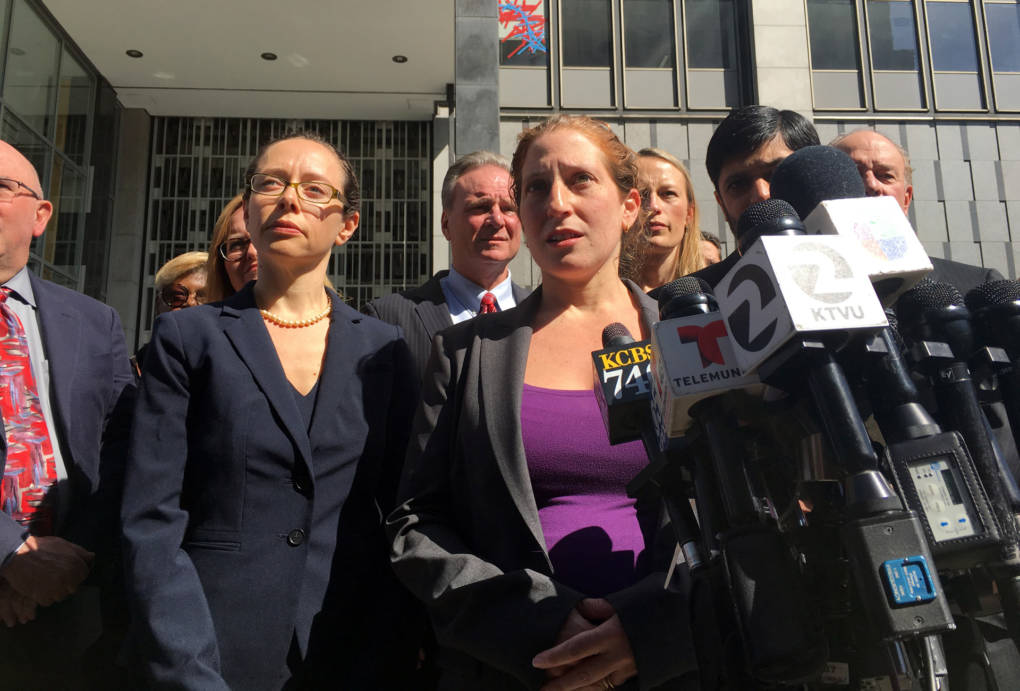
"caption": "San Francisco deputy city attorneys Mollie Lee and Sara Eisenberg seek to block President Trump's plan to defund sanctuary cities.",
"description": "San Francisco city attorneys Mollie Lee and Sara Eisenberg seek to block President Trump's plan to defund sanctuary cities.",
"title": "SfCityAttorneys",
"credit": "Julie Small/KQED",
"status": "inherit",
"isLoading": false,
"fetchFailed": false
},
"news_11394884": {
"type": "attachments",
"id": "news_11394884",
"meta": {
"index": "attachments_1716263798",
"site": "news",
"id": "11394884",
"found": true
},
"parent": 11394883,
"imgSizes": {
"small": {
"file": "https://ww2.kqed.org/app/uploads/sites/10/2017/04/ap_17095470061496-720587924d63a08dc35e775db27c1d0a242e930a-520x390.jpg",
"width": 520,
"mimeType": "image/jpeg",
"height": 390
},
"twentyfourteen-full-width": {
"file": "https://ww2.kqed.org/app/uploads/sites/10/2017/04/ap_17095470061496-720587924d63a08dc35e775db27c1d0a242e930a-1038x576.jpg",
"width": 1038,
"mimeType": "image/jpeg",
"height": 576
},
"thumbnail": {
"file": "https://ww2.kqed.org/app/uploads/sites/10/2017/04/ap_17095470061496-720587924d63a08dc35e775db27c1d0a242e930a-160x120.jpg",
"width": 160,
"mimeType": "image/jpeg",
"height": 120
},
"fd-sm": {
"file": "https://ww2.kqed.org/app/uploads/sites/10/2017/04/ap_17095470061496-720587924d63a08dc35e775db27c1d0a242e930a-960x720.jpg",
"width": 960,
"mimeType": "image/jpeg",
"height": 720
},
"post-thumbnail": {
"file": "https://ww2.kqed.org/app/uploads/sites/10/2017/04/ap_17095470061496-720587924d63a08dc35e775db27c1d0a242e930a-672x372.jpg",
"width": 672,
"mimeType": "image/jpeg",
"height": 372
},
"xsmall": {
"file": "https://ww2.kqed.org/app/uploads/sites/10/2017/04/ap_17095470061496-720587924d63a08dc35e775db27c1d0a242e930a-375x281.jpg",
"width": 375,
"mimeType": "image/jpeg",
"height": 281
},
"kqedFullSize": {
"file": "https://ww2.kqed.org/app/uploads/sites/10/2017/04/ap_17095470061496-720587924d63a08dc35e775db27c1d0a242e930a.jpg",
"width": 4522,
"height": 3391
},
"large": {
"file": "https://ww2.kqed.org/app/uploads/sites/10/2017/04/ap_17095470061496-720587924d63a08dc35e775db27c1d0a242e930a-1020x765.jpg",
"width": 1020,
"mimeType": "image/jpeg",
"height": 765
},
"xlarge": {
"file": "https://ww2.kqed.org/app/uploads/sites/10/2017/04/ap_17095470061496-720587924d63a08dc35e775db27c1d0a242e930a-1180x885.jpg",
"width": 1180,
"mimeType": "image/jpeg",
"height": 885
},
"guest-author-50": {
"file": "https://ww2.kqed.org/app/uploads/sites/10/2017/04/ap_17095470061496-720587924d63a08dc35e775db27c1d0a242e930a-50x50.jpg",
"width": 50,
"mimeType": "image/jpeg",
"height": 50
},
"guest-author-96": {
"file": "https://ww2.kqed.org/app/uploads/sites/10/2017/04/ap_17095470061496-720587924d63a08dc35e775db27c1d0a242e930a-96x96.jpg",
"width": 96,
"mimeType": "image/jpeg",
"height": 96
},
"medium": {
"file": "https://ww2.kqed.org/app/uploads/sites/10/2017/04/ap_17095470061496-720587924d63a08dc35e775db27c1d0a242e930a-800x600.jpg",
"width": 800,
"mimeType": "image/jpeg",
"height": 600
},
"guest-author-64": {
"file": "https://ww2.kqed.org/app/uploads/sites/10/2017/04/ap_17095470061496-720587924d63a08dc35e775db27c1d0a242e930a-64x64.jpg",
"width": 64,
"mimeType": "image/jpeg",
"height": 64
},
"guest-author-32": {
"file": "https://ww2.kqed.org/app/uploads/sites/10/2017/04/ap_17095470061496-720587924d63a08dc35e775db27c1d0a242e930a-32x32.jpg",
"width": 32,
"mimeType": "image/jpeg",
"height": 32
},
"fd-lrg": {
"file": "https://ww2.kqed.org/app/uploads/sites/10/2017/04/ap_17095470061496-720587924d63a08dc35e775db27c1d0a242e930a-1920x1440.jpg",
"width": 1920,
"mimeType": "image/jpeg",
"height": 1440
},
"fd-med": {
"file": "https://ww2.kqed.org/app/uploads/sites/10/2017/04/ap_17095470061496-720587924d63a08dc35e775db27c1d0a242e930a-1180x885.jpg",
"width": 1180,
"mimeType": "image/jpeg",
"height": 885
},
"full-width": {
"file": "https://ww2.kqed.org/app/uploads/sites/10/2017/04/ap_17095470061496-720587924d63a08dc35e775db27c1d0a242e930a-1920x1440.jpg",
"width": 1920,
"mimeType": "image/jpeg",
"height": 1440
},
"detail": {
"file": "https://ww2.kqed.org/app/uploads/sites/10/2017/04/ap_17095470061496-720587924d63a08dc35e775db27c1d0a242e930a-150x150.jpg",
"width": 150,
"mimeType": "image/jpeg",
"height": 150
},
"guest-author-128": {
"file": "https://ww2.kqed.org/app/uploads/sites/10/2017/04/ap_17095470061496-720587924d63a08dc35e775db27c1d0a242e930a-128x128.jpg",
"width": 128,
"mimeType": "image/jpeg",
"height": 128
},
"xxsmall": {
"file": "https://ww2.kqed.org/app/uploads/sites/10/2017/04/ap_17095470061496-720587924d63a08dc35e775db27c1d0a242e930a-240x180.jpg",
"width": 240,
"mimeType": "image/jpeg",
"height": 180
}
},
"publishDate": 1491496992,
"modified": 1491521960,
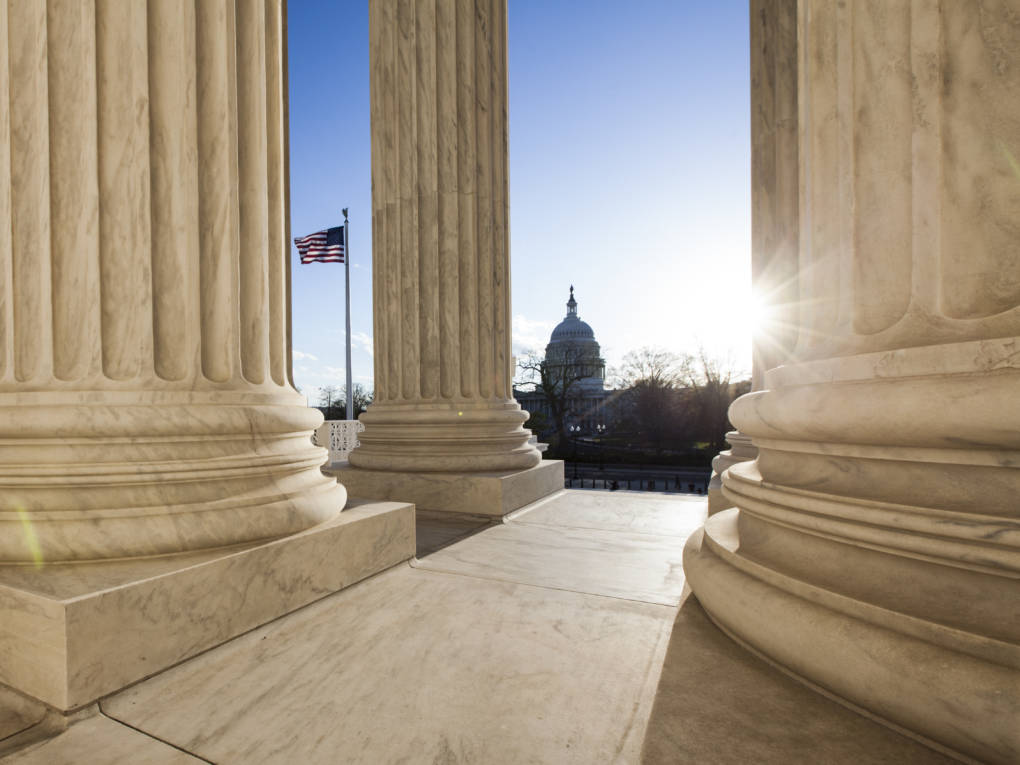
"caption": "The U.S. Capitol as seen from the Supreme Court Building in Washington, D.C.",
"description": "The U.S. Capitol as seen from the Supreme Court Building in Washington, D.C.",
"title": "The U.S. Capitol as seen from the Supreme Court Building in Washington, D.C.",
"credit": "Mandel Ngan/AFP/Getty Images",
"status": "inherit",
"isLoading": false,
"fetchFailed": false
}
},
"audioPlayerReducer": {
"postId": "stream_live",
"isPaused": true,
"isPlaying": false,
"pfsActive": false,
"pledgeModalIsOpen": true,
"playerDrawerIsOpen": false,
"liveAudioPlayStartedAt": 0,
"liveAudioPlayContext": ""
},
"authorsReducer": {
"byline_news_11652256": {
"type": "authors",
"id": "byline_news_11652256",
"meta": {
"override": true
},
"slug": "byline_news_11652256",
"name": "\u003cstrong>KQED News Staff and Wire Reports\u003c/strong>",
"isLoading": false
},
"byline_news_11642345": {
"type": "authors",
"id": "byline_news_11642345",
"meta": {
"override": true
},
"slug": "byline_news_11642345",
"name": "Carrie Johnson",
"isLoading": false
},
"byline_news_11533105": {
"type": "authors",
"id": "byline_news_11533105",
"meta": {
"override": true
},
"slug": "byline_news_11533105",
"name": "\u003cstrong>Joel Rose\u003c/strong>",
"isLoading": false
},
"byline_news_11394883": {
"type": "authors",
"id": "byline_news_11394883",
"meta": {
"override": true
},
"slug": "byline_news_11394883",
"name": "Susan Davis",
"isLoading": false
},
"scottshafer": {
"type": "authors",
"id": "255",
"meta": {
"index": "authors_1716337520",
"id": "255",
"found": true
},
"name": "Scott Shafer",
"firstName": "Scott",
"lastName": "Shafer",
"slug": "scottshafer",
"email": "sshafer@kqed.org",
"display_author_email": false,
"staff_mastheads": [
"news"
],
"title": "KQED Contributor",
"bio": "Scott Shafer is a senior editor with the KQED Politics and Government desk. He is co-host of Political Breakdown, the award-winning radio show and podcast with a personal take on the world of politics. Scott came to KQED in 1998 to host the statewide\u003cem> California Report\u003c/em>. Prior to that he had extended stints in politics and government\u003cem>.\u003c/em> He uses that inside experience at KQED in his, reporting, hosting and analysis for the politics desk. Scott collaborated \u003cem>Political Breakdown a\u003c/em>nd on \u003cem>The Political Mind of Jerry Brown, \u003c/em>an eight-part series about the life and extraordinary political career of the former governor. For fun, he plays water polo with the San Francisco Tsunami.",
"avatar": "https://secure.gravatar.com/avatar/a62ebae45b79d7aed1a39a0e3bf68104?s=600&d=blank&r=g",
"twitter": "scottshafer",
"bluesky": null,
"facebook": null,
"instagram": null,
"linkedin": null,
"sites": [
{
"site": "news",
"roles": [
"editor"
]
},
{
"site": "stateofhealth",
"roles": [
"author"
]
},
{
"site": "science",
"roles": [
"author"
]
},
{
"site": "forum",
"roles": [
"subscriber"
]
},
{
"site": "liveblog",
"roles": [
"author"
]
}
],
"headData": {
"title": "Scott Shafer | KQED",
"description": "KQED Contributor",
"ogImgSrc": "https://secure.gravatar.com/avatar/a62ebae45b79d7aed1a39a0e3bf68104?s=600&d=blank&r=g",
"twImgSrc": "https://secure.gravatar.com/avatar/a62ebae45b79d7aed1a39a0e3bf68104?s=600&d=blank&r=g"
},
"isLoading": false,
"link": "/author/scottshafer"
},
"markfiore": {
"type": "authors",
"id": "3236",
"meta": {
"index": "authors_1716337520",
"id": "3236",
"found": true
},
"name": "Mark Fiore",
"firstName": "Mark",
"lastName": "Fiore",
"slug": "markfiore",
"email": "mark@markfiore.com",
"display_author_email": false,
"staff_mastheads": [
"news"
],
"title": "KQED News Cartoonist",
"bio": "\u003ca href=\"http://www.MarkFiore.com\">MarkFiore.com\u003c/a> | \u003ca href=\"https://twitter.com/markfiore\">Follow on Twitter\u003c/a> | \u003ca href=\"https://www.facebook.com/pages/Mark-Fiore-Animated-Political-Cartoons/94451707396?ref=bookmarks\">Facebook\u003c/a> | \u003ca href=\"mailto:mark@markfiore.com\">email\u003c/a>\r\n\r\nPulitzer Prize-winner, Mark Fiore, who the Wall Street Journal has called “the undisputed guru of the form,” creates animated political cartoons in San Francisco, where his work has been featured regularly on the San Francisco Chronicle’s web site, SFGate.com. His work has appeared on Newsweek.com, Slate.com, CBSNews.com, MotherJones.com, DailyKos.com and NPR’s web site. Fiore’s political animation has appeared on CNN, Frontline, Bill Moyers Journal, Salon.com and cable and broadcast outlets across the globe.\r\n\r\nBeginning his professional life by drawing traditional political cartoons for newspapers, Fiore’s work appeared in publications ranging from the Washington Post to the Los Angeles Times. In the late 1990s, he began to experiment with animating political cartoons and, after a short stint at the San Jose Mercury News as their staff cartoonist, Fiore devoted all his energies to animation.\r\nGrowing up in California, Fiore also spent a good portion of his life in the backwoods of Idaho. It was this combination that shaped him politically. Mark majored in political science at Colorado College, where, in a perfect send-off for a cartoonist, he received his diploma in 1991 as commencement speaker Dick Cheney smiled approvingly.\r\nMark Fiore was awarded the Pulitzer Prize for political cartooning in 2010, a Robert F. Kennedy Journalism Award in 2004 and has twice received an Online Journalism Award for commentary from the Online News Association (2002, 2008). Fiore has received two awards for his work in new media from the National Cartoonists Society (2001, 2002), and in 2006 received The James Madison Freedom of Information Award from The Society of Professional Journalists.",
"avatar": "https://secure.gravatar.com/avatar/fc4e2a612b15b67bad0c6f0e1db4ca9b?s=600&d=blank&r=g",
"twitter": "MarkFiore",
"facebook": null,
"instagram": "https://www.instagram.com/markfiore/?hl=en",
"linkedin": null,
"sites": [
{
"site": "arts",
"roles": [
"contributor"
]
},
{
"site": "news",
"roles": [
"editor"
]
},
{
"site": "futureofyou",
"roles": [
"editor"
]
},
{
"site": "science",
"roles": [
"editor"
]
}
],
"headData": {
"title": "Mark Fiore | KQED",
"description": "KQED News Cartoonist",
"ogImgSrc": "https://secure.gravatar.com/avatar/fc4e2a612b15b67bad0c6f0e1db4ca9b?s=600&d=blank&r=g",
"twImgSrc": "https://secure.gravatar.com/avatar/fc4e2a612b15b67bad0c6f0e1db4ca9b?s=600&d=blank&r=g"
},
"isLoading": false,
"link": "/author/markfiore"
},
"jsmall": {
"type": "authors",
"id": "6625",
"meta": {
"index": "authors_1716337520",
"id": "6625",
"found": true
},
"name": "Julie Small",
"firstName": "Julie",
"lastName": "Small",
"slug": "jsmall",
"email": "jsmall@kqed.org",
"display_author_email": true,
"staff_mastheads": [
"news"
],
"title": "KQED Contributor",
"bio": "Julie Small reports on criminal justice and immigration.\r\n\r\nShe was part of a team at KQED awarded a regional 2019 Edward R. Murrow award for continuing coverage of the Trump Administration's family separation policy.\r\n\r\nThe Society for Professional Journalists recognized Julie's 2018 \u003ca href=\"https://www.kqed.org/news/11636262/the-officer-tased-him-31-times-the-sheriff-called-his-death-an-accident\">reporting\u003c/a> on the San Joaquin County Sheriff's \u003ca href=\"https://www.kqed.org/news/11634689/autopsy-doctors-sheriff-overrode-death-findings-to-protect-law-enforcement\">interference\u003c/a> in death investigations with an Excellence in Journalism Award for Ongoing Coverage.\r\n\r\nJulie's\u003ca href=\"https://www.kqed.org/news/11039666/two-mentally-ill-inmates-died-one-month-in-santa-clara\"> reporting\u003c/a> with Lisa Pickoff-White on the treatment of mentally ill offenders in California jails earned a 2017 regional Edward R. Murrow Award for news reporting and an investigative reporting award from the SPJ of Northern California.\r\n\r\nBefore joining KQED, Julie covered government and politics in Sacramento for Southern California Public Radio (SCPR). Her 2010 \u003ca href=\"https://www.scpr.org/specials/prisonmedical/\">series\u003c/a> on lapses in California’s prison medical care also won a regional Edward R. Murrow Award for investigative reporting and a Golden Mic Award from the RTNDA of Southern California.\r\n\r\nJulie began her career in journalism in 2000 as the deputy foreign editor for public radio's \u003cem>Marketplace, \u003c/em>while earning her master's degree in journalism from USC’s Annenberg School of Communication.",
"avatar": "https://secure.gravatar.com/avatar/4baedf201468df97be97c2a9dd7585d0?s=600&d=blank&r=g",
"twitter": "@SmallRadio2",
"facebook": null,
"instagram": null,
"linkedin": null,
"sites": [
{
"site": "news",
"roles": [
"editor"
]
},
{
"site": "stateofhealth",
"roles": [
"author"
]
},
{
"site": "science",
"roles": [
"author"
]
}
],
"headData": {
"title": "Julie Small | KQED",
"description": "KQED Contributor",
"ogImgSrc": "https://secure.gravatar.com/avatar/4baedf201468df97be97c2a9dd7585d0?s=600&d=blank&r=g",
"twImgSrc": "https://secure.gravatar.com/avatar/4baedf201468df97be97c2a9dd7585d0?s=600&d=blank&r=g"
},
"isLoading": false,
"link": "/author/jsmall"
},
"fjhabvala": {
"type": "authors",
"id": "8659",
"meta": {
"index": "authors_1716337520",
"id": "8659",
"found": true
},
"name": "Farida Jhabvala Romero",
"firstName": "Farida",
"lastName": "Jhabvala Romero",
"slug": "fjhabvala",
"email": "fjhabvala@kqed.org",
"display_author_email": true,
"staff_mastheads": [
"news"
],
"title": "KQED Contributor",
"bio": "Farida Jhabvala Romero is a Labor Correspondent for KQED. She previously covered immigration. Farida was \u003ca href=\"https://www.ccnma.org/2022-most-influential-latina-journalists\">named\u003c/a> one of the 10 Most Influential Latina Journalists in California in 2022 by the California Chicano News Media Association. Her work has won awards from the Society of Professional Journalists (Northern California), as well as a national and regional Edward M. Murrow Award for the collaborative reporting projects “Dangerous Air” and “Graying California.” Before joining KQED, Farida worked as a producer at Radio Bilingüe, a national public radio network. Farida earned her master’s degree in journalism from Stanford University.",
"avatar": "https://secure.gravatar.com/avatar/f9f022d4e2609741874222a1e9d41f48fea74011aa7c615eef91d9a50c944ebe?s=600&d=blank&r=g",
"twitter": "FaridaJhabvala",
"bluesky": null,
"facebook": null,
"instagram": null,
"linkedin": "https://www.linkedin.com/in/faridajhabvala/",
"sites": [
{
"site": "news",
"roles": [
"editor"
]
},
{
"site": "stateofhealth",
"roles": [
"author"
]
},
{
"site": "liveblog",
"roles": [
"author"
]
}
],
"headData": {
"title": "Farida Jhabvala Romero | KQED",
"description": "KQED Contributor",
"ogImgSrc": "https://secure.gravatar.com/avatar/f9f022d4e2609741874222a1e9d41f48fea74011aa7c615eef91d9a50c944ebe?s=600&d=blank&r=g",
"twImgSrc": "https://secure.gravatar.com/avatar/f9f022d4e2609741874222a1e9d41f48fea74011aa7c615eef91d9a50c944ebe?s=600&d=blank&r=g"
},
"isLoading": false,
"link": "/author/fjhabvala"
}
},
"pagesReducer": {
"news_tag_u-s-supreme-court": {
"type": "terms",
"id": "news_1172",
"meta": {
"index": "terms_1716263798",
"site": "news",
"id": "1172",
"score": 10.403838
},
"featImg": null,
"name": "U.S. Supreme Court",
"description": null,
"taxonomy": "tag",
"headData": {
"twImgId": null,
"twTitle": null,
"ogTitle": null,
"ogImgId": null,
"twDescription": null,
"description": null,
"title": "U.S. Supreme Court Archives | KQED News",
"ogDescription": null
},
"ttid": 1183,
"slug": "u-s-supreme-court",
"isLoading": false,
"title": "U.S. Supreme Court",
"pageMeta": {
"site": "news",
"WpPageTemplate": "page-topic-editorial",
"currentPage": 12
},
"blocks": [
{
"blockName": "kqed/post-list",
"attrs": {
"layout": "cardArticle2",
"query": "posts/news?tag=u-s-supreme-court",
"seeMore": false,
"paginated": true,
"page": 12
}
},
{
"blockName": "kqed/ad"
}
]
}
},
"pfsSessionReducer": {},
"postsReducer": {
"stream_live": {
"type": "live",
"id": "stream_live",
"audioUrl": "https://streams.kqed.org/kqedradio",
"title": "Live Stream",
"excerpt": "Live Stream information currently unavailable.",
"link": "/radio",
"featImg": "",
"label": {
"name": "KQED Live",
"link": "/"
}
},
"stream_kqedNewscast": {
"type": "posts",
"id": "stream_kqedNewscast",
"audioUrl": "https://www.kqed.org/.stream/anon/radio/RDnews/newscast.mp3?_=1",
"title": "KQED Newscast",
"featImg": "",
"label": {
"name": "88.5 FM",
"link": "/"
}
},
"news_11652256": {
"type": "posts",
"id": "news_11652256",
"meta": {
"index": "posts_1716263798",
"site": "news",
"id": "11652256",
"score": null,
"sort": [
1519659767000
]
},
"parent": 0,
"labelTerm": {
"site": "news",
"term": 72
},
"blocks": [],
"publishDate": 1519659767,
"format": "audio",
"disqusTitle": "Supreme Court Rejects Trump Bid to Fast-Track DACA Case, Thousands Could Still Lose Protection",
"title": "Supreme Court Rejects Trump Bid to Fast-Track DACA Case, Thousands Could Still Lose Protection",
"headTitle": "The California Report | KQED News",
"content": "\u003cp>The U.S. Supreme Court has rejected the Trump administration's unusual bid for the justices to intervene in a case over protections for hundreds of thousands of young immigrants.\u003c/p>\n\u003cp>The court on Monday declined to take up a key case dealing with the Obama administration's Deferred Action for Childhood Arrivals program -- for now. DACA protects undocumented immigrants who were brought to the United States as children. In September, President Trump ordered an end to the program.\u003c/p>\n\u003cp>The 9th U.S. Circuit Court of Appeals is considering a San Francisco federal judge's \u003ca href=\"https://www.npr.org/sections/thetwo-way/2018/01/10/576963434/federal-judge-temporarily-blocks-trumps-decision-to-end-daca\" target=\"_blank\" rel=\"noopener\">January ruling\u003c/a> that blocked the administration from ending DACA by March 5. The Trump administration tried to skip the 9th Circuit, which many view as a liberal court, and go directly to the Supreme Court.\u003c/p>\n\u003cp>\"We’re very happy,\" plaintiff Dulce Garcia said Monday. \"As a DACA recipient I’m very happy about today’s results. But the fight’s still going on. Unfortunately, the president rescinded the DACA program without a plan in place and without a bill in Congress.\"\u003c/p>\n\u003cp>The high court said the 9th Circuit, which considers cases from California and eight other states, should hear the case first. That means DACA continues under the injunction at least until May or June, when the 9th Circuit is expected to rule on the case.\u003c/p>\n\u003cp>[ad fullwidth]\u003c/p>\n\u003cp>[contextly_sidebar id=\"JCz1uWDj6gMhDAcV6oZySurqdFOm3bzs\"]\u003c/p>\n\u003cp>In a brief unsigned comment, the Supreme Court justices wrote that they assume \"the court of appeals will proceed expeditiously to decide this case.\"\u003c/p>\n\u003cp>Along with U.S. District Judge William Alsup in San Francisco, a federal judge in New York also \u003ca href=\"https://ww2.kqed.org/news/2018/02/14/second-federal-court-blocks-trump-from-rescinding-daca/\" target=\"_blank\" rel=\"noopener\">ruled in favor\u003c/a> of immigrants challenging the end of DACA, and that case is expected to proceed to the federal appeals court in New York.\u003c/p>\n\u003cp>\"Unless and until both of those injunctions are overturned -- and we obviously are doing everything we can to make sure that doesn’t happen -- current DACA holders are allowed under the injunction to keep renewing their DACA status,\" said Ethan Dettmer, an attorney who represents Garcia and five other DACA recipients in the San Francisco-based case.\u003c/p>\n\u003cp>But it's unclear how quickly U.S. Citizenship and Immigration Services is processing those renewal applications since the court ordered most parts of DACA to continue in January. Meanwhile, advocates estimate that more than 120 people are seeing their protections expire per day -- including those who are waiting for a renewal.\u003c/p>\n\u003cp>The number of people losing DACA protections is expected to rise sharply next week -- as a surge of expirations hits.\u003c/p>\n\u003cp>\"Starting March 6, it’ll be thousands per day,\" Garcia said. \"We’ll have thousands of people who will become deportable, and as we’ve heard from this administration, no one is safe. If you’re undocumented, you’re not safe.\"\u003c/p>\n\u003cp>A spokeswoman for USCIS said Monday that the number of DACA renewal applications received and processed since the January injunction is not yet available, but the agency is compiling that data and expects to release it soon.\u003c/p>\n\u003cp>\"We take the administration at its word that it’s going to follow the judicial injunctions in place,\" Dettmer said. \"We have to believe they are doing what they're required to do under these judicial orders.\"\u003c/p>\n\u003cp>\"Yes, it needs to be confirmed,\" he added.\u003c/p>\n\u003cp>All parties in the increasingly complex case appear to agree that a legislative solution for DACA recipients and others brought to the U.S. as children would be preferable to any final ruling by the courts. But a compromise has been elusive amid President Trump's insistence on attaching deportation protections for so-called DREAMers to border security funding and severe limits on legal immigration for family members of U.S. citizens.\u003c/p>\n\u003cp>\u003c/p>\n\u003cp>\"We don’t want just any DACA fix or any bill that would provide protection for the 800,000 DACA recipients,\" Garcia said. \"I do very much think that there is a possibility to have some sort of bill that offers citizenship down the road, but it’s all the strings that are attached to it that are very concerning.\"\u003c/p>\n\n",
"disqusIdentifier": "11652256 https://ww2.kqed.org/news/?p=11652256",
"disqusUrl": "https://ww2.kqed.org/news/2018/02/26/supreme-court-declines-to-take-daca-case-leaving-it-in-place-for-now/",
"stats": {
"hasVideo": false,
"hasChartOrMap": false,
"hasAudio": false,
"hasPolis": false,
"wordCount": 691,
"hasGoogleForm": false,
"hasGallery": false,
"hasHearkenModule": false,
"iframeSrcs": [],
"paragraphCount": 19
},
"modified": 1519694426,
"excerpt": "The court said the government's request to intervene on a ruling about the Obama administration's Deferred Action for Childhood Arrivals program should be heard by a court of appeals first. ",
"headData": {
"twImgId": "",
"twTitle": "",
"ogTitle": "",
"ogImgId": "",
"twDescription": "",
"description": "The court said the government's request to intervene on a ruling about the Obama administration's Deferred Action for Childhood Arrivals program should be heard by a court of appeals first. ",
"title": "Supreme Court Rejects Trump Bid to Fast-Track DACA Case, Thousands Could Still Lose Protection | KQED",
"ogDescription": "",
"schema": {
"@context": "https://schema.org",
"@type": "NewsArticle",
"headline": "Supreme Court Rejects Trump Bid to Fast-Track DACA Case, Thousands Could Still Lose Protection",
"datePublished": "2018-02-26T07:42:47-08:00",
"dateModified": "2018-02-26T17:20:26-08:00",
"image": "https://cdn.kqed.org/wp-content/uploads/2020/02/KQED-OG-Image@1x.png",
"isAccessibleForFree": "True",
"publisher": {
"@type": "NewsMediaOrganization",
"@id": "https://www.kqed.org/#organization",
"name": "KQED",
"logo": "https://cdn.kqed.org/wp-content/uploads/2020/02/KQED-OG-Image@1x.png",
"url": "https://www.kqed.org",
"sameAs": [
"https://www.facebook.com/KQED",
"https://twitter.com/KQED",
"https://www.instagram.com/kqed/",
"https://www.tiktok.com/@kqedofficial",
"https://www.linkedin.com/company/kqed",
"https://www.youtube.com/channel/UCeC0IOo7i1P_61zVUWbJ4nw"
]
}
}
},
"guestAuthors": [],
"slug": "supreme-court-declines-to-take-daca-case-leaving-it-in-place-for-now",
"status": "publish",
"nprApiLink": "http://api.npr.org/query?id=588813001&apiKey=MDAxOTAwOTE4MDEyMTkxMDAzNjczZDljZA004",
"audioUrl": "https://www.kqed.org/.stream/anon/radio/tcr/2018/02/SupremeCourtDACAVladek2way180226.mp3",
"nprByline": "\u003cstrong>KQED News Staff and Wire Reports\u003c/strong>",
"nprStoryDate": "Mon, 26 Feb 2018 09:52:00 -0500",
"nprLastModifiedDate": "Mon, 26 Feb 2018 10:17:51 -0500",
"nprHtmlLink": "https://www.npr.org/2018/02/26/588813001/supreme-court-declines-to-take-up-key-daca-case-for-now?ft=nprml&f=588813001",
"nprImageAgency": "Getty Images",
"nprImageCredit": "Alex Wong",
"nprStoryId": "588813001",
"nprRetrievedStory": "1",
"nprPubDate": "Mon, 26 Feb 2018 10:17:00 -0500",
"path": "/news/11652256/supreme-court-declines-to-take-daca-case-leaving-it-in-place-for-now",
"audioDuration": 187000,
"audioTrackLength": null,
"parsedContent": [
{
"type": "contentString",
"content": "\u003cdiv class=\"post-body\">\u003cp>\u003cp>The U.S. Supreme Court has rejected the Trump administration's unusual bid for the justices to intervene in a case over protections for hundreds of thousands of young immigrants.\u003c/p>\n\u003cp>The court on Monday declined to take up a key case dealing with the Obama administration's Deferred Action for Childhood Arrivals program -- for now. DACA protects undocumented immigrants who were brought to the United States as children. In September, President Trump ordered an end to the program.\u003c/p>\n\u003cp>The 9th U.S. Circuit Court of Appeals is considering a San Francisco federal judge's \u003ca href=\"https://www.npr.org/sections/thetwo-way/2018/01/10/576963434/federal-judge-temporarily-blocks-trumps-decision-to-end-daca\" target=\"_blank\" rel=\"noopener\">January ruling\u003c/a> that blocked the administration from ending DACA by March 5. The Trump administration tried to skip the 9th Circuit, which many view as a liberal court, and go directly to the Supreme Court.\u003c/p>\n\u003cp>\"We’re very happy,\" plaintiff Dulce Garcia said Monday. \"As a DACA recipient I’m very happy about today’s results. But the fight’s still going on. Unfortunately, the president rescinded the DACA program without a plan in place and without a bill in Congress.\"\u003c/p>\n\u003cp>The high court said the 9th Circuit, which considers cases from California and eight other states, should hear the case first. That means DACA continues under the injunction at least until May or June, when the 9th Circuit is expected to rule on the case.\u003c/p>\n\u003cp>\u003c/p>\u003c/div>",
"attributes": {
"named": {},
"numeric": []
}
},
{
"type": "component",
"content": "",
"name": "ad",
"attributes": {
"named": {
"label": "fullwidth"
},
"numeric": [
"fullwidth"
]
}
},
{
"type": "contentString",
"content": "\u003cdiv class=\"post-body\">\u003cp>\u003c/p>\n\u003cp>\u003c/p>\u003cp>\u003c/p>\u003cp>\u003c/p>\n\u003cp>In a brief unsigned comment, the Supreme Court justices wrote that they assume \"the court of appeals will proceed expeditiously to decide this case.\"\u003c/p>\n\u003cp>Along with U.S. District Judge William Alsup in San Francisco, a federal judge in New York also \u003ca href=\"https://ww2.kqed.org/news/2018/02/14/second-federal-court-blocks-trump-from-rescinding-daca/\" target=\"_blank\" rel=\"noopener\">ruled in favor\u003c/a> of immigrants challenging the end of DACA, and that case is expected to proceed to the federal appeals court in New York.\u003c/p>\n\u003cp>\"Unless and until both of those injunctions are overturned -- and we obviously are doing everything we can to make sure that doesn’t happen -- current DACA holders are allowed under the injunction to keep renewing their DACA status,\" said Ethan Dettmer, an attorney who represents Garcia and five other DACA recipients in the San Francisco-based case.\u003c/p>\n\u003cp>But it's unclear how quickly U.S. Citizenship and Immigration Services is processing those renewal applications since the court ordered most parts of DACA to continue in January. Meanwhile, advocates estimate that more than 120 people are seeing their protections expire per day -- including those who are waiting for a renewal.\u003c/p>\n\u003cp>The number of people losing DACA protections is expected to rise sharply next week -- as a surge of expirations hits.\u003c/p>\n\u003cp>\"Starting March 6, it’ll be thousands per day,\" Garcia said. \"We’ll have thousands of people who will become deportable, and as we’ve heard from this administration, no one is safe. If you’re undocumented, you’re not safe.\"\u003c/p>\n\u003cp>A spokeswoman for USCIS said Monday that the number of DACA renewal applications received and processed since the January injunction is not yet available, but the agency is compiling that data and expects to release it soon.\u003c/p>\n\u003cp>\"We take the administration at its word that it’s going to follow the judicial injunctions in place,\" Dettmer said. \"We have to believe they are doing what they're required to do under these judicial orders.\"\u003c/p>\n\u003cp>\"Yes, it needs to be confirmed,\" he added.\u003c/p>\n\u003cp>All parties in the increasingly complex case appear to agree that a legislative solution for DACA recipients and others brought to the U.S. as children would be preferable to any final ruling by the courts. But a compromise has been elusive amid President Trump's insistence on attaching deportation protections for so-called DREAMers to border security funding and severe limits on legal immigration for family members of U.S. citizens.\u003c/p>\n\u003cp>\u003c/p>\n\u003cp>\"We don’t want just any DACA fix or any bill that would provide protection for the 800,000 DACA recipients,\" Garcia said. \"I do very much think that there is a possibility to have some sort of bill that offers citizenship down the road, but it’s all the strings that are attached to it that are very concerning.\"\u003c/p>\n\n\u003c/div>\u003c/p>",
"attributes": {
"named": {},
"numeric": []
}
}
],
"link": "/news/11652256/supreme-court-declines-to-take-daca-case-leaving-it-in-place-for-now",
"authors": [
"byline_news_11652256"
],
"programs": [
"news_6944",
"news_72"
],
"categories": [
"news_6188",
"news_8",
"news_13"
],
"tags": [
"news_20226",
"news_17286",
"news_17041",
"news_1172"
],
"featImg": "news_11652257",
"label": "news_72"
},
"news_11651424": {
"type": "posts",
"id": "news_11651424",
"meta": {
"index": "posts_1716263798",
"site": "news",
"id": "11651424",
"score": null,
"sort": [
1519255232000
]
},
"guestAuthors": [],
"slug": "putting-the-dis-in-dissent",
"title": "Putting the 'Dis' in 'Dissent'",
"publishDate": 1519255232,
"format": "standard",
"headTitle": "Putting the ‘Dis’ in ‘Dissent’ | KQED",
"labelTerm": {
"term": 18515,
"site": "news"
},
"content": "\u003cp>While Florida students were marching in support of gun regulation, U.S. Supreme Court Associate Justice Clarence Thomas \u003ca href=\"http://bit.ly/2opKVdx\">issued a scathing dissent\u003c/a> in support of the Second Amendment.\u003c/p>\n\u003cp>On Tuesday, the Supreme Court declined to hear a case about a California law that imposes a 10-day cooling-off period for firearm purchases.\u003c/p>\n\u003cp>After harshly criticizing his fellow Supreme Court jurists, Thomas went on to say that in the 9th U.S. Circuit Court of Appeals, “rights that have no basis in the Constitution receive greater protection than the Second Amendment.”\u003c/p>\n\u003cp>Having survived this latest legal challenge, California’s 10-day waiting period to buy a gun will remain in effect, leaving the state with the \u003ca href=\"http://lawcenter.giffords.org/scorecard2016/#rankings\">strictest gun laws in the nation\u003c/a>.\u003c/p>\n\u003cp>Meanwhile, L.A. law enforcement officials \u003ca href=\"https://ww2.kqed.org/news/2018/02/21/california-school-shooting-plot-foiled-assault-rifles-found/\" rel=\"noopener\" target=\"_blank\">arrested a 17-year-old high school student\u003c/a> after a school security officer overheard the student threatening to commit a shooting. Two AR-15 assault rifles, 90 high-capacity magazines and other handguns were found in the home the student shared with his older brother, who was also arrested.\u003c/p>\n\u003cp>[ad fullwidth]\u003c/p>\u003cp>\u003c/p>\n",
"blocks": [],
"excerpt": "While Florida students were marching in support of gun regulation, Clarence Thomas issued a scathing dissent in support of the Second Amendment.",
"status": "publish",
"parent": 0,
"modified": 1721114448,
"stats": {
"hasAudio": false,
"hasVideo": false,
"hasChartOrMap": false,
"iframeSrcs": [],
"hasGoogleForm": false,
"hasGallery": false,
"hasHearkenModule": false,
"hasPolis": false,
"paragraphCount": 7,
"wordCount": 182
},
"headData": {
"title": "Putting the 'Dis' in 'Dissent' | KQED",
"description": "While Florida students were marching in support of gun regulation, Clarence Thomas issued a scathing dissent in support of the Second Amendment.",
"ogTitle": "",
"ogDescription": "",
"ogImgId": "",
"twTitle": "",
"twDescription": "",
"twImgId": "",
"schema": {
"@context": "https://schema.org",
"@type": "NewsArticle",
"headline": "Putting the 'Dis' in 'Dissent'",
"datePublished": "2018-02-21T15:20:32-08:00",
"dateModified": "2024-07-16T00:20:48-07:00",
"image": "https://cdn.kqed.org/wp-content/uploads/2020/02/KQED-OG-Image@1x.png",
"isAccessibleForFree": "True",
"publisher": {
"@type": "NewsMediaOrganization",
"@id": "https://www.kqed.org/#organization",
"name": "KQED",
"logo": "https://cdn.kqed.org/wp-content/uploads/2020/02/KQED-OG-Image@1x.png",
"url": "https://www.kqed.org",
"sameAs": [
"https://www.facebook.com/KQED",
"https://twitter.com/KQED",
"https://www.instagram.com/kqed/",
"https://www.tiktok.com/@kqedofficial",
"https://www.linkedin.com/company/kqed",
"https://www.youtube.com/channel/UCeC0IOo7i1P_61zVUWbJ4nw"
]
}
}
},
"sticky": false,
"path": "/news/11651424/putting-the-dis-in-dissent",
"audioTrackLength": null,
"parsedContent": [
{
"type": "contentString",
"content": "\u003cdiv class=\"post-body\">\u003cp>\u003cp>While Florida students were marching in support of gun regulation, U.S. Supreme Court Associate Justice Clarence Thomas \u003ca href=\"http://bit.ly/2opKVdx\">issued a scathing dissent\u003c/a> in support of the Second Amendment.\u003c/p>\n\u003cp>On Tuesday, the Supreme Court declined to hear a case about a California law that imposes a 10-day cooling-off period for firearm purchases.\u003c/p>\n\u003cp>After harshly criticizing his fellow Supreme Court jurists, Thomas went on to say that in the 9th U.S. Circuit Court of Appeals, “rights that have no basis in the Constitution receive greater protection than the Second Amendment.”\u003c/p>\n\u003cp>Having survived this latest legal challenge, California’s 10-day waiting period to buy a gun will remain in effect, leaving the state with the \u003ca href=\"http://lawcenter.giffords.org/scorecard2016/#rankings\">strictest gun laws in the nation\u003c/a>.\u003c/p>\n\u003cp>Meanwhile, L.A. law enforcement officials \u003ca href=\"https://ww2.kqed.org/news/2018/02/21/california-school-shooting-plot-foiled-assault-rifles-found/\" rel=\"noopener\" target=\"_blank\">arrested a 17-year-old high school student\u003c/a> after a school security officer overheard the student threatening to commit a shooting. Two AR-15 assault rifles, 90 high-capacity magazines and other handguns were found in the home the student shared with his older brother, who was also arrested.\u003c/p>\n\u003cp>\u003c/p>\u003c/div>",
"attributes": {
"named": {},
"numeric": []
}
},
{
"type": "component",
"content": "",
"name": "ad",
"attributes": {
"named": {
"label": "fullwidth"
},
"numeric": [
"fullwidth"
]
}
},
{
"type": "contentString",
"content": "\u003cdiv class=\"post-body\">\u003cp>\u003c/p>\u003cp>\u003c/p>\n\u003c/div>\u003c/p>",
"attributes": {
"named": {},
"numeric": []
}
}
],
"link": "/news/11651424/putting-the-dis-in-dissent",
"authors": [
"3236"
],
"series": [
"news_18515"
],
"categories": [
"news_457",
"news_6188",
"news_8",
"news_13"
],
"tags": [
"news_22623",
"news_20150",
"news_2795",
"news_1103",
"news_20949",
"news_22610",
"news_3619",
"news_201",
"news_3058",
"news_1172"
],
"featImg": "news_11651428",
"label": "news_18515"
},
"news_11650582": {
"type": "posts",
"id": "news_11650582",
"meta": {
"index": "posts_1716263798",
"site": "news",
"id": "11650582",
"score": null,
"sort": [
1519247654000
]
},
"parent": 0,
"labelTerm": {
"site": "news",
"term": 72
},
"blocks": [],
"publishDate": 1519247654,
"format": "standard",
"disqusTitle": "DACA Renewals Continue as Congress, Courts Tussle Over Deadlines, Policy",
"title": "DACA Renewals Continue as Congress, Courts Tussle Over Deadlines, Policy",
"headTitle": "The California Report | KQED News",
"content": "\u003cp>\u003cstrong>Update, March 5, 4:30 p.m: \u003c/strong>U.S. Immigration and Citizenship Services \u003ca href=\"https://www.uscis.gov/sites/default/files/USCIS/Resources/Reports%20and%20Studies/Immigration%20Forms%20Data/All%20Form%20Types/DACA/DACA_Receipts_Since_Injunction_Jan_31_2018.pdf\">reported last week\u003c/a> that 11,360 DACA recipients nationwide applied in January to renew their two-year protection from deportation and work authorization. The agency resumed accepting renewal requests after a federal judge in San Francisco halted the Trump administration’s phase out of the program. A USCIS spokesperson confirmed some of those applicants were granted DACA renewals, but did not specify how many.\u003c/p>\n\u003cp>As of January 31, the agency was still handling an additional 18,200 DACA applications it received before a Trump administration deadline of October 5, 2017. The total number of \u003ca href=\"https://www.uscis.gov/sites/default/files/USCIS/Resources/Reports%20and%20Studies/Immigration%20Forms%20Data/All%20Form%20Types/DACA/DACA_FY18_Q1_Data_plus_Jan_18.pdf\" target=\"_blank\" rel=\"noopener\">pending applications\u003c/a> was 29,606.\u003c/p>\n\u003cp>\u003cstrong>Original story:\u003c/strong>\u003c/p>\n\u003cp>Even though Congress has \u003ca href=\"https://www.washingtonpost.com/powerpost/as-immigration-showdown-looms-in-senate-trump-administration-is-doing-everything-in-our-power-to-stop-bipartisan-plan-official-says/2018/02/15/e0cff9d0-1260-11e8-8ea1-c1d91fcec3fe_story.html?utm_term=.a514ae21896d\" target=\"_blank\" rel=\"noopener\">failed\u003c/a> to act so far on immigration legislation, President Trump's administration continues to handle a rush of applications to renew a permit that allows nearly 700,000 young undocumented immigrants to legally work and be protected from deportation.\u003c/p>\n\u003cp>Trump issued a March 5 \u003ca href=\"https://www.npr.org/2018/02/16/586324098/is-the-march-5-daca-deadline-meaningful-anymore\" target=\"_blank\" rel=\"noopener\">deadline\u003c/a> to end Deferred Action for Childhood Arrivals, or DACA. But observers expect the program to continue well beyond that date, as the issue is tied up in the courts.\u003c/p>\n\u003cp>[ad fullwidth]\u003c/p>\n\u003cp>[audio src=\"https://www.kqed.org/.stream/anon/radio/tcr/2018/02/DACARenewalsRomero.mp3\" title=\"DACA Renewals Continue as Congress, Courts Tussle Over Deadlines, Policy\" program=\"KQED News\" image=\"https://ww2.kqed.org/news/wp-content/uploads/sites/10/2018/02/RS29494_IMG_1384-qut-1.jpg\"]\u003c/p>\n\u003cp>Last week, a federal judge in New York \u003ca href=\"https://www.npr.org/sections/thetwo-way/2018/02/13/585597527/second-federal-court-blocks-trump-from-rescinding-daca\" target=\"_blank\" rel=\"noopener\">joined\u003c/a> the January ruling of a San Francisco-based judge who temporarily halted the Trump administration's phase-out of DACA while lawsuits are pending. U.S. District Court Judge William Alsup, in the Northern District of California, \u003ca href=\"https://assets.documentcloud.org/documents/4345906/1-9-18-DACA-Opinion.pdf\" target=\"_blank\" rel=\"noopener\">ordered\u003c/a> U.S. Citizenship and Immigration Services to resume accepting applications to renew the permits of current DACA recipients.\u003c/p>\n\u003cp>That opened a window of opportunity for Jackie Narvaez, 28, whose DACA status expires this summer. The math and science middle school teacher in East Oakland worries about losing her job and potential deportation unless protections are extended. She sent her renewal application by certified mail last month.\u003c/p>\n\u003cp>\"You have to make sure it's being tracked. Make sure it's safe,\" said Narvaez, who grew up in Los Angeles. \"Then it was just like, OK, let's hope for the best.\"\u003c/p>\n\u003cfigure id=\"attachment_11651140\" class=\"wp-caption aligncenter\" style=\"max-width: 1920px\">\u003cimg class=\"wp-image-11651140 size-full\" src=\"https://ww2.kqed.org/news/wp-content/uploads/sites/10/2018/02/RS29492_IMG_1393-qut.jpg\" alt=\"\" width=\"1920\" height=\"1280\" srcset=\"https://ww2.kqed.org/app/uploads/sites/10/2018/02/RS29492_IMG_1393-qut.jpg 1920w, https://ww2.kqed.org/app/uploads/sites/10/2018/02/RS29492_IMG_1393-qut-160x107.jpg 160w, https://ww2.kqed.org/app/uploads/sites/10/2018/02/RS29492_IMG_1393-qut-800x533.jpg 800w, https://ww2.kqed.org/app/uploads/sites/10/2018/02/RS29492_IMG_1393-qut-1020x680.jpg 1020w, https://ww2.kqed.org/app/uploads/sites/10/2018/02/RS29492_IMG_1393-qut-1180x787.jpg 1180w, https://ww2.kqed.org/app/uploads/sites/10/2018/02/RS29492_IMG_1393-qut-960x640.jpg 960w, https://ww2.kqed.org/app/uploads/sites/10/2018/02/RS29492_IMG_1393-qut-240x160.jpg 240w, https://ww2.kqed.org/app/uploads/sites/10/2018/02/RS29492_IMG_1393-qut-375x250.jpg 375w, https://ww2.kqed.org/app/uploads/sites/10/2018/02/RS29492_IMG_1393-qut-520x347.jpg 520w\" sizes=\"(max-width: 1920px) 100vw, 1920px\">\u003cfigcaption class=\"wp-caption-text\">Jackie Narvaez, a math and science teacher, checks her students' homework at Alliance Academy Middle School in Oakland on Feb. 8, 2018. Narvaez got a receipt from immigration authorities that her DACA renewal application is being processed. \u003ccite>(Farida Jhabvala Romero/KQED)\u003c/cite>\u003c/figcaption>\u003c/figure>\n\u003cp>Immigration officials declined to report how many applications they have received and approved since the agency announced it was \u003ca href=\"https://www.uscis.gov/archive/renew-your-daca\" target=\"_blank\" rel=\"noopener\">complying\u003c/a> with the federal court's Jan. 13 order.\u003c/p>\n\u003cp>But according to reports from nonprofit advocacy organizations in California, such as \u003ca href=\"https://centrolegal.org/\" target=\"_blank\" rel=\"noopener\">Centro Legal de la Raza\u003c/a> in Oakland and \u003ca href=\"http://www.chirla.org/\" target=\"_blank\" rel=\"noopener\">Coalition for Humane Immigrant Rights of Los Angeles\u003c/a>, more than 1,000 people in the state have filed for renewals over the last month.\u003c/p>\n\u003cp>Mission Asset Fund, based in San Francisco, provided more than 2,600 scholarships nationwide since Jan. 13 to cover the fee for DACA renewals and \u003ca href=\"https://missionassetfund.org/daca-grant/\" target=\"_blank\" rel=\"noopener\">has run out of funds\u003c/a> for that purpose, according to Kelsea McDonough, a spokeswoman for the organization.\u003c/p>\n\u003cp>Nursing student Karla Lopez attended a legal clinic at the \u003ca href=\"http://www.siren-bayarea.org/\" target=\"_blank\" rel=\"noopener\">Services, Immigrant Rights and Education Network\u003c/a>, or SIREN, in San Jose to have her application reviewed by an attorney before sending it in. Lopez was willing to pay out of pocket the nearly $500 application fee, even though her DACA permit doesn't expire until November.\u003c/p>\n\u003cp>\"I'd rather be safe than sorry. Do it before anything changes,\" said Lopez, 25, adding that it has been very stressful to watch the immigration debate in Washington, D.C. \"It's been honestly scary. Like, I thought this was going to be my last year here.\"\u003c/p>\n\u003cp>For most DACA recipients, there is no added risk in applying now since the federal government already has their personal information, said attorney Shouan Riahi with SIREN.\u003c/p>\n\u003cp>\"This window might close and the kids might lose that money,\" said Riahi, referring to the application fee. \"At the same time, it might not. And they might get two extra years of work authorization and reprieve from deportation. And I think the $500 is likely worth it.\"\u003c/p>\n\u003cp>He added that SIREN's legal clinics have been flooded by a \"huge demand\" from DACA recipients ready to reapply. The organization also offers scholarships to cover the fee.\u003c/p>\n\u003cfigure id=\"attachment_11651141\" class=\"wp-caption aligncenter\" style=\"max-width: 1920px\">\u003cimg class=\"wp-image-11651141 size-full\" src=\"https://ww2.kqed.org/news/wp-content/uploads/sites/10/2018/02/RS29491_IMG_1387-qut.jpg\" alt=\"\" width=\"1920\" height=\"1280\" srcset=\"https://ww2.kqed.org/app/uploads/sites/10/2018/02/RS29491_IMG_1387-qut.jpg 1920w, https://ww2.kqed.org/app/uploads/sites/10/2018/02/RS29491_IMG_1387-qut-160x107.jpg 160w, https://ww2.kqed.org/app/uploads/sites/10/2018/02/RS29491_IMG_1387-qut-800x533.jpg 800w, https://ww2.kqed.org/app/uploads/sites/10/2018/02/RS29491_IMG_1387-qut-1020x680.jpg 1020w, https://ww2.kqed.org/app/uploads/sites/10/2018/02/RS29491_IMG_1387-qut-1180x787.jpg 1180w, https://ww2.kqed.org/app/uploads/sites/10/2018/02/RS29491_IMG_1387-qut-960x640.jpg 960w, https://ww2.kqed.org/app/uploads/sites/10/2018/02/RS29491_IMG_1387-qut-240x160.jpg 240w, https://ww2.kqed.org/app/uploads/sites/10/2018/02/RS29491_IMG_1387-qut-375x250.jpg 375w, https://ww2.kqed.org/app/uploads/sites/10/2018/02/RS29491_IMG_1387-qut-520x347.jpg 520w\" sizes=\"(max-width: 1920px) 100vw, 1920px\">\u003cfigcaption class=\"wp-caption-text\">Applications await review by attorneys at Services, Immigrant Rights and Education Network in San Jose on Feb. 7, 2018. The nonprofit is offering financial aid to DACA applicants who can't afford the $495 renewal fee. \u003ccite>(Farida Jhabvala Romero/KQED)\u003c/cite>\u003c/figcaption>\u003c/figure>\n\u003cp>The U.S. Supreme Court is expected to announce in the coming days whether it will take up a review of Judge Alsup's decision. The Department of Justice took the rare step of simultaneously petitioning the high court to intervene, while \u003ca href=\"https://www.justice.gov/opa/pr/justice-department-files-notice-appeal-and-intends-petition-immediate-supreme-court-review\" target=\"_blank\" rel=\"noopener\">appealing\u003c/a> to the 9th U.S. Circuit Court of Appeals as well.\u003c/p>\n\u003cp>Either way, a ruling could take months, said Jeffrey Davidson, a lead attorney suing the Trump administration on behalf of the University of California to reinstate DACA.\u003c/p>\n\u003cp>\"The administration cannot rescind DACA and cannot remove people who have current DACA status\" as long as Judge Alsup's order is in place, Davidson said.\u003c/p>\n\u003cp>Federal immigration authorities are expected to report to the district court in San Francisco the progress they've made in renewing DACA applications.\u003c/p>\n\u003cp>Oakland teacher Jackie Narvaez said she has already received a government notice in the mail that her request is being processed.\u003c/p>\n\u003cp>\"So happy, I screen-shot it,\" Narvaez said. \"I sent it to my boyfriend, to my mom. I said, 'Look, I already got my receipt!' \"\u003c/p>\n\u003cp>\u003c/p>\n\u003cp>She will be happier still, she said, once she actually holds her renewed DACA permit, bringing her more certainty that she will be able to teach two more years.\u003c/p>\n\n",
"disqusIdentifier": "11650582 https://ww2.kqed.org/news/?p=11650582",
"disqusUrl": "https://ww2.kqed.org/news/2018/02/21/daca-renewals-continue-as-congress-courts-tussle-over-deadlines-policy/",
"stats": {
"hasVideo": false,
"hasChartOrMap": false,
"hasAudio": true,
"hasPolis": false,
"wordCount": 999,
"hasGoogleForm": false,
"hasGallery": false,
"hasHearkenModule": false,
"iframeSrcs": [],
"paragraphCount": 25
},
"modified": 1520296631,
"excerpt": " 'Dreamers' in California are filing applications to renew their status. A ruling by the courts on President Trump's bid to end the program could take months.\r\n",
"headData": {
"twImgId": "",
"twTitle": "",
"ogTitle": "",
"ogImgId": "",
"twDescription": "",
"description": " 'Dreamers' in California are filing applications to renew their status. A ruling by the courts on President Trump's bid to end the program could take months.\r\n",
"title": "DACA Renewals Continue as Congress, Courts Tussle Over Deadlines, Policy | KQED",
"ogDescription": "",
"schema": {
"@context": "https://schema.org",
"@type": "NewsArticle",
"headline": "DACA Renewals Continue as Congress, Courts Tussle Over Deadlines, Policy",
"datePublished": "2018-02-21T13:14:14-08:00",
"dateModified": "2018-03-05T16:37:11-08:00",
"image": "https://cdn.kqed.org/wp-content/uploads/2020/02/KQED-OG-Image@1x.png",
"isAccessibleForFree": "True",
"publisher": {
"@type": "NewsMediaOrganization",
"@id": "https://www.kqed.org/#organization",
"name": "KQED",
"logo": "https://cdn.kqed.org/wp-content/uploads/2020/02/KQED-OG-Image@1x.png",
"url": "https://www.kqed.org",
"sameAs": [
"https://www.facebook.com/KQED",
"https://twitter.com/KQED",
"https://www.instagram.com/kqed/",
"https://www.tiktok.com/@kqedofficial",
"https://www.linkedin.com/company/kqed",
"https://www.youtube.com/channel/UCeC0IOo7i1P_61zVUWbJ4nw"
]
}
}
},
"guestAuthors": [],
"slug": "daca-renewals-continue-as-congress-courts-tussle-over-deadlines-policy",
"status": "publish",
"audioUrl": "https://www.kqed.org/.stream/anon/radio/tcr/2018/02/DACARenewalsRomero.mp3",
"path": "/news/11650582/daca-renewals-continue-as-congress-courts-tussle-over-deadlines-policy",
"audioDuration": 230000,
"audioTrackLength": null,
"parsedContent": [
{
"type": "contentString",
"content": "\u003cdiv class=\"post-body\">\u003cp>\u003cp>\u003cstrong>Update, March 5, 4:30 p.m: \u003c/strong>U.S. Immigration and Citizenship Services \u003ca href=\"https://www.uscis.gov/sites/default/files/USCIS/Resources/Reports%20and%20Studies/Immigration%20Forms%20Data/All%20Form%20Types/DACA/DACA_Receipts_Since_Injunction_Jan_31_2018.pdf\">reported last week\u003c/a> that 11,360 DACA recipients nationwide applied in January to renew their two-year protection from deportation and work authorization. The agency resumed accepting renewal requests after a federal judge in San Francisco halted the Trump administration’s phase out of the program. A USCIS spokesperson confirmed some of those applicants were granted DACA renewals, but did not specify how many.\u003c/p>\n\u003cp>As of January 31, the agency was still handling an additional 18,200 DACA applications it received before a Trump administration deadline of October 5, 2017. The total number of \u003ca href=\"https://www.uscis.gov/sites/default/files/USCIS/Resources/Reports%20and%20Studies/Immigration%20Forms%20Data/All%20Form%20Types/DACA/DACA_FY18_Q1_Data_plus_Jan_18.pdf\" target=\"_blank\" rel=\"noopener\">pending applications\u003c/a> was 29,606.\u003c/p>\n\u003cp>\u003cstrong>Original story:\u003c/strong>\u003c/p>\n\u003cp>Even though Congress has \u003ca href=\"https://www.washingtonpost.com/powerpost/as-immigration-showdown-looms-in-senate-trump-administration-is-doing-everything-in-our-power-to-stop-bipartisan-plan-official-says/2018/02/15/e0cff9d0-1260-11e8-8ea1-c1d91fcec3fe_story.html?utm_term=.a514ae21896d\" target=\"_blank\" rel=\"noopener\">failed\u003c/a> to act so far on immigration legislation, President Trump's administration continues to handle a rush of applications to renew a permit that allows nearly 700,000 young undocumented immigrants to legally work and be protected from deportation.\u003c/p>\n\u003cp>Trump issued a March 5 \u003ca href=\"https://www.npr.org/2018/02/16/586324098/is-the-march-5-daca-deadline-meaningful-anymore\" target=\"_blank\" rel=\"noopener\">deadline\u003c/a> to end Deferred Action for Childhood Arrivals, or DACA. But observers expect the program to continue well beyond that date, as the issue is tied up in the courts.\u003c/p>\n\u003cp>\u003c/p>\u003c/div>",
"attributes": {
"named": {},
"numeric": []
}
},
{
"type": "component",
"content": "",
"name": "ad",
"attributes": {
"named": {
"label": "fullwidth"
},
"numeric": [
"fullwidth"
]
}
},
{
"type": "contentString",
"content": "\u003cdiv class=\"post-body\">\u003cp>\u003c/p>\n\u003cp>\u003c/p>\u003c/div>",
"attributes": {
"named": {},
"numeric": []
}
},
{
"type": "component",
"content": "",
"name": "audio",
"attributes": {
"named": {
"src": "https://www.kqed.org/.stream/anon/radio/tcr/2018/02/DACARenewalsRomero.mp3",
"title": "DACA Renewals Continue as Congress, Courts Tussle Over Deadlines, Policy",
"program": "KQED News",
"image": "https://ww2.kqed.org/news/wp-content/uploads/sites/10/2018/02/RS29494_IMG_1384-qut-1.jpg",
"label": ""
},
"numeric": []
}
},
{
"type": "contentString",
"content": "\u003cdiv class=\"post-body\">\u003cp>\u003c/p>\n\u003cp>Last week, a federal judge in New York \u003ca href=\"https://www.npr.org/sections/thetwo-way/2018/02/13/585597527/second-federal-court-blocks-trump-from-rescinding-daca\" target=\"_blank\" rel=\"noopener\">joined\u003c/a> the January ruling of a San Francisco-based judge who temporarily halted the Trump administration's phase-out of DACA while lawsuits are pending. U.S. District Court Judge William Alsup, in the Northern District of California, \u003ca href=\"https://assets.documentcloud.org/documents/4345906/1-9-18-DACA-Opinion.pdf\" target=\"_blank\" rel=\"noopener\">ordered\u003c/a> U.S. Citizenship and Immigration Services to resume accepting applications to renew the permits of current DACA recipients.\u003c/p>\n\u003cp>That opened a window of opportunity for Jackie Narvaez, 28, whose DACA status expires this summer. The math and science middle school teacher in East Oakland worries about losing her job and potential deportation unless protections are extended. She sent her renewal application by certified mail last month.\u003c/p>\n\u003cp>\"You have to make sure it's being tracked. Make sure it's safe,\" said Narvaez, who grew up in Los Angeles. \"Then it was just like, OK, let's hope for the best.\"\u003c/p>\n\u003cfigure id=\"attachment_11651140\" class=\"wp-caption aligncenter\" style=\"max-width: 1920px\">\u003cimg class=\"wp-image-11651140 size-full\" src=\"https://ww2.kqed.org/news/wp-content/uploads/sites/10/2018/02/RS29492_IMG_1393-qut.jpg\" alt=\"\" width=\"1920\" height=\"1280\" srcset=\"https://ww2.kqed.org/app/uploads/sites/10/2018/02/RS29492_IMG_1393-qut.jpg 1920w, https://ww2.kqed.org/app/uploads/sites/10/2018/02/RS29492_IMG_1393-qut-160x107.jpg 160w, https://ww2.kqed.org/app/uploads/sites/10/2018/02/RS29492_IMG_1393-qut-800x533.jpg 800w, https://ww2.kqed.org/app/uploads/sites/10/2018/02/RS29492_IMG_1393-qut-1020x680.jpg 1020w, https://ww2.kqed.org/app/uploads/sites/10/2018/02/RS29492_IMG_1393-qut-1180x787.jpg 1180w, https://ww2.kqed.org/app/uploads/sites/10/2018/02/RS29492_IMG_1393-qut-960x640.jpg 960w, https://ww2.kqed.org/app/uploads/sites/10/2018/02/RS29492_IMG_1393-qut-240x160.jpg 240w, https://ww2.kqed.org/app/uploads/sites/10/2018/02/RS29492_IMG_1393-qut-375x250.jpg 375w, https://ww2.kqed.org/app/uploads/sites/10/2018/02/RS29492_IMG_1393-qut-520x347.jpg 520w\" sizes=\"(max-width: 1920px) 100vw, 1920px\">\u003cfigcaption class=\"wp-caption-text\">Jackie Narvaez, a math and science teacher, checks her students' homework at Alliance Academy Middle School in Oakland on Feb. 8, 2018. Narvaez got a receipt from immigration authorities that her DACA renewal application is being processed. \u003ccite>(Farida Jhabvala Romero/KQED)\u003c/cite>\u003c/figcaption>\u003c/figure>\n\u003cp>Immigration officials declined to report how many applications they have received and approved since the agency announced it was \u003ca href=\"https://www.uscis.gov/archive/renew-your-daca\" target=\"_blank\" rel=\"noopener\">complying\u003c/a> with the federal court's Jan. 13 order.\u003c/p>\n\u003cp>But according to reports from nonprofit advocacy organizations in California, such as \u003ca href=\"https://centrolegal.org/\" target=\"_blank\" rel=\"noopener\">Centro Legal de la Raza\u003c/a> in Oakland and \u003ca href=\"http://www.chirla.org/\" target=\"_blank\" rel=\"noopener\">Coalition for Humane Immigrant Rights of Los Angeles\u003c/a>, more than 1,000 people in the state have filed for renewals over the last month.\u003c/p>\n\u003cp>Mission Asset Fund, based in San Francisco, provided more than 2,600 scholarships nationwide since Jan. 13 to cover the fee for DACA renewals and \u003ca href=\"https://missionassetfund.org/daca-grant/\" target=\"_blank\" rel=\"noopener\">has run out of funds\u003c/a> for that purpose, according to Kelsea McDonough, a spokeswoman for the organization.\u003c/p>\n\u003cp>Nursing student Karla Lopez attended a legal clinic at the \u003ca href=\"http://www.siren-bayarea.org/\" target=\"_blank\" rel=\"noopener\">Services, Immigrant Rights and Education Network\u003c/a>, or SIREN, in San Jose to have her application reviewed by an attorney before sending it in. Lopez was willing to pay out of pocket the nearly $500 application fee, even though her DACA permit doesn't expire until November.\u003c/p>\n\u003cp>\"I'd rather be safe than sorry. Do it before anything changes,\" said Lopez, 25, adding that it has been very stressful to watch the immigration debate in Washington, D.C. \"It's been honestly scary. Like, I thought this was going to be my last year here.\"\u003c/p>\n\u003cp>For most DACA recipients, there is no added risk in applying now since the federal government already has their personal information, said attorney Shouan Riahi with SIREN.\u003c/p>\n\u003cp>\"This window might close and the kids might lose that money,\" said Riahi, referring to the application fee. \"At the same time, it might not. And they might get two extra years of work authorization and reprieve from deportation. And I think the $500 is likely worth it.\"\u003c/p>\n\u003cp>He added that SIREN's legal clinics have been flooded by a \"huge demand\" from DACA recipients ready to reapply. The organization also offers scholarships to cover the fee.\u003c/p>\n\u003cfigure id=\"attachment_11651141\" class=\"wp-caption aligncenter\" style=\"max-width: 1920px\">\u003cimg class=\"wp-image-11651141 size-full\" src=\"https://ww2.kqed.org/news/wp-content/uploads/sites/10/2018/02/RS29491_IMG_1387-qut.jpg\" alt=\"\" width=\"1920\" height=\"1280\" srcset=\"https://ww2.kqed.org/app/uploads/sites/10/2018/02/RS29491_IMG_1387-qut.jpg 1920w, https://ww2.kqed.org/app/uploads/sites/10/2018/02/RS29491_IMG_1387-qut-160x107.jpg 160w, https://ww2.kqed.org/app/uploads/sites/10/2018/02/RS29491_IMG_1387-qut-800x533.jpg 800w, https://ww2.kqed.org/app/uploads/sites/10/2018/02/RS29491_IMG_1387-qut-1020x680.jpg 1020w, https://ww2.kqed.org/app/uploads/sites/10/2018/02/RS29491_IMG_1387-qut-1180x787.jpg 1180w, https://ww2.kqed.org/app/uploads/sites/10/2018/02/RS29491_IMG_1387-qut-960x640.jpg 960w, https://ww2.kqed.org/app/uploads/sites/10/2018/02/RS29491_IMG_1387-qut-240x160.jpg 240w, https://ww2.kqed.org/app/uploads/sites/10/2018/02/RS29491_IMG_1387-qut-375x250.jpg 375w, https://ww2.kqed.org/app/uploads/sites/10/2018/02/RS29491_IMG_1387-qut-520x347.jpg 520w\" sizes=\"(max-width: 1920px) 100vw, 1920px\">\u003cfigcaption class=\"wp-caption-text\">Applications await review by attorneys at Services, Immigrant Rights and Education Network in San Jose on Feb. 7, 2018. The nonprofit is offering financial aid to DACA applicants who can't afford the $495 renewal fee. \u003ccite>(Farida Jhabvala Romero/KQED)\u003c/cite>\u003c/figcaption>\u003c/figure>\n\u003cp>The U.S. Supreme Court is expected to announce in the coming days whether it will take up a review of Judge Alsup's decision. The Department of Justice took the rare step of simultaneously petitioning the high court to intervene, while \u003ca href=\"https://www.justice.gov/opa/pr/justice-department-files-notice-appeal-and-intends-petition-immediate-supreme-court-review\" target=\"_blank\" rel=\"noopener\">appealing\u003c/a> to the 9th U.S. Circuit Court of Appeals as well.\u003c/p>\n\u003cp>Either way, a ruling could take months, said Jeffrey Davidson, a lead attorney suing the Trump administration on behalf of the University of California to reinstate DACA.\u003c/p>\n\u003cp>\"The administration cannot rescind DACA and cannot remove people who have current DACA status\" as long as Judge Alsup's order is in place, Davidson said.\u003c/p>\n\u003cp>Federal immigration authorities are expected to report to the district court in San Francisco the progress they've made in renewing DACA applications.\u003c/p>\n\u003cp>Oakland teacher Jackie Narvaez said she has already received a government notice in the mail that her request is being processed.\u003c/p>\n\u003cp>\"So happy, I screen-shot it,\" Narvaez said. \"I sent it to my boyfriend, to my mom. I said, 'Look, I already got my receipt!' \"\u003c/p>\n\u003cp>\u003c/p>\n\u003cp>She will be happier still, she said, once she actually holds her renewed DACA permit, bringing her more certainty that she will be able to teach two more years.\u003c/p>\n\n\u003c/div>\u003c/p>",
"attributes": {
"named": {},
"numeric": []
}
}
],
"link": "/news/11650582/daca-renewals-continue-as-congress-courts-tussle-over-deadlines-policy",
"authors": [
"8659"
],
"programs": [
"news_6944",
"news_72"
],
"categories": [
"news_1169",
"news_8"
],
"tags": [
"news_4863",
"news_20226",
"news_21021",
"news_278",
"news_20202",
"news_17286",
"news_1172"
],
"featImg": "news_11651143",
"label": "news_72"
},
"news_11642345": {
"type": "posts",
"id": "news_11642345",
"meta": {
"index": "posts_1716263798",
"site": "news",
"id": "11642345",
"score": null,
"sort": [
1516155569000
]
},
"parent": 0,
"labelTerm": {},
"blocks": [],
"publishDate": 1516155569,
"format": "standard",
"disqusTitle": "DOJ Plans to Ask Supreme Court to Allow Ending DACA",
"title": "DOJ Plans to Ask Supreme Court to Allow Ending DACA",
"headTitle": "The California Report | KQED News",
"content": "\u003cp>As the prospect of a long-term immigration deal for young people who were brought to the country illegally as children \u003ca href=\"https://www.npr.org/2018/01/14/578004345/as-dreamers-begin-renewing-permits-again-trump-tweets-daca-is-probably-dead\">dwindles\u003c/a>, the Justice Department is appealing a \u003ca href=\"https://ww2.kqed.org/news/2018/01/10/federal-judge-temporarily-blocks-trumps-decision-to-end-daca/\" rel=\"noopener\" target=\"_blank\">court ruling that blocked\u003c/a> the Trump administration from ending the Deferred Action for Childhood Arrivals program. \u003c/p>\n\u003cp>The department says it will take \"the rare step\" later this week of filing a petition asking the Supreme Court to intervene.\u003c/p>\n\u003cp>[contextly_sidebar id=\"15hRzMoKUzvBU6rXSehY0hgvCSKLjr4U\"]\u003c/p>\n\u003cp>A federal judge in California temporarily blocked the Trump administration's decision to end DACA earlier this month. The ruling required the Department of Homeland Security to \u003ca href=\"https://www.npr.org/sections/thetwo-way/2018/01/14/577949456/daca-recipients-can-apply-for-renewal-government-says\">resume accepting\u003c/a> renewal requests from eligible DACA applicants, at least until lawsuits can play out in court. \u003c/p>\n\u003cp>But in a statement Tuesday Attorney General Jeff Sessions said \"it defies both law and common sense\" for the DACA program to be mandated nationwide by a single judge in San Francisco. \u003c/p>\n\u003cp>[ad fullwidth]\u003c/p>\n\u003cp>Sessions added that the decision to wind down the program is clearly within the authority of the executive branch. \"It is clear that Acting Secretary Duke acted within her discretion to rescind this policy with an orderly wind down,\" he wrote. \u003c/p>\n\u003cp>\"We are now taking the rare step of requesting direct review on the merits of this injunction by the Supreme Court so that this issue may be resolved quickly and fairly for all the parties involved,\" said Sessions.\u003c/p>\n\u003cp>The department has also filed a notice of appeal to the 9th U.S. Court of Appeals. \u003c/p>\n\u003cp>California Attorney General Xavier Becerra, who is \u003ca href=\"https://ww2.kqed.org/news/2017/09/11/california-weighs-deeper-into-the-daca-debate-today/\" rel=\"noopener\" target=\"_blank\">suing the administration for putting an end to the program\u003c/a>, says the lower court ruling was a step in the right direction. He says thousands of so-called DREAMers need relief.\u003c/p>\n\u003cp>[contextly_sidebar id=\"ZLJnkKzIqHn75LhpIxPIh2d1XwQj8sRi\"]\u003c/p>\n\u003cp>Trump ordered an end to the Obama-era program in September, calling it an \"amnesty-first approach.\" Both he and the attorney general have repeatedly called on Congress to come up with a solution to the status of DACA recipients.\u003c/p>\n\u003cp>\u003c/p>\n\u003cp>But any progress made on the issue vanished last week after a White House meeting in which Trump reportedly used vulgar language to describe African countries. \u003c/p>\n\u003cdiv class=\"fullattribution\">Copyright 2018 NPR. To see more, visit http://www.npr.org/.\u003cimg src=\"https://www.google-analytics.com/__utm.gif?utmac=UA-5828686-4&utmdt=DOJ+Plans+To+Ask+The+Supreme+Court+To+Intervene+On+DACA+&utme=8(APIKey)9(MDAxOTAwOTE4MDEyMTkxMDAzNjczZDljZA004)\">\u003c/div>\n\n",
"disqusIdentifier": "11642345 https://ww2.kqed.org/news/?p=11642345",
"disqusUrl": "https://ww2.kqed.org/news/2018/01/16/doj-plans-to-ask-supreme-court-to-allow-ending-daca/",
"stats": {
"hasVideo": false,
"hasChartOrMap": false,
"hasAudio": false,
"hasPolis": false,
"wordCount": 361,
"hasGoogleForm": false,
"hasGallery": false,
"hasHearkenModule": false,
"iframeSrcs": [],
"paragraphCount": 14
},
"modified": 1516155569,
"excerpt": "Jeff Sessions wants the high court to reverse a San Francisco judge's decision forcing the government to resume accepting DACA applications. He said the ruling defies common sense.",
"headData": {
"twImgId": "",
"twTitle": "",
"ogTitle": "",
"ogImgId": "",
"twDescription": "",
"description": "Jeff Sessions wants the high court to reverse a San Francisco judge's decision forcing the government to resume accepting DACA applications. He said the ruling defies common sense.",
"title": "DOJ Plans to Ask Supreme Court to Allow Ending DACA | KQED",
"ogDescription": "",
"schema": {
"@context": "https://schema.org",
"@type": "NewsArticle",
"headline": "DOJ Plans to Ask Supreme Court to Allow Ending DACA",
"datePublished": "2018-01-16T18:19:29-08:00",
"dateModified": "2018-01-16T18:19:29-08:00",
"image": "https://cdn.kqed.org/wp-content/uploads/2020/02/KQED-OG-Image@1x.png",
"isAccessibleForFree": "True",
"publisher": {
"@type": "NewsMediaOrganization",
"@id": "https://www.kqed.org/#organization",
"name": "KQED",
"logo": "https://cdn.kqed.org/wp-content/uploads/2020/02/KQED-OG-Image@1x.png",
"url": "https://www.kqed.org",
"sameAs": [
"https://www.facebook.com/KQED",
"https://twitter.com/KQED",
"https://www.instagram.com/kqed/",
"https://www.tiktok.com/@kqedofficial",
"https://www.linkedin.com/company/kqed",
"https://www.youtube.com/channel/UCeC0IOo7i1P_61zVUWbJ4nw"
]
}
}
},
"guestAuthors": [],
"slug": "doj-plans-to-ask-supreme-court-to-allow-ending-daca",
"status": "publish",
"sourceUrl": "https://www.npr.org/",
"nprApiLink": "http://api.npr.org/query?id=578404041&apiKey=MDAxOTAwOTE4MDEyMTkxMDAzNjczZDljZA004",
"nprByline": "Carrie Johnson",
"nprStoryDate": "Tue, 16 Jan 2018 17:29:44 -0500",
"nprLastModifiedDate": "Tue, 16 Jan 2018 18:49:40 -0500",
"nprHtmlLink": "https://www.npr.org/sections/thetwo-way/2018/01/16/578404041/doj-plans-to-ask-the-supreme-court-to-intervene-on-daca?ft=nprml&f=578404041",
"nprImageAgency": "Getty Images",
"nprImageCredit": "Chip Somodevilla",
"source": "NPR",
"nprStoryId": "578404041",
"nprRetrievedStory": "1",
"nprPubDate": "Tue, 16 Jan 2018 18:41:00 -0500",
"path": "/news/11642345/doj-plans-to-ask-supreme-court-to-allow-ending-daca",
"audioTrackLength": null,
"parsedContent": [
{
"type": "contentString",
"content": "\u003cdiv class=\"post-body\">\u003cp>\u003cp>As the prospect of a long-term immigration deal for young people who were brought to the country illegally as children \u003ca href=\"https://www.npr.org/2018/01/14/578004345/as-dreamers-begin-renewing-permits-again-trump-tweets-daca-is-probably-dead\">dwindles\u003c/a>, the Justice Department is appealing a \u003ca href=\"https://ww2.kqed.org/news/2018/01/10/federal-judge-temporarily-blocks-trumps-decision-to-end-daca/\" rel=\"noopener\" target=\"_blank\">court ruling that blocked\u003c/a> the Trump administration from ending the Deferred Action for Childhood Arrivals program. \u003c/p>\n\u003cp>The department says it will take \"the rare step\" later this week of filing a petition asking the Supreme Court to intervene.\u003c/p>\n\u003cp>\u003c/p>\u003cp>\u003c/p>\u003cp>\u003c/p>\n\u003cp>A federal judge in California temporarily blocked the Trump administration's decision to end DACA earlier this month. The ruling required the Department of Homeland Security to \u003ca href=\"https://www.npr.org/sections/thetwo-way/2018/01/14/577949456/daca-recipients-can-apply-for-renewal-government-says\">resume accepting\u003c/a> renewal requests from eligible DACA applicants, at least until lawsuits can play out in court. \u003c/p>\n\u003cp>But in a statement Tuesday Attorney General Jeff Sessions said \"it defies both law and common sense\" for the DACA program to be mandated nationwide by a single judge in San Francisco. \u003c/p>\n\u003cp>\u003c/p>\u003c/div>",
"attributes": {
"named": {},
"numeric": []
}
},
{
"type": "component",
"content": "",
"name": "ad",
"attributes": {
"named": {
"label": "fullwidth"
},
"numeric": [
"fullwidth"
]
}
},
{
"type": "contentString",
"content": "\u003cdiv class=\"post-body\">\u003cp>\u003c/p>\n\u003cp>Sessions added that the decision to wind down the program is clearly within the authority of the executive branch. \"It is clear that Acting Secretary Duke acted within her discretion to rescind this policy with an orderly wind down,\" he wrote. \u003c/p>\n\u003cp>\"We are now taking the rare step of requesting direct review on the merits of this injunction by the Supreme Court so that this issue may be resolved quickly and fairly for all the parties involved,\" said Sessions.\u003c/p>\n\u003cp>The department has also filed a notice of appeal to the 9th U.S. Court of Appeals. \u003c/p>\n\u003cp>California Attorney General Xavier Becerra, who is \u003ca href=\"https://ww2.kqed.org/news/2017/09/11/california-weighs-deeper-into-the-daca-debate-today/\" rel=\"noopener\" target=\"_blank\">suing the administration for putting an end to the program\u003c/a>, says the lower court ruling was a step in the right direction. He says thousands of so-called DREAMers need relief.\u003c/p>\n\u003cp>\u003c/p>\u003cp>\u003c/p>\u003cp>\u003c/p>\n\u003cp>Trump ordered an end to the Obama-era program in September, calling it an \"amnesty-first approach.\" Both he and the attorney general have repeatedly called on Congress to come up with a solution to the status of DACA recipients.\u003c/p>\n\u003cp>\u003c/p>\n\u003cp>But any progress made on the issue vanished last week after a White House meeting in which Trump reportedly used vulgar language to describe African countries. \u003c/p>\n\u003cdiv class=\"fullattribution\">Copyright 2018 NPR. To see more, visit http://www.npr.org/.\u003cimg src=\"https://www.google-analytics.com/__utm.gif?utmac=UA-5828686-4&utmdt=DOJ+Plans+To+Ask+The+Supreme+Court+To+Intervene+On+DACA+&utme=8(APIKey)9(MDAxOTAwOTE4MDEyMTkxMDAzNjczZDljZA004)\">\u003c/div>\n\n\u003c/div>\u003c/p>",
"attributes": {
"named": {},
"numeric": []
}
}
],
"link": "/news/11642345/doj-plans-to-ask-supreme-court-to-allow-ending-daca",
"authors": [
"byline_news_11642345"
],
"programs": [
"news_6944",
"news_72"
],
"categories": [
"news_1169",
"news_6188",
"news_8",
"news_13"
],
"tags": [
"news_20226",
"news_20377",
"news_17286",
"news_17041",
"news_1172",
"news_244"
],
"affiliates": [
"news_253"
],
"featImg": "news_11642346",
"label": "source_news_11642345"
},
"news_11641317": {
"type": "posts",
"id": "news_11641317",
"meta": {
"index": "posts_1716263798",
"site": "news",
"id": "11641317",
"score": null,
"sort": [
1515625524000
]
},
"guestAuthors": [],
"slug": "not-always-broken-and-unfair",
"title": "Not Always 'Broken and Unfair'",
"publishDate": 1515625524,
"format": "standard",
"headTitle": "Not Always ‘Broken and Unfair’ | KQED",
"labelTerm": {
"term": 18515,
"site": "news"
},
"content": "\u003cp>After a federal judge temporarily \u003ca href=\"http://bit.ly/fioredaca\">blocked Trump’s DACA decision\u003c/a>, the president called the court system “broken and unfair,” but the administration was very pleased with two other recent court rulings.\u003c/p>\n\u003cp>https://twitter.com/realDonaldTrump/status/951094078661414912\u003c/p>\n\u003cp>The \u003ca href=\"https://ww2.kqed.org/news/2017/06/26/supreme-court-will-rule-on-president-trumps-travel-ban/\">U.S. Supreme Court’s travel ban ruling\u003c/a> in June and a \u003ca href=\"https://www.npr.org/sections/thetwo-way/2017/11/28/567074546/trump-wins-opening-round-in-legal-battle-over-consumer-watchdog-agency\">recent ruling\u003c/a> by the U.S. District Court for the District of Columbia were greeted with a much more positive Trump administration reaction.\u003c/p>\n\u003cp>In fairness, the president saves most of his ire for the U.S. 9th Circuit Court of Appeals here in San Francisco.\u003c/p>\n\u003cp>[ad fullwidth]\u003c/p>\u003cp>\u003c/p>\n",
"blocks": [],
"excerpt": "After a federal judge temporarily blocked Trump's DACA decision, the president called the court system \"broken and unfair,\" but the administration was very pleased with two other recent court rulings. ",
"status": "publish",
"parent": 0,
"modified": 1721108972,
"stats": {
"hasAudio": false,
"hasVideo": false,
"hasChartOrMap": false,
"iframeSrcs": [],
"hasGoogleForm": false,
"hasGallery": false,
"hasHearkenModule": false,
"hasPolis": false,
"paragraphCount": 5,
"wordCount": 101
},
"headData": {
"title": "Not Always 'Broken and Unfair' | KQED",
"description": "After a federal judge temporarily blocked Trump's DACA decision, the president called the court system "broken and unfair," but the administration was very pleased with two other recent court rulings. ",
"ogTitle": "",
"ogDescription": "",
"ogImgId": "",
"twTitle": "",
"twDescription": "",
"twImgId": "",
"schema": {
"@context": "https://schema.org",
"@type": "NewsArticle",
"headline": "Not Always 'Broken and Unfair'",
"datePublished": "2018-01-10T15:05:24-08:00",
"dateModified": "2024-07-15T22:49:32-07:00",
"image": "https://cdn.kqed.org/wp-content/uploads/2020/02/KQED-OG-Image@1x.png",
"isAccessibleForFree": "True",
"publisher": {
"@type": "NewsMediaOrganization",
"@id": "https://www.kqed.org/#organization",
"name": "KQED",
"logo": "https://cdn.kqed.org/wp-content/uploads/2020/02/KQED-OG-Image@1x.png",
"url": "https://www.kqed.org",
"sameAs": [
"https://www.facebook.com/KQED",
"https://twitter.com/KQED",
"https://www.instagram.com/kqed/",
"https://www.tiktok.com/@kqedofficial",
"https://www.linkedin.com/company/kqed",
"https://www.youtube.com/channel/UCeC0IOo7i1P_61zVUWbJ4nw"
]
}
}
},
"sticky": false,
"path": "/news/11641317/not-always-broken-and-unfair",
"audioTrackLength": null,
"parsedContent": [
{
"type": "contentString",
"content": "\u003cdiv class=\"post-body\">\u003cp>\u003cp>After a federal judge temporarily \u003ca href=\"http://bit.ly/fioredaca\">blocked Trump’s DACA decision\u003c/a>, the president called the court system “broken and unfair,” but the administration was very pleased with two other recent court rulings.\u003c/p>\u003c/p>\u003c/div>",
"attributes": {
"named": {},
"numeric": []
}
},
{
"type": "component",
"content": "",
"name": "singleTwitterStatus",
"attributes": {
"named": {
"id": "951094078661414912"
},
"numeric": []
}
},
{
"type": "contentString",
"content": "\u003cdiv class=\"post-body\">\u003cp>\n\u003cp>The \u003ca href=\"https://ww2.kqed.org/news/2017/06/26/supreme-court-will-rule-on-president-trumps-travel-ban/\">U.S. Supreme Court’s travel ban ruling\u003c/a> in June and a \u003ca href=\"https://www.npr.org/sections/thetwo-way/2017/11/28/567074546/trump-wins-opening-round-in-legal-battle-over-consumer-watchdog-agency\">recent ruling\u003c/a> by the U.S. District Court for the District of Columbia were greeted with a much more positive Trump administration reaction.\u003c/p>\n\u003cp>In fairness, the president saves most of his ire for the U.S. 9th Circuit Court of Appeals here in San Francisco.\u003c/p>\n\u003cp>\u003c/p>\u003c/div>",
"attributes": {
"named": {},
"numeric": []
}
},
{
"type": "component",
"content": "",
"name": "ad",
"attributes": {
"named": {
"label": "fullwidth"
},
"numeric": [
"fullwidth"
]
}
},
{
"type": "contentString",
"content": "\u003cdiv class=\"post-body\">\u003cp>\u003c/p>\u003cp>\u003c/p>\n\u003c/div>\u003c/p>",
"attributes": {
"named": {},
"numeric": []
}
}
],
"link": "/news/11641317/not-always-broken-and-unfair",
"authors": [
"3236"
],
"series": [
"news_18515"
],
"categories": [
"news_1758",
"news_1169",
"news_6188",
"news_8",
"news_13"
],
"tags": [
"news_17725",
"news_20226",
"news_20415",
"news_20150",
"news_20949",
"news_201",
"news_20467",
"news_17907",
"news_1172"
],
"featImg": "news_11641336",
"label": "news_18515"
},
"news_11619749": {
"type": "posts",
"id": "news_11619749",
"meta": {
"index": "posts_1716263798",
"site": "news",
"id": "11619749",
"score": null,
"sort": [
1506927708000
]
},
"parent": 0,
"labelTerm": {
"site": "news",
"term": 72
},
"blocks": [],
"publishDate": 1506927708,
"format": "audio",
"disqusTitle": "Can Gerrymandering Go Too Far? U.S. Supreme Court Will Decide",
"title": "Can Gerrymandering Go Too Far? U.S. Supreme Court Will Decide",
"headTitle": "The California Report | KQED News",
"content": "\u003cp>In most states the process of redrawing political lines, or redistricting, is controlled by the party in power, which makes it an inherently political job.\u003c/p>\n\u003cp>On Tuesday, the U.S. Supreme Court takes up this question: Can gerrymandering go \u003cem>too far\u003c/em>, be so extreme and partisan that it systematically disadvantages the voters of one party?\u003c/p>\n\u003cp>Eric McGhee of the Public Policy Institute of California (PPIC) describes the situation in the case from Wisconsin this way.\u003c/p>\n\u003cp>\"What you have right now is this situation where if the Democrats end up getting a majority of the vote, they need way more than a simple 50 percent majority in order to gain a majority of the seats,\" McGhee said.\u003c/p>\n\u003cp>McGhee has developed a \u003ca href=\"https://www.brennancenter.org/sites/default/files/legal-work/How_the_Efficiency_Gap_Standard_Works.pdf\" target=\"_blank\" rel=\"noopener\">mathematical formula\u003c/a> to objectively measure \u003ci>how \u003c/i> partisan political lines are.\u003c/p>\n\u003cp>[ad fullwidth]\u003c/p>\n\u003cp>In this case, Wisconsin Republicans flexed their muscles by spreading out Democratic voters into districts the party couldn't really win, \u003ci>or\u003c/i> by packing them into districts so that they had way more voters than they needed to win the seat. McGhee calls it \"packing or cracking\" and describes the result as \"wasting votes.\"\u003c/p>\n\u003cp>\"The party that has more wasted votes is not winning as efficiently,\" McGhee said. \"It’s got a lot of supporters who are not directly translating into more wins.\"\u003c/p>\n\u003cp>The case, \u003ca href=\"http://www.scotusblog.com/case-files/cases/gill-v-whitford/\" target=\"_blank\" rel=\"noopener\">Gill v. Whitford\u003c/a>, is an appeal of a lower court ruling in Wisconsin that struck down the redistricting map drawn by Republicans in the state Legislature after the 2010 census, saying it was the result of \"partisan gerrymandering.\"\u003c/p>\n\u003cp>The term \"\u003ca href=\"http://www.dictionary.com/browse/gerrymander\" target=\"_blank\" rel=\"noopener\">gerrymandering\u003c/a>\" goes back to 1812 -- and it refers to politicians drawing odd-shaped political districts to help their own party win more seats.\u003c/p>\n\u003cp>[contextly_sidebar id=\"wKASgMBTijLxUrfzR5HBgzwVWnAID7ju\"]\u003c/p>\n\u003cp>The question for the Supreme Court is whether gerrymandering can go too far. Can it be so extreme and partisan that it systematically disadvantages the voters of one party?\u003c/p>\n\u003cp>The court has taken up the question of gerrymandering several times, most recently in a 2004 case from Pennsylvania called \u003ca href=\"https://www.oyez.org/cases/2003/02-1580\" target=\"_blank\" rel=\"noopener\">Vieth v. Jubelirer\u003c/a>.\u003c/p>\n\u003cp>The justices were split 5-4, declining to toss out Pennsylvania's map. But Justice Anthony Kennedy said he'd be open to reconsidering the notion of extreme partisan gerrymandering \u003cem>if\u003c/em> there were a tool to objectively measure it.\u003c/p>\n\u003cp>McGhee's \"efficiency gap\" calculation, which he described in an \u003ca href=\"http://www.scotusblog.com/wp-content/uploads/2017/08/16-1161-ac-eric-mcghee.pdf\" target=\"_blank\" rel=\"noopener\">amicus brief\u003c/a> to the court, might satisfy Kennedy's concerns.\u003c/p>\n\u003cp>A few years ago, California voters took redistricting \u003ci>away\u003c/i> from politicians and gave it to an independent, nonpartisan \u003ca href=\"http://wedrawthelines.ca.gov/\" target=\"_blank\" rel=\"noopener\">Citizens Redistricting Commission\u003c/a>. Jeanne Raya from Los Angeles County is the current chair of that commission, which held hearings all over the state before drawing the lines.\u003c/p>\n\u003cp>Raya says the entire process was \"to make sure that there was complete transparency and complete independence in the process so that the districts reflect the people who live there and give them the opportunity to elect someone who’s going to represent their interests.\"\u003c/p>\n\u003cp>Raya’s commission submitted a \u003ca href=\"http://www.scotusblog.com/wp-content/uploads/2017/09/16-1161-bsac-CA-citizens-redistricting.pdf\" target=\"_blank\" rel=\"noopener\">brief\u003c/a> to the Supreme Court describing how California politicians were prevented from putting their own interests ahead of voters.\u003c/p>\n\u003cp>Former Republican Gov. Arnold Schwarzenegger is part of a bipartisan coalition urging the court to strike down partisan gerrymandering. He'll be in the courtroom Tuesday morning for oral arguments.\u003c/p>\n\u003cp>\u003c/p>\n\u003cp>The Supreme Court will issue a decision in the case by the end of June -- just a few months before next year’s congressional elections. The outcome could affect which party controls Congress.\u003c/p>\n\n",
"disqusIdentifier": "11619749 https://ww2.kqed.org/news/?p=11619749",
"disqusUrl": "https://ww2.kqed.org/news/2017/10/02/can-gerrymandering-go-too-far-u-s-supreme-court-will-decide/",
"stats": {
"hasVideo": false,
"hasChartOrMap": false,
"hasAudio": false,
"hasPolis": false,
"wordCount": 576,
"hasGoogleForm": false,
"hasGallery": false,
"hasHearkenModule": false,
"iframeSrcs": [],
"paragraphCount": 21
},
"modified": 1507052806,
"excerpt": "The Supreme Court can look to California for an example of how citizens can play a larger role in drawing political lines, rather than politicians.",
"headData": {
"twImgId": "",
"twTitle": "",
"ogTitle": "",
"ogImgId": "",
"twDescription": "",
"description": "The Supreme Court can look to California for an example of how citizens can play a larger role in drawing political lines, rather than politicians.",
"title": "Can Gerrymandering Go Too Far? U.S. Supreme Court Will Decide | KQED",
"ogDescription": "",
"schema": {
"@context": "https://schema.org",
"@type": "NewsArticle",
"headline": "Can Gerrymandering Go Too Far? U.S. Supreme Court Will Decide",
"datePublished": "2017-10-02T00:01:48-07:00",
"dateModified": "2017-10-03T10:46:46-07:00",
"image": "https://cdn.kqed.org/wp-content/uploads/2020/02/KQED-OG-Image@1x.png",
"isAccessibleForFree": "True",
"publisher": {
"@type": "NewsMediaOrganization",
"@id": "https://www.kqed.org/#organization",
"name": "KQED",
"logo": "https://cdn.kqed.org/wp-content/uploads/2020/02/KQED-OG-Image@1x.png",
"url": "https://www.kqed.org",
"sameAs": [
"https://www.facebook.com/KQED",
"https://twitter.com/KQED",
"https://www.instagram.com/kqed/",
"https://www.tiktok.com/@kqedofficial",
"https://www.linkedin.com/company/kqed",
"https://www.youtube.com/channel/UCeC0IOo7i1P_61zVUWbJ4nw"
]
}
}
},
"guestAuthors": [],
"slug": "can-gerrymandering-go-too-far-u-s-supreme-court-will-decide",
"status": "publish",
"audioUrl": "https://www.kqed.org/.stream/anon/radio/tcr/2017/10/tcram171003b.mp3",
"path": "/news/11619749/can-gerrymandering-go-too-far-u-s-supreme-court-will-decide",
"audioTrackLength": null,
"parsedContent": [
{
"type": "contentString",
"content": "\u003cdiv class=\"post-body\">\u003cp>\u003cp>In most states the process of redrawing political lines, or redistricting, is controlled by the party in power, which makes it an inherently political job.\u003c/p>\n\u003cp>On Tuesday, the U.S. Supreme Court takes up this question: Can gerrymandering go \u003cem>too far\u003c/em>, be so extreme and partisan that it systematically disadvantages the voters of one party?\u003c/p>\n\u003cp>Eric McGhee of the Public Policy Institute of California (PPIC) describes the situation in the case from Wisconsin this way.\u003c/p>\n\u003cp>\"What you have right now is this situation where if the Democrats end up getting a majority of the vote, they need way more than a simple 50 percent majority in order to gain a majority of the seats,\" McGhee said.\u003c/p>\n\u003cp>McGhee has developed a \u003ca href=\"https://www.brennancenter.org/sites/default/files/legal-work/How_the_Efficiency_Gap_Standard_Works.pdf\" target=\"_blank\" rel=\"noopener\">mathematical formula\u003c/a> to objectively measure \u003ci>how \u003c/i> partisan political lines are.\u003c/p>\n\u003cp>\u003c/p>\u003c/div>",
"attributes": {
"named": {},
"numeric": []
}
},
{
"type": "component",
"content": "",
"name": "ad",
"attributes": {
"named": {
"label": "fullwidth"
},
"numeric": [
"fullwidth"
]
}
},
{
"type": "contentString",
"content": "\u003cdiv class=\"post-body\">\u003cp>\u003c/p>\n\u003cp>In this case, Wisconsin Republicans flexed their muscles by spreading out Democratic voters into districts the party couldn't really win, \u003ci>or\u003c/i> by packing them into districts so that they had way more voters than they needed to win the seat. McGhee calls it \"packing or cracking\" and describes the result as \"wasting votes.\"\u003c/p>\n\u003cp>\"The party that has more wasted votes is not winning as efficiently,\" McGhee said. \"It’s got a lot of supporters who are not directly translating into more wins.\"\u003c/p>\n\u003cp>The case, \u003ca href=\"http://www.scotusblog.com/case-files/cases/gill-v-whitford/\" target=\"_blank\" rel=\"noopener\">Gill v. Whitford\u003c/a>, is an appeal of a lower court ruling in Wisconsin that struck down the redistricting map drawn by Republicans in the state Legislature after the 2010 census, saying it was the result of \"partisan gerrymandering.\"\u003c/p>\n\u003cp>The term \"\u003ca href=\"http://www.dictionary.com/browse/gerrymander\" target=\"_blank\" rel=\"noopener\">gerrymandering\u003c/a>\" goes back to 1812 -- and it refers to politicians drawing odd-shaped political districts to help their own party win more seats.\u003c/p>\n\u003cp>\u003c/p>\u003cp>\u003c/p>\u003cp>\u003c/p>\n\u003cp>The question for the Supreme Court is whether gerrymandering can go too far. Can it be so extreme and partisan that it systematically disadvantages the voters of one party?\u003c/p>\n\u003cp>The court has taken up the question of gerrymandering several times, most recently in a 2004 case from Pennsylvania called \u003ca href=\"https://www.oyez.org/cases/2003/02-1580\" target=\"_blank\" rel=\"noopener\">Vieth v. Jubelirer\u003c/a>.\u003c/p>\n\u003cp>The justices were split 5-4, declining to toss out Pennsylvania's map. But Justice Anthony Kennedy said he'd be open to reconsidering the notion of extreme partisan gerrymandering \u003cem>if\u003c/em> there were a tool to objectively measure it.\u003c/p>\n\u003cp>McGhee's \"efficiency gap\" calculation, which he described in an \u003ca href=\"http://www.scotusblog.com/wp-content/uploads/2017/08/16-1161-ac-eric-mcghee.pdf\" target=\"_blank\" rel=\"noopener\">amicus brief\u003c/a> to the court, might satisfy Kennedy's concerns.\u003c/p>\n\u003cp>A few years ago, California voters took redistricting \u003ci>away\u003c/i> from politicians and gave it to an independent, nonpartisan \u003ca href=\"http://wedrawthelines.ca.gov/\" target=\"_blank\" rel=\"noopener\">Citizens Redistricting Commission\u003c/a>. Jeanne Raya from Los Angeles County is the current chair of that commission, which held hearings all over the state before drawing the lines.\u003c/p>\n\u003cp>Raya says the entire process was \"to make sure that there was complete transparency and complete independence in the process so that the districts reflect the people who live there and give them the opportunity to elect someone who’s going to represent their interests.\"\u003c/p>\n\u003cp>Raya’s commission submitted a \u003ca href=\"http://www.scotusblog.com/wp-content/uploads/2017/09/16-1161-bsac-CA-citizens-redistricting.pdf\" target=\"_blank\" rel=\"noopener\">brief\u003c/a> to the Supreme Court describing how California politicians were prevented from putting their own interests ahead of voters.\u003c/p>\n\u003cp>Former Republican Gov. Arnold Schwarzenegger is part of a bipartisan coalition urging the court to strike down partisan gerrymandering. He'll be in the courtroom Tuesday morning for oral arguments.\u003c/p>\n\u003cp>\u003c/p>\n\u003cp>The Supreme Court will issue a decision in the case by the end of June -- just a few months before next year’s congressional elections. The outcome could affect which party controls Congress.\u003c/p>\n\n\u003c/div>\u003c/p>",
"attributes": {
"named": {},
"numeric": []
}
}
],
"link": "/news/11619749/can-gerrymandering-go-too-far-u-s-supreme-court-will-decide",
"authors": [
"255"
],
"programs": [
"news_6944",
"news_72"
],
"categories": [
"news_6188",
"news_8",
"news_13"
],
"tags": [
"news_282",
"news_17286",
"news_17041",
"news_1172"
],
"featImg": "news_11620232",
"label": "news_72"
},
"news_11535380": {
"type": "posts",
"id": "news_11535380",
"meta": {
"index": "posts_1716263798",
"site": "news",
"id": "11535380",
"score": null,
"sort": [
1498603389000
]
},
"parent": 0,
"labelTerm": {
"site": "news",
"term": 72
},
"blocks": [],
"publishDate": 1498603389,
"format": "audio",
"disqusTitle": "LGBT Rights, Travel Ban, Gun Control and Other Supreme Court Actions Explained",
"title": "LGBT Rights, Travel Ban, Gun Control and Other Supreme Court Actions Explained",
"headTitle": "The California Report | KQED News",
"content": "\u003cp style=\"text-align: left\">The U.S. Supreme Court ended its latest term in typically dramatic fashion, taking action on a range of hot-button issues, including President Trump's travel ban, the rights of detained immigrants, religious liberties vs. LGBT rights and gun control.\u003c/p>\n\u003cp>KQED's Senior Editor for California Politics and Government Scott Shafer hosted a half-hour special on KQED Radio to analyze the court's moves, including the influence of the newest justice, Neil Gorsuch.\u003c/p>\n\u003cp>Joining the conversation: KQED politics reporter Marisa Lagos and UC Hastings College of the Law professor Rory Little.\u003c/p>\n\u003cp>[ad fullwidth]\u003c/p>\u003cp>\u003c/p>\n",
"disqusIdentifier": "11535380 https://ww2.kqed.org/news/?p=11535380",
"disqusUrl": "https://ww2.kqed.org/news/2017/06/27/lgbt-rights-travel-ban-gun-control-and-other-supreme-court-actions-explained/",
"stats": {
"hasVideo": false,
"hasChartOrMap": false,
"hasAudio": false,
"hasPolis": false,
"wordCount": 97,
"hasGoogleForm": false,
"hasGallery": false,
"hasHearkenModule": false,
"iframeSrcs": [],
"paragraphCount": 4
},
"modified": 1498609779,
"excerpt": "KQED News puts the latest Supreme Court session in context.",
"headData": {
"twImgId": "",
"twTitle": "",
"ogTitle": "",
"ogImgId": "",
"twDescription": "",
"description": "KQED News puts the latest Supreme Court session in context.",
"title": "LGBT Rights, Travel Ban, Gun Control and Other Supreme Court Actions Explained | KQED",
"ogDescription": "",
"schema": {
"@context": "https://schema.org",
"@type": "NewsArticle",
"headline": "LGBT Rights, Travel Ban, Gun Control and Other Supreme Court Actions Explained",
"datePublished": "2017-06-27T15:43:09-07:00",
"dateModified": "2017-06-27T17:29:39-07:00",
"image": "https://cdn.kqed.org/wp-content/uploads/2020/02/KQED-OG-Image@1x.png",
"isAccessibleForFree": "True",
"publisher": {
"@type": "NewsMediaOrganization",
"@id": "https://www.kqed.org/#organization",
"name": "KQED",
"logo": "https://cdn.kqed.org/wp-content/uploads/2020/02/KQED-OG-Image@1x.png",
"url": "https://www.kqed.org",
"sameAs": [
"https://www.facebook.com/KQED",
"https://twitter.com/KQED",
"https://www.instagram.com/kqed/",
"https://www.tiktok.com/@kqedofficial",
"https://www.linkedin.com/company/kqed",
"https://www.youtube.com/channel/UCeC0IOo7i1P_61zVUWbJ4nw"
]
}
}
},
"guestAuthors": [],
"slug": "lgbt-rights-travel-ban-gun-control-and-other-supreme-court-actions-explained",
"status": "publish",
"audioUrl": "http://www.kqed.org/.stream/anon/radio/tcr/2017/06/tcrSCOTUSspecial.mp3",
"guestFields": "0",
"path": "/news/11535380/lgbt-rights-travel-ban-gun-control-and-other-supreme-court-actions-explained",
"audioDuration": 1756000,
"audioTrackLength": null,
"parsedContent": [
{
"type": "contentString",
"content": "\u003cdiv class=\"post-body\">\u003cp>\u003cp style=\"text-align: left\">The U.S. Supreme Court ended its latest term in typically dramatic fashion, taking action on a range of hot-button issues, including President Trump's travel ban, the rights of detained immigrants, religious liberties vs. LGBT rights and gun control.\u003c/p>\n\u003cp>KQED's Senior Editor for California Politics and Government Scott Shafer hosted a half-hour special on KQED Radio to analyze the court's moves, including the influence of the newest justice, Neil Gorsuch.\u003c/p>\n\u003cp>Joining the conversation: KQED politics reporter Marisa Lagos and UC Hastings College of the Law professor Rory Little.\u003c/p>\n\u003cp>\u003c/p>\u003c/div>",
"attributes": {
"named": {},
"numeric": []
}
},
{
"type": "component",
"content": "",
"name": "ad",
"attributes": {
"named": {
"label": "fullwidth"
},
"numeric": [
"fullwidth"
]
}
},
{
"type": "contentString",
"content": "\u003cdiv class=\"post-body\">\u003cp>\u003c/p>\u003cp>\u003c/p>\n\u003c/div>\u003c/p>",
"attributes": {
"named": {},
"numeric": []
}
}
],
"link": "/news/11535380/lgbt-rights-travel-ban-gun-control-and-other-supreme-court-actions-explained",
"authors": [
"255"
],
"programs": [
"news_6944",
"news_72"
],
"categories": [
"news_8"
],
"tags": [
"news_2795",
"news_82",
"news_20467",
"news_1172"
],
"featImg": "news_10913239",
"label": "news_72"
},
"news_11533504": {
"type": "posts",
"id": "news_11533504",
"meta": {
"index": "posts_1716263798",
"site": "news",
"id": "11533504",
"score": null,
"sort": [
1498508046000
]
},
"parent": 0,
"labelTerm": {
"site": "news",
"term": 18515
},
"blocks": [],
"publishDate": 1498508046,
"format": "standard",
"disqusTitle": "The Newer Colossus",
"title": "The Newer Colossus",
"headTitle": "Mark Fiore: Drawn to the Bay | KQED News",
"content": "\u003cp>In a victory for the Trump administration, the U.S. Supreme Court \u003ca href=\"https://ww2.kqed.org/news/2017/06/26/supreme-court-will-rule-on-president-trumps-travel-ban/\">revived part of the travel ban\u003c/a> and will hear the case in October.\u003c/p>\n\u003cp>The ban seeks to suspend the U.S. refugee program for 120 days and block new visas for people from six majority-Muslim countries for 90 days. The court limited the ban (for now) to include \"foreign nationals who lack any bona fide relationship\" with a person or entity in the United States.\u003c/p>\n\u003cp>[ad fullwidth]\u003c/p>\u003cp>\u003c/p>\n",
"disqusIdentifier": "11533504 https://ww2.kqed.org/news/?p=11533504",
"disqusUrl": "https://ww2.kqed.org/news/2017/06/26/the-newer-colossus/",
"stats": {
"hasVideo": false,
"hasChartOrMap": false,
"hasAudio": false,
"hasPolis": false,
"wordCount": 83,
"hasGoogleForm": false,
"hasGallery": false,
"hasHearkenModule": false,
"iframeSrcs": [],
"paragraphCount": 4
},
"modified": 1498508046,
"excerpt": "In a victory for the Trump administration, the Supreme Court revived part of the travel ban and will hear the case in October.",
"headData": {
"twImgId": "",
"twTitle": "",
"ogTitle": "",
"ogImgId": "",
"twDescription": "",
"description": "In a victory for the Trump administration, the Supreme Court revived part of the travel ban and will hear the case in October.",
"title": "The Newer Colossus | KQED",
"ogDescription": "",
"schema": {
"@context": "https://schema.org",
"@type": "NewsArticle",
"headline": "The Newer Colossus",
"datePublished": "2017-06-26T13:14:06-07:00",
"dateModified": "2017-06-26T13:14:06-07:00",
"image": "https://cdn.kqed.org/wp-content/uploads/2020/02/KQED-OG-Image@1x.png",
"isAccessibleForFree": "True",
"publisher": {
"@type": "NewsMediaOrganization",
"@id": "https://www.kqed.org/#organization",
"name": "KQED",
"logo": "https://cdn.kqed.org/wp-content/uploads/2020/02/KQED-OG-Image@1x.png",
"url": "https://www.kqed.org",
"sameAs": [
"https://www.facebook.com/KQED",
"https://twitter.com/KQED",
"https://www.instagram.com/kqed/",
"https://www.tiktok.com/@kqedofficial",
"https://www.linkedin.com/company/kqed",
"https://www.youtube.com/channel/UCeC0IOo7i1P_61zVUWbJ4nw"
]
}
}
},
"guestAuthors": [],
"slug": "the-newer-colossus",
"status": "publish",
"path": "/news/11533504/the-newer-colossus",
"audioTrackLength": null,
"parsedContent": [
{
"type": "contentString",
"content": "\u003cdiv class=\"post-body\">\u003cp>\u003cp>In a victory for the Trump administration, the U.S. Supreme Court \u003ca href=\"https://ww2.kqed.org/news/2017/06/26/supreme-court-will-rule-on-president-trumps-travel-ban/\">revived part of the travel ban\u003c/a> and will hear the case in October.\u003c/p>\n\u003cp>The ban seeks to suspend the U.S. refugee program for 120 days and block new visas for people from six majority-Muslim countries for 90 days. The court limited the ban (for now) to include \"foreign nationals who lack any bona fide relationship\" with a person or entity in the United States.\u003c/p>\n\u003cp>\u003c/p>\u003c/div>",
"attributes": {
"named": {},
"numeric": []
}
},
{
"type": "component",
"content": "",
"name": "ad",
"attributes": {
"named": {
"label": "fullwidth"
},
"numeric": [
"fullwidth"
]
}
},
{
"type": "contentString",
"content": "\u003cdiv class=\"post-body\">\u003cp>\u003c/p>\u003cp>\u003c/p>\n\u003c/div>\u003c/p>",
"attributes": {
"named": {},
"numeric": []
}
}
],
"link": "/news/11533504/the-newer-colossus",
"authors": [
"3236"
],
"series": [
"news_18515"
],
"categories": [
"news_1169",
"news_6188",
"news_8",
"news_13"
],
"tags": [
"news_1323",
"news_20150",
"news_20949",
"news_20467",
"news_1172"
],
"featImg": "news_11533505",
"label": "news_18515"
},
"news_11533105": {
"type": "posts",
"id": "news_11533105",
"meta": {
"index": "posts_1716263798",
"site": "news",
"id": "11533105",
"score": null,
"sort": [
1498498440000
]
},
"parent": 0,
"labelTerm": {},
"blocks": [],
"publishDate": 1498498440,
"format": "standard",
"disqusTitle": "Supreme Court Revives Parts of Trump's Travel Ban as It Agrees to Hear Case",
"title": "Supreme Court Revives Parts of Trump's Travel Ban as It Agrees to Hear Case",
"headTitle": "The California Report | KQED News",
"content": "\u003cp>The Supreme Court says it will decide the fate of President Trump's revised travel ban, agreeing to hear arguments over immigration cases that were filed in federal courts in Hawaii and Maryland and allowing parts of the ban that's now been on hold since March to take effect.\u003c/p>\n\u003cp>The justices removed the lower courts' injunctions against the ban \"with respect to foreign nationals who lack any bona fide relationship with a person or entity in the United States,\" narrowing the scope of two injunctions that had put the ban in limbo.\u003c/p>\n\u003cp>Trump called the Supreme Court's order \"a clear victory for our national security.\"\u003c/p>\n\u003cp>The case centers on the president's move to block new visas for travelers from six majority-Muslim countries for 90 days, and to suspend the U.S. refugee program for 120 days. Challengers to the ban said it would harm people who have legitimate reasons to be in the U.S. — including through family ties, work and education.\u003c/p>\n\u003cp>The travel ban will remain on hold for plaintiffs who challenged the executive order and for anyone who is \"similarly situated,\" the justices say — in other words, foreign nationals who have relatives in the U.S., or who plan to attend school or work here.\u003c/p>\n\u003cp>[ad fullwidth]\u003c/p>\n\u003cp>\u003c!-- iframe plugin v.4.3 wordpress.org/plugins/iframe/ -->\u003cbr>\n\u003ciframe src=\"https://www.npr.org/player/embed/533934989/534448044\" width=\"100%\" height=\"290\" frameborder=\"0\" scrolling=\"no\" title=\"NPR embedded audio player\" class=\"iframe-class\">\u003c/iframe>\u003c/p>\n\u003cp>Refugees will face similar criteria, with anyone lacking connections in the U.S. denied entry. In its order, the court stated, \"the balance tips in favor of the Government's compelling need to provide for the Nation's security.\"\u003c/p>\n\u003cp>Saying the petitions and injunctions \"are accordingly ripe for consideration,\" the Supreme Court said on Monday that the cases will be consolidated. The court's clerk will set a date for the case in the session that begins in October, the justices said, while noting that the Trump administration \"has not requested that we expedite consideration of the merits to a greater extent.\"\u003c/p>\n\u003cp>Attorney General Jeff Sessions said that today's move is \"an important step towards restoring the separation of powers between the branches of the federal government.\"\u003c/p>\n\u003cp>Omar Jadwat, director of the ACLU's Immigrants' Rights Project, called the travel ban unconstitutional, saying, \"Courts have repeatedly blocked this indefensible and discriminatory ban. The Supreme Court now has a chance to permanently strike it down.\"\u003c/p>\n\u003cp>In a statement released by the White House, Trump wrote:\u003c/p>\n\u003cblockquote>\u003cp>\"As President, I cannot allow people into our country who want to do us harm. I want people who can love the United States and all of its citizens, and who will be hardworking and productive.\u003c/p>\n\u003cp>\"My number one responsibility as Commander in Chief is to keep the American people safe. Today's ruling allows me to use an important tool for protecting our Nation's homeland. I am also particularly gratified that the Supreme Court's decision was 9-0.\"\u003c/p>\u003c/blockquote>\n\u003cp>The court says its nine justices agreed in the 13-page decision to take the case and place stays on some of the preliminary injunctions. But several justices wanted to go further — Justice Clarence Thomas wrote a three-page opinion, joined by Justices Samuel Alito and Neil Gorsuch, in which he said the government's request for a stay should have been granted in full.\u003c/p>\n\u003cp>\"I agree with the Court's implicit conclusion that the Government has made a strong showing that it is likely to succeed on the merits,\" Thomas wrote, \"that is, that the judgments below will be reversed.\"\u003c/p>\n\u003cp>Thomas criticized the decision to keep the injunctions in place for what he called \"an unidentified, unnamed group of foreign nationals abroad,\" saying it places a burden on officials to determine who has a \"bona fide relationship\" with a person or organization in the U.S.\u003c/p>\n\u003cp>In March, Trump's executive order was put on hold by lower court judges in Hawaii and Maryland hours before it was set to take effect. Two federal appeals courts left those nationwide injunctions in place, setting up one final appeal for the Trump administration.\u003c/p>\n\u003cp>The White House argues that this executive order, like the previous version the president signed in January, is necessary to protect national security. The initial version caused chaos at airports across the country until it was blocked by a federal judge in Washington state, prompting the administration to craft a revised version that omitted references to religion and specifically exempted green card holders. But that order, too, was challenged by lawsuits, and it was blocked by lower courts before it ever went into effect.\u003c/p>\n\u003cp>As part of its instructions to the parties in the case, the high court said today that they should answer the question of \"Whether the challenges ... became moot on June 14, 2017\" — referring to the order's timeframe of 90 days.\u003c/p>\n\u003cp>Both of the federal appeals courts that have considered the revised executive order have ruled against the administration — but for different reasons.\u003c/p>\n\u003cp>The appellate judges weren't directly ruling on the merits of the travel ban itself. But in order to decide if the lower court injunctions were appropriate, they had to weigh the probable impact of the order and the likelihood that the legal challenges would succeed.\u003c/p>\n\u003cp>\u003ca href=\"http://www.npr.org/sections/thetwo-way/2017/05/25/530051807/4th-circuit-court-ruling-keeps-trumps-travel-ban-on-hold\">The 4th U.S. Circuit Court of Appeals\u003c/a> looked extensively at whether the travel ban violated the Constitution by discriminating on the basis of religion. The challengers in that case, led by the nonprofit International Refugee Assistance Project, argued that the travel ban is a thinly veiled attempt to block Muslims from entering the country, something Trump and his advisers talked about during and after the presidential campaign.\u003c/p>\n\u003cp>Lawyers for the Department of Justice countered that courts should look only at the language of the executive order itself, which does not mention religion explicitly. But that argument did not prevail. Writing for the 10-3 majority, Chief Judge Roger Gregory said the executive order \"speaks with vague words of national security but in context drips with religious intolerance.\"\u003c/p>\n\u003cp>The ruling from the \u003ca href=\"http://www.npr.org/sections/thetwo-way/2017/06/12/532620714/another-federal-appeals-court-says-trumps-travel-ban-should-remain-on-hold\">9th U.S. Circuit Court of Appeals\u003c/a> focused on federal law. The court found that the president likely exceeded his statutory authority under the Immigration and Nationality Act.\u003c/p>\n\u003cp>\"The order does not offer a sufficient justification to suspend the entry of more than 180 million people on the basis of nationality,\" the 9th Circuit judges wrote. \"National security is not a 'talismanic incantation' that, once invoked, can support any and all exercise of executive power.\"\u003c/p>\n\u003cp>The Trump administration moved quickly to appeal both rulings to the Supreme Court.\u003c/p>\n\u003cp>[ad floatright]\u003c/p>\n\u003cp>\"The Executive Branch is entrusted with the responsibility to keep the country safe under Article II of the Constitution,\" U.S. Attorney General Jeff Sessions said in a statement after the 9th Circuit ruling. Sessions called the threat of terrorism \"immediate and real,\" and said the lower court's injunction \"has a chilling effect on security operations overall.\"\u003c/p>\n\u003cdiv class=\"fullattribution\">Copyright 2017 NPR. To see more, visit http://www.npr.org/.\u003cimg src=\"https://www.google-analytics.com/__utm.gif?utmac=UA-5828686-4&utmdt=Supreme+Court+Revives+Parts+Of+Trump%27s+Travel+Ban+As+It+Agrees+To+Hear+Case&utme=8(APIKey)9(MDAxOTAwOTE4MDEyMTkxMDAzNjczZDljZA004)\">\u003c/div>\n\n",
"disqusIdentifier": "11533105 https://ww2.kqed.org/news/?p=11533105",
"disqusUrl": "https://ww2.kqed.org/news/2017/06/26/supreme-court-will-rule-on-president-trumps-travel-ban/",
"stats": {
"hasVideo": false,
"hasChartOrMap": false,
"hasAudio": false,
"hasPolis": false,
"wordCount": 1149,
"hasGoogleForm": false,
"hasGallery": false,
"hasHearkenModule": false,
"iframeSrcs": [],
"paragraphCount": 29
},
"modified": 1498516334,
"excerpt": "In what President Trump calls 'a clear victory for our national security,' the Supreme Court says that parts of his revised travel ban can take effect.",
"headData": {
"twImgId": "",
"twTitle": "",
"ogTitle": "",
"ogImgId": "",
"twDescription": "",
"description": "In what President Trump calls 'a clear victory for our national security,' the Supreme Court says that parts of his revised travel ban can take effect.",
"title": "Supreme Court Revives Parts of Trump's Travel Ban as It Agrees to Hear Case | KQED",
"ogDescription": "",
"schema": {
"@context": "https://schema.org",
"@type": "NewsArticle",
"headline": "Supreme Court Revives Parts of Trump's Travel Ban as It Agrees to Hear Case",
"datePublished": "2017-06-26T10:34:00-07:00",
"dateModified": "2017-06-26T15:32:14-07:00",
"image": "https://cdn.kqed.org/wp-content/uploads/2020/02/KQED-OG-Image@1x.png",
"isAccessibleForFree": "True",
"publisher": {
"@type": "NewsMediaOrganization",
"@id": "https://www.kqed.org/#organization",
"name": "KQED",
"logo": "https://cdn.kqed.org/wp-content/uploads/2020/02/KQED-OG-Image@1x.png",
"url": "https://www.kqed.org",
"sameAs": [
"https://www.facebook.com/KQED",
"https://twitter.com/KQED",
"https://www.instagram.com/kqed/",
"https://www.tiktok.com/@kqedofficial",
"https://www.linkedin.com/company/kqed",
"https://www.youtube.com/channel/UCeC0IOo7i1P_61zVUWbJ4nw"
]
}
}
},
"guestAuthors": [],
"slug": "supreme-court-will-rule-on-president-trumps-travel-ban",
"status": "publish",
"sourceUrl": "www.npr.org",
"nprApiLink": "http://api.npr.org/query?id=533934989&apiKey=MDAxOTAwOTE4MDEyMTkxMDAzNjczZDljZA004",
"nprByline": "\u003cstrong>Joel Rose\u003c/strong>",
"nprStoryDate": "Mon, 26 Jun 2017 10:34:00 -0400",
"nprLastModifiedDate": "Mon, 26 Jun 2017 13:31:02 -0400",
"nprHtmlLink": "http://www.npr.org/sections/thetwo-way/2017/06/26/533934989/supreme-court-will-hear-cases-on-president-trumps-travel-ban?ft=nprml&f=533934989",
"nprImageAgency": "AP",
"nprImageCredit": "Kathy Willens",
"source": "NPR",
"nprStoryId": "533934989",
"nprRetrievedStory": "1",
"nprPubDate": "Mon, 26 Jun 2017 13:31:00 -0400",
"path": "/news/11533105/supreme-court-will-rule-on-president-trumps-travel-ban",
"audioTrackLength": null,
"parsedContent": [
{
"type": "contentString",
"content": "\u003cdiv class=\"post-body\">\u003cp>\u003cp>The Supreme Court says it will decide the fate of President Trump's revised travel ban, agreeing to hear arguments over immigration cases that were filed in federal courts in Hawaii and Maryland and allowing parts of the ban that's now been on hold since March to take effect.\u003c/p>\n\u003cp>The justices removed the lower courts' injunctions against the ban \"with respect to foreign nationals who lack any bona fide relationship with a person or entity in the United States,\" narrowing the scope of two injunctions that had put the ban in limbo.\u003c/p>\n\u003cp>Trump called the Supreme Court's order \"a clear victory for our national security.\"\u003c/p>\n\u003cp>The case centers on the president's move to block new visas for travelers from six majority-Muslim countries for 90 days, and to suspend the U.S. refugee program for 120 days. Challengers to the ban said it would harm people who have legitimate reasons to be in the U.S. — including through family ties, work and education.\u003c/p>\n\u003cp>The travel ban will remain on hold for plaintiffs who challenged the executive order and for anyone who is \"similarly situated,\" the justices say — in other words, foreign nationals who have relatives in the U.S., or who plan to attend school or work here.\u003c/p>\n\u003cp>\u003c/p>\u003c/div>",
"attributes": {
"named": {},
"numeric": []
}
},
{
"type": "component",
"content": "",
"name": "ad",
"attributes": {
"named": {
"label": "fullwidth"
},
"numeric": [
"fullwidth"
]
}
},
{
"type": "contentString",
"content": "\u003cdiv class=\"post-body\">\u003cp>\u003c/p>\n\u003cp>\u003c!-- iframe plugin v.4.3 wordpress.org/plugins/iframe/ -->\u003cbr>\n\u003ciframe src=\"https://www.npr.org/player/embed/533934989/534448044\" width=\"100%\" height=\"290\" frameborder=\"0\" scrolling=\"no\" title=\"NPR embedded audio player\" class=\"iframe-class\">\u003c/iframe>\u003c/p>\n\u003cp>Refugees will face similar criteria, with anyone lacking connections in the U.S. denied entry. In its order, the court stated, \"the balance tips in favor of the Government's compelling need to provide for the Nation's security.\"\u003c/p>\n\u003cp>Saying the petitions and injunctions \"are accordingly ripe for consideration,\" the Supreme Court said on Monday that the cases will be consolidated. The court's clerk will set a date for the case in the session that begins in October, the justices said, while noting that the Trump administration \"has not requested that we expedite consideration of the merits to a greater extent.\"\u003c/p>\n\u003cp>Attorney General Jeff Sessions said that today's move is \"an important step towards restoring the separation of powers between the branches of the federal government.\"\u003c/p>\n\u003cp>Omar Jadwat, director of the ACLU's Immigrants' Rights Project, called the travel ban unconstitutional, saying, \"Courts have repeatedly blocked this indefensible and discriminatory ban. The Supreme Court now has a chance to permanently strike it down.\"\u003c/p>\n\u003cp>In a statement released by the White House, Trump wrote:\u003c/p>\n\u003cblockquote>\u003cp>\"As President, I cannot allow people into our country who want to do us harm. I want people who can love the United States and all of its citizens, and who will be hardworking and productive.\u003c/p>\n\u003cp>\"My number one responsibility as Commander in Chief is to keep the American people safe. Today's ruling allows me to use an important tool for protecting our Nation's homeland. I am also particularly gratified that the Supreme Court's decision was 9-0.\"\u003c/p>\u003c/blockquote>\n\u003cp>The court says its nine justices agreed in the 13-page decision to take the case and place stays on some of the preliminary injunctions. But several justices wanted to go further — Justice Clarence Thomas wrote a three-page opinion, joined by Justices Samuel Alito and Neil Gorsuch, in which he said the government's request for a stay should have been granted in full.\u003c/p>\n\u003cp>\"I agree with the Court's implicit conclusion that the Government has made a strong showing that it is likely to succeed on the merits,\" Thomas wrote, \"that is, that the judgments below will be reversed.\"\u003c/p>\n\u003cp>Thomas criticized the decision to keep the injunctions in place for what he called \"an unidentified, unnamed group of foreign nationals abroad,\" saying it places a burden on officials to determine who has a \"bona fide relationship\" with a person or organization in the U.S.\u003c/p>\n\u003cp>In March, Trump's executive order was put on hold by lower court judges in Hawaii and Maryland hours before it was set to take effect. Two federal appeals courts left those nationwide injunctions in place, setting up one final appeal for the Trump administration.\u003c/p>\n\u003cp>The White House argues that this executive order, like the previous version the president signed in January, is necessary to protect national security. The initial version caused chaos at airports across the country until it was blocked by a federal judge in Washington state, prompting the administration to craft a revised version that omitted references to religion and specifically exempted green card holders. But that order, too, was challenged by lawsuits, and it was blocked by lower courts before it ever went into effect.\u003c/p>\n\u003cp>As part of its instructions to the parties in the case, the high court said today that they should answer the question of \"Whether the challenges ... became moot on June 14, 2017\" — referring to the order's timeframe of 90 days.\u003c/p>\n\u003cp>Both of the federal appeals courts that have considered the revised executive order have ruled against the administration — but for different reasons.\u003c/p>\n\u003cp>The appellate judges weren't directly ruling on the merits of the travel ban itself. But in order to decide if the lower court injunctions were appropriate, they had to weigh the probable impact of the order and the likelihood that the legal challenges would succeed.\u003c/p>\n\u003cp>\u003ca href=\"http://www.npr.org/sections/thetwo-way/2017/05/25/530051807/4th-circuit-court-ruling-keeps-trumps-travel-ban-on-hold\">The 4th U.S. Circuit Court of Appeals\u003c/a> looked extensively at whether the travel ban violated the Constitution by discriminating on the basis of religion. The challengers in that case, led by the nonprofit International Refugee Assistance Project, argued that the travel ban is a thinly veiled attempt to block Muslims from entering the country, something Trump and his advisers talked about during and after the presidential campaign.\u003c/p>\n\u003cp>Lawyers for the Department of Justice countered that courts should look only at the language of the executive order itself, which does not mention religion explicitly. But that argument did not prevail. Writing for the 10-3 majority, Chief Judge Roger Gregory said the executive order \"speaks with vague words of national security but in context drips with religious intolerance.\"\u003c/p>\n\u003cp>The ruling from the \u003ca href=\"http://www.npr.org/sections/thetwo-way/2017/06/12/532620714/another-federal-appeals-court-says-trumps-travel-ban-should-remain-on-hold\">9th U.S. Circuit Court of Appeals\u003c/a> focused on federal law. The court found that the president likely exceeded his statutory authority under the Immigration and Nationality Act.\u003c/p>\n\u003cp>\"The order does not offer a sufficient justification to suspend the entry of more than 180 million people on the basis of nationality,\" the 9th Circuit judges wrote. \"National security is not a 'talismanic incantation' that, once invoked, can support any and all exercise of executive power.\"\u003c/p>\n\u003cp>The Trump administration moved quickly to appeal both rulings to the Supreme Court.\u003c/p>\n\u003cp>\u003c/p>\u003c/div>",
"attributes": {
"named": {},
"numeric": []
}
},
{
"type": "component",
"content": "",
"name": "ad",
"attributes": {
"named": {
"label": "floatright"
},
"numeric": [
"floatright"
]
}
},
{
"type": "contentString",
"content": "\u003cdiv class=\"post-body\">\u003cp>\u003c/p>\n\u003cp>\"The Executive Branch is entrusted with the responsibility to keep the country safe under Article II of the Constitution,\" U.S. Attorney General Jeff Sessions said in a statement after the 9th Circuit ruling. Sessions called the threat of terrorism \"immediate and real,\" and said the lower court's injunction \"has a chilling effect on security operations overall.\"\u003c/p>\n\u003cdiv class=\"fullattribution\">Copyright 2017 NPR. To see more, visit http://www.npr.org/.\u003cimg src=\"https://www.google-analytics.com/__utm.gif?utmac=UA-5828686-4&utmdt=Supreme+Court+Revives+Parts+Of+Trump%27s+Travel+Ban+As+It+Agrees+To+Hear+Case&utme=8(APIKey)9(MDAxOTAwOTE4MDEyMTkxMDAzNjczZDljZA004)\">\u003c/div>\n\n\u003c/div>\u003c/p>",
"attributes": {
"named": {},
"numeric": []
}
}
],
"link": "/news/11533105/supreme-court-will-rule-on-president-trumps-travel-ban",
"authors": [
"byline_news_11533105"
],
"programs": [
"news_6944",
"news_72"
],
"categories": [
"news_1169",
"news_6188",
"news_8",
"news_13"
],
"tags": [
"news_1323",
"news_19542",
"news_20202",
"news_20467",
"news_1172"
],
"affiliates": [
"news_253"
],
"featImg": "news_11351507",
"label": "source_news_11533105"
},
"news_11524314": {
"type": "posts",
"id": "news_11524314",
"meta": {
"index": "posts_1716263798",
"site": "news",
"id": "11524314",
"score": null,
"sort": [
1498491261000
]
},
"parent": 0,
"labelTerm": {
"site": "news",
"term": 72
},
"blocks": [],
"publishDate": 1498491261,
"format": "standard",
"disqusTitle": "U.S. Supreme Court Will Hear California Immigrant Detention Case Again",
"title": "U.S. Supreme Court Will Hear California Immigrant Detention Case Again",
"headTitle": "The California Report | KQED News",
"content": "\u003cp>The U.S. Supreme Court on Monday ordered a rehearing of a case that set limits on how long the federal government can detain immigrants facing deportation.\u003c/p>\n\u003cp>“The fact that they ordered re-argument implies that the eight justices that did hear the argument were split 4-4,” said Stephen Yale-Loehr, an immigration law professor at Cornell University.\u003c/p>\n\u003cp>Re-argument gives newly installed Justice Neil Gorsuch the benefit of hearing oral arguments when he makes his decision in the case.\u003c/p>\n\u003cp>The final ruling could significantly impact the Trump administration’s plan to detain and deport millions more people suspected of being in the United States without authorization.\u003c/p>\n\u003cp>[contextly_sidebar id=\"C7XEB8HtoK039PeDQobeZLanxe2CRZxz\"]\u003c/p>\n\u003cp>The case, Jennings v. Rodriguez, challenged a 2013 ruling by a federal court in California that requires immigration authorities to release immigrants from detention after six months unless the government can show that the person is a danger to others or a flight risk.\u003c/p>\n\u003cp>[ad fullwidth]\u003c/p>\n\u003cp>The U.S. Immigration and Customs Enforcement agency detains roughly 400,000 immigrants a year, according to the Department of Homeland Security -- roughly 40,000 people on any given day. Those who challenge their deportation typically stay locked up for months, even years, awaiting a court decision on whether they may stay in the United States.\u003c/p>\n\u003cp>The named plaintiff in the class-action case, Alejandro Rodriguez, spent three years in ICE detention without a hearing for his release.\u003c/p>\n\u003cp>According to the ACLU of Southern California, there are roughly 8,000 detainees on any given day who, like Rodriguez, have been detained for longer than six months.\u003c/p>\n\u003cp>The group includes legal permanent residents who are subject to deportation because they’ve been convicted of a range of crimes, and asylum seekers who have met the government’s initial criteria for protection from persecution. Both groups are subject to mandatory detention while they fight deportation in immigration court, but an immigration judge can order ICE to release detainees who pose little risk to public safety and have strong ties to their communities that make them a low flight risk. Typically, the judge will release the detainee on bond or on their own recognizance.\u003c/p>\n\u003cfigure id=\"attachment_11533422\" class=\"wp-caption aligncenter\" style=\"max-width: 800px\">\u003cimg class=\"size-medium wp-image-11533422\" src=\"https://ww2.kqed.org/news/wp-content/uploads/sites/10/2017/06/AdelantoCell-800x544.jpg\" alt=\"An immigrant detainee looks out from his 'segregation cell' at California's Adelanto Detention Facility.\" width=\"800\" height=\"544\" srcset=\"https://ww2.kqed.org/app/uploads/sites/10/2017/06/AdelantoCell-800x544.jpg 800w, https://ww2.kqed.org/app/uploads/sites/10/2017/06/AdelantoCell-160x109.jpg 160w, https://ww2.kqed.org/app/uploads/sites/10/2017/06/AdelantoCell-1020x693.jpg 1020w, https://ww2.kqed.org/app/uploads/sites/10/2017/06/AdelantoCell.jpg 1920w, https://ww2.kqed.org/app/uploads/sites/10/2017/06/AdelantoCell-1180x802.jpg 1180w, https://ww2.kqed.org/app/uploads/sites/10/2017/06/AdelantoCell-960x653.jpg 960w, https://ww2.kqed.org/app/uploads/sites/10/2017/06/AdelantoCell-240x163.jpg 240w, https://ww2.kqed.org/app/uploads/sites/10/2017/06/AdelantoCell-375x255.jpg 375w, https://ww2.kqed.org/app/uploads/sites/10/2017/06/AdelantoCell-520x353.jpg 520w\" sizes=\"(max-width: 800px) 100vw, 800px\">\u003cfigcaption class=\"wp-caption-text\">An immigrant detainee looks out from his 'segregation cell' at California's Adelanto Detention Facility. \u003ccite>(John Moore/Getty Images)\u003c/cite>\u003c/figcaption>\u003c/figure>\n\u003cp>In 2014, a U.S. district judge in the Central District of California ruled in favor of the ACLU and required the government to hold a release hearing every six months, even for detainees who had been subject to mandatory detention. That decision was upheld in 2015 by the U.S. Court of Appeals for the 9th Circuit.\u003c/p>\n\u003cp>The Obama administration appealed to the U.S. Supreme Court, which heard \u003ca href=\"https://ww2.kqed.org/news/2016/12/01/supreme-court-debates-detained-immigrants-right-to-hearing/\" target=\"_blank\" rel=\"noopener noreferrer\">oral arguments on the case\u003c/a> in November 2016.\u003c/p>\n\u003cp>Nine Western states and two Pacific Islands in the 9th Circuit's jurisdiction are currently required to provide bond hearings every six months. Most other states have no specific timetable for holding release proceedings for immigrant detainees.\u003c/p>\n\u003cp>“We don’t have a decision today,” said Cornell immigration law professor Yale-Loehr. “Unfortunately, that means immigrants will continue to remain in detention until the Supreme Court's ultimate decision.”\u003c/p>\n\u003cp>[contextly_sidebar id=\"TgA1ssDZIVu4CLSNUxy2DRYoT73yauww\"]\u003c/p>\n\u003cp>A national standard setting limits on immigration detention could significantly thwart the Trump administration’s plan to end bond releases in all but the most extreme cases.\u003c/p>\n\u003cp>While the Rodriguez ruling merely established a right to a hearing every six months -- not a guaranteed release -- it shifted the burden of proof from the detainee to the government: Now immigration officials must provide evidence that the detainee is a threat to public safety, or likely to flee, in order to keep a person locked up.\u003c/p>\n\u003cp>The secretary of Homeland Security sought to end bond releases for immigrants subject to mandatory detention as part of stepped-up enforcement.\u003c/p>\n\u003cp>In a recent \u003ca href=\"///Users/juliesmall/Documents/DHS%20memo%20on%20EO%2020170125.pdf\" target=\"_blank\" rel=\"noopener noreferrer\">memo\u003c/a>, Secretary John Kelly ordered ICE agents to keep people facing deportation locked up until they receive a final court decision on whether they are allowed to stay.\u003c/p>\n\u003cp>Kelly also asked Congress for \u003ca href=\"https://www.dhs.gov/news/2017/05/25/written-testimony-dhs-secretary-kelly-senate-appropriations-subcommittee-homeland\" target=\"_blank\" rel=\"noopener noreferrer\">$7.5 billion\u003c/a> in discretionary funding for ICE in fiscal year 2018, in part to expand the number of detention beds for immigrants to 51,000.\u003c/p>\n\u003cp>\u003c/p>\n\u003cp>If the justices ultimately strike down the decision, immigrants detained in California and the other 9th Circuit states could lose what advocates consider a key constitutional right -- protection from prolonged or arbitrary detention.\u003c/p>\n\n",
"disqusIdentifier": "11524314 https://ww2.kqed.org/news/?p=11524314",
"disqusUrl": "https://ww2.kqed.org/news/2017/06/26/supreme-court-will-hear-california-immigrant-detention-case-again/",
"stats": {
"hasVideo": false,
"hasChartOrMap": false,
"hasAudio": false,
"hasPolis": false,
"wordCount": 740,
"hasGoogleForm": false,
"hasGallery": false,
"hasHearkenModule": false,
"iframeSrcs": [],
"paragraphCount": 23
},
"modified": 1501616611,
"excerpt": "Final ruling could significantly affect Trump's plan to detain and deport millions more people suspected of being in the country without authorization.",
"headData": {
"twImgId": "",
"twTitle": "",
"ogTitle": "",
"ogImgId": "",
"twDescription": "",
"description": "Final ruling could significantly affect Trump's plan to detain and deport millions more people suspected of being in the country without authorization.",
"title": "U.S. Supreme Court Will Hear California Immigrant Detention Case Again | KQED",
"ogDescription": "",
"schema": {
"@context": "https://schema.org",
"@type": "NewsArticle",
"headline": "U.S. Supreme Court Will Hear California Immigrant Detention Case Again",
"datePublished": "2017-06-26T08:34:21-07:00",
"dateModified": "2017-08-01T12:43:31-07:00",
"image": "https://cdn.kqed.org/wp-content/uploads/2020/02/KQED-OG-Image@1x.png",
"isAccessibleForFree": "True",
"publisher": {
"@type": "NewsMediaOrganization",
"@id": "https://www.kqed.org/#organization",
"name": "KQED",
"logo": "https://cdn.kqed.org/wp-content/uploads/2020/02/KQED-OG-Image@1x.png",
"url": "https://www.kqed.org",
"sameAs": [
"https://www.facebook.com/KQED",
"https://twitter.com/KQED",
"https://www.instagram.com/kqed/",
"https://www.tiktok.com/@kqedofficial",
"https://www.linkedin.com/company/kqed",
"https://www.youtube.com/channel/UCeC0IOo7i1P_61zVUWbJ4nw"
]
}
}
},
"guestAuthors": [],
"slug": "supreme-court-will-hear-california-immigrant-detention-case-again",
"status": "publish",
"path": "/news/11524314/supreme-court-will-hear-california-immigrant-detention-case-again",
"audioTrackLength": null,
"parsedContent": [
{
"type": "contentString",
"content": "\u003cdiv class=\"post-body\">\u003cp>\u003cp>The U.S. Supreme Court on Monday ordered a rehearing of a case that set limits on how long the federal government can detain immigrants facing deportation.\u003c/p>\n\u003cp>“The fact that they ordered re-argument implies that the eight justices that did hear the argument were split 4-4,” said Stephen Yale-Loehr, an immigration law professor at Cornell University.\u003c/p>\n\u003cp>Re-argument gives newly installed Justice Neil Gorsuch the benefit of hearing oral arguments when he makes his decision in the case.\u003c/p>\n\u003cp>The final ruling could significantly impact the Trump administration’s plan to detain and deport millions more people suspected of being in the United States without authorization.\u003c/p>\n\u003cp>\u003c/p>\u003cp>\u003c/p>\u003cp>\u003c/p>\n\u003cp>The case, Jennings v. Rodriguez, challenged a 2013 ruling by a federal court in California that requires immigration authorities to release immigrants from detention after six months unless the government can show that the person is a danger to others or a flight risk.\u003c/p>\n\u003cp>\u003c/p>\u003c/div>",
"attributes": {
"named": {},
"numeric": []
}
},
{
"type": "component",
"content": "",
"name": "ad",
"attributes": {
"named": {
"label": "fullwidth"
},
"numeric": [
"fullwidth"
]
}
},
{
"type": "contentString",
"content": "\u003cdiv class=\"post-body\">\u003cp>\u003c/p>\n\u003cp>The U.S. Immigration and Customs Enforcement agency detains roughly 400,000 immigrants a year, according to the Department of Homeland Security -- roughly 40,000 people on any given day. Those who challenge their deportation typically stay locked up for months, even years, awaiting a court decision on whether they may stay in the United States.\u003c/p>\n\u003cp>The named plaintiff in the class-action case, Alejandro Rodriguez, spent three years in ICE detention without a hearing for his release.\u003c/p>\n\u003cp>According to the ACLU of Southern California, there are roughly 8,000 detainees on any given day who, like Rodriguez, have been detained for longer than six months.\u003c/p>\n\u003cp>The group includes legal permanent residents who are subject to deportation because they’ve been convicted of a range of crimes, and asylum seekers who have met the government’s initial criteria for protection from persecution. Both groups are subject to mandatory detention while they fight deportation in immigration court, but an immigration judge can order ICE to release detainees who pose little risk to public safety and have strong ties to their communities that make them a low flight risk. Typically, the judge will release the detainee on bond or on their own recognizance.\u003c/p>\n\u003cfigure id=\"attachment_11533422\" class=\"wp-caption aligncenter\" style=\"max-width: 800px\">\u003cimg class=\"size-medium wp-image-11533422\" src=\"https://ww2.kqed.org/news/wp-content/uploads/sites/10/2017/06/AdelantoCell-800x544.jpg\" alt=\"An immigrant detainee looks out from his 'segregation cell' at California's Adelanto Detention Facility.\" width=\"800\" height=\"544\" srcset=\"https://ww2.kqed.org/app/uploads/sites/10/2017/06/AdelantoCell-800x544.jpg 800w, https://ww2.kqed.org/app/uploads/sites/10/2017/06/AdelantoCell-160x109.jpg 160w, https://ww2.kqed.org/app/uploads/sites/10/2017/06/AdelantoCell-1020x693.jpg 1020w, https://ww2.kqed.org/app/uploads/sites/10/2017/06/AdelantoCell.jpg 1920w, https://ww2.kqed.org/app/uploads/sites/10/2017/06/AdelantoCell-1180x802.jpg 1180w, https://ww2.kqed.org/app/uploads/sites/10/2017/06/AdelantoCell-960x653.jpg 960w, https://ww2.kqed.org/app/uploads/sites/10/2017/06/AdelantoCell-240x163.jpg 240w, https://ww2.kqed.org/app/uploads/sites/10/2017/06/AdelantoCell-375x255.jpg 375w, https://ww2.kqed.org/app/uploads/sites/10/2017/06/AdelantoCell-520x353.jpg 520w\" sizes=\"(max-width: 800px) 100vw, 800px\">\u003cfigcaption class=\"wp-caption-text\">An immigrant detainee looks out from his 'segregation cell' at California's Adelanto Detention Facility. \u003ccite>(John Moore/Getty Images)\u003c/cite>\u003c/figcaption>\u003c/figure>\n\u003cp>In 2014, a U.S. district judge in the Central District of California ruled in favor of the ACLU and required the government to hold a release hearing every six months, even for detainees who had been subject to mandatory detention. That decision was upheld in 2015 by the U.S. Court of Appeals for the 9th Circuit.\u003c/p>\n\u003cp>The Obama administration appealed to the U.S. Supreme Court, which heard \u003ca href=\"https://ww2.kqed.org/news/2016/12/01/supreme-court-debates-detained-immigrants-right-to-hearing/\" target=\"_blank\" rel=\"noopener noreferrer\">oral arguments on the case\u003c/a> in November 2016.\u003c/p>\n\u003cp>Nine Western states and two Pacific Islands in the 9th Circuit's jurisdiction are currently required to provide bond hearings every six months. Most other states have no specific timetable for holding release proceedings for immigrant detainees.\u003c/p>\n\u003cp>“We don’t have a decision today,” said Cornell immigration law professor Yale-Loehr. “Unfortunately, that means immigrants will continue to remain in detention until the Supreme Court's ultimate decision.”\u003c/p>\n\u003cp>\u003c/p>\u003cp>\u003c/p>\u003cp>\u003c/p>\n\u003cp>A national standard setting limits on immigration detention could significantly thwart the Trump administration’s plan to end bond releases in all but the most extreme cases.\u003c/p>\n\u003cp>While the Rodriguez ruling merely established a right to a hearing every six months -- not a guaranteed release -- it shifted the burden of proof from the detainee to the government: Now immigration officials must provide evidence that the detainee is a threat to public safety, or likely to flee, in order to keep a person locked up.\u003c/p>\n\u003cp>The secretary of Homeland Security sought to end bond releases for immigrants subject to mandatory detention as part of stepped-up enforcement.\u003c/p>\n\u003cp>In a recent \u003ca href=\"///Users/juliesmall/Documents/DHS%20memo%20on%20EO%2020170125.pdf\" target=\"_blank\" rel=\"noopener noreferrer\">memo\u003c/a>, Secretary John Kelly ordered ICE agents to keep people facing deportation locked up until they receive a final court decision on whether they are allowed to stay.\u003c/p>\n\u003cp>Kelly also asked Congress for \u003ca href=\"https://www.dhs.gov/news/2017/05/25/written-testimony-dhs-secretary-kelly-senate-appropriations-subcommittee-homeland\" target=\"_blank\" rel=\"noopener noreferrer\">$7.5 billion\u003c/a> in discretionary funding for ICE in fiscal year 2018, in part to expand the number of detention beds for immigrants to 51,000.\u003c/p>\n\u003cp>\u003c/p>\n\u003cp>If the justices ultimately strike down the decision, immigrants detained in California and the other 9th Circuit states could lose what advocates consider a key constitutional right -- protection from prolonged or arbitrary detention.\u003c/p>\n\n\u003c/div>\u003c/p>",
"attributes": {
"named": {},
"numeric": []
}
}
],
"link": "/news/11524314/supreme-court-will-hear-california-immigrant-detention-case-again",
"authors": [
"6625"
],
"programs": [
"news_6944",
"news_72"
],
"categories": [
"news_1169",
"news_6188",
"news_8",
"news_13"
],
"tags": [
"news_6884",
"news_20584",
"news_17286",
"news_17041",
"news_20529",
"news_1172"
],
"featImg": "news_10547237",
"label": "news_72"
},
"news_11408633": {
"type": "posts",
"id": "news_11408633",
"meta": {
"index": "posts_1716263798",
"site": "news",
"id": "11408633",
"score": null,
"sort": [
1492212625000
]
},
"parent": 0,
"labelTerm": {
"site": "news",
"term": 72
},
"blocks": [],
"publishDate": 1492212625,
"format": "standard",
"disqusTitle": "Trump's Plan to Cut 'Sanctuary' Funds Threatens S.F., Santa Clara Counties, Judge Says",
"title": "Trump's Plan to Cut 'Sanctuary' Funds Threatens S.F., Santa Clara Counties, Judge Says",
"headTitle": "The California Report | KQED News",
"content": "\u003cp>A federal judge says San Francisco and Santa Clara counties are at risk from the Trump administration's threat to cut funding for local governments with sanctuary policies.\u003c/p>\n\u003cp>“San Francisco believes it has a target on its back,” San Francisco Deputy City Attorney Sara Eisenberg told \u003ca href=\"http://www.cand.uscourts.gov/who\" target=\"_blank\">U.S. District Judge William Orrick\u003c/a> Friday during a hearing on legal challenges to President Trump’s \u003ca href=\"https://www.whitehouse.gov/the-press-office/2017/01/25/presidential-executive-order-enhancing-public-safety-interior-united\" target=\"_blank\">executive order\u003c/a> to slash federal funds from cities, counties and states that have so-called sanctuary policies.\u003c/p>\n\u003cp>\"We know we don’t have to wait for that arrow to hit that target,\" she said.\u003c/p>\n\u003cp>Attorneys for San Francisco and Santa Clara counties brought the complaint in U.S. District Court.\u003c/p>\n\u003cp>During the hearing in San Francisco, Orrick asked the counties to respond to the federal government's main argument that the counties lack the right to challenge the order because, so far, neither has lost any federal funding.\u003c/p>\n\u003cp>[ad fullwidth]\u003c/p>\n\u003cp>“We believe that they are coming for San Francisco's funds,” Eisenberg said.\u003c/p>\n\u003cp>San Francisco receives roughly $2 billion a year in federal funds. Santa Clara County relies on $1.7 billion.\u003c/p>\n\u003cp>The counties are seeking a nationwide injunction against parts of the Jan. 25 executive order that they say threatens all of that money and puts their fiscal health at risk.\u003c/p>\n\u003cp>But the government's lawyer, Acting Assistant Attorney General Chad Readler, refuted the claims. He said the counties were interpreting the executive order \"in the broadest terms.\"\u003c/p>\n\u003cp>\u003cstrong>Executive Order 13768\u003c/strong>\u003c/p>\n\u003cp>The order states that people who enter the United States or overstay visas present “a significant threat to national security and public safety,” a threat the Trump administration asserts is heightened by jurisdictions that shield immigrants from deportation.\u003c/p>\n\u003cp>The order instructs the U.S. attorney general and the secretary of Homeland Security to identify and penalize any jurisdiction that “prevents or hinders” enforcement of U.S. immigration law.\u003c/p>\n\u003cp>Readler asserted that the only federal funds that might be cut are grants from the Department of Justice to fund local policing initiatives, and only if jurisdictions violate a federal statute that says no local authority can hinder communication between law enforcement and ICE regarding a person's immigration status.\u003c/p>\n\u003cp>Readler added that neither San Francisco nor Santa Clara had been found to violate that provision.\u003c/p>\n\u003cp>San Francisco's laws prohibit law enforcement officers from responding with ICE detainer requests and limit when to give ICE advance notice of a person's release date.\u003c/p>\n\u003cp>Santa Clara County adopted a \"civil detainer policy” in 2011 that included a provision that the county would honor detainers for serious or violent felons only if ICE would agree in writing to reimburse all costs. ICE refused, and the county stopped honoring detainer requests in October 2011.\u003c/p>\n\u003cp>Attorneys for the counties said the executive order has to be considered in the context of threats by Trump, the White House press secretary and U.S. Attorney General \u003ca href=\"https://www.c-span.org/video/?c4663754/ag-sessions-sanctuary-cities\" target=\"_blank\">Jeff Sessions\u003c/a> to punish local jurisdictions that do not respond to \u003ca href=\"https://www.ice.gov/detainer-policy\" target=\"_blank\">detainer requests\u003c/a> from ICE.\u003c/p>\n\u003cp>ICE issues these administrative warrants to get local law enforcement officials who are holding undocumented inmates in jail or prison to continue to hold them until federal agents can arrive to take them into custody.\u003c/p>\n\u003cp>Many jurisdictions, including some that do not identify as sanctuaries, \u003ca href=\"https://www.americanimmigrationcouncil.org/research/immigration-detainers-overview\" target=\"_blank\">refuse\u003c/a> to honor these requests because \u003ca href=\"https://www.lexisnexis.com/legalnewsroom/immigration/b/insidenews/archive/2014/04/17/ice-detainer-4th-amendment-violation-miranda-olivares-v-clackamas-county.aspx\" target=\"_blank\">courts\u003c/a> have found them unconstitutional.\u003c/p>\n\u003cp>Attorney John Keker, arguing for Santa Clara County, told Judge Orrick the Trump administration is using the executive order in his own words \"as a 'weapon' to deprive jurisdictions of the money they need to operate.\"\u003c/p>\n\u003cp>But Readler put that down to the \"heated political debate about immigration.\" He said, “There’s no actual enforcement action on the table or even being threatened.”\u003c/p>\n\u003cp>Orrick disagreed. The judge labeled the threat to county budgets an indisputable fact.\u003c/p>\n\u003cp>\"Is it true that every day you are owed millions of dollars by the federal government for services provided?\" Orrick asked Santa Clara County counsel James Williams.\u003c/p>\n\u003cp>Williams answered that the county spends on average $4 million to $5 million a day that it relies on the federal government to reimburse.\u003c/p>\n\u003cp>Orrick said he would issue a ruling as soon as he can.\u003c/p>\n\u003cp>\u003cstrong>Constitutionality of Cuts May Come Down to Economic Impact\u003c/strong>\u003c/p>\n\u003cp>Both county’s lawsuits cite a\u003ca href=\"http://www.scotusblog.com/case-files/cases/national-federation-of-independent-business-v-sebelius/\" target=\"_blank\"> U.S. Supreme Court decision\u003c/a> striking down part of the Affordable Care Act that would have cut all Medicaid funding for states that refused to expand the program. The move would have cut an average 10 percent of state budgets. The court said that was too coercive.\u003c/p>\n\u003cp>Justice John Roberts called the cuts “a gun to the head”\u003c/p>\n\u003cp>But in the case challenging the administration’s crackdown on sanctuary cities, UC Berkeley Law Professor John Yoo thinks the government is well within its rights.\u003c/p>\n\u003cp>\"It’s not unconstitutional for the federal government to place conditions on the use of funds, or to cut off funds altogether,\" he said.\u003c/p>\n\u003cp>\u003c/p>\n\u003cp>Yoo served in the Justice Department of President George W. Bush, and says in an earlier case out of South Dakota the Supreme Court ruled that it was OK to withhold highway funds to get state officials to raise the drinking age to 21. In that case the cuts represented a tiny share of the state budget -- less than half a percent.\u003c/p>\n\n",
"disqusIdentifier": "11408633 https://ww2.kqed.org/news/?p=11408633",
"disqusUrl": "https://ww2.kqed.org/news/2017/04/14/trumps-plan-to-cut-sanctuary-funds-threatens-s-f-santa-clara-counties-judge-says/",
"stats": {
"hasVideo": false,
"hasChartOrMap": false,
"hasAudio": false,
"hasPolis": false,
"wordCount": 902,
"hasGoogleForm": false,
"hasGallery": false,
"hasHearkenModule": false,
"iframeSrcs": [],
"paragraphCount": 33
},
"modified": 1492214722,
"excerpt": "'We believe they are coming for San Francisco’s funds,' a deputy city attorney said during a hearing on challenges to a presidential executive order to slash federal funds from 'sanctuary' cities.",
"headData": {
"twImgId": "",
"twTitle": "",
"ogTitle": "",
"ogImgId": "",
"twDescription": "",
"description": "'We believe they are coming for San Francisco’s funds,' a deputy city attorney said during a hearing on challenges to a presidential executive order to slash federal funds from 'sanctuary' cities.",
"title": "Trump's Plan to Cut 'Sanctuary' Funds Threatens S.F., Santa Clara Counties, Judge Says | KQED",
"ogDescription": "",
"schema": {
"@context": "https://schema.org",
"@type": "NewsArticle",
"headline": "Trump's Plan to Cut 'Sanctuary' Funds Threatens S.F., Santa Clara Counties, Judge Says",
"datePublished": "2017-04-14T16:30:25-07:00",
"dateModified": "2017-04-14T17:05:22-07:00",
"image": "https://cdn.kqed.org/wp-content/uploads/2020/02/KQED-OG-Image@1x.png",
"isAccessibleForFree": "True",
"publisher": {
"@type": "NewsMediaOrganization",
"@id": "https://www.kqed.org/#organization",
"name": "KQED",
"logo": "https://cdn.kqed.org/wp-content/uploads/2020/02/KQED-OG-Image@1x.png",
"url": "https://www.kqed.org",
"sameAs": [
"https://www.facebook.com/KQED",
"https://twitter.com/KQED",
"https://www.instagram.com/kqed/",
"https://www.tiktok.com/@kqedofficial",
"https://www.linkedin.com/company/kqed",
"https://www.youtube.com/channel/UCeC0IOo7i1P_61zVUWbJ4nw"
]
}
}
},
"guestAuthors": [],
"slug": "trumps-plan-to-cut-sanctuary-funds-threatens-s-f-santa-clara-counties-judge-says",
"status": "publish",
"path": "/news/11408633/trumps-plan-to-cut-sanctuary-funds-threatens-s-f-santa-clara-counties-judge-says",
"audioTrackLength": null,
"parsedContent": [
{
"type": "contentString",
"content": "\u003cdiv class=\"post-body\">\u003cp>\u003cp>A federal judge says San Francisco and Santa Clara counties are at risk from the Trump administration's threat to cut funding for local governments with sanctuary policies.\u003c/p>\n\u003cp>“San Francisco believes it has a target on its back,” San Francisco Deputy City Attorney Sara Eisenberg told \u003ca href=\"http://www.cand.uscourts.gov/who\" target=\"_blank\">U.S. District Judge William Orrick\u003c/a> Friday during a hearing on legal challenges to President Trump’s \u003ca href=\"https://www.whitehouse.gov/the-press-office/2017/01/25/presidential-executive-order-enhancing-public-safety-interior-united\" target=\"_blank\">executive order\u003c/a> to slash federal funds from cities, counties and states that have so-called sanctuary policies.\u003c/p>\n\u003cp>\"We know we don’t have to wait for that arrow to hit that target,\" she said.\u003c/p>\n\u003cp>Attorneys for San Francisco and Santa Clara counties brought the complaint in U.S. District Court.\u003c/p>\n\u003cp>During the hearing in San Francisco, Orrick asked the counties to respond to the federal government's main argument that the counties lack the right to challenge the order because, so far, neither has lost any federal funding.\u003c/p>\n\u003cp>\u003c/p>\u003c/div>",
"attributes": {
"named": {},
"numeric": []
}
},
{
"type": "component",
"content": "",
"name": "ad",
"attributes": {
"named": {
"label": "fullwidth"
},
"numeric": [
"fullwidth"
]
}
},
{
"type": "contentString",
"content": "\u003cdiv class=\"post-body\">\u003cp>\u003c/p>\n\u003cp>“We believe that they are coming for San Francisco's funds,” Eisenberg said.\u003c/p>\n\u003cp>San Francisco receives roughly $2 billion a year in federal funds. Santa Clara County relies on $1.7 billion.\u003c/p>\n\u003cp>The counties are seeking a nationwide injunction against parts of the Jan. 25 executive order that they say threatens all of that money and puts their fiscal health at risk.\u003c/p>\n\u003cp>But the government's lawyer, Acting Assistant Attorney General Chad Readler, refuted the claims. He said the counties were interpreting the executive order \"in the broadest terms.\"\u003c/p>\n\u003cp>\u003cstrong>Executive Order 13768\u003c/strong>\u003c/p>\n\u003cp>The order states that people who enter the United States or overstay visas present “a significant threat to national security and public safety,” a threat the Trump administration asserts is heightened by jurisdictions that shield immigrants from deportation.\u003c/p>\n\u003cp>The order instructs the U.S. attorney general and the secretary of Homeland Security to identify and penalize any jurisdiction that “prevents or hinders” enforcement of U.S. immigration law.\u003c/p>\n\u003cp>Readler asserted that the only federal funds that might be cut are grants from the Department of Justice to fund local policing initiatives, and only if jurisdictions violate a federal statute that says no local authority can hinder communication between law enforcement and ICE regarding a person's immigration status.\u003c/p>\n\u003cp>Readler added that neither San Francisco nor Santa Clara had been found to violate that provision.\u003c/p>\n\u003cp>San Francisco's laws prohibit law enforcement officers from responding with ICE detainer requests and limit when to give ICE advance notice of a person's release date.\u003c/p>\n\u003cp>Santa Clara County adopted a \"civil detainer policy” in 2011 that included a provision that the county would honor detainers for serious or violent felons only if ICE would agree in writing to reimburse all costs. ICE refused, and the county stopped honoring detainer requests in October 2011.\u003c/p>\n\u003cp>Attorneys for the counties said the executive order has to be considered in the context of threats by Trump, the White House press secretary and U.S. Attorney General \u003ca href=\"https://www.c-span.org/video/?c4663754/ag-sessions-sanctuary-cities\" target=\"_blank\">Jeff Sessions\u003c/a> to punish local jurisdictions that do not respond to \u003ca href=\"https://www.ice.gov/detainer-policy\" target=\"_blank\">detainer requests\u003c/a> from ICE.\u003c/p>\n\u003cp>ICE issues these administrative warrants to get local law enforcement officials who are holding undocumented inmates in jail or prison to continue to hold them until federal agents can arrive to take them into custody.\u003c/p>\n\u003cp>Many jurisdictions, including some that do not identify as sanctuaries, \u003ca href=\"https://www.americanimmigrationcouncil.org/research/immigration-detainers-overview\" target=\"_blank\">refuse\u003c/a> to honor these requests because \u003ca href=\"https://www.lexisnexis.com/legalnewsroom/immigration/b/insidenews/archive/2014/04/17/ice-detainer-4th-amendment-violation-miranda-olivares-v-clackamas-county.aspx\" target=\"_blank\">courts\u003c/a> have found them unconstitutional.\u003c/p>\n\u003cp>Attorney John Keker, arguing for Santa Clara County, told Judge Orrick the Trump administration is using the executive order in his own words \"as a 'weapon' to deprive jurisdictions of the money they need to operate.\"\u003c/p>\n\u003cp>But Readler put that down to the \"heated political debate about immigration.\" He said, “There’s no actual enforcement action on the table or even being threatened.”\u003c/p>\n\u003cp>Orrick disagreed. The judge labeled the threat to county budgets an indisputable fact.\u003c/p>\n\u003cp>\"Is it true that every day you are owed millions of dollars by the federal government for services provided?\" Orrick asked Santa Clara County counsel James Williams.\u003c/p>\n\u003cp>Williams answered that the county spends on average $4 million to $5 million a day that it relies on the federal government to reimburse.\u003c/p>\n\u003cp>Orrick said he would issue a ruling as soon as he can.\u003c/p>\n\u003cp>\u003cstrong>Constitutionality of Cuts May Come Down to Economic Impact\u003c/strong>\u003c/p>\n\u003cp>Both county’s lawsuits cite a\u003ca href=\"http://www.scotusblog.com/case-files/cases/national-federation-of-independent-business-v-sebelius/\" target=\"_blank\"> U.S. Supreme Court decision\u003c/a> striking down part of the Affordable Care Act that would have cut all Medicaid funding for states that refused to expand the program. The move would have cut an average 10 percent of state budgets. The court said that was too coercive.\u003c/p>\n\u003cp>Justice John Roberts called the cuts “a gun to the head”\u003c/p>\n\u003cp>But in the case challenging the administration’s crackdown on sanctuary cities, UC Berkeley Law Professor John Yoo thinks the government is well within its rights.\u003c/p>\n\u003cp>\"It’s not unconstitutional for the federal government to place conditions on the use of funds, or to cut off funds altogether,\" he said.\u003c/p>\n\u003cp>\u003c/p>\n\u003cp>Yoo served in the Justice Department of President George W. Bush, and says in an earlier case out of South Dakota the Supreme Court ruled that it was OK to withhold highway funds to get state officials to raise the drinking age to 21. In that case the cuts represented a tiny share of the state budget -- less than half a percent.\u003c/p>\n\n\u003c/div>\u003c/p>",
"attributes": {
"named": {},
"numeric": []
}
}
],
"link": "/news/11408633/trumps-plan-to-cut-sanctuary-funds-threatens-s-f-santa-clara-counties-judge-says",
"authors": [
"6625"
],
"programs": [
"news_6944",
"news_72"
],
"categories": [
"news_1169",
"news_8",
"news_13"
],
"tags": [
"news_17825",
"news_3716",
"news_1323",
"news_19542",
"news_20445",
"news_17286",
"news_17041",
"news_20529",
"news_1172"
],
"featImg": "news_11408830",
"label": "news_72"
},
"news_11394883": {
"type": "posts",
"id": "news_11394883",
"meta": {
"index": "posts_1716263798",
"site": "news",
"id": "11394883",
"score": null,
"sort": [
1491497178000
]
},
"parent": 0,
"labelTerm": {},
"blocks": [],
"publishDate": 1491497178,
"format": "standard",
"disqusTitle": "Senate Pulls 'Nuclear' Trigger To Ease Gorsuch Confirmation",
"title": "Senate Pulls 'Nuclear' Trigger To Ease Gorsuch Confirmation",
"headTitle": "The California Report | KQED News",
"content": "\u003cp>This is how the Senate changes — not with a bang, but with a motion to overturn the ruling of the chair.\u003c/p>\n\u003cp>By a simple majority vote, Majority Leader Mitch McConnell, R-Ky., set a new precedent in the Senate that will ease the confirmation for President Trump's Supreme Court nominee Neil Gorsuch on Friday, after 30 more hours of debate on the floor.\u003c/p>\n\u003cp>\"This will be the first, and last, partisan filibuster of a Supreme Court justice,\" said McConnell in a closing floor speech.\u003c/p>\n\u003cp>Senate Democrats voted against ending debate on Gorsuch's nomination on a near party-line vote, leaving Republicans shy the 60-vote hurdle required by Senate rules to move on to a final confirmation vote.\u003c/p>\n\u003cp>Democrats opposed Gorsuch for a variety of reasons, including his conservative judicial philosophy, dissatisfaction with his answers during his confirmation hearings and a simmering resentment toward McConnell's decision to block any consideration of President Obama's nominee, Merrick Garland, last year.\u003c/p>\n\u003cp>[ad fullwidth]\u003c/p>\n\u003cp>\"We believe that what Republicans did to Merrick Garland was worse than a filibuster,\" said Senate Minority Leader Charles Schumer, D-N.Y.\u003c/p>\n\u003cp>So McConnell then, as promised, used the power of his position and with all of his GOP colleagues lined up behind him, to essentially change the rules of the Senate — to lower that threshold on Supreme Court nominations to end debate from 60 to 51 votes. The change did not affect the legislative filibuster.\u003c/p>\n\u003cp>McConnell made a point of order that ending debate on the nomination only requires a simple majority. The motion was not sustained by the chair because Senate rules required 60 votes, so McConnell then made a motion to overturn that ruling. And once that motion passed on a party-line vote, the Gorsuch nomination only needed 51 votes to clear the hurdle.\u003c/p>\n\u003cp>That mild-sounding parliamentary maneuver has the most destructive nickname, \"the nuclear option,\" because it contains sweeping impact on the Senate, President Trump and all of his successors — and the nation as a whole.\u003c/p>\n\u003cp>By essentially eliminating the filibuster for Supreme Court nominees — an extension of the 2013 nuclear option triggered by then-Senate Majority Leader Harry Reid, D-Nev., for all lower court and executive branch nominees — all presidential nominees will now face a far easier path navigating through the Senate confirmation process. It also could make it easier for presidents to appoint more overtly partisan justices to the Supreme Court.\u003c/p>\n\u003cp>The change will also test the character of the Senate and the people who serve in it, and lay bare whether the upper chamber is slowly lurching toward becoming more like the majority-driven and reactionary House of Representatives, where the minority party has little substantive role.\u003c/p>\n\u003cp>Opponents of easing the filibuster warn that the next and likely step is to eliminate the legislative filibuster, which allows any one senator to hold up a piece of legislation and requires a 60-vote threshold to break the logjam and move such a bill forward. Critics of the filibuster say the maneuver is abused and used so regularly that it has rendered the Senate incapable of acting on even routine legislative matters.\u003c/p>\n\u003cp>The filibuster and the rights it gives to individual senators and the minority party are reasons why the Senate has long considered itself \"the greatest deliberative body in the world.\"\u003c/p>\n\u003cp>But the use of filibusters and the polarization between the two parties have dramatically increased in the past two decades, making it harder and harder for the Senate to reach bipartisan consensus even on matters like the annual 12 spending bills.\u003c/p>\n\u003cp>The impact of McConnell's move Thursday is a matter of heated debate, and its long-term effects are unpredictable. Advocates of changing the Senate rules on filibusters say it may be a necessary evolution for a polarized Congress to function in the modern era, while opponents say it threatens to send the nation further down a path where the two parties are so opposed that bipartisanship and centrism are relics of another era.\u003c/p>\n\u003cp>\u003c/p>\n\u003cp>\"Today's vote is a cautionary tale about how unbridled partisan escalation can ultimately overwhelm our basic inclination to work together, and frustrate our efforts to pull back, blocking us from steering the ship of the Senate away from the rocks,\" Schumer said.\u003c/p>\n\n",
"disqusIdentifier": "11394883 https://ww2.kqed.org/news/?p=11394883",
"disqusUrl": "https://ww2.kqed.org/news/2017/04/06/senate-pulls-nuclear-trigger-to-ease-gorsuch-confirmation/",
"stats": {
"hasVideo": false,
"hasChartOrMap": false,
"hasAudio": false,
"hasPolis": false,
"wordCount": 718,
"hasGoogleForm": false,
"hasGallery": false,
"hasHearkenModule": false,
"iframeSrcs": [],
"paragraphCount": 18
},
"modified": 1491522403,
"excerpt": "Majority Leader Mitch McConnell set a new precedent in the Senate to advance Supreme Court nominations with a simple majority. The GOP change ended a Democratic filibuster of Neil Gorsuch.",
"headData": {
"twImgId": "",
"twTitle": "",
"ogTitle": "",
"ogImgId": "",
"twDescription": "",
"description": "Majority Leader Mitch McConnell set a new precedent in the Senate to advance Supreme Court nominations with a simple majority. The GOP change ended a Democratic filibuster of Neil Gorsuch.",
"title": "Senate Pulls 'Nuclear' Trigger To Ease Gorsuch Confirmation | KQED",
"ogDescription": "",
"schema": {
"@context": "https://schema.org",
"@type": "NewsArticle",
"headline": "Senate Pulls 'Nuclear' Trigger To Ease Gorsuch Confirmation",
"datePublished": "2017-04-06T09:46:18-07:00",
"dateModified": "2017-04-06T16:46:43-07:00",
"image": "https://cdn.kqed.org/wp-content/uploads/2020/02/KQED-OG-Image@1x.png",
"isAccessibleForFree": "True",
"publisher": {
"@type": "NewsMediaOrganization",
"@id": "https://www.kqed.org/#organization",
"name": "KQED",
"logo": "https://cdn.kqed.org/wp-content/uploads/2020/02/KQED-OG-Image@1x.png",
"url": "https://www.kqed.org",
"sameAs": [
"https://www.facebook.com/KQED",
"https://twitter.com/KQED",
"https://www.instagram.com/kqed/",
"https://www.tiktok.com/@kqedofficial",
"https://www.linkedin.com/company/kqed",
"https://www.youtube.com/channel/UCeC0IOo7i1P_61zVUWbJ4nw"
]
}
}
},
"guestAuthors": [],
"slug": "senate-pulls-nuclear-trigger-to-ease-gorsuch-confirmation",
"status": "publish",
"nprApiLink": "http://api.npr.org/query?id=522847700&apiKey=MDAxOTAwOTE4MDEyMTkxMDAzNjczZDljZA004",
"nprByline": "Susan Davis",
"nprStoryDate": "Thu, 06 Apr 2017 12:33:59 -0400",
"nprLastModifiedDate": "Thu, 06 Apr 2017 12:33:59 -0400",
"nprHtmlLink": "http://www.npr.org/2017/04/06/522847700/senate-pulls-nuclear-trigger-to-ease-gorsuch-confirmation?ft=nprml&f=522847700",
"nprImageAgency": "AP",
"nprImageCredit": "J. Scott Applewhite",
"source": "NPR",
"nprStoryId": "522847700",
"nprRetrievedStory": "1",
"nprPubDate": "Thu, 06 Apr 2017 12:33:00 -0400",
"path": "/news/11394883/senate-pulls-nuclear-trigger-to-ease-gorsuch-confirmation",
"audioTrackLength": null,
"parsedContent": [
{
"type": "contentString",
"content": "\u003cdiv class=\"post-body\">\u003cp>\u003cp>This is how the Senate changes — not with a bang, but with a motion to overturn the ruling of the chair.\u003c/p>\n\u003cp>By a simple majority vote, Majority Leader Mitch McConnell, R-Ky., set a new precedent in the Senate that will ease the confirmation for President Trump's Supreme Court nominee Neil Gorsuch on Friday, after 30 more hours of debate on the floor.\u003c/p>\n\u003cp>\"This will be the first, and last, partisan filibuster of a Supreme Court justice,\" said McConnell in a closing floor speech.\u003c/p>\n\u003cp>Senate Democrats voted against ending debate on Gorsuch's nomination on a near party-line vote, leaving Republicans shy the 60-vote hurdle required by Senate rules to move on to a final confirmation vote.\u003c/p>\n\u003cp>Democrats opposed Gorsuch for a variety of reasons, including his conservative judicial philosophy, dissatisfaction with his answers during his confirmation hearings and a simmering resentment toward McConnell's decision to block any consideration of President Obama's nominee, Merrick Garland, last year.\u003c/p>\n\u003cp>\u003c/p>\u003c/div>",
"attributes": {
"named": {},
"numeric": []
}
},
{
"type": "component",
"content": "",
"name": "ad",
"attributes": {
"named": {
"label": "fullwidth"
},
"numeric": [
"fullwidth"
]
}
},
{
"type": "contentString",
"content": "\u003cdiv class=\"post-body\">\u003cp>\u003c/p>\n\u003cp>\"We believe that what Republicans did to Merrick Garland was worse than a filibuster,\" said Senate Minority Leader Charles Schumer, D-N.Y.\u003c/p>\n\u003cp>So McConnell then, as promised, used the power of his position and with all of his GOP colleagues lined up behind him, to essentially change the rules of the Senate — to lower that threshold on Supreme Court nominations to end debate from 60 to 51 votes. The change did not affect the legislative filibuster.\u003c/p>\n\u003cp>McConnell made a point of order that ending debate on the nomination only requires a simple majority. The motion was not sustained by the chair because Senate rules required 60 votes, so McConnell then made a motion to overturn that ruling. And once that motion passed on a party-line vote, the Gorsuch nomination only needed 51 votes to clear the hurdle.\u003c/p>\n\u003cp>That mild-sounding parliamentary maneuver has the most destructive nickname, \"the nuclear option,\" because it contains sweeping impact on the Senate, President Trump and all of his successors — and the nation as a whole.\u003c/p>\n\u003cp>By essentially eliminating the filibuster for Supreme Court nominees — an extension of the 2013 nuclear option triggered by then-Senate Majority Leader Harry Reid, D-Nev., for all lower court and executive branch nominees — all presidential nominees will now face a far easier path navigating through the Senate confirmation process. It also could make it easier for presidents to appoint more overtly partisan justices to the Supreme Court.\u003c/p>\n\u003cp>The change will also test the character of the Senate and the people who serve in it, and lay bare whether the upper chamber is slowly lurching toward becoming more like the majority-driven and reactionary House of Representatives, where the minority party has little substantive role.\u003c/p>\n\u003cp>Opponents of easing the filibuster warn that the next and likely step is to eliminate the legislative filibuster, which allows any one senator to hold up a piece of legislation and requires a 60-vote threshold to break the logjam and move such a bill forward. Critics of the filibuster say the maneuver is abused and used so regularly that it has rendered the Senate incapable of acting on even routine legislative matters.\u003c/p>\n\u003cp>The filibuster and the rights it gives to individual senators and the minority party are reasons why the Senate has long considered itself \"the greatest deliberative body in the world.\"\u003c/p>\n\u003cp>But the use of filibusters and the polarization between the two parties have dramatically increased in the past two decades, making it harder and harder for the Senate to reach bipartisan consensus even on matters like the annual 12 spending bills.\u003c/p>\n\u003cp>The impact of McConnell's move Thursday is a matter of heated debate, and its long-term effects are unpredictable. Advocates of changing the Senate rules on filibusters say it may be a necessary evolution for a polarized Congress to function in the modern era, while opponents say it threatens to send the nation further down a path where the two parties are so opposed that bipartisanship and centrism are relics of another era.\u003c/p>\n\u003cp>\u003c/p>\n\u003cp>\"Today's vote is a cautionary tale about how unbridled partisan escalation can ultimately overwhelm our basic inclination to work together, and frustrate our efforts to pull back, blocking us from steering the ship of the Senate away from the rocks,\" Schumer said.\u003c/p>\n\n\u003c/div>\u003c/p>",
"attributes": {
"named": {},
"numeric": []
}
}
],
"link": "/news/11394883/senate-pulls-nuclear-trigger-to-ease-gorsuch-confirmation",
"authors": [
"byline_news_11394883"
],
"programs": [
"news_6944",
"news_72"
],
"categories": [
"news_8",
"news_13"
],
"tags": [
"news_20475",
"news_1172"
],
"featImg": "news_11394884",
"label": "source_news_11394883"
}
},
"podcastsReducer": {
"isFetching": false,
"fetchFailed": false,
"hasFetched": false,
"podcasts": {}
},
"radioProgramsReducer": {
"isFetching": false,
"fetchFailed": false,
"hasFetched": false,
"radioPrograms": {}
},
"radioSearchSegmentsReducer": {},
"programsReducer": {
"all-things-considered": {
"id": "all-things-considered",
"title": "All Things Considered",
"info": "Every weekday, \u003cem>All Things Considered\u003c/em> hosts Robert Siegel, Audie Cornish, Ari Shapiro, and Kelly McEvers present the program's trademark mix of news, interviews, commentaries, reviews, and offbeat features. Michel Martin hosts on the weekends.",
"airtime": "MON-FRI 1pm-2pm, 4:30pm-6:30pm\u003cbr />SAT-SUN 5pm-6pm",
"imageSrc": "https://cdn.kqed.org/wp-content/uploads/2024/04/All-Things-Considered-Podcast-Tile-360x360-1.jpg",
"officialWebsiteLink": "https://www.npr.org/programs/all-things-considered/",
"meta": {
"site": "news",
"source": "npr"
},
"link": "/radio/program/all-things-considered"
},
"american-suburb-podcast": {
"id": "american-suburb-podcast",
"title": "American Suburb: The Podcast",
"tagline": "The flip side of gentrification, told through one town",
"info": "Gentrification is changing cities across America, forcing people from neighborhoods they have long called home. Call them the displaced. Now those priced out of the Bay Area are looking for a better life in an unlikely place. American Suburb follows this migration to one California town along the Delta, 45 miles from San Francisco. But is this once sleepy suburb ready for them?",
"imageSrc": "https://cdn.kqed.org/wp-content/uploads/2024/04/American-Suburb-Podcast-Tile-703x703-1.jpg",
"officialWebsiteLink": "/news/series/american-suburb-podcast",
"meta": {
"site": "news",
"source": "kqed",
"order": 19
},
"link": "/news/series/american-suburb-podcast/",
"subscribe": {
"npr": "https://rpb3r.app.goo.gl/RBrW",
"apple": "https://itunes.apple.com/WebObjects/MZStore.woa/wa/viewPodcast?mt=2&id=1287748328",
"tuneIn": "https://tunein.com/radio/American-Suburb-p1086805/",
"rss": "https://ww2.kqed.org/news/series/american-suburb-podcast/feed/podcast",
"google": "https://podcasts.google.com/feed/aHR0cHM6Ly9mZWVkcy5tZWdhcGhvbmUuZm0vS1FJTkMzMDExODgxNjA5"
}
},
"baycurious": {
"id": "baycurious",
"title": "Bay Curious",
"tagline": "Exploring the Bay Area, one question at a time",
"info": "KQED’s new podcast, Bay Curious, gets to the bottom of the mysteries — both profound and peculiar — that give the Bay Area its unique identity. And we’ll do it with your help! You ask the questions. You decide what Bay Curious investigates. And you join us on the journey to find the answers.",
"imageSrc": "https://cdn.kqed.org/wp-content/uploads/2024/04/Bay-Curious-Podcast-Tile-703x703-1.jpg",
"imageAlt": "KQED Bay Curious",
"officialWebsiteLink": "/news/series/baycurious",
"meta": {
"site": "news",
"source": "kqed",
"order": 3
},
"link": "/podcasts/baycurious",
"subscribe": {
"apple": "https://podcasts.apple.com/us/podcast/bay-curious/id1172473406",
"npr": "https://www.npr.org/podcasts/500557090/bay-curious",
"rss": "https://ww2.kqed.org/news/category/bay-curious-podcast/feed/podcast",
"amazon": "https://music.amazon.com/podcasts/9a90d476-aa04-455d-9a4c-0871ed6216d4/bay-curious",
"stitcher": "https://www.stitcher.com/podcast/kqed/bay-curious",
"spotify": "https://open.spotify.com/show/6O76IdmhixfijmhTZLIJ8k"
}
},
"bbc-world-service": {
"id": "bbc-world-service",
"title": "BBC World Service",
"info": "The day's top stories from BBC News compiled twice daily in the week, once at weekends.",
"airtime": "MON-FRI 9pm-10pm, TUE-FRI 1am-2am",
"imageSrc": "https://cdn.kqed.org/wp-content/uploads/2024/04/BBC-World-Service-Podcast-Tile-360x360-1.jpg",
"officialWebsiteLink": "https://www.bbc.co.uk/sounds/play/live:bbc_world_service",
"meta": {
"site": "news",
"source": "BBC World Service"
},
"link": "/radio/program/bbc-world-service",
"subscribe": {
"apple": "https://itunes.apple.com/us/podcast/global-news-podcast/id135067274?mt=2",
"tuneIn": "https://tunein.com/radio/BBC-World-Service-p455581/",
"rss": "https://podcasts.files.bbci.co.uk/p02nq0gn.rss"
}
},
"californiareport": {
"id": "californiareport",
"title": "The California Report",
"tagline": "California, day by day",
"info": "KQED’s statewide radio news program providing daily coverage of issues, trends and public policy decisions.",
"imageSrc": "https://cdn.kqed.org/wp-content/uploads/2024/04/The-California-Report-Podcast-Tile-703x703-1.jpg",
"imageAlt": "KQED The California Report",
"officialWebsiteLink": "/californiareport",
"meta": {
"site": "news",
"source": "kqed",
"order": 8
},
"link": "/californiareport",
"subscribe": {
"apple": "https://podcasts.apple.com/us/podcast/kqeds-the-california-report/id79681292",
"amazon": "https://music.amazon.com/podcasts/26099305-72af-4542-9dde-ac1807fe36d5/kqed-s-the-california-report",
"npr": "https://www.npr.org/podcasts/432285393/the-california-report",
"stitcher": "https://www.stitcher.com/podcast/kqedfm-kqeds-the-california-report-podcast-8838",
"rss": "https://ww2.kqed.org/news/tag/tcram/feed/podcast"
}
},
"californiareportmagazine": {
"id": "californiareportmagazine",
"title": "The California Report Magazine",
"tagline": "Your state, your stories",
"info": "Every week, The California Report Magazine takes you on a road trip for the ears: to visit the places and meet the people who make California unique. The in-depth storytelling podcast from the California Report.",
"airtime": "FRI 4:30pm-5pm, 6:30pm-7pm, 11pm-11:30pm",
"imageSrc": "https://cdn.kqed.org/wp-content/uploads/2024/04/The-California-Report-Magazine-Podcast-Tile-703x703-1.jpg",
"imageAlt": "KQED The California Report Magazine",
"officialWebsiteLink": "/californiareportmagazine",
"meta": {
"site": "news",
"source": "kqed",
"order": 10
},
"link": "/californiareportmagazine",
"subscribe": {
"apple": "https://podcasts.apple.com/us/podcast/the-california-report-magazine/id1314750545",
"google": "https://podcasts.google.com/feed/aHR0cHM6Ly9mZWVkcy5tZWdhcGhvbmUuZm0vS1FJTkM3NjkwNjk1OTAz",
"npr": "https://www.npr.org/podcasts/564733126/the-california-report-magazine",
"stitcher": "https://www.stitcher.com/podcast/kqed/the-california-report-magazine",
"rss": "https://ww2.kqed.org/news/tag/tcrmag/feed/podcast"
}
},
"city-arts": {
"id": "city-arts",
"title": "City Arts & Lectures",
"info": "A one-hour radio program to hear celebrated writers, artists and thinkers address contemporary ideas and values, often discussing the creative process. Please note: tapes or transcripts are not available",
"imageSrc": "https://ww2.kqed.org/radio/wp-content/uploads/sites/50/2018/05/cityartsandlecture-300x300.jpg",
"officialWebsiteLink": "https://www.cityarts.net/",
"airtime": "SUN 1pm-2pm, TUE 10pm, WED 1am",
"meta": {
"site": "news",
"source": "City Arts & Lectures"
},
"link": "https://www.cityarts.net",
"subscribe": {
"tuneIn": "https://tunein.com/radio/City-Arts-and-Lectures-p692/",
"rss": "https://www.cityarts.net/feed/"
}
},
"closealltabs": {
"id": "closealltabs",
"title": "Close All Tabs",
"tagline": "Your irreverent guide to the trends redefining our world",
"info": "Close All Tabs breaks down how digital culture shapes our world through thoughtful insights and irreverent humor.",
"imageSrc": "https://cdn.kqed.org/wp-content/uploads/2025/02/CAT_2_Tile-scaled.jpg",
"imageAlt": "KQED Close All Tabs",
"officialWebsiteLink": "/podcasts/closealltabs",
"meta": {
"site": "news",
"source": "kqed",
"order": 1
},
"link": "/podcasts/closealltabs",
"subscribe": {
"apple": "https://podcasts.apple.com/us/podcast/close-all-tabs/id214663465",
"rss": "https://feeds.megaphone.fm/KQINC6993880386",
"amazon": "https://music.amazon.com/podcasts/92d9d4ac-67a3-4eed-b10a-fb45d45b1ef2/close-all-tabs",
"spotify": "https://open.spotify.com/show/6LAJFHnGK1pYXYzv6SIol6?si=deb0cae19813417c"
}
},
"code-switch-life-kit": {
"id": "code-switch-life-kit",
"title": "Code Switch / Life Kit",
"info": "\u003cem>Code Switch\u003c/em>, which listeners will hear in the first part of the hour, has fearless and much-needed conversations about race. Hosted by journalists of color, the show tackles the subject of race head-on, exploring how it impacts every part of society — from politics and pop culture to history, sports and more.\u003cbr />\u003cbr />\u003cem>Life Kit\u003c/em>, which will be in the second part of the hour, guides you through spaces and feelings no one prepares you for — from finances to mental health, from workplace microaggressions to imposter syndrome, from relationships to parenting. The show features experts with real world experience and shares their knowledge. Because everyone needs a little help being human.\u003cbr />\u003cbr />\u003ca href=\"https://www.npr.org/podcasts/510312/codeswitch\">\u003cem>Code Switch\u003c/em> offical site and podcast\u003c/a>\u003cbr />\u003ca href=\"https://www.npr.org/lifekit\">\u003cem>Life Kit\u003c/em> offical site and podcast\u003c/a>\u003cbr />",
"airtime": "SUN 9pm-10pm",
"imageSrc": "https://cdn.kqed.org/wp-content/uploads/2024/04/Code-Switch-Life-Kit-Podcast-Tile-360x360-1.jpg",
"meta": {
"site": "radio",
"source": "npr"
},
"link": "/radio/program/code-switch-life-kit",
"subscribe": {
"apple": "https://podcasts.apple.com/podcast/1112190608?mt=2&at=11l79Y&ct=nprdirectory",
"google": "https://podcasts.google.com/feed/aHR0cHM6Ly93d3cubnByLm9yZy9yc3MvcG9kY2FzdC5waHA_aWQ9NTEwMzEy",
"spotify": "https://open.spotify.com/show/3bExJ9JQpkwNhoHvaIIuyV",
"rss": "https://feeds.npr.org/510312/podcast.xml"
}
},
"commonwealth-club": {
"id": "commonwealth-club",
"title": "Commonwealth Club of California Podcast",
"info": "The Commonwealth Club of California is the nation's oldest and largest public affairs forum. As a non-partisan forum, The Club brings to the public airwaves diverse viewpoints on important topics. The Club's weekly radio broadcast - the oldest in the U.S., dating back to 1924 - is carried across the nation on public radio stations and is now podcasting. Our website archive features audio of our recent programs, as well as selected speeches from our long and distinguished history. This podcast feed is usually updated twice a week and is always un-edited.",
"airtime": "THU 10pm, FRI 1am",
"imageSrc": "https://cdn.kqed.org/wp-content/uploads/2024/04/Commonwealth-Club-Podcast-Tile-360x360-1.jpg",
"officialWebsiteLink": "https://www.commonwealthclub.org/podcasts",
"meta": {
"site": "news",
"source": "Commonwealth Club of California"
},
"link": "/radio/program/commonwealth-club",
"subscribe": {
"apple": "https://itunes.apple.com/us/podcast/commonwealth-club-of-california-podcast/id976334034?mt=2",
"google": "https://podcasts.google.com/feed/aHR0cDovL3d3dy5jb21tb253ZWFsdGhjbHViLm9yZy9hdWRpby9wb2RjYXN0L3dlZWtseS54bWw",
"tuneIn": "https://tunein.com/radio/Commonwealth-Club-of-California-p1060/"
}
},
"forum": {
"id": "forum",
"title": "Forum",
"tagline": "The conversation starts here",
"info": "KQED’s live call-in program discussing local, state, national and international issues, as well as in-depth interviews.",
"airtime": "MON-FRI 9am-11am, 10pm-11pm",
"imageSrc": "https://cdn.kqed.org/wp-content/uploads/2024/04/Forum-Podcast-Tile-703x703-1.jpg",
"imageAlt": "KQED Forum with Mina Kim and Alexis Madrigal",
"officialWebsiteLink": "/forum",
"meta": {
"site": "news",
"source": "kqed",
"order": 9
},
"link": "/forum",
"subscribe": {
"apple": "https://podcasts.apple.com/us/podcast/kqeds-forum/id73329719",
"google": "https://podcasts.google.com/feed/aHR0cHM6Ly9mZWVkcy5tZWdhcGhvbmUuZm0vS1FJTkM5NTU3MzgxNjMz",
"npr": "https://www.npr.org/podcasts/432307980/forum",
"stitcher": "https://www.stitcher.com/podcast/kqedfm-kqeds-forum-podcast",
"rss": "https://feeds.megaphone.fm/KQINC9557381633"
}
},
"freakonomics-radio": {
"id": "freakonomics-radio",
"title": "Freakonomics Radio",
"info": "Freakonomics Radio is a one-hour award-winning podcast and public-radio project hosted by Stephen Dubner, with co-author Steve Levitt as a regular guest. It is produced in partnership with WNYC.",
"imageSrc": "https://ww2.kqed.org/news/wp-content/uploads/sites/10/2018/05/freakonomicsRadio.png",
"officialWebsiteLink": "http://freakonomics.com/",
"airtime": "SUN 1am-2am, SAT 3pm-4pm",
"meta": {
"site": "radio",
"source": "WNYC"
},
"link": "/radio/program/freakonomics-radio",
"subscribe": {
"npr": "https://rpb3r.app.goo.gl/4s8b",
"apple": "https://itunes.apple.com/us/podcast/freakonomics-radio/id354668519",
"tuneIn": "https://tunein.com/podcasts/WNYC-Podcasts/Freakonomics-Radio-p272293/",
"rss": "https://feeds.feedburner.com/freakonomicsradio"
}
},
"fresh-air": {
"id": "fresh-air",
"title": "Fresh Air",
"info": "Hosted by Terry Gross, \u003cem>Fresh Air from WHYY\u003c/em> is the Peabody Award-winning weekday magazine of contemporary arts and issues. One of public radio's most popular programs, Fresh Air features intimate conversations with today's biggest luminaries.",
"airtime": "MON-FRI 7pm-8pm",
"imageSrc": "https://cdn.kqed.org/wp-content/uploads/2024/04/Fresh-Air-Podcast-Tile-360x360-1.jpg",
"officialWebsiteLink": "https://www.npr.org/programs/fresh-air/",
"meta": {
"site": "radio",
"source": "npr"
},
"link": "/radio/program/fresh-air",
"subscribe": {
"npr": "https://rpb3r.app.goo.gl/4s8b",
"apple": "https://itunes.apple.com/WebObjects/MZStore.woa/wa/viewPodcast?s=143441&mt=2&id=214089682&at=11l79Y&ct=nprdirectory",
"tuneIn": "https://tunein.com/radio/Fresh-Air-p17/",
"rss": "https://feeds.npr.org/381444908/podcast.xml"
}
},
"here-and-now": {
"id": "here-and-now",
"title": "Here & Now",
"info": "A live production of NPR and WBUR Boston, in collaboration with stations across the country, Here & Now reflects the fluid world of news as it's happening in the middle of the day, with timely, in-depth news, interviews and conversation. Hosted by Robin Young, Jeremy Hobson and Tonya Mosley.",
"airtime": "MON-THU 11am-12pm",
"imageSrc": "https://cdn.kqed.org/wp-content/uploads/2024/04/Here-And-Now-Podcast-Tile-360x360-1.jpg",
"officialWebsiteLink": "http://www.wbur.org/hereandnow",
"meta": {
"site": "news",
"source": "npr"
},
"link": "/radio/program/here-and-now",
"subsdcribe": {
"apple": "https://itunes.apple.com/WebObjects/MZStore.woa/wa/viewPodcast?mt=2&id=426698661",
"tuneIn": "https://tunein.com/radio/Here--Now-p211/",
"rss": "https://feeds.npr.org/510051/podcast.xml"
}
},
"hidden-brain": {
"id": "hidden-brain",
"title": "Hidden Brain",
"info": "Shankar Vedantam uses science and storytelling to reveal the unconscious patterns that drive human behavior, shape our choices and direct our relationships.",
"imageSrc": "https://ww2.kqed.org/radio/wp-content/uploads/sites/50/2018/05/hiddenbrain.jpg",
"officialWebsiteLink": "https://www.npr.org/series/423302056/hidden-brain",
"airtime": "SUN 7pm-8pm",
"meta": {
"site": "news",
"source": "NPR"
},
"link": "/radio/program/hidden-brain",
"subscribe": {
"apple": "https://itunes.apple.com/us/podcast/hidden-brain/id1028908750?mt=2",
"tuneIn": "https://tunein.com/podcasts/Science-Podcasts/Hidden-Brain-p787503/",
"rss": "https://feeds.npr.org/510308/podcast.xml"
}
},
"how-i-built-this": {
"id": "how-i-built-this",
"title": "How I Built This with Guy Raz",
"info": "Guy Raz dives into the stories behind some of the world's best known companies. How I Built This weaves a narrative journey about innovators, entrepreneurs and idealists—and the movements they built.",
"imageSrc": "https://ww2.kqed.org/news/wp-content/uploads/sites/10/2018/05/howIBuiltThis.png",
"officialWebsiteLink": "https://www.npr.org/podcasts/510313/how-i-built-this",
"airtime": "SUN 7:30pm-8pm",
"meta": {
"site": "news",
"source": "npr"
},
"link": "/radio/program/how-i-built-this",
"subscribe": {
"npr": "https://rpb3r.app.goo.gl/3zxy",
"apple": "https://itunes.apple.com/us/podcast/how-i-built-this-with-guy-raz/id1150510297?mt=2",
"tuneIn": "https://tunein.com/podcasts/Arts--Culture-Podcasts/How-I-Built-This-p910896/",
"rss": "https://feeds.npr.org/510313/podcast.xml"
}
},
"hyphenacion": {
"id": "hyphenacion",
"title": "Hyphenación",
"tagline": "Where conversation and cultura meet",
"info": "What kind of no sabo word is Hyphenación? For us, it’s about living within a hyphenation. Like being a third-gen Mexican-American from the Texas border now living that Bay Area Chicano life. Like Xorje! Each week we bring together a couple of hyphenated Latinos to talk all about personal life choices: family, careers, relationships, belonging … everything is on the table. ",
"imageSrc": "https://cdn.kqed.org/wp-content/uploads/2025/03/Hyphenacion_FinalAssets_PodcastTile.png",
"imageAlt": "KQED Hyphenación",
"officialWebsiteLink": "/podcasts/hyphenacion",
"meta": {
"site": "news",
"source": "kqed",
"order": 15
},
"link": "/podcasts/hyphenacion",
"subscribe": {
"apple": "https://podcasts.apple.com/us/podcast/hyphenaci%C3%B3n/id1191591838",
"spotify": "https://open.spotify.com/show/2p3Fifq96nw9BPcmFdIq0o?si=39209f7b25774f38",
"youtube": "https://www.youtube.com/c/kqedarts",
"amazon": "https://music.amazon.com/podcasts/6c3dd23c-93fb-4aab-97ba-1725fa6315f1/hyphenaci%C3%B3n",
"rss": "https://feeds.megaphone.fm/KQINC2275451163"
}
},
"jerrybrown": {
"id": "jerrybrown",
"title": "The Political Mind of Jerry Brown",
"tagline": "Lessons from a lifetime in politics",
"info": "The Political Mind of Jerry Brown brings listeners the wisdom of the former Governor, Mayor, and presidential candidate. Scott Shafer interviewed Brown for more than 40 hours, covering the former governor's life and half-century in the political game – and Brown has some lessons he'd like to share. ",
"imageSrc": "https://cdn.kqed.org/wp-content/uploads/2024/04/The-Political-Mind-of-Jerry-Brown-Podcast-Tile-703x703-1.jpg",
"imageAlt": "KQED The Political Mind of Jerry Brown",
"officialWebsiteLink": "/podcasts/jerrybrown",
"meta": {
"site": "news",
"source": "kqed",
"order": 18
},
"link": "/podcasts/jerrybrown",
"subscribe": {
"npr": "https://www.npr.org/podcasts/790253322/the-political-mind-of-jerry-brown",
"apple": "https://itunes.apple.com/us/podcast/id1492194549",
"rss": "https://ww2.kqed.org/news/series/jerrybrown/feed/podcast/",
"tuneIn": "http://tun.in/pjGcK",
"stitcher": "https://www.stitcher.com/podcast/kqed/the-political-mind-of-jerry-brown",
"spotify": "https://open.spotify.com/show/54C1dmuyFyKMFttY6X2j6r?si=K8SgRCoISNK6ZbjpXrX5-w",
"amazon": "https://music.amazon.com/podcasts/44420f75-3b0e-4301-ab3b-16da6b09e543/the-political-mind-of-jerry-brown"
}
},
"latino-usa": {
"id": "latino-usa",
"title": "Latino USA",
"airtime": "MON 1am-2am, SUN 6pm-7pm",
"info": "Latino USA, the radio journal of news and culture, is the only national, English-language radio program produced from a Latino perspective.",
"imageSrc": "https://ww2.kqed.org/radio/wp-content/uploads/sites/50/2018/04/latinoUsa.jpg",
"officialWebsiteLink": "http://latinousa.org/",
"meta": {
"site": "news",
"source": "npr"
},
"link": "/radio/program/latino-usa",
"subscribe": {
"npr": "https://rpb3r.app.goo.gl/xtTd",
"apple": "https://itunes.apple.com/WebObjects/MZStore.woa/wa/viewPodcast?s=143441&mt=2&id=79681317&at=11l79Y&ct=nprdirectory",
"tuneIn": "https://tunein.com/radio/Latino-USA-p621/",
"rss": "https://feeds.npr.org/510016/podcast.xml"
}
},
"marketplace": {
"id": "marketplace",
"title": "Marketplace",
"info": "Our flagship program, helmed by Kai Ryssdal, examines what the day in money delivered, through stories, conversations, newsworthy numbers and more. Updated Monday through Friday at about 3:30 p.m. PT.",
"airtime": "MON-FRI 4pm-4:30pm, MON-WED 6:30pm-7pm",
"imageSrc": "https://cdn.kqed.org/wp-content/uploads/2024/04/Marketplace-Podcast-Tile-360x360-1.jpg",
"officialWebsiteLink": "https://www.marketplace.org/",
"meta": {
"site": "news",
"source": "American Public Media"
},
"link": "/radio/program/marketplace",
"subscribe": {
"apple": "https://itunes.apple.com/WebObjects/MZStore.woa/wa/viewPodcast?s=143441&mt=2&id=201853034&at=11l79Y&ct=nprdirectory",
"tuneIn": "https://tunein.com/radio/APM-Marketplace-p88/",
"rss": "https://feeds.publicradio.org/public_feeds/marketplace-pm/rss/rss"
}
},
"masters-of-scale": {
"id": "masters-of-scale",
"title": "Masters of Scale",
"info": "Masters of Scale is an original podcast in which LinkedIn co-founder and Greylock Partner Reid Hoffman sets out to describe and prove theories that explain how great entrepreneurs take their companies from zero to a gazillion in ingenious fashion.",
"airtime": "Every other Wednesday June 12 through October 16 at 8pm (repeats Thursdays at 2am)",
"imageSrc": "https://cdn.kqed.org/wp-content/uploads/2024/04/Masters-of-Scale-Podcast-Tile-360x360-1.jpg",
"officialWebsiteLink": "https://mastersofscale.com/",
"meta": {
"site": "radio",
"source": "WaitWhat"
},
"link": "/radio/program/masters-of-scale",
"subscribe": {
"apple": "http://mastersofscale.app.link/",
"rss": "https://rss.art19.com/masters-of-scale"
}
},
"mindshift": {
"id": "mindshift",
"title": "MindShift",
"tagline": "A podcast about the future of learning and how we raise our kids",
"info": "The MindShift podcast explores the innovations in education that are shaping how kids learn. Hosts Ki Sung and Katrina Schwartz introduce listeners to educators, researchers, parents and students who are developing effective ways to improve how kids learn. We cover topics like how fed-up administrators are developing surprising tactics to deal with classroom disruptions; how listening to podcasts are helping kids develop reading skills; the consequences of overparenting; and why interdisciplinary learning can engage students on all ends of the traditional achievement spectrum. This podcast is part of the MindShift education site, a division of KQED News. KQED is an NPR/PBS member station based in San Francisco. You can also visit the MindShift website for episodes and supplemental blog posts or tweet us \u003ca href=\"https://twitter.com/MindShiftKQED\">@MindShiftKQED\u003c/a> or visit us at \u003ca href=\"/mindshift\">MindShift.KQED.org\u003c/a>",
"imageSrc": "https://cdn.kqed.org/wp-content/uploads/2024/04/Mindshift-Podcast-Tile-703x703-1.jpg",
"imageAlt": "KQED MindShift: How We Will Learn",
"officialWebsiteLink": "/mindshift/",
"meta": {
"site": "news",
"source": "kqed",
"order": 12
},
"link": "/podcasts/mindshift",
"subscribe": {
"apple": "https://podcasts.apple.com/us/podcast/mindshift-podcast/id1078765985",
"google": "https://podcasts.google.com/feed/aHR0cHM6Ly9mZWVkcy5tZWdhcGhvbmUuZm0vS1FJTkM1NzY0NjAwNDI5",
"npr": "https://www.npr.org/podcasts/464615685/mind-shift-podcast",
"stitcher": "https://www.stitcher.com/podcast/kqed/stories-teachers-share",
"spotify": "https://open.spotify.com/show/0MxSpNYZKNprFLCl7eEtyx"
}
},
"morning-edition": {
"id": "morning-edition",
"title": "Morning Edition",
"info": "\u003cem>Morning Edition\u003c/em> takes listeners around the country and the world with multi-faceted stories and commentaries every weekday. Hosts Steve Inskeep, David Greene and Rachel Martin bring you the latest breaking news and features to prepare you for the day.",
"airtime": "MON-FRI 3am-9am",
"imageSrc": "https://cdn.kqed.org/wp-content/uploads/2024/04/Morning-Edition-Podcast-Tile-360x360-1.jpg",
"officialWebsiteLink": "https://www.npr.org/programs/morning-edition/",
"meta": {
"site": "news",
"source": "npr"
},
"link": "/radio/program/morning-edition"
},
"onourwatch": {
"id": "onourwatch",
"title": "On Our Watch",
"tagline": "Deeply-reported investigative journalism",
"info": "For decades, the process for how police police themselves has been inconsistent – if not opaque. In some states, like California, these proceedings were completely hidden. After a new police transparency law unsealed scores of internal affairs files, our reporters set out to examine these cases and the shadow world of police discipline. On Our Watch brings listeners into the rooms where officers are questioned and witnesses are interrogated to find out who this system is really protecting. Is it the officers, or the public they've sworn to serve?",
"imageSrc": "https://cdn.kqed.org/wp-content/uploads/2024/04/On-Our-Watch-Podcast-Tile-703x703-1.jpg",
"imageAlt": "On Our Watch from NPR and KQED",
"officialWebsiteLink": "/podcasts/onourwatch",
"meta": {
"site": "news",
"source": "kqed",
"order": 11
},
"link": "/podcasts/onourwatch",
"subscribe": {
"apple": "https://podcasts.apple.com/podcast/id1567098962",
"google": "https://podcasts.google.com/feed/aHR0cHM6Ly9mZWVkcy5ucHIub3JnLzUxMDM2MC9wb2RjYXN0LnhtbD9zYz1nb29nbGVwb2RjYXN0cw",
"npr": "https://rpb3r.app.goo.gl/onourwatch",
"spotify": "https://open.spotify.com/show/0OLWoyizopu6tY1XiuX70x",
"tuneIn": "https://tunein.com/radio/On-Our-Watch-p1436229/",
"stitcher": "https://www.stitcher.com/show/on-our-watch",
"rss": "https://feeds.npr.org/510360/podcast.xml"
}
},
"on-the-media": {
"id": "on-the-media",
"title": "On The Media",
"info": "Our weekly podcast explores how the media 'sausage' is made, casts an incisive eye on fluctuations in the marketplace of ideas, and examines threats to the freedom of information and expression in America and abroad. For one hour a week, the show tries to lift the veil from the process of \"making media,\" especially news media, because it's through that lens that we see the world and the world sees us",
"airtime": "SUN 2pm-3pm, MON 12am-1am",
"imageSrc": "https://ww2.kqed.org/radio/wp-content/uploads/sites/50/2018/04/onTheMedia.png",
"officialWebsiteLink": "https://www.wnycstudios.org/shows/otm",
"meta": {
"site": "news",
"source": "wnyc"
},
"link": "/radio/program/on-the-media",
"subscribe": {
"apple": "https://itunes.apple.com/us/podcast/on-the-media/id73330715?mt=2",
"tuneIn": "https://tunein.com/radio/On-the-Media-p69/",
"rss": "http://feeds.wnyc.org/onthemedia"
}
},
"pbs-newshour": {
"id": "pbs-newshour",
"title": "PBS NewsHour",
"info": "Analysis, background reports and updates from the PBS NewsHour putting today's news in context.",
"airtime": "MON-FRI 3pm-4pm",
"imageSrc": "https://cdn.kqed.org/wp-content/uploads/2024/04/PBS-News-Hour-Podcast-Tile-360x360-1.jpg",
"officialWebsiteLink": "https://www.pbs.org/newshour/",
"meta": {
"site": "news",
"source": "pbs"
},
"link": "/radio/program/pbs-newshour",
"subscribe": {
"apple": "https://itunes.apple.com/us/podcast/pbs-newshour-full-show/id394432287?mt=2",
"tuneIn": "https://tunein.com/radio/PBS-NewsHour---Full-Show-p425698/",
"rss": "https://www.pbs.org/newshour/feeds/rss/podcasts/show"
}
},
"perspectives": {
"id": "perspectives",
"title": "Perspectives",
"tagline": "KQED's series of daily listener commentaries since 1991",
"info": "KQED's series of daily listener commentaries since 1991.",
"imageSrc": "https://cdn.kqed.org/wp-content/uploads/2025/01/Perspectives_Tile_Final.jpg",
"imageAlt": "KQED Perspectives",
"officialWebsiteLink": "/perspectives/",
"meta": {
"site": "radio",
"source": "kqed",
"order": 14
},
"link": "/perspectives",
"subscribe": {
"apple": "https://podcasts.apple.com/us/podcast/id73801135",
"npr": "https://www.npr.org/podcasts/432309616/perspectives",
"rss": "https://ww2.kqed.org/perspectives/category/perspectives/feed/",
"google": "https://podcasts.google.com/feed/aHR0cHM6Ly93dzIua3FlZC5vcmcvcGVyc3BlY3RpdmVzL2NhdGVnb3J5L3BlcnNwZWN0aXZlcy9mZWVkLw"
}
},
"planet-money": {
"id": "planet-money",
"title": "Planet Money",
"info": "The economy explained. Imagine you could call up a friend and say, Meet me at the bar and tell me what's going on with the economy. Now imagine that's actually a fun evening.",
"airtime": "SUN 3pm-4pm",
"imageSrc": "https://ww2.kqed.org/radio/wp-content/uploads/sites/50/2018/04/planetmoney.jpg",
"officialWebsiteLink": "https://www.npr.org/sections/money/",
"meta": {
"site": "news",
"source": "npr"
},
"link": "/radio/program/planet-money",
"subscribe": {
"npr": "https://rpb3r.app.goo.gl/M4f5",
"apple": "https://itunes.apple.com/us/podcast/planet-money/id290783428?mt=2",
"tuneIn": "https://tunein.com/podcasts/Business--Economics-Podcasts/Planet-Money-p164680/",
"rss": "https://feeds.npr.org/510289/podcast.xml"
}
},
"politicalbreakdown": {
"id": "politicalbreakdown",
"title": "Political Breakdown",
"tagline": "Politics from a personal perspective",
"info": "Political Breakdown is a new series that explores the political intersection of California and the nation. Each week hosts Scott Shafer and Marisa Lagos are joined with a new special guest to unpack politics -- with personality — and offer an insider’s glimpse at how politics happens.",
"airtime": "THU 6:30pm-7pm",
"imageSrc": "https://cdn.kqed.org/wp-content/uploads/2024/04/Political-Breakdown-2024-Podcast-Tile-703x703-1.jpg",
"imageAlt": "KQED Political Breakdown",
"officialWebsiteLink": "/podcasts/politicalbreakdown",
"meta": {
"site": "radio",
"source": "kqed",
"order": 5
},
"link": "/podcasts/politicalbreakdown",
"subscribe": {
"apple": "https://podcasts.apple.com/us/podcast/political-breakdown/id1327641087",
"amazon": "https://music.amazon.com/podcasts/e0c2d153-ad36-4c8d-901d-f1da6a724824/political-breakdown",
"npr": "https://www.npr.org/podcasts/572155894/political-breakdown",
"stitcher": "https://www.stitcher.com/podcast/kqed/political-breakdown",
"spotify": "https://open.spotify.com/show/07RVyIjIdk2WDuVehvBMoN",
"rss": "https://ww2.kqed.org/news/tag/political-breakdown/feed/podcast"
}
},
"possible": {
"id": "possible",
"title": "Possible",
"info": "Possible is hosted by entrepreneur Reid Hoffman and writer Aria Finger. Together in Possible, Hoffman and Finger lead enlightening discussions about building a brighter collective future. The show features interviews with visionary guests like Trevor Noah, Sam Altman and Janette Sadik-Khan. Possible paints an optimistic portrait of the world we can create through science, policy, business, art and our shared humanity. It asks: What if everything goes right for once? How can we get there? Each episode also includes a short fiction story generated by advanced AI GPT-4, serving as a thought-provoking springboard to speculate how humanity could leverage technology for good.",
"airtime": "SUN 2pm",
"imageSrc": "https://cdn.kqed.org/wp-content/uploads/2024/04/Possible-Podcast-Tile-360x360-1.jpg",
"officialWebsiteLink": "https://www.possible.fm/",
"meta": {
"site": "news",
"source": "Possible"
},
"link": "/radio/program/possible",
"subscribe": {
"apple": "https://podcasts.apple.com/us/podcast/possible/id1677184070",
"spotify": "https://open.spotify.com/show/730YpdUSNlMyPQwNnyjp4k"
}
},
"pri-the-world": {
"id": "pri-the-world",
"title": "PRI's The World: Latest Edition",
"info": "Each weekday, host Marco Werman and his team of producers bring you the world's most interesting stories in an hour of radio that reminds us just how small our planet really is.",
"airtime": "MON-FRI 2pm-3pm",
"imageSrc": "https://cdn.kqed.org/wp-content/uploads/2024/04/The-World-Podcast-Tile-360x360-1.jpg",
"officialWebsiteLink": "https://www.pri.org/programs/the-world",
"meta": {
"site": "news",
"source": "PRI"
},
"link": "/radio/program/pri-the-world",
"subscribe": {
"apple": "https://itunes.apple.com/us/podcast/pris-the-world-latest-edition/id278196007?mt=2",
"tuneIn": "https://tunein.com/podcasts/News--Politics-Podcasts/PRIs-The-World-p24/",
"rss": "http://feeds.feedburner.com/pri/theworld"
}
},
"radiolab": {
"id": "radiolab",
"title": "Radiolab",
"info": "A two-time Peabody Award-winner, Radiolab is an investigation told through sounds and stories, and centered around one big idea. In the Radiolab world, information sounds like music and science and culture collide. Hosted by Jad Abumrad and Robert Krulwich, the show is designed for listeners who demand skepticism, but appreciate wonder. WNYC Studios is the producer of other leading podcasts including Freakonomics Radio, Death, Sex & Money, On the Media and many more.",
"airtime": "SUN 12am-1am, SAT 2pm-3pm",
"imageSrc": "https://ww2.kqed.org/radio/wp-content/uploads/sites/50/2018/04/radiolab1400.png",
"officialWebsiteLink": "https://www.wnycstudios.org/shows/radiolab/",
"meta": {
"site": "science",
"source": "WNYC"
},
"link": "/radio/program/radiolab",
"subscribe": {
"apple": "https://itunes.apple.com/us/podcast/radiolab/id152249110?mt=2",
"tuneIn": "https://tunein.com/radio/RadioLab-p68032/",
"rss": "https://feeds.wnyc.org/radiolab"
}
},
"reveal": {
"id": "reveal",
"title": "Reveal",
"info": "Created by The Center for Investigative Reporting and PRX, Reveal is public radios first one-hour weekly radio show and podcast dedicated to investigative reporting. Credible, fact based and without a partisan agenda, Reveal combines the power and artistry of driveway moment storytelling with data-rich reporting on critically important issues. The result is stories that inform and inspire, arming our listeners with information to right injustices, hold the powerful accountable and improve lives.Reveal is hosted by Al Letson and showcases the award-winning work of CIR and newsrooms large and small across the nation. In a radio and podcast market crowded with choices, Reveal focuses on important and often surprising stories that illuminate the world for our listeners.",
"airtime": "SAT 4pm-5pm",
"imageSrc": "https://ww2.kqed.org/radio/wp-content/uploads/sites/50/2018/04/reveal300px.png",
"officialWebsiteLink": "https://www.revealnews.org/episodes/",
"meta": {
"site": "news",
"source": "npr"
},
"link": "/radio/program/reveal",
"subscribe": {
"apple": "https://itunes.apple.com/us/podcast/reveal/id886009669",
"tuneIn": "https://tunein.com/radio/Reveal-p679597/",
"rss": "http://feeds.revealradio.org/revealpodcast"
}
},
"rightnowish": {
"id": "rightnowish",
"title": "Rightnowish",
"tagline": "Art is where you find it",
"info": "Rightnowish digs into life in the Bay Area right now… ish. Journalist Pendarvis Harshaw takes us to galleries painted on the sides of liquor stores in West Oakland. We'll dance in warehouses in the Bayview, make smoothies with kids in South Berkeley, and listen to classical music in a 1984 Cutlass Supreme in Richmond. Every week, Pen talks to movers and shakers about how the Bay Area shapes what they create, and how they shape the place we call home.",
"imageSrc": "https://cdn.kqed.org/wp-content/uploads/2024/04/Rightnowish-Podcast-Tile-500x500-1.jpg",
"imageAlt": "KQED Rightnowish with Pendarvis Harshaw",
"officialWebsiteLink": "/podcasts/rightnowish",
"meta": {
"site": "arts",
"source": "kqed",
"order": 16
},
"link": "/podcasts/rightnowish",
"subscribe": {
"npr": "https://www.npr.org/podcasts/721590300/rightnowish",
"rss": "https://ww2.kqed.org/arts/programs/rightnowish/feed/podcast",
"apple": "https://podcasts.apple.com/us/podcast/rightnowish/id1482187648",
"stitcher": "https://www.stitcher.com/podcast/kqed/rightnowish",
"google": "https://podcasts.google.com/feed/aHR0cHM6Ly9mZWVkcy5tZWdhcGhvbmUuZm0vS1FJTkMxMjU5MTY3NDc4",
"spotify": "https://open.spotify.com/show/7kEJuafTzTVan7B78ttz1I"
}
},
"science-friday": {
"id": "science-friday",
"title": "Science Friday",
"info": "Science Friday is a weekly science talk show, broadcast live over public radio stations nationwide. Each week, the show focuses on science topics that are in the news and tries to bring an educated, balanced discussion to bear on the scientific issues at hand. Panels of expert guests join host Ira Flatow, a veteran science journalist, to discuss science and to take questions from listeners during the call-in portion of the program.",
"airtime": "FRI 11am-1pm",
"imageSrc": "https://cdn.kqed.org/wp-content/uploads/2024/04/Science-Friday-Podcast-Tile-360x360-1.jpg",
"officialWebsiteLink": "https://www.wnycstudios.org/shows/science-friday",
"meta": {
"site": "news",
"source": "npr"
},
"link": "/radio/program/science-friday",
"subscribe": {
"apple": "https://itunes.apple.com/WebObjects/MZStore.woa/wa/viewPodcast?s=143441&mt=2&id=73329284&at=11l79Y&ct=nprdirectory",
"tuneIn": "https://tunein.com/radio/Science-Friday-p394/",
"rss": "http://feeds.wnyc.org/science-friday"
}
},
"snap-judgment": {
"id": "snap-judgment",
"title": "Snap Judgment",
"tagline": "Real stories with killer beats",
"info": "The Snap Judgment radio show and podcast mixes real stories with killer beats to produce cinematic, dramatic radio. Snap's musical brand of storytelling dares listeners to see the world through the eyes of another. This is storytelling... with a BEAT!! Snap first aired on public radio stations nationwide in July 2010. Today, Snap Judgment airs on over 450 public radio stations and is brought to the airwaves by KQED & PRX.",
"airtime": "SAT 1pm-2pm, 9pm-10pm",
"imageSrc": "https://cdn.kqed.org/wp-content/uploads/2024/05/Snap-Judgment-Podcast-Tile-703x703-1.jpg",
"imageAlt": "KQED Snap Judgment",
"officialWebsiteLink": "https://snapjudgment.org",
"meta": {
"site": "arts",
"source": "kqed",
"order": 4
},
"link": "https://snapjudgment.org",
"subscribe": {
"apple": "https://podcasts.apple.com/us/podcast/snap-judgment/id283657561",
"npr": "https://www.npr.org/podcasts/449018144/snap-judgment",
"stitcher": "https://www.pandora.com/podcast/snap-judgment/PC:241?source=stitcher-sunset",
"spotify": "https://open.spotify.com/show/3Cct7ZWmxHNAtLgBTqjC5v",
"rss": "https://snap.feed.snapjudgment.org/"
}
},
"soldout": {
"id": "soldout",
"title": "SOLD OUT: Rethinking Housing in America",
"tagline": "A new future for housing",
"info": "Sold Out: Rethinking Housing in America",
"imageSrc": "https://cdn.kqed.org/wp-content/uploads/2024/04/Sold-Out-Podcast-Tile-703x703-1.jpg",
"imageAlt": "KQED Sold Out: Rethinking Housing in America",
"officialWebsiteLink": "/podcasts/soldout",
"meta": {
"site": "news",
"source": "kqed",
"order": 13
},
"link": "/podcasts/soldout",
"subscribe": {
"npr": "https://www.npr.org/podcasts/911586047/s-o-l-d-o-u-t-a-new-future-for-housing",
"apple": "https://podcasts.apple.com/us/podcast/introducing-sold-out-rethinking-housing-in-america/id1531354937",
"rss": "https://feeds.megaphone.fm/soldout",
"spotify": "https://open.spotify.com/show/38dTBSk2ISFoPiyYNoKn1X",
"stitcher": "https://www.stitcher.com/podcast/kqed/sold-out-rethinking-housing-in-america",
"tunein": "https://tunein.com/radio/SOLD-OUT-Rethinking-Housing-in-America-p1365871/"
}
},
"spooked": {
"id": "spooked",
"title": "Spooked",
"tagline": "True-life supernatural stories",
"info": "",
"imageSrc": "https://cdn.kqed.org/wp-content/uploads/2024/10/Spooked-Podcast-Tile-703x703-1.jpg",
"imageAlt": "KQED Spooked",
"officialWebsiteLink": "https://spookedpodcast.org/",
"meta": {
"site": "news",
"source": "kqed",
"order": 7
},
"link": "https://spookedpodcast.org/",
"subscribe": {
"apple": "https://podcasts.apple.com/us/podcast/spooked/id1279361017",
"npr": "https://www.npr.org/podcasts/549547848/snap-judgment-presents-spooked",
"spotify": "https://open.spotify.com/show/76571Rfl3m7PLJQZKQIGCT",
"rss": "https://feeds.simplecast.com/TBotaapn"
}
},
"tech-nation": {
"id": "tech-nation",
"title": "Tech Nation Radio Podcast",
"info": "Tech Nation is a weekly public radio program, hosted by Dr. Moira Gunn. Founded in 1993, it has grown from a simple interview show to a multi-faceted production, featuring conversations with noted technology and science leaders, and a weekly science and technology-related commentary.",
"airtime": "FRI 10pm",
"imageSrc": "https://cdn.kqed.org/wp-content/uploads/2024/04/Tech-Nation-Radio-Podcast-Tile-360x360-1.jpg",
"officialWebsiteLink": "http://technation.podomatic.com/",
"meta": {
"site": "science",
"source": "Tech Nation Media"
},
"link": "/radio/program/tech-nation",
"subscribe": {
"rss": "https://technation.podomatic.com/rss2.xml"
}
},
"ted-radio-hour": {
"id": "ted-radio-hour",
"title": "TED Radio Hour",
"info": "The TED Radio Hour is a journey through fascinating ideas, astonishing inventions, fresh approaches to old problems, and new ways to think and create.",
"airtime": "SUN 3pm-4pm, SAT 10pm-11pm",
"imageSrc": "https://ww2.kqed.org/radio/wp-content/uploads/sites/50/2018/04/tedRadioHour.jpg",
"officialWebsiteLink": "https://www.npr.org/programs/ted-radio-hour/?showDate=2018-06-22",
"meta": {
"site": "news",
"source": "npr"
},
"link": "/radio/program/ted-radio-hour",
"subscribe": {
"npr": "https://rpb3r.app.goo.gl/8vsS",
"apple": "https://itunes.apple.com/WebObjects/MZStore.woa/wa/viewPodcast?s=143441&mt=2&id=523121474&at=11l79Y&ct=nprdirectory",
"tuneIn": "https://tunein.com/radio/TED-Radio-Hour-p418021/",
"rss": "https://feeds.npr.org/510298/podcast.xml"
}
},
"thebay": {
"id": "thebay",
"title": "The Bay",
"tagline": "Local news to keep you rooted",
"info": "Host Devin Katayama walks you through the biggest story of the day with reporters and newsmakers.",
"imageSrc": "https://cdn.kqed.org/wp-content/uploads/2024/04/The-Bay-Podcast-Tile-703x703-1.jpg",
"imageAlt": "KQED The Bay",
"officialWebsiteLink": "/podcasts/thebay",
"meta": {
"site": "radio",
"source": "kqed",
"order": 2
},
"link": "/podcasts/thebay",
"subscribe": {
"apple": "https://podcasts.apple.com/us/podcast/the-bay/id1350043452",
"amazon": "https://music.amazon.com/podcasts/d800ea4c-7a2c-42f2-b861-edaf78a5db0b/the-bay",
"npr": "https://www.npr.org/podcasts/586725995/the-bay",
"stitcher": "https://www.stitcher.com/podcast/kqed/the-bay",
"spotify": "https://open.spotify.com/show/4BIKBKIujizLHlIlBNaAqQ",
"rss": "https://feeds.megaphone.fm/KQINC8259786327"
}
},
"thelatest": {
"id": "thelatest",
"title": "The Latest",
"tagline": "Trusted local news in real time",
"info": "",
"imageSrc": "https://cdn.kqed.org/wp-content/uploads/2025/05/The-Latest-2025-Podcast-Tile-703x703-1.jpg",
"imageAlt": "KQED The Latest",
"officialWebsiteLink": "/thelatest",
"meta": {
"site": "news",
"source": "kqed",
"order": 6
},
"link": "/thelatest",
"subscribe": {
"apple": "https://podcasts.apple.com/us/podcast/the-latest-from-kqed/id1197721799",
"npr": "https://www.npr.org/podcasts/1257949365/the-latest-from-k-q-e-d",
"spotify": "https://open.spotify.com/show/5KIIXMgM9GTi5AepwOYvIZ?si=bd3053fec7244dba",
"rss": "https://feeds.megaphone.fm/KQINC9137121918"
}
},
"theleap": {
"id": "theleap",
"title": "The Leap",
"tagline": "What if you closed your eyes, and jumped?",
"info": "Stories about people making dramatic, risky changes, told by award-winning public radio reporter Judy Campbell.",
"imageSrc": "https://cdn.kqed.org/wp-content/uploads/2024/04/The-Leap-Podcast-Tile-703x703-1.jpg",
"imageAlt": "KQED The Leap",
"officialWebsiteLink": "/podcasts/theleap",
"meta": {
"site": "news",
"source": "kqed",
"order": 17
},
"link": "/podcasts/theleap",
"subscribe": {
"apple": "https://podcasts.apple.com/us/podcast/the-leap/id1046668171",
"npr": "https://www.npr.org/podcasts/447248267/the-leap",
"stitcher": "https://www.stitcher.com/podcast/kqed/the-leap",
"spotify": "https://open.spotify.com/show/3sSlVHHzU0ytLwuGs1SD1U",
"rss": "https://ww2.kqed.org/news/programs/the-leap/feed/podcast"
}
},
"the-moth-radio-hour": {
"id": "the-moth-radio-hour",
"title": "The Moth Radio Hour",
"info": "Since its launch in 1997, The Moth has presented thousands of true stories, told live and without notes, to standing-room-only crowds worldwide. Moth storytellers stand alone, under a spotlight, with only a microphone and a roomful of strangers. The storyteller and the audience embark on a high-wire act of shared experience which is both terrifying and exhilarating. Since 2008, The Moth podcast has featured many of our favorite stories told live on Moth stages around the country. For information on all of our programs and live events, visit themoth.org.",
"airtime": "SAT 8pm-9pm and SUN 11am-12pm",
"imageSrc": "https://ww2.kqed.org/radio/wp-content/uploads/sites/50/2018/04/theMoth.jpg",
"officialWebsiteLink": "https://themoth.org/",
"meta": {
"site": "arts",
"source": "prx"
},
"link": "/radio/program/the-moth-radio-hour",
"subscribe": {
"apple": "https://itunes.apple.com/us/podcast/the-moth-podcast/id275699983?mt=2",
"tuneIn": "https://tunein.com/radio/The-Moth-p273888/",
"rss": "http://feeds.themoth.org/themothpodcast"
}
},
"the-new-yorker-radio-hour": {
"id": "the-new-yorker-radio-hour",
"title": "The New Yorker Radio Hour",
"info": "The New Yorker Radio Hour is a weekly program presented by the magazine's editor, David Remnick, and produced by WNYC Studios and The New Yorker. Each episode features a diverse mix of interviews, profiles, storytelling, and an occasional burst of humor inspired by the magazine, and shaped by its writers, artists, and editors. This isn't a radio version of a magazine, but something all its own, reflecting the rich possibilities of audio storytelling and conversation. Theme music for the show was composed and performed by Merrill Garbus of tUnE-YArDs.",
"airtime": "SAT 10am-11am",
"imageSrc": "https://cdn.kqed.org/wp-content/uploads/2024/04/The-New-Yorker-Podcast-Tile-360x360-1.jpg",
"officialWebsiteLink": "https://www.wnycstudios.org/shows/tnyradiohour",
"meta": {
"site": "arts",
"source": "WNYC"
},
"link": "/radio/program/the-new-yorker-radio-hour",
"subscribe": {
"apple": "https://itunes.apple.com/us/podcast/id1050430296",
"tuneIn": "https://tunein.com/podcasts/WNYC-Podcasts/New-Yorker-Radio-Hour-p803804/",
"rss": "https://feeds.feedburner.com/newyorkerradiohour"
}
},
"the-sam-sanders-show": {
"id": "the-sam-sanders-show",
"title": "The Sam Sanders Show",
"info": "One of public radio's most dynamic voices, Sam Sanders helped launch The NPR Politics Podcast and hosted NPR's hit show It's Been A Minute. Now, the award-winning host returns with something brand new, The Sam Sanders Show. Every week, Sam Sanders and friends dig into the culture that shapes our lives: what's driving the biggest trends, how artists really think, and even the memes you can't stop scrolling past. Sam is beloved for his way of unpacking the world and bringing you up close to fresh currents and engaging conversations. The Sam Sanders Show is smart, funny and always a good time.",
"airtime": "FRI 12-1pm AND SAT 11am-12pm",
"imageSrc": "https://cdn.kqed.org/wp-content/uploads/2025/11/The-Sam-Sanders-Show-Podcast-Tile-400x400-1.jpg",
"officialWebsiteLink": "https://www.kcrw.com/shows/the-sam-sanders-show/latest",
"meta": {
"site": "arts",
"source": "KCRW"
},
"link": "https://www.kcrw.com/shows/the-sam-sanders-show/latest",
"subscribe": {
"rss": "https://feed.cdnstream1.com/zjb/feed/download/ac/28/59/ac28594c-e1d0-4231-8728-61865cdc80e8.xml"
}
},
"the-splendid-table": {
"id": "the-splendid-table",
"title": "The Splendid Table",
"info": "\u003cem>The Splendid Table\u003c/em> hosts our nation's conversations about cooking, sustainability and food culture.",
"imageSrc": "https://cdn.kqed.org/wp-content/uploads/2024/04/The-Splendid-Table-Podcast-Tile-360x360-1.jpg",
"officialWebsiteLink": "https://www.splendidtable.org/",
"airtime": "SUN 10-11 pm",
"meta": {
"site": "radio",
"source": "npr"
},
"link": "/radio/program/the-splendid-table"
},
"this-american-life": {
"id": "this-american-life",
"title": "This American Life",
"info": "This American Life is a weekly public radio show, heard by 2.2 million people on more than 500 stations. Another 2.5 million people download the weekly podcast. It is hosted by Ira Glass, produced in collaboration with Chicago Public Media, delivered to stations by PRX The Public Radio Exchange, and has won all of the major broadcasting awards.",
"airtime": "SAT 12pm-1pm, 7pm-8pm",
"imageSrc": "https://ww2.kqed.org/radio/wp-content/uploads/sites/50/2018/04/thisAmericanLife.png",
"officialWebsiteLink": "https://www.thisamericanlife.org/",
"meta": {
"site": "news",
"source": "wbez"
},
"link": "/radio/program/this-american-life",
"subscribe": {
"apple": "https://itunes.apple.com/WebObjects/MZStore.woa/wa/viewPodcast?s=143441&mt=2&id=201671138&at=11l79Y&ct=nprdirectory",
"rss": "https://www.thisamericanlife.org/podcast/rss.xml"
}
},
"tinydeskradio": {
"id": "tinydeskradio",
"title": "Tiny Desk Radio",
"info": "We're bringing the best of Tiny Desk to the airwaves, only on public radio.",
"airtime": "SUN 8pm and SAT 9pm",
"imageSrc": "https://cdn.kqed.org/wp-content/uploads/2025/04/300x300-For-Member-Station-Logo-Tiny-Desk-Radio-@2x.png",
"officialWebsiteLink": "https://www.npr.org/series/g-s1-52030/tiny-desk-radio",
"meta": {
"site": "news",
"source": "npr"
},
"link": "/radio/program/tinydeskradio",
"subscribe": {
"rss": "https://feeds.npr.org/g-s1-52030/rss.xml"
}
},
"wait-wait-dont-tell-me": {
"id": "wait-wait-dont-tell-me",
"title": "Wait Wait... Don't Tell Me!",
"info": "Peter Sagal and Bill Kurtis host the weekly NPR News quiz show alongside some of the best and brightest news and entertainment personalities.",
"airtime": "SUN 10am-11am, SAT 11am-12pm, SAT 6pm-7pm",
"imageSrc": "https://cdn.kqed.org/wp-content/uploads/2024/04/Wait-Wait-Podcast-Tile-300x300-1.jpg",
"officialWebsiteLink": "https://www.npr.org/programs/wait-wait-dont-tell-me/",
"meta": {
"site": "news",
"source": "npr"
},
"link": "/radio/program/wait-wait-dont-tell-me",
"subscribe": {
"npr": "https://rpb3r.app.goo.gl/Xogv",
"apple": "https://itunes.apple.com/WebObjects/MZStore.woa/wa/viewPodcast?s=143441&mt=2&id=121493804&at=11l79Y&ct=nprdirectory",
"tuneIn": "https://tunein.com/radio/Wait-Wait-Dont-Tell-Me-p46/",
"rss": "https://feeds.npr.org/344098539/podcast.xml"
}
},
"weekend-edition-saturday": {
"id": "weekend-edition-saturday",
"title": "Weekend Edition Saturday",
"info": "Weekend Edition Saturday wraps up the week's news and offers a mix of analysis and features on a wide range of topics, including arts, sports, entertainment, and human interest stories. The two-hour program is hosted by NPR's Peabody Award-winning Scott Simon.",
"airtime": "SAT 5am-10am",
"imageSrc": "https://cdn.kqed.org/wp-content/uploads/2024/04/Weekend-Edition-Podcast-Tile-360x360-1.jpg",
"officialWebsiteLink": "https://www.npr.org/programs/weekend-edition-saturday/",
"meta": {
"site": "news",
"source": "npr"
},
"link": "/radio/program/weekend-edition-saturday"
},
"weekend-edition-sunday": {
"id": "weekend-edition-sunday",
"title": "Weekend Edition Sunday",
"info": "Weekend Edition Sunday features interviews with newsmakers, artists, scientists, politicians, musicians, writers, theologians and historians. The program has covered news events from Nelson Mandela's 1990 release from a South African prison to the capture of Saddam Hussein.",
"airtime": "SUN 5am-10am",
"imageSrc": "https://cdn.kqed.org/wp-content/uploads/2024/04/Weekend-Edition-Podcast-Tile-360x360-1.jpg",
"officialWebsiteLink": "https://www.npr.org/programs/weekend-edition-sunday/",
"meta": {
"site": "news",
"source": "npr"
},
"link": "/radio/program/weekend-edition-sunday"
}
},
"racesReducer": {},
"racesGenElectionReducer": {},
"racesGenElection2026Reducer": {},
"radioSchedulesReducer": {},
"listsReducer": {
"posts/news?tag=u-s-supreme-court": {
"isFetching": false,
"latestQuery": {
"from": 132,
"size": 12
},
"vitalsOnly": false,
"totalRequested": 12,
"isLoading": false,
"isLoadingMore": true,
"total": {
"value": 197,
"relation": "eq"
},
"items": [
"news_11652256",
"news_11651424",
"news_11650582",
"news_11642345",
"news_11641317",
"news_11619749",
"news_11535380",
"news_11533504",
"news_11533105",
"news_11524314",
"news_11408633",
"news_11394883"
],
"complete": true
}
},
"recallGuideReducer": {
"intros": {},
"policy": {},
"candidates": {}
},
"savedArticleReducer": {
"articles": [],
"status": {}
},
"newslettersReducer": {
"isFetching": false,
"fetchFailed": false,
"hasFetched": false,
"newsletters": {},
"isSubscribing": false,
"isUnsubscribing": false,
"subscribedNewsletters": {}
},
"termsReducer": {
"about": {
"name": "About",
"type": "terms",
"id": "about",
"slug": "about",
"link": "/about",
"taxonomy": "site"
},
"arts": {
"name": "Arts & Culture",
"grouping": [
"arts",
"pop",
"trulyca"
],
"description": "KQED Arts provides daily in-depth coverage of the Bay Area's music, art, film, performing arts, literature and arts news, as well as cultural commentary and criticism.",
"type": "terms",
"id": "arts",
"slug": "arts",
"link": "/arts",
"taxonomy": "site"
},
"artschool": {
"name": "Art School",
"parent": "arts",
"type": "terms",
"id": "artschool",
"slug": "artschool",
"link": "/artschool",
"taxonomy": "site"
},
"bayareabites": {
"name": "KQED food",
"grouping": [
"food",
"bayareabites",
"checkplease"
],
"parent": "food",
"type": "terms",
"id": "bayareabites",
"slug": "bayareabites",
"link": "/food",
"taxonomy": "site"
},
"bayareahiphop": {
"name": "Bay Area Hiphop",
"type": "terms",
"id": "bayareahiphop",
"slug": "bayareahiphop",
"link": "/bayareahiphop",
"taxonomy": "site"
},
"campaign21": {
"name": "Campaign 21",
"type": "terms",
"id": "campaign21",
"slug": "campaign21",
"link": "/campaign21",
"taxonomy": "site"
},
"careers": {
"name": "Careers",
"type": "terms",
"id": "careers",
"slug": "careers",
"link": "/careers",
"taxonomy": "site"
},
"checkplease": {
"name": "KQED food",
"grouping": [
"food",
"bayareabites",
"checkplease"
],
"parent": "food",
"type": "terms",
"id": "checkplease",
"slug": "checkplease",
"link": "/food",
"taxonomy": "site"
},
"education": {
"name": "Education",
"grouping": [
"education"
],
"type": "terms",
"id": "education",
"slug": "education",
"link": "/education",
"taxonomy": "site"
},
"elections": {
"name": "Elections",
"type": "terms",
"id": "elections",
"slug": "elections",
"link": "/elections",
"taxonomy": "site"
},
"events": {
"name": "Events",
"type": "terms",
"id": "events",
"slug": "events",
"link": "/events",
"taxonomy": "site"
},
"event": {
"name": "Event",
"alias": "events",
"type": "terms",
"id": "event",
"slug": "event",
"link": "/event",
"taxonomy": "site"
},
"filmschoolshorts": {
"name": "Film School Shorts",
"type": "terms",
"id": "filmschoolshorts",
"slug": "filmschoolshorts",
"link": "/filmschoolshorts",
"taxonomy": "site"
},
"food": {
"name": "KQED food",
"grouping": [
"food",
"bayareabites",
"checkplease"
],
"type": "terms",
"id": "food",
"slug": "food",
"link": "/food",
"taxonomy": "site"
},
"forum": {
"name": "Forum",
"relatedContentQuery": "posts/forum?",
"parent": "news",
"type": "terms",
"id": "forum",
"slug": "forum",
"link": "/forum",
"taxonomy": "site"
},
"futureofyou": {
"name": "Future of You",
"grouping": [
"science",
"futureofyou"
],
"parent": "science",
"type": "terms",
"id": "futureofyou",
"slug": "futureofyou",
"link": "/futureofyou",
"taxonomy": "site"
},
"jpepinheart": {
"name": "KQED food",
"relatedContentQuery": "posts/food,bayareabites,checkplease",
"parent": "food",
"type": "terms",
"id": "jpepinheart",
"slug": "jpepinheart",
"link": "/food",
"taxonomy": "site"
},
"liveblog": {
"name": "Live Blog",
"type": "terms",
"id": "liveblog",
"slug": "liveblog",
"link": "/liveblog",
"taxonomy": "site"
},
"livetv": {
"name": "Live TV",
"parent": "tv",
"type": "terms",
"id": "livetv",
"slug": "livetv",
"link": "/livetv",
"taxonomy": "site"
},
"lowdown": {
"name": "The Lowdown",
"relatedContentQuery": "posts/lowdown?",
"parent": "news",
"type": "terms",
"id": "lowdown",
"slug": "lowdown",
"link": "/lowdown",
"taxonomy": "site"
},
"mindshift": {
"name": "Mindshift",
"parent": "news",
"description": "MindShift explores the future of education by highlighting the innovative – and sometimes counterintuitive – ways educators and parents are helping all children succeed.",
"type": "terms",
"id": "mindshift",
"slug": "mindshift",
"link": "/mindshift",
"taxonomy": "site"
},
"news": {
"name": "News",
"grouping": [
"news",
"forum"
],
"type": "terms",
"id": "news",
"slug": "news",
"link": "/news",
"taxonomy": "site"
},
"newsletters": {
"name": "newsletters",
"type": "terms",
"id": "newsletters",
"slug": "newsletters",
"link": "/newsletters",
"taxonomy": "site"
},
"perspectives": {
"name": "Perspectives",
"parent": "radio",
"type": "terms",
"id": "perspectives",
"slug": "perspectives",
"link": "/perspectives",
"taxonomy": "site"
},
"podcasts": {
"name": "Podcasts",
"type": "terms",
"id": "podcasts",
"slug": "podcasts",
"link": "/podcasts",
"taxonomy": "site"
},
"pop": {
"name": "Pop",
"parent": "arts",
"type": "terms",
"id": "pop",
"slug": "pop",
"link": "/pop",
"taxonomy": "site"
},
"pressroom": {
"name": "Pressroom",
"type": "terms",
"id": "pressroom",
"slug": "pressroom",
"link": "/pressroom",
"taxonomy": "site"
},
"quest": {
"name": "Quest",
"parent": "science",
"type": "terms",
"id": "quest",
"slug": "quest",
"link": "/quest",
"taxonomy": "site"
},
"radio": {
"name": "Radio",
"grouping": [
"forum",
"perspectives"
],
"description": "Listen to KQED Public Radio – home of Forum and The California Report – on 88.5 FM in San Francisco, 89.3 FM in Sacramento, 88.3 FM in Santa Rosa and 88.1 FM in Martinez.",
"type": "terms",
"id": "radio",
"slug": "radio",
"link": "/radio",
"taxonomy": "site"
},
"root": {
"name": "KQED",
"image": "https://ww2.kqed.org/app/uploads/2020/02/KQED-OG-Image@1x.png",
"imageWidth": 1200,
"imageHeight": 630,
"headData": {
"title": "KQED | News, Radio, Podcasts, TV | Public Media for Northern California",
"description": "KQED provides public radio, television, and independent reporting on issues that matter to the Bay Area. We’re the NPR and PBS member station for Northern California."
},
"type": "terms",
"id": "root",
"slug": "root",
"link": "/root",
"taxonomy": "site"
},
"science": {
"name": "Science",
"grouping": [
"science",
"futureofyou"
],
"description": "KQED Science brings you award-winning science and environment coverage from the Bay Area and beyond.",
"type": "terms",
"id": "science",
"slug": "science",
"link": "/science",
"taxonomy": "site"
},
"stateofhealth": {
"name": "State of Health",
"parent": "science",
"type": "terms",
"id": "stateofhealth",
"slug": "stateofhealth",
"link": "/stateofhealth",
"taxonomy": "site"
},
"support": {
"name": "Support",
"type": "terms",
"id": "support",
"slug": "support",
"link": "/support",
"taxonomy": "site"
},
"thedolist": {
"name": "The Do List",
"parent": "arts",
"type": "terms",
"id": "thedolist",
"slug": "thedolist",
"link": "/thedolist",
"taxonomy": "site"
},
"trulyca": {
"name": "Truly CA",
"grouping": [
"arts",
"pop",
"trulyca"
],
"parent": "arts",
"type": "terms",
"id": "trulyca",
"slug": "trulyca",
"link": "/trulyca",
"taxonomy": "site"
},
"tv": {
"name": "TV",
"type": "terms",
"id": "tv",
"slug": "tv",
"link": "/tv",
"taxonomy": "site"
},
"voterguide": {
"name": "Voter Guide",
"parent": "elections",
"alias": "elections",
"type": "terms",
"id": "voterguide",
"slug": "voterguide",
"link": "/voterguide",
"taxonomy": "site"
},
"guiaelectoral": {
"name": "Guia Electoral",
"parent": "elections",
"alias": "elections",
"type": "terms",
"id": "guiaelectoral",
"slug": "guiaelectoral",
"link": "/guiaelectoral",
"taxonomy": "site"
},
"news_tag_u-s-supreme-court": {
"isLoading": true
},
"news_1172": {
"type": "terms",
"id": "news_1172",
"meta": {
"index": "terms_1716263798",
"site": "news",
"id": "1172",
"found": true
},
"relationships": {},
"featImg": null,
"name": "U.S. Supreme Court",
"description": null,
"taxonomy": "tag",
"headData": {
"twImgId": null,
"twTitle": null,
"ogTitle": null,
"ogImgId": null,
"twDescription": null,
"description": null,
"title": "U.S. Supreme Court Archives | KQED News",
"ogDescription": null
},
"ttid": 1183,
"slug": "u-s-supreme-court",
"isLoading": false,
"link": "/news/tag/u-s-supreme-court"
},
"source_news_11642345": {
"type": "terms",
"id": "source_news_11642345",
"meta": {
"override": true
},
"name": "NPR",
"link": "https://www.npr.org/",
"isLoading": false
},
"source_news_11533105": {
"type": "terms",
"id": "source_news_11533105",
"meta": {
"override": true
},
"name": "NPR",
"link": "www.npr.org",
"isLoading": false
},
"source_news_11394883": {
"type": "terms",
"id": "source_news_11394883",
"meta": {
"override": true
},
"name": "NPR",
"isLoading": false
},
"news_6944": {
"type": "terms",
"id": "news_6944",
"meta": {
"index": "terms_1716263798",
"site": "news",
"id": "6944",
"found": true
},
"relationships": {},
"featImg": "https://ww2.kqed.org/app/uploads/sites/10/2014/10/News-Fix-Logo-Web-Banners-04.png",
"name": "News Fix",
"description": null,
"taxonomy": "program",
"headData": {
"twImgId": null,
"twTitle": null,
"ogTitle": null,
"ogImgId": null,
"twDescription": null,
"description": "The News Fix is a daily news podcast from KQED that breaks down the latest headlines and provides in-depth analysis of the stories that matter to the Bay Area.",
"title": "News Fix - Daily Dose of Bay Area News | KQED",
"ogDescription": null
},
"ttid": 6968,
"slug": "news-fix",
"isLoading": false,
"link": "/news/program/news-fix"
},
"news_72": {
"type": "terms",
"id": "news_72",
"meta": {
"index": "terms_1716263798",
"site": "news",
"id": "72",
"found": true
},
"relationships": {},
"featImg": "https://ww2.kqed.org/app/uploads/sites/10/2014/10/TCR-2-Logo-Web-Banners-03.png",
"name": "The California Report",
"description": null,
"taxonomy": "program",
"headData": {
"twImgId": null,
"twTitle": null,
"ogTitle": null,
"ogImgId": null,
"twDescription": null,
"description": null,
"title": "The California Report Archives | KQED News",
"ogDescription": null
},
"ttid": 6969,
"slug": "the-california-report",
"isLoading": false,
"link": "/news/program/the-california-report"
},
"news_6188": {
"type": "terms",
"id": "news_6188",
"meta": {
"index": "terms_1716263798",
"site": "news",
"id": "6188",
"found": true
},
"relationships": {},
"featImg": null,
"name": "Law and Justice",
"description": null,
"taxonomy": "category",
"headData": {
"twImgId": null,
"twTitle": null,
"ogTitle": null,
"ogImgId": null,
"twDescription": null,
"description": null,
"title": "Law and Justice Archives | KQED News",
"ogDescription": null
},
"ttid": 6212,
"slug": "law-and-justice",
"isLoading": false,
"link": "/news/category/law-and-justice"
},
"news_8": {
"type": "terms",
"id": "news_8",
"meta": {
"index": "terms_1716263798",
"site": "news",
"id": "8",
"found": true
},
"relationships": {},
"featImg": null,
"name": "News",
"description": null,
"taxonomy": "category",
"headData": {
"twImgId": null,
"twTitle": null,
"ogTitle": null,
"ogImgId": null,
"twDescription": null,
"description": null,
"title": "News Archives | KQED News",
"ogDescription": null
},
"ttid": 8,
"slug": "news",
"isLoading": false,
"link": "/news/category/news"
},
"news_13": {
"type": "terms",
"id": "news_13",
"meta": {
"index": "terms_1716263798",
"site": "news",
"id": "13",
"found": true
},
"relationships": {},
"name": "Politics",
"slug": "politics",
"taxonomy": "category",
"description": null,
"featImg": null,
"headData": {
"title": "Politics | KQED News",
"description": null,
"ogTitle": null,
"ogDescription": null,
"ogImgId": null,
"twTitle": null,
"twDescription": null,
"twImgId": null
},
"ttid": 13,
"isLoading": false,
"link": "/news/category/politics"
},
"news_20226": {
"type": "terms",
"id": "news_20226",
"meta": {
"index": "terms_1716263798",
"site": "news",
"id": "20226",
"found": true
},
"relationships": {},
"featImg": null,
"name": "DACA",
"description": null,
"taxonomy": "tag",
"headData": {
"twImgId": null,
"twTitle": null,
"ogTitle": null,
"ogImgId": null,
"twDescription": null,
"description": null,
"title": "DACA Archives | KQED News",
"ogDescription": null
},
"ttid": 20243,
"slug": "daca",
"isLoading": false,
"link": "/news/tag/daca"
},
"news_17286": {
"type": "terms",
"id": "news_17286",
"meta": {
"index": "terms_1716263798",
"site": "news",
"id": "17286",
"found": true
},
"relationships": {},
"featImg": null,
"name": "tcr",
"description": null,
"taxonomy": "tag",
"headData": {
"twImgId": null,
"twTitle": null,
"ogTitle": null,
"ogImgId": null,
"twDescription": null,
"description": null,
"title": "tcr Archives | KQED News",
"ogDescription": null
},
"ttid": 17318,
"slug": "tcr",
"isLoading": false,
"link": "/news/tag/tcr"
},
"news_17041": {
"type": "terms",
"id": "news_17041",
"meta": {
"index": "terms_1716263798",
"site": "news",
"id": "17041",
"found": true
},
"relationships": {},
"featImg": null,
"name": "the-california-report-featured",
"description": null,
"taxonomy": "tag",
"headData": {
"twImgId": null,
"twTitle": null,
"ogTitle": null,
"ogImgId": null,
"twDescription": null,
"description": null,
"title": "the-california-report-featured Archives | KQED News",
"ogDescription": null
},
"ttid": 17067,
"slug": "the-california-report-featured",
"isLoading": false,
"link": "/news/tag/the-california-report-featured"
},
"news_18515": {
"type": "terms",
"id": "news_18515",
"meta": {
"index": "terms_1716263798",
"site": "news",
"id": "18515",
"found": true
},
"relationships": {},
"featImg": "https://ww2.kqed.org/app/uploads/sites/10/2015/09/DrawnBayHeader.jpg",
"name": "Mark Fiore: Drawn to the Bay",
"description": "\"Mark Fiore: Drawn to the Bay\" is a look at the Bay Area through the eyes of a longtime local cartoonist. Sometimes current, sometimes quirky, always interesting and engaging, you can find Drawn to the Bay here and on KQED’s Facebook, Twitter and Instagram feeds Monday through Friday. Mark Fiore is a Pulitzer Prize-winning political animator and cartoonist who hatched in California before the Intertubes were even invented.\r\n",
"taxonomy": "series",
"headData": {
"twImgId": null,
"twTitle": null,
"ogTitle": null,
"ogImgId": null,
"twDescription": null,
"description": "\"Mark Fiore: Drawn to the Bay\" is a look at the Bay Area through the eyes of a longtime local cartoonist. Sometimes current, sometimes quirky, always interesting and engaging, you can find Drawn to the Bay here and on KQED’s Facebook, Twitter and Instagram feeds Monday through Friday. Mark Fiore is a Pulitzer Prize-winning political animator and cartoonist who hatched in California before the Intertubes were even invented.",
"title": "Mark Fiore: Drawn to the Bay Archives | KQED News",
"ogDescription": null
},
"ttid": 18549,
"slug": "mark-fiore-drawn-to-the-bay",
"isLoading": false,
"link": "/news/series/mark-fiore-drawn-to-the-bay"
},
"news_457": {
"type": "terms",
"id": "news_457",
"meta": {
"index": "terms_1716263798",
"site": "news",
"id": "457",
"found": true
},
"relationships": {},
"featImg": null,
"name": "Health",
"description": null,
"taxonomy": "category",
"headData": {
"twImgId": null,
"twTitle": null,
"ogTitle": null,
"ogImgId": null,
"twDescription": null,
"description": null,
"title": "Health Archives | KQED News",
"ogDescription": null
},
"ttid": 16998,
"slug": "health",
"isLoading": false,
"link": "/news/category/health"
},
"news_22623": {
"type": "terms",
"id": "news_22623",
"meta": {
"index": "terms_1716263798",
"site": "news",
"id": "22623",
"found": true
},
"relationships": {},
"featImg": null,
"name": "Clarence Thomas",
"description": null,
"taxonomy": "tag",
"headData": {
"twImgId": null,
"twTitle": null,
"ogTitle": null,
"ogImgId": null,
"twDescription": null,
"description": null,
"title": "Clarence Thomas Archives | KQED News",
"ogDescription": null
},
"ttid": 22640,
"slug": "clarence-thomas",
"isLoading": false,
"link": "/news/tag/clarence-thomas"
},
"news_20150": {
"type": "terms",
"id": "news_20150",
"meta": {
"index": "terms_1716263798",
"site": "news",
"id": "20150",
"found": true
},
"relationships": {},
"featImg": null,
"name": "exclude",
"description": null,
"taxonomy": "tag",
"headData": {
"twImgId": null,
"twTitle": null,
"ogTitle": null,
"ogImgId": null,
"twDescription": null,
"description": null,
"title": "exclude Archives | KQED News",
"ogDescription": null
},
"ttid": 20167,
"slug": "exclude",
"isLoading": false,
"link": "/news/tag/exclude"
},
"news_2795": {
"type": "terms",
"id": "news_2795",
"meta": {
"index": "terms_1716263798",
"site": "news",
"id": "2795",
"found": true
},
"relationships": {},
"featImg": null,
"name": "gun control",
"description": null,
"taxonomy": "tag",
"headData": {
"twImgId": null,
"twTitle": null,
"ogTitle": null,
"ogImgId": null,
"twDescription": null,
"description": null,
"title": "gun control Archives | KQED News",
"ogDescription": null
},
"ttid": 2813,
"slug": "gun-control",
"isLoading": false,
"link": "/news/tag/gun-control"
},
"news_1103": {
"type": "terms",
"id": "news_1103",
"meta": {
"index": "terms_1716263798",
"site": "news",
"id": "1103",
"found": true
},
"relationships": {},
"featImg": null,
"name": "guns",
"description": null,
"taxonomy": "tag",
"headData": {
"twImgId": null,
"twTitle": null,
"ogTitle": null,
"ogImgId": null,
"twDescription": null,
"description": null,
"title": "guns Archives | KQED News",
"ogDescription": null
},
"ttid": 1114,
"slug": "guns",
"isLoading": false,
"link": "/news/tag/guns"
},
"news_20949": {
"type": "terms",
"id": "news_20949",
"meta": {
"index": "terms_1716263798",
"site": "news",
"id": "20949",
"found": true
},
"relationships": {},
"featImg": null,
"name": "mark-fiore-drawn-to-the-bay-featured",
"description": null,
"taxonomy": "tag",
"headData": {
"twImgId": null,
"twTitle": null,
"ogTitle": null,
"ogImgId": null,
"twDescription": null,
"description": null,
"title": "mark-fiore-drawn-to-the-bay-featured Archives | KQED News",
"ogDescription": null
},
"ttid": 20966,
"slug": "mark-fiore-drawn-to-the-bay-featured",
"isLoading": false,
"link": "/news/tag/mark-fiore-drawn-to-the-bay-featured"
},
"news_22610": {
"type": "terms",
"id": "news_22610",
"meta": {
"index": "terms_1716263798",
"site": "news",
"id": "22610",
"found": true
},
"relationships": {},
"featImg": null,
"name": "National Rifle Association",
"description": null,
"taxonomy": "tag",
"headData": {
"twImgId": null,
"twTitle": null,
"ogTitle": null,
"ogImgId": null,
"twDescription": null,
"description": null,
"title": "National Rifle Association Archives | KQED News",
"ogDescription": null
},
"ttid": 22627,
"slug": "national-rifle-association",
"isLoading": false,
"link": "/news/tag/national-rifle-association"
},
"news_3619": {
"type": "terms",
"id": "news_3619",
"meta": {
"index": "terms_1716263798",
"site": "news",
"id": "3619",
"found": true
},
"relationships": {},
"featImg": null,
"name": "NRA",
"description": null,
"taxonomy": "tag",
"headData": {
"twImgId": null,
"twTitle": null,
"ogTitle": null,
"ogImgId": null,
"twDescription": null,
"description": null,
"title": "NRA Archives | KQED News",
"ogDescription": null
},
"ttid": 3637,
"slug": "nra",
"isLoading": false,
"link": "/news/tag/nra"
},
"news_201": {
"type": "terms",
"id": "news_201",
"meta": {
"index": "terms_1716263798",
"site": "news",
"id": "201",
"found": true
},
"relationships": {},
"featImg": null,
"name": "SCOTUS",
"description": null,
"taxonomy": "tag",
"headData": {
"twImgId": null,
"twTitle": null,
"ogTitle": null,
"ogImgId": null,
"twDescription": null,
"description": null,
"title": "SCOTUS Archives | KQED News",
"ogDescription": null
},
"ttid": 209,
"slug": "scotus",
"isLoading": false,
"link": "/news/tag/scotus"
},
"news_3058": {
"type": "terms",
"id": "news_3058",
"meta": {
"index": "terms_1716263798",
"site": "news",
"id": "3058",
"found": true
},
"relationships": {},
"featImg": null,
"name": "second amendment",
"description": null,
"taxonomy": "tag",
"headData": {
"twImgId": null,
"twTitle": null,
"ogTitle": null,
"ogImgId": null,
"twDescription": null,
"description": null,
"title": "second amendment Archives | KQED News",
"ogDescription": null
},
"ttid": 3076,
"slug": "second-amendment",
"isLoading": false,
"link": "/news/tag/second-amendment"
},
"news_1169": {
"type": "terms",
"id": "news_1169",
"meta": {
"index": "terms_1716263798",
"site": "news",
"id": "1169",
"found": true
},
"relationships": {},
"featImg": null,
"name": "Immigration",
"description": null,
"taxonomy": "category",
"headData": {
"twImgId": null,
"twTitle": null,
"ogTitle": null,
"ogImgId": null,
"twDescription": null,
"description": null,
"title": "Immigration Archives | KQED News",
"ogDescription": null
},
"ttid": 1180,
"slug": "immigration",
"isLoading": false,
"link": "/news/category/immigration"
},
"news_4863": {
"type": "terms",
"id": "news_4863",
"meta": {
"index": "terms_1716263798",
"site": "news",
"id": "4863",
"found": true
},
"relationships": {},
"name": "9th U.S. Circuit Court of Appeals",
"slug": "9th-u-s-circuit-court-of-appeals",
"taxonomy": "tag",
"description": null,
"featImg": null,
"headData": {
"title": "9th U.S. Circuit Court of Appeals | KQED News",
"description": null,
"ogTitle": null,
"ogDescription": null,
"ogImgId": null,
"twTitle": null,
"twDescription": null,
"twImgId": null,
"metaRobotsNoIndex": "noindex"
},
"ttid": 4882,
"isLoading": false,
"link": "/news/tag/9th-u-s-circuit-court-of-appeals"
},
"news_21021": {
"type": "terms",
"id": "news_21021",
"meta": {
"index": "terms_1716263798",
"site": "news",
"id": "21021",
"found": true
},
"relationships": {},
"featImg": null,
"name": "Deferred Action for Childhood Arrivals",
"description": null,
"taxonomy": "tag",
"headData": {
"twImgId": null,
"twTitle": null,
"ogTitle": null,
"ogImgId": null,
"twDescription": null,
"description": null,
"title": "Deferred Action for Childhood Arrivals Archives | KQED News",
"ogDescription": null
},
"ttid": 21038,
"slug": "deferred-action-for-childhood-arrivals",
"isLoading": false,
"link": "/news/tag/deferred-action-for-childhood-arrivals"
},
"news_278": {
"type": "terms",
"id": "news_278",
"meta": {
"index": "terms_1716263798",
"site": "news",
"id": "278",
"found": true
},
"relationships": {},
"featImg": null,
"name": "DREAM Act",
"description": null,
"taxonomy": "tag",
"headData": {
"twImgId": null,
"twTitle": null,
"ogTitle": null,
"ogImgId": null,
"twDescription": null,
"description": null,
"title": "DREAM Act Archives | KQED News",
"ogDescription": null
},
"ttid": 286,
"slug": "dream-act",
"isLoading": false,
"link": "/news/tag/dream-act"
},
"news_20202": {
"type": "terms",
"id": "news_20202",
"meta": {
"index": "terms_1716263798",
"site": "news",
"id": "20202",
"found": true
},
"relationships": {},
"featImg": null,
"name": "immigration",
"description": null,
"taxonomy": "tag",
"headData": {
"twImgId": null,
"twTitle": null,
"ogTitle": null,
"ogImgId": null,
"twDescription": null,
"description": null,
"title": "immigration Archives | KQED News",
"ogDescription": null
},
"ttid": 20219,
"slug": "immigration",
"isLoading": false,
"link": "/news/tag/immigration"
},
"news_20377": {
"type": "terms",
"id": "news_20377",
"meta": {
"index": "terms_1716263798",
"site": "news",
"id": "20377",
"found": true
},
"relationships": {},
"featImg": null,
"name": "jeff sessions",
"description": null,
"taxonomy": "tag",
"headData": {
"twImgId": null,
"twTitle": null,
"ogTitle": null,
"ogImgId": null,
"twDescription": null,
"description": null,
"title": "jeff sessions Archives | KQED News",
"ogDescription": null
},
"ttid": 20394,
"slug": "jeff-sessions",
"isLoading": false,
"link": "/news/tag/jeff-sessions"
},
"news_244": {
"type": "terms",
"id": "news_244",
"meta": {
"index": "terms_1716263798",
"site": "news",
"id": "244",
"found": true
},
"relationships": {},
"featImg": null,
"name": "undocumented immigrants",
"description": null,
"taxonomy": "tag",
"headData": {
"twImgId": null,
"twTitle": null,
"ogTitle": null,
"ogImgId": null,
"twDescription": null,
"description": null,
"title": "undocumented immigrants Archives | KQED News",
"ogDescription": null
},
"ttid": 252,
"slug": "undocumented-immigrants",
"isLoading": false,
"link": "/news/tag/undocumented-immigrants"
},
"news_253": {
"type": "terms",
"id": "news_253",
"meta": {
"index": "terms_1716263798",
"site": "news",
"id": "253",
"found": true
},
"relationships": {},
"featImg": null,
"name": "NPR",
"description": null,
"taxonomy": "affiliate",
"headData": {
"twImgId": null,
"twTitle": null,
"ogTitle": null,
"ogImgId": null,
"twDescription": null,
"description": "KQED is the NPR station for the Bay Area, providing award-winning news, programming, and community engagement.",
"title": "NPR Archives - Get the Latest News and Reports from California | KQED",
"ogDescription": null
},
"ttid": 7083,
"slug": "npr",
"isLoading": false,
"link": "/news/affiliate/npr"
},
"news_1758": {
"type": "terms",
"id": "news_1758",
"meta": {
"index": "terms_1716263798",
"site": "news",
"id": "1758",
"found": true
},
"relationships": {},
"featImg": null,
"name": "Economy",
"description": null,
"taxonomy": "category",
"headData": {
"twImgId": null,
"twTitle": null,
"ogTitle": null,
"ogImgId": null,
"twDescription": null,
"description": "Full coverage of the economy",
"title": "Economy Archives | KQED News",
"ogDescription": null
},
"ttid": 2648,
"slug": "economy",
"isLoading": false,
"link": "/news/category/economy"
},
"news_17725": {
"type": "terms",
"id": "news_17725",
"meta": {
"index": "terms_1716263798",
"site": "news",
"id": "17725",
"found": true
},
"relationships": {},
"featImg": null,
"name": "criminal justice",
"description": null,
"taxonomy": "tag",
"headData": {
"twImgId": null,
"twTitle": null,
"ogTitle": null,
"ogImgId": null,
"twDescription": null,
"description": null,
"title": "criminal justice Archives | KQED News",
"ogDescription": null
},
"ttid": 17759,
"slug": "criminal-justice",
"isLoading": false,
"link": "/news/tag/criminal-justice"
},
"news_20415": {
"type": "terms",
"id": "news_20415",
"meta": {
"index": "terms_1716263798",
"site": "news",
"id": "20415",
"found": true
},
"relationships": {},
"featImg": null,
"name": "dreamers",
"description": null,
"taxonomy": "tag",
"headData": {
"twImgId": null,
"twTitle": null,
"ogTitle": null,
"ogImgId": null,
"twDescription": null,
"description": null,
"title": "dreamers Archives | KQED News",
"ogDescription": null
},
"ttid": 20432,
"slug": "dreamers",
"isLoading": false,
"link": "/news/tag/dreamers"
},
"news_20467": {
"type": "terms",
"id": "news_20467",
"meta": {
"index": "terms_1716263798",
"site": "news",
"id": "20467",
"found": true
},
"relationships": {},
"featImg": null,
"name": "Travel Ban",
"description": null,
"taxonomy": "tag",
"headData": {
"twImgId": null,
"twTitle": null,
"ogTitle": null,
"ogImgId": null,
"twDescription": null,
"description": null,
"title": "Travel Ban Archives | KQED News",
"ogDescription": null
},
"ttid": 20484,
"slug": "travel-ban",
"isLoading": false,
"link": "/news/tag/travel-ban"
},
"news_17907": {
"type": "terms",
"id": "news_17907",
"meta": {
"index": "terms_1716263798",
"site": "news",
"id": "17907",
"found": true
},
"relationships": {},
"featImg": null,
"name": "U.S. 9th Circuit Court of Appeals",
"description": null,
"taxonomy": "tag",
"headData": {
"twImgId": null,
"twTitle": null,
"ogTitle": null,
"ogImgId": null,
"twDescription": null,
"description": null,
"title": "U.S. 9th Circuit Court of Appeals Archives | KQED News",
"ogDescription": null
},
"ttid": 17941,
"slug": "u-s-9th-circuit-court-of-appeals",
"isLoading": false,
"link": "/news/tag/u-s-9th-circuit-court-of-appeals"
},
"news_282": {
"type": "terms",
"id": "news_282",
"meta": {
"index": "terms_1716263798",
"site": "news",
"id": "282",
"found": true
},
"relationships": {},
"featImg": null,
"name": "redistricting",
"description": null,
"taxonomy": "tag",
"headData": {
"twImgId": null,
"twTitle": null,
"ogTitle": null,
"ogImgId": null,
"twDescription": null,
"description": null,
"title": "redistricting Archives | KQED News",
"ogDescription": null
},
"ttid": 290,
"slug": "redistricting",
"isLoading": false,
"link": "/news/tag/redistricting"
},
"news_82": {
"type": "terms",
"id": "news_82",
"meta": {
"index": "terms_1716263798",
"site": "news",
"id": "82",
"found": true
},
"relationships": {},
"featImg": null,
"name": "LGBT",
"description": null,
"taxonomy": "tag",
"headData": {
"twImgId": null,
"twTitle": null,
"ogTitle": null,
"ogImgId": null,
"twDescription": null,
"description": null,
"title": "LGBT Archives | KQED News",
"ogDescription": null
},
"ttid": 83,
"slug": "lgbt",
"isLoading": false,
"link": "/news/tag/lgbt"
},
"news_1323": {
"type": "terms",
"id": "news_1323",
"meta": {
"index": "terms_1716263798",
"site": "news",
"id": "1323",
"found": true
},
"relationships": {},
"featImg": null,
"name": "Donald Trump",
"description": null,
"taxonomy": "tag",
"headData": {
"twImgId": null,
"twTitle": null,
"ogTitle": null,
"ogImgId": null,
"twDescription": null,
"description": null,
"title": "Donald Trump Archives | KQED News",
"ogDescription": null
},
"ttid": 1335,
"slug": "donald-trump",
"isLoading": false,
"link": "/news/tag/donald-trump"
},
"news_19542": {
"type": "terms",
"id": "news_19542",
"meta": {
"index": "terms_1716263798",
"site": "news",
"id": "19542",
"found": true
},
"relationships": {},
"featImg": null,
"name": "featured",
"description": null,
"taxonomy": "tag",
"headData": {
"twImgId": null,
"twTitle": null,
"ogTitle": null,
"ogImgId": null,
"twDescription": null,
"description": null,
"title": "featured Archives | KQED News",
"ogDescription": null
},
"ttid": 19559,
"slug": "featured",
"isLoading": false,
"link": "/news/tag/featured"
},
"news_6884": {
"type": "terms",
"id": "news_6884",
"meta": {
"index": "terms_1716263798",
"site": "news",
"id": "6884",
"found": true
},
"relationships": {},
"featImg": null,
"name": "ICE detention",
"description": null,
"taxonomy": "tag",
"headData": {
"twImgId": null,
"twTitle": null,
"ogTitle": null,
"ogImgId": null,
"twDescription": null,
"description": null,
"title": "ICE detention Archives | KQED News",
"ogDescription": null
},
"ttid": 6908,
"slug": "ice-detention",
"isLoading": false,
"link": "/news/tag/ice-detention"
},
"news_20584": {
"type": "terms",
"id": "news_20584",
"meta": {
"index": "terms_1716263798",
"site": "news",
"id": "20584",
"found": true
},
"relationships": {},
"featImg": null,
"name": "immigration detention",
"description": null,
"taxonomy": "tag",
"headData": {
"twImgId": null,
"twTitle": null,
"ogTitle": null,
"ogImgId": null,
"twDescription": null,
"description": null,
"title": "immigration detention Archives | KQED News",
"ogDescription": null
},
"ttid": 20601,
"slug": "immigration-detention",
"isLoading": false,
"link": "/news/tag/immigration-detention"
},
"news_20529": {
"type": "terms",
"id": "news_20529",
"meta": {
"index": "terms_1716263798",
"site": "news",
"id": "20529",
"found": true
},
"relationships": {},
"featImg": null,
"name": "U.S. Immigration and Customs Enforcement",
"description": null,
"taxonomy": "tag",
"headData": {
"twImgId": null,
"twTitle": null,
"ogTitle": null,
"ogImgId": null,
"twDescription": null,
"description": null,
"title": "U.S. Immigration and Customs Enforcement Archives | KQED News",
"ogDescription": null
},
"ttid": 20546,
"slug": "u-s-immigration-and-customs-enforcement",
"isLoading": false,
"link": "/news/tag/u-s-immigration-and-customs-enforcement"
},
"news_17825": {
"type": "terms",
"id": "news_17825",
"meta": {
"index": "terms_1716263798",
"site": "news",
"id": "17825",
"found": true
},
"relationships": {},
"featImg": null,
"name": "courts",
"description": null,
"taxonomy": "tag",
"headData": {
"twImgId": null,
"twTitle": null,
"ogTitle": null,
"ogImgId": null,
"twDescription": null,
"description": null,
"title": "courts Archives | KQED News",
"ogDescription": null
},
"ttid": 17859,
"slug": "courts",
"isLoading": false,
"link": "/news/tag/courts"
},
"news_3716": {
"type": "terms",
"id": "news_3716",
"meta": {
"index": "terms_1716263798",
"site": "news",
"id": "3716",
"found": true
},
"relationships": {},
"featImg": null,
"name": "Department of Homeland Security",
"description": null,
"taxonomy": "tag",
"headData": {
"twImgId": null,
"twTitle": null,
"ogTitle": null,
"ogImgId": null,
"twDescription": null,
"description": null,
"title": "Department of Homeland Security Archives | KQED News",
"ogDescription": null
},
"ttid": 3734,
"slug": "department-of-homeland-security",
"isLoading": false,
"link": "/news/tag/department-of-homeland-security"
},
"news_20445": {
"type": "terms",
"id": "news_20445",
"meta": {
"index": "terms_1716263798",
"site": "news",
"id": "20445",
"found": true
},
"relationships": {},
"featImg": null,
"name": "Sanctuary Cities",
"description": null,
"taxonomy": "tag",
"headData": {
"twImgId": null,
"twTitle": null,
"ogTitle": null,
"ogImgId": null,
"twDescription": null,
"description": null,
"title": "Sanctuary Cities Archives | KQED News",
"ogDescription": null
},
"ttid": 20462,
"slug": "sanctuary-cities",
"isLoading": false,
"link": "/news/tag/sanctuary-cities"
},
"news_20475": {
"type": "terms",
"id": "news_20475",
"meta": {
"index": "terms_1716263798",
"site": "news",
"id": "20475",
"found": true
},
"relationships": {},
"featImg": null,
"name": "Neil Gorsuch",
"description": null,
"taxonomy": "tag",
"headData": {
"twImgId": null,
"twTitle": null,
"ogTitle": null,
"ogImgId": null,
"twDescription": null,
"description": null,
"title": "Neil Gorsuch Archives | KQED News",
"ogDescription": null
},
"ttid": 20492,
"slug": "neil-gorsuch",
"isLoading": false,
"link": "/news/tag/neil-gorsuch"
}
},
"userPermissionsReducer": {
"wpLoggedIn": false
},
"eventsReducer": {},
"fssReducer": {},
"tvDailyScheduleReducer": {},
"tvWeeklyScheduleReducer": {},
"tvPrimetimeScheduleReducer": {},
"tvMonthlyScheduleReducer": {},
"userAccountReducer": {
"user": {
"email": null,
"emailStatus": "EMAIL_UNVALIDATED",
"loggedStatus": "LOGGED_OUT",
"loggingChecked": false,
"articles": [],
"firstName": null,
"lastName": null,
"phoneNumber": null,
"fetchingMembership": false,
"membershipError": false,
"memberships": [
{
"id": null,
"startDate": null,
"firstName": null,
"lastName": null,
"familyNumber": null,
"memberNumber": null,
"memberSince": null,
"expirationDate": null,
"pfsEligible": false,
"isSustaining": false,
"membershipLevel": "Prospect",
"membershipStatus": "Non Member",
"lastGiftDate": null,
"renewalDate": null,
"lastDonationAmount": null
}
]
},
"authModal": {
"isOpen": false,
"view": "LANDING_VIEW"
},
"error": null
},
"youthMediaReducer": {},
"checkPleaseReducer": {
"filterData": {
"region": {
"key": "Restaurant Region",
"filters": [
"Any Region"
]
},
"cuisine": {
"key": "Restaurant Cuisine",
"filters": [
"Any Cuisine"
]
}
},
"restaurantDataById": {},
"restaurantIdsSorted": [],
"error": null
},
"userAgentReducer": {
"userAgent": "Mozilla/5.0 AppleWebKit/537.36 (KHTML, like Gecko; compatible; ClaudeBot/1.0; +claudebot@anthropic.com)",
"isBot": true
},
"requestOutcomesReducer": {
"notFound": []
}
}