window.__IS_SSR__=true
window.__INITIAL_STATE__={
"attachmentsReducer": {
"audio_0": {
"type": "attachments",
"id": "audio_0",
"imgSizes": {
"kqedFullSize": {
"file": "https://ww2.kqed.org/news/wp-content/themes/KQED-unified/img/audio_bgs/background0.jpg"
}
}
},
"audio_1": {
"type": "attachments",
"id": "audio_1",
"imgSizes": {
"kqedFullSize": {
"file": "https://ww2.kqed.org/news/wp-content/themes/KQED-unified/img/audio_bgs/background1.jpg"
}
}
},
"audio_2": {
"type": "attachments",
"id": "audio_2",
"imgSizes": {
"kqedFullSize": {
"file": "https://ww2.kqed.org/news/wp-content/themes/KQED-unified/img/audio_bgs/background2.jpg"
}
}
},
"audio_3": {
"type": "attachments",
"id": "audio_3",
"imgSizes": {
"kqedFullSize": {
"file": "https://ww2.kqed.org/news/wp-content/themes/KQED-unified/img/audio_bgs/background3.jpg"
}
}
},
"audio_4": {
"type": "attachments",
"id": "audio_4",
"imgSizes": {
"kqedFullSize": {
"file": "https://ww2.kqed.org/news/wp-content/themes/KQED-unified/img/audio_bgs/background4.jpg"
}
}
},
"placeholder": {
"type": "attachments",
"id": "placeholder",
"imgSizes": {
"thumbnail": {
"file": "https://cdn.kqed.org/wp-content/uploads/2024/12/KQED-Default-Image-816638274-2000x1333-1-160x107.jpg",
"width": 160,
"height": 107,
"mimeType": "image/jpeg"
},
"medium": {
"file": "https://cdn.kqed.org/wp-content/uploads/2024/12/KQED-Default-Image-816638274-2000x1333-1-800x533.jpg",
"width": 800,
"height": 533,
"mimeType": "image/jpeg"
},
"medium_large": {
"file": "https://cdn.kqed.org/wp-content/uploads/2024/12/KQED-Default-Image-816638274-2000x1333-1-768x512.jpg",
"width": 768,
"height": 512,
"mimeType": "image/jpeg"
},
"large": {
"file": "https://cdn.kqed.org/wp-content/uploads/2024/12/KQED-Default-Image-816638274-2000x1333-1-1020x680.jpg",
"width": 1020,
"height": 680,
"mimeType": "image/jpeg"
},
"1536x1536": {
"file": "https://cdn.kqed.org/wp-content/uploads/2024/12/KQED-Default-Image-816638274-2000x1333-1-1536x1024.jpg",
"width": 1536,
"height": 1024,
"mimeType": "image/jpeg"
},
"fd-lrg": {
"file": "https://cdn.kqed.org/wp-content/uploads/2024/12/KQED-Default-Image-816638274-2000x1333-1-1536x1024.jpg",
"width": 1536,
"height": 1024,
"mimeType": "image/jpeg"
},
"fd-med": {
"file": "https://cdn.kqed.org/wp-content/uploads/2024/12/KQED-Default-Image-816638274-2000x1333-1-1020x680.jpg",
"width": 1020,
"height": 680,
"mimeType": "image/jpeg"
},
"fd-sm": {
"file": "https://cdn.kqed.org/wp-content/uploads/2024/12/KQED-Default-Image-816638274-2000x1333-1-800x533.jpg",
"width": 800,
"height": 533,
"mimeType": "image/jpeg"
},
"post-thumbnail": {
"file": "https://cdn.kqed.org/wp-content/uploads/2024/12/KQED-Default-Image-816638274-2000x1333-1-672x372.jpg",
"width": 672,
"height": 372,
"mimeType": "image/jpeg"
},
"twentyfourteen-full-width": {
"file": "https://cdn.kqed.org/wp-content/uploads/2024/12/KQED-Default-Image-816638274-2000x1333-1-1038x576.jpg",
"width": 1038,
"height": 576,
"mimeType": "image/jpeg"
},
"xxsmall": {
"file": "https://cdn.kqed.org/wp-content/uploads/2024/12/KQED-Default-Image-816638274-2000x1333-1-160x107.jpg",
"width": 160,
"height": 107,
"mimeType": "image/jpeg"
},
"xsmall": {
"file": "https://cdn.kqed.org/wp-content/uploads/2024/12/KQED-Default-Image-816638274-2000x1333-1-672x372.jpg",
"width": 672,
"height": 372,
"mimeType": "image/jpeg"
},
"small": {
"file": "https://cdn.kqed.org/wp-content/uploads/2024/12/KQED-Default-Image-816638274-2000x1333-1-672x372.jpg",
"width": 672,
"height": 372,
"mimeType": "image/jpeg"
},
"xlarge": {
"file": "https://cdn.kqed.org/wp-content/uploads/2024/12/KQED-Default-Image-816638274-2000x1333-1-1020x680.jpg",
"width": 1020,
"height": 680,
"mimeType": "image/jpeg"
},
"full-width": {
"file": "https://cdn.kqed.org/wp-content/uploads/2024/12/KQED-Default-Image-816638274-2000x1333-1-1920x1280.jpg",
"width": 1920,
"height": 1280,
"mimeType": "image/jpeg"
},
"guest-author-32": {
"file": "https://cdn.kqed.org/wp-content/uploads/2025/01/KQED-Default-Image-816638274-1333x1333-1-160x160.jpg",
"width": 32,
"height": 32,
"mimeType": "image/jpeg"
},
"guest-author-50": {
"file": "https://cdn.kqed.org/wp-content/uploads/2025/01/KQED-Default-Image-816638274-1333x1333-1-160x160.jpg",
"width": 50,
"height": 50,
"mimeType": "image/jpeg"
},
"guest-author-64": {
"file": "https://cdn.kqed.org/wp-content/uploads/2025/01/KQED-Default-Image-816638274-1333x1333-1-160x160.jpg",
"width": 64,
"height": 64,
"mimeType": "image/jpeg"
},
"guest-author-96": {
"file": "https://cdn.kqed.org/wp-content/uploads/2025/01/KQED-Default-Image-816638274-1333x1333-1-160x160.jpg",
"width": 96,
"height": 96,
"mimeType": "image/jpeg"
},
"guest-author-128": {
"file": "https://cdn.kqed.org/wp-content/uploads/2025/01/KQED-Default-Image-816638274-1333x1333-1-160x160.jpg",
"width": 128,
"height": 128,
"mimeType": "image/jpeg"
},
"detail": {
"file": "https://cdn.kqed.org/wp-content/uploads/2025/01/KQED-Default-Image-816638274-1333x1333-1-160x160.jpg",
"width": 160,
"height": 160,
"mimeType": "image/jpeg"
},
"kqedFullSize": {
"file": "https://cdn.kqed.org/wp-content/uploads/2024/12/KQED-Default-Image-816638274-2000x1333-1.jpg",
"width": 2000,
"height": 1333
}
}
},
"news_11389727": {
"type": "attachments",
"id": "news_11389727",
"meta": {
"index": "attachments_1716263798",
"site": "news",
"id": "11389727",
"found": true
},
"parent": 11389726,
"imgSizes": {
"small": {
"file": "https://ww2.kqed.org/app/uploads/sites/10/2017/04/gettyimages-664086704_custom-7e2da8084b1229112e4488e2cbcc5cb9872be11f-520x321.jpg",
"width": 520,
"mimeType": "image/jpeg",
"height": 321
},
"twentyfourteen-full-width": {
"file": "https://ww2.kqed.org/app/uploads/sites/10/2017/04/gettyimages-664086704_custom-7e2da8084b1229112e4488e2cbcc5cb9872be11f-1038x576.jpg",
"width": 1038,
"mimeType": "image/jpeg",
"height": 576
},
"thumbnail": {
"file": "https://ww2.kqed.org/app/uploads/sites/10/2017/04/gettyimages-664086704_custom-7e2da8084b1229112e4488e2cbcc5cb9872be11f-160x99.jpg",
"width": 160,
"mimeType": "image/jpeg",
"height": 99
},
"fd-sm": {
"file": "https://ww2.kqed.org/app/uploads/sites/10/2017/04/gettyimages-664086704_custom-7e2da8084b1229112e4488e2cbcc5cb9872be11f-960x593.jpg",
"width": 960,
"mimeType": "image/jpeg",
"height": 593
},
"post-thumbnail": {
"file": "https://ww2.kqed.org/app/uploads/sites/10/2017/04/gettyimages-664086704_custom-7e2da8084b1229112e4488e2cbcc5cb9872be11f-672x372.jpg",
"width": 672,
"mimeType": "image/jpeg",
"height": 372
},
"xsmall": {
"file": "https://ww2.kqed.org/app/uploads/sites/10/2017/04/gettyimages-664086704_custom-7e2da8084b1229112e4488e2cbcc5cb9872be11f-375x232.jpg",
"width": 375,
"mimeType": "image/jpeg",
"height": 232
},
"kqedFullSize": {
"file": "https://ww2.kqed.org/app/uploads/sites/10/2017/04/gettyimages-664086704_custom-7e2da8084b1229112e4488e2cbcc5cb9872be11f-e1491240539896.jpg",
"width": 1920,
"height": 1185
},
"large": {
"file": "https://ww2.kqed.org/app/uploads/sites/10/2017/04/gettyimages-664086704_custom-7e2da8084b1229112e4488e2cbcc5cb9872be11f-1020x630.jpg",
"width": 1020,
"mimeType": "image/jpeg",
"height": 630
},
"xlarge": {
"file": "https://ww2.kqed.org/app/uploads/sites/10/2017/04/gettyimages-664086704_custom-7e2da8084b1229112e4488e2cbcc5cb9872be11f-1180x728.jpg",
"width": 1180,
"mimeType": "image/jpeg",
"height": 728
},
"guest-author-50": {
"file": "https://ww2.kqed.org/app/uploads/sites/10/2017/04/gettyimages-664086704_custom-7e2da8084b1229112e4488e2cbcc5cb9872be11f-50x50.jpg",
"width": 50,
"mimeType": "image/jpeg",
"height": 50
},
"guest-author-96": {
"file": "https://ww2.kqed.org/app/uploads/sites/10/2017/04/gettyimages-664086704_custom-7e2da8084b1229112e4488e2cbcc5cb9872be11f-96x96.jpg",
"width": 96,
"mimeType": "image/jpeg",
"height": 96
},
"medium": {
"file": "https://ww2.kqed.org/app/uploads/sites/10/2017/04/gettyimages-664086704_custom-7e2da8084b1229112e4488e2cbcc5cb9872be11f-800x494.jpg",
"width": 800,
"mimeType": "image/jpeg",
"height": 494
},
"guest-author-64": {
"file": "https://ww2.kqed.org/app/uploads/sites/10/2017/04/gettyimages-664086704_custom-7e2da8084b1229112e4488e2cbcc5cb9872be11f-64x64.jpg",
"width": 64,
"mimeType": "image/jpeg",
"height": 64
},
"guest-author-32": {
"file": "https://ww2.kqed.org/app/uploads/sites/10/2017/04/gettyimages-664086704_custom-7e2da8084b1229112e4488e2cbcc5cb9872be11f-32x32.jpg",
"width": 32,
"mimeType": "image/jpeg",
"height": 32
},
"fd-lrg": {
"file": "https://ww2.kqed.org/app/uploads/sites/10/2017/04/gettyimages-664086704_custom-7e2da8084b1229112e4488e2cbcc5cb9872be11f-1920x1185.jpg",
"width": 1920,
"mimeType": "image/jpeg",
"height": 1185
},
"fd-med": {
"file": "https://ww2.kqed.org/app/uploads/sites/10/2017/04/gettyimages-664086704_custom-7e2da8084b1229112e4488e2cbcc5cb9872be11f-1180x728.jpg",
"width": 1180,
"mimeType": "image/jpeg",
"height": 728
},
"full-width": {
"file": "https://ww2.kqed.org/app/uploads/sites/10/2017/04/gettyimages-664086704_custom-7e2da8084b1229112e4488e2cbcc5cb9872be11f-1920x1185.jpg",
"width": 1920,
"mimeType": "image/jpeg",
"height": 1185
},
"detail": {
"file": "https://ww2.kqed.org/app/uploads/sites/10/2017/04/gettyimages-664086704_custom-7e2da8084b1229112e4488e2cbcc5cb9872be11f-150x150.jpg",
"width": 150,
"mimeType": "image/jpeg",
"height": 150
},
"guest-author-128": {
"file": "https://ww2.kqed.org/app/uploads/sites/10/2017/04/gettyimages-664086704_custom-7e2da8084b1229112e4488e2cbcc5cb9872be11f-128x128.jpg",
"width": 128,
"mimeType": "image/jpeg",
"height": 128
},
"xxsmall": {
"file": "https://ww2.kqed.org/app/uploads/sites/10/2017/04/gettyimages-664086704_custom-7e2da8084b1229112e4488e2cbcc5cb9872be11f-240x148.jpg",
"width": 240,
"mimeType": "image/jpeg",
"height": 148
}
},
"publishDate": 1491240369,
"modified": 1491240617,
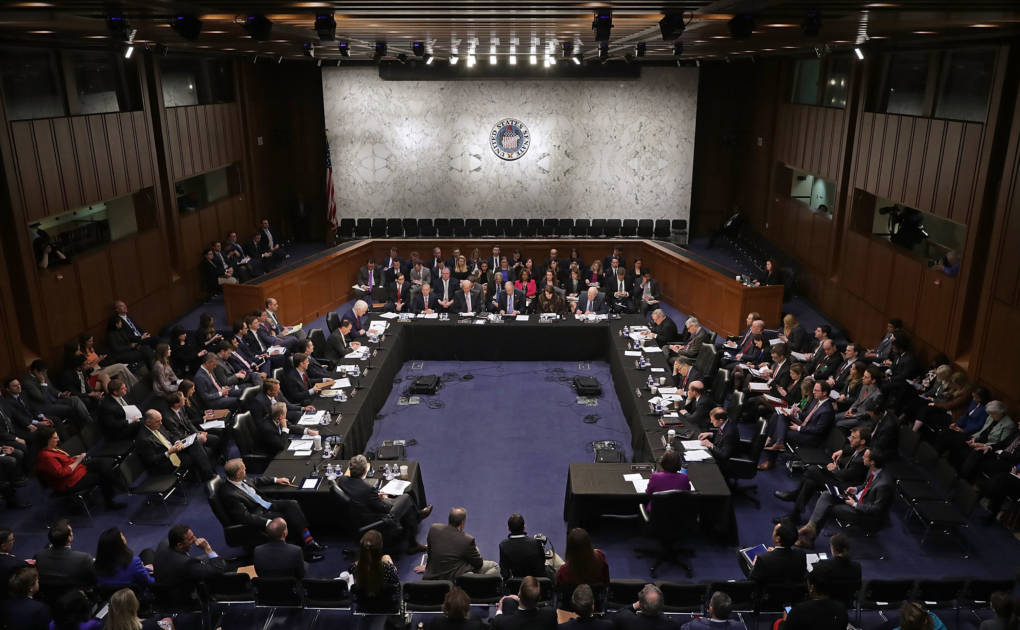
"caption": "Members of the Senate Judiciary Committee meet to debate and vote on Judge Neil Gorsuch's nomination to the Supreme Court on Monday.",
"description": null,
"title": "gettyimages-664086704_custom-7e2da8084b1229112e4488e2cbcc5cb9872be11f",
"credit": "Chip Somodevilla/Getty Images",
"status": "inherit",
"isLoading": false,
"fetchFailed": false
},
"news_11367814": {
"type": "attachments",
"id": "news_11367814",
"meta": {
"index": "attachments_1716263798",
"site": "news",
"id": "11367814",
"found": true
},
"parent": 11367813,
"imgSizes": {
"small": {
"file": "https://ww2.kqed.org/app/uploads/sites/10/2017/03/gettyimages-655594528-cd14baa24c5783fb800334a8662867532173acfa-520x390.jpg",
"width": 520,
"mimeType": "image/jpeg",
"height": 390
},
"twentyfourteen-full-width": {
"file": "https://ww2.kqed.org/app/uploads/sites/10/2017/03/gettyimages-655594528-cd14baa24c5783fb800334a8662867532173acfa-1038x576.jpg",
"width": 1038,
"mimeType": "image/jpeg",
"height": 576
},
"thumbnail": {
"file": "https://ww2.kqed.org/app/uploads/sites/10/2017/03/gettyimages-655594528-cd14baa24c5783fb800334a8662867532173acfa-160x120.jpg",
"width": 160,
"mimeType": "image/jpeg",
"height": 120
},
"fd-sm": {
"file": "https://ww2.kqed.org/app/uploads/sites/10/2017/03/gettyimages-655594528-cd14baa24c5783fb800334a8662867532173acfa-960x719.jpg",
"width": 960,
"mimeType": "image/jpeg",
"height": 719
},
"post-thumbnail": {
"file": "https://ww2.kqed.org/app/uploads/sites/10/2017/03/gettyimages-655594528-cd14baa24c5783fb800334a8662867532173acfa-672x372.jpg",
"width": 672,
"mimeType": "image/jpeg",
"height": 372
},
"xsmall": {
"file": "https://ww2.kqed.org/app/uploads/sites/10/2017/03/gettyimages-655594528-cd14baa24c5783fb800334a8662867532173acfa-375x281.jpg",
"width": 375,
"mimeType": "image/jpeg",
"height": 281
},
"kqedFullSize": {
"file": "https://ww2.kqed.org/app/uploads/sites/10/2017/03/gettyimages-655594528-cd14baa24c5783fb800334a8662867532173acfa.jpg",
"width": 3691,
"height": 2766
},
"large": {
"file": "https://ww2.kqed.org/app/uploads/sites/10/2017/03/gettyimages-655594528-cd14baa24c5783fb800334a8662867532173acfa-1020x764.jpg",
"width": 1020,
"mimeType": "image/jpeg",
"height": 764
},
"xlarge": {
"file": "https://ww2.kqed.org/app/uploads/sites/10/2017/03/gettyimages-655594528-cd14baa24c5783fb800334a8662867532173acfa-1180x884.jpg",
"width": 1180,
"mimeType": "image/jpeg",
"height": 884
},
"guest-author-50": {
"file": "https://ww2.kqed.org/app/uploads/sites/10/2017/03/gettyimages-655594528-cd14baa24c5783fb800334a8662867532173acfa-50x50.jpg",
"width": 50,
"mimeType": "image/jpeg",
"height": 50
},
"guest-author-96": {
"file": "https://ww2.kqed.org/app/uploads/sites/10/2017/03/gettyimages-655594528-cd14baa24c5783fb800334a8662867532173acfa-96x96.jpg",
"width": 96,
"mimeType": "image/jpeg",
"height": 96
},
"medium": {
"file": "https://ww2.kqed.org/app/uploads/sites/10/2017/03/gettyimages-655594528-cd14baa24c5783fb800334a8662867532173acfa-800x600.jpg",
"width": 800,
"mimeType": "image/jpeg",
"height": 600
},
"guest-author-64": {
"file": "https://ww2.kqed.org/app/uploads/sites/10/2017/03/gettyimages-655594528-cd14baa24c5783fb800334a8662867532173acfa-64x64.jpg",
"width": 64,
"mimeType": "image/jpeg",
"height": 64
},
"guest-author-32": {
"file": "https://ww2.kqed.org/app/uploads/sites/10/2017/03/gettyimages-655594528-cd14baa24c5783fb800334a8662867532173acfa-32x32.jpg",
"width": 32,
"mimeType": "image/jpeg",
"height": 32
},
"fd-lrg": {
"file": "https://ww2.kqed.org/app/uploads/sites/10/2017/03/gettyimages-655594528-cd14baa24c5783fb800334a8662867532173acfa-1920x1439.jpg",
"width": 1920,
"mimeType": "image/jpeg",
"height": 1439
},
"fd-med": {
"file": "https://ww2.kqed.org/app/uploads/sites/10/2017/03/gettyimages-655594528-cd14baa24c5783fb800334a8662867532173acfa-1180x884.jpg",
"width": 1180,
"mimeType": "image/jpeg",
"height": 884
},
"full-width": {
"file": "https://ww2.kqed.org/app/uploads/sites/10/2017/03/gettyimages-655594528-cd14baa24c5783fb800334a8662867532173acfa-1920x1439.jpg",
"width": 1920,
"mimeType": "image/jpeg",
"height": 1439
},
"detail": {
"file": "https://ww2.kqed.org/app/uploads/sites/10/2017/03/gettyimages-655594528-cd14baa24c5783fb800334a8662867532173acfa-150x150.jpg",
"width": 150,
"mimeType": "image/jpeg",
"height": 150
},
"guest-author-128": {
"file": "https://ww2.kqed.org/app/uploads/sites/10/2017/03/gettyimages-655594528-cd14baa24c5783fb800334a8662867532173acfa-128x128.jpg",
"width": 128,
"mimeType": "image/jpeg",
"height": 128
},
"xxsmall": {
"file": "https://ww2.kqed.org/app/uploads/sites/10/2017/03/gettyimages-655594528-cd14baa24c5783fb800334a8662867532173acfa-240x180.jpg",
"width": 240,
"mimeType": "image/jpeg",
"height": 180
}
},
"publishDate": 1490024173,
"modified": 1490024173,
"caption": null,
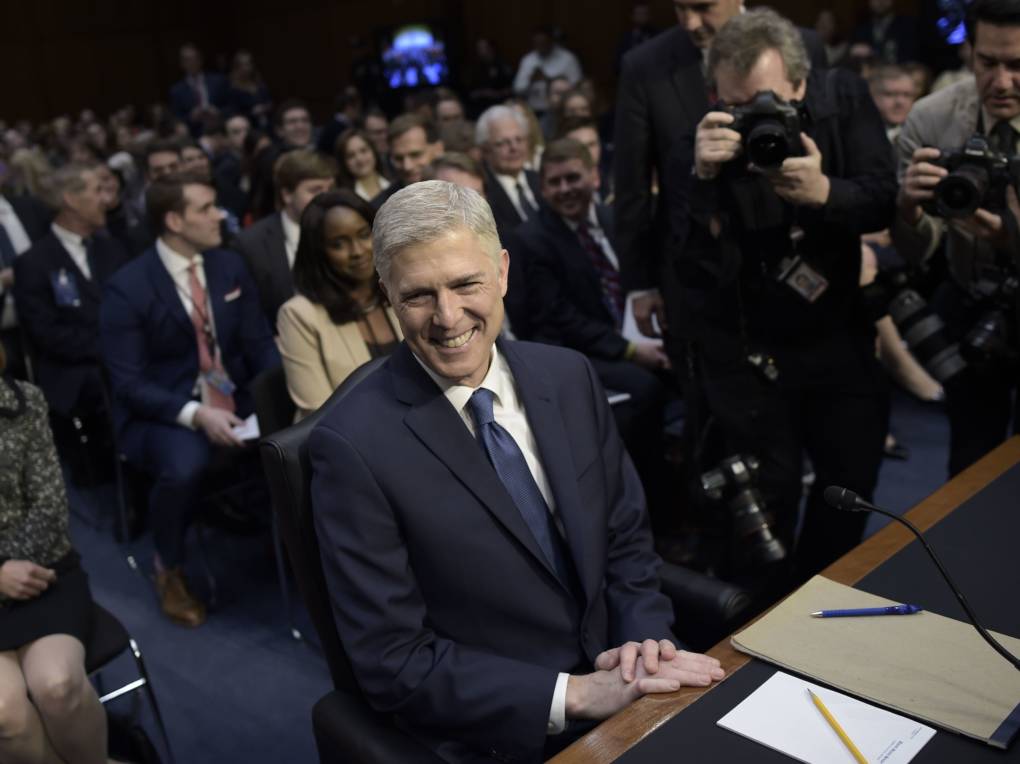
"description": "Judge Neil Gorsuch arrives ahead of the Senate Judiciary Committee confirmation hearing as President Trump's nominee for the Supreme Court on Monday.",
"title": "Judge Neil Gorsuch arrives ahead of the Senate Judiciary Committee confirmation hearing as President Trump's nominee for the Supreme Court on Monday.",
"credit": null,
"status": "inherit",
"isLoading": false,
"fetchFailed": false
},
"news_11295514": {
"type": "attachments",
"id": "news_11295514",
"meta": {
"index": "attachments_1716263798",
"site": "news",
"id": "11295514",
"found": true
},
"parent": 11295510,
"imgSizes": {
"small": {
"file": "https://ww2.kqed.org/app/uploads/sites/10/2017/01/GettyImages-633221278-520x347.jpg",
"width": 520,
"mimeType": "image/jpeg",
"height": 347
},
"twentyfourteen-full-width": {
"file": "https://ww2.kqed.org/app/uploads/sites/10/2017/01/GettyImages-633221278-1038x576.jpg",
"width": 1038,
"mimeType": "image/jpeg",
"height": 576
},
"thumbnail": {
"file": "https://ww2.kqed.org/app/uploads/sites/10/2017/01/GettyImages-633221278-160x107.jpg",
"width": 160,
"mimeType": "image/jpeg",
"height": 107
},
"fd-sm": {
"file": "https://ww2.kqed.org/app/uploads/sites/10/2017/01/GettyImages-633221278-960x640.jpg",
"width": 960,
"mimeType": "image/jpeg",
"height": 640
},
"post-thumbnail": {
"file": "https://ww2.kqed.org/app/uploads/sites/10/2017/01/GettyImages-633221278-672x372.jpg",
"width": 672,
"mimeType": "image/jpeg",
"height": 372
},
"xsmall": {
"file": "https://ww2.kqed.org/app/uploads/sites/10/2017/01/GettyImages-633221278-375x250.jpg",
"width": 375,
"mimeType": "image/jpeg",
"height": 250
},
"kqedFullSize": {
"file": "https://ww2.kqed.org/app/uploads/sites/10/2017/01/GettyImages-633221278.jpg",
"width": 3000,
"height": 2000
},
"large": {
"file": "https://ww2.kqed.org/app/uploads/sites/10/2017/01/GettyImages-633221278-1020x680.jpg",
"width": 1020,
"mimeType": "image/jpeg",
"height": 680
},
"xlarge": {
"file": "https://ww2.kqed.org/app/uploads/sites/10/2017/01/GettyImages-633221278-1180x787.jpg",
"width": 1180,
"mimeType": "image/jpeg",
"height": 787
},
"guest-author-50": {
"file": "https://ww2.kqed.org/app/uploads/sites/10/2017/01/GettyImages-633221278-50x50.jpg",
"width": 50,
"mimeType": "image/jpeg",
"height": 50
},
"guest-author-96": {
"file": "https://ww2.kqed.org/app/uploads/sites/10/2017/01/GettyImages-633221278-96x96.jpg",
"width": 96,
"mimeType": "image/jpeg",
"height": 96
},
"medium": {
"file": "https://ww2.kqed.org/app/uploads/sites/10/2017/01/GettyImages-633221278-800x533.jpg",
"width": 800,
"mimeType": "image/jpeg",
"height": 533
},
"guest-author-64": {
"file": "https://ww2.kqed.org/app/uploads/sites/10/2017/01/GettyImages-633221278-64x64.jpg",
"width": 64,
"mimeType": "image/jpeg",
"height": 64
},
"guest-author-32": {
"file": "https://ww2.kqed.org/app/uploads/sites/10/2017/01/GettyImages-633221278-32x32.jpg",
"width": 32,
"mimeType": "image/jpeg",
"height": 32
},
"jmtc-small-thumb": {
"file": "https://ww2.kqed.org/app/uploads/sites/10/2017/01/GettyImages-633221278-280x150.jpg",
"width": 280,
"mimeType": "image/jpeg",
"height": 150
},
"fd-lrg": {
"file": "https://ww2.kqed.org/app/uploads/sites/10/2017/01/GettyImages-633221278-1920x1280.jpg",
"width": 1920,
"mimeType": "image/jpeg",
"height": 1280
},
"fd-med": {
"file": "https://ww2.kqed.org/app/uploads/sites/10/2017/01/GettyImages-633221278-1180x787.jpg",
"width": 1180,
"mimeType": "image/jpeg",
"height": 787
},
"full-width": {
"file": "https://ww2.kqed.org/app/uploads/sites/10/2017/01/GettyImages-633221278-1920x1280.jpg",
"width": 1920,
"mimeType": "image/jpeg",
"height": 1280
},
"detail": {
"file": "https://ww2.kqed.org/app/uploads/sites/10/2017/01/GettyImages-633221278-150x150.jpg",
"width": 150,
"mimeType": "image/jpeg",
"height": 150
},
"guest-author-128": {
"file": "https://ww2.kqed.org/app/uploads/sites/10/2017/01/GettyImages-633221278-128x128.jpg",
"width": 128,
"mimeType": "image/jpeg",
"height": 128
},
"xxsmall": {
"file": "https://ww2.kqed.org/app/uploads/sites/10/2017/01/GettyImages-633221278-240x160.jpg",
"width": 240,
"mimeType": "image/jpeg",
"height": 160
}
},
"publishDate": 1485915250,
"modified": 1485915312,
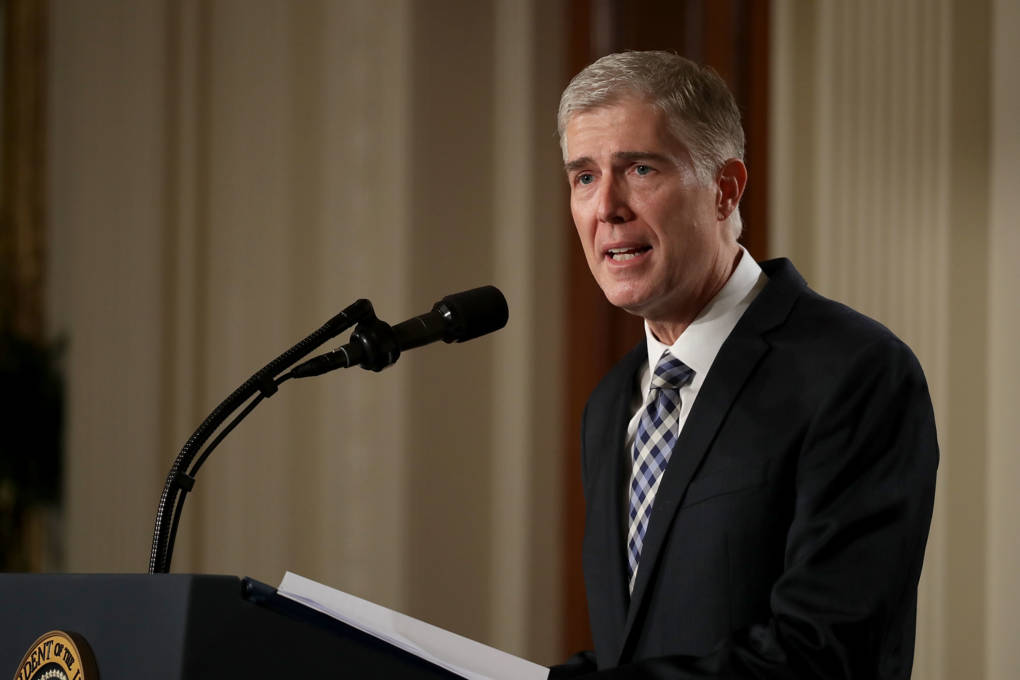
"caption": "Judge Neil Gorsuch delivers brief remarks after being nominated by U.S. President Donald Trump to the Supreme Court.",
"description": null,
"title": "President Trump Announces His Supreme Court Nominee",
"credit": "Chip Somodevilla/Getty Images",
"status": "inherit",
"isLoading": false,
"fetchFailed": false
},
"news_11285268": {
"type": "attachments",
"id": "news_11285268",
"meta": {
"index": "attachments_1716263798",
"site": "news",
"id": "11285268",
"found": true
},
"parent": 11285264,
"imgSizes": {
"small": {
"file": "https://ww2.kqed.org/app/uploads/sites/10/2017/01/Scotus-520x302.jpg",
"width": 520,
"mimeType": "image/jpeg",
"height": 302
},
"twentyfourteen-full-width": {
"file": "https://ww2.kqed.org/app/uploads/sites/10/2017/01/Scotus-1038x576.jpg",
"width": 1038,
"mimeType": "image/jpeg",
"height": 576
},
"thumbnail": {
"file": "https://ww2.kqed.org/app/uploads/sites/10/2017/01/Scotus-160x93.jpg",
"width": 160,
"mimeType": "image/jpeg",
"height": 93
},
"fd-sm": {
"file": "https://ww2.kqed.org/app/uploads/sites/10/2017/01/Scotus-960x558.jpg",
"width": 960,
"mimeType": "image/jpeg",
"height": 558
},
"post-thumbnail": {
"file": "https://ww2.kqed.org/app/uploads/sites/10/2017/01/Scotus-672x372.jpg",
"width": 672,
"mimeType": "image/jpeg",
"height": 372
},
"xsmall": {
"file": "https://ww2.kqed.org/app/uploads/sites/10/2017/01/Scotus-375x218.jpg",
"width": 375,
"mimeType": "image/jpeg",
"height": 218
},
"kqedFullSize": {
"file": "https://ww2.kqed.org/app/uploads/sites/10/2017/01/Scotus.jpg",
"width": 1920,
"height": 1115
},
"large": {
"file": "https://ww2.kqed.org/app/uploads/sites/10/2017/01/Scotus-1020x592.jpg",
"width": 1020,
"mimeType": "image/jpeg",
"height": 592
},
"xlarge": {
"file": "https://ww2.kqed.org/app/uploads/sites/10/2017/01/Scotus-1180x685.jpg",
"width": 1180,
"mimeType": "image/jpeg",
"height": 685
},
"guest-author-50": {
"file": "https://ww2.kqed.org/app/uploads/sites/10/2017/01/Scotus-50x50.jpg",
"width": 50,
"mimeType": "image/jpeg",
"height": 50
},
"guest-author-96": {
"file": "https://ww2.kqed.org/app/uploads/sites/10/2017/01/Scotus-96x96.jpg",
"width": 96,
"mimeType": "image/jpeg",
"height": 96
},
"medium": {
"file": "https://ww2.kqed.org/app/uploads/sites/10/2017/01/Scotus-800x465.jpg",
"width": 800,
"mimeType": "image/jpeg",
"height": 465
},
"guest-author-64": {
"file": "https://ww2.kqed.org/app/uploads/sites/10/2017/01/Scotus-64x64.jpg",
"width": 64,
"mimeType": "image/jpeg",
"height": 64
},
"guest-author-32": {
"file": "https://ww2.kqed.org/app/uploads/sites/10/2017/01/Scotus-32x32.jpg",
"width": 32,
"mimeType": "image/jpeg",
"height": 32
},
"jmtc-small-thumb": {
"file": "https://ww2.kqed.org/app/uploads/sites/10/2017/01/Scotus-280x150.jpg",
"width": 280,
"mimeType": "image/jpeg",
"height": 150
},
"fd-lrg": {
"file": "https://ww2.kqed.org/app/uploads/sites/10/2017/01/Scotus-1920x1115.jpg",
"width": 1920,
"mimeType": "image/jpeg",
"height": 1115
},
"fd-med": {
"file": "https://ww2.kqed.org/app/uploads/sites/10/2017/01/Scotus-1180x685.jpg",
"width": 1180,
"mimeType": "image/jpeg",
"height": 685
},
"full-width": {
"file": "https://ww2.kqed.org/app/uploads/sites/10/2017/01/Scotus-1920x1115.jpg",
"width": 1920,
"mimeType": "image/jpeg",
"height": 1115
},
"detail": {
"file": "https://ww2.kqed.org/app/uploads/sites/10/2017/01/Scotus-150x150.jpg",
"width": 150,
"mimeType": "image/jpeg",
"height": 150
},
"guest-author-128": {
"file": "https://ww2.kqed.org/app/uploads/sites/10/2017/01/Scotus-128x128.jpg",
"width": 128,
"mimeType": "image/jpeg",
"height": 128
},
"xxsmall": {
"file": "https://ww2.kqed.org/app/uploads/sites/10/2017/01/Scotus-240x139.jpg",
"width": 240,
"mimeType": "image/jpeg",
"height": 139
}
},
"publishDate": 1485310961,
"modified": 1485387052,
"caption": "The U.S. Supreme Court in Washington, D.C.",
"description": "The U.S. Supreme Court in Washington, D.C.",
"title": "Scotus",
"credit": "Zach Gibson/AFP/Getty Images",
"status": "inherit",
"isLoading": false,
"fetchFailed": false
},
"news_11200300": {
"type": "attachments",
"id": "news_11200300",
"meta": {
"index": "attachments_1716263798",
"site": "news",
"id": "11200300",
"found": true
},
"parent": 11200063,
"imgSizes": {
"small": {
"file": "https://ww2.kqed.org/app/uploads/sites/10/2016/12/ScotusBldg-520x347.jpg",
"width": 520,
"mimeType": "image/jpeg",
"height": 347
},
"twentyfourteen-full-width": {
"file": "https://ww2.kqed.org/app/uploads/sites/10/2016/12/ScotusBldg-1038x576.jpg",
"width": 1038,
"mimeType": "image/jpeg",
"height": 576
},
"thumbnail": {
"file": "https://ww2.kqed.org/app/uploads/sites/10/2016/12/ScotusBldg-160x107.jpg",
"width": 160,
"mimeType": "image/jpeg",
"height": 107
},
"fd-sm": {
"file": "https://ww2.kqed.org/app/uploads/sites/10/2016/12/ScotusBldg-960x640.jpg",
"width": 960,
"mimeType": "image/jpeg",
"height": 640
},
"post-thumbnail": {
"file": "https://ww2.kqed.org/app/uploads/sites/10/2016/12/ScotusBldg-672x372.jpg",
"width": 672,
"mimeType": "image/jpeg",
"height": 372
},
"xsmall": {
"file": "https://ww2.kqed.org/app/uploads/sites/10/2016/12/ScotusBldg-375x250.jpg",
"width": 375,
"mimeType": "image/jpeg",
"height": 250
},
"kqedFullSize": {
"file": "https://ww2.kqed.org/app/uploads/sites/10/2016/12/ScotusBldg.jpg",
"width": 1920,
"height": 1280
},
"large": {
"file": "https://ww2.kqed.org/app/uploads/sites/10/2016/12/ScotusBldg-1020x680.jpg",
"width": 1020,
"mimeType": "image/jpeg",
"height": 680
},
"xlarge": {
"file": "https://ww2.kqed.org/app/uploads/sites/10/2016/12/ScotusBldg-1180x787.jpg",
"width": 1180,
"mimeType": "image/jpeg",
"height": 787
},
"guest-author-50": {
"file": "https://ww2.kqed.org/app/uploads/sites/10/2016/12/ScotusBldg-50x50.jpg",
"width": 50,
"mimeType": "image/jpeg",
"height": 50
},
"guest-author-96": {
"file": "https://ww2.kqed.org/app/uploads/sites/10/2016/12/ScotusBldg-96x96.jpg",
"width": 96,
"mimeType": "image/jpeg",
"height": 96
},
"medium": {
"file": "https://ww2.kqed.org/app/uploads/sites/10/2016/12/ScotusBldg-800x533.jpg",
"width": 800,
"mimeType": "image/jpeg",
"height": 533
},
"guest-author-64": {
"file": "https://ww2.kqed.org/app/uploads/sites/10/2016/12/ScotusBldg-64x64.jpg",
"width": 64,
"mimeType": "image/jpeg",
"height": 64
},
"guest-author-32": {
"file": "https://ww2.kqed.org/app/uploads/sites/10/2016/12/ScotusBldg-32x32.jpg",
"width": 32,
"mimeType": "image/jpeg",
"height": 32
},
"jmtc-small-thumb": {
"file": "https://ww2.kqed.org/app/uploads/sites/10/2016/12/ScotusBldg-280x150.jpg",
"width": 280,
"mimeType": "image/jpeg",
"height": 150
},
"fd-lrg": {
"file": "https://ww2.kqed.org/app/uploads/sites/10/2016/12/ScotusBldg-1920x1280.jpg",
"width": 1920,
"mimeType": "image/jpeg",
"height": 1280
},
"fd-med": {
"file": "https://ww2.kqed.org/app/uploads/sites/10/2016/12/ScotusBldg-1180x787.jpg",
"width": 1180,
"mimeType": "image/jpeg",
"height": 787
},
"full-width": {
"file": "https://ww2.kqed.org/app/uploads/sites/10/2016/12/ScotusBldg-1920x1280.jpg",
"width": 1920,
"mimeType": "image/jpeg",
"height": 1280
},
"detail": {
"file": "https://ww2.kqed.org/app/uploads/sites/10/2016/12/ScotusBldg-150x150.jpg",
"width": 150,
"mimeType": "image/jpeg",
"height": 150
},
"guest-author-128": {
"file": "https://ww2.kqed.org/app/uploads/sites/10/2016/12/ScotusBldg-128x128.jpg",
"width": 128,
"mimeType": "image/jpeg",
"height": 128
},
"xxsmall": {
"file": "https://ww2.kqed.org/app/uploads/sites/10/2016/12/ScotusBldg-240x160.jpg",
"width": 240,
"mimeType": "image/jpeg",
"height": 160
}
},
"publishDate": 1480633710,
"modified": 1480633746,
"caption": "The U.S. Supreme Court in Washington, D.C.",
"description": "The U.S. Supreme Court in Washington, D.C.",
"title": "scotusbldg",
"credit": "Zach Gibson/Getty Images",
"status": "inherit",
"isLoading": false,
"fetchFailed": false
},
"news_11197881": {
"type": "attachments",
"id": "news_11197881",
"meta": {
"index": "attachments_1716263798",
"site": "news",
"id": "11197881",
"found": true
},
"parent": 11196683,
"imgSizes": {
"small": {
"file": "https://ww2.kqed.org/app/uploads/sites/10/2016/11/detention02_final-520x301.png",
"width": 520,
"mimeType": "image/png",
"height": 301
},
"twentyfourteen-full-width": {
"file": "https://ww2.kqed.org/app/uploads/sites/10/2016/11/detention02_final-1038x576.png",
"width": 1038,
"mimeType": "image/png",
"height": 576
},
"thumbnail": {
"file": "https://ww2.kqed.org/app/uploads/sites/10/2016/11/detention02_final-160x93.png",
"width": 160,
"mimeType": "image/png",
"height": 93
},
"fd-sm": {
"file": "https://ww2.kqed.org/app/uploads/sites/10/2016/11/detention02_final-960x555.png",
"width": 960,
"mimeType": "image/png",
"height": 555
},
"post-thumbnail": {
"file": "https://ww2.kqed.org/app/uploads/sites/10/2016/11/detention02_final-672x372.png",
"width": 672,
"mimeType": "image/png",
"height": 372
},
"xsmall": {
"file": "https://ww2.kqed.org/app/uploads/sites/10/2016/11/detention02_final-375x217.png",
"width": 375,
"mimeType": "image/png",
"height": 217
},
"kqedFullSize": {
"file": "https://ww2.kqed.org/app/uploads/sites/10/2016/11/detention02_final-e1480519295187.png",
"width": 1920,
"height": 1110
},
"large": {
"file": "https://ww2.kqed.org/app/uploads/sites/10/2016/11/detention02_final-1020x590.png",
"width": 1020,
"mimeType": "image/png",
"height": 590
},
"xlarge": {
"file": "https://ww2.kqed.org/app/uploads/sites/10/2016/11/detention02_final-1180x682.png",
"width": 1180,
"mimeType": "image/png",
"height": 682
},
"guest-author-50": {
"file": "https://ww2.kqed.org/app/uploads/sites/10/2016/11/detention02_final-50x50.png",
"width": 50,
"mimeType": "image/png",
"height": 50
},
"guest-author-96": {
"file": "https://ww2.kqed.org/app/uploads/sites/10/2016/11/detention02_final-96x96.png",
"width": 96,
"mimeType": "image/png",
"height": 96
},
"medium": {
"file": "https://ww2.kqed.org/app/uploads/sites/10/2016/11/detention02_final-800x463.png",
"width": 800,
"mimeType": "image/png",
"height": 463
},
"guest-author-64": {
"file": "https://ww2.kqed.org/app/uploads/sites/10/2016/11/detention02_final-64x64.png",
"width": 64,
"mimeType": "image/png",
"height": 64
},
"guest-author-32": {
"file": "https://ww2.kqed.org/app/uploads/sites/10/2016/11/detention02_final-32x32.png",
"width": 32,
"mimeType": "image/png",
"height": 32
},
"jmtc-small-thumb": {
"file": "https://ww2.kqed.org/app/uploads/sites/10/2016/11/detention02_final-280x150.png",
"width": 280,
"mimeType": "image/png",
"height": 150
},
"fd-lrg": {
"file": "https://ww2.kqed.org/app/uploads/sites/10/2016/11/detention02_final-1920x1110.png",
"width": 1920,
"mimeType": "image/png",
"height": 1110
},
"fd-med": {
"file": "https://ww2.kqed.org/app/uploads/sites/10/2016/11/detention02_final-1180x682.png",
"width": 1180,
"mimeType": "image/png",
"height": 682
},
"full-width": {
"file": "https://ww2.kqed.org/app/uploads/sites/10/2016/11/detention02_final-1920x1110.png",
"width": 1920,
"mimeType": "image/png",
"height": 1110
},
"detail": {
"file": "https://ww2.kqed.org/app/uploads/sites/10/2016/11/detention02_final-150x150.png",
"width": 150,
"mimeType": "image/png",
"height": 150
},
"guest-author-128": {
"file": "https://ww2.kqed.org/app/uploads/sites/10/2016/11/detention02_final-128x128.png",
"width": 128,
"mimeType": "image/png",
"height": 128
},
"xxsmall": {
"file": "https://ww2.kqed.org/app/uploads/sites/10/2016/11/detention02_final-240x139.png",
"width": 240,
"mimeType": "image/png",
"height": 139
}
},
"publishDate": 1480519231,
"modified": 1480519282,
"caption": null,
"description": null,
"title": "Fiore-Detention",
"credit": "Mark Fiore/KQED",
"status": "inherit",
"isLoading": false,
"fetchFailed": false
},
"news_10932912": {
"type": "attachments",
"id": "news_10932912",
"meta": {
"index": "attachments_1716263798",
"site": "news",
"id": "10932912",
"found": true
},
"parent": 10932911,
"imgSizes": {
"twentyfourteen-full-width": {
"file": "https://ww2.kqed.org/app/uploads/sites/10/2016/04/mg_0290_custom-d915584dc5356d0840e7eedfc37fbe87075dcf37-1038x576.jpg",
"width": 1038,
"mimeType": "image/jpeg",
"height": 576
},
"thumbnail": {
"file": "https://ww2.kqed.org/app/uploads/sites/10/2016/04/mg_0290_custom-d915584dc5356d0840e7eedfc37fbe87075dcf37-400x266.jpg",
"width": 400,
"mimeType": "image/jpeg",
"height": 266
},
"fd-sm": {
"file": "https://ww2.kqed.org/app/uploads/sites/10/2016/04/mg_0290_custom-d915584dc5356d0840e7eedfc37fbe87075dcf37-960x639.jpg",
"width": 960,
"mimeType": "image/jpeg",
"height": 639
},
"post-thumbnail": {
"file": "https://ww2.kqed.org/app/uploads/sites/10/2016/04/mg_0290_custom-d915584dc5356d0840e7eedfc37fbe87075dcf37-672x372.jpg",
"width": 672,
"mimeType": "image/jpeg",
"height": 372
},
"kqedFullSize": {
"file": "https://ww2.kqed.org/app/uploads/sites/10/2016/04/mg_0290_custom-d915584dc5356d0840e7eedfc37fbe87075dcf37-e1461010749860.jpg",
"width": 1920,
"height": 1279
},
"large": {
"file": "https://ww2.kqed.org/app/uploads/sites/10/2016/04/mg_0290_custom-d915584dc5356d0840e7eedfc37fbe87075dcf37-1920x1279.jpg",
"width": 1920,
"mimeType": "image/jpeg",
"height": 1279
},
"guest-author-96": {
"file": "https://ww2.kqed.org/app/uploads/sites/10/2016/04/mg_0290_custom-d915584dc5356d0840e7eedfc37fbe87075dcf37-96x96.jpg",
"width": 96,
"mimeType": "image/jpeg",
"height": 96
},
"medium": {
"file": "https://ww2.kqed.org/app/uploads/sites/10/2016/04/mg_0290_custom-d915584dc5356d0840e7eedfc37fbe87075dcf37-800x533.jpg",
"width": 800,
"mimeType": "image/jpeg",
"height": 533
},
"guest-author-64": {
"file": "https://ww2.kqed.org/app/uploads/sites/10/2016/04/mg_0290_custom-d915584dc5356d0840e7eedfc37fbe87075dcf37-64x64.jpg",
"width": 64,
"mimeType": "image/jpeg",
"height": 64
},
"guest-author-32": {
"file": "https://ww2.kqed.org/app/uploads/sites/10/2016/04/mg_0290_custom-d915584dc5356d0840e7eedfc37fbe87075dcf37-32x32.jpg",
"width": 32,
"mimeType": "image/jpeg",
"height": 32
},
"jmtc-small-thumb": {
"file": "https://ww2.kqed.org/app/uploads/sites/10/2016/04/mg_0290_custom-d915584dc5356d0840e7eedfc37fbe87075dcf37-280x150.jpg",
"width": 280,
"mimeType": "image/jpeg",
"height": 150
},
"fd-lrg": {
"file": "https://ww2.kqed.org/app/uploads/sites/10/2016/04/mg_0290_custom-d915584dc5356d0840e7eedfc37fbe87075dcf37-1920x1279.jpg",
"width": 1920,
"mimeType": "image/jpeg",
"height": 1279
},
"fd-med": {
"file": "https://ww2.kqed.org/app/uploads/sites/10/2016/04/mg_0290_custom-d915584dc5356d0840e7eedfc37fbe87075dcf37-1180x786.jpg",
"width": 1180,
"mimeType": "image/jpeg",
"height": 786
},
"detail": {
"file": "https://ww2.kqed.org/app/uploads/sites/10/2016/04/mg_0290_custom-d915584dc5356d0840e7eedfc37fbe87075dcf37-75x75.jpg",
"width": 75,
"mimeType": "image/jpeg",
"height": 75
},
"guest-author-128": {
"file": "https://ww2.kqed.org/app/uploads/sites/10/2016/04/mg_0290_custom-d915584dc5356d0840e7eedfc37fbe87075dcf37-128x128.jpg",
"width": 128,
"mimeType": "image/jpeg",
"height": 128
}
},
"publishDate": 1461010645,
"modified": 1461010740,
"caption": "Immigrant activists, including Jose Antonio Vargas and Sophie Cruz, speak to reporters after oral arguments at the Supreme Court.",
"description": "Immigrant activists, including Jose Antonio Vargas and Sophie Cruz, speak to reporters after oral arguments at the Supreme Court",
"title": "mg_0290_custom-d915584dc5356d0840e7eedfc37fbe87075dcf37",
"credit": "Kara Frame/NPR",
"status": "inherit",
"isLoading": false,
"fetchFailed": false
},
"news_10919535": {
"type": "attachments",
"id": "news_10919535",
"meta": {
"index": "attachments_1716263798",
"site": "news",
"id": "10919535",
"found": true
},
"parent": 10919534,
"imgSizes": {
"twentyfourteen-full-width": {
"file": "https://ww2.kqed.org/app/uploads/sites/10/2016/04/gettyimages-518005448_wide-2f4bb10b1369f4943eddbaef7ec5fe96f686829b-1038x576.jpg",
"width": 1038,
"mimeType": "image/jpeg",
"height": 576
},
"thumbnail": {
"file": "https://ww2.kqed.org/app/uploads/sites/10/2016/04/gettyimages-518005448_wide-2f4bb10b1369f4943eddbaef7ec5fe96f686829b-400x225.jpg",
"width": 400,
"mimeType": "image/jpeg",
"height": 225
},
"fd-sm": {
"file": "https://ww2.kqed.org/app/uploads/sites/10/2016/04/gettyimages-518005448_wide-2f4bb10b1369f4943eddbaef7ec5fe96f686829b-960x540.jpg",
"width": 960,
"mimeType": "image/jpeg",
"height": 540
},
"post-thumbnail": {
"file": "https://ww2.kqed.org/app/uploads/sites/10/2016/04/gettyimages-518005448_wide-2f4bb10b1369f4943eddbaef7ec5fe96f686829b-672x372.jpg",
"width": 672,
"mimeType": "image/jpeg",
"height": 372
},
"kqedFullSize": {
"file": "https://ww2.kqed.org/app/uploads/sites/10/2016/04/gettyimages-518005448_wide-2f4bb10b1369f4943eddbaef7ec5fe96f686829b-e1466694113885.jpg",
"width": 1920,
"height": 1080
},
"large": {
"file": "https://ww2.kqed.org/app/uploads/sites/10/2016/04/gettyimages-518005448_wide-2f4bb10b1369f4943eddbaef7ec5fe96f686829b-1920x1080.jpg",
"width": 1920,
"mimeType": "image/jpeg",
"height": 1080
},
"guest-author-96": {
"file": "https://ww2.kqed.org/app/uploads/sites/10/2016/04/gettyimages-518005448_wide-2f4bb10b1369f4943eddbaef7ec5fe96f686829b-96x96.jpg",
"width": 96,
"mimeType": "image/jpeg",
"height": 96
},
"medium": {
"file": "https://ww2.kqed.org/app/uploads/sites/10/2016/04/gettyimages-518005448_wide-2f4bb10b1369f4943eddbaef7ec5fe96f686829b-800x450.jpg",
"width": 800,
"mimeType": "image/jpeg",
"height": 450
},
"guest-author-64": {
"file": "https://ww2.kqed.org/app/uploads/sites/10/2016/04/gettyimages-518005448_wide-2f4bb10b1369f4943eddbaef7ec5fe96f686829b-64x64.jpg",
"width": 64,
"mimeType": "image/jpeg",
"height": 64
},
"guest-author-32": {
"file": "https://ww2.kqed.org/app/uploads/sites/10/2016/04/gettyimages-518005448_wide-2f4bb10b1369f4943eddbaef7ec5fe96f686829b-32x32.jpg",
"width": 32,
"mimeType": "image/jpeg",
"height": 32
},
"jmtc-small-thumb": {
"file": "https://ww2.kqed.org/app/uploads/sites/10/2016/04/gettyimages-518005448_wide-2f4bb10b1369f4943eddbaef7ec5fe96f686829b-280x150.jpg",
"width": 280,
"mimeType": "image/jpeg",
"height": 150
},
"fd-lrg": {
"file": "https://ww2.kqed.org/app/uploads/sites/10/2016/04/gettyimages-518005448_wide-2f4bb10b1369f4943eddbaef7ec5fe96f686829b-1920x1080.jpg",
"width": 1920,
"mimeType": "image/jpeg",
"height": 1080
},
"fd-med": {
"file": "https://ww2.kqed.org/app/uploads/sites/10/2016/04/gettyimages-518005448_wide-2f4bb10b1369f4943eddbaef7ec5fe96f686829b-1180x664.jpg",
"width": 1180,
"mimeType": "image/jpeg",
"height": 664
},
"detail": {
"file": "https://ww2.kqed.org/app/uploads/sites/10/2016/04/gettyimages-518005448_wide-2f4bb10b1369f4943eddbaef7ec5fe96f686829b-75x75.jpg",
"width": 75,
"mimeType": "image/jpeg",
"height": 75
},
"guest-author-128": {
"file": "https://ww2.kqed.org/app/uploads/sites/10/2016/04/gettyimages-518005448_wide-2f4bb10b1369f4943eddbaef7ec5fe96f686829b-128x128.jpg",
"width": 128,
"mimeType": "image/jpeg",
"height": 128
}
},
"publishDate": 1459796093,
"modified": 1466727033,
"caption": "The U.S. Supreme Court's 4-4 vote on the constitutionality of President Obama's executive actions on undocumented immigrants means a lower court injunction blocking the program will stand. ",
"description": "The U.S. Supreme Court ruled Monday that the total population as defined by the Census Bureau should be used when counting people for political purposes.",
"title": "U.S. Supreme Court building",
"credit": "Win McNamee/Getty Images",
"status": "inherit",
"isLoading": false,
"fetchFailed": false
},
"news_10913239": {
"type": "attachments",
"id": "news_10913239",
"meta": {
"index": "attachments_1716263798",
"site": "news",
"id": "10913239",
"found": true
},
"parent": 10913040,
"imgSizes": {
"twentyfourteen-full-width": {
"file": "https://ww2.kqed.org/app/uploads/sites/10/2016/03/SCOTUS-1038x576.jpg",
"width": 1038,
"mimeType": "image/jpeg",
"height": 576
},
"thumbnail": {
"file": "https://ww2.kqed.org/app/uploads/sites/10/2016/03/SCOTUS-400x267.jpg",
"width": 400,
"mimeType": "image/jpeg",
"height": 267
},
"fd-sm": {
"file": "https://ww2.kqed.org/app/uploads/sites/10/2016/03/SCOTUS-960x640.jpg",
"width": 960,
"mimeType": "image/jpeg",
"height": 640
},
"post-thumbnail": {
"file": "https://ww2.kqed.org/app/uploads/sites/10/2016/03/SCOTUS-672x372.jpg",
"width": 672,
"mimeType": "image/jpeg",
"height": 372
},
"kqedFullSize": {
"file": "https://ww2.kqed.org/app/uploads/sites/10/2016/03/SCOTUS.jpg",
"width": 1920,
"height": 1280
},
"large": {
"file": "https://ww2.kqed.org/app/uploads/sites/10/2016/03/SCOTUS-1920x1280.jpg",
"width": 1920,
"mimeType": "image/jpeg",
"height": 1280
},
"guest-author-96": {
"file": "https://ww2.kqed.org/app/uploads/sites/10/2016/03/SCOTUS-96x96.jpg",
"width": 96,
"mimeType": "image/jpeg",
"height": 96
},
"medium": {
"file": "https://ww2.kqed.org/app/uploads/sites/10/2016/03/SCOTUS-800x533.jpg",
"width": 800,
"mimeType": "image/jpeg",
"height": 533
},
"guest-author-64": {
"file": "https://ww2.kqed.org/app/uploads/sites/10/2016/03/SCOTUS-64x64.jpg",
"width": 64,
"mimeType": "image/jpeg",
"height": 64
},
"guest-author-32": {
"file": "https://ww2.kqed.org/app/uploads/sites/10/2016/03/SCOTUS-32x32.jpg",
"width": 32,
"mimeType": "image/jpeg",
"height": 32
},
"jmtc-small-thumb": {
"file": "https://ww2.kqed.org/app/uploads/sites/10/2016/03/SCOTUS-280x150.jpg",
"width": 280,
"mimeType": "image/jpeg",
"height": 150
},
"fd-lrg": {
"file": "https://ww2.kqed.org/app/uploads/sites/10/2016/03/SCOTUS-1920x1280.jpg",
"width": 1920,
"mimeType": "image/jpeg",
"height": 1280
},
"fd-med": {
"file": "https://ww2.kqed.org/app/uploads/sites/10/2016/03/SCOTUS-1180x787.jpg",
"width": 1180,
"mimeType": "image/jpeg",
"height": 787
},
"detail": {
"file": "https://ww2.kqed.org/app/uploads/sites/10/2016/03/SCOTUS-75x75.jpg",
"width": 75,
"mimeType": "image/jpeg",
"height": 75
},
"guest-author-128": {
"file": "https://ww2.kqed.org/app/uploads/sites/10/2016/03/SCOTUS-128x128.jpg",
"width": 128,
"mimeType": "image/jpeg",
"height": 128
}
},
"publishDate": 1459277144,
"modified": 1459277175,
"caption": "The U.S. Supreme Court in Washington, D.C.",
"description": "The U.S. Supreme Court in Washington, D.C.",
"title": "SCOTUS",
"credit": "Win McNamee/Getty Images",
"status": "inherit",
"isLoading": false,
"fetchFailed": false
},
"news_10897774": {
"type": "attachments",
"id": "news_10897774",
"meta": {
"index": "attachments_1716263798",
"site": "news",
"id": "10897774",
"found": true
},
"parent": 10897773,
"imgSizes": {
"twentyfourteen-full-width": {
"file": "https://ww2.kqed.org/app/uploads/sites/10/2016/03/garland-53b09a59025cacaf3ef461dca9c015ad81a58794-1000x576.jpg",
"width": 1000,
"mimeType": "image/jpeg",
"height": 576
},
"jmtc-small-thumb": {
"file": "https://ww2.kqed.org/app/uploads/sites/10/2016/03/garland-53b09a59025cacaf3ef461dca9c015ad81a58794-280x150.jpg",
"width": 280,
"mimeType": "image/jpeg",
"height": 150
},
"thumbnail": {
"file": "https://ww2.kqed.org/app/uploads/sites/10/2016/03/garland-53b09a59025cacaf3ef461dca9c015ad81a58794-400x300.jpg",
"width": 400,
"mimeType": "image/jpeg",
"height": 300
},
"fd-sm": {
"file": "https://ww2.kqed.org/app/uploads/sites/10/2016/03/garland-53b09a59025cacaf3ef461dca9c015ad81a58794-960x720.jpg",
"width": 960,
"mimeType": "image/jpeg",
"height": 720
},
"post-thumbnail": {
"file": "https://ww2.kqed.org/app/uploads/sites/10/2016/03/garland-53b09a59025cacaf3ef461dca9c015ad81a58794-672x372.jpg",
"width": 672,
"mimeType": "image/jpeg",
"height": 372
},
"kqedFullSize": {
"file": "https://ww2.kqed.org/app/uploads/sites/10/2016/03/garland-53b09a59025cacaf3ef461dca9c015ad81a58794.jpg",
"width": 1000,
"height": 750
},
"guest-author-96": {
"file": "https://ww2.kqed.org/app/uploads/sites/10/2016/03/garland-53b09a59025cacaf3ef461dca9c015ad81a58794-96x96.jpg",
"width": 96,
"mimeType": "image/jpeg",
"height": 96
},
"medium": {
"file": "https://ww2.kqed.org/app/uploads/sites/10/2016/03/garland-53b09a59025cacaf3ef461dca9c015ad81a58794-800x600.jpg",
"width": 800,
"mimeType": "image/jpeg",
"height": 600
},
"guest-author-64": {
"file": "https://ww2.kqed.org/app/uploads/sites/10/2016/03/garland-53b09a59025cacaf3ef461dca9c015ad81a58794-64x64.jpg",
"width": 64,
"mimeType": "image/jpeg",
"height": 64
},
"detail": {
"file": "https://ww2.kqed.org/app/uploads/sites/10/2016/03/garland-53b09a59025cacaf3ef461dca9c015ad81a58794-75x75.jpg",
"width": 75,
"mimeType": "image/jpeg",
"height": 75
},
"guest-author-32": {
"file": "https://ww2.kqed.org/app/uploads/sites/10/2016/03/garland-53b09a59025cacaf3ef461dca9c015ad81a58794-32x32.jpg",
"width": 32,
"mimeType": "image/jpeg",
"height": 32
},
"guest-author-128": {
"file": "https://ww2.kqed.org/app/uploads/sites/10/2016/03/garland-53b09a59025cacaf3ef461dca9c015ad81a58794-128x128.jpg",
"width": 128,
"mimeType": "image/jpeg",
"height": 128
}
},
"publishDate": 1458141224,
"modified": 1458141224,
"caption": null,
"description": null,
"title": "Judge Merrick Garland",
"credit": null,
"status": "inherit",
"isLoading": false,
"fetchFailed": false
},
"news_10890836": {
"type": "attachments",
"id": "news_10890836",
"meta": {
"index": "attachments_1716263798",
"site": "news",
"id": "10890836",
"found": true
},
"parent": 10890520,
"imgSizes": {
"twentyfourteen-full-width": {
"file": "https://ww2.kqed.org/app/uploads/sites/10/2016/03/SCOTUS-1038x576.jpg",
"width": 1038,
"mimeType": "image/jpeg",
"height": 576
},
"thumbnail": {
"file": "https://ww2.kqed.org/app/uploads/sites/10/2016/03/SCOTUS-400x271.jpg",
"width": 400,
"mimeType": "image/jpeg",
"height": 271
},
"fd-sm": {
"file": "https://ww2.kqed.org/app/uploads/sites/10/2016/03/SCOTUS-960x650.jpg",
"width": 960,
"mimeType": "image/jpeg",
"height": 650
},
"post-thumbnail": {
"file": "https://ww2.kqed.org/app/uploads/sites/10/2016/03/SCOTUS-672x372.jpg",
"width": 672,
"mimeType": "image/jpeg",
"height": 372
},
"kqedFullSize": {
"file": "https://ww2.kqed.org/app/uploads/sites/10/2016/03/SCOTUS.jpg",
"width": 1920,
"height": 1299
},
"large": {
"file": "https://ww2.kqed.org/app/uploads/sites/10/2016/03/SCOTUS-1920x1299.jpg",
"width": 1920,
"mimeType": "image/jpeg",
"height": 1299
},
"guest-author-96": {
"file": "https://ww2.kqed.org/app/uploads/sites/10/2016/03/SCOTUS-96x96.jpg",
"width": 96,
"mimeType": "image/jpeg",
"height": 96
},
"medium": {
"file": "https://ww2.kqed.org/app/uploads/sites/10/2016/03/SCOTUS-800x541.jpg",
"width": 800,
"mimeType": "image/jpeg",
"height": 541
},
"guest-author-64": {
"file": "https://ww2.kqed.org/app/uploads/sites/10/2016/03/SCOTUS-64x64.jpg",
"width": 64,
"mimeType": "image/jpeg",
"height": 64
},
"guest-author-32": {
"file": "https://ww2.kqed.org/app/uploads/sites/10/2016/03/SCOTUS-32x32.jpg",
"width": 32,
"mimeType": "image/jpeg",
"height": 32
},
"jmtc-small-thumb": {
"file": "https://ww2.kqed.org/app/uploads/sites/10/2016/03/SCOTUS-280x150.jpg",
"width": 280,
"mimeType": "image/jpeg",
"height": 150
},
"fd-lrg": {
"file": "https://ww2.kqed.org/app/uploads/sites/10/2016/03/SCOTUS-1920x1299.jpg",
"width": 1920,
"mimeType": "image/jpeg",
"height": 1299
},
"fd-med": {
"file": "https://ww2.kqed.org/app/uploads/sites/10/2016/03/SCOTUS-1180x798.jpg",
"width": 1180,
"mimeType": "image/jpeg",
"height": 798
},
"detail": {
"file": "https://ww2.kqed.org/app/uploads/sites/10/2016/03/SCOTUS-75x75.jpg",
"width": 75,
"mimeType": "image/jpeg",
"height": 75
},
"guest-author-128": {
"file": "https://ww2.kqed.org/app/uploads/sites/10/2016/03/SCOTUS-128x128.jpg",
"width": 128,
"mimeType": "image/jpeg",
"height": 128
}
},
"publishDate": 1457574278,
"modified": 1467038827,
"caption": "The U.S. Supreme Court building in Washington, D.C.",
"description": "The U.S. Supreme Court building in Washington, D.C.",
"title": "SCOTUS",
"credit": "Paul J. Richards/AFP-Getty Images",
"status": "inherit",
"isLoading": false,
"fetchFailed": false
}
},
"audioPlayerReducer": {
"postId": "stream_live",
"isPaused": true,
"isPlaying": false,
"pfsActive": false,
"pledgeModalIsOpen": true,
"playerDrawerIsOpen": false,
"liveAudioPlayStartedAt": 0,
"liveAudioPlayContext": ""
},
"authorsReducer": {
"byline_news_11389726": {
"type": "authors",
"id": "byline_news_11389726",
"meta": {
"override": true
},
"slug": "byline_news_11389726",
"name": "Scott Detrow",
"isLoading": false
},
"byline_news_11367813": {
"type": "authors",
"id": "byline_news_11367813",
"meta": {
"override": true
},
"slug": "byline_news_11367813",
"name": "\u003cstrong>Jessica Taylor\u003cbr />NPR\u003c/strong>",
"isLoading": false
},
"byline_news_11295510": {
"type": "authors",
"id": "byline_news_11295510",
"meta": {
"override": true
},
"slug": "byline_news_11295510",
"name": "\u003cstrong>Carrie Johnson\u003cbr />NPR\u003c/strong>",
"isLoading": false
},
"byline_news_11285264": {
"type": "authors",
"id": "byline_news_11285264",
"meta": {
"override": true
},
"slug": "byline_news_11285264",
"name": "Nina Totenberg",
"isLoading": false
},
"byline_news_10932911": {
"type": "authors",
"id": "byline_news_10932911",
"meta": {
"override": true
},
"slug": "byline_news_10932911",
"name": "\u003cstrong>Nina Totenberg and Eyder Peralta\u003cbr />NPR\u003c/strong>",
"isLoading": false
},
"byline_news_10919534": {
"type": "authors",
"id": "byline_news_10919534",
"meta": {
"override": true
},
"slug": "byline_news_10919534",
"name": "\u003cstrong>\u003ca href=\"http://www.npr.org/people/1930203/ron-elving\">Ron Elving\u003c/a>\u003cbr>NPR\u003c/strong>",
"isLoading": false
},
"byline_news_10913040": {
"type": "authors",
"id": "byline_news_10913040",
"meta": {
"override": true
},
"slug": "byline_news_10913040",
"name": "\u003cstrong>The Associated Press\u003c/strong>",
"isLoading": false
},
"byline_news_10897773": {
"type": "authors",
"id": "byline_news_10897773",
"meta": {
"override": true
},
"slug": "byline_news_10897773",
"name": "\u003cstrong>Carrie Johnson\u003cbr />NPR\u003c/strong>",
"isLoading": false
},
"scottshafer": {
"type": "authors",
"id": "255",
"meta": {
"index": "authors_1716337520",
"id": "255",
"found": true
},
"name": "Scott Shafer",
"firstName": "Scott",
"lastName": "Shafer",
"slug": "scottshafer",
"email": "sshafer@kqed.org",
"display_author_email": false,
"staff_mastheads": [
"news"
],
"title": "KQED Contributor",
"bio": "Scott Shafer is a senior editor with the KQED Politics and Government desk. He is co-host of Political Breakdown, the award-winning radio show and podcast with a personal take on the world of politics. Scott came to KQED in 1998 to host the statewide\u003cem> California Report\u003c/em>. Prior to that he had extended stints in politics and government\u003cem>.\u003c/em> He uses that inside experience at KQED in his, reporting, hosting and analysis for the politics desk. Scott collaborated \u003cem>Political Breakdown a\u003c/em>nd on \u003cem>The Political Mind of Jerry Brown, \u003c/em>an eight-part series about the life and extraordinary political career of the former governor. For fun, he plays water polo with the San Francisco Tsunami.",
"avatar": "https://secure.gravatar.com/avatar/a62ebae45b79d7aed1a39a0e3bf68104?s=600&d=blank&r=g",
"twitter": "scottshafer",
"bluesky": null,
"facebook": null,
"instagram": null,
"linkedin": null,
"sites": [
{
"site": "news",
"roles": [
"editor"
]
},
{
"site": "stateofhealth",
"roles": [
"author"
]
},
{
"site": "science",
"roles": [
"author"
]
},
{
"site": "forum",
"roles": [
"subscriber"
]
},
{
"site": "liveblog",
"roles": [
"author"
]
}
],
"headData": {
"title": "Scott Shafer | KQED",
"description": "KQED Contributor",
"ogImgSrc": "https://secure.gravatar.com/avatar/a62ebae45b79d7aed1a39a0e3bf68104?s=600&d=blank&r=g",
"twImgSrc": "https://secure.gravatar.com/avatar/a62ebae45b79d7aed1a39a0e3bf68104?s=600&d=blank&r=g"
},
"isLoading": false,
"link": "/author/scottshafer"
},
"tychehendricks": {
"type": "authors",
"id": "259",
"meta": {
"index": "authors_1716337520",
"id": "259",
"found": true
},
"name": "Tyche Hendricks",
"firstName": "Tyche",
"lastName": "Hendricks",
"slug": "tychehendricks",
"email": "thendricks@kqed.org",
"display_author_email": true,
"staff_mastheads": [
"news"
],
"title": "KQED Senior Editor, Immigration",
"bio": "\u003cspan style=\"font-weight: 400;\">Tyche Hendricks is KQED’s senior editor for immigration, leading coverage of the policy and politics that affect California’s immigrant communities. Her work for KQED’s radio and online audiences is also carried on NPR and other national outlets. She has been recognized with awards from the Radio and Television News Directors Association, the Society for Professional Journalists; the Education Writers Association; the Best of the West and the National Federation of Community Broadcasters. Before joining KQED in 2010, Tyche spent more than a dozen years as a newspaper reporter, notably at the \u003c/span>\u003ci>\u003cspan style=\"font-weight: 400;\">San Francisco Chronicle\u003c/span>\u003c/i>\u003cspan style=\"font-weight: 400;\">. At different times she has covered criminal justice, government and politics and urban planning. Tyche has taught in the MFA Creative Writing program at the University of San Francisco and at UC Berkeley’s Graduate School of Journalism, where she was co-director of a national immigration symposium for professional journalists. She is the author of \u003c/span>\u003ci>\u003cspan style=\"font-weight: 400;\">The Wind Doesn't Need a Passport: Stories from the U.S.-Mexico Borderlands\u003c/span>\u003c/i>\u003cspan style=\"font-weight: 400;\"> (University of California Press). \u003c/span>",
"avatar": "https://secure.gravatar.com/avatar/b8ee458e2731c2d43df86882ce17267e?s=600&d=blank&r=g",
"twitter": "tychehendricks",
"facebook": null,
"instagram": null,
"linkedin": null,
"sites": [
{
"site": "news",
"roles": [
"editor"
]
},
{
"site": "stateofhealth",
"roles": [
"editor"
]
}
],
"headData": {
"title": "Tyche Hendricks | KQED",
"description": "KQED Senior Editor, Immigration",
"ogImgSrc": "https://secure.gravatar.com/avatar/b8ee458e2731c2d43df86882ce17267e?s=600&d=blank&r=g",
"twImgSrc": "https://secure.gravatar.com/avatar/b8ee458e2731c2d43df86882ce17267e?s=600&d=blank&r=g"
},
"isLoading": false,
"link": "/author/tychehendricks"
},
"jsmall": {
"type": "authors",
"id": "6625",
"meta": {
"index": "authors_1716337520",
"id": "6625",
"found": true
},
"name": "Julie Small",
"firstName": "Julie",
"lastName": "Small",
"slug": "jsmall",
"email": "jsmall@kqed.org",
"display_author_email": true,
"staff_mastheads": [
"news"
],
"title": "KQED Contributor",
"bio": "Julie Small reports on criminal justice and immigration.\r\n\r\nShe was part of a team at KQED awarded a regional 2019 Edward R. Murrow award for continuing coverage of the Trump Administration's family separation policy.\r\n\r\nThe Society for Professional Journalists recognized Julie's 2018 \u003ca href=\"https://www.kqed.org/news/11636262/the-officer-tased-him-31-times-the-sheriff-called-his-death-an-accident\">reporting\u003c/a> on the San Joaquin County Sheriff's \u003ca href=\"https://www.kqed.org/news/11634689/autopsy-doctors-sheriff-overrode-death-findings-to-protect-law-enforcement\">interference\u003c/a> in death investigations with an Excellence in Journalism Award for Ongoing Coverage.\r\n\r\nJulie's\u003ca href=\"https://www.kqed.org/news/11039666/two-mentally-ill-inmates-died-one-month-in-santa-clara\"> reporting\u003c/a> with Lisa Pickoff-White on the treatment of mentally ill offenders in California jails earned a 2017 regional Edward R. Murrow Award for news reporting and an investigative reporting award from the SPJ of Northern California.\r\n\r\nBefore joining KQED, Julie covered government and politics in Sacramento for Southern California Public Radio (SCPR). Her 2010 \u003ca href=\"https://www.scpr.org/specials/prisonmedical/\">series\u003c/a> on lapses in California’s prison medical care also won a regional Edward R. Murrow Award for investigative reporting and a Golden Mic Award from the RTNDA of Southern California.\r\n\r\nJulie began her career in journalism in 2000 as the deputy foreign editor for public radio's \u003cem>Marketplace, \u003c/em>while earning her master's degree in journalism from USC’s Annenberg School of Communication.",
"avatar": "https://secure.gravatar.com/avatar/4baedf201468df97be97c2a9dd7585d0?s=600&d=blank&r=g",
"twitter": "@SmallRadio2",
"facebook": null,
"instagram": null,
"linkedin": null,
"sites": [
{
"site": "news",
"roles": [
"editor"
]
},
{
"site": "stateofhealth",
"roles": [
"author"
]
},
{
"site": "science",
"roles": [
"author"
]
}
],
"headData": {
"title": "Julie Small | KQED",
"description": "KQED Contributor",
"ogImgSrc": "https://secure.gravatar.com/avatar/4baedf201468df97be97c2a9dd7585d0?s=600&d=blank&r=g",
"twImgSrc": "https://secure.gravatar.com/avatar/4baedf201468df97be97c2a9dd7585d0?s=600&d=blank&r=g"
},
"isLoading": false,
"link": "/author/jsmall"
},
"mleitsinger": {
"type": "authors",
"id": "11310",
"meta": {
"index": "authors_1716337520",
"id": "11310",
"found": true
},
"name": "Miranda Leitsinger",
"firstName": "Miranda",
"lastName": "Leitsinger",
"slug": "mleitsinger",
"email": "mleitsinger@KQED.org",
"display_author_email": false,
"staff_mastheads": [
"news"
],
"title": "KQED Contributor",
"bio": "Miranda Leitsinger has worked in journalism as a reporter and editor since 2000, including seven years at The Associated Press in locales such as Cambodia and Puerto Rico, four years at NBC News Digital in New York and 2.5 years at CNN.com International in Hong Kong. Major stories she has covered included sexual abuse in the yoga community, the rise of women in local politics post-2016 election, the struggle over LGBTQ inclusion in the Boy Scouts, aftermath of the 2004 and 2011 tsunamis, the Aurora movie theater attack, the Newtown school shooting, Superstorm Sandy and the Boston Marathon bombing.",
"avatar": "https://secure.gravatar.com/avatar/cdd00de7be92aab3b7fd3d915e02033d?s=600&d=blank&r=g",
"twitter": "mimileitsinger",
"facebook": null,
"instagram": null,
"linkedin": null,
"sites": [
{
"site": "arts",
"roles": [
"author"
]
},
{
"site": "news",
"roles": [
"subscriber"
]
},
{
"site": "futureofyou",
"roles": [
"editor"
]
},
{
"site": "stateofhealth",
"roles": [
"editor"
]
}
],
"headData": {
"title": "Miranda Leitsinger | KQED",
"description": "KQED Contributor",
"ogImgSrc": "https://secure.gravatar.com/avatar/cdd00de7be92aab3b7fd3d915e02033d?s=600&d=blank&r=g",
"twImgSrc": "https://secure.gravatar.com/avatar/cdd00de7be92aab3b7fd3d915e02033d?s=600&d=blank&r=g"
},
"isLoading": false,
"link": "/author/mleitsinger"
}
},
"pagesReducer": {
"news_tag_u-s-supreme-court": {
"type": "terms",
"id": "news_1172",
"meta": {
"index": "terms_1716263798",
"site": "news",
"id": "1172",
"score": 10.403838
},
"featImg": null,
"name": "U.S. Supreme Court",
"description": null,
"taxonomy": "tag",
"headData": {
"twImgId": null,
"twTitle": null,
"ogTitle": null,
"ogImgId": null,
"twDescription": null,
"description": null,
"title": "U.S. Supreme Court Archives | KQED News",
"ogDescription": null
},
"ttid": 1183,
"slug": "u-s-supreme-court",
"isLoading": false,
"title": "U.S. Supreme Court",
"pageMeta": {
"site": "news",
"WpPageTemplate": "page-topic-editorial",
"currentPage": 13
},
"blocks": [
{
"blockName": "kqed/post-list",
"attrs": {
"layout": "cardArticle2",
"query": "posts/news?tag=u-s-supreme-court",
"seeMore": false,
"paginated": true,
"page": 13
}
},
{
"blockName": "kqed/ad"
}
]
}
},
"pfsSessionReducer": {},
"postsReducer": {
"stream_live": {
"type": "live",
"id": "stream_live",
"audioUrl": "https://streams.kqed.org/kqedradio",
"title": "Live Stream",
"excerpt": "Live Stream information currently unavailable.",
"link": "/radio",
"featImg": "",
"label": {
"name": "KQED Live",
"link": "/"
}
},
"stream_kqedNewscast": {
"type": "posts",
"id": "stream_kqedNewscast",
"audioUrl": "https://www.kqed.org/.stream/anon/radio/RDnews/newscast.mp3?_=1",
"title": "KQED Newscast",
"featImg": "",
"label": {
"name": "88.5 FM",
"link": "/"
}
},
"news_11389726": {
"type": "posts",
"id": "news_11389726",
"meta": {
"index": "posts_1716263798",
"site": "news",
"id": "11389726",
"score": null,
"sort": [
1491241077000
]
},
"parent": 0,
"labelTerm": {},
"blocks": [],
"publishDate": 1491241077,
"format": "standard",
"disqusTitle": "Democrats Have Votes to Filibuster Gorsuch, Force 'Nuclear' Senate Showdown",
"title": "Democrats Have Votes to Filibuster Gorsuch, Force 'Nuclear' Senate Showdown",
"headTitle": "News Fix | KQED News",
"content": "\u003cp>Senate Democrats now have enough votes to block the Supreme Court nomination under current Senate rules, which require 60 votes to proceed on a nomination.\u003c/p>\n\u003cp>That sets up a showdown later this week that will likely lead to a reinterpretation of Senate rules, so that the nominations of Supreme Court justices can be advanced with 51-vote majorities, rather than the preliminary 60-vote threshold that has long applied to high court nominations.\u003c/p>\n\u003cp>\"If we have to, we will change the rules,\" Republican Sen. Lindsey Graham of South Carolina said during Monday's Judiciary Committee meeting. \"It looks like we're going to have to.\"\u003c/p>\n\u003cp>Graham's comment came after two senior Democrats on the committee, Sen. Dianne Feinstein of California and Sen. Patrick Leahy of Vermont, said they'd vote no on cloture for Gorsuch. They were seen as Senate traditionalists who may have voted yes, at least for the preliminary vote, in order to avoid what's long been known as \"the nuclear option.\"\u003c/p>\n\u003cp>Sen. Mark Warner of Virginia also announced Monday he'd oppose Gorsuch in a cloture vote. Sen. Chris Coons of Delaware was the 41st Democrat to announce a \"no\" vote on cloture, doing so during the Judiciary Committee meeting.\u003c/p>\n\u003cp>[ad fullwidth]\u003c/p>\n\u003cp>Now that a \"nuclear\" showdown appears inevitable, here's how the rest of the week will likely play out:\u003c/p>\n\u003cp>Today, the Judiciary Committee is expected to approve Gorsuch on a party line vote, which will send his nomination to the full Senate.\u003c/p>\n\u003cp>There's a two-step process on the Senate floor. The key is a procedural vote expected Thursday to end debate on the nomination. That's known as a \"cloture vote,\" and with at least 41 Democrats voting no, the motion to proceed to a final vote will fail.\u003c/p>\n\u003cp>But at that point, Senate Majority Leader Mitch McConnell would be expected to change the rules that govern the Senate through a series of procedural votes. In the past, enough senators in the majority party have been leery of this rules change to avoid it. But it's clear McConnell would have the votes he needs to invoke the \"nuclear option.\" And while he has not specifically said he will do so, his declarative comments about getting Gorsuch confirmed this week make it clear that McConnell is prepared to make this move.\u003c/p>\n\u003cp>If McConnell were to do so, a second cloture vote would then happen, but at this point, only 51 votes would be needed to end debate and move to a final vote. These are the rules that governed President Trump's Cabinet confirmations, since Democrats changed cloture rules in 2013 for everything \u003cem>but\u003c/em> the Supreme Court.\u003c/p>\n\u003cp>The Senate would then proceed to 30 hours of debate, which is expected to go overnight Thursday into Friday. There will then be a final vote to confirm Gorsuch on Friday, which — after the rules change — would require only a simple majority of 51 senators.\u003c/p>\n\u003cp>\u003c/p>\n\u003cp>Gorsuch is assured confirmation at that point, as he is expected to earn support from all 52 Republicans, as well as at least three Democrats: Sen. Joe Manchin of West Virginia; Sen. Heidi Heitkamp of North Dakota; and Sen. Joe Donnelly of Indiana.\u003c/p>\n\u003cdiv class=\"fullattribution\">Copyright 2017 NPR. To see more, visit http://www.npr.org/.\u003cimg src=\"https://www.google-analytics.com/__utm.gif?utmac=UA-5828686-4&utmdt=Democrats+Have+The+Votes+To+Filibuster+Gorsuch+And+Force+%27Nuclear%27+Senate+Showdown&utme=8(APIKey)9(MDAxOTAwOTE4MDEyMTkxMDAzNjczZDljZA004)\">\u003c/div>\n\n",
"disqusIdentifier": "11389726 https://ww2.kqed.org/news/?p=11389726",
"disqusUrl": "https://ww2.kqed.org/news/2017/04/03/democrats-have-votes-to-filibuster-gorsuch-force-nuclear-senate-showdown/",
"stats": {
"hasVideo": false,
"hasChartOrMap": false,
"hasAudio": false,
"hasPolis": false,
"wordCount": 547,
"hasGoogleForm": false,
"hasGallery": false,
"hasHearkenModule": false,
"iframeSrcs": [],
"paragraphCount": 14
},
"modified": 1491256897,
"excerpt": "Forty-one Democrats have committed to support a filibuster on the nomination of Neil Gorsuch, which means the vote will fall short of a 60-vote threshold.",
"headData": {
"twImgId": "",
"twTitle": "",
"ogTitle": "",
"ogImgId": "",
"twDescription": "",
"description": "Forty-one Democrats have committed to support a filibuster on the nomination of Neil Gorsuch, which means the vote will fall short of a 60-vote threshold.",
"title": "Democrats Have Votes to Filibuster Gorsuch, Force 'Nuclear' Senate Showdown | KQED",
"ogDescription": "",
"schema": {
"@context": "https://schema.org",
"@type": "NewsArticle",
"headline": "Democrats Have Votes to Filibuster Gorsuch, Force 'Nuclear' Senate Showdown",
"datePublished": "2017-04-03T10:37:57-07:00",
"dateModified": "2017-04-03T15:01:37-07:00",
"image": "https://cdn.kqed.org/wp-content/uploads/2020/02/KQED-OG-Image@1x.png",
"isAccessibleForFree": "True",
"publisher": {
"@type": "NewsMediaOrganization",
"@id": "https://www.kqed.org/#organization",
"name": "KQED",
"logo": "https://cdn.kqed.org/wp-content/uploads/2020/02/KQED-OG-Image@1x.png",
"url": "https://www.kqed.org",
"sameAs": [
"https://www.facebook.com/KQED",
"https://twitter.com/KQED",
"https://www.instagram.com/kqed/",
"https://www.tiktok.com/@kqedofficial",
"https://www.linkedin.com/company/kqed",
"https://www.youtube.com/channel/UCeC0IOo7i1P_61zVUWbJ4nw"
]
}
}
},
"guestAuthors": [],
"slug": "democrats-have-votes-to-filibuster-gorsuch-force-nuclear-senate-showdown",
"status": "publish",
"nprApiLink": "http://api.npr.org/query?id=522458682&apiKey=MDAxOTAwOTE4MDEyMTkxMDAzNjczZDljZA004",
"nprByline": "Scott Detrow",
"nprStoryDate": "Mon, 03 Apr 2017 13:19:00 -0400",
"nprLastModifiedDate": "Mon, 03 Apr 2017 13:23:46 -0400",
"nprHtmlLink": "http://www.npr.org/2017/04/03/522458682/democrats-have-the-votes-to-filibuster-gorsuch-and-force-nuclear-senate-showdown?ft=nprml&f=522458682",
"nprImageAgency": "Getty Images",
"nprImageCredit": "Chip Somodevilla",
"source": "NPR",
"nprStoryId": "522458682",
"nprRetrievedStory": "1",
"nprPubDate": "Mon, 03 Apr 2017 13:23:00 -0400",
"path": "/news/11389726/democrats-have-votes-to-filibuster-gorsuch-force-nuclear-senate-showdown",
"audioTrackLength": null,
"parsedContent": [
{
"type": "contentString",
"content": "\u003cdiv class=\"post-body\">\u003cp>\u003cp>Senate Democrats now have enough votes to block the Supreme Court nomination under current Senate rules, which require 60 votes to proceed on a nomination.\u003c/p>\n\u003cp>That sets up a showdown later this week that will likely lead to a reinterpretation of Senate rules, so that the nominations of Supreme Court justices can be advanced with 51-vote majorities, rather than the preliminary 60-vote threshold that has long applied to high court nominations.\u003c/p>\n\u003cp>\"If we have to, we will change the rules,\" Republican Sen. Lindsey Graham of South Carolina said during Monday's Judiciary Committee meeting. \"It looks like we're going to have to.\"\u003c/p>\n\u003cp>Graham's comment came after two senior Democrats on the committee, Sen. Dianne Feinstein of California and Sen. Patrick Leahy of Vermont, said they'd vote no on cloture for Gorsuch. They were seen as Senate traditionalists who may have voted yes, at least for the preliminary vote, in order to avoid what's long been known as \"the nuclear option.\"\u003c/p>\n\u003cp>Sen. Mark Warner of Virginia also announced Monday he'd oppose Gorsuch in a cloture vote. Sen. Chris Coons of Delaware was the 41st Democrat to announce a \"no\" vote on cloture, doing so during the Judiciary Committee meeting.\u003c/p>\n\u003cp>\u003c/p>\u003c/div>",
"attributes": {
"named": {},
"numeric": []
}
},
{
"type": "component",
"content": "",
"name": "ad",
"attributes": {
"named": {
"label": "fullwidth"
},
"numeric": [
"fullwidth"
]
}
},
{
"type": "contentString",
"content": "\u003cdiv class=\"post-body\">\u003cp>\u003c/p>\n\u003cp>Now that a \"nuclear\" showdown appears inevitable, here's how the rest of the week will likely play out:\u003c/p>\n\u003cp>Today, the Judiciary Committee is expected to approve Gorsuch on a party line vote, which will send his nomination to the full Senate.\u003c/p>\n\u003cp>There's a two-step process on the Senate floor. The key is a procedural vote expected Thursday to end debate on the nomination. That's known as a \"cloture vote,\" and with at least 41 Democrats voting no, the motion to proceed to a final vote will fail.\u003c/p>\n\u003cp>But at that point, Senate Majority Leader Mitch McConnell would be expected to change the rules that govern the Senate through a series of procedural votes. In the past, enough senators in the majority party have been leery of this rules change to avoid it. But it's clear McConnell would have the votes he needs to invoke the \"nuclear option.\" And while he has not specifically said he will do so, his declarative comments about getting Gorsuch confirmed this week make it clear that McConnell is prepared to make this move.\u003c/p>\n\u003cp>If McConnell were to do so, a second cloture vote would then happen, but at this point, only 51 votes would be needed to end debate and move to a final vote. These are the rules that governed President Trump's Cabinet confirmations, since Democrats changed cloture rules in 2013 for everything \u003cem>but\u003c/em> the Supreme Court.\u003c/p>\n\u003cp>The Senate would then proceed to 30 hours of debate, which is expected to go overnight Thursday into Friday. There will then be a final vote to confirm Gorsuch on Friday, which — after the rules change — would require only a simple majority of 51 senators.\u003c/p>\n\u003cp>\u003c/p>\n\u003cp>Gorsuch is assured confirmation at that point, as he is expected to earn support from all 52 Republicans, as well as at least three Democrats: Sen. Joe Manchin of West Virginia; Sen. Heidi Heitkamp of North Dakota; and Sen. Joe Donnelly of Indiana.\u003c/p>\n\u003cdiv class=\"fullattribution\">Copyright 2017 NPR. To see more, visit http://www.npr.org/.\u003cimg src=\"https://www.google-analytics.com/__utm.gif?utmac=UA-5828686-4&utmdt=Democrats+Have+The+Votes+To+Filibuster+Gorsuch+And+Force+%27Nuclear%27+Senate+Showdown&utme=8(APIKey)9(MDAxOTAwOTE4MDEyMTkxMDAzNjczZDljZA004)\">\u003c/div>\n\n\u003c/div>\u003c/p>",
"attributes": {
"named": {},
"numeric": []
}
}
],
"link": "/news/11389726/democrats-have-votes-to-filibuster-gorsuch-force-nuclear-senate-showdown",
"authors": [
"byline_news_11389726"
],
"programs": [
"news_6944"
],
"categories": [
"news_6188",
"news_8",
"news_13"
],
"tags": [
"news_274",
"news_19542",
"news_20475",
"news_17628",
"news_1172"
],
"featImg": "news_11389727",
"label": "source_news_11389726"
},
"news_11369429": {
"type": "posts",
"id": "news_11369429",
"meta": {
"index": "posts_1716263798",
"site": "news",
"id": "11369429",
"score": null,
"sort": [
1490115378000
]
},
"parent": 0,
"labelTerm": {
"site": "news",
"term": 72
},
"blocks": [],
"publishDate": 1490115378,
"format": "standard",
"disqusTitle": "Watch: Neil Gorsuch Testifies in Supreme Court Confirmation Hearing",
"title": "Watch: Neil Gorsuch Testifies in Supreme Court Confirmation Hearing",
"headTitle": "The California Report | KQED News",
"content": "\u003cp>[GorsuchHearing]\u003c/p>\n\u003cp>[ad fullwidth]\u003c/p>\u003cp>\u003c/p>\n",
"disqusIdentifier": "11369429 https://ww2.kqed.org/news/?p=11369429",
"disqusUrl": "https://ww2.kqed.org/news/2017/03/21/watch-live-neil-gorsuch-testifies-in-supreme-court-confirmation-hearing/",
"stats": {
"hasVideo": false,
"hasChartOrMap": false,
"hasAudio": false,
"hasPolis": false,
"wordCount": 3,
"hasGoogleForm": false,
"hasGallery": false,
"hasHearkenModule": false,
"iframeSrcs": [],
"paragraphCount": 3
},
"modified": 1490140851,
"excerpt": "U.S. Supreme Court nominee Neil Gorsuch takes questions from the Senate Judiciary Committee in the second day of his confirmation hearing. ",
"headData": {
"twImgId": "",
"twTitle": "",
"ogTitle": "",
"ogImgId": "",
"twDescription": "",
"description": "U.S. Supreme Court nominee Neil Gorsuch takes questions from the Senate Judiciary Committee in the second day of his confirmation hearing. ",
"title": "Watch: Neil Gorsuch Testifies in Supreme Court Confirmation Hearing | KQED",
"ogDescription": "",
"schema": {
"@context": "https://schema.org",
"@type": "NewsArticle",
"headline": "Watch: Neil Gorsuch Testifies in Supreme Court Confirmation Hearing",
"datePublished": "2017-03-21T09:56:18-07:00",
"dateModified": "2017-03-21T17:00:51-07:00",
"image": "https://cdn.kqed.org/wp-content/uploads/2020/02/KQED-OG-Image@1x.png",
"isAccessibleForFree": "True",
"publisher": {
"@type": "NewsMediaOrganization",
"@id": "https://www.kqed.org/#organization",
"name": "KQED",
"logo": "https://cdn.kqed.org/wp-content/uploads/2020/02/KQED-OG-Image@1x.png",
"url": "https://www.kqed.org",
"sameAs": [
"https://www.facebook.com/KQED",
"https://twitter.com/KQED",
"https://www.instagram.com/kqed/",
"https://www.tiktok.com/@kqedofficial",
"https://www.linkedin.com/company/kqed",
"https://www.youtube.com/channel/UCeC0IOo7i1P_61zVUWbJ4nw"
]
}
}
},
"guestAuthors": [],
"slug": "watch-live-neil-gorsuch-testifies-in-supreme-court-confirmation-hearing",
"status": "publish",
"path": "/news/11369429/watch-live-neil-gorsuch-testifies-in-supreme-court-confirmation-hearing",
"audioTrackLength": null,
"parsedContent": [
{
"type": "contentString",
"content": "\u003cdiv class=\"post-body\">\u003cp>\u003cp>[GorsuchHearing]\u003c/p>\n\u003cp>\u003c/p>\u003c/div>",
"attributes": {
"named": {},
"numeric": []
}
},
{
"type": "component",
"content": "",
"name": "ad",
"attributes": {
"named": {
"label": "fullwidth"
},
"numeric": [
"fullwidth"
]
}
},
{
"type": "contentString",
"content": "\u003cdiv class=\"post-body\">\u003cp>\u003c/p>\u003cp>\u003c/p>\n\u003c/div>\u003c/p>",
"attributes": {
"named": {},
"numeric": []
}
}
],
"link": "/news/11369429/watch-live-neil-gorsuch-testifies-in-supreme-court-confirmation-hearing",
"authors": [
"11310"
],
"programs": [
"news_6944",
"news_72"
],
"categories": [
"news_8",
"news_13"
],
"tags": [
"news_20475",
"news_1172"
],
"featImg": "news_11367814",
"label": "news_72"
},
"news_11367813": {
"type": "posts",
"id": "news_11367813",
"meta": {
"index": "posts_1716263798",
"site": "news",
"id": "11367813",
"score": null,
"sort": [
1490032020000
]
},
"parent": 0,
"labelTerm": {},
"blocks": [],
"publishDate": 1490032020,
"format": "aside",
"disqusTitle": "WATCH: Republicans Praise Gorsuch, Democrats Decry Garland Treatment on Day 1 of Hearings",
"title": "WATCH: Republicans Praise Gorsuch, Democrats Decry Garland Treatment on Day 1 of Hearings",
"headTitle": "The California Report | KQED News",
"content": "\u003cp>https://youtu.be/ycGeUyezm7s\u003c/p>\n\u003cp>At his Supreme Court confirmation hearing, Neil Gorsuch pitched himself as a reasonable jurist who would do his best to uphold the rule of law without any bias.\u003c/p>\n\u003cp>\"Sitting here, I am acutely aware of my own imperfections,\" the federal appeals court judge told the Senate Judiciary Committee on Monday. \"But I pledge to each of you and to the American people that, if confirmed, I will do all my powers permit to be a faithful servant of the Constitution and laws of our great nation.\"\u003c/p>\n\u003cp>The 49-year-old Gorsuch, who was nominated by President Trump in January to succeed the late Justice Antonin Scalia, did his best to strike a chord of unity in his testimony.\u003c/p>\n\u003cp>[contextly_sidebar id=\"fBWbrNKlqSgbGTI2Yx0N8mS01a8ZAU9L\"]\u003c/p>\n\u003cp>But his comments followed four hours of opening statements from the committee members in which Democrats made clear they believed it was not Gorsuch who should be sitting before them, but President Obama's original nominee, Merrick Garland.\u003c/p>\n\u003cp>[ad fullwidth]\u003c/p>\n\u003cp>The federal judge appeared nonplussed by the Democrats' comments and the perpetual Garland shadow that hung over the first day of testimony. He will take questions from the committee on Tuesday and Wednesday.\u003c/p>\n\u003cp>Gorsuch touted his successful record as a judge on the 10th U.S. Circuit Court of Appeals, saying that \"97 percent of the 2,700 cases I've decided were decided unanimously -- and that I've been in the majority 99 percent of the time.\"\u003c/p>\n\u003cp>He also underscored his commitment to the separation of powers, stating, \"It is for this body, the people's representatives, to make new laws, for the executive to ensure those laws are faithfully enforced, and for neutral and independent judges to apply the law in the people's disputes.\"\u003c/p>\n\u003cp>He added: \"If judges were just secret legislators, declaring not what the law is but what they would like it to be, the very idea of a government by the people and for the people would be at risk.\"\u003cstrong>\u003cbr>\n\u003c/strong>\u003c/p>\n\u003cp>In their opening remarks, Republicans on the committee heaped plenty of praise on the federal judge.\u003c/p>\n\u003cp>[contextly_sidebar id=\"S0lhGc0ojrO2gqmbApPufsFIxdCMOhy5\"]\u003c/p>\n\u003cp>\"His grasp on the separation of powers -- including judicial independence -- enlivens his body of work,\" said committee chairman Chuck Grassley, R-Iowa.\u003c/p>\n\u003cp>Democrats, meanwhile, repeatedly invoked Garland, who was denied a hearing by Senate Republicans during an election year after Scalia's death in February 2016.\u003c/p>\n\u003cp>\"I am deeply disappointed that it is under these circumstances that we begin these hearings,\" said Judiciary Committee ranking member Dianne Feinstein, D-Calif.\u003c/p>\n\u003cp>She went on to say that Democrats would give Gorsuch a courtesy that Senate Republicans did not give Garland: a fair hearing.\u003c/p>\n\u003cp>\"Our job is to determine whether Judge Gorsuch is a reasonable mainstream conservative or is he not,\" Feinstein continued. She then outlined her concerns with some of Gorsuch's past writings that hinted he opposed \u003cem>Roe v. Wade, \u003c/em>calling the case a \"super precedent\" that legalized abortion and gave women a right to privacy.\u003c/p>\n\u003cp>The Colorado judge was introduced, as is customary, by his home state's senators. Republican Sen. Cory Gardner underscored that Gorsuch is not \"an activist judge\" and was well qualified to serve on the nation's highest court.\u003c/p>\n\u003cp>[contextly_sidebar id=\"mVZfZ2qcwX1FZL3uqlkRAczlFWrQw6X6\"]\u003c/p>\n\u003cp>Democratic Sen. Michael Bennet of Colorado also had words of praise for Gorsuch, though he, too, decried Senate Republicans' treatment of Garland, calling it \"an embarrassment to this body that will be recorded in history.\" Yet he, like Feinstein, argued that \"two wrongs never make a right\" and said Gorsuch should get a fair hearing.\u003c/p>\n\u003cp>Former Obama administration acting Solicitor General Neal Katyal, a Georgetown Law professor, also spoke in support of Gorsuch, calling him a \"first-rate intellect and a fair and decent man\" who had a \"dedication to the rule of law.\"\u003c/p>\n\u003cp>But Katyal also bemoaned the circumstances under which he was nominated, calling it \"a tragedy of national proportions that Merrick Garland does not sit on the court.\"\u003c/p>\n\u003cp>Overall, the first day of testimony underscored that the hearings would remain sharply divided along party lines, with each senator accusing the opposing side of political posturing.\u003c/p>\n\u003cp>Sen. Orrin Hatch, R-Utah, argued that the Senate owes a president discretion in picking his judicial nominees and pointed out that Gorsuch had received the highest rating possible from the American Bar Association, the \"gold standard\" in vetting judicial nominees.\u003c/p>\n\u003cp>Hatch blasted Democrats for wanting Gorsuch to outline how he would vote on certain cases, saying that to them, \"judicial independence requires he be beholden to them and [their] political agenda\" on issues like abortion.\u003c/p>\n\u003cp>Other Republicans argued that Gorsuch should be judged on his own merits, legal writings and decisions -- not compared to the man who nominated him.\u003c/p>\n\u003cp>Sen. Thom Tillis, R-N.C., said, \"The nominee before us today is not President Trump,\" nor is he Senate Majority Leader Mitch McConnell or Judge Garland.\u003c/p>\n\u003cp>Sen. Lindsey Graham, R-S.C., joked that he was certainly no fan of Trump during the campaign and made the case that Republicans didn't blockade Garland's nomination to allow Trump to make a nomination because most of them didn't believe Trump would win.\u003c/p>\n\u003cp>[contextly_sidebar id=\"2SMhW5lK0ZzUBiWvjdiiSMSa1fCC1c89\"]\u003c/p>\n\u003cp>\"If you believe this has been a great plan to get a Trump nominee on the court, then you had to believe Trump was going to win to begin with,\" said Graham.\u003c/p>\n\u003cp>The South Carolina Republican pointed out that he had voted to confirm President Obama's two Supreme Court nominees, Justices Sonia Sotomayor and Elena Kagan, because they were qualified for the bench and not because he agreed with their politics. Graham urged his Democratic colleagues to give Gorsuch the same deference.\u003c/p>\n\u003cp>\"I'm dying to hear someone over there tell me why [Gorsuch] is not qualified to be sitting here,\" Graham said.\u003c/p>\n\u003cp>Texas Sen. Ted Cruz claimed in his comments that Gorsuch's nomination carried with it a \"superlegitimacy\" because Trump made the Supreme Court vacancy a major campaign issue.\u003c/p>\n\u003cp>Still, Democrats devoted many of their opening statements to pushing back against the so-called Republican obstructionism that they believe caused Scalia's seat to remain vacant for more than a year.\u003c/p>\n\u003cp>\"The Judiciary Committee once stood against a court-packing scheme that would have eroded judicial independence. That was a proud moment. Now, Republicans on this committee are guilty of their own 'court unpacking scheme,' \" said Sen. Patrick Leahy, D-Vt. \"The blockade of Chief Judge Merrick Garland was never grounded in principle or precedent.\"\u003c/p>\n\u003cp>[ad floatright]\u003c/p>\n\u003cp>Copyright 2017 NPR. To see more, visit http://www.npr.org/.\u003c/p>\n\n",
"disqusIdentifier": "11367813 https://ww2.kqed.org/news/?p=11367813",
"disqusUrl": "https://ww2.kqed.org/news/2017/03/20/watch-live-day-1-of-neil-gorsuchs-supreme-court-confirmation-hearing/",
"stats": {
"hasVideo": false,
"hasChartOrMap": false,
"hasAudio": false,
"hasPolis": false,
"wordCount": 1093,
"hasGoogleForm": false,
"hasGallery": false,
"hasHearkenModule": false,
"iframeSrcs": [],
"paragraphCount": 37
},
"modified": 1490050418,
"excerpt": "In his confirmation hearing on Monday, Judge Neil Gorsuch pledged to rule without bias if confirmed to the Supreme Court; Senate Judiciary Committee members accused one another of political posturing.",
"headData": {
"twImgId": "",
"twTitle": "",
"ogTitle": "",
"ogImgId": "",
"twDescription": "",
"description": "In his confirmation hearing on Monday, Judge Neil Gorsuch pledged to rule without bias if confirmed to the Supreme Court; Senate Judiciary Committee members accused one another of political posturing.",
"title": "WATCH: Republicans Praise Gorsuch, Democrats Decry Garland Treatment on Day 1 of Hearings | KQED",
"ogDescription": "",
"schema": {
"@context": "https://schema.org",
"@type": "NewsArticle",
"headline": "WATCH: Republicans Praise Gorsuch, Democrats Decry Garland Treatment on Day 1 of Hearings",
"datePublished": "2017-03-20T10:47:00-07:00",
"dateModified": "2017-03-20T15:53:38-07:00",
"image": "https://cdn.kqed.org/wp-content/uploads/2020/02/KQED-OG-Image@1x.png",
"isAccessibleForFree": "True",
"publisher": {
"@type": "NewsMediaOrganization",
"@id": "https://www.kqed.org/#organization",
"name": "KQED",
"logo": "https://cdn.kqed.org/wp-content/uploads/2020/02/KQED-OG-Image@1x.png",
"url": "https://www.kqed.org",
"sameAs": [
"https://www.facebook.com/KQED",
"https://twitter.com/KQED",
"https://www.instagram.com/kqed/",
"https://www.tiktok.com/@kqedofficial",
"https://www.linkedin.com/company/kqed",
"https://www.youtube.com/channel/UCeC0IOo7i1P_61zVUWbJ4nw"
]
}
}
},
"guestAuthors": [],
"slug": "watch-live-day-1-of-neil-gorsuchs-supreme-court-confirmation-hearing",
"status": "publish",
"sourceUrl": "http://www.npr.org/",
"nprApiLink": "http://api.npr.org/query?id=520810089&apiKey=MDAxOTAwOTE4MDEyMTkxMDAzNjczZDljZA004",
"nprByline": "\u003cstrong>Jessica Taylor\u003cbr />NPR\u003c/strong>",
"nprStoryDate": "Mon, 20 Mar 2017 10:47:00 -0400",
"nprLastModifiedDate": "Mon, 20 Mar 2017 17:01:57 -0400",
"nprHtmlLink": "http://www.npr.org/2017/03/20/520810089/watch-live-day-1-of-neil-gorsuchs-supreme-court-confirmation-hearing?ft=nprml&f=520810089",
"nprImageAgency": "AFP/Getty Images",
"nprImageCredit": "Brendan Smialowski ",
"source": "NPR",
"nprStoryId": "520810089",
"nprRetrievedStory": "1",
"nprPubDate": "Mon, 20 Mar 2017 17:01:00 -0400",
"path": "/news/11367813/watch-live-day-1-of-neil-gorsuchs-supreme-court-confirmation-hearing",
"audioTrackLength": null,
"parsedContent": [
{
"type": "contentString",
"content": "\u003cdiv class=\"post-body\">\u003cp>\u003c/p>\u003cp>\u003cspan class='utils-parseShortcode-shortcodes-__youtubeShortcode__embedYoutube'>\n \u003cspan class='utils-parseShortcode-shortcodes-__youtubeShortcode__embedYoutubeInside'>\n \u003ciframe\n loading='lazy'\n class='utils-parseShortcode-shortcodes-__youtubeShortcode__youtubePlayer'\n type='text/html'\n src='//www.youtube.com/embed/ycGeUyezm7s'\n title='//www.youtube.com/embed/ycGeUyezm7s'\n allowfullscreen='true'\n style='border:0;'>\u003c/iframe>\n \u003c/span>\n \u003c/span>\u003c/p>\u003cp>\u003cp>At his Supreme Court confirmation hearing, Neil Gorsuch pitched himself as a reasonable jurist who would do his best to uphold the rule of law without any bias.\u003c/p>\n\u003cp>\"Sitting here, I am acutely aware of my own imperfections,\" the federal appeals court judge told the Senate Judiciary Committee on Monday. \"But I pledge to each of you and to the American people that, if confirmed, I will do all my powers permit to be a faithful servant of the Constitution and laws of our great nation.\"\u003c/p>\n\u003cp>The 49-year-old Gorsuch, who was nominated by President Trump in January to succeed the late Justice Antonin Scalia, did his best to strike a chord of unity in his testimony.\u003c/p>\n\u003cp>\u003c/p>\u003cp>\u003c/p>\u003cp>\u003c/p>\n\u003cp>But his comments followed four hours of opening statements from the committee members in which Democrats made clear they believed it was not Gorsuch who should be sitting before them, but President Obama's original nominee, Merrick Garland.\u003c/p>\n\u003cp>\u003c/p>\u003c/div>",
"attributes": {
"named": {},
"numeric": []
}
},
{
"type": "component",
"content": "",
"name": "ad",
"attributes": {
"named": {
"label": "fullwidth"
},
"numeric": [
"fullwidth"
]
}
},
{
"type": "contentString",
"content": "\u003cdiv class=\"post-body\">\u003cp>\u003c/p>\n\u003cp>The federal judge appeared nonplussed by the Democrats' comments and the perpetual Garland shadow that hung over the first day of testimony. He will take questions from the committee on Tuesday and Wednesday.\u003c/p>\n\u003cp>Gorsuch touted his successful record as a judge on the 10th U.S. Circuit Court of Appeals, saying that \"97 percent of the 2,700 cases I've decided were decided unanimously -- and that I've been in the majority 99 percent of the time.\"\u003c/p>\n\u003cp>He also underscored his commitment to the separation of powers, stating, \"It is for this body, the people's representatives, to make new laws, for the executive to ensure those laws are faithfully enforced, and for neutral and independent judges to apply the law in the people's disputes.\"\u003c/p>\n\u003cp>He added: \"If judges were just secret legislators, declaring not what the law is but what they would like it to be, the very idea of a government by the people and for the people would be at risk.\"\u003cstrong>\u003cbr>\n\u003c/strong>\u003c/p>\n\u003cp>In their opening remarks, Republicans on the committee heaped plenty of praise on the federal judge.\u003c/p>\n\u003cp>\u003c/p>\u003cp>\u003c/p>\u003cp>\u003c/p>\n\u003cp>\"His grasp on the separation of powers -- including judicial independence -- enlivens his body of work,\" said committee chairman Chuck Grassley, R-Iowa.\u003c/p>\n\u003cp>Democrats, meanwhile, repeatedly invoked Garland, who was denied a hearing by Senate Republicans during an election year after Scalia's death in February 2016.\u003c/p>\n\u003cp>\"I am deeply disappointed that it is under these circumstances that we begin these hearings,\" said Judiciary Committee ranking member Dianne Feinstein, D-Calif.\u003c/p>\n\u003cp>She went on to say that Democrats would give Gorsuch a courtesy that Senate Republicans did not give Garland: a fair hearing.\u003c/p>\n\u003cp>\"Our job is to determine whether Judge Gorsuch is a reasonable mainstream conservative or is he not,\" Feinstein continued. She then outlined her concerns with some of Gorsuch's past writings that hinted he opposed \u003cem>Roe v. Wade, \u003c/em>calling the case a \"super precedent\" that legalized abortion and gave women a right to privacy.\u003c/p>\n\u003cp>The Colorado judge was introduced, as is customary, by his home state's senators. Republican Sen. Cory Gardner underscored that Gorsuch is not \"an activist judge\" and was well qualified to serve on the nation's highest court.\u003c/p>\n\u003cp>\u003c/p>\u003cp>\u003c/p>\u003cp>\u003c/p>\n\u003cp>Democratic Sen. Michael Bennet of Colorado also had words of praise for Gorsuch, though he, too, decried Senate Republicans' treatment of Garland, calling it \"an embarrassment to this body that will be recorded in history.\" Yet he, like Feinstein, argued that \"two wrongs never make a right\" and said Gorsuch should get a fair hearing.\u003c/p>\n\u003cp>Former Obama administration acting Solicitor General Neal Katyal, a Georgetown Law professor, also spoke in support of Gorsuch, calling him a \"first-rate intellect and a fair and decent man\" who had a \"dedication to the rule of law.\"\u003c/p>\n\u003cp>But Katyal also bemoaned the circumstances under which he was nominated, calling it \"a tragedy of national proportions that Merrick Garland does not sit on the court.\"\u003c/p>\n\u003cp>Overall, the first day of testimony underscored that the hearings would remain sharply divided along party lines, with each senator accusing the opposing side of political posturing.\u003c/p>\n\u003cp>Sen. Orrin Hatch, R-Utah, argued that the Senate owes a president discretion in picking his judicial nominees and pointed out that Gorsuch had received the highest rating possible from the American Bar Association, the \"gold standard\" in vetting judicial nominees.\u003c/p>\n\u003cp>Hatch blasted Democrats for wanting Gorsuch to outline how he would vote on certain cases, saying that to them, \"judicial independence requires he be beholden to them and [their] political agenda\" on issues like abortion.\u003c/p>\n\u003cp>Other Republicans argued that Gorsuch should be judged on his own merits, legal writings and decisions -- not compared to the man who nominated him.\u003c/p>\n\u003cp>Sen. Thom Tillis, R-N.C., said, \"The nominee before us today is not President Trump,\" nor is he Senate Majority Leader Mitch McConnell or Judge Garland.\u003c/p>\n\u003cp>Sen. Lindsey Graham, R-S.C., joked that he was certainly no fan of Trump during the campaign and made the case that Republicans didn't blockade Garland's nomination to allow Trump to make a nomination because most of them didn't believe Trump would win.\u003c/p>\n\u003cp>\u003c/p>\u003cp>\u003c/p>\u003cp>\u003c/p>\n\u003cp>\"If you believe this has been a great plan to get a Trump nominee on the court, then you had to believe Trump was going to win to begin with,\" said Graham.\u003c/p>\n\u003cp>The South Carolina Republican pointed out that he had voted to confirm President Obama's two Supreme Court nominees, Justices Sonia Sotomayor and Elena Kagan, because they were qualified for the bench and not because he agreed with their politics. Graham urged his Democratic colleagues to give Gorsuch the same deference.\u003c/p>\n\u003cp>\"I'm dying to hear someone over there tell me why [Gorsuch] is not qualified to be sitting here,\" Graham said.\u003c/p>\n\u003cp>Texas Sen. Ted Cruz claimed in his comments that Gorsuch's nomination carried with it a \"superlegitimacy\" because Trump made the Supreme Court vacancy a major campaign issue.\u003c/p>\n\u003cp>Still, Democrats devoted many of their opening statements to pushing back against the so-called Republican obstructionism that they believe caused Scalia's seat to remain vacant for more than a year.\u003c/p>\n\u003cp>\"The Judiciary Committee once stood against a court-packing scheme that would have eroded judicial independence. That was a proud moment. Now, Republicans on this committee are guilty of their own 'court unpacking scheme,' \" said Sen. Patrick Leahy, D-Vt. \"The blockade of Chief Judge Merrick Garland was never grounded in principle or precedent.\"\u003c/p>\n\u003cp>\u003c/p>\u003c/div>",
"attributes": {
"named": {},
"numeric": []
}
},
{
"type": "component",
"content": "",
"name": "ad",
"attributes": {
"named": {
"label": "floatright"
},
"numeric": [
"floatright"
]
}
},
{
"type": "contentString",
"content": "\u003cdiv class=\"post-body\">\u003cp>\u003c/p>\n\u003cp>Copyright 2017 NPR. To see more, visit http://www.npr.org/.\u003c/p>\n\n\u003c/div>\u003c/p>",
"attributes": {
"named": {},
"numeric": []
}
}
],
"link": "/news/11367813/watch-live-day-1-of-neil-gorsuchs-supreme-court-confirmation-hearing",
"authors": [
"byline_news_11367813"
],
"programs": [
"news_6944",
"news_72"
],
"categories": [
"news_8"
],
"tags": [
"news_20475",
"news_1172"
],
"affiliates": [
"news_253"
],
"featImg": "news_11367814",
"label": "source_news_11367813"
},
"news_11295510": {
"type": "posts",
"id": "news_11295510",
"meta": {
"index": "posts_1716263798",
"site": "news",
"id": "11295510",
"score": null,
"sort": [
1485915469000
]
},
"parent": 0,
"labelTerm": {
"site": "news",
"term": 72
},
"blocks": [],
"publishDate": 1485915469,
"format": "standard",
"disqusTitle": "Who Is Neil Gorsuch, Trump's First Pick for the Supreme Court?",
"title": "Who Is Neil Gorsuch, Trump's First Pick for the Supreme Court?",
"headTitle": "The California Report | KQED News",
"content": "\u003cp>President Trump \u003ca href=\"http://www.npr.org/2017/01/31/512708127/president-trump-to-announce-supreme-court-nominee-shortly\">has selected federal appeals court Judge Neil Gorsuch to fill a Supreme Court seat \u003c/a>that has sat vacant for nearly a year, setting up a blockbuster confirmation hearing that could put the new White House's domestic political agenda on trial in the U.S. Senate.\u003c/p>\n\u003cp>The selection fulfills an early campaign promise by Trump to nominate a solidly conservative judge with a record of strictly interpreting the U.S. Constitution. Gorsuch, 49, sailed through an earlier confirmation process for a spot on the federal appeals court in Denver.\u003c/p>\n\u003cp>Only weeks after his nomination in 2006, the Senate confirmed him by voice vote. The American Bar Association rated him as \"unanimously well qualified\" at the time.\u003cbr>\n[contextly_sidebar id=\"YHpiNaSqFJdEUaamkKpD6W9tPN4OfWVM\"]\u003cbr>\nGorsuch has a sterling legal pedigree. He clerked for two Supreme Court justices, Byron White and Anthony Kennedy. He also served as a clerk on the second-most-important appeals court in the country, in Washington D.C., for conservative Judge David Sentelle.\u003c/p>\n\u003cp>Like Justice Antonin Scalia, whom he is in line to replace, Gorsuch has cultivated a reputation as a memorable and clear author of legal opinions. He also considers himself to be an originalist. Lawyers who practice before the U.S. Court of Appeals for the 10th Circuit, where Gorsuch currently works, said he is a popular and approachable judge.\u003c/p>\n\u003cp>SCOTUSblog, the leading Supreme Court blog, described some of Gorsuch's parallels to Scalia as \"eerie.\"\u003c/p>\n\u003cp>[ad fullwidth]\u003c/p>\n\u003cp>\"He is an ardent textualist (like Scalia); he believes criminal laws should be clear and interpreted in favor of defendants even if that hurts government prosecutions (like Scalia); he is skeptical of efforts to purge religious expression from public spaces (like Scalia); he is highly dubious of legislative history (like Scalia); and he is less than enamored of the dormant commerce clause (like Scalia),\" \u003ca href=\"http://www.scotusblog.com/2017/01/potential-nominee-profile-neil-gorsuch/\">the blog wrote\u003c/a>.\u003c/p>\n\u003cp>Among other rulings that came to national attention, Gorsuch sided in favor of \"religious freedom\" claims made by the Little Sisters of the Poor and the owners of the craft company Hobby Lobby, who challenged language in the Affordable Care Act that required them to pay for contraceptive coverage for employees. The Supreme Court \u003ca href=\"http://www.npr.org/sections/thetwo-way/2014/06/30/326926331/companies-can-refuse-to-cover-contraception-supreme-court-says\">backed those Hobby Lobby challengers\u003c/a>, in a divided vote, in 2014.\u003c/p>\n\u003cp>In a lecture to the conservative Federalist Society in Washington more than three years ago, Gorsuch elicited laughter from the audience as he quoted from the 1853 Charles Dickens novel \u003cem>Bleak House,\u003c/em> referenced the work of the late novelist David Foster Wallace, and discussed irony and the law.\u003c/p>\n\u003cp>\"Like any human enterprise, the law's crooked timber occasionally produces the opposite of the intended effect,\" he said. \"We turn to the law earnestly to promote a worthy idea and wind up with a host of unwelcome side effects that do more harm than good. ... We depend upon the rule of law to guarantee freedom, but we have to give up freedom to live under the law's rules.\"\u003c/p>\n\u003cp>\u003c/p>\n\u003cp>Off the bench, Gorsuch in 2006 published a book called \u003cem>The Future of Assisted Suicide and Euthanasia,\u003c/em> criticizing the practice and defending the \"intrinsic value\" of human life. He also contributed to \u003cem>The Law of Judicial Precedent\u003c/em> last year.\u003c/p>\n\u003cdiv class=\"fullattribution\">Copyright 2017 NPR. To see more, visit http://www.npr.org/.\u003cimg src=\"http://www.google-analytics.com/__utm.gif?utmac=UA-5828686-4&utmdt=Who+Is+Neil+Gorsuch%2C+Trump%27s+First+Pick+For+The+Supreme+Court%3F&utme=8(APIKey)9(MDAxOTAwOTE4MDEyMTkxMDAzNjczZDljZA004)\">\u003c/div>\n\n",
"disqusIdentifier": "11295510 https://ww2.kqed.org/news/?p=11295510",
"disqusUrl": "https://ww2.kqed.org/news/2017/01/31/who-is-neil-gorsuch-trumps-first-pick-for-the-supreme-court/",
"stats": {
"hasVideo": false,
"hasChartOrMap": false,
"hasAudio": false,
"hasPolis": false,
"wordCount": 541,
"hasGoogleForm": false,
"hasGallery": false,
"hasHearkenModule": false,
"iframeSrcs": [],
"paragraphCount": 12
},
"modified": 1485999403,
"excerpt": "Gorsuch, 49, is one of the youngest Supreme Court nominees in decades. The judge has a sterling legal pedigree and has been likened to Justice Antonin Scalia, whom he is in line to replace.",
"headData": {
"twImgId": "",
"twTitle": "",
"ogTitle": "",
"ogImgId": "",
"twDescription": "",
"description": "Gorsuch, 49, is one of the youngest Supreme Court nominees in decades. The judge has a sterling legal pedigree and has been likened to Justice Antonin Scalia, whom he is in line to replace.",
"title": "Who Is Neil Gorsuch, Trump's First Pick for the Supreme Court? | KQED",
"ogDescription": "",
"schema": {
"@context": "https://schema.org",
"@type": "NewsArticle",
"headline": "Who Is Neil Gorsuch, Trump's First Pick for the Supreme Court?",
"datePublished": "2017-01-31T18:17:49-08:00",
"dateModified": "2017-02-01T17:36:43-08:00",
"image": "https://cdn.kqed.org/wp-content/uploads/2020/02/KQED-OG-Image@1x.png",
"isAccessibleForFree": "True",
"publisher": {
"@type": "NewsMediaOrganization",
"@id": "https://www.kqed.org/#organization",
"name": "KQED",
"logo": "https://cdn.kqed.org/wp-content/uploads/2020/02/KQED-OG-Image@1x.png",
"url": "https://www.kqed.org",
"sameAs": [
"https://www.facebook.com/KQED",
"https://twitter.com/KQED",
"https://www.instagram.com/kqed/",
"https://www.tiktok.com/@kqedofficial",
"https://www.linkedin.com/company/kqed",
"https://www.youtube.com/channel/UCeC0IOo7i1P_61zVUWbJ4nw"
]
}
}
},
"guestAuthors": [],
"slug": "who-is-neil-gorsuch-trumps-first-pick-for-the-supreme-court",
"status": "publish",
"nprApiLink": "http://api.npr.org/query?id=511850519&apiKey=MDAxOTAwOTE4MDEyMTkxMDAzNjczZDljZA004",
"nprByline": "\u003cstrong>Carrie Johnson\u003cbr />NPR\u003c/strong>",
"nprStoryDate": "Tue, 31 Jan 2017 20:05:00 -0500",
"nprLastModifiedDate": "Tue, 31 Jan 2017 20:40:15 -0500",
"nprHtmlLink": "http://www.npr.org/2017/01/31/511850519/who-is-neil-gorsuch-trumps-first-pick-for-the-supreme-court?ft=nprml&f=511850519",
"nprImageAgency": "AP",
"nprImageCredit": "David Zalubowski",
"nprStoryId": "511850519",
"nprRetrievedStory": "1",
"nprPubDate": "Tue, 31 Jan 2017 20:40:00 -0500",
"path": "/news/11295510/who-is-neil-gorsuch-trumps-first-pick-for-the-supreme-court",
"audioTrackLength": null,
"parsedContent": [
{
"type": "contentString",
"content": "\u003cdiv class=\"post-body\">\u003cp>\u003cp>President Trump \u003ca href=\"http://www.npr.org/2017/01/31/512708127/president-trump-to-announce-supreme-court-nominee-shortly\">has selected federal appeals court Judge Neil Gorsuch to fill a Supreme Court seat \u003c/a>that has sat vacant for nearly a year, setting up a blockbuster confirmation hearing that could put the new White House's domestic political agenda on trial in the U.S. Senate.\u003c/p>\n\u003cp>The selection fulfills an early campaign promise by Trump to nominate a solidly conservative judge with a record of strictly interpreting the U.S. Constitution. Gorsuch, 49, sailed through an earlier confirmation process for a spot on the federal appeals court in Denver.\u003c/p>\n\u003cp>Only weeks after his nomination in 2006, the Senate confirmed him by voice vote. The American Bar Association rated him as \"unanimously well qualified\" at the time.\u003cbr>\n\u003c/p>\u003cp>\u003c/p>\u003cp>\u003cbr>\nGorsuch has a sterling legal pedigree. He clerked for two Supreme Court justices, Byron White and Anthony Kennedy. He also served as a clerk on the second-most-important appeals court in the country, in Washington D.C., for conservative Judge David Sentelle.\u003c/p>\n\u003cp>Like Justice Antonin Scalia, whom he is in line to replace, Gorsuch has cultivated a reputation as a memorable and clear author of legal opinions. He also considers himself to be an originalist. Lawyers who practice before the U.S. Court of Appeals for the 10th Circuit, where Gorsuch currently works, said he is a popular and approachable judge.\u003c/p>\n\u003cp>SCOTUSblog, the leading Supreme Court blog, described some of Gorsuch's parallels to Scalia as \"eerie.\"\u003c/p>\n\u003cp>\u003c/p>\u003c/div>",
"attributes": {
"named": {},
"numeric": []
}
},
{
"type": "component",
"content": "",
"name": "ad",
"attributes": {
"named": {
"label": "fullwidth"
},
"numeric": [
"fullwidth"
]
}
},
{
"type": "contentString",
"content": "\u003cdiv class=\"post-body\">\u003cp>\u003c/p>\n\u003cp>\"He is an ardent textualist (like Scalia); he believes criminal laws should be clear and interpreted in favor of defendants even if that hurts government prosecutions (like Scalia); he is skeptical of efforts to purge religious expression from public spaces (like Scalia); he is highly dubious of legislative history (like Scalia); and he is less than enamored of the dormant commerce clause (like Scalia),\" \u003ca href=\"http://www.scotusblog.com/2017/01/potential-nominee-profile-neil-gorsuch/\">the blog wrote\u003c/a>.\u003c/p>\n\u003cp>Among other rulings that came to national attention, Gorsuch sided in favor of \"religious freedom\" claims made by the Little Sisters of the Poor and the owners of the craft company Hobby Lobby, who challenged language in the Affordable Care Act that required them to pay for contraceptive coverage for employees. The Supreme Court \u003ca href=\"http://www.npr.org/sections/thetwo-way/2014/06/30/326926331/companies-can-refuse-to-cover-contraception-supreme-court-says\">backed those Hobby Lobby challengers\u003c/a>, in a divided vote, in 2014.\u003c/p>\n\u003cp>In a lecture to the conservative Federalist Society in Washington more than three years ago, Gorsuch elicited laughter from the audience as he quoted from the 1853 Charles Dickens novel \u003cem>Bleak House,\u003c/em> referenced the work of the late novelist David Foster Wallace, and discussed irony and the law.\u003c/p>\n\u003cp>\"Like any human enterprise, the law's crooked timber occasionally produces the opposite of the intended effect,\" he said. \"We turn to the law earnestly to promote a worthy idea and wind up with a host of unwelcome side effects that do more harm than good. ... We depend upon the rule of law to guarantee freedom, but we have to give up freedom to live under the law's rules.\"\u003c/p>\n\u003cp>\u003c/p>\n\u003cp>Off the bench, Gorsuch in 2006 published a book called \u003cem>The Future of Assisted Suicide and Euthanasia,\u003c/em> criticizing the practice and defending the \"intrinsic value\" of human life. He also contributed to \u003cem>The Law of Judicial Precedent\u003c/em> last year.\u003c/p>\n\u003cdiv class=\"fullattribution\">Copyright 2017 NPR. To see more, visit http://www.npr.org/.\u003cimg src=\"http://www.google-analytics.com/__utm.gif?utmac=UA-5828686-4&utmdt=Who+Is+Neil+Gorsuch%2C+Trump%27s+First+Pick+For+The+Supreme+Court%3F&utme=8(APIKey)9(MDAxOTAwOTE4MDEyMTkxMDAzNjczZDljZA004)\">\u003c/div>\n\n\u003c/div>\u003c/p>",
"attributes": {
"named": {},
"numeric": []
}
}
],
"link": "/news/11295510/who-is-neil-gorsuch-trumps-first-pick-for-the-supreme-court",
"authors": [
"byline_news_11295510"
],
"programs": [
"news_72"
],
"categories": [
"news_6188",
"news_8",
"news_13"
],
"tags": [
"news_1323",
"news_20475",
"news_17286",
"news_1172"
],
"featImg": "news_11295514",
"label": "news_72"
},
"news_11285264": {
"type": "posts",
"id": "news_11285264",
"meta": {
"index": "posts_1716263798",
"site": "news",
"id": "11285264",
"score": null,
"sort": [
1485334807000
]
},
"parent": 0,
"labelTerm": {},
"blocks": [],
"publishDate": 1485334807,
"format": "image",
"disqusTitle": "3 Judges Trump May Nominate for the Supreme Court",
"title": "3 Judges Trump May Nominate for the Supreme Court",
"headTitle": "The California Report | KQED News",
"content": "\u003cp>President Trump says he plans to announce his pick for the U.S. Supreme Court next week.\u003c/p>\n\u003cp>The Trump administration has begun to float specific names for the high court's vacancy. The consensus seems to be that among the finalists on Trump's shortlist are Neil Gorsuch, a judge on the federal appeals court based in Denver; Judge William H. Pryor Jr. of Alabama, who served on the federal appeals court based in Atlanta; and Judge Thomas Hardiman of Pittsburgh, who serves on the 3rd Circuit Federal Court of Appeals.\u003c/p>\n\u003cp>All were appointed to their current positions by President George W. Bush and are considered hard-core conservatives, but there the similarity ends.\u003c/p>\n\u003cp>Gorsuch, 49, is considered a cerebral proponent of \"originalism,\" the idea that the Constitution should be interpreted as the Founding Fathers would have more than 200 years ago, and of \"textualism,\" the idea that statutes should be interpreted literally, without considering the legislative history and underlying purpose of the law. The Colorado native is Ivy League-educated, and while in undergraduate school at Columbia University, co-founded a newspaper aimed at rebutting what he considered the dominant liberal and \"politically correct\" philosophy on campus. A graduate of Harvard Law School, he also earned a doctorate in legal philosophy at Oxford University, where he studied as a Marshall Scholar.\u003c/p>\n\u003cp>In private practice, he represented mostly corporate clients, and in 2005 he became principal deputy associate attorney general in the Bush administration Justice Department. A year later he was nominated to the 10th Circuit Court of Appeals, where he has earned a reputation as a scholarly conservative with a flair for writing vividly that is similar to — though perhaps not as sharp in tone as — Justice Antonin Scalia, the conservative icon whose death last year created the current Supreme Court vacancy.\u003c/p>\n\u003cp>[ad fullwidth]\u003c/p>\n\u003cp>[contextly_sidebar id=\"izXy6iZpGCcu7JduaQFkMT4PwBp7t2se\"]\u003c/p>\n\u003cp>Though Democrats would very likely oppose a Gorsuch nomination in large numbers, he is seen as less of a lightning rod than Judge Pryor, who famously called \u003cem>Roe v. Wade,\u003c/em> the Supreme Court's 1973 abortion decision, \"the worst abomination of constitutional law in our history.\"\u003c/p>\n\u003cp>Educated at Northeast Louisiana University and Tulane Law School, Pryor, 54, is a protege of Trump's nominee for attorney general, Sen. Jeff Sessions. When Sessions served as Alabama state attorney general, Pryor was his deputy and succeeded him when Sessions was elected to the U.S. Senate.\u003c/p>\n\u003cp>As state attorney general, Pryor filed a brief that supported the right of states to make consenting private homosexual conduct a crime. \"The states should not be required to accept, as a matter of constitutional doctrine, that homosexual activity is harmless and does not expose both the individual and the public to deleterious spiritual and physical consequences,\" Pryor wrote in the brief.\u003c/p>\n\u003cp>Pryor's nomination to the federal appeals court in 2003 was blocked by Senate Democrats until President Bush gave him a temporary appointment while the Senate was in recess. Thereafter, he was confirmed in a deal brokered by centrist Republicans and Democrats that allowed some pending nominees to go through, but not others.\u003c/p>\n\u003cp>Pryor, a devout Roman Catholic, is a particular favorite among evangelicals and other social conservatives, but he was criticized by some conservative activists when, as state attorney general, he led the charge in removing Alabama's chief justice for refusing to obey a federal court order to take a Ten Commandments monument out of the courthouse.\u003c/p>\n\u003cp>[contextly_sidebar id=\"HwZRuE4nKY812xHrVfdZ9L0ariG7IxLR\"]\u003c/p>\n\u003cp>A Pryor nomination would undoubtedly spark a major confirmation fight — a fight that Democrats are itching for. They are angry over the nearly yearlong refusal by Republicans to consider President Obama's nomination of Merrick Garland, a stalling tactic that set a historic precedent.\u003c/p>\n\u003cp>A third short-lister is Judge Hardiman, educated at Notre Dame and Georgetown Law School. Like other potential nominees on the short list, the 51-year-old has a conservative record, in his case with particular emphasis on the rights of gun owners.\u003c/p>\n\u003cp>Regardless of which judge is picked by President Trump for nomination to the nation's highest court, none would change the 5-to-4 conservative majority that has prevailed, for the most part, for decades; anyone Trump nominates would be replacing Justice Scalia — in short, a conservative for a conservative.\u003c/p>\n\u003cp>It is the next Trump Supreme Court nomination that very likely would change things dramatically, converting a conservative 5-to-4 majority that sometimes flips the other way when one of the conservatives, usually Justice Anthony Kennedy, votes with the court's four liberals to make a more liberal majority. With one more appointment, there would be a 6-to-3 majority, a vote to spare. And lots of long-standing precedents could fall, including \u003cem>Roe v. Wade\u003c/em>.\u003c/p>\n\u003cp>Indeed, the actuarial possibility of that happening is considerable. Justice Ruth Bader Ginsburg, the court's leading liberal, will turn 84 in March; Justice Anthony Kennedy, the court's so-called swing justice, is 80; and Justice Stephen Breyer, another of the liberal justices, is 78. So it is entirely possible that Trump could get two or three more appointments, leaving just two liberal justices on the court and providing conservatives with an overwhelming majority that could dramatically change the law for generations to come.\u003c/p>\n\u003cp>\u003c/p>\n\u003cp>Copyright 2017 NPR. To see more, visit \u003ca href=\"http://www.npr.org/\" target=\"_blank\">NPR.org\u003c/a>.\u003c/p>\n\n",
"disqusIdentifier": "11285264 https://ww2.kqed.org/news/?p=11285264",
"disqusUrl": "https://ww2.kqed.org/news/2017/01/25/3-judges-trump-may-nominate-for-the-supreme-court/",
"stats": {
"hasVideo": false,
"hasChartOrMap": false,
"hasAudio": false,
"hasPolis": false,
"wordCount": 889,
"hasGoogleForm": false,
"hasGallery": false,
"hasHearkenModule": false,
"iframeSrcs": [],
"paragraphCount": 20
},
"modified": 1485387056,
"excerpt": "All were appointed to their current positions by President George W. Bush and are considered hard-core conservatives. But that's where the similarity ends.",
"headData": {
"twImgId": "",
"twTitle": "",
"ogTitle": "",
"ogImgId": "",
"twDescription": "",
"description": "All were appointed to their current positions by President George W. Bush and are considered hard-core conservatives. But that's where the similarity ends.",
"title": "3 Judges Trump May Nominate for the Supreme Court | KQED",
"ogDescription": "",
"schema": {
"@context": "https://schema.org",
"@type": "NewsArticle",
"headline": "3 Judges Trump May Nominate for the Supreme Court",
"datePublished": "2017-01-25T01:00:07-08:00",
"dateModified": "2017-01-25T15:30:56-08:00",
"image": "https://cdn.kqed.org/wp-content/uploads/2020/02/KQED-OG-Image@1x.png",
"isAccessibleForFree": "True",
"publisher": {
"@type": "NewsMediaOrganization",
"@id": "https://www.kqed.org/#organization",
"name": "KQED",
"logo": "https://cdn.kqed.org/wp-content/uploads/2020/02/KQED-OG-Image@1x.png",
"url": "https://www.kqed.org",
"sameAs": [
"https://www.facebook.com/KQED",
"https://twitter.com/KQED",
"https://www.instagram.com/kqed/",
"https://www.tiktok.com/@kqedofficial",
"https://www.linkedin.com/company/kqed",
"https://www.youtube.com/channel/UCeC0IOo7i1P_61zVUWbJ4nw"
]
}
}
},
"guestAuthors": [],
"slug": "3-judges-trump-may-nominate-for-the-supreme-court",
"status": "publish",
"sourceUrl": "http://www.npr.org/",
"nprApiLink": "http://api.npr.org/query?id=511493397&apiKey=MDAxOTAwOTE4MDEyMTkxMDAzNjczZDljZA004",
"nprByline": "Nina Totenberg",
"nprStoryDate": "Tue, 24 Jan 2017 19:10:00 -0500",
"nprLastModifiedDate": "Tue, 24 Jan 2017 19:43:44 -0500",
"nprHtmlLink": "http://www.npr.org/2017/01/24/511493397/3-judges-trump-may-nominate-for-the-supreme-court?ft=nprml&f=511493397",
"nprImageAgency": "AP",
"nprImageCredit": "Cliff Owen",
"source": "NPR",
"nprStoryId": "511493397",
"nprRetrievedStory": "1",
"nprPubDate": "Tue, 24 Jan 2017 19:43:00 -0500",
"path": "/news/11285264/3-judges-trump-may-nominate-for-the-supreme-court",
"audioTrackLength": null,
"parsedContent": [
{
"type": "contentString",
"content": "\u003cdiv class=\"post-body\">\u003cp>\u003cp>President Trump says he plans to announce his pick for the U.S. Supreme Court next week.\u003c/p>\n\u003cp>The Trump administration has begun to float specific names for the high court's vacancy. The consensus seems to be that among the finalists on Trump's shortlist are Neil Gorsuch, a judge on the federal appeals court based in Denver; Judge William H. Pryor Jr. of Alabama, who served on the federal appeals court based in Atlanta; and Judge Thomas Hardiman of Pittsburgh, who serves on the 3rd Circuit Federal Court of Appeals.\u003c/p>\n\u003cp>All were appointed to their current positions by President George W. Bush and are considered hard-core conservatives, but there the similarity ends.\u003c/p>\n\u003cp>Gorsuch, 49, is considered a cerebral proponent of \"originalism,\" the idea that the Constitution should be interpreted as the Founding Fathers would have more than 200 years ago, and of \"textualism,\" the idea that statutes should be interpreted literally, without considering the legislative history and underlying purpose of the law. The Colorado native is Ivy League-educated, and while in undergraduate school at Columbia University, co-founded a newspaper aimed at rebutting what he considered the dominant liberal and \"politically correct\" philosophy on campus. A graduate of Harvard Law School, he also earned a doctorate in legal philosophy at Oxford University, where he studied as a Marshall Scholar.\u003c/p>\n\u003cp>In private practice, he represented mostly corporate clients, and in 2005 he became principal deputy associate attorney general in the Bush administration Justice Department. A year later he was nominated to the 10th Circuit Court of Appeals, where he has earned a reputation as a scholarly conservative with a flair for writing vividly that is similar to — though perhaps not as sharp in tone as — Justice Antonin Scalia, the conservative icon whose death last year created the current Supreme Court vacancy.\u003c/p>\n\u003cp>\u003c/p>\u003c/div>",
"attributes": {
"named": {},
"numeric": []
}
},
{
"type": "component",
"content": "",
"name": "ad",
"attributes": {
"named": {
"label": "fullwidth"
},
"numeric": [
"fullwidth"
]
}
},
{
"type": "contentString",
"content": "\u003cdiv class=\"post-body\">\u003cp>\u003c/p>\n\u003cp>\u003c/p>\u003cp>\u003c/p>\u003cp>\u003c/p>\n\u003cp>Though Democrats would very likely oppose a Gorsuch nomination in large numbers, he is seen as less of a lightning rod than Judge Pryor, who famously called \u003cem>Roe v. Wade,\u003c/em> the Supreme Court's 1973 abortion decision, \"the worst abomination of constitutional law in our history.\"\u003c/p>\n\u003cp>Educated at Northeast Louisiana University and Tulane Law School, Pryor, 54, is a protege of Trump's nominee for attorney general, Sen. Jeff Sessions. When Sessions served as Alabama state attorney general, Pryor was his deputy and succeeded him when Sessions was elected to the U.S. Senate.\u003c/p>\n\u003cp>As state attorney general, Pryor filed a brief that supported the right of states to make consenting private homosexual conduct a crime. \"The states should not be required to accept, as a matter of constitutional doctrine, that homosexual activity is harmless and does not expose both the individual and the public to deleterious spiritual and physical consequences,\" Pryor wrote in the brief.\u003c/p>\n\u003cp>Pryor's nomination to the federal appeals court in 2003 was blocked by Senate Democrats until President Bush gave him a temporary appointment while the Senate was in recess. Thereafter, he was confirmed in a deal brokered by centrist Republicans and Democrats that allowed some pending nominees to go through, but not others.\u003c/p>\n\u003cp>Pryor, a devout Roman Catholic, is a particular favorite among evangelicals and other social conservatives, but he was criticized by some conservative activists when, as state attorney general, he led the charge in removing Alabama's chief justice for refusing to obey a federal court order to take a Ten Commandments monument out of the courthouse.\u003c/p>\n\u003cp>\u003c/p>\u003cp>\u003c/p>\u003cp>\u003c/p>\n\u003cp>A Pryor nomination would undoubtedly spark a major confirmation fight — a fight that Democrats are itching for. They are angry over the nearly yearlong refusal by Republicans to consider President Obama's nomination of Merrick Garland, a stalling tactic that set a historic precedent.\u003c/p>\n\u003cp>A third short-lister is Judge Hardiman, educated at Notre Dame and Georgetown Law School. Like other potential nominees on the short list, the 51-year-old has a conservative record, in his case with particular emphasis on the rights of gun owners.\u003c/p>\n\u003cp>Regardless of which judge is picked by President Trump for nomination to the nation's highest court, none would change the 5-to-4 conservative majority that has prevailed, for the most part, for decades; anyone Trump nominates would be replacing Justice Scalia — in short, a conservative for a conservative.\u003c/p>\n\u003cp>It is the next Trump Supreme Court nomination that very likely would change things dramatically, converting a conservative 5-to-4 majority that sometimes flips the other way when one of the conservatives, usually Justice Anthony Kennedy, votes with the court's four liberals to make a more liberal majority. With one more appointment, there would be a 6-to-3 majority, a vote to spare. And lots of long-standing precedents could fall, including \u003cem>Roe v. Wade\u003c/em>.\u003c/p>\n\u003cp>Indeed, the actuarial possibility of that happening is considerable. Justice Ruth Bader Ginsburg, the court's leading liberal, will turn 84 in March; Justice Anthony Kennedy, the court's so-called swing justice, is 80; and Justice Stephen Breyer, another of the liberal justices, is 78. So it is entirely possible that Trump could get two or three more appointments, leaving just two liberal justices on the court and providing conservatives with an overwhelming majority that could dramatically change the law for generations to come.\u003c/p>\n\u003cp>\u003c/p>\n\u003cp>Copyright 2017 NPR. To see more, visit \u003ca href=\"http://www.npr.org/\" target=\"_blank\">NPR.org\u003c/a>.\u003c/p>\n\n\u003c/div>\u003c/p>",
"attributes": {
"named": {},
"numeric": []
}
}
],
"link": "/news/11285264/3-judges-trump-may-nominate-for-the-supreme-court",
"authors": [
"byline_news_11285264"
],
"programs": [
"news_6944",
"news_72"
],
"categories": [
"news_6188",
"news_8",
"news_13"
],
"tags": [
"news_1323",
"news_17286",
"news_17041",
"news_1172"
],
"affiliates": [
"news_253"
],
"featImg": "news_11285268",
"label": "source_news_11285264"
},
"news_11200063": {
"type": "posts",
"id": "news_11200063",
"meta": {
"index": "posts_1716263798",
"site": "news",
"id": "11200063",
"score": null,
"sort": [
1480635626000
]
},
"guestAuthors": [],
"slug": "supreme-court-debates-detained-immigrants-right-to-hearing",
"title": "Supreme Court Debates Detained Immigrants' Right to Hearing",
"publishDate": 1480635626,
"format": "image",
"headTitle": "Supreme Court Debates Detained Immigrants’ Right to Hearing | KQED",
"labelTerm": {
"term": 72,
"site": "news"
},
"content": "\u003cp>In oral arguments Wednesday, the U.S. Supreme Court appeared evenly split over a case out of California that sets some limits on long-term detention of immigrants.\u003c/p>\n\u003cp>The case, Jennings v. Rodriguez, deals with the rights of legal permanent residents who are subject to deportation because they’ve been convicted of crimes, and asylum seekers who have met the government’s initial criteria for protection from persecution. Both groups are subject to mandatory detention while they fight deportation in immigration court.\u003c/p>\n\u003cp>There are roughly 8,000 such detainees on any given day. They are among more than 400,000 immigrants detained by the Department of Homeland Security in the course of a year. Those numbers could increase if President-elect Donald Trump makes good on his pledge to deport millions of unauthorized immigrants and immigrants with criminal histories.\u003c/p>\n\u003cp>In 2015 the U.S. Court of Appeals for the Ninth Circuit, in San Francisco, upheld a lower court ruling that said that these detainees are entitled to hearing before an immigration judge every six months to consider them for release while their immigration cases proceed.\u003c/p>\n\u003cp>[contextly_sidebar id=”fsgzknZwDBASwdQ688UeLyz2upaPBnpi”]\u003c/p>\n\u003cp>Ahilan Arulanantham, an attorney for the American Civil Liberties Union, is representing the immigrants. He told the Supreme Court justices that some of his clients have spent years behind bars. He urged the justices to affirm that a bond hearing to consider release is a right under the Constitution’s due process clause.\u003c/p>\n\u003cp>[ad fullwidth]\u003c/p>\n\u003cp>“That’s all we are talking about, just the minimal requirement of a hearing in front of a neutral decision maker for people who have had very, very long periods of incarceration,” Arulanantham said.\u003c/p>\n\u003cp>But U.S. Solicitor General Ian Gershengorn challenged the notion that the length of incarceration has any bearing on the constitutionality of detention, as long as the government is making reasonable progress at resolving a person’s immigration status.\u003c/p>\n\u003cp>Justice Sonia Sotomayor asked the solicitor general what standard a court would apply to determine whether a person’s detention was unconstitutional.\u003c/p>\n\u003caside class=\"pullquote alignright\">‘We are in an upended world when we think 14 months or 19 months is a reasonable time to detain a person.’\u003ccite>Justice Sonia Sotomayor\u003c/cite>\u003c/aside>\n\u003cp>Gershengorn said the court should ask: “Has there been some sort of unusual situation or misconduct on the part of the government, or delay on the part of the government, that suggests the purpose of detention was not to effectuate removal?”\u003c/p>\n\u003cp>Gershengorn said that immigrants who challenge their deportation may wind up detained for long stretches because the immigration system offers them a robust system of appeals, and those appeals take time.\u003c/p>\n\u003cp>He told the justices that 90 percent of hearings before an immigration judge occur within 14 months, and 90 percent of immigration appeals proceedings are done within 19 months.\u003c/p>\n\u003cp>That prompted Sotomayor to respond: “We are in an upended world when we think 14 months or 19 months is a reasonable time to detain a person.”\u003c/p>\n\u003cp>The Ninth Circuit held that immigrants must be released on bond unless the government can prove that they are a danger to public safety or a flight risk. Some of the justices took issue with that approach.\u003c/p>\n\u003cp>Chief Justice John Roberts noted that the appeals court’s decision shifts the burden off of the immigrant to provide proof that they are not a danger or a flight risk.\u003c/p>\n\u003cp>“Our job is to read the statute” Roberts quipped. “But we can’t just write a different statute.”\u003c/p>\n\u003cp>Justice Samuel Alito suggested, “We could simply say the Ninth Circuit’s interpretation of the statute is wrong and remand [it back to the lower court] for further proceeding.”\u003c/p>\n\u003cp>Speaking outside the courthouse after the hearing, the ACLU’s Arulanantham said that the ruling the eight justices reach could have a profound effect on thousands of immigrants in California and the other Western states in the Ninth Circuit.\u003c/p>\n\u003cp>“There are thousands of people who have been released under these bond hearings,” he said, “who’ve returned to their families, who are out of prison, basically who are living their lives” while their cases proceed through immigration court.\u003c/p>\n\u003cp>Arulanantham said a reversal of the Ninth Circuit’s decision could allow the government to round those people up again.\u003c/p>\n\u003cp>\u003c/p>\n\u003cp>The Supreme Court must rule on the Jennings v. Rodriguez by June, 2017.\u003c/p>\n\n",
"blocks": [],
"excerpt": "In oral arguments, justices appeared evenly split over an appeals court ruling that immigrants may be freed on bond if not a danger.",
"status": "publish",
"parent": 0,
"modified": 1738715609,
"stats": {
"hasAudio": false,
"hasVideo": false,
"hasChartOrMap": false,
"iframeSrcs": [],
"hasGoogleForm": false,
"hasGallery": false,
"hasHearkenModule": false,
"hasPolis": false,
"paragraphCount": 23,
"wordCount": 750
},
"headData": {
"title": "Supreme Court Debates Detained Immigrants' Right to Hearing | KQED",
"description": "In oral arguments, justices appeared evenly split over an appeals court ruling that immigrants may be freed on bond if not a danger.",
"ogTitle": "",
"ogDescription": "",
"ogImgId": "",
"twTitle": "",
"twDescription": "",
"twImgId": "",
"schema": {
"@context": "https://schema.org",
"@type": "NewsArticle",
"headline": "Supreme Court Debates Detained Immigrants' Right to Hearing",
"datePublished": "2016-12-01T15:40:26-08:00",
"dateModified": "2025-02-04T16:33:29-08:00",
"image": "https://cdn.kqed.org/wp-content/uploads/2020/02/KQED-OG-Image@1x.png",
"isAccessibleForFree": "True",
"publisher": {
"@type": "NewsMediaOrganization",
"@id": "https://www.kqed.org/#organization",
"name": "KQED",
"logo": "https://cdn.kqed.org/wp-content/uploads/2020/02/KQED-OG-Image@1x.png",
"url": "https://www.kqed.org",
"sameAs": [
"https://www.facebook.com/KQED",
"https://twitter.com/KQED",
"https://www.instagram.com/kqed/",
"https://www.tiktok.com/@kqedofficial",
"https://www.linkedin.com/company/kqed",
"https://www.youtube.com/channel/UCeC0IOo7i1P_61zVUWbJ4nw"
]
}
}
},
"sticky": false,
"path": "/news/11200063/supreme-court-debates-detained-immigrants-right-to-hearing",
"audioTrackLength": null,
"parsedContent": [
{
"type": "contentString",
"content": "\u003cdiv class=\"post-body\">\u003cp>\u003cp>In oral arguments Wednesday, the U.S. Supreme Court appeared evenly split over a case out of California that sets some limits on long-term detention of immigrants.\u003c/p>\n\u003cp>The case, Jennings v. Rodriguez, deals with the rights of legal permanent residents who are subject to deportation because they’ve been convicted of crimes, and asylum seekers who have met the government’s initial criteria for protection from persecution. Both groups are subject to mandatory detention while they fight deportation in immigration court.\u003c/p>\n\u003cp>There are roughly 8,000 such detainees on any given day. They are among more than 400,000 immigrants detained by the Department of Homeland Security in the course of a year. Those numbers could increase if President-elect Donald Trump makes good on his pledge to deport millions of unauthorized immigrants and immigrants with criminal histories.\u003c/p>\n\u003cp>In 2015 the U.S. Court of Appeals for the Ninth Circuit, in San Francisco, upheld a lower court ruling that said that these detainees are entitled to hearing before an immigration judge every six months to consider them for release while their immigration cases proceed.\u003c/p>\n\u003cp>\u003c/p>\u003cp>\u003c/p>\u003cp>\u003c/p>\n\u003cp>Ahilan Arulanantham, an attorney for the American Civil Liberties Union, is representing the immigrants. He told the Supreme Court justices that some of his clients have spent years behind bars. He urged the justices to affirm that a bond hearing to consider release is a right under the Constitution’s due process clause.\u003c/p>\n\u003cp>\u003c/p>\u003c/div>",
"attributes": {
"named": {},
"numeric": []
}
},
{
"type": "component",
"content": "",
"name": "ad",
"attributes": {
"named": {
"label": "fullwidth"
},
"numeric": [
"fullwidth"
]
}
},
{
"type": "contentString",
"content": "\u003cdiv class=\"post-body\">\u003cp>\u003c/p>\n\u003cp>“That’s all we are talking about, just the minimal requirement of a hearing in front of a neutral decision maker for people who have had very, very long periods of incarceration,” Arulanantham said.\u003c/p>\n\u003cp>But U.S. Solicitor General Ian Gershengorn challenged the notion that the length of incarceration has any bearing on the constitutionality of detention, as long as the government is making reasonable progress at resolving a person’s immigration status.\u003c/p>\n\u003cp>Justice Sonia Sotomayor asked the solicitor general what standard a court would apply to determine whether a person’s detention was unconstitutional.\u003c/p>\n\u003caside class=\"pullquote alignright\">‘We are in an upended world when we think 14 months or 19 months is a reasonable time to detain a person.’\u003ccite>Justice Sonia Sotomayor\u003c/cite>\u003c/aside>\n\u003cp>Gershengorn said the court should ask: “Has there been some sort of unusual situation or misconduct on the part of the government, or delay on the part of the government, that suggests the purpose of detention was not to effectuate removal?”\u003c/p>\n\u003cp>Gershengorn said that immigrants who challenge their deportation may wind up detained for long stretches because the immigration system offers them a robust system of appeals, and those appeals take time.\u003c/p>\n\u003cp>He told the justices that 90 percent of hearings before an immigration judge occur within 14 months, and 90 percent of immigration appeals proceedings are done within 19 months.\u003c/p>\n\u003cp>That prompted Sotomayor to respond: “We are in an upended world when we think 14 months or 19 months is a reasonable time to detain a person.”\u003c/p>\n\u003cp>The Ninth Circuit held that immigrants must be released on bond unless the government can prove that they are a danger to public safety or a flight risk. Some of the justices took issue with that approach.\u003c/p>\n\u003cp>Chief Justice John Roberts noted that the appeals court’s decision shifts the burden off of the immigrant to provide proof that they are not a danger or a flight risk.\u003c/p>\n\u003cp>“Our job is to read the statute” Roberts quipped. “But we can’t just write a different statute.”\u003c/p>\n\u003cp>Justice Samuel Alito suggested, “We could simply say the Ninth Circuit’s interpretation of the statute is wrong and remand [it back to the lower court] for further proceeding.”\u003c/p>\n\u003cp>Speaking outside the courthouse after the hearing, the ACLU’s Arulanantham said that the ruling the eight justices reach could have a profound effect on thousands of immigrants in California and the other Western states in the Ninth Circuit.\u003c/p>\n\u003cp>“There are thousands of people who have been released under these bond hearings,” he said, “who’ve returned to their families, who are out of prison, basically who are living their lives” while their cases proceed through immigration court.\u003c/p>\n\u003cp>Arulanantham said a reversal of the Ninth Circuit’s decision could allow the government to round those people up again.\u003c/p>\n\u003cp>\u003c/p>\n\u003cp>The Supreme Court must rule on the Jennings v. Rodriguez by June, 2017.\u003c/p>\n\n\u003c/div>\u003c/p>",
"attributes": {
"named": {},
"numeric": []
}
}
],
"link": "/news/11200063/supreme-court-debates-detained-immigrants-right-to-hearing",
"authors": [
"6625",
"259"
],
"programs": [
"news_6944",
"news_72"
],
"categories": [
"news_1169",
"news_6188",
"news_8",
"news_33520"
],
"tags": [
"news_21027",
"news_17286",
"news_17041",
"news_1172",
"news_244"
],
"featImg": "news_11200300",
"label": "news_72"
},
"news_11196683": {
"type": "posts",
"id": "news_11196683",
"meta": {
"index": "posts_1716263798",
"site": "news",
"id": "11196683",
"score": null,
"sort": [
1480519473000
]
},
"parent": 0,
"labelTerm": {
"site": "news",
"term": 72
},
"blocks": [],
"publishDate": 1480519473,
"format": "standard",
"disqusTitle": "Supreme Court Weighs Limits on Detention of Noncitizens",
"title": "Supreme Court Weighs Limits on Detention of Noncitizens",
"headTitle": "The California Report | KQED News",
"content": "\u003cp>Sylvester Owino spent nine years locked in immigration detention before he was released on bond last year.\u003c/p>\n\u003cp>The Kenyan-born Owino was finally able to win a bond hearing before an immigration judge as a result of a class-action lawsuit brought by the American Civil Liberties Union.\u003c/p>\n\u003cp>The suit was first heard in federal court in the Central District of California, where a judge ruled in 2014 that noncitizens in immigration detention are entitled to a hearing at least every six months to argue for their release.\u003c/p>\n\u003cp>That ruling was affirmed in 2015 by the 9th U.S. Circuit Court of Appeals. The appeals court also held that immigrants like Owino must be released unless the government can prove that they are a danger to public safety or a flight risk.\u003c/p>\n\u003cp>Now the case has made its way up to the U.S. Supreme Court, which heard oral arguments Wednesday.\u003c/p>\n\u003cp>[ad fullwidth]\u003c/p>\n\u003cp>[soundcloud url=\"https://api.soundcloud.com/tracks/295533150\" params=\"auto_play=false&hide_related=false&show_comments=true&show_user=true&show_reposts=false&visual=true\" width=\"100%\" height=\"400\" iframe=\"true\" /]\u003c/p>\n\u003cp>Owino recalled the night he was released from Immigration and Customs Enforcement custody, dropped off on a street corner in downtown San Diego, where he lived before and after his incarceration.\u003c/p>\n\u003cp>“I was glad I was free,\" he said. \"The air was fresh.”\u003c/p>\n\u003cp>While Owino waited for friends to pick him up, he says he veered from ecstasy to paranoia.\u003c/p>\n\u003cp>“Oh my God, I’m free,\" he said. \"I couldn’t believe it.”\u003c/p>\n\u003cp>When Owino’s friends asked what he wanted to eat, he replied, “Some real meat!”\u003c/p>\n\u003cp>So his friends cooked up pork chops.\u003c/p>\n\u003cp>“We stayed up all night talking, calling friends, family from Europe, from Kenya, eating the pork chops,” says Owino “I can’t express how I felt. I cannot, after all those years.”\u003c/p>\n\u003caside class=\"pullquote alignright\">'They think because you're a noncitizen you have no rights. They can lock you down anytime they want.'\u003ccite>Sylvester Owino\u003c/cite>\u003c/aside>\n\u003cp>Owino left Kenya in 1998 and came to the United States on a student visa. Years later, after Owino had become a permanent legal resident, he was convicted of armed robbery. He calls it a “mistake” he made when he was struggling with alcohol addiction.\u003c/p>\n\u003cp>That crime landed Owino in state prison for three years. He says serving that time was hard, but not as hard as what followed.\u003c/p>\n\u003cp>Legal resident immigrants who commit certain crimes are subject to mandatory detention and deportation under federal law. So when Owino was released from state prison in 2006, he was handed over to Immigration and Customs Enforcement to be detained until he could be deported. But Owino challenged his removal order, setting off a years-long legal struggle.\u003c/p>\n\u003cp>\u003cstrong>Extensive Use of Detention\u003c/strong>\u003c/p>\n\u003cp>He said conditions in ICE detention were far worse than prison.\u003c/p>\n\u003cp>“They think because you’re a noncitizen you have no rights. They can lock you down anytime they want,” Owino said.\u003c/p>\n\u003cp>The United States detains more than 400,000 immigrants a year, according to the Department of Homeland Security. And 30,000 to 40,000 people are held in ICE custody on any given day. The government deports most of them within months, but others are locked up for a year or more -- sometimes many years. They include longtime legal immigrants as well as those seeking asylum.\u003c/p>\n\u003cfigure id=\"attachment_11198191\" class=\"wp-caption aligncenter\" style=\"max-width: 800px\">\u003cimg class=\"size-medium wp-image-11198191\" src=\"http://ww2.kqed.org/news/wp-content/uploads/sites/10/2016/11/AdelantoInmate-800x532.jpg\" alt=\"An immigrant detainee looks out from his 'segregation cell' at the Adelanto Detention Facility in Adelanto, California.\" width=\"800\" height=\"532\" srcset=\"https://ww2.kqed.org/app/uploads/sites/10/2016/11/AdelantoInmate-800x532.jpg 800w, https://ww2.kqed.org/app/uploads/sites/10/2016/11/AdelantoInmate-160x106.jpg 160w, https://ww2.kqed.org/app/uploads/sites/10/2016/11/AdelantoInmate-1020x678.jpg 1020w, https://ww2.kqed.org/app/uploads/sites/10/2016/11/AdelantoInmate.jpg 1920w, https://ww2.kqed.org/app/uploads/sites/10/2016/11/AdelantoInmate-1180x785.jpg 1180w, https://ww2.kqed.org/app/uploads/sites/10/2016/11/AdelantoInmate-960x639.jpg 960w, https://ww2.kqed.org/app/uploads/sites/10/2016/11/AdelantoInmate-240x160.jpg 240w, https://ww2.kqed.org/app/uploads/sites/10/2016/11/AdelantoInmate-375x249.jpg 375w, https://ww2.kqed.org/app/uploads/sites/10/2016/11/AdelantoInmate-520x346.jpg 520w\" sizes=\"(max-width: 800px) 100vw, 800px\">\u003cfigcaption class=\"wp-caption-text\">An immigrant detainee looks out from his 'segregation cell' at the Adelanto Detention Facility in Adelanto, California. \u003ccite>(John Moore/Getty Images)\u003c/cite>\u003c/figcaption>\u003c/figure>\n\u003cp>It took the ACLU's legal victory to secure Owino’s release and that of other long-term ICE detainees in California and other western states.\u003c/p>\n\u003cp>“We don’t live in a country where the government -- especially the executive branch -- can simply detain people because it says so,” says Cecillia Wang, who directs the ACLU's Immigrants' Rights Project.\u003c/p>\n\u003cp>Wang says the government's indefinite detention defies legal norms around detaining people for a civil purpose -- in this case, to make sure the person applying for legal status shows up for an immigration hearing. She believes the Constitution requires giving the person a hearing at which to argue for release.\u003c/p>\n\u003cp>\"You get your day in court to tell an independent adjudicator, 'I shouldn’t be in jail,' \" said Wang. \"'I’m not a flight risk; I don’t pose a danger to anybody. I should be able to fight my case while I’m home with my family.'\"\u003c/p>\n\u003cp>[contextly_sidebar id=\"k6a3d0nGfuursy4fSRIB4s8cLj1KcSZK\"]\u003c/p>\n\u003cp>The Obama administration appealed the case to the Supreme Court after it challenged the ruling in the \u003ca href=\"http://www.scotusblog.com/wp-content/uploads/2016/04/jennings-op-below.pdf\" target=\"_blank\">9th Circuit\u003c/a> last year and lost.\u003c/p>\n\u003cp>Administration officials hope the high court will uphold ICE's ability to detain people indefinitely.\u003c/p>\n\u003cp>The ACLU estimates that as many as 8,000 immigrants nationally have been detained longer than six months without an opportunity for a bond hearing. Most are lawful permanent residents who committed minor crimes, like drug possession, or they are people apprehended at the border who are seeking asylum.\u003c/p>\n\u003cp>\u003cstrong>Fighting 'Wholesale Revision' of Detention System\u003c/strong>\u003c/p>\n\u003cp>U.S. Solicitor General Ian Heath Gershengorn did not respond to KQED’s request for an interview, and ICE declined to comment on the case.\u003c/p>\n\u003cp>But in \u003ca href=\"http://www.scotusblog.com/wp-content/uploads/2016/08/15-1191-petitioner-merits-brief.pdf\" target=\"_blank\">court papers\u003c/a>, Gershengorn called the ACLU's efforts an end run around Congress and the executive branch:\u003c/p>\n\u003cp>“Unsatisfied with the current immigration detention system established by the political branches, respondents seek a dramatic and wholesale revision of that system through court order,” he wrote.\u003c/p>\n\u003cp>Gershengorn said Congress was clear in its intent.\u003c/p>\n\u003cp>[contextly_sidebar id=\"Gc0Y5nTkKVbF4zdKzFSN39jFrMo2XkKu\"]\u003c/p>\n\u003cp>“Some may believe that the Ninth Circuit’s vision of immigration detention is wiser or more humane, while others would disagree,\" he wrote. \"But Congress weighed the interests in controlling the border, protecting the public from criminal aliens, affording individual aliens adequate protections and opportunities for relief and review, and minimizing the adverse foreign-relations impact of U.S. immigration law.”\u003c/p>\n\u003cp>Professor Stephen Yale-Loehr, an immigration law expert at Cornell, called the case a test of the due process rights of noncitizens.\u003c/p>\n\u003cp>“This is an important case because it pits the constitutional rights of immigrants versus the government’s power to detain individuals,” said Yale-Loehr.\u003c/p>\n\u003cp>He added: “As immigration procedures have increased in complexity, and in length of time and in importance -- in terms of our national dialogue -- this case will be very interesting to watch.”\u003c/p>\n\u003cfigure id=\"attachment_11198277\" class=\"wp-caption aligncenter\" style=\"max-width: 800px\">\u003cimg class=\"size-medium wp-image-11198277\" src=\"http://ww2.kqed.org/news/wp-content/uploads/sites/10/2016/11/AdelantoEscorting-800x539.jpg\" alt=\"A guard escorts an immigrant detainee from his 'segregation cell' back into the general population at the Adelanto Detention Facility in Adelanto, California.\" width=\"800\" height=\"539\" srcset=\"https://ww2.kqed.org/app/uploads/sites/10/2016/11/AdelantoEscorting-800x539.jpg 800w, https://ww2.kqed.org/app/uploads/sites/10/2016/11/AdelantoEscorting-160x108.jpg 160w, https://ww2.kqed.org/app/uploads/sites/10/2016/11/AdelantoEscorting-1020x687.jpg 1020w, https://ww2.kqed.org/app/uploads/sites/10/2016/11/AdelantoEscorting.jpg 1920w, https://ww2.kqed.org/app/uploads/sites/10/2016/11/AdelantoEscorting-1180x795.jpg 1180w, https://ww2.kqed.org/app/uploads/sites/10/2016/11/AdelantoEscorting-960x647.jpg 960w, https://ww2.kqed.org/app/uploads/sites/10/2016/11/AdelantoEscorting-240x162.jpg 240w, https://ww2.kqed.org/app/uploads/sites/10/2016/11/AdelantoEscorting-375x253.jpg 375w, https://ww2.kqed.org/app/uploads/sites/10/2016/11/AdelantoEscorting-520x350.jpg 520w\" sizes=\"(max-width: 800px) 100vw, 800px\">\u003cfigcaption class=\"wp-caption-text\">A guard escorts an immigrant detainee from his 'segregation cell' back into the general population at the Adelanto Detention Facility in Adelanto, California. \u003ccite>(John Moore/Getty Images)\u003c/cite>\u003c/figcaption>\u003c/figure>\n\u003cp>Professor Mary Fan with the University of Washington School of Law says the Supreme Court justices must decide whether the law supports the power of Congress and the executive branch to hold immigrants -- or whether the 9th Circuit was right to impose some limits.\u003c/p>\n\u003cp>“Immigration detention is very tough and very controversial -- and there’s been long-standing concern among many -- including judges -- that it’s harsh and that it sweeps up too many people.”\u003c/p>\n\u003cp>Fan, a former federal prosecutor for the district that includes the San Diego border region, says the government is in a difficult position -- tasked with upholding laws on mandatory detention while also grappling with a huge influx of people.\u003c/p>\n\u003cp>“The administration faced the difficult decision to have to expand immigration detention to deal with the huge inflow of people, including, very controversially, family detention,” she said.\u003c/p>\n\u003cp>\u003cstrong>'Surge' of Asylum Seekers Continues\u003c/strong>\u003c/p>\n\u003cp>A spike in immigration began in 2014, driven by tens of thousands of Central American children and families fleeing violence in their home countries. Many of them are seeking asylum but remain in detention while awaiting their day in court.\u003c/p>\n\u003cp>In a Nov. 10 \u003ca href=\"https://www.dhs.gov/news/2016/11/10/statement-secretary-johnson-southwest-border-security\" target=\"_blank\">statement\u003c/a>, Homeland Security Secretary Jeh Johnson wrote that 46,195 individuals were apprehended on the U.S.-Mexico border in October, up from 37,048 in August.\u003c/p>\n\u003cp>“I have told our border security and immigration enforcement personnel that we must keep pace with this increase,” he wrote.\u003c/p>\n\u003cfigure id=\"attachment_11198281\" class=\"wp-caption aligncenter\" style=\"max-width: 800px\">\u003cimg class=\"size-medium wp-image-11198281\" src=\"http://ww2.kqed.org/news/wp-content/uploads/sites/10/2016/11/ChildDetainees-800x477.jpg\" alt=\"Two young girls watch television from their holding area where hundreds of mostly Central American immigrant children were being processed and held at the U.S. Customs and Border Protection Nogales Placement Center in June, 2014.\" width=\"800\" height=\"477\" srcset=\"https://ww2.kqed.org/app/uploads/sites/10/2016/11/ChildDetainees-800x477.jpg 800w, https://ww2.kqed.org/app/uploads/sites/10/2016/11/ChildDetainees-160x95.jpg 160w, https://ww2.kqed.org/app/uploads/sites/10/2016/11/ChildDetainees-1020x608.jpg 1020w, https://ww2.kqed.org/app/uploads/sites/10/2016/11/ChildDetainees.jpg 1920w, https://ww2.kqed.org/app/uploads/sites/10/2016/11/ChildDetainees-1180x704.jpg 1180w, https://ww2.kqed.org/app/uploads/sites/10/2016/11/ChildDetainees-960x573.jpg 960w, https://ww2.kqed.org/app/uploads/sites/10/2016/11/ChildDetainees-240x143.jpg 240w, https://ww2.kqed.org/app/uploads/sites/10/2016/11/ChildDetainees-375x224.jpg 375w, https://ww2.kqed.org/app/uploads/sites/10/2016/11/ChildDetainees-520x310.jpg 520w\" sizes=\"(max-width: 800px) 100vw, 800px\">\u003cfigcaption class=\"wp-caption-text\">Two young girls watch television from their holding area, where hundreds of mostly Central American immigrant children were being processed and held at the U.S. Customs and Border Protection Nogales Placement Center in June 2014. \u003ccite>(Ross D. Franklin/Getty Images)\u003c/cite>\u003c/figcaption>\u003c/figure>\n\u003cp>As a result, ICE detention facilities were holding 10,000 more people than usual this month.\u003c/p>\n\u003cp>Johnson has authorized ICE to acquire more detention space to be able to process and deport people faster.\u003c/p>\n\u003cp>“Those who attempt to enter our country without authorization should know that, consistent with our laws and values, we must and will send you back,” he wrote.\u003c/p>\n\u003cp>The ACLU’s Cecillia Wang says increasing investment in immigrant detention is a waste of taxpayer money and comes at too great a human cost.\u003c/p>\n\u003cp>“The majority of our clients prevail in their cases at the end of the day, and the government’s assertions to the contrary -- that people are dangerous, that we’re going to have a border security problem -- are completely unsubstantiated.”\u003c/p>\n\u003cp>\u003cstrong>Adjusting to Freedom\u003c/strong>\u003c/p>\n\u003cp>When Sylvester Owino finally got his bond hearing in 2015, the immigration judge decided it was safe to release him. Community groups raised his $1,500 bond in just 30 minutes.\u003c/p>\n\u003cp>Owino still faces deportation, but while he waits for his day in court he’s supporting himself selling Kenyan soul food at farmers markets -- dishes like coconut rice and chicken stew. He has also gotten sober.\u003c/p>\n\u003cp>He hopes the U.S. government will give more immigrants a chance to be free from detention while they go through immigration courts.\u003c/p>\n\u003cp>“We immigrants, we are also human,\" he said. \"We breathe the same air. We inhale, exhale.”\u003c/p>\n\u003cp>Owino said he’s still adjusting to freedom. After years on thin mattresses on narrow frames, he struggles to sleep in a normal bed. Often he dreams he’s still locked up.\u003c/p>\n\u003cp>[ad floatright]\u003c/p>\n\u003cp>The Supreme Court will rule on the case by next June.\u003c/p>\n\n",
"disqusIdentifier": "11196683 http://ww2.kqed.org/news/?p=11196683",
"disqusUrl": "https://ww2.kqed.org/news/2016/11/30/supreme-court-weighs-limits-on-detention-of-noncitizens/",
"stats": {
"hasVideo": false,
"hasChartOrMap": false,
"hasAudio": false,
"hasPolis": false,
"wordCount": 1722,
"hasGoogleForm": false,
"hasGallery": false,
"hasHearkenModule": false,
"iframeSrcs": [],
"paragraphCount": 60
},
"modified": 1480557841,
"excerpt": "On Wednesday, justices began reviewing a California ruling that granted immigrant detainees the right to hearings and possible release.",
"headData": {
"twImgId": "",
"twTitle": "",
"ogTitle": "",
"ogImgId": "",
"twDescription": "",
"description": "On Wednesday, justices began reviewing a California ruling that granted immigrant detainees the right to hearings and possible release.",
"title": "Supreme Court Weighs Limits on Detention of Noncitizens | KQED",
"ogDescription": "",
"schema": {
"@context": "https://schema.org",
"@type": "NewsArticle",
"headline": "Supreme Court Weighs Limits on Detention of Noncitizens",
"datePublished": "2016-11-30T07:24:33-08:00",
"dateModified": "2016-11-30T18:04:01-08:00",
"image": "https://cdn.kqed.org/wp-content/uploads/2020/02/KQED-OG-Image@1x.png",
"isAccessibleForFree": "True",
"publisher": {
"@type": "NewsMediaOrganization",
"@id": "https://www.kqed.org/#organization",
"name": "KQED",
"logo": "https://cdn.kqed.org/wp-content/uploads/2020/02/KQED-OG-Image@1x.png",
"url": "https://www.kqed.org",
"sameAs": [
"https://www.facebook.com/KQED",
"https://twitter.com/KQED",
"https://www.instagram.com/kqed/",
"https://www.tiktok.com/@kqedofficial",
"https://www.linkedin.com/company/kqed",
"https://www.youtube.com/channel/UCeC0IOo7i1P_61zVUWbJ4nw"
]
}
}
},
"guestAuthors": [],
"slug": "supreme-court-weighs-limits-on-detention-of-noncitizens",
"status": "publish",
"path": "/news/11196683/supreme-court-weighs-limits-on-detention-of-noncitizens",
"audioTrackLength": null,
"parsedContent": [
{
"type": "contentString",
"content": "\u003cdiv class=\"post-body\">\u003cp>\u003cp>Sylvester Owino spent nine years locked in immigration detention before he was released on bond last year.\u003c/p>\n\u003cp>The Kenyan-born Owino was finally able to win a bond hearing before an immigration judge as a result of a class-action lawsuit brought by the American Civil Liberties Union.\u003c/p>\n\u003cp>The suit was first heard in federal court in the Central District of California, where a judge ruled in 2014 that noncitizens in immigration detention are entitled to a hearing at least every six months to argue for their release.\u003c/p>\n\u003cp>That ruling was affirmed in 2015 by the 9th U.S. Circuit Court of Appeals. The appeals court also held that immigrants like Owino must be released unless the government can prove that they are a danger to public safety or a flight risk.\u003c/p>\n\u003cp>Now the case has made its way up to the U.S. Supreme Court, which heard oral arguments Wednesday.\u003c/p>\n\u003cp>\u003c/p>\u003c/div>",
"attributes": {
"named": {},
"numeric": []
}
},
{
"type": "component",
"content": "",
"name": "ad",
"attributes": {
"named": {
"label": "fullwidth"
},
"numeric": [
"fullwidth"
]
}
},
{
"type": "contentString",
"content": "\u003cdiv class=\"post-body\">\u003cp>\u003c/p>\n\u003cp>\u003c/p>\u003cp>\u003cdiv class='utils-parseShortcode-shortcodes-__shortcodes__shortcodeWrapper'>\n \u003ciframe width='100%' height='400'\n scrolling='no' frameborder='no'\n src='https://w.soundcloud.com/player/?url=https://api.soundcloud.com/tracks/295533150&visual=true&auto_play=false&hide_related=false&show_comments=true&show_user=true&show_reposts=false&visual=true'\n title='https://api.soundcloud.com/tracks/295533150'>\n \u003c/iframe>\n \u003c/div>\u003c/p>\u003cp>\u003c/p>\n\u003cp>Owino recalled the night he was released from Immigration and Customs Enforcement custody, dropped off on a street corner in downtown San Diego, where he lived before and after his incarceration.\u003c/p>\n\u003cp>“I was glad I was free,\" he said. \"The air was fresh.”\u003c/p>\n\u003cp>While Owino waited for friends to pick him up, he says he veered from ecstasy to paranoia.\u003c/p>\n\u003cp>“Oh my God, I’m free,\" he said. \"I couldn’t believe it.”\u003c/p>\n\u003cp>When Owino’s friends asked what he wanted to eat, he replied, “Some real meat!”\u003c/p>\n\u003cp>So his friends cooked up pork chops.\u003c/p>\n\u003cp>“We stayed up all night talking, calling friends, family from Europe, from Kenya, eating the pork chops,” says Owino “I can’t express how I felt. I cannot, after all those years.”\u003c/p>\n\u003caside class=\"pullquote alignright\">'They think because you're a noncitizen you have no rights. They can lock you down anytime they want.'\u003ccite>Sylvester Owino\u003c/cite>\u003c/aside>\n\u003cp>Owino left Kenya in 1998 and came to the United States on a student visa. Years later, after Owino had become a permanent legal resident, he was convicted of armed robbery. He calls it a “mistake” he made when he was struggling with alcohol addiction.\u003c/p>\n\u003cp>That crime landed Owino in state prison for three years. He says serving that time was hard, but not as hard as what followed.\u003c/p>\n\u003cp>Legal resident immigrants who commit certain crimes are subject to mandatory detention and deportation under federal law. So when Owino was released from state prison in 2006, he was handed over to Immigration and Customs Enforcement to be detained until he could be deported. But Owino challenged his removal order, setting off a years-long legal struggle.\u003c/p>\n\u003cp>\u003cstrong>Extensive Use of Detention\u003c/strong>\u003c/p>\n\u003cp>He said conditions in ICE detention were far worse than prison.\u003c/p>\n\u003cp>“They think because you’re a noncitizen you have no rights. They can lock you down anytime they want,” Owino said.\u003c/p>\n\u003cp>The United States detains more than 400,000 immigrants a year, according to the Department of Homeland Security. And 30,000 to 40,000 people are held in ICE custody on any given day. The government deports most of them within months, but others are locked up for a year or more -- sometimes many years. They include longtime legal immigrants as well as those seeking asylum.\u003c/p>\n\u003cfigure id=\"attachment_11198191\" class=\"wp-caption aligncenter\" style=\"max-width: 800px\">\u003cimg class=\"size-medium wp-image-11198191\" src=\"http://ww2.kqed.org/news/wp-content/uploads/sites/10/2016/11/AdelantoInmate-800x532.jpg\" alt=\"An immigrant detainee looks out from his 'segregation cell' at the Adelanto Detention Facility in Adelanto, California.\" width=\"800\" height=\"532\" srcset=\"https://ww2.kqed.org/app/uploads/sites/10/2016/11/AdelantoInmate-800x532.jpg 800w, https://ww2.kqed.org/app/uploads/sites/10/2016/11/AdelantoInmate-160x106.jpg 160w, https://ww2.kqed.org/app/uploads/sites/10/2016/11/AdelantoInmate-1020x678.jpg 1020w, https://ww2.kqed.org/app/uploads/sites/10/2016/11/AdelantoInmate.jpg 1920w, https://ww2.kqed.org/app/uploads/sites/10/2016/11/AdelantoInmate-1180x785.jpg 1180w, https://ww2.kqed.org/app/uploads/sites/10/2016/11/AdelantoInmate-960x639.jpg 960w, https://ww2.kqed.org/app/uploads/sites/10/2016/11/AdelantoInmate-240x160.jpg 240w, https://ww2.kqed.org/app/uploads/sites/10/2016/11/AdelantoInmate-375x249.jpg 375w, https://ww2.kqed.org/app/uploads/sites/10/2016/11/AdelantoInmate-520x346.jpg 520w\" sizes=\"(max-width: 800px) 100vw, 800px\">\u003cfigcaption class=\"wp-caption-text\">An immigrant detainee looks out from his 'segregation cell' at the Adelanto Detention Facility in Adelanto, California. \u003ccite>(John Moore/Getty Images)\u003c/cite>\u003c/figcaption>\u003c/figure>\n\u003cp>It took the ACLU's legal victory to secure Owino’s release and that of other long-term ICE detainees in California and other western states.\u003c/p>\n\u003cp>“We don’t live in a country where the government -- especially the executive branch -- can simply detain people because it says so,” says Cecillia Wang, who directs the ACLU's Immigrants' Rights Project.\u003c/p>\n\u003cp>Wang says the government's indefinite detention defies legal norms around detaining people for a civil purpose -- in this case, to make sure the person applying for legal status shows up for an immigration hearing. She believes the Constitution requires giving the person a hearing at which to argue for release.\u003c/p>\n\u003cp>\"You get your day in court to tell an independent adjudicator, 'I shouldn’t be in jail,' \" said Wang. \"'I’m not a flight risk; I don’t pose a danger to anybody. I should be able to fight my case while I’m home with my family.'\"\u003c/p>\n\u003cp>\u003c/p>\u003cp>\u003c/p>\u003cp>\u003c/p>\n\u003cp>The Obama administration appealed the case to the Supreme Court after it challenged the ruling in the \u003ca href=\"http://www.scotusblog.com/wp-content/uploads/2016/04/jennings-op-below.pdf\" target=\"_blank\">9th Circuit\u003c/a> last year and lost.\u003c/p>\n\u003cp>Administration officials hope the high court will uphold ICE's ability to detain people indefinitely.\u003c/p>\n\u003cp>The ACLU estimates that as many as 8,000 immigrants nationally have been detained longer than six months without an opportunity for a bond hearing. Most are lawful permanent residents who committed minor crimes, like drug possession, or they are people apprehended at the border who are seeking asylum.\u003c/p>\n\u003cp>\u003cstrong>Fighting 'Wholesale Revision' of Detention System\u003c/strong>\u003c/p>\n\u003cp>U.S. Solicitor General Ian Heath Gershengorn did not respond to KQED’s request for an interview, and ICE declined to comment on the case.\u003c/p>\n\u003cp>But in \u003ca href=\"http://www.scotusblog.com/wp-content/uploads/2016/08/15-1191-petitioner-merits-brief.pdf\" target=\"_blank\">court papers\u003c/a>, Gershengorn called the ACLU's efforts an end run around Congress and the executive branch:\u003c/p>\n\u003cp>“Unsatisfied with the current immigration detention system established by the political branches, respondents seek a dramatic and wholesale revision of that system through court order,” he wrote.\u003c/p>\n\u003cp>Gershengorn said Congress was clear in its intent.\u003c/p>\n\u003cp>\u003c/p>\u003cp>\u003c/p>\u003cp>\u003c/p>\n\u003cp>“Some may believe that the Ninth Circuit’s vision of immigration detention is wiser or more humane, while others would disagree,\" he wrote. \"But Congress weighed the interests in controlling the border, protecting the public from criminal aliens, affording individual aliens adequate protections and opportunities for relief and review, and minimizing the adverse foreign-relations impact of U.S. immigration law.”\u003c/p>\n\u003cp>Professor Stephen Yale-Loehr, an immigration law expert at Cornell, called the case a test of the due process rights of noncitizens.\u003c/p>\n\u003cp>“This is an important case because it pits the constitutional rights of immigrants versus the government’s power to detain individuals,” said Yale-Loehr.\u003c/p>\n\u003cp>He added: “As immigration procedures have increased in complexity, and in length of time and in importance -- in terms of our national dialogue -- this case will be very interesting to watch.”\u003c/p>\n\u003cfigure id=\"attachment_11198277\" class=\"wp-caption aligncenter\" style=\"max-width: 800px\">\u003cimg class=\"size-medium wp-image-11198277\" src=\"http://ww2.kqed.org/news/wp-content/uploads/sites/10/2016/11/AdelantoEscorting-800x539.jpg\" alt=\"A guard escorts an immigrant detainee from his 'segregation cell' back into the general population at the Adelanto Detention Facility in Adelanto, California.\" width=\"800\" height=\"539\" srcset=\"https://ww2.kqed.org/app/uploads/sites/10/2016/11/AdelantoEscorting-800x539.jpg 800w, https://ww2.kqed.org/app/uploads/sites/10/2016/11/AdelantoEscorting-160x108.jpg 160w, https://ww2.kqed.org/app/uploads/sites/10/2016/11/AdelantoEscorting-1020x687.jpg 1020w, https://ww2.kqed.org/app/uploads/sites/10/2016/11/AdelantoEscorting.jpg 1920w, https://ww2.kqed.org/app/uploads/sites/10/2016/11/AdelantoEscorting-1180x795.jpg 1180w, https://ww2.kqed.org/app/uploads/sites/10/2016/11/AdelantoEscorting-960x647.jpg 960w, https://ww2.kqed.org/app/uploads/sites/10/2016/11/AdelantoEscorting-240x162.jpg 240w, https://ww2.kqed.org/app/uploads/sites/10/2016/11/AdelantoEscorting-375x253.jpg 375w, https://ww2.kqed.org/app/uploads/sites/10/2016/11/AdelantoEscorting-520x350.jpg 520w\" sizes=\"(max-width: 800px) 100vw, 800px\">\u003cfigcaption class=\"wp-caption-text\">A guard escorts an immigrant detainee from his 'segregation cell' back into the general population at the Adelanto Detention Facility in Adelanto, California. \u003ccite>(John Moore/Getty Images)\u003c/cite>\u003c/figcaption>\u003c/figure>\n\u003cp>Professor Mary Fan with the University of Washington School of Law says the Supreme Court justices must decide whether the law supports the power of Congress and the executive branch to hold immigrants -- or whether the 9th Circuit was right to impose some limits.\u003c/p>\n\u003cp>“Immigration detention is very tough and very controversial -- and there’s been long-standing concern among many -- including judges -- that it’s harsh and that it sweeps up too many people.”\u003c/p>\n\u003cp>Fan, a former federal prosecutor for the district that includes the San Diego border region, says the government is in a difficult position -- tasked with upholding laws on mandatory detention while also grappling with a huge influx of people.\u003c/p>\n\u003cp>“The administration faced the difficult decision to have to expand immigration detention to deal with the huge inflow of people, including, very controversially, family detention,” she said.\u003c/p>\n\u003cp>\u003cstrong>'Surge' of Asylum Seekers Continues\u003c/strong>\u003c/p>\n\u003cp>A spike in immigration began in 2014, driven by tens of thousands of Central American children and families fleeing violence in their home countries. Many of them are seeking asylum but remain in detention while awaiting their day in court.\u003c/p>\n\u003cp>In a Nov. 10 \u003ca href=\"https://www.dhs.gov/news/2016/11/10/statement-secretary-johnson-southwest-border-security\" target=\"_blank\">statement\u003c/a>, Homeland Security Secretary Jeh Johnson wrote that 46,195 individuals were apprehended on the U.S.-Mexico border in October, up from 37,048 in August.\u003c/p>\n\u003cp>“I have told our border security and immigration enforcement personnel that we must keep pace with this increase,” he wrote.\u003c/p>\n\u003cfigure id=\"attachment_11198281\" class=\"wp-caption aligncenter\" style=\"max-width: 800px\">\u003cimg class=\"size-medium wp-image-11198281\" src=\"http://ww2.kqed.org/news/wp-content/uploads/sites/10/2016/11/ChildDetainees-800x477.jpg\" alt=\"Two young girls watch television from their holding area where hundreds of mostly Central American immigrant children were being processed and held at the U.S. Customs and Border Protection Nogales Placement Center in June, 2014.\" width=\"800\" height=\"477\" srcset=\"https://ww2.kqed.org/app/uploads/sites/10/2016/11/ChildDetainees-800x477.jpg 800w, https://ww2.kqed.org/app/uploads/sites/10/2016/11/ChildDetainees-160x95.jpg 160w, https://ww2.kqed.org/app/uploads/sites/10/2016/11/ChildDetainees-1020x608.jpg 1020w, https://ww2.kqed.org/app/uploads/sites/10/2016/11/ChildDetainees.jpg 1920w, https://ww2.kqed.org/app/uploads/sites/10/2016/11/ChildDetainees-1180x704.jpg 1180w, https://ww2.kqed.org/app/uploads/sites/10/2016/11/ChildDetainees-960x573.jpg 960w, https://ww2.kqed.org/app/uploads/sites/10/2016/11/ChildDetainees-240x143.jpg 240w, https://ww2.kqed.org/app/uploads/sites/10/2016/11/ChildDetainees-375x224.jpg 375w, https://ww2.kqed.org/app/uploads/sites/10/2016/11/ChildDetainees-520x310.jpg 520w\" sizes=\"(max-width: 800px) 100vw, 800px\">\u003cfigcaption class=\"wp-caption-text\">Two young girls watch television from their holding area, where hundreds of mostly Central American immigrant children were being processed and held at the U.S. Customs and Border Protection Nogales Placement Center in June 2014. \u003ccite>(Ross D. Franklin/Getty Images)\u003c/cite>\u003c/figcaption>\u003c/figure>\n\u003cp>As a result, ICE detention facilities were holding 10,000 more people than usual this month.\u003c/p>\n\u003cp>Johnson has authorized ICE to acquire more detention space to be able to process and deport people faster.\u003c/p>\n\u003cp>“Those who attempt to enter our country without authorization should know that, consistent with our laws and values, we must and will send you back,” he wrote.\u003c/p>\n\u003cp>The ACLU’s Cecillia Wang says increasing investment in immigrant detention is a waste of taxpayer money and comes at too great a human cost.\u003c/p>\n\u003cp>“The majority of our clients prevail in their cases at the end of the day, and the government’s assertions to the contrary -- that people are dangerous, that we’re going to have a border security problem -- are completely unsubstantiated.”\u003c/p>\n\u003cp>\u003cstrong>Adjusting to Freedom\u003c/strong>\u003c/p>\n\u003cp>When Sylvester Owino finally got his bond hearing in 2015, the immigration judge decided it was safe to release him. Community groups raised his $1,500 bond in just 30 minutes.\u003c/p>\n\u003cp>Owino still faces deportation, but while he waits for his day in court he’s supporting himself selling Kenyan soul food at farmers markets -- dishes like coconut rice and chicken stew. He has also gotten sober.\u003c/p>\n\u003cp>He hopes the U.S. government will give more immigrants a chance to be free from detention while they go through immigration courts.\u003c/p>\n\u003cp>“We immigrants, we are also human,\" he said. \"We breathe the same air. We inhale, exhale.”\u003c/p>\n\u003cp>Owino said he’s still adjusting to freedom. After years on thin mattresses on narrow frames, he struggles to sleep in a normal bed. Often he dreams he’s still locked up.\u003c/p>\n\u003cp>\u003c/p>\u003c/div>",
"attributes": {
"named": {},
"numeric": []
}
},
{
"type": "component",
"content": "",
"name": "ad",
"attributes": {
"named": {
"label": "floatright"
},
"numeric": [
"floatright"
]
}
},
{
"type": "contentString",
"content": "\u003cdiv class=\"post-body\">\u003cp>\u003c/p>\n\u003cp>The Supreme Court will rule on the case by next June.\u003c/p>\n\n\u003c/div>\u003c/p>",
"attributes": {
"named": {},
"numeric": []
}
}
],
"link": "/news/11196683/supreme-court-weighs-limits-on-detention-of-noncitizens",
"authors": [
"6625"
],
"programs": [
"news_72"
],
"categories": [
"news_1169",
"news_6188",
"news_8"
],
"tags": [
"news_19542",
"news_17286",
"news_17041",
"news_20529",
"news_1172",
"news_244"
],
"featImg": "news_11197881",
"label": "news_72"
},
"news_10932911": {
"type": "posts",
"id": "news_10932911",
"meta": {
"index": "posts_1716263798",
"site": "news",
"id": "10932911",
"score": null,
"sort": [
1461011112000
]
},
"parent": 0,
"labelTerm": {
"site": "news",
"term": 72
},
"blocks": [],
"publishDate": 1461011112,
"format": "standard",
"disqusTitle": "Supreme Court Appears Sharply Divided on Obama's Immigration Actions",
"title": "Supreme Court Appears Sharply Divided on Obama's Immigration Actions",
"headTitle": "The California Report | KQED News",
"content": "\u003cp>President Obama's controversial executive actions on immigration were challenged in the Supreme Court on Monday.\u003c/p>\n\u003cp>While it's impossible to glean how the court will ultimately decide the case, the eight justices seemed evenly split along ideological lines during oral arguments, leaving a real possibility of a 4-4 tie.\u003c/p>\n\u003cp>If that comes to pass, a lower court decision that stopped the actions from going into effect will stand, Obama's term will come to an end and his executive actions, which were intended to shield some 4 million people from deportation, will never go into effect.\u003c/p>\n\u003cp>\u003c!-- iframe plugin v.4.3 wordpress.org/plugins/iframe/ -->\u003cbr>\n\u003ciframe src=\"https://www.facebook.com/plugins/video.php?href=https%3A%2F%2Fwww.facebook.com%2FNPR%2Fvideos%2F10154359130546756%2F&show_text=0&width=560\" width=\"560\" height=\"315\" style=\"border:none;overflow:hidden\" scrolling=\"no\" frameborder=\"0\" allowtransparency=\"true\" class=\"iframe-class\">\u003c/iframe>\u003c/p>\n\u003cp>Two things were important to look at during arguments: the question of standing — whether Texas should be allowed to bring a suit on this matter against the government in the first place — and where Justice Anthony Kennedy, a swing vote even on an eight-justice court, landed on the issue.\u003c/p>\n\u003cp>[ad fullwidth]\u003c/p>\n\u003cp>The issue of standing took up a lot of time during arguments. Chief Justice John Roberts, who famously sidestepped a broader opinion on same-sex marriage in 2013 \u003ca href=\"http://www.npr.org/sections/thetwo-way/2013/06/26/195857796/supreme-court-strikes-down-defense-of-marriage-act\">based on the issue of standing\u003c/a>, is a critical voice to that end. He seemed to side with Texas, which argued the state had standing because it would be harmed by the actions as it would cost more money to issue driver's licenses to people in the country illegally.\u003c/p>\n\u003cp>Kennedy, who has in the past has written opinions in favor of giving the executive broad powers on enforcement, seemed dubious in this case. He said 4 million people is a lot of people and it seems that to give them quasi-legal status should be a legislative decision, not an executive decision.\u003c/p>\n\u003cp>In other words, the court seemed evenly split.\u003c/p>\n\u003cp>Outside the court, hundreds of protesters gathered to show their support for the president.\u003c/p>\n\u003cp>Marcy Suarez, a 20-year-old who was shielded from deportation by a previous executive action that is not in dispute now, said she hopes the court takes into account what she calls the humanitarian dimension of the issue.\u003c/p>\n\u003cp>\u003c/p>\n\u003cp>\"We are here to work hard, contribute to the country,\" Suarez said. \"This is our home; that's why we don't want to leave.\" \u003c/p>\n\u003cdiv class=\"fullattribution\">Copyright 2016 NPR. To see more, visit http://www.npr.org/.\u003cimg src=\"http://www.google-analytics.com/__utm.gif?utmac=UA-5828686-4&utmdt=On+Obama%27s+Immigration+Actions%2C+Supreme+Court+Seems+Sharply+Divided&utme=8(APIKey)9(MDAxOTAwOTE4MDEyMTkxMDAzNjczZDljZA004)\">\u003c/div>\n\n",
"disqusIdentifier": "10932911 http://ww2.kqed.org/news/?p=10932911",
"disqusUrl": "https://ww2.kqed.org/news/2016/04/18/supreme-court-appears-sharply-divided-on-obamas-immigration-actions/",
"stats": {
"hasVideo": false,
"hasChartOrMap": false,
"hasAudio": false,
"hasPolis": false,
"wordCount": 380,
"hasGoogleForm": false,
"hasGallery": false,
"hasHearkenModule": false,
"iframeSrcs": [],
"paragraphCount": 13
},
"modified": 1461011112,
"excerpt": "A 4-4 tie is a real possibility. In that case, the actions, which would shield some 4 million people from deportation, would never take effect.",
"headData": {
"twImgId": "",
"twTitle": "",
"ogTitle": "",
"ogImgId": "",
"twDescription": "",
"description": "A 4-4 tie is a real possibility. In that case, the actions, which would shield some 4 million people from deportation, would never take effect.",
"title": "Supreme Court Appears Sharply Divided on Obama's Immigration Actions | KQED",
"ogDescription": "",
"schema": {
"@context": "https://schema.org",
"@type": "NewsArticle",
"headline": "Supreme Court Appears Sharply Divided on Obama's Immigration Actions",
"datePublished": "2016-04-18T13:25:12-07:00",
"dateModified": "2016-04-18T13:25:12-07:00",
"image": "https://cdn.kqed.org/wp-content/uploads/2020/02/KQED-OG-Image@1x.png",
"isAccessibleForFree": "True",
"publisher": {
"@type": "NewsMediaOrganization",
"@id": "https://www.kqed.org/#organization",
"name": "KQED",
"logo": "https://cdn.kqed.org/wp-content/uploads/2020/02/KQED-OG-Image@1x.png",
"url": "https://www.kqed.org",
"sameAs": [
"https://www.facebook.com/KQED",
"https://twitter.com/KQED",
"https://www.instagram.com/kqed/",
"https://www.tiktok.com/@kqedofficial",
"https://www.linkedin.com/company/kqed",
"https://www.youtube.com/channel/UCeC0IOo7i1P_61zVUWbJ4nw"
]
}
}
},
"guestAuthors": [],
"slug": "supreme-court-appears-sharply-divided-on-obamas-immigration-actions",
"status": "publish",
"nprApiLink": "http://api.npr.org/query?id=474706188&apiKey=MDAxOTAwOTE4MDEyMTkxMDAzNjczZDljZA004",
"nprByline": "\u003cstrong>Nina Totenberg and Eyder Peralta\u003cbr />NPR\u003c/strong>",
"nprStoryDate": "Mon, 18 Apr 2016 13:57:00 -0400",
"nprLastModifiedDate": "Mon, 18 Apr 2016 14:54:07 -0400",
"nprHtmlLink": "http://www.npr.org/sections/thetwo-way/2016/04/18/474706188/on-obamas-immigration-actions-supreme-court-seems-sharply-divided?ft=nprml&f=474706188",
"nprImageAgency": "NPR",
"nprImageCredit": "Kara Frame",
"nprStoryId": "474706188",
"nprRetrievedStory": "1",
"nprPubDate": "Mon, 18 Apr 2016 14:54:00 -0400",
"path": "/news/10932911/supreme-court-appears-sharply-divided-on-obamas-immigration-actions",
"audioTrackLength": null,
"parsedContent": [
{
"type": "contentString",
"content": "\u003cdiv class=\"post-body\">\u003cp>\u003cp>President Obama's controversial executive actions on immigration were challenged in the Supreme Court on Monday.\u003c/p>\n\u003cp>While it's impossible to glean how the court will ultimately decide the case, the eight justices seemed evenly split along ideological lines during oral arguments, leaving a real possibility of a 4-4 tie.\u003c/p>\n\u003cp>If that comes to pass, a lower court decision that stopped the actions from going into effect will stand, Obama's term will come to an end and his executive actions, which were intended to shield some 4 million people from deportation, will never go into effect.\u003c/p>\n\u003cp>\u003c!-- iframe plugin v.4.3 wordpress.org/plugins/iframe/ -->\u003cbr>\n\u003ciframe src=\"https://www.facebook.com/plugins/video.php?href=https%3A%2F%2Fwww.facebook.com%2FNPR%2Fvideos%2F10154359130546756%2F&show_text=0&width=560\" width=\"560\" height=\"315\" style=\"border:none;overflow:hidden\" scrolling=\"no\" frameborder=\"0\" allowtransparency=\"true\" class=\"iframe-class\">\u003c/iframe>\u003c/p>\n\u003cp>Two things were important to look at during arguments: the question of standing — whether Texas should be allowed to bring a suit on this matter against the government in the first place — and where Justice Anthony Kennedy, a swing vote even on an eight-justice court, landed on the issue.\u003c/p>\n\u003cp>\u003c/p>\u003c/div>",
"attributes": {
"named": {},
"numeric": []
}
},
{
"type": "component",
"content": "",
"name": "ad",
"attributes": {
"named": {
"label": "fullwidth"
},
"numeric": [
"fullwidth"
]
}
},
{
"type": "contentString",
"content": "\u003cdiv class=\"post-body\">\u003cp>\u003c/p>\n\u003cp>The issue of standing took up a lot of time during arguments. Chief Justice John Roberts, who famously sidestepped a broader opinion on same-sex marriage in 2013 \u003ca href=\"http://www.npr.org/sections/thetwo-way/2013/06/26/195857796/supreme-court-strikes-down-defense-of-marriage-act\">based on the issue of standing\u003c/a>, is a critical voice to that end. He seemed to side with Texas, which argued the state had standing because it would be harmed by the actions as it would cost more money to issue driver's licenses to people in the country illegally.\u003c/p>\n\u003cp>Kennedy, who has in the past has written opinions in favor of giving the executive broad powers on enforcement, seemed dubious in this case. He said 4 million people is a lot of people and it seems that to give them quasi-legal status should be a legislative decision, not an executive decision.\u003c/p>\n\u003cp>In other words, the court seemed evenly split.\u003c/p>\n\u003cp>Outside the court, hundreds of protesters gathered to show their support for the president.\u003c/p>\n\u003cp>Marcy Suarez, a 20-year-old who was shielded from deportation by a previous executive action that is not in dispute now, said she hopes the court takes into account what she calls the humanitarian dimension of the issue.\u003c/p>\n\u003cp>\u003c/p>\n\u003cp>\"We are here to work hard, contribute to the country,\" Suarez said. \"This is our home; that's why we don't want to leave.\" \u003c/p>\n\u003cdiv class=\"fullattribution\">Copyright 2016 NPR. To see more, visit http://www.npr.org/.\u003cimg src=\"http://www.google-analytics.com/__utm.gif?utmac=UA-5828686-4&utmdt=On+Obama%27s+Immigration+Actions%2C+Supreme+Court+Seems+Sharply+Divided&utme=8(APIKey)9(MDAxOTAwOTE4MDEyMTkxMDAzNjczZDljZA004)\">\u003c/div>\n\n\u003c/div>\u003c/p>",
"attributes": {
"named": {},
"numeric": []
}
}
],
"link": "/news/10932911/supreme-court-appears-sharply-divided-on-obamas-immigration-actions",
"authors": [
"byline_news_10932911"
],
"programs": [
"news_72"
],
"categories": [
"news_1169",
"news_8"
],
"tags": [
"news_17286",
"news_1172"
],
"featImg": "news_10932912",
"label": "news_72"
},
"news_10919534": {
"type": "posts",
"id": "news_10919534",
"meta": {
"index": "posts_1716263798",
"site": "news",
"id": "10919534",
"score": null,
"sort": [
1459796852000
]
},
"parent": 0,
"labelTerm": {},
"blocks": [],
"publishDate": 1459796852,
"format": "standard",
"disqusTitle": "Supreme Court Rejects Challenge to 'One Person, One Vote'",
"title": "Supreme Court Rejects Challenge to 'One Person, One Vote'",
"headTitle": "The California Report | KQED News",
"content": "\u003cp>The U.S. Constitution says that \"We the People\" are the source of political authority in America. But just who are \"the people\"? That's a big and basic political question, and today the Supreme Court gave its answer — \u003ca href=\"http://www.supremecourt.gov/opinions/15pdf/14-940_ed9g.pdf\">in a unanimous decision\u003c/a>.\u003c/p>\n\u003cp>The court ruled that the total population as defined by the Census Bureau should be used when counting people for political purposes. That means all persons residing in a particular state or district are to be counted, not just those who are eligible to vote.\u003c/p>\n\u003cp>The challenge came from Texas, though that state counts its population for political purposes the same way the other 49 states do. It was brought by the conservative activist group Citizens for Fair Representation, which in recent years has pursued successful legal challenges to parts of the 1965 Voting Rights Act and the affirmative action policies of the University of Texas-Austin.\u003c/p>\n\u003caside class=\"pullquote alignright\">The practical effect would have been more legislative districts where older and enfranchised people are predominant.\u003c/aside>\n\u003cp>The challengers had argued that only citizens who are at least 18 years old should count when separating the population into voting districts (which are drawn to have about the same number of people).\u003c/p>\n\u003cp>They said eligible voters had a disproportionate impact in voting when they live in districts with large numbers of ineligible people (noncitizens and nonadults). Conversely, they argued, those living in districts with fewer ineligible people had their voting power diluted.\u003c/p>\n\u003cp>[ad fullwidth]\u003c/p>\n\u003cp>The plaintiffs said this violated the constitutional principle of equal protection under the law.\u003c/p>\n\u003cp>The situation they were describing is mostly likely to occur in states with large numbers of immigrant residents, such as Texas, California, Florida, New Jersey, Arizona and Nevada. But it would also affect large cities with sizable immigrant populations.\u003c/p>\n\u003cp>[contextly_sidebar id=\"nWqOeCoNKQdKc2LTk2UcuHQYoDv40gnv\"]\u003c/p>\n\u003cp>The practical effect would be to create more legislative districts where older and enfranchised people are predominant, and fewer districts with large populations of people ineligible to vote.\u003c/p>\n\u003cp>The decision, written by Justice Ruth Bader Ginsburg, based its reasoning on the federal practice of defining population as all persons. Five justices joined with Ginsburg in her opinion. Two others, Justices Clarence Thomas and Samuel Alito, wrote their own concurring opinions. They agreed that Texas could not be forced to change its method of counting, but they maintained that any state could do so if it chose.\u003c/p>\n\u003cp>\u003c/p>\n\u003cp>Copyright 2016 NPR. To see more, visit http://www.npr.org/\u003c/p>\n\n",
"disqusIdentifier": "10919534 http://ww2.kqed.org/news/?p=10919534",
"disqusUrl": "https://ww2.kqed.org/news/2016/04/04/supreme-court-rejects-challenge-to-one-person-one-vote/",
"stats": {
"hasVideo": false,
"hasChartOrMap": false,
"hasAudio": false,
"hasPolis": false,
"wordCount": 406,
"hasGoogleForm": false,
"hasGallery": false,
"hasHearkenModule": false,
"iframeSrcs": [],
"paragraphCount": 13
},
"modified": 1459806522,
"excerpt": "The Court ruled that all persons residing in a state or district should be counted — not just those who are eligible to vote — when drawing legislative districts.",
"headData": {
"twImgId": "",
"twTitle": "",
"ogTitle": "",
"ogImgId": "",
"twDescription": "",
"description": "The Court ruled that all persons residing in a state or district should be counted — not just those who are eligible to vote — when drawing legislative districts.",
"title": "Supreme Court Rejects Challenge to 'One Person, One Vote' | KQED",
"ogDescription": "",
"schema": {
"@context": "https://schema.org",
"@type": "NewsArticle",
"headline": "Supreme Court Rejects Challenge to 'One Person, One Vote'",
"datePublished": "2016-04-04T12:07:32-07:00",
"dateModified": "2016-04-04T14:48:42-07:00",
"image": "https://cdn.kqed.org/wp-content/uploads/2020/02/KQED-OG-Image@1x.png",
"isAccessibleForFree": "True",
"publisher": {
"@type": "NewsMediaOrganization",
"@id": "https://www.kqed.org/#organization",
"name": "KQED",
"logo": "https://cdn.kqed.org/wp-content/uploads/2020/02/KQED-OG-Image@1x.png",
"url": "https://www.kqed.org",
"sameAs": [
"https://www.facebook.com/KQED",
"https://twitter.com/KQED",
"https://www.instagram.com/kqed/",
"https://www.tiktok.com/@kqedofficial",
"https://www.linkedin.com/company/kqed",
"https://www.youtube.com/channel/UCeC0IOo7i1P_61zVUWbJ4nw"
]
}
}
},
"guestAuthors": [],
"slug": "supreme-court-rejects-challenge-to-one-person-one-vote",
"status": "publish",
"sourceUrl": "http://www.npr.org/",
"nprApiLink": "http://api.npr.org/query?id=472968704&apiKey=MDAxOTAwOTE4MDEyMTkxMDAzNjczZDljZA004",
"nprByline": "\u003cstrong>\u003ca href=\"http://www.npr.org/people/1930203/ron-elving\">Ron Elving\u003c/a>\u003cbr>NPR\u003c/strong>",
"nprStoryDate": "Mon, 04 Apr 2016 11:58:00 -0400",
"nprLastModifiedDate": "Mon, 04 Apr 2016 14:34:08 -0400",
"nprHtmlLink": "http://www.npr.org/sections/thetwo-way/2016/04/04/472968704/supreme-court-rejects-challenge-to-one-person-one-vote?ft=nprml&f=472968704",
"nprImageAgency": "Win McNamee/Getty Images",
"source": "NPR",
"nprStoryId": "472968704",
"nprRetrievedStory": "1",
"nprPubDate": "Mon, 04 Apr 2016 14:34:00 -0400",
"path": "/news/10919534/supreme-court-rejects-challenge-to-one-person-one-vote",
"audioTrackLength": null,
"parsedContent": [
{
"type": "contentString",
"content": "\u003cdiv class=\"post-body\">\u003cp>\u003cp>The U.S. Constitution says that \"We the People\" are the source of political authority in America. But just who are \"the people\"? That's a big and basic political question, and today the Supreme Court gave its answer — \u003ca href=\"http://www.supremecourt.gov/opinions/15pdf/14-940_ed9g.pdf\">in a unanimous decision\u003c/a>.\u003c/p>\n\u003cp>The court ruled that the total population as defined by the Census Bureau should be used when counting people for political purposes. That means all persons residing in a particular state or district are to be counted, not just those who are eligible to vote.\u003c/p>\n\u003cp>The challenge came from Texas, though that state counts its population for political purposes the same way the other 49 states do. It was brought by the conservative activist group Citizens for Fair Representation, which in recent years has pursued successful legal challenges to parts of the 1965 Voting Rights Act and the affirmative action policies of the University of Texas-Austin.\u003c/p>\n\u003caside class=\"pullquote alignright\">The practical effect would have been more legislative districts where older and enfranchised people are predominant.\u003c/aside>\n\u003cp>The challengers had argued that only citizens who are at least 18 years old should count when separating the population into voting districts (which are drawn to have about the same number of people).\u003c/p>\n\u003cp>They said eligible voters had a disproportionate impact in voting when they live in districts with large numbers of ineligible people (noncitizens and nonadults). Conversely, they argued, those living in districts with fewer ineligible people had their voting power diluted.\u003c/p>\n\u003cp>\u003c/p>\u003c/div>",
"attributes": {
"named": {},
"numeric": []
}
},
{
"type": "component",
"content": "",
"name": "ad",
"attributes": {
"named": {
"label": "fullwidth"
},
"numeric": [
"fullwidth"
]
}
},
{
"type": "contentString",
"content": "\u003cdiv class=\"post-body\">\u003cp>\u003c/p>\n\u003cp>The plaintiffs said this violated the constitutional principle of equal protection under the law.\u003c/p>\n\u003cp>The situation they were describing is mostly likely to occur in states with large numbers of immigrant residents, such as Texas, California, Florida, New Jersey, Arizona and Nevada. But it would also affect large cities with sizable immigrant populations.\u003c/p>\n\u003cp>\u003c/p>\u003cp>\u003c/p>\u003cp>\u003c/p>\n\u003cp>The practical effect would be to create more legislative districts where older and enfranchised people are predominant, and fewer districts with large populations of people ineligible to vote.\u003c/p>\n\u003cp>The decision, written by Justice Ruth Bader Ginsburg, based its reasoning on the federal practice of defining population as all persons. Five justices joined with Ginsburg in her opinion. Two others, Justices Clarence Thomas and Samuel Alito, wrote their own concurring opinions. They agreed that Texas could not be forced to change its method of counting, but they maintained that any state could do so if it chose.\u003c/p>\n\u003cp>\u003c/p>\n\u003cp>Copyright 2016 NPR. To see more, visit http://www.npr.org/\u003c/p>\n\n\u003c/div>\u003c/p>",
"attributes": {
"named": {},
"numeric": []
}
}
],
"link": "/news/10919534/supreme-court-rejects-challenge-to-one-person-one-vote",
"authors": [
"byline_news_10919534"
],
"programs": [
"news_6944",
"news_72"
],
"categories": [
"news_6188",
"news_8",
"news_13"
],
"tags": [
"news_282",
"news_17286",
"news_1172",
"news_2027"
],
"affiliates": [
"news_253"
],
"featImg": "news_10919535",
"label": "source_news_10919534"
},
"news_10913040": {
"type": "posts",
"id": "news_10913040",
"meta": {
"index": "posts_1716263798",
"site": "news",
"id": "10913040",
"score": null,
"sort": [
1459264734000
]
},
"parent": 0,
"labelTerm": {
"site": "news",
"term": 72
},
"blocks": [],
"publishDate": 1459264734,
"format": "image",
"disqusTitle": "Big Win for Unions as Supreme Court Deadlocks on Dues for Teachers",
"title": "Big Win for Unions as Supreme Court Deadlocks on Dues for Teachers",
"headTitle": "The California Report | KQED News",
"content": "\u003cp>\u003cstrong>Update, 10:30 a.m\u003c/strong>.:\u003cbr>\nShortly after the Supreme Court issued its 4-4 decision today on the Friedrichs v. CTA case, the group representing the plaintiffs announced it would file a petition for the case to be reheard once Justice Antonin Scalia's seat is filled. Terry Pell, president of the \u003ca href=\"https://www.cir-usa.org/\" target=\"_blank\" rel=\"noopener\">Center for Individual Rights\u003c/a>, told KQED his group wanted the Scalia vacancy filled \"as soon as possible\" without taking a position on whether the U.S. Senate should hold confirmation hearings on President Obama's nominee Merrick Garland.\u003c/p>\n\u003cp>\"We believe that a justice appointed by either political party will come on the court with an open mind and hear the merits of our case, and that's all we really ask,\" Pell said. \"Whether it's the current nominee or a nominee by the next elected president, is not something that we have an opinion. We would just like to see the position filled by a qualified nominee.\"\u003c/p>\n\u003cp>Many would say organized labor dodged a bullet with today's decision that left the lower court ruling against the plaintiffs in place. But Steve Smith of the \u003ca href=\"http://www.californialabor.org/\" target=\"_blank\" rel=\"noopener\">California Federation of Labor \u003c/a>said he was \"not surprised\" by the decision, adding that his group was pleased the Supreme Court \"has put this issue to rest\" by \"upholding 40 years of precedent.\"\u003c/p>\n\u003cp>\"Rest\" might be the right word, because the issue surely isn't dead.\u003c/p>\n\u003cp>\u003cstrong>Original Story:\u003c/strong>\u003c/p>\n\u003cp>[ad fullwidth]\u003c/p>\n\u003cp>WASHINGTON — A tie vote from the Supreme Court on Tuesday handed a win to labor unions in a high-profile dispute over their ability to collect fees.\u003c/p>\n\u003cp>The justices divided 4-4 in a case that considered whether public employees represented by a union can be required to pay \"fair share\" fees covering collective bargaining costs even if they are not members.\u003c/p>\n\u003cp>The split vote leaves in place an appeals court ruling that upheld the practice.\u003c/p>\n\u003cp>[contextly_sidebar id=\"GWY6YmDBnG3FLpnBll13d4WdrE3HNNqP\"]\u003c/p>\n\u003cp>The result is an unlikely victory for organized labor after it seemed almost certain the high court would rule 5-4 to overturn a regime in place nearly 40 years. The court is operating with only eight justices after the death of Justice Antonin Scalia, who had been expected to rule against the unions.\u003c/p>\n\u003cp>The one-sentence opinion does not set a national precedent and does not identify how each justice voted. It simply upholds a decision from the 9th U.S. Circuit Court of Appeals that applies to California and eight other Western states.\u003c/p>\n\u003cp>The union case is among a handful of high-profile disputes in which Scalia's vote was expected to tip the balance toward a result that favored the conservative justices.\u003c/p>\n\u003cp>Since Supreme Court decisions are not final until they are handed down, nothing Scalia did or said in connection with the case before his death mattered to the outcome.\u003c/p>\n\u003cp>A group of California teachers backed by a conservative group said being forced to pay union fees violated the free speech rights of nonmembers who disagree with the unions' positions. They had urged the justices to overturn a nearly 40-year-old Supreme Court decision that allows the unions to collect the fees.\u003c/p>\n\u003cp>The high court had raised doubts about the viability of the 1977 precedent, Abood v. Detroit Board of Education, but it stopped short of overturning it in two recent cases. In Abood, the court said public workers who choose not to join a union can be required to pay for bargaining costs if the fees don't go toward political purposes.\u003c/p>\n\u003cp>The lead plaintiff was Rebecca Friedrichs, a public school teacher from Orange County, who said she resigned from the California Teachers Association over differences but was still required to pay about $650 a year to cover bargaining costs.\u003c/p>\n\u003cp>The case affects more than 5 million workers in 23 states and Washington, D.C., who are represented at the bargaining table by public sector unions. Labor officials worried the potential loss of tens of millions of dollars in fees would reduce their power to bargain for higher wages and benefits for government employees.\u003c/p>\n\u003cp>\u003c/p>\n\u003cp>Labor leaders called the lawsuit part of a coordinated effort by conservative groups to weaken labor rights. Union officials say the fees are necessary because it has a legal duty to represent all teachers at the bargaining table, even those who are not part of the union.\u003c/p>\n\n",
"disqusIdentifier": "10913040 http://ww2.kqed.org/news/?p=10913040",
"disqusUrl": "https://ww2.kqed.org/news/2016/03/29/big-win-for-unions-as-supreme-court-deadlocks-on-dues-for-teachers/",
"stats": {
"hasVideo": false,
"hasChartOrMap": false,
"hasAudio": false,
"hasPolis": false,
"wordCount": 754,
"hasGoogleForm": false,
"hasGallery": false,
"hasHearkenModule": false,
"iframeSrcs": [],
"paragraphCount": 20
},
"modified": 1510171031,
"excerpt": "Case affects more than 5 million workers in 23 states and Washington, D.C., who are represented at the bargaining table by public sector unions.",
"headData": {
"twImgId": "",
"twTitle": "",
"ogTitle": "",
"ogImgId": "",
"twDescription": "",
"description": "Case affects more than 5 million workers in 23 states and Washington, D.C., who are represented at the bargaining table by public sector unions.",
"title": "Big Win for Unions as Supreme Court Deadlocks on Dues for Teachers | KQED",
"ogDescription": "",
"schema": {
"@context": "https://schema.org",
"@type": "NewsArticle",
"headline": "Big Win for Unions as Supreme Court Deadlocks on Dues for Teachers",
"datePublished": "2016-03-29T08:18:54-07:00",
"dateModified": "2017-11-08T11:57:11-08:00",
"image": "https://cdn.kqed.org/wp-content/uploads/2020/02/KQED-OG-Image@1x.png",
"isAccessibleForFree": "True",
"publisher": {
"@type": "NewsMediaOrganization",
"@id": "https://www.kqed.org/#organization",
"name": "KQED",
"logo": "https://cdn.kqed.org/wp-content/uploads/2020/02/KQED-OG-Image@1x.png",
"url": "https://www.kqed.org",
"sameAs": [
"https://www.facebook.com/KQED",
"https://twitter.com/KQED",
"https://www.instagram.com/kqed/",
"https://www.tiktok.com/@kqedofficial",
"https://www.linkedin.com/company/kqed",
"https://www.youtube.com/channel/UCeC0IOo7i1P_61zVUWbJ4nw"
]
}
}
},
"guestAuthors": [],
"slug": "big-win-for-unions-as-supreme-court-deadlocks-on-dues-for-teachers",
"status": "publish",
"nprByline": "\u003cstrong>The Associated Press\u003c/strong>",
"path": "/news/10913040/big-win-for-unions-as-supreme-court-deadlocks-on-dues-for-teachers",
"audioTrackLength": null,
"parsedContent": [
{
"type": "contentString",
"content": "\u003cdiv class=\"post-body\">\u003cp>\u003cp>\u003cstrong>Update, 10:30 a.m\u003c/strong>.:\u003cbr>\nShortly after the Supreme Court issued its 4-4 decision today on the Friedrichs v. CTA case, the group representing the plaintiffs announced it would file a petition for the case to be reheard once Justice Antonin Scalia's seat is filled. Terry Pell, president of the \u003ca href=\"https://www.cir-usa.org/\" target=\"_blank\" rel=\"noopener\">Center for Individual Rights\u003c/a>, told KQED his group wanted the Scalia vacancy filled \"as soon as possible\" without taking a position on whether the U.S. Senate should hold confirmation hearings on President Obama's nominee Merrick Garland.\u003c/p>\n\u003cp>\"We believe that a justice appointed by either political party will come on the court with an open mind and hear the merits of our case, and that's all we really ask,\" Pell said. \"Whether it's the current nominee or a nominee by the next elected president, is not something that we have an opinion. We would just like to see the position filled by a qualified nominee.\"\u003c/p>\n\u003cp>Many would say organized labor dodged a bullet with today's decision that left the lower court ruling against the plaintiffs in place. But Steve Smith of the \u003ca href=\"http://www.californialabor.org/\" target=\"_blank\" rel=\"noopener\">California Federation of Labor \u003c/a>said he was \"not surprised\" by the decision, adding that his group was pleased the Supreme Court \"has put this issue to rest\" by \"upholding 40 years of precedent.\"\u003c/p>\n\u003cp>\"Rest\" might be the right word, because the issue surely isn't dead.\u003c/p>\n\u003cp>\u003cstrong>Original Story:\u003c/strong>\u003c/p>\n\u003cp>\u003c/p>\u003c/div>",
"attributes": {
"named": {},
"numeric": []
}
},
{
"type": "component",
"content": "",
"name": "ad",
"attributes": {
"named": {
"label": "fullwidth"
},
"numeric": [
"fullwidth"
]
}
},
{
"type": "contentString",
"content": "\u003cdiv class=\"post-body\">\u003cp>\u003c/p>\n\u003cp>WASHINGTON — A tie vote from the Supreme Court on Tuesday handed a win to labor unions in a high-profile dispute over their ability to collect fees.\u003c/p>\n\u003cp>The justices divided 4-4 in a case that considered whether public employees represented by a union can be required to pay \"fair share\" fees covering collective bargaining costs even if they are not members.\u003c/p>\n\u003cp>The split vote leaves in place an appeals court ruling that upheld the practice.\u003c/p>\n\u003cp>\u003c/p>\u003cp>\u003c/p>\u003cp>\u003c/p>\n\u003cp>The result is an unlikely victory for organized labor after it seemed almost certain the high court would rule 5-4 to overturn a regime in place nearly 40 years. The court is operating with only eight justices after the death of Justice Antonin Scalia, who had been expected to rule against the unions.\u003c/p>\n\u003cp>The one-sentence opinion does not set a national precedent and does not identify how each justice voted. It simply upholds a decision from the 9th U.S. Circuit Court of Appeals that applies to California and eight other Western states.\u003c/p>\n\u003cp>The union case is among a handful of high-profile disputes in which Scalia's vote was expected to tip the balance toward a result that favored the conservative justices.\u003c/p>\n\u003cp>Since Supreme Court decisions are not final until they are handed down, nothing Scalia did or said in connection with the case before his death mattered to the outcome.\u003c/p>\n\u003cp>A group of California teachers backed by a conservative group said being forced to pay union fees violated the free speech rights of nonmembers who disagree with the unions' positions. They had urged the justices to overturn a nearly 40-year-old Supreme Court decision that allows the unions to collect the fees.\u003c/p>\n\u003cp>The high court had raised doubts about the viability of the 1977 precedent, Abood v. Detroit Board of Education, but it stopped short of overturning it in two recent cases. In Abood, the court said public workers who choose not to join a union can be required to pay for bargaining costs if the fees don't go toward political purposes.\u003c/p>\n\u003cp>The lead plaintiff was Rebecca Friedrichs, a public school teacher from Orange County, who said she resigned from the California Teachers Association over differences but was still required to pay about $650 a year to cover bargaining costs.\u003c/p>\n\u003cp>The case affects more than 5 million workers in 23 states and Washington, D.C., who are represented at the bargaining table by public sector unions. Labor officials worried the potential loss of tens of millions of dollars in fees would reduce their power to bargain for higher wages and benefits for government employees.\u003c/p>\n\u003cp>\u003c/p>\n\u003cp>Labor leaders called the lawsuit part of a coordinated effort by conservative groups to weaken labor rights. Union officials say the fees are necessary because it has a legal duty to represent all teachers at the bargaining table, even those who are not part of the union.\u003c/p>\n\n\u003c/div>\u003c/p>",
"attributes": {
"named": {},
"numeric": []
}
}
],
"link": "/news/10913040/big-win-for-unions-as-supreme-court-deadlocks-on-dues-for-teachers",
"authors": [
"byline_news_10913040"
],
"programs": [
"news_6944",
"news_72"
],
"categories": [
"news_18540",
"news_6188",
"news_8"
],
"tags": [
"news_19904",
"news_17286",
"news_1172",
"news_794"
],
"featImg": "news_10913239",
"label": "news_72"
},
"news_10897773": {
"type": "posts",
"id": "news_10897773",
"meta": {
"index": "posts_1716263798",
"site": "news",
"id": "10897773",
"score": null,
"sort": [
1458141438000
]
},
"guestAuthors": [],
"slug": "merrick-garland-has-a-reputation-of-collegiality-record-of-gop-support",
"title": "Merrick Garland Has a Reputation for Collegiality, Record of GOP Support",
"publishDate": 1458141438,
"format": "standard",
"headTitle": "Merrick Garland Has a Reputation for Collegiality, Record of GOP Support | KQED",
"labelTerm": {
"term": 72,
"site": "news"
},
"content": "\u003cp>President Obama’s choice to serve as the newest Supreme Court justice is Merrick Garland, a moderate federal appeals court judge and former prosecutor with a reputation for collegiality and meticulous legal reasoning.\u003c/p>\n\u003cp>Garland, who has won past Republican support, has “more federal judicial experience than any other Supreme Court nominee in history,” a White House official said. “No one is better suited to immediately serve on the Supreme Court.”\u003c/p>\n\u003cp>Garland is the latest judge from the federal appeals court in Washington to be promoted to the current Supreme Court. If confirmed, he would join Chief Justice John Roberts and Justices Ruth Bader Ginsburg and Clarence Thomas, all of whom served on the D.C. appeals court before being elevated. So did the late Antonin Scalia, who died last month after nearly 30 years on the nation’s highest court.\u003c/p>\n\u003cp>The selection of Garland, 63, could disappoint avid liberals, who wanted Obama to pick someone who would “take on” the court’s conservatives in much the way Justice Scalia “takes on” the court’s liberals and moderates. And the choice of Garland, a white man who attended Harvard Law School, could also dismay advocates who had hoped for a more diverse candidate from the African-American or Asian legal communities.\u003c/p>\n\u003cp>But Garland, who currently serves as the chief judge of the nation’s second-highest court, takes care to emphasize his humble roots. During summer breaks in college, he worked as a shoe store stock clerk and he sold his comic book collection to help pay his tuition.\u003c/p>\n\u003cfigure id=\"attachment_10897927\" class=\"wp-caption aligncenter\" style=\"max-width: 800px\">\u003cimg loading=\"lazy\" decoding=\"async\" class=\"size-medium wp-image-10897927\" src=\"http://ww2.kqed.org/news/wp-content/uploads/sites/10/2016/03/GarlandApplause-800x463.jpg\" alt=\"Judge Merrick Garland (C) speaks after President Obama, with Vice President Joe Biden, announced Garland's nomination to the Supreme Court on March 16, 2016.\" width=\"800\" height=\"463\" srcset=\"https://cdn.kqed.org/wp-content/uploads/sites/10/2016/03/GarlandApplause-800x463.jpg 800w, https://cdn.kqed.org/wp-content/uploads/sites/10/2016/03/GarlandApplause-400x232.jpg 400w, https://cdn.kqed.org/wp-content/uploads/sites/10/2016/03/GarlandApplause.jpg 1920w, https://cdn.kqed.org/wp-content/uploads/sites/10/2016/03/GarlandApplause-1180x683.jpg 1180w, https://cdn.kqed.org/wp-content/uploads/sites/10/2016/03/GarlandApplause-960x556.jpg 960w\" sizes=\"(max-width: 800px) 100vw, 800px\">\u003cfigcaption class=\"wp-caption-text\">Judge Merrick Garland (C) speaks after President Obama, with Vice President Joe Biden, announced Garland’s nomination to the Supreme Court on March 16, 2016. \u003ccite>(NICHOLAS KAMM/AFP/Getty Images)\u003c/cite>\u003c/figcaption>\u003c/figure>\n\u003cp>As late as last week, Republicans like Utah Sen. Orrin Hatch offered praise for Garland, though it’s far from clear whether he and Senate leaders will budge on their determination to avoid hearings or votes on any nominee until a new president takes office in 2017.\u003c/p>\n\u003cp>[ad fullwidth]\u003c/p>\n\u003cp>Garland has a lengthy record on the D.C. circuit court, but that court deals mainly with regulatory issues and not hot-button social issues of the day, such as abortion and gay rights. That has served as a confirmation advantage for previous nominees from the appeals court, and it likely will for Garland, too. Republican interest groups such as the Judicial Crisis Network signaled they would take issue with his vote to rehear a case over D.C.’s tough gun restrictions.\u003c/p>\n\u003cp>\u003cstrong>Another Chicagoan\u003c/strong>\u003c/p>\n\u003cp>Garland grew up in the Chicago area. His mother, Shirley, was a director of volunteer services and his father, Cyril, ran a small business out of the basement of the family home, advertising area clothing stores. Garland went to public schools and was valedictorian of his high school class in Skokie. From there, it was on to Harvard College, on scholarship, where he graduated first in his class. At Harvard Law School, he was an editor on the Law Review.\u003c/p>\n\u003cp>He is married to Lynn Rosenmann, an engineer whom he met in Boston while she was getting a master’s degree in physics at MIT. Rosenmann’s grandfather springs from Democratic party royalty, having advised Presidents Franklin Roosevelt and Harry Truman. The Garlands have two daughters.\u003c/p>\n\u003cp>If confirmed, Garland would be the third Jewish justice, meaning that with six Catholics also serving, the Supreme Court for the first time would have no Protestant justices.\u003c/p>\n\u003cp>\u003cstrong>‘The Perfect Background’\u003c/strong>\u003c/p>\n\u003cp>Garland began his legal career clerking for two iconic judges: first, conservative Judge Henry Friendly on the federal appeals court in New York, and then liberal Justice William Brennan on the U.S. Supreme Court.\u003c/p>\n\u003cp>In 1979, he served as a special assistant to Attorney General Benjamin Civiletti. With the switch in administrations in 1981, he joined the large Washington law firm of Arnold & Porter, becoming a partner four years later. While in private practice, he did corporate litigation and also taught antitrust courses at Harvard Law School.\u003c/p>\n\u003cp>[contextly_sidebar id=”7LwsQWwia91SC91uA3C532GDeTZDRaFC”]\u003c/p>\n\u003cp>But Garland longed to return to public service and wanted more experience in the rough and tumble of trial work. So in 1989, he joined the U.S. attorney’s office in Washington, D.C., as a line prosecutor, trying cases that ranged from drug trafficking to complex public corruption charges.\u003c/p>\n\u003cp>In 1993, he joined the newly installed Clinton administration as deputy assistant attorney general in the Justice Department’s criminal division. A year later, Deputy Attorney General Jamie Gorelick, the department’s second in command, asked Garland to be her principal deputy. She said she chose him because he had “the perfect background,” having worked in the department at both high and low levels. Moreover, says Gorelick, “He had shown himself to be a brilliant lawyer with excellent judgment, utterly without any political agenda, other than to do right.”\u003c/p>\n\u003cp>\u003cstrong>A String of Bombing Cases\u003c/strong>\u003c/p>\n\u003cp>Garland was soon put to the test. He supervised the investigations into the Unabomber and the Oklahoma City and Atlanta Olympics bombings, among others. In the Oklahoma City case, he not only headed the investigation, he put together the trial team that prosecuted Timothy McVeigh, winning praise from the state’s Republican governor, Frank Keating.\u003c/p>\n\u003cp>Gorelick says one of the Garland traits she treasured was his instinct to “question the received wisdom” and not to jump to conclusions. That paid off again and again, she says, when initial evidence seemed to point in one direction in major cases, only to evaporate on later inspection.\u003c/p>\n\u003cp>Clinton appointed Garland to the U.S. Court of Appeals in 1995. After a long Republican stall in the Senate that lasted 19 months, he was confirmed by a vote of 76-23.\u003c/p>\n\u003cp>\u003cstrong>A Moderate But Persuasive Liberal\u003c/strong>\u003c/p>\n\u003cp>On the appeals court, Garland has been a moderate liberal, with a definite pro-prosecution bent in criminal cases. Indeed, his views in the area of criminal law are considerably more conservative than those of the man he would replace, Justice John Paul Stevens.\u003c/p>\n\u003cp>But Garland has also been a persuasive voice for liberals, managing to bring conservatives over to his side on issues ranging from the environment to national security. For example, in a case involving Chinese Uighurs detained at Guantanamo Bay, Cuba, Garland asked the Justice Department for the particulars of its evidence and then wrote an opinion for himself and two conservative judges that concluded that the Bush administration’s claim that they were enemy combatants was utterly unsupported by the evidence.\u003c/p>\n\u003cp>[ad floatright]\u003c/p>\n\u003cp>So respected is Garland as a judge that Chief Justice Roberts, at his confirmation hearing, answered a question about one of his majority opinions by noting that Judge Garland had dissented and, said Roberts, “Any time Judge Garland disagrees, you know you’re in a difficult area.”\u003c/p>\n\u003cdiv class=\"fullattribution\">Copyright 2016 NPR. To see more, visit http://www.npr.org/.\u003cimg decoding=\"async\" src=\"http://www.google-analytics.com/__utm.gif?utmac=UA-5828686-4&utmdt=Merrick+Garland+Has+A+Reputation+Of+Collegiality%2C+Record+Of+Republican+Support&utme=8(APIKey)9(MDAxOTAwOTE4MDEyMTkxMDAzNjczZDljZA004)\" alt=\"\">\u003c/div>\n\n",
"blocks": [],
"excerpt": "Chicago-area native was not the first choice of liberals. But Obama hopes his ability to win over conservatives will extend to the Supreme Court.",
"status": "publish",
"parent": 0,
"modified": 1721151021,
"stats": {
"hasAudio": false,
"hasVideo": false,
"hasChartOrMap": false,
"iframeSrcs": [],
"hasGoogleForm": false,
"hasGallery": false,
"hasHearkenModule": false,
"hasPolis": false,
"paragraphCount": 27,
"wordCount": 1179
},
"headData": {
"title": "Merrick Garland Has a Reputation for Collegiality, Record of GOP Support | KQED",
"description": "Chicago-area native was not the first choice of liberals. But Obama hopes his ability to win over conservatives will extend to the Supreme Court.",
"ogTitle": "",
"ogDescription": "",
"ogImgId": "",
"twTitle": "",
"twDescription": "",
"twImgId": "",
"schema": {
"@context": "https://schema.org",
"@type": "NewsArticle",
"headline": "Merrick Garland Has a Reputation for Collegiality, Record of GOP Support",
"datePublished": "2016-03-16T08:17:18-07:00",
"dateModified": "2024-07-16T10:30:21-07:00",
"image": "https://cdn.kqed.org/wp-content/uploads/2020/02/KQED-OG-Image@1x.png",
"isAccessibleForFree": "True",
"publisher": {
"@type": "NewsMediaOrganization",
"@id": "https://www.kqed.org/#organization",
"name": "KQED",
"logo": "https://cdn.kqed.org/wp-content/uploads/2020/02/KQED-OG-Image@1x.png",
"url": "https://www.kqed.org",
"sameAs": [
"https://www.facebook.com/KQED",
"https://twitter.com/KQED",
"https://www.instagram.com/kqed/",
"https://www.tiktok.com/@kqedofficial",
"https://www.linkedin.com/company/kqed",
"https://www.youtube.com/channel/UCeC0IOo7i1P_61zVUWbJ4nw"
]
}
}
},
"sticky": false,
"nprImageCredit": "Charles Dharapak",
"nprByline": "\u003cstrong>Carrie Johnson\u003cbr />NPR\u003c/strong>",
"nprImageAgency": "AP",
"nprStoryId": "126614141",
"nprApiLink": "http://api.npr.org/query?id=126614141&apiKey=MDAxOTAwOTE4MDEyMTkxMDAzNjczZDljZA004",
"nprHtmlLink": "http://www.npr.org/2016/03/16/126614141/merrick-garland-has-a-reputation-of-collegiality-record-of-republican-support?ft=nprml&f=126614141",
"nprRetrievedStory": "1",
"nprPubDate": "Wed, 16 Mar 2016 11:03:00 -0400",
"nprStoryDate": "Wed, 16 Mar 2016 11:03:52 -0400",
"nprLastModifiedDate": "Wed, 16 Mar 2016 11:03:52 -0400",
"path": "/news/10897773/merrick-garland-has-a-reputation-of-collegiality-record-of-gop-support",
"audioTrackLength": null,
"parsedContent": [
{
"type": "contentString",
"content": "\u003cdiv class=\"post-body\">\u003cp>\u003cp>President Obama’s choice to serve as the newest Supreme Court justice is Merrick Garland, a moderate federal appeals court judge and former prosecutor with a reputation for collegiality and meticulous legal reasoning.\u003c/p>\n\u003cp>Garland, who has won past Republican support, has “more federal judicial experience than any other Supreme Court nominee in history,” a White House official said. “No one is better suited to immediately serve on the Supreme Court.”\u003c/p>\n\u003cp>Garland is the latest judge from the federal appeals court in Washington to be promoted to the current Supreme Court. If confirmed, he would join Chief Justice John Roberts and Justices Ruth Bader Ginsburg and Clarence Thomas, all of whom served on the D.C. appeals court before being elevated. So did the late Antonin Scalia, who died last month after nearly 30 years on the nation’s highest court.\u003c/p>\n\u003cp>The selection of Garland, 63, could disappoint avid liberals, who wanted Obama to pick someone who would “take on” the court’s conservatives in much the way Justice Scalia “takes on” the court’s liberals and moderates. And the choice of Garland, a white man who attended Harvard Law School, could also dismay advocates who had hoped for a more diverse candidate from the African-American or Asian legal communities.\u003c/p>\n\u003cp>But Garland, who currently serves as the chief judge of the nation’s second-highest court, takes care to emphasize his humble roots. During summer breaks in college, he worked as a shoe store stock clerk and he sold his comic book collection to help pay his tuition.\u003c/p>\n\u003cfigure id=\"attachment_10897927\" class=\"wp-caption aligncenter\" style=\"max-width: 800px\">\u003cimg loading=\"lazy\" decoding=\"async\" class=\"size-medium wp-image-10897927\" src=\"http://ww2.kqed.org/news/wp-content/uploads/sites/10/2016/03/GarlandApplause-800x463.jpg\" alt=\"Judge Merrick Garland (C) speaks after President Obama, with Vice President Joe Biden, announced Garland's nomination to the Supreme Court on March 16, 2016.\" width=\"800\" height=\"463\" srcset=\"https://cdn.kqed.org/wp-content/uploads/sites/10/2016/03/GarlandApplause-800x463.jpg 800w, https://cdn.kqed.org/wp-content/uploads/sites/10/2016/03/GarlandApplause-400x232.jpg 400w, https://cdn.kqed.org/wp-content/uploads/sites/10/2016/03/GarlandApplause.jpg 1920w, https://cdn.kqed.org/wp-content/uploads/sites/10/2016/03/GarlandApplause-1180x683.jpg 1180w, https://cdn.kqed.org/wp-content/uploads/sites/10/2016/03/GarlandApplause-960x556.jpg 960w\" sizes=\"(max-width: 800px) 100vw, 800px\">\u003cfigcaption class=\"wp-caption-text\">Judge Merrick Garland (C) speaks after President Obama, with Vice President Joe Biden, announced Garland’s nomination to the Supreme Court on March 16, 2016. \u003ccite>(NICHOLAS KAMM/AFP/Getty Images)\u003c/cite>\u003c/figcaption>\u003c/figure>\n\u003cp>As late as last week, Republicans like Utah Sen. Orrin Hatch offered praise for Garland, though it’s far from clear whether he and Senate leaders will budge on their determination to avoid hearings or votes on any nominee until a new president takes office in 2017.\u003c/p>\n\u003cp>\u003c/p>\u003c/div>",
"attributes": {
"named": {},
"numeric": []
}
},
{
"type": "component",
"content": "",
"name": "ad",
"attributes": {
"named": {
"label": "fullwidth"
},
"numeric": [
"fullwidth"
]
}
},
{
"type": "contentString",
"content": "\u003cdiv class=\"post-body\">\u003cp>\u003c/p>\n\u003cp>Garland has a lengthy record on the D.C. circuit court, but that court deals mainly with regulatory issues and not hot-button social issues of the day, such as abortion and gay rights. That has served as a confirmation advantage for previous nominees from the appeals court, and it likely will for Garland, too. Republican interest groups such as the Judicial Crisis Network signaled they would take issue with his vote to rehear a case over D.C.’s tough gun restrictions.\u003c/p>\n\u003cp>\u003cstrong>Another Chicagoan\u003c/strong>\u003c/p>\n\u003cp>Garland grew up in the Chicago area. His mother, Shirley, was a director of volunteer services and his father, Cyril, ran a small business out of the basement of the family home, advertising area clothing stores. Garland went to public schools and was valedictorian of his high school class in Skokie. From there, it was on to Harvard College, on scholarship, where he graduated first in his class. At Harvard Law School, he was an editor on the Law Review.\u003c/p>\n\u003cp>He is married to Lynn Rosenmann, an engineer whom he met in Boston while she was getting a master’s degree in physics at MIT. Rosenmann’s grandfather springs from Democratic party royalty, having advised Presidents Franklin Roosevelt and Harry Truman. The Garlands have two daughters.\u003c/p>\n\u003cp>If confirmed, Garland would be the third Jewish justice, meaning that with six Catholics also serving, the Supreme Court for the first time would have no Protestant justices.\u003c/p>\n\u003cp>\u003cstrong>‘The Perfect Background’\u003c/strong>\u003c/p>\n\u003cp>Garland began his legal career clerking for two iconic judges: first, conservative Judge Henry Friendly on the federal appeals court in New York, and then liberal Justice William Brennan on the U.S. Supreme Court.\u003c/p>\n\u003cp>In 1979, he served as a special assistant to Attorney General Benjamin Civiletti. With the switch in administrations in 1981, he joined the large Washington law firm of Arnold & Porter, becoming a partner four years later. While in private practice, he did corporate litigation and also taught antitrust courses at Harvard Law School.\u003c/p>\n\u003cp>\u003c/p>\u003cp>\u003c/p>\u003cp>\u003c/p>\n\u003cp>But Garland longed to return to public service and wanted more experience in the rough and tumble of trial work. So in 1989, he joined the U.S. attorney’s office in Washington, D.C., as a line prosecutor, trying cases that ranged from drug trafficking to complex public corruption charges.\u003c/p>\n\u003cp>In 1993, he joined the newly installed Clinton administration as deputy assistant attorney general in the Justice Department’s criminal division. A year later, Deputy Attorney General Jamie Gorelick, the department’s second in command, asked Garland to be her principal deputy. She said she chose him because he had “the perfect background,” having worked in the department at both high and low levels. Moreover, says Gorelick, “He had shown himself to be a brilliant lawyer with excellent judgment, utterly without any political agenda, other than to do right.”\u003c/p>\n\u003cp>\u003cstrong>A String of Bombing Cases\u003c/strong>\u003c/p>\n\u003cp>Garland was soon put to the test. He supervised the investigations into the Unabomber and the Oklahoma City and Atlanta Olympics bombings, among others. In the Oklahoma City case, he not only headed the investigation, he put together the trial team that prosecuted Timothy McVeigh, winning praise from the state’s Republican governor, Frank Keating.\u003c/p>\n\u003cp>Gorelick says one of the Garland traits she treasured was his instinct to “question the received wisdom” and not to jump to conclusions. That paid off again and again, she says, when initial evidence seemed to point in one direction in major cases, only to evaporate on later inspection.\u003c/p>\n\u003cp>Clinton appointed Garland to the U.S. Court of Appeals in 1995. After a long Republican stall in the Senate that lasted 19 months, he was confirmed by a vote of 76-23.\u003c/p>\n\u003cp>\u003cstrong>A Moderate But Persuasive Liberal\u003c/strong>\u003c/p>\n\u003cp>On the appeals court, Garland has been a moderate liberal, with a definite pro-prosecution bent in criminal cases. Indeed, his views in the area of criminal law are considerably more conservative than those of the man he would replace, Justice John Paul Stevens.\u003c/p>\n\u003cp>But Garland has also been a persuasive voice for liberals, managing to bring conservatives over to his side on issues ranging from the environment to national security. For example, in a case involving Chinese Uighurs detained at Guantanamo Bay, Cuba, Garland asked the Justice Department for the particulars of its evidence and then wrote an opinion for himself and two conservative judges that concluded that the Bush administration’s claim that they were enemy combatants was utterly unsupported by the evidence.\u003c/p>\n\u003cp>\u003c/p>\u003c/div>",
"attributes": {
"named": {},
"numeric": []
}
},
{
"type": "component",
"content": "",
"name": "ad",
"attributes": {
"named": {
"label": "floatright"
},
"numeric": [
"floatright"
]
}
},
{
"type": "contentString",
"content": "\u003cdiv class=\"post-body\">\u003cp>\u003c/p>\n\u003cp>So respected is Garland as a judge that Chief Justice Roberts, at his confirmation hearing, answered a question about one of his majority opinions by noting that Judge Garland had dissented and, said Roberts, “Any time Judge Garland disagrees, you know you’re in a difficult area.”\u003c/p>\n\u003cdiv class=\"fullattribution\">Copyright 2016 NPR. To see more, visit http://www.npr.org/.\u003cimg decoding=\"async\" src=\"http://www.google-analytics.com/__utm.gif?utmac=UA-5828686-4&utmdt=Merrick+Garland+Has+A+Reputation+Of+Collegiality%2C+Record+Of+Republican+Support&utme=8(APIKey)9(MDAxOTAwOTE4MDEyMTkxMDAzNjczZDljZA004)\" alt=\"\">\u003c/div>\n\n\u003c/div>\u003c/p>",
"attributes": {
"named": {},
"numeric": []
}
}
],
"link": "/news/10897773/merrick-garland-has-a-reputation-of-collegiality-record-of-gop-support",
"authors": [
"byline_news_10897773"
],
"programs": [
"news_6944",
"news_72"
],
"categories": [
"news_8"
],
"tags": [
"news_932",
"news_1172"
],
"affiliates": [
"news_253"
],
"featImg": "news_10897774",
"label": "news_72"
},
"news_10890520": {
"type": "posts",
"id": "news_10890520",
"meta": {
"index": "posts_1716263798",
"site": "news",
"id": "10890520",
"score": null,
"sort": [
1457575293000
]
},
"parent": 0,
"labelTerm": {
"site": "news",
"term": 72
},
"blocks": [],
"publishDate": 1457575293,
"format": "image",
"disqusTitle": "Two California Judges on Obama's Short List for Supreme Court",
"title": "Two California Judges on Obama's Short List for Supreme Court",
"headTitle": "The California Report | KQED News",
"content": "\u003cp>Two California judges from the U.S. Court of Appeals for the 9th Circuit are reportedly on the Obama administration's short list to fill the Supreme Court vacancy left by the sudden death of Justice Antonin Scalia.\u003c/p>\n\u003cp>Both \u003ca href=\"http://www.mercurynews.com/opinion/ci_28838026/jacqueline-h-nguyen-joys-citizenship\" target=\"_blank\">Jacqueline H. Nguyen \u003c/a>and \u003ca href=\"https://ballotpedia.org/Paul_Watford\" target=\"_blank\">Paul J. Watford \u003c/a>are graduates of \u003ca href=\"http://www.law.ucla.edu/\" target=\"_blank\">UCLA Law School\u003c/a>, and if they were to be nominated and confirmed -- decidedly uncertain on both counts -- they would be the first from their law school to serve on the nation's highest court. (Chief Justice Earl Warren attended UC Berkeley).\u003c/p>\n\u003cp>Nguyen and Watford were nominated to the 9th Circuit by President Obama and confirmed in 2012 after their nominations stalled amid partisan bickering over judges, which continues to this day.\u003c/p>\n\u003cp>In the White House announcements of their nominations to the federal bench in 2011, \u003ca href=\"https://www.whitehouse.gov/the-press-office/2011/09/22/president-obama-nominates-judge-jacqueline-h-nguyen-serve-united-states-\" target=\"_blank\">Nguyen was described \u003c/a>by Obama as \"a trailblazer\" who would serve with \"fairness and integrity\" while Watford, who is African-American, was called \"\u003ca href=\"https://www.whitehouse.gov/the-press-office/2011/10/17/president-obama-nominates-paul-j-watford-serve-united-states-court-appea\" target=\"_blank\">diligent, judicious and esteemed\u003c/a>.\"\u003c/p>\n\u003cp>It also noted that Nguyen's family was placed in a refugee camp at Camp Pendleton near San Diego after arriving from Vietnam in 1975 when Nguyen was 10 years old. She was born in 1965 in Da Lat, Vietnam, as Hong-Ngoc Thi Nguyen before changing her name in the U.S.\u003c/p>\n\u003cfigure id=\"attachment_10890839\" class=\"wp-caption aligncenter\" style=\"max-width: 800px\">\u003cimg src=\"http://ww2.kqed.org/news/wp-content/uploads/sites/10/2016/03/JudgeNguyen-800x482.jpg\" alt=\"Judge Jacqueline H. Nguyen\" width=\"800\" height=\"482\" class=\"size-medium wp-image-10890839\" srcset=\"https://ww2.kqed.org/app/uploads/sites/10/2016/03/JudgeNguyen-800x482.jpg 800w, https://ww2.kqed.org/app/uploads/sites/10/2016/03/JudgeNguyen-400x241.jpg 400w, https://ww2.kqed.org/app/uploads/sites/10/2016/03/JudgeNguyen.jpg 1920w, https://ww2.kqed.org/app/uploads/sites/10/2016/03/JudgeNguyen-1180x710.jpg 1180w, https://ww2.kqed.org/app/uploads/sites/10/2016/03/JudgeNguyen-960x578.jpg 960w\" sizes=\"(max-width: 800px) 100vw, 800px\">\u003cfigcaption class=\"wp-caption-text\">Judge Jacqueline H. Nguyen \u003ccite>(Federal Judiciary Channel/YouTube)\u003c/cite>\u003c/figcaption>\u003c/figure>\n\u003cp>NPR and other media outlets report that Obama has already interviewed Watford, who is 48 years old. In a recent blog post, Tom Goldstein, publisher of the respected SCOTUSblog, \u003ca href=\"http://www.scotusblog.com/2016/02/ninth-circuit-judge-paul-watford-is-the-most-likely-nominee-to-replace-antonin-scalia/\" target=\"_blank\">wrote that Watford \u003c/a> is the most likely nominee for various reasons, including that he was recently vetted for the federal court, attracted bipartisan support in his confirmation and that Obama likely wants a more liberal African-American on the court.\u003c/p>\n\u003cp>[ad fullwidth]\u003c/p>\n\u003cp>The court already has one Californian, Anthony Kennedy, who was appointed by President Ronald Reagan. But law professor Rory Little, from UC Hastings College of the Law, thinks adding another 9th Circuit judge makes sense.\u003c/p>\n\u003cp>\"President Obama is not crazy about the East Coast focus of the court,\" he said. \"California is the most populous state and there ought to be somebody from the West on the Supreme Court, and I don't think Justice Kennedy is going to be there a whole lot longer.\"\u003c/p>\n\u003cp>Little added that while the 9th Circuit has a somewhat undeserved reputation for having a high reversal rate from the U.S. Supreme Court, neither Watford nor Nguyen \"have high public profiles\" and both have a \"lack of political explosiveness\" that the president would likely wish to avoid in a nominee. In fact, Little said, the high court recently affirmed a decision written by Watford (Los Angeles v. Patel, \u003ca href=\"http://www.supremecourt.gov/opinions/14pdf/13-1175_2qe4.pdf\" target=\"_blank\">No. 13-1175\u003c/a>).\u003c/p>\n\u003cfigure id=\"attachment_10890841\" class=\"wp-caption alignright\" style=\"max-width: 800px\">\u003cimg src=\"http://ww2.kqed.org/news/wp-content/uploads/sites/10/2016/03/JudgeWatford-800x792.jpg\" alt=\"Judge Paul J. Watford.\" width=\"800\" height=\"792\" class=\"size-medium wp-image-10890841\" srcset=\"https://ww2.kqed.org/app/uploads/sites/10/2016/03/JudgeWatford-800x792.jpg 800w, https://ww2.kqed.org/app/uploads/sites/10/2016/03/JudgeWatford-400x396.jpg 400w, https://ww2.kqed.org/app/uploads/sites/10/2016/03/JudgeWatford.jpg 1920w, https://ww2.kqed.org/app/uploads/sites/10/2016/03/JudgeWatford-1180x1168.jpg 1180w, https://ww2.kqed.org/app/uploads/sites/10/2016/03/JudgeWatford-960x950.jpg 960w, https://ww2.kqed.org/app/uploads/sites/10/2016/03/JudgeWatford-32x32.jpg 32w, https://ww2.kqed.org/app/uploads/sites/10/2016/03/JudgeWatford-64x64.jpg 64w, https://ww2.kqed.org/app/uploads/sites/10/2016/03/JudgeWatford-96x96.jpg 96w, https://ww2.kqed.org/app/uploads/sites/10/2016/03/JudgeWatford-128x128.jpg 128w, https://ww2.kqed.org/app/uploads/sites/10/2016/03/JudgeWatford-75x75.jpg 75w\" sizes=\"(max-width: 800px) 100vw, 800px\">\u003cfigcaption class=\"wp-caption-text\">Judge Paul J. Watford. \u003ccite>(Courtesy U.S. Court of Appeals for the Ninth Circuit )\u003c/cite>\u003c/figcaption>\u003c/figure>\n\u003cp>Watford clerked for 9th Circuit Judge Alex Kozinski, a Reagan appointee with libertarian leanings. Judge Kozinski praised Watford as \"polite, someone who never lost his temper or got angry.\"\u003c/p>\n\u003cp>\"Court clerks are the best and the brightest,\" Kozinski added, \"but some are like a violin -- high-strung. Not Paul. He was very calm and methodical.\"\u003c/p>\n\u003cp>All of the current Supreme Court justices, along with the late Justice Scalia, graduated from Ivy League law schools, which many feel limits their view of the world. Except for Kennedy, none are from the West, a point Scalia noted with criticism before he died.\u003c/p>\n\u003cp>Kozinski thinks having a second Californian on the court is a good idea.\u003c/p>\n\u003cp>\"Let’s face it,\" Kozinski said, \"L.A. and Southern California is where 16 million people live. It would be good to have somebody who understands our issues, and problems, our border problem, the geography and the demographics of the Southwest.\"\u003c/p>\n\u003cp>\u003c/p>\n\u003cp>Senate Republicans have said they will refuse to even meet with the president's nominee, no matter who it is, arguing that the nomination should wait until the next president takes office in January. But the administration hopes it can break that GOP solidarity with the right nominee, who could increase public pressure to -- at the very least -- hold hearings on the nominee, if not a full vote.\u003c/p>\n\n",
"disqusIdentifier": "10890520 http://ww2.kqed.org/news/?p=10890520",
"disqusUrl": "https://ww2.kqed.org/news/2016/03/09/two-california-judges-on-obamas-short-list-for-supreme-court/",
"stats": {
"hasVideo": false,
"hasChartOrMap": false,
"hasAudio": false,
"hasPolis": false,
"wordCount": 701,
"hasGoogleForm": false,
"hasGallery": false,
"hasHearkenModule": false,
"iframeSrcs": [],
"paragraphCount": 17
},
"modified": 1457575293,
"excerpt": "The president has reportedly interviewed one California judge for the Supreme Court vacancy, and another is said to be on the short list.",
"headData": {
"twImgId": "",
"twTitle": "",
"ogTitle": "",
"ogImgId": "",
"twDescription": "",
"description": "The president has reportedly interviewed one California judge for the Supreme Court vacancy, and another is said to be on the short list.",
"title": "Two California Judges on Obama's Short List for Supreme Court | KQED",
"ogDescription": "",
"schema": {
"@context": "https://schema.org",
"@type": "NewsArticle",
"headline": "Two California Judges on Obama's Short List for Supreme Court",
"datePublished": "2016-03-09T18:01:33-08:00",
"dateModified": "2016-03-09T18:01:33-08:00",
"image": "https://cdn.kqed.org/wp-content/uploads/2020/02/KQED-OG-Image@1x.png",
"isAccessibleForFree": "True",
"publisher": {
"@type": "NewsMediaOrganization",
"@id": "https://www.kqed.org/#organization",
"name": "KQED",
"logo": "https://cdn.kqed.org/wp-content/uploads/2020/02/KQED-OG-Image@1x.png",
"url": "https://www.kqed.org",
"sameAs": [
"https://www.facebook.com/KQED",
"https://twitter.com/KQED",
"https://www.instagram.com/kqed/",
"https://www.tiktok.com/@kqedofficial",
"https://www.linkedin.com/company/kqed",
"https://www.youtube.com/channel/UCeC0IOo7i1P_61zVUWbJ4nw"
]
}
}
},
"guestAuthors": [],
"slug": "two-california-judges-on-obamas-short-list-for-supreme-court",
"status": "publish",
"path": "/news/10890520/two-california-judges-on-obamas-short-list-for-supreme-court",
"audioTrackLength": null,
"parsedContent": [
{
"type": "contentString",
"content": "\u003cdiv class=\"post-body\">\u003cp>\u003cp>Two California judges from the U.S. Court of Appeals for the 9th Circuit are reportedly on the Obama administration's short list to fill the Supreme Court vacancy left by the sudden death of Justice Antonin Scalia.\u003c/p>\n\u003cp>Both \u003ca href=\"http://www.mercurynews.com/opinion/ci_28838026/jacqueline-h-nguyen-joys-citizenship\" target=\"_blank\">Jacqueline H. Nguyen \u003c/a>and \u003ca href=\"https://ballotpedia.org/Paul_Watford\" target=\"_blank\">Paul J. Watford \u003c/a>are graduates of \u003ca href=\"http://www.law.ucla.edu/\" target=\"_blank\">UCLA Law School\u003c/a>, and if they were to be nominated and confirmed -- decidedly uncertain on both counts -- they would be the first from their law school to serve on the nation's highest court. (Chief Justice Earl Warren attended UC Berkeley).\u003c/p>\n\u003cp>Nguyen and Watford were nominated to the 9th Circuit by President Obama and confirmed in 2012 after their nominations stalled amid partisan bickering over judges, which continues to this day.\u003c/p>\n\u003cp>In the White House announcements of their nominations to the federal bench in 2011, \u003ca href=\"https://www.whitehouse.gov/the-press-office/2011/09/22/president-obama-nominates-judge-jacqueline-h-nguyen-serve-united-states-\" target=\"_blank\">Nguyen was described \u003c/a>by Obama as \"a trailblazer\" who would serve with \"fairness and integrity\" while Watford, who is African-American, was called \"\u003ca href=\"https://www.whitehouse.gov/the-press-office/2011/10/17/president-obama-nominates-paul-j-watford-serve-united-states-court-appea\" target=\"_blank\">diligent, judicious and esteemed\u003c/a>.\"\u003c/p>\n\u003cp>It also noted that Nguyen's family was placed in a refugee camp at Camp Pendleton near San Diego after arriving from Vietnam in 1975 when Nguyen was 10 years old. She was born in 1965 in Da Lat, Vietnam, as Hong-Ngoc Thi Nguyen before changing her name in the U.S.\u003c/p>\n\u003cfigure id=\"attachment_10890839\" class=\"wp-caption aligncenter\" style=\"max-width: 800px\">\u003cimg src=\"http://ww2.kqed.org/news/wp-content/uploads/sites/10/2016/03/JudgeNguyen-800x482.jpg\" alt=\"Judge Jacqueline H. Nguyen\" width=\"800\" height=\"482\" class=\"size-medium wp-image-10890839\" srcset=\"https://ww2.kqed.org/app/uploads/sites/10/2016/03/JudgeNguyen-800x482.jpg 800w, https://ww2.kqed.org/app/uploads/sites/10/2016/03/JudgeNguyen-400x241.jpg 400w, https://ww2.kqed.org/app/uploads/sites/10/2016/03/JudgeNguyen.jpg 1920w, https://ww2.kqed.org/app/uploads/sites/10/2016/03/JudgeNguyen-1180x710.jpg 1180w, https://ww2.kqed.org/app/uploads/sites/10/2016/03/JudgeNguyen-960x578.jpg 960w\" sizes=\"(max-width: 800px) 100vw, 800px\">\u003cfigcaption class=\"wp-caption-text\">Judge Jacqueline H. Nguyen \u003ccite>(Federal Judiciary Channel/YouTube)\u003c/cite>\u003c/figcaption>\u003c/figure>\n\u003cp>NPR and other media outlets report that Obama has already interviewed Watford, who is 48 years old. In a recent blog post, Tom Goldstein, publisher of the respected SCOTUSblog, \u003ca href=\"http://www.scotusblog.com/2016/02/ninth-circuit-judge-paul-watford-is-the-most-likely-nominee-to-replace-antonin-scalia/\" target=\"_blank\">wrote that Watford \u003c/a> is the most likely nominee for various reasons, including that he was recently vetted for the federal court, attracted bipartisan support in his confirmation and that Obama likely wants a more liberal African-American on the court.\u003c/p>\n\u003cp>\u003c/p>\u003c/div>",
"attributes": {
"named": {},
"numeric": []
}
},
{
"type": "component",
"content": "",
"name": "ad",
"attributes": {
"named": {
"label": "fullwidth"
},
"numeric": [
"fullwidth"
]
}
},
{
"type": "contentString",
"content": "\u003cdiv class=\"post-body\">\u003cp>\u003c/p>\n\u003cp>The court already has one Californian, Anthony Kennedy, who was appointed by President Ronald Reagan. But law professor Rory Little, from UC Hastings College of the Law, thinks adding another 9th Circuit judge makes sense.\u003c/p>\n\u003cp>\"President Obama is not crazy about the East Coast focus of the court,\" he said. \"California is the most populous state and there ought to be somebody from the West on the Supreme Court, and I don't think Justice Kennedy is going to be there a whole lot longer.\"\u003c/p>\n\u003cp>Little added that while the 9th Circuit has a somewhat undeserved reputation for having a high reversal rate from the U.S. Supreme Court, neither Watford nor Nguyen \"have high public profiles\" and both have a \"lack of political explosiveness\" that the president would likely wish to avoid in a nominee. In fact, Little said, the high court recently affirmed a decision written by Watford (Los Angeles v. Patel, \u003ca href=\"http://www.supremecourt.gov/opinions/14pdf/13-1175_2qe4.pdf\" target=\"_blank\">No. 13-1175\u003c/a>).\u003c/p>\n\u003cfigure id=\"attachment_10890841\" class=\"wp-caption alignright\" style=\"max-width: 800px\">\u003cimg src=\"http://ww2.kqed.org/news/wp-content/uploads/sites/10/2016/03/JudgeWatford-800x792.jpg\" alt=\"Judge Paul J. Watford.\" width=\"800\" height=\"792\" class=\"size-medium wp-image-10890841\" srcset=\"https://ww2.kqed.org/app/uploads/sites/10/2016/03/JudgeWatford-800x792.jpg 800w, https://ww2.kqed.org/app/uploads/sites/10/2016/03/JudgeWatford-400x396.jpg 400w, https://ww2.kqed.org/app/uploads/sites/10/2016/03/JudgeWatford.jpg 1920w, https://ww2.kqed.org/app/uploads/sites/10/2016/03/JudgeWatford-1180x1168.jpg 1180w, https://ww2.kqed.org/app/uploads/sites/10/2016/03/JudgeWatford-960x950.jpg 960w, https://ww2.kqed.org/app/uploads/sites/10/2016/03/JudgeWatford-32x32.jpg 32w, https://ww2.kqed.org/app/uploads/sites/10/2016/03/JudgeWatford-64x64.jpg 64w, https://ww2.kqed.org/app/uploads/sites/10/2016/03/JudgeWatford-96x96.jpg 96w, https://ww2.kqed.org/app/uploads/sites/10/2016/03/JudgeWatford-128x128.jpg 128w, https://ww2.kqed.org/app/uploads/sites/10/2016/03/JudgeWatford-75x75.jpg 75w\" sizes=\"(max-width: 800px) 100vw, 800px\">\u003cfigcaption class=\"wp-caption-text\">Judge Paul J. Watford. \u003ccite>(Courtesy U.S. Court of Appeals for the Ninth Circuit )\u003c/cite>\u003c/figcaption>\u003c/figure>\n\u003cp>Watford clerked for 9th Circuit Judge Alex Kozinski, a Reagan appointee with libertarian leanings. Judge Kozinski praised Watford as \"polite, someone who never lost his temper or got angry.\"\u003c/p>\n\u003cp>\"Court clerks are the best and the brightest,\" Kozinski added, \"but some are like a violin -- high-strung. Not Paul. He was very calm and methodical.\"\u003c/p>\n\u003cp>All of the current Supreme Court justices, along with the late Justice Scalia, graduated from Ivy League law schools, which many feel limits their view of the world. Except for Kennedy, none are from the West, a point Scalia noted with criticism before he died.\u003c/p>\n\u003cp>Kozinski thinks having a second Californian on the court is a good idea.\u003c/p>\n\u003cp>\"Let’s face it,\" Kozinski said, \"L.A. and Southern California is where 16 million people live. It would be good to have somebody who understands our issues, and problems, our border problem, the geography and the demographics of the Southwest.\"\u003c/p>\n\u003cp>\u003c/p>\n\u003cp>Senate Republicans have said they will refuse to even meet with the president's nominee, no matter who it is, arguing that the nomination should wait until the next president takes office in January. But the administration hopes it can break that GOP solidarity with the right nominee, who could increase public pressure to -- at the very least -- hold hearings on the nominee, if not a full vote.\u003c/p>\n\n\u003c/div>\u003c/p>",
"attributes": {
"named": {},
"numeric": []
}
}
],
"link": "/news/10890520/two-california-judges-on-obamas-short-list-for-supreme-court",
"authors": [
"255"
],
"programs": [
"news_6944",
"news_72"
],
"categories": [
"news_6188",
"news_8",
"news_13"
],
"tags": [
"news_17286",
"news_17041",
"news_1172"
],
"featImg": "news_10890836",
"label": "news_72"
}
},
"podcastsReducer": {
"isFetching": false,
"fetchFailed": false,
"hasFetched": false,
"podcasts": {}
},
"radioProgramsReducer": {
"isFetching": false,
"fetchFailed": false,
"hasFetched": false,
"radioPrograms": {}
},
"radioSearchSegmentsReducer": {},
"programsReducer": {
"all-things-considered": {
"id": "all-things-considered",
"title": "All Things Considered",
"info": "Every weekday, \u003cem>All Things Considered\u003c/em> hosts Robert Siegel, Audie Cornish, Ari Shapiro, and Kelly McEvers present the program's trademark mix of news, interviews, commentaries, reviews, and offbeat features. Michel Martin hosts on the weekends.",
"airtime": "MON-FRI 1pm-2pm, 4:30pm-6:30pm\u003cbr />SAT-SUN 5pm-6pm",
"imageSrc": "https://cdn.kqed.org/wp-content/uploads/2024/04/All-Things-Considered-Podcast-Tile-360x360-1.jpg",
"officialWebsiteLink": "https://www.npr.org/programs/all-things-considered/",
"meta": {
"site": "news",
"source": "npr"
},
"link": "/radio/program/all-things-considered"
},
"american-suburb-podcast": {
"id": "american-suburb-podcast",
"title": "American Suburb: The Podcast",
"tagline": "The flip side of gentrification, told through one town",
"info": "Gentrification is changing cities across America, forcing people from neighborhoods they have long called home. Call them the displaced. Now those priced out of the Bay Area are looking for a better life in an unlikely place. American Suburb follows this migration to one California town along the Delta, 45 miles from San Francisco. But is this once sleepy suburb ready for them?",
"imageSrc": "https://cdn.kqed.org/wp-content/uploads/2024/04/American-Suburb-Podcast-Tile-703x703-1.jpg",
"officialWebsiteLink": "/news/series/american-suburb-podcast",
"meta": {
"site": "news",
"source": "kqed",
"order": 19
},
"link": "/news/series/american-suburb-podcast/",
"subscribe": {
"npr": "https://rpb3r.app.goo.gl/RBrW",
"apple": "https://itunes.apple.com/WebObjects/MZStore.woa/wa/viewPodcast?mt=2&id=1287748328",
"tuneIn": "https://tunein.com/radio/American-Suburb-p1086805/",
"rss": "https://ww2.kqed.org/news/series/american-suburb-podcast/feed/podcast",
"google": "https://podcasts.google.com/feed/aHR0cHM6Ly9mZWVkcy5tZWdhcGhvbmUuZm0vS1FJTkMzMDExODgxNjA5"
}
},
"baycurious": {
"id": "baycurious",
"title": "Bay Curious",
"tagline": "Exploring the Bay Area, one question at a time",
"info": "KQED’s new podcast, Bay Curious, gets to the bottom of the mysteries — both profound and peculiar — that give the Bay Area its unique identity. And we’ll do it with your help! You ask the questions. You decide what Bay Curious investigates. And you join us on the journey to find the answers.",
"imageSrc": "https://cdn.kqed.org/wp-content/uploads/2024/04/Bay-Curious-Podcast-Tile-703x703-1.jpg",
"imageAlt": "KQED Bay Curious",
"officialWebsiteLink": "/news/series/baycurious",
"meta": {
"site": "news",
"source": "kqed",
"order": 3
},
"link": "/podcasts/baycurious",
"subscribe": {
"apple": "https://podcasts.apple.com/us/podcast/bay-curious/id1172473406",
"npr": "https://www.npr.org/podcasts/500557090/bay-curious",
"rss": "https://ww2.kqed.org/news/category/bay-curious-podcast/feed/podcast",
"amazon": "https://music.amazon.com/podcasts/9a90d476-aa04-455d-9a4c-0871ed6216d4/bay-curious",
"stitcher": "https://www.stitcher.com/podcast/kqed/bay-curious",
"spotify": "https://open.spotify.com/show/6O76IdmhixfijmhTZLIJ8k"
}
},
"bbc-world-service": {
"id": "bbc-world-service",
"title": "BBC World Service",
"info": "The day's top stories from BBC News compiled twice daily in the week, once at weekends.",
"airtime": "MON-FRI 9pm-10pm, TUE-FRI 1am-2am",
"imageSrc": "https://cdn.kqed.org/wp-content/uploads/2024/04/BBC-World-Service-Podcast-Tile-360x360-1.jpg",
"officialWebsiteLink": "https://www.bbc.co.uk/sounds/play/live:bbc_world_service",
"meta": {
"site": "news",
"source": "BBC World Service"
},
"link": "/radio/program/bbc-world-service",
"subscribe": {
"apple": "https://itunes.apple.com/us/podcast/global-news-podcast/id135067274?mt=2",
"tuneIn": "https://tunein.com/radio/BBC-World-Service-p455581/",
"rss": "https://podcasts.files.bbci.co.uk/p02nq0gn.rss"
}
},
"californiareport": {
"id": "californiareport",
"title": "The California Report",
"tagline": "California, day by day",
"info": "KQED’s statewide radio news program providing daily coverage of issues, trends and public policy decisions.",
"imageSrc": "https://cdn.kqed.org/wp-content/uploads/2024/04/The-California-Report-Podcast-Tile-703x703-1.jpg",
"imageAlt": "KQED The California Report",
"officialWebsiteLink": "/californiareport",
"meta": {
"site": "news",
"source": "kqed",
"order": 8
},
"link": "/californiareport",
"subscribe": {
"apple": "https://podcasts.apple.com/us/podcast/kqeds-the-california-report/id79681292",
"amazon": "https://music.amazon.com/podcasts/26099305-72af-4542-9dde-ac1807fe36d5/kqed-s-the-california-report",
"npr": "https://www.npr.org/podcasts/432285393/the-california-report",
"stitcher": "https://www.stitcher.com/podcast/kqedfm-kqeds-the-california-report-podcast-8838",
"rss": "https://ww2.kqed.org/news/tag/tcram/feed/podcast"
}
},
"californiareportmagazine": {
"id": "californiareportmagazine",
"title": "The California Report Magazine",
"tagline": "Your state, your stories",
"info": "Every week, The California Report Magazine takes you on a road trip for the ears: to visit the places and meet the people who make California unique. The in-depth storytelling podcast from the California Report.",
"airtime": "FRI 4:30pm-5pm, 6:30pm-7pm, 11pm-11:30pm",
"imageSrc": "https://cdn.kqed.org/wp-content/uploads/2024/04/The-California-Report-Magazine-Podcast-Tile-703x703-1.jpg",
"imageAlt": "KQED The California Report Magazine",
"officialWebsiteLink": "/californiareportmagazine",
"meta": {
"site": "news",
"source": "kqed",
"order": 10
},
"link": "/californiareportmagazine",
"subscribe": {
"apple": "https://podcasts.apple.com/us/podcast/the-california-report-magazine/id1314750545",
"google": "https://podcasts.google.com/feed/aHR0cHM6Ly9mZWVkcy5tZWdhcGhvbmUuZm0vS1FJTkM3NjkwNjk1OTAz",
"npr": "https://www.npr.org/podcasts/564733126/the-california-report-magazine",
"stitcher": "https://www.stitcher.com/podcast/kqed/the-california-report-magazine",
"rss": "https://ww2.kqed.org/news/tag/tcrmag/feed/podcast"
}
},
"city-arts": {
"id": "city-arts",
"title": "City Arts & Lectures",
"info": "A one-hour radio program to hear celebrated writers, artists and thinkers address contemporary ideas and values, often discussing the creative process. Please note: tapes or transcripts are not available",
"imageSrc": "https://ww2.kqed.org/radio/wp-content/uploads/sites/50/2018/05/cityartsandlecture-300x300.jpg",
"officialWebsiteLink": "https://www.cityarts.net/",
"airtime": "SUN 1pm-2pm, TUE 10pm, WED 1am",
"meta": {
"site": "news",
"source": "City Arts & Lectures"
},
"link": "https://www.cityarts.net",
"subscribe": {
"tuneIn": "https://tunein.com/radio/City-Arts-and-Lectures-p692/",
"rss": "https://www.cityarts.net/feed/"
}
},
"closealltabs": {
"id": "closealltabs",
"title": "Close All Tabs",
"tagline": "Your irreverent guide to the trends redefining our world",
"info": "Close All Tabs breaks down how digital culture shapes our world through thoughtful insights and irreverent humor.",
"imageSrc": "https://cdn.kqed.org/wp-content/uploads/2025/02/CAT_2_Tile-scaled.jpg",
"imageAlt": "KQED Close All Tabs",
"officialWebsiteLink": "/podcasts/closealltabs",
"meta": {
"site": "news",
"source": "kqed",
"order": 1
},
"link": "/podcasts/closealltabs",
"subscribe": {
"apple": "https://podcasts.apple.com/us/podcast/close-all-tabs/id214663465",
"rss": "https://feeds.megaphone.fm/KQINC6993880386",
"amazon": "https://music.amazon.com/podcasts/92d9d4ac-67a3-4eed-b10a-fb45d45b1ef2/close-all-tabs",
"spotify": "https://open.spotify.com/show/6LAJFHnGK1pYXYzv6SIol6?si=deb0cae19813417c"
}
},
"code-switch-life-kit": {
"id": "code-switch-life-kit",
"title": "Code Switch / Life Kit",
"info": "\u003cem>Code Switch\u003c/em>, which listeners will hear in the first part of the hour, has fearless and much-needed conversations about race. Hosted by journalists of color, the show tackles the subject of race head-on, exploring how it impacts every part of society — from politics and pop culture to history, sports and more.\u003cbr />\u003cbr />\u003cem>Life Kit\u003c/em>, which will be in the second part of the hour, guides you through spaces and feelings no one prepares you for — from finances to mental health, from workplace microaggressions to imposter syndrome, from relationships to parenting. The show features experts with real world experience and shares their knowledge. Because everyone needs a little help being human.\u003cbr />\u003cbr />\u003ca href=\"https://www.npr.org/podcasts/510312/codeswitch\">\u003cem>Code Switch\u003c/em> offical site and podcast\u003c/a>\u003cbr />\u003ca href=\"https://www.npr.org/lifekit\">\u003cem>Life Kit\u003c/em> offical site and podcast\u003c/a>\u003cbr />",
"airtime": "SUN 9pm-10pm",
"imageSrc": "https://cdn.kqed.org/wp-content/uploads/2024/04/Code-Switch-Life-Kit-Podcast-Tile-360x360-1.jpg",
"meta": {
"site": "radio",
"source": "npr"
},
"link": "/radio/program/code-switch-life-kit",
"subscribe": {
"apple": "https://podcasts.apple.com/podcast/1112190608?mt=2&at=11l79Y&ct=nprdirectory",
"google": "https://podcasts.google.com/feed/aHR0cHM6Ly93d3cubnByLm9yZy9yc3MvcG9kY2FzdC5waHA_aWQ9NTEwMzEy",
"spotify": "https://open.spotify.com/show/3bExJ9JQpkwNhoHvaIIuyV",
"rss": "https://feeds.npr.org/510312/podcast.xml"
}
},
"commonwealth-club": {
"id": "commonwealth-club",
"title": "Commonwealth Club of California Podcast",
"info": "The Commonwealth Club of California is the nation's oldest and largest public affairs forum. As a non-partisan forum, The Club brings to the public airwaves diverse viewpoints on important topics. The Club's weekly radio broadcast - the oldest in the U.S., dating back to 1924 - is carried across the nation on public radio stations and is now podcasting. Our website archive features audio of our recent programs, as well as selected speeches from our long and distinguished history. This podcast feed is usually updated twice a week and is always un-edited.",
"airtime": "THU 10pm, FRI 1am",
"imageSrc": "https://cdn.kqed.org/wp-content/uploads/2024/04/Commonwealth-Club-Podcast-Tile-360x360-1.jpg",
"officialWebsiteLink": "https://www.commonwealthclub.org/podcasts",
"meta": {
"site": "news",
"source": "Commonwealth Club of California"
},
"link": "/radio/program/commonwealth-club",
"subscribe": {
"apple": "https://itunes.apple.com/us/podcast/commonwealth-club-of-california-podcast/id976334034?mt=2",
"google": "https://podcasts.google.com/feed/aHR0cDovL3d3dy5jb21tb253ZWFsdGhjbHViLm9yZy9hdWRpby9wb2RjYXN0L3dlZWtseS54bWw",
"tuneIn": "https://tunein.com/radio/Commonwealth-Club-of-California-p1060/"
}
},
"forum": {
"id": "forum",
"title": "Forum",
"tagline": "The conversation starts here",
"info": "KQED’s live call-in program discussing local, state, national and international issues, as well as in-depth interviews.",
"airtime": "MON-FRI 9am-11am, 10pm-11pm",
"imageSrc": "https://cdn.kqed.org/wp-content/uploads/2024/04/Forum-Podcast-Tile-703x703-1.jpg",
"imageAlt": "KQED Forum with Mina Kim and Alexis Madrigal",
"officialWebsiteLink": "/forum",
"meta": {
"site": "news",
"source": "kqed",
"order": 9
},
"link": "/forum",
"subscribe": {
"apple": "https://podcasts.apple.com/us/podcast/kqeds-forum/id73329719",
"google": "https://podcasts.google.com/feed/aHR0cHM6Ly9mZWVkcy5tZWdhcGhvbmUuZm0vS1FJTkM5NTU3MzgxNjMz",
"npr": "https://www.npr.org/podcasts/432307980/forum",
"stitcher": "https://www.stitcher.com/podcast/kqedfm-kqeds-forum-podcast",
"rss": "https://feeds.megaphone.fm/KQINC9557381633"
}
},
"freakonomics-radio": {
"id": "freakonomics-radio",
"title": "Freakonomics Radio",
"info": "Freakonomics Radio is a one-hour award-winning podcast and public-radio project hosted by Stephen Dubner, with co-author Steve Levitt as a regular guest. It is produced in partnership with WNYC.",
"imageSrc": "https://ww2.kqed.org/news/wp-content/uploads/sites/10/2018/05/freakonomicsRadio.png",
"officialWebsiteLink": "http://freakonomics.com/",
"airtime": "SUN 1am-2am, SAT 3pm-4pm",
"meta": {
"site": "radio",
"source": "WNYC"
},
"link": "/radio/program/freakonomics-radio",
"subscribe": {
"npr": "https://rpb3r.app.goo.gl/4s8b",
"apple": "https://itunes.apple.com/us/podcast/freakonomics-radio/id354668519",
"tuneIn": "https://tunein.com/podcasts/WNYC-Podcasts/Freakonomics-Radio-p272293/",
"rss": "https://feeds.feedburner.com/freakonomicsradio"
}
},
"fresh-air": {
"id": "fresh-air",
"title": "Fresh Air",
"info": "Hosted by Terry Gross, \u003cem>Fresh Air from WHYY\u003c/em> is the Peabody Award-winning weekday magazine of contemporary arts and issues. One of public radio's most popular programs, Fresh Air features intimate conversations with today's biggest luminaries.",
"airtime": "MON-FRI 7pm-8pm",
"imageSrc": "https://cdn.kqed.org/wp-content/uploads/2024/04/Fresh-Air-Podcast-Tile-360x360-1.jpg",
"officialWebsiteLink": "https://www.npr.org/programs/fresh-air/",
"meta": {
"site": "radio",
"source": "npr"
},
"link": "/radio/program/fresh-air",
"subscribe": {
"npr": "https://rpb3r.app.goo.gl/4s8b",
"apple": "https://itunes.apple.com/WebObjects/MZStore.woa/wa/viewPodcast?s=143441&mt=2&id=214089682&at=11l79Y&ct=nprdirectory",
"tuneIn": "https://tunein.com/radio/Fresh-Air-p17/",
"rss": "https://feeds.npr.org/381444908/podcast.xml"
}
},
"here-and-now": {
"id": "here-and-now",
"title": "Here & Now",
"info": "A live production of NPR and WBUR Boston, in collaboration with stations across the country, Here & Now reflects the fluid world of news as it's happening in the middle of the day, with timely, in-depth news, interviews and conversation. Hosted by Robin Young, Jeremy Hobson and Tonya Mosley.",
"airtime": "MON-THU 11am-12pm",
"imageSrc": "https://cdn.kqed.org/wp-content/uploads/2024/04/Here-And-Now-Podcast-Tile-360x360-1.jpg",
"officialWebsiteLink": "http://www.wbur.org/hereandnow",
"meta": {
"site": "news",
"source": "npr"
},
"link": "/radio/program/here-and-now",
"subsdcribe": {
"apple": "https://itunes.apple.com/WebObjects/MZStore.woa/wa/viewPodcast?mt=2&id=426698661",
"tuneIn": "https://tunein.com/radio/Here--Now-p211/",
"rss": "https://feeds.npr.org/510051/podcast.xml"
}
},
"hidden-brain": {
"id": "hidden-brain",
"title": "Hidden Brain",
"info": "Shankar Vedantam uses science and storytelling to reveal the unconscious patterns that drive human behavior, shape our choices and direct our relationships.",
"imageSrc": "https://ww2.kqed.org/radio/wp-content/uploads/sites/50/2018/05/hiddenbrain.jpg",
"officialWebsiteLink": "https://www.npr.org/series/423302056/hidden-brain",
"airtime": "SUN 7pm-8pm",
"meta": {
"site": "news",
"source": "NPR"
},
"link": "/radio/program/hidden-brain",
"subscribe": {
"apple": "https://itunes.apple.com/us/podcast/hidden-brain/id1028908750?mt=2",
"tuneIn": "https://tunein.com/podcasts/Science-Podcasts/Hidden-Brain-p787503/",
"rss": "https://feeds.npr.org/510308/podcast.xml"
}
},
"how-i-built-this": {
"id": "how-i-built-this",
"title": "How I Built This with Guy Raz",
"info": "Guy Raz dives into the stories behind some of the world's best known companies. How I Built This weaves a narrative journey about innovators, entrepreneurs and idealists—and the movements they built.",
"imageSrc": "https://ww2.kqed.org/news/wp-content/uploads/sites/10/2018/05/howIBuiltThis.png",
"officialWebsiteLink": "https://www.npr.org/podcasts/510313/how-i-built-this",
"airtime": "SUN 7:30pm-8pm",
"meta": {
"site": "news",
"source": "npr"
},
"link": "/radio/program/how-i-built-this",
"subscribe": {
"npr": "https://rpb3r.app.goo.gl/3zxy",
"apple": "https://itunes.apple.com/us/podcast/how-i-built-this-with-guy-raz/id1150510297?mt=2",
"tuneIn": "https://tunein.com/podcasts/Arts--Culture-Podcasts/How-I-Built-This-p910896/",
"rss": "https://feeds.npr.org/510313/podcast.xml"
}
},
"hyphenacion": {
"id": "hyphenacion",
"title": "Hyphenación",
"tagline": "Where conversation and cultura meet",
"info": "What kind of no sabo word is Hyphenación? For us, it’s about living within a hyphenation. Like being a third-gen Mexican-American from the Texas border now living that Bay Area Chicano life. Like Xorje! Each week we bring together a couple of hyphenated Latinos to talk all about personal life choices: family, careers, relationships, belonging … everything is on the table. ",
"imageSrc": "https://cdn.kqed.org/wp-content/uploads/2025/03/Hyphenacion_FinalAssets_PodcastTile.png",
"imageAlt": "KQED Hyphenación",
"officialWebsiteLink": "/podcasts/hyphenacion",
"meta": {
"site": "news",
"source": "kqed",
"order": 15
},
"link": "/podcasts/hyphenacion",
"subscribe": {
"apple": "https://podcasts.apple.com/us/podcast/hyphenaci%C3%B3n/id1191591838",
"spotify": "https://open.spotify.com/show/2p3Fifq96nw9BPcmFdIq0o?si=39209f7b25774f38",
"youtube": "https://www.youtube.com/c/kqedarts",
"amazon": "https://music.amazon.com/podcasts/6c3dd23c-93fb-4aab-97ba-1725fa6315f1/hyphenaci%C3%B3n",
"rss": "https://feeds.megaphone.fm/KQINC2275451163"
}
},
"jerrybrown": {
"id": "jerrybrown",
"title": "The Political Mind of Jerry Brown",
"tagline": "Lessons from a lifetime in politics",
"info": "The Political Mind of Jerry Brown brings listeners the wisdom of the former Governor, Mayor, and presidential candidate. Scott Shafer interviewed Brown for more than 40 hours, covering the former governor's life and half-century in the political game – and Brown has some lessons he'd like to share. ",
"imageSrc": "https://cdn.kqed.org/wp-content/uploads/2024/04/The-Political-Mind-of-Jerry-Brown-Podcast-Tile-703x703-1.jpg",
"imageAlt": "KQED The Political Mind of Jerry Brown",
"officialWebsiteLink": "/podcasts/jerrybrown",
"meta": {
"site": "news",
"source": "kqed",
"order": 18
},
"link": "/podcasts/jerrybrown",
"subscribe": {
"npr": "https://www.npr.org/podcasts/790253322/the-political-mind-of-jerry-brown",
"apple": "https://itunes.apple.com/us/podcast/id1492194549",
"rss": "https://ww2.kqed.org/news/series/jerrybrown/feed/podcast/",
"tuneIn": "http://tun.in/pjGcK",
"stitcher": "https://www.stitcher.com/podcast/kqed/the-political-mind-of-jerry-brown",
"spotify": "https://open.spotify.com/show/54C1dmuyFyKMFttY6X2j6r?si=K8SgRCoISNK6ZbjpXrX5-w",
"amazon": "https://music.amazon.com/podcasts/44420f75-3b0e-4301-ab3b-16da6b09e543/the-political-mind-of-jerry-brown"
}
},
"latino-usa": {
"id": "latino-usa",
"title": "Latino USA",
"airtime": "MON 1am-2am, SUN 6pm-7pm",
"info": "Latino USA, the radio journal of news and culture, is the only national, English-language radio program produced from a Latino perspective.",
"imageSrc": "https://ww2.kqed.org/radio/wp-content/uploads/sites/50/2018/04/latinoUsa.jpg",
"officialWebsiteLink": "http://latinousa.org/",
"meta": {
"site": "news",
"source": "npr"
},
"link": "/radio/program/latino-usa",
"subscribe": {
"npr": "https://rpb3r.app.goo.gl/xtTd",
"apple": "https://itunes.apple.com/WebObjects/MZStore.woa/wa/viewPodcast?s=143441&mt=2&id=79681317&at=11l79Y&ct=nprdirectory",
"tuneIn": "https://tunein.com/radio/Latino-USA-p621/",
"rss": "https://feeds.npr.org/510016/podcast.xml"
}
},
"marketplace": {
"id": "marketplace",
"title": "Marketplace",
"info": "Our flagship program, helmed by Kai Ryssdal, examines what the day in money delivered, through stories, conversations, newsworthy numbers and more. Updated Monday through Friday at about 3:30 p.m. PT.",
"airtime": "MON-FRI 4pm-4:30pm, MON-WED 6:30pm-7pm",
"imageSrc": "https://cdn.kqed.org/wp-content/uploads/2024/04/Marketplace-Podcast-Tile-360x360-1.jpg",
"officialWebsiteLink": "https://www.marketplace.org/",
"meta": {
"site": "news",
"source": "American Public Media"
},
"link": "/radio/program/marketplace",
"subscribe": {
"apple": "https://itunes.apple.com/WebObjects/MZStore.woa/wa/viewPodcast?s=143441&mt=2&id=201853034&at=11l79Y&ct=nprdirectory",
"tuneIn": "https://tunein.com/radio/APM-Marketplace-p88/",
"rss": "https://feeds.publicradio.org/public_feeds/marketplace-pm/rss/rss"
}
},
"masters-of-scale": {
"id": "masters-of-scale",
"title": "Masters of Scale",
"info": "Masters of Scale is an original podcast in which LinkedIn co-founder and Greylock Partner Reid Hoffman sets out to describe and prove theories that explain how great entrepreneurs take their companies from zero to a gazillion in ingenious fashion.",
"airtime": "Every other Wednesday June 12 through October 16 at 8pm (repeats Thursdays at 2am)",
"imageSrc": "https://cdn.kqed.org/wp-content/uploads/2024/04/Masters-of-Scale-Podcast-Tile-360x360-1.jpg",
"officialWebsiteLink": "https://mastersofscale.com/",
"meta": {
"site": "radio",
"source": "WaitWhat"
},
"link": "/radio/program/masters-of-scale",
"subscribe": {
"apple": "http://mastersofscale.app.link/",
"rss": "https://rss.art19.com/masters-of-scale"
}
},
"mindshift": {
"id": "mindshift",
"title": "MindShift",
"tagline": "A podcast about the future of learning and how we raise our kids",
"info": "The MindShift podcast explores the innovations in education that are shaping how kids learn. Hosts Ki Sung and Katrina Schwartz introduce listeners to educators, researchers, parents and students who are developing effective ways to improve how kids learn. We cover topics like how fed-up administrators are developing surprising tactics to deal with classroom disruptions; how listening to podcasts are helping kids develop reading skills; the consequences of overparenting; and why interdisciplinary learning can engage students on all ends of the traditional achievement spectrum. This podcast is part of the MindShift education site, a division of KQED News. KQED is an NPR/PBS member station based in San Francisco. You can also visit the MindShift website for episodes and supplemental blog posts or tweet us \u003ca href=\"https://twitter.com/MindShiftKQED\">@MindShiftKQED\u003c/a> or visit us at \u003ca href=\"/mindshift\">MindShift.KQED.org\u003c/a>",
"imageSrc": "https://cdn.kqed.org/wp-content/uploads/2024/04/Mindshift-Podcast-Tile-703x703-1.jpg",
"imageAlt": "KQED MindShift: How We Will Learn",
"officialWebsiteLink": "/mindshift/",
"meta": {
"site": "news",
"source": "kqed",
"order": 12
},
"link": "/podcasts/mindshift",
"subscribe": {
"apple": "https://podcasts.apple.com/us/podcast/mindshift-podcast/id1078765985",
"google": "https://podcasts.google.com/feed/aHR0cHM6Ly9mZWVkcy5tZWdhcGhvbmUuZm0vS1FJTkM1NzY0NjAwNDI5",
"npr": "https://www.npr.org/podcasts/464615685/mind-shift-podcast",
"stitcher": "https://www.stitcher.com/podcast/kqed/stories-teachers-share",
"spotify": "https://open.spotify.com/show/0MxSpNYZKNprFLCl7eEtyx"
}
},
"morning-edition": {
"id": "morning-edition",
"title": "Morning Edition",
"info": "\u003cem>Morning Edition\u003c/em> takes listeners around the country and the world with multi-faceted stories and commentaries every weekday. Hosts Steve Inskeep, David Greene and Rachel Martin bring you the latest breaking news and features to prepare you for the day.",
"airtime": "MON-FRI 3am-9am",
"imageSrc": "https://cdn.kqed.org/wp-content/uploads/2024/04/Morning-Edition-Podcast-Tile-360x360-1.jpg",
"officialWebsiteLink": "https://www.npr.org/programs/morning-edition/",
"meta": {
"site": "news",
"source": "npr"
},
"link": "/radio/program/morning-edition"
},
"onourwatch": {
"id": "onourwatch",
"title": "On Our Watch",
"tagline": "Deeply-reported investigative journalism",
"info": "For decades, the process for how police police themselves has been inconsistent – if not opaque. In some states, like California, these proceedings were completely hidden. After a new police transparency law unsealed scores of internal affairs files, our reporters set out to examine these cases and the shadow world of police discipline. On Our Watch brings listeners into the rooms where officers are questioned and witnesses are interrogated to find out who this system is really protecting. Is it the officers, or the public they've sworn to serve?",
"imageSrc": "https://cdn.kqed.org/wp-content/uploads/2024/04/On-Our-Watch-Podcast-Tile-703x703-1.jpg",
"imageAlt": "On Our Watch from NPR and KQED",
"officialWebsiteLink": "/podcasts/onourwatch",
"meta": {
"site": "news",
"source": "kqed",
"order": 11
},
"link": "/podcasts/onourwatch",
"subscribe": {
"apple": "https://podcasts.apple.com/podcast/id1567098962",
"google": "https://podcasts.google.com/feed/aHR0cHM6Ly9mZWVkcy5ucHIub3JnLzUxMDM2MC9wb2RjYXN0LnhtbD9zYz1nb29nbGVwb2RjYXN0cw",
"npr": "https://rpb3r.app.goo.gl/onourwatch",
"spotify": "https://open.spotify.com/show/0OLWoyizopu6tY1XiuX70x",
"tuneIn": "https://tunein.com/radio/On-Our-Watch-p1436229/",
"stitcher": "https://www.stitcher.com/show/on-our-watch",
"rss": "https://feeds.npr.org/510360/podcast.xml"
}
},
"on-the-media": {
"id": "on-the-media",
"title": "On The Media",
"info": "Our weekly podcast explores how the media 'sausage' is made, casts an incisive eye on fluctuations in the marketplace of ideas, and examines threats to the freedom of information and expression in America and abroad. For one hour a week, the show tries to lift the veil from the process of \"making media,\" especially news media, because it's through that lens that we see the world and the world sees us",
"airtime": "SUN 2pm-3pm, MON 12am-1am",
"imageSrc": "https://ww2.kqed.org/radio/wp-content/uploads/sites/50/2018/04/onTheMedia.png",
"officialWebsiteLink": "https://www.wnycstudios.org/shows/otm",
"meta": {
"site": "news",
"source": "wnyc"
},
"link": "/radio/program/on-the-media",
"subscribe": {
"apple": "https://itunes.apple.com/us/podcast/on-the-media/id73330715?mt=2",
"tuneIn": "https://tunein.com/radio/On-the-Media-p69/",
"rss": "http://feeds.wnyc.org/onthemedia"
}
},
"pbs-newshour": {
"id": "pbs-newshour",
"title": "PBS NewsHour",
"info": "Analysis, background reports and updates from the PBS NewsHour putting today's news in context.",
"airtime": "MON-FRI 3pm-4pm",
"imageSrc": "https://cdn.kqed.org/wp-content/uploads/2024/04/PBS-News-Hour-Podcast-Tile-360x360-1.jpg",
"officialWebsiteLink": "https://www.pbs.org/newshour/",
"meta": {
"site": "news",
"source": "pbs"
},
"link": "/radio/program/pbs-newshour",
"subscribe": {
"apple": "https://itunes.apple.com/us/podcast/pbs-newshour-full-show/id394432287?mt=2",
"tuneIn": "https://tunein.com/radio/PBS-NewsHour---Full-Show-p425698/",
"rss": "https://www.pbs.org/newshour/feeds/rss/podcasts/show"
}
},
"perspectives": {
"id": "perspectives",
"title": "Perspectives",
"tagline": "KQED's series of daily listener commentaries since 1991",
"info": "KQED's series of daily listener commentaries since 1991.",
"imageSrc": "https://cdn.kqed.org/wp-content/uploads/2025/01/Perspectives_Tile_Final.jpg",
"imageAlt": "KQED Perspectives",
"officialWebsiteLink": "/perspectives/",
"meta": {
"site": "radio",
"source": "kqed",
"order": 14
},
"link": "/perspectives",
"subscribe": {
"apple": "https://podcasts.apple.com/us/podcast/id73801135",
"npr": "https://www.npr.org/podcasts/432309616/perspectives",
"rss": "https://ww2.kqed.org/perspectives/category/perspectives/feed/",
"google": "https://podcasts.google.com/feed/aHR0cHM6Ly93dzIua3FlZC5vcmcvcGVyc3BlY3RpdmVzL2NhdGVnb3J5L3BlcnNwZWN0aXZlcy9mZWVkLw"
}
},
"planet-money": {
"id": "planet-money",
"title": "Planet Money",
"info": "The economy explained. Imagine you could call up a friend and say, Meet me at the bar and tell me what's going on with the economy. Now imagine that's actually a fun evening.",
"airtime": "SUN 3pm-4pm",
"imageSrc": "https://ww2.kqed.org/radio/wp-content/uploads/sites/50/2018/04/planetmoney.jpg",
"officialWebsiteLink": "https://www.npr.org/sections/money/",
"meta": {
"site": "news",
"source": "npr"
},
"link": "/radio/program/planet-money",
"subscribe": {
"npr": "https://rpb3r.app.goo.gl/M4f5",
"apple": "https://itunes.apple.com/us/podcast/planet-money/id290783428?mt=2",
"tuneIn": "https://tunein.com/podcasts/Business--Economics-Podcasts/Planet-Money-p164680/",
"rss": "https://feeds.npr.org/510289/podcast.xml"
}
},
"politicalbreakdown": {
"id": "politicalbreakdown",
"title": "Political Breakdown",
"tagline": "Politics from a personal perspective",
"info": "Political Breakdown is a new series that explores the political intersection of California and the nation. Each week hosts Scott Shafer and Marisa Lagos are joined with a new special guest to unpack politics -- with personality — and offer an insider’s glimpse at how politics happens.",
"airtime": "THU 6:30pm-7pm",
"imageSrc": "https://cdn.kqed.org/wp-content/uploads/2024/04/Political-Breakdown-2024-Podcast-Tile-703x703-1.jpg",
"imageAlt": "KQED Political Breakdown",
"officialWebsiteLink": "/podcasts/politicalbreakdown",
"meta": {
"site": "radio",
"source": "kqed",
"order": 5
},
"link": "/podcasts/politicalbreakdown",
"subscribe": {
"apple": "https://podcasts.apple.com/us/podcast/political-breakdown/id1327641087",
"amazon": "https://music.amazon.com/podcasts/e0c2d153-ad36-4c8d-901d-f1da6a724824/political-breakdown",
"npr": "https://www.npr.org/podcasts/572155894/political-breakdown",
"stitcher": "https://www.stitcher.com/podcast/kqed/political-breakdown",
"spotify": "https://open.spotify.com/show/07RVyIjIdk2WDuVehvBMoN",
"rss": "https://ww2.kqed.org/news/tag/political-breakdown/feed/podcast"
}
},
"possible": {
"id": "possible",
"title": "Possible",
"info": "Possible is hosted by entrepreneur Reid Hoffman and writer Aria Finger. Together in Possible, Hoffman and Finger lead enlightening discussions about building a brighter collective future. The show features interviews with visionary guests like Trevor Noah, Sam Altman and Janette Sadik-Khan. Possible paints an optimistic portrait of the world we can create through science, policy, business, art and our shared humanity. It asks: What if everything goes right for once? How can we get there? Each episode also includes a short fiction story generated by advanced AI GPT-4, serving as a thought-provoking springboard to speculate how humanity could leverage technology for good.",
"airtime": "SUN 2pm",
"imageSrc": "https://cdn.kqed.org/wp-content/uploads/2024/04/Possible-Podcast-Tile-360x360-1.jpg",
"officialWebsiteLink": "https://www.possible.fm/",
"meta": {
"site": "news",
"source": "Possible"
},
"link": "/radio/program/possible",
"subscribe": {
"apple": "https://podcasts.apple.com/us/podcast/possible/id1677184070",
"spotify": "https://open.spotify.com/show/730YpdUSNlMyPQwNnyjp4k"
}
},
"pri-the-world": {
"id": "pri-the-world",
"title": "PRI's The World: Latest Edition",
"info": "Each weekday, host Marco Werman and his team of producers bring you the world's most interesting stories in an hour of radio that reminds us just how small our planet really is.",
"airtime": "MON-FRI 2pm-3pm",
"imageSrc": "https://cdn.kqed.org/wp-content/uploads/2024/04/The-World-Podcast-Tile-360x360-1.jpg",
"officialWebsiteLink": "https://www.pri.org/programs/the-world",
"meta": {
"site": "news",
"source": "PRI"
},
"link": "/radio/program/pri-the-world",
"subscribe": {
"apple": "https://itunes.apple.com/us/podcast/pris-the-world-latest-edition/id278196007?mt=2",
"tuneIn": "https://tunein.com/podcasts/News--Politics-Podcasts/PRIs-The-World-p24/",
"rss": "http://feeds.feedburner.com/pri/theworld"
}
},
"radiolab": {
"id": "radiolab",
"title": "Radiolab",
"info": "A two-time Peabody Award-winner, Radiolab is an investigation told through sounds and stories, and centered around one big idea. In the Radiolab world, information sounds like music and science and culture collide. Hosted by Jad Abumrad and Robert Krulwich, the show is designed for listeners who demand skepticism, but appreciate wonder. WNYC Studios is the producer of other leading podcasts including Freakonomics Radio, Death, Sex & Money, On the Media and many more.",
"airtime": "SUN 12am-1am, SAT 2pm-3pm",
"imageSrc": "https://ww2.kqed.org/radio/wp-content/uploads/sites/50/2018/04/radiolab1400.png",
"officialWebsiteLink": "https://www.wnycstudios.org/shows/radiolab/",
"meta": {
"site": "science",
"source": "WNYC"
},
"link": "/radio/program/radiolab",
"subscribe": {
"apple": "https://itunes.apple.com/us/podcast/radiolab/id152249110?mt=2",
"tuneIn": "https://tunein.com/radio/RadioLab-p68032/",
"rss": "https://feeds.wnyc.org/radiolab"
}
},
"reveal": {
"id": "reveal",
"title": "Reveal",
"info": "Created by The Center for Investigative Reporting and PRX, Reveal is public radios first one-hour weekly radio show and podcast dedicated to investigative reporting. Credible, fact based and without a partisan agenda, Reveal combines the power and artistry of driveway moment storytelling with data-rich reporting on critically important issues. The result is stories that inform and inspire, arming our listeners with information to right injustices, hold the powerful accountable and improve lives.Reveal is hosted by Al Letson and showcases the award-winning work of CIR and newsrooms large and small across the nation. In a radio and podcast market crowded with choices, Reveal focuses on important and often surprising stories that illuminate the world for our listeners.",
"airtime": "SAT 4pm-5pm",
"imageSrc": "https://ww2.kqed.org/radio/wp-content/uploads/sites/50/2018/04/reveal300px.png",
"officialWebsiteLink": "https://www.revealnews.org/episodes/",
"meta": {
"site": "news",
"source": "npr"
},
"link": "/radio/program/reveal",
"subscribe": {
"apple": "https://itunes.apple.com/us/podcast/reveal/id886009669",
"tuneIn": "https://tunein.com/radio/Reveal-p679597/",
"rss": "http://feeds.revealradio.org/revealpodcast"
}
},
"rightnowish": {
"id": "rightnowish",
"title": "Rightnowish",
"tagline": "Art is where you find it",
"info": "Rightnowish digs into life in the Bay Area right now… ish. Journalist Pendarvis Harshaw takes us to galleries painted on the sides of liquor stores in West Oakland. We'll dance in warehouses in the Bayview, make smoothies with kids in South Berkeley, and listen to classical music in a 1984 Cutlass Supreme in Richmond. Every week, Pen talks to movers and shakers about how the Bay Area shapes what they create, and how they shape the place we call home.",
"imageSrc": "https://cdn.kqed.org/wp-content/uploads/2024/04/Rightnowish-Podcast-Tile-500x500-1.jpg",
"imageAlt": "KQED Rightnowish with Pendarvis Harshaw",
"officialWebsiteLink": "/podcasts/rightnowish",
"meta": {
"site": "arts",
"source": "kqed",
"order": 16
},
"link": "/podcasts/rightnowish",
"subscribe": {
"npr": "https://www.npr.org/podcasts/721590300/rightnowish",
"rss": "https://ww2.kqed.org/arts/programs/rightnowish/feed/podcast",
"apple": "https://podcasts.apple.com/us/podcast/rightnowish/id1482187648",
"stitcher": "https://www.stitcher.com/podcast/kqed/rightnowish",
"google": "https://podcasts.google.com/feed/aHR0cHM6Ly9mZWVkcy5tZWdhcGhvbmUuZm0vS1FJTkMxMjU5MTY3NDc4",
"spotify": "https://open.spotify.com/show/7kEJuafTzTVan7B78ttz1I"
}
},
"science-friday": {
"id": "science-friday",
"title": "Science Friday",
"info": "Science Friday is a weekly science talk show, broadcast live over public radio stations nationwide. Each week, the show focuses on science topics that are in the news and tries to bring an educated, balanced discussion to bear on the scientific issues at hand. Panels of expert guests join host Ira Flatow, a veteran science journalist, to discuss science and to take questions from listeners during the call-in portion of the program.",
"airtime": "FRI 11am-1pm",
"imageSrc": "https://cdn.kqed.org/wp-content/uploads/2024/04/Science-Friday-Podcast-Tile-360x360-1.jpg",
"officialWebsiteLink": "https://www.wnycstudios.org/shows/science-friday",
"meta": {
"site": "news",
"source": "npr"
},
"link": "/radio/program/science-friday",
"subscribe": {
"apple": "https://itunes.apple.com/WebObjects/MZStore.woa/wa/viewPodcast?s=143441&mt=2&id=73329284&at=11l79Y&ct=nprdirectory",
"tuneIn": "https://tunein.com/radio/Science-Friday-p394/",
"rss": "http://feeds.wnyc.org/science-friday"
}
},
"snap-judgment": {
"id": "snap-judgment",
"title": "Snap Judgment",
"tagline": "Real stories with killer beats",
"info": "The Snap Judgment radio show and podcast mixes real stories with killer beats to produce cinematic, dramatic radio. Snap's musical brand of storytelling dares listeners to see the world through the eyes of another. This is storytelling... with a BEAT!! Snap first aired on public radio stations nationwide in July 2010. Today, Snap Judgment airs on over 450 public radio stations and is brought to the airwaves by KQED & PRX.",
"airtime": "SAT 1pm-2pm, 9pm-10pm",
"imageSrc": "https://cdn.kqed.org/wp-content/uploads/2024/05/Snap-Judgment-Podcast-Tile-703x703-1.jpg",
"imageAlt": "KQED Snap Judgment",
"officialWebsiteLink": "https://snapjudgment.org",
"meta": {
"site": "arts",
"source": "kqed",
"order": 4
},
"link": "https://snapjudgment.org",
"subscribe": {
"apple": "https://podcasts.apple.com/us/podcast/snap-judgment/id283657561",
"npr": "https://www.npr.org/podcasts/449018144/snap-judgment",
"stitcher": "https://www.pandora.com/podcast/snap-judgment/PC:241?source=stitcher-sunset",
"spotify": "https://open.spotify.com/show/3Cct7ZWmxHNAtLgBTqjC5v",
"rss": "https://snap.feed.snapjudgment.org/"
}
},
"soldout": {
"id": "soldout",
"title": "SOLD OUT: Rethinking Housing in America",
"tagline": "A new future for housing",
"info": "Sold Out: Rethinking Housing in America",
"imageSrc": "https://cdn.kqed.org/wp-content/uploads/2024/04/Sold-Out-Podcast-Tile-703x703-1.jpg",
"imageAlt": "KQED Sold Out: Rethinking Housing in America",
"officialWebsiteLink": "/podcasts/soldout",
"meta": {
"site": "news",
"source": "kqed",
"order": 13
},
"link": "/podcasts/soldout",
"subscribe": {
"npr": "https://www.npr.org/podcasts/911586047/s-o-l-d-o-u-t-a-new-future-for-housing",
"apple": "https://podcasts.apple.com/us/podcast/introducing-sold-out-rethinking-housing-in-america/id1531354937",
"rss": "https://feeds.megaphone.fm/soldout",
"spotify": "https://open.spotify.com/show/38dTBSk2ISFoPiyYNoKn1X",
"stitcher": "https://www.stitcher.com/podcast/kqed/sold-out-rethinking-housing-in-america",
"tunein": "https://tunein.com/radio/SOLD-OUT-Rethinking-Housing-in-America-p1365871/"
}
},
"spooked": {
"id": "spooked",
"title": "Spooked",
"tagline": "True-life supernatural stories",
"info": "",
"imageSrc": "https://cdn.kqed.org/wp-content/uploads/2024/10/Spooked-Podcast-Tile-703x703-1.jpg",
"imageAlt": "KQED Spooked",
"officialWebsiteLink": "https://spookedpodcast.org/",
"meta": {
"site": "news",
"source": "kqed",
"order": 7
},
"link": "https://spookedpodcast.org/",
"subscribe": {
"apple": "https://podcasts.apple.com/us/podcast/spooked/id1279361017",
"npr": "https://www.npr.org/podcasts/549547848/snap-judgment-presents-spooked",
"spotify": "https://open.spotify.com/show/76571Rfl3m7PLJQZKQIGCT",
"rss": "https://feeds.simplecast.com/TBotaapn"
}
},
"tech-nation": {
"id": "tech-nation",
"title": "Tech Nation Radio Podcast",
"info": "Tech Nation is a weekly public radio program, hosted by Dr. Moira Gunn. Founded in 1993, it has grown from a simple interview show to a multi-faceted production, featuring conversations with noted technology and science leaders, and a weekly science and technology-related commentary.",
"airtime": "FRI 10pm",
"imageSrc": "https://cdn.kqed.org/wp-content/uploads/2024/04/Tech-Nation-Radio-Podcast-Tile-360x360-1.jpg",
"officialWebsiteLink": "http://technation.podomatic.com/",
"meta": {
"site": "science",
"source": "Tech Nation Media"
},
"link": "/radio/program/tech-nation",
"subscribe": {
"rss": "https://technation.podomatic.com/rss2.xml"
}
},
"ted-radio-hour": {
"id": "ted-radio-hour",
"title": "TED Radio Hour",
"info": "The TED Radio Hour is a journey through fascinating ideas, astonishing inventions, fresh approaches to old problems, and new ways to think and create.",
"airtime": "SUN 3pm-4pm, SAT 10pm-11pm",
"imageSrc": "https://ww2.kqed.org/radio/wp-content/uploads/sites/50/2018/04/tedRadioHour.jpg",
"officialWebsiteLink": "https://www.npr.org/programs/ted-radio-hour/?showDate=2018-06-22",
"meta": {
"site": "news",
"source": "npr"
},
"link": "/radio/program/ted-radio-hour",
"subscribe": {
"npr": "https://rpb3r.app.goo.gl/8vsS",
"apple": "https://itunes.apple.com/WebObjects/MZStore.woa/wa/viewPodcast?s=143441&mt=2&id=523121474&at=11l79Y&ct=nprdirectory",
"tuneIn": "https://tunein.com/radio/TED-Radio-Hour-p418021/",
"rss": "https://feeds.npr.org/510298/podcast.xml"
}
},
"thebay": {
"id": "thebay",
"title": "The Bay",
"tagline": "Local news to keep you rooted",
"info": "Host Devin Katayama walks you through the biggest story of the day with reporters and newsmakers.",
"imageSrc": "https://cdn.kqed.org/wp-content/uploads/2024/04/The-Bay-Podcast-Tile-703x703-1.jpg",
"imageAlt": "KQED The Bay",
"officialWebsiteLink": "/podcasts/thebay",
"meta": {
"site": "radio",
"source": "kqed",
"order": 2
},
"link": "/podcasts/thebay",
"subscribe": {
"apple": "https://podcasts.apple.com/us/podcast/the-bay/id1350043452",
"amazon": "https://music.amazon.com/podcasts/d800ea4c-7a2c-42f2-b861-edaf78a5db0b/the-bay",
"npr": "https://www.npr.org/podcasts/586725995/the-bay",
"stitcher": "https://www.stitcher.com/podcast/kqed/the-bay",
"spotify": "https://open.spotify.com/show/4BIKBKIujizLHlIlBNaAqQ",
"rss": "https://feeds.megaphone.fm/KQINC8259786327"
}
},
"thelatest": {
"id": "thelatest",
"title": "The Latest",
"tagline": "Trusted local news in real time",
"info": "",
"imageSrc": "https://cdn.kqed.org/wp-content/uploads/2025/05/The-Latest-2025-Podcast-Tile-703x703-1.jpg",
"imageAlt": "KQED The Latest",
"officialWebsiteLink": "/thelatest",
"meta": {
"site": "news",
"source": "kqed",
"order": 6
},
"link": "/thelatest",
"subscribe": {
"apple": "https://podcasts.apple.com/us/podcast/the-latest-from-kqed/id1197721799",
"npr": "https://www.npr.org/podcasts/1257949365/the-latest-from-k-q-e-d",
"spotify": "https://open.spotify.com/show/5KIIXMgM9GTi5AepwOYvIZ?si=bd3053fec7244dba",
"rss": "https://feeds.megaphone.fm/KQINC9137121918"
}
},
"theleap": {
"id": "theleap",
"title": "The Leap",
"tagline": "What if you closed your eyes, and jumped?",
"info": "Stories about people making dramatic, risky changes, told by award-winning public radio reporter Judy Campbell.",
"imageSrc": "https://cdn.kqed.org/wp-content/uploads/2024/04/The-Leap-Podcast-Tile-703x703-1.jpg",
"imageAlt": "KQED The Leap",
"officialWebsiteLink": "/podcasts/theleap",
"meta": {
"site": "news",
"source": "kqed",
"order": 17
},
"link": "/podcasts/theleap",
"subscribe": {
"apple": "https://podcasts.apple.com/us/podcast/the-leap/id1046668171",
"npr": "https://www.npr.org/podcasts/447248267/the-leap",
"stitcher": "https://www.stitcher.com/podcast/kqed/the-leap",
"spotify": "https://open.spotify.com/show/3sSlVHHzU0ytLwuGs1SD1U",
"rss": "https://ww2.kqed.org/news/programs/the-leap/feed/podcast"
}
},
"the-moth-radio-hour": {
"id": "the-moth-radio-hour",
"title": "The Moth Radio Hour",
"info": "Since its launch in 1997, The Moth has presented thousands of true stories, told live and without notes, to standing-room-only crowds worldwide. Moth storytellers stand alone, under a spotlight, with only a microphone and a roomful of strangers. The storyteller and the audience embark on a high-wire act of shared experience which is both terrifying and exhilarating. Since 2008, The Moth podcast has featured many of our favorite stories told live on Moth stages around the country. For information on all of our programs and live events, visit themoth.org.",
"airtime": "SAT 8pm-9pm and SUN 11am-12pm",
"imageSrc": "https://ww2.kqed.org/radio/wp-content/uploads/sites/50/2018/04/theMoth.jpg",
"officialWebsiteLink": "https://themoth.org/",
"meta": {
"site": "arts",
"source": "prx"
},
"link": "/radio/program/the-moth-radio-hour",
"subscribe": {
"apple": "https://itunes.apple.com/us/podcast/the-moth-podcast/id275699983?mt=2",
"tuneIn": "https://tunein.com/radio/The-Moth-p273888/",
"rss": "http://feeds.themoth.org/themothpodcast"
}
},
"the-new-yorker-radio-hour": {
"id": "the-new-yorker-radio-hour",
"title": "The New Yorker Radio Hour",
"info": "The New Yorker Radio Hour is a weekly program presented by the magazine's editor, David Remnick, and produced by WNYC Studios and The New Yorker. Each episode features a diverse mix of interviews, profiles, storytelling, and an occasional burst of humor inspired by the magazine, and shaped by its writers, artists, and editors. This isn't a radio version of a magazine, but something all its own, reflecting the rich possibilities of audio storytelling and conversation. Theme music for the show was composed and performed by Merrill Garbus of tUnE-YArDs.",
"airtime": "SAT 10am-11am",
"imageSrc": "https://cdn.kqed.org/wp-content/uploads/2024/04/The-New-Yorker-Podcast-Tile-360x360-1.jpg",
"officialWebsiteLink": "https://www.wnycstudios.org/shows/tnyradiohour",
"meta": {
"site": "arts",
"source": "WNYC"
},
"link": "/radio/program/the-new-yorker-radio-hour",
"subscribe": {
"apple": "https://itunes.apple.com/us/podcast/id1050430296",
"tuneIn": "https://tunein.com/podcasts/WNYC-Podcasts/New-Yorker-Radio-Hour-p803804/",
"rss": "https://feeds.feedburner.com/newyorkerradiohour"
}
},
"the-sam-sanders-show": {
"id": "the-sam-sanders-show",
"title": "The Sam Sanders Show",
"info": "One of public radio's most dynamic voices, Sam Sanders helped launch The NPR Politics Podcast and hosted NPR's hit show It's Been A Minute. Now, the award-winning host returns with something brand new, The Sam Sanders Show. Every week, Sam Sanders and friends dig into the culture that shapes our lives: what's driving the biggest trends, how artists really think, and even the memes you can't stop scrolling past. Sam is beloved for his way of unpacking the world and bringing you up close to fresh currents and engaging conversations. The Sam Sanders Show is smart, funny and always a good time.",
"airtime": "FRI 12-1pm AND SAT 11am-12pm",
"imageSrc": "https://cdn.kqed.org/wp-content/uploads/2025/11/The-Sam-Sanders-Show-Podcast-Tile-400x400-1.jpg",
"officialWebsiteLink": "https://www.kcrw.com/shows/the-sam-sanders-show/latest",
"meta": {
"site": "arts",
"source": "KCRW"
},
"link": "https://www.kcrw.com/shows/the-sam-sanders-show/latest",
"subscribe": {
"rss": "https://feed.cdnstream1.com/zjb/feed/download/ac/28/59/ac28594c-e1d0-4231-8728-61865cdc80e8.xml"
}
},
"the-splendid-table": {
"id": "the-splendid-table",
"title": "The Splendid Table",
"info": "\u003cem>The Splendid Table\u003c/em> hosts our nation's conversations about cooking, sustainability and food culture.",
"imageSrc": "https://cdn.kqed.org/wp-content/uploads/2024/04/The-Splendid-Table-Podcast-Tile-360x360-1.jpg",
"officialWebsiteLink": "https://www.splendidtable.org/",
"airtime": "SUN 10-11 pm",
"meta": {
"site": "radio",
"source": "npr"
},
"link": "/radio/program/the-splendid-table"
},
"this-american-life": {
"id": "this-american-life",
"title": "This American Life",
"info": "This American Life is a weekly public radio show, heard by 2.2 million people on more than 500 stations. Another 2.5 million people download the weekly podcast. It is hosted by Ira Glass, produced in collaboration with Chicago Public Media, delivered to stations by PRX The Public Radio Exchange, and has won all of the major broadcasting awards.",
"airtime": "SAT 12pm-1pm, 7pm-8pm",
"imageSrc": "https://ww2.kqed.org/radio/wp-content/uploads/sites/50/2018/04/thisAmericanLife.png",
"officialWebsiteLink": "https://www.thisamericanlife.org/",
"meta": {
"site": "news",
"source": "wbez"
},
"link": "/radio/program/this-american-life",
"subscribe": {
"apple": "https://itunes.apple.com/WebObjects/MZStore.woa/wa/viewPodcast?s=143441&mt=2&id=201671138&at=11l79Y&ct=nprdirectory",
"rss": "https://www.thisamericanlife.org/podcast/rss.xml"
}
},
"tinydeskradio": {
"id": "tinydeskradio",
"title": "Tiny Desk Radio",
"info": "We're bringing the best of Tiny Desk to the airwaves, only on public radio.",
"airtime": "SUN 8pm and SAT 9pm",
"imageSrc": "https://cdn.kqed.org/wp-content/uploads/2025/04/300x300-For-Member-Station-Logo-Tiny-Desk-Radio-@2x.png",
"officialWebsiteLink": "https://www.npr.org/series/g-s1-52030/tiny-desk-radio",
"meta": {
"site": "news",
"source": "npr"
},
"link": "/radio/program/tinydeskradio",
"subscribe": {
"rss": "https://feeds.npr.org/g-s1-52030/rss.xml"
}
},
"wait-wait-dont-tell-me": {
"id": "wait-wait-dont-tell-me",
"title": "Wait Wait... Don't Tell Me!",
"info": "Peter Sagal and Bill Kurtis host the weekly NPR News quiz show alongside some of the best and brightest news and entertainment personalities.",
"airtime": "SUN 10am-11am, SAT 11am-12pm, SAT 6pm-7pm",
"imageSrc": "https://cdn.kqed.org/wp-content/uploads/2024/04/Wait-Wait-Podcast-Tile-300x300-1.jpg",
"officialWebsiteLink": "https://www.npr.org/programs/wait-wait-dont-tell-me/",
"meta": {
"site": "news",
"source": "npr"
},
"link": "/radio/program/wait-wait-dont-tell-me",
"subscribe": {
"npr": "https://rpb3r.app.goo.gl/Xogv",
"apple": "https://itunes.apple.com/WebObjects/MZStore.woa/wa/viewPodcast?s=143441&mt=2&id=121493804&at=11l79Y&ct=nprdirectory",
"tuneIn": "https://tunein.com/radio/Wait-Wait-Dont-Tell-Me-p46/",
"rss": "https://feeds.npr.org/344098539/podcast.xml"
}
},
"weekend-edition-saturday": {
"id": "weekend-edition-saturday",
"title": "Weekend Edition Saturday",
"info": "Weekend Edition Saturday wraps up the week's news and offers a mix of analysis and features on a wide range of topics, including arts, sports, entertainment, and human interest stories. The two-hour program is hosted by NPR's Peabody Award-winning Scott Simon.",
"airtime": "SAT 5am-10am",
"imageSrc": "https://cdn.kqed.org/wp-content/uploads/2024/04/Weekend-Edition-Podcast-Tile-360x360-1.jpg",
"officialWebsiteLink": "https://www.npr.org/programs/weekend-edition-saturday/",
"meta": {
"site": "news",
"source": "npr"
},
"link": "/radio/program/weekend-edition-saturday"
},
"weekend-edition-sunday": {
"id": "weekend-edition-sunday",
"title": "Weekend Edition Sunday",
"info": "Weekend Edition Sunday features interviews with newsmakers, artists, scientists, politicians, musicians, writers, theologians and historians. The program has covered news events from Nelson Mandela's 1990 release from a South African prison to the capture of Saddam Hussein.",
"airtime": "SUN 5am-10am",
"imageSrc": "https://cdn.kqed.org/wp-content/uploads/2024/04/Weekend-Edition-Podcast-Tile-360x360-1.jpg",
"officialWebsiteLink": "https://www.npr.org/programs/weekend-edition-sunday/",
"meta": {
"site": "news",
"source": "npr"
},
"link": "/radio/program/weekend-edition-sunday"
}
},
"racesReducer": {},
"racesGenElectionReducer": {},
"racesGenElection2026Reducer": {},
"radioSchedulesReducer": {},
"listsReducer": {
"posts/news?tag=u-s-supreme-court": {
"isFetching": false,
"latestQuery": {
"from": 144,
"size": 12
},
"vitalsOnly": false,
"totalRequested": 12,
"isLoading": false,
"isLoadingMore": true,
"total": {
"value": 197,
"relation": "eq"
},
"items": [
"news_11389726",
"news_11369429",
"news_11367813",
"news_11295510",
"news_11285264",
"news_11200063",
"news_11196683",
"news_10932911",
"news_10919534",
"news_10913040",
"news_10897773",
"news_10890520"
],
"complete": true
}
},
"recallGuideReducer": {
"intros": {},
"policy": {},
"candidates": {}
},
"savedArticleReducer": {
"articles": [],
"status": {}
},
"newslettersReducer": {
"isFetching": false,
"fetchFailed": false,
"hasFetched": false,
"newsletters": {},
"isSubscribing": false,
"isUnsubscribing": false,
"subscribedNewsletters": {}
},
"termsReducer": {
"about": {
"name": "About",
"type": "terms",
"id": "about",
"slug": "about",
"link": "/about",
"taxonomy": "site"
},
"arts": {
"name": "Arts & Culture",
"grouping": [
"arts",
"pop",
"trulyca"
],
"description": "KQED Arts provides daily in-depth coverage of the Bay Area's music, art, film, performing arts, literature and arts news, as well as cultural commentary and criticism.",
"type": "terms",
"id": "arts",
"slug": "arts",
"link": "/arts",
"taxonomy": "site"
},
"artschool": {
"name": "Art School",
"parent": "arts",
"type": "terms",
"id": "artschool",
"slug": "artschool",
"link": "/artschool",
"taxonomy": "site"
},
"bayareabites": {
"name": "KQED food",
"grouping": [
"food",
"bayareabites",
"checkplease"
],
"parent": "food",
"type": "terms",
"id": "bayareabites",
"slug": "bayareabites",
"link": "/food",
"taxonomy": "site"
},
"bayareahiphop": {
"name": "Bay Area Hiphop",
"type": "terms",
"id": "bayareahiphop",
"slug": "bayareahiphop",
"link": "/bayareahiphop",
"taxonomy": "site"
},
"campaign21": {
"name": "Campaign 21",
"type": "terms",
"id": "campaign21",
"slug": "campaign21",
"link": "/campaign21",
"taxonomy": "site"
},
"careers": {
"name": "Careers",
"type": "terms",
"id": "careers",
"slug": "careers",
"link": "/careers",
"taxonomy": "site"
},
"checkplease": {
"name": "KQED food",
"grouping": [
"food",
"bayareabites",
"checkplease"
],
"parent": "food",
"type": "terms",
"id": "checkplease",
"slug": "checkplease",
"link": "/food",
"taxonomy": "site"
},
"education": {
"name": "Education",
"grouping": [
"education"
],
"type": "terms",
"id": "education",
"slug": "education",
"link": "/education",
"taxonomy": "site"
},
"elections": {
"name": "Elections",
"type": "terms",
"id": "elections",
"slug": "elections",
"link": "/elections",
"taxonomy": "site"
},
"events": {
"name": "Events",
"type": "terms",
"id": "events",
"slug": "events",
"link": "/events",
"taxonomy": "site"
},
"event": {
"name": "Event",
"alias": "events",
"type": "terms",
"id": "event",
"slug": "event",
"link": "/event",
"taxonomy": "site"
},
"filmschoolshorts": {
"name": "Film School Shorts",
"type": "terms",
"id": "filmschoolshorts",
"slug": "filmschoolshorts",
"link": "/filmschoolshorts",
"taxonomy": "site"
},
"food": {
"name": "KQED food",
"grouping": [
"food",
"bayareabites",
"checkplease"
],
"type": "terms",
"id": "food",
"slug": "food",
"link": "/food",
"taxonomy": "site"
},
"forum": {
"name": "Forum",
"relatedContentQuery": "posts/forum?",
"parent": "news",
"type": "terms",
"id": "forum",
"slug": "forum",
"link": "/forum",
"taxonomy": "site"
},
"futureofyou": {
"name": "Future of You",
"grouping": [
"science",
"futureofyou"
],
"parent": "science",
"type": "terms",
"id": "futureofyou",
"slug": "futureofyou",
"link": "/futureofyou",
"taxonomy": "site"
},
"jpepinheart": {
"name": "KQED food",
"relatedContentQuery": "posts/food,bayareabites,checkplease",
"parent": "food",
"type": "terms",
"id": "jpepinheart",
"slug": "jpepinheart",
"link": "/food",
"taxonomy": "site"
},
"liveblog": {
"name": "Live Blog",
"type": "terms",
"id": "liveblog",
"slug": "liveblog",
"link": "/liveblog",
"taxonomy": "site"
},
"livetv": {
"name": "Live TV",
"parent": "tv",
"type": "terms",
"id": "livetv",
"slug": "livetv",
"link": "/livetv",
"taxonomy": "site"
},
"lowdown": {
"name": "The Lowdown",
"relatedContentQuery": "posts/lowdown?",
"parent": "news",
"type": "terms",
"id": "lowdown",
"slug": "lowdown",
"link": "/lowdown",
"taxonomy": "site"
},
"mindshift": {
"name": "Mindshift",
"parent": "news",
"description": "MindShift explores the future of education by highlighting the innovative – and sometimes counterintuitive – ways educators and parents are helping all children succeed.",
"type": "terms",
"id": "mindshift",
"slug": "mindshift",
"link": "/mindshift",
"taxonomy": "site"
},
"news": {
"name": "News",
"grouping": [
"news",
"forum"
],
"type": "terms",
"id": "news",
"slug": "news",
"link": "/news",
"taxonomy": "site"
},
"newsletters": {
"name": "newsletters",
"type": "terms",
"id": "newsletters",
"slug": "newsletters",
"link": "/newsletters",
"taxonomy": "site"
},
"perspectives": {
"name": "Perspectives",
"parent": "radio",
"type": "terms",
"id": "perspectives",
"slug": "perspectives",
"link": "/perspectives",
"taxonomy": "site"
},
"podcasts": {
"name": "Podcasts",
"type": "terms",
"id": "podcasts",
"slug": "podcasts",
"link": "/podcasts",
"taxonomy": "site"
},
"pop": {
"name": "Pop",
"parent": "arts",
"type": "terms",
"id": "pop",
"slug": "pop",
"link": "/pop",
"taxonomy": "site"
},
"pressroom": {
"name": "Pressroom",
"type": "terms",
"id": "pressroom",
"slug": "pressroom",
"link": "/pressroom",
"taxonomy": "site"
},
"quest": {
"name": "Quest",
"parent": "science",
"type": "terms",
"id": "quest",
"slug": "quest",
"link": "/quest",
"taxonomy": "site"
},
"radio": {
"name": "Radio",
"grouping": [
"forum",
"perspectives"
],
"description": "Listen to KQED Public Radio – home of Forum and The California Report – on 88.5 FM in San Francisco, 89.3 FM in Sacramento, 88.3 FM in Santa Rosa and 88.1 FM in Martinez.",
"type": "terms",
"id": "radio",
"slug": "radio",
"link": "/radio",
"taxonomy": "site"
},
"root": {
"name": "KQED",
"image": "https://ww2.kqed.org/app/uploads/2020/02/KQED-OG-Image@1x.png",
"imageWidth": 1200,
"imageHeight": 630,
"headData": {
"title": "KQED | News, Radio, Podcasts, TV | Public Media for Northern California",
"description": "KQED provides public radio, television, and independent reporting on issues that matter to the Bay Area. We’re the NPR and PBS member station for Northern California."
},
"type": "terms",
"id": "root",
"slug": "root",
"link": "/root",
"taxonomy": "site"
},
"science": {
"name": "Science",
"grouping": [
"science",
"futureofyou"
],
"description": "KQED Science brings you award-winning science and environment coverage from the Bay Area and beyond.",
"type": "terms",
"id": "science",
"slug": "science",
"link": "/science",
"taxonomy": "site"
},
"stateofhealth": {
"name": "State of Health",
"parent": "science",
"type": "terms",
"id": "stateofhealth",
"slug": "stateofhealth",
"link": "/stateofhealth",
"taxonomy": "site"
},
"support": {
"name": "Support",
"type": "terms",
"id": "support",
"slug": "support",
"link": "/support",
"taxonomy": "site"
},
"thedolist": {
"name": "The Do List",
"parent": "arts",
"type": "terms",
"id": "thedolist",
"slug": "thedolist",
"link": "/thedolist",
"taxonomy": "site"
},
"trulyca": {
"name": "Truly CA",
"grouping": [
"arts",
"pop",
"trulyca"
],
"parent": "arts",
"type": "terms",
"id": "trulyca",
"slug": "trulyca",
"link": "/trulyca",
"taxonomy": "site"
},
"tv": {
"name": "TV",
"type": "terms",
"id": "tv",
"slug": "tv",
"link": "/tv",
"taxonomy": "site"
},
"voterguide": {
"name": "Voter Guide",
"parent": "elections",
"alias": "elections",
"type": "terms",
"id": "voterguide",
"slug": "voterguide",
"link": "/voterguide",
"taxonomy": "site"
},
"guiaelectoral": {
"name": "Guia Electoral",
"parent": "elections",
"alias": "elections",
"type": "terms",
"id": "guiaelectoral",
"slug": "guiaelectoral",
"link": "/guiaelectoral",
"taxonomy": "site"
},
"news_tag_u-s-supreme-court": {
"isLoading": true
},
"news_1172": {
"type": "terms",
"id": "news_1172",
"meta": {
"index": "terms_1716263798",
"site": "news",
"id": "1172",
"found": true
},
"relationships": {},
"featImg": null,
"name": "U.S. Supreme Court",
"description": null,
"taxonomy": "tag",
"headData": {
"twImgId": null,
"twTitle": null,
"ogTitle": null,
"ogImgId": null,
"twDescription": null,
"description": null,
"title": "U.S. Supreme Court Archives | KQED News",
"ogDescription": null
},
"ttid": 1183,
"slug": "u-s-supreme-court",
"isLoading": false,
"link": "/news/tag/u-s-supreme-court"
},
"source_news_11389726": {
"type": "terms",
"id": "source_news_11389726",
"meta": {
"override": true
},
"name": "NPR",
"isLoading": false
},
"source_news_11367813": {
"type": "terms",
"id": "source_news_11367813",
"meta": {
"override": true
},
"name": "NPR",
"link": "http://www.npr.org/",
"isLoading": false
},
"source_news_11285264": {
"type": "terms",
"id": "source_news_11285264",
"meta": {
"override": true
},
"name": "NPR",
"link": "http://www.npr.org/",
"isLoading": false
},
"source_news_10919534": {
"type": "terms",
"id": "source_news_10919534",
"meta": {
"override": true
},
"name": "NPR",
"link": "http://www.npr.org/",
"isLoading": false
},
"news_6944": {
"type": "terms",
"id": "news_6944",
"meta": {
"index": "terms_1716263798",
"site": "news",
"id": "6944",
"found": true
},
"relationships": {},
"featImg": "https://ww2.kqed.org/app/uploads/sites/10/2014/10/News-Fix-Logo-Web-Banners-04.png",
"name": "News Fix",
"description": null,
"taxonomy": "program",
"headData": {
"twImgId": null,
"twTitle": null,
"ogTitle": null,
"ogImgId": null,
"twDescription": null,
"description": "The News Fix is a daily news podcast from KQED that breaks down the latest headlines and provides in-depth analysis of the stories that matter to the Bay Area.",
"title": "News Fix - Daily Dose of Bay Area News | KQED",
"ogDescription": null
},
"ttid": 6968,
"slug": "news-fix",
"isLoading": false,
"link": "/news/program/news-fix"
},
"news_6188": {
"type": "terms",
"id": "news_6188",
"meta": {
"index": "terms_1716263798",
"site": "news",
"id": "6188",
"found": true
},
"relationships": {},
"featImg": null,
"name": "Law and Justice",
"description": null,
"taxonomy": "category",
"headData": {
"twImgId": null,
"twTitle": null,
"ogTitle": null,
"ogImgId": null,
"twDescription": null,
"description": null,
"title": "Law and Justice Archives | KQED News",
"ogDescription": null
},
"ttid": 6212,
"slug": "law-and-justice",
"isLoading": false,
"link": "/news/category/law-and-justice"
},
"news_8": {
"type": "terms",
"id": "news_8",
"meta": {
"index": "terms_1716263798",
"site": "news",
"id": "8",
"found": true
},
"relationships": {},
"featImg": null,
"name": "News",
"description": null,
"taxonomy": "category",
"headData": {
"twImgId": null,
"twTitle": null,
"ogTitle": null,
"ogImgId": null,
"twDescription": null,
"description": null,
"title": "News Archives | KQED News",
"ogDescription": null
},
"ttid": 8,
"slug": "news",
"isLoading": false,
"link": "/news/category/news"
},
"news_13": {
"type": "terms",
"id": "news_13",
"meta": {
"index": "terms_1716263798",
"site": "news",
"id": "13",
"found": true
},
"relationships": {},
"name": "Politics",
"slug": "politics",
"taxonomy": "category",
"description": null,
"featImg": null,
"headData": {
"title": "Politics | KQED News",
"description": null,
"ogTitle": null,
"ogDescription": null,
"ogImgId": null,
"twTitle": null,
"twDescription": null,
"twImgId": null
},
"ttid": 13,
"isLoading": false,
"link": "/news/category/politics"
},
"news_274": {
"type": "terms",
"id": "news_274",
"meta": {
"index": "terms_1716263798",
"site": "news",
"id": "274",
"found": true
},
"relationships": {},
"featImg": null,
"name": "Dianne Feinstein",
"description": null,
"taxonomy": "tag",
"headData": {
"twImgId": null,
"twTitle": null,
"ogTitle": null,
"ogImgId": null,
"twDescription": null,
"description": null,
"title": "Dianne Feinstein Archives | KQED News",
"ogDescription": null
},
"ttid": 282,
"slug": "dianne-feinstein",
"isLoading": false,
"link": "/news/tag/dianne-feinstein"
},
"news_19542": {
"type": "terms",
"id": "news_19542",
"meta": {
"index": "terms_1716263798",
"site": "news",
"id": "19542",
"found": true
},
"relationships": {},
"featImg": null,
"name": "featured",
"description": null,
"taxonomy": "tag",
"headData": {
"twImgId": null,
"twTitle": null,
"ogTitle": null,
"ogImgId": null,
"twDescription": null,
"description": null,
"title": "featured Archives | KQED News",
"ogDescription": null
},
"ttid": 19559,
"slug": "featured",
"isLoading": false,
"link": "/news/tag/featured"
},
"news_20475": {
"type": "terms",
"id": "news_20475",
"meta": {
"index": "terms_1716263798",
"site": "news",
"id": "20475",
"found": true
},
"relationships": {},
"featImg": null,
"name": "Neil Gorsuch",
"description": null,
"taxonomy": "tag",
"headData": {
"twImgId": null,
"twTitle": null,
"ogTitle": null,
"ogImgId": null,
"twDescription": null,
"description": null,
"title": "Neil Gorsuch Archives | KQED News",
"ogDescription": null
},
"ttid": 20492,
"slug": "neil-gorsuch",
"isLoading": false,
"link": "/news/tag/neil-gorsuch"
},
"news_17628": {
"type": "terms",
"id": "news_17628",
"meta": {
"index": "terms_1716263798",
"site": "news",
"id": "17628",
"found": true
},
"relationships": {},
"featImg": null,
"name": "U.S. Senate",
"description": null,
"taxonomy": "tag",
"headData": {
"twImgId": null,
"twTitle": null,
"ogTitle": null,
"ogImgId": null,
"twDescription": null,
"description": null,
"title": "U.S. Senate Archives | KQED News",
"ogDescription": null
},
"ttid": 17662,
"slug": "u-s-senate",
"isLoading": false,
"link": "/news/tag/u-s-senate"
},
"news_72": {
"type": "terms",
"id": "news_72",
"meta": {
"index": "terms_1716263798",
"site": "news",
"id": "72",
"found": true
},
"relationships": {},
"featImg": "https://ww2.kqed.org/app/uploads/sites/10/2014/10/TCR-2-Logo-Web-Banners-03.png",
"name": "The California Report",
"description": null,
"taxonomy": "program",
"headData": {
"twImgId": null,
"twTitle": null,
"ogTitle": null,
"ogImgId": null,
"twDescription": null,
"description": null,
"title": "The California Report Archives | KQED News",
"ogDescription": null
},
"ttid": 6969,
"slug": "the-california-report",
"isLoading": false,
"link": "/news/program/the-california-report"
},
"news_253": {
"type": "terms",
"id": "news_253",
"meta": {
"index": "terms_1716263798",
"site": "news",
"id": "253",
"found": true
},
"relationships": {},
"featImg": null,
"name": "NPR",
"description": null,
"taxonomy": "affiliate",
"headData": {
"twImgId": null,
"twTitle": null,
"ogTitle": null,
"ogImgId": null,
"twDescription": null,
"description": "KQED is the NPR station for the Bay Area, providing award-winning news, programming, and community engagement.",
"title": "NPR Archives - Get the Latest News and Reports from California | KQED",
"ogDescription": null
},
"ttid": 7083,
"slug": "npr",
"isLoading": false,
"link": "/news/affiliate/npr"
},
"news_1323": {
"type": "terms",
"id": "news_1323",
"meta": {
"index": "terms_1716263798",
"site": "news",
"id": "1323",
"found": true
},
"relationships": {},
"featImg": null,
"name": "Donald Trump",
"description": null,
"taxonomy": "tag",
"headData": {
"twImgId": null,
"twTitle": null,
"ogTitle": null,
"ogImgId": null,
"twDescription": null,
"description": null,
"title": "Donald Trump Archives | KQED News",
"ogDescription": null
},
"ttid": 1335,
"slug": "donald-trump",
"isLoading": false,
"link": "/news/tag/donald-trump"
},
"news_17286": {
"type": "terms",
"id": "news_17286",
"meta": {
"index": "terms_1716263798",
"site": "news",
"id": "17286",
"found": true
},
"relationships": {},
"featImg": null,
"name": "tcr",
"description": null,
"taxonomy": "tag",
"headData": {
"twImgId": null,
"twTitle": null,
"ogTitle": null,
"ogImgId": null,
"twDescription": null,
"description": null,
"title": "tcr Archives | KQED News",
"ogDescription": null
},
"ttid": 17318,
"slug": "tcr",
"isLoading": false,
"link": "/news/tag/tcr"
},
"news_17041": {
"type": "terms",
"id": "news_17041",
"meta": {
"index": "terms_1716263798",
"site": "news",
"id": "17041",
"found": true
},
"relationships": {},
"featImg": null,
"name": "the-california-report-featured",
"description": null,
"taxonomy": "tag",
"headData": {
"twImgId": null,
"twTitle": null,
"ogTitle": null,
"ogImgId": null,
"twDescription": null,
"description": null,
"title": "the-california-report-featured Archives | KQED News",
"ogDescription": null
},
"ttid": 17067,
"slug": "the-california-report-featured",
"isLoading": false,
"link": "/news/tag/the-california-report-featured"
},
"news_1169": {
"type": "terms",
"id": "news_1169",
"meta": {
"index": "terms_1716263798",
"site": "news",
"id": "1169",
"found": true
},
"relationships": {},
"featImg": null,
"name": "Immigration",
"description": null,
"taxonomy": "category",
"headData": {
"twImgId": null,
"twTitle": null,
"ogTitle": null,
"ogImgId": null,
"twDescription": null,
"description": null,
"title": "Immigration Archives | KQED News",
"ogDescription": null
},
"ttid": 1180,
"slug": "immigration",
"isLoading": false,
"link": "/news/category/immigration"
},
"news_33520": {
"type": "terms",
"id": "news_33520",
"meta": {
"index": "terms_1716263798",
"site": "news",
"id": "33520",
"found": true
},
"relationships": {},
"featImg": null,
"name": "Podcast",
"description": null,
"taxonomy": "category",
"headData": {
"twImgId": null,
"twTitle": null,
"ogTitle": null,
"ogImgId": null,
"twDescription": null,
"description": null,
"title": "Podcast Archives | KQED News",
"ogDescription": null
},
"ttid": 33537,
"slug": "podcast",
"isLoading": false,
"link": "/news/category/podcast"
},
"news_21027": {
"type": "terms",
"id": "news_21027",
"meta": {
"index": "terms_1716263798",
"site": "news",
"id": "21027",
"found": true
},
"relationships": {},
"featImg": null,
"name": "ICE",
"description": null,
"taxonomy": "tag",
"headData": {
"twImgId": null,
"twTitle": null,
"ogTitle": null,
"ogImgId": null,
"twDescription": null,
"description": null,
"title": "ICE Archives | KQED News",
"ogDescription": null
},
"ttid": 21044,
"slug": "ice",
"isLoading": false,
"link": "/news/tag/ice"
},
"news_244": {
"type": "terms",
"id": "news_244",
"meta": {
"index": "terms_1716263798",
"site": "news",
"id": "244",
"found": true
},
"relationships": {},
"featImg": null,
"name": "undocumented immigrants",
"description": null,
"taxonomy": "tag",
"headData": {
"twImgId": null,
"twTitle": null,
"ogTitle": null,
"ogImgId": null,
"twDescription": null,
"description": null,
"title": "undocumented immigrants Archives | KQED News",
"ogDescription": null
},
"ttid": 252,
"slug": "undocumented-immigrants",
"isLoading": false,
"link": "/news/tag/undocumented-immigrants"
},
"news_20529": {
"type": "terms",
"id": "news_20529",
"meta": {
"index": "terms_1716263798",
"site": "news",
"id": "20529",
"found": true
},
"relationships": {},
"featImg": null,
"name": "U.S. Immigration and Customs Enforcement",
"description": null,
"taxonomy": "tag",
"headData": {
"twImgId": null,
"twTitle": null,
"ogTitle": null,
"ogImgId": null,
"twDescription": null,
"description": null,
"title": "U.S. Immigration and Customs Enforcement Archives | KQED News",
"ogDescription": null
},
"ttid": 20546,
"slug": "u-s-immigration-and-customs-enforcement",
"isLoading": false,
"link": "/news/tag/u-s-immigration-and-customs-enforcement"
},
"news_282": {
"type": "terms",
"id": "news_282",
"meta": {
"index": "terms_1716263798",
"site": "news",
"id": "282",
"found": true
},
"relationships": {},
"featImg": null,
"name": "redistricting",
"description": null,
"taxonomy": "tag",
"headData": {
"twImgId": null,
"twTitle": null,
"ogTitle": null,
"ogImgId": null,
"twDescription": null,
"description": null,
"title": "redistricting Archives | KQED News",
"ogDescription": null
},
"ttid": 290,
"slug": "redistricting",
"isLoading": false,
"link": "/news/tag/redistricting"
},
"news_2027": {
"type": "terms",
"id": "news_2027",
"meta": {
"index": "terms_1716263798",
"site": "news",
"id": "2027",
"found": true
},
"relationships": {},
"featImg": null,
"name": "voting",
"description": null,
"taxonomy": "tag",
"headData": {
"twImgId": null,
"twTitle": null,
"ogTitle": null,
"ogImgId": null,
"twDescription": null,
"description": null,
"title": "voting Archives | KQED News",
"ogDescription": null
},
"ttid": 2042,
"slug": "voting",
"isLoading": false,
"link": "/news/tag/voting"
},
"news_18540": {
"type": "terms",
"id": "news_18540",
"meta": {
"index": "terms_1716263798",
"site": "news",
"id": "18540",
"found": true
},
"relationships": {},
"featImg": null,
"name": "Education",
"description": null,
"taxonomy": "category",
"headData": {
"twImgId": null,
"twTitle": null,
"ogTitle": null,
"ogImgId": null,
"twDescription": null,
"description": null,
"title": "Education Archives | KQED News",
"ogDescription": null
},
"ttid": 2595,
"slug": "education",
"isLoading": false,
"link": "/news/category/education"
},
"news_19904": {
"type": "terms",
"id": "news_19904",
"meta": {
"index": "terms_1716263798",
"site": "news",
"id": "19904",
"found": true
},
"relationships": {},
"name": "Labor",
"slug": "labor",
"taxonomy": "tag",
"description": null,
"featImg": null,
"headData": {
"title": "Labor | KQED News",
"description": null,
"ogTitle": null,
"ogDescription": null,
"ogImgId": null,
"twTitle": null,
"twDescription": null,
"twImgId": null
},
"ttid": 19921,
"isLoading": false,
"link": "/news/tag/labor"
},
"news_794": {
"type": "terms",
"id": "news_794",
"meta": {
"index": "terms_1716263798",
"site": "news",
"id": "794",
"found": true
},
"relationships": {},
"name": "Unions",
"slug": "unions",
"taxonomy": "tag",
"description": null,
"featImg": null,
"headData": {
"title": "Unions | KQED News",
"description": null,
"ogTitle": null,
"ogDescription": null,
"ogImgId": null,
"twTitle": null,
"twDescription": null,
"twImgId": null
},
"ttid": 804,
"isLoading": false,
"link": "/news/tag/unions"
},
"news_932": {
"type": "terms",
"id": "news_932",
"meta": {
"index": "terms_1716263798",
"site": "news",
"id": "932",
"found": true
},
"relationships": {},
"featImg": null,
"name": "supreme court",
"description": null,
"taxonomy": "tag",
"headData": {
"twImgId": null,
"twTitle": null,
"ogTitle": null,
"ogImgId": null,
"twDescription": null,
"description": null,
"title": "supreme court Archives | KQED News",
"ogDescription": null
},
"ttid": 942,
"slug": "supreme-court",
"isLoading": false,
"link": "/news/tag/supreme-court"
}
},
"userPermissionsReducer": {
"wpLoggedIn": false
},
"eventsReducer": {},
"fssReducer": {},
"tvDailyScheduleReducer": {},
"tvWeeklyScheduleReducer": {},
"tvPrimetimeScheduleReducer": {},
"tvMonthlyScheduleReducer": {},
"userAccountReducer": {
"user": {
"email": null,
"emailStatus": "EMAIL_UNVALIDATED",
"loggedStatus": "LOGGED_OUT",
"loggingChecked": false,
"articles": [],
"firstName": null,
"lastName": null,
"phoneNumber": null,
"fetchingMembership": false,
"membershipError": false,
"memberships": [
{
"id": null,
"startDate": null,
"firstName": null,
"lastName": null,
"familyNumber": null,
"memberNumber": null,
"memberSince": null,
"expirationDate": null,
"pfsEligible": false,
"isSustaining": false,
"membershipLevel": "Prospect",
"membershipStatus": "Non Member",
"lastGiftDate": null,
"renewalDate": null,
"lastDonationAmount": null
}
]
},
"authModal": {
"isOpen": false,
"view": "LANDING_VIEW"
},
"error": null
},
"youthMediaReducer": {},
"checkPleaseReducer": {
"filterData": {
"region": {
"key": "Restaurant Region",
"filters": [
"Any Region"
]
},
"cuisine": {
"key": "Restaurant Cuisine",
"filters": [
"Any Cuisine"
]
}
},
"restaurantDataById": {},
"restaurantIdsSorted": [],
"error": null
},
"userAgentReducer": {
"userAgent": "Mozilla/5.0 AppleWebKit/537.36 (KHTML, like Gecko; compatible; ClaudeBot/1.0; +claudebot@anthropic.com)",
"isBot": true
},
"requestOutcomesReducer": {
"notFound": []
}
}