window.__IS_SSR__=true
window.__INITIAL_STATE__={
"attachmentsReducer": {
"audio_0": {
"type": "attachments",
"id": "audio_0",
"imgSizes": {
"kqedFullSize": {
"file": "https://ww2.kqed.org/news/wp-content/themes/KQED-unified/img/audio_bgs/background0.jpg"
}
}
},
"audio_1": {
"type": "attachments",
"id": "audio_1",
"imgSizes": {
"kqedFullSize": {
"file": "https://ww2.kqed.org/news/wp-content/themes/KQED-unified/img/audio_bgs/background1.jpg"
}
}
},
"audio_2": {
"type": "attachments",
"id": "audio_2",
"imgSizes": {
"kqedFullSize": {
"file": "https://ww2.kqed.org/news/wp-content/themes/KQED-unified/img/audio_bgs/background2.jpg"
}
}
},
"audio_3": {
"type": "attachments",
"id": "audio_3",
"imgSizes": {
"kqedFullSize": {
"file": "https://ww2.kqed.org/news/wp-content/themes/KQED-unified/img/audio_bgs/background3.jpg"
}
}
},
"audio_4": {
"type": "attachments",
"id": "audio_4",
"imgSizes": {
"kqedFullSize": {
"file": "https://ww2.kqed.org/news/wp-content/themes/KQED-unified/img/audio_bgs/background4.jpg"
}
}
},
"placeholder": {
"type": "attachments",
"id": "placeholder",
"imgSizes": {
"thumbnail": {
"file": "https://cdn.kqed.org/wp-content/uploads/2024/12/KQED-Default-Image-816638274-2000x1333-1-160x107.jpg",
"width": 160,
"height": 107,
"mimeType": "image/jpeg"
},
"medium": {
"file": "https://cdn.kqed.org/wp-content/uploads/2024/12/KQED-Default-Image-816638274-2000x1333-1-800x533.jpg",
"width": 800,
"height": 533,
"mimeType": "image/jpeg"
},
"medium_large": {
"file": "https://cdn.kqed.org/wp-content/uploads/2024/12/KQED-Default-Image-816638274-2000x1333-1-768x512.jpg",
"width": 768,
"height": 512,
"mimeType": "image/jpeg"
},
"large": {
"file": "https://cdn.kqed.org/wp-content/uploads/2024/12/KQED-Default-Image-816638274-2000x1333-1-1020x680.jpg",
"width": 1020,
"height": 680,
"mimeType": "image/jpeg"
},
"1536x1536": {
"file": "https://cdn.kqed.org/wp-content/uploads/2024/12/KQED-Default-Image-816638274-2000x1333-1-1536x1024.jpg",
"width": 1536,
"height": 1024,
"mimeType": "image/jpeg"
},
"fd-lrg": {
"file": "https://cdn.kqed.org/wp-content/uploads/2024/12/KQED-Default-Image-816638274-2000x1333-1-1536x1024.jpg",
"width": 1536,
"height": 1024,
"mimeType": "image/jpeg"
},
"fd-med": {
"file": "https://cdn.kqed.org/wp-content/uploads/2024/12/KQED-Default-Image-816638274-2000x1333-1-1020x680.jpg",
"width": 1020,
"height": 680,
"mimeType": "image/jpeg"
},
"fd-sm": {
"file": "https://cdn.kqed.org/wp-content/uploads/2024/12/KQED-Default-Image-816638274-2000x1333-1-800x533.jpg",
"width": 800,
"height": 533,
"mimeType": "image/jpeg"
},
"post-thumbnail": {
"file": "https://cdn.kqed.org/wp-content/uploads/2024/12/KQED-Default-Image-816638274-2000x1333-1-672x372.jpg",
"width": 672,
"height": 372,
"mimeType": "image/jpeg"
},
"twentyfourteen-full-width": {
"file": "https://cdn.kqed.org/wp-content/uploads/2024/12/KQED-Default-Image-816638274-2000x1333-1-1038x576.jpg",
"width": 1038,
"height": 576,
"mimeType": "image/jpeg"
},
"xxsmall": {
"file": "https://cdn.kqed.org/wp-content/uploads/2024/12/KQED-Default-Image-816638274-2000x1333-1-160x107.jpg",
"width": 160,
"height": 107,
"mimeType": "image/jpeg"
},
"xsmall": {
"file": "https://cdn.kqed.org/wp-content/uploads/2024/12/KQED-Default-Image-816638274-2000x1333-1-672x372.jpg",
"width": 672,
"height": 372,
"mimeType": "image/jpeg"
},
"small": {
"file": "https://cdn.kqed.org/wp-content/uploads/2024/12/KQED-Default-Image-816638274-2000x1333-1-672x372.jpg",
"width": 672,
"height": 372,
"mimeType": "image/jpeg"
},
"xlarge": {
"file": "https://cdn.kqed.org/wp-content/uploads/2024/12/KQED-Default-Image-816638274-2000x1333-1-1020x680.jpg",
"width": 1020,
"height": 680,
"mimeType": "image/jpeg"
},
"full-width": {
"file": "https://cdn.kqed.org/wp-content/uploads/2024/12/KQED-Default-Image-816638274-2000x1333-1-1920x1280.jpg",
"width": 1920,
"height": 1280,
"mimeType": "image/jpeg"
},
"guest-author-32": {
"file": "https://cdn.kqed.org/wp-content/uploads/2025/01/KQED-Default-Image-816638274-1333x1333-1-160x160.jpg",
"width": 32,
"height": 32,
"mimeType": "image/jpeg"
},
"guest-author-50": {
"file": "https://cdn.kqed.org/wp-content/uploads/2025/01/KQED-Default-Image-816638274-1333x1333-1-160x160.jpg",
"width": 50,
"height": 50,
"mimeType": "image/jpeg"
},
"guest-author-64": {
"file": "https://cdn.kqed.org/wp-content/uploads/2025/01/KQED-Default-Image-816638274-1333x1333-1-160x160.jpg",
"width": 64,
"height": 64,
"mimeType": "image/jpeg"
},
"guest-author-96": {
"file": "https://cdn.kqed.org/wp-content/uploads/2025/01/KQED-Default-Image-816638274-1333x1333-1-160x160.jpg",
"width": 96,
"height": 96,
"mimeType": "image/jpeg"
},
"guest-author-128": {
"file": "https://cdn.kqed.org/wp-content/uploads/2025/01/KQED-Default-Image-816638274-1333x1333-1-160x160.jpg",
"width": 128,
"height": 128,
"mimeType": "image/jpeg"
},
"detail": {
"file": "https://cdn.kqed.org/wp-content/uploads/2025/01/KQED-Default-Image-816638274-1333x1333-1-160x160.jpg",
"width": 160,
"height": 160,
"mimeType": "image/jpeg"
},
"kqedFullSize": {
"file": "https://cdn.kqed.org/wp-content/uploads/2024/12/KQED-Default-Image-816638274-2000x1333-1.jpg",
"width": 2000,
"height": 1333
}
}
},
"news_11690425": {
"type": "attachments",
"id": "news_11690425",
"meta": {
"index": "attachments_1716263798",
"site": "news",
"id": "11690425",
"found": true
},
"parent": 11690422,
"imgSizes": {
"small": {
"file": "https://ww2.kqed.org/app/uploads/sites/10/2018/09/backdrop_090418_final-520x349.jpg",
"width": 520,
"mimeType": "image/jpeg",
"height": 349
},
"twentyfourteen-full-width": {
"file": "https://ww2.kqed.org/app/uploads/sites/10/2018/09/backdrop_090418_final-1038x576.jpg",
"width": 1038,
"mimeType": "image/jpeg",
"height": 576
},
"thumbnail": {
"file": "https://ww2.kqed.org/app/uploads/sites/10/2018/09/backdrop_090418_final-160x107.jpg",
"width": 160,
"mimeType": "image/jpeg",
"height": 107
},
"fd-sm": {
"file": "https://ww2.kqed.org/app/uploads/sites/10/2018/09/backdrop_090418_final-960x644.jpg",
"width": 960,
"mimeType": "image/jpeg",
"height": 644
},
"post-thumbnail": {
"file": "https://ww2.kqed.org/app/uploads/sites/10/2018/09/backdrop_090418_final-672x372.jpg",
"width": 672,
"mimeType": "image/jpeg",
"height": 372
},
"xsmall": {
"file": "https://ww2.kqed.org/app/uploads/sites/10/2018/09/backdrop_090418_final-375x252.jpg",
"width": 375,
"mimeType": "image/jpeg",
"height": 252
},
"kqedFullSize": {
"file": "https://ww2.kqed.org/app/uploads/sites/10/2018/09/backdrop_090418_final.jpg",
"width": 1920,
"height": 1288
},
"large": {
"file": "https://ww2.kqed.org/app/uploads/sites/10/2018/09/backdrop_090418_final-1020x684.jpg",
"width": 1020,
"mimeType": "image/jpeg",
"height": 684
},
"xlarge": {
"file": "https://ww2.kqed.org/app/uploads/sites/10/2018/09/backdrop_090418_final-1180x792.jpg",
"width": 1180,
"mimeType": "image/jpeg",
"height": 792
},
"complete_open_graph": {
"file": "https://ww2.kqed.org/app/uploads/sites/10/2018/09/backdrop_090418_final-1200x805.jpg",
"width": 1200,
"mimeType": "image/jpeg",
"height": 805
},
"guest-author-50": {
"file": "https://ww2.kqed.org/app/uploads/sites/10/2018/09/backdrop_090418_final-50x50.jpg",
"width": 50,
"mimeType": "image/jpeg",
"height": 50
},
"guest-author-96": {
"file": "https://ww2.kqed.org/app/uploads/sites/10/2018/09/backdrop_090418_final-96x96.jpg",
"width": 96,
"mimeType": "image/jpeg",
"height": 96
},
"medium": {
"file": "https://ww2.kqed.org/app/uploads/sites/10/2018/09/backdrop_090418_final-800x537.jpg",
"width": 800,
"mimeType": "image/jpeg",
"height": 537
},
"guest-author-64": {
"file": "https://ww2.kqed.org/app/uploads/sites/10/2018/09/backdrop_090418_final-64x64.jpg",
"width": 64,
"mimeType": "image/jpeg",
"height": 64
},
"guest-author-32": {
"file": "https://ww2.kqed.org/app/uploads/sites/10/2018/09/backdrop_090418_final-32x32.jpg",
"width": 32,
"mimeType": "image/jpeg",
"height": 32
},
"fd-lrg": {
"file": "https://ww2.kqed.org/app/uploads/sites/10/2018/09/backdrop_090418_final-1920x1288.jpg",
"width": 1920,
"mimeType": "image/jpeg",
"height": 1288
},
"fd-med": {
"file": "https://ww2.kqed.org/app/uploads/sites/10/2018/09/backdrop_090418_final-1180x792.jpg",
"width": 1180,
"mimeType": "image/jpeg",
"height": 792
},
"full-width": {
"file": "https://ww2.kqed.org/app/uploads/sites/10/2018/09/backdrop_090418_final-1920x1288.jpg",
"width": 1920,
"mimeType": "image/jpeg",
"height": 1288
},
"detail": {
"file": "https://ww2.kqed.org/app/uploads/sites/10/2018/09/backdrop_090418_final-150x150.jpg",
"width": 150,
"mimeType": "image/jpeg",
"height": 150
},
"guest-author-128": {
"file": "https://ww2.kqed.org/app/uploads/sites/10/2018/09/backdrop_090418_final-128x128.jpg",
"width": 128,
"mimeType": "image/jpeg",
"height": 128
},
"xxsmall": {
"file": "https://ww2.kqed.org/app/uploads/sites/10/2018/09/backdrop_090418_final-240x161.jpg",
"width": 240,
"mimeType": "image/jpeg",
"height": 161
}
},
"publishDate": 1536103758,
"modified": 1536103775,
"caption": null,
"description": null,
"title": "backdrop_090418_final",
"credit": null,
"status": "inherit",
"isLoading": false,
"fetchFailed": false
},
"news_11679871": {
"type": "attachments",
"id": "news_11679871",
"meta": {
"index": "attachments_1716263798",
"site": "news",
"id": "11679871",
"found": true
},
"parent": 11679840,
"imgSizes": {
"small": {
"file": "https://ww2.kqed.org/app/uploads/sites/10/2018/07/TrumpKavanaugh-520x347.jpg",
"width": 520,
"mimeType": "image/jpeg",
"height": 347
},
"twentyfourteen-full-width": {
"file": "https://ww2.kqed.org/app/uploads/sites/10/2018/07/TrumpKavanaugh-1038x576.jpg",
"width": 1038,
"mimeType": "image/jpeg",
"height": 576
},
"thumbnail": {
"file": "https://ww2.kqed.org/app/uploads/sites/10/2018/07/TrumpKavanaugh-160x107.jpg",
"width": 160,
"mimeType": "image/jpeg",
"height": 107
},
"fd-sm": {
"file": "https://ww2.kqed.org/app/uploads/sites/10/2018/07/TrumpKavanaugh-960x640.jpg",
"width": 960,
"mimeType": "image/jpeg",
"height": 640
},
"post-thumbnail": {
"file": "https://ww2.kqed.org/app/uploads/sites/10/2018/07/TrumpKavanaugh-672x372.jpg",
"width": 672,
"mimeType": "image/jpeg",
"height": 372
},
"xsmall": {
"file": "https://ww2.kqed.org/app/uploads/sites/10/2018/07/TrumpKavanaugh-375x250.jpg",
"width": 375,
"mimeType": "image/jpeg",
"height": 250
},
"kqedFullSize": {
"file": "https://ww2.kqed.org/app/uploads/sites/10/2018/07/TrumpKavanaugh.jpg",
"width": 1920,
"height": 1280
},
"large": {
"file": "https://ww2.kqed.org/app/uploads/sites/10/2018/07/TrumpKavanaugh-1020x680.jpg",
"width": 1020,
"mimeType": "image/jpeg",
"height": 680
},
"xlarge": {
"file": "https://ww2.kqed.org/app/uploads/sites/10/2018/07/TrumpKavanaugh-1180x787.jpg",
"width": 1180,
"mimeType": "image/jpeg",
"height": 787
},
"complete_open_graph": {
"file": "https://ww2.kqed.org/app/uploads/sites/10/2018/07/TrumpKavanaugh-1200x800.jpg",
"width": 1200,
"mimeType": "image/jpeg",
"height": 800
},
"guest-author-50": {
"file": "https://ww2.kqed.org/app/uploads/sites/10/2018/07/TrumpKavanaugh-50x50.jpg",
"width": 50,
"mimeType": "image/jpeg",
"height": 50
},
"guest-author-96": {
"file": "https://ww2.kqed.org/app/uploads/sites/10/2018/07/TrumpKavanaugh-96x96.jpg",
"width": 96,
"mimeType": "image/jpeg",
"height": 96
},
"medium": {
"file": "https://ww2.kqed.org/app/uploads/sites/10/2018/07/TrumpKavanaugh-800x533.jpg",
"width": 800,
"mimeType": "image/jpeg",
"height": 533
},
"guest-author-64": {
"file": "https://ww2.kqed.org/app/uploads/sites/10/2018/07/TrumpKavanaugh-64x64.jpg",
"width": 64,
"mimeType": "image/jpeg",
"height": 64
},
"guest-author-32": {
"file": "https://ww2.kqed.org/app/uploads/sites/10/2018/07/TrumpKavanaugh-32x32.jpg",
"width": 32,
"mimeType": "image/jpeg",
"height": 32
},
"fd-lrg": {
"file": "https://ww2.kqed.org/app/uploads/sites/10/2018/07/TrumpKavanaugh-1920x1280.jpg",
"width": 1920,
"mimeType": "image/jpeg",
"height": 1280
},
"fd-med": {
"file": "https://ww2.kqed.org/app/uploads/sites/10/2018/07/TrumpKavanaugh-1180x787.jpg",
"width": 1180,
"mimeType": "image/jpeg",
"height": 787
},
"full-width": {
"file": "https://ww2.kqed.org/app/uploads/sites/10/2018/07/TrumpKavanaugh-1920x1280.jpg",
"width": 1920,
"mimeType": "image/jpeg",
"height": 1280
},
"detail": {
"file": "https://ww2.kqed.org/app/uploads/sites/10/2018/07/TrumpKavanaugh-150x150.jpg",
"width": 150,
"mimeType": "image/jpeg",
"height": 150
},
"guest-author-128": {
"file": "https://ww2.kqed.org/app/uploads/sites/10/2018/07/TrumpKavanaugh-128x128.jpg",
"width": 128,
"mimeType": "image/jpeg",
"height": 128
},
"xxsmall": {
"file": "https://ww2.kqed.org/app/uploads/sites/10/2018/07/TrumpKavanaugh-240x160.jpg",
"width": 240,
"mimeType": "image/jpeg",
"height": 160
}
},
"publishDate": 1531256936,
"modified": 1531258067,
"caption": "U.S. Supreme Court nominee Brett Kavanaugh listens as President Trump announces his nomination on July 9, 2018.",
"description": "U.S. Supreme Court nominee Brett Kavanaugh listens as President Donald Trump announces his nomination on July 9, 2018.",
"title": "TrumpKavanaugh",
"credit": "MANDEL NGAN/AFP/Getty Images",
"status": "inherit",
"isLoading": false,
"fetchFailed": false
},
"news_11679766": {
"type": "attachments",
"id": "news_11679766",
"meta": {
"index": "attachments_1716263798",
"site": "news",
"id": "11679766",
"found": true
},
"parent": 11679765,
"imgSizes": {
"small": {
"file": "https://ww2.kqed.org/app/uploads/sites/10/2018/07/ap_18191041102132kavanaugh_wide-c608b451fbea4e07f5c07c224f975ee64f1f5ffa-520x292.jpg",
"width": 520,
"mimeType": "image/jpeg",
"height": 292
},
"twentyfourteen-full-width": {
"file": "https://ww2.kqed.org/app/uploads/sites/10/2018/07/ap_18191041102132kavanaugh_wide-c608b451fbea4e07f5c07c224f975ee64f1f5ffa-1038x576.jpg",
"width": 1038,
"mimeType": "image/jpeg",
"height": 576
},
"thumbnail": {
"file": "https://ww2.kqed.org/app/uploads/sites/10/2018/07/ap_18191041102132kavanaugh_wide-c608b451fbea4e07f5c07c224f975ee64f1f5ffa-160x90.jpg",
"width": 160,
"mimeType": "image/jpeg",
"height": 90
},
"fd-sm": {
"file": "https://ww2.kqed.org/app/uploads/sites/10/2018/07/ap_18191041102132kavanaugh_wide-c608b451fbea4e07f5c07c224f975ee64f1f5ffa-960x540.jpg",
"width": 960,
"mimeType": "image/jpeg",
"height": 540
},
"post-thumbnail": {
"file": "https://ww2.kqed.org/app/uploads/sites/10/2018/07/ap_18191041102132kavanaugh_wide-c608b451fbea4e07f5c07c224f975ee64f1f5ffa-672x372.jpg",
"width": 672,
"mimeType": "image/jpeg",
"height": 372
},
"xsmall": {
"file": "https://ww2.kqed.org/app/uploads/sites/10/2018/07/ap_18191041102132kavanaugh_wide-c608b451fbea4e07f5c07c224f975ee64f1f5ffa-375x211.jpg",
"width": 375,
"mimeType": "image/jpeg",
"height": 211
},
"kqedFullSize": {
"file": "https://ww2.kqed.org/app/uploads/sites/10/2018/07/ap_18191041102132kavanaugh_wide-c608b451fbea4e07f5c07c224f975ee64f1f5ffa-e1531186451399.jpg",
"width": 1920,
"height": 1080
},
"large": {
"file": "https://ww2.kqed.org/app/uploads/sites/10/2018/07/ap_18191041102132kavanaugh_wide-c608b451fbea4e07f5c07c224f975ee64f1f5ffa-1020x574.jpg",
"width": 1020,
"mimeType": "image/jpeg",
"height": 574
},
"xlarge": {
"file": "https://ww2.kqed.org/app/uploads/sites/10/2018/07/ap_18191041102132kavanaugh_wide-c608b451fbea4e07f5c07c224f975ee64f1f5ffa-1180x664.jpg",
"width": 1180,
"mimeType": "image/jpeg",
"height": 664
},
"complete_open_graph": {
"file": "https://ww2.kqed.org/app/uploads/sites/10/2018/07/ap_18191041102132kavanaugh_wide-c608b451fbea4e07f5c07c224f975ee64f1f5ffa-1200x675.jpg",
"width": 1200,
"mimeType": "image/jpeg",
"height": 675
},
"guest-author-50": {
"file": "https://ww2.kqed.org/app/uploads/sites/10/2018/07/ap_18191041102132kavanaugh_wide-c608b451fbea4e07f5c07c224f975ee64f1f5ffa-50x50.jpg",
"width": 50,
"mimeType": "image/jpeg",
"height": 50
},
"guest-author-96": {
"file": "https://ww2.kqed.org/app/uploads/sites/10/2018/07/ap_18191041102132kavanaugh_wide-c608b451fbea4e07f5c07c224f975ee64f1f5ffa-96x96.jpg",
"width": 96,
"mimeType": "image/jpeg",
"height": 96
},
"medium": {
"file": "https://ww2.kqed.org/app/uploads/sites/10/2018/07/ap_18191041102132kavanaugh_wide-c608b451fbea4e07f5c07c224f975ee64f1f5ffa-800x450.jpg",
"width": 800,
"mimeType": "image/jpeg",
"height": 450
},
"guest-author-64": {
"file": "https://ww2.kqed.org/app/uploads/sites/10/2018/07/ap_18191041102132kavanaugh_wide-c608b451fbea4e07f5c07c224f975ee64f1f5ffa-64x64.jpg",
"width": 64,
"mimeType": "image/jpeg",
"height": 64
},
"guest-author-32": {
"file": "https://ww2.kqed.org/app/uploads/sites/10/2018/07/ap_18191041102132kavanaugh_wide-c608b451fbea4e07f5c07c224f975ee64f1f5ffa-32x32.jpg",
"width": 32,
"mimeType": "image/jpeg",
"height": 32
},
"fd-lrg": {
"file": "https://ww2.kqed.org/app/uploads/sites/10/2018/07/ap_18191041102132kavanaugh_wide-c608b451fbea4e07f5c07c224f975ee64f1f5ffa-1920x1080.jpg",
"width": 1920,
"mimeType": "image/jpeg",
"height": 1080
},
"fd-med": {
"file": "https://ww2.kqed.org/app/uploads/sites/10/2018/07/ap_18191041102132kavanaugh_wide-c608b451fbea4e07f5c07c224f975ee64f1f5ffa-1180x664.jpg",
"width": 1180,
"mimeType": "image/jpeg",
"height": 664
},
"full-width": {
"file": "https://ww2.kqed.org/app/uploads/sites/10/2018/07/ap_18191041102132kavanaugh_wide-c608b451fbea4e07f5c07c224f975ee64f1f5ffa-1920x1080.jpg",
"width": 1920,
"mimeType": "image/jpeg",
"height": 1080
},
"detail": {
"file": "https://ww2.kqed.org/app/uploads/sites/10/2018/07/ap_18191041102132kavanaugh_wide-c608b451fbea4e07f5c07c224f975ee64f1f5ffa-150x150.jpg",
"width": 150,
"mimeType": "image/jpeg",
"height": 150
},
"guest-author-128": {
"file": "https://ww2.kqed.org/app/uploads/sites/10/2018/07/ap_18191041102132kavanaugh_wide-c608b451fbea4e07f5c07c224f975ee64f1f5ffa-128x128.jpg",
"width": 128,
"mimeType": "image/jpeg",
"height": 128
},
"xxsmall": {
"file": "https://ww2.kqed.org/app/uploads/sites/10/2018/07/ap_18191041102132kavanaugh_wide-c608b451fbea4e07f5c07c224f975ee64f1f5ffa-240x135.jpg",
"width": 240,
"mimeType": "image/jpeg",
"height": 135
}
},
"publishDate": 1531186200,
"modified": 1531267287,
"caption": "President Trump shakes hands with Judge Brett Kavanaugh, his Supreme Court nominee, in the East Room of the White House Monday night.",
"description": "President Donald Trump shakes hands with Judge Brett Kavanaugh, his Supreme Court nominee, in the East Room of the White House Monday night.",
"title": "President Donald Trump shakes hands with Judge Brett Kavanaugh, his Supreme Court nominee, in the East Room of the White House Monday night.",
"credit": "Evan Vucci/AP",
"status": "inherit",
"isLoading": false,
"fetchFailed": false
},
"news_11677816": {
"type": "attachments",
"id": "news_11677816",
"meta": {
"index": "attachments_1716263798",
"site": "news",
"id": "11677816",
"found": true
},
"parent": 11677658,
"imgSizes": {
"small": {
"file": "https://ww2.kqed.org/app/uploads/sites/10/2018/06/RS31634_IMG_8484-qut-e1530286820325-520x358.jpg",
"width": 520,
"mimeType": "image/jpeg",
"height": 358
},
"twentyfourteen-full-width": {
"file": "https://ww2.kqed.org/app/uploads/sites/10/2018/06/RS31634_IMG_8484-qut-e1530286820325-1038x576.jpg",
"width": 1038,
"mimeType": "image/jpeg",
"height": 576
},
"thumbnail": {
"file": "https://ww2.kqed.org/app/uploads/sites/10/2018/06/RS31634_IMG_8484-qut-e1530286820325-160x110.jpg",
"width": 160,
"mimeType": "image/jpeg",
"height": 110
},
"fd-sm": {
"file": "https://ww2.kqed.org/app/uploads/sites/10/2018/06/RS31634_IMG_8484-qut-e1530286820325-960x660.jpg",
"width": 960,
"mimeType": "image/jpeg",
"height": 660
},
"post-thumbnail": {
"file": "https://ww2.kqed.org/app/uploads/sites/10/2018/06/RS31634_IMG_8484-qut-e1530286820325-672x372.jpg",
"width": 672,
"mimeType": "image/jpeg",
"height": 372
},
"xsmall": {
"file": "https://ww2.kqed.org/app/uploads/sites/10/2018/06/RS31634_IMG_8484-qut-e1530286820325-375x258.jpg",
"width": 375,
"mimeType": "image/jpeg",
"height": 258
},
"kqedFullSize": {
"file": "https://ww2.kqed.org/app/uploads/sites/10/2018/06/RS31634_IMG_8484-qut-e1530286820325.jpg",
"width": 1920,
"height": 1320
},
"large": {
"file": "https://ww2.kqed.org/app/uploads/sites/10/2018/06/RS31634_IMG_8484-qut-e1530286820325-1020x701.jpg",
"width": 1020,
"mimeType": "image/jpeg",
"height": 701
},
"xlarge": {
"file": "https://ww2.kqed.org/app/uploads/sites/10/2018/06/RS31634_IMG_8484-qut-e1530286820325-1180x811.jpg",
"width": 1180,
"mimeType": "image/jpeg",
"height": 811
},
"complete_open_graph": {
"file": "https://ww2.kqed.org/app/uploads/sites/10/2018/06/RS31634_IMG_8484-qut-e1530286820325-1200x825.jpg",
"width": 1200,
"mimeType": "image/jpeg",
"height": 825
},
"guest-author-50": {
"file": "https://ww2.kqed.org/app/uploads/sites/10/2018/06/RS31634_IMG_8484-qut-e1530286820325-50x50.jpg",
"width": 50,
"mimeType": "image/jpeg",
"height": 50
},
"guest-author-96": {
"file": "https://ww2.kqed.org/app/uploads/sites/10/2018/06/RS31634_IMG_8484-qut-e1530286820325-96x96.jpg",
"width": 96,
"mimeType": "image/jpeg",
"height": 96
},
"medium": {
"file": "https://ww2.kqed.org/app/uploads/sites/10/2018/06/RS31634_IMG_8484-qut-e1530286820325-800x550.jpg",
"width": 800,
"mimeType": "image/jpeg",
"height": 550
},
"guest-author-64": {
"file": "https://ww2.kqed.org/app/uploads/sites/10/2018/06/RS31634_IMG_8484-qut-e1530286820325-64x64.jpg",
"width": 64,
"mimeType": "image/jpeg",
"height": 64
},
"guest-author-32": {
"file": "https://ww2.kqed.org/app/uploads/sites/10/2018/06/RS31634_IMG_8484-qut-e1530286820325-32x32.jpg",
"width": 32,
"mimeType": "image/jpeg",
"height": 32
},
"fd-lrg": {
"file": "https://ww2.kqed.org/app/uploads/sites/10/2018/06/RS31634_IMG_8484-qut-e1530286820325-1920x1320.jpg",
"width": 1920,
"mimeType": "image/jpeg",
"height": 1320
},
"fd-med": {
"file": "https://ww2.kqed.org/app/uploads/sites/10/2018/06/RS31634_IMG_8484-qut-e1530286820325-1180x811.jpg",
"width": 1180,
"mimeType": "image/jpeg",
"height": 811
},
"full-width": {
"file": "https://ww2.kqed.org/app/uploads/sites/10/2018/06/RS31634_IMG_8484-qut-e1530286820325-1920x1320.jpg",
"width": 1920,
"mimeType": "image/jpeg",
"height": 1320
},
"detail": {
"file": "https://ww2.kqed.org/app/uploads/sites/10/2018/06/RS31634_IMG_8484-qut-e1530286820325-150x150.jpg",
"width": 150,
"mimeType": "image/jpeg",
"height": 150
},
"guest-author-128": {
"file": "https://ww2.kqed.org/app/uploads/sites/10/2018/06/RS31634_IMG_8484-qut-e1530286820325-128x128.jpg",
"width": 128,
"mimeType": "image/jpeg",
"height": 128
},
"xxsmall": {
"file": "https://ww2.kqed.org/app/uploads/sites/10/2018/06/RS31634_IMG_8484-qut-e1530286820325-240x165.jpg",
"width": 240,
"mimeType": "image/jpeg",
"height": 165
}
},
"publishDate": 1530146410,
"modified": 1530222772,
"caption": "Mohammed Albarak, 23, and father Ahmed finish lunch at a Yemeni restaurant near downtown San Francisco on June 26, 2018. Mohammed said the Supreme Court's ruling upholding President Trump's travel ban thwarts his plans to live with his future wife in the U.S.",
"description": "Mohammed Albarak, 23, and father Ahmed finish lunch at a Yemeni restaurant near downtown San Francisco on June 26, 2018. Mohammed said the Supreme Court's ruling upholding President Trump's travel ban thwarts his plans to live wit his future wife in the U.S.",
"title": "RS31634_IMG_8484-qut",
"credit": "Farida Jhabvala Romero/KQED",
"status": "inherit",
"isLoading": false,
"fetchFailed": false
},
"news_11677620": {
"type": "attachments",
"id": "news_11677620",
"meta": {
"index": "attachments_1716263798",
"site": "news",
"id": "11677620",
"found": true
},
"parent": 11677619,
"imgSizes": {
"small": {
"file": "https://ww2.kqed.org/app/uploads/sites/10/2018/06/gettyimages-666925696_custom-bcd8fa89f38a205c7241a1f202b2c86ba9c9fc20-520x355.jpg",
"width": 520,
"mimeType": "image/jpeg",
"height": 355
},
"twentyfourteen-full-width": {
"file": "https://ww2.kqed.org/app/uploads/sites/10/2018/06/gettyimages-666925696_custom-bcd8fa89f38a205c7241a1f202b2c86ba9c9fc20-1038x576.jpg",
"width": 1038,
"mimeType": "image/jpeg",
"height": 576
},
"thumbnail": {
"file": "https://ww2.kqed.org/app/uploads/sites/10/2018/06/gettyimages-666925696_custom-bcd8fa89f38a205c7241a1f202b2c86ba9c9fc20-160x109.jpg",
"width": 160,
"mimeType": "image/jpeg",
"height": 109
},
"fd-sm": {
"file": "https://ww2.kqed.org/app/uploads/sites/10/2018/06/gettyimages-666925696_custom-bcd8fa89f38a205c7241a1f202b2c86ba9c9fc20-960x656.jpg",
"width": 960,
"mimeType": "image/jpeg",
"height": 656
},
"post-thumbnail": {
"file": "https://ww2.kqed.org/app/uploads/sites/10/2018/06/gettyimages-666925696_custom-bcd8fa89f38a205c7241a1f202b2c86ba9c9fc20-672x372.jpg",
"width": 672,
"mimeType": "image/jpeg",
"height": 372
},
"xsmall": {
"file": "https://ww2.kqed.org/app/uploads/sites/10/2018/06/gettyimages-666925696_custom-bcd8fa89f38a205c7241a1f202b2c86ba9c9fc20-375x256.jpg",
"width": 375,
"mimeType": "image/jpeg",
"height": 256
},
"kqedFullSize": {
"file": "https://ww2.kqed.org/app/uploads/sites/10/2018/06/gettyimages-666925696_custom-bcd8fa89f38a205c7241a1f202b2c86ba9c9fc20-e1530124024658.jpg",
"width": 1920,
"height": 1312
},
"large": {
"file": "https://ww2.kqed.org/app/uploads/sites/10/2018/06/gettyimages-666925696_custom-bcd8fa89f38a205c7241a1f202b2c86ba9c9fc20-1020x697.jpg",
"width": 1020,
"mimeType": "image/jpeg",
"height": 697
},
"xlarge": {
"file": "https://ww2.kqed.org/app/uploads/sites/10/2018/06/gettyimages-666925696_custom-bcd8fa89f38a205c7241a1f202b2c86ba9c9fc20-1180x806.jpg",
"width": 1180,
"mimeType": "image/jpeg",
"height": 806
},
"complete_open_graph": {
"file": "https://ww2.kqed.org/app/uploads/sites/10/2018/06/gettyimages-666925696_custom-bcd8fa89f38a205c7241a1f202b2c86ba9c9fc20-1200x820.jpg",
"width": 1200,
"mimeType": "image/jpeg",
"height": 820
},
"guest-author-50": {
"file": "https://ww2.kqed.org/app/uploads/sites/10/2018/06/gettyimages-666925696_custom-bcd8fa89f38a205c7241a1f202b2c86ba9c9fc20-50x50.jpg",
"width": 50,
"mimeType": "image/jpeg",
"height": 50
},
"guest-author-96": {
"file": "https://ww2.kqed.org/app/uploads/sites/10/2018/06/gettyimages-666925696_custom-bcd8fa89f38a205c7241a1f202b2c86ba9c9fc20-96x96.jpg",
"width": 96,
"mimeType": "image/jpeg",
"height": 96
},
"medium": {
"file": "https://ww2.kqed.org/app/uploads/sites/10/2018/06/gettyimages-666925696_custom-bcd8fa89f38a205c7241a1f202b2c86ba9c9fc20-800x546.jpg",
"width": 800,
"mimeType": "image/jpeg",
"height": 546
},
"guest-author-64": {
"file": "https://ww2.kqed.org/app/uploads/sites/10/2018/06/gettyimages-666925696_custom-bcd8fa89f38a205c7241a1f202b2c86ba9c9fc20-64x64.jpg",
"width": 64,
"mimeType": "image/jpeg",
"height": 64
},
"guest-author-32": {
"file": "https://ww2.kqed.org/app/uploads/sites/10/2018/06/gettyimages-666925696_custom-bcd8fa89f38a205c7241a1f202b2c86ba9c9fc20-32x32.jpg",
"width": 32,
"mimeType": "image/jpeg",
"height": 32
},
"fd-lrg": {
"file": "https://ww2.kqed.org/app/uploads/sites/10/2018/06/gettyimages-666925696_custom-bcd8fa89f38a205c7241a1f202b2c86ba9c9fc20-1920x1312.jpg",
"width": 1920,
"mimeType": "image/jpeg",
"height": 1312
},
"fd-med": {
"file": "https://ww2.kqed.org/app/uploads/sites/10/2018/06/gettyimages-666925696_custom-bcd8fa89f38a205c7241a1f202b2c86ba9c9fc20-1180x806.jpg",
"width": 1180,
"mimeType": "image/jpeg",
"height": 806
},
"full-width": {
"file": "https://ww2.kqed.org/app/uploads/sites/10/2018/06/gettyimages-666925696_custom-bcd8fa89f38a205c7241a1f202b2c86ba9c9fc20-1920x1312.jpg",
"width": 1920,
"mimeType": "image/jpeg",
"height": 1312
},
"detail": {
"file": "https://ww2.kqed.org/app/uploads/sites/10/2018/06/gettyimages-666925696_custom-bcd8fa89f38a205c7241a1f202b2c86ba9c9fc20-150x150.jpg",
"width": 150,
"mimeType": "image/jpeg",
"height": 150
},
"guest-author-128": {
"file": "https://ww2.kqed.org/app/uploads/sites/10/2018/06/gettyimages-666925696_custom-bcd8fa89f38a205c7241a1f202b2c86ba9c9fc20-128x128.jpg",
"width": 128,
"mimeType": "image/jpeg",
"height": 128
},
"xxsmall": {
"file": "https://ww2.kqed.org/app/uploads/sites/10/2018/06/gettyimages-666925696_custom-bcd8fa89f38a205c7241a1f202b2c86ba9c9fc20-240x164.jpg",
"width": 240,
"mimeType": "image/jpeg",
"height": 164
}
},
"publishDate": 1530123927,
"modified": 1530124051,
"caption": "Supreme Court Associate Justice Anthony Kennedy, seen here in 2017, announced his retirement in a letter to the White House on Wednesday.",
"description": "Supreme Court Associate Justice Anthony Kennedy, seen here in 2017, announced his retirement in a letter to the White House on Wednesday.",
"title": "Supreme Court Associate Justice Anthony Kennedy, seen here in 2017, announced his retirement in a letter to the White House on Wednesday.",
"credit": "Eric Thayer/Getty Images",
"status": "inherit",
"isLoading": false,
"fetchFailed": false
},
"news_11677584": {
"type": "attachments",
"id": "news_11677584",
"meta": {
"index": "attachments_1716263798",
"site": "news",
"id": "11677584",
"found": true
},
"parent": 11677581,
"imgSizes": {
"small": {
"file": "https://ww2.kqed.org/app/uploads/sites/10/2018/06/GettyImages-924654088-520x347.jpg",
"width": 520,
"mimeType": "image/jpeg",
"height": 347
},
"twentyfourteen-full-width": {
"file": "https://ww2.kqed.org/app/uploads/sites/10/2018/06/GettyImages-924654088-1038x576.jpg",
"width": 1038,
"mimeType": "image/jpeg",
"height": 576
},
"thumbnail": {
"file": "https://ww2.kqed.org/app/uploads/sites/10/2018/06/GettyImages-924654088-160x107.jpg",
"width": 160,
"mimeType": "image/jpeg",
"height": 107
},
"fd-sm": {
"file": "https://ww2.kqed.org/app/uploads/sites/10/2018/06/GettyImages-924654088-960x640.jpg",
"width": 960,
"mimeType": "image/jpeg",
"height": 640
},
"post-thumbnail": {
"file": "https://ww2.kqed.org/app/uploads/sites/10/2018/06/GettyImages-924654088-672x372.jpg",
"width": 672,
"mimeType": "image/jpeg",
"height": 372
},
"xsmall": {
"file": "https://ww2.kqed.org/app/uploads/sites/10/2018/06/GettyImages-924654088-375x250.jpg",
"width": 375,
"mimeType": "image/jpeg",
"height": 250
},
"kqedFullSize": {
"file": "https://ww2.kqed.org/app/uploads/sites/10/2018/06/GettyImages-924654088-e1530113476362.jpg",
"width": 1920,
"height": 1280
},
"large": {
"file": "https://ww2.kqed.org/app/uploads/sites/10/2018/06/GettyImages-924654088-1020x680.jpg",
"width": 1020,
"mimeType": "image/jpeg",
"height": 680
},
"xlarge": {
"file": "https://ww2.kqed.org/app/uploads/sites/10/2018/06/GettyImages-924654088-1180x787.jpg",
"width": 1180,
"mimeType": "image/jpeg",
"height": 787
},
"complete_open_graph": {
"file": "https://ww2.kqed.org/app/uploads/sites/10/2018/06/GettyImages-924654088-1200x800.jpg",
"width": 1200,
"mimeType": "image/jpeg",
"height": 800
},
"guest-author-50": {
"file": "https://ww2.kqed.org/app/uploads/sites/10/2018/06/GettyImages-924654088-50x50.jpg",
"width": 50,
"mimeType": "image/jpeg",
"height": 50
},
"guest-author-96": {
"file": "https://ww2.kqed.org/app/uploads/sites/10/2018/06/GettyImages-924654088-96x96.jpg",
"width": 96,
"mimeType": "image/jpeg",
"height": 96
},
"medium": {
"file": "https://ww2.kqed.org/app/uploads/sites/10/2018/06/GettyImages-924654088-800x533.jpg",
"width": 800,
"mimeType": "image/jpeg",
"height": 533
},
"guest-author-64": {
"file": "https://ww2.kqed.org/app/uploads/sites/10/2018/06/GettyImages-924654088-64x64.jpg",
"width": 64,
"mimeType": "image/jpeg",
"height": 64
},
"guest-author-32": {
"file": "https://ww2.kqed.org/app/uploads/sites/10/2018/06/GettyImages-924654088-32x32.jpg",
"width": 32,
"mimeType": "image/jpeg",
"height": 32
},
"fd-lrg": {
"file": "https://ww2.kqed.org/app/uploads/sites/10/2018/06/GettyImages-924654088-1920x1280.jpg",
"width": 1920,
"mimeType": "image/jpeg",
"height": 1280
},
"fd-med": {
"file": "https://ww2.kqed.org/app/uploads/sites/10/2018/06/GettyImages-924654088-1180x787.jpg",
"width": 1180,
"mimeType": "image/jpeg",
"height": 787
},
"full-width": {
"file": "https://ww2.kqed.org/app/uploads/sites/10/2018/06/GettyImages-924654088-1920x1280.jpg",
"width": 1920,
"mimeType": "image/jpeg",
"height": 1280
},
"detail": {
"file": "https://ww2.kqed.org/app/uploads/sites/10/2018/06/GettyImages-924654088-150x150.jpg",
"width": 150,
"mimeType": "image/jpeg",
"height": 150
},
"guest-author-128": {
"file": "https://ww2.kqed.org/app/uploads/sites/10/2018/06/GettyImages-924654088-128x128.jpg",
"width": 128,
"mimeType": "image/jpeg",
"height": 128
},
"xxsmall": {
"file": "https://ww2.kqed.org/app/uploads/sites/10/2018/06/GettyImages-924654088-240x160.jpg",
"width": 240,
"mimeType": "image/jpeg",
"height": 160
}
},
"publishDate": 1530113349,
"modified": 1530146302,
"caption": "Union members hold signs during a rally outside San Francisco City Hall on Feb. 26, 2018, in San Francisco, California when the U.S. Supreme Court began to hear oral arguments in the Janus V. AFSCME case.",
"description": "Union members hold signs during a rally outside of San Francisco City Hall on February 26, 2018 in San Francisco, California as the US Supreme Court began to hear oral arguments in the Janus V. AFSCME case.",
"title": "Rally At San Francisco City Hall As Supreme Court Hears Janus v AFSCME Case",
"credit": "Justin Sullivan/Getty Images",
"status": "inherit",
"isLoading": false,
"fetchFailed": false
},
"news_11677304": {
"type": "attachments",
"id": "news_11677304",
"meta": {
"index": "attachments_1716263798",
"site": "news",
"id": "11677304",
"found": true
},
"parent": 11677303,
"imgSizes": {
"small": {
"file": "https://ww2.kqed.org/app/uploads/sites/10/2018/06/ap_18115517534302_custom-977462baaba457a1707d6f70503b06f96bdb9757-520x363.jpg",
"width": 520,
"mimeType": "image/jpeg",
"height": 363
},
"twentyfourteen-full-width": {
"file": "https://ww2.kqed.org/app/uploads/sites/10/2018/06/ap_18115517534302_custom-977462baaba457a1707d6f70503b06f96bdb9757-1038x576.jpg",
"width": 1038,
"mimeType": "image/jpeg",
"height": 576
},
"thumbnail": {
"file": "https://ww2.kqed.org/app/uploads/sites/10/2018/06/ap_18115517534302_custom-977462baaba457a1707d6f70503b06f96bdb9757-160x112.jpg",
"width": 160,
"mimeType": "image/jpeg",
"height": 112
},
"fd-sm": {
"file": "https://ww2.kqed.org/app/uploads/sites/10/2018/06/ap_18115517534302_custom-977462baaba457a1707d6f70503b06f96bdb9757-960x671.jpg",
"width": 960,
"mimeType": "image/jpeg",
"height": 671
},
"post-thumbnail": {
"file": "https://ww2.kqed.org/app/uploads/sites/10/2018/06/ap_18115517534302_custom-977462baaba457a1707d6f70503b06f96bdb9757-672x372.jpg",
"width": 672,
"mimeType": "image/jpeg",
"height": 372
},
"xsmall": {
"file": "https://ww2.kqed.org/app/uploads/sites/10/2018/06/ap_18115517534302_custom-977462baaba457a1707d6f70503b06f96bdb9757-375x262.jpg",
"width": 375,
"mimeType": "image/jpeg",
"height": 262
},
"kqedFullSize": {
"file": "https://ww2.kqed.org/app/uploads/sites/10/2018/06/ap_18115517534302_custom-977462baaba457a1707d6f70503b06f96bdb9757-e1530029325117.jpg",
"width": 1920,
"height": 1342
},
"large": {
"file": "https://ww2.kqed.org/app/uploads/sites/10/2018/06/ap_18115517534302_custom-977462baaba457a1707d6f70503b06f96bdb9757-1020x713.jpg",
"width": 1020,
"mimeType": "image/jpeg",
"height": 713
},
"xlarge": {
"file": "https://ww2.kqed.org/app/uploads/sites/10/2018/06/ap_18115517534302_custom-977462baaba457a1707d6f70503b06f96bdb9757-1180x825.jpg",
"width": 1180,
"mimeType": "image/jpeg",
"height": 825
},
"complete_open_graph": {
"file": "https://ww2.kqed.org/app/uploads/sites/10/2018/06/ap_18115517534302_custom-977462baaba457a1707d6f70503b06f96bdb9757-1200x839.jpg",
"width": 1200,
"mimeType": "image/jpeg",
"height": 839
},
"guest-author-50": {
"file": "https://ww2.kqed.org/app/uploads/sites/10/2018/06/ap_18115517534302_custom-977462baaba457a1707d6f70503b06f96bdb9757-50x50.jpg",
"width": 50,
"mimeType": "image/jpeg",
"height": 50
},
"guest-author-96": {
"file": "https://ww2.kqed.org/app/uploads/sites/10/2018/06/ap_18115517534302_custom-977462baaba457a1707d6f70503b06f96bdb9757-96x96.jpg",
"width": 96,
"mimeType": "image/jpeg",
"height": 96
},
"medium": {
"file": "https://ww2.kqed.org/app/uploads/sites/10/2018/06/ap_18115517534302_custom-977462baaba457a1707d6f70503b06f96bdb9757-800x559.jpg",
"width": 800,
"mimeType": "image/jpeg",
"height": 559
},
"guest-author-64": {
"file": "https://ww2.kqed.org/app/uploads/sites/10/2018/06/ap_18115517534302_custom-977462baaba457a1707d6f70503b06f96bdb9757-64x64.jpg",
"width": 64,
"mimeType": "image/jpeg",
"height": 64
},
"guest-author-32": {
"file": "https://ww2.kqed.org/app/uploads/sites/10/2018/06/ap_18115517534302_custom-977462baaba457a1707d6f70503b06f96bdb9757-32x32.jpg",
"width": 32,
"mimeType": "image/jpeg",
"height": 32
},
"fd-lrg": {
"file": "https://ww2.kqed.org/app/uploads/sites/10/2018/06/ap_18115517534302_custom-977462baaba457a1707d6f70503b06f96bdb9757-1920x1342.jpg",
"width": 1920,
"mimeType": "image/jpeg",
"height": 1342
},
"fd-med": {
"file": "https://ww2.kqed.org/app/uploads/sites/10/2018/06/ap_18115517534302_custom-977462baaba457a1707d6f70503b06f96bdb9757-1180x825.jpg",
"width": 1180,
"mimeType": "image/jpeg",
"height": 825
},
"full-width": {
"file": "https://ww2.kqed.org/app/uploads/sites/10/2018/06/ap_18115517534302_custom-977462baaba457a1707d6f70503b06f96bdb9757-1920x1342.jpg",
"width": 1920,
"mimeType": "image/jpeg",
"height": 1342
},
"detail": {
"file": "https://ww2.kqed.org/app/uploads/sites/10/2018/06/ap_18115517534302_custom-977462baaba457a1707d6f70503b06f96bdb9757-150x150.jpg",
"width": 150,
"mimeType": "image/jpeg",
"height": 150
},
"guest-author-128": {
"file": "https://ww2.kqed.org/app/uploads/sites/10/2018/06/ap_18115517534302_custom-977462baaba457a1707d6f70503b06f96bdb9757-128x128.jpg",
"width": 128,
"mimeType": "image/jpeg",
"height": 128
},
"xxsmall": {
"file": "https://ww2.kqed.org/app/uploads/sites/10/2018/06/ap_18115517534302_custom-977462baaba457a1707d6f70503b06f96bdb9757-240x168.jpg",
"width": 240,
"mimeType": "image/jpeg",
"height": 168
}
},
"publishDate": 1530026951,
"modified": 1530027092,
"caption": "Zainab Chaudry, from left, Zainab Arain and Megan Fair with the Council on American-Islamic Relations, stand outside of the Supreme Court for an anti-Trump travel ban rally before oral arguments.",
"description": "Zainab Chaudry, from left, Zainab Arain and Megan Fair with the Council on American-Islamic Relations, stand outside of the Supreme Court for an anti-Trump travel ban rally before oral arguments.",
"title": "Zainab Chaudry, from left, Zainab Arain and Megan Fair with the Council on American-Islamic Relations, stand outside of the Supreme Court for an anti-Trump travel ban rally before oral arguments.",
"credit": "Andrew Harnik/AP",
"status": "inherit",
"isLoading": false,
"fetchFailed": false
},
"news_11677309": {
"type": "attachments",
"id": "news_11677309",
"meta": {
"index": "attachments_1716263798",
"site": "news",
"id": "11677309",
"found": true
},
"parent": 11677308,
"imgSizes": {
"small": {
"file": "https://ww2.kqed.org/app/uploads/sites/10/2018/06/ap_18176507147025_custom-ee4e7de4213830d1a8d8438332650224046ed420-520x346.jpg",
"width": 520,
"mimeType": "image/jpeg",
"height": 346
},
"twentyfourteen-full-width": {
"file": "https://ww2.kqed.org/app/uploads/sites/10/2018/06/ap_18176507147025_custom-ee4e7de4213830d1a8d8438332650224046ed420-1038x576.jpg",
"width": 1038,
"mimeType": "image/jpeg",
"height": 576
},
"thumbnail": {
"file": "https://ww2.kqed.org/app/uploads/sites/10/2018/06/ap_18176507147025_custom-ee4e7de4213830d1a8d8438332650224046ed420-160x107.jpg",
"width": 160,
"mimeType": "image/jpeg",
"height": 107
},
"fd-sm": {
"file": "https://ww2.kqed.org/app/uploads/sites/10/2018/06/ap_18176507147025_custom-ee4e7de4213830d1a8d8438332650224046ed420-960x639.jpg",
"width": 960,
"mimeType": "image/jpeg",
"height": 639
},
"post-thumbnail": {
"file": "https://ww2.kqed.org/app/uploads/sites/10/2018/06/ap_18176507147025_custom-ee4e7de4213830d1a8d8438332650224046ed420-672x372.jpg",
"width": 672,
"mimeType": "image/jpeg",
"height": 372
},
"xsmall": {
"file": "https://ww2.kqed.org/app/uploads/sites/10/2018/06/ap_18176507147025_custom-ee4e7de4213830d1a8d8438332650224046ed420-375x250.jpg",
"width": 375,
"mimeType": "image/jpeg",
"height": 250
},
"kqedFullSize": {
"file": "https://ww2.kqed.org/app/uploads/sites/10/2018/06/ap_18176507147025_custom-ee4e7de4213830d1a8d8438332650224046ed420-e1530027728912.jpg",
"width": 1920,
"height": 1279
},
"large": {
"file": "https://ww2.kqed.org/app/uploads/sites/10/2018/06/ap_18176507147025_custom-ee4e7de4213830d1a8d8438332650224046ed420-1020x679.jpg",
"width": 1020,
"mimeType": "image/jpeg",
"height": 679
},
"xlarge": {
"file": "https://ww2.kqed.org/app/uploads/sites/10/2018/06/ap_18176507147025_custom-ee4e7de4213830d1a8d8438332650224046ed420-1180x786.jpg",
"width": 1180,
"mimeType": "image/jpeg",
"height": 786
},
"complete_open_graph": {
"file": "https://ww2.kqed.org/app/uploads/sites/10/2018/06/ap_18176507147025_custom-ee4e7de4213830d1a8d8438332650224046ed420-1200x799.jpg",
"width": 1200,
"mimeType": "image/jpeg",
"height": 799
},
"guest-author-50": {
"file": "https://ww2.kqed.org/app/uploads/sites/10/2018/06/ap_18176507147025_custom-ee4e7de4213830d1a8d8438332650224046ed420-50x50.jpg",
"width": 50,
"mimeType": "image/jpeg",
"height": 50
},
"guest-author-96": {
"file": "https://ww2.kqed.org/app/uploads/sites/10/2018/06/ap_18176507147025_custom-ee4e7de4213830d1a8d8438332650224046ed420-96x96.jpg",
"width": 96,
"mimeType": "image/jpeg",
"height": 96
},
"medium": {
"file": "https://ww2.kqed.org/app/uploads/sites/10/2018/06/ap_18176507147025_custom-ee4e7de4213830d1a8d8438332650224046ed420-800x533.jpg",
"width": 800,
"mimeType": "image/jpeg",
"height": 533
},
"guest-author-64": {
"file": "https://ww2.kqed.org/app/uploads/sites/10/2018/06/ap_18176507147025_custom-ee4e7de4213830d1a8d8438332650224046ed420-64x64.jpg",
"width": 64,
"mimeType": "image/jpeg",
"height": 64
},
"guest-author-32": {
"file": "https://ww2.kqed.org/app/uploads/sites/10/2018/06/ap_18176507147025_custom-ee4e7de4213830d1a8d8438332650224046ed420-32x32.jpg",
"width": 32,
"mimeType": "image/jpeg",
"height": 32
},
"fd-lrg": {
"file": "https://ww2.kqed.org/app/uploads/sites/10/2018/06/ap_18176507147025_custom-ee4e7de4213830d1a8d8438332650224046ed420-1920x1279.jpg",
"width": 1920,
"mimeType": "image/jpeg",
"height": 1279
},
"fd-med": {
"file": "https://ww2.kqed.org/app/uploads/sites/10/2018/06/ap_18176507147025_custom-ee4e7de4213830d1a8d8438332650224046ed420-1180x786.jpg",
"width": 1180,
"mimeType": "image/jpeg",
"height": 786
},
"full-width": {
"file": "https://ww2.kqed.org/app/uploads/sites/10/2018/06/ap_18176507147025_custom-ee4e7de4213830d1a8d8438332650224046ed420-1920x1279.jpg",
"width": 1920,
"mimeType": "image/jpeg",
"height": 1279
},
"detail": {
"file": "https://ww2.kqed.org/app/uploads/sites/10/2018/06/ap_18176507147025_custom-ee4e7de4213830d1a8d8438332650224046ed420-150x150.jpg",
"width": 150,
"mimeType": "image/jpeg",
"height": 150
},
"guest-author-128": {
"file": "https://ww2.kqed.org/app/uploads/sites/10/2018/06/ap_18176507147025_custom-ee4e7de4213830d1a8d8438332650224046ed420-128x128.jpg",
"width": 128,
"mimeType": "image/jpeg",
"height": 128
},
"xxsmall": {
"file": "https://ww2.kqed.org/app/uploads/sites/10/2018/06/ap_18176507147025_custom-ee4e7de4213830d1a8d8438332650224046ed420-240x160.jpg",
"width": 240,
"mimeType": "image/jpeg",
"height": 160
}
},
"publishDate": 1530027283,
"modified": 1530050861,
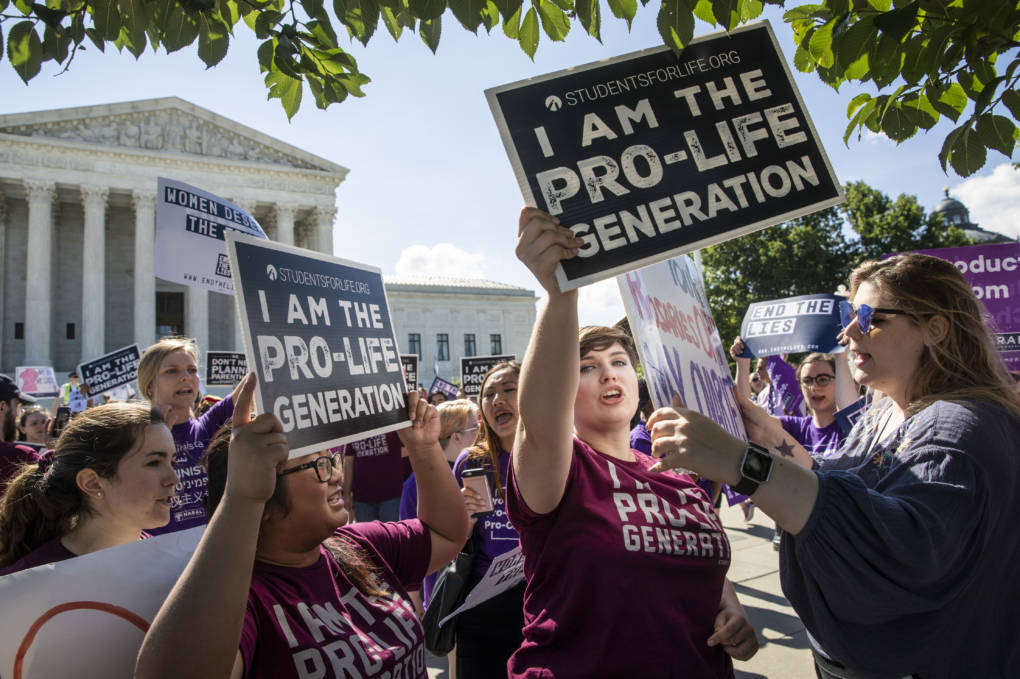
"caption": "Anti-abortion rights advocates demonstrate in front of the Supreme Court early Monday.",
"description": "Anti-abortion-rights advocates demonstrate in front of the Supreme Court early Monday.",
"title": "Anti-abortion-rights advocates demonstrate in front of the Supreme Court early Monday.",
"credit": "J. Scott Applewhite/AP",
"status": "inherit",
"isLoading": false,
"fetchFailed": false
},
"news_11674107": {
"type": "attachments",
"id": "news_11674107",
"meta": {
"index": "attachments_1716263798",
"site": "news",
"id": "11674107",
"found": true
},
"parent": 11674106,
"imgSizes": {
"small": {
"file": "https://ww2.kqed.org/app/uploads/sites/10/2018/06/ap_18010606639743_wide-314702d14b004d23042c40d1c93fb40f8dab8ee6-520x292.jpg",
"width": 520,
"mimeType": "image/jpeg",
"height": 292
},
"twentyfourteen-full-width": {
"file": "https://ww2.kqed.org/app/uploads/sites/10/2018/06/ap_18010606639743_wide-314702d14b004d23042c40d1c93fb40f8dab8ee6-1038x576.jpg",
"width": 1038,
"mimeType": "image/jpeg",
"height": 576
},
"thumbnail": {
"file": "https://ww2.kqed.org/app/uploads/sites/10/2018/06/ap_18010606639743_wide-314702d14b004d23042c40d1c93fb40f8dab8ee6-160x90.jpg",
"width": 160,
"mimeType": "image/jpeg",
"height": 90
},
"fd-sm": {
"file": "https://ww2.kqed.org/app/uploads/sites/10/2018/06/ap_18010606639743_wide-314702d14b004d23042c40d1c93fb40f8dab8ee6-960x540.jpg",
"width": 960,
"mimeType": "image/jpeg",
"height": 540
},
"post-thumbnail": {
"file": "https://ww2.kqed.org/app/uploads/sites/10/2018/06/ap_18010606639743_wide-314702d14b004d23042c40d1c93fb40f8dab8ee6-672x372.jpg",
"width": 672,
"mimeType": "image/jpeg",
"height": 372
},
"xsmall": {
"file": "https://ww2.kqed.org/app/uploads/sites/10/2018/06/ap_18010606639743_wide-314702d14b004d23042c40d1c93fb40f8dab8ee6-375x211.jpg",
"width": 375,
"mimeType": "image/jpeg",
"height": 211
},
"kqedFullSize": {
"file": "https://ww2.kqed.org/app/uploads/sites/10/2018/06/ap_18010606639743_wide-314702d14b004d23042c40d1c93fb40f8dab8ee6-e1528732046975.jpg",
"width": 1920,
"height": 1080
},
"large": {
"file": "https://ww2.kqed.org/app/uploads/sites/10/2018/06/ap_18010606639743_wide-314702d14b004d23042c40d1c93fb40f8dab8ee6-1020x574.jpg",
"width": 1020,
"mimeType": "image/jpeg",
"height": 574
},
"xlarge": {
"file": "https://ww2.kqed.org/app/uploads/sites/10/2018/06/ap_18010606639743_wide-314702d14b004d23042c40d1c93fb40f8dab8ee6-1180x664.jpg",
"width": 1180,
"mimeType": "image/jpeg",
"height": 664
},
"complete_open_graph": {
"file": "https://ww2.kqed.org/app/uploads/sites/10/2018/06/ap_18010606639743_wide-314702d14b004d23042c40d1c93fb40f8dab8ee6-1200x675.jpg",
"width": 1200,
"mimeType": "image/jpeg",
"height": 675
},
"guest-author-50": {
"file": "https://ww2.kqed.org/app/uploads/sites/10/2018/06/ap_18010606639743_wide-314702d14b004d23042c40d1c93fb40f8dab8ee6-50x50.jpg",
"width": 50,
"mimeType": "image/jpeg",
"height": 50
},
"guest-author-96": {
"file": "https://ww2.kqed.org/app/uploads/sites/10/2018/06/ap_18010606639743_wide-314702d14b004d23042c40d1c93fb40f8dab8ee6-96x96.jpg",
"width": 96,
"mimeType": "image/jpeg",
"height": 96
},
"medium": {
"file": "https://ww2.kqed.org/app/uploads/sites/10/2018/06/ap_18010606639743_wide-314702d14b004d23042c40d1c93fb40f8dab8ee6-800x450.jpg",
"width": 800,
"mimeType": "image/jpeg",
"height": 450
},
"guest-author-64": {
"file": "https://ww2.kqed.org/app/uploads/sites/10/2018/06/ap_18010606639743_wide-314702d14b004d23042c40d1c93fb40f8dab8ee6-64x64.jpg",
"width": 64,
"mimeType": "image/jpeg",
"height": 64
},
"guest-author-32": {
"file": "https://ww2.kqed.org/app/uploads/sites/10/2018/06/ap_18010606639743_wide-314702d14b004d23042c40d1c93fb40f8dab8ee6-32x32.jpg",
"width": 32,
"mimeType": "image/jpeg",
"height": 32
},
"fd-lrg": {
"file": "https://ww2.kqed.org/app/uploads/sites/10/2018/06/ap_18010606639743_wide-314702d14b004d23042c40d1c93fb40f8dab8ee6-1920x1080.jpg",
"width": 1920,
"mimeType": "image/jpeg",
"height": 1080
},
"fd-med": {
"file": "https://ww2.kqed.org/app/uploads/sites/10/2018/06/ap_18010606639743_wide-314702d14b004d23042c40d1c93fb40f8dab8ee6-1180x664.jpg",
"width": 1180,
"mimeType": "image/jpeg",
"height": 664
},
"full-width": {
"file": "https://ww2.kqed.org/app/uploads/sites/10/2018/06/ap_18010606639743_wide-314702d14b004d23042c40d1c93fb40f8dab8ee6-1920x1080.jpg",
"width": 1920,
"mimeType": "image/jpeg",
"height": 1080
},
"detail": {
"file": "https://ww2.kqed.org/app/uploads/sites/10/2018/06/ap_18010606639743_wide-314702d14b004d23042c40d1c93fb40f8dab8ee6-150x150.jpg",
"width": 150,
"mimeType": "image/jpeg",
"height": 150
},
"guest-author-128": {
"file": "https://ww2.kqed.org/app/uploads/sites/10/2018/06/ap_18010606639743_wide-314702d14b004d23042c40d1c93fb40f8dab8ee6-128x128.jpg",
"width": 128,
"mimeType": "image/jpeg",
"height": 128
},
"xxsmall": {
"file": "https://ww2.kqed.org/app/uploads/sites/10/2018/06/ap_18010606639743_wide-314702d14b004d23042c40d1c93fb40f8dab8ee6-240x135.jpg",
"width": 240,
"mimeType": "image/jpeg",
"height": 135
}
},
"publishDate": 1528731990,
"modified": 1528732035,
"caption": "People rally outside of the Supreme Court in opposition to Ohio's voter roll purges in January. The court upheld the controversial law Monday.",
"description": "People rally outside of the Supreme Court in opposition to Ohio's voter roll purges in January. The court upheld the controversial law Monday.",
"title": "ap_18010606639743_wide-314702d14b004d23042c40d1c93fb40f8dab8ee6",
"credit": "Jacquelyn Martin/AP",
"status": "inherit",
"isLoading": false,
"fetchFailed": false
},
"news_11672344": {
"type": "attachments",
"id": "news_11672344",
"meta": {
"index": "attachments_1716263798",
"site": "news",
"id": "11672344",
"found": true
},
"parent": 11672343,
"imgSizes": {
"small": {
"file": "https://ww2.kqed.org/app/uploads/sites/10/2018/06/ap_17312739950081_wide-bec75df27909bee8722ae7c351074cc1e1157801-520x292.jpg",
"width": 520,
"mimeType": "image/jpeg",
"height": 292
},
"twentyfourteen-full-width": {
"file": "https://ww2.kqed.org/app/uploads/sites/10/2018/06/ap_17312739950081_wide-bec75df27909bee8722ae7c351074cc1e1157801-1038x576.jpg",
"width": 1038,
"mimeType": "image/jpeg",
"height": 576
},
"thumbnail": {
"file": "https://ww2.kqed.org/app/uploads/sites/10/2018/06/ap_17312739950081_wide-bec75df27909bee8722ae7c351074cc1e1157801-160x90.jpg",
"width": 160,
"mimeType": "image/jpeg",
"height": 90
},
"fd-sm": {
"file": "https://ww2.kqed.org/app/uploads/sites/10/2018/06/ap_17312739950081_wide-bec75df27909bee8722ae7c351074cc1e1157801-960x540.jpg",
"width": 960,
"mimeType": "image/jpeg",
"height": 540
},
"post-thumbnail": {
"file": "https://ww2.kqed.org/app/uploads/sites/10/2018/06/ap_17312739950081_wide-bec75df27909bee8722ae7c351074cc1e1157801-672x372.jpg",
"width": 672,
"mimeType": "image/jpeg",
"height": 372
},
"xsmall": {
"file": "https://ww2.kqed.org/app/uploads/sites/10/2018/06/ap_17312739950081_wide-bec75df27909bee8722ae7c351074cc1e1157801-375x211.jpg",
"width": 375,
"mimeType": "image/jpeg",
"height": 211
},
"kqedFullSize": {
"file": "https://ww2.kqed.org/app/uploads/sites/10/2018/06/ap_17312739950081_wide-bec75df27909bee8722ae7c351074cc1e1157801-e1528125119885.jpg",
"width": 1920,
"height": 1080
},
"large": {
"file": "https://ww2.kqed.org/app/uploads/sites/10/2018/06/ap_17312739950081_wide-bec75df27909bee8722ae7c351074cc1e1157801-1020x574.jpg",
"width": 1020,
"mimeType": "image/jpeg",
"height": 574
},
"xlarge": {
"file": "https://ww2.kqed.org/app/uploads/sites/10/2018/06/ap_17312739950081_wide-bec75df27909bee8722ae7c351074cc1e1157801-1180x664.jpg",
"width": 1180,
"mimeType": "image/jpeg",
"height": 664
},
"complete_open_graph": {
"file": "https://ww2.kqed.org/app/uploads/sites/10/2018/06/ap_17312739950081_wide-bec75df27909bee8722ae7c351074cc1e1157801-1200x675.jpg",
"width": 1200,
"mimeType": "image/jpeg",
"height": 675
},
"guest-author-50": {
"file": "https://ww2.kqed.org/app/uploads/sites/10/2018/06/ap_17312739950081_wide-bec75df27909bee8722ae7c351074cc1e1157801-50x50.jpg",
"width": 50,
"mimeType": "image/jpeg",
"height": 50
},
"guest-author-96": {
"file": "https://ww2.kqed.org/app/uploads/sites/10/2018/06/ap_17312739950081_wide-bec75df27909bee8722ae7c351074cc1e1157801-96x96.jpg",
"width": 96,
"mimeType": "image/jpeg",
"height": 96
},
"medium": {
"file": "https://ww2.kqed.org/app/uploads/sites/10/2018/06/ap_17312739950081_wide-bec75df27909bee8722ae7c351074cc1e1157801-800x450.jpg",
"width": 800,
"mimeType": "image/jpeg",
"height": 450
},
"guest-author-64": {
"file": "https://ww2.kqed.org/app/uploads/sites/10/2018/06/ap_17312739950081_wide-bec75df27909bee8722ae7c351074cc1e1157801-64x64.jpg",
"width": 64,
"mimeType": "image/jpeg",
"height": 64
},
"guest-author-32": {
"file": "https://ww2.kqed.org/app/uploads/sites/10/2018/06/ap_17312739950081_wide-bec75df27909bee8722ae7c351074cc1e1157801-32x32.jpg",
"width": 32,
"mimeType": "image/jpeg",
"height": 32
},
"fd-lrg": {
"file": "https://ww2.kqed.org/app/uploads/sites/10/2018/06/ap_17312739950081_wide-bec75df27909bee8722ae7c351074cc1e1157801-1920x1080.jpg",
"width": 1920,
"mimeType": "image/jpeg",
"height": 1080
},
"fd-med": {
"file": "https://ww2.kqed.org/app/uploads/sites/10/2018/06/ap_17312739950081_wide-bec75df27909bee8722ae7c351074cc1e1157801-1180x664.jpg",
"width": 1180,
"mimeType": "image/jpeg",
"height": 664
},
"full-width": {
"file": "https://ww2.kqed.org/app/uploads/sites/10/2018/06/ap_17312739950081_wide-bec75df27909bee8722ae7c351074cc1e1157801-1920x1080.jpg",
"width": 1920,
"mimeType": "image/jpeg",
"height": 1080
},
"detail": {
"file": "https://ww2.kqed.org/app/uploads/sites/10/2018/06/ap_17312739950081_wide-bec75df27909bee8722ae7c351074cc1e1157801-150x150.jpg",
"width": 150,
"mimeType": "image/jpeg",
"height": 150
},
"guest-author-128": {
"file": "https://ww2.kqed.org/app/uploads/sites/10/2018/06/ap_17312739950081_wide-bec75df27909bee8722ae7c351074cc1e1157801-128x128.jpg",
"width": 128,
"mimeType": "image/jpeg",
"height": 128
},
"xxsmall": {
"file": "https://ww2.kqed.org/app/uploads/sites/10/2018/06/ap_17312739950081_wide-bec75df27909bee8722ae7c351074cc1e1157801-240x135.jpg",
"width": 240,
"mimeType": "image/jpeg",
"height": 135
}
},
"publishDate": 1528123590,
"modified": 1528125107,
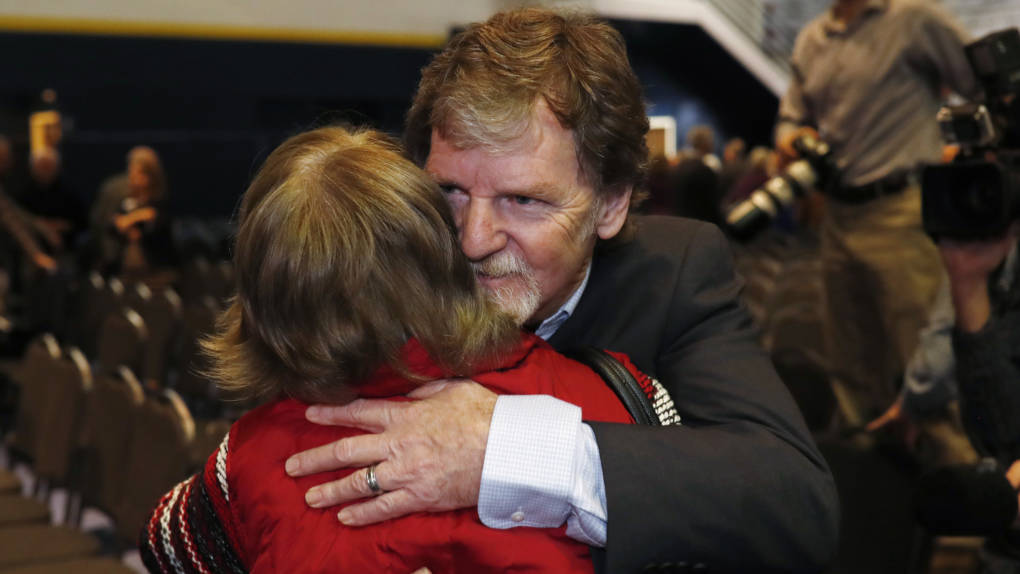
"caption": "Jack Phillips, owner of Masterpiece Cake, is hugged by a supporter after a rally on the campus of a Christian college in November.",
"description": null,
"title": "Colorado-Wedding Cake Dispute",
"credit": "David Zalubowski/AP",
"status": "inherit",
"isLoading": false,
"fetchFailed": false
},
"news_11656814": {
"type": "attachments",
"id": "news_11656814",
"meta": {
"index": "attachments_1716263798",
"site": "news",
"id": "11656814",
"found": true
},
"parent": 11656813,
"imgSizes": {
"small": {
"file": "https://ww2.kqed.org/app/uploads/sites/10/2018/03/scotus-pro-life-ee5d75887fe2141a1d6dbcb025526559b9769ee9-520x390.jpg",
"width": 520,
"mimeType": "image/jpeg",
"height": 390
},
"twentyfourteen-full-width": {
"file": "https://ww2.kqed.org/app/uploads/sites/10/2018/03/scotus-pro-life-ee5d75887fe2141a1d6dbcb025526559b9769ee9-1038x576.jpg",
"width": 1038,
"mimeType": "image/jpeg",
"height": 576
},
"thumbnail": {
"file": "https://ww2.kqed.org/app/uploads/sites/10/2018/03/scotus-pro-life-ee5d75887fe2141a1d6dbcb025526559b9769ee9-160x120.jpg",
"width": 160,
"mimeType": "image/jpeg",
"height": 120
},
"fd-sm": {
"file": "https://ww2.kqed.org/app/uploads/sites/10/2018/03/scotus-pro-life-ee5d75887fe2141a1d6dbcb025526559b9769ee9-960x720.jpg",
"width": 960,
"mimeType": "image/jpeg",
"height": 720
},
"post-thumbnail": {
"file": "https://ww2.kqed.org/app/uploads/sites/10/2018/03/scotus-pro-life-ee5d75887fe2141a1d6dbcb025526559b9769ee9-672x372.jpg",
"width": 672,
"mimeType": "image/jpeg",
"height": 372
},
"xsmall": {
"file": "https://ww2.kqed.org/app/uploads/sites/10/2018/03/scotus-pro-life-ee5d75887fe2141a1d6dbcb025526559b9769ee9-375x281.jpg",
"width": 375,
"mimeType": "image/jpeg",
"height": 281
},
"kqedFullSize": {
"file": "https://ww2.kqed.org/app/uploads/sites/10/2018/03/scotus-pro-life-ee5d75887fe2141a1d6dbcb025526559b9769ee9-e1521570912567.jpg",
"width": 1920,
"height": 1440
},
"large": {
"file": "https://ww2.kqed.org/app/uploads/sites/10/2018/03/scotus-pro-life-ee5d75887fe2141a1d6dbcb025526559b9769ee9-1020x765.jpg",
"width": 1020,
"mimeType": "image/jpeg",
"height": 765
},
"xlarge": {
"file": "https://ww2.kqed.org/app/uploads/sites/10/2018/03/scotus-pro-life-ee5d75887fe2141a1d6dbcb025526559b9769ee9-1180x885.jpg",
"width": 1180,
"mimeType": "image/jpeg",
"height": 885
},
"guest-author-50": {
"file": "https://ww2.kqed.org/app/uploads/sites/10/2018/03/scotus-pro-life-ee5d75887fe2141a1d6dbcb025526559b9769ee9-50x50.jpg",
"width": 50,
"mimeType": "image/jpeg",
"height": 50
},
"guest-author-96": {
"file": "https://ww2.kqed.org/app/uploads/sites/10/2018/03/scotus-pro-life-ee5d75887fe2141a1d6dbcb025526559b9769ee9-96x96.jpg",
"width": 96,
"mimeType": "image/jpeg",
"height": 96
},
"medium": {
"file": "https://ww2.kqed.org/app/uploads/sites/10/2018/03/scotus-pro-life-ee5d75887fe2141a1d6dbcb025526559b9769ee9-800x600.jpg",
"width": 800,
"mimeType": "image/jpeg",
"height": 600
},
"guest-author-64": {
"file": "https://ww2.kqed.org/app/uploads/sites/10/2018/03/scotus-pro-life-ee5d75887fe2141a1d6dbcb025526559b9769ee9-64x64.jpg",
"width": 64,
"mimeType": "image/jpeg",
"height": 64
},
"guest-author-32": {
"file": "https://ww2.kqed.org/app/uploads/sites/10/2018/03/scotus-pro-life-ee5d75887fe2141a1d6dbcb025526559b9769ee9-32x32.jpg",
"width": 32,
"mimeType": "image/jpeg",
"height": 32
},
"fd-lrg": {
"file": "https://ww2.kqed.org/app/uploads/sites/10/2018/03/scotus-pro-life-ee5d75887fe2141a1d6dbcb025526559b9769ee9-1920x1440.jpg",
"width": 1920,
"mimeType": "image/jpeg",
"height": 1440
},
"fd-med": {
"file": "https://ww2.kqed.org/app/uploads/sites/10/2018/03/scotus-pro-life-ee5d75887fe2141a1d6dbcb025526559b9769ee9-1180x885.jpg",
"width": 1180,
"mimeType": "image/jpeg",
"height": 885
},
"full-width": {
"file": "https://ww2.kqed.org/app/uploads/sites/10/2018/03/scotus-pro-life-ee5d75887fe2141a1d6dbcb025526559b9769ee9-1920x1440.jpg",
"width": 1920,
"mimeType": "image/jpeg",
"height": 1440
},
"detail": {
"file": "https://ww2.kqed.org/app/uploads/sites/10/2018/03/scotus-pro-life-ee5d75887fe2141a1d6dbcb025526559b9769ee9-150x150.jpg",
"width": 150,
"mimeType": "image/jpeg",
"height": 150
},
"guest-author-128": {
"file": "https://ww2.kqed.org/app/uploads/sites/10/2018/03/scotus-pro-life-ee5d75887fe2141a1d6dbcb025526559b9769ee9-128x128.jpg",
"width": 128,
"mimeType": "image/jpeg",
"height": 128
},
"xxsmall": {
"file": "https://ww2.kqed.org/app/uploads/sites/10/2018/03/scotus-pro-life-ee5d75887fe2141a1d6dbcb025526559b9769ee9-240x180.jpg",
"width": 240,
"mimeType": "image/jpeg",
"height": 180
}
},
"publishDate": 1521570746,
"modified": 1521570900,
"caption": "Anti-abortion activists protest in the rain in front of the Supreme Court. The court is hearing arguments Tuesday on the state of crisis pregnancy centers.",
"description": "Anti-abortion activists protest in the rain in front of the Supreme Court. The court is hearing arguments Tuesday on the state of crisis pregnancy centers.",
"title": "Anti-abortion activists protest in the rain in front of the Supreme Court. The court is hearing arguments Tuesday on the state of crisis pregnancy centers.",
"credit": "Lee Sheehan/NPR",
"status": "inherit",
"isLoading": false,
"fetchFailed": false
},
"news_11652467": {
"type": "attachments",
"id": "news_11652467",
"meta": {
"index": "attachments_1716263798",
"site": "news",
"id": "11652467",
"found": true
},
"parent": 11652459,
"imgSizes": {
"small": {
"file": "https://ww2.kqed.org/app/uploads/sites/10/2018/02/RS16147_GettyImages-103173723-qut-520x347.jpg",
"width": 520,
"mimeType": "image/jpeg",
"height": 347
},
"twentyfourteen-full-width": {
"file": "https://ww2.kqed.org/app/uploads/sites/10/2018/02/RS16147_GettyImages-103173723-qut-1038x576.jpg",
"width": 1038,
"mimeType": "image/jpeg",
"height": 576
},
"thumbnail": {
"file": "https://ww2.kqed.org/app/uploads/sites/10/2018/02/RS16147_GettyImages-103173723-qut-160x107.jpg",
"width": 160,
"mimeType": "image/jpeg",
"height": 107
},
"fd-sm": {
"file": "https://ww2.kqed.org/app/uploads/sites/10/2018/02/RS16147_GettyImages-103173723-qut-960x640.jpg",
"width": 960,
"mimeType": "image/jpeg",
"height": 640
},
"post-thumbnail": {
"file": "https://ww2.kqed.org/app/uploads/sites/10/2018/02/RS16147_GettyImages-103173723-qut-672x372.jpg",
"width": 672,
"mimeType": "image/jpeg",
"height": 372
},
"xsmall": {
"file": "https://ww2.kqed.org/app/uploads/sites/10/2018/02/RS16147_GettyImages-103173723-qut-375x250.jpg",
"width": 375,
"mimeType": "image/jpeg",
"height": 250
},
"kqedFullSize": {
"file": "https://ww2.kqed.org/app/uploads/sites/10/2018/02/RS16147_GettyImages-103173723-qut.jpg",
"width": 1920,
"height": 1280
},
"large": {
"file": "https://ww2.kqed.org/app/uploads/sites/10/2018/02/RS16147_GettyImages-103173723-qut-1020x680.jpg",
"width": 1020,
"mimeType": "image/jpeg",
"height": 680
},
"xlarge": {
"file": "https://ww2.kqed.org/app/uploads/sites/10/2018/02/RS16147_GettyImages-103173723-qut-1180x787.jpg",
"width": 1180,
"mimeType": "image/jpeg",
"height": 787
},
"guest-author-50": {
"file": "https://ww2.kqed.org/app/uploads/sites/10/2018/02/RS16147_GettyImages-103173723-qut-50x50.jpg",
"width": 50,
"mimeType": "image/jpeg",
"height": 50
},
"guest-author-96": {
"file": "https://ww2.kqed.org/app/uploads/sites/10/2018/02/RS16147_GettyImages-103173723-qut-96x96.jpg",
"width": 96,
"mimeType": "image/jpeg",
"height": 96
},
"medium": {
"file": "https://ww2.kqed.org/app/uploads/sites/10/2018/02/RS16147_GettyImages-103173723-qut-800x533.jpg",
"width": 800,
"mimeType": "image/jpeg",
"height": 533
},
"guest-author-64": {
"file": "https://ww2.kqed.org/app/uploads/sites/10/2018/02/RS16147_GettyImages-103173723-qut-64x64.jpg",
"width": 64,
"mimeType": "image/jpeg",
"height": 64
},
"guest-author-32": {
"file": "https://ww2.kqed.org/app/uploads/sites/10/2018/02/RS16147_GettyImages-103173723-qut-32x32.jpg",
"width": 32,
"mimeType": "image/jpeg",
"height": 32
},
"fd-lrg": {
"file": "https://ww2.kqed.org/app/uploads/sites/10/2018/02/RS16147_GettyImages-103173723-qut-1920x1280.jpg",
"width": 1920,
"mimeType": "image/jpeg",
"height": 1280
},
"fd-med": {
"file": "https://ww2.kqed.org/app/uploads/sites/10/2018/02/RS16147_GettyImages-103173723-qut-1180x787.jpg",
"width": 1180,
"mimeType": "image/jpeg",
"height": 787
},
"full-width": {
"file": "https://ww2.kqed.org/app/uploads/sites/10/2018/02/RS16147_GettyImages-103173723-qut-1920x1280.jpg",
"width": 1920,
"mimeType": "image/jpeg",
"height": 1280
},
"detail": {
"file": "https://ww2.kqed.org/app/uploads/sites/10/2018/02/RS16147_GettyImages-103173723-qut-150x150.jpg",
"width": 150,
"mimeType": "image/jpeg",
"height": 150
},
"guest-author-128": {
"file": "https://ww2.kqed.org/app/uploads/sites/10/2018/02/RS16147_GettyImages-103173723-qut-128x128.jpg",
"width": 128,
"mimeType": "image/jpeg",
"height": 128
},
"xxsmall": {
"file": "https://ww2.kqed.org/app/uploads/sites/10/2018/02/RS16147_GettyImages-103173723-qut-240x160.jpg",
"width": 240,
"mimeType": "image/jpeg",
"height": 160
}
},
"publishDate": 1519750757,
"modified": 1519776642,
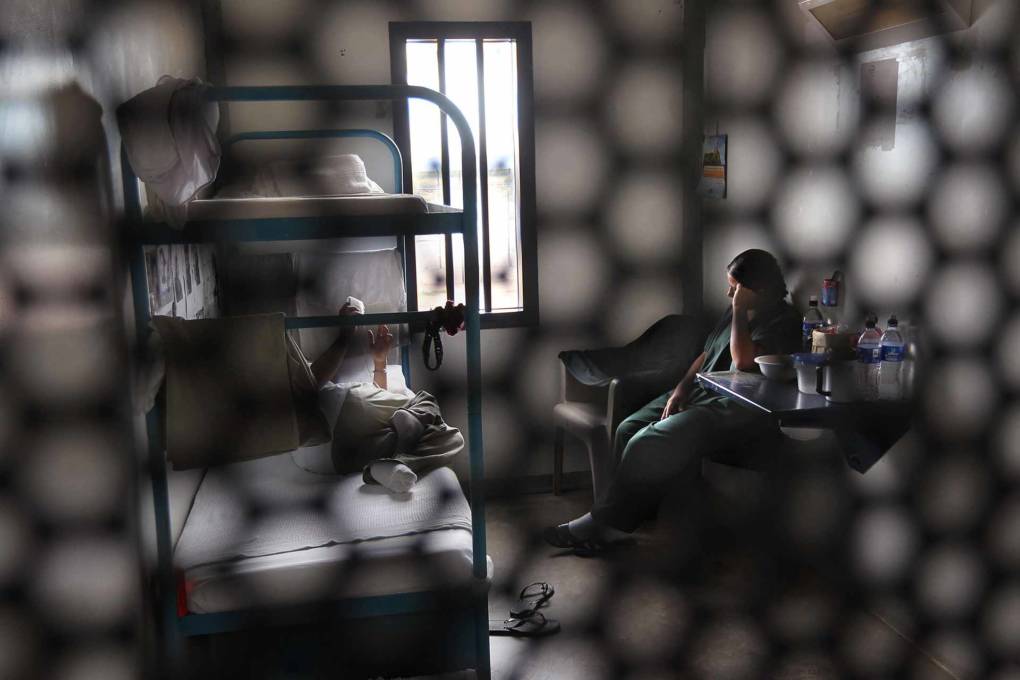
"caption": "Immigrants sit in their housing cell in the women's wing of the detention facility for illegal immigrants on July 30, 2010 in Eloy, Arizona. The Supreme Court ruled on Monday that immigrants, even those who are permanent legal residents and asylum seekers, have no right to periodic bond hearings, meaning they could be held indefinitely in some cases.",
"description": "Immigrants sit in their housing cell in the women's wing of the detention facility for illegal immigrants on July 30, 2010 in Eloy, Arizona. The Supreme Court ruled on Monday that immigrants, even those who are permanent legal residents and asylum seekers, have no right to periodic bond hearings, meaning they could be held indefinitely in some cases.",
"title": "RS16147_GettyImages-103173723-qut",
"credit": "John Moore/Getty Images",
"status": "inherit",
"isLoading": false,
"fetchFailed": false
}
},
"audioPlayerReducer": {
"postId": "stream_live",
"isPaused": true,
"isPlaying": false,
"pfsActive": false,
"pledgeModalIsOpen": true,
"playerDrawerIsOpen": false,
"liveAudioPlayStartedAt": 0,
"liveAudioPlayContext": ""
},
"authorsReducer": {
"byline_news_11679765": {
"type": "authors",
"id": "byline_news_11679765",
"meta": {
"override": true
},
"slug": "byline_news_11679765",
"name": "Scott Horsley",
"isLoading": false
},
"byline_news_11677619": {
"type": "authors",
"id": "byline_news_11677619",
"meta": {
"override": true
},
"slug": "byline_news_11677619",
"name": "\u003cstrong>Nina Totenberg\u003cbr />NPR\u003c/strong>",
"isLoading": false
},
"byline_news_11677581": {
"type": "authors",
"id": "byline_news_11677581",
"meta": {
"override": true
},
"slug": "byline_news_11677581",
"name": "\u003ca href=\"https://www.npr.org/people/2788801/scott-horsley\">Scott Horsley\u003c/a> and \u003ca href=\"https://www.npr.org/people/2101289/nina-totenberg\">Nina Totenberg\u003c/a>",
"isLoading": false
},
"byline_news_11677303": {
"type": "authors",
"id": "byline_news_11677303",
"meta": {
"override": true
},
"slug": "byline_news_11677303",
"name": "\u003cstrong>Domenico Montanaro and Nina Totenberg\u003cbr />NPR\u003c/strong>",
"isLoading": false
},
"byline_news_11677308": {
"type": "authors",
"id": "byline_news_11677308",
"meta": {
"override": true
},
"slug": "byline_news_11677308",
"name": "Sarah McCammon\u003cbr>Nina Totenberg\u003cbr>\u003cstrong>NPR\u003c/strong>",
"isLoading": false
},
"byline_news_11674106": {
"type": "authors",
"id": "byline_news_11674106",
"meta": {
"override": true
},
"slug": "byline_news_11674106",
"name": "\u003cstrong>Nina Totenberg\u003c/strong>",
"isLoading": false
},
"byline_news_11672343": {
"type": "authors",
"id": "byline_news_11672343",
"meta": {
"override": true
},
"slug": "byline_news_11672343",
"name": "Nina Totenberg",
"isLoading": false
},
"byline_news_11656813": {
"type": "authors",
"id": "byline_news_11656813",
"meta": {
"override": true
},
"slug": "byline_news_11656813",
"name": "Nina Totenberg",
"isLoading": false
},
"byline_news_11652459": {
"type": "authors",
"id": "byline_news_11652459",
"meta": {
"override": true
},
"slug": "byline_news_11652459",
"name": "Domenico Montanaro, Richard Gonzales and Nina Totenberg",
"isLoading": false
},
"markfiore": {
"type": "authors",
"id": "3236",
"meta": {
"index": "authors_1716337520",
"id": "3236",
"found": true
},
"name": "Mark Fiore",
"firstName": "Mark",
"lastName": "Fiore",
"slug": "markfiore",
"email": "mark@markfiore.com",
"display_author_email": false,
"staff_mastheads": [
"news"
],
"title": "KQED News Cartoonist",
"bio": "\u003ca href=\"http://www.MarkFiore.com\">MarkFiore.com\u003c/a> | \u003ca href=\"https://twitter.com/markfiore\">Follow on Twitter\u003c/a> | \u003ca href=\"https://www.facebook.com/pages/Mark-Fiore-Animated-Political-Cartoons/94451707396?ref=bookmarks\">Facebook\u003c/a> | \u003ca href=\"mailto:mark@markfiore.com\">email\u003c/a>\r\n\r\nPulitzer Prize-winner, Mark Fiore, who the Wall Street Journal has called “the undisputed guru of the form,” creates animated political cartoons in San Francisco, where his work has been featured regularly on the San Francisco Chronicle’s web site, SFGate.com. His work has appeared on Newsweek.com, Slate.com, CBSNews.com, MotherJones.com, DailyKos.com and NPR’s web site. Fiore’s political animation has appeared on CNN, Frontline, Bill Moyers Journal, Salon.com and cable and broadcast outlets across the globe.\r\n\r\nBeginning his professional life by drawing traditional political cartoons for newspapers, Fiore’s work appeared in publications ranging from the Washington Post to the Los Angeles Times. In the late 1990s, he began to experiment with animating political cartoons and, after a short stint at the San Jose Mercury News as their staff cartoonist, Fiore devoted all his energies to animation.\r\nGrowing up in California, Fiore also spent a good portion of his life in the backwoods of Idaho. It was this combination that shaped him politically. Mark majored in political science at Colorado College, where, in a perfect send-off for a cartoonist, he received his diploma in 1991 as commencement speaker Dick Cheney smiled approvingly.\r\nMark Fiore was awarded the Pulitzer Prize for political cartooning in 2010, a Robert F. Kennedy Journalism Award in 2004 and has twice received an Online Journalism Award for commentary from the Online News Association (2002, 2008). Fiore has received two awards for his work in new media from the National Cartoonists Society (2001, 2002), and in 2006 received The James Madison Freedom of Information Award from The Society of Professional Journalists.",
"avatar": "https://secure.gravatar.com/avatar/fc4e2a612b15b67bad0c6f0e1db4ca9b?s=600&d=blank&r=g",
"twitter": "MarkFiore",
"facebook": null,
"instagram": "https://www.instagram.com/markfiore/?hl=en",
"linkedin": null,
"sites": [
{
"site": "arts",
"roles": [
"contributor"
]
},
{
"site": "news",
"roles": [
"editor"
]
},
{
"site": "futureofyou",
"roles": [
"editor"
]
},
{
"site": "science",
"roles": [
"editor"
]
}
],
"headData": {
"title": "Mark Fiore | KQED",
"description": "KQED News Cartoonist",
"ogImgSrc": "https://secure.gravatar.com/avatar/fc4e2a612b15b67bad0c6f0e1db4ca9b?s=600&d=blank&r=g",
"twImgSrc": "https://secure.gravatar.com/avatar/fc4e2a612b15b67bad0c6f0e1db4ca9b?s=600&d=blank&r=g"
},
"isLoading": false,
"link": "/author/markfiore"
},
"fjhabvala": {
"type": "authors",
"id": "8659",
"meta": {
"index": "authors_1716337520",
"id": "8659",
"found": true
},
"name": "Farida Jhabvala Romero",
"firstName": "Farida",
"lastName": "Jhabvala Romero",
"slug": "fjhabvala",
"email": "fjhabvala@kqed.org",
"display_author_email": true,
"staff_mastheads": [
"news"
],
"title": "KQED Contributor",
"bio": "Farida Jhabvala Romero is a Labor Correspondent for KQED. She previously covered immigration. Farida was \u003ca href=\"https://www.ccnma.org/2022-most-influential-latina-journalists\">named\u003c/a> one of the 10 Most Influential Latina Journalists in California in 2022 by the California Chicano News Media Association. Her work has won awards from the Society of Professional Journalists (Northern California), as well as a national and regional Edward M. Murrow Award for the collaborative reporting projects “Dangerous Air” and “Graying California.” Before joining KQED, Farida worked as a producer at Radio Bilingüe, a national public radio network. Farida earned her master’s degree in journalism from Stanford University.",
"avatar": "https://secure.gravatar.com/avatar/f9f022d4e2609741874222a1e9d41f48fea74011aa7c615eef91d9a50c944ebe?s=600&d=blank&r=g",
"twitter": "FaridaJhabvala",
"bluesky": null,
"facebook": null,
"instagram": null,
"linkedin": "https://www.linkedin.com/in/faridajhabvala/",
"sites": [
{
"site": "news",
"roles": [
"editor"
]
},
{
"site": "stateofhealth",
"roles": [
"author"
]
},
{
"site": "liveblog",
"roles": [
"author"
]
}
],
"headData": {
"title": "Farida Jhabvala Romero | KQED",
"description": "KQED Contributor",
"ogImgSrc": "https://secure.gravatar.com/avatar/f9f022d4e2609741874222a1e9d41f48fea74011aa7c615eef91d9a50c944ebe?s=600&d=blank&r=g",
"twImgSrc": "https://secure.gravatar.com/avatar/f9f022d4e2609741874222a1e9d41f48fea74011aa7c615eef91d9a50c944ebe?s=600&d=blank&r=g"
},
"isLoading": false,
"link": "/author/fjhabvala"
},
"cfeibel": {
"type": "authors",
"id": "11314",
"meta": {
"index": "authors_1716337520",
"id": "11314",
"found": true
},
"name": "Carrie Feibel",
"firstName": "Carrie",
"lastName": "Feibel",
"slug": "cfeibel",
"email": "cfeibel@KQED.org",
"display_author_email": false,
"staff_mastheads": [],
"title": "KQED Contributor",
"bio": "Carrie Feibel is a former health editor at KQED, where she has also reported for radio and online. Her stories have appeared on the national NPR shows \u003cem>Morning Edition\u003c/em>, \u003cem>All Things Considered\u003c/em>, and \u003cem>Here & Now\u003c/em>, and on the national website, Kaiser Health News. Her print career included stints at the \u003cem>Houston Chronicle\u003c/em>, \u003cem>The (Bergen) Record,\u003c/em> and the Associated Press in New York City. A native of St. Louis, Feibel attended Cornell University, and earned a master's in journalism from Columbia University.",
"avatar": "https://secure.gravatar.com/avatar/c64a7e3c9a910e1bffd4ad32a5264aa9?s=600&d=blank&r=g",
"twitter": "KQEDHealth",
"facebook": null,
"instagram": null,
"linkedin": null,
"sites": [
{
"site": "news",
"roles": [
"subscriber"
]
},
{
"site": "stateofhealth",
"roles": [
"administrator"
]
}
],
"headData": {
"title": "Carrie Feibel | KQED",
"description": "KQED Contributor",
"ogImgSrc": "https://secure.gravatar.com/avatar/c64a7e3c9a910e1bffd4ad32a5264aa9?s=600&d=blank&r=g",
"twImgSrc": "https://secure.gravatar.com/avatar/c64a7e3c9a910e1bffd4ad32a5264aa9?s=600&d=blank&r=g"
},
"isLoading": false,
"link": "/author/cfeibel"
}
},
"pagesReducer": {
"news_tag_u-s-supreme-court": {
"type": "terms",
"id": "news_1172",
"meta": {
"index": "terms_1716263798",
"site": "news",
"id": "1172",
"score": 10.403818
},
"featImg": null,
"name": "U.S. Supreme Court",
"description": null,
"taxonomy": "tag",
"headData": {
"twImgId": null,
"twTitle": null,
"ogTitle": null,
"ogImgId": null,
"twDescription": null,
"description": null,
"title": "U.S. Supreme Court Archives | KQED News",
"ogDescription": null
},
"ttid": 1183,
"slug": "u-s-supreme-court",
"isLoading": false,
"title": "U.S. Supreme Court",
"pageMeta": {
"site": "news",
"WpPageTemplate": "page-topic-editorial",
"currentPage": 11
},
"blocks": [
{
"blockName": "kqed/post-list",
"attrs": {
"layout": "cardArticle2",
"query": "posts/news?tag=u-s-supreme-court",
"seeMore": false,
"paginated": true,
"page": 11
}
},
{
"blockName": "kqed/ad"
}
]
}
},
"pfsSessionReducer": {},
"postsReducer": {
"stream_live": {
"type": "live",
"id": "stream_live",
"audioUrl": "https://streams.kqed.org/kqedradio",
"title": "Live Stream",
"excerpt": "Live Stream information currently unavailable.",
"link": "/radio",
"featImg": "",
"label": {
"name": "KQED Live",
"link": "/"
}
},
"stream_kqedNewscast": {
"type": "posts",
"id": "stream_kqedNewscast",
"audioUrl": "https://www.kqed.org/.stream/anon/radio/RDnews/newscast.mp3?_=1",
"title": "KQED Newscast",
"featImg": "",
"label": {
"name": "88.5 FM",
"link": "/"
}
},
"news_11690422": {
"type": "posts",
"id": "news_11690422",
"meta": {
"index": "posts_1716263798",
"site": "news",
"id": "11690422",
"score": null,
"sort": [
1536104851000
]
},
"guestAuthors": [],
"slug": "a-contentious-confirmation",
"title": "A Contentious Confirmation",
"publishDate": 1536104851,
"format": "standard",
"headTitle": "A Contentious Confirmation | KQED",
"labelTerm": {
"term": 18515,
"site": "news"
},
"content": "\u003cp>Sen. Dianne Feinstein said a White House “\u003ca href=\"http://bit.ly/fiorekavanaugh\" target=\"_blank\" rel=\"noopener\">entangled by indictments, guilty pleas and criminal convictions\u003c/a>” forms a backdrop for Supreme Court nominee Brett Kavanaugh’s confirmation hearing that began Tuesday.\u003c/p>\n\u003cp>As Senate Judiciary Chair Chuck Grassley, R-Iowa, began the hearing, California Sen. Kamala Harris immediately interceded to try to delay the hearing.\u003c/p>\n\u003cp>“You are out of order, I’ll proceed …” Grassley said as he allowed the contentious hearing to continue unabated.\u003c/p>\n\u003cp>Senate Democrats were furious about an 11th-hour document dump, and an additional 100,000 documents from Kavanaugh’s days in the George W. Bush administration that are being withheld.\u003c/p>\n\u003cp>[ad fullwidth]\u003c/p>\u003cp>\u003c/p>\n",
"blocks": [],
"excerpt": "Sen. Dianne Feinstein said a White House \"entangled by indictments, guilty pleas and criminal convictions\" forms a backdrop for Brett Kavanaugh's Supreme Court confirmation hearing that began Tuesday.",
"status": "publish",
"parent": 0,
"modified": 1721117841,
"stats": {
"hasAudio": false,
"hasVideo": false,
"hasChartOrMap": false,
"iframeSrcs": [],
"hasGoogleForm": false,
"hasGallery": false,
"hasHearkenModule": false,
"hasPolis": false,
"paragraphCount": 6,
"wordCount": 113
},
"headData": {
"title": "A Contentious Confirmation | KQED",
"description": "Sen. Dianne Feinstein said a White House "entangled by indictments, guilty pleas and criminal convictions" forms a backdrop for Brett Kavanaugh's Supreme Court confirmation hearing that began Tuesday.",
"ogTitle": "",
"ogDescription": "",
"ogImgId": "",
"twTitle": "",
"twDescription": "",
"twImgId": "",
"schema": {
"@context": "https://schema.org",
"@type": "NewsArticle",
"headline": "A Contentious Confirmation",
"datePublished": "2018-09-04T16:47:31-07:00",
"dateModified": "2024-07-16T01:17:21-07:00",
"image": "https://cdn.kqed.org/wp-content/uploads/2020/02/KQED-OG-Image@1x.png",
"isAccessibleForFree": "True",
"publisher": {
"@type": "NewsMediaOrganization",
"@id": "https://www.kqed.org/#organization",
"name": "KQED",
"logo": "https://cdn.kqed.org/wp-content/uploads/2020/02/KQED-OG-Image@1x.png",
"url": "https://www.kqed.org",
"sameAs": [
"https://www.facebook.com/KQED",
"https://twitter.com/KQED",
"https://www.instagram.com/kqed/",
"https://www.tiktok.com/@kqedofficial",
"https://www.linkedin.com/company/kqed",
"https://www.youtube.com/channel/UCeC0IOo7i1P_61zVUWbJ4nw"
]
}
}
},
"sticky": false,
"path": "/news/11690422/a-contentious-confirmation",
"audioTrackLength": null,
"parsedContent": [
{
"type": "contentString",
"content": "\u003cdiv class=\"post-body\">\u003cp>\u003cp>Sen. Dianne Feinstein said a White House “\u003ca href=\"http://bit.ly/fiorekavanaugh\" target=\"_blank\" rel=\"noopener\">entangled by indictments, guilty pleas and criminal convictions\u003c/a>” forms a backdrop for Supreme Court nominee Brett Kavanaugh’s confirmation hearing that began Tuesday.\u003c/p>\n\u003cp>As Senate Judiciary Chair Chuck Grassley, R-Iowa, began the hearing, California Sen. Kamala Harris immediately interceded to try to delay the hearing.\u003c/p>\n\u003cp>“You are out of order, I’ll proceed …” Grassley said as he allowed the contentious hearing to continue unabated.\u003c/p>\n\u003cp>Senate Democrats were furious about an 11th-hour document dump, and an additional 100,000 documents from Kavanaugh’s days in the George W. Bush administration that are being withheld.\u003c/p>\n\u003cp>\u003c/p>\u003c/div>",
"attributes": {
"named": {},
"numeric": []
}
},
{
"type": "component",
"content": "",
"name": "ad",
"attributes": {
"named": {
"label": "fullwidth"
},
"numeric": [
"fullwidth"
]
}
},
{
"type": "contentString",
"content": "\u003cdiv class=\"post-body\">\u003cp>\u003c/p>\u003cp>\u003c/p>\n\u003c/div>\u003c/p>",
"attributes": {
"named": {},
"numeric": []
}
}
],
"link": "/news/11690422/a-contentious-confirmation",
"authors": [
"3236"
],
"series": [
"news_18515"
],
"categories": [
"news_6188",
"news_8",
"news_13"
],
"tags": [
"news_23686",
"news_274",
"news_1323",
"news_61",
"news_20949",
"news_17968",
"news_201",
"news_1172"
],
"featImg": "news_11690425",
"label": "news_18515"
},
"news_11679840": {
"type": "posts",
"id": "news_11679840",
"meta": {
"index": "posts_1716263798",
"site": "news",
"id": "11679840",
"score": null,
"sort": [
1531262330000
]
},
"parent": 0,
"labelTerm": {
"site": "news",
"term": 72
},
"blocks": [],
"publishDate": 1531262330,
"format": "audio",
"disqusTitle": "How Would a Supreme Court Reversal on Roe v. Wade Affect California?",
"title": "How Would a Supreme Court Reversal on Roe v. Wade Affect California?",
"headTitle": "The California Report | KQED News",
"content": "\u003cp>How much could President Trump's U.S. Supreme Court nominee, Brett Kavanaugh, change health care in California?\u003c/p>\n\u003cp>Supporters of reproductive rights have been fearful -- and abortion opponents have been hopeful -- that any Trump nominee would work with the court's other conservative justices to overturn \u003cem>Roe v. Wade\u003c/em>. That landmark 1973 decision legalized abortion across the country. But in legal terms, a \u003cem>Roe\u003c/em> reversal would merely push the decision back to the states.\u003c/p>\n\u003cp>Analysts estimate \u003ca href=\"https://www.npr.org/sections/health-shots/2018/07/10/627666535/if-high-court-reverses-roe-v-wade-22-states-likely-to-ban-abortion\" target=\"_blank\" rel=\"noopener\">22 states\u003c/a> would immediately or quickly ban abortion if that occurred -- but California is not one of them.\u003c/p>\n\u003cp>Rather, it's one of \u003ca href=\"https://www.guttmacher.org/state-policy/explore/abortion-policy-absence-roe\" target=\"_blank\" rel=\"noopener\">nine states\u003c/a> that have specifically put a law on the books codifying a woman's right to choose abortion.\u003c/p>\n\u003cp>But that doesn't mean patient rights and the practice of health care wouldn't change in California, warns Crystal Strait, CEO of Planned Parenthood Affiliates of California. There are many other ways Kavanaugh's confirmation could affect what doctors and patients can do, Strait says.\u003c/p>\n\u003cp>[ad fullwidth]\u003c/p>\n\u003cp>“California is not an island. If something happens to women around the country, then that impacts California just as much. I think we have to be really cautious,\" Strait told KQED, just minutes after Trump announced his pick Monday evening.\u003c/p>\n\u003cp>Hypothetically, a Supreme Court decision could legally redefine the meaning and scope of abortion, which would have a trickle-down effect, even on states like California that want to keep abortion legal.\u003c/p>\n\u003cp>\"So they could put undue burden [on a woman], they could put new rules and regulations through a Supreme Court decision and then obviously someone in California would sue, and we'd re-litigate that up to the Supreme Court,\" Strait explained. \"But since the Supreme Court would have just decided that case, it's hard to imagine -- right? -- that they would undo themselves.\"\u003c/p>\n\u003cp>But there are other, more indirect ways that reproductive rights and medical practice could be restricted under a future Supreme Court, even in California, Strait explained.\u003c/p>\n\u003caside class=\"pullquote alignright\">'Imagine you're going to talk to your doctor and you want to figure all your options and your doctor ... literally [isn't] allowed by law to tell you what your medical options are. And that is just, I think, a really frightening place to be.'\u003ccite>Crystal Strait, Planned Parenthood Affiliates of California\u003c/cite>\u003c/aside>\n\u003cp>One example would be “gag rules” on women’s health clinics, including Planned Parenthood. (These are not to be confused with a recent Supreme Court ruling, freeing \"pregnancy crisis centers\" from the strictures of a California state law).\u003c/p>\n\u003cp>Rather, what Strait calls a \"gag rule\" refers to a recent Trump proposal that would make all clinics that accept federal Title X funds -- which pay for STD tests, cancer screenings and contraception for low-income women -- obey new restrictions on how doctors can discuss abortion with their patients.\u003c/p>\n\u003cp>If a future Supreme Court upheld such a rule, Strait said, that might in turn lead to other restrictions on what doctors can say.\u003c/p>\n\u003cp>“Imagine you're going to talk to your doctor and you want to figure all your options and your doctor literally is gagged. They literally are not allowed by law to tell you what your medical options are. And that is just, I think, a really frightening place to be and to think about.\"\u003c/p>\n\u003cp>Kavanaugh's addition to the court could also affect the Affordable Care Act -- which has built-in protections for patients with pre-existing conditions -- and for insurance coverage of contraception.\u003c/p>\n\u003cp>\u003c/p>\n\u003cp>In the past, Kavanaugh has sided with employers who don’t want to include birth control in their health plans. Strait said any change to provision of the law would affect millions of California women, and their wallets.\u003c/p>\n\n",
"disqusIdentifier": "11679840 https://ww2.kqed.org/news/?p=11679840",
"disqusUrl": "https://ww2.kqed.org/news/2018/07/10/how-would-a-supreme-court-reversal-on-roe-v-wade-affect-california/",
"stats": {
"hasVideo": false,
"hasChartOrMap": false,
"hasAudio": false,
"hasPolis": false,
"wordCount": 620,
"hasGoogleForm": false,
"hasGallery": false,
"hasHearkenModule": false,
"iframeSrcs": [],
"paragraphCount": 17
},
"modified": 1531262330,
"excerpt": "If the nation’s landmark abortion law is overturned, abortion rights would still be protected in California. But that doesn't mean patient rights and the practice of health care wouldn't change.",
"headData": {
"twImgId": "",
"twTitle": "",
"ogTitle": "",
"ogImgId": "",
"twDescription": "",
"description": "If the nation’s landmark abortion law is overturned, abortion rights would still be protected in California. But that doesn't mean patient rights and the practice of health care wouldn't change.",
"title": "How Would a Supreme Court Reversal on Roe v. Wade Affect California? | KQED",
"ogDescription": "",
"schema": {
"@context": "https://schema.org",
"@type": "NewsArticle",
"headline": "How Would a Supreme Court Reversal on Roe v. Wade Affect California?",
"datePublished": "2018-07-10T15:38:50-07:00",
"dateModified": "2018-07-10T15:38:50-07:00",
"image": "https://cdn.kqed.org/wp-content/uploads/2020/02/KQED-OG-Image@1x.png",
"isAccessibleForFree": "True",
"publisher": {
"@type": "NewsMediaOrganization",
"@id": "https://www.kqed.org/#organization",
"name": "KQED",
"logo": "https://cdn.kqed.org/wp-content/uploads/2020/02/KQED-OG-Image@1x.png",
"url": "https://www.kqed.org",
"sameAs": [
"https://www.facebook.com/KQED",
"https://twitter.com/KQED",
"https://www.instagram.com/kqed/",
"https://www.tiktok.com/@kqedofficial",
"https://www.linkedin.com/company/kqed",
"https://www.youtube.com/channel/UCeC0IOo7i1P_61zVUWbJ4nw"
]
}
}
},
"guestAuthors": [],
"slug": "how-would-a-supreme-court-reversal-on-roe-v-wade-affect-california",
"status": "publish",
"audioUrl": "https://www.kqed.org/.stream/anon/radio/tcr/2018/07/feibelsuperspot.mp3",
"path": "/news/11679840/how-would-a-supreme-court-reversal-on-roe-v-wade-affect-california",
"audioDuration": 121000,
"audioTrackLength": null,
"parsedContent": [
{
"type": "contentString",
"content": "\u003cdiv class=\"post-body\">\u003cp>\u003cp>How much could President Trump's U.S. Supreme Court nominee, Brett Kavanaugh, change health care in California?\u003c/p>\n\u003cp>Supporters of reproductive rights have been fearful -- and abortion opponents have been hopeful -- that any Trump nominee would work with the court's other conservative justices to overturn \u003cem>Roe v. Wade\u003c/em>. That landmark 1973 decision legalized abortion across the country. But in legal terms, a \u003cem>Roe\u003c/em> reversal would merely push the decision back to the states.\u003c/p>\n\u003cp>Analysts estimate \u003ca href=\"https://www.npr.org/sections/health-shots/2018/07/10/627666535/if-high-court-reverses-roe-v-wade-22-states-likely-to-ban-abortion\" target=\"_blank\" rel=\"noopener\">22 states\u003c/a> would immediately or quickly ban abortion if that occurred -- but California is not one of them.\u003c/p>\n\u003cp>Rather, it's one of \u003ca href=\"https://www.guttmacher.org/state-policy/explore/abortion-policy-absence-roe\" target=\"_blank\" rel=\"noopener\">nine states\u003c/a> that have specifically put a law on the books codifying a woman's right to choose abortion.\u003c/p>\n\u003cp>But that doesn't mean patient rights and the practice of health care wouldn't change in California, warns Crystal Strait, CEO of Planned Parenthood Affiliates of California. There are many other ways Kavanaugh's confirmation could affect what doctors and patients can do, Strait says.\u003c/p>\n\u003cp>\u003c/p>\u003c/div>",
"attributes": {
"named": {},
"numeric": []
}
},
{
"type": "component",
"content": "",
"name": "ad",
"attributes": {
"named": {
"label": "fullwidth"
},
"numeric": [
"fullwidth"
]
}
},
{
"type": "contentString",
"content": "\u003cdiv class=\"post-body\">\u003cp>\u003c/p>\n\u003cp>“California is not an island. If something happens to women around the country, then that impacts California just as much. I think we have to be really cautious,\" Strait told KQED, just minutes after Trump announced his pick Monday evening.\u003c/p>\n\u003cp>Hypothetically, a Supreme Court decision could legally redefine the meaning and scope of abortion, which would have a trickle-down effect, even on states like California that want to keep abortion legal.\u003c/p>\n\u003cp>\"So they could put undue burden [on a woman], they could put new rules and regulations through a Supreme Court decision and then obviously someone in California would sue, and we'd re-litigate that up to the Supreme Court,\" Strait explained. \"But since the Supreme Court would have just decided that case, it's hard to imagine -- right? -- that they would undo themselves.\"\u003c/p>\n\u003cp>But there are other, more indirect ways that reproductive rights and medical practice could be restricted under a future Supreme Court, even in California, Strait explained.\u003c/p>\n\u003caside class=\"pullquote alignright\">'Imagine you're going to talk to your doctor and you want to figure all your options and your doctor ... literally [isn't] allowed by law to tell you what your medical options are. And that is just, I think, a really frightening place to be.'\u003ccite>Crystal Strait, Planned Parenthood Affiliates of California\u003c/cite>\u003c/aside>\n\u003cp>One example would be “gag rules” on women’s health clinics, including Planned Parenthood. (These are not to be confused with a recent Supreme Court ruling, freeing \"pregnancy crisis centers\" from the strictures of a California state law).\u003c/p>\n\u003cp>Rather, what Strait calls a \"gag rule\" refers to a recent Trump proposal that would make all clinics that accept federal Title X funds -- which pay for STD tests, cancer screenings and contraception for low-income women -- obey new restrictions on how doctors can discuss abortion with their patients.\u003c/p>\n\u003cp>If a future Supreme Court upheld such a rule, Strait said, that might in turn lead to other restrictions on what doctors can say.\u003c/p>\n\u003cp>“Imagine you're going to talk to your doctor and you want to figure all your options and your doctor literally is gagged. They literally are not allowed by law to tell you what your medical options are. And that is just, I think, a really frightening place to be and to think about.\"\u003c/p>\n\u003cp>Kavanaugh's addition to the court could also affect the Affordable Care Act -- which has built-in protections for patients with pre-existing conditions -- and for insurance coverage of contraception.\u003c/p>\n\u003cp>\u003c/p>\n\u003cp>In the past, Kavanaugh has sided with employers who don’t want to include birth control in their health plans. Strait said any change to provision of the law would affect millions of California women, and their wallets.\u003c/p>\n\n\u003c/div>\u003c/p>",
"attributes": {
"named": {},
"numeric": []
}
}
],
"link": "/news/11679840/how-would-a-supreme-court-reversal-on-roe-v-wade-affect-california",
"authors": [
"11314"
],
"programs": [
"news_72"
],
"categories": [
"news_457",
"news_6188",
"news_8"
],
"tags": [
"news_866",
"news_22880",
"news_23686",
"news_1323",
"news_23490",
"news_23688",
"news_17041",
"news_1172"
],
"featImg": "news_11679871",
"label": "news_72"
},
"news_11679765": {
"type": "posts",
"id": "news_11679765",
"meta": {
"index": "posts_1716263798",
"site": "news",
"id": "11679765",
"score": null,
"sort": [
1531186534000
]
},
"parent": 0,
"labelTerm": {},
"blocks": [],
"publishDate": 1531186534,
"format": "standard",
"disqusTitle": "Trump Taps Brett Kavanaugh as His Second Supreme Court Pick",
"title": "Trump Taps Brett Kavanaugh as His Second Supreme Court Pick",
"headTitle": "The California Report | KQED News",
"content": "\u003cp>President Trump plans to nominate Brett Kavanaugh to the U.S. Supreme Court to fill the vacancy left by retiring Justice Anthony Kennedy. If confirmed, Trump's choice would solidify the high court's conservative majority and continue the president's push to shift the federal bench to the right.\u003c/p>\n\u003cp>Trump announced his choice with a prime-time address from the White House East Room.\u003c/p>\n\u003cp>\"Throughout legal circles, he is considered a judge's judge, a true thought leader among his peers,\" Trump said of Kavanaugh. \"He is a brilliant jurist with a clear and effective writing style, universally regarded as one of the finest and sharpest legal minds of our time. And just like Justice Gorsuch, he excelled as a clerk for Justice Kennedy.\"\u003c/p>\n\u003cp>\u003ca href=\"https://www.cadc.uscourts.gov/internet/home.nsf/Content/VL+-+Judges+-+BMK\">Since 2006, Kavanaugh has served\u003c/a> on the U.S. Court of Appeals for the District of Columbia Circuit, often called the nation's second-most powerful court. He was appointed to that post by President George W. Bush, after serving as Bush's White House staff secretary.\u003c/p>\n\u003cp>Kavanaugh graduated from Yale Law School and clerked for Kennedy in the mid-1990s. Kavanaugh later worked with independent counsel Kenneth Starr during the investigation of President Bill Clinton.\u003c/p>\n\u003cp>[ad fullwidth]\u003c/p>\n\u003cp>At 53, Kavanaugh is relatively young. The president has said he wants a nominee who could serve on the high court for decades. He is a connected Washington insider with roots in politics and has written more than 300 opinions in the 12 years he has been on the D.C. Circuit.\u003c/p>\n\u003cp>Prior to being tapped by Trump, some conservatives questioned Kavanaugh's bona fides, and he's controversial with Democrats because of his role in the Starr investigation of Clinton.\u003c/p>\n\u003cp>Some conservatives lobbied against him, worrying that his upbringing in the suburbs of D.C. could mean he'll be the kind of justice who has disappointed conservatives before. They believe Kavanaugh is not sufficiently conservative and disagree with portions of opinions he has written relating to abortion and the Affordable Care Act, also known as Obamacare.\u003c/p>\n\u003cp>As promised, Trump made his pick from \u003ca href=\"https://www.npr.org/2018/06/28/623944469/trump-says-he-will-nominate-new-supreme-court-justice-from-this-list\">a list of more than two dozen potential nominees\u003c/a> drawn up with the help of conservative legal activists at \u003ca href=\"https://www.npr.org/2018/06/28/624416666/what-is-the-federalist-society-and-how-does-it-affect-supreme-court-picks\">the Federalist Society\u003c/a> and the Heritage Foundation.\u003c/p>\n\u003cp>Trump published a similar list during the 2016 campaign, and it was widely credited with helping him win the votes of social conservatives who otherwise might have been skeptical of a thrice-married billionaire from New York.\u003c/p>\n\u003cp>\"Not being a politician, I think people wanted to hear what some of my choices may be, and it was pretty effective,\" Trump said of the list, on the day Kennedy's retirement was announced.\u003c/p>\n\u003cp>Kavanaugh, in brief remarks at the White House, underscored his conservative credentials.\u003c/p>\n\u003cp>\"My judicial philosophy is straightforward,\" he said. \"A judge must be independent and must interpret the law, not make the law. A judge must interpret statutes as written and a judge must interpret the Constitution as written, informed by history and tradition and precedent.\"\u003c/p>\n\u003cp>With a short list of candidates already in hand, Trump has moved quickly to select his nominee, just 12 days after Kennedy announced his retirement. Senate Majority Leader Mitch McConnell, R-Ky., has promised to push for confirmation with similar speed.\u003c/p>\n\u003cp>\"I think you want to go as quickly as possible,\" Trump said.\u003c/p>\n\u003cp>Kavanaugh will begin making the rounds on Capitol Hill Tuesday, accompanied by former Sen. Jon Kyl, R-Ariz., a longtime member of the Judiciary Committee.\u003c/p>\n\u003cp>Republicans are eager to have a new justice in place when the Supreme Court begins its new term in October. And they certainly want Trump's choice confirmed before the November election, when Democrats have a long-shot chance of retaking the Senate majority.\u003c/p>\n\u003cp>\"This incredibly qualified nominee deserves a swift confirmation and robust, bipartisan support,\" Trump said.\u003c/p>\n\u003cp>The president has already begun using the high court vacancy as a rallying cry as he campaigns for Republicans across the country.\u003c/p>\n\u003cp>\"Justice Kennedy's retirement makes the issue of Senate control one of the vital issues of our time,\" he told an audience in Fargo, N.D., last month. \"The most important thing we can do.\"\u003c/p>\n\u003cp>Republicans changed the Senate's rules last year to allow them to confirm a Supreme Court justice with a simple majority vote.\u003c/p>\n\u003cp>The president has also been wooing red-state Democrats as a kind of insurance policy. One night after Kennedy announced his retirement, Trump met with Democratic Sens. Joe Manchin of West Virginia, Joe Donnelly of Indiana and Heidi Heitkamp of North Dakota. All three voted in favor of Neil Gorsuch, Trump's first Supreme Court nominee. And all three are running for re-election in November in states Trump won.\u003c/p>\n\u003cp>Trump also met with Republican Sens. Susan Collins of Maine and Lisa Murkowski of Alaska, who have shown concern in the past about preserving access to abortion rights.\u003c/p>\n\u003cp>Kennedy had voted to preserve the core principles of the high court's 1973 ruling in \u003cem>Roe v. Wade. \u003c/em>Although Trump said he would not ask judicial candidates about their views on \u003cem>Roe\u003c/em> directly, advocates on both sides of the abortion debate believe that ruling could be vulnerable once Kennedy's successor is seated.\u003c/p>\n\u003cp>That is one reason many Democrats are demanding an all-out battle to block Trump's nominee. But with only 49 votes in the Senate, Democrats have few tools to work with.\u003c/p>\n\u003cp>By contrast, Senate Republicans were in the majority in 2016, when McConnell and his GOP colleagues blocked President Barack Obama's Supreme Court nominee, Judge Merrick Garland, for more than nine months, following the death of Justice Antonin Scalia.\u003c/p>\n\u003cp>By keeping Scalia's seat open, McConnell gave Trump a head start in putting his own stamp on the high court, and the president acknowledged as much when Gorsuch was \u003ca href=\"https://www.npr.org/2017/04/10/523281405/trump-cheers-elevation-of-gorsuch-to-supreme-court\">sworn in last year\u003c/a>.\u003c/p>\n\u003cp>\"I especially want to express our gratitude to Mitch McConnell for all that he did to make this achievement possible,\" Trump said.\u003c/p>\n\u003cp>McConnell and Trump were rewarded this year with a string of 5-4 decisions in which Gorsuch cast votes favorable to the president and the GOP.\u003c/p>\n\u003cp>Senate Republicans' stonewalling strategy extended to lower courts as well.\u003c/p>\n\u003cp>\"Just as they held the Merrick Garland seat open on the Supreme Court, they also held open an awful lot of vacancies on the district courts and the courts of appeal,\" said Russell Wheeler, who tracks judicial nominations at the Brookings Institution.\u003c/p>\n\u003cp>[ad floatright]\u003c/p>\n\u003cp>As a result, Trump found more than twice as many judicial vacancies waiting for him when he entered the White House as Obama did. And the president moved swiftly to fill those openings with young, conservative judges. So far, Trump has installed more than 20 appeals court judges and more than 16 trial court judges on the federal bench. Dozens of additional nominations are pending — a list that will soon include Trump's second nominee for the highest court in the land.\u003c/p>\n\u003cdiv class=\"fullattribution\">Copyright 2018 NPR. To see more, visit http://www.npr.org/.\u003cimg src=\"https://www.google-analytics.com/__utm.gif?utmac=UA-5828686-4&utmdt=Trump+Taps+Brett+Kavanaugh+As+His+Second+Supreme+Court+Pick+&utme=8(APIKey)9(MDAxOTAwOTE4MDEyMTkxMDAzNjczZDljZA004)\">\u003c/div>\n\n",
"disqusIdentifier": "11679765 https://ww2.kqed.org/news/?p=11679765",
"disqusUrl": "https://ww2.kqed.org/news/2018/07/09/trump-taps-brett-kavanaugh-as-his-second-supreme-court-pick/",
"stats": {
"hasVideo": false,
"hasChartOrMap": false,
"hasAudio": false,
"hasPolis": false,
"wordCount": 1170,
"hasGoogleForm": false,
"hasGallery": false,
"hasHearkenModule": false,
"iframeSrcs": [],
"paragraphCount": 34
},
"modified": 1531267363,
"excerpt": "President Trump will nominate Brett Kavanaugh to replace retiring Justice Anthony Kennedy on the Supreme Court. If confirmed, Trump's second high court pick would shift the court solidly to the right.",
"headData": {
"twImgId": "",
"twTitle": "",
"ogTitle": "",
"ogImgId": "",
"twDescription": "",
"description": "President Trump will nominate Brett Kavanaugh to replace retiring Justice Anthony Kennedy on the Supreme Court. If confirmed, Trump's second high court pick would shift the court solidly to the right.",
"title": "Trump Taps Brett Kavanaugh as His Second Supreme Court Pick | KQED",
"ogDescription": "",
"schema": {
"@context": "https://schema.org",
"@type": "NewsArticle",
"headline": "Trump Taps Brett Kavanaugh as His Second Supreme Court Pick",
"datePublished": "2018-07-09T18:35:34-07:00",
"dateModified": "2018-07-10T17:02:43-07:00",
"image": "https://cdn.kqed.org/wp-content/uploads/2020/02/KQED-OG-Image@1x.png",
"isAccessibleForFree": "True",
"publisher": {
"@type": "NewsMediaOrganization",
"@id": "https://www.kqed.org/#organization",
"name": "KQED",
"logo": "https://cdn.kqed.org/wp-content/uploads/2020/02/KQED-OG-Image@1x.png",
"url": "https://www.kqed.org",
"sameAs": [
"https://www.facebook.com/KQED",
"https://twitter.com/KQED",
"https://www.instagram.com/kqed/",
"https://www.tiktok.com/@kqedofficial",
"https://www.linkedin.com/company/kqed",
"https://www.youtube.com/channel/UCeC0IOo7i1P_61zVUWbJ4nw"
]
}
}
},
"guestAuthors": [],
"slug": "trump-taps-brett-kavanaugh-as-his-second-supreme-court-pick",
"status": "publish",
"sourceUrl": "https://www.npr.org/",
"nprApiLink": "http://api.npr.org/query?id=624727227&apiKey=MDAxOTAwOTE4MDEyMTkxMDAzNjczZDljZA004",
"nprByline": "Scott Horsley",
"nprStoryDate": "Mon, 09 Jul 2018 20:55:00 -0400",
"nprLastModifiedDate": "Mon, 09 Jul 2018 21:28:33 -0400",
"nprHtmlLink": "https://www.npr.org/2018/07/09/624727227/trump-to-name-his-second-supreme-court-pick?ft=nprml&f=624727227",
"nprImageAgency": "AP",
"nprImageCredit": "Evan Vucci",
"source": "NPR",
"nprStoryId": "624727227",
"nprRetrievedStory": "1",
"nprPubDate": "Mon, 09 Jul 2018 21:28:00 -0400",
"path": "/news/11679765/trump-taps-brett-kavanaugh-as-his-second-supreme-court-pick",
"audioTrackLength": null,
"parsedContent": [
{
"type": "contentString",
"content": "\u003cdiv class=\"post-body\">\u003cp>\u003cp>President Trump plans to nominate Brett Kavanaugh to the U.S. Supreme Court to fill the vacancy left by retiring Justice Anthony Kennedy. If confirmed, Trump's choice would solidify the high court's conservative majority and continue the president's push to shift the federal bench to the right.\u003c/p>\n\u003cp>Trump announced his choice with a prime-time address from the White House East Room.\u003c/p>\n\u003cp>\"Throughout legal circles, he is considered a judge's judge, a true thought leader among his peers,\" Trump said of Kavanaugh. \"He is a brilliant jurist with a clear and effective writing style, universally regarded as one of the finest and sharpest legal minds of our time. And just like Justice Gorsuch, he excelled as a clerk for Justice Kennedy.\"\u003c/p>\n\u003cp>\u003ca href=\"https://www.cadc.uscourts.gov/internet/home.nsf/Content/VL+-+Judges+-+BMK\">Since 2006, Kavanaugh has served\u003c/a> on the U.S. Court of Appeals for the District of Columbia Circuit, often called the nation's second-most powerful court. He was appointed to that post by President George W. Bush, after serving as Bush's White House staff secretary.\u003c/p>\n\u003cp>Kavanaugh graduated from Yale Law School and clerked for Kennedy in the mid-1990s. Kavanaugh later worked with independent counsel Kenneth Starr during the investigation of President Bill Clinton.\u003c/p>\n\u003cp>\u003c/p>\u003c/div>",
"attributes": {
"named": {},
"numeric": []
}
},
{
"type": "component",
"content": "",
"name": "ad",
"attributes": {
"named": {
"label": "fullwidth"
},
"numeric": [
"fullwidth"
]
}
},
{
"type": "contentString",
"content": "\u003cdiv class=\"post-body\">\u003cp>\u003c/p>\n\u003cp>At 53, Kavanaugh is relatively young. The president has said he wants a nominee who could serve on the high court for decades. He is a connected Washington insider with roots in politics and has written more than 300 opinions in the 12 years he has been on the D.C. Circuit.\u003c/p>\n\u003cp>Prior to being tapped by Trump, some conservatives questioned Kavanaugh's bona fides, and he's controversial with Democrats because of his role in the Starr investigation of Clinton.\u003c/p>\n\u003cp>Some conservatives lobbied against him, worrying that his upbringing in the suburbs of D.C. could mean he'll be the kind of justice who has disappointed conservatives before. They believe Kavanaugh is not sufficiently conservative and disagree with portions of opinions he has written relating to abortion and the Affordable Care Act, also known as Obamacare.\u003c/p>\n\u003cp>As promised, Trump made his pick from \u003ca href=\"https://www.npr.org/2018/06/28/623944469/trump-says-he-will-nominate-new-supreme-court-justice-from-this-list\">a list of more than two dozen potential nominees\u003c/a> drawn up with the help of conservative legal activists at \u003ca href=\"https://www.npr.org/2018/06/28/624416666/what-is-the-federalist-society-and-how-does-it-affect-supreme-court-picks\">the Federalist Society\u003c/a> and the Heritage Foundation.\u003c/p>\n\u003cp>Trump published a similar list during the 2016 campaign, and it was widely credited with helping him win the votes of social conservatives who otherwise might have been skeptical of a thrice-married billionaire from New York.\u003c/p>\n\u003cp>\"Not being a politician, I think people wanted to hear what some of my choices may be, and it was pretty effective,\" Trump said of the list, on the day Kennedy's retirement was announced.\u003c/p>\n\u003cp>Kavanaugh, in brief remarks at the White House, underscored his conservative credentials.\u003c/p>\n\u003cp>\"My judicial philosophy is straightforward,\" he said. \"A judge must be independent and must interpret the law, not make the law. A judge must interpret statutes as written and a judge must interpret the Constitution as written, informed by history and tradition and precedent.\"\u003c/p>\n\u003cp>With a short list of candidates already in hand, Trump has moved quickly to select his nominee, just 12 days after Kennedy announced his retirement. Senate Majority Leader Mitch McConnell, R-Ky., has promised to push for confirmation with similar speed.\u003c/p>\n\u003cp>\"I think you want to go as quickly as possible,\" Trump said.\u003c/p>\n\u003cp>Kavanaugh will begin making the rounds on Capitol Hill Tuesday, accompanied by former Sen. Jon Kyl, R-Ariz., a longtime member of the Judiciary Committee.\u003c/p>\n\u003cp>Republicans are eager to have a new justice in place when the Supreme Court begins its new term in October. And they certainly want Trump's choice confirmed before the November election, when Democrats have a long-shot chance of retaking the Senate majority.\u003c/p>\n\u003cp>\"This incredibly qualified nominee deserves a swift confirmation and robust, bipartisan support,\" Trump said.\u003c/p>\n\u003cp>The president has already begun using the high court vacancy as a rallying cry as he campaigns for Republicans across the country.\u003c/p>\n\u003cp>\"Justice Kennedy's retirement makes the issue of Senate control one of the vital issues of our time,\" he told an audience in Fargo, N.D., last month. \"The most important thing we can do.\"\u003c/p>\n\u003cp>Republicans changed the Senate's rules last year to allow them to confirm a Supreme Court justice with a simple majority vote.\u003c/p>\n\u003cp>The president has also been wooing red-state Democrats as a kind of insurance policy. One night after Kennedy announced his retirement, Trump met with Democratic Sens. Joe Manchin of West Virginia, Joe Donnelly of Indiana and Heidi Heitkamp of North Dakota. All three voted in favor of Neil Gorsuch, Trump's first Supreme Court nominee. And all three are running for re-election in November in states Trump won.\u003c/p>\n\u003cp>Trump also met with Republican Sens. Susan Collins of Maine and Lisa Murkowski of Alaska, who have shown concern in the past about preserving access to abortion rights.\u003c/p>\n\u003cp>Kennedy had voted to preserve the core principles of the high court's 1973 ruling in \u003cem>Roe v. Wade. \u003c/em>Although Trump said he would not ask judicial candidates about their views on \u003cem>Roe\u003c/em> directly, advocates on both sides of the abortion debate believe that ruling could be vulnerable once Kennedy's successor is seated.\u003c/p>\n\u003cp>That is one reason many Democrats are demanding an all-out battle to block Trump's nominee. But with only 49 votes in the Senate, Democrats have few tools to work with.\u003c/p>\n\u003cp>By contrast, Senate Republicans were in the majority in 2016, when McConnell and his GOP colleagues blocked President Barack Obama's Supreme Court nominee, Judge Merrick Garland, for more than nine months, following the death of Justice Antonin Scalia.\u003c/p>\n\u003cp>By keeping Scalia's seat open, McConnell gave Trump a head start in putting his own stamp on the high court, and the president acknowledged as much when Gorsuch was \u003ca href=\"https://www.npr.org/2017/04/10/523281405/trump-cheers-elevation-of-gorsuch-to-supreme-court\">sworn in last year\u003c/a>.\u003c/p>\n\u003cp>\"I especially want to express our gratitude to Mitch McConnell for all that he did to make this achievement possible,\" Trump said.\u003c/p>\n\u003cp>McConnell and Trump were rewarded this year with a string of 5-4 decisions in which Gorsuch cast votes favorable to the president and the GOP.\u003c/p>\n\u003cp>Senate Republicans' stonewalling strategy extended to lower courts as well.\u003c/p>\n\u003cp>\"Just as they held the Merrick Garland seat open on the Supreme Court, they also held open an awful lot of vacancies on the district courts and the courts of appeal,\" said Russell Wheeler, who tracks judicial nominations at the Brookings Institution.\u003c/p>\n\u003cp>\u003c/p>\u003c/div>",
"attributes": {
"named": {},
"numeric": []
}
},
{
"type": "component",
"content": "",
"name": "ad",
"attributes": {
"named": {
"label": "floatright"
},
"numeric": [
"floatright"
]
}
},
{
"type": "contentString",
"content": "\u003cdiv class=\"post-body\">\u003cp>\u003c/p>\n\u003cp>As a result, Trump found more than twice as many judicial vacancies waiting for him when he entered the White House as Obama did. And the president moved swiftly to fill those openings with young, conservative judges. So far, Trump has installed more than 20 appeals court judges and more than 16 trial court judges on the federal bench. Dozens of additional nominations are pending — a list that will soon include Trump's second nominee for the highest court in the land.\u003c/p>\n\u003cdiv class=\"fullattribution\">Copyright 2018 NPR. To see more, visit http://www.npr.org/.\u003cimg src=\"https://www.google-analytics.com/__utm.gif?utmac=UA-5828686-4&utmdt=Trump+Taps+Brett+Kavanaugh+As+His+Second+Supreme+Court+Pick+&utme=8(APIKey)9(MDAxOTAwOTE4MDEyMTkxMDAzNjczZDljZA004)\">\u003c/div>\n\n\u003c/div>\u003c/p>",
"attributes": {
"named": {},
"numeric": []
}
}
],
"link": "/news/11679765/trump-taps-brett-kavanaugh-as-his-second-supreme-court-pick",
"authors": [
"byline_news_11679765"
],
"programs": [
"news_72"
],
"categories": [
"news_6188",
"news_8",
"news_13"
],
"tags": [
"news_23686",
"news_1323",
"news_1172"
],
"affiliates": [
"news_253"
],
"featImg": "news_11679766",
"label": "source_news_11679765"
},
"news_11677658": {
"type": "posts",
"id": "news_11677658",
"meta": {
"index": "posts_1716263798",
"site": "news",
"id": "11677658",
"score": null,
"sort": [
1530233623000
]
},
"parent": 0,
"labelTerm": {
"site": "news",
"term": 72
},
"blocks": [],
"publishDate": 1530233623,
"format": "audio",
"disqusTitle": "As Supreme Court Backs Travel Ban, Yemeni-Americans Grapple With Next Steps",
"title": "As Supreme Court Backs Travel Ban, Yemeni-Americans Grapple With Next Steps",
"headTitle": "The California Report | KQED News",
"content": "\u003cp>Majed Balawi has spent months and nearly $25,000 in his quest to apply for a visa for his wife, who lives in war-torn Yemen. Balawi, is a naturalized U.S. citizen and he worries his wife might not survive the ongoing bloodshed and famine faced by millions of people in that country.\u003c/p>\n\u003cp>\"Yemen is not safe. I want to bring my wife here,\" said Balawi, 38, an Uber driver who has lived in San Francisco since 2009. \"I can't go back to Yemen because there's a war.\"\u003c/p>\n\u003cp>After a divided \u003ca href=\"https://www.kqed.org/news/11677303/in-big-win-for-white-house-supreme-court-upholds-president-trumps-travel-ban\" target=\"_blank\" rel=\"noopener\">Supreme Court upheld the federal government's ban\u003c/a> preventing the entry of most citizens from Yemen and six other nations, Balawi and other Yemeni-Americans said their only hope of bringing relatives to safety here had evaporated.\u003c/p>\n\u003cp>\"I am very, very sad,\" Balawi said.\u003c/p>\n\u003cp>Writing for the 5-4 majority, Chief Justice John Roberts said that under immigration law, the president has broad authority to suspend the entry of any foreigners if he believes that move is in the nation's interest.\u003c/p>\n\u003cp>[ad fullwidth]\u003c/p>\n\u003cp>The federal government maintains the travel restrictions are needed for national security because the countries targeted -- Iran, Libya, Somalia, Syria and Yemen, as well as North Korea and Venezuela -- are unable or unwilling to provide sufficient information to verify the identity of visa applicants.\u003c/p>\n\u003cp>President Trump celebrated the court's ruling as a victory.\u003c/p>\n\u003cp>https://twitter.com/realDonaldTrump/status/1011620271327989760\u003c/p>\n\u003cp>Since the current travel ban went into effect last December, it has become nearly impossible for people from the impacted countries to obtain new visas, according to immigration lawyers.\u003c/p>\n\u003cp>Consular officers may grant waivers on a case-by-case basis, if applicants meet certain \u003ca href=\"https://travel.state.gov/content/travel/en/us-visas/visa-information-resources/presidential-proclamation-archive/RevisionatoPresidentialProclamation9645.html\" target=\"_blank\" rel=\"noopener\">criteria,\u003c/a> including \"undue hardship,\" if the visa is denied.\u003c/p>\n\u003cp>In the last six months, the U.S. has issued only about 809 waivers to citizens of the countries covered by the policy, according to an official with the U.S. Department of State.\u003c/p>\n\u003cp>That's a tiny number compared to the number of people who are waiting for a visa, said Elica Vafaie, an attorney with Asian Americans Advancing Justice – Asian Law Caucus in San Francisco.\u003c/p>\n\u003cp>\"We've seen families being separated from their loved ones, people who can't get medical attention and people who are trying to come here to study,\" she said.\u003c/p>\n\u003cp>Vafaie expects more legal challenges to the administration's travel ban, as the Supreme Court remanded the issue to the lower courts.\u003c/p>\n\u003cp>\"We'll fight not just in the courts but through rallies,\" Vafaie said. \"There's elections coming up. There's different policy advocacy so the fight will really be inside and outside of the courtroom.\"\u003c/p>\n\u003cp>Just hours after the court's ruling, San Francisco Supervisor Ahsha Safaí was the first speaker blasting the court's ruling at a gathering of immigrant advocates and their supporters.\u003c/p>\n\u003cp>\"I'm here to say President Trump, we will not back down. We will continue to fight!\" Safai said.\u003c/p>\n\u003cp>He told the small crowd by the steps of City Hall that his father is from Iran, one of the countries listed in the ban.\u003c/p>\n\u003cp>\"I would not be standing here today if the shameful decision that was handed down by the Supreme Court had been handed down and had been in place decades ago,\" Safai said.\u003c/p>\n\u003cp>At a Yemeni restaurant in the city's Tenderloin neighborhood, Mohammed Albarak talked about next steps with his father, Ahmed, over a lunch of hummus, pita bread and fried beans.\u003c/p>\n\u003cp>Mohammed, 23, is a University of California graduate. He's getting married next month in Yemen. He said he had been waiting for the court's ruling before submitting a visa application for his fiancee.\u003c/p>\n\u003cp>\"I've been working on it, I have everything set,\" he said. \"But now I don't see any reason to start any processing or going through any application, because it's useless,\" he said. \"I'm disappointed. I'm frustrated.\"\u003c/p>\n\u003cp>Mohammed said he took the step of becoming a U.S. citizen two months ago, believing he would have a better chance of sponsoring his future wife to live in this country.\u003c/p>\n\u003cp>\u003c/p>\n\u003cp>\"I thought I'd have more privileges and I would be able to do more. But it sounds like it doesn't matter,\" Mohammed said. \"My only option now is to spend time back home in Yemen, then return and work here as much as I can, and wait until Trump's presidency ends.\"\u003c/p>\n\n",
"disqusIdentifier": "11677658 https://ww2.kqed.org/news/?p=11677658",
"disqusUrl": "https://ww2.kqed.org/news/2018/06/28/as-supreme-court-backs-travel-ban-yemeni-americans-grapple-with-next-steps/",
"stats": {
"hasVideo": false,
"hasChartOrMap": false,
"hasAudio": false,
"hasPolis": false,
"wordCount": 745,
"hasGoogleForm": false,
"hasGallery": false,
"hasHearkenModule": false,
"iframeSrcs": [],
"paragraphCount": 25
},
"modified": 1530286842,
"excerpt": "Opponents of the ban in San Francisco say the fight is not over, while American citizens brace for more time apart from family in Yemen.",
"headData": {
"twImgId": "",
"twTitle": "",
"ogTitle": "",
"ogImgId": "",
"twDescription": "",
"description": "Opponents of the ban in San Francisco say the fight is not over, while American citizens brace for more time apart from family in Yemen.",
"title": "As Supreme Court Backs Travel Ban, Yemeni-Americans Grapple With Next Steps | KQED",
"ogDescription": "",
"schema": {
"@context": "https://schema.org",
"@type": "NewsArticle",
"headline": "As Supreme Court Backs Travel Ban, Yemeni-Americans Grapple With Next Steps",
"datePublished": "2018-06-28T17:53:43-07:00",
"dateModified": "2018-06-29T08:40:42-07:00",
"image": "https://cdn.kqed.org/wp-content/uploads/2020/02/KQED-OG-Image@1x.png",
"isAccessibleForFree": "True",
"publisher": {
"@type": "NewsMediaOrganization",
"@id": "https://www.kqed.org/#organization",
"name": "KQED",
"logo": "https://cdn.kqed.org/wp-content/uploads/2020/02/KQED-OG-Image@1x.png",
"url": "https://www.kqed.org",
"sameAs": [
"https://www.facebook.com/KQED",
"https://twitter.com/KQED",
"https://www.instagram.com/kqed/",
"https://www.tiktok.com/@kqedofficial",
"https://www.linkedin.com/company/kqed",
"https://www.youtube.com/channel/UCeC0IOo7i1P_61zVUWbJ4nw"
]
}
}
},
"guestAuthors": [],
"slug": "as-supreme-court-backs-travel-ban-yemeni-americans-grapple-with-next-steps",
"status": "publish",
"audioUrl": "https://www.kqed.org/.stream/anon/radio/tcr/2018/06/RomeroTravelBan.mp3",
"path": "/news/11677658/as-supreme-court-backs-travel-ban-yemeni-americans-grapple-with-next-steps",
"audioDuration": 156000,
"audioTrackLength": null,
"parsedContent": [
{
"type": "contentString",
"content": "\u003cdiv class=\"post-body\">\u003cp>\u003cp>Majed Balawi has spent months and nearly $25,000 in his quest to apply for a visa for his wife, who lives in war-torn Yemen. Balawi, is a naturalized U.S. citizen and he worries his wife might not survive the ongoing bloodshed and famine faced by millions of people in that country.\u003c/p>\n\u003cp>\"Yemen is not safe. I want to bring my wife here,\" said Balawi, 38, an Uber driver who has lived in San Francisco since 2009. \"I can't go back to Yemen because there's a war.\"\u003c/p>\n\u003cp>After a divided \u003ca href=\"https://www.kqed.org/news/11677303/in-big-win-for-white-house-supreme-court-upholds-president-trumps-travel-ban\" target=\"_blank\" rel=\"noopener\">Supreme Court upheld the federal government's ban\u003c/a> preventing the entry of most citizens from Yemen and six other nations, Balawi and other Yemeni-Americans said their only hope of bringing relatives to safety here had evaporated.\u003c/p>\n\u003cp>\"I am very, very sad,\" Balawi said.\u003c/p>\n\u003cp>Writing for the 5-4 majority, Chief Justice John Roberts said that under immigration law, the president has broad authority to suspend the entry of any foreigners if he believes that move is in the nation's interest.\u003c/p>\n\u003cp>\u003c/p>\u003c/div>",
"attributes": {
"named": {},
"numeric": []
}
},
{
"type": "component",
"content": "",
"name": "ad",
"attributes": {
"named": {
"label": "fullwidth"
},
"numeric": [
"fullwidth"
]
}
},
{
"type": "contentString",
"content": "\u003cdiv class=\"post-body\">\u003cp>\u003c/p>\n\u003cp>The federal government maintains the travel restrictions are needed for national security because the countries targeted -- Iran, Libya, Somalia, Syria and Yemen, as well as North Korea and Venezuela -- are unable or unwilling to provide sufficient information to verify the identity of visa applicants.\u003c/p>\n\u003cp>President Trump celebrated the court's ruling as a victory.\u003c/p>\u003c/p>\u003c/div>",
"attributes": {
"named": {},
"numeric": []
}
},
{
"type": "component",
"content": "",
"name": "singleTwitterStatus",
"attributes": {
"named": {
"id": "1011620271327989760"
},
"numeric": []
}
},
{
"type": "contentString",
"content": "\u003cdiv class=\"post-body\">\u003cp>\n\u003cp>Since the current travel ban went into effect last December, it has become nearly impossible for people from the impacted countries to obtain new visas, according to immigration lawyers.\u003c/p>\n\u003cp>Consular officers may grant waivers on a case-by-case basis, if applicants meet certain \u003ca href=\"https://travel.state.gov/content/travel/en/us-visas/visa-information-resources/presidential-proclamation-archive/RevisionatoPresidentialProclamation9645.html\" target=\"_blank\" rel=\"noopener\">criteria,\u003c/a> including \"undue hardship,\" if the visa is denied.\u003c/p>\n\u003cp>In the last six months, the U.S. has issued only about 809 waivers to citizens of the countries covered by the policy, according to an official with the U.S. Department of State.\u003c/p>\n\u003cp>That's a tiny number compared to the number of people who are waiting for a visa, said Elica Vafaie, an attorney with Asian Americans Advancing Justice – Asian Law Caucus in San Francisco.\u003c/p>\n\u003cp>\"We've seen families being separated from their loved ones, people who can't get medical attention and people who are trying to come here to study,\" she said.\u003c/p>\n\u003cp>Vafaie expects more legal challenges to the administration's travel ban, as the Supreme Court remanded the issue to the lower courts.\u003c/p>\n\u003cp>\"We'll fight not just in the courts but through rallies,\" Vafaie said. \"There's elections coming up. There's different policy advocacy so the fight will really be inside and outside of the courtroom.\"\u003c/p>\n\u003cp>Just hours after the court's ruling, San Francisco Supervisor Ahsha Safaí was the first speaker blasting the court's ruling at a gathering of immigrant advocates and their supporters.\u003c/p>\n\u003cp>\"I'm here to say President Trump, we will not back down. We will continue to fight!\" Safai said.\u003c/p>\n\u003cp>He told the small crowd by the steps of City Hall that his father is from Iran, one of the countries listed in the ban.\u003c/p>\n\u003cp>\"I would not be standing here today if the shameful decision that was handed down by the Supreme Court had been handed down and had been in place decades ago,\" Safai said.\u003c/p>\n\u003cp>At a Yemeni restaurant in the city's Tenderloin neighborhood, Mohammed Albarak talked about next steps with his father, Ahmed, over a lunch of hummus, pita bread and fried beans.\u003c/p>\n\u003cp>Mohammed, 23, is a University of California graduate. He's getting married next month in Yemen. He said he had been waiting for the court's ruling before submitting a visa application for his fiancee.\u003c/p>\n\u003cp>\"I've been working on it, I have everything set,\" he said. \"But now I don't see any reason to start any processing or going through any application, because it's useless,\" he said. \"I'm disappointed. I'm frustrated.\"\u003c/p>\n\u003cp>Mohammed said he took the step of becoming a U.S. citizen two months ago, believing he would have a better chance of sponsoring his future wife to live in this country.\u003c/p>\n\u003cp>\u003c/p>\n\u003cp>\"I thought I'd have more privileges and I would be able to do more. But it sounds like it doesn't matter,\" Mohammed said. \"My only option now is to spend time back home in Yemen, then return and work here as much as I can, and wait until Trump's presidency ends.\"\u003c/p>\n\n\u003c/div>\u003c/p>",
"attributes": {
"named": {},
"numeric": []
}
}
],
"link": "/news/11677658/as-supreme-court-backs-travel-ban-yemeni-americans-grapple-with-next-steps",
"authors": [
"8659"
],
"programs": [
"news_72"
],
"categories": [
"news_1169",
"news_6188",
"news_8"
],
"tags": [
"news_20467",
"news_1172"
],
"featImg": "news_11677816",
"label": "news_72"
},
"news_11677619": {
"type": "posts",
"id": "news_11677619",
"meta": {
"index": "posts_1716263798",
"site": "news",
"id": "11677619",
"score": null,
"sort": [
1530125053000
]
},
"parent": 0,
"labelTerm": {},
"blocks": [],
"publishDate": 1530125053,
"format": "standard",
"disqusTitle": "Supreme Court to Lose Its Swing Voter: Justice Anthony Kennedy to Retire",
"title": "Supreme Court to Lose Its Swing Voter: Justice Anthony Kennedy to Retire",
"headTitle": "The California Report | KQED News",
"content": "\u003cp>Supreme Court Justice Anthony Kennedy announced his retirement Wednesday, setting the stage for what promises to be an epic political battle over his replacement.\u003c/p>\n\u003cp>A Trump nominee is likely to be far more conservative than Kennedy, who, though appointed by President Reagan, voted with the court's liberals in some key cases.\u003c/p>\n\u003cp>Kennedy, who will turn 82 next month, made the announcement one day after the court handed down its last pending opinion for the 2017-18 term. \u003ca href=\"https://apps.npr.org/documents/document.html?id=4562908-Justice-Anthony-Kennedy-retirement-letter\">He said he would continue to serve until July 31 of this year\u003c/a>.\u003c/p>\n\u003cp>There is little doubt about Kennedy's mark on history. Quite simply, he remade the face of marriage in America. More than any other justice, he was responsible for the advancement of LGBT rights. He wrote four of the court's opinions on the subject over nearly two decades, and ultimately declared marriage between two people of the same sex a fundamental right protected by the Constitution.\u003c/p>\n\u003cp>\"No union is more profound than marriage, for it embodies the highest ideals of love, fidelity, devotion, sacrifice, and family,\" \u003ca href=\"http://www.npr.org/2015/06/26/417840345/supreme-court-changes-face-of-marriage-in-historic-ruling\">Kennedy said in his opinion\u003c/a>. \"In forming a marital union two people become something greater than what they once were.\"\u003c/p>\n\u003cp>[ad fullwidth]\u003c/p>\n\u003cp>On a court that has become increasingly conservative, Kennedy's role has been pivotal. In 5-4 decisions, his vote has usually determined the outcome on some of the hottest legal and social issues of the day — not just gay rights, but abortion, campaign finance, gun rights, affirmative action, the war on terror and the death penalty.\u003c/p>\n\u003cp>President Trump has pledged to nominate a replacement who will almost certainly vote differently on many of these issues, putting some landmark decisions in jeopardy — from \u003cem>Roe v. Wade\u003c/em> to the legalization of same-sex marriage.\u003c/p>\n\u003cp>That will please and reward conservative groups that have supported him. At the same time, it will galvanize opposition among Democrats, and potentially even some moderate Republicans.\u003c/p>\n\u003cp>The confirmation rules this time, however, will be different from the get-go. When Democrats threatened to delay \u003ca href=\"http://www.npr.org/2017/04/07/522902281/senate-confirms-gorsuch-to-supreme-court\">Trump's first nominee, Neil Gorsuch\u003c/a>, earlier this year, \u003ca href=\"http://www.npr.org/2017/04/06/522847700/senate-pulls-nuclear-trigger-to-ease-gorsuch-confirmation\">Republicans voted to exempt Supreme Court nominations from filibusters\u003c/a>, which required a supermajority of the Senate to cut off debate.\u003c/p>\n\u003cp>So this time, the president will make his choice knowing that he only needs to get a majority of the Republican-controlled Senate to approve his nominee. And Senate Majority Leader Mitch McConnell, R-Ky., has proved adept at keeping his troops in line on judicial nominations.\u003c/p>\n\u003cfigure id=\"attachment_11677626\" class=\"wp-caption aligncenter\" style=\"max-width: 800px\">\u003cimg class=\"size-full wp-image-11677626\" src=\"https://ww2.kqed.org/news/wp-content/uploads/sites/10/2018/06/gettyimages-691148462_custom-2fd7a22f1018eb172e360a2f61d5fa7e0bbce214-s800-c85.jpg\" alt=\"\" width=\"800\" height=\"567\" srcset=\"https://ww2.kqed.org/app/uploads/sites/10/2018/06/gettyimages-691148462_custom-2fd7a22f1018eb172e360a2f61d5fa7e0bbce214-s800-c85.jpg 800w, https://ww2.kqed.org/app/uploads/sites/10/2018/06/gettyimages-691148462_custom-2fd7a22f1018eb172e360a2f61d5fa7e0bbce214-s800-c85-160x113.jpg 160w, https://ww2.kqed.org/app/uploads/sites/10/2018/06/gettyimages-691148462_custom-2fd7a22f1018eb172e360a2f61d5fa7e0bbce214-s800-c85-240x170.jpg 240w, https://ww2.kqed.org/app/uploads/sites/10/2018/06/gettyimages-691148462_custom-2fd7a22f1018eb172e360a2f61d5fa7e0bbce214-s800-c85-375x266.jpg 375w, https://ww2.kqed.org/app/uploads/sites/10/2018/06/gettyimages-691148462_custom-2fd7a22f1018eb172e360a2f61d5fa7e0bbce214-s800-c85-520x369.jpg 520w\" sizes=\"(max-width: 800px) 100vw, 800px\">\u003cfigcaption class=\"wp-caption-text\">Justices of the Supreme Court sit for their official group photo on June 1. Seated: Associate Justices Ruth Bader Ginsburg (left) and Anthony M. Kennedy, Chief Justice of the U.S. John G. Roberts, Associate Justices Clarence Thomas and Stephen Breyer. Standing: Associate Justices Elena Kagan (left), Samuel Alito Jr., Sonia Sotomayor and Neil Gorsuch. \u003ccite>(Saul Loeb/AFP/Getty Images)\u003c/cite>\u003c/figcaption>\u003c/figure>\n\u003cp>Still, the pressure will be intense, and the stakes high.\u003c/p>\n\u003cp>If anyone has doubts about how different the court would likely be when a centrist conservative like Kennedy is replaced by someone more hard-line, there is the example of Justice Sandra Day O'Connor's retirement in 2006. President George W. Bush chose Samuel Alito to replace O'Connor, and the effect has been profound; O'Connor has even complained privately that Alito is systematically dismantling her legacy.\u003c/p>\n\u003cp>Perhaps the best example of that dismantling is in the area of campaign finance. O'Connor, onetime GOP leader of the Arizona Senate, voted to uphold landmark campaign finance legislation in 2003 — only to see the court reverse that decision seven years later, after Alito replaced her.\u003c/p>\n\u003cp>While O'Connor was on the court, a majority of justices continued to support legislation that regulated campaign fundraising. But after her retirement and the Alito appointment, \u003ca href=\"http://www.npr.org/templates/story/story.php?storyId=122805666\">Kennedy wrote the court's 5-4 decision\u003c/a> in \u003cem>Citizens United\u003c/em>, the 2010 case that remade the way campaigns at every level are conducted.\u003c/p>\n\u003cp>The decision unleashed an ever-growing flood of cash into political campaigns. It reversed a century-old understanding that had sought to prevent corruption by barring corporations, and later labor unions, from spending their general treasury funds on candidate elections.\u003c/p>\n\u003cp>For Kennedy, reversing that legal understanding from the early 1900s was the realization of a long-held view of free speech.\u003c/p>\n\u003cp>\"Political speech is indispensable to decision-making in a democracy,\" \u003ca href=\"http://caselaw.findlaw.com/us-supreme-court/08-205.html\">Kennedy wrote\u003c/a> in the \u003cem>Citizens United\u003c/em> decision, \"and this is no less true because the speech comes from a corporation rather than an individual.\"\u003c/p>\n\u003cp>In general, there is probably no greater example of Kennedy's approach to the law, and how it will almost certainly differ from Trump's nominee, than the question of how to interpret the Constitution: whether the Founding Fathers intended their creation as a static document, bound by the literal meaning of its words, or whether those words represent concepts of liberty to be interpreted over time.\u003c/p>\n\u003cp>In a 2003 decision that struck down a Texas law criminalizing private homosexual conduct, Kennedy said that the Founders understood that they were writing a document for the ages.\u003c/p>\n\u003cp>\"They knew time can blind us to certain truths,\" \u003ca href=\"https://www.law.cornell.edu/supct/html/02-102.ZO.html\">he wrote\u003c/a> in \u003cem>Lawrence v. Texas\u003c/em>, \"and later generations can see that laws, once thought necessary and proper, in fact serve only to oppress.\"\u003c/p>\n\u003cp>The men and women on Trump's list of potential replacements disagree with that view, for the most part. They side with the late Justice Antonin Scalia and his successor, Justice Neil Gorsuch, as well as other conservatives on the Supreme Court today, who believe the nation is bound by the original intent of the Founders.\u003c/p>\n\u003cp>During his presidential campaign, in a bid for the support of social conservatives, Trump issued two lists totaling 21 names and pledged to pick his first Supreme Court nominee from those lists. He did just that in naming Justice Gorsuch to fill the open seat once occupied by Scalia.\u003c/p>\n\u003cp>People involved in that selection process say that the president intends to expand that list a bit now. He might add Judge Brett Kavanaugh from the U.S. Court of Appeals for the D.C. Circuit, and possibly former Solicitor General Paul Clement, a highly regarded Supreme Court advocate who served in the George W. Bush administration. Clement's main drawback in the president's mind, though, is said to be that he has no judicial track record to examine.\u003c/p>\n\u003cp>Back in consideration are some of the names on the previous list: Judge Thomas Hardiman, of the 3rd U.S. Circuit Court of Appeals, which covers Pennsylvania, Delaware, and New Jersey, and Judge Raymond Kethledge, who serves on the 6th Circuit, which covers a large part of the Midwest. Hardiman was the runner-up last time and is known as a staunch gun rights advocate. All four are in their early 50s.\u003c/p>\n\u003cfigure id=\"attachment_11677628\" class=\"wp-caption aligncenter\" style=\"max-width: 800px\">\u003cimg class=\"size-full wp-image-11677628\" src=\"https://ww2.kqed.org/news/wp-content/uploads/sites/10/2018/06/gettyimages-666877998_custom-bc5185ca9442f301006f062edf798afb7f6e91d6-s800-c85.jpg\" alt=\"\" width=\"800\" height=\"532\" srcset=\"https://ww2.kqed.org/app/uploads/sites/10/2018/06/gettyimages-666877998_custom-bc5185ca9442f301006f062edf798afb7f6e91d6-s800-c85.jpg 800w, https://ww2.kqed.org/app/uploads/sites/10/2018/06/gettyimages-666877998_custom-bc5185ca9442f301006f062edf798afb7f6e91d6-s800-c85-160x106.jpg 160w, https://ww2.kqed.org/app/uploads/sites/10/2018/06/gettyimages-666877998_custom-bc5185ca9442f301006f062edf798afb7f6e91d6-s800-c85-240x160.jpg 240w, https://ww2.kqed.org/app/uploads/sites/10/2018/06/gettyimages-666877998_custom-bc5185ca9442f301006f062edf798afb7f6e91d6-s800-c85-375x249.jpg 375w, https://ww2.kqed.org/app/uploads/sites/10/2018/06/gettyimages-666877998_custom-bc5185ca9442f301006f062edf798afb7f6e91d6-s800-c85-520x346.jpg 520w\" sizes=\"(max-width: 800px) 100vw, 800px\">\u003cfigcaption class=\"wp-caption-text\">Supreme Court Associate Justice Anthony Kennedy (right) prepares to administer the judicial oath to Judge Neil Gorsuch during a ceremony in the Rose Garden at the White House in 2017. \u003ccite>(Chip Somodevilla/Getty Images)\u003c/cite>\u003c/figcaption>\u003c/figure>\n\u003cp>[ad floatright]\u003c/p>\n\u003cp>Copyright 2018 NPR. To see more, visit http://www.npr.org/.\u003c/p>\n\n",
"disqusIdentifier": "11677619 https://ww2.kqed.org/news/?p=11677619",
"disqusUrl": "https://ww2.kqed.org/news/2018/06/27/supreme-court-to-lose-its-swing-voter-justice-anthony-kennedy-to-retire/",
"stats": {
"hasVideo": false,
"hasChartOrMap": false,
"hasAudio": false,
"hasPolis": false,
"wordCount": 1182,
"hasGoogleForm": false,
"hasGallery": false,
"hasHearkenModule": false,
"iframeSrcs": [],
"paragraphCount": 27
},
"modified": 1530137406,
"excerpt": "Justice Kennedy is a moderate and a champion for the gay rights movement. President Trump will likely replace him with a staunch conservative, which would fundamentally shift the culture of the court.",
"headData": {
"twImgId": "",
"twTitle": "",
"ogTitle": "",
"ogImgId": "",
"twDescription": "",
"description": "Justice Kennedy is a moderate and a champion for the gay rights movement. President Trump will likely replace him with a staunch conservative, which would fundamentally shift the culture of the court.",
"title": "Supreme Court to Lose Its Swing Voter: Justice Anthony Kennedy to Retire | KQED",
"ogDescription": "",
"schema": {
"@context": "https://schema.org",
"@type": "NewsArticle",
"headline": "Supreme Court to Lose Its Swing Voter: Justice Anthony Kennedy to Retire",
"datePublished": "2018-06-27T11:44:13-07:00",
"dateModified": "2018-06-27T15:10:06-07:00",
"image": "https://cdn.kqed.org/wp-content/uploads/2020/02/KQED-OG-Image@1x.png",
"isAccessibleForFree": "True",
"publisher": {
"@type": "NewsMediaOrganization",
"@id": "https://www.kqed.org/#organization",
"name": "KQED",
"logo": "https://cdn.kqed.org/wp-content/uploads/2020/02/KQED-OG-Image@1x.png",
"url": "https://www.kqed.org",
"sameAs": [
"https://www.facebook.com/KQED",
"https://twitter.com/KQED",
"https://www.instagram.com/kqed/",
"https://www.tiktok.com/@kqedofficial",
"https://www.linkedin.com/company/kqed",
"https://www.youtube.com/channel/UCeC0IOo7i1P_61zVUWbJ4nw"
]
}
}
},
"guestAuthors": [],
"slug": "supreme-court-to-lose-its-swing-voter-justice-anthony-kennedy-to-retire",
"status": "publish",
"sourceUrl": "https://www.npr.org/",
"nprApiLink": "http://api.npr.org/query?id=533997482&apiKey=MDAxOTAwOTE4MDEyMTkxMDAzNjczZDljZA004",
"nprByline": "\u003cstrong>Nina Totenberg\u003cbr />NPR\u003c/strong>",
"nprStoryDate": "Wed, 27 Jun 2018 14:17:00 -0400",
"nprLastModifiedDate": "Wed, 27 Jun 2018 14:23:38 -0400",
"nprHtmlLink": "https://www.npr.org/2018/06/27/533997482/supreme-court-to-lose-its-swing-voter-justice-anthony-kennedy-to-retire?ft=nprml&f=533997482",
"nprImageAgency": "Getty Images",
"nprImageCredit": "Eric Thayer",
"source": "NPR",
"nprStoryId": "533997482",
"nprRetrievedStory": "1",
"nprPubDate": "Wed, 27 Jun 2018 14:23:00 -0400",
"path": "/news/11677619/supreme-court-to-lose-its-swing-voter-justice-anthony-kennedy-to-retire",
"audioTrackLength": null,
"parsedContent": [
{
"type": "contentString",
"content": "\u003cdiv class=\"post-body\">\u003cp>\u003cp>Supreme Court Justice Anthony Kennedy announced his retirement Wednesday, setting the stage for what promises to be an epic political battle over his replacement.\u003c/p>\n\u003cp>A Trump nominee is likely to be far more conservative than Kennedy, who, though appointed by President Reagan, voted with the court's liberals in some key cases.\u003c/p>\n\u003cp>Kennedy, who will turn 82 next month, made the announcement one day after the court handed down its last pending opinion for the 2017-18 term. \u003ca href=\"https://apps.npr.org/documents/document.html?id=4562908-Justice-Anthony-Kennedy-retirement-letter\">He said he would continue to serve until July 31 of this year\u003c/a>.\u003c/p>\n\u003cp>There is little doubt about Kennedy's mark on history. Quite simply, he remade the face of marriage in America. More than any other justice, he was responsible for the advancement of LGBT rights. He wrote four of the court's opinions on the subject over nearly two decades, and ultimately declared marriage between two people of the same sex a fundamental right protected by the Constitution.\u003c/p>\n\u003cp>\"No union is more profound than marriage, for it embodies the highest ideals of love, fidelity, devotion, sacrifice, and family,\" \u003ca href=\"http://www.npr.org/2015/06/26/417840345/supreme-court-changes-face-of-marriage-in-historic-ruling\">Kennedy said in his opinion\u003c/a>. \"In forming a marital union two people become something greater than what they once were.\"\u003c/p>\n\u003cp>\u003c/p>\u003c/div>",
"attributes": {
"named": {},
"numeric": []
}
},
{
"type": "component",
"content": "",
"name": "ad",
"attributes": {
"named": {
"label": "fullwidth"
},
"numeric": [
"fullwidth"
]
}
},
{
"type": "contentString",
"content": "\u003cdiv class=\"post-body\">\u003cp>\u003c/p>\n\u003cp>On a court that has become increasingly conservative, Kennedy's role has been pivotal. In 5-4 decisions, his vote has usually determined the outcome on some of the hottest legal and social issues of the day — not just gay rights, but abortion, campaign finance, gun rights, affirmative action, the war on terror and the death penalty.\u003c/p>\n\u003cp>President Trump has pledged to nominate a replacement who will almost certainly vote differently on many of these issues, putting some landmark decisions in jeopardy — from \u003cem>Roe v. Wade\u003c/em> to the legalization of same-sex marriage.\u003c/p>\n\u003cp>That will please and reward conservative groups that have supported him. At the same time, it will galvanize opposition among Democrats, and potentially even some moderate Republicans.\u003c/p>\n\u003cp>The confirmation rules this time, however, will be different from the get-go. When Democrats threatened to delay \u003ca href=\"http://www.npr.org/2017/04/07/522902281/senate-confirms-gorsuch-to-supreme-court\">Trump's first nominee, Neil Gorsuch\u003c/a>, earlier this year, \u003ca href=\"http://www.npr.org/2017/04/06/522847700/senate-pulls-nuclear-trigger-to-ease-gorsuch-confirmation\">Republicans voted to exempt Supreme Court nominations from filibusters\u003c/a>, which required a supermajority of the Senate to cut off debate.\u003c/p>\n\u003cp>So this time, the president will make his choice knowing that he only needs to get a majority of the Republican-controlled Senate to approve his nominee. And Senate Majority Leader Mitch McConnell, R-Ky., has proved adept at keeping his troops in line on judicial nominations.\u003c/p>\n\u003cfigure id=\"attachment_11677626\" class=\"wp-caption aligncenter\" style=\"max-width: 800px\">\u003cimg class=\"size-full wp-image-11677626\" src=\"https://ww2.kqed.org/news/wp-content/uploads/sites/10/2018/06/gettyimages-691148462_custom-2fd7a22f1018eb172e360a2f61d5fa7e0bbce214-s800-c85.jpg\" alt=\"\" width=\"800\" height=\"567\" srcset=\"https://ww2.kqed.org/app/uploads/sites/10/2018/06/gettyimages-691148462_custom-2fd7a22f1018eb172e360a2f61d5fa7e0bbce214-s800-c85.jpg 800w, https://ww2.kqed.org/app/uploads/sites/10/2018/06/gettyimages-691148462_custom-2fd7a22f1018eb172e360a2f61d5fa7e0bbce214-s800-c85-160x113.jpg 160w, https://ww2.kqed.org/app/uploads/sites/10/2018/06/gettyimages-691148462_custom-2fd7a22f1018eb172e360a2f61d5fa7e0bbce214-s800-c85-240x170.jpg 240w, https://ww2.kqed.org/app/uploads/sites/10/2018/06/gettyimages-691148462_custom-2fd7a22f1018eb172e360a2f61d5fa7e0bbce214-s800-c85-375x266.jpg 375w, https://ww2.kqed.org/app/uploads/sites/10/2018/06/gettyimages-691148462_custom-2fd7a22f1018eb172e360a2f61d5fa7e0bbce214-s800-c85-520x369.jpg 520w\" sizes=\"(max-width: 800px) 100vw, 800px\">\u003cfigcaption class=\"wp-caption-text\">Justices of the Supreme Court sit for their official group photo on June 1. Seated: Associate Justices Ruth Bader Ginsburg (left) and Anthony M. Kennedy, Chief Justice of the U.S. John G. Roberts, Associate Justices Clarence Thomas and Stephen Breyer. Standing: Associate Justices Elena Kagan (left), Samuel Alito Jr., Sonia Sotomayor and Neil Gorsuch. \u003ccite>(Saul Loeb/AFP/Getty Images)\u003c/cite>\u003c/figcaption>\u003c/figure>\n\u003cp>Still, the pressure will be intense, and the stakes high.\u003c/p>\n\u003cp>If anyone has doubts about how different the court would likely be when a centrist conservative like Kennedy is replaced by someone more hard-line, there is the example of Justice Sandra Day O'Connor's retirement in 2006. President George W. Bush chose Samuel Alito to replace O'Connor, and the effect has been profound; O'Connor has even complained privately that Alito is systematically dismantling her legacy.\u003c/p>\n\u003cp>Perhaps the best example of that dismantling is in the area of campaign finance. O'Connor, onetime GOP leader of the Arizona Senate, voted to uphold landmark campaign finance legislation in 2003 — only to see the court reverse that decision seven years later, after Alito replaced her.\u003c/p>\n\u003cp>While O'Connor was on the court, a majority of justices continued to support legislation that regulated campaign fundraising. But after her retirement and the Alito appointment, \u003ca href=\"http://www.npr.org/templates/story/story.php?storyId=122805666\">Kennedy wrote the court's 5-4 decision\u003c/a> in \u003cem>Citizens United\u003c/em>, the 2010 case that remade the way campaigns at every level are conducted.\u003c/p>\n\u003cp>The decision unleashed an ever-growing flood of cash into political campaigns. It reversed a century-old understanding that had sought to prevent corruption by barring corporations, and later labor unions, from spending their general treasury funds on candidate elections.\u003c/p>\n\u003cp>For Kennedy, reversing that legal understanding from the early 1900s was the realization of a long-held view of free speech.\u003c/p>\n\u003cp>\"Political speech is indispensable to decision-making in a democracy,\" \u003ca href=\"http://caselaw.findlaw.com/us-supreme-court/08-205.html\">Kennedy wrote\u003c/a> in the \u003cem>Citizens United\u003c/em> decision, \"and this is no less true because the speech comes from a corporation rather than an individual.\"\u003c/p>\n\u003cp>In general, there is probably no greater example of Kennedy's approach to the law, and how it will almost certainly differ from Trump's nominee, than the question of how to interpret the Constitution: whether the Founding Fathers intended their creation as a static document, bound by the literal meaning of its words, or whether those words represent concepts of liberty to be interpreted over time.\u003c/p>\n\u003cp>In a 2003 decision that struck down a Texas law criminalizing private homosexual conduct, Kennedy said that the Founders understood that they were writing a document for the ages.\u003c/p>\n\u003cp>\"They knew time can blind us to certain truths,\" \u003ca href=\"https://www.law.cornell.edu/supct/html/02-102.ZO.html\">he wrote\u003c/a> in \u003cem>Lawrence v. Texas\u003c/em>, \"and later generations can see that laws, once thought necessary and proper, in fact serve only to oppress.\"\u003c/p>\n\u003cp>The men and women on Trump's list of potential replacements disagree with that view, for the most part. They side with the late Justice Antonin Scalia and his successor, Justice Neil Gorsuch, as well as other conservatives on the Supreme Court today, who believe the nation is bound by the original intent of the Founders.\u003c/p>\n\u003cp>During his presidential campaign, in a bid for the support of social conservatives, Trump issued two lists totaling 21 names and pledged to pick his first Supreme Court nominee from those lists. He did just that in naming Justice Gorsuch to fill the open seat once occupied by Scalia.\u003c/p>\n\u003cp>People involved in that selection process say that the president intends to expand that list a bit now. He might add Judge Brett Kavanaugh from the U.S. Court of Appeals for the D.C. Circuit, and possibly former Solicitor General Paul Clement, a highly regarded Supreme Court advocate who served in the George W. Bush administration. Clement's main drawback in the president's mind, though, is said to be that he has no judicial track record to examine.\u003c/p>\n\u003cp>Back in consideration are some of the names on the previous list: Judge Thomas Hardiman, of the 3rd U.S. Circuit Court of Appeals, which covers Pennsylvania, Delaware, and New Jersey, and Judge Raymond Kethledge, who serves on the 6th Circuit, which covers a large part of the Midwest. Hardiman was the runner-up last time and is known as a staunch gun rights advocate. All four are in their early 50s.\u003c/p>\n\u003cfigure id=\"attachment_11677628\" class=\"wp-caption aligncenter\" style=\"max-width: 800px\">\u003cimg class=\"size-full wp-image-11677628\" src=\"https://ww2.kqed.org/news/wp-content/uploads/sites/10/2018/06/gettyimages-666877998_custom-bc5185ca9442f301006f062edf798afb7f6e91d6-s800-c85.jpg\" alt=\"\" width=\"800\" height=\"532\" srcset=\"https://ww2.kqed.org/app/uploads/sites/10/2018/06/gettyimages-666877998_custom-bc5185ca9442f301006f062edf798afb7f6e91d6-s800-c85.jpg 800w, https://ww2.kqed.org/app/uploads/sites/10/2018/06/gettyimages-666877998_custom-bc5185ca9442f301006f062edf798afb7f6e91d6-s800-c85-160x106.jpg 160w, https://ww2.kqed.org/app/uploads/sites/10/2018/06/gettyimages-666877998_custom-bc5185ca9442f301006f062edf798afb7f6e91d6-s800-c85-240x160.jpg 240w, https://ww2.kqed.org/app/uploads/sites/10/2018/06/gettyimages-666877998_custom-bc5185ca9442f301006f062edf798afb7f6e91d6-s800-c85-375x249.jpg 375w, https://ww2.kqed.org/app/uploads/sites/10/2018/06/gettyimages-666877998_custom-bc5185ca9442f301006f062edf798afb7f6e91d6-s800-c85-520x346.jpg 520w\" sizes=\"(max-width: 800px) 100vw, 800px\">\u003cfigcaption class=\"wp-caption-text\">Supreme Court Associate Justice Anthony Kennedy (right) prepares to administer the judicial oath to Judge Neil Gorsuch during a ceremony in the Rose Garden at the White House in 2017. \u003ccite>(Chip Somodevilla/Getty Images)\u003c/cite>\u003c/figcaption>\u003c/figure>\n\u003cp>\u003c/p>\u003c/div>",
"attributes": {
"named": {},
"numeric": []
}
},
{
"type": "component",
"content": "",
"name": "ad",
"attributes": {
"named": {
"label": "floatright"
},
"numeric": [
"floatright"
]
}
},
{
"type": "contentString",
"content": "\u003cdiv class=\"post-body\">\u003cp>\u003c/p>\n\u003cp>Copyright 2018 NPR. To see more, visit http://www.npr.org/.\u003c/p>\n\n\u003c/div>\u003c/p>",
"attributes": {
"named": {},
"numeric": []
}
}
],
"link": "/news/11677619/supreme-court-to-lose-its-swing-voter-justice-anthony-kennedy-to-retire",
"authors": [
"byline_news_11677619"
],
"programs": [
"news_72"
],
"categories": [
"news_6188",
"news_8"
],
"tags": [
"news_1323",
"news_19542",
"news_1172"
],
"featImg": "news_11677620",
"label": "source_news_11677619"
},
"news_11677581": {
"type": "posts",
"id": "news_11677581",
"meta": {
"index": "posts_1716263798",
"site": "news",
"id": "11677581",
"score": null,
"sort": [
1530114157000
]
},
"guestAuthors": [],
"slug": "supreme-court-deals-blow-to-government-unions",
"title": "Supreme Court Deals Blow to Public Sector Unions",
"publishDate": 1530114157,
"format": "standard",
"headTitle": "Supreme Court Deals Blow to Public Sector Unions | KQED",
"labelTerm": {
"term": 72,
"site": "news"
},
"content": "\u003cp>\u003cstrong>Updated 10:50 a.m. ET\u003c/strong>\u003c/p>\n\u003cp>In a blow to organized labor, the U.S. Supreme Court ruled Wednesday that government workers who choose not to join a union cannot be charged for the cost of collective bargaining.\u003c/p>\n\u003cp>The vote was a predictable 5-4 margin. Justice Samuel Alito wrote the majority opinion with the court’s conservatives joining him.\u003c/p>\n\u003cp>“Under Illinois law, public employees are forced to subsidize a union, even if they choose not to join and strongly object to the positions the union takes in collective bargaining and related activities,” Alito wrote. “We conclude that this arrangement violates the free speech rights of nonmembers by compelling them to subsidize private speech on matters of substantial public concern.”\u003c/p>\n\u003cp>The decision reverses a four-decades-old precedent and upends laws in 22 states. It also comes on the last day of this Supreme Court term, adding an exclamation point on the final sentence of a chapter that began with the appointment of conservative Justice Neil Gorsuch and saw conservative wins in decision after decision. This term was also an affirmation of the risky political gambit played by Senate Majority Leader Mitch McConnell, who denied a confirmation hearing for Judge Merrick Garland, President Obama’s pick for the court after Justice Antonin Scalia died.\u003c/p>\n\u003cp>[ad fullwidth]\u003c/p>\n\u003cp>The plaintiff in \u003ca href=\"https://www.npr.org/2018/02/01/582539884/supreme-court-could-bleed-unions-dry\" target=\"_blank\" rel=\"noopener\">this case\u003c/a>, Mark Janus, a child-support specialist for the state of Illinois, challenged a requirement that government workers who opt out of a union still have to pay partial dues to cover the union’s cost of negotiation and other functions.\u003c/p>\n\u003cp>In 1977, the Supreme Court had drawn a distinction between such mandatory “agency fees” and other voluntary union dues, which might be used for lobbying or other political activity.\u003c/p>\n\u003cp>Wednesday’s decision erases that distinction. The court’s conservative wing found that negotiations by public sector unions are inherently political and nonmembers cannot be compelled to pay for them.\u003c/p>\n\u003cp>“In addition to affecting how public money is spent, union speech in collective bargaining addresses many other important matters,” Alito wrote. “We have often recognized that such speech ‘occupies the highest rung of the hierarchy of First Amendment values’ and merits ‘special protection.’ ”\u003c/p>\n\u003caside class=\"alignright\">\n\u003cul>\n\u003cli>\u003ca href=\"https://www.kqed.org/forum/2010101865964/what-janus-v-afscme-could-mean-for-public-sector-unions\" target=\"_blank\" rel=\"noopener\">What Janus v. AFSCME Could Mean for Public-Sector Unions\u003c/a>\u003c/li>\n\u003cli>\u003ca href=\"https://www.kqed.org/news/11652562/unions-prepare-to-lose-in-the-courthouse-and-strike-back-in-the-statehouse\" target=\"_blank\" rel=\"noopener\">Unions Prepare to Lose in the Courthouse and Strike Back in the Statehouse\u003c/a>\u003c/li>\n\u003c/ul>\n\u003c/aside>\n\u003cp>Alito dismissed the argument that allowing nonmembers to opt out of negotiating fees would allow them to unfairly piggyback on their dues-paying co-workers.\u003c/p>\n\u003cp>Janus “strenuously objects to this free-rider label,” Alito wrote. “He argues that he is not a free rider on a bus headed for a destination that he wishes to reach but is more like a person shanghaied for an unwanted voyage.”\u003c/p>\n\u003cp>The high court heard a similar case in 2016, but deadlocked 4-4 after Scalia’s death, giving public sector unions a two-year reprieve.\u003c/p>\n\u003cp>While the Obama administration sided with the union in that earlier case, the Trump administration backed Janus and his fellow union holdouts.\u003c/p>\n\u003cp>Wednesday’s ruling is a victory for conservative activists who have been waging a multipronged battle against organized labor — and a potentially crippling blow for public sector unions.\u003c/p>\n\u003cp>“Public employee unions will lose a secure source of financial support,” Justice Elena Kagan wrote in a dissenting opinion. “Across the country, the relationships of public employees and employers will alter in both predictable and wholly unexpected ways. Rarely if ever has the Court overruled a decision — let alone one of this import — with so little regard for the usual principles of \u003cem>stare decisis\u003c/em>,” that is, allowing past rulings to stand.\u003c/p>\n\u003cp>“This case is yet another example of corporate interests using their power and influence to launch a political attack on working people and rig the rules of the economy in their own favor,” Lee Saunders, president of the American Federation of State, County and Municipal Employees, said in a statement when the case reached the high court.\u003c/p>\n\u003cp>Government workers have been a relative stronghold in an otherwise shrinking labor movement. More than a third of the public sector workforce is unionized, compared with less than 7 percent in the private sector.\u003c/p>\n\u003cp>A survey by the AFSCME — the union Janus would have to pay into — found that if agency fees were no longer mandatory, 15 percent of employees would stop paying them while 35 percent would continue to pay. The balance of workers were “on the fence.”\u003c/p>\n\u003cp>\u003c/p>\n\u003cp>Copyright 2018 NPR. To see more, visit http://www.npr.org/\u003c/p>\n\n",
"blocks": [],
"excerpt": "Court's 5-4 ruling says government workers who choose not to join a union cannot be charged for the cost of collective bargaining.",
"status": "publish",
"parent": 0,
"modified": 1740699911,
"stats": {
"hasAudio": false,
"hasVideo": false,
"hasChartOrMap": false,
"iframeSrcs": [],
"hasGoogleForm": false,
"hasGallery": false,
"hasHearkenModule": false,
"hasPolis": false,
"paragraphCount": 21,
"wordCount": 784
},
"headData": {
"title": "Supreme Court Deals Blow to Public Sector Unions | KQED",
"description": "Court's 5-4 ruling says government workers who choose not to join a union cannot be charged for the cost of collective bargaining.",
"ogTitle": "",
"ogDescription": "",
"ogImgId": "",
"twTitle": "",
"twDescription": "",
"twImgId": "",
"schema": {
"@context": "https://schema.org",
"@type": "NewsArticle",
"headline": "Supreme Court Deals Blow to Public Sector Unions",
"datePublished": "2018-06-27T08:42:37-07:00",
"dateModified": "2025-02-27T15:45:11-08:00",
"image": "https://cdn.kqed.org/wp-content/uploads/2020/02/KQED-OG-Image@1x.png",
"isAccessibleForFree": "True",
"publisher": {
"@type": "NewsMediaOrganization",
"@id": "https://www.kqed.org/#organization",
"name": "KQED",
"logo": "https://cdn.kqed.org/wp-content/uploads/2020/02/KQED-OG-Image@1x.png",
"url": "https://www.kqed.org",
"sameAs": [
"https://www.facebook.com/KQED",
"https://twitter.com/KQED",
"https://www.instagram.com/kqed/",
"https://www.tiktok.com/@kqedofficial",
"https://www.linkedin.com/company/kqed",
"https://www.youtube.com/channel/UCeC0IOo7i1P_61zVUWbJ4nw"
]
}
}
},
"sticky": false,
"nprImageCredit": "J. Scott Applewhite",
"nprByline": "\u003ca href=\"https://www.npr.org/people/2788801/scott-horsley\">Scott Horsley\u003c/a> and \u003ca href=\"https://www.npr.org/people/2101289/nina-totenberg\">Nina Totenberg\u003c/a>",
"nprImageAgency": "AP",
"nprStoryId": "606208436",
"nprApiLink": "http://api.npr.org/query?id=606208436&apiKey=MDAxOTAwOTE4MDEyMTkxMDAzNjczZDljZA004",
"nprHtmlLink": "https://www.npr.org/2018/06/27/606208436/supreme-court-deals-blow-to-government-unions?ft=nprml&f=606208436",
"nprRetrievedStory": "1",
"nprPubDate": "Wed, 27 Jun 2018 10:52:00 -0400",
"nprStoryDate": "Wed, 27 Jun 2018 10:03:00 -0400",
"nprLastModifiedDate": "Wed, 27 Jun 2018 10:52:21 -0400",
"path": "/news/11677581/supreme-court-deals-blow-to-government-unions",
"audioTrackLength": null,
"parsedContent": [
{
"type": "contentString",
"content": "\u003cdiv class=\"post-body\">\u003cp>\u003cp>\u003cstrong>Updated 10:50 a.m. ET\u003c/strong>\u003c/p>\n\u003cp>In a blow to organized labor, the U.S. Supreme Court ruled Wednesday that government workers who choose not to join a union cannot be charged for the cost of collective bargaining.\u003c/p>\n\u003cp>The vote was a predictable 5-4 margin. Justice Samuel Alito wrote the majority opinion with the court’s conservatives joining him.\u003c/p>\n\u003cp>“Under Illinois law, public employees are forced to subsidize a union, even if they choose not to join and strongly object to the positions the union takes in collective bargaining and related activities,” Alito wrote. “We conclude that this arrangement violates the free speech rights of nonmembers by compelling them to subsidize private speech on matters of substantial public concern.”\u003c/p>\n\u003cp>The decision reverses a four-decades-old precedent and upends laws in 22 states. It also comes on the last day of this Supreme Court term, adding an exclamation point on the final sentence of a chapter that began with the appointment of conservative Justice Neil Gorsuch and saw conservative wins in decision after decision. This term was also an affirmation of the risky political gambit played by Senate Majority Leader Mitch McConnell, who denied a confirmation hearing for Judge Merrick Garland, President Obama’s pick for the court after Justice Antonin Scalia died.\u003c/p>\n\u003cp>\u003c/p>\u003c/div>",
"attributes": {
"named": {},
"numeric": []
}
},
{
"type": "component",
"content": "",
"name": "ad",
"attributes": {
"named": {
"label": "fullwidth"
},
"numeric": [
"fullwidth"
]
}
},
{
"type": "contentString",
"content": "\u003cdiv class=\"post-body\">\u003cp>\u003c/p>\n\u003cp>The plaintiff in \u003ca href=\"https://www.npr.org/2018/02/01/582539884/supreme-court-could-bleed-unions-dry\" target=\"_blank\" rel=\"noopener\">this case\u003c/a>, Mark Janus, a child-support specialist for the state of Illinois, challenged a requirement that government workers who opt out of a union still have to pay partial dues to cover the union’s cost of negotiation and other functions.\u003c/p>\n\u003cp>In 1977, the Supreme Court had drawn a distinction between such mandatory “agency fees” and other voluntary union dues, which might be used for lobbying or other political activity.\u003c/p>\n\u003cp>Wednesday’s decision erases that distinction. The court’s conservative wing found that negotiations by public sector unions are inherently political and nonmembers cannot be compelled to pay for them.\u003c/p>\n\u003cp>“In addition to affecting how public money is spent, union speech in collective bargaining addresses many other important matters,” Alito wrote. “We have often recognized that such speech ‘occupies the highest rung of the hierarchy of First Amendment values’ and merits ‘special protection.’ ”\u003c/p>\n\u003caside class=\"alignright\">\n\u003cul>\n\u003cli>\u003ca href=\"https://www.kqed.org/forum/2010101865964/what-janus-v-afscme-could-mean-for-public-sector-unions\" target=\"_blank\" rel=\"noopener\">What Janus v. AFSCME Could Mean for Public-Sector Unions\u003c/a>\u003c/li>\n\u003cli>\u003ca href=\"https://www.kqed.org/news/11652562/unions-prepare-to-lose-in-the-courthouse-and-strike-back-in-the-statehouse\" target=\"_blank\" rel=\"noopener\">Unions Prepare to Lose in the Courthouse and Strike Back in the Statehouse\u003c/a>\u003c/li>\n\u003c/ul>\n\u003c/aside>\n\u003cp>Alito dismissed the argument that allowing nonmembers to opt out of negotiating fees would allow them to unfairly piggyback on their dues-paying co-workers.\u003c/p>\n\u003cp>Janus “strenuously objects to this free-rider label,” Alito wrote. “He argues that he is not a free rider on a bus headed for a destination that he wishes to reach but is more like a person shanghaied for an unwanted voyage.”\u003c/p>\n\u003cp>The high court heard a similar case in 2016, but deadlocked 4-4 after Scalia’s death, giving public sector unions a two-year reprieve.\u003c/p>\n\u003cp>While the Obama administration sided with the union in that earlier case, the Trump administration backed Janus and his fellow union holdouts.\u003c/p>\n\u003cp>Wednesday’s ruling is a victory for conservative activists who have been waging a multipronged battle against organized labor — and a potentially crippling blow for public sector unions.\u003c/p>\n\u003cp>“Public employee unions will lose a secure source of financial support,” Justice Elena Kagan wrote in a dissenting opinion. “Across the country, the relationships of public employees and employers will alter in both predictable and wholly unexpected ways. Rarely if ever has the Court overruled a decision — let alone one of this import — with so little regard for the usual principles of \u003cem>stare decisis\u003c/em>,” that is, allowing past rulings to stand.\u003c/p>\n\u003cp>“This case is yet another example of corporate interests using their power and influence to launch a political attack on working people and rig the rules of the economy in their own favor,” Lee Saunders, president of the American Federation of State, County and Municipal Employees, said in a statement when the case reached the high court.\u003c/p>\n\u003cp>Government workers have been a relative stronghold in an otherwise shrinking labor movement. More than a third of the public sector workforce is unionized, compared with less than 7 percent in the private sector.\u003c/p>\n\u003cp>A survey by the AFSCME — the union Janus would have to pay into — found that if agency fees were no longer mandatory, 15 percent of employees would stop paying them while 35 percent would continue to pay. The balance of workers were “on the fence.”\u003c/p>\n\u003cp>\u003c/p>\n\u003cp>Copyright 2018 NPR. To see more, visit http://www.npr.org/\u003c/p>\n\n\u003c/div>\u003c/p>",
"attributes": {
"named": {},
"numeric": []
}
}
],
"link": "/news/11677581/supreme-court-deals-blow-to-government-unions",
"authors": [
"byline_news_11677581"
],
"programs": [
"news_72"
],
"categories": [
"news_6188",
"news_8",
"news_33520",
"news_13"
],
"tags": [
"news_1172",
"news_794"
],
"affiliates": [
"news_253"
],
"featImg": "news_11677584",
"label": "news_72"
},
"news_11677303": {
"type": "posts",
"id": "news_11677303",
"meta": {
"index": "posts_1716263798",
"site": "news",
"id": "11677303",
"score": null,
"sort": [
1530033900000
]
},
"parent": 0,
"labelTerm": {},
"blocks": [],
"publishDate": 1530033900,
"format": "standard",
"disqusTitle": "In Big Win for White House, Supreme Court Upholds President Trump's Travel Ban",
"title": "In Big Win for White House, Supreme Court Upholds President Trump's Travel Ban",
"headTitle": "The California Report | KQED News",
"content": "\u003cp>\u003cstrong>Updated at 3:36 p.m. ET\u003c/strong>\u003c/p>\n\u003cp>In a 5-4 ruling that gave broad leeway to presidential authority, the U.S. Supreme Court upheld President Trump's travel ban that barred nearly all travelers from five mainly Muslim countries.\u003c/p>\n\u003cp>The president's proclamation was \"squarely within the scope of Presidential authority under the INA,\" the court wrote in its majority opinion, referring to the Immigration and Nationality Act.\u003c/p>\n\u003cp>\"Today's Supreme Court ruling is a tremendous victory for the American People and the Constitution,\" Trump said in a statement. \"The Supreme Court has upheld the clear authority of the President to defend the national security of the United States. In this era of worldwide terrorism and extremist movements bent on harming innocent civilians, we must properly vet those coming into our country.\u003c/p>\n\u003cp>\"This ruling is also a moment of profound vindication following months of hysterical commentary from the media and Democratic politicians who refuse to do what it takes to secure our border and our country. As long as I am President, I will defend the sovereignty, safety, and security of the American People, and fight for an immigration system that serves the national interests of the United States and its citizens. Our country will always be safe, secure and protected on my watch.\"\u003c/p>\n\u003cp>[ad fullwidth]\u003c/p>\n\u003cp>The court seemed to tip its hand at oral arguments in April, when a majority of the \u003ca href=\"https://www.npr.org/2018/04/25/604477703/the-supreme-court-s-grand-finale-trump-s-travel-ban\">justices appeared ready to side with Trump\u003c/a>. The court was ruling on what was the third version of the ban, which Trump has complained is a \"watered-down\" version.\u003c/p>\n\u003cp>The court allowed it to go into effect while the case was being litigated, but the lower courts had ruled that all three versions either violate federal law or are unconstitutional.\u003c/p>\n\u003cp>Like the earlier two bans, version 3.0 bars almost all travelers from five mainly Muslim countries — Iran, Syria, Yemen, Libya and Somalia — and added a ban on travelers from North Korea and government officials from Venezuela.\u003c/p>\n\u003cp>The court acceded broadly to presidential power. The majority opinion, written by Chief Justice John Roberts, noted that the INA exudes deference to the president. The executive order, he wrote, was more detailed than similar orders by Presidents Ronald Reagan and Jimmy Carter.\u003c/p>\n\u003cp>Roberts then deferred to the president's power. The only thing a president has to signal is that entry for people from various countries would be detrimental to the interest of the United States. The president undoubtedly fulfilled that requirement here, the court noted.\u003c/p>\n\u003cp>The president, Roberts said, has extraordinary power to express his opinions to the country as well. The plaintiffs argue that Trump's past campaign and other statements about Muslims should be taken into account, but the majority said it is not the court's role to do that.\u003c/p>\n\u003cp>\"The issue, however, is not whether to denounce the President's statements,\" Roberts said, \"but the significance of those statements in reviewing a Presidential directive, neutral on its face, addressing a matter within the core of executive responsibility. In doing so, the Court must consider not only the statements of a particular President, but also the authority of the Presidency itself.\"\u003c/p>\n\u003cp>Justices Stephen Breyer and Sonia Sotomayor both made the relatively rare decision to read their dissents from the bench.\u003c/p>\n\u003cp>Speaking with unusual passion, Sotomayor blasted the court's reasoning.\u003c/p>\n\u003cp>\"The United States of America is a Nation built upon the promise of religious liberty,\" she opened in her dissent. \"Our Founders honored that core promise by embedding the principle of religious neutrality in the First Amendment. The Court's decision today fails to safeguard that fundamental principle.\"\u003c/p>\n\u003cp>What's more, Sotomayor said, the court's decision \"leaves undisturbed a policy first advertised openly and unequivocally as a 'total and complete shutdown of Muslims entering the United States' because the policy now masquerades behind a façade of national-security concerns.\"\u003c/p>\n\u003cp>Comparing Tuesday's outcome with the court's decision in 1944 to uphold the legality of Japanese-American internment camps, Sotomayor noted, \"In holding that the First Amendment gives way to an executive policy that a reasonable observer would view as motivated by animus against Muslims, the majority opinion upends this Court's precedent, repeats tragic mistakes of the past, and denies countless individuals the fundamental right of religious liberty.\"\u003c/p>\n\u003cp>She added that plaintiffs did have a case related to the establishment clause of the Constitution and blasted the majority for believing otherwise.\u003c/p>\n\u003cp>\"The majority holds otherwise by ignoring the facts, misconstruing our legal precedent, and turning a blind eye to the pain and suffering the Proclamation inflicts upon countless families and individuals, many of whom are United States citizens,\" Sotomayor added.\u003c/p>\n\u003cp>And while the court has a duty to be deferential to the president, she said, \"Deference is different from unquestioning acceptance. Thus, what is 'far more problematic' in this case is the majority's apparent willingness to throw the Establishment Clause out the window and forgo any meaningful constitutional review at the mere mention of a national-security concern.\"\u003c/p>\n\u003cp>She then read a selection of anti-Muslim statements made by the president, admonishing the audience to \"take a brief moment to let that sink in.\"\u003c/p>\n\u003cp>After reading her decision from the bench, she added, \"History will not look kindly on the court's decision today — nor should it.\"\u003c/p>\n\u003cp>Outside reaction to the ruling was swift.\u003c/p>\n\u003cp>\"This ruling will go down in history as one of the Supreme Court's great failures,\" said Omar Jadwat, director of the ACLU's Immigrants' Rights Project, in a statement. \"It repeats the mistakes of the \u003cem>Korematsu\u003c/em> decision upholding Japanese-American imprisonment and swallows wholesale government lawyers' flimsy national security excuse for the ban instead of taking seriously the president's own explanation for his action.\"\u003c/p>\n\u003cp>House Democratic leader Nancy Pelosi slammed the decision in a statement, saying, \"The court failed today, and so the public is needed more than ever\" to challenge officials who do not move to rescind the ban.\u003c/p>\n\u003cp>Pelosi added that the ban will actually backfire and serve as a \"recruiting tool\" for terrorists, and she invoked other recent controversial foreign policy moves by Trump.\u003c/p>\n\u003cp>\"The President's disdain for our values and the safety of the American people has led him to undermine relationships with critical allies, embrace autocrats and dictators, launch damaging trade wars and sow fear in our communities with his hateful, ugly language,\" she said. \"Whether tearing children from their parents at the border or advancing a ban founded on open bigotry, President Trump is making our nation less safe at home and less respected abroad.\"\u003c/p>\n\u003cp>[ad floatright]\u003c/p>\n\u003cp>\u003cem>NPR's Annie Hollister contributed to this report.\u003c/em>\u003c/p>\n\u003cdiv class=\"fullattribution\">Copyright 2018 NPR. To see more, visit http://www.npr.org/.\u003cimg src=\"https://www.google-analytics.com/__utm.gif?utmac=UA-5828686-4&utmdt=In+Big+Win+For+White+House%2C+Supreme+Court+Upholds+President+Trump%27s+Travel+Ban&utme=8(APIKey)9(MDAxOTAwOTE4MDEyMTkxMDAzNjczZDljZA004)\">\u003c/div>\n\n",
"disqusIdentifier": "11677303 https://ww2.kqed.org/news/?p=11677303",
"disqusUrl": "https://ww2.kqed.org/news/2018/06/26/in-big-win-for-white-house-supreme-court-upholds-president-trumps-travel-ban/",
"stats": {
"hasVideo": false,
"hasChartOrMap": false,
"hasAudio": false,
"hasPolis": false,
"wordCount": 1122,
"hasGoogleForm": false,
"hasGallery": false,
"hasHearkenModule": false,
"iframeSrcs": [],
"paragraphCount": 30
},
"modified": 1530053189,
"excerpt": "By a 5-4 vote, the court reversed a series of lower court decisions and said a rule banning nearly all travelers from five mainly Muslim countries was within the president's authority.",
"headData": {
"twImgId": "",
"twTitle": "",
"ogTitle": "",
"ogImgId": "",
"twDescription": "",
"description": "By a 5-4 vote, the court reversed a series of lower court decisions and said a rule banning nearly all travelers from five mainly Muslim countries was within the president's authority.",
"title": "In Big Win for White House, Supreme Court Upholds President Trump's Travel Ban | KQED",
"ogDescription": "",
"schema": {
"@context": "https://schema.org",
"@type": "NewsArticle",
"headline": "In Big Win for White House, Supreme Court Upholds President Trump's Travel Ban",
"datePublished": "2018-06-26T10:25:00-07:00",
"dateModified": "2018-06-26T15:46:29-07:00",
"image": "https://cdn.kqed.org/wp-content/uploads/2020/02/KQED-OG-Image@1x.png",
"isAccessibleForFree": "True",
"publisher": {
"@type": "NewsMediaOrganization",
"@id": "https://www.kqed.org/#organization",
"name": "KQED",
"logo": "https://cdn.kqed.org/wp-content/uploads/2020/02/KQED-OG-Image@1x.png",
"url": "https://www.kqed.org",
"sameAs": [
"https://www.facebook.com/KQED",
"https://twitter.com/KQED",
"https://www.instagram.com/kqed/",
"https://www.tiktok.com/@kqedofficial",
"https://www.linkedin.com/company/kqed",
"https://www.youtube.com/channel/UCeC0IOo7i1P_61zVUWbJ4nw"
]
}
}
},
"guestAuthors": [],
"slug": "in-big-win-for-white-house-supreme-court-upholds-president-trumps-travel-ban",
"status": "publish",
"nprApiLink": "http://api.npr.org/query?id=606481548&apiKey=MDAxOTAwOTE4MDEyMTkxMDAzNjczZDljZA004",
"nprStoryDate": "Tue, 26 Jun 2018 10:25:00 -0400",
"nprLastModifiedDate": "Tue, 26 Jun 2018 17:37:29 -0400",
"nprHtmlLink": "https://www.npr.org/2018/06/26/606481548/supreme-court-upholds-trump-travel-ban?ft=nprml&f=606481548",
"nprAudio": "https://ondemand.npr.org/anon.npr-mp3/npr/atc/2018/06/20180626_atc_in_big_win_for_white_house_supreme_court_upholds_president_trumps_travel_ban.mp3?orgId=1&topicId=1070&d=269&p=2&story=606481548&ft=nprml&f=606481548",
"nprImageAgency": "AP",
"source": "NPR",
"nprAudioM3u": "http://api.npr.org/m3u/1623666698-375ece.m3u?orgId=1&topicId=1070&d=269&p=2&story=606481548&ft=nprml&f=606481548",
"nprStoryId": "606481548",
"sourceUrl": "https://www.npr.org/",
"nprByline": "\u003cstrong>Domenico Montanaro and Nina Totenberg\u003cbr />NPR\u003c/strong>",
"nprImageCredit": "Andrew Harnik",
"nprRetrievedStory": "1",
"nprPubDate": "Tue, 26 Jun 2018 17:49:00 -0400",
"path": "/news/11677303/in-big-win-for-white-house-supreme-court-upholds-president-trumps-travel-ban",
"audioUrl": "https://ondemand.npr.org/anon.npr-mp3/npr/atc/2018/06/20180626_atc_in_big_win_for_white_house_supreme_court_upholds_president_trumps_travel_ban.mp3?orgId=1&topicId=1070&d=269&p=2&story=606481548&ft=nprml&f=606481548",
"audioTrackLength": null,
"parsedContent": [
{
"type": "contentString",
"content": "\u003cdiv class=\"post-body\">\u003cp>\u003cp>\u003cstrong>Updated at 3:36 p.m. ET\u003c/strong>\u003c/p>\n\u003cp>In a 5-4 ruling that gave broad leeway to presidential authority, the U.S. Supreme Court upheld President Trump's travel ban that barred nearly all travelers from five mainly Muslim countries.\u003c/p>\n\u003cp>The president's proclamation was \"squarely within the scope of Presidential authority under the INA,\" the court wrote in its majority opinion, referring to the Immigration and Nationality Act.\u003c/p>\n\u003cp>\"Today's Supreme Court ruling is a tremendous victory for the American People and the Constitution,\" Trump said in a statement. \"The Supreme Court has upheld the clear authority of the President to defend the national security of the United States. In this era of worldwide terrorism and extremist movements bent on harming innocent civilians, we must properly vet those coming into our country.\u003c/p>\n\u003cp>\"This ruling is also a moment of profound vindication following months of hysterical commentary from the media and Democratic politicians who refuse to do what it takes to secure our border and our country. As long as I am President, I will defend the sovereignty, safety, and security of the American People, and fight for an immigration system that serves the national interests of the United States and its citizens. Our country will always be safe, secure and protected on my watch.\"\u003c/p>\n\u003cp>\u003c/p>\u003c/div>",
"attributes": {
"named": {},
"numeric": []
}
},
{
"type": "component",
"content": "",
"name": "ad",
"attributes": {
"named": {
"label": "fullwidth"
},
"numeric": [
"fullwidth"
]
}
},
{
"type": "contentString",
"content": "\u003cdiv class=\"post-body\">\u003cp>\u003c/p>\n\u003cp>The court seemed to tip its hand at oral arguments in April, when a majority of the \u003ca href=\"https://www.npr.org/2018/04/25/604477703/the-supreme-court-s-grand-finale-trump-s-travel-ban\">justices appeared ready to side with Trump\u003c/a>. The court was ruling on what was the third version of the ban, which Trump has complained is a \"watered-down\" version.\u003c/p>\n\u003cp>The court allowed it to go into effect while the case was being litigated, but the lower courts had ruled that all three versions either violate federal law or are unconstitutional.\u003c/p>\n\u003cp>Like the earlier two bans, version 3.0 bars almost all travelers from five mainly Muslim countries — Iran, Syria, Yemen, Libya and Somalia — and added a ban on travelers from North Korea and government officials from Venezuela.\u003c/p>\n\u003cp>The court acceded broadly to presidential power. The majority opinion, written by Chief Justice John Roberts, noted that the INA exudes deference to the president. The executive order, he wrote, was more detailed than similar orders by Presidents Ronald Reagan and Jimmy Carter.\u003c/p>\n\u003cp>Roberts then deferred to the president's power. The only thing a president has to signal is that entry for people from various countries would be detrimental to the interest of the United States. The president undoubtedly fulfilled that requirement here, the court noted.\u003c/p>\n\u003cp>The president, Roberts said, has extraordinary power to express his opinions to the country as well. The plaintiffs argue that Trump's past campaign and other statements about Muslims should be taken into account, but the majority said it is not the court's role to do that.\u003c/p>\n\u003cp>\"The issue, however, is not whether to denounce the President's statements,\" Roberts said, \"but the significance of those statements in reviewing a Presidential directive, neutral on its face, addressing a matter within the core of executive responsibility. In doing so, the Court must consider not only the statements of a particular President, but also the authority of the Presidency itself.\"\u003c/p>\n\u003cp>Justices Stephen Breyer and Sonia Sotomayor both made the relatively rare decision to read their dissents from the bench.\u003c/p>\n\u003cp>Speaking with unusual passion, Sotomayor blasted the court's reasoning.\u003c/p>\n\u003cp>\"The United States of America is a Nation built upon the promise of religious liberty,\" she opened in her dissent. \"Our Founders honored that core promise by embedding the principle of religious neutrality in the First Amendment. The Court's decision today fails to safeguard that fundamental principle.\"\u003c/p>\n\u003cp>What's more, Sotomayor said, the court's decision \"leaves undisturbed a policy first advertised openly and unequivocally as a 'total and complete shutdown of Muslims entering the United States' because the policy now masquerades behind a façade of national-security concerns.\"\u003c/p>\n\u003cp>Comparing Tuesday's outcome with the court's decision in 1944 to uphold the legality of Japanese-American internment camps, Sotomayor noted, \"In holding that the First Amendment gives way to an executive policy that a reasonable observer would view as motivated by animus against Muslims, the majority opinion upends this Court's precedent, repeats tragic mistakes of the past, and denies countless individuals the fundamental right of religious liberty.\"\u003c/p>\n\u003cp>She added that plaintiffs did have a case related to the establishment clause of the Constitution and blasted the majority for believing otherwise.\u003c/p>\n\u003cp>\"The majority holds otherwise by ignoring the facts, misconstruing our legal precedent, and turning a blind eye to the pain and suffering the Proclamation inflicts upon countless families and individuals, many of whom are United States citizens,\" Sotomayor added.\u003c/p>\n\u003cp>And while the court has a duty to be deferential to the president, she said, \"Deference is different from unquestioning acceptance. Thus, what is 'far more problematic' in this case is the majority's apparent willingness to throw the Establishment Clause out the window and forgo any meaningful constitutional review at the mere mention of a national-security concern.\"\u003c/p>\n\u003cp>She then read a selection of anti-Muslim statements made by the president, admonishing the audience to \"take a brief moment to let that sink in.\"\u003c/p>\n\u003cp>After reading her decision from the bench, she added, \"History will not look kindly on the court's decision today — nor should it.\"\u003c/p>\n\u003cp>Outside reaction to the ruling was swift.\u003c/p>\n\u003cp>\"This ruling will go down in history as one of the Supreme Court's great failures,\" said Omar Jadwat, director of the ACLU's Immigrants' Rights Project, in a statement. \"It repeats the mistakes of the \u003cem>Korematsu\u003c/em> decision upholding Japanese-American imprisonment and swallows wholesale government lawyers' flimsy national security excuse for the ban instead of taking seriously the president's own explanation for his action.\"\u003c/p>\n\u003cp>House Democratic leader Nancy Pelosi slammed the decision in a statement, saying, \"The court failed today, and so the public is needed more than ever\" to challenge officials who do not move to rescind the ban.\u003c/p>\n\u003cp>Pelosi added that the ban will actually backfire and serve as a \"recruiting tool\" for terrorists, and she invoked other recent controversial foreign policy moves by Trump.\u003c/p>\n\u003cp>\"The President's disdain for our values and the safety of the American people has led him to undermine relationships with critical allies, embrace autocrats and dictators, launch damaging trade wars and sow fear in our communities with his hateful, ugly language,\" she said. \"Whether tearing children from their parents at the border or advancing a ban founded on open bigotry, President Trump is making our nation less safe at home and less respected abroad.\"\u003c/p>\n\u003cp>\u003c/p>\u003c/div>",
"attributes": {
"named": {},
"numeric": []
}
},
{
"type": "component",
"content": "",
"name": "ad",
"attributes": {
"named": {
"label": "floatright"
},
"numeric": [
"floatright"
]
}
},
{
"type": "contentString",
"content": "\u003cdiv class=\"post-body\">\u003cp>\u003c/p>\n\u003cp>\u003cem>NPR's Annie Hollister contributed to this report.\u003c/em>\u003c/p>\n\u003cdiv class=\"fullattribution\">Copyright 2018 NPR. To see more, visit http://www.npr.org/.\u003cimg src=\"https://www.google-analytics.com/__utm.gif?utmac=UA-5828686-4&utmdt=In+Big+Win+For+White+House%2C+Supreme+Court+Upholds+President+Trump%27s+Travel+Ban&utme=8(APIKey)9(MDAxOTAwOTE4MDEyMTkxMDAzNjczZDljZA004)\">\u003c/div>\n\n\u003c/div>\u003c/p>",
"attributes": {
"named": {},
"numeric": []
}
}
],
"link": "/news/11677303/in-big-win-for-white-house-supreme-court-upholds-president-trumps-travel-ban",
"authors": [
"byline_news_11677303"
],
"programs": [
"news_72"
],
"categories": [
"news_6188",
"news_8"
],
"tags": [
"news_1323",
"news_20467",
"news_1172"
],
"affiliates": [
"news_253"
],
"featImg": "news_11677304",
"label": "source_news_11677303"
},
"news_11677308": {
"type": "posts",
"id": "news_11677308",
"meta": {
"index": "posts_1716263798",
"site": "news",
"id": "11677308",
"score": null,
"sort": [
1530027785000
]
},
"guestAuthors": [],
"slug": "supreme-court-sides-with-california-anti-abortion-pregnancy-centers",
"title": "Supreme Court Sides with California Anti-Abortion Pregnancy Centers",
"publishDate": 1530027785,
"format": "standard",
"headTitle": "Supreme Court Sides with California Anti-Abortion Pregnancy Centers | KQED",
"labelTerm": {
"term": 72,
"site": "news"
},
"content": "\u003cp>\u003cstrong>Updated at 11:26 a.m. ET\u003c/strong>\u003c/p>\n\u003cp>The U.S. Supreme Court has reversed a lower court decision upholding a California law requiring anti-abortion crisis pregnancy centers to more fully disclose what they are.\u003c/p>\n\u003cp>\u003ca href=\"https://www.kqed.org/news/11656177/supreme-court-challenge-to-california-law-could-hand-abortion-foes-a-victory-or-backfire-on-them\">The case\u003c/a> pitted the right to know against the right of free speech. On one side, self-identified “crisis pregnancy centers” that seek to prevent abortions, and on the other side the state of California, which enacted a law to ensure that these centers do not intentionally or unintentionally mislead the women who walk through their doors.\u003c/p>\n\u003cp>In a 5-4 ruling, the court said the centers are likely to succeed in their claim that the law violates the First Amendment. That overturns an earlier decision by the 9th Circuit upholding the law and sends the case back for further consideration.\u003c/p>\n\u003cp>Writing for the majority, Justice Clarence Thomas said the law “targets speakers, not speech, and imposes an unduly burdensome disclosure requirement that will chill their protected speech.”\u003c/p>\n\u003cp>[ad fullwidth]\u003c/p>\n\u003cp>Supporters of the California law called the state’s effort nothing more than seeking “truth in advertising.” But anti-abortion pregnancy centers saw the law as unconstitutional, compelling speech that turns them into mouthpieces for a government message they disagree with.\u003c/p>\n\u003cp>Passions run high when it comes to abortion. Add the fact that most anti-abortion pregnancy centers have a firm Christian perspective, and you have quite a volatile mix.\u003c/p>\n\u003cp>Abortion was a galvanizing issue for social conservatives in 2016. Many supported then-candidate Donald Trump, despite concerns about his character and temperament, in an effort to fill the court with conservative justices. Trump delivered on that goal with his appointment of Neil Gorsuch soon after taking office.\u003c/p>\n\u003cp>Reacting to the high court ruling, NARAL Pro-Choice America President Ilyse Hogue said in a statement that the court “turned its back on women,” and highlighted the high stakes for future decisions.\u003c/p>\n\u003cp>“One vote made all the difference today, and it could also be the only thing between upholding \u003cem>Roe\u003c/em> or outlawing legal abortion in America,” Hogue said. “Fake women’s health centers, with the rest of the well-funded and well-connected anti-choice movement, have been working towards this moment for decades. They have carefully put the pieces together — passing radical and unconstitutional abortion bans, stacking the lower courts — because they are counting on Trump’s Supreme Court to overturn \u003cem>Roe v Wade\u003c/em>. \u003cem>Roe\u003c/em> is at greater risk than ever before.”\u003c/p>\n\u003cp>Abortion rights opponents praised the decision as a victory for free speech.\u003c/p>\n\u003cp>Penny Nance, CEO of Concerned Women for America, said in a statement, “To be clear, this case was not about abortion. Malicious abortion politics definitely were the motivation behind it, but the case centered on the inappropriate mandate of the state compelling pro-life clinics to promote abortion in violation of their consciences. The case was about forced speech.”\u003c/p>\n\u003cp>The case began in 2015 when California passed a law known as the Reproductive FACT Act. (It stands for Freedom, Accountability, Comprehensive Care and Transparency.)\u003c/p>\n\u003cp>The impetus was twofold — first, allegations that pregnancy centers opposed to abortion were using deceptive practices; and second, concern that lower-income women in particular weren’t aware of the free pregnancy-related services California provides, from prenatal and delivery care to birth control and abortion.\u003c/p>\n\u003cp>The FACT Act requires unlicensed crisis pregnancy centers to post a sign or otherwise disclose to their clients in writing that the center is not a licensed medical facility and has no licensed medical provider who supervises the provision of services. The disclosure requirement extends to advertising, which anti-abortion pregnancy centers objected to as an attempt to “drown out” their message.\u003c/p>\n\u003cp>The second provision of the law, dealing with licensed centers, requires clinics that do not provide a full range of reproductive care, including services covered by Medicaid, to post a sign that says the state provides free or low-cost access to prenatal care, birth control and other reproductive care, including abortions.\u003c/p>\n\u003cp>In recent years, the number of pregnancy centers that counsel against abortion has dramatically increased. There are about 2,700 of them across the country, more than three times the number of clinics that provide abortions.\u003c/p>\n\u003cp>And just as some states provide taxpayer funds for abortions, 14 states directly fund anti-abortion pregnancy centers. From 2001 to 2006, the centers received an estimated $30 million in federal funding.\u003c/p>\n\u003cp>There is no data on how many of the 2,700 anti-abortion pregnancy centers are unlicensed. But unlicensed clinics offer pregnancy tests and limited ultrasounds. To an unskeptical eye, they can look very much like a licensed medical facility.\u003c/p>\n\u003cp>The personnel wear surgical scrubs or white coats and ask clients to fill out medical history questionnaires. Indeed, many clinics are located next to or across the street from a full service women’s reproductive health center and some use similar-sounding names.\u003c/p>\n\u003cp>\u003c/p>\n\u003cp>\u003cem>Copyright 2018 NPR. To see more, visit \u003ca href=\"http://www.npr.org/\" target=\"_blank\" rel=\"noopener\">www.npr.org\u003c/a>.\u003c/em>\u003c/p>\n\n",
"blocks": [],
"excerpt": "In a case that pitted the right to know against the right of free speech, the court ruled 5-4 that a California law aimed at \"truth in advertising\" likely violates the First Amendment.",
"status": "publish",
"parent": 0,
"modified": 1721113135,
"stats": {
"hasAudio": false,
"hasVideo": false,
"hasChartOrMap": false,
"iframeSrcs": [],
"hasGoogleForm": false,
"hasGallery": false,
"hasHearkenModule": false,
"hasPolis": false,
"paragraphCount": 23,
"wordCount": 848
},
"headData": {
"title": "Supreme Court Sides with California Anti-Abortion Pregnancy Centers | KQED",
"description": "In a case that pitted the right to know against the right of free speech, the court ruled 5-4 that a California law aimed at "truth in advertising" likely violates the First Amendment.",
"ogTitle": "",
"ogDescription": "",
"ogImgId": "",
"twTitle": "",
"twDescription": "",
"twImgId": "",
"schema": {
"@context": "https://schema.org",
"@type": "NewsArticle",
"headline": "Supreme Court Sides with California Anti-Abortion Pregnancy Centers",
"datePublished": "2018-06-26T08:43:05-07:00",
"dateModified": "2024-07-15T23:58:55-07:00",
"image": "https://cdn.kqed.org/wp-content/uploads/2020/02/KQED-OG-Image@1x.png",
"isAccessibleForFree": "True",
"publisher": {
"@type": "NewsMediaOrganization",
"@id": "https://www.kqed.org/#organization",
"name": "KQED",
"logo": "https://cdn.kqed.org/wp-content/uploads/2020/02/KQED-OG-Image@1x.png",
"url": "https://www.kqed.org",
"sameAs": [
"https://www.facebook.com/KQED",
"https://twitter.com/KQED",
"https://www.instagram.com/kqed/",
"https://www.tiktok.com/@kqedofficial",
"https://www.linkedin.com/company/kqed",
"https://www.youtube.com/channel/UCeC0IOo7i1P_61zVUWbJ4nw"
]
}
}
},
"sticky": false,
"nprImageCredit": "J. Scott Applewhite",
"nprByline": "Sarah McCammon\u003cbr>Nina Totenberg\u003cbr>\u003cstrong>NPR\u003c/strong>",
"nprImageAgency": "AP",
"nprStoryId": "606427673",
"nprApiLink": "http://api.npr.org/query?id=606427673&apiKey=MDAxOTAwOTE4MDEyMTkxMDAzNjczZDljZA004",
"nprHtmlLink": "https://www.npr.org/2018/06/26/606427673/supreme-court-sides-with-california-anti-abortion-pregnancy-centers?ft=nprml&f=606427673",
"nprRetrievedStory": "1",
"nprPubDate": "Tue, 26 Jun 2018 11:28:00 -0400",
"nprStoryDate": "Tue, 26 Jun 2018 10:27:00 -0400",
"nprLastModifiedDate": "Tue, 26 Jun 2018 11:28:26 -0400",
"path": "/news/11677308/supreme-court-sides-with-california-anti-abortion-pregnancy-centers",
"audioTrackLength": null,
"parsedContent": [
{
"type": "contentString",
"content": "\u003cdiv class=\"post-body\">\u003cp>\u003cp>\u003cstrong>Updated at 11:26 a.m. ET\u003c/strong>\u003c/p>\n\u003cp>The U.S. Supreme Court has reversed a lower court decision upholding a California law requiring anti-abortion crisis pregnancy centers to more fully disclose what they are.\u003c/p>\n\u003cp>\u003ca href=\"https://www.kqed.org/news/11656177/supreme-court-challenge-to-california-law-could-hand-abortion-foes-a-victory-or-backfire-on-them\">The case\u003c/a> pitted the right to know against the right of free speech. On one side, self-identified “crisis pregnancy centers” that seek to prevent abortions, and on the other side the state of California, which enacted a law to ensure that these centers do not intentionally or unintentionally mislead the women who walk through their doors.\u003c/p>\n\u003cp>In a 5-4 ruling, the court said the centers are likely to succeed in their claim that the law violates the First Amendment. That overturns an earlier decision by the 9th Circuit upholding the law and sends the case back for further consideration.\u003c/p>\n\u003cp>Writing for the majority, Justice Clarence Thomas said the law “targets speakers, not speech, and imposes an unduly burdensome disclosure requirement that will chill their protected speech.”\u003c/p>\n\u003cp>\u003c/p>\u003c/div>",
"attributes": {
"named": {},
"numeric": []
}
},
{
"type": "component",
"content": "",
"name": "ad",
"attributes": {
"named": {
"label": "fullwidth"
},
"numeric": [
"fullwidth"
]
}
},
{
"type": "contentString",
"content": "\u003cdiv class=\"post-body\">\u003cp>\u003c/p>\n\u003cp>Supporters of the California law called the state’s effort nothing more than seeking “truth in advertising.” But anti-abortion pregnancy centers saw the law as unconstitutional, compelling speech that turns them into mouthpieces for a government message they disagree with.\u003c/p>\n\u003cp>Passions run high when it comes to abortion. Add the fact that most anti-abortion pregnancy centers have a firm Christian perspective, and you have quite a volatile mix.\u003c/p>\n\u003cp>Abortion was a galvanizing issue for social conservatives in 2016. Many supported then-candidate Donald Trump, despite concerns about his character and temperament, in an effort to fill the court with conservative justices. Trump delivered on that goal with his appointment of Neil Gorsuch soon after taking office.\u003c/p>\n\u003cp>Reacting to the high court ruling, NARAL Pro-Choice America President Ilyse Hogue said in a statement that the court “turned its back on women,” and highlighted the high stakes for future decisions.\u003c/p>\n\u003cp>“One vote made all the difference today, and it could also be the only thing between upholding \u003cem>Roe\u003c/em> or outlawing legal abortion in America,” Hogue said. “Fake women’s health centers, with the rest of the well-funded and well-connected anti-choice movement, have been working towards this moment for decades. They have carefully put the pieces together — passing radical and unconstitutional abortion bans, stacking the lower courts — because they are counting on Trump’s Supreme Court to overturn \u003cem>Roe v Wade\u003c/em>. \u003cem>Roe\u003c/em> is at greater risk than ever before.”\u003c/p>\n\u003cp>Abortion rights opponents praised the decision as a victory for free speech.\u003c/p>\n\u003cp>Penny Nance, CEO of Concerned Women for America, said in a statement, “To be clear, this case was not about abortion. Malicious abortion politics definitely were the motivation behind it, but the case centered on the inappropriate mandate of the state compelling pro-life clinics to promote abortion in violation of their consciences. The case was about forced speech.”\u003c/p>\n\u003cp>The case began in 2015 when California passed a law known as the Reproductive FACT Act. (It stands for Freedom, Accountability, Comprehensive Care and Transparency.)\u003c/p>\n\u003cp>The impetus was twofold — first, allegations that pregnancy centers opposed to abortion were using deceptive practices; and second, concern that lower-income women in particular weren’t aware of the free pregnancy-related services California provides, from prenatal and delivery care to birth control and abortion.\u003c/p>\n\u003cp>The FACT Act requires unlicensed crisis pregnancy centers to post a sign or otherwise disclose to their clients in writing that the center is not a licensed medical facility and has no licensed medical provider who supervises the provision of services. The disclosure requirement extends to advertising, which anti-abortion pregnancy centers objected to as an attempt to “drown out” their message.\u003c/p>\n\u003cp>The second provision of the law, dealing with licensed centers, requires clinics that do not provide a full range of reproductive care, including services covered by Medicaid, to post a sign that says the state provides free or low-cost access to prenatal care, birth control and other reproductive care, including abortions.\u003c/p>\n\u003cp>In recent years, the number of pregnancy centers that counsel against abortion has dramatically increased. There are about 2,700 of them across the country, more than three times the number of clinics that provide abortions.\u003c/p>\n\u003cp>And just as some states provide taxpayer funds for abortions, 14 states directly fund anti-abortion pregnancy centers. From 2001 to 2006, the centers received an estimated $30 million in federal funding.\u003c/p>\n\u003cp>There is no data on how many of the 2,700 anti-abortion pregnancy centers are unlicensed. But unlicensed clinics offer pregnancy tests and limited ultrasounds. To an unskeptical eye, they can look very much like a licensed medical facility.\u003c/p>\n\u003cp>The personnel wear surgical scrubs or white coats and ask clients to fill out medical history questionnaires. Indeed, many clinics are located next to or across the street from a full service women’s reproductive health center and some use similar-sounding names.\u003c/p>\n\u003cp>\u003c/p>\n\u003cp>\u003cem>Copyright 2018 NPR. To see more, visit \u003ca href=\"http://www.npr.org/\" target=\"_blank\" rel=\"noopener\">www.npr.org\u003c/a>.\u003c/em>\u003c/p>\n\n\u003c/div>\u003c/p>",
"attributes": {
"named": {},
"numeric": []
}
}
],
"link": "/news/11677308/supreme-court-sides-with-california-anti-abortion-pregnancy-centers",
"authors": [
"byline_news_11677308"
],
"programs": [
"news_72"
],
"categories": [
"news_457",
"news_6188",
"news_8"
],
"tags": [
"news_866",
"news_23490",
"news_1172"
],
"featImg": "news_11677309",
"label": "news_72"
},
"news_11674106": {
"type": "posts",
"id": "news_11674106",
"meta": {
"index": "posts_1716263798",
"site": "news",
"id": "11674106",
"score": null,
"sort": [
1528732337000
]
},
"parent": 0,
"labelTerm": {
"site": "news",
"term": 72
},
"blocks": [],
"publishDate": 1528732337,
"format": "standard",
"disqusTitle": "Supreme Court Upholds Controversial Ohio Voter-Purge Law",
"title": "Supreme Court Upholds Controversial Ohio Voter-Purge Law",
"headTitle": "The California Report | KQED News",
"content": "\u003cp>\u003cstrong>Updated 8:19 a.m. PDT\u003c/strong>\u003c/p>\n\u003cp>By a 5-4 margin, the U.S. Supreme Court upheld a controversial Ohio voter-purge law.\u003c/p>\n\u003cp>It's known as the \"use-it-or-lose-it\" law, and it's the most aggressive voter-purge system in the country. The state currently strikes voters from the registration rolls if they fail to vote in two consecutive elections — and if they fail to return a mailed address confirmation form.\u003c/p>\n\u003cp>Those \u003ca href=\"https://www.npr.org/2018/01/10/576599104/supreme-court-hears-challenge-to-ohio-s-use-it-or-lose-it-voter-system\">challenging the law\u003c/a> said it violated the National Voting Rights Act, which says that a state cannot strike someone from the rolls for failure to vote. The emphasis is to get more people to vote — and not have them purged.\u003c/p>\n\u003cp>Justice Samuel Alito wrote the majority opinion with the court's other conservatives signing on. The first line of the opinion lays out evidence for why Alito sees the need to clean up voter rolls.\u003c/p>\n\u003cp>[ad fullwidth]\u003c/p>\n\u003cp>\"It has been estimated that 24 million voter registrations in the United States -- about one in eight -- are either invalid or significantly inaccurate,\" Alito writes, citing a \u003ca href=\"http://www.pewtrusts.org/~/media/legacy/uploadedfiles/pcs_assets/2012/pewupgradingvoterregistrationpdf.pdf\">Pew Center on the States study\u003c/a>. \"And about 2.75 million people are said to be registered to vote in more than one State.\" \u003c/p>\n\u003cp>This was the same study that incoming \u003ca href=\"https://www.washingtonpost.com/news/fact-checker/wp/2016/11/29/trump-camps-repeated-use-of-dubious-sources-on-voter-fraud/?noredirect=on&utm_term=.88ad02d425b3\">Trump White House officials cited -- misleadingly \u003c/a> -- to make the case that voter fraud was occurring and immigrants in the U.S. illegally were voting.\u003c/p>\n\u003cp>\"Some numbers include the Pew Research study that said that approximately 24 million, or one out of every eight, voter registrations in the United States are no longer valid or significantly inaccurate,\" Jason Miller, then-spokesman for the president-elect, told reporters in a conference call week after the November 2016 election. \"And in that same Pew Research study, the fact that 2.5 million people have registrations in more than one state. So all of these are studies and examples of where there have been issues of voter fraud and illegal immigrants voting.\" \u003c/p>\n\u003cp>The president himself claimed that he actually won the popular vote, despite losing it by about 2.9 million votes, because of voters who voted illegally. There has never been evidence that millions are voting illegally. In fact, a five-year Bush administration study resulted in \u003ca href=\"https://www.washingtonpost.com/news/wonk/wp/2017/01/25/here-are-nine-major-investigations-on-voter-fraud-that-found-virtually-nothing/?utm_term=.08d9fdbf3ff8\">86 convictions\u003c/a>. \u003c/p>\n\u003cp>The Help America Vote Act \"dispelled any doubt that a state removal program may use the failure to vote as a factor (but not the sole factor) in removing names from the list of registered voters,\" Alito notes. \"That is exactly what Ohio's Supplemental Process does. It does not strike any registrant solely by reason of the failure to vote.\" \u003c/p>\n\u003cp>\u003cstrong>The background\u003c/strong>\u003c/p>\n\u003cp>The lead plaintiff in the case, Larry Harmon, is a software engineer from the Akron area, who normally votes in presidential election years, but not the midterms. In 2012, neither Barack Obama nor Mitt Romney excited him, so he decided not to vote.\u003c/p>\n\u003cp>When he did decide to vote a couple of years later, he found he was no longer registered. He had been purged from the voter rolls, because he hadn't voted in the previous two elections.\u003c/p>\n\u003cp>Failure to vote is not unusual in this country. In 2016, 29 percent of the registered voters in Ohio failed to vote. Nationwide, the number was even higher, more than a third, \u003ca href=\"https://www.eac.gov/assets/1/6/2016_EAVS_Comprehensive_Report.pdf\">according to the U.S. Election Assistance Commission\u003c/a>.\u003c/p>\n\u003cp>\u003c/p>\n\u003cp>Read the decision here: \u003c/p>\n\u003cdiv class=\"fullattribution\">Copyright 2018 NPR. To see more, visit http://www.npr.org/.\u003cimg src=\"https://www.google-analytics.com/__utm.gif?utmac=UA-5828686-4&utmdt=Supreme+Court+Upholds+Controversial+Ohio+Voter-Purge+Law&utme=8(APIKey)9(MDAxOTAwOTE4MDEyMTkxMDAzNjczZDljZA004)\">\u003c/div>\n\n",
"disqusIdentifier": "11674106 https://ww2.kqed.org/news/?p=11674106",
"disqusUrl": "https://ww2.kqed.org/news/2018/06/11/supreme-court-upholds-controversial-ohio-voter-purge-law/",
"stats": {
"hasVideo": false,
"hasChartOrMap": false,
"hasAudio": false,
"hasPolis": false,
"wordCount": 576,
"hasGoogleForm": false,
"hasGallery": false,
"hasHearkenModule": false,
"iframeSrcs": [],
"paragraphCount": 17
},
"modified": 1528732337,
"excerpt": "The Supreme Court upheld the most aggressive voter-purge law in the country. If a voter doesn't respond to mailings or hasn't voted in two consecutive elections, they are kicked off the rolls.",
"headData": {
"twImgId": "",
"twTitle": "",
"ogTitle": "",
"ogImgId": "",
"twDescription": "",
"description": "The Supreme Court upheld the most aggressive voter-purge law in the country. If a voter doesn't respond to mailings or hasn't voted in two consecutive elections, they are kicked off the rolls.",
"title": "Supreme Court Upholds Controversial Ohio Voter-Purge Law | KQED",
"ogDescription": "",
"schema": {
"@context": "https://schema.org",
"@type": "NewsArticle",
"headline": "Supreme Court Upholds Controversial Ohio Voter-Purge Law",
"datePublished": "2018-06-11T08:52:17-07:00",
"dateModified": "2018-06-11T08:52:17-07:00",
"image": "https://cdn.kqed.org/wp-content/uploads/2020/02/KQED-OG-Image@1x.png",
"isAccessibleForFree": "True",
"publisher": {
"@type": "NewsMediaOrganization",
"@id": "https://www.kqed.org/#organization",
"name": "KQED",
"logo": "https://cdn.kqed.org/wp-content/uploads/2020/02/KQED-OG-Image@1x.png",
"url": "https://www.kqed.org",
"sameAs": [
"https://www.facebook.com/KQED",
"https://twitter.com/KQED",
"https://www.instagram.com/kqed/",
"https://www.tiktok.com/@kqedofficial",
"https://www.linkedin.com/company/kqed",
"https://www.youtube.com/channel/UCeC0IOo7i1P_61zVUWbJ4nw"
]
}
}
},
"guestAuthors": [],
"slug": "supreme-court-upholds-controversial-ohio-voter-purge-law",
"status": "publish",
"nprApiLink": "http://api.npr.org/query?id=618870982&apiKey=MDAxOTAwOTE4MDEyMTkxMDAzNjczZDljZA004",
"nprByline": "\u003cstrong>Nina Totenberg\u003c/strong>",
"nprStoryDate": "Mon, 11 Jun 2018 10:30:00 -0400",
"nprLastModifiedDate": "Mon, 11 Jun 2018 11:19:53 -0400",
"nprHtmlLink": "https://www.npr.org/2018/06/11/618870982/supreme-court-upholds-controversial-ohio-voter-purge-law?ft=nprml&f=618870982",
"nprImageAgency": "AP",
"nprImageCredit": "Jacquelyn Martin",
"nprStoryId": "618870982",
"nprRetrievedStory": "1",
"nprPubDate": "Mon, 11 Jun 2018 11:19:00 -0400",
"path": "/news/11674106/supreme-court-upholds-controversial-ohio-voter-purge-law",
"audioTrackLength": null,
"parsedContent": [
{
"type": "contentString",
"content": "\u003cdiv class=\"post-body\">\u003cp>\u003cp>\u003cstrong>Updated 8:19 a.m. PDT\u003c/strong>\u003c/p>\n\u003cp>By a 5-4 margin, the U.S. Supreme Court upheld a controversial Ohio voter-purge law.\u003c/p>\n\u003cp>It's known as the \"use-it-or-lose-it\" law, and it's the most aggressive voter-purge system in the country. The state currently strikes voters from the registration rolls if they fail to vote in two consecutive elections — and if they fail to return a mailed address confirmation form.\u003c/p>\n\u003cp>Those \u003ca href=\"https://www.npr.org/2018/01/10/576599104/supreme-court-hears-challenge-to-ohio-s-use-it-or-lose-it-voter-system\">challenging the law\u003c/a> said it violated the National Voting Rights Act, which says that a state cannot strike someone from the rolls for failure to vote. The emphasis is to get more people to vote — and not have them purged.\u003c/p>\n\u003cp>Justice Samuel Alito wrote the majority opinion with the court's other conservatives signing on. The first line of the opinion lays out evidence for why Alito sees the need to clean up voter rolls.\u003c/p>\n\u003cp>\u003c/p>\u003c/div>",
"attributes": {
"named": {},
"numeric": []
}
},
{
"type": "component",
"content": "",
"name": "ad",
"attributes": {
"named": {
"label": "fullwidth"
},
"numeric": [
"fullwidth"
]
}
},
{
"type": "contentString",
"content": "\u003cdiv class=\"post-body\">\u003cp>\u003c/p>\n\u003cp>\"It has been estimated that 24 million voter registrations in the United States -- about one in eight -- are either invalid or significantly inaccurate,\" Alito writes, citing a \u003ca href=\"http://www.pewtrusts.org/~/media/legacy/uploadedfiles/pcs_assets/2012/pewupgradingvoterregistrationpdf.pdf\">Pew Center on the States study\u003c/a>. \"And about 2.75 million people are said to be registered to vote in more than one State.\" \u003c/p>\n\u003cp>This was the same study that incoming \u003ca href=\"https://www.washingtonpost.com/news/fact-checker/wp/2016/11/29/trump-camps-repeated-use-of-dubious-sources-on-voter-fraud/?noredirect=on&utm_term=.88ad02d425b3\">Trump White House officials cited -- misleadingly \u003c/a> -- to make the case that voter fraud was occurring and immigrants in the U.S. illegally were voting.\u003c/p>\n\u003cp>\"Some numbers include the Pew Research study that said that approximately 24 million, or one out of every eight, voter registrations in the United States are no longer valid or significantly inaccurate,\" Jason Miller, then-spokesman for the president-elect, told reporters in a conference call week after the November 2016 election. \"And in that same Pew Research study, the fact that 2.5 million people have registrations in more than one state. So all of these are studies and examples of where there have been issues of voter fraud and illegal immigrants voting.\" \u003c/p>\n\u003cp>The president himself claimed that he actually won the popular vote, despite losing it by about 2.9 million votes, because of voters who voted illegally. There has never been evidence that millions are voting illegally. In fact, a five-year Bush administration study resulted in \u003ca href=\"https://www.washingtonpost.com/news/wonk/wp/2017/01/25/here-are-nine-major-investigations-on-voter-fraud-that-found-virtually-nothing/?utm_term=.08d9fdbf3ff8\">86 convictions\u003c/a>. \u003c/p>\n\u003cp>The Help America Vote Act \"dispelled any doubt that a state removal program may use the failure to vote as a factor (but not the sole factor) in removing names from the list of registered voters,\" Alito notes. \"That is exactly what Ohio's Supplemental Process does. It does not strike any registrant solely by reason of the failure to vote.\" \u003c/p>\n\u003cp>\u003cstrong>The background\u003c/strong>\u003c/p>\n\u003cp>The lead plaintiff in the case, Larry Harmon, is a software engineer from the Akron area, who normally votes in presidential election years, but not the midterms. In 2012, neither Barack Obama nor Mitt Romney excited him, so he decided not to vote.\u003c/p>\n\u003cp>When he did decide to vote a couple of years later, he found he was no longer registered. He had been purged from the voter rolls, because he hadn't voted in the previous two elections.\u003c/p>\n\u003cp>Failure to vote is not unusual in this country. In 2016, 29 percent of the registered voters in Ohio failed to vote. Nationwide, the number was even higher, more than a third, \u003ca href=\"https://www.eac.gov/assets/1/6/2016_EAVS_Comprehensive_Report.pdf\">according to the U.S. Election Assistance Commission\u003c/a>.\u003c/p>\n\u003cp>\u003c/p>\n\u003cp>Read the decision here: \u003c/p>\n\u003cdiv class=\"fullattribution\">Copyright 2018 NPR. To see more, visit http://www.npr.org/.\u003cimg src=\"https://www.google-analytics.com/__utm.gif?utmac=UA-5828686-4&utmdt=Supreme+Court+Upholds+Controversial+Ohio+Voter-Purge+Law&utme=8(APIKey)9(MDAxOTAwOTE4MDEyMTkxMDAzNjczZDljZA004)\">\u003c/div>\n\n\u003c/div>\u003c/p>",
"attributes": {
"named": {},
"numeric": []
}
}
],
"link": "/news/11674106/supreme-court-upholds-controversial-ohio-voter-purge-law",
"authors": [
"byline_news_11674106"
],
"programs": [
"news_72"
],
"categories": [
"news_8",
"news_13"
],
"tags": [
"news_1172",
"news_23471"
],
"featImg": "news_11674107",
"label": "news_72"
},
"news_11672343": {
"type": "posts",
"id": "news_11672343",
"meta": {
"index": "posts_1716263798",
"site": "news",
"id": "11672343",
"score": null,
"sort": [
1528125383000
]
},
"parent": 0,
"labelTerm": {
"site": "news",
"term": 72
},
"blocks": [],
"publishDate": 1528125383,
"format": "standard",
"disqusTitle": "In Narrow Ruling, Supreme Court Decides in Favor of Baker Over Same-Sex Couple",
"title": "In Narrow Ruling, Supreme Court Decides in Favor of Baker Over Same-Sex Couple",
"headTitle": "The California Report | KQED News",
"content": "\u003cp>The U.S. Supreme Court handed down \u003ca href=\"https://www.supremecourt.gov/opinions/17pdf/16-111_j4el.pdf\">a narrow ruling\u003c/a> on the question of whether business owners can refuse services to gay individuals based on their religious objections.\u003c/p>\n\u003cp>In a case brought by a Colorado baker, the court ruled by a 7-2 vote that he did not get a fair hearing on his complaint because the Colorado Civil Rights Commission showed hostility to religion and religious viewpoints in its treatment of his case.\u003c/p>\n\u003cp>Writing for the majority, Justice Anthony Kennedy said that while it is unexceptional that Colorado law \"can protect gay persons in acquiring products and services on the same terms and conditions that are offered to other members of the public, the law must be applied in a manner that is neutral toward religion.\"\u003c/p>\n\u003cp>Kennedy's opinion cited several examples of what it called \"a clear and impermissible hostility toward the sincere religious beliefs\" expressed by the baker, Jack Phillips.\u003c/p>\n\u003cp>\"As the record shows, some of the commissioners at the Commission’s formal, public hearings endorsed the view that religious beliefs cannot legitimately be carried into the public sphere or commercial domain, disparaged Phillips’ faith as despicable and\u003cbr>\ncharacterized it as merely rhetorical, and compared his invocation of his sincerely held religious beliefs to defenses of slavery and the Holocaust,\" the court said. \"No commissioners objected to the comments.\"\u003c/p>\n\u003cp>[ad fullwidth]\u003c/p>\n\u003cp>The court also said that the Colorado Civil Rights Division, responsible for enforcing the state's anti-discrimination laws, also showed hostility to Phillips' beliefs because of its inconsistency in applying the law.\u003c/p>\n\u003cp>\"The commission ruled against Phillips in part on the theory that any message on the requested wedding cake would be attributed to the customer, not to the baker,\" the court said. \"Yet the division did not address this point in any of the cases involving requests for cakes depicting anti-gay marriage symbolism.\"\u003c/p>\n\u003cp>Despite the opinion's sharp criticism of the Colorado state agencies' handling of the wedding-cake dispute, Kennedy's opinion makes it clear that Monday's ruling is a narrow one -- applying only to the present case.\u003c/p>\n\u003cp>\"The outcome of cases like this in other circumstances must await further elaboration in the courts, all in the context of recognizing that these disputes must be resolved with tolerance, without undue disrespect to sincere religious beliefs, and without subjecting gay persons to indignities when they seek goods and services in an open market,\" the opinion concluded.\u003c/p>\n\u003cp>Justices Ruth Bader Ginsberg and Sonia Sotomayor dissented. The court's four most conservative justices, including Chief Justice John Roberts, concurred with the decision, offering different rationales for the future.\u003c/p>\n\u003cp>Every Supreme Court term, there is at least one case that gets people's blood up. A case on which just about everyone has an opinion, often a ferocious opinion. This is one of them.\u003c/p>\n\u003cp>This case began when Charlie Craig and Dave Mullins were organizing a wedding reception for themselves in Lakewood, Colorado, and were referred by their wedding planner to the Masterpiece Cakeshop, known in particular for its wedding cakes.\u003c/p>\n\u003cp>When Mullins, along with Craig and his mother, arrived at the shop, bakery owner Jack Phillips greeted them politely, but, as soon as he realized who the wedding cake was for, Phillips instantly knew this was \"not a cake that I can make.\" And he informed them that he did not make cakes for same-sex weddings.\u003c/p>\n\u003cp>Phillips believes that same-sex marriages are sinful, that marriage is to be between a man and a woman. \"I don't believe that Jesus would have made a cake if he had been a baker,\" he said on ABC's \u003cem>The View\u003c/em>. \"I'm not judging these two gay men,\" he continued, \"I'm just trying to preserve my right as an artist to decide which artistic endeavors I'm going to do and which ones I'm not.\"\u003c/p>\n\u003cp>That, however, was not how Charlie Craig felt. \"Man, it was just really humiliating,\" Craig said, noting that he was particularly embarrassed for this to have happened in front of his mother.\u003c/p>\n\u003cp>As the couple would soon learn, Colorado, like most states, has a state anti-discrimination law for businesses that are open to the public. Colorado bars discrimination based on race, religion, gender and sexual orientation. So Mullins and Craig filed a complaint with the state Commission on Civil Rights, which ruled in their favor, as did the state Supreme Court. The baker, Jack Phillips, appealed to the U.S. Supreme Court.\u003c/p>\n\u003cp>\u003c/p>\n\u003cp>For a half-century, the high court has upheld public accommodations laws against challenges brought by people who claim that their sincerely held beliefs — religious and otherwise — prevent them from serving customers on an equal basis.\u003c/p>\n\u003cdiv class=\"fullattribution\">Copyright 2018 NPR. To see more, visit http://www.npr.org/.\u003cimg src=\"https://www.google-analytics.com/__utm.gif?utmac=UA-5828686-4&utmdt=In+Narrow+Decision%2C+Supreme+Court+Decides+In+Favor+Of+Baker+Over+Same-Sex+Couple&utme=8(APIKey)9(MDAxOTAwOTE4MDEyMTkxMDAzNjczZDljZA004)\">\u003c/div>\n\n",
"disqusIdentifier": "11672343 https://ww2.kqed.org/news/?p=11672343",
"disqusUrl": "https://ww2.kqed.org/news/2018/06/04/in-narrow-decision-supreme-court-decides-in-favor-of-baker-over-same-sex-couple/",
"stats": {
"hasVideo": false,
"hasChartOrMap": false,
"hasAudio": false,
"hasPolis": false,
"wordCount": 797,
"hasGoogleForm": false,
"hasGallery": false,
"hasHearkenModule": false,
"iframeSrcs": [],
"paragraphCount": 19
},
"modified": 1528146156,
"excerpt": "Justices rule 7-2 that Colorado civil rights agencies showed impermissible hostility toward baker's 'sincere religious beliefs.'",
"headData": {
"twImgId": "",
"twTitle": "",
"ogTitle": "",
"ogImgId": "",
"twDescription": "",
"description": "Justices rule 7-2 that Colorado civil rights agencies showed impermissible hostility toward baker's 'sincere religious beliefs.'",
"title": "In Narrow Ruling, Supreme Court Decides in Favor of Baker Over Same-Sex Couple | KQED",
"ogDescription": "",
"schema": {
"@context": "https://schema.org",
"@type": "NewsArticle",
"headline": "In Narrow Ruling, Supreme Court Decides in Favor of Baker Over Same-Sex Couple",
"datePublished": "2018-06-04T08:16:23-07:00",
"dateModified": "2018-06-04T14:02:36-07:00",
"image": "https://cdn.kqed.org/wp-content/uploads/2020/02/KQED-OG-Image@1x.png",
"isAccessibleForFree": "True",
"publisher": {
"@type": "NewsMediaOrganization",
"@id": "https://www.kqed.org/#organization",
"name": "KQED",
"logo": "https://cdn.kqed.org/wp-content/uploads/2020/02/KQED-OG-Image@1x.png",
"url": "https://www.kqed.org",
"sameAs": [
"https://www.facebook.com/KQED",
"https://twitter.com/KQED",
"https://www.instagram.com/kqed/",
"https://www.tiktok.com/@kqedofficial",
"https://www.linkedin.com/company/kqed",
"https://www.youtube.com/channel/UCeC0IOo7i1P_61zVUWbJ4nw"
]
}
}
},
"guestAuthors": [],
"slug": "in-narrow-decision-supreme-court-decides-in-favor-of-baker-over-same-sex-couple",
"status": "publish",
"nprApiLink": "http://api.npr.org/query?id=605003519&apiKey=MDAxOTAwOTE4MDEyMTkxMDAzNjczZDljZA004",
"nprByline": "Nina Totenberg",
"nprStoryDate": "Mon, 04 Jun 2018 10:27:00 -0400",
"nprLastModifiedDate": "Mon, 04 Jun 2018 10:43:58 -0400",
"nprHtmlLink": "https://www.npr.org/2018/06/04/605003519/supreme-court-decides-in-favor-of-baker-over-same-sex-couple-in-cake-shop-case?ft=nprml&f=605003519",
"nprImageAgency": "AP",
"nprImageCredit": "David Zalubowski",
"nprStoryId": "605003519",
"nprRetrievedStory": "1",
"nprPubDate": "Mon, 04 Jun 2018 10:43:00 -0400",
"path": "/news/11672343/in-narrow-decision-supreme-court-decides-in-favor-of-baker-over-same-sex-couple",
"audioTrackLength": null,
"parsedContent": [
{
"type": "contentString",
"content": "\u003cdiv class=\"post-body\">\u003cp>\u003cp>The U.S. Supreme Court handed down \u003ca href=\"https://www.supremecourt.gov/opinions/17pdf/16-111_j4el.pdf\">a narrow ruling\u003c/a> on the question of whether business owners can refuse services to gay individuals based on their religious objections.\u003c/p>\n\u003cp>In a case brought by a Colorado baker, the court ruled by a 7-2 vote that he did not get a fair hearing on his complaint because the Colorado Civil Rights Commission showed hostility to religion and religious viewpoints in its treatment of his case.\u003c/p>\n\u003cp>Writing for the majority, Justice Anthony Kennedy said that while it is unexceptional that Colorado law \"can protect gay persons in acquiring products and services on the same terms and conditions that are offered to other members of the public, the law must be applied in a manner that is neutral toward religion.\"\u003c/p>\n\u003cp>Kennedy's opinion cited several examples of what it called \"a clear and impermissible hostility toward the sincere religious beliefs\" expressed by the baker, Jack Phillips.\u003c/p>\n\u003cp>\"As the record shows, some of the commissioners at the Commission’s formal, public hearings endorsed the view that religious beliefs cannot legitimately be carried into the public sphere or commercial domain, disparaged Phillips’ faith as despicable and\u003cbr>\ncharacterized it as merely rhetorical, and compared his invocation of his sincerely held religious beliefs to defenses of slavery and the Holocaust,\" the court said. \"No commissioners objected to the comments.\"\u003c/p>\n\u003cp>\u003c/p>\u003c/div>",
"attributes": {
"named": {},
"numeric": []
}
},
{
"type": "component",
"content": "",
"name": "ad",
"attributes": {
"named": {
"label": "fullwidth"
},
"numeric": [
"fullwidth"
]
}
},
{
"type": "contentString",
"content": "\u003cdiv class=\"post-body\">\u003cp>\u003c/p>\n\u003cp>The court also said that the Colorado Civil Rights Division, responsible for enforcing the state's anti-discrimination laws, also showed hostility to Phillips' beliefs because of its inconsistency in applying the law.\u003c/p>\n\u003cp>\"The commission ruled against Phillips in part on the theory that any message on the requested wedding cake would be attributed to the customer, not to the baker,\" the court said. \"Yet the division did not address this point in any of the cases involving requests for cakes depicting anti-gay marriage symbolism.\"\u003c/p>\n\u003cp>Despite the opinion's sharp criticism of the Colorado state agencies' handling of the wedding-cake dispute, Kennedy's opinion makes it clear that Monday's ruling is a narrow one -- applying only to the present case.\u003c/p>\n\u003cp>\"The outcome of cases like this in other circumstances must await further elaboration in the courts, all in the context of recognizing that these disputes must be resolved with tolerance, without undue disrespect to sincere religious beliefs, and without subjecting gay persons to indignities when they seek goods and services in an open market,\" the opinion concluded.\u003c/p>\n\u003cp>Justices Ruth Bader Ginsberg and Sonia Sotomayor dissented. The court's four most conservative justices, including Chief Justice John Roberts, concurred with the decision, offering different rationales for the future.\u003c/p>\n\u003cp>Every Supreme Court term, there is at least one case that gets people's blood up. A case on which just about everyone has an opinion, often a ferocious opinion. This is one of them.\u003c/p>\n\u003cp>This case began when Charlie Craig and Dave Mullins were organizing a wedding reception for themselves in Lakewood, Colorado, and were referred by their wedding planner to the Masterpiece Cakeshop, known in particular for its wedding cakes.\u003c/p>\n\u003cp>When Mullins, along with Craig and his mother, arrived at the shop, bakery owner Jack Phillips greeted them politely, but, as soon as he realized who the wedding cake was for, Phillips instantly knew this was \"not a cake that I can make.\" And he informed them that he did not make cakes for same-sex weddings.\u003c/p>\n\u003cp>Phillips believes that same-sex marriages are sinful, that marriage is to be between a man and a woman. \"I don't believe that Jesus would have made a cake if he had been a baker,\" he said on ABC's \u003cem>The View\u003c/em>. \"I'm not judging these two gay men,\" he continued, \"I'm just trying to preserve my right as an artist to decide which artistic endeavors I'm going to do and which ones I'm not.\"\u003c/p>\n\u003cp>That, however, was not how Charlie Craig felt. \"Man, it was just really humiliating,\" Craig said, noting that he was particularly embarrassed for this to have happened in front of his mother.\u003c/p>\n\u003cp>As the couple would soon learn, Colorado, like most states, has a state anti-discrimination law for businesses that are open to the public. Colorado bars discrimination based on race, religion, gender and sexual orientation. So Mullins and Craig filed a complaint with the state Commission on Civil Rights, which ruled in their favor, as did the state Supreme Court. The baker, Jack Phillips, appealed to the U.S. Supreme Court.\u003c/p>\n\u003cp>\u003c/p>\n\u003cp>For a half-century, the high court has upheld public accommodations laws against challenges brought by people who claim that their sincerely held beliefs — religious and otherwise — prevent them from serving customers on an equal basis.\u003c/p>\n\u003cdiv class=\"fullattribution\">Copyright 2018 NPR. To see more, visit http://www.npr.org/.\u003cimg src=\"https://www.google-analytics.com/__utm.gif?utmac=UA-5828686-4&utmdt=In+Narrow+Decision%2C+Supreme+Court+Decides+In+Favor+Of+Baker+Over+Same-Sex+Couple&utme=8(APIKey)9(MDAxOTAwOTE4MDEyMTkxMDAzNjczZDljZA004)\">\u003c/div>\n\n\u003c/div>\u003c/p>",
"attributes": {
"named": {},
"numeric": []
}
}
],
"link": "/news/11672343/in-narrow-decision-supreme-court-decides-in-favor-of-baker-over-same-sex-couple",
"authors": [
"byline_news_11672343"
],
"programs": [
"news_72"
],
"categories": [
"news_6188",
"news_8"
],
"tags": [
"news_4750",
"news_2626",
"news_1172"
],
"featImg": "news_11672344",
"label": "news_72"
},
"news_11656813": {
"type": "posts",
"id": "news_11656813",
"meta": {
"index": "posts_1716263798",
"site": "news",
"id": "11656813",
"score": null,
"sort": [
1521571043000
]
},
"parent": 0,
"labelTerm": {},
"blocks": [],
"publishDate": 1521571043,
"format": "standard",
"disqusTitle": "Justices Appear Skeptical of California Law Challenged by Anti-Abortion Centers",
"title": "Justices Appear Skeptical of California Law Challenged by Anti-Abortion Centers",
"headTitle": "The California Report | KQED News",
"content": "\u003cp>Supreme Court justices on both sides of the ideological spectrum expressed skepticism Tuesday about California's \"truth-in-advertising\" law requiring anti-abortion clinics to more fully disclose what they are. \u003c/p>\n\u003cp>The anti-abortion \"crisis pregnancy centers\" objected to the law on free-speech grounds. \u003c/p>\n\u003cp>While some more liberal justices appeared receptive to the state's case initially at the court Tuesday, the arguments appeared to unwind during several instances. Problems repeatedly arose for those defending the statute. \u003c/p>\n\u003cp>Justice Anthony Kennedy, the potential swing justice in this case, said the law in certain circumstances would seem to impose an undue burden. He cited a hypothetical example of a billboard in Los Angeles with the words \"Choose Life.\" He asked the lawyer for the state if it was paid for by an unlicensed facility if it would have to say so in large font and in multiple languages.\u003c/p>\n\u003cp>The lawyer for the state said that it would. For Kennedy, that seemed to be too much.\u003c/p>\n\u003ch2>What this case is about\u003c/h2>\n\u003cp>The case Tuesday pitted the right to know against the right of free speech. On one side are self-identified \"crisis pregnancy centers\" that seek to prevent abortions, and on the other side is the state of California, which enacted a law to ensure that these centers do not intentionally or unintentionally mislead the women who walk through their doors.\u003c/p>\n\u003cp>[ad fullwidth]\u003c/p>\n\u003cp>Supporters of the California law call the state's effort nothing more than seeking \"truth in advertising.\" But anti-abortion pregnancy centers see the law as unconstitutional, compelling speech that turns them into mouthpieces for a government message they disagree with.\u003c/p>\n\u003cp>Passions run high when it comes to abortion. Add the fact that most anti-abortion pregnancy centers have a firm Christian perspective, and you have quite a volatile mix.\u003c/p>\n\u003cp>\u003c!-- iframe plugin v.4.3 wordpress.org/plugins/iframe/ -->\u003cbr>\n\u003ciframe src=\"https://www.npr.org/player/embed/593675135/595123613\" width=\"100%\" height=\"290\" frameborder=\"0\" scrolling=\"no\" title=\"NPR embedded audio player\" class=\"iframe-class\">\u003c/iframe>\u003c/p>\n\u003ch2>Notice requirements for unlicensed and licensed centers\u003c/h2>\n\u003cp>The case before the Supreme Court began in 2015 when California passed a law known as the FACT Act. (It stands for Freedom, Accountability, Comprehensive Care and Transparency.) \u003c/p>\n\u003cp>The impetus was two-fold -- first, allegations that pregnancy centers opposed to abortion were using deceptive practices; and second, concern that lower-income women, in particular, weren't aware of the free pregnancy-related services California provides, from pre-natal and delivery care to birth control and abortion.\u003c/p>\n\u003cp>The FACT Act requires unlicensed crisis pregnancy centers to post a sign or otherwise disclose to their clients in writing that the center is not a licensed medical facility and has no licensed medical provider who supervises the provision of services. The disclosure requirement extends to advertising, which anti-abortion pregnancy centers object to as an attempt to \"drown out\" their message.\u003c/p>\n\u003cp>But even the aggressively anti-abortion Trump administration has sided with California in arguing that this provision is constitutional.\u003c/p>\n\u003cp>The administration, however, opposes the second provision of the law dealing with \u003cem>licensed \u003c/em>centers. It requires clinics that do not provide a full range of reproductive care, including services covered by Medicaid, to post a sign that says the state provides free or low cost access to pre-natal and delivery care, birth control, and other reproductive care, including abortion.\u003c/p>\n\u003cp>The sign is to include the phone number of the county social services office for referrals. But licensed centers do not have to post the notice in their advertising.\u003c/p>\n\u003ch2>Protecting women from deception or trampling on the \"pro-life\" message?\u003c/h2>\n\u003cfigure id=\"attachment_11656815\" class=\"wp-caption aligncenter\" style=\"max-width: 800px\">\u003cimg src=\"https://ww2.kqed.org/news/wp-content/uploads/sites/10/2018/03/ap_17027732875712_custom-7aa30a80646d0ac85cb487b84824e832e410de28-800x533.jpg\" alt='Anti-abortion activists converge in front of the Supreme Court last year during the annual \"March for Life.\"' width=\"800\" height=\"533\" class=\"size-medium wp-image-11656815\">\u003cfigcaption class=\"wp-caption-text\">Anti-abortion activists converge in front of the Supreme Court last year during the annual \"March for Life.\" \u003ccite>(Andrew Harnik/AP)\u003c/cite>\u003c/figcaption>\u003c/figure>\n\u003cp>As the state sees it, the provisions for licensed and unlicensed clinics are neutral public health measures.\u003c/p>\n\u003cp>\"We're simply trying to make sure the recipient of health care information or advice understands exactly what he or she is entitled to in terms of services and that the information is accurate,\" said California Attorney General Xavier Becerra in defending the law.\u003c/p>\n\u003cp>That is not how the anti-abortion centers see it.\u003c/p>\n\u003cp>The law \"is requiring a licensed center ... that is pro-life and wants to help women choose life, point the way to an abortion,\" said lawyer Kristen Waggoner, who represents the anti-abortion pregnancy centers that are challenging the California law. That, she adds, \"is not simply information.\"\u003c/p>\n\u003cp>As for \u003cem>unlicensed\u003c/em> centers, she said, there is no need to disclose the lack of a medical license. \"They're not doing anything that requires a license,\" she said, \"so why would they need to say that?\"\u003c/p>\n\u003cp>There are plenty of good reasons, replies Nancy Northup, president and CEO of the Center for Reproductive Rights.\u003c/p>\n\u003cp>\"There has been an explosion of these fake health clinics that mislead women in ways that are very troubling and in some cases dangerous to their health,\" Northup said. \"If these fake medical centers had on their front doors, 'We're pro-life centers. We're here to help you decide to continue your pregnancy,' there's nothing wrong with that, and that's fine. But what they're trying to do instead is lure women in on false pretenses.\"\u003c/p>\n\u003cp>In recent years, the number of pregnancy centers that counsel against abortion has dramatically increased. Today there are about 2,700 of them around the country, more than three times the number of clinics that provide abortions.\u003c/p>\n\u003cp>And just as some states provide taxpayer funds for abortions, 14 states directly fund anti-abortion pregnancy centers. From 2001 to 2006, the centers received an estimated $30 million in federal funding.\u003c/p>\n\u003cp>There is no data on how many of the 2,700 anti-abortion pregnancy centers are unlicensed. But unlicensed clinics offer pregnancy tests, limited ultrasounds, and, to an unskeptical eye, they can look very much like a licensed medical facility.\u003c/p>\n\u003cp>The personnel wear surgical scrubs or white coats and ask clients to fill out medical history questionnaires. Indeed, many clinics locate next to or across the street from a full service women's reproductive health center and some use similar sounding names.\u003c/p>\n\u003ch2>Manipulating search engines\u003c/h2>\n\u003cp>Do these anti-abortion pregnancy centers\u003cem> deliberately\u003c/em> locate close to abortion clinics? \"I sure hope so,\" said anti-abortion advocate Waggoner, \"because women should have both options. And they shouldn't see only a provider that has a financial incentive to get them to abort a child.\" Waggoner is arguing in the Supreme Court on Tuesday on behalf of the National Institute of Family and Life Advocates, NIFLA, an umbrella group of anti-abortion pregnancy centers.\u003c/p>\n\u003cp>Some anti-abortion pregnancy center personnel are even more blunt.\u003c/p>\n\u003cp>Jacob Hall is director of services and client care at Care Net, an organization that supports crisis pregnancy centers. At a recent Care Net conference, he advised the centers on how to use search engines to identify key words for their marketing and websites, the object being to attract women searching online for an abortion clinic to an anti-abortion pregnancy center instead.\u003c/p>\n\u003cp>\"I know 'abortion pill' is something people are searching,\" he said. \"'Abortion clinic,' 'abortion clinic near me,' 'abortion cost,'\" Hall said. \"Fantastic key words if those phrases are on your website. If they're not, easy, just add them. Just say, 'we're here to talk to you about abortion, including abortion pills and abortion surgery.'\"\u003c/p>\n\u003cp>At the same conference, Jana Pinson, director of a crisis pregnancy center in Texas, said she had great success with the term, \"planning parenthood.\" Though her clinic opposes abortion, she changed her website tag to 'The Number One Source of Abortion Information in the Coastal Bend,' \"because we are,\" she said.\u003c/p>\n\u003cp>Brian Fisher, of Human Coalition, another group that helps anti-abortion clinics, has also advocated using these tactics to attract women seeking an abortion in hopes of derailing their plans. This sort of marketing is necessary, he argued last year, because \"the abortion-determined woman will not walk into a pregnancy center voluntarily.\"\u003c/p>\n\u003cp>Several women NPR contacted were infuriated by these tactics.\u003c/p>\n\u003cp>Annie Filkowski went to a clinic because it advertised free pregnancy tests. She spent hours there before learning she was not pregnant, and when she then asked a counselor to write her a birth control prescription or give her advice on which method to use, she said the counselor told her, \"Birth control causes infertility and can give you cancer\" and other \"crazy\" things.\u003c/p>\n\u003cp>Dartricia Walker said she went to a clinic for a pregnancy that she very much wanted. She mistakenly thought it was a medically licensed facility, and that the person who conducted the ultrasound was a nurse. Neither was true. She then had a miscarriage that a doctor later told her might have been avoided had she received adequate medical care.\u003c/p>\n\u003cp>\"I was really upset that I was given the wrong date,\" Walker said, \"because if I had known that I was due sooner, I would have gone sooner to an OB-GYN.\"\u003c/p>\n\u003cp>There are excellent clinics that oppose abortion, too. For an example of those, NIFLA, which is challenging the California law, referred us to \"Informed Choices,\" a licensed clinic in Gilroy, California, that has a staff of five, including two nurses, plus a volunteer OB-GYN who supervises medical procedures, and 20 other volunteers.\u003c/p>\n\u003cp>Christine Vatuone, the executive director, said that while the clinic does oppose abortion, and will not refer patients to an abortion provider, all patients are clearly told that they have three options: abortion, adoption and parenting -- and that every room in the center has a sign with five promises: \"that we will treat them with respect, that we will protect their privacy, that we will not pressure them, that we will support them, and that we will not lie to them.\"\u003c/p>\n\u003cp>Still there is room for confusion about the clinic. Google \"pregnancy, Gilroy, CA,\" and the first three results are for Informed Choices, while the fourth is Planned Parenthood.\u003c/p>\n\u003cp>Google \"Abortion, Gilroy, CA\" and Informed Choices comes up, too.\u003c/p>\n\u003cp>And \"on advice of counsel,\" the clinic does not display the mandatory language in the California law advising patients that the state provides free access to a full range of care from pre-natal to abortion.\u003c/p>\n\u003cp>Many patients who seek out clinics that will support their pregnancy say they are thrilled with the counseling and material support clinics like Informed Choices provide, everything from food to baby clothes, diapers, car seats and emotional support.\u003c/p>\n\u003cp>\"It just gave me that push to let me know that, you know, I can do this,\" said Laura Wu after visiting a crisis pregnancy center in New York. \"It is possible for me to do this alone.\" \u003c/p>\n\u003cp>[ad floatright]\u003c/p>\n\u003cp>Copyright 2018 NPR. To see more, visit http://www.npr.org/.\u003c/p>\n\n",
"disqusIdentifier": "11656813 https://ww2.kqed.org/news/?p=11656813",
"disqusUrl": "https://ww2.kqed.org/news/2018/03/20/justices-appear-skeptical-of-california-law-challenged-by-anti-abortion-centers/",
"stats": {
"hasVideo": false,
"hasChartOrMap": false,
"hasAudio": false,
"hasPolis": false,
"wordCount": 1765,
"hasGoogleForm": false,
"hasGallery": false,
"hasHearkenModule": false,
"iframeSrcs": [],
"paragraphCount": 46
},
"modified": 1521583890,
"excerpt": "The high court is hearing arguments on whether anti-abortion pregnancy centers, which can often appear to be abortion clinics, have to disclose more fully what they are, as required by California law.",
"headData": {
"twImgId": "",
"twTitle": "",
"ogTitle": "",
"ogImgId": "",
"twDescription": "",
"description": "The high court is hearing arguments on whether anti-abortion pregnancy centers, which can often appear to be abortion clinics, have to disclose more fully what they are, as required by California law.",
"title": "Justices Appear Skeptical of California Law Challenged by Anti-Abortion Centers | KQED",
"ogDescription": "",
"schema": {
"@context": "https://schema.org",
"@type": "NewsArticle",
"headline": "Justices Appear Skeptical of California Law Challenged by Anti-Abortion Centers",
"datePublished": "2018-03-20T11:37:23-07:00",
"dateModified": "2018-03-20T15:11:30-07:00",
"image": "https://cdn.kqed.org/wp-content/uploads/2020/02/KQED-OG-Image@1x.png",
"isAccessibleForFree": "True",
"publisher": {
"@type": "NewsMediaOrganization",
"@id": "https://www.kqed.org/#organization",
"name": "KQED",
"logo": "https://cdn.kqed.org/wp-content/uploads/2020/02/KQED-OG-Image@1x.png",
"url": "https://www.kqed.org",
"sameAs": [
"https://www.facebook.com/KQED",
"https://twitter.com/KQED",
"https://www.instagram.com/kqed/",
"https://www.tiktok.com/@kqedofficial",
"https://www.linkedin.com/company/kqed",
"https://www.youtube.com/channel/UCeC0IOo7i1P_61zVUWbJ4nw"
]
}
}
},
"guestAuthors": [],
"slug": "justices-appear-skeptical-of-california-law-challenged-by-anti-abortion-centers",
"status": "publish",
"nprApiLink": "http://api.npr.org/query?id=593675135&apiKey=MDAxOTAwOTE4MDEyMTkxMDAzNjczZDljZA004",
"nprStoryDate": "Tue, 20 Mar 2018 05:00:00 -0400",
"nprLastModifiedDate": "Tue, 20 Mar 2018 12:16:20 -0400",
"nprHtmlLink": "https://www.npr.org/2018/03/20/593675135/abortion-and-freedom-of-speech-a-volatile-mix-heads-to-the-supreme-court?ft=nprml&f=593675135",
"nprAudio": "https://ondemand.npr.org/anon.npr-mp3/npr/me/2018/03/20180320_me_abortion_and_freedom_of_speech_a_volatile_mix_heads_to_the_supreme_court.mp3?orgId=1&topicId=1070&d=422&p=3&story=593675135&ft=nprml&f=593675135",
"nprImageAgency": "NPR",
"source": "NPR",
"nprAudioM3u": "http://api.npr.org/m3u/1595123613-b2d7fa.m3u?orgId=1&topicId=1070&d=422&p=3&story=593675135&ft=nprml&f=593675135",
"nprStoryId": "593675135",
"sourceUrl": "https://www.npr.org/",
"nprByline": "Nina Totenberg",
"nprImageCredit": "Lee Sheehan",
"nprRetrievedStory": "1",
"nprPubDate": "Tue, 20 Mar 2018 12:16:00 -0400",
"path": "/news/11656813/justices-appear-skeptical-of-california-law-challenged-by-anti-abortion-centers",
"audioUrl": "https://ondemand.npr.org/anon.npr-mp3/npr/me/2018/03/20180320_me_abortion_and_freedom_of_speech_a_volatile_mix_heads_to_the_supreme_court.mp3?orgId=1&topicId=1070&d=422&p=3&story=593675135&ft=nprml&f=593675135",
"audioTrackLength": null,
"parsedContent": [
{
"type": "contentString",
"content": "\u003cdiv class=\"post-body\">\u003cp>\u003cp>Supreme Court justices on both sides of the ideological spectrum expressed skepticism Tuesday about California's \"truth-in-advertising\" law requiring anti-abortion clinics to more fully disclose what they are. \u003c/p>\n\u003cp>The anti-abortion \"crisis pregnancy centers\" objected to the law on free-speech grounds. \u003c/p>\n\u003cp>While some more liberal justices appeared receptive to the state's case initially at the court Tuesday, the arguments appeared to unwind during several instances. Problems repeatedly arose for those defending the statute. \u003c/p>\n\u003cp>Justice Anthony Kennedy, the potential swing justice in this case, said the law in certain circumstances would seem to impose an undue burden. He cited a hypothetical example of a billboard in Los Angeles with the words \"Choose Life.\" He asked the lawyer for the state if it was paid for by an unlicensed facility if it would have to say so in large font and in multiple languages.\u003c/p>\n\u003cp>The lawyer for the state said that it would. For Kennedy, that seemed to be too much.\u003c/p>\n\u003ch2>What this case is about\u003c/h2>\n\u003cp>The case Tuesday pitted the right to know against the right of free speech. On one side are self-identified \"crisis pregnancy centers\" that seek to prevent abortions, and on the other side is the state of California, which enacted a law to ensure that these centers do not intentionally or unintentionally mislead the women who walk through their doors.\u003c/p>\n\u003cp>\u003c/p>\u003c/div>",
"attributes": {
"named": {},
"numeric": []
}
},
{
"type": "component",
"content": "",
"name": "ad",
"attributes": {
"named": {
"label": "fullwidth"
},
"numeric": [
"fullwidth"
]
}
},
{
"type": "contentString",
"content": "\u003cdiv class=\"post-body\">\u003cp>\u003c/p>\n\u003cp>Supporters of the California law call the state's effort nothing more than seeking \"truth in advertising.\" But anti-abortion pregnancy centers see the law as unconstitutional, compelling speech that turns them into mouthpieces for a government message they disagree with.\u003c/p>\n\u003cp>Passions run high when it comes to abortion. Add the fact that most anti-abortion pregnancy centers have a firm Christian perspective, and you have quite a volatile mix.\u003c/p>\n\u003cp>\u003c!-- iframe plugin v.4.3 wordpress.org/plugins/iframe/ -->\u003cbr>\n\u003ciframe src=\"https://www.npr.org/player/embed/593675135/595123613\" width=\"100%\" height=\"290\" frameborder=\"0\" scrolling=\"no\" title=\"NPR embedded audio player\" class=\"iframe-class\">\u003c/iframe>\u003c/p>\n\u003ch2>Notice requirements for unlicensed and licensed centers\u003c/h2>\n\u003cp>The case before the Supreme Court began in 2015 when California passed a law known as the FACT Act. (It stands for Freedom, Accountability, Comprehensive Care and Transparency.) \u003c/p>\n\u003cp>The impetus was two-fold -- first, allegations that pregnancy centers opposed to abortion were using deceptive practices; and second, concern that lower-income women, in particular, weren't aware of the free pregnancy-related services California provides, from pre-natal and delivery care to birth control and abortion.\u003c/p>\n\u003cp>The FACT Act requires unlicensed crisis pregnancy centers to post a sign or otherwise disclose to their clients in writing that the center is not a licensed medical facility and has no licensed medical provider who supervises the provision of services. The disclosure requirement extends to advertising, which anti-abortion pregnancy centers object to as an attempt to \"drown out\" their message.\u003c/p>\n\u003cp>But even the aggressively anti-abortion Trump administration has sided with California in arguing that this provision is constitutional.\u003c/p>\n\u003cp>The administration, however, opposes the second provision of the law dealing with \u003cem>licensed \u003c/em>centers. It requires clinics that do not provide a full range of reproductive care, including services covered by Medicaid, to post a sign that says the state provides free or low cost access to pre-natal and delivery care, birth control, and other reproductive care, including abortion.\u003c/p>\n\u003cp>The sign is to include the phone number of the county social services office for referrals. But licensed centers do not have to post the notice in their advertising.\u003c/p>\n\u003ch2>Protecting women from deception or trampling on the \"pro-life\" message?\u003c/h2>\n\u003cfigure id=\"attachment_11656815\" class=\"wp-caption aligncenter\" style=\"max-width: 800px\">\u003cimg src=\"https://ww2.kqed.org/news/wp-content/uploads/sites/10/2018/03/ap_17027732875712_custom-7aa30a80646d0ac85cb487b84824e832e410de28-800x533.jpg\" alt='Anti-abortion activists converge in front of the Supreme Court last year during the annual \"March for Life.\"' width=\"800\" height=\"533\" class=\"size-medium wp-image-11656815\">\u003cfigcaption class=\"wp-caption-text\">Anti-abortion activists converge in front of the Supreme Court last year during the annual \"March for Life.\" \u003ccite>(Andrew Harnik/AP)\u003c/cite>\u003c/figcaption>\u003c/figure>\n\u003cp>As the state sees it, the provisions for licensed and unlicensed clinics are neutral public health measures.\u003c/p>\n\u003cp>\"We're simply trying to make sure the recipient of health care information or advice understands exactly what he or she is entitled to in terms of services and that the information is accurate,\" said California Attorney General Xavier Becerra in defending the law.\u003c/p>\n\u003cp>That is not how the anti-abortion centers see it.\u003c/p>\n\u003cp>The law \"is requiring a licensed center ... that is pro-life and wants to help women choose life, point the way to an abortion,\" said lawyer Kristen Waggoner, who represents the anti-abortion pregnancy centers that are challenging the California law. That, she adds, \"is not simply information.\"\u003c/p>\n\u003cp>As for \u003cem>unlicensed\u003c/em> centers, she said, there is no need to disclose the lack of a medical license. \"They're not doing anything that requires a license,\" she said, \"so why would they need to say that?\"\u003c/p>\n\u003cp>There are plenty of good reasons, replies Nancy Northup, president and CEO of the Center for Reproductive Rights.\u003c/p>\n\u003cp>\"There has been an explosion of these fake health clinics that mislead women in ways that are very troubling and in some cases dangerous to their health,\" Northup said. \"If these fake medical centers had on their front doors, 'We're pro-life centers. We're here to help you decide to continue your pregnancy,' there's nothing wrong with that, and that's fine. But what they're trying to do instead is lure women in on false pretenses.\"\u003c/p>\n\u003cp>In recent years, the number of pregnancy centers that counsel against abortion has dramatically increased. Today there are about 2,700 of them around the country, more than three times the number of clinics that provide abortions.\u003c/p>\n\u003cp>And just as some states provide taxpayer funds for abortions, 14 states directly fund anti-abortion pregnancy centers. From 2001 to 2006, the centers received an estimated $30 million in federal funding.\u003c/p>\n\u003cp>There is no data on how many of the 2,700 anti-abortion pregnancy centers are unlicensed. But unlicensed clinics offer pregnancy tests, limited ultrasounds, and, to an unskeptical eye, they can look very much like a licensed medical facility.\u003c/p>\n\u003cp>The personnel wear surgical scrubs or white coats and ask clients to fill out medical history questionnaires. Indeed, many clinics locate next to or across the street from a full service women's reproductive health center and some use similar sounding names.\u003c/p>\n\u003ch2>Manipulating search engines\u003c/h2>\n\u003cp>Do these anti-abortion pregnancy centers\u003cem> deliberately\u003c/em> locate close to abortion clinics? \"I sure hope so,\" said anti-abortion advocate Waggoner, \"because women should have both options. And they shouldn't see only a provider that has a financial incentive to get them to abort a child.\" Waggoner is arguing in the Supreme Court on Tuesday on behalf of the National Institute of Family and Life Advocates, NIFLA, an umbrella group of anti-abortion pregnancy centers.\u003c/p>\n\u003cp>Some anti-abortion pregnancy center personnel are even more blunt.\u003c/p>\n\u003cp>Jacob Hall is director of services and client care at Care Net, an organization that supports crisis pregnancy centers. At a recent Care Net conference, he advised the centers on how to use search engines to identify key words for their marketing and websites, the object being to attract women searching online for an abortion clinic to an anti-abortion pregnancy center instead.\u003c/p>\n\u003cp>\"I know 'abortion pill' is something people are searching,\" he said. \"'Abortion clinic,' 'abortion clinic near me,' 'abortion cost,'\" Hall said. \"Fantastic key words if those phrases are on your website. If they're not, easy, just add them. Just say, 'we're here to talk to you about abortion, including abortion pills and abortion surgery.'\"\u003c/p>\n\u003cp>At the same conference, Jana Pinson, director of a crisis pregnancy center in Texas, said she had great success with the term, \"planning parenthood.\" Though her clinic opposes abortion, she changed her website tag to 'The Number One Source of Abortion Information in the Coastal Bend,' \"because we are,\" she said.\u003c/p>\n\u003cp>Brian Fisher, of Human Coalition, another group that helps anti-abortion clinics, has also advocated using these tactics to attract women seeking an abortion in hopes of derailing their plans. This sort of marketing is necessary, he argued last year, because \"the abortion-determined woman will not walk into a pregnancy center voluntarily.\"\u003c/p>\n\u003cp>Several women NPR contacted were infuriated by these tactics.\u003c/p>\n\u003cp>Annie Filkowski went to a clinic because it advertised free pregnancy tests. She spent hours there before learning she was not pregnant, and when she then asked a counselor to write her a birth control prescription or give her advice on which method to use, she said the counselor told her, \"Birth control causes infertility and can give you cancer\" and other \"crazy\" things.\u003c/p>\n\u003cp>Dartricia Walker said she went to a clinic for a pregnancy that she very much wanted. She mistakenly thought it was a medically licensed facility, and that the person who conducted the ultrasound was a nurse. Neither was true. She then had a miscarriage that a doctor later told her might have been avoided had she received adequate medical care.\u003c/p>\n\u003cp>\"I was really upset that I was given the wrong date,\" Walker said, \"because if I had known that I was due sooner, I would have gone sooner to an OB-GYN.\"\u003c/p>\n\u003cp>There are excellent clinics that oppose abortion, too. For an example of those, NIFLA, which is challenging the California law, referred us to \"Informed Choices,\" a licensed clinic in Gilroy, California, that has a staff of five, including two nurses, plus a volunteer OB-GYN who supervises medical procedures, and 20 other volunteers.\u003c/p>\n\u003cp>Christine Vatuone, the executive director, said that while the clinic does oppose abortion, and will not refer patients to an abortion provider, all patients are clearly told that they have three options: abortion, adoption and parenting -- and that every room in the center has a sign with five promises: \"that we will treat them with respect, that we will protect their privacy, that we will not pressure them, that we will support them, and that we will not lie to them.\"\u003c/p>\n\u003cp>Still there is room for confusion about the clinic. Google \"pregnancy, Gilroy, CA,\" and the first three results are for Informed Choices, while the fourth is Planned Parenthood.\u003c/p>\n\u003cp>Google \"Abortion, Gilroy, CA\" and Informed Choices comes up, too.\u003c/p>\n\u003cp>And \"on advice of counsel,\" the clinic does not display the mandatory language in the California law advising patients that the state provides free access to a full range of care from pre-natal to abortion.\u003c/p>\n\u003cp>Many patients who seek out clinics that will support their pregnancy say they are thrilled with the counseling and material support clinics like Informed Choices provide, everything from food to baby clothes, diapers, car seats and emotional support.\u003c/p>\n\u003cp>\"It just gave me that push to let me know that, you know, I can do this,\" said Laura Wu after visiting a crisis pregnancy center in New York. \"It is possible for me to do this alone.\" \u003c/p>\n\u003cp>\u003c/p>\u003c/div>",
"attributes": {
"named": {},
"numeric": []
}
},
{
"type": "component",
"content": "",
"name": "ad",
"attributes": {
"named": {
"label": "floatright"
},
"numeric": [
"floatright"
]
}
},
{
"type": "contentString",
"content": "\u003cdiv class=\"post-body\">\u003cp>\u003c/p>\n\u003cp>Copyright 2018 NPR. To see more, visit http://www.npr.org/.\u003c/p>\n\n\u003c/div>\u003c/p>",
"attributes": {
"named": {},
"numeric": []
}
}
],
"link": "/news/11656813/justices-appear-skeptical-of-california-law-challenged-by-anti-abortion-centers",
"authors": [
"byline_news_11656813"
],
"programs": [
"news_6944",
"news_72"
],
"categories": [
"news_457",
"news_6188",
"news_8",
"news_13"
],
"tags": [
"news_866",
"news_17286",
"news_17041",
"news_1172"
],
"affiliates": [
"news_253"
],
"featImg": "news_11656814",
"label": "source_news_11656813"
},
"news_11652459": {
"type": "posts",
"id": "news_11652459",
"meta": {
"index": "posts_1716263798",
"site": "news",
"id": "11652459",
"score": null,
"sort": [
1519756930000
]
},
"parent": 0,
"labelTerm": {},
"blocks": [],
"publishDate": 1519756930,
"format": "standard",
"disqusTitle": "Supreme Court Ruling Means Immigrants Could Continue To Be Detained Indefinitely",
"title": "Supreme Court Ruling Means Immigrants Could Continue To Be Detained Indefinitely",
"headTitle": "The California Report | KQED News",
"content": "\u003cp>\u003cstrong>Updated at 5:27 p.m. ET\u003c/strong>\u003c/p>\n\u003cp>The U.S. Supreme Court ruled Tuesday that immigrants, even those with permanent legal status and asylum seekers, do not have the right to periodic bond hearings.\u003c/p>\n\u003cp>It's a profound loss for those immigrants appealing what are sometimes indefinite detentions by the government. Many are held for long periods of time — on average, \u003ca href=\"https://www.npr.org/2016/11/30/503658628/supreme-court-to-consider-how-long-immigrants-may-be-detained-without-bond-heari\">13 months \u003c/a>— after being picked up for things as minor as joyriding. Some are held even longer.\u003c/p>\n\u003cp>The case, \u003cem>Jennings v. Rodriguez\u003c/em>, has implications for legal permanent residents whom the government wants to deport because they committed crimes and for asylum seekers who are awaiting a court date after turning themselves in at the border. Immigrant advocates contend that many of these immigrants have a right to be free on bail until their case is heard.\u003c/p>\n\u003cp>But the court wrote in its 5-3 opinion Tuesday, \"Immigration officials are authorized to detain certain aliens in the course of immigration proceedings while they determine whether those aliens may be lawfully present in the country.\"\u003c/p>\n\u003cp>[ad fullwidth]\u003c/p>\n\u003cp>The majority opinion was penned by Justice Samuel Alito and joined by the court's conservatives. (Justice Elena Kagan did not participate. She recused herself, stemming from work she had done as former President Barack Obama's solicitor general.)\u003c/p>\n\u003cp>[contextly_sidebar id=\"9AlhnHFEyp0ZrGQxVqWiK3ClufMMrbgz\"]\u003c/p>\n\u003cp>The decision reversed a Ninth Circuit ruling, but this is not the last word and could come back to the high court.\u003c/p>\n\u003cp>The Supreme Court sent the case the back to the lower court with two questions unresolved. First, whether indefinite detention without a chance for bail is unconstitutional. Second, whether the challenge to that no-bail provision can be brought as a class action, instead of as individual cases.\u003c/p>\n\u003cp>Stanford Law professor Lucas Guttentag says that in practical terms, the class action question is enormously important because most of the immigrants affected by Tuesday's decision don't have lawyers.\u003c/p>\n\u003cp>\"If they're required to proceed individually, many of them will never be able to pursue their claims,\" he says. \"A class action provides protection to everyone, not just to those who have a lawyer who can file a lawsuit.\"\u003c/p>\n\u003cp>On Tuesday, Justice Stephen G. Breyer read from his dissent, a rare move for the court and an indication of just how passionately he disagrees with the majority opinion.\u003c/p>\n\u003cp>\"We need only recall the words of the Declaration of Independence,\" Breyer said, \"in particular its insistence that all men and women have 'certain unalienable Rights,' and that among them is the right to 'Liberty.' \"\u003c/p>\n\u003cp>He continued, calling the ruling \"legal fiction.\"\u003c/p>\n\u003cp>\"Whatever the fiction, would the Constitution leave the Government free to starve, beat, or lash those held within our boundaries?\" Breyer argued. \"If not, then, whatever the fiction, how can the Constitution authorize the Government to imprison arbitrarily those who, whatever we might pretend, are in reality right here in the United States?\"\u003c/p>\n\u003cp>[contextly_sidebar id=\"dnaQesUx3P7zOC2BxUWpS9dgPZQNL35z\"]\u003c/p>\n\u003cp>Breyer added, \"No one can claim, nor since the time of slavery has anyone to my knowledge successfully claimed, that persons held within the United States are totally without constitutional protection.\"\u003c/p>\n\u003cp>The lead plaintiff in the case is a legal permanent resident, Alejandro Rodriguez, who came to the U.S. as a child and worked as a dental assistant. As a teenager, he was convicted for joyriding, and at 24, he pleaded guilty to misdemeanor possession of a controlled substance.\u003c/p>\n\u003cp>Rodriguez was detained for three years without the right to appear before a judge to ask for bond.\u003c/p>\n\u003cp>The American Civil Liberties Union took up Rodriguez's case. The civil rights group filed a class action lawsuit and eventually won his release and the cancellation of his deportation order. Rodriguez remains in the United States.\u003c/p>\n\u003cp>The Ninth Circuit Court of Appeals ruled that the immigrant detainees and asylum seekers can't be detained indefinitely and that they have a right to a bond hearing every six months. The appellate court also held that in order to hold these detainees, the government must show that the immigrants would pose a danger or become a flight risk if set free.\u003c/p>\n\u003cp>[contextly_sidebar id=\"s3Blt7N935YNlIm4RVpsQuUlgkjqeclI\"]\u003c/p>\n\u003cp>The Obama administration \u003ca href=\"http://www.scotusblog.com/wp-content/uploads/2016/05/15-1204_rb_jennings_v._rodriguez.pdf\">appealed\u003c/a> to the high court, insisting that Congress — not the courts — has the power to make immigration law and that the law allows the government to detain \"criminal and terrorist aliens\" as well as \"aliens seeking admission to the United States.\"\u003c/p>\n\u003cp>The Trump administration continued the case.\u003c/p>\n\u003cp>The administration also argued that detained immigrants should not be recognized as a class that could bring legal action. Lawyers for the Justice Department said detainees should rely on individual habeas corpus petitions to challenge their detentions.\u003c/p>\n\u003cp>\u003c/p>\n\u003cp>The ACLU countered that few detainees have access to legal counsel and that a backlog of such habeas corpus petitions almost guarantees delays in winning release.\u003c/p>\n\u003cdiv class=\"fullattribution\">Copyright 2018 NPR. To see more, visit http://www.npr.org/.\u003cimg src=\"https://www.google-analytics.com/__utm.gif?utmac=UA-5828686-4&utmdt=Supreme+Court+Ruling+Means+Immigrants+Could+Continue+To+Be+Detained+Indefinitely&utme=8(APIKey)9(MDAxOTAwOTE4MDEyMTkxMDAzNjczZDljZA004)\">\u003c/div>\n\n",
"disqusIdentifier": "11652459 https://ww2.kqed.org/news/?p=11652459",
"disqusUrl": "https://ww2.kqed.org/news/2018/02/27/supreme-court-ruling-means-immigrants-could-continue-to-be-detained-indefinitely/",
"stats": {
"hasVideo": false,
"hasChartOrMap": false,
"hasAudio": false,
"hasPolis": false,
"wordCount": 815,
"hasGoogleForm": false,
"hasGallery": false,
"hasHearkenModule": false,
"iframeSrcs": [],
"paragraphCount": 28
},
"modified": 1519787305,
"excerpt": "The court ruled that immigrants, even those who are permanent legal residents and asylum seekers, have no right to periodic bond hearings, meaning they could be held indefinitely in some cases.",
"headData": {
"twImgId": "",
"twTitle": "",
"ogTitle": "",
"ogImgId": "",
"twDescription": "",
"description": "The court ruled that immigrants, even those who are permanent legal residents and asylum seekers, have no right to periodic bond hearings, meaning they could be held indefinitely in some cases.",
"title": "Supreme Court Ruling Means Immigrants Could Continue To Be Detained Indefinitely | KQED",
"ogDescription": "",
"schema": {
"@context": "https://schema.org",
"@type": "NewsArticle",
"headline": "Supreme Court Ruling Means Immigrants Could Continue To Be Detained Indefinitely",
"datePublished": "2018-02-27T10:42:10-08:00",
"dateModified": "2018-02-27T19:08:25-08:00",
"image": "https://cdn.kqed.org/wp-content/uploads/2020/02/KQED-OG-Image@1x.png",
"isAccessibleForFree": "True",
"publisher": {
"@type": "NewsMediaOrganization",
"@id": "https://www.kqed.org/#organization",
"name": "KQED",
"logo": "https://cdn.kqed.org/wp-content/uploads/2020/02/KQED-OG-Image@1x.png",
"url": "https://www.kqed.org",
"sameAs": [
"https://www.facebook.com/KQED",
"https://twitter.com/KQED",
"https://www.instagram.com/kqed/",
"https://www.tiktok.com/@kqedofficial",
"https://www.linkedin.com/company/kqed",
"https://www.youtube.com/channel/UCeC0IOo7i1P_61zVUWbJ4nw"
]
}
}
},
"guestAuthors": [],
"slug": "supreme-court-ruling-means-immigrants-could-continue-to-be-detained-indefinitely",
"status": "publish",
"sourceUrl": "https://www.npr.org",
"nprApiLink": "http://api.npr.org/query?id=589096901&apiKey=MDAxOTAwOTE4MDEyMTkxMDAzNjczZDljZA004",
"nprByline": "Domenico Montanaro, Richard Gonzales and Nina Totenberg",
"nprStoryDate": "Tue, 27 Feb 2018 10:42:10 -0500",
"nprLastModifiedDate": "Tue, 27 Feb 2018 17:54:10 -0500",
"nprHtmlLink": "https://www.npr.org/2018/02/27/589096901/supreme-court-ruling-means-immigrants-can-continue-to-be-detained-indefinitely?ft=nprml&f=589096901",
"nprImageAgency": "AP",
"nprImageCredit": "Ross D. Franklin",
"source": "NPR",
"nprStoryId": "589096901",
"nprRetrievedStory": "1",
"nprPubDate": "Tue, 27 Feb 2018 17:54:00 -0500",
"path": "/news/11652459/supreme-court-ruling-means-immigrants-could-continue-to-be-detained-indefinitely",
"audioTrackLength": null,
"parsedContent": [
{
"type": "contentString",
"content": "\u003cdiv class=\"post-body\">\u003cp>\u003cp>\u003cstrong>Updated at 5:27 p.m. ET\u003c/strong>\u003c/p>\n\u003cp>The U.S. Supreme Court ruled Tuesday that immigrants, even those with permanent legal status and asylum seekers, do not have the right to periodic bond hearings.\u003c/p>\n\u003cp>It's a profound loss for those immigrants appealing what are sometimes indefinite detentions by the government. Many are held for long periods of time — on average, \u003ca href=\"https://www.npr.org/2016/11/30/503658628/supreme-court-to-consider-how-long-immigrants-may-be-detained-without-bond-heari\">13 months \u003c/a>— after being picked up for things as minor as joyriding. Some are held even longer.\u003c/p>\n\u003cp>The case, \u003cem>Jennings v. Rodriguez\u003c/em>, has implications for legal permanent residents whom the government wants to deport because they committed crimes and for asylum seekers who are awaiting a court date after turning themselves in at the border. Immigrant advocates contend that many of these immigrants have a right to be free on bail until their case is heard.\u003c/p>\n\u003cp>But the court wrote in its 5-3 opinion Tuesday, \"Immigration officials are authorized to detain certain aliens in the course of immigration proceedings while they determine whether those aliens may be lawfully present in the country.\"\u003c/p>\n\u003cp>\u003c/p>\u003c/div>",
"attributes": {
"named": {},
"numeric": []
}
},
{
"type": "component",
"content": "",
"name": "ad",
"attributes": {
"named": {
"label": "fullwidth"
},
"numeric": [
"fullwidth"
]
}
},
{
"type": "contentString",
"content": "\u003cdiv class=\"post-body\">\u003cp>\u003c/p>\n\u003cp>The majority opinion was penned by Justice Samuel Alito and joined by the court's conservatives. (Justice Elena Kagan did not participate. She recused herself, stemming from work she had done as former President Barack Obama's solicitor general.)\u003c/p>\n\u003cp>\u003c/p>\u003cp>\u003c/p>\u003cp>\u003c/p>\n\u003cp>The decision reversed a Ninth Circuit ruling, but this is not the last word and could come back to the high court.\u003c/p>\n\u003cp>The Supreme Court sent the case the back to the lower court with two questions unresolved. First, whether indefinite detention without a chance for bail is unconstitutional. Second, whether the challenge to that no-bail provision can be brought as a class action, instead of as individual cases.\u003c/p>\n\u003cp>Stanford Law professor Lucas Guttentag says that in practical terms, the class action question is enormously important because most of the immigrants affected by Tuesday's decision don't have lawyers.\u003c/p>\n\u003cp>\"If they're required to proceed individually, many of them will never be able to pursue their claims,\" he says. \"A class action provides protection to everyone, not just to those who have a lawyer who can file a lawsuit.\"\u003c/p>\n\u003cp>On Tuesday, Justice Stephen G. Breyer read from his dissent, a rare move for the court and an indication of just how passionately he disagrees with the majority opinion.\u003c/p>\n\u003cp>\"We need only recall the words of the Declaration of Independence,\" Breyer said, \"in particular its insistence that all men and women have 'certain unalienable Rights,' and that among them is the right to 'Liberty.' \"\u003c/p>\n\u003cp>He continued, calling the ruling \"legal fiction.\"\u003c/p>\n\u003cp>\"Whatever the fiction, would the Constitution leave the Government free to starve, beat, or lash those held within our boundaries?\" Breyer argued. \"If not, then, whatever the fiction, how can the Constitution authorize the Government to imprison arbitrarily those who, whatever we might pretend, are in reality right here in the United States?\"\u003c/p>\n\u003cp>\u003c/p>\u003cp>\u003c/p>\u003cp>\u003c/p>\n\u003cp>Breyer added, \"No one can claim, nor since the time of slavery has anyone to my knowledge successfully claimed, that persons held within the United States are totally without constitutional protection.\"\u003c/p>\n\u003cp>The lead plaintiff in the case is a legal permanent resident, Alejandro Rodriguez, who came to the U.S. as a child and worked as a dental assistant. As a teenager, he was convicted for joyriding, and at 24, he pleaded guilty to misdemeanor possession of a controlled substance.\u003c/p>\n\u003cp>Rodriguez was detained for three years without the right to appear before a judge to ask for bond.\u003c/p>\n\u003cp>The American Civil Liberties Union took up Rodriguez's case. The civil rights group filed a class action lawsuit and eventually won his release and the cancellation of his deportation order. Rodriguez remains in the United States.\u003c/p>\n\u003cp>The Ninth Circuit Court of Appeals ruled that the immigrant detainees and asylum seekers can't be detained indefinitely and that they have a right to a bond hearing every six months. The appellate court also held that in order to hold these detainees, the government must show that the immigrants would pose a danger or become a flight risk if set free.\u003c/p>\n\u003cp>\u003c/p>\u003cp>\u003c/p>\u003cp>\u003c/p>\n\u003cp>The Obama administration \u003ca href=\"http://www.scotusblog.com/wp-content/uploads/2016/05/15-1204_rb_jennings_v._rodriguez.pdf\">appealed\u003c/a> to the high court, insisting that Congress — not the courts — has the power to make immigration law and that the law allows the government to detain \"criminal and terrorist aliens\" as well as \"aliens seeking admission to the United States.\"\u003c/p>\n\u003cp>The Trump administration continued the case.\u003c/p>\n\u003cp>The administration also argued that detained immigrants should not be recognized as a class that could bring legal action. Lawyers for the Justice Department said detainees should rely on individual habeas corpus petitions to challenge their detentions.\u003c/p>\n\u003cp>\u003c/p>\n\u003cp>The ACLU countered that few detainees have access to legal counsel and that a backlog of such habeas corpus petitions almost guarantees delays in winning release.\u003c/p>\n\u003cdiv class=\"fullattribution\">Copyright 2018 NPR. To see more, visit http://www.npr.org/.\u003cimg src=\"https://www.google-analytics.com/__utm.gif?utmac=UA-5828686-4&utmdt=Supreme+Court+Ruling+Means+Immigrants+Could+Continue+To+Be+Detained+Indefinitely&utme=8(APIKey)9(MDAxOTAwOTE4MDEyMTkxMDAzNjczZDljZA004)\">\u003c/div>\n\n\u003c/div>\u003c/p>",
"attributes": {
"named": {},
"numeric": []
}
}
],
"link": "/news/11652459/supreme-court-ruling-means-immigrants-could-continue-to-be-detained-indefinitely",
"authors": [
"byline_news_11652459"
],
"programs": [
"news_6944",
"news_72"
],
"categories": [
"news_1169",
"news_6188",
"news_8"
],
"tags": [
"news_19542",
"news_20584",
"news_21791",
"news_17286",
"news_17041",
"news_20529",
"news_1172"
],
"featImg": "news_11652467",
"label": "source_news_11652459"
}
},
"podcastsReducer": {
"isFetching": false,
"fetchFailed": false,
"hasFetched": false,
"podcasts": {}
},
"radioProgramsReducer": {
"isFetching": false,
"fetchFailed": false,
"hasFetched": false,
"radioPrograms": {}
},
"radioSearchSegmentsReducer": {},
"programsReducer": {
"all-things-considered": {
"id": "all-things-considered",
"title": "All Things Considered",
"info": "Every weekday, \u003cem>All Things Considered\u003c/em> hosts Robert Siegel, Audie Cornish, Ari Shapiro, and Kelly McEvers present the program's trademark mix of news, interviews, commentaries, reviews, and offbeat features. Michel Martin hosts on the weekends.",
"airtime": "MON-FRI 1pm-2pm, 4:30pm-6:30pm\u003cbr />SAT-SUN 5pm-6pm",
"imageSrc": "https://cdn.kqed.org/wp-content/uploads/2024/04/All-Things-Considered-Podcast-Tile-360x360-1.jpg",
"officialWebsiteLink": "https://www.npr.org/programs/all-things-considered/",
"meta": {
"site": "news",
"source": "npr"
},
"link": "/radio/program/all-things-considered"
},
"american-suburb-podcast": {
"id": "american-suburb-podcast",
"title": "American Suburb: The Podcast",
"tagline": "The flip side of gentrification, told through one town",
"info": "Gentrification is changing cities across America, forcing people from neighborhoods they have long called home. Call them the displaced. Now those priced out of the Bay Area are looking for a better life in an unlikely place. American Suburb follows this migration to one California town along the Delta, 45 miles from San Francisco. But is this once sleepy suburb ready for them?",
"imageSrc": "https://cdn.kqed.org/wp-content/uploads/2024/04/American-Suburb-Podcast-Tile-703x703-1.jpg",
"officialWebsiteLink": "/news/series/american-suburb-podcast",
"meta": {
"site": "news",
"source": "kqed",
"order": 19
},
"link": "/news/series/american-suburb-podcast/",
"subscribe": {
"npr": "https://rpb3r.app.goo.gl/RBrW",
"apple": "https://itunes.apple.com/WebObjects/MZStore.woa/wa/viewPodcast?mt=2&id=1287748328",
"tuneIn": "https://tunein.com/radio/American-Suburb-p1086805/",
"rss": "https://ww2.kqed.org/news/series/american-suburb-podcast/feed/podcast",
"google": "https://podcasts.google.com/feed/aHR0cHM6Ly9mZWVkcy5tZWdhcGhvbmUuZm0vS1FJTkMzMDExODgxNjA5"
}
},
"baycurious": {
"id": "baycurious",
"title": "Bay Curious",
"tagline": "Exploring the Bay Area, one question at a time",
"info": "KQED’s new podcast, Bay Curious, gets to the bottom of the mysteries — both profound and peculiar — that give the Bay Area its unique identity. And we’ll do it with your help! You ask the questions. You decide what Bay Curious investigates. And you join us on the journey to find the answers.",
"imageSrc": "https://cdn.kqed.org/wp-content/uploads/2024/04/Bay-Curious-Podcast-Tile-703x703-1.jpg",
"imageAlt": "KQED Bay Curious",
"officialWebsiteLink": "/news/series/baycurious",
"meta": {
"site": "news",
"source": "kqed",
"order": 3
},
"link": "/podcasts/baycurious",
"subscribe": {
"apple": "https://podcasts.apple.com/us/podcast/bay-curious/id1172473406",
"npr": "https://www.npr.org/podcasts/500557090/bay-curious",
"rss": "https://ww2.kqed.org/news/category/bay-curious-podcast/feed/podcast",
"amazon": "https://music.amazon.com/podcasts/9a90d476-aa04-455d-9a4c-0871ed6216d4/bay-curious",
"stitcher": "https://www.stitcher.com/podcast/kqed/bay-curious",
"spotify": "https://open.spotify.com/show/6O76IdmhixfijmhTZLIJ8k"
}
},
"bbc-world-service": {
"id": "bbc-world-service",
"title": "BBC World Service",
"info": "The day's top stories from BBC News compiled twice daily in the week, once at weekends.",
"airtime": "MON-FRI 9pm-10pm, TUE-FRI 1am-2am",
"imageSrc": "https://cdn.kqed.org/wp-content/uploads/2024/04/BBC-World-Service-Podcast-Tile-360x360-1.jpg",
"officialWebsiteLink": "https://www.bbc.co.uk/sounds/play/live:bbc_world_service",
"meta": {
"site": "news",
"source": "BBC World Service"
},
"link": "/radio/program/bbc-world-service",
"subscribe": {
"apple": "https://itunes.apple.com/us/podcast/global-news-podcast/id135067274?mt=2",
"tuneIn": "https://tunein.com/radio/BBC-World-Service-p455581/",
"rss": "https://podcasts.files.bbci.co.uk/p02nq0gn.rss"
}
},
"californiareport": {
"id": "californiareport",
"title": "The California Report",
"tagline": "California, day by day",
"info": "KQED’s statewide radio news program providing daily coverage of issues, trends and public policy decisions.",
"imageSrc": "https://cdn.kqed.org/wp-content/uploads/2024/04/The-California-Report-Podcast-Tile-703x703-1.jpg",
"imageAlt": "KQED The California Report",
"officialWebsiteLink": "/californiareport",
"meta": {
"site": "news",
"source": "kqed",
"order": 8
},
"link": "/californiareport",
"subscribe": {
"apple": "https://podcasts.apple.com/us/podcast/kqeds-the-california-report/id79681292",
"amazon": "https://music.amazon.com/podcasts/26099305-72af-4542-9dde-ac1807fe36d5/kqed-s-the-california-report",
"npr": "https://www.npr.org/podcasts/432285393/the-california-report",
"stitcher": "https://www.stitcher.com/podcast/kqedfm-kqeds-the-california-report-podcast-8838",
"rss": "https://ww2.kqed.org/news/tag/tcram/feed/podcast"
}
},
"californiareportmagazine": {
"id": "californiareportmagazine",
"title": "The California Report Magazine",
"tagline": "Your state, your stories",
"info": "Every week, The California Report Magazine takes you on a road trip for the ears: to visit the places and meet the people who make California unique. The in-depth storytelling podcast from the California Report.",
"airtime": "FRI 4:30pm-5pm, 6:30pm-7pm, 11pm-11:30pm",
"imageSrc": "https://cdn.kqed.org/wp-content/uploads/2024/04/The-California-Report-Magazine-Podcast-Tile-703x703-1.jpg",
"imageAlt": "KQED The California Report Magazine",
"officialWebsiteLink": "/californiareportmagazine",
"meta": {
"site": "news",
"source": "kqed",
"order": 10
},
"link": "/californiareportmagazine",
"subscribe": {
"apple": "https://podcasts.apple.com/us/podcast/the-california-report-magazine/id1314750545",
"google": "https://podcasts.google.com/feed/aHR0cHM6Ly9mZWVkcy5tZWdhcGhvbmUuZm0vS1FJTkM3NjkwNjk1OTAz",
"npr": "https://www.npr.org/podcasts/564733126/the-california-report-magazine",
"stitcher": "https://www.stitcher.com/podcast/kqed/the-california-report-magazine",
"rss": "https://ww2.kqed.org/news/tag/tcrmag/feed/podcast"
}
},
"city-arts": {
"id": "city-arts",
"title": "City Arts & Lectures",
"info": "A one-hour radio program to hear celebrated writers, artists and thinkers address contemporary ideas and values, often discussing the creative process. Please note: tapes or transcripts are not available",
"imageSrc": "https://ww2.kqed.org/radio/wp-content/uploads/sites/50/2018/05/cityartsandlecture-300x300.jpg",
"officialWebsiteLink": "https://www.cityarts.net/",
"airtime": "SUN 1pm-2pm, TUE 10pm, WED 1am",
"meta": {
"site": "news",
"source": "City Arts & Lectures"
},
"link": "https://www.cityarts.net",
"subscribe": {
"tuneIn": "https://tunein.com/radio/City-Arts-and-Lectures-p692/",
"rss": "https://www.cityarts.net/feed/"
}
},
"closealltabs": {
"id": "closealltabs",
"title": "Close All Tabs",
"tagline": "Your irreverent guide to the trends redefining our world",
"info": "Close All Tabs breaks down how digital culture shapes our world through thoughtful insights and irreverent humor.",
"imageSrc": "https://cdn.kqed.org/wp-content/uploads/2025/02/CAT_2_Tile-scaled.jpg",
"imageAlt": "KQED Close All Tabs",
"officialWebsiteLink": "/podcasts/closealltabs",
"meta": {
"site": "news",
"source": "kqed",
"order": 1
},
"link": "/podcasts/closealltabs",
"subscribe": {
"apple": "https://podcasts.apple.com/us/podcast/close-all-tabs/id214663465",
"rss": "https://feeds.megaphone.fm/KQINC6993880386",
"amazon": "https://music.amazon.com/podcasts/92d9d4ac-67a3-4eed-b10a-fb45d45b1ef2/close-all-tabs",
"spotify": "https://open.spotify.com/show/6LAJFHnGK1pYXYzv6SIol6?si=deb0cae19813417c"
}
},
"code-switch-life-kit": {
"id": "code-switch-life-kit",
"title": "Code Switch / Life Kit",
"info": "\u003cem>Code Switch\u003c/em>, which listeners will hear in the first part of the hour, has fearless and much-needed conversations about race. Hosted by journalists of color, the show tackles the subject of race head-on, exploring how it impacts every part of society — from politics and pop culture to history, sports and more.\u003cbr />\u003cbr />\u003cem>Life Kit\u003c/em>, which will be in the second part of the hour, guides you through spaces and feelings no one prepares you for — from finances to mental health, from workplace microaggressions to imposter syndrome, from relationships to parenting. The show features experts with real world experience and shares their knowledge. Because everyone needs a little help being human.\u003cbr />\u003cbr />\u003ca href=\"https://www.npr.org/podcasts/510312/codeswitch\">\u003cem>Code Switch\u003c/em> offical site and podcast\u003c/a>\u003cbr />\u003ca href=\"https://www.npr.org/lifekit\">\u003cem>Life Kit\u003c/em> offical site and podcast\u003c/a>\u003cbr />",
"airtime": "SUN 9pm-10pm",
"imageSrc": "https://cdn.kqed.org/wp-content/uploads/2024/04/Code-Switch-Life-Kit-Podcast-Tile-360x360-1.jpg",
"meta": {
"site": "radio",
"source": "npr"
},
"link": "/radio/program/code-switch-life-kit",
"subscribe": {
"apple": "https://podcasts.apple.com/podcast/1112190608?mt=2&at=11l79Y&ct=nprdirectory",
"google": "https://podcasts.google.com/feed/aHR0cHM6Ly93d3cubnByLm9yZy9yc3MvcG9kY2FzdC5waHA_aWQ9NTEwMzEy",
"spotify": "https://open.spotify.com/show/3bExJ9JQpkwNhoHvaIIuyV",
"rss": "https://feeds.npr.org/510312/podcast.xml"
}
},
"commonwealth-club": {
"id": "commonwealth-club",
"title": "Commonwealth Club of California Podcast",
"info": "The Commonwealth Club of California is the nation's oldest and largest public affairs forum. As a non-partisan forum, The Club brings to the public airwaves diverse viewpoints on important topics. The Club's weekly radio broadcast - the oldest in the U.S., dating back to 1924 - is carried across the nation on public radio stations and is now podcasting. Our website archive features audio of our recent programs, as well as selected speeches from our long and distinguished history. This podcast feed is usually updated twice a week and is always un-edited.",
"airtime": "THU 10pm, FRI 1am",
"imageSrc": "https://cdn.kqed.org/wp-content/uploads/2024/04/Commonwealth-Club-Podcast-Tile-360x360-1.jpg",
"officialWebsiteLink": "https://www.commonwealthclub.org/podcasts",
"meta": {
"site": "news",
"source": "Commonwealth Club of California"
},
"link": "/radio/program/commonwealth-club",
"subscribe": {
"apple": "https://itunes.apple.com/us/podcast/commonwealth-club-of-california-podcast/id976334034?mt=2",
"google": "https://podcasts.google.com/feed/aHR0cDovL3d3dy5jb21tb253ZWFsdGhjbHViLm9yZy9hdWRpby9wb2RjYXN0L3dlZWtseS54bWw",
"tuneIn": "https://tunein.com/radio/Commonwealth-Club-of-California-p1060/"
}
},
"forum": {
"id": "forum",
"title": "Forum",
"tagline": "The conversation starts here",
"info": "KQED’s live call-in program discussing local, state, national and international issues, as well as in-depth interviews.",
"airtime": "MON-FRI 9am-11am, 10pm-11pm",
"imageSrc": "https://cdn.kqed.org/wp-content/uploads/2024/04/Forum-Podcast-Tile-703x703-1.jpg",
"imageAlt": "KQED Forum with Mina Kim and Alexis Madrigal",
"officialWebsiteLink": "/forum",
"meta": {
"site": "news",
"source": "kqed",
"order": 9
},
"link": "/forum",
"subscribe": {
"apple": "https://podcasts.apple.com/us/podcast/kqeds-forum/id73329719",
"google": "https://podcasts.google.com/feed/aHR0cHM6Ly9mZWVkcy5tZWdhcGhvbmUuZm0vS1FJTkM5NTU3MzgxNjMz",
"npr": "https://www.npr.org/podcasts/432307980/forum",
"stitcher": "https://www.stitcher.com/podcast/kqedfm-kqeds-forum-podcast",
"rss": "https://feeds.megaphone.fm/KQINC9557381633"
}
},
"freakonomics-radio": {
"id": "freakonomics-radio",
"title": "Freakonomics Radio",
"info": "Freakonomics Radio is a one-hour award-winning podcast and public-radio project hosted by Stephen Dubner, with co-author Steve Levitt as a regular guest. It is produced in partnership with WNYC.",
"imageSrc": "https://ww2.kqed.org/news/wp-content/uploads/sites/10/2018/05/freakonomicsRadio.png",
"officialWebsiteLink": "http://freakonomics.com/",
"airtime": "SUN 1am-2am, SAT 3pm-4pm",
"meta": {
"site": "radio",
"source": "WNYC"
},
"link": "/radio/program/freakonomics-radio",
"subscribe": {
"npr": "https://rpb3r.app.goo.gl/4s8b",
"apple": "https://itunes.apple.com/us/podcast/freakonomics-radio/id354668519",
"tuneIn": "https://tunein.com/podcasts/WNYC-Podcasts/Freakonomics-Radio-p272293/",
"rss": "https://feeds.feedburner.com/freakonomicsradio"
}
},
"fresh-air": {
"id": "fresh-air",
"title": "Fresh Air",
"info": "Hosted by Terry Gross, \u003cem>Fresh Air from WHYY\u003c/em> is the Peabody Award-winning weekday magazine of contemporary arts and issues. One of public radio's most popular programs, Fresh Air features intimate conversations with today's biggest luminaries.",
"airtime": "MON-FRI 7pm-8pm",
"imageSrc": "https://cdn.kqed.org/wp-content/uploads/2024/04/Fresh-Air-Podcast-Tile-360x360-1.jpg",
"officialWebsiteLink": "https://www.npr.org/programs/fresh-air/",
"meta": {
"site": "radio",
"source": "npr"
},
"link": "/radio/program/fresh-air",
"subscribe": {
"npr": "https://rpb3r.app.goo.gl/4s8b",
"apple": "https://itunes.apple.com/WebObjects/MZStore.woa/wa/viewPodcast?s=143441&mt=2&id=214089682&at=11l79Y&ct=nprdirectory",
"tuneIn": "https://tunein.com/radio/Fresh-Air-p17/",
"rss": "https://feeds.npr.org/381444908/podcast.xml"
}
},
"here-and-now": {
"id": "here-and-now",
"title": "Here & Now",
"info": "A live production of NPR and WBUR Boston, in collaboration with stations across the country, Here & Now reflects the fluid world of news as it's happening in the middle of the day, with timely, in-depth news, interviews and conversation. Hosted by Robin Young, Jeremy Hobson and Tonya Mosley.",
"airtime": "MON-THU 11am-12pm",
"imageSrc": "https://cdn.kqed.org/wp-content/uploads/2024/04/Here-And-Now-Podcast-Tile-360x360-1.jpg",
"officialWebsiteLink": "http://www.wbur.org/hereandnow",
"meta": {
"site": "news",
"source": "npr"
},
"link": "/radio/program/here-and-now",
"subsdcribe": {
"apple": "https://itunes.apple.com/WebObjects/MZStore.woa/wa/viewPodcast?mt=2&id=426698661",
"tuneIn": "https://tunein.com/radio/Here--Now-p211/",
"rss": "https://feeds.npr.org/510051/podcast.xml"
}
},
"hidden-brain": {
"id": "hidden-brain",
"title": "Hidden Brain",
"info": "Shankar Vedantam uses science and storytelling to reveal the unconscious patterns that drive human behavior, shape our choices and direct our relationships.",
"imageSrc": "https://ww2.kqed.org/radio/wp-content/uploads/sites/50/2018/05/hiddenbrain.jpg",
"officialWebsiteLink": "https://www.npr.org/series/423302056/hidden-brain",
"airtime": "SUN 7pm-8pm",
"meta": {
"site": "news",
"source": "NPR"
},
"link": "/radio/program/hidden-brain",
"subscribe": {
"apple": "https://itunes.apple.com/us/podcast/hidden-brain/id1028908750?mt=2",
"tuneIn": "https://tunein.com/podcasts/Science-Podcasts/Hidden-Brain-p787503/",
"rss": "https://feeds.npr.org/510308/podcast.xml"
}
},
"how-i-built-this": {
"id": "how-i-built-this",
"title": "How I Built This with Guy Raz",
"info": "Guy Raz dives into the stories behind some of the world's best known companies. How I Built This weaves a narrative journey about innovators, entrepreneurs and idealists—and the movements they built.",
"imageSrc": "https://ww2.kqed.org/news/wp-content/uploads/sites/10/2018/05/howIBuiltThis.png",
"officialWebsiteLink": "https://www.npr.org/podcasts/510313/how-i-built-this",
"airtime": "SUN 7:30pm-8pm",
"meta": {
"site": "news",
"source": "npr"
},
"link": "/radio/program/how-i-built-this",
"subscribe": {
"npr": "https://rpb3r.app.goo.gl/3zxy",
"apple": "https://itunes.apple.com/us/podcast/how-i-built-this-with-guy-raz/id1150510297?mt=2",
"tuneIn": "https://tunein.com/podcasts/Arts--Culture-Podcasts/How-I-Built-This-p910896/",
"rss": "https://feeds.npr.org/510313/podcast.xml"
}
},
"hyphenacion": {
"id": "hyphenacion",
"title": "Hyphenación",
"tagline": "Where conversation and cultura meet",
"info": "What kind of no sabo word is Hyphenación? For us, it’s about living within a hyphenation. Like being a third-gen Mexican-American from the Texas border now living that Bay Area Chicano life. Like Xorje! Each week we bring together a couple of hyphenated Latinos to talk all about personal life choices: family, careers, relationships, belonging … everything is on the table. ",
"imageSrc": "https://cdn.kqed.org/wp-content/uploads/2025/03/Hyphenacion_FinalAssets_PodcastTile.png",
"imageAlt": "KQED Hyphenación",
"officialWebsiteLink": "/podcasts/hyphenacion",
"meta": {
"site": "news",
"source": "kqed",
"order": 15
},
"link": "/podcasts/hyphenacion",
"subscribe": {
"apple": "https://podcasts.apple.com/us/podcast/hyphenaci%C3%B3n/id1191591838",
"spotify": "https://open.spotify.com/show/2p3Fifq96nw9BPcmFdIq0o?si=39209f7b25774f38",
"youtube": "https://www.youtube.com/c/kqedarts",
"amazon": "https://music.amazon.com/podcasts/6c3dd23c-93fb-4aab-97ba-1725fa6315f1/hyphenaci%C3%B3n",
"rss": "https://feeds.megaphone.fm/KQINC2275451163"
}
},
"jerrybrown": {
"id": "jerrybrown",
"title": "The Political Mind of Jerry Brown",
"tagline": "Lessons from a lifetime in politics",
"info": "The Political Mind of Jerry Brown brings listeners the wisdom of the former Governor, Mayor, and presidential candidate. Scott Shafer interviewed Brown for more than 40 hours, covering the former governor's life and half-century in the political game – and Brown has some lessons he'd like to share. ",
"imageSrc": "https://cdn.kqed.org/wp-content/uploads/2024/04/The-Political-Mind-of-Jerry-Brown-Podcast-Tile-703x703-1.jpg",
"imageAlt": "KQED The Political Mind of Jerry Brown",
"officialWebsiteLink": "/podcasts/jerrybrown",
"meta": {
"site": "news",
"source": "kqed",
"order": 18
},
"link": "/podcasts/jerrybrown",
"subscribe": {
"npr": "https://www.npr.org/podcasts/790253322/the-political-mind-of-jerry-brown",
"apple": "https://itunes.apple.com/us/podcast/id1492194549",
"rss": "https://ww2.kqed.org/news/series/jerrybrown/feed/podcast/",
"tuneIn": "http://tun.in/pjGcK",
"stitcher": "https://www.stitcher.com/podcast/kqed/the-political-mind-of-jerry-brown",
"spotify": "https://open.spotify.com/show/54C1dmuyFyKMFttY6X2j6r?si=K8SgRCoISNK6ZbjpXrX5-w",
"amazon": "https://music.amazon.com/podcasts/44420f75-3b0e-4301-ab3b-16da6b09e543/the-political-mind-of-jerry-brown"
}
},
"latino-usa": {
"id": "latino-usa",
"title": "Latino USA",
"airtime": "MON 1am-2am, SUN 6pm-7pm",
"info": "Latino USA, the radio journal of news and culture, is the only national, English-language radio program produced from a Latino perspective.",
"imageSrc": "https://ww2.kqed.org/radio/wp-content/uploads/sites/50/2018/04/latinoUsa.jpg",
"officialWebsiteLink": "http://latinousa.org/",
"meta": {
"site": "news",
"source": "npr"
},
"link": "/radio/program/latino-usa",
"subscribe": {
"npr": "https://rpb3r.app.goo.gl/xtTd",
"apple": "https://itunes.apple.com/WebObjects/MZStore.woa/wa/viewPodcast?s=143441&mt=2&id=79681317&at=11l79Y&ct=nprdirectory",
"tuneIn": "https://tunein.com/radio/Latino-USA-p621/",
"rss": "https://feeds.npr.org/510016/podcast.xml"
}
},
"marketplace": {
"id": "marketplace",
"title": "Marketplace",
"info": "Our flagship program, helmed by Kai Ryssdal, examines what the day in money delivered, through stories, conversations, newsworthy numbers and more. Updated Monday through Friday at about 3:30 p.m. PT.",
"airtime": "MON-FRI 4pm-4:30pm, MON-WED 6:30pm-7pm",
"imageSrc": "https://cdn.kqed.org/wp-content/uploads/2024/04/Marketplace-Podcast-Tile-360x360-1.jpg",
"officialWebsiteLink": "https://www.marketplace.org/",
"meta": {
"site": "news",
"source": "American Public Media"
},
"link": "/radio/program/marketplace",
"subscribe": {
"apple": "https://itunes.apple.com/WebObjects/MZStore.woa/wa/viewPodcast?s=143441&mt=2&id=201853034&at=11l79Y&ct=nprdirectory",
"tuneIn": "https://tunein.com/radio/APM-Marketplace-p88/",
"rss": "https://feeds.publicradio.org/public_feeds/marketplace-pm/rss/rss"
}
},
"masters-of-scale": {
"id": "masters-of-scale",
"title": "Masters of Scale",
"info": "Masters of Scale is an original podcast in which LinkedIn co-founder and Greylock Partner Reid Hoffman sets out to describe and prove theories that explain how great entrepreneurs take their companies from zero to a gazillion in ingenious fashion.",
"airtime": "Every other Wednesday June 12 through October 16 at 8pm (repeats Thursdays at 2am)",
"imageSrc": "https://cdn.kqed.org/wp-content/uploads/2024/04/Masters-of-Scale-Podcast-Tile-360x360-1.jpg",
"officialWebsiteLink": "https://mastersofscale.com/",
"meta": {
"site": "radio",
"source": "WaitWhat"
},
"link": "/radio/program/masters-of-scale",
"subscribe": {
"apple": "http://mastersofscale.app.link/",
"rss": "https://rss.art19.com/masters-of-scale"
}
},
"mindshift": {
"id": "mindshift",
"title": "MindShift",
"tagline": "A podcast about the future of learning and how we raise our kids",
"info": "The MindShift podcast explores the innovations in education that are shaping how kids learn. Hosts Ki Sung and Katrina Schwartz introduce listeners to educators, researchers, parents and students who are developing effective ways to improve how kids learn. We cover topics like how fed-up administrators are developing surprising tactics to deal with classroom disruptions; how listening to podcasts are helping kids develop reading skills; the consequences of overparenting; and why interdisciplinary learning can engage students on all ends of the traditional achievement spectrum. This podcast is part of the MindShift education site, a division of KQED News. KQED is an NPR/PBS member station based in San Francisco. You can also visit the MindShift website for episodes and supplemental blog posts or tweet us \u003ca href=\"https://twitter.com/MindShiftKQED\">@MindShiftKQED\u003c/a> or visit us at \u003ca href=\"/mindshift\">MindShift.KQED.org\u003c/a>",
"imageSrc": "https://cdn.kqed.org/wp-content/uploads/2024/04/Mindshift-Podcast-Tile-703x703-1.jpg",
"imageAlt": "KQED MindShift: How We Will Learn",
"officialWebsiteLink": "/mindshift/",
"meta": {
"site": "news",
"source": "kqed",
"order": 12
},
"link": "/podcasts/mindshift",
"subscribe": {
"apple": "https://podcasts.apple.com/us/podcast/mindshift-podcast/id1078765985",
"google": "https://podcasts.google.com/feed/aHR0cHM6Ly9mZWVkcy5tZWdhcGhvbmUuZm0vS1FJTkM1NzY0NjAwNDI5",
"npr": "https://www.npr.org/podcasts/464615685/mind-shift-podcast",
"stitcher": "https://www.stitcher.com/podcast/kqed/stories-teachers-share",
"spotify": "https://open.spotify.com/show/0MxSpNYZKNprFLCl7eEtyx"
}
},
"morning-edition": {
"id": "morning-edition",
"title": "Morning Edition",
"info": "\u003cem>Morning Edition\u003c/em> takes listeners around the country and the world with multi-faceted stories and commentaries every weekday. Hosts Steve Inskeep, David Greene and Rachel Martin bring you the latest breaking news and features to prepare you for the day.",
"airtime": "MON-FRI 3am-9am",
"imageSrc": "https://cdn.kqed.org/wp-content/uploads/2024/04/Morning-Edition-Podcast-Tile-360x360-1.jpg",
"officialWebsiteLink": "https://www.npr.org/programs/morning-edition/",
"meta": {
"site": "news",
"source": "npr"
},
"link": "/radio/program/morning-edition"
},
"onourwatch": {
"id": "onourwatch",
"title": "On Our Watch",
"tagline": "Deeply-reported investigative journalism",
"info": "For decades, the process for how police police themselves has been inconsistent – if not opaque. In some states, like California, these proceedings were completely hidden. After a new police transparency law unsealed scores of internal affairs files, our reporters set out to examine these cases and the shadow world of police discipline. On Our Watch brings listeners into the rooms where officers are questioned and witnesses are interrogated to find out who this system is really protecting. Is it the officers, or the public they've sworn to serve?",
"imageSrc": "https://cdn.kqed.org/wp-content/uploads/2024/04/On-Our-Watch-Podcast-Tile-703x703-1.jpg",
"imageAlt": "On Our Watch from NPR and KQED",
"officialWebsiteLink": "/podcasts/onourwatch",
"meta": {
"site": "news",
"source": "kqed",
"order": 11
},
"link": "/podcasts/onourwatch",
"subscribe": {
"apple": "https://podcasts.apple.com/podcast/id1567098962",
"google": "https://podcasts.google.com/feed/aHR0cHM6Ly9mZWVkcy5ucHIub3JnLzUxMDM2MC9wb2RjYXN0LnhtbD9zYz1nb29nbGVwb2RjYXN0cw",
"npr": "https://rpb3r.app.goo.gl/onourwatch",
"spotify": "https://open.spotify.com/show/0OLWoyizopu6tY1XiuX70x",
"tuneIn": "https://tunein.com/radio/On-Our-Watch-p1436229/",
"stitcher": "https://www.stitcher.com/show/on-our-watch",
"rss": "https://feeds.npr.org/510360/podcast.xml"
}
},
"on-the-media": {
"id": "on-the-media",
"title": "On The Media",
"info": "Our weekly podcast explores how the media 'sausage' is made, casts an incisive eye on fluctuations in the marketplace of ideas, and examines threats to the freedom of information and expression in America and abroad. For one hour a week, the show tries to lift the veil from the process of \"making media,\" especially news media, because it's through that lens that we see the world and the world sees us",
"airtime": "SUN 2pm-3pm, MON 12am-1am",
"imageSrc": "https://ww2.kqed.org/radio/wp-content/uploads/sites/50/2018/04/onTheMedia.png",
"officialWebsiteLink": "https://www.wnycstudios.org/shows/otm",
"meta": {
"site": "news",
"source": "wnyc"
},
"link": "/radio/program/on-the-media",
"subscribe": {
"apple": "https://itunes.apple.com/us/podcast/on-the-media/id73330715?mt=2",
"tuneIn": "https://tunein.com/radio/On-the-Media-p69/",
"rss": "http://feeds.wnyc.org/onthemedia"
}
},
"pbs-newshour": {
"id": "pbs-newshour",
"title": "PBS NewsHour",
"info": "Analysis, background reports and updates from the PBS NewsHour putting today's news in context.",
"airtime": "MON-FRI 3pm-4pm",
"imageSrc": "https://cdn.kqed.org/wp-content/uploads/2024/04/PBS-News-Hour-Podcast-Tile-360x360-1.jpg",
"officialWebsiteLink": "https://www.pbs.org/newshour/",
"meta": {
"site": "news",
"source": "pbs"
},
"link": "/radio/program/pbs-newshour",
"subscribe": {
"apple": "https://itunes.apple.com/us/podcast/pbs-newshour-full-show/id394432287?mt=2",
"tuneIn": "https://tunein.com/radio/PBS-NewsHour---Full-Show-p425698/",
"rss": "https://www.pbs.org/newshour/feeds/rss/podcasts/show"
}
},
"perspectives": {
"id": "perspectives",
"title": "Perspectives",
"tagline": "KQED's series of daily listener commentaries since 1991",
"info": "KQED's series of daily listener commentaries since 1991.",
"imageSrc": "https://cdn.kqed.org/wp-content/uploads/2025/01/Perspectives_Tile_Final.jpg",
"imageAlt": "KQED Perspectives",
"officialWebsiteLink": "/perspectives/",
"meta": {
"site": "radio",
"source": "kqed",
"order": 14
},
"link": "/perspectives",
"subscribe": {
"apple": "https://podcasts.apple.com/us/podcast/id73801135",
"npr": "https://www.npr.org/podcasts/432309616/perspectives",
"rss": "https://ww2.kqed.org/perspectives/category/perspectives/feed/",
"google": "https://podcasts.google.com/feed/aHR0cHM6Ly93dzIua3FlZC5vcmcvcGVyc3BlY3RpdmVzL2NhdGVnb3J5L3BlcnNwZWN0aXZlcy9mZWVkLw"
}
},
"planet-money": {
"id": "planet-money",
"title": "Planet Money",
"info": "The economy explained. Imagine you could call up a friend and say, Meet me at the bar and tell me what's going on with the economy. Now imagine that's actually a fun evening.",
"airtime": "SUN 3pm-4pm",
"imageSrc": "https://ww2.kqed.org/radio/wp-content/uploads/sites/50/2018/04/planetmoney.jpg",
"officialWebsiteLink": "https://www.npr.org/sections/money/",
"meta": {
"site": "news",
"source": "npr"
},
"link": "/radio/program/planet-money",
"subscribe": {
"npr": "https://rpb3r.app.goo.gl/M4f5",
"apple": "https://itunes.apple.com/us/podcast/planet-money/id290783428?mt=2",
"tuneIn": "https://tunein.com/podcasts/Business--Economics-Podcasts/Planet-Money-p164680/",
"rss": "https://feeds.npr.org/510289/podcast.xml"
}
},
"politicalbreakdown": {
"id": "politicalbreakdown",
"title": "Political Breakdown",
"tagline": "Politics from a personal perspective",
"info": "Political Breakdown is a new series that explores the political intersection of California and the nation. Each week hosts Scott Shafer and Marisa Lagos are joined with a new special guest to unpack politics -- with personality — and offer an insider’s glimpse at how politics happens.",
"airtime": "THU 6:30pm-7pm",
"imageSrc": "https://cdn.kqed.org/wp-content/uploads/2024/04/Political-Breakdown-2024-Podcast-Tile-703x703-1.jpg",
"imageAlt": "KQED Political Breakdown",
"officialWebsiteLink": "/podcasts/politicalbreakdown",
"meta": {
"site": "radio",
"source": "kqed",
"order": 5
},
"link": "/podcasts/politicalbreakdown",
"subscribe": {
"apple": "https://podcasts.apple.com/us/podcast/political-breakdown/id1327641087",
"amazon": "https://music.amazon.com/podcasts/e0c2d153-ad36-4c8d-901d-f1da6a724824/political-breakdown",
"npr": "https://www.npr.org/podcasts/572155894/political-breakdown",
"stitcher": "https://www.stitcher.com/podcast/kqed/political-breakdown",
"spotify": "https://open.spotify.com/show/07RVyIjIdk2WDuVehvBMoN",
"rss": "https://ww2.kqed.org/news/tag/political-breakdown/feed/podcast"
}
},
"possible": {
"id": "possible",
"title": "Possible",
"info": "Possible is hosted by entrepreneur Reid Hoffman and writer Aria Finger. Together in Possible, Hoffman and Finger lead enlightening discussions about building a brighter collective future. The show features interviews with visionary guests like Trevor Noah, Sam Altman and Janette Sadik-Khan. Possible paints an optimistic portrait of the world we can create through science, policy, business, art and our shared humanity. It asks: What if everything goes right for once? How can we get there? Each episode also includes a short fiction story generated by advanced AI GPT-4, serving as a thought-provoking springboard to speculate how humanity could leverage technology for good.",
"airtime": "SUN 2pm",
"imageSrc": "https://cdn.kqed.org/wp-content/uploads/2024/04/Possible-Podcast-Tile-360x360-1.jpg",
"officialWebsiteLink": "https://www.possible.fm/",
"meta": {
"site": "news",
"source": "Possible"
},
"link": "/radio/program/possible",
"subscribe": {
"apple": "https://podcasts.apple.com/us/podcast/possible/id1677184070",
"spotify": "https://open.spotify.com/show/730YpdUSNlMyPQwNnyjp4k"
}
},
"pri-the-world": {
"id": "pri-the-world",
"title": "PRI's The World: Latest Edition",
"info": "Each weekday, host Marco Werman and his team of producers bring you the world's most interesting stories in an hour of radio that reminds us just how small our planet really is.",
"airtime": "MON-FRI 2pm-3pm",
"imageSrc": "https://cdn.kqed.org/wp-content/uploads/2024/04/The-World-Podcast-Tile-360x360-1.jpg",
"officialWebsiteLink": "https://www.pri.org/programs/the-world",
"meta": {
"site": "news",
"source": "PRI"
},
"link": "/radio/program/pri-the-world",
"subscribe": {
"apple": "https://itunes.apple.com/us/podcast/pris-the-world-latest-edition/id278196007?mt=2",
"tuneIn": "https://tunein.com/podcasts/News--Politics-Podcasts/PRIs-The-World-p24/",
"rss": "http://feeds.feedburner.com/pri/theworld"
}
},
"radiolab": {
"id": "radiolab",
"title": "Radiolab",
"info": "A two-time Peabody Award-winner, Radiolab is an investigation told through sounds and stories, and centered around one big idea. In the Radiolab world, information sounds like music and science and culture collide. Hosted by Jad Abumrad and Robert Krulwich, the show is designed for listeners who demand skepticism, but appreciate wonder. WNYC Studios is the producer of other leading podcasts including Freakonomics Radio, Death, Sex & Money, On the Media and many more.",
"airtime": "SUN 12am-1am, SAT 2pm-3pm",
"imageSrc": "https://ww2.kqed.org/radio/wp-content/uploads/sites/50/2018/04/radiolab1400.png",
"officialWebsiteLink": "https://www.wnycstudios.org/shows/radiolab/",
"meta": {
"site": "science",
"source": "WNYC"
},
"link": "/radio/program/radiolab",
"subscribe": {
"apple": "https://itunes.apple.com/us/podcast/radiolab/id152249110?mt=2",
"tuneIn": "https://tunein.com/radio/RadioLab-p68032/",
"rss": "https://feeds.wnyc.org/radiolab"
}
},
"reveal": {
"id": "reveal",
"title": "Reveal",
"info": "Created by The Center for Investigative Reporting and PRX, Reveal is public radios first one-hour weekly radio show and podcast dedicated to investigative reporting. Credible, fact based and without a partisan agenda, Reveal combines the power and artistry of driveway moment storytelling with data-rich reporting on critically important issues. The result is stories that inform and inspire, arming our listeners with information to right injustices, hold the powerful accountable and improve lives.Reveal is hosted by Al Letson and showcases the award-winning work of CIR and newsrooms large and small across the nation. In a radio and podcast market crowded with choices, Reveal focuses on important and often surprising stories that illuminate the world for our listeners.",
"airtime": "SAT 4pm-5pm",
"imageSrc": "https://ww2.kqed.org/radio/wp-content/uploads/sites/50/2018/04/reveal300px.png",
"officialWebsiteLink": "https://www.revealnews.org/episodes/",
"meta": {
"site": "news",
"source": "npr"
},
"link": "/radio/program/reveal",
"subscribe": {
"apple": "https://itunes.apple.com/us/podcast/reveal/id886009669",
"tuneIn": "https://tunein.com/radio/Reveal-p679597/",
"rss": "http://feeds.revealradio.org/revealpodcast"
}
},
"rightnowish": {
"id": "rightnowish",
"title": "Rightnowish",
"tagline": "Art is where you find it",
"info": "Rightnowish digs into life in the Bay Area right now… ish. Journalist Pendarvis Harshaw takes us to galleries painted on the sides of liquor stores in West Oakland. We'll dance in warehouses in the Bayview, make smoothies with kids in South Berkeley, and listen to classical music in a 1984 Cutlass Supreme in Richmond. Every week, Pen talks to movers and shakers about how the Bay Area shapes what they create, and how they shape the place we call home.",
"imageSrc": "https://cdn.kqed.org/wp-content/uploads/2024/04/Rightnowish-Podcast-Tile-500x500-1.jpg",
"imageAlt": "KQED Rightnowish with Pendarvis Harshaw",
"officialWebsiteLink": "/podcasts/rightnowish",
"meta": {
"site": "arts",
"source": "kqed",
"order": 16
},
"link": "/podcasts/rightnowish",
"subscribe": {
"npr": "https://www.npr.org/podcasts/721590300/rightnowish",
"rss": "https://ww2.kqed.org/arts/programs/rightnowish/feed/podcast",
"apple": "https://podcasts.apple.com/us/podcast/rightnowish/id1482187648",
"stitcher": "https://www.stitcher.com/podcast/kqed/rightnowish",
"google": "https://podcasts.google.com/feed/aHR0cHM6Ly9mZWVkcy5tZWdhcGhvbmUuZm0vS1FJTkMxMjU5MTY3NDc4",
"spotify": "https://open.spotify.com/show/7kEJuafTzTVan7B78ttz1I"
}
},
"science-friday": {
"id": "science-friday",
"title": "Science Friday",
"info": "Science Friday is a weekly science talk show, broadcast live over public radio stations nationwide. Each week, the show focuses on science topics that are in the news and tries to bring an educated, balanced discussion to bear on the scientific issues at hand. Panels of expert guests join host Ira Flatow, a veteran science journalist, to discuss science and to take questions from listeners during the call-in portion of the program.",
"airtime": "FRI 11am-1pm",
"imageSrc": "https://cdn.kqed.org/wp-content/uploads/2024/04/Science-Friday-Podcast-Tile-360x360-1.jpg",
"officialWebsiteLink": "https://www.wnycstudios.org/shows/science-friday",
"meta": {
"site": "news",
"source": "npr"
},
"link": "/radio/program/science-friday",
"subscribe": {
"apple": "https://itunes.apple.com/WebObjects/MZStore.woa/wa/viewPodcast?s=143441&mt=2&id=73329284&at=11l79Y&ct=nprdirectory",
"tuneIn": "https://tunein.com/radio/Science-Friday-p394/",
"rss": "http://feeds.wnyc.org/science-friday"
}
},
"snap-judgment": {
"id": "snap-judgment",
"title": "Snap Judgment",
"tagline": "Real stories with killer beats",
"info": "The Snap Judgment radio show and podcast mixes real stories with killer beats to produce cinematic, dramatic radio. Snap's musical brand of storytelling dares listeners to see the world through the eyes of another. This is storytelling... with a BEAT!! Snap first aired on public radio stations nationwide in July 2010. Today, Snap Judgment airs on over 450 public radio stations and is brought to the airwaves by KQED & PRX.",
"airtime": "SAT 1pm-2pm, 9pm-10pm",
"imageSrc": "https://cdn.kqed.org/wp-content/uploads/2024/05/Snap-Judgment-Podcast-Tile-703x703-1.jpg",
"imageAlt": "KQED Snap Judgment",
"officialWebsiteLink": "https://snapjudgment.org",
"meta": {
"site": "arts",
"source": "kqed",
"order": 4
},
"link": "https://snapjudgment.org",
"subscribe": {
"apple": "https://podcasts.apple.com/us/podcast/snap-judgment/id283657561",
"npr": "https://www.npr.org/podcasts/449018144/snap-judgment",
"stitcher": "https://www.pandora.com/podcast/snap-judgment/PC:241?source=stitcher-sunset",
"spotify": "https://open.spotify.com/show/3Cct7ZWmxHNAtLgBTqjC5v",
"rss": "https://snap.feed.snapjudgment.org/"
}
},
"soldout": {
"id": "soldout",
"title": "SOLD OUT: Rethinking Housing in America",
"tagline": "A new future for housing",
"info": "Sold Out: Rethinking Housing in America",
"imageSrc": "https://cdn.kqed.org/wp-content/uploads/2024/04/Sold-Out-Podcast-Tile-703x703-1.jpg",
"imageAlt": "KQED Sold Out: Rethinking Housing in America",
"officialWebsiteLink": "/podcasts/soldout",
"meta": {
"site": "news",
"source": "kqed",
"order": 13
},
"link": "/podcasts/soldout",
"subscribe": {
"npr": "https://www.npr.org/podcasts/911586047/s-o-l-d-o-u-t-a-new-future-for-housing",
"apple": "https://podcasts.apple.com/us/podcast/introducing-sold-out-rethinking-housing-in-america/id1531354937",
"rss": "https://feeds.megaphone.fm/soldout",
"spotify": "https://open.spotify.com/show/38dTBSk2ISFoPiyYNoKn1X",
"stitcher": "https://www.stitcher.com/podcast/kqed/sold-out-rethinking-housing-in-america",
"tunein": "https://tunein.com/radio/SOLD-OUT-Rethinking-Housing-in-America-p1365871/"
}
},
"spooked": {
"id": "spooked",
"title": "Spooked",
"tagline": "True-life supernatural stories",
"info": "",
"imageSrc": "https://cdn.kqed.org/wp-content/uploads/2024/10/Spooked-Podcast-Tile-703x703-1.jpg",
"imageAlt": "KQED Spooked",
"officialWebsiteLink": "https://spookedpodcast.org/",
"meta": {
"site": "news",
"source": "kqed",
"order": 7
},
"link": "https://spookedpodcast.org/",
"subscribe": {
"apple": "https://podcasts.apple.com/us/podcast/spooked/id1279361017",
"npr": "https://www.npr.org/podcasts/549547848/snap-judgment-presents-spooked",
"spotify": "https://open.spotify.com/show/76571Rfl3m7PLJQZKQIGCT",
"rss": "https://feeds.simplecast.com/TBotaapn"
}
},
"tech-nation": {
"id": "tech-nation",
"title": "Tech Nation Radio Podcast",
"info": "Tech Nation is a weekly public radio program, hosted by Dr. Moira Gunn. Founded in 1993, it has grown from a simple interview show to a multi-faceted production, featuring conversations with noted technology and science leaders, and a weekly science and technology-related commentary.",
"airtime": "FRI 10pm",
"imageSrc": "https://cdn.kqed.org/wp-content/uploads/2024/04/Tech-Nation-Radio-Podcast-Tile-360x360-1.jpg",
"officialWebsiteLink": "http://technation.podomatic.com/",
"meta": {
"site": "science",
"source": "Tech Nation Media"
},
"link": "/radio/program/tech-nation",
"subscribe": {
"rss": "https://technation.podomatic.com/rss2.xml"
}
},
"ted-radio-hour": {
"id": "ted-radio-hour",
"title": "TED Radio Hour",
"info": "The TED Radio Hour is a journey through fascinating ideas, astonishing inventions, fresh approaches to old problems, and new ways to think and create.",
"airtime": "SUN 3pm-4pm, SAT 10pm-11pm",
"imageSrc": "https://ww2.kqed.org/radio/wp-content/uploads/sites/50/2018/04/tedRadioHour.jpg",
"officialWebsiteLink": "https://www.npr.org/programs/ted-radio-hour/?showDate=2018-06-22",
"meta": {
"site": "news",
"source": "npr"
},
"link": "/radio/program/ted-radio-hour",
"subscribe": {
"npr": "https://rpb3r.app.goo.gl/8vsS",
"apple": "https://itunes.apple.com/WebObjects/MZStore.woa/wa/viewPodcast?s=143441&mt=2&id=523121474&at=11l79Y&ct=nprdirectory",
"tuneIn": "https://tunein.com/radio/TED-Radio-Hour-p418021/",
"rss": "https://feeds.npr.org/510298/podcast.xml"
}
},
"thebay": {
"id": "thebay",
"title": "The Bay",
"tagline": "Local news to keep you rooted",
"info": "Host Devin Katayama walks you through the biggest story of the day with reporters and newsmakers.",
"imageSrc": "https://cdn.kqed.org/wp-content/uploads/2024/04/The-Bay-Podcast-Tile-703x703-1.jpg",
"imageAlt": "KQED The Bay",
"officialWebsiteLink": "/podcasts/thebay",
"meta": {
"site": "radio",
"source": "kqed",
"order": 2
},
"link": "/podcasts/thebay",
"subscribe": {
"apple": "https://podcasts.apple.com/us/podcast/the-bay/id1350043452",
"amazon": "https://music.amazon.com/podcasts/d800ea4c-7a2c-42f2-b861-edaf78a5db0b/the-bay",
"npr": "https://www.npr.org/podcasts/586725995/the-bay",
"stitcher": "https://www.stitcher.com/podcast/kqed/the-bay",
"spotify": "https://open.spotify.com/show/4BIKBKIujizLHlIlBNaAqQ",
"rss": "https://feeds.megaphone.fm/KQINC8259786327"
}
},
"thelatest": {
"id": "thelatest",
"title": "The Latest",
"tagline": "Trusted local news in real time",
"info": "",
"imageSrc": "https://cdn.kqed.org/wp-content/uploads/2025/05/The-Latest-2025-Podcast-Tile-703x703-1.jpg",
"imageAlt": "KQED The Latest",
"officialWebsiteLink": "/thelatest",
"meta": {
"site": "news",
"source": "kqed",
"order": 6
},
"link": "/thelatest",
"subscribe": {
"apple": "https://podcasts.apple.com/us/podcast/the-latest-from-kqed/id1197721799",
"npr": "https://www.npr.org/podcasts/1257949365/the-latest-from-k-q-e-d",
"spotify": "https://open.spotify.com/show/5KIIXMgM9GTi5AepwOYvIZ?si=bd3053fec7244dba",
"rss": "https://feeds.megaphone.fm/KQINC9137121918"
}
},
"theleap": {
"id": "theleap",
"title": "The Leap",
"tagline": "What if you closed your eyes, and jumped?",
"info": "Stories about people making dramatic, risky changes, told by award-winning public radio reporter Judy Campbell.",
"imageSrc": "https://cdn.kqed.org/wp-content/uploads/2024/04/The-Leap-Podcast-Tile-703x703-1.jpg",
"imageAlt": "KQED The Leap",
"officialWebsiteLink": "/podcasts/theleap",
"meta": {
"site": "news",
"source": "kqed",
"order": 17
},
"link": "/podcasts/theleap",
"subscribe": {
"apple": "https://podcasts.apple.com/us/podcast/the-leap/id1046668171",
"npr": "https://www.npr.org/podcasts/447248267/the-leap",
"stitcher": "https://www.stitcher.com/podcast/kqed/the-leap",
"spotify": "https://open.spotify.com/show/3sSlVHHzU0ytLwuGs1SD1U",
"rss": "https://ww2.kqed.org/news/programs/the-leap/feed/podcast"
}
},
"the-moth-radio-hour": {
"id": "the-moth-radio-hour",
"title": "The Moth Radio Hour",
"info": "Since its launch in 1997, The Moth has presented thousands of true stories, told live and without notes, to standing-room-only crowds worldwide. Moth storytellers stand alone, under a spotlight, with only a microphone and a roomful of strangers. The storyteller and the audience embark on a high-wire act of shared experience which is both terrifying and exhilarating. Since 2008, The Moth podcast has featured many of our favorite stories told live on Moth stages around the country. For information on all of our programs and live events, visit themoth.org.",
"airtime": "SAT 8pm-9pm and SUN 11am-12pm",
"imageSrc": "https://ww2.kqed.org/radio/wp-content/uploads/sites/50/2018/04/theMoth.jpg",
"officialWebsiteLink": "https://themoth.org/",
"meta": {
"site": "arts",
"source": "prx"
},
"link": "/radio/program/the-moth-radio-hour",
"subscribe": {
"apple": "https://itunes.apple.com/us/podcast/the-moth-podcast/id275699983?mt=2",
"tuneIn": "https://tunein.com/radio/The-Moth-p273888/",
"rss": "http://feeds.themoth.org/themothpodcast"
}
},
"the-new-yorker-radio-hour": {
"id": "the-new-yorker-radio-hour",
"title": "The New Yorker Radio Hour",
"info": "The New Yorker Radio Hour is a weekly program presented by the magazine's editor, David Remnick, and produced by WNYC Studios and The New Yorker. Each episode features a diverse mix of interviews, profiles, storytelling, and an occasional burst of humor inspired by the magazine, and shaped by its writers, artists, and editors. This isn't a radio version of a magazine, but something all its own, reflecting the rich possibilities of audio storytelling and conversation. Theme music for the show was composed and performed by Merrill Garbus of tUnE-YArDs.",
"airtime": "SAT 10am-11am",
"imageSrc": "https://cdn.kqed.org/wp-content/uploads/2024/04/The-New-Yorker-Podcast-Tile-360x360-1.jpg",
"officialWebsiteLink": "https://www.wnycstudios.org/shows/tnyradiohour",
"meta": {
"site": "arts",
"source": "WNYC"
},
"link": "/radio/program/the-new-yorker-radio-hour",
"subscribe": {
"apple": "https://itunes.apple.com/us/podcast/id1050430296",
"tuneIn": "https://tunein.com/podcasts/WNYC-Podcasts/New-Yorker-Radio-Hour-p803804/",
"rss": "https://feeds.feedburner.com/newyorkerradiohour"
}
},
"the-sam-sanders-show": {
"id": "the-sam-sanders-show",
"title": "The Sam Sanders Show",
"info": "One of public radio's most dynamic voices, Sam Sanders helped launch The NPR Politics Podcast and hosted NPR's hit show It's Been A Minute. Now, the award-winning host returns with something brand new, The Sam Sanders Show. Every week, Sam Sanders and friends dig into the culture that shapes our lives: what's driving the biggest trends, how artists really think, and even the memes you can't stop scrolling past. Sam is beloved for his way of unpacking the world and bringing you up close to fresh currents and engaging conversations. The Sam Sanders Show is smart, funny and always a good time.",
"airtime": "FRI 12-1pm AND SAT 11am-12pm",
"imageSrc": "https://cdn.kqed.org/wp-content/uploads/2025/11/The-Sam-Sanders-Show-Podcast-Tile-400x400-1.jpg",
"officialWebsiteLink": "https://www.kcrw.com/shows/the-sam-sanders-show/latest",
"meta": {
"site": "arts",
"source": "KCRW"
},
"link": "https://www.kcrw.com/shows/the-sam-sanders-show/latest",
"subscribe": {
"rss": "https://feed.cdnstream1.com/zjb/feed/download/ac/28/59/ac28594c-e1d0-4231-8728-61865cdc80e8.xml"
}
},
"the-splendid-table": {
"id": "the-splendid-table",
"title": "The Splendid Table",
"info": "\u003cem>The Splendid Table\u003c/em> hosts our nation's conversations about cooking, sustainability and food culture.",
"imageSrc": "https://cdn.kqed.org/wp-content/uploads/2024/04/The-Splendid-Table-Podcast-Tile-360x360-1.jpg",
"officialWebsiteLink": "https://www.splendidtable.org/",
"airtime": "SUN 10-11 pm",
"meta": {
"site": "radio",
"source": "npr"
},
"link": "/radio/program/the-splendid-table"
},
"this-american-life": {
"id": "this-american-life",
"title": "This American Life",
"info": "This American Life is a weekly public radio show, heard by 2.2 million people on more than 500 stations. Another 2.5 million people download the weekly podcast. It is hosted by Ira Glass, produced in collaboration with Chicago Public Media, delivered to stations by PRX The Public Radio Exchange, and has won all of the major broadcasting awards.",
"airtime": "SAT 12pm-1pm, 7pm-8pm",
"imageSrc": "https://ww2.kqed.org/radio/wp-content/uploads/sites/50/2018/04/thisAmericanLife.png",
"officialWebsiteLink": "https://www.thisamericanlife.org/",
"meta": {
"site": "news",
"source": "wbez"
},
"link": "/radio/program/this-american-life",
"subscribe": {
"apple": "https://itunes.apple.com/WebObjects/MZStore.woa/wa/viewPodcast?s=143441&mt=2&id=201671138&at=11l79Y&ct=nprdirectory",
"rss": "https://www.thisamericanlife.org/podcast/rss.xml"
}
},
"tinydeskradio": {
"id": "tinydeskradio",
"title": "Tiny Desk Radio",
"info": "We're bringing the best of Tiny Desk to the airwaves, only on public radio.",
"airtime": "SUN 8pm and SAT 9pm",
"imageSrc": "https://cdn.kqed.org/wp-content/uploads/2025/04/300x300-For-Member-Station-Logo-Tiny-Desk-Radio-@2x.png",
"officialWebsiteLink": "https://www.npr.org/series/g-s1-52030/tiny-desk-radio",
"meta": {
"site": "news",
"source": "npr"
},
"link": "/radio/program/tinydeskradio",
"subscribe": {
"rss": "https://feeds.npr.org/g-s1-52030/rss.xml"
}
},
"wait-wait-dont-tell-me": {
"id": "wait-wait-dont-tell-me",
"title": "Wait Wait... Don't Tell Me!",
"info": "Peter Sagal and Bill Kurtis host the weekly NPR News quiz show alongside some of the best and brightest news and entertainment personalities.",
"airtime": "SUN 10am-11am, SAT 11am-12pm, SAT 6pm-7pm",
"imageSrc": "https://cdn.kqed.org/wp-content/uploads/2024/04/Wait-Wait-Podcast-Tile-300x300-1.jpg",
"officialWebsiteLink": "https://www.npr.org/programs/wait-wait-dont-tell-me/",
"meta": {
"site": "news",
"source": "npr"
},
"link": "/radio/program/wait-wait-dont-tell-me",
"subscribe": {
"npr": "https://rpb3r.app.goo.gl/Xogv",
"apple": "https://itunes.apple.com/WebObjects/MZStore.woa/wa/viewPodcast?s=143441&mt=2&id=121493804&at=11l79Y&ct=nprdirectory",
"tuneIn": "https://tunein.com/radio/Wait-Wait-Dont-Tell-Me-p46/",
"rss": "https://feeds.npr.org/344098539/podcast.xml"
}
},
"weekend-edition-saturday": {
"id": "weekend-edition-saturday",
"title": "Weekend Edition Saturday",
"info": "Weekend Edition Saturday wraps up the week's news and offers a mix of analysis and features on a wide range of topics, including arts, sports, entertainment, and human interest stories. The two-hour program is hosted by NPR's Peabody Award-winning Scott Simon.",
"airtime": "SAT 5am-10am",
"imageSrc": "https://cdn.kqed.org/wp-content/uploads/2024/04/Weekend-Edition-Podcast-Tile-360x360-1.jpg",
"officialWebsiteLink": "https://www.npr.org/programs/weekend-edition-saturday/",
"meta": {
"site": "news",
"source": "npr"
},
"link": "/radio/program/weekend-edition-saturday"
},
"weekend-edition-sunday": {
"id": "weekend-edition-sunday",
"title": "Weekend Edition Sunday",
"info": "Weekend Edition Sunday features interviews with newsmakers, artists, scientists, politicians, musicians, writers, theologians and historians. The program has covered news events from Nelson Mandela's 1990 release from a South African prison to the capture of Saddam Hussein.",
"airtime": "SUN 5am-10am",
"imageSrc": "https://cdn.kqed.org/wp-content/uploads/2024/04/Weekend-Edition-Podcast-Tile-360x360-1.jpg",
"officialWebsiteLink": "https://www.npr.org/programs/weekend-edition-sunday/",
"meta": {
"site": "news",
"source": "npr"
},
"link": "/radio/program/weekend-edition-sunday"
}
},
"racesReducer": {},
"racesGenElectionReducer": {},
"racesGenElection2026Reducer": {},
"radioSchedulesReducer": {},
"listsReducer": {
"posts/news?tag=u-s-supreme-court": {
"isFetching": false,
"latestQuery": {
"from": 120,
"size": 12
},
"vitalsOnly": false,
"totalRequested": 12,
"isLoading": false,
"isLoadingMore": true,
"total": {
"value": 197,
"relation": "eq"
},
"items": [
"news_11690422",
"news_11679840",
"news_11679765",
"news_11677658",
"news_11677619",
"news_11677581",
"news_11677303",
"news_11677308",
"news_11674106",
"news_11672343",
"news_11656813",
"news_11652459"
],
"complete": true
}
},
"recallGuideReducer": {
"intros": {},
"policy": {},
"candidates": {}
},
"savedArticleReducer": {
"articles": [],
"status": {}
},
"newslettersReducer": {
"isFetching": false,
"fetchFailed": false,
"hasFetched": false,
"newsletters": {},
"isSubscribing": false,
"isUnsubscribing": false,
"subscribedNewsletters": {}
},
"termsReducer": {
"about": {
"name": "About",
"type": "terms",
"id": "about",
"slug": "about",
"link": "/about",
"taxonomy": "site"
},
"arts": {
"name": "Arts & Culture",
"grouping": [
"arts",
"pop",
"trulyca"
],
"description": "KQED Arts provides daily in-depth coverage of the Bay Area's music, art, film, performing arts, literature and arts news, as well as cultural commentary and criticism.",
"type": "terms",
"id": "arts",
"slug": "arts",
"link": "/arts",
"taxonomy": "site"
},
"artschool": {
"name": "Art School",
"parent": "arts",
"type": "terms",
"id": "artschool",
"slug": "artschool",
"link": "/artschool",
"taxonomy": "site"
},
"bayareabites": {
"name": "KQED food",
"grouping": [
"food",
"bayareabites",
"checkplease"
],
"parent": "food",
"type": "terms",
"id": "bayareabites",
"slug": "bayareabites",
"link": "/food",
"taxonomy": "site"
},
"bayareahiphop": {
"name": "Bay Area Hiphop",
"type": "terms",
"id": "bayareahiphop",
"slug": "bayareahiphop",
"link": "/bayareahiphop",
"taxonomy": "site"
},
"campaign21": {
"name": "Campaign 21",
"type": "terms",
"id": "campaign21",
"slug": "campaign21",
"link": "/campaign21",
"taxonomy": "site"
},
"careers": {
"name": "Careers",
"type": "terms",
"id": "careers",
"slug": "careers",
"link": "/careers",
"taxonomy": "site"
},
"checkplease": {
"name": "KQED food",
"grouping": [
"food",
"bayareabites",
"checkplease"
],
"parent": "food",
"type": "terms",
"id": "checkplease",
"slug": "checkplease",
"link": "/food",
"taxonomy": "site"
},
"education": {
"name": "Education",
"grouping": [
"education"
],
"type": "terms",
"id": "education",
"slug": "education",
"link": "/education",
"taxonomy": "site"
},
"elections": {
"name": "Elections",
"type": "terms",
"id": "elections",
"slug": "elections",
"link": "/elections",
"taxonomy": "site"
},
"events": {
"name": "Events",
"type": "terms",
"id": "events",
"slug": "events",
"link": "/events",
"taxonomy": "site"
},
"event": {
"name": "Event",
"alias": "events",
"type": "terms",
"id": "event",
"slug": "event",
"link": "/event",
"taxonomy": "site"
},
"filmschoolshorts": {
"name": "Film School Shorts",
"type": "terms",
"id": "filmschoolshorts",
"slug": "filmschoolshorts",
"link": "/filmschoolshorts",
"taxonomy": "site"
},
"food": {
"name": "KQED food",
"grouping": [
"food",
"bayareabites",
"checkplease"
],
"type": "terms",
"id": "food",
"slug": "food",
"link": "/food",
"taxonomy": "site"
},
"forum": {
"name": "Forum",
"relatedContentQuery": "posts/forum?",
"parent": "news",
"type": "terms",
"id": "forum",
"slug": "forum",
"link": "/forum",
"taxonomy": "site"
},
"futureofyou": {
"name": "Future of You",
"grouping": [
"science",
"futureofyou"
],
"parent": "science",
"type": "terms",
"id": "futureofyou",
"slug": "futureofyou",
"link": "/futureofyou",
"taxonomy": "site"
},
"jpepinheart": {
"name": "KQED food",
"relatedContentQuery": "posts/food,bayareabites,checkplease",
"parent": "food",
"type": "terms",
"id": "jpepinheart",
"slug": "jpepinheart",
"link": "/food",
"taxonomy": "site"
},
"liveblog": {
"name": "Live Blog",
"type": "terms",
"id": "liveblog",
"slug": "liveblog",
"link": "/liveblog",
"taxonomy": "site"
},
"livetv": {
"name": "Live TV",
"parent": "tv",
"type": "terms",
"id": "livetv",
"slug": "livetv",
"link": "/livetv",
"taxonomy": "site"
},
"lowdown": {
"name": "The Lowdown",
"relatedContentQuery": "posts/lowdown?",
"parent": "news",
"type": "terms",
"id": "lowdown",
"slug": "lowdown",
"link": "/lowdown",
"taxonomy": "site"
},
"mindshift": {
"name": "Mindshift",
"parent": "news",
"description": "MindShift explores the future of education by highlighting the innovative – and sometimes counterintuitive – ways educators and parents are helping all children succeed.",
"type": "terms",
"id": "mindshift",
"slug": "mindshift",
"link": "/mindshift",
"taxonomy": "site"
},
"news": {
"name": "News",
"grouping": [
"news",
"forum"
],
"type": "terms",
"id": "news",
"slug": "news",
"link": "/news",
"taxonomy": "site"
},
"newsletters": {
"name": "newsletters",
"type": "terms",
"id": "newsletters",
"slug": "newsletters",
"link": "/newsletters",
"taxonomy": "site"
},
"perspectives": {
"name": "Perspectives",
"parent": "radio",
"type": "terms",
"id": "perspectives",
"slug": "perspectives",
"link": "/perspectives",
"taxonomy": "site"
},
"podcasts": {
"name": "Podcasts",
"type": "terms",
"id": "podcasts",
"slug": "podcasts",
"link": "/podcasts",
"taxonomy": "site"
},
"pop": {
"name": "Pop",
"parent": "arts",
"type": "terms",
"id": "pop",
"slug": "pop",
"link": "/pop",
"taxonomy": "site"
},
"pressroom": {
"name": "Pressroom",
"type": "terms",
"id": "pressroom",
"slug": "pressroom",
"link": "/pressroom",
"taxonomy": "site"
},
"quest": {
"name": "Quest",
"parent": "science",
"type": "terms",
"id": "quest",
"slug": "quest",
"link": "/quest",
"taxonomy": "site"
},
"radio": {
"name": "Radio",
"grouping": [
"forum",
"perspectives"
],
"description": "Listen to KQED Public Radio – home of Forum and The California Report – on 88.5 FM in San Francisco, 89.3 FM in Sacramento, 88.3 FM in Santa Rosa and 88.1 FM in Martinez.",
"type": "terms",
"id": "radio",
"slug": "radio",
"link": "/radio",
"taxonomy": "site"
},
"root": {
"name": "KQED",
"image": "https://ww2.kqed.org/app/uploads/2020/02/KQED-OG-Image@1x.png",
"imageWidth": 1200,
"imageHeight": 630,
"headData": {
"title": "KQED | News, Radio, Podcasts, TV | Public Media for Northern California",
"description": "KQED provides public radio, television, and independent reporting on issues that matter to the Bay Area. We’re the NPR and PBS member station for Northern California."
},
"type": "terms",
"id": "root",
"slug": "root",
"link": "/root",
"taxonomy": "site"
},
"science": {
"name": "Science",
"grouping": [
"science",
"futureofyou"
],
"description": "KQED Science brings you award-winning science and environment coverage from the Bay Area and beyond.",
"type": "terms",
"id": "science",
"slug": "science",
"link": "/science",
"taxonomy": "site"
},
"stateofhealth": {
"name": "State of Health",
"parent": "science",
"type": "terms",
"id": "stateofhealth",
"slug": "stateofhealth",
"link": "/stateofhealth",
"taxonomy": "site"
},
"support": {
"name": "Support",
"type": "terms",
"id": "support",
"slug": "support",
"link": "/support",
"taxonomy": "site"
},
"thedolist": {
"name": "The Do List",
"parent": "arts",
"type": "terms",
"id": "thedolist",
"slug": "thedolist",
"link": "/thedolist",
"taxonomy": "site"
},
"trulyca": {
"name": "Truly CA",
"grouping": [
"arts",
"pop",
"trulyca"
],
"parent": "arts",
"type": "terms",
"id": "trulyca",
"slug": "trulyca",
"link": "/trulyca",
"taxonomy": "site"
},
"tv": {
"name": "TV",
"type": "terms",
"id": "tv",
"slug": "tv",
"link": "/tv",
"taxonomy": "site"
},
"voterguide": {
"name": "Voter Guide",
"parent": "elections",
"alias": "elections",
"type": "terms",
"id": "voterguide",
"slug": "voterguide",
"link": "/voterguide",
"taxonomy": "site"
},
"guiaelectoral": {
"name": "Guia Electoral",
"parent": "elections",
"alias": "elections",
"type": "terms",
"id": "guiaelectoral",
"slug": "guiaelectoral",
"link": "/guiaelectoral",
"taxonomy": "site"
},
"news_tag_u-s-supreme-court": {
"isLoading": true
},
"news_1172": {
"type": "terms",
"id": "news_1172",
"meta": {
"index": "terms_1716263798",
"site": "news",
"id": "1172",
"found": true
},
"relationships": {},
"featImg": null,
"name": "U.S. Supreme Court",
"description": null,
"taxonomy": "tag",
"headData": {
"twImgId": null,
"twTitle": null,
"ogTitle": null,
"ogImgId": null,
"twDescription": null,
"description": null,
"title": "U.S. Supreme Court Archives | KQED News",
"ogDescription": null
},
"ttid": 1183,
"slug": "u-s-supreme-court",
"isLoading": false,
"link": "/news/tag/u-s-supreme-court"
},
"source_news_11679765": {
"type": "terms",
"id": "source_news_11679765",
"meta": {
"override": true
},
"name": "NPR",
"link": "https://www.npr.org/",
"isLoading": false
},
"source_news_11677619": {
"type": "terms",
"id": "source_news_11677619",
"meta": {
"override": true
},
"name": "NPR",
"link": "https://www.npr.org/",
"isLoading": false
},
"source_news_11677303": {
"type": "terms",
"id": "source_news_11677303",
"meta": {
"override": true
},
"name": "NPR",
"link": "https://www.npr.org/",
"isLoading": false
},
"source_news_11656813": {
"type": "terms",
"id": "source_news_11656813",
"meta": {
"override": true
},
"name": "NPR",
"link": "https://www.npr.org/",
"isLoading": false
},
"source_news_11652459": {
"type": "terms",
"id": "source_news_11652459",
"meta": {
"override": true
},
"name": "NPR",
"link": "https://www.npr.org",
"isLoading": false
},
"news_18515": {
"type": "terms",
"id": "news_18515",
"meta": {
"index": "terms_1716263798",
"site": "news",
"id": "18515",
"found": true
},
"relationships": {},
"featImg": "https://ww2.kqed.org/app/uploads/sites/10/2015/09/DrawnBayHeader.jpg",
"name": "Mark Fiore: Drawn to the Bay",
"description": "\"Mark Fiore: Drawn to the Bay\" is a look at the Bay Area through the eyes of a longtime local cartoonist. Sometimes current, sometimes quirky, always interesting and engaging, you can find Drawn to the Bay here and on KQED’s Facebook, Twitter and Instagram feeds Monday through Friday. Mark Fiore is a Pulitzer Prize-winning political animator and cartoonist who hatched in California before the Intertubes were even invented.\r\n",
"taxonomy": "series",
"headData": {
"twImgId": null,
"twTitle": null,
"ogTitle": null,
"ogImgId": null,
"twDescription": null,
"description": "\"Mark Fiore: Drawn to the Bay\" is a look at the Bay Area through the eyes of a longtime local cartoonist. Sometimes current, sometimes quirky, always interesting and engaging, you can find Drawn to the Bay here and on KQED’s Facebook, Twitter and Instagram feeds Monday through Friday. Mark Fiore is a Pulitzer Prize-winning political animator and cartoonist who hatched in California before the Intertubes were even invented.",
"title": "Mark Fiore: Drawn to the Bay Archives | KQED News",
"ogDescription": null
},
"ttid": 18549,
"slug": "mark-fiore-drawn-to-the-bay",
"isLoading": false,
"link": "/news/series/mark-fiore-drawn-to-the-bay"
},
"news_6188": {
"type": "terms",
"id": "news_6188",
"meta": {
"index": "terms_1716263798",
"site": "news",
"id": "6188",
"found": true
},
"relationships": {},
"featImg": null,
"name": "Law and Justice",
"description": null,
"taxonomy": "category",
"headData": {
"twImgId": null,
"twTitle": null,
"ogTitle": null,
"ogImgId": null,
"twDescription": null,
"description": null,
"title": "Law and Justice Archives | KQED News",
"ogDescription": null
},
"ttid": 6212,
"slug": "law-and-justice",
"isLoading": false,
"link": "/news/category/law-and-justice"
},
"news_8": {
"type": "terms",
"id": "news_8",
"meta": {
"index": "terms_1716263798",
"site": "news",
"id": "8",
"found": true
},
"relationships": {},
"featImg": null,
"name": "News",
"description": null,
"taxonomy": "category",
"headData": {
"twImgId": null,
"twTitle": null,
"ogTitle": null,
"ogImgId": null,
"twDescription": null,
"description": null,
"title": "News Archives | KQED News",
"ogDescription": null
},
"ttid": 8,
"slug": "news",
"isLoading": false,
"link": "/news/category/news"
},
"news_13": {
"type": "terms",
"id": "news_13",
"meta": {
"index": "terms_1716263798",
"site": "news",
"id": "13",
"found": true
},
"relationships": {},
"name": "Politics",
"slug": "politics",
"taxonomy": "category",
"description": null,
"featImg": null,
"headData": {
"title": "Politics | KQED News",
"description": null,
"ogTitle": null,
"ogDescription": null,
"ogImgId": null,
"twTitle": null,
"twDescription": null,
"twImgId": null
},
"ttid": 13,
"isLoading": false,
"link": "/news/category/politics"
},
"news_23686": {
"type": "terms",
"id": "news_23686",
"meta": {
"index": "terms_1716263798",
"site": "news",
"id": "23686",
"found": true
},
"relationships": {},
"featImg": null,
"name": "Brett Kavanaugh",
"description": null,
"taxonomy": "tag",
"headData": {
"twImgId": null,
"twTitle": null,
"ogTitle": null,
"ogImgId": null,
"twDescription": null,
"description": null,
"title": "Brett Kavanaugh Archives | KQED News",
"ogDescription": null
},
"ttid": 23703,
"slug": "brett-kavanaugh",
"isLoading": false,
"link": "/news/tag/brett-kavanaugh"
},
"news_274": {
"type": "terms",
"id": "news_274",
"meta": {
"index": "terms_1716263798",
"site": "news",
"id": "274",
"found": true
},
"relationships": {},
"featImg": null,
"name": "Dianne Feinstein",
"description": null,
"taxonomy": "tag",
"headData": {
"twImgId": null,
"twTitle": null,
"ogTitle": null,
"ogImgId": null,
"twDescription": null,
"description": null,
"title": "Dianne Feinstein Archives | KQED News",
"ogDescription": null
},
"ttid": 282,
"slug": "dianne-feinstein",
"isLoading": false,
"link": "/news/tag/dianne-feinstein"
},
"news_1323": {
"type": "terms",
"id": "news_1323",
"meta": {
"index": "terms_1716263798",
"site": "news",
"id": "1323",
"found": true
},
"relationships": {},
"featImg": null,
"name": "Donald Trump",
"description": null,
"taxonomy": "tag",
"headData": {
"twImgId": null,
"twTitle": null,
"ogTitle": null,
"ogImgId": null,
"twDescription": null,
"description": null,
"title": "Donald Trump Archives | KQED News",
"ogDescription": null
},
"ttid": 1335,
"slug": "donald-trump",
"isLoading": false,
"link": "/news/tag/donald-trump"
},
"news_61": {
"type": "terms",
"id": "news_61",
"meta": {
"index": "terms_1716263798",
"site": "news",
"id": "61",
"found": true
},
"relationships": {},
"name": "Kamala Harris",
"slug": "kamala-harris",
"taxonomy": "tag",
"description": "Browse all our stories on Vice President Kamala Harris, including archive coverage of her accomplishments — and controversies — during her time in Bay Area and California politics before 2020.\r\n\r\nThe Oakland-born, Berkeley-raised Harris was San Francisco district attorney from 2004–10, California attorney general from 2011–17 and United States senator for California from 2017–21. In 2020, she became the first woman, the first Black woman and the first South Asian woman to be elected to vice president.",
"featImg": null,
"headData": {
"title": "Kamala Harris Archives | KQED News",
"description": "Browse all our stories on Vice President Kamala Harris, including archive coverage of her accomplishments — and controversies — during her time in Bay Area and California politics before 2020. The Oakland-born, Berkeley-raised Harris was San Francisco district attorney from 2004–10, California attorney general from 2011–17 and United States senator for California from 2017–21. In 2020, she became the first woman, the first Black woman and the first South Asian woman to be elected to vice president.",
"ogTitle": null,
"ogDescription": null,
"ogImgId": null,
"twTitle": null,
"twDescription": null,
"twImgId": null
},
"ttid": 62,
"isLoading": false,
"link": "/news/tag/kamala-harris"
},
"news_20949": {
"type": "terms",
"id": "news_20949",
"meta": {
"index": "terms_1716263798",
"site": "news",
"id": "20949",
"found": true
},
"relationships": {},
"featImg": null,
"name": "mark-fiore-drawn-to-the-bay-featured",
"description": null,
"taxonomy": "tag",
"headData": {
"twImgId": null,
"twTitle": null,
"ogTitle": null,
"ogImgId": null,
"twDescription": null,
"description": null,
"title": "mark-fiore-drawn-to-the-bay-featured Archives | KQED News",
"ogDescription": null
},
"ttid": 20966,
"slug": "mark-fiore-drawn-to-the-bay-featured",
"isLoading": false,
"link": "/news/tag/mark-fiore-drawn-to-the-bay-featured"
},
"news_17968": {
"type": "terms",
"id": "news_17968",
"meta": {
"index": "terms_1716263798",
"site": "news",
"id": "17968",
"found": true
},
"relationships": {},
"name": "Politics",
"slug": "politics",
"taxonomy": "tag",
"description": null,
"featImg": null,
"headData": {
"title": "Politics | KQED News",
"description": null,
"ogTitle": null,
"ogDescription": null,
"ogImgId": null,
"twTitle": null,
"twDescription": null,
"twImgId": null
},
"ttid": 18002,
"isLoading": false,
"link": "/news/tag/politics"
},
"news_201": {
"type": "terms",
"id": "news_201",
"meta": {
"index": "terms_1716263798",
"site": "news",
"id": "201",
"found": true
},
"relationships": {},
"featImg": null,
"name": "SCOTUS",
"description": null,
"taxonomy": "tag",
"headData": {
"twImgId": null,
"twTitle": null,
"ogTitle": null,
"ogImgId": null,
"twDescription": null,
"description": null,
"title": "SCOTUS Archives | KQED News",
"ogDescription": null
},
"ttid": 209,
"slug": "scotus",
"isLoading": false,
"link": "/news/tag/scotus"
},
"news_72": {
"type": "terms",
"id": "news_72",
"meta": {
"index": "terms_1716263798",
"site": "news",
"id": "72",
"found": true
},
"relationships": {},
"featImg": "https://ww2.kqed.org/app/uploads/sites/10/2014/10/TCR-2-Logo-Web-Banners-03.png",
"name": "The California Report",
"description": null,
"taxonomy": "program",
"headData": {
"twImgId": null,
"twTitle": null,
"ogTitle": null,
"ogImgId": null,
"twDescription": null,
"description": null,
"title": "The California Report Archives | KQED News",
"ogDescription": null
},
"ttid": 6969,
"slug": "the-california-report",
"isLoading": false,
"link": "/news/program/the-california-report"
},
"news_457": {
"type": "terms",
"id": "news_457",
"meta": {
"index": "terms_1716263798",
"site": "news",
"id": "457",
"found": true
},
"relationships": {},
"featImg": null,
"name": "Health",
"description": null,
"taxonomy": "category",
"headData": {
"twImgId": null,
"twTitle": null,
"ogTitle": null,
"ogImgId": null,
"twDescription": null,
"description": null,
"title": "Health Archives | KQED News",
"ogDescription": null
},
"ttid": 16998,
"slug": "health",
"isLoading": false,
"link": "/news/category/health"
},
"news_866": {
"type": "terms",
"id": "news_866",
"meta": {
"index": "terms_1716263798",
"site": "news",
"id": "866",
"found": true
},
"relationships": {},
"featImg": null,
"name": "abortion",
"description": null,
"taxonomy": "tag",
"headData": {
"twImgId": null,
"twTitle": null,
"ogTitle": null,
"ogImgId": null,
"twDescription": null,
"description": null,
"title": "abortion Archives | KQED News",
"ogDescription": null
},
"ttid": 876,
"slug": "abortion",
"isLoading": false,
"link": "/news/tag/abortion"
},
"news_22880": {
"type": "terms",
"id": "news_22880",
"meta": {
"index": "terms_1716263798",
"site": "news",
"id": "22880",
"found": true
},
"relationships": {},
"featImg": null,
"name": "abortion rights",
"description": null,
"taxonomy": "tag",
"headData": {
"twImgId": null,
"twTitle": null,
"ogTitle": null,
"ogImgId": null,
"twDescription": null,
"description": null,
"title": "abortion rights Archives | KQED News",
"ogDescription": null
},
"ttid": 22897,
"slug": "abortion-rights",
"isLoading": false,
"link": "/news/tag/abortion-rights"
},
"news_23490": {
"type": "terms",
"id": "news_23490",
"meta": {
"index": "terms_1716263798",
"site": "news",
"id": "23490",
"found": true
},
"relationships": {},
"featImg": null,
"name": "reproductive health",
"description": null,
"taxonomy": "tag",
"headData": {
"twImgId": null,
"twTitle": null,
"ogTitle": null,
"ogImgId": null,
"twDescription": null,
"description": null,
"title": "reproductive health Archives | KQED News",
"ogDescription": null
},
"ttid": 23507,
"slug": "reproductive-health",
"isLoading": false,
"link": "/news/tag/reproductive-health"
},
"news_23688": {
"type": "terms",
"id": "news_23688",
"meta": {
"index": "terms_1716263798",
"site": "news",
"id": "23688",
"found": true
},
"relationships": {},
"featImg": null,
"name": "roe v. wade",
"description": null,
"taxonomy": "tag",
"headData": {
"twImgId": null,
"twTitle": null,
"ogTitle": null,
"ogImgId": null,
"twDescription": null,
"description": null,
"title": "roe v. wade Archives | KQED News",
"ogDescription": null
},
"ttid": 23705,
"slug": "roe-v-wade",
"isLoading": false,
"link": "/news/tag/roe-v-wade"
},
"news_17041": {
"type": "terms",
"id": "news_17041",
"meta": {
"index": "terms_1716263798",
"site": "news",
"id": "17041",
"found": true
},
"relationships": {},
"featImg": null,
"name": "the-california-report-featured",
"description": null,
"taxonomy": "tag",
"headData": {
"twImgId": null,
"twTitle": null,
"ogTitle": null,
"ogImgId": null,
"twDescription": null,
"description": null,
"title": "the-california-report-featured Archives | KQED News",
"ogDescription": null
},
"ttid": 17067,
"slug": "the-california-report-featured",
"isLoading": false,
"link": "/news/tag/the-california-report-featured"
},
"news_253": {
"type": "terms",
"id": "news_253",
"meta": {
"index": "terms_1716263798",
"site": "news",
"id": "253",
"found": true
},
"relationships": {},
"featImg": null,
"name": "NPR",
"description": null,
"taxonomy": "affiliate",
"headData": {
"twImgId": null,
"twTitle": null,
"ogTitle": null,
"ogImgId": null,
"twDescription": null,
"description": "KQED is the NPR station for the Bay Area, providing award-winning news, programming, and community engagement.",
"title": "NPR Archives - Get the Latest News and Reports from California | KQED",
"ogDescription": null
},
"ttid": 7083,
"slug": "npr",
"isLoading": false,
"link": "/news/affiliate/npr"
},
"news_1169": {
"type": "terms",
"id": "news_1169",
"meta": {
"index": "terms_1716263798",
"site": "news",
"id": "1169",
"found": true
},
"relationships": {},
"featImg": null,
"name": "Immigration",
"description": null,
"taxonomy": "category",
"headData": {
"twImgId": null,
"twTitle": null,
"ogTitle": null,
"ogImgId": null,
"twDescription": null,
"description": null,
"title": "Immigration Archives | KQED News",
"ogDescription": null
},
"ttid": 1180,
"slug": "immigration",
"isLoading": false,
"link": "/news/category/immigration"
},
"news_20467": {
"type": "terms",
"id": "news_20467",
"meta": {
"index": "terms_1716263798",
"site": "news",
"id": "20467",
"found": true
},
"relationships": {},
"featImg": null,
"name": "Travel Ban",
"description": null,
"taxonomy": "tag",
"headData": {
"twImgId": null,
"twTitle": null,
"ogTitle": null,
"ogImgId": null,
"twDescription": null,
"description": null,
"title": "Travel Ban Archives | KQED News",
"ogDescription": null
},
"ttid": 20484,
"slug": "travel-ban",
"isLoading": false,
"link": "/news/tag/travel-ban"
},
"news_19542": {
"type": "terms",
"id": "news_19542",
"meta": {
"index": "terms_1716263798",
"site": "news",
"id": "19542",
"found": true
},
"relationships": {},
"featImg": null,
"name": "featured",
"description": null,
"taxonomy": "tag",
"headData": {
"twImgId": null,
"twTitle": null,
"ogTitle": null,
"ogImgId": null,
"twDescription": null,
"description": null,
"title": "featured Archives | KQED News",
"ogDescription": null
},
"ttid": 19559,
"slug": "featured",
"isLoading": false,
"link": "/news/tag/featured"
},
"news_33520": {
"type": "terms",
"id": "news_33520",
"meta": {
"index": "terms_1716263798",
"site": "news",
"id": "33520",
"found": true
},
"relationships": {},
"featImg": null,
"name": "Podcast",
"description": null,
"taxonomy": "category",
"headData": {
"twImgId": null,
"twTitle": null,
"ogTitle": null,
"ogImgId": null,
"twDescription": null,
"description": null,
"title": "Podcast Archives | KQED News",
"ogDescription": null
},
"ttid": 33537,
"slug": "podcast",
"isLoading": false,
"link": "/news/category/podcast"
},
"news_794": {
"type": "terms",
"id": "news_794",
"meta": {
"index": "terms_1716263798",
"site": "news",
"id": "794",
"found": true
},
"relationships": {},
"name": "Unions",
"slug": "unions",
"taxonomy": "tag",
"description": null,
"featImg": null,
"headData": {
"title": "Unions | KQED News",
"description": null,
"ogTitle": null,
"ogDescription": null,
"ogImgId": null,
"twTitle": null,
"twDescription": null,
"twImgId": null
},
"ttid": 804,
"isLoading": false,
"link": "/news/tag/unions"
},
"news_23471": {
"type": "terms",
"id": "news_23471",
"meta": {
"index": "terms_1716263798",
"site": "news",
"id": "23471",
"found": true
},
"relationships": {},
"featImg": null,
"name": "voting rights",
"description": null,
"taxonomy": "tag",
"headData": {
"twImgId": null,
"twTitle": null,
"ogTitle": null,
"ogImgId": null,
"twDescription": null,
"description": null,
"title": "voting rights Archives | KQED News",
"ogDescription": null
},
"ttid": 23488,
"slug": "voting-rights",
"isLoading": false,
"link": "/news/tag/voting-rights"
},
"news_4750": {
"type": "terms",
"id": "news_4750",
"meta": {
"index": "terms_1716263798",
"site": "news",
"id": "4750",
"found": true
},
"relationships": {},
"featImg": null,
"name": "civil rights",
"description": null,
"taxonomy": "tag",
"headData": {
"twImgId": null,
"twTitle": null,
"ogTitle": null,
"ogImgId": null,
"twDescription": null,
"description": null,
"title": "civil rights Archives | KQED News",
"ogDescription": null
},
"ttid": 4769,
"slug": "civil-rights",
"isLoading": false,
"link": "/news/tag/civil-rights"
},
"news_2626": {
"type": "terms",
"id": "news_2626",
"meta": {
"index": "terms_1716263798",
"site": "news",
"id": "2626",
"found": true
},
"relationships": {},
"featImg": null,
"name": "Gay marriage",
"description": null,
"taxonomy": "tag",
"headData": {
"twImgId": null,
"twTitle": null,
"ogTitle": null,
"ogImgId": null,
"twDescription": null,
"description": null,
"title": "Gay marriage Archives | KQED News",
"ogDescription": null
},
"ttid": 2642,
"slug": "gay-marriage",
"isLoading": false,
"link": "/news/tag/gay-marriage"
},
"news_6944": {
"type": "terms",
"id": "news_6944",
"meta": {
"index": "terms_1716263798",
"site": "news",
"id": "6944",
"found": true
},
"relationships": {},
"featImg": "https://ww2.kqed.org/app/uploads/sites/10/2014/10/News-Fix-Logo-Web-Banners-04.png",
"name": "News Fix",
"description": null,
"taxonomy": "program",
"headData": {
"twImgId": null,
"twTitle": null,
"ogTitle": null,
"ogImgId": null,
"twDescription": null,
"description": "The News Fix is a daily news podcast from KQED that breaks down the latest headlines and provides in-depth analysis of the stories that matter to the Bay Area.",
"title": "News Fix - Daily Dose of Bay Area News | KQED",
"ogDescription": null
},
"ttid": 6968,
"slug": "news-fix",
"isLoading": false,
"link": "/news/program/news-fix"
},
"news_17286": {
"type": "terms",
"id": "news_17286",
"meta": {
"index": "terms_1716263798",
"site": "news",
"id": "17286",
"found": true
},
"relationships": {},
"featImg": null,
"name": "tcr",
"description": null,
"taxonomy": "tag",
"headData": {
"twImgId": null,
"twTitle": null,
"ogTitle": null,
"ogImgId": null,
"twDescription": null,
"description": null,
"title": "tcr Archives | KQED News",
"ogDescription": null
},
"ttid": 17318,
"slug": "tcr",
"isLoading": false,
"link": "/news/tag/tcr"
},
"news_20584": {
"type": "terms",
"id": "news_20584",
"meta": {
"index": "terms_1716263798",
"site": "news",
"id": "20584",
"found": true
},
"relationships": {},
"featImg": null,
"name": "immigration detention",
"description": null,
"taxonomy": "tag",
"headData": {
"twImgId": null,
"twTitle": null,
"ogTitle": null,
"ogImgId": null,
"twDescription": null,
"description": null,
"title": "immigration detention Archives | KQED News",
"ogDescription": null
},
"ttid": 20601,
"slug": "immigration-detention",
"isLoading": false,
"link": "/news/tag/immigration-detention"
},
"news_21791": {
"type": "terms",
"id": "news_21791",
"meta": {
"index": "terms_1716263798",
"site": "news",
"id": "21791",
"found": true
},
"relationships": {},
"featImg": null,
"name": "immigration enforcement",
"description": null,
"taxonomy": "tag",
"headData": {
"twImgId": null,
"twTitle": null,
"ogTitle": null,
"ogImgId": null,
"twDescription": null,
"description": null,
"title": "immigration enforcement Archives | KQED News",
"ogDescription": null
},
"ttid": 21808,
"slug": "immigration-enforcement",
"isLoading": false,
"link": "/news/tag/immigration-enforcement"
},
"news_20529": {
"type": "terms",
"id": "news_20529",
"meta": {
"index": "terms_1716263798",
"site": "news",
"id": "20529",
"found": true
},
"relationships": {},
"featImg": null,
"name": "U.S. Immigration and Customs Enforcement",
"description": null,
"taxonomy": "tag",
"headData": {
"twImgId": null,
"twTitle": null,
"ogTitle": null,
"ogImgId": null,
"twDescription": null,
"description": null,
"title": "U.S. Immigration and Customs Enforcement Archives | KQED News",
"ogDescription": null
},
"ttid": 20546,
"slug": "u-s-immigration-and-customs-enforcement",
"isLoading": false,
"link": "/news/tag/u-s-immigration-and-customs-enforcement"
}
},
"userPermissionsReducer": {
"wpLoggedIn": false
},
"eventsReducer": {},
"fssReducer": {},
"tvDailyScheduleReducer": {},
"tvWeeklyScheduleReducer": {},
"tvPrimetimeScheduleReducer": {},
"tvMonthlyScheduleReducer": {},
"userAccountReducer": {
"user": {
"email": null,
"emailStatus": "EMAIL_UNVALIDATED",
"loggedStatus": "LOGGED_OUT",
"loggingChecked": false,
"articles": [],
"firstName": null,
"lastName": null,
"phoneNumber": null,
"fetchingMembership": false,
"membershipError": false,
"memberships": [
{
"id": null,
"startDate": null,
"firstName": null,
"lastName": null,
"familyNumber": null,
"memberNumber": null,
"memberSince": null,
"expirationDate": null,
"pfsEligible": false,
"isSustaining": false,
"membershipLevel": "Prospect",
"membershipStatus": "Non Member",
"lastGiftDate": null,
"renewalDate": null,
"lastDonationAmount": null
}
]
},
"authModal": {
"isOpen": false,
"view": "LANDING_VIEW"
},
"error": null
},
"youthMediaReducer": {},
"checkPleaseReducer": {
"filterData": {
"region": {
"key": "Restaurant Region",
"filters": [
"Any Region"
]
},
"cuisine": {
"key": "Restaurant Cuisine",
"filters": [
"Any Cuisine"
]
}
},
"restaurantDataById": {},
"restaurantIdsSorted": [],
"error": null
},
"userAgentReducer": {
"userAgent": "Mozilla/5.0 AppleWebKit/537.36 (KHTML, like Gecko; compatible; ClaudeBot/1.0; +claudebot@anthropic.com)",
"isBot": true
},
"requestOutcomesReducer": {
"notFound": []
}
}