window.__IS_SSR__=true
window.__INITIAL_STATE__={
"attachmentsReducer": {
"audio_0": {
"type": "attachments",
"id": "audio_0",
"imgSizes": {
"kqedFullSize": {
"file": "https://ww2.kqed.org/news/wp-content/themes/KQED-unified/img/audio_bgs/background0.jpg"
}
}
},
"audio_1": {
"type": "attachments",
"id": "audio_1",
"imgSizes": {
"kqedFullSize": {
"file": "https://ww2.kqed.org/news/wp-content/themes/KQED-unified/img/audio_bgs/background1.jpg"
}
}
},
"audio_2": {
"type": "attachments",
"id": "audio_2",
"imgSizes": {
"kqedFullSize": {
"file": "https://ww2.kqed.org/news/wp-content/themes/KQED-unified/img/audio_bgs/background2.jpg"
}
}
},
"audio_3": {
"type": "attachments",
"id": "audio_3",
"imgSizes": {
"kqedFullSize": {
"file": "https://ww2.kqed.org/news/wp-content/themes/KQED-unified/img/audio_bgs/background3.jpg"
}
}
},
"audio_4": {
"type": "attachments",
"id": "audio_4",
"imgSizes": {
"kqedFullSize": {
"file": "https://ww2.kqed.org/news/wp-content/themes/KQED-unified/img/audio_bgs/background4.jpg"
}
}
},
"placeholder": {
"type": "attachments",
"id": "placeholder",
"imgSizes": {
"thumbnail": {
"file": "https://cdn.kqed.org/wp-content/uploads/2024/12/KQED-Default-Image-816638274-2000x1333-1-160x107.jpg",
"width": 160,
"height": 107,
"mimeType": "image/jpeg"
},
"medium": {
"file": "https://cdn.kqed.org/wp-content/uploads/2024/12/KQED-Default-Image-816638274-2000x1333-1-800x533.jpg",
"width": 800,
"height": 533,
"mimeType": "image/jpeg"
},
"medium_large": {
"file": "https://cdn.kqed.org/wp-content/uploads/2024/12/KQED-Default-Image-816638274-2000x1333-1-768x512.jpg",
"width": 768,
"height": 512,
"mimeType": "image/jpeg"
},
"large": {
"file": "https://cdn.kqed.org/wp-content/uploads/2024/12/KQED-Default-Image-816638274-2000x1333-1-1020x680.jpg",
"width": 1020,
"height": 680,
"mimeType": "image/jpeg"
},
"1536x1536": {
"file": "https://cdn.kqed.org/wp-content/uploads/2024/12/KQED-Default-Image-816638274-2000x1333-1-1536x1024.jpg",
"width": 1536,
"height": 1024,
"mimeType": "image/jpeg"
},
"fd-lrg": {
"file": "https://cdn.kqed.org/wp-content/uploads/2024/12/KQED-Default-Image-816638274-2000x1333-1-1536x1024.jpg",
"width": 1536,
"height": 1024,
"mimeType": "image/jpeg"
},
"fd-med": {
"file": "https://cdn.kqed.org/wp-content/uploads/2024/12/KQED-Default-Image-816638274-2000x1333-1-1020x680.jpg",
"width": 1020,
"height": 680,
"mimeType": "image/jpeg"
},
"fd-sm": {
"file": "https://cdn.kqed.org/wp-content/uploads/2024/12/KQED-Default-Image-816638274-2000x1333-1-800x533.jpg",
"width": 800,
"height": 533,
"mimeType": "image/jpeg"
},
"post-thumbnail": {
"file": "https://cdn.kqed.org/wp-content/uploads/2024/12/KQED-Default-Image-816638274-2000x1333-1-672x372.jpg",
"width": 672,
"height": 372,
"mimeType": "image/jpeg"
},
"twentyfourteen-full-width": {
"file": "https://cdn.kqed.org/wp-content/uploads/2024/12/KQED-Default-Image-816638274-2000x1333-1-1038x576.jpg",
"width": 1038,
"height": 576,
"mimeType": "image/jpeg"
},
"xxsmall": {
"file": "https://cdn.kqed.org/wp-content/uploads/2024/12/KQED-Default-Image-816638274-2000x1333-1-160x107.jpg",
"width": 160,
"height": 107,
"mimeType": "image/jpeg"
},
"xsmall": {
"file": "https://cdn.kqed.org/wp-content/uploads/2024/12/KQED-Default-Image-816638274-2000x1333-1-672x372.jpg",
"width": 672,
"height": 372,
"mimeType": "image/jpeg"
},
"small": {
"file": "https://cdn.kqed.org/wp-content/uploads/2024/12/KQED-Default-Image-816638274-2000x1333-1-672x372.jpg",
"width": 672,
"height": 372,
"mimeType": "image/jpeg"
},
"xlarge": {
"file": "https://cdn.kqed.org/wp-content/uploads/2024/12/KQED-Default-Image-816638274-2000x1333-1-1020x680.jpg",
"width": 1020,
"height": 680,
"mimeType": "image/jpeg"
},
"full-width": {
"file": "https://cdn.kqed.org/wp-content/uploads/2024/12/KQED-Default-Image-816638274-2000x1333-1-1920x1280.jpg",
"width": 1920,
"height": 1280,
"mimeType": "image/jpeg"
},
"guest-author-32": {
"file": "https://cdn.kqed.org/wp-content/uploads/2025/01/KQED-Default-Image-816638274-1333x1333-1-160x160.jpg",
"width": 32,
"height": 32,
"mimeType": "image/jpeg"
},
"guest-author-50": {
"file": "https://cdn.kqed.org/wp-content/uploads/2025/01/KQED-Default-Image-816638274-1333x1333-1-160x160.jpg",
"width": 50,
"height": 50,
"mimeType": "image/jpeg"
},
"guest-author-64": {
"file": "https://cdn.kqed.org/wp-content/uploads/2025/01/KQED-Default-Image-816638274-1333x1333-1-160x160.jpg",
"width": 64,
"height": 64,
"mimeType": "image/jpeg"
},
"guest-author-96": {
"file": "https://cdn.kqed.org/wp-content/uploads/2025/01/KQED-Default-Image-816638274-1333x1333-1-160x160.jpg",
"width": 96,
"height": 96,
"mimeType": "image/jpeg"
},
"guest-author-128": {
"file": "https://cdn.kqed.org/wp-content/uploads/2025/01/KQED-Default-Image-816638274-1333x1333-1-160x160.jpg",
"width": 128,
"height": 128,
"mimeType": "image/jpeg"
},
"detail": {
"file": "https://cdn.kqed.org/wp-content/uploads/2025/01/KQED-Default-Image-816638274-1333x1333-1-160x160.jpg",
"width": 160,
"height": 160,
"mimeType": "image/jpeg"
},
"kqedFullSize": {
"file": "https://cdn.kqed.org/wp-content/uploads/2024/12/KQED-Default-Image-816638274-2000x1333-1.jpg",
"width": 2000,
"height": 1333
}
}
},
"news_12006327": {
"type": "attachments",
"id": "news_12006327",
"meta": {
"index": "attachments_1716263798",
"site": "news",
"id": "12006327",
"found": true
},
"title": "20240818_LastBoB_GC-42_qed",
"publishDate": 1727283028,
"status": "inherit",
"parent": 12006211,
"modified": 1727302706,
"caption": "Fans cheer during the final Battle of the Bay game between the A’s and the Giants at the Oakland Coliseum on Aug. 18. During the A’s final homestand at the Coliseum, BART reported 204,265 trips on Tuesday — the first time it topped 200,000 since March 2020. ",
"credit": "Gina Castro/KQED",
"altTag": null,
"description": null,
"imgSizes": {
"medium": {
"file": "https://cdn.kqed.org/wp-content/uploads/sites/10/2024/09/20240818_LastBoB_GC-42_qed-1-800x533.jpg",
"width": 800,
"height": 533,
"mimeType": "image/jpeg"
},
"large": {
"file": "https://cdn.kqed.org/wp-content/uploads/sites/10/2024/09/20240818_LastBoB_GC-42_qed-1-1020x680.jpg",
"width": 1020,
"height": 680,
"mimeType": "image/jpeg"
},
"thumbnail": {
"file": "https://cdn.kqed.org/wp-content/uploads/sites/10/2024/09/20240818_LastBoB_GC-42_qed-1-160x107.jpg",
"width": 160,
"height": 107,
"mimeType": "image/jpeg"
},
"1536x1536": {
"file": "https://cdn.kqed.org/wp-content/uploads/sites/10/2024/09/20240818_LastBoB_GC-42_qed-1-1536x1024.jpg",
"width": 1536,
"height": 1024,
"mimeType": "image/jpeg"
},
"post-thumbnail": {
"file": "https://cdn.kqed.org/wp-content/uploads/sites/10/2024/09/20240818_LastBoB_GC-42_qed-1-672x372.jpg",
"width": 672,
"height": 372,
"mimeType": "image/jpeg"
},
"twentyfourteen-full-width": {
"file": "https://cdn.kqed.org/wp-content/uploads/sites/10/2024/09/20240818_LastBoB_GC-42_qed-1-1038x576.jpg",
"width": 1038,
"height": 576,
"mimeType": "image/jpeg"
},
"full-width": {
"file": "https://cdn.kqed.org/wp-content/uploads/sites/10/2024/09/20240818_LastBoB_GC-42_qed-1-1920x1280.jpg",
"width": 1920,
"height": 1280,
"mimeType": "image/jpeg"
},
"kqedFullSize": {
"file": "https://cdn.kqed.org/wp-content/uploads/sites/10/2024/09/20240818_LastBoB_GC-42_qed-1.jpg",
"width": 2000,
"height": 1333
}
},
"isLoading": false,
"fetchFailed": false
},
"news_12005816": {
"type": "attachments",
"id": "news_12005816",
"meta": {
"index": "attachments_1716263798",
"site": "news",
"id": "12005816",
"found": true
},
"title": "240617-VTAfile-01-BL_qed",
"publishDate": 1726957608,
"status": "inherit",
"parent": 12005814,
"modified": 1726957665,
"caption": "A Santa Clara Valley Transportation Authority bus drives on Meridian Avenue in San José on June 17, 2024.",
"credit": "Beth LaBerge/KQED",
"altTag": null,
"description": null,
"imgSizes": {
"medium": {
"file": "https://cdn.kqed.org/wp-content/uploads/sites/10/2024/09/240617-VTAfile-01-BL_qed-800x533.jpg",
"width": 800,
"height": 533,
"mimeType": "image/jpeg"
},
"large": {
"file": "https://cdn.kqed.org/wp-content/uploads/sites/10/2024/09/240617-VTAfile-01-BL_qed-1020x680.jpg",
"width": 1020,
"height": 680,
"mimeType": "image/jpeg"
},
"thumbnail": {
"file": "https://cdn.kqed.org/wp-content/uploads/sites/10/2024/09/240617-VTAfile-01-BL_qed-160x107.jpg",
"width": 160,
"height": 107,
"mimeType": "image/jpeg"
},
"1536x1536": {
"file": "https://cdn.kqed.org/wp-content/uploads/sites/10/2024/09/240617-VTAfile-01-BL_qed-1536x1024.jpg",
"width": 1536,
"height": 1024,
"mimeType": "image/jpeg"
},
"post-thumbnail": {
"file": "https://cdn.kqed.org/wp-content/uploads/sites/10/2024/09/240617-VTAfile-01-BL_qed-672x372.jpg",
"width": 672,
"height": 372,
"mimeType": "image/jpeg"
},
"twentyfourteen-full-width": {
"file": "https://cdn.kqed.org/wp-content/uploads/sites/10/2024/09/240617-VTAfile-01-BL_qed-1038x576.jpg",
"width": 1038,
"height": 576,
"mimeType": "image/jpeg"
},
"full-width": {
"file": "https://cdn.kqed.org/wp-content/uploads/sites/10/2024/09/240617-VTAfile-01-BL_qed-1920x1280.jpg",
"width": 1920,
"height": 1280,
"mimeType": "image/jpeg"
},
"kqedFullSize": {
"file": "https://cdn.kqed.org/wp-content/uploads/sites/10/2024/09/240617-VTAfile-01-BL_qed.jpg",
"width": 1999,
"height": 1333
}
},
"isLoading": false,
"fetchFailed": false
},
"news_12005179": {
"type": "attachments",
"id": "news_12005179",
"meta": {
"index": "attachments_1716263798",
"site": "news",
"id": "12005179",
"found": true
},
"title": "240823-ValenciaTelegraphBikeLanes-05-BL_qed",
"publishDate": 1726677421,
"status": "inherit",
"parent": 12005173,
"modified": 1726677802,
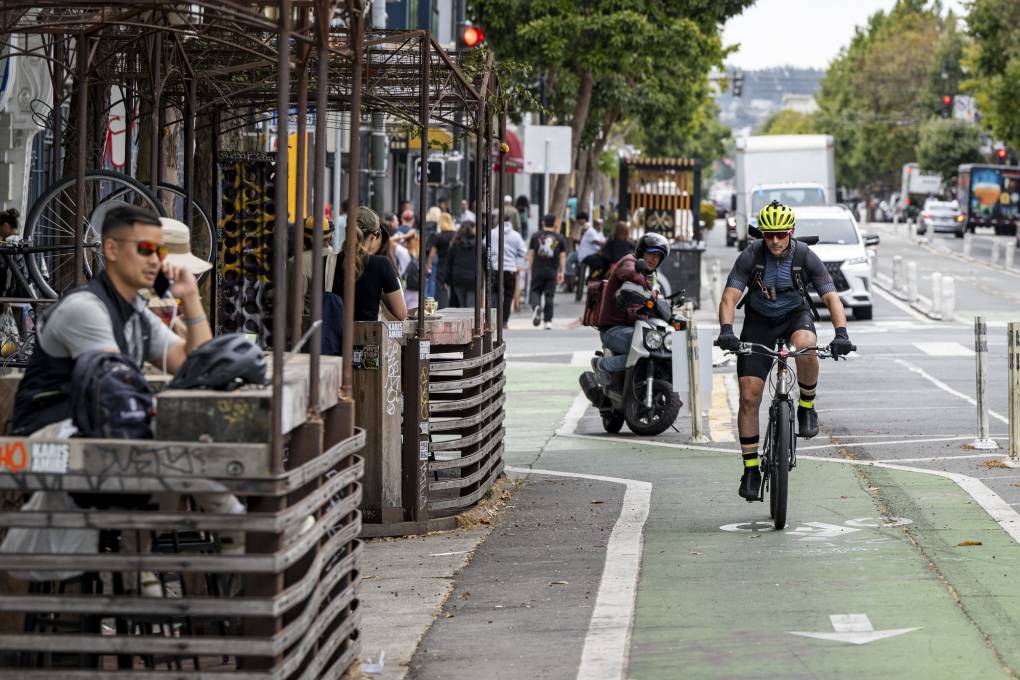
"caption": "Bicycle lanes on Valencia Street switch to center running lanes at 15th Street going south in San Francisco on Aug. 23, 2024.",
"credit": "Beth LaBerge/KQED",
"altTag": "An aerial view of street in a city.",
"description": null,
"imgSizes": {
"medium": {
"file": "https://cdn.kqed.org/wp-content/uploads/sites/10/2024/09/240823-ValenciaTelegraphBikeLanes-05-BL_qed-800x533.jpg",
"width": 800,
"height": 533,
"mimeType": "image/jpeg"
},
"large": {
"file": "https://cdn.kqed.org/wp-content/uploads/sites/10/2024/09/240823-ValenciaTelegraphBikeLanes-05-BL_qed-1020x680.jpg",
"width": 1020,
"height": 680,
"mimeType": "image/jpeg"
},
"thumbnail": {
"file": "https://cdn.kqed.org/wp-content/uploads/sites/10/2024/09/240823-ValenciaTelegraphBikeLanes-05-BL_qed-160x107.jpg",
"width": 160,
"height": 107,
"mimeType": "image/jpeg"
},
"1536x1536": {
"file": "https://cdn.kqed.org/wp-content/uploads/sites/10/2024/09/240823-ValenciaTelegraphBikeLanes-05-BL_qed-1536x1024.jpg",
"width": 1536,
"height": 1024,
"mimeType": "image/jpeg"
},
"post-thumbnail": {
"file": "https://cdn.kqed.org/wp-content/uploads/sites/10/2024/09/240823-ValenciaTelegraphBikeLanes-05-BL_qed-672x372.jpg",
"width": 672,
"height": 372,
"mimeType": "image/jpeg"
},
"twentyfourteen-full-width": {
"file": "https://cdn.kqed.org/wp-content/uploads/sites/10/2024/09/240823-ValenciaTelegraphBikeLanes-05-BL_qed-1038x576.jpg",
"width": 1038,
"height": 576,
"mimeType": "image/jpeg"
},
"full-width": {
"file": "https://cdn.kqed.org/wp-content/uploads/sites/10/2024/09/240823-ValenciaTelegraphBikeLanes-05-BL_qed-1920x1280.jpg",
"width": 1920,
"height": 1280,
"mimeType": "image/jpeg"
},
"kqedFullSize": {
"file": "https://cdn.kqed.org/wp-content/uploads/sites/10/2024/09/240823-ValenciaTelegraphBikeLanes-05-BL_qed.jpg",
"width": 2000,
"height": 1333
}
},
"isLoading": false,
"fetchFailed": false
},
"news_11985641": {
"type": "attachments",
"id": "news_11985641",
"meta": {
"index": "attachments_1716263798",
"site": "news",
"id": "11985641",
"found": true
},
"parent": 11985629,
"imgSizes": {
"twentyfourteen-full-width": {
"file": "https://cdn.kqed.org/wp-content/uploads/sites/10/2024/05/GettyImages-2148443885-1024x576.jpg",
"width": 1024,
"mimeType": "image/jpeg",
"height": 576
},
"thumbnail": {
"file": "https://cdn.kqed.org/wp-content/uploads/sites/10/2024/05/GettyImages-2148443885-160x105.jpg",
"width": 160,
"mimeType": "image/jpeg",
"height": 105
},
"post-thumbnail": {
"file": "https://cdn.kqed.org/wp-content/uploads/sites/10/2024/05/GettyImages-2148443885-672x372.jpg",
"width": 672,
"mimeType": "image/jpeg",
"height": 372
},
"kqedFullSize": {
"file": "https://cdn.kqed.org/wp-content/uploads/sites/10/2024/05/GettyImages-2148443885.jpg",
"width": 1024,
"height": 673
},
"large": {
"file": "https://cdn.kqed.org/wp-content/uploads/sites/10/2024/05/GettyImages-2148443885-1020x670.jpg",
"width": 1020,
"mimeType": "image/jpeg",
"height": 670
},
"medium": {
"file": "https://cdn.kqed.org/wp-content/uploads/sites/10/2024/05/GettyImages-2148443885-800x526.jpg",
"width": 800,
"mimeType": "image/jpeg",
"height": 526
}
},
"publishDate": 1715298001,
"modified": 1715301083,
"caption": "Travelers walk toward Terminal 2 at Oakland International Airport on April 12, 2024 in Oakland. The Board of Commissioners for the Port of Oakland voted on Thursday to proceed with a plan to change the name of Oakland International Airport to the San Francisco Bay Oakland International Airport. San Francisco officials object to the proposed name change and have threatened to file a lawsuit, arguing it would violate the city’s trademark on San Francisco International Airport and potentially confuse people traveling to the area. ",
"description": null,
"title": "Oakland City Officials Approve Name Change Of Airport To San Francisco Bay Oakland International Airport",
"credit": "Justin Sullivan/Getty Images",
"status": "inherit",
"altTag": "A sign at the airport that reads \"I [heart] OAK.\"",
"isLoading": false,
"fetchFailed": false
},
"news_12001835": {
"type": "attachments",
"id": "news_12001835",
"meta": {
"index": "attachments_1716263798",
"site": "news",
"id": "12001835",
"found": true
},
"title": "240823-VALENCIATELEGRAPHBIKELANES-24-BL-KQED",
"publishDate": 1724690591,
"status": "inherit",
"parent": 0,
"modified": 1724690703,
"caption": "A bicyclist rides on the Valencia Street bike lane in front of Four Barrel Coffee in San Francisco's Mission District on Aug. 23, 2024.",
"credit": "Beth LaBerge/KQED",
"altTag": null,
"description": null,
"imgSizes": {
"medium": {
"file": "https://cdn.kqed.org/wp-content/uploads/sites/10/2024/08/240823-VALENCIATELEGRAPHBIKELANES-24-BL-KQED-800x533.jpg",
"width": 800,
"height": 533,
"mimeType": "image/jpeg"
},
"large": {
"file": "https://cdn.kqed.org/wp-content/uploads/sites/10/2024/08/240823-VALENCIATELEGRAPHBIKELANES-24-BL-KQED-1020x680.jpg",
"width": 1020,
"height": 680,
"mimeType": "image/jpeg"
},
"thumbnail": {
"file": "https://cdn.kqed.org/wp-content/uploads/sites/10/2024/08/240823-VALENCIATELEGRAPHBIKELANES-24-BL-KQED-160x107.jpg",
"width": 160,
"height": 107,
"mimeType": "image/jpeg"
},
"1536x1536": {
"file": "https://cdn.kqed.org/wp-content/uploads/sites/10/2024/08/240823-VALENCIATELEGRAPHBIKELANES-24-BL-KQED-1536x1024.jpg",
"width": 1536,
"height": 1024,
"mimeType": "image/jpeg"
},
"post-thumbnail": {
"file": "https://cdn.kqed.org/wp-content/uploads/sites/10/2024/08/240823-VALENCIATELEGRAPHBIKELANES-24-BL-KQED-672x372.jpg",
"width": 672,
"height": 372,
"mimeType": "image/jpeg"
},
"twentyfourteen-full-width": {
"file": "https://cdn.kqed.org/wp-content/uploads/sites/10/2024/08/240823-VALENCIATELEGRAPHBIKELANES-24-BL-KQED-1038x576.jpg",
"width": 1038,
"height": 576,
"mimeType": "image/jpeg"
},
"full-width": {
"file": "https://cdn.kqed.org/wp-content/uploads/sites/10/2024/08/240823-VALENCIATELEGRAPHBIKELANES-24-BL-KQED-1920x1280.jpg",
"width": 1920,
"height": 1280,
"mimeType": "image/jpeg"
},
"kqedFullSize": {
"file": "https://cdn.kqed.org/wp-content/uploads/sites/10/2024/08/240823-VALENCIATELEGRAPHBIKELANES-24-BL-KQED.jpg",
"width": 2000,
"height": 1333
}
},
"isLoading": false,
"fetchFailed": false
},
"news_12001911": {
"type": "attachments",
"id": "news_12001911",
"meta": {
"index": "attachments_1716263798",
"site": "news",
"id": "12001911",
"found": true
},
"title": "BARTPleasantHill",
"publishDate": 1724708005,
"status": "inherit",
"parent": 12001906,
"modified": 1724708062,
"caption": "The Pleasant Hill BART Station on Nov. 17, 2020.",
"credit": "Dan Brekke/KQED",
"altTag": null,
"description": null,
"imgSizes": {
"medium": {
"file": "https://cdn.kqed.org/wp-content/uploads/sites/10/2024/08/BARTPleasantHill-800x546.jpg",
"width": 800,
"height": 546,
"mimeType": "image/jpeg"
},
"large": {
"file": "https://cdn.kqed.org/wp-content/uploads/sites/10/2024/08/BARTPleasantHill-1020x696.jpg",
"width": 1020,
"height": 696,
"mimeType": "image/jpeg"
},
"thumbnail": {
"file": "https://cdn.kqed.org/wp-content/uploads/sites/10/2024/08/BARTPleasantHill-160x109.jpg",
"width": 160,
"height": 109,
"mimeType": "image/jpeg"
},
"1536x1536": {
"file": "https://cdn.kqed.org/wp-content/uploads/sites/10/2024/08/BARTPleasantHill-1536x1048.jpg",
"width": 1536,
"height": 1048,
"mimeType": "image/jpeg"
},
"post-thumbnail": {
"file": "https://cdn.kqed.org/wp-content/uploads/sites/10/2024/08/BARTPleasantHill-672x372.jpg",
"width": 672,
"height": 372,
"mimeType": "image/jpeg"
},
"twentyfourteen-full-width": {
"file": "https://cdn.kqed.org/wp-content/uploads/sites/10/2024/08/BARTPleasantHill-1038x576.jpg",
"width": 1038,
"height": 576,
"mimeType": "image/jpeg"
},
"full-width": {
"file": "https://cdn.kqed.org/wp-content/uploads/sites/10/2024/08/BARTPleasantHill-1920x1310.jpg",
"width": 1920,
"height": 1310,
"mimeType": "image/jpeg"
},
"kqedFullSize": {
"file": "https://cdn.kqed.org/wp-content/uploads/sites/10/2024/08/BARTPleasantHill.jpg",
"width": 2000,
"height": 1365
}
},
"isLoading": false,
"fetchFailed": false
},
"news_12001650": {
"type": "attachments",
"id": "news_12001650",
"meta": {
"index": "attachments_1716263798",
"site": "news",
"id": "12001650",
"found": true
},
"title": "Cruise cars parked in a lot on 16th St. in San Francisco on Dec. 14, 2023.",
"publishDate": 1724442135,
"status": "inherit",
"parent": 12001637,
"modified": 1724442160,
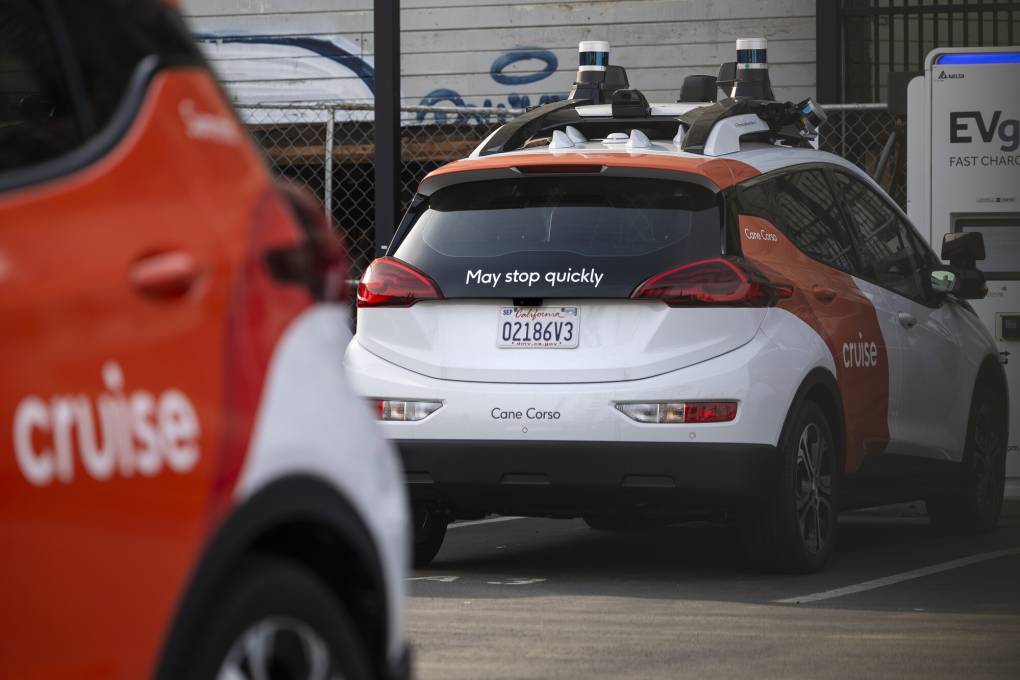
"caption": "Cruise cars parked in a lot on 16th Street in San Francisco on Dec. 14, 2023.",
"credit": "Martin do Nascimento/KQED",
"altTag": null,
"description": null,
"imgSizes": {
"medium": {
"file": "https://cdn.kqed.org/wp-content/uploads/sites/10/2024/08/231214-CRUISE-MD-06_qed-800x533.jpg",
"width": 800,
"height": 533,
"mimeType": "image/jpeg"
},
"large": {
"file": "https://cdn.kqed.org/wp-content/uploads/sites/10/2024/08/231214-CRUISE-MD-06_qed-1020x680.jpg",
"width": 1020,
"height": 680,
"mimeType": "image/jpeg"
},
"thumbnail": {
"file": "https://cdn.kqed.org/wp-content/uploads/sites/10/2024/08/231214-CRUISE-MD-06_qed-160x107.jpg",
"width": 160,
"height": 107,
"mimeType": "image/jpeg"
},
"1536x1536": {
"file": "https://cdn.kqed.org/wp-content/uploads/sites/10/2024/08/231214-CRUISE-MD-06_qed-1536x1024.jpg",
"width": 1536,
"height": 1024,
"mimeType": "image/jpeg"
},
"post-thumbnail": {
"file": "https://cdn.kqed.org/wp-content/uploads/sites/10/2024/08/231214-CRUISE-MD-06_qed-672x372.jpg",
"width": 672,
"height": 372,
"mimeType": "image/jpeg"
},
"twentyfourteen-full-width": {
"file": "https://cdn.kqed.org/wp-content/uploads/sites/10/2024/08/231214-CRUISE-MD-06_qed-1038x576.jpg",
"width": 1038,
"height": 576,
"mimeType": "image/jpeg"
},
"full-width": {
"file": "https://cdn.kqed.org/wp-content/uploads/sites/10/2024/08/231214-CRUISE-MD-06_qed-1920x1280.jpg",
"width": 1920,
"height": 1280,
"mimeType": "image/jpeg"
},
"kqedFullSize": {
"file": "https://cdn.kqed.org/wp-content/uploads/sites/10/2024/08/231214-CRUISE-MD-06_qed.jpg",
"width": 1999,
"height": 1333
}
},
"isLoading": false,
"fetchFailed": false
},
"news_12001421": {
"type": "attachments",
"id": "news_12001421",
"meta": {
"index": "attachments_1716263798",
"site": "news",
"id": "12001421",
"found": true
},
"title": "TeslaSemi",
"publishDate": 1724353064,
"status": "inherit",
"parent": 12001417,
"modified": 1724353414,
"caption": "A Tesla Semi truck, pictured in 2019. ",
"credit": "Tomas Ovalle/AP",
"altTag": null,
"description": null,
"imgSizes": {
"medium": {
"file": "https://cdn.kqed.org/wp-content/uploads/sites/10/2024/08/TeslaSemi-800x510.jpg",
"width": 800,
"height": 510,
"mimeType": "image/jpeg"
},
"large": {
"file": "https://cdn.kqed.org/wp-content/uploads/sites/10/2024/08/TeslaSemi-1020x650.jpg",
"width": 1020,
"height": 650,
"mimeType": "image/jpeg"
},
"thumbnail": {
"file": "https://cdn.kqed.org/wp-content/uploads/sites/10/2024/08/TeslaSemi-160x102.jpg",
"width": 160,
"height": 102,
"mimeType": "image/jpeg"
},
"1536x1536": {
"file": "https://cdn.kqed.org/wp-content/uploads/sites/10/2024/08/TeslaSemi-1536x979.jpg",
"width": 1536,
"height": 979,
"mimeType": "image/jpeg"
},
"post-thumbnail": {
"file": "https://cdn.kqed.org/wp-content/uploads/sites/10/2024/08/TeslaSemi-672x372.jpg",
"width": 672,
"height": 372,
"mimeType": "image/jpeg"
},
"twentyfourteen-full-width": {
"file": "https://cdn.kqed.org/wp-content/uploads/sites/10/2024/08/TeslaSemi-1038x576.jpg",
"width": 1038,
"height": 576,
"mimeType": "image/jpeg"
},
"full-width": {
"file": "https://cdn.kqed.org/wp-content/uploads/sites/10/2024/08/TeslaSemi-1920x1224.jpg",
"width": 1920,
"height": 1224,
"mimeType": "image/jpeg"
},
"kqedFullSize": {
"file": "https://cdn.kqed.org/wp-content/uploads/sites/10/2024/08/TeslaSemi.jpg",
"width": 2000,
"height": 1275
}
},
"isLoading": false,
"fetchFailed": false
},
"news_11999606": {
"type": "attachments",
"id": "news_11999606",
"meta": {
"index": "attachments_1716263798",
"site": "news",
"id": "11999606",
"found": true
},
"title": "240313-BART-Train-arrives",
"publishDate": 1723226703,
"status": "inherit",
"parent": 11999596,
"modified": 1746824991,
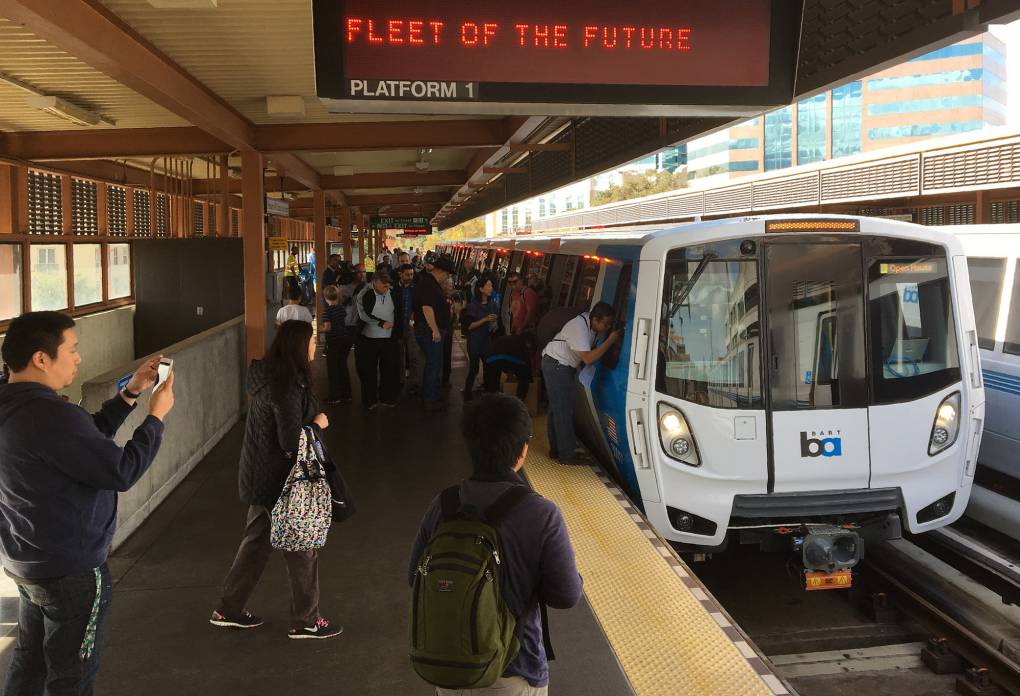
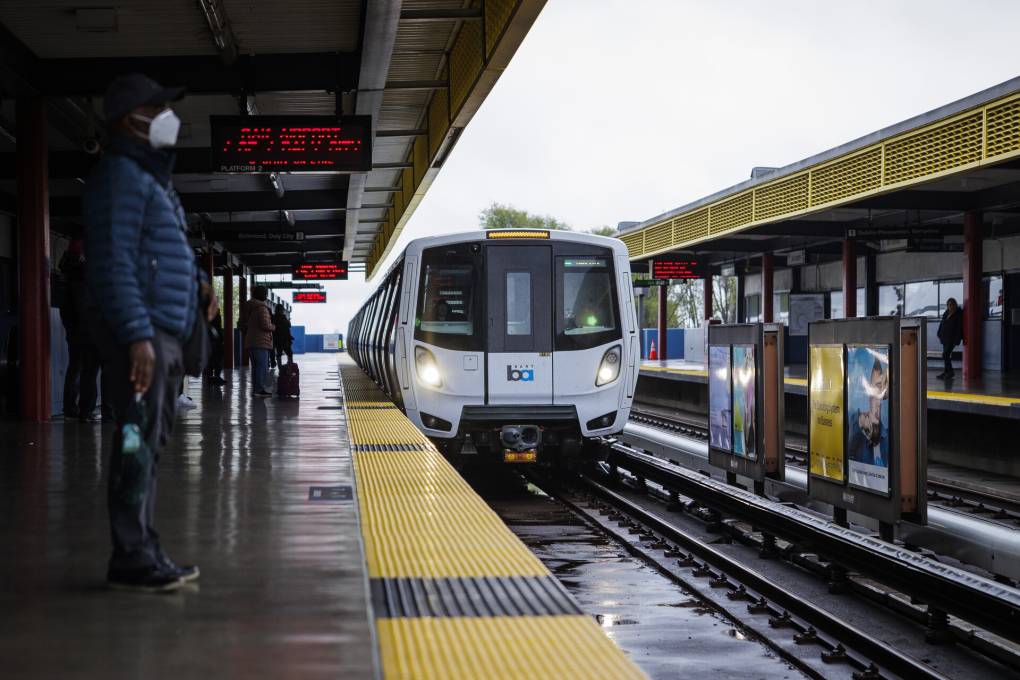
"caption": "A BART train approaches a station on March 13, 2024. ",
"credit": "Martin do Nascimento/KQED",
"altTag": null,
"description": null,
"imgSizes": {
"medium": {
"file": "https://cdn.kqed.org/wp-content/uploads/sites/10/2024/08/240313-BART-Train-arrives-800x533.jpg",
"width": 800,
"height": 533,
"mimeType": "image/jpeg"
},
"large": {
"file": "https://cdn.kqed.org/wp-content/uploads/sites/10/2024/08/240313-BART-Train-arrives-1020x680.jpg",
"width": 1020,
"height": 680,
"mimeType": "image/jpeg"
},
"thumbnail": {
"file": "https://cdn.kqed.org/wp-content/uploads/sites/10/2024/08/240313-BART-Train-arrives-160x107.jpg",
"width": 160,
"height": 107,
"mimeType": "image/jpeg"
},
"1536x1536": {
"file": "https://cdn.kqed.org/wp-content/uploads/sites/10/2024/08/240313-BART-Train-arrives-1536x1024.jpg",
"width": 1536,
"height": 1024,
"mimeType": "image/jpeg"
},
"post-thumbnail": {
"file": "https://cdn.kqed.org/wp-content/uploads/sites/10/2024/08/240313-BART-Train-arrives-672x372.jpg",
"width": 672,
"height": 372,
"mimeType": "image/jpeg"
},
"twentyfourteen-full-width": {
"file": "https://cdn.kqed.org/wp-content/uploads/sites/10/2024/08/240313-BART-Train-arrives-1038x576.jpg",
"width": 1038,
"height": 576,
"mimeType": "image/jpeg"
},
"kqedFullSize": {
"file": "https://cdn.kqed.org/wp-content/uploads/sites/10/2024/08/240313-BART-Train-arrives.jpg",
"width": 1920,
"height": 1280
}
},
"isLoading": false,
"fetchFailed": false
},
"news_11997897": {
"type": "attachments",
"id": "news_11997897",
"meta": {
"index": "attachments_1716263798",
"site": "news",
"id": "11997897",
"found": true
},
"title": "240729-next generation fare gates-KQED",
"publishDate": 1722292071,
"status": "inherit",
"parent": 0,
"modified": 1722295748,
"caption": "BART installed its 'next generation' fare gates at the 7th Street entrance to San Francisco's Civic Center station, shown on July 29, 2024.",
"credit": "Samantha Lim/KQED",
"altTag": null,
"description": null,
"imgSizes": {
"medium": {
"file": "https://cdn.kqed.org/wp-content/uploads/sites/10/2024/07/240729-next-generation-fare-gates-KQED-800x533.jpg",
"width": 800,
"height": 533,
"mimeType": "image/jpeg"
},
"large": {
"file": "https://cdn.kqed.org/wp-content/uploads/sites/10/2024/07/240729-next-generation-fare-gates-KQED-1020x680.jpg",
"width": 1020,
"height": 680,
"mimeType": "image/jpeg"
},
"thumbnail": {
"file": "https://cdn.kqed.org/wp-content/uploads/sites/10/2024/07/240729-next-generation-fare-gates-KQED-160x107.jpg",
"width": 160,
"height": 107,
"mimeType": "image/jpeg"
},
"1536x1536": {
"file": "https://cdn.kqed.org/wp-content/uploads/sites/10/2024/07/240729-next-generation-fare-gates-KQED-1536x1024.jpg",
"width": 1536,
"height": 1024,
"mimeType": "image/jpeg"
},
"post-thumbnail": {
"file": "https://cdn.kqed.org/wp-content/uploads/sites/10/2024/07/240729-next-generation-fare-gates-KQED-672x372.jpg",
"width": 672,
"height": 372,
"mimeType": "image/jpeg"
},
"twentyfourteen-full-width": {
"file": "https://cdn.kqed.org/wp-content/uploads/sites/10/2024/07/240729-next-generation-fare-gates-KQED-1038x576.jpg",
"width": 1038,
"height": 576,
"mimeType": "image/jpeg"
},
"full-width": {
"file": "https://cdn.kqed.org/wp-content/uploads/sites/10/2024/07/240729-next-generation-fare-gates-KQED-1920x1280.jpg",
"width": 1920,
"height": 1280,
"mimeType": "image/jpeg"
},
"kqedFullSize": {
"file": "https://cdn.kqed.org/wp-content/uploads/sites/10/2024/07/240729-next-generation-fare-gates-KQED.jpg",
"width": 2000,
"height": 1333
}
},
"isLoading": false,
"fetchFailed": false
},
"news_11997385": {
"type": "attachments",
"id": "news_11997385",
"meta": {
"index": "attachments_1716263798",
"site": "news",
"id": "11997385",
"found": true
},
"title": "Los Angeles Exteriors And Landmarks - 2024",
"publishDate": 1721928673,
"status": "inherit",
"parent": 11997383,
"modified": 1721935893,
"caption": "Southwest Airlines announced it would eliminate open seating and add some red-eye flights after posting another quarter of poor financial results.",
"credit": "Aaron P. Bauer-Griffin/GC Images via Getty Images",
"altTag": null,
"description": null,
"imgSizes": {
"medium": {
"file": "https://cdn.kqed.org/wp-content/uploads/sites/10/2024/07/GettyImages-2153943681-800x533.jpg",
"width": 800,
"height": 533,
"mimeType": "image/jpeg"
},
"large": {
"file": "https://cdn.kqed.org/wp-content/uploads/sites/10/2024/07/GettyImages-2153943681-1020x680.jpg",
"width": 1020,
"height": 680,
"mimeType": "image/jpeg"
},
"thumbnail": {
"file": "https://cdn.kqed.org/wp-content/uploads/sites/10/2024/07/GettyImages-2153943681-160x107.jpg",
"width": 160,
"height": 107,
"mimeType": "image/jpeg"
},
"1536x1536": {
"file": "https://cdn.kqed.org/wp-content/uploads/sites/10/2024/07/GettyImages-2153943681-1536x1024.jpg",
"width": 1536,
"height": 1024,
"mimeType": "image/jpeg"
},
"2048x2048": {
"file": "https://cdn.kqed.org/wp-content/uploads/sites/10/2024/07/GettyImages-2153943681-2048x1365.jpg",
"width": 2048,
"height": 1365,
"mimeType": "image/jpeg"
},
"post-thumbnail": {
"file": "https://cdn.kqed.org/wp-content/uploads/sites/10/2024/07/GettyImages-2153943681-672x372.jpg",
"width": 672,
"height": 372,
"mimeType": "image/jpeg"
},
"twentyfourteen-full-width": {
"file": "https://cdn.kqed.org/wp-content/uploads/sites/10/2024/07/GettyImages-2153943681-1038x576.jpg",
"width": 1038,
"height": 576,
"mimeType": "image/jpeg"
},
"full-width": {
"file": "https://cdn.kqed.org/wp-content/uploads/sites/10/2024/07/GettyImages-2153943681-1920x1280.jpg",
"width": 1920,
"height": 1280,
"mimeType": "image/jpeg"
},
"kqedFullSize": {
"file": "https://cdn.kqed.org/wp-content/uploads/sites/10/2024/07/GettyImages-2153943681-scaled.jpg",
"width": 2560,
"height": 1707
}
},
"isLoading": false,
"fetchFailed": false
}
},
"audioPlayerReducer": {
"postId": "stream_live",
"isPaused": true,
"isPlaying": false,
"pfsActive": false,
"pledgeModalIsOpen": true,
"playerDrawerIsOpen": false,
"liveAudioPlayStartedAt": 0,
"liveAudioPlayContext": ""
},
"authorsReducer": {
"byline_news_12001417": {
"type": "authors",
"id": "byline_news_12001417",
"meta": {
"override": true
},
"slug": "byline_news_12001417",
"name": "The Associated Press",
"isLoading": false
},
"danbrekke": {
"type": "authors",
"id": "222",
"meta": {
"index": "authors_1716337520",
"id": "222",
"found": true
},
"name": "Dan Brekke",
"firstName": "Dan",
"lastName": "Brekke",
"slug": "danbrekke",
"email": "dbrekke@kqed.org",
"display_author_email": true,
"staff_mastheads": [
"news",
"science"
],
"title": "KQED Editor and Reporter",
"bio": "Dan Brekke is a reporter and editor for KQED News, responsible for coverage of topics ranging from California water issues to the Bay Area's transportation challenges. In a newsroom career that began in Chicago in 1972, Dan has worked for \u003cem>The San Francisco Examiner,\u003c/em> Wired and TechTV and has been published in The New York Times, The New York Times Magazine, Business 2.0, Salon and elsewhere.\r\n\r\nSince joining KQED in 2007, Dan has reported, edited and produced both radio and online features and breaking news pieces. He has shared as both editor and reporter in four Society of Professional Journalists Norcal Excellence in Journalism awards and one Edward R. Murrow regional award. He was chosen for a spring 2017 residency at the Mesa Refuge to advance his research on California salmon.\r\n\r\nEmail Dan at: \u003ca href=\"mailto:dbrekke@kqed.org\">dbrekke@kqed.org\u003c/a>\r\n\r\n\u003cstrong>Twitter:\u003c/strong> \u003ca href=\"https://twitter.com/danbrekke\" rel=\"noopener noreferrer\">twitter.com/danbrekke\u003c/a>\r\n\u003cstrong>Facebook:\u003c/strong> \u003ca href=\"https://www.facebook.com/danbrekke\" rel=\"noopener noreferrer\">www.facebook.com/danbrekke\u003c/a>\r\n\u003cstrong>LinkedIn:\u003c/strong> \u003ca href=\"https://www.linkedin.com/in/danbrekke\" rel=\"noopener noreferrer\">www.linkedin.com/in/danbrekke\u003c/a>",
"avatar": "https://secure.gravatar.com/avatar/c8126230345efca3f7aa89b1a402be45?s=600&d=mm&r=g",
"twitter": "danbrekke",
"facebook": null,
"instagram": "https://www.instagram.com/dan.brekke/",
"linkedin": "https://www.linkedin.com/in/danbrekke/",
"sites": [
{
"site": "news",
"roles": [
"administrator",
"create_posts"
]
},
{
"site": "stateofhealth",
"roles": [
"editor"
]
},
{
"site": "science",
"roles": [
"editor"
]
},
{
"site": "quest",
"roles": [
"contributor"
]
},
{
"site": "food",
"roles": [
"contributor"
]
},
{
"site": "forum",
"roles": [
"contributor"
]
},
{
"site": "liveblog",
"roles": [
"editor"
]
}
],
"headData": {
"title": "Dan Brekke | KQED",
"description": "KQED Editor and Reporter",
"ogImgSrc": "https://secure.gravatar.com/avatar/c8126230345efca3f7aa89b1a402be45?s=600&d=mm&r=g",
"twImgSrc": "https://secure.gravatar.com/avatar/c8126230345efca3f7aa89b1a402be45?s=600&d=mm&r=g"
},
"isLoading": false,
"link": "/author/danbrekke"
},
"lklivans": {
"type": "authors",
"id": "8648",
"meta": {
"index": "authors_1716337520",
"id": "8648",
"found": true
},
"name": "Laura Klivans",
"firstName": "Laura",
"lastName": "Klivans",
"slug": "lklivans",
"email": "lklivans@kqed.org",
"display_author_email": true,
"staff_mastheads": [
"news",
"science"
],
"title": "Reporter",
"bio": "Laura Klivans is an award-winning science reporter for KQED News, where she covers climate change with an eye on both groundbreaking progress and gaps in action. She is the former host of KQED's blockbuster video series about tiny, amazing animals, \u003cem>Deep Look\u003c/em>. Her work reaches national audiences through NPR, \u003cem>Here & Now, \u003c/em>PRI, and other major outlets. \r\n\r\nLaura’s won five Northern California Area Emmy Awards for Deep Look and First Place in the Greater Bay Area Journalism Awards for a podcast exploring how one Oakland neighborhood teamed up to reduce planet-heating pollution.\r\n\r\nBeyond her reporting, she hosts and moderates events. In the past, she taught audio storytelling at the UC Berkeley Graduate School of Journalism, led international education programs, worked with immigrants and refugees along the Thai-Burmese border, taught high schoolers sex ed, and was an actress. \r\n\r\nShe's a former UC Berkeley Human Rights Fellow, USC Center for Health Journalism's California Fellow and Coro Fellow in Public Affairs. Laura has a master’s in journalism from UC Berkeley, a master’s in education from Harvard, and an undergraduate degree from Northwestern University.\r\n\r\nShe loves trying to riddle the meaning out of vanity license plates.",
"avatar": "https://secure.gravatar.com/avatar/af8e757bb8ce7b7fee6160ba66e37327?s=600&d=blank&r=g",
"twitter": "lauraklivans",
"facebook": null,
"instagram": null,
"linkedin": null,
"sites": [
{
"site": "news",
"roles": [
"editor"
]
},
{
"site": "stateofhealth",
"roles": [
"contributor",
"editor"
]
},
{
"site": "science",
"roles": [
"editor"
]
},
{
"site": "forum",
"roles": [
"editor"
]
}
],
"headData": {
"title": "Laura Klivans | KQED",
"description": "Reporter",
"ogImgSrc": "https://secure.gravatar.com/avatar/af8e757bb8ce7b7fee6160ba66e37327?s=600&d=blank&r=g",
"twImgSrc": "https://secure.gravatar.com/avatar/af8e757bb8ce7b7fee6160ba66e37327?s=600&d=blank&r=g"
},
"isLoading": false,
"link": "/author/lklivans"
},
"adahlstromeckman": {
"type": "authors",
"id": "11785",
"meta": {
"index": "authors_1716337520",
"id": "11785",
"found": true
},
"name": "Azul Dahlstrom-Eckman",
"firstName": "Azul",
"lastName": "Dahlstrom-Eckman",
"slug": "adahlstromeckman",
"email": "adahlstrom-eckman@kqed.org",
"display_author_email": true,
"staff_mastheads": [],
"title": "Reporter",
"bio": "Azul is a reporter for KQED focusing on transportation and features. He joined KQED in 2021 as an alumna of KALW's Audio Academy radio journalism training program.",
"avatar": "https://secure.gravatar.com/avatar/9cb750298435add7815a777f55bf1f46845c1386bb8452555c60a7b820b5aba3?s=600&d=blank&r=g",
"twitter": "@zuliemann",
"bluesky": "@azul415.bsky.social",
"facebook": null,
"instagram": null,
"linkedin": null,
"sites": [
{
"site": "arts",
"roles": [
"editor"
]
},
{
"site": "news",
"roles": [
"editor"
]
},
{
"site": "science",
"roles": [
"editor"
]
},
{
"site": "liveblog",
"roles": [
"author"
]
}
],
"headData": {
"title": "Azul Dahlstrom-Eckman | KQED",
"description": "Reporter",
"ogImgSrc": "https://secure.gravatar.com/avatar/9cb750298435add7815a777f55bf1f46845c1386bb8452555c60a7b820b5aba3?s=600&d=blank&r=g",
"twImgSrc": "https://secure.gravatar.com/avatar/9cb750298435add7815a777f55bf1f46845c1386bb8452555c60a7b820b5aba3?s=600&d=blank&r=g"
},
"isLoading": false,
"link": "/author/adahlstromeckman"
},
"calam": {
"type": "authors",
"id": "11834",
"meta": {
"index": "authors_1716337520",
"id": "11834",
"found": true
},
"name": "Christopher Alam",
"firstName": "Christopher",
"lastName": "Alam",
"slug": "calam",
"email": "calam@kqed.org",
"display_author_email": true,
"staff_mastheads": [
"news"
],
"title": "KQED Contributor",
"bio": "Christopher Alam is a radio newscast intern working on local news and general assignment reporting. Before joining KQED he was active in college radio and journalism at UC Davis, where he received a bachelor's degree in English and professional writing in 2021. He is also a creative writer and does freelance work. Born in Fresno, he is now based in San Francisco and Oakland.",
"avatar": "https://secure.gravatar.com/avatar/0e8cfa42d98fa5307659158c394d0280?s=600&d=blank&r=g",
"twitter": "_chrisalam",
"facebook": null,
"instagram": "christopher_alam",
"linkedin": null,
"sites": [
{
"site": "arts",
"roles": [
"editor"
]
},
{
"site": "news",
"roles": [
"editor"
]
}
],
"headData": {
"title": "Christopher Alam | KQED",
"description": "KQED Contributor",
"ogImgSrc": "https://secure.gravatar.com/avatar/0e8cfa42d98fa5307659158c394d0280?s=600&d=blank&r=g",
"twImgSrc": "https://secure.gravatar.com/avatar/0e8cfa42d98fa5307659158c394d0280?s=600&d=blank&r=g"
},
"isLoading": false,
"link": "/author/calam"
},
"naltenberg": {
"type": "authors",
"id": "11896",
"meta": {
"index": "authors_1716337520",
"id": "11896",
"found": true
},
"name": "Nik Altenberg",
"firstName": "Nik",
"lastName": "Altenberg",
"slug": "naltenberg",
"email": "naltenberg@kqed.org",
"display_author_email": false,
"staff_mastheads": [],
"title": "KQED Contributor",
"bio": "Nik Altenberg is an on-call reporter for KQED and a copy editor and fact checker for Santa Cruz Local. Nik’s reporting interests include policing, public health, environment, immigration, housing and the places where these issues intersect.",
"avatar": "https://secure.gravatar.com/avatar/e391b3a18ce4a53a7ca3f3065c74418b?s=600&d=blank&r=g",
"twitter": null,
"facebook": null,
"instagram": "https://www.instagram.com/nikaltenberg/",
"linkedin": null,
"sites": [
{
"site": "news",
"roles": []
}
],
"headData": {
"title": "Nik Altenberg | KQED",
"description": "KQED Contributor",
"ogImgSrc": "https://secure.gravatar.com/avatar/e391b3a18ce4a53a7ca3f3065c74418b?s=600&d=blank&r=g",
"twImgSrc": "https://secure.gravatar.com/avatar/e391b3a18ce4a53a7ca3f3065c74418b?s=600&d=blank&r=g"
},
"isLoading": false,
"link": "/author/naltenberg"
},
"jgeha": {
"type": "authors",
"id": "11906",
"meta": {
"index": "authors_1716337520",
"id": "11906",
"found": true
},
"name": "Joseph Geha",
"firstName": "Joseph",
"lastName": "Geha",
"slug": "jgeha",
"email": "jgeha@kqed.org",
"display_author_email": false,
"staff_mastheads": [
"news",
"science"
],
"title": "KQED Contributor",
"bio": null,
"avatar": "https://secure.gravatar.com/avatar/ea84d2b6dd93d6369d453edf19dd583f117cd1759d2d9c9c92f9de77017354fe?s=600&d=blank&r=g",
"twitter": null,
"bluesky": null,
"facebook": null,
"instagram": null,
"linkedin": null,
"sites": [
{
"site": "news",
"roles": [
"editor"
]
},
{
"site": "liveblog",
"roles": [
"author"
]
}
],
"headData": {
"title": "Joseph Geha | KQED",
"description": "KQED Contributor",
"ogImgSrc": "https://secure.gravatar.com/avatar/ea84d2b6dd93d6369d453edf19dd583f117cd1759d2d9c9c92f9de77017354fe?s=600&d=blank&r=g",
"twImgSrc": "https://secure.gravatar.com/avatar/ea84d2b6dd93d6369d453edf19dd583f117cd1759d2d9c9c92f9de77017354fe?s=600&d=blank&r=g"
},
"isLoading": false,
"link": "/author/jgeha"
},
"kdebenedetti": {
"type": "authors",
"id": "11913",
"meta": {
"index": "authors_1716337520",
"id": "11913",
"found": true
},
"name": "Katie DeBenedetti",
"firstName": "Katie",
"lastName": "DeBenedetti",
"slug": "kdebenedetti",
"email": "kdebenedetti@kqed.org",
"display_author_email": false,
"staff_mastheads": [
"news",
"science"
],
"title": "KQED Contributor",
"bio": "Katie DeBenedetti is a digital reporter covering daily news for the Express Desk. Prior to joining KQED as a culture reporting intern in January 2024, she covered education and city government for the Napa Valley Register.",
"avatar": "https://secure.gravatar.com/avatar/6e31073cb8f7e4214ab03f42771d0f45?s=600&d=blank&r=g",
"twitter": null,
"facebook": null,
"instagram": null,
"linkedin": null,
"sites": [
{
"site": "news",
"roles": [
"author"
]
},
{
"site": "science",
"roles": [
"author"
]
},
{
"site": "liveblog",
"roles": [
"author"
]
}
],
"headData": {
"title": "Katie DeBenedetti | KQED",
"description": "KQED Contributor",
"ogImgSrc": "https://secure.gravatar.com/avatar/6e31073cb8f7e4214ab03f42771d0f45?s=600&d=blank&r=g",
"twImgSrc": "https://secure.gravatar.com/avatar/6e31073cb8f7e4214ab03f42771d0f45?s=600&d=blank&r=g"
},
"isLoading": false,
"link": "/author/kdebenedetti"
},
"slim": {
"type": "authors",
"id": "11920",
"meta": {
"index": "authors_1716337520",
"id": "11920",
"found": true
},
"name": "Samantha Lim",
"firstName": "Samantha",
"lastName": "Lim",
"slug": "slim",
"email": "slim@KQED.org",
"display_author_email": false,
"staff_mastheads": [],
"title": "KQED Contributor",
"bio": null,
"avatar": "https://secure.gravatar.com/avatar/82e592e6c15fe1a04d385e8ad0fb0b4e?s=600&d=blank&r=g",
"twitter": null,
"facebook": null,
"instagram": null,
"linkedin": null,
"sites": [
{
"site": "news",
"roles": []
}
],
"headData": {
"title": "Samantha Lim | KQED",
"description": "KQED Contributor",
"ogImgSrc": "https://secure.gravatar.com/avatar/82e592e6c15fe1a04d385e8ad0fb0b4e?s=600&d=blank&r=g",
"twImgSrc": "https://secure.gravatar.com/avatar/82e592e6c15fe1a04d385e8ad0fb0b4e?s=600&d=blank&r=g"
},
"isLoading": false,
"link": "/author/slim"
},
"bkrans": {
"type": "authors",
"id": "11923",
"meta": {
"index": "authors_1716337520",
"id": "11923",
"found": true
},
"name": "Brian Krans",
"firstName": "Brian",
"lastName": "Krans",
"slug": "bkrans",
"email": "bkrans@kqed.org",
"display_author_email": false,
"staff_mastheads": [
"news"
],
"title": "KQED Contributing Reporter",
"bio": "Brian Krans is an award-winning local news and investigative reporter who has been proudly working as a general assignment reporter for KQED since August 2023. He lives in Richmond, where he also reports on air pollution for Richmondside. He is also a founding member of the Vallejo Sun.",
"avatar": "https://secure.gravatar.com/avatar/d1014d604089314a94807d2c4f2d3e06?s=600&d=blank&r=g",
"twitter": "citizenkrans",
"facebook": null,
"instagram": null,
"linkedin": null,
"sites": [
{
"site": "news",
"roles": [
"editor"
]
}
],
"headData": {
"title": "Brian Krans | KQED",
"description": "KQED Contributing Reporter",
"ogImgSrc": "https://secure.gravatar.com/avatar/d1014d604089314a94807d2c4f2d3e06?s=600&d=blank&r=g",
"twImgSrc": "https://secure.gravatar.com/avatar/d1014d604089314a94807d2c4f2d3e06?s=600&d=blank&r=g"
},
"isLoading": false,
"link": "/author/bkrans"
}
},
"pagesReducer": {
"news_tag_transportation": {
"type": "terms",
"id": "news_20517",
"meta": {
"index": "terms_1716263798",
"site": "news",
"id": "20517",
"score": 8.934682
},
"featImg": null,
"name": "transportation",
"description": null,
"taxonomy": "tag",
"headData": {
"twImgId": null,
"twTitle": null,
"ogTitle": null,
"ogImgId": null,
"twDescription": null,
"description": null,
"title": "transportation Archives | KQED News",
"ogDescription": null
},
"ttid": 20534,
"slug": "transportation",
"isLoading": false,
"title": "transportation",
"pageMeta": {
"site": "news",
"WpPageTemplate": "page-topic-editorial",
"currentPage": 19
},
"blocks": [
{
"blockName": "kqed/post-list",
"attrs": {
"layout": "cardArticle2",
"query": "posts/news?tag=transportation",
"seeMore": false,
"paginated": true,
"page": 19
}
},
{
"blockName": "kqed/ad"
}
]
}
},
"pfsSessionReducer": {},
"postsReducer": {
"stream_live": {
"type": "live",
"id": "stream_live",
"audioUrl": "https://streams.kqed.org/kqedradio",
"title": "Live Stream",
"excerpt": "Live Stream information currently unavailable.",
"link": "/radio",
"featImg": "",
"label": {
"name": "KQED Live",
"link": "/"
}
},
"stream_kqedNewscast": {
"type": "posts",
"id": "stream_kqedNewscast",
"audioUrl": "https://www.kqed.org/.stream/anon/radio/RDnews/newscast.mp3?_=1",
"title": "KQED Newscast",
"featImg": "",
"label": {
"name": "88.5 FM",
"link": "/"
}
},
"news_12006402": {
"type": "posts",
"id": "news_12006402",
"meta": {
"index": "posts_1716263798",
"site": "news",
"id": "12006402",
"score": null,
"sort": [
1727301763000
]
},
"guestAuthors": [],
"slug": "oakland-as-fans-helped-push-bart-ridership-to-heights-not-seen-since-2020",
"title": "Oakland A’s Fans Helped Push BART Ridership to Heights Not Seen Since 2020",
"publishDate": 1727301763,
"format": "standard",
"headTitle": "Oakland A’s Fans Helped Push BART Ridership to Heights Not Seen Since 2020 | KQED",
"labelTerm": {
"site": "news"
},
"content": "\u003cp>BART is enjoying its best ridership month since the start of the pandemic, thanks in part to the return of crowds taking transit to the \u003ca href=\"https://www.kqed.org/news/tag/oakland-coliseum\">Oakland Coliseum\u003c/a> for the A’s final homestand.\u003c/p>\n\u003cp>The 204,265 fare-gate exits reported Tuesday mark the first time the figure has topped 200,000 since March 12, 2020 — days before COVID-19 stay-at-home orders were imposed in the Bay Area.\u003c/p>\n\u003cp>Late summer and early fall are typically the strongest periods for Bay Area transit ridership, including for BART. Before this month, its post-pandemic daily ridership peaks were recorded in September 2023 — with just over 192,000 trips — immediately after the agency introduced a new schedule.\u003c/p>\n\u003cp>[ad fullwidth]\u003c/p>\n\u003cp>This month’s uptick has beaten those numbers several times, and last week, BART also set a new high for weekly ridership since the pandemic started, with 1.15 million people riding the system. The number of trips reported for the first 24 days of September is about 11% higher than during the same period last year.\u003c/p>\n\u003cp>https://twitter.com/SFBART/status/1838997796709609889\u003c/p>\n\u003cp>In the past, BART’s September–October numbers have gotten a boost from sporting and entertainment events at the Coliseum, including A’s, Raiders and Warriors games. But with two of those three teams leaving Oakland five years ago and A’s attendance falling into a prolonged funk, traffic at the Coliseum station has declined.\u003c/p>\n\u003cp>But A’s attendance was strong for the series with the Los Angeles Dodgers and San Francisco Giants last month. And fans have turned out in large numbers — many taking BART — for the team’s final week in Oakland.\u003c/p>\n\u003cp>[aside postID=news_12006211 hero='https://cdn.kqed.org/wp-content/uploads/sites/10/2024/09/GettyImages-1250054983-1-1020x680.jpg']\u003c/p>\n\u003cp>BART data shows that the impact of increased attendance is dramatic. The number of people recorded entering and leaving the Coliseum station since last Friday totals 57,000, compared to 20,000 for the same five days the previous week.\u003c/p>\n\u003cp>But even with the current surge, BART’s average daily ridership this month is still only 46.4% of its pre-pandemic baseline. The good September numbers also come after an extended lull in BART’s comeback, as ridership actually fell in June and August compared to the previous year.\u003c/p>\n\u003cp>Overall transit use across the Bay Area is still well below pre-pandemic levels for nearly all of the region’s 27 transit agencies. The exceptions: The North Bay’s SMART train system, which is carrying more riders now than it did before COVID-19, and San Mateo County’s SamTrans, which is carrying about the same number of passengers as it did before stay-at-home orders.\u003c/p>\n\u003cp>\u003c/p>\n",
"blocks": [],
"excerpt": "During the A’s final homestand at the Coliseum, BART reported 204,265 trips on Tuesday — the first time it topped 200,000 since March 2020. ",
"status": "publish",
"parent": 0,
"modified": 1727303400,
"stats": {
"hasAudio": false,
"hasVideo": false,
"hasChartOrMap": false,
"iframeSrcs": [],
"hasGoogleForm": false,
"hasGallery": false,
"hasHearkenModule": false,
"hasPolis": false,
"paragraphCount": 12,
"wordCount": 470
},
"headData": {
"title": "Oakland A’s Fans Helped Push BART Ridership to Heights Not Seen Since 2020 | KQED",
"description": "During the A’s final homestand at the Coliseum, BART reported 204,265 trips on Tuesday — the first time it topped 200,000 since March 2020. ",
"ogTitle": "",
"ogDescription": "",
"ogImgId": "",
"twTitle": "",
"twDescription": "",
"twImgId": "",
"schema": {
"@context": "https://schema.org",
"@type": "NewsArticle",
"headline": "Oakland A’s Fans Helped Push BART Ridership to Heights Not Seen Since 2020",
"datePublished": "2024-09-25T15:02:43-07:00",
"dateModified": "2024-09-25T15:30:00-07:00",
"image": "https://cdn.kqed.org/wp-content/uploads/2020/02/KQED-OG-Image@1x.png",
"isAccessibleForFree": "True",
"publisher": {
"@type": "NewsMediaOrganization",
"@id": "https://www.kqed.org/#organization",
"name": "KQED",
"logo": "https://cdn.kqed.org/wp-content/uploads/2020/02/KQED-OG-Image@1x.png",
"url": "https://www.kqed.org",
"sameAs": [
"https://www.facebook.com/KQED",
"https://twitter.com/KQED",
"https://www.instagram.com/kqed/",
"https://www.tiktok.com/@kqedofficial",
"https://www.linkedin.com/company/kqed",
"https://www.youtube.com/channel/UCeC0IOo7i1P_61zVUWbJ4nw"
]
}
}
},
"sticky": false,
"nprStoryId": "kqed-12006402",
"excludeFromSiteSearch": "Include",
"articleAge": "0",
"path": "/news/12006402/oakland-as-fans-helped-push-bart-ridership-to-heights-not-seen-since-2020",
"audioTrackLength": null,
"parsedContent": [
{
"type": "contentString",
"content": "\u003cdiv class=\"post-body\">\u003cp>\u003cp>BART is enjoying its best ridership month since the start of the pandemic, thanks in part to the return of crowds taking transit to the \u003ca href=\"https://www.kqed.org/news/tag/oakland-coliseum\">Oakland Coliseum\u003c/a> for the A’s final homestand.\u003c/p>\n\u003cp>The 204,265 fare-gate exits reported Tuesday mark the first time the figure has topped 200,000 since March 12, 2020 — days before COVID-19 stay-at-home orders were imposed in the Bay Area.\u003c/p>\n\u003cp>Late summer and early fall are typically the strongest periods for Bay Area transit ridership, including for BART. Before this month, its post-pandemic daily ridership peaks were recorded in September 2023 — with just over 192,000 trips — immediately after the agency introduced a new schedule.\u003c/p>\n\u003cp>\u003c/p>\u003c/div>",
"attributes": {
"named": {},
"numeric": []
}
},
{
"type": "component",
"content": "",
"name": "ad",
"attributes": {
"named": {
"label": "fullwidth"
},
"numeric": [
"fullwidth"
]
}
},
{
"type": "contentString",
"content": "\u003cdiv class=\"post-body\">\u003cp>\u003c/p>\n\u003cp>This month’s uptick has beaten those numbers several times, and last week, BART also set a new high for weekly ridership since the pandemic started, with 1.15 million people riding the system. The number of trips reported for the first 24 days of September is about 11% higher than during the same period last year.\u003c/p>\u003c/p>\u003c/div>",
"attributes": {
"named": {},
"numeric": []
}
},
{
"type": "component",
"content": "",
"name": "singleTwitterStatus",
"attributes": {
"named": {
"id": "1838997796709609889"
},
"numeric": []
}
},
{
"type": "contentString",
"content": "\u003cdiv class=\"post-body\">\u003cp>\n\u003cp>In the past, BART’s September–October numbers have gotten a boost from sporting and entertainment events at the Coliseum, including A’s, Raiders and Warriors games. But with two of those three teams leaving Oakland five years ago and A’s attendance falling into a prolonged funk, traffic at the Coliseum station has declined.\u003c/p>\n\u003cp>But A’s attendance was strong for the series with the Los Angeles Dodgers and San Francisco Giants last month. And fans have turned out in large numbers — many taking BART — for the team’s final week in Oakland.\u003c/p>\n\u003cp>\u003c/p>\u003c/div>",
"attributes": {
"named": {},
"numeric": []
}
},
{
"type": "component",
"content": "",
"name": "aside",
"attributes": {
"named": {
"postid": "news_12006211",
"hero": "https://cdn.kqed.org/wp-content/uploads/sites/10/2024/09/GettyImages-1250054983-1-1020x680.jpg",
"label": ""
},
"numeric": []
}
},
{
"type": "contentString",
"content": "\u003cdiv class=\"post-body\">\u003cp>\u003c/p>\n\u003cp>BART data shows that the impact of increased attendance is dramatic. The number of people recorded entering and leaving the Coliseum station since last Friday totals 57,000, compared to 20,000 for the same five days the previous week.\u003c/p>\n\u003cp>But even with the current surge, BART’s average daily ridership this month is still only 46.4% of its pre-pandemic baseline. The good September numbers also come after an extended lull in BART’s comeback, as ridership actually fell in June and August compared to the previous year.\u003c/p>\n\u003cp>Overall transit use across the Bay Area is still well below pre-pandemic levels for nearly all of the region’s 27 transit agencies. The exceptions: The North Bay’s SMART train system, which is carrying more riders now than it did before COVID-19, and San Mateo County’s SamTrans, which is carrying about the same number of passengers as it did before stay-at-home orders.\u003c/p>\n\u003cp>\u003c/p>\n\u003c/div>\u003c/p>",
"attributes": {
"named": {},
"numeric": []
}
}
],
"link": "/news/12006402/oakland-as-fans-helped-push-bart-ridership-to-heights-not-seen-since-2020",
"authors": [
"222"
],
"categories": [
"news_8",
"news_10",
"news_1397"
],
"tags": [
"news_269",
"news_1386",
"news_33130",
"news_34054",
"news_161",
"news_1533",
"news_34078",
"news_20517"
],
"featImg": "news_12006327",
"label": "news"
},
"news_12005918": {
"type": "posts",
"id": "news_12005918",
"meta": {
"index": "posts_1716263798",
"site": "news",
"id": "12005918",
"score": null,
"sort": [
1727113317000
]
},
"guestAuthors": [],
"slug": "south-bay-authorities-arrest-vta-employee-in-fatal-shooting-of-coworker",
"title": "South Bay Authorities Arrest VTA Employee in Fatal Shooting of Coworker",
"publishDate": 1727113317,
"format": "standard",
"headTitle": "South Bay Authorities Arrest VTA Employee in Fatal Shooting of Coworker | KQED",
"labelTerm": {
"site": "news"
},
"content": "\u003cp>South Bay authorities arrested a Santa Clara Valley Transportation Authority employee on Sunday on suspicion of \u003ca href=\"https://www.kqed.org/news/12005814/santa-clara-vta-bus-driver-shot-and-killed-in-san-jose\">fatally shooting another VTA employee\u003c/a> on Friday night in a South \u003ca href=\"https://www.kqed.org/news/tag/san-jose\">San José\u003c/a> bus yard parking lot.\u003c/p>\n\u003cp>Duc Minh Bui, 33, of San José was taken into custody just after noon on Sunday near his home, according to the Santa Clara County Sheriff’s Office, which said in a statement that “evidence suggests Bui is solely responsible for the victim’s death.”\u003c/p>\n\u003cp>Bui was booked into the Santa Clara County Main Jail on a charge of first-degree murder.\u003c/p>\n\u003cp>The killing comes a little less than three and a half years after a VTA employee \u003ca href=\"https://www.kqed.org/news/11875404/official-multiple-people-killed-in-shooting-at-san-jose-vta-railyard\">shot and killed nine of his coworkers\u003c/a>, and then himself, at a VTA rail yard in downtown San José.\u003c/p>\n\u003cp>[ad fullwidth]\u003c/p>\n\u003cp>VTA officials identified the man who was killed as Regulus Teotico, a bus driver who worked for VTA for 10 years.\u003c/p>\n\u003cp>“We are fortunate to have him as part of our staff for 10 years. He was a kind, hardworking driver who was well known amongst his colleagues,” VTA General Manager Carolyn Gonot said at a Monday afternoon press conference, noting Teotico went by the nickname Regis. “Regis was a father to two teenage children and everyone at VTA extends their deepest condolences to his family and friends.”\u003c/p>\n\u003cp>[aside postID=news_12001366 hero='https://cdn.kqed.org/wp-content/uploads/sites/10/2024/06/240424-SJPD-MD-01-KQED-1020x680.jpg']\u003c/p>\n\u003cp>While the investigation is ongoing, on Monday authorities said the shooting appeared to be motivated by a gambling debt.\u003c/p>\n\u003cp>“Both the victim and suspect were VTA employees, both employed as bus drivers and assigned to the Chaboya yard,” Capt. Sugey Jaimez of the sheriff’s office said during the news conference.\u003c/p>\n\u003cp>“They were known to participate in the same activities outside their VTA employment,” Jaimez continued. “Although this investigation is still ongoing, we believe the motive had to do with money owed between the two from their betting activities, which had nothing to do with their employment.”\u003c/p>\n\u003cp>Around 9:40 p.m. Friday, the San José Police Department received a 911 call from someone reporting that a person was shot at the VTA Chaboya bus yard parking lot. The transit agency confirmed the victim was a VTA employee but did not release their identity.\u003c/p>\n\u003cp>Santa Clara County Bob Jonsen referred to the fatal shooting as a “senseless crime.”\u003c/p>\n\u003cp>“And while it was an isolated, targeted event, we recognize the profound impact it has had on all of us,” Jonsen said. “Our thoughts are with the victim’s family and the VTA community during this difficult time.”\u003c/p>\n\u003cp>Officials did not elaborate on what might have happened in the lead up to the shooting, citing the ongoing investigation. Jaimez said authorities are not looking into any other people as possible suspects at this time. Officials said law enforcement presence would be stepped up at VTA yards and facilities for the foreseeable future.\u003c/p>\n\u003cp>On Monday, San José Mayor Matt Mahan applauded the sheriff’s office, as well as the San José’s police and fire departments for their quick response to the shooting and steadfast work to arrest Bui.\u003c/p>\n\u003cp>“I’m grateful to Sheriff Johnson and his entire team, who I know have had very little sleep over the last 72 hours,” he said. “I think that level of collaboration and coordination between all of our agencies is exactly what you expect and deserve from your government.”\u003c/p>\n\u003cp>Immediately after learning about the shooting, Gonot said the agency “made grief counselors available to employees and provided access to other resources.”\u003c/p>\n\u003cp>“VTA leaders, along with the unions, quickly joined our employees on site to lend physical and emotional support,” she continued. “These efforts will continue as long as needed.”\u003c/p>\n\u003cp>Santa Clara County Supervisor Cindy Chavez alluded to the May 2021 mass shooting at the VTA rail yard, acknowledging Friday night’s shooting could be a painful time for some VTA employees and others.\u003c/p>\n\u003cp>“We were rebuilding after the tragic incident of three years ago, and so for many people this is reliving one of the worst experiences they’ve ever had in their life,” Chavez said. “And that’s why the mental health services. And that’s why us really wrapping our arms around each other is so important.”\u003c/p>\n\u003cp>\u003cem>This story has been updated.\u003c/em>\u003c/p>\n\u003cp>\u003c/p>\n",
"blocks": [],
"excerpt": "The fatal shooting at a South San José bus yard comes nearly three and a half years after the 2021 mass shooting by a VTA employee at an agency rail yard. ",
"status": "publish",
"parent": 0,
"modified": 1727133083,
"stats": {
"hasAudio": false,
"hasVideo": false,
"hasChartOrMap": false,
"iframeSrcs": [],
"hasGoogleForm": false,
"hasGallery": false,
"hasHearkenModule": false,
"hasPolis": false,
"paragraphCount": 23,
"wordCount": 770
},
"headData": {
"title": "South Bay Authorities Arrest VTA Employee in Fatal Shooting of Coworker | KQED",
"description": "The fatal shooting at a South San José bus yard comes nearly three and a half years after the 2021 mass shooting by a VTA employee at an agency rail yard. ",
"ogTitle": "",
"ogDescription": "",
"ogImgId": "",
"twTitle": "",
"twDescription": "",
"twImgId": "",
"schema": {
"@context": "https://schema.org",
"@type": "NewsArticle",
"headline": "South Bay Authorities Arrest VTA Employee in Fatal Shooting of Coworker",
"datePublished": "2024-09-23T10:41:57-07:00",
"dateModified": "2024-09-23T16:11:23-07:00",
"image": "https://cdn.kqed.org/wp-content/uploads/2020/02/KQED-OG-Image@1x.png",
"isAccessibleForFree": "True",
"publisher": {
"@type": "NewsMediaOrganization",
"@id": "https://www.kqed.org/#organization",
"name": "KQED",
"logo": "https://cdn.kqed.org/wp-content/uploads/2020/02/KQED-OG-Image@1x.png",
"url": "https://www.kqed.org",
"sameAs": [
"https://www.facebook.com/KQED",
"https://twitter.com/KQED",
"https://www.instagram.com/kqed/",
"https://www.tiktok.com/@kqedofficial",
"https://www.linkedin.com/company/kqed",
"https://www.youtube.com/channel/UCeC0IOo7i1P_61zVUWbJ4nw"
]
}
}
},
"sticky": false,
"nprStoryId": "kqed-12005918",
"excludeFromSiteSearch": "Include",
"articleAge": "0",
"path": "/news/12005918/south-bay-authorities-arrest-vta-employee-in-fatal-shooting-of-coworker",
"audioTrackLength": null,
"parsedContent": [
{
"type": "contentString",
"content": "\u003cdiv class=\"post-body\">\u003cp>\u003cp>South Bay authorities arrested a Santa Clara Valley Transportation Authority employee on Sunday on suspicion of \u003ca href=\"https://www.kqed.org/news/12005814/santa-clara-vta-bus-driver-shot-and-killed-in-san-jose\">fatally shooting another VTA employee\u003c/a> on Friday night in a South \u003ca href=\"https://www.kqed.org/news/tag/san-jose\">San José\u003c/a> bus yard parking lot.\u003c/p>\n\u003cp>Duc Minh Bui, 33, of San José was taken into custody just after noon on Sunday near his home, according to the Santa Clara County Sheriff’s Office, which said in a statement that “evidence suggests Bui is solely responsible for the victim’s death.”\u003c/p>\n\u003cp>Bui was booked into the Santa Clara County Main Jail on a charge of first-degree murder.\u003c/p>\n\u003cp>The killing comes a little less than three and a half years after a VTA employee \u003ca href=\"https://www.kqed.org/news/11875404/official-multiple-people-killed-in-shooting-at-san-jose-vta-railyard\">shot and killed nine of his coworkers\u003c/a>, and then himself, at a VTA rail yard in downtown San José.\u003c/p>\n\u003cp>\u003c/p>\u003c/div>",
"attributes": {
"named": {},
"numeric": []
}
},
{
"type": "component",
"content": "",
"name": "ad",
"attributes": {
"named": {
"label": "fullwidth"
},
"numeric": [
"fullwidth"
]
}
},
{
"type": "contentString",
"content": "\u003cdiv class=\"post-body\">\u003cp>\u003c/p>\n\u003cp>VTA officials identified the man who was killed as Regulus Teotico, a bus driver who worked for VTA for 10 years.\u003c/p>\n\u003cp>“We are fortunate to have him as part of our staff for 10 years. He was a kind, hardworking driver who was well known amongst his colleagues,” VTA General Manager Carolyn Gonot said at a Monday afternoon press conference, noting Teotico went by the nickname Regis. “Regis was a father to two teenage children and everyone at VTA extends their deepest condolences to his family and friends.”\u003c/p>\n\u003cp>\u003c/p>\u003c/div>",
"attributes": {
"named": {},
"numeric": []
}
},
{
"type": "component",
"content": "",
"name": "aside",
"attributes": {
"named": {
"postid": "news_12001366",
"hero": "https://cdn.kqed.org/wp-content/uploads/sites/10/2024/06/240424-SJPD-MD-01-KQED-1020x680.jpg",
"label": ""
},
"numeric": []
}
},
{
"type": "contentString",
"content": "\u003cdiv class=\"post-body\">\u003cp>\u003c/p>\n\u003cp>While the investigation is ongoing, on Monday authorities said the shooting appeared to be motivated by a gambling debt.\u003c/p>\n\u003cp>“Both the victim and suspect were VTA employees, both employed as bus drivers and assigned to the Chaboya yard,” Capt. Sugey Jaimez of the sheriff’s office said during the news conference.\u003c/p>\n\u003cp>“They were known to participate in the same activities outside their VTA employment,” Jaimez continued. “Although this investigation is still ongoing, we believe the motive had to do with money owed between the two from their betting activities, which had nothing to do with their employment.”\u003c/p>\n\u003cp>Around 9:40 p.m. Friday, the San José Police Department received a 911 call from someone reporting that a person was shot at the VTA Chaboya bus yard parking lot. The transit agency confirmed the victim was a VTA employee but did not release their identity.\u003c/p>\n\u003cp>Santa Clara County Bob Jonsen referred to the fatal shooting as a “senseless crime.”\u003c/p>\n\u003cp>“And while it was an isolated, targeted event, we recognize the profound impact it has had on all of us,” Jonsen said. “Our thoughts are with the victim’s family and the VTA community during this difficult time.”\u003c/p>\n\u003cp>Officials did not elaborate on what might have happened in the lead up to the shooting, citing the ongoing investigation. Jaimez said authorities are not looking into any other people as possible suspects at this time. Officials said law enforcement presence would be stepped up at VTA yards and facilities for the foreseeable future.\u003c/p>\n\u003cp>On Monday, San José Mayor Matt Mahan applauded the sheriff’s office, as well as the San José’s police and fire departments for their quick response to the shooting and steadfast work to arrest Bui.\u003c/p>\n\u003cp>“I’m grateful to Sheriff Johnson and his entire team, who I know have had very little sleep over the last 72 hours,” he said. “I think that level of collaboration and coordination between all of our agencies is exactly what you expect and deserve from your government.”\u003c/p>\n\u003cp>Immediately after learning about the shooting, Gonot said the agency “made grief counselors available to employees and provided access to other resources.”\u003c/p>\n\u003cp>“VTA leaders, along with the unions, quickly joined our employees on site to lend physical and emotional support,” she continued. “These efforts will continue as long as needed.”\u003c/p>\n\u003cp>Santa Clara County Supervisor Cindy Chavez alluded to the May 2021 mass shooting at the VTA rail yard, acknowledging Friday night’s shooting could be a painful time for some VTA employees and others.\u003c/p>\n\u003cp>“We were rebuilding after the tragic incident of three years ago, and so for many people this is reliving one of the worst experiences they’ve ever had in their life,” Chavez said. “And that’s why the mental health services. And that’s why us really wrapping our arms around each other is so important.”\u003c/p>\n\u003cp>\u003cem>This story has been updated.\u003c/em>\u003c/p>\n\u003cp>\u003c/p>\n\u003c/div>\u003c/p>",
"attributes": {
"named": {},
"numeric": []
}
}
],
"link": "/news/12005918/south-bay-authorities-arrest-vta-employee-in-fatal-shooting-of-coworker",
"authors": [
"11906"
],
"categories": [
"news_34167",
"news_8",
"news_1397"
],
"tags": [
"news_17626",
"news_22434",
"news_27626",
"news_4245",
"news_1749",
"news_18188",
"news_29087",
"news_20517"
],
"featImg": "news_12005816",
"label": "news"
},
"news_12005814": {
"type": "posts",
"id": "news_12005814",
"meta": {
"index": "posts_1716263798",
"site": "news",
"id": "12005814",
"score": null,
"sort": [
1726957829000
]
},
"guestAuthors": [],
"slug": "santa-clara-vta-bus-driver-shot-and-killed-in-san-jose",
"title": "Santa Clara VTA Bus Driver Shot and Killed in San José",
"publishDate": 1726957829,
"format": "standard",
"headTitle": "Santa Clara VTA Bus Driver Shot and Killed in San José | KQED",
"labelTerm": {
"site": "news"
},
"content": "\u003cp>A Santa Clara Valley Transportation Authority bus operator was killed in a shooting Friday night in the parking lot of the Chaboya VTA bus yard in South San José.\u003c/p>\n\u003cp>“The Santa Clara Sheriff’s Office is investigating what appears to be an isolated incident,” said VTA General Manager Carolyn Gonot at a press event Saturday morning. No arrests or details related to a suspect had been announced as of Saturday morning.\u003c/p>\n\u003cp>The VTA said it was increasing security at all of its locations over the weekend, and no disruptions to service are expected.\u003c/p>\n\u003cp>Raj Singh, Amalgamated Transit Union president, said VTA and the union are focused on addressing safety concerns, but declined to elaborate on specifics. Singh said bus drivers are, in general, at a greater risk simply because of their exposure to the public.\u003c/p>\n\u003cp>[ad fullwidth]\u003c/p>\n\u003cp>“The nature of the job — they open that door, they really don’t know who’s walking on,” Singh said. The Chaboya bus yard is not a location where passengers get on the bus.\u003c/p>\n\u003cp>The shooting comes three years after a VTA employee shot and \u003ca href=\"https://www.kqed.org/news/11875404/official-multiple-people-killed-in-shooting-at-san-jose-vta-railyard\">killed nine of his coworkers\u003c/a>, and then himself, at a VTA rail yard in downtown San José. Mental health services that were established in the wake of that tragedy are still available to VTA employees today, and Singh encouraged workers to utilize those resources.\u003c/p>\n\u003cp>“The operators especially, they have their senses a little bit heightened, and they’re more concerned for their safety compared to some of the other workers that don’t deal with the public,” Singh said.\u003c/p>\n\u003cp>There are professional counselors and peer counselors available for workers. The number of counseling sessions available are “essentially unlimited” for workers seeking help related to this incident, Singh said. “There have been a lot of people that have been utilizing the services.”\u003c/p>\n\u003cp>He added, “Everybody deals with traumatic events in their own way.”\u003c/p>\n\u003cp> \u003c/p>\n\u003cp> \u003c/p>\n\u003cp>\u003c/p>\n",
"blocks": [],
"excerpt": "The Santa Clara Sheriff's Office is investigating the shooting as an 'isolated incident' and no arrests have been made.\r\n",
"status": "publish",
"parent": 0,
"modified": 1726958636,
"stats": {
"hasAudio": false,
"hasVideo": false,
"hasChartOrMap": false,
"iframeSrcs": [],
"hasGoogleForm": false,
"hasGallery": false,
"hasHearkenModule": false,
"hasPolis": false,
"paragraphCount": 11,
"wordCount": 336
},
"headData": {
"title": "Santa Clara VTA Bus Driver Shot and Killed in San José | KQED",
"description": "The Santa Clara Sheriff's Office is investigating the shooting as an 'isolated incident' and no arrests have been made.\r\n",
"ogTitle": "",
"ogDescription": "",
"ogImgId": "",
"twTitle": "",
"twDescription": "",
"twImgId": "",
"schema": {
"@context": "https://schema.org",
"@type": "NewsArticle",
"headline": "Santa Clara VTA Bus Driver Shot and Killed in San José",
"datePublished": "2024-09-21T15:30:29-07:00",
"dateModified": "2024-09-21T15:43:56-07:00",
"image": "https://cdn.kqed.org/wp-content/uploads/2020/02/KQED-OG-Image@1x.png",
"isAccessibleForFree": "True",
"publisher": {
"@type": "NewsMediaOrganization",
"@id": "https://www.kqed.org/#organization",
"name": "KQED",
"logo": "https://cdn.kqed.org/wp-content/uploads/2020/02/KQED-OG-Image@1x.png",
"url": "https://www.kqed.org",
"sameAs": [
"https://www.facebook.com/KQED",
"https://twitter.com/KQED",
"https://www.instagram.com/kqed/",
"https://www.tiktok.com/@kqedofficial",
"https://www.linkedin.com/company/kqed",
"https://www.youtube.com/channel/UCeC0IOo7i1P_61zVUWbJ4nw"
]
}
}
},
"sticky": false,
"nprStoryId": "kqed-12005814",
"excludeFromSiteSearch": "Include",
"articleAge": "0",
"path": "/news/12005814/santa-clara-vta-bus-driver-shot-and-killed-in-san-jose",
"audioTrackLength": null,
"parsedContent": [
{
"type": "contentString",
"content": "\u003cdiv class=\"post-body\">\u003cp>\u003cp>A Santa Clara Valley Transportation Authority bus operator was killed in a shooting Friday night in the parking lot of the Chaboya VTA bus yard in South San José.\u003c/p>\n\u003cp>“The Santa Clara Sheriff’s Office is investigating what appears to be an isolated incident,” said VTA General Manager Carolyn Gonot at a press event Saturday morning. No arrests or details related to a suspect had been announced as of Saturday morning.\u003c/p>\n\u003cp>The VTA said it was increasing security at all of its locations over the weekend, and no disruptions to service are expected.\u003c/p>\n\u003cp>Raj Singh, Amalgamated Transit Union president, said VTA and the union are focused on addressing safety concerns, but declined to elaborate on specifics. Singh said bus drivers are, in general, at a greater risk simply because of their exposure to the public.\u003c/p>\n\u003cp>\u003c/p>\u003c/div>",
"attributes": {
"named": {},
"numeric": []
}
},
{
"type": "component",
"content": "",
"name": "ad",
"attributes": {
"named": {
"label": "fullwidth"
},
"numeric": [
"fullwidth"
]
}
},
{
"type": "contentString",
"content": "\u003cdiv class=\"post-body\">\u003cp>\u003c/p>\n\u003cp>“The nature of the job — they open that door, they really don’t know who’s walking on,” Singh said. The Chaboya bus yard is not a location where passengers get on the bus.\u003c/p>\n\u003cp>The shooting comes three years after a VTA employee shot and \u003ca href=\"https://www.kqed.org/news/11875404/official-multiple-people-killed-in-shooting-at-san-jose-vta-railyard\">killed nine of his coworkers\u003c/a>, and then himself, at a VTA rail yard in downtown San José. Mental health services that were established in the wake of that tragedy are still available to VTA employees today, and Singh encouraged workers to utilize those resources.\u003c/p>\n\u003cp>“The operators especially, they have their senses a little bit heightened, and they’re more concerned for their safety compared to some of the other workers that don’t deal with the public,” Singh said.\u003c/p>\n\u003cp>There are professional counselors and peer counselors available for workers. The number of counseling sessions available are “essentially unlimited” for workers seeking help related to this incident, Singh said. “There have been a lot of people that have been utilizing the services.”\u003c/p>\n\u003cp>He added, “Everybody deals with traumatic events in their own way.”\u003c/p>\n\u003cp> \u003c/p>\n\u003cp> \u003c/p>\n\u003cp>\u003c/p>\n\u003c/div>\u003c/p>",
"attributes": {
"named": {},
"numeric": []
}
}
],
"link": "/news/12005814/santa-clara-vta-bus-driver-shot-and-killed-in-san-jose",
"authors": [
"11896"
],
"categories": [
"news_8",
"news_1397"
],
"tags": [
"news_18541",
"news_20517",
"news_20675",
"news_29553"
],
"featImg": "news_12005816",
"label": "news"
},
"news_12005173": {
"type": "posts",
"id": "news_12005173",
"meta": {
"index": "posts_1716263798",
"site": "news",
"id": "12005173",
"score": null,
"sort": [
1726686031000
]
},
"guestAuthors": [],
"slug": "the-future-of-san-franciscos-valencia-street-and-what-oaklands-telegraph-ave-tells-us-about-it",
"title": "The Future of San Francisco's Valencia Street — and What Oakland's Telegraph Avenue Tells Us About It",
"publishDate": 1726686031,
"format": "standard",
"headTitle": "The Future of San Francisco’s Valencia Street — and What Oakland’s Telegraph Avenue Tells Us About It | KQED",
"labelTerm": {
"site": "news"
},
"content": "\u003cp>An eight-block stretch of San Francisco’s Valencia Street, one of the city’s busiest roads and part of its high-injury network, \u003ca href=\"https://www.kqed.org/news/12003826/sfs-new-valencia-street-bike-lane-will-have-to-go-around-and-between-parklets\">is headed for another redesign\u003c/a> — this time, drawing inspiration from Telegraph Avenue, one of Oakland’s main thoroughfares.\u003c/p>\n\u003cp>The plan, drafted by the San Francisco Municipal Transportation Agency, is focused on big changes to the bike lane on Valencia. Since August 2023, its current set-up, a two-way bike lane down the middle of the road, has led to sustained controversy from many cyclists and business owners. They’ve argued the current design is unsafe and has led to reduced sales — partly due to a significant drop in metered parking and a ban on left turns.\u003c/p>\n\u003cp>On Sept. 23 and 25, SFMTA will hold open houses to present the redesign to the public. In November, the agency is expected to vote to scrap the center-running bike lane for one that hugs the sidewalks. If approved, construction could begin in January. According to SFMTA, the estimated price tag is $1 million and would be a permanent installation.\u003c/p>\n\u003cp>The redesign would move the location of some businesses’ parklets and modify the bike lane to move around and, in some cases, between those parklets and the sidewalk.\u003c/p>\n\u003cp>“There’s been a lot of back and forth with parklet owners this year,” said Paul Stanis, the SFMTA Valencia Bikeway project manager.\u003c/p>\n\u003cp>[ad fullwidth]\u003c/p>\n\u003cp>This is a big question because if the agency moves the bike lane directly next to the sidewalk, that means those parklets will be in the way of the new bike lane.\u003c/p>\n\u003cp>In discussions with business owners over the summer, SFMTA offered three choices — leave their parklets curbside, which means the bike lane will need to go around them. Move their parklets slightly away from the sidewalk, something SFMTA calls “floating,” which allows the bike lane to continue in a straight path or get rid of their parklets altogether.\u003c/p>\n\u003cp>Stanis said of the 26 merchants with parklets on this section of Valencia, 21 have decided to keep theirs curbside, three have decided to float theirs, and two decided to get rid of theirs altogether.\u003c/p>\n\u003cfigure id=\"attachment_12005177\" class=\"wp-caption aligncenter\" style=\"max-width: 2000px\">\u003ca href=\"https://cdn.kqed.org/wp-content/uploads/sites/10/2024/09/240820-ValenciaTelegraphBikeLane-13-BL_qed-1.jpg\">\u003cimg loading=\"lazy\" decoding=\"async\" class=\"size-full wp-image-12005177\" src=\"https://cdn.kqed.org/wp-content/uploads/sites/10/2024/09/240820-ValenciaTelegraphBikeLane-13-BL_qed-1.jpg\" alt=\"A man wearing a hat and black shirt rides a bicycle in a bike lane next to a parklet.\" width=\"2000\" height=\"1333\" srcset=\"https://cdn.kqed.org/wp-content/uploads/sites/10/2024/09/240820-ValenciaTelegraphBikeLane-13-BL_qed-1.jpg 2000w, https://cdn.kqed.org/wp-content/uploads/sites/10/2024/09/240820-ValenciaTelegraphBikeLane-13-BL_qed-1-800x533.jpg 800w, https://cdn.kqed.org/wp-content/uploads/sites/10/2024/09/240820-ValenciaTelegraphBikeLane-13-BL_qed-1-1020x680.jpg 1020w, https://cdn.kqed.org/wp-content/uploads/sites/10/2024/09/240820-ValenciaTelegraphBikeLane-13-BL_qed-1-160x107.jpg 160w, https://cdn.kqed.org/wp-content/uploads/sites/10/2024/09/240820-ValenciaTelegraphBikeLane-13-BL_qed-1-1536x1024.jpg 1536w, https://cdn.kqed.org/wp-content/uploads/sites/10/2024/09/240820-ValenciaTelegraphBikeLane-13-BL_qed-1-1920x1280.jpg 1920w\" sizes=\"(max-width: 2000px) 100vw, 2000px\">\u003c/a>\u003cfigcaption class=\"wp-caption-text\">A cyclist rides past a floating parklet on Telegraph Avenue in Oakland’s Temescal neighborhood on August 20th, 2024. This kind of design requires people to cross a bike lane in order to enter or exit a parklet. \u003ccite>(Beth LaBerge/KQED)\u003c/cite>\u003c/figcaption>\u003c/figure>\n\u003cp>Alexandra Gerteis, the owner of Etcetera Wine Bar, is among the few who chose to move her parklet slightly away from the sidewalk. She said when merchants leave their parklets curbside, the space the bike lane needs to move around will eat up valuable parking and loading zones.\u003c/p>\n\u003cp>“We wish that SFMTA or the city would have made things differently, but now they’re trying to fix it, and they’ve been really trying to help and listening to what we had to say,” Gerteis said.\u003c/p>\n\u003cp>Now, with the decision to float her parklet, Gerteis, and her employees anticipate a new challenge — having to walk across the bike lane in order to serve clients at their popular parklet. William Lucas, the chef at Etcetera, is worried about potential collisions with cyclists and people on scooters.\u003c/p>\n\u003cp>“We’re going to have to worry about getting food and drink to our folks in the parklet there, dodging everybody else,” he said. “It’s like Frogger. It’s not going to be good,”\u003c/p>\n\u003cp>In response to these concerns, SFMTA has been studying other streets that use floating parklets, like Oakland’s Telegraph Avenue — to understand the risks associated with the design.\u003c/p>\n\u003cp>“I think what you see in Oakland is a good example and a good start, but we’re taking it even further and building on some of the things that they’ve implemented on Telegraph,” Stanis said.\u003c/p>\n\u003cp>Telegraph Avenue, which runs through Oakland’s Temescal neighborhood, resembles Valencia Street in San Francisco’s Mission District. Both are bustling residential and commercial districts, both are close to BART stations, and both have well-traveled bike routes.\u003c/p>\n\u003cp>In the summer of 2021, the City of Oakland converted the 0.8-mile section of the street from 52nd Street to MacArthur Boulevard from a traditional four-lane road with a bike lane to a three-lane road with a side-running protected bike lane, where the bike lane runs alongside the sidewalk and parked cars and parklets are placed further out, next to moving traffic.\u003c/p>\n\u003cfigure id=\"attachment_12005176\" class=\"wp-caption aligncenter\" style=\"max-width: 1999px\">\u003ca href=\"https://cdn.kqed.org/wp-content/uploads/sites/10/2024/09/240820-ValenciaTelegraphBikeLane-02-BL_qed.jpg\">\u003cimg loading=\"lazy\" decoding=\"async\" class=\"size-full wp-image-12005176\" src=\"https://cdn.kqed.org/wp-content/uploads/sites/10/2024/09/240820-ValenciaTelegraphBikeLane-02-BL_qed.jpg\" alt=\"An aerial view of a bike lane, picnic tables and a street with people walking and cars driving.\" width=\"1999\" height=\"1333\" srcset=\"https://cdn.kqed.org/wp-content/uploads/sites/10/2024/09/240820-ValenciaTelegraphBikeLane-02-BL_qed.jpg 1999w, https://cdn.kqed.org/wp-content/uploads/sites/10/2024/09/240820-ValenciaTelegraphBikeLane-02-BL_qed-800x533.jpg 800w, https://cdn.kqed.org/wp-content/uploads/sites/10/2024/09/240820-ValenciaTelegraphBikeLane-02-BL_qed-1020x680.jpg 1020w, https://cdn.kqed.org/wp-content/uploads/sites/10/2024/09/240820-ValenciaTelegraphBikeLane-02-BL_qed-160x107.jpg 160w, https://cdn.kqed.org/wp-content/uploads/sites/10/2024/09/240820-ValenciaTelegraphBikeLane-02-BL_qed-1536x1024.jpg 1536w, https://cdn.kqed.org/wp-content/uploads/sites/10/2024/09/240820-ValenciaTelegraphBikeLane-02-BL_qed-1920x1280.jpg 1920w\" sizes=\"(max-width: 1999px) 100vw, 1999px\">\u003c/a>\u003cfigcaption class=\"wp-caption-text\">A bike lane runs between a parklet and the sidewalk on Telegraph Avenue in the Temescal neighborhood of Oakland on Aug. 20, 2024. \u003ccite>(Beth LaBerge/KQED)\u003c/cite>\u003c/figcaption>\u003c/figure>\n\u003cp>Josh Rowan, director of the Oakland Department of Transportation, said the agency chose this design primarily to increase traffic safety. Telegraph is on the city’s high-injury network.\u003c/p>\n\u003cp>“So it really started with how to protect the bike lanes and how to protect the sidewalks, and the best protection is actually a row of parked cars,” he said.\u003c/p>\n\u003cp>Rowan said this design has helped insulate pedestrians and cyclists from vehicle collisions partly because if cyclists are “doored” by someone opening their car door, they are pushed towards the sidewalk instead of moving traffic.\u003c/p>\n\u003cp>“The data that’s really most meaningful in this is to see the reduction in the crash rate within the corridor, which is pretty typical when you take a four-lane section, reduce it down to three,” he added. “There’s no such a thing as a fast, safe street.”\u003c/p>\n\u003cp>[aside postID=\"news_12003826,news_11991651,news_11976185\" label=\"Related Stories\"]\u003c/p>\n\u003cp>This design has some trade-offs. In interviews with KQED, several people who live and work near the street said this design can bring an increased risk of pedestrian-cyclist collisions.\u003c/p>\n\u003cp>Through a public records request, KQED found there have been four reports of fatal traffic collisions on this section of Telegraph Avenue over the past ten years — all of which predate these changes to the road.\u003c/p>\n\u003cp>Jules Starkey has been a brewer at Roses’ Taproom on Telegraph for five years. He bikes and skates to get to work and said the new design took some getting used to. Three years later, he calls the design “pretty functional, pretty OK” but admits there’s still room for improvement.\u003c/p>\n\u003cp>“I, a lot of times, end up in the road anyways, just because it feels safer because people pulling out of driveways stick out in the bike lane and people getting out of their cars just kind of hang out in the bike lane,” Starkey said.\u003c/p>\n\u003cp>Starkey said Roses’ Taproom’s parklet regularly fills up with patrons on warm summer evenings. He said he recently saw a crash between an electric scooter rider and a pedestrian who was walking in the bike lane, while Roses’ parklet has been spared from any crashes.\u003c/p>\n\u003cfigure id=\"attachment_12005178\" class=\"wp-caption aligncenter\" style=\"max-width: 2000px\">\u003ca href=\"https://cdn.kqed.org/wp-content/uploads/sites/10/2024/09/240820-ValenciaTelegraphBikeLane-16-BL_qed.jpg\">\u003cimg loading=\"lazy\" decoding=\"async\" class=\"size-full wp-image-12005178\" src=\"https://cdn.kqed.org/wp-content/uploads/sites/10/2024/09/240820-ValenciaTelegraphBikeLane-16-BL_qed.jpg\" alt='A man wearing a hat and backpack rides a bicycle in a bike lane with a yellow sign in the foreground that reads \"Caution Watch for Pedestrians and Cyclists.\"' width=\"2000\" height=\"1333\" srcset=\"https://cdn.kqed.org/wp-content/uploads/sites/10/2024/09/240820-ValenciaTelegraphBikeLane-16-BL_qed.jpg 2000w, https://cdn.kqed.org/wp-content/uploads/sites/10/2024/09/240820-ValenciaTelegraphBikeLane-16-BL_qed-800x533.jpg 800w, https://cdn.kqed.org/wp-content/uploads/sites/10/2024/09/240820-ValenciaTelegraphBikeLane-16-BL_qed-1020x680.jpg 1020w, https://cdn.kqed.org/wp-content/uploads/sites/10/2024/09/240820-ValenciaTelegraphBikeLane-16-BL_qed-160x107.jpg 160w, https://cdn.kqed.org/wp-content/uploads/sites/10/2024/09/240820-ValenciaTelegraphBikeLane-16-BL_qed-1536x1024.jpg 1536w, https://cdn.kqed.org/wp-content/uploads/sites/10/2024/09/240820-ValenciaTelegraphBikeLane-16-BL_qed-1920x1280.jpg 1920w\" sizes=\"(max-width: 2000px) 100vw, 2000px\">\u003c/a>\u003cfigcaption class=\"wp-caption-text\">A bicyclist rides in a bike lane on Telegraph Avenue in the Temescal neighborhood of Oakland on Aug. 20, 2024. \u003ccite>(Beth LaBerge/KQED)\u003c/cite>\u003c/figcaption>\u003c/figure>\n\u003cp>Others see a street design that includes floating parklets and parking spaces as flat-out dangerous.\u003c/p>\n\u003cp>“It creates a whole new set of circumstances where bikes and cars and people have to interact,” said Ron Kriss, a cyclist who lives in the Rockridge neighborhood. “When you first get there, it’s not intuitive that you need to be really careful that there are people in places they don’t normally go.”\u003c/p>\n\u003cp>Kriss said he avoids cycling and driving on Telegraph Avenue altogether.\u003c/p>\n\u003cp>Still, the planned facelift for Valencia will be an improvement over the current set-up, the center-running bike, according to Marcel Moran, a faculty fellow who studies bike lane design at the Center for Urban Science and Progress at New York University.\u003c/p>\n\u003cp>“I don’t foresee problems on the Valencia corridor if there’s a variety of floated and non-floated parklets,” he said.\u003c/p>\n\u003cp>He agrees that SFMTA can draw from examples set by other cities, such as New York City and Paris, which employ different kinds of preventative designs, like ramps and signage, to reduce the risk of conflict around floating parklets.\u003c/p>\n\u003cfigure id=\"attachment_12005180\" class=\"wp-caption aligncenter\" style=\"max-width: 1999px\">\u003ca href=\"https://cdn.kqed.org/wp-content/uploads/sites/10/2024/09/240823-ValenciaTelegraphBikeLanes-24-BL_qed.jpg\">\u003cimg loading=\"lazy\" decoding=\"async\" class=\"size-full wp-image-12005180\" src=\"https://cdn.kqed.org/wp-content/uploads/sites/10/2024/09/240823-ValenciaTelegraphBikeLanes-24-BL_qed.jpg\" alt=\"A man wearing a bicycle helmet and gear rides a bike in a bike lane past people seated in parklets on the street.\" width=\"1999\" height=\"1333\" srcset=\"https://cdn.kqed.org/wp-content/uploads/sites/10/2024/09/240823-ValenciaTelegraphBikeLanes-24-BL_qed.jpg 1999w, https://cdn.kqed.org/wp-content/uploads/sites/10/2024/09/240823-ValenciaTelegraphBikeLanes-24-BL_qed-800x533.jpg 800w, https://cdn.kqed.org/wp-content/uploads/sites/10/2024/09/240823-ValenciaTelegraphBikeLanes-24-BL_qed-1020x680.jpg 1020w, https://cdn.kqed.org/wp-content/uploads/sites/10/2024/09/240823-ValenciaTelegraphBikeLanes-24-BL_qed-160x107.jpg 160w, https://cdn.kqed.org/wp-content/uploads/sites/10/2024/09/240823-ValenciaTelegraphBikeLanes-24-BL_qed-1536x1024.jpg 1536w, https://cdn.kqed.org/wp-content/uploads/sites/10/2024/09/240823-ValenciaTelegraphBikeLanes-24-BL_qed-1920x1280.jpg 1920w\" sizes=\"(max-width: 1999px) 100vw, 1999px\">\u003c/a>\u003cfigcaption class=\"wp-caption-text\">A cyclist rides around a curbside parklet outside of Four Barrel Coffee on Valencia Street in San Francisco’s Mission District on Aug. 23, 2024. \u003ccite>(Beth LaBerge/KQED)\u003c/cite>\u003c/figcaption>\u003c/figure>\n\u003cp>As for the 21 parklets that will remain curbside on the street, Moran pointed out an example of this kind of street design in another part of Valencia, where the bike lane goes around a curbside parklet outside a coffee shop.\u003c/p>\n\u003cp>[ad floatright]\u003c/p>\n\u003cp>“It’s not an unreasonable type of maneuver for a cyclist. It’s very visible, and it doesn’t create an undue burden,” Moran said.\u003c/p>\n\n",
"blocks": [],
"excerpt": "San Francisco transit officials want to revamp a controversial bike lane. An Oakland thoroughfare offers clues as to how it will go.",
"status": "publish",
"parent": 0,
"modified": 1726695721,
"stats": {
"hasAudio": false,
"hasVideo": false,
"hasChartOrMap": false,
"iframeSrcs": [],
"hasGoogleForm": false,
"hasGallery": false,
"hasHearkenModule": false,
"hasPolis": false,
"paragraphCount": 36,
"wordCount": 1505
},
"headData": {
"title": "The Future of San Francisco's Valencia Street — and What Oakland's Telegraph Avenue Tells Us About It | KQED",
"description": "San Francisco transit officials want to revamp a controversial bike lane. An Oakland thoroughfare offers clues as to how it will go.",
"ogTitle": "",
"ogDescription": "",
"ogImgId": "",
"twTitle": "",
"twDescription": "",
"twImgId": "",
"schema": {
"@context": "https://schema.org",
"@type": "NewsArticle",
"headline": "The Future of San Francisco's Valencia Street — and What Oakland's Telegraph Avenue Tells Us About It",
"datePublished": "2024-09-18T12:00:31-07:00",
"dateModified": "2024-09-18T14:42:01-07:00",
"image": "https://cdn.kqed.org/wp-content/uploads/2020/02/KQED-OG-Image@1x.png",
"isAccessibleForFree": "True",
"publisher": {
"@type": "NewsMediaOrganization",
"@id": "https://www.kqed.org/#organization",
"name": "KQED",
"logo": "https://cdn.kqed.org/wp-content/uploads/2020/02/KQED-OG-Image@1x.png",
"url": "https://www.kqed.org",
"sameAs": [
"https://www.facebook.com/KQED",
"https://twitter.com/KQED",
"https://www.instagram.com/kqed/",
"https://www.tiktok.com/@kqedofficial",
"https://www.linkedin.com/company/kqed",
"https://www.youtube.com/channel/UCeC0IOo7i1P_61zVUWbJ4nw"
]
}
}
},
"audioUrl": "https://traffic.omny.fm/d/clips/0af137ef-751e-4b19-a055-aaef00d2d578/ffca7e9f-6831-41c5-bcaf-aaef00f5a073/dc9c0774-705d-4db6-a14f-b1ed0107acb0/audio.mp3",
"sticky": false,
"nprStoryId": "kqed-12005173",
"excludeFromSiteSearch": "Include",
"articleAge": "0",
"path": "/news/12005173/the-future-of-san-franciscos-valencia-street-and-what-oaklands-telegraph-ave-tells-us-about-it",
"audioTrackLength": null,
"parsedContent": [
{
"type": "contentString",
"content": "\u003cdiv class=\"post-body\">\u003cp>\u003cp>An eight-block stretch of San Francisco’s Valencia Street, one of the city’s busiest roads and part of its high-injury network, \u003ca href=\"https://www.kqed.org/news/12003826/sfs-new-valencia-street-bike-lane-will-have-to-go-around-and-between-parklets\">is headed for another redesign\u003c/a> — this time, drawing inspiration from Telegraph Avenue, one of Oakland’s main thoroughfares.\u003c/p>\n\u003cp>The plan, drafted by the San Francisco Municipal Transportation Agency, is focused on big changes to the bike lane on Valencia. Since August 2023, its current set-up, a two-way bike lane down the middle of the road, has led to sustained controversy from many cyclists and business owners. They’ve argued the current design is unsafe and has led to reduced sales — partly due to a significant drop in metered parking and a ban on left turns.\u003c/p>\n\u003cp>On Sept. 23 and 25, SFMTA will hold open houses to present the redesign to the public. In November, the agency is expected to vote to scrap the center-running bike lane for one that hugs the sidewalks. If approved, construction could begin in January. According to SFMTA, the estimated price tag is $1 million and would be a permanent installation.\u003c/p>\n\u003cp>The redesign would move the location of some businesses’ parklets and modify the bike lane to move around and, in some cases, between those parklets and the sidewalk.\u003c/p>\n\u003cp>“There’s been a lot of back and forth with parklet owners this year,” said Paul Stanis, the SFMTA Valencia Bikeway project manager.\u003c/p>\n\u003cp>\u003c/p>\u003c/div>",
"attributes": {
"named": {},
"numeric": []
}
},
{
"type": "component",
"content": "",
"name": "ad",
"attributes": {
"named": {
"label": "fullwidth"
},
"numeric": [
"fullwidth"
]
}
},
{
"type": "contentString",
"content": "\u003cdiv class=\"post-body\">\u003cp>\u003c/p>\n\u003cp>This is a big question because if the agency moves the bike lane directly next to the sidewalk, that means those parklets will be in the way of the new bike lane.\u003c/p>\n\u003cp>In discussions with business owners over the summer, SFMTA offered three choices — leave their parklets curbside, which means the bike lane will need to go around them. Move their parklets slightly away from the sidewalk, something SFMTA calls “floating,” which allows the bike lane to continue in a straight path or get rid of their parklets altogether.\u003c/p>\n\u003cp>Stanis said of the 26 merchants with parklets on this section of Valencia, 21 have decided to keep theirs curbside, three have decided to float theirs, and two decided to get rid of theirs altogether.\u003c/p>\n\u003cfigure id=\"attachment_12005177\" class=\"wp-caption aligncenter\" style=\"max-width: 2000px\">\u003ca href=\"https://cdn.kqed.org/wp-content/uploads/sites/10/2024/09/240820-ValenciaTelegraphBikeLane-13-BL_qed-1.jpg\">\u003cimg loading=\"lazy\" decoding=\"async\" class=\"size-full wp-image-12005177\" src=\"https://cdn.kqed.org/wp-content/uploads/sites/10/2024/09/240820-ValenciaTelegraphBikeLane-13-BL_qed-1.jpg\" alt=\"A man wearing a hat and black shirt rides a bicycle in a bike lane next to a parklet.\" width=\"2000\" height=\"1333\" srcset=\"https://cdn.kqed.org/wp-content/uploads/sites/10/2024/09/240820-ValenciaTelegraphBikeLane-13-BL_qed-1.jpg 2000w, https://cdn.kqed.org/wp-content/uploads/sites/10/2024/09/240820-ValenciaTelegraphBikeLane-13-BL_qed-1-800x533.jpg 800w, https://cdn.kqed.org/wp-content/uploads/sites/10/2024/09/240820-ValenciaTelegraphBikeLane-13-BL_qed-1-1020x680.jpg 1020w, https://cdn.kqed.org/wp-content/uploads/sites/10/2024/09/240820-ValenciaTelegraphBikeLane-13-BL_qed-1-160x107.jpg 160w, https://cdn.kqed.org/wp-content/uploads/sites/10/2024/09/240820-ValenciaTelegraphBikeLane-13-BL_qed-1-1536x1024.jpg 1536w, https://cdn.kqed.org/wp-content/uploads/sites/10/2024/09/240820-ValenciaTelegraphBikeLane-13-BL_qed-1-1920x1280.jpg 1920w\" sizes=\"(max-width: 2000px) 100vw, 2000px\">\u003c/a>\u003cfigcaption class=\"wp-caption-text\">A cyclist rides past a floating parklet on Telegraph Avenue in Oakland’s Temescal neighborhood on August 20th, 2024. This kind of design requires people to cross a bike lane in order to enter or exit a parklet. \u003ccite>(Beth LaBerge/KQED)\u003c/cite>\u003c/figcaption>\u003c/figure>\n\u003cp>Alexandra Gerteis, the owner of Etcetera Wine Bar, is among the few who chose to move her parklet slightly away from the sidewalk. She said when merchants leave their parklets curbside, the space the bike lane needs to move around will eat up valuable parking and loading zones.\u003c/p>\n\u003cp>“We wish that SFMTA or the city would have made things differently, but now they’re trying to fix it, and they’ve been really trying to help and listening to what we had to say,” Gerteis said.\u003c/p>\n\u003cp>Now, with the decision to float her parklet, Gerteis, and her employees anticipate a new challenge — having to walk across the bike lane in order to serve clients at their popular parklet. William Lucas, the chef at Etcetera, is worried about potential collisions with cyclists and people on scooters.\u003c/p>\n\u003cp>“We’re going to have to worry about getting food and drink to our folks in the parklet there, dodging everybody else,” he said. “It’s like Frogger. It’s not going to be good,”\u003c/p>\n\u003cp>In response to these concerns, SFMTA has been studying other streets that use floating parklets, like Oakland’s Telegraph Avenue — to understand the risks associated with the design.\u003c/p>\n\u003cp>“I think what you see in Oakland is a good example and a good start, but we’re taking it even further and building on some of the things that they’ve implemented on Telegraph,” Stanis said.\u003c/p>\n\u003cp>Telegraph Avenue, which runs through Oakland’s Temescal neighborhood, resembles Valencia Street in San Francisco’s Mission District. Both are bustling residential and commercial districts, both are close to BART stations, and both have well-traveled bike routes.\u003c/p>\n\u003cp>In the summer of 2021, the City of Oakland converted the 0.8-mile section of the street from 52nd Street to MacArthur Boulevard from a traditional four-lane road with a bike lane to a three-lane road with a side-running protected bike lane, where the bike lane runs alongside the sidewalk and parked cars and parklets are placed further out, next to moving traffic.\u003c/p>\n\u003cfigure id=\"attachment_12005176\" class=\"wp-caption aligncenter\" style=\"max-width: 1999px\">\u003ca href=\"https://cdn.kqed.org/wp-content/uploads/sites/10/2024/09/240820-ValenciaTelegraphBikeLane-02-BL_qed.jpg\">\u003cimg loading=\"lazy\" decoding=\"async\" class=\"size-full wp-image-12005176\" src=\"https://cdn.kqed.org/wp-content/uploads/sites/10/2024/09/240820-ValenciaTelegraphBikeLane-02-BL_qed.jpg\" alt=\"An aerial view of a bike lane, picnic tables and a street with people walking and cars driving.\" width=\"1999\" height=\"1333\" srcset=\"https://cdn.kqed.org/wp-content/uploads/sites/10/2024/09/240820-ValenciaTelegraphBikeLane-02-BL_qed.jpg 1999w, https://cdn.kqed.org/wp-content/uploads/sites/10/2024/09/240820-ValenciaTelegraphBikeLane-02-BL_qed-800x533.jpg 800w, https://cdn.kqed.org/wp-content/uploads/sites/10/2024/09/240820-ValenciaTelegraphBikeLane-02-BL_qed-1020x680.jpg 1020w, https://cdn.kqed.org/wp-content/uploads/sites/10/2024/09/240820-ValenciaTelegraphBikeLane-02-BL_qed-160x107.jpg 160w, https://cdn.kqed.org/wp-content/uploads/sites/10/2024/09/240820-ValenciaTelegraphBikeLane-02-BL_qed-1536x1024.jpg 1536w, https://cdn.kqed.org/wp-content/uploads/sites/10/2024/09/240820-ValenciaTelegraphBikeLane-02-BL_qed-1920x1280.jpg 1920w\" sizes=\"(max-width: 1999px) 100vw, 1999px\">\u003c/a>\u003cfigcaption class=\"wp-caption-text\">A bike lane runs between a parklet and the sidewalk on Telegraph Avenue in the Temescal neighborhood of Oakland on Aug. 20, 2024. \u003ccite>(Beth LaBerge/KQED)\u003c/cite>\u003c/figcaption>\u003c/figure>\n\u003cp>Josh Rowan, director of the Oakland Department of Transportation, said the agency chose this design primarily to increase traffic safety. Telegraph is on the city’s high-injury network.\u003c/p>\n\u003cp>“So it really started with how to protect the bike lanes and how to protect the sidewalks, and the best protection is actually a row of parked cars,” he said.\u003c/p>\n\u003cp>Rowan said this design has helped insulate pedestrians and cyclists from vehicle collisions partly because if cyclists are “doored” by someone opening their car door, they are pushed towards the sidewalk instead of moving traffic.\u003c/p>\n\u003cp>“The data that’s really most meaningful in this is to see the reduction in the crash rate within the corridor, which is pretty typical when you take a four-lane section, reduce it down to three,” he added. “There’s no such a thing as a fast, safe street.”\u003c/p>\n\u003cp>\u003c/p>\u003c/div>",
"attributes": {
"named": {},
"numeric": []
}
},
{
"type": "component",
"content": "",
"name": "aside",
"attributes": {
"named": {
"postid": "news_12003826,news_11991651,news_11976185",
"label": "Related Stories "
},
"numeric": []
}
},
{
"type": "contentString",
"content": "\u003cdiv class=\"post-body\">\u003cp>\u003c/p>\n\u003cp>This design has some trade-offs. In interviews with KQED, several people who live and work near the street said this design can bring an increased risk of pedestrian-cyclist collisions.\u003c/p>\n\u003cp>Through a public records request, KQED found there have been four reports of fatal traffic collisions on this section of Telegraph Avenue over the past ten years — all of which predate these changes to the road.\u003c/p>\n\u003cp>Jules Starkey has been a brewer at Roses’ Taproom on Telegraph for five years. He bikes and skates to get to work and said the new design took some getting used to. Three years later, he calls the design “pretty functional, pretty OK” but admits there’s still room for improvement.\u003c/p>\n\u003cp>“I, a lot of times, end up in the road anyways, just because it feels safer because people pulling out of driveways stick out in the bike lane and people getting out of their cars just kind of hang out in the bike lane,” Starkey said.\u003c/p>\n\u003cp>Starkey said Roses’ Taproom’s parklet regularly fills up with patrons on warm summer evenings. He said he recently saw a crash between an electric scooter rider and a pedestrian who was walking in the bike lane, while Roses’ parklet has been spared from any crashes.\u003c/p>\n\u003cfigure id=\"attachment_12005178\" class=\"wp-caption aligncenter\" style=\"max-width: 2000px\">\u003ca href=\"https://cdn.kqed.org/wp-content/uploads/sites/10/2024/09/240820-ValenciaTelegraphBikeLane-16-BL_qed.jpg\">\u003cimg loading=\"lazy\" decoding=\"async\" class=\"size-full wp-image-12005178\" src=\"https://cdn.kqed.org/wp-content/uploads/sites/10/2024/09/240820-ValenciaTelegraphBikeLane-16-BL_qed.jpg\" alt='A man wearing a hat and backpack rides a bicycle in a bike lane with a yellow sign in the foreground that reads \"Caution Watch for Pedestrians and Cyclists.\"' width=\"2000\" height=\"1333\" srcset=\"https://cdn.kqed.org/wp-content/uploads/sites/10/2024/09/240820-ValenciaTelegraphBikeLane-16-BL_qed.jpg 2000w, https://cdn.kqed.org/wp-content/uploads/sites/10/2024/09/240820-ValenciaTelegraphBikeLane-16-BL_qed-800x533.jpg 800w, https://cdn.kqed.org/wp-content/uploads/sites/10/2024/09/240820-ValenciaTelegraphBikeLane-16-BL_qed-1020x680.jpg 1020w, https://cdn.kqed.org/wp-content/uploads/sites/10/2024/09/240820-ValenciaTelegraphBikeLane-16-BL_qed-160x107.jpg 160w, https://cdn.kqed.org/wp-content/uploads/sites/10/2024/09/240820-ValenciaTelegraphBikeLane-16-BL_qed-1536x1024.jpg 1536w, https://cdn.kqed.org/wp-content/uploads/sites/10/2024/09/240820-ValenciaTelegraphBikeLane-16-BL_qed-1920x1280.jpg 1920w\" sizes=\"(max-width: 2000px) 100vw, 2000px\">\u003c/a>\u003cfigcaption class=\"wp-caption-text\">A bicyclist rides in a bike lane on Telegraph Avenue in the Temescal neighborhood of Oakland on Aug. 20, 2024. \u003ccite>(Beth LaBerge/KQED)\u003c/cite>\u003c/figcaption>\u003c/figure>\n\u003cp>Others see a street design that includes floating parklets and parking spaces as flat-out dangerous.\u003c/p>\n\u003cp>“It creates a whole new set of circumstances where bikes and cars and people have to interact,” said Ron Kriss, a cyclist who lives in the Rockridge neighborhood. “When you first get there, it’s not intuitive that you need to be really careful that there are people in places they don’t normally go.”\u003c/p>\n\u003cp>Kriss said he avoids cycling and driving on Telegraph Avenue altogether.\u003c/p>\n\u003cp>Still, the planned facelift for Valencia will be an improvement over the current set-up, the center-running bike, according to Marcel Moran, a faculty fellow who studies bike lane design at the Center for Urban Science and Progress at New York University.\u003c/p>\n\u003cp>“I don’t foresee problems on the Valencia corridor if there’s a variety of floated and non-floated parklets,” he said.\u003c/p>\n\u003cp>He agrees that SFMTA can draw from examples set by other cities, such as New York City and Paris, which employ different kinds of preventative designs, like ramps and signage, to reduce the risk of conflict around floating parklets.\u003c/p>\n\u003cfigure id=\"attachment_12005180\" class=\"wp-caption aligncenter\" style=\"max-width: 1999px\">\u003ca href=\"https://cdn.kqed.org/wp-content/uploads/sites/10/2024/09/240823-ValenciaTelegraphBikeLanes-24-BL_qed.jpg\">\u003cimg loading=\"lazy\" decoding=\"async\" class=\"size-full wp-image-12005180\" src=\"https://cdn.kqed.org/wp-content/uploads/sites/10/2024/09/240823-ValenciaTelegraphBikeLanes-24-BL_qed.jpg\" alt=\"A man wearing a bicycle helmet and gear rides a bike in a bike lane past people seated in parklets on the street.\" width=\"1999\" height=\"1333\" srcset=\"https://cdn.kqed.org/wp-content/uploads/sites/10/2024/09/240823-ValenciaTelegraphBikeLanes-24-BL_qed.jpg 1999w, https://cdn.kqed.org/wp-content/uploads/sites/10/2024/09/240823-ValenciaTelegraphBikeLanes-24-BL_qed-800x533.jpg 800w, https://cdn.kqed.org/wp-content/uploads/sites/10/2024/09/240823-ValenciaTelegraphBikeLanes-24-BL_qed-1020x680.jpg 1020w, https://cdn.kqed.org/wp-content/uploads/sites/10/2024/09/240823-ValenciaTelegraphBikeLanes-24-BL_qed-160x107.jpg 160w, https://cdn.kqed.org/wp-content/uploads/sites/10/2024/09/240823-ValenciaTelegraphBikeLanes-24-BL_qed-1536x1024.jpg 1536w, https://cdn.kqed.org/wp-content/uploads/sites/10/2024/09/240823-ValenciaTelegraphBikeLanes-24-BL_qed-1920x1280.jpg 1920w\" sizes=\"(max-width: 1999px) 100vw, 1999px\">\u003c/a>\u003cfigcaption class=\"wp-caption-text\">A cyclist rides around a curbside parklet outside of Four Barrel Coffee on Valencia Street in San Francisco’s Mission District on Aug. 23, 2024. \u003ccite>(Beth LaBerge/KQED)\u003c/cite>\u003c/figcaption>\u003c/figure>\n\u003cp>As for the 21 parklets that will remain curbside on the street, Moran pointed out an example of this kind of street design in another part of Valencia, where the bike lane goes around a curbside parklet outside a coffee shop.\u003c/p>\n\u003cp>\u003c/p>\u003c/div>",
"attributes": {
"named": {},
"numeric": []
}
},
{
"type": "component",
"content": "",
"name": "ad",
"attributes": {
"named": {
"label": "floatright"
},
"numeric": [
"floatright"
]
}
},
{
"type": "contentString",
"content": "\u003cdiv class=\"post-body\">\u003cp>\u003c/p>\n\u003cp>“It’s not an unreasonable type of maneuver for a cyclist. It’s very visible, and it doesn’t create an undue burden,” Moran said.\u003c/p>\n\n\u003c/div>\u003c/p>",
"attributes": {
"named": {},
"numeric": []
}
}
],
"link": "/news/12005173/the-future-of-san-franciscos-valencia-street-and-what-oaklands-telegraph-ave-tells-us-about-it",
"authors": [
"11785"
],
"categories": [
"news_8",
"news_1397"
],
"tags": [
"news_578",
"news_33270",
"news_27626",
"news_3691",
"news_38",
"news_4096",
"news_92",
"news_5042",
"news_20517",
"news_33269"
],
"featImg": "news_12005179",
"label": "news"
},
"news_12005052": {
"type": "posts",
"id": "news_12005052",
"meta": {
"index": "posts_1716263798",
"site": "news",
"id": "12005052",
"score": null,
"sort": [
1726612236000
]
},
"guestAuthors": [],
"slug": "san-francisco-seeks-court-order-to-block-oakland-airports-new-name",
"title": "San Francisco Seeks Court Order to Block Oakland Airport’s New Name",
"publishDate": 1726612236,
"format": "standard",
"headTitle": "San Francisco Seeks Court Order to Block Oakland Airport’s New Name | KQED",
"labelTerm": {
"site": "news"
},
"content": "\u003cp>The battle of \u003ca href=\"https://www.kqed.org/news/tag/bay-area\">Bay Area\u003c/a> airports is heating up again.\u003c/p>\n\u003cp>Months after Oakland officials renamed the city’s airport to lead with a reference to the San Francisco Bay, sparking \u003ca href=\"https://www.kqed.org/news/11985760/oakland-airport-new-name-lawsuit-against-san-francisco\">a legal battle between the two cities\u003c/a>, the San Francisco city attorney’s office has filed a motion for an injunction to halt the rebranding.\u003c/p>\n\u003cp>“When we filed our lawsuit in this area, we warned Oakland that their renaming would cause confusion. Airlines warned them, even Oakland residents were opposed to what they were doing,” City Attorney David Chiu said Tuesday. “We are now seeing actual confusion occurring in real life. This was entirely predictable and preventable, and unfortunately, we’ve had no choice but to file this motion to protect our brand.”\u003c/p>\n\u003cp>The preliminary injunction requested by Chiu’s office would stop Oakland from using the new name until the court rules on a lawsuit filed by San Francisco.\u003c/p>\n\u003cp>[ad fullwidth]\u003c/p>\n\u003cp>In April, Oakland’s Board of Port Commissioners unanimously voted to change the name of the Metropolitan Oakland International Airport to the San Francisco Bay Oakland International Airport, which officials said was an effort to increase geographic awareness. A week after the board approval, \u003ca href=\"https://www.kqed.org/news/11983384/san-francisco-sues-oakland-over-plan-to-change-airport-name\">San Francisco sued\u003c/a> Oakland, alleging that the new name infringed on its trademark and would confuse travelers, especially non-English speakers.\u003c/p>\n\u003cp>The lawsuit seeks to stop Oakland from using the new airport name, destroy physical and digital materials that display it, and pay damages and fees that may be related.\u003c/p>\n\u003cp>Chiu told KQED in April that his office believed “Oakland intentionally designed their new rename to divert those who were unfamiliar with Bay Area geography and also is trying to mislead the public in suggesting that Oakland might have a business relationship with SFO, which it does not.”\u003c/p>\n\u003cp>[aside postID=news_12003826 hero='https://cdn.kqed.org/wp-content/uploads/sites/10/2024/08/240823-VALENCIATELEGRAPHBIKELANES-24-BL-KQED-1020x680.jpg']\u003c/p>\n\u003cp>The change has already led to individuals booking flights to SFO when they intended to travel to Oakland, rideshare services directing people to the wrong location, and social media posts questioning the relationship between the two airports, Chiu said.\u003c/p>\n\u003cp>OAK has already changed its website to reflect the San Francisco Bay Oakland International Airport name and Port of Oakland spokesperson Robert Bernardo said rebranding efforts — including signage changes and asking airlines and travel agencies to update their records — “have been ongoing” and are either complete or in progress.\u003c/p>\n\u003cp>Oakland also \u003ca href=\"https://www.kqed.org/news/11985760/oakland-airport-new-name-lawsuit-against-san-francisco\">filed its own suit in May\u003c/a>, after its Board of Port Commissioners’ second vote officially \u003ca href=\"https://www.kqed.org/news/11985629/its-official-oakland-port-once-again-votes-to-change-airport-name-to-san-francisco-bay-oakland-international-airport\">approved the rebranding\u003c/a> and set it in motion, asking for a court declaration that affirms the legality of the new name.\u003c/p>\n\u003cp>Officials said San Francisco has not yet responded to this lawsuit. Chiu said it would be “at the appropriate time.”\u003c/p>\n\u003cp>Port of Oakland attorney Mary Richardson said in a statement that Oakland added “San Francisco” to its name to increase geographic awareness but will continue to use the OAK airport code, distinct branding, and “I Fly OAK” logo.\u003c/p>\n\u003cp>“This is not and has never been about SFO or confusion,” she said. “It’s about bringing awareness to travelers about the choices they have when traveling to and from the nine-county San Francisco Bay Area.”\u003c/p>\n\u003cp>She said Oakland would continue to “aggressively fight for its position on the San Francisco Bay.”\u003c/p>\n\u003cp>\u003c/p>\n",
"blocks": [],
"excerpt": "Months after Oakland’s airport became the San Francisco Bay Oakland International Airport, officials in the city across the Bay Bridge are ramping up their legal battle.",
"status": "publish",
"parent": 0,
"modified": 1726615465,
"stats": {
"hasAudio": false,
"hasVideo": false,
"hasChartOrMap": false,
"iframeSrcs": [],
"hasGoogleForm": false,
"hasGallery": false,
"hasHearkenModule": false,
"hasPolis": false,
"paragraphCount": 17,
"wordCount": 582
},
"headData": {
"title": "San Francisco Seeks Court Order to Block Oakland Airport’s New Name | KQED",
"description": "Months after Oakland’s airport became the San Francisco Bay Oakland International Airport, officials in the city across the Bay Bridge are ramping up their legal battle.",
"ogTitle": "",
"ogDescription": "",
"ogImgId": "",
"twTitle": "",
"twDescription": "",
"twImgId": "",
"schema": {
"@context": "https://schema.org",
"@type": "NewsArticle",
"headline": "San Francisco Seeks Court Order to Block Oakland Airport’s New Name",
"datePublished": "2024-09-17T15:30:36-07:00",
"dateModified": "2024-09-17T16:24:25-07:00",
"image": "https://cdn.kqed.org/wp-content/uploads/2020/02/KQED-OG-Image@1x.png",
"isAccessibleForFree": "True",
"publisher": {
"@type": "NewsMediaOrganization",
"@id": "https://www.kqed.org/#organization",
"name": "KQED",
"logo": "https://cdn.kqed.org/wp-content/uploads/2020/02/KQED-OG-Image@1x.png",
"url": "https://www.kqed.org",
"sameAs": [
"https://www.facebook.com/KQED",
"https://twitter.com/KQED",
"https://www.instagram.com/kqed/",
"https://www.tiktok.com/@kqedofficial",
"https://www.linkedin.com/company/kqed",
"https://www.youtube.com/channel/UCeC0IOo7i1P_61zVUWbJ4nw"
]
}
}
},
"sticky": false,
"nprStoryId": "kqed-12005052",
"excludeFromSiteSearch": "Include",
"articleAge": "0",
"path": "/news/12005052/san-francisco-seeks-court-order-to-block-oakland-airports-new-name",
"audioTrackLength": null,
"parsedContent": [
{
"type": "contentString",
"content": "\u003cdiv class=\"post-body\">\u003cp>\u003cp>The battle of \u003ca href=\"https://www.kqed.org/news/tag/bay-area\">Bay Area\u003c/a> airports is heating up again.\u003c/p>\n\u003cp>Months after Oakland officials renamed the city’s airport to lead with a reference to the San Francisco Bay, sparking \u003ca href=\"https://www.kqed.org/news/11985760/oakland-airport-new-name-lawsuit-against-san-francisco\">a legal battle between the two cities\u003c/a>, the San Francisco city attorney’s office has filed a motion for an injunction to halt the rebranding.\u003c/p>\n\u003cp>“When we filed our lawsuit in this area, we warned Oakland that their renaming would cause confusion. Airlines warned them, even Oakland residents were opposed to what they were doing,” City Attorney David Chiu said Tuesday. “We are now seeing actual confusion occurring in real life. This was entirely predictable and preventable, and unfortunately, we’ve had no choice but to file this motion to protect our brand.”\u003c/p>\n\u003cp>The preliminary injunction requested by Chiu’s office would stop Oakland from using the new name until the court rules on a lawsuit filed by San Francisco.\u003c/p>\n\u003cp>\u003c/p>\u003c/div>",
"attributes": {
"named": {},
"numeric": []
}
},
{
"type": "component",
"content": "",
"name": "ad",
"attributes": {
"named": {
"label": "fullwidth"
},
"numeric": [
"fullwidth"
]
}
},
{
"type": "contentString",
"content": "\u003cdiv class=\"post-body\">\u003cp>\u003c/p>\n\u003cp>In April, Oakland’s Board of Port Commissioners unanimously voted to change the name of the Metropolitan Oakland International Airport to the San Francisco Bay Oakland International Airport, which officials said was an effort to increase geographic awareness. A week after the board approval, \u003ca href=\"https://www.kqed.org/news/11983384/san-francisco-sues-oakland-over-plan-to-change-airport-name\">San Francisco sued\u003c/a> Oakland, alleging that the new name infringed on its trademark and would confuse travelers, especially non-English speakers.\u003c/p>\n\u003cp>The lawsuit seeks to stop Oakland from using the new airport name, destroy physical and digital materials that display it, and pay damages and fees that may be related.\u003c/p>\n\u003cp>Chiu told KQED in April that his office believed “Oakland intentionally designed their new rename to divert those who were unfamiliar with Bay Area geography and also is trying to mislead the public in suggesting that Oakland might have a business relationship with SFO, which it does not.”\u003c/p>\n\u003cp>\u003c/p>\u003c/div>",
"attributes": {
"named": {},
"numeric": []
}
},
{
"type": "component",
"content": "",
"name": "aside",
"attributes": {
"named": {
"postid": "news_12003826",
"hero": "https://cdn.kqed.org/wp-content/uploads/sites/10/2024/08/240823-VALENCIATELEGRAPHBIKELANES-24-BL-KQED-1020x680.jpg",
"label": ""
},
"numeric": []
}
},
{
"type": "contentString",
"content": "\u003cdiv class=\"post-body\">\u003cp>\u003c/p>\n\u003cp>The change has already led to individuals booking flights to SFO when they intended to travel to Oakland, rideshare services directing people to the wrong location, and social media posts questioning the relationship between the two airports, Chiu said.\u003c/p>\n\u003cp>OAK has already changed its website to reflect the San Francisco Bay Oakland International Airport name and Port of Oakland spokesperson Robert Bernardo said rebranding efforts — including signage changes and asking airlines and travel agencies to update their records — “have been ongoing” and are either complete or in progress.\u003c/p>\n\u003cp>Oakland also \u003ca href=\"https://www.kqed.org/news/11985760/oakland-airport-new-name-lawsuit-against-san-francisco\">filed its own suit in May\u003c/a>, after its Board of Port Commissioners’ second vote officially \u003ca href=\"https://www.kqed.org/news/11985629/its-official-oakland-port-once-again-votes-to-change-airport-name-to-san-francisco-bay-oakland-international-airport\">approved the rebranding\u003c/a> and set it in motion, asking for a court declaration that affirms the legality of the new name.\u003c/p>\n\u003cp>Officials said San Francisco has not yet responded to this lawsuit. Chiu said it would be “at the appropriate time.”\u003c/p>\n\u003cp>Port of Oakland attorney Mary Richardson said in a statement that Oakland added “San Francisco” to its name to increase geographic awareness but will continue to use the OAK airport code, distinct branding, and “I Fly OAK” logo.\u003c/p>\n\u003cp>“This is not and has never been about SFO or confusion,” she said. “It’s about bringing awareness to travelers about the choices they have when traveling to and from the nine-county San Francisco Bay Area.”\u003c/p>\n\u003cp>She said Oakland would continue to “aggressively fight for its position on the San Francisco Bay.”\u003c/p>\n\u003cp>\u003c/p>\n\u003c/div>\u003c/p>",
"attributes": {
"named": {},
"numeric": []
}
}
],
"link": "/news/12005052/san-francisco-seeks-court-order-to-block-oakland-airports-new-name",
"authors": [
"11913"
],
"categories": [
"news_31795",
"news_8",
"news_1397"
],
"tags": [
"news_18538",
"news_167",
"news_34054",
"news_33915",
"news_38",
"news_508",
"news_451",
"news_20517"
],
"featImg": "news_11985641",
"label": "news"
},
"news_12003826": {
"type": "posts",
"id": "news_12003826",
"meta": {
"index": "posts_1716263798",
"site": "news",
"id": "12003826",
"score": null,
"sort": [
1725995698000
]
},
"guestAuthors": [],
"slug": "sfs-new-valencia-street-bike-lane-will-have-to-go-around-and-between-parklets",
"title": "SF’s New Valencia Street Bike Lane Will Have to Go Around, And Between, Parklets",
"publishDate": 1725995698,
"format": "standard",
"headTitle": "SF’s New Valencia Street Bike Lane Will Have to Go Around, And Between, Parklets | KQED",
"labelTerm": {
"site": "news"
},
"content": "\u003cp>It’s often said that progress isn’t a straight line.\u003c/p>\n\u003cp>Judging by a briefing Monday by the San Francisco Municipal Transportation Agency, neither is the proposed redesigned bike lane on \u003ca href=\"https://www.kqed.org/news/tag/valencia-street\">Valencia Street\u003c/a>.\u003c/p>\n\u003cp>As part of SFMTA’s decision in June to end a \u003ca href=\"https://www.kqed.org/news/11976185/sfmta-cites-improved-road-safety-with-valencia-street-bike-lane-but-some-disagree\">controversial center-running bikeway pilot\u003c/a> and instead move forward with a protected, side-running bike lane, the agency gave Valencia Street merchants the option to keep their parklets curbside, move them slightly away from the sidewalk or remove them completely.\u003c/p>\n\u003cp>[ad fullwidth]\u003c/p>\n\u003cp>At Monday’s briefing, officials confirmed the final tally: Of the 26 merchants with parklets on Valencia between 15th and 23rd streets, 21 have chosen to keep their parklets curbside, three have chosen “floating” parklets, and two have chosen to get rid of theirs altogether.\u003c/p>\n\u003cp>This means the future side-running bike lane on Valencia, which SFMTA hopes to break ground on in January, will be anything but straight.\u003c/p>\n\u003cp>The proposed lane will mostly run adjacent to the sidewalk, but when it encounters one of the 21 curbside parklets, it will curve around that parklet, something SFMTA staff call “slaloming.”\u003c/p>\n\u003cp>[aside postID=news_11976185 hero='https://cdn.kqed.org/wp-content/uploads/sites/10/2023/09/230921-ValenciaBikeway-015-BL-KQED-1020x680.jpg']\u003c/p>\n\u003cp>When the bike lane passes a floating parklet, it will thread a path between that parklet and the sidewalk.\u003c/p>\n\u003cp>The curbside parklet design is safer for people entering and exiting the parklet because it connects with the sidewalk. A floating parklet design, on the other hand, allows cyclists to ride in a straight line but can increase the likelihood of pedestrian-cyclist collisions as people cross the bike lane to enter and exit the parklet.\u003c/p>\n\u003cp>Marcel Moran, a faculty fellow at the Center for Urban Science and Progress at New York University, said he doesn’t foresee problems on the Valencia corridor if there is a combination of floating and non-floating parklets.\u003c/p>\n\u003cp>He pointed out the bike lane already “slaloms” around a curbside parklet at Four Barrel Coffee near 15th Street.\u003c/p>\n\u003cp>“It’s not an unreasonable type of maneuver for a cyclist. It’s very visible, and it doesn’t create an undue burden,” Moran said.\u003c/p>\n\u003cfigure id=\"attachment_12003835\" class=\"wp-caption aligncenter\" style=\"max-width: 2000px\">\u003cimg loading=\"lazy\" decoding=\"async\" class=\"size-full wp-image-12003835\" src=\"https://cdn.kqed.org/wp-content/uploads/sites/10/2024/09/240823-ValenciaTelegraphBikeLanes-23-BL_qed.jpg\" alt=\"\" width=\"2000\" height=\"1333\" srcset=\"https://cdn.kqed.org/wp-content/uploads/sites/10/2024/09/240823-ValenciaTelegraphBikeLanes-23-BL_qed.jpg 2000w, https://cdn.kqed.org/wp-content/uploads/sites/10/2024/09/240823-ValenciaTelegraphBikeLanes-23-BL_qed-800x533.jpg 800w, https://cdn.kqed.org/wp-content/uploads/sites/10/2024/09/240823-ValenciaTelegraphBikeLanes-23-BL_qed-1020x680.jpg 1020w, https://cdn.kqed.org/wp-content/uploads/sites/10/2024/09/240823-ValenciaTelegraphBikeLanes-23-BL_qed-160x107.jpg 160w, https://cdn.kqed.org/wp-content/uploads/sites/10/2024/09/240823-ValenciaTelegraphBikeLanes-23-BL_qed-1536x1024.jpg 1536w, https://cdn.kqed.org/wp-content/uploads/sites/10/2024/09/240823-ValenciaTelegraphBikeLanes-23-BL_qed-1920x1280.jpg 1920w\" sizes=\"(max-width: 2000px) 100vw, 2000px\">\u003cfigcaption class=\"wp-caption-text\">The Valencia Street bike lane near Four Barrel Coffee in San Francisco’s Mission District on Aug. 23, 2024. \u003ccite>(Beth LaBerge/KQED)\u003c/cite>\u003c/figcaption>\u003c/figure>\n\u003cp>In instances where parklets are floated, Moran said San Francisco can learn from design elements used by city planners in Oakland, New York City and Paris to reduce the chance of pedestrian-cyclist conflicts, including speed bumps and signage.\u003c/p>\n\u003cp>\u003ca href=\"https://www.kqed.org/news/11962992/cyclists-and-businesses-reflect-on-2-months-with-the-valencia-street-bikeway\">After all the upheaval\u003c/a> over the center-running bike lane pilot, which spurred mixed feelings from cyclists and complaints over the loss of parking from businesses, SFMTA staff have prioritized letting merchants choose what happens next with their parklets.\u003c/p>\n\u003cp>“There’s been a lot of back and forth with parklet owners this year,” project manager Paul Stanis said.\u003c/p>\n\u003cp>Stanis told KQED that, unlike the center-running bikeway, the side-running bike lane would not be a pilot.\u003c/p>\n\u003cp>“This will be the permanent condition once it is fully installed next year,” Stanis said.\u003c/p>\n\u003cfigure id=\"attachment_12003836\" class=\"wp-caption aligncenter\" style=\"max-width: 2000px\">\u003cimg loading=\"lazy\" decoding=\"async\" class=\"size-full wp-image-12003836\" src=\"https://cdn.kqed.org/wp-content/uploads/sites/10/2024/09/240820-ValenciaTelegraphBikeLane-13-BL_qed.jpg\" alt=\"\" width=\"2000\" height=\"1333\" srcset=\"https://cdn.kqed.org/wp-content/uploads/sites/10/2024/09/240820-ValenciaTelegraphBikeLane-13-BL_qed.jpg 2000w, https://cdn.kqed.org/wp-content/uploads/sites/10/2024/09/240820-ValenciaTelegraphBikeLane-13-BL_qed-800x533.jpg 800w, https://cdn.kqed.org/wp-content/uploads/sites/10/2024/09/240820-ValenciaTelegraphBikeLane-13-BL_qed-1020x680.jpg 1020w, https://cdn.kqed.org/wp-content/uploads/sites/10/2024/09/240820-ValenciaTelegraphBikeLane-13-BL_qed-160x107.jpg 160w, https://cdn.kqed.org/wp-content/uploads/sites/10/2024/09/240820-ValenciaTelegraphBikeLane-13-BL_qed-1536x1024.jpg 1536w, https://cdn.kqed.org/wp-content/uploads/sites/10/2024/09/240820-ValenciaTelegraphBikeLane-13-BL_qed-1920x1280.jpg 1920w\" sizes=\"(max-width: 2000px) 100vw, 2000px\">\u003cfigcaption class=\"wp-caption-text\">A bicyclist rides in a bike lane next to a parklet on Telegraph Avenue in the Temescal neighborhood of Oakland on Aug. 20, 2024. \u003ccite>(Beth LaBerge/KQED)\u003c/cite>\u003c/figcaption>\u003c/figure>\n\u003cp>Moran called the proposed design a “reasonable compromise.”\u003c/p>\n\u003cp>“Valencia Street can handle a mix of floating and non-floating parklets, as long as we’re very careful about the potential conflict zones, which are still going to be an improvement over a center-running bike lane,” he said.\u003c/p>\n\u003cp>The SFMTA board is expected to vote on whether to move forward with the proposal in November.\u003c/p>\n\u003cp>SFMTA plans to share the final design with the community later this month at walking tours and open house events.\u003c/p>\n\u003cp>\u003c/p>\n",
"blocks": [],
"excerpt": "San Francisco’s controversial center-running bikeway pilot is set to end, but since there will be a mix of curbside and ‘floating’ parklets, the new side-running bike lane won’t be straight.",
"status": "publish",
"parent": 0,
"modified": 1725996907,
"stats": {
"hasAudio": false,
"hasVideo": false,
"hasChartOrMap": false,
"iframeSrcs": [],
"hasGoogleForm": false,
"hasGallery": false,
"hasHearkenModule": false,
"hasPolis": false,
"paragraphCount": 23,
"wordCount": 657
},
"headData": {
"title": "SF’s New Valencia Street Bike Lane Will Have to Go Around, And Between, Parklets | KQED",
"description": "San Francisco’s controversial center-running bikeway pilot is set to end, but since there will be a mix of curbside and ‘floating’ parklets, the new side-running bike lane won’t be straight.",
"ogTitle": "",
"ogDescription": "",
"ogImgId": "",
"twTitle": "",
"twDescription": "",
"twImgId": "",
"schema": {
"@context": "https://schema.org",
"@type": "NewsArticle",
"headline": "SF’s New Valencia Street Bike Lane Will Have to Go Around, And Between, Parklets",
"datePublished": "2024-09-10T12:14:58-07:00",
"dateModified": "2024-09-10T12:35:07-07:00",
"image": "https://cdn.kqed.org/wp-content/uploads/2020/02/KQED-OG-Image@1x.png",
"isAccessibleForFree": "True",
"publisher": {
"@type": "NewsMediaOrganization",
"@id": "https://www.kqed.org/#organization",
"name": "KQED",
"logo": "https://cdn.kqed.org/wp-content/uploads/2020/02/KQED-OG-Image@1x.png",
"url": "https://www.kqed.org",
"sameAs": [
"https://www.facebook.com/KQED",
"https://twitter.com/KQED",
"https://www.instagram.com/kqed/",
"https://www.tiktok.com/@kqedofficial",
"https://www.linkedin.com/company/kqed",
"https://www.youtube.com/channel/UCeC0IOo7i1P_61zVUWbJ4nw"
]
}
}
},
"sticky": false,
"nprStoryId": "kqed-12003826",
"excludeFromSiteSearch": "Include",
"articleAge": "0",
"path": "/news/12003826/sfs-new-valencia-street-bike-lane-will-have-to-go-around-and-between-parklets",
"audioTrackLength": null,
"parsedContent": [
{
"type": "contentString",
"content": "\u003cdiv class=\"post-body\">\u003cp>\u003cp>It’s often said that progress isn’t a straight line.\u003c/p>\n\u003cp>Judging by a briefing Monday by the San Francisco Municipal Transportation Agency, neither is the proposed redesigned bike lane on \u003ca href=\"https://www.kqed.org/news/tag/valencia-street\">Valencia Street\u003c/a>.\u003c/p>\n\u003cp>As part of SFMTA’s decision in June to end a \u003ca href=\"https://www.kqed.org/news/11976185/sfmta-cites-improved-road-safety-with-valencia-street-bike-lane-but-some-disagree\">controversial center-running bikeway pilot\u003c/a> and instead move forward with a protected, side-running bike lane, the agency gave Valencia Street merchants the option to keep their parklets curbside, move them slightly away from the sidewalk or remove them completely.\u003c/p>\n\u003cp>\u003c/p>\u003c/div>",
"attributes": {
"named": {},
"numeric": []
}
},
{
"type": "component",
"content": "",
"name": "ad",
"attributes": {
"named": {
"label": "fullwidth"
},
"numeric": [
"fullwidth"
]
}
},
{
"type": "contentString",
"content": "\u003cdiv class=\"post-body\">\u003cp>\u003c/p>\n\u003cp>At Monday’s briefing, officials confirmed the final tally: Of the 26 merchants with parklets on Valencia between 15th and 23rd streets, 21 have chosen to keep their parklets curbside, three have chosen “floating” parklets, and two have chosen to get rid of theirs altogether.\u003c/p>\n\u003cp>This means the future side-running bike lane on Valencia, which SFMTA hopes to break ground on in January, will be anything but straight.\u003c/p>\n\u003cp>The proposed lane will mostly run adjacent to the sidewalk, but when it encounters one of the 21 curbside parklets, it will curve around that parklet, something SFMTA staff call “slaloming.”\u003c/p>\n\u003cp>\u003c/p>\u003c/div>",
"attributes": {
"named": {},
"numeric": []
}
},
{
"type": "component",
"content": "",
"name": "aside",
"attributes": {
"named": {
"postid": "news_11976185",
"hero": "https://cdn.kqed.org/wp-content/uploads/sites/10/2023/09/230921-ValenciaBikeway-015-BL-KQED-1020x680.jpg",
"label": ""
},
"numeric": []
}
},
{
"type": "contentString",
"content": "\u003cdiv class=\"post-body\">\u003cp>\u003c/p>\n\u003cp>When the bike lane passes a floating parklet, it will thread a path between that parklet and the sidewalk.\u003c/p>\n\u003cp>The curbside parklet design is safer for people entering and exiting the parklet because it connects with the sidewalk. A floating parklet design, on the other hand, allows cyclists to ride in a straight line but can increase the likelihood of pedestrian-cyclist collisions as people cross the bike lane to enter and exit the parklet.\u003c/p>\n\u003cp>Marcel Moran, a faculty fellow at the Center for Urban Science and Progress at New York University, said he doesn’t foresee problems on the Valencia corridor if there is a combination of floating and non-floating parklets.\u003c/p>\n\u003cp>He pointed out the bike lane already “slaloms” around a curbside parklet at Four Barrel Coffee near 15th Street.\u003c/p>\n\u003cp>“It’s not an unreasonable type of maneuver for a cyclist. It’s very visible, and it doesn’t create an undue burden,” Moran said.\u003c/p>\n\u003cfigure id=\"attachment_12003835\" class=\"wp-caption aligncenter\" style=\"max-width: 2000px\">\u003cimg loading=\"lazy\" decoding=\"async\" class=\"size-full wp-image-12003835\" src=\"https://cdn.kqed.org/wp-content/uploads/sites/10/2024/09/240823-ValenciaTelegraphBikeLanes-23-BL_qed.jpg\" alt=\"\" width=\"2000\" height=\"1333\" srcset=\"https://cdn.kqed.org/wp-content/uploads/sites/10/2024/09/240823-ValenciaTelegraphBikeLanes-23-BL_qed.jpg 2000w, https://cdn.kqed.org/wp-content/uploads/sites/10/2024/09/240823-ValenciaTelegraphBikeLanes-23-BL_qed-800x533.jpg 800w, https://cdn.kqed.org/wp-content/uploads/sites/10/2024/09/240823-ValenciaTelegraphBikeLanes-23-BL_qed-1020x680.jpg 1020w, https://cdn.kqed.org/wp-content/uploads/sites/10/2024/09/240823-ValenciaTelegraphBikeLanes-23-BL_qed-160x107.jpg 160w, https://cdn.kqed.org/wp-content/uploads/sites/10/2024/09/240823-ValenciaTelegraphBikeLanes-23-BL_qed-1536x1024.jpg 1536w, https://cdn.kqed.org/wp-content/uploads/sites/10/2024/09/240823-ValenciaTelegraphBikeLanes-23-BL_qed-1920x1280.jpg 1920w\" sizes=\"(max-width: 2000px) 100vw, 2000px\">\u003cfigcaption class=\"wp-caption-text\">The Valencia Street bike lane near Four Barrel Coffee in San Francisco’s Mission District on Aug. 23, 2024. \u003ccite>(Beth LaBerge/KQED)\u003c/cite>\u003c/figcaption>\u003c/figure>\n\u003cp>In instances where parklets are floated, Moran said San Francisco can learn from design elements used by city planners in Oakland, New York City and Paris to reduce the chance of pedestrian-cyclist conflicts, including speed bumps and signage.\u003c/p>\n\u003cp>\u003ca href=\"https://www.kqed.org/news/11962992/cyclists-and-businesses-reflect-on-2-months-with-the-valencia-street-bikeway\">After all the upheaval\u003c/a> over the center-running bike lane pilot, which spurred mixed feelings from cyclists and complaints over the loss of parking from businesses, SFMTA staff have prioritized letting merchants choose what happens next with their parklets.\u003c/p>\n\u003cp>“There’s been a lot of back and forth with parklet owners this year,” project manager Paul Stanis said.\u003c/p>\n\u003cp>Stanis told KQED that, unlike the center-running bikeway, the side-running bike lane would not be a pilot.\u003c/p>\n\u003cp>“This will be the permanent condition once it is fully installed next year,” Stanis said.\u003c/p>\n\u003cfigure id=\"attachment_12003836\" class=\"wp-caption aligncenter\" style=\"max-width: 2000px\">\u003cimg loading=\"lazy\" decoding=\"async\" class=\"size-full wp-image-12003836\" src=\"https://cdn.kqed.org/wp-content/uploads/sites/10/2024/09/240820-ValenciaTelegraphBikeLane-13-BL_qed.jpg\" alt=\"\" width=\"2000\" height=\"1333\" srcset=\"https://cdn.kqed.org/wp-content/uploads/sites/10/2024/09/240820-ValenciaTelegraphBikeLane-13-BL_qed.jpg 2000w, https://cdn.kqed.org/wp-content/uploads/sites/10/2024/09/240820-ValenciaTelegraphBikeLane-13-BL_qed-800x533.jpg 800w, https://cdn.kqed.org/wp-content/uploads/sites/10/2024/09/240820-ValenciaTelegraphBikeLane-13-BL_qed-1020x680.jpg 1020w, https://cdn.kqed.org/wp-content/uploads/sites/10/2024/09/240820-ValenciaTelegraphBikeLane-13-BL_qed-160x107.jpg 160w, https://cdn.kqed.org/wp-content/uploads/sites/10/2024/09/240820-ValenciaTelegraphBikeLane-13-BL_qed-1536x1024.jpg 1536w, https://cdn.kqed.org/wp-content/uploads/sites/10/2024/09/240820-ValenciaTelegraphBikeLane-13-BL_qed-1920x1280.jpg 1920w\" sizes=\"(max-width: 2000px) 100vw, 2000px\">\u003cfigcaption class=\"wp-caption-text\">A bicyclist rides in a bike lane next to a parklet on Telegraph Avenue in the Temescal neighborhood of Oakland on Aug. 20, 2024. \u003ccite>(Beth LaBerge/KQED)\u003c/cite>\u003c/figcaption>\u003c/figure>\n\u003cp>Moran called the proposed design a “reasonable compromise.”\u003c/p>\n\u003cp>“Valencia Street can handle a mix of floating and non-floating parklets, as long as we’re very careful about the potential conflict zones, which are still going to be an improvement over a center-running bike lane,” he said.\u003c/p>\n\u003cp>The SFMTA board is expected to vote on whether to move forward with the proposal in November.\u003c/p>\n\u003cp>SFMTA plans to share the final design with the community later this month at walking tours and open house events.\u003c/p>\n\u003cp>\u003c/p>\n\u003c/div>\u003c/p>",
"attributes": {
"named": {},
"numeric": []
}
}
],
"link": "/news/12003826/sfs-new-valencia-street-bike-lane-will-have-to-go-around-and-between-parklets",
"authors": [
"11785"
],
"categories": [
"news_8",
"news_1397"
],
"tags": [
"news_33270",
"news_27626",
"news_3691",
"news_38",
"news_4096",
"news_27734",
"news_20517",
"news_33269"
],
"featImg": "news_12001835",
"label": "news"
},
"news_12001906": {
"type": "posts",
"id": "news_12001906",
"meta": {
"index": "posts_1716263798",
"site": "news",
"id": "12001906",
"score": null,
"sort": [
1724769021000
]
},
"guestAuthors": [],
"slug": "more-bart-stations-could-soon-get-ev-chargers-thanks-to-federal-funding",
"title": "More BART Stations Could Soon Get EV Chargers Thanks to Federal Funding",
"publishDate": 1724769021,
"format": "standard",
"headTitle": "More BART Stations Could Soon Get EV Chargers Thanks to Federal Funding | KQED",
"labelTerm": {
"site": "news"
},
"content": "\u003cp>\u003ca href=\"https://www.kqed.org/news/tag/bart\">BART\u003c/a> is slated to receive $14.1 million in federal funding toward installing EV chargers at all parking facilities it manages, Sen. Alex Padilla announced Monday.\u003c/p>\n\u003cp>The money is part of nearly $150 million awarded for projects to build out much-needed electric vehicle charging stations across California, according to a press release from Padilla (D-Calif.). It will come from the Federal Highway Administration’s \u003ca href=\"https://url.us.m.mimecastprotect.com/s/zk1eCkRozNIXYnr4S2f6uZoejR?domain=transportation.gov\">Charging and Fueling Infrastructure Grant Program\u003c/a>, which was created by bipartisan infrastructure legislation signed by President Joe Biden in 2021.\u003c/p>\n\u003cp>According to Padilla, the funding will be used to install Level 2 chargers at BART station parking facilities for both customers and community members to use.\u003c/p>\n\u003cp>[ad fullwidth]\u003c/p>\n\u003cp>Level 2 chargers can power up a fully electric vehicle from empty to 80% in 4–10 hours, according to BART. The agency currently has 46 such chargers at its Warm Springs and Lafayette stations after piloting its first program at Warm Springs in 2017, and it reports usage has been good.\u003c/p>\n\u003cp>BART has not been officially notified of the U.S. Department of Transportation award, said Jim Allison, head of media relations for the transit agency, and therefore could not talk about the specific project.\u003c/p>\n\u003cp>[aside postID=news_11998646 hero='https://cdn.kqed.org/wp-content/uploads/sites/10/2024/08/240802-VTAFEDFUND-JG-1-1020x680.jpg']\u003c/p>\n\u003cp>However, he said agency officials see benefit in placing EV chargers at stations across the Bay Area to reduce greenhouse gas emissions and to make chargers more accessible as the state moves towards its goal that all new passenger vehicles be zero-emission by 2035.\u003c/p>\n\u003cp>“EV chargers would be great not just for BART riders but also for the surrounding community,” Allison said, speaking generally of the agency’s plans to expand EV charging.\u003c/p>\n\u003cp>He said EVs are perceived to be for people with higher incomes, “but the great thing about BART stations is they’re in every kind of community. And that would be a large step towards making EV adoption more equitable.”\u003c/p>\n\u003cp>Padilla agreed with the sentiment in his press release, noting that BART stations are close to multifamily housing, workplaces, hospitals, schools and more. The project will prioritize rolling out chargers to stations in or near disadvantaged communities.\u003c/p>\n\u003cp>BART will certainly roll out more chargers in its parking facilities, Allison said, but the timeline is still being determined as the agency prioritizes reliability. Future chargers are estimated to cost $15,000–$20,000 per plug.\u003c/p>\n\u003cp>Other projects to receive funding from the award announced by Padilla include efforts to build out car charging infrastructure along the U.S. Route 395 corridor in Inyo County, throughout Los Angeles County, and in the Shingle Springs Band of Miwok Indian Reservation and along U.S. Route 50 in El Dorado County.\u003c/p>\n\u003cp>The California Department of Transportation will receive $102.4 million to build out charging and hydrogen fueling stations for medium- to heavy-duty trucks for freight corridors along the West Coast.\u003c/p>\n\u003cp>\u003c/p>\n",
"blocks": [],
"excerpt": "BART is set to receive $14.1 million toward installing EV chargers at all of its parking facilities, part of an award to build out charging infrastructure across California.",
"status": "publish",
"parent": 0,
"modified": 1727905094,
"stats": {
"hasAudio": false,
"hasVideo": false,
"hasChartOrMap": false,
"iframeSrcs": [],
"hasGoogleForm": false,
"hasGallery": false,
"hasHearkenModule": false,
"hasPolis": false,
"paragraphCount": 15,
"wordCount": 502
},
"headData": {
"title": "More BART Stations Could Soon Get EV Chargers Thanks to Federal Funding | KQED",
"description": "BART is set to receive $14.1 million toward installing EV chargers at all of its parking facilities, part of an award to build out charging infrastructure across California.",
"ogTitle": "",
"ogDescription": "",
"ogImgId": "",
"twTitle": "",
"twDescription": "",
"twImgId": "",
"schema": {
"@context": "https://schema.org",
"@type": "NewsArticle",
"headline": "More BART Stations Could Soon Get EV Chargers Thanks to Federal Funding",
"datePublished": "2024-08-27T07:30:21-07:00",
"dateModified": "2024-10-02T14:38:14-07:00",
"image": "https://cdn.kqed.org/wp-content/uploads/2020/02/KQED-OG-Image@1x.png",
"isAccessibleForFree": "True",
"publisher": {
"@type": "NewsMediaOrganization",
"@id": "https://www.kqed.org/#organization",
"name": "KQED",
"logo": "https://cdn.kqed.org/wp-content/uploads/2020/02/KQED-OG-Image@1x.png",
"url": "https://www.kqed.org",
"sameAs": [
"https://www.facebook.com/KQED",
"https://twitter.com/KQED",
"https://www.instagram.com/kqed/",
"https://www.tiktok.com/@kqedofficial",
"https://www.linkedin.com/company/kqed",
"https://www.youtube.com/channel/UCeC0IOo7i1P_61zVUWbJ4nw"
]
}
}
},
"sticky": false,
"nprStoryId": "kqed-12001906",
"excludeFromSiteSearch": "Include",
"articleAge": "0",
"path": "/news/12001906/more-bart-stations-could-soon-get-ev-chargers-thanks-to-federal-funding",
"audioTrackLength": null,
"parsedContent": [
{
"type": "contentString",
"content": "\u003cdiv class=\"post-body\">\u003cp>\u003cp>\u003ca href=\"https://www.kqed.org/news/tag/bart\">BART\u003c/a> is slated to receive $14.1 million in federal funding toward installing EV chargers at all parking facilities it manages, Sen. Alex Padilla announced Monday.\u003c/p>\n\u003cp>The money is part of nearly $150 million awarded for projects to build out much-needed electric vehicle charging stations across California, according to a press release from Padilla (D-Calif.). It will come from the Federal Highway Administration’s \u003ca href=\"https://url.us.m.mimecastprotect.com/s/zk1eCkRozNIXYnr4S2f6uZoejR?domain=transportation.gov\">Charging and Fueling Infrastructure Grant Program\u003c/a>, which was created by bipartisan infrastructure legislation signed by President Joe Biden in 2021.\u003c/p>\n\u003cp>According to Padilla, the funding will be used to install Level 2 chargers at BART station parking facilities for both customers and community members to use.\u003c/p>\n\u003cp>\u003c/p>\u003c/div>",
"attributes": {
"named": {},
"numeric": []
}
},
{
"type": "component",
"content": "",
"name": "ad",
"attributes": {
"named": {
"label": "fullwidth"
},
"numeric": [
"fullwidth"
]
}
},
{
"type": "contentString",
"content": "\u003cdiv class=\"post-body\">\u003cp>\u003c/p>\n\u003cp>Level 2 chargers can power up a fully electric vehicle from empty to 80% in 4–10 hours, according to BART. The agency currently has 46 such chargers at its Warm Springs and Lafayette stations after piloting its first program at Warm Springs in 2017, and it reports usage has been good.\u003c/p>\n\u003cp>BART has not been officially notified of the U.S. Department of Transportation award, said Jim Allison, head of media relations for the transit agency, and therefore could not talk about the specific project.\u003c/p>\n\u003cp>\u003c/p>\u003c/div>",
"attributes": {
"named": {},
"numeric": []
}
},
{
"type": "component",
"content": "",
"name": "aside",
"attributes": {
"named": {
"postid": "news_11998646",
"hero": "https://cdn.kqed.org/wp-content/uploads/sites/10/2024/08/240802-VTAFEDFUND-JG-1-1020x680.jpg",
"label": ""
},
"numeric": []
}
},
{
"type": "contentString",
"content": "\u003cdiv class=\"post-body\">\u003cp>\u003c/p>\n\u003cp>However, he said agency officials see benefit in placing EV chargers at stations across the Bay Area to reduce greenhouse gas emissions and to make chargers more accessible as the state moves towards its goal that all new passenger vehicles be zero-emission by 2035.\u003c/p>\n\u003cp>“EV chargers would be great not just for BART riders but also for the surrounding community,” Allison said, speaking generally of the agency’s plans to expand EV charging.\u003c/p>\n\u003cp>He said EVs are perceived to be for people with higher incomes, “but the great thing about BART stations is they’re in every kind of community. And that would be a large step towards making EV adoption more equitable.”\u003c/p>\n\u003cp>Padilla agreed with the sentiment in his press release, noting that BART stations are close to multifamily housing, workplaces, hospitals, schools and more. The project will prioritize rolling out chargers to stations in or near disadvantaged communities.\u003c/p>\n\u003cp>BART will certainly roll out more chargers in its parking facilities, Allison said, but the timeline is still being determined as the agency prioritizes reliability. Future chargers are estimated to cost $15,000–$20,000 per plug.\u003c/p>\n\u003cp>Other projects to receive funding from the award announced by Padilla include efforts to build out car charging infrastructure along the U.S. Route 395 corridor in Inyo County, throughout Los Angeles County, and in the Shingle Springs Band of Miwok Indian Reservation and along U.S. Route 50 in El Dorado County.\u003c/p>\n\u003cp>The California Department of Transportation will receive $102.4 million to build out charging and hydrogen fueling stations for medium- to heavy-duty trucks for freight corridors along the West Coast.\u003c/p>\n\u003cp>\u003c/p>\n\u003c/div>\u003c/p>",
"attributes": {
"named": {},
"numeric": []
}
}
],
"link": "/news/12001906/more-bart-stations-could-soon-get-ev-chargers-thanks-to-federal-funding",
"authors": [
"8648"
],
"categories": [
"news_34165",
"news_8",
"news_1397"
],
"tags": [
"news_19112",
"news_269",
"news_18538",
"news_21349",
"news_33200",
"news_19204",
"news_22457",
"news_21348",
"news_20023",
"news_27626",
"news_20517"
],
"featImg": "news_12001911",
"label": "news"
},
"news_12001637": {
"type": "posts",
"id": "news_12001637",
"meta": {
"index": "posts_1716263798",
"site": "news",
"id": "12001637",
"score": null,
"sort": [
1724442292000
]
},
"guestAuthors": [],
"slug": "uber-users-will-soon-be-able-to-order-an-autonomous-cruise-car-but-not-in-california",
"title": "Uber Users Will Soon Be Able to Order an Autonomous Cruise Car, But Not in California",
"publishDate": 1724442292,
"format": "standard",
"headTitle": "Uber Users Will Soon Be Able to Order an Autonomous Cruise Car, But Not in California | KQED",
"labelTerm": {
"site": "news"
},
"content": "\u003cp>As soon as next year, \u003ca href=\"https://www.kqed.org/news/tag/uber\">Uber\u003c/a> users in certain cities could have the option of summoning one of Cruise’s driverless Chevy Bolts, an announcement both companies made this week.\u003c/p>\n\u003cp>The feature won’t be available in San Francisco — where both companies are based — or anywhere else in California after the \u003ca href=\"https://www.kqed.org/news/11965443/california-dmv-pumps-the-brakes-on-cruise-driverless-taxis-in-san-francisco\">Department of Motor Vehicles pulled Cruise’s testing permits\u003c/a> last October because it found the vehicles were “not safe for the public’s operation.”\u003c/p>\n\u003cp>The California DMV first granted Cruise the authority to test autonomous vehicles with safety drivers in 2015, and last August, the company was cleared by the California Public Utilities Commission \u003ca href=\"https://www.dmv.ca.gov/portal/news-and-media/dmv-authorizes-cruise-to-test-driverless-vehicles-in-san-francisco/\">to operate without a driver in San Francisco\u003c/a>.\u003c/p>\n\u003cp>[ad fullwidth]\u003c/p>\n\u003cp>Then, in October, a pedestrian who had been hit by a human driver in San Francisco became pinned under the tire of a Cruise vehicle after it dragged the pedestrian as it came to a stop. Cruise, at the time, called it an “extremely rare event” but \u003ca href=\"https://www.kqed.org/news/11965752/cruise-suspends-driverless-robotaxi-service-nationwide\">suspended testing its driverless vehicles\u003c/a> across the country shortly after.\u003c/p>\n\u003cp>The company’s permits in California remain suspended indefinitely, according to the DMV. As of May, the agency said it had “provided Cruise with additional questions regarding the reinstatement of their permits.”\u003c/p>\n\u003cp>Tiffany Testo, a spokesperson for Cruise, told KQED that the first cities to have the driverless option on Uber would likely be where Cruise is currently conducting supervised testing with safety drivers: Phoenix, Dallas or Houston.\u003c/p>\n\u003cp>\u003cspan style=\"font-weight: 400\">[aside postID=news_11993706 hero='https://cdn.kqed.org/wp-content/uploads/sites/10/2024/07/Waymo-1020x601.jpg']\u003c/span>\u003c/p>\n\u003cp>Cruise resumed safety testing in those three cities in June.\u003c/p>\n\u003cp>The partnership brings together two companies that have fallen behind in the race for autonomous robotaxis to Waymo, owned by Google’s parent company, Alphabet.\u003c/p>\n\u003cp>“We are excited to partner with Uber to bring the benefits of safe, reliable, autonomous driving to even more people, unlocking a new era of urban mobility,” Marc Whitten, CEO of Cruise, \u003ca href=\"https://www.getcruise.com/news/blog/2024/uber-and-cruise-to-deploy-autonomous-vehicles-on-the-uber-platform/\">said in a statement\u003c/a>.\u003c/p>\n\u003cp>In the joint statement, Uber CEO Dara Khosrowshahi cited the company’s position as “the largest mobility and delivery platform.”\u003c/p>\n\u003cp>Earlier this month, Cruise agreed to \u003ca href=\"https://static.nhtsa.gov/odi/inv/2022/INCLA-PE22014-10746.pdf\">recall nearly 1,200 robotaxis\u003c/a>, ending an investigation by the National Transportation Safety Board over unnecessarily hard braking. The NTSB says those issues have since been “remedied through software updates that are intended to reduce the risk of unexpected braking maneuvers, including by improvements to perception, prediction, and planning.”\u003c/p>\n\u003cp>Cruise’s safety issues also centered on the vehicles’ behavior around pedestrians in roadways, including crosswalks, in some situations. The NTSB previously raised concerns that Cruise’s vehicles didn’t exercise the right amount of caution.\u003c/p>\n\u003cp>\u003c/p>\n",
"blocks": [],
"excerpt": "The partnership announced by Uber and Cruise brings together two companies that have fallen behind in the robotaxi race to Waymo.",
"status": "publish",
"parent": 0,
"modified": 1724443023,
"stats": {
"hasAudio": false,
"hasVideo": false,
"hasChartOrMap": false,
"iframeSrcs": [],
"hasGoogleForm": false,
"hasGallery": false,
"hasHearkenModule": false,
"hasPolis": false,
"paragraphCount": 15,
"wordCount": 465
},
"headData": {
"title": "Uber Users Will Soon Be Able to Order an Autonomous Cruise Car, But Not in California | KQED",
"description": "The partnership announced by Uber and Cruise brings together two companies that have fallen behind in the robotaxi race to Waymo.",
"ogTitle": "",
"ogDescription": "",
"ogImgId": "",
"twTitle": "",
"twDescription": "",
"twImgId": "",
"schema": {
"@context": "https://schema.org",
"@type": "NewsArticle",
"headline": "Uber Users Will Soon Be Able to Order an Autonomous Cruise Car, But Not in California",
"datePublished": "2024-08-23T12:44:52-07:00",
"dateModified": "2024-08-23T12:57:03-07:00",
"image": "https://cdn.kqed.org/wp-content/uploads/2020/02/KQED-OG-Image@1x.png",
"isAccessibleForFree": "True",
"publisher": {
"@type": "NewsMediaOrganization",
"@id": "https://www.kqed.org/#organization",
"name": "KQED",
"logo": "https://cdn.kqed.org/wp-content/uploads/2020/02/KQED-OG-Image@1x.png",
"url": "https://www.kqed.org",
"sameAs": [
"https://www.facebook.com/KQED",
"https://twitter.com/KQED",
"https://www.instagram.com/kqed/",
"https://www.tiktok.com/@kqedofficial",
"https://www.linkedin.com/company/kqed",
"https://www.youtube.com/channel/UCeC0IOo7i1P_61zVUWbJ4nw"
]
}
}
},
"sticky": false,
"nprStoryId": "kqed-12001637",
"excludeFromSiteSearch": "Include",
"articleAge": "0",
"path": "/news/12001637/uber-users-will-soon-be-able-to-order-an-autonomous-cruise-car-but-not-in-california",
"audioTrackLength": null,
"parsedContent": [
{
"type": "contentString",
"content": "\u003cdiv class=\"post-body\">\u003cp>\u003cp>As soon as next year, \u003ca href=\"https://www.kqed.org/news/tag/uber\">Uber\u003c/a> users in certain cities could have the option of summoning one of Cruise’s driverless Chevy Bolts, an announcement both companies made this week.\u003c/p>\n\u003cp>The feature won’t be available in San Francisco — where both companies are based — or anywhere else in California after the \u003ca href=\"https://www.kqed.org/news/11965443/california-dmv-pumps-the-brakes-on-cruise-driverless-taxis-in-san-francisco\">Department of Motor Vehicles pulled Cruise’s testing permits\u003c/a> last October because it found the vehicles were “not safe for the public’s operation.”\u003c/p>\n\u003cp>The California DMV first granted Cruise the authority to test autonomous vehicles with safety drivers in 2015, and last August, the company was cleared by the California Public Utilities Commission \u003ca href=\"https://www.dmv.ca.gov/portal/news-and-media/dmv-authorizes-cruise-to-test-driverless-vehicles-in-san-francisco/\">to operate without a driver in San Francisco\u003c/a>.\u003c/p>\n\u003cp>\u003c/p>\u003c/div>",
"attributes": {
"named": {},
"numeric": []
}
},
{
"type": "component",
"content": "",
"name": "ad",
"attributes": {
"named": {
"label": "fullwidth"
},
"numeric": [
"fullwidth"
]
}
},
{
"type": "contentString",
"content": "\u003cdiv class=\"post-body\">\u003cp>\u003c/p>\n\u003cp>Then, in October, a pedestrian who had been hit by a human driver in San Francisco became pinned under the tire of a Cruise vehicle after it dragged the pedestrian as it came to a stop. Cruise, at the time, called it an “extremely rare event” but \u003ca href=\"https://www.kqed.org/news/11965752/cruise-suspends-driverless-robotaxi-service-nationwide\">suspended testing its driverless vehicles\u003c/a> across the country shortly after.\u003c/p>\n\u003cp>The company’s permits in California remain suspended indefinitely, according to the DMV. As of May, the agency said it had “provided Cruise with additional questions regarding the reinstatement of their permits.”\u003c/p>\n\u003cp>Tiffany Testo, a spokesperson for Cruise, told KQED that the first cities to have the driverless option on Uber would likely be where Cruise is currently conducting supervised testing with safety drivers: Phoenix, Dallas or Houston.\u003c/p>\n\u003cp>\u003cspan style=\"font-weight: 400\">\u003c/p>\u003c/div>",
"attributes": {
"named": {},
"numeric": []
}
},
{
"type": "component",
"content": "",
"name": "aside",
"attributes": {
"named": {
"postid": "news_11993706",
"hero": "https://cdn.kqed.org/wp-content/uploads/sites/10/2024/07/Waymo-1020x601.jpg",
"label": ""
},
"numeric": []
}
},
{
"type": "contentString",
"content": "\u003cdiv class=\"post-body\">\u003cp>\u003c/span>\u003c/p>\n\u003cp>Cruise resumed safety testing in those three cities in June.\u003c/p>\n\u003cp>The partnership brings together two companies that have fallen behind in the race for autonomous robotaxis to Waymo, owned by Google’s parent company, Alphabet.\u003c/p>\n\u003cp>“We are excited to partner with Uber to bring the benefits of safe, reliable, autonomous driving to even more people, unlocking a new era of urban mobility,” Marc Whitten, CEO of Cruise, \u003ca href=\"https://www.getcruise.com/news/blog/2024/uber-and-cruise-to-deploy-autonomous-vehicles-on-the-uber-platform/\">said in a statement\u003c/a>.\u003c/p>\n\u003cp>In the joint statement, Uber CEO Dara Khosrowshahi cited the company’s position as “the largest mobility and delivery platform.”\u003c/p>\n\u003cp>Earlier this month, Cruise agreed to \u003ca href=\"https://static.nhtsa.gov/odi/inv/2022/INCLA-PE22014-10746.pdf\">recall nearly 1,200 robotaxis\u003c/a>, ending an investigation by the National Transportation Safety Board over unnecessarily hard braking. The NTSB says those issues have since been “remedied through software updates that are intended to reduce the risk of unexpected braking maneuvers, including by improvements to perception, prediction, and planning.”\u003c/p>\n\u003cp>Cruise’s safety issues also centered on the vehicles’ behavior around pedestrians in roadways, including crosswalks, in some situations. The NTSB previously raised concerns that Cruise’s vehicles didn’t exercise the right amount of caution.\u003c/p>\n\u003cp>\u003c/p>\n\u003c/div>\u003c/p>",
"attributes": {
"named": {},
"numeric": []
}
}
],
"link": "/news/12001637/uber-users-will-soon-be-able-to-order-an-autonomous-cruise-car-but-not-in-california",
"authors": [
"11923"
],
"categories": [
"news_8",
"news_1397"
],
"tags": [
"news_34043",
"news_1386",
"news_18538",
"news_33009",
"news_23667",
"news_25675",
"news_33028",
"news_38",
"news_20517",
"news_4523"
],
"featImg": "news_12001650",
"label": "news"
},
"news_12001417": {
"type": "posts",
"id": "news_12001417",
"meta": {
"index": "posts_1716263798",
"site": "news",
"id": "12001417",
"score": null,
"sort": [
1724353279000
]
},
"guestAuthors": [],
"slug": "tesla-semi-crash-fire-where-temperatures-hit-1000-degrees-draws-ntsb-investigation",
"title": "Tesla Semi Crash, Fire Where Temperatures Hit 1,000 Degrees Draws NTSB Investigation",
"publishDate": 1724353279,
"format": "standard",
"headTitle": "Tesla Semi Crash, Fire Where Temperatures Hit 1,000 Degrees Draws NTSB Investigation | KQED",
"labelTerm": {
"site": "news"
},
"content": "\u003cp>A crash and large fire along Interstate 80 in the Sierra involving an electric Tesla Semi has drawn the attention of federal safety investigators.\u003c/p>\n\u003cp>The U.S. National Transportation Safety Board said Thursday it’s sending a team of investigators from the Office of Highway Safety mainly to look into fire risks posed by lithium-ion batteries.\u003c/p>\n\u003cp>The team will work with the California Highway Patrol to “examine the wreckage and gather details about the events leading up to the collision and the subsequent fire response,” the agency said in a statement.\u003c/p>\n\u003cp>The \u003cem>Los Angeles Times\u003c/em> reported that the Tesla rig was traveling east on I-80 around 3:15 a.m. Monday near Emigrant Gap, about 70 miles northeast of Sacramento in Placer County, when it went off the road and collided with trees near the right shoulder.\u003c/p>\n\u003cp>The battery caught fire, spewing toxic fumes and reaching a temperature of 1,000 degrees, forcing firefighters to wait for it to burn out, the Highway Patrol told the newspaper. The Tesla driver walked away from the crash and was taken to a hospital, and the freeway was temporarily closed.\u003c/p>\n\u003cp>[ad fullwidth]\u003c/p>\n\u003cp>The battery burned into the late afternoon while firefighters tried to cool it down for cleanup, and the freeway didn’t reopen until 7:20 p.m., authorities said.\u003c/p>\n\u003cp>A message was left Thursday seeking comment on the crash and fire from Tesla.\u003c/p>\n\u003cp>[aside label='More Transportation Coverage' tag='transportation']\u003c/p>\n\u003cp>After an investigation that ended in 2021, the NTSB determined that high-voltage electric vehicle battery fires \u003ca href=\"https://apnews.com/article/fires-vehicle-fires-69421270f049c9875c07b011e8d4a51e\">pose risks to first responders\u003c/a> and that guidelines from manufacturers about how to deal with them were inadequate.\u003c/p>\n\u003cp>The agency, which has no enforcement powers and can only make recommendations, called for manufacturers to write vehicle-specific response guides for fighting battery fires and limiting chemical thermal runaway and reignition. The guidelines also should include information on how to safely store vehicles with damaged lithium-ion batteries, the agency said.\u003c/p>\n\u003cp>\u003c/p>\n\u003cp>Tesla began delivering the electric Semis in December of 2022, more than three years after CEO Elon Musk said his company would start making the trucks. Musk has said the Semi has a range per charge of 500 miles when pulling an 82,000-pound load.\u003c/p>\n\n",
"blocks": [],
"excerpt": "A previous federal investigation determined that high-voltage electric vehicle battery fires pose risks to first responders.",
"status": "publish",
"parent": 0,
"modified": 1724366358,
"stats": {
"hasAudio": false,
"hasVideo": false,
"hasChartOrMap": false,
"iframeSrcs": [],
"hasGoogleForm": false,
"hasGallery": false,
"hasHearkenModule": false,
"hasPolis": false,
"paragraphCount": 13,
"wordCount": 378
},
"headData": {
"title": "Tesla Semi Crash, Fire Where Temperatures Hit 1,000 Degrees Draws NTSB Investigation | KQED",
"description": "A previous federal investigation determined that high-voltage electric vehicle battery fires pose risks to first responders.",
"ogTitle": "",
"ogDescription": "",
"ogImgId": "",
"twTitle": "",
"twDescription": "",
"twImgId": "",
"schema": {
"@context": "https://schema.org",
"@type": "NewsArticle",
"headline": "Tesla Semi Crash, Fire Where Temperatures Hit 1,000 Degrees Draws NTSB Investigation",
"datePublished": "2024-08-22T12:01:19-07:00",
"dateModified": "2024-08-22T15:39:18-07:00",
"image": "https://cdn.kqed.org/wp-content/uploads/2020/02/KQED-OG-Image@1x.png",
"isAccessibleForFree": "True",
"publisher": {
"@type": "NewsMediaOrganization",
"@id": "https://www.kqed.org/#organization",
"name": "KQED",
"logo": "https://cdn.kqed.org/wp-content/uploads/2020/02/KQED-OG-Image@1x.png",
"url": "https://www.kqed.org",
"sameAs": [
"https://www.facebook.com/KQED",
"https://twitter.com/KQED",
"https://www.instagram.com/kqed/",
"https://www.tiktok.com/@kqedofficial",
"https://www.linkedin.com/company/kqed",
"https://www.youtube.com/channel/UCeC0IOo7i1P_61zVUWbJ4nw"
]
}
}
},
"sticky": false,
"nprByline": "The Associated Press",
"nprStoryId": "kqed-12001417",
"excludeFromSiteSearch": "Include",
"showOnAuthorArchivePages": "No",
"articleAge": "0",
"path": "/news/12001417/tesla-semi-crash-fire-where-temperatures-hit-1000-degrees-draws-ntsb-investigation",
"audioTrackLength": null,
"parsedContent": [
{
"type": "contentString",
"content": "\u003cdiv class=\"post-body\">\u003cp>\u003cp>A crash and large fire along Interstate 80 in the Sierra involving an electric Tesla Semi has drawn the attention of federal safety investigators.\u003c/p>\n\u003cp>The U.S. National Transportation Safety Board said Thursday it’s sending a team of investigators from the Office of Highway Safety mainly to look into fire risks posed by lithium-ion batteries.\u003c/p>\n\u003cp>The team will work with the California Highway Patrol to “examine the wreckage and gather details about the events leading up to the collision and the subsequent fire response,” the agency said in a statement.\u003c/p>\n\u003cp>The \u003cem>Los Angeles Times\u003c/em> reported that the Tesla rig was traveling east on I-80 around 3:15 a.m. Monday near Emigrant Gap, about 70 miles northeast of Sacramento in Placer County, when it went off the road and collided with trees near the right shoulder.\u003c/p>\n\u003cp>The battery caught fire, spewing toxic fumes and reaching a temperature of 1,000 degrees, forcing firefighters to wait for it to burn out, the Highway Patrol told the newspaper. The Tesla driver walked away from the crash and was taken to a hospital, and the freeway was temporarily closed.\u003c/p>\n\u003cp>\u003c/p>\u003c/div>",
"attributes": {
"named": {},
"numeric": []
}
},
{
"type": "component",
"content": "",
"name": "ad",
"attributes": {
"named": {
"label": "fullwidth"
},
"numeric": [
"fullwidth"
]
}
},
{
"type": "contentString",
"content": "\u003cdiv class=\"post-body\">\u003cp>\u003c/p>\n\u003cp>The battery burned into the late afternoon while firefighters tried to cool it down for cleanup, and the freeway didn’t reopen until 7:20 p.m., authorities said.\u003c/p>\n\u003cp>A message was left Thursday seeking comment on the crash and fire from Tesla.\u003c/p>\n\u003cp>\u003c/p>\u003c/div>",
"attributes": {
"named": {},
"numeric": []
}
},
{
"type": "component",
"content": "",
"name": "aside",
"attributes": {
"named": {
"label": "More Transportation Coverage ",
"tag": "transportation"
},
"numeric": []
}
},
{
"type": "contentString",
"content": "\u003cdiv class=\"post-body\">\u003cp>\u003c/p>\n\u003cp>After an investigation that ended in 2021, the NTSB determined that high-voltage electric vehicle battery fires \u003ca href=\"https://apnews.com/article/fires-vehicle-fires-69421270f049c9875c07b011e8d4a51e\">pose risks to first responders\u003c/a> and that guidelines from manufacturers about how to deal with them were inadequate.\u003c/p>\n\u003cp>The agency, which has no enforcement powers and can only make recommendations, called for manufacturers to write vehicle-specific response guides for fighting battery fires and limiting chemical thermal runaway and reignition. The guidelines also should include information on how to safely store vehicles with damaged lithium-ion batteries, the agency said.\u003c/p>\n\u003cp>\u003c/p>\n\u003cp>Tesla began delivering the electric Semis in December of 2022, more than three years after CEO Elon Musk said his company would start making the trucks. Musk has said the Semi has a range per charge of 500 miles when pulling an 82,000-pound load.\u003c/p>\n\n\u003c/div>\u003c/p>",
"attributes": {
"named": {},
"numeric": []
}
}
],
"link": "/news/12001417/tesla-semi-crash-fire-where-temperatures-hit-1000-degrees-draws-ntsb-investigation",
"authors": [
"byline_news_12001417"
],
"categories": [
"news_8",
"news_1397"
],
"tags": [
"news_413",
"news_57",
"news_20517"
],
"featImg": "news_12001421",
"label": "news"
},
"news_11999596": {
"type": "posts",
"id": "news_11999596",
"meta": {
"index": "posts_1716263798",
"site": "news",
"id": "11999596",
"score": null,
"sort": [
1723228036000
]
},
"guestAuthors": [],
"slug": "oakland-firefighters-struggled-to-find-bart-fire-as-hundreds-waited-to-evacuate",
"title": "Oakland Firefighters Struggled to Find BART Fire as Hundreds Waited to Evacuate",
"publishDate": 1723228036,
"format": "standard",
"headTitle": "Oakland Firefighters Struggled to Find BART Fire as Hundreds Waited to Evacuate | KQED",
"labelTerm": {
"site": "news"
},
"content": "\u003cp>Oakland firefighters searched for 40 minutes before they found the source of a July 27 electrical fire at one of BART’s downtown Oakland stations, uncertainty that contributed to an hourlong delay in evacuating hundreds of passengers from two trains that had been forced to stop in the area.\u003c/p>\n\u003cp>The fire, which involved a 56-year-old piece of electrical equipment at 12th Street, shut down service between the MacArthur, Coliseum and West Oakland stops. In fact, trains are still running at slower-than-normal speeds through areas near downtown Oakland.\u003c/p>\n\u003cp>The incident is among several this year in which BART has suffered significant service disruptions due to a variety of system failures, the latest involving a computer network crash that halted service to service through Hayward and Fremont for more than eight hours on Thursday.\u003c/p>\n\u003cp>The California Public Utilities Commission said its Rail Transit Safety Branch is investigating the cause of the fire.\u003c/p>\n\u003cp>BART Deputy General Manager Michael Jones said in an agency memorandum obtained by KQED that the incident began about 4:50 p.m. July 27, a Saturday, when the system carried significantly fewer passengers than it would have on a weekday.\u003c/p>\n\u003cp>[ad fullwidth]\u003c/p>\n\u003cp>Jones said the fire broke out in a room containing train control equipment and a gap breaker, a piece of electrical equipment that regulates power to the system’s third rail. Loss of the gap breaker at that location meant BART had no way of feeding continuous power to the rail in central Oakland.\u003c/p>\n\u003cp>The effects of the fire were immediately visible inside and outside the station. Oakland firefighters responding to a medical call just outside the 12th Street Station reported seeing smoke at 4:59 p.m., and the department sent as many as a dozen units and more than 50 firefighters to the scene.\u003c/p>\n\u003cp>Fire Department spokesperson Michael Hunt said the first firefighters arrived on the scene in just over a minute.\u003c/p>\n\u003cp>“Our biggest priority was evacuating people safely from the trains that were stopped on the tracks,” Hunt said.\u003c/p>\n\u003cp>One train, No. 225, was stopped between 12th Street and Lake Merritt stations. The other, Train 451, was halted between 12th Street and 19th Street.[aside label=\"More BART Stories\" tag=\"bart\"]\u003c/p>\n\u003cp>According to BART dispatch audio \u003ca href=\"https://x.com/Bartfare/status/1817350442365677956\">streamed live during the incident on social media\u003c/a>, the process of getting passengers off the trains was slowed for nearly an hour by uncertainty about whether it was safe to evacuate and whether it was possible to move the stopped trains with first responders on the tracks looking for the source of the fire.\u003c/p>\n\u003cp>Half an hour into the incident, the operator of Train 225 asked BART’s central control center about firefighters in the tunnel near his train.\u003c/p>\n\u003cp>“The Fire Department walked off toward the rear of my train, I do not have eyes on them,” the operator said in audio streamed live on social media company X by an account called \u003ca href=\"https://x.com/Bartfare\">BART Fare Evaders\u003c/a>. “Are you sending them back to help with the evacuation, or should I start now?”\u003c/p>\n\u003cp>“No word from the Fire Department,” a train controller answered. “I believe they are all assessing the situation at this time. (Trains) 225 and 451, be advised we have BART police and Fire Department personnel in all tracks between 19th Street and Lake Merritt stations. We are waiting for the Fire Department to confirm and BART police to confirm when it’s time to evacuate.”\u003c/p>\n\u003cp>“There is way too much smoke here where I am to evacuate in this tunnel,” the operator of Train 451 responded. “This train’s going to have to move back to 19th Street somehow. I stuck my head out the window just now to gauge, see how much smoke there was, and it’s way too much.”\u003c/p>\n\u003cp>Twenty minutes later, the operator of Train 451 told the BART controller, “The firefighters want to see if we can move the train back to 19th Street. They want to evacuate, and I’ve got two of them at the window asking us to move the train.”\u003c/p>\n\u003cp>The controller answered that moving the train was impossible because personnel were on the tracks elsewhere.\u003c/p>\n\u003cp>BART finally allowed the operators to begin evacuating their passengers at 5:48 p.m., 58 minutes after the incident began. It took another 25 minutes before the train operators confirmed that all passengers, including one in a wheelchair, had been safely offboarded.\u003c/p>\n\u003cp>By that time, Oakland Fire spokesperson Hunt said, firefighters had finally located the source of the smoke in a room at the south end of the 12th Street Station.\u003c/p>\n\u003cp>“It took upwards of 40 minutes to locate the room where the fire had occurred,” he said. “At that point, the fire was essentially out. We put some water on it, had crews go in with gear on, but the fire had basically extinguished itself by that time.”[aside label=\"Transportation Stories\" tag=\"transportation\"]\u003c/p>\n\u003cp>BART spokesperson Anna Duckworth said the damaged gap breaker at 12th Street was installed in 1968, four years before BART operated its first paid service. The breaker is one of 47 such devices stationed throughout the 131-mile transit network, funneling electricity from BART’s power supply to sections of third rail.\u003c/p>\n\u003cp>“We don’t know if age had something to do with the fire,” Duckworth said. “That’s something we’re looking at.” She added that the damaged breaker was one of 17 that the agency had already been working on replacing.\u003c/p>\n\u003cp>Jones, the agency’s deputy GM, acknowledged in his July 30 memo that the fire and loss of electrical power had a lasting effect on service. BART was unable to run all five of its lines until three days later, and even then, trains were forced to slow dramatically as they passed through central Oakland.\u003c/p>\n\u003cp>“We understand the impacts the current service has on passengers being on-time, making timed connections and their overall customer experience,” Jones wrote.\u003c/p>\n\u003cp>BART said trains continue to run at a slightly slower speed as repair work continues. The agency still has no estimate for when repairs might be complete.\u003c/p>\n\u003cp>The fire is among several incidents that have caused major delays on parts of the BART system this summer:\u003c/p>\n\u003cp>\u003cb>June 23\u003c/b>: A series of train breakdowns and track problems near West Oakland led to four hours of major delays.\u003c/p>\n\u003cp>\u003cb>June 26: \u003c/b>A rail maintenance vehicle derailed near 19th Street in downtown Oakland, forcing the agency to suspend service on its Red Line (Richmond-SFO/Millbrae) and causing major delays.\u003c/p>\n\u003cp>[ad floatright]\u003c/p>\n\u003cp>\u003cb>Aug. 8: \u003c/b>A network computer problem partially disabled BART’s train control system and shut down regular service on the Green Line (Berryessa-Daly City) and Orange Line (Richmond-Berryessa) for more than eight hours.\u003c/p>\n\n",
"blocks": [],
"excerpt": "Uncertainty about source of smoke filling the tunnel on July 27 contributed to an hourlong wait for passengers stuck on two trains near 12th Street Station.",
"status": "publish",
"parent": 0,
"modified": 1723512552,
"stats": {
"hasAudio": false,
"hasVideo": false,
"hasChartOrMap": false,
"iframeSrcs": [],
"hasGoogleForm": false,
"hasGallery": false,
"hasHearkenModule": false,
"hasPolis": false,
"paragraphCount": 31,
"wordCount": 1161
},
"headData": {
"title": "Oakland Firefighters Struggled to Find BART Fire as Hundreds Waited to Evacuate | KQED",
"description": "Uncertainty about source of smoke filling the tunnel on July 27 contributed to an hourlong wait for passengers stuck on two trains near 12th Street Station.",
"ogTitle": "",
"ogDescription": "",
"ogImgId": "",
"twTitle": "",
"twDescription": "",
"twImgId": "",
"schema": {
"@context": "https://schema.org",
"@type": "NewsArticle",
"headline": "Oakland Firefighters Struggled to Find BART Fire as Hundreds Waited to Evacuate",
"datePublished": "2024-08-09T11:27:16-07:00",
"dateModified": "2024-08-12T18:29:12-07:00",
"image": "https://cdn.kqed.org/wp-content/uploads/2020/02/KQED-OG-Image@1x.png",
"isAccessibleForFree": "True",
"publisher": {
"@type": "NewsMediaOrganization",
"@id": "https://www.kqed.org/#organization",
"name": "KQED",
"logo": "https://cdn.kqed.org/wp-content/uploads/2020/02/KQED-OG-Image@1x.png",
"url": "https://www.kqed.org",
"sameAs": [
"https://www.facebook.com/KQED",
"https://twitter.com/KQED",
"https://www.instagram.com/kqed/",
"https://www.tiktok.com/@kqedofficial",
"https://www.linkedin.com/company/kqed",
"https://www.youtube.com/channel/UCeC0IOo7i1P_61zVUWbJ4nw"
]
}
}
},
"sticky": false,
"nprStoryId": "kqed-11999596",
"excludeFromSiteSearch": "Include",
"articleAge": "0",
"path": "/news/11999596/oakland-firefighters-struggled-to-find-bart-fire-as-hundreds-waited-to-evacuate",
"audioTrackLength": null,
"parsedContent": [
{
"type": "contentString",
"content": "\u003cdiv class=\"post-body\">\u003cp>\u003cp>Oakland firefighters searched for 40 minutes before they found the source of a July 27 electrical fire at one of BART’s downtown Oakland stations, uncertainty that contributed to an hourlong delay in evacuating hundreds of passengers from two trains that had been forced to stop in the area.\u003c/p>\n\u003cp>The fire, which involved a 56-year-old piece of electrical equipment at 12th Street, shut down service between the MacArthur, Coliseum and West Oakland stops. In fact, trains are still running at slower-than-normal speeds through areas near downtown Oakland.\u003c/p>\n\u003cp>The incident is among several this year in which BART has suffered significant service disruptions due to a variety of system failures, the latest involving a computer network crash that halted service to service through Hayward and Fremont for more than eight hours on Thursday.\u003c/p>\n\u003cp>The California Public Utilities Commission said its Rail Transit Safety Branch is investigating the cause of the fire.\u003c/p>\n\u003cp>BART Deputy General Manager Michael Jones said in an agency memorandum obtained by KQED that the incident began about 4:50 p.m. July 27, a Saturday, when the system carried significantly fewer passengers than it would have on a weekday.\u003c/p>\n\u003cp>\u003c/p>\u003c/div>",
"attributes": {
"named": {},
"numeric": []
}
},
{
"type": "component",
"content": "",
"name": "ad",
"attributes": {
"named": {
"label": "fullwidth"
},
"numeric": [
"fullwidth"
]
}
},
{
"type": "contentString",
"content": "\u003cdiv class=\"post-body\">\u003cp>\u003c/p>\n\u003cp>Jones said the fire broke out in a room containing train control equipment and a gap breaker, a piece of electrical equipment that regulates power to the system’s third rail. Loss of the gap breaker at that location meant BART had no way of feeding continuous power to the rail in central Oakland.\u003c/p>\n\u003cp>The effects of the fire were immediately visible inside and outside the station. Oakland firefighters responding to a medical call just outside the 12th Street Station reported seeing smoke at 4:59 p.m., and the department sent as many as a dozen units and more than 50 firefighters to the scene.\u003c/p>\n\u003cp>Fire Department spokesperson Michael Hunt said the first firefighters arrived on the scene in just over a minute.\u003c/p>\n\u003cp>“Our biggest priority was evacuating people safely from the trains that were stopped on the tracks,” Hunt said.\u003c/p>\n\u003cp>One train, No. 225, was stopped between 12th Street and Lake Merritt stations. The other, Train 451, was halted between 12th Street and 19th Street.\u003c/p>\u003c/div>",
"attributes": {
"named": {},
"numeric": []
}
},
{
"type": "component",
"content": "",
"name": "aside",
"attributes": {
"named": {
"label": "More BART Stories ",
"tag": "bart"
},
"numeric": []
}
},
{
"type": "contentString",
"content": "\u003cdiv class=\"post-body\">\u003cp>\u003c/p>\n\u003cp>According to BART dispatch audio \u003ca href=\"https://x.com/Bartfare/status/1817350442365677956\">streamed live during the incident on social media\u003c/a>, the process of getting passengers off the trains was slowed for nearly an hour by uncertainty about whether it was safe to evacuate and whether it was possible to move the stopped trains with first responders on the tracks looking for the source of the fire.\u003c/p>\n\u003cp>Half an hour into the incident, the operator of Train 225 asked BART’s central control center about firefighters in the tunnel near his train.\u003c/p>\n\u003cp>“The Fire Department walked off toward the rear of my train, I do not have eyes on them,” the operator said in audio streamed live on social media company X by an account called \u003ca href=\"https://x.com/Bartfare\">BART Fare Evaders\u003c/a>. “Are you sending them back to help with the evacuation, or should I start now?”\u003c/p>\n\u003cp>“No word from the Fire Department,” a train controller answered. “I believe they are all assessing the situation at this time. (Trains) 225 and 451, be advised we have BART police and Fire Department personnel in all tracks between 19th Street and Lake Merritt stations. We are waiting for the Fire Department to confirm and BART police to confirm when it’s time to evacuate.”\u003c/p>\n\u003cp>“There is way too much smoke here where I am to evacuate in this tunnel,” the operator of Train 451 responded. “This train’s going to have to move back to 19th Street somehow. I stuck my head out the window just now to gauge, see how much smoke there was, and it’s way too much.”\u003c/p>\n\u003cp>Twenty minutes later, the operator of Train 451 told the BART controller, “The firefighters want to see if we can move the train back to 19th Street. They want to evacuate, and I’ve got two of them at the window asking us to move the train.”\u003c/p>\n\u003cp>The controller answered that moving the train was impossible because personnel were on the tracks elsewhere.\u003c/p>\n\u003cp>BART finally allowed the operators to begin evacuating their passengers at 5:48 p.m., 58 minutes after the incident began. It took another 25 minutes before the train operators confirmed that all passengers, including one in a wheelchair, had been safely offboarded.\u003c/p>\n\u003cp>By that time, Oakland Fire spokesperson Hunt said, firefighters had finally located the source of the smoke in a room at the south end of the 12th Street Station.\u003c/p>\n\u003cp>“It took upwards of 40 minutes to locate the room where the fire had occurred,” he said. “At that point, the fire was essentially out. We put some water on it, had crews go in with gear on, but the fire had basically extinguished itself by that time.”\u003c/p>\u003c/div>",
"attributes": {
"named": {},
"numeric": []
}
},
{
"type": "component",
"content": "",
"name": "aside",
"attributes": {
"named": {
"label": "Transportation Stories ",
"tag": "transportation"
},
"numeric": []
}
},
{
"type": "contentString",
"content": "\u003cdiv class=\"post-body\">\u003cp>\u003c/p>\n\u003cp>BART spokesperson Anna Duckworth said the damaged gap breaker at 12th Street was installed in 1968, four years before BART operated its first paid service. The breaker is one of 47 such devices stationed throughout the 131-mile transit network, funneling electricity from BART’s power supply to sections of third rail.\u003c/p>\n\u003cp>“We don’t know if age had something to do with the fire,” Duckworth said. “That’s something we’re looking at.” She added that the damaged breaker was one of 17 that the agency had already been working on replacing.\u003c/p>\n\u003cp>Jones, the agency’s deputy GM, acknowledged in his July 30 memo that the fire and loss of electrical power had a lasting effect on service. BART was unable to run all five of its lines until three days later, and even then, trains were forced to slow dramatically as they passed through central Oakland.\u003c/p>\n\u003cp>“We understand the impacts the current service has on passengers being on-time, making timed connections and their overall customer experience,” Jones wrote.\u003c/p>\n\u003cp>BART said trains continue to run at a slightly slower speed as repair work continues. The agency still has no estimate for when repairs might be complete.\u003c/p>\n\u003cp>The fire is among several incidents that have caused major delays on parts of the BART system this summer:\u003c/p>\n\u003cp>\u003cb>June 23\u003c/b>: A series of train breakdowns and track problems near West Oakland led to four hours of major delays.\u003c/p>\n\u003cp>\u003cb>June 26: \u003c/b>A rail maintenance vehicle derailed near 19th Street in downtown Oakland, forcing the agency to suspend service on its Red Line (Richmond-SFO/Millbrae) and causing major delays.\u003c/p>\n\u003cp>\u003c/p>\u003c/div>",
"attributes": {
"named": {},
"numeric": []
}
},
{
"type": "component",
"content": "",
"name": "ad",
"attributes": {
"named": {
"label": "floatright"
},
"numeric": [
"floatright"
]
}
},
{
"type": "contentString",
"content": "\u003cdiv class=\"post-body\">\u003cp>\u003c/p>\n\u003cp>\u003cb>Aug. 8: \u003c/b>A network computer problem partially disabled BART’s train control system and shut down regular service on the Green Line (Berryessa-Daly City) and Orange Line (Richmond-Berryessa) for more than eight hours.\u003c/p>\n\n\u003c/div>\u003c/p>",
"attributes": {
"named": {},
"numeric": []
}
}
],
"link": "/news/11999596/oakland-firefighters-struggled-to-find-bart-fire-as-hundreds-waited-to-evacuate",
"authors": [
"222"
],
"categories": [
"news_8",
"news_1397"
],
"tags": [
"news_269",
"news_5226",
"news_34054",
"news_20517"
],
"featImg": "news_11999606",
"label": "news"
},
"news_11997857": {
"type": "posts",
"id": "news_11997857",
"meta": {
"index": "posts_1716263798",
"site": "news",
"id": "11997857",
"score": null,
"sort": [
1722293155000
]
},
"guestAuthors": [],
"slug": "barts-new-evasion-resistant-gates-arrive-in-san-francisco-for-the-first-time",
"title": "BART’s New Evasion-Resistant Gates Arrive in San Francisco for the 1st Time",
"publishDate": 1722293155,
"format": "standard",
"headTitle": "BART’s New Evasion-Resistant Gates Arrive in San Francisco for the 1st Time | KQED",
"labelTerm": {
"site": "news"
},
"content": "\u003cp>BART has just brought its “next generation” fare gates to San Francisco for the first time, installing some at the Civic Center station as part of the \u003ca href=\"https://www.kqed.org/news/11992041/barts-latest-service-meltdown-comes-at-a-tricky-time-for-transit-agency\">struggling transit system’s\u003c/a> attempt to address rider concerns over fare evasion and safety.\u003c/p>\n\u003cp>The new gates feature heavy polycarbonate door panels and steel frames that stand 7 feet tall, which officials hope will stop people from hopping or slipping through without paying.\u003c/p>\n\u003cp>BART has promised to replace the gates at all of its 50 stations, totaling over 700 new gates at a cost of around $90 million, by the end of 2025. Civic Center is the second station after West Oakland to get the new gates, although only the 7th Street entrance has been outfitted with the upgrade so far.\u003c/p>\n\u003cp>[ad fullwidth]\u003c/p>\n\u003cp>Anna Duckworth, a spokesperson for BART, said the new gates are a response to riders who desire a safer and more secure transit experience.\u003c/p>\n\u003cp>Like many other transit agencies, BART saw its fare revenue plummet during the COVID-19 pandemic and has struggled to lure riders back. Ridership remains less than half what it was in 2019 due largely to the pandemic-driven shift in work habits, though riders have also complained about service reliability, safety and fare evasion.[aside postID=news_11996890 hero='https://cdn.kqed.org/wp-content/uploads/sites/10/2024/07/GettyImages-1322125500-1020x668.jpg']“This is something our riders have been telling us they want,” Duckworth said. “A lot of riders don’t want to see other people not paying to get into the system when they’re paying to get into the system.”\u003c/p>\n\u003cp>At the West Oakland station, where the gates were first installed in late December, over 1 million entries and exits were recorded in the first six months. According to Duckworth, that’s 120,000 more than the station recorded during the same period last year—an 11% increase versus 6% systemwide.\u003c/p>\n\u003cp>“I think this should be the way forward,” Shubh Ranjan, a frequent BART rider, told KQED on Monday at the Civic Center station. “People don’t try to bypass you, so this is a good thing, a good initiative.”\u003c/p>\n\u003cp>He noted that the gates were easy to use and that he had no trouble getting through the doors.\u003c/p>\n\u003cp>The new gates feature mechanical locks that make it difficult to push through without first paying. With the new gates, riders will also be able to use Apple and Google Pay on their phones to pay their fare directly, although the Clipper card will still be in use.\u003c/p>\n\u003cp>BART still has 49 stations, including the Civic Center, awaiting new gates.\u003c/p>\n\u003cp>The gates are produced by a South Korean vendor, so BART staff will have to wait for the next delivery of parts, which is scheduled for Aug. 14. Installation of the next gates at Civic Center is set to begin on Aug. 16, Duckworth said, after which BART will begin installing gates at Oakland’s Fruitvale station.\u003c/p>\n\u003cp>According to Duckworth, the transit system is still on track to finish the project by the end of next year.\u003c/p>\n\u003cp>\u003c/p>\n",
"blocks": [],
"excerpt": "Some of the gates at the Civic Center station have been replaced, but BART still has 49 stations awaiting new gates by the end of next year.",
"status": "publish",
"parent": 0,
"modified": 1722535488,
"stats": {
"hasAudio": false,
"hasVideo": false,
"hasChartOrMap": false,
"iframeSrcs": [],
"hasGoogleForm": false,
"hasGallery": false,
"hasHearkenModule": false,
"hasPolis": false,
"paragraphCount": 14,
"wordCount": 531
},
"headData": {
"title": "BART’s New Evasion-Resistant Gates Arrive in San Francisco for the 1st Time | KQED",
"description": "Some of the gates at the Civic Center station have been replaced, but BART still has 49 stations awaiting new gates by the end of next year.",
"ogTitle": "",
"ogDescription": "",
"ogImgId": "",
"twTitle": "",
"twDescription": "",
"twImgId": "",
"schema": {
"@context": "https://schema.org",
"@type": "NewsArticle",
"headline": "BART’s New Evasion-Resistant Gates Arrive in San Francisco for the 1st Time",
"datePublished": "2024-07-29T15:45:55-07:00",
"dateModified": "2024-08-01T11:04:48-07:00",
"image": "https://cdn.kqed.org/wp-content/uploads/2020/02/KQED-OG-Image@1x.png",
"isAccessibleForFree": "True",
"publisher": {
"@type": "NewsMediaOrganization",
"@id": "https://www.kqed.org/#organization",
"name": "KQED",
"logo": "https://cdn.kqed.org/wp-content/uploads/2020/02/KQED-OG-Image@1x.png",
"url": "https://www.kqed.org",
"sameAs": [
"https://www.facebook.com/KQED",
"https://twitter.com/KQED",
"https://www.instagram.com/kqed/",
"https://www.tiktok.com/@kqedofficial",
"https://www.linkedin.com/company/kqed",
"https://www.youtube.com/channel/UCeC0IOo7i1P_61zVUWbJ4nw"
]
}
}
},
"sticky": false,
"nprStoryId": "kqed-11997857",
"excludeFromSiteSearch": "Include",
"showOnAuthorArchivePages": "No",
"articleAge": "0",
"path": "/news/11997857/barts-new-evasion-resistant-gates-arrive-in-san-francisco-for-the-first-time",
"audioTrackLength": null,
"parsedContent": [
{
"type": "contentString",
"content": "\u003cdiv class=\"post-body\">\u003cp>\u003cp>BART has just brought its “next generation” fare gates to San Francisco for the first time, installing some at the Civic Center station as part of the \u003ca href=\"https://www.kqed.org/news/11992041/barts-latest-service-meltdown-comes-at-a-tricky-time-for-transit-agency\">struggling transit system’s\u003c/a> attempt to address rider concerns over fare evasion and safety.\u003c/p>\n\u003cp>The new gates feature heavy polycarbonate door panels and steel frames that stand 7 feet tall, which officials hope will stop people from hopping or slipping through without paying.\u003c/p>\n\u003cp>BART has promised to replace the gates at all of its 50 stations, totaling over 700 new gates at a cost of around $90 million, by the end of 2025. Civic Center is the second station after West Oakland to get the new gates, although only the 7th Street entrance has been outfitted with the upgrade so far.\u003c/p>\n\u003cp>\u003c/p>\u003c/div>",
"attributes": {
"named": {},
"numeric": []
}
},
{
"type": "component",
"content": "",
"name": "ad",
"attributes": {
"named": {
"label": "fullwidth"
},
"numeric": [
"fullwidth"
]
}
},
{
"type": "contentString",
"content": "\u003cdiv class=\"post-body\">\u003cp>\u003c/p>\n\u003cp>Anna Duckworth, a spokesperson for BART, said the new gates are a response to riders who desire a safer and more secure transit experience.\u003c/p>\n\u003cp>Like many other transit agencies, BART saw its fare revenue plummet during the COVID-19 pandemic and has struggled to lure riders back. Ridership remains less than half what it was in 2019 due largely to the pandemic-driven shift in work habits, though riders have also complained about service reliability, safety and fare evasion.\u003c/p>\u003c/div>",
"attributes": {
"named": {},
"numeric": []
}
},
{
"type": "component",
"content": "",
"name": "aside",
"attributes": {
"named": {
"postid": "news_11996890",
"hero": "https://cdn.kqed.org/wp-content/uploads/sites/10/2024/07/GettyImages-1322125500-1020x668.jpg",
"label": ""
},
"numeric": []
}
},
{
"type": "contentString",
"content": "\u003cdiv class=\"post-body\">\u003cp>“This is something our riders have been telling us they want,” Duckworth said. “A lot of riders don’t want to see other people not paying to get into the system when they’re paying to get into the system.”\u003c/p>\n\u003cp>At the West Oakland station, where the gates were first installed in late December, over 1 million entries and exits were recorded in the first six months. According to Duckworth, that’s 120,000 more than the station recorded during the same period last year—an 11% increase versus 6% systemwide.\u003c/p>\n\u003cp>“I think this should be the way forward,” Shubh Ranjan, a frequent BART rider, told KQED on Monday at the Civic Center station. “People don’t try to bypass you, so this is a good thing, a good initiative.”\u003c/p>\n\u003cp>He noted that the gates were easy to use and that he had no trouble getting through the doors.\u003c/p>\n\u003cp>The new gates feature mechanical locks that make it difficult to push through without first paying. With the new gates, riders will also be able to use Apple and Google Pay on their phones to pay their fare directly, although the Clipper card will still be in use.\u003c/p>\n\u003cp>BART still has 49 stations, including the Civic Center, awaiting new gates.\u003c/p>\n\u003cp>The gates are produced by a South Korean vendor, so BART staff will have to wait for the next delivery of parts, which is scheduled for Aug. 14. Installation of the next gates at Civic Center is set to begin on Aug. 16, Duckworth said, after which BART will begin installing gates at Oakland’s Fruitvale station.\u003c/p>\n\u003cp>According to Duckworth, the transit system is still on track to finish the project by the end of next year.\u003c/p>\n\u003cp>\u003c/p>\n\u003c/div>\u003c/p>",
"attributes": {
"named": {},
"numeric": []
}
}
],
"link": "/news/11997857/barts-new-evasion-resistant-gates-arrive-in-san-francisco-for-the-first-time",
"authors": [
"11920"
],
"categories": [
"news_8"
],
"tags": [
"news_269",
"news_31530",
"news_21536",
"news_1533",
"news_20517"
],
"featImg": "news_11997897",
"label": "news"
},
"news_11997383": {
"type": "posts",
"id": "news_11997383",
"meta": {
"index": "posts_1716263798",
"site": "news",
"id": "11997383",
"score": null,
"sort": [
1721933552000
]
},
"guestAuthors": [],
"slug": "southwest-airlines-will-ditch-open-seating-charge-for-more-legroom",
"title": "Southwest Airlines Will Ditch Open Seating, Charge for More Legroom",
"publishDate": 1721933552,
"format": "standard",
"headTitle": "Southwest Airlines Will Ditch Open Seating, Charge for More Legroom | KQED",
"labelTerm": {
"site": "news"
},
"content": "\u003cp>\u003cem>Updated at 2:59 p.m. Thursday\u003c/em>\u003c/p>\n\u003cp>Southwest Airlines announced Thursday that for the first time in its 50-year history, it will ditch its open seating policy in favor of assigned seats.\u003c/p>\n\u003cp>The company also said it will begin to introduce red-eye flights and “premium” seating with more legroom — changes that come as the budget airline faces continued financial struggles.\u003c/p>\n\u003cp>Southwest said it expects roughly one-third of seats across its fleets to be converted to “premium” with extra legroom, which it called “in line with that offered by industry peers on narrowbody aircraft.” Aircraft cabins will be redesigned to accommodate the boarding and seating changes, with an anticipated debut in 2025.\u003c/p>\n\u003cp>Overnight flights are starting in mid-February with three routes: Las Vegas to Baltimore and Orlando, Los Angeles to Baltimore and Nashville, and Phoenix to Baltimore. More are expected to be added over time.\u003c/p>\n\u003cp>[ad fullwidth]\u003c/p>\n\u003cp>The overhaul comes as Southwest, once the most profitable American airline, released second-quarter financial reports on Thursday showing a 51% drop in adjusted profit to $370 million despite reporting record revenue for the quarter. Revenue per available seat was down 3.8 percent year over year.\u003c/p>\n\u003cp>The airline aims to find a way to attract more travelers who have switched to other airlines. In 2022, it was at the center of a holiday season meltdown that saw nearly 17,000 flights canceled and 2 million passengers stranded — a fiasco that drew a $140 million penalty from the U.S. Department of Transportation along with $600 million in refunds.[aside postID=news_11996000 hero='https://cdn.kqed.org/wp-content/uploads/sites/10/2024/07/IMG_6302_qed-1020x680.jpg']Southwest said its open seating is cited as the number one reason customers switch airlines.\u003c/p>\n\u003cp>“The research is clear and indicates that 80% of Southwest Customers, and 86% of potential Customers, prefer an assigned seat,” the company said in a statement. “By moving to an assigned seating model, Southwest expects to broaden its appeal and attract more flying from its current and future Customers.”\u003c/p>\n\u003cp>The changes to Southwest’s boarding model and charging for premium seating align it with other major airlines, such as American and United, where such charges are standard.\u003c/p>\n\u003cp>Clint Henderson, managing editor for travel website The Points Guy, said the airline is making the right move to meet changing demands. \u003c/p>\n\u003cp>“A lot of consumers coming out of COVID decided to splurge on travel, and they’ve been buying upgraded seats, first class seats, extra legroom seats, early boarding … and the major airlines have gotten really good at segmenting cabins and making profits on all these peoples’ tastes of luxury. So Southwest wants a piece of that,” he said. “Southwest has been struggling financially; this is their bid to get some of that premium traveler traffic, and I think it’s going to work.” \u003c/p>\n\u003cp>He added that although the shift could alienate some longtime Southwest fliers, the airline is keeping its free checked bags policy, which he called its strongest differentiator.\u003c/p>\n\u003cp>Southwest is creating a new executive vice president of commercial transformation role to facilitate the new changes, tapping Ryan Green, who currently leads the company’s work on cabin transformation and previously worked on its loyalty program.\u003c/p>\n\u003cp>The changes come after activist investors with Elliot Investment Management took out a $1.9 billion stake in Southwest in early June, calling for strategy and management changes to rejuvenate the company.\u003c/p>\n\u003cp>Pressure on Southwest is also coming from the Federal Aviation Administration, which announced on Tuesday that it is placing the airline under a heightened safety review after a string of near-miss collisions over the last few months. That includes close calls in flights over New York, Hawaii, Oklahoma, and most recently, an extremely low descent in Tampa.\u003c/p>\n\u003cp>\u003c/p>\n",
"blocks": [],
"excerpt": "Changes, including assigned seats, red-eye flights and ‘premium’ seating, have come as the budget airline faces continued financial struggles.",
"status": "publish",
"parent": 0,
"modified": 1721944811,
"stats": {
"hasAudio": false,
"hasVideo": false,
"hasChartOrMap": false,
"iframeSrcs": [],
"hasGoogleForm": false,
"hasGallery": false,
"hasHearkenModule": false,
"hasPolis": false,
"paragraphCount": 17,
"wordCount": 650
},
"headData": {
"title": "Southwest Airlines Will Ditch Open Seating, Charge for More Legroom | KQED",
"description": "Changes, including assigned seats, red-eye flights and ‘premium’ seating, have come as the budget airline faces continued financial struggles.",
"ogTitle": "",
"ogDescription": "",
"ogImgId": "",
"twTitle": "",
"twDescription": "",
"twImgId": "",
"schema": {
"@context": "https://schema.org",
"@type": "NewsArticle",
"headline": "Southwest Airlines Will Ditch Open Seating, Charge for More Legroom",
"datePublished": "2024-07-25T11:52:32-07:00",
"dateModified": "2024-07-25T15:00:11-07:00",
"image": "https://cdn.kqed.org/wp-content/uploads/2020/02/KQED-OG-Image@1x.png",
"isAccessibleForFree": "True",
"publisher": {
"@type": "NewsMediaOrganization",
"@id": "https://www.kqed.org/#organization",
"name": "KQED",
"logo": "https://cdn.kqed.org/wp-content/uploads/2020/02/KQED-OG-Image@1x.png",
"url": "https://www.kqed.org",
"sameAs": [
"https://www.facebook.com/KQED",
"https://twitter.com/KQED",
"https://www.instagram.com/kqed/",
"https://www.tiktok.com/@kqedofficial",
"https://www.linkedin.com/company/kqed",
"https://www.youtube.com/channel/UCeC0IOo7i1P_61zVUWbJ4nw"
]
}
}
},
"sticky": false,
"nprStoryId": "kqed-11997383",
"excludeFromSiteSearch": "Include",
"articleAge": "0",
"path": "/news/11997383/southwest-airlines-will-ditch-open-seating-charge-for-more-legroom",
"audioTrackLength": null,
"parsedContent": [
{
"type": "contentString",
"content": "\u003cdiv class=\"post-body\">\u003cp>\u003cp>\u003cem>Updated at 2:59 p.m. Thursday\u003c/em>\u003c/p>\n\u003cp>Southwest Airlines announced Thursday that for the first time in its 50-year history, it will ditch its open seating policy in favor of assigned seats.\u003c/p>\n\u003cp>The company also said it will begin to introduce red-eye flights and “premium” seating with more legroom — changes that come as the budget airline faces continued financial struggles.\u003c/p>\n\u003cp>Southwest said it expects roughly one-third of seats across its fleets to be converted to “premium” with extra legroom, which it called “in line with that offered by industry peers on narrowbody aircraft.” Aircraft cabins will be redesigned to accommodate the boarding and seating changes, with an anticipated debut in 2025.\u003c/p>\n\u003cp>Overnight flights are starting in mid-February with three routes: Las Vegas to Baltimore and Orlando, Los Angeles to Baltimore and Nashville, and Phoenix to Baltimore. More are expected to be added over time.\u003c/p>\n\u003cp>\u003c/p>\u003c/div>",
"attributes": {
"named": {},
"numeric": []
}
},
{
"type": "component",
"content": "",
"name": "ad",
"attributes": {
"named": {
"label": "fullwidth"
},
"numeric": [
"fullwidth"
]
}
},
{
"type": "contentString",
"content": "\u003cdiv class=\"post-body\">\u003cp>\u003c/p>\n\u003cp>The overhaul comes as Southwest, once the most profitable American airline, released second-quarter financial reports on Thursday showing a 51% drop in adjusted profit to $370 million despite reporting record revenue for the quarter. Revenue per available seat was down 3.8 percent year over year.\u003c/p>\n\u003cp>The airline aims to find a way to attract more travelers who have switched to other airlines. In 2022, it was at the center of a holiday season meltdown that saw nearly 17,000 flights canceled and 2 million passengers stranded — a fiasco that drew a $140 million penalty from the U.S. Department of Transportation along with $600 million in refunds.\u003c/p>\u003c/div>",
"attributes": {
"named": {},
"numeric": []
}
},
{
"type": "component",
"content": "",
"name": "aside",
"attributes": {
"named": {
"postid": "news_11996000",
"hero": "https://cdn.kqed.org/wp-content/uploads/sites/10/2024/07/IMG_6302_qed-1020x680.jpg",
"label": ""
},
"numeric": []
}
},
{
"type": "contentString",
"content": "\u003cdiv class=\"post-body\">\u003cp>Southwest said its open seating is cited as the number one reason customers switch airlines.\u003c/p>\n\u003cp>“The research is clear and indicates that 80% of Southwest Customers, and 86% of potential Customers, prefer an assigned seat,” the company said in a statement. “By moving to an assigned seating model, Southwest expects to broaden its appeal and attract more flying from its current and future Customers.”\u003c/p>\n\u003cp>The changes to Southwest’s boarding model and charging for premium seating align it with other major airlines, such as American and United, where such charges are standard.\u003c/p>\n\u003cp>Clint Henderson, managing editor for travel website The Points Guy, said the airline is making the right move to meet changing demands. \u003c/p>\n\u003cp>“A lot of consumers coming out of COVID decided to splurge on travel, and they’ve been buying upgraded seats, first class seats, extra legroom seats, early boarding … and the major airlines have gotten really good at segmenting cabins and making profits on all these peoples’ tastes of luxury. So Southwest wants a piece of that,” he said. “Southwest has been struggling financially; this is their bid to get some of that premium traveler traffic, and I think it’s going to work.” \u003c/p>\n\u003cp>He added that although the shift could alienate some longtime Southwest fliers, the airline is keeping its free checked bags policy, which he called its strongest differentiator.\u003c/p>\n\u003cp>Southwest is creating a new executive vice president of commercial transformation role to facilitate the new changes, tapping Ryan Green, who currently leads the company’s work on cabin transformation and previously worked on its loyalty program.\u003c/p>\n\u003cp>The changes come after activist investors with Elliot Investment Management took out a $1.9 billion stake in Southwest in early June, calling for strategy and management changes to rejuvenate the company.\u003c/p>\n\u003cp>Pressure on Southwest is also coming from the Federal Aviation Administration, which announced on Tuesday that it is placing the airline under a heightened safety review after a string of near-miss collisions over the last few months. That includes close calls in flights over New York, Hawaii, Oklahoma, and most recently, an extremely low descent in Tampa.\u003c/p>\n\u003cp>\u003c/p>\n\u003c/div>\u003c/p>",
"attributes": {
"named": {},
"numeric": []
}
}
],
"link": "/news/11997383/southwest-airlines-will-ditch-open-seating-charge-for-more-legroom",
"authors": [
"11834"
],
"categories": [
"news_8"
],
"tags": [
"news_18746",
"news_20517"
],
"featImg": "news_11997385",
"label": "news"
}
},
"podcastsReducer": {
"isFetching": false,
"fetchFailed": false,
"hasFetched": false,
"podcasts": {}
},
"radioProgramsReducer": {
"isFetching": false,
"fetchFailed": false,
"hasFetched": false,
"radioPrograms": {}
},
"programsReducer": {
"all-things-considered": {
"id": "all-things-considered",
"title": "All Things Considered",
"info": "Every weekday, \u003cem>All Things Considered\u003c/em> hosts Robert Siegel, Audie Cornish, Ari Shapiro, and Kelly McEvers present the program's trademark mix of news, interviews, commentaries, reviews, and offbeat features. Michel Martin hosts on the weekends.",
"airtime": "MON-FRI 1pm-2pm, 4:30pm-6:30pm\u003cbr />SAT-SUN 5pm-6pm",
"imageSrc": "https://cdn.kqed.org/wp-content/uploads/2024/04/All-Things-Considered-Podcast-Tile-360x360-1.jpg",
"officialWebsiteLink": "https://www.npr.org/programs/all-things-considered/",
"meta": {
"site": "news",
"source": "npr"
},
"link": "/radio/program/all-things-considered"
},
"american-suburb-podcast": {
"id": "american-suburb-podcast",
"title": "American Suburb: The Podcast",
"tagline": "The flip side of gentrification, told through one town",
"info": "Gentrification is changing cities across America, forcing people from neighborhoods they have long called home. Call them the displaced. Now those priced out of the Bay Area are looking for a better life in an unlikely place. American Suburb follows this migration to one California town along the Delta, 45 miles from San Francisco. But is this once sleepy suburb ready for them?",
"imageSrc": "https://cdn.kqed.org/wp-content/uploads/2024/04/American-Suburb-Podcast-Tile-703x703-1.jpg",
"officialWebsiteLink": "/news/series/american-suburb-podcast",
"meta": {
"site": "news",
"source": "kqed",
"order": 19
},
"link": "/news/series/american-suburb-podcast/",
"subscribe": {
"npr": "https://rpb3r.app.goo.gl/RBrW",
"apple": "https://itunes.apple.com/WebObjects/MZStore.woa/wa/viewPodcast?mt=2&id=1287748328",
"tuneIn": "https://tunein.com/radio/American-Suburb-p1086805/",
"rss": "https://ww2.kqed.org/news/series/american-suburb-podcast/feed/podcast",
"google": "https://podcasts.google.com/feed/aHR0cHM6Ly9mZWVkcy5tZWdhcGhvbmUuZm0vS1FJTkMzMDExODgxNjA5"
}
},
"baycurious": {
"id": "baycurious",
"title": "Bay Curious",
"tagline": "Exploring the Bay Area, one question at a time",
"info": "KQED’s new podcast, Bay Curious, gets to the bottom of the mysteries — both profound and peculiar — that give the Bay Area its unique identity. And we’ll do it with your help! You ask the questions. You decide what Bay Curious investigates. And you join us on the journey to find the answers.",
"imageSrc": "https://cdn.kqed.org/wp-content/uploads/2024/04/Bay-Curious-Podcast-Tile-703x703-1.jpg",
"imageAlt": "KQED Bay Curious",
"officialWebsiteLink": "/news/series/baycurious",
"meta": {
"site": "news",
"source": "kqed",
"order": 3
},
"link": "/podcasts/baycurious",
"subscribe": {
"apple": "https://podcasts.apple.com/us/podcast/bay-curious/id1172473406",
"npr": "https://www.npr.org/podcasts/500557090/bay-curious",
"rss": "https://ww2.kqed.org/news/category/bay-curious-podcast/feed/podcast",
"amazon": "https://music.amazon.com/podcasts/9a90d476-aa04-455d-9a4c-0871ed6216d4/bay-curious",
"stitcher": "https://www.stitcher.com/podcast/kqed/bay-curious",
"spotify": "https://open.spotify.com/show/6O76IdmhixfijmhTZLIJ8k"
}
},
"bbc-world-service": {
"id": "bbc-world-service",
"title": "BBC World Service",
"info": "The day's top stories from BBC News compiled twice daily in the week, once at weekends.",
"airtime": "MON-FRI 9pm-10pm, TUE-FRI 1am-2am",
"imageSrc": "https://cdn.kqed.org/wp-content/uploads/2024/04/BBC-World-Service-Podcast-Tile-360x360-1.jpg",
"officialWebsiteLink": "https://www.bbc.co.uk/sounds/play/live:bbc_world_service",
"meta": {
"site": "news",
"source": "BBC World Service"
},
"link": "/radio/program/bbc-world-service",
"subscribe": {
"apple": "https://itunes.apple.com/us/podcast/global-news-podcast/id135067274?mt=2",
"tuneIn": "https://tunein.com/radio/BBC-World-Service-p455581/",
"rss": "https://podcasts.files.bbci.co.uk/p02nq0gn.rss"
}
},
"californiareport": {
"id": "californiareport",
"title": "The California Report",
"tagline": "California, day by day",
"info": "KQED’s statewide radio news program providing daily coverage of issues, trends and public policy decisions.",
"imageSrc": "https://cdn.kqed.org/wp-content/uploads/2024/04/The-California-Report-Podcast-Tile-703x703-1.jpg",
"imageAlt": "KQED The California Report",
"officialWebsiteLink": "/californiareport",
"meta": {
"site": "news",
"source": "kqed",
"order": 8
},
"link": "/californiareport",
"subscribe": {
"apple": "https://podcasts.apple.com/us/podcast/kqeds-the-california-report/id79681292",
"amazon": "https://music.amazon.com/podcasts/26099305-72af-4542-9dde-ac1807fe36d5/kqed-s-the-california-report",
"npr": "https://www.npr.org/podcasts/432285393/the-california-report",
"stitcher": "https://www.stitcher.com/podcast/kqedfm-kqeds-the-california-report-podcast-8838",
"rss": "https://ww2.kqed.org/news/tag/tcram/feed/podcast"
}
},
"californiareportmagazine": {
"id": "californiareportmagazine",
"title": "The California Report Magazine",
"tagline": "Your state, your stories",
"info": "Every week, The California Report Magazine takes you on a road trip for the ears: to visit the places and meet the people who make California unique. The in-depth storytelling podcast from the California Report.",
"airtime": "FRI 4:30pm-5pm, 6:30pm-7pm, 11pm-11:30pm",
"imageSrc": "https://cdn.kqed.org/wp-content/uploads/2024/04/The-California-Report-Magazine-Podcast-Tile-703x703-1.jpg",
"imageAlt": "KQED The California Report Magazine",
"officialWebsiteLink": "/californiareportmagazine",
"meta": {
"site": "news",
"source": "kqed",
"order": 10
},
"link": "/californiareportmagazine",
"subscribe": {
"apple": "https://podcasts.apple.com/us/podcast/the-california-report-magazine/id1314750545",
"google": "https://podcasts.google.com/feed/aHR0cHM6Ly9mZWVkcy5tZWdhcGhvbmUuZm0vS1FJTkM3NjkwNjk1OTAz",
"npr": "https://www.npr.org/podcasts/564733126/the-california-report-magazine",
"stitcher": "https://www.stitcher.com/podcast/kqed/the-california-report-magazine",
"rss": "https://ww2.kqed.org/news/tag/tcrmag/feed/podcast"
}
},
"city-arts": {
"id": "city-arts",
"title": "City Arts & Lectures",
"info": "A one-hour radio program to hear celebrated writers, artists and thinkers address contemporary ideas and values, often discussing the creative process. Please note: tapes or transcripts are not available",
"imageSrc": "https://ww2.kqed.org/radio/wp-content/uploads/sites/50/2018/05/cityartsandlecture-300x300.jpg",
"officialWebsiteLink": "https://www.cityarts.net/",
"airtime": "SUN 1pm-2pm, TUE 10pm, WED 1am",
"meta": {
"site": "news",
"source": "City Arts & Lectures"
},
"link": "https://www.cityarts.net",
"subscribe": {
"tuneIn": "https://tunein.com/radio/City-Arts-and-Lectures-p692/",
"rss": "https://www.cityarts.net/feed/"
}
},
"closealltabs": {
"id": "closealltabs",
"title": "Close All Tabs",
"tagline": "Your irreverent guide to the trends redefining our world",
"info": "Close All Tabs breaks down how digital culture shapes our world through thoughtful insights and irreverent humor.",
"imageSrc": "https://cdn.kqed.org/wp-content/uploads/2025/02/CAT_2_Tile-scaled.jpg",
"imageAlt": "KQED Close All Tabs",
"officialWebsiteLink": "/podcasts/closealltabs",
"meta": {
"site": "news",
"source": "kqed",
"order": 1
},
"link": "/podcasts/closealltabs",
"subscribe": {
"apple": "https://podcasts.apple.com/us/podcast/close-all-tabs/id214663465",
"rss": "https://feeds.megaphone.fm/KQINC6993880386",
"amazon": "https://music.amazon.com/podcasts/92d9d4ac-67a3-4eed-b10a-fb45d45b1ef2/close-all-tabs",
"spotify": "https://open.spotify.com/show/6LAJFHnGK1pYXYzv6SIol6?si=deb0cae19813417c"
}
},
"code-switch-life-kit": {
"id": "code-switch-life-kit",
"title": "Code Switch / Life Kit",
"info": "\u003cem>Code Switch\u003c/em>, which listeners will hear in the first part of the hour, has fearless and much-needed conversations about race. Hosted by journalists of color, the show tackles the subject of race head-on, exploring how it impacts every part of society — from politics and pop culture to history, sports and more.\u003cbr />\u003cbr />\u003cem>Life Kit\u003c/em>, which will be in the second part of the hour, guides you through spaces and feelings no one prepares you for — from finances to mental health, from workplace microaggressions to imposter syndrome, from relationships to parenting. The show features experts with real world experience and shares their knowledge. Because everyone needs a little help being human.\u003cbr />\u003cbr />\u003ca href=\"https://www.npr.org/podcasts/510312/codeswitch\">\u003cem>Code Switch\u003c/em> offical site and podcast\u003c/a>\u003cbr />\u003ca href=\"https://www.npr.org/lifekit\">\u003cem>Life Kit\u003c/em> offical site and podcast\u003c/a>\u003cbr />",
"airtime": "SUN 9pm-10pm",
"imageSrc": "https://cdn.kqed.org/wp-content/uploads/2024/04/Code-Switch-Life-Kit-Podcast-Tile-360x360-1.jpg",
"meta": {
"site": "radio",
"source": "npr"
},
"link": "/radio/program/code-switch-life-kit",
"subscribe": {
"apple": "https://podcasts.apple.com/podcast/1112190608?mt=2&at=11l79Y&ct=nprdirectory",
"google": "https://podcasts.google.com/feed/aHR0cHM6Ly93d3cubnByLm9yZy9yc3MvcG9kY2FzdC5waHA_aWQ9NTEwMzEy",
"spotify": "https://open.spotify.com/show/3bExJ9JQpkwNhoHvaIIuyV",
"rss": "https://feeds.npr.org/510312/podcast.xml"
}
},
"commonwealth-club": {
"id": "commonwealth-club",
"title": "Commonwealth Club of California Podcast",
"info": "The Commonwealth Club of California is the nation's oldest and largest public affairs forum. As a non-partisan forum, The Club brings to the public airwaves diverse viewpoints on important topics. The Club's weekly radio broadcast - the oldest in the U.S., dating back to 1924 - is carried across the nation on public radio stations and is now podcasting. Our website archive features audio of our recent programs, as well as selected speeches from our long and distinguished history. This podcast feed is usually updated twice a week and is always un-edited.",
"airtime": "THU 10pm, FRI 1am",
"imageSrc": "https://cdn.kqed.org/wp-content/uploads/2024/04/Commonwealth-Club-Podcast-Tile-360x360-1.jpg",
"officialWebsiteLink": "https://www.commonwealthclub.org/podcasts",
"meta": {
"site": "news",
"source": "Commonwealth Club of California"
},
"link": "/radio/program/commonwealth-club",
"subscribe": {
"apple": "https://itunes.apple.com/us/podcast/commonwealth-club-of-california-podcast/id976334034?mt=2",
"google": "https://podcasts.google.com/feed/aHR0cDovL3d3dy5jb21tb253ZWFsdGhjbHViLm9yZy9hdWRpby9wb2RjYXN0L3dlZWtseS54bWw",
"tuneIn": "https://tunein.com/radio/Commonwealth-Club-of-California-p1060/"
}
},
"forum": {
"id": "forum",
"title": "Forum",
"tagline": "The conversation starts here",
"info": "KQED’s live call-in program discussing local, state, national and international issues, as well as in-depth interviews.",
"airtime": "MON-FRI 9am-11am, 10pm-11pm",
"imageSrc": "https://cdn.kqed.org/wp-content/uploads/2024/04/Forum-Podcast-Tile-703x703-1.jpg",
"imageAlt": "KQED Forum with Mina Kim and Alexis Madrigal",
"officialWebsiteLink": "/forum",
"meta": {
"site": "news",
"source": "kqed",
"order": 9
},
"link": "/forum",
"subscribe": {
"apple": "https://podcasts.apple.com/us/podcast/kqeds-forum/id73329719",
"google": "https://podcasts.google.com/feed/aHR0cHM6Ly9mZWVkcy5tZWdhcGhvbmUuZm0vS1FJTkM5NTU3MzgxNjMz",
"npr": "https://www.npr.org/podcasts/432307980/forum",
"stitcher": "https://www.stitcher.com/podcast/kqedfm-kqeds-forum-podcast",
"rss": "https://feeds.megaphone.fm/KQINC9557381633"
}
},
"freakonomics-radio": {
"id": "freakonomics-radio",
"title": "Freakonomics Radio",
"info": "Freakonomics Radio is a one-hour award-winning podcast and public-radio project hosted by Stephen Dubner, with co-author Steve Levitt as a regular guest. It is produced in partnership with WNYC.",
"imageSrc": "https://ww2.kqed.org/news/wp-content/uploads/sites/10/2018/05/freakonomicsRadio.png",
"officialWebsiteLink": "http://freakonomics.com/",
"airtime": "SUN 1am-2am, SAT 3pm-4pm",
"meta": {
"site": "radio",
"source": "WNYC"
},
"link": "/radio/program/freakonomics-radio",
"subscribe": {
"npr": "https://rpb3r.app.goo.gl/4s8b",
"apple": "https://itunes.apple.com/us/podcast/freakonomics-radio/id354668519",
"tuneIn": "https://tunein.com/podcasts/WNYC-Podcasts/Freakonomics-Radio-p272293/",
"rss": "https://feeds.feedburner.com/freakonomicsradio"
}
},
"fresh-air": {
"id": "fresh-air",
"title": "Fresh Air",
"info": "Hosted by Terry Gross, \u003cem>Fresh Air from WHYY\u003c/em> is the Peabody Award-winning weekday magazine of contemporary arts and issues. One of public radio's most popular programs, Fresh Air features intimate conversations with today's biggest luminaries.",
"airtime": "MON-FRI 7pm-8pm",
"imageSrc": "https://cdn.kqed.org/wp-content/uploads/2024/04/Fresh-Air-Podcast-Tile-360x360-1.jpg",
"officialWebsiteLink": "https://www.npr.org/programs/fresh-air/",
"meta": {
"site": "radio",
"source": "npr"
},
"link": "/radio/program/fresh-air",
"subscribe": {
"npr": "https://rpb3r.app.goo.gl/4s8b",
"apple": "https://itunes.apple.com/WebObjects/MZStore.woa/wa/viewPodcast?s=143441&mt=2&id=214089682&at=11l79Y&ct=nprdirectory",
"tuneIn": "https://tunein.com/radio/Fresh-Air-p17/",
"rss": "https://feeds.npr.org/381444908/podcast.xml"
}
},
"here-and-now": {
"id": "here-and-now",
"title": "Here & Now",
"info": "A live production of NPR and WBUR Boston, in collaboration with stations across the country, Here & Now reflects the fluid world of news as it's happening in the middle of the day, with timely, in-depth news, interviews and conversation. Hosted by Robin Young, Jeremy Hobson and Tonya Mosley.",
"airtime": "MON-THU 11am-12pm",
"imageSrc": "https://cdn.kqed.org/wp-content/uploads/2024/04/Here-And-Now-Podcast-Tile-360x360-1.jpg",
"officialWebsiteLink": "http://www.wbur.org/hereandnow",
"meta": {
"site": "news",
"source": "npr"
},
"link": "/radio/program/here-and-now",
"subsdcribe": {
"apple": "https://itunes.apple.com/WebObjects/MZStore.woa/wa/viewPodcast?mt=2&id=426698661",
"tuneIn": "https://tunein.com/radio/Here--Now-p211/",
"rss": "https://feeds.npr.org/510051/podcast.xml"
}
},
"hidden-brain": {
"id": "hidden-brain",
"title": "Hidden Brain",
"info": "Shankar Vedantam uses science and storytelling to reveal the unconscious patterns that drive human behavior, shape our choices and direct our relationships.",
"imageSrc": "https://ww2.kqed.org/radio/wp-content/uploads/sites/50/2018/05/hiddenbrain.jpg",
"officialWebsiteLink": "https://www.npr.org/series/423302056/hidden-brain",
"airtime": "SUN 7pm-8pm",
"meta": {
"site": "news",
"source": "NPR"
},
"link": "/radio/program/hidden-brain",
"subscribe": {
"apple": "https://itunes.apple.com/us/podcast/hidden-brain/id1028908750?mt=2",
"tuneIn": "https://tunein.com/podcasts/Science-Podcasts/Hidden-Brain-p787503/",
"rss": "https://feeds.npr.org/510308/podcast.xml"
}
},
"how-i-built-this": {
"id": "how-i-built-this",
"title": "How I Built This with Guy Raz",
"info": "Guy Raz dives into the stories behind some of the world's best known companies. How I Built This weaves a narrative journey about innovators, entrepreneurs and idealists—and the movements they built.",
"imageSrc": "https://ww2.kqed.org/news/wp-content/uploads/sites/10/2018/05/howIBuiltThis.png",
"officialWebsiteLink": "https://www.npr.org/podcasts/510313/how-i-built-this",
"airtime": "SUN 7:30pm-8pm",
"meta": {
"site": "news",
"source": "npr"
},
"link": "/radio/program/how-i-built-this",
"subscribe": {
"npr": "https://rpb3r.app.goo.gl/3zxy",
"apple": "https://itunes.apple.com/us/podcast/how-i-built-this-with-guy-raz/id1150510297?mt=2",
"tuneIn": "https://tunein.com/podcasts/Arts--Culture-Podcasts/How-I-Built-This-p910896/",
"rss": "https://feeds.npr.org/510313/podcast.xml"
}
},
"hyphenacion": {
"id": "hyphenacion",
"title": "Hyphenación",
"tagline": "Where conversation and cultura meet",
"info": "What kind of no sabo word is Hyphenación? For us, it’s about living within a hyphenation. Like being a third-gen Mexican-American from the Texas border now living that Bay Area Chicano life. Like Xorje! Each week we bring together a couple of hyphenated Latinos to talk all about personal life choices: family, careers, relationships, belonging … everything is on the table. ",
"imageSrc": "https://cdn.kqed.org/wp-content/uploads/2025/03/Hyphenacion_FinalAssets_PodcastTile.png",
"imageAlt": "KQED Hyphenación",
"officialWebsiteLink": "/podcasts/hyphenacion",
"meta": {
"site": "news",
"source": "kqed",
"order": 15
},
"link": "/podcasts/hyphenacion",
"subscribe": {
"apple": "https://podcasts.apple.com/us/podcast/hyphenaci%C3%B3n/id1191591838",
"spotify": "https://open.spotify.com/show/2p3Fifq96nw9BPcmFdIq0o?si=39209f7b25774f38",
"youtube": "https://www.youtube.com/c/kqedarts",
"amazon": "https://music.amazon.com/podcasts/6c3dd23c-93fb-4aab-97ba-1725fa6315f1/hyphenaci%C3%B3n",
"rss": "https://feeds.megaphone.fm/KQINC2275451163"
}
},
"jerrybrown": {
"id": "jerrybrown",
"title": "The Political Mind of Jerry Brown",
"tagline": "Lessons from a lifetime in politics",
"info": "The Political Mind of Jerry Brown brings listeners the wisdom of the former Governor, Mayor, and presidential candidate. Scott Shafer interviewed Brown for more than 40 hours, covering the former governor's life and half-century in the political game – and Brown has some lessons he'd like to share. ",
"imageSrc": "https://cdn.kqed.org/wp-content/uploads/2024/04/The-Political-Mind-of-Jerry-Brown-Podcast-Tile-703x703-1.jpg",
"imageAlt": "KQED The Political Mind of Jerry Brown",
"officialWebsiteLink": "/podcasts/jerrybrown",
"meta": {
"site": "news",
"source": "kqed",
"order": 18
},
"link": "/podcasts/jerrybrown",
"subscribe": {
"npr": "https://www.npr.org/podcasts/790253322/the-political-mind-of-jerry-brown",
"apple": "https://itunes.apple.com/us/podcast/id1492194549",
"rss": "https://ww2.kqed.org/news/series/jerrybrown/feed/podcast/",
"tuneIn": "http://tun.in/pjGcK",
"stitcher": "https://www.stitcher.com/podcast/kqed/the-political-mind-of-jerry-brown",
"spotify": "https://open.spotify.com/show/54C1dmuyFyKMFttY6X2j6r?si=K8SgRCoISNK6ZbjpXrX5-w",
"amazon": "https://music.amazon.com/podcasts/44420f75-3b0e-4301-ab3b-16da6b09e543/the-political-mind-of-jerry-brown"
}
},
"latino-usa": {
"id": "latino-usa",
"title": "Latino USA",
"airtime": "MON 1am-2am, SUN 6pm-7pm",
"info": "Latino USA, the radio journal of news and culture, is the only national, English-language radio program produced from a Latino perspective.",
"imageSrc": "https://ww2.kqed.org/radio/wp-content/uploads/sites/50/2018/04/latinoUsa.jpg",
"officialWebsiteLink": "http://latinousa.org/",
"meta": {
"site": "news",
"source": "npr"
},
"link": "/radio/program/latino-usa",
"subscribe": {
"npr": "https://rpb3r.app.goo.gl/xtTd",
"apple": "https://itunes.apple.com/WebObjects/MZStore.woa/wa/viewPodcast?s=143441&mt=2&id=79681317&at=11l79Y&ct=nprdirectory",
"tuneIn": "https://tunein.com/radio/Latino-USA-p621/",
"rss": "https://feeds.npr.org/510016/podcast.xml"
}
},
"marketplace": {
"id": "marketplace",
"title": "Marketplace",
"info": "Our flagship program, helmed by Kai Ryssdal, examines what the day in money delivered, through stories, conversations, newsworthy numbers and more. Updated Monday through Friday at about 3:30 p.m. PT.",
"airtime": "MON-FRI 4pm-4:30pm, MON-WED 6:30pm-7pm",
"imageSrc": "https://cdn.kqed.org/wp-content/uploads/2024/04/Marketplace-Podcast-Tile-360x360-1.jpg",
"officialWebsiteLink": "https://www.marketplace.org/",
"meta": {
"site": "news",
"source": "American Public Media"
},
"link": "/radio/program/marketplace",
"subscribe": {
"apple": "https://itunes.apple.com/WebObjects/MZStore.woa/wa/viewPodcast?s=143441&mt=2&id=201853034&at=11l79Y&ct=nprdirectory",
"tuneIn": "https://tunein.com/radio/APM-Marketplace-p88/",
"rss": "https://feeds.publicradio.org/public_feeds/marketplace-pm/rss/rss"
}
},
"masters-of-scale": {
"id": "masters-of-scale",
"title": "Masters of Scale",
"info": "Masters of Scale is an original podcast in which LinkedIn co-founder and Greylock Partner Reid Hoffman sets out to describe and prove theories that explain how great entrepreneurs take their companies from zero to a gazillion in ingenious fashion.",
"airtime": "Every other Wednesday June 12 through October 16 at 8pm (repeats Thursdays at 2am)",
"imageSrc": "https://cdn.kqed.org/wp-content/uploads/2024/04/Masters-of-Scale-Podcast-Tile-360x360-1.jpg",
"officialWebsiteLink": "https://mastersofscale.com/",
"meta": {
"site": "radio",
"source": "WaitWhat"
},
"link": "/radio/program/masters-of-scale",
"subscribe": {
"apple": "http://mastersofscale.app.link/",
"rss": "https://rss.art19.com/masters-of-scale"
}
},
"mindshift": {
"id": "mindshift",
"title": "MindShift",
"tagline": "A podcast about the future of learning and how we raise our kids",
"info": "The MindShift podcast explores the innovations in education that are shaping how kids learn. Hosts Ki Sung and Katrina Schwartz introduce listeners to educators, researchers, parents and students who are developing effective ways to improve how kids learn. We cover topics like how fed-up administrators are developing surprising tactics to deal with classroom disruptions; how listening to podcasts are helping kids develop reading skills; the consequences of overparenting; and why interdisciplinary learning can engage students on all ends of the traditional achievement spectrum. This podcast is part of the MindShift education site, a division of KQED News. KQED is an NPR/PBS member station based in San Francisco. You can also visit the MindShift website for episodes and supplemental blog posts or tweet us \u003ca href=\"https://twitter.com/MindShiftKQED\">@MindShiftKQED\u003c/a> or visit us at \u003ca href=\"/mindshift\">MindShift.KQED.org\u003c/a>",
"imageSrc": "https://cdn.kqed.org/wp-content/uploads/2024/04/Mindshift-Podcast-Tile-703x703-1.jpg",
"imageAlt": "KQED MindShift: How We Will Learn",
"officialWebsiteLink": "/mindshift/",
"meta": {
"site": "news",
"source": "kqed",
"order": 12
},
"link": "/podcasts/mindshift",
"subscribe": {
"apple": "https://podcasts.apple.com/us/podcast/mindshift-podcast/id1078765985",
"google": "https://podcasts.google.com/feed/aHR0cHM6Ly9mZWVkcy5tZWdhcGhvbmUuZm0vS1FJTkM1NzY0NjAwNDI5",
"npr": "https://www.npr.org/podcasts/464615685/mind-shift-podcast",
"stitcher": "https://www.stitcher.com/podcast/kqed/stories-teachers-share",
"spotify": "https://open.spotify.com/show/0MxSpNYZKNprFLCl7eEtyx"
}
},
"morning-edition": {
"id": "morning-edition",
"title": "Morning Edition",
"info": "\u003cem>Morning Edition\u003c/em> takes listeners around the country and the world with multi-faceted stories and commentaries every weekday. Hosts Steve Inskeep, David Greene and Rachel Martin bring you the latest breaking news and features to prepare you for the day.",
"airtime": "MON-FRI 3am-9am",
"imageSrc": "https://cdn.kqed.org/wp-content/uploads/2024/04/Morning-Edition-Podcast-Tile-360x360-1.jpg",
"officialWebsiteLink": "https://www.npr.org/programs/morning-edition/",
"meta": {
"site": "news",
"source": "npr"
},
"link": "/radio/program/morning-edition"
},
"onourwatch": {
"id": "onourwatch",
"title": "On Our Watch",
"tagline": "Deeply-reported investigative journalism",
"info": "For decades, the process for how police police themselves has been inconsistent – if not opaque. In some states, like California, these proceedings were completely hidden. After a new police transparency law unsealed scores of internal affairs files, our reporters set out to examine these cases and the shadow world of police discipline. On Our Watch brings listeners into the rooms where officers are questioned and witnesses are interrogated to find out who this system is really protecting. Is it the officers, or the public they've sworn to serve?",
"imageSrc": "https://cdn.kqed.org/wp-content/uploads/2024/04/On-Our-Watch-Podcast-Tile-703x703-1.jpg",
"imageAlt": "On Our Watch from NPR and KQED",
"officialWebsiteLink": "/podcasts/onourwatch",
"meta": {
"site": "news",
"source": "kqed",
"order": 11
},
"link": "/podcasts/onourwatch",
"subscribe": {
"apple": "https://podcasts.apple.com/podcast/id1567098962",
"google": "https://podcasts.google.com/feed/aHR0cHM6Ly9mZWVkcy5ucHIub3JnLzUxMDM2MC9wb2RjYXN0LnhtbD9zYz1nb29nbGVwb2RjYXN0cw",
"npr": "https://rpb3r.app.goo.gl/onourwatch",
"spotify": "https://open.spotify.com/show/0OLWoyizopu6tY1XiuX70x",
"tuneIn": "https://tunein.com/radio/On-Our-Watch-p1436229/",
"stitcher": "https://www.stitcher.com/show/on-our-watch",
"rss": "https://feeds.npr.org/510360/podcast.xml"
}
},
"on-the-media": {
"id": "on-the-media",
"title": "On The Media",
"info": "Our weekly podcast explores how the media 'sausage' is made, casts an incisive eye on fluctuations in the marketplace of ideas, and examines threats to the freedom of information and expression in America and abroad. For one hour a week, the show tries to lift the veil from the process of \"making media,\" especially news media, because it's through that lens that we see the world and the world sees us",
"airtime": "SUN 2pm-3pm, MON 12am-1am",
"imageSrc": "https://ww2.kqed.org/radio/wp-content/uploads/sites/50/2018/04/onTheMedia.png",
"officialWebsiteLink": "https://www.wnycstudios.org/shows/otm",
"meta": {
"site": "news",
"source": "wnyc"
},
"link": "/radio/program/on-the-media",
"subscribe": {
"apple": "https://itunes.apple.com/us/podcast/on-the-media/id73330715?mt=2",
"tuneIn": "https://tunein.com/radio/On-the-Media-p69/",
"rss": "http://feeds.wnyc.org/onthemedia"
}
},
"pbs-newshour": {
"id": "pbs-newshour",
"title": "PBS NewsHour",
"info": "Analysis, background reports and updates from the PBS NewsHour putting today's news in context.",
"airtime": "MON-FRI 3pm-4pm",
"imageSrc": "https://cdn.kqed.org/wp-content/uploads/2024/04/PBS-News-Hour-Podcast-Tile-360x360-1.jpg",
"officialWebsiteLink": "https://www.pbs.org/newshour/",
"meta": {
"site": "news",
"source": "pbs"
},
"link": "/radio/program/pbs-newshour",
"subscribe": {
"apple": "https://itunes.apple.com/us/podcast/pbs-newshour-full-show/id394432287?mt=2",
"tuneIn": "https://tunein.com/radio/PBS-NewsHour---Full-Show-p425698/",
"rss": "https://www.pbs.org/newshour/feeds/rss/podcasts/show"
}
},
"perspectives": {
"id": "perspectives",
"title": "Perspectives",
"tagline": "KQED's series of daily listener commentaries since 1991",
"info": "KQED's series of daily listener commentaries since 1991.",
"imageSrc": "https://cdn.kqed.org/wp-content/uploads/2025/01/Perspectives_Tile_Final.jpg",
"imageAlt": "KQED Perspectives",
"officialWebsiteLink": "/perspectives/",
"meta": {
"site": "radio",
"source": "kqed",
"order": 14
},
"link": "/perspectives",
"subscribe": {
"apple": "https://podcasts.apple.com/us/podcast/id73801135",
"npr": "https://www.npr.org/podcasts/432309616/perspectives",
"rss": "https://ww2.kqed.org/perspectives/category/perspectives/feed/",
"google": "https://podcasts.google.com/feed/aHR0cHM6Ly93dzIua3FlZC5vcmcvcGVyc3BlY3RpdmVzL2NhdGVnb3J5L3BlcnNwZWN0aXZlcy9mZWVkLw"
}
},
"planet-money": {
"id": "planet-money",
"title": "Planet Money",
"info": "The economy explained. Imagine you could call up a friend and say, Meet me at the bar and tell me what's going on with the economy. Now imagine that's actually a fun evening.",
"airtime": "SUN 3pm-4pm",
"imageSrc": "https://ww2.kqed.org/radio/wp-content/uploads/sites/50/2018/04/planetmoney.jpg",
"officialWebsiteLink": "https://www.npr.org/sections/money/",
"meta": {
"site": "news",
"source": "npr"
},
"link": "/radio/program/planet-money",
"subscribe": {
"npr": "https://rpb3r.app.goo.gl/M4f5",
"apple": "https://itunes.apple.com/us/podcast/planet-money/id290783428?mt=2",
"tuneIn": "https://tunein.com/podcasts/Business--Economics-Podcasts/Planet-Money-p164680/",
"rss": "https://feeds.npr.org/510289/podcast.xml"
}
},
"politicalbreakdown": {
"id": "politicalbreakdown",
"title": "Political Breakdown",
"tagline": "Politics from a personal perspective",
"info": "Political Breakdown is a new series that explores the political intersection of California and the nation. Each week hosts Scott Shafer and Marisa Lagos are joined with a new special guest to unpack politics -- with personality — and offer an insider’s glimpse at how politics happens.",
"airtime": "THU 6:30pm-7pm",
"imageSrc": "https://cdn.kqed.org/wp-content/uploads/2024/04/Political-Breakdown-2024-Podcast-Tile-703x703-1.jpg",
"imageAlt": "KQED Political Breakdown",
"officialWebsiteLink": "/podcasts/politicalbreakdown",
"meta": {
"site": "radio",
"source": "kqed",
"order": 5
},
"link": "/podcasts/politicalbreakdown",
"subscribe": {
"apple": "https://podcasts.apple.com/us/podcast/political-breakdown/id1327641087",
"amazon": "https://music.amazon.com/podcasts/e0c2d153-ad36-4c8d-901d-f1da6a724824/political-breakdown",
"npr": "https://www.npr.org/podcasts/572155894/political-breakdown",
"stitcher": "https://www.stitcher.com/podcast/kqed/political-breakdown",
"spotify": "https://open.spotify.com/show/07RVyIjIdk2WDuVehvBMoN",
"rss": "https://ww2.kqed.org/news/tag/political-breakdown/feed/podcast"
}
},
"possible": {
"id": "possible",
"title": "Possible",
"info": "Possible is hosted by entrepreneur Reid Hoffman and writer Aria Finger. Together in Possible, Hoffman and Finger lead enlightening discussions about building a brighter collective future. The show features interviews with visionary guests like Trevor Noah, Sam Altman and Janette Sadik-Khan. Possible paints an optimistic portrait of the world we can create through science, policy, business, art and our shared humanity. It asks: What if everything goes right for once? How can we get there? Each episode also includes a short fiction story generated by advanced AI GPT-4, serving as a thought-provoking springboard to speculate how humanity could leverage technology for good.",
"airtime": "SUN 2pm",
"imageSrc": "https://cdn.kqed.org/wp-content/uploads/2024/04/Possible-Podcast-Tile-360x360-1.jpg",
"officialWebsiteLink": "https://www.possible.fm/",
"meta": {
"site": "news",
"source": "Possible"
},
"link": "/radio/program/possible",
"subscribe": {
"apple": "https://podcasts.apple.com/us/podcast/possible/id1677184070",
"spotify": "https://open.spotify.com/show/730YpdUSNlMyPQwNnyjp4k"
}
},
"pri-the-world": {
"id": "pri-the-world",
"title": "PRI's The World: Latest Edition",
"info": "Each weekday, host Marco Werman and his team of producers bring you the world's most interesting stories in an hour of radio that reminds us just how small our planet really is.",
"airtime": "MON-FRI 2pm-3pm",
"imageSrc": "https://cdn.kqed.org/wp-content/uploads/2024/04/The-World-Podcast-Tile-360x360-1.jpg",
"officialWebsiteLink": "https://www.pri.org/programs/the-world",
"meta": {
"site": "news",
"source": "PRI"
},
"link": "/radio/program/pri-the-world",
"subscribe": {
"apple": "https://itunes.apple.com/us/podcast/pris-the-world-latest-edition/id278196007?mt=2",
"tuneIn": "https://tunein.com/podcasts/News--Politics-Podcasts/PRIs-The-World-p24/",
"rss": "http://feeds.feedburner.com/pri/theworld"
}
},
"radiolab": {
"id": "radiolab",
"title": "Radiolab",
"info": "A two-time Peabody Award-winner, Radiolab is an investigation told through sounds and stories, and centered around one big idea. In the Radiolab world, information sounds like music and science and culture collide. Hosted by Jad Abumrad and Robert Krulwich, the show is designed for listeners who demand skepticism, but appreciate wonder. WNYC Studios is the producer of other leading podcasts including Freakonomics Radio, Death, Sex & Money, On the Media and many more.",
"airtime": "SUN 12am-1am, SAT 2pm-3pm",
"imageSrc": "https://ww2.kqed.org/radio/wp-content/uploads/sites/50/2018/04/radiolab1400.png",
"officialWebsiteLink": "https://www.wnycstudios.org/shows/radiolab/",
"meta": {
"site": "science",
"source": "WNYC"
},
"link": "/radio/program/radiolab",
"subscribe": {
"apple": "https://itunes.apple.com/us/podcast/radiolab/id152249110?mt=2",
"tuneIn": "https://tunein.com/radio/RadioLab-p68032/",
"rss": "https://feeds.wnyc.org/radiolab"
}
},
"reveal": {
"id": "reveal",
"title": "Reveal",
"info": "Created by The Center for Investigative Reporting and PRX, Reveal is public radios first one-hour weekly radio show and podcast dedicated to investigative reporting. Credible, fact based and without a partisan agenda, Reveal combines the power and artistry of driveway moment storytelling with data-rich reporting on critically important issues. The result is stories that inform and inspire, arming our listeners with information to right injustices, hold the powerful accountable and improve lives.Reveal is hosted by Al Letson and showcases the award-winning work of CIR and newsrooms large and small across the nation. In a radio and podcast market crowded with choices, Reveal focuses on important and often surprising stories that illuminate the world for our listeners.",
"airtime": "SAT 4pm-5pm",
"imageSrc": "https://ww2.kqed.org/radio/wp-content/uploads/sites/50/2018/04/reveal300px.png",
"officialWebsiteLink": "https://www.revealnews.org/episodes/",
"meta": {
"site": "news",
"source": "npr"
},
"link": "/radio/program/reveal",
"subscribe": {
"apple": "https://itunes.apple.com/us/podcast/reveal/id886009669",
"tuneIn": "https://tunein.com/radio/Reveal-p679597/",
"rss": "http://feeds.revealradio.org/revealpodcast"
}
},
"rightnowish": {
"id": "rightnowish",
"title": "Rightnowish",
"tagline": "Art is where you find it",
"info": "Rightnowish digs into life in the Bay Area right now… ish. Journalist Pendarvis Harshaw takes us to galleries painted on the sides of liquor stores in West Oakland. We'll dance in warehouses in the Bayview, make smoothies with kids in South Berkeley, and listen to classical music in a 1984 Cutlass Supreme in Richmond. Every week, Pen talks to movers and shakers about how the Bay Area shapes what they create, and how they shape the place we call home.",
"imageSrc": "https://cdn.kqed.org/wp-content/uploads/2024/04/Rightnowish-Podcast-Tile-500x500-1.jpg",
"imageAlt": "KQED Rightnowish with Pendarvis Harshaw",
"officialWebsiteLink": "/podcasts/rightnowish",
"meta": {
"site": "arts",
"source": "kqed",
"order": 16
},
"link": "/podcasts/rightnowish",
"subscribe": {
"npr": "https://www.npr.org/podcasts/721590300/rightnowish",
"rss": "https://ww2.kqed.org/arts/programs/rightnowish/feed/podcast",
"apple": "https://podcasts.apple.com/us/podcast/rightnowish/id1482187648",
"stitcher": "https://www.stitcher.com/podcast/kqed/rightnowish",
"google": "https://podcasts.google.com/feed/aHR0cHM6Ly9mZWVkcy5tZWdhcGhvbmUuZm0vS1FJTkMxMjU5MTY3NDc4",
"spotify": "https://open.spotify.com/show/7kEJuafTzTVan7B78ttz1I"
}
},
"science-friday": {
"id": "science-friday",
"title": "Science Friday",
"info": "Science Friday is a weekly science talk show, broadcast live over public radio stations nationwide. Each week, the show focuses on science topics that are in the news and tries to bring an educated, balanced discussion to bear on the scientific issues at hand. Panels of expert guests join host Ira Flatow, a veteran science journalist, to discuss science and to take questions from listeners during the call-in portion of the program.",
"airtime": "FRI 11am-1pm",
"imageSrc": "https://cdn.kqed.org/wp-content/uploads/2024/04/Science-Friday-Podcast-Tile-360x360-1.jpg",
"officialWebsiteLink": "https://www.wnycstudios.org/shows/science-friday",
"meta": {
"site": "news",
"source": "npr"
},
"link": "/radio/program/science-friday",
"subscribe": {
"apple": "https://itunes.apple.com/WebObjects/MZStore.woa/wa/viewPodcast?s=143441&mt=2&id=73329284&at=11l79Y&ct=nprdirectory",
"tuneIn": "https://tunein.com/radio/Science-Friday-p394/",
"rss": "http://feeds.wnyc.org/science-friday"
}
},
"snap-judgment": {
"id": "snap-judgment",
"title": "Snap Judgment",
"tagline": "Real stories with killer beats",
"info": "The Snap Judgment radio show and podcast mixes real stories with killer beats to produce cinematic, dramatic radio. Snap's musical brand of storytelling dares listeners to see the world through the eyes of another. This is storytelling... with a BEAT!! Snap first aired on public radio stations nationwide in July 2010. Today, Snap Judgment airs on over 450 public radio stations and is brought to the airwaves by KQED & PRX.",
"airtime": "SAT 1pm-2pm, 9pm-10pm",
"imageSrc": "https://cdn.kqed.org/wp-content/uploads/2024/05/Snap-Judgment-Podcast-Tile-703x703-1.jpg",
"imageAlt": "KQED Snap Judgment",
"officialWebsiteLink": "https://snapjudgment.org",
"meta": {
"site": "arts",
"source": "kqed",
"order": 4
},
"link": "https://snapjudgment.org",
"subscribe": {
"apple": "https://podcasts.apple.com/us/podcast/snap-judgment/id283657561",
"npr": "https://www.npr.org/podcasts/449018144/snap-judgment",
"stitcher": "https://www.pandora.com/podcast/snap-judgment/PC:241?source=stitcher-sunset",
"spotify": "https://open.spotify.com/show/3Cct7ZWmxHNAtLgBTqjC5v",
"rss": "https://snap.feed.snapjudgment.org/"
}
},
"soldout": {
"id": "soldout",
"title": "SOLD OUT: Rethinking Housing in America",
"tagline": "A new future for housing",
"info": "Sold Out: Rethinking Housing in America",
"imageSrc": "https://cdn.kqed.org/wp-content/uploads/2024/04/Sold-Out-Podcast-Tile-703x703-1.jpg",
"imageAlt": "KQED Sold Out: Rethinking Housing in America",
"officialWebsiteLink": "/podcasts/soldout",
"meta": {
"site": "news",
"source": "kqed",
"order": 13
},
"link": "/podcasts/soldout",
"subscribe": {
"npr": "https://www.npr.org/podcasts/911586047/s-o-l-d-o-u-t-a-new-future-for-housing",
"apple": "https://podcasts.apple.com/us/podcast/introducing-sold-out-rethinking-housing-in-america/id1531354937",
"rss": "https://feeds.megaphone.fm/soldout",
"spotify": "https://open.spotify.com/show/38dTBSk2ISFoPiyYNoKn1X",
"stitcher": "https://www.stitcher.com/podcast/kqed/sold-out-rethinking-housing-in-america",
"tunein": "https://tunein.com/radio/SOLD-OUT-Rethinking-Housing-in-America-p1365871/"
}
},
"spooked": {
"id": "spooked",
"title": "Spooked",
"tagline": "True-life supernatural stories",
"info": "",
"imageSrc": "https://cdn.kqed.org/wp-content/uploads/2024/10/Spooked-Podcast-Tile-703x703-1.jpg",
"imageAlt": "KQED Spooked",
"officialWebsiteLink": "https://spookedpodcast.org/",
"meta": {
"site": "news",
"source": "kqed",
"order": 7
},
"link": "https://spookedpodcast.org/",
"subscribe": {
"apple": "https://podcasts.apple.com/us/podcast/spooked/id1279361017",
"npr": "https://www.npr.org/podcasts/549547848/snap-judgment-presents-spooked",
"spotify": "https://open.spotify.com/show/76571Rfl3m7PLJQZKQIGCT",
"rss": "https://feeds.simplecast.com/TBotaapn"
}
},
"tech-nation": {
"id": "tech-nation",
"title": "Tech Nation Radio Podcast",
"info": "Tech Nation is a weekly public radio program, hosted by Dr. Moira Gunn. Founded in 1993, it has grown from a simple interview show to a multi-faceted production, featuring conversations with noted technology and science leaders, and a weekly science and technology-related commentary.",
"airtime": "FRI 10pm",
"imageSrc": "https://cdn.kqed.org/wp-content/uploads/2024/04/Tech-Nation-Radio-Podcast-Tile-360x360-1.jpg",
"officialWebsiteLink": "http://technation.podomatic.com/",
"meta": {
"site": "science",
"source": "Tech Nation Media"
},
"link": "/radio/program/tech-nation",
"subscribe": {
"rss": "https://technation.podomatic.com/rss2.xml"
}
},
"ted-radio-hour": {
"id": "ted-radio-hour",
"title": "TED Radio Hour",
"info": "The TED Radio Hour is a journey through fascinating ideas, astonishing inventions, fresh approaches to old problems, and new ways to think and create.",
"airtime": "SUN 3pm-4pm, SAT 10pm-11pm",
"imageSrc": "https://ww2.kqed.org/radio/wp-content/uploads/sites/50/2018/04/tedRadioHour.jpg",
"officialWebsiteLink": "https://www.npr.org/programs/ted-radio-hour/?showDate=2018-06-22",
"meta": {
"site": "news",
"source": "npr"
},
"link": "/radio/program/ted-radio-hour",
"subscribe": {
"npr": "https://rpb3r.app.goo.gl/8vsS",
"apple": "https://itunes.apple.com/WebObjects/MZStore.woa/wa/viewPodcast?s=143441&mt=2&id=523121474&at=11l79Y&ct=nprdirectory",
"tuneIn": "https://tunein.com/radio/TED-Radio-Hour-p418021/",
"rss": "https://feeds.npr.org/510298/podcast.xml"
}
},
"thebay": {
"id": "thebay",
"title": "The Bay",
"tagline": "Local news to keep you rooted",
"info": "Host Devin Katayama walks you through the biggest story of the day with reporters and newsmakers.",
"imageSrc": "https://cdn.kqed.org/wp-content/uploads/2024/04/The-Bay-Podcast-Tile-703x703-1.jpg",
"imageAlt": "KQED The Bay",
"officialWebsiteLink": "/podcasts/thebay",
"meta": {
"site": "radio",
"source": "kqed",
"order": 2
},
"link": "/podcasts/thebay",
"subscribe": {
"apple": "https://podcasts.apple.com/us/podcast/the-bay/id1350043452",
"amazon": "https://music.amazon.com/podcasts/d800ea4c-7a2c-42f2-b861-edaf78a5db0b/the-bay",
"npr": "https://www.npr.org/podcasts/586725995/the-bay",
"stitcher": "https://www.stitcher.com/podcast/kqed/the-bay",
"spotify": "https://open.spotify.com/show/4BIKBKIujizLHlIlBNaAqQ",
"rss": "https://feeds.megaphone.fm/KQINC8259786327"
}
},
"thelatest": {
"id": "thelatest",
"title": "The Latest",
"tagline": "Trusted local news in real time",
"info": "",
"imageSrc": "https://cdn.kqed.org/wp-content/uploads/2025/05/The-Latest-2025-Podcast-Tile-703x703-1.jpg",
"imageAlt": "KQED The Latest",
"officialWebsiteLink": "/thelatest",
"meta": {
"site": "news",
"source": "kqed",
"order": 6
},
"link": "/thelatest",
"subscribe": {
"apple": "https://podcasts.apple.com/us/podcast/the-latest-from-kqed/id1197721799",
"npr": "https://www.npr.org/podcasts/1257949365/the-latest-from-k-q-e-d",
"spotify": "https://open.spotify.com/show/5KIIXMgM9GTi5AepwOYvIZ?si=bd3053fec7244dba",
"rss": "https://feeds.megaphone.fm/KQINC9137121918"
}
},
"theleap": {
"id": "theleap",
"title": "The Leap",
"tagline": "What if you closed your eyes, and jumped?",
"info": "Stories about people making dramatic, risky changes, told by award-winning public radio reporter Judy Campbell.",
"imageSrc": "https://cdn.kqed.org/wp-content/uploads/2024/04/The-Leap-Podcast-Tile-703x703-1.jpg",
"imageAlt": "KQED The Leap",
"officialWebsiteLink": "/podcasts/theleap",
"meta": {
"site": "news",
"source": "kqed",
"order": 17
},
"link": "/podcasts/theleap",
"subscribe": {
"apple": "https://podcasts.apple.com/us/podcast/the-leap/id1046668171",
"npr": "https://www.npr.org/podcasts/447248267/the-leap",
"stitcher": "https://www.stitcher.com/podcast/kqed/the-leap",
"spotify": "https://open.spotify.com/show/3sSlVHHzU0ytLwuGs1SD1U",
"rss": "https://ww2.kqed.org/news/programs/the-leap/feed/podcast"
}
},
"the-moth-radio-hour": {
"id": "the-moth-radio-hour",
"title": "The Moth Radio Hour",
"info": "Since its launch in 1997, The Moth has presented thousands of true stories, told live and without notes, to standing-room-only crowds worldwide. Moth storytellers stand alone, under a spotlight, with only a microphone and a roomful of strangers. The storyteller and the audience embark on a high-wire act of shared experience which is both terrifying and exhilarating. Since 2008, The Moth podcast has featured many of our favorite stories told live on Moth stages around the country. For information on all of our programs and live events, visit themoth.org.",
"airtime": "SAT 8pm-9pm and SUN 11am-12pm",
"imageSrc": "https://ww2.kqed.org/radio/wp-content/uploads/sites/50/2018/04/theMoth.jpg",
"officialWebsiteLink": "https://themoth.org/",
"meta": {
"site": "arts",
"source": "prx"
},
"link": "/radio/program/the-moth-radio-hour",
"subscribe": {
"apple": "https://itunes.apple.com/us/podcast/the-moth-podcast/id275699983?mt=2",
"tuneIn": "https://tunein.com/radio/The-Moth-p273888/",
"rss": "http://feeds.themoth.org/themothpodcast"
}
},
"the-new-yorker-radio-hour": {
"id": "the-new-yorker-radio-hour",
"title": "The New Yorker Radio Hour",
"info": "The New Yorker Radio Hour is a weekly program presented by the magazine's editor, David Remnick, and produced by WNYC Studios and The New Yorker. Each episode features a diverse mix of interviews, profiles, storytelling, and an occasional burst of humor inspired by the magazine, and shaped by its writers, artists, and editors. This isn't a radio version of a magazine, but something all its own, reflecting the rich possibilities of audio storytelling and conversation. Theme music for the show was composed and performed by Merrill Garbus of tUnE-YArDs.",
"airtime": "SAT 10am-11am",
"imageSrc": "https://cdn.kqed.org/wp-content/uploads/2024/04/The-New-Yorker-Podcast-Tile-360x360-1.jpg",
"officialWebsiteLink": "https://www.wnycstudios.org/shows/tnyradiohour",
"meta": {
"site": "arts",
"source": "WNYC"
},
"link": "/radio/program/the-new-yorker-radio-hour",
"subscribe": {
"apple": "https://itunes.apple.com/us/podcast/id1050430296",
"tuneIn": "https://tunein.com/podcasts/WNYC-Podcasts/New-Yorker-Radio-Hour-p803804/",
"rss": "https://feeds.feedburner.com/newyorkerradiohour"
}
},
"the-sam-sanders-show": {
"id": "the-sam-sanders-show",
"title": "The Sam Sanders Show",
"info": "One of public radio's most dynamic voices, Sam Sanders helped launch The NPR Politics Podcast and hosted NPR's hit show It's Been A Minute. Now, the award-winning host returns with something brand new, The Sam Sanders Show. Every week, Sam Sanders and friends dig into the culture that shapes our lives: what's driving the biggest trends, how artists really think, and even the memes you can't stop scrolling past. Sam is beloved for his way of unpacking the world and bringing you up close to fresh currents and engaging conversations. The Sam Sanders Show is smart, funny and always a good time.",
"airtime": "FRI 12-1pm AND SAT 11am-12pm",
"imageSrc": "https://cdn.kqed.org/wp-content/uploads/2025/11/The-Sam-Sanders-Show-Podcast-Tile-400x400-1.jpg",
"officialWebsiteLink": "https://www.kcrw.com/shows/the-sam-sanders-show/latest",
"meta": {
"site": "arts",
"source": "KCRW"
},
"link": "https://www.kcrw.com/shows/the-sam-sanders-show/latest",
"subscribe": {
"rss": "https://feed.cdnstream1.com/zjb/feed/download/ac/28/59/ac28594c-e1d0-4231-8728-61865cdc80e8.xml"
}
},
"the-splendid-table": {
"id": "the-splendid-table",
"title": "The Splendid Table",
"info": "\u003cem>The Splendid Table\u003c/em> hosts our nation's conversations about cooking, sustainability and food culture.",
"imageSrc": "https://cdn.kqed.org/wp-content/uploads/2024/04/The-Splendid-Table-Podcast-Tile-360x360-1.jpg",
"officialWebsiteLink": "https://www.splendidtable.org/",
"airtime": "SUN 10-11 pm",
"meta": {
"site": "radio",
"source": "npr"
},
"link": "/radio/program/the-splendid-table"
},
"this-american-life": {
"id": "this-american-life",
"title": "This American Life",
"info": "This American Life is a weekly public radio show, heard by 2.2 million people on more than 500 stations. Another 2.5 million people download the weekly podcast. It is hosted by Ira Glass, produced in collaboration with Chicago Public Media, delivered to stations by PRX The Public Radio Exchange, and has won all of the major broadcasting awards.",
"airtime": "SAT 12pm-1pm, 7pm-8pm",
"imageSrc": "https://ww2.kqed.org/radio/wp-content/uploads/sites/50/2018/04/thisAmericanLife.png",
"officialWebsiteLink": "https://www.thisamericanlife.org/",
"meta": {
"site": "news",
"source": "wbez"
},
"link": "/radio/program/this-american-life",
"subscribe": {
"apple": "https://itunes.apple.com/WebObjects/MZStore.woa/wa/viewPodcast?s=143441&mt=2&id=201671138&at=11l79Y&ct=nprdirectory",
"rss": "https://www.thisamericanlife.org/podcast/rss.xml"
}
},
"tinydeskradio": {
"id": "tinydeskradio",
"title": "Tiny Desk Radio",
"info": "We're bringing the best of Tiny Desk to the airwaves, only on public radio.",
"airtime": "SUN 8pm and SAT 9pm",
"imageSrc": "https://cdn.kqed.org/wp-content/uploads/2025/04/300x300-For-Member-Station-Logo-Tiny-Desk-Radio-@2x.png",
"officialWebsiteLink": "https://www.npr.org/series/g-s1-52030/tiny-desk-radio",
"meta": {
"site": "news",
"source": "npr"
},
"link": "/radio/program/tinydeskradio",
"subscribe": {
"rss": "https://feeds.npr.org/g-s1-52030/rss.xml"
}
},
"wait-wait-dont-tell-me": {
"id": "wait-wait-dont-tell-me",
"title": "Wait Wait... Don't Tell Me!",
"info": "Peter Sagal and Bill Kurtis host the weekly NPR News quiz show alongside some of the best and brightest news and entertainment personalities.",
"airtime": "SUN 10am-11am, SAT 11am-12pm, SAT 6pm-7pm",
"imageSrc": "https://cdn.kqed.org/wp-content/uploads/2024/04/Wait-Wait-Podcast-Tile-300x300-1.jpg",
"officialWebsiteLink": "https://www.npr.org/programs/wait-wait-dont-tell-me/",
"meta": {
"site": "news",
"source": "npr"
},
"link": "/radio/program/wait-wait-dont-tell-me",
"subscribe": {
"npr": "https://rpb3r.app.goo.gl/Xogv",
"apple": "https://itunes.apple.com/WebObjects/MZStore.woa/wa/viewPodcast?s=143441&mt=2&id=121493804&at=11l79Y&ct=nprdirectory",
"tuneIn": "https://tunein.com/radio/Wait-Wait-Dont-Tell-Me-p46/",
"rss": "https://feeds.npr.org/344098539/podcast.xml"
}
},
"weekend-edition-saturday": {
"id": "weekend-edition-saturday",
"title": "Weekend Edition Saturday",
"info": "Weekend Edition Saturday wraps up the week's news and offers a mix of analysis and features on a wide range of topics, including arts, sports, entertainment, and human interest stories. The two-hour program is hosted by NPR's Peabody Award-winning Scott Simon.",
"airtime": "SAT 5am-10am",
"imageSrc": "https://cdn.kqed.org/wp-content/uploads/2024/04/Weekend-Edition-Podcast-Tile-360x360-1.jpg",
"officialWebsiteLink": "https://www.npr.org/programs/weekend-edition-saturday/",
"meta": {
"site": "news",
"source": "npr"
},
"link": "/radio/program/weekend-edition-saturday"
},
"weekend-edition-sunday": {
"id": "weekend-edition-sunday",
"title": "Weekend Edition Sunday",
"info": "Weekend Edition Sunday features interviews with newsmakers, artists, scientists, politicians, musicians, writers, theologians and historians. The program has covered news events from Nelson Mandela's 1990 release from a South African prison to the capture of Saddam Hussein.",
"airtime": "SUN 5am-10am",
"imageSrc": "https://cdn.kqed.org/wp-content/uploads/2024/04/Weekend-Edition-Podcast-Tile-360x360-1.jpg",
"officialWebsiteLink": "https://www.npr.org/programs/weekend-edition-sunday/",
"meta": {
"site": "news",
"source": "npr"
},
"link": "/radio/program/weekend-edition-sunday"
}
},
"racesReducer": {},
"racesGenElectionReducer": {},
"racesGenElection2026Reducer": {},
"radioSchedulesReducer": {},
"listsReducer": {
"posts/news?tag=transportation": {
"isFetching": false,
"latestQuery": {
"from": 216,
"size": 12
},
"vitalsOnly": false,
"totalRequested": 12,
"isLoading": false,
"isLoadingMore": true,
"total": {
"value": 497,
"relation": "eq"
},
"items": [
"news_12006402",
"news_12005918",
"news_12005814",
"news_12005173",
"news_12005052",
"news_12003826",
"news_12001906",
"news_12001637",
"news_12001417",
"news_11999596",
"news_11997857",
"news_11997383"
],
"complete": true
}
},
"recallGuideReducer": {
"intros": {},
"policy": {},
"candidates": {}
},
"savedArticleReducer": {
"articles": [],
"status": {}
},
"newslettersReducer": {
"isFetching": false,
"fetchFailed": false,
"hasFetched": false,
"newsletters": {},
"isSubscribing": false,
"isUnsubscribing": false,
"subscribedNewsletters": {}
},
"termsReducer": {
"about": {
"name": "About",
"type": "terms",
"id": "about",
"slug": "about",
"link": "/about",
"taxonomy": "site"
},
"arts": {
"name": "Arts & Culture",
"grouping": [
"arts",
"pop",
"trulyca"
],
"description": "KQED Arts provides daily in-depth coverage of the Bay Area's music, art, film, performing arts, literature and arts news, as well as cultural commentary and criticism.",
"type": "terms",
"id": "arts",
"slug": "arts",
"link": "/arts",
"taxonomy": "site"
},
"artschool": {
"name": "Art School",
"parent": "arts",
"type": "terms",
"id": "artschool",
"slug": "artschool",
"link": "/artschool",
"taxonomy": "site"
},
"bayareabites": {
"name": "KQED food",
"grouping": [
"food",
"bayareabites",
"checkplease"
],
"parent": "food",
"type": "terms",
"id": "bayareabites",
"slug": "bayareabites",
"link": "/food",
"taxonomy": "site"
},
"bayareahiphop": {
"name": "Bay Area Hiphop",
"type": "terms",
"id": "bayareahiphop",
"slug": "bayareahiphop",
"link": "/bayareahiphop",
"taxonomy": "site"
},
"campaign21": {
"name": "Campaign 21",
"type": "terms",
"id": "campaign21",
"slug": "campaign21",
"link": "/campaign21",
"taxonomy": "site"
},
"careers": {
"name": "Careers",
"type": "terms",
"id": "careers",
"slug": "careers",
"link": "/careers",
"taxonomy": "site"
},
"checkplease": {
"name": "KQED food",
"grouping": [
"food",
"bayareabites",
"checkplease"
],
"parent": "food",
"type": "terms",
"id": "checkplease",
"slug": "checkplease",
"link": "/food",
"taxonomy": "site"
},
"education": {
"name": "Education",
"grouping": [
"education"
],
"type": "terms",
"id": "education",
"slug": "education",
"link": "/education",
"taxonomy": "site"
},
"elections": {
"name": "Elections",
"type": "terms",
"id": "elections",
"slug": "elections",
"link": "/elections",
"taxonomy": "site"
},
"events": {
"name": "Events",
"type": "terms",
"id": "events",
"slug": "events",
"link": "/events",
"taxonomy": "site"
},
"event": {
"name": "Event",
"alias": "events",
"type": "terms",
"id": "event",
"slug": "event",
"link": "/event",
"taxonomy": "site"
},
"filmschoolshorts": {
"name": "Film School Shorts",
"type": "terms",
"id": "filmschoolshorts",
"slug": "filmschoolshorts",
"link": "/filmschoolshorts",
"taxonomy": "site"
},
"food": {
"name": "KQED food",
"grouping": [
"food",
"bayareabites",
"checkplease"
],
"type": "terms",
"id": "food",
"slug": "food",
"link": "/food",
"taxonomy": "site"
},
"forum": {
"name": "Forum",
"relatedContentQuery": "posts/forum?",
"parent": "news",
"type": "terms",
"id": "forum",
"slug": "forum",
"link": "/forum",
"taxonomy": "site"
},
"futureofyou": {
"name": "Future of You",
"grouping": [
"science",
"futureofyou"
],
"parent": "science",
"type": "terms",
"id": "futureofyou",
"slug": "futureofyou",
"link": "/futureofyou",
"taxonomy": "site"
},
"jpepinheart": {
"name": "KQED food",
"relatedContentQuery": "posts/food,bayareabites,checkplease",
"parent": "food",
"type": "terms",
"id": "jpepinheart",
"slug": "jpepinheart",
"link": "/food",
"taxonomy": "site"
},
"liveblog": {
"name": "Live Blog",
"type": "terms",
"id": "liveblog",
"slug": "liveblog",
"link": "/liveblog",
"taxonomy": "site"
},
"livetv": {
"name": "Live TV",
"parent": "tv",
"type": "terms",
"id": "livetv",
"slug": "livetv",
"link": "/livetv",
"taxonomy": "site"
},
"lowdown": {
"name": "The Lowdown",
"relatedContentQuery": "posts/lowdown?",
"parent": "news",
"type": "terms",
"id": "lowdown",
"slug": "lowdown",
"link": "/lowdown",
"taxonomy": "site"
},
"mindshift": {
"name": "Mindshift",
"parent": "news",
"description": "MindShift explores the future of education by highlighting the innovative – and sometimes counterintuitive – ways educators and parents are helping all children succeed.",
"type": "terms",
"id": "mindshift",
"slug": "mindshift",
"link": "/mindshift",
"taxonomy": "site"
},
"news": {
"name": "News",
"grouping": [
"news",
"forum"
],
"type": "terms",
"id": "news",
"slug": "news",
"link": "/news",
"taxonomy": "site"
},
"newsletters": {
"name": "newsletters",
"type": "terms",
"id": "newsletters",
"slug": "newsletters",
"link": "/newsletters",
"taxonomy": "site"
},
"perspectives": {
"name": "Perspectives",
"parent": "radio",
"type": "terms",
"id": "perspectives",
"slug": "perspectives",
"link": "/perspectives",
"taxonomy": "site"
},
"podcasts": {
"name": "Podcasts",
"type": "terms",
"id": "podcasts",
"slug": "podcasts",
"link": "/podcasts",
"taxonomy": "site"
},
"pop": {
"name": "Pop",
"parent": "arts",
"type": "terms",
"id": "pop",
"slug": "pop",
"link": "/pop",
"taxonomy": "site"
},
"pressroom": {
"name": "Pressroom",
"type": "terms",
"id": "pressroom",
"slug": "pressroom",
"link": "/pressroom",
"taxonomy": "site"
},
"quest": {
"name": "Quest",
"parent": "science",
"type": "terms",
"id": "quest",
"slug": "quest",
"link": "/quest",
"taxonomy": "site"
},
"radio": {
"name": "Radio",
"grouping": [
"forum",
"perspectives"
],
"description": "Listen to KQED Public Radio – home of Forum and The California Report – on 88.5 FM in San Francisco, 89.3 FM in Sacramento, 88.3 FM in Santa Rosa and 88.1 FM in Martinez.",
"type": "terms",
"id": "radio",
"slug": "radio",
"link": "/radio",
"taxonomy": "site"
},
"root": {
"name": "KQED",
"image": "https://ww2.kqed.org/app/uploads/2020/02/KQED-OG-Image@1x.png",
"imageWidth": 1200,
"imageHeight": 630,
"headData": {
"title": "KQED | News, Radio, Podcasts, TV | Public Media for Northern California",
"description": "KQED provides public radio, television, and independent reporting on issues that matter to the Bay Area. We’re the NPR and PBS member station for Northern California."
},
"type": "terms",
"id": "root",
"slug": "root",
"link": "/root",
"taxonomy": "site"
},
"science": {
"name": "Science",
"grouping": [
"science",
"futureofyou"
],
"description": "KQED Science brings you award-winning science and environment coverage from the Bay Area and beyond.",
"type": "terms",
"id": "science",
"slug": "science",
"link": "/science",
"taxonomy": "site"
},
"stateofhealth": {
"name": "State of Health",
"parent": "science",
"type": "terms",
"id": "stateofhealth",
"slug": "stateofhealth",
"link": "/stateofhealth",
"taxonomy": "site"
},
"support": {
"name": "Support",
"type": "terms",
"id": "support",
"slug": "support",
"link": "/support",
"taxonomy": "site"
},
"thedolist": {
"name": "The Do List",
"parent": "arts",
"type": "terms",
"id": "thedolist",
"slug": "thedolist",
"link": "/thedolist",
"taxonomy": "site"
},
"trulyca": {
"name": "Truly CA",
"grouping": [
"arts",
"pop",
"trulyca"
],
"parent": "arts",
"type": "terms",
"id": "trulyca",
"slug": "trulyca",
"link": "/trulyca",
"taxonomy": "site"
},
"tv": {
"name": "TV",
"type": "terms",
"id": "tv",
"slug": "tv",
"link": "/tv",
"taxonomy": "site"
},
"voterguide": {
"name": "Voter Guide",
"parent": "elections",
"alias": "elections",
"type": "terms",
"id": "voterguide",
"slug": "voterguide",
"link": "/voterguide",
"taxonomy": "site"
},
"guiaelectoral": {
"name": "Guia Electoral",
"parent": "elections",
"alias": "elections",
"type": "terms",
"id": "guiaelectoral",
"slug": "guiaelectoral",
"link": "/guiaelectoral",
"taxonomy": "site"
},
"news_tag_transportation": {
"isLoading": true
},
"news_20517": {
"type": "terms",
"id": "news_20517",
"meta": {
"index": "terms_1716263798",
"site": "news",
"id": "20517",
"found": true
},
"relationships": {},
"featImg": null,
"name": "transportation",
"description": null,
"taxonomy": "tag",
"headData": {
"twImgId": null,
"twTitle": null,
"ogTitle": null,
"ogImgId": null,
"twDescription": null,
"description": null,
"title": "transportation Archives | KQED News",
"ogDescription": null
},
"ttid": 20534,
"slug": "transportation",
"isLoading": false,
"link": "/news/tag/transportation"
},
"news_8": {
"type": "terms",
"id": "news_8",
"meta": {
"index": "terms_1716263798",
"site": "news",
"id": "8",
"found": true
},
"relationships": {},
"featImg": null,
"name": "News",
"description": null,
"taxonomy": "category",
"headData": {
"twImgId": null,
"twTitle": null,
"ogTitle": null,
"ogImgId": null,
"twDescription": null,
"description": null,
"title": "News Archives | KQED News",
"ogDescription": null
},
"ttid": 8,
"slug": "news",
"isLoading": false,
"link": "/news/category/news"
},
"news_10": {
"type": "terms",
"id": "news_10",
"meta": {
"index": "terms_1716263798",
"site": "news",
"id": "10",
"found": true
},
"relationships": {},
"featImg": null,
"name": "Sports",
"description": null,
"taxonomy": "category",
"headData": {
"twImgId": null,
"twTitle": null,
"ogTitle": null,
"ogImgId": null,
"twDescription": null,
"description": null,
"title": "Sports Archives | KQED News",
"ogDescription": null
},
"ttid": 10,
"slug": "sports",
"isLoading": false,
"link": "/news/category/sports"
},
"news_1397": {
"type": "terms",
"id": "news_1397",
"meta": {
"index": "terms_1716263798",
"site": "news",
"id": "1397",
"found": true
},
"relationships": {},
"featImg": null,
"name": "Transportation",
"description": null,
"taxonomy": "category",
"headData": {
"twImgId": null,
"twTitle": null,
"ogTitle": null,
"ogImgId": null,
"twDescription": null,
"description": null,
"title": "Transportation Archives | KQED News",
"ogDescription": null
},
"ttid": 1409,
"slug": "transportation",
"isLoading": false,
"link": "/news/category/transportation"
},
"news_269": {
"type": "terms",
"id": "news_269",
"meta": {
"index": "terms_1716263798",
"site": "news",
"id": "269",
"found": true
},
"relationships": {},
"featImg": null,
"name": "BART",
"description": null,
"taxonomy": "tag",
"headData": {
"twImgId": null,
"twTitle": null,
"ogTitle": null,
"ogImgId": null,
"twDescription": null,
"description": null,
"title": "BART Archives | KQED News",
"ogDescription": null
},
"ttid": 277,
"slug": "bart",
"isLoading": false,
"link": "/news/tag/bart"
},
"news_1386": {
"type": "terms",
"id": "news_1386",
"meta": {
"index": "terms_1716263798",
"site": "news",
"id": "1386",
"found": true
},
"relationships": {},
"featImg": null,
"name": "Bay Area",
"description": null,
"taxonomy": "tag",
"headData": {
"twImgId": null,
"twTitle": null,
"ogTitle": null,
"ogImgId": null,
"twDescription": null,
"description": null,
"title": "Bay Area Archives | KQED News",
"ogDescription": null
},
"ttid": 1398,
"slug": "bay-area",
"isLoading": false,
"link": "/news/tag/bay-area"
},
"news_33130": {
"type": "terms",
"id": "news_33130",
"meta": {
"index": "terms_1716263798",
"site": "news",
"id": "33130",
"found": true
},
"relationships": {},
"featImg": null,
"name": "Bay Area sports",
"description": null,
"taxonomy": "tag",
"headData": {
"twImgId": null,
"twTitle": null,
"ogTitle": null,
"ogImgId": null,
"twDescription": null,
"description": null,
"title": "Bay Area sports Archives | KQED News",
"ogDescription": null
},
"ttid": 33147,
"slug": "bay-area-sports",
"isLoading": false,
"link": "/news/tag/bay-area-sports"
},
"news_34054": {
"type": "terms",
"id": "news_34054",
"meta": {
"index": "terms_1716263798",
"site": "news",
"id": "34054",
"found": true
},
"relationships": {},
"featImg": null,
"name": "oakland",
"description": null,
"taxonomy": "tag",
"headData": {
"twImgId": null,
"twTitle": null,
"ogTitle": null,
"ogImgId": null,
"twDescription": null,
"description": null,
"title": "oakland Archives | KQED News",
"ogDescription": null
},
"ttid": 34071,
"slug": "oakland",
"isLoading": false,
"link": "/news/tag/oakland"
},
"news_161": {
"type": "terms",
"id": "news_161",
"meta": {
"index": "terms_1716263798",
"site": "news",
"id": "161",
"found": true
},
"relationships": {},
"name": "Oakland As",
"slug": "oakland-as",
"taxonomy": "tag",
"description": null,
"featImg": null,
"headData": {
"title": "Oakland As | KQED News",
"description": null,
"ogTitle": null,
"ogDescription": null,
"ogImgId": null,
"twTitle": null,
"twDescription": null,
"twImgId": null
},
"ttid": 168,
"isLoading": false,
"link": "/news/tag/oakland-as"
},
"news_1533": {
"type": "terms",
"id": "news_1533",
"meta": {
"index": "terms_1716263798",
"site": "news",
"id": "1533",
"found": true
},
"relationships": {},
"featImg": null,
"name": "public transportation",
"description": null,
"taxonomy": "tag",
"headData": {
"twImgId": null,
"twTitle": null,
"ogTitle": null,
"ogImgId": null,
"twDescription": null,
"description": null,
"title": "public transportation Archives | KQED News",
"ogDescription": null
},
"ttid": 1545,
"slug": "public-transportation",
"isLoading": false,
"link": "/news/tag/public-transportation"
},
"news_34078": {
"type": "terms",
"id": "news_34078",
"meta": {
"index": "terms_1716263798",
"site": "news",
"id": "34078",
"found": true
},
"relationships": {},
"featImg": null,
"name": "sports",
"description": null,
"taxonomy": "tag",
"headData": {
"twImgId": null,
"twTitle": null,
"ogTitle": null,
"ogImgId": null,
"twDescription": null,
"description": null,
"title": "sports Archives | KQED News",
"ogDescription": null
},
"ttid": 34095,
"slug": "sports",
"isLoading": false,
"link": "/news/tag/sports"
},
"news_33749": {
"type": "terms",
"id": "news_33749",
"meta": {
"index": "terms_1716263798",
"site": "news",
"id": "33749",
"found": true
},
"relationships": {},
"featImg": null,
"name": "Entertainment",
"description": null,
"taxonomy": "interest",
"headData": {
"twImgId": null,
"twTitle": null,
"ogTitle": null,
"ogImgId": null,
"twDescription": null,
"description": null,
"title": "Entertainment Archives | KQED News",
"ogDescription": null
},
"ttid": 33766,
"slug": "entertainment",
"isLoading": false,
"link": "/news/interest/entertainment"
},
"news_33733": {
"type": "terms",
"id": "news_33733",
"meta": {
"index": "terms_1716263798",
"site": "news",
"id": "33733",
"found": true
},
"relationships": {},
"featImg": null,
"name": "News",
"description": null,
"taxonomy": "interest",
"headData": {
"twImgId": null,
"twTitle": null,
"ogTitle": null,
"ogImgId": null,
"twDescription": null,
"description": null,
"title": "News Archives | KQED News",
"ogDescription": null
},
"ttid": 33750,
"slug": "news",
"isLoading": false,
"link": "/news/interest/news"
},
"news_33730": {
"type": "terms",
"id": "news_33730",
"meta": {
"index": "terms_1716263798",
"site": "news",
"id": "33730",
"found": true
},
"relationships": {},
"featImg": null,
"name": "Oakland",
"description": null,
"taxonomy": "interest",
"headData": {
"twImgId": null,
"twTitle": null,
"ogTitle": null,
"ogImgId": null,
"twDescription": null,
"description": null,
"title": "Oakland Archives | KQED News",
"ogDescription": null
},
"ttid": 33747,
"slug": "oakland",
"isLoading": false,
"link": "/news/interest/oakland"
},
"news_34167": {
"type": "terms",
"id": "news_34167",
"meta": {
"index": "terms_1716263798",
"site": "news",
"id": "34167",
"found": true
},
"relationships": {},
"name": "Criminal Justice",
"slug": "criminal-justice",
"taxonomy": "category",
"description": null,
"featImg": null,
"headData": {
"title": "Criminal Justice Archives | KQED News",
"description": null,
"ogTitle": null,
"ogDescription": null,
"ogImgId": null,
"twTitle": null,
"twDescription": null,
"twImgId": null
},
"ttid": 34184,
"isLoading": false,
"link": "/news/category/criminal-justice"
},
"news_17626": {
"type": "terms",
"id": "news_17626",
"meta": {
"index": "terms_1716263798",
"site": "news",
"id": "17626",
"found": true
},
"relationships": {},
"featImg": null,
"name": "crime",
"description": null,
"taxonomy": "tag",
"headData": {
"twImgId": null,
"twTitle": null,
"ogTitle": null,
"ogImgId": null,
"twDescription": null,
"description": null,
"title": "crime Archives | KQED News",
"ogDescription": null
},
"ttid": 17660,
"slug": "crime",
"isLoading": false,
"link": "/news/tag/crime"
},
"news_22434": {
"type": "terms",
"id": "news_22434",
"meta": {
"index": "terms_1716263798",
"site": "news",
"id": "22434",
"found": true
},
"relationships": {},
"featImg": null,
"name": "death",
"description": null,
"taxonomy": "tag",
"headData": {
"twImgId": null,
"twTitle": null,
"ogTitle": null,
"ogImgId": null,
"twDescription": null,
"description": null,
"title": "death Archives | KQED News",
"ogDescription": null
},
"ttid": 22451,
"slug": "death",
"isLoading": false,
"link": "/news/tag/death"
},
"news_27626": {
"type": "terms",
"id": "news_27626",
"meta": {
"index": "terms_1716263798",
"site": "news",
"id": "27626",
"found": true
},
"relationships": {},
"featImg": null,
"name": "featured-news",
"description": null,
"taxonomy": "tag",
"headData": {
"twImgId": null,
"twTitle": null,
"ogTitle": null,
"ogImgId": null,
"twDescription": null,
"description": null,
"title": "featured-news Archives | KQED News",
"ogDescription": null
},
"ttid": 27643,
"slug": "featured-news",
"isLoading": false,
"link": "/news/tag/featured-news"
},
"news_4245": {
"type": "terms",
"id": "news_4245",
"meta": {
"index": "terms_1716263798",
"site": "news",
"id": "4245",
"found": true
},
"relationships": {},
"featImg": null,
"name": "gunshots",
"description": null,
"taxonomy": "tag",
"headData": {
"twImgId": null,
"twTitle": null,
"ogTitle": null,
"ogImgId": null,
"twDescription": null,
"description": null,
"title": "gunshots Archives | KQED News",
"ogDescription": null
},
"ttid": 4264,
"slug": "gunshots",
"isLoading": false,
"link": "/news/tag/gunshots"
},
"news_1749": {
"type": "terms",
"id": "news_1749",
"meta": {
"index": "terms_1716263798",
"site": "news",
"id": "1749",
"found": true
},
"relationships": {},
"featImg": null,
"name": "Santa Clara",
"description": null,
"taxonomy": "tag",
"headData": {
"twImgId": null,
"twTitle": null,
"ogTitle": null,
"ogImgId": null,
"twDescription": null,
"description": null,
"title": "Santa Clara Archives | KQED News",
"ogDescription": null
},
"ttid": 1761,
"slug": "santa-clara",
"isLoading": false,
"link": "/news/tag/santa-clara"
},
"news_18188": {
"type": "terms",
"id": "news_18188",
"meta": {
"index": "terms_1716263798",
"site": "news",
"id": "18188",
"found": true
},
"relationships": {},
"featImg": null,
"name": "Santa Clara County",
"description": null,
"taxonomy": "tag",
"headData": {
"twImgId": null,
"twTitle": null,
"ogTitle": null,
"ogImgId": null,
"twDescription": null,
"description": null,
"title": "Santa Clara County Archives | KQED News",
"ogDescription": null
},
"ttid": 18222,
"slug": "santa-clara-county",
"isLoading": false,
"link": "/news/tag/santa-clara-county"
},
"news_29087": {
"type": "terms",
"id": "news_29087",
"meta": {
"index": "terms_1716263798",
"site": "news",
"id": "29087",
"found": true
},
"relationships": {},
"featImg": null,
"name": "Santa Clara Valley Transportation Authority",
"description": null,
"taxonomy": "tag",
"headData": {
"twImgId": null,
"twTitle": null,
"ogTitle": null,
"ogImgId": null,
"twDescription": null,
"description": null,
"title": "Santa Clara Valley Transportation Authority Archives | KQED News",
"ogDescription": null
},
"ttid": 29104,
"slug": "santa-clara-valley-transportation-authority",
"isLoading": false,
"link": "/news/tag/santa-clara-valley-transportation-authority"
},
"news_33745": {
"type": "terms",
"id": "news_33745",
"meta": {
"index": "terms_1716263798",
"site": "news",
"id": "33745",
"found": true
},
"relationships": {},
"featImg": null,
"name": "Criminal Justice",
"description": null,
"taxonomy": "interest",
"headData": {
"twImgId": null,
"twTitle": null,
"ogTitle": null,
"ogImgId": null,
"twDescription": null,
"description": null,
"title": "Criminal Justice Archives | KQED News",
"ogDescription": null
},
"ttid": 33762,
"slug": "criminal-justice",
"isLoading": false,
"link": "/news/interest/criminal-justice"
},
"news_33731": {
"type": "terms",
"id": "news_33731",
"meta": {
"index": "terms_1716263798",
"site": "news",
"id": "33731",
"found": true
},
"relationships": {},
"featImg": null,
"name": "South Bay",
"description": null,
"taxonomy": "interest",
"headData": {
"twImgId": null,
"twTitle": null,
"ogTitle": null,
"ogImgId": null,
"twDescription": null,
"description": null,
"title": "South Bay Archives | KQED News",
"ogDescription": null
},
"ttid": 33748,
"slug": "south-bay",
"isLoading": false,
"link": "/news/interest/south-bay"
},
"news_18541": {
"type": "terms",
"id": "news_18541",
"meta": {
"index": "terms_1716263798",
"site": "news",
"id": "18541",
"found": true
},
"relationships": {},
"featImg": null,
"name": "San Jose",
"description": null,
"taxonomy": "tag",
"headData": {
"twImgId": null,
"twTitle": null,
"ogTitle": null,
"ogImgId": null,
"twDescription": null,
"description": null,
"title": "San Jose Archives | KQED News",
"ogDescription": null
},
"ttid": 91,
"slug": "san-jose",
"isLoading": false,
"link": "/news/tag/san-jose"
},
"news_20675": {
"type": "terms",
"id": "news_20675",
"meta": {
"index": "terms_1716263798",
"site": "news",
"id": "20675",
"found": true
},
"relationships": {},
"featImg": null,
"name": "VTA",
"description": null,
"taxonomy": "tag",
"headData": {
"twImgId": null,
"twTitle": null,
"ogTitle": null,
"ogImgId": null,
"twDescription": null,
"description": null,
"title": "VTA Archives | KQED News",
"ogDescription": null
},
"ttid": 20692,
"slug": "vta",
"isLoading": false,
"link": "/news/tag/vta"
},
"news_29553": {
"type": "terms",
"id": "news_29553",
"meta": {
"index": "terms_1716263798",
"site": "news",
"id": "29553",
"found": true
},
"relationships": {},
"featImg": null,
"name": "VTA shooting",
"description": null,
"taxonomy": "tag",
"headData": {
"twImgId": null,
"twTitle": null,
"ogTitle": null,
"ogImgId": null,
"twDescription": null,
"description": null,
"title": "VTA shooting Archives | KQED News",
"ogDescription": null
},
"ttid": 29570,
"slug": "vta-shooting",
"isLoading": false,
"link": "/news/tag/vta-shooting"
},
"news_578": {
"type": "terms",
"id": "news_578",
"meta": {
"index": "terms_1716263798",
"site": "news",
"id": "578",
"found": true
},
"relationships": {},
"featImg": null,
"name": "bicycles",
"description": null,
"taxonomy": "tag",
"headData": {
"twImgId": null,
"twTitle": null,
"ogTitle": null,
"ogImgId": null,
"twDescription": null,
"description": null,
"title": "bicycles Archives | KQED News",
"ogDescription": null
},
"ttid": 587,
"slug": "bicycles",
"isLoading": false,
"link": "/news/tag/bicycles"
},
"news_33270": {
"type": "terms",
"id": "news_33270",
"meta": {
"index": "terms_1716263798",
"site": "news",
"id": "33270",
"found": true
},
"relationships": {},
"featImg": null,
"name": "bike lanes",
"description": null,
"taxonomy": "tag",
"headData": {
"twImgId": null,
"twTitle": null,
"ogTitle": null,
"ogImgId": null,
"twDescription": null,
"description": null,
"title": "bike lanes Archives | KQED News",
"ogDescription": null
},
"ttid": 33287,
"slug": "bike-lanes",
"isLoading": false,
"link": "/news/tag/bike-lanes"
},
"news_3691": {
"type": "terms",
"id": "news_3691",
"meta": {
"index": "terms_1716263798",
"site": "news",
"id": "3691",
"found": true
},
"relationships": {},
"featImg": null,
"name": "parklets",
"description": null,
"taxonomy": "tag",
"headData": {
"twImgId": null,
"twTitle": null,
"ogTitle": null,
"ogImgId": null,
"twDescription": null,
"description": null,
"title": "parklets Archives | KQED News",
"ogDescription": null
},
"ttid": 3709,
"slug": "parklets",
"isLoading": false,
"link": "/news/tag/parklets"
},
"news_38": {
"type": "terms",
"id": "news_38",
"meta": {
"index": "terms_1716263798",
"site": "news",
"id": "38",
"found": true
},
"relationships": {},
"featImg": null,
"name": "San Francisco",
"description": null,
"taxonomy": "tag",
"headData": {
"twImgId": null,
"twTitle": null,
"ogTitle": null,
"ogImgId": null,
"twDescription": null,
"description": null,
"title": "San Francisco Archives | KQED News",
"ogDescription": null
},
"ttid": 58,
"slug": "san-francisco",
"isLoading": false,
"link": "/news/tag/san-francisco"
},
"news_4096": {
"type": "terms",
"id": "news_4096",
"meta": {
"index": "terms_1716263798",
"site": "news",
"id": "4096",
"found": true
},
"relationships": {},
"featImg": null,
"name": "San Francisco Municipal Transportation Agency",
"description": null,
"taxonomy": "tag",
"headData": {
"twImgId": null,
"twTitle": null,
"ogTitle": null,
"ogImgId": null,
"twDescription": null,
"description": null,
"title": "San Francisco Municipal Transportation Agency Archives | KQED News",
"ogDescription": null
},
"ttid": 4115,
"slug": "san-francisco-municipal-transportation-agency",
"isLoading": false,
"link": "/news/tag/san-francisco-municipal-transportation-agency"
},
"news_92": {
"type": "terms",
"id": "news_92",
"meta": {
"index": "terms_1716263798",
"site": "news",
"id": "92",
"found": true
},
"relationships": {},
"featImg": null,
"name": "traffic",
"description": null,
"taxonomy": "tag",
"headData": {
"twImgId": null,
"twTitle": null,
"ogTitle": null,
"ogImgId": null,
"twDescription": null,
"description": null,
"title": "traffic Archives | KQED News",
"ogDescription": null
},
"ttid": 95,
"slug": "traffic",
"isLoading": false,
"link": "/news/tag/traffic"
},
"news_5042": {
"type": "terms",
"id": "news_5042",
"meta": {
"index": "terms_1716263798",
"site": "news",
"id": "5042",
"found": true
},
"relationships": {},
"name": "transit safety",
"slug": "transit-safety",
"taxonomy": "tag",
"description": null,
"featImg": null,
"headData": {
"title": "transit safety | KQED News",
"description": null,
"ogTitle": null,
"ogDescription": null,
"ogImgId": null,
"twTitle": null,
"twDescription": null,
"twImgId": null,
"metaRobotsNoIndex": "noindex"
},
"ttid": 5062,
"isLoading": false,
"link": "/news/tag/transit-safety"
},
"news_33269": {
"type": "terms",
"id": "news_33269",
"meta": {
"index": "terms_1716263798",
"site": "news",
"id": "33269",
"found": true
},
"relationships": {},
"featImg": null,
"name": "Valencia Street",
"description": null,
"taxonomy": "tag",
"headData": {
"twImgId": null,
"twTitle": null,
"ogTitle": null,
"ogImgId": null,
"twDescription": null,
"description": null,
"title": "Valencia Street Archives | KQED News",
"ogDescription": null
},
"ttid": 33286,
"slug": "valencia-street",
"isLoading": false,
"link": "/news/tag/valencia-street"
},
"news_33729": {
"type": "terms",
"id": "news_33729",
"meta": {
"index": "terms_1716263798",
"site": "news",
"id": "33729",
"found": true
},
"relationships": {},
"featImg": null,
"name": "San Francisco",
"description": null,
"taxonomy": "interest",
"headData": {
"twImgId": null,
"twTitle": null,
"ogTitle": null,
"ogImgId": null,
"twDescription": null,
"description": null,
"title": "San Francisco Archives | KQED News",
"ogDescription": null
},
"ttid": 33746,
"slug": "san-francisco",
"isLoading": false,
"link": "/news/interest/san-francisco"
},
"news_31795": {
"type": "terms",
"id": "news_31795",
"meta": {
"index": "terms_1716263798",
"site": "news",
"id": "31795",
"found": true
},
"relationships": {},
"featImg": null,
"name": "California",
"description": null,
"taxonomy": "category",
"headData": {
"twImgId": null,
"twTitle": null,
"ogTitle": null,
"ogImgId": null,
"twDescription": null,
"description": null,
"title": "California Archives | KQED News",
"ogDescription": null
},
"ttid": 31812,
"slug": "california",
"isLoading": false,
"link": "/news/category/california"
},
"news_18538": {
"type": "terms",
"id": "news_18538",
"meta": {
"index": "terms_1716263798",
"site": "news",
"id": "18538",
"found": true
},
"relationships": {},
"featImg": null,
"name": "California",
"description": null,
"taxonomy": "tag",
"headData": {
"twImgId": null,
"twTitle": null,
"ogTitle": null,
"ogImgId": null,
"twDescription": null,
"description": null,
"title": "California Archives | KQED News",
"ogDescription": null
},
"ttid": 31,
"slug": "california",
"isLoading": false,
"link": "/news/tag/california"
},
"news_167": {
"type": "terms",
"id": "news_167",
"meta": {
"index": "terms_1716263798",
"site": "news",
"id": "167",
"found": true
},
"relationships": {},
"featImg": null,
"name": "David Chiu",
"description": null,
"taxonomy": "tag",
"headData": {
"twImgId": null,
"twTitle": null,
"ogTitle": null,
"ogImgId": null,
"twDescription": null,
"description": null,
"title": "David Chiu Archives | KQED News",
"ogDescription": null
},
"ttid": 174,
"slug": "david-chiu",
"isLoading": false,
"link": "/news/tag/david-chiu"
},
"news_33915": {
"type": "terms",
"id": "news_33915",
"meta": {
"index": "terms_1716263798",
"site": "news",
"id": "33915",
"found": true
},
"relationships": {},
"featImg": null,
"name": "Oakland Airport",
"description": null,
"taxonomy": "tag",
"headData": {
"twImgId": null,
"twTitle": null,
"ogTitle": null,
"ogImgId": null,
"twDescription": null,
"description": null,
"title": "Oakland Airport Archives | KQED News",
"ogDescription": null
},
"ttid": 33932,
"slug": "oakland-airport",
"isLoading": false,
"link": "/news/tag/oakland-airport"
},
"news_508": {
"type": "terms",
"id": "news_508",
"meta": {
"index": "terms_1716263798",
"site": "news",
"id": "508",
"found": true
},
"relationships": {},
"featImg": null,
"name": "San Francisco Airport",
"description": null,
"taxonomy": "tag",
"headData": {
"twImgId": null,
"twTitle": null,
"ogTitle": null,
"ogImgId": null,
"twDescription": null,
"description": null,
"title": "San Francisco Airport Archives | KQED News",
"ogDescription": null
},
"ttid": 517,
"slug": "san-francisco-airport",
"isLoading": false,
"link": "/news/tag/san-francisco-airport"
},
"news_451": {
"type": "terms",
"id": "news_451",
"meta": {
"index": "terms_1716263798",
"site": "news",
"id": "451",
"found": true
},
"relationships": {},
"featImg": null,
"name": "SFO",
"description": null,
"taxonomy": "tag",
"headData": {
"twImgId": null,
"twTitle": null,
"ogTitle": null,
"ogImgId": null,
"twDescription": null,
"description": null,
"title": "SFO Archives | KQED News",
"ogDescription": null
},
"ttid": 460,
"slug": "sfo",
"isLoading": false,
"link": "/news/tag/sfo"
},
"news_27734": {
"type": "terms",
"id": "news_27734",
"meta": {
"index": "terms_1716263798",
"site": "news",
"id": "27734",
"found": true
},
"relationships": {},
"featImg": null,
"name": "small businesses",
"description": null,
"taxonomy": "tag",
"headData": {
"twImgId": null,
"twTitle": null,
"ogTitle": null,
"ogImgId": null,
"twDescription": null,
"description": null,
"title": "small businesses Archives | KQED News",
"ogDescription": null
},
"ttid": 27751,
"slug": "small-businesses",
"isLoading": false,
"link": "/news/tag/small-businesses"
},
"news_34165": {
"type": "terms",
"id": "news_34165",
"meta": {
"index": "terms_1716263798",
"site": "news",
"id": "34165",
"found": true
},
"relationships": {},
"name": "Climate",
"slug": "climate",
"taxonomy": "category",
"description": null,
"featImg": null,
"headData": {
"title": "Climate Archives | KQED News",
"description": null,
"ogTitle": null,
"ogDescription": null,
"ogImgId": null,
"twTitle": null,
"twDescription": null,
"twImgId": null
},
"ttid": 34182,
"isLoading": false,
"link": "/news/category/climate"
},
"news_19112": {
"type": "terms",
"id": "news_19112",
"meta": {
"index": "terms_1716263798",
"site": "news",
"id": "19112",
"found": true
},
"relationships": {},
"featImg": null,
"name": "Alex Padilla",
"description": null,
"taxonomy": "tag",
"headData": {
"twImgId": null,
"twTitle": null,
"ogTitle": null,
"ogImgId": null,
"twDescription": null,
"description": null,
"title": "Alex Padilla Archives | KQED News",
"ogDescription": null
},
"ttid": 19129,
"slug": "alex-padilla",
"isLoading": false,
"link": "/news/tag/alex-padilla"
},
"news_21349": {
"type": "terms",
"id": "news_21349",
"meta": {
"index": "terms_1716263798",
"site": "news",
"id": "21349",
"found": true
},
"relationships": {},
"featImg": null,
"name": "clean energy",
"description": null,
"taxonomy": "tag",
"headData": {
"twImgId": null,
"twTitle": null,
"ogTitle": null,
"ogImgId": null,
"twDescription": null,
"description": null,
"title": "clean energy Archives | KQED News",
"ogDescription": null
},
"ttid": 21366,
"slug": "clean-energy",
"isLoading": false,
"link": "/news/tag/clean-energy"
},
"news_33200": {
"type": "terms",
"id": "news_33200",
"meta": {
"index": "terms_1716263798",
"site": "news",
"id": "33200",
"found": true
},
"relationships": {},
"name": "clean power",
"slug": "clean-power",
"taxonomy": "tag",
"description": null,
"featImg": null,
"headData": {
"title": "clean power | KQED News",
"description": null,
"ogTitle": null,
"ogDescription": null,
"ogImgId": null,
"twTitle": null,
"twDescription": null,
"twImgId": null,
"metaRobotsNoIndex": "noindex"
},
"ttid": 33217,
"isLoading": false,
"link": "/news/tag/clean-power"
},
"news_19204": {
"type": "terms",
"id": "news_19204",
"meta": {
"index": "terms_1716263798",
"site": "news",
"id": "19204",
"found": true
},
"relationships": {},
"featImg": null,
"name": "climate",
"description": null,
"taxonomy": "tag",
"headData": {
"twImgId": null,
"twTitle": null,
"ogTitle": null,
"ogImgId": null,
"twDescription": null,
"description": null,
"title": "climate Archives | KQED News",
"ogDescription": null
},
"ttid": 19221,
"slug": "climate",
"isLoading": false,
"link": "/news/tag/climate"
},
"news_22457": {
"type": "terms",
"id": "news_22457",
"meta": {
"index": "terms_1716263798",
"site": "news",
"id": "22457",
"found": true
},
"relationships": {},
"featImg": null,
"name": "electric cars",
"description": null,
"taxonomy": "tag",
"headData": {
"twImgId": null,
"twTitle": null,
"ogTitle": null,
"ogImgId": null,
"twDescription": null,
"description": null,
"title": "electric cars Archives | KQED News",
"ogDescription": null
},
"ttid": 22474,
"slug": "electric-cars",
"isLoading": false,
"link": "/news/tag/electric-cars"
},
"news_21348": {
"type": "terms",
"id": "news_21348",
"meta": {
"index": "terms_1716263798",
"site": "news",
"id": "21348",
"found": true
},
"relationships": {},
"featImg": null,
"name": "electric vehicles;",
"description": null,
"taxonomy": "tag",
"headData": {
"twImgId": null,
"twTitle": null,
"ogTitle": null,
"ogImgId": null,
"twDescription": null,
"description": null,
"title": "electric vehicles; Archives | KQED News",
"ogDescription": null
},
"ttid": 21365,
"slug": "electric-vehicles",
"isLoading": false,
"link": "/news/tag/electric-vehicles"
},
"news_20023": {
"type": "terms",
"id": "news_20023",
"meta": {
"index": "terms_1716263798",
"site": "news",
"id": "20023",
"found": true
},
"relationships": {},
"featImg": null,
"name": "environment",
"description": null,
"taxonomy": "tag",
"headData": {
"twImgId": null,
"twTitle": null,
"ogTitle": null,
"ogImgId": null,
"twDescription": null,
"description": null,
"title": "environment Archives | KQED News",
"ogDescription": null
},
"ttid": 20040,
"slug": "environment",
"isLoading": false,
"link": "/news/tag/environment"
},
"news_33750": {
"type": "terms",
"id": "news_33750",
"meta": {
"index": "terms_1716263798",
"site": "news",
"id": "33750",
"found": true
},
"relationships": {},
"featImg": null,
"name": "Climate",
"description": null,
"taxonomy": "interest",
"headData": {
"twImgId": null,
"twTitle": null,
"ogTitle": null,
"ogImgId": null,
"twDescription": null,
"description": null,
"title": "Climate Archives | KQED News",
"ogDescription": null
},
"ttid": 33767,
"slug": "climate",
"isLoading": false,
"link": "/news/interest/climate"
},
"news_33732": {
"type": "terms",
"id": "news_33732",
"meta": {
"index": "terms_1716263798",
"site": "news",
"id": "33732",
"found": true
},
"relationships": {},
"featImg": null,
"name": "Technology",
"description": null,
"taxonomy": "interest",
"headData": {
"twImgId": null,
"twTitle": null,
"ogTitle": null,
"ogImgId": null,
"twDescription": null,
"description": null,
"title": "Technology Archives | KQED News",
"ogDescription": null
},
"ttid": 33749,
"slug": "technology",
"isLoading": false,
"link": "/news/interest/technology"
},
"news_34043": {
"type": "terms",
"id": "news_34043",
"meta": {
"index": "terms_1716263798",
"site": "news",
"id": "34043",
"found": true
},
"relationships": {},
"featImg": null,
"name": "autonomous vehicles",
"description": null,
"taxonomy": "tag",
"headData": {
"twImgId": null,
"twTitle": null,
"ogTitle": null,
"ogImgId": null,
"twDescription": null,
"description": null,
"title": "autonomous vehicles Archives | KQED News",
"ogDescription": null
},
"ttid": 34060,
"slug": "autonomous-vehicles",
"isLoading": false,
"link": "/news/tag/autonomous-vehicles"
},
"news_33009": {
"type": "terms",
"id": "news_33009",
"meta": {
"index": "terms_1716263798",
"site": "news",
"id": "33009",
"found": true
},
"relationships": {},
"featImg": null,
"name": "cruise",
"description": null,
"taxonomy": "tag",
"headData": {
"twImgId": null,
"twTitle": null,
"ogTitle": null,
"ogImgId": null,
"twDescription": null,
"description": null,
"title": "cruise Archives | KQED News",
"ogDescription": null
},
"ttid": 33026,
"slug": "cruise",
"isLoading": false,
"link": "/news/tag/cruise"
},
"news_23667": {
"type": "terms",
"id": "news_23667",
"meta": {
"index": "terms_1716263798",
"site": "news",
"id": "23667",
"found": true
},
"relationships": {},
"featImg": null,
"name": "ride-hailing",
"description": null,
"taxonomy": "tag",
"headData": {
"twImgId": null,
"twTitle": null,
"ogTitle": null,
"ogImgId": null,
"twDescription": null,
"description": null,
"title": "ride-hailing Archives | KQED News",
"ogDescription": null
},
"ttid": 23684,
"slug": "ride-hailing",
"isLoading": false,
"link": "/news/tag/ride-hailing"
},
"news_25675": {
"type": "terms",
"id": "news_25675",
"meta": {
"index": "terms_1716263798",
"site": "news",
"id": "25675",
"found": true
},
"relationships": {},
"featImg": null,
"name": "rideshare",
"description": null,
"taxonomy": "tag",
"headData": {
"twImgId": null,
"twTitle": null,
"ogTitle": null,
"ogImgId": null,
"twDescription": null,
"description": null,
"title": "rideshare Archives | KQED News",
"ogDescription": null
},
"ttid": 25692,
"slug": "rideshare",
"isLoading": false,
"link": "/news/tag/rideshare"
},
"news_33028": {
"type": "terms",
"id": "news_33028",
"meta": {
"index": "terms_1716263798",
"site": "news",
"id": "33028",
"found": true
},
"relationships": {},
"featImg": null,
"name": "robotaxis",
"description": null,
"taxonomy": "tag",
"headData": {
"twImgId": null,
"twTitle": null,
"ogTitle": null,
"ogImgId": null,
"twDescription": null,
"description": null,
"title": "robotaxis Archives | KQED News",
"ogDescription": null
},
"ttid": 33045,
"slug": "robotaxis",
"isLoading": false,
"link": "/news/tag/robotaxis"
},
"news_4523": {
"type": "terms",
"id": "news_4523",
"meta": {
"index": "terms_1716263798",
"site": "news",
"id": "4523",
"found": true
},
"relationships": {},
"featImg": null,
"name": "Uber",
"description": null,
"taxonomy": "tag",
"headData": {
"twImgId": null,
"twTitle": null,
"ogTitle": null,
"ogImgId": null,
"twDescription": null,
"description": null,
"title": "Uber Archives | KQED News",
"ogDescription": null
},
"ttid": 4542,
"slug": "uber",
"isLoading": false,
"link": "/news/tag/uber"
},
"news_33738": {
"type": "terms",
"id": "news_33738",
"meta": {
"index": "terms_1716263798",
"site": "news",
"id": "33738",
"found": true
},
"relationships": {},
"featImg": null,
"name": "California",
"description": null,
"taxonomy": "interest",
"headData": {
"twImgId": null,
"twTitle": null,
"ogTitle": null,
"ogImgId": null,
"twDescription": null,
"description": null,
"title": "California Archives | KQED News",
"ogDescription": null
},
"ttid": 33755,
"slug": "california",
"isLoading": false,
"link": "/news/interest/california"
},
"news_413": {
"type": "terms",
"id": "news_413",
"meta": {
"index": "terms_1716263798",
"site": "news",
"id": "413",
"found": true
},
"relationships": {},
"featImg": null,
"name": "NTSB",
"description": null,
"taxonomy": "tag",
"headData": {
"twImgId": null,
"twTitle": null,
"ogTitle": null,
"ogImgId": null,
"twDescription": null,
"description": null,
"title": "NTSB Archives | KQED News",
"ogDescription": null
},
"ttid": 422,
"slug": "ntsb",
"isLoading": false,
"link": "/news/tag/ntsb"
},
"news_57": {
"type": "terms",
"id": "news_57",
"meta": {
"index": "terms_1716263798",
"site": "news",
"id": "57",
"found": true
},
"relationships": {},
"featImg": null,
"name": "Tesla",
"description": null,
"taxonomy": "tag",
"headData": {
"twImgId": null,
"twTitle": null,
"ogTitle": null,
"ogImgId": null,
"twDescription": null,
"description": null,
"title": "Tesla Archives | KQED News",
"ogDescription": null
},
"ttid": 57,
"slug": "tesla",
"isLoading": false,
"link": "/news/tag/tesla"
},
"news_5226": {
"type": "terms",
"id": "news_5226",
"meta": {
"index": "terms_1716263798",
"site": "news",
"id": "5226",
"found": true
},
"relationships": {},
"featImg": null,
"name": "BART delays",
"description": null,
"taxonomy": "tag",
"headData": {
"twImgId": null,
"twTitle": null,
"ogTitle": null,
"ogImgId": null,
"twDescription": null,
"description": null,
"title": "BART delays Archives | KQED News",
"ogDescription": null
},
"ttid": 5247,
"slug": "bart-delays",
"isLoading": false,
"link": "/news/tag/bart-delays"
},
"news_31530": {
"type": "terms",
"id": "news_31530",
"meta": {
"index": "terms_1716263798",
"site": "news",
"id": "31530",
"found": true
},
"relationships": {},
"featImg": null,
"name": "BART fares",
"description": null,
"taxonomy": "tag",
"headData": {
"twImgId": null,
"twTitle": null,
"ogTitle": null,
"ogImgId": null,
"twDescription": null,
"description": null,
"title": "BART fares Archives | KQED News",
"ogDescription": null
},
"ttid": 31547,
"slug": "bart-fares",
"isLoading": false,
"link": "/news/tag/bart-fares"
},
"news_21536": {
"type": "terms",
"id": "news_21536",
"meta": {
"index": "terms_1716263798",
"site": "news",
"id": "21536",
"found": true
},
"relationships": {},
"featImg": null,
"name": "Civic Center",
"description": null,
"taxonomy": "tag",
"headData": {
"twImgId": null,
"twTitle": null,
"ogTitle": null,
"ogImgId": null,
"twDescription": null,
"description": null,
"title": "Civic Center Archives | KQED News",
"ogDescription": null
},
"ttid": 21553,
"slug": "civic-center",
"isLoading": false,
"link": "/news/tag/civic-center"
},
"news_18746": {
"type": "terms",
"id": "news_18746",
"meta": {
"index": "terms_1716263798",
"site": "news",
"id": "18746",
"found": true
},
"relationships": {},
"featImg": null,
"name": "Southwest Airlines",
"description": null,
"taxonomy": "tag",
"headData": {
"twImgId": null,
"twTitle": null,
"ogTitle": null,
"ogImgId": null,
"twDescription": null,
"description": null,
"title": "Southwest Airlines Archives | KQED News",
"ogDescription": null
},
"ttid": 18763,
"slug": "southwest-airlines",
"isLoading": false,
"link": "/news/tag/southwest-airlines"
}
},
"userPermissionsReducer": {
"wpLoggedIn": false
},
"eventsReducer": {},
"fssReducer": {},
"tvDailyScheduleReducer": {},
"tvWeeklyScheduleReducer": {},
"tvPrimetimeScheduleReducer": {},
"tvMonthlyScheduleReducer": {},
"userAccountReducer": {
"user": {
"email": null,
"emailStatus": "EMAIL_UNVALIDATED",
"loggedStatus": "LOGGED_OUT",
"loggingChecked": false,
"articles": [],
"firstName": null,
"lastName": null,
"phoneNumber": null,
"fetchingMembership": false,
"membershipError": false,
"memberships": [
{
"id": null,
"startDate": null,
"firstName": null,
"lastName": null,
"familyNumber": null,
"memberNumber": null,
"memberSince": null,
"expirationDate": null,
"pfsEligible": false,
"isSustaining": false,
"membershipLevel": "Prospect",
"membershipStatus": "Non Member",
"lastGiftDate": null,
"renewalDate": null,
"lastDonationAmount": null
}
]
},
"authModal": {
"isOpen": false,
"view": "LANDING_VIEW"
},
"error": null
},
"youthMediaReducer": {},
"checkPleaseReducer": {
"filterData": {
"region": {
"key": "Restaurant Region",
"filters": [
"Any Region"
]
},
"cuisine": {
"key": "Restaurant Cuisine",
"filters": [
"Any Cuisine"
]
}
},
"restaurantDataById": {},
"restaurantIdsSorted": [],
"error": null
},
"userAgentReducer": {
"userAgent": "Mozilla/5.0 AppleWebKit/537.36 (KHTML, like Gecko; compatible; ClaudeBot/1.0; +claudebot@anthropic.com)",
"isBot": true
}
}

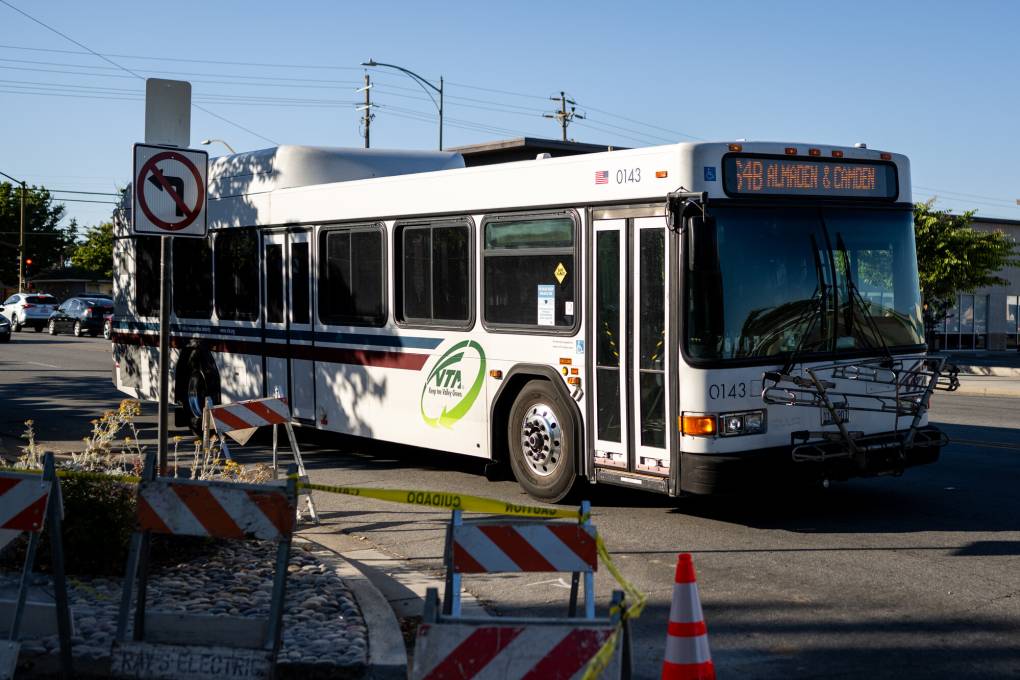
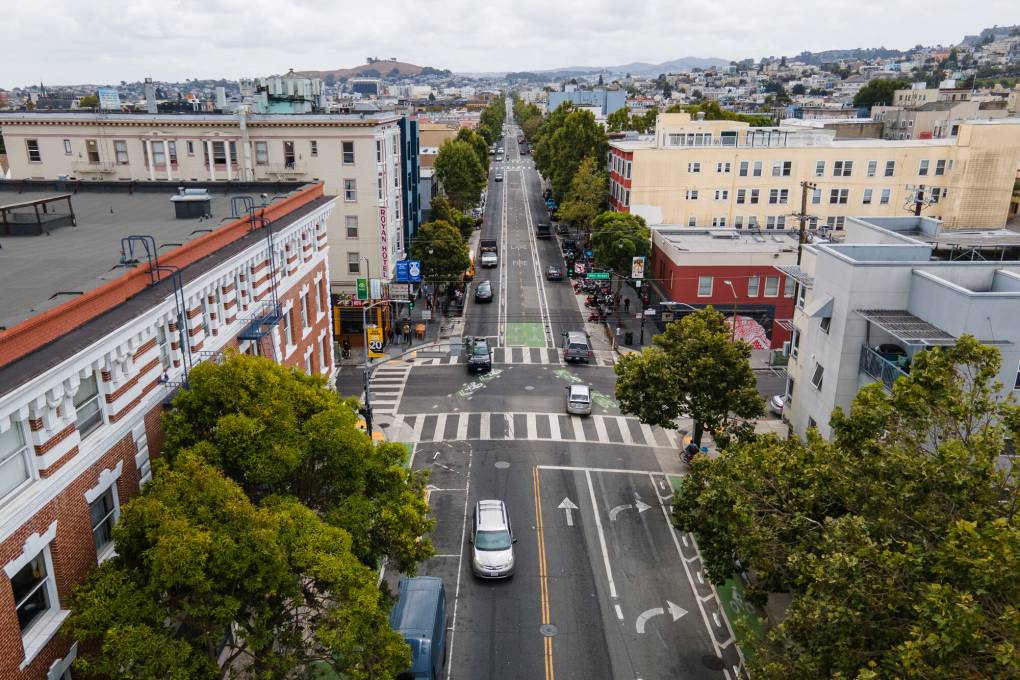
![A sign at the airport that reads "I [heart] OAK."](https://cdn.kqed.org/wp-content/uploads/sites/10/2024/05/GettyImages-2148443885-1020x670.jpg)