window.__IS_SSR__=true
window.__INITIAL_STATE__={
"attachmentsReducer": {
"audio_0": {
"type": "attachments",
"id": "audio_0",
"imgSizes": {
"kqedFullSize": {
"file": "https://ww2.kqed.org/news/wp-content/themes/KQED-unified/img/audio_bgs/background0.jpg"
}
}
},
"audio_1": {
"type": "attachments",
"id": "audio_1",
"imgSizes": {
"kqedFullSize": {
"file": "https://ww2.kqed.org/news/wp-content/themes/KQED-unified/img/audio_bgs/background1.jpg"
}
}
},
"audio_2": {
"type": "attachments",
"id": "audio_2",
"imgSizes": {
"kqedFullSize": {
"file": "https://ww2.kqed.org/news/wp-content/themes/KQED-unified/img/audio_bgs/background2.jpg"
}
}
},
"audio_3": {
"type": "attachments",
"id": "audio_3",
"imgSizes": {
"kqedFullSize": {
"file": "https://ww2.kqed.org/news/wp-content/themes/KQED-unified/img/audio_bgs/background3.jpg"
}
}
},
"audio_4": {
"type": "attachments",
"id": "audio_4",
"imgSizes": {
"kqedFullSize": {
"file": "https://ww2.kqed.org/news/wp-content/themes/KQED-unified/img/audio_bgs/background4.jpg"
}
}
},
"placeholder": {
"type": "attachments",
"id": "placeholder",
"imgSizes": {
"thumbnail": {
"file": "https://cdn.kqed.org/wp-content/uploads/2024/12/KQED-Default-Image-816638274-2000x1333-1-160x107.jpg",
"width": 160,
"height": 107,
"mimeType": "image/jpeg"
},
"medium": {
"file": "https://cdn.kqed.org/wp-content/uploads/2024/12/KQED-Default-Image-816638274-2000x1333-1-800x533.jpg",
"width": 800,
"height": 533,
"mimeType": "image/jpeg"
},
"medium_large": {
"file": "https://cdn.kqed.org/wp-content/uploads/2024/12/KQED-Default-Image-816638274-2000x1333-1-768x512.jpg",
"width": 768,
"height": 512,
"mimeType": "image/jpeg"
},
"large": {
"file": "https://cdn.kqed.org/wp-content/uploads/2024/12/KQED-Default-Image-816638274-2000x1333-1-1020x680.jpg",
"width": 1020,
"height": 680,
"mimeType": "image/jpeg"
},
"1536x1536": {
"file": "https://cdn.kqed.org/wp-content/uploads/2024/12/KQED-Default-Image-816638274-2000x1333-1-1536x1024.jpg",
"width": 1536,
"height": 1024,
"mimeType": "image/jpeg"
},
"fd-lrg": {
"file": "https://cdn.kqed.org/wp-content/uploads/2024/12/KQED-Default-Image-816638274-2000x1333-1-1536x1024.jpg",
"width": 1536,
"height": 1024,
"mimeType": "image/jpeg"
},
"fd-med": {
"file": "https://cdn.kqed.org/wp-content/uploads/2024/12/KQED-Default-Image-816638274-2000x1333-1-1020x680.jpg",
"width": 1020,
"height": 680,
"mimeType": "image/jpeg"
},
"fd-sm": {
"file": "https://cdn.kqed.org/wp-content/uploads/2024/12/KQED-Default-Image-816638274-2000x1333-1-800x533.jpg",
"width": 800,
"height": 533,
"mimeType": "image/jpeg"
},
"post-thumbnail": {
"file": "https://cdn.kqed.org/wp-content/uploads/2024/12/KQED-Default-Image-816638274-2000x1333-1-672x372.jpg",
"width": 672,
"height": 372,
"mimeType": "image/jpeg"
},
"twentyfourteen-full-width": {
"file": "https://cdn.kqed.org/wp-content/uploads/2024/12/KQED-Default-Image-816638274-2000x1333-1-1038x576.jpg",
"width": 1038,
"height": 576,
"mimeType": "image/jpeg"
},
"xxsmall": {
"file": "https://cdn.kqed.org/wp-content/uploads/2024/12/KQED-Default-Image-816638274-2000x1333-1-160x107.jpg",
"width": 160,
"height": 107,
"mimeType": "image/jpeg"
},
"xsmall": {
"file": "https://cdn.kqed.org/wp-content/uploads/2024/12/KQED-Default-Image-816638274-2000x1333-1-672x372.jpg",
"width": 672,
"height": 372,
"mimeType": "image/jpeg"
},
"small": {
"file": "https://cdn.kqed.org/wp-content/uploads/2024/12/KQED-Default-Image-816638274-2000x1333-1-672x372.jpg",
"width": 672,
"height": 372,
"mimeType": "image/jpeg"
},
"xlarge": {
"file": "https://cdn.kqed.org/wp-content/uploads/2024/12/KQED-Default-Image-816638274-2000x1333-1-1020x680.jpg",
"width": 1020,
"height": 680,
"mimeType": "image/jpeg"
},
"full-width": {
"file": "https://cdn.kqed.org/wp-content/uploads/2024/12/KQED-Default-Image-816638274-2000x1333-1-1920x1280.jpg",
"width": 1920,
"height": 1280,
"mimeType": "image/jpeg"
},
"guest-author-32": {
"file": "https://cdn.kqed.org/wp-content/uploads/2025/01/KQED-Default-Image-816638274-1333x1333-1-160x160.jpg",
"width": 32,
"height": 32,
"mimeType": "image/jpeg"
},
"guest-author-50": {
"file": "https://cdn.kqed.org/wp-content/uploads/2025/01/KQED-Default-Image-816638274-1333x1333-1-160x160.jpg",
"width": 50,
"height": 50,
"mimeType": "image/jpeg"
},
"guest-author-64": {
"file": "https://cdn.kqed.org/wp-content/uploads/2025/01/KQED-Default-Image-816638274-1333x1333-1-160x160.jpg",
"width": 64,
"height": 64,
"mimeType": "image/jpeg"
},
"guest-author-96": {
"file": "https://cdn.kqed.org/wp-content/uploads/2025/01/KQED-Default-Image-816638274-1333x1333-1-160x160.jpg",
"width": 96,
"height": 96,
"mimeType": "image/jpeg"
},
"guest-author-128": {
"file": "https://cdn.kqed.org/wp-content/uploads/2025/01/KQED-Default-Image-816638274-1333x1333-1-160x160.jpg",
"width": 128,
"height": 128,
"mimeType": "image/jpeg"
},
"detail": {
"file": "https://cdn.kqed.org/wp-content/uploads/2025/01/KQED-Default-Image-816638274-1333x1333-1-160x160.jpg",
"width": 160,
"height": 160,
"mimeType": "image/jpeg"
},
"kqedFullSize": {
"file": "https://cdn.kqed.org/wp-content/uploads/2024/12/KQED-Default-Image-816638274-2000x1333-1.jpg",
"width": 2000,
"height": 1333
}
}
},
"news_12016156": {
"type": "attachments",
"id": "news_12016156",
"meta": {
"index": "attachments_1716263798",
"site": "news",
"id": "12016156",
"found": true
},
"title": "240111-TransitFile-02-BL_qed",
"publishDate": 1732743251,
"status": "inherit",
"parent": 12016154,
"modified": 1732743274,
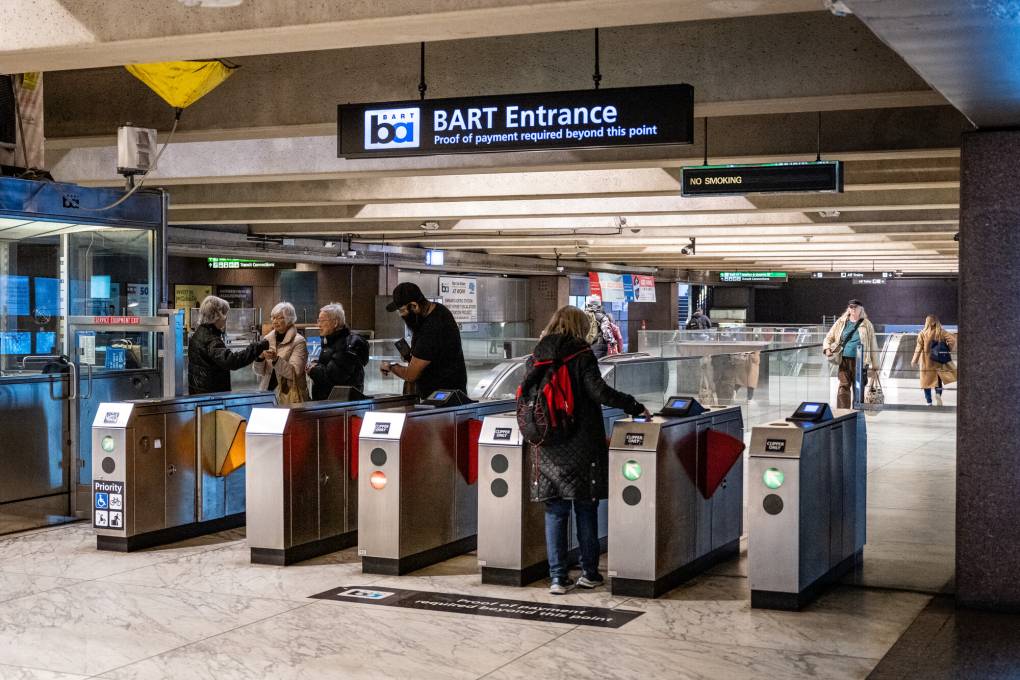
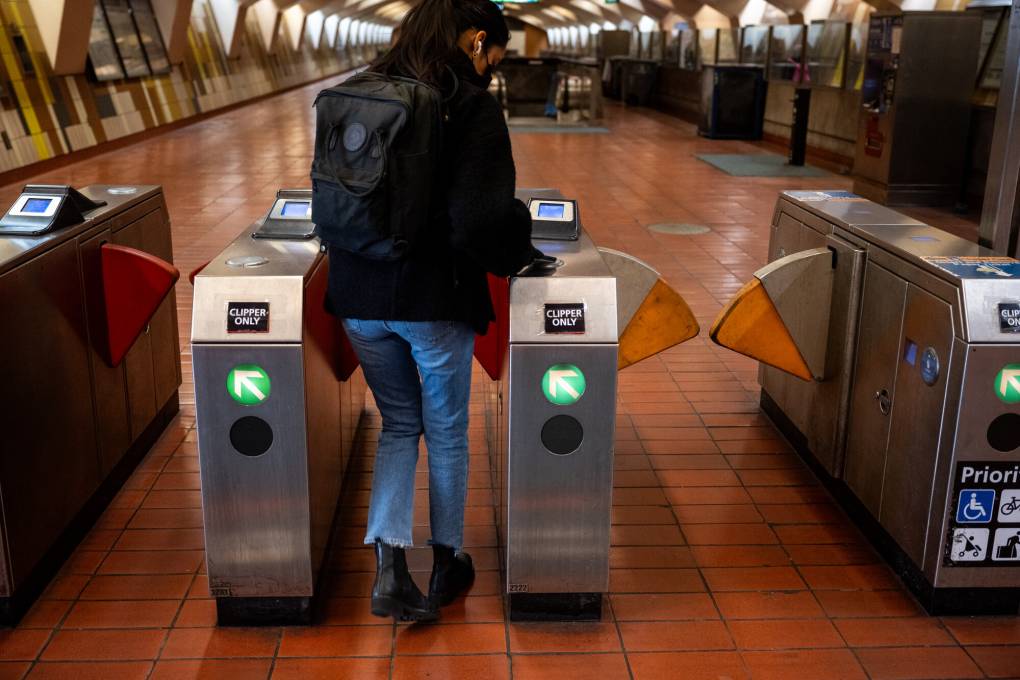
"caption": "People enter and exit the BART fare gate at the Embarcadero Station in San Francisco on Jan. 11, 2024.",
"credit": "Beth LaBerge/KQED",
"altTag": null,
"description": null,
"imgSizes": {
"medium": {
"file": "https://cdn.kqed.org/wp-content/uploads/sites/10/2024/11/240111-TransitFile-02-BL_qed-800x533.jpg",
"width": 800,
"height": 533,
"mimeType": "image/jpeg"
},
"large": {
"file": "https://cdn.kqed.org/wp-content/uploads/sites/10/2024/11/240111-TransitFile-02-BL_qed-1020x680.jpg",
"width": 1020,
"height": 680,
"mimeType": "image/jpeg"
},
"thumbnail": {
"file": "https://cdn.kqed.org/wp-content/uploads/sites/10/2024/11/240111-TransitFile-02-BL_qed-160x107.jpg",
"width": 160,
"height": 107,
"mimeType": "image/jpeg"
},
"1536x1536": {
"file": "https://cdn.kqed.org/wp-content/uploads/sites/10/2024/11/240111-TransitFile-02-BL_qed-1536x1024.jpg",
"width": 1536,
"height": 1024,
"mimeType": "image/jpeg"
},
"post-thumbnail": {
"file": "https://cdn.kqed.org/wp-content/uploads/sites/10/2024/11/240111-TransitFile-02-BL_qed-672x372.jpg",
"width": 672,
"height": 372,
"mimeType": "image/jpeg"
},
"twentyfourteen-full-width": {
"file": "https://cdn.kqed.org/wp-content/uploads/sites/10/2024/11/240111-TransitFile-02-BL_qed-1038x576.jpg",
"width": 1038,
"height": 576,
"mimeType": "image/jpeg"
},
"full-width": {
"file": "https://cdn.kqed.org/wp-content/uploads/sites/10/2024/11/240111-TransitFile-02-BL_qed-1920x1280.jpg",
"width": 1920,
"height": 1280,
"mimeType": "image/jpeg"
},
"kqedFullSize": {
"file": "https://cdn.kqed.org/wp-content/uploads/sites/10/2024/11/240111-TransitFile-02-BL_qed.jpg",
"width": 2000,
"height": 1333
}
},
"isLoading": false,
"fetchFailed": false
},
"news_12015328": {
"type": "attachments",
"id": "news_12015328",
"meta": {
"index": "attachments_1716263798",
"site": "news",
"id": "12015328",
"found": true
},
"title": "IMG_5013",
"publishDate": 1732219814,
"status": "inherit",
"parent": 12015320,
"modified": 1776903053,
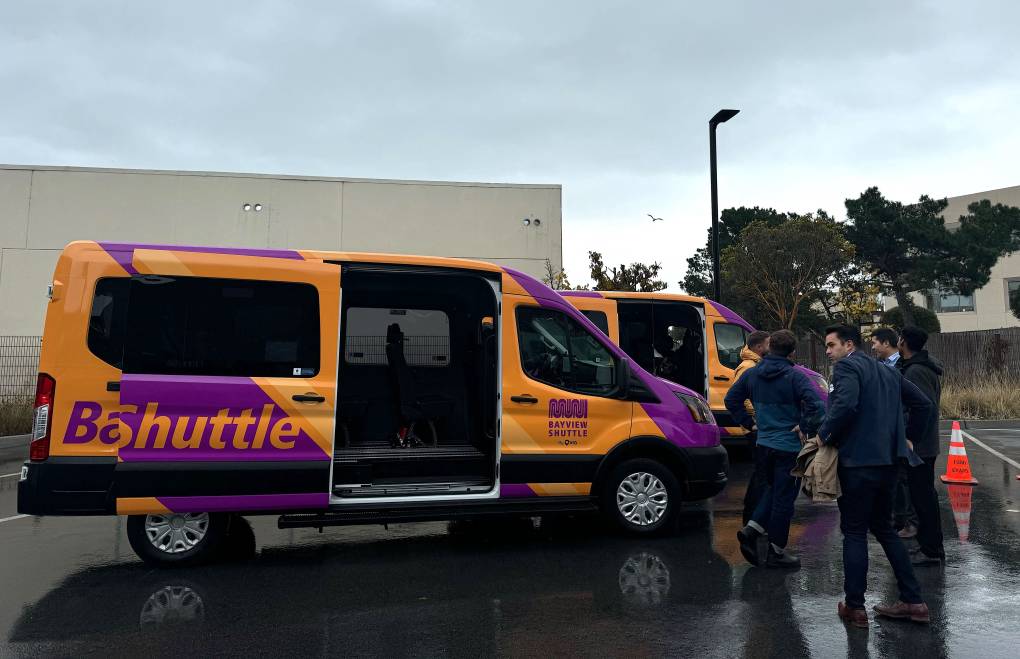
"caption": "Transportation officials survey two new Bayview Community Shuttle vans in San Francisco's Bayview-Hunters Point neighborhood on Nov. 20, 2024. ",
"credit": "Gilare Zada/KQED",
"altTag": "A small group of people stands outside next to two purple and yellow vans that say 'Bayview Community Shuttle.'",
"description": null,
"imgSizes": {
"medium": {
"file": "https://cdn.kqed.org/wp-content/uploads/sites/10/2024/11/IMG_5013-800x517.jpg",
"width": 800,
"height": 517,
"mimeType": "image/jpeg"
},
"large": {
"file": "https://cdn.kqed.org/wp-content/uploads/sites/10/2024/11/IMG_5013-1020x659.jpg",
"width": 1020,
"height": 659,
"mimeType": "image/jpeg"
},
"thumbnail": {
"file": "https://cdn.kqed.org/wp-content/uploads/sites/10/2024/11/IMG_5013-160x103.jpg",
"width": 160,
"height": 103,
"mimeType": "image/jpeg"
},
"1536x1536": {
"file": "https://cdn.kqed.org/wp-content/uploads/sites/10/2024/11/IMG_5013-1536x992.jpg",
"width": 1536,
"height": 992,
"mimeType": "image/jpeg"
},
"2048x2048": {
"file": "https://cdn.kqed.org/wp-content/uploads/sites/10/2024/11/IMG_5013-2048x1323.jpg",
"width": 2048,
"height": 1323,
"mimeType": "image/jpeg"
},
"post-thumbnail": {
"file": "https://cdn.kqed.org/wp-content/uploads/sites/10/2024/11/IMG_5013-672x372.jpg",
"width": 672,
"height": 372,
"mimeType": "image/jpeg"
},
"twentyfourteen-full-width": {
"file": "https://cdn.kqed.org/wp-content/uploads/sites/10/2024/11/IMG_5013-1038x576.jpg",
"width": 1038,
"height": 576,
"mimeType": "image/jpeg"
},
"full-width": {
"file": "https://cdn.kqed.org/wp-content/uploads/sites/10/2024/11/IMG_5013-1920x1240.jpg",
"width": 1920,
"height": 1240,
"mimeType": "image/jpeg"
},
"kqedFullSize": {
"file": "https://cdn.kqed.org/wp-content/uploads/sites/10/2024/11/IMG_5013-scaled-e1776896997415.jpg",
"width": 2000,
"height": 1291
}
},
"isLoading": false,
"fetchFailed": false
},
"news_12014768": {
"type": "attachments",
"id": "news_12014768",
"meta": {
"index": "attachments_1716263798",
"site": "news",
"id": "12014768",
"found": true
},
"title": "230922-ValenciaBikeway-003-BL_qed",
"publishDate": 1731717499,
"status": "inherit",
"parent": 12014765,
"modified": 1731717511,
"caption": "A bicyclist rides on the Valencia Street bike lane in San Francisco's Mission District on Sept. 22, 2023.",
"credit": "Beth LaBerge/KQED",
"altTag": null,
"description": null,
"imgSizes": {
"medium": {
"file": "https://cdn.kqed.org/wp-content/uploads/sites/10/2024/11/230922-ValenciaBikeway-003-BL_qed-800x533.jpg",
"width": 800,
"height": 533,
"mimeType": "image/jpeg"
},
"large": {
"file": "https://cdn.kqed.org/wp-content/uploads/sites/10/2024/11/230922-ValenciaBikeway-003-BL_qed-1020x680.jpg",
"width": 1020,
"height": 680,
"mimeType": "image/jpeg"
},
"thumbnail": {
"file": "https://cdn.kqed.org/wp-content/uploads/sites/10/2024/11/230922-ValenciaBikeway-003-BL_qed-160x107.jpg",
"width": 160,
"height": 107,
"mimeType": "image/jpeg"
},
"1536x1536": {
"file": "https://cdn.kqed.org/wp-content/uploads/sites/10/2024/11/230922-ValenciaBikeway-003-BL_qed-1536x1024.jpg",
"width": 1536,
"height": 1024,
"mimeType": "image/jpeg"
},
"post-thumbnail": {
"file": "https://cdn.kqed.org/wp-content/uploads/sites/10/2024/11/230922-ValenciaBikeway-003-BL_qed-672x372.jpg",
"width": 672,
"height": 372,
"mimeType": "image/jpeg"
},
"twentyfourteen-full-width": {
"file": "https://cdn.kqed.org/wp-content/uploads/sites/10/2024/11/230922-ValenciaBikeway-003-BL_qed-1038x576.jpg",
"width": 1038,
"height": 576,
"mimeType": "image/jpeg"
},
"full-width": {
"file": "https://cdn.kqed.org/wp-content/uploads/sites/10/2024/11/230922-ValenciaBikeway-003-BL_qed-1920x1280.jpg",
"width": 1920,
"height": 1280,
"mimeType": "image/jpeg"
},
"kqedFullSize": {
"file": "https://cdn.kqed.org/wp-content/uploads/sites/10/2024/11/230922-ValenciaBikeway-003-BL_qed.jpg",
"width": 2000,
"height": 1333
}
},
"isLoading": false,
"fetchFailed": false
},
"news_12015012": {
"type": "attachments",
"id": "news_12015012",
"meta": {
"index": "attachments_1716263798",
"site": "news",
"id": "12015012",
"found": true
},
"title": "MUNI with GBUS",
"publishDate": 1732054884,
"status": "inherit",
"parent": 12015011,
"modified": 1732055005,
"caption": "SFMTA is talking about huge cuts to service to help close a $300 million budget deficit by next year. ",
"credit": "Mark Wilson/Getty Images",
"altTag": null,
"description": null,
"imgSizes": {
"medium": {
"file": "https://cdn.kqed.org/wp-content/uploads/sites/10/2024/11/MUNI-with-GBUS-800x547.png",
"width": 800,
"height": 547,
"mimeType": "image/png"
},
"large": {
"file": "https://cdn.kqed.org/wp-content/uploads/sites/10/2024/11/MUNI-with-GBUS-1020x697.png",
"width": 1020,
"height": 697,
"mimeType": "image/png"
},
"thumbnail": {
"file": "https://cdn.kqed.org/wp-content/uploads/sites/10/2024/11/MUNI-with-GBUS-160x109.png",
"width": 160,
"height": 109,
"mimeType": "image/png"
},
"1536x1536": {
"file": "https://cdn.kqed.org/wp-content/uploads/sites/10/2024/11/MUNI-with-GBUS-1536x1049.png",
"width": 1536,
"height": 1049,
"mimeType": "image/png"
},
"post-thumbnail": {
"file": "https://cdn.kqed.org/wp-content/uploads/sites/10/2024/11/MUNI-with-GBUS-672x372.png",
"width": 672,
"height": 372,
"mimeType": "image/png"
},
"twentyfourteen-full-width": {
"file": "https://cdn.kqed.org/wp-content/uploads/sites/10/2024/11/MUNI-with-GBUS-1038x576.png",
"width": 1038,
"height": 576,
"mimeType": "image/png"
},
"kqedFullSize": {
"file": "https://cdn.kqed.org/wp-content/uploads/sites/10/2024/11/MUNI-with-GBUS.png",
"width": 1695,
"height": 1158
}
},
"isLoading": false,
"fetchFailed": false
},
"news_12014596": {
"type": "attachments",
"id": "news_12014596",
"meta": {
"index": "attachments_1716263798",
"site": "news",
"id": "12014596",
"found": true
},
"title": "San Francisco Mayor Asks Muni To Study Eliminating Transit Fares",
"publishDate": 1731698421,
"status": "inherit",
"parent": 12014573,
"modified": 1731720725,
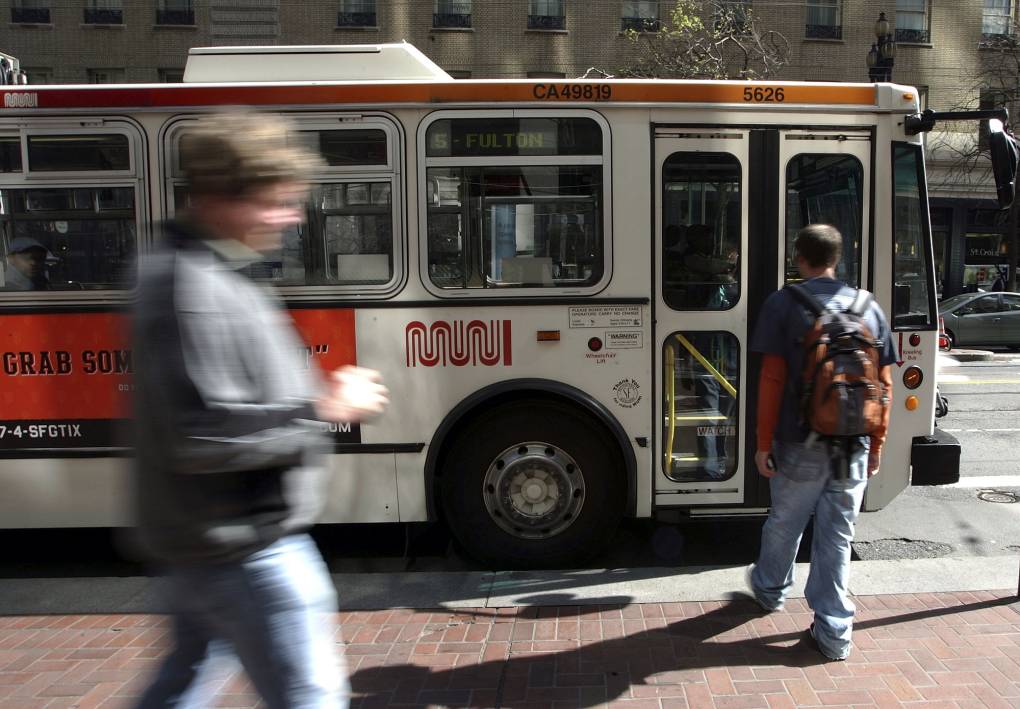
"caption": "Passengers board a San Francisco MUNI bus on March 7, 2007.",
"credit": "Justin Sullivan/Getty Images",
"altTag": null,
"description": null,
"imgSizes": {
"medium": {
"file": "https://cdn.kqed.org/wp-content/uploads/sites/10/2024/11/MUNISF-800x556.jpg",
"width": 800,
"height": 556,
"mimeType": "image/jpeg"
},
"large": {
"file": "https://cdn.kqed.org/wp-content/uploads/sites/10/2024/11/MUNISF-1020x709.jpg",
"width": 1020,
"height": 709,
"mimeType": "image/jpeg"
},
"thumbnail": {
"file": "https://cdn.kqed.org/wp-content/uploads/sites/10/2024/11/MUNISF-160x111.jpg",
"width": 160,
"height": 111,
"mimeType": "image/jpeg"
},
"1536x1536": {
"file": "https://cdn.kqed.org/wp-content/uploads/sites/10/2024/11/MUNISF-1536x1068.jpg",
"width": 1536,
"height": 1068,
"mimeType": "image/jpeg"
},
"post-thumbnail": {
"file": "https://cdn.kqed.org/wp-content/uploads/sites/10/2024/11/MUNISF-672x372.jpg",
"width": 672,
"height": 372,
"mimeType": "image/jpeg"
},
"twentyfourteen-full-width": {
"file": "https://cdn.kqed.org/wp-content/uploads/sites/10/2024/11/MUNISF-1038x576.jpg",
"width": 1038,
"height": 576,
"mimeType": "image/jpeg"
},
"full-width": {
"file": "https://cdn.kqed.org/wp-content/uploads/sites/10/2024/11/MUNISF-1920x1335.jpg",
"width": 1920,
"height": 1335,
"mimeType": "image/jpeg"
},
"kqedFullSize": {
"file": "https://cdn.kqed.org/wp-content/uploads/sites/10/2024/11/MUNISF.jpg",
"width": 2000,
"height": 1391
}
},
"isLoading": false,
"fetchFailed": false
},
"news_11982792": {
"type": "attachments",
"id": "news_11982792",
"meta": {
"index": "attachments_1716263798",
"site": "news",
"id": "11982792",
"found": true
},
"title": "240412-OAKAIRPORT-027-BL-KQED",
"publishDate": 1712942276,
"status": "inherit",
"parent": 0,
"modified": 1731461196,
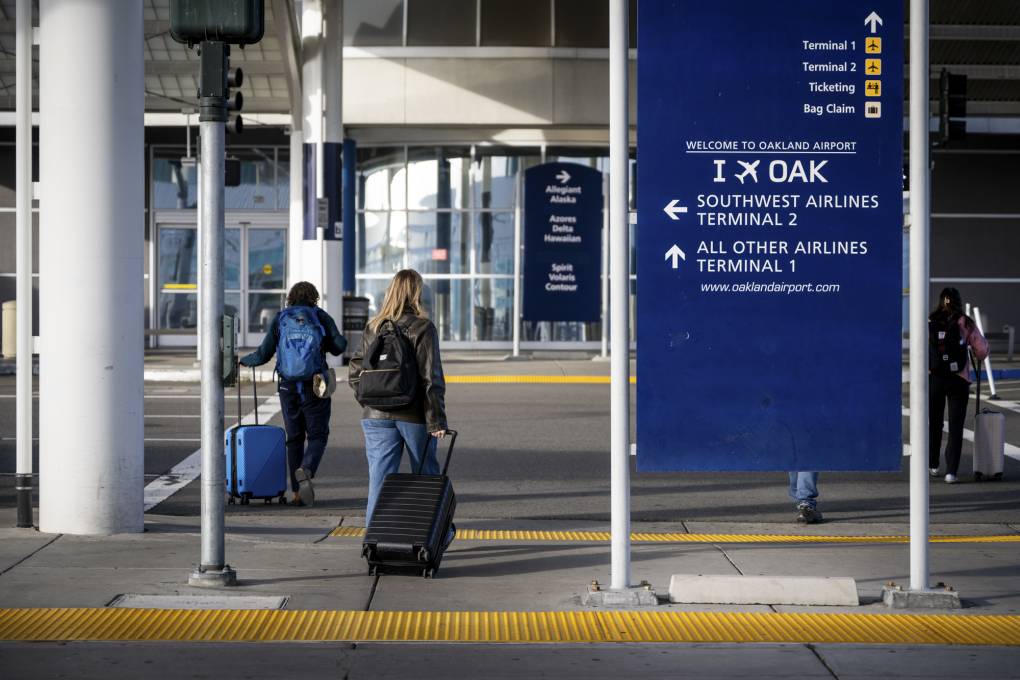
"caption": "Passengers enter the Oakland International Airport in Oakland on April 12, 2024.",
"credit": "Beth LaBerge/KQED",
"altTag": null,
"description": null,
"imgSizes": {
"medium": {
"file": "https://cdn.kqed.org/wp-content/uploads/sites/10/2024/04/240412-OAKAIRPORT-027-BL-KQED-800x533.jpg",
"width": 800,
"height": 533,
"mimeType": "image/jpeg"
},
"large": {
"file": "https://cdn.kqed.org/wp-content/uploads/sites/10/2024/04/240412-OAKAIRPORT-027-BL-KQED-1020x680.jpg",
"width": 1020,
"height": 680,
"mimeType": "image/jpeg"
},
"thumbnail": {
"file": "https://cdn.kqed.org/wp-content/uploads/sites/10/2024/04/240412-OAKAIRPORT-027-BL-KQED-160x107.jpg",
"width": 160,
"height": 107,
"mimeType": "image/jpeg"
},
"1536x1536": {
"file": "https://cdn.kqed.org/wp-content/uploads/sites/10/2024/04/240412-OAKAIRPORT-027-BL-KQED-1536x1024.jpg",
"width": 1536,
"height": 1024,
"mimeType": "image/jpeg"
},
"post-thumbnail": {
"file": "https://cdn.kqed.org/wp-content/uploads/sites/10/2024/04/240412-OAKAIRPORT-027-BL-KQED-672x372.jpg",
"width": 672,
"height": 372,
"mimeType": "image/jpeg"
},
"twentyfourteen-full-width": {
"file": "https://cdn.kqed.org/wp-content/uploads/sites/10/2024/04/240412-OAKAIRPORT-027-BL-KQED-1038x576.jpg",
"width": 1038,
"height": 576,
"mimeType": "image/jpeg"
},
"full-width": {
"file": "https://cdn.kqed.org/wp-content/uploads/sites/10/2024/04/240412-OAKAIRPORT-027-BL-KQED-1920x1280.jpg",
"width": 1920,
"height": 1280,
"mimeType": "image/jpeg"
},
"kqedFullSize": {
"file": "https://cdn.kqed.org/wp-content/uploads/sites/10/2024/04/240412-OAKAIRPORT-027-BL-KQED.jpg",
"width": 2000,
"height": 1333
}
},
"isLoading": false,
"fetchFailed": false
},
"news_12011138": {
"type": "attachments",
"id": "news_12011138",
"meta": {
"index": "attachments_1716263798",
"site": "news",
"id": "12011138",
"found": true
},
"title": "241025-FATAL UCSF DUMP TRUCK CRASH-MD-02-KQED",
"publishDate": 1729882394,
"status": "inherit",
"parent": 0,
"modified": 1729953336,
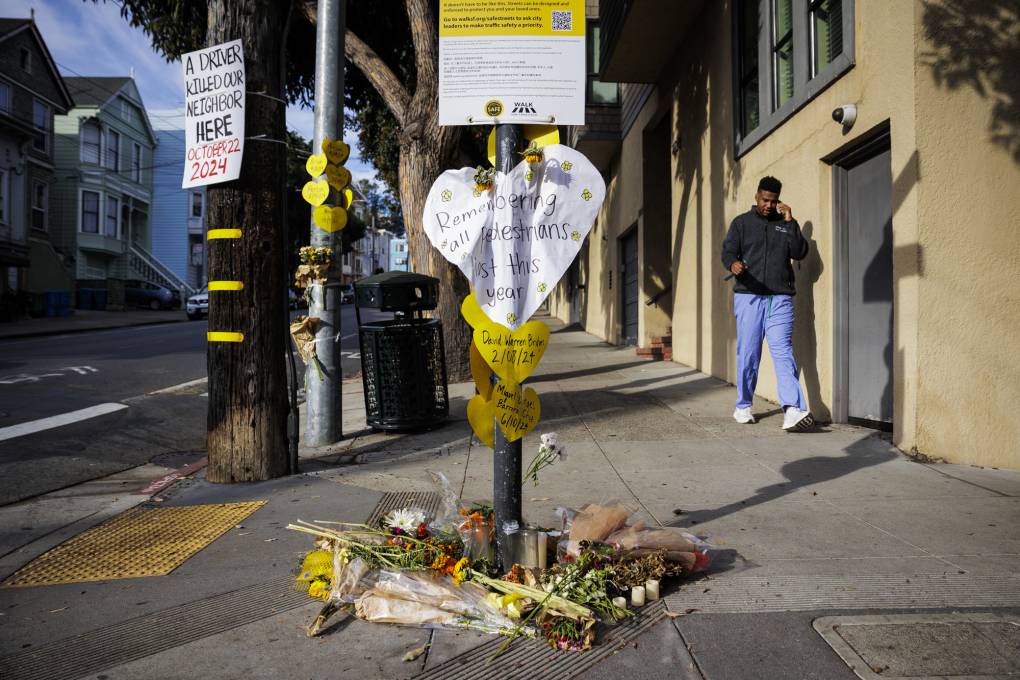
"caption": "A memorial at the intersection of Stanyan Street and Parnassus Avenue, where a pedestrian was recently hit and killed by a dump truck, on Oct. 25, 2024.",
"credit": "Martin do Nascimento/KQED",
"altTag": null,
"description": null,
"imgSizes": {
"medium": {
"file": "https://cdn.kqed.org/wp-content/uploads/sites/10/2024/10/241025-FATAL-UCSF-DUMP-TRUCK-CRASH-MD-02-KQED-800x533.jpg",
"width": 800,
"height": 533,
"mimeType": "image/jpeg"
},
"large": {
"file": "https://cdn.kqed.org/wp-content/uploads/sites/10/2024/10/241025-FATAL-UCSF-DUMP-TRUCK-CRASH-MD-02-KQED-1020x680.jpg",
"width": 1020,
"height": 680,
"mimeType": "image/jpeg"
},
"thumbnail": {
"file": "https://cdn.kqed.org/wp-content/uploads/sites/10/2024/10/241025-FATAL-UCSF-DUMP-TRUCK-CRASH-MD-02-KQED-160x107.jpg",
"width": 160,
"height": 107,
"mimeType": "image/jpeg"
},
"1536x1536": {
"file": "https://cdn.kqed.org/wp-content/uploads/sites/10/2024/10/241025-FATAL-UCSF-DUMP-TRUCK-CRASH-MD-02-KQED-1536x1024.jpg",
"width": 1536,
"height": 1024,
"mimeType": "image/jpeg"
},
"post-thumbnail": {
"file": "https://cdn.kqed.org/wp-content/uploads/sites/10/2024/10/241025-FATAL-UCSF-DUMP-TRUCK-CRASH-MD-02-KQED-672x372.jpg",
"width": 672,
"height": 372,
"mimeType": "image/jpeg"
},
"twentyfourteen-full-width": {
"file": "https://cdn.kqed.org/wp-content/uploads/sites/10/2024/10/241025-FATAL-UCSF-DUMP-TRUCK-CRASH-MD-02-KQED-1038x576.jpg",
"width": 1038,
"height": 576,
"mimeType": "image/jpeg"
},
"full-width": {
"file": "https://cdn.kqed.org/wp-content/uploads/sites/10/2024/10/241025-FATAL-UCSF-DUMP-TRUCK-CRASH-MD-02-KQED-1920x1280.jpg",
"width": 1920,
"height": 1280,
"mimeType": "image/jpeg"
},
"kqedFullSize": {
"file": "https://cdn.kqed.org/wp-content/uploads/sites/10/2024/10/241025-FATAL-UCSF-DUMP-TRUCK-CRASH-MD-02-KQED.jpg",
"width": 2000,
"height": 1333
}
},
"isLoading": false,
"fetchFailed": false
},
"news_11796751": {
"type": "attachments",
"id": "news_11796751",
"meta": {
"index": "attachments_1716263798",
"site": "news",
"id": "11796751",
"found": true
},
"title": "Investigation Continues Into Tesla Driver's Death While In Autopilot Mode",
"publishDate": 1579299477,
"status": "inherit",
"parent": 11796657,
"modified": 1729283665,
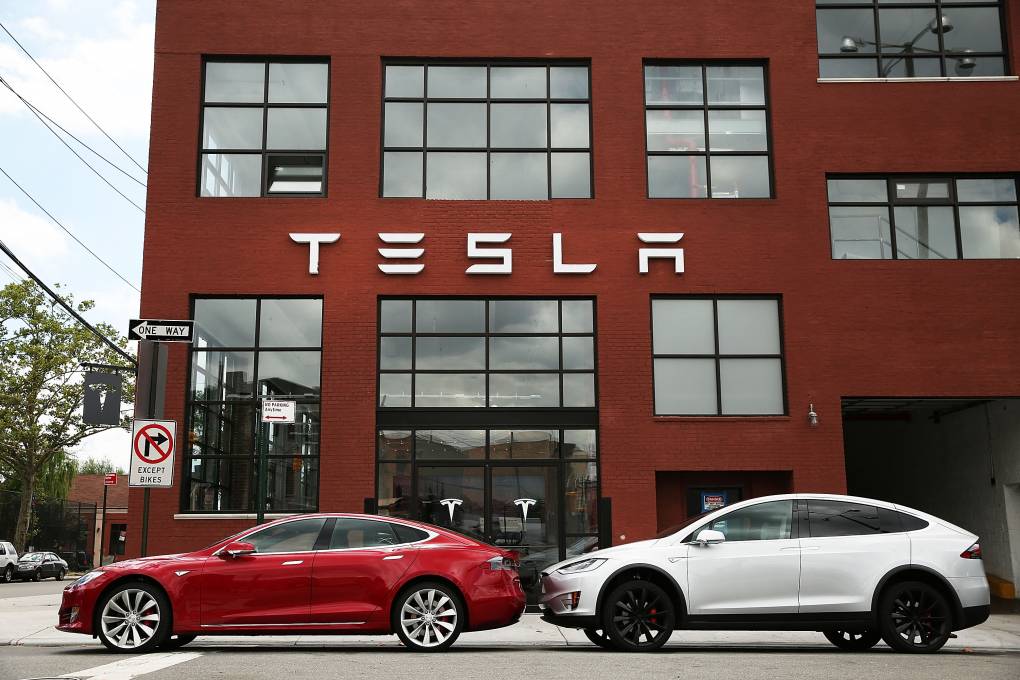
"caption": "Tesla vehicles sit parked outside of a new Tesla showroom and service center in New York. ",
"credit": "Spencer Platt/Getty Images",
"altTag": null,
"description": null,
"imgSizes": {
"thumbnail": {
"file": "https://cdn.kqed.org/wp-content/uploads/sites/10/2020/01/GettyImages-545144484-160x107.jpg",
"width": 160,
"height": 107,
"mimeType": "image/jpeg"
},
"medium": {
"file": "https://cdn.kqed.org/wp-content/uploads/sites/10/2020/01/GettyImages-545144484-800x533.jpg",
"width": 800,
"height": 533,
"mimeType": "image/jpeg"
},
"large": {
"file": "https://cdn.kqed.org/wp-content/uploads/sites/10/2020/01/GettyImages-545144484-1020x680.jpg",
"width": 1020,
"height": 680,
"mimeType": "image/jpeg"
},
"post-thumbnail": {
"file": "https://cdn.kqed.org/wp-content/uploads/sites/10/2020/01/GettyImages-545144484-672x372.jpg",
"width": 672,
"height": 372,
"mimeType": "image/jpeg"
},
"twentyfourteen-full-width": {
"file": "https://cdn.kqed.org/wp-content/uploads/sites/10/2020/01/GettyImages-545144484-1038x576.jpg",
"width": 1038,
"height": 576,
"mimeType": "image/jpeg"
},
"full-width": {
"file": "https://cdn.kqed.org/wp-content/uploads/sites/10/2020/01/GettyImages-545144484-1920x1280.jpg",
"width": 1920,
"height": 1280,
"mimeType": "image/jpeg"
},
"apple_news_ca_landscape_12_9": {
"file": "https://cdn.kqed.org/wp-content/uploads/sites/10/2020/01/GettyImages-545144484-1832x1374.jpg",
"width": 1832,
"height": 1374,
"mimeType": "image/jpeg"
},
"apple_news_ca_landscape_9_7": {
"file": "https://cdn.kqed.org/wp-content/uploads/sites/10/2020/01/GettyImages-545144484-1376x1032.jpg",
"width": 1376,
"height": 1032,
"mimeType": "image/jpeg"
},
"apple_news_ca_landscape_5_5": {
"file": "https://cdn.kqed.org/wp-content/uploads/sites/10/2020/01/GettyImages-545144484-1044x783.jpg",
"width": 1044,
"height": 783,
"mimeType": "image/jpeg"
},
"apple_news_ca_landscape_4_7": {
"file": "https://cdn.kqed.org/wp-content/uploads/sites/10/2020/01/GettyImages-545144484-632x474.jpg",
"width": 632,
"height": 474,
"mimeType": "image/jpeg"
},
"apple_news_ca_landscape_4_0": {
"file": "https://cdn.kqed.org/wp-content/uploads/sites/10/2020/01/GettyImages-545144484-536x402.jpg",
"width": 536,
"height": 402,
"mimeType": "image/jpeg"
},
"apple_news_ca_portrait_12_9": {
"file": "https://cdn.kqed.org/wp-content/uploads/sites/10/2020/01/GettyImages-545144484-1122x1496.jpg",
"width": 1122,
"height": 1496,
"mimeType": "image/jpeg"
},
"apple_news_ca_portrait_9_7": {
"file": "https://cdn.kqed.org/wp-content/uploads/sites/10/2020/01/GettyImages-545144484-840x1120.jpg",
"width": 840,
"height": 1120,
"mimeType": "image/jpeg"
},
"apple_news_ca_portrait_5_5": {
"file": "https://cdn.kqed.org/wp-content/uploads/sites/10/2020/01/GettyImages-545144484-687x916.jpg",
"width": 687,
"height": 916,
"mimeType": "image/jpeg"
},
"apple_news_ca_portrait_4_7": {
"file": "https://cdn.kqed.org/wp-content/uploads/sites/10/2020/01/GettyImages-545144484-414x552.jpg",
"width": 414,
"height": 552,
"mimeType": "image/jpeg"
},
"apple_news_ca_portrait_4_0": {
"file": "https://cdn.kqed.org/wp-content/uploads/sites/10/2020/01/GettyImages-545144484-354x472.jpg",
"width": 354,
"height": 472,
"mimeType": "image/jpeg"
},
"apple_news_ca_square_12_9": {
"file": "https://cdn.kqed.org/wp-content/uploads/sites/10/2020/01/GettyImages-545144484-1472x1472.jpg",
"width": 1472,
"height": 1472,
"mimeType": "image/jpeg"
},
"apple_news_ca_square_9_7": {
"file": "https://cdn.kqed.org/wp-content/uploads/sites/10/2020/01/GettyImages-545144484-1104x1104.jpg",
"width": 1104,
"height": 1104,
"mimeType": "image/jpeg"
},
"apple_news_ca_square_5_5": {
"file": "https://cdn.kqed.org/wp-content/uploads/sites/10/2020/01/GettyImages-545144484-912x912.jpg",
"width": 912,
"height": 912,
"mimeType": "image/jpeg"
},
"apple_news_ca_square_4_7": {
"file": "https://cdn.kqed.org/wp-content/uploads/sites/10/2020/01/GettyImages-545144484-550x550.jpg",
"width": 550,
"height": 550,
"mimeType": "image/jpeg"
},
"apple_news_ca_square_4_0": {
"file": "https://cdn.kqed.org/wp-content/uploads/sites/10/2020/01/GettyImages-545144484-470x470.jpg",
"width": 470,
"height": 470,
"mimeType": "image/jpeg"
},
"kqedFullSize": {
"file": "https://cdn.kqed.org/wp-content/uploads/sites/10/2020/01/GettyImages-545144484.jpg",
"width": 3000,
"height": 2000
}
},
"isLoading": false,
"fetchFailed": false
},
"news_11992098": {
"type": "attachments",
"id": "news_11992098",
"meta": {
"index": "attachments_1716263798",
"site": "news",
"id": "11992098",
"found": true
},
"title": "240313-BART CRISIS INTERVENTION UNIT-MD-15",
"publishDate": 1719434084,
"status": "inherit",
"parent": 11992041,
"modified": 1726695343,
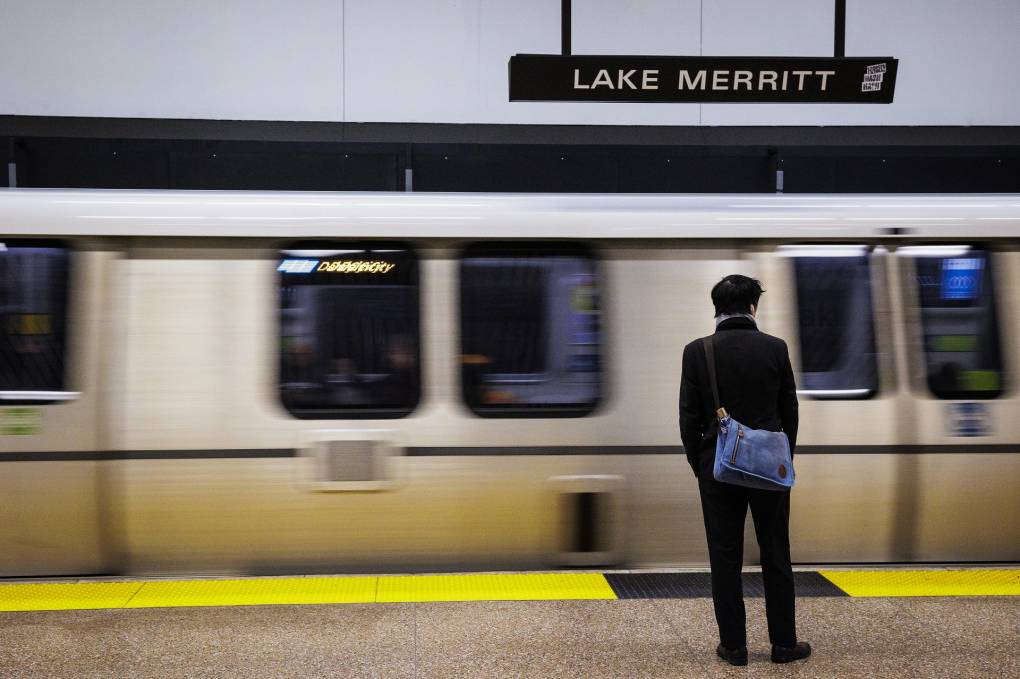
"caption": "A passenger watches a train go by at the Lake Merritt BART station on March 13, 2024.",
"credit": "Martin do Nascimento/KQED",
"altTag": "A man stands at a train platform as a train leaves the station. A sign above says \"Lake Merritt.\"",
"description": null,
"imgSizes": {
"medium": {
"file": "https://cdn.kqed.org/wp-content/uploads/sites/10/2024/06/240313-BART-CRISIS-INTERVENTION-UNIT-MD-15-800x533.jpg",
"width": 800,
"height": 533,
"mimeType": "image/jpeg"
},
"large": {
"file": "https://cdn.kqed.org/wp-content/uploads/sites/10/2024/06/240313-BART-CRISIS-INTERVENTION-UNIT-MD-15-1020x679.jpg",
"width": 1020,
"height": 679,
"mimeType": "image/jpeg"
},
"thumbnail": {
"file": "https://cdn.kqed.org/wp-content/uploads/sites/10/2024/06/240313-BART-CRISIS-INTERVENTION-UNIT-MD-15-160x107.jpg",
"width": 160,
"height": 107,
"mimeType": "image/jpeg"
},
"1536x1536": {
"file": "https://cdn.kqed.org/wp-content/uploads/sites/10/2024/06/240313-BART-CRISIS-INTERVENTION-UNIT-MD-15-1536x1023.jpg",
"width": 1536,
"height": 1023,
"mimeType": "image/jpeg"
},
"post-thumbnail": {
"file": "https://cdn.kqed.org/wp-content/uploads/sites/10/2024/06/240313-BART-CRISIS-INTERVENTION-UNIT-MD-15-672x372.jpg",
"width": 672,
"height": 372,
"mimeType": "image/jpeg"
},
"twentyfourteen-full-width": {
"file": "https://cdn.kqed.org/wp-content/uploads/sites/10/2024/06/240313-BART-CRISIS-INTERVENTION-UNIT-MD-15-1038x576.jpg",
"width": 1038,
"height": 576,
"mimeType": "image/jpeg"
},
"kqedFullSize": {
"file": "https://cdn.kqed.org/wp-content/uploads/sites/10/2024/06/240313-BART-CRISIS-INTERVENTION-UNIT-MD-15.jpg",
"width": 1920,
"height": 1279
}
},
"isLoading": false,
"fetchFailed": false
},
"news_12008879": {
"type": "attachments",
"id": "news_12008879",
"meta": {
"index": "attachments_1716263798",
"site": "news",
"id": "12008879",
"found": true
},
"title": "240111-TransitFile-19-BL_qed",
"publishDate": 1728583167,
"status": "inherit",
"parent": 12008877,
"modified": 1728583182,
"caption": "BART fare gates at the 24th Street Mission station in San Francisco on Jan. 11, 2024.",
"credit": "Beth LaBerge/KQED",
"altTag": null,
"description": null,
"imgSizes": {
"medium": {
"file": "https://cdn.kqed.org/wp-content/uploads/sites/10/2024/10/240111-TransitFile-19-BL_qed-800x533.jpg",
"width": 800,
"height": 533,
"mimeType": "image/jpeg"
},
"large": {
"file": "https://cdn.kqed.org/wp-content/uploads/sites/10/2024/10/240111-TransitFile-19-BL_qed-1020x680.jpg",
"width": 1020,
"height": 680,
"mimeType": "image/jpeg"
},
"thumbnail": {
"file": "https://cdn.kqed.org/wp-content/uploads/sites/10/2024/10/240111-TransitFile-19-BL_qed-160x107.jpg",
"width": 160,
"height": 107,
"mimeType": "image/jpeg"
},
"1536x1536": {
"file": "https://cdn.kqed.org/wp-content/uploads/sites/10/2024/10/240111-TransitFile-19-BL_qed-1536x1024.jpg",
"width": 1536,
"height": 1024,
"mimeType": "image/jpeg"
},
"post-thumbnail": {
"file": "https://cdn.kqed.org/wp-content/uploads/sites/10/2024/10/240111-TransitFile-19-BL_qed-672x372.jpg",
"width": 672,
"height": 372,
"mimeType": "image/jpeg"
},
"twentyfourteen-full-width": {
"file": "https://cdn.kqed.org/wp-content/uploads/sites/10/2024/10/240111-TransitFile-19-BL_qed-1038x576.jpg",
"width": 1038,
"height": 576,
"mimeType": "image/jpeg"
},
"full-width": {
"file": "https://cdn.kqed.org/wp-content/uploads/sites/10/2024/10/240111-TransitFile-19-BL_qed-1920x1280.jpg",
"width": 1920,
"height": 1280,
"mimeType": "image/jpeg"
},
"kqedFullSize": {
"file": "https://cdn.kqed.org/wp-content/uploads/sites/10/2024/10/240111-TransitFile-19-BL_qed.jpg",
"width": 2000,
"height": 1333
}
},
"isLoading": false,
"fetchFailed": false
},
"news_11797566": {
"type": "attachments",
"id": "news_11797566",
"meta": {
"index": "attachments_1716263798",
"site": "news",
"id": "11797566",
"found": true
},
"title": "Market Street Car-Free traffic",
"publishDate": 1579813888,
"status": "inherit",
"parent": 11797562,
"modified": 1727483341,
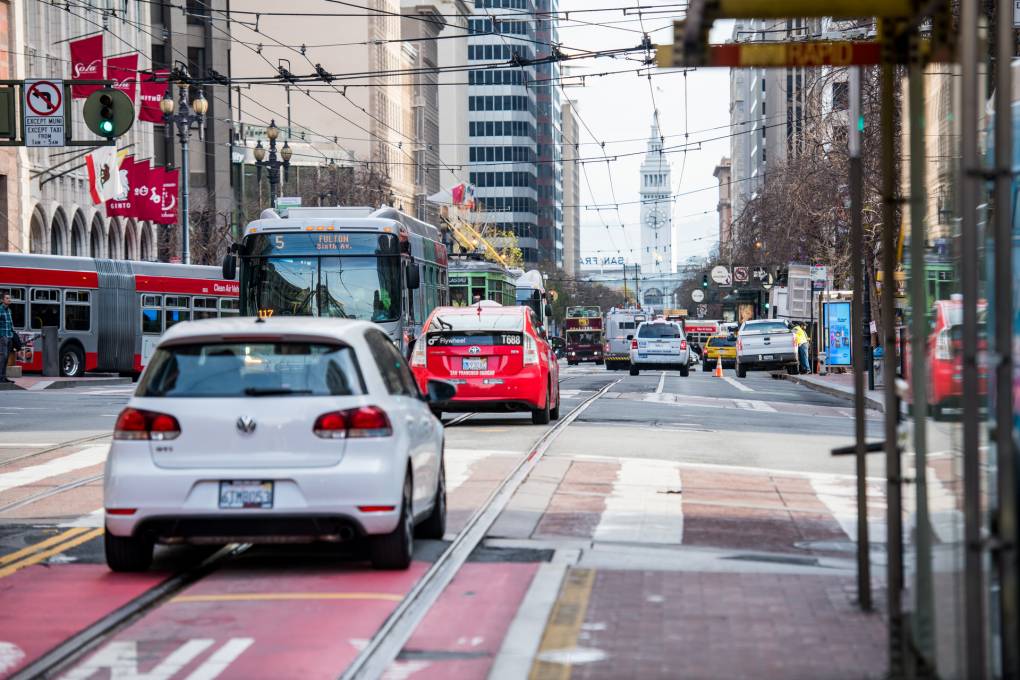
"caption": "Traffic on Market Street in San Francisco.",
"credit": "Beth LaBerge/KQED",
"altTag": "Cars drive down Market Street in San Francisco on Thursday, less than a week before the street will go car-free.",
"description": "Cars drive down Market Street in San Francisco on Thursday, less than a week before the street will go car-free.",
"imgSizes": {
"thumbnail": {
"file": "https://cdn.kqed.org/wp-content/uploads/sites/10/2020/01/RS40878_001_KQED_MarketStCarFree_01232020_8469-qut-160x107.jpg",
"width": 160,
"height": 107,
"mimeType": "image/jpeg"
},
"medium": {
"file": "https://cdn.kqed.org/wp-content/uploads/sites/10/2020/01/RS40878_001_KQED_MarketStCarFree_01232020_8469-qut-800x533.jpg",
"width": 800,
"height": 533,
"mimeType": "image/jpeg"
},
"large": {
"file": "https://cdn.kqed.org/wp-content/uploads/sites/10/2020/01/RS40878_001_KQED_MarketStCarFree_01232020_8469-qut-1020x680.jpg",
"width": 1020,
"height": 680,
"mimeType": "image/jpeg"
},
"post-thumbnail": {
"file": "https://cdn.kqed.org/wp-content/uploads/sites/10/2020/01/RS40878_001_KQED_MarketStCarFree_01232020_8469-qut-672x372.jpg",
"width": 672,
"height": 372,
"mimeType": "image/jpeg"
},
"twentyfourteen-full-width": {
"file": "https://cdn.kqed.org/wp-content/uploads/sites/10/2020/01/RS40878_001_KQED_MarketStCarFree_01232020_8469-qut-1038x576.jpg",
"width": 1038,
"height": 576,
"mimeType": "image/jpeg"
},
"full-width": {
"file": "https://cdn.kqed.org/wp-content/uploads/sites/10/2020/01/RS40878_001_KQED_MarketStCarFree_01232020_8469-qut-1920x1280.jpg",
"width": 1920,
"height": 1280,
"mimeType": "image/jpeg"
},
"apple_news_ca_landscape_12_9": {
"file": "https://cdn.kqed.org/wp-content/uploads/sites/10/2020/01/RS40878_001_KQED_MarketStCarFree_01232020_8469-qut-1832x1280.jpg",
"width": 1832,
"height": 1280,
"mimeType": "image/jpeg"
},
"apple_news_ca_landscape_9_7": {
"file": "https://cdn.kqed.org/wp-content/uploads/sites/10/2020/01/RS40878_001_KQED_MarketStCarFree_01232020_8469-qut-1376x1032.jpg",
"width": 1376,
"height": 1032,
"mimeType": "image/jpeg"
},
"apple_news_ca_landscape_5_5": {
"file": "https://cdn.kqed.org/wp-content/uploads/sites/10/2020/01/RS40878_001_KQED_MarketStCarFree_01232020_8469-qut-1044x783.jpg",
"width": 1044,
"height": 783,
"mimeType": "image/jpeg"
},
"apple_news_ca_landscape_4_7": {
"file": "https://cdn.kqed.org/wp-content/uploads/sites/10/2020/01/RS40878_001_KQED_MarketStCarFree_01232020_8469-qut-632x474.jpg",
"width": 632,
"height": 474,
"mimeType": "image/jpeg"
},
"apple_news_ca_landscape_4_0": {
"file": "https://cdn.kqed.org/wp-content/uploads/sites/10/2020/01/RS40878_001_KQED_MarketStCarFree_01232020_8469-qut-536x402.jpg",
"width": 536,
"height": 402,
"mimeType": "image/jpeg"
},
"apple_news_ca_portrait_12_9": {
"file": "https://cdn.kqed.org/wp-content/uploads/sites/10/2020/01/RS40878_001_KQED_MarketStCarFree_01232020_8469-qut-1122x1280.jpg",
"width": 1122,
"height": 1280,
"mimeType": "image/jpeg"
},
"apple_news_ca_portrait_9_7": {
"file": "https://cdn.kqed.org/wp-content/uploads/sites/10/2020/01/RS40878_001_KQED_MarketStCarFree_01232020_8469-qut-840x1120.jpg",
"width": 840,
"height": 1120,
"mimeType": "image/jpeg"
},
"apple_news_ca_portrait_5_5": {
"file": "https://cdn.kqed.org/wp-content/uploads/sites/10/2020/01/RS40878_001_KQED_MarketStCarFree_01232020_8469-qut-687x916.jpg",
"width": 687,
"height": 916,
"mimeType": "image/jpeg"
},
"apple_news_ca_portrait_4_7": {
"file": "https://cdn.kqed.org/wp-content/uploads/sites/10/2020/01/RS40878_001_KQED_MarketStCarFree_01232020_8469-qut-414x552.jpg",
"width": 414,
"height": 552,
"mimeType": "image/jpeg"
},
"apple_news_ca_portrait_4_0": {
"file": "https://cdn.kqed.org/wp-content/uploads/sites/10/2020/01/RS40878_001_KQED_MarketStCarFree_01232020_8469-qut-354x472.jpg",
"width": 354,
"height": 472,
"mimeType": "image/jpeg"
},
"apple_news_ca_square_12_9": {
"file": "https://cdn.kqed.org/wp-content/uploads/sites/10/2020/01/RS40878_001_KQED_MarketStCarFree_01232020_8469-qut-1472x1280.jpg",
"width": 1472,
"height": 1280,
"mimeType": "image/jpeg"
},
"apple_news_ca_square_9_7": {
"file": "https://cdn.kqed.org/wp-content/uploads/sites/10/2020/01/RS40878_001_KQED_MarketStCarFree_01232020_8469-qut-1104x1104.jpg",
"width": 1104,
"height": 1104,
"mimeType": "image/jpeg"
},
"apple_news_ca_square_5_5": {
"file": "https://cdn.kqed.org/wp-content/uploads/sites/10/2020/01/RS40878_001_KQED_MarketStCarFree_01232020_8469-qut-912x912.jpg",
"width": 912,
"height": 912,
"mimeType": "image/jpeg"
},
"apple_news_ca_square_4_7": {
"file": "https://cdn.kqed.org/wp-content/uploads/sites/10/2020/01/RS40878_001_KQED_MarketStCarFree_01232020_8469-qut-550x550.jpg",
"width": 550,
"height": 550,
"mimeType": "image/jpeg"
},
"apple_news_ca_square_4_0": {
"file": "https://cdn.kqed.org/wp-content/uploads/sites/10/2020/01/RS40878_001_KQED_MarketStCarFree_01232020_8469-qut-470x470.jpg",
"width": 470,
"height": 470,
"mimeType": "image/jpeg"
},
"kqedFullSize": {
"file": "https://cdn.kqed.org/wp-content/uploads/sites/10/2020/01/RS40878_001_KQED_MarketStCarFree_01232020_8469-qut.jpg",
"width": 1920,
"height": 1280
}
},
"isLoading": false,
"fetchFailed": false
},
"news_12006486": {
"type": "attachments",
"id": "news_12006486",
"meta": {
"index": "attachments_1716263798",
"site": "news",
"id": "12006486",
"found": true
},
"title": "240925-VTARRAIGN-JG-2",
"publishDate": 1727306273,
"status": "inherit",
"parent": 12006407,
"modified": 1727306406,
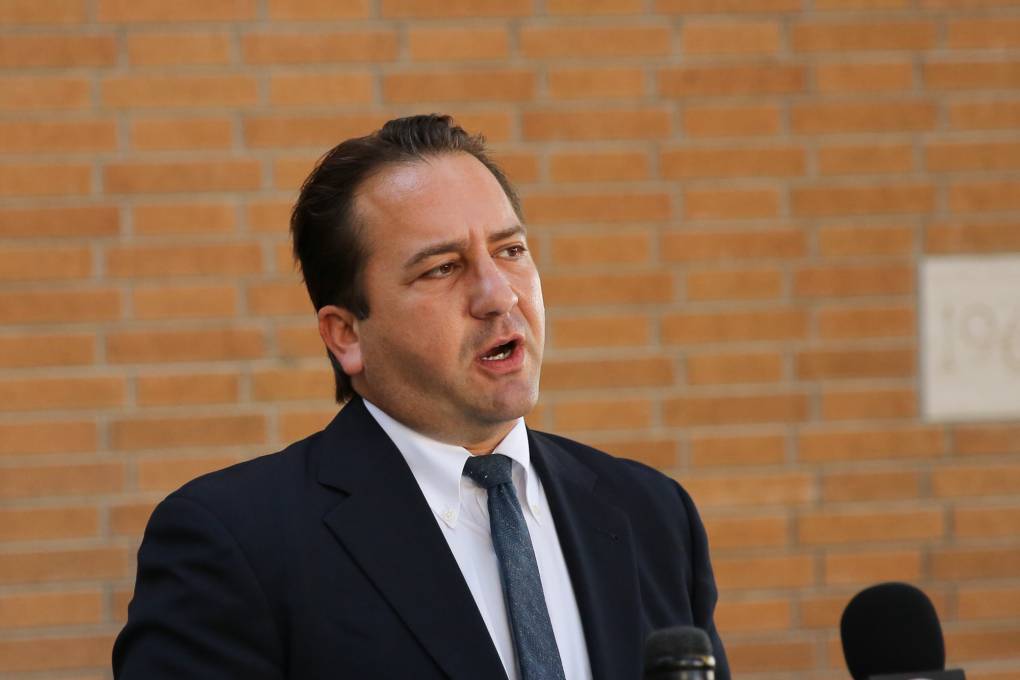
"caption": "Santa Clara County Deputy District Attorney Michael Gilman speaking outside of the Hall of Justice in San José on Wednesday, Sept. 25, 2024. ",
"credit": "Joseph Geha/KQED",
"altTag": null,
"description": null,
"imgSizes": {
"medium": {
"file": "https://cdn.kqed.org/wp-content/uploads/sites/10/2024/09/240925-VTARRAIGN-JG-2-800x533.jpg",
"width": 800,
"height": 533,
"mimeType": "image/jpeg"
},
"large": {
"file": "https://cdn.kqed.org/wp-content/uploads/sites/10/2024/09/240925-VTARRAIGN-JG-2-1020x680.jpg",
"width": 1020,
"height": 680,
"mimeType": "image/jpeg"
},
"thumbnail": {
"file": "https://cdn.kqed.org/wp-content/uploads/sites/10/2024/09/240925-VTARRAIGN-JG-2-160x107.jpg",
"width": 160,
"height": 107,
"mimeType": "image/jpeg"
},
"1536x1536": {
"file": "https://cdn.kqed.org/wp-content/uploads/sites/10/2024/09/240925-VTARRAIGN-JG-2-1536x1024.jpg",
"width": 1536,
"height": 1024,
"mimeType": "image/jpeg"
},
"post-thumbnail": {
"file": "https://cdn.kqed.org/wp-content/uploads/sites/10/2024/09/240925-VTARRAIGN-JG-2-672x372.jpg",
"width": 672,
"height": 372,
"mimeType": "image/jpeg"
},
"twentyfourteen-full-width": {
"file": "https://cdn.kqed.org/wp-content/uploads/sites/10/2024/09/240925-VTARRAIGN-JG-2-1038x576.jpg",
"width": 1038,
"height": 576,
"mimeType": "image/jpeg"
},
"full-width": {
"file": "https://cdn.kqed.org/wp-content/uploads/sites/10/2024/09/240925-VTARRAIGN-JG-2-1920x1280.jpg",
"width": 1920,
"height": 1280,
"mimeType": "image/jpeg"
},
"kqedFullSize": {
"file": "https://cdn.kqed.org/wp-content/uploads/sites/10/2024/09/240925-VTARRAIGN-JG-2.jpg",
"width": 2000,
"height": 1333
}
},
"isLoading": false,
"fetchFailed": false
}
},
"audioPlayerReducer": {
"postId": "stream_live",
"isPaused": true,
"isPlaying": false,
"pfsActive": false,
"pledgeModalIsOpen": true,
"playerDrawerIsOpen": false,
"liveAudioPlayStartedAt": 0,
"liveAudioPlayContext": ""
},
"authorsReducer": {
"byline_news_12010070": {
"type": "authors",
"id": "byline_news_12010070",
"meta": {
"override": true
},
"slug": "byline_news_12010070",
"name": "Tom Krisher, The Associated Press",
"isLoading": false
},
"danbrekke": {
"type": "authors",
"id": "222",
"meta": {
"index": "authors_1716337520",
"id": "222",
"found": true
},
"name": "Dan Brekke",
"firstName": "Dan",
"lastName": "Brekke",
"slug": "danbrekke",
"email": "dbrekke@kqed.org",
"display_author_email": true,
"staff_mastheads": [
"news",
"science"
],
"title": "KQED Editor and Reporter",
"bio": "Dan Brekke is a reporter and editor for KQED News, responsible for coverage of topics ranging from California water issues to the Bay Area's transportation challenges. In a newsroom career that began in Chicago in 1972, Dan has worked for \u003cem>The San Francisco Examiner,\u003c/em> Wired and TechTV and has been published in The New York Times, The New York Times Magazine, Business 2.0, Salon and elsewhere.\r\n\r\nSince joining KQED in 2007, Dan has reported, edited and produced both radio and online features and breaking news pieces. He has shared as both editor and reporter in four Society of Professional Journalists Norcal Excellence in Journalism awards and one Edward R. Murrow regional award. He was chosen for a spring 2017 residency at the Mesa Refuge to advance his research on California salmon.\r\n\r\nEmail Dan at: \u003ca href=\"mailto:dbrekke@kqed.org\">dbrekke@kqed.org\u003c/a>\r\n\r\n\u003cstrong>Twitter:\u003c/strong> \u003ca href=\"https://twitter.com/danbrekke\" rel=\"noopener noreferrer\">twitter.com/danbrekke\u003c/a>\r\n\u003cstrong>Facebook:\u003c/strong> \u003ca href=\"https://www.facebook.com/danbrekke\" rel=\"noopener noreferrer\">www.facebook.com/danbrekke\u003c/a>\r\n\u003cstrong>LinkedIn:\u003c/strong> \u003ca href=\"https://www.linkedin.com/in/danbrekke\" rel=\"noopener noreferrer\">www.linkedin.com/in/danbrekke\u003c/a>",
"avatar": "https://secure.gravatar.com/avatar/c8126230345efca3f7aa89b1a402be45?s=600&d=mm&r=g",
"twitter": "danbrekke",
"facebook": null,
"instagram": "https://www.instagram.com/dan.brekke/",
"linkedin": "https://www.linkedin.com/in/danbrekke/",
"sites": [
{
"site": "news",
"roles": [
"administrator",
"create_posts"
]
},
{
"site": "stateofhealth",
"roles": [
"editor"
]
},
{
"site": "science",
"roles": [
"editor"
]
},
{
"site": "quest",
"roles": [
"contributor"
]
},
{
"site": "food",
"roles": [
"contributor"
]
},
{
"site": "forum",
"roles": [
"contributor"
]
},
{
"site": "liveblog",
"roles": [
"editor"
]
}
],
"headData": {
"title": "Dan Brekke | KQED",
"description": "KQED Editor and Reporter",
"ogImgSrc": "https://secure.gravatar.com/avatar/c8126230345efca3f7aa89b1a402be45?s=600&d=mm&r=g",
"twImgSrc": "https://secure.gravatar.com/avatar/c8126230345efca3f7aa89b1a402be45?s=600&d=mm&r=g"
},
"isLoading": false,
"link": "/author/danbrekke"
},
"ecruzguevarra": {
"type": "authors",
"id": "8654",
"meta": {
"index": "authors_1716337520",
"id": "8654",
"found": true
},
"name": "Ericka Cruz Guevarra",
"firstName": "Ericka",
"lastName": "Cruz Guevarra",
"slug": "ecruzguevarra",
"email": "ecruzguevarra@kqed.org",
"display_author_email": true,
"staff_mastheads": [
"news"
],
"title": "Producer, The Bay Podcast",
"bio": "Ericka Cruz Guevarra is host of \u003ca href=\"https://www.kqed.org/podcasts/thebay\">\u003cem>The Bay\u003c/em>\u003c/a> podcast at KQED. Before host, she was the show’s producer. Her work in that capacity includes a three-part reported series on policing in Vallejo, which won a 2020 excellence in journalism award from the Society of Professional Journalists. Ericka has worked as a breaking news reporter at Oregon Public Broadcasting, helped produce the Code Switch podcast, and was KQED’s inaugural Raul Ramirez Diversity Fund intern. She’s also an alumna of NPR’s Next Generation Radio program. Send her an email if you have strong feelings about whether Fairfield and Suisun City are the Bay. Ericka is represented by SAG-AFTRA.",
"avatar": "https://secure.gravatar.com/avatar/25e5ab8d3d53fad2dcc7bb2b5c506b1a?s=600&d=blank&r=g",
"twitter": "NotoriousECG",
"facebook": null,
"instagram": null,
"linkedin": null,
"sites": [
{
"site": "arts",
"roles": [
"subscriber"
]
},
{
"site": "news",
"roles": [
"editor",
"manage_categories"
]
},
{
"site": "futureofyou",
"roles": [
"subscriber"
]
},
{
"site": "stateofhealth",
"roles": [
"subscriber"
]
},
{
"site": "science",
"roles": [
"editor"
]
},
{
"site": "forum",
"roles": [
"subscriber"
]
}
],
"headData": {
"title": "Ericka Cruz Guevarra | KQED",
"description": "Producer, The Bay Podcast",
"ogImgSrc": "https://secure.gravatar.com/avatar/25e5ab8d3d53fad2dcc7bb2b5c506b1a?s=600&d=blank&r=g",
"twImgSrc": "https://secure.gravatar.com/avatar/25e5ab8d3d53fad2dcc7bb2b5c506b1a?s=600&d=blank&r=g"
},
"isLoading": false,
"link": "/author/ecruzguevarra"
},
"amontecillo": {
"type": "authors",
"id": "11649",
"meta": {
"index": "authors_1716337520",
"id": "11649",
"found": true
},
"name": "Alan Montecillo",
"firstName": "Alan",
"lastName": "Montecillo",
"slug": "amontecillo",
"email": "amontecillo@kqed.org",
"display_author_email": false,
"staff_mastheads": [
"news"
],
"title": "KQED Contributor",
"bio": "Alan Montecillo is the senior editor of \u003cem>\u003ca href=\"http://kqed.org/thebay\">The Bay\u003c/a>, \u003c/em> KQED's local news podcast. Before moving to the Bay Area, he worked as a senior talk show producer for WILL in Champaign-Urbana, Illinois and at Oregon Public Broadcasting in Portland, Oregon. He has won journalism awards from the Society of Professional Journalists Northern California, the Public Media Journalists Association, The Signal Awards, and has also received a regional Edward R. Murrow award. Alan is a Filipino American from Hong Kong and a graduate of Reed College.",
"avatar": "https://secure.gravatar.com/avatar/d5e4e7a76481969ccba76f4e2b5ccabc?s=600&d=blank&r=g",
"twitter": "alanmontecillo",
"facebook": null,
"instagram": null,
"linkedin": null,
"sites": [
{
"site": "",
"roles": [
"editor"
]
},
{
"site": "news",
"roles": [
"editor",
"manage_categories"
]
}
],
"headData": {
"title": "Alan Montecillo | KQED",
"description": "KQED Contributor",
"ogImgSrc": "https://secure.gravatar.com/avatar/d5e4e7a76481969ccba76f4e2b5ccabc?s=600&d=blank&r=g",
"twImgSrc": "https://secure.gravatar.com/avatar/d5e4e7a76481969ccba76f4e2b5ccabc?s=600&d=blank&r=g"
},
"isLoading": false,
"link": "/author/amontecillo"
},
"adahlstromeckman": {
"type": "authors",
"id": "11785",
"meta": {
"index": "authors_1716337520",
"id": "11785",
"found": true
},
"name": "Azul Dahlstrom-Eckman",
"firstName": "Azul",
"lastName": "Dahlstrom-Eckman",
"slug": "adahlstromeckman",
"email": "adahlstrom-eckman@kqed.org",
"display_author_email": true,
"staff_mastheads": [],
"title": "Reporter",
"bio": "Azul is a reporter for KQED focusing on transportation and features. He joined KQED in 2021 as an alumna of KALW's Audio Academy radio journalism training program.",
"avatar": "https://secure.gravatar.com/avatar/9cb750298435add7815a777f55bf1f46845c1386bb8452555c60a7b820b5aba3?s=600&d=blank&r=g",
"twitter": "@zuliemann",
"bluesky": "@azul415.bsky.social",
"facebook": null,
"instagram": null,
"linkedin": null,
"sites": [
{
"site": "arts",
"roles": [
"editor"
]
},
{
"site": "news",
"roles": [
"editor"
]
},
{
"site": "science",
"roles": [
"editor"
]
},
{
"site": "liveblog",
"roles": [
"author"
]
}
],
"headData": {
"title": "Azul Dahlstrom-Eckman | KQED",
"description": "Reporter",
"ogImgSrc": "https://secure.gravatar.com/avatar/9cb750298435add7815a777f55bf1f46845c1386bb8452555c60a7b820b5aba3?s=600&d=blank&r=g",
"twImgSrc": "https://secure.gravatar.com/avatar/9cb750298435add7815a777f55bf1f46845c1386bb8452555c60a7b820b5aba3?s=600&d=blank&r=g"
},
"isLoading": false,
"link": "/author/adahlstromeckman"
},
"jessicakariisa": {
"type": "authors",
"id": "11831",
"meta": {
"index": "authors_1716337520",
"id": "11831",
"found": true
},
"name": "Jessica Kariisa",
"firstName": "Jessica",
"lastName": "Kariisa",
"slug": "jessicakariisa",
"email": "jkariisa@kqed.org",
"display_author_email": false,
"staff_mastheads": [],
"title": "Producer, The Bay",
"bio": "Jessica Kariisa is the producer of The Bay. She first joined KQED as an intern for The California Report Magazine, after which she became an on-call producer. She reported a Bay Curious episode on the use of rap lyrics in criminal trials which won a Society of Professional Journalists award in 2023 for Excellence in Features Journalism and the 2023 Signal Award for Best Conversation Starter. She’s worked on podcasts for Snap Judgment and American Public Media. Before embarking on her audio career, she was a music journalist.\r\n\r\nJessica Kariisa is represented by SAG-AFTRA.",
"avatar": "https://secure.gravatar.com/avatar/522e97b28ac0b3d411621c0fde8f3419c7b71ea2c5c262c57c4bb600963f328c?s=600&d=blank&r=g",
"twitter": null,
"bluesky": null,
"facebook": null,
"instagram": null,
"linkedin": null,
"sites": [
{
"site": "arts",
"roles": [
"author"
]
},
{
"site": "news",
"roles": [
"editor",
"manage_categories"
]
}
],
"headData": {
"title": "Jessica Kariisa | KQED",
"description": "Producer, The Bay",
"ogImgSrc": "https://secure.gravatar.com/avatar/522e97b28ac0b3d411621c0fde8f3419c7b71ea2c5c262c57c4bb600963f328c?s=600&d=blank&r=g",
"twImgSrc": "https://secure.gravatar.com/avatar/522e97b28ac0b3d411621c0fde8f3419c7b71ea2c5c262c57c4bb600963f328c?s=600&d=blank&r=g"
},
"isLoading": false,
"link": "/author/jessicakariisa"
},
"jgeha": {
"type": "authors",
"id": "11906",
"meta": {
"index": "authors_1716337520",
"id": "11906",
"found": true
},
"name": "Joseph Geha",
"firstName": "Joseph",
"lastName": "Geha",
"slug": "jgeha",
"email": "jgeha@kqed.org",
"display_author_email": false,
"staff_mastheads": [
"news",
"science"
],
"title": "KQED Contributor",
"bio": null,
"avatar": "https://secure.gravatar.com/avatar/ea84d2b6dd93d6369d453edf19dd583f117cd1759d2d9c9c92f9de77017354fe?s=600&d=blank&r=g",
"twitter": null,
"bluesky": null,
"facebook": null,
"instagram": null,
"linkedin": null,
"sites": [
{
"site": "news",
"roles": [
"editor"
]
},
{
"site": "liveblog",
"roles": [
"author"
]
}
],
"headData": {
"title": "Joseph Geha | KQED",
"description": "KQED Contributor",
"ogImgSrc": "https://secure.gravatar.com/avatar/ea84d2b6dd93d6369d453edf19dd583f117cd1759d2d9c9c92f9de77017354fe?s=600&d=blank&r=g",
"twImgSrc": "https://secure.gravatar.com/avatar/ea84d2b6dd93d6369d453edf19dd583f117cd1759d2d9c9c92f9de77017354fe?s=600&d=blank&r=g"
},
"isLoading": false,
"link": "/author/jgeha"
},
"kdebenedetti": {
"type": "authors",
"id": "11913",
"meta": {
"index": "authors_1716337520",
"id": "11913",
"found": true
},
"name": "Katie DeBenedetti",
"firstName": "Katie",
"lastName": "DeBenedetti",
"slug": "kdebenedetti",
"email": "kdebenedetti@kqed.org",
"display_author_email": false,
"staff_mastheads": [
"news",
"science"
],
"title": "KQED Contributor",
"bio": "Katie DeBenedetti is a digital reporter covering daily news for the Express Desk. Prior to joining KQED as a culture reporting intern in January 2024, she covered education and city government for the Napa Valley Register.",
"avatar": "https://secure.gravatar.com/avatar/6e31073cb8f7e4214ab03f42771d0f45?s=600&d=blank&r=g",
"twitter": null,
"facebook": null,
"instagram": null,
"linkedin": null,
"sites": [
{
"site": "news",
"roles": [
"author"
]
},
{
"site": "science",
"roles": [
"author"
]
},
{
"site": "liveblog",
"roles": [
"author"
]
}
],
"headData": {
"title": "Katie DeBenedetti | KQED",
"description": "KQED Contributor",
"ogImgSrc": "https://secure.gravatar.com/avatar/6e31073cb8f7e4214ab03f42771d0f45?s=600&d=blank&r=g",
"twImgSrc": "https://secure.gravatar.com/avatar/6e31073cb8f7e4214ab03f42771d0f45?s=600&d=blank&r=g"
},
"isLoading": false,
"link": "/author/kdebenedetti"
},
"slim": {
"type": "authors",
"id": "11920",
"meta": {
"index": "authors_1716337520",
"id": "11920",
"found": true
},
"name": "Samantha Lim",
"firstName": "Samantha",
"lastName": "Lim",
"slug": "slim",
"email": "slim@KQED.org",
"display_author_email": false,
"staff_mastheads": [],
"title": "KQED Contributor",
"bio": null,
"avatar": "https://secure.gravatar.com/avatar/82e592e6c15fe1a04d385e8ad0fb0b4e?s=600&d=blank&r=g",
"twitter": null,
"facebook": null,
"instagram": null,
"linkedin": null,
"sites": [
{
"site": "news",
"roles": []
}
],
"headData": {
"title": "Samantha Lim | KQED",
"description": "KQED Contributor",
"ogImgSrc": "https://secure.gravatar.com/avatar/82e592e6c15fe1a04d385e8ad0fb0b4e?s=600&d=blank&r=g",
"twImgSrc": "https://secure.gravatar.com/avatar/82e592e6c15fe1a04d385e8ad0fb0b4e?s=600&d=blank&r=g"
},
"isLoading": false,
"link": "/author/slim"
},
"emanoukian": {
"type": "authors",
"id": "11925",
"meta": {
"index": "authors_1716337520",
"id": "11925",
"found": true
},
"name": "Elize Manoukian",
"firstName": "Elize",
"lastName": "Manoukian",
"slug": "emanoukian",
"email": "emanoukian@KQED.org",
"display_author_email": false,
"staff_mastheads": [
"news"
],
"title": "Digital Producer",
"bio": null,
"avatar": "https://secure.gravatar.com/avatar/4525f1a8e46ccb30933b32653d9772064cfefe3fa655eb45b3b3a80341f6bdad?s=600&d=blank&r=g",
"twitter": null,
"bluesky": null,
"facebook": null,
"instagram": null,
"linkedin": null,
"sites": [
{
"site": "arts",
"roles": [
"editor"
]
},
{
"site": "news",
"roles": [
"editor"
]
},
{
"site": "science",
"roles": [
"editor"
]
}
],
"headData": {
"title": "Elize Manoukian | KQED",
"description": "Digital Producer",
"ogImgSrc": "https://secure.gravatar.com/avatar/4525f1a8e46ccb30933b32653d9772064cfefe3fa655eb45b3b3a80341f6bdad?s=600&d=blank&r=g",
"twImgSrc": "https://secure.gravatar.com/avatar/4525f1a8e46ccb30933b32653d9772064cfefe3fa655eb45b3b3a80341f6bdad?s=600&d=blank&r=g"
},
"isLoading": false,
"link": "/author/emanoukian"
},
"gzada": {
"type": "authors",
"id": "11929",
"meta": {
"index": "authors_1716337520",
"id": "11929",
"found": true
},
"name": "Gilare Zada",
"firstName": "Gilare",
"lastName": "Zada",
"slug": "gzada",
"email": "gzada@kqed.org",
"display_author_email": true,
"staff_mastheads": [
"news"
],
"title": null,
"bio": "Gilare Zada is a Kurdish-American from San Diego, CA. Storytelling, fitness, and binge reading are some of her passions outside of news reporting. Her work has appeared in Mission Local, the Peninsula Press, the San Francisco Press Club, and more. She also writes as a class correspondent for the Stanford Magazine - go Card!",
"avatar": "https://secure.gravatar.com/avatar/33a75f2b947669a488a805edec3fbf3838c1cedaedda710e983770633b4d6a75?s=600&d=blank&r=g",
"twitter": null,
"bluesky": null,
"facebook": null,
"instagram": null,
"linkedin": null,
"sites": [
{
"site": "arts",
"roles": [
"editor"
]
},
{
"site": "news",
"roles": [
"editor",
"contributor"
]
},
{
"site": "science",
"roles": [
"editor"
]
}
],
"headData": {
"title": "Gilare Zada | KQED",
"description": null,
"ogImgSrc": "https://secure.gravatar.com/avatar/33a75f2b947669a488a805edec3fbf3838c1cedaedda710e983770633b4d6a75?s=600&d=blank&r=g",
"twImgSrc": "https://secure.gravatar.com/avatar/33a75f2b947669a488a805edec3fbf3838c1cedaedda710e983770633b4d6a75?s=600&d=blank&r=g"
},
"isLoading": false,
"link": "/author/gzada"
}
},
"pagesReducer": {
"news_tag_transportation": {
"type": "terms",
"id": "news_20517",
"meta": {
"index": "terms_1716263798",
"site": "news",
"id": "20517",
"score": 8.934682
},
"featImg": null,
"name": "transportation",
"description": null,
"taxonomy": "tag",
"headData": {
"twImgId": null,
"twTitle": null,
"ogTitle": null,
"ogImgId": null,
"twDescription": null,
"description": null,
"title": "transportation Archives | KQED News",
"ogDescription": null
},
"ttid": 20534,
"slug": "transportation",
"isLoading": false,
"title": "transportation",
"pageMeta": {
"site": "news",
"WpPageTemplate": "page-topic-editorial",
"currentPage": 18
},
"blocks": [
{
"blockName": "kqed/post-list",
"attrs": {
"layout": "cardArticle2",
"query": "posts/news?tag=transportation",
"seeMore": false,
"paginated": true,
"page": 18
}
},
{
"blockName": "kqed/ad"
}
]
}
},
"pfsSessionReducer": {},
"postsReducer": {
"stream_live": {
"type": "live",
"id": "stream_live",
"audioUrl": "https://streams.kqed.org/kqedradio",
"title": "Live Stream",
"excerpt": "Live Stream information currently unavailable.",
"link": "/radio",
"featImg": "",
"label": {
"name": "KQED Live",
"link": "/"
}
},
"stream_kqedNewscast": {
"type": "posts",
"id": "stream_kqedNewscast",
"audioUrl": "https://www.kqed.org/.stream/anon/radio/RDnews/newscast.mp3?_=1",
"title": "KQED Newscast",
"featImg": "",
"label": {
"name": "88.5 FM",
"link": "/"
}
},
"news_12016154": {
"type": "posts",
"id": "news_12016154",
"meta": {
"index": "posts_1716263798",
"site": "news",
"id": "12016154",
"score": null,
"sort": [
1732743618000
]
},
"guestAuthors": [],
"slug": "bart-fare-increase-january-second-year-in-a-row",
"title": "BART Fares Will Go Up in January for the 2nd Year in a Row",
"publishDate": 1732743618,
"format": "standard",
"headTitle": "BART Fares Will Go Up in January for the 2nd Year in a Row | KQED",
"labelTerm": {
"site": "news"
},
"content": "\u003cp>\u003ca href=\"https://www.kqed.org/news/tag/bart\">BART\u003c/a> riders’ commutes are about to get more expensive.\u003c/p>\n\u003cp>Fares will increase 5.5% in the new year to keep up with the cost of inflation, the agency announced Wednesday. It said that the price bump is necessary to continue to pay for operations and restore financial stability after multiple years of low ridership.\u003c/p>\n\u003cp>“BART fares remain a vital source of funds even with ridership lower than they were before the pandemic,” board vice president Mark Foley said in a statement.\u003c/p>\n\u003cp>[ad fullwidth]\u003c/p>\n\u003cp>The price change is the second half of an increase passed by BART’s board in June 2023, totaling an 11% bump. The first fare increase took effect in January of this year.\u003c/p>\n\u003cp>The agency said its goal is to help bridge a massive budget deficit looming on the horizon. BART is expected to come up $35 million short in the 2026 fiscal year, a gap that is projected to balloon to nearly $400 million in 2027.\u003c/p>\n\u003cp>Like other transit agencies in the Bay Area, BART is growing desperate for new sources of funding, especially after an ambitious proposal for a new regional tax\u003ca href=\"https://www.kqed.org/news/11988365/a-bill-to-save-bay-area-transit-from-fiscal-disaster-is-dead-at-least-for-now\"> died in the state Legislature\u003c/a> this year amid growing opposition. It says that its reliance on passenger fares is outdated and “no longer feasible because of remote work.”\u003c/p>\n\u003cp>“The agency must modernize its funding sources to better match other transit systems throughout the country that receive larger amounts of public funding,” BART said in a press release.\u003c/p>\n\u003cp>[aside postID=news_12014573 hero='https://cdn.kqed.org/wp-content/uploads/sites/10/2024/11/MUNISF-1020x709.jpg']\u003c/p>\n\u003cp>Next year’s fare increase will raise the cost of an average ride by 25 cents, from $4.47 to $4.72. It’s expected to generate about $14 million annually and about $30 million when combined with the last increase.\u003c/p>\n\u003cp>The agency said it would use the increased revenue to pay for train services, enhance cleaning and add \u003ca href=\"https://www.kqed.org/news/12014817/bay-area-leaders-want-newsom-to-make-bart-safer-but-no-one-agrees-on-how\">additional safety officers\u003c/a> at stops. The money will also help support the implementation of its \u003ca href=\"https://www.kqed.org/news/11997857/barts-new-evasion-resistant-gates-arrive-in-san-francisco-for-the-first-time\">new fare gates\u003c/a>, which make it more difficult for people to evade paying for the train.\u003c/p>\n\u003cp>To offset the burden of higher costs on low-income riders, the BART board also voted last year to increase its \u003ca href=\"https://www.clipperstartcard.com/s/\">Clipper START\u003c/a> means-based discount from 20% to 50%. That program provides reduced fares on several Bay Area transit services.\u003c/p>\n\u003cp>\u003c/p>\n",
"blocks": [],
"excerpt": "The 5.5% fare hike will make the average trip 25 cents more expensive, BART said, as Bay Area transit agencies struggle with budget deficits and low ridership.",
"status": "publish",
"parent": 0,
"modified": 1732745136,
"stats": {
"hasAudio": false,
"hasVideo": false,
"hasChartOrMap": false,
"iframeSrcs": [],
"hasGoogleForm": false,
"hasGallery": false,
"hasHearkenModule": false,
"hasPolis": false,
"paragraphCount": 13,
"wordCount": 403
},
"headData": {
"title": "BART Fares Will Go Up in January for the 2nd Year in a Row | KQED",
"description": "The 5.5% fare hike will make the average trip 25 cents more expensive, BART said, as Bay Area transit agencies struggle with budget deficits and low ridership.",
"ogTitle": "",
"ogDescription": "",
"ogImgId": "",
"twTitle": "",
"twDescription": "",
"twImgId": "",
"schema": {
"@context": "https://schema.org",
"@type": "NewsArticle",
"headline": "BART Fares Will Go Up in January for the 2nd Year in a Row",
"datePublished": "2024-11-27T13:40:18-08:00",
"dateModified": "2024-11-27T14:05:36-08:00",
"image": "https://cdn.kqed.org/wp-content/uploads/2020/02/KQED-OG-Image@1x.png",
"isAccessibleForFree": "True",
"publisher": {
"@type": "NewsMediaOrganization",
"@id": "https://www.kqed.org/#organization",
"name": "KQED",
"logo": "https://cdn.kqed.org/wp-content/uploads/2020/02/KQED-OG-Image@1x.png",
"url": "https://www.kqed.org",
"sameAs": [
"https://www.facebook.com/KQED",
"https://twitter.com/KQED",
"https://www.instagram.com/kqed/",
"https://www.tiktok.com/@kqedofficial",
"https://www.linkedin.com/company/kqed",
"https://www.youtube.com/channel/UCeC0IOo7i1P_61zVUWbJ4nw"
]
}
}
},
"sticky": false,
"nprStoryId": "kqed-12016154",
"excludeFromSiteSearch": "Include",
"articleAge": "0",
"path": "/news/12016154/bart-fare-increase-january-second-year-in-a-row",
"audioTrackLength": null,
"parsedContent": [
{
"type": "contentString",
"content": "\u003cdiv class=\"post-body\">\u003cp>\u003cp>\u003ca href=\"https://www.kqed.org/news/tag/bart\">BART\u003c/a> riders’ commutes are about to get more expensive.\u003c/p>\n\u003cp>Fares will increase 5.5% in the new year to keep up with the cost of inflation, the agency announced Wednesday. It said that the price bump is necessary to continue to pay for operations and restore financial stability after multiple years of low ridership.\u003c/p>\n\u003cp>“BART fares remain a vital source of funds even with ridership lower than they were before the pandemic,” board vice president Mark Foley said in a statement.\u003c/p>\n\u003cp>\u003c/p>\u003c/div>",
"attributes": {
"named": {},
"numeric": []
}
},
{
"type": "component",
"content": "",
"name": "ad",
"attributes": {
"named": {
"label": "fullwidth"
},
"numeric": [
"fullwidth"
]
}
},
{
"type": "contentString",
"content": "\u003cdiv class=\"post-body\">\u003cp>\u003c/p>\n\u003cp>The price change is the second half of an increase passed by BART’s board in June 2023, totaling an 11% bump. The first fare increase took effect in January of this year.\u003c/p>\n\u003cp>The agency said its goal is to help bridge a massive budget deficit looming on the horizon. BART is expected to come up $35 million short in the 2026 fiscal year, a gap that is projected to balloon to nearly $400 million in 2027.\u003c/p>\n\u003cp>Like other transit agencies in the Bay Area, BART is growing desperate for new sources of funding, especially after an ambitious proposal for a new regional tax\u003ca href=\"https://www.kqed.org/news/11988365/a-bill-to-save-bay-area-transit-from-fiscal-disaster-is-dead-at-least-for-now\"> died in the state Legislature\u003c/a> this year amid growing opposition. It says that its reliance on passenger fares is outdated and “no longer feasible because of remote work.”\u003c/p>\n\u003cp>“The agency must modernize its funding sources to better match other transit systems throughout the country that receive larger amounts of public funding,” BART said in a press release.\u003c/p>\n\u003cp>\u003c/p>\u003c/div>",
"attributes": {
"named": {},
"numeric": []
}
},
{
"type": "component",
"content": "",
"name": "aside",
"attributes": {
"named": {
"postid": "news_12014573",
"hero": "https://cdn.kqed.org/wp-content/uploads/sites/10/2024/11/MUNISF-1020x709.jpg",
"label": ""
},
"numeric": []
}
},
{
"type": "contentString",
"content": "\u003cdiv class=\"post-body\">\u003cp>\u003c/p>\n\u003cp>Next year’s fare increase will raise the cost of an average ride by 25 cents, from $4.47 to $4.72. It’s expected to generate about $14 million annually and about $30 million when combined with the last increase.\u003c/p>\n\u003cp>The agency said it would use the increased revenue to pay for train services, enhance cleaning and add \u003ca href=\"https://www.kqed.org/news/12014817/bay-area-leaders-want-newsom-to-make-bart-safer-but-no-one-agrees-on-how\">additional safety officers\u003c/a> at stops. The money will also help support the implementation of its \u003ca href=\"https://www.kqed.org/news/11997857/barts-new-evasion-resistant-gates-arrive-in-san-francisco-for-the-first-time\">new fare gates\u003c/a>, which make it more difficult for people to evade paying for the train.\u003c/p>\n\u003cp>To offset the burden of higher costs on low-income riders, the BART board also voted last year to increase its \u003ca href=\"https://www.clipperstartcard.com/s/\">Clipper START\u003c/a> means-based discount from 20% to 50%. That program provides reduced fares on several Bay Area transit services.\u003c/p>\n\u003cp>\u003c/p>\n\u003c/div>\u003c/p>",
"attributes": {
"named": {},
"numeric": []
}
}
],
"link": "/news/12016154/bart-fare-increase-january-second-year-in-a-row",
"authors": [
"11913"
],
"categories": [
"news_31795",
"news_28250",
"news_8",
"news_1397"
],
"tags": [
"news_269",
"news_31530",
"news_23281",
"news_1764",
"news_1533",
"news_20517"
],
"featImg": "news_12016156",
"label": "news"
},
"news_12015320": {
"type": "posts",
"id": "news_12015320",
"meta": {
"index": "posts_1716263798",
"site": "news",
"id": "12015320",
"score": null,
"sort": [
1732220211000
]
},
"guestAuthors": [],
"slug": "san-francisco-launches-on-demand-shuttle-service-in-bayview-hunters-point",
"title": "San Francisco Launches On-Demand Shuttle Service in Bayview-Hunters Point",
"publishDate": 1732220211,
"format": "standard",
"headTitle": "San Francisco Launches On-Demand Shuttle Service in Bayview-Hunters Point | KQED",
"labelTerm": {
"site": "news"
},
"content": "\u003cp>San Francisco transportation officials on Wednesday announced the launch of an on-demand shuttle service in Bayview-Hunters Point that costs the same as a Muni fare.\u003c/p>\n\u003cp>The Bayview Community Shuttle, which can be accessed through an \u003ca href=\"https://apps.apple.com/in/app/bayview-shuttle/id6695742343?uo=2\">app\u003c/a>, includes a fleet of bright purple and yellow electric vans — some designed specifically for wheelchair accessibility. The service is offering free rides through Dec. 11.\u003c/p>\n\u003cp>\u003ca href=\"https://www.sfmta.com/projects/bayview-community-shuttle\">The grant-funded initiative\u003c/a>, which is set to run until at least 2026, is a response to “years of disinvestment from agencies such as mine,” Jeffrey Tumlin, director of the San Francisco Municipal Transportation Authority, said at Wednesday’s launch event in the Bayview neighborhood.\u003c/p>\n\u003cp>“We are here in repair, and we are here as a result of listening,” added Tumlin, whose agency launched the initiative in partnership with the California Air Resources Board and Via, a transportation software company. \u003cstrong>“\u003c/strong>We worked with the community in order to understand what our community needs and how we can co-design a strategy in order to repair decades of disinvestment in this neighborhood.”\u003c/p>\n\u003cp>Through the app — which has Tagalog, Cantonese and Spanish translation options — users can hail a ride from \u003ca href=\"https://www.sfmta.com/blog/new-community-shuttle-launched-bayview-take-ride\">anywhere in the shuttle service zone\u003c/a>, and be dropped off at any location within that area. The shuttle also travels to several outside locations, including the 24th Street Mission BART Station and Zuckerberg San Francisco General Hospital — both of which can be difficult to access through the limited public transit options available in the neighborhood.\u003c/p>\n\u003cfigure id=\"attachment_12015463\" class=\"wp-caption alignnone\" style=\"max-width: 1146px\">\u003ca href=\"https://cdn.kqed.org/wp-content/uploads/sites/10/2024/11/Photo-2-1.png\">\u003cimg loading=\"lazy\" decoding=\"async\" class=\"size-full wp-image-12015463\" src=\"https://cdn.kqed.org/wp-content/uploads/sites/10/2024/11/Photo-2-1.png\" alt=\"A transportation map showing a shuttle service zone.\" width=\"1146\" height=\"649\" srcset=\"https://cdn.kqed.org/wp-content/uploads/sites/10/2024/11/Photo-2-1.png 1146w, https://cdn.kqed.org/wp-content/uploads/sites/10/2024/11/Photo-2-1-800x453.png 800w, https://cdn.kqed.org/wp-content/uploads/sites/10/2024/11/Photo-2-1-1020x578.png 1020w, https://cdn.kqed.org/wp-content/uploads/sites/10/2024/11/Photo-2-1-160x91.png 160w\" sizes=\"(max-width: 1146px) 100vw, 1146px\">\u003c/a>\u003cfigcaption class=\"wp-caption-text\">The Bayview Shuttle service zone. \u003ccite>(\u003ca href=\"https://www.sfmta.com/blog/new-community-shuttle-launched-bayview-take-ride\">SFMTA\u003c/a>)\u003c/cite>\u003c/figcaption>\u003c/figure>\n\u003cp>“I don’t need to repeat or to tell folks in this community what you already know and what you’ve heard already: That you’ve suffered from years of being burdened by pollution as well as lacking access to clean, safe, affordable transit options,” California Air Resources Board Member Cliff Rechtschaffen said, noting the decades of underinvestment in the historically lower-income community, that’s long been home to many of the city’s Black residents.\u003c/p>\n\u003cp>[ad fullwidth]\u003c/p>\n\u003cp>Marlene Tran, a resident of nearby Visitacion Valley, who has for decades lobbied for more accessible transit options and language interpreters, attended Wednesday’s event to see the new shuttle buses in action.\u003c/p>\n\u003cp>Tran, who relies heavily on Muni, said public transit is a “lifeline” for people like her and urged Muni to focus more on outreach to minority ethnic groups.\u003c/p>\n\u003cp>“Very few call into 311 — and they wonder why,” she said. “It’s because they need more multilingual modes of communication.”\u003c/p>\n\u003cp>[aside label=\"more on Bayview-Hunters Point\" tag=\"bayview-hunters-point\"]The new initiative also aims to create local workforce pathways by recruiting Bayview residents to be shuttle drivers, with the goal of eventually getting Muni jobs, said Supervisor Shamann Walton, who represents the community.\u003c/p>\n\u003cp>“We wanted to make sure that the jobs provided were actually union-wage jobs,” he said. “I’m super excited about what this shuttle is going to do for access and transportation in our community.”\u003c/p>\n\u003cp>Dyanna Volek, a Bayview resident who works at the San Francisco International Airport, said the new program will make her commute far more convenient.\u003c/p>\n\u003cp>\u003cstrong>“\u003c/strong>Being able to access outer points and get to work, and being able to access BART, will be really helpful,” she said. “It’s been really difficult living in the southeast side, and I think this will make it a lot easier.”\u003c/p>\n\u003cp>Volek also said she was optimistic that the shuttle service could revitalize struggling small businesses in her neighborhood by increasing accessibility to the Third Street commercial corridor.\u003c/p>\n\u003cp>While acknowledging the city’s efforts in supporting the project, Volek said the Bayview-Hunters Point community deserved the most credit.\u003c/p>\n\u003cp>“Really, it’s the community who put a lot of input and told the city what they needed and what they wanted — instead of the city telling them what they needed.”\u003c/p>\n\u003cp>\u003c/p>\n\u003cp>\u003cem>Correction: This story originally stated that the shuttle drops off passengers at only six established locations in the neighborhood. Passengers can actually be dropped off anywhere within the shuttle’s service area.\u003c/em>\u003c/p>\n\n",
"blocks": [],
"excerpt": "The Bayview Community Shuttle, a grant-funded initiative aiming to expand affordable transit options in the long-underserved neighborhood, includes a fleet of electric vans that can be hailed through an app. The service, which is free until Dec. 11, will cost the same as a Muni fare.",
"status": "publish",
"parent": 0,
"modified": 1732236450,
"stats": {
"hasAudio": false,
"hasVideo": false,
"hasChartOrMap": false,
"iframeSrcs": [],
"hasGoogleForm": false,
"hasGallery": false,
"hasHearkenModule": false,
"hasPolis": false,
"paragraphCount": 19,
"wordCount": 715
},
"headData": {
"title": "San Francisco Launches On-Demand Shuttle Service in Bayview-Hunters Point | KQED",
"description": "The Bayview Community Shuttle, a grant-funded initiative aiming to expand affordable transit options in the long-underserved neighborhood, includes a fleet of electric vans that can be hailed through an app. The service, which is free until Dec. 11, will cost the same as a Muni fare.",
"ogTitle": "",
"ogDescription": "",
"ogImgId": "",
"twTitle": "",
"twDescription": "",
"twImgId": "",
"schema": {
"@context": "https://schema.org",
"@type": "NewsArticle",
"headline": "San Francisco Launches On-Demand Shuttle Service in Bayview-Hunters Point",
"datePublished": "2024-11-21T12:16:51-08:00",
"dateModified": "2024-11-21T16:47:30-08:00",
"image": "https://cdn.kqed.org/wp-content/uploads/2020/02/KQED-OG-Image@1x.png",
"isAccessibleForFree": "True",
"publisher": {
"@type": "NewsMediaOrganization",
"@id": "https://www.kqed.org/#organization",
"name": "KQED",
"logo": "https://cdn.kqed.org/wp-content/uploads/2020/02/KQED-OG-Image@1x.png",
"url": "https://www.kqed.org",
"sameAs": [
"https://www.facebook.com/KQED",
"https://twitter.com/KQED",
"https://www.instagram.com/kqed/",
"https://www.tiktok.com/@kqedofficial",
"https://www.linkedin.com/company/kqed",
"https://www.youtube.com/channel/UCeC0IOo7i1P_61zVUWbJ4nw"
]
}
}
},
"audioUrl": "https://traffic.omny.fm/d/clips/0af137ef-751e-4b19-a055-aaef00d2d578/ffca7e9f-6831-41c5-bcaf-aaef00f5a073/defeea3c-6663-4039-bda0-b22f0151b7ca/audio.mp3?accessToken=eyJhbGciOiJIUzI1NiIsImtpZCI6IjlzYTZ6N20wdUVtT0VhcnZBUGdxVHciLCJ0eXAiOiJKV1QifQ.eyJjbGlwIjoiZGVmZWVhM2MtNjY2My00MDM5LWJkYTAtYjIyZjAxNTFiN2NhIiwiYWRzIjowfQ.jFKQV1AbEx-AnADEZ1A4J8O3ttm-GpsG1h9ThU5Qqzk",
"sticky": false,
"nprStoryId": "kqed-12015320",
"excludeFromSiteSearch": "Include",
"articleAge": "0",
"path": "/news/12015320/san-francisco-launches-on-demand-shuttle-service-in-bayview-hunters-point",
"audioTrackLength": null,
"parsedContent": [
{
"type": "contentString",
"content": "\u003cdiv class=\"post-body\">\u003cp>\u003cp>San Francisco transportation officials on Wednesday announced the launch of an on-demand shuttle service in Bayview-Hunters Point that costs the same as a Muni fare.\u003c/p>\n\u003cp>The Bayview Community Shuttle, which can be accessed through an \u003ca href=\"https://apps.apple.com/in/app/bayview-shuttle/id6695742343?uo=2\">app\u003c/a>, includes a fleet of bright purple and yellow electric vans — some designed specifically for wheelchair accessibility. The service is offering free rides through Dec. 11.\u003c/p>\n\u003cp>\u003ca href=\"https://www.sfmta.com/projects/bayview-community-shuttle\">The grant-funded initiative\u003c/a>, which is set to run until at least 2026, is a response to “years of disinvestment from agencies such as mine,” Jeffrey Tumlin, director of the San Francisco Municipal Transportation Authority, said at Wednesday’s launch event in the Bayview neighborhood.\u003c/p>\n\u003cp>“We are here in repair, and we are here as a result of listening,” added Tumlin, whose agency launched the initiative in partnership with the California Air Resources Board and Via, a transportation software company. \u003cstrong>“\u003c/strong>We worked with the community in order to understand what our community needs and how we can co-design a strategy in order to repair decades of disinvestment in this neighborhood.”\u003c/p>\n\u003cp>Through the app — which has Tagalog, Cantonese and Spanish translation options — users can hail a ride from \u003ca href=\"https://www.sfmta.com/blog/new-community-shuttle-launched-bayview-take-ride\">anywhere in the shuttle service zone\u003c/a>, and be dropped off at any location within that area. The shuttle also travels to several outside locations, including the 24th Street Mission BART Station and Zuckerberg San Francisco General Hospital — both of which can be difficult to access through the limited public transit options available in the neighborhood.\u003c/p>\n\u003cfigure id=\"attachment_12015463\" class=\"wp-caption alignnone\" style=\"max-width: 1146px\">\u003ca href=\"https://cdn.kqed.org/wp-content/uploads/sites/10/2024/11/Photo-2-1.png\">\u003cimg loading=\"lazy\" decoding=\"async\" class=\"size-full wp-image-12015463\" src=\"https://cdn.kqed.org/wp-content/uploads/sites/10/2024/11/Photo-2-1.png\" alt=\"A transportation map showing a shuttle service zone.\" width=\"1146\" height=\"649\" srcset=\"https://cdn.kqed.org/wp-content/uploads/sites/10/2024/11/Photo-2-1.png 1146w, https://cdn.kqed.org/wp-content/uploads/sites/10/2024/11/Photo-2-1-800x453.png 800w, https://cdn.kqed.org/wp-content/uploads/sites/10/2024/11/Photo-2-1-1020x578.png 1020w, https://cdn.kqed.org/wp-content/uploads/sites/10/2024/11/Photo-2-1-160x91.png 160w\" sizes=\"(max-width: 1146px) 100vw, 1146px\">\u003c/a>\u003cfigcaption class=\"wp-caption-text\">The Bayview Shuttle service zone. \u003ccite>(\u003ca href=\"https://www.sfmta.com/blog/new-community-shuttle-launched-bayview-take-ride\">SFMTA\u003c/a>)\u003c/cite>\u003c/figcaption>\u003c/figure>\n\u003cp>“I don’t need to repeat or to tell folks in this community what you already know and what you’ve heard already: That you’ve suffered from years of being burdened by pollution as well as lacking access to clean, safe, affordable transit options,” California Air Resources Board Member Cliff Rechtschaffen said, noting the decades of underinvestment in the historically lower-income community, that’s long been home to many of the city’s Black residents.\u003c/p>\n\u003cp>\u003c/p>\u003c/div>",
"attributes": {
"named": {},
"numeric": []
}
},
{
"type": "component",
"content": "",
"name": "ad",
"attributes": {
"named": {
"label": "fullwidth"
},
"numeric": [
"fullwidth"
]
}
},
{
"type": "contentString",
"content": "\u003cdiv class=\"post-body\">\u003cp>\u003c/p>\n\u003cp>Marlene Tran, a resident of nearby Visitacion Valley, who has for decades lobbied for more accessible transit options and language interpreters, attended Wednesday’s event to see the new shuttle buses in action.\u003c/p>\n\u003cp>Tran, who relies heavily on Muni, said public transit is a “lifeline” for people like her and urged Muni to focus more on outreach to minority ethnic groups.\u003c/p>\n\u003cp>“Very few call into 311 — and they wonder why,” she said. “It’s because they need more multilingual modes of communication.”\u003c/p>\n\u003cp>\u003c/p>\u003c/div>",
"attributes": {
"named": {},
"numeric": []
}
},
{
"type": "component",
"content": "",
"name": "aside",
"attributes": {
"named": {
"label": "more on Bayview-Hunters Point ",
"tag": "bayview-hunters-point"
},
"numeric": []
}
},
{
"type": "contentString",
"content": "\u003cdiv class=\"post-body\">\u003cp>The new initiative also aims to create local workforce pathways by recruiting Bayview residents to be shuttle drivers, with the goal of eventually getting Muni jobs, said Supervisor Shamann Walton, who represents the community.\u003c/p>\n\u003cp>“We wanted to make sure that the jobs provided were actually union-wage jobs,” he said. “I’m super excited about what this shuttle is going to do for access and transportation in our community.”\u003c/p>\n\u003cp>Dyanna Volek, a Bayview resident who works at the San Francisco International Airport, said the new program will make her commute far more convenient.\u003c/p>\n\u003cp>\u003cstrong>“\u003c/strong>Being able to access outer points and get to work, and being able to access BART, will be really helpful,” she said. “It’s been really difficult living in the southeast side, and I think this will make it a lot easier.”\u003c/p>\n\u003cp>Volek also said she was optimistic that the shuttle service could revitalize struggling small businesses in her neighborhood by increasing accessibility to the Third Street commercial corridor.\u003c/p>\n\u003cp>While acknowledging the city’s efforts in supporting the project, Volek said the Bayview-Hunters Point community deserved the most credit.\u003c/p>\n\u003cp>“Really, it’s the community who put a lot of input and told the city what they needed and what they wanted — instead of the city telling them what they needed.”\u003c/p>\n\u003cp>\u003c/p>\n\u003cp>\u003cem>Correction: This story originally stated that the shuttle drops off passengers at only six established locations in the neighborhood. Passengers can actually be dropped off anywhere within the shuttle’s service area.\u003c/em>\u003c/p>\n\n\u003c/div>\u003c/p>",
"attributes": {
"named": {},
"numeric": []
}
}
],
"link": "/news/12015320/san-francisco-launches-on-demand-shuttle-service-in-bayview-hunters-point",
"authors": [
"11929"
],
"categories": [
"news_8",
"news_1397"
],
"tags": [
"news_5706",
"news_1700",
"news_320",
"news_38",
"news_2684",
"news_20517"
],
"featImg": "news_12015328",
"label": "news"
},
"news_12014765": {
"type": "posts",
"id": "news_12014765",
"meta": {
"index": "posts_1716263798",
"site": "news",
"id": "12014765",
"score": null,
"sort": [
1732104058000
]
},
"guestAuthors": [],
"slug": "sfs-controversial-valencia-street-center-bike-lane-poised-for-redesign",
"title": "SF’s Controversial Valencia Street Center Bike Lane Will Be Removed",
"publishDate": 1732104058,
"format": "standard",
"headTitle": "SF’s Controversial Valencia Street Center Bike Lane Will Be Removed | KQED",
"labelTerm": {
"site": "news"
},
"content": "\u003cp>\u003cem>Updated at 4 a.m. Nov. 20\u003c/em>\u003c/p>\n\u003cp>The center-running bike lane pilot on San Francisco’s \u003ca href=\"https://www.kqed.org/news/tag/valencia-street\">Valencia Street\u003c/a> reached the end of the road, as the city’s Municipal Transportation Agency board voted unanimously to replace it with a side-running protected bike lane.\u003c/p>\n\u003cp>The Tuesday evening vote sets in motion \u003ca href=\"https://www.kqed.org/news/12005173/the-future-of-san-franciscos-valencia-street-and-what-oaklands-telegraph-ave-tells-us-about-it\">another round of dramatic changes\u003c/a> for one of San Francisco’s most popular corridors — a major bicycle route and a hub for nightlife dense with independent restaurants and businesses.\u003c/p>\n\u003cp>While the center bike lane, which rolled out last year, drew criticism from merchants as well as some cyclists, many of the dozens of San Franciscans who showed up for public comment at Tuesday’s meeting tried to persuade the board to keep it.\u003c/p>\n\u003cp>“I noticed that the moment I turned onto the Valencia Street center bike lane, the intensity of biking through city traffic subsided and I was able to ride with peace and safety, even calmly bringing my friends and loved ones along without worry,” Dylan Harris said.\u003c/p>\n\u003cp>[ad fullwidth]\u003c/p>\n\u003cp>Others commenters implored the SFMTA Board to make the change.\u003c/p>\n\u003cp>“The center lane brings cyclists through the neighborhood past small businesses, whereas protected side lanes mean it’s easy to see a small business and stop,” said Zach Lipton, a volunteer with the neighborhood group Friends of Valencia.\u003c/p>\n\u003cp>The side-running design calls for a bike lane that mostly runs alongside the sidewalk, with parking spots for cars placed farther out towards the street. This is what’s known as a “protected” bike lane, because parked cars separate people moving down the bike lane from traffic.\u003c/p>\n\u003cp>When the bike lane encounters one of the 21 curbside parklets located on the 8-block section between 15th and 23rd streets, it will \u003ca href=\"https://www.kqed.org/news/12003826/sfs-new-valencia-street-bike-lane-will-have-to-go-around-and-between-parklets\">curve around those parklets\u003c/a>, something SFMTA staff describe as “slaloming.” Three additional parklets will be “floated” away from the sidewalk, allowing the bike lane to continue in a straight line, but forcing people entering and exiting those parklets to cross the bike lane.\u003c/p>\n\u003cp>Left turns will continue to be banned on the section of Valencia under this plan, which also proposes a new prohibition on making a right turn at a red light, and adding posts and speed bumps around the edges of intersections to help protect pedestrians.\u003c/p>\n\u003cp>Despite the decision to scrap it, SFMTA maintains that the \u003ca href=\"https://westernite.org/western-district-awards/transportation-project-of-the-year/\">award-winning pilot\u003c/a> achieved its goals. A newly released 12-month evaluation of the pilot shows a reduction in vehicles double parking in the bike lane and a downward trend in traffic collisions, although the agency said collisions “are not drastically lower than pre-implementation conditions.” However, daily vehicle volume is down 14% from before the pilot, and pedestrian volume is down 8%.\u003c/p>\n\u003cfigure id=\"attachment_12001833\" class=\"wp-caption aligncenter\" style=\"max-width: 2000px\">\u003cimg loading=\"lazy\" decoding=\"async\" class=\"size-full wp-image-12001833\" src=\"https://cdn.kqed.org/wp-content/uploads/sites/10/2024/08/240823-VALENCIATELEGRAPHBIKELANES-11-BL-KQED.jpg\" alt=\"\" width=\"2000\" height=\"1333\" srcset=\"https://cdn.kqed.org/wp-content/uploads/sites/10/2024/08/240823-VALENCIATELEGRAPHBIKELANES-11-BL-KQED.jpg 2000w, https://cdn.kqed.org/wp-content/uploads/sites/10/2024/08/240823-VALENCIATELEGRAPHBIKELANES-11-BL-KQED-800x533.jpg 800w, https://cdn.kqed.org/wp-content/uploads/sites/10/2024/08/240823-VALENCIATELEGRAPHBIKELANES-11-BL-KQED-1020x680.jpg 1020w, https://cdn.kqed.org/wp-content/uploads/sites/10/2024/08/240823-VALENCIATELEGRAPHBIKELANES-11-BL-KQED-160x107.jpg 160w, https://cdn.kqed.org/wp-content/uploads/sites/10/2024/08/240823-VALENCIATELEGRAPHBIKELANES-11-BL-KQED-1536x1024.jpg 1536w, https://cdn.kqed.org/wp-content/uploads/sites/10/2024/08/240823-VALENCIATELEGRAPHBIKELANES-11-BL-KQED-1920x1280.jpg 1920w\" sizes=\"(max-width: 2000px) 100vw, 2000px\">\u003cfigcaption class=\"wp-caption-text\">Bicyclists ride on the Valencia Street center bike lane in San Francisco’s Mission District on Aug. 23, 2024. \u003ccite>(Beth LaBerge/KQED)\u003c/cite>\u003c/figcaption>\u003c/figure>\n\u003cp>Steve Heminger, an SFMTA board member, asked SFMTA’s Paul Stanis why staff was recommending the change when data indicated that the project was achieving its goals.\u003c/p>\n\u003cp>“Data tells one side of the story. There’s this whole non-data component, and that’s how people experience the street,” said Stanis, who gave examples of how the current design can cause backups when cars double park, or be startling to cyclists when cars illegally enter the center-running lane. “That doesn’t necessarily show up in any of our evaluation data.”\u003c/p>\n\u003cp>Last week, the Valencia Corridor Merchants Association said in a press release that it believes that the side-running bike lane could be an improvement, but the group found the new design equally problematic and said it could not endorse it.\u003c/p>\n\u003cp>“Our concerns are that all left-hand turns are still eliminated, nearly half of parking/loading spaces will be lost making it difficult and frustrating for customers to park, and pedestrians, deliveries, and cyclists will collide with each other in the lane,” reads the press release. “Inconsistency in how the SFMTA has treated Parklets and Shared Spaces not only reduces customer parking, but makes the experience unpredictable and confusing.”\u003c/p>\n\u003cp>SFMTA says the side-running design will remove 37% of the parking spaces in the current road design. That’s on top of 71 metered parking spots that were lost when \u003ca href=\"https://www.kqed.org/news/11962992/cyclists-and-businesses-reflect-on-2-months-with-the-valencia-street-bikeway\">the center-running design was installed\u003c/a>.\u003c/p>\n\u003cp>The San Francisco Bicycle Coalition supported the SFMTA’s move to begin designing a side-running protected bike lane in June, but wrote in a \u003ca href=\"https://sfbike.org/news/new-design-on-valencia-forces-compromise-for-everyone/?j=4723956&sfmc_sub=164117404&l=502_HTML&u=147234977&mid=7208971&jb=8004\">blog post\u003c/a> last week that it has “serious concerns” about SFMTA’s plans to have three floating parklets in the new design.\u003c/p>\n\u003cp>“Floating parklets introduce potentially dangerous conflicts between people biking and staff and customers who use the parklets. The mix of curbside and floating parklets is unpredictable and confusing, making the design less safe for everyone,” said SF Bicycle Coalition advocacy director Claire Amable at the meeting.\u003c/p>\n\u003cp>Floating parklets exist on a section of Telegraph Avenue in Oakland’s Temescal neighborhood, something SFMTA staff say they have \u003ca href=\"https://www.kqed.org/news/12003826/sfs-new-valencia-street-bike-lane-will-have-to-go-around-and-between-parklets\">studied\u003c/a> and point to as an example of success with floating parklets.[aside postID=news_12005173 hero='https://cdn.kqed.org/wp-content/uploads/sites/10/2024/08/240823-VALENCIATELEGRAPHBIKELANES-14-BL-KQED.jpg']\u003c/p>\n\u003cp>In August 2023, SFMTA began the Mid-Valencia pilot, which moved the traditional bike lane that ran alongside parked cars on either side of the street and placed it in the center of the road. The pilot also prohibited vehicles from making left and U-turns.\u003c/p>\n\u003cp>At the time, SFMTA leaders said the changes were meant to improve traffic safety on the corridor, improve access for businesses and promote the free movement of people and goods.\u003c/p>\n\u003cp>The bike lane split both the road and the community in two. Almost immediately, merchant groups on the street blamed the lane for a drop in sales, and some cyclists said the design was unsafe and unintuitive.\u003c/p>\n\u003cp>Unlike the center-running bike lane pilot, the side-running lane will be a permanent installation, with estimated costs of just over $1.2 million for design and construction. That doesn’t include an additional $900,000 that a staff report says is necessary to fund repaving of the center of the roadway, planters, landscaping and parklet reimbursement assistance for merchants, for which funding has not been identified.\u003c/p>\n\u003cp>Construction could begin as soon as January.\u003c/p>\n\u003cp>SFMTA Board Vice Chair Stephanie Cajina framed the center-running bike lane as an “experiment” and “learning moment” for the agency.\u003c/p>\n\u003cp>“We have to be very careful about experimenting in commercial corridors, specifically, and that requires a certain level of care that perhaps we did not perceive when we initially approved this particular item,” Cajina said.\u003c/p>\n\u003cp>Citing positive SFMTA data about the impacts of the project, and the positive public comment at the meeting, Cajina told SFMTA staff she hoped they would feel a “sense of agency” to implement another center-running bike lane on another corridor in the city in the future.\u003c/p>\n\u003cp>[ad floatright]\u003c/p>\n",
"blocks": [],
"excerpt": "The San Francisco pilot program will be removed after transit officials voted to replace it with a side-running bike lane. Construction could begin as soon as January.",
"status": "publish",
"parent": 0,
"modified": 1732076969,
"stats": {
"hasAudio": false,
"hasVideo": false,
"hasChartOrMap": false,
"iframeSrcs": [],
"hasGoogleForm": false,
"hasGallery": false,
"hasHearkenModule": false,
"hasPolis": false,
"paragraphCount": 29,
"wordCount": 1202
},
"headData": {
"title": "SF’s Controversial Valencia Street Center Bike Lane Will Be Removed | KQED",
"description": "The San Francisco pilot program will be removed after transit officials voted to replace it with a side-running bike lane. Construction could begin as soon as January.",
"ogTitle": "",
"ogDescription": "",
"ogImgId": "",
"twTitle": "",
"twDescription": "",
"twImgId": "",
"schema": {
"@context": "https://schema.org",
"@type": "NewsArticle",
"headline": "SF’s Controversial Valencia Street Center Bike Lane Will Be Removed",
"datePublished": "2024-11-20T04:00:58-08:00",
"dateModified": "2024-11-19T20:29:29-08:00",
"image": "https://cdn.kqed.org/wp-content/uploads/2020/02/KQED-OG-Image@1x.png",
"isAccessibleForFree": "True",
"publisher": {
"@type": "NewsMediaOrganization",
"@id": "https://www.kqed.org/#organization",
"name": "KQED",
"logo": "https://cdn.kqed.org/wp-content/uploads/2020/02/KQED-OG-Image@1x.png",
"url": "https://www.kqed.org",
"sameAs": [
"https://www.facebook.com/KQED",
"https://twitter.com/KQED",
"https://www.instagram.com/kqed/",
"https://www.tiktok.com/@kqedofficial",
"https://www.linkedin.com/company/kqed",
"https://www.youtube.com/channel/UCeC0IOo7i1P_61zVUWbJ4nw"
]
}
}
},
"sticky": false,
"nprStoryId": "kqed-12014765",
"excludeFromSiteSearch": "Include",
"articleAge": "0",
"path": "/news/12014765/sfs-controversial-valencia-street-center-bike-lane-poised-for-redesign",
"audioTrackLength": null,
"parsedContent": [
{
"type": "contentString",
"content": "\u003cdiv class=\"post-body\">\u003cp>\u003cp>\u003cem>Updated at 4 a.m. Nov. 20\u003c/em>\u003c/p>\n\u003cp>The center-running bike lane pilot on San Francisco’s \u003ca href=\"https://www.kqed.org/news/tag/valencia-street\">Valencia Street\u003c/a> reached the end of the road, as the city’s Municipal Transportation Agency board voted unanimously to replace it with a side-running protected bike lane.\u003c/p>\n\u003cp>The Tuesday evening vote sets in motion \u003ca href=\"https://www.kqed.org/news/12005173/the-future-of-san-franciscos-valencia-street-and-what-oaklands-telegraph-ave-tells-us-about-it\">another round of dramatic changes\u003c/a> for one of San Francisco’s most popular corridors — a major bicycle route and a hub for nightlife dense with independent restaurants and businesses.\u003c/p>\n\u003cp>While the center bike lane, which rolled out last year, drew criticism from merchants as well as some cyclists, many of the dozens of San Franciscans who showed up for public comment at Tuesday’s meeting tried to persuade the board to keep it.\u003c/p>\n\u003cp>“I noticed that the moment I turned onto the Valencia Street center bike lane, the intensity of biking through city traffic subsided and I was able to ride with peace and safety, even calmly bringing my friends and loved ones along without worry,” Dylan Harris said.\u003c/p>\n\u003cp>\u003c/p>\u003c/div>",
"attributes": {
"named": {},
"numeric": []
}
},
{
"type": "component",
"content": "",
"name": "ad",
"attributes": {
"named": {
"label": "fullwidth"
},
"numeric": [
"fullwidth"
]
}
},
{
"type": "contentString",
"content": "\u003cdiv class=\"post-body\">\u003cp>\u003c/p>\n\u003cp>Others commenters implored the SFMTA Board to make the change.\u003c/p>\n\u003cp>“The center lane brings cyclists through the neighborhood past small businesses, whereas protected side lanes mean it’s easy to see a small business and stop,” said Zach Lipton, a volunteer with the neighborhood group Friends of Valencia.\u003c/p>\n\u003cp>The side-running design calls for a bike lane that mostly runs alongside the sidewalk, with parking spots for cars placed farther out towards the street. This is what’s known as a “protected” bike lane, because parked cars separate people moving down the bike lane from traffic.\u003c/p>\n\u003cp>When the bike lane encounters one of the 21 curbside parklets located on the 8-block section between 15th and 23rd streets, it will \u003ca href=\"https://www.kqed.org/news/12003826/sfs-new-valencia-street-bike-lane-will-have-to-go-around-and-between-parklets\">curve around those parklets\u003c/a>, something SFMTA staff describe as “slaloming.” Three additional parklets will be “floated” away from the sidewalk, allowing the bike lane to continue in a straight line, but forcing people entering and exiting those parklets to cross the bike lane.\u003c/p>\n\u003cp>Left turns will continue to be banned on the section of Valencia under this plan, which also proposes a new prohibition on making a right turn at a red light, and adding posts and speed bumps around the edges of intersections to help protect pedestrians.\u003c/p>\n\u003cp>Despite the decision to scrap it, SFMTA maintains that the \u003ca href=\"https://westernite.org/western-district-awards/transportation-project-of-the-year/\">award-winning pilot\u003c/a> achieved its goals. A newly released 12-month evaluation of the pilot shows a reduction in vehicles double parking in the bike lane and a downward trend in traffic collisions, although the agency said collisions “are not drastically lower than pre-implementation conditions.” However, daily vehicle volume is down 14% from before the pilot, and pedestrian volume is down 8%.\u003c/p>\n\u003cfigure id=\"attachment_12001833\" class=\"wp-caption aligncenter\" style=\"max-width: 2000px\">\u003cimg loading=\"lazy\" decoding=\"async\" class=\"size-full wp-image-12001833\" src=\"https://cdn.kqed.org/wp-content/uploads/sites/10/2024/08/240823-VALENCIATELEGRAPHBIKELANES-11-BL-KQED.jpg\" alt=\"\" width=\"2000\" height=\"1333\" srcset=\"https://cdn.kqed.org/wp-content/uploads/sites/10/2024/08/240823-VALENCIATELEGRAPHBIKELANES-11-BL-KQED.jpg 2000w, https://cdn.kqed.org/wp-content/uploads/sites/10/2024/08/240823-VALENCIATELEGRAPHBIKELANES-11-BL-KQED-800x533.jpg 800w, https://cdn.kqed.org/wp-content/uploads/sites/10/2024/08/240823-VALENCIATELEGRAPHBIKELANES-11-BL-KQED-1020x680.jpg 1020w, https://cdn.kqed.org/wp-content/uploads/sites/10/2024/08/240823-VALENCIATELEGRAPHBIKELANES-11-BL-KQED-160x107.jpg 160w, https://cdn.kqed.org/wp-content/uploads/sites/10/2024/08/240823-VALENCIATELEGRAPHBIKELANES-11-BL-KQED-1536x1024.jpg 1536w, https://cdn.kqed.org/wp-content/uploads/sites/10/2024/08/240823-VALENCIATELEGRAPHBIKELANES-11-BL-KQED-1920x1280.jpg 1920w\" sizes=\"(max-width: 2000px) 100vw, 2000px\">\u003cfigcaption class=\"wp-caption-text\">Bicyclists ride on the Valencia Street center bike lane in San Francisco’s Mission District on Aug. 23, 2024. \u003ccite>(Beth LaBerge/KQED)\u003c/cite>\u003c/figcaption>\u003c/figure>\n\u003cp>Steve Heminger, an SFMTA board member, asked SFMTA’s Paul Stanis why staff was recommending the change when data indicated that the project was achieving its goals.\u003c/p>\n\u003cp>“Data tells one side of the story. There’s this whole non-data component, and that’s how people experience the street,” said Stanis, who gave examples of how the current design can cause backups when cars double park, or be startling to cyclists when cars illegally enter the center-running lane. “That doesn’t necessarily show up in any of our evaluation data.”\u003c/p>\n\u003cp>Last week, the Valencia Corridor Merchants Association said in a press release that it believes that the side-running bike lane could be an improvement, but the group found the new design equally problematic and said it could not endorse it.\u003c/p>\n\u003cp>“Our concerns are that all left-hand turns are still eliminated, nearly half of parking/loading spaces will be lost making it difficult and frustrating for customers to park, and pedestrians, deliveries, and cyclists will collide with each other in the lane,” reads the press release. “Inconsistency in how the SFMTA has treated Parklets and Shared Spaces not only reduces customer parking, but makes the experience unpredictable and confusing.”\u003c/p>\n\u003cp>SFMTA says the side-running design will remove 37% of the parking spaces in the current road design. That’s on top of 71 metered parking spots that were lost when \u003ca href=\"https://www.kqed.org/news/11962992/cyclists-and-businesses-reflect-on-2-months-with-the-valencia-street-bikeway\">the center-running design was installed\u003c/a>.\u003c/p>\n\u003cp>The San Francisco Bicycle Coalition supported the SFMTA’s move to begin designing a side-running protected bike lane in June, but wrote in a \u003ca href=\"https://sfbike.org/news/new-design-on-valencia-forces-compromise-for-everyone/?j=4723956&sfmc_sub=164117404&l=502_HTML&u=147234977&mid=7208971&jb=8004\">blog post\u003c/a> last week that it has “serious concerns” about SFMTA’s plans to have three floating parklets in the new design.\u003c/p>\n\u003cp>“Floating parklets introduce potentially dangerous conflicts between people biking and staff and customers who use the parklets. The mix of curbside and floating parklets is unpredictable and confusing, making the design less safe for everyone,” said SF Bicycle Coalition advocacy director Claire Amable at the meeting.\u003c/p>\n\u003cp>Floating parklets exist on a section of Telegraph Avenue in Oakland’s Temescal neighborhood, something SFMTA staff say they have \u003ca href=\"https://www.kqed.org/news/12003826/sfs-new-valencia-street-bike-lane-will-have-to-go-around-and-between-parklets\">studied\u003c/a> and point to as an example of success with floating parklets.\u003c/p>\u003c/div>",
"attributes": {
"named": {},
"numeric": []
}
},
{
"type": "component",
"content": "",
"name": "aside",
"attributes": {
"named": {
"postid": "news_12005173",
"hero": "https://cdn.kqed.org/wp-content/uploads/sites/10/2024/08/240823-VALENCIATELEGRAPHBIKELANES-14-BL-KQED.jpg",
"label": ""
},
"numeric": []
}
},
{
"type": "contentString",
"content": "\u003cdiv class=\"post-body\">\u003cp>\u003c/p>\n\u003cp>In August 2023, SFMTA began the Mid-Valencia pilot, which moved the traditional bike lane that ran alongside parked cars on either side of the street and placed it in the center of the road. The pilot also prohibited vehicles from making left and U-turns.\u003c/p>\n\u003cp>At the time, SFMTA leaders said the changes were meant to improve traffic safety on the corridor, improve access for businesses and promote the free movement of people and goods.\u003c/p>\n\u003cp>The bike lane split both the road and the community in two. Almost immediately, merchant groups on the street blamed the lane for a drop in sales, and some cyclists said the design was unsafe and unintuitive.\u003c/p>\n\u003cp>Unlike the center-running bike lane pilot, the side-running lane will be a permanent installation, with estimated costs of just over $1.2 million for design and construction. That doesn’t include an additional $900,000 that a staff report says is necessary to fund repaving of the center of the roadway, planters, landscaping and parklet reimbursement assistance for merchants, for which funding has not been identified.\u003c/p>\n\u003cp>Construction could begin as soon as January.\u003c/p>\n\u003cp>SFMTA Board Vice Chair Stephanie Cajina framed the center-running bike lane as an “experiment” and “learning moment” for the agency.\u003c/p>\n\u003cp>“We have to be very careful about experimenting in commercial corridors, specifically, and that requires a certain level of care that perhaps we did not perceive when we initially approved this particular item,” Cajina said.\u003c/p>\n\u003cp>Citing positive SFMTA data about the impacts of the project, and the positive public comment at the meeting, Cajina told SFMTA staff she hoped they would feel a “sense of agency” to implement another center-running bike lane on another corridor in the city in the future.\u003c/p>\n\u003cp>\u003c/p>\u003c/div>",
"attributes": {
"named": {},
"numeric": []
}
},
{
"type": "component",
"content": "",
"name": "ad",
"attributes": {
"named": {
"label": "floatright"
},
"numeric": [
"floatright"
]
}
},
{
"type": "contentString",
"content": "\u003cdiv class=\"post-body\">\u003cp>\u003c/p>\n\u003c/div>\u003c/p>",
"attributes": {
"named": {},
"numeric": []
}
}
],
"link": "/news/12014765/sfs-controversial-valencia-street-center-bike-lane-poised-for-redesign",
"authors": [
"11785"
],
"categories": [
"news_28250",
"news_8",
"news_1397"
],
"tags": [
"news_578",
"news_33270",
"news_18956",
"news_27626",
"news_22456",
"news_38",
"news_4096",
"news_1334",
"news_20517",
"news_33269"
],
"featImg": "news_12014768",
"label": "news"
},
"news_12015011": {
"type": "posts",
"id": "news_12015011",
"meta": {
"index": "posts_1716263798",
"site": "news",
"id": "12015011",
"score": null,
"sort": [
1732100419000
]
},
"guestAuthors": [],
"slug": "devastating-cuts-to-muni-could-be-coming",
"title": "SF Muni Could Face 'Devastating' Cuts",
"publishDate": 1732100419,
"format": "audio",
"headTitle": "SF Muni Could Face ‘Devastating’ Cuts | KQED",
"labelTerm": {},
"content": "\u003cp>San Francisco residents could face a future with fewer bus and train lines — and even the suspension of the city’s iconic cable cars — if SFMTA, the agency that runs Muni, can’t get the funds to close a nearly $300 million budget deficit.\u003c/p>\n\u003cp>\u003cstrong>Links:\u003c/strong>\u003c/p>\n\u003cul>\n\u003cli>\u003ca href=\"https://www.kqed.org/news/12014573/sf-muni-dire-need-funding-without-cuts-could-be-devastating\" target=\"_blank\" rel=\"noopener noreferrer\">SF Muni Is in Dire Need of Funding. Without It, Cuts Could Be ‘Devastating’\u003c/a>\u003c/li>\n\u003c/ul>\n\u003cp>\u003c!-- iframe plugin v.4.3 wordpress.org/plugins/iframe/ -->\u003cbr>\n\u003ciframe loading=\"lazy\" frameborder=\"0\" height=\"200\" scrolling=\"no\" src=\"https://playlist.megaphone.fm?e=KQINC6154685670\" width=\"100%\" class=\"iframe-class\">\u003c/iframe>\u003c/p>\n\u003cp>\u003cem>This is a computer-generated transcript. While our team has reviewed it, there are errors.\u003c/em>\u003c/p>\n\u003cp>\u003cstrong>Dan Brekke \u003c/strong>[00:01:36] MUNI has always faced a little bit of a funding challenge. You know, it’s trying to provide a very expensive service and it doesn’t have a lot of dedicated funds, right? There’s no single source of funds. They they get money from the city’s general fund. So the city’s general fund has to be doing really well to deliver money to MUNI and it and it gets funds from other sources, including fares. So there’s always a little bit of a challenge there. But then, you know, the pandemic changed absolutely everything. Riders went away overnight except for essential workers and service was slashed. You know, that’s sort of the broad picture. But the most important thing about the pandemic and the loss of ridership is also the loss of money. The city is hurting economically, so it has less money to give to MUNI and ridership hasn’t come back in the fiscal year. That’s going to start July 1st, 2026. It’s anticipating a deficit that could be more than $300 million.\u003c/p>\n\u003cp>[ad fullwidth]\u003c/p>\n\u003cp>\u003cstrong>Jessica Kariisa \u003c/strong>[00:02:42] This isn’t a new problem. We’ve been talking about it for a while, but it feels like the headlines are becoming more and more dire, You know, and it seems like time is running out to figure out a solution. Why is it that we’re sort of, you know, ramping up to to catastrophe?\u003c/p>\n\u003cp>\u003cstrong>Dan Brekke \u003c/strong>[00:02:58] People have a term for it. They call it the fiscal cliff. MUNI has gotten huge, huge, huge amounts of money from the federal government and lesser extent the state government to keep operations rolling. And we’re coming to the end of that. It’s spending the last of those emergency funds that came from Washington and Sacramento. It’s a very real thing.\u003c/p>\n\u003cp>\u003cstrong>Jessica Kariisa \u003c/strong>[00:03:26] So now we’re at a point where SFMTA, the agency that runs MUNI, is talking about huge cuts to service. And at a meeting last Wednesday for the Funding Working Group, they unveiled some of these cuts. Could you talk about what they said, what these possible scenarios are?\u003c/p>\n\u003cp>\u003cstrong>Dan Brekke \u003c/strong>[00:03:49] Well, you know, I’ll qualify it the same way that Jeff Tumlin, the head of the SFMMTA, did.\u003c/p>\n\u003cp>\u003cstrong>Jeff Tumlin \u003c/strong>[00:03:56] So I just want to remind all of you that the goal of this entire effort is to avoid any service cuts.\u003c/p>\n\u003cp>\u003cstrong>Dan Brekke \u003c/strong>[00:04:03] He said, look, these are not our plans. This is not a strategy we want to follow. This is what we want to avoid.\u003c/p>\n\u003cp>\u003cstrong>Jeff Tumlin \u003c/strong>[00:04:12] In order to do that. We need to have a real conversation about just how dire our situation is and what is at stake.\u003c/p>\n\u003cp>\u003cstrong>Dan Brekke \u003c/strong>[00:04:26] They talked about cutting most of the lesser used lines on MUNI. That could be between 25 and 30 bus lines. They talked about running service much less frequently on both MUNI’s bus lines and trains. And they talked about things like canceling the normal evening service and instituting something that’s kind of a skeletal overnight service called the owl service, extending the hours of that. And there is more on the list, too. So, for instance, MUNI has ferry subsidies in place for youth and lower income people and seniors like myself. And those might be cut. And they talked about heartbreakingly, basically mothballing the cable cars and the historic streetcar line that runs down Market Street.\u003c/p>\n\u003cp>\u003cstrong>Jessica Kariisa \u003c/strong>[00:05:22] I mean, it’s really hard to imagine San Francisco without cable cars. You know, it’s just such an iconic part of the city’s image.\u003c/p>\n\u003cp>\u003cstrong>Dan Brekke \u003c/strong>[00:05:31] It is, absolutely. Have you ridden them?\u003c/p>\n\u003cp>\u003cstrong>Jessica Kariisa \u003c/strong>[00:05:33] I have. As a tourist, when I visit San Francisco, I don’t know. 20 years ago? Yeah.\u003c/p>\n\u003cp>\u003cstrong>Dan Brekke \u003c/strong>[00:05:39] Yeah. When you get to the cable car, people, you know, that tugs at people’s heartstrings a little bit. It’s a kind of a an icon of San Francisco. But it also gets people to pay attention. It’s an expensive thing to run. And they could save a substantial money by just not running it.\u003c/p>\n\u003cp>\u003cstrong>Jessica Kariisa \u003c/strong>[00:05:58] I mean, can we talk about the impact that some of these cuts would have? I mean. Yeah. Riders, of course. But I mean, I imagine transit workers, you know, if people lose access to certain lines, does that mean they have to drive and Bay Area traffic gets worse? I mean, do we have a sense of what that could look like?\u003c/p>\n\u003cp>\u003cstrong>Dan Brekke \u003c/strong>[00:06:17] Well, you know, MUNI says that 38% of its ridership qualifies as low income. 70% are people of color. And when they went through this exercise of talking about these various cuts,they might do, they estimated the number of people in the city, you know city of 800,000 plus, who would be affected. And the conclusion I got after going through the slides was basically, everybody’s going to be affected.\u003c/p>\n\u003cp>\u003cstrong>Julie Kirschbaum \u003c/strong>[00:06:46] Degrading the system at the scale that I’m going to be presenting today puts us into a vicious cycle.\u003c/p>\n\u003cp>\u003cstrong>Dan Brekke \u003c/strong>[00:06:54] One of the people who spoke during this funding group meeting was Julie Kirschbaum. She’s the director of transportation for the SFMTA. She’s the one who oversees all the MUNI street operations.\u003c/p>\n\u003cp>\u003cstrong>Julie Kirschbaum \u003c/strong>[00:07:07] The service is crowded and people can’t get on it. Then the people that have choices, they start driving. When they start driving, they create congestion, which not only means we’re not getting their fair revenue, but we’re also paying our way out of the slower service.\u003c/p>\n\u003cp>\u003cstrong>Dan Brekke \u003c/strong>[00:07:31] SFMMTA officials are saying this is sort of a watershed moment if they need to make these cuts. For one reason, it will take a long time to reverse any cuts they make. But they also see that they just may be alienating the very people that they’re dedicated to serve.\u003c/p>\n\u003cp>\u003cstrong>Julie Kirschbaum \u003c/strong>[00:07:49] We’re trying to, if at all possible, avoid this kind of interrelated, vicious cycle of of consequences. Being able to count on your muni trip every day is critical to build ridership.\u003c/p>\n\u003cp>\u003cstrong>Jessica Kariisa \u003c/strong>[00:08:15] So these are the worst case scenarios, right? They’re not in effect yet. What are the steps in between before, you know, they could be in effect? Before this would actually happen.\u003c/p>\n\u003cp>\u003cstrong>Dan Brekke \u003c/strong>[00:08:37] Right. The city put together this MUNI funding working group to sort of assess the situation at Muni and SFMTA and come up with ideas both to make the agency more efficient and to think about things that might be done to raise more money. So we’re not at the end of that process yet. So the next step for the MUNI working group is they’re going to start talking about, okay, where could we raise money? What what sorts of steps could we do? They’re supposed to deliver a report to the SFMTA board of directors early next year, and then it’ll be up to the SFMTA board to move ahead with whatever recommendations there are.\u003c/p>\n\u003cp>I mean, I have the sense, without seeing anything on paper yet, that it’s going to be a very complex solution and that it will involve ballot measures. It could involve a tax measure just in San Francisco. It could involve a tax measure that will be a regional tax measure. And one of the things that Jeff Tomlin was saying last week is whatever we come up with has to be something that will not only help us avoid all these terrible cuts I’m talking about, but it’s something that has to be able to win at some point. This is going to rely on the voters supporting whatever the city and the agency put before them.\u003c/p>\n\u003cp>\u003cstrong>Jessica Kariisa \u003c/strong>[00:10:14] And San Francisco voters were actually asked this November to pass a tax to help muni called Prop L. It passed, but it also didn’t. Can you explain Prop L and what happened to it?\u003c/p>\n\u003cp>\u003cstrong>Dan Brekke \u003c/strong>[00:10:29] So Proposition L was a really interesting effort by a bunch of real dyed in the wool transit activists here in the city to give MUNI sort of a helping hand. And their idea was to impose a new tax on Uber, Lyft and Waymo that would go to transit operations at MUNI. The tax wasn’t something that was going to raise a lot of money, right? It was going to be about $25 million a year in the context of a $1.4 billion budget. But MUNI has to operate very close to the bone right now. And we’re in a situation where $25 million would actually make a difference maybe in avoiding some service cuts that could be coming.\u003c/p>\n\u003cp>What happened was at the same time there was a much farther reaching tax measure called Proposition M, which was basically reforming the city’s business taxes. And there was a provision in Proposition M that any conflicting tax measure would have to get more votes than Proposition M to take effect. So the voters got their say. Proposition M was boosted by a pretty good yes on M campaign and it got 70% of the vote. That was a really high bar for Proposition L to meet and in the end it only got about 57% of the vote. So it passed and as you said, it failed at the same time. So it won’t be taking effect.\u003c/p>\n\u003cp>\u003cstrong>Jessica Kariisa \u003c/strong>[00:12:04] Can you talk about the reaction from transit activists to to that happening to the measure they put on — passing but then not passing in the end?\u003c/p>\n\u003cp>\u003cstrong>Dan Brekke \u003c/strong>[00:12:14] Yeah, I think they were very disappointed, but they were also hopeful.\u003c/p>\n\u003cp>\u003cstrong>Cyrus Hall \u003c/strong>[00:12:18] I think 58% or 57%, whatever we end up at is a really great result for that.\u003c/p>\n\u003cp>\u003cstrong>Dan Brekke \u003c/strong>[00:12:25] One of the people I talked to was Cyrus Hall. He was an organizer for Prop L, and of course he was disappointed by the result. But he also saw a real silver lining to what happened.\u003c/p>\n\u003cp>\u003cstrong>Cyrus Hall \u003c/strong>[00:12:38] You know, this is a measure that passed with a majority of the vote in every single district of the city except D2, really showing that, you know, the city as a whole supports transit.\u003c/p>\n\u003cp>\u003cstrong>Jessica Kariisa \u003c/strong>[00:12:51] So, Dan, what is the solution here? What what else can be done to save transit in the Bay Area? How do we save MUNI?\u003c/p>\n\u003cp>\u003cstrong>Dan Brekke \u003c/strong>[00:13:02] You know, the solution is sort of an all of the above kind of thing. The city is going to have to find resources that are already out there. Right. For instance, it has all these, you know, all this parking space throughout the city that actually it lets go for a pretty low price. It’s going to have to put prices on things like that. You know, there will be resistance to that, but that’s one of the real potential solutions. There may have to be some new city tax, right? And there’s going to have to be a regional tax as well. You’re going to start to see very definite ideas about what these solutions will look like within the next couple of months. Some of this stuff is going to go before the state legislature. Some of it will go before the San Francisco Board of Supervisors and the SFMTA board. But, you know, we’re going to get a very clear sense about what this sort of package of solutions is. And it’s going to have to be a package.\u003c/p>\n\u003cp>\u003cstrong>Jessica Kariisa \u003c/strong>[00:14:08] What about federal help? I mean, we’re facing another Trump presidency. Are federal subsidies an option here?\u003c/p>\n\u003cp>\u003cstrong>Dan Brekke \u003c/strong>[00:14:17] I mean, that’s an excellent question. And it’s true that Bay Area transit would have been completely devastated without the federal government, right. The reason we have what looks like normal transit operations in the Bay Area and much of the rest of the country is because the federal government stepped in with bailouts to keep everything running. So that money is running out. And with a change in administration, I think most people feel like that’s over. There’s no appetite in Congress, which is now Republican controlled, and it’s very unlikely that the President-elect is interested in that either.\u003c/p>\n\u003cp>\u003cstrong>Jessica Kariisa \u003c/strong>[00:15:02] Do you have a sense of how the public feels about public transit right now? I mean, is this just an awareness issue or do you think that the Bay Area maybe has changed and public transit is less of a priority than it used to be?\u003c/p>\n\u003cp>[ad floatright]\u003c/p>\n\u003cp>\u003cstrong>Dan Brekke \u003c/strong>[00:15:18] That’s a really good question and it’s a central question. You know, if you look at any poll that’s been taken on this for the past ten years or 15 years, and I’ve looked at most of them, people will say public transit is very important. Whether they’re really committed to using public transit is a different question. There are people who are pretty unhappy with the prospect of continuing to raise taxes for transit. Part of the problem is, you know, if you’re just out on the street every day, things look kind of normal. Right. And people have to imagine what the city is going to look like without something that they’ve taken for granted. The world is going to change unless there’s a solution. So there’s a lot at stake.\u003c/p>\n\n",
"blocks": [],
"excerpt": "Commuters in San Francisco could face a future with fewer bus and train lines and even the suspension of the city’s iconic cable cars unless a $300 million budget deficit is addressed.",
"status": "publish",
"parent": 0,
"modified": 1732223826,
"stats": {
"hasAudio": true,
"hasVideo": false,
"hasChartOrMap": false,
"iframeSrcs": [],
"hasGoogleForm": false,
"hasGallery": false,
"hasHearkenModule": false,
"hasPolis": false,
"paragraphCount": 43,
"wordCount": 2543
},
"headData": {
"title": "SF Muni Could Face 'Devastating' Cuts | KQED",
"description": "Commuters in San Francisco could face a future with fewer bus and train lines and even the suspension of the city’s iconic cable cars unless a $300 million budget deficit is addressed.",
"ogTitle": "",
"ogDescription": "",
"ogImgId": "",
"twTitle": "",
"twDescription": "",
"twImgId": "",
"schema": {
"@context": "https://schema.org",
"@type": "NewsArticle",
"headline": "SF Muni Could Face 'Devastating' Cuts",
"datePublished": "2024-11-20T03:00:19-08:00",
"dateModified": "2024-11-21T13:17:06-08:00",
"image": "https://cdn.kqed.org/wp-content/uploads/2020/02/KQED-OG-Image@1x.png",
"isAccessibleForFree": "True",
"publisher": {
"@type": "NewsMediaOrganization",
"@id": "https://www.kqed.org/#organization",
"name": "KQED",
"logo": "https://cdn.kqed.org/wp-content/uploads/2020/02/KQED-OG-Image@1x.png",
"url": "https://www.kqed.org",
"sameAs": [
"https://www.facebook.com/KQED",
"https://twitter.com/KQED",
"https://www.instagram.com/kqed/",
"https://www.tiktok.com/@kqedofficial",
"https://www.linkedin.com/company/kqed",
"https://www.youtube.com/channel/UCeC0IOo7i1P_61zVUWbJ4nw"
]
}
}
},
"source": "The Bay",
"sourceUrl": "https://www.kqed.org/podcasts/thebay",
"audioUrl": "https://www.podtrac.com/pts/redirect.mp3/chrt.fm/track/G6C7C3/traffic.megaphone.fm/KQINC6154685670.mp3?updated=1732055389",
"sticky": false,
"nprStoryId": "kqed-12015011",
"excludeFromSiteSearch": "Include",
"articleAge": "0",
"path": "/news/12015011/devastating-cuts-to-muni-could-be-coming",
"audioTrackLength": null,
"parsedContent": [
{
"type": "contentString",
"content": "\u003cdiv class=\"post-body\">\u003cp>\u003cp>San Francisco residents could face a future with fewer bus and train lines — and even the suspension of the city’s iconic cable cars — if SFMTA, the agency that runs Muni, can’t get the funds to close a nearly $300 million budget deficit.\u003c/p>\n\u003cp>\u003cstrong>Links:\u003c/strong>\u003c/p>\n\u003cul>\n\u003cli>\u003ca href=\"https://www.kqed.org/news/12014573/sf-muni-dire-need-funding-without-cuts-could-be-devastating\" target=\"_blank\" rel=\"noopener noreferrer\">SF Muni Is in Dire Need of Funding. Without It, Cuts Could Be ‘Devastating’\u003c/a>\u003c/li>\n\u003c/ul>\n\u003cp>\u003c!-- iframe plugin v.4.3 wordpress.org/plugins/iframe/ -->\u003cbr>\n\u003ciframe loading=\"lazy\" frameborder=\"0\" height=\"200\" scrolling=\"no\" src=\"https://playlist.megaphone.fm?e=KQINC6154685670\" width=\"100%\" class=\"iframe-class\">\u003c/iframe>\u003c/p>\n\u003cp>\u003cem>This is a computer-generated transcript. While our team has reviewed it, there are errors.\u003c/em>\u003c/p>\n\u003cp>\u003cstrong>Dan Brekke \u003c/strong>[00:01:36] MUNI has always faced a little bit of a funding challenge. You know, it’s trying to provide a very expensive service and it doesn’t have a lot of dedicated funds, right? There’s no single source of funds. They they get money from the city’s general fund. So the city’s general fund has to be doing really well to deliver money to MUNI and it and it gets funds from other sources, including fares. So there’s always a little bit of a challenge there. But then, you know, the pandemic changed absolutely everything. Riders went away overnight except for essential workers and service was slashed. You know, that’s sort of the broad picture. But the most important thing about the pandemic and the loss of ridership is also the loss of money. The city is hurting economically, so it has less money to give to MUNI and ridership hasn’t come back in the fiscal year. That’s going to start July 1st, 2026. It’s anticipating a deficit that could be more than $300 million.\u003c/p>\n\u003cp>\u003c/p>\u003c/div>",
"attributes": {
"named": {},
"numeric": []
}
},
{
"type": "component",
"content": "",
"name": "ad",
"attributes": {
"named": {
"label": "fullwidth"
},
"numeric": [
"fullwidth"
]
}
},
{
"type": "contentString",
"content": "\u003cdiv class=\"post-body\">\u003cp>\u003c/p>\n\u003cp>\u003cstrong>Jessica Kariisa \u003c/strong>[00:02:42] This isn’t a new problem. We’ve been talking about it for a while, but it feels like the headlines are becoming more and more dire, You know, and it seems like time is running out to figure out a solution. Why is it that we’re sort of, you know, ramping up to to catastrophe?\u003c/p>\n\u003cp>\u003cstrong>Dan Brekke \u003c/strong>[00:02:58] People have a term for it. They call it the fiscal cliff. MUNI has gotten huge, huge, huge amounts of money from the federal government and lesser extent the state government to keep operations rolling. And we’re coming to the end of that. It’s spending the last of those emergency funds that came from Washington and Sacramento. It’s a very real thing.\u003c/p>\n\u003cp>\u003cstrong>Jessica Kariisa \u003c/strong>[00:03:26] So now we’re at a point where SFMTA, the agency that runs MUNI, is talking about huge cuts to service. And at a meeting last Wednesday for the Funding Working Group, they unveiled some of these cuts. Could you talk about what they said, what these possible scenarios are?\u003c/p>\n\u003cp>\u003cstrong>Dan Brekke \u003c/strong>[00:03:49] Well, you know, I’ll qualify it the same way that Jeff Tumlin, the head of the SFMMTA, did.\u003c/p>\n\u003cp>\u003cstrong>Jeff Tumlin \u003c/strong>[00:03:56] So I just want to remind all of you that the goal of this entire effort is to avoid any service cuts.\u003c/p>\n\u003cp>\u003cstrong>Dan Brekke \u003c/strong>[00:04:03] He said, look, these are not our plans. This is not a strategy we want to follow. This is what we want to avoid.\u003c/p>\n\u003cp>\u003cstrong>Jeff Tumlin \u003c/strong>[00:04:12] In order to do that. We need to have a real conversation about just how dire our situation is and what is at stake.\u003c/p>\n\u003cp>\u003cstrong>Dan Brekke \u003c/strong>[00:04:26] They talked about cutting most of the lesser used lines on MUNI. That could be between 25 and 30 bus lines. They talked about running service much less frequently on both MUNI’s bus lines and trains. And they talked about things like canceling the normal evening service and instituting something that’s kind of a skeletal overnight service called the owl service, extending the hours of that. And there is more on the list, too. So, for instance, MUNI has ferry subsidies in place for youth and lower income people and seniors like myself. And those might be cut. And they talked about heartbreakingly, basically mothballing the cable cars and the historic streetcar line that runs down Market Street.\u003c/p>\n\u003cp>\u003cstrong>Jessica Kariisa \u003c/strong>[00:05:22] I mean, it’s really hard to imagine San Francisco without cable cars. You know, it’s just such an iconic part of the city’s image.\u003c/p>\n\u003cp>\u003cstrong>Dan Brekke \u003c/strong>[00:05:31] It is, absolutely. Have you ridden them?\u003c/p>\n\u003cp>\u003cstrong>Jessica Kariisa \u003c/strong>[00:05:33] I have. As a tourist, when I visit San Francisco, I don’t know. 20 years ago? Yeah.\u003c/p>\n\u003cp>\u003cstrong>Dan Brekke \u003c/strong>[00:05:39] Yeah. When you get to the cable car, people, you know, that tugs at people’s heartstrings a little bit. It’s a kind of a an icon of San Francisco. But it also gets people to pay attention. It’s an expensive thing to run. And they could save a substantial money by just not running it.\u003c/p>\n\u003cp>\u003cstrong>Jessica Kariisa \u003c/strong>[00:05:58] I mean, can we talk about the impact that some of these cuts would have? I mean. Yeah. Riders, of course. But I mean, I imagine transit workers, you know, if people lose access to certain lines, does that mean they have to drive and Bay Area traffic gets worse? I mean, do we have a sense of what that could look like?\u003c/p>\n\u003cp>\u003cstrong>Dan Brekke \u003c/strong>[00:06:17] Well, you know, MUNI says that 38% of its ridership qualifies as low income. 70% are people of color. And when they went through this exercise of talking about these various cuts,they might do, they estimated the number of people in the city, you know city of 800,000 plus, who would be affected. And the conclusion I got after going through the slides was basically, everybody’s going to be affected.\u003c/p>\n\u003cp>\u003cstrong>Julie Kirschbaum \u003c/strong>[00:06:46] Degrading the system at the scale that I’m going to be presenting today puts us into a vicious cycle.\u003c/p>\n\u003cp>\u003cstrong>Dan Brekke \u003c/strong>[00:06:54] One of the people who spoke during this funding group meeting was Julie Kirschbaum. She’s the director of transportation for the SFMTA. She’s the one who oversees all the MUNI street operations.\u003c/p>\n\u003cp>\u003cstrong>Julie Kirschbaum \u003c/strong>[00:07:07] The service is crowded and people can’t get on it. Then the people that have choices, they start driving. When they start driving, they create congestion, which not only means we’re not getting their fair revenue, but we’re also paying our way out of the slower service.\u003c/p>\n\u003cp>\u003cstrong>Dan Brekke \u003c/strong>[00:07:31] SFMMTA officials are saying this is sort of a watershed moment if they need to make these cuts. For one reason, it will take a long time to reverse any cuts they make. But they also see that they just may be alienating the very people that they’re dedicated to serve.\u003c/p>\n\u003cp>\u003cstrong>Julie Kirschbaum \u003c/strong>[00:07:49] We’re trying to, if at all possible, avoid this kind of interrelated, vicious cycle of of consequences. Being able to count on your muni trip every day is critical to build ridership.\u003c/p>\n\u003cp>\u003cstrong>Jessica Kariisa \u003c/strong>[00:08:15] So these are the worst case scenarios, right? They’re not in effect yet. What are the steps in between before, you know, they could be in effect? Before this would actually happen.\u003c/p>\n\u003cp>\u003cstrong>Dan Brekke \u003c/strong>[00:08:37] Right. The city put together this MUNI funding working group to sort of assess the situation at Muni and SFMTA and come up with ideas both to make the agency more efficient and to think about things that might be done to raise more money. So we’re not at the end of that process yet. So the next step for the MUNI working group is they’re going to start talking about, okay, where could we raise money? What what sorts of steps could we do? They’re supposed to deliver a report to the SFMTA board of directors early next year, and then it’ll be up to the SFMTA board to move ahead with whatever recommendations there are.\u003c/p>\n\u003cp>I mean, I have the sense, without seeing anything on paper yet, that it’s going to be a very complex solution and that it will involve ballot measures. It could involve a tax measure just in San Francisco. It could involve a tax measure that will be a regional tax measure. And one of the things that Jeff Tomlin was saying last week is whatever we come up with has to be something that will not only help us avoid all these terrible cuts I’m talking about, but it’s something that has to be able to win at some point. This is going to rely on the voters supporting whatever the city and the agency put before them.\u003c/p>\n\u003cp>\u003cstrong>Jessica Kariisa \u003c/strong>[00:10:14] And San Francisco voters were actually asked this November to pass a tax to help muni called Prop L. It passed, but it also didn’t. Can you explain Prop L and what happened to it?\u003c/p>\n\u003cp>\u003cstrong>Dan Brekke \u003c/strong>[00:10:29] So Proposition L was a really interesting effort by a bunch of real dyed in the wool transit activists here in the city to give MUNI sort of a helping hand. And their idea was to impose a new tax on Uber, Lyft and Waymo that would go to transit operations at MUNI. The tax wasn’t something that was going to raise a lot of money, right? It was going to be about $25 million a year in the context of a $1.4 billion budget. But MUNI has to operate very close to the bone right now. And we’re in a situation where $25 million would actually make a difference maybe in avoiding some service cuts that could be coming.\u003c/p>\n\u003cp>What happened was at the same time there was a much farther reaching tax measure called Proposition M, which was basically reforming the city’s business taxes. And there was a provision in Proposition M that any conflicting tax measure would have to get more votes than Proposition M to take effect. So the voters got their say. Proposition M was boosted by a pretty good yes on M campaign and it got 70% of the vote. That was a really high bar for Proposition L to meet and in the end it only got about 57% of the vote. So it passed and as you said, it failed at the same time. So it won’t be taking effect.\u003c/p>\n\u003cp>\u003cstrong>Jessica Kariisa \u003c/strong>[00:12:04] Can you talk about the reaction from transit activists to to that happening to the measure they put on — passing but then not passing in the end?\u003c/p>\n\u003cp>\u003cstrong>Dan Brekke \u003c/strong>[00:12:14] Yeah, I think they were very disappointed, but they were also hopeful.\u003c/p>\n\u003cp>\u003cstrong>Cyrus Hall \u003c/strong>[00:12:18] I think 58% or 57%, whatever we end up at is a really great result for that.\u003c/p>\n\u003cp>\u003cstrong>Dan Brekke \u003c/strong>[00:12:25] One of the people I talked to was Cyrus Hall. He was an organizer for Prop L, and of course he was disappointed by the result. But he also saw a real silver lining to what happened.\u003c/p>\n\u003cp>\u003cstrong>Cyrus Hall \u003c/strong>[00:12:38] You know, this is a measure that passed with a majority of the vote in every single district of the city except D2, really showing that, you know, the city as a whole supports transit.\u003c/p>\n\u003cp>\u003cstrong>Jessica Kariisa \u003c/strong>[00:12:51] So, Dan, what is the solution here? What what else can be done to save transit in the Bay Area? How do we save MUNI?\u003c/p>\n\u003cp>\u003cstrong>Dan Brekke \u003c/strong>[00:13:02] You know, the solution is sort of an all of the above kind of thing. The city is going to have to find resources that are already out there. Right. For instance, it has all these, you know, all this parking space throughout the city that actually it lets go for a pretty low price. It’s going to have to put prices on things like that. You know, there will be resistance to that, but that’s one of the real potential solutions. There may have to be some new city tax, right? And there’s going to have to be a regional tax as well. You’re going to start to see very definite ideas about what these solutions will look like within the next couple of months. Some of this stuff is going to go before the state legislature. Some of it will go before the San Francisco Board of Supervisors and the SFMTA board. But, you know, we’re going to get a very clear sense about what this sort of package of solutions is. And it’s going to have to be a package.\u003c/p>\n\u003cp>\u003cstrong>Jessica Kariisa \u003c/strong>[00:14:08] What about federal help? I mean, we’re facing another Trump presidency. Are federal subsidies an option here?\u003c/p>\n\u003cp>\u003cstrong>Dan Brekke \u003c/strong>[00:14:17] I mean, that’s an excellent question. And it’s true that Bay Area transit would have been completely devastated without the federal government, right. The reason we have what looks like normal transit operations in the Bay Area and much of the rest of the country is because the federal government stepped in with bailouts to keep everything running. So that money is running out. And with a change in administration, I think most people feel like that’s over. There’s no appetite in Congress, which is now Republican controlled, and it’s very unlikely that the President-elect is interested in that either.\u003c/p>\n\u003cp>\u003cstrong>Jessica Kariisa \u003c/strong>[00:15:02] Do you have a sense of how the public feels about public transit right now? I mean, is this just an awareness issue or do you think that the Bay Area maybe has changed and public transit is less of a priority than it used to be?\u003c/p>\n\u003cp>\u003c/p>\u003c/div>",
"attributes": {
"named": {},
"numeric": []
}
},
{
"type": "component",
"content": "",
"name": "ad",
"attributes": {
"named": {
"label": "floatright"
},
"numeric": [
"floatright"
]
}
},
{
"type": "contentString",
"content": "\u003cdiv class=\"post-body\">\u003cp>\u003c/p>\n\u003cp>\u003cstrong>Dan Brekke \u003c/strong>[00:15:18] That’s a really good question and it’s a central question. You know, if you look at any poll that’s been taken on this for the past ten years or 15 years, and I’ve looked at most of them, people will say public transit is very important. Whether they’re really committed to using public transit is a different question. There are people who are pretty unhappy with the prospect of continuing to raise taxes for transit. Part of the problem is, you know, if you’re just out on the street every day, things look kind of normal. Right. And people have to imagine what the city is going to look like without something that they’ve taken for granted. The world is going to change unless there’s a solution. So there’s a lot at stake.\u003c/p>\n\n\u003c/div>\u003c/p>",
"attributes": {
"named": {},
"numeric": []
}
}
],
"link": "/news/12015011/devastating-cuts-to-muni-could-be-coming",
"authors": [
"11831",
"222",
"8654",
"11649"
],
"categories": [
"news_8"
],
"tags": [
"news_33812",
"news_320",
"news_1334",
"news_22598",
"news_20517"
],
"featImg": "news_12015012",
"label": "source_news_12015011"
},
"news_12014573": {
"type": "posts",
"id": "news_12014573",
"meta": {
"index": "posts_1716263798",
"site": "news",
"id": "12014573",
"score": null,
"sort": [
1731765635000
]
},
"guestAuthors": [],
"slug": "sf-muni-dire-need-funding-without-cuts-could-be-devastating",
"title": "SF Muni Is in Dire Need of Funding. Without It, Cuts Could Be ‘Devastating’",
"publishDate": 1731765635,
"format": "standard",
"headTitle": "SF Muni Is in Dire Need of Funding. Without It, Cuts Could Be ‘Devastating’ | KQED",
"labelTerm": {
"site": "news"
},
"content": "\u003cp>San Franciscans got a shocking look this week at what their city’s much-celebrated but \u003ca href=\"https://www.kqed.org/news/11988365/a-bill-to-save-bay-area-transit-from-fiscal-disaster-is-dead-at-least-for-now\">financially fragile transit system\u003c/a> might be reduced to if city leaders fail to come up with a workable plan to raise more funding.\u003c/p>\n\u003cp>\u003ca href=\"https://www.kqed.org/news/tag/san-francisco-municipal-transportation-agency\">Municipal Transportation Agency\u003c/a> leaders unveiled a short but sobering list of possible cuts during a Wednesday meeting of a special panel set up this year to come up with a Muni rescue plan.\u003c/p>\n\u003cp>The service reductions that the SFMTA said could be needed to help reduce future annual deficits topping $300 million include reducing the frequency of many busy bus and train lines, ending service on bus routes with the lowest ridership and mothballing the city’s historic cable cars and trolleys.\u003c/p>\n\u003cp>That presentation came just days after what should have been good news for the Bay Area’s busiest transit system: \u003ca href=\"https://www.kqed.org/elections/results/sanfrancisco/propositions#proposition-l\">Proposition L\u003c/a>, a community-led ballot measure that would have raised about $25 million a year through a new tax on ride-hailing services, won 57% approval. However, to take effect, the measure would have had to outpoll another successful tax measure, \u003ca href=\"https://www.kqed.org/elections/results/sanfrancisco/propositions#proposition-m\">Proposition M\u003c/a>, which won a 70% “yes” vote.\u003c/p>\n\u003cp>[ad fullwidth]\u003c/p>\n\u003cp>Although revenue from Proposition L would not have been enough to make or break Muni’s $1.4 billion annual budget, funds would have been earmarked for transit operations — the day-to-day work of getting service on the street for its half-million weekday passengers.\u003c/p>\n\u003cp>In Muni’s current precarious state, that $25 million would make a difference.\u003c/p>\n\u003cfigure id=\"attachment_11868497\" class=\"wp-caption aligncenter\" style=\"max-width: 1920px\">\u003cimg loading=\"lazy\" decoding=\"async\" class=\"size-full wp-image-11868497\" src=\"https://cdn.kqed.org/wp-content/uploads/sites/10/2021/04/RS42845_GettyImages-1217248264-qut.jpg\" alt=\"San Francisco MUNI buses sit parked at an SF Municipal Railway yard during the coronavirus (COVID-19) pandemic on April 06, 2020 in San Francisco, California. The San Francisco Municipal Transportation Agency (SFMTA) announced that they are cutting service to a majority of their 89 bus lines in the City of San Francisco as ridership plummets due to the coronavirus shelter in place.\" width=\"1920\" height=\"1280\" srcset=\"https://cdn.kqed.org/wp-content/uploads/sites/10/2021/04/RS42845_GettyImages-1217248264-qut.jpg 1920w, https://cdn.kqed.org/wp-content/uploads/sites/10/2021/04/RS42845_GettyImages-1217248264-qut-800x533.jpg 800w, https://cdn.kqed.org/wp-content/uploads/sites/10/2021/04/RS42845_GettyImages-1217248264-qut-1020x680.jpg 1020w, https://cdn.kqed.org/wp-content/uploads/sites/10/2021/04/RS42845_GettyImages-1217248264-qut-160x107.jpg 160w, https://cdn.kqed.org/wp-content/uploads/sites/10/2021/04/RS42845_GettyImages-1217248264-qut-1536x1024.jpg 1536w\" sizes=\"(max-width: 1920px) 100vw, 1920px\">\u003cfigcaption class=\"wp-caption-text\">San Francisco MUNI buses sit parked at an SF Municipal Railway yard. \u003ccite>(Justin Sullivan/Getty Images))\u003c/cite>\u003c/figcaption>\u003c/figure>\n\u003cp>SFMTA Executive Director Jeff Tumlin told the \u003ca href=\"https://www.sf.gov/muni-funding-working-group\">Muni Funding Working Group\u003c/a> on Wednesday that his goal in outlining the draconian service-reduction scenarios is to show the importance of coming up with a politically viable revenue solution that can get on the ballot in 2026.\u003c/p>\n\u003cp>His ultimate goal is to avoid service cuts and continue to rebuild and improve Muni’s service, which was scaled back during the pandemic.\u003c/p>\n\u003cp>“But in order to do that, we need to have a real conversation about just how dire our situation is and what is at stake so that one, we can come to agreement on new revenue, and two, we can win,” Tumlin said.\u003c/p>\n\u003cp>Muni’s money-saving saving scenarios include:\u003c/p>\n\u003cul>\n\u003cli>\u003cstrong>Suspending service on lower-utilized routes:\u003c/strong> This would eliminate 20 routes serving about 50,000 riders. Net savings: $63 million.\u003c/li>\n\u003cli>\u003cstrong>Reducing service frequency by as much as 50%:\u003c/strong> Would affect the system’s busiest routes, including the 14/14R-Mission and 38/38R-Geary, and all six Muni Metro lines. Net savings: $71 million.\u003c/li>\n\u003cli>\u003cstrong>Suspending regular bus and train service at 9 p.m.\u003c/strong> each night and replace with less frequent Owl Service. It would affect as many as 28 routes. Net savings: $14 million.\u003c/li>\n\u003cli>\u003cstrong>Suspending cable car and historic streetcar service:\u003c/strong> Net savings: $33 million.\u003c/li>\n\u003c/ul>\n\u003cp>The agency said it could save millions more by reducing fare subsidies for youth, seniors, lower-income residents and people with disabilities.\u003c/p>\n\u003cp>Those steps, which would likely gut Muni’s service and lead to significant ridership losses, would save about $200 million a year, which is not nearly enough to close the agency’s future funding gap fully. The reductions would also compromise Muni’s efforts to equitably serve a ridership that’s 38% low-income and 70% people of color.\u003c/p>\n\u003cfigure id=\"attachment_11748204\" class=\"wp-caption aligncenter\" style=\"max-width: 2000px\">\u003cimg loading=\"lazy\" decoding=\"async\" class=\"size-full wp-image-11748204\" src=\"https://cdn.kqed.org/wp-content/uploads/sites/10/2019/05/GettyImages-180418381-e1731715381902.jpg\" alt=\"Cable cars have been roaming San Francisco streets for more than a century, but a lot of locals have never taken a ride.\" width=\"2000\" height=\"1425\">\u003cfigcaption class=\"wp-caption-text\">Cable cars have been roaming San Francisco streets for more than a century, but a lot of locals have never taken a ride. \u003ccite>(Jamie Squire/Getty Images)\u003c/cite>\u003c/figcaption>\u003c/figure>\n\u003cp>Julie Kirschbaum, SFMTA’s director of transit, said service cuts of the magnitude the agency presented would have deep, long-lasting effects beyond the loss of daily service.\u003c/p>\n\u003cp>“This would dramatically slow down the actual and perceived recovery of San Francisco” from its pandemic-era economic troubles, she said. “Customer satisfaction will take a devastating hit, and regaining that public trust will take decades.”\u003c/p>\n\u003cp>This week, the SFMTA also announced it has slowed down hiring of bus and train operators because of its tight budget. That hiring slowdown, in turn, has prompted Muni to plan what it’s calling “incremental” service reductions beginning in February.\u003c/p>\n\u003cp>However, service suspension on the scale needed to save $200 million a year, Kirschbaum said, would be “very difficult to reverse.”\u003c/p>\n\u003cp>[aside postID=news_12014130 hero='https://cdn.kqed.org/wp-content/uploads/sites/10/2024/04/240412-OAKAIRPORT-027-BL-KQED-1020x680.jpg']\u003c/p>\n\u003cp>“There’s nothing to say that if we temporarily suspended a route, we couldn’t add it back,” she said. “But even just a six-month slowdown in operator hiring takes 18 months to recover. … Stopping something like the cable car, there’s no telling what the cost would be to restart it.”\u003c/p>\n\u003cp>The prospect of devastating service cuts was the big motivator for a grass-roots group of transit activists to put together Proposition L, which proposed a gross-receipts tax on ride-hailing services like Uber and Lyft. The object, communicated in the campaign’s “Fund the Bus!” title, was simple: to raise money to help Muni avoid service reductions.\u003c/p>\n\u003cp>The campaign needed 50% plus one vote to win, but it faced a much steeper challenge: Proposition M, a suite of tax reforms that included a provision requiring any “conflicting” proposal to get more votes to take effect. Proposition L was deemed a conflicting measure. Though it easily won citywide and ran up huge majorities in transit-dependent neighborhoods like the Mission, it fell far short of Proposition M’s level of approval. Thus, it won, and it lost.\u003c/p>\n\u003cp>Proposition L organizer Cyrus Hall said in an interview that Proposition M’s “poison pill” provision was all but impossible to overcome. An opposition campaign in which Uber spent more than $1 million to shoot down the measure made things even tougher, Hall said.\u003c/p>\n\u003cp>“I think 58% or 57%, whatever we end up, that is a really great result,” he said. “It shows that a simple pro-transit, positive message is resilient to that sort of huge money spending from corporations.”\u003c/p>\n\u003cp>\u003c/p>\n",
"blocks": [],
"excerpt": "San Francisco transit leaders said that without a workable plan to raise more funding, bus routes could be slashed and historic cable cars could be suspended.",
"status": "publish",
"parent": 0,
"modified": 1731721629,
"stats": {
"hasAudio": false,
"hasVideo": false,
"hasChartOrMap": false,
"iframeSrcs": [],
"hasGoogleForm": false,
"hasGallery": false,
"hasHearkenModule": false,
"hasPolis": false,
"paragraphCount": 24,
"wordCount": 1059
},
"headData": {
"title": "SF Muni Is in Dire Need of Funding. Without It, Cuts Could Be ‘Devastating’ | KQED",
"description": "San Francisco transit leaders said that without a workable plan to raise more funding, bus routes could be slashed and historic cable cars could be suspended.",
"ogTitle": "",
"ogDescription": "",
"ogImgId": "",
"twTitle": "",
"twDescription": "",
"twImgId": "",
"schema": {
"@context": "https://schema.org",
"@type": "NewsArticle",
"headline": "SF Muni Is in Dire Need of Funding. Without It, Cuts Could Be ‘Devastating’",
"datePublished": "2024-11-16T06:00:35-08:00",
"dateModified": "2024-11-15T17:47:09-08:00",
"image": "https://cdn.kqed.org/wp-content/uploads/2020/02/KQED-OG-Image@1x.png",
"isAccessibleForFree": "True",
"publisher": {
"@type": "NewsMediaOrganization",
"@id": "https://www.kqed.org/#organization",
"name": "KQED",
"logo": "https://cdn.kqed.org/wp-content/uploads/2020/02/KQED-OG-Image@1x.png",
"url": "https://www.kqed.org",
"sameAs": [
"https://www.facebook.com/KQED",
"https://twitter.com/KQED",
"https://www.instagram.com/kqed/",
"https://www.tiktok.com/@kqedofficial",
"https://www.linkedin.com/company/kqed",
"https://www.youtube.com/channel/UCeC0IOo7i1P_61zVUWbJ4nw"
]
}
}
},
"sticky": false,
"excludeFromSiteSearch": "Include",
"articleAge": "0",
"path": "/news/12014573/sf-muni-dire-need-funding-without-cuts-could-be-devastating",
"audioTrackLength": null,
"parsedContent": [
{
"type": "contentString",
"content": "\u003cdiv class=\"post-body\">\u003cp>\u003cp>San Franciscans got a shocking look this week at what their city’s much-celebrated but \u003ca href=\"https://www.kqed.org/news/11988365/a-bill-to-save-bay-area-transit-from-fiscal-disaster-is-dead-at-least-for-now\">financially fragile transit system\u003c/a> might be reduced to if city leaders fail to come up with a workable plan to raise more funding.\u003c/p>\n\u003cp>\u003ca href=\"https://www.kqed.org/news/tag/san-francisco-municipal-transportation-agency\">Municipal Transportation Agency\u003c/a> leaders unveiled a short but sobering list of possible cuts during a Wednesday meeting of a special panel set up this year to come up with a Muni rescue plan.\u003c/p>\n\u003cp>The service reductions that the SFMTA said could be needed to help reduce future annual deficits topping $300 million include reducing the frequency of many busy bus and train lines, ending service on bus routes with the lowest ridership and mothballing the city’s historic cable cars and trolleys.\u003c/p>\n\u003cp>That presentation came just days after what should have been good news for the Bay Area’s busiest transit system: \u003ca href=\"https://www.kqed.org/elections/results/sanfrancisco/propositions#proposition-l\">Proposition L\u003c/a>, a community-led ballot measure that would have raised about $25 million a year through a new tax on ride-hailing services, won 57% approval. However, to take effect, the measure would have had to outpoll another successful tax measure, \u003ca href=\"https://www.kqed.org/elections/results/sanfrancisco/propositions#proposition-m\">Proposition M\u003c/a>, which won a 70% “yes” vote.\u003c/p>\n\u003cp>\u003c/p>\u003c/div>",
"attributes": {
"named": {},
"numeric": []
}
},
{
"type": "component",
"content": "",
"name": "ad",
"attributes": {
"named": {
"label": "fullwidth"
},
"numeric": [
"fullwidth"
]
}
},
{
"type": "contentString",
"content": "\u003cdiv class=\"post-body\">\u003cp>\u003c/p>\n\u003cp>Although revenue from Proposition L would not have been enough to make or break Muni’s $1.4 billion annual budget, funds would have been earmarked for transit operations — the day-to-day work of getting service on the street for its half-million weekday passengers.\u003c/p>\n\u003cp>In Muni’s current precarious state, that $25 million would make a difference.\u003c/p>\n\u003cfigure id=\"attachment_11868497\" class=\"wp-caption aligncenter\" style=\"max-width: 1920px\">\u003cimg loading=\"lazy\" decoding=\"async\" class=\"size-full wp-image-11868497\" src=\"https://cdn.kqed.org/wp-content/uploads/sites/10/2021/04/RS42845_GettyImages-1217248264-qut.jpg\" alt=\"San Francisco MUNI buses sit parked at an SF Municipal Railway yard during the coronavirus (COVID-19) pandemic on April 06, 2020 in San Francisco, California. The San Francisco Municipal Transportation Agency (SFMTA) announced that they are cutting service to a majority of their 89 bus lines in the City of San Francisco as ridership plummets due to the coronavirus shelter in place.\" width=\"1920\" height=\"1280\" srcset=\"https://cdn.kqed.org/wp-content/uploads/sites/10/2021/04/RS42845_GettyImages-1217248264-qut.jpg 1920w, https://cdn.kqed.org/wp-content/uploads/sites/10/2021/04/RS42845_GettyImages-1217248264-qut-800x533.jpg 800w, https://cdn.kqed.org/wp-content/uploads/sites/10/2021/04/RS42845_GettyImages-1217248264-qut-1020x680.jpg 1020w, https://cdn.kqed.org/wp-content/uploads/sites/10/2021/04/RS42845_GettyImages-1217248264-qut-160x107.jpg 160w, https://cdn.kqed.org/wp-content/uploads/sites/10/2021/04/RS42845_GettyImages-1217248264-qut-1536x1024.jpg 1536w\" sizes=\"(max-width: 1920px) 100vw, 1920px\">\u003cfigcaption class=\"wp-caption-text\">San Francisco MUNI buses sit parked at an SF Municipal Railway yard. \u003ccite>(Justin Sullivan/Getty Images))\u003c/cite>\u003c/figcaption>\u003c/figure>\n\u003cp>SFMTA Executive Director Jeff Tumlin told the \u003ca href=\"https://www.sf.gov/muni-funding-working-group\">Muni Funding Working Group\u003c/a> on Wednesday that his goal in outlining the draconian service-reduction scenarios is to show the importance of coming up with a politically viable revenue solution that can get on the ballot in 2026.\u003c/p>\n\u003cp>His ultimate goal is to avoid service cuts and continue to rebuild and improve Muni’s service, which was scaled back during the pandemic.\u003c/p>\n\u003cp>“But in order to do that, we need to have a real conversation about just how dire our situation is and what is at stake so that one, we can come to agreement on new revenue, and two, we can win,” Tumlin said.\u003c/p>\n\u003cp>Muni’s money-saving saving scenarios include:\u003c/p>\n\u003cul>\n\u003cli>\u003cstrong>Suspending service on lower-utilized routes:\u003c/strong> This would eliminate 20 routes serving about 50,000 riders. Net savings: $63 million.\u003c/li>\n\u003cli>\u003cstrong>Reducing service frequency by as much as 50%:\u003c/strong> Would affect the system’s busiest routes, including the 14/14R-Mission and 38/38R-Geary, and all six Muni Metro lines. Net savings: $71 million.\u003c/li>\n\u003cli>\u003cstrong>Suspending regular bus and train service at 9 p.m.\u003c/strong> each night and replace with less frequent Owl Service. It would affect as many as 28 routes. Net savings: $14 million.\u003c/li>\n\u003cli>\u003cstrong>Suspending cable car and historic streetcar service:\u003c/strong> Net savings: $33 million.\u003c/li>\n\u003c/ul>\n\u003cp>The agency said it could save millions more by reducing fare subsidies for youth, seniors, lower-income residents and people with disabilities.\u003c/p>\n\u003cp>Those steps, which would likely gut Muni’s service and lead to significant ridership losses, would save about $200 million a year, which is not nearly enough to close the agency’s future funding gap fully. The reductions would also compromise Muni’s efforts to equitably serve a ridership that’s 38% low-income and 70% people of color.\u003c/p>\n\u003cfigure id=\"attachment_11748204\" class=\"wp-caption aligncenter\" style=\"max-width: 2000px\">\u003cimg loading=\"lazy\" decoding=\"async\" class=\"size-full wp-image-11748204\" src=\"https://cdn.kqed.org/wp-content/uploads/sites/10/2019/05/GettyImages-180418381-e1731715381902.jpg\" alt=\"Cable cars have been roaming San Francisco streets for more than a century, but a lot of locals have never taken a ride.\" width=\"2000\" height=\"1425\">\u003cfigcaption class=\"wp-caption-text\">Cable cars have been roaming San Francisco streets for more than a century, but a lot of locals have never taken a ride. \u003ccite>(Jamie Squire/Getty Images)\u003c/cite>\u003c/figcaption>\u003c/figure>\n\u003cp>Julie Kirschbaum, SFMTA’s director of transit, said service cuts of the magnitude the agency presented would have deep, long-lasting effects beyond the loss of daily service.\u003c/p>\n\u003cp>“This would dramatically slow down the actual and perceived recovery of San Francisco” from its pandemic-era economic troubles, she said. “Customer satisfaction will take a devastating hit, and regaining that public trust will take decades.”\u003c/p>\n\u003cp>This week, the SFMTA also announced it has slowed down hiring of bus and train operators because of its tight budget. That hiring slowdown, in turn, has prompted Muni to plan what it’s calling “incremental” service reductions beginning in February.\u003c/p>\n\u003cp>However, service suspension on the scale needed to save $200 million a year, Kirschbaum said, would be “very difficult to reverse.”\u003c/p>\n\u003cp>\u003c/p>\u003c/div>",
"attributes": {
"named": {},
"numeric": []
}
},
{
"type": "component",
"content": "",
"name": "aside",
"attributes": {
"named": {
"postid": "news_12014130",
"hero": "https://cdn.kqed.org/wp-content/uploads/sites/10/2024/04/240412-OAKAIRPORT-027-BL-KQED-1020x680.jpg",
"label": ""
},
"numeric": []
}
},
{
"type": "contentString",
"content": "\u003cdiv class=\"post-body\">\u003cp>\u003c/p>\n\u003cp>“There’s nothing to say that if we temporarily suspended a route, we couldn’t add it back,” she said. “But even just a six-month slowdown in operator hiring takes 18 months to recover. … Stopping something like the cable car, there’s no telling what the cost would be to restart it.”\u003c/p>\n\u003cp>The prospect of devastating service cuts was the big motivator for a grass-roots group of transit activists to put together Proposition L, which proposed a gross-receipts tax on ride-hailing services like Uber and Lyft. The object, communicated in the campaign’s “Fund the Bus!” title, was simple: to raise money to help Muni avoid service reductions.\u003c/p>\n\u003cp>The campaign needed 50% plus one vote to win, but it faced a much steeper challenge: Proposition M, a suite of tax reforms that included a provision requiring any “conflicting” proposal to get more votes to take effect. Proposition L was deemed a conflicting measure. Though it easily won citywide and ran up huge majorities in transit-dependent neighborhoods like the Mission, it fell far short of Proposition M’s level of approval. Thus, it won, and it lost.\u003c/p>\n\u003cp>Proposition L organizer Cyrus Hall said in an interview that Proposition M’s “poison pill” provision was all but impossible to overcome. An opposition campaign in which Uber spent more than $1 million to shoot down the measure made things even tougher, Hall said.\u003c/p>\n\u003cp>“I think 58% or 57%, whatever we end up, that is a really great result,” he said. “It shows that a simple pro-transit, positive message is resilient to that sort of huge money spending from corporations.”\u003c/p>\n\u003cp>\u003c/p>\n\u003c/div>\u003c/p>",
"attributes": {
"named": {},
"numeric": []
}
}
],
"link": "/news/12014573/sf-muni-dire-need-funding-without-cuts-could-be-devastating",
"authors": [
"222"
],
"categories": [
"news_31795",
"news_8",
"news_1397"
],
"tags": [
"news_19904",
"news_320",
"news_17968",
"news_1334",
"news_20517"
],
"featImg": "news_12014596",
"label": "news"
},
"news_12014130": {
"type": "posts",
"id": "news_12014130",
"meta": {
"index": "posts_1716263798",
"site": "news",
"id": "12014130",
"score": null,
"sort": [
1731459981000
]
},
"guestAuthors": [],
"slug": "judge-blocks-oakland-from-using-san-francisco-bay-in-airport-name",
"title": "Judge Blocks Oakland From Using ‘San Francisco Bay’ in Airport Name",
"publishDate": 1731459981,
"format": "standard",
"headTitle": "Judge Blocks Oakland From Using ‘San Francisco Bay’ in Airport Name | KQED",
"labelTerm": {
"site": "news"
},
"content": "\u003cp>\u003cem>Updated 5:35 p.m. Tuesday\u003c/em>\u003c/p>\n\u003cp>U.S. Magistrate Judge Thomas Hixson issued a \u003ca href=\"https://s3.documentcloud.org/documents/25290393/ccsf-v-city-of-oakland-airport-name-dispute-241112.pdf\">preliminary injunction\u003c/a> on Tuesday that blocks \u003ca href=\"https://www.kqed.org/news/tag/oakland\">Oakland’s\u003c/a> use of the name “San Francisco Bay Oakland International Airport.”\u003c/p>\n\u003cp>\u003ca href=\"https://www.kqed.org/news/tag/san-francisco\">San Francisco\u003c/a> filed a \u003ca href=\"https://www.kqed.org/news/11983384/san-francisco-sues-oakland-over-plan-to-change-airport-name\">trademark infringement suit\u003c/a> against the Port of Oakland after the port adopted the new name earlier this year. In September, San Francisco sought an order to halt further use of the name.\u003c/p>\n\u003cp>In a 34-page ruling, Hixson agreed with San Francisco’s argument that the city would suffer irreparable harm if the Port of Oakland was allowed to continue to use the new name.\u003c/p>\n\u003cp>[ad fullwidth]\u003c/p>\n\u003cp>He wrote that while there’s little evidence travelers have confused the two airports since the renaming, Oakland officials had appropriated San Francisco’s trademark in a way that would falsely imply their relatively lightly-used airport is somehow affiliated with the much busier one just across the bay.\u003c/p>\n\u003cp>[aside postID=news_12014067 hero='https://cdn.kqed.org/wp-content/uploads/sites/10/2024/04/240409-SF-LIBRARY-RALLY-MD-19-KQED-4-1020x680.jpg']\u003c/p>\n\u003cp>“The port has taken San Francisco’s valuable mark and applied it to a smaller, less successful, and lower-rated airport,” Hixson wrote. “San Francisco’s mark is now literally in the name of the Oakland airport. This damages the goodwill and value of San Francisco’s Mark and deprives San Francisco of control over its mark.”\u003c/p>\n\u003cp>In a Zoom media briefing, San Francisco City Attorney called Hixson’s ruling “an important win for tourists and consumers and visitors and those who use our airport system.” He said the city has spent “hundreds of millions of dollars” building the “San Francisco International Airport” brand, which was first used in 1954.\u003c/p>\n\u003cp>“We’re happy that the court agreed that our brand should be legally protected from trademark infringement,” Chiu said.\u003c/p>\n\u003cp>Port of Oakland spokesman Robert Bernardo said in an emailed statement that the agency is reviewing the ruling “and considering all available options.”\u003c/p>\n\u003cp>The court order issued Tuesday does not end the legal dispute over “San Francisco Bay Oakland International Airport.” The preliminary injunction does block Oakland’s use of the new airport name and reflects the court’s judgment that San Francisco is likely to prevail in a full trial on its trademark infringement claims.\u003c/p>\n\u003cp>\u003c/p>\n",
"blocks": [],
"excerpt": "The court order does not end the legal dispute over the renaming of Oakland’s airport to San Francisco Bay Oakland International Airport.",
"status": "publish",
"parent": 0,
"modified": 1731465846,
"stats": {
"hasAudio": false,
"hasVideo": false,
"hasChartOrMap": false,
"iframeSrcs": [],
"hasGoogleForm": false,
"hasGallery": false,
"hasHearkenModule": false,
"hasPolis": false,
"paragraphCount": 13,
"wordCount": 411
},
"headData": {
"title": "Judge Blocks Oakland From Using ‘San Francisco Bay’ in Airport Name | KQED",
"description": "The court order does not end the legal dispute over the renaming of Oakland’s airport to San Francisco Bay Oakland International Airport.",
"ogTitle": "",
"ogDescription": "",
"ogImgId": "",
"twTitle": "",
"twDescription": "",
"twImgId": "",
"schema": {
"@context": "https://schema.org",
"@type": "NewsArticle",
"headline": "Judge Blocks Oakland From Using ‘San Francisco Bay’ in Airport Name",
"datePublished": "2024-11-12T17:06:21-08:00",
"dateModified": "2024-11-12T18:44:06-08:00",
"image": "https://cdn.kqed.org/wp-content/uploads/2020/02/KQED-OG-Image@1x.png",
"isAccessibleForFree": "True",
"publisher": {
"@type": "NewsMediaOrganization",
"@id": "https://www.kqed.org/#organization",
"name": "KQED",
"logo": "https://cdn.kqed.org/wp-content/uploads/2020/02/KQED-OG-Image@1x.png",
"url": "https://www.kqed.org",
"sameAs": [
"https://www.facebook.com/KQED",
"https://twitter.com/KQED",
"https://www.instagram.com/kqed/",
"https://www.tiktok.com/@kqedofficial",
"https://www.linkedin.com/company/kqed",
"https://www.youtube.com/channel/UCeC0IOo7i1P_61zVUWbJ4nw"
]
}
}
},
"sticky": false,
"nprStoryId": "kqed-12014130",
"excludeFromSiteSearch": "Include",
"articleAge": "0",
"path": "/news/12014130/judge-blocks-oakland-from-using-san-francisco-bay-in-airport-name",
"audioTrackLength": null,
"parsedContent": [
{
"type": "contentString",
"content": "\u003cdiv class=\"post-body\">\u003cp>\u003cp>\u003cem>Updated 5:35 p.m. Tuesday\u003c/em>\u003c/p>\n\u003cp>U.S. Magistrate Judge Thomas Hixson issued a \u003ca href=\"https://s3.documentcloud.org/documents/25290393/ccsf-v-city-of-oakland-airport-name-dispute-241112.pdf\">preliminary injunction\u003c/a> on Tuesday that blocks \u003ca href=\"https://www.kqed.org/news/tag/oakland\">Oakland’s\u003c/a> use of the name “San Francisco Bay Oakland International Airport.”\u003c/p>\n\u003cp>\u003ca href=\"https://www.kqed.org/news/tag/san-francisco\">San Francisco\u003c/a> filed a \u003ca href=\"https://www.kqed.org/news/11983384/san-francisco-sues-oakland-over-plan-to-change-airport-name\">trademark infringement suit\u003c/a> against the Port of Oakland after the port adopted the new name earlier this year. In September, San Francisco sought an order to halt further use of the name.\u003c/p>\n\u003cp>In a 34-page ruling, Hixson agreed with San Francisco’s argument that the city would suffer irreparable harm if the Port of Oakland was allowed to continue to use the new name.\u003c/p>\n\u003cp>\u003c/p>\u003c/div>",
"attributes": {
"named": {},
"numeric": []
}
},
{
"type": "component",
"content": "",
"name": "ad",
"attributes": {
"named": {
"label": "fullwidth"
},
"numeric": [
"fullwidth"
]
}
},
{
"type": "contentString",
"content": "\u003cdiv class=\"post-body\">\u003cp>\u003c/p>\n\u003cp>He wrote that while there’s little evidence travelers have confused the two airports since the renaming, Oakland officials had appropriated San Francisco’s trademark in a way that would falsely imply their relatively lightly-used airport is somehow affiliated with the much busier one just across the bay.\u003c/p>\n\u003cp>\u003c/p>\u003c/div>",
"attributes": {
"named": {},
"numeric": []
}
},
{
"type": "component",
"content": "",
"name": "aside",
"attributes": {
"named": {
"postid": "news_12014067",
"hero": "https://cdn.kqed.org/wp-content/uploads/sites/10/2024/04/240409-SF-LIBRARY-RALLY-MD-19-KQED-4-1020x680.jpg",
"label": ""
},
"numeric": []
}
},
{
"type": "contentString",
"content": "\u003cdiv class=\"post-body\">\u003cp>\u003c/p>\n\u003cp>“The port has taken San Francisco’s valuable mark and applied it to a smaller, less successful, and lower-rated airport,” Hixson wrote. “San Francisco’s mark is now literally in the name of the Oakland airport. This damages the goodwill and value of San Francisco’s Mark and deprives San Francisco of control over its mark.”\u003c/p>\n\u003cp>In a Zoom media briefing, San Francisco City Attorney called Hixson’s ruling “an important win for tourists and consumers and visitors and those who use our airport system.” He said the city has spent “hundreds of millions of dollars” building the “San Francisco International Airport” brand, which was first used in 1954.\u003c/p>\n\u003cp>“We’re happy that the court agreed that our brand should be legally protected from trademark infringement,” Chiu said.\u003c/p>\n\u003cp>Port of Oakland spokesman Robert Bernardo said in an emailed statement that the agency is reviewing the ruling “and considering all available options.”\u003c/p>\n\u003cp>The court order issued Tuesday does not end the legal dispute over “San Francisco Bay Oakland International Airport.” The preliminary injunction does block Oakland’s use of the new airport name and reflects the court’s judgment that San Francisco is likely to prevail in a full trial on its trademark infringement claims.\u003c/p>\n\u003cp>\u003c/p>\n\u003c/div>\u003c/p>",
"attributes": {
"named": {},
"numeric": []
}
}
],
"link": "/news/12014130/judge-blocks-oakland-from-using-san-francisco-bay-in-airport-name",
"authors": [
"222"
],
"categories": [
"news_31795",
"news_8",
"news_1397"
],
"tags": [
"news_167",
"news_34054",
"news_38",
"news_34758",
"news_20517"
],
"featImg": "news_11982792",
"label": "news"
},
"news_12010882": {
"type": "posts",
"id": "news_12010882",
"meta": {
"index": "posts_1716263798",
"site": "news",
"id": "12010882",
"score": null,
"sort": [
1729953009000
]
},
"guestAuthors": [],
"slug": "tragic-sf-pedestrian-death-raises-question-vision-zero-failure",
"title": "Another Tragic SF Pedestrian Death Raises the Question: Is Vision Zero a Failure?",
"publishDate": 1729953009,
"format": "standard",
"headTitle": "Another Tragic SF Pedestrian Death Raises the Question: Is Vision Zero a Failure? | KQED",
"labelTerm": {
"site": "news"
},
"content": "\u003cp>\u003cem>Updated 1:30 p.m. Monday, Oct. 28\u003c/em>\u003c/p>\n\u003cp>Fairuz Qari still feels the shock of what she heard on Tuesday morning.\u003c/p>\n\u003cp>“Screaming people,” said Qari, the owner of Tabroun, a Palestinian restaurant on the picturesque corner where \u003ca href=\"https://www.kqed.org/news/tag/san-francisco\">San Francisco\u003c/a>’s Cole Valley meets Parnassus Heights.\u003c/p>\n\u003cp>Qari followed the sounds outside to a gruesome scene. Across the street, a dump truck making a right turn from Stanyan Street had struck a 70-year-old man crossing Parnassus Avenue. First responders pronounced the man dead and covered his body with a tarp.\u003c/p>\n\u003cp>“I wish I could unsee this,” she told KQED the day after the collision. “Because until now, my body is very sad.”\u003c/p>\n\u003cp>[ad fullwidth]\u003c/p>\n\u003cp>The crash marked the city’s 20th \u003ca href=\"https://www.kqed.org/news/11981195/in-wake-of-deadly-west-portal-collision-breed-announces-initiatives-to-improve-traffic-safety\">pedestrian fatality\u003c/a> this year and was followed days later by the 21st, when a man was killed Friday morning \toutside a hospital on Geary Boulevard near Divisadero Street. They come at the end of a decade-long initiative to eliminate traffic deaths by 2024, a grim reminder that San Francisco is about as far as it’s ever been from its \u003ca href=\"https://www.kqed.org/news/11958918/advocates-rally-at-fatal-crash-site-in-soma-demand-safety-changes\">Vision Zero goal\u003c/a>.\u003c/p>\n\u003cp>“Twenty is too many,” said Jodie Medeiros, executive director of advocacy group Walk SF. “We always say that we can’t imagine what San Francisco would be like if we didn’t adopt Vision Zero. But things just haven’t gone far enough.”\u003c/p>\n\u003cfigure id=\"attachment_12011142\" class=\"wp-caption aligncenter\" style=\"max-width: 2000px\">\u003cimg loading=\"lazy\" decoding=\"async\" class=\"wp-image-12011142 size-full\" src=\"https://cdn.kqed.org/wp-content/uploads/sites/10/2024/10/241025-FATAL-UCSF-DUMP-TRUCK-CRASH-MD-06-KQED.jpg\" alt=\"\" width=\"2000\" height=\"1333\" srcset=\"https://cdn.kqed.org/wp-content/uploads/sites/10/2024/10/241025-FATAL-UCSF-DUMP-TRUCK-CRASH-MD-06-KQED.jpg 2000w, https://cdn.kqed.org/wp-content/uploads/sites/10/2024/10/241025-FATAL-UCSF-DUMP-TRUCK-CRASH-MD-06-KQED-800x533.jpg 800w, https://cdn.kqed.org/wp-content/uploads/sites/10/2024/10/241025-FATAL-UCSF-DUMP-TRUCK-CRASH-MD-06-KQED-1020x680.jpg 1020w, https://cdn.kqed.org/wp-content/uploads/sites/10/2024/10/241025-FATAL-UCSF-DUMP-TRUCK-CRASH-MD-06-KQED-160x107.jpg 160w, https://cdn.kqed.org/wp-content/uploads/sites/10/2024/10/241025-FATAL-UCSF-DUMP-TRUCK-CRASH-MD-06-KQED-1536x1024.jpg 1536w, https://cdn.kqed.org/wp-content/uploads/sites/10/2024/10/241025-FATAL-UCSF-DUMP-TRUCK-CRASH-MD-06-KQED-1920x1280.jpg 1920w\" sizes=\"(max-width: 2000px) 100vw, 2000px\">\u003cfigcaption class=\"wp-caption-text\">A dump truck is filled at the construction site at UCSF on Oct. 25, 2024. \u003ccite>(Martin do Nascimento/KQED)\u003c/cite>\u003c/figcaption>\u003c/figure>\n\u003cp>Pedestrians now make up 70% of the city’s traffic fatalities this year — up 5 percentage points from the average. According to city data, 2024 is the deadliest year for pedestrians since 2014, when 21 were killed. And since the pandemic, small streets — like the intersection of Stanyan and Parnassus — are becoming more dangerous.\u003c/p>\n\u003cp>“We have seen such a shift in where crashes are happening,” said Marta Lindsay, a spokesperson for Walk SF. “And to me, it’s really scary because now every street is becoming high risk. It’s because of this deadly combination of aggressive driving, speeding, larger, heavier vehicles and more traffic. It’s turned little streets into ones where someone could die tomorrow.”\u003c/p>\n\u003cp>Those problems are especially concerning in the area of this week’s deadly crash on Parnassus, where neighbors said large trucks often drive through the hilly, residential streets on their way to and from a construction site at UC San Francisco.\u003c/p>\n\u003cp>A construction worker who asked not to be named confirmed that the dump truck involved in the crash was contracted to remove dirt from the ongoing hospital project site at Parnassus and Hill Point Avenue. The truck was identified by \u003ca href=\"https://www.ktvu.com/news/pedestrian-dies-san-francisco-near-ucsf\">KTVU \u003c/a>footage as operated by Lally Trucking Inc., which is based in Modesto. While the phone line at Lally appeared to be disconnected, safety reports published on the company’s website show zero involvement in past reportable crashes.\u003c/p>\n\u003cfigure id=\"attachment_12011139\" class=\"wp-caption aligncenter\" style=\"max-width: 2000px\">\u003cimg loading=\"lazy\" decoding=\"async\" class=\"size-full wp-image-12011139\" src=\"https://cdn.kqed.org/wp-content/uploads/sites/10/2024/10/241025-FATAL-UCSF-DUMP-TRUCK-CRASH-MD-03-KQED.jpg\" alt=\"\" width=\"2000\" height=\"1333\" srcset=\"https://cdn.kqed.org/wp-content/uploads/sites/10/2024/10/241025-FATAL-UCSF-DUMP-TRUCK-CRASH-MD-03-KQED.jpg 2000w, https://cdn.kqed.org/wp-content/uploads/sites/10/2024/10/241025-FATAL-UCSF-DUMP-TRUCK-CRASH-MD-03-KQED-800x533.jpg 800w, https://cdn.kqed.org/wp-content/uploads/sites/10/2024/10/241025-FATAL-UCSF-DUMP-TRUCK-CRASH-MD-03-KQED-1020x680.jpg 1020w, https://cdn.kqed.org/wp-content/uploads/sites/10/2024/10/241025-FATAL-UCSF-DUMP-TRUCK-CRASH-MD-03-KQED-160x107.jpg 160w, https://cdn.kqed.org/wp-content/uploads/sites/10/2024/10/241025-FATAL-UCSF-DUMP-TRUCK-CRASH-MD-03-KQED-1536x1024.jpg 1536w, https://cdn.kqed.org/wp-content/uploads/sites/10/2024/10/241025-FATAL-UCSF-DUMP-TRUCK-CRASH-MD-03-KQED-1920x1280.jpg 1920w\" sizes=\"(max-width: 2000px) 100vw, 2000px\">\u003cfigcaption class=\"wp-caption-text\">Ilya Kaltman looks at the memorial at the intersection of Stanyan Street and Parnassus Avenue. “I’m 71 years old, and it could have been me,” Kaltman said. \u003ccite>(Martin do Nascimento/KQED)\u003c/cite>\u003c/figcaption>\u003c/figure>\n\u003cp>The truck’s driver remained on the scene and did not appear to be under the influence, police said in a statement. The medical examiner’s office identified the victim as Jose Chow, 70, of San Francisco.\u003c/p>\n\u003cp>On Wednesday morning, Lydia Byers and her husband, Neil, paused at a memorial on the street corner where Chow was killed. Walk SF and community members held a vigil the night of the crash and left yellow paper hearts, marigolds and a handwritten sign that read: “A driver killed our neighbor here, Oct. 22, 2024.”\u003c/p>\n\u003cp>Across the street, at Sunny Country market, bright sunflower bouquets bloomed out of barrels, with more flowers displayed in rows in front of the store’s tall windows. Bunches of woven baskets hung for sale under the market’s burgundy awning. As trucks and other large construction vehicles rumbled by, the couple looked both ways at the crosswalk and tried to understand how the crash could have happened.\u003c/p>\n\u003cp>“This is our neighborhood,” said Byers, who said she has lived in the area much of her life. “This is my intersection that I frequent. It’s really scary that your life could be gone in a flash due to someone making a turn and not paying attention.”\u003c/p>\n\u003cfigure id=\"attachment_12011141\" class=\"wp-caption aligncenter\" style=\"max-width: 2000px\">\u003cimg loading=\"lazy\" decoding=\"async\" class=\"size-full wp-image-12011141\" src=\"https://cdn.kqed.org/wp-content/uploads/sites/10/2024/10/241025-FATAL-UCSF-DUMP-TRUCK-CRASH-MD-05-KQED.jpg\" alt=\"\" width=\"2000\" height=\"1333\" srcset=\"https://cdn.kqed.org/wp-content/uploads/sites/10/2024/10/241025-FATAL-UCSF-DUMP-TRUCK-CRASH-MD-05-KQED.jpg 2000w, https://cdn.kqed.org/wp-content/uploads/sites/10/2024/10/241025-FATAL-UCSF-DUMP-TRUCK-CRASH-MD-05-KQED-800x533.jpg 800w, https://cdn.kqed.org/wp-content/uploads/sites/10/2024/10/241025-FATAL-UCSF-DUMP-TRUCK-CRASH-MD-05-KQED-1020x680.jpg 1020w, https://cdn.kqed.org/wp-content/uploads/sites/10/2024/10/241025-FATAL-UCSF-DUMP-TRUCK-CRASH-MD-05-KQED-160x107.jpg 160w, https://cdn.kqed.org/wp-content/uploads/sites/10/2024/10/241025-FATAL-UCSF-DUMP-TRUCK-CRASH-MD-05-KQED-1536x1024.jpg 1536w, https://cdn.kqed.org/wp-content/uploads/sites/10/2024/10/241025-FATAL-UCSF-DUMP-TRUCK-CRASH-MD-05-KQED-1920x1280.jpg 1920w\" sizes=\"(max-width: 2000px) 100vw, 2000px\">\u003cfigcaption class=\"wp-caption-text\">Pedestrians cross the street in front of construction at UCSF on Oct. 25, 2024. \u003ccite>(Martin do Nascimento/KQED)\u003c/cite>\u003c/figcaption>\u003c/figure>\n\u003cp>“Just cut out right turns,” her husband added. “What’s a couple of seconds?”\u003c/p>\n\u003cp>Erica Kato, a spokesperson for the San Francisco Municipal Transportation Agency, said in an email that the intersection has “painted daylighting” in the direction the truck was driving. Daylighting uses markers or red paint to prevent cars from parking near crosswalks to make sure drivers’ views of pedestrians are not obstructed.\u003c/p>\n\u003cp>However, on Wednesday, a red SUV was parked at the top of the steep hill approaching Parnassus, next to the red curb.\u003c/p>\n\u003cp>Although the intersection has not had a pedestrian collision in the last 10 years, Medeiros said neighbors described plenty of close calls, as well as a lack of pedestrian signals at the crosswalk. Both the driver and the victim had a green light.\u003c/p>\n\u003cp>“We need something,” Qari said. “In the morning, this is a very busy area. We have two schools [nearby — Haight Ashbury Cooperative and Grattan Elementary —] and a lot of kids. Traffic drives very fast, and you see a lot of trucks at the corner. We have to do something and put an extra light up to slow down the traffic.”\u003c/p>\n\u003cp>Kato said the MTA is conducting a “rapid response review” of the deadly crash to evaluate the existing site and make recommendations for improvements. The location is on a list for future pedestrian signal upgrades.\u003c/p>\n\u003cp>[aside postID=news_12008419 hero='https://cdn.kqed.org/wp-content/uploads/sites/10/2024/10/GettyImages-1280030498-1020x680.jpg']\u003c/p>\n\u003cp>Supervisor Rafael Mandelman, who represents Cole Valley, visited the vigil and promised improvements to the city’s roads.\u003c/p>\n\u003cp>“My office has been in touch with SFPD, the MTA, UCSF and concerned neighbors since yesterday morning,” Mandelman \u003ca href=\"https://x.com/RafaelMandelman/status/1849240420926329144\">posted\u003c/a> Wednesday on social media platform X, “and we will continue working with stakeholders both to understand what could have been done to avoid this particular tragedy and to prevent future crashes and deaths at this intersection and elsewhere.”\u003c/p>\n\u003cp>Still, improvements at the intersection would add it to a long list of streets where it took a tragedy to spur change. Transportation advocates have long argued for a more proactive approach to making streets safer for all.\u003c/p>\n\u003cp>Since San Francisco \u003ca href=\"https://www.kqed.org/news/10413631/san-francisco-fire-department-signs-on-to-vision-zero-pedestrian-safety-plan\">committed to Vision Zero\u003c/a> in 2014, advocates say the city has made considerable improvements to public safety, especially in the city’s “high-injury network,” or the 12% of streets where more than two-thirds of its traffic collisions occur.\u003c/p>\n\u003cp>But in that time, 326 people have been killed by traffic violence on San Francisco streets, according to the Department of Public Health. That equates to a traffic-related fatality, which includes cyclists and motorcyclists, every 12.11 days.\u003c/p>\n\u003cfigure id=\"attachment_12011296\" class=\"wp-caption aligncenter\" style=\"max-width: 2000px\">\u003cimg loading=\"lazy\" decoding=\"async\" class=\"size-full wp-image-12011296\" src=\"https://cdn.kqed.org/wp-content/uploads/sites/10/2024/10/241025-FATAL-UCSF-DUMP-TRUCK-CRASH-MD-01-KQED.jpg\" alt=\"\" width=\"2000\" height=\"1333\" srcset=\"https://cdn.kqed.org/wp-content/uploads/sites/10/2024/10/241025-FATAL-UCSF-DUMP-TRUCK-CRASH-MD-01-KQED.jpg 2000w, https://cdn.kqed.org/wp-content/uploads/sites/10/2024/10/241025-FATAL-UCSF-DUMP-TRUCK-CRASH-MD-01-KQED-800x533.jpg 800w, https://cdn.kqed.org/wp-content/uploads/sites/10/2024/10/241025-FATAL-UCSF-DUMP-TRUCK-CRASH-MD-01-KQED-1020x680.jpg 1020w, https://cdn.kqed.org/wp-content/uploads/sites/10/2024/10/241025-FATAL-UCSF-DUMP-TRUCK-CRASH-MD-01-KQED-160x107.jpg 160w, https://cdn.kqed.org/wp-content/uploads/sites/10/2024/10/241025-FATAL-UCSF-DUMP-TRUCK-CRASH-MD-01-KQED-1536x1024.jpg 1536w, https://cdn.kqed.org/wp-content/uploads/sites/10/2024/10/241025-FATAL-UCSF-DUMP-TRUCK-CRASH-MD-01-KQED-1920x1280.jpg 1920w\" sizes=\"(max-width: 2000px) 100vw, 2000px\">\u003cfigcaption class=\"wp-caption-text\">Pedestrians wait to cross the intersection at Stanyan Street and Parnassus Avenue on Oct. 25, 2024. \u003ccite>(Martin do Nascimento/KQED)\u003c/cite>\u003c/figcaption>\u003c/figure>\n\u003cp>In San Francisco, where speeding drivers are one of the leading causes of pedestrian deaths, city officials are working to \u003ca href=\"https://www.kqed.org/news/11976252/as-traffic-fatalities-rise-more-cities-and-states-consider-automated-speed-cameras\">install speed cameras\u003c/a> in areas with the highest crash rates as part of a statewide pilot program \u003ca href=\"https://www.kqed.org/news/11956244/controversial-speeding-ticket-cameras-could-come-to-3-bay-area-cities-under-proposed-california-bill\">funded by Assembly Bill 645\u003c/a>. Starting next year, drivers will be ticketed for going 11 mph or more over the speed limit in 25 mph zones, according to the MTA.\u003c/p>\n\u003cp>Proponents have said cities like New York have already embraced speed safety cameras with dramatic success. They say detection systems shift behavior and can reduce the number of severe and fatal crashes by as much as 58%.\u003c/p>\n\u003cp>However, advocates say it will take more funding and urgency from city officials to truly end traffic fatalities.\u003c/p>\n\u003cp>“We’re in an election year right now,” Medeiros said. “Our decision-makers need to talk about it as the crisis it is.”\u003c/p>\n\u003cp>\u003cem>KQED’s \u003c/em>\u003ca href=\"https://www.kqed.org/author/gzada\">\u003cem>Gilare Zada\u003c/em>\u003c/a>\u003cem> contributed to this report.\u003c/em>\u003c/p>\n\u003cp>[ad floatright]\u003c/p>\n",
"blocks": [],
"excerpt": "Ten years ago, San Francisco committed to eliminating traffic deaths by 2024. After the year's 20th and 21st pedestrian deaths came this week, advocates demand safer streets.",
"status": "publish",
"parent": 0,
"modified": 1730148829,
"stats": {
"hasAudio": false,
"hasVideo": false,
"hasChartOrMap": false,
"iframeSrcs": [],
"hasGoogleForm": false,
"hasGallery": false,
"hasHearkenModule": false,
"hasPolis": false,
"paragraphCount": 34,
"wordCount": 1428
},
"headData": {
"title": "Another Tragic SF Pedestrian Death Raises the Question: Is Vision Zero a Failure? | KQED",
"description": "Ten years ago, San Francisco committed to eliminating traffic deaths by 2024. After the year's 20th and 21st pedestrian deaths came this week, advocates demand safer streets.",
"ogTitle": "",
"ogDescription": "",
"ogImgId": "",
"twTitle": "",
"twDescription": "",
"twImgId": "",
"schema": {
"@context": "https://schema.org",
"@type": "NewsArticle",
"headline": "Another Tragic SF Pedestrian Death Raises the Question: Is Vision Zero a Failure?",
"datePublished": "2024-10-26T07:30:09-07:00",
"dateModified": "2024-10-28T13:53:49-07:00",
"image": "https://cdn.kqed.org/wp-content/uploads/2020/02/KQED-OG-Image@1x.png",
"isAccessibleForFree": "True",
"publisher": {
"@type": "NewsMediaOrganization",
"@id": "https://www.kqed.org/#organization",
"name": "KQED",
"logo": "https://cdn.kqed.org/wp-content/uploads/2020/02/KQED-OG-Image@1x.png",
"url": "https://www.kqed.org",
"sameAs": [
"https://www.facebook.com/KQED",
"https://twitter.com/KQED",
"https://www.instagram.com/kqed/",
"https://www.tiktok.com/@kqedofficial",
"https://www.linkedin.com/company/kqed",
"https://www.youtube.com/channel/UCeC0IOo7i1P_61zVUWbJ4nw"
]
}
}
},
"sticky": false,
"nprStoryId": "kqed-12010882",
"excludeFromSiteSearch": "Include",
"articleAge": "0",
"path": "/news/12010882/tragic-sf-pedestrian-death-raises-question-vision-zero-failure",
"audioTrackLength": null,
"parsedContent": [
{
"type": "contentString",
"content": "\u003cdiv class=\"post-body\">\u003cp>\u003cp>\u003cem>Updated 1:30 p.m. Monday, Oct. 28\u003c/em>\u003c/p>\n\u003cp>Fairuz Qari still feels the shock of what she heard on Tuesday morning.\u003c/p>\n\u003cp>“Screaming people,” said Qari, the owner of Tabroun, a Palestinian restaurant on the picturesque corner where \u003ca href=\"https://www.kqed.org/news/tag/san-francisco\">San Francisco\u003c/a>’s Cole Valley meets Parnassus Heights.\u003c/p>\n\u003cp>Qari followed the sounds outside to a gruesome scene. Across the street, a dump truck making a right turn from Stanyan Street had struck a 70-year-old man crossing Parnassus Avenue. First responders pronounced the man dead and covered his body with a tarp.\u003c/p>\n\u003cp>“I wish I could unsee this,” she told KQED the day after the collision. “Because until now, my body is very sad.”\u003c/p>\n\u003cp>\u003c/p>\u003c/div>",
"attributes": {
"named": {},
"numeric": []
}
},
{
"type": "component",
"content": "",
"name": "ad",
"attributes": {
"named": {
"label": "fullwidth"
},
"numeric": [
"fullwidth"
]
}
},
{
"type": "contentString",
"content": "\u003cdiv class=\"post-body\">\u003cp>\u003c/p>\n\u003cp>The crash marked the city’s 20th \u003ca href=\"https://www.kqed.org/news/11981195/in-wake-of-deadly-west-portal-collision-breed-announces-initiatives-to-improve-traffic-safety\">pedestrian fatality\u003c/a> this year and was followed days later by the 21st, when a man was killed Friday morning \toutside a hospital on Geary Boulevard near Divisadero Street. They come at the end of a decade-long initiative to eliminate traffic deaths by 2024, a grim reminder that San Francisco is about as far as it’s ever been from its \u003ca href=\"https://www.kqed.org/news/11958918/advocates-rally-at-fatal-crash-site-in-soma-demand-safety-changes\">Vision Zero goal\u003c/a>.\u003c/p>\n\u003cp>“Twenty is too many,” said Jodie Medeiros, executive director of advocacy group Walk SF. “We always say that we can’t imagine what San Francisco would be like if we didn’t adopt Vision Zero. But things just haven’t gone far enough.”\u003c/p>\n\u003cfigure id=\"attachment_12011142\" class=\"wp-caption aligncenter\" style=\"max-width: 2000px\">\u003cimg loading=\"lazy\" decoding=\"async\" class=\"wp-image-12011142 size-full\" src=\"https://cdn.kqed.org/wp-content/uploads/sites/10/2024/10/241025-FATAL-UCSF-DUMP-TRUCK-CRASH-MD-06-KQED.jpg\" alt=\"\" width=\"2000\" height=\"1333\" srcset=\"https://cdn.kqed.org/wp-content/uploads/sites/10/2024/10/241025-FATAL-UCSF-DUMP-TRUCK-CRASH-MD-06-KQED.jpg 2000w, https://cdn.kqed.org/wp-content/uploads/sites/10/2024/10/241025-FATAL-UCSF-DUMP-TRUCK-CRASH-MD-06-KQED-800x533.jpg 800w, https://cdn.kqed.org/wp-content/uploads/sites/10/2024/10/241025-FATAL-UCSF-DUMP-TRUCK-CRASH-MD-06-KQED-1020x680.jpg 1020w, https://cdn.kqed.org/wp-content/uploads/sites/10/2024/10/241025-FATAL-UCSF-DUMP-TRUCK-CRASH-MD-06-KQED-160x107.jpg 160w, https://cdn.kqed.org/wp-content/uploads/sites/10/2024/10/241025-FATAL-UCSF-DUMP-TRUCK-CRASH-MD-06-KQED-1536x1024.jpg 1536w, https://cdn.kqed.org/wp-content/uploads/sites/10/2024/10/241025-FATAL-UCSF-DUMP-TRUCK-CRASH-MD-06-KQED-1920x1280.jpg 1920w\" sizes=\"(max-width: 2000px) 100vw, 2000px\">\u003cfigcaption class=\"wp-caption-text\">A dump truck is filled at the construction site at UCSF on Oct. 25, 2024. \u003ccite>(Martin do Nascimento/KQED)\u003c/cite>\u003c/figcaption>\u003c/figure>\n\u003cp>Pedestrians now make up 70% of the city’s traffic fatalities this year — up 5 percentage points from the average. According to city data, 2024 is the deadliest year for pedestrians since 2014, when 21 were killed. And since the pandemic, small streets — like the intersection of Stanyan and Parnassus — are becoming more dangerous.\u003c/p>\n\u003cp>“We have seen such a shift in where crashes are happening,” said Marta Lindsay, a spokesperson for Walk SF. “And to me, it’s really scary because now every street is becoming high risk. It’s because of this deadly combination of aggressive driving, speeding, larger, heavier vehicles and more traffic. It’s turned little streets into ones where someone could die tomorrow.”\u003c/p>\n\u003cp>Those problems are especially concerning in the area of this week’s deadly crash on Parnassus, where neighbors said large trucks often drive through the hilly, residential streets on their way to and from a construction site at UC San Francisco.\u003c/p>\n\u003cp>A construction worker who asked not to be named confirmed that the dump truck involved in the crash was contracted to remove dirt from the ongoing hospital project site at Parnassus and Hill Point Avenue. The truck was identified by \u003ca href=\"https://www.ktvu.com/news/pedestrian-dies-san-francisco-near-ucsf\">KTVU \u003c/a>footage as operated by Lally Trucking Inc., which is based in Modesto. While the phone line at Lally appeared to be disconnected, safety reports published on the company’s website show zero involvement in past reportable crashes.\u003c/p>\n\u003cfigure id=\"attachment_12011139\" class=\"wp-caption aligncenter\" style=\"max-width: 2000px\">\u003cimg loading=\"lazy\" decoding=\"async\" class=\"size-full wp-image-12011139\" src=\"https://cdn.kqed.org/wp-content/uploads/sites/10/2024/10/241025-FATAL-UCSF-DUMP-TRUCK-CRASH-MD-03-KQED.jpg\" alt=\"\" width=\"2000\" height=\"1333\" srcset=\"https://cdn.kqed.org/wp-content/uploads/sites/10/2024/10/241025-FATAL-UCSF-DUMP-TRUCK-CRASH-MD-03-KQED.jpg 2000w, https://cdn.kqed.org/wp-content/uploads/sites/10/2024/10/241025-FATAL-UCSF-DUMP-TRUCK-CRASH-MD-03-KQED-800x533.jpg 800w, https://cdn.kqed.org/wp-content/uploads/sites/10/2024/10/241025-FATAL-UCSF-DUMP-TRUCK-CRASH-MD-03-KQED-1020x680.jpg 1020w, https://cdn.kqed.org/wp-content/uploads/sites/10/2024/10/241025-FATAL-UCSF-DUMP-TRUCK-CRASH-MD-03-KQED-160x107.jpg 160w, https://cdn.kqed.org/wp-content/uploads/sites/10/2024/10/241025-FATAL-UCSF-DUMP-TRUCK-CRASH-MD-03-KQED-1536x1024.jpg 1536w, https://cdn.kqed.org/wp-content/uploads/sites/10/2024/10/241025-FATAL-UCSF-DUMP-TRUCK-CRASH-MD-03-KQED-1920x1280.jpg 1920w\" sizes=\"(max-width: 2000px) 100vw, 2000px\">\u003cfigcaption class=\"wp-caption-text\">Ilya Kaltman looks at the memorial at the intersection of Stanyan Street and Parnassus Avenue. “I’m 71 years old, and it could have been me,” Kaltman said. \u003ccite>(Martin do Nascimento/KQED)\u003c/cite>\u003c/figcaption>\u003c/figure>\n\u003cp>The truck’s driver remained on the scene and did not appear to be under the influence, police said in a statement. The medical examiner’s office identified the victim as Jose Chow, 70, of San Francisco.\u003c/p>\n\u003cp>On Wednesday morning, Lydia Byers and her husband, Neil, paused at a memorial on the street corner where Chow was killed. Walk SF and community members held a vigil the night of the crash and left yellow paper hearts, marigolds and a handwritten sign that read: “A driver killed our neighbor here, Oct. 22, 2024.”\u003c/p>\n\u003cp>Across the street, at Sunny Country market, bright sunflower bouquets bloomed out of barrels, with more flowers displayed in rows in front of the store’s tall windows. Bunches of woven baskets hung for sale under the market’s burgundy awning. As trucks and other large construction vehicles rumbled by, the couple looked both ways at the crosswalk and tried to understand how the crash could have happened.\u003c/p>\n\u003cp>“This is our neighborhood,” said Byers, who said she has lived in the area much of her life. “This is my intersection that I frequent. It’s really scary that your life could be gone in a flash due to someone making a turn and not paying attention.”\u003c/p>\n\u003cfigure id=\"attachment_12011141\" class=\"wp-caption aligncenter\" style=\"max-width: 2000px\">\u003cimg loading=\"lazy\" decoding=\"async\" class=\"size-full wp-image-12011141\" src=\"https://cdn.kqed.org/wp-content/uploads/sites/10/2024/10/241025-FATAL-UCSF-DUMP-TRUCK-CRASH-MD-05-KQED.jpg\" alt=\"\" width=\"2000\" height=\"1333\" srcset=\"https://cdn.kqed.org/wp-content/uploads/sites/10/2024/10/241025-FATAL-UCSF-DUMP-TRUCK-CRASH-MD-05-KQED.jpg 2000w, https://cdn.kqed.org/wp-content/uploads/sites/10/2024/10/241025-FATAL-UCSF-DUMP-TRUCK-CRASH-MD-05-KQED-800x533.jpg 800w, https://cdn.kqed.org/wp-content/uploads/sites/10/2024/10/241025-FATAL-UCSF-DUMP-TRUCK-CRASH-MD-05-KQED-1020x680.jpg 1020w, https://cdn.kqed.org/wp-content/uploads/sites/10/2024/10/241025-FATAL-UCSF-DUMP-TRUCK-CRASH-MD-05-KQED-160x107.jpg 160w, https://cdn.kqed.org/wp-content/uploads/sites/10/2024/10/241025-FATAL-UCSF-DUMP-TRUCK-CRASH-MD-05-KQED-1536x1024.jpg 1536w, https://cdn.kqed.org/wp-content/uploads/sites/10/2024/10/241025-FATAL-UCSF-DUMP-TRUCK-CRASH-MD-05-KQED-1920x1280.jpg 1920w\" sizes=\"(max-width: 2000px) 100vw, 2000px\">\u003cfigcaption class=\"wp-caption-text\">Pedestrians cross the street in front of construction at UCSF on Oct. 25, 2024. \u003ccite>(Martin do Nascimento/KQED)\u003c/cite>\u003c/figcaption>\u003c/figure>\n\u003cp>“Just cut out right turns,” her husband added. “What’s a couple of seconds?”\u003c/p>\n\u003cp>Erica Kato, a spokesperson for the San Francisco Municipal Transportation Agency, said in an email that the intersection has “painted daylighting” in the direction the truck was driving. Daylighting uses markers or red paint to prevent cars from parking near crosswalks to make sure drivers’ views of pedestrians are not obstructed.\u003c/p>\n\u003cp>However, on Wednesday, a red SUV was parked at the top of the steep hill approaching Parnassus, next to the red curb.\u003c/p>\n\u003cp>Although the intersection has not had a pedestrian collision in the last 10 years, Medeiros said neighbors described plenty of close calls, as well as a lack of pedestrian signals at the crosswalk. Both the driver and the victim had a green light.\u003c/p>\n\u003cp>“We need something,” Qari said. “In the morning, this is a very busy area. We have two schools [nearby — Haight Ashbury Cooperative and Grattan Elementary —] and a lot of kids. Traffic drives very fast, and you see a lot of trucks at the corner. We have to do something and put an extra light up to slow down the traffic.”\u003c/p>\n\u003cp>Kato said the MTA is conducting a “rapid response review” of the deadly crash to evaluate the existing site and make recommendations for improvements. The location is on a list for future pedestrian signal upgrades.\u003c/p>\n\u003cp>\u003c/p>\u003c/div>",
"attributes": {
"named": {},
"numeric": []
}
},
{
"type": "component",
"content": "",
"name": "aside",
"attributes": {
"named": {
"postid": "news_12008419",
"hero": "https://cdn.kqed.org/wp-content/uploads/sites/10/2024/10/GettyImages-1280030498-1020x680.jpg",
"label": ""
},
"numeric": []
}
},
{
"type": "contentString",
"content": "\u003cdiv class=\"post-body\">\u003cp>\u003c/p>\n\u003cp>Supervisor Rafael Mandelman, who represents Cole Valley, visited the vigil and promised improvements to the city’s roads.\u003c/p>\n\u003cp>“My office has been in touch with SFPD, the MTA, UCSF and concerned neighbors since yesterday morning,” Mandelman \u003ca href=\"https://x.com/RafaelMandelman/status/1849240420926329144\">posted\u003c/a> Wednesday on social media platform X, “and we will continue working with stakeholders both to understand what could have been done to avoid this particular tragedy and to prevent future crashes and deaths at this intersection and elsewhere.”\u003c/p>\n\u003cp>Still, improvements at the intersection would add it to a long list of streets where it took a tragedy to spur change. Transportation advocates have long argued for a more proactive approach to making streets safer for all.\u003c/p>\n\u003cp>Since San Francisco \u003ca href=\"https://www.kqed.org/news/10413631/san-francisco-fire-department-signs-on-to-vision-zero-pedestrian-safety-plan\">committed to Vision Zero\u003c/a> in 2014, advocates say the city has made considerable improvements to public safety, especially in the city’s “high-injury network,” or the 12% of streets where more than two-thirds of its traffic collisions occur.\u003c/p>\n\u003cp>But in that time, 326 people have been killed by traffic violence on San Francisco streets, according to the Department of Public Health. That equates to a traffic-related fatality, which includes cyclists and motorcyclists, every 12.11 days.\u003c/p>\n\u003cfigure id=\"attachment_12011296\" class=\"wp-caption aligncenter\" style=\"max-width: 2000px\">\u003cimg loading=\"lazy\" decoding=\"async\" class=\"size-full wp-image-12011296\" src=\"https://cdn.kqed.org/wp-content/uploads/sites/10/2024/10/241025-FATAL-UCSF-DUMP-TRUCK-CRASH-MD-01-KQED.jpg\" alt=\"\" width=\"2000\" height=\"1333\" srcset=\"https://cdn.kqed.org/wp-content/uploads/sites/10/2024/10/241025-FATAL-UCSF-DUMP-TRUCK-CRASH-MD-01-KQED.jpg 2000w, https://cdn.kqed.org/wp-content/uploads/sites/10/2024/10/241025-FATAL-UCSF-DUMP-TRUCK-CRASH-MD-01-KQED-800x533.jpg 800w, https://cdn.kqed.org/wp-content/uploads/sites/10/2024/10/241025-FATAL-UCSF-DUMP-TRUCK-CRASH-MD-01-KQED-1020x680.jpg 1020w, https://cdn.kqed.org/wp-content/uploads/sites/10/2024/10/241025-FATAL-UCSF-DUMP-TRUCK-CRASH-MD-01-KQED-160x107.jpg 160w, https://cdn.kqed.org/wp-content/uploads/sites/10/2024/10/241025-FATAL-UCSF-DUMP-TRUCK-CRASH-MD-01-KQED-1536x1024.jpg 1536w, https://cdn.kqed.org/wp-content/uploads/sites/10/2024/10/241025-FATAL-UCSF-DUMP-TRUCK-CRASH-MD-01-KQED-1920x1280.jpg 1920w\" sizes=\"(max-width: 2000px) 100vw, 2000px\">\u003cfigcaption class=\"wp-caption-text\">Pedestrians wait to cross the intersection at Stanyan Street and Parnassus Avenue on Oct. 25, 2024. \u003ccite>(Martin do Nascimento/KQED)\u003c/cite>\u003c/figcaption>\u003c/figure>\n\u003cp>In San Francisco, where speeding drivers are one of the leading causes of pedestrian deaths, city officials are working to \u003ca href=\"https://www.kqed.org/news/11976252/as-traffic-fatalities-rise-more-cities-and-states-consider-automated-speed-cameras\">install speed cameras\u003c/a> in areas with the highest crash rates as part of a statewide pilot program \u003ca href=\"https://www.kqed.org/news/11956244/controversial-speeding-ticket-cameras-could-come-to-3-bay-area-cities-under-proposed-california-bill\">funded by Assembly Bill 645\u003c/a>. Starting next year, drivers will be ticketed for going 11 mph or more over the speed limit in 25 mph zones, according to the MTA.\u003c/p>\n\u003cp>Proponents have said cities like New York have already embraced speed safety cameras with dramatic success. They say detection systems shift behavior and can reduce the number of severe and fatal crashes by as much as 58%.\u003c/p>\n\u003cp>However, advocates say it will take more funding and urgency from city officials to truly end traffic fatalities.\u003c/p>\n\u003cp>“We’re in an election year right now,” Medeiros said. “Our decision-makers need to talk about it as the crisis it is.”\u003c/p>\n\u003cp>\u003cem>KQED’s \u003c/em>\u003ca href=\"https://www.kqed.org/author/gzada\">\u003cem>Gilare Zada\u003c/em>\u003c/a>\u003cem> contributed to this report.\u003c/em>\u003c/p>\n\u003cp>\u003c/p>\u003c/div>",
"attributes": {
"named": {},
"numeric": []
}
},
{
"type": "component",
"content": "",
"name": "ad",
"attributes": {
"named": {
"label": "floatright"
},
"numeric": [
"floatright"
]
}
},
{
"type": "contentString",
"content": "\u003cdiv class=\"post-body\">\u003cp>\u003c/p>\n\u003c/div>\u003c/p>",
"attributes": {
"named": {},
"numeric": []
}
}
],
"link": "/news/12010882/tragic-sf-pedestrian-death-raises-question-vision-zero-failure",
"authors": [
"11925"
],
"categories": [
"news_28250",
"news_8",
"news_1397"
],
"tags": [
"news_22434",
"news_27626",
"news_34377",
"news_17968",
"news_1334",
"news_92",
"news_20517",
"news_922"
],
"featImg": "news_12011138",
"label": "news"
},
"news_12010070": {
"type": "posts",
"id": "news_12010070",
"meta": {
"index": "posts_1716263798",
"site": "news",
"id": "12010070",
"score": null,
"sort": [
1729292458000
]
},
"guestAuthors": [],
"slug": "feds-investigate-tesla-after-deadly-full-self-driving-crash",
"title": "Feds Investigate Tesla After Deadly 'Full Self-Driving' Crash",
"publishDate": 1729292458,
"format": "standard",
"headTitle": "Feds Investigate Tesla After Deadly ‘Full Self-Driving’ Crash | KQED",
"labelTerm": {
"site": "news"
},
"content": "\u003cp>The U.S. government’s road safety agency is investigating Tesla’s “Full Self-Driving” system after getting reports of crashes in low-visibility conditions, including one that killed a pedestrian.\u003c/p>\n\u003cp>The National Highway Traffic Safety Administration said in documents that it opened the probe on Thursday after the company reported four crashes when Teslas encountered sun glare, fog and airborne dust.\u003c/p>\n\u003cp>In addition to the pedestrian’s death, another crash involved an injury, the agency said.\u003c/p>\n\u003cp>Investigators will look into the ability of “Full Self-Driving” to “detect and respond appropriately to reduced roadway visibility conditions, and if so, the contributing circumstances for these crashes.”\u003c/p>\n\u003cp>The investigation covers roughly 2.4 million Teslas from the 2016 through 2024 model years.\u003c/p>\n\u003cp>[ad fullwidth]\u003c/p>\n\u003cp>A message was left early Friday seeking comment from Tesla, which has repeatedly said the system cannot drive itself and human drivers must be ready to intervene at all times.\u003c/p>\n\u003cp>Last week, Tesla held an event at a Hollywood studio to unveil a fully autonomous robotaxi without a steering wheel or pedals. Musk, who has promised autonomous vehicles before, said the company plans to have autonomous Models Y and 3 running without human drivers next year. Robotaxis without steering wheels would be available in 2026, starting in California and Texas, he said.\u003c/p>\n\u003cfigure id=\"attachment_11997842\" class=\"wp-caption alignnone\" style=\"max-width: 800px\">\u003cimg loading=\"lazy\" decoding=\"async\" class=\"size-medium wp-image-11997842\" src=\"https://cdn.kqed.org/wp-content/uploads/sites/10/2024/07/GettyImages-2158244120-800x534.jpg\" alt=\"\" width=\"800\" height=\"534\" srcset=\"https://cdn.kqed.org/wp-content/uploads/sites/10/2024/07/GettyImages-2158244120-800x534.jpg 800w, https://cdn.kqed.org/wp-content/uploads/sites/10/2024/07/GettyImages-2158244120-1020x681.jpg 1020w, https://cdn.kqed.org/wp-content/uploads/sites/10/2024/07/GettyImages-2158244120-160x107.jpg 160w, https://cdn.kqed.org/wp-content/uploads/sites/10/2024/07/GettyImages-2158244120-1536x1025.jpg 1536w, https://cdn.kqed.org/wp-content/uploads/sites/10/2024/07/GettyImages-2158244120.jpg 1920w\" sizes=\"auto, (max-width: 800px) 100vw, 800px\">\u003cfigcaption class=\"wp-caption-text\">Elon Musk at an event on June 19, 2024, in Cannes, France. \u003ccite>(Marc Piasecki/Getty Images)\u003c/cite>\u003c/figcaption>\u003c/figure>\n\u003cp>The investigation’s impact on Tesla’s self-driving ambitions isn’t clear. NHTSA would have to approve any robotaxi without pedals or a steering wheel, and it’s unlikely that would happen while the investigation is in progress. However, if the company tries to deploy autonomous vehicles in its existing models, that likely would fall to state regulations. There are no federal regulations specifically focused on autonomous vehicles, although they must meet broader safety rules.\u003c/p>\n\u003cp>NHTSA also said it would look into whether any other similar crashes involving “Full Self-Driving” have happened in low visibility conditions, and it will seek information from the company on whether any updates affected the system’s performance in those conditions.\u003c/p>\n\u003cp>“In particular, this review will assess the timing, purpose and capabilities of any such updates, as well as Tesla’s assessment of their safety impact,” the documents said.\u003c/p>\n\u003cp>[aside label='Related Coverage' tag='tesla']\u003c/p>\n\u003cp>Tesla reported the four crashes to NHTSA under an order from the agency covering all automakers. An agency database said the pedestrian was killed in Rimrock, Arizona, in November of 2023 after being hit by a 2021 Tesla Model Y. Rimrock is about 100 miles north of Phoenix.\u003c/p>\n\u003cp>The Arizona Department of Public Safety said in a statement that the crash happened just after 5 p.m. Nov. 27 on Interstate 17. Two vehicles collided on the freeway, blocking the left lane. A Toyota 4Runner stopped, and two people got out to help with traffic control. A red Tesla Model Y then hit the 4Runner and one of the people who exited from it. A 71-year-old woman from Mesa, Arizona, was pronounced dead at the scene. Further details weren’t immediately available.\u003c/p>\n\u003cp>Tesla has twice recalled “Full Self-Driving” under pressure from NHTSA, which in July sought information from law enforcement and the company after a Tesla using the system struck and killed a motorcyclist near Seattle.\u003c/p>\n\u003cp>The recalls were issued because the system was programmed to run stop signs at slow speeds and because the system disobeyed other traffic laws. Both problems were to be fixed with online software updates.\u003c/p>\n\u003cp>Critics have said that Tesla’s system, which uses only cameras to spot hazards, doesn’t have proper sensors to be fully self-driving. Nearly all other companies working on autonomous vehicles use radar and laser sensors in addition to cameras to see better in the dark or poor visibility conditions.\u003c/p>\n\u003cp>Musk has said that humans drive with only eyesight, so cars should be able to drive with just cameras. He has called lidar (light detection and ranging), which uses lasers to detect objects, a “fool’s errand.”\u003c/p>\n\u003cfigure id=\"attachment_11872864\" class=\"wp-caption alignnone\" style=\"max-width: 800px\">\u003cimg loading=\"lazy\" decoding=\"async\" class=\"size-medium wp-image-11872864\" src=\"https://cdn.kqed.org/wp-content/uploads/sites/10/2021/05/1920_GettyImages-1224454538-800x450.jpg\" alt=\"\" width=\"800\" height=\"450\" srcset=\"https://cdn.kqed.org/wp-content/uploads/sites/10/2021/05/1920_GettyImages-1224454538-800x450.jpg 800w, https://cdn.kqed.org/wp-content/uploads/sites/10/2021/05/1920_GettyImages-1224454538-1020x574.jpg 1020w, https://cdn.kqed.org/wp-content/uploads/sites/10/2021/05/1920_GettyImages-1224454538-160x90.jpg 160w, https://cdn.kqed.org/wp-content/uploads/sites/10/2021/05/1920_GettyImages-1224454538-1536x864.jpg 1536w, https://cdn.kqed.org/wp-content/uploads/sites/10/2021/05/1920_GettyImages-1224454538-2048x1152.jpg 2048w, https://cdn.kqed.org/wp-content/uploads/sites/10/2021/05/1920_GettyImages-1224454538-1920x1080.jpg 1920w\" sizes=\"auto, (max-width: 800px) 100vw, 800px\">\u003cfigcaption class=\"wp-caption-text\">An aerial view of the Tesla Fremont Factory on May 12, 2020, in Fremont, California. \u003ccite>(Justin Sullivan/Getty Images)\u003c/cite>\u003c/figcaption>\u003c/figure>\n\u003cp>The “Full Self-Driving” recalls arrived after a three-year investigation into Tesla’s less-sophisticated Autopilot system crashing into emergency and other vehicles parked on highways, many with warning lights flashing.\u003c/p>\n\u003cp>That investigation was closed last April after the agency pressured Tesla into recalling its vehicles to bolster a weak system that made sure drivers were paying attention. A few weeks after the recall, NHTSA began investigating whether the recall was working.\u003c/p>\n\u003cp>NHTSA began its Autopilot crash investigation in 2021 after receiving 11 reports that Teslas that were using Autopilot struck parked emergency vehicles. In documents explaining why the investigation was ended, NHTSA said it ultimately found 467 crashes involving Autopilot, resulting in 54 injuries and 14 deaths. Autopilot is a fancy version of cruise control, while “Full Self-Driving” has been billed by Musk as capable of driving without human intervention.\u003c/p>\n\u003cp>The investigation that was opened Thursday enters new territory for NHTSA, which previously had viewed Tesla’s systems as assisting drivers rather than driving themselves. With the new probe, the agency focuses on the capabilities of “Full Self-Driving” rather than simply ensuring drivers are paying attention.\u003c/p>\n\u003cp>Michael Brooks, executive director of the nonprofit Center for Auto Safety, said the previous investigation of Autopilot didn’t look at why the Teslas weren’t seeing and stopping for emergency vehicles.\u003c/p>\n\u003cp>\u003c/p>\n\u003cp>“Before, they were kind of putting the onus on the driver rather than the car,” he said. “Here they’re saying these systems are not capable of appropriately detecting safety hazards whether the drivers are paying attention or not.”\u003c/p>\n\n",
"blocks": [],
"excerpt": "A federal road safety agency is investigating Tesla after reports of crashes in low-visibility conditions.",
"status": "publish",
"parent": 0,
"modified": 1740181230,
"stats": {
"hasAudio": false,
"hasVideo": false,
"hasChartOrMap": false,
"iframeSrcs": [],
"hasGoogleForm": false,
"hasGallery": false,
"hasHearkenModule": false,
"hasPolis": false,
"paragraphCount": 25,
"wordCount": 996
},
"headData": {
"title": "Feds Investigate Tesla After Deadly 'Full Self-Driving' Crash | KQED",
"description": "A federal road safety agency is investigating Tesla after reports of crashes in low-visibility conditions.",
"ogTitle": "",
"ogDescription": "",
"ogImgId": "",
"twTitle": "",
"twDescription": "",
"twImgId": "",
"schema": {
"@context": "https://schema.org",
"@type": "NewsArticle",
"headline": "Feds Investigate Tesla After Deadly 'Full Self-Driving' Crash",
"datePublished": "2024-10-18T16:00:58-07:00",
"dateModified": "2025-02-21T15:40:30-08:00",
"image": "https://cdn.kqed.org/wp-content/uploads/2020/02/KQED-OG-Image@1x.png",
"isAccessibleForFree": "True",
"publisher": {
"@type": "NewsMediaOrganization",
"@id": "https://www.kqed.org/#organization",
"name": "KQED",
"logo": "https://cdn.kqed.org/wp-content/uploads/2020/02/KQED-OG-Image@1x.png",
"url": "https://www.kqed.org",
"sameAs": [
"https://www.facebook.com/KQED",
"https://twitter.com/KQED",
"https://www.instagram.com/kqed/",
"https://www.tiktok.com/@kqedofficial",
"https://www.linkedin.com/company/kqed",
"https://www.youtube.com/channel/UCeC0IOo7i1P_61zVUWbJ4nw"
]
}
}
},
"sticky": false,
"nprByline": "Tom Krisher, The Associated Press",
"nprStoryId": "kqed-12010070",
"excludeFromSiteSearch": "Include",
"showOnAuthorArchivePages": "No",
"articleAge": "0",
"path": "/news/12010070/feds-investigate-tesla-after-deadly-full-self-driving-crash",
"audioTrackLength": null,
"parsedContent": [
{
"type": "contentString",
"content": "\u003cdiv class=\"post-body\">\u003cp>\u003cp>The U.S. government’s road safety agency is investigating Tesla’s “Full Self-Driving” system after getting reports of crashes in low-visibility conditions, including one that killed a pedestrian.\u003c/p>\n\u003cp>The National Highway Traffic Safety Administration said in documents that it opened the probe on Thursday after the company reported four crashes when Teslas encountered sun glare, fog and airborne dust.\u003c/p>\n\u003cp>In addition to the pedestrian’s death, another crash involved an injury, the agency said.\u003c/p>\n\u003cp>Investigators will look into the ability of “Full Self-Driving” to “detect and respond appropriately to reduced roadway visibility conditions, and if so, the contributing circumstances for these crashes.”\u003c/p>\n\u003cp>The investigation covers roughly 2.4 million Teslas from the 2016 through 2024 model years.\u003c/p>\n\u003cp>\u003c/p>\u003c/div>",
"attributes": {
"named": {},
"numeric": []
}
},
{
"type": "component",
"content": "",
"name": "ad",
"attributes": {
"named": {
"label": "fullwidth"
},
"numeric": [
"fullwidth"
]
}
},
{
"type": "contentString",
"content": "\u003cdiv class=\"post-body\">\u003cp>\u003c/p>\n\u003cp>A message was left early Friday seeking comment from Tesla, which has repeatedly said the system cannot drive itself and human drivers must be ready to intervene at all times.\u003c/p>\n\u003cp>Last week, Tesla held an event at a Hollywood studio to unveil a fully autonomous robotaxi without a steering wheel or pedals. Musk, who has promised autonomous vehicles before, said the company plans to have autonomous Models Y and 3 running without human drivers next year. Robotaxis without steering wheels would be available in 2026, starting in California and Texas, he said.\u003c/p>\n\u003cfigure id=\"attachment_11997842\" class=\"wp-caption alignnone\" style=\"max-width: 800px\">\u003cimg loading=\"lazy\" decoding=\"async\" class=\"size-medium wp-image-11997842\" src=\"https://cdn.kqed.org/wp-content/uploads/sites/10/2024/07/GettyImages-2158244120-800x534.jpg\" alt=\"\" width=\"800\" height=\"534\" srcset=\"https://cdn.kqed.org/wp-content/uploads/sites/10/2024/07/GettyImages-2158244120-800x534.jpg 800w, https://cdn.kqed.org/wp-content/uploads/sites/10/2024/07/GettyImages-2158244120-1020x681.jpg 1020w, https://cdn.kqed.org/wp-content/uploads/sites/10/2024/07/GettyImages-2158244120-160x107.jpg 160w, https://cdn.kqed.org/wp-content/uploads/sites/10/2024/07/GettyImages-2158244120-1536x1025.jpg 1536w, https://cdn.kqed.org/wp-content/uploads/sites/10/2024/07/GettyImages-2158244120.jpg 1920w\" sizes=\"auto, (max-width: 800px) 100vw, 800px\">\u003cfigcaption class=\"wp-caption-text\">Elon Musk at an event on June 19, 2024, in Cannes, France. \u003ccite>(Marc Piasecki/Getty Images)\u003c/cite>\u003c/figcaption>\u003c/figure>\n\u003cp>The investigation’s impact on Tesla’s self-driving ambitions isn’t clear. NHTSA would have to approve any robotaxi without pedals or a steering wheel, and it’s unlikely that would happen while the investigation is in progress. However, if the company tries to deploy autonomous vehicles in its existing models, that likely would fall to state regulations. There are no federal regulations specifically focused on autonomous vehicles, although they must meet broader safety rules.\u003c/p>\n\u003cp>NHTSA also said it would look into whether any other similar crashes involving “Full Self-Driving” have happened in low visibility conditions, and it will seek information from the company on whether any updates affected the system’s performance in those conditions.\u003c/p>\n\u003cp>“In particular, this review will assess the timing, purpose and capabilities of any such updates, as well as Tesla’s assessment of their safety impact,” the documents said.\u003c/p>\n\u003cp>\u003c/p>\u003c/div>",
"attributes": {
"named": {},
"numeric": []
}
},
{
"type": "component",
"content": "",
"name": "aside",
"attributes": {
"named": {
"label": "Related Coverage ",
"tag": "tesla"
},
"numeric": []
}
},
{
"type": "contentString",
"content": "\u003cdiv class=\"post-body\">\u003cp>\u003c/p>\n\u003cp>Tesla reported the four crashes to NHTSA under an order from the agency covering all automakers. An agency database said the pedestrian was killed in Rimrock, Arizona, in November of 2023 after being hit by a 2021 Tesla Model Y. Rimrock is about 100 miles north of Phoenix.\u003c/p>\n\u003cp>The Arizona Department of Public Safety said in a statement that the crash happened just after 5 p.m. Nov. 27 on Interstate 17. Two vehicles collided on the freeway, blocking the left lane. A Toyota 4Runner stopped, and two people got out to help with traffic control. A red Tesla Model Y then hit the 4Runner and one of the people who exited from it. A 71-year-old woman from Mesa, Arizona, was pronounced dead at the scene. Further details weren’t immediately available.\u003c/p>\n\u003cp>Tesla has twice recalled “Full Self-Driving” under pressure from NHTSA, which in July sought information from law enforcement and the company after a Tesla using the system struck and killed a motorcyclist near Seattle.\u003c/p>\n\u003cp>The recalls were issued because the system was programmed to run stop signs at slow speeds and because the system disobeyed other traffic laws. Both problems were to be fixed with online software updates.\u003c/p>\n\u003cp>Critics have said that Tesla’s system, which uses only cameras to spot hazards, doesn’t have proper sensors to be fully self-driving. Nearly all other companies working on autonomous vehicles use radar and laser sensors in addition to cameras to see better in the dark or poor visibility conditions.\u003c/p>\n\u003cp>Musk has said that humans drive with only eyesight, so cars should be able to drive with just cameras. He has called lidar (light detection and ranging), which uses lasers to detect objects, a “fool’s errand.”\u003c/p>\n\u003cfigure id=\"attachment_11872864\" class=\"wp-caption alignnone\" style=\"max-width: 800px\">\u003cimg loading=\"lazy\" decoding=\"async\" class=\"size-medium wp-image-11872864\" src=\"https://cdn.kqed.org/wp-content/uploads/sites/10/2021/05/1920_GettyImages-1224454538-800x450.jpg\" alt=\"\" width=\"800\" height=\"450\" srcset=\"https://cdn.kqed.org/wp-content/uploads/sites/10/2021/05/1920_GettyImages-1224454538-800x450.jpg 800w, https://cdn.kqed.org/wp-content/uploads/sites/10/2021/05/1920_GettyImages-1224454538-1020x574.jpg 1020w, https://cdn.kqed.org/wp-content/uploads/sites/10/2021/05/1920_GettyImages-1224454538-160x90.jpg 160w, https://cdn.kqed.org/wp-content/uploads/sites/10/2021/05/1920_GettyImages-1224454538-1536x864.jpg 1536w, https://cdn.kqed.org/wp-content/uploads/sites/10/2021/05/1920_GettyImages-1224454538-2048x1152.jpg 2048w, https://cdn.kqed.org/wp-content/uploads/sites/10/2021/05/1920_GettyImages-1224454538-1920x1080.jpg 1920w\" sizes=\"auto, (max-width: 800px) 100vw, 800px\">\u003cfigcaption class=\"wp-caption-text\">An aerial view of the Tesla Fremont Factory on May 12, 2020, in Fremont, California. \u003ccite>(Justin Sullivan/Getty Images)\u003c/cite>\u003c/figcaption>\u003c/figure>\n\u003cp>The “Full Self-Driving” recalls arrived after a three-year investigation into Tesla’s less-sophisticated Autopilot system crashing into emergency and other vehicles parked on highways, many with warning lights flashing.\u003c/p>\n\u003cp>That investigation was closed last April after the agency pressured Tesla into recalling its vehicles to bolster a weak system that made sure drivers were paying attention. A few weeks after the recall, NHTSA began investigating whether the recall was working.\u003c/p>\n\u003cp>NHTSA began its Autopilot crash investigation in 2021 after receiving 11 reports that Teslas that were using Autopilot struck parked emergency vehicles. In documents explaining why the investigation was ended, NHTSA said it ultimately found 467 crashes involving Autopilot, resulting in 54 injuries and 14 deaths. Autopilot is a fancy version of cruise control, while “Full Self-Driving” has been billed by Musk as capable of driving without human intervention.\u003c/p>\n\u003cp>The investigation that was opened Thursday enters new territory for NHTSA, which previously had viewed Tesla’s systems as assisting drivers rather than driving themselves. With the new probe, the agency focuses on the capabilities of “Full Self-Driving” rather than simply ensuring drivers are paying attention.\u003c/p>\n\u003cp>Michael Brooks, executive director of the nonprofit Center for Auto Safety, said the previous investigation of Autopilot didn’t look at why the Teslas weren’t seeing and stopping for emergency vehicles.\u003c/p>\n\u003cp>\u003c/p>\n\u003cp>“Before, they were kind of putting the onus on the driver rather than the car,” he said. “Here they’re saying these systems are not capable of appropriately detecting safety hazards whether the drivers are paying attention or not.”\u003c/p>\n\n\u003c/div>\u003c/p>",
"attributes": {
"named": {},
"numeric": []
}
}
],
"link": "/news/12010070/feds-investigate-tesla-after-deadly-full-self-driving-crash",
"authors": [
"byline_news_12010070"
],
"categories": [
"news_8",
"news_248",
"news_1397"
],
"tags": [
"news_34681",
"news_3897",
"news_18078",
"news_34586",
"news_1631",
"news_57",
"news_20517",
"news_4523"
],
"featImg": "news_11796751",
"label": "news"
},
"news_12009951": {
"type": "posts",
"id": "news_12009951",
"meta": {
"index": "posts_1716263798",
"site": "news",
"id": "12009951",
"score": null,
"sort": [
1729209694000
]
},
"guestAuthors": [],
"slug": "oaklands-lake-merritt-bart-station-renamed-soon",
"title": "Oakland’s Lake Merritt BART Station Could Be Renamed Soon",
"publishDate": 1729209694,
"format": "standard",
"headTitle": "Oakland’s Lake Merritt BART Station Could Be Renamed Soon | KQED",
"labelTerm": {
"site": "news"
},
"content": "\u003cp>\u003ca href=\"https://www.kqed.org/news/tag/oakland\">Oakland’s\u003c/a> Lake Merritt BART Station may soon have a new name: Oakland Chinatown Station.\u003c/p>\n\u003cp>At a groundbreaking ceremony on Thursday for a senior housing development that will be on top of the station, BART Board Member Robert Raburn told KQED he plans to introduce a resolution to rename the station at next week’s board meeting.\u003c/p>\n\u003cp>“It’s a no-brainer,” Raburn said following the ceremony.\u003c/p>\n\u003cp>[ad fullwidth]\u003c/p>\n\u003cp>The proposed name change comes as the community celebrated the Chinatown Transit Oriented Development Affordable Housing Project, which will include 97 homes, 44 of which will be set aside for seniors at risk of homelessness. For many at the ceremony, both the project and the name change are a way to begin repairing past harm to the Chinese community in Oakland.\u003c/p>\n\u003cp>Ted Dang, 80, who grew up in the neighborhood, said that when BART was being built, \u003ca href=\"https://www.kqed.org/news/11986396/when-bart-was-built-people-and-houses-had-to-go\">the agency used eminent domain\u003c/a> to acquire property for the Lake Merritt Station, tearing apart the vibrant immigrant community that lived there.\u003c/p>\n\u003cfigure id=\"attachment_12009954\" class=\"wp-caption aligncenter\" style=\"max-width: 2000px\">\u003cimg loading=\"lazy\" decoding=\"async\" class=\"size-full wp-image-12009954\" src=\"https://cdn.kqed.org/wp-content/uploads/sites/10/2024/10/LakeMerrittBART.jpg\" alt=\"\" width=\"2000\" height=\"1500\" srcset=\"https://cdn.kqed.org/wp-content/uploads/sites/10/2024/10/LakeMerrittBART.jpg 2000w, https://cdn.kqed.org/wp-content/uploads/sites/10/2024/10/LakeMerrittBART-800x600.jpg 800w, https://cdn.kqed.org/wp-content/uploads/sites/10/2024/10/LakeMerrittBART-1020x765.jpg 1020w, https://cdn.kqed.org/wp-content/uploads/sites/10/2024/10/LakeMerrittBART-160x120.jpg 160w, https://cdn.kqed.org/wp-content/uploads/sites/10/2024/10/LakeMerrittBART-1536x1152.jpg 1536w, https://cdn.kqed.org/wp-content/uploads/sites/10/2024/10/LakeMerrittBART-1920x1440.jpg 1920w\" sizes=\"(max-width: 2000px) 100vw, 2000px\">\u003cfigcaption class=\"wp-caption-text\">A groundbreaking ceremony for the Chinatown TOD Senior Affordable Housing Project at Lake Merritt BART Station in Oakland on Thursday, Oct. 17, 2024. \u003ccite>(Azul Dahlstrom-Eckman/KQED)\u003c/cite>\u003c/figcaption>\u003c/figure>\n\u003cp>“A lot of my friends and their families were displaced,” Dang said.\u003c/p>\n\u003cp>Dang said it wasn’t just BART, though.\u003c/p>\n\u003cp>“The County of Alameda acquired additional blocks for housing,” he said. “Laney College took residential properties as well. The Oakland Museum took residential properties. There was no organization that advocated for the community needs.”\u003c/p>\n\u003cp>Oakland City Council President Nikki Fortunato Bas, whose district includes Chinatown, said she supports Raburn’s proposal to rename the station.\u003c/p>\n\u003cp>[aside postID=news_12008877 hero='https://cdn.kqed.org/wp-content/uploads/sites/10/2024/10/240111-TransitFile-19-BL_qed-1020x680.jpg']\u003c/p>\n\u003cp>“The community really wants to take ownership of naming this area as Chinatown. We want to collaborate with our BART Board of Directors to make that happen,” Fortunato Bas said.\u003c/p>\n\u003cp>The housing project promises to make dramatic changes to the plaza on top of the station. The first phase of construction will include housing and a public park, and subsequent phases will feature mixed-use spaces and office and residential buildings centered around the station.\u003c/p>\n\u003cp>“What it represents is an opportunity to create a sense of not being a 20th century Chinatown that was kind of insular and looking inwards, but a 21st century Chinatown that looks outward, that looks to connect people — connect to the region, bring people in, and share our culture,” said Ener Chiu, the executive vice president of community building at the East Bay Asian Local Development Corporation, the master developer of the project.\u003c/p>\n\u003cp>Fortunato Bas said she hasn’t yet heard any pushback to renaming the station.\u003c/p>\n\u003cp>“Part of what we’re going to do with this groundbreaking is start to educate the community about the history of how Chinatown was disrupted and how families were pushed out so that we can let people know why renaming it would be important,” Fortunato Bas said.\u003c/p>\n\u003cp>\u003c/p>\n",
"blocks": [],
"excerpt": "East Bay elected officials support renaming the stop to Oakland Chinatown Station. ",
"status": "publish",
"parent": 0,
"modified": 1729212273,
"stats": {
"hasAudio": false,
"hasVideo": false,
"hasChartOrMap": false,
"iframeSrcs": [],
"hasGoogleForm": false,
"hasGallery": false,
"hasHearkenModule": false,
"hasPolis": false,
"paragraphCount": 17,
"wordCount": 522
},
"headData": {
"title": "Oakland’s Lake Merritt BART Station Could Be Renamed Soon | KQED",
"description": "East Bay elected officials support renaming the stop to Oakland Chinatown Station. ",
"ogTitle": "",
"ogDescription": "",
"ogImgId": "",
"twTitle": "",
"twDescription": "",
"twImgId": "",
"schema": {
"@context": "https://schema.org",
"@type": "NewsArticle",
"headline": "Oakland’s Lake Merritt BART Station Could Be Renamed Soon",
"datePublished": "2024-10-17T17:01:34-07:00",
"dateModified": "2024-10-17T17:44:33-07:00",
"image": "https://cdn.kqed.org/wp-content/uploads/2020/02/KQED-OG-Image@1x.png",
"isAccessibleForFree": "True",
"publisher": {
"@type": "NewsMediaOrganization",
"@id": "https://www.kqed.org/#organization",
"name": "KQED",
"logo": "https://cdn.kqed.org/wp-content/uploads/2020/02/KQED-OG-Image@1x.png",
"url": "https://www.kqed.org",
"sameAs": [
"https://www.facebook.com/KQED",
"https://twitter.com/KQED",
"https://www.instagram.com/kqed/",
"https://www.tiktok.com/@kqedofficial",
"https://www.linkedin.com/company/kqed",
"https://www.youtube.com/channel/UCeC0IOo7i1P_61zVUWbJ4nw"
]
}
}
},
"sticky": false,
"nprStoryId": "kqed-12009951",
"excludeFromSiteSearch": "Include",
"articleAge": "0",
"path": "/news/12009951/oaklands-lake-merritt-bart-station-renamed-soon",
"audioTrackLength": null,
"parsedContent": [
{
"type": "contentString",
"content": "\u003cdiv class=\"post-body\">\u003cp>\u003cp>\u003ca href=\"https://www.kqed.org/news/tag/oakland\">Oakland’s\u003c/a> Lake Merritt BART Station may soon have a new name: Oakland Chinatown Station.\u003c/p>\n\u003cp>At a groundbreaking ceremony on Thursday for a senior housing development that will be on top of the station, BART Board Member Robert Raburn told KQED he plans to introduce a resolution to rename the station at next week’s board meeting.\u003c/p>\n\u003cp>“It’s a no-brainer,” Raburn said following the ceremony.\u003c/p>\n\u003cp>\u003c/p>\u003c/div>",
"attributes": {
"named": {},
"numeric": []
}
},
{
"type": "component",
"content": "",
"name": "ad",
"attributes": {
"named": {
"label": "fullwidth"
},
"numeric": [
"fullwidth"
]
}
},
{
"type": "contentString",
"content": "\u003cdiv class=\"post-body\">\u003cp>\u003c/p>\n\u003cp>The proposed name change comes as the community celebrated the Chinatown Transit Oriented Development Affordable Housing Project, which will include 97 homes, 44 of which will be set aside for seniors at risk of homelessness. For many at the ceremony, both the project and the name change are a way to begin repairing past harm to the Chinese community in Oakland.\u003c/p>\n\u003cp>Ted Dang, 80, who grew up in the neighborhood, said that when BART was being built, \u003ca href=\"https://www.kqed.org/news/11986396/when-bart-was-built-people-and-houses-had-to-go\">the agency used eminent domain\u003c/a> to acquire property for the Lake Merritt Station, tearing apart the vibrant immigrant community that lived there.\u003c/p>\n\u003cfigure id=\"attachment_12009954\" class=\"wp-caption aligncenter\" style=\"max-width: 2000px\">\u003cimg loading=\"lazy\" decoding=\"async\" class=\"size-full wp-image-12009954\" src=\"https://cdn.kqed.org/wp-content/uploads/sites/10/2024/10/LakeMerrittBART.jpg\" alt=\"\" width=\"2000\" height=\"1500\" srcset=\"https://cdn.kqed.org/wp-content/uploads/sites/10/2024/10/LakeMerrittBART.jpg 2000w, https://cdn.kqed.org/wp-content/uploads/sites/10/2024/10/LakeMerrittBART-800x600.jpg 800w, https://cdn.kqed.org/wp-content/uploads/sites/10/2024/10/LakeMerrittBART-1020x765.jpg 1020w, https://cdn.kqed.org/wp-content/uploads/sites/10/2024/10/LakeMerrittBART-160x120.jpg 160w, https://cdn.kqed.org/wp-content/uploads/sites/10/2024/10/LakeMerrittBART-1536x1152.jpg 1536w, https://cdn.kqed.org/wp-content/uploads/sites/10/2024/10/LakeMerrittBART-1920x1440.jpg 1920w\" sizes=\"(max-width: 2000px) 100vw, 2000px\">\u003cfigcaption class=\"wp-caption-text\">A groundbreaking ceremony for the Chinatown TOD Senior Affordable Housing Project at Lake Merritt BART Station in Oakland on Thursday, Oct. 17, 2024. \u003ccite>(Azul Dahlstrom-Eckman/KQED)\u003c/cite>\u003c/figcaption>\u003c/figure>\n\u003cp>“A lot of my friends and their families were displaced,” Dang said.\u003c/p>\n\u003cp>Dang said it wasn’t just BART, though.\u003c/p>\n\u003cp>“The County of Alameda acquired additional blocks for housing,” he said. “Laney College took residential properties as well. The Oakland Museum took residential properties. There was no organization that advocated for the community needs.”\u003c/p>\n\u003cp>Oakland City Council President Nikki Fortunato Bas, whose district includes Chinatown, said she supports Raburn’s proposal to rename the station.\u003c/p>\n\u003cp>\u003c/p>\u003c/div>",
"attributes": {
"named": {},
"numeric": []
}
},
{
"type": "component",
"content": "",
"name": "aside",
"attributes": {
"named": {
"postid": "news_12008877",
"hero": "https://cdn.kqed.org/wp-content/uploads/sites/10/2024/10/240111-TransitFile-19-BL_qed-1020x680.jpg",
"label": ""
},
"numeric": []
}
},
{
"type": "contentString",
"content": "\u003cdiv class=\"post-body\">\u003cp>\u003c/p>\n\u003cp>“The community really wants to take ownership of naming this area as Chinatown. We want to collaborate with our BART Board of Directors to make that happen,” Fortunato Bas said.\u003c/p>\n\u003cp>The housing project promises to make dramatic changes to the plaza on top of the station. The first phase of construction will include housing and a public park, and subsequent phases will feature mixed-use spaces and office and residential buildings centered around the station.\u003c/p>\n\u003cp>“What it represents is an opportunity to create a sense of not being a 20th century Chinatown that was kind of insular and looking inwards, but a 21st century Chinatown that looks outward, that looks to connect people — connect to the region, bring people in, and share our culture,” said Ener Chiu, the executive vice president of community building at the East Bay Asian Local Development Corporation, the master developer of the project.\u003c/p>\n\u003cp>Fortunato Bas said she hasn’t yet heard any pushback to renaming the station.\u003c/p>\n\u003cp>“Part of what we’re going to do with this groundbreaking is start to educate the community about the history of how Chinatown was disrupted and how families were pushed out so that we can let people know why renaming it would be important,” Fortunato Bas said.\u003c/p>\n\u003cp>\u003c/p>\n\u003c/div>\u003c/p>",
"attributes": {
"named": {},
"numeric": []
}
}
],
"link": "/news/12009951/oaklands-lake-merritt-bart-station-renamed-soon",
"authors": [
"11785"
],
"categories": [
"news_31795",
"news_8",
"news_1397"
],
"tags": [
"news_269",
"news_1604",
"news_34054",
"news_29160",
"news_20517"
],
"featImg": "news_11992098",
"label": "news"
},
"news_12008877": {
"type": "posts",
"id": "news_12008877",
"meta": {
"index": "posts_1716263798",
"site": "news",
"id": "12008877",
"score": null,
"sort": [
1728599307000
]
},
"guestAuthors": [],
"slug": "bart-riders-free-discounted-transfers-bay-area-transit-systems",
"title": "BART Riders Are Set for Free or Discounted Transfers Between Bay Area Transit Systems",
"publishDate": 1728599307,
"format": "standard",
"headTitle": "BART Riders Are Set for Free or Discounted Transfers Between Bay Area Transit Systems | KQED",
"labelTerm": {
"site": "news"
},
"content": "\u003cp>\u003ca href=\"https://www.kqed.org/news/tag/bart\">BART\u003c/a> riders transferring to and from nearly two dozen other Bay Area transit systems will get free or discounted fares next spring under a new pilot program.\u003c/p>\n\u003cp>Riders who pay with a Clipper Card will receive $2.50 off each transfer between BART and 21 other transit agencies during a two-hour window. If the fare is lower than that, it will be free.\u003c/p>\n\u003cp>BART directors approved a motion to join the pilot program during their Thursday morning board meeting\u003c/p>\n\u003cp>“This is an important opportunity to improve the rider experience and a great example of coordination across 22 agencies to increase ridership and to deliver real benefits to riders at a low cost,” Pamela Herhold, assistant general manager of performance and budget at BART, said during the meeting.\u003c/p>\n\u003cp>[ad fullwidth]\u003c/p>\n\u003cp>The program is one of four key strategies introduced by a task force created by BART and the regional Metropolitan Transportation Commission with the goal of improving transit fare integration in the Bay Area. The others include a Clipper BayPass pilot program to offer free rides for some students and residents of affordable housing communities, an all-agency transit pass and a vision for a shared zone or distance-based fare for regional transit.\u003c/p>\n\u003cp>“The idea behind the pilot is that a customer should not have to pay extra just for switching agencies,” said Lisa Raffetto, principal financial analyst at BART. “We want customers to be able to make use of the whole network as one transit system.”\u003c/p>\n\u003cp>[aside postID=news_12005173 hero='https://cdn.kqed.org/wp-content/uploads/sites/10/2024/09/240823-ValenciaTelegraphBikeLanes-05-BL_qed-1020x680.jpg']\u003c/p>\n\u003cp>According to BART spokesperson Alicia Trost, the program is set to begin next spring after the new generation of Clipper Cards are released. It will last 18 to 24 months and is estimated to cost the agency $3 million to $4 million.\u003c/p>\n\u003cp>As part of the program, BART will contribute $0.50 per transfer discount. The MTC and other participating transit agencies will cover the remainder of the cost. MTC will grant BART $22 million in Transit Transformation Action Plan implementation funds, according to a presentation from the board meeting.\u003c/p>\n\u003cp>For Bay Area transit users, the new program is projected to both increase ridership and improve rider experience. The program is estimated to save some regular transfer riders over $1,000 a year and will especially benefit those with lower incomes.\u003c/p>\n\u003cp>“I really think people are going to acknowledge less and less when they’re moving between agencies as there’s no longer a fare penalty,” BART director Rebecca Saltzman said during the meeting. “The impact on riders who are struggling right now and [for whom] this is such a big portion of their income to spend on transit, this is going to have a huge impact.”\u003c/p>\n\u003cp>According to the board meeting presentation, transit costs are the third-largest expense for lower-income households in California.\u003c/p>\n\u003cfigure id=\"attachment_11992927\" class=\"wp-caption aligncenter\" style=\"max-width: 2000px\">\u003cimg loading=\"lazy\" decoding=\"async\" class=\"size-full wp-image-11992927\" src=\"https://cdn.kqed.org/wp-content/uploads/sites/10/2024/07/20231128-Muni-010-JY_qed.jpg\" alt=\"\" width=\"2000\" height=\"1333\" srcset=\"https://cdn.kqed.org/wp-content/uploads/sites/10/2024/07/20231128-Muni-010-JY_qed.jpg 2000w, https://cdn.kqed.org/wp-content/uploads/sites/10/2024/07/20231128-Muni-010-JY_qed-800x533.jpg 800w, https://cdn.kqed.org/wp-content/uploads/sites/10/2024/07/20231128-Muni-010-JY_qed-1020x680.jpg 1020w, https://cdn.kqed.org/wp-content/uploads/sites/10/2024/07/20231128-Muni-010-JY_qed-160x107.jpg 160w, https://cdn.kqed.org/wp-content/uploads/sites/10/2024/07/20231128-Muni-010-JY_qed-1536x1024.jpg 1536w, https://cdn.kqed.org/wp-content/uploads/sites/10/2024/07/20231128-Muni-010-JY_qed-1920x1280.jpg 1920w\" sizes=\"(max-width: 2000px) 100vw, 2000px\">\u003cfigcaption class=\"wp-caption-text\">The L Bus arrives at West Portal Station in San Francisco on Tuesday, Nov. 28, 2023. \u003ccite>(Juliana Yamada/KQED)\u003c/cite>\u003c/figcaption>\u003c/figure>\n\u003cp>Saltzman said the pilot program will make using the system more feasible and affordable for the people who rely on it.\u003c/p>\n\u003cp>“It reflects the larger idea that BART is the people’s system,” said frequent BART rider Aleta Dupree during public comment.\u003c/p>\n\u003cp>In addition to BART, the other participating transit agencies are:\u003c/p>\n\u003cul>\n\u003cli>Alameda-Contra Costa Transit District (AC Transit)\u003c/li>\n\u003cli>Golden Gate Bridge Highway and Transportation District\u003c/li>\n\u003cli>The City and County of San Francisco, acting by and through its Municipal Transportation Agency (SFMTA or Muni)\u003c/li>\n\u003cli>The San Mateo County Transit District (SamTrans)\u003c/li>\n\u003cli>The Santa Clara Valley Transportation Authority (VTA)\u003c/li>\n\u003cli>The Peninsula Corridor Joint Powers Board (Caltrain)\u003c/li>\n\u003cli>Central Contra Costa Transit Authority\u003c/li>\n\u003cli>The City of Fairfield, as the operator of FAST\u003c/li>\n\u003cli>The City of Petaluma\u003c/li>\n\u003cli>Eastern Contra Costa Transit Authority\u003c/li>\n\u003cli>Livermore/Amador Valley Transit Authority\u003c/li>\n\u003cli>Marin County Transit District\u003c/li>\n\u003cli>Napa Valley Transportation Authority\u003c/li>\n\u003cli>Solano County Transit\u003c/li>\n\u003cli>Sonoma County Transit\u003c/li>\n\u003cli>Sonoma-Marin Area Rail Transit (SMART)\u003c/li>\n\u003cli>Vacaville City Coach\u003c/li>\n\u003cli>Western Contra Costa Transit Authority\u003c/li>\n\u003cli>San Francisco Bay Area Water Emergency Transportation Authority\u003c/li>\n\u003cli>The City of Santa Rosa\u003c/li>\n\u003cli>The City of Union City\u003c/li>\n\u003c/ul>\n\u003cp>\u003c/p>\n",
"blocks": [],
"excerpt": "BART directors voted to join a pilot program that will provide $2.50 off transfers for riders using Clipper Card starting next spring.",
"status": "publish",
"parent": 0,
"modified": 1728600420,
"stats": {
"hasAudio": false,
"hasVideo": false,
"hasChartOrMap": false,
"iframeSrcs": [],
"hasGoogleForm": false,
"hasGallery": false,
"hasHearkenModule": false,
"hasPolis": false,
"paragraphCount": 17,
"wordCount": 697
},
"headData": {
"title": "BART Riders Are Set for Free or Discounted Transfers Between Bay Area Transit Systems | KQED",
"description": "BART directors voted to join a pilot program that will provide $2.50 off transfers for riders using Clipper Card starting next spring.",
"ogTitle": "",
"ogDescription": "",
"ogImgId": "",
"twTitle": "",
"twDescription": "",
"twImgId": "",
"schema": {
"@context": "https://schema.org",
"@type": "NewsArticle",
"headline": "BART Riders Are Set for Free or Discounted Transfers Between Bay Area Transit Systems",
"datePublished": "2024-10-10T15:28:27-07:00",
"dateModified": "2024-10-10T15:47:00-07:00",
"image": "https://cdn.kqed.org/wp-content/uploads/2020/02/KQED-OG-Image@1x.png",
"isAccessibleForFree": "True",
"publisher": {
"@type": "NewsMediaOrganization",
"@id": "https://www.kqed.org/#organization",
"name": "KQED",
"logo": "https://cdn.kqed.org/wp-content/uploads/2020/02/KQED-OG-Image@1x.png",
"url": "https://www.kqed.org",
"sameAs": [
"https://www.facebook.com/KQED",
"https://twitter.com/KQED",
"https://www.instagram.com/kqed/",
"https://www.tiktok.com/@kqedofficial",
"https://www.linkedin.com/company/kqed",
"https://www.youtube.com/channel/UCeC0IOo7i1P_61zVUWbJ4nw"
]
}
}
},
"sticky": false,
"nprStoryId": "kqed-12008877",
"excludeFromSiteSearch": "Include",
"articleAge": "0",
"path": "/news/12008877/bart-riders-free-discounted-transfers-bay-area-transit-systems",
"audioTrackLength": null,
"parsedContent": [
{
"type": "contentString",
"content": "\u003cdiv class=\"post-body\">\u003cp>\u003cp>\u003ca href=\"https://www.kqed.org/news/tag/bart\">BART\u003c/a> riders transferring to and from nearly two dozen other Bay Area transit systems will get free or discounted fares next spring under a new pilot program.\u003c/p>\n\u003cp>Riders who pay with a Clipper Card will receive $2.50 off each transfer between BART and 21 other transit agencies during a two-hour window. If the fare is lower than that, it will be free.\u003c/p>\n\u003cp>BART directors approved a motion to join the pilot program during their Thursday morning board meeting\u003c/p>\n\u003cp>“This is an important opportunity to improve the rider experience and a great example of coordination across 22 agencies to increase ridership and to deliver real benefits to riders at a low cost,” Pamela Herhold, assistant general manager of performance and budget at BART, said during the meeting.\u003c/p>\n\u003cp>\u003c/p>\u003c/div>",
"attributes": {
"named": {},
"numeric": []
}
},
{
"type": "component",
"content": "",
"name": "ad",
"attributes": {
"named": {
"label": "fullwidth"
},
"numeric": [
"fullwidth"
]
}
},
{
"type": "contentString",
"content": "\u003cdiv class=\"post-body\">\u003cp>\u003c/p>\n\u003cp>The program is one of four key strategies introduced by a task force created by BART and the regional Metropolitan Transportation Commission with the goal of improving transit fare integration in the Bay Area. The others include a Clipper BayPass pilot program to offer free rides for some students and residents of affordable housing communities, an all-agency transit pass and a vision for a shared zone or distance-based fare for regional transit.\u003c/p>\n\u003cp>“The idea behind the pilot is that a customer should not have to pay extra just for switching agencies,” said Lisa Raffetto, principal financial analyst at BART. “We want customers to be able to make use of the whole network as one transit system.”\u003c/p>\n\u003cp>\u003c/p>\u003c/div>",
"attributes": {
"named": {},
"numeric": []
}
},
{
"type": "component",
"content": "",
"name": "aside",
"attributes": {
"named": {
"postid": "news_12005173",
"hero": "https://cdn.kqed.org/wp-content/uploads/sites/10/2024/09/240823-ValenciaTelegraphBikeLanes-05-BL_qed-1020x680.jpg",
"label": ""
},
"numeric": []
}
},
{
"type": "contentString",
"content": "\u003cdiv class=\"post-body\">\u003cp>\u003c/p>\n\u003cp>According to BART spokesperson Alicia Trost, the program is set to begin next spring after the new generation of Clipper Cards are released. It will last 18 to 24 months and is estimated to cost the agency $3 million to $4 million.\u003c/p>\n\u003cp>As part of the program, BART will contribute $0.50 per transfer discount. The MTC and other participating transit agencies will cover the remainder of the cost. MTC will grant BART $22 million in Transit Transformation Action Plan implementation funds, according to a presentation from the board meeting.\u003c/p>\n\u003cp>For Bay Area transit users, the new program is projected to both increase ridership and improve rider experience. The program is estimated to save some regular transfer riders over $1,000 a year and will especially benefit those with lower incomes.\u003c/p>\n\u003cp>“I really think people are going to acknowledge less and less when they’re moving between agencies as there’s no longer a fare penalty,” BART director Rebecca Saltzman said during the meeting. “The impact on riders who are struggling right now and [for whom] this is such a big portion of their income to spend on transit, this is going to have a huge impact.”\u003c/p>\n\u003cp>According to the board meeting presentation, transit costs are the third-largest expense for lower-income households in California.\u003c/p>\n\u003cfigure id=\"attachment_11992927\" class=\"wp-caption aligncenter\" style=\"max-width: 2000px\">\u003cimg loading=\"lazy\" decoding=\"async\" class=\"size-full wp-image-11992927\" src=\"https://cdn.kqed.org/wp-content/uploads/sites/10/2024/07/20231128-Muni-010-JY_qed.jpg\" alt=\"\" width=\"2000\" height=\"1333\" srcset=\"https://cdn.kqed.org/wp-content/uploads/sites/10/2024/07/20231128-Muni-010-JY_qed.jpg 2000w, https://cdn.kqed.org/wp-content/uploads/sites/10/2024/07/20231128-Muni-010-JY_qed-800x533.jpg 800w, https://cdn.kqed.org/wp-content/uploads/sites/10/2024/07/20231128-Muni-010-JY_qed-1020x680.jpg 1020w, https://cdn.kqed.org/wp-content/uploads/sites/10/2024/07/20231128-Muni-010-JY_qed-160x107.jpg 160w, https://cdn.kqed.org/wp-content/uploads/sites/10/2024/07/20231128-Muni-010-JY_qed-1536x1024.jpg 1536w, https://cdn.kqed.org/wp-content/uploads/sites/10/2024/07/20231128-Muni-010-JY_qed-1920x1280.jpg 1920w\" sizes=\"(max-width: 2000px) 100vw, 2000px\">\u003cfigcaption class=\"wp-caption-text\">The L Bus arrives at West Portal Station in San Francisco on Tuesday, Nov. 28, 2023. \u003ccite>(Juliana Yamada/KQED)\u003c/cite>\u003c/figcaption>\u003c/figure>\n\u003cp>Saltzman said the pilot program will make using the system more feasible and affordable for the people who rely on it.\u003c/p>\n\u003cp>“It reflects the larger idea that BART is the people’s system,” said frequent BART rider Aleta Dupree during public comment.\u003c/p>\n\u003cp>In addition to BART, the other participating transit agencies are:\u003c/p>\n\u003cul>\n\u003cli>Alameda-Contra Costa Transit District (AC Transit)\u003c/li>\n\u003cli>Golden Gate Bridge Highway and Transportation District\u003c/li>\n\u003cli>The City and County of San Francisco, acting by and through its Municipal Transportation Agency (SFMTA or Muni)\u003c/li>\n\u003cli>The San Mateo County Transit District (SamTrans)\u003c/li>\n\u003cli>The Santa Clara Valley Transportation Authority (VTA)\u003c/li>\n\u003cli>The Peninsula Corridor Joint Powers Board (Caltrain)\u003c/li>\n\u003cli>Central Contra Costa Transit Authority\u003c/li>\n\u003cli>The City of Fairfield, as the operator of FAST\u003c/li>\n\u003cli>The City of Petaluma\u003c/li>\n\u003cli>Eastern Contra Costa Transit Authority\u003c/li>\n\u003cli>Livermore/Amador Valley Transit Authority\u003c/li>\n\u003cli>Marin County Transit District\u003c/li>\n\u003cli>Napa Valley Transportation Authority\u003c/li>\n\u003cli>Solano County Transit\u003c/li>\n\u003cli>Sonoma County Transit\u003c/li>\n\u003cli>Sonoma-Marin Area Rail Transit (SMART)\u003c/li>\n\u003cli>Vacaville City Coach\u003c/li>\n\u003cli>Western Contra Costa Transit Authority\u003c/li>\n\u003cli>San Francisco Bay Area Water Emergency Transportation Authority\u003c/li>\n\u003cli>The City of Santa Rosa\u003c/li>\n\u003cli>The City of Union City\u003c/li>\n\u003c/ul>\n\u003cp>\u003c/p>\n\u003c/div>\u003c/p>",
"attributes": {
"named": {},
"numeric": []
}
}
],
"link": "/news/12008877/bart-riders-free-discounted-transfers-bay-area-transit-systems",
"authors": [
"11920"
],
"categories": [
"news_31795",
"news_8",
"news_1397"
],
"tags": [
"news_269",
"news_1386",
"news_34342",
"news_17768",
"news_320",
"news_34054",
"news_38",
"news_20517"
],
"featImg": "news_12008879",
"label": "news"
},
"news_12006976": {
"type": "posts",
"id": "news_12006976",
"meta": {
"index": "posts_1716263798",
"site": "news",
"id": "12006976",
"score": null,
"sort": [
1727521207000
]
},
"guestAuthors": [],
"slug": "san-francisco-advocates-intensify-call-for-newsom-to-sign-traffic-safety-bill-after-recent-pedestrian-deaths",
"title": "Newsom Vetoes Traffic Safety Bill, Despite Pressure After Recent Pedestrian Deaths",
"publishDate": 1727521207,
"format": "standard",
"headTitle": "Newsom Vetoes Traffic Safety Bill, Despite Pressure After Recent Pedestrian Deaths | KQED",
"labelTerm": {
"site": "news"
},
"content": "\u003cp>\u003cem>Updated 6 p.m. Saturday\u003c/em>\u003c/p>\n\u003cp>Gov. Gavin Newsom has vetoed a bill that would have required most passenger vehicles sold in California to have additional passive intelligent speed assistance systems to alert drivers when they go 10 miles per hour or more over the speed limit.\u003c/p>\n\u003cp>San Francisco pedestrian advocates had been ramping up pressure on Newsom to sign the state bill, saying it would have helped reduce traffic-related deaths and serious injuries in the city.\u003c/p>\n\u003cp>The calls for Newsom to sign the bill, authored by state Sen. Scott Wiener of San Francisco, intensified after two pedestrians were killed on Lombard St. in just the last two weeks.\u003c/p>\n\u003cp>Walk SF’s Marta Lindsey said that, despite the efforts by officials to curtail traffic-related fatalities, the data speaks for itself.\u003c/p>\n\u003cp>[ad fullwidth]\u003c/p>\n\u003cp>“We are dealing with a multi-headed beast,” Lindsey said. “How our streets are designed is so important in terms of how drivers behave, and so in the last 10 years, the city has been doing a lot of the right things, but it hasn’t happened at the scale or the number of layers needed to address the fact that the threat has risen.”\u003c/p>\n\u003cp>“The rise in road deaths in California is a completely preventable tragedy,” Wiener said in a statement. “The evidence is clear: Rising levels of dangerous speeding are placing all Californians in danger, and by taking prudent steps to improve safety, we can save lives.”\u003c/p>\n\u003cp>San Francisco Police are still pursuing their \u003ca href=\"https://www.kqed.org/news/10413631/san-francisco-fire-department-signs-on-to-vision-zero-pedestrian-safety-plan\">Vision Zero \u003c/a>goal, six months after the deadline that the city set in its 2014 initiative to reduce citywide traffic-related deaths to zero within 10 years.\u003c/p>\n\u003cp>[aside label=\"related coverage\" tag=\"pedestrian-safety\"]\u003c/p>\n\u003cp>But San Francisco has seemingly made little consistent progress on that front: \u003ca href=\"https://www.sf.gov/data/traffic-fatalities#traffic-fatalities\">39 pedestrians \u003c/a>were killed in 2022 alone, the deadliest year for traffic-related fatalities since 2007.\u003c/p>\n\u003cp>And the city’s Department of Public Health has already reported 23 traffic fatalities so far this year, exceeding the 22 recorded in all of 2023.\u003c/p>\n\u003cp>William Riggs, a USCF professor who focuses on mobility and transportation issues, believes that educating the public in simple terms is an often overlooked piece of the Vision Zero puzzle.\u003c/p>\n\u003cp>“When we consider Vision Zero, I think we forget substantive components about how we influence not only drivers but bicyclists and pedestrians to be responsible roadway users,” Riggs said. He points to a unique approach that San Francisco police took last week when an officer donned an inflatable chicken suit and crossed the road at the intersection of Alemany Boulevard and Rousseau Street in the city’s Excelsior neighborhood, where a 76-year-old man \u003ca href=\"https://www.sfchronicle.com/bayarea/article/pedestrian-dies-hit-and-run-s-f-18690047.php\"> was killed in a hit-and-run earlier this year.\u003c/a>\u003c/p>\n\u003cp>Drivers who didn’t stop for the officer in the chicken suit were immediately flagged by other officers standing by and issued citations for failing to yield to a pedestrian. A video of the chicken exercise was \u003ca href=\"https://x.com/collinrugg/status/1837639499247178090?s=12\"> posted on X\u003c/a>, drawing about 6 million views.\u003c/p>\n\u003cp>“There are many different kinds of educational frames we can put on what is happening on the roadway that don’t involve planner speak or engineering speak,” Riggs said.\u003c/p>\n\u003cp>In a formal veto request letter to Newsom, the California Senate Republican Caucus called SB 961 “overly prescriptive” and said that “the real focus should be on increasing law enforcement presence in our communities and appropriately punishing those who blatantly disregard traffic laws.”\u003c/p>\n\u003cp>But Cathy Chase, the president of Advocates for Highway and Auto Safety, which supported the bill, said, “We need to flip the script and think about how many people are being killed on our roadways — preventably — when we have solutions at hand.”\u003c/p>\n\u003cp>She added, “We need a multipronged approach where there is more effective law enforcement of traffic safety violations, and also the use of available technology to slow cars down.”\u003c/p>\n\u003cp>Lindsey, of Walk SF, said she was not at all surprised about pushback against the bill.\u003c/p>\n\u003cp>\u003c/p>\n\u003cp>“They fought seatbelts, by the way, they fought windshield wipers, they fought airbags, they fought the rearview cameras,” she said, referring to the auto industry and anti-regulatory lawmakers. “They fight all of this stuff.”\u003c/p>\n\n",
"blocks": [],
"excerpt": "Gov. Gavin Newsom has vetoed SB 961, which would have required most passenger vehicles sold in California to have additional passive intelligent speed assistance systems to alert drivers when they go 10 miles per hour or more over the speed limit.",
"status": "publish",
"parent": 0,
"modified": 1729709701,
"stats": {
"hasAudio": false,
"hasVideo": false,
"hasChartOrMap": false,
"iframeSrcs": [],
"hasGoogleForm": false,
"hasGallery": false,
"hasHearkenModule": false,
"hasPolis": false,
"paragraphCount": 22,
"wordCount": 723
},
"headData": {
"title": "Newsom Vetoes Traffic Safety Bill, Despite Pressure After Recent Pedestrian Deaths | KQED",
"description": "Gov. Gavin Newsom has vetoed SB 961, which would have required most passenger vehicles sold in California to have additional passive intelligent speed assistance systems to alert drivers when they go 10 miles per hour or more over the speed limit.",
"ogTitle": "",
"ogDescription": "",
"ogImgId": "",
"twTitle": "",
"twDescription": "",
"twImgId": "",
"schema": {
"@context": "https://schema.org",
"@type": "NewsArticle",
"headline": "Newsom Vetoes Traffic Safety Bill, Despite Pressure After Recent Pedestrian Deaths",
"datePublished": "2024-09-28T04:00:07-07:00",
"dateModified": "2024-10-23T11:55:01-07:00",
"image": "https://cdn.kqed.org/wp-content/uploads/2020/02/KQED-OG-Image@1x.png",
"isAccessibleForFree": "True",
"publisher": {
"@type": "NewsMediaOrganization",
"@id": "https://www.kqed.org/#organization",
"name": "KQED",
"logo": "https://cdn.kqed.org/wp-content/uploads/2020/02/KQED-OG-Image@1x.png",
"url": "https://www.kqed.org",
"sameAs": [
"https://www.facebook.com/KQED",
"https://twitter.com/KQED",
"https://www.instagram.com/kqed/",
"https://www.tiktok.com/@kqedofficial",
"https://www.linkedin.com/company/kqed",
"https://www.youtube.com/channel/UCeC0IOo7i1P_61zVUWbJ4nw"
]
}
}
},
"sticky": false,
"nprStoryId": "kqed-12006976",
"excludeFromSiteSearch": "Include",
"showOnAuthorArchivePages": "No",
"articleAge": "0",
"path": "/news/12006976/san-francisco-advocates-intensify-call-for-newsom-to-sign-traffic-safety-bill-after-recent-pedestrian-deaths",
"audioTrackLength": null,
"parsedContent": [
{
"type": "contentString",
"content": "\u003cdiv class=\"post-body\">\u003cp>\u003cp>\u003cem>Updated 6 p.m. Saturday\u003c/em>\u003c/p>\n\u003cp>Gov. Gavin Newsom has vetoed a bill that would have required most passenger vehicles sold in California to have additional passive intelligent speed assistance systems to alert drivers when they go 10 miles per hour or more over the speed limit.\u003c/p>\n\u003cp>San Francisco pedestrian advocates had been ramping up pressure on Newsom to sign the state bill, saying it would have helped reduce traffic-related deaths and serious injuries in the city.\u003c/p>\n\u003cp>The calls for Newsom to sign the bill, authored by state Sen. Scott Wiener of San Francisco, intensified after two pedestrians were killed on Lombard St. in just the last two weeks.\u003c/p>\n\u003cp>Walk SF’s Marta Lindsey said that, despite the efforts by officials to curtail traffic-related fatalities, the data speaks for itself.\u003c/p>\n\u003cp>\u003c/p>\u003c/div>",
"attributes": {
"named": {},
"numeric": []
}
},
{
"type": "component",
"content": "",
"name": "ad",
"attributes": {
"named": {
"label": "fullwidth"
},
"numeric": [
"fullwidth"
]
}
},
{
"type": "contentString",
"content": "\u003cdiv class=\"post-body\">\u003cp>\u003c/p>\n\u003cp>“We are dealing with a multi-headed beast,” Lindsey said. “How our streets are designed is so important in terms of how drivers behave, and so in the last 10 years, the city has been doing a lot of the right things, but it hasn’t happened at the scale or the number of layers needed to address the fact that the threat has risen.”\u003c/p>\n\u003cp>“The rise in road deaths in California is a completely preventable tragedy,” Wiener said in a statement. “The evidence is clear: Rising levels of dangerous speeding are placing all Californians in danger, and by taking prudent steps to improve safety, we can save lives.”\u003c/p>\n\u003cp>San Francisco Police are still pursuing their \u003ca href=\"https://www.kqed.org/news/10413631/san-francisco-fire-department-signs-on-to-vision-zero-pedestrian-safety-plan\">Vision Zero \u003c/a>goal, six months after the deadline that the city set in its 2014 initiative to reduce citywide traffic-related deaths to zero within 10 years.\u003c/p>\n\u003cp>\u003c/p>\u003c/div>",
"attributes": {
"named": {},
"numeric": []
}
},
{
"type": "component",
"content": "",
"name": "aside",
"attributes": {
"named": {
"label": "related coverage ",
"tag": "pedestrian-safety"
},
"numeric": []
}
},
{
"type": "contentString",
"content": "\u003cdiv class=\"post-body\">\u003cp>\u003c/p>\n\u003cp>But San Francisco has seemingly made little consistent progress on that front: \u003ca href=\"https://www.sf.gov/data/traffic-fatalities#traffic-fatalities\">39 pedestrians \u003c/a>were killed in 2022 alone, the deadliest year for traffic-related fatalities since 2007.\u003c/p>\n\u003cp>And the city’s Department of Public Health has already reported 23 traffic fatalities so far this year, exceeding the 22 recorded in all of 2023.\u003c/p>\n\u003cp>William Riggs, a USCF professor who focuses on mobility and transportation issues, believes that educating the public in simple terms is an often overlooked piece of the Vision Zero puzzle.\u003c/p>\n\u003cp>“When we consider Vision Zero, I think we forget substantive components about how we influence not only drivers but bicyclists and pedestrians to be responsible roadway users,” Riggs said. He points to a unique approach that San Francisco police took last week when an officer donned an inflatable chicken suit and crossed the road at the intersection of Alemany Boulevard and Rousseau Street in the city’s Excelsior neighborhood, where a 76-year-old man \u003ca href=\"https://www.sfchronicle.com/bayarea/article/pedestrian-dies-hit-and-run-s-f-18690047.php\"> was killed in a hit-and-run earlier this year.\u003c/a>\u003c/p>\n\u003cp>Drivers who didn’t stop for the officer in the chicken suit were immediately flagged by other officers standing by and issued citations for failing to yield to a pedestrian. A video of the chicken exercise was \u003ca href=\"https://x.com/collinrugg/status/1837639499247178090?s=12\"> posted on X\u003c/a>, drawing about 6 million views.\u003c/p>\n\u003cp>“There are many different kinds of educational frames we can put on what is happening on the roadway that don’t involve planner speak or engineering speak,” Riggs said.\u003c/p>\n\u003cp>In a formal veto request letter to Newsom, the California Senate Republican Caucus called SB 961 “overly prescriptive” and said that “the real focus should be on increasing law enforcement presence in our communities and appropriately punishing those who blatantly disregard traffic laws.”\u003c/p>\n\u003cp>But Cathy Chase, the president of Advocates for Highway and Auto Safety, which supported the bill, said, “We need to flip the script and think about how many people are being killed on our roadways — preventably — when we have solutions at hand.”\u003c/p>\n\u003cp>She added, “We need a multipronged approach where there is more effective law enforcement of traffic safety violations, and also the use of available technology to slow cars down.”\u003c/p>\n\u003cp>Lindsey, of Walk SF, said she was not at all surprised about pushback against the bill.\u003c/p>\n\u003cp>\u003c/p>\n\u003cp>“They fought seatbelts, by the way, they fought windshield wipers, they fought airbags, they fought the rearview cameras,” she said, referring to the auto industry and anti-regulatory lawmakers. “They fight all of this stuff.”\u003c/p>\n\n\u003c/div>\u003c/p>",
"attributes": {
"named": {},
"numeric": []
}
}
],
"link": "/news/12006976/san-francisco-advocates-intensify-call-for-newsom-to-sign-traffic-safety-bill-after-recent-pedestrian-deaths",
"authors": [
"11929"
],
"categories": [
"news_8",
"news_13",
"news_1397"
],
"tags": [
"news_16",
"news_5535",
"news_17968",
"news_92",
"news_20517"
],
"featImg": "news_11797566",
"label": "news"
},
"news_12006407": {
"type": "posts",
"id": "news_12006407",
"meta": {
"index": "posts_1716263798",
"site": "news",
"id": "12006407",
"score": null,
"sort": [
1727307174000
]
},
"guestAuthors": [],
"slug": "vta-driver-charged-in-death-of-coworker-over-nfl-college-football-betting-debts",
"title": "VTA Driver Charged in Death of Coworker Over NFL, College Football Betting Debts",
"publishDate": 1727307174,
"format": "standard",
"headTitle": "VTA Driver Charged in Death of Coworker Over NFL, College Football Betting Debts | KQED",
"labelTerm": {
"site": "news"
},
"content": "\u003cp>The VTA employee accused of \u003ca href=\"https://www.kqed.org/news/12005918/south-bay-authorities-arrest-vta-employee-in-fatal-shooting-of-coworker\">fatally shooting his coworker\u003c/a> in a bus yard parking lot last week allegedly owed his victim thousands of dollars from bets on NFL and college football games, according to new details released by authorities on Wednesday.\u003c/p>\n\u003cp>At a hearing in Santa Clara County Superior Court on Wednesday afternoon, Duc Minh Bui, 33, was formally charged with one count of murder, which carries a potential sentence of 25 years to life if convicted.\u003c/p>\n\u003cp>The District Attorney’s Office also filed various criminal enhancements, including allegations that the crime involved “an attempted or actual taking or damage of great monetary value” and displayed “a high degree of cruelty, viciousness, or callousness.”\u003c/p>\n\u003cp>Bui’s attorney from the public defender’s office requested the case be continued on Dec. 10 at 9 a.m. Bui will remain in county jail without bail.\u003c/p>\n\u003cp>[ad fullwidth]\u003c/p>\n\u003cp>Bui is accused of shooting Regulus Teotico, 45, a fellow bus driver, on Friday night in the employee parking lot of the VTA Chaboya bus yard in South San José. Both men, who were bus drivers for the transit agency, were San José residents.\u003c/p>\n\u003cp>According to a statement from Sheriff’s Office investigators, based on witness statements and security camera video footage, Bui allegedly shot Teotico multiple times while Teotico sat in the driver’s seat of his black Mercedes. The two had reportedly met so Bui could repay a debt.\u003c/p>\n\u003cp>Teotico told his friend days earlier that a coworker owed him money from betting on NFL and college football games.\u003c/p>\n\u003cp>[aside postID=news_12006410 hero='https://cdn.kqed.org/wp-content/uploads/sites/10/2023/07/Screenshot-2023-07-23-at-5.39.19-PM-e1690159469592-1020x679.png']\u003c/p>\n\u003cp>Less than an hour before his death, Teotico told a friend he was meeting with a coworker to collect money and asked the friend to accompany him to ensure the exchange went “smoothly,” according to investigators. That friend later called 911 to report the shooting on Friday night.\u003c/p>\n\u003cp>Around 9:30 p.m., however, Teotico’s friend was driving near the Chaboya bus yard, where he saw Teotico and another man speaking between two cars.\u003c/p>\n\u003cp>Teotico’s friend heard two to three “bangs” come from the parking lot and saw a white car parked next to Teotico’s vehicle drive past him, going southbound on South 7th Street toward Tully Road.\u003c/p>\n\u003cp>The friend followed the white car for a short time but then returned to the VTA parking lot to check on Teotico, who he found unresponsive and “slumped over backwards sitting in the driver’s seat with blood coming from his nose.”\u003c/p>\n\u003cp>Security camera footage from the VTA yard showed Bui and Teotico meeting at the rear of the Mercedes and looking into the trunk before Teotico closed it and went back to his driver’s seat.\u003c/p>\n\u003cp>Bui carried a black bag or folder in his left hand and had what appeared to be blue latex gloves, investigators said. When he walked to the front passenger door, he opened it, pulled a black firearm out of the bag and “fired several shots at Teotico.”\u003c/p>\n\u003cp>Detectives found three 40-caliber shell casings at the scene. A later search of Bui’s home turned up three guns registered to him, including two 40 caliber Glock-brand handguns.\u003c/p>\n\u003cp>Deputy District Attorney Michael Gilman said investigators are still looking into the firearms and plan to have crime labs analyze the weapons.\u003c/p>\n\u003cp>While the DA’s office is not currently alleging the murder was premeditated, Gilman said he feels the evidence will support that allegation, eventually, and the charge could be adjusted.\u003c/p>\n\u003cp>The money owed amounted to “thousands of dollars,” according to Gilman, but he didn’t offer a specific amount.\u003c/p>\n\u003cp>Earlier this week, VTA general manager Carolyn Gonot described Teotico as a “kind, hardworking driver who was well known amongst his colleagues.”\u003c/p>\n\u003cp>She said he was a father to two teenagers and that the VTA was “fortunate to have him as part of our staff for 10 years.”\u003c/p>\n\u003cp>The shooting of one VTA employee by another has stirred up painful trauma for many at the agency and in the community, officials said, as it came a little more than three and a half years after the May 2021 mass shooting at a VTA rail yard. In that shooting, a disgruntled VTA staffer fatally shot nine of his coworkers and then took his own life.\u003c/p>\n\u003cp>“We express our deepest condolences to the whole VTA community and the family of Mr. Teotico,” Gilman said. “We know that the VTA community is hurting. This is bringing back horrible memories from that horrible mass shooting.”\u003c/p>\n\u003cp>Gilman added that if any VTA workers need support, they can contact the agency’s Resiliency Center at 669-308-1475.\u003c/p>\n\u003cp>“There’s drop-in services, there’s mental health treatment groups to try to help move past both the original mass shooting and any horrible memories that are kind of brought back up because of this incident,” Gilman said.\u003c/p>\n\u003cp>\u003c/p>\n",
"blocks": [],
"excerpt": "Authorities formally charged Duc Minh Bui with the death of his coworker, citing gambling debts tied to professional and college football games as the apparent motive.",
"status": "publish",
"parent": 0,
"modified": 1727372659,
"stats": {
"hasAudio": false,
"hasVideo": false,
"hasChartOrMap": false,
"iframeSrcs": [],
"hasGoogleForm": false,
"hasGallery": false,
"hasHearkenModule": false,
"hasPolis": false,
"paragraphCount": 26,
"wordCount": 873
},
"headData": {
"title": "VTA Driver Charged in Death of Coworker Over NFL, College Football Betting Debts | KQED",
"description": "Authorities formally charged Duc Minh Bui with the death of his coworker, citing gambling debts tied to professional and college football games as the apparent motive.",
"ogTitle": "",
"ogDescription": "",
"ogImgId": "",
"twTitle": "",
"twDescription": "",
"twImgId": "",
"schema": {
"@context": "https://schema.org",
"@type": "NewsArticle",
"headline": "VTA Driver Charged in Death of Coworker Over NFL, College Football Betting Debts",
"datePublished": "2024-09-25T16:32:54-07:00",
"dateModified": "2024-09-26T10:44:19-07:00",
"image": "https://cdn.kqed.org/wp-content/uploads/2020/02/KQED-OG-Image@1x.png",
"isAccessibleForFree": "True",
"publisher": {
"@type": "NewsMediaOrganization",
"@id": "https://www.kqed.org/#organization",
"name": "KQED",
"logo": "https://cdn.kqed.org/wp-content/uploads/2020/02/KQED-OG-Image@1x.png",
"url": "https://www.kqed.org",
"sameAs": [
"https://www.facebook.com/KQED",
"https://twitter.com/KQED",
"https://www.instagram.com/kqed/",
"https://www.tiktok.com/@kqedofficial",
"https://www.linkedin.com/company/kqed",
"https://www.youtube.com/channel/UCeC0IOo7i1P_61zVUWbJ4nw"
]
}
}
},
"sticky": false,
"nprStoryId": "kqed-12006407",
"excludeFromSiteSearch": "Include",
"articleAge": "0",
"path": "/news/12006407/vta-driver-charged-in-death-of-coworker-over-nfl-college-football-betting-debts",
"audioTrackLength": null,
"parsedContent": [
{
"type": "contentString",
"content": "\u003cdiv class=\"post-body\">\u003cp>\u003cp>The VTA employee accused of \u003ca href=\"https://www.kqed.org/news/12005918/south-bay-authorities-arrest-vta-employee-in-fatal-shooting-of-coworker\">fatally shooting his coworker\u003c/a> in a bus yard parking lot last week allegedly owed his victim thousands of dollars from bets on NFL and college football games, according to new details released by authorities on Wednesday.\u003c/p>\n\u003cp>At a hearing in Santa Clara County Superior Court on Wednesday afternoon, Duc Minh Bui, 33, was formally charged with one count of murder, which carries a potential sentence of 25 years to life if convicted.\u003c/p>\n\u003cp>The District Attorney’s Office also filed various criminal enhancements, including allegations that the crime involved “an attempted or actual taking or damage of great monetary value” and displayed “a high degree of cruelty, viciousness, or callousness.”\u003c/p>\n\u003cp>Bui’s attorney from the public defender’s office requested the case be continued on Dec. 10 at 9 a.m. Bui will remain in county jail without bail.\u003c/p>\n\u003cp>\u003c/p>\u003c/div>",
"attributes": {
"named": {},
"numeric": []
}
},
{
"type": "component",
"content": "",
"name": "ad",
"attributes": {
"named": {
"label": "fullwidth"
},
"numeric": [
"fullwidth"
]
}
},
{
"type": "contentString",
"content": "\u003cdiv class=\"post-body\">\u003cp>\u003c/p>\n\u003cp>Bui is accused of shooting Regulus Teotico, 45, a fellow bus driver, on Friday night in the employee parking lot of the VTA Chaboya bus yard in South San José. Both men, who were bus drivers for the transit agency, were San José residents.\u003c/p>\n\u003cp>According to a statement from Sheriff’s Office investigators, based on witness statements and security camera video footage, Bui allegedly shot Teotico multiple times while Teotico sat in the driver’s seat of his black Mercedes. The two had reportedly met so Bui could repay a debt.\u003c/p>\n\u003cp>Teotico told his friend days earlier that a coworker owed him money from betting on NFL and college football games.\u003c/p>\n\u003cp>\u003c/p>\u003c/div>",
"attributes": {
"named": {},
"numeric": []
}
},
{
"type": "component",
"content": "",
"name": "aside",
"attributes": {
"named": {
"postid": "news_12006410",
"hero": "https://cdn.kqed.org/wp-content/uploads/sites/10/2023/07/Screenshot-2023-07-23-at-5.39.19-PM-e1690159469592-1020x679.png",
"label": ""
},
"numeric": []
}
},
{
"type": "contentString",
"content": "\u003cdiv class=\"post-body\">\u003cp>\u003c/p>\n\u003cp>Less than an hour before his death, Teotico told a friend he was meeting with a coworker to collect money and asked the friend to accompany him to ensure the exchange went “smoothly,” according to investigators. That friend later called 911 to report the shooting on Friday night.\u003c/p>\n\u003cp>Around 9:30 p.m., however, Teotico’s friend was driving near the Chaboya bus yard, where he saw Teotico and another man speaking between two cars.\u003c/p>\n\u003cp>Teotico’s friend heard two to three “bangs” come from the parking lot and saw a white car parked next to Teotico’s vehicle drive past him, going southbound on South 7th Street toward Tully Road.\u003c/p>\n\u003cp>The friend followed the white car for a short time but then returned to the VTA parking lot to check on Teotico, who he found unresponsive and “slumped over backwards sitting in the driver’s seat with blood coming from his nose.”\u003c/p>\n\u003cp>Security camera footage from the VTA yard showed Bui and Teotico meeting at the rear of the Mercedes and looking into the trunk before Teotico closed it and went back to his driver’s seat.\u003c/p>\n\u003cp>Bui carried a black bag or folder in his left hand and had what appeared to be blue latex gloves, investigators said. When he walked to the front passenger door, he opened it, pulled a black firearm out of the bag and “fired several shots at Teotico.”\u003c/p>\n\u003cp>Detectives found three 40-caliber shell casings at the scene. A later search of Bui’s home turned up three guns registered to him, including two 40 caliber Glock-brand handguns.\u003c/p>\n\u003cp>Deputy District Attorney Michael Gilman said investigators are still looking into the firearms and plan to have crime labs analyze the weapons.\u003c/p>\n\u003cp>While the DA’s office is not currently alleging the murder was premeditated, Gilman said he feels the evidence will support that allegation, eventually, and the charge could be adjusted.\u003c/p>\n\u003cp>The money owed amounted to “thousands of dollars,” according to Gilman, but he didn’t offer a specific amount.\u003c/p>\n\u003cp>Earlier this week, VTA general manager Carolyn Gonot described Teotico as a “kind, hardworking driver who was well known amongst his colleagues.”\u003c/p>\n\u003cp>She said he was a father to two teenagers and that the VTA was “fortunate to have him as part of our staff for 10 years.”\u003c/p>\n\u003cp>The shooting of one VTA employee by another has stirred up painful trauma for many at the agency and in the community, officials said, as it came a little more than three and a half years after the May 2021 mass shooting at a VTA rail yard. In that shooting, a disgruntled VTA staffer fatally shot nine of his coworkers and then took his own life.\u003c/p>\n\u003cp>“We express our deepest condolences to the whole VTA community and the family of Mr. Teotico,” Gilman said. “We know that the VTA community is hurting. This is bringing back horrible memories from that horrible mass shooting.”\u003c/p>\n\u003cp>Gilman added that if any VTA workers need support, they can contact the agency’s Resiliency Center at 669-308-1475.\u003c/p>\n\u003cp>“There’s drop-in services, there’s mental health treatment groups to try to help move past both the original mass shooting and any horrible memories that are kind of brought back up because of this incident,” Gilman said.\u003c/p>\n\u003cp>\u003c/p>\n\u003c/div>\u003c/p>",
"attributes": {
"named": {},
"numeric": []
}
}
],
"link": "/news/12006407/vta-driver-charged-in-death-of-coworker-over-nfl-college-football-betting-debts",
"authors": [
"11906"
],
"categories": [
"news_34167",
"news_8",
"news_1397"
],
"tags": [
"news_17626",
"news_17725",
"news_22434",
"news_27626",
"news_4245",
"news_22456",
"news_1533",
"news_18541",
"news_21285",
"news_20517",
"news_20675",
"news_29553"
],
"featImg": "news_12006486",
"label": "news"
}
},
"podcastsReducer": {
"isFetching": false,
"fetchFailed": false,
"hasFetched": false,
"podcasts": {}
},
"radioProgramsReducer": {
"isFetching": false,
"fetchFailed": false,
"hasFetched": false,
"radioPrograms": {}
},
"programsReducer": {
"all-things-considered": {
"id": "all-things-considered",
"title": "All Things Considered",
"info": "Every weekday, \u003cem>All Things Considered\u003c/em> hosts Robert Siegel, Audie Cornish, Ari Shapiro, and Kelly McEvers present the program's trademark mix of news, interviews, commentaries, reviews, and offbeat features. Michel Martin hosts on the weekends.",
"airtime": "MON-FRI 1pm-2pm, 4:30pm-6:30pm\u003cbr />SAT-SUN 5pm-6pm",
"imageSrc": "https://cdn.kqed.org/wp-content/uploads/2024/04/All-Things-Considered-Podcast-Tile-360x360-1.jpg",
"officialWebsiteLink": "https://www.npr.org/programs/all-things-considered/",
"meta": {
"site": "news",
"source": "npr"
},
"link": "/radio/program/all-things-considered"
},
"american-suburb-podcast": {
"id": "american-suburb-podcast",
"title": "American Suburb: The Podcast",
"tagline": "The flip side of gentrification, told through one town",
"info": "Gentrification is changing cities across America, forcing people from neighborhoods they have long called home. Call them the displaced. Now those priced out of the Bay Area are looking for a better life in an unlikely place. American Suburb follows this migration to one California town along the Delta, 45 miles from San Francisco. But is this once sleepy suburb ready for them?",
"imageSrc": "https://cdn.kqed.org/wp-content/uploads/2024/04/American-Suburb-Podcast-Tile-703x703-1.jpg",
"officialWebsiteLink": "/news/series/american-suburb-podcast",
"meta": {
"site": "news",
"source": "kqed",
"order": 19
},
"link": "/news/series/american-suburb-podcast/",
"subscribe": {
"npr": "https://rpb3r.app.goo.gl/RBrW",
"apple": "https://itunes.apple.com/WebObjects/MZStore.woa/wa/viewPodcast?mt=2&id=1287748328",
"tuneIn": "https://tunein.com/radio/American-Suburb-p1086805/",
"rss": "https://ww2.kqed.org/news/series/american-suburb-podcast/feed/podcast",
"google": "https://podcasts.google.com/feed/aHR0cHM6Ly9mZWVkcy5tZWdhcGhvbmUuZm0vS1FJTkMzMDExODgxNjA5"
}
},
"baycurious": {
"id": "baycurious",
"title": "Bay Curious",
"tagline": "Exploring the Bay Area, one question at a time",
"info": "KQED’s new podcast, Bay Curious, gets to the bottom of the mysteries — both profound and peculiar — that give the Bay Area its unique identity. And we’ll do it with your help! You ask the questions. You decide what Bay Curious investigates. And you join us on the journey to find the answers.",
"imageSrc": "https://cdn.kqed.org/wp-content/uploads/2024/04/Bay-Curious-Podcast-Tile-703x703-1.jpg",
"imageAlt": "KQED Bay Curious",
"officialWebsiteLink": "/news/series/baycurious",
"meta": {
"site": "news",
"source": "kqed",
"order": 3
},
"link": "/podcasts/baycurious",
"subscribe": {
"apple": "https://podcasts.apple.com/us/podcast/bay-curious/id1172473406",
"npr": "https://www.npr.org/podcasts/500557090/bay-curious",
"rss": "https://ww2.kqed.org/news/category/bay-curious-podcast/feed/podcast",
"amazon": "https://music.amazon.com/podcasts/9a90d476-aa04-455d-9a4c-0871ed6216d4/bay-curious",
"stitcher": "https://www.stitcher.com/podcast/kqed/bay-curious",
"spotify": "https://open.spotify.com/show/6O76IdmhixfijmhTZLIJ8k"
}
},
"bbc-world-service": {
"id": "bbc-world-service",
"title": "BBC World Service",
"info": "The day's top stories from BBC News compiled twice daily in the week, once at weekends.",
"airtime": "MON-FRI 9pm-10pm, TUE-FRI 1am-2am",
"imageSrc": "https://cdn.kqed.org/wp-content/uploads/2024/04/BBC-World-Service-Podcast-Tile-360x360-1.jpg",
"officialWebsiteLink": "https://www.bbc.co.uk/sounds/play/live:bbc_world_service",
"meta": {
"site": "news",
"source": "BBC World Service"
},
"link": "/radio/program/bbc-world-service",
"subscribe": {
"apple": "https://itunes.apple.com/us/podcast/global-news-podcast/id135067274?mt=2",
"tuneIn": "https://tunein.com/radio/BBC-World-Service-p455581/",
"rss": "https://podcasts.files.bbci.co.uk/p02nq0gn.rss"
}
},
"californiareport": {
"id": "californiareport",
"title": "The California Report",
"tagline": "California, day by day",
"info": "KQED’s statewide radio news program providing daily coverage of issues, trends and public policy decisions.",
"imageSrc": "https://cdn.kqed.org/wp-content/uploads/2024/04/The-California-Report-Podcast-Tile-703x703-1.jpg",
"imageAlt": "KQED The California Report",
"officialWebsiteLink": "/californiareport",
"meta": {
"site": "news",
"source": "kqed",
"order": 8
},
"link": "/californiareport",
"subscribe": {
"apple": "https://podcasts.apple.com/us/podcast/kqeds-the-california-report/id79681292",
"amazon": "https://music.amazon.com/podcasts/26099305-72af-4542-9dde-ac1807fe36d5/kqed-s-the-california-report",
"npr": "https://www.npr.org/podcasts/432285393/the-california-report",
"stitcher": "https://www.stitcher.com/podcast/kqedfm-kqeds-the-california-report-podcast-8838",
"rss": "https://ww2.kqed.org/news/tag/tcram/feed/podcast"
}
},
"californiareportmagazine": {
"id": "californiareportmagazine",
"title": "The California Report Magazine",
"tagline": "Your state, your stories",
"info": "Every week, The California Report Magazine takes you on a road trip for the ears: to visit the places and meet the people who make California unique. The in-depth storytelling podcast from the California Report.",
"airtime": "FRI 4:30pm-5pm, 6:30pm-7pm, 11pm-11:30pm",
"imageSrc": "https://cdn.kqed.org/wp-content/uploads/2024/04/The-California-Report-Magazine-Podcast-Tile-703x703-1.jpg",
"imageAlt": "KQED The California Report Magazine",
"officialWebsiteLink": "/californiareportmagazine",
"meta": {
"site": "news",
"source": "kqed",
"order": 10
},
"link": "/californiareportmagazine",
"subscribe": {
"apple": "https://podcasts.apple.com/us/podcast/the-california-report-magazine/id1314750545",
"google": "https://podcasts.google.com/feed/aHR0cHM6Ly9mZWVkcy5tZWdhcGhvbmUuZm0vS1FJTkM3NjkwNjk1OTAz",
"npr": "https://www.npr.org/podcasts/564733126/the-california-report-magazine",
"stitcher": "https://www.stitcher.com/podcast/kqed/the-california-report-magazine",
"rss": "https://ww2.kqed.org/news/tag/tcrmag/feed/podcast"
}
},
"city-arts": {
"id": "city-arts",
"title": "City Arts & Lectures",
"info": "A one-hour radio program to hear celebrated writers, artists and thinkers address contemporary ideas and values, often discussing the creative process. Please note: tapes or transcripts are not available",
"imageSrc": "https://ww2.kqed.org/radio/wp-content/uploads/sites/50/2018/05/cityartsandlecture-300x300.jpg",
"officialWebsiteLink": "https://www.cityarts.net/",
"airtime": "SUN 1pm-2pm, TUE 10pm, WED 1am",
"meta": {
"site": "news",
"source": "City Arts & Lectures"
},
"link": "https://www.cityarts.net",
"subscribe": {
"tuneIn": "https://tunein.com/radio/City-Arts-and-Lectures-p692/",
"rss": "https://www.cityarts.net/feed/"
}
},
"closealltabs": {
"id": "closealltabs",
"title": "Close All Tabs",
"tagline": "Your irreverent guide to the trends redefining our world",
"info": "Close All Tabs breaks down how digital culture shapes our world through thoughtful insights and irreverent humor.",
"imageSrc": "https://cdn.kqed.org/wp-content/uploads/2025/02/CAT_2_Tile-scaled.jpg",
"imageAlt": "KQED Close All Tabs",
"officialWebsiteLink": "/podcasts/closealltabs",
"meta": {
"site": "news",
"source": "kqed",
"order": 1
},
"link": "/podcasts/closealltabs",
"subscribe": {
"apple": "https://podcasts.apple.com/us/podcast/close-all-tabs/id214663465",
"rss": "https://feeds.megaphone.fm/KQINC6993880386",
"amazon": "https://music.amazon.com/podcasts/92d9d4ac-67a3-4eed-b10a-fb45d45b1ef2/close-all-tabs",
"spotify": "https://open.spotify.com/show/6LAJFHnGK1pYXYzv6SIol6?si=deb0cae19813417c"
}
},
"code-switch-life-kit": {
"id": "code-switch-life-kit",
"title": "Code Switch / Life Kit",
"info": "\u003cem>Code Switch\u003c/em>, which listeners will hear in the first part of the hour, has fearless and much-needed conversations about race. Hosted by journalists of color, the show tackles the subject of race head-on, exploring how it impacts every part of society — from politics and pop culture to history, sports and more.\u003cbr />\u003cbr />\u003cem>Life Kit\u003c/em>, which will be in the second part of the hour, guides you through spaces and feelings no one prepares you for — from finances to mental health, from workplace microaggressions to imposter syndrome, from relationships to parenting. The show features experts with real world experience and shares their knowledge. Because everyone needs a little help being human.\u003cbr />\u003cbr />\u003ca href=\"https://www.npr.org/podcasts/510312/codeswitch\">\u003cem>Code Switch\u003c/em> offical site and podcast\u003c/a>\u003cbr />\u003ca href=\"https://www.npr.org/lifekit\">\u003cem>Life Kit\u003c/em> offical site and podcast\u003c/a>\u003cbr />",
"airtime": "SUN 9pm-10pm",
"imageSrc": "https://cdn.kqed.org/wp-content/uploads/2024/04/Code-Switch-Life-Kit-Podcast-Tile-360x360-1.jpg",
"meta": {
"site": "radio",
"source": "npr"
},
"link": "/radio/program/code-switch-life-kit",
"subscribe": {
"apple": "https://podcasts.apple.com/podcast/1112190608?mt=2&at=11l79Y&ct=nprdirectory",
"google": "https://podcasts.google.com/feed/aHR0cHM6Ly93d3cubnByLm9yZy9yc3MvcG9kY2FzdC5waHA_aWQ9NTEwMzEy",
"spotify": "https://open.spotify.com/show/3bExJ9JQpkwNhoHvaIIuyV",
"rss": "https://feeds.npr.org/510312/podcast.xml"
}
},
"commonwealth-club": {
"id": "commonwealth-club",
"title": "Commonwealth Club of California Podcast",
"info": "The Commonwealth Club of California is the nation's oldest and largest public affairs forum. As a non-partisan forum, The Club brings to the public airwaves diverse viewpoints on important topics. The Club's weekly radio broadcast - the oldest in the U.S., dating back to 1924 - is carried across the nation on public radio stations and is now podcasting. Our website archive features audio of our recent programs, as well as selected speeches from our long and distinguished history. This podcast feed is usually updated twice a week and is always un-edited.",
"airtime": "THU 10pm, FRI 1am",
"imageSrc": "https://cdn.kqed.org/wp-content/uploads/2024/04/Commonwealth-Club-Podcast-Tile-360x360-1.jpg",
"officialWebsiteLink": "https://www.commonwealthclub.org/podcasts",
"meta": {
"site": "news",
"source": "Commonwealth Club of California"
},
"link": "/radio/program/commonwealth-club",
"subscribe": {
"apple": "https://itunes.apple.com/us/podcast/commonwealth-club-of-california-podcast/id976334034?mt=2",
"google": "https://podcasts.google.com/feed/aHR0cDovL3d3dy5jb21tb253ZWFsdGhjbHViLm9yZy9hdWRpby9wb2RjYXN0L3dlZWtseS54bWw",
"tuneIn": "https://tunein.com/radio/Commonwealth-Club-of-California-p1060/"
}
},
"forum": {
"id": "forum",
"title": "Forum",
"tagline": "The conversation starts here",
"info": "KQED’s live call-in program discussing local, state, national and international issues, as well as in-depth interviews.",
"airtime": "MON-FRI 9am-11am, 10pm-11pm",
"imageSrc": "https://cdn.kqed.org/wp-content/uploads/2024/04/Forum-Podcast-Tile-703x703-1.jpg",
"imageAlt": "KQED Forum with Mina Kim and Alexis Madrigal",
"officialWebsiteLink": "/forum",
"meta": {
"site": "news",
"source": "kqed",
"order": 9
},
"link": "/forum",
"subscribe": {
"apple": "https://podcasts.apple.com/us/podcast/kqeds-forum/id73329719",
"google": "https://podcasts.google.com/feed/aHR0cHM6Ly9mZWVkcy5tZWdhcGhvbmUuZm0vS1FJTkM5NTU3MzgxNjMz",
"npr": "https://www.npr.org/podcasts/432307980/forum",
"stitcher": "https://www.stitcher.com/podcast/kqedfm-kqeds-forum-podcast",
"rss": "https://feeds.megaphone.fm/KQINC9557381633"
}
},
"freakonomics-radio": {
"id": "freakonomics-radio",
"title": "Freakonomics Radio",
"info": "Freakonomics Radio is a one-hour award-winning podcast and public-radio project hosted by Stephen Dubner, with co-author Steve Levitt as a regular guest. It is produced in partnership with WNYC.",
"imageSrc": "https://ww2.kqed.org/news/wp-content/uploads/sites/10/2018/05/freakonomicsRadio.png",
"officialWebsiteLink": "http://freakonomics.com/",
"airtime": "SUN 1am-2am, SAT 3pm-4pm",
"meta": {
"site": "radio",
"source": "WNYC"
},
"link": "/radio/program/freakonomics-radio",
"subscribe": {
"npr": "https://rpb3r.app.goo.gl/4s8b",
"apple": "https://itunes.apple.com/us/podcast/freakonomics-radio/id354668519",
"tuneIn": "https://tunein.com/podcasts/WNYC-Podcasts/Freakonomics-Radio-p272293/",
"rss": "https://feeds.feedburner.com/freakonomicsradio"
}
},
"fresh-air": {
"id": "fresh-air",
"title": "Fresh Air",
"info": "Hosted by Terry Gross, \u003cem>Fresh Air from WHYY\u003c/em> is the Peabody Award-winning weekday magazine of contemporary arts and issues. One of public radio's most popular programs, Fresh Air features intimate conversations with today's biggest luminaries.",
"airtime": "MON-FRI 7pm-8pm",
"imageSrc": "https://cdn.kqed.org/wp-content/uploads/2024/04/Fresh-Air-Podcast-Tile-360x360-1.jpg",
"officialWebsiteLink": "https://www.npr.org/programs/fresh-air/",
"meta": {
"site": "radio",
"source": "npr"
},
"link": "/radio/program/fresh-air",
"subscribe": {
"npr": "https://rpb3r.app.goo.gl/4s8b",
"apple": "https://itunes.apple.com/WebObjects/MZStore.woa/wa/viewPodcast?s=143441&mt=2&id=214089682&at=11l79Y&ct=nprdirectory",
"tuneIn": "https://tunein.com/radio/Fresh-Air-p17/",
"rss": "https://feeds.npr.org/381444908/podcast.xml"
}
},
"here-and-now": {
"id": "here-and-now",
"title": "Here & Now",
"info": "A live production of NPR and WBUR Boston, in collaboration with stations across the country, Here & Now reflects the fluid world of news as it's happening in the middle of the day, with timely, in-depth news, interviews and conversation. Hosted by Robin Young, Jeremy Hobson and Tonya Mosley.",
"airtime": "MON-THU 11am-12pm",
"imageSrc": "https://cdn.kqed.org/wp-content/uploads/2024/04/Here-And-Now-Podcast-Tile-360x360-1.jpg",
"officialWebsiteLink": "http://www.wbur.org/hereandnow",
"meta": {
"site": "news",
"source": "npr"
},
"link": "/radio/program/here-and-now",
"subsdcribe": {
"apple": "https://itunes.apple.com/WebObjects/MZStore.woa/wa/viewPodcast?mt=2&id=426698661",
"tuneIn": "https://tunein.com/radio/Here--Now-p211/",
"rss": "https://feeds.npr.org/510051/podcast.xml"
}
},
"hidden-brain": {
"id": "hidden-brain",
"title": "Hidden Brain",
"info": "Shankar Vedantam uses science and storytelling to reveal the unconscious patterns that drive human behavior, shape our choices and direct our relationships.",
"imageSrc": "https://ww2.kqed.org/radio/wp-content/uploads/sites/50/2018/05/hiddenbrain.jpg",
"officialWebsiteLink": "https://www.npr.org/series/423302056/hidden-brain",
"airtime": "SUN 7pm-8pm",
"meta": {
"site": "news",
"source": "NPR"
},
"link": "/radio/program/hidden-brain",
"subscribe": {
"apple": "https://itunes.apple.com/us/podcast/hidden-brain/id1028908750?mt=2",
"tuneIn": "https://tunein.com/podcasts/Science-Podcasts/Hidden-Brain-p787503/",
"rss": "https://feeds.npr.org/510308/podcast.xml"
}
},
"how-i-built-this": {
"id": "how-i-built-this",
"title": "How I Built This with Guy Raz",
"info": "Guy Raz dives into the stories behind some of the world's best known companies. How I Built This weaves a narrative journey about innovators, entrepreneurs and idealists—and the movements they built.",
"imageSrc": "https://ww2.kqed.org/news/wp-content/uploads/sites/10/2018/05/howIBuiltThis.png",
"officialWebsiteLink": "https://www.npr.org/podcasts/510313/how-i-built-this",
"airtime": "SUN 7:30pm-8pm",
"meta": {
"site": "news",
"source": "npr"
},
"link": "/radio/program/how-i-built-this",
"subscribe": {
"npr": "https://rpb3r.app.goo.gl/3zxy",
"apple": "https://itunes.apple.com/us/podcast/how-i-built-this-with-guy-raz/id1150510297?mt=2",
"tuneIn": "https://tunein.com/podcasts/Arts--Culture-Podcasts/How-I-Built-This-p910896/",
"rss": "https://feeds.npr.org/510313/podcast.xml"
}
},
"hyphenacion": {
"id": "hyphenacion",
"title": "Hyphenación",
"tagline": "Where conversation and cultura meet",
"info": "What kind of no sabo word is Hyphenación? For us, it’s about living within a hyphenation. Like being a third-gen Mexican-American from the Texas border now living that Bay Area Chicano life. Like Xorje! Each week we bring together a couple of hyphenated Latinos to talk all about personal life choices: family, careers, relationships, belonging … everything is on the table. ",
"imageSrc": "https://cdn.kqed.org/wp-content/uploads/2025/03/Hyphenacion_FinalAssets_PodcastTile.png",
"imageAlt": "KQED Hyphenación",
"officialWebsiteLink": "/podcasts/hyphenacion",
"meta": {
"site": "news",
"source": "kqed",
"order": 15
},
"link": "/podcasts/hyphenacion",
"subscribe": {
"apple": "https://podcasts.apple.com/us/podcast/hyphenaci%C3%B3n/id1191591838",
"spotify": "https://open.spotify.com/show/2p3Fifq96nw9BPcmFdIq0o?si=39209f7b25774f38",
"youtube": "https://www.youtube.com/c/kqedarts",
"amazon": "https://music.amazon.com/podcasts/6c3dd23c-93fb-4aab-97ba-1725fa6315f1/hyphenaci%C3%B3n",
"rss": "https://feeds.megaphone.fm/KQINC2275451163"
}
},
"jerrybrown": {
"id": "jerrybrown",
"title": "The Political Mind of Jerry Brown",
"tagline": "Lessons from a lifetime in politics",
"info": "The Political Mind of Jerry Brown brings listeners the wisdom of the former Governor, Mayor, and presidential candidate. Scott Shafer interviewed Brown for more than 40 hours, covering the former governor's life and half-century in the political game – and Brown has some lessons he'd like to share. ",
"imageSrc": "https://cdn.kqed.org/wp-content/uploads/2024/04/The-Political-Mind-of-Jerry-Brown-Podcast-Tile-703x703-1.jpg",
"imageAlt": "KQED The Political Mind of Jerry Brown",
"officialWebsiteLink": "/podcasts/jerrybrown",
"meta": {
"site": "news",
"source": "kqed",
"order": 18
},
"link": "/podcasts/jerrybrown",
"subscribe": {
"npr": "https://www.npr.org/podcasts/790253322/the-political-mind-of-jerry-brown",
"apple": "https://itunes.apple.com/us/podcast/id1492194549",
"rss": "https://ww2.kqed.org/news/series/jerrybrown/feed/podcast/",
"tuneIn": "http://tun.in/pjGcK",
"stitcher": "https://www.stitcher.com/podcast/kqed/the-political-mind-of-jerry-brown",
"spotify": "https://open.spotify.com/show/54C1dmuyFyKMFttY6X2j6r?si=K8SgRCoISNK6ZbjpXrX5-w",
"amazon": "https://music.amazon.com/podcasts/44420f75-3b0e-4301-ab3b-16da6b09e543/the-political-mind-of-jerry-brown"
}
},
"latino-usa": {
"id": "latino-usa",
"title": "Latino USA",
"airtime": "MON 1am-2am, SUN 6pm-7pm",
"info": "Latino USA, the radio journal of news and culture, is the only national, English-language radio program produced from a Latino perspective.",
"imageSrc": "https://ww2.kqed.org/radio/wp-content/uploads/sites/50/2018/04/latinoUsa.jpg",
"officialWebsiteLink": "http://latinousa.org/",
"meta": {
"site": "news",
"source": "npr"
},
"link": "/radio/program/latino-usa",
"subscribe": {
"npr": "https://rpb3r.app.goo.gl/xtTd",
"apple": "https://itunes.apple.com/WebObjects/MZStore.woa/wa/viewPodcast?s=143441&mt=2&id=79681317&at=11l79Y&ct=nprdirectory",
"tuneIn": "https://tunein.com/radio/Latino-USA-p621/",
"rss": "https://feeds.npr.org/510016/podcast.xml"
}
},
"marketplace": {
"id": "marketplace",
"title": "Marketplace",
"info": "Our flagship program, helmed by Kai Ryssdal, examines what the day in money delivered, through stories, conversations, newsworthy numbers and more. Updated Monday through Friday at about 3:30 p.m. PT.",
"airtime": "MON-FRI 4pm-4:30pm, MON-WED 6:30pm-7pm",
"imageSrc": "https://cdn.kqed.org/wp-content/uploads/2024/04/Marketplace-Podcast-Tile-360x360-1.jpg",
"officialWebsiteLink": "https://www.marketplace.org/",
"meta": {
"site": "news",
"source": "American Public Media"
},
"link": "/radio/program/marketplace",
"subscribe": {
"apple": "https://itunes.apple.com/WebObjects/MZStore.woa/wa/viewPodcast?s=143441&mt=2&id=201853034&at=11l79Y&ct=nprdirectory",
"tuneIn": "https://tunein.com/radio/APM-Marketplace-p88/",
"rss": "https://feeds.publicradio.org/public_feeds/marketplace-pm/rss/rss"
}
},
"masters-of-scale": {
"id": "masters-of-scale",
"title": "Masters of Scale",
"info": "Masters of Scale is an original podcast in which LinkedIn co-founder and Greylock Partner Reid Hoffman sets out to describe and prove theories that explain how great entrepreneurs take their companies from zero to a gazillion in ingenious fashion.",
"airtime": "Every other Wednesday June 12 through October 16 at 8pm (repeats Thursdays at 2am)",
"imageSrc": "https://cdn.kqed.org/wp-content/uploads/2024/04/Masters-of-Scale-Podcast-Tile-360x360-1.jpg",
"officialWebsiteLink": "https://mastersofscale.com/",
"meta": {
"site": "radio",
"source": "WaitWhat"
},
"link": "/radio/program/masters-of-scale",
"subscribe": {
"apple": "http://mastersofscale.app.link/",
"rss": "https://rss.art19.com/masters-of-scale"
}
},
"mindshift": {
"id": "mindshift",
"title": "MindShift",
"tagline": "A podcast about the future of learning and how we raise our kids",
"info": "The MindShift podcast explores the innovations in education that are shaping how kids learn. Hosts Ki Sung and Katrina Schwartz introduce listeners to educators, researchers, parents and students who are developing effective ways to improve how kids learn. We cover topics like how fed-up administrators are developing surprising tactics to deal with classroom disruptions; how listening to podcasts are helping kids develop reading skills; the consequences of overparenting; and why interdisciplinary learning can engage students on all ends of the traditional achievement spectrum. This podcast is part of the MindShift education site, a division of KQED News. KQED is an NPR/PBS member station based in San Francisco. You can also visit the MindShift website for episodes and supplemental blog posts or tweet us \u003ca href=\"https://twitter.com/MindShiftKQED\">@MindShiftKQED\u003c/a> or visit us at \u003ca href=\"/mindshift\">MindShift.KQED.org\u003c/a>",
"imageSrc": "https://cdn.kqed.org/wp-content/uploads/2024/04/Mindshift-Podcast-Tile-703x703-1.jpg",
"imageAlt": "KQED MindShift: How We Will Learn",
"officialWebsiteLink": "/mindshift/",
"meta": {
"site": "news",
"source": "kqed",
"order": 12
},
"link": "/podcasts/mindshift",
"subscribe": {
"apple": "https://podcasts.apple.com/us/podcast/mindshift-podcast/id1078765985",
"google": "https://podcasts.google.com/feed/aHR0cHM6Ly9mZWVkcy5tZWdhcGhvbmUuZm0vS1FJTkM1NzY0NjAwNDI5",
"npr": "https://www.npr.org/podcasts/464615685/mind-shift-podcast",
"stitcher": "https://www.stitcher.com/podcast/kqed/stories-teachers-share",
"spotify": "https://open.spotify.com/show/0MxSpNYZKNprFLCl7eEtyx"
}
},
"morning-edition": {
"id": "morning-edition",
"title": "Morning Edition",
"info": "\u003cem>Morning Edition\u003c/em> takes listeners around the country and the world with multi-faceted stories and commentaries every weekday. Hosts Steve Inskeep, David Greene and Rachel Martin bring you the latest breaking news and features to prepare you for the day.",
"airtime": "MON-FRI 3am-9am",
"imageSrc": "https://cdn.kqed.org/wp-content/uploads/2024/04/Morning-Edition-Podcast-Tile-360x360-1.jpg",
"officialWebsiteLink": "https://www.npr.org/programs/morning-edition/",
"meta": {
"site": "news",
"source": "npr"
},
"link": "/radio/program/morning-edition"
},
"onourwatch": {
"id": "onourwatch",
"title": "On Our Watch",
"tagline": "Deeply-reported investigative journalism",
"info": "For decades, the process for how police police themselves has been inconsistent – if not opaque. In some states, like California, these proceedings were completely hidden. After a new police transparency law unsealed scores of internal affairs files, our reporters set out to examine these cases and the shadow world of police discipline. On Our Watch brings listeners into the rooms where officers are questioned and witnesses are interrogated to find out who this system is really protecting. Is it the officers, or the public they've sworn to serve?",
"imageSrc": "https://cdn.kqed.org/wp-content/uploads/2024/04/On-Our-Watch-Podcast-Tile-703x703-1.jpg",
"imageAlt": "On Our Watch from NPR and KQED",
"officialWebsiteLink": "/podcasts/onourwatch",
"meta": {
"site": "news",
"source": "kqed",
"order": 11
},
"link": "/podcasts/onourwatch",
"subscribe": {
"apple": "https://podcasts.apple.com/podcast/id1567098962",
"google": "https://podcasts.google.com/feed/aHR0cHM6Ly9mZWVkcy5ucHIub3JnLzUxMDM2MC9wb2RjYXN0LnhtbD9zYz1nb29nbGVwb2RjYXN0cw",
"npr": "https://rpb3r.app.goo.gl/onourwatch",
"spotify": "https://open.spotify.com/show/0OLWoyizopu6tY1XiuX70x",
"tuneIn": "https://tunein.com/radio/On-Our-Watch-p1436229/",
"stitcher": "https://www.stitcher.com/show/on-our-watch",
"rss": "https://feeds.npr.org/510360/podcast.xml"
}
},
"on-the-media": {
"id": "on-the-media",
"title": "On The Media",
"info": "Our weekly podcast explores how the media 'sausage' is made, casts an incisive eye on fluctuations in the marketplace of ideas, and examines threats to the freedom of information and expression in America and abroad. For one hour a week, the show tries to lift the veil from the process of \"making media,\" especially news media, because it's through that lens that we see the world and the world sees us",
"airtime": "SUN 2pm-3pm, MON 12am-1am",
"imageSrc": "https://ww2.kqed.org/radio/wp-content/uploads/sites/50/2018/04/onTheMedia.png",
"officialWebsiteLink": "https://www.wnycstudios.org/shows/otm",
"meta": {
"site": "news",
"source": "wnyc"
},
"link": "/radio/program/on-the-media",
"subscribe": {
"apple": "https://itunes.apple.com/us/podcast/on-the-media/id73330715?mt=2",
"tuneIn": "https://tunein.com/radio/On-the-Media-p69/",
"rss": "http://feeds.wnyc.org/onthemedia"
}
},
"pbs-newshour": {
"id": "pbs-newshour",
"title": "PBS NewsHour",
"info": "Analysis, background reports and updates from the PBS NewsHour putting today's news in context.",
"airtime": "MON-FRI 3pm-4pm",
"imageSrc": "https://cdn.kqed.org/wp-content/uploads/2024/04/PBS-News-Hour-Podcast-Tile-360x360-1.jpg",
"officialWebsiteLink": "https://www.pbs.org/newshour/",
"meta": {
"site": "news",
"source": "pbs"
},
"link": "/radio/program/pbs-newshour",
"subscribe": {
"apple": "https://itunes.apple.com/us/podcast/pbs-newshour-full-show/id394432287?mt=2",
"tuneIn": "https://tunein.com/radio/PBS-NewsHour---Full-Show-p425698/",
"rss": "https://www.pbs.org/newshour/feeds/rss/podcasts/show"
}
},
"perspectives": {
"id": "perspectives",
"title": "Perspectives",
"tagline": "KQED's series of daily listener commentaries since 1991",
"info": "KQED's series of daily listener commentaries since 1991.",
"imageSrc": "https://cdn.kqed.org/wp-content/uploads/2025/01/Perspectives_Tile_Final.jpg",
"imageAlt": "KQED Perspectives",
"officialWebsiteLink": "/perspectives/",
"meta": {
"site": "radio",
"source": "kqed",
"order": 14
},
"link": "/perspectives",
"subscribe": {
"apple": "https://podcasts.apple.com/us/podcast/id73801135",
"npr": "https://www.npr.org/podcasts/432309616/perspectives",
"rss": "https://ww2.kqed.org/perspectives/category/perspectives/feed/",
"google": "https://podcasts.google.com/feed/aHR0cHM6Ly93dzIua3FlZC5vcmcvcGVyc3BlY3RpdmVzL2NhdGVnb3J5L3BlcnNwZWN0aXZlcy9mZWVkLw"
}
},
"planet-money": {
"id": "planet-money",
"title": "Planet Money",
"info": "The economy explained. Imagine you could call up a friend and say, Meet me at the bar and tell me what's going on with the economy. Now imagine that's actually a fun evening.",
"airtime": "SUN 3pm-4pm",
"imageSrc": "https://ww2.kqed.org/radio/wp-content/uploads/sites/50/2018/04/planetmoney.jpg",
"officialWebsiteLink": "https://www.npr.org/sections/money/",
"meta": {
"site": "news",
"source": "npr"
},
"link": "/radio/program/planet-money",
"subscribe": {
"npr": "https://rpb3r.app.goo.gl/M4f5",
"apple": "https://itunes.apple.com/us/podcast/planet-money/id290783428?mt=2",
"tuneIn": "https://tunein.com/podcasts/Business--Economics-Podcasts/Planet-Money-p164680/",
"rss": "https://feeds.npr.org/510289/podcast.xml"
}
},
"politicalbreakdown": {
"id": "politicalbreakdown",
"title": "Political Breakdown",
"tagline": "Politics from a personal perspective",
"info": "Political Breakdown is a new series that explores the political intersection of California and the nation. Each week hosts Scott Shafer and Marisa Lagos are joined with a new special guest to unpack politics -- with personality — and offer an insider’s glimpse at how politics happens.",
"airtime": "THU 6:30pm-7pm",
"imageSrc": "https://cdn.kqed.org/wp-content/uploads/2024/04/Political-Breakdown-2024-Podcast-Tile-703x703-1.jpg",
"imageAlt": "KQED Political Breakdown",
"officialWebsiteLink": "/podcasts/politicalbreakdown",
"meta": {
"site": "radio",
"source": "kqed",
"order": 5
},
"link": "/podcasts/politicalbreakdown",
"subscribe": {
"apple": "https://podcasts.apple.com/us/podcast/political-breakdown/id1327641087",
"amazon": "https://music.amazon.com/podcasts/e0c2d153-ad36-4c8d-901d-f1da6a724824/political-breakdown",
"npr": "https://www.npr.org/podcasts/572155894/political-breakdown",
"stitcher": "https://www.stitcher.com/podcast/kqed/political-breakdown",
"spotify": "https://open.spotify.com/show/07RVyIjIdk2WDuVehvBMoN",
"rss": "https://ww2.kqed.org/news/tag/political-breakdown/feed/podcast"
}
},
"possible": {
"id": "possible",
"title": "Possible",
"info": "Possible is hosted by entrepreneur Reid Hoffman and writer Aria Finger. Together in Possible, Hoffman and Finger lead enlightening discussions about building a brighter collective future. The show features interviews with visionary guests like Trevor Noah, Sam Altman and Janette Sadik-Khan. Possible paints an optimistic portrait of the world we can create through science, policy, business, art and our shared humanity. It asks: What if everything goes right for once? How can we get there? Each episode also includes a short fiction story generated by advanced AI GPT-4, serving as a thought-provoking springboard to speculate how humanity could leverage technology for good.",
"airtime": "SUN 2pm",
"imageSrc": "https://cdn.kqed.org/wp-content/uploads/2024/04/Possible-Podcast-Tile-360x360-1.jpg",
"officialWebsiteLink": "https://www.possible.fm/",
"meta": {
"site": "news",
"source": "Possible"
},
"link": "/radio/program/possible",
"subscribe": {
"apple": "https://podcasts.apple.com/us/podcast/possible/id1677184070",
"spotify": "https://open.spotify.com/show/730YpdUSNlMyPQwNnyjp4k"
}
},
"pri-the-world": {
"id": "pri-the-world",
"title": "PRI's The World: Latest Edition",
"info": "Each weekday, host Marco Werman and his team of producers bring you the world's most interesting stories in an hour of radio that reminds us just how small our planet really is.",
"airtime": "MON-FRI 2pm-3pm",
"imageSrc": "https://cdn.kqed.org/wp-content/uploads/2024/04/The-World-Podcast-Tile-360x360-1.jpg",
"officialWebsiteLink": "https://www.pri.org/programs/the-world",
"meta": {
"site": "news",
"source": "PRI"
},
"link": "/radio/program/pri-the-world",
"subscribe": {
"apple": "https://itunes.apple.com/us/podcast/pris-the-world-latest-edition/id278196007?mt=2",
"tuneIn": "https://tunein.com/podcasts/News--Politics-Podcasts/PRIs-The-World-p24/",
"rss": "http://feeds.feedburner.com/pri/theworld"
}
},
"radiolab": {
"id": "radiolab",
"title": "Radiolab",
"info": "A two-time Peabody Award-winner, Radiolab is an investigation told through sounds and stories, and centered around one big idea. In the Radiolab world, information sounds like music and science and culture collide. Hosted by Jad Abumrad and Robert Krulwich, the show is designed for listeners who demand skepticism, but appreciate wonder. WNYC Studios is the producer of other leading podcasts including Freakonomics Radio, Death, Sex & Money, On the Media and many more.",
"airtime": "SUN 12am-1am, SAT 2pm-3pm",
"imageSrc": "https://ww2.kqed.org/radio/wp-content/uploads/sites/50/2018/04/radiolab1400.png",
"officialWebsiteLink": "https://www.wnycstudios.org/shows/radiolab/",
"meta": {
"site": "science",
"source": "WNYC"
},
"link": "/radio/program/radiolab",
"subscribe": {
"apple": "https://itunes.apple.com/us/podcast/radiolab/id152249110?mt=2",
"tuneIn": "https://tunein.com/radio/RadioLab-p68032/",
"rss": "https://feeds.wnyc.org/radiolab"
}
},
"reveal": {
"id": "reveal",
"title": "Reveal",
"info": "Created by The Center for Investigative Reporting and PRX, Reveal is public radios first one-hour weekly radio show and podcast dedicated to investigative reporting. Credible, fact based and without a partisan agenda, Reveal combines the power and artistry of driveway moment storytelling with data-rich reporting on critically important issues. The result is stories that inform and inspire, arming our listeners with information to right injustices, hold the powerful accountable and improve lives.Reveal is hosted by Al Letson and showcases the award-winning work of CIR and newsrooms large and small across the nation. In a radio and podcast market crowded with choices, Reveal focuses on important and often surprising stories that illuminate the world for our listeners.",
"airtime": "SAT 4pm-5pm",
"imageSrc": "https://ww2.kqed.org/radio/wp-content/uploads/sites/50/2018/04/reveal300px.png",
"officialWebsiteLink": "https://www.revealnews.org/episodes/",
"meta": {
"site": "news",
"source": "npr"
},
"link": "/radio/program/reveal",
"subscribe": {
"apple": "https://itunes.apple.com/us/podcast/reveal/id886009669",
"tuneIn": "https://tunein.com/radio/Reveal-p679597/",
"rss": "http://feeds.revealradio.org/revealpodcast"
}
},
"rightnowish": {
"id": "rightnowish",
"title": "Rightnowish",
"tagline": "Art is where you find it",
"info": "Rightnowish digs into life in the Bay Area right now… ish. Journalist Pendarvis Harshaw takes us to galleries painted on the sides of liquor stores in West Oakland. We'll dance in warehouses in the Bayview, make smoothies with kids in South Berkeley, and listen to classical music in a 1984 Cutlass Supreme in Richmond. Every week, Pen talks to movers and shakers about how the Bay Area shapes what they create, and how they shape the place we call home.",
"imageSrc": "https://cdn.kqed.org/wp-content/uploads/2024/04/Rightnowish-Podcast-Tile-500x500-1.jpg",
"imageAlt": "KQED Rightnowish with Pendarvis Harshaw",
"officialWebsiteLink": "/podcasts/rightnowish",
"meta": {
"site": "arts",
"source": "kqed",
"order": 16
},
"link": "/podcasts/rightnowish",
"subscribe": {
"npr": "https://www.npr.org/podcasts/721590300/rightnowish",
"rss": "https://ww2.kqed.org/arts/programs/rightnowish/feed/podcast",
"apple": "https://podcasts.apple.com/us/podcast/rightnowish/id1482187648",
"stitcher": "https://www.stitcher.com/podcast/kqed/rightnowish",
"google": "https://podcasts.google.com/feed/aHR0cHM6Ly9mZWVkcy5tZWdhcGhvbmUuZm0vS1FJTkMxMjU5MTY3NDc4",
"spotify": "https://open.spotify.com/show/7kEJuafTzTVan7B78ttz1I"
}
},
"science-friday": {
"id": "science-friday",
"title": "Science Friday",
"info": "Science Friday is a weekly science talk show, broadcast live over public radio stations nationwide. Each week, the show focuses on science topics that are in the news and tries to bring an educated, balanced discussion to bear on the scientific issues at hand. Panels of expert guests join host Ira Flatow, a veteran science journalist, to discuss science and to take questions from listeners during the call-in portion of the program.",
"airtime": "FRI 11am-1pm",
"imageSrc": "https://cdn.kqed.org/wp-content/uploads/2024/04/Science-Friday-Podcast-Tile-360x360-1.jpg",
"officialWebsiteLink": "https://www.wnycstudios.org/shows/science-friday",
"meta": {
"site": "news",
"source": "npr"
},
"link": "/radio/program/science-friday",
"subscribe": {
"apple": "https://itunes.apple.com/WebObjects/MZStore.woa/wa/viewPodcast?s=143441&mt=2&id=73329284&at=11l79Y&ct=nprdirectory",
"tuneIn": "https://tunein.com/radio/Science-Friday-p394/",
"rss": "http://feeds.wnyc.org/science-friday"
}
},
"snap-judgment": {
"id": "snap-judgment",
"title": "Snap Judgment",
"tagline": "Real stories with killer beats",
"info": "The Snap Judgment radio show and podcast mixes real stories with killer beats to produce cinematic, dramatic radio. Snap's musical brand of storytelling dares listeners to see the world through the eyes of another. This is storytelling... with a BEAT!! Snap first aired on public radio stations nationwide in July 2010. Today, Snap Judgment airs on over 450 public radio stations and is brought to the airwaves by KQED & PRX.",
"airtime": "SAT 1pm-2pm, 9pm-10pm",
"imageSrc": "https://cdn.kqed.org/wp-content/uploads/2024/05/Snap-Judgment-Podcast-Tile-703x703-1.jpg",
"imageAlt": "KQED Snap Judgment",
"officialWebsiteLink": "https://snapjudgment.org",
"meta": {
"site": "arts",
"source": "kqed",
"order": 4
},
"link": "https://snapjudgment.org",
"subscribe": {
"apple": "https://podcasts.apple.com/us/podcast/snap-judgment/id283657561",
"npr": "https://www.npr.org/podcasts/449018144/snap-judgment",
"stitcher": "https://www.pandora.com/podcast/snap-judgment/PC:241?source=stitcher-sunset",
"spotify": "https://open.spotify.com/show/3Cct7ZWmxHNAtLgBTqjC5v",
"rss": "https://snap.feed.snapjudgment.org/"
}
},
"soldout": {
"id": "soldout",
"title": "SOLD OUT: Rethinking Housing in America",
"tagline": "A new future for housing",
"info": "Sold Out: Rethinking Housing in America",
"imageSrc": "https://cdn.kqed.org/wp-content/uploads/2024/04/Sold-Out-Podcast-Tile-703x703-1.jpg",
"imageAlt": "KQED Sold Out: Rethinking Housing in America",
"officialWebsiteLink": "/podcasts/soldout",
"meta": {
"site": "news",
"source": "kqed",
"order": 13
},
"link": "/podcasts/soldout",
"subscribe": {
"npr": "https://www.npr.org/podcasts/911586047/s-o-l-d-o-u-t-a-new-future-for-housing",
"apple": "https://podcasts.apple.com/us/podcast/introducing-sold-out-rethinking-housing-in-america/id1531354937",
"rss": "https://feeds.megaphone.fm/soldout",
"spotify": "https://open.spotify.com/show/38dTBSk2ISFoPiyYNoKn1X",
"stitcher": "https://www.stitcher.com/podcast/kqed/sold-out-rethinking-housing-in-america",
"tunein": "https://tunein.com/radio/SOLD-OUT-Rethinking-Housing-in-America-p1365871/"
}
},
"spooked": {
"id": "spooked",
"title": "Spooked",
"tagline": "True-life supernatural stories",
"info": "",
"imageSrc": "https://cdn.kqed.org/wp-content/uploads/2024/10/Spooked-Podcast-Tile-703x703-1.jpg",
"imageAlt": "KQED Spooked",
"officialWebsiteLink": "https://spookedpodcast.org/",
"meta": {
"site": "news",
"source": "kqed",
"order": 7
},
"link": "https://spookedpodcast.org/",
"subscribe": {
"apple": "https://podcasts.apple.com/us/podcast/spooked/id1279361017",
"npr": "https://www.npr.org/podcasts/549547848/snap-judgment-presents-spooked",
"spotify": "https://open.spotify.com/show/76571Rfl3m7PLJQZKQIGCT",
"rss": "https://feeds.simplecast.com/TBotaapn"
}
},
"tech-nation": {
"id": "tech-nation",
"title": "Tech Nation Radio Podcast",
"info": "Tech Nation is a weekly public radio program, hosted by Dr. Moira Gunn. Founded in 1993, it has grown from a simple interview show to a multi-faceted production, featuring conversations with noted technology and science leaders, and a weekly science and technology-related commentary.",
"airtime": "FRI 10pm",
"imageSrc": "https://cdn.kqed.org/wp-content/uploads/2024/04/Tech-Nation-Radio-Podcast-Tile-360x360-1.jpg",
"officialWebsiteLink": "http://technation.podomatic.com/",
"meta": {
"site": "science",
"source": "Tech Nation Media"
},
"link": "/radio/program/tech-nation",
"subscribe": {
"rss": "https://technation.podomatic.com/rss2.xml"
}
},
"ted-radio-hour": {
"id": "ted-radio-hour",
"title": "TED Radio Hour",
"info": "The TED Radio Hour is a journey through fascinating ideas, astonishing inventions, fresh approaches to old problems, and new ways to think and create.",
"airtime": "SUN 3pm-4pm, SAT 10pm-11pm",
"imageSrc": "https://ww2.kqed.org/radio/wp-content/uploads/sites/50/2018/04/tedRadioHour.jpg",
"officialWebsiteLink": "https://www.npr.org/programs/ted-radio-hour/?showDate=2018-06-22",
"meta": {
"site": "news",
"source": "npr"
},
"link": "/radio/program/ted-radio-hour",
"subscribe": {
"npr": "https://rpb3r.app.goo.gl/8vsS",
"apple": "https://itunes.apple.com/WebObjects/MZStore.woa/wa/viewPodcast?s=143441&mt=2&id=523121474&at=11l79Y&ct=nprdirectory",
"tuneIn": "https://tunein.com/radio/TED-Radio-Hour-p418021/",
"rss": "https://feeds.npr.org/510298/podcast.xml"
}
},
"thebay": {
"id": "thebay",
"title": "The Bay",
"tagline": "Local news to keep you rooted",
"info": "Host Devin Katayama walks you through the biggest story of the day with reporters and newsmakers.",
"imageSrc": "https://cdn.kqed.org/wp-content/uploads/2024/04/The-Bay-Podcast-Tile-703x703-1.jpg",
"imageAlt": "KQED The Bay",
"officialWebsiteLink": "/podcasts/thebay",
"meta": {
"site": "radio",
"source": "kqed",
"order": 2
},
"link": "/podcasts/thebay",
"subscribe": {
"apple": "https://podcasts.apple.com/us/podcast/the-bay/id1350043452",
"amazon": "https://music.amazon.com/podcasts/d800ea4c-7a2c-42f2-b861-edaf78a5db0b/the-bay",
"npr": "https://www.npr.org/podcasts/586725995/the-bay",
"stitcher": "https://www.stitcher.com/podcast/kqed/the-bay",
"spotify": "https://open.spotify.com/show/4BIKBKIujizLHlIlBNaAqQ",
"rss": "https://feeds.megaphone.fm/KQINC8259786327"
}
},
"thelatest": {
"id": "thelatest",
"title": "The Latest",
"tagline": "Trusted local news in real time",
"info": "",
"imageSrc": "https://cdn.kqed.org/wp-content/uploads/2025/05/The-Latest-2025-Podcast-Tile-703x703-1.jpg",
"imageAlt": "KQED The Latest",
"officialWebsiteLink": "/thelatest",
"meta": {
"site": "news",
"source": "kqed",
"order": 6
},
"link": "/thelatest",
"subscribe": {
"apple": "https://podcasts.apple.com/us/podcast/the-latest-from-kqed/id1197721799",
"npr": "https://www.npr.org/podcasts/1257949365/the-latest-from-k-q-e-d",
"spotify": "https://open.spotify.com/show/5KIIXMgM9GTi5AepwOYvIZ?si=bd3053fec7244dba",
"rss": "https://feeds.megaphone.fm/KQINC9137121918"
}
},
"theleap": {
"id": "theleap",
"title": "The Leap",
"tagline": "What if you closed your eyes, and jumped?",
"info": "Stories about people making dramatic, risky changes, told by award-winning public radio reporter Judy Campbell.",
"imageSrc": "https://cdn.kqed.org/wp-content/uploads/2024/04/The-Leap-Podcast-Tile-703x703-1.jpg",
"imageAlt": "KQED The Leap",
"officialWebsiteLink": "/podcasts/theleap",
"meta": {
"site": "news",
"source": "kqed",
"order": 17
},
"link": "/podcasts/theleap",
"subscribe": {
"apple": "https://podcasts.apple.com/us/podcast/the-leap/id1046668171",
"npr": "https://www.npr.org/podcasts/447248267/the-leap",
"stitcher": "https://www.stitcher.com/podcast/kqed/the-leap",
"spotify": "https://open.spotify.com/show/3sSlVHHzU0ytLwuGs1SD1U",
"rss": "https://ww2.kqed.org/news/programs/the-leap/feed/podcast"
}
},
"the-moth-radio-hour": {
"id": "the-moth-radio-hour",
"title": "The Moth Radio Hour",
"info": "Since its launch in 1997, The Moth has presented thousands of true stories, told live and without notes, to standing-room-only crowds worldwide. Moth storytellers stand alone, under a spotlight, with only a microphone and a roomful of strangers. The storyteller and the audience embark on a high-wire act of shared experience which is both terrifying and exhilarating. Since 2008, The Moth podcast has featured many of our favorite stories told live on Moth stages around the country. For information on all of our programs and live events, visit themoth.org.",
"airtime": "SAT 8pm-9pm and SUN 11am-12pm",
"imageSrc": "https://ww2.kqed.org/radio/wp-content/uploads/sites/50/2018/04/theMoth.jpg",
"officialWebsiteLink": "https://themoth.org/",
"meta": {
"site": "arts",
"source": "prx"
},
"link": "/radio/program/the-moth-radio-hour",
"subscribe": {
"apple": "https://itunes.apple.com/us/podcast/the-moth-podcast/id275699983?mt=2",
"tuneIn": "https://tunein.com/radio/The-Moth-p273888/",
"rss": "http://feeds.themoth.org/themothpodcast"
}
},
"the-new-yorker-radio-hour": {
"id": "the-new-yorker-radio-hour",
"title": "The New Yorker Radio Hour",
"info": "The New Yorker Radio Hour is a weekly program presented by the magazine's editor, David Remnick, and produced by WNYC Studios and The New Yorker. Each episode features a diverse mix of interviews, profiles, storytelling, and an occasional burst of humor inspired by the magazine, and shaped by its writers, artists, and editors. This isn't a radio version of a magazine, but something all its own, reflecting the rich possibilities of audio storytelling and conversation. Theme music for the show was composed and performed by Merrill Garbus of tUnE-YArDs.",
"airtime": "SAT 10am-11am",
"imageSrc": "https://cdn.kqed.org/wp-content/uploads/2024/04/The-New-Yorker-Podcast-Tile-360x360-1.jpg",
"officialWebsiteLink": "https://www.wnycstudios.org/shows/tnyradiohour",
"meta": {
"site": "arts",
"source": "WNYC"
},
"link": "/radio/program/the-new-yorker-radio-hour",
"subscribe": {
"apple": "https://itunes.apple.com/us/podcast/id1050430296",
"tuneIn": "https://tunein.com/podcasts/WNYC-Podcasts/New-Yorker-Radio-Hour-p803804/",
"rss": "https://feeds.feedburner.com/newyorkerradiohour"
}
},
"the-sam-sanders-show": {
"id": "the-sam-sanders-show",
"title": "The Sam Sanders Show",
"info": "One of public radio's most dynamic voices, Sam Sanders helped launch The NPR Politics Podcast and hosted NPR's hit show It's Been A Minute. Now, the award-winning host returns with something brand new, The Sam Sanders Show. Every week, Sam Sanders and friends dig into the culture that shapes our lives: what's driving the biggest trends, how artists really think, and even the memes you can't stop scrolling past. Sam is beloved for his way of unpacking the world and bringing you up close to fresh currents and engaging conversations. The Sam Sanders Show is smart, funny and always a good time.",
"airtime": "FRI 12-1pm AND SAT 11am-12pm",
"imageSrc": "https://cdn.kqed.org/wp-content/uploads/2025/11/The-Sam-Sanders-Show-Podcast-Tile-400x400-1.jpg",
"officialWebsiteLink": "https://www.kcrw.com/shows/the-sam-sanders-show/latest",
"meta": {
"site": "arts",
"source": "KCRW"
},
"link": "https://www.kcrw.com/shows/the-sam-sanders-show/latest",
"subscribe": {
"rss": "https://feed.cdnstream1.com/zjb/feed/download/ac/28/59/ac28594c-e1d0-4231-8728-61865cdc80e8.xml"
}
},
"the-splendid-table": {
"id": "the-splendid-table",
"title": "The Splendid Table",
"info": "\u003cem>The Splendid Table\u003c/em> hosts our nation's conversations about cooking, sustainability and food culture.",
"imageSrc": "https://cdn.kqed.org/wp-content/uploads/2024/04/The-Splendid-Table-Podcast-Tile-360x360-1.jpg",
"officialWebsiteLink": "https://www.splendidtable.org/",
"airtime": "SUN 10-11 pm",
"meta": {
"site": "radio",
"source": "npr"
},
"link": "/radio/program/the-splendid-table"
},
"this-american-life": {
"id": "this-american-life",
"title": "This American Life",
"info": "This American Life is a weekly public radio show, heard by 2.2 million people on more than 500 stations. Another 2.5 million people download the weekly podcast. It is hosted by Ira Glass, produced in collaboration with Chicago Public Media, delivered to stations by PRX The Public Radio Exchange, and has won all of the major broadcasting awards.",
"airtime": "SAT 12pm-1pm, 7pm-8pm",
"imageSrc": "https://ww2.kqed.org/radio/wp-content/uploads/sites/50/2018/04/thisAmericanLife.png",
"officialWebsiteLink": "https://www.thisamericanlife.org/",
"meta": {
"site": "news",
"source": "wbez"
},
"link": "/radio/program/this-american-life",
"subscribe": {
"apple": "https://itunes.apple.com/WebObjects/MZStore.woa/wa/viewPodcast?s=143441&mt=2&id=201671138&at=11l79Y&ct=nprdirectory",
"rss": "https://www.thisamericanlife.org/podcast/rss.xml"
}
},
"tinydeskradio": {
"id": "tinydeskradio",
"title": "Tiny Desk Radio",
"info": "We're bringing the best of Tiny Desk to the airwaves, only on public radio.",
"airtime": "SUN 8pm and SAT 9pm",
"imageSrc": "https://cdn.kqed.org/wp-content/uploads/2025/04/300x300-For-Member-Station-Logo-Tiny-Desk-Radio-@2x.png",
"officialWebsiteLink": "https://www.npr.org/series/g-s1-52030/tiny-desk-radio",
"meta": {
"site": "news",
"source": "npr"
},
"link": "/radio/program/tinydeskradio",
"subscribe": {
"rss": "https://feeds.npr.org/g-s1-52030/rss.xml"
}
},
"wait-wait-dont-tell-me": {
"id": "wait-wait-dont-tell-me",
"title": "Wait Wait... Don't Tell Me!",
"info": "Peter Sagal and Bill Kurtis host the weekly NPR News quiz show alongside some of the best and brightest news and entertainment personalities.",
"airtime": "SUN 10am-11am, SAT 11am-12pm, SAT 6pm-7pm",
"imageSrc": "https://cdn.kqed.org/wp-content/uploads/2024/04/Wait-Wait-Podcast-Tile-300x300-1.jpg",
"officialWebsiteLink": "https://www.npr.org/programs/wait-wait-dont-tell-me/",
"meta": {
"site": "news",
"source": "npr"
},
"link": "/radio/program/wait-wait-dont-tell-me",
"subscribe": {
"npr": "https://rpb3r.app.goo.gl/Xogv",
"apple": "https://itunes.apple.com/WebObjects/MZStore.woa/wa/viewPodcast?s=143441&mt=2&id=121493804&at=11l79Y&ct=nprdirectory",
"tuneIn": "https://tunein.com/radio/Wait-Wait-Dont-Tell-Me-p46/",
"rss": "https://feeds.npr.org/344098539/podcast.xml"
}
},
"weekend-edition-saturday": {
"id": "weekend-edition-saturday",
"title": "Weekend Edition Saturday",
"info": "Weekend Edition Saturday wraps up the week's news and offers a mix of analysis and features on a wide range of topics, including arts, sports, entertainment, and human interest stories. The two-hour program is hosted by NPR's Peabody Award-winning Scott Simon.",
"airtime": "SAT 5am-10am",
"imageSrc": "https://cdn.kqed.org/wp-content/uploads/2024/04/Weekend-Edition-Podcast-Tile-360x360-1.jpg",
"officialWebsiteLink": "https://www.npr.org/programs/weekend-edition-saturday/",
"meta": {
"site": "news",
"source": "npr"
},
"link": "/radio/program/weekend-edition-saturday"
},
"weekend-edition-sunday": {
"id": "weekend-edition-sunday",
"title": "Weekend Edition Sunday",
"info": "Weekend Edition Sunday features interviews with newsmakers, artists, scientists, politicians, musicians, writers, theologians and historians. The program has covered news events from Nelson Mandela's 1990 release from a South African prison to the capture of Saddam Hussein.",
"airtime": "SUN 5am-10am",
"imageSrc": "https://cdn.kqed.org/wp-content/uploads/2024/04/Weekend-Edition-Podcast-Tile-360x360-1.jpg",
"officialWebsiteLink": "https://www.npr.org/programs/weekend-edition-sunday/",
"meta": {
"site": "news",
"source": "npr"
},
"link": "/radio/program/weekend-edition-sunday"
}
},
"racesReducer": {},
"racesGenElectionReducer": {},
"racesGenElection2026Reducer": {},
"radioSchedulesReducer": {},
"listsReducer": {
"posts/news?tag=transportation": {
"isFetching": false,
"latestQuery": {
"from": 204,
"size": 12
},
"vitalsOnly": false,
"totalRequested": 12,
"isLoading": false,
"isLoadingMore": true,
"total": {
"value": 497,
"relation": "eq"
},
"items": [
"news_12016154",
"news_12015320",
"news_12014765",
"news_12015011",
"news_12014573",
"news_12014130",
"news_12010882",
"news_12010070",
"news_12009951",
"news_12008877",
"news_12006976",
"news_12006407"
],
"complete": true
}
},
"recallGuideReducer": {
"intros": {},
"policy": {},
"candidates": {}
},
"savedArticleReducer": {
"articles": [],
"status": {}
},
"newslettersReducer": {
"isFetching": false,
"fetchFailed": false,
"hasFetched": false,
"newsletters": {},
"isSubscribing": false,
"isUnsubscribing": false,
"subscribedNewsletters": {}
},
"termsReducer": {
"about": {
"name": "About",
"type": "terms",
"id": "about",
"slug": "about",
"link": "/about",
"taxonomy": "site"
},
"arts": {
"name": "Arts & Culture",
"grouping": [
"arts",
"pop",
"trulyca"
],
"description": "KQED Arts provides daily in-depth coverage of the Bay Area's music, art, film, performing arts, literature and arts news, as well as cultural commentary and criticism.",
"type": "terms",
"id": "arts",
"slug": "arts",
"link": "/arts",
"taxonomy": "site"
},
"artschool": {
"name": "Art School",
"parent": "arts",
"type": "terms",
"id": "artschool",
"slug": "artschool",
"link": "/artschool",
"taxonomy": "site"
},
"bayareabites": {
"name": "KQED food",
"grouping": [
"food",
"bayareabites",
"checkplease"
],
"parent": "food",
"type": "terms",
"id": "bayareabites",
"slug": "bayareabites",
"link": "/food",
"taxonomy": "site"
},
"bayareahiphop": {
"name": "Bay Area Hiphop",
"type": "terms",
"id": "bayareahiphop",
"slug": "bayareahiphop",
"link": "/bayareahiphop",
"taxonomy": "site"
},
"campaign21": {
"name": "Campaign 21",
"type": "terms",
"id": "campaign21",
"slug": "campaign21",
"link": "/campaign21",
"taxonomy": "site"
},
"careers": {
"name": "Careers",
"type": "terms",
"id": "careers",
"slug": "careers",
"link": "/careers",
"taxonomy": "site"
},
"checkplease": {
"name": "KQED food",
"grouping": [
"food",
"bayareabites",
"checkplease"
],
"parent": "food",
"type": "terms",
"id": "checkplease",
"slug": "checkplease",
"link": "/food",
"taxonomy": "site"
},
"education": {
"name": "Education",
"grouping": [
"education"
],
"type": "terms",
"id": "education",
"slug": "education",
"link": "/education",
"taxonomy": "site"
},
"elections": {
"name": "Elections",
"type": "terms",
"id": "elections",
"slug": "elections",
"link": "/elections",
"taxonomy": "site"
},
"events": {
"name": "Events",
"type": "terms",
"id": "events",
"slug": "events",
"link": "/events",
"taxonomy": "site"
},
"event": {
"name": "Event",
"alias": "events",
"type": "terms",
"id": "event",
"slug": "event",
"link": "/event",
"taxonomy": "site"
},
"filmschoolshorts": {
"name": "Film School Shorts",
"type": "terms",
"id": "filmschoolshorts",
"slug": "filmschoolshorts",
"link": "/filmschoolshorts",
"taxonomy": "site"
},
"food": {
"name": "KQED food",
"grouping": [
"food",
"bayareabites",
"checkplease"
],
"type": "terms",
"id": "food",
"slug": "food",
"link": "/food",
"taxonomy": "site"
},
"forum": {
"name": "Forum",
"relatedContentQuery": "posts/forum?",
"parent": "news",
"type": "terms",
"id": "forum",
"slug": "forum",
"link": "/forum",
"taxonomy": "site"
},
"futureofyou": {
"name": "Future of You",
"grouping": [
"science",
"futureofyou"
],
"parent": "science",
"type": "terms",
"id": "futureofyou",
"slug": "futureofyou",
"link": "/futureofyou",
"taxonomy": "site"
},
"jpepinheart": {
"name": "KQED food",
"relatedContentQuery": "posts/food,bayareabites,checkplease",
"parent": "food",
"type": "terms",
"id": "jpepinheart",
"slug": "jpepinheart",
"link": "/food",
"taxonomy": "site"
},
"liveblog": {
"name": "Live Blog",
"type": "terms",
"id": "liveblog",
"slug": "liveblog",
"link": "/liveblog",
"taxonomy": "site"
},
"livetv": {
"name": "Live TV",
"parent": "tv",
"type": "terms",
"id": "livetv",
"slug": "livetv",
"link": "/livetv",
"taxonomy": "site"
},
"lowdown": {
"name": "The Lowdown",
"relatedContentQuery": "posts/lowdown?",
"parent": "news",
"type": "terms",
"id": "lowdown",
"slug": "lowdown",
"link": "/lowdown",
"taxonomy": "site"
},
"mindshift": {
"name": "Mindshift",
"parent": "news",
"description": "MindShift explores the future of education by highlighting the innovative – and sometimes counterintuitive – ways educators and parents are helping all children succeed.",
"type": "terms",
"id": "mindshift",
"slug": "mindshift",
"link": "/mindshift",
"taxonomy": "site"
},
"news": {
"name": "News",
"grouping": [
"news",
"forum"
],
"type": "terms",
"id": "news",
"slug": "news",
"link": "/news",
"taxonomy": "site"
},
"newsletters": {
"name": "newsletters",
"type": "terms",
"id": "newsletters",
"slug": "newsletters",
"link": "/newsletters",
"taxonomy": "site"
},
"perspectives": {
"name": "Perspectives",
"parent": "radio",
"type": "terms",
"id": "perspectives",
"slug": "perspectives",
"link": "/perspectives",
"taxonomy": "site"
},
"podcasts": {
"name": "Podcasts",
"type": "terms",
"id": "podcasts",
"slug": "podcasts",
"link": "/podcasts",
"taxonomy": "site"
},
"pop": {
"name": "Pop",
"parent": "arts",
"type": "terms",
"id": "pop",
"slug": "pop",
"link": "/pop",
"taxonomy": "site"
},
"pressroom": {
"name": "Pressroom",
"type": "terms",
"id": "pressroom",
"slug": "pressroom",
"link": "/pressroom",
"taxonomy": "site"
},
"quest": {
"name": "Quest",
"parent": "science",
"type": "terms",
"id": "quest",
"slug": "quest",
"link": "/quest",
"taxonomy": "site"
},
"radio": {
"name": "Radio",
"grouping": [
"forum",
"perspectives"
],
"description": "Listen to KQED Public Radio – home of Forum and The California Report – on 88.5 FM in San Francisco, 89.3 FM in Sacramento, 88.3 FM in Santa Rosa and 88.1 FM in Martinez.",
"type": "terms",
"id": "radio",
"slug": "radio",
"link": "/radio",
"taxonomy": "site"
},
"root": {
"name": "KQED",
"image": "https://ww2.kqed.org/app/uploads/2020/02/KQED-OG-Image@1x.png",
"imageWidth": 1200,
"imageHeight": 630,
"headData": {
"title": "KQED | News, Radio, Podcasts, TV | Public Media for Northern California",
"description": "KQED provides public radio, television, and independent reporting on issues that matter to the Bay Area. We’re the NPR and PBS member station for Northern California."
},
"type": "terms",
"id": "root",
"slug": "root",
"link": "/root",
"taxonomy": "site"
},
"science": {
"name": "Science",
"grouping": [
"science",
"futureofyou"
],
"description": "KQED Science brings you award-winning science and environment coverage from the Bay Area and beyond.",
"type": "terms",
"id": "science",
"slug": "science",
"link": "/science",
"taxonomy": "site"
},
"stateofhealth": {
"name": "State of Health",
"parent": "science",
"type": "terms",
"id": "stateofhealth",
"slug": "stateofhealth",
"link": "/stateofhealth",
"taxonomy": "site"
},
"support": {
"name": "Support",
"type": "terms",
"id": "support",
"slug": "support",
"link": "/support",
"taxonomy": "site"
},
"thedolist": {
"name": "The Do List",
"parent": "arts",
"type": "terms",
"id": "thedolist",
"slug": "thedolist",
"link": "/thedolist",
"taxonomy": "site"
},
"trulyca": {
"name": "Truly CA",
"grouping": [
"arts",
"pop",
"trulyca"
],
"parent": "arts",
"type": "terms",
"id": "trulyca",
"slug": "trulyca",
"link": "/trulyca",
"taxonomy": "site"
},
"tv": {
"name": "TV",
"type": "terms",
"id": "tv",
"slug": "tv",
"link": "/tv",
"taxonomy": "site"
},
"voterguide": {
"name": "Voter Guide",
"parent": "elections",
"alias": "elections",
"type": "terms",
"id": "voterguide",
"slug": "voterguide",
"link": "/voterguide",
"taxonomy": "site"
},
"guiaelectoral": {
"name": "Guia Electoral",
"parent": "elections",
"alias": "elections",
"type": "terms",
"id": "guiaelectoral",
"slug": "guiaelectoral",
"link": "/guiaelectoral",
"taxonomy": "site"
},
"news_tag_transportation": {
"isLoading": true
},
"news_20517": {
"type": "terms",
"id": "news_20517",
"meta": {
"index": "terms_1716263798",
"site": "news",
"id": "20517",
"found": true
},
"relationships": {},
"featImg": null,
"name": "transportation",
"description": null,
"taxonomy": "tag",
"headData": {
"twImgId": null,
"twTitle": null,
"ogTitle": null,
"ogImgId": null,
"twDescription": null,
"description": null,
"title": "transportation Archives | KQED News",
"ogDescription": null
},
"ttid": 20534,
"slug": "transportation",
"isLoading": false,
"link": "/news/tag/transportation"
},
"source_news_12015011": {
"type": "terms",
"id": "source_news_12015011",
"meta": {
"override": true
},
"name": "The Bay",
"link": "https://www.kqed.org/podcasts/thebay",
"isLoading": false
},
"news_31795": {
"type": "terms",
"id": "news_31795",
"meta": {
"index": "terms_1716263798",
"site": "news",
"id": "31795",
"found": true
},
"relationships": {},
"featImg": null,
"name": "California",
"description": null,
"taxonomy": "category",
"headData": {
"twImgId": null,
"twTitle": null,
"ogTitle": null,
"ogImgId": null,
"twDescription": null,
"description": null,
"title": "California Archives | KQED News",
"ogDescription": null
},
"ttid": 31812,
"slug": "california",
"isLoading": false,
"link": "/news/category/california"
},
"news_28250": {
"type": "terms",
"id": "news_28250",
"meta": {
"index": "terms_1716263798",
"site": "news",
"id": "28250",
"found": true
},
"relationships": {},
"featImg": null,
"name": "Local",
"description": null,
"taxonomy": "category",
"headData": {
"twImgId": null,
"twTitle": null,
"ogTitle": null,
"ogImgId": null,
"twDescription": null,
"description": null,
"title": "Local Archives | KQED News",
"ogDescription": null
},
"ttid": 28267,
"slug": "local",
"isLoading": false,
"link": "/news/category/local"
},
"news_8": {
"type": "terms",
"id": "news_8",
"meta": {
"index": "terms_1716263798",
"site": "news",
"id": "8",
"found": true
},
"relationships": {},
"featImg": null,
"name": "News",
"description": null,
"taxonomy": "category",
"headData": {
"twImgId": null,
"twTitle": null,
"ogTitle": null,
"ogImgId": null,
"twDescription": null,
"description": null,
"title": "News Archives | KQED News",
"ogDescription": null
},
"ttid": 8,
"slug": "news",
"isLoading": false,
"link": "/news/category/news"
},
"news_1397": {
"type": "terms",
"id": "news_1397",
"meta": {
"index": "terms_1716263798",
"site": "news",
"id": "1397",
"found": true
},
"relationships": {},
"featImg": null,
"name": "Transportation",
"description": null,
"taxonomy": "category",
"headData": {
"twImgId": null,
"twTitle": null,
"ogTitle": null,
"ogImgId": null,
"twDescription": null,
"description": null,
"title": "Transportation Archives | KQED News",
"ogDescription": null
},
"ttid": 1409,
"slug": "transportation",
"isLoading": false,
"link": "/news/category/transportation"
},
"news_269": {
"type": "terms",
"id": "news_269",
"meta": {
"index": "terms_1716263798",
"site": "news",
"id": "269",
"found": true
},
"relationships": {},
"featImg": null,
"name": "BART",
"description": null,
"taxonomy": "tag",
"headData": {
"twImgId": null,
"twTitle": null,
"ogTitle": null,
"ogImgId": null,
"twDescription": null,
"description": null,
"title": "BART Archives | KQED News",
"ogDescription": null
},
"ttid": 277,
"slug": "bart",
"isLoading": false,
"link": "/news/tag/bart"
},
"news_31530": {
"type": "terms",
"id": "news_31530",
"meta": {
"index": "terms_1716263798",
"site": "news",
"id": "31530",
"found": true
},
"relationships": {},
"featImg": null,
"name": "BART fares",
"description": null,
"taxonomy": "tag",
"headData": {
"twImgId": null,
"twTitle": null,
"ogTitle": null,
"ogImgId": null,
"twDescription": null,
"description": null,
"title": "BART fares Archives | KQED News",
"ogDescription": null
},
"ttid": 31547,
"slug": "bart-fares",
"isLoading": false,
"link": "/news/tag/bart-fares"
},
"news_23281": {
"type": "terms",
"id": "news_23281",
"meta": {
"index": "terms_1716263798",
"site": "news",
"id": "23281",
"found": true
},
"relationships": {},
"featImg": null,
"name": "mass transit",
"description": null,
"taxonomy": "tag",
"headData": {
"twImgId": null,
"twTitle": null,
"ogTitle": null,
"ogImgId": null,
"twDescription": null,
"description": null,
"title": "mass transit Archives | KQED News",
"ogDescription": null
},
"ttid": 23298,
"slug": "mass-transit",
"isLoading": false,
"link": "/news/tag/mass-transit"
},
"news_1764": {
"type": "terms",
"id": "news_1764",
"meta": {
"index": "terms_1716263798",
"site": "news",
"id": "1764",
"found": true
},
"relationships": {},
"featImg": null,
"name": "public transit",
"description": null,
"taxonomy": "tag",
"headData": {
"twImgId": null,
"twTitle": null,
"ogTitle": null,
"ogImgId": null,
"twDescription": null,
"description": null,
"title": "public transit Archives | KQED News",
"ogDescription": null
},
"ttid": 1777,
"slug": "public-transit",
"isLoading": false,
"link": "/news/tag/public-transit"
},
"news_1533": {
"type": "terms",
"id": "news_1533",
"meta": {
"index": "terms_1716263798",
"site": "news",
"id": "1533",
"found": true
},
"relationships": {},
"featImg": null,
"name": "public transportation",
"description": null,
"taxonomy": "tag",
"headData": {
"twImgId": null,
"twTitle": null,
"ogTitle": null,
"ogImgId": null,
"twDescription": null,
"description": null,
"title": "public transportation Archives | KQED News",
"ogDescription": null
},
"ttid": 1545,
"slug": "public-transportation",
"isLoading": false,
"link": "/news/tag/public-transportation"
},
"news_33738": {
"type": "terms",
"id": "news_33738",
"meta": {
"index": "terms_1716263798",
"site": "news",
"id": "33738",
"found": true
},
"relationships": {},
"featImg": null,
"name": "California",
"description": null,
"taxonomy": "interest",
"headData": {
"twImgId": null,
"twTitle": null,
"ogTitle": null,
"ogImgId": null,
"twDescription": null,
"description": null,
"title": "California Archives | KQED News",
"ogDescription": null
},
"ttid": 33755,
"slug": "california",
"isLoading": false,
"link": "/news/interest/california"
},
"news_33733": {
"type": "terms",
"id": "news_33733",
"meta": {
"index": "terms_1716263798",
"site": "news",
"id": "33733",
"found": true
},
"relationships": {},
"featImg": null,
"name": "News",
"description": null,
"taxonomy": "interest",
"headData": {
"twImgId": null,
"twTitle": null,
"ogTitle": null,
"ogImgId": null,
"twDescription": null,
"description": null,
"title": "News Archives | KQED News",
"ogDescription": null
},
"ttid": 33750,
"slug": "news",
"isLoading": false,
"link": "/news/interest/news"
},
"news_5706": {
"type": "terms",
"id": "news_5706",
"meta": {
"index": "terms_1716263798",
"site": "news",
"id": "5706",
"found": true
},
"relationships": {},
"featImg": null,
"name": "Bayview",
"description": null,
"taxonomy": "tag",
"headData": {
"twImgId": null,
"twTitle": null,
"ogTitle": null,
"ogImgId": null,
"twDescription": null,
"description": null,
"title": "Bayview Archives | KQED News",
"ogDescription": null
},
"ttid": 5730,
"slug": "bayview",
"isLoading": false,
"link": "/news/tag/bayview"
},
"news_1700": {
"type": "terms",
"id": "news_1700",
"meta": {
"index": "terms_1716263798",
"site": "news",
"id": "1700",
"found": true
},
"relationships": {},
"featImg": null,
"name": "Bayview Hunters Point",
"description": null,
"taxonomy": "tag",
"headData": {
"twImgId": null,
"twTitle": null,
"ogTitle": null,
"ogImgId": null,
"twDescription": null,
"description": null,
"title": "Bayview Hunters Point Archives | KQED News",
"ogDescription": null
},
"ttid": 1712,
"slug": "bayview-hunters-point",
"isLoading": false,
"link": "/news/tag/bayview-hunters-point"
},
"news_320": {
"type": "terms",
"id": "news_320",
"meta": {
"index": "terms_1716263798",
"site": "news",
"id": "320",
"found": true
},
"relationships": {},
"featImg": null,
"name": "Muni",
"description": null,
"taxonomy": "tag",
"headData": {
"twImgId": null,
"twTitle": null,
"ogTitle": null,
"ogImgId": null,
"twDescription": null,
"description": null,
"title": "Muni Archives | KQED News",
"ogDescription": null
},
"ttid": 328,
"slug": "muni",
"isLoading": false,
"link": "/news/tag/muni"
},
"news_38": {
"type": "terms",
"id": "news_38",
"meta": {
"index": "terms_1716263798",
"site": "news",
"id": "38",
"found": true
},
"relationships": {},
"featImg": null,
"name": "San Francisco",
"description": null,
"taxonomy": "tag",
"headData": {
"twImgId": null,
"twTitle": null,
"ogTitle": null,
"ogImgId": null,
"twDescription": null,
"description": null,
"title": "San Francisco Archives | KQED News",
"ogDescription": null
},
"ttid": 58,
"slug": "san-francisco",
"isLoading": false,
"link": "/news/tag/san-francisco"
},
"news_2684": {
"type": "terms",
"id": "news_2684",
"meta": {
"index": "terms_1716263798",
"site": "news",
"id": "2684",
"found": true
},
"relationships": {},
"featImg": null,
"name": "transit",
"description": null,
"taxonomy": "tag",
"headData": {
"twImgId": null,
"twTitle": null,
"ogTitle": null,
"ogImgId": null,
"twDescription": null,
"description": null,
"title": "transit Archives | KQED News",
"ogDescription": null
},
"ttid": 2701,
"slug": "transit",
"isLoading": false,
"link": "/news/tag/transit"
},
"news_33741": {
"type": "terms",
"id": "news_33741",
"meta": {
"index": "terms_1716263798",
"site": "news",
"id": "33741",
"found": true
},
"relationships": {},
"featImg": null,
"name": "East Bay",
"description": null,
"taxonomy": "interest",
"headData": {
"twImgId": null,
"twTitle": null,
"ogTitle": null,
"ogImgId": null,
"twDescription": null,
"description": null,
"title": "East Bay Archives | KQED News",
"ogDescription": null
},
"ttid": 33758,
"slug": "east-bay",
"isLoading": false,
"link": "/news/interest/east-bay"
},
"news_33729": {
"type": "terms",
"id": "news_33729",
"meta": {
"index": "terms_1716263798",
"site": "news",
"id": "33729",
"found": true
},
"relationships": {},
"featImg": null,
"name": "San Francisco",
"description": null,
"taxonomy": "interest",
"headData": {
"twImgId": null,
"twTitle": null,
"ogTitle": null,
"ogImgId": null,
"twDescription": null,
"description": null,
"title": "San Francisco Archives | KQED News",
"ogDescription": null
},
"ttid": 33746,
"slug": "san-francisco",
"isLoading": false,
"link": "/news/interest/san-francisco"
},
"news_578": {
"type": "terms",
"id": "news_578",
"meta": {
"index": "terms_1716263798",
"site": "news",
"id": "578",
"found": true
},
"relationships": {},
"featImg": null,
"name": "bicycles",
"description": null,
"taxonomy": "tag",
"headData": {
"twImgId": null,
"twTitle": null,
"ogTitle": null,
"ogImgId": null,
"twDescription": null,
"description": null,
"title": "bicycles Archives | KQED News",
"ogDescription": null
},
"ttid": 587,
"slug": "bicycles",
"isLoading": false,
"link": "/news/tag/bicycles"
},
"news_33270": {
"type": "terms",
"id": "news_33270",
"meta": {
"index": "terms_1716263798",
"site": "news",
"id": "33270",
"found": true
},
"relationships": {},
"featImg": null,
"name": "bike lanes",
"description": null,
"taxonomy": "tag",
"headData": {
"twImgId": null,
"twTitle": null,
"ogTitle": null,
"ogImgId": null,
"twDescription": null,
"description": null,
"title": "bike lanes Archives | KQED News",
"ogDescription": null
},
"ttid": 33287,
"slug": "bike-lanes",
"isLoading": false,
"link": "/news/tag/bike-lanes"
},
"news_18956": {
"type": "terms",
"id": "news_18956",
"meta": {
"index": "terms_1716263798",
"site": "news",
"id": "18956",
"found": true
},
"relationships": {},
"featImg": null,
"name": "bike safety",
"description": null,
"taxonomy": "tag",
"headData": {
"twImgId": null,
"twTitle": null,
"ogTitle": null,
"ogImgId": null,
"twDescription": null,
"description": null,
"title": "bike safety Archives | KQED News",
"ogDescription": null
},
"ttid": 18973,
"slug": "bike-safety",
"isLoading": false,
"link": "/news/tag/bike-safety"
},
"news_27626": {
"type": "terms",
"id": "news_27626",
"meta": {
"index": "terms_1716263798",
"site": "news",
"id": "27626",
"found": true
},
"relationships": {},
"featImg": null,
"name": "featured-news",
"description": null,
"taxonomy": "tag",
"headData": {
"twImgId": null,
"twTitle": null,
"ogTitle": null,
"ogImgId": null,
"twDescription": null,
"description": null,
"title": "featured-news Archives | KQED News",
"ogDescription": null
},
"ttid": 27643,
"slug": "featured-news",
"isLoading": false,
"link": "/news/tag/featured-news"
},
"news_22456": {
"type": "terms",
"id": "news_22456",
"meta": {
"index": "terms_1716263798",
"site": "news",
"id": "22456",
"found": true
},
"relationships": {},
"featImg": null,
"name": "public safety",
"description": null,
"taxonomy": "tag",
"headData": {
"twImgId": null,
"twTitle": null,
"ogTitle": null,
"ogImgId": null,
"twDescription": null,
"description": null,
"title": "public safety Archives | KQED News",
"ogDescription": null
},
"ttid": 22473,
"slug": "public-safety",
"isLoading": false,
"link": "/news/tag/public-safety"
},
"news_4096": {
"type": "terms",
"id": "news_4096",
"meta": {
"index": "terms_1716263798",
"site": "news",
"id": "4096",
"found": true
},
"relationships": {},
"featImg": null,
"name": "San Francisco Municipal Transportation Agency",
"description": null,
"taxonomy": "tag",
"headData": {
"twImgId": null,
"twTitle": null,
"ogTitle": null,
"ogImgId": null,
"twDescription": null,
"description": null,
"title": "San Francisco Municipal Transportation Agency Archives | KQED News",
"ogDescription": null
},
"ttid": 4115,
"slug": "san-francisco-municipal-transportation-agency",
"isLoading": false,
"link": "/news/tag/san-francisco-municipal-transportation-agency"
},
"news_1334": {
"type": "terms",
"id": "news_1334",
"meta": {
"index": "terms_1716263798",
"site": "news",
"id": "1334",
"found": true
},
"relationships": {},
"featImg": null,
"name": "SFMTA",
"description": null,
"taxonomy": "tag",
"headData": {
"twImgId": null,
"twTitle": null,
"ogTitle": null,
"ogImgId": null,
"twDescription": null,
"description": null,
"title": "SFMTA Archives | KQED News",
"ogDescription": null
},
"ttid": 1346,
"slug": "sfmta",
"isLoading": false,
"link": "/news/tag/sfmta"
},
"news_33269": {
"type": "terms",
"id": "news_33269",
"meta": {
"index": "terms_1716263798",
"site": "news",
"id": "33269",
"found": true
},
"relationships": {},
"featImg": null,
"name": "Valencia Street",
"description": null,
"taxonomy": "tag",
"headData": {
"twImgId": null,
"twTitle": null,
"ogTitle": null,
"ogImgId": null,
"twDescription": null,
"description": null,
"title": "Valencia Street Archives | KQED News",
"ogDescription": null
},
"ttid": 33286,
"slug": "valencia-street",
"isLoading": false,
"link": "/news/tag/valencia-street"
},
"news_33747": {
"type": "terms",
"id": "news_33747",
"meta": {
"index": "terms_1716263798",
"site": "news",
"id": "33747",
"found": true
},
"relationships": {},
"featImg": null,
"name": "Health",
"description": null,
"taxonomy": "interest",
"headData": {
"twImgId": null,
"twTitle": null,
"ogTitle": null,
"ogImgId": null,
"twDescription": null,
"description": null,
"title": "Health Archives | KQED News",
"ogDescription": null
},
"ttid": 33764,
"slug": "health",
"isLoading": false,
"link": "/news/interest/health"
},
"news_33812": {
"type": "terms",
"id": "news_33812",
"meta": {
"index": "terms_1716263798",
"site": "news",
"id": "33812",
"found": true
},
"relationships": {},
"featImg": null,
"name": "Interests",
"description": null,
"taxonomy": "tag",
"headData": {
"twImgId": null,
"twTitle": null,
"ogTitle": null,
"ogImgId": null,
"twDescription": null,
"description": null,
"title": "Interests Archives | KQED News",
"ogDescription": null
},
"ttid": 33829,
"slug": "interests",
"isLoading": false,
"link": "/news/tag/interests"
},
"news_22598": {
"type": "terms",
"id": "news_22598",
"meta": {
"index": "terms_1716263798",
"site": "news",
"id": "22598",
"found": true
},
"relationships": {},
"featImg": null,
"name": "The Bay",
"description": "\u003cimg class=\"alignnone size-medium wp-image-11638190\" src=\"https://ww2.kqed.org/news/wp-content/uploads/sites/10/2018/02/TheBay_1200x6301.png\" alt=\"\" />\r\n\u003cbr/>\r\n\r\nEvery good story starts local. So that’s where we start. \u003ci>The Bay\u003c/i> is storytelling for daily news. KQED host Devin Katayama talks with reporters to help us make sense of what’s happening in the Bay Area. One story. One conversation. One idea.\r\n\r\n\u003cstrong>Subscribe to The Bay:\u003c/strong>\r\n\r\n\u003ca href=\"https://itunes.apple.com/us/podcast/the-bay/id1350043452?mt=2\">\u003cimg src=\"https://ww2.kqed.org/news/wp-content/uploads/sites/10/2018/01/Listen_on_Apple_Podcasts_sRGB_US-e1515635079510.png\" />\u003c/a>",
"taxonomy": "tag",
"headData": {
"twImgId": null,
"twTitle": null,
"ogTitle": null,
"ogImgId": null,
"twDescription": null,
"description": "Every good story starts local. So that’s where we start. The Bay is storytelling for daily news. KQED host Devin Katayama talks with reporters to help us make sense of what’s happening in the Bay Area. One story. One conversation. One idea. Subscribe to The Bay:",
"title": "The Bay Archives | KQED News",
"ogDescription": null
},
"ttid": 22615,
"slug": "the-bay",
"isLoading": false,
"link": "/news/tag/the-bay"
},
"news_19904": {
"type": "terms",
"id": "news_19904",
"meta": {
"index": "terms_1716263798",
"site": "news",
"id": "19904",
"found": true
},
"relationships": {},
"name": "Labor",
"slug": "labor",
"taxonomy": "tag",
"description": null,
"featImg": null,
"headData": {
"title": "Labor | KQED News",
"description": null,
"ogTitle": null,
"ogDescription": null,
"ogImgId": null,
"twTitle": null,
"twDescription": null,
"twImgId": null
},
"ttid": 19921,
"isLoading": false,
"link": "/news/tag/labor"
},
"news_17968": {
"type": "terms",
"id": "news_17968",
"meta": {
"index": "terms_1716263798",
"site": "news",
"id": "17968",
"found": true
},
"relationships": {},
"name": "Politics",
"slug": "politics",
"taxonomy": "tag",
"description": null,
"featImg": null,
"headData": {
"title": "Politics | KQED News",
"description": null,
"ogTitle": null,
"ogDescription": null,
"ogImgId": null,
"twTitle": null,
"twDescription": null,
"twImgId": null
},
"ttid": 18002,
"isLoading": false,
"link": "/news/tag/politics"
},
"news_33734": {
"type": "terms",
"id": "news_33734",
"meta": {
"index": "terms_1716263798",
"site": "news",
"id": "33734",
"found": true
},
"relationships": {},
"featImg": null,
"name": "Local Politics",
"description": null,
"taxonomy": "interest",
"headData": {
"twImgId": null,
"twTitle": null,
"ogTitle": null,
"ogImgId": null,
"twDescription": null,
"description": null,
"title": "Local Politics Archives | KQED News",
"ogDescription": null
},
"ttid": 33751,
"slug": "local-politics",
"isLoading": false,
"link": "/news/interest/local-politics"
},
"news_167": {
"type": "terms",
"id": "news_167",
"meta": {
"index": "terms_1716263798",
"site": "news",
"id": "167",
"found": true
},
"relationships": {},
"featImg": null,
"name": "David Chiu",
"description": null,
"taxonomy": "tag",
"headData": {
"twImgId": null,
"twTitle": null,
"ogTitle": null,
"ogImgId": null,
"twDescription": null,
"description": null,
"title": "David Chiu Archives | KQED News",
"ogDescription": null
},
"ttid": 174,
"slug": "david-chiu",
"isLoading": false,
"link": "/news/tag/david-chiu"
},
"news_34054": {
"type": "terms",
"id": "news_34054",
"meta": {
"index": "terms_1716263798",
"site": "news",
"id": "34054",
"found": true
},
"relationships": {},
"featImg": null,
"name": "oakland",
"description": null,
"taxonomy": "tag",
"headData": {
"twImgId": null,
"twTitle": null,
"ogTitle": null,
"ogImgId": null,
"twDescription": null,
"description": null,
"title": "oakland Archives | KQED News",
"ogDescription": null
},
"ttid": 34071,
"slug": "oakland",
"isLoading": false,
"link": "/news/tag/oakland"
},
"news_34758": {
"type": "terms",
"id": "news_34758",
"meta": {
"index": "terms_1716263798",
"site": "news",
"id": "34758",
"found": true
},
"relationships": {},
"name": "trademarks",
"slug": "trademarks",
"taxonomy": "tag",
"description": null,
"featImg": null,
"headData": {
"title": "trademarks | KQED News",
"description": null,
"ogTitle": null,
"ogDescription": null,
"ogImgId": null,
"twTitle": null,
"twDescription": null,
"twImgId": null,
"metaRobotsNoIndex": "noindex"
},
"ttid": 34775,
"isLoading": false,
"link": "/news/tag/trademarks"
},
"news_33730": {
"type": "terms",
"id": "news_33730",
"meta": {
"index": "terms_1716263798",
"site": "news",
"id": "33730",
"found": true
},
"relationships": {},
"featImg": null,
"name": "Oakland",
"description": null,
"taxonomy": "interest",
"headData": {
"twImgId": null,
"twTitle": null,
"ogTitle": null,
"ogImgId": null,
"twDescription": null,
"description": null,
"title": "Oakland Archives | KQED News",
"ogDescription": null
},
"ttid": 33747,
"slug": "oakland",
"isLoading": false,
"link": "/news/interest/oakland"
},
"news_22434": {
"type": "terms",
"id": "news_22434",
"meta": {
"index": "terms_1716263798",
"site": "news",
"id": "22434",
"found": true
},
"relationships": {},
"featImg": null,
"name": "death",
"description": null,
"taxonomy": "tag",
"headData": {
"twImgId": null,
"twTitle": null,
"ogTitle": null,
"ogImgId": null,
"twDescription": null,
"description": null,
"title": "death Archives | KQED News",
"ogDescription": null
},
"ttid": 22451,
"slug": "death",
"isLoading": false,
"link": "/news/tag/death"
},
"news_34377": {
"type": "terms",
"id": "news_34377",
"meta": {
"index": "terms_1716263798",
"site": "news",
"id": "34377",
"found": true
},
"relationships": {},
"name": "featured-politics",
"slug": "featured-politics",
"taxonomy": "tag",
"description": null,
"featImg": null,
"headData": {
"title": "featured-politics Archives | KQED News",
"description": null,
"ogTitle": null,
"ogDescription": null,
"ogImgId": null,
"twTitle": null,
"twDescription": null,
"twImgId": null
},
"ttid": 34394,
"isLoading": false,
"link": "/news/tag/featured-politics"
},
"news_92": {
"type": "terms",
"id": "news_92",
"meta": {
"index": "terms_1716263798",
"site": "news",
"id": "92",
"found": true
},
"relationships": {},
"featImg": null,
"name": "traffic",
"description": null,
"taxonomy": "tag",
"headData": {
"twImgId": null,
"twTitle": null,
"ogTitle": null,
"ogImgId": null,
"twDescription": null,
"description": null,
"title": "traffic Archives | KQED News",
"ogDescription": null
},
"ttid": 95,
"slug": "traffic",
"isLoading": false,
"link": "/news/tag/traffic"
},
"news_922": {
"type": "terms",
"id": "news_922",
"meta": {
"index": "terms_1716263798",
"site": "news",
"id": "922",
"found": true
},
"relationships": {},
"featImg": null,
"name": "ucsf",
"description": null,
"taxonomy": "tag",
"headData": {
"twImgId": null,
"twTitle": null,
"ogTitle": null,
"ogImgId": null,
"twDescription": null,
"description": null,
"title": "ucsf Archives | KQED News",
"ogDescription": null
},
"ttid": 932,
"slug": "ucsf",
"isLoading": false,
"link": "/news/tag/ucsf"
},
"news_248": {
"type": "terms",
"id": "news_248",
"meta": {
"index": "terms_1716263798",
"site": "news",
"id": "248",
"found": true
},
"relationships": {},
"featImg": null,
"name": "Technology",
"description": null,
"taxonomy": "category",
"headData": {
"twImgId": null,
"twTitle": null,
"ogTitle": null,
"ogImgId": null,
"twDescription": null,
"description": null,
"title": "Technology Archives | KQED News",
"ogDescription": null
},
"ttid": 256,
"slug": "technology",
"isLoading": false,
"link": "/news/category/technology"
},
"news_34681": {
"type": "terms",
"id": "news_34681",
"meta": {
"index": "terms_1716263798",
"site": "news",
"id": "34681",
"found": true
},
"relationships": {},
"name": "automobiles",
"slug": "automobiles",
"taxonomy": "tag",
"description": null,
"featImg": null,
"headData": {
"title": "automobiles | KQED News",
"description": null,
"ogTitle": null,
"ogDescription": null,
"ogImgId": null,
"twTitle": null,
"twDescription": null,
"twImgId": null
},
"ttid": 34698,
"isLoading": false,
"link": "/news/tag/automobiles"
},
"news_3897": {
"type": "terms",
"id": "news_3897",
"meta": {
"index": "terms_1716263798",
"site": "news",
"id": "3897",
"found": true
},
"relationships": {},
"featImg": null,
"name": "Elon Musk",
"description": null,
"taxonomy": "tag",
"headData": {
"twImgId": null,
"twTitle": null,
"ogTitle": null,
"ogImgId": null,
"twDescription": null,
"description": null,
"title": "Elon Musk Archives | KQED News",
"ogDescription": null
},
"ttid": 3916,
"slug": "elon-musk",
"isLoading": false,
"link": "/news/tag/elon-musk"
},
"news_18078": {
"type": "terms",
"id": "news_18078",
"meta": {
"index": "terms_1716263798",
"site": "news",
"id": "18078",
"found": true
},
"relationships": {},
"featImg": null,
"name": "self-driving cars",
"description": null,
"taxonomy": "tag",
"headData": {
"twImgId": null,
"twTitle": null,
"ogTitle": null,
"ogImgId": null,
"twDescription": null,
"description": null,
"title": "self-driving cars Archives | KQED News",
"ogDescription": null
},
"ttid": 18112,
"slug": "self-driving-cars",
"isLoading": false,
"link": "/news/tag/self-driving-cars"
},
"news_34586": {
"type": "terms",
"id": "news_34586",
"meta": {
"index": "terms_1716263798",
"site": "news",
"id": "34586",
"found": true
},
"relationships": {},
"name": "Silicon Valley",
"slug": "silicon-valley",
"taxonomy": "tag",
"description": null,
"featImg": null,
"headData": {
"title": "Silicon Valley | KQED News",
"description": null,
"ogTitle": null,
"ogDescription": null,
"ogImgId": null,
"twTitle": null,
"twDescription": null,
"twImgId": null
},
"ttid": 34603,
"isLoading": false,
"link": "/news/tag/silicon-valley"
},
"news_1631": {
"type": "terms",
"id": "news_1631",
"meta": {
"index": "terms_1716263798",
"site": "news",
"id": "1631",
"found": true
},
"relationships": {},
"name": "Technology",
"slug": "technology",
"taxonomy": "tag",
"description": null,
"featImg": null,
"headData": {
"title": "Technology | KQED News",
"description": null,
"ogTitle": null,
"ogDescription": null,
"ogImgId": null,
"twTitle": null,
"twDescription": null,
"twImgId": null
},
"ttid": 1643,
"isLoading": false,
"link": "/news/tag/technology"
},
"news_57": {
"type": "terms",
"id": "news_57",
"meta": {
"index": "terms_1716263798",
"site": "news",
"id": "57",
"found": true
},
"relationships": {},
"featImg": null,
"name": "Tesla",
"description": null,
"taxonomy": "tag",
"headData": {
"twImgId": null,
"twTitle": null,
"ogTitle": null,
"ogImgId": null,
"twDescription": null,
"description": null,
"title": "Tesla Archives | KQED News",
"ogDescription": null
},
"ttid": 57,
"slug": "tesla",
"isLoading": false,
"link": "/news/tag/tesla"
},
"news_4523": {
"type": "terms",
"id": "news_4523",
"meta": {
"index": "terms_1716263798",
"site": "news",
"id": "4523",
"found": true
},
"relationships": {},
"featImg": null,
"name": "Uber",
"description": null,
"taxonomy": "tag",
"headData": {
"twImgId": null,
"twTitle": null,
"ogTitle": null,
"ogImgId": null,
"twDescription": null,
"description": null,
"title": "Uber Archives | KQED News",
"ogDescription": null
},
"ttid": 4542,
"slug": "uber",
"isLoading": false,
"link": "/news/tag/uber"
},
"news_33732": {
"type": "terms",
"id": "news_33732",
"meta": {
"index": "terms_1716263798",
"site": "news",
"id": "33732",
"found": true
},
"relationships": {},
"featImg": null,
"name": "Technology",
"description": null,
"taxonomy": "interest",
"headData": {
"twImgId": null,
"twTitle": null,
"ogTitle": null,
"ogImgId": null,
"twDescription": null,
"description": null,
"title": "Technology Archives | KQED News",
"ogDescription": null
},
"ttid": 33749,
"slug": "technology",
"isLoading": false,
"link": "/news/interest/technology"
},
"news_1604": {
"type": "terms",
"id": "news_1604",
"meta": {
"index": "terms_1716263798",
"site": "news",
"id": "1604",
"found": true
},
"relationships": {},
"featImg": null,
"name": "Lake Merritt",
"description": null,
"taxonomy": "tag",
"headData": {
"twImgId": null,
"twTitle": null,
"ogTitle": null,
"ogImgId": null,
"twDescription": null,
"description": null,
"title": "Lake Merritt Archives | KQED News",
"ogDescription": null
},
"ttid": 1616,
"slug": "lake-merritt",
"isLoading": false,
"link": "/news/tag/lake-merritt"
},
"news_29160": {
"type": "terms",
"id": "news_29160",
"meta": {
"index": "terms_1716263798",
"site": "news",
"id": "29160",
"found": true
},
"relationships": {},
"featImg": null,
"name": "Oakland Chinatown",
"description": null,
"taxonomy": "tag",
"headData": {
"twImgId": null,
"twTitle": null,
"ogTitle": null,
"ogImgId": null,
"twDescription": null,
"description": null,
"title": "Oakland Chinatown Archives | KQED News",
"ogDescription": null
},
"ttid": 29177,
"slug": "oakland-chinatown",
"isLoading": false,
"link": "/news/tag/oakland-chinatown"
},
"news_1386": {
"type": "terms",
"id": "news_1386",
"meta": {
"index": "terms_1716263798",
"site": "news",
"id": "1386",
"found": true
},
"relationships": {},
"featImg": null,
"name": "Bay Area",
"description": null,
"taxonomy": "tag",
"headData": {
"twImgId": null,
"twTitle": null,
"ogTitle": null,
"ogImgId": null,
"twDescription": null,
"description": null,
"title": "Bay Area Archives | KQED News",
"ogDescription": null
},
"ttid": 1398,
"slug": "bay-area",
"isLoading": false,
"link": "/news/tag/bay-area"
},
"news_34342": {
"type": "terms",
"id": "news_34342",
"meta": {
"index": "terms_1716263798",
"site": "news",
"id": "34342",
"found": true
},
"relationships": {},
"name": "bus stops",
"slug": "bus-stops",
"taxonomy": "tag",
"description": null,
"featImg": null,
"headData": {
"title": "bus stops Archives | KQED News",
"description": null,
"ogTitle": null,
"ogDescription": null,
"ogImgId": null,
"twTitle": null,
"twDescription": null,
"twImgId": null
},
"ttid": 34359,
"isLoading": false,
"link": "/news/tag/bus-stops"
},
"news_17768": {
"type": "terms",
"id": "news_17768",
"meta": {
"index": "terms_1716263798",
"site": "news",
"id": "17768",
"found": true
},
"relationships": {},
"featImg": null,
"name": "commuting",
"description": null,
"taxonomy": "tag",
"headData": {
"twImgId": null,
"twTitle": null,
"ogTitle": null,
"ogImgId": null,
"twDescription": null,
"description": null,
"title": "commuting Archives | KQED News",
"ogDescription": null
},
"ttid": 17802,
"slug": "commuting",
"isLoading": false,
"link": "/news/tag/commuting"
},
"news_13": {
"type": "terms",
"id": "news_13",
"meta": {
"index": "terms_1716263798",
"site": "news",
"id": "13",
"found": true
},
"relationships": {},
"name": "Politics",
"slug": "politics",
"taxonomy": "category",
"description": null,
"featImg": null,
"headData": {
"title": "Politics | KQED News",
"description": null,
"ogTitle": null,
"ogDescription": null,
"ogImgId": null,
"twTitle": null,
"twDescription": null,
"twImgId": null
},
"ttid": 13,
"isLoading": false,
"link": "/news/category/politics"
},
"news_16": {
"type": "terms",
"id": "news_16",
"meta": {
"index": "terms_1716263798",
"site": "news",
"id": "16",
"found": true
},
"relationships": {},
"featImg": null,
"name": "Gavin Newsom",
"description": null,
"taxonomy": "tag",
"headData": {
"twImgId": null,
"twTitle": null,
"ogTitle": null,
"ogImgId": null,
"twDescription": null,
"description": null,
"title": "Gavin Newsom Archives | KQED News",
"ogDescription": null
},
"ttid": 16,
"slug": "gavin-newsom",
"isLoading": false,
"link": "/news/tag/gavin-newsom"
},
"news_5535": {
"type": "terms",
"id": "news_5535",
"meta": {
"index": "terms_1716263798",
"site": "news",
"id": "5535",
"found": true
},
"relationships": {},
"featImg": null,
"name": "pedestrian safety",
"description": null,
"taxonomy": "tag",
"headData": {
"twImgId": null,
"twTitle": null,
"ogTitle": null,
"ogImgId": null,
"twDescription": null,
"description": null,
"title": "pedestrian safety Archives | KQED News",
"ogDescription": null
},
"ttid": 5558,
"slug": "pedestrian-safety",
"isLoading": false,
"link": "/news/tag/pedestrian-safety"
},
"news_34167": {
"type": "terms",
"id": "news_34167",
"meta": {
"index": "terms_1716263798",
"site": "news",
"id": "34167",
"found": true
},
"relationships": {},
"name": "Criminal Justice",
"slug": "criminal-justice",
"taxonomy": "category",
"description": null,
"featImg": null,
"headData": {
"title": "Criminal Justice Archives | KQED News",
"description": null,
"ogTitle": null,
"ogDescription": null,
"ogImgId": null,
"twTitle": null,
"twDescription": null,
"twImgId": null
},
"ttid": 34184,
"isLoading": false,
"link": "/news/category/criminal-justice"
},
"news_17626": {
"type": "terms",
"id": "news_17626",
"meta": {
"index": "terms_1716263798",
"site": "news",
"id": "17626",
"found": true
},
"relationships": {},
"featImg": null,
"name": "crime",
"description": null,
"taxonomy": "tag",
"headData": {
"twImgId": null,
"twTitle": null,
"ogTitle": null,
"ogImgId": null,
"twDescription": null,
"description": null,
"title": "crime Archives | KQED News",
"ogDescription": null
},
"ttid": 17660,
"slug": "crime",
"isLoading": false,
"link": "/news/tag/crime"
},
"news_17725": {
"type": "terms",
"id": "news_17725",
"meta": {
"index": "terms_1716263798",
"site": "news",
"id": "17725",
"found": true
},
"relationships": {},
"featImg": null,
"name": "criminal justice",
"description": null,
"taxonomy": "tag",
"headData": {
"twImgId": null,
"twTitle": null,
"ogTitle": null,
"ogImgId": null,
"twDescription": null,
"description": null,
"title": "criminal justice Archives | KQED News",
"ogDescription": null
},
"ttid": 17759,
"slug": "criminal-justice",
"isLoading": false,
"link": "/news/tag/criminal-justice"
},
"news_4245": {
"type": "terms",
"id": "news_4245",
"meta": {
"index": "terms_1716263798",
"site": "news",
"id": "4245",
"found": true
},
"relationships": {},
"featImg": null,
"name": "gunshots",
"description": null,
"taxonomy": "tag",
"headData": {
"twImgId": null,
"twTitle": null,
"ogTitle": null,
"ogImgId": null,
"twDescription": null,
"description": null,
"title": "gunshots Archives | KQED News",
"ogDescription": null
},
"ttid": 4264,
"slug": "gunshots",
"isLoading": false,
"link": "/news/tag/gunshots"
},
"news_18541": {
"type": "terms",
"id": "news_18541",
"meta": {
"index": "terms_1716263798",
"site": "news",
"id": "18541",
"found": true
},
"relationships": {},
"featImg": null,
"name": "San Jose",
"description": null,
"taxonomy": "tag",
"headData": {
"twImgId": null,
"twTitle": null,
"ogTitle": null,
"ogImgId": null,
"twDescription": null,
"description": null,
"title": "San Jose Archives | KQED News",
"ogDescription": null
},
"ttid": 91,
"slug": "san-jose",
"isLoading": false,
"link": "/news/tag/san-jose"
},
"news_21285": {
"type": "terms",
"id": "news_21285",
"meta": {
"index": "terms_1716263798",
"site": "news",
"id": "21285",
"found": true
},
"relationships": {},
"featImg": null,
"name": "South Bay",
"description": null,
"taxonomy": "tag",
"headData": {
"twImgId": null,
"twTitle": null,
"ogTitle": null,
"ogImgId": null,
"twDescription": null,
"description": null,
"title": "South Bay Archives | KQED News",
"ogDescription": null
},
"ttid": 21302,
"slug": "south-bay",
"isLoading": false,
"link": "/news/tag/south-bay"
},
"news_20675": {
"type": "terms",
"id": "news_20675",
"meta": {
"index": "terms_1716263798",
"site": "news",
"id": "20675",
"found": true
},
"relationships": {},
"featImg": null,
"name": "VTA",
"description": null,
"taxonomy": "tag",
"headData": {
"twImgId": null,
"twTitle": null,
"ogTitle": null,
"ogImgId": null,
"twDescription": null,
"description": null,
"title": "VTA Archives | KQED News",
"ogDescription": null
},
"ttid": 20692,
"slug": "vta",
"isLoading": false,
"link": "/news/tag/vta"
},
"news_29553": {
"type": "terms",
"id": "news_29553",
"meta": {
"index": "terms_1716263798",
"site": "news",
"id": "29553",
"found": true
},
"relationships": {},
"featImg": null,
"name": "VTA shooting",
"description": null,
"taxonomy": "tag",
"headData": {
"twImgId": null,
"twTitle": null,
"ogTitle": null,
"ogImgId": null,
"twDescription": null,
"description": null,
"title": "VTA shooting Archives | KQED News",
"ogDescription": null
},
"ttid": 29570,
"slug": "vta-shooting",
"isLoading": false,
"link": "/news/tag/vta-shooting"
},
"news_33745": {
"type": "terms",
"id": "news_33745",
"meta": {
"index": "terms_1716263798",
"site": "news",
"id": "33745",
"found": true
},
"relationships": {},
"featImg": null,
"name": "Criminal Justice",
"description": null,
"taxonomy": "interest",
"headData": {
"twImgId": null,
"twTitle": null,
"ogTitle": null,
"ogImgId": null,
"twDescription": null,
"description": null,
"title": "Criminal Justice Archives | KQED News",
"ogDescription": null
},
"ttid": 33762,
"slug": "criminal-justice",
"isLoading": false,
"link": "/news/interest/criminal-justice"
},
"news_33731": {
"type": "terms",
"id": "news_33731",
"meta": {
"index": "terms_1716263798",
"site": "news",
"id": "33731",
"found": true
},
"relationships": {},
"featImg": null,
"name": "South Bay",
"description": null,
"taxonomy": "interest",
"headData": {
"twImgId": null,
"twTitle": null,
"ogTitle": null,
"ogImgId": null,
"twDescription": null,
"description": null,
"title": "South Bay Archives | KQED News",
"ogDescription": null
},
"ttid": 33748,
"slug": "south-bay",
"isLoading": false,
"link": "/news/interest/south-bay"
}
},
"userPermissionsReducer": {
"wpLoggedIn": false
},
"eventsReducer": {},
"fssReducer": {},
"tvDailyScheduleReducer": {},
"tvWeeklyScheduleReducer": {},
"tvPrimetimeScheduleReducer": {},
"tvMonthlyScheduleReducer": {},
"userAccountReducer": {
"user": {
"email": null,
"emailStatus": "EMAIL_UNVALIDATED",
"loggedStatus": "LOGGED_OUT",
"loggingChecked": false,
"articles": [],
"firstName": null,
"lastName": null,
"phoneNumber": null,
"fetchingMembership": false,
"membershipError": false,
"memberships": [
{
"id": null,
"startDate": null,
"firstName": null,
"lastName": null,
"familyNumber": null,
"memberNumber": null,
"memberSince": null,
"expirationDate": null,
"pfsEligible": false,
"isSustaining": false,
"membershipLevel": "Prospect",
"membershipStatus": "Non Member",
"lastGiftDate": null,
"renewalDate": null,
"lastDonationAmount": null
}
]
},
"authModal": {
"isOpen": false,
"view": "LANDING_VIEW"
},
"error": null
},
"youthMediaReducer": {},
"checkPleaseReducer": {
"filterData": {
"region": {
"key": "Restaurant Region",
"filters": [
"Any Region"
]
},
"cuisine": {
"key": "Restaurant Cuisine",
"filters": [
"Any Cuisine"
]
}
},
"restaurantDataById": {},
"restaurantIdsSorted": [],
"error": null
},
"userAgentReducer": {
"userAgent": "Mozilla/5.0 AppleWebKit/537.36 (KHTML, like Gecko; compatible; ClaudeBot/1.0; +claudebot@anthropic.com)",
"isBot": true
}
}