window.__IS_SSR__=true
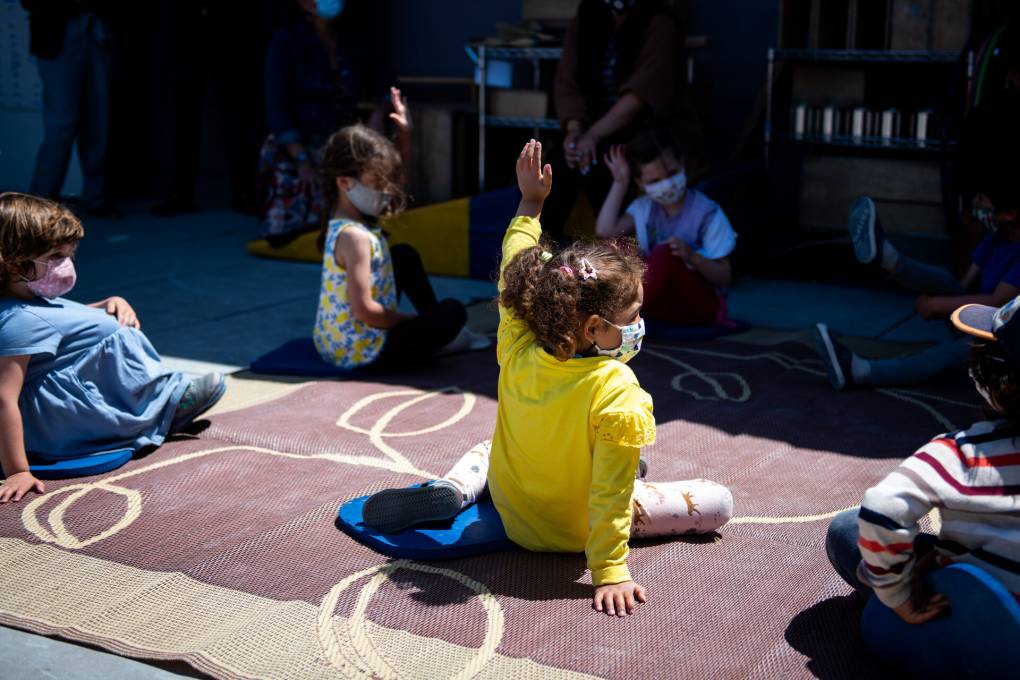
window.__INITIAL_STATE__={
"attachmentsReducer": {
"audio_0": {
"type": "attachments",
"id": "audio_0",
"imgSizes": {
"kqedFullSize": {
"file": "https://ww2.kqed.org/news/wp-content/themes/KQED-unified/img/audio_bgs/background0.jpg"
}
}
},
"audio_1": {
"type": "attachments",
"id": "audio_1",
"imgSizes": {
"kqedFullSize": {
"file": "https://ww2.kqed.org/news/wp-content/themes/KQED-unified/img/audio_bgs/background1.jpg"
}
}
},
"audio_2": {
"type": "attachments",
"id": "audio_2",
"imgSizes": {
"kqedFullSize": {
"file": "https://ww2.kqed.org/news/wp-content/themes/KQED-unified/img/audio_bgs/background2.jpg"
}
}
},
"audio_3": {
"type": "attachments",
"id": "audio_3",
"imgSizes": {
"kqedFullSize": {
"file": "https://ww2.kqed.org/news/wp-content/themes/KQED-unified/img/audio_bgs/background3.jpg"
}
}
},
"audio_4": {
"type": "attachments",
"id": "audio_4",
"imgSizes": {
"kqedFullSize": {
"file": "https://ww2.kqed.org/news/wp-content/themes/KQED-unified/img/audio_bgs/background4.jpg"
}
}
},
"placeholder": {
"type": "attachments",
"id": "placeholder",
"imgSizes": {
"thumbnail": {
"file": "https://cdn.kqed.org/wp-content/uploads/2024/12/KQED-Default-Image-816638274-2000x1333-1-160x107.jpg",
"width": 160,
"height": 107,
"mimeType": "image/jpeg"
},
"medium": {
"file": "https://cdn.kqed.org/wp-content/uploads/2024/12/KQED-Default-Image-816638274-2000x1333-1-800x533.jpg",
"width": 800,
"height": 533,
"mimeType": "image/jpeg"
},
"medium_large": {
"file": "https://cdn.kqed.org/wp-content/uploads/2024/12/KQED-Default-Image-816638274-2000x1333-1-768x512.jpg",
"width": 768,
"height": 512,
"mimeType": "image/jpeg"
},
"large": {
"file": "https://cdn.kqed.org/wp-content/uploads/2024/12/KQED-Default-Image-816638274-2000x1333-1-1020x680.jpg",
"width": 1020,
"height": 680,
"mimeType": "image/jpeg"
},
"1536x1536": {
"file": "https://cdn.kqed.org/wp-content/uploads/2024/12/KQED-Default-Image-816638274-2000x1333-1-1536x1024.jpg",
"width": 1536,
"height": 1024,
"mimeType": "image/jpeg"
},
"fd-lrg": {
"file": "https://cdn.kqed.org/wp-content/uploads/2024/12/KQED-Default-Image-816638274-2000x1333-1-1536x1024.jpg",
"width": 1536,
"height": 1024,
"mimeType": "image/jpeg"
},
"fd-med": {
"file": "https://cdn.kqed.org/wp-content/uploads/2024/12/KQED-Default-Image-816638274-2000x1333-1-1020x680.jpg",
"width": 1020,
"height": 680,
"mimeType": "image/jpeg"
},
"fd-sm": {
"file": "https://cdn.kqed.org/wp-content/uploads/2024/12/KQED-Default-Image-816638274-2000x1333-1-800x533.jpg",
"width": 800,
"height": 533,
"mimeType": "image/jpeg"
},
"post-thumbnail": {
"file": "https://cdn.kqed.org/wp-content/uploads/2024/12/KQED-Default-Image-816638274-2000x1333-1-672x372.jpg",
"width": 672,
"height": 372,
"mimeType": "image/jpeg"
},
"twentyfourteen-full-width": {
"file": "https://cdn.kqed.org/wp-content/uploads/2024/12/KQED-Default-Image-816638274-2000x1333-1-1038x576.jpg",
"width": 1038,
"height": 576,
"mimeType": "image/jpeg"
},
"xxsmall": {
"file": "https://cdn.kqed.org/wp-content/uploads/2024/12/KQED-Default-Image-816638274-2000x1333-1-160x107.jpg",
"width": 160,
"height": 107,
"mimeType": "image/jpeg"
},
"xsmall": {
"file": "https://cdn.kqed.org/wp-content/uploads/2024/12/KQED-Default-Image-816638274-2000x1333-1-672x372.jpg",
"width": 672,
"height": 372,
"mimeType": "image/jpeg"
},
"small": {
"file": "https://cdn.kqed.org/wp-content/uploads/2024/12/KQED-Default-Image-816638274-2000x1333-1-672x372.jpg",
"width": 672,
"height": 372,
"mimeType": "image/jpeg"
},
"xlarge": {
"file": "https://cdn.kqed.org/wp-content/uploads/2024/12/KQED-Default-Image-816638274-2000x1333-1-1020x680.jpg",
"width": 1020,
"height": 680,
"mimeType": "image/jpeg"
},
"full-width": {
"file": "https://cdn.kqed.org/wp-content/uploads/2024/12/KQED-Default-Image-816638274-2000x1333-1-1920x1280.jpg",
"width": 1920,
"height": 1280,
"mimeType": "image/jpeg"
},
"guest-author-32": {
"file": "https://cdn.kqed.org/wp-content/uploads/2025/01/KQED-Default-Image-816638274-1333x1333-1-160x160.jpg",
"width": 32,
"height": 32,
"mimeType": "image/jpeg"
},
"guest-author-50": {
"file": "https://cdn.kqed.org/wp-content/uploads/2025/01/KQED-Default-Image-816638274-1333x1333-1-160x160.jpg",
"width": 50,
"height": 50,
"mimeType": "image/jpeg"
},
"guest-author-64": {
"file": "https://cdn.kqed.org/wp-content/uploads/2025/01/KQED-Default-Image-816638274-1333x1333-1-160x160.jpg",
"width": 64,
"height": 64,
"mimeType": "image/jpeg"
},
"guest-author-96": {
"file": "https://cdn.kqed.org/wp-content/uploads/2025/01/KQED-Default-Image-816638274-1333x1333-1-160x160.jpg",
"width": 96,
"height": 96,
"mimeType": "image/jpeg"
},
"guest-author-128": {
"file": "https://cdn.kqed.org/wp-content/uploads/2025/01/KQED-Default-Image-816638274-1333x1333-1-160x160.jpg",
"width": 128,
"height": 128,
"mimeType": "image/jpeg"
},
"detail": {
"file": "https://cdn.kqed.org/wp-content/uploads/2025/01/KQED-Default-Image-816638274-1333x1333-1-160x160.jpg",
"width": 160,
"height": 160,
"mimeType": "image/jpeg"
},
"kqedFullSize": {
"file": "https://cdn.kqed.org/wp-content/uploads/2024/12/KQED-Default-Image-816638274-2000x1333-1.jpg",
"width": 2000,
"height": 1333
}
}
},
"news_12031806": {
"type": "attachments",
"id": "news_12031806",
"meta": {
"index": "attachments_1716263798",
"site": "news",
"id": "12031806",
"found": true
},
"title": "TKSF",
"publishDate": 1742314947,
"status": "inherit",
"parent": 12031802,
"modified": 1742315001,
"caption": "Four-year-old students head back to their transitional kindergarten class at Tule Elk Park Early Educational School in San Francisco on Jan. 8, 2001.",
"credit": "Ana Tintocalis/KQED",
"altTag": null,
"description": null,
"imgSizes": {
"medium": {
"file": "https://cdn.kqed.org/wp-content/uploads/sites/10/2025/03/TKSF-800x600.jpg",
"width": 800,
"height": 600,
"mimeType": "image/jpeg"
},
"large": {
"file": "https://cdn.kqed.org/wp-content/uploads/sites/10/2025/03/TKSF-1020x765.jpg",
"width": 1020,
"height": 765,
"mimeType": "image/jpeg"
},
"thumbnail": {
"file": "https://cdn.kqed.org/wp-content/uploads/sites/10/2025/03/TKSF-160x120.jpg",
"width": 160,
"height": 120,
"mimeType": "image/jpeg"
},
"1536x1536": {
"file": "https://cdn.kqed.org/wp-content/uploads/sites/10/2025/03/TKSF-1536x1152.jpg",
"width": 1536,
"height": 1152,
"mimeType": "image/jpeg"
},
"post-thumbnail": {
"file": "https://cdn.kqed.org/wp-content/uploads/sites/10/2025/03/TKSF-672x372.jpg",
"width": 672,
"height": 372,
"mimeType": "image/jpeg"
},
"twentyfourteen-full-width": {
"file": "https://cdn.kqed.org/wp-content/uploads/sites/10/2025/03/TKSF-1038x576.jpg",
"width": 1038,
"height": 576,
"mimeType": "image/jpeg"
},
"full-width": {
"file": "https://cdn.kqed.org/wp-content/uploads/sites/10/2025/03/TKSF-1920x1440.jpg",
"width": 1920,
"height": 1440,
"mimeType": "image/jpeg"
},
"kqedFullSize": {
"file": "https://cdn.kqed.org/wp-content/uploads/sites/10/2025/03/TKSF.jpg",
"width": 2000,
"height": 1500
}
},
"isLoading": false,
"fetchFailed": false
},
"news_11989792": {
"type": "attachments",
"id": "news_11989792",
"meta": {
"index": "attachments_1716263798",
"site": "news",
"id": "11989792",
"found": true
},
"title": "240520-TKParentsDilemma-53-BL_qut",
"publishDate": 1718132037,
"status": "inherit",
"parent": 11989789,
"modified": 1718137607,
"caption": "Victor and Karina Buendia pick up their daughter Galilea, 5, after a transitional kindergarten class at Holbrook Language Academy in Concord on May 20.",
"credit": "Beth LaBerge/KQED",
"altTag": null,
"description": null,
"imgSizes": {
"medium": {
"file": "https://cdn.kqed.org/wp-content/uploads/sites/10/2024/06/240520-TKParentsDilemma-53-BL_qut-800x533.jpg",
"width": 800,
"height": 533,
"mimeType": "image/jpeg"
},
"large": {
"file": "https://cdn.kqed.org/wp-content/uploads/sites/10/2024/06/240520-TKParentsDilemma-53-BL_qut-1020x680.jpg",
"width": 1020,
"height": 680,
"mimeType": "image/jpeg"
},
"thumbnail": {
"file": "https://cdn.kqed.org/wp-content/uploads/sites/10/2024/06/240520-TKParentsDilemma-53-BL_qut-160x107.jpg",
"width": 160,
"height": 107,
"mimeType": "image/jpeg"
},
"1536x1536": {
"file": "https://cdn.kqed.org/wp-content/uploads/sites/10/2024/06/240520-TKParentsDilemma-53-BL_qut-1536x1024.jpg",
"width": 1536,
"height": 1024,
"mimeType": "image/jpeg"
},
"post-thumbnail": {
"file": "https://cdn.kqed.org/wp-content/uploads/sites/10/2024/06/240520-TKParentsDilemma-53-BL_qut-672x372.jpg",
"width": 672,
"height": 372,
"mimeType": "image/jpeg"
},
"twentyfourteen-full-width": {
"file": "https://cdn.kqed.org/wp-content/uploads/sites/10/2024/06/240520-TKParentsDilemma-53-BL_qut-1038x576.jpg",
"width": 1038,
"height": 576,
"mimeType": "image/jpeg"
},
"kqedFullSize": {
"file": "https://cdn.kqed.org/wp-content/uploads/sites/10/2024/06/240520-TKParentsDilemma-53-BL_qut.jpg",
"width": 1920,
"height": 1280
}
},
"isLoading": false,
"fetchFailed": false
},
"news_11989675": {
"type": "attachments",
"id": "news_11989675",
"meta": {
"index": "attachments_1716263798",
"site": "news",
"id": "11989675",
"found": true
},
"title": "TKConstruction",
"publishDate": 1718055808,
"status": "inherit",
"parent": 11989615,
"modified": 1718057654,
"caption": "Mock-ups showing a planned new building and field hang on a fence in front of a construction site at Will Rogers Elementary School in Santa Monica.",
"credit": "Courtesy Ashley Balderrama",
"altTag": null,
"description": null,
"imgSizes": {
"medium": {
"file": "https://cdn.kqed.org/wp-content/uploads/sites/10/2024/06/TKConstruction-800x536.jpg",
"width": 800,
"height": 536,
"mimeType": "image/jpeg"
},
"large": {
"file": "https://cdn.kqed.org/wp-content/uploads/sites/10/2024/06/TKConstruction-1020x684.jpg",
"width": 1020,
"height": 684,
"mimeType": "image/jpeg"
},
"thumbnail": {
"file": "https://cdn.kqed.org/wp-content/uploads/sites/10/2024/06/TKConstruction-160x107.jpg",
"width": 160,
"height": 107,
"mimeType": "image/jpeg"
},
"1536x1536": {
"file": "https://cdn.kqed.org/wp-content/uploads/sites/10/2024/06/TKConstruction-1536x1030.jpg",
"width": 1536,
"height": 1030,
"mimeType": "image/jpeg"
},
"post-thumbnail": {
"file": "https://cdn.kqed.org/wp-content/uploads/sites/10/2024/06/TKConstruction-672x372.jpg",
"width": 672,
"height": 372,
"mimeType": "image/jpeg"
},
"twentyfourteen-full-width": {
"file": "https://cdn.kqed.org/wp-content/uploads/sites/10/2024/06/TKConstruction-1038x576.jpg",
"width": 1038,
"height": 576,
"mimeType": "image/jpeg"
},
"kqedFullSize": {
"file": "https://cdn.kqed.org/wp-content/uploads/sites/10/2024/06/TKConstruction.jpg",
"width": 1920,
"height": 1287
}
},
"isLoading": false,
"fetchFailed": false
},
"news_11989678": {
"type": "attachments",
"id": "news_11989678",
"meta": {
"index": "attachments_1716263798",
"site": "news",
"id": "11989678",
"found": true
},
"title": "TKBackPack",
"publishDate": 1718055818,
"status": "inherit",
"parent": 0,
"modified": 1734548641,
"caption": "Students' backpacks hang outside the transitional kindergarten classroom at Will Rogers Elementary School in Santa Monica.",
"credit": "Courtesy of Ashley Balderrama",
"altTag": null,
"description": null,
"imgSizes": {
"medium": {
"file": "https://cdn.kqed.org/wp-content/uploads/sites/10/2024/06/TKBackPack-800x508.jpg",
"width": 800,
"height": 508,
"mimeType": "image/jpeg"
},
"large": {
"file": "https://cdn.kqed.org/wp-content/uploads/sites/10/2024/06/TKBackPack-1020x647.jpg",
"width": 1020,
"height": 647,
"mimeType": "image/jpeg"
},
"thumbnail": {
"file": "https://cdn.kqed.org/wp-content/uploads/sites/10/2024/06/TKBackPack-160x102.jpg",
"width": 160,
"height": 102,
"mimeType": "image/jpeg"
},
"1536x1536": {
"file": "https://cdn.kqed.org/wp-content/uploads/sites/10/2024/06/TKBackPack-1536x974.jpg",
"width": 1536,
"height": 974,
"mimeType": "image/jpeg"
},
"post-thumbnail": {
"file": "https://cdn.kqed.org/wp-content/uploads/sites/10/2024/06/TKBackPack-672x372.jpg",
"width": 672,
"height": 372,
"mimeType": "image/jpeg"
},
"twentyfourteen-full-width": {
"file": "https://cdn.kqed.org/wp-content/uploads/sites/10/2024/06/TKBackPack-1038x576.jpg",
"width": 1038,
"height": 576,
"mimeType": "image/jpeg"
},
"kqedFullSize": {
"file": "https://cdn.kqed.org/wp-content/uploads/sites/10/2024/06/TKBackPack.jpg",
"width": 1920,
"height": 1218
}
},
"isLoading": false,
"fetchFailed": false
},
"news_11988055": {
"type": "attachments",
"id": "news_11988055",
"meta": {
"index": "attachments_1716263798",
"site": "news",
"id": "11988055",
"found": true
},
"title": "240517-TKBilingualLearners-27-BL_qut",
"publishDate": 1717006968,
"status": "inherit",
"parent": 0,
"modified": 1717794201,
"caption": "Teacher Cintya Valdivia sits with transitional kindergarten students during snack time at the International Community School in Oakland on May 17, 2024.",
"credit": "Beth LaBerge/KQED",
"altTag": "A teacher sits at a classroom table with young students as one student puts his arm tenderly around her neck",
"description": null,
"imgSizes": {
"medium": {
"file": "https://cdn.kqed.org/wp-content/uploads/sites/10/2024/05/240517-TKBilingualLearners-27-BL_qut-800x533.jpg",
"width": 800,
"height": 533,
"mimeType": "image/jpeg"
},
"large": {
"file": "https://cdn.kqed.org/wp-content/uploads/sites/10/2024/05/240517-TKBilingualLearners-27-BL_qut-1020x680.jpg",
"width": 1020,
"height": 680,
"mimeType": "image/jpeg"
},
"thumbnail": {
"file": "https://cdn.kqed.org/wp-content/uploads/sites/10/2024/05/240517-TKBilingualLearners-27-BL_qut-160x107.jpg",
"width": 160,
"height": 107,
"mimeType": "image/jpeg"
},
"1536x1536": {
"file": "https://cdn.kqed.org/wp-content/uploads/sites/10/2024/05/240517-TKBilingualLearners-27-BL_qut-1536x1024.jpg",
"width": 1536,
"height": 1024,
"mimeType": "image/jpeg"
},
"post-thumbnail": {
"file": "https://cdn.kqed.org/wp-content/uploads/sites/10/2024/05/240517-TKBilingualLearners-27-BL_qut-672x372.jpg",
"width": 672,
"height": 372,
"mimeType": "image/jpeg"
},
"twentyfourteen-full-width": {
"file": "https://cdn.kqed.org/wp-content/uploads/sites/10/2024/05/240517-TKBilingualLearners-27-BL_qut-1038x576.jpg",
"width": 1038,
"height": 576,
"mimeType": "image/jpeg"
},
"kqedFullSize": {
"file": "https://cdn.kqed.org/wp-content/uploads/sites/10/2024/05/240517-TKBilingualLearners-27-BL_qut.jpg",
"width": 1920,
"height": 1280
}
},
"isLoading": false,
"fetchFailed": false
},
"news_11987458": {
"type": "attachments",
"id": "news_11987458",
"meta": {
"index": "attachments_1716263798",
"site": "news",
"id": "11987458",
"found": true
},
"title": "Preschool girl and boy",
"publishDate": 1716422912,
"status": "inherit",
"parent": 11987456,
"modified": 1716422943,
"caption": "A preschool student shows his classmate a spider he made from pipe cleaners and a paper cup.",
"credit": "Allison Shelley/The Verbatim Agency for EDUimages",
"altTag": null,
"description": null,
"imgSizes": {
"medium": {
"file": "https://cdn.kqed.org/wp-content/uploads/sites/10/2024/05/AMERICANED_CAPCITY_107-2048x1365-1-800x533.jpg",
"width": 800,
"height": 533,
"mimeType": "image/jpeg"
},
"large": {
"file": "https://cdn.kqed.org/wp-content/uploads/sites/10/2024/05/AMERICANED_CAPCITY_107-2048x1365-1-1020x680.jpg",
"width": 1020,
"height": 680,
"mimeType": "image/jpeg"
},
"thumbnail": {
"file": "https://cdn.kqed.org/wp-content/uploads/sites/10/2024/05/AMERICANED_CAPCITY_107-2048x1365-1-160x107.jpg",
"width": 160,
"height": 107,
"mimeType": "image/jpeg"
},
"1536x1536": {
"file": "https://cdn.kqed.org/wp-content/uploads/sites/10/2024/05/AMERICANED_CAPCITY_107-2048x1365-1-1536x1024.jpg",
"width": 1536,
"height": 1024,
"mimeType": "image/jpeg"
},
"post-thumbnail": {
"file": "https://cdn.kqed.org/wp-content/uploads/sites/10/2024/05/AMERICANED_CAPCITY_107-2048x1365-1-672x372.jpg",
"width": 672,
"height": 372,
"mimeType": "image/jpeg"
},
"twentyfourteen-full-width": {
"file": "https://cdn.kqed.org/wp-content/uploads/sites/10/2024/05/AMERICANED_CAPCITY_107-2048x1365-1-1038x576.jpg",
"width": 1038,
"height": 576,
"mimeType": "image/jpeg"
},
"full-width": {
"file": "https://cdn.kqed.org/wp-content/uploads/sites/10/2024/05/AMERICANED_CAPCITY_107-2048x1365-1-1920x1280.jpg",
"width": 1920,
"height": 1280,
"mimeType": "image/jpeg"
},
"kqedFullSize": {
"file": "https://cdn.kqed.org/wp-content/uploads/sites/10/2024/05/AMERICANED_CAPCITY_107-2048x1365-1.jpg",
"width": 2048,
"height": 1365
}
},
"isLoading": false,
"fetchFailed": false
},
"news_11960371": {
"type": "attachments",
"id": "news_11960371",
"meta": {
"index": "attachments_1716263798",
"site": "news",
"id": "11960371",
"found": true
},
"parent": 11959904,
"imgSizes": {
"twentyfourteen-full-width": {
"file": "https://ww2.kqed.org/app/uploads/sites/10/2023/09/RS68797_iStock-684059604-qut-1038x576.jpg",
"width": 1038,
"mimeType": "image/jpeg",
"height": 576
},
"thumbnail": {
"file": "https://ww2.kqed.org/app/uploads/sites/10/2023/09/RS68797_iStock-684059604-qut-160x107.jpg",
"width": 160,
"mimeType": "image/jpeg",
"height": 107
},
"post-thumbnail": {
"file": "https://ww2.kqed.org/app/uploads/sites/10/2023/09/RS68797_iStock-684059604-qut-672x372.jpg",
"width": 672,
"mimeType": "image/jpeg",
"height": 372
},
"kqedFullSize": {
"file": "https://ww2.kqed.org/app/uploads/sites/10/2023/09/RS68797_iStock-684059604-qut.jpg",
"width": 1920,
"height": 1280
},
"large": {
"file": "https://ww2.kqed.org/app/uploads/sites/10/2023/09/RS68797_iStock-684059604-qut-1020x680.jpg",
"width": 1020,
"mimeType": "image/jpeg",
"height": 680
},
"1536x1536": {
"file": "https://ww2.kqed.org/app/uploads/sites/10/2023/09/RS68797_iStock-684059604-qut-1536x1024.jpg",
"width": 1536,
"mimeType": "image/jpeg",
"height": 1024
},
"medium": {
"file": "https://ww2.kqed.org/app/uploads/sites/10/2023/09/RS68797_iStock-684059604-qut-800x533.jpg",
"width": 800,
"mimeType": "image/jpeg",
"height": 533
}
},
"publishDate": 1694125719,
"modified": 1694125850,
"caption": "With child care becoming increasingly harder to access, California parents are having to navigate kindergarten readiness on their own. Here’s a guide to help.",
"description": null,
"title": "Teacher And Pupils Using Wooden Shapes In Montessori School",
"credit": "Getty Images",
"status": "inherit",
"altTag": "A young Black woman teacher sits at a classroom table smiling at kindergarten-aged children of various races",
"isLoading": false,
"fetchFailed": false
},
"news_11941934": {
"type": "attachments",
"id": "news_11941934",
"meta": {
"index": "attachments_1716263798",
"site": "news",
"id": "11941934",
"found": true
},
"parent": 11941863,
"imgSizes": {
"twentyfourteen-full-width": {
"file": "https://ww2.kqed.org/app/uploads/sites/10/2023/02/RS63080_02172023_ksuzuki_tkprogress-121-qut-1-1038x576.jpg",
"width": 1038,
"mimeType": "image/jpeg",
"height": 576
},
"thumbnail": {
"file": "https://ww2.kqed.org/app/uploads/sites/10/2023/02/RS63080_02172023_ksuzuki_tkprogress-121-qut-1-160x106.jpg",
"width": 160,
"mimeType": "image/jpeg",
"height": 106
},
"post-thumbnail": {
"file": "https://ww2.kqed.org/app/uploads/sites/10/2023/02/RS63080_02172023_ksuzuki_tkprogress-121-qut-1-672x372.jpg",
"width": 672,
"mimeType": "image/jpeg",
"height": 372
},
"kqedFullSize": {
"file": "https://ww2.kqed.org/app/uploads/sites/10/2023/02/RS63080_02172023_ksuzuki_tkprogress-121-qut-1.jpg",
"width": 1920,
"height": 1277
},
"large": {
"file": "https://ww2.kqed.org/app/uploads/sites/10/2023/02/RS63080_02172023_ksuzuki_tkprogress-121-qut-1-1020x678.jpg",
"width": 1020,
"mimeType": "image/jpeg",
"height": 678
},
"1536x1536": {
"file": "https://ww2.kqed.org/app/uploads/sites/10/2023/02/RS63080_02172023_ksuzuki_tkprogress-121-qut-1-1536x1022.jpg",
"width": 1536,
"mimeType": "image/jpeg",
"height": 1022
},
"medium": {
"file": "https://ww2.kqed.org/app/uploads/sites/10/2023/02/RS63080_02172023_ksuzuki_tkprogress-121-qut-1-800x532.jpg",
"width": 800,
"mimeType": "image/jpeg",
"height": 532
}
},
"publishDate": 1677375587,
"modified": 1677545694,
"caption": "From left, Ariel Estrada, Camila Corona and Ayanna Hernandez listen to their teacher, Sandra Rivera, during playtime in a transitional kindergarten class at Cesar Chavez Early Learning Center in East San José on Feb. 17, 2023. This year, thousands of children began their schooling as part of California's ambitious plan to expand universal preschool statewide.",
"description": null,
"title": "RS63080_02172023_ksuzuki_tkprogress 121-qut (1)",
"credit": "Kori Suzuki/KQED",
"status": "inherit",
"altTag": "Three kids sit on the floor as they listen to their classroom teacher.",
"isLoading": false,
"fetchFailed": false
},
"news_11922717": {
"type": "attachments",
"id": "news_11922717",
"meta": {
"index": "attachments_1716263798",
"site": "news",
"id": "11922717",
"found": true
},
"parent": 11922708,
"imgSizes": {
"twentyfourteen-full-width": {
"file": "https://ww2.kqed.org/app/uploads/sites/10/2022/08/RS57716_IMG_0008-qut-1038x576.jpg",
"width": 1038,
"mimeType": "image/jpeg",
"height": 576
},
"thumbnail": {
"file": "https://ww2.kqed.org/app/uploads/sites/10/2022/08/RS57716_IMG_0008-qut-160x120.jpg",
"width": 160,
"mimeType": "image/jpeg",
"height": 120
},
"post-thumbnail": {
"file": "https://ww2.kqed.org/app/uploads/sites/10/2022/08/RS57716_IMG_0008-qut-672x372.jpg",
"width": 672,
"mimeType": "image/jpeg",
"height": 372
},
"kqedFullSize": {
"file": "https://ww2.kqed.org/app/uploads/sites/10/2022/08/RS57716_IMG_0008-qut.jpg",
"width": 1920,
"height": 1440
},
"large": {
"file": "https://ww2.kqed.org/app/uploads/sites/10/2022/08/RS57716_IMG_0008-qut-1020x765.jpg",
"width": 1020,
"mimeType": "image/jpeg",
"height": 765
},
"1536x1536": {
"file": "https://ww2.kqed.org/app/uploads/sites/10/2022/08/RS57716_IMG_0008-qut-1536x1152.jpg",
"width": 1536,
"mimeType": "image/jpeg",
"height": 1152
},
"medium": {
"file": "https://ww2.kqed.org/app/uploads/sites/10/2022/08/RS57716_IMG_0008-qut-800x600.jpg",
"width": 800,
"mimeType": "image/jpeg",
"height": 600
}
},
"publishDate": 1660679641,
"modified": 1660688672,
"caption": "Flordeliza Dalit's transitional kindergarten classroom, ready to welcome students at Jesse G. Sanchez Elementary School in Salinas. The beginning of a three-year, $2.7 billion plan to widen access to pre-kindergarten to 4-year-old children in California is off to an uneven start. Some school districts are seeing dismally low enrollment while others are reporting high demand.",
"description": null,
"title": "RS57716_IMG_0008-qut",
"credit": "Daisy Nguyen/KQED",
"status": "inherit",
"altTag": "children's desks with supplies on them in a classroom",
"isLoading": false,
"fetchFailed": false
},
"news_11922509": {
"type": "attachments",
"id": "news_11922509",
"meta": {
"index": "attachments_1716263798",
"site": "news",
"id": "11922509",
"found": true
},
"parent": 11922496,
"imgSizes": {
"twentyfourteen-full-width": {
"file": "https://ww2.kqed.org/app/uploads/sites/10/2022/08/AMERICANED_CAPCITY_092-1-1200x750-1-1038x576.jpg",
"width": 1038,
"mimeType": "image/jpeg",
"height": 576
},
"thumbnail": {
"file": "https://ww2.kqed.org/app/uploads/sites/10/2022/08/AMERICANED_CAPCITY_092-1-1200x750-1-160x100.jpg",
"width": 160,
"mimeType": "image/jpeg",
"height": 100
},
"post-thumbnail": {
"file": "https://ww2.kqed.org/app/uploads/sites/10/2022/08/AMERICANED_CAPCITY_092-1-1200x750-1-672x372.jpg",
"width": 672,
"mimeType": "image/jpeg",
"height": 372
},
"kqedFullSize": {
"file": "https://ww2.kqed.org/app/uploads/sites/10/2022/08/AMERICANED_CAPCITY_092-1-1200x750-1.jpg",
"width": 1200,
"height": 750
},
"large": {
"file": "https://ww2.kqed.org/app/uploads/sites/10/2022/08/AMERICANED_CAPCITY_092-1-1200x750-1-1020x638.jpg",
"width": 1020,
"mimeType": "image/jpeg",
"height": 638
},
"medium": {
"file": "https://ww2.kqed.org/app/uploads/sites/10/2022/08/AMERICANED_CAPCITY_092-1-1200x750-1-800x500.jpg",
"width": 800,
"mimeType": "image/jpeg",
"height": 500
}
},
"publishDate": 1660586973,
"modified": 1660596296,
"caption": "Preschool students look for insects under stones in a school garden.",
"description": null,
"title": "Two preschool boys in garden",
"credit": "Allison Shelley/American Education",
"status": "inherit",
"altTag": "two preschool-aged boys play in a garden",
"isLoading": false,
"fetchFailed": false
},
"news_11892296": {
"type": "attachments",
"id": "news_11892296",
"meta": {
"index": "attachments_1716263798",
"site": "news",
"id": "11892296",
"found": true
},
"parent": 11892267,
"imgSizes": {
"twentyfourteen-full-width": {
"file": "https://ww2.kqed.org/app/uploads/sites/10/2021/10/RS49614_020_SanFrancisco_AlexPadillaMissionKids_06012021-qut-1038x576.jpg",
"width": 1038,
"mimeType": "image/jpeg",
"height": 576
},
"thumbnail": {
"file": "https://ww2.kqed.org/app/uploads/sites/10/2021/10/RS49614_020_SanFrancisco_AlexPadillaMissionKids_06012021-qut-160x107.jpg",
"width": 160,
"mimeType": "image/jpeg",
"height": 107
},
"post-thumbnail": {
"file": "https://ww2.kqed.org/app/uploads/sites/10/2021/10/RS49614_020_SanFrancisco_AlexPadillaMissionKids_06012021-qut-672x372.jpg",
"width": 672,
"mimeType": "image/jpeg",
"height": 372
},
"kqedFullSize": {
"file": "https://ww2.kqed.org/app/uploads/sites/10/2021/10/RS49614_020_SanFrancisco_AlexPadillaMissionKids_06012021-qut.jpg",
"width": 1920,
"height": 1280
},
"large": {
"file": "https://ww2.kqed.org/app/uploads/sites/10/2021/10/RS49614_020_SanFrancisco_AlexPadillaMissionKids_06012021-qut-1020x680.jpg",
"width": 1020,
"mimeType": "image/jpeg",
"height": 680
},
"1536x1536": {
"file": "https://ww2.kqed.org/app/uploads/sites/10/2021/10/RS49614_020_SanFrancisco_AlexPadillaMissionKids_06012021-qut-1536x1024.jpg",
"width": 1536,
"mimeType": "image/jpeg",
"height": 1024
},
"medium": {
"file": "https://ww2.kqed.org/app/uploads/sites/10/2021/10/RS49614_020_SanFrancisco_AlexPadillaMissionKids_06012021-qut-800x533.jpg",
"width": 800,
"mimeType": "image/jpeg",
"height": 533
}
},
"publishDate": 1634244769,
"modified": 1634255972,
"caption": "Children at Mission Kids preschool in San Francisco raise their hands to ask U.S. Sen. Alex Padilla a question on June 1, 2021.",
"description": null,
"title": "RS49614_020_SanFrancisco_AlexPadillaMissionKids_06012021-qut",
"credit": "Beth LaBerge/KQED",
"status": "inherit",
"altTag": "A little kid in a bright yellow sweater, sitting in the sun on a mat amid other little kids with their hands up, raises her hand.",
"isLoading": false,
"fetchFailed": false
}
},
"audioPlayerReducer": {
"postId": "stream_live",
"isPaused": true,
"isPlaying": false,
"pfsActive": false,
"pledgeModalIsOpen": true,
"playerDrawerIsOpen": false,
"liveAudioPlayStartedAt": 0,
"liveAudioPlayContext": ""
},
"authorsReducer": {
"byline_news_11989615": {
"type": "authors",
"id": "byline_news_11989615",
"meta": {
"override": true
},
"slug": "byline_news_11989615",
"name": "Elly Yu, LAist",
"isLoading": false
},
"byline_news_11987456": {
"type": "authors",
"id": "byline_news_11987456",
"meta": {
"override": true
},
"slug": "byline_news_11987456",
"name": "\u003ca href=\"https://edsource.org/author/lthornton\">Lasherica Thornton\u003c/a>",
"isLoading": false
},
"byline_news_11922496": {
"type": "authors",
"id": "byline_news_11922496",
"meta": {
"override": true
},
"slug": "byline_news_11922496",
"name": "\u003ca href=\"https://edsource.org/author/kdsouza\">Karen D'Souza\u003c/a>",
"isLoading": false
},
"byline_news_11892267": {
"type": "authors",
"id": "byline_news_11892267",
"meta": {
"override": true
},
"slug": "byline_news_11892267",
"name": "\u003ca href=\"https://edsource.org/author/kdsouza\">Karen D'Souza\u003c/a>",
"isLoading": false
},
"astupi": {
"type": "authors",
"id": "70",
"meta": {
"index": "authors_1716337520",
"id": "70",
"found": true
},
"name": "Amanda Stupi",
"firstName": "Amanda",
"lastName": "Stupi",
"slug": "astupi",
"email": "astupi@kqed.org",
"display_author_email": false,
"staff_mastheads": [],
"title": "Senior Engagement Producer",
"bio": "Amanda joined KQED Science’s engagement team as a Senior Audience Engagement Strategist in the spring of 2019. She has helped craft messaging around wildfires, the coronavirus pandemic, climate change and many other stories. She has also brought KQED Science to new platforms such as Reddit’s Ask Me Anything series. Prior to joining KQED Science, Amanda spent seven years as an engagement producer with Forum, KQED’s daily live call-in show. She got her start in radio at KALW's weekly call in show, City Visions, before going on to an internship and stint at NPR's Talk of the Nation.\r\n\r\nPrior to journalism, Amanda taught English at Lowell High School. She's a native of Petaluma and currently lives under the \"South San Francisco the Industrial City\" sign in South City. She believes that engagement is vital to news’s future and that good journalism listens as much as it asks questions.",
"avatar": "https://secure.gravatar.com/avatar/e981c503e5c162da701dcaccfbf87e35?s=600&d=blank&r=g",
"twitter": null,
"facebook": null,
"instagram": null,
"linkedin": null,
"sites": [
{
"site": "arts",
"roles": [
"Contributor"
]
},
{
"site": "news",
"roles": [
"editor"
]
},
{
"site": "pop",
"roles": [
"contributor"
]
},
{
"site": "stateofhealth",
"roles": [
"editor"
]
},
{
"site": "science",
"roles": []
},
{
"site": "perspectives",
"roles": [
"editor"
]
}
],
"headData": {
"title": "Amanda Stupi | KQED",
"description": "Senior Engagement Producer",
"ogImgSrc": "https://secure.gravatar.com/avatar/e981c503e5c162da701dcaccfbf87e35?s=600&d=blank&r=g",
"twImgSrc": "https://secure.gravatar.com/avatar/e981c503e5c162da701dcaccfbf87e35?s=600&d=blank&r=g"
},
"isLoading": false,
"link": "/author/astupi"
},
"ecruzguevarra": {
"type": "authors",
"id": "8654",
"meta": {
"index": "authors_1716337520",
"id": "8654",
"found": true
},
"name": "Ericka Cruz Guevarra",
"firstName": "Ericka",
"lastName": "Cruz Guevarra",
"slug": "ecruzguevarra",
"email": "ecruzguevarra@kqed.org",
"display_author_email": true,
"staff_mastheads": [
"news"
],
"title": "Producer, The Bay Podcast",
"bio": "Ericka Cruz Guevarra is host of \u003ca href=\"https://www.kqed.org/podcasts/thebay\">\u003cem>The Bay\u003c/em>\u003c/a> podcast at KQED. Before host, she was the show’s producer. Her work in that capacity includes a three-part reported series on policing in Vallejo, which won a 2020 excellence in journalism award from the Society of Professional Journalists. Ericka has worked as a breaking news reporter at Oregon Public Broadcasting, helped produce the Code Switch podcast, and was KQED’s inaugural Raul Ramirez Diversity Fund intern. She’s also an alumna of NPR’s Next Generation Radio program. Send her an email if you have strong feelings about whether Fairfield and Suisun City are the Bay. Ericka is represented by SAG-AFTRA.",
"avatar": "https://secure.gravatar.com/avatar/accefc1de4bafc7e234b69bcb9b6f6536c130fd84709bc3069ef11a78787e1bb?s=600&d=blank&r=g",
"twitter": "NotoriousECG",
"bluesky": null,
"facebook": null,
"instagram": null,
"linkedin": null,
"sites": [
{
"site": "arts",
"roles": [
"subscriber"
]
},
{
"site": "news",
"roles": [
"editor",
"manage_categories"
]
},
{
"site": "futureofyou",
"roles": [
"subscriber"
]
},
{
"site": "stateofhealth",
"roles": [
"subscriber"
]
},
{
"site": "science",
"roles": [
"editor"
]
},
{
"site": "forum",
"roles": [
"subscriber"
]
}
],
"headData": {
"title": "Ericka Cruz Guevarra | KQED",
"description": "Producer, The Bay Podcast",
"ogImgSrc": "https://secure.gravatar.com/avatar/accefc1de4bafc7e234b69bcb9b6f6536c130fd84709bc3069ef11a78787e1bb?s=600&d=blank&r=g",
"twImgSrc": "https://secure.gravatar.com/avatar/accefc1de4bafc7e234b69bcb9b6f6536c130fd84709bc3069ef11a78787e1bb?s=600&d=blank&r=g"
},
"isLoading": false,
"link": "/author/ecruzguevarra"
},
"amontecillo": {
"type": "authors",
"id": "11649",
"meta": {
"index": "authors_1716337520",
"id": "11649",
"found": true
},
"name": "Alan Montecillo",
"firstName": "Alan",
"lastName": "Montecillo",
"slug": "amontecillo",
"email": "amontecillo@kqed.org",
"display_author_email": false,
"staff_mastheads": [
"news"
],
"title": "KQED Contributor",
"bio": "Alan Montecillo is the senior editor of \u003cem>\u003ca href=\"http://kqed.org/thebay\">The Bay\u003c/a>, \u003c/em> KQED's local news podcast. Before moving to the Bay Area, he worked as a senior talk show producer for WILL in Champaign-Urbana, Illinois and at Oregon Public Broadcasting in Portland, Oregon. He has won journalism awards from the Society of Professional Journalists Northern California, the Public Media Journalists Association, The Signal Awards, and has also received a regional Edward R. Murrow award. Alan is a Filipino American from Hong Kong and a graduate of Reed College.",
"avatar": "https://secure.gravatar.com/avatar/268f53a2066899ea9efdd8a5900218b17c822d9862cbc9326cccec53ef41d349?s=600&d=blank&r=g",
"twitter": "alanmontecillo",
"bluesky": null,
"facebook": null,
"instagram": null,
"linkedin": null,
"sites": [
{
"site": "",
"roles": [
"editor"
]
},
{
"site": "news",
"roles": [
"editor",
"manage_categories"
]
}
],
"headData": {
"title": "Alan Montecillo | KQED",
"description": "KQED Contributor",
"ogImgSrc": "https://secure.gravatar.com/avatar/268f53a2066899ea9efdd8a5900218b17c822d9862cbc9326cccec53ef41d349?s=600&d=blank&r=g",
"twImgSrc": "https://secure.gravatar.com/avatar/268f53a2066899ea9efdd8a5900218b17c822d9862cbc9326cccec53ef41d349?s=600&d=blank&r=g"
},
"isLoading": false,
"link": "/author/amontecillo"
},
"kmizuguchi": {
"type": "authors",
"id": "11739",
"meta": {
"index": "authors_1716337520",
"id": "11739",
"found": true
},
"name": "Keith Mizuguchi",
"firstName": "Keith",
"lastName": "Mizuguchi",
"slug": "kmizuguchi",
"email": "kmizuguchi@kqed.org",
"display_author_email": false,
"staff_mastheads": [],
"title": "KQED Contributor",
"bio": null,
"avatar": "https://secure.gravatar.com/avatar/64d8a7de0723d4099b9fe4e915136103febcc20809abce228ee4415bcb237023?s=600&d=blank&r=g",
"twitter": null,
"bluesky": null,
"facebook": null,
"instagram": null,
"linkedin": null,
"sites": [
{
"site": "news",
"roles": [
"editor"
]
},
{
"site": "science",
"roles": [
"editor"
]
}
],
"headData": {
"title": "Keith Mizuguchi | KQED",
"description": "KQED Contributor",
"ogImgSrc": "https://secure.gravatar.com/avatar/64d8a7de0723d4099b9fe4e915136103febcc20809abce228ee4415bcb237023?s=600&d=blank&r=g",
"twImgSrc": "https://secure.gravatar.com/avatar/64d8a7de0723d4099b9fe4e915136103febcc20809abce228ee4415bcb237023?s=600&d=blank&r=g"
},
"isLoading": false,
"link": "/author/kmizuguchi"
},
"mesquinca": {
"type": "authors",
"id": "11802",
"meta": {
"index": "authors_1716337520",
"id": "11802",
"found": true
},
"name": "Maria Esquinca",
"firstName": "Maria",
"lastName": "Esquinca",
"slug": "mesquinca",
"email": "mesquinca@kqed.org",
"display_author_email": false,
"staff_mastheads": [],
"title": "Producer, The Bay",
"bio": "María Esquinca is a producer of The Bay. Before that, she was a New York Women’s Foundation IGNITE Fellow at Latino USA. She worked at Radio Bilingue where she covered the San Joaquin Valley. Maria has interned at WLRN, News 21, The New York Times Student Journalism Institute and at Crain’s Detroit Business as a Dow Jones News Fund Business Reporting Intern. She is an MFA graduate from the University of Miami. In 2017, she graduated from the Walter Cronkite School of Journalism and Mass Communication with a Master of Mass Communication. A fronteriza, she was born in Ciudad Juárez, Chihuahua, Mexico and grew up in El Paso, Texas.",
"avatar": "https://secure.gravatar.com/avatar/77cedba18aae91da775038ba06dcd8d0?s=600&d=blank&r=g",
"twitter": "@m_esquinca",
"facebook": null,
"instagram": null,
"linkedin": null,
"sites": [
{
"site": "news",
"roles": []
}
],
"headData": {
"title": "Maria Esquinca | KQED",
"description": "Producer, The Bay",
"ogImgSrc": "https://secure.gravatar.com/avatar/77cedba18aae91da775038ba06dcd8d0?s=600&d=blank&r=g",
"twImgSrc": "https://secure.gravatar.com/avatar/77cedba18aae91da775038ba06dcd8d0?s=600&d=blank&r=g"
},
"isLoading": false,
"link": "/author/mesquinca"
},
"daisynguyen": {
"type": "authors",
"id": "11829",
"meta": {
"index": "authors_1716337520",
"id": "11829",
"found": true
},
"name": "Daisy Nguyen",
"firstName": "Daisy",
"lastName": "Nguyen",
"slug": "daisynguyen",
"email": "daisynguyen@kqed.org",
"display_author_email": true,
"staff_mastheads": [
"news"
],
"title": "KQED Contributor",
"bio": "I have covered early childhood education and child care for KQED since 2022. I focus on policies aimed at increasing access to early care and education and how they shape individual lives. I've been a journalist for more than two decades, with most of that time devoted to covering breaking news throughout California for The Associated Press. I grew up in San Francisco and studied at UC Davis and Columbia University's Graduate School of Journalism. I live in Oakland with my husband and two kids.",
"avatar": "https://secure.gravatar.com/avatar/2da2127c27f7143b53ebd419800fd55f?s=600&d=blank&r=g",
"twitter": null,
"facebook": null,
"instagram": null,
"linkedin": "https://www.linkedin.com/in/daisynguyen/",
"sites": [
{
"site": "news",
"roles": [
"author"
]
},
{
"site": "liveblog",
"roles": [
"author"
]
}
],
"headData": {
"title": "Daisy Nguyen | KQED",
"description": "KQED Contributor",
"ogImgSrc": "https://secure.gravatar.com/avatar/2da2127c27f7143b53ebd419800fd55f?s=600&d=blank&r=g",
"twImgSrc": "https://secure.gravatar.com/avatar/2da2127c27f7143b53ebd419800fd55f?s=600&d=blank&r=g"
},
"isLoading": false,
"link": "/author/daisynguyen"
}
},
"pagesReducer": {
"news_tag_transitional-kindergarten": {
"type": "terms",
"id": "news_2252",
"meta": {
"index": "terms_1716263798",
"site": "news",
"id": "2252",
"score": 10.404828
},
"featImg": null,
"name": "transitional kindergarten",
"description": null,
"taxonomy": "tag",
"headData": {
"twImgId": null,
"twTitle": null,
"ogTitle": null,
"ogImgId": null,
"twDescription": null,
"description": null,
"title": "transitional kindergarten Archives | KQED News",
"ogDescription": null
},
"ttid": 2267,
"slug": "transitional-kindergarten",
"isLoading": false,
"title": "transitional kindergarten",
"pageMeta": {
"site": "news",
"WpPageTemplate": "page-topic-editorial",
"currentPage": 2
},
"blocks": [
{
"blockName": "kqed/post-list",
"attrs": {
"layout": "cardArticle2",
"query": "posts/news?tag=transitional-kindergarten",
"seeMore": false,
"paginated": true,
"page": 2
}
},
{
"blockName": "kqed/ad"
}
]
}
},
"pfsSessionReducer": {},
"postsReducer": {
"stream_live": {
"type": "live",
"id": "stream_live",
"audioUrl": "https://streams.kqed.org/kqedradio",
"title": "Live Stream",
"excerpt": "Live Stream information currently unavailable.",
"link": "/radio",
"featImg": "",
"label": {
"name": "KQED Live",
"link": "/"
}
},
"stream_kqedNewscast": {
"type": "posts",
"id": "stream_kqedNewscast",
"audioUrl": "https://www.kqed.org/.stream/anon/radio/RDnews/newscast.mp3?_=1",
"title": "KQED Newscast",
"featImg": "",
"label": {
"name": "88.5 FM",
"link": "/"
}
},
"news_12031802": {
"type": "posts",
"id": "news_12031802",
"meta": {
"index": "posts_1716263798",
"site": "news",
"id": "12031802",
"score": null,
"sort": [
1742317254000
]
},
"guestAuthors": [],
"slug": "san-francisco-public-schools-see-surge-applications-thanks-transitional-kindergarten-demand",
"title": "San Francisco Public Schools See Surge of Applications, Thanks to Transitional Kindergarten Demand",
"publishDate": 1742317254,
"format": "standard",
"headTitle": "San Francisco Public Schools See Surge of Applications, Thanks to Transitional Kindergarten Demand | KQED",
"labelTerm": {
"site": "news"
},
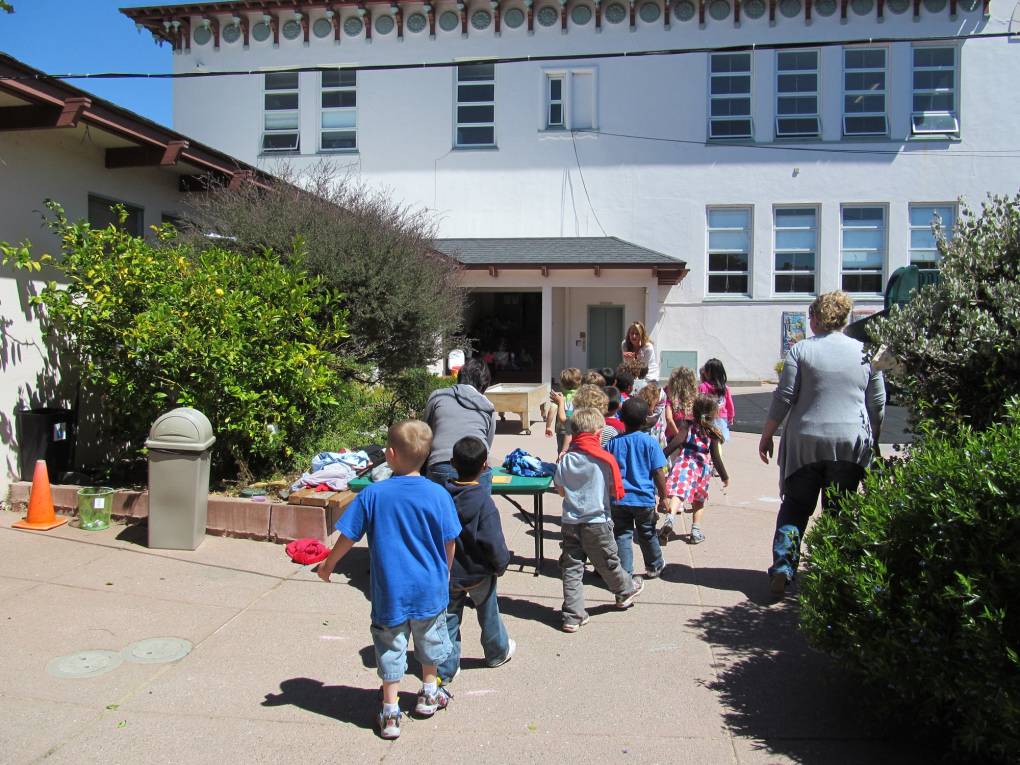
"content": "\u003cp>San Francisco public schools received the largest number of applications in more than a decade thanks to a statewide initiative to offer \u003ca href=\"https://www.kqed.org/news/11989955/what-to-expect-when-enrolling-your-child-in-transitional-kindergarten\">a free year of prekindergarten to all 4-year-olds this fall\u003c/a>.\u003c/p>\n\u003cp>The district announced Monday first-round school assignments for the 2025–26 school year for nearly 15,500 applicants, a 10% increase in applications compared to last year, said Lauren Koehler, executive director of San Francisco Unified School District’s enrollment center.\u003c/p>\n\u003cp>It’s a bit of good news for a district facing \u003ca href=\"https://www.kqed.org/news/12031347/san-francisco-schools-may-cut-staff-face-backlash-over-new-hiring-limits\">a major budget shortfall\u003c/a>, partly caused by declining enrollment trends.\u003c/p>\n\u003cp>[ad fullwidth]\u003c/p>\n\u003cp>While applications for kindergarten, 6th grade and 9th grade went up, the biggest surge in applications was for transitional kindergarten, \u003ca href=\"https://www.sfusd.edu/schools/enroll/student-assignment-policy/annual-assignment-highlights#77792\">according to district data\u003c/a>. SFUSD received nearly 1,990 student applications for TK, which is 673 more than last year.\u003c/p>\n\u003cp>California started adding TK to its sprawling public school system in 2022 and has been gradually accommodating more 4-year-olds based on their birth dates. Starting this fall, all kids who turn 4 by September will be guaranteed a spot in TK. SFUSD is planning to open 18 more classrooms to meet the demand, Koehler said.\u003c/p>\n\u003cp>\u003cstrong>“\u003c/strong>We’re all really excited about the expansion in TK because it makes [preschool] more affordable for many more families,” she said.\u003c/p>\n\u003cp>[aside postID=news_12030561 hero='https://cdn.kqed.org/wp-content/uploads/sites/10/2025/03/20250307_ALAMEDACHILDCARE_GC-2-KQED-1020x680.jpg']\u003c/p>\n\u003cp>To encourage families to enroll in TK, the district changed its assignment policy so that students can continue into kindergarten at the same school without having to reapply. That way, parents don’t have to contend with the assignment process two years in a row, and school staff can nurture students’ social and academic growth over the course of two years.\u003c/p>\n\u003cp>Koehler noted that 90% of TK-to-12th-grade applicants were assigned to one of their requested schools, almost 1,000 more students than last year.\u003c/p>\n\u003cp>“So not only are we having more interest in our schools, we’re also able to assign more kids to schools that they prefer,” she said.\u003c/p>\n\u003cp>Families must accept or decline their assignments by March 27, and a new waitlist system allows them to get results without reapplying for their preferred school.\u003c/p>\n\u003cp>Even though some families may decline their assignments, Koehler expects SFUSD’s overall enrollment to be slightly higher for the coming year than the current \u003ca href=\"https://www.sfusd.edu/about-sfusd/facts-about-sfusd-glance\">50,000 students\u003c/a>.\u003c/p>\n\u003cp>That’s a small bright spot for a district facing enrollment declines in the long term. The city’s public schools lost more than 4,000 students since 2012–13 and are projected to lose 4,600 more students by 2032 due to demographic trends such as declining birth rates, \u003ca href=\"https://drive.google.com/file/d/1LJBGENPuvXFmR8nuko9c1goeW1WijG_I/view\">according to \u003c/a>district forecasts.\u003c/p>\n\u003cp>Last week, SFUSD said it would \u003ca href=\"https://www.kqed.org/news/12031347/san-francisco-schools-may-cut-staff-face-backlash-over-new-hiring-limits\">issue about 170 \u003c/a>preliminary layoff notices to school counselors and paraeducators as it works to close a $113 million budget deficit by year’s end.\u003c/p>\n\u003cp>\u003c/p>\n",
"blocks": [],
"excerpt": "It’s a bit of good news as the San Francisco district faces a budget crisis, partly caused by declining enrollment trends. ",
"status": "publish",
"parent": 0,
"modified": 1742409184,
"stats": {
"hasAudio": false,
"hasVideo": false,
"hasChartOrMap": false,
"iframeSrcs": [],
"hasGoogleForm": false,
"hasGallery": false,
"hasHearkenModule": false,
"hasPolis": false,
"paragraphCount": 16,
"wordCount": 506
},
"headData": {
"title": "San Francisco Public Schools See Surge of Applications, Thanks to Transitional Kindergarten Demand | KQED",
"description": "It’s a bit of good news as the San Francisco district faces a budget crisis, partly caused by declining enrollment trends. ",
"ogTitle": "",
"ogDescription": "",
"ogImgId": "",
"twTitle": "",
"twDescription": "",
"twImgId": "",
"schema": {
"@context": "https://schema.org",
"@type": "NewsArticle",
"headline": "San Francisco Public Schools See Surge of Applications, Thanks to Transitional Kindergarten Demand",
"datePublished": "2025-03-18T10:00:54-07:00",
"dateModified": "2025-03-19T11:33:04-07:00",
"image": "https://cdn.kqed.org/wp-content/uploads/2020/02/KQED-OG-Image@1x.png",
"isAccessibleForFree": "True",
"publisher": {
"@type": "NewsMediaOrganization",
"@id": "https://www.kqed.org/#organization",
"name": "KQED",
"logo": "https://cdn.kqed.org/wp-content/uploads/2020/02/KQED-OG-Image@1x.png",
"url": "https://www.kqed.org",
"sameAs": [
"https://www.facebook.com/KQED",
"https://twitter.com/KQED",
"https://www.instagram.com/kqed/",
"https://www.tiktok.com/@kqedofficial",
"https://www.linkedin.com/company/kqed",
"https://www.youtube.com/channel/UCeC0IOo7i1P_61zVUWbJ4nw"
]
}
}
},
"sticky": false,
"nprStoryId": "kqed-12031802",
"templateType": "standard",
"featuredImageType": "standard",
"excludeFromSiteSearch": "Include",
"articleAge": "0",
"path": "/news/12031802/san-francisco-public-schools-see-surge-applications-thanks-transitional-kindergarten-demand",
"audioTrackLength": null,
"parsedContent": [
{
"type": "contentString",
"content": "\u003cdiv class=\"post-body\">\u003cp>\u003cp>San Francisco public schools received the largest number of applications in more than a decade thanks to a statewide initiative to offer \u003ca href=\"https://www.kqed.org/news/11989955/what-to-expect-when-enrolling-your-child-in-transitional-kindergarten\">a free year of prekindergarten to all 4-year-olds this fall\u003c/a>.\u003c/p>\n\u003cp>The district announced Monday first-round school assignments for the 2025–26 school year for nearly 15,500 applicants, a 10% increase in applications compared to last year, said Lauren Koehler, executive director of San Francisco Unified School District’s enrollment center.\u003c/p>\n\u003cp>It’s a bit of good news for a district facing \u003ca href=\"https://www.kqed.org/news/12031347/san-francisco-schools-may-cut-staff-face-backlash-over-new-hiring-limits\">a major budget shortfall\u003c/a>, partly caused by declining enrollment trends.\u003c/p>\n\u003cp>\u003c/p>\u003c/div>",
"attributes": {
"named": {},
"numeric": []
}
},
{
"type": "component",
"content": "",
"name": "ad",
"attributes": {
"named": {
"label": "fullwidth"
},
"numeric": [
"fullwidth"
]
}
},
{
"type": "contentString",
"content": "\u003cdiv class=\"post-body\">\u003cp>\u003c/p>\n\u003cp>While applications for kindergarten, 6th grade and 9th grade went up, the biggest surge in applications was for transitional kindergarten, \u003ca href=\"https://www.sfusd.edu/schools/enroll/student-assignment-policy/annual-assignment-highlights#77792\">according to district data\u003c/a>. SFUSD received nearly 1,990 student applications for TK, which is 673 more than last year.\u003c/p>\n\u003cp>California started adding TK to its sprawling public school system in 2022 and has been gradually accommodating more 4-year-olds based on their birth dates. Starting this fall, all kids who turn 4 by September will be guaranteed a spot in TK. SFUSD is planning to open 18 more classrooms to meet the demand, Koehler said.\u003c/p>\n\u003cp>\u003cstrong>“\u003c/strong>We’re all really excited about the expansion in TK because it makes [preschool] more affordable for many more families,” she said.\u003c/p>\n\u003cp>\u003c/p>\u003c/div>",
"attributes": {
"named": {},
"numeric": []
}
},
{
"type": "component",
"content": "",
"name": "aside",
"attributes": {
"named": {
"postid": "news_12030561",
"hero": "https://cdn.kqed.org/wp-content/uploads/sites/10/2025/03/20250307_ALAMEDACHILDCARE_GC-2-KQED-1020x680.jpg",
"label": ""
},
"numeric": []
}
},
{
"type": "contentString",
"content": "\u003cdiv class=\"post-body\">\u003cp>\u003c/p>\n\u003cp>To encourage families to enroll in TK, the district changed its assignment policy so that students can continue into kindergarten at the same school without having to reapply. That way, parents don’t have to contend with the assignment process two years in a row, and school staff can nurture students’ social and academic growth over the course of two years.\u003c/p>\n\u003cp>Koehler noted that 90% of TK-to-12th-grade applicants were assigned to one of their requested schools, almost 1,000 more students than last year.\u003c/p>\n\u003cp>“So not only are we having more interest in our schools, we’re also able to assign more kids to schools that they prefer,” she said.\u003c/p>\n\u003cp>Families must accept or decline their assignments by March 27, and a new waitlist system allows them to get results without reapplying for their preferred school.\u003c/p>\n\u003cp>Even though some families may decline their assignments, Koehler expects SFUSD’s overall enrollment to be slightly higher for the coming year than the current \u003ca href=\"https://www.sfusd.edu/about-sfusd/facts-about-sfusd-glance\">50,000 students\u003c/a>.\u003c/p>\n\u003cp>That’s a small bright spot for a district facing enrollment declines in the long term. The city’s public schools lost more than 4,000 students since 2012–13 and are projected to lose 4,600 more students by 2032 due to demographic trends such as declining birth rates, \u003ca href=\"https://drive.google.com/file/d/1LJBGENPuvXFmR8nuko9c1goeW1WijG_I/view\">according to \u003c/a>district forecasts.\u003c/p>\n\u003cp>Last week, SFUSD said it would \u003ca href=\"https://www.kqed.org/news/12031347/san-francisco-schools-may-cut-staff-face-backlash-over-new-hiring-limits\">issue about 170 \u003c/a>preliminary layoff notices to school counselors and paraeducators as it works to close a $113 million budget deficit by year’s end.\u003c/p>\n\u003cp>\u003c/p>\n\u003c/div>\u003c/p>",
"attributes": {
"named": {},
"numeric": []
}
}
],
"link": "/news/12031802/san-francisco-public-schools-see-surge-applications-thanks-transitional-kindergarten-demand",
"authors": [
"11829"
],
"categories": [
"news_31795",
"news_18540",
"news_8"
],
"tags": [
"news_32102",
"news_32928",
"news_20013",
"news_22350",
"news_38",
"news_3946",
"news_1290",
"news_2252"
],
"featImg": "news_12031806",
"label": "news"
},
"news_11989886": {
"type": "posts",
"id": "news_11989886",
"meta": {
"index": "posts_1716263798",
"site": "news",
"id": "11989886",
"score": null,
"sort": [
1718218848000
]
},
"guestAuthors": [],
"slug": "parents-adjust-to-challenges-of-transitional-kindergarten",
"title": "Parents Adjust To Challenges Of Transitional Kindergarten",
"publishDate": 1718218848,
"format": "audio",
"headTitle": "Parents Adjust To Challenges Of Transitional Kindergarten | KQED",
"labelTerm": {},
"content": "\u003cp>\u003cb>Here are the morning’s top stories on Wednesday, June 12, 2024…\u003c/b>\u003c/p>\n\u003cul>\n\u003cli style=\"font-weight: 400\">\u003cspan style=\"font-weight: 400\">California is expanding transitional kindergarten with a vision of making it available to every four-year-old in the state by fall of 2025. This year, 150,000 kids were enrolled in TK. But that’s a long way from the state’s goal of serving 300,000 students. While many families are eager to sign up, \u003c/span>\u003ca href=\"https://www.kqed.org/news/11989789/as-californias-transitional-kindergarten-enrollment-grows-parents-must-make-big-choices\">\u003cspan style=\"font-weight: 400\">they’re facing challenges\u003c/span>\u003c/a>\u003cspan style=\"font-weight: 400\"> when it comes to childcare. \u003c/span>\u003c/li>\n\u003cli style=\"font-weight: 400\">\u003cspan style=\"font-weight: 400\">Governor Gavin Newsom \u003c/span>\u003ca href=\"https://www.kqed.org/news/11989885/newsom-dismisses-workplace-safety-regulator-ahead-of-important-vote\">\u003cspan style=\"font-weight: 400\">has removed\u003c/span>\u003c/a>\u003cspan style=\"font-weight: 400\"> an outspoken occupational safety expert from the Occupational Safety and Health Standards Board, the agency that adopts California’s workplace health and safety rules. He’s also demoted the former chairperson of the board. This comes as OSHA is scheduled to vote on new heat illness protections for indoor workers. \u003c/span>\u003c/li>\n\u003cli style=\"font-weight: 400\">California’s \u003ca href=\"https://calmatters.org/justice/2024/06/california-gun-shows/\">ban on gun shows\u003c/a> at county fairs and other public properties, has been upheld by a federal appeals court. In its ruling, the 9th Circuit Court of Appeals decided the laws do not violate the rights of firearm sellers and buyers. The decision overturned a federal judge’s ruling in October that blocked the laws.\u003c/li>\n\u003c/ul>\n\u003ch2>\u003ca href=\"https://www.kqed.org/news/11989789/as-californias-transitional-kindergarten-enrollment-grows-parents-must-make-big-choices\">\u003cb>As California’s Transitional Kindergarten Enrollment Grows, Parents Must Make Big Choices\u003c/b>\u003c/a>\u003c/h2>\n\u003cp>\u003cspan style=\"font-weight: 400\">Thousands of parents have opted into California’s ambitious \u003c/span>\u003ca href=\"https://www.gov.ca.gov/2021/07/09/california-roars-back-governor-newsom-signs-historic-education-package-to-reimagine-public-schools/\">\u003cspan style=\"font-weight: 400\">$2.7 billion expansion\u003c/span>\u003c/a>\u003cspan style=\"font-weight: 400\"> of transitional kindergarten. In 2021, lawmakers voted to gradually phase in the grade on public school campuses over a five-year period until it covers all four-year-olds in the state. Governor Gavin Newsom has made universal TK a hallmark of his administration.\u003c/span>\u003c/p>\n\u003cp>\u003cspan style=\"font-weight: 400\">Enrollment has significantly increased to 150,000 students this past school year, but the state still has a long way to go to reach its goal of serving more than 300,000 by the fall of 2025.\u003c/span>\u003c/p>\n\u003cp>\u003cspan style=\"font-weight: 400\">The program’s growth will largely depend on parents buying into the program, but the transition to this new grade creates \u003c/span>\u003ca href=\"https://www.kqed.org/news/11983586/despite-californias-investments-in-public-preschool-challenges-around-child-care-continue\">\u003cspan style=\"font-weight: 400\">logistical challenges\u003c/span>\u003c/a>\u003cspan style=\"font-weight: 400\"> that force working parents to make difficult choices.\u003c/span>\u003c/p>\n\u003ch2>\u003ca href=\"https://www.kqed.org/news/11989885/newsom-dismisses-workplace-safety-regulator-ahead-of-important-vote\">\u003cb>Newsom Dismisses Workplace Safety Regulator Ahead of Important Vote\u003c/b>\u003c/a>\u003c/h2>\n\u003cp>\u003cspan style=\"font-weight: 400\">Governor Gavin Newsom removed an outspoken occupational safety expert from a powerful regulatory body that adopts California’s workplace safety rules.\u003c/span>\u003c/p>\n\u003cp>[ad fullwidth]\u003c/p>\n\u003cp>\u003cspan style=\"font-weight: 400\">In addition to ending Laura Stock’s term as a member of the \u003c/span>\u003ca href=\"http://dir.ca.gov/oshsb/oshsb.html\">\u003cspan style=\"font-weight: 400\">Occupational Safety & Health Standards Board\u003c/span>\u003c/a>\u003cspan style=\"font-weight: 400\">, Newsom demoted David Thomas, the former chairperson.\u003c/span>\u003c/p>\n\u003cp>\u003cspan style=\"font-weight: 400\">Several worker advocates told KQED they were suspicious of the shakeup with just over a week before the board is \u003c/span>\u003ca href=\"http://dir.ca.gov/oshsb/documents/agendaJun2024.pdf\">\u003cspan style=\"font-weight: 400\">scheduled to vote\u003c/span>\u003c/a>\u003cspan style=\"font-weight: 400\"> on indoor heat illness \u003c/span>\u003ca href=\"https://www.kqed.org/news/11983396/prison-workers-excluded-from-indoor-heat-protections-by-california-regulators\">\u003cspan style=\"font-weight: 400\">prevention rules\u003c/span>\u003c/a>\u003cspan style=\"font-weight: 400\">. They are worried that the board could become less protective of vulnerable workers.\u003c/span>\u003c/p>\n\u003cp>\u003cspan style=\"font-weight: 400\">Newsom’s office confirmed that Stock is no longer on the workplace safety board. Joseph Alioto Jr., the San Francisco trial lawyer Newsom \u003c/span>\u003ca href=\"https://www.gov.ca.gov/2023/08/11/governor-newsom-announces-appointments-8-11-23/\">\u003cspan style=\"font-weight: 400\">appointed\u003c/span>\u003c/a>\u003cspan style=\"font-weight: 400\"> last summer, was named chair. \u003c/span>\u003c/p>\n\u003ch2>\u003ca href=\"https://calmatters.org/justice/2024/06/california-gun-shows/\">\u003cb>Federal Court Upholds California’s Ban On Gun Sales On State Property\u003c/b>\u003c/a>\u003c/h2>\n\u003cp>\u003cspan style=\"font-weight: 400\">A federal appeals court on Tuesday upheld California’s ban on gun shows at county fairs and other public properties, \u003c/span>\u003ca href=\"https://apnews.com/article/california-gun-shows-ban-d11b7eec7995bda2c52e0b0cc13daff9\">\u003cspan style=\"font-weight: 400\">deciding the laws\u003c/span>\u003c/a>\u003cspan style=\"font-weight: 400\"> do not violate the rights of firearm sellers or buyers.\u003c/span>\u003c/p>\n\u003cp>\u003cspan style=\"font-weight: 400\">The 3-0 decision by the 9th Circuit Court of Appeals overturns a federal judge’s ruling in October that blocked the laws.\u003c/span>\u003c/p>\n\u003cp>\u003cspan style=\"font-weight: 400\">The two measures were both written by \u003c/span>\u003ca href=\"https://sd37.senate.ca.gov/news/californias-gun-show-ban-wins-court\">\u003cspan style=\"font-weight: 400\">Democratic state Sen. Dave Min\u003c/span>\u003c/a>\u003cspan style=\"font-weight: 400\">. The first, which went into effect in January 2022, barred gun shows at the Orange County Fair, and the other, which took effect last year, extended the ban to county fairgrounds on state-owned land.\u003c/span>\u003c/p>\n\u003cp>\u003c/p>\n\u003cp> \u003c/p>\n\n",
"blocks": [],
"excerpt": null,
"status": "publish",
"parent": 0,
"modified": 1721116561,
"stats": {
"hasAudio": false,
"hasVideo": false,
"hasChartOrMap": false,
"iframeSrcs": [],
"hasGoogleForm": false,
"hasGallery": false,
"hasHearkenModule": false,
"hasPolis": false,
"paragraphCount": 13,
"wordCount": 595
},
"headData": {
"title": "Parents Adjust To Challenges Of Transitional Kindergarten | KQED",
"description": "Here are the morning’s top stories on Wednesday, June 12, 2024… California is expanding transitional kindergarten with a vision of making it available to every four-year-old in the state by fall of 2025. This year, 150,000 kids were enrolled in TK. But that’s a long way from the state’s goal of serving 300,000 students. While",
"ogTitle": "",
"ogDescription": "",
"ogImgId": "",
"twTitle": "",
"twDescription": "",
"twImgId": "",
"schema": {
"@context": "https://schema.org",
"@type": "NewsArticle",
"headline": "Parents Adjust To Challenges Of Transitional Kindergarten",
"datePublished": "2024-06-12T12:00:48-07:00",
"dateModified": "2024-07-16T00:56:01-07:00",
"image": "https://cdn.kqed.org/wp-content/uploads/2020/02/KQED-OG-Image@1x.png",
"isAccessibleForFree": "True",
"publisher": {
"@type": "NewsMediaOrganization",
"@id": "https://www.kqed.org/#organization",
"name": "KQED",
"logo": "https://cdn.kqed.org/wp-content/uploads/2020/02/KQED-OG-Image@1x.png",
"url": "https://www.kqed.org",
"sameAs": [
"https://www.facebook.com/KQED",
"https://twitter.com/KQED",
"https://www.instagram.com/kqed/",
"https://www.tiktok.com/@kqedofficial",
"https://www.linkedin.com/company/kqed",
"https://www.youtube.com/channel/UCeC0IOo7i1P_61zVUWbJ4nw"
]
}
}
},
"source": "The California Report",
"sourceUrl": "https://www.kqed.org/news/tag/tcrarchive/",
"audioUrl": "https://www.podtrac.com/pts/redirect.mp3/chrt.fm/track/G6C7C3/traffic.megaphone.fm/KQINC5883170232.mp3?updated=1718202991",
"sticky": false,
"nprStoryId": "kqed-11989886",
"excludeFromSiteSearch": "Include",
"articleAge": "0",
"path": "/news/11989886/parents-adjust-to-challenges-of-transitional-kindergarten",
"audioTrackLength": null,
"parsedContent": [
{
"type": "contentString",
"content": "\u003cdiv class=\"post-body\">\u003cp>\u003cp>\u003cb>Here are the morning’s top stories on Wednesday, June 12, 2024…\u003c/b>\u003c/p>\n\u003cul>\n\u003cli style=\"font-weight: 400\">\u003cspan style=\"font-weight: 400\">California is expanding transitional kindergarten with a vision of making it available to every four-year-old in the state by fall of 2025. This year, 150,000 kids were enrolled in TK. But that’s a long way from the state’s goal of serving 300,000 students. While many families are eager to sign up, \u003c/span>\u003ca href=\"https://www.kqed.org/news/11989789/as-californias-transitional-kindergarten-enrollment-grows-parents-must-make-big-choices\">\u003cspan style=\"font-weight: 400\">they’re facing challenges\u003c/span>\u003c/a>\u003cspan style=\"font-weight: 400\"> when it comes to childcare. \u003c/span>\u003c/li>\n\u003cli style=\"font-weight: 400\">\u003cspan style=\"font-weight: 400\">Governor Gavin Newsom \u003c/span>\u003ca href=\"https://www.kqed.org/news/11989885/newsom-dismisses-workplace-safety-regulator-ahead-of-important-vote\">\u003cspan style=\"font-weight: 400\">has removed\u003c/span>\u003c/a>\u003cspan style=\"font-weight: 400\"> an outspoken occupational safety expert from the Occupational Safety and Health Standards Board, the agency that adopts California’s workplace health and safety rules. He’s also demoted the former chairperson of the board. This comes as OSHA is scheduled to vote on new heat illness protections for indoor workers. \u003c/span>\u003c/li>\n\u003cli style=\"font-weight: 400\">California’s \u003ca href=\"https://calmatters.org/justice/2024/06/california-gun-shows/\">ban on gun shows\u003c/a> at county fairs and other public properties, has been upheld by a federal appeals court. In its ruling, the 9th Circuit Court of Appeals decided the laws do not violate the rights of firearm sellers and buyers. The decision overturned a federal judge’s ruling in October that blocked the laws.\u003c/li>\n\u003c/ul>\n\u003ch2>\u003ca href=\"https://www.kqed.org/news/11989789/as-californias-transitional-kindergarten-enrollment-grows-parents-must-make-big-choices\">\u003cb>As California’s Transitional Kindergarten Enrollment Grows, Parents Must Make Big Choices\u003c/b>\u003c/a>\u003c/h2>\n\u003cp>\u003cspan style=\"font-weight: 400\">Thousands of parents have opted into California’s ambitious \u003c/span>\u003ca href=\"https://www.gov.ca.gov/2021/07/09/california-roars-back-governor-newsom-signs-historic-education-package-to-reimagine-public-schools/\">\u003cspan style=\"font-weight: 400\">$2.7 billion expansion\u003c/span>\u003c/a>\u003cspan style=\"font-weight: 400\"> of transitional kindergarten. In 2021, lawmakers voted to gradually phase in the grade on public school campuses over a five-year period until it covers all four-year-olds in the state. Governor Gavin Newsom has made universal TK a hallmark of his administration.\u003c/span>\u003c/p>\n\u003cp>\u003cspan style=\"font-weight: 400\">Enrollment has significantly increased to 150,000 students this past school year, but the state still has a long way to go to reach its goal of serving more than 300,000 by the fall of 2025.\u003c/span>\u003c/p>\n\u003cp>\u003cspan style=\"font-weight: 400\">The program’s growth will largely depend on parents buying into the program, but the transition to this new grade creates \u003c/span>\u003ca href=\"https://www.kqed.org/news/11983586/despite-californias-investments-in-public-preschool-challenges-around-child-care-continue\">\u003cspan style=\"font-weight: 400\">logistical challenges\u003c/span>\u003c/a>\u003cspan style=\"font-weight: 400\"> that force working parents to make difficult choices.\u003c/span>\u003c/p>\n\u003ch2>\u003ca href=\"https://www.kqed.org/news/11989885/newsom-dismisses-workplace-safety-regulator-ahead-of-important-vote\">\u003cb>Newsom Dismisses Workplace Safety Regulator Ahead of Important Vote\u003c/b>\u003c/a>\u003c/h2>\n\u003cp>\u003cspan style=\"font-weight: 400\">Governor Gavin Newsom removed an outspoken occupational safety expert from a powerful regulatory body that adopts California’s workplace safety rules.\u003c/span>\u003c/p>\n\u003cp>\u003c/p>\u003c/div>",
"attributes": {
"named": {},
"numeric": []
}
},
{
"type": "component",
"content": "",
"name": "ad",
"attributes": {
"named": {
"label": "fullwidth"
},
"numeric": [
"fullwidth"
]
}
},
{
"type": "contentString",
"content": "\u003cdiv class=\"post-body\">\u003cp>\u003c/p>\n\u003cp>\u003cspan style=\"font-weight: 400\">In addition to ending Laura Stock’s term as a member of the \u003c/span>\u003ca href=\"http://dir.ca.gov/oshsb/oshsb.html\">\u003cspan style=\"font-weight: 400\">Occupational Safety & Health Standards Board\u003c/span>\u003c/a>\u003cspan style=\"font-weight: 400\">, Newsom demoted David Thomas, the former chairperson.\u003c/span>\u003c/p>\n\u003cp>\u003cspan style=\"font-weight: 400\">Several worker advocates told KQED they were suspicious of the shakeup with just over a week before the board is \u003c/span>\u003ca href=\"http://dir.ca.gov/oshsb/documents/agendaJun2024.pdf\">\u003cspan style=\"font-weight: 400\">scheduled to vote\u003c/span>\u003c/a>\u003cspan style=\"font-weight: 400\"> on indoor heat illness \u003c/span>\u003ca href=\"https://www.kqed.org/news/11983396/prison-workers-excluded-from-indoor-heat-protections-by-california-regulators\">\u003cspan style=\"font-weight: 400\">prevention rules\u003c/span>\u003c/a>\u003cspan style=\"font-weight: 400\">. They are worried that the board could become less protective of vulnerable workers.\u003c/span>\u003c/p>\n\u003cp>\u003cspan style=\"font-weight: 400\">Newsom’s office confirmed that Stock is no longer on the workplace safety board. Joseph Alioto Jr., the San Francisco trial lawyer Newsom \u003c/span>\u003ca href=\"https://www.gov.ca.gov/2023/08/11/governor-newsom-announces-appointments-8-11-23/\">\u003cspan style=\"font-weight: 400\">appointed\u003c/span>\u003c/a>\u003cspan style=\"font-weight: 400\"> last summer, was named chair. \u003c/span>\u003c/p>\n\u003ch2>\u003ca href=\"https://calmatters.org/justice/2024/06/california-gun-shows/\">\u003cb>Federal Court Upholds California’s Ban On Gun Sales On State Property\u003c/b>\u003c/a>\u003c/h2>\n\u003cp>\u003cspan style=\"font-weight: 400\">A federal appeals court on Tuesday upheld California’s ban on gun shows at county fairs and other public properties, \u003c/span>\u003ca href=\"https://apnews.com/article/california-gun-shows-ban-d11b7eec7995bda2c52e0b0cc13daff9\">\u003cspan style=\"font-weight: 400\">deciding the laws\u003c/span>\u003c/a>\u003cspan style=\"font-weight: 400\"> do not violate the rights of firearm sellers or buyers.\u003c/span>\u003c/p>\n\u003cp>\u003cspan style=\"font-weight: 400\">The 3-0 decision by the 9th Circuit Court of Appeals overturns a federal judge’s ruling in October that blocked the laws.\u003c/span>\u003c/p>\n\u003cp>\u003cspan style=\"font-weight: 400\">The two measures were both written by \u003c/span>\u003ca href=\"https://sd37.senate.ca.gov/news/californias-gun-show-ban-wins-court\">\u003cspan style=\"font-weight: 400\">Democratic state Sen. Dave Min\u003c/span>\u003c/a>\u003cspan style=\"font-weight: 400\">. The first, which went into effect in January 2022, barred gun shows at the Orange County Fair, and the other, which took effect last year, extended the ban to county fairgrounds on state-owned land.\u003c/span>\u003c/p>\n\u003cp>\u003c/p>\n\u003cp> \u003c/p>\n\n\u003c/div>\u003c/p>",
"attributes": {
"named": {},
"numeric": []
}
}
],
"link": "/news/11989886/parents-adjust-to-challenges-of-transitional-kindergarten",
"authors": [
"11739"
],
"programs": [
"news_72"
],
"categories": [
"news_8"
],
"tags": [
"news_34174",
"news_3818",
"news_21998",
"news_21268",
"news_2252",
"news_23063"
],
"featImg": "news_11989792",
"label": "source_news_11989886"
},
"news_11989753": {
"type": "posts",
"id": "news_11989753",
"meta": {
"index": "posts_1716263798",
"site": "news",
"id": "11989753",
"score": null,
"sort": [
1718127514000
]
},
"guestAuthors": [],
"slug": "california-school-districts-struggle-to-build-out-classrooms-for-transitional-kindergarten",
"title": "California School Districts Struggle To Build Out Classrooms For Transitional Kindergarten",
"publishDate": 1718127514,
"format": "audio",
"headTitle": "California School Districts Struggle To Build Out Classrooms For Transitional Kindergarten | KQED",
"labelTerm": {},
"content": "\u003cp>\u003cb>Here are the morning’s top stories on Tuesday, June 11, 2024…\u003c/b>\u003c/p>\n\u003cul>\n\u003cli style=\"font-weight: 400\">\u003cspan style=\"font-weight: 400\">When school starts in 2025, every four-year-old in the state will be able to attend public school. It’s a new grade known as \u003c/span>\u003ca href=\"https://www.gov.ca.gov/2021/07/09/california-roars-back-governor-newsom-signs-historic-education-package-to-reimagine-public-schools/\">\u003cspan style=\"font-weight: 400\">transitional kindergarten\u003c/span>\u003c/a>\u003cspan style=\"font-weight: 400\">. But some districts are struggling to build or tweak classrooms to make them best fit for these young learners. \u003c/span>\u003c/li>\n\u003cli style=\"font-weight: 400\">\u003cspan style=\"font-weight: 400\">A federal appeals court \u003c/span>\u003ca href=\"https://calmatters.org/economy/2024/06/ab-5-california-uber/\">\u003cspan style=\"font-weight: 400\">has ruled\u003c/span>\u003c/a>\u003cspan style=\"font-weight: 400\"> that a California law that set guidelines for classifying workers did not unfairly target Uber and other gig companies. In a lawsuit, Uber and the delivery company Postmates alleged that Assembly Bill 5 forced them to meet higher standards to classify their workers as independent contractors. \u003c/span>\u003c/li>\n\u003cli>25 pro-Palestinian protesters \u003ca href=\"https://dailybruin.com/2024/06/11/pro-palestine-protesters-arrested-following-protests-encampments-on-campus\">were arrested at UCLA \u003c/a>on Monday after the group set up at least three encampments on campus. The group was trying to call attention to Palestinians killed in the Israel-Hamas war, reading out the names of those who were killed in Gaza. Law enforcement declared the encampments unlawful and took a group of protesters into custody.\u003c/li>\n\u003c/ul>\n\u003ch2>\u003ca href=\"https://www.kqed.org/news/11989615/california-struggles-with-classroom-space-for-transitional-kindergarten\">\u003cb>California Struggles With Classroom Space For Transitional Kindergarten\u003c/b>\u003c/a>\u003c/h2>\n\u003cp>\u003cspan style=\"font-weight: 400\">In 2021, California embarked on a \u003c/span>\u003ca href=\"https://www.gov.ca.gov/2021/07/09/california-roars-back-governor-newsom-signs-historic-education-package-to-reimagine-public-schools/\">\u003cspan style=\"font-weight: 400\">$2.7 billion plan\u003c/span>\u003c/a>\u003cspan style=\"font-weight: 400\"> to offer transitional kindergarten to all four-year-olds by the 2025-2026 school year in what’s poised to be the largest free pre-K program in the country. But school districts across the state are struggling to build or modify the facilities most appropriate for these new young learners.\u003c/span>\u003c/p>\n\u003cp>\u003ca href=\"https://www.cde.ca.gov/ls/fa/sf/title5regs.asp#:~:text=Kindergarten%20classroom%20size%20for%20permanent,all%20areas%20of%20the%20classroom.\">\u003cspan style=\"font-weight: 400\">State requirements\u003c/span>\u003c/a>\u003cspan style=\"font-weight: 400\"> for\u003c/span>\u003ca href=\"https://www.cde.ca.gov/ci/gs/em/kinderfaq.asp\">\u003cspan style=\"font-weight: 400\"> new TK classrooms\u003c/span>\u003c/a>\u003cspan style=\"font-weight: 400\"> (and kindergarten classrooms) are different than those of typical classrooms. Four-year-olds can’t just sit at desks all day. They also need space to play, indoors and outdoors. They also need supervision when going to the bathroom, which means having a restroom inside the classroom, or close by.\u003c/span>\u003c/p>\n\u003ch2>\u003ca href=\"https://calmatters.org/economy/2024/06/ab-5-california-uber/\">\u003cb>California Gig Worker Law Withstands Challenge From Uber At Federal Appeals Court\u003c/b>\u003c/a>\u003c/h2>\n\u003cp>\u003cspan style=\"font-weight: 400\">Uber has lost its long-running attempt to overturn a California law that would require it to provide employment rights to its drivers and delivery workers. \u003c/span>\u003c/p>\n\u003cp>\u003cspan style=\"font-weight: 400\">The ruling Monday by the 9th U.S. Circuit Court of Appeals could have major implications, depending on what the state Supreme Court decides in a separate, but related case.\u003c/span>\u003c/p>\n\u003cp>[ad fullwidth]\u003c/p>\n\u003cp>\u003cspan style=\"font-weight: 400\">Uber and Postmates, a food-delivery platform Uber now owns, alleged that \u003c/span>\u003ca href=\"https://www.kqed.org/news/tag/ab5\">\u003cspan style=\"font-weight: 400\">Assembly Bill 5 \u003c/span>\u003c/a>\u003cspan style=\"font-weight: 400\">violated their rights under the Equal Protection Clause of the state and U.S. constitutions. AB 5 requires ride-hailing and delivery companies to treat their workers as employees instead of independent contractors and codifies the so-called ABC test to determine which workers should receive benefits. Under the law, other gig companies are subject to a different test, which Uber and Postmates claimed was unfair.\u003c/span>\u003c/p>\n\u003ch2>\u003cb>More Protesters Arrested At UCLA\u003c/b>\u003c/h2>\n\u003cp>\u003cspan style=\"font-weight: 400\">25 pro-Palestinian protesters \u003c/span>\u003ca href=\"https://dailybruin.com/2024/06/11/pro-palestine-protesters-arrested-following-protests-encampments-on-campus\">\u003cspan style=\"font-weight: 400\">were arrested at UCLA on Monday \u003c/span>\u003c/a>\u003cspan style=\"font-weight: 400\">after the group set up three encampments on campus.\u003c/span>\u003c/p>\n\u003cp>\u003cspan style=\"font-weight: 400\">This follows two previous encampments that were organized by the UC Divest Coalition and Students for Justice in Palestine at UCLA. The groups are demanding the University of California \u003c/span>\u003ca href=\"https://www.kqed.org/news/11984845/pro-palestinian-protests-on-california-college-campuses-what-are-students-demanding\">\u003cspan style=\"font-weight: 400\">divest from companies associated with Israel\u003c/span>\u003c/a>\u003cspan style=\"font-weight: 400\">.\u003c/span>\u003c/p>\n\u003cp>\u003c/p>\n\u003cp>\u003cspan style=\"font-weight: 400\">The activists who were arrested Monday have been ordered to stay away from the UCLA campus for 14 days.\u003c/span>\u003c/p>\n\n",
"blocks": [],
"excerpt": null,
"status": "publish",
"parent": 0,
"modified": 1718127514,
"stats": {
"hasAudio": false,
"hasVideo": false,
"hasChartOrMap": false,
"iframeSrcs": [],
"hasGoogleForm": false,
"hasGallery": false,
"hasHearkenModule": false,
"hasPolis": false,
"paragraphCount": 11,
"wordCount": 535
},
"headData": {
"title": "California School Districts Struggle To Build Out Classrooms For Transitional Kindergarten | KQED",
"description": "Here are the morning's top stories on Tuesday, June 11, 2024… When school starts in 2025, every four-year-old in the state will be able to attend public school. It’s a new grade known as transitional kindergarten. But some districts are struggling to build or tweak classrooms to make them best fit for these young learners. A federal appeals court has ruled that a California law that set guidelines for classifying workers did not unfairly target Uber and other gig companies. In a lawsuit, Uber and the delivery company Postmates alleged that Assembly Bill 5 forced them to meet higher standards",
"ogTitle": "",
"ogDescription": "",
"ogImgId": "",
"twTitle": "",
"twDescription": "",
"twImgId": "",
"schema": {
"@context": "https://schema.org",
"@type": "NewsArticle",
"headline": "California School Districts Struggle To Build Out Classrooms For Transitional Kindergarten",
"datePublished": "2024-06-11T10:38:34-07:00",
"dateModified": "2024-06-11T10:38:34-07:00",
"image": "https://cdn.kqed.org/wp-content/uploads/2020/02/KQED-OG-Image@1x.png",
"isAccessibleForFree": "True",
"publisher": {
"@type": "NewsMediaOrganization",
"@id": "https://www.kqed.org/#organization",
"name": "KQED",
"logo": "https://cdn.kqed.org/wp-content/uploads/2020/02/KQED-OG-Image@1x.png",
"url": "https://www.kqed.org",
"sameAs": [
"https://www.facebook.com/KQED",
"https://twitter.com/KQED",
"https://www.instagram.com/kqed/",
"https://www.tiktok.com/@kqedofficial",
"https://www.linkedin.com/company/kqed",
"https://www.youtube.com/channel/UCeC0IOo7i1P_61zVUWbJ4nw"
]
}
}
},
"source": "The California Report",
"sourceUrl": "https://www.kqed.org/news/tag/tcrarchive/",
"audioUrl": "https://www.podtrac.com/pts/redirect.mp3/chrt.fm/track/G6C7C3/traffic.megaphone.fm/KQINC5685792102.mp3?updated=1718114961",
"sticky": false,
"nprStoryId": "kqed-11989753",
"excludeFromSiteSearch": "Include",
"articleAge": "0",
"path": "/news/11989753/california-school-districts-struggle-to-build-out-classrooms-for-transitional-kindergarten",
"audioTrackLength": null,
"parsedContent": [
{
"type": "contentString",
"content": "\u003cdiv class=\"post-body\">\u003cp>\u003cp>\u003cb>Here are the morning’s top stories on Tuesday, June 11, 2024…\u003c/b>\u003c/p>\n\u003cul>\n\u003cli style=\"font-weight: 400\">\u003cspan style=\"font-weight: 400\">When school starts in 2025, every four-year-old in the state will be able to attend public school. It’s a new grade known as \u003c/span>\u003ca href=\"https://www.gov.ca.gov/2021/07/09/california-roars-back-governor-newsom-signs-historic-education-package-to-reimagine-public-schools/\">\u003cspan style=\"font-weight: 400\">transitional kindergarten\u003c/span>\u003c/a>\u003cspan style=\"font-weight: 400\">. But some districts are struggling to build or tweak classrooms to make them best fit for these young learners. \u003c/span>\u003c/li>\n\u003cli style=\"font-weight: 400\">\u003cspan style=\"font-weight: 400\">A federal appeals court \u003c/span>\u003ca href=\"https://calmatters.org/economy/2024/06/ab-5-california-uber/\">\u003cspan style=\"font-weight: 400\">has ruled\u003c/span>\u003c/a>\u003cspan style=\"font-weight: 400\"> that a California law that set guidelines for classifying workers did not unfairly target Uber and other gig companies. In a lawsuit, Uber and the delivery company Postmates alleged that Assembly Bill 5 forced them to meet higher standards to classify their workers as independent contractors. \u003c/span>\u003c/li>\n\u003cli>25 pro-Palestinian protesters \u003ca href=\"https://dailybruin.com/2024/06/11/pro-palestine-protesters-arrested-following-protests-encampments-on-campus\">were arrested at UCLA \u003c/a>on Monday after the group set up at least three encampments on campus. The group was trying to call attention to Palestinians killed in the Israel-Hamas war, reading out the names of those who were killed in Gaza. Law enforcement declared the encampments unlawful and took a group of protesters into custody.\u003c/li>\n\u003c/ul>\n\u003ch2>\u003ca href=\"https://www.kqed.org/news/11989615/california-struggles-with-classroom-space-for-transitional-kindergarten\">\u003cb>California Struggles With Classroom Space For Transitional Kindergarten\u003c/b>\u003c/a>\u003c/h2>\n\u003cp>\u003cspan style=\"font-weight: 400\">In 2021, California embarked on a \u003c/span>\u003ca href=\"https://www.gov.ca.gov/2021/07/09/california-roars-back-governor-newsom-signs-historic-education-package-to-reimagine-public-schools/\">\u003cspan style=\"font-weight: 400\">$2.7 billion plan\u003c/span>\u003c/a>\u003cspan style=\"font-weight: 400\"> to offer transitional kindergarten to all four-year-olds by the 2025-2026 school year in what’s poised to be the largest free pre-K program in the country. But school districts across the state are struggling to build or modify the facilities most appropriate for these new young learners.\u003c/span>\u003c/p>\n\u003cp>\u003ca href=\"https://www.cde.ca.gov/ls/fa/sf/title5regs.asp#:~:text=Kindergarten%20classroom%20size%20for%20permanent,all%20areas%20of%20the%20classroom.\">\u003cspan style=\"font-weight: 400\">State requirements\u003c/span>\u003c/a>\u003cspan style=\"font-weight: 400\"> for\u003c/span>\u003ca href=\"https://www.cde.ca.gov/ci/gs/em/kinderfaq.asp\">\u003cspan style=\"font-weight: 400\"> new TK classrooms\u003c/span>\u003c/a>\u003cspan style=\"font-weight: 400\"> (and kindergarten classrooms) are different than those of typical classrooms. Four-year-olds can’t just sit at desks all day. They also need space to play, indoors and outdoors. They also need supervision when going to the bathroom, which means having a restroom inside the classroom, or close by.\u003c/span>\u003c/p>\n\u003ch2>\u003ca href=\"https://calmatters.org/economy/2024/06/ab-5-california-uber/\">\u003cb>California Gig Worker Law Withstands Challenge From Uber At Federal Appeals Court\u003c/b>\u003c/a>\u003c/h2>\n\u003cp>\u003cspan style=\"font-weight: 400\">Uber has lost its long-running attempt to overturn a California law that would require it to provide employment rights to its drivers and delivery workers. \u003c/span>\u003c/p>\n\u003cp>\u003cspan style=\"font-weight: 400\">The ruling Monday by the 9th U.S. Circuit Court of Appeals could have major implications, depending on what the state Supreme Court decides in a separate, but related case.\u003c/span>\u003c/p>\n\u003cp>\u003c/p>\u003c/div>",
"attributes": {
"named": {},
"numeric": []
}
},
{
"type": "component",
"content": "",
"name": "ad",
"attributes": {
"named": {
"label": "fullwidth"
},
"numeric": [
"fullwidth"
]
}
},
{
"type": "contentString",
"content": "\u003cdiv class=\"post-body\">\u003cp>\u003c/p>\n\u003cp>\u003cspan style=\"font-weight: 400\">Uber and Postmates, a food-delivery platform Uber now owns, alleged that \u003c/span>\u003ca href=\"https://www.kqed.org/news/tag/ab5\">\u003cspan style=\"font-weight: 400\">Assembly Bill 5 \u003c/span>\u003c/a>\u003cspan style=\"font-weight: 400\">violated their rights under the Equal Protection Clause of the state and U.S. constitutions. AB 5 requires ride-hailing and delivery companies to treat their workers as employees instead of independent contractors and codifies the so-called ABC test to determine which workers should receive benefits. Under the law, other gig companies are subject to a different test, which Uber and Postmates claimed was unfair.\u003c/span>\u003c/p>\n\u003ch2>\u003cb>More Protesters Arrested At UCLA\u003c/b>\u003c/h2>\n\u003cp>\u003cspan style=\"font-weight: 400\">25 pro-Palestinian protesters \u003c/span>\u003ca href=\"https://dailybruin.com/2024/06/11/pro-palestine-protesters-arrested-following-protests-encampments-on-campus\">\u003cspan style=\"font-weight: 400\">were arrested at UCLA on Monday \u003c/span>\u003c/a>\u003cspan style=\"font-weight: 400\">after the group set up three encampments on campus.\u003c/span>\u003c/p>\n\u003cp>\u003cspan style=\"font-weight: 400\">This follows two previous encampments that were organized by the UC Divest Coalition and Students for Justice in Palestine at UCLA. The groups are demanding the University of California \u003c/span>\u003ca href=\"https://www.kqed.org/news/11984845/pro-palestinian-protests-on-california-college-campuses-what-are-students-demanding\">\u003cspan style=\"font-weight: 400\">divest from companies associated with Israel\u003c/span>\u003c/a>\u003cspan style=\"font-weight: 400\">.\u003c/span>\u003c/p>\n\u003cp>\u003c/p>\n\u003cp>\u003cspan style=\"font-weight: 400\">The activists who were arrested Monday have been ordered to stay away from the UCLA campus for 14 days.\u003c/span>\u003c/p>\n\n\u003c/div>\u003c/p>",
"attributes": {
"named": {},
"numeric": []
}
}
],
"link": "/news/11989753/california-school-districts-struggle-to-build-out-classrooms-for-transitional-kindergarten",
"authors": [
"11739"
],
"programs": [
"news_72"
],
"categories": [
"news_34018"
],
"tags": [
"news_34164",
"news_745",
"news_21998",
"news_21268",
"news_34163",
"news_2252",
"news_4523",
"news_2792"
],
"featImg": "news_11989675",
"label": "source_news_11989753"
},
"news_11989615": {
"type": "posts",
"id": "news_11989615",
"meta": {
"index": "posts_1716263798",
"site": "news",
"id": "11989615",
"score": null,
"sort": [
1718103646000
]
},
"guestAuthors": [],
"slug": "california-struggles-with-classroom-space-for-transitional-kindergarten",
"title": "California Struggles With Classroom Space For Transitional Kindergarten",
"publishDate": 1718103646,
"format": "standard",
"headTitle": "California Struggles With Classroom Space For Transitional Kindergarten | KQED",
"labelTerm": {
"term": 72,
"site": "news"
},
"content": "\u003cp>\u003cem>California is in the middle of an ambitious plan to offer transitional kindergarten to all 4-year-olds by the 2025–26 school year. KQED and LAist are teaming up \u003ca href=\"https://www.kqed.org/news/11989465/california-teacher-shortage-hinders-transitional-kindergarten-and-bilingual-education-goals\">on a series\u003c/a> examining the challenges the state faces as it tries to add a new grade to its sprawling public school system.\u003c/em>\u003c/p>\n\u003cp>[dropcap]W[/dropcap]hen Thomas Pace, director of facilities at San Bernardino City Unified, thinks about all the construction that needs to happen at the schools in his district, he struggles to get the math to work.\u003c/p>\n\u003cp>Many of the existing kindergarten classrooms don’t meet \u003ca href=\"https://www.cde.ca.gov/ls/fa/sf/kindergartenstandard.asp#:~:text=Kindergarten%20classroom%20size%20for%20permanent,all%20areas%20of%20the%20classroom.\">state standards\u003c/a>, and now, they’re preparing to layer in another grade for young children: transitional kindergarten.\u003c/p>\n\u003cp>In 2021, California embarked on a \u003ca href=\"https://www.gov.ca.gov/2021/07/09/california-roars-back-governor-newsom-signs-historic-education-package-to-reimagine-public-schools/\">$2.7 billion plan\u003c/a> to offer TK to all 4-year-olds by the 2025–26 school year in what’s poised to be the largest free pre-K program in the country.\u003c/p>\n\u003cp>But school districts across the state, like Pace’s, are struggling to build or modify the facilities most appropriate for these new young learners.\u003c/p>\n\u003cp>[ad fullwidth]\u003c/p>\n\u003ch2>Why the rollout is expensive and hard\u003c/h2>\n\u003cp>San Bernardino City Unified is at the tail end of using $250 million in bond money the city raised over a decade ago for school improvements.\u003c/p>\n\u003cp>“All of the specialized space is highly expensive, and for those school districts that lack the local resources, we struggle to make those improvements on a grand scale,” Pace said. “So we were already struggling to catch up even in the kinder realm. Now, you add in a greater offering for TK, it just puts a larger burden on local school districts.”\u003c/p>\n\u003cfigure id=\"attachment_11989675\" class=\"wp-caption aligncenter\" style=\"max-width: 1920px\">\u003cimg loading=\"lazy\" decoding=\"async\" class=\"size-full wp-image-11989675\" src=\"https://cdn.kqed.org/wp-content/uploads/sites/10/2024/06/TKConstruction.jpg\" alt=\"\" width=\"1920\" height=\"1287\" srcset=\"https://cdn.kqed.org/wp-content/uploads/sites/10/2024/06/TKConstruction.jpg 1920w, https://cdn.kqed.org/wp-content/uploads/sites/10/2024/06/TKConstruction-800x536.jpg 800w, https://cdn.kqed.org/wp-content/uploads/sites/10/2024/06/TKConstruction-1020x684.jpg 1020w, https://cdn.kqed.org/wp-content/uploads/sites/10/2024/06/TKConstruction-160x107.jpg 160w, https://cdn.kqed.org/wp-content/uploads/sites/10/2024/06/TKConstruction-1536x1030.jpg 1536w\" sizes=\"(max-width: 1920px) 100vw, 1920px\">\u003cfigcaption class=\"wp-caption-text\">Mock-ups showing a planned new building and field hang on a fence in front of a construction site at Will Rogers Elementary School in Santa Monica. \u003ccite>(Courtesy Ashley Balderrama)\u003c/cite>\u003c/figcaption>\u003c/figure>\n\u003cp>\u003ca href=\"https://www.cde.ca.gov/ls/fa/sf/title5regs.asp#:~:text=Kindergarten%20classroom%20size%20for%20permanent,all%20areas%20of%20the%20classroom.\">State requirements\u003c/a> for\u003ca href=\"https://www.cde.ca.gov/ci/gs/em/kinderfaq.asp\"> new TK classrooms\u003c/a> (and kindergarten classrooms) are different than those of typical classrooms. Four-year-olds can’t just sit at desks all day. They also need space to play, indoors and outdoors. They also need supervision when going to the bathroom, which means having a restroom inside the classroom, or close by.\u003c/p>\n\u003cp>In San Bernardino, 150 of the 190 early education classrooms don’t meet those standards, Pace said.[aside postID=news_11989465 hero='https://cdn.kqed.org/wp-content/uploads/sites/10/2024/05/240517-TKBilingualLearners-27-BL_qut-1020x680.jpg']An initial analysis of state data by the Learning Policy Institute, yet to be published, found most districts reported having classroom space for early learners, but a third expressed concerns about adequate facilities, including square footage, bathrooms and outdoor play areas.\u003c/p>\n\u003cp>In 2022, California expanded a\u003ca href=\"https://www.dgs.ca.gov/OPSC/Services/Page-Content/Office-of-Public-School-Construction-Services-List-Folder/Access-Full-Day-Kindergarten-Facilities-Grant-Program-Funding\"> grant program\u003c/a> to help school districts build or renovate transitional kindergarten classrooms. Through two rounds of funding, the state has given out over $585 million.\u003c/p>\n\u003cp>However, that program requires school districts to be able to provide matching funds at the local level. And districts have asserted that the way funding is structured makes it harder for lower-resourced districts to get money.\u003c/p>\n\u003cp>“We have lots of classrooms that need to be modified,” Pace said. “We lack the local funding source to match, and we lack the state funding for it. So if the governor doesn’t continue to fund TK improvements to facilities, we are going to struggle.”\u003c/p>\n\u003cp>Last month, the governor, in his May revised budget, \u003ca href=\"https://laist.com/news/education/early-childhood-education-pre-k/governor-newsom-budget-revise-money-for-transitional-kindergarten-classrooms\">cut more than half a billion dollars\u003c/a> for that program. Lawmakers are weighing putting a statewide bond on the ballot in November.\u003c/p>\n\u003cp>A spokesperson for the Department of General Services said in its last filing round, $1.04 billion worth of requests were not funded.\u003c/p>\n\u003cp>\u003c!-- iframe plugin v.4.3 wordpress.org/plugins/iframe/ -->\u003cbr>\n\u003ciframe loading=\"lazy\" src=\"https://flo.uri.sh/visualisation/18298913/embed?auto=1\" width=\"1000\" height=\"820\" scrolling=\"yes\" class=\"iframe-class\" frameborder=\"0\">\u003c/iframe>\u003c/p>\n\u003ch2>Why learning environments matter\u003c/h2>\n\u003cp>Children gather around on a large colorful rug in the center of a TK classroom at Will Rogers Elementary in Santa Monica. The classroom has a wooden toddler play loft, puppets and toys and tiny-sized furniture for 4-year-olds. But it’s only about 900 square feet and doesn’t have a restroom inside.\u003c/p>\n\u003cp>Space is important for young children because they learn through play, said Susan Samarge-Powell, director of early learning at Santa Monica-Malibu Unified School District.\u003c/p>\n\u003cfigure id=\"attachment_11989676\" class=\"wp-caption aligncenter\" style=\"max-width: 1920px\">\u003cimg loading=\"lazy\" decoding=\"async\" class=\"size-full wp-image-11989676\" src=\"https://cdn.kqed.org/wp-content/uploads/sites/10/2024/06/TKSamargePowell.jpg\" alt=\"\" width=\"1920\" height=\"1314\" srcset=\"https://cdn.kqed.org/wp-content/uploads/sites/10/2024/06/TKSamargePowell.jpg 1920w, https://cdn.kqed.org/wp-content/uploads/sites/10/2024/06/TKSamargePowell-800x548.jpg 800w, https://cdn.kqed.org/wp-content/uploads/sites/10/2024/06/TKSamargePowell-1020x698.jpg 1020w, https://cdn.kqed.org/wp-content/uploads/sites/10/2024/06/TKSamargePowell-160x110.jpg 160w, https://cdn.kqed.org/wp-content/uploads/sites/10/2024/06/TKSamargePowell-1536x1051.jpg 1536w\" sizes=\"(max-width: 1920px) 100vw, 1920px\">\u003cfigcaption class=\"wp-caption-text\">Dr. Susan Samarge-Powell, director of Child Development Services at Santa Monica-Malibu Unified School District. \u003ccite>(Courtesy Ashley Balderrama)\u003c/cite>\u003c/figcaption>\u003c/figure>\n\u003cp>“So rather than students sitting at a desk all day long, that’s not what our early learning environments are about,” she said. “It’s about moving around, they’re moving all day long. And so, having that space to afford them that ability is a big deal.”\u003c/p>\n\u003cp>She said restrooms are also a big deal because four-year-olds don’t have quite the same bladder control as older kids.\u003c/p>\n\u003cp>“When you have little bodies, they have to go to the bathroom often. With the older kids, we can say, we’re going before recess. But with littles, whenever they’re ready, you have to go. So, it’s a challenge,” she said.\u003c/p>\n\u003cp>Across the other side of the elementary school, construction is underway to build new early learning classrooms that offer students an ideal environment — with their own play yard and bathrooms. District officials hope it’ll be ready by the summer of 2025, but the district won’t be finished with most of its other TK construction until 2026 or 2027, said Carey Upton, the district’s chief operations officer.\u003c/p>\n\u003cp>“We’re playing catchup, and I think all school districts are,” Upton said. But Upton added his district, which includes Malibu, has the benefit of high-assessed property values and bond measures that tend to pass.\u003c/p>\n\u003cp>“It works OK for school districts that have funding. It works really poorly for school districts that don’t who don’t have the money to front the costs,” Upton said.\u003c/p>\n\u003ch2>Should the state wait to expand TK?\u003c/h2>\n\u003cp>When state lawmakers \u003ca href=\"https://www.gov.ca.gov/2021/10/05/governor-newsom-signs-early-childhood-legislation-highlights-transformative-investments-in-early-learning/\">announced the expansion of TK in 2021\u003c/a>, officials said it would provide “high-quality learning opportunities” for every child.\u003c/p>\n\u003cp>However, Sara Hinkley, a program manager for the University of California, Berkeley’s Center for Cities + Schools, said quality may vary based on ZIP code.\u003c/p>\n\u003cfigure id=\"attachment_11989679\" class=\"wp-caption aligncenter\" style=\"max-width: 1920px\">\u003cimg loading=\"lazy\" decoding=\"async\" class=\"size-full wp-image-11989679\" src=\"https://cdn.kqed.org/wp-content/uploads/sites/10/2024/06/TKClassWall.jpg\" alt=\"\" width=\"1920\" height=\"1258\" srcset=\"https://cdn.kqed.org/wp-content/uploads/sites/10/2024/06/TKClassWall.jpg 1920w, https://cdn.kqed.org/wp-content/uploads/sites/10/2024/06/TKClassWall-800x524.jpg 800w, https://cdn.kqed.org/wp-content/uploads/sites/10/2024/06/TKClassWall-1020x668.jpg 1020w, https://cdn.kqed.org/wp-content/uploads/sites/10/2024/06/TKClassWall-160x105.jpg 160w, https://cdn.kqed.org/wp-content/uploads/sites/10/2024/06/TKClassWall-1536x1006.jpg 1536w\" sizes=\"(max-width: 1920px) 100vw, 1920px\">\u003cfigcaption class=\"wp-caption-text\">The transitional kindergarten classroom’s pet hamster at Will Rogers Elementary School in Santa Monica. \u003ccite>(Courtesy Ashley Balderrama)\u003c/cite>\u003c/figcaption>\u003c/figure>\n\u003cp>“If you see that as being very uneven, then the idea of TK being a way to make up the difference between kids who have access to nice, expensive preschool experiences and kids whose families can’t afford to send them to those kinds of experiences — we’ve kind of missed the entire goal of the expanded program, and that would be a shame,” Hinkley said.\u003c/p>\n\u003cp>“I think what we’ll also end up seeing is that local districts that can raise money locally, that can issue voter-approved general obligation bonds to retrofit these facilities, will have better educational environments for their very young kids,” she added.\u003c/p>\n\u003cp>LAist reached out to Assemblymember Kevin McCarty, who authored the \u003ca href=\"https://a06.asmdc.org/universal-transitional-kindergarten\">expansion of transitional kindergarten\u003c/a>. His office said he was unable to comment.\u003c/p>\n\u003cp>Dale Farran, professor emeritus at Vanderbilt University, said the state should wait to implement TK until schools have the appropriate spaces for it.\u003c/p>\n\u003cp>“[Kids] need to be up, they need to be exploring, they need to be interacting with each other and with the teacher, and they need to have an environment that facilitates all of that happening,” she said.\u003c/p>\n\u003cp>When bathrooms aren’t in the classroom, for instance, or their lunch is in the cafeteria with older students, it leads to more “transition” time, she explained, with kids having to line up to go to the bathroom or walk down the hall. Not only does that lead to less learning time, but it also leads to teachers having to exert more behavioral control on kids, she said.\u003c/p>\n\u003cp>“There’s a lot of just waiting. And what happens with 4-year-olds and 5-year-olds, is they get fidgety during all that wait time, right? And they may even start talking to a friend. And that leads teachers then to start what we call ‘behavior disapproval,’ Like, ‘Put a bubble in your mouth,’ or ‘I told you no talking in the hall,’” she said. “And so, children are hearing a lot more nos than they are hearing yeses. And that’s also not good for children.”\u003c/p>\n\u003cp>Farran worked on a 2022 study in Tennessee that found that students who went to Tennessee’s public pre-K program had more behavior problems and lower test scores.\u003c/p>\n\u003cp>If not done right, she said: “It will solidify the inequity at an earlier age.”\u003c/p>\n\u003ch2>How does the state help besides money?\u003c/h2>\n\u003cp>The California Department of Education said there are ways to make classrooms best suited for children, beyond the actual building. It’s advising local school districts on best practices — on how to arrange child-sized furniture and making classrooms appropriate for 4-year-olds. The department also has a \u003ca href=\"https://www.caeducatorstogether.org/resources/124848/developmentally-appropriate-toileting-practices-toolkit-final\">toolkit for helping kids go to the bathroom\u003c/a>.\u003c/p>\n\u003cp>When bathrooms aren’t inside the classroom, teachers work with aides and other support staff to ensure they take kids to the restrooms in teams and developmentally appropriate ways, said Sarah Neville-Morgan, deputy superintendent at CDE.\u003c/p>\n\u003cfigure id=\"attachment_11989677\" class=\"wp-caption aligncenter\" style=\"max-width: 1920px\">\u003cimg loading=\"lazy\" decoding=\"async\" class=\"size-full wp-image-11989677\" src=\"https://cdn.kqed.org/wp-content/uploads/sites/10/2024/06/TKPersonHoldingFolder.jpg\" alt=\"\" width=\"1920\" height=\"1297\" srcset=\"https://cdn.kqed.org/wp-content/uploads/sites/10/2024/06/TKPersonHoldingFolder.jpg 1920w, https://cdn.kqed.org/wp-content/uploads/sites/10/2024/06/TKPersonHoldingFolder-800x540.jpg 800w, https://cdn.kqed.org/wp-content/uploads/sites/10/2024/06/TKPersonHoldingFolder-1020x689.jpg 1020w, https://cdn.kqed.org/wp-content/uploads/sites/10/2024/06/TKPersonHoldingFolder-160x108.jpg 160w, https://cdn.kqed.org/wp-content/uploads/sites/10/2024/06/TKPersonHoldingFolder-1536x1038.jpg 1536w\" sizes=\"(max-width: 1920px) 100vw, 1920px\">\u003cfigcaption class=\"wp-caption-text\">An official holds mock-ups for future buildings currently under construction at Will Rogers Elementary School in Santa Monica. \u003ccite>(Courtesy Ashley Balderrama)\u003c/cite>\u003c/figcaption>\u003c/figure>\n\u003cp>“I think it goes far beyond what the school looks like now,” she said.\u003c/p>\n\u003cp>A study by the \u003ca href=\"https://www.air.org/resource/qa/transitional-kindergarten-qa-karen-manship\">American Institutes for Research\u003c/a> found children who attended TK in California had stronger literacy and math skills when entering kindergarten than kids who didn’t attend the program.\u003c/p>\n\u003cp>Neville-Morgan also pointed to touring Boston preschools, where in one case, children had to go up a floor to use the restroom because they were in an older building. “But their outcomes, \u003ca href=\"https://www.npr.org/sections/money/2021/05/18/997501946/the-case-for-universal-pre-k-just-got-stronger\">their results\u003c/a> from the Boston public schools, universal pre-K are phenomenal,” she said.\u003c/p>\n\u003cp>She said giving 4-year-olds access to transitional kindergarten will better set them up for success later in life.\u003c/p>\n\u003cp>“We’re investing in [universal TK] … to give more children those chances, those opportunities to later go out and have access to home ownership, to higher ed or for pathways that give them, not just a living wage, but a really good salary occupation,” she said.\u003c/p>\n\u003ch2>What do districts without local funds do?\u003c/h2>\n\u003cp>San Bernardino City Unified received some funding from the state grant program to help build an early learning center at the site of a high school. But that would just be for seven classrooms across a very large district.\u003c/p>\n\u003cp>Pace said the district didn’t apply for another round because they didn’t have enough local money to put up a match, which the state requires for the grants. There’s an exception for financial hardship, but that adds some limits on how money can be spent.\u003c/p>\n\u003cfigure id=\"attachment_11989680\" class=\"wp-caption aligncenter\" style=\"max-width: 1920px\">\u003cimg loading=\"lazy\" decoding=\"async\" class=\"size-full wp-image-11989680\" src=\"https://cdn.kqed.org/wp-content/uploads/sites/10/2024/06/KindergartenBooks.jpg\" alt=\"\" width=\"1920\" height=\"1297\" srcset=\"https://cdn.kqed.org/wp-content/uploads/sites/10/2024/06/KindergartenBooks.jpg 1920w, https://cdn.kqed.org/wp-content/uploads/sites/10/2024/06/KindergartenBooks-800x540.jpg 800w, https://cdn.kqed.org/wp-content/uploads/sites/10/2024/06/KindergartenBooks-1020x689.jpg 1020w, https://cdn.kqed.org/wp-content/uploads/sites/10/2024/06/KindergartenBooks-160x108.jpg 160w, https://cdn.kqed.org/wp-content/uploads/sites/10/2024/06/KindergartenBooks-1536x1038.jpg 1536w\" sizes=\"(max-width: 1920px) 100vw, 1920px\">\u003cfigcaption class=\"wp-caption-text\">Instruction books are displayed inside a transitional kindergarten classroom. \u003ccite>(Courtesy Ashley Balderrama)\u003c/cite>\u003c/figcaption>\u003c/figure>\n\u003cp>“That’s the inequitable part about the system — if you have the money, you can turn in [the applications],” Pace said.\u003c/p>\n\u003cp>Fontana Unified School District applied for more than $23 million but hasn’t received any of it and the district is in the process of putting a bond in November. Leslie Barnes, associate superintendent of business services at Fontana Unified, said the district is looking to put TK classrooms in seven schools.\u003c/p>\n\u003cp>“The fact that they haven’t slowed down the TK rollout, but yet aren’t providing the funding, we need to be available to provide that on our own,” Barnes said.\u003c/p>\n\u003cp>Alan Reising, business services administrator with Long Beach Unified and chair of the Coalition for Adequate School Housing, said districts will be forced to re-prioritize their local dollars.\u003c/p>\n\u003cp>“It was disappointing because there’s such a demand out there for [the funding],” he said.\u003c/p>\n\u003cp>“Whether or not we are ready for them, students are coming,” Reising said. “And so, we will do what we have done for decades, which is we will make do with what we have.”\u003c/p>\n\u003cp>[ad floatright]\u003c/p>\n",
"blocks": [],
"excerpt": "California school districts are struggling to build or modify the classroom space most appropriate to support new young learners.",
"status": "publish",
"parent": 0,
"modified": 1718216911,
"stats": {
"hasAudio": false,
"hasVideo": false,
"hasChartOrMap": true,
"iframeSrcs": [
"https://flo.uri.sh/visualisation/18298913/embed"
],
"hasGoogleForm": false,
"hasGallery": false,
"hasHearkenModule": false,
"hasPolis": false,
"paragraphCount": 51,
"wordCount": 2105
},
"headData": {
"title": "California Struggles With Classroom Space For Transitional Kindergarten | KQED",
"description": "California school districts are struggling to build or modify the classroom space most appropriate to support new young learners.",
"ogTitle": "",
"ogDescription": "",
"ogImgId": "",
"twTitle": "",
"twDescription": "",
"twImgId": "",
"schema": {
"@context": "https://schema.org",
"@type": "NewsArticle",
"headline": "California Struggles With Classroom Space For Transitional Kindergarten",
"datePublished": "2024-06-11T04:00:46-07:00",
"dateModified": "2024-06-12T11:28:31-07:00",
"image": "https://cdn.kqed.org/wp-content/uploads/2020/02/KQED-OG-Image@1x.png",
"isAccessibleForFree": "True",
"publisher": {
"@type": "NewsMediaOrganization",
"@id": "https://www.kqed.org/#organization",
"name": "KQED",
"logo": "https://cdn.kqed.org/wp-content/uploads/2020/02/KQED-OG-Image@1x.png",
"url": "https://www.kqed.org",
"sameAs": [
"https://www.facebook.com/KQED",
"https://twitter.com/KQED",
"https://www.instagram.com/kqed/",
"https://www.tiktok.com/@kqedofficial",
"https://www.linkedin.com/company/kqed",
"https://www.youtube.com/channel/UCeC0IOo7i1P_61zVUWbJ4nw"
]
}
}
},
"audioUrl": "https://traffic.omny.fm/d/clips/0af137ef-751e-4b19-a055-aaef00d2d578/ffca7e9f-6831-41c5-bcaf-aaef00f5a073/6a963ae6-bf7c-4627-9bd7-b18c0103e9a4/audio.mp3",
"sticky": false,
"nprByline": "Elly Yu, LAist",
"nprStoryId": "kqed-11989615",
"excludeFromSiteSearch": "Include",
"showOnAuthorArchivePages": "No",
"articleAge": "0",
"path": "/news/11989615/california-struggles-with-classroom-space-for-transitional-kindergarten",
"audioTrackLength": null,
"parsedContent": [
{
"type": "contentString",
"content": "\u003cdiv class=\"post-body\">\u003cp>\u003cp>\u003cem>California is in the middle of an ambitious plan to offer transitional kindergarten to all 4-year-olds by the 2025–26 school year. KQED and LAist are teaming up \u003ca href=\"https://www.kqed.org/news/11989465/california-teacher-shortage-hinders-transitional-kindergarten-and-bilingual-education-goals\">on a series\u003c/a> examining the challenges the state faces as it tries to add a new grade to its sprawling public school system.\u003c/em>\u003c/p>\n\u003cp>\u003c/p>\u003cp>\u003cspan class=\"utils-parseShortcode-shortcodes-__dropcapShortcode__dropcap\">W\u003c/span>\u003c/p>\u003cp>hen Thomas Pace, director of facilities at San Bernardino City Unified, thinks about all the construction that needs to happen at the schools in his district, he struggles to get the math to work.\u003c/p>\n\u003cp>Many of the existing kindergarten classrooms don’t meet \u003ca href=\"https://www.cde.ca.gov/ls/fa/sf/kindergartenstandard.asp#:~:text=Kindergarten%20classroom%20size%20for%20permanent,all%20areas%20of%20the%20classroom.\">state standards\u003c/a>, and now, they’re preparing to layer in another grade for young children: transitional kindergarten.\u003c/p>\n\u003cp>In 2021, California embarked on a \u003ca href=\"https://www.gov.ca.gov/2021/07/09/california-roars-back-governor-newsom-signs-historic-education-package-to-reimagine-public-schools/\">$2.7 billion plan\u003c/a> to offer TK to all 4-year-olds by the 2025–26 school year in what’s poised to be the largest free pre-K program in the country.\u003c/p>\n\u003cp>But school districts across the state, like Pace’s, are struggling to build or modify the facilities most appropriate for these new young learners.\u003c/p>\n\u003cp>\u003c/p>\u003c/div>",
"attributes": {
"named": {},
"numeric": []
}
},
{
"type": "component",
"content": "",
"name": "ad",
"attributes": {
"named": {
"label": "fullwidth"
},
"numeric": [
"fullwidth"
]
}
},
{
"type": "contentString",
"content": "\u003cdiv class=\"post-body\">\u003cp>\u003c/p>\n\u003ch2>Why the rollout is expensive and hard\u003c/h2>\n\u003cp>San Bernardino City Unified is at the tail end of using $250 million in bond money the city raised over a decade ago for school improvements.\u003c/p>\n\u003cp>“All of the specialized space is highly expensive, and for those school districts that lack the local resources, we struggle to make those improvements on a grand scale,” Pace said. “So we were already struggling to catch up even in the kinder realm. Now, you add in a greater offering for TK, it just puts a larger burden on local school districts.”\u003c/p>\n\u003cfigure id=\"attachment_11989675\" class=\"wp-caption aligncenter\" style=\"max-width: 1920px\">\u003cimg loading=\"lazy\" decoding=\"async\" class=\"size-full wp-image-11989675\" src=\"https://cdn.kqed.org/wp-content/uploads/sites/10/2024/06/TKConstruction.jpg\" alt=\"\" width=\"1920\" height=\"1287\" srcset=\"https://cdn.kqed.org/wp-content/uploads/sites/10/2024/06/TKConstruction.jpg 1920w, https://cdn.kqed.org/wp-content/uploads/sites/10/2024/06/TKConstruction-800x536.jpg 800w, https://cdn.kqed.org/wp-content/uploads/sites/10/2024/06/TKConstruction-1020x684.jpg 1020w, https://cdn.kqed.org/wp-content/uploads/sites/10/2024/06/TKConstruction-160x107.jpg 160w, https://cdn.kqed.org/wp-content/uploads/sites/10/2024/06/TKConstruction-1536x1030.jpg 1536w\" sizes=\"(max-width: 1920px) 100vw, 1920px\">\u003cfigcaption class=\"wp-caption-text\">Mock-ups showing a planned new building and field hang on a fence in front of a construction site at Will Rogers Elementary School in Santa Monica. \u003ccite>(Courtesy Ashley Balderrama)\u003c/cite>\u003c/figcaption>\u003c/figure>\n\u003cp>\u003ca href=\"https://www.cde.ca.gov/ls/fa/sf/title5regs.asp#:~:text=Kindergarten%20classroom%20size%20for%20permanent,all%20areas%20of%20the%20classroom.\">State requirements\u003c/a> for\u003ca href=\"https://www.cde.ca.gov/ci/gs/em/kinderfaq.asp\"> new TK classrooms\u003c/a> (and kindergarten classrooms) are different than those of typical classrooms. Four-year-olds can’t just sit at desks all day. They also need space to play, indoors and outdoors. They also need supervision when going to the bathroom, which means having a restroom inside the classroom, or close by.\u003c/p>\n\u003cp>In San Bernardino, 150 of the 190 early education classrooms don’t meet those standards, Pace said.\u003c/p>\u003c/div>",
"attributes": {
"named": {},
"numeric": []
}
},
{
"type": "component",
"content": "",
"name": "aside",
"attributes": {
"named": {
"postid": "news_11989465",
"hero": "https://cdn.kqed.org/wp-content/uploads/sites/10/2024/05/240517-TKBilingualLearners-27-BL_qut-1020x680.jpg",
"label": ""
},
"numeric": []
}
},
{
"type": "contentString",
"content": "\u003cdiv class=\"post-body\">\u003cp>An initial analysis of state data by the Learning Policy Institute, yet to be published, found most districts reported having classroom space for early learners, but a third expressed concerns about adequate facilities, including square footage, bathrooms and outdoor play areas.\u003c/p>\n\u003cp>In 2022, California expanded a\u003ca href=\"https://www.dgs.ca.gov/OPSC/Services/Page-Content/Office-of-Public-School-Construction-Services-List-Folder/Access-Full-Day-Kindergarten-Facilities-Grant-Program-Funding\"> grant program\u003c/a> to help school districts build or renovate transitional kindergarten classrooms. Through two rounds of funding, the state has given out over $585 million.\u003c/p>\n\u003cp>However, that program requires school districts to be able to provide matching funds at the local level. And districts have asserted that the way funding is structured makes it harder for lower-resourced districts to get money.\u003c/p>\n\u003cp>“We have lots of classrooms that need to be modified,” Pace said. “We lack the local funding source to match, and we lack the state funding for it. So if the governor doesn’t continue to fund TK improvements to facilities, we are going to struggle.”\u003c/p>\n\u003cp>Last month, the governor, in his May revised budget, \u003ca href=\"https://laist.com/news/education/early-childhood-education-pre-k/governor-newsom-budget-revise-money-for-transitional-kindergarten-classrooms\">cut more than half a billion dollars\u003c/a> for that program. Lawmakers are weighing putting a statewide bond on the ballot in November.\u003c/p>\n\u003cp>A spokesperson for the Department of General Services said in its last filing round, $1.04 billion worth of requests were not funded.\u003c/p>\n\u003cp>\u003c!-- iframe plugin v.4.3 wordpress.org/plugins/iframe/ -->\u003cbr>\n\u003ciframe loading=\"lazy\" src=\"https://flo.uri.sh/visualisation/18298913/embed?auto=1\" width=\"1000\" height=\"820\" scrolling=\"yes\" class=\"iframe-class\" frameborder=\"0\">\u003c/iframe>\u003c/p>\n\u003ch2>Why learning environments matter\u003c/h2>\n\u003cp>Children gather around on a large colorful rug in the center of a TK classroom at Will Rogers Elementary in Santa Monica. The classroom has a wooden toddler play loft, puppets and toys and tiny-sized furniture for 4-year-olds. But it’s only about 900 square feet and doesn’t have a restroom inside.\u003c/p>\n\u003cp>Space is important for young children because they learn through play, said Susan Samarge-Powell, director of early learning at Santa Monica-Malibu Unified School District.\u003c/p>\n\u003cfigure id=\"attachment_11989676\" class=\"wp-caption aligncenter\" style=\"max-width: 1920px\">\u003cimg loading=\"lazy\" decoding=\"async\" class=\"size-full wp-image-11989676\" src=\"https://cdn.kqed.org/wp-content/uploads/sites/10/2024/06/TKSamargePowell.jpg\" alt=\"\" width=\"1920\" height=\"1314\" srcset=\"https://cdn.kqed.org/wp-content/uploads/sites/10/2024/06/TKSamargePowell.jpg 1920w, https://cdn.kqed.org/wp-content/uploads/sites/10/2024/06/TKSamargePowell-800x548.jpg 800w, https://cdn.kqed.org/wp-content/uploads/sites/10/2024/06/TKSamargePowell-1020x698.jpg 1020w, https://cdn.kqed.org/wp-content/uploads/sites/10/2024/06/TKSamargePowell-160x110.jpg 160w, https://cdn.kqed.org/wp-content/uploads/sites/10/2024/06/TKSamargePowell-1536x1051.jpg 1536w\" sizes=\"(max-width: 1920px) 100vw, 1920px\">\u003cfigcaption class=\"wp-caption-text\">Dr. Susan Samarge-Powell, director of Child Development Services at Santa Monica-Malibu Unified School District. \u003ccite>(Courtesy Ashley Balderrama)\u003c/cite>\u003c/figcaption>\u003c/figure>\n\u003cp>“So rather than students sitting at a desk all day long, that’s not what our early learning environments are about,” she said. “It’s about moving around, they’re moving all day long. And so, having that space to afford them that ability is a big deal.”\u003c/p>\n\u003cp>She said restrooms are also a big deal because four-year-olds don’t have quite the same bladder control as older kids.\u003c/p>\n\u003cp>“When you have little bodies, they have to go to the bathroom often. With the older kids, we can say, we’re going before recess. But with littles, whenever they’re ready, you have to go. So, it’s a challenge,” she said.\u003c/p>\n\u003cp>Across the other side of the elementary school, construction is underway to build new early learning classrooms that offer students an ideal environment — with their own play yard and bathrooms. District officials hope it’ll be ready by the summer of 2025, but the district won’t be finished with most of its other TK construction until 2026 or 2027, said Carey Upton, the district’s chief operations officer.\u003c/p>\n\u003cp>“We’re playing catchup, and I think all school districts are,” Upton said. But Upton added his district, which includes Malibu, has the benefit of high-assessed property values and bond measures that tend to pass.\u003c/p>\n\u003cp>“It works OK for school districts that have funding. It works really poorly for school districts that don’t who don’t have the money to front the costs,” Upton said.\u003c/p>\n\u003ch2>Should the state wait to expand TK?\u003c/h2>\n\u003cp>When state lawmakers \u003ca href=\"https://www.gov.ca.gov/2021/10/05/governor-newsom-signs-early-childhood-legislation-highlights-transformative-investments-in-early-learning/\">announced the expansion of TK in 2021\u003c/a>, officials said it would provide “high-quality learning opportunities” for every child.\u003c/p>\n\u003cp>However, Sara Hinkley, a program manager for the University of California, Berkeley’s Center for Cities + Schools, said quality may vary based on ZIP code.\u003c/p>\n\u003cfigure id=\"attachment_11989679\" class=\"wp-caption aligncenter\" style=\"max-width: 1920px\">\u003cimg loading=\"lazy\" decoding=\"async\" class=\"size-full wp-image-11989679\" src=\"https://cdn.kqed.org/wp-content/uploads/sites/10/2024/06/TKClassWall.jpg\" alt=\"\" width=\"1920\" height=\"1258\" srcset=\"https://cdn.kqed.org/wp-content/uploads/sites/10/2024/06/TKClassWall.jpg 1920w, https://cdn.kqed.org/wp-content/uploads/sites/10/2024/06/TKClassWall-800x524.jpg 800w, https://cdn.kqed.org/wp-content/uploads/sites/10/2024/06/TKClassWall-1020x668.jpg 1020w, https://cdn.kqed.org/wp-content/uploads/sites/10/2024/06/TKClassWall-160x105.jpg 160w, https://cdn.kqed.org/wp-content/uploads/sites/10/2024/06/TKClassWall-1536x1006.jpg 1536w\" sizes=\"(max-width: 1920px) 100vw, 1920px\">\u003cfigcaption class=\"wp-caption-text\">The transitional kindergarten classroom’s pet hamster at Will Rogers Elementary School in Santa Monica. \u003ccite>(Courtesy Ashley Balderrama)\u003c/cite>\u003c/figcaption>\u003c/figure>\n\u003cp>“If you see that as being very uneven, then the idea of TK being a way to make up the difference between kids who have access to nice, expensive preschool experiences and kids whose families can’t afford to send them to those kinds of experiences — we’ve kind of missed the entire goal of the expanded program, and that would be a shame,” Hinkley said.\u003c/p>\n\u003cp>“I think what we’ll also end up seeing is that local districts that can raise money locally, that can issue voter-approved general obligation bonds to retrofit these facilities, will have better educational environments for their very young kids,” she added.\u003c/p>\n\u003cp>LAist reached out to Assemblymember Kevin McCarty, who authored the \u003ca href=\"https://a06.asmdc.org/universal-transitional-kindergarten\">expansion of transitional kindergarten\u003c/a>. His office said he was unable to comment.\u003c/p>\n\u003cp>Dale Farran, professor emeritus at Vanderbilt University, said the state should wait to implement TK until schools have the appropriate spaces for it.\u003c/p>\n\u003cp>“[Kids] need to be up, they need to be exploring, they need to be interacting with each other and with the teacher, and they need to have an environment that facilitates all of that happening,” she said.\u003c/p>\n\u003cp>When bathrooms aren’t in the classroom, for instance, or their lunch is in the cafeteria with older students, it leads to more “transition” time, she explained, with kids having to line up to go to the bathroom or walk down the hall. Not only does that lead to less learning time, but it also leads to teachers having to exert more behavioral control on kids, she said.\u003c/p>\n\u003cp>“There’s a lot of just waiting. And what happens with 4-year-olds and 5-year-olds, is they get fidgety during all that wait time, right? And they may even start talking to a friend. And that leads teachers then to start what we call ‘behavior disapproval,’ Like, ‘Put a bubble in your mouth,’ or ‘I told you no talking in the hall,’” she said. “And so, children are hearing a lot more nos than they are hearing yeses. And that’s also not good for children.”\u003c/p>\n\u003cp>Farran worked on a 2022 study in Tennessee that found that students who went to Tennessee’s public pre-K program had more behavior problems and lower test scores.\u003c/p>\n\u003cp>If not done right, she said: “It will solidify the inequity at an earlier age.”\u003c/p>\n\u003ch2>How does the state help besides money?\u003c/h2>\n\u003cp>The California Department of Education said there are ways to make classrooms best suited for children, beyond the actual building. It’s advising local school districts on best practices — on how to arrange child-sized furniture and making classrooms appropriate for 4-year-olds. The department also has a \u003ca href=\"https://www.caeducatorstogether.org/resources/124848/developmentally-appropriate-toileting-practices-toolkit-final\">toolkit for helping kids go to the bathroom\u003c/a>.\u003c/p>\n\u003cp>When bathrooms aren’t inside the classroom, teachers work with aides and other support staff to ensure they take kids to the restrooms in teams and developmentally appropriate ways, said Sarah Neville-Morgan, deputy superintendent at CDE.\u003c/p>\n\u003cfigure id=\"attachment_11989677\" class=\"wp-caption aligncenter\" style=\"max-width: 1920px\">\u003cimg loading=\"lazy\" decoding=\"async\" class=\"size-full wp-image-11989677\" src=\"https://cdn.kqed.org/wp-content/uploads/sites/10/2024/06/TKPersonHoldingFolder.jpg\" alt=\"\" width=\"1920\" height=\"1297\" srcset=\"https://cdn.kqed.org/wp-content/uploads/sites/10/2024/06/TKPersonHoldingFolder.jpg 1920w, https://cdn.kqed.org/wp-content/uploads/sites/10/2024/06/TKPersonHoldingFolder-800x540.jpg 800w, https://cdn.kqed.org/wp-content/uploads/sites/10/2024/06/TKPersonHoldingFolder-1020x689.jpg 1020w, https://cdn.kqed.org/wp-content/uploads/sites/10/2024/06/TKPersonHoldingFolder-160x108.jpg 160w, https://cdn.kqed.org/wp-content/uploads/sites/10/2024/06/TKPersonHoldingFolder-1536x1038.jpg 1536w\" sizes=\"(max-width: 1920px) 100vw, 1920px\">\u003cfigcaption class=\"wp-caption-text\">An official holds mock-ups for future buildings currently under construction at Will Rogers Elementary School in Santa Monica. \u003ccite>(Courtesy Ashley Balderrama)\u003c/cite>\u003c/figcaption>\u003c/figure>\n\u003cp>“I think it goes far beyond what the school looks like now,” she said.\u003c/p>\n\u003cp>A study by the \u003ca href=\"https://www.air.org/resource/qa/transitional-kindergarten-qa-karen-manship\">American Institutes for Research\u003c/a> found children who attended TK in California had stronger literacy and math skills when entering kindergarten than kids who didn’t attend the program.\u003c/p>\n\u003cp>Neville-Morgan also pointed to touring Boston preschools, where in one case, children had to go up a floor to use the restroom because they were in an older building. “But their outcomes, \u003ca href=\"https://www.npr.org/sections/money/2021/05/18/997501946/the-case-for-universal-pre-k-just-got-stronger\">their results\u003c/a> from the Boston public schools, universal pre-K are phenomenal,” she said.\u003c/p>\n\u003cp>She said giving 4-year-olds access to transitional kindergarten will better set them up for success later in life.\u003c/p>\n\u003cp>“We’re investing in [universal TK] … to give more children those chances, those opportunities to later go out and have access to home ownership, to higher ed or for pathways that give them, not just a living wage, but a really good salary occupation,” she said.\u003c/p>\n\u003ch2>What do districts without local funds do?\u003c/h2>\n\u003cp>San Bernardino City Unified received some funding from the state grant program to help build an early learning center at the site of a high school. But that would just be for seven classrooms across a very large district.\u003c/p>\n\u003cp>Pace said the district didn’t apply for another round because they didn’t have enough local money to put up a match, which the state requires for the grants. There’s an exception for financial hardship, but that adds some limits on how money can be spent.\u003c/p>\n\u003cfigure id=\"attachment_11989680\" class=\"wp-caption aligncenter\" style=\"max-width: 1920px\">\u003cimg loading=\"lazy\" decoding=\"async\" class=\"size-full wp-image-11989680\" src=\"https://cdn.kqed.org/wp-content/uploads/sites/10/2024/06/KindergartenBooks.jpg\" alt=\"\" width=\"1920\" height=\"1297\" srcset=\"https://cdn.kqed.org/wp-content/uploads/sites/10/2024/06/KindergartenBooks.jpg 1920w, https://cdn.kqed.org/wp-content/uploads/sites/10/2024/06/KindergartenBooks-800x540.jpg 800w, https://cdn.kqed.org/wp-content/uploads/sites/10/2024/06/KindergartenBooks-1020x689.jpg 1020w, https://cdn.kqed.org/wp-content/uploads/sites/10/2024/06/KindergartenBooks-160x108.jpg 160w, https://cdn.kqed.org/wp-content/uploads/sites/10/2024/06/KindergartenBooks-1536x1038.jpg 1536w\" sizes=\"(max-width: 1920px) 100vw, 1920px\">\u003cfigcaption class=\"wp-caption-text\">Instruction books are displayed inside a transitional kindergarten classroom. \u003ccite>(Courtesy Ashley Balderrama)\u003c/cite>\u003c/figcaption>\u003c/figure>\n\u003cp>“That’s the inequitable part about the system — if you have the money, you can turn in [the applications],” Pace said.\u003c/p>\n\u003cp>Fontana Unified School District applied for more than $23 million but hasn’t received any of it and the district is in the process of putting a bond in November. Leslie Barnes, associate superintendent of business services at Fontana Unified, said the district is looking to put TK classrooms in seven schools.\u003c/p>\n\u003cp>“The fact that they haven’t slowed down the TK rollout, but yet aren’t providing the funding, we need to be available to provide that on our own,” Barnes said.\u003c/p>\n\u003cp>Alan Reising, business services administrator with Long Beach Unified and chair of the Coalition for Adequate School Housing, said districts will be forced to re-prioritize their local dollars.\u003c/p>\n\u003cp>“It was disappointing because there’s such a demand out there for [the funding],” he said.\u003c/p>\n\u003cp>“Whether or not we are ready for them, students are coming,” Reising said. “And so, we will do what we have done for decades, which is we will make do with what we have.”\u003c/p>\n\u003cp>\u003c/p>\u003c/div>",
"attributes": {
"named": {},
"numeric": []
}
},
{
"type": "component",
"content": "",
"name": "ad",
"attributes": {
"named": {
"label": "floatright"
},
"numeric": [
"floatright"
]
}
},
{
"type": "contentString",
"content": "\u003cdiv class=\"post-body\">\u003cp>\u003c/p>\n\u003c/div>\u003c/p>",
"attributes": {
"named": {},
"numeric": []
}
}
],
"link": "/news/11989615/california-struggles-with-classroom-space-for-transitional-kindergarten",
"authors": [
"byline_news_11989615"
],
"programs": [
"news_72"
],
"categories": [
"news_18540",
"news_8"
],
"tags": [
"news_30911",
"news_32102",
"news_27626",
"news_2252"
],
"affiliates": [
"news_24117"
],
"featImg": "news_11989678",
"label": "news_72"
},
"news_11989465": {
"type": "posts",
"id": "news_11989465",
"meta": {
"index": "posts_1716263798",
"site": "news",
"id": "11989465",
"score": null,
"sort": [
1718017231000
]
},
"guestAuthors": [],
"slug": "california-teacher-shortage-hinders-transitional-kindergarten-and-bilingual-education-goals",
"title": "California Teacher Shortage Hinders Transitional Kindergarten and Bilingual Education Goals",
"publishDate": 1718017231,
"format": "standard",
"headTitle": "California Teacher Shortage Hinders Transitional Kindergarten and Bilingual Education Goals | KQED",
"labelTerm": {
"term": 72,
"site": "news"
},
"content": "\u003cp>\u003cem>California is in the middle of an ambitious plan to offer transitional kindergarten to all 4-year-olds by the 2025–26 school year in what’s poised to be the largest free preschool program in the country. KQED and LAist are teaming up on a series examining the challenges the state faces as it tries to add a new grade to its sprawling public school system.\u003c/em>\u003c/p>\n\u003cp>[dropcap]F[/dropcap]or students in the transitional kindergarten classroom at Oakland’s International Community Elementary School, the day is split in half. They spend their mornings speaking and learning Spanish from teacher Cintya Valdivia. After lunch, they learn everything in English from teacher Sophie Siebert.\u003c/p>\n\u003cp>When the school year began, the 4- and 5-year-olds dreaded switching to English, Seibert said. The school is in Fruitvale, home to the city’s largest Latin American immigrant community, and with many students speaking Spanish or a Mayan language called Mam at home, they were not yet comfortable with English.\u003c/p>\n\u003cp>But by the end of the year, assessments showed that the students were picking up a lot of English, Seibert said.\u003c/p>\n\u003cp>[ad fullwidth]\u003c/p>\n\u003cp>One student she called her “favorite, rebellious Venezuelan kid” often avoided talking to her by saying, “I can’t speak English, Miss.” He wound up passing his assessments with flying colors, she said.\u003c/p>\n\u003cp>“I just looked at him like, ‘OK, you can’t understand me? You did pretty well, bilingual genius,’” Seibert said. “And so, it’s really cool to see their confidence grow in another language.”\u003c/p>\n\u003cfigure id=\"attachment_11988058\" class=\"wp-caption aligncenter\" style=\"max-width: 1920px\">\u003cimg loading=\"lazy\" decoding=\"async\" class=\"size-full wp-image-11988058\" src=\"https://cdn.kqed.org/wp-content/uploads/sites/10/2024/05/240517-TKBilingualLearners-55-BL_qut.jpg\" alt=\"A teacher smiles as she plays with students at an outdoor play gym slide\" width=\"1920\" height=\"1280\" srcset=\"https://cdn.kqed.org/wp-content/uploads/sites/10/2024/05/240517-TKBilingualLearners-55-BL_qut.jpg 1920w, https://cdn.kqed.org/wp-content/uploads/sites/10/2024/05/240517-TKBilingualLearners-55-BL_qut-800x533.jpg 800w, https://cdn.kqed.org/wp-content/uploads/sites/10/2024/05/240517-TKBilingualLearners-55-BL_qut-1020x680.jpg 1020w, https://cdn.kqed.org/wp-content/uploads/sites/10/2024/05/240517-TKBilingualLearners-55-BL_qut-160x107.jpg 160w, https://cdn.kqed.org/wp-content/uploads/sites/10/2024/05/240517-TKBilingualLearners-55-BL_qut-1536x1024.jpg 1536w\" sizes=\"(max-width: 1920px) 100vw, 1920px\">\u003cfigcaption class=\"wp-caption-text\">Teacher Sophie Seiberth speaks with transitional kindergarten students during recess at the International Community School in Oakland. \u003ccite>(Beth LaBerge/KQED)\u003c/cite>\u003c/figcaption>\u003c/figure>\n\u003cp>Meanwhile, Valdivia said the Spanish-speaking students’ vocabulary grew in their native language, and their sentence structures became more complex.\u003c/p>\n\u003cp>Valdivia and Siebert’s classroom is a model of California’s effort to boost bilingual education while it also works to make transitional kindergarten available to all 4-year-olds by next fall. School districts are offering TK classes in Spanish, Vietnamese, Korean and other languages that reflect the linguistic diversity of their community and to seize upon the window when young learners are most open to language development.\u003c/p>\n\u003cp>They have a lot of catching up to do: California\u003ca href=\"https://tcf.org/content/report/moving-from-vision-to-reality-establishing-california-as-a-national-bilingual-education-and-dual-language-immersion-leader/\"> is behind other states\u003c/a> when it comes to investing in bilingual education and enrolling English learners in dual-language immersion programs, experts said, and the state may not have enough teachers to reach its big goals.\u003c/p>\n\u003cfigure id=\"attachment_11988062\" class=\"wp-caption aligncenter\" style=\"max-width: 1920px\">\u003cimg loading=\"lazy\" decoding=\"async\" class=\"size-full wp-image-11988062\" src=\"https://cdn.kqed.org/wp-content/uploads/sites/10/2024/05/240517-TKBilingualLearners-98-BL_qut.jpg\" alt=\"A young student stands and raises her hand in class as other students around her remain seated in a classroom\" width=\"1920\" height=\"1280\" srcset=\"https://cdn.kqed.org/wp-content/uploads/sites/10/2024/05/240517-TKBilingualLearners-98-BL_qut.jpg 1920w, https://cdn.kqed.org/wp-content/uploads/sites/10/2024/05/240517-TKBilingualLearners-98-BL_qut-800x533.jpg 800w, https://cdn.kqed.org/wp-content/uploads/sites/10/2024/05/240517-TKBilingualLearners-98-BL_qut-1020x680.jpg 1020w, https://cdn.kqed.org/wp-content/uploads/sites/10/2024/05/240517-TKBilingualLearners-98-BL_qut-160x107.jpg 160w, https://cdn.kqed.org/wp-content/uploads/sites/10/2024/05/240517-TKBilingualLearners-98-BL_qut-1536x1024.jpg 1536w\" sizes=\"(max-width: 1920px) 100vw, 1920px\">\u003cfigcaption class=\"wp-caption-text\">Students raise their hands in a bilingual transitional kindergarten class at Global Family Elementary School in Oakland. \u003ccite>(Beth LaBerge/KQED)\u003c/cite>\u003c/figcaption>\u003c/figure>\n\u003cp>“There are enormous numbers of dual language learners in California, and taking advantage of those children’s languages and helping them develop them fully is going to be a really big lift,” said Conor Williams, a researcher at The Century Foundation who examined the state’s bilingual education policies. “Could the state do more? Absolutely.”\u003c/p>\n\u003cp>In California, nearly 60% of children under the age of 6 live in homes where a language other than English is spoken, according to \u003ca href=\"https://www.migrationpolicy.org/sites/default/files/publications/mpi-nciip_dll-fact-sheet2022_ca-final.pdf\">an analysis of U.S Census data\u003c/a>. [aside postID=news_11979071 hero='https://cdn.kqed.org/wp-content/uploads/sites/10/2024/03/240309-EARLY-START-DEVELOPMENTAL-DELAYS-MD-02-KQED-1-1020x680.jpg']\u003ca href=\"https://www.air.org/resource/blog-post/how-expanding-transitional-kindergarten-california-can-benefit-dual-language\">A five-year study shows\u003c/a> these dual language learners, who are more likely to live in low-income households, benefit the most from a year of transitional kindergarten. When they get to kindergarten, they’re ahead of their peers in math and literacy skills.\u003c/p>\n\u003cp>“Sometimes, we hear, ‘Oh, if they want to learn English, we need to get them in English classrooms,’ but actually, the opposite is true,” said Carolyne Crolotte, who promotes dual language learner programs for Early Edge California. “If children have a very strong foundation in their home language, they actually learn English more easily.”\u003cstrong> \u003c/strong>\u003c/p>\n\u003cp>School districts across the state are promoting the value of bilingualism. In Oakland, parents can attend district-sponsored presentations on how to keep a child’s home language alive so they don’t lose it when they start going to school. In Los Angeles County, billboards and bus stop benches are plastered with the message “two languages, twice the opportunities.”\u003c/p>\n\u003cp>It’s a dramatic shift in public attitude and policy toward bilingual education.\u003c/p>\n\u003cp>In 1998, California voters passed Proposition 227, which limited bilingual education in public schools. Backers of the measure were worried bilingual instruction was delaying dual language learners’ ability to read, write and speak English because they were spending too much time learning in their home language.\u003c/p>\n\u003cfigure id=\"attachment_11988060\" class=\"wp-caption aligncenter\" style=\"max-width: 1920px\">\u003cimg loading=\"lazy\" decoding=\"async\" class=\"size-full wp-image-11988060\" src=\"https://cdn.kqed.org/wp-content/uploads/sites/10/2024/05/240517-TKBilingualLearners-80-BL_qut.jpg\" alt=\"Three young students hold hands outside as they walk away from the camera towards a play gym structure during recess\" width=\"1920\" height=\"1280\" srcset=\"https://cdn.kqed.org/wp-content/uploads/sites/10/2024/05/240517-TKBilingualLearners-80-BL_qut.jpg 1920w, https://cdn.kqed.org/wp-content/uploads/sites/10/2024/05/240517-TKBilingualLearners-80-BL_qut-800x533.jpg 800w, https://cdn.kqed.org/wp-content/uploads/sites/10/2024/05/240517-TKBilingualLearners-80-BL_qut-1020x680.jpg 1020w, https://cdn.kqed.org/wp-content/uploads/sites/10/2024/05/240517-TKBilingualLearners-80-BL_qut-160x107.jpg 160w, https://cdn.kqed.org/wp-content/uploads/sites/10/2024/05/240517-TKBilingualLearners-80-BL_qut-1536x1024.jpg 1536w\" sizes=\"(max-width: 1920px) 100vw, 1920px\">\u003cfigcaption class=\"wp-caption-text\">Transitional kindergarten students play outside during recess at the International Community School in Oakland on May 17, 2024. \u003ccite>(Beth LaBerge/KQED)\u003c/cite>\u003c/figcaption>\u003c/figure>\n\u003cp>Then, in 2016, \u003ca href=\"https://www.kqed.org/news/11146643/the-return-of-bilingual-education-in-california\">voters overturned that policy\u003c/a>, paving the way for language immersion programs.\u003c/p>\n\u003cp>But by that time, the damage was done. Proposition 227 dismantled bilingual teacher training programs, Crolotte said, and now school districts struggle to find qualified teachers as the demand for language immersion programs grows.\u003c/p>\n\u003cp>“It’s been a challenge trying to get teachers back into the classroom and then also to get new bilingual teachers to fill these classrooms,” she said.\u003c/p>\n\u003cp>The shortage affects all grades, but is particularly acute at the TK level because each classroom needs more teachers.\u003c/p>\n\u003cfigure id=\"attachment_11988071\" class=\"wp-caption aligncenter\" style=\"max-width: 1920px\">\u003cimg loading=\"lazy\" decoding=\"async\" class=\"size-full wp-image-11988071\" src=\"https://cdn.kqed.org/wp-content/uploads/sites/10/2024/05/240517-TKBilingualLearners-130-BL_qut.jpg\" alt=\"A young girl reads a bilingual exercise book at a classroom table\" width=\"1920\" height=\"1280\" srcset=\"https://cdn.kqed.org/wp-content/uploads/sites/10/2024/05/240517-TKBilingualLearners-130-BL_qut.jpg 1920w, https://cdn.kqed.org/wp-content/uploads/sites/10/2024/05/240517-TKBilingualLearners-130-BL_qut-800x533.jpg 800w, https://cdn.kqed.org/wp-content/uploads/sites/10/2024/05/240517-TKBilingualLearners-130-BL_qut-1020x680.jpg 1020w, https://cdn.kqed.org/wp-content/uploads/sites/10/2024/05/240517-TKBilingualLearners-130-BL_qut-160x107.jpg 160w, https://cdn.kqed.org/wp-content/uploads/sites/10/2024/05/240517-TKBilingualLearners-130-BL_qut-1536x1024.jpg 1536w\" sizes=\"(max-width: 1920px) 100vw, 1920px\">\u003cfigcaption class=\"wp-caption-text\">A student reads a book in English and Spanish in a bilingual transitional kindergarten class at Global Family Elementary School in Oakland on May 17, 2024. \u003ccite>(Beth LaBerge/KQED)\u003c/cite>\u003c/figcaption>\u003c/figure>\n\u003cp>Currently, the state sets the average class size for transitional kindergarten at 24, with one adult for every 12 students to ensure they receive enough attention and supervision — two marks of a high-quality early childhood education program. By the 2025–26 school year, the demand for teachers will be greater as the state lowers the average class size to 20, or one adult for every 10 students.\u003c/p>\n\u003cp>Already, school districts and charter schools surveyed by the California Department of Education said they’re having a hard time finding fully credentialed teachers to teach TK by the 2025–26 school year.\u003c/p>\n\u003cp>These agencies also had challenges hiring assistant teachers to maintain adult-child ratios, resulting in a 12% vacancy rate for the position at the beginning of the 2022–23 school year. That number slightly improved to 8% by the middle of that year.\u003c/p>\n\u003cp>“These positions are some of the most difficult to staff because pay is lower, and often those positions are part-day,” said Hanna Melnick, senior policy advisor at the Learning Policy Institute, who analyzed the survey results.\u003c/p>\n\u003cfigure id=\"attachment_11988057\" class=\"wp-caption aligncenter\" style=\"max-width: 1920px\">\u003cimg loading=\"lazy\" decoding=\"async\" class=\"size-full wp-image-11988057\" src=\"https://cdn.kqed.org/wp-content/uploads/sites/10/2024/05/240517-TKBilingualLearners-45-BL_qut.jpg\" alt=\"A teacher smiles in a classroom as a line of young children line up in front of her\" width=\"1920\" height=\"1280\" srcset=\"https://cdn.kqed.org/wp-content/uploads/sites/10/2024/05/240517-TKBilingualLearners-45-BL_qut.jpg 1920w, https://cdn.kqed.org/wp-content/uploads/sites/10/2024/05/240517-TKBilingualLearners-45-BL_qut-800x533.jpg 800w, https://cdn.kqed.org/wp-content/uploads/sites/10/2024/05/240517-TKBilingualLearners-45-BL_qut-1020x680.jpg 1020w, https://cdn.kqed.org/wp-content/uploads/sites/10/2024/05/240517-TKBilingualLearners-45-BL_qut-160x107.jpg 160w, https://cdn.kqed.org/wp-content/uploads/sites/10/2024/05/240517-TKBilingualLearners-45-BL_qut-1536x1024.jpg 1536w\" sizes=\"(max-width: 1920px) 100vw, 1920px\">\u003cfigcaption class=\"wp-caption-text\">Teacher Cintya Valdivia prepares to take transitional kindergarten students outside for recess at the International Community School in Oakland on May 17, 2024. \u003ccite>(Beth LaBerge/KQED)\u003c/cite>\u003c/figcaption>\u003c/figure>\n\u003cp>A sample audit of school districts found that at least 20 school districts and 50 charter schools failed to comply with the TK class size requirement and/or adult-to-child ratio in the 2022–23 year when the four-year expansion began. These districts and charter schools faced fines ranging from $1,706 to nearly $7 million, \u003ca href=\"https://edsource.org/2024/these-districts-charters-were-fined-for-violating-tk-requirements/712207\">according to a report by EdSource\u003c/a>.\u003c/p>\n\u003cp>The districts blamed the problem on a nationwide teacher shortage and difficulty hiring assistant teachers.\u003c/p>\n\u003cp>California invested $25 million to address the shortage to prepare teachers to work in dual-language classroom settings. As part of the TK expansion, the state also invested hundreds of millions of dollars to increase the number of early educators in TK and the California State Preschool Program, which serves income-eligible 3- to 4-year-olds.\u003c/p>\n\u003cp>Critics say the state is missing out on \u003ca href=\"https://cscce.berkeley.edu/publications/data-snapshot/early-educators-equipped-to-teach-tk/\">a valuable source of teachers\u003c/a>: those who already have experience working with 4-year-olds in private and nonprofit child care settings and may already have met some of the requirements for a teaching credential.\u003c/p>\n\u003cfigure id=\"attachment_11988064\" class=\"wp-caption aligncenter\" style=\"max-width: 1920px\">\u003cimg loading=\"lazy\" decoding=\"async\" class=\"size-full wp-image-11988064\" src=\"https://cdn.kqed.org/wp-content/uploads/sites/10/2024/05/240517-TKBilingualLearners-107-BL_qut.jpg\" alt=\"A young girl looks at a bilingual calendar on a classroom wall\" width=\"1920\" height=\"1280\" srcset=\"https://cdn.kqed.org/wp-content/uploads/sites/10/2024/05/240517-TKBilingualLearners-107-BL_qut.jpg 1920w, https://cdn.kqed.org/wp-content/uploads/sites/10/2024/05/240517-TKBilingualLearners-107-BL_qut-800x533.jpg 800w, https://cdn.kqed.org/wp-content/uploads/sites/10/2024/05/240517-TKBilingualLearners-107-BL_qut-1020x680.jpg 1020w, https://cdn.kqed.org/wp-content/uploads/sites/10/2024/05/240517-TKBilingualLearners-107-BL_qut-160x107.jpg 160w, https://cdn.kqed.org/wp-content/uploads/sites/10/2024/05/240517-TKBilingualLearners-107-BL_qut-1536x1024.jpg 1536w\" sizes=\"(max-width: 1920px) 100vw, 1920px\">\u003cfigcaption class=\"wp-caption-text\">A student works on a language exercise in a bilingual transitional kindergarten class at Global Family Elementary School in Oakland. \u003ccite>(Beth LaBerge/KQED)\u003c/cite>\u003c/figcaption>\u003c/figure>\n\u003cp>They also point out that women of color and immigrant women form the backbone of the early child care workforce, and by easing their way into the TK classrooms, they could better reflect the diversity of the student body and improve their wages.\u003c/p>\n\u003cp>“When it comes to young children, you come to work with your entire heart and your full emotional self. That requires training and experience, and just having more education [from a credentialing program] isn’t going to create that,” said Krystell Guzman, co-director of La Plazita Preschool, a private preschool chain in Oakland and San Leandro.\u003c/p>\n\u003cp>She said most 4-year-old students are leaving her program to attend the Spanish immersion TK classes at OUSD, leaving her to scramble to preserve jobs for the immigrant women on her staff.\u003c/p>\n\u003cp>Advocates for racial equity in public education support \u003ca href=\"https://legiscan.com/CA/text/AB1106/id/2829894\">a bill by Central Valley Assemblymember Esmeralda Soria\u003c/a> that would incentivize educators already in the early learning and care field to train to become TK teachers. Offering stipends, child care, transportation and academic support to those educators — many of whom already have bachelor’s degrees — would give them a boost as they pursue their credential, said Natalie Wheatfall-Lum, director of TK–12 policy at EdTrust-West.\u003c/p>\n\u003cfigure id=\"attachment_11988066\" class=\"wp-caption aligncenter\" style=\"max-width: 1920px\">\u003cimg loading=\"lazy\" decoding=\"async\" class=\"size-full wp-image-11988066\" src=\"https://cdn.kqed.org/wp-content/uploads/sites/10/2024/05/240517-TKBilingualLearners-113-BL_qut.jpg\" alt=\"Two young students, photographed from above, work on an exercise at a classroom table\" width=\"1920\" height=\"1280\" srcset=\"https://cdn.kqed.org/wp-content/uploads/sites/10/2024/05/240517-TKBilingualLearners-113-BL_qut.jpg 1920w, https://cdn.kqed.org/wp-content/uploads/sites/10/2024/05/240517-TKBilingualLearners-113-BL_qut-800x533.jpg 800w, https://cdn.kqed.org/wp-content/uploads/sites/10/2024/05/240517-TKBilingualLearners-113-BL_qut-1020x680.jpg 1020w, https://cdn.kqed.org/wp-content/uploads/sites/10/2024/05/240517-TKBilingualLearners-113-BL_qut-160x107.jpg 160w, https://cdn.kqed.org/wp-content/uploads/sites/10/2024/05/240517-TKBilingualLearners-113-BL_qut-1536x1024.jpg 1536w\" sizes=\"(max-width: 1920px) 100vw, 1920px\">\u003cfigcaption class=\"wp-caption-text\">Students work on language exercises in a bilingual transitional kindergarten class at Global Family Elementary School in Oakland. \u003ccite>(Beth LaBerge/KQED)\u003c/cite>\u003c/figcaption>\u003c/figure>\n\u003cp>“We know that being in a culturally and linguistically affirming environment and being taught by culturally and linguistically diverse educators is an effective equity strategy — that’s part of what ‘quality’ means,” she said. “So we want families to be able to choose TK without having to compromise on quality — including a space where they feel welcomed and can see themselves represented.”\u003c/p>\n\u003cp>The California Department of Education is responding to this concern by advising educators that even when they don’t speak their student’s home language, they can learn a few words or provide books that recognize the child’s home language. This recommendation will be included in a new edition of the Preschool/Transitional Kindergarten Learning Foundations, which the department will release this summer.\u003c/p>\n\u003cp>Meanwhile, school districts like Oakland Unified are partnering with a local college to recruit new teachers and offering financial aid to current staff who want to work in TK classrooms.\u003c/p>\n\u003cp>Seibert received an emergency permit through the district to co-teach the dual immersion TK classroom at International Community Elementary School while she earned her credential.\u003c/p>\n\u003cfigure id=\"attachment_11988068\" class=\"wp-caption aligncenter\" style=\"max-width: 1920px\">\u003cimg loading=\"lazy\" decoding=\"async\" class=\"size-full wp-image-11988068\" src=\"https://cdn.kqed.org/wp-content/uploads/sites/10/2024/05/240517-TKBilingualLearners-123-BL_qut.jpg\" alt=\"Three young children in the foreground work on an exercise as a bilingual alphabet hangs on the wall of a classroom behind them\" width=\"1920\" height=\"1280\" srcset=\"https://cdn.kqed.org/wp-content/uploads/sites/10/2024/05/240517-TKBilingualLearners-123-BL_qut.jpg 1920w, https://cdn.kqed.org/wp-content/uploads/sites/10/2024/05/240517-TKBilingualLearners-123-BL_qut-800x533.jpg 800w, https://cdn.kqed.org/wp-content/uploads/sites/10/2024/05/240517-TKBilingualLearners-123-BL_qut-1020x680.jpg 1020w, https://cdn.kqed.org/wp-content/uploads/sites/10/2024/05/240517-TKBilingualLearners-123-BL_qut-160x107.jpg 160w, https://cdn.kqed.org/wp-content/uploads/sites/10/2024/05/240517-TKBilingualLearners-123-BL_qut-1536x1024.jpg 1536w\" sizes=\"(max-width: 1920px) 100vw, 1920px\">\u003cfigcaption class=\"wp-caption-text\">Students work on language exercises in a bilingual transitional kindergarten class at Global Family Elementary School in Oakland. \u003ccite>(Beth LaBerge/KQED)\u003c/cite>\u003c/figcaption>\u003c/figure>\n\u003cp>The 29-year-old has experience working at a private preschool but said she was drawn to the statewide effort to provide free early education for all children. She said working side-by-side with Valdivia, and getting additional support from a classroom aide, gave her a chance to hone her teaching skills and provide one-on-one support to the students who needed it.\u003c/p>\n\u003cp>Her goal was to help students get used to the routines of the school day, learn to solve problems and collaborate with their peers — skills that she said would help them succeed in kindergarten and beyond.\u003c/p>\n\u003cp>“Those are key goals we’re trying to reach. All the letter recognition, rhyming skills and counting are just like the icing on top,” she said.\u003c/p>\n\u003cp>She knows she’s fortunate.\u003c/p>\n\u003cp>Next year, the district won’t have enough funding to put two teachers and an aide in one classroom.\u003c/p>\n\u003cp>[ad floatright]\u003c/p>\n",
"blocks": [],
"excerpt": "It’s uncertain whether California will have enough teachers to meet its ambitious goals of providing transitional kindergarten to all 4-year-olds and increasing bilingual education for dual language learners.",
"status": "publish",
"parent": 0,
"modified": 1727211879,
"stats": {
"hasAudio": false,
"hasVideo": false,
"hasChartOrMap": false,
"iframeSrcs": [],
"hasGoogleForm": false,
"hasGallery": false,
"hasHearkenModule": false,
"hasPolis": false,
"paragraphCount": 42,
"wordCount": 1975
},
"headData": {
"title": "California Teacher Shortage Hinders Transitional Kindergarten and Bilingual Education Goals | KQED",
"description": "It’s uncertain whether California will have enough teachers to meet its ambitious goals of providing transitional kindergarten to all 4-year-olds and increasing bilingual education for dual language learners.",
"ogTitle": "",
"ogDescription": "",
"ogImgId": "",
"twTitle": "",
"twDescription": "",
"twImgId": "",
"schema": {
"@context": "https://schema.org",
"@type": "NewsArticle",
"headline": "California Teacher Shortage Hinders Transitional Kindergarten and Bilingual Education Goals",
"datePublished": "2024-06-10T04:00:31-07:00",
"dateModified": "2024-09-24T14:04:39-07:00",
"image": "https://cdn.kqed.org/wp-content/uploads/2020/02/KQED-OG-Image@1x.png",
"isAccessibleForFree": "True",
"publisher": {
"@type": "NewsMediaOrganization",
"@id": "https://www.kqed.org/#organization",
"name": "KQED",
"logo": "https://cdn.kqed.org/wp-content/uploads/2020/02/KQED-OG-Image@1x.png",
"url": "https://www.kqed.org",
"sameAs": [
"https://www.facebook.com/KQED",
"https://twitter.com/KQED",
"https://www.instagram.com/kqed/",
"https://www.tiktok.com/@kqedofficial",
"https://www.linkedin.com/company/kqed",
"https://www.youtube.com/channel/UCeC0IOo7i1P_61zVUWbJ4nw"
]
}
}
},
"audioUrl": "https://traffic.omny.fm/d/clips/0af137ef-751e-4b19-a055-aaef00d2d578/ffca7e9f-6831-41c5-bcaf-aaef00f5a073/e2f48c4a-0aa2-408f-b750-b18b0103b91a/audio.mp3",
"sticky": false,
"nprStoryId": "kqed-11989465",
"excludeFromSiteSearch": "Include",
"articleAge": "0",
"path": "/news/11989465/california-teacher-shortage-hinders-transitional-kindergarten-and-bilingual-education-goals",
"audioTrackLength": null,
"parsedContent": [
{
"type": "contentString",
"content": "\u003cdiv class=\"post-body\">\u003cp>\u003cp>\u003cem>California is in the middle of an ambitious plan to offer transitional kindergarten to all 4-year-olds by the 2025–26 school year in what’s poised to be the largest free preschool program in the country. KQED and LAist are teaming up on a series examining the challenges the state faces as it tries to add a new grade to its sprawling public school system.\u003c/em>\u003c/p>\n\u003cp>\u003c/p>\u003cp>\u003cspan class=\"utils-parseShortcode-shortcodes-__dropcapShortcode__dropcap\">F\u003c/span>\u003c/p>\u003cp>or students in the transitional kindergarten classroom at Oakland’s International Community Elementary School, the day is split in half. They spend their mornings speaking and learning Spanish from teacher Cintya Valdivia. After lunch, they learn everything in English from teacher Sophie Siebert.\u003c/p>\n\u003cp>When the school year began, the 4- and 5-year-olds dreaded switching to English, Seibert said. The school is in Fruitvale, home to the city’s largest Latin American immigrant community, and with many students speaking Spanish or a Mayan language called Mam at home, they were not yet comfortable with English.\u003c/p>\n\u003cp>But by the end of the year, assessments showed that the students were picking up a lot of English, Seibert said.\u003c/p>\n\u003cp>\u003c/p>\u003c/div>",
"attributes": {
"named": {},
"numeric": []
}
},
{
"type": "component",
"content": "",
"name": "ad",
"attributes": {
"named": {
"label": "fullwidth"
},
"numeric": [
"fullwidth"
]
}
},
{
"type": "contentString",
"content": "\u003cdiv class=\"post-body\">\u003cp>\u003c/p>\n\u003cp>One student she called her “favorite, rebellious Venezuelan kid” often avoided talking to her by saying, “I can’t speak English, Miss.” He wound up passing his assessments with flying colors, she said.\u003c/p>\n\u003cp>“I just looked at him like, ‘OK, you can’t understand me? You did pretty well, bilingual genius,’” Seibert said. “And so, it’s really cool to see their confidence grow in another language.”\u003c/p>\n\u003cfigure id=\"attachment_11988058\" class=\"wp-caption aligncenter\" style=\"max-width: 1920px\">\u003cimg loading=\"lazy\" decoding=\"async\" class=\"size-full wp-image-11988058\" src=\"https://cdn.kqed.org/wp-content/uploads/sites/10/2024/05/240517-TKBilingualLearners-55-BL_qut.jpg\" alt=\"A teacher smiles as she plays with students at an outdoor play gym slide\" width=\"1920\" height=\"1280\" srcset=\"https://cdn.kqed.org/wp-content/uploads/sites/10/2024/05/240517-TKBilingualLearners-55-BL_qut.jpg 1920w, https://cdn.kqed.org/wp-content/uploads/sites/10/2024/05/240517-TKBilingualLearners-55-BL_qut-800x533.jpg 800w, https://cdn.kqed.org/wp-content/uploads/sites/10/2024/05/240517-TKBilingualLearners-55-BL_qut-1020x680.jpg 1020w, https://cdn.kqed.org/wp-content/uploads/sites/10/2024/05/240517-TKBilingualLearners-55-BL_qut-160x107.jpg 160w, https://cdn.kqed.org/wp-content/uploads/sites/10/2024/05/240517-TKBilingualLearners-55-BL_qut-1536x1024.jpg 1536w\" sizes=\"(max-width: 1920px) 100vw, 1920px\">\u003cfigcaption class=\"wp-caption-text\">Teacher Sophie Seiberth speaks with transitional kindergarten students during recess at the International Community School in Oakland. \u003ccite>(Beth LaBerge/KQED)\u003c/cite>\u003c/figcaption>\u003c/figure>\n\u003cp>Meanwhile, Valdivia said the Spanish-speaking students’ vocabulary grew in their native language, and their sentence structures became more complex.\u003c/p>\n\u003cp>Valdivia and Siebert’s classroom is a model of California’s effort to boost bilingual education while it also works to make transitional kindergarten available to all 4-year-olds by next fall. School districts are offering TK classes in Spanish, Vietnamese, Korean and other languages that reflect the linguistic diversity of their community and to seize upon the window when young learners are most open to language development.\u003c/p>\n\u003cp>They have a lot of catching up to do: California\u003ca href=\"https://tcf.org/content/report/moving-from-vision-to-reality-establishing-california-as-a-national-bilingual-education-and-dual-language-immersion-leader/\"> is behind other states\u003c/a> when it comes to investing in bilingual education and enrolling English learners in dual-language immersion programs, experts said, and the state may not have enough teachers to reach its big goals.\u003c/p>\n\u003cfigure id=\"attachment_11988062\" class=\"wp-caption aligncenter\" style=\"max-width: 1920px\">\u003cimg loading=\"lazy\" decoding=\"async\" class=\"size-full wp-image-11988062\" src=\"https://cdn.kqed.org/wp-content/uploads/sites/10/2024/05/240517-TKBilingualLearners-98-BL_qut.jpg\" alt=\"A young student stands and raises her hand in class as other students around her remain seated in a classroom\" width=\"1920\" height=\"1280\" srcset=\"https://cdn.kqed.org/wp-content/uploads/sites/10/2024/05/240517-TKBilingualLearners-98-BL_qut.jpg 1920w, https://cdn.kqed.org/wp-content/uploads/sites/10/2024/05/240517-TKBilingualLearners-98-BL_qut-800x533.jpg 800w, https://cdn.kqed.org/wp-content/uploads/sites/10/2024/05/240517-TKBilingualLearners-98-BL_qut-1020x680.jpg 1020w, https://cdn.kqed.org/wp-content/uploads/sites/10/2024/05/240517-TKBilingualLearners-98-BL_qut-160x107.jpg 160w, https://cdn.kqed.org/wp-content/uploads/sites/10/2024/05/240517-TKBilingualLearners-98-BL_qut-1536x1024.jpg 1536w\" sizes=\"(max-width: 1920px) 100vw, 1920px\">\u003cfigcaption class=\"wp-caption-text\">Students raise their hands in a bilingual transitional kindergarten class at Global Family Elementary School in Oakland. \u003ccite>(Beth LaBerge/KQED)\u003c/cite>\u003c/figcaption>\u003c/figure>\n\u003cp>“There are enormous numbers of dual language learners in California, and taking advantage of those children’s languages and helping them develop them fully is going to be a really big lift,” said Conor Williams, a researcher at The Century Foundation who examined the state’s bilingual education policies. “Could the state do more? Absolutely.”\u003c/p>\n\u003cp>In California, nearly 60% of children under the age of 6 live in homes where a language other than English is spoken, according to \u003ca href=\"https://www.migrationpolicy.org/sites/default/files/publications/mpi-nciip_dll-fact-sheet2022_ca-final.pdf\">an analysis of U.S Census data\u003c/a>. \u003c/p>\u003c/div>",
"attributes": {
"named": {},
"numeric": []
}
},
{
"type": "component",
"content": "",
"name": "aside",
"attributes": {
"named": {
"postid": "news_11979071",
"hero": "https://cdn.kqed.org/wp-content/uploads/sites/10/2024/03/240309-EARLY-START-DEVELOPMENTAL-DELAYS-MD-02-KQED-1-1020x680.jpg",
"label": ""
},
"numeric": []
}
},
{
"type": "contentString",
"content": "\u003cdiv class=\"post-body\">\u003cp>\u003ca href=\"https://www.air.org/resource/blog-post/how-expanding-transitional-kindergarten-california-can-benefit-dual-language\">A five-year study shows\u003c/a> these dual language learners, who are more likely to live in low-income households, benefit the most from a year of transitional kindergarten. When they get to kindergarten, they’re ahead of their peers in math and literacy skills.\u003c/p>\n\u003cp>“Sometimes, we hear, ‘Oh, if they want to learn English, we need to get them in English classrooms,’ but actually, the opposite is true,” said Carolyne Crolotte, who promotes dual language learner programs for Early Edge California. “If children have a very strong foundation in their home language, they actually learn English more easily.”\u003cstrong> \u003c/strong>\u003c/p>\n\u003cp>School districts across the state are promoting the value of bilingualism. In Oakland, parents can attend district-sponsored presentations on how to keep a child’s home language alive so they don’t lose it when they start going to school. In Los Angeles County, billboards and bus stop benches are plastered with the message “two languages, twice the opportunities.”\u003c/p>\n\u003cp>It’s a dramatic shift in public attitude and policy toward bilingual education.\u003c/p>\n\u003cp>In 1998, California voters passed Proposition 227, which limited bilingual education in public schools. Backers of the measure were worried bilingual instruction was delaying dual language learners’ ability to read, write and speak English because they were spending too much time learning in their home language.\u003c/p>\n\u003cfigure id=\"attachment_11988060\" class=\"wp-caption aligncenter\" style=\"max-width: 1920px\">\u003cimg loading=\"lazy\" decoding=\"async\" class=\"size-full wp-image-11988060\" src=\"https://cdn.kqed.org/wp-content/uploads/sites/10/2024/05/240517-TKBilingualLearners-80-BL_qut.jpg\" alt=\"Three young students hold hands outside as they walk away from the camera towards a play gym structure during recess\" width=\"1920\" height=\"1280\" srcset=\"https://cdn.kqed.org/wp-content/uploads/sites/10/2024/05/240517-TKBilingualLearners-80-BL_qut.jpg 1920w, https://cdn.kqed.org/wp-content/uploads/sites/10/2024/05/240517-TKBilingualLearners-80-BL_qut-800x533.jpg 800w, https://cdn.kqed.org/wp-content/uploads/sites/10/2024/05/240517-TKBilingualLearners-80-BL_qut-1020x680.jpg 1020w, https://cdn.kqed.org/wp-content/uploads/sites/10/2024/05/240517-TKBilingualLearners-80-BL_qut-160x107.jpg 160w, https://cdn.kqed.org/wp-content/uploads/sites/10/2024/05/240517-TKBilingualLearners-80-BL_qut-1536x1024.jpg 1536w\" sizes=\"(max-width: 1920px) 100vw, 1920px\">\u003cfigcaption class=\"wp-caption-text\">Transitional kindergarten students play outside during recess at the International Community School in Oakland on May 17, 2024. \u003ccite>(Beth LaBerge/KQED)\u003c/cite>\u003c/figcaption>\u003c/figure>\n\u003cp>Then, in 2016, \u003ca href=\"https://www.kqed.org/news/11146643/the-return-of-bilingual-education-in-california\">voters overturned that policy\u003c/a>, paving the way for language immersion programs.\u003c/p>\n\u003cp>But by that time, the damage was done. Proposition 227 dismantled bilingual teacher training programs, Crolotte said, and now school districts struggle to find qualified teachers as the demand for language immersion programs grows.\u003c/p>\n\u003cp>“It’s been a challenge trying to get teachers back into the classroom and then also to get new bilingual teachers to fill these classrooms,” she said.\u003c/p>\n\u003cp>The shortage affects all grades, but is particularly acute at the TK level because each classroom needs more teachers.\u003c/p>\n\u003cfigure id=\"attachment_11988071\" class=\"wp-caption aligncenter\" style=\"max-width: 1920px\">\u003cimg loading=\"lazy\" decoding=\"async\" class=\"size-full wp-image-11988071\" src=\"https://cdn.kqed.org/wp-content/uploads/sites/10/2024/05/240517-TKBilingualLearners-130-BL_qut.jpg\" alt=\"A young girl reads a bilingual exercise book at a classroom table\" width=\"1920\" height=\"1280\" srcset=\"https://cdn.kqed.org/wp-content/uploads/sites/10/2024/05/240517-TKBilingualLearners-130-BL_qut.jpg 1920w, https://cdn.kqed.org/wp-content/uploads/sites/10/2024/05/240517-TKBilingualLearners-130-BL_qut-800x533.jpg 800w, https://cdn.kqed.org/wp-content/uploads/sites/10/2024/05/240517-TKBilingualLearners-130-BL_qut-1020x680.jpg 1020w, https://cdn.kqed.org/wp-content/uploads/sites/10/2024/05/240517-TKBilingualLearners-130-BL_qut-160x107.jpg 160w, https://cdn.kqed.org/wp-content/uploads/sites/10/2024/05/240517-TKBilingualLearners-130-BL_qut-1536x1024.jpg 1536w\" sizes=\"(max-width: 1920px) 100vw, 1920px\">\u003cfigcaption class=\"wp-caption-text\">A student reads a book in English and Spanish in a bilingual transitional kindergarten class at Global Family Elementary School in Oakland on May 17, 2024. \u003ccite>(Beth LaBerge/KQED)\u003c/cite>\u003c/figcaption>\u003c/figure>\n\u003cp>Currently, the state sets the average class size for transitional kindergarten at 24, with one adult for every 12 students to ensure they receive enough attention and supervision — two marks of a high-quality early childhood education program. By the 2025–26 school year, the demand for teachers will be greater as the state lowers the average class size to 20, or one adult for every 10 students.\u003c/p>\n\u003cp>Already, school districts and charter schools surveyed by the California Department of Education said they’re having a hard time finding fully credentialed teachers to teach TK by the 2025–26 school year.\u003c/p>\n\u003cp>These agencies also had challenges hiring assistant teachers to maintain adult-child ratios, resulting in a 12% vacancy rate for the position at the beginning of the 2022–23 school year. That number slightly improved to 8% by the middle of that year.\u003c/p>\n\u003cp>“These positions are some of the most difficult to staff because pay is lower, and often those positions are part-day,” said Hanna Melnick, senior policy advisor at the Learning Policy Institute, who analyzed the survey results.\u003c/p>\n\u003cfigure id=\"attachment_11988057\" class=\"wp-caption aligncenter\" style=\"max-width: 1920px\">\u003cimg loading=\"lazy\" decoding=\"async\" class=\"size-full wp-image-11988057\" src=\"https://cdn.kqed.org/wp-content/uploads/sites/10/2024/05/240517-TKBilingualLearners-45-BL_qut.jpg\" alt=\"A teacher smiles in a classroom as a line of young children line up in front of her\" width=\"1920\" height=\"1280\" srcset=\"https://cdn.kqed.org/wp-content/uploads/sites/10/2024/05/240517-TKBilingualLearners-45-BL_qut.jpg 1920w, https://cdn.kqed.org/wp-content/uploads/sites/10/2024/05/240517-TKBilingualLearners-45-BL_qut-800x533.jpg 800w, https://cdn.kqed.org/wp-content/uploads/sites/10/2024/05/240517-TKBilingualLearners-45-BL_qut-1020x680.jpg 1020w, https://cdn.kqed.org/wp-content/uploads/sites/10/2024/05/240517-TKBilingualLearners-45-BL_qut-160x107.jpg 160w, https://cdn.kqed.org/wp-content/uploads/sites/10/2024/05/240517-TKBilingualLearners-45-BL_qut-1536x1024.jpg 1536w\" sizes=\"(max-width: 1920px) 100vw, 1920px\">\u003cfigcaption class=\"wp-caption-text\">Teacher Cintya Valdivia prepares to take transitional kindergarten students outside for recess at the International Community School in Oakland on May 17, 2024. \u003ccite>(Beth LaBerge/KQED)\u003c/cite>\u003c/figcaption>\u003c/figure>\n\u003cp>A sample audit of school districts found that at least 20 school districts and 50 charter schools failed to comply with the TK class size requirement and/or adult-to-child ratio in the 2022–23 year when the four-year expansion began. These districts and charter schools faced fines ranging from $1,706 to nearly $7 million, \u003ca href=\"https://edsource.org/2024/these-districts-charters-were-fined-for-violating-tk-requirements/712207\">according to a report by EdSource\u003c/a>.\u003c/p>\n\u003cp>The districts blamed the problem on a nationwide teacher shortage and difficulty hiring assistant teachers.\u003c/p>\n\u003cp>California invested $25 million to address the shortage to prepare teachers to work in dual-language classroom settings. As part of the TK expansion, the state also invested hundreds of millions of dollars to increase the number of early educators in TK and the California State Preschool Program, which serves income-eligible 3- to 4-year-olds.\u003c/p>\n\u003cp>Critics say the state is missing out on \u003ca href=\"https://cscce.berkeley.edu/publications/data-snapshot/early-educators-equipped-to-teach-tk/\">a valuable source of teachers\u003c/a>: those who already have experience working with 4-year-olds in private and nonprofit child care settings and may already have met some of the requirements for a teaching credential.\u003c/p>\n\u003cfigure id=\"attachment_11988064\" class=\"wp-caption aligncenter\" style=\"max-width: 1920px\">\u003cimg loading=\"lazy\" decoding=\"async\" class=\"size-full wp-image-11988064\" src=\"https://cdn.kqed.org/wp-content/uploads/sites/10/2024/05/240517-TKBilingualLearners-107-BL_qut.jpg\" alt=\"A young girl looks at a bilingual calendar on a classroom wall\" width=\"1920\" height=\"1280\" srcset=\"https://cdn.kqed.org/wp-content/uploads/sites/10/2024/05/240517-TKBilingualLearners-107-BL_qut.jpg 1920w, https://cdn.kqed.org/wp-content/uploads/sites/10/2024/05/240517-TKBilingualLearners-107-BL_qut-800x533.jpg 800w, https://cdn.kqed.org/wp-content/uploads/sites/10/2024/05/240517-TKBilingualLearners-107-BL_qut-1020x680.jpg 1020w, https://cdn.kqed.org/wp-content/uploads/sites/10/2024/05/240517-TKBilingualLearners-107-BL_qut-160x107.jpg 160w, https://cdn.kqed.org/wp-content/uploads/sites/10/2024/05/240517-TKBilingualLearners-107-BL_qut-1536x1024.jpg 1536w\" sizes=\"(max-width: 1920px) 100vw, 1920px\">\u003cfigcaption class=\"wp-caption-text\">A student works on a language exercise in a bilingual transitional kindergarten class at Global Family Elementary School in Oakland. \u003ccite>(Beth LaBerge/KQED)\u003c/cite>\u003c/figcaption>\u003c/figure>\n\u003cp>They also point out that women of color and immigrant women form the backbone of the early child care workforce, and by easing their way into the TK classrooms, they could better reflect the diversity of the student body and improve their wages.\u003c/p>\n\u003cp>“When it comes to young children, you come to work with your entire heart and your full emotional self. That requires training and experience, and just having more education [from a credentialing program] isn’t going to create that,” said Krystell Guzman, co-director of La Plazita Preschool, a private preschool chain in Oakland and San Leandro.\u003c/p>\n\u003cp>She said most 4-year-old students are leaving her program to attend the Spanish immersion TK classes at OUSD, leaving her to scramble to preserve jobs for the immigrant women on her staff.\u003c/p>\n\u003cp>Advocates for racial equity in public education support \u003ca href=\"https://legiscan.com/CA/text/AB1106/id/2829894\">a bill by Central Valley Assemblymember Esmeralda Soria\u003c/a> that would incentivize educators already in the early learning and care field to train to become TK teachers. Offering stipends, child care, transportation and academic support to those educators — many of whom already have bachelor’s degrees — would give them a boost as they pursue their credential, said Natalie Wheatfall-Lum, director of TK–12 policy at EdTrust-West.\u003c/p>\n\u003cfigure id=\"attachment_11988066\" class=\"wp-caption aligncenter\" style=\"max-width: 1920px\">\u003cimg loading=\"lazy\" decoding=\"async\" class=\"size-full wp-image-11988066\" src=\"https://cdn.kqed.org/wp-content/uploads/sites/10/2024/05/240517-TKBilingualLearners-113-BL_qut.jpg\" alt=\"Two young students, photographed from above, work on an exercise at a classroom table\" width=\"1920\" height=\"1280\" srcset=\"https://cdn.kqed.org/wp-content/uploads/sites/10/2024/05/240517-TKBilingualLearners-113-BL_qut.jpg 1920w, https://cdn.kqed.org/wp-content/uploads/sites/10/2024/05/240517-TKBilingualLearners-113-BL_qut-800x533.jpg 800w, https://cdn.kqed.org/wp-content/uploads/sites/10/2024/05/240517-TKBilingualLearners-113-BL_qut-1020x680.jpg 1020w, https://cdn.kqed.org/wp-content/uploads/sites/10/2024/05/240517-TKBilingualLearners-113-BL_qut-160x107.jpg 160w, https://cdn.kqed.org/wp-content/uploads/sites/10/2024/05/240517-TKBilingualLearners-113-BL_qut-1536x1024.jpg 1536w\" sizes=\"(max-width: 1920px) 100vw, 1920px\">\u003cfigcaption class=\"wp-caption-text\">Students work on language exercises in a bilingual transitional kindergarten class at Global Family Elementary School in Oakland. \u003ccite>(Beth LaBerge/KQED)\u003c/cite>\u003c/figcaption>\u003c/figure>\n\u003cp>“We know that being in a culturally and linguistically affirming environment and being taught by culturally and linguistically diverse educators is an effective equity strategy — that’s part of what ‘quality’ means,” she said. “So we want families to be able to choose TK without having to compromise on quality — including a space where they feel welcomed and can see themselves represented.”\u003c/p>\n\u003cp>The California Department of Education is responding to this concern by advising educators that even when they don’t speak their student’s home language, they can learn a few words or provide books that recognize the child’s home language. This recommendation will be included in a new edition of the Preschool/Transitional Kindergarten Learning Foundations, which the department will release this summer.\u003c/p>\n\u003cp>Meanwhile, school districts like Oakland Unified are partnering with a local college to recruit new teachers and offering financial aid to current staff who want to work in TK classrooms.\u003c/p>\n\u003cp>Seibert received an emergency permit through the district to co-teach the dual immersion TK classroom at International Community Elementary School while she earned her credential.\u003c/p>\n\u003cfigure id=\"attachment_11988068\" class=\"wp-caption aligncenter\" style=\"max-width: 1920px\">\u003cimg loading=\"lazy\" decoding=\"async\" class=\"size-full wp-image-11988068\" src=\"https://cdn.kqed.org/wp-content/uploads/sites/10/2024/05/240517-TKBilingualLearners-123-BL_qut.jpg\" alt=\"Three young children in the foreground work on an exercise as a bilingual alphabet hangs on the wall of a classroom behind them\" width=\"1920\" height=\"1280\" srcset=\"https://cdn.kqed.org/wp-content/uploads/sites/10/2024/05/240517-TKBilingualLearners-123-BL_qut.jpg 1920w, https://cdn.kqed.org/wp-content/uploads/sites/10/2024/05/240517-TKBilingualLearners-123-BL_qut-800x533.jpg 800w, https://cdn.kqed.org/wp-content/uploads/sites/10/2024/05/240517-TKBilingualLearners-123-BL_qut-1020x680.jpg 1020w, https://cdn.kqed.org/wp-content/uploads/sites/10/2024/05/240517-TKBilingualLearners-123-BL_qut-160x107.jpg 160w, https://cdn.kqed.org/wp-content/uploads/sites/10/2024/05/240517-TKBilingualLearners-123-BL_qut-1536x1024.jpg 1536w\" sizes=\"(max-width: 1920px) 100vw, 1920px\">\u003cfigcaption class=\"wp-caption-text\">Students work on language exercises in a bilingual transitional kindergarten class at Global Family Elementary School in Oakland. \u003ccite>(Beth LaBerge/KQED)\u003c/cite>\u003c/figcaption>\u003c/figure>\n\u003cp>The 29-year-old has experience working at a private preschool but said she was drawn to the statewide effort to provide free early education for all children. She said working side-by-side with Valdivia, and getting additional support from a classroom aide, gave her a chance to hone her teaching skills and provide one-on-one support to the students who needed it.\u003c/p>\n\u003cp>Her goal was to help students get used to the routines of the school day, learn to solve problems and collaborate with their peers — skills that she said would help them succeed in kindergarten and beyond.\u003c/p>\n\u003cp>“Those are key goals we’re trying to reach. All the letter recognition, rhyming skills and counting are just like the icing on top,” she said.\u003c/p>\n\u003cp>She knows she’s fortunate.\u003c/p>\n\u003cp>Next year, the district won’t have enough funding to put two teachers and an aide in one classroom.\u003c/p>\n\u003cp>\u003c/p>\u003c/div>",
"attributes": {
"named": {},
"numeric": []
}
},
{
"type": "component",
"content": "",
"name": "ad",
"attributes": {
"named": {
"label": "floatright"
},
"numeric": [
"floatright"
]
}
},
{
"type": "contentString",
"content": "\u003cdiv class=\"post-body\">\u003cp>\u003c/p>\n\u003c/div>\u003c/p>",
"attributes": {
"named": {},
"numeric": []
}
}
],
"link": "/news/11989465/california-teacher-shortage-hinders-transitional-kindergarten-and-bilingual-education-goals",
"authors": [
"11829"
],
"programs": [
"news_72"
],
"categories": [
"news_18540",
"news_1169",
"news_8",
"news_33520"
],
"tags": [
"news_18177",
"news_18538",
"news_32102",
"news_20013",
"news_27626",
"news_6904",
"news_20202",
"news_25409",
"news_2672",
"news_2044",
"news_2252"
],
"featImg": "news_11988055",
"label": "news_72"
},
"news_11987456": {
"type": "posts",
"id": "news_11987456",
"meta": {
"index": "posts_1716263798",
"site": "news",
"id": "11987456",
"score": null,
"sort": [
1716490803000
]
},
"guestAuthors": [],
"slug": "transitional-kindergarten-staffing-ratios-are-often-unmet-teachers-say-so-why-do-some-districts-escape-fines",
"title": "Transitional Kindergarten Staffing Ratios Are Often Unmet, Teachers Say. So Why Do Some Districts Escape Fines?",
"publishDate": 1716490803,
"format": "standard",
"headTitle": "Transitional Kindergarten Staffing Ratios Are Often Unmet, Teachers Say. So Why Do Some Districts Escape Fines? | KQED",
"labelTerm": {
"term": 33681,
"site": "news"
},
"content": "\u003cp>Four-year-olds, many of whom have never attended school or day care, are entering California classrooms in droves following the state’s \u003ca href=\"https://edsource.org/2021/how-californias-new-universal-transitional-kindergarten-program-will-be-rolled-out/657818\" target=\"_blank\" rel=\"noreferrer noopener\">rapid expansion\u003c/a> of transitional kindergarten, a grade preceding kindergarten.\u003c/p>\n\u003cp>In this grade, known as TK, young students are exposed to academics and become familiar with letters, sounds and numbers. They also acquire social, emotional and intellectual skills through play and exploration. For example, by sharing toys with their peers in a structured environment, they learn to communicate with each other and handle conflict.\u003c/p>\n\u003cp>Once designed to serve only children who missed the kindergarten age cutoff, TK has evolved and is now projected to reach all the state’s 4-year-olds by the 2025–26 school year. TK is the first year of a two-year kindergarten program that uses a curriculum modified for the age and developmental level of the participating children. When fully implemented, California will have the\u003ca href=\"https://edsource.org/2023/what-parents-should-know-about-transitional-kindergarten/688373\" target=\"_blank\" rel=\"noreferrer noopener\"> largest universal preschool program\u003c/a> in the nation, serving nearly 400,000 children.\u003c/p>\n\u003cp>[ad fullwidth]\u003c/p>\n\u003cp>Some of the state’s largest school districts, including \u003ca href=\"https://edsource.org/2022/lausd-teachers-hesitant-but-hopeful-as-tk-expansion-set-to-roll-out/669620\" target=\"_blank\" rel=\"noreferrer noopener\">Los Angeles Unified \u003c/a>and Fresno Unified, are ahead of the state’s timeline in offering that access.\u003c/p>\n\u003cp>Fresno Unified operates 116 transitional kindergarten classes. Los Angeles Unified has not released the number of TK classes it offers, but according to\u003ca class=\"external\" href=\"https://my.lausd.net/opendata/landing_page\" target=\"_blank\" rel=\"noreferrer noopener\"> district data\u003c/a>, they serve nearly 11,000 students.\u003c/p>\n\u003cp>Though imperative for students, the expansion has created a problem: Some districts are not staffing TK classrooms with enough adults to maintain the required 1:12 staff-student ratio, a problem that educators say puts the 4-year-old pupils at risk, hampers learning and violates state legislation.\u003c/p>\n\u003cp>Twenty schools in LAUSD have been cited by the state for understaffing classes and violating the ratio.\u003c/p>\n\u003cp>Teachers told EdSource that 4-year-olds can’t learn if they aren’t safe and properly supervised by adults and that not having enough adults in the classroom jeopardizes children’s safety.\u003c/p>\n\u003cp>“If you’re one adult and you’re managing so many children that have never been to school before, there isn’t any teaching going on,” said David Hunter, a teacher in Fresno Unified who has taught TK for the last six years of a 17-year career. “You’re just keeping them safe as best as you can, but you’re not actually able to teach.”\u003c/p>\n\u003cp>School districts jeopardize state funding if they fail to meet the state-set TK requirements of the 1:12 staff-student ratio and the average class size of 24 kids.\u003c/p>\n\u003cp>\u003ca href=\"https://edsource.org/2024/these-districts-charters-were-fined-for-violating-tk-requirements/712207\" target=\"_blank\" rel=\"noreferrer noopener\">Out of the 1,815 audit reports t\u003c/a>hat the California Department of Education reviewed, just seven school districts and 16 charter schools have been fined and will lose thousands of dollars in funding from their Local Control Funding Formula for failing to meet the staffing ratios during the 2022–23 school year. Teachers and others in the classroom say that many more districts and charters are not meeting the requirements but are managing to avoid punishment.\u003c/p>\n\u003cp>Los Angeles Unified, which is facing multimillion-dollar fines, considers being fined because the classes do not have one additional adult unfair, district leaders said at a board meeting earlier this year. Many other penalized districts blamed the national shortage of teachers and paraprofessionals, while some districts were critical of the California Department of Education for not clearly outlining the requirements.\u003c/p>\n\u003cp>Some teachers, on the other hand, say that what is unfair is that TK classes are not being staffed as outlined by the legislation to support young students.\u003c/p>\n\u003cp>According to the Fresno Teachers Association, more than a dozen TK classes were out of compliance with staffing ratios during the 2022–23 school year, yet Fresno Unified was not fined. Fresno educators told EdSource that school districts that were not in compliance last year, such as Fresno Unified, escaped detection and fines because fiscal penalties are based on sample auditing that did not check every school.\u003c/p>\n\u003cp>“This is a systems issue,” Hunter said, “and I want to see the system be better for everyone.”\u003c/p>\n\u003ch2 class=\"wp-block-heading\">Why do TK classes need extra staffing?\u003c/h2>\n\u003cp>The California Department of Education (CDE) \u003ca class=\"external\" href=\"https://www.cde.ca.gov/ci/gs/em/documents/tkrequirementswebinar.pdf\" target=\"_blank\" rel=\"noreferrer noopener\">has outlined numerous benefits\u003c/a> of a lower adult-to-student ratio in TK classes, including opportunities for individualized instruction, additional adult support, attention and supervision at all times.\u003c/p>\n\u003cp>Legislation requires district staff such as paraprofessionals to work alongside teachers to meet the ratio requirement and share responsibilities of serving the students.\u003c/p>\n\u003cp>On any given day, a TK student may need to use the restroom or have a potty accident; another may get sick, and others will require different types of attention.\u003c/p>\n\u003cp>“How do you manage that when there’s one of you and 21 4-year-olds?” Hunter said. “You need another adult to help deal with those situations.”\u003c/p>\n\u003cp>Hunter said he taught a class of 21 TK students without an aide from August to December 2022 during the 2022–23 school year, the first school year after the state added fiscal penalties related to TK requirements.\u003c/p>\n\u003cp>He said a teacher and an aide can split a large class into small groups to foster individualized learning, improve student assessment and evaluation and, ultimately, educate the young students — things that won’t happen in one large group of up to 24 4-year-olds.\u003c/p>\n\u003ch2 class=\"wp-block-heading\">Verifying compliance is difficult\u003c/h2>\n\u003cp>State compliance with TK requirements is verified in a district’s annual audit at the end of the school year, which is based on a representative sample of the district’s schools.\u003c/p>\n\u003cp>Schools that are out of compliance may go unchecked if the sampled schools in the district are compliant because the sampled schools meet compliance, even though other schools do not, some districts and charters avoid penalties.\u003c/p>\n\u003cp>Fresno Unified, Hunter’s district, was not one of the school systems fined. District spokesperson AJ Kato told EdSource that Fresno Unified has not had problems meeting the requirements other districts may be experiencing.\u003c/p>\n\u003cp>But that’s not what teachers say.\u003c/p>\n\u003cp>At least 13 classes, according to Fresno Teachers Association President Manuel Bonilla, only had one adult for more than 12 students.\u003c/p>\n\u003cp>“The district could have done a better job at hiring additional folks … or in an emergency term, having their administrative staff provide additional support, but that seemingly didn’t happen,” Bonilla said.\u003c/p>\n\u003cp>A Fresno Unified TK teacher and union leader surveyed his colleagues.\u003c/p>\n\u003cp>“They were out of compliance with the state, and ultimately, the problem is that the students aren’t getting the additional support that’s necessary,” Bonilla added.\u003c/p>\n\u003cp>Hunter said this is the second consecutive school year he’s been teaching out of compliance.\u003c/p>\n\u003cp>This school year, Hunter has a part-time aide but is still out of compliance because he is the only adult for 16 students on days the aide isn’t scheduled to work.\u003c/p>\n\u003cp>Having a full-time aide or the equivalent, he said, should be the baseline and is mandated by law.\u003c/p>\n\u003cp>According to the state Education Department, to be counted in the staffing ratio, the “assigned” adult must be a district employee who is dedicated and available to all TK students the entire school day. Student teachers and volunteers do not count toward it, nor do staff such as a special education aide or speech therapist who are assigned to work with specific students.\u003c/p>\n\u003cp>Part-time aides can satisfy the classroom staffing ratio, but only if the working time equals 100% of the time of a full-time aide, according to the \u003ca class=\"external\" href=\"https://www.cde.ca.gov/fg/aa/pa/tkfiscalfaq.asp\" target=\"_blank\" rel=\"noreferrer noopener\">CDE\u003c/a>. Because Hunter’s class has 16 students, he needs more than one part-time aide working enough hours to equal the hours of a full-time aide. He has only had one part-time aide this school year.\u003c/p>\n\u003cp>Laton Joint Unified was penalized $30,943 for having a 1:16 ratio last school year. The school had a paraprofessional scheduled for 1 hour, 45 minutes each day, and that person was not available for all students the entire school day, the audit report detailed.\u003c/p>\n\u003cp>There are also instances of aides being pulled for recess or cafeteria duty or other teaching responsibilities, such as removing that aide from the instructional minutes with students, teachers told EdSource.\u003c/p>\n\u003cp>“Rina,” a former TK teacher who asked to be identified only by her nickname, said that when she took a job at Ballington Academy in San Bernardino City Unified in the 2023–24 school year, the school’s one TK classroom had 18 students. Rina and her aide would align with state compliance for the 18 students. About a week before school started, Rina said the school informed her that the aide, though assigned to her TK students, would be pulled to other elementary classrooms whenever a teacher was absent.\u003c/p>\n\u003cp>“It was wrong,” she said. She only stayed in the position for about a week after school started.\u003c/p>\n\u003cp>Some schools and districts, such as Scholarship Prep Charter School in Oceanside, Pomona Unified in eastern Los Angeles County, and Culver City Unified in Los Angeles County, said in their audit reports that staffing shortages prevented them from complying with state guidelines.\u003c/p>\n\u003cp>But that’s no excuse, teachers say, because it’s up to district administration to recruit, hire and retain paraprofessionals, instead of making it the teacher’s problem, Rina said.\u003c/p>\n\u003cp>Some suggest that the problem with hiring and retaining paraprofessionals is the low compensation.\u003c/p>\n\u003cp>A preschool teacher’s aide at Ericson Elementary in Fresno Unified is not in the TK classroom but works with students who are the same age as those entering transitional kindergarten. Speaking with EdSource on condition of anonymity, she said aides, whether in the TK or preschool class, are dealing with the same challenge: subpar pay.\u003c/p>\n\u003cp>Throughout the day, especially when working in groups, she helps the preschoolers with writing their names and learning letters and numbers. At other times during the day, such as during reading time, the aide ensures students keep their hands to themselves and listen to the teacher. As an aide, she sees the impact and importance of her role.\u003c/p>\n\u003cp>“We’re like their (teacher’s) spine,” she said about paraprofessionals. “We’re there to support and help. We do so much for these kids.”\u003c/p>\n\u003cp>She is paid $15.90 an hour and has, over the last two years, questioned whether she should remain in the role.\u003c/p>\n\u003cp>“That’s not helping me,” she said. She’s had to take on side jobs in the district, such as at sporting events, or resorted to borrowing money from friends and family. “I have to buy food, pay bills and then, I have four kids.\u003c/p>\n\u003cp>“If they’re still going keep that low (salary), people are not going … to apply for a position as an aide.”\u003c/p>\n\u003ch2 class=\"wp-block-heading\">Can teachers do anything?\u003c/h2>\n\u003cp>As a teacher who’s been working out of compliance, Hunter wants districts to be held accountable.\u003c/p>\n\u003cp>“There’s a mechanism there, and I’d like to see that enforced,” Hunter said about the fiscal penalties outlined in legislation.\u003c/p>\n\u003cp>[aside label=\"Related Stories\" postID=\"news_11983586,news_11983016,news_11979071\"]While the only way to address the compliance is with fines — which Hunter called “reactive” — he said a tool to report violations throughout the year could push districts to comply sooner and stop teachers from working out of compliance.\u003c/p>\n\u003cp>Currently, there is no such system or tool.\u003c/p>\n\u003cp>And if teachers are providing instruction in classrooms that are out of compliance, they would not report the violation to the state, CDE spokesperson Scott Roark said via email.\u003c/p>\n\u003cp>“Complaints against a district, school, principal, teacher or school personnel are not within the jurisdiction of the CDE unless the complaint falls within the scope of the Uniform Complaint Procedures\u003cem>,” \u003c/em>Roark said, explaining that the TK requirements are under local control, with each district’s school board having authority over the complaint process.\u003c/p>\n\u003cp>The same reasoning applies to a teachers union hoping to report compliance concerns or violations.\u003c/p>\n\u003cp>However, the struggles teachers are experiencing shouldn’t detract from the importance of TK.\u003c/p>\n\u003ch2 class=\"wp-block-heading\">TK expansion is necessary; schools just need support\u003c/h2>\n\u003cp>Patricia Lozano, executive director of the advocacy group Early Edge California and a champion for expanding transitional kindergarten,\u003ca href=\"https://edsource.org/2023/what-parents-should-know-about-transitional-kindergarten/688373\" target=\"_blank\" rel=\"noreferrer noopener\"> told EdSource last year about the importance\u003c/a> of the program, including how it provides children who were infants during the pandemic with social and intellectual engagement as well as age- and developmentally-appropriate structure and routine to help them thrive.\u003c/p>\n\u003cp>Simply put, TK is imperative for students, said many teachers interviewed by EdSource.\u003c/p>\n\u003cp>Hunter, who has a background in early childhood education, said TK is vital for introducing students to what school is, for teaching socialization and exposing them to academics.\u003c/p>\n\u003cp>“Any child who’s been through TK is that much more ready to hit the ground running in kindergarten,” he said. “I just want to see the appropriate support that not only the state promised, but I want to see the districts live up to that support so we can show these learners the best we can.”\u003c/p>\n\u003cp>\u003ca href=\"https://edsource.org/2024/staffing-ratios-arent-being-met-teachers-say-why-are-some-districts-escaping-fines/712442\">\u003cem>This story originally appeared in EdSource.\u003c/em>\u003c/a>\u003c/p>\n\u003cp>[ad floatright]\u003c/p>\n",
"blocks": [],
"excerpt": null,
"status": "publish",
"parent": 0,
"modified": 1747955399,
"stats": {
"hasAudio": false,
"hasVideo": false,
"hasChartOrMap": false,
"iframeSrcs": [],
"hasGoogleForm": false,
"hasGallery": false,
"hasHearkenModule": false,
"hasPolis": false,
"paragraphCount": 62,
"wordCount": 2264
},
"headData": {
"title": "Transitional Kindergarten Staffing Ratios Are Often Unmet, Teachers Say. So Why Do Some Districts Escape Fines? | KQED",
"description": "Four-year-olds, many of whom have never attended school or day care, are entering California classrooms in droves following the state’s rapid expansion of transitional kindergarten, a grade preceding kindergarten. In this grade, known as TK, young students are exposed to academics and become familiar with letters, sounds and numbers. They also acquire social, emotional and intellectual skills through play and exploration. For example, by sharing toys with their peers in a structured environment, they learn to communicate with each other and handle conflict. Once designed to serve only children who missed the kindergarten age cutoff, TK has evolved and is now projected",
"ogTitle": "",
"ogDescription": "",
"ogImgId": "",
"twTitle": "",
"twDescription": "",
"twImgId": "",
"schema": {
"@context": "https://schema.org",
"@type": "NewsArticle",
"headline": "Transitional Kindergarten Staffing Ratios Are Often Unmet, Teachers Say. So Why Do Some Districts Escape Fines?",
"datePublished": "2024-05-23T12:00:03-07:00",
"dateModified": "2025-05-22T16:09:59-07:00",
"image": "https://cdn.kqed.org/wp-content/uploads/2020/02/KQED-OG-Image@1x.png",
"isAccessibleForFree": "True",
"publisher": {
"@type": "NewsMediaOrganization",
"@id": "https://www.kqed.org/#organization",
"name": "KQED",
"logo": "https://cdn.kqed.org/wp-content/uploads/2020/02/KQED-OG-Image@1x.png",
"url": "https://www.kqed.org",
"sameAs": [
"https://www.facebook.com/KQED",
"https://twitter.com/KQED",
"https://www.instagram.com/kqed/",
"https://www.tiktok.com/@kqedofficial",
"https://www.linkedin.com/company/kqed",
"https://www.youtube.com/channel/UCeC0IOo7i1P_61zVUWbJ4nw"
]
}
}
},
"sticky": false,
"nprByline": "\u003ca href=\"https://edsource.org/author/lthornton\">Lasherica Thornton\u003c/a>",
"nprStoryId": "kqed-11987456",
"excludeFromSiteSearch": "Include",
"showOnAuthorArchivePages": "No",
"articleAge": "0",
"path": "/news/11987456/transitional-kindergarten-staffing-ratios-are-often-unmet-teachers-say-so-why-do-some-districts-escape-fines",
"audioTrackLength": null,
"parsedContent": [
{
"type": "contentString",
"content": "\u003cdiv class=\"post-body\">\u003cp>\u003cp>Four-year-olds, many of whom have never attended school or day care, are entering California classrooms in droves following the state’s \u003ca href=\"https://edsource.org/2021/how-californias-new-universal-transitional-kindergarten-program-will-be-rolled-out/657818\" target=\"_blank\" rel=\"noreferrer noopener\">rapid expansion\u003c/a> of transitional kindergarten, a grade preceding kindergarten.\u003c/p>\n\u003cp>In this grade, known as TK, young students are exposed to academics and become familiar with letters, sounds and numbers. They also acquire social, emotional and intellectual skills through play and exploration. For example, by sharing toys with their peers in a structured environment, they learn to communicate with each other and handle conflict.\u003c/p>\n\u003cp>Once designed to serve only children who missed the kindergarten age cutoff, TK has evolved and is now projected to reach all the state’s 4-year-olds by the 2025–26 school year. TK is the first year of a two-year kindergarten program that uses a curriculum modified for the age and developmental level of the participating children. When fully implemented, California will have the\u003ca href=\"https://edsource.org/2023/what-parents-should-know-about-transitional-kindergarten/688373\" target=\"_blank\" rel=\"noreferrer noopener\"> largest universal preschool program\u003c/a> in the nation, serving nearly 400,000 children.\u003c/p>\n\u003cp>\u003c/p>\u003c/div>",
"attributes": {
"named": {},
"numeric": []
}
},
{
"type": "component",
"content": "",
"name": "ad",
"attributes": {
"named": {
"label": "fullwidth"
},
"numeric": [
"fullwidth"
]
}
},
{
"type": "contentString",
"content": "\u003cdiv class=\"post-body\">\u003cp>\u003c/p>\n\u003cp>Some of the state’s largest school districts, including \u003ca href=\"https://edsource.org/2022/lausd-teachers-hesitant-but-hopeful-as-tk-expansion-set-to-roll-out/669620\" target=\"_blank\" rel=\"noreferrer noopener\">Los Angeles Unified \u003c/a>and Fresno Unified, are ahead of the state’s timeline in offering that access.\u003c/p>\n\u003cp>Fresno Unified operates 116 transitional kindergarten classes. Los Angeles Unified has not released the number of TK classes it offers, but according to\u003ca class=\"external\" href=\"https://my.lausd.net/opendata/landing_page\" target=\"_blank\" rel=\"noreferrer noopener\"> district data\u003c/a>, they serve nearly 11,000 students.\u003c/p>\n\u003cp>Though imperative for students, the expansion has created a problem: Some districts are not staffing TK classrooms with enough adults to maintain the required 1:12 staff-student ratio, a problem that educators say puts the 4-year-old pupils at risk, hampers learning and violates state legislation.\u003c/p>\n\u003cp>Twenty schools in LAUSD have been cited by the state for understaffing classes and violating the ratio.\u003c/p>\n\u003cp>Teachers told EdSource that 4-year-olds can’t learn if they aren’t safe and properly supervised by adults and that not having enough adults in the classroom jeopardizes children’s safety.\u003c/p>\n\u003cp>“If you’re one adult and you’re managing so many children that have never been to school before, there isn’t any teaching going on,” said David Hunter, a teacher in Fresno Unified who has taught TK for the last six years of a 17-year career. “You’re just keeping them safe as best as you can, but you’re not actually able to teach.”\u003c/p>\n\u003cp>School districts jeopardize state funding if they fail to meet the state-set TK requirements of the 1:12 staff-student ratio and the average class size of 24 kids.\u003c/p>\n\u003cp>\u003ca href=\"https://edsource.org/2024/these-districts-charters-were-fined-for-violating-tk-requirements/712207\" target=\"_blank\" rel=\"noreferrer noopener\">Out of the 1,815 audit reports t\u003c/a>hat the California Department of Education reviewed, just seven school districts and 16 charter schools have been fined and will lose thousands of dollars in funding from their Local Control Funding Formula for failing to meet the staffing ratios during the 2022–23 school year. Teachers and others in the classroom say that many more districts and charters are not meeting the requirements but are managing to avoid punishment.\u003c/p>\n\u003cp>Los Angeles Unified, which is facing multimillion-dollar fines, considers being fined because the classes do not have one additional adult unfair, district leaders said at a board meeting earlier this year. Many other penalized districts blamed the national shortage of teachers and paraprofessionals, while some districts were critical of the California Department of Education for not clearly outlining the requirements.\u003c/p>\n\u003cp>Some teachers, on the other hand, say that what is unfair is that TK classes are not being staffed as outlined by the legislation to support young students.\u003c/p>\n\u003cp>According to the Fresno Teachers Association, more than a dozen TK classes were out of compliance with staffing ratios during the 2022–23 school year, yet Fresno Unified was not fined. Fresno educators told EdSource that school districts that were not in compliance last year, such as Fresno Unified, escaped detection and fines because fiscal penalties are based on sample auditing that did not check every school.\u003c/p>\n\u003cp>“This is a systems issue,” Hunter said, “and I want to see the system be better for everyone.”\u003c/p>\n\u003ch2 class=\"wp-block-heading\">Why do TK classes need extra staffing?\u003c/h2>\n\u003cp>The California Department of Education (CDE) \u003ca class=\"external\" href=\"https://www.cde.ca.gov/ci/gs/em/documents/tkrequirementswebinar.pdf\" target=\"_blank\" rel=\"noreferrer noopener\">has outlined numerous benefits\u003c/a> of a lower adult-to-student ratio in TK classes, including opportunities for individualized instruction, additional adult support, attention and supervision at all times.\u003c/p>\n\u003cp>Legislation requires district staff such as paraprofessionals to work alongside teachers to meet the ratio requirement and share responsibilities of serving the students.\u003c/p>\n\u003cp>On any given day, a TK student may need to use the restroom or have a potty accident; another may get sick, and others will require different types of attention.\u003c/p>\n\u003cp>“How do you manage that when there’s one of you and 21 4-year-olds?” Hunter said. “You need another adult to help deal with those situations.”\u003c/p>\n\u003cp>Hunter said he taught a class of 21 TK students without an aide from August to December 2022 during the 2022–23 school year, the first school year after the state added fiscal penalties related to TK requirements.\u003c/p>\n\u003cp>He said a teacher and an aide can split a large class into small groups to foster individualized learning, improve student assessment and evaluation and, ultimately, educate the young students — things that won’t happen in one large group of up to 24 4-year-olds.\u003c/p>\n\u003ch2 class=\"wp-block-heading\">Verifying compliance is difficult\u003c/h2>\n\u003cp>State compliance with TK requirements is verified in a district’s annual audit at the end of the school year, which is based on a representative sample of the district’s schools.\u003c/p>\n\u003cp>Schools that are out of compliance may go unchecked if the sampled schools in the district are compliant because the sampled schools meet compliance, even though other schools do not, some districts and charters avoid penalties.\u003c/p>\n\u003cp>Fresno Unified, Hunter’s district, was not one of the school systems fined. District spokesperson AJ Kato told EdSource that Fresno Unified has not had problems meeting the requirements other districts may be experiencing.\u003c/p>\n\u003cp>But that’s not what teachers say.\u003c/p>\n\u003cp>At least 13 classes, according to Fresno Teachers Association President Manuel Bonilla, only had one adult for more than 12 students.\u003c/p>\n\u003cp>“The district could have done a better job at hiring additional folks … or in an emergency term, having their administrative staff provide additional support, but that seemingly didn’t happen,” Bonilla said.\u003c/p>\n\u003cp>A Fresno Unified TK teacher and union leader surveyed his colleagues.\u003c/p>\n\u003cp>“They were out of compliance with the state, and ultimately, the problem is that the students aren’t getting the additional support that’s necessary,” Bonilla added.\u003c/p>\n\u003cp>Hunter said this is the second consecutive school year he’s been teaching out of compliance.\u003c/p>\n\u003cp>This school year, Hunter has a part-time aide but is still out of compliance because he is the only adult for 16 students on days the aide isn’t scheduled to work.\u003c/p>\n\u003cp>Having a full-time aide or the equivalent, he said, should be the baseline and is mandated by law.\u003c/p>\n\u003cp>According to the state Education Department, to be counted in the staffing ratio, the “assigned” adult must be a district employee who is dedicated and available to all TK students the entire school day. Student teachers and volunteers do not count toward it, nor do staff such as a special education aide or speech therapist who are assigned to work with specific students.\u003c/p>\n\u003cp>Part-time aides can satisfy the classroom staffing ratio, but only if the working time equals 100% of the time of a full-time aide, according to the \u003ca class=\"external\" href=\"https://www.cde.ca.gov/fg/aa/pa/tkfiscalfaq.asp\" target=\"_blank\" rel=\"noreferrer noopener\">CDE\u003c/a>. Because Hunter’s class has 16 students, he needs more than one part-time aide working enough hours to equal the hours of a full-time aide. He has only had one part-time aide this school year.\u003c/p>\n\u003cp>Laton Joint Unified was penalized $30,943 for having a 1:16 ratio last school year. The school had a paraprofessional scheduled for 1 hour, 45 minutes each day, and that person was not available for all students the entire school day, the audit report detailed.\u003c/p>\n\u003cp>There are also instances of aides being pulled for recess or cafeteria duty or other teaching responsibilities, such as removing that aide from the instructional minutes with students, teachers told EdSource.\u003c/p>\n\u003cp>“Rina,” a former TK teacher who asked to be identified only by her nickname, said that when she took a job at Ballington Academy in San Bernardino City Unified in the 2023–24 school year, the school’s one TK classroom had 18 students. Rina and her aide would align with state compliance for the 18 students. About a week before school started, Rina said the school informed her that the aide, though assigned to her TK students, would be pulled to other elementary classrooms whenever a teacher was absent.\u003c/p>\n\u003cp>“It was wrong,” she said. She only stayed in the position for about a week after school started.\u003c/p>\n\u003cp>Some schools and districts, such as Scholarship Prep Charter School in Oceanside, Pomona Unified in eastern Los Angeles County, and Culver City Unified in Los Angeles County, said in their audit reports that staffing shortages prevented them from complying with state guidelines.\u003c/p>\n\u003cp>But that’s no excuse, teachers say, because it’s up to district administration to recruit, hire and retain paraprofessionals, instead of making it the teacher’s problem, Rina said.\u003c/p>\n\u003cp>Some suggest that the problem with hiring and retaining paraprofessionals is the low compensation.\u003c/p>\n\u003cp>A preschool teacher’s aide at Ericson Elementary in Fresno Unified is not in the TK classroom but works with students who are the same age as those entering transitional kindergarten. Speaking with EdSource on condition of anonymity, she said aides, whether in the TK or preschool class, are dealing with the same challenge: subpar pay.\u003c/p>\n\u003cp>Throughout the day, especially when working in groups, she helps the preschoolers with writing their names and learning letters and numbers. At other times during the day, such as during reading time, the aide ensures students keep their hands to themselves and listen to the teacher. As an aide, she sees the impact and importance of her role.\u003c/p>\n\u003cp>“We’re like their (teacher’s) spine,” she said about paraprofessionals. “We’re there to support and help. We do so much for these kids.”\u003c/p>\n\u003cp>She is paid $15.90 an hour and has, over the last two years, questioned whether she should remain in the role.\u003c/p>\n\u003cp>“That’s not helping me,” she said. She’s had to take on side jobs in the district, such as at sporting events, or resorted to borrowing money from friends and family. “I have to buy food, pay bills and then, I have four kids.\u003c/p>\n\u003cp>“If they’re still going keep that low (salary), people are not going … to apply for a position as an aide.”\u003c/p>\n\u003ch2 class=\"wp-block-heading\">Can teachers do anything?\u003c/h2>\n\u003cp>As a teacher who’s been working out of compliance, Hunter wants districts to be held accountable.\u003c/p>\n\u003cp>“There’s a mechanism there, and I’d like to see that enforced,” Hunter said about the fiscal penalties outlined in legislation.\u003c/p>\n\u003cp>\u003c/p>\u003c/div>",
"attributes": {
"named": {},
"numeric": []
}
},
{
"type": "component",
"content": "",
"name": "aside",
"attributes": {
"named": {
"label": "Related Stories ",
"postid": "news_11983586,news_11983016,news_11979071"
},
"numeric": []
}
},
{
"type": "contentString",
"content": "\u003cdiv class=\"post-body\">\u003cp>While the only way to address the compliance is with fines — which Hunter called “reactive” — he said a tool to report violations throughout the year could push districts to comply sooner and stop teachers from working out of compliance.\u003c/p>\n\u003cp>Currently, there is no such system or tool.\u003c/p>\n\u003cp>And if teachers are providing instruction in classrooms that are out of compliance, they would not report the violation to the state, CDE spokesperson Scott Roark said via email.\u003c/p>\n\u003cp>“Complaints against a district, school, principal, teacher or school personnel are not within the jurisdiction of the CDE unless the complaint falls within the scope of the Uniform Complaint Procedures\u003cem>,” \u003c/em>Roark said, explaining that the TK requirements are under local control, with each district’s school board having authority over the complaint process.\u003c/p>\n\u003cp>The same reasoning applies to a teachers union hoping to report compliance concerns or violations.\u003c/p>\n\u003cp>However, the struggles teachers are experiencing shouldn’t detract from the importance of TK.\u003c/p>\n\u003ch2 class=\"wp-block-heading\">TK expansion is necessary; schools just need support\u003c/h2>\n\u003cp>Patricia Lozano, executive director of the advocacy group Early Edge California and a champion for expanding transitional kindergarten,\u003ca href=\"https://edsource.org/2023/what-parents-should-know-about-transitional-kindergarten/688373\" target=\"_blank\" rel=\"noreferrer noopener\"> told EdSource last year about the importance\u003c/a> of the program, including how it provides children who were infants during the pandemic with social and intellectual engagement as well as age- and developmentally-appropriate structure and routine to help them thrive.\u003c/p>\n\u003cp>Simply put, TK is imperative for students, said many teachers interviewed by EdSource.\u003c/p>\n\u003cp>Hunter, who has a background in early childhood education, said TK is vital for introducing students to what school is, for teaching socialization and exposing them to academics.\u003c/p>\n\u003cp>“Any child who’s been through TK is that much more ready to hit the ground running in kindergarten,” he said. “I just want to see the appropriate support that not only the state promised, but I want to see the districts live up to that support so we can show these learners the best we can.”\u003c/p>\n\u003cp>\u003ca href=\"https://edsource.org/2024/staffing-ratios-arent-being-met-teachers-say-why-are-some-districts-escaping-fines/712442\">\u003cem>This story originally appeared in EdSource.\u003c/em>\u003c/a>\u003c/p>\n\u003cp>\u003c/p>\u003c/div>",
"attributes": {
"named": {},
"numeric": []
}
},
{
"type": "component",
"content": "",
"name": "ad",
"attributes": {
"named": {
"label": "floatright"
},
"numeric": [
"floatright"
]
}
},
{
"type": "contentString",
"content": "\u003cdiv class=\"post-body\">\u003cp>\u003c/p>\n\u003c/div>\u003c/p>",
"attributes": {
"named": {},
"numeric": []
}
}
],
"link": "/news/11987456/transitional-kindergarten-staffing-ratios-are-often-unmet-teachers-say-so-why-do-some-districts-escape-fines",
"authors": [
"byline_news_11987456"
],
"categories": [
"news_31795",
"news_18540",
"news_8"
],
"tags": [
"news_30911",
"news_32102",
"news_2252"
],
"affiliates": [
"news_33681"
],
"featImg": "news_11987458",
"label": "news_33681"
},
"news_11959904": {
"type": "posts",
"id": "news_11959904",
"meta": {
"index": "posts_1716263798",
"site": "news",
"id": "11959904",
"score": null,
"sort": [
1694430092000
]
},
"guestAuthors": [],
"slug": "how-to-prep-your-kid-for-kindergarten-if-they-havent-been-to-preschool",
"title": "Kindergarten Readiness: A Guide for Parents Without Preschool Access",
"publishDate": 1694430092,
"format": "image",
"headTitle": "Kindergarten Readiness: A Guide for Parents Without Preschool Access | KQED",
"labelTerm": {
"site": "news"
},
"content": "\u003cp>[dropcap]I[/dropcap]t’s a harsh reality that the first few years of being a parent, when you’re operating on little sleep and learning a completely new set of skills, are some of \u003ca href=\"https://www.zerotothree.org/\">the most important years in a child’s brain development\u003c/a>.\u003c/p>\n\u003cp>America’s child care shortage makes the first few years even trickier for parents to navigate. \u003ca href=\"https://strongnation.s3.amazonaws.com/documents/1596/4db2b14c-a85b-4b49-9390-c6b90935e3de.pdf\">Seventy-four percent of parents who responded to a nationwide survey in 2022 (PDF)\u003c/a> reported that child care was difficult to access. In 2018, The Center for American Progress found that \u003ca href=\"https://childcaredeserts.org/2018/index.html?state=CA&split=true\">about 51% of Americans and 60% of Californians lived in a “child care desert,”\u003c/a> where the supply of licensed child care is not enough to meet the demand.\u003c/p>\n\u003cp>Finding child care could get even harder \u003ca href=\"https://tcf.org/content/report/child-care-cliff/\">when stabilization funding from the federal American Recovery Plan Act (ARPA) ends \u003c/a>Sept. 30. One estimate found that \u003ca href=\"https://tcf.org/content/report/child-care-cliff/#\">funding loss could cause more than 13,000 child care programs in California to close\u003c/a> and more than 84,000 kids to lose child care.\u003c/p>\n\u003cp>That loss in care will likely affect elementary classrooms down the line because \u003ca href=\"https://publications.aap.org/pediatrics/article/146/6/e20200978/77108/Kindergarten-Readiness-Later-Health-and-Social?autolog\">child care programs, including preschool, play a huge role in preparing children for kindergarten\u003c/a>, and influence kids’ academic performance throughout elementary school.\u003c/p>\n\u003cp>Many parents want to place their kids in child care, but don’t qualify for state-subsidized care and can’t afford private care. Others either don’t have care close by or the available care doesn’t match up with their work schedules.\u003c/p>\n\u003cp>So how can parents be sure that their children are growing and learning at a healthy pace without the help of early childhood educators?\u003c/p>\n\u003cp>No matter the situation, there are still lots of things California parents can do to prepare their children for kindergarten, even if child care and preschool are not viable options. We created this guide with those parents in mind, to help connect them to resources so that they don’t have to face the school readiness challenge alone.\u003c/p>\n\u003cp>Keep reading to learn why preparing a child for kindergarten is so important, and\u003cspan style=\"font-weight: 400;\"> about the tools available to help California families\u003c/span>. Or jump straight to:\u003c/p>\n\u003cul>\n\u003cli>\u003cstrong>\u003ca href=\"#milestones\">What are my child’s developmental milestones to know?\u003c/a>\u003c/strong>\u003c/li>\n\u003cli>\u003cstrong>\u003ca href=\"#readiness\">How can I improve my kid’s “kindergarten readiness”?\u003c/a>\u003c/strong>\u003c/li>\n\u003cli>\u003cstrong>\u003ca href=\"#statewide\">What early learning and development resources does the state offer?\u003c/a>\u003c/strong>\u003c/li>\n\u003cli>\u003cstrong>\u003ca href=\"#local\">What early learning and development resources does my Bay Area county offer?\u003c/a>\u003c/strong>\u003c/li>\n\u003c/ul>\n\u003cp>[ad fullwidth]\u003c/p>\n\u003ch2>Preparing for kindergarten without child care\u003c/h2>\n\u003cp>\u003ca href=\"https://www.kqed.org/news/11922708/californias-2-7-billion-plan-to-expand-transitional-kindergarten-is-off-to-an-uneven-start\">California is in the process of expanding transitional kindergarten\u003c/a> to include all 4-year-olds, which will help close the school readiness gap for children who don’t have access to private preschool. \u003ca href=\"https://www.childcarelaw.org/content/quick-guide-to-affordable-child-care-programs-in-california/\">There are state and federal no-cost or subsidized child care programs\u003c/a> for families that receive CalWORKS benefits, for children experiencing homelessness and abuse, some foster children, and for families who meet low-income requirements.\u003c/p>\n\u003cul>\n\u003cli>\u003cstrong>\u003ca href=\"#tellus\">Tell us: What else do you need a guide on right now?\u003c/a>\u003c/strong>\u003c/li>\n\u003c/ul>\n\u003cp>But for the many Californians who don’t qualify for public programs and who cannot find or afford early childhood care on their own, there are some parenting resources and support systems in place.\u003c/p>\n\u003cp>\u003ca href=\"#statewide\">Statewide initiatives like Early Start and First 5 California\u003c/a> offer developmental assessments and tools to help build early literacy and numeracy skills at home. And state programs often contract with local nonprofit organizations to provide culturally-relevant programming. These resources can help parents navigate the first few years when child care is hardest to find and when kids’ neural networks are developing at a rapid rate.\u003c/p>\n\u003cp>One example of a culturally-relevant resource is the \u003ca href=\"https://www.capsonoma.org/pasitos-playgroups/\">Pasitos program\u003c/a>, started by Community Action Partnership of Sonoma County in 2006 to help boost school readiness for the county’s Latinx communities. Resources like Pasitos are especially crucial in Sonoma County, where the supply of licensed care has been decimated by repeated natural disasters — the devastating \u003ca href=\"https://www.kqed.org/news/11715439/pge-says-unlicensed-electrical-work-may-have-sparked-tubbs-fire-disaster\">Tubbs Fire\u003c/a> in 2017 \u003ca href=\"https://www.santarosametrochamber.com/programs/employer-supported-child-care/\">resulted in the loss of 15 programs, displacing 444 children practically overnight\u003c/a>.\u003c/p>\n\u003cp>At Pasitos, parents and their kids attend weekly classes, taught in Spanish, at numerous sites throughout the county.[pullquote size=\"medium\" align=\"right\" citation=\"Samantha Carranza, Pasitos parent\"]‘Even a small program like this, when we come for a few hours a week, it’s made a huge difference in my children.’[/pullquote]“We are celebrating the ending of the first school year for these children,” said Ingrid Arceo as she looked around at the toddlers swarming the play structure at a neighborhood park in Santa Rosa. “They are in our Primero Pasitos, that’s when they’re 16 months to two years. For some of them, this is their very first time they’re attending a playgroup for any social setting.”\u003c/p>\n\u003cp>One way that Pasitos prepares students for school is by getting them familiar with routine and structure.\u003c/p>\n\u003cp>“They have free play at the beginning of their class and then they gather for a circle with the teacher where they sing and read books,” said Arceo. “They talk about different themes every week, like weather, or animals. And then they have an activity that the teacher plans.”\u003c/p>\n\u003cp>Kids also get a chance to play and work through conflict with other children. That’s especially important because social and emotional regulation is a large component of kindergarten readiness.\u003c/p>\n\u003ch2>A link to early intervention\u003c/h2>\n\u003cp>When Samantha Carranza and her husband calculated what child care would cost, they decided it made more sense for Samantha to stay at home full-time rather than return to work. Carranza and her husband are now celebrating their daughter’s graduation from Primero Pasitos, something they wish they knew about when they were first-time parents.\u003c/p>\n\u003cp>“My daughter has the advantage of coming to this program and it’s night and day,” said Carranza. “Even a small program like this, when we come for a few hours a week, it’s made a huge difference in my children.”\u003c/p>\n\u003cfigure id=\"attachment_11960470\" class=\"wp-caption aligncenter\" style=\"max-width: 2000px\">\u003cimg loading=\"lazy\" decoding=\"async\" class=\"size-full wp-image-11960470\" src=\"https://ww2.kqed.org/app/uploads/sites/10/2023/09/Certificates-and-gifts.jpg-LJ-KQED.jpg\" alt='A table top with with a blue table cloth and cardboard graduation caps and paperwork reading \"Primeros Pasitos: Congratulations.\"' width=\"2000\" height=\"1500\" srcset=\"https://cdn.kqed.org/wp-content/uploads/sites/10/2023/09/Certificates-and-gifts.jpg-LJ-KQED.jpg 2000w, https://cdn.kqed.org/wp-content/uploads/sites/10/2023/09/Certificates-and-gifts.jpg-LJ-KQED-800x600.jpg 800w, https://cdn.kqed.org/wp-content/uploads/sites/10/2023/09/Certificates-and-gifts.jpg-LJ-KQED-1020x765.jpg 1020w, https://cdn.kqed.org/wp-content/uploads/sites/10/2023/09/Certificates-and-gifts.jpg-LJ-KQED-160x120.jpg 160w, https://cdn.kqed.org/wp-content/uploads/sites/10/2023/09/Certificates-and-gifts.jpg-LJ-KQED-1536x1152.jpg 1536w, https://cdn.kqed.org/wp-content/uploads/sites/10/2023/09/Certificates-and-gifts.jpg-LJ-KQED-1920x1440.jpg 1920w\" sizes=\"auto, (max-width: 2000px) 100vw, 2000px\">\u003cfigcaption class=\"wp-caption-text\">Graduation gifts and certificates ready to be handed out to participants of the Primero Pasitos program in Santa Rosa on May 17. 2023. \u003ccite>(Amanda Stupi/KQED)\u003c/cite>\u003c/figcaption>\u003c/figure>\n\u003cp>Carranza’s son has a speech delay. She said if she had enrolled in Pasitos when he was younger, she would have sought help for his delay earlier because the program taught her about developmental timelines.\u003c/p>\n\u003cp>“I knew that it wasn’t normal for a 2-year-old to have no words,” said Carranza. “When I brought it up to his pediatrician, she said, ‘Well, it’s the middle of the pandemic and he’s a boy. Boys talk a lot later.’ In a way, dismissing me. But at the time it was kind of what I wanted to hear.”\u003c/p>\n\u003cp>After learning about speech therapy from another parent, Carranza connected with the North Bay Regional Center, part of California’s Early Start Program that offers evaluations and services to kids under the age of 3 who are at risk of having developmental or intellectual disabilities.\u003c/p>\n\u003cp>“I didn’t really know how serious it is to really make sure that your children are hitting certain milestones,” said Carranza. “And I think a lot of us, we don’t know.”\u003c/p>\n\u003ch2>The advantage of a peer group\u003c/h2>\n\u003cp>Amy Westling, executive director of the Association of Regional Center Agencies, said parents with kids in child care or preschool have an advantage when it comes to identifying developmental differences in their kids.\u003c/p>\n\u003cp>“When you see children who are about the same age as your child, doing things that your child hasn’t done, it sometimes triggers families to think through perhaps there could be a challenge that their child needs some additional support with,” said Westling.\u003c/p>\n\u003cp>Similarly, a preschool teacher or caregiver can offer a second opinion when a doctor raises or dismisses concerns.\u003c/p>\n\u003ch2>When doctor visits fall short\u003c/h2>\n\u003cp>\u003ca href=\"https://www.healthychildren.org/English/family-life/health-management/Pages/Well-Child-Care-A-Check-Up-for-Success.aspx\">The American Association of Pediatrics (AAP) recommends that children have preventative check-ins\u003c/a>, often called “well visits,” at 12 different times between birth and 3 years of age. These visits should continue once a year after a child turns 3.\u003c/p>\n\u003cp>AAP recommends that kids receive developmental and behavioral screenings during the 9-, 18- and 30-month well visits, and that kids be screened for autism spectrum disorder (ASD) at their 18- and 24-month visits.\u003c/p>\n\u003cp>But studies indicate that \u003ca href=\"https://www.zerotothree.org/resource/whats-the-most-compelling-data-or-statistic-in-the-early-childhood-field-youve-seen-lately/\">many kids are not being assessed\u003c/a> and that \u003ca href=\"https://publications.aap.org/pediatrics/article-abstract/129/6/1027/32022/Missed-Opportunities-in-the-Referral-of-High-Risk\">developmental delays are being missed\u003c/a>. Research shows that \u003ca href=\"https://ectacenter.org/~pdfs/topics/racialequity/factsheet-racialequity-2023.pdf\">white children and children of wealthier and more educated parents are more likely to be screened (PDF)\u003c/a>.\u003c/p>\n\u003cp>[aside label='Early Childhood Education and Care' tag='early-childhood-education-and-care']Westling says that pediatricians and other healthcare providers often don’t have enough time with patients to complete an adequate assessment.\u003c/p>\n\u003cp>“They often see them for 10 or 15 minutes every three months or so,” said Westling. “They may rely upon families’ identification of concerns to really trigger a more in-depth exploration. But their families don’t have the awareness that the child may be falling behind same-age peers. They may not flag that.”\u003c/p>\n\u003cp>Families on \u003ca href=\"https://www.kqed.org/news/11944543/on-medi-cal-eligibility-changes-starting-in-april-could-mean-you-lose-coverage-heres-what-to-do\">Medi-Cal\u003c/a> should be especially concerned about short visits, says Westling.\u003c/p>\n\u003cp>“Pediatricians who accept various types of insurance, particularly Medi-Cal, have to make their practices financially viable, oftentimes through high volume.” said Westling. “So it may be that children who have Medi-Cal as their primary insurance may find that their appointment times are shorter than children who have private commercial insurance.”\u003c/p>\n\u003cp>Sometimes even if a pediatrician takes the time to conduct an assessment, a child may behave differently in a clinical setting, making it harder to discern between a developmental delay and a scared child acting timid.\u003c/p>\n\u003cfigure id=\"attachment_11960375\" class=\"wp-caption aligncenter\" style=\"max-width: 1920px\">\u003cimg loading=\"lazy\" decoding=\"async\" class=\"size-full wp-image-11960375\" src=\"https://ww2.kqed.org/app/uploads/sites/10/2023/09/RS68798_iStock-1408303916-qut.jpg\" alt=\"A kindergarten-age white child high-fives a young Black woman teacher in a classroom\" width=\"1920\" height=\"1280\" srcset=\"https://cdn.kqed.org/wp-content/uploads/sites/10/2023/09/RS68798_iStock-1408303916-qut.jpg 1920w, https://cdn.kqed.org/wp-content/uploads/sites/10/2023/09/RS68798_iStock-1408303916-qut-800x533.jpg 800w, https://cdn.kqed.org/wp-content/uploads/sites/10/2023/09/RS68798_iStock-1408303916-qut-1020x680.jpg 1020w, https://cdn.kqed.org/wp-content/uploads/sites/10/2023/09/RS68798_iStock-1408303916-qut-160x107.jpg 160w, https://cdn.kqed.org/wp-content/uploads/sites/10/2023/09/RS68798_iStock-1408303916-qut-1536x1024.jpg 1536w\" sizes=\"auto, (max-width: 1920px) 100vw, 1920px\">\u003cfigcaption class=\"wp-caption-text\">Developmental milestones are important to track because the earlier a child receives help, the more likely they are to overcome a challenge. \u003ccite>(Getty Images)\u003c/cite>\u003c/figcaption>\u003c/figure>\n\u003ch2>\u003ca id=\"milestones\">\u003c/a>Resources to learn about developmental milestones\u003c/h2>\n\u003cp>\u003ca href=\"https://www.cdc.gov/ncbddd/actearly/milestones/milestones-2mo.html\">The Centers for Disease Control and Prevention (CDC) defines a developmental milestone\u003c/a> as something that 75% or more children can do by a certain age.\u003c/p>\n\u003cp>The milestones help parents and doctors track children’s growth across physical, cognitive, language and social-emotional areas. Examples of milestones include a child’s ability to hold their head up, to point or to string a certain number of words together in a sentence. If a child misses a milestone it could be an indication that they need extra help to fully develop in one area or that they face a more serious disability or health problem.\u003c/p>\n\u003cp>Milestones are important to track because the earlier a child receives help, the more likely they are to overcome a delay or challenge.\u003c/p>\n\u003cp>“The most important thing for people to realize is that children can make incredible progress,” said Westling. “And they make the best progress the earlier we can intervene in their lives and in their development. Their little minds are like sponges.”\u003c/p>\n\u003cul>\n\u003cli>\u003ca href=\"https://www.cdc.gov/ncbddd/actearly/index.html\">The CDC has lots of great information on developmental milestones\u003c/a>, including \u003ca href=\"https://www.cdc.gov/ncbddd/actearly/milestones/milestones-in-action.html\">videos of milestones in action\u003c/a> as well as a \u003ca href=\"https://www.cdc.gov/ncbddd/actearly/milestones-app.html\">milestone-tracking app\u003c/a>, available in English and Spanish, to help you keep track of your child’s development.\u003c/li>\n\u003cli>The \u003ca href=\"https://www.healthychildren.org/English/Pages/default.aspx\">American Academy of Pediatrics’ website organizes milestones and skills by age, making it fairly easy to find information quickly\u003c/a>.\u003c/li>\n\u003cli>The Ages & Stages Questionnaires (ASQ) is a common screening tool. \u003ca href=\"https://agesandstages.com/about-asq/for-parents/\">Read answers to commonly-asked questions about this questionnaire.\u003c/a>\u003c/li>\n\u003cli>California’s Early Start operates a toll-free “babyline” at 800–515–BABY (800–515–2229). You can also email \u003ca href=\"mailto:earlystart@dds.ca.gov\">earlystart@dds.ca.gov\u003c/a>.\u003c/li>\n\u003c/ul>\n\u003ch2>\u003ca id=\"readiness\">\u003c/a>Resources to learn about kindergarten readiness\u003c/h2>\n\u003cp>There’s no single, standardized checklist for kindergarten readiness skills, largely because there is no state or federal requirement for schools to assess them.\u003c/p>\n\u003cp>Among the school districts that do track kindergarten readiness, several different assessment tools are used. Sarah Crow, managing director of the \u003ca href=\"https://first5center.org/publications/readying-our-state-how-kindergarten-readiness-inventories-can-benefit-california\">First 5 Center for Children’s Policy\u003c/a>, says 35 states are in the process of implementing assessments and that 25 counties in California currently track kindergarten readiness.\u003c/p>\n\u003cp>Most experts agree that kids entering kindergarten should have some exposure to language and reading, numbers and counting, logic and sorting, and some practice regulating emotions and playing with other children their age.\u003c/p>\n\u003cp>“Readiness, as it’s sort of been defined and studied, is about literacy and numeracy knowledge,” said Crow. “But it also refers to things like the ability to listen and ask questions, express your thoughts and communicate and demonstrate some self regulation, like sit on a rug in a kindergarten classroom.”\u003c/p>\n\u003cp>Child care providers trained in early childhood development incorporate these skills into daily activities. Similarly, parents may already be teaching these skills without even realizing it — \u003ca href=\"https://www.naeyc.org/sites/default/files/globally-shared/downloads/PDFs/resources/pubs/pi2e-first-look.pdf\">every interaction has potential to be educational for babies and infants (PDF)\u003c/a>. Still, intention goes a long way and experts have tips for how to incorporate numeracy and literacy into your day-to-day.\u003c/p>\n\u003cul>\n\u003cli>\u003ca href=\"https://www.healthychildren.org/English/ages-stages/preschool/Pages/Is-Your-Child-Ready-for-School.aspx\">The American Academy of Pediatrics offers a good overview of kindergarten readiness\u003c/a>, including addressing misconceptions about “redshirting,” the parental practice of starting kids in kindergarten late in an attempt to give them a better chance at success.\u003c/li>\n\u003cli>\u003ca href=\"https://www.cocokids.org/beginning-kindergarten-skills/\">Explore an exhaustive list of actions kindergartners may be expected to have the ability to do\u003c/a> via CocoKids, a nonprofit that champions quality child care and early education in Contra Costa County.\u003c/li>\n\u003cli>The National Association for the Education of Young Children (NAEYC) \u003ca href=\"https://www.naeyc.org/our-work/families/math\">offers lots of resources to help you incorporate math concepts at home\u003c/a>.\u003c/li>\n\u003cli>First 5’s parenting site \u003ca href=\"https://www.first5california.com/en-us/articles/everyday-opportunities-for-speech-language-and-literacy-development-newborn-baby-toddler-preschooler/\">features a list of ways to encourage language skills in your child\u003c/a>.\u003c/li>\n\u003cli>The \u003ca href=\"https://talkingisteaching.org/\">Talking Is Teaching public awareness campaign\u003c/a> has great advice for how to have verbal interactions with someone who can’t talk back to you yet — their \u003ca href=\"https://talkingisteaching.org/big-feelings\">videos about developing social-emotional skills are helpful too\u003c/a>.\u003c/li>\n\u003cli>Here’s a \u003ca href=\"https://d4804za1f1gw.cloudfront.net/wp-content/uploads/sites/72/2019/10/28103533/HelpChildRead.pdf\">helpful quick-reference PDF from Contra Costa County Library (PDF)\u003c/a> with guidance on how to have everyday educational interactions with your child, from talking to reading and playing. (You may want to paste this one to the fridge.)\u003c/li>\n\u003c/ul>\n\u003ch2>\u003ca id=\"statewide\">\u003c/a>Statewide resources for early learning and development\u003c/h2>\n\u003cp>When it comes to finding resources related to child care and child development, three California programs will be key: the California Child Care Resource and Referral Network, First 5 California and Early Start.\u003c/p>\n\u003cp>\u003cstrong>\u003ca href=\"https://rrnetwork.org/family-services/find-child-care\">California Child Care Resource and Referral Network\u003c/a> \u003c/strong>\u003c/p>\n\u003cp>Each county in California \u003ca href=\"https://www.cde.ca.gov/sp/cd/re/rragencylist.asp\">has at least one agency that’s part of the California Child Care Resource and Referral Network\u003c/a>. These offices focus on helping parents find child care and recruiting and training more family child care providers: people who care for small groups of kids in their homes. Even if you’re not looking for child care specifically, these agencies can be a good place to contact.\u003c/p>\n\u003cp>Sometimes the organizations that have resource and referral (R&R) contracts provide other services as well — think play groups, parenting classes and financial assistance. Each agency varies, but chances are the people working at your local R&R center know about many of the resources in your community.\u003c/p>\n\u003cp>\u003ca href=\"https://rrnetwork.org/\">Look up your local resource and referral agency within the California Child Care Resource and Referral Network\u003c/a>.\u003c/p>\n\u003cp>\u003cstrong>\u003ca href=\"https://www.ccfc.ca.gov/index.html\">First 5 California\u003c/a>\u003c/strong>\u003c/p>\n\u003cp>First 5 California is a statewide organization with a presence in each county. First 5 was established in 1998 when voters approved \u003ca href=\"https://www.ccfc.ca.gov/about/prop_10.html\">Proposition 10\u003c/a>, which imposed a tax on tobacco products. The collected funds are divided between First 5 at the state level and a First 5 commission in each county. At a statewide level, First 5 advocates for policies that support children up to 5 years of age and their families. \u003ca href=\"https://www.first5california.com/en-us/\">First 5 operates a resource website for parents that’s worth checking out\u003c/a>.\u003c/p>\n\u003cp>Like R&R agencies, each First 5 county commission varies in focus, depending on what challenges families in the region face. Local efforts range from parenting groups to child development classes to tracking kindergarten readiness. Again, if your local First 5 office doesn’t offer a service directly, the people working there likely know who does.\u003c/p>\n\u003cp>\u003ca href=\"https://www.ccfc.ca.gov/family/family.html#find\">Find your local First 5 office\u003c/a>.\u003c/p>\n\u003cp>\u003cstrong>\u003ca href=\"https://www.dds.ca.gov/services/early-start/\">Early Start\u003c/a>\u003c/strong>\u003c/p>\n\u003cp>Early Start is California’s early intervention program for infants and toddlers with developmental delays or those at risk for having a developmental disability. Most people interact with Early Start through one of 21 regional centers throughout the state. Regional centers are agencies contracted by the state to manage services for families with children under 3 years old who have or are at risk of having a developmental disability or delay. Some families are referred to regional centers immediately after birth by a neonatal intensive care unit. Other families may be referred later on by a pediatrician, and still other parents call on their own.\u003c/p>\n\u003cp>There is no cost for an evaluation, and one is supposed to be conducted within 45 days of when a parent first contacts the center. \u003ca href=\"https://www.dds.ca.gov/wp-content/uploads/2023/02/EarlyStart_FAQ_01262023-.pdf\">This FAQ by the California Dept. of Developmental Services is straightforward and may answer many of the questions you have about calling a center \u003c/a>\u003ca href=\"https://www.dds.ca.gov/wp-content/uploads/2023/02/EarlyStart_FAQ_01262023-.pdf\">(PDF)\u003c/a>.\u003c/p>\n\u003cp>\u003ca href=\"https://www.dds.ca.gov/rc/lookup-rcs-by-county/\">Look up an Early Start regional center near you\u003c/a>.\u003c/p>\n\u003ch2>\u003ca id=\"local\">\u003c/a>Bay Area resources by county for early learning and development\u003c/h2>\n\u003cp>Scroll down to find your Bay Area county below. This guide focuses on programs that can help parents without access to child care make sure their young children are kindergarten-ready. The classes and playgroups here do not require the time or financial commitment of more traditional child care or preschool.\u003c/p>\n\u003cp>In addition to the local outposts of the larger statewide organizations mentioned above, parents looking to bolster their kids’ school readiness should check out their local libraries and recreation departments.\u003c/p>\n\u003cp>Bay Area libraries offer much more than traditional storytimes. Kids can dial a number and have a story read to them in English or Spanish — another library has worked to place books in barbershops — and several libraries have project kits that kids can check out.\u003c/p>\n\u003cp>Most recreation departments offer some kind of financial assistance for classes, but that information is often not easy to find. If cost is preventing you from registering for a class, call your county’s recreation and parks department and ask about scholarships.\u003c/p>\n\u003cp>\u003cstrong>Alameda County\u003c/strong>\u003c/p>\n\u003cul>\n\u003cli>\u003ca href=\"https://alamedakids.org/resource-directory/early-childhood-resource-directory.php\">Explore First 5 Alameda County’s parenting resources.\u003c/a>\u003c/li>\n\u003cli>\u003ca href=\"https://4calameda.org/\">Alameda County 4Cs\u003c/a> offers a play group for children ages 3-5. Find more information on their \u003ca href=\"https://4calameda.org/events-trainings/\">events calendar\u003c/a>.\u003c/li>\n\u003cli>Find \u003ca href=\"https://alamedakids.org/resource-directory/view-program.php?id=782\">free playgroups offered by Oakland Parks and Recreation\u003c/a>.\u003c/li>\n\u003cli>Kids attending kindergarten the next year can enroll in a \u003ca href=\"https://alamedakids.org/summer-pre-kindergarten\">free 5–6 week crash course called Summer Pre-Kindergarten\u003c/a>.\u003c/li>\n\u003cli>\u003ca href=\"https://bananasbunch.org/\">Bananas Bunch\u003c/a> in Oakland offers \u003ca href=\"https://bananasbunch.org/bananas-workshops-trainings/\">workshops for parents and caregivers\u003c/a> at multiple locations, \u003ca href=\"https://bananasbunch.org/east-oakland-office-resources/\">including one in East Oakland\u003c/a>.\u003c/li>\n\u003cli>510 Families features a \u003ca href=\"https://www.510families.com/free-storytimes-east-bay/\">helpful listing of free storytimes in the East Bay\u003c/a>.\u003c/li>\n\u003cli>\u003ca href=\"https://berkeleyca.gov/community-recreation/parks-recreation\">Berkeley’s Parks and Rec Dept.\u003c/a> offers \u003ca href=\"https://rec.berkeleyca.gov/CA/berkeley-ca/catalog/index/1b0541170dcfdbf827582958f16afda6?filter=c2VhcmNoPXdlZSUyMHBsYXk=\">Together Wee Play\u003c/a>, a drop-in playgroup for parents and their kids. Staff offer ideas for play and skill building. Some scholarships available. There’s \u003ca href=\"https://berkeleyca.gov/sites/default/files/documents/Fall-Winter-Activity-Guide_2023-08-15.pdf\">much more in their fall and winter activity guide (PDF)\u003c/a>.\u003c/li>\n\u003cli>Explore the \u003ca href=\"https://aclibrary.bibliocommons.com/v2/events\">Alameda County Library’s Event Calendar here\u003c/a>, including make and play labs, storytimes and more.\u003c/li>\n\u003cli>\u003ca href=\"https://www.alamedafree.org/PROGRAMS-SERVICES/Childrens-Services/Childrens-Activities\">Find storytimes at the city of Alameda’s Free Library\u003c/a>.\u003c/li>\n\u003cli>\u003ca href=\"https://behively.org/\">Hively\u003c/a> operates five family resource centers throughout the county and offers child care resource and referral services.\u003c/li>\n\u003c/ul>\n\u003cp>\u003cstrong>Contra Costa County\u003c/strong>\u003c/p>\n\u003cul>\n\u003cli>\u003ca href=\"https://www.first5coco.org/who-we-are/\">First 5 Contra Costa\u003c/a> operates \u003ca href=\"https://www.first5coco.org/strengthening-families/first-5-centers/first-5-centers/\">five centers throughout the county, each with a downloadable event calendar available in English and Spanish\u003c/a>.\u003c/li>\n\u003cli>\u003ca href=\"https://www.cocokids.org/\">Coco Kids offers child care resource and referral services\u003c/a> and other family supportive services.\u003c/li>\n\u003cli>\u003ca href=\"https://www.ci.richmond.ca.us/106/Recreation\">Richmond’s recreation department\u003c/a> offers a drop-in play group at two locations. Cost is $5. \u003ca href=\"https://www.ci.richmond.ca.us/DocumentCenter/View/66240/2023-Fall-Activity-Guide---Eng-PDF\">Find more information on page 6 of the Fall Activity Guide (PDF)\u003c/a>.\u003c/li>\n\u003cli>\u003ca href=\"https://pram.net/playgroups-1\">Pram (Parents, Resources and More) operates volunteer-led playgroups in and around Richmond\u003c/a>.\u003c/li>\n\u003cli>Contra Costa County libraries offer \u003ca href=\"https://ccclib.org/earlylit/\">storytimes\u003c/a> and \u003ca href=\"https://ccclib.org/kids/#story-walk\">story walks\u003c/a>. They also offer \u003ca href=\"https://ccclib.org/kindergarten-countdown/\">Kindergarten Countdown activity kits\u003c/a>, with some also available in Spanish.\u003c/li>\n\u003cli>\u003ca href=\"https://www.antiochca.gov/recreation/\">Antioch’s\u003c/a> Recreation Department \u003ca href=\"https://www.antiochca.gov/fc/recreation/RecGuide.pdf\">offers tumbling and dance classes, some on Saturdays, for young kids (PDF)\u003c/a>. Scholarships are available.\u003c/li>\n\u003cli>Pittsburg’s recreation department \u003ca href=\"https://secure.rec1.com/CA/city-of-pittsburg/catalog\">offers a Mommy and Me Yoga class and more\u003c/a>.\u003c/li>\n\u003c/ul>\n\u003cp>\u003cstrong>Marin County\u003c/strong>\u003c/p>\n\u003cul>\n\u003cli>Explore \u003ca href=\"https://www.first5marin.org/parenting/\">First 5 Marin’s parenting resources\u003c/a>.\u003c/li>\n\u003cli>Marin Child Care Council \u003ca href=\"https://www.mc3.org/\">offers child care referrals and training for parents and providers\u003c/a>. They also run \u003ca href=\"https://www.mc3.org/playgroups\">Kaleidoscope Play and Learn\u003c/a>, a playgroup for children ages 0–5.\u003c/li>\n\u003cli>Help Me Grow Marin \u003ca href=\"https://helpmegrowmarin.org/\">helps parents find developmental and behavioral screenings\u003c/a>.\u003c/li>\n\u003cli>The Parent Services Project \u003ca href=\"https://parentservices.org/program/literacy-child-development-supports/\">offers a Raising a Reader program where participants access a rotating selection of books\u003c/a>. They also offer playgroups in San Rafael’s Canal neighborhood and in Point Reyes.\u003c/li>\n\u003cli>North Marin Community Services operates out of Novato and offers lots of services \u003ca href=\"https://www.northmarincs.org/education-programs/developmental-playgroup/\">including a developmental playgroup for ages 2–5\u003c/a>. They also \u003ca href=\"https://www.northmarincs.org/pathways-to-programs/\">offer individual peer emotional support\u003c/a> for Spanish speakers.\u003c/li>\n\u003cli>The Marin County Free Library \u003ca href=\"https://marinlibrary.org/kids-0-5/\">offers multiple story times throughout the week and also has online story playlists\u003c/a>. There’s also a \u003ca href=\"https://marinlibrary.org/learning-bus/\">learning bus\u003c/a> that brings free, bilingual activities to locations throughout the county. In West Marin, they \u003ca href=\"https://marinlibrary.org/west-marin-literacy-services/\">offer a yearly Día de los Niños/Día de los Libros (Children’s Day/Book Day) program and a summertime Reading on the Ranches program\u003c/a>.\u003c/li>\n\u003c/ul>\n\u003cp>\u003cstrong>Napa County\u003c/strong>\u003c/p>\n\u003cul>\n\u003cli>\u003ca href=\"https://www.first5napa.org/\">Explore First 5 Napa’s parenting resources\u003c/a>.\u003c/li>\n\u003cli>\u003ca href=\"https://crcnapa.org/family-friend-and-neighbor/\">Community Resources for Children\u003c/a> offers bilingual resources with a focus on informal caregivers like family, friends, and neighbors. They also offer \u003ca href=\"https://crcnapa.org/portfolio-item/active-minds/\">Active Minds, a six-week program for parents and their children designed to promote school readiness skills through play\u003c/a>. Space is limited.\u003c/li>\n\u003cli>The \u003ca href=\"https://www.countyofnapa.org/911/Storytimes\">Napa County Library offers storytimes at four locations\u003c/a>. The Napa branch offers a Spanish-language storytime. That branch also hosts \u003ca href=\"https://www.countyofnapa.org/236/Parenting-Classes\">Triple P positive parenting classes\u003c/a>, which provide parenting information and support.\u003c/li>\n\u003cli>Cope Family Center \u003ca href=\"https://www.copefamilycenter.org/about-parenting-classes\">offers Triple P positive parenting classes for parents of kids 2 years and older\u003c/a>. The classes are free and most are offered in Spanish and English.\u003c/li>\n\u003cli>UpValley Family Resource Center \u003ca href=\"https://upvalleyfamilycenters.org/events/\">offers playgroups in St. Helena and Calistoga\u003c/a>. It also offers books through the Raising a Reader program and a \u003ca href=\"https://upvalleyfamilycenters.org/children-youth-schools/\">summer bridge program for incoming kindergartners\u003c/a>.\u003c/li>\n\u003c/ul>\n\u003cp>\u003cstrong>San Mateo County\u003c/strong>\u003c/p>\n\u003cul>\n\u003cli>\u003ca href=\"https://first5sanmateo.org/\">Explore First 5 San Mateo’s parenting resources\u003c/a>.\u003c/li>\n\u003cli>\u003ca href=\"https://sanmateo4cs.org/families/child-care-referrals/\">San Mateo 4Cs\u003c/a> offers child care referrals and training and support for providers.\u003c/li>\n\u003cli>\u003ca href=\"https://helpmegrowsmc.org/\">Help Me Grow\u003c/a> connects parents, caregivers and providers with information and resources about early childhood development.\u003c/li>\n\u003cli>The \u003ca href=\"https://web2.myvscloud.com/wbwsc/casanmateowt.wsc/\">city of San Mateo Parks and Recreation Department\u003c/a> offers several child care programs and a variety of Adult and Child classes. Kids can participate in some activities like ballet and soccer by themselves starting at age 4. There are class fees but the city activity guide says that financial assistance may be available if requested at least 10 business days before a class starts.\u003c/li>\n\u003cli>\u003ca href=\"https://www.burlingame.org/library/services/kids/storytimecorner.php\">Burlingame City Library\u003c/a> hosts four different storytimes throughout the week.\u003c/li>\n\u003cli>\u003ca href=\"https://ccy.jfcs.org/workshops/\">Center for Children and Youth, part of Jewish Family and Children’s Services\u003c/a>, puts on playgroups throughout the Bay Area. The most regular offerings appear to be on the Peninsula. Playgroups cost $10 each.\u003c/li>\n\u003cli>\u003ca href=\"https://www.dalycity.org/845/About-Us\">Daly City’s\u003c/a> recreation department \u003ca href=\"https://anc.apm.activecommunities.com/dalycity/daycare/program/185?onlineSiteId=0&locale=en-US&from_original_cui=true&online=true\">hosts a Tiny Tot Playtime\u003c/a>. Cost is $5 for residents, $6.50 for nonresidents. The department \u003ca href=\"https://www.dalycity.org/DocumentCenter/View/769/Scholarship-Policy-and-Application-PDF?bidId=\">does have some scholarships available (PDF)\u003c/a>.\u003c/li>\n\u003cli>\u003ca href=\"https://www.dalycity.org/289/Kids\">Daly City Library\u003c/a> offers numerous storytimes at its branches, including two that start at 6 p.m.\u003c/li>\n\u003cli>\u003ca href=\"https://smcl.bibliocommons.com/v2/events?_gl=1*rq44ly*_ga*NTIwNTgxMzAxLjE2OTI2NzkzMjA.*_ga_G99DMMNG39*MTY5MjY3OTMyMS4xLjAuMTY5MjY3OTMyMS4wLjAuMA..*_ga_C65HB4ZH63*MTY5MjY3OTMyMS4xLjAuMTY5MjY3OTMyMS4wLjAuMA..&locations=1E\">The San Mateo County Library\u003c/a> hosts a weekly bilingual story time at the East Palo Alto branch.\u003c/li>\n\u003cli>\u003ca href=\"https://www.redwoodcity.org/departments/library/events/storytimes-calendar-events\">Redwood City Public Library’s offerings\u003c/a> include evening “pajama” storytimes in Spanish and English.\u003c/li>\n\u003cli>\u003ca href=\"https://www.redwoodcity.org/departments/parks-recreation-and-community-services/activities-programs/activity-guide\">Redwood City Parks and Recreation offers several different preschool options\u003c/a> including Spanish and Persian immersion programs. \u003ca href=\"https://www.redwoodcity.org/departments/parks-recreation-and-community-services/early-learning\">Various Adult and Child classes are offered\u003c/a>.\u003c/li>\n\u003cli>\u003ca href=\"https://www.ssf.net/departments/parks-recreation/\">South San Francisco\u003c/a> Parks and Recreation Department \u003ca href=\"https://www.ssf.net/home/showpublisheddocument/30344/638263894278470000\">offers some preschool programming and classes (PDF)\u003c/a>, including a PE-style class called “Gym Daddy.” Scholarships are available for city residents.\u003c/li>\n\u003cli>\u003ca href=\"https://www.ssf.net/departments/library/kids\">The South San Francisco Public Library offers storytimes\u003c/a> in Cantonese and Tagalog, as well as a storytime that takes place outside.\u003c/li>\n\u003c/ul>\n\u003cp>\u003cstrong>San Francisco\u003c/strong>\u003c/p>\n\u003cul>\n\u003cli>\u003ca href=\"https://sfdec.org/\">San Francisco’s Department of Early Childhood\u003c/a> operates 26 family resource centers throughout the city. Offerings at each vary, but span from playgroups to Triple P positive parenting classes. \u003ca href=\"https://sfdec.org/family-event-calendar/\">Explore the department’s family event calendar\u003c/a>.\u003c/li>\n\u003cli>\u003ca href=\"https://sfrecpark.org/\">San Francisco’s Department of Recreation and Parks\u003c/a> offers free, drop-in “kinder gyms” for kids 4 years and younger and their caregivers \u003ca href=\"https://sfrecpark.org/406/Recreation-Programs\">at various sites throughout the city\u003c/a>. Some classes are also geared for kids ages 3–5.\u003c/li>\n\u003cli>\u003ca href=\"https://sfpl.org/kids\">San Francisco Public Library\u003c/a> offers storytimes for different age groups in multiple languages at branches across the city.\u003c/li>\n\u003cli>The \u003ca href=\"https://www.ymcasf.org/family-resource-centers\">YMCA of San Francisco\u003c/a> operates a handful of family resource centers across the city.\u003c/li>\n\u003c/ul>\n\u003cp>\u003cstrong>Santa Clara County\u003c/strong>\u003c/p>\n\u003cul>\n\u003cli>\u003ca href=\"https://www.first5kids.org/\">First 5 Santa Clara\u003c/a> operates 20 Family Resource Centers throughout the county that \u003ca href=\"https://www.first5kids.org/what-we-fund/family-strengthening-initiative/family-resource-center/\">offer parenting classes and a wide range of resources\u003c/a>, including bridge libraries with books available in English, Spanish, Vietnamese and other languages.\u003c/li>\n\u003cli>\u003ca href=\"https://www.childcarescc.org/\">Santa Clara County Childcare Resource and Referral agencies\u003c/a> help families locate child care, offer training for child care providers and help with locating developmental screenings.\u003c/li>\n\u003cli>\u003ca href=\"http://www.inclusioncollaborative.org/warmline.aspx\">Inclusion Support WarmLine\u003c/a> offers support for parents and caregivers of children with disabilities and other challenges. They can also be reached at (408) 453-6651 or by email at \u003ca href=\"mailto:inclusionwarmline@sccoe.org\">inclusionwarmline@sccoe.org\u003c/a>.\u003c/li>\n\u003cli>\u003ca href=\"https://sccld.org/kids/\">The Santa Clara County Library District\u003c/a> offers storytimes for different age groups at multiple branches including bilingual options and one geared toward kids with special needs. There’s also a “Play and Learn” offering that incorporates 30 minutes of free play for kids 1–5 years old.\u003c/li>\n\u003cli>The district also offers members free access to \u003ca href=\"https://sccld.org/ready-rosie/\">Ready Rosie, an online subscription tool that provides videos and tips for early literacy\u003c/a>. Ready Rosie is available in English and Spanish. The district’s website also includes a page \u003ca href=\"https://sccld.org/kinderreadiness/\">dedicated to kindergarten readiness\u003c/a>, which includes resources for developing literacy and information on registering for kindergarten.\u003c/li>\n\u003cli>\u003ca href=\"https://www.cupertino.org/our-city/departments/parks-recreation\">Cupertino Parks and Recreation\u003c/a> offers dance, sport and music classes starting as young as 2 years old, but most start at age 4. There are class fees but limited scholarships are available. Search by activities \u003ca href=\"https://anc.apm.activecommunities.com/cupertino/activity/search?onlineSiteId=0&locale=en-US&activity_select_param=2&max_age=4&viewMode=list\">here\u003c/a>.\u003c/li>\n\u003cli>\u003ca href=\"https://www.cityofgilroy.org/340/Recreation-Division\">Gilroy Recreation’s classes for kids\u003c/a> include dance, soccer and science classes. \u003ca href=\"https://secure.rec1.com/CA/gilroy-ca/catalog\">Some of Gilroy Recreation’s classes start as early as age 2\u003c/a>.\u003c/li>\n\u003cli>\u003ca href=\"https://www.lasmadres.org/content.aspx?page_id=22&club_id=177487&module_id=9888\">Las Madres playgroups\u003c/a> offers memberships at $85 annually.\u003c/li>\n\u003cli>\u003ca href=\"https://www.sjpl.org/early-education\">San José Public Library events for kids\u003c/a> include storytimes, play groups, art activities. Library members also get free access to Ready4K, a service that texts early learning strategies once a week. The library also has \u003ca href=\"https://www.youtube.com/playlist?list=PLC29BE8C245D07700\">70 recorded story times on YouTube\u003c/a>.\u003c/li>\n\u003cli>\u003ca href=\"https://www.sclibrary.org/kids-teens/kids/resources-for-little-ones-kindergarten-under\">The Santa Clara City Library\u003c/a> offers storytimes, including bilingual and “Stay and Play” options. They also \u003ca href=\"https://www.sclibrary.org/kids-teens/kids/dial-a-story\">offer a Dial-a-Story service\u003c/a> in English and Spanish and \u003ca href=\"https://www.sclibrary.org/kids-teens/kids/early-literacy-kits\">early literacy kits that you can check out\u003c/a> and use while at the library.\u003c/li>\n\u003c/ul>\n\u003cp>\u003cstrong>Solano County\u003c/strong>\u003c/p>\n\u003cul>\n\u003cli>\u003ca href=\"https://www.solanocounty.com/depts/first5/default.asp\">First 5 Solano County\u003c/a> operates a family center in Vallejo which offers parenting classes, developmental assessments, car seat fittings and drop-in play groups and \u003ca href=\"https://solanotriplep.com/\">offers Triple P positive parenting classes\u003c/a>.\u003c/li>\n\u003cli>\u003ca href=\"https://solanofamily.org/\">Solano Family and Children’s Services\u003c/a> offers child care referrals and trainings for providers.\u003c/li>\n\u003cli>The Solano County Library \u003ca href=\"https://solanolibrary.com/services/storytimes/\">offers storytimes for three different age groups under 5\u003c/a> and \u003ca href=\"https://solanolibrary.evanced.info/signup\">events\u003c/a> like Coloring Book Week and Read to a Dog. They also \u003ca href=\"https://solanolibrary.com/kids/storytime-kits/\">offer thematic online literacy kits\u003c/a> for young children and operate \u003ca href=\"https://solanolibrary.com/kids/reading-at-the-barbershop/\">Reading at the Barbershop,\u003c/a> which places books at barbershops around the county.\u003c/li>\n\u003cli>Explore programs \u003ca href=\"https://www.gvrd.org/teacher-kay-s-mini-alphapals\">from the Greater Vallejo Recreation District\u003c/a>.\u003c/li>\n\u003cli>\u003ca href=\"https://www.solanocounty.com/depts/fvp/community_resources/family_resource_center_(frc).asp\">Nine family resource centers\u003c/a> are located throughout the county, offering a myriad of services and supports.\u003c/li>\n\u003c/ul>\n\u003cp>\u003cstrong>Sonoma County\u003c/strong>\u003c/p>\n\u003cul>\n\u003cli>\u003ca href=\"https://first5sonomacounty.org/resources-for-parents/parents-resource-guide/child-activities-safety-and-clubs-for-families/\">Explore offerings from First 5 Sonoma County\u003c/a>.\u003c/li>\n\u003cli>4Cs of Sonoma County \u003ca href=\"https://www.sonoma4cs.org/families/\">offers child care referrals and training and support of child care providers\u003c/a>.\u003c/li>\n\u003cli>\u003ca href=\"https://www.earlylearninginstitute.com/playgroup\">The Early Learning Institute offers multiple playgroups\u003c/a> including one for children with special needs.\u003c/li>\n\u003cli>Children’s Museum of Sonoma County \u003ca href=\"https://www.cmosc.org/visit/membership/access-program/\">offers Family Access Programs with reduced membership rates\u003c/a> as low as $18 a year.\u003c/li>\n\u003cli>\u003ca href=\"https://www.capsonoma.org/education/\">Community Action Partnership\u003c/a> offers parenting classes and support groups in English and Spanish, \u003ca href=\"https://www.capsonoma.org/pasitos-playgroups/\">including the Pasitos and Primeros program\u003c/a>. They also operate \u003ca href=\"https://www.capsonoma.org/padres-unidos/\">FUERZA\u003c/a>, a parent and youth support center.\u003c/li>\n\u003cli>\u003ca href=\"https://www.corazonhealdsburg.org/\">Corazón Healdsburg\u003c/a> runs a bilingual family resource center, offering case management services and classes for a variety of age groups.\u003c/li>\n\u003cli>\u003ca href=\"https://www.rpcity.org/cms/One.aspx?portalId=3037873&pageId=3360871\">Rohnert Park’s Community Services Department\u003c/a> runs a preschool program for kids ages 3–5 and offers a variety of youth classes.\u003c/li>\n\u003cli>\u003ca href=\"https://rccservices.org/\">River to Coast Children’s Services\u003c/a> serves Western Sonoma County. They offer services ranging from child care referral, trainings for providers and a \u003ca href=\"https://rccservices.org/kindergym.html\">weekly kindergym playgroup\u003c/a> in Forestville.\u003c/li>\n\u003cli>The City of Santa Rosa Parks offers a variety classes for kids which cost money — \u003ca href=\"https://www.srcity.org/1235/Apply-for-a-Scholarship\">but you can apply for scholarships\u003c/a>.\u003c/li>\n\u003cli>Sonoma County Library \u003ca href=\"https://legacy.sonomalibrary.org/kids/early-literacy/storytimes\">offers storytimes geared for different age groups at branches throughout the county\u003c/a>.\u003c/li>\n\u003c/ul>\n\u003ch2>\u003ca id=\"tellus\">\u003c/a>Tell us: What else do you need information about?\u003c/h2>\n\u003cp>At KQED News, we know that it can sometimes be hard to track down the answers to navigate life in the Bay Area. We’ve published \u003ca href=\"https://www.kqed.org/news/tag/coronavirus-resources-and-explainers\">clear, practical explainers and guides about COVID\u003c/a>, \u003ca href=\"https://www.kqed.org/news/11936674/how-to-prepare-for-this-weeks-atmospheric-river-storm-sandbags-emergency-kits-and-more\">how to cope with intense winter weather\u003c/a> and \u003ca href=\"https://www.kqed.org/news/11821950/how-to-safely-attend-a-protest-in-the-bay-area\">how to exercise your right to protest safely\u003c/a>.\u003c/p>\n\u003cp>So tell us: What do you need to know more about? Tell us, and you could see your question answered online or on social media. What you submit will make our reporting stronger, and help us decide what to cover here on our site, and on KQED Public Radio, too.\u003c/p>\n\u003cp>[hearken id=\"10483\" src=\"https://modules.wearehearken.com/kqed/embed/10483.js\"]\u003c/p>\n\u003cp>[ad floatright]\u003c/p>\n",
"blocks": [],
"excerpt": "With child care becoming increasingly harder to access, parents are having to navigate kindergarten readiness on their own. Here’s a guide to help them do that.",
"status": "publish",
"parent": 0,
"modified": 1746621939,
"stats": {
"hasAudio": false,
"hasVideo": false,
"hasChartOrMap": false,
"iframeSrcs": [],
"hasGoogleForm": false,
"hasGallery": false,
"hasHearkenModule": true,
"hasPolis": false,
"paragraphCount": 73,
"wordCount": 4957
},
"headData": {
"title": "Preparing Child for Kindergarten Without Preschool | KQED",
"description": "Help your child succeed in kindergarten without preschool experience. Discover practical strategies to develop social, emotional & academic skills at home.",
"ogTitle": "",
"ogDescription": "",
"ogImgId": "",
"twTitle": "",
"twDescription": "",
"twImgId": "",
"socialTitle": "Preparing Child for Kindergarten Without Preschool | KQED",
"socialDescription": "Help your child succeed in kindergarten without preschool experience. Discover practical strategies to develop social, emotional & academic skills at home.",
"schema": {
"@context": "https://schema.org",
"@type": "NewsArticle",
"headline": "Kindergarten Readiness: A Guide for Parents Without Preschool Access",
"datePublished": "2023-09-11T04:01:32-07:00",
"dateModified": "2025-05-07T05:45:39-07:00",
"image": "https://cdn.kqed.org/wp-content/uploads/2020/02/KQED-OG-Image@1x.png",
"isAccessibleForFree": "True",
"publisher": {
"@type": "NewsMediaOrganization",
"@id": "https://www.kqed.org/#organization",
"name": "KQED",
"logo": "https://cdn.kqed.org/wp-content/uploads/2020/02/KQED-OG-Image@1x.png",
"url": "https://www.kqed.org",
"sameAs": [
"https://www.facebook.com/KQED",
"https://twitter.com/KQED",
"https://www.instagram.com/kqed/",
"https://www.tiktok.com/@kqedofficial",
"https://www.linkedin.com/company/kqed",
"https://www.youtube.com/channel/UCeC0IOo7i1P_61zVUWbJ4nw"
]
}
}
},
"audioUrl": "https://traffic.omny.fm/d/clips/0af137ef-751e-4b19-a055-aaef00d2d578/ffca7e9f-6831-41c5-bcaf-aaef00f5a073/bea73393-44fd-4cbc-adc2-b07a0112166b/audio.mp3",
"sticky": false,
"templateType": "standard",
"featuredImageType": "standard",
"excludeFromSiteSearch": "Include",
"articleAge": "0",
"path": "/news/11959904/how-to-prep-your-kid-for-kindergarten-if-they-havent-been-to-preschool",
"audioTrackLength": null,
"parsedContent": [
{
"type": "contentString",
"content": "\u003cdiv class=\"post-body\">\u003cp>\u003cp>\u003c/p>\u003cp>\u003cspan class=\"utils-parseShortcode-shortcodes-__dropcapShortcode__dropcap\">I\u003c/span>\u003c/p>\u003cp>t’s a harsh reality that the first few years of being a parent, when you’re operating on little sleep and learning a completely new set of skills, are some of \u003ca href=\"https://www.zerotothree.org/\">the most important years in a child’s brain development\u003c/a>.\u003c/p>\n\u003cp>America’s child care shortage makes the first few years even trickier for parents to navigate. \u003ca href=\"https://strongnation.s3.amazonaws.com/documents/1596/4db2b14c-a85b-4b49-9390-c6b90935e3de.pdf\">Seventy-four percent of parents who responded to a nationwide survey in 2022 (PDF)\u003c/a> reported that child care was difficult to access. In 2018, The Center for American Progress found that \u003ca href=\"https://childcaredeserts.org/2018/index.html?state=CA&split=true\">about 51% of Americans and 60% of Californians lived in a “child care desert,”\u003c/a> where the supply of licensed child care is not enough to meet the demand.\u003c/p>\n\u003cp>Finding child care could get even harder \u003ca href=\"https://tcf.org/content/report/child-care-cliff/\">when stabilization funding from the federal American Recovery Plan Act (ARPA) ends \u003c/a>Sept. 30. One estimate found that \u003ca href=\"https://tcf.org/content/report/child-care-cliff/#\">funding loss could cause more than 13,000 child care programs in California to close\u003c/a> and more than 84,000 kids to lose child care.\u003c/p>\n\u003cp>That loss in care will likely affect elementary classrooms down the line because \u003ca href=\"https://publications.aap.org/pediatrics/article/146/6/e20200978/77108/Kindergarten-Readiness-Later-Health-and-Social?autolog\">child care programs, including preschool, play a huge role in preparing children for kindergarten\u003c/a>, and influence kids’ academic performance throughout elementary school.\u003c/p>\n\u003cp>Many parents want to place their kids in child care, but don’t qualify for state-subsidized care and can’t afford private care. Others either don’t have care close by or the available care doesn’t match up with their work schedules.\u003c/p>\n\u003cp>So how can parents be sure that their children are growing and learning at a healthy pace without the help of early childhood educators?\u003c/p>\n\u003cp>No matter the situation, there are still lots of things California parents can do to prepare their children for kindergarten, even if child care and preschool are not viable options. We created this guide with those parents in mind, to help connect them to resources so that they don’t have to face the school readiness challenge alone.\u003c/p>\n\u003cp>Keep reading to learn why preparing a child for kindergarten is so important, and\u003cspan style=\"font-weight: 400;\"> about the tools available to help California families\u003c/span>. Or jump straight to:\u003c/p>\n\u003cul>\n\u003cli>\u003cstrong>\u003ca href=\"#milestones\">What are my child’s developmental milestones to know?\u003c/a>\u003c/strong>\u003c/li>\n\u003cli>\u003cstrong>\u003ca href=\"#readiness\">How can I improve my kid’s “kindergarten readiness”?\u003c/a>\u003c/strong>\u003c/li>\n\u003cli>\u003cstrong>\u003ca href=\"#statewide\">What early learning and development resources does the state offer?\u003c/a>\u003c/strong>\u003c/li>\n\u003cli>\u003cstrong>\u003ca href=\"#local\">What early learning and development resources does my Bay Area county offer?\u003c/a>\u003c/strong>\u003c/li>\n\u003c/ul>\n\u003cp>\u003c/p>\u003c/div>",
"attributes": {
"named": {},
"numeric": []
}
},
{
"type": "component",
"content": "",
"name": "ad",
"attributes": {
"named": {
"label": "fullwidth"
},
"numeric": [
"fullwidth"
]
}
},
{
"type": "contentString",
"content": "\u003cdiv class=\"post-body\">\u003cp>\u003c/p>\n\u003ch2>Preparing for kindergarten without child care\u003c/h2>\n\u003cp>\u003ca href=\"https://www.kqed.org/news/11922708/californias-2-7-billion-plan-to-expand-transitional-kindergarten-is-off-to-an-uneven-start\">California is in the process of expanding transitional kindergarten\u003c/a> to include all 4-year-olds, which will help close the school readiness gap for children who don’t have access to private preschool. \u003ca href=\"https://www.childcarelaw.org/content/quick-guide-to-affordable-child-care-programs-in-california/\">There are state and federal no-cost or subsidized child care programs\u003c/a> for families that receive CalWORKS benefits, for children experiencing homelessness and abuse, some foster children, and for families who meet low-income requirements.\u003c/p>\n\u003cul>\n\u003cli>\u003cstrong>\u003ca href=\"#tellus\">Tell us: What else do you need a guide on right now?\u003c/a>\u003c/strong>\u003c/li>\n\u003c/ul>\n\u003cp>But for the many Californians who don’t qualify for public programs and who cannot find or afford early childhood care on their own, there are some parenting resources and support systems in place.\u003c/p>\n\u003cp>\u003ca href=\"#statewide\">Statewide initiatives like Early Start and First 5 California\u003c/a> offer developmental assessments and tools to help build early literacy and numeracy skills at home. And state programs often contract with local nonprofit organizations to provide culturally-relevant programming. These resources can help parents navigate the first few years when child care is hardest to find and when kids’ neural networks are developing at a rapid rate.\u003c/p>\n\u003cp>One example of a culturally-relevant resource is the \u003ca href=\"https://www.capsonoma.org/pasitos-playgroups/\">Pasitos program\u003c/a>, started by Community Action Partnership of Sonoma County in 2006 to help boost school readiness for the county’s Latinx communities. Resources like Pasitos are especially crucial in Sonoma County, where the supply of licensed care has been decimated by repeated natural disasters — the devastating \u003ca href=\"https://www.kqed.org/news/11715439/pge-says-unlicensed-electrical-work-may-have-sparked-tubbs-fire-disaster\">Tubbs Fire\u003c/a> in 2017 \u003ca href=\"https://www.santarosametrochamber.com/programs/employer-supported-child-care/\">resulted in the loss of 15 programs, displacing 444 children practically overnight\u003c/a>.\u003c/p>\n\u003cp>At Pasitos, parents and their kids attend weekly classes, taught in Spanish, at numerous sites throughout the county.\u003c/p>\u003c/div>",
"attributes": {
"named": {},
"numeric": []
}
},
{
"type": "component",
"content": "‘Even a small program like this, when we come for a few hours a week, it’s made a huge difference in my children.’",
"name": "pullquote",
"attributes": {
"named": {
"size": "medium",
"align": "right",
"citation": "Samantha Carranza, Pasitos parent",
"label": ""
},
"numeric": []
}
},
{
"type": "contentString",
"content": "\u003cdiv class=\"post-body\">\u003cp>“We are celebrating the ending of the first school year for these children,” said Ingrid Arceo as she looked around at the toddlers swarming the play structure at a neighborhood park in Santa Rosa. “They are in our Primero Pasitos, that’s when they’re 16 months to two years. For some of them, this is their very first time they’re attending a playgroup for any social setting.”\u003c/p>\n\u003cp>One way that Pasitos prepares students for school is by getting them familiar with routine and structure.\u003c/p>\n\u003cp>“They have free play at the beginning of their class and then they gather for a circle with the teacher where they sing and read books,” said Arceo. “They talk about different themes every week, like weather, or animals. And then they have an activity that the teacher plans.”\u003c/p>\n\u003cp>Kids also get a chance to play and work through conflict with other children. That’s especially important because social and emotional regulation is a large component of kindergarten readiness.\u003c/p>\n\u003ch2>A link to early intervention\u003c/h2>\n\u003cp>When Samantha Carranza and her husband calculated what child care would cost, they decided it made more sense for Samantha to stay at home full-time rather than return to work. Carranza and her husband are now celebrating their daughter’s graduation from Primero Pasitos, something they wish they knew about when they were first-time parents.\u003c/p>\n\u003cp>“My daughter has the advantage of coming to this program and it’s night and day,” said Carranza. “Even a small program like this, when we come for a few hours a week, it’s made a huge difference in my children.”\u003c/p>\n\u003cfigure id=\"attachment_11960470\" class=\"wp-caption aligncenter\" style=\"max-width: 2000px\">\u003cimg loading=\"lazy\" decoding=\"async\" class=\"size-full wp-image-11960470\" src=\"https://ww2.kqed.org/app/uploads/sites/10/2023/09/Certificates-and-gifts.jpg-LJ-KQED.jpg\" alt='A table top with with a blue table cloth and cardboard graduation caps and paperwork reading \"Primeros Pasitos: Congratulations.\"' width=\"2000\" height=\"1500\" srcset=\"https://cdn.kqed.org/wp-content/uploads/sites/10/2023/09/Certificates-and-gifts.jpg-LJ-KQED.jpg 2000w, https://cdn.kqed.org/wp-content/uploads/sites/10/2023/09/Certificates-and-gifts.jpg-LJ-KQED-800x600.jpg 800w, https://cdn.kqed.org/wp-content/uploads/sites/10/2023/09/Certificates-and-gifts.jpg-LJ-KQED-1020x765.jpg 1020w, https://cdn.kqed.org/wp-content/uploads/sites/10/2023/09/Certificates-and-gifts.jpg-LJ-KQED-160x120.jpg 160w, https://cdn.kqed.org/wp-content/uploads/sites/10/2023/09/Certificates-and-gifts.jpg-LJ-KQED-1536x1152.jpg 1536w, https://cdn.kqed.org/wp-content/uploads/sites/10/2023/09/Certificates-and-gifts.jpg-LJ-KQED-1920x1440.jpg 1920w\" sizes=\"auto, (max-width: 2000px) 100vw, 2000px\">\u003cfigcaption class=\"wp-caption-text\">Graduation gifts and certificates ready to be handed out to participants of the Primero Pasitos program in Santa Rosa on May 17. 2023. \u003ccite>(Amanda Stupi/KQED)\u003c/cite>\u003c/figcaption>\u003c/figure>\n\u003cp>Carranza’s son has a speech delay. She said if she had enrolled in Pasitos when he was younger, she would have sought help for his delay earlier because the program taught her about developmental timelines.\u003c/p>\n\u003cp>“I knew that it wasn’t normal for a 2-year-old to have no words,” said Carranza. “When I brought it up to his pediatrician, she said, ‘Well, it’s the middle of the pandemic and he’s a boy. Boys talk a lot later.’ In a way, dismissing me. But at the time it was kind of what I wanted to hear.”\u003c/p>\n\u003cp>After learning about speech therapy from another parent, Carranza connected with the North Bay Regional Center, part of California’s Early Start Program that offers evaluations and services to kids under the age of 3 who are at risk of having developmental or intellectual disabilities.\u003c/p>\n\u003cp>“I didn’t really know how serious it is to really make sure that your children are hitting certain milestones,” said Carranza. “And I think a lot of us, we don’t know.”\u003c/p>\n\u003ch2>The advantage of a peer group\u003c/h2>\n\u003cp>Amy Westling, executive director of the Association of Regional Center Agencies, said parents with kids in child care or preschool have an advantage when it comes to identifying developmental differences in their kids.\u003c/p>\n\u003cp>“When you see children who are about the same age as your child, doing things that your child hasn’t done, it sometimes triggers families to think through perhaps there could be a challenge that their child needs some additional support with,” said Westling.\u003c/p>\n\u003cp>Similarly, a preschool teacher or caregiver can offer a second opinion when a doctor raises or dismisses concerns.\u003c/p>\n\u003ch2>When doctor visits fall short\u003c/h2>\n\u003cp>\u003ca href=\"https://www.healthychildren.org/English/family-life/health-management/Pages/Well-Child-Care-A-Check-Up-for-Success.aspx\">The American Association of Pediatrics (AAP) recommends that children have preventative check-ins\u003c/a>, often called “well visits,” at 12 different times between birth and 3 years of age. These visits should continue once a year after a child turns 3.\u003c/p>\n\u003cp>AAP recommends that kids receive developmental and behavioral screenings during the 9-, 18- and 30-month well visits, and that kids be screened for autism spectrum disorder (ASD) at their 18- and 24-month visits.\u003c/p>\n\u003cp>But studies indicate that \u003ca href=\"https://www.zerotothree.org/resource/whats-the-most-compelling-data-or-statistic-in-the-early-childhood-field-youve-seen-lately/\">many kids are not being assessed\u003c/a> and that \u003ca href=\"https://publications.aap.org/pediatrics/article-abstract/129/6/1027/32022/Missed-Opportunities-in-the-Referral-of-High-Risk\">developmental delays are being missed\u003c/a>. Research shows that \u003ca href=\"https://ectacenter.org/~pdfs/topics/racialequity/factsheet-racialequity-2023.pdf\">white children and children of wealthier and more educated parents are more likely to be screened (PDF)\u003c/a>.\u003c/p>\n\u003cp>\u003c/p>\u003c/div>",
"attributes": {
"named": {},
"numeric": []
}
},
{
"type": "component",
"content": "",
"name": "aside",
"attributes": {
"named": {
"label": "Early Childhood Education and Care ",
"tag": "early-childhood-education-and-care"
},
"numeric": []
}
},
{
"type": "contentString",
"content": "\u003cdiv class=\"post-body\">\u003cp>Westling says that pediatricians and other healthcare providers often don’t have enough time with patients to complete an adequate assessment.\u003c/p>\n\u003cp>“They often see them for 10 or 15 minutes every three months or so,” said Westling. “They may rely upon families’ identification of concerns to really trigger a more in-depth exploration. But their families don’t have the awareness that the child may be falling behind same-age peers. They may not flag that.”\u003c/p>\n\u003cp>Families on \u003ca href=\"https://www.kqed.org/news/11944543/on-medi-cal-eligibility-changes-starting-in-april-could-mean-you-lose-coverage-heres-what-to-do\">Medi-Cal\u003c/a> should be especially concerned about short visits, says Westling.\u003c/p>\n\u003cp>“Pediatricians who accept various types of insurance, particularly Medi-Cal, have to make their practices financially viable, oftentimes through high volume.” said Westling. “So it may be that children who have Medi-Cal as their primary insurance may find that their appointment times are shorter than children who have private commercial insurance.”\u003c/p>\n\u003cp>Sometimes even if a pediatrician takes the time to conduct an assessment, a child may behave differently in a clinical setting, making it harder to discern between a developmental delay and a scared child acting timid.\u003c/p>\n\u003cfigure id=\"attachment_11960375\" class=\"wp-caption aligncenter\" style=\"max-width: 1920px\">\u003cimg loading=\"lazy\" decoding=\"async\" class=\"size-full wp-image-11960375\" src=\"https://ww2.kqed.org/app/uploads/sites/10/2023/09/RS68798_iStock-1408303916-qut.jpg\" alt=\"A kindergarten-age white child high-fives a young Black woman teacher in a classroom\" width=\"1920\" height=\"1280\" srcset=\"https://cdn.kqed.org/wp-content/uploads/sites/10/2023/09/RS68798_iStock-1408303916-qut.jpg 1920w, https://cdn.kqed.org/wp-content/uploads/sites/10/2023/09/RS68798_iStock-1408303916-qut-800x533.jpg 800w, https://cdn.kqed.org/wp-content/uploads/sites/10/2023/09/RS68798_iStock-1408303916-qut-1020x680.jpg 1020w, https://cdn.kqed.org/wp-content/uploads/sites/10/2023/09/RS68798_iStock-1408303916-qut-160x107.jpg 160w, https://cdn.kqed.org/wp-content/uploads/sites/10/2023/09/RS68798_iStock-1408303916-qut-1536x1024.jpg 1536w\" sizes=\"auto, (max-width: 1920px) 100vw, 1920px\">\u003cfigcaption class=\"wp-caption-text\">Developmental milestones are important to track because the earlier a child receives help, the more likely they are to overcome a challenge. \u003ccite>(Getty Images)\u003c/cite>\u003c/figcaption>\u003c/figure>\n\u003ch2>\u003ca id=\"milestones\">\u003c/a>Resources to learn about developmental milestones\u003c/h2>\n\u003cp>\u003ca href=\"https://www.cdc.gov/ncbddd/actearly/milestones/milestones-2mo.html\">The Centers for Disease Control and Prevention (CDC) defines a developmental milestone\u003c/a> as something that 75% or more children can do by a certain age.\u003c/p>\n\u003cp>The milestones help parents and doctors track children’s growth across physical, cognitive, language and social-emotional areas. Examples of milestones include a child’s ability to hold their head up, to point or to string a certain number of words together in a sentence. If a child misses a milestone it could be an indication that they need extra help to fully develop in one area or that they face a more serious disability or health problem.\u003c/p>\n\u003cp>Milestones are important to track because the earlier a child receives help, the more likely they are to overcome a delay or challenge.\u003c/p>\n\u003cp>“The most important thing for people to realize is that children can make incredible progress,” said Westling. “And they make the best progress the earlier we can intervene in their lives and in their development. Their little minds are like sponges.”\u003c/p>\n\u003cul>\n\u003cli>\u003ca href=\"https://www.cdc.gov/ncbddd/actearly/index.html\">The CDC has lots of great information on developmental milestones\u003c/a>, including \u003ca href=\"https://www.cdc.gov/ncbddd/actearly/milestones/milestones-in-action.html\">videos of milestones in action\u003c/a> as well as a \u003ca href=\"https://www.cdc.gov/ncbddd/actearly/milestones-app.html\">milestone-tracking app\u003c/a>, available in English and Spanish, to help you keep track of your child’s development.\u003c/li>\n\u003cli>The \u003ca href=\"https://www.healthychildren.org/English/Pages/default.aspx\">American Academy of Pediatrics’ website organizes milestones and skills by age, making it fairly easy to find information quickly\u003c/a>.\u003c/li>\n\u003cli>The Ages & Stages Questionnaires (ASQ) is a common screening tool. \u003ca href=\"https://agesandstages.com/about-asq/for-parents/\">Read answers to commonly-asked questions about this questionnaire.\u003c/a>\u003c/li>\n\u003cli>California’s Early Start operates a toll-free “babyline” at 800–515–BABY (800–515–2229). You can also email \u003ca href=\"mailto:earlystart@dds.ca.gov\">earlystart@dds.ca.gov\u003c/a>.\u003c/li>\n\u003c/ul>\n\u003ch2>\u003ca id=\"readiness\">\u003c/a>Resources to learn about kindergarten readiness\u003c/h2>\n\u003cp>There’s no single, standardized checklist for kindergarten readiness skills, largely because there is no state or federal requirement for schools to assess them.\u003c/p>\n\u003cp>Among the school districts that do track kindergarten readiness, several different assessment tools are used. Sarah Crow, managing director of the \u003ca href=\"https://first5center.org/publications/readying-our-state-how-kindergarten-readiness-inventories-can-benefit-california\">First 5 Center for Children’s Policy\u003c/a>, says 35 states are in the process of implementing assessments and that 25 counties in California currently track kindergarten readiness.\u003c/p>\n\u003cp>Most experts agree that kids entering kindergarten should have some exposure to language and reading, numbers and counting, logic and sorting, and some practice regulating emotions and playing with other children their age.\u003c/p>\n\u003cp>“Readiness, as it’s sort of been defined and studied, is about literacy and numeracy knowledge,” said Crow. “But it also refers to things like the ability to listen and ask questions, express your thoughts and communicate and demonstrate some self regulation, like sit on a rug in a kindergarten classroom.”\u003c/p>\n\u003cp>Child care providers trained in early childhood development incorporate these skills into daily activities. Similarly, parents may already be teaching these skills without even realizing it — \u003ca href=\"https://www.naeyc.org/sites/default/files/globally-shared/downloads/PDFs/resources/pubs/pi2e-first-look.pdf\">every interaction has potential to be educational for babies and infants (PDF)\u003c/a>. Still, intention goes a long way and experts have tips for how to incorporate numeracy and literacy into your day-to-day.\u003c/p>\n\u003cul>\n\u003cli>\u003ca href=\"https://www.healthychildren.org/English/ages-stages/preschool/Pages/Is-Your-Child-Ready-for-School.aspx\">The American Academy of Pediatrics offers a good overview of kindergarten readiness\u003c/a>, including addressing misconceptions about “redshirting,” the parental practice of starting kids in kindergarten late in an attempt to give them a better chance at success.\u003c/li>\n\u003cli>\u003ca href=\"https://www.cocokids.org/beginning-kindergarten-skills/\">Explore an exhaustive list of actions kindergartners may be expected to have the ability to do\u003c/a> via CocoKids, a nonprofit that champions quality child care and early education in Contra Costa County.\u003c/li>\n\u003cli>The National Association for the Education of Young Children (NAEYC) \u003ca href=\"https://www.naeyc.org/our-work/families/math\">offers lots of resources to help you incorporate math concepts at home\u003c/a>.\u003c/li>\n\u003cli>First 5’s parenting site \u003ca href=\"https://www.first5california.com/en-us/articles/everyday-opportunities-for-speech-language-and-literacy-development-newborn-baby-toddler-preschooler/\">features a list of ways to encourage language skills in your child\u003c/a>.\u003c/li>\n\u003cli>The \u003ca href=\"https://talkingisteaching.org/\">Talking Is Teaching public awareness campaign\u003c/a> has great advice for how to have verbal interactions with someone who can’t talk back to you yet — their \u003ca href=\"https://talkingisteaching.org/big-feelings\">videos about developing social-emotional skills are helpful too\u003c/a>.\u003c/li>\n\u003cli>Here’s a \u003ca href=\"https://d4804za1f1gw.cloudfront.net/wp-content/uploads/sites/72/2019/10/28103533/HelpChildRead.pdf\">helpful quick-reference PDF from Contra Costa County Library (PDF)\u003c/a> with guidance on how to have everyday educational interactions with your child, from talking to reading and playing. (You may want to paste this one to the fridge.)\u003c/li>\n\u003c/ul>\n\u003ch2>\u003ca id=\"statewide\">\u003c/a>Statewide resources for early learning and development\u003c/h2>\n\u003cp>When it comes to finding resources related to child care and child development, three California programs will be key: the California Child Care Resource and Referral Network, First 5 California and Early Start.\u003c/p>\n\u003cp>\u003cstrong>\u003ca href=\"https://rrnetwork.org/family-services/find-child-care\">California Child Care Resource and Referral Network\u003c/a> \u003c/strong>\u003c/p>\n\u003cp>Each county in California \u003ca href=\"https://www.cde.ca.gov/sp/cd/re/rragencylist.asp\">has at least one agency that’s part of the California Child Care Resource and Referral Network\u003c/a>. These offices focus on helping parents find child care and recruiting and training more family child care providers: people who care for small groups of kids in their homes. Even if you’re not looking for child care specifically, these agencies can be a good place to contact.\u003c/p>\n\u003cp>Sometimes the organizations that have resource and referral (R&R) contracts provide other services as well — think play groups, parenting classes and financial assistance. Each agency varies, but chances are the people working at your local R&R center know about many of the resources in your community.\u003c/p>\n\u003cp>\u003ca href=\"https://rrnetwork.org/\">Look up your local resource and referral agency within the California Child Care Resource and Referral Network\u003c/a>.\u003c/p>\n\u003cp>\u003cstrong>\u003ca href=\"https://www.ccfc.ca.gov/index.html\">First 5 California\u003c/a>\u003c/strong>\u003c/p>\n\u003cp>First 5 California is a statewide organization with a presence in each county. First 5 was established in 1998 when voters approved \u003ca href=\"https://www.ccfc.ca.gov/about/prop_10.html\">Proposition 10\u003c/a>, which imposed a tax on tobacco products. The collected funds are divided between First 5 at the state level and a First 5 commission in each county. At a statewide level, First 5 advocates for policies that support children up to 5 years of age and their families. \u003ca href=\"https://www.first5california.com/en-us/\">First 5 operates a resource website for parents that’s worth checking out\u003c/a>.\u003c/p>\n\u003cp>Like R&R agencies, each First 5 county commission varies in focus, depending on what challenges families in the region face. Local efforts range from parenting groups to child development classes to tracking kindergarten readiness. Again, if your local First 5 office doesn’t offer a service directly, the people working there likely know who does.\u003c/p>\n\u003cp>\u003ca href=\"https://www.ccfc.ca.gov/family/family.html#find\">Find your local First 5 office\u003c/a>.\u003c/p>\n\u003cp>\u003cstrong>\u003ca href=\"https://www.dds.ca.gov/services/early-start/\">Early Start\u003c/a>\u003c/strong>\u003c/p>\n\u003cp>Early Start is California’s early intervention program for infants and toddlers with developmental delays or those at risk for having a developmental disability. Most people interact with Early Start through one of 21 regional centers throughout the state. Regional centers are agencies contracted by the state to manage services for families with children under 3 years old who have or are at risk of having a developmental disability or delay. Some families are referred to regional centers immediately after birth by a neonatal intensive care unit. Other families may be referred later on by a pediatrician, and still other parents call on their own.\u003c/p>\n\u003cp>There is no cost for an evaluation, and one is supposed to be conducted within 45 days of when a parent first contacts the center. \u003ca href=\"https://www.dds.ca.gov/wp-content/uploads/2023/02/EarlyStart_FAQ_01262023-.pdf\">This FAQ by the California Dept. of Developmental Services is straightforward and may answer many of the questions you have about calling a center \u003c/a>\u003ca href=\"https://www.dds.ca.gov/wp-content/uploads/2023/02/EarlyStart_FAQ_01262023-.pdf\">(PDF)\u003c/a>.\u003c/p>\n\u003cp>\u003ca href=\"https://www.dds.ca.gov/rc/lookup-rcs-by-county/\">Look up an Early Start regional center near you\u003c/a>.\u003c/p>\n\u003ch2>\u003ca id=\"local\">\u003c/a>Bay Area resources by county for early learning and development\u003c/h2>\n\u003cp>Scroll down to find your Bay Area county below. This guide focuses on programs that can help parents without access to child care make sure their young children are kindergarten-ready. The classes and playgroups here do not require the time or financial commitment of more traditional child care or preschool.\u003c/p>\n\u003cp>In addition to the local outposts of the larger statewide organizations mentioned above, parents looking to bolster their kids’ school readiness should check out their local libraries and recreation departments.\u003c/p>\n\u003cp>Bay Area libraries offer much more than traditional storytimes. Kids can dial a number and have a story read to them in English or Spanish — another library has worked to place books in barbershops — and several libraries have project kits that kids can check out.\u003c/p>\n\u003cp>Most recreation departments offer some kind of financial assistance for classes, but that information is often not easy to find. If cost is preventing you from registering for a class, call your county’s recreation and parks department and ask about scholarships.\u003c/p>\n\u003cp>\u003cstrong>Alameda County\u003c/strong>\u003c/p>\n\u003cul>\n\u003cli>\u003ca href=\"https://alamedakids.org/resource-directory/early-childhood-resource-directory.php\">Explore First 5 Alameda County’s parenting resources.\u003c/a>\u003c/li>\n\u003cli>\u003ca href=\"https://4calameda.org/\">Alameda County 4Cs\u003c/a> offers a play group for children ages 3-5. Find more information on their \u003ca href=\"https://4calameda.org/events-trainings/\">events calendar\u003c/a>.\u003c/li>\n\u003cli>Find \u003ca href=\"https://alamedakids.org/resource-directory/view-program.php?id=782\">free playgroups offered by Oakland Parks and Recreation\u003c/a>.\u003c/li>\n\u003cli>Kids attending kindergarten the next year can enroll in a \u003ca href=\"https://alamedakids.org/summer-pre-kindergarten\">free 5–6 week crash course called Summer Pre-Kindergarten\u003c/a>.\u003c/li>\n\u003cli>\u003ca href=\"https://bananasbunch.org/\">Bananas Bunch\u003c/a> in Oakland offers \u003ca href=\"https://bananasbunch.org/bananas-workshops-trainings/\">workshops for parents and caregivers\u003c/a> at multiple locations, \u003ca href=\"https://bananasbunch.org/east-oakland-office-resources/\">including one in East Oakland\u003c/a>.\u003c/li>\n\u003cli>510 Families features a \u003ca href=\"https://www.510families.com/free-storytimes-east-bay/\">helpful listing of free storytimes in the East Bay\u003c/a>.\u003c/li>\n\u003cli>\u003ca href=\"https://berkeleyca.gov/community-recreation/parks-recreation\">Berkeley’s Parks and Rec Dept.\u003c/a> offers \u003ca href=\"https://rec.berkeleyca.gov/CA/berkeley-ca/catalog/index/1b0541170dcfdbf827582958f16afda6?filter=c2VhcmNoPXdlZSUyMHBsYXk=\">Together Wee Play\u003c/a>, a drop-in playgroup for parents and their kids. Staff offer ideas for play and skill building. Some scholarships available. There’s \u003ca href=\"https://berkeleyca.gov/sites/default/files/documents/Fall-Winter-Activity-Guide_2023-08-15.pdf\">much more in their fall and winter activity guide (PDF)\u003c/a>.\u003c/li>\n\u003cli>Explore the \u003ca href=\"https://aclibrary.bibliocommons.com/v2/events\">Alameda County Library’s Event Calendar here\u003c/a>, including make and play labs, storytimes and more.\u003c/li>\n\u003cli>\u003ca href=\"https://www.alamedafree.org/PROGRAMS-SERVICES/Childrens-Services/Childrens-Activities\">Find storytimes at the city of Alameda’s Free Library\u003c/a>.\u003c/li>\n\u003cli>\u003ca href=\"https://behively.org/\">Hively\u003c/a> operates five family resource centers throughout the county and offers child care resource and referral services.\u003c/li>\n\u003c/ul>\n\u003cp>\u003cstrong>Contra Costa County\u003c/strong>\u003c/p>\n\u003cul>\n\u003cli>\u003ca href=\"https://www.first5coco.org/who-we-are/\">First 5 Contra Costa\u003c/a> operates \u003ca href=\"https://www.first5coco.org/strengthening-families/first-5-centers/first-5-centers/\">five centers throughout the county, each with a downloadable event calendar available in English and Spanish\u003c/a>.\u003c/li>\n\u003cli>\u003ca href=\"https://www.cocokids.org/\">Coco Kids offers child care resource and referral services\u003c/a> and other family supportive services.\u003c/li>\n\u003cli>\u003ca href=\"https://www.ci.richmond.ca.us/106/Recreation\">Richmond’s recreation department\u003c/a> offers a drop-in play group at two locations. Cost is $5. \u003ca href=\"https://www.ci.richmond.ca.us/DocumentCenter/View/66240/2023-Fall-Activity-Guide---Eng-PDF\">Find more information on page 6 of the Fall Activity Guide (PDF)\u003c/a>.\u003c/li>\n\u003cli>\u003ca href=\"https://pram.net/playgroups-1\">Pram (Parents, Resources and More) operates volunteer-led playgroups in and around Richmond\u003c/a>.\u003c/li>\n\u003cli>Contra Costa County libraries offer \u003ca href=\"https://ccclib.org/earlylit/\">storytimes\u003c/a> and \u003ca href=\"https://ccclib.org/kids/#story-walk\">story walks\u003c/a>. They also offer \u003ca href=\"https://ccclib.org/kindergarten-countdown/\">Kindergarten Countdown activity kits\u003c/a>, with some also available in Spanish.\u003c/li>\n\u003cli>\u003ca href=\"https://www.antiochca.gov/recreation/\">Antioch’s\u003c/a> Recreation Department \u003ca href=\"https://www.antiochca.gov/fc/recreation/RecGuide.pdf\">offers tumbling and dance classes, some on Saturdays, for young kids (PDF)\u003c/a>. Scholarships are available.\u003c/li>\n\u003cli>Pittsburg’s recreation department \u003ca href=\"https://secure.rec1.com/CA/city-of-pittsburg/catalog\">offers a Mommy and Me Yoga class and more\u003c/a>.\u003c/li>\n\u003c/ul>\n\u003cp>\u003cstrong>Marin County\u003c/strong>\u003c/p>\n\u003cul>\n\u003cli>Explore \u003ca href=\"https://www.first5marin.org/parenting/\">First 5 Marin’s parenting resources\u003c/a>.\u003c/li>\n\u003cli>Marin Child Care Council \u003ca href=\"https://www.mc3.org/\">offers child care referrals and training for parents and providers\u003c/a>. They also run \u003ca href=\"https://www.mc3.org/playgroups\">Kaleidoscope Play and Learn\u003c/a>, a playgroup for children ages 0–5.\u003c/li>\n\u003cli>Help Me Grow Marin \u003ca href=\"https://helpmegrowmarin.org/\">helps parents find developmental and behavioral screenings\u003c/a>.\u003c/li>\n\u003cli>The Parent Services Project \u003ca href=\"https://parentservices.org/program/literacy-child-development-supports/\">offers a Raising a Reader program where participants access a rotating selection of books\u003c/a>. They also offer playgroups in San Rafael’s Canal neighborhood and in Point Reyes.\u003c/li>\n\u003cli>North Marin Community Services operates out of Novato and offers lots of services \u003ca href=\"https://www.northmarincs.org/education-programs/developmental-playgroup/\">including a developmental playgroup for ages 2–5\u003c/a>. They also \u003ca href=\"https://www.northmarincs.org/pathways-to-programs/\">offer individual peer emotional support\u003c/a> for Spanish speakers.\u003c/li>\n\u003cli>The Marin County Free Library \u003ca href=\"https://marinlibrary.org/kids-0-5/\">offers multiple story times throughout the week and also has online story playlists\u003c/a>. There’s also a \u003ca href=\"https://marinlibrary.org/learning-bus/\">learning bus\u003c/a> that brings free, bilingual activities to locations throughout the county. In West Marin, they \u003ca href=\"https://marinlibrary.org/west-marin-literacy-services/\">offer a yearly Día de los Niños/Día de los Libros (Children’s Day/Book Day) program and a summertime Reading on the Ranches program\u003c/a>.\u003c/li>\n\u003c/ul>\n\u003cp>\u003cstrong>Napa County\u003c/strong>\u003c/p>\n\u003cul>\n\u003cli>\u003ca href=\"https://www.first5napa.org/\">Explore First 5 Napa’s parenting resources\u003c/a>.\u003c/li>\n\u003cli>\u003ca href=\"https://crcnapa.org/family-friend-and-neighbor/\">Community Resources for Children\u003c/a> offers bilingual resources with a focus on informal caregivers like family, friends, and neighbors. They also offer \u003ca href=\"https://crcnapa.org/portfolio-item/active-minds/\">Active Minds, a six-week program for parents and their children designed to promote school readiness skills through play\u003c/a>. Space is limited.\u003c/li>\n\u003cli>The \u003ca href=\"https://www.countyofnapa.org/911/Storytimes\">Napa County Library offers storytimes at four locations\u003c/a>. The Napa branch offers a Spanish-language storytime. That branch also hosts \u003ca href=\"https://www.countyofnapa.org/236/Parenting-Classes\">Triple P positive parenting classes\u003c/a>, which provide parenting information and support.\u003c/li>\n\u003cli>Cope Family Center \u003ca href=\"https://www.copefamilycenter.org/about-parenting-classes\">offers Triple P positive parenting classes for parents of kids 2 years and older\u003c/a>. The classes are free and most are offered in Spanish and English.\u003c/li>\n\u003cli>UpValley Family Resource Center \u003ca href=\"https://upvalleyfamilycenters.org/events/\">offers playgroups in St. Helena and Calistoga\u003c/a>. It also offers books through the Raising a Reader program and a \u003ca href=\"https://upvalleyfamilycenters.org/children-youth-schools/\">summer bridge program for incoming kindergartners\u003c/a>.\u003c/li>\n\u003c/ul>\n\u003cp>\u003cstrong>San Mateo County\u003c/strong>\u003c/p>\n\u003cul>\n\u003cli>\u003ca href=\"https://first5sanmateo.org/\">Explore First 5 San Mateo’s parenting resources\u003c/a>.\u003c/li>\n\u003cli>\u003ca href=\"https://sanmateo4cs.org/families/child-care-referrals/\">San Mateo 4Cs\u003c/a> offers child care referrals and training and support for providers.\u003c/li>\n\u003cli>\u003ca href=\"https://helpmegrowsmc.org/\">Help Me Grow\u003c/a> connects parents, caregivers and providers with information and resources about early childhood development.\u003c/li>\n\u003cli>The \u003ca href=\"https://web2.myvscloud.com/wbwsc/casanmateowt.wsc/\">city of San Mateo Parks and Recreation Department\u003c/a> offers several child care programs and a variety of Adult and Child classes. Kids can participate in some activities like ballet and soccer by themselves starting at age 4. There are class fees but the city activity guide says that financial assistance may be available if requested at least 10 business days before a class starts.\u003c/li>\n\u003cli>\u003ca href=\"https://www.burlingame.org/library/services/kids/storytimecorner.php\">Burlingame City Library\u003c/a> hosts four different storytimes throughout the week.\u003c/li>\n\u003cli>\u003ca href=\"https://ccy.jfcs.org/workshops/\">Center for Children and Youth, part of Jewish Family and Children’s Services\u003c/a>, puts on playgroups throughout the Bay Area. The most regular offerings appear to be on the Peninsula. Playgroups cost $10 each.\u003c/li>\n\u003cli>\u003ca href=\"https://www.dalycity.org/845/About-Us\">Daly City’s\u003c/a> recreation department \u003ca href=\"https://anc.apm.activecommunities.com/dalycity/daycare/program/185?onlineSiteId=0&locale=en-US&from_original_cui=true&online=true\">hosts a Tiny Tot Playtime\u003c/a>. Cost is $5 for residents, $6.50 for nonresidents. The department \u003ca href=\"https://www.dalycity.org/DocumentCenter/View/769/Scholarship-Policy-and-Application-PDF?bidId=\">does have some scholarships available (PDF)\u003c/a>.\u003c/li>\n\u003cli>\u003ca href=\"https://www.dalycity.org/289/Kids\">Daly City Library\u003c/a> offers numerous storytimes at its branches, including two that start at 6 p.m.\u003c/li>\n\u003cli>\u003ca href=\"https://smcl.bibliocommons.com/v2/events?_gl=1*rq44ly*_ga*NTIwNTgxMzAxLjE2OTI2NzkzMjA.*_ga_G99DMMNG39*MTY5MjY3OTMyMS4xLjAuMTY5MjY3OTMyMS4wLjAuMA..*_ga_C65HB4ZH63*MTY5MjY3OTMyMS4xLjAuMTY5MjY3OTMyMS4wLjAuMA..&locations=1E\">The San Mateo County Library\u003c/a> hosts a weekly bilingual story time at the East Palo Alto branch.\u003c/li>\n\u003cli>\u003ca href=\"https://www.redwoodcity.org/departments/library/events/storytimes-calendar-events\">Redwood City Public Library’s offerings\u003c/a> include evening “pajama” storytimes in Spanish and English.\u003c/li>\n\u003cli>\u003ca href=\"https://www.redwoodcity.org/departments/parks-recreation-and-community-services/activities-programs/activity-guide\">Redwood City Parks and Recreation offers several different preschool options\u003c/a> including Spanish and Persian immersion programs. \u003ca href=\"https://www.redwoodcity.org/departments/parks-recreation-and-community-services/early-learning\">Various Adult and Child classes are offered\u003c/a>.\u003c/li>\n\u003cli>\u003ca href=\"https://www.ssf.net/departments/parks-recreation/\">South San Francisco\u003c/a> Parks and Recreation Department \u003ca href=\"https://www.ssf.net/home/showpublisheddocument/30344/638263894278470000\">offers some preschool programming and classes (PDF)\u003c/a>, including a PE-style class called “Gym Daddy.” Scholarships are available for city residents.\u003c/li>\n\u003cli>\u003ca href=\"https://www.ssf.net/departments/library/kids\">The South San Francisco Public Library offers storytimes\u003c/a> in Cantonese and Tagalog, as well as a storytime that takes place outside.\u003c/li>\n\u003c/ul>\n\u003cp>\u003cstrong>San Francisco\u003c/strong>\u003c/p>\n\u003cul>\n\u003cli>\u003ca href=\"https://sfdec.org/\">San Francisco’s Department of Early Childhood\u003c/a> operates 26 family resource centers throughout the city. Offerings at each vary, but span from playgroups to Triple P positive parenting classes. \u003ca href=\"https://sfdec.org/family-event-calendar/\">Explore the department’s family event calendar\u003c/a>.\u003c/li>\n\u003cli>\u003ca href=\"https://sfrecpark.org/\">San Francisco’s Department of Recreation and Parks\u003c/a> offers free, drop-in “kinder gyms” for kids 4 years and younger and their caregivers \u003ca href=\"https://sfrecpark.org/406/Recreation-Programs\">at various sites throughout the city\u003c/a>. Some classes are also geared for kids ages 3–5.\u003c/li>\n\u003cli>\u003ca href=\"https://sfpl.org/kids\">San Francisco Public Library\u003c/a> offers storytimes for different age groups in multiple languages at branches across the city.\u003c/li>\n\u003cli>The \u003ca href=\"https://www.ymcasf.org/family-resource-centers\">YMCA of San Francisco\u003c/a> operates a handful of family resource centers across the city.\u003c/li>\n\u003c/ul>\n\u003cp>\u003cstrong>Santa Clara County\u003c/strong>\u003c/p>\n\u003cul>\n\u003cli>\u003ca href=\"https://www.first5kids.org/\">First 5 Santa Clara\u003c/a> operates 20 Family Resource Centers throughout the county that \u003ca href=\"https://www.first5kids.org/what-we-fund/family-strengthening-initiative/family-resource-center/\">offer parenting classes and a wide range of resources\u003c/a>, including bridge libraries with books available in English, Spanish, Vietnamese and other languages.\u003c/li>\n\u003cli>\u003ca href=\"https://www.childcarescc.org/\">Santa Clara County Childcare Resource and Referral agencies\u003c/a> help families locate child care, offer training for child care providers and help with locating developmental screenings.\u003c/li>\n\u003cli>\u003ca href=\"http://www.inclusioncollaborative.org/warmline.aspx\">Inclusion Support WarmLine\u003c/a> offers support for parents and caregivers of children with disabilities and other challenges. They can also be reached at (408) 453-6651 or by email at \u003ca href=\"mailto:inclusionwarmline@sccoe.org\">inclusionwarmline@sccoe.org\u003c/a>.\u003c/li>\n\u003cli>\u003ca href=\"https://sccld.org/kids/\">The Santa Clara County Library District\u003c/a> offers storytimes for different age groups at multiple branches including bilingual options and one geared toward kids with special needs. There’s also a “Play and Learn” offering that incorporates 30 minutes of free play for kids 1–5 years old.\u003c/li>\n\u003cli>The district also offers members free access to \u003ca href=\"https://sccld.org/ready-rosie/\">Ready Rosie, an online subscription tool that provides videos and tips for early literacy\u003c/a>. Ready Rosie is available in English and Spanish. The district’s website also includes a page \u003ca href=\"https://sccld.org/kinderreadiness/\">dedicated to kindergarten readiness\u003c/a>, which includes resources for developing literacy and information on registering for kindergarten.\u003c/li>\n\u003cli>\u003ca href=\"https://www.cupertino.org/our-city/departments/parks-recreation\">Cupertino Parks and Recreation\u003c/a> offers dance, sport and music classes starting as young as 2 years old, but most start at age 4. There are class fees but limited scholarships are available. Search by activities \u003ca href=\"https://anc.apm.activecommunities.com/cupertino/activity/search?onlineSiteId=0&locale=en-US&activity_select_param=2&max_age=4&viewMode=list\">here\u003c/a>.\u003c/li>\n\u003cli>\u003ca href=\"https://www.cityofgilroy.org/340/Recreation-Division\">Gilroy Recreation’s classes for kids\u003c/a> include dance, soccer and science classes. \u003ca href=\"https://secure.rec1.com/CA/gilroy-ca/catalog\">Some of Gilroy Recreation’s classes start as early as age 2\u003c/a>.\u003c/li>\n\u003cli>\u003ca href=\"https://www.lasmadres.org/content.aspx?page_id=22&club_id=177487&module_id=9888\">Las Madres playgroups\u003c/a> offers memberships at $85 annually.\u003c/li>\n\u003cli>\u003ca href=\"https://www.sjpl.org/early-education\">San José Public Library events for kids\u003c/a> include storytimes, play groups, art activities. Library members also get free access to Ready4K, a service that texts early learning strategies once a week. The library also has \u003ca href=\"https://www.youtube.com/playlist?list=PLC29BE8C245D07700\">70 recorded story times on YouTube\u003c/a>.\u003c/li>\n\u003cli>\u003ca href=\"https://www.sclibrary.org/kids-teens/kids/resources-for-little-ones-kindergarten-under\">The Santa Clara City Library\u003c/a> offers storytimes, including bilingual and “Stay and Play” options. They also \u003ca href=\"https://www.sclibrary.org/kids-teens/kids/dial-a-story\">offer a Dial-a-Story service\u003c/a> in English and Spanish and \u003ca href=\"https://www.sclibrary.org/kids-teens/kids/early-literacy-kits\">early literacy kits that you can check out\u003c/a> and use while at the library.\u003c/li>\n\u003c/ul>\n\u003cp>\u003cstrong>Solano County\u003c/strong>\u003c/p>\n\u003cul>\n\u003cli>\u003ca href=\"https://www.solanocounty.com/depts/first5/default.asp\">First 5 Solano County\u003c/a> operates a family center in Vallejo which offers parenting classes, developmental assessments, car seat fittings and drop-in play groups and \u003ca href=\"https://solanotriplep.com/\">offers Triple P positive parenting classes\u003c/a>.\u003c/li>\n\u003cli>\u003ca href=\"https://solanofamily.org/\">Solano Family and Children’s Services\u003c/a> offers child care referrals and trainings for providers.\u003c/li>\n\u003cli>The Solano County Library \u003ca href=\"https://solanolibrary.com/services/storytimes/\">offers storytimes for three different age groups under 5\u003c/a> and \u003ca href=\"https://solanolibrary.evanced.info/signup\">events\u003c/a> like Coloring Book Week and Read to a Dog. They also \u003ca href=\"https://solanolibrary.com/kids/storytime-kits/\">offer thematic online literacy kits\u003c/a> for young children and operate \u003ca href=\"https://solanolibrary.com/kids/reading-at-the-barbershop/\">Reading at the Barbershop,\u003c/a> which places books at barbershops around the county.\u003c/li>\n\u003cli>Explore programs \u003ca href=\"https://www.gvrd.org/teacher-kay-s-mini-alphapals\">from the Greater Vallejo Recreation District\u003c/a>.\u003c/li>\n\u003cli>\u003ca href=\"https://www.solanocounty.com/depts/fvp/community_resources/family_resource_center_(frc).asp\">Nine family resource centers\u003c/a> are located throughout the county, offering a myriad of services and supports.\u003c/li>\n\u003c/ul>\n\u003cp>\u003cstrong>Sonoma County\u003c/strong>\u003c/p>\n\u003cul>\n\u003cli>\u003ca href=\"https://first5sonomacounty.org/resources-for-parents/parents-resource-guide/child-activities-safety-and-clubs-for-families/\">Explore offerings from First 5 Sonoma County\u003c/a>.\u003c/li>\n\u003cli>4Cs of Sonoma County \u003ca href=\"https://www.sonoma4cs.org/families/\">offers child care referrals and training and support of child care providers\u003c/a>.\u003c/li>\n\u003cli>\u003ca href=\"https://www.earlylearninginstitute.com/playgroup\">The Early Learning Institute offers multiple playgroups\u003c/a> including one for children with special needs.\u003c/li>\n\u003cli>Children’s Museum of Sonoma County \u003ca href=\"https://www.cmosc.org/visit/membership/access-program/\">offers Family Access Programs with reduced membership rates\u003c/a> as low as $18 a year.\u003c/li>\n\u003cli>\u003ca href=\"https://www.capsonoma.org/education/\">Community Action Partnership\u003c/a> offers parenting classes and support groups in English and Spanish, \u003ca href=\"https://www.capsonoma.org/pasitos-playgroups/\">including the Pasitos and Primeros program\u003c/a>. They also operate \u003ca href=\"https://www.capsonoma.org/padres-unidos/\">FUERZA\u003c/a>, a parent and youth support center.\u003c/li>\n\u003cli>\u003ca href=\"https://www.corazonhealdsburg.org/\">Corazón Healdsburg\u003c/a> runs a bilingual family resource center, offering case management services and classes for a variety of age groups.\u003c/li>\n\u003cli>\u003ca href=\"https://www.rpcity.org/cms/One.aspx?portalId=3037873&pageId=3360871\">Rohnert Park’s Community Services Department\u003c/a> runs a preschool program for kids ages 3–5 and offers a variety of youth classes.\u003c/li>\n\u003cli>\u003ca href=\"https://rccservices.org/\">River to Coast Children’s Services\u003c/a> serves Western Sonoma County. They offer services ranging from child care referral, trainings for providers and a \u003ca href=\"https://rccservices.org/kindergym.html\">weekly kindergym playgroup\u003c/a> in Forestville.\u003c/li>\n\u003cli>The City of Santa Rosa Parks offers a variety classes for kids which cost money — \u003ca href=\"https://www.srcity.org/1235/Apply-for-a-Scholarship\">but you can apply for scholarships\u003c/a>.\u003c/li>\n\u003cli>Sonoma County Library \u003ca href=\"https://legacy.sonomalibrary.org/kids/early-literacy/storytimes\">offers storytimes geared for different age groups at branches throughout the county\u003c/a>.\u003c/li>\n\u003c/ul>\n\u003ch2>\u003ca id=\"tellus\">\u003c/a>Tell us: What else do you need information about?\u003c/h2>\n\u003cp>At KQED News, we know that it can sometimes be hard to track down the answers to navigate life in the Bay Area. We’ve published \u003ca href=\"https://www.kqed.org/news/tag/coronavirus-resources-and-explainers\">clear, practical explainers and guides about COVID\u003c/a>, \u003ca href=\"https://www.kqed.org/news/11936674/how-to-prepare-for-this-weeks-atmospheric-river-storm-sandbags-emergency-kits-and-more\">how to cope with intense winter weather\u003c/a> and \u003ca href=\"https://www.kqed.org/news/11821950/how-to-safely-attend-a-protest-in-the-bay-area\">how to exercise your right to protest safely\u003c/a>.\u003c/p>\n\u003cp>So tell us: What do you need to know more about? Tell us, and you could see your question answered online or on social media. What you submit will make our reporting stronger, and help us decide what to cover here on our site, and on KQED Public Radio, too.\u003c/p>\n\u003cp>\u003c/p>\u003c/div>",
"attributes": {
"named": {},
"numeric": []
}
},
{
"type": "component",
"content": "",
"name": "hearken",
"attributes": {
"named": {
"id": "10483",
"src": "https://modules.wearehearken.com/kqed/embed/10483.js",
"label": ""
},
"numeric": []
}
},
{
"type": "contentString",
"content": "\u003cdiv class=\"post-body\">\u003cp>\u003c/p>\n\u003cp>\u003c/p>\u003c/div>",
"attributes": {
"named": {},
"numeric": []
}
},
{
"type": "component",
"content": "",
"name": "ad",
"attributes": {
"named": {
"label": "floatright"
},
"numeric": [
"floatright"
]
}
},
{
"type": "contentString",
"content": "\u003cdiv class=\"post-body\">\u003cp>\u003c/p>\n\u003c/div>\u003c/p>",
"attributes": {
"named": {},
"numeric": []
}
}
],
"link": "/news/11959904/how-to-prep-your-kid-for-kindergarten-if-they-havent-been-to-preschool",
"authors": [
"70"
],
"categories": [
"news_18540",
"news_8"
],
"tags": [
"news_32707",
"news_18538",
"news_20754",
"news_20013",
"news_27626",
"news_22350",
"news_689",
"news_2252"
],
"featImg": "news_11960371",
"label": "news"
},
"news_11943982": {
"type": "posts",
"id": "news_11943982",
"meta": {
"index": "posts_1716263798",
"site": "news",
"id": "11943982",
"score": null,
"sort": [
1679306436000
]
},
"guestAuthors": [],
"slug": "in-east-san-jose-one-district-is-seeing-success-with-universal-preschool",
"title": "In East San Jose, One District is Seeing Success with Universal Preschool",
"publishDate": 1679306436,
"format": "audio",
"headTitle": "In East San Jose, One District is Seeing Success with Universal Preschool | KQED",
"labelTerm": {},
"content": "\u003cp>\u003cspan style=\"font-weight: 400\">California is in the middle of rolling out a plan to make preschool universal across the state. Also known as “transitional kindergarten,” it’s all part of an ambitious plan to make childcare more accessible, and close some big learning gaps between children from low and high income families. So far, the implementation has been mixed.\u003c/span>\u003c/p>\n\u003cp>\u003cspan style=\"font-weight: 400\">But some districts have been providing transitional kindergarten already. The Alum Rock Union School District in East San Jose is one of them, and its program is attracting more and more interest from families. Today, we explain why. \u003c/span>\u003c/p>\n\u003cp>\u003ca href=\"https://drive.google.com/file/d/12txE2nlChD8tPW9bA7I_AN8C3tHtJzOm/view?usp=share_link\">\u003cem>Episode transcript\u003c/em>\u003c/a>\u003c/p>\n\u003cp>\u003cb>Guest: \u003c/b>\u003cspan style=\"font-weight: 400\">Daisy Nguyen \u003c/span>\u003cspan style=\"font-weight: 400\">Early Childhood Education and Care reporter for KQED.\u003c/span>\u003c/p>\n\u003cp id=\"embed-code\" class=\"inconsolata\">\n\u003c!-- iframe plugin v.4.3 wordpress.org/plugins/iframe/ -->\u003cbr>\n\u003ciframe loading=\"lazy\" frameborder=\"0\" height=\"200\" scrolling=\"no\" src=\"https://playlist.megaphone.fm/?e=KQINC8462357833&light=true\" width=\"100%\" class=\"iframe-class\">\u003c/iframe>\n\u003c/p>\n\u003cp>[ad fullwidth]\u003c/p>\n\u003cp>\u003c/p>\n\u003cp>\u003cb>Links:\u003c/b>\u003c/p>\n\u003cul>\n\u003cli>\u003ca href=\"https://www.kqed.org/about/17653/help-make-the-bay-even-better\" target=\"_blank\" rel=\"noopener\">The Bay Survey\u003c/a>\u003c/li>\n\u003cli>\u003ca href=\"https://www.kqed.org/news/11941863/universal-preschools-off-to-a-bumpy-start-but-east-san-jose-is-seeing-success-by-investing-in-future-students-earlier\" target=\"_blank\" rel=\"noopener\">\u003cspan style=\"font-weight: 400\">Universal Preschool’s Off to a Bumpy Start, but East San José Is Seeing Success. Here’s Why\u003c/span>\u003c/a>\u003c/li>\n\u003c/ul>\n\n",
"blocks": [],
"excerpt": "The Alum Rock Union School District in East San Jose been providing transitional kindergarten successfully, providing a model for California's ambitious plan to make preschool universal across the state. ",
"status": "publish",
"parent": 0,
"modified": 1726598200,
"stats": {
"hasAudio": true,
"hasVideo": false,
"hasChartOrMap": false,
"iframeSrcs": [],
"hasGoogleForm": false,
"hasGallery": false,
"hasHearkenModule": false,
"hasPolis": false,
"paragraphCount": 7,
"wordCount": 138
},
"headData": {
"title": "In East San Jose, One District is Seeing Success with Universal Preschool | KQED",
"description": "The Alum Rock Union School District in East San Jose been providing transitional kindergarten successfully, providing a model for California's ambitious plan to make preschool universal across the state. ",
"ogTitle": "",
"ogDescription": "",
"ogImgId": "",
"twTitle": "",
"twDescription": "",
"twImgId": "",
"schema": {
"@context": "https://schema.org",
"@type": "NewsArticle",
"headline": "In East San Jose, One District is Seeing Success with Universal Preschool",
"datePublished": "2023-03-20T03:00:36-07:00",
"dateModified": "2024-09-17T11:36:40-07:00",
"image": "https://cdn.kqed.org/wp-content/uploads/2020/02/KQED-OG-Image@1x.png",
"isAccessibleForFree": "True",
"publisher": {
"@type": "NewsMediaOrganization",
"@id": "https://www.kqed.org/#organization",
"name": "KQED",
"logo": "https://cdn.kqed.org/wp-content/uploads/2020/02/KQED-OG-Image@1x.png",
"url": "https://www.kqed.org",
"sameAs": [
"https://www.facebook.com/KQED",
"https://twitter.com/KQED",
"https://www.instagram.com/kqed/",
"https://www.tiktok.com/@kqedofficial",
"https://www.linkedin.com/company/kqed",
"https://www.youtube.com/channel/UCeC0IOo7i1P_61zVUWbJ4nw"
]
}
}
},
"source": "The Bay",
"sourceUrl": "https://www.kqed.org/podcasts/thebay",
"audioUrl": "https://www.podtrac.com/pts/redirect.mp3/chrt.fm/track/A511B8/traffic.megaphone.fm/KQINC8462357833.mp3?updated=1679096650",
"sticky": false,
"excludeFromSiteSearch": "Include",
"articleAge": "0",
"path": "/news/11943982/in-east-san-jose-one-district-is-seeing-success-with-universal-preschool",
"audioTrackLength": null,
"parsedContent": [
{
"type": "contentString",
"content": "\u003cdiv class=\"post-body\">\u003cp>\u003cp>\u003cspan style=\"font-weight: 400\">California is in the middle of rolling out a plan to make preschool universal across the state. Also known as “transitional kindergarten,” it’s all part of an ambitious plan to make childcare more accessible, and close some big learning gaps between children from low and high income families. So far, the implementation has been mixed.\u003c/span>\u003c/p>\n\u003cp>\u003cspan style=\"font-weight: 400\">But some districts have been providing transitional kindergarten already. The Alum Rock Union School District in East San Jose is one of them, and its program is attracting more and more interest from families. Today, we explain why. \u003c/span>\u003c/p>\n\u003cp>\u003ca href=\"https://drive.google.com/file/d/12txE2nlChD8tPW9bA7I_AN8C3tHtJzOm/view?usp=share_link\">\u003cem>Episode transcript\u003c/em>\u003c/a>\u003c/p>\n\u003cp>\u003cb>Guest: \u003c/b>\u003cspan style=\"font-weight: 400\">Daisy Nguyen \u003c/span>\u003cspan style=\"font-weight: 400\">Early Childhood Education and Care reporter for KQED.\u003c/span>\u003c/p>\n\u003cp id=\"embed-code\" class=\"inconsolata\">\n\u003c!-- iframe plugin v.4.3 wordpress.org/plugins/iframe/ -->\u003cbr>\n\u003ciframe loading=\"lazy\" frameborder=\"0\" height=\"200\" scrolling=\"no\" src=\"https://playlist.megaphone.fm/?e=KQINC8462357833&light=true\" width=\"100%\" class=\"iframe-class\">\u003c/iframe>\n\u003c/p>\n\u003cp>\u003c/p>\u003c/div>",
"attributes": {
"named": {},
"numeric": []
}
},
{
"type": "component",
"content": "",
"name": "ad",
"attributes": {
"named": {
"label": "fullwidth"
},
"numeric": [
"fullwidth"
]
}
},
{
"type": "contentString",
"content": "\u003cdiv class=\"post-body\">\u003cp>\u003c/p>\n\u003cp>\u003c/p>\n\u003cp>\u003cb>Links:\u003c/b>\u003c/p>\n\u003cul>\n\u003cli>\u003ca href=\"https://www.kqed.org/about/17653/help-make-the-bay-even-better\" target=\"_blank\" rel=\"noopener\">The Bay Survey\u003c/a>\u003c/li>\n\u003cli>\u003ca href=\"https://www.kqed.org/news/11941863/universal-preschools-off-to-a-bumpy-start-but-east-san-jose-is-seeing-success-by-investing-in-future-students-earlier\" target=\"_blank\" rel=\"noopener\">\u003cspan style=\"font-weight: 400\">Universal Preschool’s Off to a Bumpy Start, but East San José Is Seeing Success. Here’s Why\u003c/span>\u003c/a>\u003c/li>\n\u003c/ul>\n\n\u003c/div>\u003c/p>",
"attributes": {
"named": {},
"numeric": []
}
}
],
"link": "/news/11943982/in-east-san-jose-one-district-is-seeing-success-with-universal-preschool",
"authors": [
"8654",
"11649",
"11802",
"11829"
],
"programs": [
"news_28779"
],
"categories": [
"news_8",
"news_33520"
],
"tags": [
"news_32102",
"news_20013",
"news_16",
"news_22598",
"news_2252"
],
"featImg": "news_11941934",
"label": "source_news_11943982"
},
"news_11941863": {
"type": "posts",
"id": "news_11941863",
"meta": {
"index": "posts_1716263798",
"site": "news",
"id": "11941863",
"score": null,
"sort": [
1677592810000
]
},
"guestAuthors": [],
"slug": "universal-preschools-off-to-a-bumpy-start-but-east-san-jose-is-seeing-success-by-investing-in-future-students-earlier",
"title": "Universal Preschool's Off to a Bumpy Start, but East San José Is Seeing Success. Here's Why",
"publishDate": 1677592810,
"format": "standard",
"headTitle": "Universal Preschool’s Off to a Bumpy Start, but East San José Is Seeing Success. Here’s Why | KQED",
"labelTerm": {},
"content": "\u003cp>Jaime Pacheco, 5, has spent half of his life in a pandemic.\u003c/p>\n\u003cp>He was still learning to talk when the lockdown began. That was also when his mom gave birth to his sister. COVID-19 hit his working-class and immigrant community in East San José hard, and his family stayed at home to protect the baby and everyone else from getting sick. When they did go on an outing, his mom, Itzia Morfin, said she kept her kids far away from people.\u003c/p>\n\u003cp>So when he stepped into a classroom for the first time last fall, Jaime had a hard time pronouncing words and expressing his feelings, and threw a tantrum unlike any Morfin had seen before.\u003c/p>\n\u003cfigure id=\"attachment_11941884\" class=\"wp-caption alignnone\" style=\"max-width: 800px\">\u003cimg loading=\"lazy\" decoding=\"async\" class=\"size-medium wp-image-11941884\" src=\"https://ww2.kqed.org/app/uploads/sites/10/2023/02/RS63157_IMG_3023-qut-800x600.jpg\" alt=\"A Latina woman in a pink sweater poses with her two young children outside of a school gate.\" width=\"800\" height=\"600\" srcset=\"https://cdn.kqed.org/wp-content/uploads/sites/10/2023/02/RS63157_IMG_3023-qut-800x600.jpg 800w, https://cdn.kqed.org/wp-content/uploads/sites/10/2023/02/RS63157_IMG_3023-qut-1020x765.jpg 1020w, https://cdn.kqed.org/wp-content/uploads/sites/10/2023/02/RS63157_IMG_3023-qut-160x120.jpg 160w, https://cdn.kqed.org/wp-content/uploads/sites/10/2023/02/RS63157_IMG_3023-qut-1536x1152.jpg 1536w, https://cdn.kqed.org/wp-content/uploads/sites/10/2023/02/RS63157_IMG_3023-qut.jpg 1920w\" sizes=\"(max-width: 800px) 100vw, 800px\">\u003cfigcaption class=\"wp-caption-text\">Itzia Morfin poses with her daughter and son in front of the Cesar Chavez Early Learning Center in East San José on Feb. 10, 2023. \u003ccite>(Daisy Nguyen/KQED)\u003c/cite>\u003c/figcaption>\u003c/figure>\n\u003cp>“It was all new to him. He didn’t know how to act around other kids, around the teacher,” she said.\u003c/p>\n\u003cp>Jaime is among tens of thousands of children who began their schooling this year when California made transitional kindergarten, or TK, more available as part of an ambitious plan to create the nation’s largest universal preschool program in the next three years.\u003c/p>\n\u003cp>Transitional kindergarten is intended to better prepare 4- to 5-year-olds for kindergarten. The new grade is not mandatory, but gives parents the option of getting their children into schools sooner, which can help reduce child care costs that have become increasingly unaffordable and unavailable.\u003c/p>\n\u003cp>But this first year of implementing the expansion \u003ca href=\"https://calmatters.org/early-childhood-education/2022/11/california-transitional-kindergarten/\">has been bumpy\u003c/a>. Some school districts \u003ca href=\"https://www.kqed.org/news/11922708/californias-2-7-billion-plan-to-expand-transitional-kindergarten-is-off-to-an-uneven-start\">didn’t meet enrollment expectations\u003c/a>, and some saw a jump in enrollment, although that meant taking away kids that were in preschools and \u003ca href=\"https://www.kpbs.org/news/local/2022/12/14/childcare-providers-are-a-casualty-of-californias-transitional-kindergarten\">destabilizing child care businesses\u003c/a>.\u003c/p>\n\u003cfigure id=\"attachment_11941930\" class=\"wp-caption alignnone\" style=\"max-width: 800px\">\u003cimg loading=\"lazy\" decoding=\"async\" class=\"size-medium wp-image-11941930\" src=\"https://ww2.kqed.org/app/uploads/sites/10/2023/02/RS63097_02172023_ksuzuki_tkprogress-457-qut-800x532.jpg\" alt=\"A school sign by a neighborhood street.\" width=\"800\" height=\"532\" srcset=\"https://cdn.kqed.org/wp-content/uploads/sites/10/2023/02/RS63097_02172023_ksuzuki_tkprogress-457-qut-800x532.jpg 800w, https://cdn.kqed.org/wp-content/uploads/sites/10/2023/02/RS63097_02172023_ksuzuki_tkprogress-457-qut-1020x678.jpg 1020w, https://cdn.kqed.org/wp-content/uploads/sites/10/2023/02/RS63097_02172023_ksuzuki_tkprogress-457-qut-160x106.jpg 160w, https://cdn.kqed.org/wp-content/uploads/sites/10/2023/02/RS63097_02172023_ksuzuki_tkprogress-457-qut-1536x1022.jpg 1536w, https://cdn.kqed.org/wp-content/uploads/sites/10/2023/02/RS63097_02172023_ksuzuki_tkprogress-457-qut.jpg 1920w\" sizes=\"(max-width: 800px) 100vw, 800px\">\u003cfigcaption class=\"wp-caption-text\">Cesar Chavez Early Learning Center in East San José on Feb. 17, 2023. \u003ccite>(Kori Suzuki/KQED)\u003c/cite>\u003c/figcaption>\u003c/figure>\n\u003cp>One of the biggest challenges has been staffing. The majority of districts reported they didn’t have enough qualified teachers or child care staff to cover beyond the half day of classroom time.\u003c/p>\n\u003cp>Last month Gov. Gavin Newsom proposed to \u003ca href=\"https://lao.ca.gov/Publications/Report/4682\">increase spending on the $3 billion initiative\u003c/a>, despite a projected $24 billion deficit for the 2023–24 budget year, so that the state can continue ramping up the program.\u003c/p>\n\u003cp>“We’re not by any stretch of the imagination where we need to be, but we’re not backing off in terms of accelerating these priorities in terms of our efforts to transform our public education system,” Newsom said when he unveiled his budget plan in January.\u003c/p>\n\u003cp>The state is giving school districts time to fully implement the program by phasing in younger students each year. Currently, students who turn 5 between September and February 2 are eligible for transitional kindergarten. Next fall, tens of thousands of children who turn 5 between September and April 2 will be qualified to attend class.\u003c/p>\n\u003cfigure id=\"attachment_11941928\" class=\"wp-caption alignnone\" style=\"max-width: 800px\">\u003cimg loading=\"lazy\" decoding=\"async\" class=\"size-medium wp-image-11941928\" src=\"https://ww2.kqed.org/app/uploads/sites/10/2023/02/RS63081_02172023_ksuzuki_tkprogress-143-qut-800x532.jpg\" alt=\"Two girls play with blocks on a carpet in a classroom.\" width=\"800\" height=\"532\" srcset=\"https://cdn.kqed.org/wp-content/uploads/sites/10/2023/02/RS63081_02172023_ksuzuki_tkprogress-143-qut-800x532.jpg 800w, https://cdn.kqed.org/wp-content/uploads/sites/10/2023/02/RS63081_02172023_ksuzuki_tkprogress-143-qut-1020x678.jpg 1020w, https://cdn.kqed.org/wp-content/uploads/sites/10/2023/02/RS63081_02172023_ksuzuki_tkprogress-143-qut-160x106.jpg 160w, https://cdn.kqed.org/wp-content/uploads/sites/10/2023/02/RS63081_02172023_ksuzuki_tkprogress-143-qut-1536x1022.jpg 1536w, https://cdn.kqed.org/wp-content/uploads/sites/10/2023/02/RS63081_02172023_ksuzuki_tkprogress-143-qut.jpg 1920w\" sizes=\"(max-width: 800px) 100vw, 800px\">\u003cfigcaption class=\"wp-caption-text\">Camila Rico laughs as she grabs an armful of blocks during playtime in a transitional kindergarten class at Cesar Chavez Early Learning Center in East San José on Feb. 17, 2023. \u003ccite>(Kori Suzuki/KQED)\u003c/cite>\u003c/figcaption>\u003c/figure>\n\u003cp>By the 2025–26 school year, all children who turn 4 by September 1 can sign up for TK.\u003c/p>\n\u003cp>While the California Department of Education hasn’t released this school year’s attendance data for TK, it appears enrollment didn’t grow as much as the state anticipated. Newsom’s budget proposal lowered spending estimates for the first year of the expansion, and the governor \u003ca href=\"https://www.youtube.com/watch?v=Fm2qTbMen4M\">taped a video\u003c/a> last month to encourage families to enroll age-eligible kids and “start their schooling on the right track.”\u003c/p>\n\u003cp>Newsom also postponed plans to reduce class size from 12 students for every teacher to 10 students per teacher, and held back funding to renovate or build the appropriate facilities for TK-age children.\u003c/p>\n\u003cp>But one Bay Area school district is having more success. Over the last two years, TK enrollment in East San José went up from 262 to 324.\u003c/p>\n\u003cp>That’s because the Alum Rock Union School District has been gradually growing its TK program since 2015. It skipped ahead of the state’s expansion schedule by phasing in 4-year-olds earlier; it’s keeping classroom size small, at just 20 kids per two adults in the room so the students get the attention they need; and it’s offering after-school care to meet the needs of working parents.\u003c/p>\n\u003cp>The district also partnered with \u003ca href=\"https://www.kidango.org/\">Kidango\u003c/a>, a nonprofit child care provider, to convert an elementary school into an early learning center where babies up to kindergarten-age kids will receive a full day of care — all on one campus.\u003c/p>\n\u003cfigure id=\"attachment_11941885\" class=\"wp-caption alignnone\" style=\"max-width: 800px\">\u003cimg loading=\"lazy\" decoding=\"async\" class=\"size-medium wp-image-11941885\" src=\"https://ww2.kqed.org/app/uploads/sites/10/2023/02/RS63096_02172023_ksuzuki_tkprogress-512-qut-800x534.jpg\" alt=\"An older Latina woman stands in a school hallway looking off camera.\" width=\"800\" height=\"534\" srcset=\"https://cdn.kqed.org/wp-content/uploads/sites/10/2023/02/RS63096_02172023_ksuzuki_tkprogress-512-qut-800x534.jpg 800w, https://cdn.kqed.org/wp-content/uploads/sites/10/2023/02/RS63096_02172023_ksuzuki_tkprogress-512-qut-1020x681.jpg 1020w, https://cdn.kqed.org/wp-content/uploads/sites/10/2023/02/RS63096_02172023_ksuzuki_tkprogress-512-qut-160x107.jpg 160w, https://cdn.kqed.org/wp-content/uploads/sites/10/2023/02/RS63096_02172023_ksuzuki_tkprogress-512-qut-1536x1026.jpg 1536w, https://cdn.kqed.org/wp-content/uploads/sites/10/2023/02/RS63096_02172023_ksuzuki_tkprogress-512-qut.jpg 1920w\" sizes=\"(max-width: 800px) 100vw, 800px\">\u003cfigcaption class=\"wp-caption-text\">Dianna J. Ballesteros, director of early learning for Alum Rock Union School District, stands for a portrait at Cesar Chavez Early Learning Center in East San José, on Feb. 17, 2023. \u003ccite>(Kori Suzuki/KQED)\u003c/cite>\u003c/figcaption>\u003c/figure>\n\u003cp>“The idea of repurposing this facility came from listening to people in the community who said ‘we need something that is local, something where we don’t have to go driving far away,’” said Dianna Ballesteros, director of early learning for Alum Rock Union.\u003c/p>\n\u003cp>Declining elementary school enrollment prompted district officials to move older students to other campuses while the TK and kindergarten students stayed put, she said.\u003c/p>\n\u003cp>Now those empty classrooms are turning into a day care: Desks, chairs and whiteboards are being replaced with short sinks, tables and cubbies for smaller kids and cribs and diaper-changing tables to welcome infants and toddlers by the next school year.[aside postID=news_11922708 hero='https://ww2.kqed.org/app/uploads/sites/10/2022/08/RS57716_IMG_0008-qut-1020x765.jpg']The center also includes an office where children can get assessed for developmental delays. \u003ca href=\"https://www.somosmayfair.org/\">SOMOS Mayfair\u003c/a>, a community organization that offers referrals for public assistance programs, also has an office on-site.\u003c/p>\n\u003cp>“I think it’s a great model and we should see how it works and maybe learn from it,” said Patricia Lozano, executive director of the advocacy group Early Edge California.\u003c/p>\n\u003cp>Because \u003ca href=\"https://www.epi.org/press/achievement-gaps-exist-as-early-as-when-children-begin-kindergarten/\">children from lower-income families tend to fall behind their better-off peers starting in kindergarten\u003c/a>, Lozano argues it’s crucial to provide a consistent learning environment early on.\u003c/p>\n\u003cp>“During these early years, all these connections are happening in the brain, and the more opportunities we give kids to socialize, to play with other kids … you know, we’re kind of building the infrastructure for future learning,” she said.\u003c/p>\n\u003cp>Alum Rock Union’s learning center is named after Cesar Chavez, who once lived close by while laboring in the fruit orchards. East San José, which is home to immigrants from Mexico, the Philippines, Vietnam and India, among others, had \u003ca href=\"https://www.kqed.org/news/11862305/in-the-heart-of-the-pandemic-covid-19-deaths-loom-large-in-east-san-jose\">some of the highest rates of COVID-19 infections and deaths\u003c/a> in Santa Clara County, and the lingering effects of the pandemic are still felt in the classroom.\u003c/p>\n\u003cp>Jaime’s teacher at Cesar Chavez Early Learning Center, Sandra Rivera, said she’s noticed a change over the last two school years. Transitional kindergarten students show up not knowing how to share or take turns.\u003c/p>\n\u003cfigure id=\"attachment_11941926\" class=\"wp-caption alignnone\" style=\"max-width: 800px\">\u003cimg loading=\"lazy\" decoding=\"async\" class=\"size-medium wp-image-11941926\" src=\"https://ww2.kqed.org/app/uploads/sites/10/2023/02/RS63085_02172023_ksuzuki_tkprogress-220-qut-800x532.jpg\" alt=\"A Latina woman sits around a tables with kids, helping one hold a pencil.\" width=\"800\" height=\"532\" srcset=\"https://cdn.kqed.org/wp-content/uploads/sites/10/2023/02/RS63085_02172023_ksuzuki_tkprogress-220-qut-800x532.jpg 800w, https://cdn.kqed.org/wp-content/uploads/sites/10/2023/02/RS63085_02172023_ksuzuki_tkprogress-220-qut-1020x678.jpg 1020w, https://cdn.kqed.org/wp-content/uploads/sites/10/2023/02/RS63085_02172023_ksuzuki_tkprogress-220-qut-160x106.jpg 160w, https://cdn.kqed.org/wp-content/uploads/sites/10/2023/02/RS63085_02172023_ksuzuki_tkprogress-220-qut-1536x1022.jpg 1536w, https://cdn.kqed.org/wp-content/uploads/sites/10/2023/02/RS63085_02172023_ksuzuki_tkprogress-220-qut.jpg 1920w\" sizes=\"(max-width: 800px) 100vw, 800px\">\u003cfigcaption class=\"wp-caption-text\">Transitional kindergarten teacher Sandra Rivera helps one of her students trace numbers inside a heart at Cesar Chavez Early Learning Center in East San José on Feb. 17, 2023. \u003ccite>(Kori Suzuki/KQED)\u003c/cite>\u003c/figcaption>\u003c/figure>\n\u003cp>“When they’re playing, their conflict resolution isn’t like it used to be because kids aren’t going to the park, kids aren’t seeing other kids in social settings, and so it takes time at the beginning of the year to get those routines and procedures into place so they can feel safe and confident in the classroom environment,” she said.\u003c/p>\n\u003cp>Rivera sees the education system setting higher academic expectations for kindergarten, and transitional kindergarten as giving children an extra year to get ready. In her classroom, Rivera introduces the letters of the alphabet and math concepts through singing and rhyming, and building with magnetic tiles and blocks, to foster a love of learning.\u003c/p>\n\u003cp>Rivera says she also combines activities, such as cooking projects, with the kindergarten class next door so her students can get a preview of what to expect when they move up to kindergarten.\u003c/p>\n\u003cp>“A lot of that exploration and play is prevalent here,” she said.\u003c/p>\n\u003cp>The program is already making a difference for Jaime.\u003c/p>\n\u003cfigure id=\"attachment_11941929\" class=\"wp-caption alignnone\" style=\"max-width: 800px\">\u003cimg loading=\"lazy\" decoding=\"async\" class=\"size-medium wp-image-11941929\" src=\"https://ww2.kqed.org/app/uploads/sites/10/2023/02/RS63089_02172023_ksuzuki_tkprogress-199-qut-800x532.jpg\" alt=\"A young boy with a face mask looks at the camera in a classroom with other kids playing behind him.\" width=\"800\" height=\"532\" srcset=\"https://cdn.kqed.org/wp-content/uploads/sites/10/2023/02/RS63089_02172023_ksuzuki_tkprogress-199-qut-800x532.jpg 800w, https://cdn.kqed.org/wp-content/uploads/sites/10/2023/02/RS63089_02172023_ksuzuki_tkprogress-199-qut-1020x678.jpg 1020w, https://cdn.kqed.org/wp-content/uploads/sites/10/2023/02/RS63089_02172023_ksuzuki_tkprogress-199-qut-160x106.jpg 160w, https://cdn.kqed.org/wp-content/uploads/sites/10/2023/02/RS63089_02172023_ksuzuki_tkprogress-199-qut-1536x1022.jpg 1536w, https://cdn.kqed.org/wp-content/uploads/sites/10/2023/02/RS63089_02172023_ksuzuki_tkprogress-199-qut.jpg 1920w\" sizes=\"(max-width: 800px) 100vw, 800px\">\u003cfigcaption class=\"wp-caption-text\">Jaime Pacheco stands in his transitional kindergarten class at Cesar Chavez Early Learning Center in East San José on Feb. 17, 2023. \u003ccite>(Kori Suzuki/KQED)\u003c/cite>\u003c/figcaption>\u003c/figure>\n\u003cp>One recent morning, he sat on a rug with a group of classmates, playing a counting game that involved taking turns to guess the missing number in a sequence of 10.\u003c/p>\n\u003cp>Two kids had stuck heart-shaped cards, each with a number on it — 10, 20, 30 — in numerical order on the board. When it was Jaime’s turn, he chose the number 40 from a pile of cards and placed it on the board. Next, he randomly picked a popsicle stick with the name of the next classmate to go to the board. He was able to recognize the letters of her name and called out “Kenya.”\u003c/p>\n\u003cp>Through the center, Jaime was matched with a speech therapist to help him catch up to his peers. Now, his mom said he’s making friends and picking up new skills.\u003c/p>\n\u003cp>“He knows what a routine is, he knows to put away his stuff … he makes me so proud of him when I see him doing the alphabet and signing,” Morfin said. “I just feel so happy, his teacher has been helping him.”\u003c/p>\n\u003cp>Seeing the benefits of TK with Jaime, Morfin said she’s now eager for her daughter to start preschool earlier.\u003c/p>\n\u003cp>[ad fullwidth]\u003c/p>\n\u003cp>[ad floatright]\u003c/p>\n",
"blocks": [],
"excerpt": "One school in the Alum Rock Union School District has found success by bringing children in at earlier ages to provide a smoother transition among day care, preschool and transitional kindergarten.",
"status": "publish",
"parent": 0,
"modified": 1726598209,
"stats": {
"hasAudio": false,
"hasVideo": false,
"hasChartOrMap": false,
"iframeSrcs": [],
"hasGoogleForm": false,
"hasGallery": false,
"hasHearkenModule": false,
"hasPolis": false,
"paragraphCount": 37,
"wordCount": 1674
},
"headData": {
"title": "Universal Preschool's Off to a Bumpy Start, but East San José Is Seeing Success. Here's Why | KQED",
"description": "One school in the Alum Rock Union School District has found success by bringing children in at earlier ages to provide a smoother transition among day care, preschool and transitional kindergarten.",
"ogTitle": "",
"ogDescription": "",
"ogImgId": "",
"twTitle": "",
"twDescription": "",
"twImgId": "",
"schema": {
"@context": "https://schema.org",
"@type": "NewsArticle",
"headline": "Universal Preschool's Off to a Bumpy Start, but East San José Is Seeing Success. Here's Why",
"datePublished": "2023-02-28T06:00:10-08:00",
"dateModified": "2024-09-17T11:36:49-07:00",
"image": "https://cdn.kqed.org/wp-content/uploads/2020/02/KQED-OG-Image@1x.png",
"isAccessibleForFree": "True",
"publisher": {
"@type": "NewsMediaOrganization",
"@id": "https://www.kqed.org/#organization",
"name": "KQED",
"logo": "https://cdn.kqed.org/wp-content/uploads/2020/02/KQED-OG-Image@1x.png",
"url": "https://www.kqed.org",
"sameAs": [
"https://www.facebook.com/KQED",
"https://twitter.com/KQED",
"https://www.instagram.com/kqed/",
"https://www.tiktok.com/@kqedofficial",
"https://www.linkedin.com/company/kqed",
"https://www.youtube.com/channel/UCeC0IOo7i1P_61zVUWbJ4nw"
]
}
}
},
"source": "Early Childhood Education and Care",
"sourceUrl": "https://www.kqed.org/early-childhood-education-and-care",
"audioUrl": "https://traffic.omny.fm/d/clips/0af137ef-751e-4b19-a055-aaef00d2d578/ffca7e9f-6831-4[…]f-aaef00f5a073/262e962a-8a23-48dd-940b-afb70152685c/audio.mp3",
"sticky": false,
"excludeFromSiteSearch": "Include",
"articleAge": "0",
"path": "/news/11941863/universal-preschools-off-to-a-bumpy-start-but-east-san-jose-is-seeing-success-by-investing-in-future-students-earlier",
"audioTrackLength": null,
"parsedContent": [
{
"type": "contentString",
"content": "\u003cdiv class=\"post-body\">\u003cp>\u003cp>Jaime Pacheco, 5, has spent half of his life in a pandemic.\u003c/p>\n\u003cp>He was still learning to talk when the lockdown began. That was also when his mom gave birth to his sister. COVID-19 hit his working-class and immigrant community in East San José hard, and his family stayed at home to protect the baby and everyone else from getting sick. When they did go on an outing, his mom, Itzia Morfin, said she kept her kids far away from people.\u003c/p>\n\u003cp>So when he stepped into a classroom for the first time last fall, Jaime had a hard time pronouncing words and expressing his feelings, and threw a tantrum unlike any Morfin had seen before.\u003c/p>\n\u003cfigure id=\"attachment_11941884\" class=\"wp-caption alignnone\" style=\"max-width: 800px\">\u003cimg loading=\"lazy\" decoding=\"async\" class=\"size-medium wp-image-11941884\" src=\"https://ww2.kqed.org/app/uploads/sites/10/2023/02/RS63157_IMG_3023-qut-800x600.jpg\" alt=\"A Latina woman in a pink sweater poses with her two young children outside of a school gate.\" width=\"800\" height=\"600\" srcset=\"https://cdn.kqed.org/wp-content/uploads/sites/10/2023/02/RS63157_IMG_3023-qut-800x600.jpg 800w, https://cdn.kqed.org/wp-content/uploads/sites/10/2023/02/RS63157_IMG_3023-qut-1020x765.jpg 1020w, https://cdn.kqed.org/wp-content/uploads/sites/10/2023/02/RS63157_IMG_3023-qut-160x120.jpg 160w, https://cdn.kqed.org/wp-content/uploads/sites/10/2023/02/RS63157_IMG_3023-qut-1536x1152.jpg 1536w, https://cdn.kqed.org/wp-content/uploads/sites/10/2023/02/RS63157_IMG_3023-qut.jpg 1920w\" sizes=\"(max-width: 800px) 100vw, 800px\">\u003cfigcaption class=\"wp-caption-text\">Itzia Morfin poses with her daughter and son in front of the Cesar Chavez Early Learning Center in East San José on Feb. 10, 2023. \u003ccite>(Daisy Nguyen/KQED)\u003c/cite>\u003c/figcaption>\u003c/figure>\n\u003cp>“It was all new to him. He didn’t know how to act around other kids, around the teacher,” she said.\u003c/p>\n\u003cp>Jaime is among tens of thousands of children who began their schooling this year when California made transitional kindergarten, or TK, more available as part of an ambitious plan to create the nation’s largest universal preschool program in the next three years.\u003c/p>\n\u003cp>Transitional kindergarten is intended to better prepare 4- to 5-year-olds for kindergarten. The new grade is not mandatory, but gives parents the option of getting their children into schools sooner, which can help reduce child care costs that have become increasingly unaffordable and unavailable.\u003c/p>\n\u003cp>But this first year of implementing the expansion \u003ca href=\"https://calmatters.org/early-childhood-education/2022/11/california-transitional-kindergarten/\">has been bumpy\u003c/a>. Some school districts \u003ca href=\"https://www.kqed.org/news/11922708/californias-2-7-billion-plan-to-expand-transitional-kindergarten-is-off-to-an-uneven-start\">didn’t meet enrollment expectations\u003c/a>, and some saw a jump in enrollment, although that meant taking away kids that were in preschools and \u003ca href=\"https://www.kpbs.org/news/local/2022/12/14/childcare-providers-are-a-casualty-of-californias-transitional-kindergarten\">destabilizing child care businesses\u003c/a>.\u003c/p>\n\u003cfigure id=\"attachment_11941930\" class=\"wp-caption alignnone\" style=\"max-width: 800px\">\u003cimg loading=\"lazy\" decoding=\"async\" class=\"size-medium wp-image-11941930\" src=\"https://ww2.kqed.org/app/uploads/sites/10/2023/02/RS63097_02172023_ksuzuki_tkprogress-457-qut-800x532.jpg\" alt=\"A school sign by a neighborhood street.\" width=\"800\" height=\"532\" srcset=\"https://cdn.kqed.org/wp-content/uploads/sites/10/2023/02/RS63097_02172023_ksuzuki_tkprogress-457-qut-800x532.jpg 800w, https://cdn.kqed.org/wp-content/uploads/sites/10/2023/02/RS63097_02172023_ksuzuki_tkprogress-457-qut-1020x678.jpg 1020w, https://cdn.kqed.org/wp-content/uploads/sites/10/2023/02/RS63097_02172023_ksuzuki_tkprogress-457-qut-160x106.jpg 160w, https://cdn.kqed.org/wp-content/uploads/sites/10/2023/02/RS63097_02172023_ksuzuki_tkprogress-457-qut-1536x1022.jpg 1536w, https://cdn.kqed.org/wp-content/uploads/sites/10/2023/02/RS63097_02172023_ksuzuki_tkprogress-457-qut.jpg 1920w\" sizes=\"(max-width: 800px) 100vw, 800px\">\u003cfigcaption class=\"wp-caption-text\">Cesar Chavez Early Learning Center in East San José on Feb. 17, 2023. \u003ccite>(Kori Suzuki/KQED)\u003c/cite>\u003c/figcaption>\u003c/figure>\n\u003cp>One of the biggest challenges has been staffing. The majority of districts reported they didn’t have enough qualified teachers or child care staff to cover beyond the half day of classroom time.\u003c/p>\n\u003cp>Last month Gov. Gavin Newsom proposed to \u003ca href=\"https://lao.ca.gov/Publications/Report/4682\">increase spending on the $3 billion initiative\u003c/a>, despite a projected $24 billion deficit for the 2023–24 budget year, so that the state can continue ramping up the program.\u003c/p>\n\u003cp>“We’re not by any stretch of the imagination where we need to be, but we’re not backing off in terms of accelerating these priorities in terms of our efforts to transform our public education system,” Newsom said when he unveiled his budget plan in January.\u003c/p>\n\u003cp>The state is giving school districts time to fully implement the program by phasing in younger students each year. Currently, students who turn 5 between September and February 2 are eligible for transitional kindergarten. Next fall, tens of thousands of children who turn 5 between September and April 2 will be qualified to attend class.\u003c/p>\n\u003cfigure id=\"attachment_11941928\" class=\"wp-caption alignnone\" style=\"max-width: 800px\">\u003cimg loading=\"lazy\" decoding=\"async\" class=\"size-medium wp-image-11941928\" src=\"https://ww2.kqed.org/app/uploads/sites/10/2023/02/RS63081_02172023_ksuzuki_tkprogress-143-qut-800x532.jpg\" alt=\"Two girls play with blocks on a carpet in a classroom.\" width=\"800\" height=\"532\" srcset=\"https://cdn.kqed.org/wp-content/uploads/sites/10/2023/02/RS63081_02172023_ksuzuki_tkprogress-143-qut-800x532.jpg 800w, https://cdn.kqed.org/wp-content/uploads/sites/10/2023/02/RS63081_02172023_ksuzuki_tkprogress-143-qut-1020x678.jpg 1020w, https://cdn.kqed.org/wp-content/uploads/sites/10/2023/02/RS63081_02172023_ksuzuki_tkprogress-143-qut-160x106.jpg 160w, https://cdn.kqed.org/wp-content/uploads/sites/10/2023/02/RS63081_02172023_ksuzuki_tkprogress-143-qut-1536x1022.jpg 1536w, https://cdn.kqed.org/wp-content/uploads/sites/10/2023/02/RS63081_02172023_ksuzuki_tkprogress-143-qut.jpg 1920w\" sizes=\"(max-width: 800px) 100vw, 800px\">\u003cfigcaption class=\"wp-caption-text\">Camila Rico laughs as she grabs an armful of blocks during playtime in a transitional kindergarten class at Cesar Chavez Early Learning Center in East San José on Feb. 17, 2023. \u003ccite>(Kori Suzuki/KQED)\u003c/cite>\u003c/figcaption>\u003c/figure>\n\u003cp>By the 2025–26 school year, all children who turn 4 by September 1 can sign up for TK.\u003c/p>\n\u003cp>While the California Department of Education hasn’t released this school year’s attendance data for TK, it appears enrollment didn’t grow as much as the state anticipated. Newsom’s budget proposal lowered spending estimates for the first year of the expansion, and the governor \u003ca href=\"https://www.youtube.com/watch?v=Fm2qTbMen4M\">taped a video\u003c/a> last month to encourage families to enroll age-eligible kids and “start their schooling on the right track.”\u003c/p>\n\u003cp>Newsom also postponed plans to reduce class size from 12 students for every teacher to 10 students per teacher, and held back funding to renovate or build the appropriate facilities for TK-age children.\u003c/p>\n\u003cp>But one Bay Area school district is having more success. Over the last two years, TK enrollment in East San José went up from 262 to 324.\u003c/p>\n\u003cp>That’s because the Alum Rock Union School District has been gradually growing its TK program since 2015. It skipped ahead of the state’s expansion schedule by phasing in 4-year-olds earlier; it’s keeping classroom size small, at just 20 kids per two adults in the room so the students get the attention they need; and it’s offering after-school care to meet the needs of working parents.\u003c/p>\n\u003cp>The district also partnered with \u003ca href=\"https://www.kidango.org/\">Kidango\u003c/a>, a nonprofit child care provider, to convert an elementary school into an early learning center where babies up to kindergarten-age kids will receive a full day of care — all on one campus.\u003c/p>\n\u003cfigure id=\"attachment_11941885\" class=\"wp-caption alignnone\" style=\"max-width: 800px\">\u003cimg loading=\"lazy\" decoding=\"async\" class=\"size-medium wp-image-11941885\" src=\"https://ww2.kqed.org/app/uploads/sites/10/2023/02/RS63096_02172023_ksuzuki_tkprogress-512-qut-800x534.jpg\" alt=\"An older Latina woman stands in a school hallway looking off camera.\" width=\"800\" height=\"534\" srcset=\"https://cdn.kqed.org/wp-content/uploads/sites/10/2023/02/RS63096_02172023_ksuzuki_tkprogress-512-qut-800x534.jpg 800w, https://cdn.kqed.org/wp-content/uploads/sites/10/2023/02/RS63096_02172023_ksuzuki_tkprogress-512-qut-1020x681.jpg 1020w, https://cdn.kqed.org/wp-content/uploads/sites/10/2023/02/RS63096_02172023_ksuzuki_tkprogress-512-qut-160x107.jpg 160w, https://cdn.kqed.org/wp-content/uploads/sites/10/2023/02/RS63096_02172023_ksuzuki_tkprogress-512-qut-1536x1026.jpg 1536w, https://cdn.kqed.org/wp-content/uploads/sites/10/2023/02/RS63096_02172023_ksuzuki_tkprogress-512-qut.jpg 1920w\" sizes=\"(max-width: 800px) 100vw, 800px\">\u003cfigcaption class=\"wp-caption-text\">Dianna J. Ballesteros, director of early learning for Alum Rock Union School District, stands for a portrait at Cesar Chavez Early Learning Center in East San José, on Feb. 17, 2023. \u003ccite>(Kori Suzuki/KQED)\u003c/cite>\u003c/figcaption>\u003c/figure>\n\u003cp>“The idea of repurposing this facility came from listening to people in the community who said ‘we need something that is local, something where we don’t have to go driving far away,’” said Dianna Ballesteros, director of early learning for Alum Rock Union.\u003c/p>\n\u003cp>Declining elementary school enrollment prompted district officials to move older students to other campuses while the TK and kindergarten students stayed put, she said.\u003c/p>\n\u003cp>Now those empty classrooms are turning into a day care: Desks, chairs and whiteboards are being replaced with short sinks, tables and cubbies for smaller kids and cribs and diaper-changing tables to welcome infants and toddlers by the next school year.\u003c/p>\u003c/div>",
"attributes": {
"named": {},
"numeric": []
}
},
{
"type": "component",
"content": "",
"name": "aside",
"attributes": {
"named": {
"postid": "news_11922708",
"hero": "https://ww2.kqed.org/app/uploads/sites/10/2022/08/RS57716_IMG_0008-qut-1020x765.jpg",
"label": ""
},
"numeric": []
}
},
{
"type": "contentString",
"content": "\u003cdiv class=\"post-body\">\u003cp>The center also includes an office where children can get assessed for developmental delays. \u003ca href=\"https://www.somosmayfair.org/\">SOMOS Mayfair\u003c/a>, a community organization that offers referrals for public assistance programs, also has an office on-site.\u003c/p>\n\u003cp>“I think it’s a great model and we should see how it works and maybe learn from it,” said Patricia Lozano, executive director of the advocacy group Early Edge California.\u003c/p>\n\u003cp>Because \u003ca href=\"https://www.epi.org/press/achievement-gaps-exist-as-early-as-when-children-begin-kindergarten/\">children from lower-income families tend to fall behind their better-off peers starting in kindergarten\u003c/a>, Lozano argues it’s crucial to provide a consistent learning environment early on.\u003c/p>\n\u003cp>“During these early years, all these connections are happening in the brain, and the more opportunities we give kids to socialize, to play with other kids … you know, we’re kind of building the infrastructure for future learning,” she said.\u003c/p>\n\u003cp>Alum Rock Union’s learning center is named after Cesar Chavez, who once lived close by while laboring in the fruit orchards. East San José, which is home to immigrants from Mexico, the Philippines, Vietnam and India, among others, had \u003ca href=\"https://www.kqed.org/news/11862305/in-the-heart-of-the-pandemic-covid-19-deaths-loom-large-in-east-san-jose\">some of the highest rates of COVID-19 infections and deaths\u003c/a> in Santa Clara County, and the lingering effects of the pandemic are still felt in the classroom.\u003c/p>\n\u003cp>Jaime’s teacher at Cesar Chavez Early Learning Center, Sandra Rivera, said she’s noticed a change over the last two school years. Transitional kindergarten students show up not knowing how to share or take turns.\u003c/p>\n\u003cfigure id=\"attachment_11941926\" class=\"wp-caption alignnone\" style=\"max-width: 800px\">\u003cimg loading=\"lazy\" decoding=\"async\" class=\"size-medium wp-image-11941926\" src=\"https://ww2.kqed.org/app/uploads/sites/10/2023/02/RS63085_02172023_ksuzuki_tkprogress-220-qut-800x532.jpg\" alt=\"A Latina woman sits around a tables with kids, helping one hold a pencil.\" width=\"800\" height=\"532\" srcset=\"https://cdn.kqed.org/wp-content/uploads/sites/10/2023/02/RS63085_02172023_ksuzuki_tkprogress-220-qut-800x532.jpg 800w, https://cdn.kqed.org/wp-content/uploads/sites/10/2023/02/RS63085_02172023_ksuzuki_tkprogress-220-qut-1020x678.jpg 1020w, https://cdn.kqed.org/wp-content/uploads/sites/10/2023/02/RS63085_02172023_ksuzuki_tkprogress-220-qut-160x106.jpg 160w, https://cdn.kqed.org/wp-content/uploads/sites/10/2023/02/RS63085_02172023_ksuzuki_tkprogress-220-qut-1536x1022.jpg 1536w, https://cdn.kqed.org/wp-content/uploads/sites/10/2023/02/RS63085_02172023_ksuzuki_tkprogress-220-qut.jpg 1920w\" sizes=\"(max-width: 800px) 100vw, 800px\">\u003cfigcaption class=\"wp-caption-text\">Transitional kindergarten teacher Sandra Rivera helps one of her students trace numbers inside a heart at Cesar Chavez Early Learning Center in East San José on Feb. 17, 2023. \u003ccite>(Kori Suzuki/KQED)\u003c/cite>\u003c/figcaption>\u003c/figure>\n\u003cp>“When they’re playing, their conflict resolution isn’t like it used to be because kids aren’t going to the park, kids aren’t seeing other kids in social settings, and so it takes time at the beginning of the year to get those routines and procedures into place so they can feel safe and confident in the classroom environment,” she said.\u003c/p>\n\u003cp>Rivera sees the education system setting higher academic expectations for kindergarten, and transitional kindergarten as giving children an extra year to get ready. In her classroom, Rivera introduces the letters of the alphabet and math concepts through singing and rhyming, and building with magnetic tiles and blocks, to foster a love of learning.\u003c/p>\n\u003cp>Rivera says she also combines activities, such as cooking projects, with the kindergarten class next door so her students can get a preview of what to expect when they move up to kindergarten.\u003c/p>\n\u003cp>“A lot of that exploration and play is prevalent here,” she said.\u003c/p>\n\u003cp>The program is already making a difference for Jaime.\u003c/p>\n\u003cfigure id=\"attachment_11941929\" class=\"wp-caption alignnone\" style=\"max-width: 800px\">\u003cimg loading=\"lazy\" decoding=\"async\" class=\"size-medium wp-image-11941929\" src=\"https://ww2.kqed.org/app/uploads/sites/10/2023/02/RS63089_02172023_ksuzuki_tkprogress-199-qut-800x532.jpg\" alt=\"A young boy with a face mask looks at the camera in a classroom with other kids playing behind him.\" width=\"800\" height=\"532\" srcset=\"https://cdn.kqed.org/wp-content/uploads/sites/10/2023/02/RS63089_02172023_ksuzuki_tkprogress-199-qut-800x532.jpg 800w, https://cdn.kqed.org/wp-content/uploads/sites/10/2023/02/RS63089_02172023_ksuzuki_tkprogress-199-qut-1020x678.jpg 1020w, https://cdn.kqed.org/wp-content/uploads/sites/10/2023/02/RS63089_02172023_ksuzuki_tkprogress-199-qut-160x106.jpg 160w, https://cdn.kqed.org/wp-content/uploads/sites/10/2023/02/RS63089_02172023_ksuzuki_tkprogress-199-qut-1536x1022.jpg 1536w, https://cdn.kqed.org/wp-content/uploads/sites/10/2023/02/RS63089_02172023_ksuzuki_tkprogress-199-qut.jpg 1920w\" sizes=\"(max-width: 800px) 100vw, 800px\">\u003cfigcaption class=\"wp-caption-text\">Jaime Pacheco stands in his transitional kindergarten class at Cesar Chavez Early Learning Center in East San José on Feb. 17, 2023. \u003ccite>(Kori Suzuki/KQED)\u003c/cite>\u003c/figcaption>\u003c/figure>\n\u003cp>One recent morning, he sat on a rug with a group of classmates, playing a counting game that involved taking turns to guess the missing number in a sequence of 10.\u003c/p>\n\u003cp>Two kids had stuck heart-shaped cards, each with a number on it — 10, 20, 30 — in numerical order on the board. When it was Jaime’s turn, he chose the number 40 from a pile of cards and placed it on the board. Next, he randomly picked a popsicle stick with the name of the next classmate to go to the board. He was able to recognize the letters of her name and called out “Kenya.”\u003c/p>\n\u003cp>Through the center, Jaime was matched with a speech therapist to help him catch up to his peers. Now, his mom said he’s making friends and picking up new skills.\u003c/p>\n\u003cp>“He knows what a routine is, he knows to put away his stuff … he makes me so proud of him when I see him doing the alphabet and signing,” Morfin said. “I just feel so happy, his teacher has been helping him.”\u003c/p>\n\u003cp>Seeing the benefits of TK with Jaime, Morfin said she’s now eager for her daughter to start preschool earlier.\u003c/p>\n\u003cp>\u003c/p>\u003c/div>",
"attributes": {
"named": {},
"numeric": []
}
},
{
"type": "component",
"content": "",
"name": "ad",
"attributes": {
"named": {
"label": "fullwidth"
},
"numeric": [
"fullwidth"
]
}
},
{
"type": "contentString",
"content": "\u003cdiv class=\"post-body\">\u003cp>\u003c/p>\n\u003cp>\u003c/p>\u003c/div>",
"attributes": {
"named": {},
"numeric": []
}
},
{
"type": "component",
"content": "",
"name": "ad",
"attributes": {
"named": {
"label": "floatright"
},
"numeric": [
"floatright"
]
}
},
{
"type": "contentString",
"content": "\u003cdiv class=\"post-body\">\u003cp>\u003c/p>\n\u003c/div>\u003c/p>",
"attributes": {
"named": {},
"numeric": []
}
}
],
"link": "/news/11941863/universal-preschools-off-to-a-bumpy-start-but-east-san-jose-is-seeing-success-by-investing-in-future-students-earlier",
"authors": [
"11829"
],
"categories": [
"news_18540",
"news_8"
],
"tags": [
"news_32102",
"news_27626",
"news_18541",
"news_2252"
],
"featImg": "news_11941934",
"label": "source_news_11941863"
},
"news_11922708": {
"type": "posts",
"id": "news_11922708",
"meta": {
"index": "posts_1716263798",
"site": "news",
"id": "11922708",
"score": null,
"sort": [
1660741351000
]
},
"guestAuthors": [],
"slug": "californias-2-7-billion-plan-to-expand-transitional-kindergarten-is-off-to-an-uneven-start",
"title": "California's $2.7 Billion Plan to Expand Transitional Kindergarten Is Off to an Uneven Start",
"publishDate": 1660741351,
"format": "standard",
"headTitle": "California’s $2.7 Billion Plan to Expand Transitional Kindergarten Is Off to an Uneven Start | KQED",
"labelTerm": {},
"content": "\u003cp>When Gov. Gavin Newsom held \u003ca href=\"https://www.youtube.com/watch?v=uwii7zCZmBM\">a press conference\u003c/a> at a Monterey County elementary school in May 2021, he announced historic funding for a pre-kindergarten grade, hailing his multibillion-dollar proposal as key to California’s pandemic recovery.\u003c/p>\n\u003cp>Achieving universal access to transitional kindergarten for 4-year-olds, he said, “is so foundational and so important” toward narrowing the so-called \u003ca href=\"https://journals.sagepub.com/doi/full/10.1177/2332858416657343\">readiness gap\u003c/a> between kids in lower-income families and those in middle-income families before their traditional schooling begins. Providing a free, high-quality early education program not only benefits youngsters but allows parents to return to the workforce, Newsom said.\u003c/p>\n\u003cp>But the beginning of a three-year, $2.7 billion plan to expand transitional kindergarten, or TK, is off to an uneven start. Administrators at some public school districts who had hoped expansion would offset the statewide decline in student enrollment are seeing low turnouts at the start of this school year. Other districts report high demand from parents seeking child care relief.\u003c/p>\n\u003cp>[aside label='Early Childhood Education and Care' tag='early-childhood-education-and-care']In Salinas, about 400 students are eligible by age to enter transitional kindergarten, but less than half were enrolled when school began last week. It’s a sharp drop-off from pre-pandemic years, when nearly all children who were qualified for TK showed up, according to Jim Koenig, superintendent of Alisal Union School District.\u003c/p>\n\u003cp>Meanwhile, the superintendent of the state’s largest school district, Los Angeles Unified, estimates that more than 10,000 school-age children weren’t registered for the school year that began Monday. He believes many of them are concentrated in the earliest grades, from transitional kindergarten through first grade.\u003c/p>\n\u003cp>“We’re very concerned about that loss of enrollment because we’re not seeing a spike of enrollment in other school settings,” Alberto M. Carvahlo said at a recent news conference, referring to private and charter schools.\u003c/p>\n\u003cp>Carvahlo said school administrators went into neighborhoods to track the missing students, and found that many of their families moved out of state or shifted to homeschooling. In some cases, older students were staying home to care for their younger siblings.\u003c/p>\n\u003cp>Participation in TK was rising statewide before COVID-19, but dropped by 23% for the 2020-21 school year. The greatest decline was among Black and Native American children and kids from lower-income families, according to an analysis of enrollment data by the \u003ca href=\"https://www.ppic.org/blog/what-do-enrollment-declines-mean-for-transitional-kindergarten/\">Public Policy Institute of California\u003c/a>.\u003c/p>\n\u003ch2>The lingering toll of COVID\u003c/h2>\n\u003cp>In the Salinas Valley, the coronavirus hit the working class hard — and the toll has lingered.\u003c/p>\n\u003cp>The Alisal Union district serves about 7,500 students, mostly children of immigrants and farmworkers in East Salinas, 70% of whom are English learners. Koenig thinks some of these working parents are still worried about COVID. Salinas, about 85 miles southeast of San Francisco, is the most populous city in Monterey County.\u003c/p>\n\u003cp>“I think they’re just still concerned about enrolling these very young kids in school and possibly exposing them to the virus,” Koenig said.\u003c/p>\n\u003cp>The rate of COVID infection among farmworkers in the Salinas Valley was \u003ca href=\"https://www.google.com/url?q=https://jamanetwork.com/journals/jamanetworkopen/fullarticle/2784117&sa=D&source=docs&ust=1660681526314875&usg=AOvVaw0i9rhHkjup2AbnredunNuv\">four times higher\u003c/a> than in the rest of the local population during the later half of 2020, according to a study that suggested crowded housing as a contributing factor.\u003c/p>\n\u003cfigure id=\"attachment_11922723\" class=\"wp-caption aligncenter\" style=\"max-width: 1920px\">\u003ca href=\"https://ww2.kqed.org/app/uploads/sites/10/2022/08/RS57715_IMG_0017-qut.jpg\">\u003cimg loading=\"lazy\" decoding=\"async\" class=\"size-full wp-image-11922723\" src=\"https://ww2.kqed.org/app/uploads/sites/10/2022/08/RS57715_IMG_0017-qut.jpg\" alt=\"a banner hangs on a school fence against a blue sky\" width=\"1920\" height=\"1440\" srcset=\"https://cdn.kqed.org/wp-content/uploads/sites/10/2022/08/RS57715_IMG_0017-qut.jpg 1920w, https://cdn.kqed.org/wp-content/uploads/sites/10/2022/08/RS57715_IMG_0017-qut-800x600.jpg 800w, https://cdn.kqed.org/wp-content/uploads/sites/10/2022/08/RS57715_IMG_0017-qut-1020x765.jpg 1020w, https://cdn.kqed.org/wp-content/uploads/sites/10/2022/08/RS57715_IMG_0017-qut-160x120.jpg 160w, https://cdn.kqed.org/wp-content/uploads/sites/10/2022/08/RS57715_IMG_0017-qut-1536x1152.jpg 1536w\" sizes=\"(max-width: 1920px) 100vw, 1920px\">\u003c/a>\u003cfigcaption class=\"wp-caption-text\">A banner hangs on the fence outside Jesse G. Sanchez Elementary School in Salinas, encouraging parents to enroll students. The area is home to many migrant workers who were hit hard by COVID, and some educators think low enrollment is due to fears about exposing kids to the virus. \u003ccite>(Daisy Nguyen/KQED)\u003c/cite>\u003c/figcaption>\u003c/figure>\n\u003cp>\u003ca href=\"https://www.co.monterey.ca.us/government/departments-a-h/health/diseases/2019-novel-coronavirus-covid-19/2019-novel-coronavirus-2019-ncov-local-data/vaccines\">Only 5% of children under 4\u003c/a> in Monterey County have gotten the COVID vaccine, though it’s not clear whether that is driving under-enrollment. Nationwide, children are behind on routine immunizations against illnesses such as measles, mumps and pertussis, which are required to attend public school. In California, the COVID vaccine will not be a requirement for students until at least the 2023-24 school year. Many school districts have relaxed masking rules.\u003c/p>\n\u003cp>School is not mandatory in California until kids turn 6, but years of research have detailed how pre-kindergarten shapes young brains and \u003ca href=\"https://www.brookings.edu/wp-content/uploads/2017/04/duke_prekstudy_final_4-4-17_hires.pdf\">advances children’s development\u003c/a>.\u003c/p>\n\u003cp>[pullquote align=\"right\" size=\"medium\" citation=\"Julie Ellis, administrator for the TK rollout at the Simi Valley Unified School District\"]‘Pre-K education (was) mostly available through private preschools. And now we have a public institution that’s welcoming these 4-year-olds. It kind of levels the playing field for students to have early access to public education.’[/pullquote]Transitional kindergarten was created in California a decade ago to provide an extra year of schooling for kids who narrowly miss the cutoff to go to kindergarten. Until now, only older 4-year-olds were eligible to participate. Under the expansion plan, districts must gradually add more children, grouping them by their birth months so that by fall 2025, anyone who turns 4 by Sept. 1 can go to TK. As the program increases in size, the student-to-teacher ratio must lower to 10-to-1 by 2025 to ensure students get the attention they need. This year, the ratio is 12-to-1.\u003c/p>\n\u003cp>Luz Alonso said she looked into enrolling her 4-year-old daughter at a school operated by Alisal Union School District, and asked a school official if there would be enough staff to assist her child with potty training.\u003c/p>\n\u003cp>“When I asked for support, they just said, ‘Well, she’s just going to have to do it on her own.’ I was like, ‘Oh, my goodness, that’s not what I want for her. That’s not right. I mean, they are too little (for TK),’” she said.\u003c/p>\n\u003cp>Alonso said she decided her child would be better off spending another year in a Head Start program, where class sizes are typically smaller.\u003c/p>\n\u003cp>[ad fullwidth]\u003c/p>\n\u003ch2>Leveling the playing field\u003c/h2>\n\u003cp>Meanwhile, school districts in San Diego and Simi Valley, which went ahead and accepted all 4-year-old children this school year, reported high application rates.\u003c/p>\n\u003cp>“It shows how much the community needs it,” said Julie Ellis, who helped oversee the TK rollout at the Simi Valley Unified School District. “Pre-K education (was) mostly available through private preschools. And now we have a public institution that’s welcoming these 4-year-olds. It kind of levels the playing field for students to have early access to public education.”\u003c/p>\n\u003cfigure id=\"attachment_11922719\" class=\"wp-caption aligncenter\" style=\"max-width: 1920px\">\u003ca href=\"https://ww2.kqed.org/app/uploads/sites/10/2022/08/RS57713_FullSizeRender-2-qut.jpg\">\u003cimg loading=\"lazy\" decoding=\"async\" class=\"size-full wp-image-11922719\" src=\"https://ww2.kqed.org/app/uploads/sites/10/2022/08/RS57713_FullSizeRender-2-qut.jpg\" alt=\"a woman with black hair prepares an elementary school classroom with colorful decorations\" width=\"1920\" height=\"1440\" srcset=\"https://cdn.kqed.org/wp-content/uploads/sites/10/2022/08/RS57713_FullSizeRender-2-qut.jpg 1920w, https://cdn.kqed.org/wp-content/uploads/sites/10/2022/08/RS57713_FullSizeRender-2-qut-800x600.jpg 800w, https://cdn.kqed.org/wp-content/uploads/sites/10/2022/08/RS57713_FullSizeRender-2-qut-1020x765.jpg 1020w, https://cdn.kqed.org/wp-content/uploads/sites/10/2022/08/RS57713_FullSizeRender-2-qut-160x120.jpg 160w, https://cdn.kqed.org/wp-content/uploads/sites/10/2022/08/RS57713_FullSizeRender-2-qut-1536x1152.jpg 1536w\" sizes=\"(max-width: 1920px) 100vw, 1920px\">\u003c/a>\u003cfigcaption class=\"wp-caption-text\">Flordeliza Dalit prepares her transitional kindergarten classroom on July 29, 2022, before welcoming students at Jesse G. Sanchez Elementary School in Salinas. \u003ccite>(Daisy Nguyen/KQED)\u003c/cite>\u003c/figcaption>\u003c/figure>\n\u003cp>Koenig said his district tried to get out information about the new program to the parent community by word of mouth and through a bilingual ad campaign on local television. The week before school started, teachers like Flordeliza Dalit held open houses to introduce themselves and their classrooms to new students.\u003c/p>\n\u003cp>Dalit is teaching the only TK classroom at Sanchez Elementary School in Salinas. Low enrollment led the school district to consolidate a TK classroom at another school with hers. Right before the school year began, she prepared homework folders and care packages stuffed with wooden puzzles, pencils, erasers and candy to welcome her new students.\u003c/p>\n\u003cp>When some kids stopped coming to her spacious and colorful classroom last year, the 64-year-old teacher called parents to learn why.\u003c/p>\n\u003cp>“A lot of these parents are migrant workers, so they work really early in the morning and the children had no one to drop them off,” Dalit said.\u003c/p>\n\u003cp>Because TK will be most of her students’ first exposure to school or an adult who speaks English, she said she tries to make learning fun so children will hopefully want to come back.\u003c/p>\n\u003cp>She does this by providing a play-based curriculum where students are developing social-emotional, preliteracy and motor skills at their own pace.\u003c/p>\n\u003cp>“They don’t even know that they are learning,” Dalit said. “A lot of it is self-exploration and they are learning (by) themselves.”\u003c/p>\n\u003cp>[ad floatright]\u003c/p>\n",
"blocks": [],
"excerpt": "Gov. Gavin Newsom hailed the program as a game-changer for early childhood education, working parents and even pandemic recovery — but many eligible families have been slow to enroll.",
"status": "publish",
"parent": 0,
"modified": 1721131167,
"stats": {
"hasAudio": false,
"hasVideo": false,
"hasChartOrMap": false,
"iframeSrcs": [],
"hasGoogleForm": false,
"hasGallery": false,
"hasHearkenModule": false,
"hasPolis": false,
"paragraphCount": 29,
"wordCount": 1378
},
"headData": {
"title": "California's $2.7 Billion Plan to Expand Transitional Kindergarten Is Off to an Uneven Start | KQED",
"description": "Gov. Gavin Newsom hailed the program as a game-changer for early childhood education, working parents and even pandemic recovery — but many eligible families have been slow to enroll.",
"ogTitle": "",
"ogDescription": "",
"ogImgId": "",
"twTitle": "",
"twDescription": "",
"twImgId": "",
"schema": {
"@context": "https://schema.org",
"@type": "NewsArticle",
"headline": "California's $2.7 Billion Plan to Expand Transitional Kindergarten Is Off to an Uneven Start",
"datePublished": "2022-08-17T06:02:31-07:00",
"dateModified": "2024-07-16T04:59:27-07:00",
"image": "https://cdn.kqed.org/wp-content/uploads/2020/02/KQED-OG-Image@1x.png",
"isAccessibleForFree": "True",
"publisher": {
"@type": "NewsMediaOrganization",
"@id": "https://www.kqed.org/#organization",
"name": "KQED",
"logo": "https://cdn.kqed.org/wp-content/uploads/2020/02/KQED-OG-Image@1x.png",
"url": "https://www.kqed.org",
"sameAs": [
"https://www.facebook.com/KQED",
"https://twitter.com/KQED",
"https://www.instagram.com/kqed/",
"https://www.tiktok.com/@kqedofficial",
"https://www.linkedin.com/company/kqed",
"https://www.youtube.com/channel/UCeC0IOo7i1P_61zVUWbJ4nw"
]
}
}
},
"source": "Early Childhood Education and Care",
"sourceUrl": "https://www.kqed.org/early-childhood-education-and-care",
"audioUrl": "https://traffic.omny.fm/d/clips/0af137ef-751e-4b19-a055-aaef00d2d578/ffca7e9f-6831-41c5-bcaf-aaef00f5a073/73eb51e2-501c-4c06-b347-aef4010735f6/audio.mp3",
"sticky": false,
"excludeFromSiteSearch": "Include",
"showOnAuthorArchivePages": "No",
"path": "/news/11922708/californias-2-7-billion-plan-to-expand-transitional-kindergarten-is-off-to-an-uneven-start",
"audioTrackLength": null,
"parsedContent": [
{
"type": "contentString",
"content": "\u003cdiv class=\"post-body\">\u003cp>\u003cp>When Gov. Gavin Newsom held \u003ca href=\"https://www.youtube.com/watch?v=uwii7zCZmBM\">a press conference\u003c/a> at a Monterey County elementary school in May 2021, he announced historic funding for a pre-kindergarten grade, hailing his multibillion-dollar proposal as key to California’s pandemic recovery.\u003c/p>\n\u003cp>Achieving universal access to transitional kindergarten for 4-year-olds, he said, “is so foundational and so important” toward narrowing the so-called \u003ca href=\"https://journals.sagepub.com/doi/full/10.1177/2332858416657343\">readiness gap\u003c/a> between kids in lower-income families and those in middle-income families before their traditional schooling begins. Providing a free, high-quality early education program not only benefits youngsters but allows parents to return to the workforce, Newsom said.\u003c/p>\n\u003cp>But the beginning of a three-year, $2.7 billion plan to expand transitional kindergarten, or TK, is off to an uneven start. Administrators at some public school districts who had hoped expansion would offset the statewide decline in student enrollment are seeing low turnouts at the start of this school year. Other districts report high demand from parents seeking child care relief.\u003c/p>\n\u003cp>\u003c/p>\u003c/div>",
"attributes": {
"named": {},
"numeric": []
}
},
{
"type": "component",
"content": "",
"name": "aside",
"attributes": {
"named": {
"label": "Early Childhood Education and Care ",
"tag": "early-childhood-education-and-care"
},
"numeric": []
}
},
{
"type": "contentString",
"content": "\u003cdiv class=\"post-body\">\u003cp>In Salinas, about 400 students are eligible by age to enter transitional kindergarten, but less than half were enrolled when school began last week. It’s a sharp drop-off from pre-pandemic years, when nearly all children who were qualified for TK showed up, according to Jim Koenig, superintendent of Alisal Union School District.\u003c/p>\n\u003cp>Meanwhile, the superintendent of the state’s largest school district, Los Angeles Unified, estimates that more than 10,000 school-age children weren’t registered for the school year that began Monday. He believes many of them are concentrated in the earliest grades, from transitional kindergarten through first grade.\u003c/p>\n\u003cp>“We’re very concerned about that loss of enrollment because we’re not seeing a spike of enrollment in other school settings,” Alberto M. Carvahlo said at a recent news conference, referring to private and charter schools.\u003c/p>\n\u003cp>Carvahlo said school administrators went into neighborhoods to track the missing students, and found that many of their families moved out of state or shifted to homeschooling. In some cases, older students were staying home to care for their younger siblings.\u003c/p>\n\u003cp>Participation in TK was rising statewide before COVID-19, but dropped by 23% for the 2020-21 school year. The greatest decline was among Black and Native American children and kids from lower-income families, according to an analysis of enrollment data by the \u003ca href=\"https://www.ppic.org/blog/what-do-enrollment-declines-mean-for-transitional-kindergarten/\">Public Policy Institute of California\u003c/a>.\u003c/p>\n\u003ch2>The lingering toll of COVID\u003c/h2>\n\u003cp>In the Salinas Valley, the coronavirus hit the working class hard — and the toll has lingered.\u003c/p>\n\u003cp>The Alisal Union district serves about 7,500 students, mostly children of immigrants and farmworkers in East Salinas, 70% of whom are English learners. Koenig thinks some of these working parents are still worried about COVID. Salinas, about 85 miles southeast of San Francisco, is the most populous city in Monterey County.\u003c/p>\n\u003cp>“I think they’re just still concerned about enrolling these very young kids in school and possibly exposing them to the virus,” Koenig said.\u003c/p>\n\u003cp>The rate of COVID infection among farmworkers in the Salinas Valley was \u003ca href=\"https://www.google.com/url?q=https://jamanetwork.com/journals/jamanetworkopen/fullarticle/2784117&sa=D&source=docs&ust=1660681526314875&usg=AOvVaw0i9rhHkjup2AbnredunNuv\">four times higher\u003c/a> than in the rest of the local population during the later half of 2020, according to a study that suggested crowded housing as a contributing factor.\u003c/p>\n\u003cfigure id=\"attachment_11922723\" class=\"wp-caption aligncenter\" style=\"max-width: 1920px\">\u003ca href=\"https://ww2.kqed.org/app/uploads/sites/10/2022/08/RS57715_IMG_0017-qut.jpg\">\u003cimg loading=\"lazy\" decoding=\"async\" class=\"size-full wp-image-11922723\" src=\"https://ww2.kqed.org/app/uploads/sites/10/2022/08/RS57715_IMG_0017-qut.jpg\" alt=\"a banner hangs on a school fence against a blue sky\" width=\"1920\" height=\"1440\" srcset=\"https://cdn.kqed.org/wp-content/uploads/sites/10/2022/08/RS57715_IMG_0017-qut.jpg 1920w, https://cdn.kqed.org/wp-content/uploads/sites/10/2022/08/RS57715_IMG_0017-qut-800x600.jpg 800w, https://cdn.kqed.org/wp-content/uploads/sites/10/2022/08/RS57715_IMG_0017-qut-1020x765.jpg 1020w, https://cdn.kqed.org/wp-content/uploads/sites/10/2022/08/RS57715_IMG_0017-qut-160x120.jpg 160w, https://cdn.kqed.org/wp-content/uploads/sites/10/2022/08/RS57715_IMG_0017-qut-1536x1152.jpg 1536w\" sizes=\"(max-width: 1920px) 100vw, 1920px\">\u003c/a>\u003cfigcaption class=\"wp-caption-text\">A banner hangs on the fence outside Jesse G. Sanchez Elementary School in Salinas, encouraging parents to enroll students. The area is home to many migrant workers who were hit hard by COVID, and some educators think low enrollment is due to fears about exposing kids to the virus. \u003ccite>(Daisy Nguyen/KQED)\u003c/cite>\u003c/figcaption>\u003c/figure>\n\u003cp>\u003ca href=\"https://www.co.monterey.ca.us/government/departments-a-h/health/diseases/2019-novel-coronavirus-covid-19/2019-novel-coronavirus-2019-ncov-local-data/vaccines\">Only 5% of children under 4\u003c/a> in Monterey County have gotten the COVID vaccine, though it’s not clear whether that is driving under-enrollment. Nationwide, children are behind on routine immunizations against illnesses such as measles, mumps and pertussis, which are required to attend public school. In California, the COVID vaccine will not be a requirement for students until at least the 2023-24 school year. Many school districts have relaxed masking rules.\u003c/p>\n\u003cp>School is not mandatory in California until kids turn 6, but years of research have detailed how pre-kindergarten shapes young brains and \u003ca href=\"https://www.brookings.edu/wp-content/uploads/2017/04/duke_prekstudy_final_4-4-17_hires.pdf\">advances children’s development\u003c/a>.\u003c/p>\n\u003cp>\u003c/p>\u003c/div>",
"attributes": {
"named": {},
"numeric": []
}
},
{
"type": "component",
"content": "‘Pre-K education (was) mostly available through private preschools. And now we have a public institution that’s welcoming these 4-year-olds. It kind of levels the playing field for students to have early access to public education.’",
"name": "pullquote",
"attributes": {
"named": {
"align": "right",
"size": "medium",
"citation": "Julie Ellis, administrator for the TK rollout at the Simi Valley Unified School District",
"label": ""
},
"numeric": []
}
},
{
"type": "contentString",
"content": "\u003cdiv class=\"post-body\">\u003cp>Transitional kindergarten was created in California a decade ago to provide an extra year of schooling for kids who narrowly miss the cutoff to go to kindergarten. Until now, only older 4-year-olds were eligible to participate. Under the expansion plan, districts must gradually add more children, grouping them by their birth months so that by fall 2025, anyone who turns 4 by Sept. 1 can go to TK. As the program increases in size, the student-to-teacher ratio must lower to 10-to-1 by 2025 to ensure students get the attention they need. This year, the ratio is 12-to-1.\u003c/p>\n\u003cp>Luz Alonso said she looked into enrolling her 4-year-old daughter at a school operated by Alisal Union School District, and asked a school official if there would be enough staff to assist her child with potty training.\u003c/p>\n\u003cp>“When I asked for support, they just said, ‘Well, she’s just going to have to do it on her own.’ I was like, ‘Oh, my goodness, that’s not what I want for her. That’s not right. I mean, they are too little (for TK),’” she said.\u003c/p>\n\u003cp>Alonso said she decided her child would be better off spending another year in a Head Start program, where class sizes are typically smaller.\u003c/p>\n\u003cp>\u003c/p>\u003c/div>",
"attributes": {
"named": {},
"numeric": []
}
},
{
"type": "component",
"content": "",
"name": "ad",
"attributes": {
"named": {
"label": "fullwidth"
},
"numeric": [
"fullwidth"
]
}
},
{
"type": "contentString",
"content": "\u003cdiv class=\"post-body\">\u003cp>\u003c/p>\n\u003ch2>Leveling the playing field\u003c/h2>\n\u003cp>Meanwhile, school districts in San Diego and Simi Valley, which went ahead and accepted all 4-year-old children this school year, reported high application rates.\u003c/p>\n\u003cp>“It shows how much the community needs it,” said Julie Ellis, who helped oversee the TK rollout at the Simi Valley Unified School District. “Pre-K education (was) mostly available through private preschools. And now we have a public institution that’s welcoming these 4-year-olds. It kind of levels the playing field for students to have early access to public education.”\u003c/p>\n\u003cfigure id=\"attachment_11922719\" class=\"wp-caption aligncenter\" style=\"max-width: 1920px\">\u003ca href=\"https://ww2.kqed.org/app/uploads/sites/10/2022/08/RS57713_FullSizeRender-2-qut.jpg\">\u003cimg loading=\"lazy\" decoding=\"async\" class=\"size-full wp-image-11922719\" src=\"https://ww2.kqed.org/app/uploads/sites/10/2022/08/RS57713_FullSizeRender-2-qut.jpg\" alt=\"a woman with black hair prepares an elementary school classroom with colorful decorations\" width=\"1920\" height=\"1440\" srcset=\"https://cdn.kqed.org/wp-content/uploads/sites/10/2022/08/RS57713_FullSizeRender-2-qut.jpg 1920w, https://cdn.kqed.org/wp-content/uploads/sites/10/2022/08/RS57713_FullSizeRender-2-qut-800x600.jpg 800w, https://cdn.kqed.org/wp-content/uploads/sites/10/2022/08/RS57713_FullSizeRender-2-qut-1020x765.jpg 1020w, https://cdn.kqed.org/wp-content/uploads/sites/10/2022/08/RS57713_FullSizeRender-2-qut-160x120.jpg 160w, https://cdn.kqed.org/wp-content/uploads/sites/10/2022/08/RS57713_FullSizeRender-2-qut-1536x1152.jpg 1536w\" sizes=\"(max-width: 1920px) 100vw, 1920px\">\u003c/a>\u003cfigcaption class=\"wp-caption-text\">Flordeliza Dalit prepares her transitional kindergarten classroom on July 29, 2022, before welcoming students at Jesse G. Sanchez Elementary School in Salinas. \u003ccite>(Daisy Nguyen/KQED)\u003c/cite>\u003c/figcaption>\u003c/figure>\n\u003cp>Koenig said his district tried to get out information about the new program to the parent community by word of mouth and through a bilingual ad campaign on local television. The week before school started, teachers like Flordeliza Dalit held open houses to introduce themselves and their classrooms to new students.\u003c/p>\n\u003cp>Dalit is teaching the only TK classroom at Sanchez Elementary School in Salinas. Low enrollment led the school district to consolidate a TK classroom at another school with hers. Right before the school year began, she prepared homework folders and care packages stuffed with wooden puzzles, pencils, erasers and candy to welcome her new students.\u003c/p>\n\u003cp>When some kids stopped coming to her spacious and colorful classroom last year, the 64-year-old teacher called parents to learn why.\u003c/p>\n\u003cp>“A lot of these parents are migrant workers, so they work really early in the morning and the children had no one to drop them off,” Dalit said.\u003c/p>\n\u003cp>Because TK will be most of her students’ first exposure to school or an adult who speaks English, she said she tries to make learning fun so children will hopefully want to come back.\u003c/p>\n\u003cp>She does this by providing a play-based curriculum where students are developing social-emotional, preliteracy and motor skills at their own pace.\u003c/p>\n\u003cp>“They don’t even know that they are learning,” Dalit said. “A lot of it is self-exploration and they are learning (by) themselves.”\u003c/p>\n\u003cp>\u003c/p>\u003c/div>",
"attributes": {
"named": {},
"numeric": []
}
},
{
"type": "component",
"content": "",
"name": "ad",
"attributes": {
"named": {
"label": "floatright"
},
"numeric": [
"floatright"
]
}
},
{
"type": "contentString",
"content": "\u003cdiv class=\"post-body\">\u003cp>\u003c/p>\n\u003c/div>\u003c/p>",
"attributes": {
"named": {},
"numeric": []
}
}
],
"link": "/news/11922708/californias-2-7-billion-plan-to-expand-transitional-kindergarten-is-off-to-an-uneven-start",
"authors": [
"11829"
],
"programs": [
"news_72"
],
"categories": [
"news_18540",
"news_8"
],
"tags": [
"news_32102",
"news_20013",
"news_27626",
"news_16",
"news_22350",
"news_20516",
"news_4889",
"news_2252"
],
"featImg": "news_11922717",
"label": "source_news_11922708"
},
"news_11922496": {
"type": "posts",
"id": "news_11922496",
"meta": {
"index": "posts_1716263798",
"site": "news",
"id": "11922496",
"score": null,
"sort": [
1660590571000
]
},
"guestAuthors": [],
"slug": "universal-transitional-kindergarten-in-california-how-parents-can-get-their-kids-ready",
"title": "Universal Transitional Kindergarten in California: How Parents Can Get Their Kids Ready",
"publishDate": 1660590571,
"format": "standard",
"headTitle": "Universal Transitional Kindergarten in California: How Parents Can Get Their Kids Ready | KQED",
"labelTerm": {},
"content": "\u003cp>Going back to school is always a bit of a sticky transition. But for many, this year brings more to worry about — from teacher shortages to mask rules — than the usual concerns. On top of all that, there are many more children who will be going to \u003ca href=\"https://edsource.org/2021/universal-transitional-kindergarten-quick-guide/662318\">transitional kindergarten\u003c/a> (TK) in California this year because of expanded age guidelines. These children are younger than the usual TK cohort of almost 5-year-old children who just missed the cutoff for kindergarten.\u003c/p>\n\u003cp>[aside label=\"Related Stories\" postID=\"mindshift_49130,news_11893791\"]Paula Merrigan, for one, is up for the challenge. A \u003ca href=\"https://edsource.org/2021/one-early-educator-explains-the-importance-of-transitional-kindergarten/664899\">veteran early childhood educator\u003c/a> with 15 years teaching kindergarten and TK in the Castro Valley Unified School District, she’s long been a champion of making transitional kindergarten, a stepping-stone between preschool and kindergarten, available to more children.\u003c/p>\n\u003cp>The \u003ca href=\"https://www.cde.ca.gov/ci/gs/em/kinderfaq.asp\">universal transitional kindergarten program\u003c/a> is being gradually phased in until it includes all the state’s 4-year-olds by the 2025-26 school year. In the 2022–23 school year, children who will turn 5 between September and Feb. 2 are eligible for TK. In the 2023–24 school year, children who will turn 5 between Sept. 2 and April 2 are eligible for TK.\u003c/p>\n\u003cp>Merrigan recently took a few minutes out from her back-to-school preparations to share some of her tips for parents on how to help their children get ready for TK this year.\u003c/p>\n\u003cp>\u003cstrong>What should parents know as they try to support kids who are younger than usual starting TK? \u003c/strong>\u003c/p>\n\u003cp>[ad fullwidth]\u003c/p>\n\u003cp>If they haven’t been going to day care or preschool, they will probably have a hard time separating from you. It’s normal, and it may last a few days, but it gets better and easier. Just say your goodbyes and let the teacher or staff handle it. The longer you linger, the harder it is on both of you.\u003c/p>\n\u003cp>\u003cstrong>What should parents keep in mind? \u003c/strong>\u003c/p>\n\u003cp>Create routines you can stick with. Bedtime should be at a reasonable time for young kids (lights out by 8:30 p.m., not starting getting ready for bed at 8:30 p.m.). Well-rested children perform better at school. Have them set out their wardrobe for the next day so you don’t have arguments over what they are going to wear. Let them have some autonomy. It gives them a sense of power over something small. Teachers don’t care if they come to school in polka dots and stripes with zigzags. It actually makes us smile.\u003c/p>\n\u003cp>\u003cstrong>Is there stuff parents should practice with their kids? \u003c/strong>\u003c/p>\n\u003cp>Give them safety scissors (blunt-tip kid scissors) and have them practice cutting magazines, drawn lines, newspapers, etc. You’d be surprised how many students we see who don’t have any idea how to hold scissors, let alone use them.\u003c/p>\n\u003cp>Practice using a glue stick so they know how to use it in class. Let them create collages with all that cut-up paper and pictures from their scissors practicing. Practice the proper grip with a pencil; small pencils are perfect for their little hands (golf-pencil size). Playing with Legos and Play-Doh, or picking up small things like pony beads, beans or small pasta, etc., is great for practicing fine motor skills and building up hand strength.\u003c/p>\n\u003cp>\u003cstrong>Should they work on things like early reading or early math? \u003c/strong>\u003c/p>\n\u003cp>Write their name with a highlighter and have them practice tracing their name. Talk about the letters in their name so they know what letters they are writing.\u003c/p>\n\u003cp class=\"p1\">[aside label=\"Related Stories\" postID=\"news_11892267,news_11921165\"]They don’t need to be reading yet, but parents and guardians need to be reading to them every single day. It’s great bonding time and shows them you value reading as well.\u003c/p>\n\u003cp>Math is easier: counting things around the house, talking about what’s bigger or smaller, longer or taller, heavier or lighter, etc. Count with them as they pick up things that they are playing with.\u003c/p>\n\u003cp>I’m a huge fan of “Sesame Street.” They are always practicing pre-academic skills on the show in a fun, young kid-friendly manner. That’s a great show to watch with your child, or at least in proximity, so you can talk about what’s happening.\u003c/p>\n\u003cp>\u003cstrong>How important is it to talk about sharing or lining up at school?\u003c/strong>\u003c/p>\n\u003cp>I always tell my students that sharing does not mean, “Give it to me now because I want it!” Sharing means, “May I have that when you’re done using it?” That’s an important thing to explain to your children.\u003c/p>\n\u003cp>Lining up. Explain you won’t always be the first one in line and that’s OK. I always tell my students we are all going to the same place to do the same thing, so it doesn’t matter where you are in line. Teach them about personal space and to tell others if they are getting in your space, but don’t push someone who is in your space.\u003c/p>\n\u003cp>\u003cstrong>What is the hardest part for most kids about starting TK? \u003c/strong>\u003c/p>\n\u003cp>It’s the separation from their parents and guardians. Some kids take a few weeks to adjust to their new routine. It’s normal. Eventually, they will rush from their parents to run into class without even looking back to say goodbye. That’s a hard one for parents.\u003c/p>\n\u003cp>I know I will have crying students and crying parents, kiddos who can’t write their names, don’t know how to hold a pencil, have never held scissors, don’t understand sharing, etc. And it’s OK, that’s why I’m there.\u003c/p>\n\u003cp>\u003c/p>\n\u003cp>\u003cem>\u003ca href=\"https://edsource.org/2022/what-parents-should-know-about-getting-kids-ready-for-transitional-kindergarten/676655\">This story was originally published by EdSource.\u003c/a>\u003c/em>\u003c/p>\n\n",
"blocks": [],
"excerpt": "With expanded age guidelines statewide, more kids are starting TK this month than ever before. Here are tips from one early childhood educator for getting off to a smooth start.",
"status": "publish",
"parent": 0,
"modified": 1721131172,
"stats": {
"hasAudio": false,
"hasVideo": false,
"hasChartOrMap": false,
"iframeSrcs": [],
"hasGoogleForm": false,
"hasGallery": false,
"hasHearkenModule": false,
"hasPolis": false,
"paragraphCount": 24,
"wordCount": 990
},
"headData": {
"title": "Universal Transitional Kindergarten in California: How Parents Can Get Their Kids Ready | KQED",
"description": "With expanded age guidelines statewide, more kids are starting TK this month than ever before. Here are tips from one early childhood educator for getting off to a smooth start.",
"ogTitle": "",
"ogDescription": "",
"ogImgId": "",
"twTitle": "",
"twDescription": "",
"twImgId": "",
"schema": {
"@context": "https://schema.org",
"@type": "NewsArticle",
"headline": "Universal Transitional Kindergarten in California: How Parents Can Get Their Kids Ready",
"datePublished": "2022-08-15T12:09:31-07:00",
"dateModified": "2024-07-16T04:59:32-07:00",
"image": "https://cdn.kqed.org/wp-content/uploads/2020/02/KQED-OG-Image@1x.png",
"isAccessibleForFree": "True",
"publisher": {
"@type": "NewsMediaOrganization",
"@id": "https://www.kqed.org/#organization",
"name": "KQED",
"logo": "https://cdn.kqed.org/wp-content/uploads/2020/02/KQED-OG-Image@1x.png",
"url": "https://www.kqed.org",
"sameAs": [
"https://www.facebook.com/KQED",
"https://twitter.com/KQED",
"https://www.instagram.com/kqed/",
"https://www.tiktok.com/@kqedofficial",
"https://www.linkedin.com/company/kqed",
"https://www.youtube.com/channel/UCeC0IOo7i1P_61zVUWbJ4nw"
]
}
}
},
"source": "EdSource",
"sticky": false,
"nprByline": "\u003ca href=\"https://edsource.org/author/kdsouza\">Karen D'Souza\u003c/a>",
"excludeFromSiteSearch": "Include",
"showOnAuthorArchivePages": "No",
"path": "/news/11922496/universal-transitional-kindergarten-in-california-how-parents-can-get-their-kids-ready",
"audioTrackLength": null,
"parsedContent": [
{
"type": "contentString",
"content": "\u003cdiv class=\"post-body\">\u003cp>\u003cp>Going back to school is always a bit of a sticky transition. But for many, this year brings more to worry about — from teacher shortages to mask rules — than the usual concerns. On top of all that, there are many more children who will be going to \u003ca href=\"https://edsource.org/2021/universal-transitional-kindergarten-quick-guide/662318\">transitional kindergarten\u003c/a> (TK) in California this year because of expanded age guidelines. These children are younger than the usual TK cohort of almost 5-year-old children who just missed the cutoff for kindergarten.\u003c/p>\n\u003cp>\u003c/p>\u003c/div>",
"attributes": {
"named": {},
"numeric": []
}
},
{
"type": "component",
"content": "",
"name": "aside",
"attributes": {
"named": {
"label": "Related Stories ",
"postid": "mindshift_49130,news_11893791"
},
"numeric": []
}
},
{
"type": "contentString",
"content": "\u003cdiv class=\"post-body\">\u003cp>Paula Merrigan, for one, is up for the challenge. A \u003ca href=\"https://edsource.org/2021/one-early-educator-explains-the-importance-of-transitional-kindergarten/664899\">veteran early childhood educator\u003c/a> with 15 years teaching kindergarten and TK in the Castro Valley Unified School District, she’s long been a champion of making transitional kindergarten, a stepping-stone between preschool and kindergarten, available to more children.\u003c/p>\n\u003cp>The \u003ca href=\"https://www.cde.ca.gov/ci/gs/em/kinderfaq.asp\">universal transitional kindergarten program\u003c/a> is being gradually phased in until it includes all the state’s 4-year-olds by the 2025-26 school year. In the 2022–23 school year, children who will turn 5 between September and Feb. 2 are eligible for TK. In the 2023–24 school year, children who will turn 5 between Sept. 2 and April 2 are eligible for TK.\u003c/p>\n\u003cp>Merrigan recently took a few minutes out from her back-to-school preparations to share some of her tips for parents on how to help their children get ready for TK this year.\u003c/p>\n\u003cp>\u003cstrong>What should parents know as they try to support kids who are younger than usual starting TK? \u003c/strong>\u003c/p>\n\u003cp>\u003c/p>\u003c/div>",
"attributes": {
"named": {},
"numeric": []
}
},
{
"type": "component",
"content": "",
"name": "ad",
"attributes": {
"named": {
"label": "fullwidth"
},
"numeric": [
"fullwidth"
]
}
},
{
"type": "contentString",
"content": "\u003cdiv class=\"post-body\">\u003cp>\u003c/p>\n\u003cp>If they haven’t been going to day care or preschool, they will probably have a hard time separating from you. It’s normal, and it may last a few days, but it gets better and easier. Just say your goodbyes and let the teacher or staff handle it. The longer you linger, the harder it is on both of you.\u003c/p>\n\u003cp>\u003cstrong>What should parents keep in mind? \u003c/strong>\u003c/p>\n\u003cp>Create routines you can stick with. Bedtime should be at a reasonable time for young kids (lights out by 8:30 p.m., not starting getting ready for bed at 8:30 p.m.). Well-rested children perform better at school. Have them set out their wardrobe for the next day so you don’t have arguments over what they are going to wear. Let them have some autonomy. It gives them a sense of power over something small. Teachers don’t care if they come to school in polka dots and stripes with zigzags. It actually makes us smile.\u003c/p>\n\u003cp>\u003cstrong>Is there stuff parents should practice with their kids? \u003c/strong>\u003c/p>\n\u003cp>Give them safety scissors (blunt-tip kid scissors) and have them practice cutting magazines, drawn lines, newspapers, etc. You’d be surprised how many students we see who don’t have any idea how to hold scissors, let alone use them.\u003c/p>\n\u003cp>Practice using a glue stick so they know how to use it in class. Let them create collages with all that cut-up paper and pictures from their scissors practicing. Practice the proper grip with a pencil; small pencils are perfect for their little hands (golf-pencil size). Playing with Legos and Play-Doh, or picking up small things like pony beads, beans or small pasta, etc., is great for practicing fine motor skills and building up hand strength.\u003c/p>\n\u003cp>\u003cstrong>Should they work on things like early reading or early math? \u003c/strong>\u003c/p>\n\u003cp>Write their name with a highlighter and have them practice tracing their name. Talk about the letters in their name so they know what letters they are writing.\u003c/p>\n\u003cp class=\"p1\">\u003c/p>\u003c/div>",
"attributes": {
"named": {},
"numeric": []
}
},
{
"type": "component",
"content": "",
"name": "aside",
"attributes": {
"named": {
"label": "Related Stories ",
"postid": "news_11892267,news_11921165"
},
"numeric": []
}
},
{
"type": "contentString",
"content": "\u003cdiv class=\"post-body\">\u003cp>They don’t need to be reading yet, but parents and guardians need to be reading to them every single day. It’s great bonding time and shows them you value reading as well.\u003c/p>\n\u003cp>Math is easier: counting things around the house, talking about what’s bigger or smaller, longer or taller, heavier or lighter, etc. Count with them as they pick up things that they are playing with.\u003c/p>\n\u003cp>I’m a huge fan of “Sesame Street.” They are always practicing pre-academic skills on the show in a fun, young kid-friendly manner. That’s a great show to watch with your child, or at least in proximity, so you can talk about what’s happening.\u003c/p>\n\u003cp>\u003cstrong>How important is it to talk about sharing or lining up at school?\u003c/strong>\u003c/p>\n\u003cp>I always tell my students that sharing does not mean, “Give it to me now because I want it!” Sharing means, “May I have that when you’re done using it?” That’s an important thing to explain to your children.\u003c/p>\n\u003cp>Lining up. Explain you won’t always be the first one in line and that’s OK. I always tell my students we are all going to the same place to do the same thing, so it doesn’t matter where you are in line. Teach them about personal space and to tell others if they are getting in your space, but don’t push someone who is in your space.\u003c/p>\n\u003cp>\u003cstrong>What is the hardest part for most kids about starting TK? \u003c/strong>\u003c/p>\n\u003cp>It’s the separation from their parents and guardians. Some kids take a few weeks to adjust to their new routine. It’s normal. Eventually, they will rush from their parents to run into class without even looking back to say goodbye. That’s a hard one for parents.\u003c/p>\n\u003cp>I know I will have crying students and crying parents, kiddos who can’t write their names, don’t know how to hold a pencil, have never held scissors, don’t understand sharing, etc. And it’s OK, that’s why I’m there.\u003c/p>\n\u003cp>\u003c/p>\n\u003cp>\u003cem>\u003ca href=\"https://edsource.org/2022/what-parents-should-know-about-getting-kids-ready-for-transitional-kindergarten/676655\">This story was originally published by EdSource.\u003c/a>\u003c/em>\u003c/p>\n\n\u003c/div>\u003c/p>",
"attributes": {
"named": {},
"numeric": []
}
}
],
"link": "/news/11922496/universal-transitional-kindergarten-in-california-how-parents-can-get-their-kids-ready",
"authors": [
"byline_news_11922496"
],
"categories": [
"news_18540",
"news_8"
],
"tags": [
"news_29912",
"news_20013",
"news_22350",
"news_17763",
"news_2252"
],
"featImg": "news_11922509",
"label": "source_news_11922496"
},
"news_11892267": {
"type": "posts",
"id": "news_11892267",
"meta": {
"index": "posts_1716263798",
"site": "news",
"id": "11892267",
"score": null,
"sort": [
1634247951000
]
},
"parent": 0,
"labelTerm": {},
"blocks": [],
"publishDate": 1634247951,
"format": "standard",
"disqusTitle": "What California Parents and Teachers Need to Know About Universal Transitional Kindergarten",
"title": "What California Parents and Teachers Need to Know About Universal Transitional Kindergarten",
"headTitle": "KQED News",
"content": "\u003cp>Even as the pandemic continues to disrupt the way children learn, California is poised to make a historic investment in its early education system. Championed by Gov. Gavin Newsom and many lawmakers, the new $2.7 billion \u003ca href=\"https://edsource.org/2021/how-californias-new-universal-transitional-kindergarten-program-will-be-rolled-out/657818\" target=\"_blank\" rel=\"noopener noreferrer\">universal transitional kindergarten\u003c/a> program is being hailed by many experts as a game changer for families in California with almost \u003ca href=\"https://www.kidsdata.org/topic/34/child-population-age-gender/table#fmt=141&loc=2,127,347,1763,331,348,336,171,321,345,357,332,324,369,358,362,360,337,327,364,356,217,353,328,354,323,352,320,339,334,365,343,330,367,344,355,366,368,265,349,361,4,273,59,370,326,333,322,341,338,350,342,329,325,359,351,363,340,335&tf=110&ch=1\">3 million children under the age of 5\u003c/a>.\u003c/p>\n\u003cp>In keeping with President Joe Biden’s vision of universal preschool, this expansion of the current TK program will create more equity in early education, many experts say. Increasing access to preschool may be one of the keys to closing the achievement gap, they say, since about \u003ca href=\"https://www.firstthingsfirst.org/early-childhood-matters/brain-development/#:~:text=90%25%20of%20Brain%20Growth%20Happens,full%20grown%20%E2%80%93%20by%20age%205.\">90% of brain growth happens before kindergarten\u003c/a>.\u003c/p>\n\u003cp>However, there are myriad opinions about how universal transitional kindergarten should be rolled out. While the state’s plan is to implement universal TK through the public school system, some advocates argue the program should also be available through preschools and child care centers in a \u003ca href=\"https://edsource.org/2021/why-some-early-childhood-advocates-want-more-transitional-kindergarten-choices/656600\" target=\"_blank\" rel=\"noopener noreferrer\">mixed delivery model\u003c/a> that would help bolster the struggling child care industry.\u003c/p>\n\u003ch3>1. What is transitional kindergarten, or TK, and is it mandatory?\u003c/h3>\n\u003cp>TK is a stepping-stone between preschool and kindergarten. Both TK and kindergarten are entirely optional. Children are only required to attend school in California once they turn 6. Until that age, it is up to parents to decide whether to enroll their children in preschool, transitional kindergarten, or other child care arrangements or keep them at home.\u003c/p>\n\u003ch3>\u003cstrong>2. Is TK free? How is it paid for?\u003c/strong>\u003c/h3>\n\u003cp>Children can attend TK at no cost because it is part of California’s K-12 public school system. Districts receive funding for TK students based on average daily attendance, which is the average number of students in attendance over the course of the school year.\u003c/p>\n\u003ch3>\u003cstrong>3. Why was TK first introduced in California?\u003c/strong>\u003c/h3>\n\u003cp>\u003ca href=\"https://edsource.org/2017/understanding-transitional-kindergarten-a-quick-guide/585073\" target=\"_blank\" rel=\"noopener noreferrer\">TK\u003c/a> came about after the Legislature approved the \u003ca href=\"http://www.leginfo.ca.gov/pub/09-10/bill/sen/sb_1351-1400/sb_1381_bill_20100930_chaptered.pdf\" target=\"_blank\" rel=\"noopener noreferrer\">Kindergarten Readiness Act\u003c/a> in 2010. Until then, children who were 4 years old on Sept. 1 could still enroll in regular kindergarten as long as they turned 5 by Dec. 2 of that year. But the new law changed that. Beginning in 2012, children had to be 5 by Sept. 1 to enroll in kindergarten.[aside tag=\"education, kindergarten\" label=\"More Related Stories\"]\u003c/p>\n\u003cp>That left out about 100,000 kids who had to wait an extra year. In response, transitional kindergarten was established in 2012 to serve those 4-year-olds who would previously have been eligible for kindergarten.\u003c/p>\n\u003ch3>\u003cstrong>4. What is the difference between the current TK program and the new universal transitional kindergarten program?\u003c/strong>\u003c/h3>\n\u003cp>Currently, TK serves about 100,000 children, primarily those who turn 5 between Sept. 2 and Dec. 2. These are the students who narrowly miss the cutoff for regular kindergarten. The new $2.7 billion universal TK program, by contrast, will gradually be made available to every 4-year-old in California, eventually serving nearly 400,000 students. It will essentially become California’s version of a universal preschool program, available to all children regardless of income.\u003c/p>\n\u003ch3>5. How long will it take for universal transitional kindergarten to be fully rolled out?\u003c/h3>\n\u003cp>It is expected to be rolled out beginning in the 2022-2023 school year, expanding annually until it is available to all the state’s 4-year-olds by 2025-2026. The plan is to gradually phase in younger students each year. However, some school districts are ahead of the curve, having already expanded TK to most 4-year-olds.\u003c/p>\n\u003ch3>6. How large will the class sizes be?\u003c/h3>\n\u003cp>Small class sizes are optimal to give young kids the attention they need. Individual instruction is a pillar of quality early education, experts say. The ratios for TK are expected to start out at 12 students to 1 teacher or teaching assistant and transition to 10 students to 1 teacher by the 2025-2026 school year. That is about half the size of many current TK classes, many of which rely on parent volunteers to help teachers. Many preschool settings enjoy an even smaller ratio. Head Start, for instance, generally keeps an 8-1 ratio in its preschool programs.\u003c/p>\n\u003ch3>7. How will school districts pay for the new classrooms and facilities necessary to suit small children?\u003c/h3>\n\u003cp>The state has earmarked about \u003ca href=\"https://leginfo.legislature.ca.gov/faces/billNavClient.xhtml?bill_id=202120220AB130\">$490 million in the latest budget to build new facilities and make adjustments to existing ones\u003c/a>, such as building out right-size water fountains and restrooms with pint-size potties and sinks.\u003c/p>\n\u003ch3>8. What are the challenges facing this massive expansion of TK?\u003c/h3>\n\u003cp>Staffing is one of the biggest hurdles ahead. There is already a teacher shortage in the state. California will need an estimated 10,000 to 12,000 new teachers and 16,000 new teaching assistants as transitional kindergarten expands, experts say.\u003c/p>\n\u003cp>[ad fullwidth]\u003c/p>\n\u003ch3>9. What will the credential requirements for TK teachers be?\u003c/h3>\n\u003cp>Currently, TK teachers are required to have a multiple-subject teaching credential, the same credential teachers need for all the elementary grades. By 2023, TK teachers also will need to complete an additional 24 units of early childhood education coursework or the equivalent, as deemed by their employer, or they will need to hold a \u003ca href=\"https://www.ctc.ca.gov/credentials/leaflets/child-development-permits-(cl-797)\" target=\"_blank\" rel=\"noopener noreferrer\">child-development permit\u003c/a>.\u003c/p>\n\u003ch3>10. What are the plans for recruiting and training new transitional kindergarten teachers?\u003c/h3>\n\u003cp>The state has allocated \u003ca href=\"https://leginfo.legislature.ca.gov/faces/billNavClient.xhtml?bill_id=202120220AB130\" target=\"_blank\" rel=\"noopener noreferrer\">$100 million in competitive grants\u003c/a> to school districts for recruiting teachers and providing ongoing professional learning. The state is also looking at various options for making it easier to meet the credential requirements.\u003c/p>\n\u003ch3>11. What will TK teachers get paid?\u003c/h3>\n\u003cp>That is ultimately determined by districts, but typically, TK teachers are paid the same as kindergarten teachers. It should be noted that K-12 teachers generally earn about 38% more than preschool teachers and child care workers, according to \u003ca href=\"https://cscce.berkeley.edu/workforce-index-2020/\" target=\"_blank\" rel=\"noopener noreferrer\">the Center for the Study of Child Care Employment\u003c/a> at the University of California, Berkeley. That wage disparity helps explain why 17% of the state’s early childhood educators live in poverty, experts say.\u003c/p>\n\u003ch3>12. Is there a pathway for preschool teachers, a workforce that's predominately women of color, to move into TK careers?\u003c/h3>\n\u003cp>The state’s \u003ca href=\"https://www.ctc.ca.gov/\" target=\"_blank\" rel=\"noopener noreferrer\">Commission on Teacher Credentialing\u003c/a> has developed a proposal that would create a pathway for preschool teacher permit holders to gain the preparation they need to teach TK without completing all the requirements for a multiple-subject teaching credential.\u003c/p>\n\u003cp>Right now, about 49% of early childhood teachers in child care centers have a bachelor’s degree or higher, according to Berkeley’s \u003ca href=\"https://cscce.berkeley.edu/early-educators-equipped-to-teach-tk/\" target=\"_blank\" rel=\"noopener noreferrer\">Center for the Study of Child Care Employment\u003c/a>.\u003c/p>\n\u003ch3>13. Will TK be a full-day or a half-day program?\u003c/h3>\n\u003cp>Universal TK, like kindergarten, is a local choice of full-day or part-day. However, the state’s new \u003ca href=\"https://edsource.org/2021/staffing-shortage-delays-ambitious-program-to-extend-school-day-and-year-in-california/661436\" target=\"_blank\" rel=\"noopener noreferrer\">Expanded Learning Opportunities Program\u003c/a> requires that local educational agencies offer a nine-hour school day including before- and after-class services.\u003c/p>\n\u003ch3>14. Do children in universal TK have to meet the same vaccination requirements as in regular kindergarten?\u003c/h3>\n\u003cp>Yes, the same vaccination criteria apply.\u003c/p>\n\u003cp>\u003cem>This article was originally published by \u003ca href=\"https://edsource.org/2021/universal-transitional-kindergarten-quick-guide/662318\" target=\"_blank\" rel=\"noopener noreferrer\">EdSource\u003c/a>.\u003c/em>\u003c/p>\n\u003cp>[ad floatright]\u003c/p>\n",
"disqusIdentifier": "11892267 https://ww2.kqed.org/news/?p=11892267",
"disqusUrl": "https://ww2.kqed.org/news/2021/10/14/what-california-parents-and-teachers-need-to-know-about-universal-transitional-kindergarten/",
"stats": {
"hasVideo": false,
"hasChartOrMap": false,
"hasAudio": false,
"hasPolis": false,
"wordCount": 1185,
"hasGoogleForm": false,
"hasGallery": false,
"hasHearkenModule": false,
"iframeSrcs": [],
"paragraphCount": 22
},
"modified": 1634255975,
"excerpt": "Even as the pandemic continues to disrupt the way children learn, California is poised to make a historic investment in its early education system. Here's a quick guide to universal transitional kindergarten.",
"headData": {
"twImgId": "",
"twTitle": "",
"ogTitle": "",
"ogImgId": "",
"twDescription": "",
"description": "Even as the pandemic continues to disrupt the way children learn, California is poised to make a historic investment in its early education system. Here's a quick guide to universal transitional kindergarten.",
"title": "What California Parents and Teachers Need to Know About Universal Transitional Kindergarten | KQED",
"ogDescription": "",
"schema": {
"@context": "https://schema.org",
"@type": "NewsArticle",
"headline": "What California Parents and Teachers Need to Know About Universal Transitional Kindergarten",
"datePublished": "2021-10-14T14:45:51-07:00",
"dateModified": "2021-10-14T16:59:35-07:00",
"image": "https://cdn.kqed.org/wp-content/uploads/2020/02/KQED-OG-Image@1x.png",
"isAccessibleForFree": "True",
"publisher": {
"@type": "NewsMediaOrganization",
"@id": "https://www.kqed.org/#organization",
"name": "KQED",
"logo": "https://cdn.kqed.org/wp-content/uploads/2020/02/KQED-OG-Image@1x.png",
"url": "https://www.kqed.org",
"sameAs": [
"https://www.facebook.com/KQED",
"https://twitter.com/KQED",
"https://www.instagram.com/kqed/",
"https://www.tiktok.com/@kqedofficial",
"https://www.linkedin.com/company/kqed",
"https://www.youtube.com/channel/UCeC0IOo7i1P_61zVUWbJ4nw"
]
}
}
},
"guestAuthors": [],
"slug": "what-california-parents-and-teachers-need-to-know-about-universal-transitional-kindergarten",
"status": "publish",
"sourceUrl": "https://edsource.org/",
"nprByline": "\u003ca href=\"https://edsource.org/author/kdsouza\">Karen D'Souza\u003c/a>",
"source": "EdSource",
"path": "/news/11892267/what-california-parents-and-teachers-need-to-know-about-universal-transitional-kindergarten",
"audioTrackLength": null,
"parsedContent": [
{
"type": "contentString",
"content": "\u003cdiv class=\"post-body\">\u003cp>\u003cp>Even as the pandemic continues to disrupt the way children learn, California is poised to make a historic investment in its early education system. Championed by Gov. Gavin Newsom and many lawmakers, the new $2.7 billion \u003ca href=\"https://edsource.org/2021/how-californias-new-universal-transitional-kindergarten-program-will-be-rolled-out/657818\" target=\"_blank\" rel=\"noopener noreferrer\">universal transitional kindergarten\u003c/a> program is being hailed by many experts as a game changer for families in California with almost \u003ca href=\"https://www.kidsdata.org/topic/34/child-population-age-gender/table#fmt=141&loc=2,127,347,1763,331,348,336,171,321,345,357,332,324,369,358,362,360,337,327,364,356,217,353,328,354,323,352,320,339,334,365,343,330,367,344,355,366,368,265,349,361,4,273,59,370,326,333,322,341,338,350,342,329,325,359,351,363,340,335&tf=110&ch=1\">3 million children under the age of 5\u003c/a>.\u003c/p>\n\u003cp>In keeping with President Joe Biden’s vision of universal preschool, this expansion of the current TK program will create more equity in early education, many experts say. Increasing access to preschool may be one of the keys to closing the achievement gap, they say, since about \u003ca href=\"https://www.firstthingsfirst.org/early-childhood-matters/brain-development/#:~:text=90%25%20of%20Brain%20Growth%20Happens,full%20grown%20%E2%80%93%20by%20age%205.\">90% of brain growth happens before kindergarten\u003c/a>.\u003c/p>\n\u003cp>However, there are myriad opinions about how universal transitional kindergarten should be rolled out. While the state’s plan is to implement universal TK through the public school system, some advocates argue the program should also be available through preschools and child care centers in a \u003ca href=\"https://edsource.org/2021/why-some-early-childhood-advocates-want-more-transitional-kindergarten-choices/656600\" target=\"_blank\" rel=\"noopener noreferrer\">mixed delivery model\u003c/a> that would help bolster the struggling child care industry.\u003c/p>\n\u003ch3>1. What is transitional kindergarten, or TK, and is it mandatory?\u003c/h3>\n\u003cp>TK is a stepping-stone between preschool and kindergarten. Both TK and kindergarten are entirely optional. Children are only required to attend school in California once they turn 6. Until that age, it is up to parents to decide whether to enroll their children in preschool, transitional kindergarten, or other child care arrangements or keep them at home.\u003c/p>\n\u003ch3>\u003cstrong>2. Is TK free? How is it paid for?\u003c/strong>\u003c/h3>\n\u003cp>Children can attend TK at no cost because it is part of California’s K-12 public school system. Districts receive funding for TK students based on average daily attendance, which is the average number of students in attendance over the course of the school year.\u003c/p>\n\u003ch3>\u003cstrong>3. Why was TK first introduced in California?\u003c/strong>\u003c/h3>\n\u003cp>\u003ca href=\"https://edsource.org/2017/understanding-transitional-kindergarten-a-quick-guide/585073\" target=\"_blank\" rel=\"noopener noreferrer\">TK\u003c/a> came about after the Legislature approved the \u003ca href=\"http://www.leginfo.ca.gov/pub/09-10/bill/sen/sb_1351-1400/sb_1381_bill_20100930_chaptered.pdf\" target=\"_blank\" rel=\"noopener noreferrer\">Kindergarten Readiness Act\u003c/a> in 2010. Until then, children who were 4 years old on Sept. 1 could still enroll in regular kindergarten as long as they turned 5 by Dec. 2 of that year. But the new law changed that. Beginning in 2012, children had to be 5 by Sept. 1 to enroll in kindergarten.\u003c/p>\u003c/div>",
"attributes": {
"named": {},
"numeric": []
}
},
{
"type": "component",
"content": "",
"name": "aside",
"attributes": {
"named": {
"tag": "education, kindergarten",
"label": "More Related Stories "
},
"numeric": []
}
},
{
"type": "contentString",
"content": "\u003cdiv class=\"post-body\">\u003cp>\u003c/p>\n\u003cp>That left out about 100,000 kids who had to wait an extra year. In response, transitional kindergarten was established in 2012 to serve those 4-year-olds who would previously have been eligible for kindergarten.\u003c/p>\n\u003ch3>\u003cstrong>4. What is the difference between the current TK program and the new universal transitional kindergarten program?\u003c/strong>\u003c/h3>\n\u003cp>Currently, TK serves about 100,000 children, primarily those who turn 5 between Sept. 2 and Dec. 2. These are the students who narrowly miss the cutoff for regular kindergarten. The new $2.7 billion universal TK program, by contrast, will gradually be made available to every 4-year-old in California, eventually serving nearly 400,000 students. It will essentially become California’s version of a universal preschool program, available to all children regardless of income.\u003c/p>\n\u003ch3>5. How long will it take for universal transitional kindergarten to be fully rolled out?\u003c/h3>\n\u003cp>It is expected to be rolled out beginning in the 2022-2023 school year, expanding annually until it is available to all the state’s 4-year-olds by 2025-2026. The plan is to gradually phase in younger students each year. However, some school districts are ahead of the curve, having already expanded TK to most 4-year-olds.\u003c/p>\n\u003ch3>6. How large will the class sizes be?\u003c/h3>\n\u003cp>Small class sizes are optimal to give young kids the attention they need. Individual instruction is a pillar of quality early education, experts say. The ratios for TK are expected to start out at 12 students to 1 teacher or teaching assistant and transition to 10 students to 1 teacher by the 2025-2026 school year. That is about half the size of many current TK classes, many of which rely on parent volunteers to help teachers. Many preschool settings enjoy an even smaller ratio. Head Start, for instance, generally keeps an 8-1 ratio in its preschool programs.\u003c/p>\n\u003ch3>7. How will school districts pay for the new classrooms and facilities necessary to suit small children?\u003c/h3>\n\u003cp>The state has earmarked about \u003ca href=\"https://leginfo.legislature.ca.gov/faces/billNavClient.xhtml?bill_id=202120220AB130\">$490 million in the latest budget to build new facilities and make adjustments to existing ones\u003c/a>, such as building out right-size water fountains and restrooms with pint-size potties and sinks.\u003c/p>\n\u003ch3>8. What are the challenges facing this massive expansion of TK?\u003c/h3>\n\u003cp>Staffing is one of the biggest hurdles ahead. There is already a teacher shortage in the state. California will need an estimated 10,000 to 12,000 new teachers and 16,000 new teaching assistants as transitional kindergarten expands, experts say.\u003c/p>\n\u003cp>\u003c/p>\u003c/div>",
"attributes": {
"named": {},
"numeric": []
}
},
{
"type": "component",
"content": "",
"name": "ad",
"attributes": {
"named": {
"label": "fullwidth"
},
"numeric": [
"fullwidth"
]
}
},
{
"type": "contentString",
"content": "\u003cdiv class=\"post-body\">\u003cp>\u003c/p>\n\u003ch3>9. What will the credential requirements for TK teachers be?\u003c/h3>\n\u003cp>Currently, TK teachers are required to have a multiple-subject teaching credential, the same credential teachers need for all the elementary grades. By 2023, TK teachers also will need to complete an additional 24 units of early childhood education coursework or the equivalent, as deemed by their employer, or they will need to hold a \u003ca href=\"https://www.ctc.ca.gov/credentials/leaflets/child-development-permits-(cl-797)\" target=\"_blank\" rel=\"noopener noreferrer\">child-development permit\u003c/a>.\u003c/p>\n\u003ch3>10. What are the plans for recruiting and training new transitional kindergarten teachers?\u003c/h3>\n\u003cp>The state has allocated \u003ca href=\"https://leginfo.legislature.ca.gov/faces/billNavClient.xhtml?bill_id=202120220AB130\" target=\"_blank\" rel=\"noopener noreferrer\">$100 million in competitive grants\u003c/a> to school districts for recruiting teachers and providing ongoing professional learning. The state is also looking at various options for making it easier to meet the credential requirements.\u003c/p>\n\u003ch3>11. What will TK teachers get paid?\u003c/h3>\n\u003cp>That is ultimately determined by districts, but typically, TK teachers are paid the same as kindergarten teachers. It should be noted that K-12 teachers generally earn about 38% more than preschool teachers and child care workers, according to \u003ca href=\"https://cscce.berkeley.edu/workforce-index-2020/\" target=\"_blank\" rel=\"noopener noreferrer\">the Center for the Study of Child Care Employment\u003c/a> at the University of California, Berkeley. That wage disparity helps explain why 17% of the state’s early childhood educators live in poverty, experts say.\u003c/p>\n\u003ch3>12. Is there a pathway for preschool teachers, a workforce that's predominately women of color, to move into TK careers?\u003c/h3>\n\u003cp>The state’s \u003ca href=\"https://www.ctc.ca.gov/\" target=\"_blank\" rel=\"noopener noreferrer\">Commission on Teacher Credentialing\u003c/a> has developed a proposal that would create a pathway for preschool teacher permit holders to gain the preparation they need to teach TK without completing all the requirements for a multiple-subject teaching credential.\u003c/p>\n\u003cp>Right now, about 49% of early childhood teachers in child care centers have a bachelor’s degree or higher, according to Berkeley’s \u003ca href=\"https://cscce.berkeley.edu/early-educators-equipped-to-teach-tk/\" target=\"_blank\" rel=\"noopener noreferrer\">Center for the Study of Child Care Employment\u003c/a>.\u003c/p>\n\u003ch3>13. Will TK be a full-day or a half-day program?\u003c/h3>\n\u003cp>Universal TK, like kindergarten, is a local choice of full-day or part-day. However, the state’s new \u003ca href=\"https://edsource.org/2021/staffing-shortage-delays-ambitious-program-to-extend-school-day-and-year-in-california/661436\" target=\"_blank\" rel=\"noopener noreferrer\">Expanded Learning Opportunities Program\u003c/a> requires that local educational agencies offer a nine-hour school day including before- and after-class services.\u003c/p>\n\u003ch3>14. Do children in universal TK have to meet the same vaccination requirements as in regular kindergarten?\u003c/h3>\n\u003cp>Yes, the same vaccination criteria apply.\u003c/p>\n\u003cp>\u003cem>This article was originally published by \u003ca href=\"https://edsource.org/2021/universal-transitional-kindergarten-quick-guide/662318\" target=\"_blank\" rel=\"noopener noreferrer\">EdSource\u003c/a>.\u003c/em>\u003c/p>\n\u003cp>\u003c/p>\u003c/div>",
"attributes": {
"named": {},
"numeric": []
}
},
{
"type": "component",
"content": "",
"name": "ad",
"attributes": {
"named": {
"label": "floatright"
},
"numeric": [
"floatright"
]
}
},
{
"type": "contentString",
"content": "\u003cdiv class=\"post-body\">\u003cp>\u003c/p>\n\u003c/div>\u003c/p>",
"attributes": {
"named": {},
"numeric": []
}
}
],
"link": "/news/11892267/what-california-parents-and-teachers-need-to-know-about-universal-transitional-kindergarten",
"authors": [
"byline_news_11892267"
],
"categories": [
"news_18540",
"news_8"
],
"tags": [
"news_18538",
"news_29912",
"news_20013",
"news_22350",
"news_30057",
"news_22602",
"news_30056",
"news_2252"
],
"featImg": "news_11892296",
"label": "source_news_11892267"
}
},
"podcastsReducer": {
"isFetching": false,
"fetchFailed": false,
"hasFetched": false,
"podcasts": {}
},
"radioProgramsReducer": {
"isFetching": false,
"fetchFailed": false,
"hasFetched": false,
"radioPrograms": {}
},
"radioSearchSegmentsReducer": {},
"programsReducer": {
"all-things-considered": {
"id": "all-things-considered",
"title": "All Things Considered",
"info": "Every weekday, \u003cem>All Things Considered\u003c/em> hosts Robert Siegel, Audie Cornish, Ari Shapiro, and Kelly McEvers present the program's trademark mix of news, interviews, commentaries, reviews, and offbeat features. Michel Martin hosts on the weekends.",
"airtime": "MON-FRI 1pm-2pm, 4:30pm-6:30pm\u003cbr />SAT-SUN 5pm-6pm",
"imageSrc": "https://cdn.kqed.org/wp-content/uploads/2024/04/All-Things-Considered-Podcast-Tile-360x360-1.jpg",
"officialWebsiteLink": "https://www.npr.org/programs/all-things-considered/",
"meta": {
"site": "news",
"source": "npr"
},
"link": "/radio/program/all-things-considered"
},
"american-suburb-podcast": {
"id": "american-suburb-podcast",
"title": "American Suburb: The Podcast",
"tagline": "The flip side of gentrification, told through one town",
"info": "Gentrification is changing cities across America, forcing people from neighborhoods they have long called home. Call them the displaced. Now those priced out of the Bay Area are looking for a better life in an unlikely place. American Suburb follows this migration to one California town along the Delta, 45 miles from San Francisco. But is this once sleepy suburb ready for them?",
"imageSrc": "https://cdn.kqed.org/wp-content/uploads/2024/04/American-Suburb-Podcast-Tile-703x703-1.jpg",
"officialWebsiteLink": "/news/series/american-suburb-podcast",
"meta": {
"site": "news",
"source": "kqed",
"order": 19
},
"link": "/news/series/american-suburb-podcast/",
"subscribe": {
"npr": "https://rpb3r.app.goo.gl/RBrW",
"apple": "https://itunes.apple.com/WebObjects/MZStore.woa/wa/viewPodcast?mt=2&id=1287748328",
"tuneIn": "https://tunein.com/radio/American-Suburb-p1086805/",
"rss": "https://ww2.kqed.org/news/series/american-suburb-podcast/feed/podcast",
"google": "https://podcasts.google.com/feed/aHR0cHM6Ly9mZWVkcy5tZWdhcGhvbmUuZm0vS1FJTkMzMDExODgxNjA5"
}
},
"baycurious": {
"id": "baycurious",
"title": "Bay Curious",
"tagline": "Exploring the Bay Area, one question at a time",
"info": "KQED’s new podcast, Bay Curious, gets to the bottom of the mysteries — both profound and peculiar — that give the Bay Area its unique identity. And we’ll do it with your help! You ask the questions. You decide what Bay Curious investigates. And you join us on the journey to find the answers.",
"imageSrc": "https://cdn.kqed.org/wp-content/uploads/2024/04/Bay-Curious-Podcast-Tile-703x703-1.jpg",
"imageAlt": "KQED Bay Curious",
"officialWebsiteLink": "/news/series/baycurious",
"meta": {
"site": "news",
"source": "kqed",
"order": 3
},
"link": "/podcasts/baycurious",
"subscribe": {
"apple": "https://podcasts.apple.com/us/podcast/bay-curious/id1172473406",
"npr": "https://www.npr.org/podcasts/500557090/bay-curious",
"rss": "https://ww2.kqed.org/news/category/bay-curious-podcast/feed/podcast",
"amazon": "https://music.amazon.com/podcasts/9a90d476-aa04-455d-9a4c-0871ed6216d4/bay-curious",
"stitcher": "https://www.stitcher.com/podcast/kqed/bay-curious",
"spotify": "https://open.spotify.com/show/6O76IdmhixfijmhTZLIJ8k"
}
},
"bbc-world-service": {
"id": "bbc-world-service",
"title": "BBC World Service",
"info": "The day's top stories from BBC News compiled twice daily in the week, once at weekends.",
"airtime": "MON-FRI 9pm-10pm, TUE-FRI 1am-2am",
"imageSrc": "https://cdn.kqed.org/wp-content/uploads/2024/04/BBC-World-Service-Podcast-Tile-360x360-1.jpg",
"officialWebsiteLink": "https://www.bbc.co.uk/sounds/play/live:bbc_world_service",
"meta": {
"site": "news",
"source": "BBC World Service"
},
"link": "/radio/program/bbc-world-service",
"subscribe": {
"apple": "https://itunes.apple.com/us/podcast/global-news-podcast/id135067274?mt=2",
"tuneIn": "https://tunein.com/radio/BBC-World-Service-p455581/",
"rss": "https://podcasts.files.bbci.co.uk/p02nq0gn.rss"
}
},
"californiareport": {
"id": "californiareport",
"title": "The California Report",
"tagline": "California, day by day",
"info": "KQED’s statewide radio news program providing daily coverage of issues, trends and public policy decisions.",
"imageSrc": "https://cdn.kqed.org/wp-content/uploads/2024/04/The-California-Report-Podcast-Tile-703x703-1.jpg",
"imageAlt": "KQED The California Report",
"officialWebsiteLink": "/californiareport",
"meta": {
"site": "news",
"source": "kqed",
"order": 8
},
"link": "/californiareport",
"subscribe": {
"apple": "https://podcasts.apple.com/us/podcast/kqeds-the-california-report/id79681292",
"amazon": "https://music.amazon.com/podcasts/26099305-72af-4542-9dde-ac1807fe36d5/kqed-s-the-california-report",
"npr": "https://www.npr.org/podcasts/432285393/the-california-report",
"stitcher": "https://www.stitcher.com/podcast/kqedfm-kqeds-the-california-report-podcast-8838",
"rss": "https://ww2.kqed.org/news/tag/tcram/feed/podcast"
}
},
"californiareportmagazine": {
"id": "californiareportmagazine",
"title": "The California Report Magazine",
"tagline": "Your state, your stories",
"info": "Every week, The California Report Magazine takes you on a road trip for the ears: to visit the places and meet the people who make California unique. The in-depth storytelling podcast from the California Report.",
"airtime": "FRI 4:30pm-5pm, 6:30pm-7pm, 11pm-11:30pm",
"imageSrc": "https://cdn.kqed.org/wp-content/uploads/2024/04/The-California-Report-Magazine-Podcast-Tile-703x703-1.jpg",
"imageAlt": "KQED The California Report Magazine",
"officialWebsiteLink": "/californiareportmagazine",
"meta": {
"site": "news",
"source": "kqed",
"order": 10
},
"link": "/californiareportmagazine",
"subscribe": {
"apple": "https://podcasts.apple.com/us/podcast/the-california-report-magazine/id1314750545",
"google": "https://podcasts.google.com/feed/aHR0cHM6Ly9mZWVkcy5tZWdhcGhvbmUuZm0vS1FJTkM3NjkwNjk1OTAz",
"npr": "https://www.npr.org/podcasts/564733126/the-california-report-magazine",
"stitcher": "https://www.stitcher.com/podcast/kqed/the-california-report-magazine",
"rss": "https://ww2.kqed.org/news/tag/tcrmag/feed/podcast"
}
},
"city-arts": {
"id": "city-arts",
"title": "City Arts & Lectures",
"info": "A one-hour radio program to hear celebrated writers, artists and thinkers address contemporary ideas and values, often discussing the creative process. Please note: tapes or transcripts are not available",
"imageSrc": "https://ww2.kqed.org/radio/wp-content/uploads/sites/50/2018/05/cityartsandlecture-300x300.jpg",
"officialWebsiteLink": "https://www.cityarts.net/",
"airtime": "SUN 1pm-2pm, TUE 10pm, WED 1am",
"meta": {
"site": "news",
"source": "City Arts & Lectures"
},
"link": "https://www.cityarts.net",
"subscribe": {
"tuneIn": "https://tunein.com/radio/City-Arts-and-Lectures-p692/",
"rss": "https://www.cityarts.net/feed/"
}
},
"closealltabs": {
"id": "closealltabs",
"title": "Close All Tabs",
"tagline": "Your irreverent guide to the trends redefining our world",
"info": "Close All Tabs breaks down how digital culture shapes our world through thoughtful insights and irreverent humor.",
"imageSrc": "https://cdn.kqed.org/wp-content/uploads/2025/02/CAT_2_Tile-scaled.jpg",
"imageAlt": "KQED Close All Tabs",
"officialWebsiteLink": "/podcasts/closealltabs",
"meta": {
"site": "news",
"source": "kqed",
"order": 1
},
"link": "/podcasts/closealltabs",
"subscribe": {
"apple": "https://podcasts.apple.com/us/podcast/close-all-tabs/id214663465",
"rss": "https://feeds.megaphone.fm/KQINC6993880386",
"amazon": "https://music.amazon.com/podcasts/92d9d4ac-67a3-4eed-b10a-fb45d45b1ef2/close-all-tabs",
"spotify": "https://open.spotify.com/show/6LAJFHnGK1pYXYzv6SIol6?si=deb0cae19813417c"
}
},
"code-switch-life-kit": {
"id": "code-switch-life-kit",
"title": "Code Switch / Life Kit",
"info": "\u003cem>Code Switch\u003c/em>, which listeners will hear in the first part of the hour, has fearless and much-needed conversations about race. Hosted by journalists of color, the show tackles the subject of race head-on, exploring how it impacts every part of society — from politics and pop culture to history, sports and more.\u003cbr />\u003cbr />\u003cem>Life Kit\u003c/em>, which will be in the second part of the hour, guides you through spaces and feelings no one prepares you for — from finances to mental health, from workplace microaggressions to imposter syndrome, from relationships to parenting. The show features experts with real world experience and shares their knowledge. Because everyone needs a little help being human.\u003cbr />\u003cbr />\u003ca href=\"https://www.npr.org/podcasts/510312/codeswitch\">\u003cem>Code Switch\u003c/em> offical site and podcast\u003c/a>\u003cbr />\u003ca href=\"https://www.npr.org/lifekit\">\u003cem>Life Kit\u003c/em> offical site and podcast\u003c/a>\u003cbr />",
"airtime": "SUN 9pm-10pm",
"imageSrc": "https://cdn.kqed.org/wp-content/uploads/2024/04/Code-Switch-Life-Kit-Podcast-Tile-360x360-1.jpg",
"meta": {
"site": "radio",
"source": "npr"
},
"link": "/radio/program/code-switch-life-kit",
"subscribe": {
"apple": "https://podcasts.apple.com/podcast/1112190608?mt=2&at=11l79Y&ct=nprdirectory",
"google": "https://podcasts.google.com/feed/aHR0cHM6Ly93d3cubnByLm9yZy9yc3MvcG9kY2FzdC5waHA_aWQ9NTEwMzEy",
"spotify": "https://open.spotify.com/show/3bExJ9JQpkwNhoHvaIIuyV",
"rss": "https://feeds.npr.org/510312/podcast.xml"
}
},
"commonwealth-club": {
"id": "commonwealth-club",
"title": "Commonwealth Club of California Podcast",
"info": "The Commonwealth Club of California is the nation's oldest and largest public affairs forum. As a non-partisan forum, The Club brings to the public airwaves diverse viewpoints on important topics. The Club's weekly radio broadcast - the oldest in the U.S., dating back to 1924 - is carried across the nation on public radio stations and is now podcasting. Our website archive features audio of our recent programs, as well as selected speeches from our long and distinguished history. This podcast feed is usually updated twice a week and is always un-edited.",
"airtime": "THU 10pm, FRI 1am",
"imageSrc": "https://cdn.kqed.org/wp-content/uploads/2024/04/Commonwealth-Club-Podcast-Tile-360x360-1.jpg",
"officialWebsiteLink": "https://www.commonwealthclub.org/podcasts",
"meta": {
"site": "news",
"source": "Commonwealth Club of California"
},
"link": "/radio/program/commonwealth-club",
"subscribe": {
"apple": "https://itunes.apple.com/us/podcast/commonwealth-club-of-california-podcast/id976334034?mt=2",
"google": "https://podcasts.google.com/feed/aHR0cDovL3d3dy5jb21tb253ZWFsdGhjbHViLm9yZy9hdWRpby9wb2RjYXN0L3dlZWtseS54bWw",
"tuneIn": "https://tunein.com/radio/Commonwealth-Club-of-California-p1060/"
}
},
"forum": {
"id": "forum",
"title": "Forum",
"tagline": "The conversation starts here",
"info": "KQED’s live call-in program discussing local, state, national and international issues, as well as in-depth interviews.",
"airtime": "MON-FRI 9am-11am, 10pm-11pm",
"imageSrc": "https://cdn.kqed.org/wp-content/uploads/2024/04/Forum-Podcast-Tile-703x703-1.jpg",
"imageAlt": "KQED Forum with Mina Kim and Alexis Madrigal",
"officialWebsiteLink": "/forum",
"meta": {
"site": "news",
"source": "kqed",
"order": 9
},
"link": "/forum",
"subscribe": {
"apple": "https://podcasts.apple.com/us/podcast/kqeds-forum/id73329719",
"google": "https://podcasts.google.com/feed/aHR0cHM6Ly9mZWVkcy5tZWdhcGhvbmUuZm0vS1FJTkM5NTU3MzgxNjMz",
"npr": "https://www.npr.org/podcasts/432307980/forum",
"stitcher": "https://www.stitcher.com/podcast/kqedfm-kqeds-forum-podcast",
"rss": "https://feeds.megaphone.fm/KQINC9557381633"
}
},
"freakonomics-radio": {
"id": "freakonomics-radio",
"title": "Freakonomics Radio",
"info": "Freakonomics Radio is a one-hour award-winning podcast and public-radio project hosted by Stephen Dubner, with co-author Steve Levitt as a regular guest. It is produced in partnership with WNYC.",
"imageSrc": "https://ww2.kqed.org/news/wp-content/uploads/sites/10/2018/05/freakonomicsRadio.png",
"officialWebsiteLink": "http://freakonomics.com/",
"airtime": "SUN 1am-2am, SAT 3pm-4pm",
"meta": {
"site": "radio",
"source": "WNYC"
},
"link": "/radio/program/freakonomics-radio",
"subscribe": {
"npr": "https://rpb3r.app.goo.gl/4s8b",
"apple": "https://itunes.apple.com/us/podcast/freakonomics-radio/id354668519",
"tuneIn": "https://tunein.com/podcasts/WNYC-Podcasts/Freakonomics-Radio-p272293/",
"rss": "https://feeds.feedburner.com/freakonomicsradio"
}
},
"fresh-air": {
"id": "fresh-air",
"title": "Fresh Air",
"info": "Hosted by Terry Gross, \u003cem>Fresh Air from WHYY\u003c/em> is the Peabody Award-winning weekday magazine of contemporary arts and issues. One of public radio's most popular programs, Fresh Air features intimate conversations with today's biggest luminaries.",
"airtime": "MON-FRI 7pm-8pm",
"imageSrc": "https://cdn.kqed.org/wp-content/uploads/2024/04/Fresh-Air-Podcast-Tile-360x360-1.jpg",
"officialWebsiteLink": "https://www.npr.org/programs/fresh-air/",
"meta": {
"site": "radio",
"source": "npr"
},
"link": "/radio/program/fresh-air",
"subscribe": {
"npr": "https://rpb3r.app.goo.gl/4s8b",
"apple": "https://itunes.apple.com/WebObjects/MZStore.woa/wa/viewPodcast?s=143441&mt=2&id=214089682&at=11l79Y&ct=nprdirectory",
"tuneIn": "https://tunein.com/radio/Fresh-Air-p17/",
"rss": "https://feeds.npr.org/381444908/podcast.xml"
}
},
"here-and-now": {
"id": "here-and-now",
"title": "Here & Now",
"info": "A live production of NPR and WBUR Boston, in collaboration with stations across the country, Here & Now reflects the fluid world of news as it's happening in the middle of the day, with timely, in-depth news, interviews and conversation. Hosted by Robin Young, Jeremy Hobson and Tonya Mosley.",
"airtime": "MON-THU 11am-12pm",
"imageSrc": "https://cdn.kqed.org/wp-content/uploads/2024/04/Here-And-Now-Podcast-Tile-360x360-1.jpg",
"officialWebsiteLink": "http://www.wbur.org/hereandnow",
"meta": {
"site": "news",
"source": "npr"
},
"link": "/radio/program/here-and-now",
"subsdcribe": {
"apple": "https://itunes.apple.com/WebObjects/MZStore.woa/wa/viewPodcast?mt=2&id=426698661",
"tuneIn": "https://tunein.com/radio/Here--Now-p211/",
"rss": "https://feeds.npr.org/510051/podcast.xml"
}
},
"hidden-brain": {
"id": "hidden-brain",
"title": "Hidden Brain",
"info": "Shankar Vedantam uses science and storytelling to reveal the unconscious patterns that drive human behavior, shape our choices and direct our relationships.",
"imageSrc": "https://ww2.kqed.org/radio/wp-content/uploads/sites/50/2018/05/hiddenbrain.jpg",
"officialWebsiteLink": "https://www.npr.org/series/423302056/hidden-brain",
"airtime": "SUN 7pm-8pm",
"meta": {
"site": "news",
"source": "NPR"
},
"link": "/radio/program/hidden-brain",
"subscribe": {
"apple": "https://itunes.apple.com/us/podcast/hidden-brain/id1028908750?mt=2",
"tuneIn": "https://tunein.com/podcasts/Science-Podcasts/Hidden-Brain-p787503/",
"rss": "https://feeds.npr.org/510308/podcast.xml"
}
},
"how-i-built-this": {
"id": "how-i-built-this",
"title": "How I Built This with Guy Raz",
"info": "Guy Raz dives into the stories behind some of the world's best known companies. How I Built This weaves a narrative journey about innovators, entrepreneurs and idealists—and the movements they built.",
"imageSrc": "https://ww2.kqed.org/news/wp-content/uploads/sites/10/2018/05/howIBuiltThis.png",
"officialWebsiteLink": "https://www.npr.org/podcasts/510313/how-i-built-this",
"airtime": "SUN 7:30pm-8pm",
"meta": {
"site": "news",
"source": "npr"
},
"link": "/radio/program/how-i-built-this",
"subscribe": {
"npr": "https://rpb3r.app.goo.gl/3zxy",
"apple": "https://itunes.apple.com/us/podcast/how-i-built-this-with-guy-raz/id1150510297?mt=2",
"tuneIn": "https://tunein.com/podcasts/Arts--Culture-Podcasts/How-I-Built-This-p910896/",
"rss": "https://feeds.npr.org/510313/podcast.xml"
}
},
"hyphenacion": {
"id": "hyphenacion",
"title": "Hyphenación",
"tagline": "Where conversation and cultura meet",
"info": "What kind of no sabo word is Hyphenación? For us, it’s about living within a hyphenation. Like being a third-gen Mexican-American from the Texas border now living that Bay Area Chicano life. Like Xorje! Each week we bring together a couple of hyphenated Latinos to talk all about personal life choices: family, careers, relationships, belonging … everything is on the table. ",
"imageSrc": "https://cdn.kqed.org/wp-content/uploads/2025/03/Hyphenacion_FinalAssets_PodcastTile.png",
"imageAlt": "KQED Hyphenación",
"officialWebsiteLink": "/podcasts/hyphenacion",
"meta": {
"site": "news",
"source": "kqed",
"order": 15
},
"link": "/podcasts/hyphenacion",
"subscribe": {
"apple": "https://podcasts.apple.com/us/podcast/hyphenaci%C3%B3n/id1191591838",
"spotify": "https://open.spotify.com/show/2p3Fifq96nw9BPcmFdIq0o?si=39209f7b25774f38",
"youtube": "https://www.youtube.com/c/kqedarts",
"amazon": "https://music.amazon.com/podcasts/6c3dd23c-93fb-4aab-97ba-1725fa6315f1/hyphenaci%C3%B3n",
"rss": "https://feeds.megaphone.fm/KQINC2275451163"
}
},
"jerrybrown": {
"id": "jerrybrown",
"title": "The Political Mind of Jerry Brown",
"tagline": "Lessons from a lifetime in politics",
"info": "The Political Mind of Jerry Brown brings listeners the wisdom of the former Governor, Mayor, and presidential candidate. Scott Shafer interviewed Brown for more than 40 hours, covering the former governor's life and half-century in the political game – and Brown has some lessons he'd like to share. ",
"imageSrc": "https://cdn.kqed.org/wp-content/uploads/2024/04/The-Political-Mind-of-Jerry-Brown-Podcast-Tile-703x703-1.jpg",
"imageAlt": "KQED The Political Mind of Jerry Brown",
"officialWebsiteLink": "/podcasts/jerrybrown",
"meta": {
"site": "news",
"source": "kqed",
"order": 18
},
"link": "/podcasts/jerrybrown",
"subscribe": {
"npr": "https://www.npr.org/podcasts/790253322/the-political-mind-of-jerry-brown",
"apple": "https://itunes.apple.com/us/podcast/id1492194549",
"rss": "https://ww2.kqed.org/news/series/jerrybrown/feed/podcast/",
"tuneIn": "http://tun.in/pjGcK",
"stitcher": "https://www.stitcher.com/podcast/kqed/the-political-mind-of-jerry-brown",
"spotify": "https://open.spotify.com/show/54C1dmuyFyKMFttY6X2j6r?si=K8SgRCoISNK6ZbjpXrX5-w",
"amazon": "https://music.amazon.com/podcasts/44420f75-3b0e-4301-ab3b-16da6b09e543/the-political-mind-of-jerry-brown"
}
},
"latino-usa": {
"id": "latino-usa",
"title": "Latino USA",
"airtime": "MON 1am-2am, SUN 6pm-7pm",
"info": "Latino USA, the radio journal of news and culture, is the only national, English-language radio program produced from a Latino perspective.",
"imageSrc": "https://ww2.kqed.org/radio/wp-content/uploads/sites/50/2018/04/latinoUsa.jpg",
"officialWebsiteLink": "http://latinousa.org/",
"meta": {
"site": "news",
"source": "npr"
},
"link": "/radio/program/latino-usa",
"subscribe": {
"npr": "https://rpb3r.app.goo.gl/xtTd",
"apple": "https://itunes.apple.com/WebObjects/MZStore.woa/wa/viewPodcast?s=143441&mt=2&id=79681317&at=11l79Y&ct=nprdirectory",
"tuneIn": "https://tunein.com/radio/Latino-USA-p621/",
"rss": "https://feeds.npr.org/510016/podcast.xml"
}
},
"marketplace": {
"id": "marketplace",
"title": "Marketplace",
"info": "Our flagship program, helmed by Kai Ryssdal, examines what the day in money delivered, through stories, conversations, newsworthy numbers and more. Updated Monday through Friday at about 3:30 p.m. PT.",
"airtime": "MON-FRI 4pm-4:30pm, MON-WED 6:30pm-7pm",
"imageSrc": "https://cdn.kqed.org/wp-content/uploads/2024/04/Marketplace-Podcast-Tile-360x360-1.jpg",
"officialWebsiteLink": "https://www.marketplace.org/",
"meta": {
"site": "news",
"source": "American Public Media"
},
"link": "/radio/program/marketplace",
"subscribe": {
"apple": "https://itunes.apple.com/WebObjects/MZStore.woa/wa/viewPodcast?s=143441&mt=2&id=201853034&at=11l79Y&ct=nprdirectory",
"tuneIn": "https://tunein.com/radio/APM-Marketplace-p88/",
"rss": "https://feeds.publicradio.org/public_feeds/marketplace-pm/rss/rss"
}
},
"masters-of-scale": {
"id": "masters-of-scale",
"title": "Masters of Scale",
"info": "Masters of Scale is an original podcast in which LinkedIn co-founder and Greylock Partner Reid Hoffman sets out to describe and prove theories that explain how great entrepreneurs take their companies from zero to a gazillion in ingenious fashion.",
"airtime": "Every other Wednesday June 12 through October 16 at 8pm (repeats Thursdays at 2am)",
"imageSrc": "https://cdn.kqed.org/wp-content/uploads/2024/04/Masters-of-Scale-Podcast-Tile-360x360-1.jpg",
"officialWebsiteLink": "https://mastersofscale.com/",
"meta": {
"site": "radio",
"source": "WaitWhat"
},
"link": "/radio/program/masters-of-scale",
"subscribe": {
"apple": "http://mastersofscale.app.link/",
"rss": "https://rss.art19.com/masters-of-scale"
}
},
"mindshift": {
"id": "mindshift",
"title": "MindShift",
"tagline": "A podcast about the future of learning and how we raise our kids",
"info": "The MindShift podcast explores the innovations in education that are shaping how kids learn. Hosts Ki Sung and Katrina Schwartz introduce listeners to educators, researchers, parents and students who are developing effective ways to improve how kids learn. We cover topics like how fed-up administrators are developing surprising tactics to deal with classroom disruptions; how listening to podcasts are helping kids develop reading skills; the consequences of overparenting; and why interdisciplinary learning can engage students on all ends of the traditional achievement spectrum. This podcast is part of the MindShift education site, a division of KQED News. KQED is an NPR/PBS member station based in San Francisco. You can also visit the MindShift website for episodes and supplemental blog posts or tweet us \u003ca href=\"https://twitter.com/MindShiftKQED\">@MindShiftKQED\u003c/a> or visit us at \u003ca href=\"/mindshift\">MindShift.KQED.org\u003c/a>",
"imageSrc": "https://cdn.kqed.org/wp-content/uploads/2024/04/Mindshift-Podcast-Tile-703x703-1.jpg",
"imageAlt": "KQED MindShift: How We Will Learn",
"officialWebsiteLink": "/mindshift/",
"meta": {
"site": "news",
"source": "kqed",
"order": 12
},
"link": "/podcasts/mindshift",
"subscribe": {
"apple": "https://podcasts.apple.com/us/podcast/mindshift-podcast/id1078765985",
"google": "https://podcasts.google.com/feed/aHR0cHM6Ly9mZWVkcy5tZWdhcGhvbmUuZm0vS1FJTkM1NzY0NjAwNDI5",
"npr": "https://www.npr.org/podcasts/464615685/mind-shift-podcast",
"stitcher": "https://www.stitcher.com/podcast/kqed/stories-teachers-share",
"spotify": "https://open.spotify.com/show/0MxSpNYZKNprFLCl7eEtyx"
}
},
"morning-edition": {
"id": "morning-edition",
"title": "Morning Edition",
"info": "\u003cem>Morning Edition\u003c/em> takes listeners around the country and the world with multi-faceted stories and commentaries every weekday. Hosts Steve Inskeep, David Greene and Rachel Martin bring you the latest breaking news and features to prepare you for the day.",
"airtime": "MON-FRI 3am-9am",
"imageSrc": "https://cdn.kqed.org/wp-content/uploads/2024/04/Morning-Edition-Podcast-Tile-360x360-1.jpg",
"officialWebsiteLink": "https://www.npr.org/programs/morning-edition/",
"meta": {
"site": "news",
"source": "npr"
},
"link": "/radio/program/morning-edition"
},
"onourwatch": {
"id": "onourwatch",
"title": "On Our Watch",
"tagline": "Deeply-reported investigative journalism",
"info": "For decades, the process for how police police themselves has been inconsistent – if not opaque. In some states, like California, these proceedings were completely hidden. After a new police transparency law unsealed scores of internal affairs files, our reporters set out to examine these cases and the shadow world of police discipline. On Our Watch brings listeners into the rooms where officers are questioned and witnesses are interrogated to find out who this system is really protecting. Is it the officers, or the public they've sworn to serve?",
"imageSrc": "https://cdn.kqed.org/wp-content/uploads/2024/04/On-Our-Watch-Podcast-Tile-703x703-1.jpg",
"imageAlt": "On Our Watch from NPR and KQED",
"officialWebsiteLink": "/podcasts/onourwatch",
"meta": {
"site": "news",
"source": "kqed",
"order": 11
},
"link": "/podcasts/onourwatch",
"subscribe": {
"apple": "https://podcasts.apple.com/podcast/id1567098962",
"google": "https://podcasts.google.com/feed/aHR0cHM6Ly9mZWVkcy5ucHIub3JnLzUxMDM2MC9wb2RjYXN0LnhtbD9zYz1nb29nbGVwb2RjYXN0cw",
"npr": "https://rpb3r.app.goo.gl/onourwatch",
"spotify": "https://open.spotify.com/show/0OLWoyizopu6tY1XiuX70x",
"tuneIn": "https://tunein.com/radio/On-Our-Watch-p1436229/",
"stitcher": "https://www.stitcher.com/show/on-our-watch",
"rss": "https://feeds.npr.org/510360/podcast.xml"
}
},
"on-the-media": {
"id": "on-the-media",
"title": "On The Media",
"info": "Our weekly podcast explores how the media 'sausage' is made, casts an incisive eye on fluctuations in the marketplace of ideas, and examines threats to the freedom of information and expression in America and abroad. For one hour a week, the show tries to lift the veil from the process of \"making media,\" especially news media, because it's through that lens that we see the world and the world sees us",
"airtime": "SUN 2pm-3pm, MON 12am-1am",
"imageSrc": "https://ww2.kqed.org/radio/wp-content/uploads/sites/50/2018/04/onTheMedia.png",
"officialWebsiteLink": "https://www.wnycstudios.org/shows/otm",
"meta": {
"site": "news",
"source": "wnyc"
},
"link": "/radio/program/on-the-media",
"subscribe": {
"apple": "https://itunes.apple.com/us/podcast/on-the-media/id73330715?mt=2",
"tuneIn": "https://tunein.com/radio/On-the-Media-p69/",
"rss": "http://feeds.wnyc.org/onthemedia"
}
},
"pbs-newshour": {
"id": "pbs-newshour",
"title": "PBS NewsHour",
"info": "Analysis, background reports and updates from the PBS NewsHour putting today's news in context.",
"airtime": "MON-FRI 3pm-4pm",
"imageSrc": "https://cdn.kqed.org/wp-content/uploads/2024/04/PBS-News-Hour-Podcast-Tile-360x360-1.jpg",
"officialWebsiteLink": "https://www.pbs.org/newshour/",
"meta": {
"site": "news",
"source": "pbs"
},
"link": "/radio/program/pbs-newshour",
"subscribe": {
"apple": "https://itunes.apple.com/us/podcast/pbs-newshour-full-show/id394432287?mt=2",
"tuneIn": "https://tunein.com/radio/PBS-NewsHour---Full-Show-p425698/",
"rss": "https://www.pbs.org/newshour/feeds/rss/podcasts/show"
}
},
"perspectives": {
"id": "perspectives",
"title": "Perspectives",
"tagline": "KQED's series of daily listener commentaries since 1991",
"info": "KQED's series of daily listener commentaries since 1991.",
"imageSrc": "https://cdn.kqed.org/wp-content/uploads/2025/01/Perspectives_Tile_Final.jpg",
"imageAlt": "KQED Perspectives",
"officialWebsiteLink": "/perspectives/",
"meta": {
"site": "radio",
"source": "kqed",
"order": 14
},
"link": "/perspectives",
"subscribe": {
"apple": "https://podcasts.apple.com/us/podcast/id73801135",
"npr": "https://www.npr.org/podcasts/432309616/perspectives",
"rss": "https://ww2.kqed.org/perspectives/category/perspectives/feed/",
"google": "https://podcasts.google.com/feed/aHR0cHM6Ly93dzIua3FlZC5vcmcvcGVyc3BlY3RpdmVzL2NhdGVnb3J5L3BlcnNwZWN0aXZlcy9mZWVkLw"
}
},
"planet-money": {
"id": "planet-money",
"title": "Planet Money",
"info": "The economy explained. Imagine you could call up a friend and say, Meet me at the bar and tell me what's going on with the economy. Now imagine that's actually a fun evening.",
"airtime": "SUN 3pm-4pm",
"imageSrc": "https://ww2.kqed.org/radio/wp-content/uploads/sites/50/2018/04/planetmoney.jpg",
"officialWebsiteLink": "https://www.npr.org/sections/money/",
"meta": {
"site": "news",
"source": "npr"
},
"link": "/radio/program/planet-money",
"subscribe": {
"npr": "https://rpb3r.app.goo.gl/M4f5",
"apple": "https://itunes.apple.com/us/podcast/planet-money/id290783428?mt=2",
"tuneIn": "https://tunein.com/podcasts/Business--Economics-Podcasts/Planet-Money-p164680/",
"rss": "https://feeds.npr.org/510289/podcast.xml"
}
},
"politicalbreakdown": {
"id": "politicalbreakdown",
"title": "Political Breakdown",
"tagline": "Politics from a personal perspective",
"info": "Political Breakdown is a new series that explores the political intersection of California and the nation. Each week hosts Scott Shafer and Marisa Lagos are joined with a new special guest to unpack politics -- with personality — and offer an insider’s glimpse at how politics happens.",
"airtime": "THU 6:30pm-7pm",
"imageSrc": "https://cdn.kqed.org/wp-content/uploads/2024/04/Political-Breakdown-2024-Podcast-Tile-703x703-1.jpg",
"imageAlt": "KQED Political Breakdown",
"officialWebsiteLink": "/podcasts/politicalbreakdown",
"meta": {
"site": "radio",
"source": "kqed",
"order": 5
},
"link": "/podcasts/politicalbreakdown",
"subscribe": {
"apple": "https://podcasts.apple.com/us/podcast/political-breakdown/id1327641087",
"amazon": "https://music.amazon.com/podcasts/e0c2d153-ad36-4c8d-901d-f1da6a724824/political-breakdown",
"npr": "https://www.npr.org/podcasts/572155894/political-breakdown",
"stitcher": "https://www.stitcher.com/podcast/kqed/political-breakdown",
"spotify": "https://open.spotify.com/show/07RVyIjIdk2WDuVehvBMoN",
"rss": "https://ww2.kqed.org/news/tag/political-breakdown/feed/podcast"
}
},
"possible": {
"id": "possible",
"title": "Possible",
"info": "Possible is hosted by entrepreneur Reid Hoffman and writer Aria Finger. Together in Possible, Hoffman and Finger lead enlightening discussions about building a brighter collective future. The show features interviews with visionary guests like Trevor Noah, Sam Altman and Janette Sadik-Khan. Possible paints an optimistic portrait of the world we can create through science, policy, business, art and our shared humanity. It asks: What if everything goes right for once? How can we get there? Each episode also includes a short fiction story generated by advanced AI GPT-4, serving as a thought-provoking springboard to speculate how humanity could leverage technology for good.",
"airtime": "SUN 2pm",
"imageSrc": "https://cdn.kqed.org/wp-content/uploads/2024/04/Possible-Podcast-Tile-360x360-1.jpg",
"officialWebsiteLink": "https://www.possible.fm/",
"meta": {
"site": "news",
"source": "Possible"
},
"link": "/radio/program/possible",
"subscribe": {
"apple": "https://podcasts.apple.com/us/podcast/possible/id1677184070",
"spotify": "https://open.spotify.com/show/730YpdUSNlMyPQwNnyjp4k"
}
},
"pri-the-world": {
"id": "pri-the-world",
"title": "PRI's The World: Latest Edition",
"info": "Each weekday, host Marco Werman and his team of producers bring you the world's most interesting stories in an hour of radio that reminds us just how small our planet really is.",
"airtime": "MON-FRI 2pm-3pm",
"imageSrc": "https://cdn.kqed.org/wp-content/uploads/2024/04/The-World-Podcast-Tile-360x360-1.jpg",
"officialWebsiteLink": "https://www.pri.org/programs/the-world",
"meta": {
"site": "news",
"source": "PRI"
},
"link": "/radio/program/pri-the-world",
"subscribe": {
"apple": "https://itunes.apple.com/us/podcast/pris-the-world-latest-edition/id278196007?mt=2",
"tuneIn": "https://tunein.com/podcasts/News--Politics-Podcasts/PRIs-The-World-p24/",
"rss": "http://feeds.feedburner.com/pri/theworld"
}
},
"radiolab": {
"id": "radiolab",
"title": "Radiolab",
"info": "A two-time Peabody Award-winner, Radiolab is an investigation told through sounds and stories, and centered around one big idea. In the Radiolab world, information sounds like music and science and culture collide. Hosted by Jad Abumrad and Robert Krulwich, the show is designed for listeners who demand skepticism, but appreciate wonder. WNYC Studios is the producer of other leading podcasts including Freakonomics Radio, Death, Sex & Money, On the Media and many more.",
"airtime": "SUN 12am-1am, SAT 2pm-3pm",
"imageSrc": "https://ww2.kqed.org/radio/wp-content/uploads/sites/50/2018/04/radiolab1400.png",
"officialWebsiteLink": "https://www.wnycstudios.org/shows/radiolab/",
"meta": {
"site": "science",
"source": "WNYC"
},
"link": "/radio/program/radiolab",
"subscribe": {
"apple": "https://itunes.apple.com/us/podcast/radiolab/id152249110?mt=2",
"tuneIn": "https://tunein.com/radio/RadioLab-p68032/",
"rss": "https://feeds.wnyc.org/radiolab"
}
},
"reveal": {
"id": "reveal",
"title": "Reveal",
"info": "Created by The Center for Investigative Reporting and PRX, Reveal is public radios first one-hour weekly radio show and podcast dedicated to investigative reporting. Credible, fact based and without a partisan agenda, Reveal combines the power and artistry of driveway moment storytelling with data-rich reporting on critically important issues. The result is stories that inform and inspire, arming our listeners with information to right injustices, hold the powerful accountable and improve lives.Reveal is hosted by Al Letson and showcases the award-winning work of CIR and newsrooms large and small across the nation. In a radio and podcast market crowded with choices, Reveal focuses on important and often surprising stories that illuminate the world for our listeners.",
"airtime": "SAT 4pm-5pm",
"imageSrc": "https://ww2.kqed.org/radio/wp-content/uploads/sites/50/2018/04/reveal300px.png",
"officialWebsiteLink": "https://www.revealnews.org/episodes/",
"meta": {
"site": "news",
"source": "npr"
},
"link": "/radio/program/reveal",
"subscribe": {
"apple": "https://itunes.apple.com/us/podcast/reveal/id886009669",
"tuneIn": "https://tunein.com/radio/Reveal-p679597/",
"rss": "http://feeds.revealradio.org/revealpodcast"
}
},
"rightnowish": {
"id": "rightnowish",
"title": "Rightnowish",
"tagline": "Art is where you find it",
"info": "Rightnowish digs into life in the Bay Area right now… ish. Journalist Pendarvis Harshaw takes us to galleries painted on the sides of liquor stores in West Oakland. We'll dance in warehouses in the Bayview, make smoothies with kids in South Berkeley, and listen to classical music in a 1984 Cutlass Supreme in Richmond. Every week, Pen talks to movers and shakers about how the Bay Area shapes what they create, and how they shape the place we call home.",
"imageSrc": "https://cdn.kqed.org/wp-content/uploads/2024/04/Rightnowish-Podcast-Tile-500x500-1.jpg",
"imageAlt": "KQED Rightnowish with Pendarvis Harshaw",
"officialWebsiteLink": "/podcasts/rightnowish",
"meta": {
"site": "arts",
"source": "kqed",
"order": 16
},
"link": "/podcasts/rightnowish",
"subscribe": {
"npr": "https://www.npr.org/podcasts/721590300/rightnowish",
"rss": "https://ww2.kqed.org/arts/programs/rightnowish/feed/podcast",
"apple": "https://podcasts.apple.com/us/podcast/rightnowish/id1482187648",
"stitcher": "https://www.stitcher.com/podcast/kqed/rightnowish",
"google": "https://podcasts.google.com/feed/aHR0cHM6Ly9mZWVkcy5tZWdhcGhvbmUuZm0vS1FJTkMxMjU5MTY3NDc4",
"spotify": "https://open.spotify.com/show/7kEJuafTzTVan7B78ttz1I"
}
},
"science-friday": {
"id": "science-friday",
"title": "Science Friday",
"info": "Science Friday is a weekly science talk show, broadcast live over public radio stations nationwide. Each week, the show focuses on science topics that are in the news and tries to bring an educated, balanced discussion to bear on the scientific issues at hand. Panels of expert guests join host Ira Flatow, a veteran science journalist, to discuss science and to take questions from listeners during the call-in portion of the program.",
"airtime": "FRI 11am-1pm",
"imageSrc": "https://cdn.kqed.org/wp-content/uploads/2024/04/Science-Friday-Podcast-Tile-360x360-1.jpg",
"officialWebsiteLink": "https://www.wnycstudios.org/shows/science-friday",
"meta": {
"site": "news",
"source": "npr"
},
"link": "/radio/program/science-friday",
"subscribe": {
"apple": "https://itunes.apple.com/WebObjects/MZStore.woa/wa/viewPodcast?s=143441&mt=2&id=73329284&at=11l79Y&ct=nprdirectory",
"tuneIn": "https://tunein.com/radio/Science-Friday-p394/",
"rss": "http://feeds.wnyc.org/science-friday"
}
},
"snap-judgment": {
"id": "snap-judgment",
"title": "Snap Judgment",
"tagline": "Real stories with killer beats",
"info": "The Snap Judgment radio show and podcast mixes real stories with killer beats to produce cinematic, dramatic radio. Snap's musical brand of storytelling dares listeners to see the world through the eyes of another. This is storytelling... with a BEAT!! Snap first aired on public radio stations nationwide in July 2010. Today, Snap Judgment airs on over 450 public radio stations and is brought to the airwaves by KQED & PRX.",
"airtime": "SAT 1pm-2pm, 9pm-10pm",
"imageSrc": "https://cdn.kqed.org/wp-content/uploads/2024/05/Snap-Judgment-Podcast-Tile-703x703-1.jpg",
"imageAlt": "KQED Snap Judgment",
"officialWebsiteLink": "https://snapjudgment.org",
"meta": {
"site": "arts",
"source": "kqed",
"order": 4
},
"link": "https://snapjudgment.org",
"subscribe": {
"apple": "https://podcasts.apple.com/us/podcast/snap-judgment/id283657561",
"npr": "https://www.npr.org/podcasts/449018144/snap-judgment",
"stitcher": "https://www.pandora.com/podcast/snap-judgment/PC:241?source=stitcher-sunset",
"spotify": "https://open.spotify.com/show/3Cct7ZWmxHNAtLgBTqjC5v",
"rss": "https://snap.feed.snapjudgment.org/"
}
},
"soldout": {
"id": "soldout",
"title": "SOLD OUT: Rethinking Housing in America",
"tagline": "A new future for housing",
"info": "Sold Out: Rethinking Housing in America",
"imageSrc": "https://cdn.kqed.org/wp-content/uploads/2024/04/Sold-Out-Podcast-Tile-703x703-1.jpg",
"imageAlt": "KQED Sold Out: Rethinking Housing in America",
"officialWebsiteLink": "/podcasts/soldout",
"meta": {
"site": "news",
"source": "kqed",
"order": 13
},
"link": "/podcasts/soldout",
"subscribe": {
"npr": "https://www.npr.org/podcasts/911586047/s-o-l-d-o-u-t-a-new-future-for-housing",
"apple": "https://podcasts.apple.com/us/podcast/introducing-sold-out-rethinking-housing-in-america/id1531354937",
"rss": "https://feeds.megaphone.fm/soldout",
"spotify": "https://open.spotify.com/show/38dTBSk2ISFoPiyYNoKn1X",
"stitcher": "https://www.stitcher.com/podcast/kqed/sold-out-rethinking-housing-in-america",
"tunein": "https://tunein.com/radio/SOLD-OUT-Rethinking-Housing-in-America-p1365871/"
}
},
"spooked": {
"id": "spooked",
"title": "Spooked",
"tagline": "True-life supernatural stories",
"info": "",
"imageSrc": "https://cdn.kqed.org/wp-content/uploads/2024/10/Spooked-Podcast-Tile-703x703-1.jpg",
"imageAlt": "KQED Spooked",
"officialWebsiteLink": "https://spookedpodcast.org/",
"meta": {
"site": "news",
"source": "kqed",
"order": 7
},
"link": "https://spookedpodcast.org/",
"subscribe": {
"apple": "https://podcasts.apple.com/us/podcast/spooked/id1279361017",
"npr": "https://www.npr.org/podcasts/549547848/snap-judgment-presents-spooked",
"spotify": "https://open.spotify.com/show/76571Rfl3m7PLJQZKQIGCT",
"rss": "https://feeds.simplecast.com/TBotaapn"
}
},
"tech-nation": {
"id": "tech-nation",
"title": "Tech Nation Radio Podcast",
"info": "Tech Nation is a weekly public radio program, hosted by Dr. Moira Gunn. Founded in 1993, it has grown from a simple interview show to a multi-faceted production, featuring conversations with noted technology and science leaders, and a weekly science and technology-related commentary.",
"airtime": "FRI 10pm",
"imageSrc": "https://cdn.kqed.org/wp-content/uploads/2024/04/Tech-Nation-Radio-Podcast-Tile-360x360-1.jpg",
"officialWebsiteLink": "http://technation.podomatic.com/",
"meta": {
"site": "science",
"source": "Tech Nation Media"
},
"link": "/radio/program/tech-nation",
"subscribe": {
"rss": "https://technation.podomatic.com/rss2.xml"
}
},
"ted-radio-hour": {
"id": "ted-radio-hour",
"title": "TED Radio Hour",
"info": "The TED Radio Hour is a journey through fascinating ideas, astonishing inventions, fresh approaches to old problems, and new ways to think and create.",
"airtime": "SUN 3pm-4pm, SAT 10pm-11pm",
"imageSrc": "https://ww2.kqed.org/radio/wp-content/uploads/sites/50/2018/04/tedRadioHour.jpg",
"officialWebsiteLink": "https://www.npr.org/programs/ted-radio-hour/?showDate=2018-06-22",
"meta": {
"site": "news",
"source": "npr"
},
"link": "/radio/program/ted-radio-hour",
"subscribe": {
"npr": "https://rpb3r.app.goo.gl/8vsS",
"apple": "https://itunes.apple.com/WebObjects/MZStore.woa/wa/viewPodcast?s=143441&mt=2&id=523121474&at=11l79Y&ct=nprdirectory",
"tuneIn": "https://tunein.com/radio/TED-Radio-Hour-p418021/",
"rss": "https://feeds.npr.org/510298/podcast.xml"
}
},
"thebay": {
"id": "thebay",
"title": "The Bay",
"tagline": "Local news to keep you rooted",
"info": "Host Devin Katayama walks you through the biggest story of the day with reporters and newsmakers.",
"imageSrc": "https://cdn.kqed.org/wp-content/uploads/2024/04/The-Bay-Podcast-Tile-703x703-1.jpg",
"imageAlt": "KQED The Bay",
"officialWebsiteLink": "/podcasts/thebay",
"meta": {
"site": "radio",
"source": "kqed",
"order": 2
},
"link": "/podcasts/thebay",
"subscribe": {
"apple": "https://podcasts.apple.com/us/podcast/the-bay/id1350043452",
"amazon": "https://music.amazon.com/podcasts/d800ea4c-7a2c-42f2-b861-edaf78a5db0b/the-bay",
"npr": "https://www.npr.org/podcasts/586725995/the-bay",
"stitcher": "https://www.stitcher.com/podcast/kqed/the-bay",
"spotify": "https://open.spotify.com/show/4BIKBKIujizLHlIlBNaAqQ",
"rss": "https://feeds.megaphone.fm/KQINC8259786327"
}
},
"thelatest": {
"id": "thelatest",
"title": "The Latest",
"tagline": "Trusted local news in real time",
"info": "",
"imageSrc": "https://cdn.kqed.org/wp-content/uploads/2025/05/The-Latest-2025-Podcast-Tile-703x703-1.jpg",
"imageAlt": "KQED The Latest",
"officialWebsiteLink": "/thelatest",
"meta": {
"site": "news",
"source": "kqed",
"order": 6
},
"link": "/thelatest",
"subscribe": {
"apple": "https://podcasts.apple.com/us/podcast/the-latest-from-kqed/id1197721799",
"npr": "https://www.npr.org/podcasts/1257949365/the-latest-from-k-q-e-d",
"spotify": "https://open.spotify.com/show/5KIIXMgM9GTi5AepwOYvIZ?si=bd3053fec7244dba",
"rss": "https://feeds.megaphone.fm/KQINC9137121918"
}
},
"theleap": {
"id": "theleap",
"title": "The Leap",
"tagline": "What if you closed your eyes, and jumped?",
"info": "Stories about people making dramatic, risky changes, told by award-winning public radio reporter Judy Campbell.",
"imageSrc": "https://cdn.kqed.org/wp-content/uploads/2024/04/The-Leap-Podcast-Tile-703x703-1.jpg",
"imageAlt": "KQED The Leap",
"officialWebsiteLink": "/podcasts/theleap",
"meta": {
"site": "news",
"source": "kqed",
"order": 17
},
"link": "/podcasts/theleap",
"subscribe": {
"apple": "https://podcasts.apple.com/us/podcast/the-leap/id1046668171",
"npr": "https://www.npr.org/podcasts/447248267/the-leap",
"stitcher": "https://www.stitcher.com/podcast/kqed/the-leap",
"spotify": "https://open.spotify.com/show/3sSlVHHzU0ytLwuGs1SD1U",
"rss": "https://ww2.kqed.org/news/programs/the-leap/feed/podcast"
}
},
"the-moth-radio-hour": {
"id": "the-moth-radio-hour",
"title": "The Moth Radio Hour",
"info": "Since its launch in 1997, The Moth has presented thousands of true stories, told live and without notes, to standing-room-only crowds worldwide. Moth storytellers stand alone, under a spotlight, with only a microphone and a roomful of strangers. The storyteller and the audience embark on a high-wire act of shared experience which is both terrifying and exhilarating. Since 2008, The Moth podcast has featured many of our favorite stories told live on Moth stages around the country. For information on all of our programs and live events, visit themoth.org.",
"airtime": "SAT 8pm-9pm and SUN 11am-12pm",
"imageSrc": "https://ww2.kqed.org/radio/wp-content/uploads/sites/50/2018/04/theMoth.jpg",
"officialWebsiteLink": "https://themoth.org/",
"meta": {
"site": "arts",
"source": "prx"
},
"link": "/radio/program/the-moth-radio-hour",
"subscribe": {
"apple": "https://itunes.apple.com/us/podcast/the-moth-podcast/id275699983?mt=2",
"tuneIn": "https://tunein.com/radio/The-Moth-p273888/",
"rss": "http://feeds.themoth.org/themothpodcast"
}
},
"the-new-yorker-radio-hour": {
"id": "the-new-yorker-radio-hour",
"title": "The New Yorker Radio Hour",
"info": "The New Yorker Radio Hour is a weekly program presented by the magazine's editor, David Remnick, and produced by WNYC Studios and The New Yorker. Each episode features a diverse mix of interviews, profiles, storytelling, and an occasional burst of humor inspired by the magazine, and shaped by its writers, artists, and editors. This isn't a radio version of a magazine, but something all its own, reflecting the rich possibilities of audio storytelling and conversation. Theme music for the show was composed and performed by Merrill Garbus of tUnE-YArDs.",
"airtime": "SAT 10am-11am",
"imageSrc": "https://cdn.kqed.org/wp-content/uploads/2024/04/The-New-Yorker-Podcast-Tile-360x360-1.jpg",
"officialWebsiteLink": "https://www.wnycstudios.org/shows/tnyradiohour",
"meta": {
"site": "arts",
"source": "WNYC"
},
"link": "/radio/program/the-new-yorker-radio-hour",
"subscribe": {
"apple": "https://itunes.apple.com/us/podcast/id1050430296",
"tuneIn": "https://tunein.com/podcasts/WNYC-Podcasts/New-Yorker-Radio-Hour-p803804/",
"rss": "https://feeds.feedburner.com/newyorkerradiohour"
}
},
"the-sam-sanders-show": {
"id": "the-sam-sanders-show",
"title": "The Sam Sanders Show",
"info": "One of public radio's most dynamic voices, Sam Sanders helped launch The NPR Politics Podcast and hosted NPR's hit show It's Been A Minute. Now, the award-winning host returns with something brand new, The Sam Sanders Show. Every week, Sam Sanders and friends dig into the culture that shapes our lives: what's driving the biggest trends, how artists really think, and even the memes you can't stop scrolling past. Sam is beloved for his way of unpacking the world and bringing you up close to fresh currents and engaging conversations. The Sam Sanders Show is smart, funny and always a good time.",
"airtime": "FRI 12-1pm AND SAT 11am-12pm",
"imageSrc": "https://cdn.kqed.org/wp-content/uploads/2025/11/The-Sam-Sanders-Show-Podcast-Tile-400x400-1.jpg",
"officialWebsiteLink": "https://www.kcrw.com/shows/the-sam-sanders-show/latest",
"meta": {
"site": "arts",
"source": "KCRW"
},
"link": "https://www.kcrw.com/shows/the-sam-sanders-show/latest",
"subscribe": {
"rss": "https://feed.cdnstream1.com/zjb/feed/download/ac/28/59/ac28594c-e1d0-4231-8728-61865cdc80e8.xml"
}
},
"the-splendid-table": {
"id": "the-splendid-table",
"title": "The Splendid Table",
"info": "\u003cem>The Splendid Table\u003c/em> hosts our nation's conversations about cooking, sustainability and food culture.",
"imageSrc": "https://cdn.kqed.org/wp-content/uploads/2024/04/The-Splendid-Table-Podcast-Tile-360x360-1.jpg",
"officialWebsiteLink": "https://www.splendidtable.org/",
"airtime": "SUN 10-11 pm",
"meta": {
"site": "radio",
"source": "npr"
},
"link": "/radio/program/the-splendid-table"
},
"this-american-life": {
"id": "this-american-life",
"title": "This American Life",
"info": "This American Life is a weekly public radio show, heard by 2.2 million people on more than 500 stations. Another 2.5 million people download the weekly podcast. It is hosted by Ira Glass, produced in collaboration with Chicago Public Media, delivered to stations by PRX The Public Radio Exchange, and has won all of the major broadcasting awards.",
"airtime": "SAT 12pm-1pm, 7pm-8pm",
"imageSrc": "https://ww2.kqed.org/radio/wp-content/uploads/sites/50/2018/04/thisAmericanLife.png",
"officialWebsiteLink": "https://www.thisamericanlife.org/",
"meta": {
"site": "news",
"source": "wbez"
},
"link": "/radio/program/this-american-life",
"subscribe": {
"apple": "https://itunes.apple.com/WebObjects/MZStore.woa/wa/viewPodcast?s=143441&mt=2&id=201671138&at=11l79Y&ct=nprdirectory",
"rss": "https://www.thisamericanlife.org/podcast/rss.xml"
}
},
"tinydeskradio": {
"id": "tinydeskradio",
"title": "Tiny Desk Radio",
"info": "We're bringing the best of Tiny Desk to the airwaves, only on public radio.",
"airtime": "SUN 8pm and SAT 9pm",
"imageSrc": "https://cdn.kqed.org/wp-content/uploads/2025/04/300x300-For-Member-Station-Logo-Tiny-Desk-Radio-@2x.png",
"officialWebsiteLink": "https://www.npr.org/series/g-s1-52030/tiny-desk-radio",
"meta": {
"site": "news",
"source": "npr"
},
"link": "/radio/program/tinydeskradio",
"subscribe": {
"rss": "https://feeds.npr.org/g-s1-52030/rss.xml"
}
},
"wait-wait-dont-tell-me": {
"id": "wait-wait-dont-tell-me",
"title": "Wait Wait... Don't Tell Me!",
"info": "Peter Sagal and Bill Kurtis host the weekly NPR News quiz show alongside some of the best and brightest news and entertainment personalities.",
"airtime": "SUN 10am-11am, SAT 11am-12pm, SAT 6pm-7pm",
"imageSrc": "https://cdn.kqed.org/wp-content/uploads/2024/04/Wait-Wait-Podcast-Tile-300x300-1.jpg",
"officialWebsiteLink": "https://www.npr.org/programs/wait-wait-dont-tell-me/",
"meta": {
"site": "news",
"source": "npr"
},
"link": "/radio/program/wait-wait-dont-tell-me",
"subscribe": {
"npr": "https://rpb3r.app.goo.gl/Xogv",
"apple": "https://itunes.apple.com/WebObjects/MZStore.woa/wa/viewPodcast?s=143441&mt=2&id=121493804&at=11l79Y&ct=nprdirectory",
"tuneIn": "https://tunein.com/radio/Wait-Wait-Dont-Tell-Me-p46/",
"rss": "https://feeds.npr.org/344098539/podcast.xml"
}
},
"weekend-edition-saturday": {
"id": "weekend-edition-saturday",
"title": "Weekend Edition Saturday",
"info": "Weekend Edition Saturday wraps up the week's news and offers a mix of analysis and features on a wide range of topics, including arts, sports, entertainment, and human interest stories. The two-hour program is hosted by NPR's Peabody Award-winning Scott Simon.",
"airtime": "SAT 5am-10am",
"imageSrc": "https://cdn.kqed.org/wp-content/uploads/2024/04/Weekend-Edition-Podcast-Tile-360x360-1.jpg",
"officialWebsiteLink": "https://www.npr.org/programs/weekend-edition-saturday/",
"meta": {
"site": "news",
"source": "npr"
},
"link": "/radio/program/weekend-edition-saturday"
},
"weekend-edition-sunday": {
"id": "weekend-edition-sunday",
"title": "Weekend Edition Sunday",
"info": "Weekend Edition Sunday features interviews with newsmakers, artists, scientists, politicians, musicians, writers, theologians and historians. The program has covered news events from Nelson Mandela's 1990 release from a South African prison to the capture of Saddam Hussein.",
"airtime": "SUN 5am-10am",
"imageSrc": "https://cdn.kqed.org/wp-content/uploads/2024/04/Weekend-Edition-Podcast-Tile-360x360-1.jpg",
"officialWebsiteLink": "https://www.npr.org/programs/weekend-edition-sunday/",
"meta": {
"site": "news",
"source": "npr"
},
"link": "/radio/program/weekend-edition-sunday"
}
},
"racesReducer": {},
"racesGenElectionReducer": {},
"racesGenElection2026Reducer": {},
"racesGenElection2026PresidentialReducer": {},
"radioSchedulesReducer": {},
"listsReducer": {
"posts/news?tag=transitional-kindergarten": {
"isFetching": false,
"latestQuery": {
"from": 12,
"size": 12
},
"vitalsOnly": false,
"totalRequested": 12,
"isLoading": false,
"isLoadingMore": true,
"total": {
"value": 27,
"relation": "eq"
},
"items": [
"news_12031802",
"news_11989886",
"news_11989753",
"news_11989615",
"news_11989465",
"news_11987456",
"news_11959904",
"news_11943982",
"news_11941863",
"news_11922708",
"news_11922496",
"news_11892267"
],
"complete": true
}
},
"recallGuideReducer": {
"intros": {},
"policy": {},
"candidates": {}
},
"savedArticleReducer": {
"articles": [],
"status": {}
},
"newslettersReducer": {
"isFetching": false,
"fetchFailed": false,
"hasFetched": false,
"newsletters": {},
"isSubscribing": false,
"isUnsubscribing": false,
"subscribedNewsletters": {}
},
"termsReducer": {
"about": {
"name": "About",
"type": "terms",
"id": "about",
"slug": "about",
"link": "/about",
"taxonomy": "site"
},
"arts": {
"name": "Arts & Culture",
"grouping": [
"arts",
"pop",
"trulyca"
],
"description": "KQED Arts provides daily in-depth coverage of the Bay Area's music, art, film, performing arts, literature and arts news, as well as cultural commentary and criticism.",
"type": "terms",
"id": "arts",
"slug": "arts",
"link": "/arts",
"taxonomy": "site"
},
"artschool": {
"name": "Art School",
"parent": "arts",
"type": "terms",
"id": "artschool",
"slug": "artschool",
"link": "/artschool",
"taxonomy": "site"
},
"bayareabites": {
"name": "KQED food",
"grouping": [
"food",
"bayareabites",
"checkplease"
],
"parent": "food",
"type": "terms",
"id": "bayareabites",
"slug": "bayareabites",
"link": "/food",
"taxonomy": "site"
},
"bayareahiphop": {
"name": "Bay Area Hiphop",
"type": "terms",
"id": "bayareahiphop",
"slug": "bayareahiphop",
"link": "/bayareahiphop",
"taxonomy": "site"
},
"campaign21": {
"name": "Campaign 21",
"type": "terms",
"id": "campaign21",
"slug": "campaign21",
"link": "/campaign21",
"taxonomy": "site"
},
"careers": {
"name": "Careers",
"type": "terms",
"id": "careers",
"slug": "careers",
"link": "/careers",
"taxonomy": "site"
},
"checkplease": {
"name": "KQED food",
"grouping": [
"food",
"bayareabites",
"checkplease"
],
"parent": "food",
"type": "terms",
"id": "checkplease",
"slug": "checkplease",
"link": "/food",
"taxonomy": "site"
},
"education": {
"name": "Education",
"grouping": [
"education"
],
"type": "terms",
"id": "education",
"slug": "education",
"link": "/education",
"taxonomy": "site"
},
"elections": {
"name": "Elections",
"type": "terms",
"id": "elections",
"slug": "elections",
"link": "/elections",
"taxonomy": "site"
},
"events": {
"name": "Events",
"type": "terms",
"id": "events",
"slug": "events",
"link": "/events",
"taxonomy": "site"
},
"event": {
"name": "Event",
"alias": "events",
"type": "terms",
"id": "event",
"slug": "event",
"link": "/event",
"taxonomy": "site"
},
"filmschoolshorts": {
"name": "Film School Shorts",
"type": "terms",
"id": "filmschoolshorts",
"slug": "filmschoolshorts",
"link": "/filmschoolshorts",
"taxonomy": "site"
},
"food": {
"name": "KQED food",
"grouping": [
"food",
"bayareabites",
"checkplease"
],
"type": "terms",
"id": "food",
"slug": "food",
"link": "/food",
"taxonomy": "site"
},
"forum": {
"name": "Forum",
"relatedContentQuery": "posts/forum?",
"parent": "news",
"type": "terms",
"id": "forum",
"slug": "forum",
"link": "/forum",
"taxonomy": "site"
},
"futureofyou": {
"name": "Future of You",
"grouping": [
"science",
"futureofyou"
],
"parent": "science",
"type": "terms",
"id": "futureofyou",
"slug": "futureofyou",
"link": "/futureofyou",
"taxonomy": "site"
},
"jpepinheart": {
"name": "KQED food",
"relatedContentQuery": "posts/food,bayareabites,checkplease",
"parent": "food",
"type": "terms",
"id": "jpepinheart",
"slug": "jpepinheart",
"link": "/food",
"taxonomy": "site"
},
"liveblog": {
"name": "Live Blog",
"type": "terms",
"id": "liveblog",
"slug": "liveblog",
"link": "/liveblog",
"taxonomy": "site"
},
"livetv": {
"name": "Live TV",
"parent": "tv",
"type": "terms",
"id": "livetv",
"slug": "livetv",
"link": "/livetv",
"taxonomy": "site"
},
"lowdown": {
"name": "The Lowdown",
"relatedContentQuery": "posts/lowdown?",
"parent": "news",
"type": "terms",
"id": "lowdown",
"slug": "lowdown",
"link": "/lowdown",
"taxonomy": "site"
},
"mindshift": {
"name": "Mindshift",
"parent": "news",
"description": "MindShift explores the future of education by highlighting the innovative – and sometimes counterintuitive – ways educators and parents are helping all children succeed.",
"type": "terms",
"id": "mindshift",
"slug": "mindshift",
"link": "/mindshift",
"taxonomy": "site"
},
"news": {
"name": "News",
"grouping": [
"news",
"forum"
],
"type": "terms",
"id": "news",
"slug": "news",
"link": "/news",
"taxonomy": "site"
},
"newsletters": {
"name": "newsletters",
"type": "terms",
"id": "newsletters",
"slug": "newsletters",
"link": "/newsletters",
"taxonomy": "site"
},
"perspectives": {
"name": "Perspectives",
"parent": "radio",
"type": "terms",
"id": "perspectives",
"slug": "perspectives",
"link": "/perspectives",
"taxonomy": "site"
},
"podcasts": {
"name": "Podcasts",
"type": "terms",
"id": "podcasts",
"slug": "podcasts",
"link": "/podcasts",
"taxonomy": "site"
},
"pop": {
"name": "Pop",
"parent": "arts",
"type": "terms",
"id": "pop",
"slug": "pop",
"link": "/pop",
"taxonomy": "site"
},
"pressroom": {
"name": "Pressroom",
"type": "terms",
"id": "pressroom",
"slug": "pressroom",
"link": "/pressroom",
"taxonomy": "site"
},
"quest": {
"name": "Quest",
"parent": "science",
"type": "terms",
"id": "quest",
"slug": "quest",
"link": "/quest",
"taxonomy": "site"
},
"radio": {
"name": "Radio",
"grouping": [
"forum",
"perspectives"
],
"description": "Listen to KQED Public Radio – home of Forum and The California Report – on 88.5 FM in San Francisco, 89.3 FM in Sacramento, 88.3 FM in Santa Rosa and 88.1 FM in Martinez.",
"type": "terms",
"id": "radio",
"slug": "radio",
"link": "/radio",
"taxonomy": "site"
},
"root": {
"name": "KQED",
"image": "https://ww2.kqed.org/app/uploads/2020/02/KQED-OG-Image@1x.png",
"imageWidth": 1200,
"imageHeight": 630,
"headData": {
"title": "KQED | News, Radio, Podcasts, TV | Public Media for Northern California",
"description": "KQED provides public radio, television, and independent reporting on issues that matter to the Bay Area. We’re the NPR and PBS member station for Northern California."
},
"type": "terms",
"id": "root",
"slug": "root",
"link": "/root",
"taxonomy": "site"
},
"science": {
"name": "Science",
"grouping": [
"science",
"futureofyou"
],
"description": "KQED Science brings you award-winning science and environment coverage from the Bay Area and beyond.",
"type": "terms",
"id": "science",
"slug": "science",
"link": "/science",
"taxonomy": "site"
},
"stateofhealth": {
"name": "State of Health",
"parent": "science",
"type": "terms",
"id": "stateofhealth",
"slug": "stateofhealth",
"link": "/stateofhealth",
"taxonomy": "site"
},
"support": {
"name": "Support",
"type": "terms",
"id": "support",
"slug": "support",
"link": "/support",
"taxonomy": "site"
},
"thedolist": {
"name": "The Do List",
"parent": "arts",
"type": "terms",
"id": "thedolist",
"slug": "thedolist",
"link": "/thedolist",
"taxonomy": "site"
},
"trulyca": {
"name": "Truly CA",
"grouping": [
"arts",
"pop",
"trulyca"
],
"parent": "arts",
"type": "terms",
"id": "trulyca",
"slug": "trulyca",
"link": "/trulyca",
"taxonomy": "site"
},
"tv": {
"name": "TV",
"type": "terms",
"id": "tv",
"slug": "tv",
"link": "/tv",
"taxonomy": "site"
},
"voterguide": {
"name": "Voter Guide",
"parent": "elections",
"alias": "elections",
"type": "terms",
"id": "voterguide",
"slug": "voterguide",
"link": "/voterguide",
"taxonomy": "site"
},
"guiaelectoral": {
"name": "Guia Electoral",
"parent": "elections",
"alias": "elections",
"type": "terms",
"id": "guiaelectoral",
"slug": "guiaelectoral",
"link": "/guiaelectoral",
"taxonomy": "site"
},
"news_tag_transitional-kindergarten": {
"isLoading": true
},
"news_2252": {
"type": "terms",
"id": "news_2252",
"meta": {
"index": "terms_1716263798",
"site": "news",
"id": "2252",
"found": true
},
"relationships": {},
"featImg": null,
"name": "transitional kindergarten",
"description": null,
"taxonomy": "tag",
"headData": {
"twImgId": null,
"twTitle": null,
"ogTitle": null,
"ogImgId": null,
"twDescription": null,
"description": null,
"title": "transitional kindergarten Archives | KQED News",
"ogDescription": null
},
"ttid": 2267,
"slug": "transitional-kindergarten",
"isLoading": false,
"link": "/news/tag/transitional-kindergarten"
},
"source_news_11989886": {
"type": "terms",
"id": "source_news_11989886",
"meta": {
"override": true
},
"name": "The California Report",
"link": "https://www.kqed.org/news/tag/tcrarchive/",
"isLoading": false
},
"source_news_11989753": {
"type": "terms",
"id": "source_news_11989753",
"meta": {
"override": true
},
"name": "The California Report",
"link": "https://www.kqed.org/news/tag/tcrarchive/",
"isLoading": false
},
"source_news_11943982": {
"type": "terms",
"id": "source_news_11943982",
"meta": {
"override": true
},
"name": "The Bay",
"link": "https://www.kqed.org/podcasts/thebay",
"isLoading": false
},
"source_news_11941863": {
"type": "terms",
"id": "source_news_11941863",
"meta": {
"override": true
},
"name": "Early Childhood Education and Care",
"link": "https://www.kqed.org/early-childhood-education-and-care",
"isLoading": false
},
"source_news_11922708": {
"type": "terms",
"id": "source_news_11922708",
"meta": {
"override": true
},
"name": "Early Childhood Education and Care",
"link": "https://www.kqed.org/early-childhood-education-and-care",
"isLoading": false
},
"source_news_11922496": {
"type": "terms",
"id": "source_news_11922496",
"meta": {
"override": true
},
"name": "EdSource",
"isLoading": false
},
"source_news_11892267": {
"type": "terms",
"id": "source_news_11892267",
"meta": {
"override": true
},
"name": "EdSource",
"link": "https://edsource.org/",
"isLoading": false
},
"news_31795": {
"type": "terms",
"id": "news_31795",
"meta": {
"index": "terms_1716263798",
"site": "news",
"id": "31795",
"found": true
},
"relationships": {},
"featImg": null,
"name": "California",
"description": null,
"taxonomy": "category",
"headData": {
"twImgId": null,
"twTitle": null,
"ogTitle": null,
"ogImgId": null,
"twDescription": null,
"description": null,
"title": "California Archives | KQED News",
"ogDescription": null
},
"ttid": 31812,
"slug": "california",
"isLoading": false,
"link": "/news/category/california"
},
"news_18540": {
"type": "terms",
"id": "news_18540",
"meta": {
"index": "terms_1716263798",
"site": "news",
"id": "18540",
"found": true
},
"relationships": {},
"featImg": null,
"name": "Education",
"description": null,
"taxonomy": "category",
"headData": {
"twImgId": null,
"twTitle": null,
"ogTitle": null,
"ogImgId": null,
"twDescription": null,
"description": null,
"title": "Education Archives | KQED News",
"ogDescription": null
},
"ttid": 2595,
"slug": "education",
"isLoading": false,
"link": "/news/category/education"
},
"news_8": {
"type": "terms",
"id": "news_8",
"meta": {
"index": "terms_1716263798",
"site": "news",
"id": "8",
"found": true
},
"relationships": {},
"featImg": null,
"name": "News",
"description": null,
"taxonomy": "category",
"headData": {
"twImgId": null,
"twTitle": null,
"ogTitle": null,
"ogImgId": null,
"twDescription": null,
"description": null,
"title": "News Archives | KQED News",
"ogDescription": null
},
"ttid": 8,
"slug": "news",
"isLoading": false,
"link": "/news/category/news"
},
"news_32102": {
"type": "terms",
"id": "news_32102",
"meta": {
"index": "terms_1716263798",
"site": "news",
"id": "32102",
"found": true
},
"relationships": {},
"featImg": null,
"name": "early childhood education and care",
"description": null,
"taxonomy": "tag",
"headData": {
"twImgId": null,
"twTitle": null,
"ogTitle": null,
"ogImgId": null,
"twDescription": null,
"description": null,
"title": "early childhood education and care Archives | KQED News",
"ogDescription": null
},
"ttid": 32119,
"slug": "early-childhood-education-and-care",
"isLoading": false,
"link": "/news/tag/early-childhood-education-and-care"
},
"news_32928": {
"type": "terms",
"id": "news_32928",
"meta": {
"index": "terms_1716263798",
"site": "news",
"id": "32928",
"found": true
},
"relationships": {},
"featImg": null,
"name": "early childhood services",
"description": null,
"taxonomy": "tag",
"headData": {
"twImgId": null,
"twTitle": null,
"ogTitle": null,
"ogImgId": null,
"twDescription": null,
"description": null,
"title": "early childhood services Archives | KQED News",
"ogDescription": null
},
"ttid": 32945,
"slug": "early-childhood-services",
"isLoading": false,
"link": "/news/tag/early-childhood-services"
},
"news_20013": {
"type": "terms",
"id": "news_20013",
"meta": {
"index": "terms_1716263798",
"site": "news",
"id": "20013",
"found": true
},
"relationships": {},
"featImg": null,
"name": "education",
"description": null,
"taxonomy": "tag",
"headData": {
"twImgId": null,
"twTitle": null,
"ogTitle": null,
"ogImgId": null,
"twDescription": null,
"description": null,
"title": "education Archives | KQED News",
"ogDescription": null
},
"ttid": 20030,
"slug": "education",
"isLoading": false,
"link": "/news/tag/education"
},
"news_22350": {
"type": "terms",
"id": "news_22350",
"meta": {
"index": "terms_1716263798",
"site": "news",
"id": "22350",
"found": true
},
"relationships": {},
"featImg": null,
"name": "kindergarten",
"description": null,
"taxonomy": "tag",
"headData": {
"twImgId": null,
"twTitle": null,
"ogTitle": null,
"ogImgId": null,
"twDescription": null,
"description": null,
"title": "kindergarten Archives | KQED News",
"ogDescription": null
},
"ttid": 22367,
"slug": "kindergarten",
"isLoading": false,
"link": "/news/tag/kindergarten"
},
"news_38": {
"type": "terms",
"id": "news_38",
"meta": {
"index": "terms_1716263798",
"site": "news",
"id": "38",
"found": true
},
"relationships": {},
"featImg": null,
"name": "San Francisco",
"description": null,
"taxonomy": "tag",
"headData": {
"twImgId": null,
"twTitle": null,
"ogTitle": null,
"ogImgId": null,
"twDescription": null,
"description": null,
"title": "San Francisco Archives | KQED News",
"ogDescription": null
},
"ttid": 58,
"slug": "san-francisco",
"isLoading": false,
"link": "/news/tag/san-francisco"
},
"news_3946": {
"type": "terms",
"id": "news_3946",
"meta": {
"index": "terms_1716263798",
"site": "news",
"id": "3946",
"found": true
},
"relationships": {},
"featImg": null,
"name": "San Francisco Unified School District",
"description": null,
"taxonomy": "tag",
"headData": {
"twImgId": null,
"twTitle": null,
"ogTitle": null,
"ogImgId": null,
"twDescription": null,
"description": null,
"title": "San Francisco Unified School District Archives | KQED News",
"ogDescription": null
},
"ttid": 3965,
"slug": "san-francisco-unified-school-district",
"isLoading": false,
"link": "/news/tag/san-francisco-unified-school-district"
},
"news_1290": {
"type": "terms",
"id": "news_1290",
"meta": {
"index": "terms_1716263798",
"site": "news",
"id": "1290",
"found": true
},
"relationships": {},
"featImg": null,
"name": "SFUSD",
"description": null,
"taxonomy": "tag",
"headData": {
"twImgId": null,
"twTitle": null,
"ogTitle": null,
"ogImgId": null,
"twDescription": null,
"description": null,
"title": "SFUSD Archives | KQED News",
"ogDescription": null
},
"ttid": 1302,
"slug": "sfusd",
"isLoading": false,
"link": "/news/tag/sfusd"
},
"news_33746": {
"type": "terms",
"id": "news_33746",
"meta": {
"index": "terms_1716263798",
"site": "news",
"id": "33746",
"found": true
},
"relationships": {},
"featImg": null,
"name": "Education",
"description": null,
"taxonomy": "interest",
"headData": {
"twImgId": null,
"twTitle": null,
"ogTitle": null,
"ogImgId": null,
"twDescription": null,
"description": null,
"title": "Education Archives | KQED News",
"ogDescription": null
},
"ttid": 33763,
"slug": "education",
"isLoading": false,
"link": "/news/interest/education"
},
"news_33733": {
"type": "terms",
"id": "news_33733",
"meta": {
"index": "terms_1716263798",
"site": "news",
"id": "33733",
"found": true
},
"relationships": {},
"featImg": null,
"name": "News",
"description": null,
"taxonomy": "interest",
"headData": {
"twImgId": null,
"twTitle": null,
"ogTitle": null,
"ogImgId": null,
"twDescription": null,
"description": null,
"title": "News Archives | KQED News",
"ogDescription": null
},
"ttid": 33750,
"slug": "news",
"isLoading": false,
"link": "/news/interest/news"
},
"news_33729": {
"type": "terms",
"id": "news_33729",
"meta": {
"index": "terms_1716263798",
"site": "news",
"id": "33729",
"found": true
},
"relationships": {},
"featImg": null,
"name": "San Francisco",
"description": null,
"taxonomy": "interest",
"headData": {
"twImgId": null,
"twTitle": null,
"ogTitle": null,
"ogImgId": null,
"twDescription": null,
"description": null,
"title": "San Francisco Archives | KQED News",
"ogDescription": null
},
"ttid": 33746,
"slug": "san-francisco",
"isLoading": false,
"link": "/news/interest/san-francisco"
},
"news_72": {
"type": "terms",
"id": "news_72",
"meta": {
"index": "terms_1716263798",
"site": "news",
"id": "72",
"found": true
},
"relationships": {},
"featImg": "https://ww2.kqed.org/app/uploads/sites/10/2014/10/TCR-2-Logo-Web-Banners-03.png",
"name": "The California Report",
"description": null,
"taxonomy": "program",
"headData": {
"twImgId": null,
"twTitle": null,
"ogTitle": null,
"ogImgId": null,
"twDescription": null,
"description": null,
"title": "The California Report Archives | KQED News",
"ogDescription": null
},
"ttid": 6969,
"slug": "the-california-report",
"isLoading": false,
"link": "/news/program/the-california-report"
},
"news_34174": {
"type": "terms",
"id": "news_34174",
"meta": {
"index": "terms_1716263798",
"site": "news",
"id": "34174",
"found": true
},
"relationships": {},
"name": "gun shows",
"slug": "gun-shows",
"taxonomy": "tag",
"description": null,
"featImg": null,
"headData": {
"title": "gun shows | KQED News",
"description": null,
"ogTitle": null,
"ogDescription": null,
"ogImgId": null,
"twTitle": null,
"twDescription": null,
"twImgId": null,
"metaRobotsNoIndex": "noindex"
},
"ttid": 34191,
"isLoading": false,
"link": "/news/tag/gun-shows"
},
"news_3818": {
"type": "terms",
"id": "news_3818",
"meta": {
"index": "terms_1716263798",
"site": "news",
"id": "3818",
"found": true
},
"relationships": {},
"featImg": null,
"name": "OSHA",
"description": null,
"taxonomy": "tag",
"headData": {
"twImgId": null,
"twTitle": null,
"ogTitle": null,
"ogImgId": null,
"twDescription": null,
"description": null,
"title": "OSHA Archives | KQED News",
"ogDescription": null
},
"ttid": 3837,
"slug": "osha",
"isLoading": false,
"link": "/news/tag/osha"
},
"news_21998": {
"type": "terms",
"id": "news_21998",
"meta": {
"index": "terms_1716263798",
"site": "news",
"id": "21998",
"found": true
},
"relationships": {},
"featImg": null,
"name": "TCRAM",
"description": null,
"taxonomy": "tag",
"headData": {
"twImgId": null,
"twTitle": null,
"ogTitle": null,
"ogImgId": null,
"twDescription": null,
"description": null,
"title": "TCRAM Archives | KQED News",
"ogDescription": null
},
"ttid": 22015,
"slug": "tcram",
"isLoading": false,
"link": "/news/tag/tcram"
},
"news_21268": {
"type": "terms",
"id": "news_21268",
"meta": {
"index": "terms_1716263798",
"site": "news",
"id": "21268",
"found": true
},
"relationships": {},
"featImg": null,
"name": "tcrarchive",
"description": null,
"taxonomy": "tag",
"headData": {
"twImgId": null,
"twTitle": null,
"ogTitle": null,
"ogImgId": null,
"twDescription": null,
"description": null,
"title": "tcrarchive Archives | KQED News",
"ogDescription": null
},
"ttid": 21285,
"slug": "tcrarchive",
"isLoading": false,
"link": "/news/tag/tcrarchive"
},
"news_23063": {
"type": "terms",
"id": "news_23063",
"meta": {
"index": "terms_1716263798",
"site": "news",
"id": "23063",
"found": true
},
"relationships": {},
"featImg": null,
"name": "workplace safety",
"description": null,
"taxonomy": "tag",
"headData": {
"twImgId": null,
"twTitle": null,
"ogTitle": null,
"ogImgId": null,
"twDescription": null,
"description": null,
"title": "workplace safety Archives | KQED News",
"ogDescription": null
},
"ttid": 23080,
"slug": "workplace-safety",
"isLoading": false,
"link": "/news/tag/workplace-safety"
},
"news_34018": {
"type": "terms",
"id": "news_34018",
"meta": {
"index": "terms_1716263798",
"site": "news",
"id": "34018",
"found": true
},
"relationships": {},
"featImg": null,
"name": "tcr",
"description": null,
"taxonomy": "category",
"headData": {
"twImgId": null,
"twTitle": null,
"ogTitle": null,
"ogImgId": null,
"twDescription": null,
"description": null,
"title": "tcr Archives | KQED News",
"ogDescription": null
},
"ttid": 34035,
"slug": "tcr",
"isLoading": false,
"link": "/news/category/tcr"
},
"news_34164": {
"type": "terms",
"id": "news_34164",
"meta": {
"index": "terms_1716263798",
"site": "news",
"id": "34164",
"found": true
},
"relationships": {},
"name": "gig companies",
"slug": "gig-companies",
"taxonomy": "tag",
"description": null,
"featImg": null,
"headData": {
"title": "gig companies Archives | KQED News",
"description": null,
"ogTitle": null,
"ogDescription": null,
"ogImgId": null,
"twTitle": null,
"twDescription": null,
"twImgId": null
},
"ttid": 34181,
"isLoading": false,
"link": "/news/tag/gig-companies"
},
"news_745": {
"type": "terms",
"id": "news_745",
"meta": {
"index": "terms_1716263798",
"site": "news",
"id": "745",
"found": true
},
"relationships": {},
"featImg": null,
"name": "protests",
"description": null,
"taxonomy": "tag",
"headData": {
"twImgId": null,
"twTitle": null,
"ogTitle": null,
"ogImgId": null,
"twDescription": null,
"description": null,
"title": "protests Archives | KQED News",
"ogDescription": null
},
"ttid": 754,
"slug": "protests",
"isLoading": false,
"link": "/news/tag/protests"
},
"news_34163": {
"type": "terms",
"id": "news_34163",
"meta": {
"index": "terms_1716263798",
"site": "news",
"id": "34163",
"found": true
},
"relationships": {},
"name": "TK",
"slug": "tk",
"taxonomy": "tag",
"description": null,
"featImg": null,
"headData": {
"title": "TK Archives | KQED News",
"description": null,
"ogTitle": null,
"ogDescription": null,
"ogImgId": null,
"twTitle": null,
"twDescription": null,
"twImgId": null
},
"ttid": 34180,
"isLoading": false,
"link": "/news/tag/tk"
},
"news_4523": {
"type": "terms",
"id": "news_4523",
"meta": {
"index": "terms_1716263798",
"site": "news",
"id": "4523",
"found": true
},
"relationships": {},
"featImg": null,
"name": "Uber",
"description": null,
"taxonomy": "tag",
"headData": {
"twImgId": null,
"twTitle": null,
"ogTitle": null,
"ogImgId": null,
"twDescription": null,
"description": null,
"title": "Uber Archives | KQED News",
"ogDescription": null
},
"ttid": 4542,
"slug": "uber",
"isLoading": false,
"link": "/news/tag/uber"
},
"news_2792": {
"type": "terms",
"id": "news_2792",
"meta": {
"index": "terms_1716263798",
"site": "news",
"id": "2792",
"found": true
},
"relationships": {},
"featImg": null,
"name": "UCLA",
"description": null,
"taxonomy": "tag",
"headData": {
"twImgId": null,
"twTitle": null,
"ogTitle": null,
"ogImgId": null,
"twDescription": null,
"description": null,
"title": "UCLA Archives | KQED News",
"ogDescription": null
},
"ttid": 2810,
"slug": "ucla",
"isLoading": false,
"link": "/news/tag/ucla"
},
"news_30911": {
"type": "terms",
"id": "news_30911",
"meta": {
"index": "terms_1716263798",
"site": "news",
"id": "30911",
"found": true
},
"relationships": {},
"featImg": null,
"name": "california schools",
"description": null,
"taxonomy": "tag",
"headData": {
"twImgId": null,
"twTitle": null,
"ogTitle": null,
"ogImgId": null,
"twDescription": null,
"description": null,
"title": "california schools Archives | KQED News",
"ogDescription": null
},
"ttid": 30928,
"slug": "california-schools",
"isLoading": false,
"link": "/news/tag/california-schools"
},
"news_27626": {
"type": "terms",
"id": "news_27626",
"meta": {
"index": "terms_1716263798",
"site": "news",
"id": "27626",
"found": true
},
"relationships": {},
"featImg": null,
"name": "featured-news",
"description": null,
"taxonomy": "tag",
"headData": {
"twImgId": null,
"twTitle": null,
"ogTitle": null,
"ogImgId": null,
"twDescription": null,
"description": null,
"title": "featured-news Archives | KQED News",
"ogDescription": null
},
"ttid": 27643,
"slug": "featured-news",
"isLoading": false,
"link": "/news/tag/featured-news"
},
"news_24117": {
"type": "terms",
"id": "news_24117",
"meta": {
"index": "terms_1716263798",
"site": "news",
"id": "24117",
"found": true
},
"relationships": {},
"featImg": null,
"name": "LAist",
"description": null,
"taxonomy": "affiliate",
"headData": {
"twImgId": null,
"twTitle": null,
"ogTitle": null,
"ogImgId": null,
"twDescription": null,
"description": null,
"title": "LAist Archives | KQED Arts",
"ogDescription": null
},
"ttid": 24134,
"slug": "laist",
"isLoading": false,
"link": "/news/affiliate/laist"
},
"news_33738": {
"type": "terms",
"id": "news_33738",
"meta": {
"index": "terms_1716263798",
"site": "news",
"id": "33738",
"found": true
},
"relationships": {},
"featImg": null,
"name": "California",
"description": null,
"taxonomy": "interest",
"headData": {
"twImgId": null,
"twTitle": null,
"ogTitle": null,
"ogImgId": null,
"twDescription": null,
"description": null,
"title": "California Archives | KQED News",
"ogDescription": null
},
"ttid": 33755,
"slug": "california",
"isLoading": false,
"link": "/news/interest/california"
},
"news_1169": {
"type": "terms",
"id": "news_1169",
"meta": {
"index": "terms_1716263798",
"site": "news",
"id": "1169",
"found": true
},
"relationships": {},
"featImg": null,
"name": "Immigration",
"description": null,
"taxonomy": "category",
"headData": {
"twImgId": null,
"twTitle": null,
"ogTitle": null,
"ogImgId": null,
"twDescription": null,
"description": null,
"title": "Immigration Archives | KQED News",
"ogDescription": null
},
"ttid": 1180,
"slug": "immigration",
"isLoading": false,
"link": "/news/category/immigration"
},
"news_33520": {
"type": "terms",
"id": "news_33520",
"meta": {
"index": "terms_1716263798",
"site": "news",
"id": "33520",
"found": true
},
"relationships": {},
"featImg": null,
"name": "Podcast",
"description": null,
"taxonomy": "category",
"headData": {
"twImgId": null,
"twTitle": null,
"ogTitle": null,
"ogImgId": null,
"twDescription": null,
"description": null,
"title": "Podcast Archives | KQED News",
"ogDescription": null
},
"ttid": 33537,
"slug": "podcast",
"isLoading": false,
"link": "/news/category/podcast"
},
"news_18177": {
"type": "terms",
"id": "news_18177",
"meta": {
"index": "terms_1716263798",
"site": "news",
"id": "18177",
"found": true
},
"relationships": {},
"featImg": null,
"name": "bilingual",
"description": null,
"taxonomy": "tag",
"headData": {
"twImgId": null,
"twTitle": null,
"ogTitle": null,
"ogImgId": null,
"twDescription": null,
"description": null,
"title": "bilingual Archives | KQED News",
"ogDescription": null
},
"ttid": 18211,
"slug": "bilingual",
"isLoading": false,
"link": "/news/tag/bilingual"
},
"news_18538": {
"type": "terms",
"id": "news_18538",
"meta": {
"index": "terms_1716263798",
"site": "news",
"id": "18538",
"found": true
},
"relationships": {},
"featImg": null,
"name": "California",
"description": null,
"taxonomy": "tag",
"headData": {
"twImgId": null,
"twTitle": null,
"ogTitle": null,
"ogImgId": null,
"twDescription": null,
"description": null,
"title": "California Archives | KQED News",
"ogDescription": null
},
"ttid": 31,
"slug": "california",
"isLoading": false,
"link": "/news/tag/california"
},
"news_6904": {
"type": "terms",
"id": "news_6904",
"meta": {
"index": "terms_1716263798",
"site": "news",
"id": "6904",
"found": true
},
"relationships": {},
"featImg": null,
"name": "immigrant children",
"description": null,
"taxonomy": "tag",
"headData": {
"twImgId": null,
"twTitle": null,
"ogTitle": null,
"ogImgId": null,
"twDescription": null,
"description": null,
"title": "immigrant children Archives | KQED News",
"ogDescription": null
},
"ttid": 6928,
"slug": "immigrant-children",
"isLoading": false,
"link": "/news/tag/immigrant-children"
},
"news_20202": {
"type": "terms",
"id": "news_20202",
"meta": {
"index": "terms_1716263798",
"site": "news",
"id": "20202",
"found": true
},
"relationships": {},
"featImg": null,
"name": "immigration",
"description": null,
"taxonomy": "tag",
"headData": {
"twImgId": null,
"twTitle": null,
"ogTitle": null,
"ogImgId": null,
"twDescription": null,
"description": null,
"title": "immigration Archives | KQED News",
"ogDescription": null
},
"ttid": 20219,
"slug": "immigration",
"isLoading": false,
"link": "/news/tag/immigration"
},
"news_25409": {
"type": "terms",
"id": "news_25409",
"meta": {
"index": "terms_1716263798",
"site": "news",
"id": "25409",
"found": true
},
"relationships": {},
"featImg": null,
"name": "Latinx",
"description": null,
"taxonomy": "tag",
"headData": {
"twImgId": null,
"twTitle": null,
"ogTitle": null,
"ogImgId": null,
"twDescription": null,
"description": null,
"title": "Latinx Archives | KQED News",
"ogDescription": null
},
"ttid": 25426,
"slug": "latinx",
"isLoading": false,
"link": "/news/tag/latinx"
},
"news_2672": {
"type": "terms",
"id": "news_2672",
"meta": {
"index": "terms_1716263798",
"site": "news",
"id": "2672",
"found": true
},
"relationships": {},
"featImg": null,
"name": "Photography",
"description": "Witness the Bay Area through captivating images and compelling narratives. Explore the latest visually-driven storytelling by KQED and immerse yourself in the heart of our community.",
"taxonomy": "tag",
"headData": {
"twImgId": null,
"twTitle": null,
"ogTitle": null,
"ogImgId": null,
"twDescription": null,
"description": "Witness the Bay Area through captivating images and compelling narratives. Explore the latest visually-driven storytelling by KQED and immerse yourself in the heart of our community.",
"title": "Photography Archives | KQED News",
"ogDescription": null
},
"ttid": 2689,
"slug": "photography",
"isLoading": false,
"link": "/news/tag/photography"
},
"news_2044": {
"type": "terms",
"id": "news_2044",
"meta": {
"index": "terms_1716263798",
"site": "news",
"id": "2044",
"found": true
},
"relationships": {},
"featImg": null,
"name": "teachers",
"description": null,
"taxonomy": "tag",
"headData": {
"twImgId": null,
"twTitle": null,
"ogTitle": null,
"ogImgId": null,
"twDescription": null,
"description": null,
"title": "teachers Archives | KQED News",
"ogDescription": null
},
"ttid": 2059,
"slug": "teachers",
"isLoading": false,
"link": "/news/tag/teachers"
},
"news_33681": {
"type": "terms",
"id": "news_33681",
"meta": {
"index": "terms_1716263798",
"site": "news",
"id": "33681",
"found": true
},
"relationships": {},
"featImg": null,
"name": "EdSource",
"description": null,
"taxonomy": "affiliate",
"headData": {
"twImgId": null,
"twTitle": null,
"ogTitle": null,
"ogImgId": null,
"twDescription": null,
"description": null,
"title": "EdSource Archives | KQED News",
"ogDescription": null
},
"ttid": 33698,
"slug": "edsource",
"isLoading": false,
"link": "/news/affiliate/edsource"
},
"news_32707": {
"type": "terms",
"id": "news_32707",
"meta": {
"index": "terms_1716263798",
"site": "news",
"id": "32707",
"found": true
},
"relationships": {},
"featImg": null,
"name": "audience-news",
"description": null,
"taxonomy": "tag",
"headData": {
"twImgId": null,
"twTitle": null,
"ogTitle": null,
"ogImgId": null,
"twDescription": null,
"description": null,
"title": "audience-news Archives | KQED News",
"ogDescription": null
},
"ttid": 32724,
"slug": "audience-news",
"isLoading": false,
"link": "/news/tag/audience-news"
},
"news_20754": {
"type": "terms",
"id": "news_20754",
"meta": {
"index": "terms_1716263798",
"site": "news",
"id": "20754",
"found": true
},
"relationships": {},
"featImg": null,
"name": "child care",
"description": null,
"taxonomy": "tag",
"headData": {
"twImgId": null,
"twTitle": null,
"ogTitle": null,
"ogImgId": null,
"twDescription": null,
"description": null,
"title": "child care Archives | KQED News",
"ogDescription": null
},
"ttid": 20771,
"slug": "child-care",
"isLoading": false,
"link": "/news/tag/child-care"
},
"news_689": {
"type": "terms",
"id": "news_689",
"meta": {
"index": "terms_1716263798",
"site": "news",
"id": "689",
"found": true
},
"relationships": {},
"featImg": null,
"name": "Parenting",
"description": null,
"taxonomy": "tag",
"headData": {
"twImgId": null,
"twTitle": null,
"ogTitle": null,
"ogImgId": null,
"twDescription": null,
"description": null,
"title": "Parenting Archives | KQED News",
"ogDescription": null
},
"ttid": 698,
"slug": "parenting",
"isLoading": false,
"link": "/news/tag/parenting"
},
"news_28779": {
"type": "terms",
"id": "news_28779",
"meta": {
"index": "terms_1716263798",
"site": "news",
"id": "28779",
"found": true
},
"relationships": {},
"featImg": null,
"name": "The Bay",
"description": null,
"taxonomy": "program",
"headData": {
"twImgId": null,
"twTitle": null,
"ogTitle": null,
"ogImgId": null,
"twDescription": null,
"description": "The Bay is a daily news and culture program from KQED that covers the latest headlines, trends, and stories that matter to the Bay Area.",
"title": "The Bay Area Archives | KQED",
"ogDescription": null
},
"ttid": 28796,
"slug": "the-bay",
"isLoading": false,
"link": "/news/program/the-bay"
},
"news_16": {
"type": "terms",
"id": "news_16",
"meta": {
"index": "terms_1716263798",
"site": "news",
"id": "16",
"found": true
},
"relationships": {},
"featImg": null,
"name": "Gavin Newsom",
"description": null,
"taxonomy": "tag",
"headData": {
"twImgId": null,
"twTitle": null,
"ogTitle": null,
"ogImgId": null,
"twDescription": null,
"description": null,
"title": "Gavin Newsom Archives | KQED News",
"ogDescription": null
},
"ttid": 16,
"slug": "gavin-newsom",
"isLoading": false,
"link": "/news/tag/gavin-newsom"
},
"news_22598": {
"type": "terms",
"id": "news_22598",
"meta": {
"index": "terms_1716263798",
"site": "news",
"id": "22598",
"found": true
},
"relationships": {},
"featImg": null,
"name": "The Bay",
"description": "\u003cimg class=\"alignnone size-medium wp-image-11638190\" src=\"https://ww2.kqed.org/news/wp-content/uploads/sites/10/2018/02/TheBay_1200x6301.png\" alt=\"\" />\r\n\u003cbr/>\r\n\r\nEvery good story starts local. So that’s where we start. \u003ci>The Bay\u003c/i> is storytelling for daily news. KQED host Devin Katayama talks with reporters to help us make sense of what’s happening in the Bay Area. One story. One conversation. One idea.\r\n\r\n\u003cstrong>Subscribe to The Bay:\u003c/strong>\r\n\r\n\u003ca href=\"https://itunes.apple.com/us/podcast/the-bay/id1350043452?mt=2\">\u003cimg src=\"https://ww2.kqed.org/news/wp-content/uploads/sites/10/2018/01/Listen_on_Apple_Podcasts_sRGB_US-e1515635079510.png\" />\u003c/a>",
"taxonomy": "tag",
"headData": {
"twImgId": null,
"twTitle": null,
"ogTitle": null,
"ogImgId": null,
"twDescription": null,
"description": "Every good story starts local. So that’s where we start. The Bay is storytelling for daily news. KQED host Devin Katayama talks with reporters to help us make sense of what’s happening in the Bay Area. One story. One conversation. One idea. Subscribe to The Bay:",
"title": "The Bay Archives | KQED News",
"ogDescription": null
},
"ttid": 22615,
"slug": "the-bay",
"isLoading": false,
"link": "/news/tag/the-bay"
},
"news_18541": {
"type": "terms",
"id": "news_18541",
"meta": {
"index": "terms_1716263798",
"site": "news",
"id": "18541",
"found": true
},
"relationships": {},
"featImg": null,
"name": "San Jose",
"description": null,
"taxonomy": "tag",
"headData": {
"twImgId": null,
"twTitle": null,
"ogTitle": null,
"ogImgId": null,
"twDescription": null,
"description": null,
"title": "San Jose Archives | KQED News",
"ogDescription": null
},
"ttid": 91,
"slug": "san-jose",
"isLoading": false,
"link": "/news/tag/san-jose"
},
"news_20516": {
"type": "terms",
"id": "news_20516",
"meta": {
"index": "terms_1716263798",
"site": "news",
"id": "20516",
"found": true
},
"relationships": {},
"featImg": null,
"name": "public schools",
"description": null,
"taxonomy": "tag",
"headData": {
"twImgId": null,
"twTitle": null,
"ogTitle": null,
"ogImgId": null,
"twDescription": null,
"description": null,
"title": "public schools Archives | KQED News",
"ogDescription": null
},
"ttid": 20533,
"slug": "public-schools",
"isLoading": false,
"link": "/news/tag/public-schools"
},
"news_4889": {
"type": "terms",
"id": "news_4889",
"meta": {
"index": "terms_1716263798",
"site": "news",
"id": "4889",
"found": true
},
"relationships": {},
"featImg": null,
"name": "Salinas",
"description": null,
"taxonomy": "tag",
"headData": {
"twImgId": null,
"twTitle": null,
"ogTitle": null,
"ogImgId": null,
"twDescription": null,
"description": null,
"title": "Salinas Archives | KQED News",
"ogDescription": null
},
"ttid": 4908,
"slug": "salinas",
"isLoading": false,
"link": "/news/tag/salinas"
},
"news_29912": {
"type": "terms",
"id": "news_29912",
"meta": {
"index": "terms_1716263798",
"site": "news",
"id": "29912",
"found": true
},
"relationships": {},
"featImg": null,
"name": "EdSource",
"description": null,
"taxonomy": "tag",
"headData": {
"twImgId": null,
"twTitle": null,
"ogTitle": null,
"ogImgId": null,
"twDescription": null,
"description": null,
"title": "EdSource Archives | KQED News",
"ogDescription": null
},
"ttid": 29929,
"slug": "edsource",
"isLoading": false,
"link": "/news/tag/edsource"
},
"news_17763": {
"type": "terms",
"id": "news_17763",
"meta": {
"index": "terms_1716263798",
"site": "news",
"id": "17763",
"found": true
},
"relationships": {},
"featImg": null,
"name": "preschool",
"description": null,
"taxonomy": "tag",
"headData": {
"twImgId": null,
"twTitle": null,
"ogTitle": null,
"ogImgId": null,
"twDescription": null,
"description": null,
"title": "preschool Archives | KQED News",
"ogDescription": null
},
"ttid": 17797,
"slug": "preschool",
"isLoading": false,
"link": "/news/tag/preschool"
},
"news_22602": {
"type": "terms",
"id": "news_22602",
"meta": {
"index": "terms_1716263798",
"site": "news",
"id": "22602",
"found": true
},
"relationships": {},
"featImg": null,
"name": "school",
"description": null,
"taxonomy": "tag",
"headData": {
"twImgId": null,
"twTitle": null,
"ogTitle": null,
"ogImgId": null,
"twDescription": null,
"description": null,
"title": "school Archives | KQED News",
"ogDescription": null
},
"ttid": 22619,
"slug": "school",
"isLoading": false,
"link": "/news/tag/school"
}
},
"userPermissionsReducer": {
"wpLoggedIn": false
},
"eventsReducer": {},
"fssReducer": {},
"tvDailyScheduleReducer": {},
"tvWeeklyScheduleReducer": {},
"tvPrimetimeScheduleReducer": {},
"tvMonthlyScheduleReducer": {},
"userAccountReducer": {
"user": {
"email": null,
"emailStatus": "EMAIL_UNVALIDATED",
"loggedStatus": "LOGGED_OUT",
"loggingChecked": false,
"articles": [],
"firstName": null,
"lastName": null,
"phoneNumber": null,
"fetchingMembership": false,
"membershipError": false,
"memberships": [
{
"id": null,
"startDate": null,
"firstName": null,
"lastName": null,
"familyNumber": null,
"memberNumber": null,
"memberSince": null,
"expirationDate": null,
"pfsEligible": false,
"isSustaining": false,
"membershipLevel": "Prospect",
"membershipStatus": "Non Member",
"lastGiftDate": null,
"renewalDate": null,
"lastDonationAmount": null
}
]
},
"authModal": {
"isOpen": false,
"view": "LANDING_VIEW"
},
"error": null
},
"youthMediaReducer": {},
"checkPleaseReducer": {
"filterData": {
"region": {
"key": "Restaurant Region",
"filters": [
"Any Region"
]
},
"cuisine": {
"key": "Restaurant Cuisine",
"filters": [
"Any Cuisine"
]
}
},
"restaurantDataById": {},
"restaurantIdsSorted": [],
"error": null
},
"userAgentReducer": {
"userAgent": "Mozilla/5.0 AppleWebKit/537.36 (KHTML, like Gecko; compatible; ClaudeBot/1.0; +claudebot@anthropic.com)",
"isBot": true
},
"requestOutcomesReducer": {
"notFound": []
}
}