window.__IS_SSR__=true
window.__INITIAL_STATE__={
"attachmentsReducer": {
"audio_0": {
"type": "attachments",
"id": "audio_0",
"imgSizes": {
"kqedFullSize": {
"file": "https://ww2.kqed.org/news/wp-content/themes/KQED-unified/img/audio_bgs/background0.jpg"
}
}
},
"audio_1": {
"type": "attachments",
"id": "audio_1",
"imgSizes": {
"kqedFullSize": {
"file": "https://ww2.kqed.org/news/wp-content/themes/KQED-unified/img/audio_bgs/background1.jpg"
}
}
},
"audio_2": {
"type": "attachments",
"id": "audio_2",
"imgSizes": {
"kqedFullSize": {
"file": "https://ww2.kqed.org/news/wp-content/themes/KQED-unified/img/audio_bgs/background2.jpg"
}
}
},
"audio_3": {
"type": "attachments",
"id": "audio_3",
"imgSizes": {
"kqedFullSize": {
"file": "https://ww2.kqed.org/news/wp-content/themes/KQED-unified/img/audio_bgs/background3.jpg"
}
}
},
"audio_4": {
"type": "attachments",
"id": "audio_4",
"imgSizes": {
"kqedFullSize": {
"file": "https://ww2.kqed.org/news/wp-content/themes/KQED-unified/img/audio_bgs/background4.jpg"
}
}
},
"placeholder": {
"type": "attachments",
"id": "placeholder",
"imgSizes": {
"thumbnail": {
"file": "https://cdn.kqed.org/wp-content/uploads/2024/12/KQED-Default-Image-816638274-2000x1333-1-160x107.jpg",
"width": 160,
"height": 107,
"mimeType": "image/jpeg"
},
"medium": {
"file": "https://cdn.kqed.org/wp-content/uploads/2024/12/KQED-Default-Image-816638274-2000x1333-1-800x533.jpg",
"width": 800,
"height": 533,
"mimeType": "image/jpeg"
},
"medium_large": {
"file": "https://cdn.kqed.org/wp-content/uploads/2024/12/KQED-Default-Image-816638274-2000x1333-1-768x512.jpg",
"width": 768,
"height": 512,
"mimeType": "image/jpeg"
},
"large": {
"file": "https://cdn.kqed.org/wp-content/uploads/2024/12/KQED-Default-Image-816638274-2000x1333-1-1020x680.jpg",
"width": 1020,
"height": 680,
"mimeType": "image/jpeg"
},
"1536x1536": {
"file": "https://cdn.kqed.org/wp-content/uploads/2024/12/KQED-Default-Image-816638274-2000x1333-1-1536x1024.jpg",
"width": 1536,
"height": 1024,
"mimeType": "image/jpeg"
},
"fd-lrg": {
"file": "https://cdn.kqed.org/wp-content/uploads/2024/12/KQED-Default-Image-816638274-2000x1333-1-1536x1024.jpg",
"width": 1536,
"height": 1024,
"mimeType": "image/jpeg"
},
"fd-med": {
"file": "https://cdn.kqed.org/wp-content/uploads/2024/12/KQED-Default-Image-816638274-2000x1333-1-1020x680.jpg",
"width": 1020,
"height": 680,
"mimeType": "image/jpeg"
},
"fd-sm": {
"file": "https://cdn.kqed.org/wp-content/uploads/2024/12/KQED-Default-Image-816638274-2000x1333-1-800x533.jpg",
"width": 800,
"height": 533,
"mimeType": "image/jpeg"
},
"post-thumbnail": {
"file": "https://cdn.kqed.org/wp-content/uploads/2024/12/KQED-Default-Image-816638274-2000x1333-1-672x372.jpg",
"width": 672,
"height": 372,
"mimeType": "image/jpeg"
},
"twentyfourteen-full-width": {
"file": "https://cdn.kqed.org/wp-content/uploads/2024/12/KQED-Default-Image-816638274-2000x1333-1-1038x576.jpg",
"width": 1038,
"height": 576,
"mimeType": "image/jpeg"
},
"xxsmall": {
"file": "https://cdn.kqed.org/wp-content/uploads/2024/12/KQED-Default-Image-816638274-2000x1333-1-160x107.jpg",
"width": 160,
"height": 107,
"mimeType": "image/jpeg"
},
"xsmall": {
"file": "https://cdn.kqed.org/wp-content/uploads/2024/12/KQED-Default-Image-816638274-2000x1333-1-672x372.jpg",
"width": 672,
"height": 372,
"mimeType": "image/jpeg"
},
"small": {
"file": "https://cdn.kqed.org/wp-content/uploads/2024/12/KQED-Default-Image-816638274-2000x1333-1-672x372.jpg",
"width": 672,
"height": 372,
"mimeType": "image/jpeg"
},
"xlarge": {
"file": "https://cdn.kqed.org/wp-content/uploads/2024/12/KQED-Default-Image-816638274-2000x1333-1-1020x680.jpg",
"width": 1020,
"height": 680,
"mimeType": "image/jpeg"
},
"full-width": {
"file": "https://cdn.kqed.org/wp-content/uploads/2024/12/KQED-Default-Image-816638274-2000x1333-1-1920x1280.jpg",
"width": 1920,
"height": 1280,
"mimeType": "image/jpeg"
},
"guest-author-32": {
"file": "https://cdn.kqed.org/wp-content/uploads/2025/01/KQED-Default-Image-816638274-1333x1333-1-160x160.jpg",
"width": 32,
"height": 32,
"mimeType": "image/jpeg"
},
"guest-author-50": {
"file": "https://cdn.kqed.org/wp-content/uploads/2025/01/KQED-Default-Image-816638274-1333x1333-1-160x160.jpg",
"width": 50,
"height": 50,
"mimeType": "image/jpeg"
},
"guest-author-64": {
"file": "https://cdn.kqed.org/wp-content/uploads/2025/01/KQED-Default-Image-816638274-1333x1333-1-160x160.jpg",
"width": 64,
"height": 64,
"mimeType": "image/jpeg"
},
"guest-author-96": {
"file": "https://cdn.kqed.org/wp-content/uploads/2025/01/KQED-Default-Image-816638274-1333x1333-1-160x160.jpg",
"width": 96,
"height": 96,
"mimeType": "image/jpeg"
},
"guest-author-128": {
"file": "https://cdn.kqed.org/wp-content/uploads/2025/01/KQED-Default-Image-816638274-1333x1333-1-160x160.jpg",
"width": 128,
"height": 128,
"mimeType": "image/jpeg"
},
"detail": {
"file": "https://cdn.kqed.org/wp-content/uploads/2025/01/KQED-Default-Image-816638274-1333x1333-1-160x160.jpg",
"width": 160,
"height": 160,
"mimeType": "image/jpeg"
},
"kqedFullSize": {
"file": "https://cdn.kqed.org/wp-content/uploads/2024/12/KQED-Default-Image-816638274-2000x1333-1.jpg",
"width": 2000,
"height": 1333
}
}
},
"news_10500179": {
"type": "attachments",
"id": "news_10500179",
"meta": {
"index": "attachments_1716263798",
"site": "news",
"id": "10500179",
"found": true
},
"parent": 10500136,
"imgSizes": {
"twentyfourteen-full-width": {
"file": "https://ww2.kqed.org/app/uploads/sites/10/2015/04/photo-1038x576.jpg",
"width": 1038,
"mimeType": "image/jpeg",
"height": 576
},
"thumbnail": {
"file": "https://ww2.kqed.org/app/uploads/sites/10/2015/04/photo-400x300.jpg",
"width": 400,
"mimeType": "image/jpeg",
"height": 300
},
"fd-sm": {
"file": "https://ww2.kqed.org/app/uploads/sites/10/2015/04/photo-960x720.jpg",
"width": 960,
"mimeType": "image/jpeg",
"height": 720
},
"post-thumbnail": {
"file": "https://ww2.kqed.org/app/uploads/sites/10/2015/04/photo-672x372.jpg",
"width": 672,
"mimeType": "image/jpeg",
"height": 372
},
"kqedFullSize": {
"file": "https://ww2.kqed.org/app/uploads/sites/10/2015/04/photo-e1429825646897.jpg",
"width": 1920,
"height": 1440
},
"large": {
"file": "https://ww2.kqed.org/app/uploads/sites/10/2015/04/photo-1440x1080.jpg",
"width": 1440,
"mimeType": "image/jpeg",
"height": 1080
},
"guest-author-96": {
"file": "https://ww2.kqed.org/app/uploads/sites/10/2015/04/photo-96x96.jpg",
"width": 96,
"mimeType": "image/jpeg",
"height": 96
},
"medium": {
"file": "https://ww2.kqed.org/app/uploads/sites/10/2015/04/photo-800x600.jpg",
"width": 800,
"mimeType": "image/jpeg",
"height": 600
},
"guest-author-64": {
"file": "https://ww2.kqed.org/app/uploads/sites/10/2015/04/photo-64x64.jpg",
"width": 64,
"mimeType": "image/jpeg",
"height": 64
},
"guest-author-32": {
"file": "https://ww2.kqed.org/app/uploads/sites/10/2015/04/photo-32x32.jpg",
"width": 32,
"mimeType": "image/jpeg",
"height": 32
},
"fd-med": {
"file": "https://ww2.kqed.org/app/uploads/sites/10/2015/04/photo-1180x885.jpg",
"width": 1180,
"mimeType": "image/jpeg",
"height": 885
},
"detail": {
"file": "https://ww2.kqed.org/app/uploads/sites/10/2015/04/photo-75x75.jpg",
"width": 75,
"mimeType": "image/jpeg",
"height": 75
},
"guest-author-128": {
"file": "https://ww2.kqed.org/app/uploads/sites/10/2015/04/photo-128x128.jpg",
"width": 128,
"mimeType": "image/jpeg",
"height": 128
}
},
"publishDate": 1429821362,
"modified": 1429831287,
"caption": "Students participating in Stanford's Laptop Orchestra prepare for class.",
"description": null,
"title": "photo",
"credit": "April Dembosky/KQED",
"status": "inherit",
"isLoading": false,
"fetchFailed": false
},
"news_10493829": {
"type": "attachments",
"id": "news_10493829",
"meta": {
"index": "attachments_1716263798",
"site": "news",
"id": "10493829",
"found": true
},
"parent": 10493594,
"imgSizes": {
"twentyfourteen-full-width": {
"file": "https://ww2.kqed.org/app/uploads/sites/10/2015/04/PlayerPiano-1038x576.jpg",
"width": 1038,
"mimeType": "image/jpeg",
"height": 576
},
"thumbnail": {
"file": "https://ww2.kqed.org/app/uploads/sites/10/2015/04/PlayerPiano-400x215.jpg",
"width": 400,
"mimeType": "image/jpeg",
"height": 215
},
"fd-sm": {
"file": "https://ww2.kqed.org/app/uploads/sites/10/2015/04/PlayerPiano-320x172.jpg",
"width": 320,
"mimeType": "image/jpeg",
"height": 172
},
"post-thumbnail": {
"file": "https://ww2.kqed.org/app/uploads/sites/10/2015/04/PlayerPiano-672x372.jpg",
"width": 672,
"mimeType": "image/jpeg",
"height": 372
},
"kqedFullSize": {
"file": "https://ww2.kqed.org/app/uploads/sites/10/2015/04/PlayerPiano.jpg",
"width": 1920,
"height": 1031
},
"large": {
"file": "https://ww2.kqed.org/app/uploads/sites/10/2015/04/PlayerPiano-1440x773.jpg",
"width": 1440,
"mimeType": "image/jpeg",
"height": 773
},
"guest-author-96": {
"file": "https://ww2.kqed.org/app/uploads/sites/10/2015/04/PlayerPiano-96x96.jpg",
"width": 96,
"mimeType": "image/jpeg",
"height": 96
},
"medium": {
"file": "https://ww2.kqed.org/app/uploads/sites/10/2015/04/PlayerPiano-800x430.jpg",
"width": 800,
"mimeType": "image/jpeg",
"height": 430
},
"guest-author-64": {
"file": "https://ww2.kqed.org/app/uploads/sites/10/2015/04/PlayerPiano-64x64.jpg",
"width": 64,
"mimeType": "image/jpeg",
"height": 64
},
"guest-author-32": {
"file": "https://ww2.kqed.org/app/uploads/sites/10/2015/04/PlayerPiano-32x32.jpg",
"width": 32,
"mimeType": "image/jpeg",
"height": 32
},
"fd-lrg": {
"file": "https://ww2.kqed.org/app/uploads/sites/10/2015/04/PlayerPiano-1180x634.jpg",
"width": 1180,
"mimeType": "image/jpeg",
"height": 634
},
"fd-med": {
"file": "https://ww2.kqed.org/app/uploads/sites/10/2015/04/PlayerPiano-768x412.jpg",
"width": 768,
"mimeType": "image/jpeg",
"height": 412
},
"detail": {
"file": "https://ww2.kqed.org/app/uploads/sites/10/2015/04/PlayerPiano-75x75.jpg",
"width": 75,
"mimeType": "image/jpeg",
"height": 75
},
"guest-author-128": {
"file": "https://ww2.kqed.org/app/uploads/sites/10/2015/04/PlayerPiano-128x128.jpg",
"width": 128,
"mimeType": "image/jpeg",
"height": 128
}
},
"publishDate": 1429303591,
"modified": 1429303651,
"caption": "Stanford's player piano collection opens a world of musical and cultural highlights from the early 20th century.",
"description": "Stanford's player piano collection opens a world of musical and cultural highlights from the early 20th century.",
"title": "PlayerPiano",
"credit": "Courtesy Stanford University",
"status": "inherit",
"isLoading": false,
"fetchFailed": false
},
"news_10453555": {
"type": "attachments",
"id": "news_10453555",
"meta": {
"index": "attachments_1716263798",
"site": "news",
"id": "10453555",
"found": true
},
"parent": 10453554,
"imgSizes": {
"thumbnail": {
"file": "https://ww2.kqed.org/app/uploads/sites/10/2015/03/Screenshot-2015-03-12-07.56.43-400x179.png",
"width": 400,
"mimeType": "image/png",
"height": 179
},
"fd-sm": {
"file": "https://ww2.kqed.org/app/uploads/sites/10/2015/03/Screenshot-2015-03-12-07.56.43-320x143.png",
"width": 320,
"mimeType": "image/png",
"height": 143
},
"post-thumbnail": {
"file": "https://ww2.kqed.org/app/uploads/sites/10/2015/03/Screenshot-2015-03-12-07.56.43-672x357.png",
"width": 672,
"mimeType": "image/png",
"height": 357
},
"kqedFullSize": {
"file": "https://ww2.kqed.org/app/uploads/sites/10/2015/03/Screenshot-2015-03-12-07.56.43.png",
"width": 798,
"height": 357
},
"fd-med": {
"file": "https://ww2.kqed.org/app/uploads/sites/10/2015/03/Screenshot-2015-03-12-07.56.43-768x344.png",
"width": 768,
"mimeType": "image/png",
"height": 344
},
"guest-author-96": {
"file": "https://ww2.kqed.org/app/uploads/sites/10/2015/03/Screenshot-2015-03-12-07.56.43-96x96.png",
"width": 96,
"mimeType": "image/png",
"height": 96
},
"guest-author-64": {
"file": "https://ww2.kqed.org/app/uploads/sites/10/2015/03/Screenshot-2015-03-12-07.56.43-64x64.png",
"width": 64,
"mimeType": "image/png",
"height": 64
},
"detail": {
"file": "https://ww2.kqed.org/app/uploads/sites/10/2015/03/Screenshot-2015-03-12-07.56.43-75x75.png",
"width": 75,
"mimeType": "image/png",
"height": 75
},
"guest-author-32": {
"file": "https://ww2.kqed.org/app/uploads/sites/10/2015/03/Screenshot-2015-03-12-07.56.43-32x32.png",
"width": 32,
"mimeType": "image/png",
"height": 32
},
"guest-author-128": {
"file": "https://ww2.kqed.org/app/uploads/sites/10/2015/03/Screenshot-2015-03-12-07.56.43-128x128.png",
"width": 128,
"mimeType": "image/png",
"height": 128
}
},
"publishDate": 1426172244,
"modified": 1426172403,
"caption": "Dr. Paul Kalanithi, a neurosurgeon trained at Stanford known for essays on facing his own terminal illness, died March 9, 2015.",
"description": null,
"title": "Paul Kalanithi",
"credit": "Stanford University",
"status": "inherit",
"isLoading": false,
"fetchFailed": false
},
"news_98957": {
"type": "attachments",
"id": "news_98957",
"meta": {
"index": "attachments_1716263798",
"site": "news",
"id": "98957",
"found": true
},
"parent": 98941,
"imgSizes": {
"kqedFullSize": {
"file": "https://ww2.kqed.org/app/uploads/sites/10/2013/06/SanBruno-e1379976645111.jpg",
"width": 640,
"height": 427
}
},
"publishDate": 1370542320,
"modified": 1370542320,
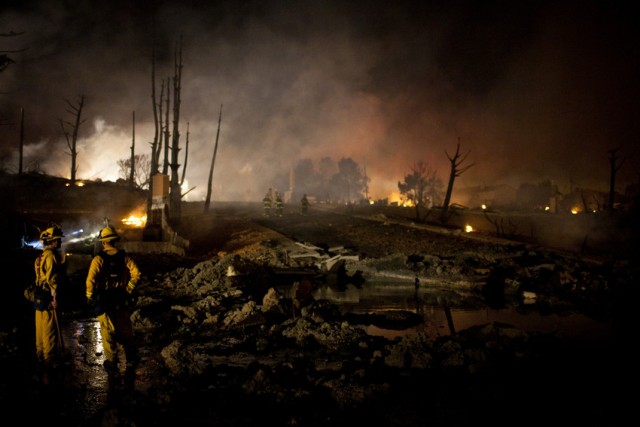
"caption": "A crater filled with water marks the site of the San Bruno pipeline explosion in September 2010. (Max Whittaker/Getty Images)",
"description": "A crater filled with water marks the site of the San Bruno pipeline explosion in September 2010. (Max Whittaker/Getty Images)",
"title": "SanBruno",
"credit": null,
"status": "inherit",
"isLoading": false,
"fetchFailed": false
},
"science_22009": {
"type": "attachments",
"id": "science_22009",
"meta": {
"index": "attachments_1716263798",
"site": "science",
"id": "22009",
"found": true
},
"parent": 21998,
"imgSizes": {
"kqedFullSize": {
"file": "https://ww2.kqed.org/app/uploads/sites/35/2014/09/computer-servers.jpg",
"width": 640,
"height": 360
}
},
"publishDate": 1411752533,
"modified": 1411752533,
"caption": null,
"description": null,
"title": "computer servers",
"credit": null,
"status": "inherit",
"isLoading": false,
"fetchFailed": false
},
"stateofhealth_17341": {
"type": "attachments",
"id": "stateofhealth_17341",
"meta": {
"index": "attachments_1716263798",
"site": "stateofhealth",
"id": "17341",
"found": true
},
"parent": 17339,
"imgSizes": {
"thumbnail": {
"file": "https://ww2.kqed.org/app/uploads/sites/27/2014/01/96525183-e1390846077644-400x266.jpg",
"width": 400,
"mimeType": "image/jpeg",
"height": 266
},
"fd-sm": {
"file": "https://ww2.kqed.org/app/uploads/sites/27/2014/01/96525183-e1390846077644-320x213.jpg",
"width": 320,
"mimeType": "image/jpeg",
"height": 213
},
"post-thumbnail": {
"file": "https://ww2.kqed.org/app/uploads/sites/27/2014/01/96525183-e1390846077644-641x372.jpg",
"width": 641,
"mimeType": "image/jpeg",
"height": 372
},
"kqedFullSize": {
"file": "https://ww2.kqed.org/app/uploads/sites/27/2014/01/96525183-e1390846077644.jpg",
"width": 641,
"height": 427
},
"guest-author-96": {
"file": "https://ww2.kqed.org/app/uploads/sites/27/2014/01/96525183-e1390846077644-96x96.jpg",
"width": 96,
"mimeType": "image/jpeg",
"height": 96
},
"guest-author-64": {
"file": "https://ww2.kqed.org/app/uploads/sites/27/2014/01/96525183-e1390846077644-64x64.jpg",
"width": 64,
"mimeType": "image/jpeg",
"height": 64
},
"detail": {
"file": "https://ww2.kqed.org/app/uploads/sites/27/2014/01/96525183-e1390846077644-75x75.jpg",
"width": 75,
"mimeType": "image/jpeg",
"height": 75
},
"guest-author-32": {
"file": "https://ww2.kqed.org/app/uploads/sites/27/2014/01/96525183-e1390846077644-32x32.jpg",
"width": 32,
"mimeType": "image/jpeg",
"height": 32
},
"guest-author-128": {
"file": "https://ww2.kqed.org/app/uploads/sites/27/2014/01/96525183-e1390846077644-128x128.jpg",
"width": 128,
"mimeType": "image/jpeg",
"height": 128
}
},
"publishDate": 1390846066,
"modified": 1510855532,
"caption": "The Anthem Blue Cross headquarters in Woodland Hills, California.",
"description": "The Anthem Blue Cross headquarters in Woodland Hills, California.",
"title": "96525183",
"credit": "David McNew/Getty Images",
"status": "inherit",
"isLoading": false,
"fetchFailed": false
},
"science_20521": {
"type": "attachments",
"id": "science_20521",
"meta": {
"index": "attachments_1716263798",
"site": "science",
"id": "20521",
"found": true
},
"parent": 20513,
"imgSizes": {
"kqedFullSize": {
"file": "https://ww2.kqed.org/app/uploads/sites/35/2014/08/14167-math_maryam.jpg",
"width": 600,
"height": 400
}
},
"publishDate": 1407888942,
"modified": 1407888942,
"caption": "Stanford mathematician Maryam Mirzakhani is the first woman to win the Fields Medal. (Courtesy of Maryam Mirzakhani)",
"description": "Stanford mathematician Maryam Mirzakhani is the first woman to win the Fields Medal. (Courtesy of Maryam Mirzakhani)",
"title": "14167-math_maryam",
"credit": null,
"status": "inherit",
"isLoading": false,
"fetchFailed": false
},
"science_20448": {
"type": "attachments",
"id": "science_20448",
"meta": {
"index": "attachments_1716263798",
"site": "science",
"id": "20448",
"found": true
},
"parent": 20440,
"imgSizes": {
"kqedFullSize": {
"file": "https://ww2.kqed.org/app/uploads/sites/35/2014/08/schizophrenia.jpg",
"width": 640,
"height": 360
}
},
"publishDate": 1407456975,
"modified": 1407456975,
"caption": "(Marvi Lacar/KQED)",
"description": null,
"title": "schizophrenia",
"credit": null,
"status": "inherit",
"isLoading": false,
"fetchFailed": false
},
"science_20033": {
"type": "attachments",
"id": "science_20033",
"meta": {
"index": "attachments_1716263798",
"site": "science",
"id": "20033",
"found": true
},
"parent": 20012,
"imgSizes": {
"kqedFullSize": {
"file": "https://ww2.kqed.org/app/uploads/sites/35/2014/07/groundwaterpump.jpg",
"width": 640,
"height": 360
}
},
"publishDate": 1406768655,
"modified": 1406768655,
"caption": null,
"description": null,
"title": "groundwaterpump",
"credit": null,
"status": "inherit",
"isLoading": false,
"fetchFailed": false
},
"news_139037": {
"type": "attachments",
"id": "news_139037",
"meta": {
"index": "attachments_1716263798",
"site": "news",
"id": "139037",
"found": true
},
"parent": 138992,
"imgSizes": {
"kqedFullSize": {
"file": "https://ww2.kqed.org/app/uploads/sites/10/2014/06/photo-2.jpg",
"width": 640,
"height": 369
}
},
"publishDate": 1402620384,
"modified": 1402620384,
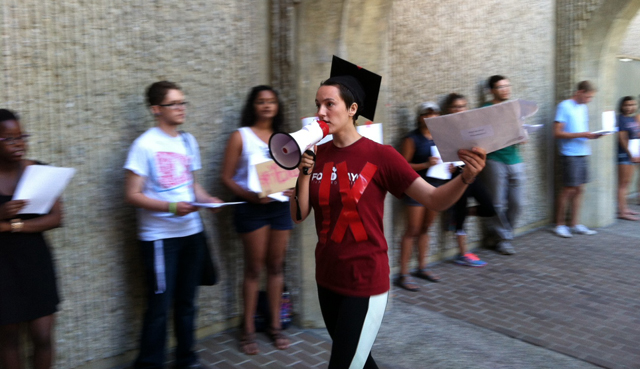
"caption": "Leah Francis hands out fliers at a June 12th protest against Stanford's policies on sexual assault. (Peter Jon Shuler/KQED)",
"description": null,
"title": "photo (2)",
"credit": null,
"status": "inherit",
"isLoading": false,
"fetchFailed": false
},
"news_130795": {
"type": "attachments",
"id": "news_130795",
"meta": {
"index": "attachments_1716263798",
"site": "news",
"id": "130795",
"found": true
},
"parent": 130789,
"imgSizes": {
"kqedFullSize": {
"file": "https://ww2.kqed.org/app/uploads/sites/10/2014/03/480962023.jpg",
"width": 1516,
"height": 1038
}
},
"publishDate": 1395975013,
"modified": 1395975013,
"caption": "Stanford's Josh Huestis after the Cardinal lost to Dayton in the NCAA men's basketball tournament Thursday night. (Kevin C. Cox/Getty Images)",
"description": "Stanford's Josh Huestis after the Cardinal lost to Dayton in the NCAA men's basketball tournament Thursday night. (Kevin C. Cox/Getty Images)",
"title": "Stanford Cardinal-March Madness",
"credit": null,
"status": "inherit",
"isLoading": false,
"fetchFailed": false
},
"news_130193": {
"type": "attachments",
"id": "news_130193",
"meta": {
"index": "attachments_1716263798",
"site": "news",
"id": "130193",
"found": true
},
"parent": 130190,
"imgSizes": {
"kqedFullSize": {
"file": "https://ww2.kqed.org/app/uploads/sites/10/2014/03/IMG_5109-e1395602579976.jpg",
"width": 640,
"height": 532
}
},
"publishDate": 1395602430,
"modified": 1395602430,
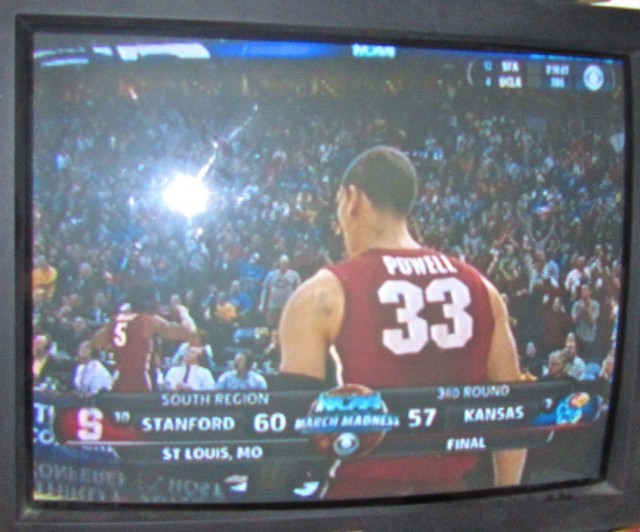
"caption": "Stanford prevailed over Kansas, 60-57. (David Weir/KQED)",
"description": null,
"title": "IMG_5109",
"credit": null,
"status": "inherit",
"isLoading": false,
"fetchFailed": false
}
},
"audioPlayerReducer": {
"postId": "stream_live",
"isPaused": true,
"isPlaying": false,
"pfsActive": false,
"pledgeModalIsOpen": true,
"playerDrawerIsOpen": false,
"liveAudioPlayStartedAt": 0,
"liveAudioPlayContext": ""
},
"authorsReducer": {
"byline_news_10493594": {
"type": "authors",
"id": "byline_news_10493594",
"meta": {
"override": true
},
"slug": "byline_news_10493594",
"name": "Sindya Bhanoo",
"isLoading": false
},
"mollysamuel": {
"type": "authors",
"id": "200",
"meta": {
"index": "authors_1716337520",
"id": "200",
"found": true
},
"name": "Molly Samuel",
"firstName": "Molly",
"lastName": "Samuel",
"slug": "mollysamuel",
"email": "msamuel@kqed.org",
"display_author_email": false,
"staff_mastheads": [],
"title": null,
"bio": "Molly Samuel joined KQED as an intern in 2007, and since then has worked here as a reporter, producer, director and blogger. Before becoming KQED Science’s Multimedia Producer, she was a producer for Climate Watch. Molly has also reported for NPR, KALW and High Country News, and has produced audio stories for The Encyclopedia of Life and the Oakland Museum of California. She was a fellow with the Middlebury Fellowships in Environmental Journalism and a journalist-in-residence at the National Evolutionary Synthesis Center. Molly has a degree in Ancient Greek from Oberlin College and is a co-founder of the record label True Panther Sounds.",
"avatar": "https://secure.gravatar.com/avatar/a6abd3b949a89fe5109fa9917631d0b6?s=600&d=blank&r=g",
"twitter": null,
"facebook": null,
"instagram": null,
"linkedin": null,
"sites": [
{
"site": "news",
"roles": [
"subscriber"
]
},
{
"site": "stateofhealth",
"roles": [
"subscriber"
]
},
{
"site": "science",
"roles": [
"subscriber"
]
},
{
"site": "quest",
"roles": [
"edit_users",
"subscriber"
]
}
],
"headData": {
"title": "Molly Samuel | KQED",
"description": null,
"ogImgSrc": "https://secure.gravatar.com/avatar/a6abd3b949a89fe5109fa9917631d0b6?s=600&d=blank&r=g",
"twImgSrc": "https://secure.gravatar.com/avatar/a6abd3b949a89fe5109fa9917631d0b6?s=600&d=blank&r=g"
},
"isLoading": false,
"link": "/author/mollysamuel"
},
"amystanden": {
"type": "authors",
"id": "210",
"meta": {
"index": "authors_1716337520",
"id": "210",
"found": true
},
"name": "Amy Standen",
"firstName": "Amy",
"lastName": "Standen",
"slug": "amystanden",
"email": "astanden@kqed.org",
"display_author_email": false,
"staff_mastheads": [],
"title": "KQED Contributor",
"bio": "Amy Standen (@amystanden) is co-host of #\u003ca href=\"https://ww2.kqed.org/news/programs/the-leap\">TheLeapPodcast\u003c/a> (subscribe on iTunes or Stitcher!) and host of KQED and PBSDigital Studios' science video series, \u003ca href=\"https://www.youtube.com/user/KQEDDeepLook\">Deep Look\u003c/a>. Her science radio stories appear on KQED and NPR.\r\n\r\nEmail her at astanden@kqed.org",
"avatar": "https://secure.gravatar.com/avatar/3d021b72de685a788b0487b059d0a6a1?s=600&d=blank&r=g",
"twitter": null,
"facebook": null,
"instagram": null,
"linkedin": null,
"sites": [
{
"site": "news",
"roles": [
"subscriber"
]
},
{
"site": "futureofyou",
"roles": [
"subscriber"
]
},
{
"site": "stateofhealth",
"roles": [
"subscriber"
]
},
{
"site": "science",
"roles": []
},
{
"site": "quest",
"roles": [
"subscriber"
]
}
],
"headData": {
"title": "Amy Standen | KQED",
"description": "KQED Contributor",
"ogImgSrc": "https://secure.gravatar.com/avatar/3d021b72de685a788b0487b059d0a6a1?s=600&d=blank&r=g",
"twImgSrc": "https://secure.gravatar.com/avatar/3d021b72de685a788b0487b059d0a6a1?s=600&d=blank&r=g"
},
"isLoading": false,
"link": "/author/amystanden"
},
"cmiller": {
"type": "authors",
"id": "221",
"meta": {
"index": "authors_1716337520",
"id": "221",
"found": true
},
"name": "Craig Miller",
"firstName": "Craig",
"lastName": "Miller",
"slug": "cmiller",
"email": "craig@voxterra.net",
"display_author_email": false,
"staff_mastheads": [
"science"
],
"title": "Editor Emeritus, Science",
"bio": "Craig is a former KQED Science editor, specializing in weather, climate, water & energy issues, with a little seismology thrown in just to shake things up. Prior to that, he launched and led the station's award-winning multimedia project, Climate Watch. Craig is also an accomplished writer/producer of television documentaries, with a focus on natural resource issues.",
"avatar": "https://secure.gravatar.com/avatar/b91661df645e001a9cafe0861fa685f9?s=600&d=blank&r=g",
"twitter": "voxterra",
"facebook": null,
"instagram": null,
"linkedin": null,
"sites": [
{
"site": "news",
"roles": [
"author"
]
},
{
"site": "futureofyou",
"roles": [
"editor"
]
},
{
"site": "stateofhealth",
"roles": [
"author"
]
},
{
"site": "science",
"roles": [
"editor"
]
},
{
"site": "quest",
"roles": [
"editor"
]
}
],
"headData": {
"title": "Craig Miller | KQED",
"description": "Editor Emeritus, Science",
"ogImgSrc": "https://secure.gravatar.com/avatar/b91661df645e001a9cafe0861fa685f9?s=600&d=blank&r=g",
"twImgSrc": "https://secure.gravatar.com/avatar/b91661df645e001a9cafe0861fa685f9?s=600&d=blank&r=g"
},
"isLoading": false,
"link": "/author/cmiller"
},
"danbrekke": {
"type": "authors",
"id": "222",
"meta": {
"index": "authors_1716337520",
"id": "222",
"found": true
},
"name": "Dan Brekke",
"firstName": "Dan",
"lastName": "Brekke",
"slug": "danbrekke",
"email": "dbrekke@kqed.org",
"display_author_email": true,
"staff_mastheads": [
"news",
"science"
],
"title": "KQED Editor and Reporter",
"bio": "Dan Brekke is a reporter and editor for KQED News, responsible for coverage of topics ranging from California water issues to the Bay Area's transportation challenges. In a newsroom career that began in Chicago in 1972, Dan has worked for \u003cem>The San Francisco Examiner,\u003c/em> Wired and TechTV and has been published in The New York Times, The New York Times Magazine, Business 2.0, Salon and elsewhere.\r\n\r\nSince joining KQED in 2007, Dan has reported, edited and produced both radio and online features and breaking news pieces. He has shared as both editor and reporter in four Society of Professional Journalists Norcal Excellence in Journalism awards and one Edward R. Murrow regional award. He was chosen for a spring 2017 residency at the Mesa Refuge to advance his research on California salmon.\r\n\r\nEmail Dan at: \u003ca href=\"mailto:dbrekke@kqed.org\">dbrekke@kqed.org\u003c/a>\r\n\r\n\u003cstrong>Twitter:\u003c/strong> \u003ca href=\"https://twitter.com/danbrekke\" rel=\"noopener noreferrer\">twitter.com/danbrekke\u003c/a>\r\n\u003cstrong>Facebook:\u003c/strong> \u003ca href=\"https://www.facebook.com/danbrekke\" rel=\"noopener noreferrer\">www.facebook.com/danbrekke\u003c/a>\r\n\u003cstrong>LinkedIn:\u003c/strong> \u003ca href=\"https://www.linkedin.com/in/danbrekke\" rel=\"noopener noreferrer\">www.linkedin.com/in/danbrekke\u003c/a>",
"avatar": "https://secure.gravatar.com/avatar/8f1f0d2a978fb3b23426c922c7e2af558fa36905b49c4ce76a97dc3c72d27226?s=600&d=mm&r=g",
"twitter": "danbrekke",
"bluesky": null,
"facebook": null,
"instagram": "https://www.instagram.com/dan.brekke/",
"linkedin": "https://www.linkedin.com/in/danbrekke/",
"sites": [
{
"site": "news",
"roles": [
"administrator",
"create_posts"
]
},
{
"site": "stateofhealth",
"roles": [
"editor"
]
},
{
"site": "science",
"roles": [
"editor"
]
},
{
"site": "quest",
"roles": [
"contributor"
]
},
{
"site": "food",
"roles": [
"contributor"
]
},
{
"site": "forum",
"roles": [
"contributor"
]
},
{
"site": "elections",
"roles": [
"editor"
]
},
{
"site": "liveblog",
"roles": [
"editor"
]
}
],
"headData": {
"title": "Dan Brekke | KQED",
"description": "KQED Editor and Reporter",
"ogImgSrc": "https://secure.gravatar.com/avatar/8f1f0d2a978fb3b23426c922c7e2af558fa36905b49c4ce76a97dc3c72d27226?s=600&d=mm&r=g",
"twImgSrc": "https://secure.gravatar.com/avatar/8f1f0d2a978fb3b23426c922c7e2af558fa36905b49c4ce76a97dc3c72d27226?s=600&d=mm&r=g"
},
"isLoading": false,
"link": "/author/danbrekke"
},
"davidweir": {
"type": "authors",
"id": "223",
"meta": {
"index": "authors_1716337520",
"id": "223",
"found": true
},
"name": "David Weir",
"firstName": "David",
"lastName": "Weir",
"slug": "davidweir",
"email": "dweir@kqed.org",
"display_author_email": false,
"staff_mastheads": [],
"title": "KQED Contributor",
"bio": "David Weir is KQED's senior editor for digital news. He previously worked at \u003cem>Rolling Stone,\u003c/em> Salon, Wired Digital, Excite@Home,\u003cem> Mother Jones,\u003c/em> and as a co-founder and executive director of the Center for Investigative Reporting.\r\n\r\nOver the past 40 years, he and his teams have won dozens of awards, including a National Magazine Award, an IRE Award and a Webby. He has authored or co-authored four books, including (with Mark Schapiro) \u003cem>Circle of Poison.\u003c/em>\r\n\r\nHe has a ba\u003cspan class=\"example\">chelor's degree\u003c/span> in journalism from the University of Michigan, and has taught journalism at the University of California at Berkeley, Stanford and San Francisco State.",
"avatar": "https://secure.gravatar.com/avatar/c6642c16c4d2d2de5e6f067edf92b9c8?s=600&d=blank&r=g",
"twitter": null,
"facebook": null,
"instagram": null,
"linkedin": null,
"sites": [
{
"site": "arts",
"roles": [
"editor"
]
},
{
"site": "news",
"roles": [
"subscriber"
]
},
{
"site": "lowdown",
"roles": [
"editor"
]
},
{
"site": "stateofhealth",
"roles": [
"administrator"
]
},
{
"site": "science",
"roles": [
"editor"
]
}
],
"headData": {
"title": "David Weir | KQED",
"description": "KQED Contributor",
"ogImgSrc": "https://secure.gravatar.com/avatar/c6642c16c4d2d2de5e6f067edf92b9c8?s=600&d=blank&r=g",
"twImgSrc": "https://secure.gravatar.com/avatar/c6642c16c4d2d2de5e6f067edf92b9c8?s=600&d=blank&r=g"
},
"isLoading": false,
"link": "/author/davidweir"
},
"kqed": {
"type": "authors",
"id": "236",
"meta": {
"index": "authors_1716337520",
"id": "236",
"found": true
},
"name": "KQED News Staff",
"firstName": "KQED News Staff",
"lastName": null,
"slug": "kqed",
"email": "faq@kqed.org",
"display_author_email": false,
"staff_mastheads": [],
"title": null,
"bio": null,
"avatar": "https://secure.gravatar.com/avatar/ef0e801a68c4c54afa9180db14084167?s=600&d=blank&r=g",
"twitter": null,
"facebook": null,
"instagram": null,
"linkedin": null,
"sites": [
{
"site": "arts",
"roles": [
"contributor"
]
},
{
"site": "news",
"roles": [
"editor"
]
},
{
"site": "futureofyou",
"roles": [
"author"
]
}
],
"headData": {
"title": "KQED News Staff | KQED",
"description": null,
"ogImgSrc": "https://secure.gravatar.com/avatar/ef0e801a68c4c54afa9180db14084167?s=600&d=blank&r=g",
"twImgSrc": "https://secure.gravatar.com/avatar/ef0e801a68c4c54afa9180db14084167?s=600&d=blank&r=g"
},
"isLoading": false,
"link": "/author/kqed"
},
"laurensommer": {
"type": "authors",
"id": "239",
"meta": {
"index": "authors_1716337520",
"id": "239",
"found": true
},
"name": "Lauren Sommer",
"firstName": "Lauren",
"lastName": "Sommer",
"slug": "laurensommer",
"email": "lsommer@kqed.org",
"display_author_email": false,
"staff_mastheads": [],
"title": "KQED Contributor",
"bio": "Lauren is a radio reporter formerly covering environment, water, and energy for KQED Science. As part of her day job, she has scaled Sierra Nevada peaks, run from charging elephant seals, and desperately tried to get her sea legs - all in pursuit of good radio. Her work has appeared on Marketplace, Living on Earth, Science Friday and NPR's Morning Edition and All Things Considered. You can find her on Twitter at \u003ca href=\"https://twitter.com/lesommer\">@lesommer\u003c/a>.",
"avatar": "https://secure.gravatar.com/avatar/33aa3772bb86c6ad45b8aca6a238bbdf?s=600&d=blank&r=g",
"twitter": null,
"facebook": null,
"instagram": null,
"linkedin": null,
"sites": [
{
"site": "news",
"roles": [
"author"
]
},
{
"site": "science",
"roles": [
"editor",
"manage_content_types",
"manage_taxonomies"
]
},
{
"site": "quest",
"roles": [
"editor"
]
}
],
"headData": {
"title": "Lauren Sommer | KQED",
"description": "KQED Contributor",
"ogImgSrc": "https://secure.gravatar.com/avatar/33aa3772bb86c6ad45b8aca6a238bbdf?s=600&d=blank&r=g",
"twImgSrc": "https://secure.gravatar.com/avatar/33aa3772bb86c6ad45b8aca6a238bbdf?s=600&d=blank&r=g"
},
"isLoading": false,
"link": "/author/laurensommer"
},
"lisaaliferis": {
"type": "authors",
"id": "240",
"meta": {
"index": "authors_1716337520",
"id": "240",
"found": true
},
"name": "Lisa Aliferis",
"firstName": "Lisa",
"lastName": "Aliferis",
"slug": "lisaaliferis",
"email": "laliferis@kqed.org",
"display_author_email": false,
"staff_mastheads": [],
"title": "KQED Contributor",
"bio": "Lisa Aliferis is the founding editor of KQED's \u003cem>State of Health\u003c/em> blog. Since 2011, she's been writing and editing stories for the site. Before taking up blogging, she toiled for many years (more than we can count) producing health stories for television, including\u003cem> Dateline NBC\u003c/em> and San Francisco's CBS affiliate, KPIX-TV. She also wrote up a \u003ca title=\"http://www.kqed.org/news/health/obamacare/obamacare-guide.jsp\" href=\"http://www.kqed.org/news/health/obamacare/obamacare-guide.jsp\">handy guide to the Affordable Care Act\u003c/a>, especially for Californians. Her work has been honored for many awards. Most recently she was a finalist for \"Best Topical Reporting\" from the Online News Association. You can follow her on Twitter: \u003ca title=\"https://twitter.com/laliferis\" href=\"https://twitter.com/laliferis\">@laliferis\u003c/a>",
"avatar": "https://secure.gravatar.com/avatar/86c339d5cdcb0dcd2b6cf5d7c3f5886b?s=600&d=mm&r=g",
"twitter": "laliferis",
"facebook": null,
"instagram": null,
"linkedin": null,
"sites": [
{
"site": "news",
"roles": [
"subscriber"
]
},
{
"site": "futureofyou",
"roles": [
"subscriber"
]
},
{
"site": "stateofhealth",
"roles": [
"subscriber"
]
},
{
"site": "science",
"roles": [
"subscriber"
]
},
{
"site": "food",
"roles": []
}
],
"headData": {
"title": "Lisa Aliferis | KQED",
"description": "KQED Contributor",
"ogImgSrc": "https://secure.gravatar.com/avatar/86c339d5cdcb0dcd2b6cf5d7c3f5886b?s=600&d=mm&r=g",
"twImgSrc": "https://secure.gravatar.com/avatar/86c339d5cdcb0dcd2b6cf5d7c3f5886b?s=600&d=mm&r=g"
},
"isLoading": false,
"link": "/author/lisaaliferis"
},
"wjonassen": {
"type": "authors",
"id": "261",
"meta": {
"index": "authors_1716337520",
"id": "261",
"found": true
},
"name": "Wendi Jonassen",
"firstName": "Wendi",
"lastName": "Jonassen",
"slug": "wjonassen",
"email": "wendi.jonassen@gmail.com",
"display_author_email": false,
"staff_mastheads": [],
"title": "KQED Contributor",
"bio": null,
"avatar": "https://secure.gravatar.com/avatar/86a296c54acbd8b7edba69d44d70f06d?s=600&d=blank&r=g",
"twitter": null,
"facebook": null,
"instagram": null,
"linkedin": null,
"sites": [
{
"site": "news",
"roles": [
"subscriber"
]
}
],
"headData": {
"title": "Wendi Jonassen | KQED",
"description": "KQED Contributor",
"ogImgSrc": "https://secure.gravatar.com/avatar/86a296c54acbd8b7edba69d44d70f06d?s=600&d=blank&r=g",
"twImgSrc": "https://secure.gravatar.com/avatar/86a296c54acbd8b7edba69d44d70f06d?s=600&d=blank&r=g"
},
"isLoading": false,
"link": "/author/wjonassen"
},
"adembosky": {
"type": "authors",
"id": "3205",
"meta": {
"index": "authors_1716337520",
"id": "3205",
"found": true
},
"name": "April Dembosky",
"firstName": "April",
"lastName": "Dembosky",
"slug": "adembosky",
"email": "adembosky@kqed.org",
"display_author_email": false,
"staff_mastheads": [
"news",
"science"
],
"title": "KQED Health Correspondent",
"bio": "April Dembosky is the health correspondent for KQED News and a regular contributor to NPR. She specializes in covering altered states of mind, from postpartum depression to methamphetamine-induced psychosis to the insanity defense. Her investigative series on insurance companies sidestepping mental health laws won multiple awards, including first place in beat reporting from the national Association of Health Care Journalists. She is the recipient of numerous other prizes and fellowships, including a national Edward R. Murrow award for investigative reporting, a Society of Professional Journalists award for long-form storytelling, and a Carter Center Fellowship for Mental Health Journalism.\r\n\r\nDembosky reported and produced \u003cem>Soundtrack of Silence\u003c/em>, an audio documentary about music and memory that is currently being made into a feature film by Paramount Pictures.\r\n\r\nBefore joining KQED in 2013, Dembosky covered technology and Silicon Valley for \u003cem>The Financial Times of London,\u003c/em> and contributed business and arts stories to \u003cem>Marketplace \u003c/em>and \u003cem>The New York Times.\u003c/em> She got her undergraduate degree in philosophy from Smith College and her master's in journalism from the University of California, Berkeley. She is a classically trained violinist and proud alum of the first symphony orchestra at Burning Man.",
"avatar": "https://secure.gravatar.com/avatar/ef92999be4ceb9ea60701e7dc276f813?s=600&d=blank&r=g",
"twitter": "adembosky",
"facebook": null,
"instagram": null,
"linkedin": null,
"sites": [
{
"site": "arts",
"roles": [
"author"
]
},
{
"site": "news",
"roles": [
"editor"
]
},
{
"site": "futureofyou",
"roles": [
"author"
]
},
{
"site": "stateofhealth",
"roles": [
"editor"
]
},
{
"site": "science",
"roles": [
"editor"
]
},
{
"site": "forum",
"roles": [
"editor"
]
}
],
"headData": {
"title": "April Dembosky | KQED",
"description": "KQED Health Correspondent",
"ogImgSrc": "https://secure.gravatar.com/avatar/ef92999be4ceb9ea60701e7dc276f813?s=600&d=blank&r=g",
"twImgSrc": "https://secure.gravatar.com/avatar/ef92999be4ceb9ea60701e7dc276f813?s=600&d=blank&r=g"
},
"isLoading": false,
"link": "/author/adembosky"
}
},
"pagesReducer": {
"news_tag_stanford": {
"type": "terms",
"id": "news_178",
"meta": {
"index": "terms_1716263798",
"site": "news",
"id": "178",
"score": 8.367239
},
"featImg": null,
"name": "Stanford",
"description": null,
"taxonomy": "tag",
"headData": {
"twImgId": null,
"twTitle": null,
"ogTitle": null,
"ogImgId": null,
"twDescription": null,
"description": null,
"title": "Stanford Archives | KQED News",
"ogDescription": null
},
"ttid": 185,
"slug": "stanford",
"isLoading": false,
"title": "Stanford",
"pageMeta": {
"site": "news",
"WpPageTemplate": "page-topic-editorial",
"currentPage": 9
},
"blocks": [
{
"blockName": "kqed/post-list",
"attrs": {
"layout": "cardArticle2",
"query": "posts/news?tag=stanford",
"seeMore": false,
"paginated": true,
"page": 9
}
},
{
"blockName": "kqed/ad"
}
]
}
},
"pfsSessionReducer": {},
"postsReducer": {
"stream_live": {
"type": "live",
"id": "stream_live",
"audioUrl": "https://streams.kqed.org/kqedradio",
"title": "Live Stream",
"excerpt": "Live Stream information currently unavailable.",
"link": "/radio",
"featImg": "",
"label": {
"name": "KQED Live",
"link": "/"
}
},
"stream_kqedNewscast": {
"type": "posts",
"id": "stream_kqedNewscast",
"audioUrl": "https://www.kqed.org/.stream/anon/radio/RDnews/newscast.mp3?_=1",
"title": "KQED Newscast",
"featImg": "",
"label": {
"name": "88.5 FM",
"link": "/"
}
},
"news_10500136": {
"type": "posts",
"id": "news_10500136",
"meta": {
"index": "posts_1716263798",
"site": "news",
"id": "10500136",
"score": null,
"sort": [
1429974035000
]
},
"parent": 0,
"labelTerm": {
"site": "news",
"term": 72
},
"blocks": [],
"publishDate": 1429974035,
"format": "standard",
"disqusTitle": "Behind the Scenes at the Stanford Laptop Orchestra",
"title": "Behind the Scenes at the Stanford Laptop Orchestra",
"headTitle": "The California Report | KQED News",
"content": "\u003cp>Madeline Huberth could play Beethoven with the best of them. She studied cello in college and planned on going professional.\u003c/p>\n\u003cp>But then she started to get shooting pains in her left hand when she practiced. Her fingers were tingling. And surgery did nothing to help.\u003c/p>\n\u003cp>“I started losing muscle mass in my hand,” Huberth says.\u003c/p>\n\u003cp>By graduation, she couldn’t lift her pinky anymore or stretch her index finger back to play B flat.\u003c/p>\n\u003cp>[soundcloud url=\"https://api.soundcloud.com/tracks/202439110\" params=\"color=ff5500&auto_play=false&hide_related=false&show_comments=true&show_user=true&show_reposts=false\" width=\"100%\" height=\"166\" iframe=\"true\" /]\u003c/p>\n\u003cp>“It became very apparent at the end of college that I couldn’t pursue performance anymore,” she says.\u003c/p>\n\u003cp>[ad fullwidth]\u003c/p>\n\u003cp>Huberth threw herself into studying the science of music. She’s now a Ph.D. student at Stanford University’s \u003ca href=\"https://ccrma.stanford.edu/\" target=\"_blank\">Center for Computer Research in Music and Acoustics\u003c/a>, where she’s become adept at a new musical instrument: her laptop.\u003c/p>\n\u003cp>“Using a laptop, you can do anything that isn’t even physically possible,” she explains. “You can have an incredibly wide vibrato. Or you could simulate the sound of a string that’s the length of the building,” to produce an incredibly low pitch.\u003c/p>\n\u003cp>Today, Huberth is the teaching assistant for the \u003ca href=\"http://slork.stanford.edu/\" target=\"_blank\">Stanford Laptop Orchestra\u003c/a>. This is a class that meets Wednesday nights during the spring semester. Students write code to create their own instrument on the computer, which they will score into a full orchestral work by the end of the semester.\u003c/p>\n\u003cp>https://www.youtube.com/watch?v=c1f1DATjZUg\u003c/p>\n\u003cp>Several students in the class have a musical background, like Huberth, while several others come from computer science or engineering.\u003c/p>\n\u003cp>“I studied physics and I have kind of a tech background,” graduate student Tim O’Brien says. “But I loved music all my life, so it kind of combines everything.”\u003c/p>\n\u003cp>At a recent class meeting, he and 13 other students sat on rows of meditation pillows, fixing code on their laptops and fiddling with speakers made out of IKEA salad bowls.\u003c/p>\n\u003cp>They rehearsed ensemble pieces that they will perform at an \u003ca href=\"http://slork.stanford.edu/events/2015/slorktastic/\">upcoming chamber concert\u003c/a>, and demonstrated their individual solo instruments.\u003c/p>\n\u003cp>O’Brien began his demo by taking a big breath and blowing softly into his laptop. Then he jingled his car keys over the keyboard and tapped his water bottle. He programmed his computer’s microphone to translate these human actions into a morphed, electronic sound. The class loved it. And so did the orchestra director.\u003c/p>\n\u003cfigure id=\"attachment_10500180\" class=\"wp-caption aligncenter\" style=\"max-width: 1920px\">\u003ca href=\"http://ww2.kqed.org/news/wp-content/uploads/sites/10/2015/04/photo4.jpg\">\u003cimg class=\"wp-image-10500180\" src=\"http://ww2.kqed.org/news/wp-content/uploads/sites/10/2015/04/photo4.jpg\" alt=\"Ge Wang, assistant professor of music at Stanford's Center for Computer Research in Music and Acoustics, teaches a music coding lesson to students participating in the Stanford Laptop Orchestra.\" width=\"1920\" height=\"1440\" srcset=\"https://ww2.kqed.org/app/uploads/sites/10/2015/04/photo4.jpg 3264w, https://ww2.kqed.org/app/uploads/sites/10/2015/04/photo4-400x300.jpg 400w, https://ww2.kqed.org/app/uploads/sites/10/2015/04/photo4-800x600.jpg 800w, https://ww2.kqed.org/app/uploads/sites/10/2015/04/photo4-1440x1080.jpg 1440w, https://ww2.kqed.org/app/uploads/sites/10/2015/04/photo4-1180x885.jpg 1180w, https://ww2.kqed.org/app/uploads/sites/10/2015/04/photo4-960x720.jpg 960w\" sizes=\"(max-width: 1920px) 100vw, 1920px\">\u003c/a>\u003cfigcaption class=\"wp-caption-text\">Ge Wang, assistant professor of music at Stanford's Center for Computer Research in Music and Acoustics, teaches a music coding lesson to students participating in the Stanford Laptop Orchestra. \u003ccite>(April Dembosky)\u003c/cite>\u003c/figcaption>\u003c/figure>\n\u003cp>“That was nothing short of magical,” says Ge Wang, assistant professor of music at Stanford. “Tim was able to really find this mix where human meets machine. And in that way, it was like this dialogue. But what came out of the computer was a sound that would not come anywhere except through a computer.”\u003c/p>\n\u003cp>Wang and Huberth also like when students get physical with the medium. For example, one student is programming an armband to produce sounds when he stretches or clenches his hand. Other students use Gametraks, little black boxes originally used as a video game control, that have two red retractable cables. Students connect them to their laptops and program them to produce different notes or rhythms when they pull them up, down, left or right.\u003c/p>\n\u003cp>“We can rapidly prototype physical gestures, interactions and map them to sound,” Wang explains. “It enables a way to quickly explore a whole world of new sounds, interactions, and performance practices.”\u003c/p>\n\u003cfigure id=\"attachment_10500181\" class=\"wp-caption alignright\" style=\"max-width: 1920px\">\u003ca href=\"http://ww2.kqed.org/news/wp-content/uploads/sites/10/2015/04/laptop-orchestra-5.jpg\">\u003cimg class=\"wp-image-10500181\" src=\"http://ww2.kqed.org/news/wp-content/uploads/sites/10/2015/04/laptop-orchestra-5.jpg\" alt=\" Erica Fearon demonstrates a piece of music she composed on her laptop. She programmed the cables to make different sounds when she moved them in different directions.\" width=\"1920\" height=\"2560\" srcset=\"https://ww2.kqed.org/app/uploads/sites/10/2015/04/laptop-orchestra-5.jpg 2448w, https://ww2.kqed.org/app/uploads/sites/10/2015/04/laptop-orchestra-5-400x533.jpg 400w, https://ww2.kqed.org/app/uploads/sites/10/2015/04/laptop-orchestra-5-800x1067.jpg 800w, https://ww2.kqed.org/app/uploads/sites/10/2015/04/laptop-orchestra-5-1440x1920.jpg 1440w, https://ww2.kqed.org/app/uploads/sites/10/2015/04/laptop-orchestra-5-1180x1573.jpg 1180w, https://ww2.kqed.org/app/uploads/sites/10/2015/04/laptop-orchestra-5-960x1280.jpg 960w\" sizes=\"(max-width: 1920px) 100vw, 1920px\">\u003c/a>\u003cfigcaption class=\"wp-caption-text\">Erica Fearon demonstrates a piece of music she composed on her laptop. She programmed the cables to make different sounds when she moved them in different directions. \u003ccite>(April Dembosky)\u003c/cite>\u003c/figcaption>\u003c/figure>\n\u003cp>Wang says this makes for a better experience for the audience – one that is both pleasing to listen to and also interesting to watch.\u003c/p>\n\u003cp>He says this is one of the ways laptop orchestra is evolving as a medium. Wang was a founding member of the first laptop orchestra, launched at Princeton University 10 years ago. He started the Stanford Laptop Orchestra, known affectionately as Slork, in 2008. Today, there are more than 70 laptop orchestras, but Wang says they’re still really just beginning.\u003c/p>\n\u003cp>“Ten years may be a long time in computer years. To really make it into an art form, it’s still quite early,” Wang says.\u003c/p>\n\u003cp>But some more advanced laptop musicians are pushing boundaries. Madeline Huberth helped form a chamber group called Sidelobe, which meets year-round and works on reinterpreting earlier compositions, choosing from a young but growing library of more than 300 works.\u003c/p>\n\u003cp>“We’ve been pulling pieces from the canon, from the laptop orchestra canon,” Huberth says. “Pieces that have done very well, that have been written by more seasoned composers, and we’re giving these performances new life.”\u003c/p>\n\u003cp>The biggest challenge laptop musicians face is the same challenge all artists confront, Wang says.\u003c/p>\n\u003cp>“Whether a violin, cello, piano or a laptop, we’re all looking for a different way to represent that spark of humanity,” he says.\u003c/p>\n\u003cp>\u003c/p>\n\u003cp>\u003cem>The Stanford Laptop Orchestra will perform a chamber music concert on April 30 and a full orchestral concert on May 30. The \u003c/em>\u003ca href=\"http://slork.stanford.edu/events/2015/slorktastic/\">\u003cem>events\u003c/em>\u003c/a>\u003cem> are both free and open to the public. \u003c/em>\u003c/p>\n\n",
"disqusIdentifier": "10500136 http://ww2.kqed.org/news/?p=10500136",
"disqusUrl": "https://ww2.kqed.org/news/2015/04/25/behind-the-scenes-at-the-stanford-laptop-orchestra/",
"stats": {
"hasVideo": true,
"hasChartOrMap": false,
"hasAudio": false,
"hasPolis": false,
"wordCount": 944,
"hasGoogleForm": false,
"hasGallery": false,
"hasHearkenModule": false,
"iframeSrcs": [],
"paragraphCount": 27
},
"modified": 1429938137,
"excerpt": "'Using a laptop, you can do anything that isn’t even physically possible.'",
"headData": {
"twImgId": "",
"twTitle": "",
"ogTitle": "",
"ogImgId": "",
"twDescription": "",
"description": "'Using a laptop, you can do anything that isn’t even physically possible.'",
"title": "Behind the Scenes at the Stanford Laptop Orchestra | KQED",
"ogDescription": "",
"schema": {
"@context": "https://schema.org",
"@type": "NewsArticle",
"headline": "Behind the Scenes at the Stanford Laptop Orchestra",
"datePublished": "2015-04-25T08:00:35-07:00",
"dateModified": "2015-04-24T22:02:17-07:00",
"image": "https://cdn.kqed.org/wp-content/uploads/2020/02/KQED-OG-Image@1x.png",
"isAccessibleForFree": "True",
"publisher": {
"@type": "NewsMediaOrganization",
"@id": "https://www.kqed.org/#organization",
"name": "KQED",
"logo": "https://cdn.kqed.org/wp-content/uploads/2020/02/KQED-OG-Image@1x.png",
"url": "https://www.kqed.org",
"sameAs": [
"https://www.facebook.com/KQED",
"https://twitter.com/KQED",
"https://www.instagram.com/kqed/",
"https://www.tiktok.com/@kqedofficial",
"https://www.linkedin.com/company/kqed",
"https://www.youtube.com/channel/UCeC0IOo7i1P_61zVUWbJ4nw"
]
}
}
},
"guestAuthors": [],
"slug": "behind-the-scenes-at-the-stanford-laptop-orchestra",
"status": "publish",
"path": "/news/10500136/behind-the-scenes-at-the-stanford-laptop-orchestra",
"audioTrackLength": null,
"parsedContent": [
{
"type": "contentString",
"content": "\u003cdiv class=\"post-body\">\u003cp>\u003cp>Madeline Huberth could play Beethoven with the best of them. She studied cello in college and planned on going professional.\u003c/p>\n\u003cp>But then she started to get shooting pains in her left hand when she practiced. Her fingers were tingling. And surgery did nothing to help.\u003c/p>\n\u003cp>“I started losing muscle mass in my hand,” Huberth says.\u003c/p>\n\u003cp>By graduation, she couldn’t lift her pinky anymore or stretch her index finger back to play B flat.\u003c/p>\n\u003cp>\u003c/p>\u003cp>\u003cdiv class='utils-parseShortcode-shortcodes-__shortcodes__shortcodeWrapper'>\n \u003ciframe width='100%' height='166'\n scrolling='no' frameborder='no'\n src='https://w.soundcloud.com/player/?url=https://api.soundcloud.com/tracks/202439110&visual=true&color=ff5500&auto_play=false&hide_related=false&show_comments=true&show_user=true&show_reposts=false'\n title='https://api.soundcloud.com/tracks/202439110'>\n \u003c/iframe>\n \u003c/div>\u003c/p>\u003cp>\u003c/p>\n\u003cp>“It became very apparent at the end of college that I couldn’t pursue performance anymore,” she says.\u003c/p>\n\u003cp>\u003c/p>\u003c/div>",
"attributes": {
"named": {},
"numeric": []
}
},
{
"type": "component",
"content": "",
"name": "ad",
"attributes": {
"named": {
"label": "fullwidth"
},
"numeric": [
"fullwidth"
]
}
},
{
"type": "contentString",
"content": "\u003cdiv class=\"post-body\">\u003cp>\u003c/p>\n\u003cp>Huberth threw herself into studying the science of music. She’s now a Ph.D. student at Stanford University’s \u003ca href=\"https://ccrma.stanford.edu/\" target=\"_blank\">Center for Computer Research in Music and Acoustics\u003c/a>, where she’s become adept at a new musical instrument: her laptop.\u003c/p>\n\u003cp>“Using a laptop, you can do anything that isn’t even physically possible,” she explains. “You can have an incredibly wide vibrato. Or you could simulate the sound of a string that’s the length of the building,” to produce an incredibly low pitch.\u003c/p>\n\u003cp>Today, Huberth is the teaching assistant for the \u003ca href=\"http://slork.stanford.edu/\" target=\"_blank\">Stanford Laptop Orchestra\u003c/a>. This is a class that meets Wednesday nights during the spring semester. Students write code to create their own instrument on the computer, which they will score into a full orchestral work by the end of the semester.\u003c/p>\u003c/p>\u003cp>\u003cspan class='utils-parseShortcode-shortcodes-__youtubeShortcode__embedYoutube'>\n \u003cspan class='utils-parseShortcode-shortcodes-__youtubeShortcode__embedYoutubeInside'>\n \u003ciframe\n loading='lazy'\n class='utils-parseShortcode-shortcodes-__youtubeShortcode__youtubePlayer'\n type='text/html'\n src='//www.youtube.com/embed/c1f1DATjZUg'\n title='//www.youtube.com/embed/c1f1DATjZUg'\n allowfullscreen='true'\n style='border:0;'>\u003c/iframe>\n \u003c/span>\n \u003c/span>\u003c/p>\u003cp>\u003cp>Several students in the class have a musical background, like Huberth, while several others come from computer science or engineering.\u003c/p>\n\u003cp>“I studied physics and I have kind of a tech background,” graduate student Tim O’Brien says. “But I loved music all my life, so it kind of combines everything.”\u003c/p>\n\u003cp>At a recent class meeting, he and 13 other students sat on rows of meditation pillows, fixing code on their laptops and fiddling with speakers made out of IKEA salad bowls.\u003c/p>\n\u003cp>They rehearsed ensemble pieces that they will perform at an \u003ca href=\"http://slork.stanford.edu/events/2015/slorktastic/\">upcoming chamber concert\u003c/a>, and demonstrated their individual solo instruments.\u003c/p>\n\u003cp>O’Brien began his demo by taking a big breath and blowing softly into his laptop. Then he jingled his car keys over the keyboard and tapped his water bottle. He programmed his computer’s microphone to translate these human actions into a morphed, electronic sound. The class loved it. And so did the orchestra director.\u003c/p>\n\u003cfigure id=\"attachment_10500180\" class=\"wp-caption aligncenter\" style=\"max-width: 1920px\">\u003ca href=\"http://ww2.kqed.org/news/wp-content/uploads/sites/10/2015/04/photo4.jpg\">\u003cimg class=\"wp-image-10500180\" src=\"http://ww2.kqed.org/news/wp-content/uploads/sites/10/2015/04/photo4.jpg\" alt=\"Ge Wang, assistant professor of music at Stanford's Center for Computer Research in Music and Acoustics, teaches a music coding lesson to students participating in the Stanford Laptop Orchestra.\" width=\"1920\" height=\"1440\" srcset=\"https://ww2.kqed.org/app/uploads/sites/10/2015/04/photo4.jpg 3264w, https://ww2.kqed.org/app/uploads/sites/10/2015/04/photo4-400x300.jpg 400w, https://ww2.kqed.org/app/uploads/sites/10/2015/04/photo4-800x600.jpg 800w, https://ww2.kqed.org/app/uploads/sites/10/2015/04/photo4-1440x1080.jpg 1440w, https://ww2.kqed.org/app/uploads/sites/10/2015/04/photo4-1180x885.jpg 1180w, https://ww2.kqed.org/app/uploads/sites/10/2015/04/photo4-960x720.jpg 960w\" sizes=\"(max-width: 1920px) 100vw, 1920px\">\u003c/a>\u003cfigcaption class=\"wp-caption-text\">Ge Wang, assistant professor of music at Stanford's Center for Computer Research in Music and Acoustics, teaches a music coding lesson to students participating in the Stanford Laptop Orchestra. \u003ccite>(April Dembosky)\u003c/cite>\u003c/figcaption>\u003c/figure>\n\u003cp>“That was nothing short of magical,” says Ge Wang, assistant professor of music at Stanford. “Tim was able to really find this mix where human meets machine. And in that way, it was like this dialogue. But what came out of the computer was a sound that would not come anywhere except through a computer.”\u003c/p>\n\u003cp>Wang and Huberth also like when students get physical with the medium. For example, one student is programming an armband to produce sounds when he stretches or clenches his hand. Other students use Gametraks, little black boxes originally used as a video game control, that have two red retractable cables. Students connect them to their laptops and program them to produce different notes or rhythms when they pull them up, down, left or right.\u003c/p>\n\u003cp>“We can rapidly prototype physical gestures, interactions and map them to sound,” Wang explains. “It enables a way to quickly explore a whole world of new sounds, interactions, and performance practices.”\u003c/p>\n\u003cfigure id=\"attachment_10500181\" class=\"wp-caption alignright\" style=\"max-width: 1920px\">\u003ca href=\"http://ww2.kqed.org/news/wp-content/uploads/sites/10/2015/04/laptop-orchestra-5.jpg\">\u003cimg class=\"wp-image-10500181\" src=\"http://ww2.kqed.org/news/wp-content/uploads/sites/10/2015/04/laptop-orchestra-5.jpg\" alt=\" Erica Fearon demonstrates a piece of music she composed on her laptop. She programmed the cables to make different sounds when she moved them in different directions.\" width=\"1920\" height=\"2560\" srcset=\"https://ww2.kqed.org/app/uploads/sites/10/2015/04/laptop-orchestra-5.jpg 2448w, https://ww2.kqed.org/app/uploads/sites/10/2015/04/laptop-orchestra-5-400x533.jpg 400w, https://ww2.kqed.org/app/uploads/sites/10/2015/04/laptop-orchestra-5-800x1067.jpg 800w, https://ww2.kqed.org/app/uploads/sites/10/2015/04/laptop-orchestra-5-1440x1920.jpg 1440w, https://ww2.kqed.org/app/uploads/sites/10/2015/04/laptop-orchestra-5-1180x1573.jpg 1180w, https://ww2.kqed.org/app/uploads/sites/10/2015/04/laptop-orchestra-5-960x1280.jpg 960w\" sizes=\"(max-width: 1920px) 100vw, 1920px\">\u003c/a>\u003cfigcaption class=\"wp-caption-text\">Erica Fearon demonstrates a piece of music she composed on her laptop. She programmed the cables to make different sounds when she moved them in different directions. \u003ccite>(April Dembosky)\u003c/cite>\u003c/figcaption>\u003c/figure>\n\u003cp>Wang says this makes for a better experience for the audience – one that is both pleasing to listen to and also interesting to watch.\u003c/p>\n\u003cp>He says this is one of the ways laptop orchestra is evolving as a medium. Wang was a founding member of the first laptop orchestra, launched at Princeton University 10 years ago. He started the Stanford Laptop Orchestra, known affectionately as Slork, in 2008. Today, there are more than 70 laptop orchestras, but Wang says they’re still really just beginning.\u003c/p>\n\u003cp>“Ten years may be a long time in computer years. To really make it into an art form, it’s still quite early,” Wang says.\u003c/p>\n\u003cp>But some more advanced laptop musicians are pushing boundaries. Madeline Huberth helped form a chamber group called Sidelobe, which meets year-round and works on reinterpreting earlier compositions, choosing from a young but growing library of more than 300 works.\u003c/p>\n\u003cp>“We’ve been pulling pieces from the canon, from the laptop orchestra canon,” Huberth says. “Pieces that have done very well, that have been written by more seasoned composers, and we’re giving these performances new life.”\u003c/p>\n\u003cp>The biggest challenge laptop musicians face is the same challenge all artists confront, Wang says.\u003c/p>\n\u003cp>“Whether a violin, cello, piano or a laptop, we’re all looking for a different way to represent that spark of humanity,” he says.\u003c/p>\n\u003cp>\u003c/p>\n\u003cp>\u003cem>The Stanford Laptop Orchestra will perform a chamber music concert on April 30 and a full orchestral concert on May 30. The \u003c/em>\u003ca href=\"http://slork.stanford.edu/events/2015/slorktastic/\">\u003cem>events\u003c/em>\u003c/a>\u003cem> are both free and open to the public. \u003c/em>\u003c/p>\n\n\u003c/div>\u003c/p>",
"attributes": {
"named": {},
"numeric": []
}
}
],
"link": "/news/10500136/behind-the-scenes-at-the-stanford-laptop-orchestra",
"authors": [
"3205"
],
"programs": [
"news_72"
],
"categories": [
"news_223",
"news_8"
],
"tags": [
"news_17827",
"news_178",
"news_17286"
],
"featImg": "news_10500179",
"label": "news_72"
},
"news_10493594": {
"type": "posts",
"id": "news_10493594",
"meta": {
"index": "posts_1716263798",
"site": "news",
"id": "10493594",
"score": null,
"sort": [
1429369207000
]
},
"parent": 0,
"labelTerm": {
"site": "news",
"term": 72
},
"blocks": [],
"publishDate": 1429369207,
"format": "standard",
"disqusTitle": "Century-Old Player Pianos Come to Life at Stanford",
"title": "Century-Old Player Pianos Come to Life at Stanford",
"headTitle": "The California Report | KQED News",
"content": "\u003cp>Player pianos that are 100 years old will come to life this Saturday at Stanford University, reproducing historic performances by composers like George Gershwin and Igor Stravinksy. The \u003ca href=\"https://events.stanford.edu/events/495/49503/\">concert\u003c/a> is part of the university's new \u003ca href=\"http://library.stanford.edu/projects/player-piano-project\">Player Piano Project\u003c/a>.\u003c/p>\n\u003cp>Player pianos were “capable of reproducing the nuances of touch and timing of a pianist who recorded in real time,” explains Kumaran Arul, a music instructor at Stanford. The pianos play music recorded on perforated rolls.\u003c/p>\n\u003cp>[soundcloud url=\"https://api.soundcloud.com/tracks/201327486\" params=\"color=ff5500&auto_play=false&hide_related=false&show_comments=true&show_user=true&show_reposts=false\" width=\"100%\" height=\"166\" iframe=\"true\" /]\u003c/p>\n\u003cp>Arul led the effort to acquire and preserve the more than 7,500 rolls and 10 player pianos from a collector in Australia.\u003c/p>\n\u003cp>The pianos became very popular in the late 19\u003csup>th\u003c/sup> and early 20\u003csup>th\u003c/sup> centuries and then died out as phonographs improved.\u003c/p>\n\u003cp>[ad fullwidth]\u003c/p>\n\u003cp>In listening to the rolls, Arul and his colleagues are finding that old pianists were not as tied to sheet music as today’s musicians are. They were willing to take more risks, and be more flexible with rhythm and tempo changes.\u003c/p>\n\u003cp>[youtube http://www.youtube.com/watch?v=xsuPVBAwg4s&w=640&h=360]\u003c/p>\n\u003cp>Nayantara Jain, a senior piano student at Stanford, is using the rolls to inform her own playing.\u003c/p>\n\u003cp>“These actual composers playing their own pieces do things that teachers will tell you are not OK,” Jain says. “It just opens a whole world of expressive possibility and it’s really exciting.”\u003c/p>\n\u003cp>On Saturday, the Stanford Symphony Orchestra, composed of student players, will accompany Percy Grainger, a pianist who died in 1961, as his 1921 roll runs on a player piano. Rex Lawson, a player piano expert from London, will play a foot-operated version of a player piano, manipulating the roll as it plays.\u003c/p>\n\u003cfigure id=\"attachment_10494122\" class=\"wp-caption alignright\" style=\"max-width: 800px\">\u003ca href=\"http://ww2.kqed.org/news/wp-content/uploads/sites/10/2015/04/RubensteinRoll.jpg\">\u003cimg class=\"size-medium wp-image-10494122\" src=\"http://ww2.kqed.org/news/wp-content/uploads/sites/10/2015/04/RubensteinRoll-800x503.jpg\" alt=\"A player piano roll containing the touch and timing of a performance by Arthur Rubinstein.\" width=\"800\" height=\"503\" srcset=\"https://ww2.kqed.org/app/uploads/sites/10/2015/04/RubensteinRoll-800x503.jpg 800w, https://ww2.kqed.org/app/uploads/sites/10/2015/04/RubensteinRoll-400x252.jpg 400w, https://ww2.kqed.org/app/uploads/sites/10/2015/04/RubensteinRoll-1440x906.jpg 1440w, https://ww2.kqed.org/app/uploads/sites/10/2015/04/RubensteinRoll-1180x742.jpg 1180w, https://ww2.kqed.org/app/uploads/sites/10/2015/04/RubensteinRoll-768x483.jpg 768w, https://ww2.kqed.org/app/uploads/sites/10/2015/04/RubensteinRoll-320x201.jpg 320w, https://ww2.kqed.org/app/uploads/sites/10/2015/04/RubensteinRoll.jpg 1920w\" sizes=\"(max-width: 800px) 100vw, 800px\">\u003c/a>\u003cfigcaption class=\"wp-caption-text\">A player piano roll containing the touch and timing of a performance by Arthur Rubinstein. \u003ccite>(Courtesy Stanford University)\u003c/cite>\u003c/figcaption>\u003c/figure>\n\u003cp>Lawson is optimistic that the concert and the Player Piano Project will bring much-needed attention to the old pianos and rolls.\u003c/p>\n\u003cp>“These things are not toys,” Lawson says. “They’re serious musical instruments, and it’s jolly good, finally, that people are beginning to take them seriously.”\u003c/p>\n\u003cp>\u003c/p>\n\u003cp>Soon the rolls will also be available to musicians beyond the Stanford community. Kumaran Arul and his colleagues are in the process of building a custom scanner that will digitize the rolls and make them available online.\u003c/p>\n\n",
"disqusIdentifier": "10493594 http://ww2.kqed.org/news/?p=10493594",
"disqusUrl": "https://ww2.kqed.org/news/2015/04/18/player-pianos-come-to-life-at-stanford/",
"stats": {
"hasVideo": true,
"hasChartOrMap": false,
"hasAudio": false,
"hasPolis": false,
"wordCount": 428,
"hasGoogleForm": false,
"hasGallery": false,
"hasHearkenModule": false,
"iframeSrcs": [],
"paragraphCount": 15
},
"modified": 1429318213,
"excerpt": "Not only are the instruments historic, they can reproduce performances by legendary composers.",
"headData": {
"twImgId": "",
"twTitle": "",
"ogTitle": "",
"ogImgId": "",
"twDescription": "",
"description": "Not only are the instruments historic, they can reproduce performances by legendary composers.",
"title": "Century-Old Player Pianos Come to Life at Stanford | KQED",
"ogDescription": "",
"schema": {
"@context": "https://schema.org",
"@type": "NewsArticle",
"headline": "Century-Old Player Pianos Come to Life at Stanford",
"datePublished": "2015-04-18T08:00:07-07:00",
"dateModified": "2015-04-17T17:50:13-07:00",
"image": "https://cdn.kqed.org/wp-content/uploads/2020/02/KQED-OG-Image@1x.png",
"isAccessibleForFree": "True",
"publisher": {
"@type": "NewsMediaOrganization",
"@id": "https://www.kqed.org/#organization",
"name": "KQED",
"logo": "https://cdn.kqed.org/wp-content/uploads/2020/02/KQED-OG-Image@1x.png",
"url": "https://www.kqed.org",
"sameAs": [
"https://www.facebook.com/KQED",
"https://twitter.com/KQED",
"https://www.instagram.com/kqed/",
"https://www.tiktok.com/@kqedofficial",
"https://www.linkedin.com/company/kqed",
"https://www.youtube.com/channel/UCeC0IOo7i1P_61zVUWbJ4nw"
]
}
}
},
"guestAuthors": [],
"slug": "player-pianos-come-to-life-at-stanford",
"status": "publish",
"nprByline": "Sindya Bhanoo",
"path": "/news/10493594/player-pianos-come-to-life-at-stanford",
"audioTrackLength": null,
"parsedContent": [
{
"type": "contentString",
"content": "\u003cdiv class=\"post-body\">\u003cp>\u003cp>Player pianos that are 100 years old will come to life this Saturday at Stanford University, reproducing historic performances by composers like George Gershwin and Igor Stravinksy. The \u003ca href=\"https://events.stanford.edu/events/495/49503/\">concert\u003c/a> is part of the university's new \u003ca href=\"http://library.stanford.edu/projects/player-piano-project\">Player Piano Project\u003c/a>.\u003c/p>\n\u003cp>Player pianos were “capable of reproducing the nuances of touch and timing of a pianist who recorded in real time,” explains Kumaran Arul, a music instructor at Stanford. The pianos play music recorded on perforated rolls.\u003c/p>\n\u003cp>\u003c/p>\u003cp>\u003cdiv class='utils-parseShortcode-shortcodes-__shortcodes__shortcodeWrapper'>\n \u003ciframe width='100%' height='166'\n scrolling='no' frameborder='no'\n src='https://w.soundcloud.com/player/?url=https://api.soundcloud.com/tracks/201327486&visual=true&color=ff5500&auto_play=false&hide_related=false&show_comments=true&show_user=true&show_reposts=false'\n title='https://api.soundcloud.com/tracks/201327486'>\n \u003c/iframe>\n \u003c/div>\u003c/p>\u003cp>\u003c/p>\n\u003cp>Arul led the effort to acquire and preserve the more than 7,500 rolls and 10 player pianos from a collector in Australia.\u003c/p>\n\u003cp>The pianos became very popular in the late 19\u003csup>th\u003c/sup> and early 20\u003csup>th\u003c/sup> centuries and then died out as phonographs improved.\u003c/p>\n\u003cp>\u003c/p>\u003c/div>",
"attributes": {
"named": {},
"numeric": []
}
},
{
"type": "component",
"content": "",
"name": "ad",
"attributes": {
"named": {
"label": "fullwidth"
},
"numeric": [
"fullwidth"
]
}
},
{
"type": "contentString",
"content": "\u003cdiv class=\"post-body\">\u003cp>\u003c/p>\n\u003cp>In listening to the rolls, Arul and his colleagues are finding that old pianists were not as tied to sheet music as today’s musicians are. They were willing to take more risks, and be more flexible with rhythm and tempo changes.\u003c/p>\n\u003cp>\u003c/p>\u003cp>\u003cspan class='utils-parseShortcode-shortcodes-__youtubeShortcode__embedYoutube'>\n \u003cspan class='utils-parseShortcode-shortcodes-__youtubeShortcode__embedYoutubeInside'>\n \u003ciframe\n loading='lazy'\n class='utils-parseShortcode-shortcodes-__youtubeShortcode__youtubePlayer'\n type='text/html'\n src='//www.youtube.com/embed/xsuPVBAwg4s'\n title='//www.youtube.com/embed/xsuPVBAwg4s'\n allowfullscreen='true'\n style='border:0;'>\u003c/iframe>\n \u003c/span>\n \u003c/span>\u003c/p>\u003cp>\u003c/p>\n\u003cp>Nayantara Jain, a senior piano student at Stanford, is using the rolls to inform her own playing.\u003c/p>\n\u003cp>“These actual composers playing their own pieces do things that teachers will tell you are not OK,” Jain says. “It just opens a whole world of expressive possibility and it’s really exciting.”\u003c/p>\n\u003cp>On Saturday, the Stanford Symphony Orchestra, composed of student players, will accompany Percy Grainger, a pianist who died in 1961, as his 1921 roll runs on a player piano. Rex Lawson, a player piano expert from London, will play a foot-operated version of a player piano, manipulating the roll as it plays.\u003c/p>\n\u003cfigure id=\"attachment_10494122\" class=\"wp-caption alignright\" style=\"max-width: 800px\">\u003ca href=\"http://ww2.kqed.org/news/wp-content/uploads/sites/10/2015/04/RubensteinRoll.jpg\">\u003cimg class=\"size-medium wp-image-10494122\" src=\"http://ww2.kqed.org/news/wp-content/uploads/sites/10/2015/04/RubensteinRoll-800x503.jpg\" alt=\"A player piano roll containing the touch and timing of a performance by Arthur Rubinstein.\" width=\"800\" height=\"503\" srcset=\"https://ww2.kqed.org/app/uploads/sites/10/2015/04/RubensteinRoll-800x503.jpg 800w, https://ww2.kqed.org/app/uploads/sites/10/2015/04/RubensteinRoll-400x252.jpg 400w, https://ww2.kqed.org/app/uploads/sites/10/2015/04/RubensteinRoll-1440x906.jpg 1440w, https://ww2.kqed.org/app/uploads/sites/10/2015/04/RubensteinRoll-1180x742.jpg 1180w, https://ww2.kqed.org/app/uploads/sites/10/2015/04/RubensteinRoll-768x483.jpg 768w, https://ww2.kqed.org/app/uploads/sites/10/2015/04/RubensteinRoll-320x201.jpg 320w, https://ww2.kqed.org/app/uploads/sites/10/2015/04/RubensteinRoll.jpg 1920w\" sizes=\"(max-width: 800px) 100vw, 800px\">\u003c/a>\u003cfigcaption class=\"wp-caption-text\">A player piano roll containing the touch and timing of a performance by Arthur Rubinstein. \u003ccite>(Courtesy Stanford University)\u003c/cite>\u003c/figcaption>\u003c/figure>\n\u003cp>Lawson is optimistic that the concert and the Player Piano Project will bring much-needed attention to the old pianos and rolls.\u003c/p>\n\u003cp>“These things are not toys,” Lawson says. “They’re serious musical instruments, and it’s jolly good, finally, that people are beginning to take them seriously.”\u003c/p>\n\u003cp>\u003c/p>\n\u003cp>Soon the rolls will also be available to musicians beyond the Stanford community. Kumaran Arul and his colleagues are in the process of building a custom scanner that will digitize the rolls and make them available online.\u003c/p>\n\n\u003c/div>\u003c/p>",
"attributes": {
"named": {},
"numeric": []
}
}
],
"link": "/news/10493594/player-pianos-come-to-life-at-stanford",
"authors": [
"byline_news_10493594"
],
"programs": [
"news_72"
],
"categories": [
"news_223",
"news_8"
],
"tags": [
"news_178",
"news_17286",
"news_17041"
],
"featImg": "news_10493829",
"label": "news_72"
},
"news_10453554": {
"type": "posts",
"id": "news_10453554",
"meta": {
"index": "posts_1716263798",
"site": "news",
"id": "10453554",
"score": null,
"sort": [
1426173855000
]
},
"parent": 0,
"labelTerm": {
"site": "news",
"term": 6944
},
"blocks": [],
"publishDate": 1426173855,
"format": "aside",
"disqusTitle": "Dr. Paul Kalanithi, Stanford Writer and Neurosurgeon, Dies at 37",
"title": "Dr. Paul Kalanithi, Stanford Writer and Neurosurgeon, Dies at 37",
"headTitle": "News Fix | KQED News",
"content": "\u003cp>[youtube http://www.youtube.com/watch?v=d5u753wQeyM&w=800&h=450]\u003c/p>\n\u003cp>Dr. Paul Kalanithi, a Stanford neurosurgeon who won wide recognition for his published reflections on how he coped with his own terminal disease, died of lung cancer earlier this week at the age of 37.\u003c/p>\n\u003cp>Stanford announced Kalanithi's death Wednesday in \u003ca href=\"http://med.stanford.edu/news/all-news/2015/03/stanford-neurosurgeon-writer-paul-kalanithi-dies-at-37.html\" target=\"_blank\">an obituary\u003c/a> that detailed both his academic and professional accomplishments and his brief, remarkable career as an essayist. A favorite detail: He came to Stanford as an undergrad and left with both a bachelor's \u003cem>and\u003c/em> a master's in English literature and a bachelor's in human biology.\u003c/p>\n\u003cp>And then:\u003c/p>\n\u003cblockquote>\u003cp>He next studied the history and philosophy of science and medicine at the University of Cambridge, earning a master’s degree, before attending the Yale School of Medicine. In 2007, he graduated from Yale cum laude, winning the Lewis H. Nahum Prize, awarded for his research on Tourette’s syndrome, and membership in the Alpha Omega Alpha medical honor society. At Yale, he also met classmate Lucy Goddard, whom he married in 2006.\u003c/p>\n\u003cp>He returned to Stanford for a residency in neurological surgery and a postdoctoral fellowship in neuroscience, during which he authored more than 20 scientific publications and received the American Academy of Neurological Surgery’s highest award for research.\u003c/p>\u003c/blockquote>\n\u003cp>He was also a husband, father, brother and son, and leaves a large family, several members of which are doctors themselves, mourning his passing.\u003c/p>\n\u003cp>[ad fullwidth]\u003c/p>\n\u003cp>The Stanford obituary includes the video (above) produced to accompany Kalanithi's final essay, \"\u003ca href=\"http://stanmed.stanford.edu/2015spring/before-i-go.html\" target=\"_blank\">Before I Go\u003c/a>,\" which appears in the spring 2015 issue of Stanford Medicine magazine.\u003c/p>\n\u003cp>\u003c/p>\n\u003cp>Here's one passage from that essay:\u003c/p>\n\u003cblockquote>\u003cp>Time for me is double-edged: Every day brings me further from the low of my last cancer relapse, but every day also brings me closer to the next cancer recurrence — and eventually, death. Perhaps later than I think, but certainly sooner than I desire. There are, I imagine, two responses to that realization. The most obvious might be an impulse to frantic activity: to “live life to its fullest,” to travel, to dine, to achieve a host of neglected ambitions. Part of the cruelty of cancer, though, is not only that it limits your time, it also limits your energy, vastly reducing the amount you can squeeze into a day. It is a tired hare who now races. But even if I had the energy, I prefer a more tortoiselike approach. I plod, I ponder, some days I simply persist.\u003c/p>\u003c/blockquote>\n\n",
"disqusIdentifier": "10453554 http://ww2.kqed.org/news/?p=10453554",
"disqusUrl": "https://ww2.kqed.org/news/2015/03/12/dr-paul-kalanithi-stanford-writer-and-neurosurgeon-dies-at-37/",
"stats": {
"hasVideo": true,
"hasChartOrMap": false,
"hasAudio": false,
"hasPolis": false,
"wordCount": 426,
"hasGoogleForm": false,
"hasGallery": false,
"hasHearkenModule": false,
"iframeSrcs": [],
"paragraphCount": 12
},
"modified": 1426194750,
"excerpt": "Trained in literature as well as medicine, his essays on facing a terminal diagnosis won wide attention.",
"headData": {
"twImgId": "",
"twTitle": "",
"ogTitle": "",
"ogImgId": "",
"twDescription": "",
"description": "Trained in literature as well as medicine, his essays on facing a terminal diagnosis won wide attention.",
"title": "Dr. Paul Kalanithi, Stanford Writer and Neurosurgeon, Dies at 37 | KQED",
"ogDescription": "",
"schema": {
"@context": "https://schema.org",
"@type": "NewsArticle",
"headline": "Dr. Paul Kalanithi, Stanford Writer and Neurosurgeon, Dies at 37",
"datePublished": "2015-03-12T08:24:15-07:00",
"dateModified": "2015-03-12T14:12:30-07:00",
"image": "https://cdn.kqed.org/wp-content/uploads/2020/02/KQED-OG-Image@1x.png",
"isAccessibleForFree": "True",
"publisher": {
"@type": "NewsMediaOrganization",
"@id": "https://www.kqed.org/#organization",
"name": "KQED",
"logo": "https://cdn.kqed.org/wp-content/uploads/2020/02/KQED-OG-Image@1x.png",
"url": "https://www.kqed.org",
"sameAs": [
"https://www.facebook.com/KQED",
"https://twitter.com/KQED",
"https://www.instagram.com/kqed/",
"https://www.tiktok.com/@kqedofficial",
"https://www.linkedin.com/company/kqed",
"https://www.youtube.com/channel/UCeC0IOo7i1P_61zVUWbJ4nw"
]
}
}
},
"guestAuthors": [],
"slug": "dr-paul-kalanithi-stanford-writer-and-neurosurgeon-dies-at-37",
"status": "publish",
"path": "/news/10453554/dr-paul-kalanithi-stanford-writer-and-neurosurgeon-dies-at-37",
"audioTrackLength": null,
"parsedContent": [
{
"type": "contentString",
"content": "\u003cdiv class=\"post-body\">\u003cp>\u003cp>\u003c/p>\u003cp>\u003cspan class='utils-parseShortcode-shortcodes-__youtubeShortcode__embedYoutube'>\n \u003cspan class='utils-parseShortcode-shortcodes-__youtubeShortcode__embedYoutubeInside'>\n \u003ciframe\n loading='lazy'\n class='utils-parseShortcode-shortcodes-__youtubeShortcode__youtubePlayer'\n type='text/html'\n src='//www.youtube.com/embed/d5u753wQeyM'\n title='//www.youtube.com/embed/d5u753wQeyM'\n allowfullscreen='true'\n style='border:0;'>\u003c/iframe>\n \u003c/span>\n \u003c/span>\u003c/p>\u003cp>\u003c/p>\n\u003cp>Dr. Paul Kalanithi, a Stanford neurosurgeon who won wide recognition for his published reflections on how he coped with his own terminal disease, died of lung cancer earlier this week at the age of 37.\u003c/p>\n\u003cp>Stanford announced Kalanithi's death Wednesday in \u003ca href=\"http://med.stanford.edu/news/all-news/2015/03/stanford-neurosurgeon-writer-paul-kalanithi-dies-at-37.html\" target=\"_blank\">an obituary\u003c/a> that detailed both his academic and professional accomplishments and his brief, remarkable career as an essayist. A favorite detail: He came to Stanford as an undergrad and left with both a bachelor's \u003cem>and\u003c/em> a master's in English literature and a bachelor's in human biology.\u003c/p>\n\u003cp>And then:\u003c/p>\n\u003cblockquote>\u003cp>He next studied the history and philosophy of science and medicine at the University of Cambridge, earning a master’s degree, before attending the Yale School of Medicine. In 2007, he graduated from Yale cum laude, winning the Lewis H. Nahum Prize, awarded for his research on Tourette’s syndrome, and membership in the Alpha Omega Alpha medical honor society. At Yale, he also met classmate Lucy Goddard, whom he married in 2006.\u003c/p>\n\u003cp>He returned to Stanford for a residency in neurological surgery and a postdoctoral fellowship in neuroscience, during which he authored more than 20 scientific publications and received the American Academy of Neurological Surgery’s highest award for research.\u003c/p>\u003c/blockquote>\n\u003cp>He was also a husband, father, brother and son, and leaves a large family, several members of which are doctors themselves, mourning his passing.\u003c/p>\n\u003cp>\u003c/p>\u003c/div>",
"attributes": {
"named": {},
"numeric": []
}
},
{
"type": "component",
"content": "",
"name": "ad",
"attributes": {
"named": {
"label": "fullwidth"
},
"numeric": [
"fullwidth"
]
}
},
{
"type": "contentString",
"content": "\u003cdiv class=\"post-body\">\u003cp>\u003c/p>\n\u003cp>The Stanford obituary includes the video (above) produced to accompany Kalanithi's final essay, \"\u003ca href=\"http://stanmed.stanford.edu/2015spring/before-i-go.html\" target=\"_blank\">Before I Go\u003c/a>,\" which appears in the spring 2015 issue of Stanford Medicine magazine.\u003c/p>\n\u003cp>\u003c/p>\n\u003cp>Here's one passage from that essay:\u003c/p>\n\u003cblockquote>\u003cp>Time for me is double-edged: Every day brings me further from the low of my last cancer relapse, but every day also brings me closer to the next cancer recurrence — and eventually, death. Perhaps later than I think, but certainly sooner than I desire. There are, I imagine, two responses to that realization. The most obvious might be an impulse to frantic activity: to “live life to its fullest,” to travel, to dine, to achieve a host of neglected ambitions. Part of the cruelty of cancer, though, is not only that it limits your time, it also limits your energy, vastly reducing the amount you can squeeze into a day. It is a tired hare who now races. But even if I had the energy, I prefer a more tortoiselike approach. I plod, I ponder, some days I simply persist.\u003c/p>\u003c/blockquote>\n\n\u003c/div>\u003c/p>",
"attributes": {
"named": {},
"numeric": []
}
}
],
"link": "/news/10453554/dr-paul-kalanithi-stanford-writer-and-neurosurgeon-dies-at-37",
"authors": [
"222"
],
"programs": [
"news_6944"
],
"categories": [
"news_457"
],
"tags": [
"news_178"
],
"featImg": "news_10453555",
"label": "news_6944"
},
"news_10387287": {
"type": "posts",
"id": "news_10387287",
"meta": {
"index": "posts_1716263798",
"site": "news",
"id": "10387287",
"score": null,
"sort": [
1419353835000
]
},
"parent": 0,
"labelTerm": {
"site": "news",
"term": 6944
},
"blocks": [],
"publishDate": 1419353835,
"format": "standard",
"disqusTitle": "9 Stories You Should Know About Today ",
"title": "9 Stories You Should Know About Today ",
"headTitle": "News Fix | KQED News",
"content": "\u003cul>\n\u003cli>\u003cstrong>Top utilities regulator criticized San Bruno officials after 2010 blast\u003c/strong> \u003cem>(Los Angeles Times)\u003c/em>:\u003cbr>\n\u003cblockquote>\u003cp>Two years after a deadly gas explosion in the Bay Area city of San Bruno, California Public Utilities Commission President Michael Peevey described the city's mayor as \"emotional\" and the city manager as \"nuts,\" according to emails newly released by the San Francisco utility giant Pacific Gas & Electric Co. \u003ca href=\"http://www.latimes.com/business/la-fi-puc-scandal-20141223-story.html\" target=\"_blank\">Full story\u003c/a>\u003c/p>\u003c/blockquote>\n\u003c/li>\n\u003cli>\u003cstrong>Rights group questions police tactics in raid on Muslim's home\u003c/strong> \u003cem>(San Jose Mercury News)\u003c/em>:\u003cbr>\n\u003cblockquote>\u003cp>More than a dozen police officers armed with assault rifles and pistols stormed into a Santa Clara man's front yard in late March, used a battering ram to bust into his house and ransacked the place looking for property they never found. His alleged crime? Possession of a stolen $275 dashboard camera. \u003ca href=\"http://www.mercurynews.com/crime-courts/ci_27190103/muslim-group-claims-cops-mistreated-santa-clara-man\" target=\"_blank\">Full story\u003c/a> (may require subscription)\u003c/p>\u003c/blockquote>\n\u003c/li>\n\u003cli>\u003cstrong>Stanford's Class of '94 and a gender gap more powerful than the Internet\u003c/strong> \u003cem>(New York Times)\u003c/em>:\u003cbr>\n\u003cblockquote>\u003cp>In the history of American higher education, it is hard to top the luck and timing of the Stanford class of 1994, whose members arrived on campus barely aware of what an email was, and yet grew up to help teach the rest of the planet to shop, send money, find love and navigate an ever-expanding online universe. \u003ca href=\"http://www.nytimes.com/interactive/2014/12/23/us/gender-gaps-stanford-94.html\" target=\"_blank\">Full story\u003c/a>\u003c/p>\u003c/blockquote>\n\u003c/li>\n\u003cli>\u003cstrong>California's new 'Yes means yes' law going into effect\u003c/strong> \u003cem>(Capital Public Radio)\u003c/em>:\u003cbr>\n\u003cblockquote>\u003cp>In 2015 any California college or university that receives state financial aid must begin using a \"yes means yes\" approach toward sexual assault. That means both parties must give ongoing, affirmative consent during any sexual activity. \u003ca href=\"http://www.capradio.org/articles/2014/12/22/yes-means-yes-law-going-into-effect/\" target=\"_blank\">Full story\u003c/a>\u003c/p>\u003c/blockquote>\n\u003c/li>\n\u003cli>\u003cstrong>In Silicon Valley, do the jerks always win\u003c/strong>? \u003cem>(ComputerWorld)\u003c/em>:\u003cbr>\n\u003cblockquote>\u003cp>One of Silicon Valley’s most prominent investors, Paul Graham, believes that investing in jerks (his term) is not just a kind of bad karma, but bad for business as well. ... He told Business Insider: “... We realized it had been a clever move to filter out jerks, because it made the alumni network really tight … based on what I've seen so far, the good people have the advantage over the jerks.\" \u003ca href=\"http://www.computerworld.com/article/2862213/in-silicon-valley-do-the-jerks-always-win.html\" target=\"_blank\">Full story\u003c/a>\u003c/p>\u003c/blockquote>\n\u003c/li>\n\u003cli>\u003cstrong>Gas prices down a record 88 days in a row\u003c/strong> \u003cem>(Wall Street Journal)\u003c/em>:\u003cbr>\n\u003cblockquote>\u003cp>This year more Americans are expected to take to the road for the holidays than ever before, and they will pay much less at the gas pump as they go. U.S. gasoline prices have declined for 88 consecutive days, the longest streak of falling prices on record, according to the motor club AAA. And in some cities—Tulsa, Okla., and Kansas City and Springfield, Mo., among them—prices are beginning to fall below $2 a gallon. \u003ca href=\"http://www.wsj.com/articles/gas-prices-down-a-record-88-days-in-a-row-1419282991\" target=\"_blank\">Full story\u003c/a>\u003c/p>\u003c/blockquote>\n\u003c/li>\n\u003cli>\u003cstrong>Dow tops 18,000 for first time\u003c/strong>\u003cem> (Barron's)\u003c/em>:\u003cbr>\n\u003cblockquote>\u003cp>The Dow Jones Industrial Average rose 82 points to 18042 early on Tuesday after a stronger-than-expected reading on U.S. gross domestic product. The milestone was reached smack in the middle of the Santa Rally that only last week seemed like a remote possibility. Tuesday’s gains put the market on course for its fifth gain in a row and second all-time high in as many days. \u003ca href=\"http://blogs.barrons.com/stockstowatchtoday/2014/12/23/dow-jones-industrial-average-tops-18000/\" target=\"_blank\">Full story\u003c/a>\u003c/p>\u003c/blockquote>\n\u003c/li>\n\u003cli>\u003cstrong>Giants to take all three World Series trophies on tour\u003c/strong> \u003cem>(San Francisco Giants)\u003c/em>:\u003cbr>\n\u003cblockquote>\u003cp>Fans from southern Oregon clear down to the southern edge of the San Joaquin Valley will get a chance to take selfies with the World Series hardware. Tour will kick off in Sacramento on Jan. 7, 2015. \u003ca href=\"http://mlb.mlb.com/sf/fan_forum/trophy_tour.jsp?partnerId=ed-8871692-764414063\" target=\"_blank\">Full tour schedule\u003c/a>\u003c/p>\u003c/blockquote>\n\u003c/li>\n\u003cli>\u003ca href=\"http://blogs.kqed.org/science/2014/12/16/what-gives-the-morpho-butterfly-its-magnificent-blue/\" target=\"_blank\">What gives the morpho butterfly its magnificent blue?\u003c/a> \u003cem>(KQED Science/Deep Look)\u003c/em>:\u003cbr>\n\u003cblockquote>\u003cp>Some butterfly scales are colored by pigments. But others rely on something called “structural color” -– the production of color by nano-sized elaborate shapes that reflect and bend light. Structural color is why we perceive the Morpho butterfly, a dazzling type of blue butterfly found in South America, Mexico and Central America, as bright blue, along with peacock feathers, iridescent beetles and blue eyes. \u003ca href=\"http://blogs.kqed.org/science/2014/12/16/what-gives-the-morpho-butterfly-its-magnificent-blue/\" target=\"_blank\">Full story\u003c/a>\u003c/p>\u003c/blockquote>\n\u003c/li>\n\u003c/ul>\n\u003cp>[ad fullwidth]\u003c/p>\u003cp>\u003c/p>\n",
"disqusIdentifier": "10387287 http://ww2.kqed.org/news/?p=10387287",
"disqusUrl": "https://ww2.kqed.org/news/2014/12/23/9-stories-you-should-know-about-today-12/",
"stats": {
"hasVideo": false,
"hasChartOrMap": false,
"hasAudio": false,
"hasPolis": false,
"wordCount": 666,
"hasGoogleForm": false,
"hasGallery": false,
"hasHearkenModule": false,
"iframeSrcs": [],
"paragraphCount": 11
},
"modified": 1419372999,
"excerpt": "More embarrassing PG&E-CPUC emails. Stanford's Class of '94. Very low gas prices and a very high Dow.",
"headData": {
"twImgId": "",
"twTitle": "",
"ogTitle": "",
"ogImgId": "",
"twDescription": "",
"description": "More embarrassing PG&E-CPUC emails. Stanford's Class of '94. Very low gas prices and a very high Dow.",
"title": "9 Stories You Should Know About Today | KQED",
"ogDescription": "",
"schema": {
"@context": "https://schema.org",
"@type": "NewsArticle",
"headline": "9 Stories You Should Know About Today ",
"datePublished": "2014-12-23T08:57:15-08:00",
"dateModified": "2014-12-23T14:16:39-08:00",
"image": "https://cdn.kqed.org/wp-content/uploads/2020/02/KQED-OG-Image@1x.png",
"isAccessibleForFree": "True",
"publisher": {
"@type": "NewsMediaOrganization",
"@id": "https://www.kqed.org/#organization",
"name": "KQED",
"logo": "https://cdn.kqed.org/wp-content/uploads/2020/02/KQED-OG-Image@1x.png",
"url": "https://www.kqed.org",
"sameAs": [
"https://www.facebook.com/KQED",
"https://twitter.com/KQED",
"https://www.instagram.com/kqed/",
"https://www.tiktok.com/@kqedofficial",
"https://www.linkedin.com/company/kqed",
"https://www.youtube.com/channel/UCeC0IOo7i1P_61zVUWbJ4nw"
]
}
}
},
"guestAuthors": [],
"slug": "9-stories-you-should-know-about-today-12",
"status": "publish",
"path": "/news/10387287/9-stories-you-should-know-about-today-12",
"audioTrackLength": null,
"parsedContent": [
{
"type": "contentString",
"content": "\u003cdiv class=\"post-body\">\u003cp>\u003cul>\n\u003cli>\u003cstrong>Top utilities regulator criticized San Bruno officials after 2010 blast\u003c/strong> \u003cem>(Los Angeles Times)\u003c/em>:\u003cbr>\n\u003cblockquote>\u003cp>Two years after a deadly gas explosion in the Bay Area city of San Bruno, California Public Utilities Commission President Michael Peevey described the city's mayor as \"emotional\" and the city manager as \"nuts,\" according to emails newly released by the San Francisco utility giant Pacific Gas & Electric Co. \u003ca href=\"http://www.latimes.com/business/la-fi-puc-scandal-20141223-story.html\" target=\"_blank\">Full story\u003c/a>\u003c/p>\u003c/blockquote>\n\u003c/li>\n\u003cli>\u003cstrong>Rights group questions police tactics in raid on Muslim's home\u003c/strong> \u003cem>(San Jose Mercury News)\u003c/em>:\u003cbr>\n\u003cblockquote>\u003cp>More than a dozen police officers armed with assault rifles and pistols stormed into a Santa Clara man's front yard in late March, used a battering ram to bust into his house and ransacked the place looking for property they never found. His alleged crime? Possession of a stolen $275 dashboard camera. \u003ca href=\"http://www.mercurynews.com/crime-courts/ci_27190103/muslim-group-claims-cops-mistreated-santa-clara-man\" target=\"_blank\">Full story\u003c/a> (may require subscription)\u003c/p>\u003c/blockquote>\n\u003c/li>\n\u003cli>\u003cstrong>Stanford's Class of '94 and a gender gap more powerful than the Internet\u003c/strong> \u003cem>(New York Times)\u003c/em>:\u003cbr>\n\u003cblockquote>\u003cp>In the history of American higher education, it is hard to top the luck and timing of the Stanford class of 1994, whose members arrived on campus barely aware of what an email was, and yet grew up to help teach the rest of the planet to shop, send money, find love and navigate an ever-expanding online universe. \u003ca href=\"http://www.nytimes.com/interactive/2014/12/23/us/gender-gaps-stanford-94.html\" target=\"_blank\">Full story\u003c/a>\u003c/p>\u003c/blockquote>\n\u003c/li>\n\u003cli>\u003cstrong>California's new 'Yes means yes' law going into effect\u003c/strong> \u003cem>(Capital Public Radio)\u003c/em>:\u003cbr>\n\u003cblockquote>\u003cp>In 2015 any California college or university that receives state financial aid must begin using a \"yes means yes\" approach toward sexual assault. That means both parties must give ongoing, affirmative consent during any sexual activity. \u003ca href=\"http://www.capradio.org/articles/2014/12/22/yes-means-yes-law-going-into-effect/\" target=\"_blank\">Full story\u003c/a>\u003c/p>\u003c/blockquote>\n\u003c/li>\n\u003cli>\u003cstrong>In Silicon Valley, do the jerks always win\u003c/strong>? \u003cem>(ComputerWorld)\u003c/em>:\u003cbr>\n\u003cblockquote>\u003cp>One of Silicon Valley’s most prominent investors, Paul Graham, believes that investing in jerks (his term) is not just a kind of bad karma, but bad for business as well. ... He told Business Insider: “... We realized it had been a clever move to filter out jerks, because it made the alumni network really tight … based on what I've seen so far, the good people have the advantage over the jerks.\" \u003ca href=\"http://www.computerworld.com/article/2862213/in-silicon-valley-do-the-jerks-always-win.html\" target=\"_blank\">Full story\u003c/a>\u003c/p>\u003c/blockquote>\n\u003c/li>\n\u003cli>\u003cstrong>Gas prices down a record 88 days in a row\u003c/strong> \u003cem>(Wall Street Journal)\u003c/em>:\u003cbr>\n\u003cblockquote>\u003cp>This year more Americans are expected to take to the road for the holidays than ever before, and they will pay much less at the gas pump as they go. U.S. gasoline prices have declined for 88 consecutive days, the longest streak of falling prices on record, according to the motor club AAA. And in some cities—Tulsa, Okla., and Kansas City and Springfield, Mo., among them—prices are beginning to fall below $2 a gallon. \u003ca href=\"http://www.wsj.com/articles/gas-prices-down-a-record-88-days-in-a-row-1419282991\" target=\"_blank\">Full story\u003c/a>\u003c/p>\u003c/blockquote>\n\u003c/li>\n\u003cli>\u003cstrong>Dow tops 18,000 for first time\u003c/strong>\u003cem> (Barron's)\u003c/em>:\u003cbr>\n\u003cblockquote>\u003cp>The Dow Jones Industrial Average rose 82 points to 18042 early on Tuesday after a stronger-than-expected reading on U.S. gross domestic product. The milestone was reached smack in the middle of the Santa Rally that only last week seemed like a remote possibility. Tuesday’s gains put the market on course for its fifth gain in a row and second all-time high in as many days. \u003ca href=\"http://blogs.barrons.com/stockstowatchtoday/2014/12/23/dow-jones-industrial-average-tops-18000/\" target=\"_blank\">Full story\u003c/a>\u003c/p>\u003c/blockquote>\n\u003c/li>\n\u003cli>\u003cstrong>Giants to take all three World Series trophies on tour\u003c/strong> \u003cem>(San Francisco Giants)\u003c/em>:\u003cbr>\n\u003cblockquote>\u003cp>Fans from southern Oregon clear down to the southern edge of the San Joaquin Valley will get a chance to take selfies with the World Series hardware. Tour will kick off in Sacramento on Jan. 7, 2015. \u003ca href=\"http://mlb.mlb.com/sf/fan_forum/trophy_tour.jsp?partnerId=ed-8871692-764414063\" target=\"_blank\">Full tour schedule\u003c/a>\u003c/p>\u003c/blockquote>\n\u003c/li>\n\u003cli>\u003ca href=\"http://blogs.kqed.org/science/2014/12/16/what-gives-the-morpho-butterfly-its-magnificent-blue/\" target=\"_blank\">What gives the morpho butterfly its magnificent blue?\u003c/a> \u003cem>(KQED Science/Deep Look)\u003c/em>:\u003cbr>\n\u003cblockquote>\u003cp>Some butterfly scales are colored by pigments. But others rely on something called “structural color” -– the production of color by nano-sized elaborate shapes that reflect and bend light. Structural color is why we perceive the Morpho butterfly, a dazzling type of blue butterfly found in South America, Mexico and Central America, as bright blue, along with peacock feathers, iridescent beetles and blue eyes. \u003ca href=\"http://blogs.kqed.org/science/2014/12/16/what-gives-the-morpho-butterfly-its-magnificent-blue/\" target=\"_blank\">Full story\u003c/a>\u003c/p>\u003c/blockquote>\n\u003c/li>\n\u003c/ul>\n\u003cp>\u003c/p>\u003c/div>",
"attributes": {
"named": {},
"numeric": []
}
},
{
"type": "component",
"content": "",
"name": "ad",
"attributes": {
"named": {
"label": "fullwidth"
},
"numeric": [
"fullwidth"
]
}
},
{
"type": "contentString",
"content": "\u003cdiv class=\"post-body\">\u003cp>\u003c/p>\u003cp>\u003c/p>\n\u003c/div>\u003c/p>",
"attributes": {
"named": {},
"numeric": []
}
}
],
"link": "/news/10387287/9-stories-you-should-know-about-today-12",
"authors": [
"222"
],
"programs": [
"news_6944"
],
"categories": [
"news_8"
],
"tags": [
"news_140",
"news_930",
"news_178"
],
"featImg": "news_98957",
"label": "news_6944"
},
"science_21998": {
"type": "posts",
"id": "science_21998",
"meta": {
"index": "posts_1716263798",
"site": "science",
"id": "21998",
"score": null,
"sort": [
1411995642000
]
},
"parent": 0,
"labelTerm": {
"site": "science"
},
"blocks": [],
"publishDate": 1411995642,
"format": "aside",
"title": "How Big Data Is Changing Medicine",
"headTitle": "How Big Data Is Changing Medicine | KQED",
"content": "\u003cdiv class=\"audio-wrap\">\n\u003ch2>Listen:\u003c/h2>\n\u003cp>http://www.kqed.org/.stream/anon/radio/science/2014/09/20140929science.mp3\u003c/p>\n\u003c/div>\n\u003cfigure id=\"attachment_22009\" class=\"wp-caption aligncenter\" style=\"max-width: 640px\">\u003ca href=\"http://ww2.kqed.org/science/wp-content/uploads/sites/35/2014/09/computer-servers.jpg\">\u003cimg loading=\"lazy\" decoding=\"async\" class=\"wp-image-22009 size-full\" src=\"http://ww2.kqed.org/science/wp-content/uploads/sites/35/2014/09/computer-servers.jpg\" alt=\"computer servers\" width=\"640\" height=\"360\">\u003c/a>\u003cfigcaption class=\"wp-caption-text\">(Courtesy of \u003ca href=\"https://guillaumepaumier.com/\">Guillaume Paumier\u003c/a>)\u003c/figcaption>\u003c/figure>\n\u003cp>Here’s how science usually works: Come up with a question or a hypothesis. Develop an experiment to test it and create data. As any middle school student could tell you, it’s called the scientific method.\u003c/p>\n\u003cp>Now, some researchers and entrepreneurs in the Bay Area say that method is being upended, especially when it comes to medicine.\u003c/p>\n\u003cp>Consider what happened in the pediatric intensive care unit at Stanford’s Lucile Packard Children’s Hospital a few years ago.\u003c/p>\n\u003cp>In 2011, a young girl from Reno, Nevada, was flown by helicopter to the pediatric intensive care unit of the hospital.\u003c/p>\n\u003caside class=\"pullquote alignleft\">‘Giving the drug was risky. Not giving the drug was also risky.’\u003ccite>— Jennifer Frankovich, Lucile Packard Children’s Hospital\u003c/cite>\u003c/aside>\n\u003cp>“She was gravely ill. Her kidneys were shutting down,” recalls Jennifer Frankovich, at the time a young attending physician at the hospital.\u003c/p>\n\u003cp>[ad fullwidth]\u003c/p>\n\u003cp>The girl had been given morphine to dull her crushing abdominal pain. To Frankovich, the girl’s parents, who were from Mexico, looked like deer in the headlights.\u003c/p>\n\u003cp>“There were probably more doctors around her bed than they’d seen in their lives” she says. “I mean, the kidney doctor, the intensivist, the rheumatology team, the hematology team. There was a huge number of doctors around this poor girl’s bed.”\u003c/p>\n\u003cp>\u003cstrong>Weighing the Risks \u003c/strong>\u003c/p>\n\u003cp>Tests showed the girl had lupus, a disease in which the immune system goes rogue, attacking the body’s healthy tissues. Lupus can cause permanent kidney damage.\u003c/p>\n\u003cp>But Frankovich worried about something else, too. She’d seen kids like this before, and recalled that some of them also developed blood clots, which can travel to the heart or lungs and be deadly.\u003c/p>\n\u003cp>Blood clots can be prevented with an anti-coagulant, which keeps the blood flowing. But that, too, carries risks. A patient on blood thinners can have a stroke or bleed into an organ. Blood thinners can also complicate surgery.\u003c/p>\n\u003cp>Giving the drug was risky. Not giving the drug was also risky. Frankovich asked her colleagues: What should we do here?\u003c/p>\n\u003cp>“There wasn’t enough published literature to guide this decision,” Frankovich says. “[They said] the best route was to not do anything.”\u003c/p>\n\u003cp>Pediatric lupus is rare, which makes formal studies hard to come by. It would take years for a single institution to identify enough subjects to come up with a meaningful sample size.\u003c/p>\n\u003cp>And the question itself was fairly obscure. Whether or not pediatric lupus patients are at a high risk for developing blood clots is one of those matters that medical researchers haven’t gotten around to answering.\u003c/p>\n\u003cp>Frankovich needed data. And that is when she had her big idea.\u003c/p>\n\u003cfigure id=\"attachment_22096\" class=\"wp-caption aligncenter\" style=\"max-width: 1024px\">\u003ca href=\"http://ww2.kqed.org/science/wp-content/uploads/sites/35/2014/09/Big-data-2.jpg\">\u003cimg loading=\"lazy\" decoding=\"async\" class=\"size-full wp-image-22096\" src=\"http://ww2.kqed.org/science/wp-content/uploads/sites/35/2014/09/Big-data-2.jpg\" alt=\"(David Pierce/KQED)\" width=\"1024\" height=\"1391\">\u003c/a>\u003cfigcaption class=\"wp-caption-text\">(David Pierce/KQED)\u003c/figcaption>\u003c/figure>\n\u003cp>\u003cstrong>An Unconventional Decision\u003c/strong>\u003c/p>\n\u003cp>Frankovich had been helping build a database of pediatric lupus patients who had been seen previously at the hospital. She had digitized the charts and made them searchable with key words.\u003c/p>\n\u003cp>This isn’t typical.\u003c/p>\n\u003cp>Like any chronic medical condition, lupus generates a staggering amount of paperwork. Doctors follow each patient for years, even a decade.\u003c/p>\n\u003cp>“Our pediatric lupus patients have enough records to fill boxes,” Frankovich says.\u003c/p>\n\u003cp>She says the accumulated records of every kid with lupus who has come through Packard Hospital would fill a large room.\u003c/p>\n\u003cp>But now, all that data was accessible with a keystroke.\u003c/p>\n\u003cp>By looking for patterns within those medical records, Frankovich realized, she would, in a sense, be doing the study no one else had gotten around to doing.\u003c/p>\n\u003cp>She could look at every pediatric lupus patient that had come through the hospital to see how many of them developed blood clots, and what the risk factors were.\u003c/p>\n\u003cp>Based on that, she could calculate whether the risks of a blood clot in her current patient justified the risks of prescribing an anti-coagulant.\u003c/p>\n\u003cp>So she ran the search and presented her findings to her colleagues.\u003c/p>\n\u003caside class=\"pullquote alignleft\">‘The scientific method itself is growing obsolete.’\u003ccite>— Atul Butte, Stanford School of Medicine\u003c/cite>\u003c/aside>\n\u003cp>“And universally everyone said, ‘wow, based on those numbers, it seems like we should try to prevent a clot in her,’” Frankovich says.\u003c/p>\n\u003cp>The patient was given the anti-coagulant. Over time her lupus got better. As far as Frankovich knows, she’s doing well.\u003c/p>\n\u003cp>It may not seem like it, but what Frankovich did was fairly radical, noteworthy enough to warrant a \u003ca href=\"http://bmi205.stanford.edu/_media/jfrankovich-1.pdf\">paper published \u003c/a>in November 2011 in the New England Journal of Medicine.\u003c/p>\n\u003cp>Traditionally, doctors make decisions based on two factors: One, their own expertise and that of other doctors and specialists. In other words, that team of doctors who were gathered around the young lupus patient’s bed.\u003c/p>\n\u003cp>Two, doctors consult the scientific literature. They read studies and case reports that have been published in established medical journals.\u003c/p>\n\u003cp>Frankovich was taking a third route. She was using electronic medical records to search for answers that were already out there, but hadn’t been uncovered yet.\u003c/p>\n\u003cp>\u003cstrong>A Seismic Shift in Medicine\u003c/strong>\u003c/p>\n\u003cp>It’s an example, says \u003ca href=\"https://buttelab.stanford.edu/\">Atul Butte\u003c/a>, an entrepreneur and associate professor of pediatrics at the Stanford School of Medicine, of a seismic shift happening in medicine.\u003c/p>\n\u003cp>“The idea here is, the scientific method itself is growing obsolete,” Butte says.\u003c/p>\n\u003cfigure id=\"attachment_22031\" class=\"wp-caption alignleft\" style=\"max-width: 409px\">\u003ca href=\"http://ww2.kqed.org/science/wp-content/uploads/sites/35/2014/09/Physician-ipad-1024x682.jpg\">\u003cimg loading=\"lazy\" decoding=\"async\" class=\" wp-image-22031\" src=\"http://ww2.kqed.org/science/wp-content/uploads/sites/35/2014/09/Physician-ipad-1024x682.jpg\" alt=\"Healthcare providers increasingly use electronic medical records and other large data sets to understand patient responses to treatment over time. (NEC Corporation of America) \" width=\"409\" height=\"272\">\u003c/a>\u003cfigcaption class=\"wp-caption-text\">Healthcare providers increasingly use electronic medical records and other large data sets to understand patient responses to treatment over time. (NEC Corporation of America)\u003c/figcaption>\u003c/figure>\n\u003cp>This concept draws from \u003ca href=\"http://archive.wired.com/science/discoveries/magazine/16-07/pb_theory\">an essay\u003c/a> published in Wired Magazine in 2008 called “The End of Theory.”\u003c/p>\n\u003cp>According to the essay, so much information will be available at our fingertips in the future that there will be almost no need for experiments. The answers are already out there.\u003c/p>\n\u003cp>“Think about it,” Butte says. “The scientific method — we learned this in elementary school — is: We come up with a question, a hypothesis, and go make measurements to answer it. Now we’re living in this world where we already have the measurements and the data. The struggle is to figure out: What do we want to ask of all that data?”\u003c/p>\n\u003cp>Take, for example, a question Butte’s team has focused on recently: the rise in pre-term births in the United States. One theory, says Butte, points to an increase in exposure to environmental toxins.\u003c/p>\n\u003cp>Traditionally, this would be a challenging hypothesis to study. Medical records for these births aren’t necessarily in any one place, online. The same problem exists with records on air pollution, or weather patterns.\u003c/p>\n\u003caside class=\"pullquote alignleft\">‘We’re heading to a world where we’ll have the genome sequence of everyone on planet Earth.’\u003ccite>— Atul Butte, Stanford School of Medicine\u003c/cite>\u003c/aside>\n\u003cp>But that’s changing.\u003c/p>\n\u003cp>Now, Butte says, “you can connect pre-term births from the medical records and birth census data to weather patterns, pollution monitors and EPA data to see is there a correlation there or not.”\u003c/p>\n\u003cp>Correlation does not mean causation (as any statistician will tell you) but it’s a good jumping-off point for more targeted research.\u003c/p>\n\u003cp>\u003cstrong>The Ever-Expanding Cloud of Information\u003c/strong>\u003c/p>\n\u003cp>Big data is more than medical records and environmental data, Butte says. It could (or already does) include the results of every clinical trial that’s ever been done, every lab test, Google search, tweet. The data from your Fitbit.\u003c/p>\n\u003cp>Eventually, the challenge won’t be finding the data, it’ll be figuring out how to organize it all.\u003cbr>\n“I think the computational side of this is, let’s try to connect everything to everything,” Butte says.\u003c/p>\n\u003cp>Perhaps the biggest pool of data will be the genetic instructions written in each one of our cells.\u003c/p>\n\u003cp>It took $2.7 billion and 13 years to sequence the first human genome. Today, that same project costs $1,500 and takes about a day.\u003c/p>\n\u003cp>“We’re heading to a world where we’re going to have the genome sequence of everyone on planet Earth,” Butte says.\u003c/p>\n\u003cfigure id=\"attachment_17192\" class=\"wp-caption alignleft\" style=\"max-width: 333px\">\u003ca href=\"http://ww2.kqed.org/science/wp-content/uploads/sites/35/2014/05/Wojcicki-216x162.jpg\">\u003cimg loading=\"lazy\" decoding=\"async\" class=\" wp-image-17192\" src=\"http://ww2.kqed.org/science/wp-content/uploads/sites/35/2014/05/Wojcicki-216x162.jpg\" alt=\"23andMe CEO Anne Wojcicki, speaking at the annual SXSW festival in Austin, Texas in March 2014. (Jenny Oh/KQED)\" width=\"333\" height=\"250\">\u003c/a>\u003cfigcaption class=\"wp-caption-text\">23andMe CEO Anne Wojcicki, speaking at the annual SXSW festival in Austin, Texas in March 2014. (Jenny Oh/KQED)\u003c/figcaption>\u003c/figure>\n\u003cp>One of the world’s largest genetics databases belongs to the Mountain View-based company 23andMe.\u003c/p>\n\u003cp>CEO Anne Wojcicki says that huge pool of data is already providing answers.\u003c/p>\n\u003cp>Take for example, she says, a family that came to the company to learn more about three family members who had developed pancreatic cancer.\u003c/p>\n\u003cp>The family members also shared a specific gene mutation. They wanted to know: Is the mutation causing the cancer?\u003c/p>\n\u003cp>23andMe consulted its database of more than 500,000 partial genetic profiles. They found 157 people with the same mutation.\u003c/p>\n\u003cp>“What we saw,” Wojcicki says, “is that of those 157 people with that mutation, the majority said they don’t have the cancer, nor does anyone in their immediate family.”\u003c/p>\n\u003caside class=\"pullquote alignleft\">“We’re able to take the timeline down from years of research to a couple weeks.”\u003ccite>— Anne Wojcicki, 23andMe\u003c/cite>\u003c/aside>\n\u003cp>“So we were very quickly able to conclude, not with 100 percent certainty,” she says, “but with a high degree of certainty, that the mutation the family thought was causing pancreatic cancer was not causing the cancer.”\u003c/p>\n\u003cp>Normally, she says, this kind of question would require expensive research grants. Researchers would have to recruit subjects with and without the disease and then run genetic tests on all of them.\u003c/p>\n\u003cp>23andMe’s searchable database meant the answers were already there.\u003c/p>\n\u003cp>“We’re able to take the timeline down from years of research to a couple weeks,” Wojcicki says.\u003c/p>\n\u003cp>For 23andMe, big data is a business model. The company anonymizes its genetics information and sells it to researchers who want to study the genetic basis for Parkinson’s disease or diabetes, for example.\u003c/p>\n\u003cp>It recently \u003ca href=\"https://www.23andme.com/ibd/\">teamed up\u003c/a> with Pfizer on a project to research inflammatory bowel syndrome. In July, the company announced a $1.37 million \u003ca href=\"http://mediacenter.23andme.com/press-releases/nih_grant_2014/\">grant\u003c/a> from the National Institutes of Health to develop its database and research engine.\u003c/p>\n\u003cp>This work raises questions about privacy, and about who gets access to this data.\u003c/p>\n\u003cp>\u003cstrong>What’s Safer? Data Or a Team of Doctors?\u003c/strong>\u003c/p>\n\u003cp>And when medicine meets big data there are always questions about safety.\u003c/p>\n\u003cp>Remember Dr. Frankovich and the lupus patient?\u003c/p>\n\u003cp>Given the success of that experiment, you might think what she did is now standard at the hospital where she works. In fact, it’s the opposite.\u003c/p>\n\u003cp>“We’re actually not doing that anymore, says Frankovich.\u003c/p>\n\u003cp>In the end, hospital administrators decided — at least in urgent cases where time is short — that it is still safer to trust the wisdom of a team of doctors than to search medical records for data about what’s worked in the past.\u003c/p>\n\u003cp>Frankovich agrees. Analyzing data is complicated and requires specific expertise. What if the search engine has bugs, or the records are transcribed incorrectly? There’s just too much room for error, she says.\u003c/p>\n\u003cp>[ad floatright]\u003c/p>\n\u003cp>“It’s going to take a system to interpret the data,” she says. “And that’s what we don’t have yet. We don’t have that system. We will, I mean for sure, the data is there, right? Now we have to develop the system to use it in a thoughtful, safe way.”\u003c/p>\n\n",
"stats": {
"hasVideo": false,
"hasChartOrMap": false,
"hasAudio": true,
"hasPolis": false,
"wordCount": 1956,
"hasGoogleForm": false,
"hasGallery": false,
"hasHearkenModule": false,
"iframeSrcs": [],
"paragraphCount": 73
},
"modified": 1704932864,
"excerpt": "Used to be that medical researchers came up with a theory, recruited subjects, and gathered data, sometimes for years. Now, the answers are already there in data collections on the cloud. All researchers need is the right question.",
"headData": {
"twImgId": "",
"twTitle": "",
"ogTitle": "",
"ogImgId": "",
"twDescription": "",
"description": "Used to be that medical researchers came up with a theory, recruited subjects, and gathered data, sometimes for years. Now, the answers are already there in data collections on the cloud. All researchers need is the right question.",
"title": "How Big Data Is Changing Medicine | KQED",
"ogDescription": "",
"schema": {
"@context": "https://schema.org",
"@type": "Article",
"headline": "How Big Data Is Changing Medicine",
"datePublished": "2014-09-29T06:00:42-07:00",
"dateModified": "2024-01-10T16:27:44-08:00",
"image": "https://cdn.kqed.org/wp-content/uploads/2020/02/KQED-OG-Image@1x.png"
}
},
"guestAuthors": [],
"slug": "how-big-data-is-changing-medicine",
"status": "publish",
"audioUrl": "http://www.kqed.org/.stream/anon/radio/science/2014/09/20140929science.mp3",
"sticky": false,
"path": "/science/21998/how-big-data-is-changing-medicine",
"audioTrackLength": null,
"parsedContent": [
{
"type": "contentString",
"content": "\u003cdiv class=\"post-body\">\u003cp>\u003cdiv class=\"audio-wrap\">\n\u003ch2>Listen:\u003c/h2>\u003c/p>\u003c/div>",
"attributes": {
"named": {},
"numeric": []
}
},
{
"type": "component",
"content": "",
"name": "audioLink",
"attributes": {
"named": {
"src": "http://www.kqed.org/.stream/anon/radio/science/2014/09/20140929science.mp3"
},
"numeric": []
}
},
{
"type": "contentString",
"content": "\u003cdiv class=\"post-body\">\u003cp>\u003c/div>\n\u003cfigure id=\"attachment_22009\" class=\"wp-caption aligncenter\" style=\"max-width: 640px\">\u003ca href=\"http://ww2.kqed.org/science/wp-content/uploads/sites/35/2014/09/computer-servers.jpg\">\u003cimg loading=\"lazy\" decoding=\"async\" class=\"wp-image-22009 size-full\" src=\"http://ww2.kqed.org/science/wp-content/uploads/sites/35/2014/09/computer-servers.jpg\" alt=\"computer servers\" width=\"640\" height=\"360\">\u003c/a>\u003cfigcaption class=\"wp-caption-text\">(Courtesy of \u003ca href=\"https://guillaumepaumier.com/\">Guillaume Paumier\u003c/a>)\u003c/figcaption>\u003c/figure>\n\u003cp>Here’s how science usually works: Come up with a question or a hypothesis. Develop an experiment to test it and create data. As any middle school student could tell you, it’s called the scientific method.\u003c/p>\n\u003cp>Now, some researchers and entrepreneurs in the Bay Area say that method is being upended, especially when it comes to medicine.\u003c/p>\n\u003cp>Consider what happened in the pediatric intensive care unit at Stanford’s Lucile Packard Children’s Hospital a few years ago.\u003c/p>\n\u003cp>In 2011, a young girl from Reno, Nevada, was flown by helicopter to the pediatric intensive care unit of the hospital.\u003c/p>\n\u003caside class=\"pullquote alignleft\">‘Giving the drug was risky. Not giving the drug was also risky.’\u003ccite>— Jennifer Frankovich, Lucile Packard Children’s Hospital\u003c/cite>\u003c/aside>\n\u003cp>“She was gravely ill. Her kidneys were shutting down,” recalls Jennifer Frankovich, at the time a young attending physician at the hospital.\u003c/p>\n\u003cp>\u003c/p>\u003c/div>",
"attributes": {
"named": {},
"numeric": []
}
},
{
"type": "component",
"content": "",
"name": "ad",
"attributes": {
"named": {
"label": "fullwidth"
},
"numeric": [
"fullwidth"
]
}
},
{
"type": "contentString",
"content": "\u003cdiv class=\"post-body\">\u003cp>\u003c/p>\n\u003cp>The girl had been given morphine to dull her crushing abdominal pain. To Frankovich, the girl’s parents, who were from Mexico, looked like deer in the headlights.\u003c/p>\n\u003cp>“There were probably more doctors around her bed than they’d seen in their lives” she says. “I mean, the kidney doctor, the intensivist, the rheumatology team, the hematology team. There was a huge number of doctors around this poor girl’s bed.”\u003c/p>\n\u003cp>\u003cstrong>Weighing the Risks \u003c/strong>\u003c/p>\n\u003cp>Tests showed the girl had lupus, a disease in which the immune system goes rogue, attacking the body’s healthy tissues. Lupus can cause permanent kidney damage.\u003c/p>\n\u003cp>But Frankovich worried about something else, too. She’d seen kids like this before, and recalled that some of them also developed blood clots, which can travel to the heart or lungs and be deadly.\u003c/p>\n\u003cp>Blood clots can be prevented with an anti-coagulant, which keeps the blood flowing. But that, too, carries risks. A patient on blood thinners can have a stroke or bleed into an organ. Blood thinners can also complicate surgery.\u003c/p>\n\u003cp>Giving the drug was risky. Not giving the drug was also risky. Frankovich asked her colleagues: What should we do here?\u003c/p>\n\u003cp>“There wasn’t enough published literature to guide this decision,” Frankovich says. “[They said] the best route was to not do anything.”\u003c/p>\n\u003cp>Pediatric lupus is rare, which makes formal studies hard to come by. It would take years for a single institution to identify enough subjects to come up with a meaningful sample size.\u003c/p>\n\u003cp>And the question itself was fairly obscure. Whether or not pediatric lupus patients are at a high risk for developing blood clots is one of those matters that medical researchers haven’t gotten around to answering.\u003c/p>\n\u003cp>Frankovich needed data. And that is when she had her big idea.\u003c/p>\n\u003cfigure id=\"attachment_22096\" class=\"wp-caption aligncenter\" style=\"max-width: 1024px\">\u003ca href=\"http://ww2.kqed.org/science/wp-content/uploads/sites/35/2014/09/Big-data-2.jpg\">\u003cimg loading=\"lazy\" decoding=\"async\" class=\"size-full wp-image-22096\" src=\"http://ww2.kqed.org/science/wp-content/uploads/sites/35/2014/09/Big-data-2.jpg\" alt=\"(David Pierce/KQED)\" width=\"1024\" height=\"1391\">\u003c/a>\u003cfigcaption class=\"wp-caption-text\">(David Pierce/KQED)\u003c/figcaption>\u003c/figure>\n\u003cp>\u003cstrong>An Unconventional Decision\u003c/strong>\u003c/p>\n\u003cp>Frankovich had been helping build a database of pediatric lupus patients who had been seen previously at the hospital. She had digitized the charts and made them searchable with key words.\u003c/p>\n\u003cp>This isn’t typical.\u003c/p>\n\u003cp>Like any chronic medical condition, lupus generates a staggering amount of paperwork. Doctors follow each patient for years, even a decade.\u003c/p>\n\u003cp>“Our pediatric lupus patients have enough records to fill boxes,” Frankovich says.\u003c/p>\n\u003cp>She says the accumulated records of every kid with lupus who has come through Packard Hospital would fill a large room.\u003c/p>\n\u003cp>But now, all that data was accessible with a keystroke.\u003c/p>\n\u003cp>By looking for patterns within those medical records, Frankovich realized, she would, in a sense, be doing the study no one else had gotten around to doing.\u003c/p>\n\u003cp>She could look at every pediatric lupus patient that had come through the hospital to see how many of them developed blood clots, and what the risk factors were.\u003c/p>\n\u003cp>Based on that, she could calculate whether the risks of a blood clot in her current patient justified the risks of prescribing an anti-coagulant.\u003c/p>\n\u003cp>So she ran the search and presented her findings to her colleagues.\u003c/p>\n\u003caside class=\"pullquote alignleft\">‘The scientific method itself is growing obsolete.’\u003ccite>— Atul Butte, Stanford School of Medicine\u003c/cite>\u003c/aside>\n\u003cp>“And universally everyone said, ‘wow, based on those numbers, it seems like we should try to prevent a clot in her,’” Frankovich says.\u003c/p>\n\u003cp>The patient was given the anti-coagulant. Over time her lupus got better. As far as Frankovich knows, she’s doing well.\u003c/p>\n\u003cp>It may not seem like it, but what Frankovich did was fairly radical, noteworthy enough to warrant a \u003ca href=\"http://bmi205.stanford.edu/_media/jfrankovich-1.pdf\">paper published \u003c/a>in November 2011 in the New England Journal of Medicine.\u003c/p>\n\u003cp>Traditionally, doctors make decisions based on two factors: One, their own expertise and that of other doctors and specialists. In other words, that team of doctors who were gathered around the young lupus patient’s bed.\u003c/p>\n\u003cp>Two, doctors consult the scientific literature. They read studies and case reports that have been published in established medical journals.\u003c/p>\n\u003cp>Frankovich was taking a third route. She was using electronic medical records to search for answers that were already out there, but hadn’t been uncovered yet.\u003c/p>\n\u003cp>\u003cstrong>A Seismic Shift in Medicine\u003c/strong>\u003c/p>\n\u003cp>It’s an example, says \u003ca href=\"https://buttelab.stanford.edu/\">Atul Butte\u003c/a>, an entrepreneur and associate professor of pediatrics at the Stanford School of Medicine, of a seismic shift happening in medicine.\u003c/p>\n\u003cp>“The idea here is, the scientific method itself is growing obsolete,” Butte says.\u003c/p>\n\u003cfigure id=\"attachment_22031\" class=\"wp-caption alignleft\" style=\"max-width: 409px\">\u003ca href=\"http://ww2.kqed.org/science/wp-content/uploads/sites/35/2014/09/Physician-ipad-1024x682.jpg\">\u003cimg loading=\"lazy\" decoding=\"async\" class=\" wp-image-22031\" src=\"http://ww2.kqed.org/science/wp-content/uploads/sites/35/2014/09/Physician-ipad-1024x682.jpg\" alt=\"Healthcare providers increasingly use electronic medical records and other large data sets to understand patient responses to treatment over time. (NEC Corporation of America) \" width=\"409\" height=\"272\">\u003c/a>\u003cfigcaption class=\"wp-caption-text\">Healthcare providers increasingly use electronic medical records and other large data sets to understand patient responses to treatment over time. (NEC Corporation of America)\u003c/figcaption>\u003c/figure>\n\u003cp>This concept draws from \u003ca href=\"http://archive.wired.com/science/discoveries/magazine/16-07/pb_theory\">an essay\u003c/a> published in Wired Magazine in 2008 called “The End of Theory.”\u003c/p>\n\u003cp>According to the essay, so much information will be available at our fingertips in the future that there will be almost no need for experiments. The answers are already out there.\u003c/p>\n\u003cp>“Think about it,” Butte says. “The scientific method — we learned this in elementary school — is: We come up with a question, a hypothesis, and go make measurements to answer it. Now we’re living in this world where we already have the measurements and the data. The struggle is to figure out: What do we want to ask of all that data?”\u003c/p>\n\u003cp>Take, for example, a question Butte’s team has focused on recently: the rise in pre-term births in the United States. One theory, says Butte, points to an increase in exposure to environmental toxins.\u003c/p>\n\u003cp>Traditionally, this would be a challenging hypothesis to study. Medical records for these births aren’t necessarily in any one place, online. The same problem exists with records on air pollution, or weather patterns.\u003c/p>\n\u003caside class=\"pullquote alignleft\">‘We’re heading to a world where we’ll have the genome sequence of everyone on planet Earth.’\u003ccite>— Atul Butte, Stanford School of Medicine\u003c/cite>\u003c/aside>\n\u003cp>But that’s changing.\u003c/p>\n\u003cp>Now, Butte says, “you can connect pre-term births from the medical records and birth census data to weather patterns, pollution monitors and EPA data to see is there a correlation there or not.”\u003c/p>\n\u003cp>Correlation does not mean causation (as any statistician will tell you) but it’s a good jumping-off point for more targeted research.\u003c/p>\n\u003cp>\u003cstrong>The Ever-Expanding Cloud of Information\u003c/strong>\u003c/p>\n\u003cp>Big data is more than medical records and environmental data, Butte says. It could (or already does) include the results of every clinical trial that’s ever been done, every lab test, Google search, tweet. The data from your Fitbit.\u003c/p>\n\u003cp>Eventually, the challenge won’t be finding the data, it’ll be figuring out how to organize it all.\u003cbr>\n“I think the computational side of this is, let’s try to connect everything to everything,” Butte says.\u003c/p>\n\u003cp>Perhaps the biggest pool of data will be the genetic instructions written in each one of our cells.\u003c/p>\n\u003cp>It took $2.7 billion and 13 years to sequence the first human genome. Today, that same project costs $1,500 and takes about a day.\u003c/p>\n\u003cp>“We’re heading to a world where we’re going to have the genome sequence of everyone on planet Earth,” Butte says.\u003c/p>\n\u003cfigure id=\"attachment_17192\" class=\"wp-caption alignleft\" style=\"max-width: 333px\">\u003ca href=\"http://ww2.kqed.org/science/wp-content/uploads/sites/35/2014/05/Wojcicki-216x162.jpg\">\u003cimg loading=\"lazy\" decoding=\"async\" class=\" wp-image-17192\" src=\"http://ww2.kqed.org/science/wp-content/uploads/sites/35/2014/05/Wojcicki-216x162.jpg\" alt=\"23andMe CEO Anne Wojcicki, speaking at the annual SXSW festival in Austin, Texas in March 2014. (Jenny Oh/KQED)\" width=\"333\" height=\"250\">\u003c/a>\u003cfigcaption class=\"wp-caption-text\">23andMe CEO Anne Wojcicki, speaking at the annual SXSW festival in Austin, Texas in March 2014. (Jenny Oh/KQED)\u003c/figcaption>\u003c/figure>\n\u003cp>One of the world’s largest genetics databases belongs to the Mountain View-based company 23andMe.\u003c/p>\n\u003cp>CEO Anne Wojcicki says that huge pool of data is already providing answers.\u003c/p>\n\u003cp>Take for example, she says, a family that came to the company to learn more about three family members who had developed pancreatic cancer.\u003c/p>\n\u003cp>The family members also shared a specific gene mutation. They wanted to know: Is the mutation causing the cancer?\u003c/p>\n\u003cp>23andMe consulted its database of more than 500,000 partial genetic profiles. They found 157 people with the same mutation.\u003c/p>\n\u003cp>“What we saw,” Wojcicki says, “is that of those 157 people with that mutation, the majority said they don’t have the cancer, nor does anyone in their immediate family.”\u003c/p>\n\u003caside class=\"pullquote alignleft\">“We’re able to take the timeline down from years of research to a couple weeks.”\u003ccite>— Anne Wojcicki, 23andMe\u003c/cite>\u003c/aside>\n\u003cp>“So we were very quickly able to conclude, not with 100 percent certainty,” she says, “but with a high degree of certainty, that the mutation the family thought was causing pancreatic cancer was not causing the cancer.”\u003c/p>\n\u003cp>Normally, she says, this kind of question would require expensive research grants. Researchers would have to recruit subjects with and without the disease and then run genetic tests on all of them.\u003c/p>\n\u003cp>23andMe’s searchable database meant the answers were already there.\u003c/p>\n\u003cp>“We’re able to take the timeline down from years of research to a couple weeks,” Wojcicki says.\u003c/p>\n\u003cp>For 23andMe, big data is a business model. The company anonymizes its genetics information and sells it to researchers who want to study the genetic basis for Parkinson’s disease or diabetes, for example.\u003c/p>\n\u003cp>It recently \u003ca href=\"https://www.23andme.com/ibd/\">teamed up\u003c/a> with Pfizer on a project to research inflammatory bowel syndrome. In July, the company announced a $1.37 million \u003ca href=\"http://mediacenter.23andme.com/press-releases/nih_grant_2014/\">grant\u003c/a> from the National Institutes of Health to develop its database and research engine.\u003c/p>\n\u003cp>This work raises questions about privacy, and about who gets access to this data.\u003c/p>\n\u003cp>\u003cstrong>What’s Safer? Data Or a Team of Doctors?\u003c/strong>\u003c/p>\n\u003cp>And when medicine meets big data there are always questions about safety.\u003c/p>\n\u003cp>Remember Dr. Frankovich and the lupus patient?\u003c/p>\n\u003cp>Given the success of that experiment, you might think what she did is now standard at the hospital where she works. In fact, it’s the opposite.\u003c/p>\n\u003cp>“We’re actually not doing that anymore, says Frankovich.\u003c/p>\n\u003cp>In the end, hospital administrators decided — at least in urgent cases where time is short — that it is still safer to trust the wisdom of a team of doctors than to search medical records for data about what’s worked in the past.\u003c/p>\n\u003cp>Frankovich agrees. Analyzing data is complicated and requires specific expertise. What if the search engine has bugs, or the records are transcribed incorrectly? There’s just too much room for error, she says.\u003c/p>\n\u003cp>\u003c/p>\u003c/div>",
"attributes": {
"named": {},
"numeric": []
}
},
{
"type": "component",
"content": "",
"name": "ad",
"attributes": {
"named": {
"label": "floatright"
},
"numeric": [
"floatright"
]
}
},
{
"type": "contentString",
"content": "\u003cdiv class=\"post-body\">\u003cp>\u003c/p>\n\u003cp>“It’s going to take a system to interpret the data,” she says. “And that’s what we don’t have yet. We don’t have that system. We will, I mean for sure, the data is there, right? Now we have to develop the system to use it in a thoughtful, safe way.”\u003c/p>\n\n\u003c/div>\u003c/p>",
"attributes": {
"named": {},
"numeric": []
}
}
],
"link": "/science/21998/how-big-data-is-changing-medicine",
"authors": [
"210"
],
"categories": [
"science_39",
"science_40",
"science_43"
],
"tags": [
"science_304",
"science_64"
],
"featImg": "science_22009",
"label": "science"
},
"stateofhealth_21313": {
"type": "posts",
"id": "stateofhealth_21313",
"meta": {
"index": "posts_1716263798",
"site": "stateofhealth",
"id": "21313",
"score": null,
"sort": [
1410201806000
]
},
"parent": 0,
"labelTerm": {
"site": "stateofhealth"
},
"blocks": [],
"publishDate": 1410201806,
"format": "aside",
"disqusTitle": "Stanford Terminates Anthem's Contract; Anthem Uses KQED Data to Cite Stanford's Cost",
"title": "Stanford Terminates Anthem's Contract; Anthem Uses KQED Data to Cite Stanford's Cost",
"headTitle": "State of Health | KQED News",
"content": "\u003cfigure id=\"attachment_17341\" class=\"wp-caption aligncenter\" style=\"max-width: 640px\">\u003ca href=\"http://ww2.kqed.org/stateofhealth/wp-content/uploads/sites/27/2014/01/96525183-e1390846077644.jpg\">\u003cimg class=\"size-large wp-image-17341\" title=\"\" src=\"http://ww2.kqed.org/stateofhealth/wp-content/uploads/sites/27/2014/01/96525183-640x426.jpg\" alt=\"The Anthem Blue Cross headquarters in Woodland Hills, California. (David McNew/Getty Images)\" width=\"640\" height=\"426\">\u003c/a>\u003cfigcaption class=\"wp-caption-text\">The Anthem Blue Cross headquarters in Woodland Hills, California. (David McNew/Getty Images) \u003ccite>(David McNew/Getty Images)\u003c/cite>\u003c/figcaption>\u003c/figure>\n\u003cp>Effective Monday at 12:01a.m., Stanford Health Care terminated its contract with Anthem Blue Cross. Anthem says that roughly 10,000 of its policyholders have used Stanford services in the last year.\u003c/p>\n\u003caside class=\"pullquote alignleft\">Anthem used \u003ca title=\"PriceCheck\" href=\"http://ww2.kqed.org/stateofhealth/2014/06/23/share-your-bill-make-health-costs-transparent-in-california/\" target=\"_blank\">PriceCheck, KQED's crowdsourced guide to health costs\u003c/a>. \u003c/aside>\n\u003cp>In a statement, Anthem said it had requested that \"Stanford agree to a two-week extension of the terminated contract at existing rates.\" Both parties say negotiations are ongoing.\u003c/p>\n\u003cp>Stanford had notified the insurer on Feb. 28, Anthem says, that it intended to terminate the contract.\u003c/p>\n\u003cp>The sticking point appears to be the duration of the contract. Both sides say that they reached agreement on rates for a two-year contract, but Stanford seeks a three-year contract. Because no agreement has been reached on the third year, and because Stanford did not extend its current contract, no contract is in force.\u003c!--more-->\u003c/p>\n\u003cp>James Larkin, spokesman for Stanford, said patients should not worry. \"While our contract did expire last night,\" Larkin said in an email, \"I want to reiterate that Stanford Health Care will continue to welcome Anthem members and honor Anthem¹s in-network co-payment amounts for all of our services and care.\"\u003c/p>\n\u003cp>[ad fullwidth]\u003c/p>\n\u003cp>But Larkin would not say whether Stanford would pick up the costs that had been covered by Anthem.\u003c/p>\n\u003cp>Darrel Ng, spokesman for Anthem, said that Anthem patients are potentially responsible for chargemaster rates -- essentially the list price, usually multiples higher than what insurers pay to providers. While Stanford may not charge those high prices, Ng said that if there were later a billing dispute, \"patients would have to hire their own lawyers to advocate on their behalf.\"\u003c/p>\n\u003cp>CalPERS, the California Public Employees' Retirement System, was critical of Stanford's move. In a statement, Ann Boynton, a deputy executive director, said:\u003c/p>\n\u003cblockquote>\u003cp>\"We are deeply disappointed\u003cspan class=\"Apple-style-span\" style=\"color: #000000\">\u003cspan class=\"Apple-style-span\"> with Stanford Hospital's refusal to agree to reasonable terms that allow our members access to Stanford Hospital's services. Anthem Blue Cross and Stanford Hospital agreed to terms for a 2-year contract and we urge Stanford to sign this agreement. Improving the affordability of health care is critical to all Californians and every part of the delivery system must do its part. Stanford Hospital must become part of this effort.\"\u003c/span>\u003c/span>\u003c/p>\u003c/blockquote>\n\u003cp>\u003cstrong>Use of KQED PriceCheck Data\u003c/strong>\u003c/p>\n\u003cp>On Friday, \u003ca title=\"Stanford Set to Terminate Anthem Blue Cross Contract\" href=\"http://ww2.kqed.org/stateofhealth/2014/09/05/stanford-health-care-terminates-anthem-blue-cross-contract/\" target=\"_blank\">Anthem made public a letter \u003c/a>from its president, Mark Morgan, to the president of Stanford Health Care, Amir Dan Rubin. In the letter Morgan acknowledged that Stanford “does provide excellent care,” but he also noted that Stanford is “one of the most expensive hospitals in the state.”\u003c/p>\n\u003cp>Morgan went on to cite specific\u003ca title=\"Stanford Terminates Contract with Anthem Blue Cross\" href=\"http://ww2.kqed.org/stateofhealth/2014/09/05/stanford-health-care-terminates-anthem-blue-cross-contract/\" target=\"_blank\"> \u003c/a>data about Stanford's costs using KQED \u003ca title=\"PriceCheck\" href=\"http://ww2.kqed.org/stateofhealth/2014/06/23/share-your-bill-make-health-costs-transparent-in-california/\" target=\"_blank\">PriceCheck, a health costs transparency tool\u003c/a> launched in June.\u003c/p>\n\u003cp>From Morgan's letter:\u003c/p>\n\u003cblockquote>\u003cp>According to KQED’s Price Check tool, a lower back MRI (72158 MRI-Lower back/lumbar spine w/ and w/o contrast) cost $5,647 at Stanford, which is nearly eight times what an imaging center in nearby San Jose charges at $724.\u003c/p>\u003c/blockquote>\n\u003cp>Contracts between insurers and providers are typically sealed. So while Anthem certainly has information about Stanford's costs in comparison to other providers, it cannot publicize them without violating its own contracts.\u003c/p>\n\u003cp>\u003c/p>\n\u003cp>But there is no such bar around \u003ca title=\"PriceCheck\" href=\"http://ww2.kqed.org/stateofhealth/2014/06/23/share-your-bill-make-health-costs-transparent-in-california/\" target=\"_blank\">PriceCheck\u003c/a>, which gives patients an easy way to upload their true costs, including what their insurers paid, to the database. \"The market seems to react when these prices are brought to light,\" Ng said.\u003c/p>\n\n",
"disqusIdentifier": "21313 http://blogs.kqed.org/stateofhealth/?p=21313",
"disqusUrl": "https://ww2.kqed.org/stateofhealth/2014/09/08/stanford-terminates-anthems-contract-anthem-uses-kqed-data-to-cite-stanfords-cost/",
"stats": {
"hasVideo": false,
"hasChartOrMap": false,
"hasAudio": false,
"hasPolis": false,
"wordCount": 600,
"hasGoogleForm": false,
"hasGallery": false,
"hasHearkenModule": false,
"iframeSrcs": [],
"paragraphCount": 18
},
"modified": 1414177212,
"excerpt": "Both sides say negotiations are ongoing, but 10,000 patients are potentially affected in the meantime.",
"headData": {
"twImgId": "",
"twTitle": "",
"ogTitle": "",
"ogImgId": "",
"twDescription": "",
"description": "Both sides say negotiations are ongoing, but 10,000 patients are potentially affected in the meantime.",
"title": "Stanford Terminates Anthem's Contract; Anthem Uses KQED Data to Cite Stanford's Cost | KQED",
"ogDescription": "",
"schema": {
"@context": "https://schema.org",
"@type": "Article",
"headline": "Stanford Terminates Anthem's Contract; Anthem Uses KQED Data to Cite Stanford's Cost",
"datePublished": "2014-09-08T11:43:26-07:00",
"dateModified": "2014-10-24T12:00:12-07:00",
"image": "https://cdn.kqed.org/wp-content/uploads/2020/02/KQED-OG-Image@1x.png"
}
},
"guestAuthors": [],
"slug": "stanford-terminates-anthems-contract-anthem-uses-kqed-data-to-cite-stanfords-cost",
"status": "publish",
"path": "/stateofhealth/21313/stanford-terminates-anthems-contract-anthem-uses-kqed-data-to-cite-stanfords-cost",
"audioTrackLength": null,
"parsedContent": [
{
"type": "contentString",
"content": "\u003cdiv class=\"post-body\">\u003cp>\u003cfigure id=\"attachment_17341\" class=\"wp-caption aligncenter\" style=\"max-width: 640px\">\u003ca href=\"http://ww2.kqed.org/stateofhealth/wp-content/uploads/sites/27/2014/01/96525183-e1390846077644.jpg\">\u003cimg class=\"size-large wp-image-17341\" title=\"\" src=\"http://ww2.kqed.org/stateofhealth/wp-content/uploads/sites/27/2014/01/96525183-640x426.jpg\" alt=\"The Anthem Blue Cross headquarters in Woodland Hills, California. (David McNew/Getty Images)\" width=\"640\" height=\"426\">\u003c/a>\u003cfigcaption class=\"wp-caption-text\">The Anthem Blue Cross headquarters in Woodland Hills, California. (David McNew/Getty Images) \u003ccite>(David McNew/Getty Images)\u003c/cite>\u003c/figcaption>\u003c/figure>\n\u003cp>Effective Monday at 12:01a.m., Stanford Health Care terminated its contract with Anthem Blue Cross. Anthem says that roughly 10,000 of its policyholders have used Stanford services in the last year.\u003c/p>\n\u003caside class=\"pullquote alignleft\">Anthem used \u003ca title=\"PriceCheck\" href=\"http://ww2.kqed.org/stateofhealth/2014/06/23/share-your-bill-make-health-costs-transparent-in-california/\" target=\"_blank\">PriceCheck, KQED's crowdsourced guide to health costs\u003c/a>. \u003c/aside>\n\u003cp>In a statement, Anthem said it had requested that \"Stanford agree to a two-week extension of the terminated contract at existing rates.\" Both parties say negotiations are ongoing.\u003c/p>\n\u003cp>Stanford had notified the insurer on Feb. 28, Anthem says, that it intended to terminate the contract.\u003c/p>\n\u003cp>The sticking point appears to be the duration of the contract. Both sides say that they reached agreement on rates for a two-year contract, but Stanford seeks a three-year contract. Because no agreement has been reached on the third year, and because Stanford did not extend its current contract, no contract is in force.\u003c!--more-->\u003c/p>\n\u003cp>James Larkin, spokesman for Stanford, said patients should not worry. \"While our contract did expire last night,\" Larkin said in an email, \"I want to reiterate that Stanford Health Care will continue to welcome Anthem members and honor Anthem¹s in-network co-payment amounts for all of our services and care.\"\u003c/p>\n\u003cp>\u003c/p>\u003c/div>",
"attributes": {
"named": {},
"numeric": []
}
},
{
"type": "component",
"content": "",
"name": "ad",
"attributes": {
"named": {
"label": "fullwidth"
},
"numeric": [
"fullwidth"
]
}
},
{
"type": "contentString",
"content": "\u003cdiv class=\"post-body\">\u003cp>\u003c/p>\n\u003cp>But Larkin would not say whether Stanford would pick up the costs that had been covered by Anthem.\u003c/p>\n\u003cp>Darrel Ng, spokesman for Anthem, said that Anthem patients are potentially responsible for chargemaster rates -- essentially the list price, usually multiples higher than what insurers pay to providers. While Stanford may not charge those high prices, Ng said that if there were later a billing dispute, \"patients would have to hire their own lawyers to advocate on their behalf.\"\u003c/p>\n\u003cp>CalPERS, the California Public Employees' Retirement System, was critical of Stanford's move. In a statement, Ann Boynton, a deputy executive director, said:\u003c/p>\n\u003cblockquote>\u003cp>\"We are deeply disappointed\u003cspan class=\"Apple-style-span\" style=\"color: #000000\">\u003cspan class=\"Apple-style-span\"> with Stanford Hospital's refusal to agree to reasonable terms that allow our members access to Stanford Hospital's services. Anthem Blue Cross and Stanford Hospital agreed to terms for a 2-year contract and we urge Stanford to sign this agreement. Improving the affordability of health care is critical to all Californians and every part of the delivery system must do its part. Stanford Hospital must become part of this effort.\"\u003c/span>\u003c/span>\u003c/p>\u003c/blockquote>\n\u003cp>\u003cstrong>Use of KQED PriceCheck Data\u003c/strong>\u003c/p>\n\u003cp>On Friday, \u003ca title=\"Stanford Set to Terminate Anthem Blue Cross Contract\" href=\"http://ww2.kqed.org/stateofhealth/2014/09/05/stanford-health-care-terminates-anthem-blue-cross-contract/\" target=\"_blank\">Anthem made public a letter \u003c/a>from its president, Mark Morgan, to the president of Stanford Health Care, Amir Dan Rubin. In the letter Morgan acknowledged that Stanford “does provide excellent care,” but he also noted that Stanford is “one of the most expensive hospitals in the state.”\u003c/p>\n\u003cp>Morgan went on to cite specific\u003ca title=\"Stanford Terminates Contract with Anthem Blue Cross\" href=\"http://ww2.kqed.org/stateofhealth/2014/09/05/stanford-health-care-terminates-anthem-blue-cross-contract/\" target=\"_blank\"> \u003c/a>data about Stanford's costs using KQED \u003ca title=\"PriceCheck\" href=\"http://ww2.kqed.org/stateofhealth/2014/06/23/share-your-bill-make-health-costs-transparent-in-california/\" target=\"_blank\">PriceCheck, a health costs transparency tool\u003c/a> launched in June.\u003c/p>\n\u003cp>From Morgan's letter:\u003c/p>\n\u003cblockquote>\u003cp>According to KQED’s Price Check tool, a lower back MRI (72158 MRI-Lower back/lumbar spine w/ and w/o contrast) cost $5,647 at Stanford, which is nearly eight times what an imaging center in nearby San Jose charges at $724.\u003c/p>\u003c/blockquote>\n\u003cp>Contracts between insurers and providers are typically sealed. So while Anthem certainly has information about Stanford's costs in comparison to other providers, it cannot publicize them without violating its own contracts.\u003c/p>\n\u003cp>\u003c/p>\n\u003cp>But there is no such bar around \u003ca title=\"PriceCheck\" href=\"http://ww2.kqed.org/stateofhealth/2014/06/23/share-your-bill-make-health-costs-transparent-in-california/\" target=\"_blank\">PriceCheck\u003c/a>, which gives patients an easy way to upload their true costs, including what their insurers paid, to the database. \"The market seems to react when these prices are brought to light,\" Ng said.\u003c/p>\n\n\u003c/div>\u003c/p>",
"attributes": {
"named": {},
"numeric": []
}
}
],
"link": "/stateofhealth/21313/stanford-terminates-anthems-contract-anthem-uses-kqed-data-to-cite-stanfords-cost",
"authors": [
"240"
],
"categories": [
"stateofhealth_11"
],
"tags": [
"stateofhealth_116",
"stateofhealth_28",
"stateofhealth_841"
],
"featImg": "stateofhealth_17341",
"label": "stateofhealth"
},
"science_20513": {
"type": "posts",
"id": "science_20513",
"meta": {
"index": "posts_1716263798",
"site": "science",
"id": "20513",
"score": null,
"sort": [
1407890559000
]
},
"parent": 0,
"labelTerm": {
"site": "science"
},
"blocks": [],
"publishDate": 1407890559,
"format": "aside",
"title": "Stanford Professor Is First Woman to Win Math's Highest Prize",
"headTitle": "Stanford Professor Is First Woman to Win Math’s Highest Prize | KQED",
"content": "\u003cfigure id=\"attachment_20521\" class=\"wp-caption aligncenter\" style=\"max-width: 600px\">\u003ca href=\"http://ww2.kqed.org/science/wp-content/uploads/sites/35/2014/08/14167-math_maryam.jpg\">\u003cimg loading=\"lazy\" decoding=\"async\" class=\"size-full wp-image-20521\" src=\"http://ww2.kqed.org/science/wp-content/uploads/sites/35/2014/08/14167-math_maryam.jpg\" alt=\"Stanford mathematician Maryam Mirzakhani is the first woman to win the Fields Medal. (Courtesy of Maryam Mirzakhani)\" width=\"600\" height=\"400\">\u003c/a>\u003cfigcaption class=\"wp-caption-text\">Stanford mathematician Maryam Mirzakhani is the first woman to win the Fields Medal. (Courtesy of Maryam Mirzakhani)\u003c/figcaption>\u003c/figure>\n\u003cp>A Stanford professor is the first-ever woman to win the \u003ca href=\"http://www.mathunion.org/general/prizes/2014/prize-citations/\">Fields Medal\u003c/a>, the highest award given to mathematicians. Maryam Mirzakhani studies geometry and a field called “dynamical systems.”\u003c/p>\n\u003cp>A \u003ca href=\"http://news.stanford.edu/news/2014/august/fields-medal-mirzakhani-081214.html\">press release from Stanford\u003c/a> cites\u003c/p>\n\u003cblockquote>\u003cp>…Mirzakhani’s sophisticated and highly original contributions to the fields of geometry and dynamical systems, particularly in understanding the symmetry of curved surfaces, such as spheres, the surfaces of doughnuts and of hyperbolic objects. Although her work is considered “pure mathematics” and is mostly theoretical, it has implications for physics and quantum field theory.\u003c/p>\u003c/blockquote>\n\u003cp>Mirzakhani, who was not offering interviews at the time of the announcement, grew up in Iran, and was a brilliant mathematician even as a teenager, \u003ca href=\"http://www.simonsfoundation.org/quanta/20140812-a-tenacious-explorer-of-abstract-surfaces/\">according to a profile\u003c/a> by the science magazine \u003cem>Quanta\u003c/em>:\u003c/p>\n\u003cblockquote>\u003cp>Petite but indomitable, Mirzakhani has a reputation among mathematicians for tackling the most difficult questions in her field with dogged persistence. “She has a fearless ambition when it comes to mathematics,” said Curtis McMullen of Harvard University, who was Mirzakhani’s doctoral adviser.\u003c/p>\u003c/blockquote>\n\u003cp>The Fields Medal is sometimes described as the “Nobel Prize for math,” and is awarded every four years to mathematicians under the age of 40. The other winners this year, all profiled by \u003cem>Quanta\u003c/em> are \u003ca href=\"http://www.simonsfoundation.org/quanta/20140812-the-musical-magical-number-theorist/\">Manjul Bhargava\u003c/a>, a professor at Princeton University; \u003ca href=\"http://www.simonsfoundation.org/quanta/20140808-in-mathematical-noise-one-who-heard-music/\">Martin Hairer\u003c/a> of the University of Oxford in England; and \u003ca href=\"http://www.simonsfoundation.org/quanta/20140812-a-brazilian-wunderkind-who-calms-chaos/\">Artur Avila\u003c/a>, who teaches at the Institut de mathématiques de Jussieu in Paris, and is the first Brazilian to win the Fields Medal. The award was established in 1936.\u003c/p>\n\u003cp>[ad fullwidth]\u003c/p>\u003cp>\u003c/p>\n",
"stats": {
"hasVideo": false,
"hasChartOrMap": false,
"hasAudio": false,
"hasPolis": false,
"wordCount": 279,
"hasGoogleForm": false,
"hasGallery": false,
"hasHearkenModule": false,
"iframeSrcs": [],
"paragraphCount": 8
},
"modified": 1704933147,
"excerpt": "Maryam Mirzakhani studies geometry and a field called \"dynamical systems.\"",
"headData": {
"twImgId": "",
"twTitle": "",
"ogTitle": "",
"ogImgId": "",
"twDescription": "",
"description": "Maryam Mirzakhani studies geometry and a field called "dynamical systems."",
"title": "Stanford Professor Is First Woman to Win Math's Highest Prize | KQED",
"ogDescription": "",
"schema": {
"@context": "https://schema.org",
"@type": "Article",
"headline": "Stanford Professor Is First Woman to Win Math's Highest Prize",
"datePublished": "2014-08-12T17:42:39-07:00",
"dateModified": "2024-01-10T16:32:27-08:00",
"image": "https://cdn.kqed.org/wp-content/uploads/2020/02/KQED-OG-Image@1x.png"
}
},
"guestAuthors": [],
"slug": "stanford-professor-is-first-woman-to-win-maths-highest-prize",
"status": "publish",
"sticky": false,
"path": "/science/20513/stanford-professor-is-first-woman-to-win-maths-highest-prize",
"audioTrackLength": null,
"parsedContent": [
{
"type": "contentString",
"content": "\u003cdiv class=\"post-body\">\u003cp>\u003cfigure id=\"attachment_20521\" class=\"wp-caption aligncenter\" style=\"max-width: 600px\">\u003ca href=\"http://ww2.kqed.org/science/wp-content/uploads/sites/35/2014/08/14167-math_maryam.jpg\">\u003cimg loading=\"lazy\" decoding=\"async\" class=\"size-full wp-image-20521\" src=\"http://ww2.kqed.org/science/wp-content/uploads/sites/35/2014/08/14167-math_maryam.jpg\" alt=\"Stanford mathematician Maryam Mirzakhani is the first woman to win the Fields Medal. (Courtesy of Maryam Mirzakhani)\" width=\"600\" height=\"400\">\u003c/a>\u003cfigcaption class=\"wp-caption-text\">Stanford mathematician Maryam Mirzakhani is the first woman to win the Fields Medal. (Courtesy of Maryam Mirzakhani)\u003c/figcaption>\u003c/figure>\n\u003cp>A Stanford professor is the first-ever woman to win the \u003ca href=\"http://www.mathunion.org/general/prizes/2014/prize-citations/\">Fields Medal\u003c/a>, the highest award given to mathematicians. Maryam Mirzakhani studies geometry and a field called “dynamical systems.”\u003c/p>\n\u003cp>A \u003ca href=\"http://news.stanford.edu/news/2014/august/fields-medal-mirzakhani-081214.html\">press release from Stanford\u003c/a> cites\u003c/p>\n\u003cblockquote>\u003cp>…Mirzakhani’s sophisticated and highly original contributions to the fields of geometry and dynamical systems, particularly in understanding the symmetry of curved surfaces, such as spheres, the surfaces of doughnuts and of hyperbolic objects. Although her work is considered “pure mathematics” and is mostly theoretical, it has implications for physics and quantum field theory.\u003c/p>\u003c/blockquote>\n\u003cp>Mirzakhani, who was not offering interviews at the time of the announcement, grew up in Iran, and was a brilliant mathematician even as a teenager, \u003ca href=\"http://www.simonsfoundation.org/quanta/20140812-a-tenacious-explorer-of-abstract-surfaces/\">according to a profile\u003c/a> by the science magazine \u003cem>Quanta\u003c/em>:\u003c/p>\n\u003cblockquote>\u003cp>Petite but indomitable, Mirzakhani has a reputation among mathematicians for tackling the most difficult questions in her field with dogged persistence. “She has a fearless ambition when it comes to mathematics,” said Curtis McMullen of Harvard University, who was Mirzakhani’s doctoral adviser.\u003c/p>\u003c/blockquote>\n\u003cp>The Fields Medal is sometimes described as the “Nobel Prize for math,” and is awarded every four years to mathematicians under the age of 40. The other winners this year, all profiled by \u003cem>Quanta\u003c/em> are \u003ca href=\"http://www.simonsfoundation.org/quanta/20140812-the-musical-magical-number-theorist/\">Manjul Bhargava\u003c/a>, a professor at Princeton University; \u003ca href=\"http://www.simonsfoundation.org/quanta/20140808-in-mathematical-noise-one-who-heard-music/\">Martin Hairer\u003c/a> of the University of Oxford in England; and \u003ca href=\"http://www.simonsfoundation.org/quanta/20140812-a-brazilian-wunderkind-who-calms-chaos/\">Artur Avila\u003c/a>, who teaches at the Institut de mathématiques de Jussieu in Paris, and is the first Brazilian to win the Fields Medal. The award was established in 1936.\u003c/p>\n\u003cp>\u003c/p>\u003c/div>",
"attributes": {
"named": {},
"numeric": []
}
},
{
"type": "component",
"content": "",
"name": "ad",
"attributes": {
"named": {
"label": "fullwidth"
},
"numeric": [
"fullwidth"
]
}
},
{
"type": "contentString",
"content": "\u003cdiv class=\"post-body\">\u003cp>\u003c/p>\u003cp>\u003c/p>\n\u003c/div>\u003c/p>",
"attributes": {
"named": {},
"numeric": []
}
}
],
"link": "/science/20513/stanford-professor-is-first-woman-to-win-maths-highest-prize",
"authors": [
"200"
],
"categories": [
"science_40"
],
"tags": [
"science_5187"
],
"featImg": "science_20521",
"label": "science"
},
"science_20440": {
"type": "posts",
"id": "science_20440",
"meta": {
"index": "posts_1716263798",
"site": "science",
"id": "20440",
"score": null,
"sort": [
1407763824000
]
},
"guestAuthors": [],
"slug": "schizophrenia-what-its-like-to-hear-voices",
"title": "Schizophrenia: What It's Like to Hear Voices",
"publishDate": 1407763824,
"format": "aside",
"headTitle": "Schizophrenia: What It’s Like to Hear Voices | KQED",
"labelTerm": {
"term": 1800,
"site": "science"
},
"content": "\u003cdiv class=\"audio-wrap\">\n\u003ch2>Listen:\u003c/h2>\n\u003cp>http://www.kqed.org/.stream/anon/radio/science/2014/08/20140811science.mp3\u003c/p>\n\u003c/div>\n\u003cp>People with schizophrenia often have a hard time explaining what it’s like to hear voices. “There’s a huge range of voice hearing experiences,” says Nev Jones, postdoctoral fellow in anthropology at Stanford University who was treated for her psychotic symptoms in 2007.\u003c/p>\n\u003caside class=\"pullquote alignright\">“It’s not like wearing an iPod”, says the Stanford anthropologist Tanya Luhrman. “It’s like being surrounded by a gang of bullies.”\u003c/aside>\n\u003cp>There can be “voices that are more thought-like,” says Jones, “voices that sound like non-human entities, voices that are perceived as the direct communication of a message, rather than something you’re actually hearing.” Voices aren’t always voices, either. They can sound more like a murmur, a rustle or a beeping. But when a voice is a recognizable voice, more than often, it’s not very nice. “It’s not like wearing an iPod”, says the Stanford anthropologist Tanya Luhrman. “It’s like being surrounded by a gang of bullies.”\u003c/p>\n\u003cp>Here are a few of the people I’ve met over the last few months I’ve spent reporting on young people who have been diagnosed with schizophrenia, or experienced symptoms that seemed, possibly, pre-schizophrenic.\u003c/p>\n\u003cp>\u003cstrong>EFRAIN PACHECO\u003cbr>\n\u003c/strong>Efrain Pacheco is 21 and lives in San Diego. He can’t remember exactly when the voices began, in part because he thought everyone heard them.\u003c/p>\n\u003cp>[soundcloud url=”https://api.soundcloud.com/tracks/162033993″]\u003c/p>\n\u003caside class=\"alignright\">\u003cstrong>Schizophrenia: New Thinking, New Treatments \u003c/strong>This is the third story in a \u003ca href=\"http://ww2.kqed.org/science/series/schizophrenia-new-thinking-new-treatments/\">three-part series\u003c/a> looking at the changing science of schizophrenia and emerging treatments.\n\u003cul>\n\u003cli>Part One: \u003ca href=\"http://ww2.kqed.org/science/audio/new-clinics-in-california-seek-to-stop-schizophrenia-before-it-starts/\">New Clinics in California Seek to Stop Schizophrenia Before it Starts\u003c/a>\u003c/li>\n\u003cli>Part Two: \u003ca href=\"http://ww2.kqed.org/science/audio/what-is-schizophrenia-scientists-call-for-new-thinking/\">What Is Schizophrenia? Scientists Call for New Thinking\u003c/a>\u003c/li>\n\u003c/ul>\n\u003c/aside>\n\u003cp>Today he takes an anti-psychotic drug, Risperdal, which has mostly quieted them. Sometimes he misses them, he says.\u003c/p>\n\u003cp>[ad fullwidth]\u003c/p>\n\u003cp>\u003cstrong>FRANKIE MORENO\u003cbr>\n\u003c/strong>Frankie Moreno is 25, and also lives in San Diego. About four years ago, his reality started to shift. At first, he heard “random noises,” like the sound of running on the roof. The sounds evolved into two voices, speaking just out of range of hearing.\u003c/p>\n\u003cp>[soundcloud url=”https://api.soundcloud.com/tracks/162034446″] Over time, the voices got louder and more threatening, until one night, they told him to hurt himself.\u003c/p>\n\u003cp>\u003cstrong>REAGAN\u003c/strong>\u003cbr>\nWe profiled Reagan in the \u003ca href=\"http://ww2.kqed.org/science/audio/new-clinics-in-california-seek-to-stop-schizophrenia-before-it-starts/\">first story in this series\u003c/a>. She’s 23 and lives in Simi Valley. Her hallucinations were visual, not auditory.\u003c/p>\n\u003cp>[soundcloud url=”https://api.soundcloud.com/tracks/162034827″] She knew they couldn’t be real, but they still terrified her.\u003c/p>\n\u003cp>\u003cstrong>WILL HALL\u003c/strong>\u003c/p>\n\u003cp>Will Hall was in his 20s when the film \u003cem>The Matrix\u003c/em> came out. He was obsessed with it, and thought it had been written for him, specifically. He heard voices telling him that he had caused the Columbine massacre.\u003c/p>\n\u003cp>[soundcloud url=”https://api.soundcloud.com/tracks/162181136″] \u003c/p>\n\u003caside class=\"alignright\">In California, \u003ca href=\"http://prepwellness.org/prep-san-francisco/\">PREP\u003c/a> offers mental health services to young people and their families. Schizophrenia.com offers a \u003ca href=\"http://www.schizophrenia.com/earlypsychosis.htm\">resource page\u003c/a> that includes other states. \u003ca href=\"http://www.nami.org/\">The National Alliance on Mental Illness\u003c/a> has \u003ca href=\"http://www.nami.org/Template.cfm?Section=Your_Local_NAMI&Template=/CustomSource/AffiliateFinder.cfm\">chapters\u003c/a> in every state and offers support to families. The young people in this story received help at \u003ca href=\"http://www.kickstartsd.org/\">Kickstart\u003c/a>, in San Diego.\u003c/aside>\n\u003cp>He found that as he listened to the voices, and tried to understand where they were coming from, the voices became kinder and more supportive.\u003c/p>\n\u003cp>\u003cstrong>ANDREA VALLEJO\u003c/strong>\u003cbr>\nThis last one is Andrea Vallejo, who works for a program in San Diego called Kickstart, which treats kids in the very earliest stages of schizophrenia. I met her when she and other Kickstart staff had taken a bunch of clients, between 10 and 25 years old, to fly kites at San Diego’s Seaport Village.\u003c/p>\n\u003cp>\u003c/p>\n\u003cp>[soundcloud url=”https://api.soundcloud.com/tracks/162033392″] Vallejo’s job is to help kids stay in school, connected to friends and family. The slide into isolation can make everything, including auditory and visual hallucinations, much worse.\u003c/p>\n\n",
"blocks": [],
"excerpt": "People who hear auditory hallucinations say the voices can be quiet or cacophonous, singular or crowd-like, but they are almost always harsh and disapproving. ",
"status": "publish",
"parent": 0,
"modified": 1721107680,
"stats": {
"hasAudio": true,
"hasVideo": false,
"hasChartOrMap": false,
"iframeSrcs": [],
"hasGoogleForm": false,
"hasGallery": false,
"hasHearkenModule": false,
"hasPolis": false,
"paragraphCount": 18,
"wordCount": 699
},
"headData": {
"title": "Schizophrenia: What It's Like to Hear Voices | KQED",
"description": "People who hear auditory hallucinations say the voices can be quiet or cacophonous, singular or crowd-like, but they are almost always harsh and disapproving. ",
"ogTitle": "",
"ogDescription": "",
"ogImgId": "",
"twTitle": "",
"twDescription": "",
"twImgId": "",
"schema": {
"@context": "https://schema.org",
"@type": "Article",
"headline": "Schizophrenia: What It's Like to Hear Voices",
"datePublished": "2014-08-11T06:30:24-07:00",
"dateModified": "2024-07-15T22:28:00-07:00",
"image": "https://cdn.kqed.org/wp-content/uploads/2020/02/KQED-OG-Image@1x.png"
}
},
"audioUrl": "http://www.kqed.org/.stream/anon/radio/science/2014/08/20140811science.mp3",
"sticky": false,
"path": "/science/20440/schizophrenia-what-its-like-to-hear-voices",
"audioTrackLength": null,
"parsedContent": [
{
"type": "contentString",
"content": "\u003cdiv class=\"post-body\">\u003cp>\u003cdiv class=\"audio-wrap\">\n\u003ch2>Listen:\u003c/h2>\u003c/p>\u003c/div>",
"attributes": {
"named": {},
"numeric": []
}
},
{
"type": "component",
"content": "",
"name": "audioLink",
"attributes": {
"named": {
"src": "http://www.kqed.org/.stream/anon/radio/science/2014/08/20140811science.mp3"
},
"numeric": []
}
},
{
"type": "contentString",
"content": "\u003cdiv class=\"post-body\">\u003cp>\u003c/div>\n\u003cp>People with schizophrenia often have a hard time explaining what it’s like to hear voices. “There’s a huge range of voice hearing experiences,” says Nev Jones, postdoctoral fellow in anthropology at Stanford University who was treated for her psychotic symptoms in 2007.\u003c/p>\n\u003caside class=\"pullquote alignright\">“It’s not like wearing an iPod”, says the Stanford anthropologist Tanya Luhrman. “It’s like being surrounded by a gang of bullies.”\u003c/aside>\n\u003cp>There can be “voices that are more thought-like,” says Jones, “voices that sound like non-human entities, voices that are perceived as the direct communication of a message, rather than something you’re actually hearing.” Voices aren’t always voices, either. They can sound more like a murmur, a rustle or a beeping. But when a voice is a recognizable voice, more than often, it’s not very nice. “It’s not like wearing an iPod”, says the Stanford anthropologist Tanya Luhrman. “It’s like being surrounded by a gang of bullies.”\u003c/p>\n\u003cp>Here are a few of the people I’ve met over the last few months I’ve spent reporting on young people who have been diagnosed with schizophrenia, or experienced symptoms that seemed, possibly, pre-schizophrenic.\u003c/p>\n\u003cp>\u003cstrong>EFRAIN PACHECO\u003cbr>\n\u003c/strong>Efrain Pacheco is 21 and lives in San Diego. He can’t remember exactly when the voices began, in part because he thought everyone heard them.\u003c/p>\n\u003cp>\u003c/p>\u003cp>\u003cdiv class='utils-parseShortcode-shortcodes-__shortcodes__shortcodeWrapper'>\n \u003ciframe width='undefined' height='undefined'\n scrolling='no' frameborder='no'\n src='https://w.soundcloud.com/player/?url=”https://api.soundcloud.com/tracks/162033993″&visual=true&undefined'\n title='”https://api.soundcloud.com/tracks/162033993″'>\n \u003c/iframe>\n \u003c/div>\u003c/p>\u003cp>\u003c/p>\n\u003caside class=\"alignright\">\u003cstrong>Schizophrenia: New Thinking, New Treatments \u003c/strong>This is the third story in a \u003ca href=\"http://ww2.kqed.org/science/series/schizophrenia-new-thinking-new-treatments/\">three-part series\u003c/a> looking at the changing science of schizophrenia and emerging treatments.\n\u003cul>\n\u003cli>Part One: \u003ca href=\"http://ww2.kqed.org/science/audio/new-clinics-in-california-seek-to-stop-schizophrenia-before-it-starts/\">New Clinics in California Seek to Stop Schizophrenia Before it Starts\u003c/a>\u003c/li>\n\u003cli>Part Two: \u003ca href=\"http://ww2.kqed.org/science/audio/what-is-schizophrenia-scientists-call-for-new-thinking/\">What Is Schizophrenia? Scientists Call for New Thinking\u003c/a>\u003c/li>\n\u003c/ul>\n\u003c/aside>\n\u003cp>Today he takes an anti-psychotic drug, Risperdal, which has mostly quieted them. Sometimes he misses them, he says.\u003c/p>\n\u003cp>\u003c/p>\u003c/div>",
"attributes": {
"named": {},
"numeric": []
}
},
{
"type": "component",
"content": "",
"name": "ad",
"attributes": {
"named": {
"label": "fullwidth"
},
"numeric": [
"fullwidth"
]
}
},
{
"type": "contentString",
"content": "\u003cdiv class=\"post-body\">\u003cp>\u003c/p>\n\u003cp>\u003cstrong>FRANKIE MORENO\u003cbr>\n\u003c/strong>Frankie Moreno is 25, and also lives in San Diego. About four years ago, his reality started to shift. At first, he heard “random noises,” like the sound of running on the roof. The sounds evolved into two voices, speaking just out of range of hearing.\u003c/p>\n\u003cp>\u003c/p>\u003cp>\u003cdiv class='utils-parseShortcode-shortcodes-__shortcodes__shortcodeWrapper'>\n \u003ciframe width='undefined' height='undefined'\n scrolling='no' frameborder='no'\n src='https://w.soundcloud.com/player/?url=”https://api.soundcloud.com/tracks/162034446″&visual=true&undefined'\n title='”https://api.soundcloud.com/tracks/162034446″'>\n \u003c/iframe>\n \u003c/div>\u003c/p>\u003cp> Over time, the voices got louder and more threatening, until one night, they told him to hurt himself.\u003c/p>\n\u003cp>\u003cstrong>REAGAN\u003c/strong>\u003cbr>\nWe profiled Reagan in the \u003ca href=\"http://ww2.kqed.org/science/audio/new-clinics-in-california-seek-to-stop-schizophrenia-before-it-starts/\">first story in this series\u003c/a>. She’s 23 and lives in Simi Valley. Her hallucinations were visual, not auditory.\u003c/p>\n\u003cp>\u003c/p>\u003cp>\u003cdiv class='utils-parseShortcode-shortcodes-__shortcodes__shortcodeWrapper'>\n \u003ciframe width='undefined' height='undefined'\n scrolling='no' frameborder='no'\n src='https://w.soundcloud.com/player/?url=”https://api.soundcloud.com/tracks/162034827″&visual=true&undefined'\n title='”https://api.soundcloud.com/tracks/162034827″'>\n \u003c/iframe>\n \u003c/div>\u003c/p>\u003cp> She knew they couldn’t be real, but they still terrified her.\u003c/p>\n\u003cp>\u003cstrong>WILL HALL\u003c/strong>\u003c/p>\n\u003cp>Will Hall was in his 20s when the film \u003cem>The Matrix\u003c/em> came out. He was obsessed with it, and thought it had been written for him, specifically. He heard voices telling him that he had caused the Columbine massacre.\u003c/p>\n\u003cp>\u003c/p>\u003cp>\u003cdiv class='utils-parseShortcode-shortcodes-__shortcodes__shortcodeWrapper'>\n \u003ciframe width='undefined' height='undefined'\n scrolling='no' frameborder='no'\n src='https://w.soundcloud.com/player/?url=”https://api.soundcloud.com/tracks/162181136″&visual=true&undefined'\n title='”https://api.soundcloud.com/tracks/162181136″'>\n \u003c/iframe>\n \u003c/div>\u003c/p>\u003cp> \u003c/p>\n\u003caside class=\"alignright\">In California, \u003ca href=\"http://prepwellness.org/prep-san-francisco/\">PREP\u003c/a> offers mental health services to young people and their families. Schizophrenia.com offers a \u003ca href=\"http://www.schizophrenia.com/earlypsychosis.htm\">resource page\u003c/a> that includes other states. \u003ca href=\"http://www.nami.org/\">The National Alliance on Mental Illness\u003c/a> has \u003ca href=\"http://www.nami.org/Template.cfm?Section=Your_Local_NAMI&Template=/CustomSource/AffiliateFinder.cfm\">chapters\u003c/a> in every state and offers support to families. The young people in this story received help at \u003ca href=\"http://www.kickstartsd.org/\">Kickstart\u003c/a>, in San Diego.\u003c/aside>\n\u003cp>He found that as he listened to the voices, and tried to understand where they were coming from, the voices became kinder and more supportive.\u003c/p>\n\u003cp>\u003cstrong>ANDREA VALLEJO\u003c/strong>\u003cbr>\nThis last one is Andrea Vallejo, who works for a program in San Diego called Kickstart, which treats kids in the very earliest stages of schizophrenia. I met her when she and other Kickstart staff had taken a bunch of clients, between 10 and 25 years old, to fly kites at San Diego’s Seaport Village.\u003c/p>\n\u003cp>\u003c/p>\n\u003cp>\u003c/p>\u003cp>\u003cdiv class='utils-parseShortcode-shortcodes-__shortcodes__shortcodeWrapper'>\n \u003ciframe width='undefined' height='undefined'\n scrolling='no' frameborder='no'\n src='https://w.soundcloud.com/player/?url=”https://api.soundcloud.com/tracks/162033392″&visual=true&undefined'\n title='”https://api.soundcloud.com/tracks/162033392″'>\n \u003c/iframe>\n \u003c/div>\u003c/p>\u003cp> Vallejo’s job is to help kids stay in school, connected to friends and family. The slide into isolation can make everything, including auditory and visual hallucinations, much worse.\u003c/p>\n\n\u003c/div>\u003c/p>",
"attributes": {
"named": {},
"numeric": []
}
}
],
"link": "/science/20440/schizophrenia-what-its-like-to-hear-voices",
"authors": [
"210"
],
"series": [
"science_1800"
],
"categories": [
"science_46",
"science_39",
"science_40",
"science_43"
],
"tags": [
"science_64"
],
"featImg": "science_20448",
"label": "science_1800"
},
"science_20012": {
"type": "posts",
"id": "science_20012",
"meta": {
"index": "posts_1716263798",
"site": "science",
"id": "20012",
"score": null,
"sort": [
1406812526000
]
},
"parent": 0,
"labelTerm": {
"site": "science",
"term": 1151
},
"blocks": [],
"publishDate": 1406812526,
"format": "aside",
"title": "California’s Biggest Water Source Shrouded in Secrecy",
"headTitle": "California’s Biggest Water Source Shrouded in Secrecy | KQED",
"content": "\u003cfigure id=\"attachment_20031\" class=\"wp-caption alignleft\" style=\"max-width: 460px\">\u003ca href=\"http://ww2.kqed.org/science/wp-content/uploads/sites/35/2014/07/groundwaterpump2.jpg\">\u003cimg loading=\"lazy\" decoding=\"async\" class=\"size-full wp-image-20031\" src=\"http://ww2.kqed.org/science/wp-content/uploads/sites/35/2014/07/groundwaterpump2.jpg\" alt=\"A groundwater pumping well in Kern County. Groundwater levels have dropped 100 feet in some parts of the San Joaquin Valley. (Craig Miller/KQED)\" width=\"460\" height=\"377\">\u003c/a>\u003cfigcaption class=\"wp-caption-text\">A groundwater pump in Kern County. Groundwater levels have dropped to all-time lows in some parts of the San Joaquin Valley. (Craig Miller/KQED)\u003c/figcaption>\u003c/figure>\n\u003cp>There’s an “alarming lack of information” about California’s biggest reservoir, finds a \u003ca href=\"http://waterinthewest.stanford.edu/groundwater/\">major new analysis\u003c/a> of the state’s groundwater resources.\u003c/p>\n\u003cp>As water levels dwindle in California’s rivers and reservoirs, many farmers and water districts are relying on the state’s vast underground reservoirs instead. In drought years, groundwater provides up to 60 percent of California’s water supply, according to rough estimates by state officials.\u003c/p>\n\u003cp>But exactly how much water is being tapped from beneath our feet is largely unknown.\u003c/p>\n\u003cp>Public information about groundwater is sketchy, even in regions where over-pumping is a chronic problem, according to the \u003ca href=\"http://waterinthewest.stanford.edu/groundwater/\">report\u003c/a> from Stanford University’s \u003ca title=\"Stanford-Lane - Water in the West\" href=\"http://waterinthewest.stanford.edu/\">Water in the West\u003c/a> program, a project of the Woods Institute for the Environment and Bill Lane Center for the American West.\u003c/p>\n\u003cp>The authors warn that after decades of unrestrained pumping, California is a long way from reaching a sustainable balance of withdrawal and “recharge,” the term used by hydrologists for water that gradually refills most groundwater basins.\u003c/p>\n\u003cp>[ad fullwidth]\u003c/p>\n\u003cp>\u003cstrong>Drawing Down the Savings Account\u003c/strong>\u003c/p>\n\u003cp>Groundwater is often called California’s “savings account,” holding significantly more water than the state’s surface reservoirs. In dry years, groundwater pumping increases to make up for lost supplies. \u003c/p>\n\u003cp>This year, some California farms could replace as much as three-quarters of their surface water shortfalls that way, according to a study by U.C. Davis. Hypothetically, in wet years, the groundwater is replenished as rain and snow percolate back into the ground.\u003c/p>\n\u003cp>\u003c!-- iframe plugin v.4.3 wordpress.org/plugins/iframe/ -->\u003cbr>\n\u003ciframe loading=\"lazy\" scrolling=\"no\" frameborder=\"0\" style=\"float:right;margin:10px\" src=\"http://web.stanford.edu/group/waterinthewest/groundwater/embed/groundwater-explanation/index-kqed.html\" width=\"530\" height=\"350\" class=\"iframe-class\">\u003c/iframe>\u003c/p>\n\u003cp>But in many parts of California, groundwater is \u003ca href=\"http://waterinthewest.stanford.edu/groundwater/overview/index.html\">pumped faster than it’s being replenished\u003c/a>. NASA satellite data show that over the last 50 years, the Central Valley’s groundwater has been on a \u003ca href=\"http://newswatch.nationalgeographic.com/2014/02/04/epic-california-drought-and-groundwater-where-do-we-go-from-here/\">steady downward trend \u003c/a> and has hit all-time lows in some areas. Water tables have dropped by 100 feet in parts of the San Joaquin Valley.\u003c/p>\n\u003cp>Groundwater pumping is largely unregulated in California, except in places where judges have ruled in specific disputes. Landowners are generally free to pump as much as they want from under their property.\u003c/p>\n\u003cp>“We know that levels are dropping,” says Tara Moran, research associate with Water in the West. “We know that we’re not replenishing them at the rate that we need to be, but we don’t know exactly when it’s going to run out.”\u003c/p>\n\u003cp>The extent of the problem is being masked by a lack of information, \u003ca href=\"http://waterinthewest.stanford.edu/groundwater/metrics/index.html\">according to Stanford researchers\u003c/a>. Crucial data, like how much groundwater is being pumped and how fast levels are dropping, are only collected and shared in a few parts of the state.\u003c/p>\n\u003cp>“It decreases the reliability of the water supply for the entire state,” says Justin Maynard, who analyzed groundwater records for the study. “There’s no real reliable information on how much groundwater is there.”\u003c/p>\n\u003cp>Maynard \u003ca href=\"http://waterinthewest.stanford.edu/groundwater/metrics/index.html\">looked at groundwater basins\u003c/a> across the state and ranked them according to their public accessibility. That includes groundwater elevation, which drops as groundwater is extracted, and production metering, such as tracking how much water is being pumped at each well.\u003c/p>\n\u003cp>He also considered well drilling logs, the records that are collected by drillers about the depth and location of a water well, and whether a region had a groundwater model, a comprehensive tool that helps water managers make predictions.\u003c/p>\n\u003cp>\u003c!-- iframe plugin v.4.3 wordpress.org/plugins/iframe/ -->\u003cbr>\n\u003ciframe loading=\"lazy\" scrolling=\"no\" frameborder=\"0\" src=\"http://web.stanford.edu/group/waterinthewest/groundwater/embed/ca-data-scores/kqed.html\" width=\"840\" height=\"536\" class=\"iframe-class\">\u003c/iframe>\u003c/p>\n\u003cp>A handful of regions, like Orange County and Santa Clara Valley, have taken a proactive approach to sharing groundwater information, but many places are lagging behind despite serious concerns about over pumping, according to the Stanford analysis.\u003c/p>\n\u003cp>Maynard says when it comes to groundwater levels and metering of use, there’s nothing that prevents regional water districts from collecting and sharing the information. Well drilling logs, on the other hand, are kept secret by law. The information is reported to California’s Department of Water Resources, but the records are considered confidential.\u003c/p>\n\u003cp>\u003c!-- iframe plugin v.4.3 wordpress.org/plugins/iframe/ -->\u003cbr>\n\u003ciframe loading=\"lazy\" scrolling=\"no\" frameborder=\"0\" style=\"float:right;margin:10px\" src=\"http://web.stanford.edu/group/waterinthewest/groundwater/embed/basins-overdraft-kqed\" width=\"450\" height=\"680\" class=\"iframe-class\">\u003c/iframe>\u003c/p>\n\u003cp>The drilling logs are key to getting a full picture of groundwater use, says Stanford’s Tara Moran. “Part of understanding how groundwater overdraft is affecting different aquifers requires understanding which aquifers those wells are drawing from,” she says. “Without well log data, you actually can’t understand which of the aquifers is becoming depleted.”\u003c/p>\n\u003cp>California lags behind almost all other Western states when it comes to groundwater monitoring and reporting, according to data from the Nature Conservancy. Well drilling logs are publicly available in every Western state besides California.\u003c/p>\n\u003cp>“If we aren’t managing it in a sustainable way, there are a lot people that will be vulnerable as a result,” says Moran. “We have cities throughout California that are 100 percent reliant on groundwater.”\u003c/p>\n\u003cp>\u003cstrong>State Reporting Requirements Slow to Be Met\u003c/strong>\u003c/p>\n\u003cp>California water officials are attempting to gather more comprehensive information about groundwater use under a program known as \u003ca href=\"http://www.water.ca.gov/groundwater/casgem/\">CASGEM\u003c/a> (California Statewide Groundwater Elevation Monitoring). It was authorized by a bill passed by the state legislature in 2009.\u003c/p>\n\u003cp>Under the program, regions must designate a reporting entity and then share information about groundwater levels. Participation is voluntary, though regions that don’t share data lose eligibility for some state water grants.\u003c/p>\n\u003cp>Getting participation has been a slow process, according to state officials. Of 515 groundwater basins, only 208 are fully or partially reporting data under the program.\u003c/p>\n\u003cp>As a result, the state has focused on participation in areas that are highly reliant on groundwater. That includes about a quarter of California’s groundwater basins, which have been designated as high-or-medium priority. The state is now getting at least some groundwater data from 78 percent of those areas.\u003c/p>\n\u003cfigure id=\"attachment_20032\" class=\"wp-caption alignright\" style=\"max-width: 410px\">\u003ca href=\"http://ww2.kqed.org/science/wp-content/uploads/sites/35/2014/07/casgem.jpg\">\u003cimg loading=\"lazy\" decoding=\"async\" class=\" wp-image-20032\" src=\"http://ww2.kqed.org/science/wp-content/uploads/sites/35/2014/07/casgem.jpg\" alt=\"The yellow areas show high and medium priority groundwater basins that are not reporting information to the state. Click map for a larger image. (Source: Department of Water Resources)\" width=\"410\" height=\"488\">\u003c/a>\u003cfigcaption class=\"wp-caption-text\">The yellow areas show high and medium priority groundwater basins that are not reporting information to the state. Click map for a larger image. (Source: Department of Water Resources)\u003c/figcaption>\u003c/figure>\n\u003cp>“We have increased the amount of data available in groundwater,” says Mary Scruggs, who works on the program at the California’s Department of Water Resources. “There were areas that we didn’t have data at all.”\u003c/p>\n\u003cp>But Scruggs says there’s still a lot to be done before the state gets a grip on groundwater use. Currently, the groundwater data is only reported to the state twice a year.\u003c/p>\n\u003cp>“If they’re only monitoring in the spring and fall, it’s not like a reservoir where you can watch the water drop,” says Scruggs. “It’s a step in the right direction but during a drought, monitoring more frequently would probably be better to have a better understanding.”\u003c/p>\n\u003cp>Some agencies have shown little interest in participating. “It could be they don’t have the financial wherewithal to be doing it,” Scruggs says. \u003c/p>\n\u003cp>Other areas would prefer to keep the information secret. “They don’t have wells or the wells’ owners aren’t willing to make that information available,” she says.\u003c/p>\n\u003cp>State lawmakers are considering \u003ca href=\"http://ww2.kqed.org/science/2014/04/22/california-edging-closer-to-regulating-groundwater-for-the-first-time/\">ramping up groundwater regulation\u003c/a>, prodded by this year’s extreme drought. Two bills, \u003ca title=\"SB 1168\" href=\"http://leginfo.legislature.ca.gov/faces/billNavClient.xhtml?bill_id=201320140SB1168\">SB 1168\u003c/a> and \u003ca title=\"AB 1739\" href=\"http://leginfo.legislature.ca.gov/faces/billNavClient.xhtml?bill_id=201320140AB1739\">AB 1739\u003c/a>, would require regions to put together groundwater management plans, following recommendations from the California Water Foundation and the Association of California Water Agencies.\u003c/p>\n\u003cp>[ad floatright]\u003c/p>\n\u003cp>Scruggs says data and reporting will be a critical part of any regulation. “If you don’t know what’s going on with the groundwater, how do you manage the resource?” she says.\u003c/p>\n\n",
"stats": {
"hasVideo": false,
"hasChartOrMap": true,
"hasAudio": false,
"hasPolis": false,
"wordCount": 1293,
"hasGoogleForm": false,
"hasGallery": false,
"hasHearkenModule": false,
"iframeSrcs": [
"http://web.stanford.edu/group/waterinthewest/groundwater/embed/groundwater-explanation/index-kqed.html",
"http://web.stanford.edu/group/waterinthewest/groundwater/embed/ca-data-scores/kqed.html",
"http://web.stanford.edu/group/waterinthewest/groundwater/embed/basins-overdraft-kqed"
],
"paragraphCount": 37
},
"modified": 1704933206,
"excerpt": "Stanford launches a major investigation of the state's dwindling groundwater resources and finds \"alarming\" gaps.",
"headData": {
"twImgId": "",
"twTitle": "",
"ogTitle": "",
"ogImgId": "",
"twDescription": "",
"description": "Stanford launches a major investigation of the state's dwindling groundwater resources and finds "alarming" gaps.",
"title": "California’s Biggest Water Source Shrouded in Secrecy | KQED",
"ogDescription": "",
"schema": {
"@context": "https://schema.org",
"@type": "Article",
"headline": "California’s Biggest Water Source Shrouded in Secrecy",
"datePublished": "2014-07-31T06:15:26-07:00",
"dateModified": "2024-01-10T16:33:26-08:00",
"image": "https://cdn.kqed.org/wp-content/uploads/2020/02/KQED-OG-Image@1x.png"
}
},
"guestAuthors": [],
"slug": "californias-biggest-water-source-shrouded-in-secrecy",
"status": "publish",
"sticky": false,
"path": "/science/20012/californias-biggest-water-source-shrouded-in-secrecy",
"audioTrackLength": null,
"parsedContent": [
{
"type": "contentString",
"content": "\u003cdiv class=\"post-body\">\u003cp>\u003cfigure id=\"attachment_20031\" class=\"wp-caption alignleft\" style=\"max-width: 460px\">\u003ca href=\"http://ww2.kqed.org/science/wp-content/uploads/sites/35/2014/07/groundwaterpump2.jpg\">\u003cimg loading=\"lazy\" decoding=\"async\" class=\"size-full wp-image-20031\" src=\"http://ww2.kqed.org/science/wp-content/uploads/sites/35/2014/07/groundwaterpump2.jpg\" alt=\"A groundwater pumping well in Kern County. Groundwater levels have dropped 100 feet in some parts of the San Joaquin Valley. (Craig Miller/KQED)\" width=\"460\" height=\"377\">\u003c/a>\u003cfigcaption class=\"wp-caption-text\">A groundwater pump in Kern County. Groundwater levels have dropped to all-time lows in some parts of the San Joaquin Valley. (Craig Miller/KQED)\u003c/figcaption>\u003c/figure>\n\u003cp>There’s an “alarming lack of information” about California’s biggest reservoir, finds a \u003ca href=\"http://waterinthewest.stanford.edu/groundwater/\">major new analysis\u003c/a> of the state’s groundwater resources.\u003c/p>\n\u003cp>As water levels dwindle in California’s rivers and reservoirs, many farmers and water districts are relying on the state’s vast underground reservoirs instead. In drought years, groundwater provides up to 60 percent of California’s water supply, according to rough estimates by state officials.\u003c/p>\n\u003cp>But exactly how much water is being tapped from beneath our feet is largely unknown.\u003c/p>\n\u003cp>Public information about groundwater is sketchy, even in regions where over-pumping is a chronic problem, according to the \u003ca href=\"http://waterinthewest.stanford.edu/groundwater/\">report\u003c/a> from Stanford University’s \u003ca title=\"Stanford-Lane - Water in the West\" href=\"http://waterinthewest.stanford.edu/\">Water in the West\u003c/a> program, a project of the Woods Institute for the Environment and Bill Lane Center for the American West.\u003c/p>\n\u003cp>The authors warn that after decades of unrestrained pumping, California is a long way from reaching a sustainable balance of withdrawal and “recharge,” the term used by hydrologists for water that gradually refills most groundwater basins.\u003c/p>\n\u003cp>\u003c/p>\u003c/div>",
"attributes": {
"named": {},
"numeric": []
}
},
{
"type": "component",
"content": "",
"name": "ad",
"attributes": {
"named": {
"label": "fullwidth"
},
"numeric": [
"fullwidth"
]
}
},
{
"type": "contentString",
"content": "\u003cdiv class=\"post-body\">\u003cp>\u003c/p>\n\u003cp>\u003cstrong>Drawing Down the Savings Account\u003c/strong>\u003c/p>\n\u003cp>Groundwater is often called California’s “savings account,” holding significantly more water than the state’s surface reservoirs. In dry years, groundwater pumping increases to make up for lost supplies. \u003c/p>\n\u003cp>This year, some California farms could replace as much as three-quarters of their surface water shortfalls that way, according to a study by U.C. Davis. Hypothetically, in wet years, the groundwater is replenished as rain and snow percolate back into the ground.\u003c/p>\n\u003cp>\u003c!-- iframe plugin v.4.3 wordpress.org/plugins/iframe/ -->\u003cbr>\n\u003ciframe loading=\"lazy\" scrolling=\"no\" frameborder=\"0\" style=\"float:right;margin:10px\" src=\"http://web.stanford.edu/group/waterinthewest/groundwater/embed/groundwater-explanation/index-kqed.html\" width=\"530\" height=\"350\" class=\"iframe-class\">\u003c/iframe>\u003c/p>\n\u003cp>But in many parts of California, groundwater is \u003ca href=\"http://waterinthewest.stanford.edu/groundwater/overview/index.html\">pumped faster than it’s being replenished\u003c/a>. NASA satellite data show that over the last 50 years, the Central Valley’s groundwater has been on a \u003ca href=\"http://newswatch.nationalgeographic.com/2014/02/04/epic-california-drought-and-groundwater-where-do-we-go-from-here/\">steady downward trend \u003c/a> and has hit all-time lows in some areas. Water tables have dropped by 100 feet in parts of the San Joaquin Valley.\u003c/p>\n\u003cp>Groundwater pumping is largely unregulated in California, except in places where judges have ruled in specific disputes. Landowners are generally free to pump as much as they want from under their property.\u003c/p>\n\u003cp>“We know that levels are dropping,” says Tara Moran, research associate with Water in the West. “We know that we’re not replenishing them at the rate that we need to be, but we don’t know exactly when it’s going to run out.”\u003c/p>\n\u003cp>The extent of the problem is being masked by a lack of information, \u003ca href=\"http://waterinthewest.stanford.edu/groundwater/metrics/index.html\">according to Stanford researchers\u003c/a>. Crucial data, like how much groundwater is being pumped and how fast levels are dropping, are only collected and shared in a few parts of the state.\u003c/p>\n\u003cp>“It decreases the reliability of the water supply for the entire state,” says Justin Maynard, who analyzed groundwater records for the study. “There’s no real reliable information on how much groundwater is there.”\u003c/p>\n\u003cp>Maynard \u003ca href=\"http://waterinthewest.stanford.edu/groundwater/metrics/index.html\">looked at groundwater basins\u003c/a> across the state and ranked them according to their public accessibility. That includes groundwater elevation, which drops as groundwater is extracted, and production metering, such as tracking how much water is being pumped at each well.\u003c/p>\n\u003cp>He also considered well drilling logs, the records that are collected by drillers about the depth and location of a water well, and whether a region had a groundwater model, a comprehensive tool that helps water managers make predictions.\u003c/p>\n\u003cp>\u003c!-- iframe plugin v.4.3 wordpress.org/plugins/iframe/ -->\u003cbr>\n\u003ciframe loading=\"lazy\" scrolling=\"no\" frameborder=\"0\" src=\"http://web.stanford.edu/group/waterinthewest/groundwater/embed/ca-data-scores/kqed.html\" width=\"840\" height=\"536\" class=\"iframe-class\">\u003c/iframe>\u003c/p>\n\u003cp>A handful of regions, like Orange County and Santa Clara Valley, have taken a proactive approach to sharing groundwater information, but many places are lagging behind despite serious concerns about over pumping, according to the Stanford analysis.\u003c/p>\n\u003cp>Maynard says when it comes to groundwater levels and metering of use, there’s nothing that prevents regional water districts from collecting and sharing the information. Well drilling logs, on the other hand, are kept secret by law. The information is reported to California’s Department of Water Resources, but the records are considered confidential.\u003c/p>\n\u003cp>\u003c!-- iframe plugin v.4.3 wordpress.org/plugins/iframe/ -->\u003cbr>\n\u003ciframe loading=\"lazy\" scrolling=\"no\" frameborder=\"0\" style=\"float:right;margin:10px\" src=\"http://web.stanford.edu/group/waterinthewest/groundwater/embed/basins-overdraft-kqed\" width=\"450\" height=\"680\" class=\"iframe-class\">\u003c/iframe>\u003c/p>\n\u003cp>The drilling logs are key to getting a full picture of groundwater use, says Stanford’s Tara Moran. “Part of understanding how groundwater overdraft is affecting different aquifers requires understanding which aquifers those wells are drawing from,” she says. “Without well log data, you actually can’t understand which of the aquifers is becoming depleted.”\u003c/p>\n\u003cp>California lags behind almost all other Western states when it comes to groundwater monitoring and reporting, according to data from the Nature Conservancy. Well drilling logs are publicly available in every Western state besides California.\u003c/p>\n\u003cp>“If we aren’t managing it in a sustainable way, there are a lot people that will be vulnerable as a result,” says Moran. “We have cities throughout California that are 100 percent reliant on groundwater.”\u003c/p>\n\u003cp>\u003cstrong>State Reporting Requirements Slow to Be Met\u003c/strong>\u003c/p>\n\u003cp>California water officials are attempting to gather more comprehensive information about groundwater use under a program known as \u003ca href=\"http://www.water.ca.gov/groundwater/casgem/\">CASGEM\u003c/a> (California Statewide Groundwater Elevation Monitoring). It was authorized by a bill passed by the state legislature in 2009.\u003c/p>\n\u003cp>Under the program, regions must designate a reporting entity and then share information about groundwater levels. Participation is voluntary, though regions that don’t share data lose eligibility for some state water grants.\u003c/p>\n\u003cp>Getting participation has been a slow process, according to state officials. Of 515 groundwater basins, only 208 are fully or partially reporting data under the program.\u003c/p>\n\u003cp>As a result, the state has focused on participation in areas that are highly reliant on groundwater. That includes about a quarter of California’s groundwater basins, which have been designated as high-or-medium priority. The state is now getting at least some groundwater data from 78 percent of those areas.\u003c/p>\n\u003cfigure id=\"attachment_20032\" class=\"wp-caption alignright\" style=\"max-width: 410px\">\u003ca href=\"http://ww2.kqed.org/science/wp-content/uploads/sites/35/2014/07/casgem.jpg\">\u003cimg loading=\"lazy\" decoding=\"async\" class=\" wp-image-20032\" src=\"http://ww2.kqed.org/science/wp-content/uploads/sites/35/2014/07/casgem.jpg\" alt=\"The yellow areas show high and medium priority groundwater basins that are not reporting information to the state. Click map for a larger image. (Source: Department of Water Resources)\" width=\"410\" height=\"488\">\u003c/a>\u003cfigcaption class=\"wp-caption-text\">The yellow areas show high and medium priority groundwater basins that are not reporting information to the state. Click map for a larger image. (Source: Department of Water Resources)\u003c/figcaption>\u003c/figure>\n\u003cp>“We have increased the amount of data available in groundwater,” says Mary Scruggs, who works on the program at the California’s Department of Water Resources. “There were areas that we didn’t have data at all.”\u003c/p>\n\u003cp>But Scruggs says there’s still a lot to be done before the state gets a grip on groundwater use. Currently, the groundwater data is only reported to the state twice a year.\u003c/p>\n\u003cp>“If they’re only monitoring in the spring and fall, it’s not like a reservoir where you can watch the water drop,” says Scruggs. “It’s a step in the right direction but during a drought, monitoring more frequently would probably be better to have a better understanding.”\u003c/p>\n\u003cp>Some agencies have shown little interest in participating. “It could be they don’t have the financial wherewithal to be doing it,” Scruggs says. \u003c/p>\n\u003cp>Other areas would prefer to keep the information secret. “They don’t have wells or the wells’ owners aren’t willing to make that information available,” she says.\u003c/p>\n\u003cp>State lawmakers are considering \u003ca href=\"http://ww2.kqed.org/science/2014/04/22/california-edging-closer-to-regulating-groundwater-for-the-first-time/\">ramping up groundwater regulation\u003c/a>, prodded by this year’s extreme drought. Two bills, \u003ca title=\"SB 1168\" href=\"http://leginfo.legislature.ca.gov/faces/billNavClient.xhtml?bill_id=201320140SB1168\">SB 1168\u003c/a> and \u003ca title=\"AB 1739\" href=\"http://leginfo.legislature.ca.gov/faces/billNavClient.xhtml?bill_id=201320140AB1739\">AB 1739\u003c/a>, would require regions to put together groundwater management plans, following recommendations from the California Water Foundation and the Association of California Water Agencies.\u003c/p>\n\u003cp>\u003c/p>\u003c/div>",
"attributes": {
"named": {},
"numeric": []
}
},
{
"type": "component",
"content": "",
"name": "ad",
"attributes": {
"named": {
"label": "floatright"
},
"numeric": [
"floatright"
]
}
},
{
"type": "contentString",
"content": "\u003cdiv class=\"post-body\">\u003cp>\u003c/p>\n\u003cp>Scruggs says data and reporting will be a critical part of any regulation. “If you don’t know what’s going on with the groundwater, how do you manage the resource?” she says.\u003c/p>\n\n\u003c/div>\u003c/p>",
"attributes": {
"named": {},
"numeric": []
}
}
],
"link": "/science/20012/californias-biggest-water-source-shrouded-in-secrecy",
"authors": [
"239",
"221"
],
"series": [
"science_1151"
],
"categories": [
"science_35",
"science_40",
"science_98"
],
"tags": [
"science_572",
"science_64",
"science_490",
"science_201"
],
"featImg": "science_20033",
"label": "science_1151"
},
"news_138992": {
"type": "posts",
"id": "news_138992",
"meta": {
"index": "posts_1716263798",
"site": "news",
"id": "138992",
"score": null,
"sort": [
1402621046000
]
},
"guestAuthors": [],
"slug": "students-host-rally-against-stanfords-sexual-assault-policy",
"title": "Students Host Rally Against Stanford's Sexual Assault Policy",
"publishDate": 1402621046,
"format": "aside",
"headTitle": "Students Host Rally Against Stanford’s Sexual Assault Policy | KQED",
"labelTerm": {
"term": 6944,
"site": "news"
},
"content": "\u003cfigure id=\"attachment_139037\" class=\"wp-caption aligncenter\" style=\"max-width: 640px\">\u003ca href=\"http://ww2.kqed.org/news/wp-content/uploads/sites/10/2014/06/photo-2.jpg\">\u003cimg loading=\"lazy\" decoding=\"async\" class=\"size-full wp-image-139037\" src=\"http://ww2.kqed.org/news/wp-content/uploads/sites/10/2014/06/photo-2.jpg\" alt=\"Leah Francis at rally.\" width=\"640\" height=\"369\">\u003c/a>\u003cfigcaption class=\"wp-caption-text\">Leah Francis leads a chant at a June 12th protest against Stanford’s policies on sexual assault. (Peter Jon Shuler/KQED)\u003c/figcaption>\u003c/figure>\n\u003cp>A crowd gathered this afternoon on the Stanford University campus during a Faculty Senate meeting, as students passed out fliers that said, “#StandWithLeah” and demanding the school change its policy on how it handles sexual assault cases.\u003c/p>\n\u003cp>The rally happened one day after Stanford announced that it will not expel a student it found responsible for sexual assault, rejecting an appeal from the victim, Leah Francis, who thinks the university treated her alleged assailant too leniently.\u003c/p>\n\u003cp>“The administration dangerously mishandled my case,” says Francis, who organized today’s rally. “We need punishment that rises to the magnitude of the assault.”\u003c/p>\n\u003cp>On April 25, a five-person panel unanimously found the student responsible for sexual misconduct through a disciplinary process called the Alternative Review Process. The panel was set up in 2010 to deal with allegations of misconduct relating to sexual assault, sexual harassment, relationship violence and stalking.\u003c/p>\n\u003cp>Alhough Francis filed a police report in Juneau, Alaska, where she said the attack occurred on Jan. 1, 2014, the case is still being reviewed and charges have not been filed. The action of the university does not reflect one way or another on any potential criminal charges in the case.\u003c/p>\n\u003cp>[ad fullwidth]\u003c/p>\n\u003cp>“This disciplinary process does not seek to determine whether a crime was committed, but whether the university’s student conduct policies were violated and, if so, what discipline is appropriate,” said Lisa Lapin, associate vice president of university communications at Stanford University, in a written statement.\u003c/p>\n\u003cp>On May 6, the panel handed down its discipline, suspending the student for five quarters and requiring him to complete 40 hours of community service, as well as a sexual assault education program.\u003c/p>\n\u003cp>This discipline came too late and was too lenient, according to Francis, who reported the incident to Stanford on Jan. 7. Michele Dauber, a Stanford law professor who helped create the Alternative Review Process in 2010, helped draft Francis’s appeal.\u003c/p>\n\u003cp>“He (the alleged assailant) is responsible for sexual assault through force, but (the panel) determined paradoxically that he is not a threat to the Stanford community,” Dauber says. They came to their decision based on the alleged assailant and victim’s relationship two years prior, she adds.\u003c/p>\n\u003cp>“They are acting on the erroneous belief that he is only a danger to me,” Francis says. “That belief is outdated. This is a giant step back for Stanford.”\u003c/p>\n\u003cp>Francis and those at the rally would like to see mandatory expulsion for those found responsible for sexual assaults.\u003c/p>\n\u003cp>“We are listening,” Greg Boardman, vice provost for student affairs, wrote in a\u003ca href=\"https://studentaffairs.stanford.edu/news/safe-campus-2014\"> June 6 letter\u003c/a> to the community. “Expulsion is currently one of a range of potential outcomes of Stanford’s disciplinary process for cases of forcible sexual assault. A different approach would be to make it the ‘presumptive’ outcome — not meaning that it would be applied to every case automatically, but that it would be the starting point for the consideration of sanctions. We intend to discuss this possible approach further with students and others.”\u003c/p>\n\u003cp>He also addressed concerns about prevention efforts, due process and better education about sexual assault issues.\u003c/p>\n\u003cp>Since Francis has become vocal about campus sexual assault issues, she says hundreds of other alleged victims have reached out to her.\u003c/p>\n\u003cp>“My case is a face to rally behind, to make it real to people,” Francis says. “We are trying to change Stanford’s policies.”\u003c/p>\n\u003cp>\u003cem>Note: An earlier version of this post had an inaccurate caption for the photo and inaccurately attributed some information to Stanford University.\u003c/em>\u003c/p>\n\u003cp style=\"margin: 12px auto 6px auto;font-family: Helvetica,Arial,Sans-serif;font-style: normal;font-variant: normal;font-weight: normal;font-size: 14px;line-height: normal\">\u003ca style=\"text-decoration: underline\" href=\"http://www.scribd.com/doc/229458162/All-Reviewer-Findings\">All Reviewer Findings\u003c/a>\u003c/p>\n\u003cp>\u003c/p>\n\u003cp>\u003ciframe loading=\"lazy\" id=\"doc_18240\" class=\"scribd_iframe_embed\" src=\"//www.scribd.com/embeds/229458162/content?start_page=1&view_mode=scroll&show_recommendations=true\" width=\"100%\" height=\"600\" frameborder=\"0\" scrolling=\"no\">\u003c/iframe>\u003c/p>\n\n",
"blocks": [],
"excerpt": "Demonstration's in response to university decision not to expel student found responsible for assault.",
"status": "publish",
"parent": 0,
"modified": 1721107282,
"stats": {
"hasAudio": false,
"hasVideo": false,
"hasChartOrMap": true,
"iframeSrcs": [
"//www.scribd.com/embeds/229458162/content"
],
"hasGoogleForm": false,
"hasGallery": false,
"hasHearkenModule": false,
"hasPolis": false,
"paragraphCount": 19,
"wordCount": 642
},
"headData": {
"title": "Students Host Rally Against Stanford's Sexual Assault Policy | KQED",
"description": "Demonstration's in response to university decision not to expel student found responsible for assault.",
"ogTitle": "",
"ogDescription": "",
"ogImgId": "",
"twTitle": "",
"twDescription": "",
"twImgId": "",
"schema": {
"@context": "https://schema.org",
"@type": "NewsArticle",
"headline": "Students Host Rally Against Stanford's Sexual Assault Policy",
"datePublished": "2014-06-12T17:57:26-07:00",
"dateModified": "2024-07-15T22:21:22-07:00",
"image": "https://cdn.kqed.org/wp-content/uploads/2020/02/KQED-OG-Image@1x.png",
"isAccessibleForFree": "True",
"publisher": {
"@type": "NewsMediaOrganization",
"@id": "https://www.kqed.org/#organization",
"name": "KQED",
"logo": "https://cdn.kqed.org/wp-content/uploads/2020/02/KQED-OG-Image@1x.png",
"url": "https://www.kqed.org",
"sameAs": [
"https://www.facebook.com/KQED",
"https://twitter.com/KQED",
"https://www.instagram.com/kqed/",
"https://www.tiktok.com/@kqedofficial",
"https://www.linkedin.com/company/kqed",
"https://www.youtube.com/channel/UCeC0IOo7i1P_61zVUWbJ4nw"
]
}
}
},
"sticky": false,
"customPermalink": "2014/06/12/students-host-rally-stanford-sexual-assault-policy/",
"path": "/news/138992/students-host-rally-against-stanfords-sexual-assault-policy",
"audioTrackLength": null,
"parsedContent": [
{
"type": "contentString",
"content": "\u003cdiv class=\"post-body\">\u003cp>\u003cfigure id=\"attachment_139037\" class=\"wp-caption aligncenter\" style=\"max-width: 640px\">\u003ca href=\"http://ww2.kqed.org/news/wp-content/uploads/sites/10/2014/06/photo-2.jpg\">\u003cimg loading=\"lazy\" decoding=\"async\" class=\"size-full wp-image-139037\" src=\"http://ww2.kqed.org/news/wp-content/uploads/sites/10/2014/06/photo-2.jpg\" alt=\"Leah Francis at rally.\" width=\"640\" height=\"369\">\u003c/a>\u003cfigcaption class=\"wp-caption-text\">Leah Francis leads a chant at a June 12th protest against Stanford’s policies on sexual assault. (Peter Jon Shuler/KQED)\u003c/figcaption>\u003c/figure>\n\u003cp>A crowd gathered this afternoon on the Stanford University campus during a Faculty Senate meeting, as students passed out fliers that said, “#StandWithLeah” and demanding the school change its policy on how it handles sexual assault cases.\u003c/p>\n\u003cp>The rally happened one day after Stanford announced that it will not expel a student it found responsible for sexual assault, rejecting an appeal from the victim, Leah Francis, who thinks the university treated her alleged assailant too leniently.\u003c/p>\n\u003cp>“The administration dangerously mishandled my case,” says Francis, who organized today’s rally. “We need punishment that rises to the magnitude of the assault.”\u003c/p>\n\u003cp>On April 25, a five-person panel unanimously found the student responsible for sexual misconduct through a disciplinary process called the Alternative Review Process. The panel was set up in 2010 to deal with allegations of misconduct relating to sexual assault, sexual harassment, relationship violence and stalking.\u003c/p>\n\u003cp>Alhough Francis filed a police report in Juneau, Alaska, where she said the attack occurred on Jan. 1, 2014, the case is still being reviewed and charges have not been filed. The action of the university does not reflect one way or another on any potential criminal charges in the case.\u003c/p>\n\u003cp>\u003c/p>\u003c/div>",
"attributes": {
"named": {},
"numeric": []
}
},
{
"type": "component",
"content": "",
"name": "ad",
"attributes": {
"named": {
"label": "fullwidth"
},
"numeric": [
"fullwidth"
]
}
},
{
"type": "contentString",
"content": "\u003cdiv class=\"post-body\">\u003cp>\u003c/p>\n\u003cp>“This disciplinary process does not seek to determine whether a crime was committed, but whether the university’s student conduct policies were violated and, if so, what discipline is appropriate,” said Lisa Lapin, associate vice president of university communications at Stanford University, in a written statement.\u003c/p>\n\u003cp>On May 6, the panel handed down its discipline, suspending the student for five quarters and requiring him to complete 40 hours of community service, as well as a sexual assault education program.\u003c/p>\n\u003cp>This discipline came too late and was too lenient, according to Francis, who reported the incident to Stanford on Jan. 7. Michele Dauber, a Stanford law professor who helped create the Alternative Review Process in 2010, helped draft Francis’s appeal.\u003c/p>\n\u003cp>“He (the alleged assailant) is responsible for sexual assault through force, but (the panel) determined paradoxically that he is not a threat to the Stanford community,” Dauber says. They came to their decision based on the alleged assailant and victim’s relationship two years prior, she adds.\u003c/p>\n\u003cp>“They are acting on the erroneous belief that he is only a danger to me,” Francis says. “That belief is outdated. This is a giant step back for Stanford.”\u003c/p>\n\u003cp>Francis and those at the rally would like to see mandatory expulsion for those found responsible for sexual assaults.\u003c/p>\n\u003cp>“We are listening,” Greg Boardman, vice provost for student affairs, wrote in a\u003ca href=\"https://studentaffairs.stanford.edu/news/safe-campus-2014\"> June 6 letter\u003c/a> to the community. “Expulsion is currently one of a range of potential outcomes of Stanford’s disciplinary process for cases of forcible sexual assault. A different approach would be to make it the ‘presumptive’ outcome — not meaning that it would be applied to every case automatically, but that it would be the starting point for the consideration of sanctions. We intend to discuss this possible approach further with students and others.”\u003c/p>\n\u003cp>He also addressed concerns about prevention efforts, due process and better education about sexual assault issues.\u003c/p>\n\u003cp>Since Francis has become vocal about campus sexual assault issues, she says hundreds of other alleged victims have reached out to her.\u003c/p>\n\u003cp>“My case is a face to rally behind, to make it real to people,” Francis says. “We are trying to change Stanford’s policies.”\u003c/p>\n\u003cp>\u003cem>Note: An earlier version of this post had an inaccurate caption for the photo and inaccurately attributed some information to Stanford University.\u003c/em>\u003c/p>\n\u003cp style=\"margin: 12px auto 6px auto;font-family: Helvetica,Arial,Sans-serif;font-style: normal;font-variant: normal;font-weight: normal;font-size: 14px;line-height: normal\">\u003ca style=\"text-decoration: underline\" href=\"http://www.scribd.com/doc/229458162/All-Reviewer-Findings\">All Reviewer Findings\u003c/a>\u003c/p>\n\u003cp>\u003c/p>\n\u003cp>\u003ciframe loading=\"lazy\" id=\"doc_18240\" class=\"scribd_iframe_embed\" src=\"//www.scribd.com/embeds/229458162/content?start_page=1&view_mode=scroll&show_recommendations=true\" width=\"100%\" height=\"600\" frameborder=\"0\" scrolling=\"no\">\u003c/iframe>\u003c/p>\n\n\u003c/div>\u003c/p>",
"attributes": {
"named": {},
"numeric": []
}
}
],
"link": "/news/138992/students-host-rally-against-stanfords-sexual-assault-policy",
"authors": [
"261"
],
"programs": [
"news_6944"
],
"categories": [
"news_18540",
"news_6188",
"news_8"
],
"tags": [
"news_17725",
"news_6453",
"news_178"
],
"featImg": "news_139037",
"label": "news_6944"
},
"news_130789": {
"type": "posts",
"id": "news_130789",
"meta": {
"index": "posts_1716263798",
"site": "news",
"id": "130789",
"score": null,
"sort": [
1395975384000
]
},
"parent": 0,
"labelTerm": {
"site": "news",
"term": 6944
},
"blocks": [],
"publishDate": 1395975384,
"format": "aside",
"disqusTitle": "Stanford Men's March Madness Run Ends in 82-72 Loss to Dayton ",
"title": "Stanford Men's March Madness Run Ends in 82-72 Loss to Dayton ",
"headTitle": "News Fix | KQED News",
"content": "\u003cp>\u003cstrong>By \u003ca href=\"http://www.kqed.org/search/index.jsp?cx=016903106374557566950%3A07-zut18mt4&cof=FORID%3A11&q=guy+marzorati&sa=\">Guy Marzorati\u003c/a>\u003c/strong>\u003c/p>\n\u003cfigure id=\"attachment_130795\" class=\"wp-caption aligncenter\" style=\"max-width: 640px\">\u003ca href=\"http://ww2.kqed.org/news/wp-content/uploads/sites/10/2014/03/480962023.jpg\">\u003cimg class=\"size-medium wp-image-130795\" src=\"http://ww2.kqed.org/news/wp-content/uploads/sites/10/2014/03/480962023-640x438.jpg\" alt=\"Stanford's Josh Huestis reflects after the Cardinal's loss to Dayton in the NCAA men's basketball tournament Thursday night. (Kevin C. Cox/Getty Images)\" width=\"640\" height=\"438\">\u003c/a>\u003cfigcaption class=\"wp-caption-text\">Stanford's Josh Huestis reflects after the Cardinal's loss to Dayton in the NCAA men's basketball tournament Thursday night. (Kevin C. Cox/Getty Images)\u003c/figcaption>\u003c/figure>\n\u003cp>The glittering carriage was parked outside of FedEx Forum in Memphis, waiting to take one Cinderella into the Elite Eight. Unfortunately for the No. 10-seeded \u003ca href=\"http://www.gostanford.com/SportSelect.dbml?&SPID=127028\" target=\"_blank\">Stanford Cardinal\u003c/a>, the horse-turned-coachman’s placard read “Dayton.”\u003c/p>\n\u003cp>Stanford’s surprising run in the NCAA Tournament came to an end Thursday night in the South Regional semifinal, as they fell 82-72 to the Flyers — a No. 11 seed that now makes its first trip to the NCAA men's basketball quarterfinals in 30 years.\u003c/p>\n\u003cp>\u003ca href=\"http://godaytonhoops.com/\" target=\"_blank\">Dayton\u003c/a> controlled the game from the opening tip and led for the entire second half. \u003ca href=\"http://www.daytonflyers.com/roster.aspx?rp_id=10\" target=\"_blank\">Jordan Sibert\u003c/a> paced the Flyer attack with 18 points and four three-pointers.\u003c/p>\n\u003cp>The Cardinal were led by star guard \u003ca href=\"http://www.gostanford.com/ViewArticle.dbml?ATCLID=208164943&DB_OEM_ID=30600\" target=\"_blank\">Chasson Randle\u003c/a>, who had 21 points but made only 5 of 21 shots.\u003c/p>\n\u003cp>[ad fullwidth]\u003c/p>\n\u003cp>Stanford hoped to replicate the game plan that sparked their second-round upset of Kansas: slow the pace and pound the ball inside.\u003c/p>\n\u003cp>The Cardinal found out in the first half that blueprint would be no match for Dayton’s up-tempo offense. The Flyers whipped the ball in, out and around Stanford’s zone defense, leading to six Dayton three-pointers in the first half and 13 assists on the first 15 Flyer baskets.\u003c/p>\n\u003cp>Dayton’s depth allowed them to withstand the 49 fouls called in the game (25 on Dayton, 24 on Stanford). Twelve Flyers saw action in the game, while Stanford got only limited minutes from its four-man bench despite finding big men Stefan Nastic and Dwight Powell in early foul trouble.\u003c/p>\n\u003cp>“All the guys that came in and were ready, they’ve done it all year,” Dayton coach Archie Miller said after the game. “To be where we’re at right now is a real credit to our kids and their togetherness.”\u003c/p>\n\u003cp>Stanford made a 7-0 run early in the second half as they rediscovered their inside offensive game behind junior center Nastic, who sat for most of the first half with three fouls.\u003c/p>\n\u003cp>Nastic fouled out with 5:04 left in the game and Stanford down 71-63. Dayton would extend its lead from there, ending any chance Stanford had to advance in front of a crowd that included Seattle Seahawks cornerback (and Stanford alum) Richard Sherman.\u003c/p>\n\u003cp>\u003c/p>\n\u003cp>Despite missing out on a chance to advance to their first Elite Eight since 2001, Coach Johnny Dawkins' team will have a solid core back next season with Randle, Nastic, and guard Anthony Brown.\u003c/p>\n\n",
"disqusIdentifier": "130789 http://ww2.kqed.org/news/?p=130789",
"disqusUrl": "https://ww2.kqed.org/news/2014/03/27/stanford-mens-march-madness-run-ends-in-82-72-loss-to-dayton/",
"stats": {
"hasVideo": false,
"hasChartOrMap": false,
"hasAudio": false,
"hasPolis": false,
"wordCount": 453,
"hasGoogleForm": false,
"hasGallery": false,
"hasHearkenModule": false,
"iframeSrcs": [],
"paragraphCount": 14
},
"modified": 1408140752,
"excerpt": "The clock struck midnight for the Cardinal's Cinderella guys, but the team looks strong for next year. ",
"headData": {
"twImgId": "",
"twTitle": "",
"ogTitle": "",
"ogImgId": "",
"twDescription": "",
"description": "The clock struck midnight for the Cardinal's Cinderella guys, but the team looks strong for next year. ",
"title": "Stanford Men's March Madness Run Ends in 82-72 Loss to Dayton | KQED",
"ogDescription": "",
"schema": {
"@context": "https://schema.org",
"@type": "NewsArticle",
"headline": "Stanford Men's March Madness Run Ends in 82-72 Loss to Dayton ",
"datePublished": "2014-03-27T19:56:24-07:00",
"dateModified": "2014-08-15T15:12:32-07:00",
"image": "https://cdn.kqed.org/wp-content/uploads/2020/02/KQED-OG-Image@1x.png",
"isAccessibleForFree": "True",
"publisher": {
"@type": "NewsMediaOrganization",
"@id": "https://www.kqed.org/#organization",
"name": "KQED",
"logo": "https://cdn.kqed.org/wp-content/uploads/2020/02/KQED-OG-Image@1x.png",
"url": "https://www.kqed.org",
"sameAs": [
"https://www.facebook.com/KQED",
"https://twitter.com/KQED",
"https://www.instagram.com/kqed/",
"https://www.tiktok.com/@kqedofficial",
"https://www.linkedin.com/company/kqed",
"https://www.youtube.com/channel/UCeC0IOo7i1P_61zVUWbJ4nw"
]
}
}
},
"guestAuthors": [],
"slug": "stanford-mens-march-madness-run-ends-in-82-72-loss-to-dayton",
"status": "publish",
"customPermalink": "2014/03/27/stanford-falls-to-dayton-in-ncaa-basketball/",
"path": "/news/130789/stanford-mens-march-madness-run-ends-in-82-72-loss-to-dayton",
"audioTrackLength": null,
"parsedContent": [
{
"type": "contentString",
"content": "\u003cdiv class=\"post-body\">\u003cp>\u003cp>\u003cstrong>By \u003ca href=\"http://www.kqed.org/search/index.jsp?cx=016903106374557566950%3A07-zut18mt4&cof=FORID%3A11&q=guy+marzorati&sa=\">Guy Marzorati\u003c/a>\u003c/strong>\u003c/p>\n\u003cfigure id=\"attachment_130795\" class=\"wp-caption aligncenter\" style=\"max-width: 640px\">\u003ca href=\"http://ww2.kqed.org/news/wp-content/uploads/sites/10/2014/03/480962023.jpg\">\u003cimg class=\"size-medium wp-image-130795\" src=\"http://ww2.kqed.org/news/wp-content/uploads/sites/10/2014/03/480962023-640x438.jpg\" alt=\"Stanford's Josh Huestis reflects after the Cardinal's loss to Dayton in the NCAA men's basketball tournament Thursday night. (Kevin C. Cox/Getty Images)\" width=\"640\" height=\"438\">\u003c/a>\u003cfigcaption class=\"wp-caption-text\">Stanford's Josh Huestis reflects after the Cardinal's loss to Dayton in the NCAA men's basketball tournament Thursday night. (Kevin C. Cox/Getty Images)\u003c/figcaption>\u003c/figure>\n\u003cp>The glittering carriage was parked outside of FedEx Forum in Memphis, waiting to take one Cinderella into the Elite Eight. Unfortunately for the No. 10-seeded \u003ca href=\"http://www.gostanford.com/SportSelect.dbml?&SPID=127028\" target=\"_blank\">Stanford Cardinal\u003c/a>, the horse-turned-coachman’s placard read “Dayton.”\u003c/p>\n\u003cp>Stanford’s surprising run in the NCAA Tournament came to an end Thursday night in the South Regional semifinal, as they fell 82-72 to the Flyers — a No. 11 seed that now makes its first trip to the NCAA men's basketball quarterfinals in 30 years.\u003c/p>\n\u003cp>\u003ca href=\"http://godaytonhoops.com/\" target=\"_blank\">Dayton\u003c/a> controlled the game from the opening tip and led for the entire second half. \u003ca href=\"http://www.daytonflyers.com/roster.aspx?rp_id=10\" target=\"_blank\">Jordan Sibert\u003c/a> paced the Flyer attack with 18 points and four three-pointers.\u003c/p>\n\u003cp>The Cardinal were led by star guard \u003ca href=\"http://www.gostanford.com/ViewArticle.dbml?ATCLID=208164943&DB_OEM_ID=30600\" target=\"_blank\">Chasson Randle\u003c/a>, who had 21 points but made only 5 of 21 shots.\u003c/p>\n\u003cp>\u003c/p>\u003c/div>",
"attributes": {
"named": {},
"numeric": []
}
},
{
"type": "component",
"content": "",
"name": "ad",
"attributes": {
"named": {
"label": "fullwidth"
},
"numeric": [
"fullwidth"
]
}
},
{
"type": "contentString",
"content": "\u003cdiv class=\"post-body\">\u003cp>\u003c/p>\n\u003cp>Stanford hoped to replicate the game plan that sparked their second-round upset of Kansas: slow the pace and pound the ball inside.\u003c/p>\n\u003cp>The Cardinal found out in the first half that blueprint would be no match for Dayton’s up-tempo offense. The Flyers whipped the ball in, out and around Stanford’s zone defense, leading to six Dayton three-pointers in the first half and 13 assists on the first 15 Flyer baskets.\u003c/p>\n\u003cp>Dayton’s depth allowed them to withstand the 49 fouls called in the game (25 on Dayton, 24 on Stanford). Twelve Flyers saw action in the game, while Stanford got only limited minutes from its four-man bench despite finding big men Stefan Nastic and Dwight Powell in early foul trouble.\u003c/p>\n\u003cp>“All the guys that came in and were ready, they’ve done it all year,” Dayton coach Archie Miller said after the game. “To be where we’re at right now is a real credit to our kids and their togetherness.”\u003c/p>\n\u003cp>Stanford made a 7-0 run early in the second half as they rediscovered their inside offensive game behind junior center Nastic, who sat for most of the first half with three fouls.\u003c/p>\n\u003cp>Nastic fouled out with 5:04 left in the game and Stanford down 71-63. Dayton would extend its lead from there, ending any chance Stanford had to advance in front of a crowd that included Seattle Seahawks cornerback (and Stanford alum) Richard Sherman.\u003c/p>\n\u003cp>\u003c/p>\n\u003cp>Despite missing out on a chance to advance to their first Elite Eight since 2001, Coach Johnny Dawkins' team will have a solid core back next season with Randle, Nastic, and guard Anthony Brown.\u003c/p>\n\n\u003c/div>\u003c/p>",
"attributes": {
"named": {},
"numeric": []
}
}
],
"link": "/news/130789/stanford-mens-march-madness-run-ends-in-82-72-loss-to-dayton",
"authors": [
"236"
],
"programs": [
"news_6944"
],
"categories": [
"news_10"
],
"tags": [
"news_6046",
"news_2329",
"news_2399",
"news_178",
"news_6045"
],
"featImg": "news_130795",
"label": "news_6944"
},
"news_130190": {
"type": "posts",
"id": "news_130190",
"meta": {
"index": "posts_1716263798",
"site": "news",
"id": "130190",
"score": null,
"sort": [
1395604165000
]
},
"parent": 0,
"labelTerm": {
"site": "news",
"term": 6944
},
"blocks": [],
"publishDate": 1395604165,
"format": "aside",
"disqusTitle": "NCAA Update: Stanford Upsets Kansas to Reach the 'Sweet Sixteen'",
"title": "NCAA Update: Stanford Upsets Kansas to Reach the 'Sweet Sixteen'",
"headTitle": "News Fix | KQED News",
"content": "\u003cfigure id=\"attachment_130193\" class=\"wp-caption alignnone\" style=\"max-width: 640px\">\u003ca href=\"http://ww2.kqed.org/news/2014/03/23/130190/img_5109/\" rel=\"attachment wp-att-130193\">\u003cimg class=\"size-medium wp-image-130193\" src=\"http://ww2.kqed.org/news/wp-content/uploads/sites/10/2014/03/IMG_5109-640x532.jpg\" alt=\"Stanford prevailed over Kansas, 60-57. (David Weir/KQED)\" width=\"640\" height=\"532\">\u003c/a>\u003cfigcaption class=\"wp-caption-text\">Stanford prevailed over Kansas, 60-57. (David Weir/KQED)\u003c/figcaption>\u003c/figure>\n\u003cp>Stanford upset Kansas, 60-57, to advance to the Sweet Sixteen in the NCAA Men's Basketball Tournament in a South Regional matchup Sunday.\u003c/p>\n\u003cp>The Cardinal (23-12) will now face upstart Dayton next Thursday in their first appearance this deep in the tournament since 2008. With an extremely tough, inside game, Stanford's defense won the game, out-rebounding the Jayhawks, 33-30, and holding them to 33 percent shooting.\u003c/p>\n\u003cp>Stanford led most of the second half by a small margin. Kansas (25-10) almost clawed its way back into the lead in the final minutes with a stifling back court press.\u003c/p>\n\u003cp>The highly rated Kansas freshman, Andrew Wiggins, was held to only 4 points, far below his season average of 16.8 PPG.\u003c/p>\n\u003cp>Dwight Powell led Stanford with 15 points and 7 rebounds. Chasson Randle had 13 points, 6 steals and 4 assists for the Cardinal.\u003c/p>\n\u003cp>[ad fullwidth]\u003c/p>\n\u003cp>Before the game, statistician and writer \u003ca href=\"http://fivethirtyeight.com/interactives/march-madness-predictions/\">Nate Silver\u003c/a> gave Stanford only a 29 percent chance to win, compared with 71 percent for Kansas. After the victory, Silver's site upgraded Stanford's chances of reaching the championship game from less than 1 percent to 3 percent.\u003c/p>\n\u003cp>It may not sound like much, but in Silver's world of numbers, that's a serious upgrade. The statistician currently rates the upcoming Stanford-Dayton game a tossup.\u003c/p>\n\u003cp>As for the complete list of Sweet Sixteen matchups, Silver lists the following odds of victory by percentage likelihood of a victory:\u003c/p>\n\u003cp>\u003cstrong>South\u003c/strong>\u003cbr>\nFlorida ( 72) vs. UCLA (28)\u003cbr>\nStanford (50) vs. Dayton (50)\u003c/p>\n\u003cp>\u003cstrong>Midwest\u003c/strong>\u003cbr>\nMichigan (53) vs. Tennessee (47)\u003cbr>\nLouisville (68) vs. Kentucky (32)\u003c/p>\n\u003cp>\u003cstrong>East\u003c/strong>\u003cbr>\nMichigan State (51) vs. Virginia (49)\u003cbr>\nConnecticut (52) vs. Iowa State (48)\u003c/p>\n\u003cp>\u003c/p>\n\u003cp>\u003cstrong>West\u003c/strong>\u003cbr>\nArizona (73) vs. San Diego State (27)\u003cbr>\nWisconsin (59) vs. Baylor (41)\u003c/p>\n\n",
"disqusIdentifier": "130190 http://ww2.kqed.org/news/?p=130190",
"disqusUrl": "https://ww2.kqed.org/news/2014/03/23/ncaa-update-stanford-upsets-kansas-to-join-the-sweet-sixteen/",
"stats": {
"hasVideo": false,
"hasChartOrMap": false,
"hasAudio": false,
"hasPolis": false,
"wordCount": 305,
"hasGoogleForm": false,
"hasGallery": false,
"hasHearkenModule": false,
"iframeSrcs": [],
"paragraphCount": 14
},
"modified": 1395697893,
"excerpt": "A stifling defense helped the Cardinal defeat the favored Jayhawks.",
"headData": {
"twImgId": "",
"twTitle": "",
"ogTitle": "",
"ogImgId": "",
"twDescription": "",
"description": "A stifling defense helped the Cardinal defeat the favored Jayhawks.",
"title": "NCAA Update: Stanford Upsets Kansas to Reach the 'Sweet Sixteen' | KQED",
"ogDescription": "",
"schema": {
"@context": "https://schema.org",
"@type": "NewsArticle",
"headline": "NCAA Update: Stanford Upsets Kansas to Reach the 'Sweet Sixteen'",
"datePublished": "2014-03-23T12:49:25-07:00",
"dateModified": "2014-03-24T14:51:33-07:00",
"image": "https://cdn.kqed.org/wp-content/uploads/2020/02/KQED-OG-Image@1x.png",
"isAccessibleForFree": "True",
"publisher": {
"@type": "NewsMediaOrganization",
"@id": "https://www.kqed.org/#organization",
"name": "KQED",
"logo": "https://cdn.kqed.org/wp-content/uploads/2020/02/KQED-OG-Image@1x.png",
"url": "https://www.kqed.org",
"sameAs": [
"https://www.facebook.com/KQED",
"https://twitter.com/KQED",
"https://www.instagram.com/kqed/",
"https://www.tiktok.com/@kqedofficial",
"https://www.linkedin.com/company/kqed",
"https://www.youtube.com/channel/UCeC0IOo7i1P_61zVUWbJ4nw"
]
}
}
},
"guestAuthors": [],
"slug": "ncaa-update-stanford-upsets-kansas-to-join-the-sweet-sixteen",
"status": "publish",
"customPermalink": "2014/03/23/130190/ncaa-stanford-upsets-kansas-sweet-sixteen/",
"path": "/news/130190/ncaa-update-stanford-upsets-kansas-to-join-the-sweet-sixteen",
"audioTrackLength": null,
"parsedContent": [
{
"type": "contentString",
"content": "\u003cdiv class=\"post-body\">\u003cp>\u003cfigure id=\"attachment_130193\" class=\"wp-caption alignnone\" style=\"max-width: 640px\">\u003ca href=\"http://ww2.kqed.org/news/2014/03/23/130190/img_5109/\" rel=\"attachment wp-att-130193\">\u003cimg class=\"size-medium wp-image-130193\" src=\"http://ww2.kqed.org/news/wp-content/uploads/sites/10/2014/03/IMG_5109-640x532.jpg\" alt=\"Stanford prevailed over Kansas, 60-57. (David Weir/KQED)\" width=\"640\" height=\"532\">\u003c/a>\u003cfigcaption class=\"wp-caption-text\">Stanford prevailed over Kansas, 60-57. (David Weir/KQED)\u003c/figcaption>\u003c/figure>\n\u003cp>Stanford upset Kansas, 60-57, to advance to the Sweet Sixteen in the NCAA Men's Basketball Tournament in a South Regional matchup Sunday.\u003c/p>\n\u003cp>The Cardinal (23-12) will now face upstart Dayton next Thursday in their first appearance this deep in the tournament since 2008. With an extremely tough, inside game, Stanford's defense won the game, out-rebounding the Jayhawks, 33-30, and holding them to 33 percent shooting.\u003c/p>\n\u003cp>Stanford led most of the second half by a small margin. Kansas (25-10) almost clawed its way back into the lead in the final minutes with a stifling back court press.\u003c/p>\n\u003cp>The highly rated Kansas freshman, Andrew Wiggins, was held to only 4 points, far below his season average of 16.8 PPG.\u003c/p>\n\u003cp>Dwight Powell led Stanford with 15 points and 7 rebounds. Chasson Randle had 13 points, 6 steals and 4 assists for the Cardinal.\u003c/p>\n\u003cp>\u003c/p>\u003c/div>",
"attributes": {
"named": {},
"numeric": []
}
},
{
"type": "component",
"content": "",
"name": "ad",
"attributes": {
"named": {
"label": "fullwidth"
},
"numeric": [
"fullwidth"
]
}
},
{
"type": "contentString",
"content": "\u003cdiv class=\"post-body\">\u003cp>\u003c/p>\n\u003cp>Before the game, statistician and writer \u003ca href=\"http://fivethirtyeight.com/interactives/march-madness-predictions/\">Nate Silver\u003c/a> gave Stanford only a 29 percent chance to win, compared with 71 percent for Kansas. After the victory, Silver's site upgraded Stanford's chances of reaching the championship game from less than 1 percent to 3 percent.\u003c/p>\n\u003cp>It may not sound like much, but in Silver's world of numbers, that's a serious upgrade. The statistician currently rates the upcoming Stanford-Dayton game a tossup.\u003c/p>\n\u003cp>As for the complete list of Sweet Sixteen matchups, Silver lists the following odds of victory by percentage likelihood of a victory:\u003c/p>\n\u003cp>\u003cstrong>South\u003c/strong>\u003cbr>\nFlorida ( 72) vs. UCLA (28)\u003cbr>\nStanford (50) vs. Dayton (50)\u003c/p>\n\u003cp>\u003cstrong>Midwest\u003c/strong>\u003cbr>\nMichigan (53) vs. Tennessee (47)\u003cbr>\nLouisville (68) vs. Kentucky (32)\u003c/p>\n\u003cp>\u003cstrong>East\u003c/strong>\u003cbr>\nMichigan State (51) vs. Virginia (49)\u003cbr>\nConnecticut (52) vs. Iowa State (48)\u003c/p>\n\u003cp>\u003c/p>\n\u003cp>\u003cstrong>West\u003c/strong>\u003cbr>\nArizona (73) vs. San Diego State (27)\u003cbr>\nWisconsin (59) vs. Baylor (41)\u003c/p>\n\n\u003c/div>\u003c/p>",
"attributes": {
"named": {},
"numeric": []
}
}
],
"link": "/news/130190/ncaa-update-stanford-upsets-kansas-to-join-the-sweet-sixteen",
"authors": [
"223"
],
"programs": [
"news_6944"
],
"categories": [
"news_10"
],
"tags": [
"news_2399",
"news_178",
"news_5958"
],
"featImg": "news_130193",
"label": "news_6944"
}
},
"podcastsReducer": {
"isFetching": false,
"fetchFailed": false,
"hasFetched": false,
"podcasts": {}
},
"radioProgramsReducer": {
"isFetching": false,
"fetchFailed": false,
"hasFetched": false,
"radioPrograms": {}
},
"radioSearchSegmentsReducer": {},
"programsReducer": {
"all-things-considered": {
"id": "all-things-considered",
"title": "All Things Considered",
"info": "Every weekday, \u003cem>All Things Considered\u003c/em> hosts Robert Siegel, Audie Cornish, Ari Shapiro, and Kelly McEvers present the program's trademark mix of news, interviews, commentaries, reviews, and offbeat features. Michel Martin hosts on the weekends.",
"airtime": "MON-FRI 1pm-2pm, 4:30pm-6:30pm\u003cbr />SAT-SUN 5pm-6pm",
"imageSrc": "https://cdn.kqed.org/wp-content/uploads/2024/04/All-Things-Considered-Podcast-Tile-360x360-1.jpg",
"officialWebsiteLink": "https://www.npr.org/programs/all-things-considered/",
"meta": {
"site": "news",
"source": "npr"
},
"link": "/radio/program/all-things-considered"
},
"american-suburb-podcast": {
"id": "american-suburb-podcast",
"title": "American Suburb: The Podcast",
"tagline": "The flip side of gentrification, told through one town",
"info": "Gentrification is changing cities across America, forcing people from neighborhoods they have long called home. Call them the displaced. Now those priced out of the Bay Area are looking for a better life in an unlikely place. American Suburb follows this migration to one California town along the Delta, 45 miles from San Francisco. But is this once sleepy suburb ready for them?",
"imageSrc": "https://cdn.kqed.org/wp-content/uploads/2024/04/American-Suburb-Podcast-Tile-703x703-1.jpg",
"officialWebsiteLink": "/news/series/american-suburb-podcast",
"meta": {
"site": "news",
"source": "kqed",
"order": 19
},
"link": "/news/series/american-suburb-podcast/",
"subscribe": {
"npr": "https://rpb3r.app.goo.gl/RBrW",
"apple": "https://itunes.apple.com/WebObjects/MZStore.woa/wa/viewPodcast?mt=2&id=1287748328",
"tuneIn": "https://tunein.com/radio/American-Suburb-p1086805/",
"rss": "https://ww2.kqed.org/news/series/american-suburb-podcast/feed/podcast",
"google": "https://podcasts.google.com/feed/aHR0cHM6Ly9mZWVkcy5tZWdhcGhvbmUuZm0vS1FJTkMzMDExODgxNjA5"
}
},
"baycurious": {
"id": "baycurious",
"title": "Bay Curious",
"tagline": "Exploring the Bay Area, one question at a time",
"info": "KQED’s new podcast, Bay Curious, gets to the bottom of the mysteries — both profound and peculiar — that give the Bay Area its unique identity. And we’ll do it with your help! You ask the questions. You decide what Bay Curious investigates. And you join us on the journey to find the answers.",
"imageSrc": "https://cdn.kqed.org/wp-content/uploads/2024/04/Bay-Curious-Podcast-Tile-703x703-1.jpg",
"imageAlt": "KQED Bay Curious",
"officialWebsiteLink": "/news/series/baycurious",
"meta": {
"site": "news",
"source": "kqed",
"order": 3
},
"link": "/podcasts/baycurious",
"subscribe": {
"apple": "https://podcasts.apple.com/us/podcast/bay-curious/id1172473406",
"npr": "https://www.npr.org/podcasts/500557090/bay-curious",
"rss": "https://ww2.kqed.org/news/category/bay-curious-podcast/feed/podcast",
"amazon": "https://music.amazon.com/podcasts/9a90d476-aa04-455d-9a4c-0871ed6216d4/bay-curious",
"stitcher": "https://www.stitcher.com/podcast/kqed/bay-curious",
"spotify": "https://open.spotify.com/show/6O76IdmhixfijmhTZLIJ8k"
}
},
"bbc-world-service": {
"id": "bbc-world-service",
"title": "BBC World Service",
"info": "The day's top stories from BBC News compiled twice daily in the week, once at weekends.",
"airtime": "MON-FRI 9pm-10pm, TUE-FRI 1am-2am",
"imageSrc": "https://cdn.kqed.org/wp-content/uploads/2024/04/BBC-World-Service-Podcast-Tile-360x360-1.jpg",
"officialWebsiteLink": "https://www.bbc.co.uk/sounds/play/live:bbc_world_service",
"meta": {
"site": "news",
"source": "BBC World Service"
},
"link": "/radio/program/bbc-world-service",
"subscribe": {
"apple": "https://itunes.apple.com/us/podcast/global-news-podcast/id135067274?mt=2",
"tuneIn": "https://tunein.com/radio/BBC-World-Service-p455581/",
"rss": "https://podcasts.files.bbci.co.uk/p02nq0gn.rss"
}
},
"californiareport": {
"id": "californiareport",
"title": "The California Report",
"tagline": "California, day by day",
"info": "KQED’s statewide radio news program providing daily coverage of issues, trends and public policy decisions.",
"imageSrc": "https://cdn.kqed.org/wp-content/uploads/2024/04/The-California-Report-Podcast-Tile-703x703-1.jpg",
"imageAlt": "KQED The California Report",
"officialWebsiteLink": "/californiareport",
"meta": {
"site": "news",
"source": "kqed",
"order": 8
},
"link": "/californiareport",
"subscribe": {
"apple": "https://podcasts.apple.com/us/podcast/kqeds-the-california-report/id79681292",
"amazon": "https://music.amazon.com/podcasts/26099305-72af-4542-9dde-ac1807fe36d5/kqed-s-the-california-report",
"npr": "https://www.npr.org/podcasts/432285393/the-california-report",
"stitcher": "https://www.stitcher.com/podcast/kqedfm-kqeds-the-california-report-podcast-8838",
"rss": "https://ww2.kqed.org/news/tag/tcram/feed/podcast"
}
},
"californiareportmagazine": {
"id": "californiareportmagazine",
"title": "The California Report Magazine",
"tagline": "Your state, your stories",
"info": "Every week, The California Report Magazine takes you on a road trip for the ears: to visit the places and meet the people who make California unique. The in-depth storytelling podcast from the California Report.",
"airtime": "FRI 4:30pm-5pm, 6:30pm-7pm, 11pm-11:30pm",
"imageSrc": "https://cdn.kqed.org/wp-content/uploads/2024/04/The-California-Report-Magazine-Podcast-Tile-703x703-1.jpg",
"imageAlt": "KQED The California Report Magazine",
"officialWebsiteLink": "/californiareportmagazine",
"meta": {
"site": "news",
"source": "kqed",
"order": 10
},
"link": "/californiareportmagazine",
"subscribe": {
"apple": "https://podcasts.apple.com/us/podcast/the-california-report-magazine/id1314750545",
"google": "https://podcasts.google.com/feed/aHR0cHM6Ly9mZWVkcy5tZWdhcGhvbmUuZm0vS1FJTkM3NjkwNjk1OTAz",
"npr": "https://www.npr.org/podcasts/564733126/the-california-report-magazine",
"stitcher": "https://www.stitcher.com/podcast/kqed/the-california-report-magazine",
"rss": "https://ww2.kqed.org/news/tag/tcrmag/feed/podcast"
}
},
"city-arts": {
"id": "city-arts",
"title": "City Arts & Lectures",
"info": "A one-hour radio program to hear celebrated writers, artists and thinkers address contemporary ideas and values, often discussing the creative process. Please note: tapes or transcripts are not available",
"imageSrc": "https://ww2.kqed.org/radio/wp-content/uploads/sites/50/2018/05/cityartsandlecture-300x300.jpg",
"officialWebsiteLink": "https://www.cityarts.net/",
"airtime": "SUN 1pm-2pm, TUE 10pm, WED 1am",
"meta": {
"site": "news",
"source": "City Arts & Lectures"
},
"link": "https://www.cityarts.net",
"subscribe": {
"tuneIn": "https://tunein.com/radio/City-Arts-and-Lectures-p692/",
"rss": "https://www.cityarts.net/feed/"
}
},
"closealltabs": {
"id": "closealltabs",
"title": "Close All Tabs",
"tagline": "Your irreverent guide to the trends redefining our world",
"info": "Close All Tabs breaks down how digital culture shapes our world through thoughtful insights and irreverent humor.",
"imageSrc": "https://cdn.kqed.org/wp-content/uploads/2025/02/CAT_2_Tile-scaled.jpg",
"imageAlt": "KQED Close All Tabs",
"officialWebsiteLink": "/podcasts/closealltabs",
"meta": {
"site": "news",
"source": "kqed",
"order": 1
},
"link": "/podcasts/closealltabs",
"subscribe": {
"apple": "https://podcasts.apple.com/us/podcast/close-all-tabs/id214663465",
"rss": "https://feeds.megaphone.fm/KQINC6993880386",
"amazon": "https://music.amazon.com/podcasts/92d9d4ac-67a3-4eed-b10a-fb45d45b1ef2/close-all-tabs",
"spotify": "https://open.spotify.com/show/6LAJFHnGK1pYXYzv6SIol6?si=deb0cae19813417c"
}
},
"code-switch-life-kit": {
"id": "code-switch-life-kit",
"title": "Code Switch / Life Kit",
"info": "\u003cem>Code Switch\u003c/em>, which listeners will hear in the first part of the hour, has fearless and much-needed conversations about race. Hosted by journalists of color, the show tackles the subject of race head-on, exploring how it impacts every part of society — from politics and pop culture to history, sports and more.\u003cbr />\u003cbr />\u003cem>Life Kit\u003c/em>, which will be in the second part of the hour, guides you through spaces and feelings no one prepares you for — from finances to mental health, from workplace microaggressions to imposter syndrome, from relationships to parenting. The show features experts with real world experience and shares their knowledge. Because everyone needs a little help being human.\u003cbr />\u003cbr />\u003ca href=\"https://www.npr.org/podcasts/510312/codeswitch\">\u003cem>Code Switch\u003c/em> offical site and podcast\u003c/a>\u003cbr />\u003ca href=\"https://www.npr.org/lifekit\">\u003cem>Life Kit\u003c/em> offical site and podcast\u003c/a>\u003cbr />",
"airtime": "SUN 9pm-10pm",
"imageSrc": "https://cdn.kqed.org/wp-content/uploads/2024/04/Code-Switch-Life-Kit-Podcast-Tile-360x360-1.jpg",
"meta": {
"site": "radio",
"source": "npr"
},
"link": "/radio/program/code-switch-life-kit",
"subscribe": {
"apple": "https://podcasts.apple.com/podcast/1112190608?mt=2&at=11l79Y&ct=nprdirectory",
"google": "https://podcasts.google.com/feed/aHR0cHM6Ly93d3cubnByLm9yZy9yc3MvcG9kY2FzdC5waHA_aWQ9NTEwMzEy",
"spotify": "https://open.spotify.com/show/3bExJ9JQpkwNhoHvaIIuyV",
"rss": "https://feeds.npr.org/510312/podcast.xml"
}
},
"commonwealth-club": {
"id": "commonwealth-club",
"title": "Commonwealth Club of California Podcast",
"info": "The Commonwealth Club of California is the nation's oldest and largest public affairs forum. As a non-partisan forum, The Club brings to the public airwaves diverse viewpoints on important topics. The Club's weekly radio broadcast - the oldest in the U.S., dating back to 1924 - is carried across the nation on public radio stations and is now podcasting. Our website archive features audio of our recent programs, as well as selected speeches from our long and distinguished history. This podcast feed is usually updated twice a week and is always un-edited.",
"airtime": "THU 10pm, FRI 1am",
"imageSrc": "https://cdn.kqed.org/wp-content/uploads/2024/04/Commonwealth-Club-Podcast-Tile-360x360-1.jpg",
"officialWebsiteLink": "https://www.commonwealthclub.org/podcasts",
"meta": {
"site": "news",
"source": "Commonwealth Club of California"
},
"link": "/radio/program/commonwealth-club",
"subscribe": {
"apple": "https://itunes.apple.com/us/podcast/commonwealth-club-of-california-podcast/id976334034?mt=2",
"google": "https://podcasts.google.com/feed/aHR0cDovL3d3dy5jb21tb253ZWFsdGhjbHViLm9yZy9hdWRpby9wb2RjYXN0L3dlZWtseS54bWw",
"tuneIn": "https://tunein.com/radio/Commonwealth-Club-of-California-p1060/"
}
},
"forum": {
"id": "forum",
"title": "Forum",
"tagline": "The conversation starts here",
"info": "KQED’s live call-in program discussing local, state, national and international issues, as well as in-depth interviews.",
"airtime": "MON-FRI 9am-11am, 10pm-11pm",
"imageSrc": "https://cdn.kqed.org/wp-content/uploads/2024/04/Forum-Podcast-Tile-703x703-1.jpg",
"imageAlt": "KQED Forum with Mina Kim and Alexis Madrigal",
"officialWebsiteLink": "/forum",
"meta": {
"site": "news",
"source": "kqed",
"order": 9
},
"link": "/forum",
"subscribe": {
"apple": "https://podcasts.apple.com/us/podcast/kqeds-forum/id73329719",
"google": "https://podcasts.google.com/feed/aHR0cHM6Ly9mZWVkcy5tZWdhcGhvbmUuZm0vS1FJTkM5NTU3MzgxNjMz",
"npr": "https://www.npr.org/podcasts/432307980/forum",
"stitcher": "https://www.stitcher.com/podcast/kqedfm-kqeds-forum-podcast",
"rss": "https://feeds.megaphone.fm/KQINC9557381633"
}
},
"freakonomics-radio": {
"id": "freakonomics-radio",
"title": "Freakonomics Radio",
"info": "Freakonomics Radio is a one-hour award-winning podcast and public-radio project hosted by Stephen Dubner, with co-author Steve Levitt as a regular guest. It is produced in partnership with WNYC.",
"imageSrc": "https://ww2.kqed.org/news/wp-content/uploads/sites/10/2018/05/freakonomicsRadio.png",
"officialWebsiteLink": "http://freakonomics.com/",
"airtime": "SUN 1am-2am, SAT 3pm-4pm",
"meta": {
"site": "radio",
"source": "WNYC"
},
"link": "/radio/program/freakonomics-radio",
"subscribe": {
"npr": "https://rpb3r.app.goo.gl/4s8b",
"apple": "https://itunes.apple.com/us/podcast/freakonomics-radio/id354668519",
"tuneIn": "https://tunein.com/podcasts/WNYC-Podcasts/Freakonomics-Radio-p272293/",
"rss": "https://feeds.feedburner.com/freakonomicsradio"
}
},
"fresh-air": {
"id": "fresh-air",
"title": "Fresh Air",
"info": "Hosted by Terry Gross, \u003cem>Fresh Air from WHYY\u003c/em> is the Peabody Award-winning weekday magazine of contemporary arts and issues. One of public radio's most popular programs, Fresh Air features intimate conversations with today's biggest luminaries.",
"airtime": "MON-FRI 7pm-8pm",
"imageSrc": "https://cdn.kqed.org/wp-content/uploads/2024/04/Fresh-Air-Podcast-Tile-360x360-1.jpg",
"officialWebsiteLink": "https://www.npr.org/programs/fresh-air/",
"meta": {
"site": "radio",
"source": "npr"
},
"link": "/radio/program/fresh-air",
"subscribe": {
"npr": "https://rpb3r.app.goo.gl/4s8b",
"apple": "https://itunes.apple.com/WebObjects/MZStore.woa/wa/viewPodcast?s=143441&mt=2&id=214089682&at=11l79Y&ct=nprdirectory",
"tuneIn": "https://tunein.com/radio/Fresh-Air-p17/",
"rss": "https://feeds.npr.org/381444908/podcast.xml"
}
},
"here-and-now": {
"id": "here-and-now",
"title": "Here & Now",
"info": "A live production of NPR and WBUR Boston, in collaboration with stations across the country, Here & Now reflects the fluid world of news as it's happening in the middle of the day, with timely, in-depth news, interviews and conversation. Hosted by Robin Young, Jeremy Hobson and Tonya Mosley.",
"airtime": "MON-THU 11am-12pm",
"imageSrc": "https://cdn.kqed.org/wp-content/uploads/2024/04/Here-And-Now-Podcast-Tile-360x360-1.jpg",
"officialWebsiteLink": "http://www.wbur.org/hereandnow",
"meta": {
"site": "news",
"source": "npr"
},
"link": "/radio/program/here-and-now",
"subsdcribe": {
"apple": "https://itunes.apple.com/WebObjects/MZStore.woa/wa/viewPodcast?mt=2&id=426698661",
"tuneIn": "https://tunein.com/radio/Here--Now-p211/",
"rss": "https://feeds.npr.org/510051/podcast.xml"
}
},
"hidden-brain": {
"id": "hidden-brain",
"title": "Hidden Brain",
"info": "Shankar Vedantam uses science and storytelling to reveal the unconscious patterns that drive human behavior, shape our choices and direct our relationships.",
"imageSrc": "https://ww2.kqed.org/radio/wp-content/uploads/sites/50/2018/05/hiddenbrain.jpg",
"officialWebsiteLink": "https://www.npr.org/series/423302056/hidden-brain",
"airtime": "SUN 7pm-8pm",
"meta": {
"site": "news",
"source": "NPR"
},
"link": "/radio/program/hidden-brain",
"subscribe": {
"apple": "https://itunes.apple.com/us/podcast/hidden-brain/id1028908750?mt=2",
"tuneIn": "https://tunein.com/podcasts/Science-Podcasts/Hidden-Brain-p787503/",
"rss": "https://feeds.npr.org/510308/podcast.xml"
}
},
"how-i-built-this": {
"id": "how-i-built-this",
"title": "How I Built This with Guy Raz",
"info": "Guy Raz dives into the stories behind some of the world's best known companies. How I Built This weaves a narrative journey about innovators, entrepreneurs and idealists—and the movements they built.",
"imageSrc": "https://ww2.kqed.org/news/wp-content/uploads/sites/10/2018/05/howIBuiltThis.png",
"officialWebsiteLink": "https://www.npr.org/podcasts/510313/how-i-built-this",
"airtime": "SUN 7:30pm-8pm",
"meta": {
"site": "news",
"source": "npr"
},
"link": "/radio/program/how-i-built-this",
"subscribe": {
"npr": "https://rpb3r.app.goo.gl/3zxy",
"apple": "https://itunes.apple.com/us/podcast/how-i-built-this-with-guy-raz/id1150510297?mt=2",
"tuneIn": "https://tunein.com/podcasts/Arts--Culture-Podcasts/How-I-Built-This-p910896/",
"rss": "https://feeds.npr.org/510313/podcast.xml"
}
},
"hyphenacion": {
"id": "hyphenacion",
"title": "Hyphenación",
"tagline": "Where conversation and cultura meet",
"info": "What kind of no sabo word is Hyphenación? For us, it’s about living within a hyphenation. Like being a third-gen Mexican-American from the Texas border now living that Bay Area Chicano life. Like Xorje! Each week we bring together a couple of hyphenated Latinos to talk all about personal life choices: family, careers, relationships, belonging … everything is on the table. ",
"imageSrc": "https://cdn.kqed.org/wp-content/uploads/2025/03/Hyphenacion_FinalAssets_PodcastTile.png",
"imageAlt": "KQED Hyphenación",
"officialWebsiteLink": "/podcasts/hyphenacion",
"meta": {
"site": "news",
"source": "kqed",
"order": 15
},
"link": "/podcasts/hyphenacion",
"subscribe": {
"apple": "https://podcasts.apple.com/us/podcast/hyphenaci%C3%B3n/id1191591838",
"spotify": "https://open.spotify.com/show/2p3Fifq96nw9BPcmFdIq0o?si=39209f7b25774f38",
"youtube": "https://www.youtube.com/c/kqedarts",
"amazon": "https://music.amazon.com/podcasts/6c3dd23c-93fb-4aab-97ba-1725fa6315f1/hyphenaci%C3%B3n",
"rss": "https://feeds.megaphone.fm/KQINC2275451163"
}
},
"jerrybrown": {
"id": "jerrybrown",
"title": "The Political Mind of Jerry Brown",
"tagline": "Lessons from a lifetime in politics",
"info": "The Political Mind of Jerry Brown brings listeners the wisdom of the former Governor, Mayor, and presidential candidate. Scott Shafer interviewed Brown for more than 40 hours, covering the former governor's life and half-century in the political game – and Brown has some lessons he'd like to share. ",
"imageSrc": "https://cdn.kqed.org/wp-content/uploads/2024/04/The-Political-Mind-of-Jerry-Brown-Podcast-Tile-703x703-1.jpg",
"imageAlt": "KQED The Political Mind of Jerry Brown",
"officialWebsiteLink": "/podcasts/jerrybrown",
"meta": {
"site": "news",
"source": "kqed",
"order": 18
},
"link": "/podcasts/jerrybrown",
"subscribe": {
"npr": "https://www.npr.org/podcasts/790253322/the-political-mind-of-jerry-brown",
"apple": "https://itunes.apple.com/us/podcast/id1492194549",
"rss": "https://ww2.kqed.org/news/series/jerrybrown/feed/podcast/",
"tuneIn": "http://tun.in/pjGcK",
"stitcher": "https://www.stitcher.com/podcast/kqed/the-political-mind-of-jerry-brown",
"spotify": "https://open.spotify.com/show/54C1dmuyFyKMFttY6X2j6r?si=K8SgRCoISNK6ZbjpXrX5-w",
"amazon": "https://music.amazon.com/podcasts/44420f75-3b0e-4301-ab3b-16da6b09e543/the-political-mind-of-jerry-brown"
}
},
"latino-usa": {
"id": "latino-usa",
"title": "Latino USA",
"airtime": "MON 1am-2am, SUN 6pm-7pm",
"info": "Latino USA, the radio journal of news and culture, is the only national, English-language radio program produced from a Latino perspective.",
"imageSrc": "https://ww2.kqed.org/radio/wp-content/uploads/sites/50/2018/04/latinoUsa.jpg",
"officialWebsiteLink": "http://latinousa.org/",
"meta": {
"site": "news",
"source": "npr"
},
"link": "/radio/program/latino-usa",
"subscribe": {
"npr": "https://rpb3r.app.goo.gl/xtTd",
"apple": "https://itunes.apple.com/WebObjects/MZStore.woa/wa/viewPodcast?s=143441&mt=2&id=79681317&at=11l79Y&ct=nprdirectory",
"tuneIn": "https://tunein.com/radio/Latino-USA-p621/",
"rss": "https://feeds.npr.org/510016/podcast.xml"
}
},
"marketplace": {
"id": "marketplace",
"title": "Marketplace",
"info": "Our flagship program, helmed by Kai Ryssdal, examines what the day in money delivered, through stories, conversations, newsworthy numbers and more. Updated Monday through Friday at about 3:30 p.m. PT.",
"airtime": "MON-FRI 4pm-4:30pm, MON-WED 6:30pm-7pm",
"imageSrc": "https://cdn.kqed.org/wp-content/uploads/2024/04/Marketplace-Podcast-Tile-360x360-1.jpg",
"officialWebsiteLink": "https://www.marketplace.org/",
"meta": {
"site": "news",
"source": "American Public Media"
},
"link": "/radio/program/marketplace",
"subscribe": {
"apple": "https://itunes.apple.com/WebObjects/MZStore.woa/wa/viewPodcast?s=143441&mt=2&id=201853034&at=11l79Y&ct=nprdirectory",
"tuneIn": "https://tunein.com/radio/APM-Marketplace-p88/",
"rss": "https://feeds.publicradio.org/public_feeds/marketplace-pm/rss/rss"
}
},
"masters-of-scale": {
"id": "masters-of-scale",
"title": "Masters of Scale",
"info": "Masters of Scale is an original podcast in which LinkedIn co-founder and Greylock Partner Reid Hoffman sets out to describe and prove theories that explain how great entrepreneurs take their companies from zero to a gazillion in ingenious fashion.",
"airtime": "Every other Wednesday June 12 through October 16 at 8pm (repeats Thursdays at 2am)",
"imageSrc": "https://cdn.kqed.org/wp-content/uploads/2024/04/Masters-of-Scale-Podcast-Tile-360x360-1.jpg",
"officialWebsiteLink": "https://mastersofscale.com/",
"meta": {
"site": "radio",
"source": "WaitWhat"
},
"link": "/radio/program/masters-of-scale",
"subscribe": {
"apple": "http://mastersofscale.app.link/",
"rss": "https://rss.art19.com/masters-of-scale"
}
},
"mindshift": {
"id": "mindshift",
"title": "MindShift",
"tagline": "A podcast about the future of learning and how we raise our kids",
"info": "The MindShift podcast explores the innovations in education that are shaping how kids learn. Hosts Ki Sung and Katrina Schwartz introduce listeners to educators, researchers, parents and students who are developing effective ways to improve how kids learn. We cover topics like how fed-up administrators are developing surprising tactics to deal with classroom disruptions; how listening to podcasts are helping kids develop reading skills; the consequences of overparenting; and why interdisciplinary learning can engage students on all ends of the traditional achievement spectrum. This podcast is part of the MindShift education site, a division of KQED News. KQED is an NPR/PBS member station based in San Francisco. You can also visit the MindShift website for episodes and supplemental blog posts or tweet us \u003ca href=\"https://twitter.com/MindShiftKQED\">@MindShiftKQED\u003c/a> or visit us at \u003ca href=\"/mindshift\">MindShift.KQED.org\u003c/a>",
"imageSrc": "https://cdn.kqed.org/wp-content/uploads/2024/04/Mindshift-Podcast-Tile-703x703-1.jpg",
"imageAlt": "KQED MindShift: How We Will Learn",
"officialWebsiteLink": "/mindshift/",
"meta": {
"site": "news",
"source": "kqed",
"order": 12
},
"link": "/podcasts/mindshift",
"subscribe": {
"apple": "https://podcasts.apple.com/us/podcast/mindshift-podcast/id1078765985",
"google": "https://podcasts.google.com/feed/aHR0cHM6Ly9mZWVkcy5tZWdhcGhvbmUuZm0vS1FJTkM1NzY0NjAwNDI5",
"npr": "https://www.npr.org/podcasts/464615685/mind-shift-podcast",
"stitcher": "https://www.stitcher.com/podcast/kqed/stories-teachers-share",
"spotify": "https://open.spotify.com/show/0MxSpNYZKNprFLCl7eEtyx"
}
},
"morning-edition": {
"id": "morning-edition",
"title": "Morning Edition",
"info": "\u003cem>Morning Edition\u003c/em> takes listeners around the country and the world with multi-faceted stories and commentaries every weekday. Hosts Steve Inskeep, David Greene and Rachel Martin bring you the latest breaking news and features to prepare you for the day.",
"airtime": "MON-FRI 3am-9am",
"imageSrc": "https://cdn.kqed.org/wp-content/uploads/2024/04/Morning-Edition-Podcast-Tile-360x360-1.jpg",
"officialWebsiteLink": "https://www.npr.org/programs/morning-edition/",
"meta": {
"site": "news",
"source": "npr"
},
"link": "/radio/program/morning-edition"
},
"onourwatch": {
"id": "onourwatch",
"title": "On Our Watch",
"tagline": "Deeply-reported investigative journalism",
"info": "For decades, the process for how police police themselves has been inconsistent – if not opaque. In some states, like California, these proceedings were completely hidden. After a new police transparency law unsealed scores of internal affairs files, our reporters set out to examine these cases and the shadow world of police discipline. On Our Watch brings listeners into the rooms where officers are questioned and witnesses are interrogated to find out who this system is really protecting. Is it the officers, or the public they've sworn to serve?",
"imageSrc": "https://cdn.kqed.org/wp-content/uploads/2024/04/On-Our-Watch-Podcast-Tile-703x703-1.jpg",
"imageAlt": "On Our Watch from NPR and KQED",
"officialWebsiteLink": "/podcasts/onourwatch",
"meta": {
"site": "news",
"source": "kqed",
"order": 11
},
"link": "/podcasts/onourwatch",
"subscribe": {
"apple": "https://podcasts.apple.com/podcast/id1567098962",
"google": "https://podcasts.google.com/feed/aHR0cHM6Ly9mZWVkcy5ucHIub3JnLzUxMDM2MC9wb2RjYXN0LnhtbD9zYz1nb29nbGVwb2RjYXN0cw",
"npr": "https://rpb3r.app.goo.gl/onourwatch",
"spotify": "https://open.spotify.com/show/0OLWoyizopu6tY1XiuX70x",
"tuneIn": "https://tunein.com/radio/On-Our-Watch-p1436229/",
"stitcher": "https://www.stitcher.com/show/on-our-watch",
"rss": "https://feeds.npr.org/510360/podcast.xml"
}
},
"on-the-media": {
"id": "on-the-media",
"title": "On The Media",
"info": "Our weekly podcast explores how the media 'sausage' is made, casts an incisive eye on fluctuations in the marketplace of ideas, and examines threats to the freedom of information and expression in America and abroad. For one hour a week, the show tries to lift the veil from the process of \"making media,\" especially news media, because it's through that lens that we see the world and the world sees us",
"airtime": "SUN 2pm-3pm, MON 12am-1am",
"imageSrc": "https://ww2.kqed.org/radio/wp-content/uploads/sites/50/2018/04/onTheMedia.png",
"officialWebsiteLink": "https://www.wnycstudios.org/shows/otm",
"meta": {
"site": "news",
"source": "wnyc"
},
"link": "/radio/program/on-the-media",
"subscribe": {
"apple": "https://itunes.apple.com/us/podcast/on-the-media/id73330715?mt=2",
"tuneIn": "https://tunein.com/radio/On-the-Media-p69/",
"rss": "http://feeds.wnyc.org/onthemedia"
}
},
"pbs-newshour": {
"id": "pbs-newshour",
"title": "PBS NewsHour",
"info": "Analysis, background reports and updates from the PBS NewsHour putting today's news in context.",
"airtime": "MON-FRI 3pm-4pm",
"imageSrc": "https://cdn.kqed.org/wp-content/uploads/2024/04/PBS-News-Hour-Podcast-Tile-360x360-1.jpg",
"officialWebsiteLink": "https://www.pbs.org/newshour/",
"meta": {
"site": "news",
"source": "pbs"
},
"link": "/radio/program/pbs-newshour",
"subscribe": {
"apple": "https://itunes.apple.com/us/podcast/pbs-newshour-full-show/id394432287?mt=2",
"tuneIn": "https://tunein.com/radio/PBS-NewsHour---Full-Show-p425698/",
"rss": "https://www.pbs.org/newshour/feeds/rss/podcasts/show"
}
},
"perspectives": {
"id": "perspectives",
"title": "Perspectives",
"tagline": "KQED's series of daily listener commentaries since 1991",
"info": "KQED's series of daily listener commentaries since 1991.",
"imageSrc": "https://cdn.kqed.org/wp-content/uploads/2025/01/Perspectives_Tile_Final.jpg",
"imageAlt": "KQED Perspectives",
"officialWebsiteLink": "/perspectives/",
"meta": {
"site": "radio",
"source": "kqed",
"order": 14
},
"link": "/perspectives",
"subscribe": {
"apple": "https://podcasts.apple.com/us/podcast/id73801135",
"npr": "https://www.npr.org/podcasts/432309616/perspectives",
"rss": "https://ww2.kqed.org/perspectives/category/perspectives/feed/",
"google": "https://podcasts.google.com/feed/aHR0cHM6Ly93dzIua3FlZC5vcmcvcGVyc3BlY3RpdmVzL2NhdGVnb3J5L3BlcnNwZWN0aXZlcy9mZWVkLw"
}
},
"planet-money": {
"id": "planet-money",
"title": "Planet Money",
"info": "The economy explained. Imagine you could call up a friend and say, Meet me at the bar and tell me what's going on with the economy. Now imagine that's actually a fun evening.",
"airtime": "SUN 3pm-4pm",
"imageSrc": "https://ww2.kqed.org/radio/wp-content/uploads/sites/50/2018/04/planetmoney.jpg",
"officialWebsiteLink": "https://www.npr.org/sections/money/",
"meta": {
"site": "news",
"source": "npr"
},
"link": "/radio/program/planet-money",
"subscribe": {
"npr": "https://rpb3r.app.goo.gl/M4f5",
"apple": "https://itunes.apple.com/us/podcast/planet-money/id290783428?mt=2",
"tuneIn": "https://tunein.com/podcasts/Business--Economics-Podcasts/Planet-Money-p164680/",
"rss": "https://feeds.npr.org/510289/podcast.xml"
}
},
"politicalbreakdown": {
"id": "politicalbreakdown",
"title": "Political Breakdown",
"tagline": "Politics from a personal perspective",
"info": "Political Breakdown is a new series that explores the political intersection of California and the nation. Each week hosts Scott Shafer and Marisa Lagos are joined with a new special guest to unpack politics -- with personality — and offer an insider’s glimpse at how politics happens.",
"airtime": "THU 6:30pm-7pm",
"imageSrc": "https://cdn.kqed.org/wp-content/uploads/2024/04/Political-Breakdown-2024-Podcast-Tile-703x703-1.jpg",
"imageAlt": "KQED Political Breakdown",
"officialWebsiteLink": "/podcasts/politicalbreakdown",
"meta": {
"site": "radio",
"source": "kqed",
"order": 5
},
"link": "/podcasts/politicalbreakdown",
"subscribe": {
"apple": "https://podcasts.apple.com/us/podcast/political-breakdown/id1327641087",
"amazon": "https://music.amazon.com/podcasts/e0c2d153-ad36-4c8d-901d-f1da6a724824/political-breakdown",
"npr": "https://www.npr.org/podcasts/572155894/political-breakdown",
"stitcher": "https://www.stitcher.com/podcast/kqed/political-breakdown",
"spotify": "https://open.spotify.com/show/07RVyIjIdk2WDuVehvBMoN",
"rss": "https://ww2.kqed.org/news/tag/political-breakdown/feed/podcast"
}
},
"possible": {
"id": "possible",
"title": "Possible",
"info": "Possible is hosted by entrepreneur Reid Hoffman and writer Aria Finger. Together in Possible, Hoffman and Finger lead enlightening discussions about building a brighter collective future. The show features interviews with visionary guests like Trevor Noah, Sam Altman and Janette Sadik-Khan. Possible paints an optimistic portrait of the world we can create through science, policy, business, art and our shared humanity. It asks: What if everything goes right for once? How can we get there? Each episode also includes a short fiction story generated by advanced AI GPT-4, serving as a thought-provoking springboard to speculate how humanity could leverage technology for good.",
"airtime": "SUN 2pm",
"imageSrc": "https://cdn.kqed.org/wp-content/uploads/2024/04/Possible-Podcast-Tile-360x360-1.jpg",
"officialWebsiteLink": "https://www.possible.fm/",
"meta": {
"site": "news",
"source": "Possible"
},
"link": "/radio/program/possible",
"subscribe": {
"apple": "https://podcasts.apple.com/us/podcast/possible/id1677184070",
"spotify": "https://open.spotify.com/show/730YpdUSNlMyPQwNnyjp4k"
}
},
"pri-the-world": {
"id": "pri-the-world",
"title": "PRI's The World: Latest Edition",
"info": "Each weekday, host Marco Werman and his team of producers bring you the world's most interesting stories in an hour of radio that reminds us just how small our planet really is.",
"airtime": "MON-FRI 2pm-3pm",
"imageSrc": "https://cdn.kqed.org/wp-content/uploads/2024/04/The-World-Podcast-Tile-360x360-1.jpg",
"officialWebsiteLink": "https://www.pri.org/programs/the-world",
"meta": {
"site": "news",
"source": "PRI"
},
"link": "/radio/program/pri-the-world",
"subscribe": {
"apple": "https://itunes.apple.com/us/podcast/pris-the-world-latest-edition/id278196007?mt=2",
"tuneIn": "https://tunein.com/podcasts/News--Politics-Podcasts/PRIs-The-World-p24/",
"rss": "http://feeds.feedburner.com/pri/theworld"
}
},
"radiolab": {
"id": "radiolab",
"title": "Radiolab",
"info": "A two-time Peabody Award-winner, Radiolab is an investigation told through sounds and stories, and centered around one big idea. In the Radiolab world, information sounds like music and science and culture collide. Hosted by Jad Abumrad and Robert Krulwich, the show is designed for listeners who demand skepticism, but appreciate wonder. WNYC Studios is the producer of other leading podcasts including Freakonomics Radio, Death, Sex & Money, On the Media and many more.",
"airtime": "SUN 12am-1am, SAT 2pm-3pm",
"imageSrc": "https://ww2.kqed.org/radio/wp-content/uploads/sites/50/2018/04/radiolab1400.png",
"officialWebsiteLink": "https://www.wnycstudios.org/shows/radiolab/",
"meta": {
"site": "science",
"source": "WNYC"
},
"link": "/radio/program/radiolab",
"subscribe": {
"apple": "https://itunes.apple.com/us/podcast/radiolab/id152249110?mt=2",
"tuneIn": "https://tunein.com/radio/RadioLab-p68032/",
"rss": "https://feeds.wnyc.org/radiolab"
}
},
"reveal": {
"id": "reveal",
"title": "Reveal",
"info": "Created by The Center for Investigative Reporting and PRX, Reveal is public radios first one-hour weekly radio show and podcast dedicated to investigative reporting. Credible, fact based and without a partisan agenda, Reveal combines the power and artistry of driveway moment storytelling with data-rich reporting on critically important issues. The result is stories that inform and inspire, arming our listeners with information to right injustices, hold the powerful accountable and improve lives.Reveal is hosted by Al Letson and showcases the award-winning work of CIR and newsrooms large and small across the nation. In a radio and podcast market crowded with choices, Reveal focuses on important and often surprising stories that illuminate the world for our listeners.",
"airtime": "SAT 4pm-5pm",
"imageSrc": "https://ww2.kqed.org/radio/wp-content/uploads/sites/50/2018/04/reveal300px.png",
"officialWebsiteLink": "https://www.revealnews.org/episodes/",
"meta": {
"site": "news",
"source": "npr"
},
"link": "/radio/program/reveal",
"subscribe": {
"apple": "https://itunes.apple.com/us/podcast/reveal/id886009669",
"tuneIn": "https://tunein.com/radio/Reveal-p679597/",
"rss": "http://feeds.revealradio.org/revealpodcast"
}
},
"rightnowish": {
"id": "rightnowish",
"title": "Rightnowish",
"tagline": "Art is where you find it",
"info": "Rightnowish digs into life in the Bay Area right now… ish. Journalist Pendarvis Harshaw takes us to galleries painted on the sides of liquor stores in West Oakland. We'll dance in warehouses in the Bayview, make smoothies with kids in South Berkeley, and listen to classical music in a 1984 Cutlass Supreme in Richmond. Every week, Pen talks to movers and shakers about how the Bay Area shapes what they create, and how they shape the place we call home.",
"imageSrc": "https://cdn.kqed.org/wp-content/uploads/2024/04/Rightnowish-Podcast-Tile-500x500-1.jpg",
"imageAlt": "KQED Rightnowish with Pendarvis Harshaw",
"officialWebsiteLink": "/podcasts/rightnowish",
"meta": {
"site": "arts",
"source": "kqed",
"order": 16
},
"link": "/podcasts/rightnowish",
"subscribe": {
"npr": "https://www.npr.org/podcasts/721590300/rightnowish",
"rss": "https://ww2.kqed.org/arts/programs/rightnowish/feed/podcast",
"apple": "https://podcasts.apple.com/us/podcast/rightnowish/id1482187648",
"stitcher": "https://www.stitcher.com/podcast/kqed/rightnowish",
"google": "https://podcasts.google.com/feed/aHR0cHM6Ly9mZWVkcy5tZWdhcGhvbmUuZm0vS1FJTkMxMjU5MTY3NDc4",
"spotify": "https://open.spotify.com/show/7kEJuafTzTVan7B78ttz1I"
}
},
"science-friday": {
"id": "science-friday",
"title": "Science Friday",
"info": "Science Friday is a weekly science talk show, broadcast live over public radio stations nationwide. Each week, the show focuses on science topics that are in the news and tries to bring an educated, balanced discussion to bear on the scientific issues at hand. Panels of expert guests join host Ira Flatow, a veteran science journalist, to discuss science and to take questions from listeners during the call-in portion of the program.",
"airtime": "FRI 11am-1pm",
"imageSrc": "https://cdn.kqed.org/wp-content/uploads/2024/04/Science-Friday-Podcast-Tile-360x360-1.jpg",
"officialWebsiteLink": "https://www.wnycstudios.org/shows/science-friday",
"meta": {
"site": "news",
"source": "npr"
},
"link": "/radio/program/science-friday",
"subscribe": {
"apple": "https://itunes.apple.com/WebObjects/MZStore.woa/wa/viewPodcast?s=143441&mt=2&id=73329284&at=11l79Y&ct=nprdirectory",
"tuneIn": "https://tunein.com/radio/Science-Friday-p394/",
"rss": "http://feeds.wnyc.org/science-friday"
}
},
"snap-judgment": {
"id": "snap-judgment",
"title": "Snap Judgment",
"tagline": "Real stories with killer beats",
"info": "The Snap Judgment radio show and podcast mixes real stories with killer beats to produce cinematic, dramatic radio. Snap's musical brand of storytelling dares listeners to see the world through the eyes of another. This is storytelling... with a BEAT!! Snap first aired on public radio stations nationwide in July 2010. Today, Snap Judgment airs on over 450 public radio stations and is brought to the airwaves by KQED & PRX.",
"airtime": "SAT 1pm-2pm, 9pm-10pm",
"imageSrc": "https://cdn.kqed.org/wp-content/uploads/2024/05/Snap-Judgment-Podcast-Tile-703x703-1.jpg",
"imageAlt": "KQED Snap Judgment",
"officialWebsiteLink": "https://snapjudgment.org",
"meta": {
"site": "arts",
"source": "kqed",
"order": 4
},
"link": "https://snapjudgment.org",
"subscribe": {
"apple": "https://podcasts.apple.com/us/podcast/snap-judgment/id283657561",
"npr": "https://www.npr.org/podcasts/449018144/snap-judgment",
"stitcher": "https://www.pandora.com/podcast/snap-judgment/PC:241?source=stitcher-sunset",
"spotify": "https://open.spotify.com/show/3Cct7ZWmxHNAtLgBTqjC5v",
"rss": "https://snap.feed.snapjudgment.org/"
}
},
"soldout": {
"id": "soldout",
"title": "SOLD OUT: Rethinking Housing in America",
"tagline": "A new future for housing",
"info": "Sold Out: Rethinking Housing in America",
"imageSrc": "https://cdn.kqed.org/wp-content/uploads/2024/04/Sold-Out-Podcast-Tile-703x703-1.jpg",
"imageAlt": "KQED Sold Out: Rethinking Housing in America",
"officialWebsiteLink": "/podcasts/soldout",
"meta": {
"site": "news",
"source": "kqed",
"order": 13
},
"link": "/podcasts/soldout",
"subscribe": {
"npr": "https://www.npr.org/podcasts/911586047/s-o-l-d-o-u-t-a-new-future-for-housing",
"apple": "https://podcasts.apple.com/us/podcast/introducing-sold-out-rethinking-housing-in-america/id1531354937",
"rss": "https://feeds.megaphone.fm/soldout",
"spotify": "https://open.spotify.com/show/38dTBSk2ISFoPiyYNoKn1X",
"stitcher": "https://www.stitcher.com/podcast/kqed/sold-out-rethinking-housing-in-america",
"tunein": "https://tunein.com/radio/SOLD-OUT-Rethinking-Housing-in-America-p1365871/"
}
},
"spooked": {
"id": "spooked",
"title": "Spooked",
"tagline": "True-life supernatural stories",
"info": "",
"imageSrc": "https://cdn.kqed.org/wp-content/uploads/2024/10/Spooked-Podcast-Tile-703x703-1.jpg",
"imageAlt": "KQED Spooked",
"officialWebsiteLink": "https://spookedpodcast.org/",
"meta": {
"site": "news",
"source": "kqed",
"order": 7
},
"link": "https://spookedpodcast.org/",
"subscribe": {
"apple": "https://podcasts.apple.com/us/podcast/spooked/id1279361017",
"npr": "https://www.npr.org/podcasts/549547848/snap-judgment-presents-spooked",
"spotify": "https://open.spotify.com/show/76571Rfl3m7PLJQZKQIGCT",
"rss": "https://feeds.simplecast.com/TBotaapn"
}
},
"tech-nation": {
"id": "tech-nation",
"title": "Tech Nation Radio Podcast",
"info": "Tech Nation is a weekly public radio program, hosted by Dr. Moira Gunn. Founded in 1993, it has grown from a simple interview show to a multi-faceted production, featuring conversations with noted technology and science leaders, and a weekly science and technology-related commentary.",
"airtime": "FRI 10pm",
"imageSrc": "https://cdn.kqed.org/wp-content/uploads/2024/04/Tech-Nation-Radio-Podcast-Tile-360x360-1.jpg",
"officialWebsiteLink": "http://technation.podomatic.com/",
"meta": {
"site": "science",
"source": "Tech Nation Media"
},
"link": "/radio/program/tech-nation",
"subscribe": {
"rss": "https://technation.podomatic.com/rss2.xml"
}
},
"ted-radio-hour": {
"id": "ted-radio-hour",
"title": "TED Radio Hour",
"info": "The TED Radio Hour is a journey through fascinating ideas, astonishing inventions, fresh approaches to old problems, and new ways to think and create.",
"airtime": "SUN 3pm-4pm, SAT 10pm-11pm",
"imageSrc": "https://ww2.kqed.org/radio/wp-content/uploads/sites/50/2018/04/tedRadioHour.jpg",
"officialWebsiteLink": "https://www.npr.org/programs/ted-radio-hour/?showDate=2018-06-22",
"meta": {
"site": "news",
"source": "npr"
},
"link": "/radio/program/ted-radio-hour",
"subscribe": {
"npr": "https://rpb3r.app.goo.gl/8vsS",
"apple": "https://itunes.apple.com/WebObjects/MZStore.woa/wa/viewPodcast?s=143441&mt=2&id=523121474&at=11l79Y&ct=nprdirectory",
"tuneIn": "https://tunein.com/radio/TED-Radio-Hour-p418021/",
"rss": "https://feeds.npr.org/510298/podcast.xml"
}
},
"thebay": {
"id": "thebay",
"title": "The Bay",
"tagline": "Local news to keep you rooted",
"info": "Host Devin Katayama walks you through the biggest story of the day with reporters and newsmakers.",
"imageSrc": "https://cdn.kqed.org/wp-content/uploads/2024/04/The-Bay-Podcast-Tile-703x703-1.jpg",
"imageAlt": "KQED The Bay",
"officialWebsiteLink": "/podcasts/thebay",
"meta": {
"site": "radio",
"source": "kqed",
"order": 2
},
"link": "/podcasts/thebay",
"subscribe": {
"apple": "https://podcasts.apple.com/us/podcast/the-bay/id1350043452",
"amazon": "https://music.amazon.com/podcasts/d800ea4c-7a2c-42f2-b861-edaf78a5db0b/the-bay",
"npr": "https://www.npr.org/podcasts/586725995/the-bay",
"stitcher": "https://www.stitcher.com/podcast/kqed/the-bay",
"spotify": "https://open.spotify.com/show/4BIKBKIujizLHlIlBNaAqQ",
"rss": "https://feeds.megaphone.fm/KQINC8259786327"
}
},
"thelatest": {
"id": "thelatest",
"title": "The Latest",
"tagline": "Trusted local news in real time",
"info": "",
"imageSrc": "https://cdn.kqed.org/wp-content/uploads/2025/05/The-Latest-2025-Podcast-Tile-703x703-1.jpg",
"imageAlt": "KQED The Latest",
"officialWebsiteLink": "/thelatest",
"meta": {
"site": "news",
"source": "kqed",
"order": 6
},
"link": "/thelatest",
"subscribe": {
"apple": "https://podcasts.apple.com/us/podcast/the-latest-from-kqed/id1197721799",
"npr": "https://www.npr.org/podcasts/1257949365/the-latest-from-k-q-e-d",
"spotify": "https://open.spotify.com/show/5KIIXMgM9GTi5AepwOYvIZ?si=bd3053fec7244dba",
"rss": "https://feeds.megaphone.fm/KQINC9137121918"
}
},
"theleap": {
"id": "theleap",
"title": "The Leap",
"tagline": "What if you closed your eyes, and jumped?",
"info": "Stories about people making dramatic, risky changes, told by award-winning public radio reporter Judy Campbell.",
"imageSrc": "https://cdn.kqed.org/wp-content/uploads/2024/04/The-Leap-Podcast-Tile-703x703-1.jpg",
"imageAlt": "KQED The Leap",
"officialWebsiteLink": "/podcasts/theleap",
"meta": {
"site": "news",
"source": "kqed",
"order": 17
},
"link": "/podcasts/theleap",
"subscribe": {
"apple": "https://podcasts.apple.com/us/podcast/the-leap/id1046668171",
"npr": "https://www.npr.org/podcasts/447248267/the-leap",
"stitcher": "https://www.stitcher.com/podcast/kqed/the-leap",
"spotify": "https://open.spotify.com/show/3sSlVHHzU0ytLwuGs1SD1U",
"rss": "https://ww2.kqed.org/news/programs/the-leap/feed/podcast"
}
},
"the-moth-radio-hour": {
"id": "the-moth-radio-hour",
"title": "The Moth Radio Hour",
"info": "Since its launch in 1997, The Moth has presented thousands of true stories, told live and without notes, to standing-room-only crowds worldwide. Moth storytellers stand alone, under a spotlight, with only a microphone and a roomful of strangers. The storyteller and the audience embark on a high-wire act of shared experience which is both terrifying and exhilarating. Since 2008, The Moth podcast has featured many of our favorite stories told live on Moth stages around the country. For information on all of our programs and live events, visit themoth.org.",
"airtime": "SAT 8pm-9pm and SUN 11am-12pm",
"imageSrc": "https://ww2.kqed.org/radio/wp-content/uploads/sites/50/2018/04/theMoth.jpg",
"officialWebsiteLink": "https://themoth.org/",
"meta": {
"site": "arts",
"source": "prx"
},
"link": "/radio/program/the-moth-radio-hour",
"subscribe": {
"apple": "https://itunes.apple.com/us/podcast/the-moth-podcast/id275699983?mt=2",
"tuneIn": "https://tunein.com/radio/The-Moth-p273888/",
"rss": "http://feeds.themoth.org/themothpodcast"
}
},
"the-new-yorker-radio-hour": {
"id": "the-new-yorker-radio-hour",
"title": "The New Yorker Radio Hour",
"info": "The New Yorker Radio Hour is a weekly program presented by the magazine's editor, David Remnick, and produced by WNYC Studios and The New Yorker. Each episode features a diverse mix of interviews, profiles, storytelling, and an occasional burst of humor inspired by the magazine, and shaped by its writers, artists, and editors. This isn't a radio version of a magazine, but something all its own, reflecting the rich possibilities of audio storytelling and conversation. Theme music for the show was composed and performed by Merrill Garbus of tUnE-YArDs.",
"airtime": "SAT 10am-11am",
"imageSrc": "https://cdn.kqed.org/wp-content/uploads/2024/04/The-New-Yorker-Podcast-Tile-360x360-1.jpg",
"officialWebsiteLink": "https://www.wnycstudios.org/shows/tnyradiohour",
"meta": {
"site": "arts",
"source": "WNYC"
},
"link": "/radio/program/the-new-yorker-radio-hour",
"subscribe": {
"apple": "https://itunes.apple.com/us/podcast/id1050430296",
"tuneIn": "https://tunein.com/podcasts/WNYC-Podcasts/New-Yorker-Radio-Hour-p803804/",
"rss": "https://feeds.feedburner.com/newyorkerradiohour"
}
},
"the-sam-sanders-show": {
"id": "the-sam-sanders-show",
"title": "The Sam Sanders Show",
"info": "One of public radio's most dynamic voices, Sam Sanders helped launch The NPR Politics Podcast and hosted NPR's hit show It's Been A Minute. Now, the award-winning host returns with something brand new, The Sam Sanders Show. Every week, Sam Sanders and friends dig into the culture that shapes our lives: what's driving the biggest trends, how artists really think, and even the memes you can't stop scrolling past. Sam is beloved for his way of unpacking the world and bringing you up close to fresh currents and engaging conversations. The Sam Sanders Show is smart, funny and always a good time.",
"airtime": "FRI 12-1pm AND SAT 11am-12pm",
"imageSrc": "https://cdn.kqed.org/wp-content/uploads/2025/11/The-Sam-Sanders-Show-Podcast-Tile-400x400-1.jpg",
"officialWebsiteLink": "https://www.kcrw.com/shows/the-sam-sanders-show/latest",
"meta": {
"site": "arts",
"source": "KCRW"
},
"link": "https://www.kcrw.com/shows/the-sam-sanders-show/latest",
"subscribe": {
"rss": "https://feed.cdnstream1.com/zjb/feed/download/ac/28/59/ac28594c-e1d0-4231-8728-61865cdc80e8.xml"
}
},
"the-splendid-table": {
"id": "the-splendid-table",
"title": "The Splendid Table",
"info": "\u003cem>The Splendid Table\u003c/em> hosts our nation's conversations about cooking, sustainability and food culture.",
"imageSrc": "https://cdn.kqed.org/wp-content/uploads/2024/04/The-Splendid-Table-Podcast-Tile-360x360-1.jpg",
"officialWebsiteLink": "https://www.splendidtable.org/",
"airtime": "SUN 10-11 pm",
"meta": {
"site": "radio",
"source": "npr"
},
"link": "/radio/program/the-splendid-table"
},
"this-american-life": {
"id": "this-american-life",
"title": "This American Life",
"info": "This American Life is a weekly public radio show, heard by 2.2 million people on more than 500 stations. Another 2.5 million people download the weekly podcast. It is hosted by Ira Glass, produced in collaboration with Chicago Public Media, delivered to stations by PRX The Public Radio Exchange, and has won all of the major broadcasting awards.",
"airtime": "SAT 12pm-1pm, 7pm-8pm",
"imageSrc": "https://ww2.kqed.org/radio/wp-content/uploads/sites/50/2018/04/thisAmericanLife.png",
"officialWebsiteLink": "https://www.thisamericanlife.org/",
"meta": {
"site": "news",
"source": "wbez"
},
"link": "/radio/program/this-american-life",
"subscribe": {
"apple": "https://itunes.apple.com/WebObjects/MZStore.woa/wa/viewPodcast?s=143441&mt=2&id=201671138&at=11l79Y&ct=nprdirectory",
"rss": "https://www.thisamericanlife.org/podcast/rss.xml"
}
},
"tinydeskradio": {
"id": "tinydeskradio",
"title": "Tiny Desk Radio",
"info": "We're bringing the best of Tiny Desk to the airwaves, only on public radio.",
"airtime": "SUN 8pm and SAT 9pm",
"imageSrc": "https://cdn.kqed.org/wp-content/uploads/2025/04/300x300-For-Member-Station-Logo-Tiny-Desk-Radio-@2x.png",
"officialWebsiteLink": "https://www.npr.org/series/g-s1-52030/tiny-desk-radio",
"meta": {
"site": "news",
"source": "npr"
},
"link": "/radio/program/tinydeskradio",
"subscribe": {
"rss": "https://feeds.npr.org/g-s1-52030/rss.xml"
}
},
"wait-wait-dont-tell-me": {
"id": "wait-wait-dont-tell-me",
"title": "Wait Wait... Don't Tell Me!",
"info": "Peter Sagal and Bill Kurtis host the weekly NPR News quiz show alongside some of the best and brightest news and entertainment personalities.",
"airtime": "SUN 10am-11am, SAT 11am-12pm, SAT 6pm-7pm",
"imageSrc": "https://cdn.kqed.org/wp-content/uploads/2024/04/Wait-Wait-Podcast-Tile-300x300-1.jpg",
"officialWebsiteLink": "https://www.npr.org/programs/wait-wait-dont-tell-me/",
"meta": {
"site": "news",
"source": "npr"
},
"link": "/radio/program/wait-wait-dont-tell-me",
"subscribe": {
"npr": "https://rpb3r.app.goo.gl/Xogv",
"apple": "https://itunes.apple.com/WebObjects/MZStore.woa/wa/viewPodcast?s=143441&mt=2&id=121493804&at=11l79Y&ct=nprdirectory",
"tuneIn": "https://tunein.com/radio/Wait-Wait-Dont-Tell-Me-p46/",
"rss": "https://feeds.npr.org/344098539/podcast.xml"
}
},
"weekend-edition-saturday": {
"id": "weekend-edition-saturday",
"title": "Weekend Edition Saturday",
"info": "Weekend Edition Saturday wraps up the week's news and offers a mix of analysis and features on a wide range of topics, including arts, sports, entertainment, and human interest stories. The two-hour program is hosted by NPR's Peabody Award-winning Scott Simon.",
"airtime": "SAT 5am-10am",
"imageSrc": "https://cdn.kqed.org/wp-content/uploads/2024/04/Weekend-Edition-Podcast-Tile-360x360-1.jpg",
"officialWebsiteLink": "https://www.npr.org/programs/weekend-edition-saturday/",
"meta": {
"site": "news",
"source": "npr"
},
"link": "/radio/program/weekend-edition-saturday"
},
"weekend-edition-sunday": {
"id": "weekend-edition-sunday",
"title": "Weekend Edition Sunday",
"info": "Weekend Edition Sunday features interviews with newsmakers, artists, scientists, politicians, musicians, writers, theologians and historians. The program has covered news events from Nelson Mandela's 1990 release from a South African prison to the capture of Saddam Hussein.",
"airtime": "SUN 5am-10am",
"imageSrc": "https://cdn.kqed.org/wp-content/uploads/2024/04/Weekend-Edition-Podcast-Tile-360x360-1.jpg",
"officialWebsiteLink": "https://www.npr.org/programs/weekend-edition-sunday/",
"meta": {
"site": "news",
"source": "npr"
},
"link": "/radio/program/weekend-edition-sunday"
}
},
"racesReducer": {},
"racesGenElectionReducer": {},
"racesGenElection2026Reducer": {},
"racesGenElection2026PresidentialReducer": {},
"radioSchedulesReducer": {},
"listsReducer": {
"posts/news?tag=stanford": {
"isFetching": false,
"latestQuery": {
"from": 96,
"size": 12
},
"vitalsOnly": false,
"totalRequested": 12,
"isLoading": false,
"isLoadingMore": true,
"total": {
"value": 134,
"relation": "eq"
},
"items": [
"news_10500136",
"news_10493594",
"news_10453554",
"news_10387287",
"science_21998",
"stateofhealth_21313",
"science_20513",
"science_20440",
"science_20012",
"news_138992",
"news_130789",
"news_130190"
],
"complete": true
}
},
"recallGuideReducer": {
"intros": {},
"policy": {},
"candidates": {}
},
"savedArticleReducer": {
"articles": [],
"status": {}
},
"newslettersReducer": {
"isFetching": false,
"fetchFailed": false,
"hasFetched": false,
"newsletters": {},
"isSubscribing": false,
"isUnsubscribing": false,
"subscribedNewsletters": {}
},
"termsReducer": {
"about": {
"name": "About",
"type": "terms",
"id": "about",
"slug": "about",
"link": "/about",
"taxonomy": "site"
},
"arts": {
"name": "Arts & Culture",
"grouping": [
"arts",
"pop",
"trulyca"
],
"description": "KQED Arts provides daily in-depth coverage of the Bay Area's music, art, film, performing arts, literature and arts news, as well as cultural commentary and criticism.",
"type": "terms",
"id": "arts",
"slug": "arts",
"link": "/arts",
"taxonomy": "site"
},
"artschool": {
"name": "Art School",
"parent": "arts",
"type": "terms",
"id": "artschool",
"slug": "artschool",
"link": "/artschool",
"taxonomy": "site"
},
"bayareabites": {
"name": "KQED food",
"grouping": [
"food",
"bayareabites",
"checkplease"
],
"parent": "food",
"type": "terms",
"id": "bayareabites",
"slug": "bayareabites",
"link": "/food",
"taxonomy": "site"
},
"bayareahiphop": {
"name": "Bay Area Hiphop",
"type": "terms",
"id": "bayareahiphop",
"slug": "bayareahiphop",
"link": "/bayareahiphop",
"taxonomy": "site"
},
"campaign21": {
"name": "Campaign 21",
"type": "terms",
"id": "campaign21",
"slug": "campaign21",
"link": "/campaign21",
"taxonomy": "site"
},
"careers": {
"name": "Careers",
"type": "terms",
"id": "careers",
"slug": "careers",
"link": "/careers",
"taxonomy": "site"
},
"checkplease": {
"name": "KQED food",
"grouping": [
"food",
"bayareabites",
"checkplease"
],
"parent": "food",
"type": "terms",
"id": "checkplease",
"slug": "checkplease",
"link": "/food",
"taxonomy": "site"
},
"education": {
"name": "Education",
"grouping": [
"education"
],
"type": "terms",
"id": "education",
"slug": "education",
"link": "/education",
"taxonomy": "site"
},
"elections": {
"name": "Elections",
"type": "terms",
"id": "elections",
"slug": "elections",
"link": "/elections",
"taxonomy": "site"
},
"events": {
"name": "Events",
"type": "terms",
"id": "events",
"slug": "events",
"link": "/events",
"taxonomy": "site"
},
"event": {
"name": "Event",
"alias": "events",
"type": "terms",
"id": "event",
"slug": "event",
"link": "/event",
"taxonomy": "site"
},
"filmschoolshorts": {
"name": "Film School Shorts",
"type": "terms",
"id": "filmschoolshorts",
"slug": "filmschoolshorts",
"link": "/filmschoolshorts",
"taxonomy": "site"
},
"food": {
"name": "KQED food",
"grouping": [
"food",
"bayareabites",
"checkplease"
],
"type": "terms",
"id": "food",
"slug": "food",
"link": "/food",
"taxonomy": "site"
},
"forum": {
"name": "Forum",
"relatedContentQuery": "posts/forum?",
"parent": "news",
"type": "terms",
"id": "forum",
"slug": "forum",
"link": "/forum",
"taxonomy": "site"
},
"futureofyou": {
"name": "Future of You",
"grouping": [
"science",
"futureofyou"
],
"parent": "science",
"type": "terms",
"id": "futureofyou",
"slug": "futureofyou",
"link": "/futureofyou",
"taxonomy": "site"
},
"jpepinheart": {
"name": "KQED food",
"relatedContentQuery": "posts/food,bayareabites,checkplease",
"parent": "food",
"type": "terms",
"id": "jpepinheart",
"slug": "jpepinheart",
"link": "/food",
"taxonomy": "site"
},
"liveblog": {
"name": "Live Blog",
"type": "terms",
"id": "liveblog",
"slug": "liveblog",
"link": "/liveblog",
"taxonomy": "site"
},
"livetv": {
"name": "Live TV",
"parent": "tv",
"type": "terms",
"id": "livetv",
"slug": "livetv",
"link": "/livetv",
"taxonomy": "site"
},
"lowdown": {
"name": "The Lowdown",
"relatedContentQuery": "posts/lowdown?",
"parent": "news",
"type": "terms",
"id": "lowdown",
"slug": "lowdown",
"link": "/lowdown",
"taxonomy": "site"
},
"mindshift": {
"name": "Mindshift",
"parent": "news",
"description": "MindShift explores the future of education by highlighting the innovative – and sometimes counterintuitive – ways educators and parents are helping all children succeed.",
"type": "terms",
"id": "mindshift",
"slug": "mindshift",
"link": "/mindshift",
"taxonomy": "site"
},
"news": {
"name": "News",
"grouping": [
"news",
"forum"
],
"type": "terms",
"id": "news",
"slug": "news",
"link": "/news",
"taxonomy": "site"
},
"newsletters": {
"name": "newsletters",
"type": "terms",
"id": "newsletters",
"slug": "newsletters",
"link": "/newsletters",
"taxonomy": "site"
},
"perspectives": {
"name": "Perspectives",
"parent": "radio",
"type": "terms",
"id": "perspectives",
"slug": "perspectives",
"link": "/perspectives",
"taxonomy": "site"
},
"podcasts": {
"name": "Podcasts",
"type": "terms",
"id": "podcasts",
"slug": "podcasts",
"link": "/podcasts",
"taxonomy": "site"
},
"pop": {
"name": "Pop",
"parent": "arts",
"type": "terms",
"id": "pop",
"slug": "pop",
"link": "/pop",
"taxonomy": "site"
},
"pressroom": {
"name": "Pressroom",
"type": "terms",
"id": "pressroom",
"slug": "pressroom",
"link": "/pressroom",
"taxonomy": "site"
},
"quest": {
"name": "Quest",
"parent": "science",
"type": "terms",
"id": "quest",
"slug": "quest",
"link": "/quest",
"taxonomy": "site"
},
"radio": {
"name": "Radio",
"grouping": [
"forum",
"perspectives"
],
"description": "Listen to KQED Public Radio – home of Forum and The California Report – on 88.5 FM in San Francisco, 89.3 FM in Sacramento, 88.3 FM in Santa Rosa and 88.1 FM in Martinez.",
"type": "terms",
"id": "radio",
"slug": "radio",
"link": "/radio",
"taxonomy": "site"
},
"root": {
"name": "KQED",
"image": "https://ww2.kqed.org/app/uploads/2020/02/KQED-OG-Image@1x.png",
"imageWidth": 1200,
"imageHeight": 630,
"headData": {
"title": "KQED | News, Radio, Podcasts, TV | Public Media for Northern California",
"description": "KQED provides public radio, television, and independent reporting on issues that matter to the Bay Area. We’re the NPR and PBS member station for Northern California."
},
"type": "terms",
"id": "root",
"slug": "root",
"link": "/root",
"taxonomy": "site"
},
"science": {
"name": "Science",
"grouping": [
"science",
"futureofyou"
],
"description": "KQED Science brings you award-winning science and environment coverage from the Bay Area and beyond.",
"type": "terms",
"id": "science",
"slug": "science",
"link": "/science",
"taxonomy": "site"
},
"stateofhealth": {
"name": "State of Health",
"parent": "science",
"type": "terms",
"id": "stateofhealth",
"slug": "stateofhealth",
"link": "/stateofhealth",
"taxonomy": "site"
},
"support": {
"name": "Support",
"type": "terms",
"id": "support",
"slug": "support",
"link": "/support",
"taxonomy": "site"
},
"thedolist": {
"name": "The Do List",
"parent": "arts",
"type": "terms",
"id": "thedolist",
"slug": "thedolist",
"link": "/thedolist",
"taxonomy": "site"
},
"trulyca": {
"name": "Truly CA",
"grouping": [
"arts",
"pop",
"trulyca"
],
"parent": "arts",
"type": "terms",
"id": "trulyca",
"slug": "trulyca",
"link": "/trulyca",
"taxonomy": "site"
},
"tv": {
"name": "TV",
"type": "terms",
"id": "tv",
"slug": "tv",
"link": "/tv",
"taxonomy": "site"
},
"voterguide": {
"name": "Voter Guide",
"parent": "elections",
"alias": "elections",
"type": "terms",
"id": "voterguide",
"slug": "voterguide",
"link": "/voterguide",
"taxonomy": "site"
},
"guiaelectoral": {
"name": "Guia Electoral",
"parent": "elections",
"alias": "elections",
"type": "terms",
"id": "guiaelectoral",
"slug": "guiaelectoral",
"link": "/guiaelectoral",
"taxonomy": "site"
},
"news_tag_stanford": {
"isLoading": true
},
"news_178": {
"type": "terms",
"id": "news_178",
"meta": {
"index": "terms_1716263798",
"site": "news",
"id": "178",
"found": true
},
"relationships": {},
"featImg": null,
"name": "Stanford",
"description": null,
"taxonomy": "tag",
"headData": {
"twImgId": null,
"twTitle": null,
"ogTitle": null,
"ogImgId": null,
"twDescription": null,
"description": null,
"title": "Stanford Archives | KQED News",
"ogDescription": null
},
"ttid": 185,
"slug": "stanford",
"isLoading": false,
"link": "/news/tag/stanford"
},
"news_72": {
"type": "terms",
"id": "news_72",
"meta": {
"index": "terms_1716263798",
"site": "news",
"id": "72",
"found": true
},
"relationships": {},
"featImg": "https://ww2.kqed.org/app/uploads/sites/10/2014/10/TCR-2-Logo-Web-Banners-03.png",
"name": "The California Report",
"description": null,
"taxonomy": "program",
"headData": {
"twImgId": null,
"twTitle": null,
"ogTitle": null,
"ogImgId": null,
"twDescription": null,
"description": null,
"title": "The California Report Archives | KQED News",
"ogDescription": null
},
"ttid": 6969,
"slug": "the-california-report",
"isLoading": false,
"link": "/news/program/the-california-report"
},
"news_223": {
"type": "terms",
"id": "news_223",
"meta": {
"index": "terms_1716263798",
"site": "news",
"id": "223",
"found": true
},
"relationships": {},
"featImg": null,
"name": "Arts and Culture",
"description": null,
"taxonomy": "category",
"headData": {
"twImgId": null,
"twTitle": null,
"ogTitle": null,
"ogImgId": null,
"twDescription": null,
"description": null,
"title": "Arts and Culture Archives | KQED News",
"ogDescription": null
},
"ttid": 231,
"slug": "arts-and-culture",
"isLoading": false,
"link": "/news/category/arts-and-culture"
},
"news_8": {
"type": "terms",
"id": "news_8",
"meta": {
"index": "terms_1716263798",
"site": "news",
"id": "8",
"found": true
},
"relationships": {},
"featImg": null,
"name": "News",
"description": null,
"taxonomy": "category",
"headData": {
"twImgId": null,
"twTitle": null,
"ogTitle": null,
"ogImgId": null,
"twDescription": null,
"description": null,
"title": "News Archives | KQED News",
"ogDescription": null
},
"ttid": 8,
"slug": "news",
"isLoading": false,
"link": "/news/category/news"
},
"news_17286": {
"type": "terms",
"id": "news_17286",
"meta": {
"index": "terms_1716263798",
"site": "news",
"id": "17286",
"found": true
},
"relationships": {},
"featImg": null,
"name": "tcr",
"description": null,
"taxonomy": "tag",
"headData": {
"twImgId": null,
"twTitle": null,
"ogTitle": null,
"ogImgId": null,
"twDescription": null,
"description": null,
"title": "tcr Archives | KQED News",
"ogDescription": null
},
"ttid": 17318,
"slug": "tcr",
"isLoading": false,
"link": "/news/tag/tcr"
},
"news_17041": {
"type": "terms",
"id": "news_17041",
"meta": {
"index": "terms_1716263798",
"site": "news",
"id": "17041",
"found": true
},
"relationships": {},
"featImg": null,
"name": "the-california-report-featured",
"description": null,
"taxonomy": "tag",
"headData": {
"twImgId": null,
"twTitle": null,
"ogTitle": null,
"ogImgId": null,
"twDescription": null,
"description": null,
"title": "the-california-report-featured Archives | KQED News",
"ogDescription": null
},
"ttid": 17067,
"slug": "the-california-report-featured",
"isLoading": false,
"link": "/news/tag/the-california-report-featured"
},
"news_6944": {
"type": "terms",
"id": "news_6944",
"meta": {
"index": "terms_1716263798",
"site": "news",
"id": "6944",
"found": true
},
"relationships": {},
"featImg": "https://ww2.kqed.org/app/uploads/sites/10/2014/10/News-Fix-Logo-Web-Banners-04.png",
"name": "News Fix",
"description": null,
"taxonomy": "program",
"headData": {
"twImgId": null,
"twTitle": null,
"ogTitle": null,
"ogImgId": null,
"twDescription": null,
"description": "The News Fix is a daily news podcast from KQED that breaks down the latest headlines and provides in-depth analysis of the stories that matter to the Bay Area.",
"title": "News Fix - Daily Dose of Bay Area News | KQED",
"ogDescription": null
},
"ttid": 6968,
"slug": "news-fix",
"isLoading": false,
"link": "/news/program/news-fix"
},
"news_457": {
"type": "terms",
"id": "news_457",
"meta": {
"index": "terms_1716263798",
"site": "news",
"id": "457",
"found": true
},
"relationships": {},
"featImg": null,
"name": "Health",
"description": null,
"taxonomy": "category",
"headData": {
"twImgId": null,
"twTitle": null,
"ogTitle": null,
"ogImgId": null,
"twDescription": null,
"description": null,
"title": "Health Archives | KQED News",
"ogDescription": null
},
"ttid": 16998,
"slug": "health",
"isLoading": false,
"link": "/news/category/health"
},
"news_140": {
"type": "terms",
"id": "news_140",
"meta": {
"index": "terms_1716263798",
"site": "news",
"id": "140",
"found": true
},
"relationships": {},
"featImg": null,
"name": "PG&E",
"description": null,
"taxonomy": "tag",
"headData": {
"twImgId": null,
"twTitle": null,
"ogTitle": null,
"ogImgId": null,
"twDescription": null,
"description": null,
"title": "PG&E Archives | KQED News",
"ogDescription": null
},
"ttid": 144,
"slug": "pge",
"isLoading": false,
"link": "/news/tag/pge"
},
"news_930": {
"type": "terms",
"id": "news_930",
"meta": {
"index": "terms_1716263798",
"site": "news",
"id": "930",
"found": true
},
"relationships": {},
"featImg": null,
"name": "san bruno",
"description": null,
"taxonomy": "tag",
"headData": {
"twImgId": null,
"twTitle": null,
"ogTitle": null,
"ogImgId": null,
"twDescription": null,
"description": null,
"title": "san bruno Archives | KQED News",
"ogDescription": null
},
"ttid": 940,
"slug": "san-bruno",
"isLoading": false,
"link": "/news/tag/san-bruno"
},
"science_39": {
"type": "terms",
"id": "science_39",
"meta": {
"index": "terms_1716263798",
"site": "science",
"id": "39",
"found": true
},
"relationships": {},
"featImg": null,
"name": "Health",
"description": null,
"taxonomy": "category",
"headData": {
"twImgId": null,
"twTitle": null,
"ogTitle": null,
"ogImgId": null,
"twDescription": null,
"description": null,
"title": "Health Archives | KQED Science",
"ogDescription": null
},
"ttid": 41,
"slug": "health",
"isLoading": false,
"link": "/science/category/health"
},
"science_40": {
"type": "terms",
"id": "science_40",
"meta": {
"index": "terms_1716263798",
"site": "science",
"id": "40",
"found": true
},
"relationships": {},
"featImg": null,
"name": "News",
"description": null,
"taxonomy": "category",
"headData": {
"twImgId": null,
"twTitle": null,
"ogTitle": null,
"ogImgId": null,
"twDescription": null,
"description": null,
"title": "News Archives | KQED Science",
"ogDescription": null
},
"ttid": 42,
"slug": "news",
"isLoading": false,
"link": "/science/category/news"
},
"science_43": {
"type": "terms",
"id": "science_43",
"meta": {
"index": "terms_1716263798",
"site": "science",
"id": "43",
"found": true
},
"relationships": {},
"featImg": null,
"name": "Radio",
"description": null,
"taxonomy": "category",
"headData": {
"twImgId": null,
"twTitle": null,
"ogTitle": null,
"ogImgId": null,
"twDescription": null,
"description": null,
"title": "Radio Archives | KQED Science",
"ogDescription": null
},
"ttid": 45,
"slug": "radio",
"isLoading": false,
"link": "/science/category/radio"
},
"science_304": {
"type": "terms",
"id": "science_304",
"meta": {
"index": "terms_1716263798",
"site": "science",
"id": "304",
"found": true
},
"relationships": {},
"featImg": null,
"name": "23andMe",
"description": null,
"taxonomy": "tag",
"headData": {
"twImgId": null,
"twTitle": null,
"ogTitle": null,
"ogImgId": null,
"twDescription": null,
"description": null,
"title": "23andMe Archives | KQED Science",
"ogDescription": null
},
"ttid": 309,
"slug": "23andme",
"isLoading": false,
"link": "/science/tag/23andme"
},
"science_64": {
"type": "terms",
"id": "science_64",
"meta": {
"index": "terms_1716263798",
"site": "science",
"id": "64",
"found": true
},
"relationships": {},
"featImg": null,
"name": "full-image",
"description": null,
"taxonomy": "tag",
"headData": {
"twImgId": null,
"twTitle": null,
"ogTitle": null,
"ogImgId": null,
"twDescription": null,
"description": null,
"title": "full-image Archives | KQED Science",
"ogDescription": null
},
"ttid": 67,
"slug": "full-image",
"isLoading": false,
"link": "/science/tag/full-image"
},
"stateofhealth_11": {
"type": "terms",
"id": "stateofhealth_11",
"meta": {
"index": "terms_1716263798",
"site": "stateofhealth",
"id": "11",
"found": true
},
"relationships": {},
"featImg": null,
"name": "Community Health",
"description": "\r\n\r\nFrom rural California to urban neighborhoods, where you live affects your health",
"taxonomy": "category",
"headData": {
"twImgId": null,
"twTitle": null,
"ogTitle": null,
"ogImgId": null,
"twDescription": null,
"description": "From rural California to urban neighborhoods, where you live affects your health",
"title": "Community Health Archives | KQED Arts",
"ogDescription": null
},
"ttid": 11,
"slug": "place-matters",
"isLoading": false,
"link": "/stateofhealth/category/place-matters"
},
"stateofhealth_116": {
"type": "terms",
"id": "stateofhealth_116",
"meta": {
"index": "terms_1716263798",
"site": "stateofhealth",
"id": "116",
"found": true
},
"relationships": {},
"featImg": null,
"name": "Anthem Blue Cross",
"description": null,
"taxonomy": "tag",
"headData": {
"twImgId": null,
"twTitle": null,
"ogTitle": null,
"ogImgId": null,
"twDescription": null,
"description": null,
"title": "Anthem Blue Cross Archives | KQED Arts",
"ogDescription": null
},
"ttid": 116,
"slug": "anthem-blue-cross",
"isLoading": false,
"link": "/stateofhealth/tag/anthem-blue-cross"
},
"stateofhealth_28": {
"type": "terms",
"id": "stateofhealth_28",
"meta": {
"index": "terms_1716263798",
"site": "stateofhealth",
"id": "28",
"found": true
},
"relationships": {},
"featImg": null,
"name": "health insurance",
"description": null,
"taxonomy": "tag",
"headData": {
"twImgId": null,
"twTitle": null,
"ogTitle": null,
"ogImgId": null,
"twDescription": null,
"description": null,
"title": "health insurance Archives | KQED Arts",
"ogDescription": null
},
"ttid": 28,
"slug": "health-insurance",
"isLoading": false,
"link": "/stateofhealth/tag/health-insurance"
},
"stateofhealth_841": {
"type": "terms",
"id": "stateofhealth_841",
"meta": {
"index": "terms_1716263798",
"site": "stateofhealth",
"id": "841",
"found": true
},
"relationships": {},
"featImg": null,
"name": "PriceCheck",
"description": null,
"taxonomy": "tag",
"headData": {
"twImgId": null,
"twTitle": null,
"ogTitle": null,
"ogImgId": null,
"twDescription": null,
"description": null,
"title": "PriceCheck Archives | KQED Arts",
"ogDescription": null
},
"ttid": 844,
"slug": "pricecheck",
"isLoading": false,
"link": "/stateofhealth/tag/pricecheck"
},
"science_5187": {
"type": "terms",
"id": "science_5187",
"meta": {
"index": "terms_1716263798",
"site": "science",
"id": "5187",
"found": true
},
"relationships": {},
"featImg": null,
"name": "Stanford University",
"description": null,
"taxonomy": "tag",
"headData": {
"twImgId": null,
"twTitle": null,
"ogTitle": null,
"ogImgId": null,
"twDescription": null,
"description": null,
"title": "Stanford University Archives | KQED Science",
"ogDescription": null
},
"ttid": 5187,
"slug": "stanford-university",
"isLoading": false,
"link": "/science/tag/stanford-university"
},
"science_1800": {
"type": "terms",
"id": "science_1800",
"meta": {
"index": "terms_1716263798",
"site": "science",
"id": "1800",
"found": true
},
"relationships": {},
"featImg": null,
"name": "Schizophrenia: New Thinking, New Treatments",
"description": "[caption id=\"attachment_20408\" align=\"alignleft\" width=\"340\"]\u003ca href=\"http://blogs.kqed.org/science/files/2014/08/20140618_Schizo_2611-e1407455446864.jpg\">\u003cimg src=\"http://blogs.kqed.org/science/files/2014/08/20140618_Schizo_2611-1024x1024.jpg\" alt=\"Efrain Pacheco, 21, was treated at a schizophrenia-prevention program in San Diego called Kickstart. (Marvi Lacar/KQED) \" width=\"340\" height=\"340\" class=\"size-large wp-image-20408\" />\u003c/a> Efrain Pacheco, 21, was treated at a schizophrenia-prevention program in San Diego called Kickstart. (Marvi Lacar/KQED) [/caption]\r\n\r\nKQED’s three-part series on schizophrenia aired in the summer of 2014, with the support of a Rosalynn Carter Fellowship for Mental Health Journalism.\r\n\r\nOur goal was to explore ways that scientists are re-defining schizophrenia -- a mental illness that affects just over 1 percent of the population -- and new treatment approaches that are beginning to emerge, especially here in California.\r\n\r\n\u003cstrong>Preventing Schizophrenia\u003c/strong>\r\n\r\nThis research took us across the country, from New York to San Diego, to meet pioneers in the field of “prodromal” early intervention. This is the controversial idea that schizophrenia may be prevented before its formal onset, in children as young as 10.\r\n\r\nNew York-based photographer Marvi Lacar came along for the Southern California reporting, capturing portraits of young people taking part in two such prevention programs.\r\n\r\nThe resulting radio story, the first in our series,“\u003ca href=\"http://blogs.kqed.org/science/audio/new-clinics-in-california-seek-to-stop-schizophrenia-before-it-starts/\">New Clinics in California Seek to Stop Schizophrenia Before it Starts\u003c/a>,” aired on KQED-FM on July 28, and statewide on the California Report soon after.\r\n\r\n\u003cstrong>A 'Dementia That Hits Young People'\r\n\u003c/strong>\r\n\r\nThe next story introduced us to researchers who say psychiatry has focused too narrowly on schizophrenia’s most famous symptom: hallucinations and delusional beliefs. Perhaps, they argue, schizophrenia is more fundamentally a disease of basic brain functioning, a “dementia that hits young people.”\r\n\r\n\u003caside class=\"right\">\u003cstrong>Where to get help\u003c/strong>\r\n\u003cul>\r\n\t\u003cli>\u003ca href=\"http://www.schizophrenia.com\">Schizophrenia.com\u003c/a> offers a resource page with links to \u003ca href=\"http://www.schizophrenia.com/earlypsychosis.htm\">early-diagnosis and treatment centers\u003c/a> across the country and internationally.\u003c/li>\r\n\t\u003cli>In the San Francisco Bay Area, \u003ca href=\"http://prepwellness.org/\">PREP Wellness\u003c/a>, in partnership with UCSF, provides diagnosis and treatment to young people with mental health problems.\u003c/li>\r\n\u003c/ul>\r\n\u003c/aside>That belief gives rise to a new treatment approach using computer games to target nuts-and-bolts brain functions such as memory and comprehension. The second story in the series, “\u003ca href=\"http://blogs.kqed.org/science/audio/what-is-schizophrenia-scientists-call-for-new-thinking/\">What Is Schizophrenia?\u003c/a>” (8/4/14) begins at a clinical trial for one such game, where one participant drifts subtly in and out of delusion. “Would you like to see voices too?” he asks.\r\n\r\nFor a generation of neuroscience-oriented researchers, those kinds of delusions have been viewed as the meaningless (and usually harmful) byproducts of a diseased brain, something to be eradicated with anti-psychotic drugs. Now that notion is being questioned too.\r\n\r\n\u003cstrong>Listening to the Voices\u003c/strong>\r\n\r\nFor some people living with schizophrenia, voices and delusions may not be the most problematic symptom, researchers told us. Some patients may actually benefit from paying attention to the content of their voices, possibly transforming them into an experience that is benign or even helpful.\r\n\r\n\u003ciframe src=\"//player.vimeo.com/video/106122585?title=0\" width=\"640\" height=\"360\" frameborder=\"0\" webkitallowfullscreen mozallowfullscreen allowfullscreen>\u003c/iframe>\r\n\r\nWe explore that idea in our third radio story, “\u003ca href=\"http://blogs.kqed.org/science/audio/schizophrenia-what-its-like-to-hear-voices/\">What It’s Like to Hear Voices\u003c/a>” (8/11/14). Online, we hear from voice-hearers about the complex relationships they've developed with their delusions and hallucinations. We meet one young man whose voices taunted and isolated him for years. But now that they’re mostly gone, he says he sometimes misses them.\r\n\r\nVersions of these stories are scheduled to air nationally on Morning Edition, beginning September 15. We’ll post the links as soon as they become available.",
"taxonomy": "series",
"headData": {
"twImgId": null,
"twTitle": null,
"ogTitle": null,
"ogImgId": null,
"twDescription": null,
"description": "[caption id=\"attachment_20408\" align=\"alignleft\" width=\"340\"] Efrain Pacheco, 21, was treated at a schizophrenia-prevention program in San Diego called Kickstart. (Marvi Lacar/KQED) [/caption] KQED’s three-part series on schizophrenia aired in the summer of 2014, with the support of a Rosalynn Carter Fellowship for Mental Health Journalism. Our goal was to explore ways that scientists are re-defining schizophrenia -- a mental illness that affects just over 1 percent of the population -- and new treatment approaches that are beginning to emerge, especially here in California. Preventing Schizophrenia This research took us across the country, from New York to San Diego, to meet pioneers in the field of “prodromal” early intervention. This is the controversial idea that schizophrenia may be prevented before its formal onset, in children as young as 10. New York-based photographer Marvi Lacar came along for the Southern California reporting, capturing portraits of young people taking part in two such prevention programs. The resulting radio story, the first in our series,“New Clinics in California Seek to Stop Schizophrenia Before it Starts,” aired on KQED-FM on July 28, and statewide on the California Report soon after. A 'Dementia That Hits Young People' The next story introduced us to researchers who say psychiatry has focused too narrowly on schizophrenia’s most famous symptom: hallucinations and delusional beliefs. Perhaps, they argue, schizophrenia is more fundamentally a disease of basic brain functioning, a “dementia that hits young people.” Where to get help Schizophrenia.com offers a resource page with links to early-diagnosis and treatment centers across the country and internationally. In the San Francisco Bay Area, PREP Wellness, in partnership with UCSF, provides diagnosis and treatment to young people with mental health problems. That belief gives rise to a new treatment approach using computer games to target nuts-and-bolts brain functions such as memory and comprehension. The second story in the series, “What Is Schizophrenia?” (8/4/14) begins at a clinical trial for one such game, where one participant drifts subtly in and out of delusion. “Would you like to see voices too?” he asks. For a generation of neuroscience-oriented researchers, those kinds of delusions have been viewed as the meaningless (and usually harmful) byproducts of a diseased brain, something to be eradicated with anti-psychotic drugs. Now that notion is being questioned too. Listening to the Voices For some people living with schizophrenia, voices and delusions may not be the most problematic symptom, researchers told us. Some patients may actually benefit from paying attention to the content of their voices, possibly transforming them into an experience that is benign or even helpful. We explore that idea in our third radio story, “What It’s Like to Hear Voices” (8/11/14). Online, we hear from voice-hearers about the complex relationships they've developed with their delusions and hallucinations. We meet one young man whose voices taunted and isolated him for years. But now that they’re mostly gone, he says he sometimes misses them. Versions of these stories are scheduled to air nationally on Morning Edition, beginning September 15. We’ll post the links as soon as they become available.",
"title": "Schizophrenia: New Thinking, New Treatments Archives | KQED Science",
"ogDescription": null
},
"ttid": 1811,
"slug": "schizophrenia-new-thinking-new-treatments",
"isLoading": false,
"link": "/science/series/schizophrenia-new-thinking-new-treatments"
},
"science_46": {
"type": "terms",
"id": "science_46",
"meta": {
"index": "terms_1716263798",
"site": "science",
"id": "46",
"found": true
},
"relationships": {},
"featImg": null,
"name": "Audio",
"description": null,
"taxonomy": "category",
"headData": {
"twImgId": null,
"twTitle": null,
"ogTitle": null,
"ogImgId": null,
"twDescription": null,
"description": null,
"title": "Audio Archives | KQED Science",
"ogDescription": null
},
"ttid": 48,
"slug": "audio",
"isLoading": false,
"link": "/science/category/audio"
},
"science_1151": {
"type": "terms",
"id": "science_1151",
"meta": {
"index": "terms_1716263798",
"site": "science",
"id": "1151",
"found": true
},
"relationships": {},
"featImg": null,
"name": "Drought Watch",
"description": "\u003cem>What California's reservoirs look like right now (From KQED's \u003ca href=\"http://ww2.kqed.org/lowdown/\">The Lowdown\u003c/a>)\u003c/em>\r\n\r\n[iframe src=\"http://kroodsma.com/KQED/water-supply-master/public/map.html\" width=\"640\" height=\"720\" frameborder=\"0\" scrolling=\"no\"]\r\n\r\n\u003cem>We’re collecting all of our California drought coverage here, starting with the current state of the drought, then providing the \u003ca href=\"#background\">background\u003c/a> and rounding up \u003ca href=\"#river\">all the stories\u003c/a> we’ve produced.\u003c/em>\r\n\r\n\u003cstrong>Relief at Last\r\n\u003c/strong>\r\n\r\nIn early April, after more than five years of the most withering drought on record, California Governor Jerry Brown finally lifted the emergency drought order he issued in January of 2014. By that time, the record-setting winter of 2016-17 had removed all doubt that the drought was over, though concerns over depleted groundwater levels still remain. According to the \u003ca href=\"http://droughtmonitor.unl.edu/\" target=\"_blank\">U.S. Drought Monitor\u003c/a>, less than 10 percent of California remains in “moderate drought” — compared to nearly 100 percent of the state a year ago.\r\n\r\n[http_redir]",
"taxonomy": "series",
"headData": {
"twImgId": null,
"twTitle": null,
"ogTitle": null,
"ogImgId": null,
"twDescription": null,
"description": "What California's reservoirs look like right now (From KQED's The Lowdown) [iframe src=\"http://kroodsma.com/KQED/water-supply-master/public/map.html\" width=\"640\" height=\"720\" frameborder=\"0\" scrolling=\"no\"] We’re collecting all of our California drought coverage here, starting with the current state of the drought, then providing the background and rounding up all the stories we’ve produced. Relief at Last In early April, after more than five years of the most withering drought on record, California Governor Jerry Brown finally lifted the emergency drought order he issued in January of 2014. By that time, the record-setting winter of 2016-17 had removed all doubt that the drought was over, though concerns over depleted groundwater levels still remain. According to the U.S. Drought Monitor, less than 10 percent of California remains in “moderate drought” — compared to nearly 100 percent of the state a year ago. [http_redir]",
"title": "Drought Watch Archives | KQED Science",
"ogDescription": null
},
"ttid": 1160,
"slug": "california-drought-watch",
"isLoading": false,
"link": "/science/series/california-drought-watch"
},
"science_35": {
"type": "terms",
"id": "science_35",
"meta": {
"index": "terms_1716263798",
"site": "science",
"id": "35",
"found": true
},
"relationships": {},
"featImg": null,
"name": "Environment",
"description": null,
"taxonomy": "category",
"headData": {
"twImgId": null,
"twTitle": null,
"ogTitle": null,
"ogImgId": null,
"twDescription": null,
"description": null,
"title": "Environment Archives | KQED Science",
"ogDescription": null
},
"ttid": 37,
"slug": "environment",
"isLoading": false,
"link": "/science/category/environment"
},
"science_98": {
"type": "terms",
"id": "science_98",
"meta": {
"index": "terms_1716263798",
"site": "science",
"id": "98",
"found": true
},
"relationships": {},
"featImg": null,
"name": "Water",
"description": null,
"taxonomy": "category",
"headData": {
"twImgId": null,
"twTitle": null,
"ogTitle": null,
"ogImgId": null,
"twDescription": null,
"description": null,
"title": "Water Archives | KQED Science",
"ogDescription": null
},
"ttid": 102,
"slug": "water",
"isLoading": false,
"link": "/science/category/water"
},
"science_572": {
"type": "terms",
"id": "science_572",
"meta": {
"index": "terms_1716263798",
"site": "science",
"id": "572",
"found": true
},
"relationships": {},
"featImg": null,
"name": "drought",
"description": null,
"taxonomy": "tag",
"headData": {
"twImgId": null,
"twTitle": null,
"ogTitle": null,
"ogImgId": null,
"twDescription": null,
"description": null,
"title": "drought Archives | KQED Science",
"ogDescription": null
},
"ttid": 578,
"slug": "drought",
"isLoading": false,
"link": "/science/tag/drought"
},
"science_490": {
"type": "terms",
"id": "science_490",
"meta": {
"index": "terms_1716263798",
"site": "science",
"id": "490",
"found": true
},
"relationships": {},
"featImg": null,
"name": "groundwater",
"description": null,
"taxonomy": "tag",
"headData": {
"twImgId": null,
"twTitle": null,
"ogTitle": null,
"ogImgId": null,
"twDescription": null,
"description": null,
"title": "groundwater Archives | KQED Science",
"ogDescription": null
},
"ttid": 496,
"slug": "groundwater",
"isLoading": false,
"link": "/science/tag/groundwater"
},
"science_201": {
"type": "terms",
"id": "science_201",
"meta": {
"index": "terms_1716263798",
"site": "science",
"id": "201",
"found": true
},
"relationships": {},
"featImg": null,
"name": "water",
"description": null,
"taxonomy": "tag",
"headData": {
"twImgId": null,
"twTitle": null,
"ogTitle": null,
"ogImgId": null,
"twDescription": null,
"description": null,
"title": "water Archives | KQED Science",
"ogDescription": null
},
"ttid": 205,
"slug": "water-2",
"isLoading": false,
"link": "/science/tag/water-2"
},
"news_18540": {
"type": "terms",
"id": "news_18540",
"meta": {
"index": "terms_1716263798",
"site": "news",
"id": "18540",
"found": true
},
"relationships": {},
"featImg": null,
"name": "Education",
"description": null,
"taxonomy": "category",
"headData": {
"twImgId": null,
"twTitle": null,
"ogTitle": null,
"ogImgId": null,
"twDescription": null,
"description": null,
"title": "Education Archives | KQED News",
"ogDescription": null
},
"ttid": 2595,
"slug": "education",
"isLoading": false,
"link": "/news/category/education"
},
"news_6188": {
"type": "terms",
"id": "news_6188",
"meta": {
"index": "terms_1716263798",
"site": "news",
"id": "6188",
"found": true
},
"relationships": {},
"featImg": null,
"name": "Law and Justice",
"description": null,
"taxonomy": "category",
"headData": {
"twImgId": null,
"twTitle": null,
"ogTitle": null,
"ogImgId": null,
"twDescription": null,
"description": null,
"title": "Law and Justice Archives | KQED News",
"ogDescription": null
},
"ttid": 6212,
"slug": "law-and-justice",
"isLoading": false,
"link": "/news/category/law-and-justice"
},
"news_17725": {
"type": "terms",
"id": "news_17725",
"meta": {
"index": "terms_1716263798",
"site": "news",
"id": "17725",
"found": true
},
"relationships": {},
"featImg": null,
"name": "criminal justice",
"description": null,
"taxonomy": "tag",
"headData": {
"twImgId": null,
"twTitle": null,
"ogTitle": null,
"ogImgId": null,
"twDescription": null,
"description": null,
"title": "criminal justice Archives | KQED News",
"ogDescription": null
},
"ttid": 17759,
"slug": "criminal-justice",
"isLoading": false,
"link": "/news/tag/criminal-justice"
},
"news_6453": {
"type": "terms",
"id": "news_6453",
"meta": {
"index": "terms_1716263798",
"site": "news",
"id": "6453",
"found": true
},
"relationships": {},
"name": "Leah Francis",
"slug": "leah-francis",
"taxonomy": "tag",
"description": null,
"featImg": null,
"headData": {
"title": "Leah Francis | KQED News",
"description": null,
"ogTitle": null,
"ogDescription": null,
"ogImgId": null,
"twTitle": null,
"twDescription": null,
"twImgId": null,
"metaRobotsNoIndex": "noindex"
},
"ttid": 6477,
"isLoading": false,
"link": "/news/tag/leah-francis"
},
"news_10": {
"type": "terms",
"id": "news_10",
"meta": {
"index": "terms_1716263798",
"site": "news",
"id": "10",
"found": true
},
"relationships": {},
"featImg": null,
"name": "Sports",
"description": null,
"taxonomy": "category",
"headData": {
"twImgId": null,
"twTitle": null,
"ogTitle": null,
"ogImgId": null,
"twDescription": null,
"description": null,
"title": "Sports Archives | KQED News",
"ogDescription": null
},
"ttid": 10,
"slug": "sports",
"isLoading": false,
"link": "/news/category/sports"
},
"news_6046": {
"type": "terms",
"id": "news_6046",
"meta": {
"index": "terms_1716263798",
"site": "news",
"id": "6046",
"found": true
},
"relationships": {},
"featImg": null,
"name": "Dayton Flyers",
"description": null,
"taxonomy": "tag",
"headData": {
"twImgId": null,
"twTitle": null,
"ogTitle": null,
"ogImgId": null,
"twDescription": null,
"description": null,
"title": "Dayton Flyers Archives | KQED News",
"ogDescription": null
},
"ttid": 6070,
"slug": "dayton-flyers",
"isLoading": false,
"link": "/news/tag/dayton-flyers"
},
"news_2329": {
"type": "terms",
"id": "news_2329",
"meta": {
"index": "terms_1716263798",
"site": "news",
"id": "2329",
"found": true
},
"relationships": {},
"featImg": null,
"name": "march madness",
"description": null,
"taxonomy": "tag",
"headData": {
"twImgId": null,
"twTitle": null,
"ogTitle": null,
"ogImgId": null,
"twDescription": null,
"description": null,
"title": "march madness Archives | KQED News",
"ogDescription": null
},
"ttid": 2344,
"slug": "march-madness",
"isLoading": false,
"link": "/news/tag/march-madness"
},
"news_2399": {
"type": "terms",
"id": "news_2399",
"meta": {
"index": "terms_1716263798",
"site": "news",
"id": "2399",
"found": true
},
"relationships": {},
"featImg": null,
"name": "NCAA",
"description": null,
"taxonomy": "tag",
"headData": {
"twImgId": null,
"twTitle": null,
"ogTitle": null,
"ogImgId": null,
"twDescription": null,
"description": null,
"title": "NCAA Archives | KQED News",
"ogDescription": null
},
"ttid": 2414,
"slug": "ncaa",
"isLoading": false,
"link": "/news/tag/ncaa"
},
"news_6045": {
"type": "terms",
"id": "news_6045",
"meta": {
"index": "terms_1716263798",
"site": "news",
"id": "6045",
"found": true
},
"relationships": {},
"featImg": null,
"name": "Sweet 16",
"description": null,
"taxonomy": "tag",
"headData": {
"twImgId": null,
"twTitle": null,
"ogTitle": null,
"ogImgId": null,
"twDescription": null,
"description": null,
"title": "Sweet 16 Archives | KQED News",
"ogDescription": null
},
"ttid": 6069,
"slug": "sweet-16",
"isLoading": false,
"link": "/news/tag/sweet-16"
},
"news_5958": {
"type": "terms",
"id": "news_5958",
"meta": {
"index": "terms_1716263798",
"site": "news",
"id": "5958",
"found": true
},
"relationships": {},
"featImg": null,
"name": "Sweet Sixteen",
"description": null,
"taxonomy": "tag",
"headData": {
"twImgId": null,
"twTitle": null,
"ogTitle": null,
"ogImgId": null,
"twDescription": null,
"description": null,
"title": "Sweet Sixteen Archives | KQED News",
"ogDescription": null
},
"ttid": 5982,
"slug": "sweet-sixteen",
"isLoading": false,
"link": "/news/tag/sweet-sixteen"
}
},
"userPermissionsReducer": {
"wpLoggedIn": false
},
"eventsReducer": {},
"fssReducer": {},
"tvDailyScheduleReducer": {},
"tvWeeklyScheduleReducer": {},
"tvPrimetimeScheduleReducer": {},
"tvMonthlyScheduleReducer": {},
"userAccountReducer": {
"user": {
"email": null,
"emailStatus": "EMAIL_UNVALIDATED",
"loggedStatus": "LOGGED_OUT",
"loggingChecked": false,
"articles": [],
"firstName": null,
"lastName": null,
"phoneNumber": null,
"fetchingMembership": false,
"membershipError": false,
"memberships": [
{
"id": null,
"startDate": null,
"firstName": null,
"lastName": null,
"familyNumber": null,
"memberNumber": null,
"memberSince": null,
"expirationDate": null,
"pfsEligible": false,
"isSustaining": false,
"membershipLevel": "Prospect",
"membershipStatus": "Non Member",
"lastGiftDate": null,
"renewalDate": null,
"lastDonationAmount": null
}
]
},
"authModal": {
"isOpen": false,
"view": "LANDING_VIEW"
},
"error": null
},
"youthMediaReducer": {},
"checkPleaseReducer": {
"filterData": {
"region": {
"key": "Restaurant Region",
"filters": [
"Any Region"
]
},
"cuisine": {
"key": "Restaurant Cuisine",
"filters": [
"Any Cuisine"
]
}
},
"restaurantDataById": {},
"restaurantIdsSorted": [],
"error": null
},
"userAgentReducer": {
"userAgent": "Mozilla/5.0 AppleWebKit/537.36 (KHTML, like Gecko; compatible; ClaudeBot/1.0; +claudebot@anthropic.com)",
"isBot": true
},
"requestOutcomesReducer": {
"notFound": []
}
}