window.__IS_SSR__=true
window.__INITIAL_STATE__={
"attachmentsReducer": {
"audio_0": {
"type": "attachments",
"id": "audio_0",
"imgSizes": {
"kqedFullSize": {
"file": "https://ww2.kqed.org/news/wp-content/themes/KQED-unified/img/audio_bgs/background0.jpg"
}
}
},
"audio_1": {
"type": "attachments",
"id": "audio_1",
"imgSizes": {
"kqedFullSize": {
"file": "https://ww2.kqed.org/news/wp-content/themes/KQED-unified/img/audio_bgs/background1.jpg"
}
}
},
"audio_2": {
"type": "attachments",
"id": "audio_2",
"imgSizes": {
"kqedFullSize": {
"file": "https://ww2.kqed.org/news/wp-content/themes/KQED-unified/img/audio_bgs/background2.jpg"
}
}
},
"audio_3": {
"type": "attachments",
"id": "audio_3",
"imgSizes": {
"kqedFullSize": {
"file": "https://ww2.kqed.org/news/wp-content/themes/KQED-unified/img/audio_bgs/background3.jpg"
}
}
},
"audio_4": {
"type": "attachments",
"id": "audio_4",
"imgSizes": {
"kqedFullSize": {
"file": "https://ww2.kqed.org/news/wp-content/themes/KQED-unified/img/audio_bgs/background4.jpg"
}
}
},
"placeholder": {
"type": "attachments",
"id": "placeholder",
"imgSizes": {
"thumbnail": {
"file": "https://cdn.kqed.org/wp-content/uploads/2024/12/KQED-Default-Image-816638274-2000x1333-1-160x107.jpg",
"width": 160,
"height": 107,
"mimeType": "image/jpeg"
},
"medium": {
"file": "https://cdn.kqed.org/wp-content/uploads/2024/12/KQED-Default-Image-816638274-2000x1333-1-800x533.jpg",
"width": 800,
"height": 533,
"mimeType": "image/jpeg"
},
"medium_large": {
"file": "https://cdn.kqed.org/wp-content/uploads/2024/12/KQED-Default-Image-816638274-2000x1333-1-768x512.jpg",
"width": 768,
"height": 512,
"mimeType": "image/jpeg"
},
"large": {
"file": "https://cdn.kqed.org/wp-content/uploads/2024/12/KQED-Default-Image-816638274-2000x1333-1-1020x680.jpg",
"width": 1020,
"height": 680,
"mimeType": "image/jpeg"
},
"1536x1536": {
"file": "https://cdn.kqed.org/wp-content/uploads/2024/12/KQED-Default-Image-816638274-2000x1333-1-1536x1024.jpg",
"width": 1536,
"height": 1024,
"mimeType": "image/jpeg"
},
"fd-lrg": {
"file": "https://cdn.kqed.org/wp-content/uploads/2024/12/KQED-Default-Image-816638274-2000x1333-1-1536x1024.jpg",
"width": 1536,
"height": 1024,
"mimeType": "image/jpeg"
},
"fd-med": {
"file": "https://cdn.kqed.org/wp-content/uploads/2024/12/KQED-Default-Image-816638274-2000x1333-1-1020x680.jpg",
"width": 1020,
"height": 680,
"mimeType": "image/jpeg"
},
"fd-sm": {
"file": "https://cdn.kqed.org/wp-content/uploads/2024/12/KQED-Default-Image-816638274-2000x1333-1-800x533.jpg",
"width": 800,
"height": 533,
"mimeType": "image/jpeg"
},
"post-thumbnail": {
"file": "https://cdn.kqed.org/wp-content/uploads/2024/12/KQED-Default-Image-816638274-2000x1333-1-672x372.jpg",
"width": 672,
"height": 372,
"mimeType": "image/jpeg"
},
"twentyfourteen-full-width": {
"file": "https://cdn.kqed.org/wp-content/uploads/2024/12/KQED-Default-Image-816638274-2000x1333-1-1038x576.jpg",
"width": 1038,
"height": 576,
"mimeType": "image/jpeg"
},
"xxsmall": {
"file": "https://cdn.kqed.org/wp-content/uploads/2024/12/KQED-Default-Image-816638274-2000x1333-1-160x107.jpg",
"width": 160,
"height": 107,
"mimeType": "image/jpeg"
},
"xsmall": {
"file": "https://cdn.kqed.org/wp-content/uploads/2024/12/KQED-Default-Image-816638274-2000x1333-1-672x372.jpg",
"width": 672,
"height": 372,
"mimeType": "image/jpeg"
},
"small": {
"file": "https://cdn.kqed.org/wp-content/uploads/2024/12/KQED-Default-Image-816638274-2000x1333-1-672x372.jpg",
"width": 672,
"height": 372,
"mimeType": "image/jpeg"
},
"xlarge": {
"file": "https://cdn.kqed.org/wp-content/uploads/2024/12/KQED-Default-Image-816638274-2000x1333-1-1020x680.jpg",
"width": 1020,
"height": 680,
"mimeType": "image/jpeg"
},
"full-width": {
"file": "https://cdn.kqed.org/wp-content/uploads/2024/12/KQED-Default-Image-816638274-2000x1333-1-1920x1280.jpg",
"width": 1920,
"height": 1280,
"mimeType": "image/jpeg"
},
"guest-author-32": {
"file": "https://cdn.kqed.org/wp-content/uploads/2025/01/KQED-Default-Image-816638274-1333x1333-1-160x160.jpg",
"width": 32,
"height": 32,
"mimeType": "image/jpeg"
},
"guest-author-50": {
"file": "https://cdn.kqed.org/wp-content/uploads/2025/01/KQED-Default-Image-816638274-1333x1333-1-160x160.jpg",
"width": 50,
"height": 50,
"mimeType": "image/jpeg"
},
"guest-author-64": {
"file": "https://cdn.kqed.org/wp-content/uploads/2025/01/KQED-Default-Image-816638274-1333x1333-1-160x160.jpg",
"width": 64,
"height": 64,
"mimeType": "image/jpeg"
},
"guest-author-96": {
"file": "https://cdn.kqed.org/wp-content/uploads/2025/01/KQED-Default-Image-816638274-1333x1333-1-160x160.jpg",
"width": 96,
"height": 96,
"mimeType": "image/jpeg"
},
"guest-author-128": {
"file": "https://cdn.kqed.org/wp-content/uploads/2025/01/KQED-Default-Image-816638274-1333x1333-1-160x160.jpg",
"width": 128,
"height": 128,
"mimeType": "image/jpeg"
},
"detail": {
"file": "https://cdn.kqed.org/wp-content/uploads/2025/01/KQED-Default-Image-816638274-1333x1333-1-160x160.jpg",
"width": 160,
"height": 160,
"mimeType": "image/jpeg"
},
"kqedFullSize": {
"file": "https://cdn.kqed.org/wp-content/uploads/2024/12/KQED-Default-Image-816638274-2000x1333-1.jpg",
"width": 2000,
"height": 1333
}
}
},
"news_12088549": {
"type": "attachments",
"id": "news_12088549",
"meta": {
"index": "attachments_1716263798",
"site": "news",
"id": "12088549",
"found": true
},
"title": "260622-WCJORALG-KQED-05-KQED",
"publishDate": 1782247601,
"status": "inherit",
"parent": 0,
"modified": 1782247799,
"caption": "Jordan and Algeria face off in a World Cup match at Levi’s Stadium in Santa Clara on Monday, June 22, 2026.",
"credit": "Joseph Geha/KQED",
"altTag": null,
"description": null,
"imgSizes": {
"thumbnail": {
"file": "https://cdn.kqed.org/wp-content/uploads/sites/10/2026/06/260622-WCJORALG-KQED-05-KQED-160x107.jpg",
"width": 160,
"height": 107,
"mimeType": "image/jpeg"
},
"1536x1536": {
"file": "https://cdn.kqed.org/wp-content/uploads/sites/10/2026/06/260622-WCJORALG-KQED-05-KQED-1536x1024.jpg",
"width": 1536,
"height": 1024,
"mimeType": "image/jpeg"
},
"post-thumbnail": {
"file": "https://cdn.kqed.org/wp-content/uploads/sites/10/2026/06/260622-WCJORALG-KQED-05-KQED-672x372.jpg",
"width": 672,
"height": 372,
"mimeType": "image/jpeg"
},
"twentyfourteen-full-width": {
"file": "https://cdn.kqed.org/wp-content/uploads/sites/10/2026/06/260622-WCJORALG-KQED-05-KQED-1038x576.jpg",
"width": 1038,
"height": 576,
"mimeType": "image/jpeg"
},
"npr-cds-wide": {
"file": "https://cdn.kqed.org/wp-content/uploads/sites/10/2026/06/260622-WCJORALG-KQED-05-KQED-1200x675.jpg",
"width": 1200,
"height": 675,
"mimeType": "image/jpeg"
},
"npr-cds-square": {
"file": "https://cdn.kqed.org/wp-content/uploads/sites/10/2026/06/260622-WCJORALG-KQED-05-KQED-600x600.jpg",
"width": 600,
"height": 600,
"mimeType": "image/jpeg"
},
"kqedFullSize": {
"file": "https://cdn.kqed.org/wp-content/uploads/sites/10/2026/06/260622-WCJORALG-KQED-05-KQED.jpg",
"width": 2000,
"height": 1333
}
},
"isLoading": false,
"fetchFailed": false
},
"news_12066415": {
"type": "attachments",
"id": "news_12066415",
"meta": {
"index": "attachments_1716263798",
"site": "news",
"id": "12066415",
"found": true
},
"title": "251208-BART SILICON VALLEY TOUR-MD- 09-KQED",
"publishDate": 1765238703,
"status": "inherit",
"parent": 12066245,
"modified": 1781824833,
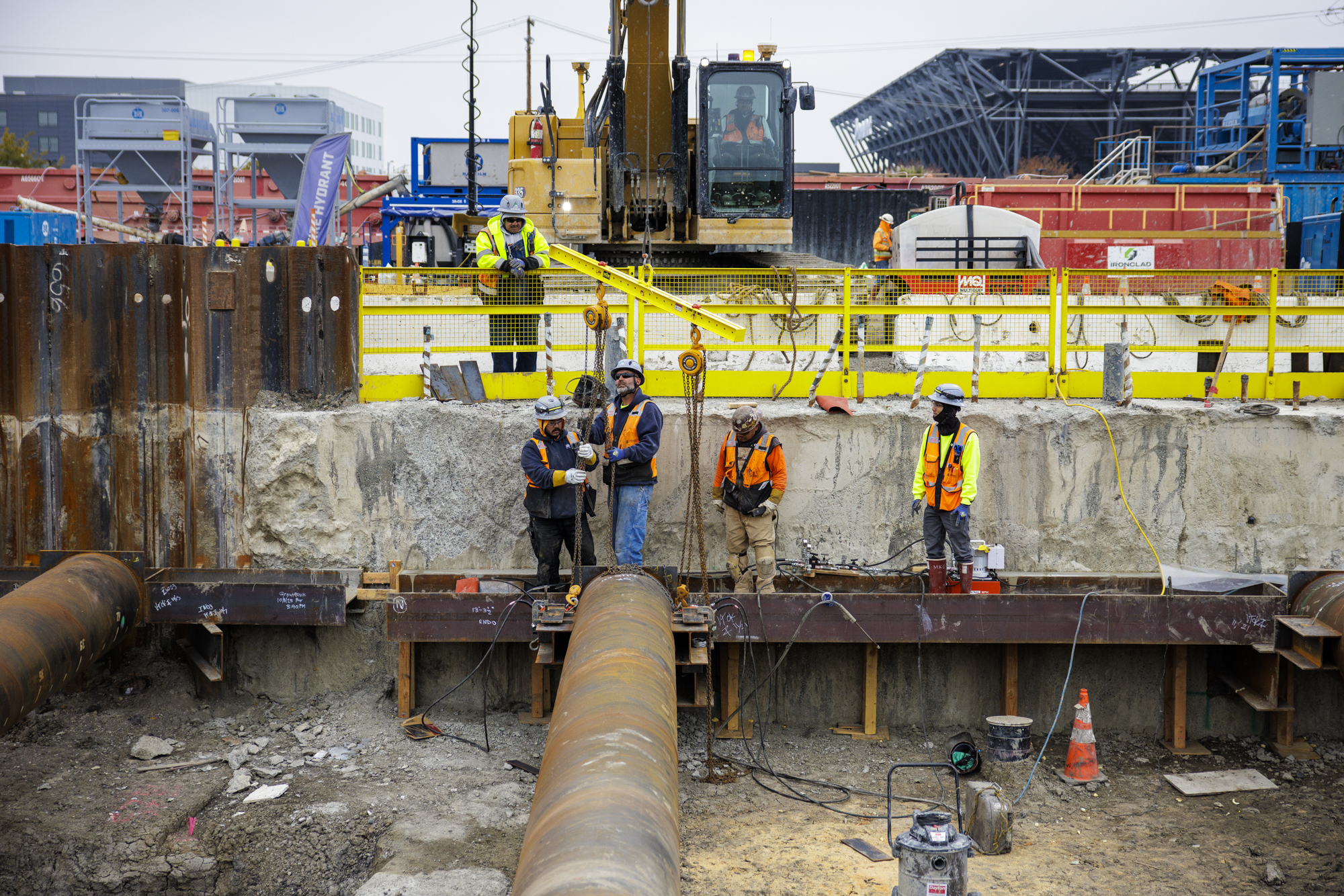
"caption": "A crew works to install cross braces in the tunnel under construction at the West Portal Site of the BART Silicon Valley Phase II Project in San José on Dec. 8, 2025.",
"credit": "Martin do Nascimento/KQED",
"altTag": null,
"description": null,
"imgSizes": {
"thumbnail": {
"file": "https://cdn.kqed.org/wp-content/uploads/sites/10/2025/12/251208-BART-SILICON-VALLEY-TOUR-MD-09-KQED-160x107.jpg",
"width": 160,
"height": 107,
"mimeType": "image/jpeg"
},
"1536x1536": {
"file": "https://cdn.kqed.org/wp-content/uploads/sites/10/2025/12/251208-BART-SILICON-VALLEY-TOUR-MD-09-KQED-1536x1025.jpg",
"width": 1536,
"height": 1025,
"mimeType": "image/jpeg"
},
"post-thumbnail": {
"file": "https://cdn.kqed.org/wp-content/uploads/sites/10/2025/12/251208-BART-SILICON-VALLEY-TOUR-MD-09-KQED-672x372.jpg",
"width": 672,
"height": 372,
"mimeType": "image/jpeg"
},
"twentyfourteen-full-width": {
"file": "https://cdn.kqed.org/wp-content/uploads/sites/10/2025/12/251208-BART-SILICON-VALLEY-TOUR-MD-09-KQED-1038x576.jpg",
"width": 1038,
"height": 576,
"mimeType": "image/jpeg"
},
"npr-cds-wide": {
"file": "https://cdn.kqed.org/wp-content/uploads/sites/10/2025/12/251208-BART-SILICON-VALLEY-TOUR-MD-09-KQED-1200x675.jpg",
"width": 1200,
"height": 675,
"mimeType": "image/jpeg"
},
"kqedFullSize": {
"file": "https://cdn.kqed.org/wp-content/uploads/sites/10/2025/12/251208-BART-SILICON-VALLEY-TOUR-MD-09-KQED.jpg",
"width": 2000,
"height": 1334
}
},
"isLoading": false,
"fetchFailed": false
},
"news_12087631": {
"type": "attachments",
"id": "news_12087631",
"meta": {
"index": "attachments_1716263798",
"site": "news",
"id": "12087631",
"found": true
},
"title": "260615-Tillman sentencing -01-KQED",
"publishDate": 1781553565,
"status": "inherit",
"parent": 0,
"modified": 1781559503,
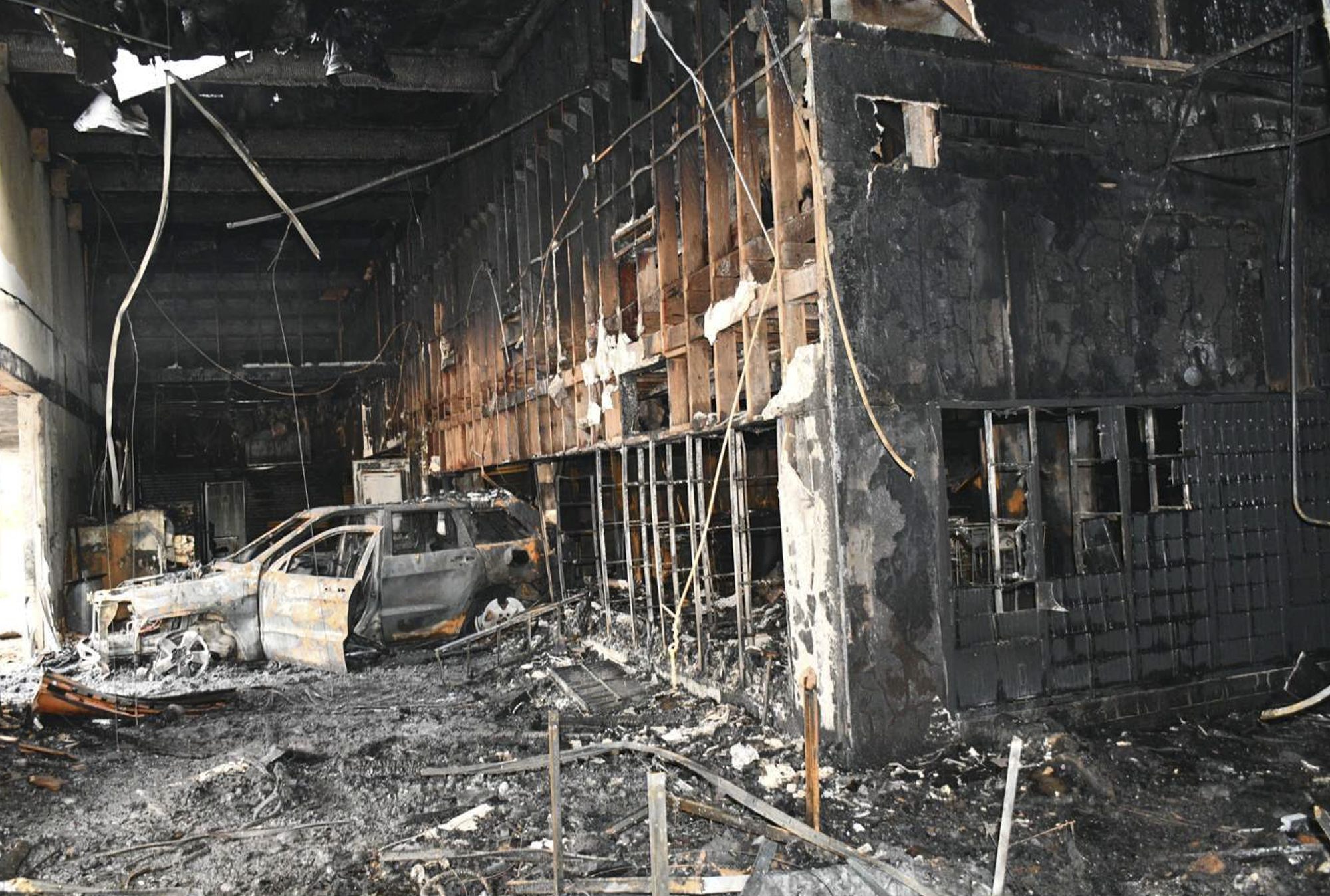
"caption": "Richard Tillman pleaded guilty to setting fire to his car after backing it into a South San José post office on July 20, 2025.",
"credit": "Courtesy of U.S. Attorney's Office",
"altTag": null,
"description": null,
"imgSizes": {
"thumbnail": {
"file": "https://cdn.kqed.org/wp-content/uploads/sites/10/2026/06/260615-Tillman-sentencing-01-KQED-160x108.jpg",
"width": 160,
"height": 108,
"mimeType": "image/jpeg"
},
"1536x1536": {
"file": "https://cdn.kqed.org/wp-content/uploads/sites/10/2026/06/260615-Tillman-sentencing-01-KQED-1536x1035.jpg",
"width": 1536,
"height": 1035,
"mimeType": "image/jpeg"
},
"post-thumbnail": {
"file": "https://cdn.kqed.org/wp-content/uploads/sites/10/2026/06/260615-Tillman-sentencing-01-KQED-672x372.jpg",
"width": 672,
"height": 372,
"mimeType": "image/jpeg"
},
"twentyfourteen-full-width": {
"file": "https://cdn.kqed.org/wp-content/uploads/sites/10/2026/06/260615-Tillman-sentencing-01-KQED-1038x576.jpg",
"width": 1038,
"height": 576,
"mimeType": "image/jpeg"
},
"npr-cds-wide": {
"file": "https://cdn.kqed.org/wp-content/uploads/sites/10/2026/06/260615-Tillman-sentencing-01-KQED-1200x675.jpg",
"width": 1200,
"height": 675,
"mimeType": "image/jpeg"
},
"npr-cds-square": {
"file": "https://cdn.kqed.org/wp-content/uploads/sites/10/2026/06/260615-Tillman-sentencing-01-KQED-600x600.jpg",
"width": 600,
"height": 600,
"mimeType": "image/jpeg"
},
"kqedFullSize": {
"file": "https://cdn.kqed.org/wp-content/uploads/sites/10/2026/06/260615-Tillman-sentencing-01-KQED.jpg",
"width": 2000,
"height": 1348
}
},
"isLoading": false,
"fetchFailed": false
},
"news_12087488": {
"type": "attachments",
"id": "news_12087488",
"meta": {
"index": "attachments_1716263798",
"site": "news",
"id": "12087488",
"found": true
},
"title": "Trailhead Gays LEDE",
"publishDate": 1781306954,
"status": "inherit",
"parent": 12087471,
"modified": 1781307496,
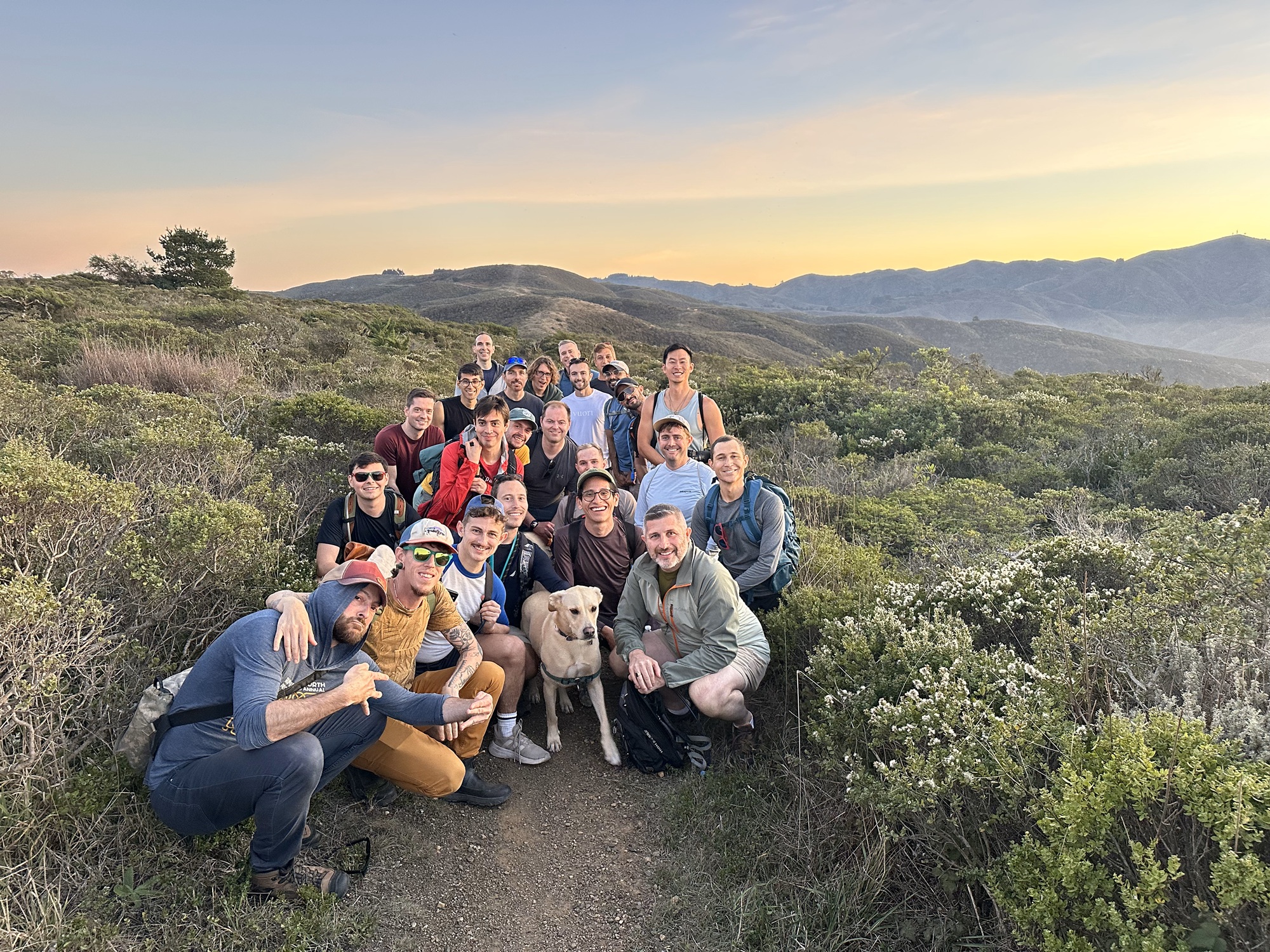
"caption": "Members of Trailhead Gays gather for their monthly outdoors-oriented adventures. \n",
"credit": "Courtesy of Gio Orantes",
"altTag": null,
"description": null,
"imgSizes": {
"thumbnail": {
"file": "https://cdn.kqed.org/wp-content/uploads/sites/10/2026/06/Trailhead-Gays-LEDE-160x120.jpg",
"width": 160,
"height": 120,
"mimeType": "image/jpeg"
},
"1536x1536": {
"file": "https://cdn.kqed.org/wp-content/uploads/sites/10/2026/06/Trailhead-Gays-LEDE-1536x1152.jpg",
"width": 1536,
"height": 1152,
"mimeType": "image/jpeg"
},
"post-thumbnail": {
"file": "https://cdn.kqed.org/wp-content/uploads/sites/10/2026/06/Trailhead-Gays-LEDE-672x372.jpg",
"width": 672,
"height": 372,
"mimeType": "image/jpeg"
},
"twentyfourteen-full-width": {
"file": "https://cdn.kqed.org/wp-content/uploads/sites/10/2026/06/Trailhead-Gays-LEDE-1038x576.jpg",
"width": 1038,
"height": 576,
"mimeType": "image/jpeg"
},
"npr-cds-wide": {
"file": "https://cdn.kqed.org/wp-content/uploads/sites/10/2026/06/Trailhead-Gays-LEDE-1200x675.jpg",
"width": 1200,
"height": 675,
"mimeType": "image/jpeg"
},
"npr-cds-square": {
"file": "https://cdn.kqed.org/wp-content/uploads/sites/10/2026/06/Trailhead-Gays-LEDE-600x600.jpg",
"width": 600,
"height": 600,
"mimeType": "image/jpeg"
},
"kqedFullSize": {
"file": "https://cdn.kqed.org/wp-content/uploads/sites/10/2026/06/Trailhead-Gays-LEDE.jpg",
"width": 2000,
"height": 1500
}
},
"isLoading": false,
"fetchFailed": false
},
"news_12087378": {
"type": "attachments",
"id": "news_12087378",
"meta": {
"index": "attachments_1716263798",
"site": "news",
"id": "12087378",
"found": true
},
"title": "La Raging Waters, San Jose",
"publishDate": 1781289124,
"status": "inherit",
"parent": 0,
"modified": 1781307203,
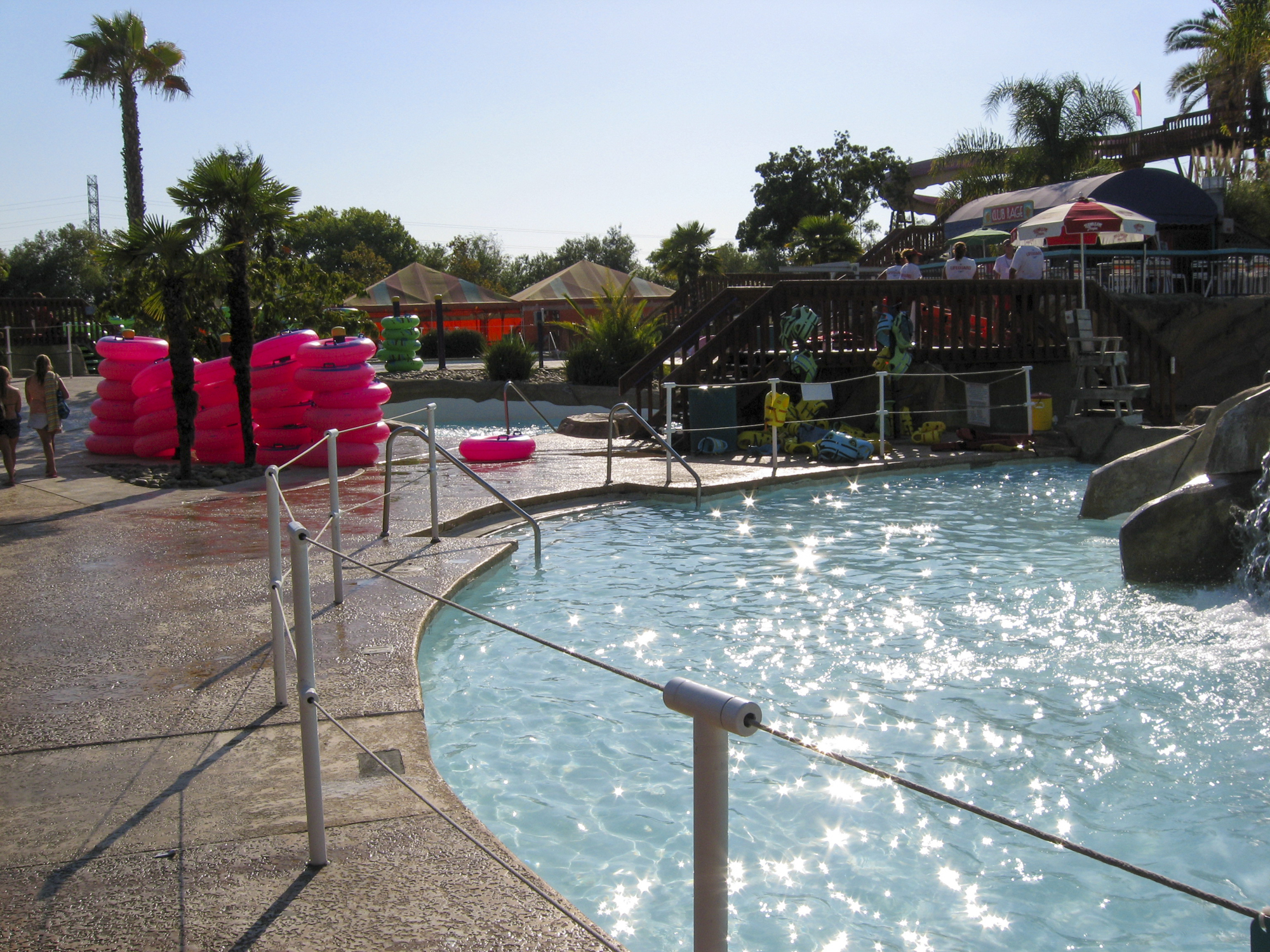
"caption": "A photo of Raging Waters in San José. The city said that beginning this summer, the water park formerly known as CaliBunga/Raging Waters will temporarily close. ",
"credit": "Eusiceidragi via Flickr",
"altTag": null,
"description": null,
"imgSizes": {
"thumbnail": {
"file": "https://cdn.kqed.org/wp-content/uploads/sites/10/2026/06/260612-RAGING-WATERS-01-KQED-160x120.jpg",
"width": 160,
"height": 120,
"mimeType": "image/jpeg"
},
"1536x1536": {
"file": "https://cdn.kqed.org/wp-content/uploads/sites/10/2026/06/260612-RAGING-WATERS-01-KQED-1536x1152.jpg",
"width": 1536,
"height": 1152,
"mimeType": "image/jpeg"
},
"post-thumbnail": {
"file": "https://cdn.kqed.org/wp-content/uploads/sites/10/2026/06/260612-RAGING-WATERS-01-KQED-672x372.jpg",
"width": 672,
"height": 372,
"mimeType": "image/jpeg"
},
"twentyfourteen-full-width": {
"file": "https://cdn.kqed.org/wp-content/uploads/sites/10/2026/06/260612-RAGING-WATERS-01-KQED-1038x576.jpg",
"width": 1038,
"height": 576,
"mimeType": "image/jpeg"
},
"npr-cds-wide": {
"file": "https://cdn.kqed.org/wp-content/uploads/sites/10/2026/06/260612-RAGING-WATERS-01-KQED-1200x675.jpg",
"width": 1200,
"height": 675,
"mimeType": "image/jpeg"
},
"npr-cds-square": {
"file": "https://cdn.kqed.org/wp-content/uploads/sites/10/2026/06/260612-RAGING-WATERS-01-KQED-600x600.jpg",
"width": 600,
"height": 600,
"mimeType": "image/jpeg"
},
"kqedFullSize": {
"file": "https://cdn.kqed.org/wp-content/uploads/sites/10/2026/06/260612-RAGING-WATERS-01-KQED.jpg",
"width": 2000,
"height": 1500
}
},
"isLoading": false,
"fetchFailed": false
},
"news_12087137": {
"type": "attachments",
"id": "news_12087137",
"meta": {
"index": "attachments_1716263798",
"site": "news",
"id": "12087137",
"found": true
},
"title": "260610-BayAreaStadiumTour-12-BL_KQED",
"publishDate": 1781200586,
"status": "inherit",
"parent": 0,
"modified": 1781200652,
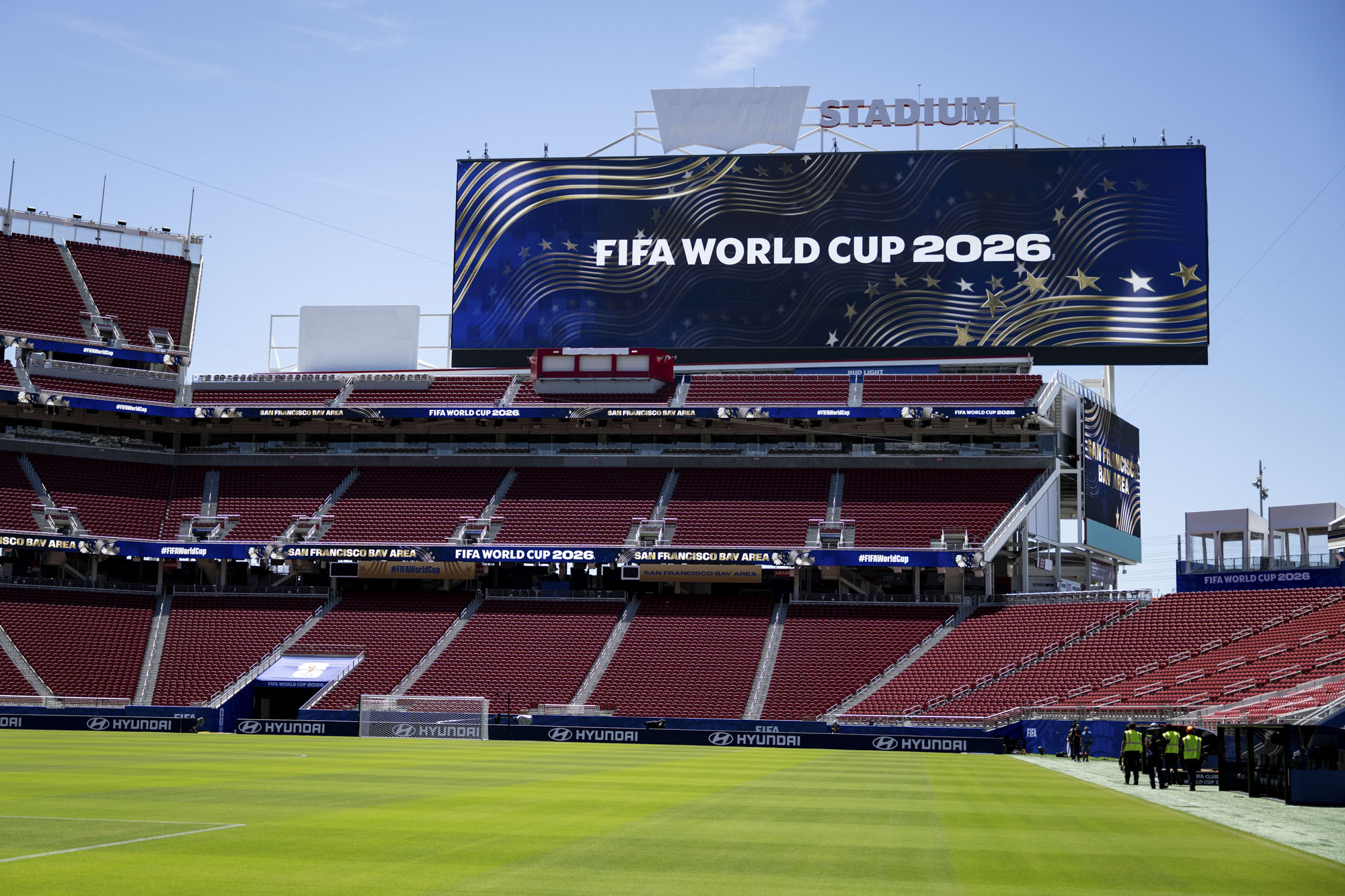
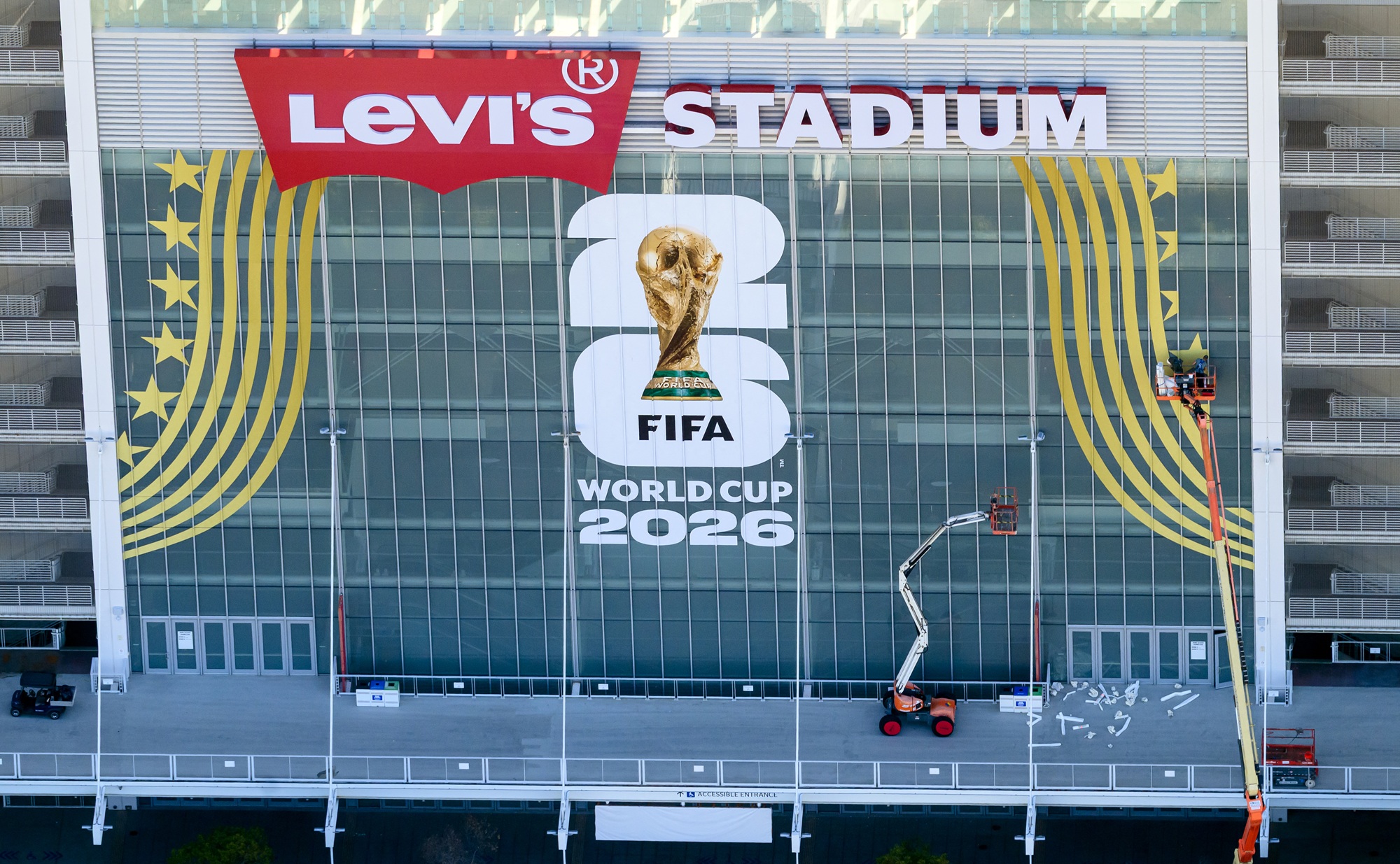
"caption": "The San Francisco Bay Area Stadium, temporarily renamed from Levi's Stadium for the 2026 FIFA World Cup, in Santa Clara on June 10, 2026, where six tournament matches will be played.",
"credit": "Beth LaBerge/KQED",
"altTag": null,
"description": null,
"imgSizes": {
"thumbnail": {
"file": "https://cdn.kqed.org/wp-content/uploads/sites/10/2026/06/260610-BayAreaStadiumTour-12-BL_KQED-160x107.jpg",
"width": 160,
"height": 107,
"mimeType": "image/jpeg"
},
"1536x1536": {
"file": "https://cdn.kqed.org/wp-content/uploads/sites/10/2026/06/260610-BayAreaStadiumTour-12-BL_KQED-1536x1024.jpg",
"width": 1536,
"height": 1024,
"mimeType": "image/jpeg"
},
"post-thumbnail": {
"file": "https://cdn.kqed.org/wp-content/uploads/sites/10/2026/06/260610-BayAreaStadiumTour-12-BL_KQED-672x372.jpg",
"width": 672,
"height": 372,
"mimeType": "image/jpeg"
},
"twentyfourteen-full-width": {
"file": "https://cdn.kqed.org/wp-content/uploads/sites/10/2026/06/260610-BayAreaStadiumTour-12-BL_KQED-1038x576.jpg",
"width": 1038,
"height": 576,
"mimeType": "image/jpeg"
},
"npr-cds-wide": {
"file": "https://cdn.kqed.org/wp-content/uploads/sites/10/2026/06/260610-BayAreaStadiumTour-12-BL_KQED-1200x675.jpg",
"width": 1200,
"height": 675,
"mimeType": "image/jpeg"
},
"npr-cds-square": {
"file": "https://cdn.kqed.org/wp-content/uploads/sites/10/2026/06/260610-BayAreaStadiumTour-12-BL_KQED-600x600.jpg",
"width": 600,
"height": 600,
"mimeType": "image/jpeg"
},
"kqedFullSize": {
"file": "https://cdn.kqed.org/wp-content/uploads/sites/10/2026/06/260610-BayAreaStadiumTour-12-BL_KQED.jpg",
"width": 2000,
"height": 1333
}
},
"isLoading": false,
"fetchFailed": false
},
"news_12086750": {
"type": "attachments",
"id": "news_12086750",
"meta": {
"index": "attachments_1716263798",
"site": "news",
"id": "12086750",
"found": true
},
"title": "060926Paraguay SJSU_GH_009",
"publishDate": 1781038626,
"status": "inherit",
"parent": 12086567,
"modified": 1781039605,
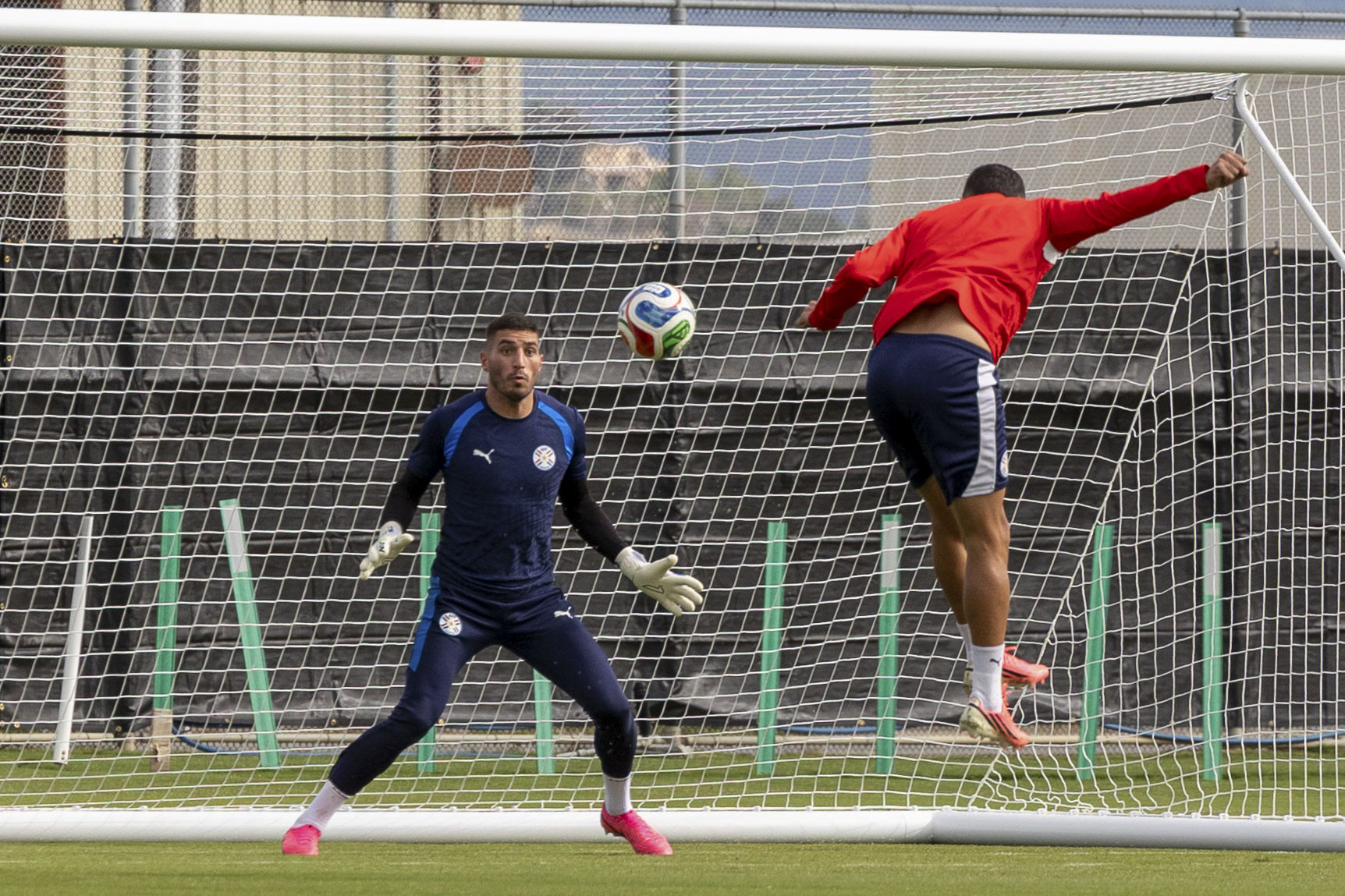
"caption": "Paraguay goalkeeper Gastón Olveira reacts to a shot during a training scrimmage at CEFCU Stadium in San José on June 8, 2026.",
"credit": "Gustavo Hernandez/KQED",
"altTag": null,
"description": null,
"imgSizes": {
"thumbnail": {
"file": "https://cdn.kqed.org/wp-content/uploads/sites/10/2026/06/060926Paraguay-SJSU_GH_009-160x107.jpg",
"width": 160,
"height": 107,
"mimeType": "image/jpeg"
},
"1536x1536": {
"file": "https://cdn.kqed.org/wp-content/uploads/sites/10/2026/06/060926Paraguay-SJSU_GH_009-1536x1024.jpg",
"width": 1536,
"height": 1024,
"mimeType": "image/jpeg"
},
"post-thumbnail": {
"file": "https://cdn.kqed.org/wp-content/uploads/sites/10/2026/06/060926Paraguay-SJSU_GH_009-672x372.jpg",
"width": 672,
"height": 372,
"mimeType": "image/jpeg"
},
"twentyfourteen-full-width": {
"file": "https://cdn.kqed.org/wp-content/uploads/sites/10/2026/06/060926Paraguay-SJSU_GH_009-1038x576.jpg",
"width": 1038,
"height": 576,
"mimeType": "image/jpeg"
},
"npr-cds-wide": {
"file": "https://cdn.kqed.org/wp-content/uploads/sites/10/2026/06/060926Paraguay-SJSU_GH_009-1200x675.jpg",
"width": 1200,
"height": 675,
"mimeType": "image/jpeg"
},
"npr-cds-square": {
"file": "https://cdn.kqed.org/wp-content/uploads/sites/10/2026/06/060926Paraguay-SJSU_GH_009-600x600.jpg",
"width": 600,
"height": 600,
"mimeType": "image/jpeg"
},
"kqedFullSize": {
"file": "https://cdn.kqed.org/wp-content/uploads/sites/10/2026/06/060926Paraguay-SJSU_GH_009.jpg",
"width": 1724,
"height": 1149
}
},
"isLoading": false,
"fetchFailed": false
},
"news_12086749": {
"type": "attachments",
"id": "news_12086749",
"meta": {
"index": "attachments_1716263798",
"site": "news",
"id": "12086749",
"found": true
},
"title": "060926Paraguay SJSU_GH_003",
"publishDate": 1781038621,
"status": "inherit",
"parent": 0,
"modified": 1781039524,
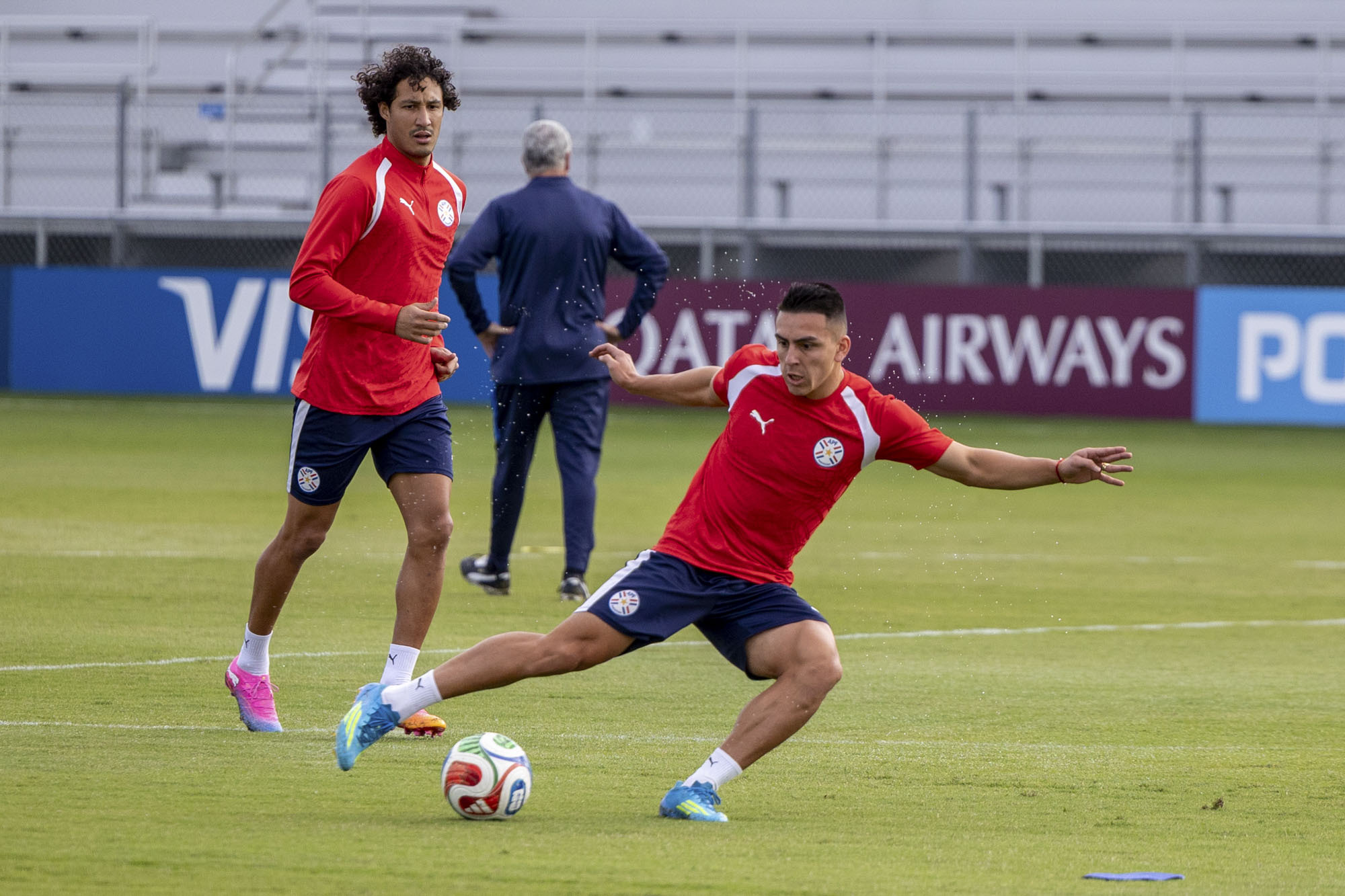
"caption": "Paraguay midfielder Braian Óscar Ojeda Rodríguez strikes the ball during an open training session at CEFCU Stadium in San José on June 8, 2026.",
"credit": "Gustavo Hernandez/KQED",
"altTag": null,
"description": null,
"imgSizes": {
"thumbnail": {
"file": "https://cdn.kqed.org/wp-content/uploads/sites/10/2026/06/060926Paraguay-SJSU_GH_003-160x107.jpg",
"width": 160,
"height": 107,
"mimeType": "image/jpeg"
},
"1536x1536": {
"file": "https://cdn.kqed.org/wp-content/uploads/sites/10/2026/06/060926Paraguay-SJSU_GH_003-1536x1024.jpg",
"width": 1536,
"height": 1024,
"mimeType": "image/jpeg"
},
"post-thumbnail": {
"file": "https://cdn.kqed.org/wp-content/uploads/sites/10/2026/06/060926Paraguay-SJSU_GH_003-672x372.jpg",
"width": 672,
"height": 372,
"mimeType": "image/jpeg"
},
"twentyfourteen-full-width": {
"file": "https://cdn.kqed.org/wp-content/uploads/sites/10/2026/06/060926Paraguay-SJSU_GH_003-1038x576.jpg",
"width": 1038,
"height": 576,
"mimeType": "image/jpeg"
},
"npr-cds-wide": {
"file": "https://cdn.kqed.org/wp-content/uploads/sites/10/2026/06/060926Paraguay-SJSU_GH_003-1200x675.jpg",
"width": 1200,
"height": 675,
"mimeType": "image/jpeg"
},
"npr-cds-square": {
"file": "https://cdn.kqed.org/wp-content/uploads/sites/10/2026/06/060926Paraguay-SJSU_GH_003-600x600.jpg",
"width": 600,
"height": 600,
"mimeType": "image/jpeg"
},
"kqedFullSize": {
"file": "https://cdn.kqed.org/wp-content/uploads/sites/10/2026/06/060926Paraguay-SJSU_GH_003.jpg",
"width": 2000,
"height": 1333
}
},
"isLoading": false,
"fetchFailed": false
},
"news_12085866": {
"type": "attachments",
"id": "news_12085866",
"meta": {
"index": "attachments_1716263798",
"site": "news",
"id": "12085866",
"found": true
},
"title": "FBL-WC-2026-STADIUM-SAN FRANCISCO BAY AREA",
"publishDate": 1780442512,
"status": "inherit",
"parent": 12084960,
"modified": 1780442548,
"caption": "San Francisco Bay Area Stadium (temporarily renamed from Levi's Stadium for the 2026 FIFA World Cup) in Santa Clara, California, on May 19, 2026. Levi's Stadium will host six matches during the 2026 FIFA World Cup, including five group stage matches throughout June 2026. ",
"credit": "Josh Edelson/AFP via Getty Images",
"altTag": null,
"description": null,
"imgSizes": {
"thumbnail": {
"file": "https://cdn.kqed.org/wp-content/uploads/sites/10/2026/06/FIFAWorldCupLevisStadiumGetty-160x99.jpg",
"width": 160,
"height": 99,
"mimeType": "image/jpeg"
},
"1536x1536": {
"file": "https://cdn.kqed.org/wp-content/uploads/sites/10/2026/06/FIFAWorldCupLevisStadiumGetty-1536x948.jpg",
"width": 1536,
"height": 948,
"mimeType": "image/jpeg"
},
"post-thumbnail": {
"file": "https://cdn.kqed.org/wp-content/uploads/sites/10/2026/06/FIFAWorldCupLevisStadiumGetty-672x372.jpg",
"width": 672,
"height": 372,
"mimeType": "image/jpeg"
},
"twentyfourteen-full-width": {
"file": "https://cdn.kqed.org/wp-content/uploads/sites/10/2026/06/FIFAWorldCupLevisStadiumGetty-1038x576.jpg",
"width": 1038,
"height": 576,
"mimeType": "image/jpeg"
},
"npr-cds-wide": {
"file": "https://cdn.kqed.org/wp-content/uploads/sites/10/2026/06/FIFAWorldCupLevisStadiumGetty-1200x675.jpg",
"width": 1200,
"height": 675,
"mimeType": "image/jpeg"
},
"npr-cds-square": {
"file": "https://cdn.kqed.org/wp-content/uploads/sites/10/2026/06/FIFAWorldCupLevisStadiumGetty-600x600.jpg",
"width": 600,
"height": 600,
"mimeType": "image/jpeg"
},
"kqedFullSize": {
"file": "https://cdn.kqed.org/wp-content/uploads/sites/10/2026/06/FIFAWorldCupLevisStadiumGetty.jpg",
"width": 2000,
"height": 1235
}
},
"isLoading": false,
"fetchFailed": false
},
"news_12085820": {
"type": "attachments",
"id": "news_12085820",
"meta": {
"index": "attachments_1716263798",
"site": "news",
"id": "12085820",
"found": true
},
"title": "260602-PRIMARYVOTERVOX-14-BL-KQED",
"publishDate": 1780423676,
"status": "inherit",
"parent": 0,
"modified": 1780423738,
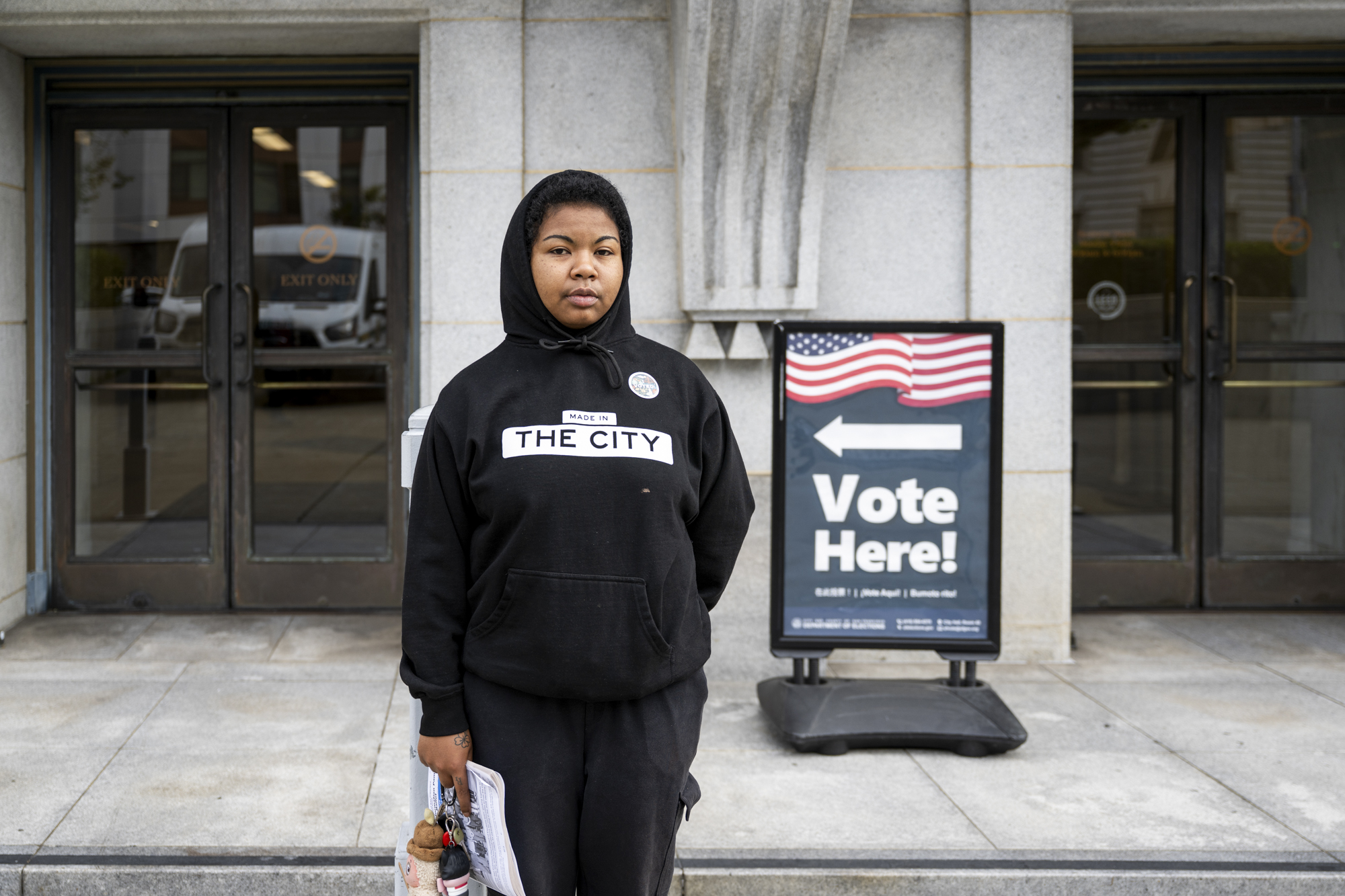
"caption": "Widya Batin leaves the City Hall Voting Center in San Francisco after casting their ballot on June 2, 2026.",
"credit": "Beth LaBerge/KQED",
"altTag": null,
"description": null,
"imgSizes": {
"thumbnail": {
"file": "https://cdn.kqed.org/wp-content/uploads/sites/10/2026/06/260602-PRIMARYVOTERVOX-14-BL-KQED-160x107.jpg",
"width": 160,
"height": 107,
"mimeType": "image/jpeg"
},
"1536x1536": {
"file": "https://cdn.kqed.org/wp-content/uploads/sites/10/2026/06/260602-PRIMARYVOTERVOX-14-BL-KQED-1536x1024.jpg",
"width": 1536,
"height": 1024,
"mimeType": "image/jpeg"
},
"post-thumbnail": {
"file": "https://cdn.kqed.org/wp-content/uploads/sites/10/2026/06/260602-PRIMARYVOTERVOX-14-BL-KQED-672x372.jpg",
"width": 672,
"height": 372,
"mimeType": "image/jpeg"
},
"twentyfourteen-full-width": {
"file": "https://cdn.kqed.org/wp-content/uploads/sites/10/2026/06/260602-PRIMARYVOTERVOX-14-BL-KQED-1038x576.jpg",
"width": 1038,
"height": 576,
"mimeType": "image/jpeg"
},
"npr-cds-wide": {
"file": "https://cdn.kqed.org/wp-content/uploads/sites/10/2026/06/260602-PRIMARYVOTERVOX-14-BL-KQED-1200x675.jpg",
"width": 1200,
"height": 675,
"mimeType": "image/jpeg"
},
"npr-cds-square": {
"file": "https://cdn.kqed.org/wp-content/uploads/sites/10/2026/06/260602-PRIMARYVOTERVOX-14-BL-KQED-600x600.jpg",
"width": 600,
"height": 600,
"mimeType": "image/jpeg"
},
"kqedFullSize": {
"file": "https://cdn.kqed.org/wp-content/uploads/sites/10/2026/06/260602-PRIMARYVOTERVOX-14-BL-KQED.jpg",
"width": 2000,
"height": 1333
}
},
"isLoading": false,
"fetchFailed": false
},
"news_12085045": {
"type": "attachments",
"id": "news_12085045",
"meta": {
"index": "attachments_1716263798",
"site": "news",
"id": "12085045",
"found": true
},
"title": "260522-Santana Row stabbing verdict-JG-01-KQED",
"publishDate": 1779483532,
"status": "inherit",
"parent": 0,
"modified": 1779483577,
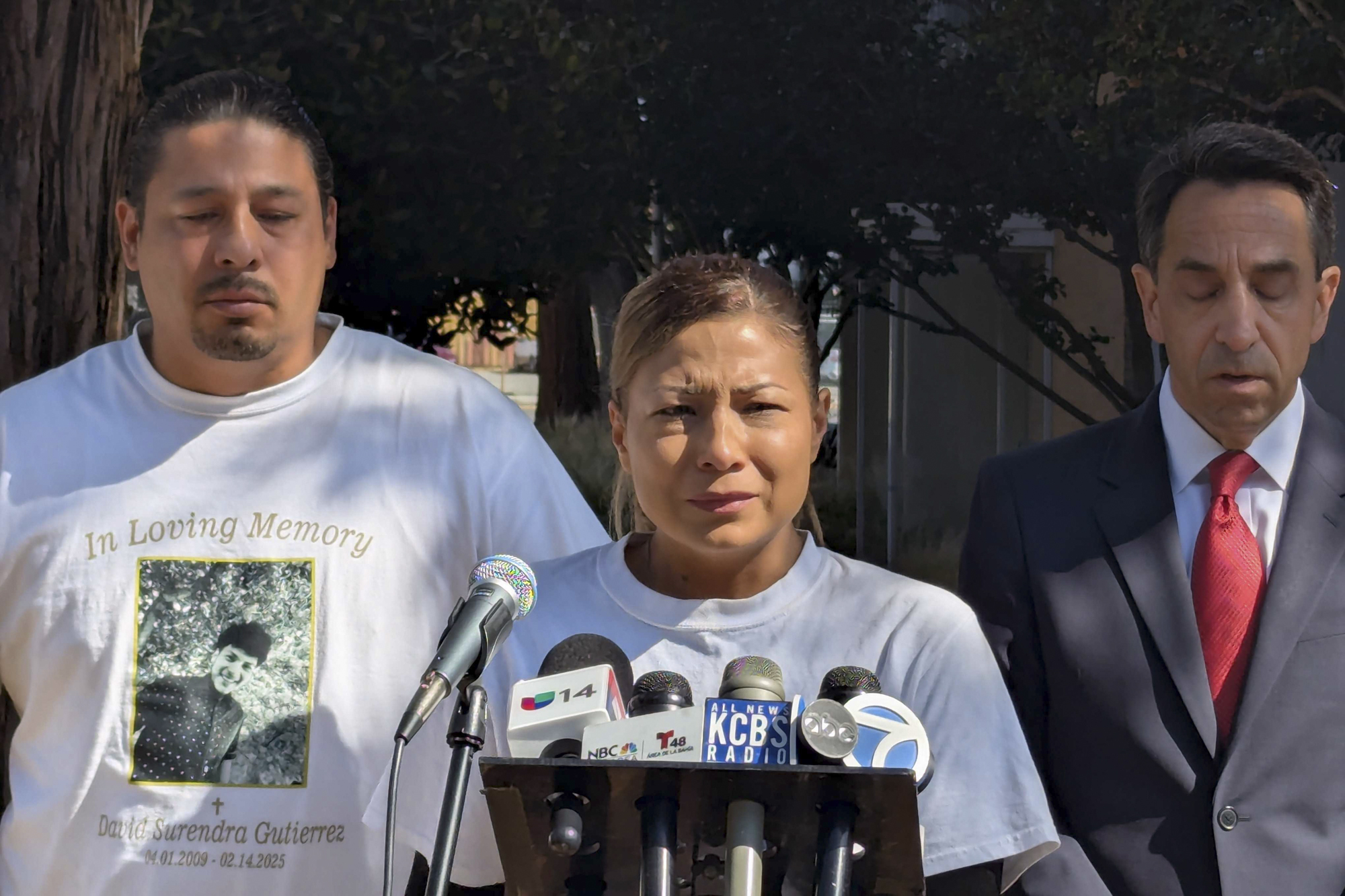
"caption": "Victoria Gutierrez, David Gutierrez's mother, speaks during a press conference after a judge decided a 14-year-old was responsible for the stabbing murder of her son in a court hearing on Friday, May 22, 2026.",
"credit": "Joseph Geha/KQED",
"altTag": null,
"description": null,
"imgSizes": {
"thumbnail": {
"file": "https://cdn.kqed.org/wp-content/uploads/sites/10/2026/05/260522-Santana-Row-stabbing-verdict-JG-01-KQED-160x107.jpg",
"width": 160,
"height": 107,
"mimeType": "image/jpeg"
},
"1536x1536": {
"file": "https://cdn.kqed.org/wp-content/uploads/sites/10/2026/05/260522-Santana-Row-stabbing-verdict-JG-01-KQED-1536x1024.jpg",
"width": 1536,
"height": 1024,
"mimeType": "image/jpeg"
},
"post-thumbnail": {
"file": "https://cdn.kqed.org/wp-content/uploads/sites/10/2026/05/260522-Santana-Row-stabbing-verdict-JG-01-KQED-672x372.jpg",
"width": 672,
"height": 372,
"mimeType": "image/jpeg"
},
"twentyfourteen-full-width": {
"file": "https://cdn.kqed.org/wp-content/uploads/sites/10/2026/05/260522-Santana-Row-stabbing-verdict-JG-01-KQED-1038x576.jpg",
"width": 1038,
"height": 576,
"mimeType": "image/jpeg"
},
"npr-cds-wide": {
"file": "https://cdn.kqed.org/wp-content/uploads/sites/10/2026/05/260522-Santana-Row-stabbing-verdict-JG-01-KQED-1200x675.jpg",
"width": 1200,
"height": 675,
"mimeType": "image/jpeg"
},
"npr-cds-square": {
"file": "https://cdn.kqed.org/wp-content/uploads/sites/10/2026/05/260522-Santana-Row-stabbing-verdict-JG-01-KQED-600x600.jpg",
"width": 600,
"height": 600,
"mimeType": "image/jpeg"
},
"kqedFullSize": {
"file": "https://cdn.kqed.org/wp-content/uploads/sites/10/2026/05/260522-Santana-Row-stabbing-verdict-JG-01-KQED.jpg",
"width": 2000,
"height": 1333
}
},
"isLoading": false,
"fetchFailed": false
},
"news_12067190": {
"type": "attachments",
"id": "news_12067190",
"meta": {
"index": "attachments_1716263798",
"site": "news",
"id": "12067190",
"found": true
},
"title": "20250129_UCBERKELEYRALLY_GC-44-KQED",
"publishDate": 1765829585,
"status": "inherit",
"parent": 12067662,
"modified": 1766421719,
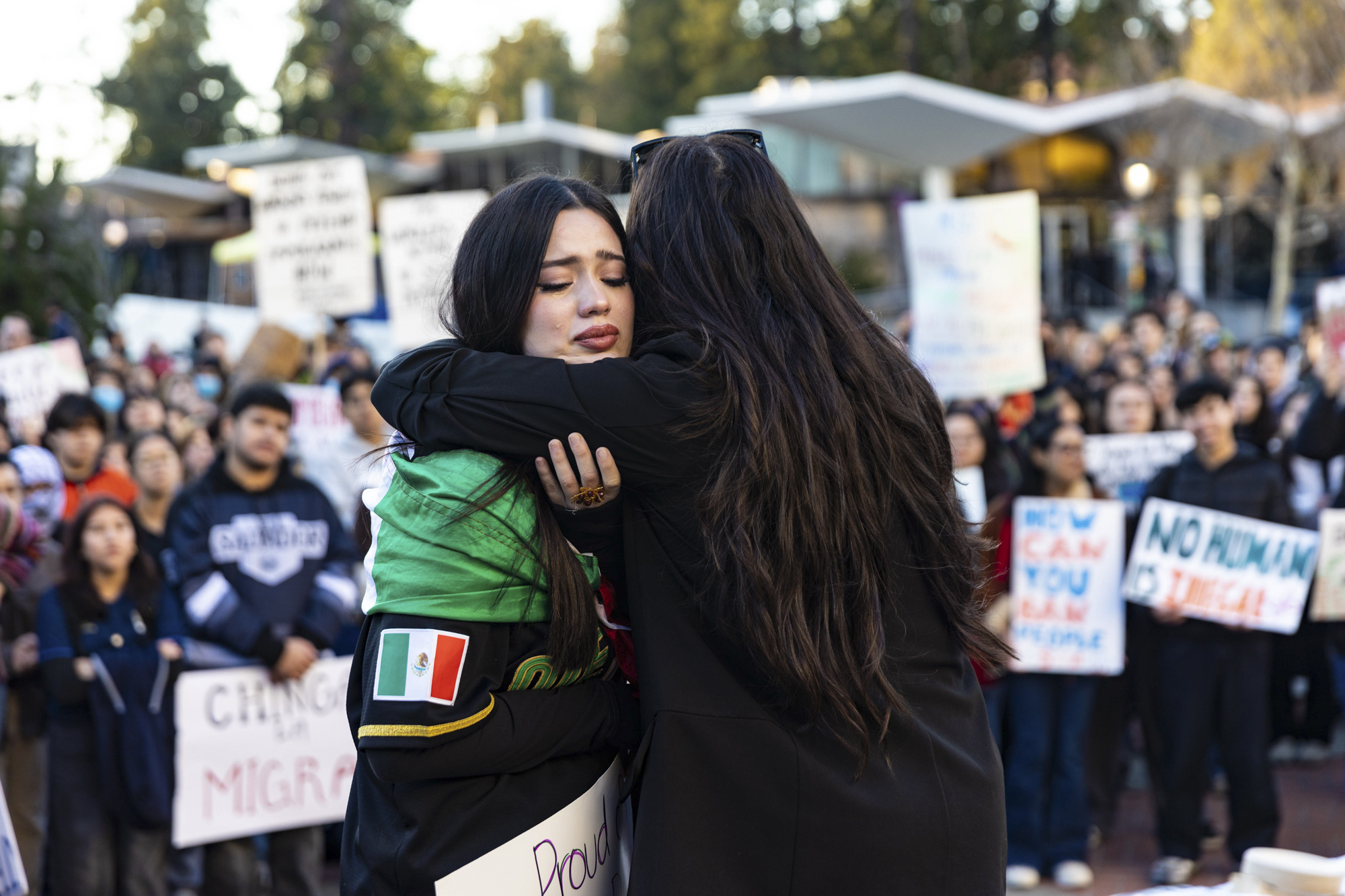
"caption": "From left, second-year student Nicole Nuñez Rivera gets emotional and hugs DACA recipient Ana Rivera, right, during a rally against the Trump administration’s promises to carry out mass deportations, in Berkeley on Jan. 29, 2025.",
"credit": "Gina Castro/KQED",
"altTag": null,
"description": null,
"imgSizes": {
"thumbnail": {
"file": "https://cdn.kqed.org/wp-content/uploads/sites/10/2025/12/20250129_UCBERKELEYRALLY_GC-44-KQED-160x107.jpg",
"width": 160,
"height": 107,
"mimeType": "image/jpeg"
},
"1536x1536": {
"file": "https://cdn.kqed.org/wp-content/uploads/sites/10/2025/12/20250129_UCBERKELEYRALLY_GC-44-KQED-1536x1024.jpg",
"width": 1536,
"height": 1024,
"mimeType": "image/jpeg"
},
"post-thumbnail": {
"file": "https://cdn.kqed.org/wp-content/uploads/sites/10/2025/12/20250129_UCBERKELEYRALLY_GC-44-KQED-672x372.jpg",
"width": 672,
"height": 372,
"mimeType": "image/jpeg"
},
"twentyfourteen-full-width": {
"file": "https://cdn.kqed.org/wp-content/uploads/sites/10/2025/12/20250129_UCBERKELEYRALLY_GC-44-KQED-1038x576.jpg",
"width": 1038,
"height": 576,
"mimeType": "image/jpeg"
},
"npr-cds-wide": {
"file": "https://cdn.kqed.org/wp-content/uploads/sites/10/2025/12/20250129_UCBERKELEYRALLY_GC-44-KQED-1200x675.jpg",
"width": 1200,
"height": 675,
"mimeType": "image/jpeg"
},
"kqedFullSize": {
"file": "https://cdn.kqed.org/wp-content/uploads/sites/10/2025/12/20250129_UCBERKELEYRALLY_GC-44-KQED.jpg",
"width": 2000,
"height": 1333
}
},
"isLoading": false,
"fetchFailed": false
}
},
"audioPlayerReducer": {
"postId": "stream_live",
"isPaused": true,
"isPlaying": false,
"pfsActive": false,
"pledgeModalIsOpen": true,
"playerDrawerIsOpen": false,
"liveAudioPlayStartedAt": 0,
"liveAudioPlayContext": ""
},
"authorsReducer": {
"byline_news_12085504": {
"type": "authors",
"id": "byline_news_12085504",
"meta": {
"override": true
},
"slug": "byline_news_12085504",
"name": "Ella Jackson",
"isLoading": false
},
"adahlstromeckman": {
"type": "authors",
"id": "11785",
"meta": {
"index": "authors_1716337520",
"id": "11785",
"found": true
},
"name": "Azul Dahlstrom-Eckman",
"firstName": "Azul",
"lastName": "Dahlstrom-Eckman",
"slug": "adahlstromeckman",
"email": "adahlstrom-eckman@kqed.org",
"display_author_email": true,
"staff_mastheads": [],
"title": "Reporter",
"bio": "Azul is a reporter for KQED focusing on transportation and features. He joined KQED in 2021 as an alumna of KALW's Audio Academy radio journalism training program.",
"avatar": "https://secure.gravatar.com/avatar/9cb750298435add7815a777f55bf1f46845c1386bb8452555c60a7b820b5aba3?s=600&d=blank&r=g",
"twitter": "@zuliemann",
"bluesky": "@azul415.bsky.social",
"facebook": null,
"instagram": null,
"linkedin": null,
"sites": [
{
"site": "arts",
"roles": [
"editor"
]
},
{
"site": "news",
"roles": [
"editor"
]
},
{
"site": "science",
"roles": [
"editor"
]
},
{
"site": "liveblog",
"roles": [
"author"
]
}
],
"headData": {
"title": "Azul Dahlstrom-Eckman | KQED",
"description": "Reporter",
"ogImgSrc": "https://secure.gravatar.com/avatar/9cb750298435add7815a777f55bf1f46845c1386bb8452555c60a7b820b5aba3?s=600&d=blank&r=g",
"twImgSrc": "https://secure.gravatar.com/avatar/9cb750298435add7815a777f55bf1f46845c1386bb8452555c60a7b820b5aba3?s=600&d=blank&r=g"
},
"isLoading": false,
"link": "/author/adahlstromeckman"
},
"sjohnson": {
"type": "authors",
"id": "11840",
"meta": {
"index": "authors_1716337520",
"id": "11840",
"found": true
},
"name": "Sydney Johnson",
"firstName": "Sydney",
"lastName": "Johnson",
"slug": "sjohnson",
"email": "sjohnson@kqed.org",
"display_author_email": false,
"staff_mastheads": [
"news"
],
"title": "KQED Reporter",
"bio": "Sydney Johnson is a general assignment reporter at KQED. She previously reported on public health and city government at the San Francisco Examiner, and before that, she covered statewide education policy for EdSource. Her reporting has won multiple local, state and national awards. Sydney is a graduate of the University of California, Berkeley and lives in San Francisco.",
"avatar": "https://secure.gravatar.com/avatar/97855f2719b72ad6190b7c535fe642c8?s=600&d=blank&r=g",
"twitter": "sydneyfjohnson",
"facebook": null,
"instagram": null,
"linkedin": null,
"sites": [
{
"site": "news",
"roles": [
"editor"
]
}
],
"headData": {
"title": "Sydney Johnson | KQED",
"description": "KQED Reporter",
"ogImgSrc": "https://secure.gravatar.com/avatar/97855f2719b72ad6190b7c535fe642c8?s=600&d=blank&r=g",
"twImgSrc": "https://secure.gravatar.com/avatar/97855f2719b72ad6190b7c535fe642c8?s=600&d=blank&r=g"
},
"isLoading": false,
"link": "/author/sjohnson"
},
"jgeha": {
"type": "authors",
"id": "11906",
"meta": {
"index": "authors_1716337520",
"id": "11906",
"found": true
},
"name": "Joseph Geha",
"firstName": "Joseph",
"lastName": "Geha",
"slug": "jgeha",
"email": "jgeha@kqed.org",
"display_author_email": false,
"staff_mastheads": [
"news",
"science"
],
"title": "KQED Contributor",
"bio": null,
"avatar": "https://secure.gravatar.com/avatar/ea84d2b6dd93d6369d453edf19dd583f117cd1759d2d9c9c92f9de77017354fe?s=600&d=blank&r=g",
"twitter": null,
"bluesky": null,
"facebook": null,
"instagram": null,
"linkedin": null,
"sites": [
{
"site": "news",
"roles": [
"editor"
]
},
{
"site": "liveblog",
"roles": [
"author"
]
}
],
"headData": {
"title": "Joseph Geha | KQED",
"description": "KQED Contributor",
"ogImgSrc": "https://secure.gravatar.com/avatar/ea84d2b6dd93d6369d453edf19dd583f117cd1759d2d9c9c92f9de77017354fe?s=600&d=blank&r=g",
"twImgSrc": "https://secure.gravatar.com/avatar/ea84d2b6dd93d6369d453edf19dd583f117cd1759d2d9c9c92f9de77017354fe?s=600&d=blank&r=g"
},
"isLoading": false,
"link": "/author/jgeha"
},
"kdebenedetti": {
"type": "authors",
"id": "11913",
"meta": {
"index": "authors_1716337520",
"id": "11913",
"found": true
},
"name": "Katie DeBenedetti",
"firstName": "Katie",
"lastName": "DeBenedetti",
"slug": "kdebenedetti",
"email": "kdebenedetti@kqed.org",
"display_author_email": false,
"staff_mastheads": [
"news",
"science"
],
"title": "KQED Contributor",
"bio": "Katie DeBenedetti is a digital reporter covering daily news for the Express Desk. Prior to joining KQED as a culture reporting intern in January 2024, she covered education and city government for the Napa Valley Register.",
"avatar": "https://secure.gravatar.com/avatar/6e31073cb8f7e4214ab03f42771d0f45?s=600&d=blank&r=g",
"twitter": null,
"facebook": null,
"instagram": null,
"linkedin": null,
"sites": [
{
"site": "news",
"roles": [
"author"
]
},
{
"site": "science",
"roles": [
"author"
]
},
{
"site": "liveblog",
"roles": [
"author"
]
}
],
"headData": {
"title": "Katie DeBenedetti | KQED",
"description": "KQED Contributor",
"ogImgSrc": "https://secure.gravatar.com/avatar/6e31073cb8f7e4214ab03f42771d0f45?s=600&d=blank&r=g",
"twImgSrc": "https://secure.gravatar.com/avatar/6e31073cb8f7e4214ab03f42771d0f45?s=600&d=blank&r=g"
},
"isLoading": false,
"link": "/author/kdebenedetti"
},
"skennedy": {
"type": "authors",
"id": "11935",
"meta": {
"index": "authors_1716337520",
"id": "11935",
"found": true
},
"name": "Samantha Kennedy",
"firstName": "Samantha",
"lastName": "Kennedy",
"slug": "skennedy",
"email": "SKennedy@kqed.org",
"display_author_email": false,
"staff_mastheads": [],
"title": "KQED Contributor",
"bio": null,
"avatar": "https://secure.gravatar.com/avatar/adc7b14bf1e801793202a156ecc864d4ad505b0fd63162a2f3da0e5ba57222d0?s=600&d=blank&r=g",
"twitter": null,
"bluesky": null,
"facebook": null,
"instagram": null,
"linkedin": null,
"sites": [
{
"site": "arts",
"roles": [
"author"
]
},
{
"site": "news",
"roles": [
"editor"
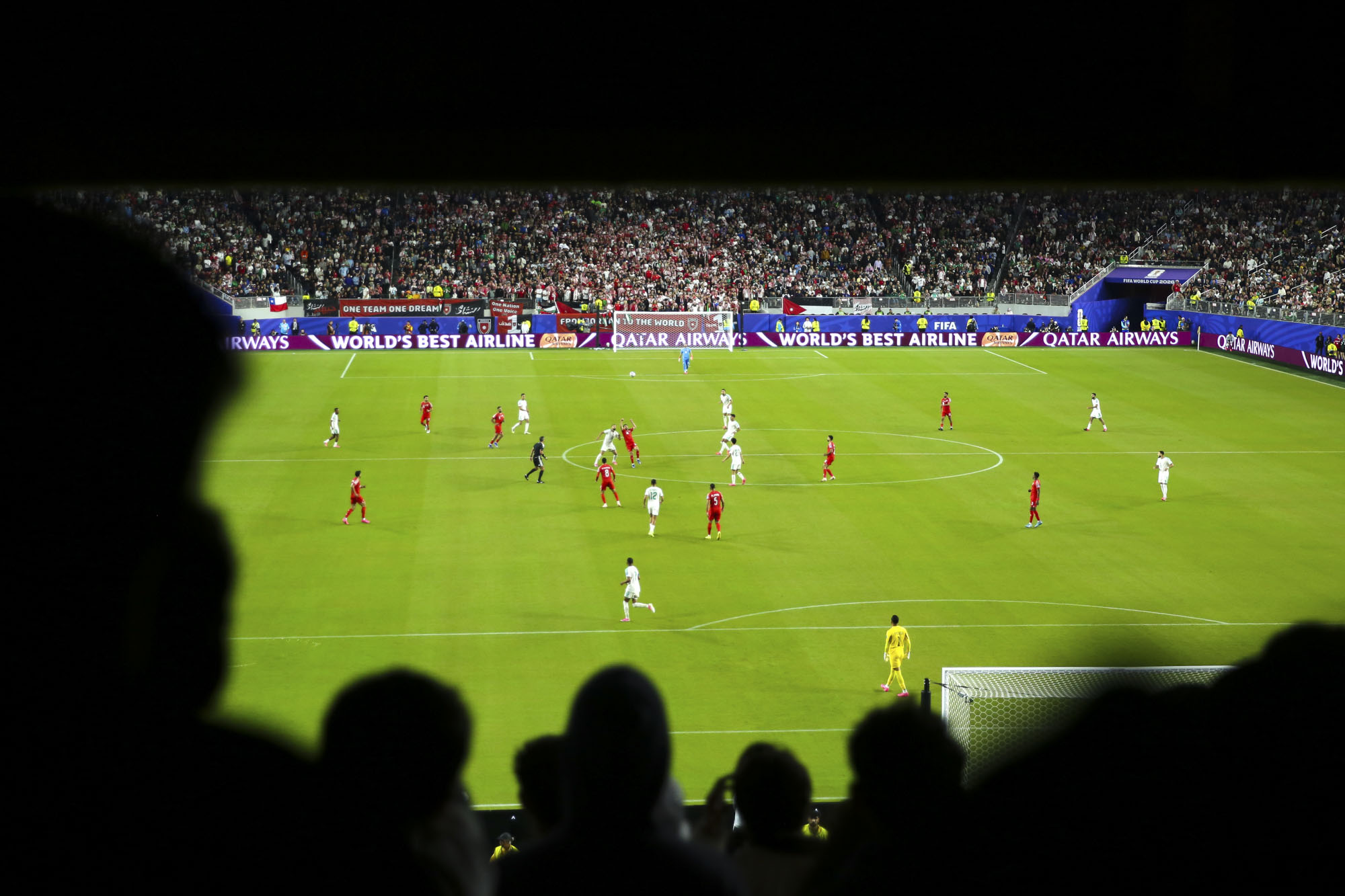
]
},
{
"site": "science",
"roles": [
"editor"
]
}
],
"headData": {
"title": "Samantha Kennedy | KQED",
"description": "KQED Contributor",
"ogImgSrc": "https://secure.gravatar.com/avatar/adc7b14bf1e801793202a156ecc864d4ad505b0fd63162a2f3da0e5ba57222d0?s=600&d=blank&r=g",
"twImgSrc": "https://secure.gravatar.com/avatar/adc7b14bf1e801793202a156ecc864d4ad505b0fd63162a2f3da0e5ba57222d0?s=600&d=blank&r=g"
},
"isLoading": false,
"link": "/author/skennedy"
},
"sarahwright": {
"type": "authors",
"id": "11956",
"meta": {
"index": "authors_1716337520",
"id": "11956",
"found": true
},
"name": "Sarah Wright",
"firstName": "Sarah",
"lastName": "Wright",
"slug": "sarahwright",
"email": "swright@kqed.org",
"display_author_email": true,
"staff_mastheads": [],
"title": "Outdoors Engagement Reporter",
"bio": "Sarah Wright is KQED's Outdoors Engagement Reporter. Originally from Lake Tahoe, she completed a thru-hike of the Pacific Crest Trail in 2019 and was a U.S. Fulbright Program grantee to Argentina in 2023. Her journalism has appeared in The Guardian, The San Francisco Standard, The Palo Alto Weekly and the Half Moon Bay Review.",
"avatar": "https://secure.gravatar.com/avatar/c161a3d6441865cba25e6db4fa561099ad665799e9432e34da2b84d7e371524c?s=600&d=blank&r=g",
"twitter": null,
"bluesky": null,
"facebook": null,
"instagram": null,
"linkedin": null,
"sites": [
{
"site": "arts",
"roles": [
"editor"
]
},
{
"site": "news",
"roles": [
"editor"
]
},
{
"site": "science",
"roles": [
"contributor",
"author"
]
},
{
"site": "forum",
"roles": [
"editor"
]
}
],
"headData": {
"title": "Sarah Wright | KQED",
"description": "Outdoors Engagement Reporter",
"ogImgSrc": "https://secure.gravatar.com/avatar/c161a3d6441865cba25e6db4fa561099ad665799e9432e34da2b84d7e371524c?s=600&d=blank&r=g",
"twImgSrc": "https://secure.gravatar.com/avatar/c161a3d6441865cba25e6db4fa561099ad665799e9432e34da2b84d7e371524c?s=600&d=blank&r=g"
},
"isLoading": false,
"link": "/author/sarahwright"
},
"aaliahmad": {
"type": "authors",
"id": "11986",
"meta": {
"index": "authors_1716337520",
"id": "11986",
"found": true
},
"name": "Ayah Ali-Ahmad",
"firstName": "Ayah",
"lastName": "Ali-Ahmad",
"slug": "aaliahmad",
"email": "aaliahmad@KQED.org",
"display_author_email": false,
"staff_mastheads": [],
"title": "KQED Contributor",
"bio": null,
"avatar": "https://secure.gravatar.com/avatar/1cf54f187a5e1064b2cfef3f3d2f1e4f93e453395d56912aca6382a6071ec3ed?s=600&d=blank&r=g",
"twitter": "ayahaliahmad",
"bluesky": null,
"facebook": null,
"instagram": null,
"linkedin": null,
"sites": [
{
"site": "news",
"roles": [
"subscriber"
]
}
],
"headData": {
"title": "Ayah Ali-Ahmad | KQED",
"description": "KQED Contributor",
"ogImgSrc": "https://secure.gravatar.com/avatar/1cf54f187a5e1064b2cfef3f3d2f1e4f93e453395d56912aca6382a6071ec3ed?s=600&d=blank&r=g",
"twImgSrc": "https://secure.gravatar.com/avatar/1cf54f187a5e1064b2cfef3f3d2f1e4f93e453395d56912aca6382a6071ec3ed?s=600&d=blank&r=g"
},
"isLoading": false,
"link": "/author/aaliahmad"
}
},
"pagesReducer": {
"news_tag_south-bay": {
"type": "terms",
"id": "news_21285",
"meta": {
"index": "terms_1716263798",
"site": "news",
"id": "21285",
"score": 7.0833073
},
"featImg": null,
"name": "South Bay",
"description": null,
"taxonomy": "tag",
"headData": {
"twImgId": null,
"twTitle": null,
"ogTitle": null,
"ogImgId": null,
"twDescription": null,
"description": null,
"title": "South Bay Archives | KQED News",
"ogDescription": null
},
"ttid": 21302,
"slug": "south-bay",
"isLoading": false,
"title": "South Bay",
"pageMeta": {
"site": "news",
"WpPageTemplate": "page-topic-editorial",
"currentPage": 4
},
"blocks": [
{
"blockName": "kqed/post-list",
"attrs": {
"layout": "cardArticle2",
"query": "posts/news?tag=south-bay",
"seeMore": false,
"paginated": true,
"page": 4
}
},
{
"blockName": "kqed/ad"
}
]
}
},
"pfsSessionReducer": {},
"postsReducer": {
"stream_live": {
"type": "live",
"id": "stream_live",
"audioUrl": "https://streams.kqed.org/kqedradio",
"title": "Live Stream",
"excerpt": "Live Stream information currently unavailable.",
"link": "/radio",
"featImg": "",
"label": {
"name": "KQED Live",
"link": "/"
}
},
"stream_kqedNewscast": {
"type": "posts",
"id": "stream_kqedNewscast",
"audioUrl": "https://www.kqed.org/.stream/anon/radio/RDnews/newscast.mp3?_=1",
"title": "KQED Newscast",
"featImg": "",
"label": {
"name": "88.5 FM",
"link": "/"
}
},
"news_12088198": {
"type": "posts",
"id": "news_12088198",
"meta": {
"index": "posts_1716263798",
"site": "news",
"id": "12088198",
"score": null,
"sort": [
1782249925000
]
},
"guestAuthors": [],
"slug": "what-it-was-like-inside-levis-for-the-algeria-vs-jordan-world-cup-match",
"title": "What It Was Like Inside Levi’s for the Algeria vs. Jordan World Cup Match",
"publishDate": 1782249925,
"format": "standard",
"headTitle": "What It Was Like Inside Levi’s for the Algeria vs. Jordan World Cup Match | KQED",
"labelTerm": {
"site": "news"
},
"content": "\u003cp>One, two, three, viva l’Algerie! One, two, three, viva l’Algerie!\u003c/p>\n\u003cp>The chants were thunderous, with thousands of fans of Algeria’s national soccer team celebrating a 2-1 victory over Jordan at \u003ca href=\"https://www.kqed.org/news/tag/levis-stadium\">Levi’s Stadium\u003c/a> on Monday night.\u003c/p>\n\u003cp>Long after the \u003ca href=\"https://www.kqed.org/news/12083101/world-cup-2026-bay-area-games-where-is-fifa-world-cup-santa-clara-levis-stadium-tickets-fan-zone-watch-parties\">World Cup match\u003c/a> ended, the throngs of revelers filled the cavernous concourses, and the building shook as they danced, jumped for joy and played drums and horns.\u003c/p>\n\u003cp>While Algeria’s supporters were the last ones cheering, just about every moment surrounding the match at the temporarily \u003ca href=\"https://www.youtube.com/shorts/cBQqZzxkA4Q\">renamed San Francisco Bay Area Stadium\u003c/a> in Santa Clara felt like a celebration of sport, unity and togetherness among people hailing from far beyond Algeria, Jordan and the broader Middle East.\u003c/p>\n\u003cp>[ad fullwidth]\u003c/p>\n\u003cp>“Right now it’s a time for the Middle East to kind of unite,” Sandy Kikhia of San José said ahead of the match. Kikhia is of Syrian descent and attended her first \u003ca href=\"https://www.kqed.org/news/12086953/the-world-cup-has-arrived-in-the-san-francisco-bay-area-is-anyone-else-coming\">World Cup game\u003c/a> with two of her sisters, Masah and Jana, all supporting Jordan’s side in the team’s first-ever World Cup.\u003c/p>\n\u003cp>But the sisters said a win for either team was a win for the larger community, especially for fans whose teams are not in this World Cup, such as Syrians, Palestinians and Lebanese people.\u003c/p>\n\u003cfigure id=\"attachment_12088557\" class=\"wp-caption aligncenter\" style=\"max-width: 2000px\">\u003cimg loading=\"lazy\" decoding=\"async\" class=\"size-full wp-image-12088557\" src=\"https://cdn.kqed.org/wp-content/uploads/sites/10/2026/06/260622-WCJORALG-KQED-19-KQED.jpg\" alt=\"\" width=\"2000\" height=\"1333\" srcset=\"https://cdn.kqed.org/wp-content/uploads/sites/10/2026/06/260622-WCJORALG-KQED-19-KQED.jpg 2000w, https://cdn.kqed.org/wp-content/uploads/sites/10/2026/06/260622-WCJORALG-KQED-19-KQED-160x107.jpg 160w, https://cdn.kqed.org/wp-content/uploads/sites/10/2026/06/260622-WCJORALG-KQED-19-KQED-1536x1024.jpg 1536w\" sizes=\"auto, (max-width: 2000px) 100vw, 2000px\">\u003cfigcaption class=\"wp-caption-text\">A child held up on a person’s shoulders waves a Jordanian flag outside Levi’s Stadium, ahead of the World Cup match between Jordan and Algeria, in Santa Clara on Monday, June 22, 2026. \u003ccite>(Joseph Geha/ KQED)\u003c/cite>\u003c/figcaption>\u003c/figure>\n\u003cp>“There is nothing that is nicer than having our whole Arab community come together for something that brings everyone joy,” Masah Kikhia said. “Such a nice feeling to see everyone wearing their cultural clothing, the shemagh, the keffiyeh,” she said, referring to both the black and white checkered scarves with Palestinian origins, and the red and white version most commonly donned by Jordanians.\u003c/p>\n\u003cp>The Fédération Internationale de Football Association, which organizes the World Cup and is widely known as FIFA, didn’t grant KQED any \u003ca href=\"https://www.wgbh.org/news/local/2026-06-17/fifa-didnt-offer-gbh-news-media-credentials-for-the-world-cup-we-went-anyway\">media credentials to cover matches\u003c/a>. So we purchased our own upper deck ticket for $400 to experience the game, the stadium and the fandom up close.\u003c/p>\n\u003cp>The fans did not disappoint.[aside postID=news_12086949 hero='https://cdn.kqed.org/wp-content/uploads/sites/10/2026/06/260610-BayAreaStadiumTour-12-BL_KQED.jpg']Even hours ahead of kickoff, the parking lots outside of the stadium were filled with thousands of people wearing their nation’s colors, dancing on cement railings, greeting each other with big hugs and waving huge flags.\u003c/p>\n\u003cp>Groups of people huddled around news reporters, anxiously awaiting the chance to be broadcast live on Algerian and Jordanian news networks.\u003c/p>\n\u003cp>No tailgating is allowed at World Cup matches, but some generous folks handed out snacks and sweets, like dates and baklava, and others posed for pictures with bags of pistachios.\u003c/p>\n\u003cp>Amine Tigha, an Algerian who lives in New York City, traveled to the Bay Area for this match, also his first World Cup game, and said he loves the weather here.\u003c/p>\n\u003cp>“The most important thing,” he said ahead of kickoff, is that Algeria wins the game, but he said the vibes were more of a friendly rivalry with Jordan.\u003c/p>\n\u003cp>“You know, we both are Arab, we share a lot of things. We share the religion, the language and everything. It’s like a derby. We play like neighbors,” he said with a big laugh.\u003c/p>\n\u003cp>Nazim Bellahsene is originally from Algeria and has lived in the U.S. for 15 years. He lives in Santa Clara and came to the match with his wife, Wisam, and his two young kids, Emma and Nolan.\u003c/p>\n\u003cfigure id=\"attachment_12088556\" class=\"wp-caption aligncenter\" style=\"max-width: 2000px\">\u003cimg loading=\"lazy\" decoding=\"async\" class=\"size-full wp-image-12088556\" src=\"https://cdn.kqed.org/wp-content/uploads/sites/10/2026/06/260622-WCJORALG-KQED-18-KQED.jpg\" alt=\"\" width=\"2000\" height=\"1333\" srcset=\"https://cdn.kqed.org/wp-content/uploads/sites/10/2026/06/260622-WCJORALG-KQED-18-KQED.jpg 2000w, https://cdn.kqed.org/wp-content/uploads/sites/10/2026/06/260622-WCJORALG-KQED-18-KQED-160x107.jpg 160w, https://cdn.kqed.org/wp-content/uploads/sites/10/2026/06/260622-WCJORALG-KQED-18-KQED-1536x1024.jpg 1536w\" sizes=\"auto, (max-width: 2000px) 100vw, 2000px\">\u003cfigcaption class=\"wp-caption-text\">Supporters of Jordan’s men’s soccer team party outside of Levi’s Stadium, ahead of the World Cup match between Jordan and Algeria, in Santa Clara on Monday, June 22, 2026. \u003ccite>(Joseph Geha/KQED)\u003c/cite>\u003c/figcaption>\u003c/figure>\n\u003cp>“It’s super exciting. We’re loving it. It’s really unexpected that it’s here at home, near home. So, you know, we can’t miss it,” he said of the match. Monday was his first time ever seeing the Algerian national team on the pitch in person.\u003c/p>\n\u003cp>Decked out in an Algerian jersey and draped with the country’s flag, Bellahsene was confident in his side.\u003c/p>\n\u003cp>“We’re looking forward to a win, for sure,” he said. “But you know, at the same time, enjoying and having a great family time with everybody here in a very festive environment. So it’s going to be fun.”\u003c/p>\n\u003cfigure id=\"attachment_12088550\" class=\"wp-caption aligncenter\" style=\"max-width: 2000px\">\u003cimg loading=\"lazy\" decoding=\"async\" class=\"size-full wp-image-12088550\" src=\"https://cdn.kqed.org/wp-content/uploads/sites/10/2026/06/260622-WCJORALG-KQED-07-KQED.jpg\" alt=\"\" width=\"2000\" height=\"1333\" srcset=\"https://cdn.kqed.org/wp-content/uploads/sites/10/2026/06/260622-WCJORALG-KQED-07-KQED.jpg 2000w, https://cdn.kqed.org/wp-content/uploads/sites/10/2026/06/260622-WCJORALG-KQED-07-KQED-160x107.jpg 160w, https://cdn.kqed.org/wp-content/uploads/sites/10/2026/06/260622-WCJORALG-KQED-07-KQED-1536x1024.jpg 1536w\" sizes=\"auto, (max-width: 2000px) 100vw, 2000px\">\u003cfigcaption class=\"wp-caption-text\">Fans take a selfie from the concourse of Levi’s Stadium during the World Cup match between Algeria and Jordan in Santa Clara on Monday, June 22, 2026. \u003ccite>(Joseph Geha/KQED)\u003c/cite>\u003c/figcaption>\u003c/figure>\n\u003cp>The stadium was filled with people from seemingly all backgrounds, from babies to elders, and several fans said they loved the diversity of the Bay Area and the international draw of the sport.\u003c/p>\n\u003cp>Alfred and Veronica Zamora, and their daughter Brianna, are San José residents and big fans of Mexico’s national team. Like many other fans on Monday night, they sported their Mexico kits.\u003c/p>\n\u003cp>The family has been to 49ers games at Levi’s before, but the vibes around the match on Monday were in “a whole different league,” Alfred said.\u003c/p>\n\u003cfigure id=\"attachment_12088552\" class=\"wp-caption aligncenter\" style=\"max-width: 2000px\">\u003cimg loading=\"lazy\" decoding=\"async\" class=\"size-full wp-image-12088552\" src=\"https://cdn.kqed.org/wp-content/uploads/sites/10/2026/06/260622-WCJORALG-KQED-12-KQED.jpg\" alt=\"\" width=\"2000\" height=\"1333\" srcset=\"https://cdn.kqed.org/wp-content/uploads/sites/10/2026/06/260622-WCJORALG-KQED-12-KQED.jpg 2000w, https://cdn.kqed.org/wp-content/uploads/sites/10/2026/06/260622-WCJORALG-KQED-12-KQED-160x107.jpg 160w, https://cdn.kqed.org/wp-content/uploads/sites/10/2026/06/260622-WCJORALG-KQED-12-KQED-1536x1024.jpg 1536w\" sizes=\"auto, (max-width: 2000px) 100vw, 2000px\">\u003cfigcaption class=\"wp-caption-text\">A view of the temporarily renamed San Francisco Bay Area Stadium filled with fans from an upper deck seat purchased by KQED for the World Cup match between Algeria and Jordan on Monday, June 22, 2026. \u003ccite>(Joseph Geha/KQED)\u003c/cite>\u003c/figcaption>\u003c/figure>\n\u003cp>“It’s just a different experience altogether, you know. [American] football is great, but this is a world event. I feel like everybody’s here and joined together to watch something good.”\u003c/p>\n\u003cp>Jasmine and Zayna Alfarah, sisters of Jordanian descent from Los Angeles, drove up to the Bay Area overnight Sunday into Monday with their two friends, Jacqueline Gutierrez and Marilyn Maldonado.\u003c/p>\n\u003cp>They arrived at 4 a.m. Monday, but said the lack of sleep and long drive was worthwhile.\u003c/p>\n\u003cfigure id=\"attachment_12088553\" class=\"wp-caption aligncenter\" style=\"max-width: 2000px\">\u003cimg loading=\"lazy\" decoding=\"async\" class=\"size-full wp-image-12088553\" src=\"https://cdn.kqed.org/wp-content/uploads/sites/10/2026/06/260622-WCJORALG-KQED-13-KQED.jpg\" alt=\"\" width=\"2000\" height=\"1333\" srcset=\"https://cdn.kqed.org/wp-content/uploads/sites/10/2026/06/260622-WCJORALG-KQED-13-KQED.jpg 2000w, https://cdn.kqed.org/wp-content/uploads/sites/10/2026/06/260622-WCJORALG-KQED-13-KQED-160x107.jpg 160w, https://cdn.kqed.org/wp-content/uploads/sites/10/2026/06/260622-WCJORALG-KQED-13-KQED-1536x1024.jpg 1536w\" sizes=\"auto, (max-width: 2000px) 100vw, 2000px\">\u003cfigcaption class=\"wp-caption-text\">The flags of Algeria and Jordan are displayed on the pitch at Levi’s Stadium on Monday, June 22, 2026, just before kickoff in the World Cup match between the two nations’ men’s soccer teams. \u003ccite>(Joseph Geha/KQED)\u003c/cite>\u003c/figcaption>\u003c/figure>\n\u003cp>“Seeing Jordan come into the World Cup for the first time is just such a beautiful experience,” Jasmine Alfarah said.\u003c/p>\n\u003cp>Gutierrez and Maldonado support Mexico and Honduras’ national teams, respectively, but on Monday, like so many fans do during the World Cup, they adopted new team allegiances.\u003c/p>\n\u003cp>“They’re making history,” Gutierrez said of Jordan’s squad. “We’re here to witness this history, and I’m proud.”\u003c/p>\n\u003cfigure id=\"attachment_12088551\" class=\"wp-caption aligncenter\" style=\"max-width: 2000px\">\u003cimg loading=\"lazy\" decoding=\"async\" class=\"size-full wp-image-12088551\" src=\"https://cdn.kqed.org/wp-content/uploads/sites/10/2026/06/260622-WCJORALG-KQED-11-KQED.jpg\" alt=\"\" width=\"2000\" height=\"1333\" srcset=\"https://cdn.kqed.org/wp-content/uploads/sites/10/2026/06/260622-WCJORALG-KQED-11-KQED.jpg 2000w, https://cdn.kqed.org/wp-content/uploads/sites/10/2026/06/260622-WCJORALG-KQED-11-KQED-160x107.jpg 160w, https://cdn.kqed.org/wp-content/uploads/sites/10/2026/06/260622-WCJORALG-KQED-11-KQED-1536x1024.jpg 1536w\" sizes=\"auto, (max-width: 2000px) 100vw, 2000px\">\u003cfigcaption class=\"wp-caption-text\">Lupita Gonzalez and her dad Sergio Gonzalez, both Oakland residents originally from Mexico, attended their first World Cup game at Levi’s Stadium in Santa Clara on Monday, June 22, 2026. \u003ccite>(Joseph Geha/KQED)\u003c/cite>\u003c/figcaption>\u003c/figure>\n\u003cp>During the game’s newly mandated hydration breaks, while fans around the globe watching TV are served ads, people in the stadium were treated to a live mariachi performance and light shows that connected cell phone flashlights at halftime.\u003c/p>\n\u003cp>For Lupita Gonzalez and her dad Sergio Gonzalez, both Oakland residents originally from Mexico, coming to the game was realizing a dream of his that he had held onto since he was a boy.\u003c/p>\n\u003cp>“For Father’s Day, I wanted to give my dad tickets. My dad is a huge soccer fan, and this is his first World Cup ever. As a kid, he dreamed of going to the World Cup when it was in Mexico in 1970. Unfortunately, he wasn’t able to do it, so I wanted it to make my dad’s dreams come true,” Gonzalez said.\u003c/p>\n\u003cfigure id=\"attachment_12088548\" class=\"wp-caption aligncenter\" style=\"max-width: 2000px\">\u003cimg loading=\"lazy\" decoding=\"async\" class=\"size-full wp-image-12088548\" src=\"https://cdn.kqed.org/wp-content/uploads/sites/10/2026/06/260622-WCJORALG-KQED-02-KQED.jpg\" alt=\"\" width=\"2000\" height=\"1333\" srcset=\"https://cdn.kqed.org/wp-content/uploads/sites/10/2026/06/260622-WCJORALG-KQED-02-KQED.jpg 2000w, https://cdn.kqed.org/wp-content/uploads/sites/10/2026/06/260622-WCJORALG-KQED-02-KQED-160x107.jpg 160w, https://cdn.kqed.org/wp-content/uploads/sites/10/2026/06/260622-WCJORALG-KQED-02-KQED-1536x1024.jpg 1536w\" sizes=\"auto, (max-width: 2000px) 100vw, 2000px\">\u003cfigcaption class=\"wp-caption-text\">Fans of Algeria’s soccer team celebrate a victory over Jordan in the concourses of Levi’s Stadium in Santa Clara on Monday, June 22, 2026. \u003ccite>(Joseph Geha/KQED)\u003c/cite>\u003c/figcaption>\u003c/figure>\n\u003cp>She and her family \u003ca href=\"https://www.kqed.org/news/12087163/for-bay-area-latinos-world-cup-is-a-celebration-of-pride-and-identity\">root for Mexico’s team\u003c/a> most days, but on Monday, they were pulling for Jordan. Gonzalez’s great-grandmother immigrated from Lebanon to Mexico, and they wanted to support a nearby country.\u003c/p>\n\u003cp>She said she was a bit wary of coming to a World Cup game because of the way the U.S. has treated immigrants and made it harder for some \u003ca href=\"https://www.kqed.org/news/12087615/protests-and-celebrations-iranians-in-los-angeles-have-mixed-feelings-on-world-cup\">teams and fans to experience the tournament\u003c/a>, but she said her experience on Monday proved that fans will support one another in the name of soccer.\u003c/p>\n\u003cp>“It’s not about the politics. It’s not even about FIFA as an organization. It’s about showing up for the country where you’re from or a country that you want to support. I just love that energy,” she said. “We’re sitting next to folks that are rooting for Algeria, we’re still high-fiving, we’re still enjoying each other’s wins because that’s what the World Cup is about.”\u003c/p>\n\u003cp>[ad floatright]\u003c/p>\n",
"blocks": [],
"excerpt": "Fans from around the world highlighted unity among Arab nations during Algeria and Jordan’s World Cup match in Santa Clara. ",
"status": "publish",
"parent": 0,
"modified": 1782255775,
"stats": {
"hasAudio": false,
"hasVideo": false,
"hasChartOrMap": false,
"iframeSrcs": [],
"hasGoogleForm": false,
"hasGallery": false,
"hasHearkenModule": false,
"hasPolis": false,
"paragraphCount": 35,
"wordCount": 1563
},
"headData": {
"title": "What It Was Like Inside Levi’s for the Algeria vs. Jordan World Cup Match | KQED",
"description": "Fans from around the world highlighted unity among Arab nations during Algeria and Jordan’s World Cup match in Santa Clara. ",
"ogTitle": "",
"ogDescription": "",
"ogImgId": "",
"twTitle": "",
"twDescription": "",
"twImgId": "",
"schema": {
"@context": "https://schema.org",
"@type": "NewsArticle",
"headline": "What It Was Like Inside Levi’s for the Algeria vs. Jordan World Cup Match",
"datePublished": "2026-06-23T14:25:25-07:00",
"dateModified": "2026-06-23T16:02:55-07:00",
"image": "https://cdn.kqed.org/wp-content/uploads/2020/02/KQED-OG-Image@1x.png",
"isAccessibleForFree": "True",
"publisher": {
"@type": "NewsMediaOrganization",
"@id": "https://www.kqed.org/#organization",
"name": "KQED",
"logo": "https://cdn.kqed.org/wp-content/uploads/2020/02/KQED-OG-Image@1x.png",
"url": "https://www.kqed.org",
"sameAs": [
"https://www.facebook.com/KQED",
"https://twitter.com/KQED",
"https://www.instagram.com/kqed/",
"https://www.tiktok.com/@kqedofficial",
"https://www.linkedin.com/company/kqed",
"https://www.youtube.com/channel/UCeC0IOo7i1P_61zVUWbJ4nw"
]
}
}
},
"primaryCategory": {
"termId": 10,
"slug": "sports",
"name": "Sports"
},
"sticky": false,
"nprStoryId": "kqed-12088198",
"templateType": "standard",
"featuredImageType": "standard",
"excludeFromSiteSearch": "Include",
"articleAge": "0",
"path": "/news/12088198/what-it-was-like-inside-levis-for-the-algeria-vs-jordan-world-cup-match",
"audioTrackLength": null,
"parsedContent": [
{
"type": "contentString",
"content": "\u003cdiv class=\"post-body\">\u003cp>\u003cp>One, two, three, viva l’Algerie! One, two, three, viva l’Algerie!\u003c/p>\n\u003cp>The chants were thunderous, with thousands of fans of Algeria’s national soccer team celebrating a 2-1 victory over Jordan at \u003ca href=\"https://www.kqed.org/news/tag/levis-stadium\">Levi’s Stadium\u003c/a> on Monday night.\u003c/p>\n\u003cp>Long after the \u003ca href=\"https://www.kqed.org/news/12083101/world-cup-2026-bay-area-games-where-is-fifa-world-cup-santa-clara-levis-stadium-tickets-fan-zone-watch-parties\">World Cup match\u003c/a> ended, the throngs of revelers filled the cavernous concourses, and the building shook as they danced, jumped for joy and played drums and horns.\u003c/p>\n\u003cp>While Algeria’s supporters were the last ones cheering, just about every moment surrounding the match at the temporarily \u003ca href=\"https://www.youtube.com/shorts/cBQqZzxkA4Q\">renamed San Francisco Bay Area Stadium\u003c/a> in Santa Clara felt like a celebration of sport, unity and togetherness among people hailing from far beyond Algeria, Jordan and the broader Middle East.\u003c/p>\n\u003cp>\u003c/p>\u003c/div>",
"attributes": {
"named": {},
"numeric": []
}
},
{
"type": "component",
"content": "",
"name": "ad",
"attributes": {
"named": {
"label": "fullwidth"
},
"numeric": [
"fullwidth"
]
}
},
{
"type": "contentString",
"content": "\u003cdiv class=\"post-body\">\u003cp>\u003c/p>\n\u003cp>“Right now it’s a time for the Middle East to kind of unite,” Sandy Kikhia of San José said ahead of the match. Kikhia is of Syrian descent and attended her first \u003ca href=\"https://www.kqed.org/news/12086953/the-world-cup-has-arrived-in-the-san-francisco-bay-area-is-anyone-else-coming\">World Cup game\u003c/a> with two of her sisters, Masah and Jana, all supporting Jordan’s side in the team’s first-ever World Cup.\u003c/p>\n\u003cp>But the sisters said a win for either team was a win for the larger community, especially for fans whose teams are not in this World Cup, such as Syrians, Palestinians and Lebanese people.\u003c/p>\n\u003cfigure id=\"attachment_12088557\" class=\"wp-caption aligncenter\" style=\"max-width: 2000px\">\u003cimg loading=\"lazy\" decoding=\"async\" class=\"size-full wp-image-12088557\" src=\"https://cdn.kqed.org/wp-content/uploads/sites/10/2026/06/260622-WCJORALG-KQED-19-KQED.jpg\" alt=\"\" width=\"2000\" height=\"1333\" srcset=\"https://cdn.kqed.org/wp-content/uploads/sites/10/2026/06/260622-WCJORALG-KQED-19-KQED.jpg 2000w, https://cdn.kqed.org/wp-content/uploads/sites/10/2026/06/260622-WCJORALG-KQED-19-KQED-160x107.jpg 160w, https://cdn.kqed.org/wp-content/uploads/sites/10/2026/06/260622-WCJORALG-KQED-19-KQED-1536x1024.jpg 1536w\" sizes=\"auto, (max-width: 2000px) 100vw, 2000px\">\u003cfigcaption class=\"wp-caption-text\">A child held up on a person’s shoulders waves a Jordanian flag outside Levi’s Stadium, ahead of the World Cup match between Jordan and Algeria, in Santa Clara on Monday, June 22, 2026. \u003ccite>(Joseph Geha/ KQED)\u003c/cite>\u003c/figcaption>\u003c/figure>\n\u003cp>“There is nothing that is nicer than having our whole Arab community come together for something that brings everyone joy,” Masah Kikhia said. “Such a nice feeling to see everyone wearing their cultural clothing, the shemagh, the keffiyeh,” she said, referring to both the black and white checkered scarves with Palestinian origins, and the red and white version most commonly donned by Jordanians.\u003c/p>\n\u003cp>The Fédération Internationale de Football Association, which organizes the World Cup and is widely known as FIFA, didn’t grant KQED any \u003ca href=\"https://www.wgbh.org/news/local/2026-06-17/fifa-didnt-offer-gbh-news-media-credentials-for-the-world-cup-we-went-anyway\">media credentials to cover matches\u003c/a>. So we purchased our own upper deck ticket for $400 to experience the game, the stadium and the fandom up close.\u003c/p>\n\u003cp>The fans did not disappoint.\u003c/p>\u003c/div>",
"attributes": {
"named": {},
"numeric": []
}
},
{
"type": "component",
"content": "",
"name": "aside",
"attributes": {
"named": {
"postid": "news_12086949",
"hero": "https://cdn.kqed.org/wp-content/uploads/sites/10/2026/06/260610-BayAreaStadiumTour-12-BL_KQED.jpg",
"label": ""
},
"numeric": []
}
},
{
"type": "contentString",
"content": "\u003cdiv class=\"post-body\">\u003cp>Even hours ahead of kickoff, the parking lots outside of the stadium were filled with thousands of people wearing their nation’s colors, dancing on cement railings, greeting each other with big hugs and waving huge flags.\u003c/p>\n\u003cp>Groups of people huddled around news reporters, anxiously awaiting the chance to be broadcast live on Algerian and Jordanian news networks.\u003c/p>\n\u003cp>No tailgating is allowed at World Cup matches, but some generous folks handed out snacks and sweets, like dates and baklava, and others posed for pictures with bags of pistachios.\u003c/p>\n\u003cp>Amine Tigha, an Algerian who lives in New York City, traveled to the Bay Area for this match, also his first World Cup game, and said he loves the weather here.\u003c/p>\n\u003cp>“The most important thing,” he said ahead of kickoff, is that Algeria wins the game, but he said the vibes were more of a friendly rivalry with Jordan.\u003c/p>\n\u003cp>“You know, we both are Arab, we share a lot of things. We share the religion, the language and everything. It’s like a derby. We play like neighbors,” he said with a big laugh.\u003c/p>\n\u003cp>Nazim Bellahsene is originally from Algeria and has lived in the U.S. for 15 years. He lives in Santa Clara and came to the match with his wife, Wisam, and his two young kids, Emma and Nolan.\u003c/p>\n\u003cfigure id=\"attachment_12088556\" class=\"wp-caption aligncenter\" style=\"max-width: 2000px\">\u003cimg loading=\"lazy\" decoding=\"async\" class=\"size-full wp-image-12088556\" src=\"https://cdn.kqed.org/wp-content/uploads/sites/10/2026/06/260622-WCJORALG-KQED-18-KQED.jpg\" alt=\"\" width=\"2000\" height=\"1333\" srcset=\"https://cdn.kqed.org/wp-content/uploads/sites/10/2026/06/260622-WCJORALG-KQED-18-KQED.jpg 2000w, https://cdn.kqed.org/wp-content/uploads/sites/10/2026/06/260622-WCJORALG-KQED-18-KQED-160x107.jpg 160w, https://cdn.kqed.org/wp-content/uploads/sites/10/2026/06/260622-WCJORALG-KQED-18-KQED-1536x1024.jpg 1536w\" sizes=\"auto, (max-width: 2000px) 100vw, 2000px\">\u003cfigcaption class=\"wp-caption-text\">Supporters of Jordan’s men’s soccer team party outside of Levi’s Stadium, ahead of the World Cup match between Jordan and Algeria, in Santa Clara on Monday, June 22, 2026. \u003ccite>(Joseph Geha/KQED)\u003c/cite>\u003c/figcaption>\u003c/figure>\n\u003cp>“It’s super exciting. We’re loving it. It’s really unexpected that it’s here at home, near home. So, you know, we can’t miss it,” he said of the match. Monday was his first time ever seeing the Algerian national team on the pitch in person.\u003c/p>\n\u003cp>Decked out in an Algerian jersey and draped with the country’s flag, Bellahsene was confident in his side.\u003c/p>\n\u003cp>“We’re looking forward to a win, for sure,” he said. “But you know, at the same time, enjoying and having a great family time with everybody here in a very festive environment. So it’s going to be fun.”\u003c/p>\n\u003cfigure id=\"attachment_12088550\" class=\"wp-caption aligncenter\" style=\"max-width: 2000px\">\u003cimg loading=\"lazy\" decoding=\"async\" class=\"size-full wp-image-12088550\" src=\"https://cdn.kqed.org/wp-content/uploads/sites/10/2026/06/260622-WCJORALG-KQED-07-KQED.jpg\" alt=\"\" width=\"2000\" height=\"1333\" srcset=\"https://cdn.kqed.org/wp-content/uploads/sites/10/2026/06/260622-WCJORALG-KQED-07-KQED.jpg 2000w, https://cdn.kqed.org/wp-content/uploads/sites/10/2026/06/260622-WCJORALG-KQED-07-KQED-160x107.jpg 160w, https://cdn.kqed.org/wp-content/uploads/sites/10/2026/06/260622-WCJORALG-KQED-07-KQED-1536x1024.jpg 1536w\" sizes=\"auto, (max-width: 2000px) 100vw, 2000px\">\u003cfigcaption class=\"wp-caption-text\">Fans take a selfie from the concourse of Levi’s Stadium during the World Cup match between Algeria and Jordan in Santa Clara on Monday, June 22, 2026. \u003ccite>(Joseph Geha/KQED)\u003c/cite>\u003c/figcaption>\u003c/figure>\n\u003cp>The stadium was filled with people from seemingly all backgrounds, from babies to elders, and several fans said they loved the diversity of the Bay Area and the international draw of the sport.\u003c/p>\n\u003cp>Alfred and Veronica Zamora, and their daughter Brianna, are San José residents and big fans of Mexico’s national team. Like many other fans on Monday night, they sported their Mexico kits.\u003c/p>\n\u003cp>The family has been to 49ers games at Levi’s before, but the vibes around the match on Monday were in “a whole different league,” Alfred said.\u003c/p>\n\u003cfigure id=\"attachment_12088552\" class=\"wp-caption aligncenter\" style=\"max-width: 2000px\">\u003cimg loading=\"lazy\" decoding=\"async\" class=\"size-full wp-image-12088552\" src=\"https://cdn.kqed.org/wp-content/uploads/sites/10/2026/06/260622-WCJORALG-KQED-12-KQED.jpg\" alt=\"\" width=\"2000\" height=\"1333\" srcset=\"https://cdn.kqed.org/wp-content/uploads/sites/10/2026/06/260622-WCJORALG-KQED-12-KQED.jpg 2000w, https://cdn.kqed.org/wp-content/uploads/sites/10/2026/06/260622-WCJORALG-KQED-12-KQED-160x107.jpg 160w, https://cdn.kqed.org/wp-content/uploads/sites/10/2026/06/260622-WCJORALG-KQED-12-KQED-1536x1024.jpg 1536w\" sizes=\"auto, (max-width: 2000px) 100vw, 2000px\">\u003cfigcaption class=\"wp-caption-text\">A view of the temporarily renamed San Francisco Bay Area Stadium filled with fans from an upper deck seat purchased by KQED for the World Cup match between Algeria and Jordan on Monday, June 22, 2026. \u003ccite>(Joseph Geha/KQED)\u003c/cite>\u003c/figcaption>\u003c/figure>\n\u003cp>“It’s just a different experience altogether, you know. [American] football is great, but this is a world event. I feel like everybody’s here and joined together to watch something good.”\u003c/p>\n\u003cp>Jasmine and Zayna Alfarah, sisters of Jordanian descent from Los Angeles, drove up to the Bay Area overnight Sunday into Monday with their two friends, Jacqueline Gutierrez and Marilyn Maldonado.\u003c/p>\n\u003cp>They arrived at 4 a.m. Monday, but said the lack of sleep and long drive was worthwhile.\u003c/p>\n\u003cfigure id=\"attachment_12088553\" class=\"wp-caption aligncenter\" style=\"max-width: 2000px\">\u003cimg loading=\"lazy\" decoding=\"async\" class=\"size-full wp-image-12088553\" src=\"https://cdn.kqed.org/wp-content/uploads/sites/10/2026/06/260622-WCJORALG-KQED-13-KQED.jpg\" alt=\"\" width=\"2000\" height=\"1333\" srcset=\"https://cdn.kqed.org/wp-content/uploads/sites/10/2026/06/260622-WCJORALG-KQED-13-KQED.jpg 2000w, https://cdn.kqed.org/wp-content/uploads/sites/10/2026/06/260622-WCJORALG-KQED-13-KQED-160x107.jpg 160w, https://cdn.kqed.org/wp-content/uploads/sites/10/2026/06/260622-WCJORALG-KQED-13-KQED-1536x1024.jpg 1536w\" sizes=\"auto, (max-width: 2000px) 100vw, 2000px\">\u003cfigcaption class=\"wp-caption-text\">The flags of Algeria and Jordan are displayed on the pitch at Levi’s Stadium on Monday, June 22, 2026, just before kickoff in the World Cup match between the two nations’ men’s soccer teams. \u003ccite>(Joseph Geha/KQED)\u003c/cite>\u003c/figcaption>\u003c/figure>\n\u003cp>“Seeing Jordan come into the World Cup for the first time is just such a beautiful experience,” Jasmine Alfarah said.\u003c/p>\n\u003cp>Gutierrez and Maldonado support Mexico and Honduras’ national teams, respectively, but on Monday, like so many fans do during the World Cup, they adopted new team allegiances.\u003c/p>\n\u003cp>“They’re making history,” Gutierrez said of Jordan’s squad. “We’re here to witness this history, and I’m proud.”\u003c/p>\n\u003cfigure id=\"attachment_12088551\" class=\"wp-caption aligncenter\" style=\"max-width: 2000px\">\u003cimg loading=\"lazy\" decoding=\"async\" class=\"size-full wp-image-12088551\" src=\"https://cdn.kqed.org/wp-content/uploads/sites/10/2026/06/260622-WCJORALG-KQED-11-KQED.jpg\" alt=\"\" width=\"2000\" height=\"1333\" srcset=\"https://cdn.kqed.org/wp-content/uploads/sites/10/2026/06/260622-WCJORALG-KQED-11-KQED.jpg 2000w, https://cdn.kqed.org/wp-content/uploads/sites/10/2026/06/260622-WCJORALG-KQED-11-KQED-160x107.jpg 160w, https://cdn.kqed.org/wp-content/uploads/sites/10/2026/06/260622-WCJORALG-KQED-11-KQED-1536x1024.jpg 1536w\" sizes=\"auto, (max-width: 2000px) 100vw, 2000px\">\u003cfigcaption class=\"wp-caption-text\">Lupita Gonzalez and her dad Sergio Gonzalez, both Oakland residents originally from Mexico, attended their first World Cup game at Levi’s Stadium in Santa Clara on Monday, June 22, 2026. \u003ccite>(Joseph Geha/KQED)\u003c/cite>\u003c/figcaption>\u003c/figure>\n\u003cp>During the game’s newly mandated hydration breaks, while fans around the globe watching TV are served ads, people in the stadium were treated to a live mariachi performance and light shows that connected cell phone flashlights at halftime.\u003c/p>\n\u003cp>For Lupita Gonzalez and her dad Sergio Gonzalez, both Oakland residents originally from Mexico, coming to the game was realizing a dream of his that he had held onto since he was a boy.\u003c/p>\n\u003cp>“For Father’s Day, I wanted to give my dad tickets. My dad is a huge soccer fan, and this is his first World Cup ever. As a kid, he dreamed of going to the World Cup when it was in Mexico in 1970. Unfortunately, he wasn’t able to do it, so I wanted it to make my dad’s dreams come true,” Gonzalez said.\u003c/p>\n\u003cfigure id=\"attachment_12088548\" class=\"wp-caption aligncenter\" style=\"max-width: 2000px\">\u003cimg loading=\"lazy\" decoding=\"async\" class=\"size-full wp-image-12088548\" src=\"https://cdn.kqed.org/wp-content/uploads/sites/10/2026/06/260622-WCJORALG-KQED-02-KQED.jpg\" alt=\"\" width=\"2000\" height=\"1333\" srcset=\"https://cdn.kqed.org/wp-content/uploads/sites/10/2026/06/260622-WCJORALG-KQED-02-KQED.jpg 2000w, https://cdn.kqed.org/wp-content/uploads/sites/10/2026/06/260622-WCJORALG-KQED-02-KQED-160x107.jpg 160w, https://cdn.kqed.org/wp-content/uploads/sites/10/2026/06/260622-WCJORALG-KQED-02-KQED-1536x1024.jpg 1536w\" sizes=\"auto, (max-width: 2000px) 100vw, 2000px\">\u003cfigcaption class=\"wp-caption-text\">Fans of Algeria’s soccer team celebrate a victory over Jordan in the concourses of Levi’s Stadium in Santa Clara on Monday, June 22, 2026. \u003ccite>(Joseph Geha/KQED)\u003c/cite>\u003c/figcaption>\u003c/figure>\n\u003cp>She and her family \u003ca href=\"https://www.kqed.org/news/12087163/for-bay-area-latinos-world-cup-is-a-celebration-of-pride-and-identity\">root for Mexico’s team\u003c/a> most days, but on Monday, they were pulling for Jordan. Gonzalez’s great-grandmother immigrated from Lebanon to Mexico, and they wanted to support a nearby country.\u003c/p>\n\u003cp>She said she was a bit wary of coming to a World Cup game because of the way the U.S. has treated immigrants and made it harder for some \u003ca href=\"https://www.kqed.org/news/12087615/protests-and-celebrations-iranians-in-los-angeles-have-mixed-feelings-on-world-cup\">teams and fans to experience the tournament\u003c/a>, but she said her experience on Monday proved that fans will support one another in the name of soccer.\u003c/p>\n\u003cp>“It’s not about the politics. It’s not even about FIFA as an organization. It’s about showing up for the country where you’re from or a country that you want to support. I just love that energy,” she said. “We’re sitting next to folks that are rooting for Algeria, we’re still high-fiving, we’re still enjoying each other’s wins because that’s what the World Cup is about.”\u003c/p>\n\u003cp>\u003c/p>\u003c/div>",
"attributes": {
"named": {},
"numeric": []
}
},
{
"type": "component",
"content": "",
"name": "ad",
"attributes": {
"named": {
"label": "floatright"
},
"numeric": [
"floatright"
]
}
},
{
"type": "contentString",
"content": "\u003cdiv class=\"post-body\">\u003cp>\u003c/p>\n\u003c/div>\u003c/p>",
"attributes": {
"named": {},
"numeric": []
}
}
],
"link": "/news/12088198/what-it-was-like-inside-levis-for-the-algeria-vs-jordan-world-cup-match",
"authors": [
"11906"
],
"categories": [
"news_28250",
"news_8",
"news_10"
],
"tags": [
"news_1386",
"news_27626",
"news_36837",
"news_5379",
"news_2672",
"news_18188",
"news_1489",
"news_21285",
"news_34078",
"news_6464"
],
"featImg": "news_12088549",
"label": "news"
},
"news_12088143": {
"type": "posts",
"id": "news_12088143",
"meta": {
"index": "posts_1716263798",
"site": "news",
"id": "12088143",
"score": null,
"sort": [
1781824486000
]
},
"guestAuthors": [],
"slug": "vta-mismanaging-bart-extension-civil-grand-jury-report-says",
"title": "VTA Mismanaging BART Extension, Civil Grand Jury Report Says",
"publishDate": 1781824486,
"format": "standard",
"headTitle": "VTA Mismanaging BART Extension, Civil Grand Jury Report Says | KQED",
"labelTerm": {
"site": "news"
},
"content": "\u003cp>The Santa Clara Valley Transportation Authority’s Board of Directors has failed to properly manage, oversee and financially control the project that is further expanding BART into \u003ca href=\"https://www.kqed.org/siliconvalley\">Silicon Valley\u003c/a>.\u003c/p>\n\u003cp>That’s according to a newly released report from the Santa Clara County Civil Grand Jury this week, which found that the project “exposes VTA to financial risks” and that its own board of directors knows that oversight needs to be improved.\u003c/p>\n\u003cp>The agency is building a 6-mile extension that will add four stations, connecting the Berryessa/North San José BART station through downtown San José and to the city of Santa Clara. But the project has come with delays and rising costs — a price tag of $4.7 billion in 2014 has ballooned to $12.75 billion, according to the report. VTA is targeting the project to be done in 2037, though an oversight consultant estimates completion in 2039.\u003c/p>\n\u003cp>[ad fullwidth]\u003c/p>\n\u003cp>“There is no realistic plan to deal with foreseeable financial risks,” the report said, “including significant uncertainty about BSVII’s construction and operating costs, reliance on expiring voter-approved sales tax measures, uncertain federal government support, cash flow, and declining ridership.”\u003c/p>\n\u003cp>All of the project’s funding sources, the report adds, are subject to risks. The project was banking on $6.3 billion from the Federal Transit Administration, but it only got $5.1 billion.\u003c/p>\n\u003cfigure id=\"attachment_12066417\" class=\"wp-caption aligncenter\" style=\"max-width: 2000px\">\u003cimg loading=\"lazy\" decoding=\"async\" class=\"size-full wp-image-12066417\" src=\"https://cdn.kqed.org/wp-content/uploads/sites/10/2025/12/251208-BART-SILICON-VALLEY-TOUR-MD-10-KQED.jpg\" alt=\"\" width=\"2000\" height=\"1333\" srcset=\"https://cdn.kqed.org/wp-content/uploads/sites/10/2025/12/251208-BART-SILICON-VALLEY-TOUR-MD-10-KQED.jpg 2000w, https://cdn.kqed.org/wp-content/uploads/sites/10/2025/12/251208-BART-SILICON-VALLEY-TOUR-MD-10-KQED-160x107.jpg 160w, https://cdn.kqed.org/wp-content/uploads/sites/10/2025/12/251208-BART-SILICON-VALLEY-TOUR-MD-10-KQED-1536x1024.jpg 1536w\" sizes=\"auto, (max-width: 2000px) 100vw, 2000px\">\u003cfigcaption class=\"wp-caption-text\">Construction crews work at the West Portal Site of the BART Silicon Valley Phase II Project in San José on Dec. 8, 2025. \u003ccite>(Martin do Nascimento/KQED)\u003c/cite>\u003c/figcaption>\u003c/figure>\n\u003cp>The project also relies on the regional sales tax measure that would help fund AC Transit, BART and other Bay Area operators, even though it won’t be decided by voters until the November election.\u003c/p>\n\u003cp>VTA said that it takes the recommendations, including adopting a strategy that reduces “dependency on new sales tax measures” and preparing an alternative funding strategy, “seriously and remain[s] committed to continuous improvement, transparency and accountability.”\u003c/p>\n\u003cp>“Many of the issues identified in the report have been raised previously in various forums,” VTA said in a statement. “Most have been resolved, while others are actively being addressed.”[aside postID=news_12053738 hero='https://cdn.kqed.org/wp-content/uploads/sites/10/2025/08/250623-VTAWESTPORTAL-JG-4_qed.jpg']VTA said that it included establishing the board’s Oversight Committee, which looks to provide guidance and oversee things like the costs of the project.\u003c/p>\n\u003cp>Another civil grand jury report in the past found problems with oversight, during which “its lack of transparency around changes to project scope and cost were identified as significant deficiencies,” the report added.\u003c/p>\n\u003cp>Because of a few deliberations or actions providing guidance and VTA staff receiving private input from individual board members, the report found that “the full Board does not benefit from Oversight Committee analysis.”\u003c/p>\n\u003cp>San José Mayor Matt Mahan serves as vice chair of the board and chairs the Oversight Commission. He said that VTA “must earn the public’s trust today.”\u003c/p>\n\u003cp>“The greatest risk to this project is time delay. I’ve encouraged the Committee and VTA staff and contractors to accelerate actual building rather than endless second-guessing that does more for the consultant class than our constituents,” Mahan said.\u003c/p>\n\u003cp>The civil grand jury said that the longer it takes for the project to be completed, the more likely costs associated with the construction and reliance on local sales taxes will grow.\u003c/p>\n\u003cp>The VTA Board of Directors has 90 days from June 17 to respond to the findings.\u003c/p>\n\u003cp>\u003c/p>\n",
"blocks": [],
"excerpt": "Report finds that the VTA Board doesn’t have a plan for fiscal risks and lacks proper oversight. ",
"status": "publish",
"parent": 0,
"modified": 1781825574,
"stats": {
"hasAudio": false,
"hasVideo": false,
"hasChartOrMap": false,
"iframeSrcs": [],
"hasGoogleForm": false,
"hasGallery": false,
"hasHearkenModule": false,
"hasPolis": false,
"paragraphCount": 16,
"wordCount": 617
},
"headData": {
"title": "VTA Mismanaging BART Extension, Civil Grand Jury Report Says | KQED",
"description": "Report finds that the VTA Board doesn’t have a plan for fiscal risks and lacks proper oversight. ",
"ogTitle": "",
"ogDescription": "",
"ogImgId": "",
"twTitle": "",
"twDescription": "",
"twImgId": "",
"schema": {
"@context": "https://schema.org",
"@type": "NewsArticle",
"headline": "VTA Mismanaging BART Extension, Civil Grand Jury Report Says",
"datePublished": "2026-06-18T16:14:46-07:00",
"dateModified": "2026-06-18T16:32:54-07:00",
"image": "https://cdn.kqed.org/wp-content/uploads/2020/02/KQED-OG-Image@1x.png",
"isAccessibleForFree": "True",
"publisher": {
"@type": "NewsMediaOrganization",
"@id": "https://www.kqed.org/#organization",
"name": "KQED",
"logo": "https://cdn.kqed.org/wp-content/uploads/2020/02/KQED-OG-Image@1x.png",
"url": "https://www.kqed.org",
"sameAs": [
"https://www.facebook.com/KQED",
"https://twitter.com/KQED",
"https://www.instagram.com/kqed/",
"https://www.tiktok.com/@kqedofficial",
"https://www.linkedin.com/company/kqed",
"https://www.youtube.com/channel/UCeC0IOo7i1P_61zVUWbJ4nw"
]
}
}
},
"primaryCategory": {
"termId": 1397,
"slug": "transportation",
"name": "Transportation"
},
"sticky": false,
"nprStoryId": "kqed-12088143",
"templateType": "standard",
"featuredImageType": "standard",
"excludeFromSiteSearch": "Include",
"articleAge": "0",
"path": "/news/12088143/vta-mismanaging-bart-extension-civil-grand-jury-report-says",
"audioTrackLength": null,
"parsedContent": [
{
"type": "contentString",
"content": "\u003cdiv class=\"post-body\">\u003cp>\u003cp>The Santa Clara Valley Transportation Authority’s Board of Directors has failed to properly manage, oversee and financially control the project that is further expanding BART into \u003ca href=\"https://www.kqed.org/siliconvalley\">Silicon Valley\u003c/a>.\u003c/p>\n\u003cp>That’s according to a newly released report from the Santa Clara County Civil Grand Jury this week, which found that the project “exposes VTA to financial risks” and that its own board of directors knows that oversight needs to be improved.\u003c/p>\n\u003cp>The agency is building a 6-mile extension that will add four stations, connecting the Berryessa/North San José BART station through downtown San José and to the city of Santa Clara. But the project has come with delays and rising costs — a price tag of $4.7 billion in 2014 has ballooned to $12.75 billion, according to the report. VTA is targeting the project to be done in 2037, though an oversight consultant estimates completion in 2039.\u003c/p>\n\u003cp>\u003c/p>\u003c/div>",
"attributes": {
"named": {},
"numeric": []
}
},
{
"type": "component",
"content": "",
"name": "ad",
"attributes": {
"named": {
"label": "fullwidth"
},
"numeric": [
"fullwidth"
]
}
},
{
"type": "contentString",
"content": "\u003cdiv class=\"post-body\">\u003cp>\u003c/p>\n\u003cp>“There is no realistic plan to deal with foreseeable financial risks,” the report said, “including significant uncertainty about BSVII’s construction and operating costs, reliance on expiring voter-approved sales tax measures, uncertain federal government support, cash flow, and declining ridership.”\u003c/p>\n\u003cp>All of the project’s funding sources, the report adds, are subject to risks. The project was banking on $6.3 billion from the Federal Transit Administration, but it only got $5.1 billion.\u003c/p>\n\u003cfigure id=\"attachment_12066417\" class=\"wp-caption aligncenter\" style=\"max-width: 2000px\">\u003cimg loading=\"lazy\" decoding=\"async\" class=\"size-full wp-image-12066417\" src=\"https://cdn.kqed.org/wp-content/uploads/sites/10/2025/12/251208-BART-SILICON-VALLEY-TOUR-MD-10-KQED.jpg\" alt=\"\" width=\"2000\" height=\"1333\" srcset=\"https://cdn.kqed.org/wp-content/uploads/sites/10/2025/12/251208-BART-SILICON-VALLEY-TOUR-MD-10-KQED.jpg 2000w, https://cdn.kqed.org/wp-content/uploads/sites/10/2025/12/251208-BART-SILICON-VALLEY-TOUR-MD-10-KQED-160x107.jpg 160w, https://cdn.kqed.org/wp-content/uploads/sites/10/2025/12/251208-BART-SILICON-VALLEY-TOUR-MD-10-KQED-1536x1024.jpg 1536w\" sizes=\"auto, (max-width: 2000px) 100vw, 2000px\">\u003cfigcaption class=\"wp-caption-text\">Construction crews work at the West Portal Site of the BART Silicon Valley Phase II Project in San José on Dec. 8, 2025. \u003ccite>(Martin do Nascimento/KQED)\u003c/cite>\u003c/figcaption>\u003c/figure>\n\u003cp>The project also relies on the regional sales tax measure that would help fund AC Transit, BART and other Bay Area operators, even though it won’t be decided by voters until the November election.\u003c/p>\n\u003cp>VTA said that it takes the recommendations, including adopting a strategy that reduces “dependency on new sales tax measures” and preparing an alternative funding strategy, “seriously and remain[s] committed to continuous improvement, transparency and accountability.”\u003c/p>\n\u003cp>“Many of the issues identified in the report have been raised previously in various forums,” VTA said in a statement. “Most have been resolved, while others are actively being addressed.”\u003c/p>\u003c/div>",
"attributes": {
"named": {},
"numeric": []
}
},
{
"type": "component",
"content": "",
"name": "aside",
"attributes": {
"named": {
"postid": "news_12053738",
"hero": "https://cdn.kqed.org/wp-content/uploads/sites/10/2025/08/250623-VTAWESTPORTAL-JG-4_qed.jpg",
"label": ""
},
"numeric": []
}
},
{
"type": "contentString",
"content": "\u003cdiv class=\"post-body\">\u003cp>VTA said that it included establishing the board’s Oversight Committee, which looks to provide guidance and oversee things like the costs of the project.\u003c/p>\n\u003cp>Another civil grand jury report in the past found problems with oversight, during which “its lack of transparency around changes to project scope and cost were identified as significant deficiencies,” the report added.\u003c/p>\n\u003cp>Because of a few deliberations or actions providing guidance and VTA staff receiving private input from individual board members, the report found that “the full Board does not benefit from Oversight Committee analysis.”\u003c/p>\n\u003cp>San José Mayor Matt Mahan serves as vice chair of the board and chairs the Oversight Commission. He said that VTA “must earn the public’s trust today.”\u003c/p>\n\u003cp>“The greatest risk to this project is time delay. I’ve encouraged the Committee and VTA staff and contractors to accelerate actual building rather than endless second-guessing that does more for the consultant class than our constituents,” Mahan said.\u003c/p>\n\u003cp>The civil grand jury said that the longer it takes for the project to be completed, the more likely costs associated with the construction and reliance on local sales taxes will grow.\u003c/p>\n\u003cp>The VTA Board of Directors has 90 days from June 17 to respond to the findings.\u003c/p>\n\u003cp>\u003c/p>\n\u003c/div>\u003c/p>",
"attributes": {
"named": {},
"numeric": []
}
}
],
"link": "/news/12088143/vta-mismanaging-bart-extension-civil-grand-jury-report-says",
"authors": [
"11935"
],
"categories": [
"news_6188",
"news_8",
"news_1397"
],
"tags": [
"news_269",
"news_1533",
"news_18541",
"news_29087",
"news_34586",
"news_21285",
"news_20517",
"news_20675"
],
"featImg": "news_12066415",
"label": "news"
},
"news_12082971": {
"type": "posts",
"id": "news_12082971",
"meta": {
"index": "posts_1716263798",
"site": "news",
"id": "12082971",
"score": null,
"sort": [
1781560041000
]
},
"guestAuthors": [],
"slug": "richard-tillman-sentenced-to-5-years-for-san-jose-post-office-arson",
"title": "Richard Tillman Sentenced to 5 Years for San José Post Office Arson",
"publishDate": 1781560041,
"format": "standard",
"headTitle": "Richard Tillman Sentenced to 5 Years for San José Post Office Arson | KQED",
"labelTerm": {
"site": "news"
},
"content": "\u003cp>Richard Tillman, the brother of late NFL player and Army Ranger Pat Tillman Jr., was sentenced to five years in prison on Monday for setting fire to a South \u003ca href=\"https://www.kqed.org/news/tag/san-jose\">San José\u003c/a> post office building last summer.\u003c/p>\n\u003cp>Tillman was also ordered to pay $2.37 million in restitution for the damage to the post office and will be put on probation for three years following his prison term, according to court documents.\u003c/p>\n\u003cp>U.S. District Judge Edward J. Davila handed down the sentence in federal court in San José, matching the recommendation from both the U.S. Attorney’s Office and Tillman’s public defender, which stems from a February plea agreement.\u003c/p>\n\u003cp>Tillman spoke at length about his beliefs during a statement he gave to the court, saying he believes that he is the son of God and created all things, people and animals.\u003c/p>\n\u003cp>[ad fullwidth]\u003c/p>\n\u003cp>“I didn’t burn down a building for no reason. I’ve been trying to get people’s attention for a long time,” Tillman said.\u003c/p>\n\u003cp>Davila, after hearing Tillman’s statement, raised the prospect of whether mental fitness proceedings were needed, but Assistant Federal Public Defender Varell Fuller, representing Tillman, declined.\u003c/p>\n\u003cp>Fuller said Tillman’s “views may be unpopular, and they may be unorthodox,” but that he didn’t doubt his ability to understand what was happening to him.\u003c/p>\n\u003cfigure id=\"attachment_12087632\" class=\"wp-caption aligncenter\" style=\"max-width: 2000px\">\u003cimg loading=\"lazy\" decoding=\"async\" class=\"size-full wp-image-12087632\" src=\"https://cdn.kqed.org/wp-content/uploads/sites/10/2026/06/260615-Tillman-sentencing-02-KQED.jpg\" alt=\"\" width=\"2000\" height=\"1362\" srcset=\"https://cdn.kqed.org/wp-content/uploads/sites/10/2026/06/260615-Tillman-sentencing-02-KQED.jpg 2000w, https://cdn.kqed.org/wp-content/uploads/sites/10/2026/06/260615-Tillman-sentencing-02-KQED-160x109.jpg 160w, https://cdn.kqed.org/wp-content/uploads/sites/10/2026/06/260615-Tillman-sentencing-02-KQED-1536x1046.jpg 1536w\" sizes=\"auto, (max-width: 2000px) 100vw, 2000px\">\u003cfigcaption class=\"wp-caption-text\">Richard Tillman’s burned-out car seen in the destroyed lobby of a South San José post office on July 20, 2025. \u003ccite>(Courtesy of U.S. Attorney's Office)\u003c/cite>\u003c/figcaption>\u003c/figure>\n\u003cp>Davila also checked directly with Tillman, verifying he understood who his attorney was, and the circumstances he faces.\u003c/p>\n\u003cp>Tillman affirmed, saying, “I’m going to jail for five years.” He said, “I did the crime, and I am more than happy to do the time.”\u003c/p>\n\u003cp>The 45-year-old arrived in court in a dark green Elmwood Jail jumpsuit, with long straight salt-and-pepper hair, and a mostly gray long beard.\u003c/p>\n\u003cp>His mother, father and older brother, who were in court, declined to comment after the proceedings. Fuller also declined to comment.\u003c/p>\n\u003cp>Authorities said that in the early morning hours of July 20, Tillman loaded his car with “instalogs” he bought from a grocery store and soaked them in lighter fluid.[aside postID=news_12072992 hero='https://cdn.kqed.org/wp-content/uploads/sites/10/2025/08/SanJoseCourthouse.jpg']He then backed the car into the glass doors of the Almaden Valley U.S. Post Office branch at 6525 Crown Blvd. and used a match to light the car on fire, which spread to the building and caused significant damage.\u003c/p>\n\u003cp>“The lobby of the post office, which was open to the public during business hours for retail transactions and access to post office boxes prior to the fire, was completely destroyed and remains closed to the public to this day,” Assistant U.S. Attorney Michael Pitman wrote in his sentencing filings.\u003c/p>\n\u003cp>Tillman “intentionally set a massive fire which caused millions of dollars’ worth of damage, destroyed mail belonging to hundreds of people and could easily have injured or killed firefighters, Postal Service employees, or civilian bystanders,” Pitman wrote.\u003c/p>\n\u003cp>He wanted to “make a point to the United States government” with the fire, the U.S. Attorney’s Office said previously.\u003c/p>\n\u003cp>Fuller wrote that Tillman “fully appreciates the seriousness and unlawfulness of his offense,” and he noted the fire was set around 3 a.m., when the post office was closed and unoccupied.\u003c/p>\n\u003cp>“It was never Mr. Tillman’s intention to harm or injure anyone, and fortunately, no member of the public, postal employee or emergency responder was injured,” Fuller wrote.\u003c/p>\n\u003cp>Prosecutors said Tillman livestreamed the fire on his YouTube account and kept the phone camera rolling while he spoke with firefighters and police officers, who later stopped the stream when they found the phone.\u003c/p>\n\u003cp>Tillman was arrested that morning and initially charged in state court in Santa Clara County.\u003c/p>\n\u003cfigure id=\"attachment_12049508\" class=\"wp-caption aligncenter\" style=\"max-width: 2000px\">\u003cimg loading=\"lazy\" decoding=\"async\" class=\"size-full wp-image-12049508\" src=\"https://cdn.kqed.org/wp-content/uploads/sites/10/2025/07/250723-TILLMAN-JG_QED-KQED.jpg\" alt=\"\" width=\"2000\" height=\"1334\" srcset=\"https://cdn.kqed.org/wp-content/uploads/sites/10/2025/07/250723-TILLMAN-JG_QED-KQED.jpg 2000w, https://cdn.kqed.org/wp-content/uploads/sites/10/2025/07/250723-TILLMAN-JG_QED-KQED-160x107.jpg 160w, https://cdn.kqed.org/wp-content/uploads/sites/10/2025/07/250723-TILLMAN-JG_QED-KQED-1536x1025.jpg 1536w\" sizes=\"auto, (max-width: 2000px) 100vw, 2000px\">\u003cfigcaption class=\"wp-caption-text\">Santa Clara County Assistant District Attorney Angela Bernhard speaks during a press conference following an arraignment hearing for Richard Tillman at the Hall of Justice in San José on July 23, 2025. \u003ccite>(Jospeh Geha/KQED)\u003c/cite>\u003c/figcaption>\u003c/figure>\n\u003cp>But his case was suspended by a judge so doctors could evaluate his competency to stand trial.\u003c/p>\n\u003cp>Later, after a federal indictment for the same incident was filed against Tillman, local prosecutors dismissed their case.\u003c/p>\n\u003cp>The maximum federal sentence Tillman could have faced was 20 years.\u003c/p>\n\u003cp>Fuller noted in court filings that because Tillman has no criminal history and because he accepted responsibility for the crime, his recommended sentence range could have been between 37 and 46 months. However, the minimum sentence for the crime of malicious destruction of government property by fire is five years.\u003c/p>\n\u003cp>Prosecutors and the federal public defender’s office agreed that the sentence in the plea agreement was “sufficient, but not greater than necessary.”\u003c/p>\n\u003cp>Tillman’s brother, Pat Tillman Jr., was killed in Afghanistan in 2004 when members of his U.S. platoon fired on him and an Afghan militia member, mistaking them for enemy fighters.\u003c/p>\n\u003cp>The U.S. government subsequently attempted to cover up the truth about the killing, including by instructing an officer to lie to the soldier’s family about the circumstances of his death.\u003c/p>\n\u003cp>Fuller wrote that Richard Tillman “lived a productive, law-abiding life for extended periods” and “enjoyed success in the entertainment industry and later became an author and stay-at-home father who devoted years to raising his children as their primary caregiver.”\u003c/p>\n\u003cp>However, the death of Pat Tillman Jr. had a significant impact on Tillman, along with other struggles in his personal and family life, including a divorce, strain in his family relationships and repeated attempts to seek mental health treatment.\u003c/p>\n\u003cfigure id=\"attachment_12053221\" class=\"wp-caption aligncenter\" style=\"max-width: 2000px\">\u003cimg loading=\"lazy\" decoding=\"async\" class=\"wp-image-12053221 size-full\" src=\"https://cdn.kqed.org/wp-content/uploads/sites/10/2025/08/SanJoseCourthouse.jpg\" alt=\"\" width=\"2000\" height=\"1505\" srcset=\"https://cdn.kqed.org/wp-content/uploads/sites/10/2025/08/SanJoseCourthouse.jpg 2000w, https://cdn.kqed.org/wp-content/uploads/sites/10/2025/08/SanJoseCourthouse-160x120.jpg 160w, https://cdn.kqed.org/wp-content/uploads/sites/10/2025/08/SanJoseCourthouse-1536x1156.jpg 1536w\" sizes=\"auto, (max-width: 2000px) 100vw, 2000px\">\u003cfigcaption class=\"wp-caption-text\">The brother of late NFL player Pat Tillman was sentenced to five years in prison for setting fire to a San José post office last year. \u003ccite>(Joseph Geha/KQED)\u003c/cite>\u003c/figcaption>\u003c/figure>\n\u003cp>“The death of his brother, Pat Tillman, profoundly affected him and appears to have marked the beginning of many of the difficulties that followed,” Fuller wrote. “By the time of the offense, Mr. Tillman’s life had largely unraveled. He was estranged from much of his family, experiencing periods of homelessness and increasingly isolated from the support systems that had previously provided stability.”\u003c/p>\n\u003cp>Prosecutors said Tillman’s “history and characteristics present a complex picture, particularly in light of the profound sacrifices he and his family have made in service to the United States.”\u003c/p>\n\u003cp>Tillman, however, “currently possesses both a warped worldview and the ability to plan and execute violent attacks based on that worldview,” prosecutors wrote. “This is a dangerous combination.”\u003c/p>\n\u003cp>In recent years, Tillman often livestreamed on his YouTube account from behind the wheel of a parked car. He referred to himself as a god by the name of “Yeshua,” railed against the government, and addressed posts to Taylor Swift as “Sweet Divine Soulmate Baby.”\u003c/p>\n\u003cp>Fuller asked that Tillman be placed in a minimum-security facility and be allowed to participate in substance abuse treatment programs.\u003c/p>\n\u003cp>He also requested, and the judge granted a payment schedule for the restitution, “requiring payments of $50 per month, or at least 10% of his gross monthly earnings, whichever is greater.”\u003c/p>\n\u003cp>[ad floatright]\u003c/p>\n",
"blocks": [],
"excerpt": "The brother of late NFL player Pat Tillman was sentenced to five years in prison for setting fire to a San José post office last year. ",
"status": "publish",
"parent": 0,
"modified": 1781562382,
"stats": {
"hasAudio": false,
"hasVideo": false,
"hasChartOrMap": false,
"iframeSrcs": [],
"hasGoogleForm": false,
"hasGallery": false,
"hasHearkenModule": false,
"hasPolis": false,
"paragraphCount": 36,
"wordCount": 1265
},
"headData": {
"title": "Richard Tillman Sentenced to 5 Years for San José Post Office Arson | KQED",
"description": "The brother of late NFL player Pat Tillman was sentenced to five years in prison for setting fire to a San José post office last year. ",
"ogTitle": "",
"ogDescription": "",
"ogImgId": "",
"twTitle": "",
"twDescription": "",
"twImgId": "",
"schema": {
"@context": "https://schema.org",
"@type": "NewsArticle",
"headline": "Richard Tillman Sentenced to 5 Years for San José Post Office Arson",
"datePublished": "2026-06-15T14:47:21-07:00",
"dateModified": "2026-06-15T15:26:22-07:00",
"image": "https://cdn.kqed.org/wp-content/uploads/2020/02/KQED-OG-Image@1x.png",
"isAccessibleForFree": "True",
"publisher": {
"@type": "NewsMediaOrganization",
"@id": "https://www.kqed.org/#organization",
"name": "KQED",
"logo": "https://cdn.kqed.org/wp-content/uploads/2020/02/KQED-OG-Image@1x.png",
"url": "https://www.kqed.org",
"sameAs": [
"https://www.facebook.com/KQED",
"https://twitter.com/KQED",
"https://www.instagram.com/kqed/",
"https://www.tiktok.com/@kqedofficial",
"https://www.linkedin.com/company/kqed",
"https://www.youtube.com/channel/UCeC0IOo7i1P_61zVUWbJ4nw"
]
}
}
},
"primaryCategory": {
"termId": 34167,
"slug": "criminal-justice",
"name": "Criminal Justice"
},
"sticky": false,
"nprStoryId": "kqed-12082971",
"templateType": "standard",
"featuredImageType": "standard",
"excludeFromSiteSearch": "Include",
"articleAge": "0",
"path": "/news/12082971/richard-tillman-sentenced-to-5-years-for-san-jose-post-office-arson",
"audioTrackLength": null,
"parsedContent": [
{
"type": "contentString",
"content": "\u003cdiv class=\"post-body\">\u003cp>\u003cp>Richard Tillman, the brother of late NFL player and Army Ranger Pat Tillman Jr., was sentenced to five years in prison on Monday for setting fire to a South \u003ca href=\"https://www.kqed.org/news/tag/san-jose\">San José\u003c/a> post office building last summer.\u003c/p>\n\u003cp>Tillman was also ordered to pay $2.37 million in restitution for the damage to the post office and will be put on probation for three years following his prison term, according to court documents.\u003c/p>\n\u003cp>U.S. District Judge Edward J. Davila handed down the sentence in federal court in San José, matching the recommendation from both the U.S. Attorney’s Office and Tillman’s public defender, which stems from a February plea agreement.\u003c/p>\n\u003cp>Tillman spoke at length about his beliefs during a statement he gave to the court, saying he believes that he is the son of God and created all things, people and animals.\u003c/p>\n\u003cp>\u003c/p>\u003c/div>",
"attributes": {
"named": {},
"numeric": []
}
},
{
"type": "component",
"content": "",
"name": "ad",
"attributes": {
"named": {
"label": "fullwidth"
},
"numeric": [
"fullwidth"
]
}
},
{
"type": "contentString",
"content": "\u003cdiv class=\"post-body\">\u003cp>\u003c/p>\n\u003cp>“I didn’t burn down a building for no reason. I’ve been trying to get people’s attention for a long time,” Tillman said.\u003c/p>\n\u003cp>Davila, after hearing Tillman’s statement, raised the prospect of whether mental fitness proceedings were needed, but Assistant Federal Public Defender Varell Fuller, representing Tillman, declined.\u003c/p>\n\u003cp>Fuller said Tillman’s “views may be unpopular, and they may be unorthodox,” but that he didn’t doubt his ability to understand what was happening to him.\u003c/p>\n\u003cfigure id=\"attachment_12087632\" class=\"wp-caption aligncenter\" style=\"max-width: 2000px\">\u003cimg loading=\"lazy\" decoding=\"async\" class=\"size-full wp-image-12087632\" src=\"https://cdn.kqed.org/wp-content/uploads/sites/10/2026/06/260615-Tillman-sentencing-02-KQED.jpg\" alt=\"\" width=\"2000\" height=\"1362\" srcset=\"https://cdn.kqed.org/wp-content/uploads/sites/10/2026/06/260615-Tillman-sentencing-02-KQED.jpg 2000w, https://cdn.kqed.org/wp-content/uploads/sites/10/2026/06/260615-Tillman-sentencing-02-KQED-160x109.jpg 160w, https://cdn.kqed.org/wp-content/uploads/sites/10/2026/06/260615-Tillman-sentencing-02-KQED-1536x1046.jpg 1536w\" sizes=\"auto, (max-width: 2000px) 100vw, 2000px\">\u003cfigcaption class=\"wp-caption-text\">Richard Tillman’s burned-out car seen in the destroyed lobby of a South San José post office on July 20, 2025. \u003ccite>(Courtesy of U.S. Attorney's Office)\u003c/cite>\u003c/figcaption>\u003c/figure>\n\u003cp>Davila also checked directly with Tillman, verifying he understood who his attorney was, and the circumstances he faces.\u003c/p>\n\u003cp>Tillman affirmed, saying, “I’m going to jail for five years.” He said, “I did the crime, and I am more than happy to do the time.”\u003c/p>\n\u003cp>The 45-year-old arrived in court in a dark green Elmwood Jail jumpsuit, with long straight salt-and-pepper hair, and a mostly gray long beard.\u003c/p>\n\u003cp>His mother, father and older brother, who were in court, declined to comment after the proceedings. Fuller also declined to comment.\u003c/p>\n\u003cp>Authorities said that in the early morning hours of July 20, Tillman loaded his car with “instalogs” he bought from a grocery store and soaked them in lighter fluid.\u003c/p>\u003c/div>",
"attributes": {
"named": {},
"numeric": []
}
},
{
"type": "component",
"content": "",
"name": "aside",
"attributes": {
"named": {
"postid": "news_12072992",
"hero": "https://cdn.kqed.org/wp-content/uploads/sites/10/2025/08/SanJoseCourthouse.jpg",
"label": ""
},
"numeric": []
}
},
{
"type": "contentString",
"content": "\u003cdiv class=\"post-body\">\u003cp>He then backed the car into the glass doors of the Almaden Valley U.S. Post Office branch at 6525 Crown Blvd. and used a match to light the car on fire, which spread to the building and caused significant damage.\u003c/p>\n\u003cp>“The lobby of the post office, which was open to the public during business hours for retail transactions and access to post office boxes prior to the fire, was completely destroyed and remains closed to the public to this day,” Assistant U.S. Attorney Michael Pitman wrote in his sentencing filings.\u003c/p>\n\u003cp>Tillman “intentionally set a massive fire which caused millions of dollars’ worth of damage, destroyed mail belonging to hundreds of people and could easily have injured or killed firefighters, Postal Service employees, or civilian bystanders,” Pitman wrote.\u003c/p>\n\u003cp>He wanted to “make a point to the United States government” with the fire, the U.S. Attorney’s Office said previously.\u003c/p>\n\u003cp>Fuller wrote that Tillman “fully appreciates the seriousness and unlawfulness of his offense,” and he noted the fire was set around 3 a.m., when the post office was closed and unoccupied.\u003c/p>\n\u003cp>“It was never Mr. Tillman’s intention to harm or injure anyone, and fortunately, no member of the public, postal employee or emergency responder was injured,” Fuller wrote.\u003c/p>\n\u003cp>Prosecutors said Tillman livestreamed the fire on his YouTube account and kept the phone camera rolling while he spoke with firefighters and police officers, who later stopped the stream when they found the phone.\u003c/p>\n\u003cp>Tillman was arrested that morning and initially charged in state court in Santa Clara County.\u003c/p>\n\u003cfigure id=\"attachment_12049508\" class=\"wp-caption aligncenter\" style=\"max-width: 2000px\">\u003cimg loading=\"lazy\" decoding=\"async\" class=\"size-full wp-image-12049508\" src=\"https://cdn.kqed.org/wp-content/uploads/sites/10/2025/07/250723-TILLMAN-JG_QED-KQED.jpg\" alt=\"\" width=\"2000\" height=\"1334\" srcset=\"https://cdn.kqed.org/wp-content/uploads/sites/10/2025/07/250723-TILLMAN-JG_QED-KQED.jpg 2000w, https://cdn.kqed.org/wp-content/uploads/sites/10/2025/07/250723-TILLMAN-JG_QED-KQED-160x107.jpg 160w, https://cdn.kqed.org/wp-content/uploads/sites/10/2025/07/250723-TILLMAN-JG_QED-KQED-1536x1025.jpg 1536w\" sizes=\"auto, (max-width: 2000px) 100vw, 2000px\">\u003cfigcaption class=\"wp-caption-text\">Santa Clara County Assistant District Attorney Angela Bernhard speaks during a press conference following an arraignment hearing for Richard Tillman at the Hall of Justice in San José on July 23, 2025. \u003ccite>(Jospeh Geha/KQED)\u003c/cite>\u003c/figcaption>\u003c/figure>\n\u003cp>But his case was suspended by a judge so doctors could evaluate his competency to stand trial.\u003c/p>\n\u003cp>Later, after a federal indictment for the same incident was filed against Tillman, local prosecutors dismissed their case.\u003c/p>\n\u003cp>The maximum federal sentence Tillman could have faced was 20 years.\u003c/p>\n\u003cp>Fuller noted in court filings that because Tillman has no criminal history and because he accepted responsibility for the crime, his recommended sentence range could have been between 37 and 46 months. However, the minimum sentence for the crime of malicious destruction of government property by fire is five years.\u003c/p>\n\u003cp>Prosecutors and the federal public defender’s office agreed that the sentence in the plea agreement was “sufficient, but not greater than necessary.”\u003c/p>\n\u003cp>Tillman’s brother, Pat Tillman Jr., was killed in Afghanistan in 2004 when members of his U.S. platoon fired on him and an Afghan militia member, mistaking them for enemy fighters.\u003c/p>\n\u003cp>The U.S. government subsequently attempted to cover up the truth about the killing, including by instructing an officer to lie to the soldier’s family about the circumstances of his death.\u003c/p>\n\u003cp>Fuller wrote that Richard Tillman “lived a productive, law-abiding life for extended periods” and “enjoyed success in the entertainment industry and later became an author and stay-at-home father who devoted years to raising his children as their primary caregiver.”\u003c/p>\n\u003cp>However, the death of Pat Tillman Jr. had a significant impact on Tillman, along with other struggles in his personal and family life, including a divorce, strain in his family relationships and repeated attempts to seek mental health treatment.\u003c/p>\n\u003cfigure id=\"attachment_12053221\" class=\"wp-caption aligncenter\" style=\"max-width: 2000px\">\u003cimg loading=\"lazy\" decoding=\"async\" class=\"wp-image-12053221 size-full\" src=\"https://cdn.kqed.org/wp-content/uploads/sites/10/2025/08/SanJoseCourthouse.jpg\" alt=\"\" width=\"2000\" height=\"1505\" srcset=\"https://cdn.kqed.org/wp-content/uploads/sites/10/2025/08/SanJoseCourthouse.jpg 2000w, https://cdn.kqed.org/wp-content/uploads/sites/10/2025/08/SanJoseCourthouse-160x120.jpg 160w, https://cdn.kqed.org/wp-content/uploads/sites/10/2025/08/SanJoseCourthouse-1536x1156.jpg 1536w\" sizes=\"auto, (max-width: 2000px) 100vw, 2000px\">\u003cfigcaption class=\"wp-caption-text\">The brother of late NFL player Pat Tillman was sentenced to five years in prison for setting fire to a San José post office last year. \u003ccite>(Joseph Geha/KQED)\u003c/cite>\u003c/figcaption>\u003c/figure>\n\u003cp>“The death of his brother, Pat Tillman, profoundly affected him and appears to have marked the beginning of many of the difficulties that followed,” Fuller wrote. “By the time of the offense, Mr. Tillman’s life had largely unraveled. He was estranged from much of his family, experiencing periods of homelessness and increasingly isolated from the support systems that had previously provided stability.”\u003c/p>\n\u003cp>Prosecutors said Tillman’s “history and characteristics present a complex picture, particularly in light of the profound sacrifices he and his family have made in service to the United States.”\u003c/p>\n\u003cp>Tillman, however, “currently possesses both a warped worldview and the ability to plan and execute violent attacks based on that worldview,” prosecutors wrote. “This is a dangerous combination.”\u003c/p>\n\u003cp>In recent years, Tillman often livestreamed on his YouTube account from behind the wheel of a parked car. He referred to himself as a god by the name of “Yeshua,” railed against the government, and addressed posts to Taylor Swift as “Sweet Divine Soulmate Baby.”\u003c/p>\n\u003cp>Fuller asked that Tillman be placed in a minimum-security facility and be allowed to participate in substance abuse treatment programs.\u003c/p>\n\u003cp>He also requested, and the judge granted a payment schedule for the restitution, “requiring payments of $50 per month, or at least 10% of his gross monthly earnings, whichever is greater.”\u003c/p>\n\u003cp>\u003c/p>\u003c/div>",
"attributes": {
"named": {},
"numeric": []
}
},
{
"type": "component",
"content": "",
"name": "ad",
"attributes": {
"named": {
"label": "floatright"
},
"numeric": [
"floatright"
]
}
},
{
"type": "contentString",
"content": "\u003cdiv class=\"post-body\">\u003cp>\u003c/p>\n\u003c/div>\u003c/p>",
"attributes": {
"named": {},
"numeric": []
}
}
],
"link": "/news/12082971/richard-tillman-sentenced-to-5-years-for-san-jose-post-office-arson",
"authors": [
"11906"
],
"categories": [
"news_34167",
"news_6188",
"news_8"
],
"tags": [
"news_24350",
"news_17626",
"news_17725",
"news_19954",
"news_18541",
"news_2688",
"news_21285"
],
"featImg": "news_12087631",
"label": "news"
},
"news_12087471": {
"type": "posts",
"id": "news_12087471",
"meta": {
"index": "posts_1716263798",
"site": "news",
"id": "12087471",
"score": null,
"sort": [
1781307755000
]
},
"guestAuthors": [],
"slug": "a-moment-under-the-sun-queer-led-groups-are-getting-outside-this-pride",
"title": "‘A Moment Under the Sun’: Queer-Led Groups Are Getting Outside This Pride",
"publishDate": 1781307755,
"format": "standard",
"headTitle": "‘A Moment Under the Sun’: Queer-Led Groups Are Getting Outside This Pride | KQED",
"labelTerm": {
"site": "news"
},
"content": "\u003cp>Celebrations for Pride Month are happening all June long. And if you’re even a little bit outdoorsy, \u003ca href=\"https://www.kqed.org/news/12043590/pride-2025-outdoor-meetups-lgbtq-hiking-bay-area#FindcommunitythroughBranchingOutAdventures\">there’s no shortage of groups \u003c/a>leading hikes, birding adventures and even surfing celebrations around the Bay Area.\u003c/p>\n\u003cp>“The outdoors, it belongs to everybody,” said Ryan McCauley, spokesperson for the Midpeninsula Regional Open Space District, which hosts yearly Pride events with community groups like Branching Out Adventures to “make sure we have equitable access to our preserves,” he said.\u003c/p>\n\u003cp>This year, the district is hosting its \u003ca href=\"https://volunteer.openspace.org/need/detail/?need_id=1260152\">own habitat restoration volunteer event\u003c/a> on June 26 at the Sierra Azul Preserve’s Cathedral Oaks, which was \u003ca href=\"https://www.numulosgatos.org/uncovering-untold-stories-feedback/the-boys\">home to a South Bay couple\u003c/a>, Frank Ingerson and George Dennison, who created a haven there for the queer community.\u003c/p>\n\u003cp>[ad fullwidth]\u003c/p>\n\u003cp>“They were both big artists and invited artists from across the country to their home,” McCauley said. “So the specific space has a lot of history as well.”\u003c/p>\n\u003cp>Even if you don’t typically consider yourself the outdoorsy type, summer is nonetheless a great time to get outside in the Bay Area, McCauley said — when the birds and other wildlife are particularly active.\u003c/p>\n\u003cul>\n\u003cli>\u003cstrong>Jump straight to: \u003ca href=\"#MoreoutdoorsPrideeventsintheBayAreathisJune\">More outdoors Pride events in the Bay Area this June\u003c/a>\u003c/strong>\u003c/li>\n\u003c/ul>\n\u003cp>One group taking full advantage of the summer weather’s possibilities for creating community is \u003ca href=\"https://trailheadgays.com/\">Trailhead Gays. \u003c/a>Founded by Gio Orantes, the group is a gathering space for gay men interested in exploring the outdoors.\u003c/p>\n\u003cp>Orantes’s collective organizes free events all year round, including hikes, camping, backpacking and other trips, but for Pride month this year, they’re hosting \u003ca href=\"https://trailheadgays.com/experiences/3979f231-e9ba-44ed-8d12-ee483b9e8f38\">a hike around Angel Island\u003c/a> on June 21 and \u003ca href=\"https://trailheadgays.com/experiences/7f3fad5c-f33d-40e2-b76f-64e7a30ffd29\">a daytime campout in Dolores Park\u003c/a> on June 28.\u003c/p>\n\u003cfigure id=\"attachment_12087487\" class=\"wp-caption aligncenter\" style=\"max-width: 2000px\">\u003cimg loading=\"lazy\" decoding=\"async\" class=\"size-full wp-image-12087487\" src=\"https://cdn.kqed.org/wp-content/uploads/sites/10/2026/06/Trailhead-Gays-1.jpg\" alt=\"\" width=\"2000\" height=\"1500\" srcset=\"https://cdn.kqed.org/wp-content/uploads/sites/10/2026/06/Trailhead-Gays-1.jpg 2000w, https://cdn.kqed.org/wp-content/uploads/sites/10/2026/06/Trailhead-Gays-1-160x120.jpg 160w, https://cdn.kqed.org/wp-content/uploads/sites/10/2026/06/Trailhead-Gays-1-1536x1152.jpg 1536w\" sizes=\"auto, (max-width: 2000px) 100vw, 2000px\">\u003cfigcaption class=\"wp-caption-text\">Members of Trailhead Gays gather under redwoods for their monthly outdoors-oriented adventures. \u003ccite>(Courtesy of Gio Orantes)\u003c/cite>\u003c/figcaption>\u003c/figure>\n\u003cp>Orantes, who is originally from Guatemala, said he came out as gay 17 years ago, just three days after moving to San Francisco: “It’s a beautiful city, and with the sense of community, it just felt like the right moment.”\u003c/p>\n\u003cp>After becoming more interested in the outdoors as an alternative to the party scene, Orantes took up sports, joining local leagues and organizing hikes with friends every month. At first, it started with just a few friends, but more and more kept joining. “And suddenly it was like, 50 people hiking,” Orantes said.\u003c/p>\n\u003cp>Many of the participants don’t have cars, so everyone started carpooling — which sealed the deal on building community, he said.[aside postID=news_12043590 hero='https://cdn.kqed.org/wp-content/uploads/sites/10/2025/06/SEASACHI-SWITCH-QUEERSURF-JUNE-7-2025-_23-scaled-e1749590375194.jpg']“Sometimes you are driving for an hour or two hours with people you have never met,” he said. “So it helps us to start creating those friendships and start getting people to connect and get a lot more social and make new friends.”\u003c/p>\n\u003cp>Since then, word about Trailhead Gays has spread throughout the San Francisco LGBTQ+ community, especially among those new to the city. Online interest through Instagram has also resulted in the group’s more unique events, like their upcoming \u003ca href=\"https://trailheadgays.com/experiences/840e3042-0deb-4926-a8d7-5827fcffdb18\">New Year’s camping trip to Death Valley\u003c/a>, attracting people from across the country. Now, he’s hoping to expand the website to serve as a community portal, powered entirely by donations, and even introduce a housing page for those seeking rentals, World Cup watch parties and more.\u003c/p>\n\u003cp>While “San Francisco is so gay in a sense,” Orantes said, there is still “a lot of isolation between gay men.”\u003c/p>\n\u003cp>He said organizing Trailhead Gays felt more urgent than ever last year, when a friend died by suicide.\u003c/p>\n\u003cp>The kind of events the group organizes offer “a moment under the sun with people like them,” Orantes said. “A lot of people come for different reasons, and they keep coming, at the core, I think, because they want to be with their community.”\u003c/p>\n\u003cfigure id=\"attachment_12087492\" class=\"wp-caption aligncenter\" style=\"max-width: 2000px\">\u003cimg loading=\"lazy\" decoding=\"async\" class=\"size-full wp-image-12087492\" src=\"https://cdn.kqed.org/wp-content/uploads/sites/10/2026/06/Trailhead-Gays-3.jpg\" alt=\"\" width=\"2000\" height=\"1500\" srcset=\"https://cdn.kqed.org/wp-content/uploads/sites/10/2026/06/Trailhead-Gays-3.jpg 2000w, https://cdn.kqed.org/wp-content/uploads/sites/10/2026/06/Trailhead-Gays-3-160x120.jpg 160w, https://cdn.kqed.org/wp-content/uploads/sites/10/2026/06/Trailhead-Gays-3-1536x1152.jpg 1536w\" sizes=\"auto, (max-width: 2000px) 100vw, 2000px\">\u003cfigcaption class=\"wp-caption-text\">Members of Trailhead Gays gather for their monthly outdoors-oriented adventures. \u003ccite>(Courtesy of Gio Orantes)\u003c/cite>\u003c/figcaption>\u003c/figure>\n\u003cp>Orantes himself has only grown more and more proud of his identity, with the green stripe on the Pride flag, \u003ca href=\"https://www.hrc.org/resources/lgbtq-pride-flags\">which represents nature\u003c/a>, serving as his inspiration.\u003c/p>\n\u003cp>“[I went] from feeling ‘unnatural’ being gay to now fully embracing myself as a gay man, and understanding that it’s part of nature as well,” he said. “Nature itself just gave me a new outlook on life and a place where I feel like I belong.”\u003c/p>\n\u003cp>Knowing he would probably still be in the closet if he were in Guatemala, “it also feels good to give back to San Francisco,” Orantes said.\u003c/p>\n\u003cp>Anyone interested in joining Trailhead Gays can \u003ca href=\"https://trailheadgays.com/members\">register online for free.\u003c/a>\u003c/p>\n\u003ch2>\u003ca id=\"MoreoutdoorsPrideeventsintheBayAreathisJune\">\u003c/a>More outdoor Bay Area Pride events this month\u003c/h2>\n\u003cp>\u003ca href=\"https://events.humanitix.com/en-plein-air-queer-art-class-at-antonelli-pond\">\u003cstrong>Queer Art Workshop\u003c/strong>\u003c/a>\u003c/p>\n\u003cp>\u003cstrong>June 13 @ 9:30 a.m., hosted by Branching Out Adventures\u003c/strong>\u003c/p>\n\u003cp>Visit Antonelli Pond in Santa Cruz for a workshop on queer art and capturing landscape with artist Taylor Seamount. All skill levels welcome.\u003c/p>\n\u003cp>\u003ca href=\"https://scvbirdalliance.org/event-calendar/field-trip-birding-with-pride-at-ulistac-santa-clara\">\u003cstrong>Birding with Pride\u003c/strong>\u003c/a>\u003c/p>\n\u003cp>\u003cstrong>June 20 @ 8 a.m., hosted by the Santa Clara Valley Bird Alliance\u003c/strong>\u003c/p>\n\u003cp>A leisurely 2-mile visit to Ulistac Natural Area showcases the diversity and resilience of nature in the heart of the Santa Clara Valley.\u003c/p>\n\u003cp>\u003ca href=\"https://sfhiking.com/event-6682718\">\u003cstrong>Queer History Walking Tour\u003c/strong>\u003c/a>\u003c/p>\n\u003cp>\u003cstrong>June 20 @ 9:45 a.m., hosted by San Francisco Hiking Club\u003c/strong>\u003c/p>\n\u003cp>A 5.5-mile hike starting from the Ferry Building brings hikers back in time for a guided walking tour of San Francisco’s queer history.\u003c/p>\n\u003cp>\u003c/p>\n",
"blocks": [],
"excerpt": "June is full of gay-friendly hikes and other outdoor-oriented events. Meet one group building community outdoors. ",
"status": "publish",
"parent": 0,
"modified": 1781312129,
"stats": {
"hasAudio": false,
"hasVideo": false,
"hasChartOrMap": false,
"iframeSrcs": [],
"hasGoogleForm": false,
"hasGallery": false,
"hasHearkenModule": false,
"hasPolis": false,
"paragraphCount": 29,
"wordCount": 948
},
"headData": {
"title": "‘A Moment Under the Sun’: Queer-Led Groups Are Getting Outside This Pride | KQED",
"description": "June is full of gay-friendly hikes and other outdoor-oriented events. Meet one group building community outdoors. ",
"ogTitle": "",
"ogDescription": "",
"ogImgId": "",
"twTitle": "",
"twDescription": "",
"twImgId": "",
"schema": {
"@context": "https://schema.org",
"@type": "NewsArticle",
"headline": "‘A Moment Under the Sun’: Queer-Led Groups Are Getting Outside This Pride",
"datePublished": "2026-06-12T16:42:35-07:00",
"dateModified": "2026-06-12T17:55:29-07:00",
"image": "https://cdn.kqed.org/wp-content/uploads/2020/02/KQED-OG-Image@1x.png",
"isAccessibleForFree": "True",
"publisher": {
"@type": "NewsMediaOrganization",
"@id": "https://www.kqed.org/#organization",
"name": "KQED",
"logo": "https://cdn.kqed.org/wp-content/uploads/2020/02/KQED-OG-Image@1x.png",
"url": "https://www.kqed.org",
"sameAs": [
"https://www.facebook.com/KQED",
"https://twitter.com/KQED",
"https://www.instagram.com/kqed/",
"https://www.tiktok.com/@kqedofficial",
"https://www.linkedin.com/company/kqed",
"https://www.youtube.com/channel/UCeC0IOo7i1P_61zVUWbJ4nw"
]
}
}
},
"primaryCategory": {
"termId": 34168,
"slug": "guides-and-explainers",
"name": "Guides and Explainers"
},
"sticky": false,
"nprStoryId": "kqed-12087471",
"templateType": "standard",
"featuredImageType": "standard",
"excludeFromSiteSearch": "Include",
"articleAge": "0",
"path": "/news/12087471/a-moment-under-the-sun-queer-led-groups-are-getting-outside-this-pride",
"audioTrackLength": null,
"parsedContent": [
{
"type": "contentString",
"content": "\u003cdiv class=\"post-body\">\u003cp>\u003cp>Celebrations for Pride Month are happening all June long. And if you’re even a little bit outdoorsy, \u003ca href=\"https://www.kqed.org/news/12043590/pride-2025-outdoor-meetups-lgbtq-hiking-bay-area#FindcommunitythroughBranchingOutAdventures\">there’s no shortage of groups \u003c/a>leading hikes, birding adventures and even surfing celebrations around the Bay Area.\u003c/p>\n\u003cp>“The outdoors, it belongs to everybody,” said Ryan McCauley, spokesperson for the Midpeninsula Regional Open Space District, which hosts yearly Pride events with community groups like Branching Out Adventures to “make sure we have equitable access to our preserves,” he said.\u003c/p>\n\u003cp>This year, the district is hosting its \u003ca href=\"https://volunteer.openspace.org/need/detail/?need_id=1260152\">own habitat restoration volunteer event\u003c/a> on June 26 at the Sierra Azul Preserve’s Cathedral Oaks, which was \u003ca href=\"https://www.numulosgatos.org/uncovering-untold-stories-feedback/the-boys\">home to a South Bay couple\u003c/a>, Frank Ingerson and George Dennison, who created a haven there for the queer community.\u003c/p>\n\u003cp>\u003c/p>\u003c/div>",
"attributes": {
"named": {},
"numeric": []
}
},
{
"type": "component",
"content": "",
"name": "ad",
"attributes": {
"named": {
"label": "fullwidth"
},
"numeric": [
"fullwidth"
]
}
},
{
"type": "contentString",
"content": "\u003cdiv class=\"post-body\">\u003cp>\u003c/p>\n\u003cp>“They were both big artists and invited artists from across the country to their home,” McCauley said. “So the specific space has a lot of history as well.”\u003c/p>\n\u003cp>Even if you don’t typically consider yourself the outdoorsy type, summer is nonetheless a great time to get outside in the Bay Area, McCauley said — when the birds and other wildlife are particularly active.\u003c/p>\n\u003cul>\n\u003cli>\u003cstrong>Jump straight to: \u003ca href=\"#MoreoutdoorsPrideeventsintheBayAreathisJune\">More outdoors Pride events in the Bay Area this June\u003c/a>\u003c/strong>\u003c/li>\n\u003c/ul>\n\u003cp>One group taking full advantage of the summer weather’s possibilities for creating community is \u003ca href=\"https://trailheadgays.com/\">Trailhead Gays. \u003c/a>Founded by Gio Orantes, the group is a gathering space for gay men interested in exploring the outdoors.\u003c/p>\n\u003cp>Orantes’s collective organizes free events all year round, including hikes, camping, backpacking and other trips, but for Pride month this year, they’re hosting \u003ca href=\"https://trailheadgays.com/experiences/3979f231-e9ba-44ed-8d12-ee483b9e8f38\">a hike around Angel Island\u003c/a> on June 21 and \u003ca href=\"https://trailheadgays.com/experiences/7f3fad5c-f33d-40e2-b76f-64e7a30ffd29\">a daytime campout in Dolores Park\u003c/a> on June 28.\u003c/p>\n\u003cfigure id=\"attachment_12087487\" class=\"wp-caption aligncenter\" style=\"max-width: 2000px\">\u003cimg loading=\"lazy\" decoding=\"async\" class=\"size-full wp-image-12087487\" src=\"https://cdn.kqed.org/wp-content/uploads/sites/10/2026/06/Trailhead-Gays-1.jpg\" alt=\"\" width=\"2000\" height=\"1500\" srcset=\"https://cdn.kqed.org/wp-content/uploads/sites/10/2026/06/Trailhead-Gays-1.jpg 2000w, https://cdn.kqed.org/wp-content/uploads/sites/10/2026/06/Trailhead-Gays-1-160x120.jpg 160w, https://cdn.kqed.org/wp-content/uploads/sites/10/2026/06/Trailhead-Gays-1-1536x1152.jpg 1536w\" sizes=\"auto, (max-width: 2000px) 100vw, 2000px\">\u003cfigcaption class=\"wp-caption-text\">Members of Trailhead Gays gather under redwoods for their monthly outdoors-oriented adventures. \u003ccite>(Courtesy of Gio Orantes)\u003c/cite>\u003c/figcaption>\u003c/figure>\n\u003cp>Orantes, who is originally from Guatemala, said he came out as gay 17 years ago, just three days after moving to San Francisco: “It’s a beautiful city, and with the sense of community, it just felt like the right moment.”\u003c/p>\n\u003cp>After becoming more interested in the outdoors as an alternative to the party scene, Orantes took up sports, joining local leagues and organizing hikes with friends every month. At first, it started with just a few friends, but more and more kept joining. “And suddenly it was like, 50 people hiking,” Orantes said.\u003c/p>\n\u003cp>Many of the participants don’t have cars, so everyone started carpooling — which sealed the deal on building community, he said.\u003c/p>\u003c/div>",
"attributes": {
"named": {},
"numeric": []
}
},
{
"type": "component",
"content": "",
"name": "aside",
"attributes": {
"named": {
"postid": "news_12043590",
"hero": "https://cdn.kqed.org/wp-content/uploads/sites/10/2025/06/SEASACHI-SWITCH-QUEERSURF-JUNE-7-2025-_23-scaled-e1749590375194.jpg",
"label": ""
},
"numeric": []
}
},
{
"type": "contentString",
"content": "\u003cdiv class=\"post-body\">\u003cp>“Sometimes you are driving for an hour or two hours with people you have never met,” he said. “So it helps us to start creating those friendships and start getting people to connect and get a lot more social and make new friends.”\u003c/p>\n\u003cp>Since then, word about Trailhead Gays has spread throughout the San Francisco LGBTQ+ community, especially among those new to the city. Online interest through Instagram has also resulted in the group’s more unique events, like their upcoming \u003ca href=\"https://trailheadgays.com/experiences/840e3042-0deb-4926-a8d7-5827fcffdb18\">New Year’s camping trip to Death Valley\u003c/a>, attracting people from across the country. Now, he’s hoping to expand the website to serve as a community portal, powered entirely by donations, and even introduce a housing page for those seeking rentals, World Cup watch parties and more.\u003c/p>\n\u003cp>While “San Francisco is so gay in a sense,” Orantes said, there is still “a lot of isolation between gay men.”\u003c/p>\n\u003cp>He said organizing Trailhead Gays felt more urgent than ever last year, when a friend died by suicide.\u003c/p>\n\u003cp>The kind of events the group organizes offer “a moment under the sun with people like them,” Orantes said. “A lot of people come for different reasons, and they keep coming, at the core, I think, because they want to be with their community.”\u003c/p>\n\u003cfigure id=\"attachment_12087492\" class=\"wp-caption aligncenter\" style=\"max-width: 2000px\">\u003cimg loading=\"lazy\" decoding=\"async\" class=\"size-full wp-image-12087492\" src=\"https://cdn.kqed.org/wp-content/uploads/sites/10/2026/06/Trailhead-Gays-3.jpg\" alt=\"\" width=\"2000\" height=\"1500\" srcset=\"https://cdn.kqed.org/wp-content/uploads/sites/10/2026/06/Trailhead-Gays-3.jpg 2000w, https://cdn.kqed.org/wp-content/uploads/sites/10/2026/06/Trailhead-Gays-3-160x120.jpg 160w, https://cdn.kqed.org/wp-content/uploads/sites/10/2026/06/Trailhead-Gays-3-1536x1152.jpg 1536w\" sizes=\"auto, (max-width: 2000px) 100vw, 2000px\">\u003cfigcaption class=\"wp-caption-text\">Members of Trailhead Gays gather for their monthly outdoors-oriented adventures. \u003ccite>(Courtesy of Gio Orantes)\u003c/cite>\u003c/figcaption>\u003c/figure>\n\u003cp>Orantes himself has only grown more and more proud of his identity, with the green stripe on the Pride flag, \u003ca href=\"https://www.hrc.org/resources/lgbtq-pride-flags\">which represents nature\u003c/a>, serving as his inspiration.\u003c/p>\n\u003cp>“[I went] from feeling ‘unnatural’ being gay to now fully embracing myself as a gay man, and understanding that it’s part of nature as well,” he said. “Nature itself just gave me a new outlook on life and a place where I feel like I belong.”\u003c/p>\n\u003cp>Knowing he would probably still be in the closet if he were in Guatemala, “it also feels good to give back to San Francisco,” Orantes said.\u003c/p>\n\u003cp>Anyone interested in joining Trailhead Gays can \u003ca href=\"https://trailheadgays.com/members\">register online for free.\u003c/a>\u003c/p>\n\u003ch2>\u003ca id=\"MoreoutdoorsPrideeventsintheBayAreathisJune\">\u003c/a>More outdoor Bay Area Pride events this month\u003c/h2>\n\u003cp>\u003ca href=\"https://events.humanitix.com/en-plein-air-queer-art-class-at-antonelli-pond\">\u003cstrong>Queer Art Workshop\u003c/strong>\u003c/a>\u003c/p>\n\u003cp>\u003cstrong>June 13 @ 9:30 a.m., hosted by Branching Out Adventures\u003c/strong>\u003c/p>\n\u003cp>Visit Antonelli Pond in Santa Cruz for a workshop on queer art and capturing landscape with artist Taylor Seamount. All skill levels welcome.\u003c/p>\n\u003cp>\u003ca href=\"https://scvbirdalliance.org/event-calendar/field-trip-birding-with-pride-at-ulistac-santa-clara\">\u003cstrong>Birding with Pride\u003c/strong>\u003c/a>\u003c/p>\n\u003cp>\u003cstrong>June 20 @ 8 a.m., hosted by the Santa Clara Valley Bird Alliance\u003c/strong>\u003c/p>\n\u003cp>A leisurely 2-mile visit to Ulistac Natural Area showcases the diversity and resilience of nature in the heart of the Santa Clara Valley.\u003c/p>\n\u003cp>\u003ca href=\"https://sfhiking.com/event-6682718\">\u003cstrong>Queer History Walking Tour\u003c/strong>\u003c/a>\u003c/p>\n\u003cp>\u003cstrong>June 20 @ 9:45 a.m., hosted by San Francisco Hiking Club\u003c/strong>\u003c/p>\n\u003cp>A 5.5-mile hike starting from the Ferry Building brings hikers back in time for a guided walking tour of San Francisco’s queer history.\u003c/p>\n\u003cp>\u003c/p>\n\u003c/div>\u003c/p>",
"attributes": {
"named": {},
"numeric": []
}
}
],
"link": "/news/12087471/a-moment-under-the-sun-queer-led-groups-are-getting-outside-this-pride",
"authors": [
"11956"
],
"categories": [
"news_31795",
"news_34168",
"news_28250",
"news_8"
],
"tags": [
"news_32707",
"news_1386",
"news_18352",
"news_35888",
"news_138",
"news_17925",
"news_20004",
"news_20003",
"news_36379",
"news_3123",
"news_21176",
"news_38",
"news_1579",
"news_1345",
"news_21285"
],
"featImg": "news_12087488",
"label": "news"
},
"news_12087398": {
"type": "posts",
"id": "news_12087398",
"meta": {
"index": "posts_1716263798",
"site": "news",
"id": "12087398",
"score": null,
"sort": [
1781306535000
]
},
"guestAuthors": [],
"slug": "san-jose-loses-its-only-major-water-park-for-now",
"title": "San José Loses Its Only Major Water Park — for Now",
"publishDate": 1781306535,
"format": "standard",
"headTitle": "San José Loses Its Only Major Water Park — for Now | KQED",
"labelTerm": {
"site": "news"
},
"content": "\u003cp>With temperatures in \u003ca href=\"https://www.kqed.org/news/tag/san-jose\">San José\u003c/a> climbing to around 97 degrees, and summer just around the corner, the city’s only major water park will stay shuttered.\u003c/p>\n\u003cp>Known for nearly four decades as Raging Waters and part of Lake Cunningham Regional Park, the newly rebranded CaliBunga will close temporarily while the city and a newly selected operator plan to transform the site. The city has not set a date for when it will reopen, revealing only that the new operator will work toward welcoming visitors back “in the coming summers.”\u003c/p>\n\u003cp>For generations of \u003ca href=\"https://www.kqed.org/news/tag/south-bay\">South Bay\u003c/a> families and visitors from across the region, the park has been one of the few places to cool off during the warmest stretches of the year. While there is Great America’s smaller South Bay Shores in Santa Clara, the Lake Cunningham park was the area’s only major standalone water park. The 23-acre site opened in 1985, one of the first in the region, housing 14 water slides and a 350,000-gallon wave pool.\u003c/p>\n\u003cp>[ad fullwidth]\u003c/p>\n\u003cp>Mayor Matt Mahan acknowledged the timing was poor.\u003c/p>\n\u003cp>“I’m incredibly disappointed that the water park won’t be open this summer, and I share the frustration of every family that was counting on it to beat the heat,” he said. “The time to have an operator in place was months ago — not during the hottest weeks of the year.”\u003c/p>\n\u003cp>Ed Bautista, a spokesperson for the city’s Parks, Recreation and Neighborhood Services Department, emphasized that only the water park itself is closing — not the surrounding regional park, which includes the Action Sports Park and a 50-acre lake.\u003c/p>\n\u003cp>“The vision is going to be creating something new,” Bautista told KQED. “It’s going to be a new modern aquatic destination with a state-of-the-art water park, expanded aquatic amenities, and really innovative interactive play experiences that will better serve the residents and visitors for generations to come.”\u003c/p>\n\u003ch2>A revolving door of operators\u003c/h2>\n\u003cp>CaliBunga’s closure marks the latest turn for a park that has changed hands repeatedly in recent years. Raging Waters operated under Palace Entertainment from 1985 until September 2023, when the company walked away early from its lease with the city.\u003c/p>\n\u003cp>Subsequently taken over by California Dreamin’ Entertainment Inc., a Sacramento-based investment group, it was reopened as CaliBunga in July 2024 under a contract set to run through September 2025. The company \u003ca href=\"https://www.kqed.org/news/11992887/san-joses-revamped-waterpark-reopens-july-4th-in-time-for-bay-area-heat-wave\">told KQED at the time \u003c/a>that it had invested roughly $6.5 million into repairs and upgrades, with its CEO comparing the aging infrastructure to the movie \u003cem>The Money Pit\u003c/em> — because every time they turned something on, something else broke.[aside postID=arts_13990563 hero='https://cdn.kqed.org/wp-content/uploads/sites/2/2026/06/20260605_SCRAPNewBuilding_GC-12_qed.jpg']The city has maintained that the CaliBunga arrangement is temporary, voting in late February 2024 to award the contract through September 2025, with the option to extend another six months.\u003c/p>\n\u003cp>Before CaliBunga’s contract was set to expire, the city planned to accept bids from California Dreamin’ and other contractors for a long-term operator. Bautista said the city ultimately selected Lakeside Partners through an open, competitive request-for-proposal process.\u003c/p>\n\u003cp>“A request for a proposal was submitted, and in an open competitive process, the partners, Lakeside Partners, were awarded the bid based on their vision and their plans,” Bautista said. He declined to comment on other bidders.\u003c/p>\n\u003cp>Lakeside Partners is connected to a current \u003ca href=\"https://www.sanjoseca.gov/your-government/departments-offices/planning-building-code-enforcement/planning-division/major-development-projects/pleasant-hills-golf-course-redevelopment\">development proposal\u003c/a> in East San José: the redevelopment of the former Pleasant Hills Golf Course, a 113-acre site adjacent to Lake Cunningham. Its real estate investors have proposed building roughly 2,000 homes there, a project that housing \u003ca href=\"https://www.kqed.org/news/12074738/housing-advocates-call-this-big-plot-of-san-jose-land-the-most-important-in-a-century\">advocates have called one of the most important in the city in a century,\u003c/a> and one that remains under environmental review.\u003c/p>\n\u003cp>Details of Lakeside’s contract with the city —including its duration, rent structure and who will pay for the planned upgrades — have not yet been released. Bautista said the city is still working out those terms and will share them with the public once finalized.\u003c/p>\n\u003ch2>What’s open this summer\u003c/h2>\n\u003cp>Community organizations are planning a series of summer activities, including water play days, a live concert series, kids’ maker events, skate and BMX showcases, and outdoor movie nights.\u003c/p>\n\u003cp>Recreational swimming will also be available at three East Side high school pools — Overfelt, Mt. Pleasant and Silver Creek — through a partnership with the East Side Union High School District.\u003c/p>\n\u003cp>“The biggest thing is that the park is still open,” Bautista said. “There will still be activities happening at the park, additional swimming pool opportunities and nearby destinations.”\u003c/p>\n\u003cp>\u003c/p>\n",
"blocks": [],
"excerpt": "Generations of South Bay families have relied on Lake Cunningham water park to escape the heat. Now, as temperatures climb, the city is shutting down the water park indefinitely. ",
"status": "publish",
"parent": 0,
"modified": 1781537917,
"stats": {
"hasAudio": false,
"hasVideo": false,
"hasChartOrMap": false,
"iframeSrcs": [],
"hasGoogleForm": false,
"hasGallery": false,
"hasHearkenModule": false,
"hasPolis": false,
"paragraphCount": 18,
"wordCount": 809
},
"headData": {
"title": "San José Loses Its Only Major Water Park — for Now | KQED",
"description": "Generations of South Bay families have relied on Lake Cunningham water park to escape the heat. Now, as temperatures climb, the city is shutting down the water park indefinitely. ",
"ogTitle": "",
"ogDescription": "",
"ogImgId": "",
"twTitle": "",
"twDescription": "",
"twImgId": "",
"schema": {
"@context": "https://schema.org",
"@type": "NewsArticle",
"headline": "San José Loses Its Only Major Water Park — for Now",
"datePublished": "2026-06-12T16:22:15-07:00",
"dateModified": "2026-06-15T08:38:37-07:00",
"image": "https://cdn.kqed.org/wp-content/uploads/2020/02/KQED-OG-Image@1x.png",
"isAccessibleForFree": "True",
"publisher": {
"@type": "NewsMediaOrganization",
"@id": "https://www.kqed.org/#organization",
"name": "KQED",
"logo": "https://cdn.kqed.org/wp-content/uploads/2020/02/KQED-OG-Image@1x.png",
"url": "https://www.kqed.org",
"sameAs": [
"https://www.facebook.com/KQED",
"https://twitter.com/KQED",
"https://www.instagram.com/kqed/",
"https://www.tiktok.com/@kqedofficial",
"https://www.linkedin.com/company/kqed",
"https://www.youtube.com/channel/UCeC0IOo7i1P_61zVUWbJ4nw"
]
}
}
},
"primaryCategory": {
"termId": 28250,
"slug": "local",
"name": "Local"
},
"sticky": false,
"nprStoryId": "kqed-12087398",
"templateType": "standard",
"featuredImageType": "standard",
"excludeFromSiteSearch": "Include",
"articleAge": "0",
"path": "/news/12087398/san-jose-loses-its-only-major-water-park-for-now",
"audioTrackLength": null,
"parsedContent": [
{
"type": "contentString",
"content": "\u003cdiv class=\"post-body\">\u003cp>\u003cp>With temperatures in \u003ca href=\"https://www.kqed.org/news/tag/san-jose\">San José\u003c/a> climbing to around 97 degrees, and summer just around the corner, the city’s only major water park will stay shuttered.\u003c/p>\n\u003cp>Known for nearly four decades as Raging Waters and part of Lake Cunningham Regional Park, the newly rebranded CaliBunga will close temporarily while the city and a newly selected operator plan to transform the site. The city has not set a date for when it will reopen, revealing only that the new operator will work toward welcoming visitors back “in the coming summers.”\u003c/p>\n\u003cp>For generations of \u003ca href=\"https://www.kqed.org/news/tag/south-bay\">South Bay\u003c/a> families and visitors from across the region, the park has been one of the few places to cool off during the warmest stretches of the year. While there is Great America’s smaller South Bay Shores in Santa Clara, the Lake Cunningham park was the area’s only major standalone water park. The 23-acre site opened in 1985, one of the first in the region, housing 14 water slides and a 350,000-gallon wave pool.\u003c/p>\n\u003cp>\u003c/p>\u003c/div>",
"attributes": {
"named": {},
"numeric": []
}
},
{
"type": "component",
"content": "",
"name": "ad",
"attributes": {
"named": {
"label": "fullwidth"
},
"numeric": [
"fullwidth"
]
}
},
{
"type": "contentString",
"content": "\u003cdiv class=\"post-body\">\u003cp>\u003c/p>\n\u003cp>Mayor Matt Mahan acknowledged the timing was poor.\u003c/p>\n\u003cp>“I’m incredibly disappointed that the water park won’t be open this summer, and I share the frustration of every family that was counting on it to beat the heat,” he said. “The time to have an operator in place was months ago — not during the hottest weeks of the year.”\u003c/p>\n\u003cp>Ed Bautista, a spokesperson for the city’s Parks, Recreation and Neighborhood Services Department, emphasized that only the water park itself is closing — not the surrounding regional park, which includes the Action Sports Park and a 50-acre lake.\u003c/p>\n\u003cp>“The vision is going to be creating something new,” Bautista told KQED. “It’s going to be a new modern aquatic destination with a state-of-the-art water park, expanded aquatic amenities, and really innovative interactive play experiences that will better serve the residents and visitors for generations to come.”\u003c/p>\n\u003ch2>A revolving door of operators\u003c/h2>\n\u003cp>CaliBunga’s closure marks the latest turn for a park that has changed hands repeatedly in recent years. Raging Waters operated under Palace Entertainment from 1985 until September 2023, when the company walked away early from its lease with the city.\u003c/p>\n\u003cp>Subsequently taken over by California Dreamin’ Entertainment Inc., a Sacramento-based investment group, it was reopened as CaliBunga in July 2024 under a contract set to run through September 2025. The company \u003ca href=\"https://www.kqed.org/news/11992887/san-joses-revamped-waterpark-reopens-july-4th-in-time-for-bay-area-heat-wave\">told KQED at the time \u003c/a>that it had invested roughly $6.5 million into repairs and upgrades, with its CEO comparing the aging infrastructure to the movie \u003cem>The Money Pit\u003c/em> — because every time they turned something on, something else broke.\u003c/p>\u003c/div>",
"attributes": {
"named": {},
"numeric": []
}
},
{
"type": "component",
"content": "",
"name": "aside",
"attributes": {
"named": {
"postid": "arts_13990563",
"hero": "https://cdn.kqed.org/wp-content/uploads/sites/2/2026/06/20260605_SCRAPNewBuilding_GC-12_qed.jpg",
"label": ""
},
"numeric": []
}
},
{
"type": "contentString",
"content": "\u003cdiv class=\"post-body\">\u003cp>The city has maintained that the CaliBunga arrangement is temporary, voting in late February 2024 to award the contract through September 2025, with the option to extend another six months.\u003c/p>\n\u003cp>Before CaliBunga’s contract was set to expire, the city planned to accept bids from California Dreamin’ and other contractors for a long-term operator. Bautista said the city ultimately selected Lakeside Partners through an open, competitive request-for-proposal process.\u003c/p>\n\u003cp>“A request for a proposal was submitted, and in an open competitive process, the partners, Lakeside Partners, were awarded the bid based on their vision and their plans,” Bautista said. He declined to comment on other bidders.\u003c/p>\n\u003cp>Lakeside Partners is connected to a current \u003ca href=\"https://www.sanjoseca.gov/your-government/departments-offices/planning-building-code-enforcement/planning-division/major-development-projects/pleasant-hills-golf-course-redevelopment\">development proposal\u003c/a> in East San José: the redevelopment of the former Pleasant Hills Golf Course, a 113-acre site adjacent to Lake Cunningham. Its real estate investors have proposed building roughly 2,000 homes there, a project that housing \u003ca href=\"https://www.kqed.org/news/12074738/housing-advocates-call-this-big-plot-of-san-jose-land-the-most-important-in-a-century\">advocates have called one of the most important in the city in a century,\u003c/a> and one that remains under environmental review.\u003c/p>\n\u003cp>Details of Lakeside’s contract with the city —including its duration, rent structure and who will pay for the planned upgrades — have not yet been released. Bautista said the city is still working out those terms and will share them with the public once finalized.\u003c/p>\n\u003ch2>What’s open this summer\u003c/h2>\n\u003cp>Community organizations are planning a series of summer activities, including water play days, a live concert series, kids’ maker events, skate and BMX showcases, and outdoor movie nights.\u003c/p>\n\u003cp>Recreational swimming will also be available at three East Side high school pools — Overfelt, Mt. Pleasant and Silver Creek — through a partnership with the East Side Union High School District.\u003c/p>\n\u003cp>“The biggest thing is that the park is still open,” Bautista said. “There will still be activities happening at the park, additional swimming pool opportunities and nearby destinations.”\u003c/p>\n\u003cp>\u003c/p>\n\u003c/div>\u003c/p>",
"attributes": {
"named": {},
"numeric": []
}
}
],
"link": "/news/12087398/san-jose-loses-its-only-major-water-park-for-now",
"authors": [
"11986"
],
"categories": [
"news_28250",
"news_8"
],
"tags": [
"news_1386",
"news_36379",
"news_2905",
"news_18541",
"news_21285"
],
"featImg": "news_12087378",
"label": "news"
},
"news_12086949": {
"type": "posts",
"id": "news_12086949",
"meta": {
"index": "posts_1716263798",
"site": "news",
"id": "12086949",
"score": null,
"sort": [
1781219591000
]
},
"guestAuthors": [],
"slug": "levis-stadium-is-no-more-san-francisco-bay-area-stadium-hosts-world-cup",
"title": "Levi’s Stadium Is No More: San Francisco Bay Area Stadium Hosts World Cup",
"publishDate": 1781219591,
"format": "standard",
"headTitle": "Levi’s Stadium Is No More: San Francisco Bay Area Stadium Hosts World Cup | KQED",
"labelTerm": {
"site": "news"
},
"content": "\u003cp>\u003ca href=\"https://www.kqed.org/news/tag/levis-stadium\">Levi’s Stadium\u003c/a> is no more. \u003c/p>\r\n\u003cp>Well, at least for the several weeks of the FIFA 2026 World Cup, anyway. \u003c/p>\r\n\u003cp>The 49ers’ stadium, which has since its opening in 2014 been named for the iconic San Francisco-based denim and clothing company, has been unbranded due to the international soccer organization’s requirements for the tournament.\u003c/p>\r\n\u003cp>[ad fullwidth]\u003c/p>\r\n\u003cp>It’s one of many changes that have been in the works in the months and weeks leading up to the World Cup, some visible to the public and some out of sight.\u003c/p>\r\n\u003cp>Read on to learn more about how things look and feel different at the Santa Clara stadium. \u003c/p>\r\n\u003ch2>Branding \u003c/h2>\r\n\u003cp>The Fédération Internationale de Football Association, widely known as FIFA, requires all of the World Cup venues — a total of 16 this year across the U.S., Mexico and Canada — to strip corporate branding from the exterior and interiors as much as possible. \u003c/p>\r\n\u003cp>That means Levi’s Stadium is now officially known as San Francisco Bay Area Stadium, and anyone in or near the venue can see that the recognizable red batwing-style Levi’s logos have been covered tightly in white tarps. \u003c/p>\r\n\u003cp>Jeroen van den Berk, part of FIFA’s communications team, said the organization needs a “clean stadium” to protect the commercial rights of FIFA sponsors and partners. \u003c/p>\r\n\u003cfigure id=\"attachment_12087138\" class=\"wp-caption aligncenter\" style=\"max-width: 2000px\">\u003cimg loading=\"lazy\" decoding=\"async\" class=\"size-full wp-image-12087138\" src=\"https://cdn.kqed.org/wp-content/uploads/sites/10/2026/06/260610-BayAreaStadiumTour-18-BL_KQED.jpg\" alt=\"\" width=\"2000\" height=\"1333\" srcset=\"https://cdn.kqed.org/wp-content/uploads/sites/10/2026/06/260610-BayAreaStadiumTour-18-BL_KQED.jpg 2000w, https://cdn.kqed.org/wp-content/uploads/sites/10/2026/06/260610-BayAreaStadiumTour-18-BL_KQED-160x107.jpg 160w, https://cdn.kqed.org/wp-content/uploads/sites/10/2026/06/260610-BayAreaStadiumTour-18-BL_KQED-1536x1024.jpg 1536w\" sizes=\"auto, (max-width: 2000px) 100vw, 2000px\">\u003cfigcaption class=\"wp-caption-text\">Matt Greiner chalks the field at the San Francisco Bay Area Stadium in Santa Clara on June 10, 2026, ahead of the 2026 FIFA World Cup, where six tournament matches will be played. \u003ccite>(Beth LaBerge/KQED)\u003c/cite>\u003c/figcaption>\u003c/figure>\r\n\u003cp>“So we have basically taken over the stadium,” van den Berk said in an interview there this week. “It’s very common in European soccer and in soccer all over the world.” \u003c/p>\r\n\u003cp>Other corporate signage must also be removed or covered, so a giant Bud Light sign that normally shines brightly next to one of the big screens is also obscured by shrink wrap.\u003c/p>\r\n\u003cp>All over the stadium, and even in its underbelly of tunnels, lounges and rooms, much of the San Francisco 49ers and Levi’s signage has been obscured or removed. \u003c/p>\r\n\u003cp>In its place are banners, wallpaper, photos and new signs all from FIFA’s design book, helping fans, players and staff remember where they are. \u003c/p>\r\n\u003cp>Not everything can be removed, however. Some reminders remain, such as the embossed 49ers logos on the red padded high-end seats near what would be the 50-yard line. \u003c/p>\r\n\u003ch2>The playing field\u003c/h2>\r\n\u003cp>The field at Levi’s is normally a completely natural Bermuda grass, set up primarily for American NFL football, with dimensions of about 120 yards in length and about 53 yards across. \u003c/p>\r\n\u003cp>The entire playing surface was swapped out in March, FIFA officials said, so the San Francisco Bay Area Stadium could meet the tournament specifications. \u003c/p>\r\n\u003cfigure id=\"attachment_12087140\" class=\"wp-caption aligncenter\" style=\"max-width: 2000px\">\u003cimg loading=\"lazy\" decoding=\"async\" class=\"size-full wp-image-12087140\" src=\"https://cdn.kqed.org/wp-content/uploads/sites/10/2026/06/260610-BayAreaStadiumTour-26-BL_KQED.jpg\" alt=\"\" width=\"2000\" height=\"1333\" srcset=\"https://cdn.kqed.org/wp-content/uploads/sites/10/2026/06/260610-BayAreaStadiumTour-26-BL_KQED.jpg 2000w, https://cdn.kqed.org/wp-content/uploads/sites/10/2026/06/260610-BayAreaStadiumTour-26-BL_KQED-160x107.jpg 160w, https://cdn.kqed.org/wp-content/uploads/sites/10/2026/06/260610-BayAreaStadiumTour-26-BL_KQED-1536x1024.jpg 1536w\" sizes=\"auto, (max-width: 2000px) 100vw, 2000px\">\u003cfigcaption class=\"wp-caption-text\">The San Francisco Bay Area Stadium, temporarily renamed from Levi’s Stadium for the 2026 FIFA World Cup, in Santa Clara on June 10, 2026, where six tournament matches will be played. \u003ccite>(Beth LaBerge/KQED)\u003c/cite>\u003c/figcaption>\u003c/figure>\r\n\u003cp>FIFA requires its World Cup pitches to be 105 meters long by 68 meters wide, which converts roughly to nearly 115 yards in length and a bit more than 74 yards across.\u003c/p>\r\n\u003cp>Officials said portions of the stadium’s fixtures near the playing surface had to be removed or changed to accommodate the extra width of the pitch. \u003c/p>\r\n\u003cp>It’s not the first time Levi’s has hosted soccer, as the San Jose Earthquakes played a match against the Seattle Sounders FC in 2014, serving as the stadium’s inaugural event. The stadium has also hosted the CONCACAF Gold Cup final in 2017.[aside postID=arts_13990640 hero='https://cdn.kqed.org/wp-content/uploads/sites/2/2026/06/20260528-WORLDCUPBARS-JY-02-KQED.jpg']As for the surface, it looked pristine during a media tour of the stadium this week, like a closely cropped green at a golf course, with FIFA grounds officials working in conjunction with the Levi’s home field crew to make all the needed changes. \u003c/p>\r\n\u003cp>Matt Greiner, the 49ers’ head of groundskeeping, was carefully using a wheel-to-wheel line painter to lay down a touchline along the edge of the pitch on Wednesday. The surface, according to van den Berk, is “stitched.”\u003c/p>\r\n\u003cp>It is largely natural grass, but it includes synthetic fibers stitched beneath the surface to “enhance consistency and durability,” according to \u003ca href=\"https://inside.fifa.com/organisation/news/last-stitch-world-cup-2026-houston-stadium-ferguson-hodge\">FIFA\u003c/a>. \u003c/p>\r\n\u003cp>“It’s the top standard FIFA pitch. It’s a fantastic pitch,” van den Berk said. \u003c/p>\r\n\u003ch2>Dressing rooms \u003c/h2>\r\n\u003cp>While Levi’s Stadium has two large locker rooms for the 49ers and their opponents during the NFL season, players from around the world will use a different space. \u003c/p>\r\n\u003cp>An auxiliary locker room in the belly of the stadium that had yet to be used was split in two, with crews installing a wall, to create two dressing rooms for soccer teams competing during the World Cup.\u003c/p>\r\n\u003cp>Van den Berk said he and his colleagues have verified the wall is “soundproof” so teams are not listening in on their opponents’ schemes. \u003c/p>\r\n\u003cfigure id=\"attachment_12087136\" class=\"wp-caption aligncenter\" style=\"max-width: 2000px\">\u003cimg loading=\"lazy\" decoding=\"async\" class=\"size-full wp-image-12087136\" src=\"https://cdn.kqed.org/wp-content/uploads/sites/10/2026/06/260610-BayAreaStadiumTour-02-BL_KQED.jpg\" alt=\"\" width=\"2000\" height=\"1333\" srcset=\"https://cdn.kqed.org/wp-content/uploads/sites/10/2026/06/260610-BayAreaStadiumTour-02-BL_KQED.jpg 2000w, https://cdn.kqed.org/wp-content/uploads/sites/10/2026/06/260610-BayAreaStadiumTour-02-BL_KQED-160x107.jpg 160w, https://cdn.kqed.org/wp-content/uploads/sites/10/2026/06/260610-BayAreaStadiumTour-02-BL_KQED-1536x1024.jpg 1536w\" sizes=\"auto, (max-width: 2000px) 100vw, 2000px\">\u003cfigcaption class=\"wp-caption-text\">A team locker room at the San Francisco Bay Area Stadium, temporarily renamed from Levi’s Stadium for the 2026 FIFA World Cup, in Santa Clara on June 10, 2026, where six tournament matches will be played. \u003ccite>(Beth LaBerge/KQED)\u003c/cite>\u003c/figcaption>\u003c/figure>\r\n\u003cp>The visiting NFL locker room has been taken over by FIFA as well, as an area where 12 mini studios are set up with lighting and backdrops, where broadcasters who bought the rights to carry FIFA matches on the airwaves will get to do interviews with players and coaches. \u003c/p>\r\n\u003ch2>The food \u003c/h2>\r\n\u003cp>Some of the concessions at San Francisco Bay Area Stadium will be slightly different than what attendees of 49ers games typically see, and themed to honor soccer and the international and Bay Area food scene — or at the very least to play up the approved corporate food sponsors of the tournament. \u003c/p>\r\n\u003cp>Chef Jon Severson, of Levy Restaurants, which runs the food and beverage programs at the stadium, said his team is offering a taquito topped with Lay’s Limon chips, jerk chicken nachos and peri peri chicken nachos. \u003c/p>\r\n\u003cp>His team came up with the “Bay-rito,” essentially a footlong hot dog wrapped in a tortilla with standard burrito accouterments like rice, beans, cheese and avocado crema.\u003c/p>\r\n\u003cfigure id=\"attachment_12087244\" class=\"wp-caption aligncenter\" style=\"max-width: 2000px\">\u003cimg loading=\"lazy\" decoding=\"async\" class=\"size-full wp-image-12087244\" src=\"https://cdn.kqed.org/wp-content/uploads/sites/10/2026/06/PXL_20260610_195236727-Edit.jpg\" alt=\"\" width=\"2000\" height=\"1333\" srcset=\"https://cdn.kqed.org/wp-content/uploads/sites/10/2026/06/PXL_20260610_195236727-Edit.jpg 2000w, https://cdn.kqed.org/wp-content/uploads/sites/10/2026/06/PXL_20260610_195236727-Edit-160x107.jpg 160w, https://cdn.kqed.org/wp-content/uploads/sites/10/2026/06/PXL_20260610_195236727-Edit-1536x1024.jpg 1536w\" sizes=\"auto, (max-width: 2000px) 100vw, 2000px\">\u003cfigcaption class=\"wp-caption-text\">Chef Jon Severson shows off a display of concession offerings created for the World Cup matches at San Francisco Bay Area Stadium on June 10, 2026. \u003ccite>(Joseph Geha/KQED)\u003c/cite>\u003c/figcaption>\u003c/figure>\r\n\u003cp>For fans in premium seats, Severson said there is a cheeseburger with a latticed “soccer ball pretzel bun,” complete with soccer ball-adorned sandwich pick. \u003c/p>\r\n\u003cp>For dessert, fans can try a Cherry Coca-Cola float with fortune cookie crumbles, linked to the legacy of Chinatown fortune cookie production in the Bay Area. \u003c/p>\r\n\u003cp>Wondering what these delicacies will cost you? Prices remained conspicuously absent from the updated concessions offerings, and FIFA did not immediately respond to a request for comment. \u003c/p>\r\n\u003ch2>Other changes for FIFA\u003c/h2>\r\n\u003cp>The stadium’s security gates apparently weren’t good enough, as high, metal fencing has been installed around the edges of the stadium. \u003c/p>\r\n\u003cp>While standard European league soccer games are typically broadcast with about 15 to 20 cameras, each FIFA match will have 45 cameras trained on the action, officials said, and elimination matches will have 50 cameras. \u003c/p>\r\n\u003cp>A platform for various artists and in-stadium entertainment during matches and pregame celebrations was being completed this week along the concourse.\u003c/p>\r\n\u003c!-- /wp:shortcode -->\r\n\r\n\u003c!-- wp:paragraph /-->\u003cp>[ad floatright]\u003c/p>\n",
"blocks": [],
"excerpt": " Levi’s Stadium in Santa Clara is now San Francisco Bay Area Stadium for the FIFA World Cup.",
"status": "publish",
"parent": 0,
"modified": 1781222775,
"stats": {
"hasAudio": false,
"hasVideo": false,
"hasChartOrMap": false,
"iframeSrcs": [],
"hasGoogleForm": false,
"hasGallery": false,
"hasHearkenModule": false,
"hasPolis": false,
"paragraphCount": 36,
"wordCount": 1317
},
"headData": {
"title": "Levi’s Stadium Is No More: San Francisco Bay Area Stadium Hosts World Cup | KQED",
"description": " Levi’s Stadium in Santa Clara is now San Francisco Bay Area Stadium for the FIFA World Cup.",
"ogTitle": "",
"ogDescription": "",
"ogImgId": "",
"twTitle": "",
"twDescription": "",
"twImgId": "",
"schema": {
"@context": "https://schema.org",
"@type": "NewsArticle",
"headline": "Levi’s Stadium Is No More: San Francisco Bay Area Stadium Hosts World Cup",
"datePublished": "2026-06-11T16:13:11-07:00",
"dateModified": "2026-06-11T17:06:15-07:00",
"image": "https://cdn.kqed.org/wp-content/uploads/2020/02/KQED-OG-Image@1x.png",
"isAccessibleForFree": "True",
"publisher": {
"@type": "NewsMediaOrganization",
"@id": "https://www.kqed.org/#organization",
"name": "KQED",
"logo": "https://cdn.kqed.org/wp-content/uploads/2020/02/KQED-OG-Image@1x.png",
"url": "https://www.kqed.org",
"sameAs": [
"https://www.facebook.com/KQED",
"https://twitter.com/KQED",
"https://www.instagram.com/kqed/",
"https://www.tiktok.com/@kqedofficial",
"https://www.linkedin.com/company/kqed",
"https://www.youtube.com/channel/UCeC0IOo7i1P_61zVUWbJ4nw"
]
}
}
},
"primaryCategory": {
"termId": 10,
"slug": "sports",
"name": "Sports"
},
"sticky": false,
"nprStoryId": "kqed-12086949",
"templateType": "standard",
"featuredImageType": "standard",
"excludeFromSiteSearch": "Include",
"articleAge": "0",
"path": "/news/12086949/levis-stadium-is-no-more-san-francisco-bay-area-stadium-hosts-world-cup",
"audioTrackLength": null,
"parsedContent": [
{
"type": "contentString",
"content": "\u003cdiv class=\"post-body\">\u003cp>\u003cp>\u003ca href=\"https://www.kqed.org/news/tag/levis-stadium\">Levi’s Stadium\u003c/a> is no more. \u003c/p>\r\n\u003cp>Well, at least for the several weeks of the FIFA 2026 World Cup, anyway. \u003c/p>\r\n\u003cp>The 49ers’ stadium, which has since its opening in 2014 been named for the iconic San Francisco-based denim and clothing company, has been unbranded due to the international soccer organization’s requirements for the tournament.\u003c/p>\r\n\u003cp>\u003c/p>\u003c/div>",
"attributes": {
"named": {},
"numeric": []
}
},
{
"type": "component",
"content": "",
"name": "ad",
"attributes": {
"named": {
"label": "fullwidth"
},
"numeric": [
"fullwidth"
]
}
},
{
"type": "contentString",
"content": "\u003cdiv class=\"post-body\">\u003cp>\u003c/p>\r\n\u003cp>It’s one of many changes that have been in the works in the months and weeks leading up to the World Cup, some visible to the public and some out of sight.\u003c/p>\r\n\u003cp>Read on to learn more about how things look and feel different at the Santa Clara stadium. \u003c/p>\r\n\u003ch2>Branding \u003c/h2>\r\n\u003cp>The Fédération Internationale de Football Association, widely known as FIFA, requires all of the World Cup venues — a total of 16 this year across the U.S., Mexico and Canada — to strip corporate branding from the exterior and interiors as much as possible. \u003c/p>\r\n\u003cp>That means Levi’s Stadium is now officially known as San Francisco Bay Area Stadium, and anyone in or near the venue can see that the recognizable red batwing-style Levi’s logos have been covered tightly in white tarps. \u003c/p>\r\n\u003cp>Jeroen van den Berk, part of FIFA’s communications team, said the organization needs a “clean stadium” to protect the commercial rights of FIFA sponsors and partners. \u003c/p>\r\n\u003cfigure id=\"attachment_12087138\" class=\"wp-caption aligncenter\" style=\"max-width: 2000px\">\u003cimg loading=\"lazy\" decoding=\"async\" class=\"size-full wp-image-12087138\" src=\"https://cdn.kqed.org/wp-content/uploads/sites/10/2026/06/260610-BayAreaStadiumTour-18-BL_KQED.jpg\" alt=\"\" width=\"2000\" height=\"1333\" srcset=\"https://cdn.kqed.org/wp-content/uploads/sites/10/2026/06/260610-BayAreaStadiumTour-18-BL_KQED.jpg 2000w, https://cdn.kqed.org/wp-content/uploads/sites/10/2026/06/260610-BayAreaStadiumTour-18-BL_KQED-160x107.jpg 160w, https://cdn.kqed.org/wp-content/uploads/sites/10/2026/06/260610-BayAreaStadiumTour-18-BL_KQED-1536x1024.jpg 1536w\" sizes=\"auto, (max-width: 2000px) 100vw, 2000px\">\u003cfigcaption class=\"wp-caption-text\">Matt Greiner chalks the field at the San Francisco Bay Area Stadium in Santa Clara on June 10, 2026, ahead of the 2026 FIFA World Cup, where six tournament matches will be played. \u003ccite>(Beth LaBerge/KQED)\u003c/cite>\u003c/figcaption>\u003c/figure>\r\n\u003cp>“So we have basically taken over the stadium,” van den Berk said in an interview there this week. “It’s very common in European soccer and in soccer all over the world.” \u003c/p>\r\n\u003cp>Other corporate signage must also be removed or covered, so a giant Bud Light sign that normally shines brightly next to one of the big screens is also obscured by shrink wrap.\u003c/p>\r\n\u003cp>All over the stadium, and even in its underbelly of tunnels, lounges and rooms, much of the San Francisco 49ers and Levi’s signage has been obscured or removed. \u003c/p>\r\n\u003cp>In its place are banners, wallpaper, photos and new signs all from FIFA’s design book, helping fans, players and staff remember where they are. \u003c/p>\r\n\u003cp>Not everything can be removed, however. Some reminders remain, such as the embossed 49ers logos on the red padded high-end seats near what would be the 50-yard line. \u003c/p>\r\n\u003ch2>The playing field\u003c/h2>\r\n\u003cp>The field at Levi’s is normally a completely natural Bermuda grass, set up primarily for American NFL football, with dimensions of about 120 yards in length and about 53 yards across. \u003c/p>\r\n\u003cp>The entire playing surface was swapped out in March, FIFA officials said, so the San Francisco Bay Area Stadium could meet the tournament specifications. \u003c/p>\r\n\u003cfigure id=\"attachment_12087140\" class=\"wp-caption aligncenter\" style=\"max-width: 2000px\">\u003cimg loading=\"lazy\" decoding=\"async\" class=\"size-full wp-image-12087140\" src=\"https://cdn.kqed.org/wp-content/uploads/sites/10/2026/06/260610-BayAreaStadiumTour-26-BL_KQED.jpg\" alt=\"\" width=\"2000\" height=\"1333\" srcset=\"https://cdn.kqed.org/wp-content/uploads/sites/10/2026/06/260610-BayAreaStadiumTour-26-BL_KQED.jpg 2000w, https://cdn.kqed.org/wp-content/uploads/sites/10/2026/06/260610-BayAreaStadiumTour-26-BL_KQED-160x107.jpg 160w, https://cdn.kqed.org/wp-content/uploads/sites/10/2026/06/260610-BayAreaStadiumTour-26-BL_KQED-1536x1024.jpg 1536w\" sizes=\"auto, (max-width: 2000px) 100vw, 2000px\">\u003cfigcaption class=\"wp-caption-text\">The San Francisco Bay Area Stadium, temporarily renamed from Levi’s Stadium for the 2026 FIFA World Cup, in Santa Clara on June 10, 2026, where six tournament matches will be played. \u003ccite>(Beth LaBerge/KQED)\u003c/cite>\u003c/figcaption>\u003c/figure>\r\n\u003cp>FIFA requires its World Cup pitches to be 105 meters long by 68 meters wide, which converts roughly to nearly 115 yards in length and a bit more than 74 yards across.\u003c/p>\r\n\u003cp>Officials said portions of the stadium’s fixtures near the playing surface had to be removed or changed to accommodate the extra width of the pitch. \u003c/p>\r\n\u003cp>It’s not the first time Levi’s has hosted soccer, as the San Jose Earthquakes played a match against the Seattle Sounders FC in 2014, serving as the stadium’s inaugural event. The stadium has also hosted the CONCACAF Gold Cup final in 2017.\u003c/p>\u003c/div>",
"attributes": {
"named": {},
"numeric": []
}
},
{
"type": "component",
"content": "",
"name": "aside",
"attributes": {
"named": {
"postid": "arts_13990640",
"hero": "https://cdn.kqed.org/wp-content/uploads/sites/2/2026/06/20260528-WORLDCUPBARS-JY-02-KQED.jpg",
"label": ""
},
"numeric": []
}
},
{
"type": "contentString",
"content": "\u003cdiv class=\"post-body\">\u003cp>As for the surface, it looked pristine during a media tour of the stadium this week, like a closely cropped green at a golf course, with FIFA grounds officials working in conjunction with the Levi’s home field crew to make all the needed changes. \u003c/p>\r\n\u003cp>Matt Greiner, the 49ers’ head of groundskeeping, was carefully using a wheel-to-wheel line painter to lay down a touchline along the edge of the pitch on Wednesday. The surface, according to van den Berk, is “stitched.”\u003c/p>\r\n\u003cp>It is largely natural grass, but it includes synthetic fibers stitched beneath the surface to “enhance consistency and durability,” according to \u003ca href=\"https://inside.fifa.com/organisation/news/last-stitch-world-cup-2026-houston-stadium-ferguson-hodge\">FIFA\u003c/a>. \u003c/p>\r\n\u003cp>“It’s the top standard FIFA pitch. It’s a fantastic pitch,” van den Berk said. \u003c/p>\r\n\u003ch2>Dressing rooms \u003c/h2>\r\n\u003cp>While Levi’s Stadium has two large locker rooms for the 49ers and their opponents during the NFL season, players from around the world will use a different space. \u003c/p>\r\n\u003cp>An auxiliary locker room in the belly of the stadium that had yet to be used was split in two, with crews installing a wall, to create two dressing rooms for soccer teams competing during the World Cup.\u003c/p>\r\n\u003cp>Van den Berk said he and his colleagues have verified the wall is “soundproof” so teams are not listening in on their opponents’ schemes. \u003c/p>\r\n\u003cfigure id=\"attachment_12087136\" class=\"wp-caption aligncenter\" style=\"max-width: 2000px\">\u003cimg loading=\"lazy\" decoding=\"async\" class=\"size-full wp-image-12087136\" src=\"https://cdn.kqed.org/wp-content/uploads/sites/10/2026/06/260610-BayAreaStadiumTour-02-BL_KQED.jpg\" alt=\"\" width=\"2000\" height=\"1333\" srcset=\"https://cdn.kqed.org/wp-content/uploads/sites/10/2026/06/260610-BayAreaStadiumTour-02-BL_KQED.jpg 2000w, https://cdn.kqed.org/wp-content/uploads/sites/10/2026/06/260610-BayAreaStadiumTour-02-BL_KQED-160x107.jpg 160w, https://cdn.kqed.org/wp-content/uploads/sites/10/2026/06/260610-BayAreaStadiumTour-02-BL_KQED-1536x1024.jpg 1536w\" sizes=\"auto, (max-width: 2000px) 100vw, 2000px\">\u003cfigcaption class=\"wp-caption-text\">A team locker room at the San Francisco Bay Area Stadium, temporarily renamed from Levi’s Stadium for the 2026 FIFA World Cup, in Santa Clara on June 10, 2026, where six tournament matches will be played. \u003ccite>(Beth LaBerge/KQED)\u003c/cite>\u003c/figcaption>\u003c/figure>\r\n\u003cp>The visiting NFL locker room has been taken over by FIFA as well, as an area where 12 mini studios are set up with lighting and backdrops, where broadcasters who bought the rights to carry FIFA matches on the airwaves will get to do interviews with players and coaches. \u003c/p>\r\n\u003ch2>The food \u003c/h2>\r\n\u003cp>Some of the concessions at San Francisco Bay Area Stadium will be slightly different than what attendees of 49ers games typically see, and themed to honor soccer and the international and Bay Area food scene — or at the very least to play up the approved corporate food sponsors of the tournament. \u003c/p>\r\n\u003cp>Chef Jon Severson, of Levy Restaurants, which runs the food and beverage programs at the stadium, said his team is offering a taquito topped with Lay’s Limon chips, jerk chicken nachos and peri peri chicken nachos. \u003c/p>\r\n\u003cp>His team came up with the “Bay-rito,” essentially a footlong hot dog wrapped in a tortilla with standard burrito accouterments like rice, beans, cheese and avocado crema.\u003c/p>\r\n\u003cfigure id=\"attachment_12087244\" class=\"wp-caption aligncenter\" style=\"max-width: 2000px\">\u003cimg loading=\"lazy\" decoding=\"async\" class=\"size-full wp-image-12087244\" src=\"https://cdn.kqed.org/wp-content/uploads/sites/10/2026/06/PXL_20260610_195236727-Edit.jpg\" alt=\"\" width=\"2000\" height=\"1333\" srcset=\"https://cdn.kqed.org/wp-content/uploads/sites/10/2026/06/PXL_20260610_195236727-Edit.jpg 2000w, https://cdn.kqed.org/wp-content/uploads/sites/10/2026/06/PXL_20260610_195236727-Edit-160x107.jpg 160w, https://cdn.kqed.org/wp-content/uploads/sites/10/2026/06/PXL_20260610_195236727-Edit-1536x1024.jpg 1536w\" sizes=\"auto, (max-width: 2000px) 100vw, 2000px\">\u003cfigcaption class=\"wp-caption-text\">Chef Jon Severson shows off a display of concession offerings created for the World Cup matches at San Francisco Bay Area Stadium on June 10, 2026. \u003ccite>(Joseph Geha/KQED)\u003c/cite>\u003c/figcaption>\u003c/figure>\r\n\u003cp>For fans in premium seats, Severson said there is a cheeseburger with a latticed “soccer ball pretzel bun,” complete with soccer ball-adorned sandwich pick. \u003c/p>\r\n\u003cp>For dessert, fans can try a Cherry Coca-Cola float with fortune cookie crumbles, linked to the legacy of Chinatown fortune cookie production in the Bay Area. \u003c/p>\r\n\u003cp>Wondering what these delicacies will cost you? Prices remained conspicuously absent from the updated concessions offerings, and FIFA did not immediately respond to a request for comment. \u003c/p>\r\n\u003ch2>Other changes for FIFA\u003c/h2>\r\n\u003cp>The stadium’s security gates apparently weren’t good enough, as high, metal fencing has been installed around the edges of the stadium. \u003c/p>\r\n\u003cp>While standard European league soccer games are typically broadcast with about 15 to 20 cameras, each FIFA match will have 45 cameras trained on the action, officials said, and elimination matches will have 50 cameras. \u003c/p>\r\n\u003cp>A platform for various artists and in-stadium entertainment during matches and pregame celebrations was being completed this week along the concourse.\u003c/p>\r\n\u003c!-- /wp:shortcode -->\r\n\r\n\u003c!-- wp:paragraph /-->\u003cp>\u003c/p>\u003c/div>",
"attributes": {
"named": {},
"numeric": []
}
},
{
"type": "component",
"content": "",
"name": "ad",
"attributes": {
"named": {
"label": "floatright"
},
"numeric": [
"floatright"
]
}
},
{
"type": "contentString",
"content": "\u003cdiv class=\"post-body\">\u003cp>\u003c/p>\n\u003c/div>\u003c/p>",
"attributes": {
"named": {},
"numeric": []
}
}
],
"link": "/news/12086949/levis-stadium-is-no-more-san-francisco-bay-area-stadium-hosts-world-cup",
"authors": [
"11906"
],
"categories": [
"news_28250",
"news_8",
"news_10"
],
"tags": [
"news_27626",
"news_5379",
"news_1489",
"news_21285",
"news_34078",
"news_6464"
],
"featImg": "news_12087137",
"label": "news"
},
"news_12086953": {
"type": "posts",
"id": "news_12086953",
"meta": {
"index": "posts_1716263798",
"site": "news",
"id": "12086953",
"score": null,
"sort": [
1781193649000
]
},
"guestAuthors": [],
"slug": "the-world-cup-has-arrived-in-the-san-francisco-bay-area-is-anyone-else-coming",
"title": "The World Cup Has Arrived in the San Francisco Bay Area. Is Anyone Coming?",
"publishDate": 1781193649,
"format": "standard",
"headTitle": "The World Cup Has Arrived in the San Francisco Bay Area. Is Anyone Coming? | KQED",
"labelTerm": {
"site": "news"
},
"content": "\u003cp>The 2026 FIFA World Cup that promised to bring big bucks to the Bay Area \u003ca href=\"https://www.kqed.org/news/12083101/world-cup-2026-bay-area-games-where-is-fifa-world-cup-santa-clara-levis-stadium-tickets-fan-zone-watch-parties\">kicks off this week\u003c/a>, but it’s not clear if the tournament’s global audience — and their wallets — are actually coming with it.\u003c/p>\n\u003cp>Levi’s Stadium — temporarily rebranded the San Francisco Bay Area Stadium — in Santa Clara will host six games featuring teams like Paraguay and Australia. Local leaders say they are excited about the possibilities stemming from World Cup-related events taking place in the region, which has its own \u003ca href=\"https://www.kqed.org/news/12076503/mens-world-cup-soccer-san-francisco-bay-area-tickets-matches-santa-clara-levis-stadium\">vibrant soccer scene\u003c/a>.\u003c/p>\n\u003cp>The Bay Area Host Committee, the nonprofit tasked with helping FIFA locally, \u003ca href=\"https://static1.squarespace.com/static/5e4434c5fc376718dd1af892/t/666a69262d7ac4543596d909/1718249768786/BAHC+Economic+Impact+Report.pdf\">estimated in 2024\u003c/a> that the World Cup could bring in up to $630 million through hotel and restaurant bookings and other visitor spending around the tournament.\u003c/p>\n\u003cp>[ad fullwidth]\u003c/p>\n\u003cp>But so far, local excitement around the tournament has paled in comparison to the Super Bowl, which \u003ca href=\"https://www.kqed.org/news/12072702/bay-area-buzzes-with-fans-parties-and-pageantry-on-super-bowl-sunday\">Levi’s Stadium also hosted\u003c/a> earlier this year.\u003c/p>\n\u003cp>Hotel bookings in the Bay Area are lagging behind early projections, putting a damper on the hopes that the games will deliver a major economic boon.\u003c/p>\n\u003cp>“There’s plenty of research and data points out there that the expectations for the World Cup were a bit higher than what we’re actually seeing in terms of ticketing and hotels in particular,” said Jeff Bellisario, executive director of the Bay Area Council Economic Institute, a local think tank.\u003c/p>\n\u003cfigure id=\"attachment_12085866\" class=\"wp-caption aligncenter\" style=\"max-width: 2000px\">\u003cimg loading=\"lazy\" decoding=\"async\" class=\"size-full wp-image-12085866\" src=\"https://cdn.kqed.org/wp-content/uploads/sites/10/2026/06/FIFAWorldCupLevisStadiumGetty.jpg\" alt=\"\" width=\"2000\" height=\"1235\" srcset=\"https://cdn.kqed.org/wp-content/uploads/sites/10/2026/06/FIFAWorldCupLevisStadiumGetty.jpg 2000w, https://cdn.kqed.org/wp-content/uploads/sites/10/2026/06/FIFAWorldCupLevisStadiumGetty-160x99.jpg 160w, https://cdn.kqed.org/wp-content/uploads/sites/10/2026/06/FIFAWorldCupLevisStadiumGetty-1536x948.jpg 1536w\" sizes=\"auto, (max-width: 2000px) 100vw, 2000px\">\u003cfigcaption class=\"wp-caption-text\">San Francisco Bay Area Stadium (temporarily renamed from Levi’s Stadium for the 2026 FIFA World Cup) in Santa Clara, California, on May 19, 2026. Levi’s Stadium will host six matches during the 2026 FIFA World Cup, including five group stage matches throughout June 2026. \u003ccite>(Josh Edelson/AFP via Getty Images)\u003c/cite>\u003c/figcaption>\u003c/figure>\n\u003cp>While U.S. cities are expected to see an economic boost from hosting the games, the Bay Area is projected to trail other areas in terms of the impact on local tourism, according to a \u003ca href=\"https://www.oxfordeconomics.com/resource/north-american-cities-on-the-front-foot-for-2026-fifa-world-cup/\">2025 report from Tourism Economics\u003c/a>, due to the popularity of the matches being played in the region and having slightly smaller stadium capacity.\u003c/p>\n\u003cp>Hotel leaders adjusted their estimates when game schedules started materializing in late 2025, according to Alex Bastian, president and CEO of the Hotel Council of San Francisco.\u003c/p>\n\u003cp>None of the teams playing in the Bay Area is considered a powerhouse.\u003c/p>\n\u003cp>“We were keeping a close eye on the team placements and match schedules, and we adopted more conservative budgeting and forecasting strategies,” he said.[aside postID=arts_13990640 hero='https://cdn.kqed.org/wp-content/uploads/sites/2/2026/06/20260528-WORLDCUPBARS-JY-02-KQED.jpg']San Francisco International Airport said it was already in the midst of the usual busy summer travel season and couldn’t “link passenger volumes” to the World Cup. Among the U.S. host cities, Dallas is seeing the biggest increases in flight bookings leading into the England vs. Croatia game on June 14 and later matches, according to a spokesperson from United Airlines, the largest airline at SFO.\u003c/p>\n\u003cp>Across the U.S., demand for tickets and international tourism is also lackluster. Nearly 80% of hoteliers in host cities responding to a \u003ca href=\"https://www.ahla.com/news/new-report-warns-world-cup-hotel-boom-may-fall-short-expectations\">May 2026 survey\u003c/a> from the American Hotel and Lodging Association said bookings were below their initial forecast.\u003c/p>\n\u003cp>Some experts have speculated that alleged ticketing bait-and-switches by FIFA, the \u003ca href=\"https://www.kqed.org/news/12084228/dont-fall-for-world-cup-ticket-scams-in-california\">high expense of admission\u003c/a> to games in the region, even for low-ranked teams, and ongoing international issues like the U.S. war in Iran and President Donald Trump’s aggressive immigration enforcement campaign are driving low international travel.\u003c/p>\n\u003cp>“Experts say ticket prices, inflation fears and the so-called ‘Trump slump’ are putting fans off, with hotel rates down by a third in host cities from Atlanta to San Francisco,” reads a \u003ca href=\"https://www.weforum.org/stories/2026/04/fifa-world-cup-sports-economy-growth/\">post\u003c/a> from the World Economic Forum.\u003c/p>\n\u003cp>It’s also not cheap to host the World Cup. While \u003ca href=\"https://www.propublica.org/article/world-cup-2026-host-cities-revenue-houston\">FIFA captures much of the revenue\u003c/a> from ticket sales, sponsorship and merchandise, cities take on much of the logistical costs and security.\u003c/p>\n\u003cp>Santa Clara city officials estimated in 2025 that hosting the six matches would cost around \u003ca href=\"https://www.santaclaraca.gov/home/showpublisheddocument/86127/638743648872700000\">$50 million\u003c/a>. The Federal Emergency Management Agency and the Federal Transit Administration earmarked nearly $60 million in grants to cover security expenses at Levi’s, and the host committee also agreed to backfill remaining costs.\u003c/p>\n\u003cp>Costs aside, Bay Area elected officials have championed the World Cup as an opportunity to drive tourism dollars, foster a sense of community and shed positive light on a region that’s still recovering from the coronavirus pandemic.\u003c/p>\n\u003cfigure id=\"attachment_12083439\" class=\"wp-caption aligncenter\" style=\"max-width: 2000px\">\u003cimg loading=\"lazy\" decoding=\"async\" class=\"wp-image-12083439 size-full\" src=\"https://cdn.kqed.org/wp-content/uploads/sites/10/2026/05/260512-WORLDCUPFLAG-TV-01469-KQED.jpg\" alt=\"\" width=\"2000\" height=\"1333\" srcset=\"https://cdn.kqed.org/wp-content/uploads/sites/10/2026/05/260512-WORLDCUPFLAG-TV-01469-KQED.jpg 2000w, https://cdn.kqed.org/wp-content/uploads/sites/10/2026/05/260512-WORLDCUPFLAG-TV-01469-KQED-160x107.jpg 160w, https://cdn.kqed.org/wp-content/uploads/sites/10/2026/05/260512-WORLDCUPFLAG-TV-01469-KQED-1536x1024.jpg 1536w\" sizes=\"auto, (max-width: 2000px) 100vw, 2000px\">\u003cfigcaption class=\"wp-caption-text\">Mayor Matt Mahan gives his opening speech at the World Cup flag-raising ceremony at San José City Hall in San José on May 12, 2026. \u003ccite>(Tâm Vũ/KQED)\u003c/cite>\u003c/figcaption>\u003c/figure>\n\u003cp>“We are going to be on the world stage, and we’re excited to welcome tens of thousands of people from different corners of the world to our city,” San José Mayor Matt Mahan said in an interview. “We want to show off our city.”\u003c/p>\n\u003cp>“Starting this week, the World Cup will bring energy to neighborhoods across San Francisco,” San Francisco Mayor Daniel Lurie said in a statement. “As the Bay Area hosts six matches, San Francisco is where fans will gather — attending neighborhood watch parties and filling local restaurants and bars. And we are ready to welcome them.”\u003c/p>\n\u003cp>Australia and \u003ca href=\"https://www.kqed.org/news/12086567/team-paraguay-arrives-in-san-jose-ahead-of-world-cup-games-at-levis\">Paraguay have made their home bases\u003c/a> in Oakland and San José, respectively. This year’s World Cup has expanded to include 48 teams, up from 32 in the 2022 tournament. That means more games — 104 of them — and theoretically, more opportunities for fans to fill bars and attend watch parties over the weekslong event.\u003c/p>\n\u003cp>The longer duration also extends costs for hosting the tournament, which is spread out among 16 cities and three countries, unlike the Super Bowl, which happens over a single weekend in one city. That creates uncertainty around how many people will travel to the Bay Area for the games and for how long.[aside postID=news_12084960 hero='https://cdn.kqed.org/wp-content/uploads/sites/10/2026/06/Turkiye-vs.-Paraguay-Getty-1536x1054.jpg']The hotel association report specifically called out a “room block over commitment” by FIFA, in which the organization reserved significant chunks of rooms in host cities, only to later cancel most or all of them. The move “created an artificial early demand signal that has since unraveled,” the report said.\u003c/p>\n\u003cp>The soccer organization withdrew its commitments just three months from the event, “returning some blocks without a single reservation having been made,” sending hoteliers scrambling to backfill the spaces.\u003c/p>\n\u003cp>Exact hotel data will not be available until after the tournament, but it’s already telling a different story than the 2026 Super Bowl. That game exceeded projections for how much money it would bring in, \u003ca href=\"https://bayareahostcommittee.com/newsroom/bay-area-host-committee-announces-super-bowl-lx-exceeded-economic-impact-projections-generating-approximately-720-million-for-bay-area-region\">topping $720 million\u003c/a> in total economic activity for the entire region, according to the Bay Area Host Committee.\u003c/p>\n\u003cp>However, those numbers from the host committee have been called into question by economists like Roger Noll, a professor emeritus of economics at Stanford University.\u003c/p>\n\u003cp>“It’s just grossly overstated,” Noll said of the report’s findings.\u003c/p>\n\u003cp>He said such estimates often don’t take into account mitigating factors, such as the large number of people who opted not to visit the Bay Area for business or tourism around the Super Bowl to avoid schedule conflicts and higher prices at hotels.\u003c/p>\n\u003cp>“It’s purely public relations, it’s advertising,” Noll said. “They want the political leadership of the area to feel good that it did this… It’s not true that we all get richer because there’s a Super Bowl here; it’s just not true.”\u003c/p>\n\u003cp>Bellisario, with the Bay Area Council Economic Institute, thinks the World Cup is “still going to be positive for the region, but I don’t think we should be thinking about this as five or six Super Bowl-type games the region is hosting.”\u003c/p>\n\u003cfigure id=\"attachment_12086748\" class=\"wp-caption aligncenter\" style=\"max-width: 2000px\">\u003cimg loading=\"lazy\" decoding=\"async\" class=\"wp-image-12086748 size-full\" src=\"https://cdn.kqed.org/wp-content/uploads/sites/10/2026/06/060926Paraguay-SJSU_GH_002.jpg\" alt=\"\" width=\"2000\" height=\"1350\" srcset=\"https://cdn.kqed.org/wp-content/uploads/sites/10/2026/06/060926Paraguay-SJSU_GH_002.jpg 2000w, https://cdn.kqed.org/wp-content/uploads/sites/10/2026/06/060926Paraguay-SJSU_GH_002-160x108.jpg 160w, https://cdn.kqed.org/wp-content/uploads/sites/10/2026/06/060926Paraguay-SJSU_GH_002-1536x1037.jpg 1536w\" sizes=\"auto, (max-width: 2000px) 100vw, 2000px\">\u003cfigcaption class=\"wp-caption-text\">Players with the Paraguay national football team jog during a warmup before an open training session at CEFCU Stadium in San José on June 8, 2026. \u003ccite>(Gustavo Hernandez/KQED)\u003c/cite>\u003c/figcaption>\u003c/figure>\n\u003cp>Different parts of the Bay Area will also be affected in different ways.\u003c/p>\n\u003cp>According to the host committee’s report, San Francisco raked in a large portion of the Super Bowl profits, about $425 million, compared to $195 million in Santa Clara County, where the game was played, and about $100 million in other counties.\u003c/p>\n\u003cp>But the South Bay may see a bigger bump from the soccer matches this time around. The host committee’s predictions suggest Santa Clara County could see up to $360 million of the potential impact, double what it has projected for San Francisco.\u003c/p>\n\u003cp>Noll hopes it will be a better event for the South Bay, because visitors will come for a longer period and will need to spend money locally in between matches.\u003c/p>\n\u003cp>“Because it’s multiple events spread over a longer period, you would expect the economic impact per visitor to be substantially higher for the World Cup than it would be for the Super Bowl,” he said.\u003c/p>\n\u003cfigure id=\"attachment_12073892\" class=\"wp-caption aligncenter\" style=\"max-width: 1999px\">\u003cimg loading=\"lazy\" decoding=\"async\" class=\"size-full wp-image-12073892\" src=\"https://cdn.kqed.org/wp-content/uploads/sites/10/2026/02/260208-superbowlsunday00908_TV_qed.jpg\" alt=\"\" width=\"1999\" height=\"1333\" srcset=\"https://cdn.kqed.org/wp-content/uploads/sites/10/2026/02/260208-superbowlsunday00908_TV_qed.jpg 1999w, https://cdn.kqed.org/wp-content/uploads/sites/10/2026/02/260208-superbowlsunday00908_TV_qed-160x107.jpg 160w, https://cdn.kqed.org/wp-content/uploads/sites/10/2026/02/260208-superbowlsunday00908_TV_qed-1536x1024.jpg 1536w\" sizes=\"auto, (max-width: 1999px) 100vw, 1999px\">\u003cfigcaption class=\"wp-caption-text\">Spectators fill the seats at Levi’s Stadium for Super Bowl LX in Santa Clara on Feb. 8, 2026. \u003ccite>(Tâm Vũ/KQED)\u003c/cite>\u003c/figcaption>\u003c/figure>\n\u003cp>Until the World Cup concludes, it’s all guesswork, leaving cities unsure about the level of impact it and the Super Bowl had.\u003c/p>\n\u003cp>Over the years, amid a falling out with the 49ers leadership who manage Levi’s Stadium, Santa Clara Mayor Lisa Gillmor has consistently expressed concern over the onus laid on the city for the Super Bowl, World Cup and even major concerts hosted there.\u003c/p>\n\u003cp>In a statement this week, the city highlighted that the host committee’s economic impact report only offers high-level data, not city-specific analysis, and said it plans to check the math itself.\u003c/p>\n\u003cp>“The city is currently procuring a consultant to conduct an independent economic impact study of Levi’s Stadium events, including both the Super Bowl and FIFA Men’s World Cup, to better understand the direct and indirect benefits to Santa Clara,” the statement said. “Until that work is completed, we are unable to quantify the full economic impact to the city.”\u003c/p>\n\u003cp>While New York Mayor Zohran Mamdani has initiated a discounted ticket program for residents, Bay Area leaders have not followed suit. The low-popularity matches are still out of price for many soccer fans in the Bay Area, however, ranging from the low hundreds to over $1,000.\u003c/p>\n\u003cfigure id=\"attachment_12076519\" class=\"wp-caption aligncenter\" style=\"max-width: 1980px\">\u003cimg loading=\"lazy\" decoding=\"async\" class=\"size-full wp-image-12076519\" src=\"https://cdn.kqed.org/wp-content/uploads/sites/10/2026/03/GettyImages-2259411504.jpg\" alt=\"\" width=\"1980\" height=\"1321\" srcset=\"https://cdn.kqed.org/wp-content/uploads/sites/10/2026/03/GettyImages-2259411504.jpg 1980w, https://cdn.kqed.org/wp-content/uploads/sites/10/2026/03/GettyImages-2259411504-160x107.jpg 160w, https://cdn.kqed.org/wp-content/uploads/sites/10/2026/03/GettyImages-2259411504-1536x1025.jpg 1536w\" sizes=\"auto, (max-width: 1980px) 100vw, 1980px\">\u003cfigcaption class=\"wp-caption-text\">An Adidas FIFA World Cup soccer ball is seen on a FIFA x NFL chair in the Media Center ahead of Super Bowl LX on Feb. 4, 2026, at the Moscone Center in San Francisco, California. \u003ccite>(Matthew Huang/Getty Images)\u003c/cite>\u003c/figcaption>\u003c/figure>\n\u003cp>“The matchups that we have here are not the ones that are going to be drawing the superstar players and the headlines and people from across the U.S.,” Bellisario said. “They are interested in seeing a player like [Lionel] Messi or Cristiano Ronaldo, right? So I think that’s part of the muted response in our region.”\u003c/p>\n\u003cp>Still, the host committee is organizing around 80 free watch parties across the Bay Area, and FIFA has licensed 20 public viewing events in San Francisco alone. Many local bars and restaurants plan to host \u003ca href=\"https://www.kqed.org/arts/13990640/where-to-watch-world-cup-bay-area-best-bars-classic-pubs\">watch parties of their own\u003c/a>, including for the many vibrant diaspora communities who call the Bay Area home.\u003c/p>\n\u003cp>“My belief is that people engage in soccer in a much more personal way that’s authentic for them, usually around friends and family in the communities in which they live,” said Zaileen Janmohamed, Bay Area Host Committee President and CEO. “We wanted to distribute that economic impact as far as possible across the region.”\u003c/p>\n\u003cp>San José’s marquee downtown gathering space, San Pedro Square, is serving as the South Bay’s main watch party hub, with all matches televised on large screens across 39 days, and several other events in neighborhoods around the city.\u003c/p>\n\u003cfigure id=\"attachment_12072762\" class=\"wp-caption aligncenter\" style=\"max-width: 2000px\">\u003cimg loading=\"lazy\" decoding=\"async\" class=\"size-full wp-image-12072762\" src=\"https://cdn.kqed.org/wp-content/uploads/sites/10/2026/02/260206-South-Bay-Vendors-MD-08-KQED-1-1.jpg\" alt=\"\" width=\"2000\" height=\"1334\" srcset=\"https://cdn.kqed.org/wp-content/uploads/sites/10/2026/02/260206-South-Bay-Vendors-MD-08-KQED-1-1.jpg 2000w, https://cdn.kqed.org/wp-content/uploads/sites/10/2026/02/260206-South-Bay-Vendors-MD-08-KQED-1-1-160x107.jpg 160w, https://cdn.kqed.org/wp-content/uploads/sites/10/2026/02/260206-South-Bay-Vendors-MD-08-KQED-1-1-1536x1025.jpg 1536w\" sizes=\"auto, (max-width: 2000px) 100vw, 2000px\">\u003cfigcaption class=\"wp-caption-text\">People in the patio at the San Pedro Square Market in San José on Feb. 6, 2026. \u003ccite>(Martin do Nascimento/KQED)\u003c/cite>\u003c/figcaption>\u003c/figure>\n\u003cp>“This is an order of magnitude larger than the Super Bowl for us,” Mahan said.\u003c/p>\n\u003cp>Lara Potter teaches sports management at Santa Clara University’s Leavey School of Business. She helped run several Super Bowls and other major sporting events before landing her current position as the Chief Revenue Officer for the Oakland Roots and Soul soccer clubs, which have developed intimate yet dedicated fan bases at a time when other major sports franchises have left the city.\u003c/p>\n\u003cp>Potter said sports executives should not expect fans to flock to games and teams they haven’t heard of without some serious community-building.\u003c/p>\n\u003cp>“It absolutely comes down to business, community and sport working together hand-in-hand. It has to have all three working together in lockstep,” Potter said on the sideline of a recent packed Oakland Soul match. “One without the other doesn’t provide the results that are possible.”\u003c/p>\n\u003cp>[ad floatright]\u003c/p>\n",
"blocks": [],
"excerpt": "Hotel bookings are sitting below early expectations for the global soccer tournament, which will feature six games at Levi’s Stadium. ",
"status": "publish",
"parent": 0,
"modified": 1781633149,
"stats": {
"hasAudio": false,
"hasVideo": false,
"hasChartOrMap": false,
"iframeSrcs": [],
"hasGoogleForm": false,
"hasGallery": false,
"hasHearkenModule": false,
"hasPolis": false,
"paragraphCount": 47,
"wordCount": 2266
},
"headData": {
"title": "The World Cup Has Arrived in the San Francisco Bay Area. Is Anyone Coming? | KQED",
"description": "Hotel bookings are sitting below early expectations for the global soccer tournament, which will feature six games at Levi’s Stadium. ",
"ogTitle": "",
"ogDescription": "",
"ogImgId": "",
"twTitle": "",
"twDescription": "",
"twImgId": "",
"schema": {
"@context": "https://schema.org",
"@type": "NewsArticle",
"headline": "The World Cup Has Arrived in the San Francisco Bay Area. Is Anyone Coming?",
"datePublished": "2026-06-11T09:00:49-07:00",
"dateModified": "2026-06-16T11:05:49-07:00",
"image": "https://cdn.kqed.org/wp-content/uploads/2020/02/KQED-OG-Image@1x.png",
"isAccessibleForFree": "True",
"publisher": {
"@type": "NewsMediaOrganization",
"@id": "https://www.kqed.org/#organization",
"name": "KQED",
"logo": "https://cdn.kqed.org/wp-content/uploads/2020/02/KQED-OG-Image@1x.png",
"url": "https://www.kqed.org",
"sameAs": [
"https://www.facebook.com/KQED",
"https://twitter.com/KQED",
"https://www.instagram.com/kqed/",
"https://www.tiktok.com/@kqedofficial",
"https://www.linkedin.com/company/kqed",
"https://www.youtube.com/channel/UCeC0IOo7i1P_61zVUWbJ4nw"
]
}
}
},
"primaryCategory": {
"termId": 1758,
"slug": "economy",
"name": "Economy"
},
"audioUrl": "https://traffic.omny.fm/d/clips/0af137ef-751e-4b19-a055-aaef00d2d578/ffca7e9f-6831-41c5-bcaf-aaef00f5a073/e57a0f13-01b1-43ad-9082-b46b0118a685/audio.mp3",
"sticky": false,
"nprStoryId": "kqed-12086953",
"templateType": "standard",
"featuredImageType": "standard",
"excludeFromSiteSearch": "Include",
"articleAge": "0",
"path": "/news/12086953/the-world-cup-has-arrived-in-the-san-francisco-bay-area-is-anyone-else-coming",
"audioTrackLength": null,
"parsedContent": [
{
"type": "contentString",
"content": "\u003cdiv class=\"post-body\">\u003cp>\u003cp>The 2026 FIFA World Cup that promised to bring big bucks to the Bay Area \u003ca href=\"https://www.kqed.org/news/12083101/world-cup-2026-bay-area-games-where-is-fifa-world-cup-santa-clara-levis-stadium-tickets-fan-zone-watch-parties\">kicks off this week\u003c/a>, but it’s not clear if the tournament’s global audience — and their wallets — are actually coming with it.\u003c/p>\n\u003cp>Levi’s Stadium — temporarily rebranded the San Francisco Bay Area Stadium — in Santa Clara will host six games featuring teams like Paraguay and Australia. Local leaders say they are excited about the possibilities stemming from World Cup-related events taking place in the region, which has its own \u003ca href=\"https://www.kqed.org/news/12076503/mens-world-cup-soccer-san-francisco-bay-area-tickets-matches-santa-clara-levis-stadium\">vibrant soccer scene\u003c/a>.\u003c/p>\n\u003cp>The Bay Area Host Committee, the nonprofit tasked with helping FIFA locally, \u003ca href=\"https://static1.squarespace.com/static/5e4434c5fc376718dd1af892/t/666a69262d7ac4543596d909/1718249768786/BAHC+Economic+Impact+Report.pdf\">estimated in 2024\u003c/a> that the World Cup could bring in up to $630 million through hotel and restaurant bookings and other visitor spending around the tournament.\u003c/p>\n\u003cp>\u003c/p>\u003c/div>",
"attributes": {
"named": {},
"numeric": []
}
},
{
"type": "component",
"content": "",
"name": "ad",
"attributes": {
"named": {
"label": "fullwidth"
},
"numeric": [
"fullwidth"
]
}
},
{
"type": "contentString",
"content": "\u003cdiv class=\"post-body\">\u003cp>\u003c/p>\n\u003cp>But so far, local excitement around the tournament has paled in comparison to the Super Bowl, which \u003ca href=\"https://www.kqed.org/news/12072702/bay-area-buzzes-with-fans-parties-and-pageantry-on-super-bowl-sunday\">Levi’s Stadium also hosted\u003c/a> earlier this year.\u003c/p>\n\u003cp>Hotel bookings in the Bay Area are lagging behind early projections, putting a damper on the hopes that the games will deliver a major economic boon.\u003c/p>\n\u003cp>“There’s plenty of research and data points out there that the expectations for the World Cup were a bit higher than what we’re actually seeing in terms of ticketing and hotels in particular,” said Jeff Bellisario, executive director of the Bay Area Council Economic Institute, a local think tank.\u003c/p>\n\u003cfigure id=\"attachment_12085866\" class=\"wp-caption aligncenter\" style=\"max-width: 2000px\">\u003cimg loading=\"lazy\" decoding=\"async\" class=\"size-full wp-image-12085866\" src=\"https://cdn.kqed.org/wp-content/uploads/sites/10/2026/06/FIFAWorldCupLevisStadiumGetty.jpg\" alt=\"\" width=\"2000\" height=\"1235\" srcset=\"https://cdn.kqed.org/wp-content/uploads/sites/10/2026/06/FIFAWorldCupLevisStadiumGetty.jpg 2000w, https://cdn.kqed.org/wp-content/uploads/sites/10/2026/06/FIFAWorldCupLevisStadiumGetty-160x99.jpg 160w, https://cdn.kqed.org/wp-content/uploads/sites/10/2026/06/FIFAWorldCupLevisStadiumGetty-1536x948.jpg 1536w\" sizes=\"auto, (max-width: 2000px) 100vw, 2000px\">\u003cfigcaption class=\"wp-caption-text\">San Francisco Bay Area Stadium (temporarily renamed from Levi’s Stadium for the 2026 FIFA World Cup) in Santa Clara, California, on May 19, 2026. Levi’s Stadium will host six matches during the 2026 FIFA World Cup, including five group stage matches throughout June 2026. \u003ccite>(Josh Edelson/AFP via Getty Images)\u003c/cite>\u003c/figcaption>\u003c/figure>\n\u003cp>While U.S. cities are expected to see an economic boost from hosting the games, the Bay Area is projected to trail other areas in terms of the impact on local tourism, according to a \u003ca href=\"https://www.oxfordeconomics.com/resource/north-american-cities-on-the-front-foot-for-2026-fifa-world-cup/\">2025 report from Tourism Economics\u003c/a>, due to the popularity of the matches being played in the region and having slightly smaller stadium capacity.\u003c/p>\n\u003cp>Hotel leaders adjusted their estimates when game schedules started materializing in late 2025, according to Alex Bastian, president and CEO of the Hotel Council of San Francisco.\u003c/p>\n\u003cp>None of the teams playing in the Bay Area is considered a powerhouse.\u003c/p>\n\u003cp>“We were keeping a close eye on the team placements and match schedules, and we adopted more conservative budgeting and forecasting strategies,” he said.\u003c/p>\u003c/div>",
"attributes": {
"named": {},
"numeric": []
}
},
{
"type": "component",
"content": "",
"name": "aside",
"attributes": {
"named": {
"postid": "arts_13990640",
"hero": "https://cdn.kqed.org/wp-content/uploads/sites/2/2026/06/20260528-WORLDCUPBARS-JY-02-KQED.jpg",
"label": ""
},
"numeric": []
}
},
{
"type": "contentString",
"content": "\u003cdiv class=\"post-body\">\u003cp>San Francisco International Airport said it was already in the midst of the usual busy summer travel season and couldn’t “link passenger volumes” to the World Cup. Among the U.S. host cities, Dallas is seeing the biggest increases in flight bookings leading into the England vs. Croatia game on June 14 and later matches, according to a spokesperson from United Airlines, the largest airline at SFO.\u003c/p>\n\u003cp>Across the U.S., demand for tickets and international tourism is also lackluster. Nearly 80% of hoteliers in host cities responding to a \u003ca href=\"https://www.ahla.com/news/new-report-warns-world-cup-hotel-boom-may-fall-short-expectations\">May 2026 survey\u003c/a> from the American Hotel and Lodging Association said bookings were below their initial forecast.\u003c/p>\n\u003cp>Some experts have speculated that alleged ticketing bait-and-switches by FIFA, the \u003ca href=\"https://www.kqed.org/news/12084228/dont-fall-for-world-cup-ticket-scams-in-california\">high expense of admission\u003c/a> to games in the region, even for low-ranked teams, and ongoing international issues like the U.S. war in Iran and President Donald Trump’s aggressive immigration enforcement campaign are driving low international travel.\u003c/p>\n\u003cp>“Experts say ticket prices, inflation fears and the so-called ‘Trump slump’ are putting fans off, with hotel rates down by a third in host cities from Atlanta to San Francisco,” reads a \u003ca href=\"https://www.weforum.org/stories/2026/04/fifa-world-cup-sports-economy-growth/\">post\u003c/a> from the World Economic Forum.\u003c/p>\n\u003cp>It’s also not cheap to host the World Cup. While \u003ca href=\"https://www.propublica.org/article/world-cup-2026-host-cities-revenue-houston\">FIFA captures much of the revenue\u003c/a> from ticket sales, sponsorship and merchandise, cities take on much of the logistical costs and security.\u003c/p>\n\u003cp>Santa Clara city officials estimated in 2025 that hosting the six matches would cost around \u003ca href=\"https://www.santaclaraca.gov/home/showpublisheddocument/86127/638743648872700000\">$50 million\u003c/a>. The Federal Emergency Management Agency and the Federal Transit Administration earmarked nearly $60 million in grants to cover security expenses at Levi’s, and the host committee also agreed to backfill remaining costs.\u003c/p>\n\u003cp>Costs aside, Bay Area elected officials have championed the World Cup as an opportunity to drive tourism dollars, foster a sense of community and shed positive light on a region that’s still recovering from the coronavirus pandemic.\u003c/p>\n\u003cfigure id=\"attachment_12083439\" class=\"wp-caption aligncenter\" style=\"max-width: 2000px\">\u003cimg loading=\"lazy\" decoding=\"async\" class=\"wp-image-12083439 size-full\" src=\"https://cdn.kqed.org/wp-content/uploads/sites/10/2026/05/260512-WORLDCUPFLAG-TV-01469-KQED.jpg\" alt=\"\" width=\"2000\" height=\"1333\" srcset=\"https://cdn.kqed.org/wp-content/uploads/sites/10/2026/05/260512-WORLDCUPFLAG-TV-01469-KQED.jpg 2000w, https://cdn.kqed.org/wp-content/uploads/sites/10/2026/05/260512-WORLDCUPFLAG-TV-01469-KQED-160x107.jpg 160w, https://cdn.kqed.org/wp-content/uploads/sites/10/2026/05/260512-WORLDCUPFLAG-TV-01469-KQED-1536x1024.jpg 1536w\" sizes=\"auto, (max-width: 2000px) 100vw, 2000px\">\u003cfigcaption class=\"wp-caption-text\">Mayor Matt Mahan gives his opening speech at the World Cup flag-raising ceremony at San José City Hall in San José on May 12, 2026. \u003ccite>(Tâm Vũ/KQED)\u003c/cite>\u003c/figcaption>\u003c/figure>\n\u003cp>“We are going to be on the world stage, and we’re excited to welcome tens of thousands of people from different corners of the world to our city,” San José Mayor Matt Mahan said in an interview. “We want to show off our city.”\u003c/p>\n\u003cp>“Starting this week, the World Cup will bring energy to neighborhoods across San Francisco,” San Francisco Mayor Daniel Lurie said in a statement. “As the Bay Area hosts six matches, San Francisco is where fans will gather — attending neighborhood watch parties and filling local restaurants and bars. And we are ready to welcome them.”\u003c/p>\n\u003cp>Australia and \u003ca href=\"https://www.kqed.org/news/12086567/team-paraguay-arrives-in-san-jose-ahead-of-world-cup-games-at-levis\">Paraguay have made their home bases\u003c/a> in Oakland and San José, respectively. This year’s World Cup has expanded to include 48 teams, up from 32 in the 2022 tournament. That means more games — 104 of them — and theoretically, more opportunities for fans to fill bars and attend watch parties over the weekslong event.\u003c/p>\n\u003cp>The longer duration also extends costs for hosting the tournament, which is spread out among 16 cities and three countries, unlike the Super Bowl, which happens over a single weekend in one city. That creates uncertainty around how many people will travel to the Bay Area for the games and for how long.\u003c/p>\u003c/div>",
"attributes": {
"named": {},
"numeric": []
}
},
{
"type": "component",
"content": "",
"name": "aside",
"attributes": {
"named": {
"postid": "news_12084960",
"hero": "https://cdn.kqed.org/wp-content/uploads/sites/10/2026/06/Turkiye-vs.-Paraguay-Getty-1536x1054.jpg",
"label": ""
},
"numeric": []
}
},
{
"type": "contentString",
"content": "\u003cdiv class=\"post-body\">\u003cp>The hotel association report specifically called out a “room block over commitment” by FIFA, in which the organization reserved significant chunks of rooms in host cities, only to later cancel most or all of them. The move “created an artificial early demand signal that has since unraveled,” the report said.\u003c/p>\n\u003cp>The soccer organization withdrew its commitments just three months from the event, “returning some blocks without a single reservation having been made,” sending hoteliers scrambling to backfill the spaces.\u003c/p>\n\u003cp>Exact hotel data will not be available until after the tournament, but it’s already telling a different story than the 2026 Super Bowl. That game exceeded projections for how much money it would bring in, \u003ca href=\"https://bayareahostcommittee.com/newsroom/bay-area-host-committee-announces-super-bowl-lx-exceeded-economic-impact-projections-generating-approximately-720-million-for-bay-area-region\">topping $720 million\u003c/a> in total economic activity for the entire region, according to the Bay Area Host Committee.\u003c/p>\n\u003cp>However, those numbers from the host committee have been called into question by economists like Roger Noll, a professor emeritus of economics at Stanford University.\u003c/p>\n\u003cp>“It’s just grossly overstated,” Noll said of the report’s findings.\u003c/p>\n\u003cp>He said such estimates often don’t take into account mitigating factors, such as the large number of people who opted not to visit the Bay Area for business or tourism around the Super Bowl to avoid schedule conflicts and higher prices at hotels.\u003c/p>\n\u003cp>“It’s purely public relations, it’s advertising,” Noll said. “They want the political leadership of the area to feel good that it did this… It’s not true that we all get richer because there’s a Super Bowl here; it’s just not true.”\u003c/p>\n\u003cp>Bellisario, with the Bay Area Council Economic Institute, thinks the World Cup is “still going to be positive for the region, but I don’t think we should be thinking about this as five or six Super Bowl-type games the region is hosting.”\u003c/p>\n\u003cfigure id=\"attachment_12086748\" class=\"wp-caption aligncenter\" style=\"max-width: 2000px\">\u003cimg loading=\"lazy\" decoding=\"async\" class=\"wp-image-12086748 size-full\" src=\"https://cdn.kqed.org/wp-content/uploads/sites/10/2026/06/060926Paraguay-SJSU_GH_002.jpg\" alt=\"\" width=\"2000\" height=\"1350\" srcset=\"https://cdn.kqed.org/wp-content/uploads/sites/10/2026/06/060926Paraguay-SJSU_GH_002.jpg 2000w, https://cdn.kqed.org/wp-content/uploads/sites/10/2026/06/060926Paraguay-SJSU_GH_002-160x108.jpg 160w, https://cdn.kqed.org/wp-content/uploads/sites/10/2026/06/060926Paraguay-SJSU_GH_002-1536x1037.jpg 1536w\" sizes=\"auto, (max-width: 2000px) 100vw, 2000px\">\u003cfigcaption class=\"wp-caption-text\">Players with the Paraguay national football team jog during a warmup before an open training session at CEFCU Stadium in San José on June 8, 2026. \u003ccite>(Gustavo Hernandez/KQED)\u003c/cite>\u003c/figcaption>\u003c/figure>\n\u003cp>Different parts of the Bay Area will also be affected in different ways.\u003c/p>\n\u003cp>According to the host committee’s report, San Francisco raked in a large portion of the Super Bowl profits, about $425 million, compared to $195 million in Santa Clara County, where the game was played, and about $100 million in other counties.\u003c/p>\n\u003cp>But the South Bay may see a bigger bump from the soccer matches this time around. The host committee’s predictions suggest Santa Clara County could see up to $360 million of the potential impact, double what it has projected for San Francisco.\u003c/p>\n\u003cp>Noll hopes it will be a better event for the South Bay, because visitors will come for a longer period and will need to spend money locally in between matches.\u003c/p>\n\u003cp>“Because it’s multiple events spread over a longer period, you would expect the economic impact per visitor to be substantially higher for the World Cup than it would be for the Super Bowl,” he said.\u003c/p>\n\u003cfigure id=\"attachment_12073892\" class=\"wp-caption aligncenter\" style=\"max-width: 1999px\">\u003cimg loading=\"lazy\" decoding=\"async\" class=\"size-full wp-image-12073892\" src=\"https://cdn.kqed.org/wp-content/uploads/sites/10/2026/02/260208-superbowlsunday00908_TV_qed.jpg\" alt=\"\" width=\"1999\" height=\"1333\" srcset=\"https://cdn.kqed.org/wp-content/uploads/sites/10/2026/02/260208-superbowlsunday00908_TV_qed.jpg 1999w, https://cdn.kqed.org/wp-content/uploads/sites/10/2026/02/260208-superbowlsunday00908_TV_qed-160x107.jpg 160w, https://cdn.kqed.org/wp-content/uploads/sites/10/2026/02/260208-superbowlsunday00908_TV_qed-1536x1024.jpg 1536w\" sizes=\"auto, (max-width: 1999px) 100vw, 1999px\">\u003cfigcaption class=\"wp-caption-text\">Spectators fill the seats at Levi’s Stadium for Super Bowl LX in Santa Clara on Feb. 8, 2026. \u003ccite>(Tâm Vũ/KQED)\u003c/cite>\u003c/figcaption>\u003c/figure>\n\u003cp>Until the World Cup concludes, it’s all guesswork, leaving cities unsure about the level of impact it and the Super Bowl had.\u003c/p>\n\u003cp>Over the years, amid a falling out with the 49ers leadership who manage Levi’s Stadium, Santa Clara Mayor Lisa Gillmor has consistently expressed concern over the onus laid on the city for the Super Bowl, World Cup and even major concerts hosted there.\u003c/p>\n\u003cp>In a statement this week, the city highlighted that the host committee’s economic impact report only offers high-level data, not city-specific analysis, and said it plans to check the math itself.\u003c/p>\n\u003cp>“The city is currently procuring a consultant to conduct an independent economic impact study of Levi’s Stadium events, including both the Super Bowl and FIFA Men’s World Cup, to better understand the direct and indirect benefits to Santa Clara,” the statement said. “Until that work is completed, we are unable to quantify the full economic impact to the city.”\u003c/p>\n\u003cp>While New York Mayor Zohran Mamdani has initiated a discounted ticket program for residents, Bay Area leaders have not followed suit. The low-popularity matches are still out of price for many soccer fans in the Bay Area, however, ranging from the low hundreds to over $1,000.\u003c/p>\n\u003cfigure id=\"attachment_12076519\" class=\"wp-caption aligncenter\" style=\"max-width: 1980px\">\u003cimg loading=\"lazy\" decoding=\"async\" class=\"size-full wp-image-12076519\" src=\"https://cdn.kqed.org/wp-content/uploads/sites/10/2026/03/GettyImages-2259411504.jpg\" alt=\"\" width=\"1980\" height=\"1321\" srcset=\"https://cdn.kqed.org/wp-content/uploads/sites/10/2026/03/GettyImages-2259411504.jpg 1980w, https://cdn.kqed.org/wp-content/uploads/sites/10/2026/03/GettyImages-2259411504-160x107.jpg 160w, https://cdn.kqed.org/wp-content/uploads/sites/10/2026/03/GettyImages-2259411504-1536x1025.jpg 1536w\" sizes=\"auto, (max-width: 1980px) 100vw, 1980px\">\u003cfigcaption class=\"wp-caption-text\">An Adidas FIFA World Cup soccer ball is seen on a FIFA x NFL chair in the Media Center ahead of Super Bowl LX on Feb. 4, 2026, at the Moscone Center in San Francisco, California. \u003ccite>(Matthew Huang/Getty Images)\u003c/cite>\u003c/figcaption>\u003c/figure>\n\u003cp>“The matchups that we have here are not the ones that are going to be drawing the superstar players and the headlines and people from across the U.S.,” Bellisario said. “They are interested in seeing a player like [Lionel] Messi or Cristiano Ronaldo, right? So I think that’s part of the muted response in our region.”\u003c/p>\n\u003cp>Still, the host committee is organizing around 80 free watch parties across the Bay Area, and FIFA has licensed 20 public viewing events in San Francisco alone. Many local bars and restaurants plan to host \u003ca href=\"https://www.kqed.org/arts/13990640/where-to-watch-world-cup-bay-area-best-bars-classic-pubs\">watch parties of their own\u003c/a>, including for the many vibrant diaspora communities who call the Bay Area home.\u003c/p>\n\u003cp>“My belief is that people engage in soccer in a much more personal way that’s authentic for them, usually around friends and family in the communities in which they live,” said Zaileen Janmohamed, Bay Area Host Committee President and CEO. “We wanted to distribute that economic impact as far as possible across the region.”\u003c/p>\n\u003cp>San José’s marquee downtown gathering space, San Pedro Square, is serving as the South Bay’s main watch party hub, with all matches televised on large screens across 39 days, and several other events in neighborhoods around the city.\u003c/p>\n\u003cfigure id=\"attachment_12072762\" class=\"wp-caption aligncenter\" style=\"max-width: 2000px\">\u003cimg loading=\"lazy\" decoding=\"async\" class=\"size-full wp-image-12072762\" src=\"https://cdn.kqed.org/wp-content/uploads/sites/10/2026/02/260206-South-Bay-Vendors-MD-08-KQED-1-1.jpg\" alt=\"\" width=\"2000\" height=\"1334\" srcset=\"https://cdn.kqed.org/wp-content/uploads/sites/10/2026/02/260206-South-Bay-Vendors-MD-08-KQED-1-1.jpg 2000w, https://cdn.kqed.org/wp-content/uploads/sites/10/2026/02/260206-South-Bay-Vendors-MD-08-KQED-1-1-160x107.jpg 160w, https://cdn.kqed.org/wp-content/uploads/sites/10/2026/02/260206-South-Bay-Vendors-MD-08-KQED-1-1-1536x1025.jpg 1536w\" sizes=\"auto, (max-width: 2000px) 100vw, 2000px\">\u003cfigcaption class=\"wp-caption-text\">People in the patio at the San Pedro Square Market in San José on Feb. 6, 2026. \u003ccite>(Martin do Nascimento/KQED)\u003c/cite>\u003c/figcaption>\u003c/figure>\n\u003cp>“This is an order of magnitude larger than the Super Bowl for us,” Mahan said.\u003c/p>\n\u003cp>Lara Potter teaches sports management at Santa Clara University’s Leavey School of Business. She helped run several Super Bowls and other major sporting events before landing her current position as the Chief Revenue Officer for the Oakland Roots and Soul soccer clubs, which have developed intimate yet dedicated fan bases at a time when other major sports franchises have left the city.\u003c/p>\n\u003cp>Potter said sports executives should not expect fans to flock to games and teams they haven’t heard of without some serious community-building.\u003c/p>\n\u003cp>“It absolutely comes down to business, community and sport working together hand-in-hand. It has to have all three working together in lockstep,” Potter said on the sideline of a recent packed Oakland Soul match. “One without the other doesn’t provide the results that are possible.”\u003c/p>\n\u003cp>\u003c/p>\u003c/div>",
"attributes": {
"named": {},
"numeric": []
}
},
{
"type": "component",
"content": "",
"name": "ad",
"attributes": {
"named": {
"label": "floatright"
},
"numeric": [
"floatright"
]
}
},
{
"type": "contentString",
"content": "\u003cdiv class=\"post-body\">\u003cp>\u003c/p>\n\u003c/div>\u003c/p>",
"attributes": {
"named": {},
"numeric": []
}
}
],
"link": "/news/12086953/the-world-cup-has-arrived-in-the-san-francisco-bay-area-is-anyone-else-coming",
"authors": [
"11840",
"11906"
],
"categories": [
"news_1758",
"news_28250",
"news_8",
"news_10"
],
"tags": [
"news_1386",
"news_18545",
"news_27626",
"news_5379",
"news_18188",
"news_1489",
"news_21285",
"news_34078",
"news_6464"
],
"featImg": "news_12086750",
"label": "news"
},
"news_12086567": {
"type": "posts",
"id": "news_12086567",
"meta": {
"index": "posts_1716263798",
"site": "news",
"id": "12086567",
"score": null,
"sort": [
1781039659000
]
},
"guestAuthors": [],
"slug": "team-paraguay-arrives-in-san-jose-ahead-of-world-cup-games-at-levis",
"title": "Team Paraguay Arrives in San José Ahead of World Cup Games at Levi’s",
"publishDate": 1781039659,
"format": "standard",
"headTitle": "Team Paraguay Arrives in San José Ahead of World Cup Games at Levi’s | KQED",
"labelTerm": {
"site": "news"
},
"content": "\u003cp>On a warm Monday evening at \u003ca href=\"https://www.kqed.org/news/tag/san-jose-state-university\">San José State University\u003c/a>, roughly 500 fans pressed against the chain-link fence surrounding the Spartan Soccer Complex, straining for a glimpse of Paraguay’s national soccer team running drills on the field below.\u003c/p>\n\u003cp>Children clutched autograph books. Parents held up phones. A few fans wore the team’s red and white stripes — La Albirroja, as the squad is known — even though most had never followed Paraguayan soccer a day in their lives.\u003c/p>\n\u003cp>“The whole campus is excited about having Team Paraguay here,” said Jeff Konya, athletics director at San José State. “They’re having two games up here in the Bay, so they’re kind of our adopted team locally.”\u003c/p>\n\u003cp>[ad fullwidth]\u003c/p>\n\u003cp>As the FIFA World Cup 2026 kicks off Thursday in Mexico City — the largest edition of the tournament in history, with 48 nations competing — San José has positioned itself as one of its central hubs. Paraguay’s base camp is at SJSU.\u003c/p>\n\u003cp>Both team hotels for the tournament are in San José. The venue-specific training site is at PayPal Park. And starting June 11, downtown San Pedro Square Market will host watch parties for all 104 matches over 39 days, free to the public; the largest and longest viewing party series in the Bay Area.\u003c/p>\n\u003cfigure id=\"attachment_12086752\" class=\"wp-caption aligncenter\" style=\"max-width: 2000px\">\u003cimg loading=\"lazy\" decoding=\"async\" class=\"size-full wp-image-12086752\" src=\"https://cdn.kqed.org/wp-content/uploads/sites/10/2026/06/060926Paraguay-SJSU_GH_016.jpg\" alt=\"\" width=\"2000\" height=\"1359\" srcset=\"https://cdn.kqed.org/wp-content/uploads/sites/10/2026/06/060926Paraguay-SJSU_GH_016.jpg 2000w, https://cdn.kqed.org/wp-content/uploads/sites/10/2026/06/060926Paraguay-SJSU_GH_016-160x109.jpg 160w, https://cdn.kqed.org/wp-content/uploads/sites/10/2026/06/060926Paraguay-SJSU_GH_016-1536x1044.jpg 1536w\" sizes=\"auto, (max-width: 2000px) 100vw, 2000px\">\u003cfigcaption class=\"wp-caption-text\">Paraguay forward Ramón Sosa takes a selfie with a fan following an open training session at CEFCU Stadium in San José on June 8, 2026. \u003ccite>(Gustavo Hernandez/KQED)\u003c/cite>\u003c/figcaption>\u003c/figure>\n\u003cp>Paraguay, ranked 40th in the world and making their ninth World Cup appearance, will face the United States in Los Angeles on Friday, June 12, before returning to the Bay Area for matches against Australia and Turkey at Levi’s Stadium — temporarily renamed the San Francisco Bay Area Stadium — in Santa Clara. The team’s base camp remains at SJSU through the group stage.\u003c/p>\n\u003cp>At Monday’s open practice, fans from across the region watched as coaches barked instructions and players moved around the field practicing drills. Kai Burgess, who drove over from the East Bay with his father, Evan, said the experience had made him an instant convert.\u003c/p>\n\u003cp>“My favorite part was seeing how the intensity is always high and never drops, even when they’re just training,” the young fan said. Walking out, he clutched a FIFA autograph book he had gotten signed.[aside postID=news_12084960 hero='https://cdn.kqed.org/wp-content/uploads/sites/10/2026/06/FIFAWorldCupLevisStadiumGetty.jpg']Konya said the moment carried particular meaning for the university, which last hosted a World Cup base camp during the 1994 tournament that was also held in the United States, with games played up the Peninsula at Stanford University.\u003c/p>\n\u003cp>“We were back in ’94 and now again here in ’26,” he said. “We couldn’t be more thrilled.”\u003c/p>\n\u003cp>The World Cup’s economic footprint is expected to be significant. At a press conference earlier Monday at San Pedro Square Market, Mayor Matt Mahan said the regional economic impact is projected to land somewhere between $480 and $630 million, with the bulk of it concentrated in the South Bay.\u003c/p>\n\u003cp>“Every single event that comes into the Bay, the first city that calls me is San José,” Bay Area Host Committee CEO Zaileen Janmohamed said. “They say: how do we get involved, how do we make it the biggest thing possible? You have leadership in this city that cares.”\u003c/p>\n\u003cp>The San José Earthquakes team is organizing the Soccer Celebration watch parties at San Pedro Square, like the city previously \u003ca href=\"https://www.kqed.org/news/12072657/san-joses-downtown-has-had-a-strong-recovery-is-it-ready-for-the-super-bowl-surge\">did for Super Bowl fans\u003c/a>. San José Earthquakes President Jared Shawlee said the goal is to make the tournament feel accessible to everyone, including those who cannot afford match tickets, some of which are running thousands of dollars, at Levi’s Stadium.\u003c/p>\n\u003cp>“For 39 days, this will be the home of the World Cup in San José,” Shawlee said. “Families, friends, soccer fans and visitors from around the world will have a place to come together and experience the biggest sporting event on the planet.”\u003c/p>\n\u003cfigure id=\"attachment_12086750\" class=\"wp-caption aligncenter\" style=\"max-width: 1724px\">\u003cimg loading=\"lazy\" decoding=\"async\" class=\"size-full wp-image-12086750\" src=\"https://cdn.kqed.org/wp-content/uploads/sites/10/2026/06/060926Paraguay-SJSU_GH_009.jpg\" alt=\"\" width=\"1724\" height=\"1149\" srcset=\"https://cdn.kqed.org/wp-content/uploads/sites/10/2026/06/060926Paraguay-SJSU_GH_009.jpg 1724w, https://cdn.kqed.org/wp-content/uploads/sites/10/2026/06/060926Paraguay-SJSU_GH_009-160x107.jpg 160w, https://cdn.kqed.org/wp-content/uploads/sites/10/2026/06/060926Paraguay-SJSU_GH_009-1536x1024.jpg 1536w\" sizes=\"auto, (max-width: 1724px) 100vw, 1724px\">\u003cfigcaption class=\"wp-caption-text\">Paraguay goalkeeper Gastón Olveira reacts to a shot during a training scrimmage at CEFCU Stadium in San José on June 8, 2026. \u003ccite>(Gustavo Hernandez/KQED)\u003c/cite>\u003c/figcaption>\u003c/figure>\n\u003cp>The watch parties will feature multiple large screens, the biggest nearly 500 square feet, along with food vendors offering World Cup-themed menus, youth zones and an outdoor entertainment zone where fans can purchase and carry to-go alcoholic beverages. Admission is free with an RSVP. The celebration runs through the tournament’s final match on July 19.\u003c/p>\n\u003cp>Mahan, a former youth soccer coach, said the city is also working to extend the World Cup energy beyond downtown — with programming planned at Mexican Heritage Plaza and commercial districts across all 10 council districts.\u003c/p>\n\u003cp>“There’s nowhere better than San José to welcome the world,” Mahan said. “The world already lives in San José; over 40% of our residents were born in another country. So we are ready to host anyone and everyone from around the world and make them feel at home.”\u003c/p>\n\u003cp>\u003c/p>\n",
"blocks": [],
"excerpt": "Many of the Bay Area’s World Cup events will be anchored in the South Bay city.",
"status": "publish",
"parent": 0,
"modified": 1781638546,
"stats": {
"hasAudio": false,
"hasVideo": false,
"hasChartOrMap": false,
"iframeSrcs": [],
"hasGoogleForm": false,
"hasGallery": false,
"hasHearkenModule": false,
"hasPolis": false,
"paragraphCount": 18,
"wordCount": 895
},
"headData": {
"title": "Team Paraguay Arrives in San José Ahead of World Cup Games at Levi’s | KQED",
"description": "Many of the Bay Area’s World Cup events will be anchored in the South Bay city.",
"ogTitle": "",
"ogDescription": "",
"ogImgId": "",
"twTitle": "",
"twDescription": "",
"twImgId": "",
"schema": {
"@context": "https://schema.org",
"@type": "NewsArticle",
"headline": "Team Paraguay Arrives in San José Ahead of World Cup Games at Levi’s",
"datePublished": "2026-06-09T14:14:19-07:00",
"dateModified": "2026-06-16T12:35:46-07:00",
"image": "https://cdn.kqed.org/wp-content/uploads/2020/02/KQED-OG-Image@1x.png",
"isAccessibleForFree": "True",
"publisher": {
"@type": "NewsMediaOrganization",
"@id": "https://www.kqed.org/#organization",
"name": "KQED",
"logo": "https://cdn.kqed.org/wp-content/uploads/2020/02/KQED-OG-Image@1x.png",
"url": "https://www.kqed.org",
"sameAs": [
"https://www.facebook.com/KQED",
"https://twitter.com/KQED",
"https://www.instagram.com/kqed/",
"https://www.tiktok.com/@kqedofficial",
"https://www.linkedin.com/company/kqed",
"https://www.youtube.com/channel/UCeC0IOo7i1P_61zVUWbJ4nw"
]
}
}
},
"primaryCategory": {
"termId": 10,
"slug": "sports",
"name": "Sports"
},
"sticky": false,
"nprStoryId": "kqed-12086567",
"templateType": "standard",
"featuredImageType": "standard",
"excludeFromSiteSearch": "Include",
"articleAge": "0",
"path": "/news/12086567/team-paraguay-arrives-in-san-jose-ahead-of-world-cup-games-at-levis",
"audioTrackLength": null,
"parsedContent": [
{
"type": "contentString",
"content": "\u003cdiv class=\"post-body\">\u003cp>\u003cp>On a warm Monday evening at \u003ca href=\"https://www.kqed.org/news/tag/san-jose-state-university\">San José State University\u003c/a>, roughly 500 fans pressed against the chain-link fence surrounding the Spartan Soccer Complex, straining for a glimpse of Paraguay’s national soccer team running drills on the field below.\u003c/p>\n\u003cp>Children clutched autograph books. Parents held up phones. A few fans wore the team’s red and white stripes — La Albirroja, as the squad is known — even though most had never followed Paraguayan soccer a day in their lives.\u003c/p>\n\u003cp>“The whole campus is excited about having Team Paraguay here,” said Jeff Konya, athletics director at San José State. “They’re having two games up here in the Bay, so they’re kind of our adopted team locally.”\u003c/p>\n\u003cp>\u003c/p>\u003c/div>",
"attributes": {
"named": {},
"numeric": []
}
},
{
"type": "component",
"content": "",
"name": "ad",
"attributes": {
"named": {
"label": "fullwidth"
},
"numeric": [
"fullwidth"
]
}
},
{
"type": "contentString",
"content": "\u003cdiv class=\"post-body\">\u003cp>\u003c/p>\n\u003cp>As the FIFA World Cup 2026 kicks off Thursday in Mexico City — the largest edition of the tournament in history, with 48 nations competing — San José has positioned itself as one of its central hubs. Paraguay’s base camp is at SJSU.\u003c/p>\n\u003cp>Both team hotels for the tournament are in San José. The venue-specific training site is at PayPal Park. And starting June 11, downtown San Pedro Square Market will host watch parties for all 104 matches over 39 days, free to the public; the largest and longest viewing party series in the Bay Area.\u003c/p>\n\u003cfigure id=\"attachment_12086752\" class=\"wp-caption aligncenter\" style=\"max-width: 2000px\">\u003cimg loading=\"lazy\" decoding=\"async\" class=\"size-full wp-image-12086752\" src=\"https://cdn.kqed.org/wp-content/uploads/sites/10/2026/06/060926Paraguay-SJSU_GH_016.jpg\" alt=\"\" width=\"2000\" height=\"1359\" srcset=\"https://cdn.kqed.org/wp-content/uploads/sites/10/2026/06/060926Paraguay-SJSU_GH_016.jpg 2000w, https://cdn.kqed.org/wp-content/uploads/sites/10/2026/06/060926Paraguay-SJSU_GH_016-160x109.jpg 160w, https://cdn.kqed.org/wp-content/uploads/sites/10/2026/06/060926Paraguay-SJSU_GH_016-1536x1044.jpg 1536w\" sizes=\"auto, (max-width: 2000px) 100vw, 2000px\">\u003cfigcaption class=\"wp-caption-text\">Paraguay forward Ramón Sosa takes a selfie with a fan following an open training session at CEFCU Stadium in San José on June 8, 2026. \u003ccite>(Gustavo Hernandez/KQED)\u003c/cite>\u003c/figcaption>\u003c/figure>\n\u003cp>Paraguay, ranked 40th in the world and making their ninth World Cup appearance, will face the United States in Los Angeles on Friday, June 12, before returning to the Bay Area for matches against Australia and Turkey at Levi’s Stadium — temporarily renamed the San Francisco Bay Area Stadium — in Santa Clara. The team’s base camp remains at SJSU through the group stage.\u003c/p>\n\u003cp>At Monday’s open practice, fans from across the region watched as coaches barked instructions and players moved around the field practicing drills. Kai Burgess, who drove over from the East Bay with his father, Evan, said the experience had made him an instant convert.\u003c/p>\n\u003cp>“My favorite part was seeing how the intensity is always high and never drops, even when they’re just training,” the young fan said. Walking out, he clutched a FIFA autograph book he had gotten signed.\u003c/p>\u003c/div>",
"attributes": {
"named": {},
"numeric": []
}
},
{
"type": "component",
"content": "",
"name": "aside",
"attributes": {
"named": {
"postid": "news_12084960",
"hero": "https://cdn.kqed.org/wp-content/uploads/sites/10/2026/06/FIFAWorldCupLevisStadiumGetty.jpg",
"label": ""
},
"numeric": []
}
},
{
"type": "contentString",
"content": "\u003cdiv class=\"post-body\">\u003cp>Konya said the moment carried particular meaning for the university, which last hosted a World Cup base camp during the 1994 tournament that was also held in the United States, with games played up the Peninsula at Stanford University.\u003c/p>\n\u003cp>“We were back in ’94 and now again here in ’26,” he said. “We couldn’t be more thrilled.”\u003c/p>\n\u003cp>The World Cup’s economic footprint is expected to be significant. At a press conference earlier Monday at San Pedro Square Market, Mayor Matt Mahan said the regional economic impact is projected to land somewhere between $480 and $630 million, with the bulk of it concentrated in the South Bay.\u003c/p>\n\u003cp>“Every single event that comes into the Bay, the first city that calls me is San José,” Bay Area Host Committee CEO Zaileen Janmohamed said. “They say: how do we get involved, how do we make it the biggest thing possible? You have leadership in this city that cares.”\u003c/p>\n\u003cp>The San José Earthquakes team is organizing the Soccer Celebration watch parties at San Pedro Square, like the city previously \u003ca href=\"https://www.kqed.org/news/12072657/san-joses-downtown-has-had-a-strong-recovery-is-it-ready-for-the-super-bowl-surge\">did for Super Bowl fans\u003c/a>. San José Earthquakes President Jared Shawlee said the goal is to make the tournament feel accessible to everyone, including those who cannot afford match tickets, some of which are running thousands of dollars, at Levi’s Stadium.\u003c/p>\n\u003cp>“For 39 days, this will be the home of the World Cup in San José,” Shawlee said. “Families, friends, soccer fans and visitors from around the world will have a place to come together and experience the biggest sporting event on the planet.”\u003c/p>\n\u003cfigure id=\"attachment_12086750\" class=\"wp-caption aligncenter\" style=\"max-width: 1724px\">\u003cimg loading=\"lazy\" decoding=\"async\" class=\"size-full wp-image-12086750\" src=\"https://cdn.kqed.org/wp-content/uploads/sites/10/2026/06/060926Paraguay-SJSU_GH_009.jpg\" alt=\"\" width=\"1724\" height=\"1149\" srcset=\"https://cdn.kqed.org/wp-content/uploads/sites/10/2026/06/060926Paraguay-SJSU_GH_009.jpg 1724w, https://cdn.kqed.org/wp-content/uploads/sites/10/2026/06/060926Paraguay-SJSU_GH_009-160x107.jpg 160w, https://cdn.kqed.org/wp-content/uploads/sites/10/2026/06/060926Paraguay-SJSU_GH_009-1536x1024.jpg 1536w\" sizes=\"auto, (max-width: 1724px) 100vw, 1724px\">\u003cfigcaption class=\"wp-caption-text\">Paraguay goalkeeper Gastón Olveira reacts to a shot during a training scrimmage at CEFCU Stadium in San José on June 8, 2026. \u003ccite>(Gustavo Hernandez/KQED)\u003c/cite>\u003c/figcaption>\u003c/figure>\n\u003cp>The watch parties will feature multiple large screens, the biggest nearly 500 square feet, along with food vendors offering World Cup-themed menus, youth zones and an outdoor entertainment zone where fans can purchase and carry to-go alcoholic beverages. Admission is free with an RSVP. The celebration runs through the tournament’s final match on July 19.\u003c/p>\n\u003cp>Mahan, a former youth soccer coach, said the city is also working to extend the World Cup energy beyond downtown — with programming planned at Mexican Heritage Plaza and commercial districts across all 10 council districts.\u003c/p>\n\u003cp>“There’s nowhere better than San José to welcome the world,” Mahan said. “The world already lives in San José; over 40% of our residents were born in another country. So we are ready to host anyone and everyone from around the world and make them feel at home.”\u003c/p>\n\u003cp>\u003c/p>\n\u003c/div>\u003c/p>",
"attributes": {
"named": {},
"numeric": []
}
}
],
"link": "/news/12086567/team-paraguay-arrives-in-san-jose-ahead-of-world-cup-games-at-levis",
"authors": [
"11986"
],
"categories": [
"news_28250",
"news_8",
"news_10"
],
"tags": [
"news_1386",
"news_34081",
"news_27626",
"news_5379",
"news_18541",
"news_1405",
"news_5711",
"news_1489",
"news_21285",
"news_34078",
"news_6464"
],
"featImg": "news_12086749",
"label": "news"
},
"news_12084960": {
"type": "posts",
"id": "news_12084960",
"meta": {
"index": "posts_1716263798",
"site": "news",
"id": "12084960",
"score": null,
"sort": [
1780690614000
]
},
"guestAuthors": [],
"slug": "world-cup-tickets-levis-stadium-santa-clara-parking-bart-vta-capitol-corridor",
"title": "Got World Cup Tickets? What to Know About Getting to a Match in Santa Clara",
"publishDate": 1780690614,
"format": "standard",
"headTitle": "Got World Cup Tickets? What to Know About Getting to a Match in Santa Clara | KQED",
"labelTerm": {
"site": "news"
},
"content": "\u003cp>This month, the World Cup is coming to \u003ca href=\"https://www.kqed.org/news/tag/levis-stadium\">Levi’s Stadium\u003c/a> in Santa Clara.\u003c/p>\n\u003cp>Over two weeks beginning on June 13, the stadium — also known as “San Francisco Bay Area Stadium” for the purposes of the World Cup — will host six matches, including one elimination match, as part of a worldwide celebration of soccer that happens once every four years.\u003c/p>\n\u003cp>With events at Levi’s Stadium already \u003ca href=\"https://www.sfgate.com/49ers/article/49ers-cowboys-game-traffic-jam-17734652.php\">infamous\u003c/a> for causing hourslong traffic jams, local leaders are encouraging the tens of thousands of fans expected to attend each match to take public transportation instead of driving.\u003c/p>\n\u003cp>[ad fullwidth]\u003c/p>\n\u003cp>The Bay Area’s public transit agencies are rolling out extended schedules to accommodate night games that are likely to end around midnight, discounted multi-day fare passes and increased service to make sure fans are able to get to and from games.\u003c/p>\n\u003cp>So whether you’re a Bay Area local who’s snagged World Cup tickets or you’re visiting our region from out of town, consider leaving your car — and definitely that \u003ca href=\"https://theworld.org/stories/2016/07/30/world-cups-official-instrument-now-banned-world-cup\">vuvuzela \u003c/a>— at home and keep reading for how to get to and from Levi’s Stadium on public transit. (And if you’re \u003cem>really \u003c/em>determined to drive there, we’ve got information on where to find parking at Levi’s Stadium, too.)\u003c/p>\n\u003cp>\u003cstrong>Jump straight to:\u003c/strong>\u003c/p>\n\u003cul>\n\u003cli>\u003cstrong>\u003ca href=\"#CanIstillgetticketstoWorldCupmatchesinSantaClara\">Can I still get tickets to World Cup matches in Santa Clara?\u003c/a>\u003c/strong>\u003c/li>\n\u003cli>\u003cstrong>\u003ca href=\"#HowcanIgethomefromWorldCupnightgamesonpublictransit\">How can I get home from World Cup night games on public transit?\u003c/a> \u003c/strong>\u003c/li>\n\u003cli>\u003cstrong>\u003ca href=\"#WhatstheparkingsituationatLevisStadium\">What’s the parking situation at Levi’s Stadium?\u003c/a>\u003c/strong>\u003c/li>\n\u003c/ul>\n\u003ch2>What matches are being played at San Francisco Bay Area Stadium (Levi’s Stadium)\u003c/h2>\n\u003cp>There are\u003ca href=\"https://www.kqed.org/news/12083101/world-cup-2026-bay-area-games-where-is-fifa-world-cup-santa-clara-levis-stadium-tickets-fan-zone-watch-parties\"> six World Cup matches at Levi’s Stadium\u003c/a>: five “group stage matches and one “Round of 32” match.\u003c/p>\n\u003cp>\u003cstrong>Group B: Qatar vs. Switzerland\u003c/strong>\u003c/p>\n\u003cp>Saturday, June 13 at 12 p.m.\u003c/p>\n\u003cp>\u003cstrong>Group J: Austria vs. Jordan\u003c/strong>\u003c/p>\n\u003cp>Tuesday, June 16 at 9 p.m.\u003c/p>\n\u003cp>\u003cstrong>Group D: Türkiye vs. Paraguay\u003c/strong>\u003c/p>\n\u003cp>Friday, June 19 at 8 p.m.\u003c/p>\n\u003cfigure id=\"attachment_12085857\" class=\"wp-caption aligncenter\" style=\"max-width: 2000px\">\u003cimg loading=\"lazy\" decoding=\"async\" class=\"size-full wp-image-12085857\" src=\"https://cdn.kqed.org/wp-content/uploads/sites/10/2026/06/Turkiye-vs.-Paraguay-Getty.jpg\" alt=\"\" width=\"2000\" height=\"1372\" srcset=\"https://cdn.kqed.org/wp-content/uploads/sites/10/2026/06/Turkiye-vs.-Paraguay-Getty.jpg 2000w, https://cdn.kqed.org/wp-content/uploads/sites/10/2026/06/Turkiye-vs.-Paraguay-Getty-160x110.jpg 160w, https://cdn.kqed.org/wp-content/uploads/sites/10/2026/06/Turkiye-vs.-Paraguay-Getty-1536x1054.jpg 1536w\" sizes=\"auto, (max-width: 2000px) 100vw, 2000px\">\u003cfigcaption class=\"wp-caption-text\">Turkey’s player Kerem Kesgin (8) duels for the ball against Paraguay’s Luis Zarate (15) during the FIFA U-17 World Cup match between Turkey and Paraguay in Mumbai, India, on Oct. 12, 2017. \u003ccite>(Imtiyaz Shaikh/Anadolu Agency via Getty Images)\u003c/cite>\u003c/figcaption>\u003c/figure>\n\u003cp>\u003cstrong>Group J: Jordan vs. Algeria\u003c/strong>\u003c/p>\n\u003cp>Monday, June 22 at 8 p.m.\u003c/p>\n\u003cp>\u003cstrong>Group D: Paraguay vs. Australia\u003c/strong>\u003c/p>\n\u003cp>Thursday, June 25 at 7 p.m.\u003c/p>\n\u003cp>Levi’s Stadium will then host one knockout match:\u003c/p>\n\u003cp>\u003cstrong>Top-scoring team from Group D vs. the third-best team from either Group B, E, F, I or J\u003c/strong>\u003c/p>\n\u003cp>Wednesday, July 1 at 5 p.m.\u003c/p>\n\u003ch2>\u003ca id=\"CanIstillgetticketstoWorldCupmatchesinSantaClara\">\u003c/a>Can I still get World Cup tickets for the Santa Clara matches this month?\u003c/h2>\n\u003cp>Yes, at the time of publication, some tickets were still available — but that might change. Check out \u003ca href=\"https://www.fifa.com/en/tournaments/mens/worldcup/canadamexicousa2026/tickets\">FIFA’s ticket portal\u003c/a>, which includes last-minute sales and verified resales. You can also look for tickets on a verified resale website, such as \u003ca href=\"https://www.ticketmaster.com/soccer\">Ticketmaster \u003c/a>or \u003ca href=\"https://www.stubhub.com/world-cup-tickets/grouping/45410\">StubHub\u003c/a>.\u003c/p>\n\u003cp>We recommend reading \u003ca href=\"https://www.kqed.org/news/12084228/dont-fall-for-world-cup-ticket-scams-in-california\">our guide on how to avoid World Cup resale ticket scams\u003c/a> first, though.\u003c/p>\n\u003ch2>How many people are expected to come to the Bay Area for the World Cup?\u003c/h2>\n\u003cp>The Bay Area Host Committee, which plans for major events like Super Bowl LX and the upcoming 2028 Summer Olympics, is expecting 260,000 visitors from outside the Bay Area over the course of the region’s World Cup matches — according to Zaileen Janmohamed, the host committee’s CEO and president.\u003c/p>\n\u003cp>Compared to \u003ca href=\"https://www.kqed.org/news/12070878/watch-super-bowl-lx-santa-clara-2026-levis-stadium-nfl-tickets-parking-bag-policy\">Super Bowl LX\u003c/a>, which Levi’s Stadium hosted in February, the World Cup’s Bay Area engagements are longer and more spread out, with \u003ca href=\"https://www.kqed.org/news/12083101/world-cup-2026-bay-area-games-where-is-fifa-world-cup-santa-clara-levis-stadium-tickets-fan-zone-watch-parties\">fan-related activities and experiences \u003c/a>spanning multiple locations and weeks.\u003c/p>\n\u003cfigure id=\"attachment_12076519\" class=\"wp-caption aligncenter\" style=\"max-width: 1980px\">\u003cimg loading=\"lazy\" decoding=\"async\" class=\"size-full wp-image-12076519\" src=\"https://cdn.kqed.org/wp-content/uploads/sites/10/2026/03/GettyImages-2259411504.jpg\" alt=\"\" width=\"1980\" height=\"1321\" srcset=\"https://cdn.kqed.org/wp-content/uploads/sites/10/2026/03/GettyImages-2259411504.jpg 1980w, https://cdn.kqed.org/wp-content/uploads/sites/10/2026/03/GettyImages-2259411504-160x107.jpg 160w, https://cdn.kqed.org/wp-content/uploads/sites/10/2026/03/GettyImages-2259411504-1536x1025.jpg 1536w\" sizes=\"auto, (max-width: 1980px) 100vw, 1980px\">\u003cfigcaption class=\"wp-caption-text\">An Adidas FIFA World Cup soccer ball is seen on a FIFA x NFL chair in the Media Center ahead of Super Bowl LX on Feb. 4, 2026, at the Moscone Center in San Francisco, California. \u003ccite>(Matthew Huang/Getty Images)\u003c/cite>\u003c/figcaption>\u003c/figure>\n\u003cp>“From a transit perspective, that means planning for repeated waves of movement across counties, venues, hotels and neighborhoods,” Janmohamed said — “for both local fans and a higher percentage of global visitors navigating the Bay Area for the first time.”\u003c/p>\n\u003cp>This is the first time one region has hosted both the Super Bowl and the World Cup in the same year, Janmohamed said.\u003c/p>\n\u003ch2>\u003ca id=\"HowcanIgethomefromWorldCupnightgamesonpublictransit\">\u003c/a>How do I get to Levi’s Stadium using public transportation?\u003c/h2>\n\u003cp>There are three transit agencies that will get you to the front door of Levi’s Stadium: Capitol Corridor, ACE Rail and the Santa Clara Valley Transportation Authority or VTA. And if you aren’t close to one of their stops, there are multiple ways to transfer to them from other transit agencies.\u003c/p>\n\u003cp>Here are the agencies that are changing their service schedules to accommodate World Cup fans.\u003c/p>\n\u003cp>\u003cstrong>VTA\u003c/strong>\u003c/p>\n\u003cp>The Santa Clara Valley Transportation Authority provides bus, light rail and paratransit services in Santa Clara County.\u003c/p>\n\u003cp>Great America and Lick Mill are the VTA stations closest to Levi’s Stadium.\u003c/p>\n\u003cfigure id=\"attachment_12072787\" class=\"wp-caption aligncenter\" style=\"max-width: 2000px\">\u003cimg loading=\"lazy\" decoding=\"async\" class=\"wp-image-12072787 size-full\" src=\"https://cdn.kqed.org/wp-content/uploads/sites/10/2026/02/260208-SUPERBOWLSUNDAY00166_TV-KQED-KQED.jpg\" alt=\"\" width=\"2000\" height=\"1334\" srcset=\"https://cdn.kqed.org/wp-content/uploads/sites/10/2026/02/260208-SUPERBOWLSUNDAY00166_TV-KQED-KQED.jpg 2000w, https://cdn.kqed.org/wp-content/uploads/sites/10/2026/02/260208-SUPERBOWLSUNDAY00166_TV-KQED-KQED-160x107.jpg 160w, https://cdn.kqed.org/wp-content/uploads/sites/10/2026/02/260208-SUPERBOWLSUNDAY00166_TV-KQED-KQED-1536x1025.jpg 1536w\" sizes=\"auto, (max-width: 2000px) 100vw, 2000px\">\u003cfigcaption class=\"wp-caption-text\">Super Bowl attendees ride VTA to Levi’s Stadium for Super Bowl LX in Santa Clara on Feb. 8, 2026. \u003ccite>(Tâm Vũ/KQED)\u003c/cite>\u003c/figcaption>\u003c/figure>\n\u003cp>For information on fares, inter-agency transfers and where to park at VTA stations, check out the agency’s \u003ca href=\"https://worldcup.vta.org/fares\">World Cup page\u003c/a>.\u003c/p>\n\u003cp>VTA is expecting to carry as many as 15,000 people in and out of each match at Levi’s Stadium, according to Stacey Hendler Ross, the agency’s public information officer.\u003c/p>\n\u003cp>Hendler Ross said the agency will be adjusting routes to accommodate an expected increase in local riders heading to the stadium. For instance, the blue line will serve Levi’s Stadium for World Cup matches, instead of traveling straight to its scheduled stop in Bay Point.\u003c/p>\n\u003cp>“ We’ll be running additional light rail service before and after matches, with trains serving the stadium every 10 minutes from Mountain View Transit Center, which connects to Caltrain — and every twenty minutes from the Milpitas Transit Center in downtown San José, which connects with BART,” Hendler Ross said.\u003c/p>\n\u003cp>The agency says it’ll let riders know more information by email, SMS and VTA’s \u003ca href=\"https://x.com/vtaservice\">service updates on X\u003c/a>. \u003ca href=\"https://worldcup.vta.org/updates\">Sign up for route change updates for each match here.\u003c/a>\u003c/p>\n\u003cp>“We are hoping to put out a lot of messaging about that so that people know that the service plan is going to be a little bit different than it is for every day,” Hendler Ross said.\u003c/p>\n\u003cp>For late-night games, Hendler Ross said VTA will guarantee service for up to about two hours after the end of each match.\u003c/p>\n\u003cp>“ If there are still hundreds of people on the platform two hours after the game, obviously we’re going to continue our service to get people where they need to go,” Hendler Ross said.\u003c/p>\n\u003cp>Hendler Ross also recommends using the \u003ca href=\"https://transitapp.com/\">Transit app\u003c/a> for trip planning.\u003c/p>\n\u003cp>Learn more about \u003ca href=\"https://www.vta.org/go/fares\">paying for VTA rides\u003c/a>.\u003c/p>\n\u003cp>\u003cstrong>ACE Rail\u003c/strong>\u003c/p>\n\u003cp>ACE Rail connects Central Valley communities with the East and South Bay Area.\u003c/p>\n\u003cp>The agency is planning additional services for three World Cup matches. Take a look at the \u003ca href=\"https://acerail.com/event-train/\">ACE Rail schedule. \u003c/a>\u003c/p>\n\u003cp>Learn more about \u003ca href=\"https://acerail.com/tickets/\">paying for ACE Rail here\u003c/a>.\u003c/p>\n\u003cp>\u003cstrong>Capitol Corridor\u003c/strong>\u003c/p>\n\u003cp>The Capitol Corridor connects the Sacramento area with the Bay Area by train, taking passengers from as far away as Rocklin and Auburn directly to Levi’s Stadium. The railway also provides easy transfers to BART and VTA.\u003c/p>\n\u003cp>Capitol Corridor is planning special match day service for five of the latest matches at Levi’s. The agency has a \u003ca href=\"https://www.capitolcorridor.org/fwc26-sfbayarea/\">World Cup page \u003c/a>including \u003ca href=\"https://www.capitolcorridor.org/trainschedule/FIFA-Train-Schedule_2026.pdf?v=28052026\">service adjustments\u003c/a>.\u003c/p>\n\u003cp>For evening and night games, Capitol Corridor will time its final departure from Levi’s Stadium to 15 minutes after the match is expected to end, according to Rob Padgette, the managing director of Capitol Corridor.\u003c/p>\n\u003cp>That means if you are taking Capitol Corridor to the game, you’ll want to leave the stadium \u003cem>right \u003c/em>after the match ends to ensure you catch your train home.\u003c/p>\n\u003cfigure id=\"attachment_11932707\" class=\"wp-caption aligncenter\" style=\"max-width: 2000px\">\u003cimg loading=\"lazy\" decoding=\"async\" class=\"wp-image-11932707 size-full\" src=\"https://cdn.kqed.org/wp-content/uploads/sites/10/2022/11/Capitol-Corridor-Alviso.jpeg\" alt=\"A passenger train reflected in a trackside puddle at sunset.\" width=\"2000\" height=\"1333\" srcset=\"https://cdn.kqed.org/wp-content/uploads/sites/10/2022/11/Capitol-Corridor-Alviso.jpeg 2000w, https://cdn.kqed.org/wp-content/uploads/sites/10/2022/11/Capitol-Corridor-Alviso-800x533.jpeg 800w, https://cdn.kqed.org/wp-content/uploads/sites/10/2022/11/Capitol-Corridor-Alviso-1020x680.jpeg 1020w, https://cdn.kqed.org/wp-content/uploads/sites/10/2022/11/Capitol-Corridor-Alviso-160x107.jpeg 160w, https://cdn.kqed.org/wp-content/uploads/sites/10/2022/11/Capitol-Corridor-Alviso-1536x1024.jpeg 1536w, https://cdn.kqed.org/wp-content/uploads/sites/10/2022/11/Capitol-Corridor-Alviso-1920x1280.jpeg 1920w\" sizes=\"auto, (max-width: 2000px) 100vw, 2000px\">\u003cfigcaption class=\"wp-caption-text\">Amtrak California’s Capitol Corridor at Alviso on the south end of San Francisco Bay. \u003ccite>(Max Camden/Link21-BART)\u003c/cite>\u003c/figcaption>\u003c/figure>\n\u003cp>Padgette also suggests riders \u003ca href=\"https://www.capitolcorridor.org/\">buy their ticket\u003c/a> in advance to make sure they get a seat. “ Because we expect a lot of fans to ride, we’re going to cap the number of sales on the train,” Padgette said.\u003c/p>\n\u003cp>Learn more about \u003ca href=\"https://www.capitolcorridor.org/tickets/\">paying for Capitol Corridor rides here\u003c/a>.\u003c/p>\n\u003cp>\u003cstrong>Caltrain\u003c/strong>\u003c/p>\n\u003cp>Caltrain connects Santa Clara County to San Francisco by rail, passing through Silicon Valley, Stanford and San Mateo County on the way.\u003c/p>\n\u003cp>If you plan to take Caltrain to Levi’s Stadium, get off at the \u003ca href=\"https://www.caltrain.com/station/mountainview\">Mountain View station\u003c/a> and transfer to \u003ca href=\"https://www.vta.org/go/routes/orange-line\">VTA’s Orange Line\u003c/a> and ride towards Alum Rock station and get off at Great America station. VTA recommends entering and exiting the stadium through \u003ca href=\"https://www.google.com/maps/place/4900+Centennial+Blvd+Intel+Gate+A,+Santa+Clara,+CA+95054/@37.4027987,-121.9717298,431m/data=!3m1!1e3!4m14!1m7!3m6!1s0x808fc9c827c5f0df:0x11455a372e1f7d18!2sLevi's+Stadium!8m2!3d37.4033165!4d-121.9693774!16s%2Fm%2F0269w0y!3m5!1s0x808fc9b7fe7b6d4b:0x40de625050fafeb7!8m2!3d37.4037655!4d-121.9712125!16s%2Fg%2F11f48k_zld?entry=ttu&g_ep=EgoyMDI2MDUyNi4wIKXMDSoASAFQAw%3D%3D\">Gate A\u003c/a> to get back to the Orange Line.\u003c/p>\n\u003cp>The agency is planning its regular \u003ca href=\"https://www.caltrain.com/worldcup26?active_tab=route_explorer_tab&destination=7021\">half-hourly service\u003c/a> for World Cup matches, with additional trains on top of that, Caltrain public information officer Dan Lieberman said.\u003c/p>\n\u003cp>“We’re going to have one or two scheduled additional post-game trains for each match, while also keeping an additional train on standby if crowds necessitate it,” Lieberman said.\u003c/p>\n\u003cp>Lieberman said Caltrain will publish specific \u003ca href=\"https://www.caltrain.com/about-caltrain/caltrain-news\">service plans for each match online soon\u003c/a>.\u003c/p>\n\u003cp>Learn more about paying for \u003ca href=\"https://www.caltrain.com/fares\">Caltrain fares\u003c/a>.\u003c/p>\n\u003cp>\u003cstrong>BART\u003c/strong>\u003c/p>\n\u003cp>Bay Area Rapid Transit serves five Bay Area counties, connecting a wide swath of the East Bay with San Francisco and the South Bay.\u003c/p>\n\u003cp>To get to Levi’s Stadium, BART recommends riders take its Green or Orange Line (labeled “Berryessa” or “OAK/Berryessa”) to Milpitas Station and use the pedestrian bridge to transfer to VTA’s Orange Line and then get off at Lick Mill Station. To get back to VTA after the match, follow “Gate F” signs while exiting the stadium.\u003c/p>\n\u003cfigure id=\"attachment_12080719\" class=\"wp-caption aligncenter\" style=\"max-width: 2000px\">\u003cimg loading=\"lazy\" decoding=\"async\" class=\"wp-image-12080719 size-full\" src=\"https://cdn.kqed.org/wp-content/uploads/sites/10/2026/04/BARTSFGetty.jpg\" alt=\"\" width=\"2000\" height=\"1391\" srcset=\"https://cdn.kqed.org/wp-content/uploads/sites/10/2026/04/BARTSFGetty.jpg 2000w, https://cdn.kqed.org/wp-content/uploads/sites/10/2026/04/BARTSFGetty-160x111.jpg 160w, https://cdn.kqed.org/wp-content/uploads/sites/10/2026/04/BARTSFGetty-1536x1068.jpg 1536w\" sizes=\"auto, (max-width: 2000px) 100vw, 2000px\">\u003cfigcaption class=\"wp-caption-text\">A commuter looks for a less crowded section of a westbound BART train at the West Oakland station in Oakland, California, on Friday, Feb. 16, 2018. \u003ccite>(Paul Chinn/The San Francisco Chronicle via Getty Images)\u003c/cite>\u003c/figcaption>\u003c/figure>\n\u003cp>The last scheduled BART train that stops at all stations systemwide leaves Milpitas at 11:53 p.m., heading towards the East Bay and San Francisco. But the agency is adding special limited-express service after midnight for matches that start at 8 p.m. and 9 p.m.\u003c/p>\n\u003cp>Those trains will generally depart Milpitas every 30 minutes between 12:30 a.m. and 1:40 a.m., depending on how long it takes to clear the stadium and timed transfers with VTA.\u003c/p>\n\u003cp>Riders taking these special limited-express service trains should note that the trains will \u003cem>not \u003c/em>stop at all BART stations. Instead, they’ll l only serve the following BART stations:\u003c/p>\n\u003cul>\n\u003cli>Bay Fair\u003c/li>\n\u003cli>Dublin\u003c/li>\n\u003cli>MacArthur\u003c/li>\n\u003cli>El Cerrito del Norte\u003c/li>\n\u003cli>Pleasant Hill\u003c/li>\n\u003cli>Powell Street\u003c/li>\n\u003c/ul>\n\u003cp>\u003cimg loading=\"lazy\" decoding=\"async\" class=\"aligncenter size-full wp-image-11935689\" src=\"https://cdn.kqed.org/wp-content/uploads/sites/10/2022/12/gettyimages-1448202231-01daa7c0eabc9dfe5eff17bfe429ac097ee645ce-scaled-e1780442735101.jpg\" alt=\"\" width=\"2000\" height=\"1500\">So if you plan to drive to a BART station and park your car, make sure you park at one of those stations to avoid getting stranded carless.\u003c/p>\n\u003cp>Find more details about special service on \u003ca href=\"https://www.bart.gov/news/fun/fifaworldcup\">BART’s World Cup page\u003c/a>.\u003c/p>\n\u003cp>Learn more about \u003ca href=\"https://www.bart.gov/tickets\">BART fares\u003c/a> here.\u003c/p>\n\u003cp>\u003cstrong>Muni \u003c/strong>\u003c/p>\n\u003cp>Muni is the public transit agency serving the city of San Francisco.\u003c/p>\n\u003cp>To get to Levi’s Stadium, riders can take Muni routes like the \u003ca href=\"https://www.sfmta.com/routes/30-stockton\">30 Stockton\u003c/a> bus, \u003ca href=\"https://www.sfmta.com/routes/45-unionstockton\">45 Union/Stockton\u003c/a> bus and the \u003ca href=\"https://www.sfmta.com/routes/t-third-street\">T Third Street\u003c/a> train and transfer to either BART or Caltrain and then transfer to VTA.\u003c/p>\n\u003cp>The agency is planning \u003ca href=\"https://www.sfmta.com/travel-updates/fifa-world-cup-26%E2%84%A2-sf-bay-area\">additional bus shuttle service\u003c/a> for nighttime World Cup matches.\u003c/p>\n\u003cp>The shuttle will operate between Union Square, the SoMa neighborhood, the Powell Street BART station and Caltrain’s Fourth and King Station, using the 45 Union/Stockton route. The shuttle will operate as late as 3:15 a.m., depending on the day. \u003ca href=\"https://www.sfmta.com/travel-updates/fifa-world-cup-26%E2%84%A2-sf-bay-area\">Check here for specific shuttle times.\u003c/a>\u003c/p>\n\u003cp>Learn more about \u003ca href=\"https://www.sfmta.com/getting-around/muni/fares\">Muni fares\u003c/a>.\u003c/p>\n\u003ch2>How do I pay for public transit to get to World Cup matches at Levi’s Stadium?\u003c/h2>\n\u003cp>There are a number of different ways to pay your fare.\u003c/p>\n\u003cp>\u003cstrong>Tap to pay with a chip-enabled credit or debit card\u003c/strong>\u003c/p>\n\u003cp>Most transit agencies that will get you to Levi’s Stadium accept chip-enabled credit or debit cards as a form of payment. Just tap your card on the card reader as you enter a station or board a vehicle, and in some cases, tap when you exit.\u003c/p>\n\u003cp>Two exceptions to know: Capitol Corridor accepts tap to pay, \u003ca href=\"https://www.capitolcorridor.org/tap2ride/\">but it requires registration ahead of time. \u003c/a>ACE Rail does not accept tap to pay.\u003c/p>\n\u003cfigure id=\"attachment_12040954\" class=\"wp-caption aligncenter\" style=\"max-width: 1999px\">\u003cimg loading=\"lazy\" decoding=\"async\" class=\"size-full wp-image-12040954\" src=\"https://cdn.kqed.org/wp-content/uploads/sites/10/2025/05/20241204-BART-JY-028_qed.jpg\" alt=\"\" width=\"1999\" height=\"1333\" srcset=\"https://cdn.kqed.org/wp-content/uploads/sites/10/2025/05/20241204-BART-JY-028_qed.jpg 1999w, https://cdn.kqed.org/wp-content/uploads/sites/10/2025/05/20241204-BART-JY-028_qed-800x533.jpg 800w, https://cdn.kqed.org/wp-content/uploads/sites/10/2025/05/20241204-BART-JY-028_qed-1020x680.jpg 1020w, https://cdn.kqed.org/wp-content/uploads/sites/10/2025/05/20241204-BART-JY-028_qed-160x107.jpg 160w, https://cdn.kqed.org/wp-content/uploads/sites/10/2025/05/20241204-BART-JY-028_qed-1536x1024.jpg 1536w, https://cdn.kqed.org/wp-content/uploads/sites/10/2025/05/20241204-BART-JY-028_qed-1920x1280.jpg 1920w\" sizes=\"auto, (max-width: 1999px) 100vw, 1999px\">\u003cfigcaption class=\"wp-caption-text\">A passenger tags their Clipper card at Montgomery BART Station in San Francisco on Dec. 4, 2024. \u003ccite>(Juliana Yamada/KQED)\u003c/cite>\u003c/figcaption>\u003c/figure>\n\u003cp>\u003cstrong>Clipper\u003c/strong>\u003c/p>\n\u003cp>Most Bay Area transit agencies accept \u003ca href=\"https://www.clippercard.com/\">Clipper\u003c/a>, a fare payment platform for public transit. You can use Clipper by either purchasing a physical card for $3 at a ticket vending machine (located at many BART, Muni and Caltrain stations) and pre-loading money onto it, or by \u003ca href=\"https://www.clippercard.com/clipper-app\">downloading the app\u003c/a> and pre-loading money that way — through which you can also tap using your phone by transferring your Clipper card to your Apple or Google Wallet.\u003c/p>\n\u003cp>Look up \u003ca href=\"https://www.clippercard.com/locations\">Clipper card sales and service locations\u003c/a>.\u003c/p>\n\u003cp>ACE Rail and Capitol Corridor trains do not accept Clipper as a form of payment.\u003c/p>\n\u003cp>\u003cstrong>Token Transit\u003c/strong>\u003c/p>\n\u003cp>VTA is offering one-day, three-day, five-day and seven-day adult passes via the \u003ca href=\"https://tokentransit.com/app\">Token Transit app\u003c/a>. The agency is also offering a joint VTA/Caltrain Adult one-day pass that includes unlimited transfers within VTA, valid for World Cup match days only.\u003c/p>\n\u003cp>\u003ca href=\"https://worldcup.vta.org/fares\">Read more about paying for VTA\u003c/a>.\u003c/p>\n\u003cp>\u003cstrong>Cash\u003c/strong>\u003c/p>\n\u003cp>VTA buses only accept exact fare, while light rail ticket machines accept cash or card.\u003c/p>\n\u003cp>Cash fareboxes are located at the front of each Muni bus or train. Use exact change and keep your transfer as proof of payment.\u003c/p>\n\u003cfigure id=\"attachment_11254007\" class=\"wp-caption aligncenter\" style=\"max-width: 1920px\">\u003cimg loading=\"lazy\" decoding=\"async\" class=\"size-full wp-image-11254007\" src=\"https://cdn.kqed.org/wp-content/uploads/sites/10/2017/01/31909760916_d88814d339_o-e1483581327477.jpg\" alt=\"The side of a Caltrain train as it enters a station.\" width=\"1920\" height=\"1440\">\u003cfigcaption class=\"wp-caption-text\">Caltrain cars at San José’s Diridon Station, December 2016. \u003ccite>(Dan Brekke/KQED)\u003c/cite>\u003c/figcaption>\u003c/figure>\n\u003cp>BART trains don’t accept cash, but you can pay with cash on BART by using the add value machines located inside every station to purchase or reload a plastic Clipper Card.\u003c/p>\n\u003cp>Caltrain has ticket vending machines at every station that accept coins and bills.\u003c/p>\n\u003cp>Capitol Corridor riders can use cash to pay for a ticket directly from a conductor on board a train.\u003c/p>\n\u003cp>ACE Rail accepts cash for ticket purchases at staffed locations.\u003c/p>\n\u003ch2>Can I ride my bike to Levi’s Stadium?\u003c/h2>\n\u003cp>Yes — and the Silicon Valley Bicycle Coalition is offering secure, free bike valet for all World Cup matches at Levi’s Stadium.\u003c/p>\n\u003cp>The SVBC describes bike valet as a “secure, monitored coat check for your bicycle.” Check out their page on \u003ca href=\"https://bikesiliconvalley.org/learn-ride/levis-stadium\">how to use the bike valet\u003c/a> for World Cup matches.\u003c/p>\n\u003cp>The bike valet opens three hours before kick-off and closes exactly one hour after the end of the match. It will be located at Gate C only (Green Lot 1).\u003c/p>\n\u003cp>The bike valet won’t accept shared fleet rentals like Lime, Bird or Spin, gas-powered bikes and bikes that aren’t owned by the rider.\u003c/p>\n\u003cp>As for how to get to Levi’s by bike, it’s worth noting that the San Tomas Aquino Creek Trail adjacent to the stadium is closed during match days. Check out the \u003ca href=\"https://bikesiliconvalley.org/learn-ride/levis-stadium\">recommended detour\u003c/a> to access the bike valet if you are coming from the south.\u003c/p>\n\u003cp>Here’s a list of all \u003ca href=\"https://www.sfbayareafwc26.com/road-closures-fifa-world-cup\">match-day road closures\u003c/a> and World Cup-related changes to Levi’s from FIFA.\u003c/p>\n\u003ch2>\u003ca id=\"WhatstheparkingsituationatLevisStadium\">\u003c/a>What if I want to drive and park my car at Levi’s Stadium?\u003c/h2>\n\u003cp>Parking at Levi’s Stadium must be purchased in advance, and only one parking pass may be purchased per World Cup match ticket. \u003ca href=\"https://www.justpark.com/us/event-parking/fifa-world-cup-2026/fifa-worldcup-2026-san-francisco/\">Check out FIFA’s official parking page. \u003c/a>\u003c/p>\n\u003cp>You can also park at a \u003ca href=\"https://www.vta.org/go/stations\">VTA station,\u003c/a> a \u003ca href=\"https://www.caltrain.com/rider-information/parking\">Caltrain station\u003c/a> or a \u003ca href=\"https://www.bart.gov/guide/parking\">BART station\u003c/a> and ride public transit to Levi’s Stadium from there.\u003c/p>\n\u003cp>Remember: If you are taking BART to a night game, make sure you park at one of the stations that will be available by BART’s \u003ca href=\"https://www.bart.gov/news/fun/fifaworldcup\">limited express service\u003c/a> (Bay Fair, Dublin, MacArthur, El Cerrito del Norte, Pleasant Hill and Powell Street stations).\u003c/p>\n\u003ch2>Can I get to Levi’s Stadium using a ride-hailing app like Uber, Lyft or Waymo?\u003c/h2>\n\u003cp>Yes, but according to the FIFA website, there will be “geofenced” rideshare stops for pickup starting one hour after kick-off — that is, you’ll have to meet your rideshare at a designated location at Levi’s Stadium.\u003c/p>\n\u003cp>Rideshare North (Red Lot 7) covers northbound rides to San Francisco and Rideshare South (Freedom Circle) covers southbound rides to San José.\u003c/p>\n\u003cfigure id=\"attachment_12063808\" class=\"wp-caption aligncenter\" style=\"max-width: 2000px\">\u003cimg loading=\"lazy\" decoding=\"async\" class=\"size-full wp-image-12063808\" src=\"https://cdn.kqed.org/wp-content/uploads/sites/10/2025/11/WaymoSFGetty.jpg\" alt=\"\" width=\"2000\" height=\"1333\" srcset=\"https://cdn.kqed.org/wp-content/uploads/sites/10/2025/11/WaymoSFGetty.jpg 2000w, https://cdn.kqed.org/wp-content/uploads/sites/10/2025/11/WaymoSFGetty-160x107.jpg 160w, https://cdn.kqed.org/wp-content/uploads/sites/10/2025/11/WaymoSFGetty-1536x1024.jpg 1536w\" sizes=\"auto, (max-width: 2000px) 100vw, 2000px\">\u003cfigcaption class=\"wp-caption-text\">A self-driving Waymo car with rooftop lidar and a bird-themed mural on the Embarcadero with the San Francisco-Oakland Bay Bridge in the background, in San Francisco, California, on Aug. 14, 2025. \u003ccite>(Smith Collection/Gado via Getty Images)\u003c/cite>\u003c/figcaption>\u003c/figure>\n\u003cp>FIFA advises that World Cup guests leaving from Gates A, E and F will be directed to Rideshare North Red Lot 7. Guests leaving from Gates B or C will be directed to Rideshare South on Freedom Circle.\u003c/p>\n\u003cp>Autonomous vehicles like Waymo are not allowed into the rideshare lots at Levi’s Stadium.\u003c/p>\n\u003ch2>What about people with mobility needs?\u003c/h2>\n\u003cp>FIFA said accessible pickup and drop-off points for fans are located on Patrick Henry Drive.\u003c/p>\n\u003cp>Accessible parking is also offered to fans via the Official FIFA World Cup 2026 \u003ca href=\"https://www.justpark.com/us/event-parking/fifa-world-cup-2026/\">Parking Page\u003c/a>.\u003c/p>\n\u003cp>The association said guests with mobility needs who use rideshare should use the Rideshare North lot and be shuttled to the Stadium Plaza drop-off.\u003c/p>\n\u003cp>Check out FIFA’s \u003ca href=\"https://www.fifa.com/en/tournaments/mens/worldcup/canadamexicousa2026/stadiums/san-francisco-bay-area/accessibility\">accessibility page\u003c/a> here.\u003c/p>\n\u003cp>[ad floatright]\u003c/p>\n",
"blocks": [],
"excerpt": "Bay Area public transit agencies are offering extended schedules, increased frequency and discounted fare passes for soccer fans to get to World Cup matches at Levi’s Stadium.",
"status": "publish",
"parent": 0,
"modified": 1781210507,
"stats": {
"hasAudio": false,
"hasVideo": false,
"hasChartOrMap": false,
"iframeSrcs": [],
"hasGoogleForm": false,
"hasGallery": false,
"hasHearkenModule": false,
"hasPolis": false,
"paragraphCount": 111,
"wordCount": 3007
},
"headData": {
"title": "Got World Cup Tickets? What to Know About Getting to a Match in Santa Clara | KQED",
"description": "Bay Area public transit agencies are offering extended schedules, increased frequency and discounted fare passes for soccer fans to get to World Cup matches at Levi’s Stadium.",
"ogTitle": "",
"ogDescription": "",
"ogImgId": "",
"twTitle": "",
"twDescription": "",
"twImgId": "",
"schema": {
"@context": "https://schema.org",
"@type": "NewsArticle",
"headline": "Got World Cup Tickets? What to Know About Getting to a Match in Santa Clara",
"datePublished": "2026-06-05T13:16:54-07:00",
"dateModified": "2026-06-11T13:41:47-07:00",
"image": "https://cdn.kqed.org/wp-content/uploads/2020/02/KQED-OG-Image@1x.png",
"isAccessibleForFree": "True",
"publisher": {
"@type": "NewsMediaOrganization",
"@id": "https://www.kqed.org/#organization",
"name": "KQED",
"logo": "https://cdn.kqed.org/wp-content/uploads/2020/02/KQED-OG-Image@1x.png",
"url": "https://www.kqed.org",
"sameAs": [
"https://www.facebook.com/KQED",
"https://twitter.com/KQED",
"https://www.instagram.com/kqed/",
"https://www.tiktok.com/@kqedofficial",
"https://www.linkedin.com/company/kqed",
"https://www.youtube.com/channel/UCeC0IOo7i1P_61zVUWbJ4nw"
]
}
}
},
"primaryCategory": {
"termId": 34168,
"slug": "guides-and-explainers",
"name": "Guides and Explainers"
},
"sticky": false,
"nprStoryId": "kqed-12084960",
"templateType": "standard",
"featuredImageType": "standard",
"excludeFromSiteSearch": "Include",
"articleAge": "0",
"path": "/news/12084960/world-cup-tickets-levis-stadium-santa-clara-parking-bart-vta-capitol-corridor",
"audioTrackLength": null,
"parsedContent": [
{
"type": "contentString",
"content": "\u003cdiv class=\"post-body\">\u003cp>\u003cp>This month, the World Cup is coming to \u003ca href=\"https://www.kqed.org/news/tag/levis-stadium\">Levi’s Stadium\u003c/a> in Santa Clara.\u003c/p>\n\u003cp>Over two weeks beginning on June 13, the stadium — also known as “San Francisco Bay Area Stadium” for the purposes of the World Cup — will host six matches, including one elimination match, as part of a worldwide celebration of soccer that happens once every four years.\u003c/p>\n\u003cp>With events at Levi’s Stadium already \u003ca href=\"https://www.sfgate.com/49ers/article/49ers-cowboys-game-traffic-jam-17734652.php\">infamous\u003c/a> for causing hourslong traffic jams, local leaders are encouraging the tens of thousands of fans expected to attend each match to take public transportation instead of driving.\u003c/p>\n\u003cp>\u003c/p>\u003c/div>",
"attributes": {
"named": {},
"numeric": []
}
},
{
"type": "component",
"content": "",
"name": "ad",
"attributes": {
"named": {
"label": "fullwidth"
},
"numeric": [
"fullwidth"
]
}
},
{
"type": "contentString",
"content": "\u003cdiv class=\"post-body\">\u003cp>\u003c/p>\n\u003cp>The Bay Area’s public transit agencies are rolling out extended schedules to accommodate night games that are likely to end around midnight, discounted multi-day fare passes and increased service to make sure fans are able to get to and from games.\u003c/p>\n\u003cp>So whether you’re a Bay Area local who’s snagged World Cup tickets or you’re visiting our region from out of town, consider leaving your car — and definitely that \u003ca href=\"https://theworld.org/stories/2016/07/30/world-cups-official-instrument-now-banned-world-cup\">vuvuzela \u003c/a>— at home and keep reading for how to get to and from Levi’s Stadium on public transit. (And if you’re \u003cem>really \u003c/em>determined to drive there, we’ve got information on where to find parking at Levi’s Stadium, too.)\u003c/p>\n\u003cp>\u003cstrong>Jump straight to:\u003c/strong>\u003c/p>\n\u003cul>\n\u003cli>\u003cstrong>\u003ca href=\"#CanIstillgetticketstoWorldCupmatchesinSantaClara\">Can I still get tickets to World Cup matches in Santa Clara?\u003c/a>\u003c/strong>\u003c/li>\n\u003cli>\u003cstrong>\u003ca href=\"#HowcanIgethomefromWorldCupnightgamesonpublictransit\">How can I get home from World Cup night games on public transit?\u003c/a> \u003c/strong>\u003c/li>\n\u003cli>\u003cstrong>\u003ca href=\"#WhatstheparkingsituationatLevisStadium\">What’s the parking situation at Levi’s Stadium?\u003c/a>\u003c/strong>\u003c/li>\n\u003c/ul>\n\u003ch2>What matches are being played at San Francisco Bay Area Stadium (Levi’s Stadium)\u003c/h2>\n\u003cp>There are\u003ca href=\"https://www.kqed.org/news/12083101/world-cup-2026-bay-area-games-where-is-fifa-world-cup-santa-clara-levis-stadium-tickets-fan-zone-watch-parties\"> six World Cup matches at Levi’s Stadium\u003c/a>: five “group stage matches and one “Round of 32” match.\u003c/p>\n\u003cp>\u003cstrong>Group B: Qatar vs. Switzerland\u003c/strong>\u003c/p>\n\u003cp>Saturday, June 13 at 12 p.m.\u003c/p>\n\u003cp>\u003cstrong>Group J: Austria vs. Jordan\u003c/strong>\u003c/p>\n\u003cp>Tuesday, June 16 at 9 p.m.\u003c/p>\n\u003cp>\u003cstrong>Group D: Türkiye vs. Paraguay\u003c/strong>\u003c/p>\n\u003cp>Friday, June 19 at 8 p.m.\u003c/p>\n\u003cfigure id=\"attachment_12085857\" class=\"wp-caption aligncenter\" style=\"max-width: 2000px\">\u003cimg loading=\"lazy\" decoding=\"async\" class=\"size-full wp-image-12085857\" src=\"https://cdn.kqed.org/wp-content/uploads/sites/10/2026/06/Turkiye-vs.-Paraguay-Getty.jpg\" alt=\"\" width=\"2000\" height=\"1372\" srcset=\"https://cdn.kqed.org/wp-content/uploads/sites/10/2026/06/Turkiye-vs.-Paraguay-Getty.jpg 2000w, https://cdn.kqed.org/wp-content/uploads/sites/10/2026/06/Turkiye-vs.-Paraguay-Getty-160x110.jpg 160w, https://cdn.kqed.org/wp-content/uploads/sites/10/2026/06/Turkiye-vs.-Paraguay-Getty-1536x1054.jpg 1536w\" sizes=\"auto, (max-width: 2000px) 100vw, 2000px\">\u003cfigcaption class=\"wp-caption-text\">Turkey’s player Kerem Kesgin (8) duels for the ball against Paraguay’s Luis Zarate (15) during the FIFA U-17 World Cup match between Turkey and Paraguay in Mumbai, India, on Oct. 12, 2017. \u003ccite>(Imtiyaz Shaikh/Anadolu Agency via Getty Images)\u003c/cite>\u003c/figcaption>\u003c/figure>\n\u003cp>\u003cstrong>Group J: Jordan vs. Algeria\u003c/strong>\u003c/p>\n\u003cp>Monday, June 22 at 8 p.m.\u003c/p>\n\u003cp>\u003cstrong>Group D: Paraguay vs. Australia\u003c/strong>\u003c/p>\n\u003cp>Thursday, June 25 at 7 p.m.\u003c/p>\n\u003cp>Levi’s Stadium will then host one knockout match:\u003c/p>\n\u003cp>\u003cstrong>Top-scoring team from Group D vs. the third-best team from either Group B, E, F, I or J\u003c/strong>\u003c/p>\n\u003cp>Wednesday, July 1 at 5 p.m.\u003c/p>\n\u003ch2>\u003ca id=\"CanIstillgetticketstoWorldCupmatchesinSantaClara\">\u003c/a>Can I still get World Cup tickets for the Santa Clara matches this month?\u003c/h2>\n\u003cp>Yes, at the time of publication, some tickets were still available — but that might change. Check out \u003ca href=\"https://www.fifa.com/en/tournaments/mens/worldcup/canadamexicousa2026/tickets\">FIFA’s ticket portal\u003c/a>, which includes last-minute sales and verified resales. You can also look for tickets on a verified resale website, such as \u003ca href=\"https://www.ticketmaster.com/soccer\">Ticketmaster \u003c/a>or \u003ca href=\"https://www.stubhub.com/world-cup-tickets/grouping/45410\">StubHub\u003c/a>.\u003c/p>\n\u003cp>We recommend reading \u003ca href=\"https://www.kqed.org/news/12084228/dont-fall-for-world-cup-ticket-scams-in-california\">our guide on how to avoid World Cup resale ticket scams\u003c/a> first, though.\u003c/p>\n\u003ch2>How many people are expected to come to the Bay Area for the World Cup?\u003c/h2>\n\u003cp>The Bay Area Host Committee, which plans for major events like Super Bowl LX and the upcoming 2028 Summer Olympics, is expecting 260,000 visitors from outside the Bay Area over the course of the region’s World Cup matches — according to Zaileen Janmohamed, the host committee’s CEO and president.\u003c/p>\n\u003cp>Compared to \u003ca href=\"https://www.kqed.org/news/12070878/watch-super-bowl-lx-santa-clara-2026-levis-stadium-nfl-tickets-parking-bag-policy\">Super Bowl LX\u003c/a>, which Levi’s Stadium hosted in February, the World Cup’s Bay Area engagements are longer and more spread out, with \u003ca href=\"https://www.kqed.org/news/12083101/world-cup-2026-bay-area-games-where-is-fifa-world-cup-santa-clara-levis-stadium-tickets-fan-zone-watch-parties\">fan-related activities and experiences \u003c/a>spanning multiple locations and weeks.\u003c/p>\n\u003cfigure id=\"attachment_12076519\" class=\"wp-caption aligncenter\" style=\"max-width: 1980px\">\u003cimg loading=\"lazy\" decoding=\"async\" class=\"size-full wp-image-12076519\" src=\"https://cdn.kqed.org/wp-content/uploads/sites/10/2026/03/GettyImages-2259411504.jpg\" alt=\"\" width=\"1980\" height=\"1321\" srcset=\"https://cdn.kqed.org/wp-content/uploads/sites/10/2026/03/GettyImages-2259411504.jpg 1980w, https://cdn.kqed.org/wp-content/uploads/sites/10/2026/03/GettyImages-2259411504-160x107.jpg 160w, https://cdn.kqed.org/wp-content/uploads/sites/10/2026/03/GettyImages-2259411504-1536x1025.jpg 1536w\" sizes=\"auto, (max-width: 1980px) 100vw, 1980px\">\u003cfigcaption class=\"wp-caption-text\">An Adidas FIFA World Cup soccer ball is seen on a FIFA x NFL chair in the Media Center ahead of Super Bowl LX on Feb. 4, 2026, at the Moscone Center in San Francisco, California. \u003ccite>(Matthew Huang/Getty Images)\u003c/cite>\u003c/figcaption>\u003c/figure>\n\u003cp>“From a transit perspective, that means planning for repeated waves of movement across counties, venues, hotels and neighborhoods,” Janmohamed said — “for both local fans and a higher percentage of global visitors navigating the Bay Area for the first time.”\u003c/p>\n\u003cp>This is the first time one region has hosted both the Super Bowl and the World Cup in the same year, Janmohamed said.\u003c/p>\n\u003ch2>\u003ca id=\"HowcanIgethomefromWorldCupnightgamesonpublictransit\">\u003c/a>How do I get to Levi’s Stadium using public transportation?\u003c/h2>\n\u003cp>There are three transit agencies that will get you to the front door of Levi’s Stadium: Capitol Corridor, ACE Rail and the Santa Clara Valley Transportation Authority or VTA. And if you aren’t close to one of their stops, there are multiple ways to transfer to them from other transit agencies.\u003c/p>\n\u003cp>Here are the agencies that are changing their service schedules to accommodate World Cup fans.\u003c/p>\n\u003cp>\u003cstrong>VTA\u003c/strong>\u003c/p>\n\u003cp>The Santa Clara Valley Transportation Authority provides bus, light rail and paratransit services in Santa Clara County.\u003c/p>\n\u003cp>Great America and Lick Mill are the VTA stations closest to Levi’s Stadium.\u003c/p>\n\u003cfigure id=\"attachment_12072787\" class=\"wp-caption aligncenter\" style=\"max-width: 2000px\">\u003cimg loading=\"lazy\" decoding=\"async\" class=\"wp-image-12072787 size-full\" src=\"https://cdn.kqed.org/wp-content/uploads/sites/10/2026/02/260208-SUPERBOWLSUNDAY00166_TV-KQED-KQED.jpg\" alt=\"\" width=\"2000\" height=\"1334\" srcset=\"https://cdn.kqed.org/wp-content/uploads/sites/10/2026/02/260208-SUPERBOWLSUNDAY00166_TV-KQED-KQED.jpg 2000w, https://cdn.kqed.org/wp-content/uploads/sites/10/2026/02/260208-SUPERBOWLSUNDAY00166_TV-KQED-KQED-160x107.jpg 160w, https://cdn.kqed.org/wp-content/uploads/sites/10/2026/02/260208-SUPERBOWLSUNDAY00166_TV-KQED-KQED-1536x1025.jpg 1536w\" sizes=\"auto, (max-width: 2000px) 100vw, 2000px\">\u003cfigcaption class=\"wp-caption-text\">Super Bowl attendees ride VTA to Levi’s Stadium for Super Bowl LX in Santa Clara on Feb. 8, 2026. \u003ccite>(Tâm Vũ/KQED)\u003c/cite>\u003c/figcaption>\u003c/figure>\n\u003cp>For information on fares, inter-agency transfers and where to park at VTA stations, check out the agency’s \u003ca href=\"https://worldcup.vta.org/fares\">World Cup page\u003c/a>.\u003c/p>\n\u003cp>VTA is expecting to carry as many as 15,000 people in and out of each match at Levi’s Stadium, according to Stacey Hendler Ross, the agency’s public information officer.\u003c/p>\n\u003cp>Hendler Ross said the agency will be adjusting routes to accommodate an expected increase in local riders heading to the stadium. For instance, the blue line will serve Levi’s Stadium for World Cup matches, instead of traveling straight to its scheduled stop in Bay Point.\u003c/p>\n\u003cp>“ We’ll be running additional light rail service before and after matches, with trains serving the stadium every 10 minutes from Mountain View Transit Center, which connects to Caltrain — and every twenty minutes from the Milpitas Transit Center in downtown San José, which connects with BART,” Hendler Ross said.\u003c/p>\n\u003cp>The agency says it’ll let riders know more information by email, SMS and VTA’s \u003ca href=\"https://x.com/vtaservice\">service updates on X\u003c/a>. \u003ca href=\"https://worldcup.vta.org/updates\">Sign up for route change updates for each match here.\u003c/a>\u003c/p>\n\u003cp>“We are hoping to put out a lot of messaging about that so that people know that the service plan is going to be a little bit different than it is for every day,” Hendler Ross said.\u003c/p>\n\u003cp>For late-night games, Hendler Ross said VTA will guarantee service for up to about two hours after the end of each match.\u003c/p>\n\u003cp>“ If there are still hundreds of people on the platform two hours after the game, obviously we’re going to continue our service to get people where they need to go,” Hendler Ross said.\u003c/p>\n\u003cp>Hendler Ross also recommends using the \u003ca href=\"https://transitapp.com/\">Transit app\u003c/a> for trip planning.\u003c/p>\n\u003cp>Learn more about \u003ca href=\"https://www.vta.org/go/fares\">paying for VTA rides\u003c/a>.\u003c/p>\n\u003cp>\u003cstrong>ACE Rail\u003c/strong>\u003c/p>\n\u003cp>ACE Rail connects Central Valley communities with the East and South Bay Area.\u003c/p>\n\u003cp>The agency is planning additional services for three World Cup matches. Take a look at the \u003ca href=\"https://acerail.com/event-train/\">ACE Rail schedule. \u003c/a>\u003c/p>\n\u003cp>Learn more about \u003ca href=\"https://acerail.com/tickets/\">paying for ACE Rail here\u003c/a>.\u003c/p>\n\u003cp>\u003cstrong>Capitol Corridor\u003c/strong>\u003c/p>\n\u003cp>The Capitol Corridor connects the Sacramento area with the Bay Area by train, taking passengers from as far away as Rocklin and Auburn directly to Levi’s Stadium. The railway also provides easy transfers to BART and VTA.\u003c/p>\n\u003cp>Capitol Corridor is planning special match day service for five of the latest matches at Levi’s. The agency has a \u003ca href=\"https://www.capitolcorridor.org/fwc26-sfbayarea/\">World Cup page \u003c/a>including \u003ca href=\"https://www.capitolcorridor.org/trainschedule/FIFA-Train-Schedule_2026.pdf?v=28052026\">service adjustments\u003c/a>.\u003c/p>\n\u003cp>For evening and night games, Capitol Corridor will time its final departure from Levi’s Stadium to 15 minutes after the match is expected to end, according to Rob Padgette, the managing director of Capitol Corridor.\u003c/p>\n\u003cp>That means if you are taking Capitol Corridor to the game, you’ll want to leave the stadium \u003cem>right \u003c/em>after the match ends to ensure you catch your train home.\u003c/p>\n\u003cfigure id=\"attachment_11932707\" class=\"wp-caption aligncenter\" style=\"max-width: 2000px\">\u003cimg loading=\"lazy\" decoding=\"async\" class=\"wp-image-11932707 size-full\" src=\"https://cdn.kqed.org/wp-content/uploads/sites/10/2022/11/Capitol-Corridor-Alviso.jpeg\" alt=\"A passenger train reflected in a trackside puddle at sunset.\" width=\"2000\" height=\"1333\" srcset=\"https://cdn.kqed.org/wp-content/uploads/sites/10/2022/11/Capitol-Corridor-Alviso.jpeg 2000w, https://cdn.kqed.org/wp-content/uploads/sites/10/2022/11/Capitol-Corridor-Alviso-800x533.jpeg 800w, https://cdn.kqed.org/wp-content/uploads/sites/10/2022/11/Capitol-Corridor-Alviso-1020x680.jpeg 1020w, https://cdn.kqed.org/wp-content/uploads/sites/10/2022/11/Capitol-Corridor-Alviso-160x107.jpeg 160w, https://cdn.kqed.org/wp-content/uploads/sites/10/2022/11/Capitol-Corridor-Alviso-1536x1024.jpeg 1536w, https://cdn.kqed.org/wp-content/uploads/sites/10/2022/11/Capitol-Corridor-Alviso-1920x1280.jpeg 1920w\" sizes=\"auto, (max-width: 2000px) 100vw, 2000px\">\u003cfigcaption class=\"wp-caption-text\">Amtrak California’s Capitol Corridor at Alviso on the south end of San Francisco Bay. \u003ccite>(Max Camden/Link21-BART)\u003c/cite>\u003c/figcaption>\u003c/figure>\n\u003cp>Padgette also suggests riders \u003ca href=\"https://www.capitolcorridor.org/\">buy their ticket\u003c/a> in advance to make sure they get a seat. “ Because we expect a lot of fans to ride, we’re going to cap the number of sales on the train,” Padgette said.\u003c/p>\n\u003cp>Learn more about \u003ca href=\"https://www.capitolcorridor.org/tickets/\">paying for Capitol Corridor rides here\u003c/a>.\u003c/p>\n\u003cp>\u003cstrong>Caltrain\u003c/strong>\u003c/p>\n\u003cp>Caltrain connects Santa Clara County to San Francisco by rail, passing through Silicon Valley, Stanford and San Mateo County on the way.\u003c/p>\n\u003cp>If you plan to take Caltrain to Levi’s Stadium, get off at the \u003ca href=\"https://www.caltrain.com/station/mountainview\">Mountain View station\u003c/a> and transfer to \u003ca href=\"https://www.vta.org/go/routes/orange-line\">VTA’s Orange Line\u003c/a> and ride towards Alum Rock station and get off at Great America station. VTA recommends entering and exiting the stadium through \u003ca href=\"https://www.google.com/maps/place/4900+Centennial+Blvd+Intel+Gate+A,+Santa+Clara,+CA+95054/@37.4027987,-121.9717298,431m/data=!3m1!1e3!4m14!1m7!3m6!1s0x808fc9c827c5f0df:0x11455a372e1f7d18!2sLevi's+Stadium!8m2!3d37.4033165!4d-121.9693774!16s%2Fm%2F0269w0y!3m5!1s0x808fc9b7fe7b6d4b:0x40de625050fafeb7!8m2!3d37.4037655!4d-121.9712125!16s%2Fg%2F11f48k_zld?entry=ttu&g_ep=EgoyMDI2MDUyNi4wIKXMDSoASAFQAw%3D%3D\">Gate A\u003c/a> to get back to the Orange Line.\u003c/p>\n\u003cp>The agency is planning its regular \u003ca href=\"https://www.caltrain.com/worldcup26?active_tab=route_explorer_tab&destination=7021\">half-hourly service\u003c/a> for World Cup matches, with additional trains on top of that, Caltrain public information officer Dan Lieberman said.\u003c/p>\n\u003cp>“We’re going to have one or two scheduled additional post-game trains for each match, while also keeping an additional train on standby if crowds necessitate it,” Lieberman said.\u003c/p>\n\u003cp>Lieberman said Caltrain will publish specific \u003ca href=\"https://www.caltrain.com/about-caltrain/caltrain-news\">service plans for each match online soon\u003c/a>.\u003c/p>\n\u003cp>Learn more about paying for \u003ca href=\"https://www.caltrain.com/fares\">Caltrain fares\u003c/a>.\u003c/p>\n\u003cp>\u003cstrong>BART\u003c/strong>\u003c/p>\n\u003cp>Bay Area Rapid Transit serves five Bay Area counties, connecting a wide swath of the East Bay with San Francisco and the South Bay.\u003c/p>\n\u003cp>To get to Levi’s Stadium, BART recommends riders take its Green or Orange Line (labeled “Berryessa” or “OAK/Berryessa”) to Milpitas Station and use the pedestrian bridge to transfer to VTA’s Orange Line and then get off at Lick Mill Station. To get back to VTA after the match, follow “Gate F” signs while exiting the stadium.\u003c/p>\n\u003cfigure id=\"attachment_12080719\" class=\"wp-caption aligncenter\" style=\"max-width: 2000px\">\u003cimg loading=\"lazy\" decoding=\"async\" class=\"wp-image-12080719 size-full\" src=\"https://cdn.kqed.org/wp-content/uploads/sites/10/2026/04/BARTSFGetty.jpg\" alt=\"\" width=\"2000\" height=\"1391\" srcset=\"https://cdn.kqed.org/wp-content/uploads/sites/10/2026/04/BARTSFGetty.jpg 2000w, https://cdn.kqed.org/wp-content/uploads/sites/10/2026/04/BARTSFGetty-160x111.jpg 160w, https://cdn.kqed.org/wp-content/uploads/sites/10/2026/04/BARTSFGetty-1536x1068.jpg 1536w\" sizes=\"auto, (max-width: 2000px) 100vw, 2000px\">\u003cfigcaption class=\"wp-caption-text\">A commuter looks for a less crowded section of a westbound BART train at the West Oakland station in Oakland, California, on Friday, Feb. 16, 2018. \u003ccite>(Paul Chinn/The San Francisco Chronicle via Getty Images)\u003c/cite>\u003c/figcaption>\u003c/figure>\n\u003cp>The last scheduled BART train that stops at all stations systemwide leaves Milpitas at 11:53 p.m., heading towards the East Bay and San Francisco. But the agency is adding special limited-express service after midnight for matches that start at 8 p.m. and 9 p.m.\u003c/p>\n\u003cp>Those trains will generally depart Milpitas every 30 minutes between 12:30 a.m. and 1:40 a.m., depending on how long it takes to clear the stadium and timed transfers with VTA.\u003c/p>\n\u003cp>Riders taking these special limited-express service trains should note that the trains will \u003cem>not \u003c/em>stop at all BART stations. Instead, they’ll l only serve the following BART stations:\u003c/p>\n\u003cul>\n\u003cli>Bay Fair\u003c/li>\n\u003cli>Dublin\u003c/li>\n\u003cli>MacArthur\u003c/li>\n\u003cli>El Cerrito del Norte\u003c/li>\n\u003cli>Pleasant Hill\u003c/li>\n\u003cli>Powell Street\u003c/li>\n\u003c/ul>\n\u003cp>\u003cimg loading=\"lazy\" decoding=\"async\" class=\"aligncenter size-full wp-image-11935689\" src=\"https://cdn.kqed.org/wp-content/uploads/sites/10/2022/12/gettyimages-1448202231-01daa7c0eabc9dfe5eff17bfe429ac097ee645ce-scaled-e1780442735101.jpg\" alt=\"\" width=\"2000\" height=\"1500\">So if you plan to drive to a BART station and park your car, make sure you park at one of those stations to avoid getting stranded carless.\u003c/p>\n\u003cp>Find more details about special service on \u003ca href=\"https://www.bart.gov/news/fun/fifaworldcup\">BART’s World Cup page\u003c/a>.\u003c/p>\n\u003cp>Learn more about \u003ca href=\"https://www.bart.gov/tickets\">BART fares\u003c/a> here.\u003c/p>\n\u003cp>\u003cstrong>Muni \u003c/strong>\u003c/p>\n\u003cp>Muni is the public transit agency serving the city of San Francisco.\u003c/p>\n\u003cp>To get to Levi’s Stadium, riders can take Muni routes like the \u003ca href=\"https://www.sfmta.com/routes/30-stockton\">30 Stockton\u003c/a> bus, \u003ca href=\"https://www.sfmta.com/routes/45-unionstockton\">45 Union/Stockton\u003c/a> bus and the \u003ca href=\"https://www.sfmta.com/routes/t-third-street\">T Third Street\u003c/a> train and transfer to either BART or Caltrain and then transfer to VTA.\u003c/p>\n\u003cp>The agency is planning \u003ca href=\"https://www.sfmta.com/travel-updates/fifa-world-cup-26%E2%84%A2-sf-bay-area\">additional bus shuttle service\u003c/a> for nighttime World Cup matches.\u003c/p>\n\u003cp>The shuttle will operate between Union Square, the SoMa neighborhood, the Powell Street BART station and Caltrain’s Fourth and King Station, using the 45 Union/Stockton route. The shuttle will operate as late as 3:15 a.m., depending on the day. \u003ca href=\"https://www.sfmta.com/travel-updates/fifa-world-cup-26%E2%84%A2-sf-bay-area\">Check here for specific shuttle times.\u003c/a>\u003c/p>\n\u003cp>Learn more about \u003ca href=\"https://www.sfmta.com/getting-around/muni/fares\">Muni fares\u003c/a>.\u003c/p>\n\u003ch2>How do I pay for public transit to get to World Cup matches at Levi’s Stadium?\u003c/h2>\n\u003cp>There are a number of different ways to pay your fare.\u003c/p>\n\u003cp>\u003cstrong>Tap to pay with a chip-enabled credit or debit card\u003c/strong>\u003c/p>\n\u003cp>Most transit agencies that will get you to Levi’s Stadium accept chip-enabled credit or debit cards as a form of payment. Just tap your card on the card reader as you enter a station or board a vehicle, and in some cases, tap when you exit.\u003c/p>\n\u003cp>Two exceptions to know: Capitol Corridor accepts tap to pay, \u003ca href=\"https://www.capitolcorridor.org/tap2ride/\">but it requires registration ahead of time. \u003c/a>ACE Rail does not accept tap to pay.\u003c/p>\n\u003cfigure id=\"attachment_12040954\" class=\"wp-caption aligncenter\" style=\"max-width: 1999px\">\u003cimg loading=\"lazy\" decoding=\"async\" class=\"size-full wp-image-12040954\" src=\"https://cdn.kqed.org/wp-content/uploads/sites/10/2025/05/20241204-BART-JY-028_qed.jpg\" alt=\"\" width=\"1999\" height=\"1333\" srcset=\"https://cdn.kqed.org/wp-content/uploads/sites/10/2025/05/20241204-BART-JY-028_qed.jpg 1999w, https://cdn.kqed.org/wp-content/uploads/sites/10/2025/05/20241204-BART-JY-028_qed-800x533.jpg 800w, https://cdn.kqed.org/wp-content/uploads/sites/10/2025/05/20241204-BART-JY-028_qed-1020x680.jpg 1020w, https://cdn.kqed.org/wp-content/uploads/sites/10/2025/05/20241204-BART-JY-028_qed-160x107.jpg 160w, https://cdn.kqed.org/wp-content/uploads/sites/10/2025/05/20241204-BART-JY-028_qed-1536x1024.jpg 1536w, https://cdn.kqed.org/wp-content/uploads/sites/10/2025/05/20241204-BART-JY-028_qed-1920x1280.jpg 1920w\" sizes=\"auto, (max-width: 1999px) 100vw, 1999px\">\u003cfigcaption class=\"wp-caption-text\">A passenger tags their Clipper card at Montgomery BART Station in San Francisco on Dec. 4, 2024. \u003ccite>(Juliana Yamada/KQED)\u003c/cite>\u003c/figcaption>\u003c/figure>\n\u003cp>\u003cstrong>Clipper\u003c/strong>\u003c/p>\n\u003cp>Most Bay Area transit agencies accept \u003ca href=\"https://www.clippercard.com/\">Clipper\u003c/a>, a fare payment platform for public transit. You can use Clipper by either purchasing a physical card for $3 at a ticket vending machine (located at many BART, Muni and Caltrain stations) and pre-loading money onto it, or by \u003ca href=\"https://www.clippercard.com/clipper-app\">downloading the app\u003c/a> and pre-loading money that way — through which you can also tap using your phone by transferring your Clipper card to your Apple or Google Wallet.\u003c/p>\n\u003cp>Look up \u003ca href=\"https://www.clippercard.com/locations\">Clipper card sales and service locations\u003c/a>.\u003c/p>\n\u003cp>ACE Rail and Capitol Corridor trains do not accept Clipper as a form of payment.\u003c/p>\n\u003cp>\u003cstrong>Token Transit\u003c/strong>\u003c/p>\n\u003cp>VTA is offering one-day, three-day, five-day and seven-day adult passes via the \u003ca href=\"https://tokentransit.com/app\">Token Transit app\u003c/a>. The agency is also offering a joint VTA/Caltrain Adult one-day pass that includes unlimited transfers within VTA, valid for World Cup match days only.\u003c/p>\n\u003cp>\u003ca href=\"https://worldcup.vta.org/fares\">Read more about paying for VTA\u003c/a>.\u003c/p>\n\u003cp>\u003cstrong>Cash\u003c/strong>\u003c/p>\n\u003cp>VTA buses only accept exact fare, while light rail ticket machines accept cash or card.\u003c/p>\n\u003cp>Cash fareboxes are located at the front of each Muni bus or train. Use exact change and keep your transfer as proof of payment.\u003c/p>\n\u003cfigure id=\"attachment_11254007\" class=\"wp-caption aligncenter\" style=\"max-width: 1920px\">\u003cimg loading=\"lazy\" decoding=\"async\" class=\"size-full wp-image-11254007\" src=\"https://cdn.kqed.org/wp-content/uploads/sites/10/2017/01/31909760916_d88814d339_o-e1483581327477.jpg\" alt=\"The side of a Caltrain train as it enters a station.\" width=\"1920\" height=\"1440\">\u003cfigcaption class=\"wp-caption-text\">Caltrain cars at San José’s Diridon Station, December 2016. \u003ccite>(Dan Brekke/KQED)\u003c/cite>\u003c/figcaption>\u003c/figure>\n\u003cp>BART trains don’t accept cash, but you can pay with cash on BART by using the add value machines located inside every station to purchase or reload a plastic Clipper Card.\u003c/p>\n\u003cp>Caltrain has ticket vending machines at every station that accept coins and bills.\u003c/p>\n\u003cp>Capitol Corridor riders can use cash to pay for a ticket directly from a conductor on board a train.\u003c/p>\n\u003cp>ACE Rail accepts cash for ticket purchases at staffed locations.\u003c/p>\n\u003ch2>Can I ride my bike to Levi’s Stadium?\u003c/h2>\n\u003cp>Yes — and the Silicon Valley Bicycle Coalition is offering secure, free bike valet for all World Cup matches at Levi’s Stadium.\u003c/p>\n\u003cp>The SVBC describes bike valet as a “secure, monitored coat check for your bicycle.” Check out their page on \u003ca href=\"https://bikesiliconvalley.org/learn-ride/levis-stadium\">how to use the bike valet\u003c/a> for World Cup matches.\u003c/p>\n\u003cp>The bike valet opens three hours before kick-off and closes exactly one hour after the end of the match. It will be located at Gate C only (Green Lot 1).\u003c/p>\n\u003cp>The bike valet won’t accept shared fleet rentals like Lime, Bird or Spin, gas-powered bikes and bikes that aren’t owned by the rider.\u003c/p>\n\u003cp>As for how to get to Levi’s by bike, it’s worth noting that the San Tomas Aquino Creek Trail adjacent to the stadium is closed during match days. Check out the \u003ca href=\"https://bikesiliconvalley.org/learn-ride/levis-stadium\">recommended detour\u003c/a> to access the bike valet if you are coming from the south.\u003c/p>\n\u003cp>Here’s a list of all \u003ca href=\"https://www.sfbayareafwc26.com/road-closures-fifa-world-cup\">match-day road closures\u003c/a> and World Cup-related changes to Levi’s from FIFA.\u003c/p>\n\u003ch2>\u003ca id=\"WhatstheparkingsituationatLevisStadium\">\u003c/a>What if I want to drive and park my car at Levi’s Stadium?\u003c/h2>\n\u003cp>Parking at Levi’s Stadium must be purchased in advance, and only one parking pass may be purchased per World Cup match ticket. \u003ca href=\"https://www.justpark.com/us/event-parking/fifa-world-cup-2026/fifa-worldcup-2026-san-francisco/\">Check out FIFA’s official parking page. \u003c/a>\u003c/p>\n\u003cp>You can also park at a \u003ca href=\"https://www.vta.org/go/stations\">VTA station,\u003c/a> a \u003ca href=\"https://www.caltrain.com/rider-information/parking\">Caltrain station\u003c/a> or a \u003ca href=\"https://www.bart.gov/guide/parking\">BART station\u003c/a> and ride public transit to Levi’s Stadium from there.\u003c/p>\n\u003cp>Remember: If you are taking BART to a night game, make sure you park at one of the stations that will be available by BART’s \u003ca href=\"https://www.bart.gov/news/fun/fifaworldcup\">limited express service\u003c/a> (Bay Fair, Dublin, MacArthur, El Cerrito del Norte, Pleasant Hill and Powell Street stations).\u003c/p>\n\u003ch2>Can I get to Levi’s Stadium using a ride-hailing app like Uber, Lyft or Waymo?\u003c/h2>\n\u003cp>Yes, but according to the FIFA website, there will be “geofenced” rideshare stops for pickup starting one hour after kick-off — that is, you’ll have to meet your rideshare at a designated location at Levi’s Stadium.\u003c/p>\n\u003cp>Rideshare North (Red Lot 7) covers northbound rides to San Francisco and Rideshare South (Freedom Circle) covers southbound rides to San José.\u003c/p>\n\u003cfigure id=\"attachment_12063808\" class=\"wp-caption aligncenter\" style=\"max-width: 2000px\">\u003cimg loading=\"lazy\" decoding=\"async\" class=\"size-full wp-image-12063808\" src=\"https://cdn.kqed.org/wp-content/uploads/sites/10/2025/11/WaymoSFGetty.jpg\" alt=\"\" width=\"2000\" height=\"1333\" srcset=\"https://cdn.kqed.org/wp-content/uploads/sites/10/2025/11/WaymoSFGetty.jpg 2000w, https://cdn.kqed.org/wp-content/uploads/sites/10/2025/11/WaymoSFGetty-160x107.jpg 160w, https://cdn.kqed.org/wp-content/uploads/sites/10/2025/11/WaymoSFGetty-1536x1024.jpg 1536w\" sizes=\"auto, (max-width: 2000px) 100vw, 2000px\">\u003cfigcaption class=\"wp-caption-text\">A self-driving Waymo car with rooftop lidar and a bird-themed mural on the Embarcadero with the San Francisco-Oakland Bay Bridge in the background, in San Francisco, California, on Aug. 14, 2025. \u003ccite>(Smith Collection/Gado via Getty Images)\u003c/cite>\u003c/figcaption>\u003c/figure>\n\u003cp>FIFA advises that World Cup guests leaving from Gates A, E and F will be directed to Rideshare North Red Lot 7. Guests leaving from Gates B or C will be directed to Rideshare South on Freedom Circle.\u003c/p>\n\u003cp>Autonomous vehicles like Waymo are not allowed into the rideshare lots at Levi’s Stadium.\u003c/p>\n\u003ch2>What about people with mobility needs?\u003c/h2>\n\u003cp>FIFA said accessible pickup and drop-off points for fans are located on Patrick Henry Drive.\u003c/p>\n\u003cp>Accessible parking is also offered to fans via the Official FIFA World Cup 2026 \u003ca href=\"https://www.justpark.com/us/event-parking/fifa-world-cup-2026/\">Parking Page\u003c/a>.\u003c/p>\n\u003cp>The association said guests with mobility needs who use rideshare should use the Rideshare North lot and be shuttled to the Stadium Plaza drop-off.\u003c/p>\n\u003cp>Check out FIFA’s \u003ca href=\"https://www.fifa.com/en/tournaments/mens/worldcup/canadamexicousa2026/stadiums/san-francisco-bay-area/accessibility\">accessibility page\u003c/a> here.\u003c/p>\n\u003cp>\u003c/p>\u003c/div>",
"attributes": {
"named": {},
"numeric": []
}
},
{
"type": "component",
"content": "",
"name": "ad",
"attributes": {
"named": {
"label": "floatright"
},
"numeric": [
"floatright"
]
}
},
{
"type": "contentString",
"content": "\u003cdiv class=\"post-body\">\u003cp>\u003c/p>\n\u003c/div>\u003c/p>",
"attributes": {
"named": {},
"numeric": []
}
}
],
"link": "/news/12084960/world-cup-tickets-levis-stadium-santa-clara-parking-bart-vta-capitol-corridor",
"authors": [
"11785"
],
"categories": [
"news_34168",
"news_28250",
"news_8",
"news_10",
"news_1397"
],
"tags": [
"news_32707",
"news_1386",
"news_35888",
"news_5379",
"news_20008",
"news_34054",
"news_38",
"news_18188",
"news_1489",
"news_21285",
"news_34078",
"news_20517",
"news_6464"
],
"featImg": "news_12085866",
"label": "news"
},
"news_12085504": {
"type": "posts",
"id": "news_12085504",
"meta": {
"index": "posts_1716263798",
"site": "news",
"id": "12085504",
"score": null,
"sort": [
1780436607000
]
},
"guestAuthors": [],
"slug": "whats-the-election-vibe-at-bay-area-polling-places-on-california-primary-day",
"title": "What’s the Election Vibe at Bay Area Polling Places on California Primary Day?",
"publishDate": 1780436607,
"format": "standard",
"headTitle": "What’s the Election Vibe at Bay Area Polling Places on California Primary Day? | KQED",
"labelTerm": {
"site": "news"
},
"content": "\u003cp>California’s \u003ca href=\"https://www.kqed.org/news/12085513/california-primary-2026-key-congressional-races-to-watch-today\">primary\u003c/a> is coming to a close — with voters casting their final ballots to decide on the state’s future.\u003c/p>\n\u003cp>Their long list of choices included an unusually \u003ca href=\"https://www.kqed.org/news/12085576/governors-race-enters-the-final-stretch-and-down-ballot-races-to-watch\">close\u003c/a> governor’s race and consequential local races, including the fight to replace Rep. Nancy Pelosi’s seat.\u003c/p>\n\u003cp>But on Tuesday morning, polling places across the Bay Area were quiet, reflecting some of the uneasiness of constituents. At North and West Oakland satellite locations, poll workers said turnout was lower than expected.\u003c/p>\n\u003cp>[ad fullwidth]\u003c/p>\n\u003cp>“This is probably the least hopeful I felt in an election, to be completely frank,” said Oakland resident Josh Adams, 35, who said he’s most concerned about the governor’s race. Adams, whose partner is an educator, said he researched the candidates’ policies to see who would support funding public education and infrastructure.\u003c/p>\n\u003cp>“I don’t know if there is a right answer — someone who scratches all of the itches of the state,” Adams said, after voting at the Oakland Main Branch Library. “I hope I made the right decision.”\u003c/p>\n\u003cfigure id=\"attachment_12085812\" class=\"wp-caption aligncenter\" style=\"max-width: 2000px\">\u003cimg loading=\"lazy\" decoding=\"async\" class=\"size-full wp-image-12085812\" src=\"https://cdn.kqed.org/wp-content/uploads/sites/10/2026/06/20260602-PRIMARYVOTERVOX-JY-02-KQED.jpg\" alt=\"\" width=\"2000\" height=\"1333\" srcset=\"https://cdn.kqed.org/wp-content/uploads/sites/10/2026/06/20260602-PRIMARYVOTERVOX-JY-02-KQED.jpg 2000w, https://cdn.kqed.org/wp-content/uploads/sites/10/2026/06/20260602-PRIMARYVOTERVOX-JY-02-KQED-160x107.jpg 160w, https://cdn.kqed.org/wp-content/uploads/sites/10/2026/06/20260602-PRIMARYVOTERVOX-JY-02-KQED-1536x1024.jpg 1536w\" sizes=\"auto, (max-width: 2000px) 100vw, 2000px\">\u003cfigcaption class=\"wp-caption-text\">Josh Adams stands outside the Oakland Main Library after casting his ballot in Oakland, California, on Tuesday, June 2, 2026. \u003ccite>(Juliana Yamada for KQED)\u003c/cite>\u003c/figcaption>\u003c/figure>\n\u003cp>KQED spoke with voters at multiple Bay Area polling places to hear from them about the Election Day vibes. Those who did turn out said they were invested in the results.\u003c/p>\n\u003cp>Over in San Francisco, Chiraag Hebbar, 26, cast his ballot at City Hall.\u003c/p>\n\u003cp>“With both Gavin Newsom and Pelosi leaving, I think it’s a critical election,” he said.\u003c/p>\n\u003cfigure id=\"attachment_12085818\" class=\"wp-caption aligncenter\" style=\"max-width: 2000px\">\u003cimg loading=\"lazy\" decoding=\"async\" class=\"size-full wp-image-12085818\" src=\"https://cdn.kqed.org/wp-content/uploads/sites/10/2026/06/260602-PRIMARYVOTERVOX-02-BL-KQED.jpg\" alt=\"\" width=\"2000\" height=\"1333\" srcset=\"https://cdn.kqed.org/wp-content/uploads/sites/10/2026/06/260602-PRIMARYVOTERVOX-02-BL-KQED.jpg 2000w, https://cdn.kqed.org/wp-content/uploads/sites/10/2026/06/260602-PRIMARYVOTERVOX-02-BL-KQED-160x107.jpg 160w, https://cdn.kqed.org/wp-content/uploads/sites/10/2026/06/260602-PRIMARYVOTERVOX-02-BL-KQED-1536x1024.jpg 1536w\" sizes=\"auto, (max-width: 2000px) 100vw, 2000px\">\u003cfigcaption class=\"wp-caption-text\">Voters fill out their ballots at the City Hall Voting Center in San Francisco on June 2, 2026. \u003ccite>(Beth LaBerge/KQED)\u003c/cite>\u003c/figcaption>\u003c/figure>\n\u003cp>Big money has poured into campaigns, with major financial backing from tech and oil for \u003ca href=\"https://www.kqed.org/news/12085483/whos-backing-californias-next-governor-and-why\">Xavier Becerra\u003c/a>, the Democratic frontrunner, and for \u003ca href=\"https://www.kqed.org/news/12084959/after-pelosi-young-sf-voters-want-change-two-progressives-are-competing-to-offer-it\">Saikat Chakrabarti\u003c/a>, who is vying against state Sen. Scott Wiener and Supervisor Connie Chan for Pelosi’s seat.\u003c/p>\n\u003cp>“There’s a lot of money getting thrown around,” said Gwynn Beasley, a Lower Haight resident, who said she votes at City Hall to feel more “civic.” Beasley said she saw a lot of major donors “putting money behind candidates they don’t necessarily support to [get others] out of the race.”\u003c/p>\n\u003cp>Widya Batin, a 27-year-old Fillmore resident, said the political moment can feel discouraging, so she wanted to vote in the primary to exercise her civil right as a citizen.\u003c/p>\n\u003cfigure id=\"attachment_12085822\" class=\"wp-caption aligncenter\" style=\"max-width: 2000px\">\u003cimg loading=\"lazy\" decoding=\"async\" class=\"size-full wp-image-12085822\" src=\"https://cdn.kqed.org/wp-content/uploads/sites/10/2026/06/260602-PRIMARYVOTERVOX-20-BL-KQED.jpg\" alt=\"\" width=\"2000\" height=\"1333\" srcset=\"https://cdn.kqed.org/wp-content/uploads/sites/10/2026/06/260602-PRIMARYVOTERVOX-20-BL-KQED.jpg 2000w, https://cdn.kqed.org/wp-content/uploads/sites/10/2026/06/260602-PRIMARYVOTERVOX-20-BL-KQED-160x107.jpg 160w, https://cdn.kqed.org/wp-content/uploads/sites/10/2026/06/260602-PRIMARYVOTERVOX-20-BL-KQED-1536x1024.jpg 1536w\" sizes=\"auto, (max-width: 2000px) 100vw, 2000px\">\u003cfigcaption class=\"wp-caption-text\">A polling place at SOMArts Cultural Center in San Francisco on June 2, 2026. \u003ccite>(Beth LaBerge/KQED)\u003c/cite>\u003c/figcaption>\u003c/figure>\n\u003cp>“We don’t really get educated on how our vote works or how the political system works. That’s why I get discouraged. If you don’t really go into the measures or candidates yourself, you can easily be caught up in the ads they run before the election.”\u003c/p>\n\u003cp>Batin said she will vote for candidates that she’s seen in action, but “for the propositions, I kind of rely on the homies and what we are sharing around in our groups.”\u003c/p>\n\u003cp>Democracy was in full swing down in East San José, where the Dr. Robert Cruz Alum Rock Library had a steady stream of voters. Every few minutes, someone walked through the double doors to drop off a ballot or vote in person, though most came to drop off.\u003c/p>\n\u003cfigure id=\"attachment_12085824\" class=\"wp-caption aligncenter\" style=\"max-width: 2000px\">\u003cimg loading=\"lazy\" decoding=\"async\" class=\"size-full wp-image-12085824\" src=\"https://cdn.kqed.org/wp-content/uploads/sites/10/2026/06/260602-PRIMARYVOTERVOX-22-BL-KQED.jpg\" alt=\"\" width=\"2000\" height=\"1333\" srcset=\"https://cdn.kqed.org/wp-content/uploads/sites/10/2026/06/260602-PRIMARYVOTERVOX-22-BL-KQED.jpg 2000w, https://cdn.kqed.org/wp-content/uploads/sites/10/2026/06/260602-PRIMARYVOTERVOX-22-BL-KQED-160x107.jpg 160w, https://cdn.kqed.org/wp-content/uploads/sites/10/2026/06/260602-PRIMARYVOTERVOX-22-BL-KQED-1536x1024.jpg 1536w\" sizes=\"auto, (max-width: 2000px) 100vw, 2000px\">\u003cfigcaption class=\"wp-caption-text\">The Shireman Ichikawa family leaves the Bernal Heights Library polling place in San Francisco after casting their ballots on June 2, 2026. \u003ccite>(Beth LaBerge/KQED)\u003c/cite>\u003c/figcaption>\u003c/figure>\n\u003cp>No two voters looked alike — old, young, Hispanic, Black, Asian, white — pushing strollers, holding a partner’s hand, or pulling their dog’s leash. Staff who have worked at the location for years say this is the busiest voting site in the area.\u003c/p>\n\u003cp>Melissa Martinez came to drop off both her and her sister’s ballots. Martinez, born and raised in the South Bay, started voting as soon as she turned 18. A child of immigrants, she said she’s been politically active since high school.[aside postID=news_12085513 hero='https://cdn.kqed.org/wp-content/uploads/sites/10/2026/06/voter.jpg']“I just always knew that if I wanted to keep them safe, in some ways, it depends on how I voted and who I voted for,” Martinez said.\u003c/p>\n\u003cp>San José resident Pam Payton, whose dad was planning commissioner for the city, and who was part of the campaign to elect Norman Mineta as mayor, said voting has been ingrained in her family.\u003c/p>\n\u003cp>“If you want to make a change, it’s not going to happen if you don’t vote.”\u003c/p>\n\u003cp>For Payton, the economy was top of mind.\u003c/p>\n\u003cp>“California is a hot mess right now,” she said, laughing. “I don’t know that there’s anything the potential governors will do to lower the price of gas.”\u003c/p>\n\u003cp>She described going to the store and buying one bag of groceries without meat, and spending $80. “That’s crazy,” Payton said.\u003c/p>\n\u003cp>Still, Payton did her patriotic duty. For those who didn’t vote Tuesday, Payton had simple advice: “Don’t complain.”\u003c/p>\n\u003cp>\u003cem>KQED’s \u003c/em>\u003ca href=\"https://www.kqed.org/author/aaliahmad\">\u003cem>Ayah Ali-Ahmad\u003c/em>\u003c/a>\u003cem>, Desmond Meagley, \u003c/em>\u003ca href=\"https://www.kqed.org/author/psibulo\">\u003cem>Paula Sibulo\u003c/em>\u003c/a>\u003cem> and \u003c/em>\u003ca href=\"https://www.kqed.org/author/emanoukian\">\u003cem>Elize Manoukian\u003c/em>\u003c/a>\u003cem> contributed to this report.\u003c/em>\u003c/p>\n\u003cp>\u003c/p>\n",
"blocks": [],
"excerpt": "KQED spoke with voters at multiple Bay Area polling places to hear about what races they’re watching and what issues matter to them. Those who did turn out said they were invested in the results. ",
"status": "publish",
"parent": 0,
"modified": 1780502717,
"stats": {
"hasAudio": false,
"hasVideo": false,
"hasChartOrMap": false,
"iframeSrcs": [],
"hasGoogleForm": false,
"hasGallery": false,
"hasHearkenModule": false,
"hasPolis": false,
"paragraphCount": 25,
"wordCount": 916
},
"headData": {
"title": "What’s the Election Vibe at Bay Area Polling Places on California Primary Day? | KQED",
"description": "KQED spoke with voters at multiple Bay Area polling places to hear about what races they’re watching and what issues matter to them. Those who did turn out said they were invested in the results. ",
"ogTitle": "",
"ogDescription": "",
"ogImgId": "",
"twTitle": "",
"twDescription": "",
"twImgId": "",
"schema": {
"@context": "https://schema.org",
"@type": "NewsArticle",
"headline": "What’s the Election Vibe at Bay Area Polling Places on California Primary Day?",
"datePublished": "2026-06-02T14:43:27-07:00",
"dateModified": "2026-06-03T09:05:17-07:00",
"image": "https://cdn.kqed.org/wp-content/uploads/2020/02/KQED-OG-Image@1x.png",
"isAccessibleForFree": "True",
"publisher": {
"@type": "NewsMediaOrganization",
"@id": "https://www.kqed.org/#organization",
"name": "KQED",
"logo": "https://cdn.kqed.org/wp-content/uploads/2020/02/KQED-OG-Image@1x.png",
"url": "https://www.kqed.org",
"sameAs": [
"https://www.facebook.com/KQED",
"https://twitter.com/KQED",
"https://www.instagram.com/kqed/",
"https://www.tiktok.com/@kqedofficial",
"https://www.linkedin.com/company/kqed",
"https://www.youtube.com/channel/UCeC0IOo7i1P_61zVUWbJ4nw"
]
}
}
},
"primaryCategory": {
"termId": 13,
"slug": "politics",
"name": "Politics"
},
"sticky": false,
"nprByline": "Ella Jackson",
"nprStoryId": "kqed-12085504",
"templateType": "standard",
"featuredImageType": "standard",
"excludeFromSiteSearch": "Include",
"showOnAuthorArchivePages": "Yes",
"articleAge": "0",
"path": "/news/12085504/whats-the-election-vibe-at-bay-area-polling-places-on-california-primary-day",
"audioTrackLength": null,
"parsedContent": [
{
"type": "contentString",
"content": "\u003cdiv class=\"post-body\">\u003cp>\u003cp>California’s \u003ca href=\"https://www.kqed.org/news/12085513/california-primary-2026-key-congressional-races-to-watch-today\">primary\u003c/a> is coming to a close — with voters casting their final ballots to decide on the state’s future.\u003c/p>\n\u003cp>Their long list of choices included an unusually \u003ca href=\"https://www.kqed.org/news/12085576/governors-race-enters-the-final-stretch-and-down-ballot-races-to-watch\">close\u003c/a> governor’s race and consequential local races, including the fight to replace Rep. Nancy Pelosi’s seat.\u003c/p>\n\u003cp>But on Tuesday morning, polling places across the Bay Area were quiet, reflecting some of the uneasiness of constituents. At North and West Oakland satellite locations, poll workers said turnout was lower than expected.\u003c/p>\n\u003cp>\u003c/p>\u003c/div>",
"attributes": {
"named": {},
"numeric": []
}
},
{
"type": "component",
"content": "",
"name": "ad",
"attributes": {
"named": {
"label": "fullwidth"
},
"numeric": [
"fullwidth"
]
}
},
{
"type": "contentString",
"content": "\u003cdiv class=\"post-body\">\u003cp>\u003c/p>\n\u003cp>“This is probably the least hopeful I felt in an election, to be completely frank,” said Oakland resident Josh Adams, 35, who said he’s most concerned about the governor’s race. Adams, whose partner is an educator, said he researched the candidates’ policies to see who would support funding public education and infrastructure.\u003c/p>\n\u003cp>“I don’t know if there is a right answer — someone who scratches all of the itches of the state,” Adams said, after voting at the Oakland Main Branch Library. “I hope I made the right decision.”\u003c/p>\n\u003cfigure id=\"attachment_12085812\" class=\"wp-caption aligncenter\" style=\"max-width: 2000px\">\u003cimg loading=\"lazy\" decoding=\"async\" class=\"size-full wp-image-12085812\" src=\"https://cdn.kqed.org/wp-content/uploads/sites/10/2026/06/20260602-PRIMARYVOTERVOX-JY-02-KQED.jpg\" alt=\"\" width=\"2000\" height=\"1333\" srcset=\"https://cdn.kqed.org/wp-content/uploads/sites/10/2026/06/20260602-PRIMARYVOTERVOX-JY-02-KQED.jpg 2000w, https://cdn.kqed.org/wp-content/uploads/sites/10/2026/06/20260602-PRIMARYVOTERVOX-JY-02-KQED-160x107.jpg 160w, https://cdn.kqed.org/wp-content/uploads/sites/10/2026/06/20260602-PRIMARYVOTERVOX-JY-02-KQED-1536x1024.jpg 1536w\" sizes=\"auto, (max-width: 2000px) 100vw, 2000px\">\u003cfigcaption class=\"wp-caption-text\">Josh Adams stands outside the Oakland Main Library after casting his ballot in Oakland, California, on Tuesday, June 2, 2026. \u003ccite>(Juliana Yamada for KQED)\u003c/cite>\u003c/figcaption>\u003c/figure>\n\u003cp>KQED spoke with voters at multiple Bay Area polling places to hear from them about the Election Day vibes. Those who did turn out said they were invested in the results.\u003c/p>\n\u003cp>Over in San Francisco, Chiraag Hebbar, 26, cast his ballot at City Hall.\u003c/p>\n\u003cp>“With both Gavin Newsom and Pelosi leaving, I think it’s a critical election,” he said.\u003c/p>\n\u003cfigure id=\"attachment_12085818\" class=\"wp-caption aligncenter\" style=\"max-width: 2000px\">\u003cimg loading=\"lazy\" decoding=\"async\" class=\"size-full wp-image-12085818\" src=\"https://cdn.kqed.org/wp-content/uploads/sites/10/2026/06/260602-PRIMARYVOTERVOX-02-BL-KQED.jpg\" alt=\"\" width=\"2000\" height=\"1333\" srcset=\"https://cdn.kqed.org/wp-content/uploads/sites/10/2026/06/260602-PRIMARYVOTERVOX-02-BL-KQED.jpg 2000w, https://cdn.kqed.org/wp-content/uploads/sites/10/2026/06/260602-PRIMARYVOTERVOX-02-BL-KQED-160x107.jpg 160w, https://cdn.kqed.org/wp-content/uploads/sites/10/2026/06/260602-PRIMARYVOTERVOX-02-BL-KQED-1536x1024.jpg 1536w\" sizes=\"auto, (max-width: 2000px) 100vw, 2000px\">\u003cfigcaption class=\"wp-caption-text\">Voters fill out their ballots at the City Hall Voting Center in San Francisco on June 2, 2026. \u003ccite>(Beth LaBerge/KQED)\u003c/cite>\u003c/figcaption>\u003c/figure>\n\u003cp>Big money has poured into campaigns, with major financial backing from tech and oil for \u003ca href=\"https://www.kqed.org/news/12085483/whos-backing-californias-next-governor-and-why\">Xavier Becerra\u003c/a>, the Democratic frontrunner, and for \u003ca href=\"https://www.kqed.org/news/12084959/after-pelosi-young-sf-voters-want-change-two-progressives-are-competing-to-offer-it\">Saikat Chakrabarti\u003c/a>, who is vying against state Sen. Scott Wiener and Supervisor Connie Chan for Pelosi’s seat.\u003c/p>\n\u003cp>“There’s a lot of money getting thrown around,” said Gwynn Beasley, a Lower Haight resident, who said she votes at City Hall to feel more “civic.” Beasley said she saw a lot of major donors “putting money behind candidates they don’t necessarily support to [get others] out of the race.”\u003c/p>\n\u003cp>Widya Batin, a 27-year-old Fillmore resident, said the political moment can feel discouraging, so she wanted to vote in the primary to exercise her civil right as a citizen.\u003c/p>\n\u003cfigure id=\"attachment_12085822\" class=\"wp-caption aligncenter\" style=\"max-width: 2000px\">\u003cimg loading=\"lazy\" decoding=\"async\" class=\"size-full wp-image-12085822\" src=\"https://cdn.kqed.org/wp-content/uploads/sites/10/2026/06/260602-PRIMARYVOTERVOX-20-BL-KQED.jpg\" alt=\"\" width=\"2000\" height=\"1333\" srcset=\"https://cdn.kqed.org/wp-content/uploads/sites/10/2026/06/260602-PRIMARYVOTERVOX-20-BL-KQED.jpg 2000w, https://cdn.kqed.org/wp-content/uploads/sites/10/2026/06/260602-PRIMARYVOTERVOX-20-BL-KQED-160x107.jpg 160w, https://cdn.kqed.org/wp-content/uploads/sites/10/2026/06/260602-PRIMARYVOTERVOX-20-BL-KQED-1536x1024.jpg 1536w\" sizes=\"auto, (max-width: 2000px) 100vw, 2000px\">\u003cfigcaption class=\"wp-caption-text\">A polling place at SOMArts Cultural Center in San Francisco on June 2, 2026. \u003ccite>(Beth LaBerge/KQED)\u003c/cite>\u003c/figcaption>\u003c/figure>\n\u003cp>“We don’t really get educated on how our vote works or how the political system works. That’s why I get discouraged. If you don’t really go into the measures or candidates yourself, you can easily be caught up in the ads they run before the election.”\u003c/p>\n\u003cp>Batin said she will vote for candidates that she’s seen in action, but “for the propositions, I kind of rely on the homies and what we are sharing around in our groups.”\u003c/p>\n\u003cp>Democracy was in full swing down in East San José, where the Dr. Robert Cruz Alum Rock Library had a steady stream of voters. Every few minutes, someone walked through the double doors to drop off a ballot or vote in person, though most came to drop off.\u003c/p>\n\u003cfigure id=\"attachment_12085824\" class=\"wp-caption aligncenter\" style=\"max-width: 2000px\">\u003cimg loading=\"lazy\" decoding=\"async\" class=\"size-full wp-image-12085824\" src=\"https://cdn.kqed.org/wp-content/uploads/sites/10/2026/06/260602-PRIMARYVOTERVOX-22-BL-KQED.jpg\" alt=\"\" width=\"2000\" height=\"1333\" srcset=\"https://cdn.kqed.org/wp-content/uploads/sites/10/2026/06/260602-PRIMARYVOTERVOX-22-BL-KQED.jpg 2000w, https://cdn.kqed.org/wp-content/uploads/sites/10/2026/06/260602-PRIMARYVOTERVOX-22-BL-KQED-160x107.jpg 160w, https://cdn.kqed.org/wp-content/uploads/sites/10/2026/06/260602-PRIMARYVOTERVOX-22-BL-KQED-1536x1024.jpg 1536w\" sizes=\"auto, (max-width: 2000px) 100vw, 2000px\">\u003cfigcaption class=\"wp-caption-text\">The Shireman Ichikawa family leaves the Bernal Heights Library polling place in San Francisco after casting their ballots on June 2, 2026. \u003ccite>(Beth LaBerge/KQED)\u003c/cite>\u003c/figcaption>\u003c/figure>\n\u003cp>No two voters looked alike — old, young, Hispanic, Black, Asian, white — pushing strollers, holding a partner’s hand, or pulling their dog’s leash. Staff who have worked at the location for years say this is the busiest voting site in the area.\u003c/p>\n\u003cp>Melissa Martinez came to drop off both her and her sister’s ballots. Martinez, born and raised in the South Bay, started voting as soon as she turned 18. A child of immigrants, she said she’s been politically active since high school.\u003c/p>\u003c/div>",
"attributes": {
"named": {},
"numeric": []
}
},
{
"type": "component",
"content": "",
"name": "aside",
"attributes": {
"named": {
"postid": "news_12085513",
"hero": "https://cdn.kqed.org/wp-content/uploads/sites/10/2026/06/voter.jpg",
"label": ""
},
"numeric": []
}
},
{
"type": "contentString",
"content": "\u003cdiv class=\"post-body\">\u003cp>“I just always knew that if I wanted to keep them safe, in some ways, it depends on how I voted and who I voted for,” Martinez said.\u003c/p>\n\u003cp>San José resident Pam Payton, whose dad was planning commissioner for the city, and who was part of the campaign to elect Norman Mineta as mayor, said voting has been ingrained in her family.\u003c/p>\n\u003cp>“If you want to make a change, it’s not going to happen if you don’t vote.”\u003c/p>\n\u003cp>For Payton, the economy was top of mind.\u003c/p>\n\u003cp>“California is a hot mess right now,” she said, laughing. “I don’t know that there’s anything the potential governors will do to lower the price of gas.”\u003c/p>\n\u003cp>She described going to the store and buying one bag of groceries without meat, and spending $80. “That’s crazy,” Payton said.\u003c/p>\n\u003cp>Still, Payton did her patriotic duty. For those who didn’t vote Tuesday, Payton had simple advice: “Don’t complain.”\u003c/p>\n\u003cp>\u003cem>KQED’s \u003c/em>\u003ca href=\"https://www.kqed.org/author/aaliahmad\">\u003cem>Ayah Ali-Ahmad\u003c/em>\u003c/a>\u003cem>, Desmond Meagley, \u003c/em>\u003ca href=\"https://www.kqed.org/author/psibulo\">\u003cem>Paula Sibulo\u003c/em>\u003c/a>\u003cem> and \u003c/em>\u003ca href=\"https://www.kqed.org/author/emanoukian\">\u003cem>Elize Manoukian\u003c/em>\u003c/a>\u003cem> contributed to this report.\u003c/em>\u003c/p>\n\u003cp>\u003c/p>\n\u003c/div>\u003c/p>",
"attributes": {
"named": {},
"numeric": []
}
}
],
"link": "/news/12085504/whats-the-election-vibe-at-bay-area-polling-places-on-california-primary-day",
"authors": [
"byline_news_12085504"
],
"categories": [
"news_31795",
"news_28250",
"news_8",
"news_13"
],
"tags": [
"news_35700",
"news_1386",
"news_18538",
"news_36336",
"news_27626",
"news_34377",
"news_36335",
"news_34054",
"news_17968",
"news_38",
"news_18541",
"news_21285",
"news_20147"
],
"featImg": "news_12085820",
"label": "news"
},
"news_12084730": {
"type": "posts",
"id": "news_12084730",
"meta": {
"index": "posts_1716263798",
"site": "news",
"id": "12084730",
"score": null,
"sort": [
1779468410000
]
},
"guestAuthors": [],
"slug": "santa-clara-county-judge-finds-teenager-guilty-of-murder-in-valentines-day-stabbing",
"title": "Santa Clara County Judge Finds Teenager Guilty of Murder in Valentine’s Day Stabbing",
"publishDate": 1779468410,
"format": "standard",
"headTitle": "Santa Clara County Judge Finds Teenager Guilty of Murder in Valentine’s Day Stabbing | KQED",
"labelTerm": {
"site": "news"
},
"content": "\u003cp>A \u003ca href=\"https://www.kqed.org/news/tag/santa-clara-county\">Santa Clara County\u003c/a> judge has ruled that a 14-year-old boy is responsible for second-degree murder in the fatal stabbing of a 15-year-old at the Santana Row shopping center in San José on Valentine’s Day 2025.\u003c/p>\n\u003cp>The teen, who was 13 at the time of the crime, stabbed 15-year-old David Gutierrez multiple times in NetApp Plaza on Olson Drive, while Gutierrez was on a date with his girlfriend. A judge will decide his sentence later. He has been in custody in juvenile hall during the case.\u003c/p>\n\u003cp>The decision Friday by Santa Clara County Superior Court Judge Andrea Flint follows a trial that ended Monday. During the trial, a public defender for the suspect argued the stabbing was self-defense, while prosecutors said the suspect is a gang member who was picking fights that evening at the high-end shopping center and the Westfield Valley Fair Mall across the street, according to reporting by \u003cem>\u003ca href=\"https://www.mercurynews.com/2026/05/18/defense-lawyers-in-santana-row-teen-murder-trial-say-suspect-was-frightened-teenager-defending-himself/\">The Mercury News\u003c/a>\u003c/em>.\u003c/p>\n\u003cp>[ad fullwidth]\u003c/p>\n\u003cp>Flint said there was not sufficient evidence to support a first-degree murder conviction because it wasn’t clear the suspect intended to kill David, but that the suspect “deliberately acted with conscious disregard for human life.”\u003c/p>\n\u003cp>Following the court hearing on Friday, District Attorney Jeff Rosen said he would ask the judge to sentence the suspect to seven years in a secure youth treatment facility at Juvenile Hall, despite state law that requires a child to be 14 years of age or older when committing a serious crime to be eligible for such a sentence. Younger defendants typically face months in a youth camp rather than years in juvenile hall.\u003c/p>\n\u003cp>“The minor who committed this horrible crime is now more than 14 years old. And we believe that the maximum commitment in juvenile is appropriate to provide the minor with an opportunity to rehabilitate himself and therefore an opportunity upon release to no longer be a danger to the community,” Rosen said.\u003c/p>\n\u003cfigure id=\"attachment_12085046\" class=\"wp-caption aligncenter\" style=\"max-width: 2000px\">\u003cimg loading=\"lazy\" decoding=\"async\" class=\"size-full wp-image-12085046\" src=\"https://cdn.kqed.org/wp-content/uploads/sites/10/2026/05/260522-Santana-Row-stabbing-verdict-JG-02-KQED.jpg\" alt=\"\" width=\"2000\" height=\"1333\" srcset=\"https://cdn.kqed.org/wp-content/uploads/sites/10/2026/05/260522-Santana-Row-stabbing-verdict-JG-02-KQED.jpg 2000w, https://cdn.kqed.org/wp-content/uploads/sites/10/2026/05/260522-Santana-Row-stabbing-verdict-JG-02-KQED-160x107.jpg 160w, https://cdn.kqed.org/wp-content/uploads/sites/10/2026/05/260522-Santana-Row-stabbing-verdict-JG-02-KQED-1536x1024.jpg 1536w\" sizes=\"auto, (max-width: 2000px) 100vw, 2000px\">\u003cfigcaption class=\"wp-caption-text\">Santa Clara County District Attorney Jeff Rosen speaks during a press conference on Friday, May 22, 2026, outside of the juvenile court in San José. \u003ccite>(Joseph Geha/KQED)\u003c/cite>\u003c/figcaption>\u003c/figure>\n\u003cp>“Otherwise, we’re looking at the minor being released in a matter of months. And that is unacceptable,” Rosen said. “There’s no way that the minor’s going to be rehabilitated in a few months.”\u003c/p>\n\u003cp>\u003cspan style=\"font-weight: 400\">Jennifer Redding, the deputy public defender in the case, said Friday the case is an “immense tragedy,” and split with Rosen’s view on the sentence. \u003c/span>\u003c/p>\n\u003cp>\u003cspan style=\"font-weight: 400\">“If we truly want safer communities, we need mentorship, mental health resources, positive role models and opportunities that help young people build lives rooted in stability, accountability and hope,” Redding said in an email. “We trust that the court will follow the law when deciding what is appropriate for our client who has been in juvenile hall since the date of incident.”[aside postID=news_12084364 hero='https://cdn.kqed.org/wp-content/uploads/sites/10/2025/12/251203-VALLEYFAIRCHARGE-JG-3_qed.jpg']\u003c/span>The stabbing came only minutes after David was confronted and beaten by the suspect and four other teenagers, including an 18-year-old, near El Jardin restaurant.\u003c/p>\n\u003cp>Police said David, who was wearing red shoes and a red jacket for Valentine’s Day, was not affiliated with gangs, but his attackers were, and they allegedly questioned him about why he was wearing red before the assault.\u003c/p>\n\u003cp>After a security guard broke up the fight, David and his girlfriend encountered the suspect again nearby, and David allegedly challenged the boy to fight one-on-one.\u003c/p>\n\u003cp>The suspect, whose name is not being reported because he is a minor, initially declined to fight, saying he already “got his hits in,” but when pressed, produced a knife and stabbed David before fleeing.\u003c/p>\n\u003cp>Both families were in court for the decision on Friday. David’s family has protested and called for harsher penalties for the suspect, asking for him to be treated as an adult for his crime. But state law prohibits a person who is younger than 16 at the time of a crime from being transferred to adult court.\u003c/p>\n\u003cp>During the press conference on Friday, David’s mother, Veronica Gutierrez, thanked prosecutors and police investigators for their work and remembered her son.\u003c/p>\n\u003cp>“He was a wonderful kid. A person full of love and happiness, and he was just taken too soon by a violent individual and his group of friends,” she said. “It’s a tragedy for me and my family, that I don’t know if we will ever be able to recover from. But I feel like today the judge did the right thing.”\u003c/p>\n\u003cfigure id=\"attachment_12085047\" class=\"wp-caption aligncenter\" style=\"max-width: 2000px\">\u003cimg loading=\"lazy\" decoding=\"async\" class=\"size-full wp-image-12085047\" src=\"https://cdn.kqed.org/wp-content/uploads/sites/10/2026/05/260522-Santana-Row-stabbing-verdict-JG-03-KQED.jpg\" alt=\"\" width=\"2000\" height=\"1333\" srcset=\"https://cdn.kqed.org/wp-content/uploads/sites/10/2026/05/260522-Santana-Row-stabbing-verdict-JG-03-KQED.jpg 2000w, https://cdn.kqed.org/wp-content/uploads/sites/10/2026/05/260522-Santana-Row-stabbing-verdict-JG-03-KQED-160x107.jpg 160w, https://cdn.kqed.org/wp-content/uploads/sites/10/2026/05/260522-Santana-Row-stabbing-verdict-JG-03-KQED-1536x1024.jpg 1536w\" sizes=\"auto, (max-width: 2000px) 100vw, 2000px\">\u003cfigcaption class=\"wp-caption-text\">Diana Gutierrez, David Gutierrez’s aunt, said her nephew was the “most beautiful person” in her life, while speaking to the media in San José on Friday, May 22, 2026. \u003ccite>(Joseph Geha/KQED)\u003c/cite>\u003c/figcaption>\u003c/figure>\n\u003cp>The 14-year-old was also found responsible for assault and robbery charges stemming from his actions at Valley Fair and the attack on David before the stabbing. He has a court hearing in July where his involvement in a separate case will be decided by a judge. Following that, a sentencing will be scheduled, officials said.\u003c/p>\n\u003cp>“You don’t have to be 16 and above to be evil and violent and reckless,” Diana Gutierrez, David’s aunt, said Friday about the suspect. “His actions prove that he is dangerous to our community, to men, women, kids. And we’re gonna fight because we’re not going to stop here. He needs to be put away for years.”\u003c/p>\n\u003cp>One 16-year-old suspect found responsible for the assault on David prior to the stabbing was sentenced last year to two years at Juvenile Hall, while another was given a lighter sentence of six to eight months at the juvenile ranch facility, according to \u003ca href=\"https://www.mercurynews.com/2025/08/13/first-juvenile-accused-in-santana-row-valentines-day-assault-learns-his-fate/\">\u003cem>The Mercury News\u003c/em>\u003c/a>.\u003c/p>\n\u003cp>One other teenager was deemed not responsible for the assault, while the 18-year-old, Emanuel Sanchez Damian, was charged in adult court, and his case is still pending.\u003c/p>\n\u003cp>\u003c/p>\n",
"blocks": [],
"excerpt": "A 14-year-old is responsible for the stabbing murder of a 15-year-old boy at Santana Row on Valentine’s Day 2025, a judge has decided.",
"status": "publish",
"parent": 0,
"modified": 1779486716,
"stats": {
"hasAudio": false,
"hasVideo": false,
"hasChartOrMap": false,
"iframeSrcs": [],
"hasGoogleForm": false,
"hasGallery": false,
"hasHearkenModule": false,
"hasPolis": false,
"paragraphCount": 21,
"wordCount": 1052
},
"headData": {
"title": "Santa Clara County Judge Finds Teenager Guilty of Murder in Valentine’s Day Stabbing | KQED",
"description": "A 14-year-old is responsible for the stabbing murder of a 15-year-old boy at Santana Row on Valentine’s Day 2025, a judge has decided.",
"ogTitle": "",
"ogDescription": "",
"ogImgId": "",
"twTitle": "",
"twDescription": "",
"twImgId": "",
"schema": {
"@context": "https://schema.org",
"@type": "NewsArticle",
"headline": "Santa Clara County Judge Finds Teenager Guilty of Murder in Valentine’s Day Stabbing",
"datePublished": "2026-05-22T09:46:50-07:00",
"dateModified": "2026-05-22T14:51:56-07:00",
"image": "https://cdn.kqed.org/wp-content/uploads/2020/02/KQED-OG-Image@1x.png",
"isAccessibleForFree": "True",
"publisher": {
"@type": "NewsMediaOrganization",
"@id": "https://www.kqed.org/#organization",
"name": "KQED",
"logo": "https://cdn.kqed.org/wp-content/uploads/2020/02/KQED-OG-Image@1x.png",
"url": "https://www.kqed.org",
"sameAs": [
"https://www.facebook.com/KQED",
"https://twitter.com/KQED",
"https://www.instagram.com/kqed/",
"https://www.tiktok.com/@kqedofficial",
"https://www.linkedin.com/company/kqed",
"https://www.youtube.com/channel/UCeC0IOo7i1P_61zVUWbJ4nw"
]
}
}
},
"primaryCategory": {
"termId": 34167,
"slug": "criminal-justice",
"name": "Criminal Justice"
},
"sticky": false,
"nprStoryId": "kqed-12084730",
"templateType": "standard",
"featuredImageType": "standard",
"excludeFromSiteSearch": "Include",
"articleAge": "0",
"path": "/news/12084730/santa-clara-county-judge-finds-teenager-guilty-of-murder-in-valentines-day-stabbing",
"audioTrackLength": null,
"parsedContent": [
{
"type": "contentString",
"content": "\u003cdiv class=\"post-body\">\u003cp>\u003cp>A \u003ca href=\"https://www.kqed.org/news/tag/santa-clara-county\">Santa Clara County\u003c/a> judge has ruled that a 14-year-old boy is responsible for second-degree murder in the fatal stabbing of a 15-year-old at the Santana Row shopping center in San José on Valentine’s Day 2025.\u003c/p>\n\u003cp>The teen, who was 13 at the time of the crime, stabbed 15-year-old David Gutierrez multiple times in NetApp Plaza on Olson Drive, while Gutierrez was on a date with his girlfriend. A judge will decide his sentence later. He has been in custody in juvenile hall during the case.\u003c/p>\n\u003cp>The decision Friday by Santa Clara County Superior Court Judge Andrea Flint follows a trial that ended Monday. During the trial, a public defender for the suspect argued the stabbing was self-defense, while prosecutors said the suspect is a gang member who was picking fights that evening at the high-end shopping center and the Westfield Valley Fair Mall across the street, according to reporting by \u003cem>\u003ca href=\"https://www.mercurynews.com/2026/05/18/defense-lawyers-in-santana-row-teen-murder-trial-say-suspect-was-frightened-teenager-defending-himself/\">The Mercury News\u003c/a>\u003c/em>.\u003c/p>\n\u003cp>\u003c/p>\u003c/div>",
"attributes": {
"named": {},
"numeric": []
}
},
{
"type": "component",
"content": "",
"name": "ad",
"attributes": {
"named": {
"label": "fullwidth"
},
"numeric": [
"fullwidth"
]
}
},
{
"type": "contentString",
"content": "\u003cdiv class=\"post-body\">\u003cp>\u003c/p>\n\u003cp>Flint said there was not sufficient evidence to support a first-degree murder conviction because it wasn’t clear the suspect intended to kill David, but that the suspect “deliberately acted with conscious disregard for human life.”\u003c/p>\n\u003cp>Following the court hearing on Friday, District Attorney Jeff Rosen said he would ask the judge to sentence the suspect to seven years in a secure youth treatment facility at Juvenile Hall, despite state law that requires a child to be 14 years of age or older when committing a serious crime to be eligible for such a sentence. Younger defendants typically face months in a youth camp rather than years in juvenile hall.\u003c/p>\n\u003cp>“The minor who committed this horrible crime is now more than 14 years old. And we believe that the maximum commitment in juvenile is appropriate to provide the minor with an opportunity to rehabilitate himself and therefore an opportunity upon release to no longer be a danger to the community,” Rosen said.\u003c/p>\n\u003cfigure id=\"attachment_12085046\" class=\"wp-caption aligncenter\" style=\"max-width: 2000px\">\u003cimg loading=\"lazy\" decoding=\"async\" class=\"size-full wp-image-12085046\" src=\"https://cdn.kqed.org/wp-content/uploads/sites/10/2026/05/260522-Santana-Row-stabbing-verdict-JG-02-KQED.jpg\" alt=\"\" width=\"2000\" height=\"1333\" srcset=\"https://cdn.kqed.org/wp-content/uploads/sites/10/2026/05/260522-Santana-Row-stabbing-verdict-JG-02-KQED.jpg 2000w, https://cdn.kqed.org/wp-content/uploads/sites/10/2026/05/260522-Santana-Row-stabbing-verdict-JG-02-KQED-160x107.jpg 160w, https://cdn.kqed.org/wp-content/uploads/sites/10/2026/05/260522-Santana-Row-stabbing-verdict-JG-02-KQED-1536x1024.jpg 1536w\" sizes=\"auto, (max-width: 2000px) 100vw, 2000px\">\u003cfigcaption class=\"wp-caption-text\">Santa Clara County District Attorney Jeff Rosen speaks during a press conference on Friday, May 22, 2026, outside of the juvenile court in San José. \u003ccite>(Joseph Geha/KQED)\u003c/cite>\u003c/figcaption>\u003c/figure>\n\u003cp>“Otherwise, we’re looking at the minor being released in a matter of months. And that is unacceptable,” Rosen said. “There’s no way that the minor’s going to be rehabilitated in a few months.”\u003c/p>\n\u003cp>\u003cspan style=\"font-weight: 400\">Jennifer Redding, the deputy public defender in the case, said Friday the case is an “immense tragedy,” and split with Rosen’s view on the sentence. \u003c/span>\u003c/p>\n\u003cp>\u003cspan style=\"font-weight: 400\">“If we truly want safer communities, we need mentorship, mental health resources, positive role models and opportunities that help young people build lives rooted in stability, accountability and hope,” Redding said in an email. “We trust that the court will follow the law when deciding what is appropriate for our client who has been in juvenile hall since the date of incident.”\u003c/p>\u003c/div>",
"attributes": {
"named": {},
"numeric": []
}
},
{
"type": "component",
"content": "",
"name": "aside",
"attributes": {
"named": {
"postid": "news_12084364",
"hero": "https://cdn.kqed.org/wp-content/uploads/sites/10/2025/12/251203-VALLEYFAIRCHARGE-JG-3_qed.jpg",
"label": ""
},
"numeric": []
}
},
{
"type": "contentString",
"content": "\u003cdiv class=\"post-body\">\u003cp>\u003c/span>The stabbing came only minutes after David was confronted and beaten by the suspect and four other teenagers, including an 18-year-old, near El Jardin restaurant.\u003c/p>\n\u003cp>Police said David, who was wearing red shoes and a red jacket for Valentine’s Day, was not affiliated with gangs, but his attackers were, and they allegedly questioned him about why he was wearing red before the assault.\u003c/p>\n\u003cp>After a security guard broke up the fight, David and his girlfriend encountered the suspect again nearby, and David allegedly challenged the boy to fight one-on-one.\u003c/p>\n\u003cp>The suspect, whose name is not being reported because he is a minor, initially declined to fight, saying he already “got his hits in,” but when pressed, produced a knife and stabbed David before fleeing.\u003c/p>\n\u003cp>Both families were in court for the decision on Friday. David’s family has protested and called for harsher penalties for the suspect, asking for him to be treated as an adult for his crime. But state law prohibits a person who is younger than 16 at the time of a crime from being transferred to adult court.\u003c/p>\n\u003cp>During the press conference on Friday, David’s mother, Veronica Gutierrez, thanked prosecutors and police investigators for their work and remembered her son.\u003c/p>\n\u003cp>“He was a wonderful kid. A person full of love and happiness, and he was just taken too soon by a violent individual and his group of friends,” she said. “It’s a tragedy for me and my family, that I don’t know if we will ever be able to recover from. But I feel like today the judge did the right thing.”\u003c/p>\n\u003cfigure id=\"attachment_12085047\" class=\"wp-caption aligncenter\" style=\"max-width: 2000px\">\u003cimg loading=\"lazy\" decoding=\"async\" class=\"size-full wp-image-12085047\" src=\"https://cdn.kqed.org/wp-content/uploads/sites/10/2026/05/260522-Santana-Row-stabbing-verdict-JG-03-KQED.jpg\" alt=\"\" width=\"2000\" height=\"1333\" srcset=\"https://cdn.kqed.org/wp-content/uploads/sites/10/2026/05/260522-Santana-Row-stabbing-verdict-JG-03-KQED.jpg 2000w, https://cdn.kqed.org/wp-content/uploads/sites/10/2026/05/260522-Santana-Row-stabbing-verdict-JG-03-KQED-160x107.jpg 160w, https://cdn.kqed.org/wp-content/uploads/sites/10/2026/05/260522-Santana-Row-stabbing-verdict-JG-03-KQED-1536x1024.jpg 1536w\" sizes=\"auto, (max-width: 2000px) 100vw, 2000px\">\u003cfigcaption class=\"wp-caption-text\">Diana Gutierrez, David Gutierrez’s aunt, said her nephew was the “most beautiful person” in her life, while speaking to the media in San José on Friday, May 22, 2026. \u003ccite>(Joseph Geha/KQED)\u003c/cite>\u003c/figcaption>\u003c/figure>\n\u003cp>The 14-year-old was also found responsible for assault and robbery charges stemming from his actions at Valley Fair and the attack on David before the stabbing. He has a court hearing in July where his involvement in a separate case will be decided by a judge. Following that, a sentencing will be scheduled, officials said.\u003c/p>\n\u003cp>“You don’t have to be 16 and above to be evil and violent and reckless,” Diana Gutierrez, David’s aunt, said Friday about the suspect. “His actions prove that he is dangerous to our community, to men, women, kids. And we’re gonna fight because we’re not going to stop here. He needs to be put away for years.”\u003c/p>\n\u003cp>One 16-year-old suspect found responsible for the assault on David prior to the stabbing was sentenced last year to two years at Juvenile Hall, while another was given a lighter sentence of six to eight months at the juvenile ranch facility, according to \u003ca href=\"https://www.mercurynews.com/2025/08/13/first-juvenile-accused-in-santana-row-valentines-day-assault-learns-his-fate/\">\u003cem>The Mercury News\u003c/em>\u003c/a>.\u003c/p>\n\u003cp>One other teenager was deemed not responsible for the assault, while the 18-year-old, Emanuel Sanchez Damian, was charged in adult court, and his case is still pending.\u003c/p>\n\u003cp>\u003c/p>\n\u003c/div>\u003c/p>",
"attributes": {
"named": {},
"numeric": []
}
}
],
"link": "/news/12084730/santa-clara-county-judge-finds-teenager-guilty-of-murder-in-valentines-day-stabbing",
"authors": [
"11906"
],
"categories": [
"news_34167",
"news_8"
],
"tags": [
"news_17626",
"news_17725",
"news_22434",
"news_18541",
"news_21285"
],
"featImg": "news_12085045",
"label": "news"
},
"news_12084545": {
"type": "posts",
"id": "news_12084545",
"meta": {
"index": "posts_1716263798",
"site": "news",
"id": "12084545",
"score": null,
"sort": [
1779361246000
]
},
"guestAuthors": [],
"slug": "bay-area-democrats-demand-answers-on-daca-processing-backlog",
"title": "Bay Area Democrats Demand Answers on DACA Renewal Backlog",
"publishDate": 1779361246,
"format": "standard",
"headTitle": "Bay Area Democrats Demand Answers on DACA Renewal Backlog | KQED",
"labelTerm": {
"site": "news"
},
"content": "\u003cp>Bay Area congresspeople raised concerns on Tuesday about processing delays for DACA renewals, which have left some residents unable to attend school or work, and at risk of deportation, amid the federal government’s immigration crackdown.\u003c/p>\n\u003cp>In a letter to the Department of Homeland Security and U.S. Citizenship and Immigration Services leaders, the representatives said their constituents have experienced up to five-month processing times to renew Deferred Action for Childhood Arrival grants, which allow undocumented immigrants brought to the country as children to live in the U.S. without fear of deportation.\u003c/p>\n\u003cp>“When renewals lapse, DACA recipients face disruptions to employment, income stability, and daily life — effects that ripple beyond individual households into the broader regional economy,” the letter from Silicon Valley Rep. Sam Liccardo, Speaker Emerita Nancy Pelosi and the nine other Bay Area representatives said. “The consequences are already visible in our state: school districts are placing Dreamer educators on unpaid administrative leave mid-year, and other workers are missing shifts, because timely, properly filed renewals remain unadjudicated.”\u003c/p>\n\u003cp>[ad fullwidth]\u003c/p>\n\u003cp>DACA was created in 2012 and has never been considered a long-term solution — it isn’t a pathway to citizenship or legal status and requires renewal every two years. That renewal process has generally been considered fairly simple and quick, but Liccardo said that’s changed in recent months.\u003c/p>\n\u003cp>“This was a process that was very simple and took a couple of weeks before, and now it’s taking four or five months,” he told KQED.\u003c/p>\n\u003cp>USCIS data shows that the agency’s typical processing time has fluctuated between as few as 15 days last year and nearly 60 in 2019. Currently, it lists the processing time for DACA renewals as four months, though the Bay Area representatives wrote in their letter that some residents have waited even longer, leading to lapses in their work authorizations or protections and causing them to lose jobs and health insurance in some cases.[aside postID=news_12083142 hero='https://cdn.kqed.org/wp-content/uploads/sites/10/2026/05/260511-KAISERDACA00192_TV-KQED.jpg']Xochilt Cruz Lopez, a 27-year-old Richmond resident, told KQED’s Forum this week that she was let go from her job after her DACA status lapsed in February. Cruz Lopez, who has lived in the U.S. for 20 years and has been a DACA recipient for 10, said she submitted her renewal paperwork four months before it was set to expire in February. When her status lapsed, her job offered her a 60-day unpaid leave, but on April 15, she said they had to let her go.\u003c/p>\n\u003cp>“It offered a lot of protection,” Cruz Lopez said on Forum. “It also allowed me to work, and my job offered benefits: health insurance, vision, dental. All the basic necessities. That’s what I relied on.”\u003c/p>\n\u003cp>She also said DACA status offers protection from Immigration and Customs Enforcement — a growing concern as the Trump administration ramps up detention and deportation efforts across the country.\u003c/p>\n\u003cp>The letter said that between January and September 2025, at least 270 Dreamers were arrested, and 174 were deported.\u003c/p>\n\u003cp>“This administration, at a minimum, is exploiting bureaucratic sloth, but it could be much worse,” Liccardo said. “This could be deliberately stalling these DACA renewals to help DHS make its numbers for deportations.”\u003c/p>\n\u003cp>The letter asks USCIS to respond with a list of what, if any, data it shares with U.S. Immigration and Customs Enforcement. It also requests that DHS and USCIS provide the current processing times and pending application totals for each Bay Area district, as well as details about how any policy or procedural changes since the Trump administration took office might be affecting those timelines, and what steps are being taken to accelerate processing.\u003c/p>\n\u003cp>It requests responses in writing by next Friday.\u003c/p>\n\u003cp>“It is certainly my belief that sunlight is the best disinfectant,” Liccardo said. “If we’re able to force disclosure of this kind of information to the public, we may actually prod some better action in the bureaucracy.”\u003c/p>\n\u003cp>\u003c/p>\n",
"blocks": [],
"excerpt": "Bay Area lawmakers, including Sam Liccardo and Nancy Pelosi, are pressing federal immigration officials over lengthy DACA renewal delays that have caused some California Dreamers to lose jobs, health insurance and deportation protections.",
"status": "publish",
"parent": 0,
"modified": 1779384205,
"stats": {
"hasAudio": false,
"hasVideo": false,
"hasChartOrMap": false,
"iframeSrcs": [],
"hasGoogleForm": false,
"hasGallery": false,
"hasHearkenModule": false,
"hasPolis": false,
"paragraphCount": 15,
"wordCount": 701
},
"headData": {
"title": "Bay Area Democrats Demand Answers on DACA Renewal Backlog | KQED",
"description": "Bay Area lawmakers, including Sam Liccardo and Nancy Pelosi, are pressing federal immigration officials over lengthy DACA renewal delays that have caused some California Dreamers to lose jobs, health insurance and deportation protections.",
"ogTitle": "",
"ogDescription": "",
"ogImgId": "",
"twTitle": "",
"twDescription": "",
"twImgId": "",
"schema": {
"@context": "https://schema.org",
"@type": "NewsArticle",
"headline": "Bay Area Democrats Demand Answers on DACA Renewal Backlog",
"datePublished": "2026-05-21T04:00:46-07:00",
"dateModified": "2026-05-21T10:23:25-07:00",
"image": "https://cdn.kqed.org/wp-content/uploads/2020/02/KQED-OG-Image@1x.png",
"isAccessibleForFree": "True",
"publisher": {
"@type": "NewsMediaOrganization",
"@id": "https://www.kqed.org/#organization",
"name": "KQED",
"logo": "https://cdn.kqed.org/wp-content/uploads/2020/02/KQED-OG-Image@1x.png",
"url": "https://www.kqed.org",
"sameAs": [
"https://www.facebook.com/KQED",
"https://twitter.com/KQED",
"https://www.instagram.com/kqed/",
"https://www.tiktok.com/@kqedofficial",
"https://www.linkedin.com/company/kqed",
"https://www.youtube.com/channel/UCeC0IOo7i1P_61zVUWbJ4nw"
]
}
}
},
"primaryCategory": {
"termId": 1169,
"slug": "immigration",
"name": "Immigration"
},
"sticky": false,
"nprStoryId": "kqed-12084545",
"templateType": "standard",
"featuredImageType": "standard",
"excludeFromSiteSearch": "Include",
"articleAge": "0",
"path": "/news/12084545/bay-area-democrats-demand-answers-on-daca-processing-backlog",
"audioTrackLength": null,
"parsedContent": [
{
"type": "contentString",
"content": "\u003cdiv class=\"post-body\">\u003cp>\u003cp>Bay Area congresspeople raised concerns on Tuesday about processing delays for DACA renewals, which have left some residents unable to attend school or work, and at risk of deportation, amid the federal government’s immigration crackdown.\u003c/p>\n\u003cp>In a letter to the Department of Homeland Security and U.S. Citizenship and Immigration Services leaders, the representatives said their constituents have experienced up to five-month processing times to renew Deferred Action for Childhood Arrival grants, which allow undocumented immigrants brought to the country as children to live in the U.S. without fear of deportation.\u003c/p>\n\u003cp>“When renewals lapse, DACA recipients face disruptions to employment, income stability, and daily life — effects that ripple beyond individual households into the broader regional economy,” the letter from Silicon Valley Rep. Sam Liccardo, Speaker Emerita Nancy Pelosi and the nine other Bay Area representatives said. “The consequences are already visible in our state: school districts are placing Dreamer educators on unpaid administrative leave mid-year, and other workers are missing shifts, because timely, properly filed renewals remain unadjudicated.”\u003c/p>\n\u003cp>\u003c/p>\u003c/div>",
"attributes": {
"named": {},
"numeric": []
}
},
{
"type": "component",
"content": "",
"name": "ad",
"attributes": {
"named": {
"label": "fullwidth"
},
"numeric": [
"fullwidth"
]
}
},
{
"type": "contentString",
"content": "\u003cdiv class=\"post-body\">\u003cp>\u003c/p>\n\u003cp>DACA was created in 2012 and has never been considered a long-term solution — it isn’t a pathway to citizenship or legal status and requires renewal every two years. That renewal process has generally been considered fairly simple and quick, but Liccardo said that’s changed in recent months.\u003c/p>\n\u003cp>“This was a process that was very simple and took a couple of weeks before, and now it’s taking four or five months,” he told KQED.\u003c/p>\n\u003cp>USCIS data shows that the agency’s typical processing time has fluctuated between as few as 15 days last year and nearly 60 in 2019. Currently, it lists the processing time for DACA renewals as four months, though the Bay Area representatives wrote in their letter that some residents have waited even longer, leading to lapses in their work authorizations or protections and causing them to lose jobs and health insurance in some cases.\u003c/p>\u003c/div>",
"attributes": {
"named": {},
"numeric": []
}
},
{
"type": "component",
"content": "",
"name": "aside",
"attributes": {
"named": {
"postid": "news_12083142",
"hero": "https://cdn.kqed.org/wp-content/uploads/sites/10/2026/05/260511-KAISERDACA00192_TV-KQED.jpg",
"label": ""
},
"numeric": []
}
},
{
"type": "contentString",
"content": "\u003cdiv class=\"post-body\">\u003cp>Xochilt Cruz Lopez, a 27-year-old Richmond resident, told KQED’s Forum this week that she was let go from her job after her DACA status lapsed in February. Cruz Lopez, who has lived in the U.S. for 20 years and has been a DACA recipient for 10, said she submitted her renewal paperwork four months before it was set to expire in February. When her status lapsed, her job offered her a 60-day unpaid leave, but on April 15, she said they had to let her go.\u003c/p>\n\u003cp>“It offered a lot of protection,” Cruz Lopez said on Forum. “It also allowed me to work, and my job offered benefits: health insurance, vision, dental. All the basic necessities. That’s what I relied on.”\u003c/p>\n\u003cp>She also said DACA status offers protection from Immigration and Customs Enforcement — a growing concern as the Trump administration ramps up detention and deportation efforts across the country.\u003c/p>\n\u003cp>The letter said that between January and September 2025, at least 270 Dreamers were arrested, and 174 were deported.\u003c/p>\n\u003cp>“This administration, at a minimum, is exploiting bureaucratic sloth, but it could be much worse,” Liccardo said. “This could be deliberately stalling these DACA renewals to help DHS make its numbers for deportations.”\u003c/p>\n\u003cp>The letter asks USCIS to respond with a list of what, if any, data it shares with U.S. Immigration and Customs Enforcement. It also requests that DHS and USCIS provide the current processing times and pending application totals for each Bay Area district, as well as details about how any policy or procedural changes since the Trump administration took office might be affecting those timelines, and what steps are being taken to accelerate processing.\u003c/p>\n\u003cp>It requests responses in writing by next Friday.\u003c/p>\n\u003cp>“It is certainly my belief that sunlight is the best disinfectant,” Liccardo said. “If we’re able to force disclosure of this kind of information to the public, we may actually prod some better action in the bureaucracy.”\u003c/p>\n\u003cp>\u003c/p>\n\u003c/div>\u003c/p>",
"attributes": {
"named": {},
"numeric": []
}
}
],
"link": "/news/12084545/bay-area-democrats-demand-answers-on-daca-processing-backlog",
"authors": [
"11913"
],
"categories": [
"news_31795",
"news_1169",
"news_8",
"news_13"
],
"tags": [
"news_20226",
"news_21021",
"news_3716",
"news_34377",
"news_20202",
"news_17968",
"news_6413",
"news_21285",
"news_22226"
],
"featImg": "news_12067190",
"label": "news"
}
},
"podcastsReducer": {
"isFetching": false,
"fetchFailed": false,
"hasFetched": false,
"podcasts": {}
},
"radioProgramsReducer": {
"isFetching": false,
"fetchFailed": false,
"hasFetched": false,
"radioPrograms": {}
},
"radioSearchSegmentsReducer": {},
"programsReducer": {
"all-things-considered": {
"id": "all-things-considered",
"title": "All Things Considered",
"info": "Every weekday, \u003cem>All Things Considered\u003c/em> hosts Robert Siegel, Audie Cornish, Ari Shapiro, and Kelly McEvers present the program's trademark mix of news, interviews, commentaries, reviews, and offbeat features. Michel Martin hosts on the weekends.",
"airtime": "MON-FRI 1pm-2pm, 4:30pm-6:30pm\u003cbr />SAT-SUN 5pm-6pm",
"imageSrc": "https://cdn.kqed.org/wp-content/uploads/2024/04/All-Things-Considered-Podcast-Tile-360x360-1.jpg",
"officialWebsiteLink": "https://www.npr.org/programs/all-things-considered/",
"meta": {
"site": "news",
"source": "npr"
},
"link": "/radio/program/all-things-considered"
},
"american-suburb-podcast": {
"id": "american-suburb-podcast",
"title": "American Suburb: The Podcast",
"tagline": "The flip side of gentrification, told through one town",
"info": "Gentrification is changing cities across America, forcing people from neighborhoods they have long called home. Call them the displaced. Now those priced out of the Bay Area are looking for a better life in an unlikely place. American Suburb follows this migration to one California town along the Delta, 45 miles from San Francisco. But is this once sleepy suburb ready for them?",
"imageSrc": "https://cdn.kqed.org/wp-content/uploads/2024/04/American-Suburb-Podcast-Tile-703x703-1.jpg",
"officialWebsiteLink": "/news/series/american-suburb-podcast",
"meta": {
"site": "news",
"source": "kqed",
"order": 19
},
"link": "/news/series/american-suburb-podcast/",
"subscribe": {
"npr": "https://rpb3r.app.goo.gl/RBrW",
"apple": "https://itunes.apple.com/WebObjects/MZStore.woa/wa/viewPodcast?mt=2&id=1287748328",
"tuneIn": "https://tunein.com/radio/American-Suburb-p1086805/",
"rss": "https://ww2.kqed.org/news/series/american-suburb-podcast/feed/podcast",
"google": "https://podcasts.google.com/feed/aHR0cHM6Ly9mZWVkcy5tZWdhcGhvbmUuZm0vS1FJTkMzMDExODgxNjA5"
}
},
"baycurious": {
"id": "baycurious",
"title": "Bay Curious",
"tagline": "Exploring the Bay Area, one question at a time",
"info": "KQED’s new podcast, Bay Curious, gets to the bottom of the mysteries — both profound and peculiar — that give the Bay Area its unique identity. And we’ll do it with your help! You ask the questions. You decide what Bay Curious investigates. And you join us on the journey to find the answers.",
"imageSrc": "https://cdn.kqed.org/wp-content/uploads/2024/04/Bay-Curious-Podcast-Tile-703x703-1.jpg",
"imageAlt": "KQED Bay Curious",
"officialWebsiteLink": "/news/series/baycurious",
"meta": {
"site": "news",
"source": "kqed",
"order": 3
},
"link": "/podcasts/baycurious",
"subscribe": {
"apple": "https://podcasts.apple.com/us/podcast/bay-curious/id1172473406",
"npr": "https://www.npr.org/podcasts/500557090/bay-curious",
"rss": "https://ww2.kqed.org/news/category/bay-curious-podcast/feed/podcast",
"amazon": "https://music.amazon.com/podcasts/9a90d476-aa04-455d-9a4c-0871ed6216d4/bay-curious",
"stitcher": "https://www.stitcher.com/podcast/kqed/bay-curious",
"spotify": "https://open.spotify.com/show/6O76IdmhixfijmhTZLIJ8k"
}
},
"bbc-world-service": {
"id": "bbc-world-service",
"title": "BBC World Service",
"info": "The day's top stories from BBC News compiled twice daily in the week, once at weekends.",
"airtime": "MON-FRI 9pm-10pm, TUE-FRI 1am-2am",
"imageSrc": "https://cdn.kqed.org/wp-content/uploads/2024/04/BBC-World-Service-Podcast-Tile-360x360-1.jpg",
"officialWebsiteLink": "https://www.bbc.co.uk/sounds/play/live:bbc_world_service",
"meta": {
"site": "news",
"source": "BBC World Service"
},
"link": "/radio/program/bbc-world-service",
"subscribe": {
"apple": "https://itunes.apple.com/us/podcast/global-news-podcast/id135067274?mt=2",
"tuneIn": "https://tunein.com/radio/BBC-World-Service-p455581/",
"rss": "https://podcasts.files.bbci.co.uk/p02nq0gn.rss"
}
},
"californiareport": {
"id": "californiareport",
"title": "The California Report",
"tagline": "California, day by day",
"info": "KQED’s statewide radio news program providing daily coverage of issues, trends and public policy decisions.",
"imageSrc": "https://cdn.kqed.org/wp-content/uploads/2024/04/The-California-Report-Podcast-Tile-703x703-1.jpg",
"imageAlt": "KQED The California Report",
"officialWebsiteLink": "/californiareport",
"meta": {
"site": "news",
"source": "kqed",
"order": 8
},
"link": "/californiareport",
"subscribe": {
"apple": "https://podcasts.apple.com/us/podcast/kqeds-the-california-report/id79681292",
"amazon": "https://music.amazon.com/podcasts/26099305-72af-4542-9dde-ac1807fe36d5/kqed-s-the-california-report",
"npr": "https://www.npr.org/podcasts/432285393/the-california-report",
"stitcher": "https://www.stitcher.com/podcast/kqedfm-kqeds-the-california-report-podcast-8838",
"rss": "https://ww2.kqed.org/news/tag/tcram/feed/podcast"
}
},
"californiareportmagazine": {
"id": "californiareportmagazine",
"title": "The California Report Magazine",
"tagline": "Your state, your stories",
"info": "Every week, The California Report Magazine takes you on a road trip for the ears: to visit the places and meet the people who make California unique. The in-depth storytelling podcast from the California Report.",
"airtime": "FRI 4:30pm-5pm, 6:30pm-7pm, 11pm-11:30pm",
"imageSrc": "https://cdn.kqed.org/wp-content/uploads/2024/04/The-California-Report-Magazine-Podcast-Tile-703x703-1.jpg",
"imageAlt": "KQED The California Report Magazine",
"officialWebsiteLink": "/californiareportmagazine",
"meta": {
"site": "news",
"source": "kqed",
"order": 10
},
"link": "/californiareportmagazine",
"subscribe": {
"apple": "https://podcasts.apple.com/us/podcast/the-california-report-magazine/id1314750545",
"google": "https://podcasts.google.com/feed/aHR0cHM6Ly9mZWVkcy5tZWdhcGhvbmUuZm0vS1FJTkM3NjkwNjk1OTAz",
"npr": "https://www.npr.org/podcasts/564733126/the-california-report-magazine",
"stitcher": "https://www.stitcher.com/podcast/kqed/the-california-report-magazine",
"rss": "https://ww2.kqed.org/news/tag/tcrmag/feed/podcast"
}
},
"city-arts": {
"id": "city-arts",
"title": "City Arts & Lectures",
"info": "A one-hour radio program to hear celebrated writers, artists and thinkers address contemporary ideas and values, often discussing the creative process. Please note: tapes or transcripts are not available",
"imageSrc": "https://ww2.kqed.org/radio/wp-content/uploads/sites/50/2018/05/cityartsandlecture-300x300.jpg",
"officialWebsiteLink": "https://www.cityarts.net/",
"airtime": "SUN 1pm-2pm, TUE 10pm, WED 1am",
"meta": {
"site": "news",
"source": "City Arts & Lectures"
},
"link": "https://www.cityarts.net",
"subscribe": {
"tuneIn": "https://tunein.com/radio/City-Arts-and-Lectures-p692/",
"rss": "https://www.cityarts.net/feed/"
}
},
"closealltabs": {
"id": "closealltabs",
"title": "Close All Tabs",
"tagline": "Your irreverent guide to the trends redefining our world",
"info": "Close All Tabs breaks down how digital culture shapes our world through thoughtful insights and irreverent humor.",
"imageSrc": "https://cdn.kqed.org/wp-content/uploads/2025/02/CAT_2_Tile-scaled.jpg",
"imageAlt": "KQED Close All Tabs",
"officialWebsiteLink": "/podcasts/closealltabs",
"meta": {
"site": "news",
"source": "kqed",
"order": 1
},
"link": "/podcasts/closealltabs",
"subscribe": {
"apple": "https://podcasts.apple.com/us/podcast/close-all-tabs/id214663465",
"rss": "https://feeds.megaphone.fm/KQINC6993880386",
"amazon": "https://music.amazon.com/podcasts/92d9d4ac-67a3-4eed-b10a-fb45d45b1ef2/close-all-tabs",
"spotify": "https://open.spotify.com/show/6LAJFHnGK1pYXYzv6SIol6?si=deb0cae19813417c"
}
},
"code-switch-life-kit": {
"id": "code-switch-life-kit",
"title": "Code Switch / Life Kit",
"info": "\u003cem>Code Switch\u003c/em>, which listeners will hear in the first part of the hour, has fearless and much-needed conversations about race. Hosted by journalists of color, the show tackles the subject of race head-on, exploring how it impacts every part of society — from politics and pop culture to history, sports and more.\u003cbr />\u003cbr />\u003cem>Life Kit\u003c/em>, which will be in the second part of the hour, guides you through spaces and feelings no one prepares you for — from finances to mental health, from workplace microaggressions to imposter syndrome, from relationships to parenting. The show features experts with real world experience and shares their knowledge. Because everyone needs a little help being human.\u003cbr />\u003cbr />\u003ca href=\"https://www.npr.org/podcasts/510312/codeswitch\">\u003cem>Code Switch\u003c/em> offical site and podcast\u003c/a>\u003cbr />\u003ca href=\"https://www.npr.org/lifekit\">\u003cem>Life Kit\u003c/em> offical site and podcast\u003c/a>\u003cbr />",
"airtime": "SUN 9pm-10pm",
"imageSrc": "https://cdn.kqed.org/wp-content/uploads/2024/04/Code-Switch-Life-Kit-Podcast-Tile-360x360-1.jpg",
"meta": {
"site": "radio",
"source": "npr"
},
"link": "/radio/program/code-switch-life-kit",
"subscribe": {
"apple": "https://podcasts.apple.com/podcast/1112190608?mt=2&at=11l79Y&ct=nprdirectory",
"google": "https://podcasts.google.com/feed/aHR0cHM6Ly93d3cubnByLm9yZy9yc3MvcG9kY2FzdC5waHA_aWQ9NTEwMzEy",
"spotify": "https://open.spotify.com/show/3bExJ9JQpkwNhoHvaIIuyV",
"rss": "https://feeds.npr.org/510312/podcast.xml"
}
},
"commonwealth-club": {
"id": "commonwealth-club",
"title": "Commonwealth Club of California Podcast",
"info": "The Commonwealth Club of California is the nation's oldest and largest public affairs forum. As a non-partisan forum, The Club brings to the public airwaves diverse viewpoints on important topics. The Club's weekly radio broadcast - the oldest in the U.S., dating back to 1924 - is carried across the nation on public radio stations and is now podcasting. Our website archive features audio of our recent programs, as well as selected speeches from our long and distinguished history. This podcast feed is usually updated twice a week and is always un-edited.",
"airtime": "THU 10pm, FRI 1am",
"imageSrc": "https://cdn.kqed.org/wp-content/uploads/2024/04/Commonwealth-Club-Podcast-Tile-360x360-1.jpg",
"officialWebsiteLink": "https://www.commonwealthclub.org/podcasts",
"meta": {
"site": "news",
"source": "Commonwealth Club of California"
},
"link": "/radio/program/commonwealth-club",
"subscribe": {
"apple": "https://itunes.apple.com/us/podcast/commonwealth-club-of-california-podcast/id976334034?mt=2",
"google": "https://podcasts.google.com/feed/aHR0cDovL3d3dy5jb21tb253ZWFsdGhjbHViLm9yZy9hdWRpby9wb2RjYXN0L3dlZWtseS54bWw",
"tuneIn": "https://tunein.com/radio/Commonwealth-Club-of-California-p1060/"
}
},
"forum": {
"id": "forum",
"title": "Forum",
"tagline": "The conversation starts here",
"info": "KQED’s live call-in program discussing local, state, national and international issues, as well as in-depth interviews.",
"airtime": "MON-FRI 9am-11am, 10pm-11pm",
"imageSrc": "https://cdn.kqed.org/wp-content/uploads/2024/04/Forum-Podcast-Tile-703x703-1.jpg",
"imageAlt": "KQED Forum with Mina Kim and Alexis Madrigal",
"officialWebsiteLink": "/forum",
"meta": {
"site": "news",
"source": "kqed",
"order": 9
},
"link": "/forum",
"subscribe": {
"apple": "https://podcasts.apple.com/us/podcast/kqeds-forum/id73329719",
"google": "https://podcasts.google.com/feed/aHR0cHM6Ly9mZWVkcy5tZWdhcGhvbmUuZm0vS1FJTkM5NTU3MzgxNjMz",
"npr": "https://www.npr.org/podcasts/432307980/forum",
"stitcher": "https://www.stitcher.com/podcast/kqedfm-kqeds-forum-podcast",
"rss": "https://feeds.megaphone.fm/KQINC9557381633"
}
},
"freakonomics-radio": {
"id": "freakonomics-radio",
"title": "Freakonomics Radio",
"info": "Freakonomics Radio is a one-hour award-winning podcast and public-radio project hosted by Stephen Dubner, with co-author Steve Levitt as a regular guest. It is produced in partnership with WNYC.",
"imageSrc": "https://ww2.kqed.org/news/wp-content/uploads/sites/10/2018/05/freakonomicsRadio.png",
"officialWebsiteLink": "http://freakonomics.com/",
"airtime": "SUN 1am-2am, SAT 3pm-4pm",
"meta": {
"site": "radio",
"source": "WNYC"
},
"link": "/radio/program/freakonomics-radio",
"subscribe": {
"npr": "https://rpb3r.app.goo.gl/4s8b",
"apple": "https://itunes.apple.com/us/podcast/freakonomics-radio/id354668519",
"tuneIn": "https://tunein.com/podcasts/WNYC-Podcasts/Freakonomics-Radio-p272293/",
"rss": "https://feeds.feedburner.com/freakonomicsradio"
}
},
"fresh-air": {
"id": "fresh-air",
"title": "Fresh Air",
"info": "Hosted by Terry Gross, \u003cem>Fresh Air from WHYY\u003c/em> is the Peabody Award-winning weekday magazine of contemporary arts and issues. One of public radio's most popular programs, Fresh Air features intimate conversations with today's biggest luminaries.",
"airtime": "MON-FRI 7pm-8pm",
"imageSrc": "https://cdn.kqed.org/wp-content/uploads/2024/04/Fresh-Air-Podcast-Tile-360x360-1.jpg",
"officialWebsiteLink": "https://www.npr.org/programs/fresh-air/",
"meta": {
"site": "radio",
"source": "npr"
},
"link": "/radio/program/fresh-air",
"subscribe": {
"npr": "https://rpb3r.app.goo.gl/4s8b",
"apple": "https://itunes.apple.com/WebObjects/MZStore.woa/wa/viewPodcast?s=143441&mt=2&id=214089682&at=11l79Y&ct=nprdirectory",
"tuneIn": "https://tunein.com/radio/Fresh-Air-p17/",
"rss": "https://feeds.npr.org/381444908/podcast.xml"
}
},
"here-and-now": {
"id": "here-and-now",
"title": "Here & Now",
"info": "A live production of NPR and WBUR Boston, in collaboration with stations across the country, Here & Now reflects the fluid world of news as it's happening in the middle of the day, with timely, in-depth news, interviews and conversation. Hosted by Robin Young, Jeremy Hobson and Tonya Mosley.",
"airtime": "MON-THU 11am-12pm",
"imageSrc": "https://cdn.kqed.org/wp-content/uploads/2024/04/Here-And-Now-Podcast-Tile-360x360-1.jpg",
"officialWebsiteLink": "http://www.wbur.org/hereandnow",
"meta": {
"site": "news",
"source": "npr"
},
"link": "/radio/program/here-and-now",
"subsdcribe": {
"apple": "https://itunes.apple.com/WebObjects/MZStore.woa/wa/viewPodcast?mt=2&id=426698661",
"tuneIn": "https://tunein.com/radio/Here--Now-p211/",
"rss": "https://feeds.npr.org/510051/podcast.xml"
}
},
"hidden-brain": {
"id": "hidden-brain",
"title": "Hidden Brain",
"info": "Shankar Vedantam uses science and storytelling to reveal the unconscious patterns that drive human behavior, shape our choices and direct our relationships.",
"imageSrc": "https://ww2.kqed.org/radio/wp-content/uploads/sites/50/2018/05/hiddenbrain.jpg",
"officialWebsiteLink": "https://www.npr.org/series/423302056/hidden-brain",
"airtime": "SUN 7pm-8pm",
"meta": {
"site": "news",
"source": "NPR"
},
"link": "/radio/program/hidden-brain",
"subscribe": {
"apple": "https://itunes.apple.com/us/podcast/hidden-brain/id1028908750?mt=2",
"tuneIn": "https://tunein.com/podcasts/Science-Podcasts/Hidden-Brain-p787503/",
"rss": "https://feeds.npr.org/510308/podcast.xml"
}
},
"how-i-built-this": {
"id": "how-i-built-this",
"title": "How I Built This with Guy Raz",
"info": "Guy Raz dives into the stories behind some of the world's best known companies. How I Built This weaves a narrative journey about innovators, entrepreneurs and idealists—and the movements they built.",
"imageSrc": "https://ww2.kqed.org/news/wp-content/uploads/sites/10/2018/05/howIBuiltThis.png",
"officialWebsiteLink": "https://www.npr.org/podcasts/510313/how-i-built-this",
"airtime": "SUN 7:30pm-8pm",
"meta": {
"site": "news",
"source": "npr"
},
"link": "/radio/program/how-i-built-this",
"subscribe": {
"npr": "https://rpb3r.app.goo.gl/3zxy",
"apple": "https://itunes.apple.com/us/podcast/how-i-built-this-with-guy-raz/id1150510297?mt=2",
"tuneIn": "https://tunein.com/podcasts/Arts--Culture-Podcasts/How-I-Built-This-p910896/",
"rss": "https://feeds.npr.org/510313/podcast.xml"
}
},
"hyphenacion": {
"id": "hyphenacion",
"title": "Hyphenación",
"tagline": "Where conversation and cultura meet",
"info": "What kind of no sabo word is Hyphenación? For us, it’s about living within a hyphenation. Like being a third-gen Mexican-American from the Texas border now living that Bay Area Chicano life. Like Xorje! Each week we bring together a couple of hyphenated Latinos to talk all about personal life choices: family, careers, relationships, belonging … everything is on the table. ",
"imageSrc": "https://cdn.kqed.org/wp-content/uploads/2025/03/Hyphenacion_FinalAssets_PodcastTile.png",
"imageAlt": "KQED Hyphenación",
"officialWebsiteLink": "/podcasts/hyphenacion",
"meta": {
"site": "news",
"source": "kqed",
"order": 15
},
"link": "/podcasts/hyphenacion",
"subscribe": {
"apple": "https://podcasts.apple.com/us/podcast/hyphenaci%C3%B3n/id1191591838",
"spotify": "https://open.spotify.com/show/2p3Fifq96nw9BPcmFdIq0o?si=39209f7b25774f38",
"youtube": "https://www.youtube.com/c/kqedarts",
"amazon": "https://music.amazon.com/podcasts/6c3dd23c-93fb-4aab-97ba-1725fa6315f1/hyphenaci%C3%B3n",
"rss": "https://feeds.megaphone.fm/KQINC2275451163"
}
},
"jerrybrown": {
"id": "jerrybrown",
"title": "The Political Mind of Jerry Brown",
"tagline": "Lessons from a lifetime in politics",
"info": "The Political Mind of Jerry Brown brings listeners the wisdom of the former Governor, Mayor, and presidential candidate. Scott Shafer interviewed Brown for more than 40 hours, covering the former governor's life and half-century in the political game – and Brown has some lessons he'd like to share. ",
"imageSrc": "https://cdn.kqed.org/wp-content/uploads/2024/04/The-Political-Mind-of-Jerry-Brown-Podcast-Tile-703x703-1.jpg",
"imageAlt": "KQED The Political Mind of Jerry Brown",
"officialWebsiteLink": "/podcasts/jerrybrown",
"meta": {
"site": "news",
"source": "kqed",
"order": 18
},
"link": "/podcasts/jerrybrown",
"subscribe": {
"npr": "https://www.npr.org/podcasts/790253322/the-political-mind-of-jerry-brown",
"apple": "https://itunes.apple.com/us/podcast/id1492194549",
"rss": "https://ww2.kqed.org/news/series/jerrybrown/feed/podcast/",
"tuneIn": "http://tun.in/pjGcK",
"stitcher": "https://www.stitcher.com/podcast/kqed/the-political-mind-of-jerry-brown",
"spotify": "https://open.spotify.com/show/54C1dmuyFyKMFttY6X2j6r?si=K8SgRCoISNK6ZbjpXrX5-w",
"amazon": "https://music.amazon.com/podcasts/44420f75-3b0e-4301-ab3b-16da6b09e543/the-political-mind-of-jerry-brown"
}
},
"latino-usa": {
"id": "latino-usa",
"title": "Latino USA",
"airtime": "MON 1am-2am, SUN 6pm-7pm",
"info": "Latino USA, the radio journal of news and culture, is the only national, English-language radio program produced from a Latino perspective.",
"imageSrc": "https://ww2.kqed.org/radio/wp-content/uploads/sites/50/2018/04/latinoUsa.jpg",
"officialWebsiteLink": "http://latinousa.org/",
"meta": {
"site": "news",
"source": "npr"
},
"link": "/radio/program/latino-usa",
"subscribe": {
"npr": "https://rpb3r.app.goo.gl/xtTd",
"apple": "https://itunes.apple.com/WebObjects/MZStore.woa/wa/viewPodcast?s=143441&mt=2&id=79681317&at=11l79Y&ct=nprdirectory",
"tuneIn": "https://tunein.com/radio/Latino-USA-p621/",
"rss": "https://feeds.npr.org/510016/podcast.xml"
}
},
"marketplace": {
"id": "marketplace",
"title": "Marketplace",
"info": "Our flagship program, helmed by Kai Ryssdal, examines what the day in money delivered, through stories, conversations, newsworthy numbers and more. Updated Monday through Friday at about 3:30 p.m. PT.",
"airtime": "MON-FRI 4pm-4:30pm, MON-WED 6:30pm-7pm",
"imageSrc": "https://cdn.kqed.org/wp-content/uploads/2024/04/Marketplace-Podcast-Tile-360x360-1.jpg",
"officialWebsiteLink": "https://www.marketplace.org/",
"meta": {
"site": "news",
"source": "American Public Media"
},
"link": "/radio/program/marketplace",
"subscribe": {
"apple": "https://itunes.apple.com/WebObjects/MZStore.woa/wa/viewPodcast?s=143441&mt=2&id=201853034&at=11l79Y&ct=nprdirectory",
"tuneIn": "https://tunein.com/radio/APM-Marketplace-p88/",
"rss": "https://feeds.publicradio.org/public_feeds/marketplace-pm/rss/rss"
}
},
"masters-of-scale": {
"id": "masters-of-scale",
"title": "Masters of Scale",
"info": "Masters of Scale is an original podcast in which LinkedIn co-founder and Greylock Partner Reid Hoffman sets out to describe and prove theories that explain how great entrepreneurs take their companies from zero to a gazillion in ingenious fashion.",
"airtime": "Every other Wednesday June 12 through October 16 at 8pm (repeats Thursdays at 2am)",
"imageSrc": "https://cdn.kqed.org/wp-content/uploads/2024/04/Masters-of-Scale-Podcast-Tile-360x360-1.jpg",
"officialWebsiteLink": "https://mastersofscale.com/",
"meta": {
"site": "radio",
"source": "WaitWhat"
},
"link": "/radio/program/masters-of-scale",
"subscribe": {
"apple": "http://mastersofscale.app.link/",
"rss": "https://rss.art19.com/masters-of-scale"
}
},
"mindshift": {
"id": "mindshift",
"title": "MindShift",
"tagline": "A podcast about the future of learning and how we raise our kids",
"info": "The MindShift podcast explores the innovations in education that are shaping how kids learn. Hosts Ki Sung and Katrina Schwartz introduce listeners to educators, researchers, parents and students who are developing effective ways to improve how kids learn. We cover topics like how fed-up administrators are developing surprising tactics to deal with classroom disruptions; how listening to podcasts are helping kids develop reading skills; the consequences of overparenting; and why interdisciplinary learning can engage students on all ends of the traditional achievement spectrum. This podcast is part of the MindShift education site, a division of KQED News. KQED is an NPR/PBS member station based in San Francisco. You can also visit the MindShift website for episodes and supplemental blog posts or tweet us \u003ca href=\"https://twitter.com/MindShiftKQED\">@MindShiftKQED\u003c/a> or visit us at \u003ca href=\"/mindshift\">MindShift.KQED.org\u003c/a>",
"imageSrc": "https://cdn.kqed.org/wp-content/uploads/2024/04/Mindshift-Podcast-Tile-703x703-1.jpg",
"imageAlt": "KQED MindShift: How We Will Learn",
"officialWebsiteLink": "/mindshift/",
"meta": {
"site": "news",
"source": "kqed",
"order": 12
},
"link": "/podcasts/mindshift",
"subscribe": {
"apple": "https://podcasts.apple.com/us/podcast/mindshift-podcast/id1078765985",
"google": "https://podcasts.google.com/feed/aHR0cHM6Ly9mZWVkcy5tZWdhcGhvbmUuZm0vS1FJTkM1NzY0NjAwNDI5",
"npr": "https://www.npr.org/podcasts/464615685/mind-shift-podcast",
"stitcher": "https://www.stitcher.com/podcast/kqed/stories-teachers-share",
"spotify": "https://open.spotify.com/show/0MxSpNYZKNprFLCl7eEtyx"
}
},
"morning-edition": {
"id": "morning-edition",
"title": "Morning Edition",
"info": "\u003cem>Morning Edition\u003c/em> takes listeners around the country and the world with multi-faceted stories and commentaries every weekday. Hosts Steve Inskeep, David Greene and Rachel Martin bring you the latest breaking news and features to prepare you for the day.",
"airtime": "MON-FRI 3am-9am",
"imageSrc": "https://cdn.kqed.org/wp-content/uploads/2024/04/Morning-Edition-Podcast-Tile-360x360-1.jpg",
"officialWebsiteLink": "https://www.npr.org/programs/morning-edition/",
"meta": {
"site": "news",
"source": "npr"
},
"link": "/radio/program/morning-edition"
},
"onourwatch": {
"id": "onourwatch",
"title": "On Our Watch",
"tagline": "Deeply-reported investigative journalism",
"info": "For decades, the process for how police police themselves has been inconsistent – if not opaque. In some states, like California, these proceedings were completely hidden. After a new police transparency law unsealed scores of internal affairs files, our reporters set out to examine these cases and the shadow world of police discipline. On Our Watch brings listeners into the rooms where officers are questioned and witnesses are interrogated to find out who this system is really protecting. Is it the officers, or the public they've sworn to serve?",
"imageSrc": "https://cdn.kqed.org/wp-content/uploads/2024/04/On-Our-Watch-Podcast-Tile-703x703-1.jpg",
"imageAlt": "On Our Watch from NPR and KQED",
"officialWebsiteLink": "/podcasts/onourwatch",
"meta": {
"site": "news",
"source": "kqed",
"order": 11
},
"link": "/podcasts/onourwatch",
"subscribe": {
"apple": "https://podcasts.apple.com/podcast/id1567098962",
"google": "https://podcasts.google.com/feed/aHR0cHM6Ly9mZWVkcy5ucHIub3JnLzUxMDM2MC9wb2RjYXN0LnhtbD9zYz1nb29nbGVwb2RjYXN0cw",
"npr": "https://rpb3r.app.goo.gl/onourwatch",
"spotify": "https://open.spotify.com/show/0OLWoyizopu6tY1XiuX70x",
"tuneIn": "https://tunein.com/radio/On-Our-Watch-p1436229/",
"stitcher": "https://www.stitcher.com/show/on-our-watch",
"rss": "https://feeds.npr.org/510360/podcast.xml"
}
},
"on-the-media": {
"id": "on-the-media",
"title": "On The Media",
"info": "Our weekly podcast explores how the media 'sausage' is made, casts an incisive eye on fluctuations in the marketplace of ideas, and examines threats to the freedom of information and expression in America and abroad. For one hour a week, the show tries to lift the veil from the process of \"making media,\" especially news media, because it's through that lens that we see the world and the world sees us",
"airtime": "SUN 2pm-3pm, MON 12am-1am",
"imageSrc": "https://ww2.kqed.org/radio/wp-content/uploads/sites/50/2018/04/onTheMedia.png",
"officialWebsiteLink": "https://www.wnycstudios.org/shows/otm",
"meta": {
"site": "news",
"source": "wnyc"
},
"link": "/radio/program/on-the-media",
"subscribe": {
"apple": "https://itunes.apple.com/us/podcast/on-the-media/id73330715?mt=2",
"tuneIn": "https://tunein.com/radio/On-the-Media-p69/",
"rss": "http://feeds.wnyc.org/onthemedia"
}
},
"pbs-newshour": {
"id": "pbs-newshour",
"title": "PBS NewsHour",
"info": "Analysis, background reports and updates from the PBS NewsHour putting today's news in context.",
"airtime": "MON-FRI 3pm-4pm",
"imageSrc": "https://cdn.kqed.org/wp-content/uploads/2024/04/PBS-News-Hour-Podcast-Tile-360x360-1.jpg",
"officialWebsiteLink": "https://www.pbs.org/newshour/",
"meta": {
"site": "news",
"source": "pbs"
},
"link": "/radio/program/pbs-newshour",
"subscribe": {
"apple": "https://itunes.apple.com/us/podcast/pbs-newshour-full-show/id394432287?mt=2",
"tuneIn": "https://tunein.com/radio/PBS-NewsHour---Full-Show-p425698/",
"rss": "https://www.pbs.org/newshour/feeds/rss/podcasts/show"
}
},
"perspectives": {
"id": "perspectives",
"title": "Perspectives",
"tagline": "KQED's series of daily listener commentaries since 1991",
"info": "KQED's series of daily listener commentaries since 1991.",
"imageSrc": "https://cdn.kqed.org/wp-content/uploads/2025/01/Perspectives_Tile_Final.jpg",
"imageAlt": "KQED Perspectives",
"officialWebsiteLink": "/perspectives/",
"meta": {
"site": "radio",
"source": "kqed",
"order": 14
},
"link": "/perspectives",
"subscribe": {
"apple": "https://podcasts.apple.com/us/podcast/id73801135",
"npr": "https://www.npr.org/podcasts/432309616/perspectives",
"rss": "https://ww2.kqed.org/perspectives/category/perspectives/feed/",
"google": "https://podcasts.google.com/feed/aHR0cHM6Ly93dzIua3FlZC5vcmcvcGVyc3BlY3RpdmVzL2NhdGVnb3J5L3BlcnNwZWN0aXZlcy9mZWVkLw"
}
},
"planet-money": {
"id": "planet-money",
"title": "Planet Money",
"info": "The economy explained. Imagine you could call up a friend and say, Meet me at the bar and tell me what's going on with the economy. Now imagine that's actually a fun evening.",
"airtime": "SUN 3pm-4pm",
"imageSrc": "https://ww2.kqed.org/radio/wp-content/uploads/sites/50/2018/04/planetmoney.jpg",
"officialWebsiteLink": "https://www.npr.org/sections/money/",
"meta": {
"site": "news",
"source": "npr"
},
"link": "/radio/program/planet-money",
"subscribe": {
"npr": "https://rpb3r.app.goo.gl/M4f5",
"apple": "https://itunes.apple.com/us/podcast/planet-money/id290783428?mt=2",
"tuneIn": "https://tunein.com/podcasts/Business--Economics-Podcasts/Planet-Money-p164680/",
"rss": "https://feeds.npr.org/510289/podcast.xml"
}
},
"politicalbreakdown": {
"id": "politicalbreakdown",
"title": "Political Breakdown",
"tagline": "Politics from a personal perspective",
"info": "Political Breakdown is a new series that explores the political intersection of California and the nation. Each week hosts Scott Shafer and Marisa Lagos are joined with a new special guest to unpack politics -- with personality — and offer an insider’s glimpse at how politics happens.",
"airtime": "THU 6:30pm-7pm",
"imageSrc": "https://cdn.kqed.org/wp-content/uploads/2024/04/Political-Breakdown-2024-Podcast-Tile-703x703-1.jpg",
"imageAlt": "KQED Political Breakdown",
"officialWebsiteLink": "/podcasts/politicalbreakdown",
"meta": {
"site": "radio",
"source": "kqed",
"order": 5
},
"link": "/podcasts/politicalbreakdown",
"subscribe": {
"apple": "https://podcasts.apple.com/us/podcast/political-breakdown/id1327641087",
"amazon": "https://music.amazon.com/podcasts/e0c2d153-ad36-4c8d-901d-f1da6a724824/political-breakdown",
"npr": "https://www.npr.org/podcasts/572155894/political-breakdown",
"stitcher": "https://www.stitcher.com/podcast/kqed/political-breakdown",
"spotify": "https://open.spotify.com/show/07RVyIjIdk2WDuVehvBMoN",
"rss": "https://ww2.kqed.org/news/tag/political-breakdown/feed/podcast"
}
},
"possible": {
"id": "possible",
"title": "Possible",
"info": "Possible is hosted by entrepreneur Reid Hoffman and writer Aria Finger. Together in Possible, Hoffman and Finger lead enlightening discussions about building a brighter collective future. The show features interviews with visionary guests like Trevor Noah, Sam Altman and Janette Sadik-Khan. Possible paints an optimistic portrait of the world we can create through science, policy, business, art and our shared humanity. It asks: What if everything goes right for once? How can we get there? Each episode also includes a short fiction story generated by advanced AI GPT-4, serving as a thought-provoking springboard to speculate how humanity could leverage technology for good.",
"airtime": "SUN 2pm",
"imageSrc": "https://cdn.kqed.org/wp-content/uploads/2024/04/Possible-Podcast-Tile-360x360-1.jpg",
"officialWebsiteLink": "https://www.possible.fm/",
"meta": {
"site": "news",
"source": "Possible"
},
"link": "/radio/program/possible",
"subscribe": {
"apple": "https://podcasts.apple.com/us/podcast/possible/id1677184070",
"spotify": "https://open.spotify.com/show/730YpdUSNlMyPQwNnyjp4k"
}
},
"pri-the-world": {
"id": "pri-the-world",
"title": "PRI's The World: Latest Edition",
"info": "Each weekday, host Marco Werman and his team of producers bring you the world's most interesting stories in an hour of radio that reminds us just how small our planet really is.",
"airtime": "MON-FRI 2pm-3pm",
"imageSrc": "https://cdn.kqed.org/wp-content/uploads/2024/04/The-World-Podcast-Tile-360x360-1.jpg",
"officialWebsiteLink": "https://www.pri.org/programs/the-world",
"meta": {
"site": "news",
"source": "PRI"
},
"link": "/radio/program/pri-the-world",
"subscribe": {
"apple": "https://itunes.apple.com/us/podcast/pris-the-world-latest-edition/id278196007?mt=2",
"tuneIn": "https://tunein.com/podcasts/News--Politics-Podcasts/PRIs-The-World-p24/",
"rss": "http://feeds.feedburner.com/pri/theworld"
}
},
"radiolab": {
"id": "radiolab",
"title": "Radiolab",
"info": "A two-time Peabody Award-winner, Radiolab is an investigation told through sounds and stories, and centered around one big idea. In the Radiolab world, information sounds like music and science and culture collide. Hosted by Jad Abumrad and Robert Krulwich, the show is designed for listeners who demand skepticism, but appreciate wonder. WNYC Studios is the producer of other leading podcasts including Freakonomics Radio, Death, Sex & Money, On the Media and many more.",
"airtime": "SUN 12am-1am, SAT 2pm-3pm",
"imageSrc": "https://ww2.kqed.org/radio/wp-content/uploads/sites/50/2018/04/radiolab1400.png",
"officialWebsiteLink": "https://www.wnycstudios.org/shows/radiolab/",
"meta": {
"site": "science",
"source": "WNYC"
},
"link": "/radio/program/radiolab",
"subscribe": {
"apple": "https://itunes.apple.com/us/podcast/radiolab/id152249110?mt=2",
"tuneIn": "https://tunein.com/radio/RadioLab-p68032/",
"rss": "https://feeds.wnyc.org/radiolab"
}
},
"reveal": {
"id": "reveal",
"title": "Reveal",
"info": "Created by The Center for Investigative Reporting and PRX, Reveal is public radios first one-hour weekly radio show and podcast dedicated to investigative reporting. Credible, fact based and without a partisan agenda, Reveal combines the power and artistry of driveway moment storytelling with data-rich reporting on critically important issues. The result is stories that inform and inspire, arming our listeners with information to right injustices, hold the powerful accountable and improve lives.Reveal is hosted by Al Letson and showcases the award-winning work of CIR and newsrooms large and small across the nation. In a radio and podcast market crowded with choices, Reveal focuses on important and often surprising stories that illuminate the world for our listeners.",
"airtime": "SAT 4pm-5pm",
"imageSrc": "https://ww2.kqed.org/radio/wp-content/uploads/sites/50/2018/04/reveal300px.png",
"officialWebsiteLink": "https://www.revealnews.org/episodes/",
"meta": {
"site": "news",
"source": "npr"
},
"link": "/radio/program/reveal",
"subscribe": {
"apple": "https://itunes.apple.com/us/podcast/reveal/id886009669",
"tuneIn": "https://tunein.com/radio/Reveal-p679597/",
"rss": "http://feeds.revealradio.org/revealpodcast"
}
},
"rightnowish": {
"id": "rightnowish",
"title": "Rightnowish",
"tagline": "Art is where you find it",
"info": "Rightnowish digs into life in the Bay Area right now… ish. Journalist Pendarvis Harshaw takes us to galleries painted on the sides of liquor stores in West Oakland. We'll dance in warehouses in the Bayview, make smoothies with kids in South Berkeley, and listen to classical music in a 1984 Cutlass Supreme in Richmond. Every week, Pen talks to movers and shakers about how the Bay Area shapes what they create, and how they shape the place we call home.",
"imageSrc": "https://cdn.kqed.org/wp-content/uploads/2024/04/Rightnowish-Podcast-Tile-500x500-1.jpg",
"imageAlt": "KQED Rightnowish with Pendarvis Harshaw",
"officialWebsiteLink": "/podcasts/rightnowish",
"meta": {
"site": "arts",
"source": "kqed",
"order": 16
},
"link": "/podcasts/rightnowish",
"subscribe": {
"npr": "https://www.npr.org/podcasts/721590300/rightnowish",
"rss": "https://ww2.kqed.org/arts/programs/rightnowish/feed/podcast",
"apple": "https://podcasts.apple.com/us/podcast/rightnowish/id1482187648",
"stitcher": "https://www.stitcher.com/podcast/kqed/rightnowish",
"google": "https://podcasts.google.com/feed/aHR0cHM6Ly9mZWVkcy5tZWdhcGhvbmUuZm0vS1FJTkMxMjU5MTY3NDc4",
"spotify": "https://open.spotify.com/show/7kEJuafTzTVan7B78ttz1I"
}
},
"science-friday": {
"id": "science-friday",
"title": "Science Friday",
"info": "Science Friday is a weekly science talk show, broadcast live over public radio stations nationwide. Each week, the show focuses on science topics that are in the news and tries to bring an educated, balanced discussion to bear on the scientific issues at hand. Panels of expert guests join host Ira Flatow, a veteran science journalist, to discuss science and to take questions from listeners during the call-in portion of the program.",
"airtime": "FRI 11am-1pm",
"imageSrc": "https://cdn.kqed.org/wp-content/uploads/2024/04/Science-Friday-Podcast-Tile-360x360-1.jpg",
"officialWebsiteLink": "https://www.wnycstudios.org/shows/science-friday",
"meta": {
"site": "news",
"source": "npr"
},
"link": "/radio/program/science-friday",
"subscribe": {
"apple": "https://itunes.apple.com/WebObjects/MZStore.woa/wa/viewPodcast?s=143441&mt=2&id=73329284&at=11l79Y&ct=nprdirectory",
"tuneIn": "https://tunein.com/radio/Science-Friday-p394/",
"rss": "http://feeds.wnyc.org/science-friday"
}
},
"snap-judgment": {
"id": "snap-judgment",
"title": "Snap Judgment",
"tagline": "Real stories with killer beats",
"info": "The Snap Judgment radio show and podcast mixes real stories with killer beats to produce cinematic, dramatic radio. Snap's musical brand of storytelling dares listeners to see the world through the eyes of another. This is storytelling... with a BEAT!! Snap first aired on public radio stations nationwide in July 2010. Today, Snap Judgment airs on over 450 public radio stations and is brought to the airwaves by KQED & PRX.",
"airtime": "SAT 1pm-2pm, 9pm-10pm",
"imageSrc": "https://cdn.kqed.org/wp-content/uploads/2024/05/Snap-Judgment-Podcast-Tile-703x703-1.jpg",
"imageAlt": "KQED Snap Judgment",
"officialWebsiteLink": "https://snapjudgment.org",
"meta": {
"site": "arts",
"source": "kqed",
"order": 4
},
"link": "https://snapjudgment.org",
"subscribe": {
"apple": "https://podcasts.apple.com/us/podcast/snap-judgment/id283657561",
"npr": "https://www.npr.org/podcasts/449018144/snap-judgment",
"stitcher": "https://www.pandora.com/podcast/snap-judgment/PC:241?source=stitcher-sunset",
"spotify": "https://open.spotify.com/show/3Cct7ZWmxHNAtLgBTqjC5v",
"rss": "https://snap.feed.snapjudgment.org/"
}
},
"soldout": {
"id": "soldout",
"title": "SOLD OUT: Rethinking Housing in America",
"tagline": "A new future for housing",
"info": "Sold Out: Rethinking Housing in America",
"imageSrc": "https://cdn.kqed.org/wp-content/uploads/2024/04/Sold-Out-Podcast-Tile-703x703-1.jpg",
"imageAlt": "KQED Sold Out: Rethinking Housing in America",
"officialWebsiteLink": "/podcasts/soldout",
"meta": {
"site": "news",
"source": "kqed",
"order": 13
},
"link": "/podcasts/soldout",
"subscribe": {
"npr": "https://www.npr.org/podcasts/911586047/s-o-l-d-o-u-t-a-new-future-for-housing",
"apple": "https://podcasts.apple.com/us/podcast/introducing-sold-out-rethinking-housing-in-america/id1531354937",
"rss": "https://feeds.megaphone.fm/soldout",
"spotify": "https://open.spotify.com/show/38dTBSk2ISFoPiyYNoKn1X",
"stitcher": "https://www.stitcher.com/podcast/kqed/sold-out-rethinking-housing-in-america",
"tunein": "https://tunein.com/radio/SOLD-OUT-Rethinking-Housing-in-America-p1365871/"
}
},
"spooked": {
"id": "spooked",
"title": "Spooked",
"tagline": "True-life supernatural stories",
"info": "",
"imageSrc": "https://cdn.kqed.org/wp-content/uploads/2024/10/Spooked-Podcast-Tile-703x703-1.jpg",
"imageAlt": "KQED Spooked",
"officialWebsiteLink": "https://spookedpodcast.org/",
"meta": {
"site": "news",
"source": "kqed",
"order": 7
},
"link": "https://spookedpodcast.org/",
"subscribe": {
"apple": "https://podcasts.apple.com/us/podcast/spooked/id1279361017",
"npr": "https://www.npr.org/podcasts/549547848/snap-judgment-presents-spooked",
"spotify": "https://open.spotify.com/show/76571Rfl3m7PLJQZKQIGCT",
"rss": "https://feeds.simplecast.com/TBotaapn"
}
},
"tech-nation": {
"id": "tech-nation",
"title": "Tech Nation Radio Podcast",
"info": "Tech Nation is a weekly public radio program, hosted by Dr. Moira Gunn. Founded in 1993, it has grown from a simple interview show to a multi-faceted production, featuring conversations with noted technology and science leaders, and a weekly science and technology-related commentary.",
"airtime": "FRI 10pm",
"imageSrc": "https://cdn.kqed.org/wp-content/uploads/2024/04/Tech-Nation-Radio-Podcast-Tile-360x360-1.jpg",
"officialWebsiteLink": "http://technation.podomatic.com/",
"meta": {
"site": "science",
"source": "Tech Nation Media"
},
"link": "/radio/program/tech-nation",
"subscribe": {
"rss": "https://technation.podomatic.com/rss2.xml"
}
},
"ted-radio-hour": {
"id": "ted-radio-hour",
"title": "TED Radio Hour",
"info": "The TED Radio Hour is a journey through fascinating ideas, astonishing inventions, fresh approaches to old problems, and new ways to think and create.",
"airtime": "SUN 3pm-4pm, SAT 10pm-11pm",
"imageSrc": "https://ww2.kqed.org/radio/wp-content/uploads/sites/50/2018/04/tedRadioHour.jpg",
"officialWebsiteLink": "https://www.npr.org/programs/ted-radio-hour/?showDate=2018-06-22",
"meta": {
"site": "news",
"source": "npr"
},
"link": "/radio/program/ted-radio-hour",
"subscribe": {
"npr": "https://rpb3r.app.goo.gl/8vsS",
"apple": "https://itunes.apple.com/WebObjects/MZStore.woa/wa/viewPodcast?s=143441&mt=2&id=523121474&at=11l79Y&ct=nprdirectory",
"tuneIn": "https://tunein.com/radio/TED-Radio-Hour-p418021/",
"rss": "https://feeds.npr.org/510298/podcast.xml"
}
},
"thebay": {
"id": "thebay",
"title": "The Bay",
"tagline": "Local news to keep you rooted",
"info": "Host Devin Katayama walks you through the biggest story of the day with reporters and newsmakers.",
"imageSrc": "https://cdn.kqed.org/wp-content/uploads/2024/04/The-Bay-Podcast-Tile-703x703-1.jpg",
"imageAlt": "KQED The Bay",
"officialWebsiteLink": "/podcasts/thebay",
"meta": {
"site": "radio",
"source": "kqed",
"order": 2
},
"link": "/podcasts/thebay",
"subscribe": {
"apple": "https://podcasts.apple.com/us/podcast/the-bay/id1350043452",
"amazon": "https://music.amazon.com/podcasts/d800ea4c-7a2c-42f2-b861-edaf78a5db0b/the-bay",
"npr": "https://www.npr.org/podcasts/586725995/the-bay",
"stitcher": "https://www.stitcher.com/podcast/kqed/the-bay",
"spotify": "https://open.spotify.com/show/4BIKBKIujizLHlIlBNaAqQ",
"rss": "https://feeds.megaphone.fm/KQINC8259786327"
}
},
"thelatest": {
"id": "thelatest",
"title": "The Latest",
"tagline": "Trusted local news in real time",
"info": "",
"imageSrc": "https://cdn.kqed.org/wp-content/uploads/2025/05/The-Latest-2025-Podcast-Tile-703x703-1.jpg",
"imageAlt": "KQED The Latest",
"officialWebsiteLink": "/thelatest",
"meta": {
"site": "news",
"source": "kqed",
"order": 6
},
"link": "/thelatest",
"subscribe": {
"apple": "https://podcasts.apple.com/us/podcast/the-latest-from-kqed/id1197721799",
"npr": "https://www.npr.org/podcasts/1257949365/the-latest-from-k-q-e-d",
"spotify": "https://open.spotify.com/show/5KIIXMgM9GTi5AepwOYvIZ?si=bd3053fec7244dba",
"rss": "https://feeds.megaphone.fm/KQINC9137121918"
}
},
"theleap": {
"id": "theleap",
"title": "The Leap",
"tagline": "What if you closed your eyes, and jumped?",
"info": "Stories about people making dramatic, risky changes, told by award-winning public radio reporter Judy Campbell.",
"imageSrc": "https://cdn.kqed.org/wp-content/uploads/2024/04/The-Leap-Podcast-Tile-703x703-1.jpg",
"imageAlt": "KQED The Leap",
"officialWebsiteLink": "/podcasts/theleap",
"meta": {
"site": "news",
"source": "kqed",
"order": 17
},
"link": "/podcasts/theleap",
"subscribe": {
"apple": "https://podcasts.apple.com/us/podcast/the-leap/id1046668171",
"npr": "https://www.npr.org/podcasts/447248267/the-leap",
"stitcher": "https://www.stitcher.com/podcast/kqed/the-leap",
"spotify": "https://open.spotify.com/show/3sSlVHHzU0ytLwuGs1SD1U",
"rss": "https://ww2.kqed.org/news/programs/the-leap/feed/podcast"
}
},
"the-moth-radio-hour": {
"id": "the-moth-radio-hour",
"title": "The Moth Radio Hour",
"info": "Since its launch in 1997, The Moth has presented thousands of true stories, told live and without notes, to standing-room-only crowds worldwide. Moth storytellers stand alone, under a spotlight, with only a microphone and a roomful of strangers. The storyteller and the audience embark on a high-wire act of shared experience which is both terrifying and exhilarating. Since 2008, The Moth podcast has featured many of our favorite stories told live on Moth stages around the country. For information on all of our programs and live events, visit themoth.org.",
"airtime": "SAT 8pm-9pm and SUN 11am-12pm",
"imageSrc": "https://ww2.kqed.org/radio/wp-content/uploads/sites/50/2018/04/theMoth.jpg",
"officialWebsiteLink": "https://themoth.org/",
"meta": {
"site": "arts",
"source": "prx"
},
"link": "/radio/program/the-moth-radio-hour",
"subscribe": {
"apple": "https://itunes.apple.com/us/podcast/the-moth-podcast/id275699983?mt=2",
"tuneIn": "https://tunein.com/radio/The-Moth-p273888/",
"rss": "http://feeds.themoth.org/themothpodcast"
}
},
"the-new-yorker-radio-hour": {
"id": "the-new-yorker-radio-hour",
"title": "The New Yorker Radio Hour",
"info": "The New Yorker Radio Hour is a weekly program presented by the magazine's editor, David Remnick, and produced by WNYC Studios and The New Yorker. Each episode features a diverse mix of interviews, profiles, storytelling, and an occasional burst of humor inspired by the magazine, and shaped by its writers, artists, and editors. This isn't a radio version of a magazine, but something all its own, reflecting the rich possibilities of audio storytelling and conversation. Theme music for the show was composed and performed by Merrill Garbus of tUnE-YArDs.",
"airtime": "SAT 10am-11am",
"imageSrc": "https://cdn.kqed.org/wp-content/uploads/2024/04/The-New-Yorker-Podcast-Tile-360x360-1.jpg",
"officialWebsiteLink": "https://www.wnycstudios.org/shows/tnyradiohour",
"meta": {
"site": "arts",
"source": "WNYC"
},
"link": "/radio/program/the-new-yorker-radio-hour",
"subscribe": {
"apple": "https://itunes.apple.com/us/podcast/id1050430296",
"tuneIn": "https://tunein.com/podcasts/WNYC-Podcasts/New-Yorker-Radio-Hour-p803804/",
"rss": "https://feeds.feedburner.com/newyorkerradiohour"
}
},
"the-sam-sanders-show": {
"id": "the-sam-sanders-show",
"title": "The Sam Sanders Show",
"info": "One of public radio's most dynamic voices, Sam Sanders helped launch The NPR Politics Podcast and hosted NPR's hit show It's Been A Minute. Now, the award-winning host returns with something brand new, The Sam Sanders Show. Every week, Sam Sanders and friends dig into the culture that shapes our lives: what's driving the biggest trends, how artists really think, and even the memes you can't stop scrolling past. Sam is beloved for his way of unpacking the world and bringing you up close to fresh currents and engaging conversations. The Sam Sanders Show is smart, funny and always a good time.",
"airtime": "FRI 12-1pm AND SAT 11am-12pm",
"imageSrc": "https://cdn.kqed.org/wp-content/uploads/2025/11/The-Sam-Sanders-Show-Podcast-Tile-400x400-1.jpg",
"officialWebsiteLink": "https://www.kcrw.com/shows/the-sam-sanders-show/latest",
"meta": {
"site": "arts",
"source": "KCRW"
},
"link": "https://www.kcrw.com/shows/the-sam-sanders-show/latest",
"subscribe": {
"rss": "https://feed.cdnstream1.com/zjb/feed/download/ac/28/59/ac28594c-e1d0-4231-8728-61865cdc80e8.xml"
}
},
"the-splendid-table": {
"id": "the-splendid-table",
"title": "The Splendid Table",
"info": "\u003cem>The Splendid Table\u003c/em> hosts our nation's conversations about cooking, sustainability and food culture.",
"imageSrc": "https://cdn.kqed.org/wp-content/uploads/2024/04/The-Splendid-Table-Podcast-Tile-360x360-1.jpg",
"officialWebsiteLink": "https://www.splendidtable.org/",
"airtime": "SUN 10-11 pm",
"meta": {
"site": "radio",
"source": "npr"
},
"link": "/radio/program/the-splendid-table"
},
"this-american-life": {
"id": "this-american-life",
"title": "This American Life",
"info": "This American Life is a weekly public radio show, heard by 2.2 million people on more than 500 stations. Another 2.5 million people download the weekly podcast. It is hosted by Ira Glass, produced in collaboration with Chicago Public Media, delivered to stations by PRX The Public Radio Exchange, and has won all of the major broadcasting awards.",
"airtime": "SAT 12pm-1pm, 7pm-8pm",
"imageSrc": "https://ww2.kqed.org/radio/wp-content/uploads/sites/50/2018/04/thisAmericanLife.png",
"officialWebsiteLink": "https://www.thisamericanlife.org/",
"meta": {
"site": "news",
"source": "wbez"
},
"link": "/radio/program/this-american-life",
"subscribe": {
"apple": "https://itunes.apple.com/WebObjects/MZStore.woa/wa/viewPodcast?s=143441&mt=2&id=201671138&at=11l79Y&ct=nprdirectory",
"rss": "https://www.thisamericanlife.org/podcast/rss.xml"
}
},
"tinydeskradio": {
"id": "tinydeskradio",
"title": "Tiny Desk Radio",
"info": "We're bringing the best of Tiny Desk to the airwaves, only on public radio.",
"airtime": "SUN 8pm and SAT 9pm",
"imageSrc": "https://cdn.kqed.org/wp-content/uploads/2025/04/300x300-For-Member-Station-Logo-Tiny-Desk-Radio-@2x.png",
"officialWebsiteLink": "https://www.npr.org/series/g-s1-52030/tiny-desk-radio",
"meta": {
"site": "news",
"source": "npr"
},
"link": "/radio/program/tinydeskradio",
"subscribe": {
"rss": "https://feeds.npr.org/g-s1-52030/rss.xml"
}
},
"wait-wait-dont-tell-me": {
"id": "wait-wait-dont-tell-me",
"title": "Wait Wait... Don't Tell Me!",
"info": "Peter Sagal and Bill Kurtis host the weekly NPR News quiz show alongside some of the best and brightest news and entertainment personalities.",
"airtime": "SUN 10am-11am, SAT 11am-12pm, SAT 6pm-7pm",
"imageSrc": "https://cdn.kqed.org/wp-content/uploads/2024/04/Wait-Wait-Podcast-Tile-300x300-1.jpg",
"officialWebsiteLink": "https://www.npr.org/programs/wait-wait-dont-tell-me/",
"meta": {
"site": "news",
"source": "npr"
},
"link": "/radio/program/wait-wait-dont-tell-me",
"subscribe": {
"npr": "https://rpb3r.app.goo.gl/Xogv",
"apple": "https://itunes.apple.com/WebObjects/MZStore.woa/wa/viewPodcast?s=143441&mt=2&id=121493804&at=11l79Y&ct=nprdirectory",
"tuneIn": "https://tunein.com/radio/Wait-Wait-Dont-Tell-Me-p46/",
"rss": "https://feeds.npr.org/344098539/podcast.xml"
}
},
"weekend-edition-saturday": {
"id": "weekend-edition-saturday",
"title": "Weekend Edition Saturday",
"info": "Weekend Edition Saturday wraps up the week's news and offers a mix of analysis and features on a wide range of topics, including arts, sports, entertainment, and human interest stories. The two-hour program is hosted by NPR's Peabody Award-winning Scott Simon.",
"airtime": "SAT 5am-10am",
"imageSrc": "https://cdn.kqed.org/wp-content/uploads/2024/04/Weekend-Edition-Podcast-Tile-360x360-1.jpg",
"officialWebsiteLink": "https://www.npr.org/programs/weekend-edition-saturday/",
"meta": {
"site": "news",
"source": "npr"
},
"link": "/radio/program/weekend-edition-saturday"
},
"weekend-edition-sunday": {
"id": "weekend-edition-sunday",
"title": "Weekend Edition Sunday",
"info": "Weekend Edition Sunday features interviews with newsmakers, artists, scientists, politicians, musicians, writers, theologians and historians. The program has covered news events from Nelson Mandela's 1990 release from a South African prison to the capture of Saddam Hussein.",
"airtime": "SUN 5am-10am",
"imageSrc": "https://cdn.kqed.org/wp-content/uploads/2024/04/Weekend-Edition-Podcast-Tile-360x360-1.jpg",
"officialWebsiteLink": "https://www.npr.org/programs/weekend-edition-sunday/",
"meta": {
"site": "news",
"source": "npr"
},
"link": "/radio/program/weekend-edition-sunday"
}
},
"racesReducer": {},
"racesGenElectionReducer": {},
"racesGenElection2026Reducer": {},
"radioSchedulesReducer": {},
"listsReducer": {
"posts/news?tag=south-bay": {
"isFetching": false,
"latestQuery": {
"from": 36,
"size": 12
},
"vitalsOnly": false,
"totalRequested": 12,
"isLoading": false,
"isLoadingMore": true,
"total": {
"value": 319,
"relation": "eq"
},
"items": [
"news_12088198",
"news_12088143",
"news_12082971",
"news_12087471",
"news_12087398",
"news_12086949",
"news_12086953",
"news_12086567",
"news_12084960",
"news_12085504",
"news_12084730",
"news_12084545"
],
"complete": true
}
},
"recallGuideReducer": {
"intros": {},
"policy": {},
"candidates": {}
},
"savedArticleReducer": {
"articles": [],
"status": {}
},
"newslettersReducer": {
"isFetching": false,
"fetchFailed": false,
"hasFetched": false,
"newsletters": {},
"isSubscribing": false,
"isUnsubscribing": false,
"subscribedNewsletters": {}
},
"termsReducer": {
"about": {
"name": "About",
"type": "terms",
"id": "about",
"slug": "about",
"link": "/about",
"taxonomy": "site"
},
"arts": {
"name": "Arts & Culture",
"grouping": [
"arts",
"pop",
"trulyca"
],
"description": "KQED Arts provides daily in-depth coverage of the Bay Area's music, art, film, performing arts, literature and arts news, as well as cultural commentary and criticism.",
"type": "terms",
"id": "arts",
"slug": "arts",
"link": "/arts",
"taxonomy": "site"
},
"artschool": {
"name": "Art School",
"parent": "arts",
"type": "terms",
"id": "artschool",
"slug": "artschool",
"link": "/artschool",
"taxonomy": "site"
},
"bayareabites": {
"name": "KQED food",
"grouping": [
"food",
"bayareabites",
"checkplease"
],
"parent": "food",
"type": "terms",
"id": "bayareabites",
"slug": "bayareabites",
"link": "/food",
"taxonomy": "site"
},
"bayareahiphop": {
"name": "Bay Area Hiphop",
"type": "terms",
"id": "bayareahiphop",
"slug": "bayareahiphop",
"link": "/bayareahiphop",
"taxonomy": "site"
},
"campaign21": {
"name": "Campaign 21",
"type": "terms",
"id": "campaign21",
"slug": "campaign21",
"link": "/campaign21",
"taxonomy": "site"
},
"careers": {
"name": "Careers",
"type": "terms",
"id": "careers",
"slug": "careers",
"link": "/careers",
"taxonomy": "site"
},
"checkplease": {
"name": "KQED food",
"grouping": [
"food",
"bayareabites",
"checkplease"
],
"parent": "food",
"type": "terms",
"id": "checkplease",
"slug": "checkplease",
"link": "/food",
"taxonomy": "site"
},
"education": {
"name": "Education",
"grouping": [
"education"
],
"type": "terms",
"id": "education",
"slug": "education",
"link": "/education",
"taxonomy": "site"
},
"elections": {
"name": "Elections",
"type": "terms",
"id": "elections",
"slug": "elections",
"link": "/elections",
"taxonomy": "site"
},
"events": {
"name": "Events",
"type": "terms",
"id": "events",
"slug": "events",
"link": "/events",
"taxonomy": "site"
},
"event": {
"name": "Event",
"alias": "events",
"type": "terms",
"id": "event",
"slug": "event",
"link": "/event",
"taxonomy": "site"
},
"filmschoolshorts": {
"name": "Film School Shorts",
"type": "terms",
"id": "filmschoolshorts",
"slug": "filmschoolshorts",
"link": "/filmschoolshorts",
"taxonomy": "site"
},
"food": {
"name": "KQED food",
"grouping": [
"food",
"bayareabites",
"checkplease"
],
"type": "terms",
"id": "food",
"slug": "food",
"link": "/food",
"taxonomy": "site"
},
"forum": {
"name": "Forum",
"relatedContentQuery": "posts/forum?",
"parent": "news",
"type": "terms",
"id": "forum",
"slug": "forum",
"link": "/forum",
"taxonomy": "site"
},
"futureofyou": {
"name": "Future of You",
"grouping": [
"science",
"futureofyou"
],
"parent": "science",
"type": "terms",
"id": "futureofyou",
"slug": "futureofyou",
"link": "/futureofyou",
"taxonomy": "site"
},
"jpepinheart": {
"name": "KQED food",
"relatedContentQuery": "posts/food,bayareabites,checkplease",
"parent": "food",
"type": "terms",
"id": "jpepinheart",
"slug": "jpepinheart",
"link": "/food",
"taxonomy": "site"
},
"liveblog": {
"name": "Live Blog",
"type": "terms",
"id": "liveblog",
"slug": "liveblog",
"link": "/liveblog",
"taxonomy": "site"
},
"livetv": {
"name": "Live TV",
"parent": "tv",
"type": "terms",
"id": "livetv",
"slug": "livetv",
"link": "/livetv",
"taxonomy": "site"
},
"lowdown": {
"name": "The Lowdown",
"relatedContentQuery": "posts/lowdown?",
"parent": "news",
"type": "terms",
"id": "lowdown",
"slug": "lowdown",
"link": "/lowdown",
"taxonomy": "site"
},
"mindshift": {
"name": "Mindshift",
"parent": "news",
"description": "MindShift explores the future of education by highlighting the innovative – and sometimes counterintuitive – ways educators and parents are helping all children succeed.",
"type": "terms",
"id": "mindshift",
"slug": "mindshift",
"link": "/mindshift",
"taxonomy": "site"
},
"news": {
"name": "News",
"grouping": [
"news",
"forum"
],
"type": "terms",
"id": "news",
"slug": "news",
"link": "/news",
"taxonomy": "site"
},
"newsletters": {
"name": "newsletters",
"type": "terms",
"id": "newsletters",
"slug": "newsletters",
"link": "/newsletters",
"taxonomy": "site"
},
"perspectives": {
"name": "Perspectives",
"parent": "radio",
"type": "terms",
"id": "perspectives",
"slug": "perspectives",
"link": "/perspectives",
"taxonomy": "site"
},
"podcasts": {
"name": "Podcasts",
"type": "terms",
"id": "podcasts",
"slug": "podcasts",
"link": "/podcasts",
"taxonomy": "site"
},
"pop": {
"name": "Pop",
"parent": "arts",
"type": "terms",
"id": "pop",
"slug": "pop",
"link": "/pop",
"taxonomy": "site"
},
"pressroom": {
"name": "Pressroom",
"type": "terms",
"id": "pressroom",
"slug": "pressroom",
"link": "/pressroom",
"taxonomy": "site"
},
"quest": {
"name": "Quest",
"parent": "science",
"type": "terms",
"id": "quest",
"slug": "quest",
"link": "/quest",
"taxonomy": "site"
},
"radio": {
"name": "Radio",
"grouping": [
"forum",
"perspectives"
],
"description": "Listen to KQED Public Radio – home of Forum and The California Report – on 88.5 FM in San Francisco, 89.3 FM in Sacramento, 88.3 FM in Santa Rosa and 88.1 FM in Martinez.",
"type": "terms",
"id": "radio",
"slug": "radio",
"link": "/radio",
"taxonomy": "site"
},
"root": {
"name": "KQED",
"image": "https://ww2.kqed.org/app/uploads/2020/02/KQED-OG-Image@1x.png",
"imageWidth": 1200,
"imageHeight": 630,
"headData": {
"title": "KQED | News, Radio, Podcasts, TV | Public Media for Northern California",
"description": "KQED provides public radio, television, and independent reporting on issues that matter to the Bay Area. We’re the NPR and PBS member station for Northern California."
},
"type": "terms",
"id": "root",
"slug": "root",
"link": "/root",
"taxonomy": "site"
},
"science": {
"name": "Science",
"grouping": [
"science",
"futureofyou"
],
"description": "KQED Science brings you award-winning science and environment coverage from the Bay Area and beyond.",
"type": "terms",
"id": "science",
"slug": "science",
"link": "/science",
"taxonomy": "site"
},
"stateofhealth": {
"name": "State of Health",
"parent": "science",
"type": "terms",
"id": "stateofhealth",
"slug": "stateofhealth",
"link": "/stateofhealth",
"taxonomy": "site"
},
"support": {
"name": "Support",
"type": "terms",
"id": "support",
"slug": "support",
"link": "/support",
"taxonomy": "site"
},
"thedolist": {
"name": "The Do List",
"parent": "arts",
"type": "terms",
"id": "thedolist",
"slug": "thedolist",
"link": "/thedolist",
"taxonomy": "site"
},
"trulyca": {
"name": "Truly CA",
"grouping": [
"arts",
"pop",
"trulyca"
],
"parent": "arts",
"type": "terms",
"id": "trulyca",
"slug": "trulyca",
"link": "/trulyca",
"taxonomy": "site"
},
"tv": {
"name": "TV",
"type": "terms",
"id": "tv",
"slug": "tv",
"link": "/tv",
"taxonomy": "site"
},
"voterguide": {
"name": "Voter Guide",
"parent": "elections",
"alias": "elections",
"type": "terms",
"id": "voterguide",
"slug": "voterguide",
"link": "/voterguide",
"taxonomy": "site"
},
"guiaelectoral": {
"name": "Guia Electoral",
"parent": "elections",
"alias": "elections",
"type": "terms",
"id": "guiaelectoral",
"slug": "guiaelectoral",
"link": "/guiaelectoral",
"taxonomy": "site"
},
"news_tag_south-bay": {
"isLoading": true
},
"news_21285": {
"type": "terms",
"id": "news_21285",
"meta": {
"index": "terms_1716263798",
"site": "news",
"id": "21285",
"found": true
},
"relationships": {},
"featImg": null,
"name": "South Bay",
"description": null,
"taxonomy": "tag",
"headData": {
"twImgId": null,
"twTitle": null,
"ogTitle": null,
"ogImgId": null,
"twDescription": null,
"description": null,
"title": "South Bay Archives | KQED News",
"ogDescription": null
},
"ttid": 21302,
"slug": "south-bay",
"isLoading": false,
"link": "/news/tag/south-bay"
},
"news_28250": {
"type": "terms",
"id": "news_28250",
"meta": {
"index": "terms_1716263798",
"site": "news",
"id": "28250",
"found": true
},
"relationships": {},
"featImg": null,
"name": "Local",
"description": null,
"taxonomy": "category",
"headData": {
"twImgId": null,
"twTitle": null,
"ogTitle": null,
"ogImgId": null,
"twDescription": null,
"description": null,
"title": "Local Archives | KQED News",
"ogDescription": null
},
"ttid": 28267,
"slug": "local",
"isLoading": false,
"link": "/news/category/local"
},
"news_8": {
"type": "terms",
"id": "news_8",
"meta": {
"index": "terms_1716263798",
"site": "news",
"id": "8",
"found": true
},
"relationships": {},
"featImg": null,
"name": "News",
"description": null,
"taxonomy": "category",
"headData": {
"twImgId": null,
"twTitle": null,
"ogTitle": null,
"ogImgId": null,
"twDescription": null,
"description": null,
"title": "News Archives | KQED News",
"ogDescription": null
},
"ttid": 8,
"slug": "news",
"isLoading": false,
"link": "/news/category/news"
},
"news_10": {
"type": "terms",
"id": "news_10",
"meta": {
"index": "terms_1716263798",
"site": "news",
"id": "10",
"found": true
},
"relationships": {},
"featImg": null,
"name": "Sports",
"description": null,
"taxonomy": "category",
"headData": {
"twImgId": null,
"twTitle": null,
"ogTitle": null,
"ogImgId": null,
"twDescription": null,
"description": null,
"title": "Sports Archives | KQED News",
"ogDescription": null
},
"ttid": 10,
"slug": "sports",
"isLoading": false,
"link": "/news/category/sports"
},
"news_1386": {
"type": "terms",
"id": "news_1386",
"meta": {
"index": "terms_1716263798",
"site": "news",
"id": "1386",
"found": true
},
"relationships": {},
"featImg": null,
"name": "Bay Area",
"description": null,
"taxonomy": "tag",
"headData": {
"twImgId": null,
"twTitle": null,
"ogTitle": null,
"ogImgId": null,
"twDescription": null,
"description": null,
"title": "Bay Area Archives | KQED News",
"ogDescription": null
},
"ttid": 1398,
"slug": "bay-area",
"isLoading": false,
"link": "/news/tag/bay-area"
},
"news_27626": {
"type": "terms",
"id": "news_27626",
"meta": {
"index": "terms_1716263798",
"site": "news",
"id": "27626",
"found": true
},
"relationships": {},
"featImg": null,
"name": "featured-news",
"description": null,
"taxonomy": "tag",
"headData": {
"twImgId": null,
"twTitle": null,
"ogTitle": null,
"ogImgId": null,
"twDescription": null,
"description": null,
"title": "featured-news Archives | KQED News",
"ogDescription": null
},
"ttid": 27643,
"slug": "featured-news",
"isLoading": false,
"link": "/news/tag/featured-news"
},
"news_36837": {
"type": "terms",
"id": "news_36837",
"meta": {
"index": "terms_1716263798",
"site": "news",
"id": "36837",
"found": true
},
"relationships": {},
"name": "FIFA",
"slug": "fifa",
"taxonomy": "tag",
"description": null,
"featImg": null,
"headData": {
"title": "FIFA | KQED News",
"description": null,
"ogTitle": null,
"ogDescription": null,
"ogImgId": null,
"twTitle": null,
"twDescription": null,
"twImgId": null
},
"ttid": 36854,
"isLoading": false,
"link": "/news/tag/fifa"
},
"news_5379": {
"type": "terms",
"id": "news_5379",
"meta": {
"index": "terms_1716263798",
"site": "news",
"id": "5379",
"found": true
},
"relationships": {},
"featImg": null,
"name": "Levi's Stadium",
"description": null,
"taxonomy": "tag",
"headData": {
"twImgId": null,
"twTitle": null,
"ogTitle": null,
"ogImgId": null,
"twDescription": null,
"description": null,
"title": "Levi's Stadium Archives | KQED News",
"ogDescription": null
},
"ttid": 5402,
"slug": "levis-stadium",
"isLoading": false,
"link": "/news/tag/levis-stadium"
},
"news_2672": {
"type": "terms",
"id": "news_2672",
"meta": {
"index": "terms_1716263798",
"site": "news",
"id": "2672",
"found": true
},
"relationships": {},
"featImg": null,
"name": "Photography",
"description": "Witness the Bay Area through captivating images and compelling narratives. Explore the latest visually-driven storytelling by KQED and immerse yourself in the heart of our community.",
"taxonomy": "tag",
"headData": {
"twImgId": null,
"twTitle": null,
"ogTitle": null,
"ogImgId": null,
"twDescription": null,
"description": "Witness the Bay Area through captivating images and compelling narratives. Explore the latest visually-driven storytelling by KQED and immerse yourself in the heart of our community.",
"title": "Photography Archives | KQED News",
"ogDescription": null
},
"ttid": 2689,
"slug": "photography",
"isLoading": false,
"link": "/news/tag/photography"
},
"news_18188": {
"type": "terms",
"id": "news_18188",
"meta": {
"index": "terms_1716263798",
"site": "news",
"id": "18188",
"found": true
},
"relationships": {},
"featImg": null,
"name": "Santa Clara County",
"description": null,
"taxonomy": "tag",
"headData": {
"twImgId": null,
"twTitle": null,
"ogTitle": null,
"ogImgId": null,
"twDescription": null,
"description": null,
"title": "Santa Clara County Archives | KQED News",
"ogDescription": null
},
"ttid": 18222,
"slug": "santa-clara-county",
"isLoading": false,
"link": "/news/tag/santa-clara-county"
},
"news_1489": {
"type": "terms",
"id": "news_1489",
"meta": {
"index": "terms_1716263798",
"site": "news",
"id": "1489",
"found": true
},
"relationships": {},
"featImg": null,
"name": "soccer",
"description": null,
"taxonomy": "tag",
"headData": {
"twImgId": null,
"twTitle": null,
"ogTitle": null,
"ogImgId": null,
"twDescription": null,
"description": null,
"title": "soccer Archives | KQED News",
"ogDescription": null
},
"ttid": 1501,
"slug": "soccer",
"isLoading": false,
"link": "/news/tag/soccer"
},
"news_34078": {
"type": "terms",
"id": "news_34078",
"meta": {
"index": "terms_1716263798",
"site": "news",
"id": "34078",
"found": true
},
"relationships": {},
"featImg": null,
"name": "sports",
"description": null,
"taxonomy": "tag",
"headData": {
"twImgId": null,
"twTitle": null,
"ogTitle": null,
"ogImgId": null,
"twDescription": null,
"description": null,
"title": "sports Archives | KQED News",
"ogDescription": null
},
"ttid": 34095,
"slug": "sports",
"isLoading": false,
"link": "/news/tag/sports"
},
"news_6464": {
"type": "terms",
"id": "news_6464",
"meta": {
"index": "terms_1716263798",
"site": "news",
"id": "6464",
"found": true
},
"relationships": {},
"featImg": null,
"name": "World Cup",
"description": null,
"taxonomy": "tag",
"headData": {
"twImgId": null,
"twTitle": null,
"ogTitle": null,
"ogImgId": null,
"twDescription": null,
"description": null,
"title": "World Cup Archives | KQED News",
"ogDescription": null
},
"ttid": 6488,
"slug": "world-cup",
"isLoading": false,
"link": "/news/tag/world-cup"
},
"news_33740": {
"type": "terms",
"id": "news_33740",
"meta": {
"index": "terms_1716263798",
"site": "news",
"id": "33740",
"found": true
},
"relationships": {},
"featImg": null,
"name": "Events",
"description": null,
"taxonomy": "interest",
"headData": {
"twImgId": null,
"twTitle": null,
"ogTitle": null,
"ogImgId": null,
"twDescription": null,
"description": null,
"title": "Events Archives | KQED News",
"ogDescription": null
},
"ttid": 33757,
"slug": "events",
"isLoading": false,
"link": "/news/interest/events"
},
"news_33733": {
"type": "terms",
"id": "news_33733",
"meta": {
"index": "terms_1716263798",
"site": "news",
"id": "33733",
"found": true
},
"relationships": {},
"featImg": null,
"name": "News",
"description": null,
"taxonomy": "interest",
"headData": {
"twImgId": null,
"twTitle": null,
"ogTitle": null,
"ogImgId": null,
"twDescription": null,
"description": null,
"title": "News Archives | KQED News",
"ogDescription": null
},
"ttid": 33750,
"slug": "news",
"isLoading": false,
"link": "/news/interest/news"
},
"news_33731": {
"type": "terms",
"id": "news_33731",
"meta": {
"index": "terms_1716263798",
"site": "news",
"id": "33731",
"found": true
},
"relationships": {},
"featImg": null,
"name": "South Bay",
"description": null,
"taxonomy": "interest",
"headData": {
"twImgId": null,
"twTitle": null,
"ogTitle": null,
"ogImgId": null,
"twDescription": null,
"description": null,
"title": "South Bay Archives | KQED News",
"ogDescription": null
},
"ttid": 33748,
"slug": "south-bay",
"isLoading": false,
"link": "/news/interest/south-bay"
},
"news_6188": {
"type": "terms",
"id": "news_6188",
"meta": {
"index": "terms_1716263798",
"site": "news",
"id": "6188",
"found": true
},
"relationships": {},
"featImg": null,
"name": "Law and Justice",
"description": null,
"taxonomy": "category",
"headData": {
"twImgId": null,
"twTitle": null,
"ogTitle": null,
"ogImgId": null,
"twDescription": null,
"description": null,
"title": "Law and Justice Archives | KQED News",
"ogDescription": null
},
"ttid": 6212,
"slug": "law-and-justice",
"isLoading": false,
"link": "/news/category/law-and-justice"
},
"news_1397": {
"type": "terms",
"id": "news_1397",
"meta": {
"index": "terms_1716263798",
"site": "news",
"id": "1397",
"found": true
},
"relationships": {},
"featImg": null,
"name": "Transportation",
"description": null,
"taxonomy": "category",
"headData": {
"twImgId": null,
"twTitle": null,
"ogTitle": null,
"ogImgId": null,
"twDescription": null,
"description": null,
"title": "Transportation Archives | KQED News",
"ogDescription": null
},
"ttid": 1409,
"slug": "transportation",
"isLoading": false,
"link": "/news/category/transportation"
},
"news_269": {
"type": "terms",
"id": "news_269",
"meta": {
"index": "terms_1716263798",
"site": "news",
"id": "269",
"found": true
},
"relationships": {},
"featImg": null,
"name": "BART",
"description": null,
"taxonomy": "tag",
"headData": {
"twImgId": null,
"twTitle": null,
"ogTitle": null,
"ogImgId": null,
"twDescription": null,
"description": null,
"title": "BART Archives | KQED News",
"ogDescription": null
},
"ttid": 277,
"slug": "bart",
"isLoading": false,
"link": "/news/tag/bart"
},
"news_1533": {
"type": "terms",
"id": "news_1533",
"meta": {
"index": "terms_1716263798",
"site": "news",
"id": "1533",
"found": true
},
"relationships": {},
"featImg": null,
"name": "public transportation",
"description": null,
"taxonomy": "tag",
"headData": {
"twImgId": null,
"twTitle": null,
"ogTitle": null,
"ogImgId": null,
"twDescription": null,
"description": null,
"title": "public transportation Archives | KQED News",
"ogDescription": null
},
"ttid": 1545,
"slug": "public-transportation",
"isLoading": false,
"link": "/news/tag/public-transportation"
},
"news_18541": {
"type": "terms",
"id": "news_18541",
"meta": {
"index": "terms_1716263798",
"site": "news",
"id": "18541",
"found": true
},
"relationships": {},
"featImg": null,
"name": "San Jose",
"description": null,
"taxonomy": "tag",
"headData": {
"twImgId": null,
"twTitle": null,
"ogTitle": null,
"ogImgId": null,
"twDescription": null,
"description": null,
"title": "San Jose Archives | KQED News",
"ogDescription": null
},
"ttid": 91,
"slug": "san-jose",
"isLoading": false,
"link": "/news/tag/san-jose"
},
"news_29087": {
"type": "terms",
"id": "news_29087",
"meta": {
"index": "terms_1716263798",
"site": "news",
"id": "29087",
"found": true
},
"relationships": {},
"featImg": null,
"name": "Santa Clara Valley Transportation Authority",
"description": null,
"taxonomy": "tag",
"headData": {
"twImgId": null,
"twTitle": null,
"ogTitle": null,
"ogImgId": null,
"twDescription": null,
"description": null,
"title": "Santa Clara Valley Transportation Authority Archives | KQED News",
"ogDescription": null
},
"ttid": 29104,
"slug": "santa-clara-valley-transportation-authority",
"isLoading": false,
"link": "/news/tag/santa-clara-valley-transportation-authority"
},
"news_34586": {
"type": "terms",
"id": "news_34586",
"meta": {
"index": "terms_1716263798",
"site": "news",
"id": "34586",
"found": true
},
"relationships": {},
"name": "Silicon Valley",
"slug": "silicon-valley",
"taxonomy": "tag",
"description": null,
"featImg": null,
"headData": {
"title": "Silicon Valley | KQED News",
"description": null,
"ogTitle": null,
"ogDescription": null,
"ogImgId": null,
"twTitle": null,
"twDescription": null,
"twImgId": null
},
"ttid": 34603,
"isLoading": false,
"link": "/news/tag/silicon-valley"
},
"news_20517": {
"type": "terms",
"id": "news_20517",
"meta": {
"index": "terms_1716263798",
"site": "news",
"id": "20517",
"found": true
},
"relationships": {},
"featImg": null,
"name": "transportation",
"description": null,
"taxonomy": "tag",
"headData": {
"twImgId": null,
"twTitle": null,
"ogTitle": null,
"ogImgId": null,
"twDescription": null,
"description": null,
"title": "transportation Archives | KQED News",
"ogDescription": null
},
"ttid": 20534,
"slug": "transportation",
"isLoading": false,
"link": "/news/tag/transportation"
},
"news_20675": {
"type": "terms",
"id": "news_20675",
"meta": {
"index": "terms_1716263798",
"site": "news",
"id": "20675",
"found": true
},
"relationships": {},
"featImg": null,
"name": "VTA",
"description": null,
"taxonomy": "tag",
"headData": {
"twImgId": null,
"twTitle": null,
"ogTitle": null,
"ogImgId": null,
"twDescription": null,
"description": null,
"title": "VTA Archives | KQED News",
"ogDescription": null
},
"ttid": 20692,
"slug": "vta",
"isLoading": false,
"link": "/news/tag/vta"
},
"news_34167": {
"type": "terms",
"id": "news_34167",
"meta": {
"index": "terms_1716263798",
"site": "news",
"id": "34167",
"found": true
},
"relationships": {},
"name": "Criminal Justice",
"slug": "criminal-justice",
"taxonomy": "category",
"description": null,
"featImg": null,
"headData": {
"title": "Criminal Justice Archives | KQED News",
"description": null,
"ogTitle": null,
"ogDescription": null,
"ogImgId": null,
"twTitle": null,
"twDescription": null,
"twImgId": null
},
"ttid": 34184,
"isLoading": false,
"link": "/news/category/criminal-justice"
},
"news_24350": {
"type": "terms",
"id": "news_24350",
"meta": {
"index": "terms_1716263798",
"site": "news",
"id": "24350",
"found": true
},
"relationships": {},
"featImg": null,
"name": "arson",
"description": null,
"taxonomy": "tag",
"headData": {
"twImgId": null,
"twTitle": null,
"ogTitle": null,
"ogImgId": null,
"twDescription": null,
"description": null,
"title": "arson Archives | KQED News",
"ogDescription": null
},
"ttid": 24367,
"slug": "arson",
"isLoading": false,
"link": "/news/tag/arson"
},
"news_17626": {
"type": "terms",
"id": "news_17626",
"meta": {
"index": "terms_1716263798",
"site": "news",
"id": "17626",
"found": true
},
"relationships": {},
"featImg": null,
"name": "crime",
"description": null,
"taxonomy": "tag",
"headData": {
"twImgId": null,
"twTitle": null,
"ogTitle": null,
"ogImgId": null,
"twDescription": null,
"description": null,
"title": "crime Archives | KQED News",
"ogDescription": null
},
"ttid": 17660,
"slug": "crime",
"isLoading": false,
"link": "/news/tag/crime"
},
"news_17725": {
"type": "terms",
"id": "news_17725",
"meta": {
"index": "terms_1716263798",
"site": "news",
"id": "17725",
"found": true
},
"relationships": {},
"featImg": null,
"name": "criminal justice",
"description": null,
"taxonomy": "tag",
"headData": {
"twImgId": null,
"twTitle": null,
"ogTitle": null,
"ogImgId": null,
"twDescription": null,
"description": null,
"title": "criminal justice Archives | KQED News",
"ogDescription": null
},
"ttid": 17759,
"slug": "criminal-justice",
"isLoading": false,
"link": "/news/tag/criminal-justice"
},
"news_19954": {
"type": "terms",
"id": "news_19954",
"meta": {
"index": "terms_1716263798",
"site": "news",
"id": "19954",
"found": true
},
"relationships": {},
"featImg": null,
"name": "Law and Justice",
"description": null,
"taxonomy": "tag",
"headData": {
"twImgId": null,
"twTitle": null,
"ogTitle": null,
"ogImgId": null,
"twDescription": null,
"description": null,
"title": "Law and Justice Archives | KQED News",
"ogDescription": null
},
"ttid": 19971,
"slug": "law-and-justice",
"isLoading": false,
"link": "/news/tag/law-and-justice"
},
"news_2688": {
"type": "terms",
"id": "news_2688",
"meta": {
"index": "terms_1716263798",
"site": "news",
"id": "2688",
"found": true
},
"relationships": {},
"featImg": null,
"name": "sentencing",
"description": null,
"taxonomy": "tag",
"headData": {
"twImgId": null,
"twTitle": null,
"ogTitle": null,
"ogImgId": null,
"twDescription": null,
"description": null,
"title": "sentencing Archives | KQED News",
"ogDescription": null
},
"ttid": 2705,
"slug": "sentencing",
"isLoading": false,
"link": "/news/tag/sentencing"
},
"news_33745": {
"type": "terms",
"id": "news_33745",
"meta": {
"index": "terms_1716263798",
"site": "news",
"id": "33745",
"found": true
},
"relationships": {},
"featImg": null,
"name": "Criminal Justice",
"description": null,
"taxonomy": "interest",
"headData": {
"twImgId": null,
"twTitle": null,
"ogTitle": null,
"ogImgId": null,
"twDescription": null,
"description": null,
"title": "Criminal Justice Archives | KQED News",
"ogDescription": null
},
"ttid": 33762,
"slug": "criminal-justice",
"isLoading": false,
"link": "/news/interest/criminal-justice"
},
"news_31795": {
"type": "terms",
"id": "news_31795",
"meta": {
"index": "terms_1716263798",
"site": "news",
"id": "31795",
"found": true
},
"relationships": {},
"featImg": null,
"name": "California",
"description": null,
"taxonomy": "category",
"headData": {
"twImgId": null,
"twTitle": null,
"ogTitle": null,
"ogImgId": null,
"twDescription": null,
"description": null,
"title": "California Archives | KQED News",
"ogDescription": null
},
"ttid": 31812,
"slug": "california",
"isLoading": false,
"link": "/news/category/california"
},
"news_34168": {
"type": "terms",
"id": "news_34168",
"meta": {
"index": "terms_1716263798",
"site": "news",
"id": "34168",
"found": true
},
"relationships": {},
"name": "Guides and Explainers",
"slug": "guides-and-explainers",
"taxonomy": "category",
"description": null,
"featImg": null,
"headData": {
"title": "Guides and Explainers Archives | KQED News",
"description": null,
"ogTitle": null,
"ogDescription": null,
"ogImgId": null,
"twTitle": null,
"twDescription": null,
"twImgId": null
},
"ttid": 34185,
"isLoading": false,
"link": "/news/category/guides-and-explainers"
},
"news_32707": {
"type": "terms",
"id": "news_32707",
"meta": {
"index": "terms_1716263798",
"site": "news",
"id": "32707",
"found": true
},
"relationships": {},
"featImg": null,
"name": "audience-news",
"description": null,
"taxonomy": "tag",
"headData": {
"twImgId": null,
"twTitle": null,
"ogTitle": null,
"ogImgId": null,
"twDescription": null,
"description": null,
"title": "audience-news Archives | KQED News",
"ogDescription": null
},
"ttid": 32724,
"slug": "audience-news",
"isLoading": false,
"link": "/news/tag/audience-news"
},
"news_18352": {
"type": "terms",
"id": "news_18352",
"meta": {
"index": "terms_1716263798",
"site": "news",
"id": "18352",
"found": true
},
"relationships": {},
"featImg": null,
"name": "East Bay",
"description": null,
"taxonomy": "tag",
"headData": {
"twImgId": null,
"twTitle": null,
"ogTitle": null,
"ogImgId": null,
"twDescription": null,
"description": null,
"title": "East Bay Archives | KQED News",
"ogDescription": null
},
"ttid": 18386,
"slug": "east-bay",
"isLoading": false,
"link": "/news/tag/east-bay"
},
"news_35888": {
"type": "terms",
"id": "news_35888",
"meta": {
"index": "terms_1716263798",
"site": "news",
"id": "35888",
"found": true
},
"relationships": {},
"name": "featured-audience-news",
"slug": "featured-audience-news",
"taxonomy": "tag",
"description": null,
"featImg": null,
"headData": {
"title": "featured-audience-news | KQED News",
"description": null,
"ogTitle": null,
"ogDescription": null,
"ogImgId": null,
"twTitle": null,
"twDescription": null,
"twImgId": null
},
"ttid": 35905,
"isLoading": false,
"link": "/news/tag/featured-audience-news"
},
"news_138": {
"type": "terms",
"id": "news_138",
"meta": {
"index": "terms_1716263798",
"site": "news",
"id": "138",
"found": true
},
"relationships": {},
"featImg": null,
"name": "Gay Pride",
"description": null,
"taxonomy": "tag",
"headData": {
"twImgId": null,
"twTitle": null,
"ogTitle": null,
"ogImgId": null,
"twDescription": null,
"description": null,
"title": "Gay Pride Archives | KQED News",
"ogDescription": null
},
"ttid": 142,
"slug": "gay-pride",
"isLoading": false,
"link": "/news/tag/gay-pride"
},
"news_17925": {
"type": "terms",
"id": "news_17925",
"meta": {
"index": "terms_1716263798",
"site": "news",
"id": "17925",
"found": true
},
"relationships": {},
"featImg": null,
"name": "hiking",
"description": null,
"taxonomy": "tag",
"headData": {
"twImgId": null,
"twTitle": null,
"ogTitle": null,
"ogImgId": null,
"twDescription": null,
"description": null,
"title": "hiking Archives | KQED News",
"ogDescription": null
},
"ttid": 17959,
"slug": "hiking",
"isLoading": false,
"link": "/news/tag/hiking"
},
"news_20004": {
"type": "terms",
"id": "news_20004",
"meta": {
"index": "terms_1716263798",
"site": "news",
"id": "20004",
"found": true
},
"relationships": {},
"featImg": null,
"name": "LGBTQ",
"description": null,
"taxonomy": "tag",
"headData": {
"twImgId": null,
"twTitle": null,
"ogTitle": null,
"ogImgId": null,
"twDescription": null,
"description": null,
"title": "LGBTQ Archives | KQED News",
"ogDescription": null
},
"ttid": 20021,
"slug": "lgbtq",
"isLoading": false,
"link": "/news/tag/lgbtq"
},
"news_20003": {
"type": "terms",
"id": "news_20003",
"meta": {
"index": "terms_1716263798",
"site": "news",
"id": "20003",
"found": true
},
"relationships": {},
"featImg": null,
"name": "LGBTQ community",
"description": null,
"taxonomy": "tag",
"headData": {
"twImgId": null,
"twTitle": null,
"ogTitle": null,
"ogImgId": null,
"twDescription": null,
"description": null,
"title": "LGBTQ community Archives | KQED News",
"ogDescription": null
},
"ttid": 20020,
"slug": "lgbtq-community",
"isLoading": false,
"link": "/news/tag/lgbtq-community"
},
"news_36379": {
"type": "terms",
"id": "news_36379",
"meta": {
"index": "terms_1716263798",
"site": "news",
"id": "36379",
"found": true
},
"relationships": {},
"name": "outdoors",
"slug": "outdoors",
"taxonomy": "tag",
"description": null,
"featImg": null,
"headData": {
"title": "outdoors | KQED News",
"description": null,
"ogTitle": null,
"ogDescription": null,
"ogImgId": null,
"twTitle": null,
"twDescription": null,
"twImgId": null
},
"ttid": 36396,
"isLoading": false,
"link": "/news/tag/outdoors"
},
"news_3123": {
"type": "terms",
"id": "news_3123",
"meta": {
"index": "terms_1716263798",
"site": "news",
"id": "3123",
"found": true
},
"relationships": {},
"featImg": null,
"name": "pride",
"description": null,
"taxonomy": "tag",
"headData": {
"twImgId": null,
"twTitle": null,
"ogTitle": null,
"ogImgId": null,
"twDescription": null,
"description": null,
"title": "pride Archives | KQED News",
"ogDescription": null
},
"ttid": 3141,
"slug": "pride",
"isLoading": false,
"link": "/news/tag/pride"
},
"news_21176": {
"type": "terms",
"id": "news_21176",
"meta": {
"index": "terms_1716263798",
"site": "news",
"id": "21176",
"found": true
},
"relationships": {},
"featImg": null,
"name": "redwoods",
"description": null,
"taxonomy": "tag",
"headData": {
"twImgId": null,
"twTitle": null,
"ogTitle": null,
"ogImgId": null,
"twDescription": null,
"description": null,
"title": "redwoods Archives | KQED News",
"ogDescription": null
},
"ttid": 21193,
"slug": "redwoods",
"isLoading": false,
"link": "/news/tag/redwoods"
},
"news_38": {
"type": "terms",
"id": "news_38",
"meta": {
"index": "terms_1716263798",
"site": "news",
"id": "38",
"found": true
},
"relationships": {},
"featImg": null,
"name": "San Francisco",
"description": null,
"taxonomy": "tag",
"headData": {
"twImgId": null,
"twTitle": null,
"ogTitle": null,
"ogImgId": null,
"twDescription": null,
"description": null,
"title": "San Francisco Archives | KQED News",
"ogDescription": null
},
"ttid": 58,
"slug": "san-francisco",
"isLoading": false,
"link": "/news/tag/san-francisco"
},
"news_1579": {
"type": "terms",
"id": "news_1579",
"meta": {
"index": "terms_1716263798",
"site": "news",
"id": "1579",
"found": true
},
"relationships": {},
"featImg": null,
"name": "San Francisco Pride",
"description": null,
"taxonomy": "tag",
"headData": {
"twImgId": null,
"twTitle": null,
"ogTitle": null,
"ogImgId": null,
"twDescription": null,
"description": null,
"title": "San Francisco Pride Archives | KQED News",
"ogDescription": null
},
"ttid": 1591,
"slug": "san-francisco-pride",
"isLoading": false,
"link": "/news/tag/san-francisco-pride"
},
"news_1345": {
"type": "terms",
"id": "news_1345",
"meta": {
"index": "terms_1716263798",
"site": "news",
"id": "1345",
"found": true
},
"relationships": {},
"featImg": null,
"name": "SF Pride",
"description": null,
"taxonomy": "tag",
"headData": {
"twImgId": null,
"twTitle": null,
"ogTitle": null,
"ogImgId": null,
"twDescription": null,
"description": null,
"title": "SF Pride Archives | KQED News",
"ogDescription": null
},
"ttid": 1357,
"slug": "sf-pride",
"isLoading": false,
"link": "/news/tag/sf-pride"
},
"news_33749": {
"type": "terms",
"id": "news_33749",
"meta": {
"index": "terms_1716263798",
"site": "news",
"id": "33749",
"found": true
},
"relationships": {},
"featImg": null,
"name": "Entertainment",
"description": null,
"taxonomy": "interest",
"headData": {
"twImgId": null,
"twTitle": null,
"ogTitle": null,
"ogImgId": null,
"twDescription": null,
"description": null,
"title": "Entertainment Archives | KQED News",
"ogDescription": null
},
"ttid": 33766,
"slug": "entertainment",
"isLoading": false,
"link": "/news/interest/entertainment"
},
"news_2905": {
"type": "terms",
"id": "news_2905",
"meta": {
"index": "terms_1716263798",
"site": "news",
"id": "2905",
"found": true
},
"relationships": {},
"featImg": null,
"name": "parks",
"description": null,
"taxonomy": "tag",
"headData": {
"twImgId": null,
"twTitle": null,
"ogTitle": null,
"ogImgId": null,
"twDescription": null,
"description": null,
"title": "parks Archives | KQED News",
"ogDescription": null
},
"ttid": 2923,
"slug": "parks",
"isLoading": false,
"link": "/news/tag/parks"
},
"news_1758": {
"type": "terms",
"id": "news_1758",
"meta": {
"index": "terms_1716263798",
"site": "news",
"id": "1758",
"found": true
},
"relationships": {},
"featImg": null,
"name": "Economy",
"description": null,
"taxonomy": "category",
"headData": {
"twImgId": null,
"twTitle": null,
"ogTitle": null,
"ogImgId": null,
"twDescription": null,
"description": "Full coverage of the economy",
"title": "Economy Archives | KQED News",
"ogDescription": null
},
"ttid": 2648,
"slug": "economy",
"isLoading": false,
"link": "/news/category/economy"
},
"news_18545": {
"type": "terms",
"id": "news_18545",
"meta": {
"index": "terms_1716263798",
"site": "news",
"id": "18545",
"found": true
},
"relationships": {},
"featImg": null,
"name": "Economy",
"description": null,
"taxonomy": "tag",
"headData": {
"twImgId": null,
"twTitle": null,
"ogTitle": null,
"ogImgId": null,
"twDescription": null,
"description": null,
"title": "Economy Archives | KQED News",
"ogDescription": null
},
"ttid": 1771,
"slug": "economy",
"isLoading": false,
"link": "/news/tag/economy"
},
"news_34081": {
"type": "terms",
"id": "news_34081",
"meta": {
"index": "terms_1716263798",
"site": "news",
"id": "34081",
"found": true
},
"relationships": {},
"featImg": null,
"name": "events",
"description": null,
"taxonomy": "tag",
"headData": {
"twImgId": null,
"twTitle": null,
"ogTitle": null,
"ogImgId": null,
"twDescription": null,
"description": null,
"title": "events Archives | KQED News",
"ogDescription": null
},
"ttid": 34098,
"slug": "events",
"isLoading": false,
"link": "/news/tag/events"
},
"news_1405": {
"type": "terms",
"id": "news_1405",
"meta": {
"index": "terms_1716263798",
"site": "news",
"id": "1405",
"found": true
},
"relationships": {},
"featImg": null,
"name": "San Jose State",
"description": null,
"taxonomy": "tag",
"headData": {
"twImgId": null,
"twTitle": null,
"ogTitle": null,
"ogImgId": null,
"twDescription": null,
"description": null,
"title": "San Jose State Archives | KQED News",
"ogDescription": null
},
"ttid": 1417,
"slug": "san-jose-state",
"isLoading": false,
"link": "/news/tag/san-jose-state"
},
"news_5711": {
"type": "terms",
"id": "news_5711",
"meta": {
"index": "terms_1716263798",
"site": "news",
"id": "5711",
"found": true
},
"relationships": {},
"featImg": null,
"name": "San Jose State University",
"description": null,
"taxonomy": "tag",
"headData": {
"twImgId": null,
"twTitle": null,
"ogTitle": null,
"ogImgId": null,
"twDescription": null,
"description": null,
"title": "San Jose State University Archives | KQED News",
"ogDescription": null
},
"ttid": 5735,
"slug": "san-jose-state-university",
"isLoading": false,
"link": "/news/tag/san-jose-state-university"
},
"news_20008": {
"type": "terms",
"id": "news_20008",
"meta": {
"index": "terms_1716263798",
"site": "news",
"id": "20008",
"found": true
},
"relationships": {},
"featImg": null,
"name": "Metropolitan Transportation Commission",
"description": null,
"taxonomy": "tag",
"headData": {
"twImgId": null,
"twTitle": null,
"ogTitle": null,
"ogImgId": null,
"twDescription": null,
"description": null,
"title": "Metropolitan Transportation Commission Archives | KQED News",
"ogDescription": null
},
"ttid": 20025,
"slug": "metropolitan-transportation-commission",
"isLoading": false,
"link": "/news/tag/metropolitan-transportation-commission"
},
"news_34054": {
"type": "terms",
"id": "news_34054",
"meta": {
"index": "terms_1716263798",
"site": "news",
"id": "34054",
"found": true
},
"relationships": {},
"featImg": null,
"name": "oakland",
"description": null,
"taxonomy": "tag",
"headData": {
"twImgId": null,
"twTitle": null,
"ogTitle": null,
"ogImgId": null,
"twDescription": null,
"description": null,
"title": "oakland Archives | KQED News",
"ogDescription": null
},
"ttid": 34071,
"slug": "oakland",
"isLoading": false,
"link": "/news/tag/oakland"
},
"news_13": {
"type": "terms",
"id": "news_13",
"meta": {
"index": "terms_1716263798",
"site": "news",
"id": "13",
"found": true
},
"relationships": {},
"name": "Politics",
"slug": "politics",
"taxonomy": "category",
"description": null,
"featImg": null,
"headData": {
"title": "Politics | KQED News",
"description": null,
"ogTitle": null,
"ogDescription": null,
"ogImgId": null,
"twTitle": null,
"twDescription": null,
"twImgId": null
},
"ttid": 13,
"isLoading": false,
"link": "/news/category/politics"
},
"news_35700": {
"type": "terms",
"id": "news_35700",
"meta": {
"index": "terms_1716263798",
"site": "news",
"id": "35700",
"found": true
},
"relationships": {},
"name": "2026 governor's race",
"slug": "2026-governors-race",
"taxonomy": "tag",
"description": null,
"featImg": null,
"headData": {
"title": "2026 governor's race | KQED News",
"description": null,
"ogTitle": null,
"ogDescription": null,
"ogImgId": null,
"twTitle": null,
"twDescription": null,
"twImgId": null
},
"ttid": 35717,
"isLoading": false,
"link": "/news/tag/2026-governors-race"
},
"news_18538": {
"type": "terms",
"id": "news_18538",
"meta": {
"index": "terms_1716263798",
"site": "news",
"id": "18538",
"found": true
},
"relationships": {},
"featImg": null,
"name": "California",
"description": null,
"taxonomy": "tag",
"headData": {
"twImgId": null,
"twTitle": null,
"ogTitle": null,
"ogImgId": null,
"twDescription": null,
"description": null,
"title": "California Archives | KQED News",
"ogDescription": null
},
"ttid": 31,
"slug": "california",
"isLoading": false,
"link": "/news/tag/california"
},
"news_36336": {
"type": "terms",
"id": "news_36336",
"meta": {
"index": "terms_1716263798",
"site": "news",
"id": "36336",
"found": true
},
"relationships": {},
"name": "Election 2026",
"slug": "election-2026",
"taxonomy": "tag",
"description": null,
"featImg": null,
"headData": {
"title": "Election 2026 | KQED News",
"description": null,
"ogTitle": null,
"ogDescription": null,
"ogImgId": null,
"twTitle": null,
"twDescription": null,
"twImgId": null
},
"ttid": 36353,
"isLoading": false,
"link": "/news/tag/election-2026"
},
"news_34377": {
"type": "terms",
"id": "news_34377",
"meta": {
"index": "terms_1716263798",
"site": "news",
"id": "34377",
"found": true
},
"relationships": {},
"name": "featured-politics",
"slug": "featured-politics",
"taxonomy": "tag",
"description": null,
"featImg": null,
"headData": {
"title": "featured-politics Archives | KQED News",
"description": null,
"ogTitle": null,
"ogDescription": null,
"ogImgId": null,
"twTitle": null,
"twDescription": null,
"twImgId": null
},
"ttid": 34394,
"isLoading": false,
"link": "/news/tag/featured-politics"
},
"news_36335": {
"type": "terms",
"id": "news_36335",
"meta": {
"index": "terms_1716263798",
"site": "news",
"id": "36335",
"found": true
},
"relationships": {},
"name": "Governor 2026",
"slug": "governor-2026",
"taxonomy": "tag",
"description": null,
"featImg": null,
"headData": {
"title": "Governor 2026 | KQED News",
"description": null,
"ogTitle": null,
"ogDescription": null,
"ogImgId": null,
"twTitle": null,
"twDescription": null,
"twImgId": null
},
"ttid": 36352,
"isLoading": false,
"link": "/news/tag/governor-2026"
},
"news_17968": {
"type": "terms",
"id": "news_17968",
"meta": {
"index": "terms_1716263798",
"site": "news",
"id": "17968",
"found": true
},
"relationships": {},
"name": "Politics",
"slug": "politics",
"taxonomy": "tag",
"description": null,
"featImg": null,
"headData": {
"title": "Politics | KQED News",
"description": null,
"ogTitle": null,
"ogDescription": null,
"ogImgId": null,
"twTitle": null,
"twDescription": null,
"twImgId": null
},
"ttid": 18002,
"isLoading": false,
"link": "/news/tag/politics"
},
"news_20147": {
"type": "terms",
"id": "news_20147",
"meta": {
"index": "terms_1716263798",
"site": "news",
"id": "20147",
"found": true
},
"relationships": {},
"featImg": null,
"name": "voters",
"description": null,
"taxonomy": "tag",
"headData": {
"twImgId": null,
"twTitle": null,
"ogTitle": null,
"ogImgId": null,
"twDescription": null,
"description": null,
"title": "voters Archives | KQED News",
"ogDescription": null
},
"ttid": 20164,
"slug": "voters",
"isLoading": false,
"link": "/news/tag/voters"
},
"news_33738": {
"type": "terms",
"id": "news_33738",
"meta": {
"index": "terms_1716263798",
"site": "news",
"id": "33738",
"found": true
},
"relationships": {},
"featImg": null,
"name": "California",
"description": null,
"taxonomy": "interest",
"headData": {
"twImgId": null,
"twTitle": null,
"ogTitle": null,
"ogImgId": null,
"twDescription": null,
"description": null,
"title": "California Archives | KQED News",
"ogDescription": null
},
"ttid": 33755,
"slug": "california",
"isLoading": false,
"link": "/news/interest/california"
},
"news_33734": {
"type": "terms",
"id": "news_33734",
"meta": {
"index": "terms_1716263798",
"site": "news",
"id": "33734",
"found": true
},
"relationships": {},
"featImg": null,
"name": "Local Politics",
"description": null,
"taxonomy": "interest",
"headData": {
"twImgId": null,
"twTitle": null,
"ogTitle": null,
"ogImgId": null,
"twDescription": null,
"description": null,
"title": "Local Politics Archives | KQED News",
"ogDescription": null
},
"ttid": 33751,
"slug": "local-politics",
"isLoading": false,
"link": "/news/interest/local-politics"
},
"news_22434": {
"type": "terms",
"id": "news_22434",
"meta": {
"index": "terms_1716263798",
"site": "news",
"id": "22434",
"found": true
},
"relationships": {},
"featImg": null,
"name": "death",
"description": null,
"taxonomy": "tag",
"headData": {
"twImgId": null,
"twTitle": null,
"ogTitle": null,
"ogImgId": null,
"twDescription": null,
"description": null,
"title": "death Archives | KQED News",
"ogDescription": null
},
"ttid": 22451,
"slug": "death",
"isLoading": false,
"link": "/news/tag/death"
},
"news_1169": {
"type": "terms",
"id": "news_1169",
"meta": {
"index": "terms_1716263798",
"site": "news",
"id": "1169",
"found": true
},
"relationships": {},
"featImg": null,
"name": "Immigration",
"description": null,
"taxonomy": "category",
"headData": {
"twImgId": null,
"twTitle": null,
"ogTitle": null,
"ogImgId": null,
"twDescription": null,
"description": null,
"title": "Immigration Archives | KQED News",
"ogDescription": null
},
"ttid": 1180,
"slug": "immigration",
"isLoading": false,
"link": "/news/category/immigration"
},
"news_20226": {
"type": "terms",
"id": "news_20226",
"meta": {
"index": "terms_1716263798",
"site": "news",
"id": "20226",
"found": true
},
"relationships": {},
"featImg": null,
"name": "DACA",
"description": null,
"taxonomy": "tag",
"headData": {
"twImgId": null,
"twTitle": null,
"ogTitle": null,
"ogImgId": null,
"twDescription": null,
"description": null,
"title": "DACA Archives | KQED News",
"ogDescription": null
},
"ttid": 20243,
"slug": "daca",
"isLoading": false,
"link": "/news/tag/daca"
},
"news_21021": {
"type": "terms",
"id": "news_21021",
"meta": {
"index": "terms_1716263798",
"site": "news",
"id": "21021",
"found": true
},
"relationships": {},
"featImg": null,
"name": "Deferred Action for Childhood Arrivals",
"description": null,
"taxonomy": "tag",
"headData": {
"twImgId": null,
"twTitle": null,
"ogTitle": null,
"ogImgId": null,
"twDescription": null,
"description": null,
"title": "Deferred Action for Childhood Arrivals Archives | KQED News",
"ogDescription": null
},
"ttid": 21038,
"slug": "deferred-action-for-childhood-arrivals",
"isLoading": false,
"link": "/news/tag/deferred-action-for-childhood-arrivals"
},
"news_3716": {
"type": "terms",
"id": "news_3716",
"meta": {
"index": "terms_1716263798",
"site": "news",
"id": "3716",
"found": true
},
"relationships": {},
"featImg": null,
"name": "Department of Homeland Security",
"description": null,
"taxonomy": "tag",
"headData": {
"twImgId": null,
"twTitle": null,
"ogTitle": null,
"ogImgId": null,
"twDescription": null,
"description": null,
"title": "Department of Homeland Security Archives | KQED News",
"ogDescription": null
},
"ttid": 3734,
"slug": "department-of-homeland-security",
"isLoading": false,
"link": "/news/tag/department-of-homeland-security"
},
"news_20202": {
"type": "terms",
"id": "news_20202",
"meta": {
"index": "terms_1716263798",
"site": "news",
"id": "20202",
"found": true
},
"relationships": {},
"featImg": null,
"name": "immigration",
"description": null,
"taxonomy": "tag",
"headData": {
"twImgId": null,
"twTitle": null,
"ogTitle": null,
"ogImgId": null,
"twDescription": null,
"description": null,
"title": "immigration Archives | KQED News",
"ogDescription": null
},
"ttid": 20219,
"slug": "immigration",
"isLoading": false,
"link": "/news/tag/immigration"
},
"news_6413": {
"type": "terms",
"id": "news_6413",
"meta": {
"index": "terms_1716263798",
"site": "news",
"id": "6413",
"found": true
},
"relationships": {},
"featImg": null,
"name": "Sam Liccardo",
"description": null,
"taxonomy": "tag",
"headData": {
"twImgId": null,
"twTitle": null,
"ogTitle": null,
"ogImgId": null,
"twDescription": null,
"description": null,
"title": "Sam Liccardo Archives | KQED News",
"ogDescription": null
},
"ttid": 6437,
"slug": "sam-liccardo",
"isLoading": false,
"link": "/news/tag/sam-liccardo"
},
"news_22226": {
"type": "terms",
"id": "news_22226",
"meta": {
"index": "terms_1716263798",
"site": "news",
"id": "22226",
"found": true
},
"relationships": {},
"featImg": null,
"name": "U.S. Department of Homeland Security",
"description": null,
"taxonomy": "tag",
"headData": {
"twImgId": null,
"twTitle": null,
"ogTitle": null,
"ogImgId": null,
"twDescription": null,
"description": null,
"title": "U.S. Department of Homeland Security Archives | KQED News",
"ogDescription": null
},
"ttid": 22243,
"slug": "u-s-department-of-homeland-security",
"isLoading": false,
"link": "/news/tag/u-s-department-of-homeland-security"
},
"news_33748": {
"type": "terms",
"id": "news_33748",
"meta": {
"index": "terms_1716263798",
"site": "news",
"id": "33748",
"found": true
},
"relationships": {},
"featImg": null,
"name": "Immigration",
"description": null,
"taxonomy": "interest",
"headData": {
"twImgId": null,
"twTitle": null,
"ogTitle": null,
"ogImgId": null,
"twDescription": null,
"description": null,
"title": "Immigration Archives | KQED News",
"ogDescription": null
},
"ttid": 33765,
"slug": "immigration",
"isLoading": false,
"link": "/news/interest/immigration"
}
},
"userPermissionsReducer": {
"wpLoggedIn": false
},
"eventsReducer": {},
"fssReducer": {},
"tvDailyScheduleReducer": {},
"tvWeeklyScheduleReducer": {},
"tvPrimetimeScheduleReducer": {},
"tvMonthlyScheduleReducer": {},
"userAccountReducer": {
"user": {
"email": null,
"emailStatus": "EMAIL_UNVALIDATED",
"loggedStatus": "LOGGED_OUT",
"loggingChecked": false,
"articles": [],
"firstName": null,
"lastName": null,
"phoneNumber": null,
"fetchingMembership": false,
"membershipError": false,
"memberships": [
{
"id": null,
"startDate": null,
"firstName": null,
"lastName": null,
"familyNumber": null,
"memberNumber": null,
"memberSince": null,
"expirationDate": null,
"pfsEligible": false,
"isSustaining": false,
"membershipLevel": "Prospect",
"membershipStatus": "Non Member",
"lastGiftDate": null,
"renewalDate": null,
"lastDonationAmount": null
}
]
},
"authModal": {
"isOpen": false,
"view": "LANDING_VIEW"
},
"error": null
},
"youthMediaReducer": {},
"checkPleaseReducer": {
"filterData": {
"region": {
"key": "Restaurant Region",
"filters": [
"Any Region"
]
},
"cuisine": {
"key": "Restaurant Cuisine",
"filters": [
"Any Cuisine"
]
}
},
"restaurantDataById": {},
"restaurantIdsSorted": [],
"error": null
},
"userAgentReducer": {
"userAgent": "Mozilla/5.0 AppleWebKit/537.36 (KHTML, like Gecko; compatible; ClaudeBot/1.0; +claudebot@anthropic.com)",
"isBot": true
},
"requestOutcomesReducer": {
"notFound": []
}
}