window.__IS_SSR__=true
window.__INITIAL_STATE__={
"attachmentsReducer": {
"audio_0": {
"type": "attachments",
"id": "audio_0",
"imgSizes": {
"kqedFullSize": {
"file": "https://ww2.kqed.org/news/wp-content/themes/KQED-unified/img/audio_bgs/background0.jpg"
}
}
},
"audio_1": {
"type": "attachments",
"id": "audio_1",
"imgSizes": {
"kqedFullSize": {
"file": "https://ww2.kqed.org/news/wp-content/themes/KQED-unified/img/audio_bgs/background1.jpg"
}
}
},
"audio_2": {
"type": "attachments",
"id": "audio_2",
"imgSizes": {
"kqedFullSize": {
"file": "https://ww2.kqed.org/news/wp-content/themes/KQED-unified/img/audio_bgs/background2.jpg"
}
}
},
"audio_3": {
"type": "attachments",
"id": "audio_3",
"imgSizes": {
"kqedFullSize": {
"file": "https://ww2.kqed.org/news/wp-content/themes/KQED-unified/img/audio_bgs/background3.jpg"
}
}
},
"audio_4": {
"type": "attachments",
"id": "audio_4",
"imgSizes": {
"kqedFullSize": {
"file": "https://ww2.kqed.org/news/wp-content/themes/KQED-unified/img/audio_bgs/background4.jpg"
}
}
},
"placeholder": {
"type": "attachments",
"id": "placeholder",
"imgSizes": {
"thumbnail": {
"file": "https://cdn.kqed.org/wp-content/uploads/2024/12/KQED-Default-Image-816638274-2000x1333-1-160x107.jpg",
"width": 160,
"height": 107,
"mimeType": "image/jpeg"
},
"medium": {
"file": "https://cdn.kqed.org/wp-content/uploads/2024/12/KQED-Default-Image-816638274-2000x1333-1-800x533.jpg",
"width": 800,
"height": 533,
"mimeType": "image/jpeg"
},
"medium_large": {
"file": "https://cdn.kqed.org/wp-content/uploads/2024/12/KQED-Default-Image-816638274-2000x1333-1-768x512.jpg",
"width": 768,
"height": 512,
"mimeType": "image/jpeg"
},
"large": {
"file": "https://cdn.kqed.org/wp-content/uploads/2024/12/KQED-Default-Image-816638274-2000x1333-1-1020x680.jpg",
"width": 1020,
"height": 680,
"mimeType": "image/jpeg"
},
"1536x1536": {
"file": "https://cdn.kqed.org/wp-content/uploads/2024/12/KQED-Default-Image-816638274-2000x1333-1-1536x1024.jpg",
"width": 1536,
"height": 1024,
"mimeType": "image/jpeg"
},
"fd-lrg": {
"file": "https://cdn.kqed.org/wp-content/uploads/2024/12/KQED-Default-Image-816638274-2000x1333-1-1536x1024.jpg",
"width": 1536,
"height": 1024,
"mimeType": "image/jpeg"
},
"fd-med": {
"file": "https://cdn.kqed.org/wp-content/uploads/2024/12/KQED-Default-Image-816638274-2000x1333-1-1020x680.jpg",
"width": 1020,
"height": 680,
"mimeType": "image/jpeg"
},
"fd-sm": {
"file": "https://cdn.kqed.org/wp-content/uploads/2024/12/KQED-Default-Image-816638274-2000x1333-1-800x533.jpg",
"width": 800,
"height": 533,
"mimeType": "image/jpeg"
},
"post-thumbnail": {
"file": "https://cdn.kqed.org/wp-content/uploads/2024/12/KQED-Default-Image-816638274-2000x1333-1-672x372.jpg",
"width": 672,
"height": 372,
"mimeType": "image/jpeg"
},
"twentyfourteen-full-width": {
"file": "https://cdn.kqed.org/wp-content/uploads/2024/12/KQED-Default-Image-816638274-2000x1333-1-1038x576.jpg",
"width": 1038,
"height": 576,
"mimeType": "image/jpeg"
},
"xxsmall": {
"file": "https://cdn.kqed.org/wp-content/uploads/2024/12/KQED-Default-Image-816638274-2000x1333-1-160x107.jpg",
"width": 160,
"height": 107,
"mimeType": "image/jpeg"
},
"xsmall": {
"file": "https://cdn.kqed.org/wp-content/uploads/2024/12/KQED-Default-Image-816638274-2000x1333-1-672x372.jpg",
"width": 672,
"height": 372,
"mimeType": "image/jpeg"
},
"small": {
"file": "https://cdn.kqed.org/wp-content/uploads/2024/12/KQED-Default-Image-816638274-2000x1333-1-672x372.jpg",
"width": 672,
"height": 372,
"mimeType": "image/jpeg"
},
"xlarge": {
"file": "https://cdn.kqed.org/wp-content/uploads/2024/12/KQED-Default-Image-816638274-2000x1333-1-1020x680.jpg",
"width": 1020,
"height": 680,
"mimeType": "image/jpeg"
},
"full-width": {
"file": "https://cdn.kqed.org/wp-content/uploads/2024/12/KQED-Default-Image-816638274-2000x1333-1-1920x1280.jpg",
"width": 1920,
"height": 1280,
"mimeType": "image/jpeg"
},
"guest-author-32": {
"file": "https://cdn.kqed.org/wp-content/uploads/2025/01/KQED-Default-Image-816638274-1333x1333-1-160x160.jpg",
"width": 32,
"height": 32,
"mimeType": "image/jpeg"
},
"guest-author-50": {
"file": "https://cdn.kqed.org/wp-content/uploads/2025/01/KQED-Default-Image-816638274-1333x1333-1-160x160.jpg",
"width": 50,
"height": 50,
"mimeType": "image/jpeg"
},
"guest-author-64": {
"file": "https://cdn.kqed.org/wp-content/uploads/2025/01/KQED-Default-Image-816638274-1333x1333-1-160x160.jpg",
"width": 64,
"height": 64,
"mimeType": "image/jpeg"
},
"guest-author-96": {
"file": "https://cdn.kqed.org/wp-content/uploads/2025/01/KQED-Default-Image-816638274-1333x1333-1-160x160.jpg",
"width": 96,
"height": 96,
"mimeType": "image/jpeg"
},
"guest-author-128": {
"file": "https://cdn.kqed.org/wp-content/uploads/2025/01/KQED-Default-Image-816638274-1333x1333-1-160x160.jpg",
"width": 128,
"height": 128,
"mimeType": "image/jpeg"
},
"detail": {
"file": "https://cdn.kqed.org/wp-content/uploads/2025/01/KQED-Default-Image-816638274-1333x1333-1-160x160.jpg",
"width": 160,
"height": 160,
"mimeType": "image/jpeg"
},
"kqedFullSize": {
"file": "https://cdn.kqed.org/wp-content/uploads/2024/12/KQED-Default-Image-816638274-2000x1333-1.jpg",
"width": 2000,
"height": 1333
}
}
},
"news_11991678": {
"type": "attachments",
"id": "news_11991678",
"meta": {
"index": "attachments_1716263798",
"site": "news",
"id": "11991678",
"found": true
},
"title": "SanJoseRegionalMedCenter",
"publishDate": 1719251522,
"status": "inherit",
"parent": 11991654,
"modified": 1719251592,
"caption": "Regional Medical Center in East San José on May 24, 2024.",
"credit": "Joseph Geha/KQED",
"altTag": null,
"description": null,
"imgSizes": {
"medium": {
"file": "https://cdn.kqed.org/wp-content/uploads/sites/10/2024/06/SanJoseRegionalMedCenter-800x533.jpg",
"width": 800,
"height": 533,
"mimeType": "image/jpeg"
},
"large": {
"file": "https://cdn.kqed.org/wp-content/uploads/sites/10/2024/06/SanJoseRegionalMedCenter-1020x679.jpg",
"width": 1020,
"height": 679,
"mimeType": "image/jpeg"
},
"thumbnail": {
"file": "https://cdn.kqed.org/wp-content/uploads/sites/10/2024/06/SanJoseRegionalMedCenter-160x107.jpg",
"width": 160,
"height": 107,
"mimeType": "image/jpeg"
},
"1536x1536": {
"file": "https://cdn.kqed.org/wp-content/uploads/sites/10/2024/06/SanJoseRegionalMedCenter-1536x1023.jpg",
"width": 1536,
"height": 1023,
"mimeType": "image/jpeg"
},
"post-thumbnail": {
"file": "https://cdn.kqed.org/wp-content/uploads/sites/10/2024/06/SanJoseRegionalMedCenter-672x372.jpg",
"width": 672,
"height": 372,
"mimeType": "image/jpeg"
},
"twentyfourteen-full-width": {
"file": "https://cdn.kqed.org/wp-content/uploads/sites/10/2024/06/SanJoseRegionalMedCenter-1038x576.jpg",
"width": 1038,
"height": 576,
"mimeType": "image/jpeg"
},
"kqedFullSize": {
"file": "https://cdn.kqed.org/wp-content/uploads/sites/10/2024/06/SanJoseRegionalMedCenter.jpg",
"width": 1920,
"height": 1279
}
},
"isLoading": false,
"fetchFailed": false
},
"news_11991402": {
"type": "attachments",
"id": "news_11991402",
"meta": {
"index": "attachments_1716263798",
"site": "news",
"id": "11991402",
"found": true
},
"title": "GOHILL-1-KQED",
"publishDate": 1718928695,
"status": "inherit",
"parent": 12030271,
"modified": 1741391989,
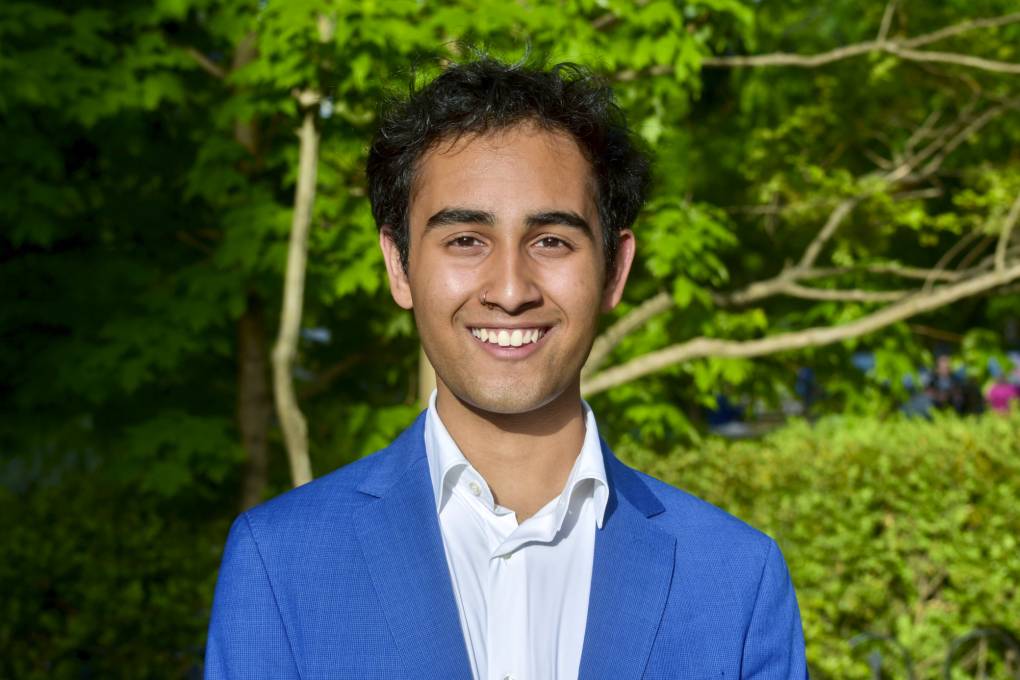
"caption": "Stanford Daily student journalist Dilan Gohill.",
"credit": "Courtesy of Dilan Gohill",
"altTag": null,
"description": null,
"imgSizes": {
"medium": {
"file": "https://cdn.kqed.org/wp-content/uploads/sites/10/2024/06/GOHILL-1-KQED-800x533.jpg",
"width": 800,
"height": 533,
"mimeType": "image/jpeg"
},
"large": {
"file": "https://cdn.kqed.org/wp-content/uploads/sites/10/2024/06/GOHILL-1-KQED-1020x680.jpg",
"width": 1020,
"height": 680,
"mimeType": "image/jpeg"
},
"thumbnail": {
"file": "https://cdn.kqed.org/wp-content/uploads/sites/10/2024/06/GOHILL-1-KQED-160x107.jpg",
"width": 160,
"height": 107,
"mimeType": "image/jpeg"
},
"1536x1536": {
"file": "https://cdn.kqed.org/wp-content/uploads/sites/10/2024/06/GOHILL-1-KQED-1536x1024.jpg",
"width": 1536,
"height": 1024,
"mimeType": "image/jpeg"
},
"post-thumbnail": {
"file": "https://cdn.kqed.org/wp-content/uploads/sites/10/2024/06/GOHILL-1-KQED-672x372.jpg",
"width": 672,
"height": 372,
"mimeType": "image/jpeg"
},
"twentyfourteen-full-width": {
"file": "https://cdn.kqed.org/wp-content/uploads/sites/10/2024/06/GOHILL-1-KQED-1038x576.jpg",
"width": 1038,
"height": 576,
"mimeType": "image/jpeg"
},
"full-width": {
"file": "https://cdn.kqed.org/wp-content/uploads/sites/10/2024/06/GOHILL-1-KQED-1920x1280.jpg",
"width": 1920,
"height": 1280,
"mimeType": "image/jpeg"
},
"kqedFullSize": {
"file": "https://cdn.kqed.org/wp-content/uploads/sites/10/2024/06/GOHILL-1-KQED.jpg",
"width": 2000,
"height": 1333
}
},
"isLoading": false,
"fetchFailed": false
},
"news_11991059": {
"type": "attachments",
"id": "news_11991059",
"meta": {
"index": "attachments_1716263798",
"site": "news",
"id": "11991059",
"found": true
},
"title": "061824-Lionel-Rubalcava-01-KQED-1020x765",
"publishDate": 1718760636,
"status": "inherit",
"parent": 11990929,
"modified": 1718760661,
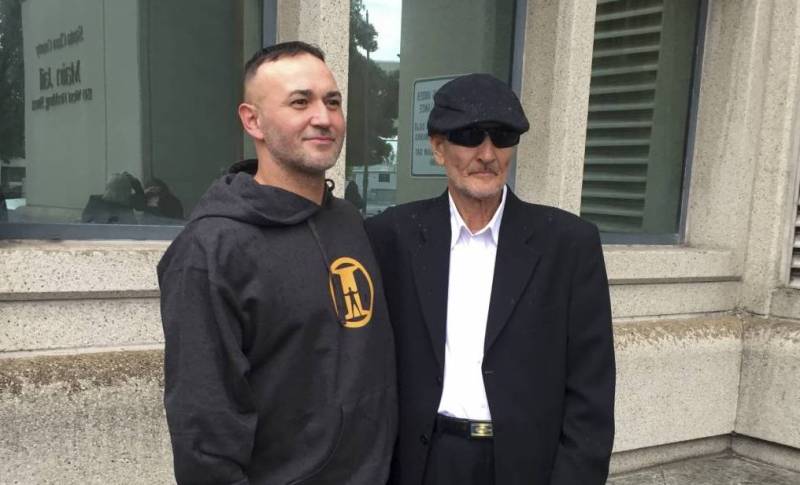
"caption": "Lionel Rubalcava (left) with his father outside the Santa Clara County Main Jail Complex in San José on May 15, 2019, following his release. Rubalcava will receive a $12 million payout from the city of San José to settle a wrongful conviction lawsuit he filed in 2020 after serving 17 years in prison for a drive-by shooting for which he was later exonerated.",
"credit": "Courtesy of Northern California Innocence Project",
"altTag": "A younger man poses outside next to an older man (his father).",
"description": null,
"imgSizes": {
"medium": {
"file": "https://cdn.kqed.org/wp-content/uploads/sites/10/2024/06/061824-Lionel-Rubalcava-01-KQED-1020x765-1-800x485.jpeg",
"width": 800,
"height": 485,
"mimeType": "image/jpeg"
},
"thumbnail": {
"file": "https://cdn.kqed.org/wp-content/uploads/sites/10/2024/06/061824-Lionel-Rubalcava-01-KQED-1020x765-1-160x97.jpeg",
"width": 160,
"height": 97,
"mimeType": "image/jpeg"
},
"post-thumbnail": {
"file": "https://cdn.kqed.org/wp-content/uploads/sites/10/2024/06/061824-Lionel-Rubalcava-01-KQED-1020x765-1-672x372.jpeg",
"width": 672,
"height": 372,
"mimeType": "image/jpeg"
},
"twentyfourteen-full-width": {
"file": "https://cdn.kqed.org/wp-content/uploads/sites/10/2024/06/061824-Lionel-Rubalcava-01-KQED-1020x765-1-1016x576.jpeg",
"width": 1016,
"height": 576,
"mimeType": "image/jpeg"
},
"kqedFullSize": {
"file": "https://cdn.kqed.org/wp-content/uploads/sites/10/2024/06/061824-Lionel-Rubalcava-01-KQED-1020x765-1.jpeg",
"width": 1016,
"height": 616
}
},
"isLoading": false,
"fetchFailed": false
},
"news_11990515": {
"type": "attachments",
"id": "news_11990515",
"meta": {
"index": "attachments_1716263798",
"site": "news",
"id": "11990515",
"found": true
},
"title": "240614-VTAGROUNDBREAKING-JG-01_qut",
"publishDate": 1718404276,
"status": "inherit",
"parent": 0,
"modified": 1749491424,
"caption": "South Bay leaders, transit officials and regional boosters take part in a ceremonial groundbreaking for VTA's BART Silicon Valley Phase II project in Santa Clara in June 2024.",
"credit": "Joseph Geha/KQED",
"altTag": null,
"description": null,
"imgSizes": {
"medium": {
"file": "https://cdn.kqed.org/wp-content/uploads/sites/10/2024/06/240614-VTAGROUNDBREAKING-JG-01_qut-800x533.jpg",
"width": 800,
"height": 533,
"mimeType": "image/jpeg"
},
"large": {
"file": "https://cdn.kqed.org/wp-content/uploads/sites/10/2024/06/240614-VTAGROUNDBREAKING-JG-01_qut-1020x680.jpg",
"width": 1020,
"height": 680,
"mimeType": "image/jpeg"
},
"thumbnail": {
"file": "https://cdn.kqed.org/wp-content/uploads/sites/10/2024/06/240614-VTAGROUNDBREAKING-JG-01_qut-160x107.jpg",
"width": 160,
"height": 107,
"mimeType": "image/jpeg"
},
"1536x1536": {
"file": "https://cdn.kqed.org/wp-content/uploads/sites/10/2024/06/240614-VTAGROUNDBREAKING-JG-01_qut-1536x1024.jpg",
"width": 1536,
"height": 1024,
"mimeType": "image/jpeg"
},
"post-thumbnail": {
"file": "https://cdn.kqed.org/wp-content/uploads/sites/10/2024/06/240614-VTAGROUNDBREAKING-JG-01_qut-672x372.jpg",
"width": 672,
"height": 372,
"mimeType": "image/jpeg"
},
"twentyfourteen-full-width": {
"file": "https://cdn.kqed.org/wp-content/uploads/sites/10/2024/06/240614-VTAGROUNDBREAKING-JG-01_qut-1038x576.jpg",
"width": 1038,
"height": 576,
"mimeType": "image/jpeg"
},
"kqedFullSize": {
"file": "https://cdn.kqed.org/wp-content/uploads/sites/10/2024/06/240614-VTAGROUNDBREAKING-JG-01_qut.jpg",
"width": 1920,
"height": 1280
}
},
"isLoading": false,
"fetchFailed": false
},
"news_11990294": {
"type": "attachments",
"id": "news_11990294",
"meta": {
"index": "attachments_1716263798",
"site": "news",
"id": "11990294",
"found": true
},
"title": "240613-REGIONALMED-JG-3",
"publishDate": 1718317321,
"status": "inherit",
"parent": 0,
"modified": 1718317386,
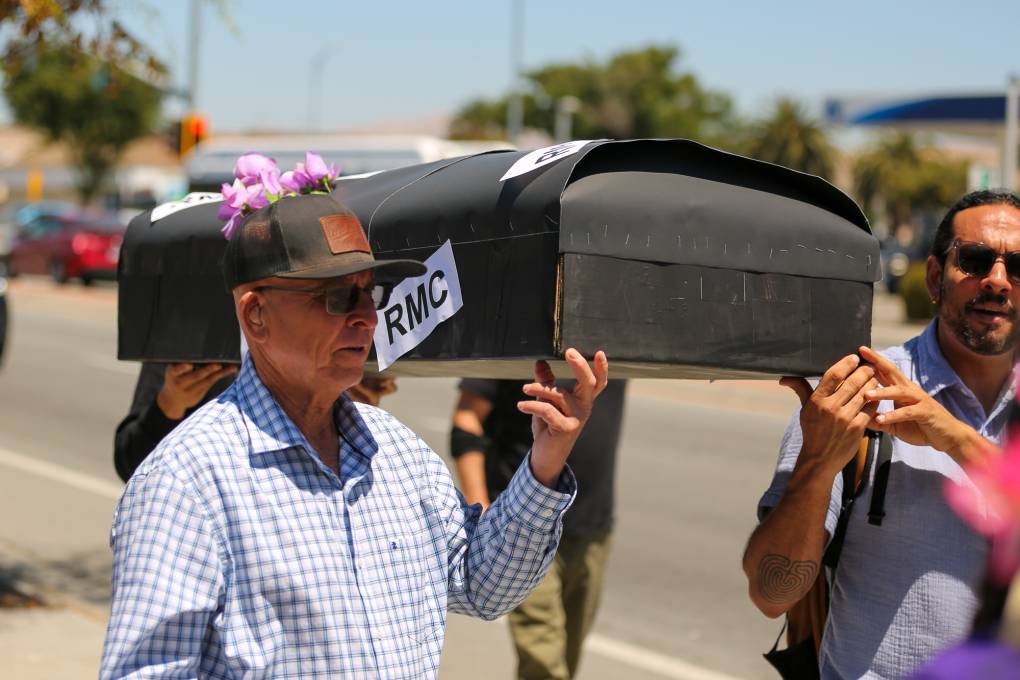
"caption": "Advocates pushing to stop the closure of Regional Medical Center's trauma center carry a box made to look like a casket just outside the hospital in East San José on June 13.",
"credit": "Joseph Geha/KQED",
"altTag": null,
"description": null,
"imgSizes": {
"medium": {
"file": "https://cdn.kqed.org/wp-content/uploads/sites/10/2024/06/240613-REGIONALMED-JG-3-800x533.jpg",
"width": 800,
"height": 533,
"mimeType": "image/jpeg"
},
"large": {
"file": "https://cdn.kqed.org/wp-content/uploads/sites/10/2024/06/240613-REGIONALMED-JG-3-1020x680.jpg",
"width": 1020,
"height": 680,
"mimeType": "image/jpeg"
},
"thumbnail": {
"file": "https://cdn.kqed.org/wp-content/uploads/sites/10/2024/06/240613-REGIONALMED-JG-3-160x107.jpg",
"width": 160,
"height": 107,
"mimeType": "image/jpeg"
},
"1536x1536": {
"file": "https://cdn.kqed.org/wp-content/uploads/sites/10/2024/06/240613-REGIONALMED-JG-3-1536x1024.jpg",
"width": 1536,
"height": 1024,
"mimeType": "image/jpeg"
},
"post-thumbnail": {
"file": "https://cdn.kqed.org/wp-content/uploads/sites/10/2024/06/240613-REGIONALMED-JG-3-672x372.jpg",
"width": 672,
"height": 372,
"mimeType": "image/jpeg"
},
"twentyfourteen-full-width": {
"file": "https://cdn.kqed.org/wp-content/uploads/sites/10/2024/06/240613-REGIONALMED-JG-3-1038x576.jpg",
"width": 1038,
"height": 576,
"mimeType": "image/jpeg"
},
"full-width": {
"file": "https://cdn.kqed.org/wp-content/uploads/sites/10/2024/06/240613-REGIONALMED-JG-3-1920x1280.jpg",
"width": 1920,
"height": 1280,
"mimeType": "image/jpeg"
},
"kqedFullSize": {
"file": "https://cdn.kqed.org/wp-content/uploads/sites/10/2024/06/240613-REGIONALMED-JG-3.jpg",
"width": 2000,
"height": 1333
}
},
"isLoading": false,
"fetchFailed": false
},
"news_11985193": {
"type": "attachments",
"id": "news_11985193",
"meta": {
"index": "attachments_1716263798",
"site": "news",
"id": "11985193",
"found": true
},
"title": "Valley Transit Authority",
"publishDate": 1715106456,
"status": "inherit",
"parent": 11985190,
"modified": 1718227807,
"caption": "A VTA light rail train at Mountain View Station on May 3, 2019. ",
"credit": "Smith Collection/Gado/Getty Images",
"altTag": "A train with \"VTA\" on the front pulls up to a station.",
"description": null,
"imgSizes": {
"medium": {
"file": "https://cdn.kqed.org/wp-content/uploads/sites/10/2024/05/GettyImages-1147411300-800x534.jpg",
"width": 800,
"height": 534,
"mimeType": "image/jpeg"
},
"large": {
"file": "https://cdn.kqed.org/wp-content/uploads/sites/10/2024/05/GettyImages-1147411300-1020x680.jpg",
"width": 1020,
"height": 680,
"mimeType": "image/jpeg"
},
"thumbnail": {
"file": "https://cdn.kqed.org/wp-content/uploads/sites/10/2024/05/GettyImages-1147411300-160x107.jpg",
"width": 160,
"height": 107,
"mimeType": "image/jpeg"
},
"post-thumbnail": {
"file": "https://cdn.kqed.org/wp-content/uploads/sites/10/2024/05/GettyImages-1147411300-672x372.jpg",
"width": 672,
"height": 372,
"mimeType": "image/jpeg"
},
"twentyfourteen-full-width": {
"file": "https://cdn.kqed.org/wp-content/uploads/sites/10/2024/05/GettyImages-1147411300-1024x576.jpg",
"width": 1024,
"height": 576,
"mimeType": "image/jpeg"
},
"kqedFullSize": {
"file": "https://cdn.kqed.org/wp-content/uploads/sites/10/2024/05/GettyImages-1147411300.jpg",
"width": 1024,
"height": 683
}
},
"isLoading": false,
"fetchFailed": false
},
"news_11989556": {
"type": "attachments",
"id": "news_11989556",
"meta": {
"index": "attachments_1716263798",
"site": "news",
"id": "11989556",
"found": true
},
"title": "240605-STANFORD-JG-14",
"publishDate": 1717809313,
"status": "inherit",
"parent": 11989520,
"modified": 1717809377,
"caption": "Stanford University workers are seen breaking down a pro-Palestine encampment in White Plaza Wednesday, June 5, 2024.",
"credit": "Joseph Geha/KQED",
"altTag": null,
"description": null,
"imgSizes": {
"medium": {
"file": "https://cdn.kqed.org/wp-content/uploads/sites/10/2024/06/240605-STANFORD-JG-14-1-800x533.jpg",
"width": 800,
"height": 533,
"mimeType": "image/jpeg"
},
"large": {
"file": "https://cdn.kqed.org/wp-content/uploads/sites/10/2024/06/240605-STANFORD-JG-14-1-1020x680.jpg",
"width": 1020,
"height": 680,
"mimeType": "image/jpeg"
},
"thumbnail": {
"file": "https://cdn.kqed.org/wp-content/uploads/sites/10/2024/06/240605-STANFORD-JG-14-1-160x107.jpg",
"width": 160,
"height": 107,
"mimeType": "image/jpeg"
},
"1536x1536": {
"file": "https://cdn.kqed.org/wp-content/uploads/sites/10/2024/06/240605-STANFORD-JG-14-1-1536x1024.jpg",
"width": 1536,
"height": 1024,
"mimeType": "image/jpeg"
},
"post-thumbnail": {
"file": "https://cdn.kqed.org/wp-content/uploads/sites/10/2024/06/240605-STANFORD-JG-14-1-672x372.jpg",
"width": 672,
"height": 372,
"mimeType": "image/jpeg"
},
"twentyfourteen-full-width": {
"file": "https://cdn.kqed.org/wp-content/uploads/sites/10/2024/06/240605-STANFORD-JG-14-1-1038x576.jpg",
"width": 1038,
"height": 576,
"mimeType": "image/jpeg"
},
"full-width": {
"file": "https://cdn.kqed.org/wp-content/uploads/sites/10/2024/06/240605-STANFORD-JG-14-1-1920x1280.jpg",
"width": 1920,
"height": 1280,
"mimeType": "image/jpeg"
},
"kqedFullSize": {
"file": "https://cdn.kqed.org/wp-content/uploads/sites/10/2024/06/240605-STANFORD-JG-14-1.jpg",
"width": 2048,
"height": 1365
}
},
"isLoading": false,
"fetchFailed": false
},
"news_11989256": {
"type": "attachments",
"id": "news_11989256",
"meta": {
"index": "attachments_1716263798",
"site": "news",
"id": "11989256",
"found": true
},
"title": "240424-SJPD-MD-01-KQED",
"publishDate": 1717696223,
"status": "inherit",
"parent": 12064587,
"modified": 1763511370,
"caption": "A San José Police Department squad car in San José on April 18, 2024.",
"credit": "Martin do Nascimento/KQED",
"altTag": null,
"description": null,
"imgSizes": {
"medium": {
"file": "https://cdn.kqed.org/wp-content/uploads/sites/10/2024/06/240424-SJPD-MD-01-KQED-800x533.jpg",
"width": 800,
"height": 533,
"mimeType": "image/jpeg"
},
"large": {
"file": "https://cdn.kqed.org/wp-content/uploads/sites/10/2024/06/240424-SJPD-MD-01-KQED-1020x680.jpg",
"width": 1020,
"height": 680,
"mimeType": "image/jpeg"
},
"thumbnail": {
"file": "https://cdn.kqed.org/wp-content/uploads/sites/10/2024/06/240424-SJPD-MD-01-KQED-160x107.jpg",
"width": 160,
"height": 107,
"mimeType": "image/jpeg"
},
"1536x1536": {
"file": "https://cdn.kqed.org/wp-content/uploads/sites/10/2024/06/240424-SJPD-MD-01-KQED-1536x1024.jpg",
"width": 1536,
"height": 1024,
"mimeType": "image/jpeg"
},
"post-thumbnail": {
"file": "https://cdn.kqed.org/wp-content/uploads/sites/10/2024/06/240424-SJPD-MD-01-KQED-672x372.jpg",
"width": 672,
"height": 372,
"mimeType": "image/jpeg"
},
"twentyfourteen-full-width": {
"file": "https://cdn.kqed.org/wp-content/uploads/sites/10/2024/06/240424-SJPD-MD-01-KQED-1038x576.jpg",
"width": 1038,
"height": 576,
"mimeType": "image/jpeg"
},
"full-width": {
"file": "https://cdn.kqed.org/wp-content/uploads/sites/10/2024/06/240424-SJPD-MD-01-KQED-1920x1280.jpg",
"width": 1920,
"height": 1280,
"mimeType": "image/jpeg"
},
"kqedFullSize": {
"file": "https://cdn.kqed.org/wp-content/uploads/sites/10/2024/06/240424-SJPD-MD-01-KQED.jpg",
"width": 2000,
"height": 1333
}
},
"isLoading": false,
"fetchFailed": false
},
"news_11988518": {
"type": "attachments",
"id": "news_11988518",
"meta": {
"index": "attachments_1716263798",
"site": "news",
"id": "11988518",
"found": true
},
"title": "240531-SEGOVIACASE-JG-2_qut",
"publishDate": 1717195890,
"status": "inherit",
"parent": 0,
"modified": 1728412159,
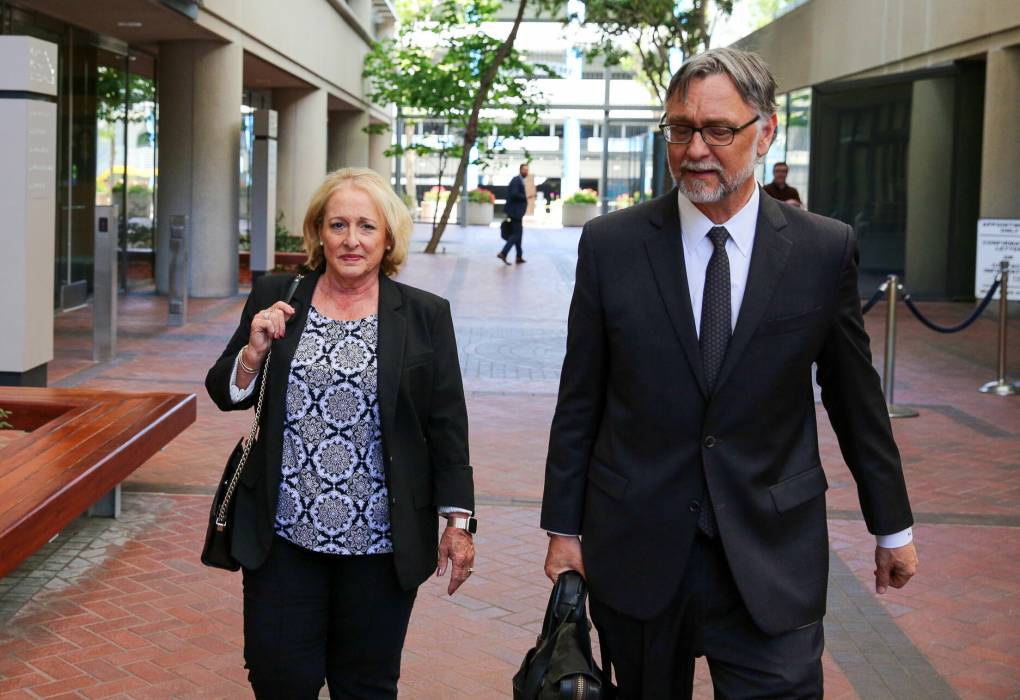
"caption": "Joanne Segovia (left) and her attorney, Adam Gasner, walk out of the federal courthouse in San José on May 31, 2024, following her first court appearance since being charged over a year ago with attempting to illegally import opioids.",
"credit": "Joseph Geha/KQED",
"altTag": "A middle-aged white woman with blond hair walks through a courtyard next to a middle-aged man wearing a suit and carrying a briefcase.",
"description": null,
"imgSizes": {
"medium": {
"file": "https://cdn.kqed.org/wp-content/uploads/sites/10/2024/05/240531-SEGOVIACASE-JG-2_qut-800x549.jpg",
"width": 800,
"height": 549,
"mimeType": "image/jpeg"
},
"large": {
"file": "https://cdn.kqed.org/wp-content/uploads/sites/10/2024/05/240531-SEGOVIACASE-JG-2_qut-1020x700.jpg",
"width": 1020,
"height": 700,
"mimeType": "image/jpeg"
},
"thumbnail": {
"file": "https://cdn.kqed.org/wp-content/uploads/sites/10/2024/05/240531-SEGOVIACASE-JG-2_qut-160x110.jpg",
"width": 160,
"height": 110,
"mimeType": "image/jpeg"
},
"1536x1536": {
"file": "https://cdn.kqed.org/wp-content/uploads/sites/10/2024/05/240531-SEGOVIACASE-JG-2_qut-1536x1055.jpg",
"width": 1536,
"height": 1055,
"mimeType": "image/jpeg"
},
"post-thumbnail": {
"file": "https://cdn.kqed.org/wp-content/uploads/sites/10/2024/05/240531-SEGOVIACASE-JG-2_qut-672x372.jpg",
"width": 672,
"height": 372,
"mimeType": "image/jpeg"
},
"twentyfourteen-full-width": {
"file": "https://cdn.kqed.org/wp-content/uploads/sites/10/2024/05/240531-SEGOVIACASE-JG-2_qut-1038x576.jpg",
"width": 1038,
"height": 576,
"mimeType": "image/jpeg"
},
"kqedFullSize": {
"file": "https://cdn.kqed.org/wp-content/uploads/sites/10/2024/05/240531-SEGOVIACASE-JG-2_qut.jpg",
"width": 1873,
"height": 1286
}
},
"isLoading": false,
"fetchFailed": false
},
"news_11988183": {
"type": "attachments",
"id": "news_11988183",
"meta": {
"index": "attachments_1716263798",
"site": "news",
"id": "11988183",
"found": true
},
"title": "240529-AACULTURALCENTER-JG-2_qut",
"publishDate": 1717027089,
"status": "inherit",
"parent": 0,
"modified": 1717027828,
"caption": "Walter Wilson, project manager for the planned African American Cultural Center of Silicon Valley, speaks during an event celebrating a federal grant for the center in San José on Wednesday, May 29, 2024.",
"credit": "Joseph Geha/KQED",
"altTag": null,
"description": null,
"imgSizes": {
"medium": {
"file": "https://cdn.kqed.org/wp-content/uploads/sites/10/2024/05/240529-AACULTURALCENTER-JG-2_qut-800x533.jpg",
"width": 800,
"height": 533,
"mimeType": "image/jpeg"
},
"large": {
"file": "https://cdn.kqed.org/wp-content/uploads/sites/10/2024/05/240529-AACULTURALCENTER-JG-2_qut-1020x680.jpg",
"width": 1020,
"height": 680,
"mimeType": "image/jpeg"
},
"thumbnail": {
"file": "https://cdn.kqed.org/wp-content/uploads/sites/10/2024/05/240529-AACULTURALCENTER-JG-2_qut-160x107.jpg",
"width": 160,
"height": 107,
"mimeType": "image/jpeg"
},
"1536x1536": {
"file": "https://cdn.kqed.org/wp-content/uploads/sites/10/2024/05/240529-AACULTURALCENTER-JG-2_qut-1536x1024.jpg",
"width": 1536,
"height": 1024,
"mimeType": "image/jpeg"
},
"post-thumbnail": {
"file": "https://cdn.kqed.org/wp-content/uploads/sites/10/2024/05/240529-AACULTURALCENTER-JG-2_qut-672x372.jpg",
"width": 672,
"height": 372,
"mimeType": "image/jpeg"
},
"twentyfourteen-full-width": {
"file": "https://cdn.kqed.org/wp-content/uploads/sites/10/2024/05/240529-AACULTURALCENTER-JG-2_qut-1038x576.jpg",
"width": 1038,
"height": 576,
"mimeType": "image/jpeg"
},
"kqedFullSize": {
"file": "https://cdn.kqed.org/wp-content/uploads/sites/10/2024/05/240529-AACULTURALCENTER-JG-2_qut.jpg",
"width": 1920,
"height": 1280
}
},
"isLoading": false,
"fetchFailed": false
},
"news_11987726": {
"type": "attachments",
"id": "news_11987726",
"meta": {
"index": "attachments_1716263798",
"site": "news",
"id": "11987726",
"found": true
},
"title": "240524-REGIONALMEDICAL-JG-4_qut",
"publishDate": 1716584526,
"status": "inherit",
"parent": 0,
"modified": 1716588534,
"caption": "Dr. Raj Gupta, director of stroke and neuroscience services at Regional Medical Center, speaks during a rally outside of the hospital on May 24. Gupta said the decision to eliminate the hospital's trauma center and other services is shameful.",
"credit": "Joseph Geha/KQED",
"altTag": null,
"description": null,
"imgSizes": {
"medium": {
"file": "https://cdn.kqed.org/wp-content/uploads/sites/10/2024/05/240524-REGIONALMEDICAL-JG-4_qut-800x533.jpg",
"width": 800,
"height": 533,
"mimeType": "image/jpeg"
},
"large": {
"file": "https://cdn.kqed.org/wp-content/uploads/sites/10/2024/05/240524-REGIONALMEDICAL-JG-4_qut-1020x680.jpg",
"width": 1020,
"height": 680,
"mimeType": "image/jpeg"
},
"thumbnail": {
"file": "https://cdn.kqed.org/wp-content/uploads/sites/10/2024/05/240524-REGIONALMEDICAL-JG-4_qut-160x107.jpg",
"width": 160,
"height": 107,
"mimeType": "image/jpeg"
},
"1536x1536": {
"file": "https://cdn.kqed.org/wp-content/uploads/sites/10/2024/05/240524-REGIONALMEDICAL-JG-4_qut-1536x1024.jpg",
"width": 1536,
"height": 1024,
"mimeType": "image/jpeg"
},
"post-thumbnail": {
"file": "https://cdn.kqed.org/wp-content/uploads/sites/10/2024/05/240524-REGIONALMEDICAL-JG-4_qut-672x372.jpg",
"width": 672,
"height": 372,
"mimeType": "image/jpeg"
},
"twentyfourteen-full-width": {
"file": "https://cdn.kqed.org/wp-content/uploads/sites/10/2024/05/240524-REGIONALMEDICAL-JG-4_qut-1038x576.jpg",
"width": 1038,
"height": 576,
"mimeType": "image/jpeg"
},
"kqedFullSize": {
"file": "https://cdn.kqed.org/wp-content/uploads/sites/10/2024/05/240524-REGIONALMEDICAL-JG-4_qut.jpg",
"width": 1920,
"height": 1280
}
},
"isLoading": false,
"fetchFailed": false
},
"news_11987556": {
"type": "attachments",
"id": "news_11987556",
"meta": {
"index": "attachments_1716263798",
"site": "news",
"id": "11987556",
"found": true
},
"title": "240520-FAMILYRESOURCE-JG--2_qut",
"publishDate": 1716499945,
"status": "inherit",
"parent": 11987552,
"modified": 1716502208,
"caption": "Stephanie Ceja, a mother of three and a staff member at Catholic Charities of Santa Clara County, poses for a photo at Educare Family Resource Center in San José on May 20, 2024. Ceja is concerned about the impact the closures of Family Resource Centers will have in the region.",
"credit": "Joseph Geha/KQED",
"altTag": "A Latina woman stands inside a community center.",
"description": null,
"imgSizes": {
"medium": {
"file": "https://cdn.kqed.org/wp-content/uploads/sites/10/2024/05/240520-FAMILYRESOURCE-JG-2_qut-800x533.jpg",
"width": 800,
"height": 533,
"mimeType": "image/jpeg"
},
"large": {
"file": "https://cdn.kqed.org/wp-content/uploads/sites/10/2024/05/240520-FAMILYRESOURCE-JG-2_qut-1020x680.jpg",
"width": 1020,
"height": 680,
"mimeType": "image/jpeg"
},
"thumbnail": {
"file": "https://cdn.kqed.org/wp-content/uploads/sites/10/2024/05/240520-FAMILYRESOURCE-JG-2_qut-160x107.jpg",
"width": 160,
"height": 107,
"mimeType": "image/jpeg"
},
"1536x1536": {
"file": "https://cdn.kqed.org/wp-content/uploads/sites/10/2024/05/240520-FAMILYRESOURCE-JG-2_qut-1536x1024.jpg",
"width": 1536,
"height": 1024,
"mimeType": "image/jpeg"
},
"post-thumbnail": {
"file": "https://cdn.kqed.org/wp-content/uploads/sites/10/2024/05/240520-FAMILYRESOURCE-JG-2_qut-672x372.jpg",
"width": 672,
"height": 372,
"mimeType": "image/jpeg"
},
"twentyfourteen-full-width": {
"file": "https://cdn.kqed.org/wp-content/uploads/sites/10/2024/05/240520-FAMILYRESOURCE-JG-2_qut-1038x576.jpg",
"width": 1038,
"height": 576,
"mimeType": "image/jpeg"
},
"kqedFullSize": {
"file": "https://cdn.kqed.org/wp-content/uploads/sites/10/2024/05/240520-FAMILYRESOURCE-JG-2_qut.jpg",
"width": 1920,
"height": 1280
}
},
"isLoading": false,
"fetchFailed": false
}
},
"audioPlayerReducer": {
"postId": "stream_live",
"isPaused": true,
"isPlaying": false,
"pfsActive": false,
"pledgeModalIsOpen": true,
"playerDrawerIsOpen": false,
"liveAudioPlayStartedAt": 0,
"liveAudioPlayContext": ""
},
"authorsReducer": {
"jgeha": {
"type": "authors",
"id": "11906",
"meta": {
"index": "authors_1716337520",
"id": "11906",
"found": true
},
"name": "Joseph Geha",
"firstName": "Joseph",
"lastName": "Geha",
"slug": "jgeha",
"email": "jgeha@kqed.org",
"display_author_email": false,
"staff_mastheads": [
"news",
"science"
],
"title": "KQED Contributor",
"bio": null,
"avatar": "https://secure.gravatar.com/avatar/ea84d2b6dd93d6369d453edf19dd583f117cd1759d2d9c9c92f9de77017354fe?s=600&d=blank&r=g",
"twitter": null,
"bluesky": null,
"facebook": null,
"instagram": null,
"linkedin": null,
"sites": [
{
"site": "news",
"roles": [
"editor"
]
},
{
"site": "liveblog",
"roles": [
"author"
]
}
],
"headData": {
"title": "Joseph Geha | KQED",
"description": "KQED Contributor",
"ogImgSrc": "https://secure.gravatar.com/avatar/ea84d2b6dd93d6369d453edf19dd583f117cd1759d2d9c9c92f9de77017354fe?s=600&d=blank&r=g",
"twImgSrc": "https://secure.gravatar.com/avatar/ea84d2b6dd93d6369d453edf19dd583f117cd1759d2d9c9c92f9de77017354fe?s=600&d=blank&r=g"
},
"isLoading": false,
"link": "/author/jgeha"
}
},
"pagesReducer": {
"news_tag_south-bay": {
"type": "terms",
"id": "news_21285",
"meta": {
"index": "terms_1716263798",
"site": "news",
"id": "21285",
"score": 7.083429
},
"featImg": null,
"name": "South Bay",
"description": null,
"taxonomy": "tag",
"headData": {
"twImgId": null,
"twTitle": null,
"ogTitle": null,
"ogImgId": null,
"twDescription": null,
"description": null,
"title": "South Bay Archives | KQED News",
"ogDescription": null
},
"ttid": 21302,
"slug": "south-bay",
"isLoading": false,
"title": "South Bay",
"pageMeta": {
"site": "news",
"WpPageTemplate": "page-topic-editorial",
"currentPage": 25
},
"blocks": [
{
"blockName": "kqed/post-list",
"attrs": {
"layout": "cardArticle2",
"query": "posts/news?tag=south-bay",
"seeMore": false,
"paginated": true,
"page": 25
}
},
{
"blockName": "kqed/ad"
}
]
}
},
"pfsSessionReducer": {},
"postsReducer": {
"stream_live": {
"type": "live",
"id": "stream_live",
"audioUrl": "https://streams.kqed.org/kqedradio",
"title": "Live Stream",
"excerpt": "Live Stream information currently unavailable.",
"link": "/radio",
"featImg": "",
"label": {
"name": "KQED Live",
"link": "/"
}
},
"stream_kqedNewscast": {
"type": "posts",
"id": "stream_kqedNewscast",
"audioUrl": "https://www.kqed.org/.stream/anon/radio/RDnews/newscast.mp3?_=1",
"title": "KQED Newscast",
"featImg": "",
"label": {
"name": "88.5 FM",
"link": "/"
}
},
"news_11991654": {
"type": "posts",
"id": "news_11991654",
"meta": {
"index": "posts_1716263798",
"site": "news",
"id": "11991654",
"score": null,
"sort": [
1719274448000
]
},
"guestAuthors": [],
"slug": "state-department-of-public-health-wont-intervene-in-upcoming-closure-of-east-san-jose-trauma-center",
"title": "State Department of Public Health Won't Intervene in Upcoming Closure of East San José Trauma Center",
"publishDate": 1719274448,
"format": "standard",
"headTitle": "State Department of Public Health Won’t Intervene in Upcoming Closure of East San José Trauma Center | KQED",
"labelTerm": {
"site": "news"
},
"content": "\u003cp>In the ongoing fight to stop the planned closure of the \u003ca href=\"https://www.kqed.org/news/11988440/advocates-protest-planned-closure-of-east-san-jose-trauma-center\">only trauma center on the east side of Santa Clara County\u003c/a>, the state has dealt a blow to advocates and elected officials.\u003c/p>\n\u003cp>The California Department of Public Health shot down a request from a group of state Assembly members asking the agency to intervene in \u003ca href=\"https://www.kqed.org/news/11990284/doctors-community-leaders-ramp-up-efforts-to-halt-closure-of-east-san-jose-trauma-center\">Regional Medical Center’s closure of its trauma center\u003c/a> and cuts to other services, set to take effect Aug. 12.\u003c/p>\n\u003cp>Assemblymembers Ash Kalra, Marc Berman, Alex Lee, Evan Low and Gail Pellerin penned a June 17 letter asking CDPH to stop HCA Healthcare, the owner of Regional Medical Center, from closing its trauma center, eliminating its severe heart attack treatment program and downgrading its stroke services.\u003c/p>\n\u003cp>The CDPH, in a response to the legislators, said it has no authority to stop the planned cuts, because the services on the chopping block are considered supplemental, and fall outside a set of prescribed offerings the state mandates general acute care hospitals maintain, according to Kalra’s office.\u003c/p>\n\u003cp>[ad fullwidth]\u003c/p>\n\u003cp>In a statement emailed to KQED, the public health agency said it supports equitable access to hospital care for all communities but noted the law only requires CDPH and other agencies to be notified about hospitals’ intent to cut services or close departments.\u003c/p>\n\u003cp>“While any reduction of supplemental services is concerning, CDPH cannot compel facilities to provide them,” the statement said. “CDPH is monitoring this situation, and basic services at [Regional Medical Center] continue to be provided.”\u003c/p>\n\u003cp>The cuts “will have negative impacts on health care services for disadvantaged communities in East San José and further strain the County’s health care system,” the legislators wrote. “Our delegation has serious concerns about how this will cause further harm to historically underserved and marginalized members of our communities, potentially leading to preventable fatalities.”\u003c/p>\n\u003cp>While the legislators sent their letter to CDPH and got a response within about a week, the County Board of Supervisors approved sending a similar request to intervene to CDPH in April, though county staff told KQED the county has not yet received an official response.\u003c/p>\n\u003cp>As the clock on the closures and cuts at Regional Medical Center ticks, the denial from CDPH further narrows a slim list of potential reprieves for those hoping to avert the loss of services.\u003c/p>\n\u003cp>Since May, patient advocates, doctors, nurses and elected officials have called on Attorney General Rob Bonta and Gov. Gavin Newsom to intervene, but it’s unclear if any action will be taken.\u003c/p>\n\u003cp>Because Regional Medical Center was previously a nonprofit hospital before being purchased by HCA in 2002, local officials say Bonta has the authority to stop service cuts at the hospital if they would have a “discriminatory” impact.\u003c/p>\n\u003cp>Bonta’s office previously told KQED it is reviewing the matter but cannot comment on a potential or ongoing investigation “to protect its integrity.”\u003c/p>\n\u003cp>A spokesperson for the governor’s office previously deferred comment to the California Health and Human Services Agency, which has not responded to requests for comment.\u003c/p>\n\u003cp>Carmella Gutierrez, a spokesperson for HCA’s Far West Division, said in a prior statement that the campaign against the hospital is choosing “exaggeration to generate a false fear” in the community.\u003c/p>\n\u003cp>HCA said in a letter to the county’s emergency services department that it has seen a 38% reduction in patients at Regional Medical Center’s trauma center since 2019.\u003c/p>\n\u003cp>And while a county report found that the trauma center handles an average of 2,450 trauma patients annually, about a quarter of all reported cases for the trauma system in the county, Gutierrez said only 1,466 met National Trauma Data Bank criteria.\u003c/p>\n\u003cp>Regional Medical Center is the only comprehensive stroke center on the northeast, east and southeast side of the county — and a county report said that 20% of all stroke patients arrive there.\u003c/p>\n\u003cp>Gutierrez said that although the hospital is cutting its severe heart attack services and downgrading its stroke services, it has strong and considerate transition plans that ensure patients are treated “in a timely manner.”\u003c/p>\n\u003cp>Another potential option is for the county to buy Regional Medical Center. The county previously purchased O’Connor Hospital in San José and St. Louise Regional Hospital in Gilroy as its previous owner, Verity Health, filed for bankruptcy.\u003c/p>\n\u003cp>It’s unclear whether such a deal could happen with Regional Medical Center. County officials have held closed-door meetings with the hospital’s ownership, but details remain confidential.\u003c/p>\n\u003cp>Santa Clara County Supervisor Cindy Chavez said last month that she hopes HCA Healthcare will decide not to cut services at Regional Medical Center in San José on its own.\u003c/p>\n\u003cp>“If they don’t do that, the county and other public entities are going to have to look at what we can do to protect the health and well-being of our citizens. And I assure you, we are doing that,” Chavez said.\u003c/p>\n\u003cp>\u003c/p>\n",
"blocks": [],
"excerpt": "The California Department of Public Health denied a request from a group of state legislators to halt the closure of an East San José trauma center. ",
"status": "publish",
"parent": 0,
"modified": 1738186171,
"stats": {
"hasAudio": false,
"hasVideo": false,
"hasChartOrMap": false,
"iframeSrcs": [],
"hasGoogleForm": false,
"hasGallery": false,
"hasHearkenModule": false,
"hasPolis": false,
"paragraphCount": 24,
"wordCount": 852
},
"headData": {
"title": "State Department of Public Health Won't Intervene in Upcoming Closure of East San José Trauma Center | KQED",
"description": "The California Department of Public Health denied a request from a group of state legislators to halt the closure of an East San José trauma center. ",
"ogTitle": "",
"ogDescription": "",
"ogImgId": "",
"twTitle": "",
"twDescription": "",
"twImgId": "",
"schema": {
"@context": "https://schema.org",
"@type": "NewsArticle",
"headline": "State Department of Public Health Won't Intervene in Upcoming Closure of East San José Trauma Center",
"datePublished": "2024-06-24T17:14:08-07:00",
"dateModified": "2025-01-29T13:29:31-08:00",
"image": "https://cdn.kqed.org/wp-content/uploads/2020/02/KQED-OG-Image@1x.png",
"isAccessibleForFree": "True",
"publisher": {
"@type": "NewsMediaOrganization",
"@id": "https://www.kqed.org/#organization",
"name": "KQED",
"logo": "https://cdn.kqed.org/wp-content/uploads/2020/02/KQED-OG-Image@1x.png",
"url": "https://www.kqed.org",
"sameAs": [
"https://www.facebook.com/KQED",
"https://twitter.com/KQED",
"https://www.instagram.com/kqed/",
"https://www.tiktok.com/@kqedofficial",
"https://www.linkedin.com/company/kqed",
"https://www.youtube.com/channel/UCeC0IOo7i1P_61zVUWbJ4nw"
]
}
}
},
"sticky": false,
"nprStoryId": "kqed-11991654",
"excludeFromSiteSearch": "Include",
"articleAge": "0",
"path": "/news/11991654/state-department-of-public-health-wont-intervene-in-upcoming-closure-of-east-san-jose-trauma-center",
"audioTrackLength": null,
"parsedContent": [
{
"type": "contentString",
"content": "\u003cdiv class=\"post-body\">\u003cp>\u003cp>In the ongoing fight to stop the planned closure of the \u003ca href=\"https://www.kqed.org/news/11988440/advocates-protest-planned-closure-of-east-san-jose-trauma-center\">only trauma center on the east side of Santa Clara County\u003c/a>, the state has dealt a blow to advocates and elected officials.\u003c/p>\n\u003cp>The California Department of Public Health shot down a request from a group of state Assembly members asking the agency to intervene in \u003ca href=\"https://www.kqed.org/news/11990284/doctors-community-leaders-ramp-up-efforts-to-halt-closure-of-east-san-jose-trauma-center\">Regional Medical Center’s closure of its trauma center\u003c/a> and cuts to other services, set to take effect Aug. 12.\u003c/p>\n\u003cp>Assemblymembers Ash Kalra, Marc Berman, Alex Lee, Evan Low and Gail Pellerin penned a June 17 letter asking CDPH to stop HCA Healthcare, the owner of Regional Medical Center, from closing its trauma center, eliminating its severe heart attack treatment program and downgrading its stroke services.\u003c/p>\n\u003cp>The CDPH, in a response to the legislators, said it has no authority to stop the planned cuts, because the services on the chopping block are considered supplemental, and fall outside a set of prescribed offerings the state mandates general acute care hospitals maintain, according to Kalra’s office.\u003c/p>\n\u003cp>\u003c/p>\u003c/div>",
"attributes": {
"named": {},
"numeric": []
}
},
{
"type": "component",
"content": "",
"name": "ad",
"attributes": {
"named": {
"label": "fullwidth"
},
"numeric": [
"fullwidth"
]
}
},
{
"type": "contentString",
"content": "\u003cdiv class=\"post-body\">\u003cp>\u003c/p>\n\u003cp>In a statement emailed to KQED, the public health agency said it supports equitable access to hospital care for all communities but noted the law only requires CDPH and other agencies to be notified about hospitals’ intent to cut services or close departments.\u003c/p>\n\u003cp>“While any reduction of supplemental services is concerning, CDPH cannot compel facilities to provide them,” the statement said. “CDPH is monitoring this situation, and basic services at [Regional Medical Center] continue to be provided.”\u003c/p>\n\u003cp>The cuts “will have negative impacts on health care services for disadvantaged communities in East San José and further strain the County’s health care system,” the legislators wrote. “Our delegation has serious concerns about how this will cause further harm to historically underserved and marginalized members of our communities, potentially leading to preventable fatalities.”\u003c/p>\n\u003cp>While the legislators sent their letter to CDPH and got a response within about a week, the County Board of Supervisors approved sending a similar request to intervene to CDPH in April, though county staff told KQED the county has not yet received an official response.\u003c/p>\n\u003cp>As the clock on the closures and cuts at Regional Medical Center ticks, the denial from CDPH further narrows a slim list of potential reprieves for those hoping to avert the loss of services.\u003c/p>\n\u003cp>Since May, patient advocates, doctors, nurses and elected officials have called on Attorney General Rob Bonta and Gov. Gavin Newsom to intervene, but it’s unclear if any action will be taken.\u003c/p>\n\u003cp>Because Regional Medical Center was previously a nonprofit hospital before being purchased by HCA in 2002, local officials say Bonta has the authority to stop service cuts at the hospital if they would have a “discriminatory” impact.\u003c/p>\n\u003cp>Bonta’s office previously told KQED it is reviewing the matter but cannot comment on a potential or ongoing investigation “to protect its integrity.”\u003c/p>\n\u003cp>A spokesperson for the governor’s office previously deferred comment to the California Health and Human Services Agency, which has not responded to requests for comment.\u003c/p>\n\u003cp>Carmella Gutierrez, a spokesperson for HCA’s Far West Division, said in a prior statement that the campaign against the hospital is choosing “exaggeration to generate a false fear” in the community.\u003c/p>\n\u003cp>HCA said in a letter to the county’s emergency services department that it has seen a 38% reduction in patients at Regional Medical Center’s trauma center since 2019.\u003c/p>\n\u003cp>And while a county report found that the trauma center handles an average of 2,450 trauma patients annually, about a quarter of all reported cases for the trauma system in the county, Gutierrez said only 1,466 met National Trauma Data Bank criteria.\u003c/p>\n\u003cp>Regional Medical Center is the only comprehensive stroke center on the northeast, east and southeast side of the county — and a county report said that 20% of all stroke patients arrive there.\u003c/p>\n\u003cp>Gutierrez said that although the hospital is cutting its severe heart attack services and downgrading its stroke services, it has strong and considerate transition plans that ensure patients are treated “in a timely manner.”\u003c/p>\n\u003cp>Another potential option is for the county to buy Regional Medical Center. The county previously purchased O’Connor Hospital in San José and St. Louise Regional Hospital in Gilroy as its previous owner, Verity Health, filed for bankruptcy.\u003c/p>\n\u003cp>It’s unclear whether such a deal could happen with Regional Medical Center. County officials have held closed-door meetings with the hospital’s ownership, but details remain confidential.\u003c/p>\n\u003cp>Santa Clara County Supervisor Cindy Chavez said last month that she hopes HCA Healthcare will decide not to cut services at Regional Medical Center in San José on its own.\u003c/p>\n\u003cp>“If they don’t do that, the county and other public entities are going to have to look at what we can do to protect the health and well-being of our citizens. And I assure you, we are doing that,” Chavez said.\u003c/p>\n\u003cp>\u003c/p>\n\u003c/div>\u003c/p>",
"attributes": {
"named": {},
"numeric": []
}
}
],
"link": "/news/11991654/state-department-of-public-health-wont-intervene-in-upcoming-closure-of-east-san-jose-trauma-center",
"authors": [
"11906"
],
"categories": [
"news_457",
"news_8"
],
"tags": [
"news_1153",
"news_27626",
"news_18543",
"news_24939",
"news_21770",
"news_18541",
"news_21285"
],
"featImg": "news_11991678",
"label": "news"
},
"news_11991389": {
"type": "posts",
"id": "news_11991389",
"meta": {
"index": "posts_1716263798",
"site": "news",
"id": "11991389",
"score": null,
"sort": [
1718930748000
]
},
"guestAuthors": [],
"slug": "press-freedom-groups-want-charges-dropped-against-stanford-student-journalist",
"title": "Press Freedom Groups Want Charges Dropped Against Stanford Student Journalist",
"publishDate": 1718930748,
"format": "standard",
"headTitle": "Press Freedom Groups Want Charges Dropped Against Stanford Student Journalist | KQED",
"labelTerm": {
"site": "news"
},
"content": "\u003cp>A consortium of press freedom organizations is calling on Santa Clara County District Attorney Jeff Rosen not to pursue criminal charges against a student journalist who was arrested while covering a pro-Palestinian protest at Stanford University.\u003c/p>\n\u003cp>The First Amendment Coalition, the Student Press Law Center and two dozen other press organizations \u003ca href=\"https://firstamendmentcoalition.org/2024/06/coalition-calls-on-da-to-decline-charges-against-stanford-student-journalist/\">issued a letter\u003c/a> to Rosen on Thursday asking him not to charge Dilan Gohill, a freshman student journalist for The Stanford Daily.\u003c/p>\n\u003cp>Gohill was one of 13 people arrested on June 5 when protesters broke into the university president’s office and barricaded themselves inside before law enforcement later entered and removed them. Gohill was booked into Santa Clara County Main Jail on charges of burglary, vandalism and conspiracy.\u003c/p>\n\u003cp>[ad fullwidth]\u003c/p>\n\u003cp>“District attorneys have to make decisions in the interest of justice, and it’s not in the interest of justice to prosecute a reporter for reporting the news,” David Loy, the legal director for the First Amendment Coalition, said.\u003c/p>\n\u003cp>In the letter, the consortium highlights that during the protest action, Gohill was dressed in red Stanford Daily attire and displaying a press badge, while the protesters were dressed in black. Gohill did not participate in the protest in any way, nor did he vandalize any property, and he identified himself as a journalist to officers, the letter said.\u003c/p>\n\u003cp>“Based on the circumstances and absence of any criminal motivation, we urge your office to avoid expending significant resources prosecuting a young journalist who was acting in good faith to serve the public’s interest in timely coverage of newsworthy events,” the letter reads.\u003c/p>\n\u003cp>Gohill’s editors at the Daily have also issued \u003ca href=\"https://stanforddaily.com/2024/06/12/letter-from-the-board-on-our-reporters-arrest/\">multiple\u003c/a> \u003ca href=\"https://stanforddaily.com/2024/06/05/letter-from-the-editors-on-todays-arrests-at-the-presidents-office/\">statements\u003c/a> noting that he was there to cover the protest, along with another reporter who remained outside, and he was in communication with his editors.\u003c/p>\n\u003cp>A spokesperson for Rosen’s office, Sean Webby, told KQED that the district attorney’s office has still not received cases regarding the people arrested at Stanford on June 5, so the office declined to comment.\u003c/p>\n\u003cp>The consortium’s calls in defense of Gohill join \u003ca href=\"https://www.kqed.org/news/11989520/stanford-student-newspaper-editors-call-for-charges-against-reporter-to-be-dropped\">similar requests\u003c/a> from the editors of the Daily and come in the wake of Stanford University doubling down on supporting the criminal prosecution of Gohill.\u003c/p>\n\u003cp>Gohill “had no First Amendment or other legal right to be barricaded inside the president’s office,” the university said in a \u003ca href=\"https://news.stanford.edu/stories/2024/06/university-statement-on-stanford-daily-students-arrested-on-june-5\">June 10 statement\u003c/a>.\u003c/p>\n\u003cp>“We believe that the Daily reporter reporting from inside the building acted in violation of the law and university policies and fully support having him be criminally prosecuted and referred to Stanford’s Office of Community Standards along with the other students,” the statement said.\u003c/p>\n\u003cp>The press freedom organizations are not the only ones demanding Gohill not be punished. He is now being represented for free by an array of attorneys, who have also called out the university.\u003c/p>\n\u003cp>“The university taking the position that this kid’s a criminal, they’re in the wrong. And I would expect more of Stanford,” attorney Nick Rowley said. He added that he is ready to sue the school and law enforcement over the treatment of Gohill if needed.\u003c/p>\n\u003cp>Rowley said the criminal charges against Gohill should be dropped, and the university should not pursue any disciplinary action against him.\u003c/p>\n\u003cp>[aside label=\"Related Stories\" postID=\"news_11989520,news_11989050,news_11984203\"]“This was a big mistake. And we can forgive people for making mistakes and we can forget. But if they’re going to continue to press forward against this young man, they’re going to regret it. Everybody’s going to regret it,” Rowley said.\u003c/p>\n\u003cp>A prominent First Amendment and media attorney, Jean-Paul Jassy, who was also representing Gohill, said it was clear Gohill was there as a journalist to report the news.\u003c/p>\n\u003cp>“When you take a step back and you realize that the university is making a public statement that they actually encourage his criminal prosecution, that’s just ridiculous,” Jassy said. “It’s an affront not just to the sense of justice that I think we all have, but it’s really an attack on First Amendment principles of free press.”\u003c/p>\n\u003cp>The Daily’s editors previously noted that a second newspaper staffer, an editor, was present in the president’s office, but unlike Gohill, that editor was there to participate in the protest and was not there in a journalistic capacity.\u003c/p>\n\u003cp>The Daily said that the editor had not been involved in coverage related to the Israel-Gaza war “due to an established conflict of interest on this issue,” and the editor stepped down from their position at the paper earlier this month.\u003c/p>\n\u003cp>\u003c/p>\n",
"blocks": [],
"excerpt": "Stanford Daily student journalist Dilan Gohill was arrested while covering a June 5 protest inside the university president’s office. An attorney said they were ready to sue Stanford and law enforcement over the treatment of Gohill.",
"status": "publish",
"parent": 0,
"modified": 1729027159,
"stats": {
"hasAudio": false,
"hasVideo": false,
"hasChartOrMap": false,
"iframeSrcs": [],
"hasGoogleForm": false,
"hasGallery": false,
"hasHearkenModule": false,
"hasPolis": false,
"paragraphCount": 21,
"wordCount": 804
},
"headData": {
"title": "Press Freedom Groups Want Charges Dropped Against Stanford Student Journalist | KQED",
"description": "Stanford Daily student journalist Dilan Gohill was arrested while covering a June 5 protest inside the university president’s office. An attorney said they were ready to sue Stanford and law enforcement over the treatment of Gohill.",
"ogTitle": "",
"ogDescription": "",
"ogImgId": "",
"twTitle": "",
"twDescription": "",
"twImgId": "",
"schema": {
"@context": "https://schema.org",
"@type": "NewsArticle",
"headline": "Press Freedom Groups Want Charges Dropped Against Stanford Student Journalist",
"datePublished": "2024-06-20T17:45:48-07:00",
"dateModified": "2024-10-15T14:19:19-07:00",
"image": "https://cdn.kqed.org/wp-content/uploads/2020/02/KQED-OG-Image@1x.png",
"isAccessibleForFree": "True",
"publisher": {
"@type": "NewsMediaOrganization",
"@id": "https://www.kqed.org/#organization",
"name": "KQED",
"logo": "https://cdn.kqed.org/wp-content/uploads/2020/02/KQED-OG-Image@1x.png",
"url": "https://www.kqed.org",
"sameAs": [
"https://www.facebook.com/KQED",
"https://twitter.com/KQED",
"https://www.instagram.com/kqed/",
"https://www.tiktok.com/@kqedofficial",
"https://www.linkedin.com/company/kqed",
"https://www.youtube.com/channel/UCeC0IOo7i1P_61zVUWbJ4nw"
]
}
}
},
"sticky": false,
"nprStoryId": "kqed-11991389",
"excludeFromSiteSearch": "Include",
"articleAge": "0",
"path": "/news/11991389/press-freedom-groups-want-charges-dropped-against-stanford-student-journalist",
"audioTrackLength": null,
"parsedContent": [
{
"type": "contentString",
"content": "\u003cdiv class=\"post-body\">\u003cp>\u003cp>A consortium of press freedom organizations is calling on Santa Clara County District Attorney Jeff Rosen not to pursue criminal charges against a student journalist who was arrested while covering a pro-Palestinian protest at Stanford University.\u003c/p>\n\u003cp>The First Amendment Coalition, the Student Press Law Center and two dozen other press organizations \u003ca href=\"https://firstamendmentcoalition.org/2024/06/coalition-calls-on-da-to-decline-charges-against-stanford-student-journalist/\">issued a letter\u003c/a> to Rosen on Thursday asking him not to charge Dilan Gohill, a freshman student journalist for The Stanford Daily.\u003c/p>\n\u003cp>Gohill was one of 13 people arrested on June 5 when protesters broke into the university president’s office and barricaded themselves inside before law enforcement later entered and removed them. Gohill was booked into Santa Clara County Main Jail on charges of burglary, vandalism and conspiracy.\u003c/p>\n\u003cp>\u003c/p>\u003c/div>",
"attributes": {
"named": {},
"numeric": []
}
},
{
"type": "component",
"content": "",
"name": "ad",
"attributes": {
"named": {
"label": "fullwidth"
},
"numeric": [
"fullwidth"
]
}
},
{
"type": "contentString",
"content": "\u003cdiv class=\"post-body\">\u003cp>\u003c/p>\n\u003cp>“District attorneys have to make decisions in the interest of justice, and it’s not in the interest of justice to prosecute a reporter for reporting the news,” David Loy, the legal director for the First Amendment Coalition, said.\u003c/p>\n\u003cp>In the letter, the consortium highlights that during the protest action, Gohill was dressed in red Stanford Daily attire and displaying a press badge, while the protesters were dressed in black. Gohill did not participate in the protest in any way, nor did he vandalize any property, and he identified himself as a journalist to officers, the letter said.\u003c/p>\n\u003cp>“Based on the circumstances and absence of any criminal motivation, we urge your office to avoid expending significant resources prosecuting a young journalist who was acting in good faith to serve the public’s interest in timely coverage of newsworthy events,” the letter reads.\u003c/p>\n\u003cp>Gohill’s editors at the Daily have also issued \u003ca href=\"https://stanforddaily.com/2024/06/12/letter-from-the-board-on-our-reporters-arrest/\">multiple\u003c/a> \u003ca href=\"https://stanforddaily.com/2024/06/05/letter-from-the-editors-on-todays-arrests-at-the-presidents-office/\">statements\u003c/a> noting that he was there to cover the protest, along with another reporter who remained outside, and he was in communication with his editors.\u003c/p>\n\u003cp>A spokesperson for Rosen’s office, Sean Webby, told KQED that the district attorney’s office has still not received cases regarding the people arrested at Stanford on June 5, so the office declined to comment.\u003c/p>\n\u003cp>The consortium’s calls in defense of Gohill join \u003ca href=\"https://www.kqed.org/news/11989520/stanford-student-newspaper-editors-call-for-charges-against-reporter-to-be-dropped\">similar requests\u003c/a> from the editors of the Daily and come in the wake of Stanford University doubling down on supporting the criminal prosecution of Gohill.\u003c/p>\n\u003cp>Gohill “had no First Amendment or other legal right to be barricaded inside the president’s office,” the university said in a \u003ca href=\"https://news.stanford.edu/stories/2024/06/university-statement-on-stanford-daily-students-arrested-on-june-5\">June 10 statement\u003c/a>.\u003c/p>\n\u003cp>“We believe that the Daily reporter reporting from inside the building acted in violation of the law and university policies and fully support having him be criminally prosecuted and referred to Stanford’s Office of Community Standards along with the other students,” the statement said.\u003c/p>\n\u003cp>The press freedom organizations are not the only ones demanding Gohill not be punished. He is now being represented for free by an array of attorneys, who have also called out the university.\u003c/p>\n\u003cp>“The university taking the position that this kid’s a criminal, they’re in the wrong. And I would expect more of Stanford,” attorney Nick Rowley said. He added that he is ready to sue the school and law enforcement over the treatment of Gohill if needed.\u003c/p>\n\u003cp>Rowley said the criminal charges against Gohill should be dropped, and the university should not pursue any disciplinary action against him.\u003c/p>\n\u003cp>\u003c/p>\u003c/div>",
"attributes": {
"named": {},
"numeric": []
}
},
{
"type": "component",
"content": "",
"name": "aside",
"attributes": {
"named": {
"label": "Related Stories ",
"postid": "news_11989520,news_11989050,news_11984203"
},
"numeric": []
}
},
{
"type": "contentString",
"content": "\u003cdiv class=\"post-body\">\u003cp>“This was a big mistake. And we can forgive people for making mistakes and we can forget. But if they’re going to continue to press forward against this young man, they’re going to regret it. Everybody’s going to regret it,” Rowley said.\u003c/p>\n\u003cp>A prominent First Amendment and media attorney, Jean-Paul Jassy, who was also representing Gohill, said it was clear Gohill was there as a journalist to report the news.\u003c/p>\n\u003cp>“When you take a step back and you realize that the university is making a public statement that they actually encourage his criminal prosecution, that’s just ridiculous,” Jassy said. “It’s an affront not just to the sense of justice that I think we all have, but it’s really an attack on First Amendment principles of free press.”\u003c/p>\n\u003cp>The Daily’s editors previously noted that a second newspaper staffer, an editor, was present in the president’s office, but unlike Gohill, that editor was there to participate in the protest and was not there in a journalistic capacity.\u003c/p>\n\u003cp>The Daily said that the editor had not been involved in coverage related to the Israel-Gaza war “due to an established conflict of interest on this issue,” and the editor stepped down from their position at the paper earlier this month.\u003c/p>\n\u003cp>\u003c/p>\n\u003c/div>\u003c/p>",
"attributes": {
"named": {},
"numeric": []
}
}
],
"link": "/news/11991389/press-freedom-groups-want-charges-dropped-against-stanford-student-journalist",
"authors": [
"11906"
],
"categories": [
"news_18540",
"news_8",
"news_248"
],
"tags": [
"news_20013",
"news_33647",
"news_21285",
"news_1928",
"news_22646",
"news_1631"
],
"featImg": "news_11991402",
"label": "news"
},
"news_11990929": {
"type": "posts",
"id": "news_11990929",
"meta": {
"index": "posts_1716263798",
"site": "news",
"id": "11990929",
"score": null,
"sort": [
1718756072000
]
},
"guestAuthors": [],
"slug": "san-jose-paying-12-million-to-exonerated-man-in-wrongful-conviction-suit",
"title": "San José to Pay $12 Million to Exonerated Man in Wrongful Conviction Suit",
"publishDate": 1718756072,
"format": "standard",
"headTitle": "San José to Pay $12 Million to Exonerated Man in Wrongful Conviction Suit | KQED",
"labelTerm": {
"site": "news"
},
"content": "\u003cp>A San José man will receive a $12 million settlement from the city after he was imprisoned for 17 years for a drive-by shooting for which he was later exonerated.\u003c/p>\n\u003cp>The San José City Council voted Tuesday to approve the payout to Lionel Rubalcava, 46. The settlement is among the largest payouts for a police misconduct claim in the city’s history. The vote was 8–1, with the lone vote against the move cast by Councilmember Bien Doan.\u003c/p>\n\u003cp>He was exonerated in 2019 with the help of the Northern California Innocence Project at Santa Clara University School of Law, which found that eyewitness identifications were unreliable and that Rubalcava should never have been convicted. Later that year, he was declared “factually innocent” by the \u003ca href=\"https://ncip.org/lionel-rubalcava/\" target=\"_blank\" rel=\"noopener\">Santa Clara County Superior Court\u003c/a>.\u003c/p>\n\u003cp>\u003ca href=\"https://www.mercurynews.com/2020/06/29/san-jose-man-exonerated-after-17-years-behind-bars-sues-for-wrongful-conviction/\">Rubalcava sued the city in 2020\u003c/a>, claiming he was wrongfully convicted. His attorneys said the conviction was based largely on the identifications San Jose police garnered by threatening, pressuring and coercing witnesses, including the victim of the shooting.\u003c/p>\n\u003cp>“We are supposed to be able to trust police officers for our protection and safety,” Rubalcava said in a statement on Tuesday. “In my case, the San José Police Department singled me out and framed me for a crime I didn’t commit. My family and I are grateful we can now put this nightmare behind us.”\u003c/p>\n\u003cp>[ad fullwidth]\u003c/p>\n\u003cp>There was no physical evidence or motive tying Rubalcava to the 2002 shooting on Mastic Street, south of downtown, that left a man paralyzed. He was convicted despite his strong alibi, backed by cell phone data, that he was headed to a date in Hollister when the shooting occurred.\u003c/p>\n\u003cp>Rubalcava’s attorneys asserted in the lawsuit that police investigators “fabricated police reports” that claimed three witnesses identified him “instantaneously and without any police suggestion.” In reality, “none of the witnesses independently made positive identifications of anyone, let alone the innocent Rubalcava,” his attorneys argued.[aside label=\"related coverage\" tag=\"san-jose-police\"]Witnesses also later admitted that police pressured them to make their statements, the lawsuit claimed.\u003c/p>\n\u003cp>Nick Brustin, one of Rubalcava’s attorneys, called his client an amazing and resilient person.\u003c/p>\n\u003cp>“With all the things that he has been through, a lot of people would have lost hope and would be angry. He’s none of those things,” Brustin said. “He came out of prison and completely rebuilt his life. He’s got two businesses, he’s rebuilding his family, and he’s taking care of his parents. So to be able to see this resolve for him is just an incredible feeling.”\u003c/p>\n\u003cp>The city attempted to have the entire case thrown out, but \u003ca href=\"https://www.courthousenews.com/san-jose-cops-to-face-trial-on-falsifying-evidence-claims/\">a federal judge in March\u003c/a> allowed the lawsuit against San José Police Detective Joe Perez and Officers Steven Spillman and Topui Fonua, who investigated the case, to go to trial.\u003c/p>\n\u003cp>“A jury reasonably could infer that Perez, Fonua, and Spillman falsified the police reports for the purpose of depriving Rubalcava of constitutional rights,” U.S. District Court Judge Beth Labson Freeman noted in her March order.\u003c/p>\n\u003cp>“The city strongly believes the officers who investigated this case did so objectively and fairly,” San José City Attorney Nora Frimann said in an email on Tuesday after the vote. “Unfortunately, police officers often become the object of blame and are really the only people in the system against whom a lawsuit can be brought.”\u003c/p>\n\u003cp>Frimann said because the monetary awards in wrongful conviction cases “have the potential to have a devastating impact to city budgets, it is prudent for cities to manage these claims by resolving them as best they can.”\u003c/p>\n\u003cp>Brustin said the money compensates Rubalcava for all he has been through and will help him readjust to his new life.\u003c/p>\n\u003cp>“We have to acknowledge that the city has finally done the right thing and has compensated Lionel, and that sends a strong message both on his innocence and what happened to him,” Brustin said. “But for many years, they fought tooth and nail, wouldn’t concede his innocence, attacked him and his character in ways that just were not helpful.”\u003c/p>\n\u003cp>Brustin said the large payout should be painful for the city and should push its leaders to openly assess their internal practices to identify systemic issues that may have affected other cases.\u003c/p>\n\u003cp>Frimann said in the years since the Rubalcava’s criminal trial, “investigative techniques and practices have evolved and changed, but not in response to this case.” She said the review by the Santa Clara County District Attorney’s Office that led to Rubalcava being found factually innocent “did not conclude that police acted wrongfully.”\u003c/p>\n\u003cp>Santa Clara University law professor Linda Starr, co-founder of the Northern California Innocence Project, who oversaw research on Rubalcava’s case, said she is extremely happy this long and arduous chapter in his life is finally over, though she is cognizant that no amount of money can give back so much lost time.\u003c/p>\n\u003cp>\u003c/p>\n\u003cp>“I think that’s a wonderful thing,” Starr said. “It’s time for him to be able to just live his life.”\u003c/p>\n\n",
"blocks": [],
"excerpt": "The San José City Council approved the settlement payment to Lionel Rubalcava, 46, who spent 17 years behind bars for his alleged involvement in a drive-by shooting, a conviction that was later found to be based on shaky eyewitness statements coerced by police investigators.",
"status": "publish",
"parent": 0,
"modified": 1719447468,
"stats": {
"hasAudio": false,
"hasVideo": false,
"hasChartOrMap": false,
"iframeSrcs": [],
"hasGoogleForm": false,
"hasGallery": false,
"hasHearkenModule": false,
"hasPolis": false,
"paragraphCount": 21,
"wordCount": 900
},
"headData": {
"title": "San José to Pay $12 Million to Exonerated Man in Wrongful Conviction Suit | KQED",
"description": "The San José City Council approved the settlement payment to Lionel Rubalcava, 46, who spent 17 years behind bars for his alleged involvement in a drive-by shooting, a conviction that was later found to be based on shaky eyewitness statements coerced by police investigators.",
"ogTitle": "",
"ogDescription": "",
"ogImgId": "",
"twTitle": "",
"twDescription": "",
"twImgId": "",
"schema": {
"@context": "https://schema.org",
"@type": "NewsArticle",
"headline": "San José to Pay $12 Million to Exonerated Man in Wrongful Conviction Suit",
"datePublished": "2024-06-18T17:14:32-07:00",
"dateModified": "2024-06-26T17:17:48-07:00",
"image": "https://cdn.kqed.org/wp-content/uploads/2020/02/KQED-OG-Image@1x.png",
"isAccessibleForFree": "True",
"publisher": {
"@type": "NewsMediaOrganization",
"@id": "https://www.kqed.org/#organization",
"name": "KQED",
"logo": "https://cdn.kqed.org/wp-content/uploads/2020/02/KQED-OG-Image@1x.png",
"url": "https://www.kqed.org",
"sameAs": [
"https://www.facebook.com/KQED",
"https://twitter.com/KQED",
"https://www.instagram.com/kqed/",
"https://www.tiktok.com/@kqedofficial",
"https://www.linkedin.com/company/kqed",
"https://www.youtube.com/channel/UCeC0IOo7i1P_61zVUWbJ4nw"
]
}
}
},
"sticky": false,
"nprStoryId": "kqed-11990929",
"excludeFromSiteSearch": "Include",
"articleAge": "0",
"path": "/news/11990929/san-jose-paying-12-million-to-exonerated-man-in-wrongful-conviction-suit",
"audioTrackLength": null,
"parsedContent": [
{
"type": "contentString",
"content": "\u003cdiv class=\"post-body\">\u003cp>\u003cp>A San José man will receive a $12 million settlement from the city after he was imprisoned for 17 years for a drive-by shooting for which he was later exonerated.\u003c/p>\n\u003cp>The San José City Council voted Tuesday to approve the payout to Lionel Rubalcava, 46. The settlement is among the largest payouts for a police misconduct claim in the city’s history. The vote was 8–1, with the lone vote against the move cast by Councilmember Bien Doan.\u003c/p>\n\u003cp>He was exonerated in 2019 with the help of the Northern California Innocence Project at Santa Clara University School of Law, which found that eyewitness identifications were unreliable and that Rubalcava should never have been convicted. Later that year, he was declared “factually innocent” by the \u003ca href=\"https://ncip.org/lionel-rubalcava/\" target=\"_blank\" rel=\"noopener\">Santa Clara County Superior Court\u003c/a>.\u003c/p>\n\u003cp>\u003ca href=\"https://www.mercurynews.com/2020/06/29/san-jose-man-exonerated-after-17-years-behind-bars-sues-for-wrongful-conviction/\">Rubalcava sued the city in 2020\u003c/a>, claiming he was wrongfully convicted. His attorneys said the conviction was based largely on the identifications San Jose police garnered by threatening, pressuring and coercing witnesses, including the victim of the shooting.\u003c/p>\n\u003cp>“We are supposed to be able to trust police officers for our protection and safety,” Rubalcava said in a statement on Tuesday. “In my case, the San José Police Department singled me out and framed me for a crime I didn’t commit. My family and I are grateful we can now put this nightmare behind us.”\u003c/p>\n\u003cp>\u003c/p>\u003c/div>",
"attributes": {
"named": {},
"numeric": []
}
},
{
"type": "component",
"content": "",
"name": "ad",
"attributes": {
"named": {
"label": "fullwidth"
},
"numeric": [
"fullwidth"
]
}
},
{
"type": "contentString",
"content": "\u003cdiv class=\"post-body\">\u003cp>\u003c/p>\n\u003cp>There was no physical evidence or motive tying Rubalcava to the 2002 shooting on Mastic Street, south of downtown, that left a man paralyzed. He was convicted despite his strong alibi, backed by cell phone data, that he was headed to a date in Hollister when the shooting occurred.\u003c/p>\n\u003cp>Rubalcava’s attorneys asserted in the lawsuit that police investigators “fabricated police reports” that claimed three witnesses identified him “instantaneously and without any police suggestion.” In reality, “none of the witnesses independently made positive identifications of anyone, let alone the innocent Rubalcava,” his attorneys argued.\u003c/p>\u003c/div>",
"attributes": {
"named": {},
"numeric": []
}
},
{
"type": "component",
"content": "",
"name": "aside",
"attributes": {
"named": {
"label": "related coverage ",
"tag": "san-jose-police"
},
"numeric": []
}
},
{
"type": "contentString",
"content": "\u003cdiv class=\"post-body\">\u003cp>Witnesses also later admitted that police pressured them to make their statements, the lawsuit claimed.\u003c/p>\n\u003cp>Nick Brustin, one of Rubalcava’s attorneys, called his client an amazing and resilient person.\u003c/p>\n\u003cp>“With all the things that he has been through, a lot of people would have lost hope and would be angry. He’s none of those things,” Brustin said. “He came out of prison and completely rebuilt his life. He’s got two businesses, he’s rebuilding his family, and he’s taking care of his parents. So to be able to see this resolve for him is just an incredible feeling.”\u003c/p>\n\u003cp>The city attempted to have the entire case thrown out, but \u003ca href=\"https://www.courthousenews.com/san-jose-cops-to-face-trial-on-falsifying-evidence-claims/\">a federal judge in March\u003c/a> allowed the lawsuit against San José Police Detective Joe Perez and Officers Steven Spillman and Topui Fonua, who investigated the case, to go to trial.\u003c/p>\n\u003cp>“A jury reasonably could infer that Perez, Fonua, and Spillman falsified the police reports for the purpose of depriving Rubalcava of constitutional rights,” U.S. District Court Judge Beth Labson Freeman noted in her March order.\u003c/p>\n\u003cp>“The city strongly believes the officers who investigated this case did so objectively and fairly,” San José City Attorney Nora Frimann said in an email on Tuesday after the vote. “Unfortunately, police officers often become the object of blame and are really the only people in the system against whom a lawsuit can be brought.”\u003c/p>\n\u003cp>Frimann said because the monetary awards in wrongful conviction cases “have the potential to have a devastating impact to city budgets, it is prudent for cities to manage these claims by resolving them as best they can.”\u003c/p>\n\u003cp>Brustin said the money compensates Rubalcava for all he has been through and will help him readjust to his new life.\u003c/p>\n\u003cp>“We have to acknowledge that the city has finally done the right thing and has compensated Lionel, and that sends a strong message both on his innocence and what happened to him,” Brustin said. “But for many years, they fought tooth and nail, wouldn’t concede his innocence, attacked him and his character in ways that just were not helpful.”\u003c/p>\n\u003cp>Brustin said the large payout should be painful for the city and should push its leaders to openly assess their internal practices to identify systemic issues that may have affected other cases.\u003c/p>\n\u003cp>Frimann said in the years since the Rubalcava’s criminal trial, “investigative techniques and practices have evolved and changed, but not in response to this case.” She said the review by the Santa Clara County District Attorney’s Office that led to Rubalcava being found factually innocent “did not conclude that police acted wrongfully.”\u003c/p>\n\u003cp>Santa Clara University law professor Linda Starr, co-founder of the Northern California Innocence Project, who oversaw research on Rubalcava’s case, said she is extremely happy this long and arduous chapter in his life is finally over, though she is cognizant that no amount of money can give back so much lost time.\u003c/p>\n\u003cp>\u003c/p>\n\u003cp>“I think that’s a wonderful thing,” Starr said. “It’s time for him to be able to just live his life.”\u003c/p>\n\n\u003c/div>\u003c/p>",
"attributes": {
"named": {},
"numeric": []
}
}
],
"link": "/news/11990929/san-jose-paying-12-million-to-exonerated-man-in-wrongful-conviction-suit",
"authors": [
"11906"
],
"categories": [
"news_8"
],
"tags": [
"news_17725",
"news_27626",
"news_18541",
"news_667",
"news_21285"
],
"featImg": "news_11991059",
"label": "news"
},
"news_11990508": {
"type": "posts",
"id": "news_11990508",
"meta": {
"index": "posts_1716263798",
"site": "news",
"id": "11990508",
"score": null,
"sort": [
1718404258000
]
},
"guestAuthors": [],
"slug": "vta-breaks-ground-on-12-7-billion-bart-extension-through-south-bay",
"title": "VTA Breaks Ground on $12.7 Billion BART Extension Through South Bay",
"publishDate": 1718404258,
"format": "standard",
"headTitle": "VTA Breaks Ground on $12.7 Billion BART Extension Through South Bay | KQED",
"labelTerm": {
"site": "news"
},
"content": "\u003cp>The journey of a thousand miles begins with a single step, the old saying goes.\u003c/p>\n\u003cp>And on Friday, the first scoop of dirt was taken out of the ground in what has been a decadeslong journey of planning and fundraising to run six new miles of BART track through the South Bay.\u003c/p>\n\u003cp>Santa Clara Valley Transportation Authority, known as VTA, held a groundbreaking on Friday to celebrate the beginning of heavy construction work on its BART Silicon Valley Phase II project.\u003c/p>\n\u003cp>“The project is a critical step in fulfilling the longstanding vision of ringing the Bay with high-quality, green-transit passenger rail,” Carolyn Gonot, VTA’s general manager, said.\u003c/p>\n\u003cfigure id=\"attachment_11990511\" class=\"wp-caption alignnone\" style=\"max-width: 1920px\">\u003cimg loading=\"lazy\" decoding=\"async\" class=\"size-full wp-image-11990511\" src=\"https://cdn.kqed.org/wp-content/uploads/sites/10/2024/06/240614-VTAGROUNDBREAKING-JG-09_qut.jpg\" alt=\"\" width=\"1920\" height=\"1280\" srcset=\"https://cdn.kqed.org/wp-content/uploads/sites/10/2024/06/240614-VTAGROUNDBREAKING-JG-09_qut.jpg 1920w, https://cdn.kqed.org/wp-content/uploads/sites/10/2024/06/240614-VTAGROUNDBREAKING-JG-09_qut-800x533.jpg 800w, https://cdn.kqed.org/wp-content/uploads/sites/10/2024/06/240614-VTAGROUNDBREAKING-JG-09_qut-1020x680.jpg 1020w, https://cdn.kqed.org/wp-content/uploads/sites/10/2024/06/240614-VTAGROUNDBREAKING-JG-09_qut-160x107.jpg 160w, https://cdn.kqed.org/wp-content/uploads/sites/10/2024/06/240614-VTAGROUNDBREAKING-JG-09_qut-1536x1024.jpg 1536w\" sizes=\"(max-width: 1920px) 100vw, 1920px\">\u003cfigcaption class=\"wp-caption-text\">VTA General Manager Carolyn Gonot speaks during the agency’s BART Silicon Valley Phase II project groundbreaking event on Friday. \u003ccite>(Joseph Geha/KQED)\u003c/cite>\u003c/figcaption>\u003c/figure>\n\u003cp>The $12.7 billion undertaking will extend BART from its current end of the line at Berryessa Station in North San José and will run west to create four new stations: 28th Street/Little Portugal near East San José, Downtown San José, Diridon and Santa Clara.\u003c/p>\n\u003cp>“This project is more than a transit expansion. It’s a catalyst for sustainable urban development and promoting affordable housing and equitable access to education, to health care, to jobs, to opportunities and strengthening neighborhoods for generations to come,” Gonot said.\u003c/p>\n\u003cp>South Bay officials at the groundbreaking emphasized how big transportation projects require collective efforts and steadfast commitment to a vision over many years to complete.\u003c/p>\n\u003cp>[ad fullwidth]\u003c/p>\n\u003cp>San José Mayor Matt Mahan said people are still benefiting from services like Caltrain today due to forward-looking investments made in the past. He noted he used the rail line to commute to run his former business in San Francisco while living in San José and a bus line in his youth to traverse Highway 17.\u003c/p>\n\u003cp>“Transit changed my life. It allowed me to get where I needed to go again and again, and it was a gift from past generations,” Mahan said. “We need to give that same gift to the next generation, and the one after that, and the one after that. Because transit connectivity creates opportunity.”\u003c/p>\n\u003cfigure id=\"attachment_11990510\" class=\"wp-caption alignnone\" style=\"max-width: 1920px\">\u003cimg loading=\"lazy\" decoding=\"async\" class=\"size-full wp-image-11990510\" src=\"https://cdn.kqed.org/wp-content/uploads/sites/10/2024/06/240614-VTAGROUNDBREAKING-JG-11_qut.jpg\" alt=\"\" width=\"1920\" height=\"1280\" srcset=\"https://cdn.kqed.org/wp-content/uploads/sites/10/2024/06/240614-VTAGROUNDBREAKING-JG-11_qut.jpg 1920w, https://cdn.kqed.org/wp-content/uploads/sites/10/2024/06/240614-VTAGROUNDBREAKING-JG-11_qut-800x533.jpg 800w, https://cdn.kqed.org/wp-content/uploads/sites/10/2024/06/240614-VTAGROUNDBREAKING-JG-11_qut-1020x680.jpg 1020w, https://cdn.kqed.org/wp-content/uploads/sites/10/2024/06/240614-VTAGROUNDBREAKING-JG-11_qut-160x107.jpg 160w, https://cdn.kqed.org/wp-content/uploads/sites/10/2024/06/240614-VTAGROUNDBREAKING-JG-11_qut-1536x1024.jpg 1536w\" sizes=\"(max-width: 1920px) 100vw, 1920px\">\u003cfigcaption class=\"wp-caption-text\">San José Mayor Matt Mahan said transit projects take collective effort and vision to complete during a groundbreaking event for VTA’s BART Silicon Valley Phase II project in Santa Clara on Friday. \u003ccite>(Joseph Geha/KQED)\u003c/cite>\u003c/figcaption>\u003c/figure>\n\u003cp>The project has faced significant timeline delays and massive cost increases long before any of the golden-colored shovels wielded by politicians and project leaders hit the ground on Friday in the hot sun.\u003c/p>\n\u003cp>An original VTA estimate in 2014 put the project cost at $4.7 billion, hoping to open the new stations to riders by 2026, which is more than two-and-a-half times cheaper than the current estimate and about 11 years sooner.\u003c/p>\n\u003cp>Between 2020 and 2021, the cost increased to $6.9 billion, then to $9.1 billion, in part due to evaluations from federal officials overseeing the project. VTA later revised its own estimate to $12.2 billion in October 2023, and another federal estimate earlier this year pegged the current cost and timeline, which VTA has not refuted.\u003c/p>\n\u003cp>[aside label=\"Related Stories\" postID=\"news_11989983,news_11988365,news_11986396\"]But local and regional leaders have largely held firm in calling for the project to push ahead, despite the hurdles and fumbles.\u003c/p>\n\u003cp>“We can’t imagine what our valley will look like in 50 or 100 years, but we can be confident that connecting rail around the Bay and helping millions of people access the heart of Silicon Valley, where most of the region’s growth is expected to happen in the coming decades, is going to create opportunity for so many,” Mahan said.\u003c/p>\n\u003cp>In addition to a new BART station, the site of the groundbreaking in Santa Clara near the border of San José is where a huge hole will be dug to eventually allow a $76 million tunnel boring machine being assembled in Germany to be dropped into the ground.\u003c/p>\n\u003cp>Once in place, it will begin eating away at millions of cubic yards of dirt to make way for the largely underground extension. The muck removed from the tunneling effort and digging for other station construction is set to be used to help benefit tidal marsh restoration efforts in the bay.\u003c/p>\n\u003cp>Santa Clara County Supervisor Cindy Chavez said that breaking ground on projects such as the BART extension and the recent start of construction of an elevated light rail extension through a heavily trafficked part of East San José shows a commitment to advancement.\u003c/p>\n\u003cfigure id=\"attachment_11990512\" class=\"wp-caption alignnone\" style=\"max-width: 1920px\">\u003cimg loading=\"lazy\" decoding=\"async\" class=\"size-full wp-image-11990512\" src=\"https://cdn.kqed.org/wp-content/uploads/sites/10/2024/06/240614-VTAGROUNDBREAKING-JG-06_qut.jpg\" alt=\"\" width=\"1920\" height=\"1280\" srcset=\"https://cdn.kqed.org/wp-content/uploads/sites/10/2024/06/240614-VTAGROUNDBREAKING-JG-06_qut.jpg 1920w, https://cdn.kqed.org/wp-content/uploads/sites/10/2024/06/240614-VTAGROUNDBREAKING-JG-06_qut-800x533.jpg 800w, https://cdn.kqed.org/wp-content/uploads/sites/10/2024/06/240614-VTAGROUNDBREAKING-JG-06_qut-1020x680.jpg 1020w, https://cdn.kqed.org/wp-content/uploads/sites/10/2024/06/240614-VTAGROUNDBREAKING-JG-06_qut-160x107.jpg 160w, https://cdn.kqed.org/wp-content/uploads/sites/10/2024/06/240614-VTAGROUNDBREAKING-JG-06_qut-1536x1024.jpg 1536w\" sizes=\"(max-width: 1920px) 100vw, 1920px\">\u003cfigcaption class=\"wp-caption-text\">Santa Clara County Supervisor and VTA Board Chair Cindy Chavez thanks VTA General Manager Carolyn Gonot (right) for her efforts to guide the agency’s BART Silicon Valley Phase II project on Friday. \u003ccite>(Joseph Geha/KQED)\u003c/cite>\u003c/figcaption>\u003c/figure>\n\u003cp>“We deserve world-class transportation in one of the most important economic hubs in the world,” Chavez said.\u003c/p>\n\u003cp>“It is a recognition of not just the importance of this community, but a recognition that we in this region are not stopping, we’re going to keep growing,” she said. “We’re not slowing down. We’re going to continue to be the center of innovation.”\u003c/p>\n\u003cp>\u003c/p>\n",
"blocks": [],
"excerpt": "Transit leaders and regional officials celebrated the groundbreaking of the new 6-mile BART extension through Silicon Valley on Friday, and emphasized the need to remain committed to major projects to benefit the region in the long run. ",
"status": "publish",
"parent": 0,
"modified": 1729027165,
"stats": {
"hasAudio": false,
"hasVideo": false,
"hasChartOrMap": false,
"iframeSrcs": [],
"hasGoogleForm": false,
"hasGallery": false,
"hasHearkenModule": false,
"hasPolis": false,
"paragraphCount": 21,
"wordCount": 897
},
"headData": {
"title": "VTA Breaks Ground on $12.7 Billion BART Extension Through South Bay | KQED",
"description": "Transit leaders and regional officials celebrated the groundbreaking of the new 6-mile BART extension through Silicon Valley on Friday, and emphasized the need to remain committed to major projects to benefit the region in the long run. ",
"ogTitle": "",
"ogDescription": "",
"ogImgId": "",
"twTitle": "",
"twDescription": "",
"twImgId": "",
"schema": {
"@context": "https://schema.org",
"@type": "NewsArticle",
"headline": "VTA Breaks Ground on $12.7 Billion BART Extension Through South Bay",
"datePublished": "2024-06-14T15:30:58-07:00",
"dateModified": "2024-10-15T14:19:25-07:00",
"image": "https://cdn.kqed.org/wp-content/uploads/2020/02/KQED-OG-Image@1x.png",
"isAccessibleForFree": "True",
"publisher": {
"@type": "NewsMediaOrganization",
"@id": "https://www.kqed.org/#organization",
"name": "KQED",
"logo": "https://cdn.kqed.org/wp-content/uploads/2020/02/KQED-OG-Image@1x.png",
"url": "https://www.kqed.org",
"sameAs": [
"https://www.facebook.com/KQED",
"https://twitter.com/KQED",
"https://www.instagram.com/kqed/",
"https://www.tiktok.com/@kqedofficial",
"https://www.linkedin.com/company/kqed",
"https://www.youtube.com/channel/UCeC0IOo7i1P_61zVUWbJ4nw"
]
}
}
},
"sticky": false,
"nprStoryId": "kqed-11990508",
"excludeFromSiteSearch": "Include",
"articleAge": "0",
"path": "/news/11990508/vta-breaks-ground-on-12-7-billion-bart-extension-through-south-bay",
"audioTrackLength": null,
"parsedContent": [
{
"type": "contentString",
"content": "\u003cdiv class=\"post-body\">\u003cp>\u003cp>The journey of a thousand miles begins with a single step, the old saying goes.\u003c/p>\n\u003cp>And on Friday, the first scoop of dirt was taken out of the ground in what has been a decadeslong journey of planning and fundraising to run six new miles of BART track through the South Bay.\u003c/p>\n\u003cp>Santa Clara Valley Transportation Authority, known as VTA, held a groundbreaking on Friday to celebrate the beginning of heavy construction work on its BART Silicon Valley Phase II project.\u003c/p>\n\u003cp>“The project is a critical step in fulfilling the longstanding vision of ringing the Bay with high-quality, green-transit passenger rail,” Carolyn Gonot, VTA’s general manager, said.\u003c/p>\n\u003cfigure id=\"attachment_11990511\" class=\"wp-caption alignnone\" style=\"max-width: 1920px\">\u003cimg loading=\"lazy\" decoding=\"async\" class=\"size-full wp-image-11990511\" src=\"https://cdn.kqed.org/wp-content/uploads/sites/10/2024/06/240614-VTAGROUNDBREAKING-JG-09_qut.jpg\" alt=\"\" width=\"1920\" height=\"1280\" srcset=\"https://cdn.kqed.org/wp-content/uploads/sites/10/2024/06/240614-VTAGROUNDBREAKING-JG-09_qut.jpg 1920w, https://cdn.kqed.org/wp-content/uploads/sites/10/2024/06/240614-VTAGROUNDBREAKING-JG-09_qut-800x533.jpg 800w, https://cdn.kqed.org/wp-content/uploads/sites/10/2024/06/240614-VTAGROUNDBREAKING-JG-09_qut-1020x680.jpg 1020w, https://cdn.kqed.org/wp-content/uploads/sites/10/2024/06/240614-VTAGROUNDBREAKING-JG-09_qut-160x107.jpg 160w, https://cdn.kqed.org/wp-content/uploads/sites/10/2024/06/240614-VTAGROUNDBREAKING-JG-09_qut-1536x1024.jpg 1536w\" sizes=\"(max-width: 1920px) 100vw, 1920px\">\u003cfigcaption class=\"wp-caption-text\">VTA General Manager Carolyn Gonot speaks during the agency’s BART Silicon Valley Phase II project groundbreaking event on Friday. \u003ccite>(Joseph Geha/KQED)\u003c/cite>\u003c/figcaption>\u003c/figure>\n\u003cp>The $12.7 billion undertaking will extend BART from its current end of the line at Berryessa Station in North San José and will run west to create four new stations: 28th Street/Little Portugal near East San José, Downtown San José, Diridon and Santa Clara.\u003c/p>\n\u003cp>“This project is more than a transit expansion. It’s a catalyst for sustainable urban development and promoting affordable housing and equitable access to education, to health care, to jobs, to opportunities and strengthening neighborhoods for generations to come,” Gonot said.\u003c/p>\n\u003cp>South Bay officials at the groundbreaking emphasized how big transportation projects require collective efforts and steadfast commitment to a vision over many years to complete.\u003c/p>\n\u003cp>\u003c/p>\u003c/div>",
"attributes": {
"named": {},
"numeric": []
}
},
{
"type": "component",
"content": "",
"name": "ad",
"attributes": {
"named": {
"label": "fullwidth"
},
"numeric": [
"fullwidth"
]
}
},
{
"type": "contentString",
"content": "\u003cdiv class=\"post-body\">\u003cp>\u003c/p>\n\u003cp>San José Mayor Matt Mahan said people are still benefiting from services like Caltrain today due to forward-looking investments made in the past. He noted he used the rail line to commute to run his former business in San Francisco while living in San José and a bus line in his youth to traverse Highway 17.\u003c/p>\n\u003cp>“Transit changed my life. It allowed me to get where I needed to go again and again, and it was a gift from past generations,” Mahan said. “We need to give that same gift to the next generation, and the one after that, and the one after that. Because transit connectivity creates opportunity.”\u003c/p>\n\u003cfigure id=\"attachment_11990510\" class=\"wp-caption alignnone\" style=\"max-width: 1920px\">\u003cimg loading=\"lazy\" decoding=\"async\" class=\"size-full wp-image-11990510\" src=\"https://cdn.kqed.org/wp-content/uploads/sites/10/2024/06/240614-VTAGROUNDBREAKING-JG-11_qut.jpg\" alt=\"\" width=\"1920\" height=\"1280\" srcset=\"https://cdn.kqed.org/wp-content/uploads/sites/10/2024/06/240614-VTAGROUNDBREAKING-JG-11_qut.jpg 1920w, https://cdn.kqed.org/wp-content/uploads/sites/10/2024/06/240614-VTAGROUNDBREAKING-JG-11_qut-800x533.jpg 800w, https://cdn.kqed.org/wp-content/uploads/sites/10/2024/06/240614-VTAGROUNDBREAKING-JG-11_qut-1020x680.jpg 1020w, https://cdn.kqed.org/wp-content/uploads/sites/10/2024/06/240614-VTAGROUNDBREAKING-JG-11_qut-160x107.jpg 160w, https://cdn.kqed.org/wp-content/uploads/sites/10/2024/06/240614-VTAGROUNDBREAKING-JG-11_qut-1536x1024.jpg 1536w\" sizes=\"(max-width: 1920px) 100vw, 1920px\">\u003cfigcaption class=\"wp-caption-text\">San José Mayor Matt Mahan said transit projects take collective effort and vision to complete during a groundbreaking event for VTA’s BART Silicon Valley Phase II project in Santa Clara on Friday. \u003ccite>(Joseph Geha/KQED)\u003c/cite>\u003c/figcaption>\u003c/figure>\n\u003cp>The project has faced significant timeline delays and massive cost increases long before any of the golden-colored shovels wielded by politicians and project leaders hit the ground on Friday in the hot sun.\u003c/p>\n\u003cp>An original VTA estimate in 2014 put the project cost at $4.7 billion, hoping to open the new stations to riders by 2026, which is more than two-and-a-half times cheaper than the current estimate and about 11 years sooner.\u003c/p>\n\u003cp>Between 2020 and 2021, the cost increased to $6.9 billion, then to $9.1 billion, in part due to evaluations from federal officials overseeing the project. VTA later revised its own estimate to $12.2 billion in October 2023, and another federal estimate earlier this year pegged the current cost and timeline, which VTA has not refuted.\u003c/p>\n\u003cp>\u003c/p>\u003c/div>",
"attributes": {
"named": {},
"numeric": []
}
},
{
"type": "component",
"content": "",
"name": "aside",
"attributes": {
"named": {
"label": "Related Stories ",
"postid": "news_11989983,news_11988365,news_11986396"
},
"numeric": []
}
},
{
"type": "contentString",
"content": "\u003cdiv class=\"post-body\">\u003cp>But local and regional leaders have largely held firm in calling for the project to push ahead, despite the hurdles and fumbles.\u003c/p>\n\u003cp>“We can’t imagine what our valley will look like in 50 or 100 years, but we can be confident that connecting rail around the Bay and helping millions of people access the heart of Silicon Valley, where most of the region’s growth is expected to happen in the coming decades, is going to create opportunity for so many,” Mahan said.\u003c/p>\n\u003cp>In addition to a new BART station, the site of the groundbreaking in Santa Clara near the border of San José is where a huge hole will be dug to eventually allow a $76 million tunnel boring machine being assembled in Germany to be dropped into the ground.\u003c/p>\n\u003cp>Once in place, it will begin eating away at millions of cubic yards of dirt to make way for the largely underground extension. The muck removed from the tunneling effort and digging for other station construction is set to be used to help benefit tidal marsh restoration efforts in the bay.\u003c/p>\n\u003cp>Santa Clara County Supervisor Cindy Chavez said that breaking ground on projects such as the BART extension and the recent start of construction of an elevated light rail extension through a heavily trafficked part of East San José shows a commitment to advancement.\u003c/p>\n\u003cfigure id=\"attachment_11990512\" class=\"wp-caption alignnone\" style=\"max-width: 1920px\">\u003cimg loading=\"lazy\" decoding=\"async\" class=\"size-full wp-image-11990512\" src=\"https://cdn.kqed.org/wp-content/uploads/sites/10/2024/06/240614-VTAGROUNDBREAKING-JG-06_qut.jpg\" alt=\"\" width=\"1920\" height=\"1280\" srcset=\"https://cdn.kqed.org/wp-content/uploads/sites/10/2024/06/240614-VTAGROUNDBREAKING-JG-06_qut.jpg 1920w, https://cdn.kqed.org/wp-content/uploads/sites/10/2024/06/240614-VTAGROUNDBREAKING-JG-06_qut-800x533.jpg 800w, https://cdn.kqed.org/wp-content/uploads/sites/10/2024/06/240614-VTAGROUNDBREAKING-JG-06_qut-1020x680.jpg 1020w, https://cdn.kqed.org/wp-content/uploads/sites/10/2024/06/240614-VTAGROUNDBREAKING-JG-06_qut-160x107.jpg 160w, https://cdn.kqed.org/wp-content/uploads/sites/10/2024/06/240614-VTAGROUNDBREAKING-JG-06_qut-1536x1024.jpg 1536w\" sizes=\"(max-width: 1920px) 100vw, 1920px\">\u003cfigcaption class=\"wp-caption-text\">Santa Clara County Supervisor and VTA Board Chair Cindy Chavez thanks VTA General Manager Carolyn Gonot (right) for her efforts to guide the agency’s BART Silicon Valley Phase II project on Friday. \u003ccite>(Joseph Geha/KQED)\u003c/cite>\u003c/figcaption>\u003c/figure>\n\u003cp>“We deserve world-class transportation in one of the most important economic hubs in the world,” Chavez said.\u003c/p>\n\u003cp>“It is a recognition of not just the importance of this community, but a recognition that we in this region are not stopping, we’re going to keep growing,” she said. “We’re not slowing down. We’re going to continue to be the center of innovation.”\u003c/p>\n\u003cp>\u003c/p>\n\u003c/div>\u003c/p>",
"attributes": {
"named": {},
"numeric": []
}
}
],
"link": "/news/11990508/vta-breaks-ground-on-12-7-billion-bart-extension-through-south-bay",
"authors": [
"11906"
],
"categories": [
"news_8",
"news_248",
"news_1397"
],
"tags": [
"news_269",
"news_31197",
"news_18541",
"news_1749",
"news_21285",
"news_1631",
"news_20675"
],
"featImg": "news_11990515",
"label": "news"
},
"news_11990284": {
"type": "posts",
"id": "news_11990284",
"meta": {
"index": "posts_1716263798",
"site": "news",
"id": "11990284",
"score": null,
"sort": [
1718319615000
]
},
"guestAuthors": [],
"slug": "doctors-community-leaders-ramp-up-efforts-to-halt-closure-of-east-san-jose-trauma-center",
"title": "Doctors, Community Leaders Ramp Up Efforts to Halt Closure of East San José Trauma Center",
"publishDate": 1718319615,
"format": "standard",
"headTitle": "Doctors, Community Leaders Ramp Up Efforts to Halt Closure of East San José Trauma Center | KQED",
"labelTerm": {
"site": "news"
},
"content": "\u003cp>As the planned closure of the only trauma center on the east side of Santa Clara County draws nearer, a coalition of health care workers, advocates and community leaders are ramping up their efforts to halt it.\u003c/p>\n\u003cp>Backed by thousands of people who have signed \u003ca href=\"https://www.change.org/p/stop-closure-of-trauma-comp-stroke-code-heart-at-regional-med-ctr-san-jose-immediately\" rel=\"noopener\" target=\"_blank\">an online petition\u003c/a>, the group is urging Gov. Gavin Newsom to step in and prevent what they call the life-threatening closure of the trauma center and other service cuts at Regional Medical Center, a hospital in East San José.\u003c/p>\n\u003cp>“We don’t have a choice but to fight,” Santa Clara County Supervisor Cindy Chavez said Thursday at a rally just steps from the entrance to Regional Medical Center. “Because if the state understood the impacts to this community, they already would have weighed in to say no to HCA removing these critical services.”\u003c/p>\n\u003cfigure id=\"attachment_11990292\" class=\"wp-caption alignnone\" style=\"max-width: 2000px\">\u003cimg loading=\"lazy\" decoding=\"async\" class=\"size-full wp-image-11990292\" src=\"https://cdn.kqed.org/wp-content/uploads/sites/10/2024/06/240613-REGIONALMED-JG-5.jpg\" alt=\"\" width=\"2000\" height=\"1333\" srcset=\"https://cdn.kqed.org/wp-content/uploads/sites/10/2024/06/240613-REGIONALMED-JG-5.jpg 2000w, https://cdn.kqed.org/wp-content/uploads/sites/10/2024/06/240613-REGIONALMED-JG-5-800x533.jpg 800w, https://cdn.kqed.org/wp-content/uploads/sites/10/2024/06/240613-REGIONALMED-JG-5-1020x680.jpg 1020w, https://cdn.kqed.org/wp-content/uploads/sites/10/2024/06/240613-REGIONALMED-JG-5-160x107.jpg 160w, https://cdn.kqed.org/wp-content/uploads/sites/10/2024/06/240613-REGIONALMED-JG-5-1536x1024.jpg 1536w, https://cdn.kqed.org/wp-content/uploads/sites/10/2024/06/240613-REGIONALMED-JG-5-1920x1280.jpg 1920w\" sizes=\"auto, (max-width: 2000px) 100vw, 2000px\">\u003cfigcaption class=\"wp-caption-text\">Santa Clara County Supervisor Cindy Chavez speaks at a rally outside Regional Medical Center in East San José on Thursday. Chavez and a coalition of advocates are calling on Gov. Gavin Newsom to halt the closure of the hospital’s trauma center. \u003ccite>(Joseph Geha/KQED)\u003c/cite>\u003c/figcaption>\u003c/figure>\n\u003cp>The hospital’s ownership group, Hospital Corporation of America, or HCA Healthcare, is planning on Aug. 12 to shutter the Level II trauma center at Regional and eliminate its ST-elevation myocardial infarction (STEMI) program, which handles severe heart attacks.\u003c/p>\n\u003cp>The company also plans to downgrade its stroke services from the “comprehensive” level, which can care for all types of stroke patients and has 24/7 availability for complex neurosurgery, to “primary.”\u003c/p>\n\u003cp>Dozens of staff members, including surgeons, doctors and other medical personnel at the hospital, recently started receiving termination notices tied to the planned cuts.\u003c/p>\n\u003cp>[ad fullwidth]\u003c/p>\n\u003cp>If the closure were to proceed, patients who needed such services would need to be transported to Santa Clara Valley Medical Center, run by the county, or Stanford Hospital, which would have a “negative cascading effect” on the county health care system, the county said previously.\u003c/p>\n\u003cp>The calls on Thursday to halt the cuts follow earlier requests by the group and county officials asking \u003ca href=\"https://www.kqed.org/news/11987665/advocates-urge-state-to-intervene-in-closure-of-san-jose-trauma-center\" rel=\"noopener\" target=\"_blank\">Attorney General Rob Bonta\u003c/a> and the California Department of Public Health to investigate the planned cuts and to intervene.\u003c/p>\n\u003cp>The attorney general’s office on Thursday said it is reviewing the matter but is unable to comment on a potential or ongoing investigation “to protect its integrity.”\u003c/p>\n\u003cp>A spokesperson for the Governor’s office deferred comment to the California Health and Human Services Agency, who did not immediately respond.\u003c/p>\n\u003cp>Chavez, as well as other elected leaders, doctors, nurses and patient advocates, are raising alarms over the cuts, which they say will lead to more deaths and worse health outcomes for people all over the region who rely on the critical services.\u003c/p>\n\u003cfigure id=\"attachment_11990289\" class=\"wp-caption alignnone\" style=\"max-width: 2000px\">\u003cimg loading=\"lazy\" decoding=\"async\" class=\"size-full wp-image-11990289\" src=\"https://cdn.kqed.org/wp-content/uploads/sites/10/2024/06/240613-REGIONALMED-JG-1.jpg\" alt=\"\" width=\"2000\" height=\"1333\" srcset=\"https://cdn.kqed.org/wp-content/uploads/sites/10/2024/06/240613-REGIONALMED-JG-1.jpg 2000w, https://cdn.kqed.org/wp-content/uploads/sites/10/2024/06/240613-REGIONALMED-JG-1-800x533.jpg 800w, https://cdn.kqed.org/wp-content/uploads/sites/10/2024/06/240613-REGIONALMED-JG-1-1020x680.jpg 1020w, https://cdn.kqed.org/wp-content/uploads/sites/10/2024/06/240613-REGIONALMED-JG-1-160x107.jpg 160w, https://cdn.kqed.org/wp-content/uploads/sites/10/2024/06/240613-REGIONALMED-JG-1-1536x1024.jpg 1536w, https://cdn.kqed.org/wp-content/uploads/sites/10/2024/06/240613-REGIONALMED-JG-1-1920x1280.jpg 1920w\" sizes=\"auto, (max-width: 2000px) 100vw, 2000px\">\u003cfigcaption class=\"wp-caption-text\">Regional Medical Center in East San José is planning to close its trauma center and cut back other critical services on Aug. 12. \u003ccite>(Joseph Geha/KQED)\u003c/cite>\u003c/figcaption>\u003c/figure>\n\u003cp>The changes happening are discriminatory, the group said, as they will hit hardest in the area around the hospital, an area of the county with larger proportions of families with low income and of people of color who are more likely to have a harder time accessing health care in general.\u003c/p>\n\u003cp>Meanwhile, on the west side of San José, HCA is planning a major expansion and remodel of its Good Samaritan Hospital near the Cambrian Park neighborhood, where there are more hospitals to address health care needs in the area.\u003c/p>\n\u003cp>“HCA has yet again decided to place profits over patients,” Melissa Gong, a registered nurse at Regional Medical Center, said.\u003c/p>\n\u003cp>She said many East San José residents have no insurance or are underinsured, have lower health literacy, and often face language barriers.\u003c/p>\n\u003cp>“As a result, many of these patients have chronic health conditions such as heart disease, high blood pressure, and diabetes, and resulting comorbidities. All comorbidities that require the use of stroke, STEMI, and trauma services,” she said.\u003c/p>\n\u003cp>In a written statement issued Thursday, Carmella Gutierrez, a spokesperson for HCA’s Far West Division, said the campaign against the hospital is choosing “exaggeration to generate a false fear” in the community.\u003c/p>\n\u003cfigure id=\"attachment_11990293\" class=\"wp-caption alignnone\" style=\"max-width: 2000px\">\u003cimg loading=\"lazy\" decoding=\"async\" class=\"size-full wp-image-11990293\" src=\"https://cdn.kqed.org/wp-content/uploads/sites/10/2024/06/240613-REGIONALMED-JG-4.jpg\" alt=\"\" width=\"2000\" height=\"1333\" srcset=\"https://cdn.kqed.org/wp-content/uploads/sites/10/2024/06/240613-REGIONALMED-JG-4.jpg 2000w, https://cdn.kqed.org/wp-content/uploads/sites/10/2024/06/240613-REGIONALMED-JG-4-800x533.jpg 800w, https://cdn.kqed.org/wp-content/uploads/sites/10/2024/06/240613-REGIONALMED-JG-4-1020x680.jpg 1020w, https://cdn.kqed.org/wp-content/uploads/sites/10/2024/06/240613-REGIONALMED-JG-4-160x107.jpg 160w, https://cdn.kqed.org/wp-content/uploads/sites/10/2024/06/240613-REGIONALMED-JG-4-1536x1024.jpg 1536w, https://cdn.kqed.org/wp-content/uploads/sites/10/2024/06/240613-REGIONALMED-JG-4-1920x1280.jpg 1920w\" sizes=\"auto, (max-width: 2000px) 100vw, 2000px\">\u003cfigcaption class=\"wp-caption-text\">Jessica Diangson, a member of Defensoras, a patient organizing committee with health nonprofit Latinas Contra Cancer, speaks at a rally outside Regional Medical Center in East San José on June 13. \u003ccite>(Joseph Geha/KQED)\u003c/cite>\u003c/figcaption>\u003c/figure>\n\u003cp>“Supervisor Cindy Chavez knows better. Yet, she has chosen to divide the community with grand-standing photo ops rather than engage in a conversation about sustainable healthcare and the facts,” the statement said.\u003c/p>\n\u003cp>HCA said in a letter to the county’s emergency services department that it has seen a 38% reduction in patients at Regional Medical Center’s trauma center.\u003c/p>\n\u003cp>And while a county report said the trauma center handles an average of 2,450 trauma patients annually, about a quarter of all reported trauma cases for the trauma system in the county, HCA disagreed.\u003c/p>\n\u003cp>“The reported volumes in the County’s impact statement are overstated and do not align with the reality at RMC,” the letter from HCA said. “We average four trauma patients per day.”\u003c/p>\n\u003cfigure id=\"attachment_11990290\" class=\"wp-caption alignnone\" style=\"max-width: 2000px\">\u003cimg loading=\"lazy\" decoding=\"async\" class=\"size-full wp-image-11990290\" src=\"https://cdn.kqed.org/wp-content/uploads/sites/10/2024/06/240613-REGIONALMED-JG-2.jpg\" alt=\"\" width=\"2000\" height=\"1333\" srcset=\"https://cdn.kqed.org/wp-content/uploads/sites/10/2024/06/240613-REGIONALMED-JG-2.jpg 2000w, https://cdn.kqed.org/wp-content/uploads/sites/10/2024/06/240613-REGIONALMED-JG-2-800x533.jpg 800w, https://cdn.kqed.org/wp-content/uploads/sites/10/2024/06/240613-REGIONALMED-JG-2-1020x680.jpg 1020w, https://cdn.kqed.org/wp-content/uploads/sites/10/2024/06/240613-REGIONALMED-JG-2-160x107.jpg 160w, https://cdn.kqed.org/wp-content/uploads/sites/10/2024/06/240613-REGIONALMED-JG-2-1536x1024.jpg 1536w, https://cdn.kqed.org/wp-content/uploads/sites/10/2024/06/240613-REGIONALMED-JG-2-1920x1280.jpg 1920w\" sizes=\"auto, (max-width: 2000px) 100vw, 2000px\">\u003cfigcaption class=\"wp-caption-text\">Advocates pushing to stop the closure of Regional Medical Center’s trauma center carry a box made to look like a casket just outside the hospital in East San José on June 13. \u003ccite>(Joseph Geha/KQED)\u003c/cite>\u003c/figcaption>\u003c/figure>\n\u003cp>The company also said that the county’s requirements for operating the trauma center are costly because they go beyond what the American College of Surgeons recommends, including having a neurological surgery backup physician, more training and education for physicians and nurses, and higher fees.\u003c/p>\n\u003cp>The hospital also said it expects to lose more trauma patients as Washington Hospital in Fremont, in Alameda County, comes online as a trauma center.\u003c/p>\n\u003cp>Gong, the nurse, said HCA calling the campaign to stop the cuts exaggerated is deflecting from the heart of the matter.\u003c/p>\n\u003cp>“They’re gaslighting everybody,” Gong said. “We’re going to cut all the services that treat this side of town and underserved populations. And then when people fight back, we’re going to say, ‘Oh, but you’re upset that we’re taking away your services, well it’s how you’re receiving it, not what we’re doing.’”\u003c/p>\n\u003cp>[aside label=\"Related Stories\" postID=\"news_11987665,news_11988440\"]During the rally on Thursday, members of the coalition enacted a “funeral procession,” carrying black boxes made to look like caskets for 15 minutes near the hospital. The procession symbolizes the extra time it might take a patient to reach another trauma center in an emergency if the Regional Medical Center’s trauma center closes.\u003c/p>\n\u003cp>Dr. Raj Gupta, the head of neurology and stroke services at the hospital, \u003ca href=\"https://www.kqed.org/news/11988440/advocates-protest-planned-closure-of-east-san-jose-trauma-center\" rel=\"noopener\" target=\"_blank\">who has spoken out\u003c/a> against the cuts, said he doesn’t like the greediness of HCA Healthcare, which made $5.2 billion in profit last year.\u003c/p>\n\u003cp>He and his colleagues are participating in the rallies to try to stop them or, at minimum, raise awareness of the cuts that could be coming.\u003c/p>\n\u003cp>“I can close my eyes and let it happen, right?” he said. “But the public will not know until Aug. 12, when a crisis occurs.”\u003c/p>\n\u003cp>[ad floatright]\u003c/p>\n",
"blocks": [],
"excerpt": "A group of doctors, nurses, patient advocates and community leaders are urging Gov. Gavin Newsom to help stop the planned closure of the only trauma center on the east side of Santa Clara County. ",
"status": "publish",
"parent": 0,
"modified": 1738186187,
"stats": {
"hasAudio": false,
"hasVideo": false,
"hasChartOrMap": false,
"iframeSrcs": [],
"hasGoogleForm": false,
"hasGallery": false,
"hasHearkenModule": false,
"hasPolis": false,
"paragraphCount": 31,
"wordCount": 1251
},
"headData": {
"title": "Doctors, Community Leaders Ramp Up Efforts to Halt Closure of East San José Trauma Center | KQED",
"description": "A group of doctors, nurses, patient advocates and community leaders are urging Gov. Gavin Newsom to help stop the planned closure of the only trauma center on the east side of Santa Clara County. ",
"ogTitle": "",
"ogDescription": "",
"ogImgId": "",
"twTitle": "",
"twDescription": "",
"twImgId": "",
"schema": {
"@context": "https://schema.org",
"@type": "NewsArticle",
"headline": "Doctors, Community Leaders Ramp Up Efforts to Halt Closure of East San José Trauma Center",
"datePublished": "2024-06-13T16:00:15-07:00",
"dateModified": "2025-01-29T13:29:47-08:00",
"image": "https://cdn.kqed.org/wp-content/uploads/2020/02/KQED-OG-Image@1x.png",
"isAccessibleForFree": "True",
"publisher": {
"@type": "NewsMediaOrganization",
"@id": "https://www.kqed.org/#organization",
"name": "KQED",
"logo": "https://cdn.kqed.org/wp-content/uploads/2020/02/KQED-OG-Image@1x.png",
"url": "https://www.kqed.org",
"sameAs": [
"https://www.facebook.com/KQED",
"https://twitter.com/KQED",
"https://www.instagram.com/kqed/",
"https://www.tiktok.com/@kqedofficial",
"https://www.linkedin.com/company/kqed",
"https://www.youtube.com/channel/UCeC0IOo7i1P_61zVUWbJ4nw"
]
}
}
},
"sticky": false,
"nprStoryId": "kqed-11990284",
"excludeFromSiteSearch": "Include",
"articleAge": "0",
"path": "/news/11990284/doctors-community-leaders-ramp-up-efforts-to-halt-closure-of-east-san-jose-trauma-center",
"audioTrackLength": null,
"parsedContent": [
{
"type": "contentString",
"content": "\u003cdiv class=\"post-body\">\u003cp>\u003cp>As the planned closure of the only trauma center on the east side of Santa Clara County draws nearer, a coalition of health care workers, advocates and community leaders are ramping up their efforts to halt it.\u003c/p>\n\u003cp>Backed by thousands of people who have signed \u003ca href=\"https://www.change.org/p/stop-closure-of-trauma-comp-stroke-code-heart-at-regional-med-ctr-san-jose-immediately\" rel=\"noopener\" target=\"_blank\">an online petition\u003c/a>, the group is urging Gov. Gavin Newsom to step in and prevent what they call the life-threatening closure of the trauma center and other service cuts at Regional Medical Center, a hospital in East San José.\u003c/p>\n\u003cp>“We don’t have a choice but to fight,” Santa Clara County Supervisor Cindy Chavez said Thursday at a rally just steps from the entrance to Regional Medical Center. “Because if the state understood the impacts to this community, they already would have weighed in to say no to HCA removing these critical services.”\u003c/p>\n\u003cfigure id=\"attachment_11990292\" class=\"wp-caption alignnone\" style=\"max-width: 2000px\">\u003cimg loading=\"lazy\" decoding=\"async\" class=\"size-full wp-image-11990292\" src=\"https://cdn.kqed.org/wp-content/uploads/sites/10/2024/06/240613-REGIONALMED-JG-5.jpg\" alt=\"\" width=\"2000\" height=\"1333\" srcset=\"https://cdn.kqed.org/wp-content/uploads/sites/10/2024/06/240613-REGIONALMED-JG-5.jpg 2000w, https://cdn.kqed.org/wp-content/uploads/sites/10/2024/06/240613-REGIONALMED-JG-5-800x533.jpg 800w, https://cdn.kqed.org/wp-content/uploads/sites/10/2024/06/240613-REGIONALMED-JG-5-1020x680.jpg 1020w, https://cdn.kqed.org/wp-content/uploads/sites/10/2024/06/240613-REGIONALMED-JG-5-160x107.jpg 160w, https://cdn.kqed.org/wp-content/uploads/sites/10/2024/06/240613-REGIONALMED-JG-5-1536x1024.jpg 1536w, https://cdn.kqed.org/wp-content/uploads/sites/10/2024/06/240613-REGIONALMED-JG-5-1920x1280.jpg 1920w\" sizes=\"auto, (max-width: 2000px) 100vw, 2000px\">\u003cfigcaption class=\"wp-caption-text\">Santa Clara County Supervisor Cindy Chavez speaks at a rally outside Regional Medical Center in East San José on Thursday. Chavez and a coalition of advocates are calling on Gov. Gavin Newsom to halt the closure of the hospital’s trauma center. \u003ccite>(Joseph Geha/KQED)\u003c/cite>\u003c/figcaption>\u003c/figure>\n\u003cp>The hospital’s ownership group, Hospital Corporation of America, or HCA Healthcare, is planning on Aug. 12 to shutter the Level II trauma center at Regional and eliminate its ST-elevation myocardial infarction (STEMI) program, which handles severe heart attacks.\u003c/p>\n\u003cp>The company also plans to downgrade its stroke services from the “comprehensive” level, which can care for all types of stroke patients and has 24/7 availability for complex neurosurgery, to “primary.”\u003c/p>\n\u003cp>Dozens of staff members, including surgeons, doctors and other medical personnel at the hospital, recently started receiving termination notices tied to the planned cuts.\u003c/p>\n\u003cp>\u003c/p>\u003c/div>",
"attributes": {
"named": {},
"numeric": []
}
},
{
"type": "component",
"content": "",
"name": "ad",
"attributes": {
"named": {
"label": "fullwidth"
},
"numeric": [
"fullwidth"
]
}
},
{
"type": "contentString",
"content": "\u003cdiv class=\"post-body\">\u003cp>\u003c/p>\n\u003cp>If the closure were to proceed, patients who needed such services would need to be transported to Santa Clara Valley Medical Center, run by the county, or Stanford Hospital, which would have a “negative cascading effect” on the county health care system, the county said previously.\u003c/p>\n\u003cp>The calls on Thursday to halt the cuts follow earlier requests by the group and county officials asking \u003ca href=\"https://www.kqed.org/news/11987665/advocates-urge-state-to-intervene-in-closure-of-san-jose-trauma-center\" rel=\"noopener\" target=\"_blank\">Attorney General Rob Bonta\u003c/a> and the California Department of Public Health to investigate the planned cuts and to intervene.\u003c/p>\n\u003cp>The attorney general’s office on Thursday said it is reviewing the matter but is unable to comment on a potential or ongoing investigation “to protect its integrity.”\u003c/p>\n\u003cp>A spokesperson for the Governor’s office deferred comment to the California Health and Human Services Agency, who did not immediately respond.\u003c/p>\n\u003cp>Chavez, as well as other elected leaders, doctors, nurses and patient advocates, are raising alarms over the cuts, which they say will lead to more deaths and worse health outcomes for people all over the region who rely on the critical services.\u003c/p>\n\u003cfigure id=\"attachment_11990289\" class=\"wp-caption alignnone\" style=\"max-width: 2000px\">\u003cimg loading=\"lazy\" decoding=\"async\" class=\"size-full wp-image-11990289\" src=\"https://cdn.kqed.org/wp-content/uploads/sites/10/2024/06/240613-REGIONALMED-JG-1.jpg\" alt=\"\" width=\"2000\" height=\"1333\" srcset=\"https://cdn.kqed.org/wp-content/uploads/sites/10/2024/06/240613-REGIONALMED-JG-1.jpg 2000w, https://cdn.kqed.org/wp-content/uploads/sites/10/2024/06/240613-REGIONALMED-JG-1-800x533.jpg 800w, https://cdn.kqed.org/wp-content/uploads/sites/10/2024/06/240613-REGIONALMED-JG-1-1020x680.jpg 1020w, https://cdn.kqed.org/wp-content/uploads/sites/10/2024/06/240613-REGIONALMED-JG-1-160x107.jpg 160w, https://cdn.kqed.org/wp-content/uploads/sites/10/2024/06/240613-REGIONALMED-JG-1-1536x1024.jpg 1536w, https://cdn.kqed.org/wp-content/uploads/sites/10/2024/06/240613-REGIONALMED-JG-1-1920x1280.jpg 1920w\" sizes=\"auto, (max-width: 2000px) 100vw, 2000px\">\u003cfigcaption class=\"wp-caption-text\">Regional Medical Center in East San José is planning to close its trauma center and cut back other critical services on Aug. 12. \u003ccite>(Joseph Geha/KQED)\u003c/cite>\u003c/figcaption>\u003c/figure>\n\u003cp>The changes happening are discriminatory, the group said, as they will hit hardest in the area around the hospital, an area of the county with larger proportions of families with low income and of people of color who are more likely to have a harder time accessing health care in general.\u003c/p>\n\u003cp>Meanwhile, on the west side of San José, HCA is planning a major expansion and remodel of its Good Samaritan Hospital near the Cambrian Park neighborhood, where there are more hospitals to address health care needs in the area.\u003c/p>\n\u003cp>“HCA has yet again decided to place profits over patients,” Melissa Gong, a registered nurse at Regional Medical Center, said.\u003c/p>\n\u003cp>She said many East San José residents have no insurance or are underinsured, have lower health literacy, and often face language barriers.\u003c/p>\n\u003cp>“As a result, many of these patients have chronic health conditions such as heart disease, high blood pressure, and diabetes, and resulting comorbidities. All comorbidities that require the use of stroke, STEMI, and trauma services,” she said.\u003c/p>\n\u003cp>In a written statement issued Thursday, Carmella Gutierrez, a spokesperson for HCA’s Far West Division, said the campaign against the hospital is choosing “exaggeration to generate a false fear” in the community.\u003c/p>\n\u003cfigure id=\"attachment_11990293\" class=\"wp-caption alignnone\" style=\"max-width: 2000px\">\u003cimg loading=\"lazy\" decoding=\"async\" class=\"size-full wp-image-11990293\" src=\"https://cdn.kqed.org/wp-content/uploads/sites/10/2024/06/240613-REGIONALMED-JG-4.jpg\" alt=\"\" width=\"2000\" height=\"1333\" srcset=\"https://cdn.kqed.org/wp-content/uploads/sites/10/2024/06/240613-REGIONALMED-JG-4.jpg 2000w, https://cdn.kqed.org/wp-content/uploads/sites/10/2024/06/240613-REGIONALMED-JG-4-800x533.jpg 800w, https://cdn.kqed.org/wp-content/uploads/sites/10/2024/06/240613-REGIONALMED-JG-4-1020x680.jpg 1020w, https://cdn.kqed.org/wp-content/uploads/sites/10/2024/06/240613-REGIONALMED-JG-4-160x107.jpg 160w, https://cdn.kqed.org/wp-content/uploads/sites/10/2024/06/240613-REGIONALMED-JG-4-1536x1024.jpg 1536w, https://cdn.kqed.org/wp-content/uploads/sites/10/2024/06/240613-REGIONALMED-JG-4-1920x1280.jpg 1920w\" sizes=\"auto, (max-width: 2000px) 100vw, 2000px\">\u003cfigcaption class=\"wp-caption-text\">Jessica Diangson, a member of Defensoras, a patient organizing committee with health nonprofit Latinas Contra Cancer, speaks at a rally outside Regional Medical Center in East San José on June 13. \u003ccite>(Joseph Geha/KQED)\u003c/cite>\u003c/figcaption>\u003c/figure>\n\u003cp>“Supervisor Cindy Chavez knows better. Yet, she has chosen to divide the community with grand-standing photo ops rather than engage in a conversation about sustainable healthcare and the facts,” the statement said.\u003c/p>\n\u003cp>HCA said in a letter to the county’s emergency services department that it has seen a 38% reduction in patients at Regional Medical Center’s trauma center.\u003c/p>\n\u003cp>And while a county report said the trauma center handles an average of 2,450 trauma patients annually, about a quarter of all reported trauma cases for the trauma system in the county, HCA disagreed.\u003c/p>\n\u003cp>“The reported volumes in the County’s impact statement are overstated and do not align with the reality at RMC,” the letter from HCA said. “We average four trauma patients per day.”\u003c/p>\n\u003cfigure id=\"attachment_11990290\" class=\"wp-caption alignnone\" style=\"max-width: 2000px\">\u003cimg loading=\"lazy\" decoding=\"async\" class=\"size-full wp-image-11990290\" src=\"https://cdn.kqed.org/wp-content/uploads/sites/10/2024/06/240613-REGIONALMED-JG-2.jpg\" alt=\"\" width=\"2000\" height=\"1333\" srcset=\"https://cdn.kqed.org/wp-content/uploads/sites/10/2024/06/240613-REGIONALMED-JG-2.jpg 2000w, https://cdn.kqed.org/wp-content/uploads/sites/10/2024/06/240613-REGIONALMED-JG-2-800x533.jpg 800w, https://cdn.kqed.org/wp-content/uploads/sites/10/2024/06/240613-REGIONALMED-JG-2-1020x680.jpg 1020w, https://cdn.kqed.org/wp-content/uploads/sites/10/2024/06/240613-REGIONALMED-JG-2-160x107.jpg 160w, https://cdn.kqed.org/wp-content/uploads/sites/10/2024/06/240613-REGIONALMED-JG-2-1536x1024.jpg 1536w, https://cdn.kqed.org/wp-content/uploads/sites/10/2024/06/240613-REGIONALMED-JG-2-1920x1280.jpg 1920w\" sizes=\"auto, (max-width: 2000px) 100vw, 2000px\">\u003cfigcaption class=\"wp-caption-text\">Advocates pushing to stop the closure of Regional Medical Center’s trauma center carry a box made to look like a casket just outside the hospital in East San José on June 13. \u003ccite>(Joseph Geha/KQED)\u003c/cite>\u003c/figcaption>\u003c/figure>\n\u003cp>The company also said that the county’s requirements for operating the trauma center are costly because they go beyond what the American College of Surgeons recommends, including having a neurological surgery backup physician, more training and education for physicians and nurses, and higher fees.\u003c/p>\n\u003cp>The hospital also said it expects to lose more trauma patients as Washington Hospital in Fremont, in Alameda County, comes online as a trauma center.\u003c/p>\n\u003cp>Gong, the nurse, said HCA calling the campaign to stop the cuts exaggerated is deflecting from the heart of the matter.\u003c/p>\n\u003cp>“They’re gaslighting everybody,” Gong said. “We’re going to cut all the services that treat this side of town and underserved populations. And then when people fight back, we’re going to say, ‘Oh, but you’re upset that we’re taking away your services, well it’s how you’re receiving it, not what we’re doing.’”\u003c/p>\n\u003cp>\u003c/p>\u003c/div>",
"attributes": {
"named": {},
"numeric": []
}
},
{
"type": "component",
"content": "",
"name": "aside",
"attributes": {
"named": {
"label": "Related Stories ",
"postid": "news_11987665,news_11988440"
},
"numeric": []
}
},
{
"type": "contentString",
"content": "\u003cdiv class=\"post-body\">\u003cp>During the rally on Thursday, members of the coalition enacted a “funeral procession,” carrying black boxes made to look like caskets for 15 minutes near the hospital. The procession symbolizes the extra time it might take a patient to reach another trauma center in an emergency if the Regional Medical Center’s trauma center closes.\u003c/p>\n\u003cp>Dr. Raj Gupta, the head of neurology and stroke services at the hospital, \u003ca href=\"https://www.kqed.org/news/11988440/advocates-protest-planned-closure-of-east-san-jose-trauma-center\" rel=\"noopener\" target=\"_blank\">who has spoken out\u003c/a> against the cuts, said he doesn’t like the greediness of HCA Healthcare, which made $5.2 billion in profit last year.\u003c/p>\n\u003cp>He and his colleagues are participating in the rallies to try to stop them or, at minimum, raise awareness of the cuts that could be coming.\u003c/p>\n\u003cp>“I can close my eyes and let it happen, right?” he said. “But the public will not know until Aug. 12, when a crisis occurs.”\u003c/p>\n\u003cp>\u003c/p>\u003c/div>",
"attributes": {
"named": {},
"numeric": []
}
},
{
"type": "component",
"content": "",
"name": "ad",
"attributes": {
"named": {
"label": "floatright"
},
"numeric": [
"floatright"
]
}
},
{
"type": "contentString",
"content": "\u003cdiv class=\"post-body\">\u003cp>\u003c/p>\n\u003c/div>\u003c/p>",
"attributes": {
"named": {},
"numeric": []
}
}
],
"link": "/news/11990284/doctors-community-leaders-ramp-up-efforts-to-halt-closure-of-east-san-jose-trauma-center",
"authors": [
"11906"
],
"categories": [
"news_457",
"news_8"
],
"tags": [
"news_31196",
"news_18543",
"news_18659",
"news_18541",
"news_18188",
"news_21285",
"news_2138"
],
"featImg": "news_11990294",
"label": "news"
},
"news_11989983": {
"type": "posts",
"id": "news_11989983",
"meta": {
"index": "posts_1716263798",
"site": "news",
"id": "11989983",
"score": null,
"sort": [
1718230109000
]
},
"guestAuthors": [],
"slug": "vta-needs-better-project-planning-and-oversight-state-auditor-says",
"title": "VTA Needs Better Project Planning and Oversight, State Auditor Says",
"publishDate": 1718230109,
"format": "standard",
"headTitle": "VTA Needs Better Project Planning and Oversight, State Auditor Says | KQED",
"labelTerm": {
"site": "news"
},
"content": "\u003cp>Santa Clara County’s public transit agency needs to make a series of improvements to strengthen its project management and financial oversight, according to a new state audit.\u003c/p>\n\u003cp>The Santa Clara Valley Transportation Authority, or VTA, also needs to more frequently report key metrics to its board of directors, and lay out a new strategic plan based on specific performance goals, Grant Parks, the state auditor, said in his report.\u003c/p>\n\u003cp>\u003ca href=\"https://www.auditor.ca.gov/reports/2023-101-santa-clara-valley-transportation-authority/\">The 84-page report\u003c/a> was released Tuesday, a little more than a year after Assemblymember Marc Berman (D-Menlo Park) asked the state to look into the VTA.\u003c/p>\n\u003cp>When requesting the audit, Berman noted the agency has been the subject of three critical civil grand jury reports since 2004 and was previously audited by the state in 2008. The most recent report found that the agency had made but not sustained many of the changes recommended in the 2008 audit.\u003c/p>\n\u003cp>“I think the auditor’s report provides a really helpful roadmap for VTA to improve their operations, improve their financial management and to improve their governance,” Berman said. “I was encouraged to see the VTA board agreed with the vast majority of the recommendations from the state auditor.”\u003c/p>\n\u003cp>[ad fullwidth]\u003c/p>\n\u003cp>However, VTA officials did not agree with two key recommendations in the report. One suggests requiring local government officials to publicly explain the reasoning behind the board members they’ve chosen to represent their region and why they think those appointees are qualified. Currently, some groups of cities appoint their representatives in private meetings.\u003c/p>\n\u003cp>VTA countered that a more expedient solution would be to require each appointee to fill out a questionnaire attesting to their experience before they are sworn in, an option the auditor dismissed on the grounds that it would not appropriately hold officials accountable for their appointment decisions.\u003c/p>\n\u003cp>The auditor also suggested lawmakers increase VTA board-member term lengths from two to four years to boost experience and strengthen stability. The report noted that “VTA’s directors continue to average shorter tenures compared to their peers.”\u003c/p>\n\u003cp>VTA has countered that its current two-year terms work well because they offer more flexibility to the cities that select appointees to the board. The agency also said it would continue encouraging those cities to reappoint members for consecutive terms whenever feasible.\u003c/p>\n\u003cp>Berman said he was “surprised and disappointed” that VTA is resisting those changes.\u003c/p>\n\u003cp>“To be honest, I found their arguments against those two recommendations to be laughably weak,” he said. “It makes no sense from a good governance standpoint, either in how you appoint the board members or for how long you appoint the board members.[aside label=\"More public transit coverage\" tag=\"public-transit\"]In a statement, Santa Clara County Supervisor Cindy Chavez, chair of the VTA board, didn’t directly address those points of disagreement but said she thought the report was thorough, fair and thoughtful.\u003c/p>\n\u003cp>“VTA has a strong commitment to continuous improvement and takes every independent evaluation very seriously,” she said.\u003c/p>\n\u003cp>The most recent audit comes four years after a county grand jury investigation found the agency operated one of the “most expensive and least efficient” transit systems in the country and accused it of making many service decisions for political reasons rather than those in the best interest of quality transportation.\u003c/p>\n\u003cp>“Operating costs increase continuously, and taxpayers subsidize 90% of these costs, to the tune of about $5.50 per rider for each bus trip and $10.75 per rider for each light rail trip,” the 2019 grand jury report said.\u003c/p>\n\u003cp>The most recent audit noted that VTA should — but does not — conduct cost-benefit analyses of its projects, nor does it consistently estimate the costs of project operations and maintenance. It also does not regularly inform its board about cost increases or schedule changes, it said.\u003c/p>\n\u003cp>And though the report said that VTA has generally followed best practices when selecting which capital improvement projects to pursue, it found that the agency neglected to do a cost-benefit analysis before pursuing the Eastridge to BART Regional Connector, a project that broke ground earlier this month to extend light rail service about 2.4 miles.\u003c/p>\n\u003cp>“As a result, it is not clear whether one of these projects — an extension of VTA’s light rail system — is the best use of the $653 million cost VTA plans to incur,” the report said, recommending that the agency set a monetary threshold to determine when cost-benefit analyses are worthwhile.\u003c/p>\n\u003cp>The audit recommended that VTA officials report detailed information to the board with greater frequency, including changes in project costs and scheduling, and key performance metrics.\u003c/p>\n\u003cp>The report also found that VTA’s total operating costs per passenger trip and per service hour were higher than any of the five other comparable transit agencies the auditor looked at — including those in Los Angeles, Orange County and Sacramento.\u003c/p>\n\u003cp>“These high operating cost metrics indicate that VTA is not operating as efficiently as its peers, which warrants VTA’s further review to assess the causes,” the auditor said. “However, because VTA staff do not regularly report these types of data to the board, the board has a limited ability to monitor VTA’s performance and direct VTA staff to identify and address causes.”\u003c/p>\n\u003cp>Greg Richardson, VTA’s chief financial officer, said the agency has been working to improve its reporting to the board while also ensuring information is easily digestible and concise.\u003c/p>\n\u003cp>“It just hasn’t been happening on a routine basis and we’ve recognized that, and it’s work that we’re putting in place right now to begin doing,” Richardson told KQED. “I think we’ve done a pretty good job of keeping the board informed on a quarterly basis of what I would call the basic financial performance, but what we really haven’t dived into is metric-type information.”\u003c/p>\n\u003cp>The most recent audit also noted that while VTA is in a “relatively good financial condition,” about 60% of its revenue has come from four sales tax measures, three of which will sunset within the next three decades.\u003c/p>\n\u003cp>[ad floatright]\u003c/p>\n\u003cp>“VTA should begin planning to identify and generate its replacement revenue sources now,” the auditor said, noting that replacement tax measures take a long time to draft and get on the ballot.\u003c/p>\n\n",
"blocks": [],
"excerpt": "The report also said the South Bay transit agency needs to better inform its board of directors about key metrics and draft a new strategic plan based on specific performance goals.",
"status": "publish",
"parent": 0,
"modified": 1719447605,
"stats": {
"hasAudio": false,
"hasVideo": false,
"hasChartOrMap": false,
"iframeSrcs": [],
"hasGoogleForm": false,
"hasGallery": false,
"hasHearkenModule": false,
"hasPolis": false,
"paragraphCount": 26,
"wordCount": 1099
},
"headData": {
"title": "VTA Needs Better Project Planning and Oversight, State Auditor Says | KQED",
"description": "The report also said the South Bay transit agency needs to better inform its board of directors about key metrics and draft a new strategic plan based on specific performance goals.",
"ogTitle": "",
"ogDescription": "",
"ogImgId": "",
"twTitle": "",
"twDescription": "",
"twImgId": "",
"schema": {
"@context": "https://schema.org",
"@type": "NewsArticle",
"headline": "VTA Needs Better Project Planning and Oversight, State Auditor Says",
"datePublished": "2024-06-12T15:08:29-07:00",
"dateModified": "2024-06-26T17:20:05-07:00",
"image": "https://cdn.kqed.org/wp-content/uploads/2020/02/KQED-OG-Image@1x.png",
"isAccessibleForFree": "True",
"publisher": {
"@type": "NewsMediaOrganization",
"@id": "https://www.kqed.org/#organization",
"name": "KQED",
"logo": "https://cdn.kqed.org/wp-content/uploads/2020/02/KQED-OG-Image@1x.png",
"url": "https://www.kqed.org",
"sameAs": [
"https://www.facebook.com/KQED",
"https://twitter.com/KQED",
"https://www.instagram.com/kqed/",
"https://www.tiktok.com/@kqedofficial",
"https://www.linkedin.com/company/kqed",
"https://www.youtube.com/channel/UCeC0IOo7i1P_61zVUWbJ4nw"
]
}
}
},
"sticky": false,
"nprStoryId": "kqed-11989983",
"excludeFromSiteSearch": "Include",
"articleAge": "0",
"path": "/news/11989983/vta-needs-better-project-planning-and-oversight-state-auditor-says",
"audioTrackLength": null,
"parsedContent": [
{
"type": "contentString",
"content": "\u003cdiv class=\"post-body\">\u003cp>\u003cp>Santa Clara County’s public transit agency needs to make a series of improvements to strengthen its project management and financial oversight, according to a new state audit.\u003c/p>\n\u003cp>The Santa Clara Valley Transportation Authority, or VTA, also needs to more frequently report key metrics to its board of directors, and lay out a new strategic plan based on specific performance goals, Grant Parks, the state auditor, said in his report.\u003c/p>\n\u003cp>\u003ca href=\"https://www.auditor.ca.gov/reports/2023-101-santa-clara-valley-transportation-authority/\">The 84-page report\u003c/a> was released Tuesday, a little more than a year after Assemblymember Marc Berman (D-Menlo Park) asked the state to look into the VTA.\u003c/p>\n\u003cp>When requesting the audit, Berman noted the agency has been the subject of three critical civil grand jury reports since 2004 and was previously audited by the state in 2008. The most recent report found that the agency had made but not sustained many of the changes recommended in the 2008 audit.\u003c/p>\n\u003cp>“I think the auditor’s report provides a really helpful roadmap for VTA to improve their operations, improve their financial management and to improve their governance,” Berman said. “I was encouraged to see the VTA board agreed with the vast majority of the recommendations from the state auditor.”\u003c/p>\n\u003cp>\u003c/p>\u003c/div>",
"attributes": {
"named": {},
"numeric": []
}
},
{
"type": "component",
"content": "",
"name": "ad",
"attributes": {
"named": {
"label": "fullwidth"
},
"numeric": [
"fullwidth"
]
}
},
{
"type": "contentString",
"content": "\u003cdiv class=\"post-body\">\u003cp>\u003c/p>\n\u003cp>However, VTA officials did not agree with two key recommendations in the report. One suggests requiring local government officials to publicly explain the reasoning behind the board members they’ve chosen to represent their region and why they think those appointees are qualified. Currently, some groups of cities appoint their representatives in private meetings.\u003c/p>\n\u003cp>VTA countered that a more expedient solution would be to require each appointee to fill out a questionnaire attesting to their experience before they are sworn in, an option the auditor dismissed on the grounds that it would not appropriately hold officials accountable for their appointment decisions.\u003c/p>\n\u003cp>The auditor also suggested lawmakers increase VTA board-member term lengths from two to four years to boost experience and strengthen stability. The report noted that “VTA’s directors continue to average shorter tenures compared to their peers.”\u003c/p>\n\u003cp>VTA has countered that its current two-year terms work well because they offer more flexibility to the cities that select appointees to the board. The agency also said it would continue encouraging those cities to reappoint members for consecutive terms whenever feasible.\u003c/p>\n\u003cp>Berman said he was “surprised and disappointed” that VTA is resisting those changes.\u003c/p>\n\u003cp>“To be honest, I found their arguments against those two recommendations to be laughably weak,” he said. “It makes no sense from a good governance standpoint, either in how you appoint the board members or for how long you appoint the board members.\u003c/p>\u003c/div>",
"attributes": {
"named": {},
"numeric": []
}
},
{
"type": "component",
"content": "",
"name": "aside",
"attributes": {
"named": {
"label": "More public transit coverage ",
"tag": "public-transit"
},
"numeric": []
}
},
{
"type": "contentString",
"content": "\u003cdiv class=\"post-body\">\u003cp>In a statement, Santa Clara County Supervisor Cindy Chavez, chair of the VTA board, didn’t directly address those points of disagreement but said she thought the report was thorough, fair and thoughtful.\u003c/p>\n\u003cp>“VTA has a strong commitment to continuous improvement and takes every independent evaluation very seriously,” she said.\u003c/p>\n\u003cp>The most recent audit comes four years after a county grand jury investigation found the agency operated one of the “most expensive and least efficient” transit systems in the country and accused it of making many service decisions for political reasons rather than those in the best interest of quality transportation.\u003c/p>\n\u003cp>“Operating costs increase continuously, and taxpayers subsidize 90% of these costs, to the tune of about $5.50 per rider for each bus trip and $10.75 per rider for each light rail trip,” the 2019 grand jury report said.\u003c/p>\n\u003cp>The most recent audit noted that VTA should — but does not — conduct cost-benefit analyses of its projects, nor does it consistently estimate the costs of project operations and maintenance. It also does not regularly inform its board about cost increases or schedule changes, it said.\u003c/p>\n\u003cp>And though the report said that VTA has generally followed best practices when selecting which capital improvement projects to pursue, it found that the agency neglected to do a cost-benefit analysis before pursuing the Eastridge to BART Regional Connector, a project that broke ground earlier this month to extend light rail service about 2.4 miles.\u003c/p>\n\u003cp>“As a result, it is not clear whether one of these projects — an extension of VTA’s light rail system — is the best use of the $653 million cost VTA plans to incur,” the report said, recommending that the agency set a monetary threshold to determine when cost-benefit analyses are worthwhile.\u003c/p>\n\u003cp>The audit recommended that VTA officials report detailed information to the board with greater frequency, including changes in project costs and scheduling, and key performance metrics.\u003c/p>\n\u003cp>The report also found that VTA’s total operating costs per passenger trip and per service hour were higher than any of the five other comparable transit agencies the auditor looked at — including those in Los Angeles, Orange County and Sacramento.\u003c/p>\n\u003cp>“These high operating cost metrics indicate that VTA is not operating as efficiently as its peers, which warrants VTA’s further review to assess the causes,” the auditor said. “However, because VTA staff do not regularly report these types of data to the board, the board has a limited ability to monitor VTA’s performance and direct VTA staff to identify and address causes.”\u003c/p>\n\u003cp>Greg Richardson, VTA’s chief financial officer, said the agency has been working to improve its reporting to the board while also ensuring information is easily digestible and concise.\u003c/p>\n\u003cp>“It just hasn’t been happening on a routine basis and we’ve recognized that, and it’s work that we’re putting in place right now to begin doing,” Richardson told KQED. “I think we’ve done a pretty good job of keeping the board informed on a quarterly basis of what I would call the basic financial performance, but what we really haven’t dived into is metric-type information.”\u003c/p>\n\u003cp>The most recent audit also noted that while VTA is in a “relatively good financial condition,” about 60% of its revenue has come from four sales tax measures, three of which will sunset within the next three decades.\u003c/p>\n\u003cp>\u003c/p>\u003c/div>",
"attributes": {
"named": {},
"numeric": []
}
},
{
"type": "component",
"content": "",
"name": "ad",
"attributes": {
"named": {
"label": "floatright"
},
"numeric": [
"floatright"
]
}
},
{
"type": "contentString",
"content": "\u003cdiv class=\"post-body\">\u003cp>\u003c/p>\n\u003cp>“VTA should begin planning to identify and generate its replacement revenue sources now,” the auditor said, noting that replacement tax measures take a long time to draft and get on the ballot.\u003c/p>\n\n\u003c/div>\u003c/p>",
"attributes": {
"named": {},
"numeric": []
}
}
],
"link": "/news/11989983/vta-needs-better-project-planning-and-oversight-state-auditor-says",
"authors": [
"11906"
],
"categories": [
"news_8",
"news_1397"
],
"tags": [
"news_1764",
"news_18188",
"news_29087",
"news_21285",
"news_20517",
"news_20675"
],
"featImg": "news_11985193",
"label": "news"
},
"news_11989520": {
"type": "posts",
"id": "news_11989520",
"meta": {
"index": "posts_1716263798",
"site": "news",
"id": "11989520",
"score": null,
"sort": [
1717808435000
]
},
"guestAuthors": [],
"slug": "stanford-student-newspaper-editors-call-for-charges-against-reporter-to-be-dropped",
"title": "Stanford Student Newspaper Editors Call for Charges Against Reporter to Be Dropped",
"publishDate": 1717808435,
"format": "standard",
"headTitle": "Stanford Student Newspaper Editors Call for Charges Against Reporter to Be Dropped | KQED",
"labelTerm": {
"site": "news"
},
"content": "\u003cp>The editor of Stanford University’s student newspaper is calling on school leadership to drop felony charges and rescind a suspension against a reporter who was arrested while covering a Pro-Palestinian protest this week.\u003c/p>\n\u003cp>In the early morning hours on Wednesday, a group of Stanford students and activists entered and \u003ca href=\"https://www.kqed.org/news/11989050/pro-palestinian-stanford-protesters-detained-after-occupying-presidents-office\">barricaded themselves\u003c/a> inside the office of Stanford’s president. The group said it wants the school to divest from companies tied to Israel’s military assault on the Gaza Strip, among other demands.\u003c/p>\n\u003cp>Officials said they found damage inside the building, and the sandstone exterior of the building and others around it in the main quad area was graffitied with messages including “kill cops,” “death to Israel,” and “free Palestine.”\u003c/p>\n\u003cp>[ad fullwidth]\u003c/p>\n\u003cp>In a statement issued Friday afternoon, Kaushikee Nayudu, the editor-in-chief and president of \u003cem>The Stanford Daily, \u003c/em>said one of the paper’s reporters, Dilan Gohill, was present to cover the demonstration.\u003c/p>\n\u003cp>“He identified himself as a member of the press multiple times. He continued to stress this information — and showed his press pass to officers he engaged with — at the (Stanford University Department of Public Safety) station and Santa Clara County Jail,” Nayudu said.\u003c/p>\n\u003cp>She added that officers he interacted with “acknowledged and noted his role as a reporter,” but he was nevertheless arrested and booked into Santa Clara County Main Jail on a felony charge of burglary with intent to commit a crime.\u003c/p>\n\u003cp>“He did not participate in the construction of barricades or vandalism and explicitly told protesters he would not assist since he was present as reporter,” Nayudu said. “We hope the university will lift his suspension and urge the DA’s office to drop the charges against him.”\u003c/p>\n\u003cp>Nayudu and other editors of the paper, in an \u003ca href=\"https://stanforddaily.com/2024/06/05/letter-from-the-editors-on-todays-arrests-at-the-presidents-office/\">opinion piece\u003c/a> published Wednesday, said arresting Gohill was a violation of his First Amendment and Fourth Amendment rights. “We are appalled at this threat to the freedom of the press.”\u003c/p>\n\u003cfigure id=\"attachment_11989555\" class=\"wp-caption alignnone\" style=\"max-width: 2048px\">\u003cimg loading=\"lazy\" decoding=\"async\" class=\"size-full wp-image-11989555\" src=\"https://cdn.kqed.org/wp-content/uploads/sites/10/2024/06/240605-STANFORD-JG-15-1.jpg\" alt=\"\" width=\"2048\" height=\"1365\" srcset=\"https://cdn.kqed.org/wp-content/uploads/sites/10/2024/06/240605-STANFORD-JG-15-1.jpg 2048w, https://cdn.kqed.org/wp-content/uploads/sites/10/2024/06/240605-STANFORD-JG-15-1-800x533.jpg 800w, https://cdn.kqed.org/wp-content/uploads/sites/10/2024/06/240605-STANFORD-JG-15-1-1020x680.jpg 1020w, https://cdn.kqed.org/wp-content/uploads/sites/10/2024/06/240605-STANFORD-JG-15-1-160x107.jpg 160w, https://cdn.kqed.org/wp-content/uploads/sites/10/2024/06/240605-STANFORD-JG-15-1-1536x1024.jpg 1536w, https://cdn.kqed.org/wp-content/uploads/sites/10/2024/06/240605-STANFORD-JG-15-1-1920x1280.jpg 1920w\" sizes=\"(max-width: 2048px) 100vw, 2048px\">\u003cfigcaption class=\"wp-caption-text\">Building 10 at Stanford University, where pro-Palestinian protesters broke into the university president’s office and occupied it before being arrested on Wednesday, June 5, 2024. \u003ccite>(Joseph Geha/KQED)\u003c/cite>\u003c/figcaption>\u003c/figure>\n\u003cp>The paper’s editors also said a second Daily staffer, an editor, was present in the president’s office to participate in the protest but was not there in a journalistic capacity. They noted that she has not been involved in coverage related to the Israel-Gaza war “due to an established conflict of interest on this issue.”\u003c/p>\n\u003cp>Nayudu said Friday that the editor who participated in the protest has since stepped down from her position.\u003c/p>\n\u003cp>All 13 people arrested were charged with the same crime, according to an arrest log from the university, and were held on $20,000 bail for much of Wednesday. A spokesperson for the Santa Clara County Sheriff’s Office, Brooks Jarosz, said Friday that all of those arrested were released.\u003c/p>\n\u003cp>Most of those arrested were released without having to pay bail in exchange for agreeing to conditions of their release, while others chose to post the bail and not agree to the conditions, Jarosz said.\u003c/p>\n\u003cp>It’s unclear when those arrested will be arraigned in court. A spokesperson for the Santa Clara County District Attorney’s Office, Sean Webby, said the office hadn’t yet received the cases from the Stanford Department of Public Safety.\u003c/p>\n\u003cp>In a \u003ca href=\"https://news.stanford.edu/stories/2024/06/this-morning-s-occupation-of-building-10\">previous statement\u003c/a>, Stanford President Richard Saller and Provost Jenny Martinez said all students who were inside the office and arrested would be suspended, and any of them who are seniors would not be allowed to graduate.\u003c/p>\n\u003cp>“These actions are necessary based on the public safety threat posed to our campus community,” the statement read. “The situation on campus has now crossed the line from peaceful protest to actions that threaten the safety of our community,” the statement said.\u003c/p>\n\u003cp>A school spokesperson, Dee Mostofi, did not respond to questions about whether the school intends to continue to press charges against Gohill and maintain his suspension.\u003c/p>\n\u003cp>[aside postID=news_11989050 hero='https://cdn.kqed.org/wp-content/uploads/sites/10/2024/06/240605-STANFORD-JG-10-KQED-1020x680.jpg']Following the arrests at the president’s office, the university on Wednesday also dismantled a pro-Palestinian protest encampment that had been set up weeks earlier on a central plaza. In their statement, Saller and Martinez said the encampment violated multiple university policies and again cited an interest in public safety as a reason to clear it.\u003c/p>\n\u003cp>Natalie Zahr, an assistant professor at Stanford and a member of the group Stanford Faculty for Justice in Palestine, said she feels the university leadership’s characterization of the protests and occupation has been overblown.\u003c/p>\n\u003cp>“I don’t see how anybody’s endangered,” Zahr said. “I mean, yes, there might have been vandalism, but I’m sorry people are getting killed” in the Israel-Gaza war, she said.\u003c/p>\n\u003cp>She also cast doubt on whether the students behind the occupation were also responsible for graffiti on campus building exteriors and said $20,000 bail for those arrested is excessive.\u003c/p>\n\u003cp>Zahr said she wrote a note to Saller on Wednesday asking for “due process” and for him to “clearly find out who was involved in doing what” before he decided on punishments for students.\u003c/p>\n\u003cp>Overall, she said she’s proud of students speaking out and taking action on the issue.\u003c/p>\n\u003cp>“They invigorated an apathetic population, including me,” she said. “I’m just praying that this will be over soon.”\u003c/p>\n\u003cp>\u003c/p>\n",
"blocks": [],
"excerpt": "Editors of The Stanford Daily student newspaper say the university leadership should drop felony charges and claw back a suspension against a reporter who was arrested while covering a protest.",
"status": "publish",
"parent": 0,
"modified": 1719447621,
"stats": {
"hasAudio": false,
"hasVideo": false,
"hasChartOrMap": false,
"iframeSrcs": [],
"hasGoogleForm": false,
"hasGallery": false,
"hasHearkenModule": false,
"hasPolis": false,
"paragraphCount": 25,
"wordCount": 963
},
"headData": {
"title": "Stanford Student Newspaper Editors Call for Charges Against Reporter to Be Dropped | KQED",
"description": "Editors of The Stanford Daily student newspaper say the university leadership should drop felony charges and claw back a suspension against a reporter who was arrested while covering a protest.",
"ogTitle": "",
"ogDescription": "",
"ogImgId": "",
"twTitle": "",
"twDescription": "",
"twImgId": "",
"schema": {
"@context": "https://schema.org",
"@type": "NewsArticle",
"headline": "Stanford Student Newspaper Editors Call for Charges Against Reporter to Be Dropped",
"datePublished": "2024-06-07T18:00:35-07:00",
"dateModified": "2024-06-26T17:20:21-07:00",
"image": "https://cdn.kqed.org/wp-content/uploads/2020/02/KQED-OG-Image@1x.png",
"isAccessibleForFree": "True",
"publisher": {
"@type": "NewsMediaOrganization",
"@id": "https://www.kqed.org/#organization",
"name": "KQED",
"logo": "https://cdn.kqed.org/wp-content/uploads/2020/02/KQED-OG-Image@1x.png",
"url": "https://www.kqed.org",
"sameAs": [
"https://www.facebook.com/KQED",
"https://twitter.com/KQED",
"https://www.instagram.com/kqed/",
"https://www.tiktok.com/@kqedofficial",
"https://www.linkedin.com/company/kqed",
"https://www.youtube.com/channel/UCeC0IOo7i1P_61zVUWbJ4nw"
]
}
}
},
"sticky": false,
"nprStoryId": "kqed-11989520",
"excludeFromSiteSearch": "Include",
"articleAge": "0",
"path": "/news/11989520/stanford-student-newspaper-editors-call-for-charges-against-reporter-to-be-dropped",
"audioTrackLength": null,
"parsedContent": [
{
"type": "contentString",
"content": "\u003cdiv class=\"post-body\">\u003cp>\u003cp>The editor of Stanford University’s student newspaper is calling on school leadership to drop felony charges and rescind a suspension against a reporter who was arrested while covering a Pro-Palestinian protest this week.\u003c/p>\n\u003cp>In the early morning hours on Wednesday, a group of Stanford students and activists entered and \u003ca href=\"https://www.kqed.org/news/11989050/pro-palestinian-stanford-protesters-detained-after-occupying-presidents-office\">barricaded themselves\u003c/a> inside the office of Stanford’s president. The group said it wants the school to divest from companies tied to Israel’s military assault on the Gaza Strip, among other demands.\u003c/p>\n\u003cp>Officials said they found damage inside the building, and the sandstone exterior of the building and others around it in the main quad area was graffitied with messages including “kill cops,” “death to Israel,” and “free Palestine.”\u003c/p>\n\u003cp>\u003c/p>\u003c/div>",
"attributes": {
"named": {},
"numeric": []
}
},
{
"type": "component",
"content": "",
"name": "ad",
"attributes": {
"named": {
"label": "fullwidth"
},
"numeric": [
"fullwidth"
]
}
},
{
"type": "contentString",
"content": "\u003cdiv class=\"post-body\">\u003cp>\u003c/p>\n\u003cp>In a statement issued Friday afternoon, Kaushikee Nayudu, the editor-in-chief and president of \u003cem>The Stanford Daily, \u003c/em>said one of the paper’s reporters, Dilan Gohill, was present to cover the demonstration.\u003c/p>\n\u003cp>“He identified himself as a member of the press multiple times. He continued to stress this information — and showed his press pass to officers he engaged with — at the (Stanford University Department of Public Safety) station and Santa Clara County Jail,” Nayudu said.\u003c/p>\n\u003cp>She added that officers he interacted with “acknowledged and noted his role as a reporter,” but he was nevertheless arrested and booked into Santa Clara County Main Jail on a felony charge of burglary with intent to commit a crime.\u003c/p>\n\u003cp>“He did not participate in the construction of barricades or vandalism and explicitly told protesters he would not assist since he was present as reporter,” Nayudu said. “We hope the university will lift his suspension and urge the DA’s office to drop the charges against him.”\u003c/p>\n\u003cp>Nayudu and other editors of the paper, in an \u003ca href=\"https://stanforddaily.com/2024/06/05/letter-from-the-editors-on-todays-arrests-at-the-presidents-office/\">opinion piece\u003c/a> published Wednesday, said arresting Gohill was a violation of his First Amendment and Fourth Amendment rights. “We are appalled at this threat to the freedom of the press.”\u003c/p>\n\u003cfigure id=\"attachment_11989555\" class=\"wp-caption alignnone\" style=\"max-width: 2048px\">\u003cimg loading=\"lazy\" decoding=\"async\" class=\"size-full wp-image-11989555\" src=\"https://cdn.kqed.org/wp-content/uploads/sites/10/2024/06/240605-STANFORD-JG-15-1.jpg\" alt=\"\" width=\"2048\" height=\"1365\" srcset=\"https://cdn.kqed.org/wp-content/uploads/sites/10/2024/06/240605-STANFORD-JG-15-1.jpg 2048w, https://cdn.kqed.org/wp-content/uploads/sites/10/2024/06/240605-STANFORD-JG-15-1-800x533.jpg 800w, https://cdn.kqed.org/wp-content/uploads/sites/10/2024/06/240605-STANFORD-JG-15-1-1020x680.jpg 1020w, https://cdn.kqed.org/wp-content/uploads/sites/10/2024/06/240605-STANFORD-JG-15-1-160x107.jpg 160w, https://cdn.kqed.org/wp-content/uploads/sites/10/2024/06/240605-STANFORD-JG-15-1-1536x1024.jpg 1536w, https://cdn.kqed.org/wp-content/uploads/sites/10/2024/06/240605-STANFORD-JG-15-1-1920x1280.jpg 1920w\" sizes=\"(max-width: 2048px) 100vw, 2048px\">\u003cfigcaption class=\"wp-caption-text\">Building 10 at Stanford University, where pro-Palestinian protesters broke into the university president’s office and occupied it before being arrested on Wednesday, June 5, 2024. \u003ccite>(Joseph Geha/KQED)\u003c/cite>\u003c/figcaption>\u003c/figure>\n\u003cp>The paper’s editors also said a second Daily staffer, an editor, was present in the president’s office to participate in the protest but was not there in a journalistic capacity. They noted that she has not been involved in coverage related to the Israel-Gaza war “due to an established conflict of interest on this issue.”\u003c/p>\n\u003cp>Nayudu said Friday that the editor who participated in the protest has since stepped down from her position.\u003c/p>\n\u003cp>All 13 people arrested were charged with the same crime, according to an arrest log from the university, and were held on $20,000 bail for much of Wednesday. A spokesperson for the Santa Clara County Sheriff’s Office, Brooks Jarosz, said Friday that all of those arrested were released.\u003c/p>\n\u003cp>Most of those arrested were released without having to pay bail in exchange for agreeing to conditions of their release, while others chose to post the bail and not agree to the conditions, Jarosz said.\u003c/p>\n\u003cp>It’s unclear when those arrested will be arraigned in court. A spokesperson for the Santa Clara County District Attorney’s Office, Sean Webby, said the office hadn’t yet received the cases from the Stanford Department of Public Safety.\u003c/p>\n\u003cp>In a \u003ca href=\"https://news.stanford.edu/stories/2024/06/this-morning-s-occupation-of-building-10\">previous statement\u003c/a>, Stanford President Richard Saller and Provost Jenny Martinez said all students who were inside the office and arrested would be suspended, and any of them who are seniors would not be allowed to graduate.\u003c/p>\n\u003cp>“These actions are necessary based on the public safety threat posed to our campus community,” the statement read. “The situation on campus has now crossed the line from peaceful protest to actions that threaten the safety of our community,” the statement said.\u003c/p>\n\u003cp>A school spokesperson, Dee Mostofi, did not respond to questions about whether the school intends to continue to press charges against Gohill and maintain his suspension.\u003c/p>\n\u003cp>\u003c/p>\u003c/div>",
"attributes": {
"named": {},
"numeric": []
}
},
{
"type": "component",
"content": "",
"name": "aside",
"attributes": {
"named": {
"postid": "news_11989050",
"hero": "https://cdn.kqed.org/wp-content/uploads/sites/10/2024/06/240605-STANFORD-JG-10-KQED-1020x680.jpg",
"label": ""
},
"numeric": []
}
},
{
"type": "contentString",
"content": "\u003cdiv class=\"post-body\">\u003cp>Following the arrests at the president’s office, the university on Wednesday also dismantled a pro-Palestinian protest encampment that had been set up weeks earlier on a central plaza. In their statement, Saller and Martinez said the encampment violated multiple university policies and again cited an interest in public safety as a reason to clear it.\u003c/p>\n\u003cp>Natalie Zahr, an assistant professor at Stanford and a member of the group Stanford Faculty for Justice in Palestine, said she feels the university leadership’s characterization of the protests and occupation has been overblown.\u003c/p>\n\u003cp>“I don’t see how anybody’s endangered,” Zahr said. “I mean, yes, there might have been vandalism, but I’m sorry people are getting killed” in the Israel-Gaza war, she said.\u003c/p>\n\u003cp>She also cast doubt on whether the students behind the occupation were also responsible for graffiti on campus building exteriors and said $20,000 bail for those arrested is excessive.\u003c/p>\n\u003cp>Zahr said she wrote a note to Saller on Wednesday asking for “due process” and for him to “clearly find out who was involved in doing what” before he decided on punishments for students.\u003c/p>\n\u003cp>Overall, she said she’s proud of students speaking out and taking action on the issue.\u003c/p>\n\u003cp>“They invigorated an apathetic population, including me,” she said. “I’m just praying that this will be over soon.”\u003c/p>\n\u003cp>\u003c/p>\n\u003c/div>\u003c/p>",
"attributes": {
"named": {},
"numeric": []
}
}
],
"link": "/news/11989520/stanford-student-newspaper-editors-call-for-charges-against-reporter-to-be-dropped",
"authors": [
"11906"
],
"categories": [
"news_8"
],
"tags": [
"news_27626",
"news_32906",
"news_33647",
"news_21285",
"news_178",
"news_22646"
],
"featImg": "news_11989556",
"label": "news"
},
"news_11989305": {
"type": "posts",
"id": "news_11989305",
"meta": {
"index": "posts_1716263798",
"site": "news",
"id": "11989305",
"score": null,
"sort": [
1717770601000
]
},
"guestAuthors": [],
"slug": "san-jose-poised-to-agree-to-350k-settlement-in-excessive-force-case",
"title": "San José Poised to Agree to $350K Settlement in Excessive Force Case",
"publishDate": 1717770601,
"format": "standard",
"headTitle": "San José Poised to Agree to $350K Settlement in Excessive Force Case | KQED",
"labelTerm": {
"site": "news"
},
"content": "\u003cp>A woman who was kicked and dragged in front of her family by a San José police officer in 2020 is set to receive a $350,000 payout from the city.\u003c/p>\n\u003cp>The San José City Council will consider final approval of the settlement with resident Guadalupe Marin at its June 11 meeting, nearly three years after Marin sued the city over the incident.\u003c/p>\n\u003cp>The incident garnered significant attention in the immediate aftermath when a passerby posted a cell phone video of the violent encounter that was shared widely.\u003c/p>\n\u003cp>Marin’s attorney, Sarah Marinho, described in a complaint filed in 2021 how Marin, her sister and her sister’s young children drove together to a McDonald’s on East Santa Clara Street just a few blocks from their home on July 22, 2020.\u003c/p>\n\u003cp>The family was riding in a silver car Marin’s sister had purchased just days earlier from a mechanic, the complaint said. Soon after they pulled into the parking lot, two police officers, Matthew Rodriguez and Tyler Moran, approached with their guns aimed at the family.\u003c/p>\n\u003cp>[ad fullwidth]\u003c/p>\n\u003cp>Police later claimed officers drew their guns immediately because they believed the car the family was riding in had evaded police twice in the week prior, though Marinho wrote that Marin never evaded police.\u003c/p>\n\u003cp>Rodriguez ordered Marin at gunpoint to get out of the car and get down on her knees, which Marin did, while Moran stood near her and aimed his gun at Marin’s sister in the car.\u003c/p>\n\u003cp>Marinho wrote that Rodriguez knew Marin was unarmed because he could see she had nothing in her hands “and was wearing form-fitting shorts and a tank top.” Marin also put her hands behind her back after Rodriguez told her to do so.[aside label=\"Related Stories\" tag=\"use-of-force\"]Marin “was objectively not a threat in any way to these officers,” Marinho wrote.\u003c/p>\n\u003cp>When Rodriguez then ordered Marin to crawl, Marin was confused because she was “already so close to Rodriguez that if she were to get down on her hands and knees, her face would be near the officer’s feet and there would be nowhere to crawl.” She “crawled” by inching forward on her knees slowly.\u003c/p>\n\u003cp>Rodriguez allegedly told Marin, “I’m going to kick you in the f—— face,” which shocked and confused Marin, who then sat back on her heels.\u003c/p>\n\u003cp>“Only a second later, Rodriguez swiftly kicked (Marin) in the abdomen at full force, knocking the wind out of her,” Marinho wrote. Rodriguez then pushed (Marin) face down to the pavement and handcuffed her forcefully, saying ‘Why didn’t you f—— listen?’,” the complaint said.\u003c/p>\n\u003cp>The officer then “picked her up by the handcuffs and dragged her across the pavement while her 7-year-old nephew and 2-year-old niece screamed from within the car.”\u003c/p>\n\u003cp>Marin’s face, knees and ankles were “rubbed raw and bloody” from being dragged on the pavement, and her shoulders were hyperextended. She couldn’t lift her arms or bend over for days after the encounter, the complaint said, and she needed assistance getting dressed.\u003c/p>\n\u003cp>In an email to KQED, City Attorney Nora Frimann said, “We believe the settlement is fair and allows the City to avoid the risks of further litigation.”\u003c/p>\n\u003cp>Marinho and Marin declined to comment.\u003c/p>\n\u003cp>Rodriguez wrote in an initial police report about the incident that Marin was “arrested without incident,” the complaint said. But after Sgt. Ronnie Lopez sent the report back as being too vague, Rodriguez documented his use of force.\u003c/p>\n\u003cp>Lopez told Moran to obtain video footage of the arrest from the McDonald’s security camera system and canvass for witnesses, but Moran “never tried in any way to obtain the video,” nor did he look for witnesses, the complaint said.\u003c/p>\n\u003cp>https://twitter.com/__dianeedun/status/1286414043788410882\u003c/p>\n\u003cp>“No one from the department ever attempted to obtain the McDonald’s video until civilian video of the police brutality went viral, and only then did Internal Affairs seek the video,” the complaint said.\u003c/p>\n\u003cp>Marin was charged with resisting arrest, though those charges were later dropped. Sgt. Lopez viewed police body camera video on the day of the arrest and later the passerby’s video and told Internal Affairs he did not think the use of force was excessive, although he wondered if it was “really necessary,” the complaint said.\u003c/p>\n\u003cp>A CT scan of Marin at the hospital showed she had internal soft tissue damage, as well as significant external bruising.\u003c/p>\n\u003cp>Rodriguez was later charged with a misdemeanor assault under the color of authority, and his criminal trial is still pending.[aside label=\"San José Police Coverage\" tag=\"san-jose-police\"]San José Office of Employee Relations Assistant Director Allison Suggs said in an email Rodriguez is on paid leave currently, and Moran is no longer with the department.\u003c/p>\n\u003cp>Marinho argued the excessive force by Rodriguez was part of an entrenched culture problem at San José Police Department. She also noted the city was “on notice of Rodriguez and other officers’ excessive force issues and filing of false reports about resisting arrest.\u003c/p>\n\u003cp>Four days before stopping Marin, Rodriguez and Moran used \u003ca href=\"https://www.themarshallproject.org/2021/06/23/violent-encounters-with-police-send-thousands-of-people-to-the-er-every-year\">excessive force on Anthony Cho\u003c/a>, a man suspected of being connected to a stolen car investigation, Marinho wrote.\u003c/p>\n\u003cp>On July 18, 2020, Rodriguez and Moran stopped Cho, who surrendered after a short foot chase. While Cho was face down on the ground and not resisting, Moran kicked Cho in the head, and Rodriguez hit Cho with a baton on his head and body.\u003c/p>\n\u003cp>\u003c/p>\n\u003cp>Cho suffered head injuries that required staples. Marinho said he complained immediately about the use of force, alerting the department to the issue. Cho later sued the city and received $200,000 in a March 2023 settlement.\u003c/p>\n\n",
"blocks": [],
"excerpt": "Guadalupe Marin was kicked in the stomach and dragged across a parking lot by a San José police officer in a violent encounter caught on video by a passerby.",
"status": "publish",
"parent": 0,
"modified": 1719447633,
"stats": {
"hasAudio": false,
"hasVideo": false,
"hasChartOrMap": false,
"iframeSrcs": [],
"hasGoogleForm": false,
"hasGallery": false,
"hasHearkenModule": false,
"hasPolis": false,
"paragraphCount": 27,
"wordCount": 1009
},
"headData": {
"title": "San José Poised to Agree to $350K Settlement in Excessive Force Case | KQED",
"description": "Guadalupe Marin was kicked in the stomach and dragged across a parking lot by a San José police officer in a violent encounter caught on video by a passerby.",
"ogTitle": "",
"ogDescription": "",
"ogImgId": "",
"twTitle": "",
"twDescription": "",
"twImgId": "",
"schema": {
"@context": "https://schema.org",
"@type": "NewsArticle",
"headline": "San José Poised to Agree to $350K Settlement in Excessive Force Case",
"datePublished": "2024-06-07T07:30:01-07:00",
"dateModified": "2024-06-26T17:20:33-07:00",
"image": "https://cdn.kqed.org/wp-content/uploads/2020/02/KQED-OG-Image@1x.png",
"isAccessibleForFree": "True",
"publisher": {
"@type": "NewsMediaOrganization",
"@id": "https://www.kqed.org/#organization",
"name": "KQED",
"logo": "https://cdn.kqed.org/wp-content/uploads/2020/02/KQED-OG-Image@1x.png",
"url": "https://www.kqed.org",
"sameAs": [
"https://www.facebook.com/KQED",
"https://twitter.com/KQED",
"https://www.instagram.com/kqed/",
"https://www.tiktok.com/@kqedofficial",
"https://www.linkedin.com/company/kqed",
"https://www.youtube.com/channel/UCeC0IOo7i1P_61zVUWbJ4nw"
]
}
}
},
"sticky": false,
"nprStoryId": "kqed-11989305",
"excludeFromSiteSearch": "Include",
"articleAge": "0",
"path": "/news/11989305/san-jose-poised-to-agree-to-350k-settlement-in-excessive-force-case",
"audioTrackLength": null,
"parsedContent": [
{
"type": "contentString",
"content": "\u003cdiv class=\"post-body\">\u003cp>\u003cp>A woman who was kicked and dragged in front of her family by a San José police officer in 2020 is set to receive a $350,000 payout from the city.\u003c/p>\n\u003cp>The San José City Council will consider final approval of the settlement with resident Guadalupe Marin at its June 11 meeting, nearly three years after Marin sued the city over the incident.\u003c/p>\n\u003cp>The incident garnered significant attention in the immediate aftermath when a passerby posted a cell phone video of the violent encounter that was shared widely.\u003c/p>\n\u003cp>Marin’s attorney, Sarah Marinho, described in a complaint filed in 2021 how Marin, her sister and her sister’s young children drove together to a McDonald’s on East Santa Clara Street just a few blocks from their home on July 22, 2020.\u003c/p>\n\u003cp>The family was riding in a silver car Marin’s sister had purchased just days earlier from a mechanic, the complaint said. Soon after they pulled into the parking lot, two police officers, Matthew Rodriguez and Tyler Moran, approached with their guns aimed at the family.\u003c/p>\n\u003cp>\u003c/p>\u003c/div>",
"attributes": {
"named": {},
"numeric": []
}
},
{
"type": "component",
"content": "",
"name": "ad",
"attributes": {
"named": {
"label": "fullwidth"
},
"numeric": [
"fullwidth"
]
}
},
{
"type": "contentString",
"content": "\u003cdiv class=\"post-body\">\u003cp>\u003c/p>\n\u003cp>Police later claimed officers drew their guns immediately because they believed the car the family was riding in had evaded police twice in the week prior, though Marinho wrote that Marin never evaded police.\u003c/p>\n\u003cp>Rodriguez ordered Marin at gunpoint to get out of the car and get down on her knees, which Marin did, while Moran stood near her and aimed his gun at Marin’s sister in the car.\u003c/p>\n\u003cp>Marinho wrote that Rodriguez knew Marin was unarmed because he could see she had nothing in her hands “and was wearing form-fitting shorts and a tank top.” Marin also put her hands behind her back after Rodriguez told her to do so.\u003c/p>\u003c/div>",
"attributes": {
"named": {},
"numeric": []
}
},
{
"type": "component",
"content": "",
"name": "aside",
"attributes": {
"named": {
"label": "Related Stories ",
"tag": "use-of-force"
},
"numeric": []
}
},
{
"type": "contentString",
"content": "\u003cdiv class=\"post-body\">\u003cp>Marin “was objectively not a threat in any way to these officers,” Marinho wrote.\u003c/p>\n\u003cp>When Rodriguez then ordered Marin to crawl, Marin was confused because she was “already so close to Rodriguez that if she were to get down on her hands and knees, her face would be near the officer’s feet and there would be nowhere to crawl.” She “crawled” by inching forward on her knees slowly.\u003c/p>\n\u003cp>Rodriguez allegedly told Marin, “I’m going to kick you in the f—— face,” which shocked and confused Marin, who then sat back on her heels.\u003c/p>\n\u003cp>“Only a second later, Rodriguez swiftly kicked (Marin) in the abdomen at full force, knocking the wind out of her,” Marinho wrote. Rodriguez then pushed (Marin) face down to the pavement and handcuffed her forcefully, saying ‘Why didn’t you f—— listen?’,” the complaint said.\u003c/p>\n\u003cp>The officer then “picked her up by the handcuffs and dragged her across the pavement while her 7-year-old nephew and 2-year-old niece screamed from within the car.”\u003c/p>\n\u003cp>Marin’s face, knees and ankles were “rubbed raw and bloody” from being dragged on the pavement, and her shoulders were hyperextended. She couldn’t lift her arms or bend over for days after the encounter, the complaint said, and she needed assistance getting dressed.\u003c/p>\n\u003cp>In an email to KQED, City Attorney Nora Frimann said, “We believe the settlement is fair and allows the City to avoid the risks of further litigation.”\u003c/p>\n\u003cp>Marinho and Marin declined to comment.\u003c/p>\n\u003cp>Rodriguez wrote in an initial police report about the incident that Marin was “arrested without incident,” the complaint said. But after Sgt. Ronnie Lopez sent the report back as being too vague, Rodriguez documented his use of force.\u003c/p>\n\u003cp>Lopez told Moran to obtain video footage of the arrest from the McDonald’s security camera system and canvass for witnesses, but Moran “never tried in any way to obtain the video,” nor did he look for witnesses, the complaint said.\u003c/p>\u003c/p>\u003c/div>",
"attributes": {
"named": {},
"numeric": []
}
},
{
"type": "component",
"content": "",
"name": "singleTwitterStatus",
"attributes": {
"named": {
"id": "1286414043788410882"
},
"numeric": []
}
},
{
"type": "contentString",
"content": "\u003cdiv class=\"post-body\">\u003cp>\n\u003cp>“No one from the department ever attempted to obtain the McDonald’s video until civilian video of the police brutality went viral, and only then did Internal Affairs seek the video,” the complaint said.\u003c/p>\n\u003cp>Marin was charged with resisting arrest, though those charges were later dropped. Sgt. Lopez viewed police body camera video on the day of the arrest and later the passerby’s video and told Internal Affairs he did not think the use of force was excessive, although he wondered if it was “really necessary,” the complaint said.\u003c/p>\n\u003cp>A CT scan of Marin at the hospital showed she had internal soft tissue damage, as well as significant external bruising.\u003c/p>\n\u003cp>Rodriguez was later charged with a misdemeanor assault under the color of authority, and his criminal trial is still pending.\u003c/p>\u003c/div>",
"attributes": {
"named": {},
"numeric": []
}
},
{
"type": "component",
"content": "",
"name": "aside",
"attributes": {
"named": {
"label": "San José Police Coverage ",
"tag": "san-jose-police"
},
"numeric": []
}
},
{
"type": "contentString",
"content": "\u003cdiv class=\"post-body\">\u003cp>San José Office of Employee Relations Assistant Director Allison Suggs said in an email Rodriguez is on paid leave currently, and Moran is no longer with the department.\u003c/p>\n\u003cp>Marinho argued the excessive force by Rodriguez was part of an entrenched culture problem at San José Police Department. She also noted the city was “on notice of Rodriguez and other officers’ excessive force issues and filing of false reports about resisting arrest.\u003c/p>\n\u003cp>Four days before stopping Marin, Rodriguez and Moran used \u003ca href=\"https://www.themarshallproject.org/2021/06/23/violent-encounters-with-police-send-thousands-of-people-to-the-er-every-year\">excessive force on Anthony Cho\u003c/a>, a man suspected of being connected to a stolen car investigation, Marinho wrote.\u003c/p>\n\u003cp>On July 18, 2020, Rodriguez and Moran stopped Cho, who surrendered after a short foot chase. While Cho was face down on the ground and not resisting, Moran kicked Cho in the head, and Rodriguez hit Cho with a baton on his head and body.\u003c/p>\n\u003cp>\u003c/p>\n\u003cp>Cho suffered head injuries that required staples. Marinho said he complained immediately about the use of force, alerting the department to the issue. Cho later sued the city and received $200,000 in a March 2023 settlement.\u003c/p>\n\n\u003c/div>\u003c/p>",
"attributes": {
"named": {},
"numeric": []
}
}
],
"link": "/news/11989305/san-jose-poised-to-agree-to-350k-settlement-in-excessive-force-case",
"authors": [
"11906"
],
"categories": [
"news_6188",
"news_8"
],
"tags": [
"news_22009",
"news_27858",
"news_667",
"news_21285",
"news_25418"
],
"featImg": "news_11989256",
"label": "news"
},
"news_11988510": {
"type": "posts",
"id": "news_11988510",
"meta": {
"index": "posts_1716263798",
"site": "news",
"id": "11988510",
"score": null,
"sort": [
1717199331000
]
},
"guestAuthors": [],
"slug": "case-of-former-san-jose-police-union-official-charged-with-attempting-to-import-illegal-drugs-could-resolve-by-august",
"title": "Case of Former San José Police Union Official Charged With Attempting to Import Illegal Drugs Could Be Resolved by August",
"publishDate": 1717199331,
"format": "standard",
"headTitle": "Case of Former San José Police Union Official Charged With Attempting to Import Illegal Drugs Could Be Resolved by August | KQED",
"labelTerm": {
"site": "news"
},
"content": "\u003cp>The long-running case of a former San José police union employee charged with attempting to illegally import drugs to the U.S. could be resolved by August.\u003c/p>\n\u003cp>Joanne Segovia, the former longtime executive director at the San José Police Officers’ Association, appeared in federal court today in San José for the first time since her initial hearing in March 2023.\u003c/p>\n\u003cp>Segovia, now 65, was charged in connection with an apparent international drug ring scheming to bring illicit opioids into the Bay Area and the U.S. She came to the attention of Homeland Security Investigations agents who were pursuing leads in the case.\u003c/p>\n\u003cp>At the time of her charging, officials said she could face up to 20 years in prison if convicted, though it appears the case could be headed toward a plea bargain, according to legal filings and statements by attorneys in court.\u003c/p>\n\u003cp>[ad fullwidth]\u003c/p>\n\u003cp>Magistrate Judge Nathanael Cousins told prosecutors and Segovia’s defense attorneys on Tuesday they’d need to appear in court Friday to give a status update on the case, which has been continued 14 times while the two sides discussed facts and circumstances of the case.\u003c/p>\n\u003cp>Many of the requests by attorneys for time extensions came just hours before a hearing was scheduled to begin.\u003c/p>\n\u003cp>Cousins reminded the attorneys of the public interest in the “prompt disposition of criminal cases.”\u003c/p>\n\u003cp>“The 14 continuances made me think then and now that the public’s interest was not being satisfied,” Cousins said.\u003c/p>\n\u003cp>Assistant U.S. Attorney Joseph Tartakovsky, the lead prosecutor on the case, told Cousins the government is “keenly interested” in bringing the case to a resolution.\u003c/p>\n\u003cp>“It hasn’t happened yet, despite extensive discussions, because there are a number of very unusual factual issues that this case presents,” Tartakovsky said.\u003c/p>\n\u003cp>He asked the court for a month more time but said he wouldn’t seek another extension after that.\u003c/p>\n\u003cp>“One last extension. At that point, the government will either present the court with a resolution or the government will indict. But that will be the end of the line,” Tartakovsky said.\u003c/p>\n\u003cp>Part of the reason for the extensions in the case is “differences in the government’s and the defendant’s views of the facts,” Segovia’s attorney, Will Edelman, wrote in a court filing.\u003c/p>\n\u003cp>Edelman, citing health issues and personal difficulties, is withdrawing from the case and Segovia will be represented by attorney Adam Gasner. Edelman noted in his filing that finding a new attorney for Segovia and transitioning the case to Gasner required additional time.\u003c/p>\n\u003cp>Nonetheless, “the parties have engaged in extensive back-and-forth discussions about such potential resolutions, including multiple meetings, presentations, and detailed correspondence,” Edelman wrote. He characterized the talks as productive.\u003c/p>\n\u003cp>“A potential case resolution that has been discussed and refined extensively remains a possibility,” he wrote.\u003c/p>\n\u003cp>Gasner asked the court to schedule the next hearing for August 15 to ensure he has time to review all the details of the case, and Cousins granted the request.\u003c/p>\n\u003cp>Julia Jayne, a white-collar criminal defense attorney based in Berkeley, said the length of this case is not exceptional, as two sides are trying to find a middle ground.\u003c/p>\n\u003cp>“This is what should be done in every case, right? If you want to potentially resolve it, you go back and forth, you talk about it, to try to figure out a resolution. Sometimes that takes time,” Jayne said. “(The attorneys) are basically saying ‘it’s not like we’ve been sitting around doing nothing.’”\u003c/p>\n\u003cp>Tartakovsky, Gasner and Segovia all declined to comment when leaving the courthouse Friday.\u003c/p>\n\u003cp>While prosecutors listed just one alleged crime in a March 2023 criminal complaint against Segovia, a supporting report written by a Homeland Security special agent laid out a series of alleged actions by Segovia over several years, which officials said are consistent with the shipping, receiving and distributing of illicit drugs.\u003c/p>\n\u003cp>Segovia used both her personal computer and a computer at the police union office to order thousands of opioids and other pills to her San José home “and agreed to distribute the drugs elsewhere in the United States,” the U.S. Attorney’s Office said previously.\u003c/p>\n\u003cp>From October 2015 to January 2023, Segovia had at least 61 shipments mailed to her home, originating from various other nations. While the shipping information for the packages claimed they contained things like “Wedding Party Favors,” “Gift Makeup,” or “Chocolate and Sweets,” investigators believe they contained drugs.\u003c/p>\n\u003cp>“Between July 2019 and January 2023, officials intercepted and opened five of these shipments and found that they contained thousands of pills of controlled substances, including the synthetic opioids Tramadol and Tapentadol,” the U.S. Attorney’s Office said. Investigators seized drugs at both her home and office, including hundreds of Tapentadol pills at her police union office.\u003c/p>\n\u003cp>Investigators said Segovia used CashApp and PayPal to send money to people in various countries and WhatsApp to send and receive hundreds of logistics messages and photos to a person with an Indian country code phone number.\u003c/p>\n\u003cp>In one image she allegedly sent showing a PayPal payment confirmation of $999.99, her work computer monitor can be seen along with a San José Police Officers’ Association letter opener and one of her police union business cards below the monitor.\u003c/p>\n\u003cp>[aside label=\"Related Stories\" postID=\"news_11945256,news_11983119,news_11983106\"]When initially confronted about the alleged drug shipments, federal investigators said Segovia lied to them about her activities and tried to shift blame onto her housekeeper. Though Segovia is not a police officer and was an administrative employee for the union representing roughly 1,100 San José police officers, investigators said she claimed at one point to “work for the police department.”\u003c/p>\n\u003cp>Segovia is alleged to have continued ordering drugs after being interviewed by federal authorities in February 2023. A package sent from China in March 2023 addressed to her and labeled as containing a “clock” was seized by federal agents in Kentucky. The attorney’s office said the package actually contained valeryl fentanyl.\u003c/p>\n\u003cp>Attorneys in the case have not commented on what a possible deal might look like.\u003c/p>\n\u003cp>“Where a case involves serious drugs, that involves any kind of distribution, somebody is often looking at prison time,” Jayne said. She noted the amounts of drugs involved and mitigating issues like addiction could also factor into any potential deal.\u003c/p>\n\u003cp>In the roughly 14 months after Segovia’s first court hearing, federal judges approved some travel for her, allowing her to attend family events out of state and go on vacation. She was not permitted to travel internationally, according to court documents.\u003c/p>\n\u003cp>Segovia was fired by the police union on April 7, 2023, after an initial internal investigation by police union executives. In the wake of the drug charge revelations, union officials claimed there were no other union employees or police officers involved in the alleged drug crimes and that no one knew about Segovia’s behavior.\u003c/p>\n\u003cp>Police union leaders said last year that the organization would also hire an outside investigator to look into Segovia’s alleged actions and examine the union’s own internal processes to see if there were steps that could have been taken to identify her alleged behavior sooner.\u003c/p>\n\u003cp>[ad floatright]\u003c/p>\n",
"blocks": [],
"excerpt": "Attorneys in the case told a federal judge there have been 'extensive' discussions about a resolution to the drug smuggling case of former police union employee Joanne Segovia.",
"status": "publish",
"parent": 0,
"modified": 1737487140,
"stats": {
"hasAudio": false,
"hasVideo": false,
"hasChartOrMap": false,
"iframeSrcs": [],
"hasGoogleForm": false,
"hasGallery": false,
"hasHearkenModule": false,
"hasPolis": false,
"paragraphCount": 35,
"wordCount": 1265
},
"headData": {
"title": "Case of Former San José Police Union Official Charged With Attempting to Import Illegal Drugs Could Be Resolved by August | KQED",
"description": "Attorneys in the case told a federal judge there have been 'extensive' discussions about a resolution to the drug smuggling case of former police union employee Joanne Segovia.",
"ogTitle": "",
"ogDescription": "",
"ogImgId": "",
"twTitle": "",
"twDescription": "",
"twImgId": "",
"schema": {
"@context": "https://schema.org",
"@type": "NewsArticle",
"headline": "Case of Former San José Police Union Official Charged With Attempting to Import Illegal Drugs Could Be Resolved by August",
"datePublished": "2024-05-31T16:48:51-07:00",
"dateModified": "2025-01-21T11:19:00-08:00",
"image": "https://cdn.kqed.org/wp-content/uploads/2020/02/KQED-OG-Image@1x.png",
"isAccessibleForFree": "True",
"publisher": {
"@type": "NewsMediaOrganization",
"@id": "https://www.kqed.org/#organization",
"name": "KQED",
"logo": "https://cdn.kqed.org/wp-content/uploads/2020/02/KQED-OG-Image@1x.png",
"url": "https://www.kqed.org",
"sameAs": [
"https://www.facebook.com/KQED",
"https://twitter.com/KQED",
"https://www.instagram.com/kqed/",
"https://www.tiktok.com/@kqedofficial",
"https://www.linkedin.com/company/kqed",
"https://www.youtube.com/channel/UCeC0IOo7i1P_61zVUWbJ4nw"
]
}
}
},
"sticky": false,
"nprStoryId": "kqed-11988510",
"excludeFromSiteSearch": "Include",
"articleAge": "0",
"path": "/news/11988510/case-of-former-san-jose-police-union-official-charged-with-attempting-to-import-illegal-drugs-could-resolve-by-august",
"audioTrackLength": null,
"parsedContent": [
{
"type": "contentString",
"content": "\u003cdiv class=\"post-body\">\u003cp>\u003cp>The long-running case of a former San José police union employee charged with attempting to illegally import drugs to the U.S. could be resolved by August.\u003c/p>\n\u003cp>Joanne Segovia, the former longtime executive director at the San José Police Officers’ Association, appeared in federal court today in San José for the first time since her initial hearing in March 2023.\u003c/p>\n\u003cp>Segovia, now 65, was charged in connection with an apparent international drug ring scheming to bring illicit opioids into the Bay Area and the U.S. She came to the attention of Homeland Security Investigations agents who were pursuing leads in the case.\u003c/p>\n\u003cp>At the time of her charging, officials said she could face up to 20 years in prison if convicted, though it appears the case could be headed toward a plea bargain, according to legal filings and statements by attorneys in court.\u003c/p>\n\u003cp>\u003c/p>\u003c/div>",
"attributes": {
"named": {},
"numeric": []
}
},
{
"type": "component",
"content": "",
"name": "ad",
"attributes": {
"named": {
"label": "fullwidth"
},
"numeric": [
"fullwidth"
]
}
},
{
"type": "contentString",
"content": "\u003cdiv class=\"post-body\">\u003cp>\u003c/p>\n\u003cp>Magistrate Judge Nathanael Cousins told prosecutors and Segovia’s defense attorneys on Tuesday they’d need to appear in court Friday to give a status update on the case, which has been continued 14 times while the two sides discussed facts and circumstances of the case.\u003c/p>\n\u003cp>Many of the requests by attorneys for time extensions came just hours before a hearing was scheduled to begin.\u003c/p>\n\u003cp>Cousins reminded the attorneys of the public interest in the “prompt disposition of criminal cases.”\u003c/p>\n\u003cp>“The 14 continuances made me think then and now that the public’s interest was not being satisfied,” Cousins said.\u003c/p>\n\u003cp>Assistant U.S. Attorney Joseph Tartakovsky, the lead prosecutor on the case, told Cousins the government is “keenly interested” in bringing the case to a resolution.\u003c/p>\n\u003cp>“It hasn’t happened yet, despite extensive discussions, because there are a number of very unusual factual issues that this case presents,” Tartakovsky said.\u003c/p>\n\u003cp>He asked the court for a month more time but said he wouldn’t seek another extension after that.\u003c/p>\n\u003cp>“One last extension. At that point, the government will either present the court with a resolution or the government will indict. But that will be the end of the line,” Tartakovsky said.\u003c/p>\n\u003cp>Part of the reason for the extensions in the case is “differences in the government’s and the defendant’s views of the facts,” Segovia’s attorney, Will Edelman, wrote in a court filing.\u003c/p>\n\u003cp>Edelman, citing health issues and personal difficulties, is withdrawing from the case and Segovia will be represented by attorney Adam Gasner. Edelman noted in his filing that finding a new attorney for Segovia and transitioning the case to Gasner required additional time.\u003c/p>\n\u003cp>Nonetheless, “the parties have engaged in extensive back-and-forth discussions about such potential resolutions, including multiple meetings, presentations, and detailed correspondence,” Edelman wrote. He characterized the talks as productive.\u003c/p>\n\u003cp>“A potential case resolution that has been discussed and refined extensively remains a possibility,” he wrote.\u003c/p>\n\u003cp>Gasner asked the court to schedule the next hearing for August 15 to ensure he has time to review all the details of the case, and Cousins granted the request.\u003c/p>\n\u003cp>Julia Jayne, a white-collar criminal defense attorney based in Berkeley, said the length of this case is not exceptional, as two sides are trying to find a middle ground.\u003c/p>\n\u003cp>“This is what should be done in every case, right? If you want to potentially resolve it, you go back and forth, you talk about it, to try to figure out a resolution. Sometimes that takes time,” Jayne said. “(The attorneys) are basically saying ‘it’s not like we’ve been sitting around doing nothing.’”\u003c/p>\n\u003cp>Tartakovsky, Gasner and Segovia all declined to comment when leaving the courthouse Friday.\u003c/p>\n\u003cp>While prosecutors listed just one alleged crime in a March 2023 criminal complaint against Segovia, a supporting report written by a Homeland Security special agent laid out a series of alleged actions by Segovia over several years, which officials said are consistent with the shipping, receiving and distributing of illicit drugs.\u003c/p>\n\u003cp>Segovia used both her personal computer and a computer at the police union office to order thousands of opioids and other pills to her San José home “and agreed to distribute the drugs elsewhere in the United States,” the U.S. Attorney’s Office said previously.\u003c/p>\n\u003cp>From October 2015 to January 2023, Segovia had at least 61 shipments mailed to her home, originating from various other nations. While the shipping information for the packages claimed they contained things like “Wedding Party Favors,” “Gift Makeup,” or “Chocolate and Sweets,” investigators believe they contained drugs.\u003c/p>\n\u003cp>“Between July 2019 and January 2023, officials intercepted and opened five of these shipments and found that they contained thousands of pills of controlled substances, including the synthetic opioids Tramadol and Tapentadol,” the U.S. Attorney’s Office said. Investigators seized drugs at both her home and office, including hundreds of Tapentadol pills at her police union office.\u003c/p>\n\u003cp>Investigators said Segovia used CashApp and PayPal to send money to people in various countries and WhatsApp to send and receive hundreds of logistics messages and photos to a person with an Indian country code phone number.\u003c/p>\n\u003cp>In one image she allegedly sent showing a PayPal payment confirmation of $999.99, her work computer monitor can be seen along with a San José Police Officers’ Association letter opener and one of her police union business cards below the monitor.\u003c/p>\n\u003cp>\u003c/p>\u003c/div>",
"attributes": {
"named": {},
"numeric": []
}
},
{
"type": "component",
"content": "",
"name": "aside",
"attributes": {
"named": {
"label": "Related Stories ",
"postid": "news_11945256,news_11983119,news_11983106"
},
"numeric": []
}
},
{
"type": "contentString",
"content": "\u003cdiv class=\"post-body\">\u003cp>When initially confronted about the alleged drug shipments, federal investigators said Segovia lied to them about her activities and tried to shift blame onto her housekeeper. Though Segovia is not a police officer and was an administrative employee for the union representing roughly 1,100 San José police officers, investigators said she claimed at one point to “work for the police department.”\u003c/p>\n\u003cp>Segovia is alleged to have continued ordering drugs after being interviewed by federal authorities in February 2023. A package sent from China in March 2023 addressed to her and labeled as containing a “clock” was seized by federal agents in Kentucky. The attorney’s office said the package actually contained valeryl fentanyl.\u003c/p>\n\u003cp>Attorneys in the case have not commented on what a possible deal might look like.\u003c/p>\n\u003cp>“Where a case involves serious drugs, that involves any kind of distribution, somebody is often looking at prison time,” Jayne said. She noted the amounts of drugs involved and mitigating issues like addiction could also factor into any potential deal.\u003c/p>\n\u003cp>In the roughly 14 months after Segovia’s first court hearing, federal judges approved some travel for her, allowing her to attend family events out of state and go on vacation. She was not permitted to travel internationally, according to court documents.\u003c/p>\n\u003cp>Segovia was fired by the police union on April 7, 2023, after an initial internal investigation by police union executives. In the wake of the drug charge revelations, union officials claimed there were no other union employees or police officers involved in the alleged drug crimes and that no one knew about Segovia’s behavior.\u003c/p>\n\u003cp>Police union leaders said last year that the organization would also hire an outside investigator to look into Segovia’s alleged actions and examine the union’s own internal processes to see if there were steps that could have been taken to identify her alleged behavior sooner.\u003c/p>\n\u003cp>\u003c/p>\u003c/div>",
"attributes": {
"named": {},
"numeric": []
}
},
{
"type": "component",
"content": "",
"name": "ad",
"attributes": {
"named": {
"label": "floatright"
},
"numeric": [
"floatright"
]
}
},
{
"type": "contentString",
"content": "\u003cdiv class=\"post-body\">\u003cp>\u003c/p>\n\u003c/div>\u003c/p>",
"attributes": {
"named": {},
"numeric": []
}
}
],
"link": "/news/11988510/case-of-former-san-jose-police-union-official-charged-with-attempting-to-import-illegal-drugs-could-resolve-by-august",
"authors": [
"11906"
],
"categories": [
"news_6188",
"news_8"
],
"tags": [
"news_2587",
"news_27626",
"news_34898",
"news_18541",
"news_667",
"news_21285"
],
"featImg": "news_11988518",
"label": "news"
},
"news_11988184": {
"type": "posts",
"id": "news_11988184",
"meta": {
"index": "posts_1716263798",
"site": "news",
"id": "11988184",
"score": null,
"sort": [
1717074046000
]
},
"guestAuthors": [],
"slug": "african-american-cultural-center-planned-for-south-bay-gets-federal-grant",
"title": "Long-Awaited Silicon Valley African American Cultural Center Gets $4.8 Million Federal Grant",
"publishDate": 1717074046,
"format": "standard",
"headTitle": "Long-Awaited Silicon Valley African American Cultural Center Gets $4.8 Million Federal Grant | KQED",
"labelTerm": {
"site": "news"
},
"content": "\u003cp>A major effort more than 30 years in the making to create a community hub for African Americans in the South Bay is getting a big boost of federal funding.\u003c/p>\n\u003cp>During a time when African American residents are exiting Santa Clara County in droves, as massive racial disparities persist, the long-envisioned African American Cultural Center of Silicon Valley is receiving a $4.8 million federal grant.\u003c/p>\n\u003cp>The money was secured from federal coffers with the help of U.S. Rep. Ro Khanna, whose congressional district includes Silicon Valley. It is the largest single grant the project has received to date, said Walter Wilson, the center’s project manager and the co-founder of the Minority Business Consortium.\u003c/p>\n\u003cp>[ad fullwidth]\u003c/p>\n\u003cp>“There’s a sense of feeling amongst African and African Ancestry people here that there is no here in Santa Clara County for Black people. There is no sense of being, no sense of place,” Wilson said. “The center will address that issue because we believe we need to be here. We have to be here.”\u003c/p>\n\u003cp>The cultural center is envisioned to feature a new location, such as the African American Community Service Agency, the Roots Community Health Clinic, and Ujima Adult and Family Services, officials said.\u003c/p>\n\u003cp>Also planned for the space are about 150 homes, all of which will be rented or sold below market rate, reserved for people earning from extremely low to moderate incomes annually. The center will have a performing arts theater, a museum, athletic facilities and retail and commercial spaces.\u003c/p>\n\u003cp>Wilson said the center has seen years of fits and starts over the decades but feels confident it’s on a track to completion in roughly five years. In all, the project has raised about $30 million so far, of an estimated $200 million.\u003c/p>\n\u003cp>Over the next year and a half, Wilson said his team would aim to raise their total to $50 million, allowing development to begin, while roughly $140 million from state low-income housing tax credit funding is pursued.\u003c/p>\n\u003cp>The project has received funding contributions from a bevy of sources, including local, state and federal governments, nonprofits like the Silicon Valley Community Foundation and corporations such as Google. Crucially, Santa Clara County purchased a nearly 3-acre parcel at 2001 The Alameda that is being held for the project.\u003c/p>\n\u003cp>Khanna said the funding is the largest grant that he has secured for a community project in his seven years in Congress.\u003c/p>\n\u003cp>During an event on Wednesday to celebrate the grant, Khanna noted how other cultures, including the Indian American diaspora, have benefited from the work of African Americans to push for civil rights legislation in America in the 1960s.\u003c/p>\n\u003cfigure id=\"attachment_11988182\" class=\"wp-caption alignnone\" style=\"max-width: 1920px\">\u003cimg loading=\"lazy\" decoding=\"async\" class=\"size-full wp-image-11988182\" src=\"https://cdn.kqed.org/wp-content/uploads/sites/10/2024/05/240529-AACULTURALCENTER-JG-1_qut.jpg\" alt=\"\" width=\"1920\" height=\"1280\" srcset=\"https://cdn.kqed.org/wp-content/uploads/sites/10/2024/05/240529-AACULTURALCENTER-JG-1_qut.jpg 1920w, https://cdn.kqed.org/wp-content/uploads/sites/10/2024/05/240529-AACULTURALCENTER-JG-1_qut-800x533.jpg 800w, https://cdn.kqed.org/wp-content/uploads/sites/10/2024/05/240529-AACULTURALCENTER-JG-1_qut-1020x680.jpg 1020w, https://cdn.kqed.org/wp-content/uploads/sites/10/2024/05/240529-AACULTURALCENTER-JG-1_qut-160x107.jpg 160w, https://cdn.kqed.org/wp-content/uploads/sites/10/2024/05/240529-AACULTURALCENTER-JG-1_qut-1536x1024.jpg 1536w\" sizes=\"(max-width: 1920px) 100vw, 1920px\">\u003cfigcaption class=\"wp-caption-text\">Congressman Ro Khanna speaks during an event in San José celebrating a nearly $5 million federal grant for the planned African American Cultural Center of Silicon Valley on Wednesday, May 29, 2024. \u003ccite>(Joseph Geha/KQED)\u003c/cite>\u003c/figcaption>\u003c/figure>\n\u003cp>“The Indian American community has had an Indian community center for the past 15 years, right? The Vietnamese-American Community Center. We can’t have an African American community center, given the history of 250 years of slavery, 100 years of Jim Crow? We need to speak honestly about the economic disparities in this country,” Khanna said.\u003c/p>\n\u003cp>He said he hopes the center, once completed, will attract talent from historically Black colleges and universities to the region and graduates from other top universities.\u003c/p>\n\u003cp>“And that’s what’s going to help revitalize the African American community in Silicon Valley, which is critical for us, not just to bridge the economic divides, but also to lead in the 21st century,” he said.\u003c/p>\n\u003cp>Chike C. Nwoffiah, a Nigerian filmmaker and the founder of the Silicon Valley African Film Festival, said he believes the center is bigger than just the South Bay and will help bring waves of young, passionate people from all over the African continent to the region. He lauded the community leaders and organizations who helped bring this project together.\u003c/p>\n\u003cp>“You are creating a home for people that look like me, and you are saying yes to the fact that we belong and we ought to be here. Because for far too long, our stories have been told by people that don’t look like us,” Nwoffiah said.\u003c/p>\n\u003cp>“But this now becomes the home where our stories are preserved and honored and affirmed, and so that we can come out of these doors being our true selves.”\u003c/p>\n\u003cp>\u003c/p>\n",
"blocks": [],
"excerpt": "The African American Cultural Center of Silicon Valley, which is expected to include housing, a community center and a museum, is moving a big step closer to reality thanks to money secured from federal coffers with the help of U.S. Rep. Ro Khanna, who represents the district.",
"status": "publish",
"parent": 0,
"modified": 1729027180,
"stats": {
"hasAudio": false,
"hasVideo": false,
"hasChartOrMap": false,
"iframeSrcs": [],
"hasGoogleForm": false,
"hasGallery": false,
"hasHearkenModule": false,
"hasPolis": false,
"paragraphCount": 19,
"wordCount": 759
},
"headData": {
"title": "Long-Awaited Silicon Valley African American Cultural Center Gets $4.8 Million Federal Grant | KQED",
"description": "The African American Cultural Center of Silicon Valley, which is expected to include housing, a community center and a museum, is moving a big step closer to reality thanks to money secured from federal coffers with the help of U.S. Rep. Ro Khanna, who represents the district.",
"ogTitle": "",
"ogDescription": "",
"ogImgId": "",
"twTitle": "",
"twDescription": "",
"twImgId": "",
"schema": {
"@context": "https://schema.org",
"@type": "NewsArticle",
"headline": "Long-Awaited Silicon Valley African American Cultural Center Gets $4.8 Million Federal Grant",
"datePublished": "2024-05-30T06:00:46-07:00",
"dateModified": "2024-10-15T14:19:40-07:00",
"image": "https://cdn.kqed.org/wp-content/uploads/2020/02/KQED-OG-Image@1x.png",
"isAccessibleForFree": "True",
"publisher": {
"@type": "NewsMediaOrganization",
"@id": "https://www.kqed.org/#organization",
"name": "KQED",
"logo": "https://cdn.kqed.org/wp-content/uploads/2020/02/KQED-OG-Image@1x.png",
"url": "https://www.kqed.org",
"sameAs": [
"https://www.facebook.com/KQED",
"https://twitter.com/KQED",
"https://www.instagram.com/kqed/",
"https://www.tiktok.com/@kqedofficial",
"https://www.linkedin.com/company/kqed",
"https://www.youtube.com/channel/UCeC0IOo7i1P_61zVUWbJ4nw"
]
}
}
},
"sticky": false,
"nprStoryId": "kqed-11988184",
"excludeFromSiteSearch": "Include",
"articleAge": "0",
"path": "/news/11988184/african-american-cultural-center-planned-for-south-bay-gets-federal-grant",
"audioTrackLength": null,
"parsedContent": [
{
"type": "contentString",
"content": "\u003cdiv class=\"post-body\">\u003cp>\u003cp>A major effort more than 30 years in the making to create a community hub for African Americans in the South Bay is getting a big boost of federal funding.\u003c/p>\n\u003cp>During a time when African American residents are exiting Santa Clara County in droves, as massive racial disparities persist, the long-envisioned African American Cultural Center of Silicon Valley is receiving a $4.8 million federal grant.\u003c/p>\n\u003cp>The money was secured from federal coffers with the help of U.S. Rep. Ro Khanna, whose congressional district includes Silicon Valley. It is the largest single grant the project has received to date, said Walter Wilson, the center’s project manager and the co-founder of the Minority Business Consortium.\u003c/p>\n\u003cp>\u003c/p>\u003c/div>",
"attributes": {
"named": {},
"numeric": []
}
},
{
"type": "component",
"content": "",
"name": "ad",
"attributes": {
"named": {
"label": "fullwidth"
},
"numeric": [
"fullwidth"
]
}
},
{
"type": "contentString",
"content": "\u003cdiv class=\"post-body\">\u003cp>\u003c/p>\n\u003cp>“There’s a sense of feeling amongst African and African Ancestry people here that there is no here in Santa Clara County for Black people. There is no sense of being, no sense of place,” Wilson said. “The center will address that issue because we believe we need to be here. We have to be here.”\u003c/p>\n\u003cp>The cultural center is envisioned to feature a new location, such as the African American Community Service Agency, the Roots Community Health Clinic, and Ujima Adult and Family Services, officials said.\u003c/p>\n\u003cp>Also planned for the space are about 150 homes, all of which will be rented or sold below market rate, reserved for people earning from extremely low to moderate incomes annually. The center will have a performing arts theater, a museum, athletic facilities and retail and commercial spaces.\u003c/p>\n\u003cp>Wilson said the center has seen years of fits and starts over the decades but feels confident it’s on a track to completion in roughly five years. In all, the project has raised about $30 million so far, of an estimated $200 million.\u003c/p>\n\u003cp>Over the next year and a half, Wilson said his team would aim to raise their total to $50 million, allowing development to begin, while roughly $140 million from state low-income housing tax credit funding is pursued.\u003c/p>\n\u003cp>The project has received funding contributions from a bevy of sources, including local, state and federal governments, nonprofits like the Silicon Valley Community Foundation and corporations such as Google. Crucially, Santa Clara County purchased a nearly 3-acre parcel at 2001 The Alameda that is being held for the project.\u003c/p>\n\u003cp>Khanna said the funding is the largest grant that he has secured for a community project in his seven years in Congress.\u003c/p>\n\u003cp>During an event on Wednesday to celebrate the grant, Khanna noted how other cultures, including the Indian American diaspora, have benefited from the work of African Americans to push for civil rights legislation in America in the 1960s.\u003c/p>\n\u003cfigure id=\"attachment_11988182\" class=\"wp-caption alignnone\" style=\"max-width: 1920px\">\u003cimg loading=\"lazy\" decoding=\"async\" class=\"size-full wp-image-11988182\" src=\"https://cdn.kqed.org/wp-content/uploads/sites/10/2024/05/240529-AACULTURALCENTER-JG-1_qut.jpg\" alt=\"\" width=\"1920\" height=\"1280\" srcset=\"https://cdn.kqed.org/wp-content/uploads/sites/10/2024/05/240529-AACULTURALCENTER-JG-1_qut.jpg 1920w, https://cdn.kqed.org/wp-content/uploads/sites/10/2024/05/240529-AACULTURALCENTER-JG-1_qut-800x533.jpg 800w, https://cdn.kqed.org/wp-content/uploads/sites/10/2024/05/240529-AACULTURALCENTER-JG-1_qut-1020x680.jpg 1020w, https://cdn.kqed.org/wp-content/uploads/sites/10/2024/05/240529-AACULTURALCENTER-JG-1_qut-160x107.jpg 160w, https://cdn.kqed.org/wp-content/uploads/sites/10/2024/05/240529-AACULTURALCENTER-JG-1_qut-1536x1024.jpg 1536w\" sizes=\"(max-width: 1920px) 100vw, 1920px\">\u003cfigcaption class=\"wp-caption-text\">Congressman Ro Khanna speaks during an event in San José celebrating a nearly $5 million federal grant for the planned African American Cultural Center of Silicon Valley on Wednesday, May 29, 2024. \u003ccite>(Joseph Geha/KQED)\u003c/cite>\u003c/figcaption>\u003c/figure>\n\u003cp>“The Indian American community has had an Indian community center for the past 15 years, right? The Vietnamese-American Community Center. We can’t have an African American community center, given the history of 250 years of slavery, 100 years of Jim Crow? We need to speak honestly about the economic disparities in this country,” Khanna said.\u003c/p>\n\u003cp>He said he hopes the center, once completed, will attract talent from historically Black colleges and universities to the region and graduates from other top universities.\u003c/p>\n\u003cp>“And that’s what’s going to help revitalize the African American community in Silicon Valley, which is critical for us, not just to bridge the economic divides, but also to lead in the 21st century,” he said.\u003c/p>\n\u003cp>Chike C. Nwoffiah, a Nigerian filmmaker and the founder of the Silicon Valley African Film Festival, said he believes the center is bigger than just the South Bay and will help bring waves of young, passionate people from all over the African continent to the region. He lauded the community leaders and organizations who helped bring this project together.\u003c/p>\n\u003cp>“You are creating a home for people that look like me, and you are saying yes to the fact that we belong and we ought to be here. Because for far too long, our stories have been told by people that don’t look like us,” Nwoffiah said.\u003c/p>\n\u003cp>“But this now becomes the home where our stories are preserved and honored and affirmed, and so that we can come out of these doors being our true selves.”\u003c/p>\n\u003cp>\u003c/p>\n\u003c/div>\u003c/p>",
"attributes": {
"named": {},
"numeric": []
}
}
],
"link": "/news/11988184/african-american-cultural-center-planned-for-south-bay-gets-federal-grant",
"authors": [
"11906"
],
"categories": [
"news_223",
"news_8",
"news_248"
],
"tags": [
"news_6385",
"news_6238",
"news_18188",
"news_21285",
"news_1631"
],
"featImg": "news_11988183",
"label": "news"
},
"news_11987665": {
"type": "posts",
"id": "news_11987665",
"meta": {
"index": "posts_1716263798",
"site": "news",
"id": "11987665",
"score": null,
"sort": [
1716576798000
]
},
"guestAuthors": [],
"slug": "advocates-urge-state-to-intervene-in-closure-of-san-jose-trauma-center",
"title": "Advocates Urge State to Intervene in Closure of San Jose Trauma Center",
"publishDate": 1716576798,
"format": "standard",
"headTitle": "Advocates Urge State to Intervene in Closure of San Jose Trauma Center | KQED",
"labelTerm": {
"site": "news"
},
"content": "\u003cp>\u003cem>Updated 3:10 p.m. Friday\u003c/em>\u003c/p>\n\u003cp>A group of South Bay leaders, healthcare workers and patient advocates is calling on California Attorney General Rob Bonta to intervene in the planned closure of the only trauma center on the east side of Santa Clara County.\u003c/p>\n\u003cp>The plans by Regional Medical Center of San Jose to shutter its trauma center, eliminate its serious heart attack treatment services and downgrade its stroke services are discriminatory and will harm the health outcomes of some of the most marginalized people in the community, according to the coalition.\u003c/p>\n\u003cp>In a letter sent to Bonta this week, Darcie Green, head of health nonprofit Latinas Contra Cancer, and Maria Noel Fernandez, the head of labor and equity group Working Partnerships USA, said the cuts will “inevitably” lead to an increase in deaths “predominantly affecting the working poor and communities of color.”\u003c/p>\n\u003cp>“The proposed downgrade in services will require these patients with the most critical health care needs to be transported further distances, resulting in significant delays in the provision of life-saving care,” the letter reads.\u003c/p>\n\u003cp>[ad fullwidth]\u003c/p>\n\u003cp>The hospital, owned by for-profit Hospital Corporation of America, or HCA, announced its intentions in a short statement in February, citing a “decline in utilization” over the last several years of its Level II Trauma Center services and its ST-elevation myocardial infarction (STEMI) program, which handles severe heart attacks, though it didn’t provide specific numbers.\u003c/p>\n\u003cp>It did not elaborate on the decision to downgrade its stroke services from the “comprehensive” level, which can care for all types of stroke patients and has 24/7 availability for complex neurosurgery, to “primary.”\u003c/p>\n\u003cp>The cuts are scheduled to take effect on Aug. 12. They would come roughly four years after Regional Medical Center closed its labor and delivery unit as well.\u003c/p>\n\u003cp>In the letter to Bonta, Green and Fernandez said HCA has a track record of making decisions prioritizing profits over people, resulting in discriminatory impacts.\u003c/p>\n\u003cp>“If HCA healthcare is allowed to continue to increase their profits on the backs of our loved ones with the most critical health needs and proceed with these closures, we will all be less healthy and we will all be less safe,” Green said Friday during a rally outside the hospital.\u003c/p>\n\u003cp>Santa Clara County Supervisor Cindy Chavez and San Jose Councilmember Peter Ortiz also gathered at the rally, along with Dr. Raj Gupta, the director of stroke and neuroscience services at Regional Medical Center, to highlight these concerns and ask Bonta to step in.\u003c/p>\n\u003cp>“If in fact what they’re doing is not against the law, then the next thing we should be thinking about is how to make it against the law to literally put lives on the line or lives at risk,” Chavez said of HCA’s actions. “Frankly, they have been doing it in our community for so long that I have very little trust that HCA will do the right thing.”\u003c/p>\n\u003cfigure id=\"attachment_11987728\" class=\"wp-caption aligncenter\" style=\"max-width: 1920px\">\u003cimg loading=\"lazy\" decoding=\"async\" class=\"wp-image-11987728 size-full\" src=\"https://cdn.kqed.org/wp-content/uploads/sites/10/2024/05/240524-REGIONALMEDICAL-JG-6_qut.jpg\" alt=\"\" width=\"1920\" height=\"1280\" srcset=\"https://cdn.kqed.org/wp-content/uploads/sites/10/2024/05/240524-REGIONALMEDICAL-JG-6_qut.jpg 1920w, https://cdn.kqed.org/wp-content/uploads/sites/10/2024/05/240524-REGIONALMEDICAL-JG-6_qut-800x533.jpg 800w, https://cdn.kqed.org/wp-content/uploads/sites/10/2024/05/240524-REGIONALMEDICAL-JG-6_qut-1020x680.jpg 1020w, https://cdn.kqed.org/wp-content/uploads/sites/10/2024/05/240524-REGIONALMEDICAL-JG-6_qut-160x107.jpg 160w, https://cdn.kqed.org/wp-content/uploads/sites/10/2024/05/240524-REGIONALMEDICAL-JG-6_qut-1536x1024.jpg 1536w\" sizes=\"auto, (max-width: 1920px) 100vw, 1920px\">\u003cfigcaption class=\"wp-caption-text\">Santa Clara County Supervisor Cindy Chavez speaks during a rally outside of Regional Medical Center in East San José on May 24. Chavez and others called on Attorney General Rob Bonta to halt service cuts planned by the hospital’s ownership. \u003ccite>(Joseph Geha/KQED)\u003c/cite>\u003c/figcaption>\u003c/figure>\n\u003cp>Chavez called attention to the disparities in healthcare and hospital service between East San Jose and the west side of the city. HCA is planning a major expansion and remodel of its Good Samaritan Hospital near the Cambrian Park neighborhood, while cutting critical services at Regional Medical Center.\u003c/p>\n\u003cp>In a statement, HCA spokesperson Jack Finn said Regional Medical Center is “disappointed by the actions” of Chavez and Ortiz.\u003c/p>\n\u003cp>“The fact is, we are responding to the patient care needs of our community so we can continue to care for our community’s health for the long term,” Finn said. He added that Regional has invested $186 million over a decade in emergency services, and intends to invest $10 million this year to grow its emergency department capacity from 43 beds to 63.\u003c/p>\n\u003cp>In a brief interview, Finn said the medical staff at the hospital is “not going to be distracted by outside noise” as they go about their work.\u003c/p>\n\u003cp>[aside label=\"more health coverage\" tag=\"health\"]Meanwhile, Dr. Gupta, part of the medical staff at HCA, said it’s “irresponsible and shameful” to cut services at Regional Medical Center, and the decision will add pressure to the rest of the healthcare system.\u003c/p>\n\u003cp>“Valley Medical Center will feel the heat. Good Samaritan will feel the heat. All other hospitals. “We are opposing it because we do believe in the first rule in medicine, do no harm,” Gupta said at the rally. “And this action will harm our patients, our community.”\u003c/p>\n\u003cp>Because Regional Medical Center was previously a nonprofit hospital before being purchased by HCA in 2002, local officials say Bonta has the authority to stop discriminatory service cuts. They cited similar actions by North Carolina’s attorney general, who sued HCA last year for “not providing the quality, consistent emergency and cancer care” it committed to offering.\u003c/p>\n\u003cp>A county report last month said that the Regional Medical Center is the primary destination for one in four stroke patients transported by ambulance in the region, and it serves 65% of stroke patients in the county with no insurance.\u003c/p>\n\u003cp>\u003c/p>\n\u003cp>Its trauma center sees an average of 2,450 patients annually, about a quarter of all trauma cases in the county. If the closure were to proceed, such patients would have to be transported to Santa Clara Valley Medical Center, run by the county, or Stanford Hospital, which would have a “negative cascading effect” on the county healthcare system, officials said in a statement.\u003c/p>\n\n",
"blocks": [],
"excerpt": "Planned cuts by Regional Medical Center will lead to more deaths among lower-income people of color, group says to California attorney general.",
"status": "publish",
"parent": 0,
"modified": 1738186218,
"stats": {
"hasAudio": false,
"hasVideo": false,
"hasChartOrMap": false,
"iframeSrcs": [],
"hasGoogleForm": false,
"hasGallery": false,
"hasHearkenModule": false,
"hasPolis": false,
"paragraphCount": 23,
"wordCount": 988
},
"headData": {
"title": "Advocates Urge State to Intervene in Closure of San Jose Trauma Center | KQED",
"description": "Planned cuts by Regional Medical Center will lead to more deaths among lower-income people of color, group says to California attorney general.",
"ogTitle": "",
"ogDescription": "",
"ogImgId": "",
"twTitle": "",
"twDescription": "",
"twImgId": "",
"schema": {
"@context": "https://schema.org",
"@type": "NewsArticle",
"headline": "Advocates Urge State to Intervene in Closure of San Jose Trauma Center",
"datePublished": "2024-05-24T11:53:18-07:00",
"dateModified": "2025-01-29T13:30:18-08:00",
"image": "https://cdn.kqed.org/wp-content/uploads/2020/02/KQED-OG-Image@1x.png",
"isAccessibleForFree": "True",
"publisher": {
"@type": "NewsMediaOrganization",
"@id": "https://www.kqed.org/#organization",
"name": "KQED",
"logo": "https://cdn.kqed.org/wp-content/uploads/2020/02/KQED-OG-Image@1x.png",
"url": "https://www.kqed.org",
"sameAs": [
"https://www.facebook.com/KQED",
"https://twitter.com/KQED",
"https://www.instagram.com/kqed/",
"https://www.tiktok.com/@kqedofficial",
"https://www.linkedin.com/company/kqed",
"https://www.youtube.com/channel/UCeC0IOo7i1P_61zVUWbJ4nw"
]
}
}
},
"sticky": false,
"nprStoryId": "kqed-11987665",
"excludeFromSiteSearch": "Include",
"articleAge": "0",
"path": "/news/11987665/advocates-urge-state-to-intervene-in-closure-of-san-jose-trauma-center",
"audioTrackLength": null,
"parsedContent": [
{
"type": "contentString",
"content": "\u003cdiv class=\"post-body\">\u003cp>\u003cp>\u003cem>Updated 3:10 p.m. Friday\u003c/em>\u003c/p>\n\u003cp>A group of South Bay leaders, healthcare workers and patient advocates is calling on California Attorney General Rob Bonta to intervene in the planned closure of the only trauma center on the east side of Santa Clara County.\u003c/p>\n\u003cp>The plans by Regional Medical Center of San Jose to shutter its trauma center, eliminate its serious heart attack treatment services and downgrade its stroke services are discriminatory and will harm the health outcomes of some of the most marginalized people in the community, according to the coalition.\u003c/p>\n\u003cp>In a letter sent to Bonta this week, Darcie Green, head of health nonprofit Latinas Contra Cancer, and Maria Noel Fernandez, the head of labor and equity group Working Partnerships USA, said the cuts will “inevitably” lead to an increase in deaths “predominantly affecting the working poor and communities of color.”\u003c/p>\n\u003cp>“The proposed downgrade in services will require these patients with the most critical health care needs to be transported further distances, resulting in significant delays in the provision of life-saving care,” the letter reads.\u003c/p>\n\u003cp>\u003c/p>\u003c/div>",
"attributes": {
"named": {},
"numeric": []
}
},
{
"type": "component",
"content": "",
"name": "ad",
"attributes": {
"named": {
"label": "fullwidth"
},
"numeric": [
"fullwidth"
]
}
},
{
"type": "contentString",
"content": "\u003cdiv class=\"post-body\">\u003cp>\u003c/p>\n\u003cp>The hospital, owned by for-profit Hospital Corporation of America, or HCA, announced its intentions in a short statement in February, citing a “decline in utilization” over the last several years of its Level II Trauma Center services and its ST-elevation myocardial infarction (STEMI) program, which handles severe heart attacks, though it didn’t provide specific numbers.\u003c/p>\n\u003cp>It did not elaborate on the decision to downgrade its stroke services from the “comprehensive” level, which can care for all types of stroke patients and has 24/7 availability for complex neurosurgery, to “primary.”\u003c/p>\n\u003cp>The cuts are scheduled to take effect on Aug. 12. They would come roughly four years after Regional Medical Center closed its labor and delivery unit as well.\u003c/p>\n\u003cp>In the letter to Bonta, Green and Fernandez said HCA has a track record of making decisions prioritizing profits over people, resulting in discriminatory impacts.\u003c/p>\n\u003cp>“If HCA healthcare is allowed to continue to increase their profits on the backs of our loved ones with the most critical health needs and proceed with these closures, we will all be less healthy and we will all be less safe,” Green said Friday during a rally outside the hospital.\u003c/p>\n\u003cp>Santa Clara County Supervisor Cindy Chavez and San Jose Councilmember Peter Ortiz also gathered at the rally, along with Dr. Raj Gupta, the director of stroke and neuroscience services at Regional Medical Center, to highlight these concerns and ask Bonta to step in.\u003c/p>\n\u003cp>“If in fact what they’re doing is not against the law, then the next thing we should be thinking about is how to make it against the law to literally put lives on the line or lives at risk,” Chavez said of HCA’s actions. “Frankly, they have been doing it in our community for so long that I have very little trust that HCA will do the right thing.”\u003c/p>\n\u003cfigure id=\"attachment_11987728\" class=\"wp-caption aligncenter\" style=\"max-width: 1920px\">\u003cimg loading=\"lazy\" decoding=\"async\" class=\"wp-image-11987728 size-full\" src=\"https://cdn.kqed.org/wp-content/uploads/sites/10/2024/05/240524-REGIONALMEDICAL-JG-6_qut.jpg\" alt=\"\" width=\"1920\" height=\"1280\" srcset=\"https://cdn.kqed.org/wp-content/uploads/sites/10/2024/05/240524-REGIONALMEDICAL-JG-6_qut.jpg 1920w, https://cdn.kqed.org/wp-content/uploads/sites/10/2024/05/240524-REGIONALMEDICAL-JG-6_qut-800x533.jpg 800w, https://cdn.kqed.org/wp-content/uploads/sites/10/2024/05/240524-REGIONALMEDICAL-JG-6_qut-1020x680.jpg 1020w, https://cdn.kqed.org/wp-content/uploads/sites/10/2024/05/240524-REGIONALMEDICAL-JG-6_qut-160x107.jpg 160w, https://cdn.kqed.org/wp-content/uploads/sites/10/2024/05/240524-REGIONALMEDICAL-JG-6_qut-1536x1024.jpg 1536w\" sizes=\"auto, (max-width: 1920px) 100vw, 1920px\">\u003cfigcaption class=\"wp-caption-text\">Santa Clara County Supervisor Cindy Chavez speaks during a rally outside of Regional Medical Center in East San José on May 24. Chavez and others called on Attorney General Rob Bonta to halt service cuts planned by the hospital’s ownership. \u003ccite>(Joseph Geha/KQED)\u003c/cite>\u003c/figcaption>\u003c/figure>\n\u003cp>Chavez called attention to the disparities in healthcare and hospital service between East San Jose and the west side of the city. HCA is planning a major expansion and remodel of its Good Samaritan Hospital near the Cambrian Park neighborhood, while cutting critical services at Regional Medical Center.\u003c/p>\n\u003cp>In a statement, HCA spokesperson Jack Finn said Regional Medical Center is “disappointed by the actions” of Chavez and Ortiz.\u003c/p>\n\u003cp>“The fact is, we are responding to the patient care needs of our community so we can continue to care for our community’s health for the long term,” Finn said. He added that Regional has invested $186 million over a decade in emergency services, and intends to invest $10 million this year to grow its emergency department capacity from 43 beds to 63.\u003c/p>\n\u003cp>In a brief interview, Finn said the medical staff at the hospital is “not going to be distracted by outside noise” as they go about their work.\u003c/p>\n\u003cp>\u003c/p>\u003c/div>",
"attributes": {
"named": {},
"numeric": []
}
},
{
"type": "component",
"content": "",
"name": "aside",
"attributes": {
"named": {
"label": "more health coverage ",
"tag": "health"
},
"numeric": []
}
},
{
"type": "contentString",
"content": "\u003cdiv class=\"post-body\">\u003cp>Meanwhile, Dr. Gupta, part of the medical staff at HCA, said it’s “irresponsible and shameful” to cut services at Regional Medical Center, and the decision will add pressure to the rest of the healthcare system.\u003c/p>\n\u003cp>“Valley Medical Center will feel the heat. Good Samaritan will feel the heat. All other hospitals. “We are opposing it because we do believe in the first rule in medicine, do no harm,” Gupta said at the rally. “And this action will harm our patients, our community.”\u003c/p>\n\u003cp>Because Regional Medical Center was previously a nonprofit hospital before being purchased by HCA in 2002, local officials say Bonta has the authority to stop discriminatory service cuts. They cited similar actions by North Carolina’s attorney general, who sued HCA last year for “not providing the quality, consistent emergency and cancer care” it committed to offering.\u003c/p>\n\u003cp>A county report last month said that the Regional Medical Center is the primary destination for one in four stroke patients transported by ambulance in the region, and it serves 65% of stroke patients in the county with no insurance.\u003c/p>\n\u003cp>\u003c/p>\n\u003cp>Its trauma center sees an average of 2,450 patients annually, about a quarter of all trauma cases in the county. If the closure were to proceed, such patients would have to be transported to Santa Clara Valley Medical Center, run by the county, or Stanford Hospital, which would have a “negative cascading effect” on the county healthcare system, officials said in a statement.\u003c/p>\n\n\u003c/div>\u003c/p>",
"attributes": {
"named": {},
"numeric": []
}
}
],
"link": "/news/11987665/advocates-urge-state-to-intervene-in-closure-of-san-jose-trauma-center",
"authors": [
"11906"
],
"categories": [
"news_457",
"news_8"
],
"tags": [
"news_18543",
"news_18659",
"news_3674",
"news_18541",
"news_21285"
],
"featImg": "news_11987726",
"label": "news"
},
"news_11987552": {
"type": "posts",
"id": "news_11987552",
"meta": {
"index": "posts_1716263798",
"site": "news",
"id": "11987552",
"score": null,
"sort": [
1716500413000
]
},
"guestAuthors": [],
"slug": "several-family-resource-centers-to-close-across-santa-clara-county",
"title": "Several Family Resource Centers to Close Across Santa Clara County",
"publishDate": 1716500413,
"format": "standard",
"headTitle": "Several Family Resource Centers to Close Across Santa Clara County | KQED",
"labelTerm": {
"site": "news"
},
"content": "\u003cp>Catholic Charities of Santa Clara County, which runs 11 of the Family Resource Centers out of about 20 in Santa Clara County, will shut down up to six of them across San José and Sunnyvale by this summer, officials told KQED. The closures will create significant challenges for families who rely on these centers, which provide a range of support and educational programs, including classes for parents and children, diapers and food, as well as books and recreational materials.\u003c/p>\n\u003cp>The centers’ funding has decreased by roughly 75% due to an ongoing decline in Proposition 10 tobacco taxes. Those taxes fund a range of early childhood development and family support programs around the state, overseen by First 5 California.\u003c/p>\n\u003cp>[aside postID=news_11955931 hero='https://cdn.kqed.org/wp-content/uploads/sites/10/2023/07/GettyImages-1486127438-1020x667.jpg']“What was the challenge for us is the depth of the cuts for this coming year,” Catholic Charities CEO Greg Kepferle said. “There’s not enough money to run all these centers. And so tough decisions have to be made.”\u003c/p>\n\u003cp>Kepferle said the organization typically received around $4 million annually from the state taxes to run the family centers, administered through a local agency, but is receiving just $1 million for the upcoming fiscal year.\u003c/p>\n\u003cp>The five centers closing are Sherman Oaks, Evergreen, Cureton and Hubbard in San José and the San Miguel center in Sunnyvale, according to a spokesperson for the nonprofit. Cureton and Hubbard will close in August, while the others will close at the end of June.\u003c/p>\n\u003cp>A sixth center, Luther Burbank, is also at risk of closure, but Catholic Charities is pursuing an alternative funding deal to keep running that location for another year.\u003c/p>\n\u003cp>[ad fullwidth]\u003c/p>\n\u003cp>Due to the potential for closures, Catholic Charities informed 45 employees late last month their jobs were at risk and filed the required layoff notices with the state, according to \u003ca href=\"https://biglocalnews.org/content/tools/layoff-watch.html\">Big Local News’ Layoff Watch\u003c/a>. Kepferle said some of those employees are already finding other roles within the organization, though it’s unclear how many will ultimately be retained.\u003c/p>\n\u003cp>For the centers that can stay open, some of which have other funding sources to complement the First 5 money, Kepferle said the level of services is likely to shrink.\u003c/p>\n\u003cp>“We still want to have a footprint in the neighborhoods, but it may not be the same. One of the things that we have relied on pretty extensively is the power of volunteers. So our hope is that where we can, we’ll try to leverage that power in the volunteer community to keep services going,” he said.\u003c/p>\n\u003cp>Stephanie Ceja, a mother who started as a client, began volunteering in 2020 to help others. She’s now on staff at Catholic Charities, working in family support programs, and said the cuts could be a major blow to kids and parents.\u003c/p>\n\u003cp>“It will take away so many resources and so many lives that could potentially become better,” she said.\u003c/p>\n\u003cp>By her late 20s, Ceja was a mom to three young children, including a daughter who developed special needs at 15 months old. While her husband worked long hours to help provide for their family, Ceja put her entire focus into making sure her kids got what they needed each day.\u003c/p>\n\u003cp>The stress of parenting, while also learning about her daughter Violet’s autism and bouncing between medical appointments, pushed her into a depression.\u003c/p>\n\u003cp>“I forgot about my passions. I just focused on basically surviving for my kids,” Ceja said. “I left theater, and it was very hard to make friends because I was always with my kids at home or at the store. I wanted to give them the childhood that I didn’t have.”\u003c/p>\n\u003cp>But when another parent at Violet’s school invited Ceja to come explore the Family Resource Center in San José’s Seven Trees neighborhood, she said things began to improve for her almost immediately.\u003c/p>\n\u003cp>“I felt heard, and I felt like I was not alone anymore. It was the community that was being formed, the people who were there, the other moms who also felt safe to come here. You talk and forget about, you know, the dirty dishes or the laundry,” she said.\u003c/p>\n\u003cp>She would leave her kids at classes at the center where they would learn, sing and play, while she and later her husband would also take parenting classes.\u003c/p>\n\u003cp>“Just having those resources completely started opening my mind to other ways of parenting and even connecting with people who had other resources for my kids that I didn’t know about,” she said.\u003c/p>\n\u003cfigure id=\"attachment_11987559\" class=\"wp-caption alignright\" style=\"max-width: 640px\">\u003ca href=\"https://ww2.kqed.org/news/2024/05/23/several-family-resource-centers-to-close-across-santa-clara-county/pxl_20240520_2114040012/\" rel=\"attachment wp-att-11987559\">\u003cimg loading=\"lazy\" decoding=\"async\" class=\"size-large wp-image-11987559\" src=\"https://cdn.kqed.org/wp-content/uploads/sites/10/2024/05/PXL_20240520_2114040012-1020x768.jpg\" alt=\"the outside of a low building with a courtyard in front\" width=\"640\" height=\"482\" srcset=\"https://cdn.kqed.org/wp-content/uploads/sites/10/2024/05/PXL_20240520_2114040012-1020x768.jpg 1020w, https://cdn.kqed.org/wp-content/uploads/sites/10/2024/05/PXL_20240520_2114040012-800x602.jpg 800w, https://cdn.kqed.org/wp-content/uploads/sites/10/2024/05/PXL_20240520_2114040012-160x120.jpg 160w, https://cdn.kqed.org/wp-content/uploads/sites/10/2024/05/PXL_20240520_2114040012-1536x1156.jpg 1536w, https://cdn.kqed.org/wp-content/uploads/sites/10/2024/05/PXL_20240520_2114040012-2048x1542.jpg 2048w, https://cdn.kqed.org/wp-content/uploads/sites/10/2024/05/PXL_20240520_2114040012-1920x1445.jpg 1920w\" sizes=\"(max-width: 640px) 100vw, 640px\">\u003c/a>\u003cfigcaption class=\"wp-caption-text\">The Educare Family Resource Center in San Jose is one of the family centers that is scheduled to stay open. \u003ccite>(Joseph Geha/KQED)\u003c/cite>\u003c/figcaption>\u003c/figure>\n\u003cp>First 5 Santa Clara County, which oversees and allocates the local portion of tobacco tax funding in the Valley, has been adapting to the tax revenue decline by building \u003ca href=\"https://www.first5kids.org/about-us/strategic-plan/\">new strategic plans\u003c/a>. Leaders say they plan to focus on serving families most in need, including those facing unstable housing, those with children with disabilities or who are lower-income and immigrant families, especially those with no documentation or mixed documentation.\u003c/p>\n\u003cp>However, officials said the step California lawmakers took to ban the sale of most flavored tobacco products in late 2022 led to a greater decline in tax revenue and added to the need to make steep cuts. Other programs are being affected beyond Family Resource Centers, including some that support children’s mental health and well-being and home visitation services.\u003c/p>\n\u003cp>In the last five fiscal years, revenues for the First 5 Santa Clara County averaged $26.3 million annually, with about $14 million coming from Proposition 10. This year, tobacco tax funding is down to about $11 million, officials said.\u003c/p>\n\u003cp>“We do anticipate that for some families, this will be really difficult because their local or their closest Family Resource Center will be closing,” said Jennifer Kelleher Cloyd, CEO of First 5 Santa Clara County. “Our Family Resource Centers have been kind of the hallmark of First 5 work for many years.”\u003c/p>\n\u003cp>Cloyd said that because First 5 was the primary or sole funder for many of these centers, the organization has been encouraging and supporting nonprofits that carry out this work to seek out other funding from grants, foundations, corporations or local governments.\u003c/p>\n\u003cp>“We are really committed to trying to make sure we have communication for families about where else they can continue to access resources,” Cloyd said.\u003c/p>\n\u003cp>First 5 chapters from around the state are also appealing to legislators to find other sources of money to backfill early childhood and family support as tobacco tax revenues continue to fall. But it’s unclear if or when that could materialize.\u003c/p>\n\u003cp>With the state grappling with \u003ca href=\"https://www.kqed.org/news/11985932/newsoms-solution-to-a-45-billion-budget-deficit\">an estimated $45 billion budget deficit\u003c/a>, additional funding cuts may be in the works. Gov. Gavin Newsom’s May budget revision proposed more cuts to programs and services aimed at young children and families, First 5 said.\u003c/p>\n\u003cp>“It’s definitely very painful to see,” Ceja said of the center closures and the loss of some staff members. “At the end of the day, they are part of the community, and people love them.”\u003c/p>\n\u003cp>[ad floatright]\u003c/p>\n",
"blocks": [],
"excerpt": "Catholic Charities of Santa Clara County is closing up to six Family Resource Centers as it faces a steep dropoff in funding from state tobacco taxes.",
"status": "publish",
"parent": 0,
"modified": 1726598132,
"stats": {
"hasAudio": false,
"hasVideo": false,
"hasChartOrMap": false,
"iframeSrcs": [],
"hasGoogleForm": false,
"hasGallery": false,
"hasHearkenModule": false,
"hasPolis": false,
"paragraphCount": 29,
"wordCount": 1245
},
"headData": {
"title": "Several Family Resource Centers to Close Across Santa Clara County | KQED",
"description": "Catholic Charities of Santa Clara County is closing up to six Family Resource Centers as it faces a steep dropoff in funding from state tobacco taxes.",
"ogTitle": "",
"ogDescription": "",
"ogImgId": "",
"twTitle": "",
"twDescription": "",
"twImgId": "",
"schema": {
"@context": "https://schema.org",
"@type": "NewsArticle",
"headline": "Several Family Resource Centers to Close Across Santa Clara County",
"datePublished": "2024-05-23T14:40:13-07:00",
"dateModified": "2024-09-17T11:35:32-07:00",
"image": "https://cdn.kqed.org/wp-content/uploads/2020/02/KQED-OG-Image@1x.png",
"isAccessibleForFree": "True",
"publisher": {
"@type": "NewsMediaOrganization",
"@id": "https://www.kqed.org/#organization",
"name": "KQED",
"logo": "https://cdn.kqed.org/wp-content/uploads/2020/02/KQED-OG-Image@1x.png",
"url": "https://www.kqed.org",
"sameAs": [
"https://www.facebook.com/KQED",
"https://twitter.com/KQED",
"https://www.instagram.com/kqed/",
"https://www.tiktok.com/@kqedofficial",
"https://www.linkedin.com/company/kqed",
"https://www.youtube.com/channel/UCeC0IOo7i1P_61zVUWbJ4nw"
]
}
}
},
"sticky": false,
"nprStoryId": "kqed-11987552",
"excludeFromSiteSearch": "Include",
"articleAge": "0",
"path": "/news/11987552/several-family-resource-centers-to-close-across-santa-clara-county",
"audioTrackLength": null,
"parsedContent": [
{
"type": "contentString",
"content": "\u003cdiv class=\"post-body\">\u003cp>\u003cp>Catholic Charities of Santa Clara County, which runs 11 of the Family Resource Centers out of about 20 in Santa Clara County, will shut down up to six of them across San José and Sunnyvale by this summer, officials told KQED. The closures will create significant challenges for families who rely on these centers, which provide a range of support and educational programs, including classes for parents and children, diapers and food, as well as books and recreational materials.\u003c/p>\n\u003cp>The centers’ funding has decreased by roughly 75% due to an ongoing decline in Proposition 10 tobacco taxes. Those taxes fund a range of early childhood development and family support programs around the state, overseen by First 5 California.\u003c/p>\n\u003cp>\u003c/p>\u003c/div>",
"attributes": {
"named": {},
"numeric": []
}
},
{
"type": "component",
"content": "",
"name": "aside",
"attributes": {
"named": {
"postid": "news_11955931",
"hero": "https://cdn.kqed.org/wp-content/uploads/sites/10/2023/07/GettyImages-1486127438-1020x667.jpg",
"label": ""
},
"numeric": []
}
},
{
"type": "contentString",
"content": "\u003cdiv class=\"post-body\">\u003cp>“What was the challenge for us is the depth of the cuts for this coming year,” Catholic Charities CEO Greg Kepferle said. “There’s not enough money to run all these centers. And so tough decisions have to be made.”\u003c/p>\n\u003cp>Kepferle said the organization typically received around $4 million annually from the state taxes to run the family centers, administered through a local agency, but is receiving just $1 million for the upcoming fiscal year.\u003c/p>\n\u003cp>The five centers closing are Sherman Oaks, Evergreen, Cureton and Hubbard in San José and the San Miguel center in Sunnyvale, according to a spokesperson for the nonprofit. Cureton and Hubbard will close in August, while the others will close at the end of June.\u003c/p>\n\u003cp>A sixth center, Luther Burbank, is also at risk of closure, but Catholic Charities is pursuing an alternative funding deal to keep running that location for another year.\u003c/p>\n\u003cp>\u003c/p>\u003c/div>",
"attributes": {
"named": {},
"numeric": []
}
},
{
"type": "component",
"content": "",
"name": "ad",
"attributes": {
"named": {
"label": "fullwidth"
},
"numeric": [
"fullwidth"
]
}
},
{
"type": "contentString",
"content": "\u003cdiv class=\"post-body\">\u003cp>\u003c/p>\n\u003cp>Due to the potential for closures, Catholic Charities informed 45 employees late last month their jobs were at risk and filed the required layoff notices with the state, according to \u003ca href=\"https://biglocalnews.org/content/tools/layoff-watch.html\">Big Local News’ Layoff Watch\u003c/a>. Kepferle said some of those employees are already finding other roles within the organization, though it’s unclear how many will ultimately be retained.\u003c/p>\n\u003cp>For the centers that can stay open, some of which have other funding sources to complement the First 5 money, Kepferle said the level of services is likely to shrink.\u003c/p>\n\u003cp>“We still want to have a footprint in the neighborhoods, but it may not be the same. One of the things that we have relied on pretty extensively is the power of volunteers. So our hope is that where we can, we’ll try to leverage that power in the volunteer community to keep services going,” he said.\u003c/p>\n\u003cp>Stephanie Ceja, a mother who started as a client, began volunteering in 2020 to help others. She’s now on staff at Catholic Charities, working in family support programs, and said the cuts could be a major blow to kids and parents.\u003c/p>\n\u003cp>“It will take away so many resources and so many lives that could potentially become better,” she said.\u003c/p>\n\u003cp>By her late 20s, Ceja was a mom to three young children, including a daughter who developed special needs at 15 months old. While her husband worked long hours to help provide for their family, Ceja put her entire focus into making sure her kids got what they needed each day.\u003c/p>\n\u003cp>The stress of parenting, while also learning about her daughter Violet’s autism and bouncing between medical appointments, pushed her into a depression.\u003c/p>\n\u003cp>“I forgot about my passions. I just focused on basically surviving for my kids,” Ceja said. “I left theater, and it was very hard to make friends because I was always with my kids at home or at the store. I wanted to give them the childhood that I didn’t have.”\u003c/p>\n\u003cp>But when another parent at Violet’s school invited Ceja to come explore the Family Resource Center in San José’s Seven Trees neighborhood, she said things began to improve for her almost immediately.\u003c/p>\n\u003cp>“I felt heard, and I felt like I was not alone anymore. It was the community that was being formed, the people who were there, the other moms who also felt safe to come here. You talk and forget about, you know, the dirty dishes or the laundry,” she said.\u003c/p>\n\u003cp>She would leave her kids at classes at the center where they would learn, sing and play, while she and later her husband would also take parenting classes.\u003c/p>\n\u003cp>“Just having those resources completely started opening my mind to other ways of parenting and even connecting with people who had other resources for my kids that I didn’t know about,” she said.\u003c/p>\n\u003cfigure id=\"attachment_11987559\" class=\"wp-caption alignright\" style=\"max-width: 640px\">\u003ca href=\"https://ww2.kqed.org/news/2024/05/23/several-family-resource-centers-to-close-across-santa-clara-county/pxl_20240520_2114040012/\" rel=\"attachment wp-att-11987559\">\u003cimg loading=\"lazy\" decoding=\"async\" class=\"size-large wp-image-11987559\" src=\"https://cdn.kqed.org/wp-content/uploads/sites/10/2024/05/PXL_20240520_2114040012-1020x768.jpg\" alt=\"the outside of a low building with a courtyard in front\" width=\"640\" height=\"482\" srcset=\"https://cdn.kqed.org/wp-content/uploads/sites/10/2024/05/PXL_20240520_2114040012-1020x768.jpg 1020w, https://cdn.kqed.org/wp-content/uploads/sites/10/2024/05/PXL_20240520_2114040012-800x602.jpg 800w, https://cdn.kqed.org/wp-content/uploads/sites/10/2024/05/PXL_20240520_2114040012-160x120.jpg 160w, https://cdn.kqed.org/wp-content/uploads/sites/10/2024/05/PXL_20240520_2114040012-1536x1156.jpg 1536w, https://cdn.kqed.org/wp-content/uploads/sites/10/2024/05/PXL_20240520_2114040012-2048x1542.jpg 2048w, https://cdn.kqed.org/wp-content/uploads/sites/10/2024/05/PXL_20240520_2114040012-1920x1445.jpg 1920w\" sizes=\"(max-width: 640px) 100vw, 640px\">\u003c/a>\u003cfigcaption class=\"wp-caption-text\">The Educare Family Resource Center in San Jose is one of the family centers that is scheduled to stay open. \u003ccite>(Joseph Geha/KQED)\u003c/cite>\u003c/figcaption>\u003c/figure>\n\u003cp>First 5 Santa Clara County, which oversees and allocates the local portion of tobacco tax funding in the Valley, has been adapting to the tax revenue decline by building \u003ca href=\"https://www.first5kids.org/about-us/strategic-plan/\">new strategic plans\u003c/a>. Leaders say they plan to focus on serving families most in need, including those facing unstable housing, those with children with disabilities or who are lower-income and immigrant families, especially those with no documentation or mixed documentation.\u003c/p>\n\u003cp>However, officials said the step California lawmakers took to ban the sale of most flavored tobacco products in late 2022 led to a greater decline in tax revenue and added to the need to make steep cuts. Other programs are being affected beyond Family Resource Centers, including some that support children’s mental health and well-being and home visitation services.\u003c/p>\n\u003cp>In the last five fiscal years, revenues for the First 5 Santa Clara County averaged $26.3 million annually, with about $14 million coming from Proposition 10. This year, tobacco tax funding is down to about $11 million, officials said.\u003c/p>\n\u003cp>“We do anticipate that for some families, this will be really difficult because their local or their closest Family Resource Center will be closing,” said Jennifer Kelleher Cloyd, CEO of First 5 Santa Clara County. “Our Family Resource Centers have been kind of the hallmark of First 5 work for many years.”\u003c/p>\n\u003cp>Cloyd said that because First 5 was the primary or sole funder for many of these centers, the organization has been encouraging and supporting nonprofits that carry out this work to seek out other funding from grants, foundations, corporations or local governments.\u003c/p>\n\u003cp>“We are really committed to trying to make sure we have communication for families about where else they can continue to access resources,” Cloyd said.\u003c/p>\n\u003cp>First 5 chapters from around the state are also appealing to legislators to find other sources of money to backfill early childhood and family support as tobacco tax revenues continue to fall. But it’s unclear if or when that could materialize.\u003c/p>\n\u003cp>With the state grappling with \u003ca href=\"https://www.kqed.org/news/11985932/newsoms-solution-to-a-45-billion-budget-deficit\">an estimated $45 billion budget deficit\u003c/a>, additional funding cuts may be in the works. Gov. Gavin Newsom’s May budget revision proposed more cuts to programs and services aimed at young children and families, First 5 said.\u003c/p>\n\u003cp>“It’s definitely very painful to see,” Ceja said of the center closures and the loss of some staff members. “At the end of the day, they are part of the community, and people love them.”\u003c/p>\n\u003cp>\u003c/p>\u003c/div>",
"attributes": {
"named": {},
"numeric": []
}
},
{
"type": "component",
"content": "",
"name": "ad",
"attributes": {
"named": {
"label": "floatright"
},
"numeric": [
"floatright"
]
}
},
{
"type": "contentString",
"content": "\u003cdiv class=\"post-body\">\u003cp>\u003c/p>\n\u003c/div>\u003c/p>",
"attributes": {
"named": {},
"numeric": []
}
}
],
"link": "/news/11987552/several-family-resource-centers-to-close-across-santa-clara-county",
"authors": [
"11906"
],
"categories": [
"news_8"
],
"tags": [
"news_402",
"news_32102",
"news_18188",
"news_21285"
],
"featImg": "news_11987556",
"label": "news"
}
},
"podcastsReducer": {
"isFetching": false,
"fetchFailed": false,
"hasFetched": false,
"podcasts": {}
},
"radioProgramsReducer": {
"isFetching": false,
"fetchFailed": false,
"hasFetched": false,
"radioPrograms": {}
},
"radioSearchSegmentsReducer": {},
"programsReducer": {
"all-things-considered": {
"id": "all-things-considered",
"title": "All Things Considered",
"info": "Every weekday, \u003cem>All Things Considered\u003c/em> hosts Robert Siegel, Audie Cornish, Ari Shapiro, and Kelly McEvers present the program's trademark mix of news, interviews, commentaries, reviews, and offbeat features. Michel Martin hosts on the weekends.",
"airtime": "MON-FRI 1pm-2pm, 4:30pm-6:30pm\u003cbr />SAT-SUN 5pm-6pm",
"imageSrc": "https://cdn.kqed.org/wp-content/uploads/2024/04/All-Things-Considered-Podcast-Tile-360x360-1.jpg",
"officialWebsiteLink": "https://www.npr.org/programs/all-things-considered/",
"meta": {
"site": "news",
"source": "npr"
},
"link": "/radio/program/all-things-considered"
},
"american-suburb-podcast": {
"id": "american-suburb-podcast",
"title": "American Suburb: The Podcast",
"tagline": "The flip side of gentrification, told through one town",
"info": "Gentrification is changing cities across America, forcing people from neighborhoods they have long called home. Call them the displaced. Now those priced out of the Bay Area are looking for a better life in an unlikely place. American Suburb follows this migration to one California town along the Delta, 45 miles from San Francisco. But is this once sleepy suburb ready for them?",
"imageSrc": "https://cdn.kqed.org/wp-content/uploads/2024/04/American-Suburb-Podcast-Tile-703x703-1.jpg",
"officialWebsiteLink": "/news/series/american-suburb-podcast",
"meta": {
"site": "news",
"source": "kqed",
"order": 19
},
"link": "/news/series/american-suburb-podcast/",
"subscribe": {
"npr": "https://rpb3r.app.goo.gl/RBrW",
"apple": "https://itunes.apple.com/WebObjects/MZStore.woa/wa/viewPodcast?mt=2&id=1287748328",
"tuneIn": "https://tunein.com/radio/American-Suburb-p1086805/",
"rss": "https://ww2.kqed.org/news/series/american-suburb-podcast/feed/podcast",
"google": "https://podcasts.google.com/feed/aHR0cHM6Ly9mZWVkcy5tZWdhcGhvbmUuZm0vS1FJTkMzMDExODgxNjA5"
}
},
"baycurious": {
"id": "baycurious",
"title": "Bay Curious",
"tagline": "Exploring the Bay Area, one question at a time",
"info": "KQED’s new podcast, Bay Curious, gets to the bottom of the mysteries — both profound and peculiar — that give the Bay Area its unique identity. And we’ll do it with your help! You ask the questions. You decide what Bay Curious investigates. And you join us on the journey to find the answers.",
"imageSrc": "https://cdn.kqed.org/wp-content/uploads/2024/04/Bay-Curious-Podcast-Tile-703x703-1.jpg",
"imageAlt": "KQED Bay Curious",
"officialWebsiteLink": "/news/series/baycurious",
"meta": {
"site": "news",
"source": "kqed",
"order": 3
},
"link": "/podcasts/baycurious",
"subscribe": {
"apple": "https://podcasts.apple.com/us/podcast/bay-curious/id1172473406",
"npr": "https://www.npr.org/podcasts/500557090/bay-curious",
"rss": "https://ww2.kqed.org/news/category/bay-curious-podcast/feed/podcast",
"amazon": "https://music.amazon.com/podcasts/9a90d476-aa04-455d-9a4c-0871ed6216d4/bay-curious",
"stitcher": "https://www.stitcher.com/podcast/kqed/bay-curious",
"spotify": "https://open.spotify.com/show/6O76IdmhixfijmhTZLIJ8k"
}
},
"bbc-world-service": {
"id": "bbc-world-service",
"title": "BBC World Service",
"info": "The day's top stories from BBC News compiled twice daily in the week, once at weekends.",
"airtime": "MON-FRI 9pm-10pm, TUE-FRI 1am-2am",
"imageSrc": "https://cdn.kqed.org/wp-content/uploads/2024/04/BBC-World-Service-Podcast-Tile-360x360-1.jpg",
"officialWebsiteLink": "https://www.bbc.co.uk/sounds/play/live:bbc_world_service",
"meta": {
"site": "news",
"source": "BBC World Service"
},
"link": "/radio/program/bbc-world-service",
"subscribe": {
"apple": "https://itunes.apple.com/us/podcast/global-news-podcast/id135067274?mt=2",
"tuneIn": "https://tunein.com/radio/BBC-World-Service-p455581/",
"rss": "https://podcasts.files.bbci.co.uk/p02nq0gn.rss"
}
},
"californiareport": {
"id": "californiareport",
"title": "The California Report",
"tagline": "California, day by day",
"info": "KQED’s statewide radio news program providing daily coverage of issues, trends and public policy decisions.",
"imageSrc": "https://cdn.kqed.org/wp-content/uploads/2024/04/The-California-Report-Podcast-Tile-703x703-1.jpg",
"imageAlt": "KQED The California Report",
"officialWebsiteLink": "/californiareport",
"meta": {
"site": "news",
"source": "kqed",
"order": 8
},
"link": "/californiareport",
"subscribe": {
"apple": "https://podcasts.apple.com/us/podcast/kqeds-the-california-report/id79681292",
"amazon": "https://music.amazon.com/podcasts/26099305-72af-4542-9dde-ac1807fe36d5/kqed-s-the-california-report",
"npr": "https://www.npr.org/podcasts/432285393/the-california-report",
"stitcher": "https://www.stitcher.com/podcast/kqedfm-kqeds-the-california-report-podcast-8838",
"rss": "https://ww2.kqed.org/news/tag/tcram/feed/podcast"
}
},
"californiareportmagazine": {
"id": "californiareportmagazine",
"title": "The California Report Magazine",
"tagline": "Your state, your stories",
"info": "Every week, The California Report Magazine takes you on a road trip for the ears: to visit the places and meet the people who make California unique. The in-depth storytelling podcast from the California Report.",
"airtime": "FRI 4:30pm-5pm, 6:30pm-7pm, 11pm-11:30pm",
"imageSrc": "https://cdn.kqed.org/wp-content/uploads/2024/04/The-California-Report-Magazine-Podcast-Tile-703x703-1.jpg",
"imageAlt": "KQED The California Report Magazine",
"officialWebsiteLink": "/californiareportmagazine",
"meta": {
"site": "news",
"source": "kqed",
"order": 10
},
"link": "/californiareportmagazine",
"subscribe": {
"apple": "https://podcasts.apple.com/us/podcast/the-california-report-magazine/id1314750545",
"google": "https://podcasts.google.com/feed/aHR0cHM6Ly9mZWVkcy5tZWdhcGhvbmUuZm0vS1FJTkM3NjkwNjk1OTAz",
"npr": "https://www.npr.org/podcasts/564733126/the-california-report-magazine",
"stitcher": "https://www.stitcher.com/podcast/kqed/the-california-report-magazine",
"rss": "https://ww2.kqed.org/news/tag/tcrmag/feed/podcast"
}
},
"city-arts": {
"id": "city-arts",
"title": "City Arts & Lectures",
"info": "A one-hour radio program to hear celebrated writers, artists and thinkers address contemporary ideas and values, often discussing the creative process. Please note: tapes or transcripts are not available",
"imageSrc": "https://ww2.kqed.org/radio/wp-content/uploads/sites/50/2018/05/cityartsandlecture-300x300.jpg",
"officialWebsiteLink": "https://www.cityarts.net/",
"airtime": "SUN 1pm-2pm, TUE 10pm, WED 1am",
"meta": {
"site": "news",
"source": "City Arts & Lectures"
},
"link": "https://www.cityarts.net",
"subscribe": {
"tuneIn": "https://tunein.com/radio/City-Arts-and-Lectures-p692/",
"rss": "https://www.cityarts.net/feed/"
}
},
"closealltabs": {
"id": "closealltabs",
"title": "Close All Tabs",
"tagline": "Your irreverent guide to the trends redefining our world",
"info": "Close All Tabs breaks down how digital culture shapes our world through thoughtful insights and irreverent humor.",
"imageSrc": "https://cdn.kqed.org/wp-content/uploads/2025/02/CAT_2_Tile-scaled.jpg",
"imageAlt": "KQED Close All Tabs",
"officialWebsiteLink": "/podcasts/closealltabs",
"meta": {
"site": "news",
"source": "kqed",
"order": 1
},
"link": "/podcasts/closealltabs",
"subscribe": {
"apple": "https://podcasts.apple.com/us/podcast/close-all-tabs/id214663465",
"rss": "https://feeds.megaphone.fm/KQINC6993880386",
"amazon": "https://music.amazon.com/podcasts/92d9d4ac-67a3-4eed-b10a-fb45d45b1ef2/close-all-tabs",
"spotify": "https://open.spotify.com/show/6LAJFHnGK1pYXYzv6SIol6?si=deb0cae19813417c"
}
},
"code-switch-life-kit": {
"id": "code-switch-life-kit",
"title": "Code Switch / Life Kit",
"info": "\u003cem>Code Switch\u003c/em>, which listeners will hear in the first part of the hour, has fearless and much-needed conversations about race. Hosted by journalists of color, the show tackles the subject of race head-on, exploring how it impacts every part of society — from politics and pop culture to history, sports and more.\u003cbr />\u003cbr />\u003cem>Life Kit\u003c/em>, which will be in the second part of the hour, guides you through spaces and feelings no one prepares you for — from finances to mental health, from workplace microaggressions to imposter syndrome, from relationships to parenting. The show features experts with real world experience and shares their knowledge. Because everyone needs a little help being human.\u003cbr />\u003cbr />\u003ca href=\"https://www.npr.org/podcasts/510312/codeswitch\">\u003cem>Code Switch\u003c/em> offical site and podcast\u003c/a>\u003cbr />\u003ca href=\"https://www.npr.org/lifekit\">\u003cem>Life Kit\u003c/em> offical site and podcast\u003c/a>\u003cbr />",
"airtime": "SUN 9pm-10pm",
"imageSrc": "https://cdn.kqed.org/wp-content/uploads/2024/04/Code-Switch-Life-Kit-Podcast-Tile-360x360-1.jpg",
"meta": {
"site": "radio",
"source": "npr"
},
"link": "/radio/program/code-switch-life-kit",
"subscribe": {
"apple": "https://podcasts.apple.com/podcast/1112190608?mt=2&at=11l79Y&ct=nprdirectory",
"google": "https://podcasts.google.com/feed/aHR0cHM6Ly93d3cubnByLm9yZy9yc3MvcG9kY2FzdC5waHA_aWQ9NTEwMzEy",
"spotify": "https://open.spotify.com/show/3bExJ9JQpkwNhoHvaIIuyV",
"rss": "https://feeds.npr.org/510312/podcast.xml"
}
},
"commonwealth-club": {
"id": "commonwealth-club",
"title": "Commonwealth Club of California Podcast",
"info": "The Commonwealth Club of California is the nation's oldest and largest public affairs forum. As a non-partisan forum, The Club brings to the public airwaves diverse viewpoints on important topics. The Club's weekly radio broadcast - the oldest in the U.S., dating back to 1924 - is carried across the nation on public radio stations and is now podcasting. Our website archive features audio of our recent programs, as well as selected speeches from our long and distinguished history. This podcast feed is usually updated twice a week and is always un-edited.",
"airtime": "THU 10pm, FRI 1am",
"imageSrc": "https://cdn.kqed.org/wp-content/uploads/2024/04/Commonwealth-Club-Podcast-Tile-360x360-1.jpg",
"officialWebsiteLink": "https://www.commonwealthclub.org/podcasts",
"meta": {
"site": "news",
"source": "Commonwealth Club of California"
},
"link": "/radio/program/commonwealth-club",
"subscribe": {
"apple": "https://itunes.apple.com/us/podcast/commonwealth-club-of-california-podcast/id976334034?mt=2",
"google": "https://podcasts.google.com/feed/aHR0cDovL3d3dy5jb21tb253ZWFsdGhjbHViLm9yZy9hdWRpby9wb2RjYXN0L3dlZWtseS54bWw",
"tuneIn": "https://tunein.com/radio/Commonwealth-Club-of-California-p1060/"
}
},
"forum": {
"id": "forum",
"title": "Forum",
"tagline": "The conversation starts here",
"info": "KQED’s live call-in program discussing local, state, national and international issues, as well as in-depth interviews.",
"airtime": "MON-FRI 9am-11am, 10pm-11pm",
"imageSrc": "https://cdn.kqed.org/wp-content/uploads/2024/04/Forum-Podcast-Tile-703x703-1.jpg",
"imageAlt": "KQED Forum with Mina Kim and Alexis Madrigal",
"officialWebsiteLink": "/forum",
"meta": {
"site": "news",
"source": "kqed",
"order": 9
},
"link": "/forum",
"subscribe": {
"apple": "https://podcasts.apple.com/us/podcast/kqeds-forum/id73329719",
"google": "https://podcasts.google.com/feed/aHR0cHM6Ly9mZWVkcy5tZWdhcGhvbmUuZm0vS1FJTkM5NTU3MzgxNjMz",
"npr": "https://www.npr.org/podcasts/432307980/forum",
"stitcher": "https://www.stitcher.com/podcast/kqedfm-kqeds-forum-podcast",
"rss": "https://feeds.megaphone.fm/KQINC9557381633"
}
},
"freakonomics-radio": {
"id": "freakonomics-radio",
"title": "Freakonomics Radio",
"info": "Freakonomics Radio is a one-hour award-winning podcast and public-radio project hosted by Stephen Dubner, with co-author Steve Levitt as a regular guest. It is produced in partnership with WNYC.",
"imageSrc": "https://ww2.kqed.org/news/wp-content/uploads/sites/10/2018/05/freakonomicsRadio.png",
"officialWebsiteLink": "http://freakonomics.com/",
"airtime": "SUN 1am-2am, SAT 3pm-4pm",
"meta": {
"site": "radio",
"source": "WNYC"
},
"link": "/radio/program/freakonomics-radio",
"subscribe": {
"npr": "https://rpb3r.app.goo.gl/4s8b",
"apple": "https://itunes.apple.com/us/podcast/freakonomics-radio/id354668519",
"tuneIn": "https://tunein.com/podcasts/WNYC-Podcasts/Freakonomics-Radio-p272293/",
"rss": "https://feeds.feedburner.com/freakonomicsradio"
}
},
"fresh-air": {
"id": "fresh-air",
"title": "Fresh Air",
"info": "Hosted by Terry Gross, \u003cem>Fresh Air from WHYY\u003c/em> is the Peabody Award-winning weekday magazine of contemporary arts and issues. One of public radio's most popular programs, Fresh Air features intimate conversations with today's biggest luminaries.",
"airtime": "MON-FRI 7pm-8pm",
"imageSrc": "https://cdn.kqed.org/wp-content/uploads/2024/04/Fresh-Air-Podcast-Tile-360x360-1.jpg",
"officialWebsiteLink": "https://www.npr.org/programs/fresh-air/",
"meta": {
"site": "radio",
"source": "npr"
},
"link": "/radio/program/fresh-air",
"subscribe": {
"npr": "https://rpb3r.app.goo.gl/4s8b",
"apple": "https://itunes.apple.com/WebObjects/MZStore.woa/wa/viewPodcast?s=143441&mt=2&id=214089682&at=11l79Y&ct=nprdirectory",
"tuneIn": "https://tunein.com/radio/Fresh-Air-p17/",
"rss": "https://feeds.npr.org/381444908/podcast.xml"
}
},
"here-and-now": {
"id": "here-and-now",
"title": "Here & Now",
"info": "A live production of NPR and WBUR Boston, in collaboration with stations across the country, Here & Now reflects the fluid world of news as it's happening in the middle of the day, with timely, in-depth news, interviews and conversation. Hosted by Robin Young, Jeremy Hobson and Tonya Mosley.",
"airtime": "MON-THU 11am-12pm",
"imageSrc": "https://cdn.kqed.org/wp-content/uploads/2024/04/Here-And-Now-Podcast-Tile-360x360-1.jpg",
"officialWebsiteLink": "http://www.wbur.org/hereandnow",
"meta": {
"site": "news",
"source": "npr"
},
"link": "/radio/program/here-and-now",
"subsdcribe": {
"apple": "https://itunes.apple.com/WebObjects/MZStore.woa/wa/viewPodcast?mt=2&id=426698661",
"tuneIn": "https://tunein.com/radio/Here--Now-p211/",
"rss": "https://feeds.npr.org/510051/podcast.xml"
}
},
"hidden-brain": {
"id": "hidden-brain",
"title": "Hidden Brain",
"info": "Shankar Vedantam uses science and storytelling to reveal the unconscious patterns that drive human behavior, shape our choices and direct our relationships.",
"imageSrc": "https://ww2.kqed.org/radio/wp-content/uploads/sites/50/2018/05/hiddenbrain.jpg",
"officialWebsiteLink": "https://www.npr.org/series/423302056/hidden-brain",
"airtime": "SUN 7pm-8pm",
"meta": {
"site": "news",
"source": "NPR"
},
"link": "/radio/program/hidden-brain",
"subscribe": {
"apple": "https://itunes.apple.com/us/podcast/hidden-brain/id1028908750?mt=2",
"tuneIn": "https://tunein.com/podcasts/Science-Podcasts/Hidden-Brain-p787503/",
"rss": "https://feeds.npr.org/510308/podcast.xml"
}
},
"how-i-built-this": {
"id": "how-i-built-this",
"title": "How I Built This with Guy Raz",
"info": "Guy Raz dives into the stories behind some of the world's best known companies. How I Built This weaves a narrative journey about innovators, entrepreneurs and idealists—and the movements they built.",
"imageSrc": "https://ww2.kqed.org/news/wp-content/uploads/sites/10/2018/05/howIBuiltThis.png",
"officialWebsiteLink": "https://www.npr.org/podcasts/510313/how-i-built-this",
"airtime": "SUN 7:30pm-8pm",
"meta": {
"site": "news",
"source": "npr"
},
"link": "/radio/program/how-i-built-this",
"subscribe": {
"npr": "https://rpb3r.app.goo.gl/3zxy",
"apple": "https://itunes.apple.com/us/podcast/how-i-built-this-with-guy-raz/id1150510297?mt=2",
"tuneIn": "https://tunein.com/podcasts/Arts--Culture-Podcasts/How-I-Built-This-p910896/",
"rss": "https://feeds.npr.org/510313/podcast.xml"
}
},
"hyphenacion": {
"id": "hyphenacion",
"title": "Hyphenación",
"tagline": "Where conversation and cultura meet",
"info": "What kind of no sabo word is Hyphenación? For us, it’s about living within a hyphenation. Like being a third-gen Mexican-American from the Texas border now living that Bay Area Chicano life. Like Xorje! Each week we bring together a couple of hyphenated Latinos to talk all about personal life choices: family, careers, relationships, belonging … everything is on the table. ",
"imageSrc": "https://cdn.kqed.org/wp-content/uploads/2025/03/Hyphenacion_FinalAssets_PodcastTile.png",
"imageAlt": "KQED Hyphenación",
"officialWebsiteLink": "/podcasts/hyphenacion",
"meta": {
"site": "news",
"source": "kqed",
"order": 15
},
"link": "/podcasts/hyphenacion",
"subscribe": {
"apple": "https://podcasts.apple.com/us/podcast/hyphenaci%C3%B3n/id1191591838",
"spotify": "https://open.spotify.com/show/2p3Fifq96nw9BPcmFdIq0o?si=39209f7b25774f38",
"youtube": "https://www.youtube.com/c/kqedarts",
"amazon": "https://music.amazon.com/podcasts/6c3dd23c-93fb-4aab-97ba-1725fa6315f1/hyphenaci%C3%B3n",
"rss": "https://feeds.megaphone.fm/KQINC2275451163"
}
},
"jerrybrown": {
"id": "jerrybrown",
"title": "The Political Mind of Jerry Brown",
"tagline": "Lessons from a lifetime in politics",
"info": "The Political Mind of Jerry Brown brings listeners the wisdom of the former Governor, Mayor, and presidential candidate. Scott Shafer interviewed Brown for more than 40 hours, covering the former governor's life and half-century in the political game – and Brown has some lessons he'd like to share. ",
"imageSrc": "https://cdn.kqed.org/wp-content/uploads/2024/04/The-Political-Mind-of-Jerry-Brown-Podcast-Tile-703x703-1.jpg",
"imageAlt": "KQED The Political Mind of Jerry Brown",
"officialWebsiteLink": "/podcasts/jerrybrown",
"meta": {
"site": "news",
"source": "kqed",
"order": 18
},
"link": "/podcasts/jerrybrown",
"subscribe": {
"npr": "https://www.npr.org/podcasts/790253322/the-political-mind-of-jerry-brown",
"apple": "https://itunes.apple.com/us/podcast/id1492194549",
"rss": "https://ww2.kqed.org/news/series/jerrybrown/feed/podcast/",
"tuneIn": "http://tun.in/pjGcK",
"stitcher": "https://www.stitcher.com/podcast/kqed/the-political-mind-of-jerry-brown",
"spotify": "https://open.spotify.com/show/54C1dmuyFyKMFttY6X2j6r?si=K8SgRCoISNK6ZbjpXrX5-w",
"amazon": "https://music.amazon.com/podcasts/44420f75-3b0e-4301-ab3b-16da6b09e543/the-political-mind-of-jerry-brown"
}
},
"latino-usa": {
"id": "latino-usa",
"title": "Latino USA",
"airtime": "MON 1am-2am, SUN 6pm-7pm",
"info": "Latino USA, the radio journal of news and culture, is the only national, English-language radio program produced from a Latino perspective.",
"imageSrc": "https://ww2.kqed.org/radio/wp-content/uploads/sites/50/2018/04/latinoUsa.jpg",
"officialWebsiteLink": "http://latinousa.org/",
"meta": {
"site": "news",
"source": "npr"
},
"link": "/radio/program/latino-usa",
"subscribe": {
"npr": "https://rpb3r.app.goo.gl/xtTd",
"apple": "https://itunes.apple.com/WebObjects/MZStore.woa/wa/viewPodcast?s=143441&mt=2&id=79681317&at=11l79Y&ct=nprdirectory",
"tuneIn": "https://tunein.com/radio/Latino-USA-p621/",
"rss": "https://feeds.npr.org/510016/podcast.xml"
}
},
"marketplace": {
"id": "marketplace",
"title": "Marketplace",
"info": "Our flagship program, helmed by Kai Ryssdal, examines what the day in money delivered, through stories, conversations, newsworthy numbers and more. Updated Monday through Friday at about 3:30 p.m. PT.",
"airtime": "MON-FRI 4pm-4:30pm, MON-WED 6:30pm-7pm",
"imageSrc": "https://cdn.kqed.org/wp-content/uploads/2024/04/Marketplace-Podcast-Tile-360x360-1.jpg",
"officialWebsiteLink": "https://www.marketplace.org/",
"meta": {
"site": "news",
"source": "American Public Media"
},
"link": "/radio/program/marketplace",
"subscribe": {
"apple": "https://itunes.apple.com/WebObjects/MZStore.woa/wa/viewPodcast?s=143441&mt=2&id=201853034&at=11l79Y&ct=nprdirectory",
"tuneIn": "https://tunein.com/radio/APM-Marketplace-p88/",
"rss": "https://feeds.publicradio.org/public_feeds/marketplace-pm/rss/rss"
}
},
"masters-of-scale": {
"id": "masters-of-scale",
"title": "Masters of Scale",
"info": "Masters of Scale is an original podcast in which LinkedIn co-founder and Greylock Partner Reid Hoffman sets out to describe and prove theories that explain how great entrepreneurs take their companies from zero to a gazillion in ingenious fashion.",
"airtime": "Every other Wednesday June 12 through October 16 at 8pm (repeats Thursdays at 2am)",
"imageSrc": "https://cdn.kqed.org/wp-content/uploads/2024/04/Masters-of-Scale-Podcast-Tile-360x360-1.jpg",
"officialWebsiteLink": "https://mastersofscale.com/",
"meta": {
"site": "radio",
"source": "WaitWhat"
},
"link": "/radio/program/masters-of-scale",
"subscribe": {
"apple": "http://mastersofscale.app.link/",
"rss": "https://rss.art19.com/masters-of-scale"
}
},
"mindshift": {
"id": "mindshift",
"title": "MindShift",
"tagline": "A podcast about the future of learning and how we raise our kids",
"info": "The MindShift podcast explores the innovations in education that are shaping how kids learn. Hosts Ki Sung and Katrina Schwartz introduce listeners to educators, researchers, parents and students who are developing effective ways to improve how kids learn. We cover topics like how fed-up administrators are developing surprising tactics to deal with classroom disruptions; how listening to podcasts are helping kids develop reading skills; the consequences of overparenting; and why interdisciplinary learning can engage students on all ends of the traditional achievement spectrum. This podcast is part of the MindShift education site, a division of KQED News. KQED is an NPR/PBS member station based in San Francisco. You can also visit the MindShift website for episodes and supplemental blog posts or tweet us \u003ca href=\"https://twitter.com/MindShiftKQED\">@MindShiftKQED\u003c/a> or visit us at \u003ca href=\"/mindshift\">MindShift.KQED.org\u003c/a>",
"imageSrc": "https://cdn.kqed.org/wp-content/uploads/2024/04/Mindshift-Podcast-Tile-703x703-1.jpg",
"imageAlt": "KQED MindShift: How We Will Learn",
"officialWebsiteLink": "/mindshift/",
"meta": {
"site": "news",
"source": "kqed",
"order": 12
},
"link": "/podcasts/mindshift",
"subscribe": {
"apple": "https://podcasts.apple.com/us/podcast/mindshift-podcast/id1078765985",
"google": "https://podcasts.google.com/feed/aHR0cHM6Ly9mZWVkcy5tZWdhcGhvbmUuZm0vS1FJTkM1NzY0NjAwNDI5",
"npr": "https://www.npr.org/podcasts/464615685/mind-shift-podcast",
"stitcher": "https://www.stitcher.com/podcast/kqed/stories-teachers-share",
"spotify": "https://open.spotify.com/show/0MxSpNYZKNprFLCl7eEtyx"
}
},
"morning-edition": {
"id": "morning-edition",
"title": "Morning Edition",
"info": "\u003cem>Morning Edition\u003c/em> takes listeners around the country and the world with multi-faceted stories and commentaries every weekday. Hosts Steve Inskeep, David Greene and Rachel Martin bring you the latest breaking news and features to prepare you for the day.",
"airtime": "MON-FRI 3am-9am",
"imageSrc": "https://cdn.kqed.org/wp-content/uploads/2024/04/Morning-Edition-Podcast-Tile-360x360-1.jpg",
"officialWebsiteLink": "https://www.npr.org/programs/morning-edition/",
"meta": {
"site": "news",
"source": "npr"
},
"link": "/radio/program/morning-edition"
},
"onourwatch": {
"id": "onourwatch",
"title": "On Our Watch",
"tagline": "Deeply-reported investigative journalism",
"info": "For decades, the process for how police police themselves has been inconsistent – if not opaque. In some states, like California, these proceedings were completely hidden. After a new police transparency law unsealed scores of internal affairs files, our reporters set out to examine these cases and the shadow world of police discipline. On Our Watch brings listeners into the rooms where officers are questioned and witnesses are interrogated to find out who this system is really protecting. Is it the officers, or the public they've sworn to serve?",
"imageSrc": "https://cdn.kqed.org/wp-content/uploads/2024/04/On-Our-Watch-Podcast-Tile-703x703-1.jpg",
"imageAlt": "On Our Watch from NPR and KQED",
"officialWebsiteLink": "/podcasts/onourwatch",
"meta": {
"site": "news",
"source": "kqed",
"order": 11
},
"link": "/podcasts/onourwatch",
"subscribe": {
"apple": "https://podcasts.apple.com/podcast/id1567098962",
"google": "https://podcasts.google.com/feed/aHR0cHM6Ly9mZWVkcy5ucHIub3JnLzUxMDM2MC9wb2RjYXN0LnhtbD9zYz1nb29nbGVwb2RjYXN0cw",
"npr": "https://rpb3r.app.goo.gl/onourwatch",
"spotify": "https://open.spotify.com/show/0OLWoyizopu6tY1XiuX70x",
"tuneIn": "https://tunein.com/radio/On-Our-Watch-p1436229/",
"stitcher": "https://www.stitcher.com/show/on-our-watch",
"rss": "https://feeds.npr.org/510360/podcast.xml"
}
},
"on-the-media": {
"id": "on-the-media",
"title": "On The Media",
"info": "Our weekly podcast explores how the media 'sausage' is made, casts an incisive eye on fluctuations in the marketplace of ideas, and examines threats to the freedom of information and expression in America and abroad. For one hour a week, the show tries to lift the veil from the process of \"making media,\" especially news media, because it's through that lens that we see the world and the world sees us",
"airtime": "SUN 2pm-3pm, MON 12am-1am",
"imageSrc": "https://ww2.kqed.org/radio/wp-content/uploads/sites/50/2018/04/onTheMedia.png",
"officialWebsiteLink": "https://www.wnycstudios.org/shows/otm",
"meta": {
"site": "news",
"source": "wnyc"
},
"link": "/radio/program/on-the-media",
"subscribe": {
"apple": "https://itunes.apple.com/us/podcast/on-the-media/id73330715?mt=2",
"tuneIn": "https://tunein.com/radio/On-the-Media-p69/",
"rss": "http://feeds.wnyc.org/onthemedia"
}
},
"pbs-newshour": {
"id": "pbs-newshour",
"title": "PBS NewsHour",
"info": "Analysis, background reports and updates from the PBS NewsHour putting today's news in context.",
"airtime": "MON-FRI 3pm-4pm",
"imageSrc": "https://cdn.kqed.org/wp-content/uploads/2024/04/PBS-News-Hour-Podcast-Tile-360x360-1.jpg",
"officialWebsiteLink": "https://www.pbs.org/newshour/",
"meta": {
"site": "news",
"source": "pbs"
},
"link": "/radio/program/pbs-newshour",
"subscribe": {
"apple": "https://itunes.apple.com/us/podcast/pbs-newshour-full-show/id394432287?mt=2",
"tuneIn": "https://tunein.com/radio/PBS-NewsHour---Full-Show-p425698/",
"rss": "https://www.pbs.org/newshour/feeds/rss/podcasts/show"
}
},
"perspectives": {
"id": "perspectives",
"title": "Perspectives",
"tagline": "KQED's series of daily listener commentaries since 1991",
"info": "KQED's series of daily listener commentaries since 1991.",
"imageSrc": "https://cdn.kqed.org/wp-content/uploads/2025/01/Perspectives_Tile_Final.jpg",
"imageAlt": "KQED Perspectives",
"officialWebsiteLink": "/perspectives/",
"meta": {
"site": "radio",
"source": "kqed",
"order": 14
},
"link": "/perspectives",
"subscribe": {
"apple": "https://podcasts.apple.com/us/podcast/id73801135",
"npr": "https://www.npr.org/podcasts/432309616/perspectives",
"rss": "https://ww2.kqed.org/perspectives/category/perspectives/feed/",
"google": "https://podcasts.google.com/feed/aHR0cHM6Ly93dzIua3FlZC5vcmcvcGVyc3BlY3RpdmVzL2NhdGVnb3J5L3BlcnNwZWN0aXZlcy9mZWVkLw"
}
},
"planet-money": {
"id": "planet-money",
"title": "Planet Money",
"info": "The economy explained. Imagine you could call up a friend and say, Meet me at the bar and tell me what's going on with the economy. Now imagine that's actually a fun evening.",
"airtime": "SUN 3pm-4pm",
"imageSrc": "https://ww2.kqed.org/radio/wp-content/uploads/sites/50/2018/04/planetmoney.jpg",
"officialWebsiteLink": "https://www.npr.org/sections/money/",
"meta": {
"site": "news",
"source": "npr"
},
"link": "/radio/program/planet-money",
"subscribe": {
"npr": "https://rpb3r.app.goo.gl/M4f5",
"apple": "https://itunes.apple.com/us/podcast/planet-money/id290783428?mt=2",
"tuneIn": "https://tunein.com/podcasts/Business--Economics-Podcasts/Planet-Money-p164680/",
"rss": "https://feeds.npr.org/510289/podcast.xml"
}
},
"politicalbreakdown": {
"id": "politicalbreakdown",
"title": "Political Breakdown",
"tagline": "Politics from a personal perspective",
"info": "Political Breakdown is a new series that explores the political intersection of California and the nation. Each week hosts Scott Shafer and Marisa Lagos are joined with a new special guest to unpack politics -- with personality — and offer an insider’s glimpse at how politics happens.",
"airtime": "THU 6:30pm-7pm",
"imageSrc": "https://cdn.kqed.org/wp-content/uploads/2024/04/Political-Breakdown-2024-Podcast-Tile-703x703-1.jpg",
"imageAlt": "KQED Political Breakdown",
"officialWebsiteLink": "/podcasts/politicalbreakdown",
"meta": {
"site": "radio",
"source": "kqed",
"order": 5
},
"link": "/podcasts/politicalbreakdown",
"subscribe": {
"apple": "https://podcasts.apple.com/us/podcast/political-breakdown/id1327641087",
"amazon": "https://music.amazon.com/podcasts/e0c2d153-ad36-4c8d-901d-f1da6a724824/political-breakdown",
"npr": "https://www.npr.org/podcasts/572155894/political-breakdown",
"stitcher": "https://www.stitcher.com/podcast/kqed/political-breakdown",
"spotify": "https://open.spotify.com/show/07RVyIjIdk2WDuVehvBMoN",
"rss": "https://ww2.kqed.org/news/tag/political-breakdown/feed/podcast"
}
},
"possible": {
"id": "possible",
"title": "Possible",
"info": "Possible is hosted by entrepreneur Reid Hoffman and writer Aria Finger. Together in Possible, Hoffman and Finger lead enlightening discussions about building a brighter collective future. The show features interviews with visionary guests like Trevor Noah, Sam Altman and Janette Sadik-Khan. Possible paints an optimistic portrait of the world we can create through science, policy, business, art and our shared humanity. It asks: What if everything goes right for once? How can we get there? Each episode also includes a short fiction story generated by advanced AI GPT-4, serving as a thought-provoking springboard to speculate how humanity could leverage technology for good.",
"airtime": "SUN 2pm",
"imageSrc": "https://cdn.kqed.org/wp-content/uploads/2024/04/Possible-Podcast-Tile-360x360-1.jpg",
"officialWebsiteLink": "https://www.possible.fm/",
"meta": {
"site": "news",
"source": "Possible"
},
"link": "/radio/program/possible",
"subscribe": {
"apple": "https://podcasts.apple.com/us/podcast/possible/id1677184070",
"spotify": "https://open.spotify.com/show/730YpdUSNlMyPQwNnyjp4k"
}
},
"pri-the-world": {
"id": "pri-the-world",
"title": "PRI's The World: Latest Edition",
"info": "Each weekday, host Marco Werman and his team of producers bring you the world's most interesting stories in an hour of radio that reminds us just how small our planet really is.",
"airtime": "MON-FRI 2pm-3pm",
"imageSrc": "https://cdn.kqed.org/wp-content/uploads/2024/04/The-World-Podcast-Tile-360x360-1.jpg",
"officialWebsiteLink": "https://www.pri.org/programs/the-world",
"meta": {
"site": "news",
"source": "PRI"
},
"link": "/radio/program/pri-the-world",
"subscribe": {
"apple": "https://itunes.apple.com/us/podcast/pris-the-world-latest-edition/id278196007?mt=2",
"tuneIn": "https://tunein.com/podcasts/News--Politics-Podcasts/PRIs-The-World-p24/",
"rss": "http://feeds.feedburner.com/pri/theworld"
}
},
"radiolab": {
"id": "radiolab",
"title": "Radiolab",
"info": "A two-time Peabody Award-winner, Radiolab is an investigation told through sounds and stories, and centered around one big idea. In the Radiolab world, information sounds like music and science and culture collide. Hosted by Jad Abumrad and Robert Krulwich, the show is designed for listeners who demand skepticism, but appreciate wonder. WNYC Studios is the producer of other leading podcasts including Freakonomics Radio, Death, Sex & Money, On the Media and many more.",
"airtime": "SUN 12am-1am, SAT 2pm-3pm",
"imageSrc": "https://ww2.kqed.org/radio/wp-content/uploads/sites/50/2018/04/radiolab1400.png",
"officialWebsiteLink": "https://www.wnycstudios.org/shows/radiolab/",
"meta": {
"site": "science",
"source": "WNYC"
},
"link": "/radio/program/radiolab",
"subscribe": {
"apple": "https://itunes.apple.com/us/podcast/radiolab/id152249110?mt=2",
"tuneIn": "https://tunein.com/radio/RadioLab-p68032/",
"rss": "https://feeds.wnyc.org/radiolab"
}
},
"reveal": {
"id": "reveal",
"title": "Reveal",
"info": "Created by The Center for Investigative Reporting and PRX, Reveal is public radios first one-hour weekly radio show and podcast dedicated to investigative reporting. Credible, fact based and without a partisan agenda, Reveal combines the power and artistry of driveway moment storytelling with data-rich reporting on critically important issues. The result is stories that inform and inspire, arming our listeners with information to right injustices, hold the powerful accountable and improve lives.Reveal is hosted by Al Letson and showcases the award-winning work of CIR and newsrooms large and small across the nation. In a radio and podcast market crowded with choices, Reveal focuses on important and often surprising stories that illuminate the world for our listeners.",
"airtime": "SAT 4pm-5pm",
"imageSrc": "https://ww2.kqed.org/radio/wp-content/uploads/sites/50/2018/04/reveal300px.png",
"officialWebsiteLink": "https://www.revealnews.org/episodes/",
"meta": {
"site": "news",
"source": "npr"
},
"link": "/radio/program/reveal",
"subscribe": {
"apple": "https://itunes.apple.com/us/podcast/reveal/id886009669",
"tuneIn": "https://tunein.com/radio/Reveal-p679597/",
"rss": "http://feeds.revealradio.org/revealpodcast"
}
},
"rightnowish": {
"id": "rightnowish",
"title": "Rightnowish",
"tagline": "Art is where you find it",
"info": "Rightnowish digs into life in the Bay Area right now… ish. Journalist Pendarvis Harshaw takes us to galleries painted on the sides of liquor stores in West Oakland. We'll dance in warehouses in the Bayview, make smoothies with kids in South Berkeley, and listen to classical music in a 1984 Cutlass Supreme in Richmond. Every week, Pen talks to movers and shakers about how the Bay Area shapes what they create, and how they shape the place we call home.",
"imageSrc": "https://cdn.kqed.org/wp-content/uploads/2024/04/Rightnowish-Podcast-Tile-500x500-1.jpg",
"imageAlt": "KQED Rightnowish with Pendarvis Harshaw",
"officialWebsiteLink": "/podcasts/rightnowish",
"meta": {
"site": "arts",
"source": "kqed",
"order": 16
},
"link": "/podcasts/rightnowish",
"subscribe": {
"npr": "https://www.npr.org/podcasts/721590300/rightnowish",
"rss": "https://ww2.kqed.org/arts/programs/rightnowish/feed/podcast",
"apple": "https://podcasts.apple.com/us/podcast/rightnowish/id1482187648",
"stitcher": "https://www.stitcher.com/podcast/kqed/rightnowish",
"google": "https://podcasts.google.com/feed/aHR0cHM6Ly9mZWVkcy5tZWdhcGhvbmUuZm0vS1FJTkMxMjU5MTY3NDc4",
"spotify": "https://open.spotify.com/show/7kEJuafTzTVan7B78ttz1I"
}
},
"science-friday": {
"id": "science-friday",
"title": "Science Friday",
"info": "Science Friday is a weekly science talk show, broadcast live over public radio stations nationwide. Each week, the show focuses on science topics that are in the news and tries to bring an educated, balanced discussion to bear on the scientific issues at hand. Panels of expert guests join host Ira Flatow, a veteran science journalist, to discuss science and to take questions from listeners during the call-in portion of the program.",
"airtime": "FRI 11am-1pm",
"imageSrc": "https://cdn.kqed.org/wp-content/uploads/2024/04/Science-Friday-Podcast-Tile-360x360-1.jpg",
"officialWebsiteLink": "https://www.wnycstudios.org/shows/science-friday",
"meta": {
"site": "news",
"source": "npr"
},
"link": "/radio/program/science-friday",
"subscribe": {
"apple": "https://itunes.apple.com/WebObjects/MZStore.woa/wa/viewPodcast?s=143441&mt=2&id=73329284&at=11l79Y&ct=nprdirectory",
"tuneIn": "https://tunein.com/radio/Science-Friday-p394/",
"rss": "http://feeds.wnyc.org/science-friday"
}
},
"snap-judgment": {
"id": "snap-judgment",
"title": "Snap Judgment",
"tagline": "Real stories with killer beats",
"info": "The Snap Judgment radio show and podcast mixes real stories with killer beats to produce cinematic, dramatic radio. Snap's musical brand of storytelling dares listeners to see the world through the eyes of another. This is storytelling... with a BEAT!! Snap first aired on public radio stations nationwide in July 2010. Today, Snap Judgment airs on over 450 public radio stations and is brought to the airwaves by KQED & PRX.",
"airtime": "SAT 1pm-2pm, 9pm-10pm",
"imageSrc": "https://cdn.kqed.org/wp-content/uploads/2024/05/Snap-Judgment-Podcast-Tile-703x703-1.jpg",
"imageAlt": "KQED Snap Judgment",
"officialWebsiteLink": "https://snapjudgment.org",
"meta": {
"site": "arts",
"source": "kqed",
"order": 4
},
"link": "https://snapjudgment.org",
"subscribe": {
"apple": "https://podcasts.apple.com/us/podcast/snap-judgment/id283657561",
"npr": "https://www.npr.org/podcasts/449018144/snap-judgment",
"stitcher": "https://www.pandora.com/podcast/snap-judgment/PC:241?source=stitcher-sunset",
"spotify": "https://open.spotify.com/show/3Cct7ZWmxHNAtLgBTqjC5v",
"rss": "https://snap.feed.snapjudgment.org/"
}
},
"soldout": {
"id": "soldout",
"title": "SOLD OUT: Rethinking Housing in America",
"tagline": "A new future for housing",
"info": "Sold Out: Rethinking Housing in America",
"imageSrc": "https://cdn.kqed.org/wp-content/uploads/2024/04/Sold-Out-Podcast-Tile-703x703-1.jpg",
"imageAlt": "KQED Sold Out: Rethinking Housing in America",
"officialWebsiteLink": "/podcasts/soldout",
"meta": {
"site": "news",
"source": "kqed",
"order": 13
},
"link": "/podcasts/soldout",
"subscribe": {
"npr": "https://www.npr.org/podcasts/911586047/s-o-l-d-o-u-t-a-new-future-for-housing",
"apple": "https://podcasts.apple.com/us/podcast/introducing-sold-out-rethinking-housing-in-america/id1531354937",
"rss": "https://feeds.megaphone.fm/soldout",
"spotify": "https://open.spotify.com/show/38dTBSk2ISFoPiyYNoKn1X",
"stitcher": "https://www.stitcher.com/podcast/kqed/sold-out-rethinking-housing-in-america",
"tunein": "https://tunein.com/radio/SOLD-OUT-Rethinking-Housing-in-America-p1365871/"
}
},
"spooked": {
"id": "spooked",
"title": "Spooked",
"tagline": "True-life supernatural stories",
"info": "",
"imageSrc": "https://cdn.kqed.org/wp-content/uploads/2024/10/Spooked-Podcast-Tile-703x703-1.jpg",
"imageAlt": "KQED Spooked",
"officialWebsiteLink": "https://spookedpodcast.org/",
"meta": {
"site": "news",
"source": "kqed",
"order": 7
},
"link": "https://spookedpodcast.org/",
"subscribe": {
"apple": "https://podcasts.apple.com/us/podcast/spooked/id1279361017",
"npr": "https://www.npr.org/podcasts/549547848/snap-judgment-presents-spooked",
"spotify": "https://open.spotify.com/show/76571Rfl3m7PLJQZKQIGCT",
"rss": "https://feeds.simplecast.com/TBotaapn"
}
},
"tech-nation": {
"id": "tech-nation",
"title": "Tech Nation Radio Podcast",
"info": "Tech Nation is a weekly public radio program, hosted by Dr. Moira Gunn. Founded in 1993, it has grown from a simple interview show to a multi-faceted production, featuring conversations with noted technology and science leaders, and a weekly science and technology-related commentary.",
"airtime": "FRI 10pm",
"imageSrc": "https://cdn.kqed.org/wp-content/uploads/2024/04/Tech-Nation-Radio-Podcast-Tile-360x360-1.jpg",
"officialWebsiteLink": "http://technation.podomatic.com/",
"meta": {
"site": "science",
"source": "Tech Nation Media"
},
"link": "/radio/program/tech-nation",
"subscribe": {
"rss": "https://technation.podomatic.com/rss2.xml"
}
},
"ted-radio-hour": {
"id": "ted-radio-hour",
"title": "TED Radio Hour",
"info": "The TED Radio Hour is a journey through fascinating ideas, astonishing inventions, fresh approaches to old problems, and new ways to think and create.",
"airtime": "SUN 3pm-4pm, SAT 10pm-11pm",
"imageSrc": "https://ww2.kqed.org/radio/wp-content/uploads/sites/50/2018/04/tedRadioHour.jpg",
"officialWebsiteLink": "https://www.npr.org/programs/ted-radio-hour/?showDate=2018-06-22",
"meta": {
"site": "news",
"source": "npr"
},
"link": "/radio/program/ted-radio-hour",
"subscribe": {
"npr": "https://rpb3r.app.goo.gl/8vsS",
"apple": "https://itunes.apple.com/WebObjects/MZStore.woa/wa/viewPodcast?s=143441&mt=2&id=523121474&at=11l79Y&ct=nprdirectory",
"tuneIn": "https://tunein.com/radio/TED-Radio-Hour-p418021/",
"rss": "https://feeds.npr.org/510298/podcast.xml"
}
},
"thebay": {
"id": "thebay",
"title": "The Bay",
"tagline": "Local news to keep you rooted",
"info": "Host Devin Katayama walks you through the biggest story of the day with reporters and newsmakers.",
"imageSrc": "https://cdn.kqed.org/wp-content/uploads/2024/04/The-Bay-Podcast-Tile-703x703-1.jpg",
"imageAlt": "KQED The Bay",
"officialWebsiteLink": "/podcasts/thebay",
"meta": {
"site": "radio",
"source": "kqed",
"order": 2
},
"link": "/podcasts/thebay",
"subscribe": {
"apple": "https://podcasts.apple.com/us/podcast/the-bay/id1350043452",
"amazon": "https://music.amazon.com/podcasts/d800ea4c-7a2c-42f2-b861-edaf78a5db0b/the-bay",
"npr": "https://www.npr.org/podcasts/586725995/the-bay",
"stitcher": "https://www.stitcher.com/podcast/kqed/the-bay",
"spotify": "https://open.spotify.com/show/4BIKBKIujizLHlIlBNaAqQ",
"rss": "https://feeds.megaphone.fm/KQINC8259786327"
}
},
"thelatest": {
"id": "thelatest",
"title": "The Latest",
"tagline": "Trusted local news in real time",
"info": "",
"imageSrc": "https://cdn.kqed.org/wp-content/uploads/2025/05/The-Latest-2025-Podcast-Tile-703x703-1.jpg",
"imageAlt": "KQED The Latest",
"officialWebsiteLink": "/thelatest",
"meta": {
"site": "news",
"source": "kqed",
"order": 6
},
"link": "/thelatest",
"subscribe": {
"apple": "https://podcasts.apple.com/us/podcast/the-latest-from-kqed/id1197721799",
"npr": "https://www.npr.org/podcasts/1257949365/the-latest-from-k-q-e-d",
"spotify": "https://open.spotify.com/show/5KIIXMgM9GTi5AepwOYvIZ?si=bd3053fec7244dba",
"rss": "https://feeds.megaphone.fm/KQINC9137121918"
}
},
"theleap": {
"id": "theleap",
"title": "The Leap",
"tagline": "What if you closed your eyes, and jumped?",
"info": "Stories about people making dramatic, risky changes, told by award-winning public radio reporter Judy Campbell.",
"imageSrc": "https://cdn.kqed.org/wp-content/uploads/2024/04/The-Leap-Podcast-Tile-703x703-1.jpg",
"imageAlt": "KQED The Leap",
"officialWebsiteLink": "/podcasts/theleap",
"meta": {
"site": "news",
"source": "kqed",
"order": 17
},
"link": "/podcasts/theleap",
"subscribe": {
"apple": "https://podcasts.apple.com/us/podcast/the-leap/id1046668171",
"npr": "https://www.npr.org/podcasts/447248267/the-leap",
"stitcher": "https://www.stitcher.com/podcast/kqed/the-leap",
"spotify": "https://open.spotify.com/show/3sSlVHHzU0ytLwuGs1SD1U",
"rss": "https://ww2.kqed.org/news/programs/the-leap/feed/podcast"
}
},
"the-moth-radio-hour": {
"id": "the-moth-radio-hour",
"title": "The Moth Radio Hour",
"info": "Since its launch in 1997, The Moth has presented thousands of true stories, told live and without notes, to standing-room-only crowds worldwide. Moth storytellers stand alone, under a spotlight, with only a microphone and a roomful of strangers. The storyteller and the audience embark on a high-wire act of shared experience which is both terrifying and exhilarating. Since 2008, The Moth podcast has featured many of our favorite stories told live on Moth stages around the country. For information on all of our programs and live events, visit themoth.org.",
"airtime": "SAT 8pm-9pm and SUN 11am-12pm",
"imageSrc": "https://ww2.kqed.org/radio/wp-content/uploads/sites/50/2018/04/theMoth.jpg",
"officialWebsiteLink": "https://themoth.org/",
"meta": {
"site": "arts",
"source": "prx"
},
"link": "/radio/program/the-moth-radio-hour",
"subscribe": {
"apple": "https://itunes.apple.com/us/podcast/the-moth-podcast/id275699983?mt=2",
"tuneIn": "https://tunein.com/radio/The-Moth-p273888/",
"rss": "http://feeds.themoth.org/themothpodcast"
}
},
"the-new-yorker-radio-hour": {
"id": "the-new-yorker-radio-hour",
"title": "The New Yorker Radio Hour",
"info": "The New Yorker Radio Hour is a weekly program presented by the magazine's editor, David Remnick, and produced by WNYC Studios and The New Yorker. Each episode features a diverse mix of interviews, profiles, storytelling, and an occasional burst of humor inspired by the magazine, and shaped by its writers, artists, and editors. This isn't a radio version of a magazine, but something all its own, reflecting the rich possibilities of audio storytelling and conversation. Theme music for the show was composed and performed by Merrill Garbus of tUnE-YArDs.",
"airtime": "SAT 10am-11am",
"imageSrc": "https://cdn.kqed.org/wp-content/uploads/2024/04/The-New-Yorker-Podcast-Tile-360x360-1.jpg",
"officialWebsiteLink": "https://www.wnycstudios.org/shows/tnyradiohour",
"meta": {
"site": "arts",
"source": "WNYC"
},
"link": "/radio/program/the-new-yorker-radio-hour",
"subscribe": {
"apple": "https://itunes.apple.com/us/podcast/id1050430296",
"tuneIn": "https://tunein.com/podcasts/WNYC-Podcasts/New-Yorker-Radio-Hour-p803804/",
"rss": "https://feeds.feedburner.com/newyorkerradiohour"
}
},
"the-sam-sanders-show": {
"id": "the-sam-sanders-show",
"title": "The Sam Sanders Show",
"info": "One of public radio's most dynamic voices, Sam Sanders helped launch The NPR Politics Podcast and hosted NPR's hit show It's Been A Minute. Now, the award-winning host returns with something brand new, The Sam Sanders Show. Every week, Sam Sanders and friends dig into the culture that shapes our lives: what's driving the biggest trends, how artists really think, and even the memes you can't stop scrolling past. Sam is beloved for his way of unpacking the world and bringing you up close to fresh currents and engaging conversations. The Sam Sanders Show is smart, funny and always a good time.",
"airtime": "FRI 12-1pm AND SAT 11am-12pm",
"imageSrc": "https://cdn.kqed.org/wp-content/uploads/2025/11/The-Sam-Sanders-Show-Podcast-Tile-400x400-1.jpg",
"officialWebsiteLink": "https://www.kcrw.com/shows/the-sam-sanders-show/latest",
"meta": {
"site": "arts",
"source": "KCRW"
},
"link": "https://www.kcrw.com/shows/the-sam-sanders-show/latest",
"subscribe": {
"rss": "https://feed.cdnstream1.com/zjb/feed/download/ac/28/59/ac28594c-e1d0-4231-8728-61865cdc80e8.xml"
}
},
"the-splendid-table": {
"id": "the-splendid-table",
"title": "The Splendid Table",
"info": "\u003cem>The Splendid Table\u003c/em> hosts our nation's conversations about cooking, sustainability and food culture.",
"imageSrc": "https://cdn.kqed.org/wp-content/uploads/2024/04/The-Splendid-Table-Podcast-Tile-360x360-1.jpg",
"officialWebsiteLink": "https://www.splendidtable.org/",
"airtime": "SUN 10-11 pm",
"meta": {
"site": "radio",
"source": "npr"
},
"link": "/radio/program/the-splendid-table"
},
"this-american-life": {
"id": "this-american-life",
"title": "This American Life",
"info": "This American Life is a weekly public radio show, heard by 2.2 million people on more than 500 stations. Another 2.5 million people download the weekly podcast. It is hosted by Ira Glass, produced in collaboration with Chicago Public Media, delivered to stations by PRX The Public Radio Exchange, and has won all of the major broadcasting awards.",
"airtime": "SAT 12pm-1pm, 7pm-8pm",
"imageSrc": "https://ww2.kqed.org/radio/wp-content/uploads/sites/50/2018/04/thisAmericanLife.png",
"officialWebsiteLink": "https://www.thisamericanlife.org/",
"meta": {
"site": "news",
"source": "wbez"
},
"link": "/radio/program/this-american-life",
"subscribe": {
"apple": "https://itunes.apple.com/WebObjects/MZStore.woa/wa/viewPodcast?s=143441&mt=2&id=201671138&at=11l79Y&ct=nprdirectory",
"rss": "https://www.thisamericanlife.org/podcast/rss.xml"
}
},
"tinydeskradio": {
"id": "tinydeskradio",
"title": "Tiny Desk Radio",
"info": "We're bringing the best of Tiny Desk to the airwaves, only on public radio.",
"airtime": "SUN 8pm and SAT 9pm",
"imageSrc": "https://cdn.kqed.org/wp-content/uploads/2025/04/300x300-For-Member-Station-Logo-Tiny-Desk-Radio-@2x.png",
"officialWebsiteLink": "https://www.npr.org/series/g-s1-52030/tiny-desk-radio",
"meta": {
"site": "news",
"source": "npr"
},
"link": "/radio/program/tinydeskradio",
"subscribe": {
"rss": "https://feeds.npr.org/g-s1-52030/rss.xml"
}
},
"wait-wait-dont-tell-me": {
"id": "wait-wait-dont-tell-me",
"title": "Wait Wait... Don't Tell Me!",
"info": "Peter Sagal and Bill Kurtis host the weekly NPR News quiz show alongside some of the best and brightest news and entertainment personalities.",
"airtime": "SUN 10am-11am, SAT 11am-12pm, SAT 6pm-7pm",
"imageSrc": "https://cdn.kqed.org/wp-content/uploads/2024/04/Wait-Wait-Podcast-Tile-300x300-1.jpg",
"officialWebsiteLink": "https://www.npr.org/programs/wait-wait-dont-tell-me/",
"meta": {
"site": "news",
"source": "npr"
},
"link": "/radio/program/wait-wait-dont-tell-me",
"subscribe": {
"npr": "https://rpb3r.app.goo.gl/Xogv",
"apple": "https://itunes.apple.com/WebObjects/MZStore.woa/wa/viewPodcast?s=143441&mt=2&id=121493804&at=11l79Y&ct=nprdirectory",
"tuneIn": "https://tunein.com/radio/Wait-Wait-Dont-Tell-Me-p46/",
"rss": "https://feeds.npr.org/344098539/podcast.xml"
}
},
"weekend-edition-saturday": {
"id": "weekend-edition-saturday",
"title": "Weekend Edition Saturday",
"info": "Weekend Edition Saturday wraps up the week's news and offers a mix of analysis and features on a wide range of topics, including arts, sports, entertainment, and human interest stories. The two-hour program is hosted by NPR's Peabody Award-winning Scott Simon.",
"airtime": "SAT 5am-10am",
"imageSrc": "https://cdn.kqed.org/wp-content/uploads/2024/04/Weekend-Edition-Podcast-Tile-360x360-1.jpg",
"officialWebsiteLink": "https://www.npr.org/programs/weekend-edition-saturday/",
"meta": {
"site": "news",
"source": "npr"
},
"link": "/radio/program/weekend-edition-saturday"
},
"weekend-edition-sunday": {
"id": "weekend-edition-sunday",
"title": "Weekend Edition Sunday",
"info": "Weekend Edition Sunday features interviews with newsmakers, artists, scientists, politicians, musicians, writers, theologians and historians. The program has covered news events from Nelson Mandela's 1990 release from a South African prison to the capture of Saddam Hussein.",
"airtime": "SUN 5am-10am",
"imageSrc": "https://cdn.kqed.org/wp-content/uploads/2024/04/Weekend-Edition-Podcast-Tile-360x360-1.jpg",
"officialWebsiteLink": "https://www.npr.org/programs/weekend-edition-sunday/",
"meta": {
"site": "news",
"source": "npr"
},
"link": "/radio/program/weekend-edition-sunday"
}
},
"racesReducer": {},
"racesGenElectionReducer": {},
"racesGenElection2026Reducer": {},
"radioSchedulesReducer": {},
"listsReducer": {
"posts/news?tag=south-bay": {
"isFetching": false,
"latestQuery": {
"from": 288,
"size": 12
},
"vitalsOnly": false,
"totalRequested": 12,
"isLoading": false,
"isLoadingMore": true,
"total": {
"value": 319,
"relation": "eq"
},
"items": [
"news_11991654",
"news_11991389",
"news_11990929",
"news_11990508",
"news_11990284",
"news_11989983",
"news_11989520",
"news_11989305",
"news_11988510",
"news_11988184",
"news_11987665",
"news_11987552"
],
"complete": true
}
},
"recallGuideReducer": {
"intros": {},
"policy": {},
"candidates": {}
},
"savedArticleReducer": {
"articles": [],
"status": {}
},
"newslettersReducer": {
"isFetching": false,
"fetchFailed": false,
"hasFetched": false,
"newsletters": {},
"isSubscribing": false,
"isUnsubscribing": false,
"subscribedNewsletters": {}
},
"termsReducer": {
"about": {
"name": "About",
"type": "terms",
"id": "about",
"slug": "about",
"link": "/about",
"taxonomy": "site"
},
"arts": {
"name": "Arts & Culture",
"grouping": [
"arts",
"pop",
"trulyca"
],
"description": "KQED Arts provides daily in-depth coverage of the Bay Area's music, art, film, performing arts, literature and arts news, as well as cultural commentary and criticism.",
"type": "terms",
"id": "arts",
"slug": "arts",
"link": "/arts",
"taxonomy": "site"
},
"artschool": {
"name": "Art School",
"parent": "arts",
"type": "terms",
"id": "artschool",
"slug": "artschool",
"link": "/artschool",
"taxonomy": "site"
},
"bayareabites": {
"name": "KQED food",
"grouping": [
"food",
"bayareabites",
"checkplease"
],
"parent": "food",
"type": "terms",
"id": "bayareabites",
"slug": "bayareabites",
"link": "/food",
"taxonomy": "site"
},
"bayareahiphop": {
"name": "Bay Area Hiphop",
"type": "terms",
"id": "bayareahiphop",
"slug": "bayareahiphop",
"link": "/bayareahiphop",
"taxonomy": "site"
},
"campaign21": {
"name": "Campaign 21",
"type": "terms",
"id": "campaign21",
"slug": "campaign21",
"link": "/campaign21",
"taxonomy": "site"
},
"careers": {
"name": "Careers",
"type": "terms",
"id": "careers",
"slug": "careers",
"link": "/careers",
"taxonomy": "site"
},
"checkplease": {
"name": "KQED food",
"grouping": [
"food",
"bayareabites",
"checkplease"
],
"parent": "food",
"type": "terms",
"id": "checkplease",
"slug": "checkplease",
"link": "/food",
"taxonomy": "site"
},
"education": {
"name": "Education",
"grouping": [
"education"
],
"type": "terms",
"id": "education",
"slug": "education",
"link": "/education",
"taxonomy": "site"
},
"elections": {
"name": "Elections",
"type": "terms",
"id": "elections",
"slug": "elections",
"link": "/elections",
"taxonomy": "site"
},
"events": {
"name": "Events",
"type": "terms",
"id": "events",
"slug": "events",
"link": "/events",
"taxonomy": "site"
},
"event": {
"name": "Event",
"alias": "events",
"type": "terms",
"id": "event",
"slug": "event",
"link": "/event",
"taxonomy": "site"
},
"filmschoolshorts": {
"name": "Film School Shorts",
"type": "terms",
"id": "filmschoolshorts",
"slug": "filmschoolshorts",
"link": "/filmschoolshorts",
"taxonomy": "site"
},
"food": {
"name": "KQED food",
"grouping": [
"food",
"bayareabites",
"checkplease"
],
"type": "terms",
"id": "food",
"slug": "food",
"link": "/food",
"taxonomy": "site"
},
"forum": {
"name": "Forum",
"relatedContentQuery": "posts/forum?",
"parent": "news",
"type": "terms",
"id": "forum",
"slug": "forum",
"link": "/forum",
"taxonomy": "site"
},
"futureofyou": {
"name": "Future of You",
"grouping": [
"science",
"futureofyou"
],
"parent": "science",
"type": "terms",
"id": "futureofyou",
"slug": "futureofyou",
"link": "/futureofyou",
"taxonomy": "site"
},
"jpepinheart": {
"name": "KQED food",
"relatedContentQuery": "posts/food,bayareabites,checkplease",
"parent": "food",
"type": "terms",
"id": "jpepinheart",
"slug": "jpepinheart",
"link": "/food",
"taxonomy": "site"
},
"liveblog": {
"name": "Live Blog",
"type": "terms",
"id": "liveblog",
"slug": "liveblog",
"link": "/liveblog",
"taxonomy": "site"
},
"livetv": {
"name": "Live TV",
"parent": "tv",
"type": "terms",
"id": "livetv",
"slug": "livetv",
"link": "/livetv",
"taxonomy": "site"
},
"lowdown": {
"name": "The Lowdown",
"relatedContentQuery": "posts/lowdown?",
"parent": "news",
"type": "terms",
"id": "lowdown",
"slug": "lowdown",
"link": "/lowdown",
"taxonomy": "site"
},
"mindshift": {
"name": "Mindshift",
"parent": "news",
"description": "MindShift explores the future of education by highlighting the innovative – and sometimes counterintuitive – ways educators and parents are helping all children succeed.",
"type": "terms",
"id": "mindshift",
"slug": "mindshift",
"link": "/mindshift",
"taxonomy": "site"
},
"news": {
"name": "News",
"grouping": [
"news",
"forum"
],
"type": "terms",
"id": "news",
"slug": "news",
"link": "/news",
"taxonomy": "site"
},
"newsletters": {
"name": "newsletters",
"type": "terms",
"id": "newsletters",
"slug": "newsletters",
"link": "/newsletters",
"taxonomy": "site"
},
"perspectives": {
"name": "Perspectives",
"parent": "radio",
"type": "terms",
"id": "perspectives",
"slug": "perspectives",
"link": "/perspectives",
"taxonomy": "site"
},
"podcasts": {
"name": "Podcasts",
"type": "terms",
"id": "podcasts",
"slug": "podcasts",
"link": "/podcasts",
"taxonomy": "site"
},
"pop": {
"name": "Pop",
"parent": "arts",
"type": "terms",
"id": "pop",
"slug": "pop",
"link": "/pop",
"taxonomy": "site"
},
"pressroom": {
"name": "Pressroom",
"type": "terms",
"id": "pressroom",
"slug": "pressroom",
"link": "/pressroom",
"taxonomy": "site"
},
"quest": {
"name": "Quest",
"parent": "science",
"type": "terms",
"id": "quest",
"slug": "quest",
"link": "/quest",
"taxonomy": "site"
},
"radio": {
"name": "Radio",
"grouping": [
"forum",
"perspectives"
],
"description": "Listen to KQED Public Radio – home of Forum and The California Report – on 88.5 FM in San Francisco, 89.3 FM in Sacramento, 88.3 FM in Santa Rosa and 88.1 FM in Martinez.",
"type": "terms",
"id": "radio",
"slug": "radio",
"link": "/radio",
"taxonomy": "site"
},
"root": {
"name": "KQED",
"image": "https://ww2.kqed.org/app/uploads/2020/02/KQED-OG-Image@1x.png",
"imageWidth": 1200,
"imageHeight": 630,
"headData": {
"title": "KQED | News, Radio, Podcasts, TV | Public Media for Northern California",
"description": "KQED provides public radio, television, and independent reporting on issues that matter to the Bay Area. We’re the NPR and PBS member station for Northern California."
},
"type": "terms",
"id": "root",
"slug": "root",
"link": "/root",
"taxonomy": "site"
},
"science": {
"name": "Science",
"grouping": [
"science",
"futureofyou"
],
"description": "KQED Science brings you award-winning science and environment coverage from the Bay Area and beyond.",
"type": "terms",
"id": "science",
"slug": "science",
"link": "/science",
"taxonomy": "site"
},
"stateofhealth": {
"name": "State of Health",
"parent": "science",
"type": "terms",
"id": "stateofhealth",
"slug": "stateofhealth",
"link": "/stateofhealth",
"taxonomy": "site"
},
"support": {
"name": "Support",
"type": "terms",
"id": "support",
"slug": "support",
"link": "/support",
"taxonomy": "site"
},
"thedolist": {
"name": "The Do List",
"parent": "arts",
"type": "terms",
"id": "thedolist",
"slug": "thedolist",
"link": "/thedolist",
"taxonomy": "site"
},
"trulyca": {
"name": "Truly CA",
"grouping": [
"arts",
"pop",
"trulyca"
],
"parent": "arts",
"type": "terms",
"id": "trulyca",
"slug": "trulyca",
"link": "/trulyca",
"taxonomy": "site"
},
"tv": {
"name": "TV",
"type": "terms",
"id": "tv",
"slug": "tv",
"link": "/tv",
"taxonomy": "site"
},
"voterguide": {
"name": "Voter Guide",
"parent": "elections",
"alias": "elections",
"type": "terms",
"id": "voterguide",
"slug": "voterguide",
"link": "/voterguide",
"taxonomy": "site"
},
"guiaelectoral": {
"name": "Guia Electoral",
"parent": "elections",
"alias": "elections",
"type": "terms",
"id": "guiaelectoral",
"slug": "guiaelectoral",
"link": "/guiaelectoral",
"taxonomy": "site"
},
"news_tag_south-bay": {
"isLoading": true
},
"news_21285": {
"type": "terms",
"id": "news_21285",
"meta": {
"index": "terms_1716263798",
"site": "news",
"id": "21285",
"found": true
},
"relationships": {},
"featImg": null,
"name": "South Bay",
"description": null,
"taxonomy": "tag",
"headData": {
"twImgId": null,
"twTitle": null,
"ogTitle": null,
"ogImgId": null,
"twDescription": null,
"description": null,
"title": "South Bay Archives | KQED News",
"ogDescription": null
},
"ttid": 21302,
"slug": "south-bay",
"isLoading": false,
"link": "/news/tag/south-bay"
},
"news_457": {
"type": "terms",
"id": "news_457",
"meta": {
"index": "terms_1716263798",
"site": "news",
"id": "457",
"found": true
},
"relationships": {},
"featImg": null,
"name": "Health",
"description": null,
"taxonomy": "category",
"headData": {
"twImgId": null,
"twTitle": null,
"ogTitle": null,
"ogImgId": null,
"twDescription": null,
"description": null,
"title": "Health Archives | KQED News",
"ogDescription": null
},
"ttid": 16998,
"slug": "health",
"isLoading": false,
"link": "/news/category/health"
},
"news_8": {
"type": "terms",
"id": "news_8",
"meta": {
"index": "terms_1716263798",
"site": "news",
"id": "8",
"found": true
},
"relationships": {},
"featImg": null,
"name": "News",
"description": null,
"taxonomy": "category",
"headData": {
"twImgId": null,
"twTitle": null,
"ogTitle": null,
"ogImgId": null,
"twDescription": null,
"description": null,
"title": "News Archives | KQED News",
"ogDescription": null
},
"ttid": 8,
"slug": "news",
"isLoading": false,
"link": "/news/category/news"
},
"news_1153": {
"type": "terms",
"id": "news_1153",
"meta": {
"index": "terms_1716263798",
"site": "news",
"id": "1153",
"found": true
},
"relationships": {},
"featImg": null,
"name": "California Department of Public Health",
"description": null,
"taxonomy": "tag",
"headData": {
"twImgId": null,
"twTitle": null,
"ogTitle": null,
"ogImgId": null,
"twDescription": null,
"description": null,
"title": "California Department of Public Health Archives | KQED News",
"ogDescription": null
},
"ttid": 1164,
"slug": "california-department-of-public-health",
"isLoading": false,
"link": "/news/tag/california-department-of-public-health"
},
"news_27626": {
"type": "terms",
"id": "news_27626",
"meta": {
"index": "terms_1716263798",
"site": "news",
"id": "27626",
"found": true
},
"relationships": {},
"featImg": null,
"name": "featured-news",
"description": null,
"taxonomy": "tag",
"headData": {
"twImgId": null,
"twTitle": null,
"ogTitle": null,
"ogImgId": null,
"twDescription": null,
"description": null,
"title": "featured-news Archives | KQED News",
"ogDescription": null
},
"ttid": 27643,
"slug": "featured-news",
"isLoading": false,
"link": "/news/tag/featured-news"
},
"news_18543": {
"type": "terms",
"id": "news_18543",
"meta": {
"index": "terms_1716263798",
"site": "news",
"id": "18543",
"found": true
},
"relationships": {},
"featImg": null,
"name": "Health",
"description": null,
"taxonomy": "tag",
"headData": {
"twImgId": null,
"twTitle": null,
"ogTitle": null,
"ogImgId": null,
"twDescription": null,
"description": null,
"title": "Health Archives | KQED News",
"ogDescription": null
},
"ttid": 466,
"slug": "health",
"isLoading": false,
"link": "/news/tag/health"
},
"news_24939": {
"type": "terms",
"id": "news_24939",
"meta": {
"index": "terms_1716263798",
"site": "news",
"id": "24939",
"found": true
},
"relationships": {},
"featImg": null,
"name": "health care workers",
"description": null,
"taxonomy": "tag",
"headData": {
"twImgId": null,
"twTitle": null,
"ogTitle": null,
"ogImgId": null,
"twDescription": null,
"description": null,
"title": "health care workers Archives | KQED News",
"ogDescription": null
},
"ttid": 24956,
"slug": "health-care-workers",
"isLoading": false,
"link": "/news/tag/health-care-workers"
},
"news_21770": {
"type": "terms",
"id": "news_21770",
"meta": {
"index": "terms_1716263798",
"site": "news",
"id": "21770",
"found": true
},
"relationships": {},
"featImg": null,
"name": "hospital",
"description": null,
"taxonomy": "tag",
"headData": {
"twImgId": null,
"twTitle": null,
"ogTitle": null,
"ogImgId": null,
"twDescription": null,
"description": null,
"title": "hospital Archives | KQED News",
"ogDescription": null
},
"ttid": 21787,
"slug": "hospital",
"isLoading": false,
"link": "/news/tag/hospital"
},
"news_18541": {
"type": "terms",
"id": "news_18541",
"meta": {
"index": "terms_1716263798",
"site": "news",
"id": "18541",
"found": true
},
"relationships": {},
"featImg": null,
"name": "San Jose",
"description": null,
"taxonomy": "tag",
"headData": {
"twImgId": null,
"twTitle": null,
"ogTitle": null,
"ogImgId": null,
"twDescription": null,
"description": null,
"title": "San Jose Archives | KQED News",
"ogDescription": null
},
"ttid": 91,
"slug": "san-jose",
"isLoading": false,
"link": "/news/tag/san-jose"
},
"news_33747": {
"type": "terms",
"id": "news_33747",
"meta": {
"index": "terms_1716263798",
"site": "news",
"id": "33747",
"found": true
},
"relationships": {},
"featImg": null,
"name": "Health",
"description": null,
"taxonomy": "interest",
"headData": {
"twImgId": null,
"twTitle": null,
"ogTitle": null,
"ogImgId": null,
"twDescription": null,
"description": null,
"title": "Health Archives | KQED News",
"ogDescription": null
},
"ttid": 33764,
"slug": "health",
"isLoading": false,
"link": "/news/interest/health"
},
"news_33733": {
"type": "terms",
"id": "news_33733",
"meta": {
"index": "terms_1716263798",
"site": "news",
"id": "33733",
"found": true
},
"relationships": {},
"featImg": null,
"name": "News",
"description": null,
"taxonomy": "interest",
"headData": {
"twImgId": null,
"twTitle": null,
"ogTitle": null,
"ogImgId": null,
"twDescription": null,
"description": null,
"title": "News Archives | KQED News",
"ogDescription": null
},
"ttid": 33750,
"slug": "news",
"isLoading": false,
"link": "/news/interest/news"
},
"news_33731": {
"type": "terms",
"id": "news_33731",
"meta": {
"index": "terms_1716263798",
"site": "news",
"id": "33731",
"found": true
},
"relationships": {},
"featImg": null,
"name": "South Bay",
"description": null,
"taxonomy": "interest",
"headData": {
"twImgId": null,
"twTitle": null,
"ogTitle": null,
"ogImgId": null,
"twDescription": null,
"description": null,
"title": "South Bay Archives | KQED News",
"ogDescription": null
},
"ttid": 33748,
"slug": "south-bay",
"isLoading": false,
"link": "/news/interest/south-bay"
},
"news_18540": {
"type": "terms",
"id": "news_18540",
"meta": {
"index": "terms_1716263798",
"site": "news",
"id": "18540",
"found": true
},
"relationships": {},
"featImg": null,
"name": "Education",
"description": null,
"taxonomy": "category",
"headData": {
"twImgId": null,
"twTitle": null,
"ogTitle": null,
"ogImgId": null,
"twDescription": null,
"description": null,
"title": "Education Archives | KQED News",
"ogDescription": null
},
"ttid": 2595,
"slug": "education",
"isLoading": false,
"link": "/news/category/education"
},
"news_248": {
"type": "terms",
"id": "news_248",
"meta": {
"index": "terms_1716263798",
"site": "news",
"id": "248",
"found": true
},
"relationships": {},
"featImg": null,
"name": "Technology",
"description": null,
"taxonomy": "category",
"headData": {
"twImgId": null,
"twTitle": null,
"ogTitle": null,
"ogImgId": null,
"twDescription": null,
"description": null,
"title": "Technology Archives | KQED News",
"ogDescription": null
},
"ttid": 256,
"slug": "technology",
"isLoading": false,
"link": "/news/category/technology"
},
"news_20013": {
"type": "terms",
"id": "news_20013",
"meta": {
"index": "terms_1716263798",
"site": "news",
"id": "20013",
"found": true
},
"relationships": {},
"featImg": null,
"name": "education",
"description": null,
"taxonomy": "tag",
"headData": {
"twImgId": null,
"twTitle": null,
"ogTitle": null,
"ogImgId": null,
"twDescription": null,
"description": null,
"title": "education Archives | KQED News",
"ogDescription": null
},
"ttid": 20030,
"slug": "education",
"isLoading": false,
"link": "/news/tag/education"
},
"news_33647": {
"type": "terms",
"id": "news_33647",
"meta": {
"index": "terms_1716263798",
"site": "news",
"id": "33647",
"found": true
},
"relationships": {},
"featImg": null,
"name": "pro-palestinian protest",
"description": null,
"taxonomy": "tag",
"headData": {
"twImgId": null,
"twTitle": null,
"ogTitle": null,
"ogImgId": null,
"twDescription": null,
"description": null,
"title": "pro-palestinian protest Archives | KQED News",
"ogDescription": null
},
"ttid": 33664,
"slug": "pro-palestinian-protest",
"isLoading": false,
"link": "/news/tag/pro-palestinian-protest"
},
"news_1928": {
"type": "terms",
"id": "news_1928",
"meta": {
"index": "terms_1716263798",
"site": "news",
"id": "1928",
"found": true
},
"relationships": {},
"featImg": null,
"name": "Stanford University",
"description": null,
"taxonomy": "tag",
"headData": {
"twImgId": null,
"twTitle": null,
"ogTitle": null,
"ogImgId": null,
"twDescription": null,
"description": null,
"title": "Stanford University Archives | KQED News",
"ogDescription": null
},
"ttid": 1943,
"slug": "stanford-university",
"isLoading": false,
"link": "/news/tag/stanford-university"
},
"news_22646": {
"type": "terms",
"id": "news_22646",
"meta": {
"index": "terms_1716263798",
"site": "news",
"id": "22646",
"found": true
},
"relationships": {},
"featImg": null,
"name": "student activism",
"description": null,
"taxonomy": "tag",
"headData": {
"twImgId": null,
"twTitle": null,
"ogTitle": null,
"ogImgId": null,
"twDescription": null,
"description": null,
"title": "student activism Archives | KQED News",
"ogDescription": null
},
"ttid": 22663,
"slug": "student-activism",
"isLoading": false,
"link": "/news/tag/student-activism"
},
"news_1631": {
"type": "terms",
"id": "news_1631",
"meta": {
"index": "terms_1716263798",
"site": "news",
"id": "1631",
"found": true
},
"relationships": {},
"name": "Technology",
"slug": "technology",
"taxonomy": "tag",
"description": null,
"featImg": null,
"headData": {
"title": "Technology | KQED News",
"description": null,
"ogTitle": null,
"ogDescription": null,
"ogImgId": null,
"twTitle": null,
"twDescription": null,
"twImgId": null
},
"ttid": 1643,
"isLoading": false,
"link": "/news/tag/technology"
},
"news_33746": {
"type": "terms",
"id": "news_33746",
"meta": {
"index": "terms_1716263798",
"site": "news",
"id": "33746",
"found": true
},
"relationships": {},
"featImg": null,
"name": "Education",
"description": null,
"taxonomy": "interest",
"headData": {
"twImgId": null,
"twTitle": null,
"ogTitle": null,
"ogImgId": null,
"twDescription": null,
"description": null,
"title": "Education Archives | KQED News",
"ogDescription": null
},
"ttid": 33763,
"slug": "education",
"isLoading": false,
"link": "/news/interest/education"
},
"news_17725": {
"type": "terms",
"id": "news_17725",
"meta": {
"index": "terms_1716263798",
"site": "news",
"id": "17725",
"found": true
},
"relationships": {},
"featImg": null,
"name": "criminal justice",
"description": null,
"taxonomy": "tag",
"headData": {
"twImgId": null,
"twTitle": null,
"ogTitle": null,
"ogImgId": null,
"twDescription": null,
"description": null,
"title": "criminal justice Archives | KQED News",
"ogDescription": null
},
"ttid": 17759,
"slug": "criminal-justice",
"isLoading": false,
"link": "/news/tag/criminal-justice"
},
"news_667": {
"type": "terms",
"id": "news_667",
"meta": {
"index": "terms_1716263798",
"site": "news",
"id": "667",
"found": true
},
"relationships": {},
"featImg": null,
"name": "San Jose police",
"description": null,
"taxonomy": "tag",
"headData": {
"twImgId": null,
"twTitle": null,
"ogTitle": null,
"ogImgId": null,
"twDescription": null,
"description": null,
"title": "San Jose police Archives | KQED News",
"ogDescription": null
},
"ttid": 676,
"slug": "san-jose-police",
"isLoading": false,
"link": "/news/tag/san-jose-police"
},
"news_33745": {
"type": "terms",
"id": "news_33745",
"meta": {
"index": "terms_1716263798",
"site": "news",
"id": "33745",
"found": true
},
"relationships": {},
"featImg": null,
"name": "Criminal Justice",
"description": null,
"taxonomy": "interest",
"headData": {
"twImgId": null,
"twTitle": null,
"ogTitle": null,
"ogImgId": null,
"twDescription": null,
"description": null,
"title": "Criminal Justice Archives | KQED News",
"ogDescription": null
},
"ttid": 33762,
"slug": "criminal-justice",
"isLoading": false,
"link": "/news/interest/criminal-justice"
},
"news_1397": {
"type": "terms",
"id": "news_1397",
"meta": {
"index": "terms_1716263798",
"site": "news",
"id": "1397",
"found": true
},
"relationships": {},
"featImg": null,
"name": "Transportation",
"description": null,
"taxonomy": "category",
"headData": {
"twImgId": null,
"twTitle": null,
"ogTitle": null,
"ogImgId": null,
"twDescription": null,
"description": null,
"title": "Transportation Archives | KQED News",
"ogDescription": null
},
"ttid": 1409,
"slug": "transportation",
"isLoading": false,
"link": "/news/category/transportation"
},
"news_269": {
"type": "terms",
"id": "news_269",
"meta": {
"index": "terms_1716263798",
"site": "news",
"id": "269",
"found": true
},
"relationships": {},
"featImg": null,
"name": "BART",
"description": null,
"taxonomy": "tag",
"headData": {
"twImgId": null,
"twTitle": null,
"ogTitle": null,
"ogImgId": null,
"twDescription": null,
"description": null,
"title": "BART Archives | KQED News",
"ogDescription": null
},
"ttid": 277,
"slug": "bart",
"isLoading": false,
"link": "/news/tag/bart"
},
"news_31197": {
"type": "terms",
"id": "news_31197",
"meta": {
"index": "terms_1716263798",
"site": "news",
"id": "31197",
"found": true
},
"relationships": {},
"name": "Matt Mahan",
"slug": "matt-mahan",
"taxonomy": "tag",
"description": null,
"featImg": null,
"headData": {
"title": "Matt Mahan | KQED News",
"description": null,
"ogTitle": null,
"ogDescription": null,
"ogImgId": null,
"twTitle": null,
"twDescription": null,
"twImgId": null
},
"ttid": 31214,
"isLoading": false,
"link": "/news/tag/matt-mahan"
},
"news_1749": {
"type": "terms",
"id": "news_1749",
"meta": {
"index": "terms_1716263798",
"site": "news",
"id": "1749",
"found": true
},
"relationships": {},
"featImg": null,
"name": "Santa Clara",
"description": null,
"taxonomy": "tag",
"headData": {
"twImgId": null,
"twTitle": null,
"ogTitle": null,
"ogImgId": null,
"twDescription": null,
"description": null,
"title": "Santa Clara Archives | KQED News",
"ogDescription": null
},
"ttid": 1761,
"slug": "santa-clara",
"isLoading": false,
"link": "/news/tag/santa-clara"
},
"news_20675": {
"type": "terms",
"id": "news_20675",
"meta": {
"index": "terms_1716263798",
"site": "news",
"id": "20675",
"found": true
},
"relationships": {},
"featImg": null,
"name": "VTA",
"description": null,
"taxonomy": "tag",
"headData": {
"twImgId": null,
"twTitle": null,
"ogTitle": null,
"ogImgId": null,
"twDescription": null,
"description": null,
"title": "VTA Archives | KQED News",
"ogDescription": null
},
"ttid": 20692,
"slug": "vta",
"isLoading": false,
"link": "/news/tag/vta"
},
"news_31196": {
"type": "terms",
"id": "news_31196",
"meta": {
"index": "terms_1716263798",
"site": "news",
"id": "31196",
"found": true
},
"relationships": {},
"featImg": null,
"name": "cindy chavez",
"description": null,
"taxonomy": "tag",
"headData": {
"twImgId": null,
"twTitle": null,
"ogTitle": null,
"ogImgId": null,
"twDescription": null,
"description": null,
"title": "cindy chavez Archives | KQED News",
"ogDescription": null
},
"ttid": 31213,
"slug": "cindy-chavez",
"isLoading": false,
"link": "/news/tag/cindy-chavez"
},
"news_18659": {
"type": "terms",
"id": "news_18659",
"meta": {
"index": "terms_1716263798",
"site": "news",
"id": "18659",
"found": true
},
"relationships": {},
"featImg": null,
"name": "hospitals",
"description": null,
"taxonomy": "tag",
"headData": {
"twImgId": null,
"twTitle": null,
"ogTitle": null,
"ogImgId": null,
"twDescription": null,
"description": null,
"title": "hospitals Archives | KQED News",
"ogDescription": null
},
"ttid": 18676,
"slug": "hospitals",
"isLoading": false,
"link": "/news/tag/hospitals"
},
"news_18188": {
"type": "terms",
"id": "news_18188",
"meta": {
"index": "terms_1716263798",
"site": "news",
"id": "18188",
"found": true
},
"relationships": {},
"featImg": null,
"name": "Santa Clara County",
"description": null,
"taxonomy": "tag",
"headData": {
"twImgId": null,
"twTitle": null,
"ogTitle": null,
"ogImgId": null,
"twDescription": null,
"description": null,
"title": "Santa Clara County Archives | KQED News",
"ogDescription": null
},
"ttid": 18222,
"slug": "santa-clara-county",
"isLoading": false,
"link": "/news/tag/santa-clara-county"
},
"news_2138": {
"type": "terms",
"id": "news_2138",
"meta": {
"index": "terms_1716263798",
"site": "news",
"id": "2138",
"found": true
},
"relationships": {},
"featImg": null,
"name": "trauma",
"description": null,
"taxonomy": "tag",
"headData": {
"twImgId": null,
"twTitle": null,
"ogTitle": null,
"ogImgId": null,
"twDescription": null,
"description": null,
"title": "trauma Archives | KQED News",
"ogDescription": null
},
"ttid": 2153,
"slug": "trauma",
"isLoading": false,
"link": "/news/tag/trauma"
},
"news_1764": {
"type": "terms",
"id": "news_1764",
"meta": {
"index": "terms_1716263798",
"site": "news",
"id": "1764",
"found": true
},
"relationships": {},
"featImg": null,
"name": "public transit",
"description": null,
"taxonomy": "tag",
"headData": {
"twImgId": null,
"twTitle": null,
"ogTitle": null,
"ogImgId": null,
"twDescription": null,
"description": null,
"title": "public transit Archives | KQED News",
"ogDescription": null
},
"ttid": 1777,
"slug": "public-transit",
"isLoading": false,
"link": "/news/tag/public-transit"
},
"news_29087": {
"type": "terms",
"id": "news_29087",
"meta": {
"index": "terms_1716263798",
"site": "news",
"id": "29087",
"found": true
},
"relationships": {},
"featImg": null,
"name": "Santa Clara Valley Transportation Authority",
"description": null,
"taxonomy": "tag",
"headData": {
"twImgId": null,
"twTitle": null,
"ogTitle": null,
"ogImgId": null,
"twDescription": null,
"description": null,
"title": "Santa Clara Valley Transportation Authority Archives | KQED News",
"ogDescription": null
},
"ttid": 29104,
"slug": "santa-clara-valley-transportation-authority",
"isLoading": false,
"link": "/news/tag/santa-clara-valley-transportation-authority"
},
"news_20517": {
"type": "terms",
"id": "news_20517",
"meta": {
"index": "terms_1716263798",
"site": "news",
"id": "20517",
"found": true
},
"relationships": {},
"featImg": null,
"name": "transportation",
"description": null,
"taxonomy": "tag",
"headData": {
"twImgId": null,
"twTitle": null,
"ogTitle": null,
"ogImgId": null,
"twDescription": null,
"description": null,
"title": "transportation Archives | KQED News",
"ogDescription": null
},
"ttid": 20534,
"slug": "transportation",
"isLoading": false,
"link": "/news/tag/transportation"
},
"news_32906": {
"type": "terms",
"id": "news_32906",
"meta": {
"index": "terms_1716263798",
"site": "news",
"id": "32906",
"found": true
},
"relationships": {},
"featImg": null,
"name": "mass arrests",
"description": null,
"taxonomy": "tag",
"headData": {
"twImgId": null,
"twTitle": null,
"ogTitle": null,
"ogImgId": null,
"twDescription": null,
"description": null,
"title": "mass arrests Archives | KQED News",
"ogDescription": null
},
"ttid": 32923,
"slug": "mass-arrests",
"isLoading": false,
"link": "/news/tag/mass-arrests"
},
"news_178": {
"type": "terms",
"id": "news_178",
"meta": {
"index": "terms_1716263798",
"site": "news",
"id": "178",
"found": true
},
"relationships": {},
"featImg": null,
"name": "Stanford",
"description": null,
"taxonomy": "tag",
"headData": {
"twImgId": null,
"twTitle": null,
"ogTitle": null,
"ogImgId": null,
"twDescription": null,
"description": null,
"title": "Stanford Archives | KQED News",
"ogDescription": null
},
"ttid": 185,
"slug": "stanford",
"isLoading": false,
"link": "/news/tag/stanford"
},
"news_6188": {
"type": "terms",
"id": "news_6188",
"meta": {
"index": "terms_1716263798",
"site": "news",
"id": "6188",
"found": true
},
"relationships": {},
"featImg": null,
"name": "Law and Justice",
"description": null,
"taxonomy": "category",
"headData": {
"twImgId": null,
"twTitle": null,
"ogTitle": null,
"ogImgId": null,
"twDescription": null,
"description": null,
"title": "Law and Justice Archives | KQED News",
"ogDescription": null
},
"ttid": 6212,
"slug": "law-and-justice",
"isLoading": false,
"link": "/news/category/law-and-justice"
},
"news_22009": {
"type": "terms",
"id": "news_22009",
"meta": {
"index": "terms_1716263798",
"site": "news",
"id": "22009",
"found": true
},
"relationships": {},
"featImg": null,
"name": "excessive use of force",
"description": null,
"taxonomy": "tag",
"headData": {
"twImgId": null,
"twTitle": null,
"ogTitle": null,
"ogImgId": null,
"twDescription": null,
"description": null,
"title": "excessive use of force Archives | KQED News",
"ogDescription": null
},
"ttid": 22026,
"slug": "excessive-use-of-force",
"isLoading": false,
"link": "/news/tag/excessive-use-of-force"
},
"news_27858": {
"type": "terms",
"id": "news_27858",
"meta": {
"index": "terms_1716263798",
"site": "news",
"id": "27858",
"found": true
},
"relationships": {},
"featImg": null,
"name": "police use of force",
"description": null,
"taxonomy": "tag",
"headData": {
"twImgId": null,
"twTitle": null,
"ogTitle": null,
"ogImgId": null,
"twDescription": null,
"description": null,
"title": "police use of force Archives | KQED News",
"ogDescription": null
},
"ttid": 27875,
"slug": "police-use-of-force",
"isLoading": false,
"link": "/news/tag/police-use-of-force"
},
"news_25418": {
"type": "terms",
"id": "news_25418",
"meta": {
"index": "terms_1716263798",
"site": "news",
"id": "25418",
"found": true
},
"relationships": {},
"featImg": null,
"name": "Use of Force",
"description": null,
"taxonomy": "tag",
"headData": {
"twImgId": null,
"twTitle": null,
"ogTitle": null,
"ogImgId": null,
"twDescription": null,
"description": null,
"title": "Use of Force Archives | KQED News",
"ogDescription": null
},
"ttid": 25435,
"slug": "use-of-force",
"isLoading": false,
"link": "/news/tag/use-of-force"
},
"news_2587": {
"type": "terms",
"id": "news_2587",
"meta": {
"index": "terms_1716263798",
"site": "news",
"id": "2587",
"found": true
},
"relationships": {},
"featImg": null,
"name": "drugs",
"description": null,
"taxonomy": "tag",
"headData": {
"twImgId": null,
"twTitle": null,
"ogTitle": null,
"ogImgId": null,
"twDescription": null,
"description": null,
"title": "drugs Archives | KQED News",
"ogDescription": null
},
"ttid": 2603,
"slug": "drugs",
"isLoading": false,
"link": "/news/tag/drugs"
},
"news_34898": {
"type": "terms",
"id": "news_34898",
"meta": {
"index": "terms_1716263798",
"site": "news",
"id": "34898",
"found": true
},
"relationships": {},
"name": "joanne segovia",
"slug": "joanne-segovia",
"taxonomy": "tag",
"description": null,
"featImg": null,
"headData": {
"title": "joanne segovia | KQED News",
"description": null,
"ogTitle": null,
"ogDescription": null,
"ogImgId": null,
"twTitle": null,
"twDescription": null,
"twImgId": null
},
"ttid": 34915,
"isLoading": false,
"link": "/news/tag/joanne-segovia"
},
"news_223": {
"type": "terms",
"id": "news_223",
"meta": {
"index": "terms_1716263798",
"site": "news",
"id": "223",
"found": true
},
"relationships": {},
"featImg": null,
"name": "Arts and Culture",
"description": null,
"taxonomy": "category",
"headData": {
"twImgId": null,
"twTitle": null,
"ogTitle": null,
"ogImgId": null,
"twDescription": null,
"description": null,
"title": "Arts and Culture Archives | KQED News",
"ogDescription": null
},
"ttid": 231,
"slug": "arts-and-culture",
"isLoading": false,
"link": "/news/category/arts-and-culture"
},
"news_6385": {
"type": "terms",
"id": "news_6385",
"meta": {
"index": "terms_1716263798",
"site": "news",
"id": "6385",
"found": true
},
"relationships": {},
"featImg": null,
"name": "African Americans",
"description": null,
"taxonomy": "tag",
"headData": {
"twImgId": null,
"twTitle": null,
"ogTitle": null,
"ogImgId": null,
"twDescription": null,
"description": null,
"title": "African Americans Archives | KQED News",
"ogDescription": null
},
"ttid": 6409,
"slug": "african-americans",
"isLoading": false,
"link": "/news/tag/african-americans"
},
"news_6238": {
"type": "terms",
"id": "news_6238",
"meta": {
"index": "terms_1716263798",
"site": "news",
"id": "6238",
"found": true
},
"relationships": {},
"featImg": null,
"name": "Ro Khanna",
"description": null,
"taxonomy": "tag",
"headData": {
"twImgId": null,
"twTitle": null,
"ogTitle": null,
"ogImgId": null,
"twDescription": null,
"description": null,
"title": "Ro Khanna Archives | KQED News",
"ogDescription": null
},
"ttid": 6262,
"slug": "ro-khanna",
"isLoading": false,
"link": "/news/tag/ro-khanna"
},
"news_33736": {
"type": "terms",
"id": "news_33736",
"meta": {
"index": "terms_1716263798",
"site": "news",
"id": "33736",
"found": true
},
"relationships": {},
"featImg": null,
"name": "Arts and Culture",
"description": null,
"taxonomy": "interest",
"headData": {
"twImgId": null,
"twTitle": null,
"ogTitle": null,
"ogImgId": null,
"twDescription": null,
"description": null,
"title": "Arts and Culture Archives | KQED News",
"ogDescription": null
},
"ttid": 33753,
"slug": "arts-and-culture",
"isLoading": false,
"link": "/news/interest/arts-and-culture"
},
"news_3674": {
"type": "terms",
"id": "news_3674",
"meta": {
"index": "terms_1716263798",
"site": "news",
"id": "3674",
"found": true
},
"relationships": {},
"featImg": null,
"name": "Rob Bonta",
"description": null,
"taxonomy": "tag",
"headData": {
"twImgId": null,
"twTitle": null,
"ogTitle": null,
"ogImgId": null,
"twDescription": null,
"description": null,
"title": "Rob Bonta Archives | KQED News",
"ogDescription": null
},
"ttid": 3692,
"slug": "rob-bonta",
"isLoading": false,
"link": "/news/tag/rob-bonta"
},
"news_33738": {
"type": "terms",
"id": "news_33738",
"meta": {
"index": "terms_1716263798",
"site": "news",
"id": "33738",
"found": true
},
"relationships": {},
"featImg": null,
"name": "California",
"description": null,
"taxonomy": "interest",
"headData": {
"twImgId": null,
"twTitle": null,
"ogTitle": null,
"ogImgId": null,
"twDescription": null,
"description": null,
"title": "California Archives | KQED News",
"ogDescription": null
},
"ttid": 33755,
"slug": "california",
"isLoading": false,
"link": "/news/interest/california"
},
"news_402": {
"type": "terms",
"id": "news_402",
"meta": {
"index": "terms_1716263798",
"site": "news",
"id": "402",
"found": true
},
"relationships": {},
"featImg": null,
"name": "California budget",
"description": null,
"taxonomy": "tag",
"headData": {
"twImgId": null,
"twTitle": null,
"ogTitle": null,
"ogImgId": null,
"twDescription": null,
"description": null,
"title": "California budget Archives | KQED News",
"ogDescription": null
},
"ttid": 410,
"slug": "california-budget",
"isLoading": false,
"link": "/news/tag/california-budget"
},
"news_32102": {
"type": "terms",
"id": "news_32102",
"meta": {
"index": "terms_1716263798",
"site": "news",
"id": "32102",
"found": true
},
"relationships": {},
"featImg": null,
"name": "early childhood education and care",
"description": null,
"taxonomy": "tag",
"headData": {
"twImgId": null,
"twTitle": null,
"ogTitle": null,
"ogImgId": null,
"twDescription": null,
"description": null,
"title": "early childhood education and care Archives | KQED News",
"ogDescription": null
},
"ttid": 32119,
"slug": "early-childhood-education-and-care",
"isLoading": false,
"link": "/news/tag/early-childhood-education-and-care"
}
},
"userPermissionsReducer": {
"wpLoggedIn": false
},
"eventsReducer": {},
"fssReducer": {},
"tvDailyScheduleReducer": {},
"tvWeeklyScheduleReducer": {},
"tvPrimetimeScheduleReducer": {},
"tvMonthlyScheduleReducer": {},
"userAccountReducer": {
"user": {
"email": null,
"emailStatus": "EMAIL_UNVALIDATED",
"loggedStatus": "LOGGED_OUT",
"loggingChecked": false,
"articles": [],
"firstName": null,
"lastName": null,
"phoneNumber": null,
"fetchingMembership": false,
"membershipError": false,
"memberships": [
{
"id": null,
"startDate": null,
"firstName": null,
"lastName": null,
"familyNumber": null,
"memberNumber": null,
"memberSince": null,
"expirationDate": null,
"pfsEligible": false,
"isSustaining": false,
"membershipLevel": "Prospect",
"membershipStatus": "Non Member",
"lastGiftDate": null,
"renewalDate": null,
"lastDonationAmount": null
}
]
},
"authModal": {
"isOpen": false,
"view": "LANDING_VIEW"
},
"error": null
},
"youthMediaReducer": {},
"checkPleaseReducer": {
"filterData": {
"region": {
"key": "Restaurant Region",
"filters": [
"Any Region"
]
},
"cuisine": {
"key": "Restaurant Cuisine",
"filters": [
"Any Cuisine"
]
}
},
"restaurantDataById": {},
"restaurantIdsSorted": [],
"error": null
},
"userAgentReducer": {
"userAgent": "Mozilla/5.0 AppleWebKit/537.36 (KHTML, like Gecko; compatible; ClaudeBot/1.0; +claudebot@anthropic.com)",
"isBot": true
},
"requestOutcomesReducer": {
"notFound": []
}
}