window.__IS_SSR__=true
window.__INITIAL_STATE__={
"attachmentsReducer": {
"audio_0": {
"type": "attachments",
"id": "audio_0",
"imgSizes": {
"kqedFullSize": {
"file": "https://ww2.kqed.org/news/wp-content/themes/KQED-unified/img/audio_bgs/background0.jpg"
}
}
},
"audio_1": {
"type": "attachments",
"id": "audio_1",
"imgSizes": {
"kqedFullSize": {
"file": "https://ww2.kqed.org/news/wp-content/themes/KQED-unified/img/audio_bgs/background1.jpg"
}
}
},
"audio_2": {
"type": "attachments",
"id": "audio_2",
"imgSizes": {
"kqedFullSize": {
"file": "https://ww2.kqed.org/news/wp-content/themes/KQED-unified/img/audio_bgs/background2.jpg"
}
}
},
"audio_3": {
"type": "attachments",
"id": "audio_3",
"imgSizes": {
"kqedFullSize": {
"file": "https://ww2.kqed.org/news/wp-content/themes/KQED-unified/img/audio_bgs/background3.jpg"
}
}
},
"audio_4": {
"type": "attachments",
"id": "audio_4",
"imgSizes": {
"kqedFullSize": {
"file": "https://ww2.kqed.org/news/wp-content/themes/KQED-unified/img/audio_bgs/background4.jpg"
}
}
},
"placeholder": {
"type": "attachments",
"id": "placeholder",
"imgSizes": {
"thumbnail": {
"file": "https://cdn.kqed.org/wp-content/uploads/2024/12/KQED-Default-Image-816638274-2000x1333-1-160x107.jpg",
"width": 160,
"height": 107,
"mimeType": "image/jpeg"
},
"medium": {
"file": "https://cdn.kqed.org/wp-content/uploads/2024/12/KQED-Default-Image-816638274-2000x1333-1-800x533.jpg",
"width": 800,
"height": 533,
"mimeType": "image/jpeg"
},
"medium_large": {
"file": "https://cdn.kqed.org/wp-content/uploads/2024/12/KQED-Default-Image-816638274-2000x1333-1-768x512.jpg",
"width": 768,
"height": 512,
"mimeType": "image/jpeg"
},
"large": {
"file": "https://cdn.kqed.org/wp-content/uploads/2024/12/KQED-Default-Image-816638274-2000x1333-1-1020x680.jpg",
"width": 1020,
"height": 680,
"mimeType": "image/jpeg"
},
"1536x1536": {
"file": "https://cdn.kqed.org/wp-content/uploads/2024/12/KQED-Default-Image-816638274-2000x1333-1-1536x1024.jpg",
"width": 1536,
"height": 1024,
"mimeType": "image/jpeg"
},
"fd-lrg": {
"file": "https://cdn.kqed.org/wp-content/uploads/2024/12/KQED-Default-Image-816638274-2000x1333-1-1536x1024.jpg",
"width": 1536,
"height": 1024,
"mimeType": "image/jpeg"
},
"fd-med": {
"file": "https://cdn.kqed.org/wp-content/uploads/2024/12/KQED-Default-Image-816638274-2000x1333-1-1020x680.jpg",
"width": 1020,
"height": 680,
"mimeType": "image/jpeg"
},
"fd-sm": {
"file": "https://cdn.kqed.org/wp-content/uploads/2024/12/KQED-Default-Image-816638274-2000x1333-1-800x533.jpg",
"width": 800,
"height": 533,
"mimeType": "image/jpeg"
},
"post-thumbnail": {
"file": "https://cdn.kqed.org/wp-content/uploads/2024/12/KQED-Default-Image-816638274-2000x1333-1-672x372.jpg",
"width": 672,
"height": 372,
"mimeType": "image/jpeg"
},
"twentyfourteen-full-width": {
"file": "https://cdn.kqed.org/wp-content/uploads/2024/12/KQED-Default-Image-816638274-2000x1333-1-1038x576.jpg",
"width": 1038,
"height": 576,
"mimeType": "image/jpeg"
},
"xxsmall": {
"file": "https://cdn.kqed.org/wp-content/uploads/2024/12/KQED-Default-Image-816638274-2000x1333-1-160x107.jpg",
"width": 160,
"height": 107,
"mimeType": "image/jpeg"
},
"xsmall": {
"file": "https://cdn.kqed.org/wp-content/uploads/2024/12/KQED-Default-Image-816638274-2000x1333-1-672x372.jpg",
"width": 672,
"height": 372,
"mimeType": "image/jpeg"
},
"small": {
"file": "https://cdn.kqed.org/wp-content/uploads/2024/12/KQED-Default-Image-816638274-2000x1333-1-672x372.jpg",
"width": 672,
"height": 372,
"mimeType": "image/jpeg"
},
"xlarge": {
"file": "https://cdn.kqed.org/wp-content/uploads/2024/12/KQED-Default-Image-816638274-2000x1333-1-1020x680.jpg",
"width": 1020,
"height": 680,
"mimeType": "image/jpeg"
},
"full-width": {
"file": "https://cdn.kqed.org/wp-content/uploads/2024/12/KQED-Default-Image-816638274-2000x1333-1-1920x1280.jpg",
"width": 1920,
"height": 1280,
"mimeType": "image/jpeg"
},
"guest-author-32": {
"file": "https://cdn.kqed.org/wp-content/uploads/2025/01/KQED-Default-Image-816638274-1333x1333-1-160x160.jpg",
"width": 32,
"height": 32,
"mimeType": "image/jpeg"
},
"guest-author-50": {
"file": "https://cdn.kqed.org/wp-content/uploads/2025/01/KQED-Default-Image-816638274-1333x1333-1-160x160.jpg",
"width": 50,
"height": 50,
"mimeType": "image/jpeg"
},
"guest-author-64": {
"file": "https://cdn.kqed.org/wp-content/uploads/2025/01/KQED-Default-Image-816638274-1333x1333-1-160x160.jpg",
"width": 64,
"height": 64,
"mimeType": "image/jpeg"
},
"guest-author-96": {
"file": "https://cdn.kqed.org/wp-content/uploads/2025/01/KQED-Default-Image-816638274-1333x1333-1-160x160.jpg",
"width": 96,
"height": 96,
"mimeType": "image/jpeg"
},
"guest-author-128": {
"file": "https://cdn.kqed.org/wp-content/uploads/2025/01/KQED-Default-Image-816638274-1333x1333-1-160x160.jpg",
"width": 128,
"height": 128,
"mimeType": "image/jpeg"
},
"detail": {
"file": "https://cdn.kqed.org/wp-content/uploads/2025/01/KQED-Default-Image-816638274-1333x1333-1-160x160.jpg",
"width": 160,
"height": 160,
"mimeType": "image/jpeg"
},
"kqedFullSize": {
"file": "https://cdn.kqed.org/wp-content/uploads/2024/12/KQED-Default-Image-816638274-2000x1333-1.jpg",
"width": 2000,
"height": 1333
}
}
},
"news_12054806": {
"type": "attachments",
"id": "news_12054806",
"meta": {
"index": "attachments_1716263798",
"site": "news",
"id": "12054806",
"found": true
},
"title": "ICE agents raid to arrest illigal immigrants.",
"publishDate": 1757095104,
"status": "inherit",
"parent": 12054798,
"modified": 1757118556,
"caption": "Thomas Giles, center, field office director for U.S. Immigration and Customs Enforcement (ICE), speaks with a member of the raiding team following an operation to apprehend an undocumented immigrant with a criminal record, on Thursday, Sept. 8, 2022, in Los Angeles, California.",
"credit": "Irfan Khan/Los Angeles Times/ Getty Images",
"altTag": null,
"description": null,
"imgSizes": {
"thumbnail": {
"file": "https://cdn.kqed.org/wp-content/uploads/sites/10/2025/09/GettyImages-1243312873_NEWS-160x107.jpg",
"width": 160,
"height": 107,
"mimeType": "image/jpeg"
},
"1536x1536": {
"file": "https://cdn.kqed.org/wp-content/uploads/sites/10/2025/09/GettyImages-1243312873_NEWS-1536x1024.jpg",
"width": 1536,
"height": 1024,
"mimeType": "image/jpeg"
},
"post-thumbnail": {
"file": "https://cdn.kqed.org/wp-content/uploads/sites/10/2025/09/GettyImages-1243312873_NEWS-672x372.jpg",
"width": 672,
"height": 372,
"mimeType": "image/jpeg"
},
"twentyfourteen-full-width": {
"file": "https://cdn.kqed.org/wp-content/uploads/sites/10/2025/09/GettyImages-1243312873_NEWS-1038x576.jpg",
"width": 1038,
"height": 576,
"mimeType": "image/jpeg"
},
"kqedFullSize": {
"file": "https://cdn.kqed.org/wp-content/uploads/sites/10/2025/09/GettyImages-1243312873_NEWS.jpg",
"width": 2000,
"height": 1333
}
},
"isLoading": false,
"fetchFailed": false
},
"news_11897653": {
"type": "attachments",
"id": "news_11897653",
"meta": {
"index": "attachments_1716263798",
"site": "news",
"id": "11897653",
"found": true
},
"title": "Waymo-car",
"publishDate": 1638234660,
"status": "inherit",
"parent": 11897647,
"modified": 1747702021,
"caption": "A Waymo-brand car sits at an intersection in San Francisco's Castro neighborhood.",
"credit": "Christopher Beale/KQED",
"altTag": "A white SUV with tech gadgets and cameras sticking out from the sides and roof waits at a stoplight in San Francisco's Castro neighborhood.",
"description": null,
"imgSizes": {
"medium": {
"file": "https://cdn.kqed.org/wp-content/uploads/sites/10/2021/11/Waymo-car-800x450.jpg",
"width": 800,
"height": 450,
"mimeType": "image/jpeg"
},
"large": {
"file": "https://cdn.kqed.org/wp-content/uploads/sites/10/2021/11/Waymo-car-1020x574.jpg",
"width": 1020,
"height": 574,
"mimeType": "image/jpeg"
},
"thumbnail": {
"file": "https://cdn.kqed.org/wp-content/uploads/sites/10/2021/11/Waymo-car-160x90.jpg",
"width": 160,
"height": 90,
"mimeType": "image/jpeg"
},
"1536x1536": {
"file": "https://cdn.kqed.org/wp-content/uploads/sites/10/2021/11/Waymo-car-1536x864.jpg",
"width": 1536,
"height": 864,
"mimeType": "image/jpeg"
},
"post-thumbnail": {
"file": "https://cdn.kqed.org/wp-content/uploads/sites/10/2021/11/Waymo-car-672x372.jpg",
"width": 672,
"height": 372,
"mimeType": "image/jpeg"
},
"twentyfourteen-full-width": {
"file": "https://cdn.kqed.org/wp-content/uploads/sites/10/2021/11/Waymo-car-1038x576.jpg",
"width": 1038,
"height": 576,
"mimeType": "image/jpeg"
},
"kqedFullSize": {
"file": "https://cdn.kqed.org/wp-content/uploads/sites/10/2021/11/Waymo-car.jpg",
"width": 1920,
"height": 1080
}
},
"isLoading": false,
"fetchFailed": false
},
"news_12054579": {
"type": "attachments",
"id": "news_12054579",
"meta": {
"index": "attachments_1716263798",
"site": "news",
"id": "12054579",
"found": true
},
"title": "Mexico v Honduras - Gold Cup 2025: Semifinal",
"publishDate": 1756943543,
"status": "inherit",
"parent": 12054576,
"modified": 1756943610,
"caption": "A Santa Clara Police patch on July 2, 2025, in Santa Clara, California. ",
"credit": "Robbie Jay Barratt/AMA via Getty Images",
"altTag": null,
"description": null,
"imgSizes": {
"thumbnail": {
"file": "https://cdn.kqed.org/wp-content/uploads/sites/10/2025/09/SantaClaraPoliceDepartmentGetty-160x107.jpg",
"width": 160,
"height": 107,
"mimeType": "image/jpeg"
},
"1536x1536": {
"file": "https://cdn.kqed.org/wp-content/uploads/sites/10/2025/09/SantaClaraPoliceDepartmentGetty-1536x1024.jpg",
"width": 1536,
"height": 1024,
"mimeType": "image/jpeg"
},
"post-thumbnail": {
"file": "https://cdn.kqed.org/wp-content/uploads/sites/10/2025/09/SantaClaraPoliceDepartmentGetty-672x372.jpg",
"width": 672,
"height": 372,
"mimeType": "image/jpeg"
},
"twentyfourteen-full-width": {
"file": "https://cdn.kqed.org/wp-content/uploads/sites/10/2025/09/SantaClaraPoliceDepartmentGetty-1038x576.jpg",
"width": 1038,
"height": 576,
"mimeType": "image/jpeg"
},
"kqedFullSize": {
"file": "https://cdn.kqed.org/wp-content/uploads/sites/10/2025/09/SantaClaraPoliceDepartmentGetty.jpg",
"width": 2000,
"height": 1333
}
},
"isLoading": false,
"fetchFailed": false
},
"news_12009735": {
"type": "attachments",
"id": "news_12009735",
"meta": {
"index": "attachments_1716263798",
"site": "news",
"id": "12009735",
"found": true
},
"title": "241016-OMAR TORRES-GH-1-KQED",
"publishDate": 1729121458,
"status": "inherit",
"parent": 12009671,
"modified": 1729121486,
"caption": "First-term San José Councilmember Omar Torres is facing increasing pressure to resign following a police investigation into text messages he sent referencing sexually explicit acts with a minor.",
"credit": "Joseph Geha/KQED",
"altTag": null,
"description": null,
"imgSizes": {
"medium": {
"file": "https://cdn.kqed.org/wp-content/uploads/sites/10/2024/10/241016-OMAR-TORRES-GH-1-KQED-800x533.jpg",
"width": 800,
"height": 533,
"mimeType": "image/jpeg"
},
"large": {
"file": "https://cdn.kqed.org/wp-content/uploads/sites/10/2024/10/241016-OMAR-TORRES-GH-1-KQED-1020x680.jpg",
"width": 1020,
"height": 680,
"mimeType": "image/jpeg"
},
"thumbnail": {
"file": "https://cdn.kqed.org/wp-content/uploads/sites/10/2024/10/241016-OMAR-TORRES-GH-1-KQED-160x107.jpg",
"width": 160,
"height": 107,
"mimeType": "image/jpeg"
},
"1536x1536": {
"file": "https://cdn.kqed.org/wp-content/uploads/sites/10/2024/10/241016-OMAR-TORRES-GH-1-KQED-1536x1024.jpg",
"width": 1536,
"height": 1024,
"mimeType": "image/jpeg"
},
"post-thumbnail": {
"file": "https://cdn.kqed.org/wp-content/uploads/sites/10/2024/10/241016-OMAR-TORRES-GH-1-KQED-672x372.jpg",
"width": 672,
"height": 372,
"mimeType": "image/jpeg"
},
"twentyfourteen-full-width": {
"file": "https://cdn.kqed.org/wp-content/uploads/sites/10/2024/10/241016-OMAR-TORRES-GH-1-KQED-1038x576.jpg",
"width": 1038,
"height": 576,
"mimeType": "image/jpeg"
},
"full-width": {
"file": "https://cdn.kqed.org/wp-content/uploads/sites/10/2024/10/241016-OMAR-TORRES-GH-1-KQED-1920x1280.jpg",
"width": 1920,
"height": 1280,
"mimeType": "image/jpeg"
},
"kqedFullSize": {
"file": "https://cdn.kqed.org/wp-content/uploads/sites/10/2024/10/241016-OMAR-TORRES-GH-1-KQED.jpg",
"width": 2000,
"height": 1333
}
},
"isLoading": false,
"fetchFailed": false
},
"news_12054095": {
"type": "attachments",
"id": "news_12054095",
"meta": {
"index": "attachments_1716263798",
"site": "news",
"id": "12054095",
"found": true
},
"title": "250528-SJSMOKESHOPS-JG-9-KQED",
"publishDate": 1756408227,
"status": "inherit",
"parent": 12063060,
"modified": 1762382942,
"caption": "San José District 5 City Councilmember Peter Ortiz, right, listens as Santa Clara County Supervisor Sylvia Arenas speaks during a press conference in support of a temporary ban on new smoke shops in San José outside City Hall on May 28, 2025.",
"credit": "Joseph Geha/KQED",
"altTag": null,
"description": null,
"imgSizes": {
"thumbnail": {
"file": "https://cdn.kqed.org/wp-content/uploads/sites/10/2025/08/250528-SJSMOKESHOPS-JG-9-KQED-160x107.jpg",
"width": 160,
"height": 107,
"mimeType": "image/jpeg"
},
"1536x1536": {
"file": "https://cdn.kqed.org/wp-content/uploads/sites/10/2025/08/250528-SJSMOKESHOPS-JG-9-KQED-1536x1024.jpg",
"width": 1536,
"height": 1024,
"mimeType": "image/jpeg"
},
"post-thumbnail": {
"file": "https://cdn.kqed.org/wp-content/uploads/sites/10/2025/08/250528-SJSMOKESHOPS-JG-9-KQED-672x372.jpg",
"width": 672,
"height": 372,
"mimeType": "image/jpeg"
},
"twentyfourteen-full-width": {
"file": "https://cdn.kqed.org/wp-content/uploads/sites/10/2025/08/250528-SJSMOKESHOPS-JG-9-KQED-1038x576.jpg",
"width": 1038,
"height": 576,
"mimeType": "image/jpeg"
},
"kqedFullSize": {
"file": "https://cdn.kqed.org/wp-content/uploads/sites/10/2025/08/250528-SJSMOKESHOPS-JG-9-KQED.jpg",
"width": 2000,
"height": 1333
}
},
"isLoading": false,
"fetchFailed": false
},
"news_12053962": {
"type": "attachments",
"id": "news_12053962",
"meta": {
"index": "attachments_1716263798",
"site": "news",
"id": "12053962",
"found": true
},
"title": "20230608_ksuzuki_adelanteschool 172_qed",
"publishDate": 1756333041,
"status": "inherit",
"parent": 12053938,
"modified": 1756401471,
"caption": "A sign outside Adelante Dual Language Academy is pictured in San José, California, on June 8, 2023. Records obtained by KQED show a music teacher arrested this year for sexually abusing 10 students at Adelante Academy had complaints at a different school for inappropriately touching students before he was transferred.",
"credit": "Kori Suzuki/KQED",
"altTag": null,
"description": null,
"imgSizes": {
"thumbnail": {
"file": "https://cdn.kqed.org/wp-content/uploads/sites/10/2025/08/20230608_ksuzuki_adelanteschool-172_qed-160x106.jpg",
"width": 160,
"height": 106,
"mimeType": "image/jpeg"
},
"1536x1536": {
"file": "https://cdn.kqed.org/wp-content/uploads/sites/10/2025/08/20230608_ksuzuki_adelanteschool-172_qed-1536x1022.jpg",
"width": 1536,
"height": 1022,
"mimeType": "image/jpeg"
},
"post-thumbnail": {
"file": "https://cdn.kqed.org/wp-content/uploads/sites/10/2025/08/20230608_ksuzuki_adelanteschool-172_qed-672x372.jpg",
"width": 672,
"height": 372,
"mimeType": "image/jpeg"
},
"twentyfourteen-full-width": {
"file": "https://cdn.kqed.org/wp-content/uploads/sites/10/2025/08/20230608_ksuzuki_adelanteschool-172_qed-1038x576.jpg",
"width": 1038,
"height": 576,
"mimeType": "image/jpeg"
},
"kqedFullSize": {
"file": "https://cdn.kqed.org/wp-content/uploads/sites/10/2025/08/20230608_ksuzuki_adelanteschool-172_qed.jpg",
"width": 2000,
"height": 1331
}
},
"isLoading": false,
"fetchFailed": false
},
"news_12051898": {
"type": "attachments",
"id": "news_12051898",
"meta": {
"index": "attachments_1716263798",
"site": "news",
"id": "12051898",
"found": true
},
"title": "250623-VTAWESTPORTAL-JG-4_qed",
"publishDate": 1755026156,
"status": "inherit",
"parent": 12051730,
"modified": 1755037592,
"caption": "An excavator operator moves material during early work on VTA’s BART to Silicon Valley Phase II Extension project at the West Portal construction site in San José on June 23, 2025.",
"credit": "Joseph Geha/KQED",
"altTag": null,
"description": null,
"imgSizes": {
"thumbnail": {
"file": "https://cdn.kqed.org/wp-content/uploads/sites/10/2025/08/250623-VTAWESTPORTAL-JG-4_qed-160x107.jpg",
"width": 160,
"height": 107,
"mimeType": "image/jpeg"
},
"1536x1536": {
"file": "https://cdn.kqed.org/wp-content/uploads/sites/10/2025/08/250623-VTAWESTPORTAL-JG-4_qed-1536x1024.jpg",
"width": 1536,
"height": 1024,
"mimeType": "image/jpeg"
},
"post-thumbnail": {
"file": "https://cdn.kqed.org/wp-content/uploads/sites/10/2025/08/250623-VTAWESTPORTAL-JG-4_qed-672x372.jpg",
"width": 672,
"height": 372,
"mimeType": "image/jpeg"
},
"twentyfourteen-full-width": {
"file": "https://cdn.kqed.org/wp-content/uploads/sites/10/2025/08/250623-VTAWESTPORTAL-JG-4_qed-1038x576.jpg",
"width": 1038,
"height": 576,
"mimeType": "image/jpeg"
},
"kqedFullSize": {
"file": "https://cdn.kqed.org/wp-content/uploads/sites/10/2025/08/250623-VTAWESTPORTAL-JG-4_qed.jpg",
"width": 1999,
"height": 1333
}
},
"isLoading": false,
"fetchFailed": false
},
"news_12049066": {
"type": "attachments",
"id": "news_12049066",
"meta": {
"index": "attachments_1716263798",
"site": "news",
"id": "12049066",
"found": true
},
"title": "SanJosePostOfficeFireTwitter",
"publishDate": 1753136364,
"status": "inherit",
"parent": 12049042,
"modified": 1753139688,
"caption": "San José Fire Department firefighters respond to a fire after a car crashed into a Post Office on Sunday, July 20, 2025, in San José, California.",
"credit": "Courtesy of San José Fire Department via X",
"altTag": null,
"description": null,
"imgSizes": {
"thumbnail": {
"file": "https://cdn.kqed.org/wp-content/uploads/sites/10/2025/07/SanJosePostOfficeFireTwitter-160x128.jpg",
"width": 160,
"height": 128,
"mimeType": "image/jpeg"
},
"1536x1536": {
"file": "https://cdn.kqed.org/wp-content/uploads/sites/10/2025/07/SanJosePostOfficeFireTwitter-1536x1228.jpg",
"width": 1536,
"height": 1228,
"mimeType": "image/jpeg"
},
"post-thumbnail": {
"file": "https://cdn.kqed.org/wp-content/uploads/sites/10/2025/07/SanJosePostOfficeFireTwitter-672x372.jpg",
"width": 672,
"height": 372,
"mimeType": "image/jpeg"
},
"twentyfourteen-full-width": {
"file": "https://cdn.kqed.org/wp-content/uploads/sites/10/2025/07/SanJosePostOfficeFireTwitter-1038x576.jpg",
"width": 1038,
"height": 576,
"mimeType": "image/jpeg"
},
"kqedFullSize": {
"file": "https://cdn.kqed.org/wp-content/uploads/sites/10/2025/07/SanJosePostOfficeFireTwitter.jpg",
"width": 2000,
"height": 1599
}
},
"isLoading": false,
"fetchFailed": false
},
"news_12052165": {
"type": "attachments",
"id": "news_12052165",
"meta": {
"index": "attachments_1716263798",
"site": "news",
"id": "12052165",
"found": true
},
"title": "250813-ADUSASCONDOS_00029_TV-KQED-1",
"publishDate": 1755174522,
"status": "inherit",
"parent": 12056605,
"modified": 1758224279,
"caption": "A condominium for sale at 2985 Lantz Ave., in San José, on Aug. 13, 2025. Assembly Bill 1033 allows homeowners to sell Accessory Dwelling Units as separate condominiums.",
"credit": "Tâm Vũ/KQED",
"altTag": null,
"description": null,
"imgSizes": {
"thumbnail": {
"file": "https://cdn.kqed.org/wp-content/uploads/sites/10/2025/08/250813-ADUSASCONDOS_00029_TV-KQED-1-160x107.jpg",
"width": 160,
"height": 107,
"mimeType": "image/jpeg"
},
"1536x1536": {
"file": "https://cdn.kqed.org/wp-content/uploads/sites/10/2025/08/250813-ADUSASCONDOS_00029_TV-KQED-1-1536x1024.jpg",
"width": 1536,
"height": 1024,
"mimeType": "image/jpeg"
},
"post-thumbnail": {
"file": "https://cdn.kqed.org/wp-content/uploads/sites/10/2025/08/250813-ADUSASCONDOS_00029_TV-KQED-1-672x372.jpg",
"width": 672,
"height": 372,
"mimeType": "image/jpeg"
},
"twentyfourteen-full-width": {
"file": "https://cdn.kqed.org/wp-content/uploads/sites/10/2025/08/250813-ADUSASCONDOS_00029_TV-KQED-1-1038x576.jpg",
"width": 1038,
"height": 576,
"mimeType": "image/jpeg"
},
"kqedFullSize": {
"file": "https://cdn.kqed.org/wp-content/uploads/sites/10/2025/08/250813-ADUSASCONDOS_00029_TV-KQED-1.jpg",
"width": 2000,
"height": 1333
}
},
"isLoading": false,
"fetchFailed": false
},
"news_12053221": {
"type": "attachments",
"id": "news_12053221",
"meta": {
"index": "attachments_1716263798",
"site": "news",
"id": "12053221",
"found": true
},
"title": "SanJoseCourthouse",
"publishDate": 1755811154,
"status": "inherit",
"parent": 12053206,
"modified": 1755811178,
"caption": "Richard Tillman pleaded not guilty to a federal arson charge Thursday at the Robert F. Peckham federal courthouse in San José.",
"credit": "Joseph Geha/KQED",
"altTag": null,
"description": null,
"imgSizes": {
"thumbnail": {
"file": "https://cdn.kqed.org/wp-content/uploads/sites/10/2025/08/SanJoseCourthouse-160x120.jpg",
"width": 160,
"height": 120,
"mimeType": "image/jpeg"
},
"1536x1536": {
"file": "https://cdn.kqed.org/wp-content/uploads/sites/10/2025/08/SanJoseCourthouse-1536x1156.jpg",
"width": 1536,
"height": 1156,
"mimeType": "image/jpeg"
},
"post-thumbnail": {
"file": "https://cdn.kqed.org/wp-content/uploads/sites/10/2025/08/SanJoseCourthouse-672x372.jpg",
"width": 672,
"height": 372,
"mimeType": "image/jpeg"
},
"twentyfourteen-full-width": {
"file": "https://cdn.kqed.org/wp-content/uploads/sites/10/2025/08/SanJoseCourthouse-1038x576.jpg",
"width": 1038,
"height": 576,
"mimeType": "image/jpeg"
},
"kqedFullSize": {
"file": "https://cdn.kqed.org/wp-content/uploads/sites/10/2025/08/SanJoseCourthouse.jpg",
"width": 2000,
"height": 1505
}
},
"isLoading": false,
"fetchFailed": false
},
"news_12052676": {
"type": "attachments",
"id": "news_12052676",
"meta": {
"index": "attachments_1716263798",
"site": "news",
"id": "12052676",
"found": true
},
"title": "250818-COLUMBUS PARK-MD-07-KQED-KQED",
"publishDate": 1755550701,
"status": "inherit",
"parent": 12052645,
"modified": 1755563260,
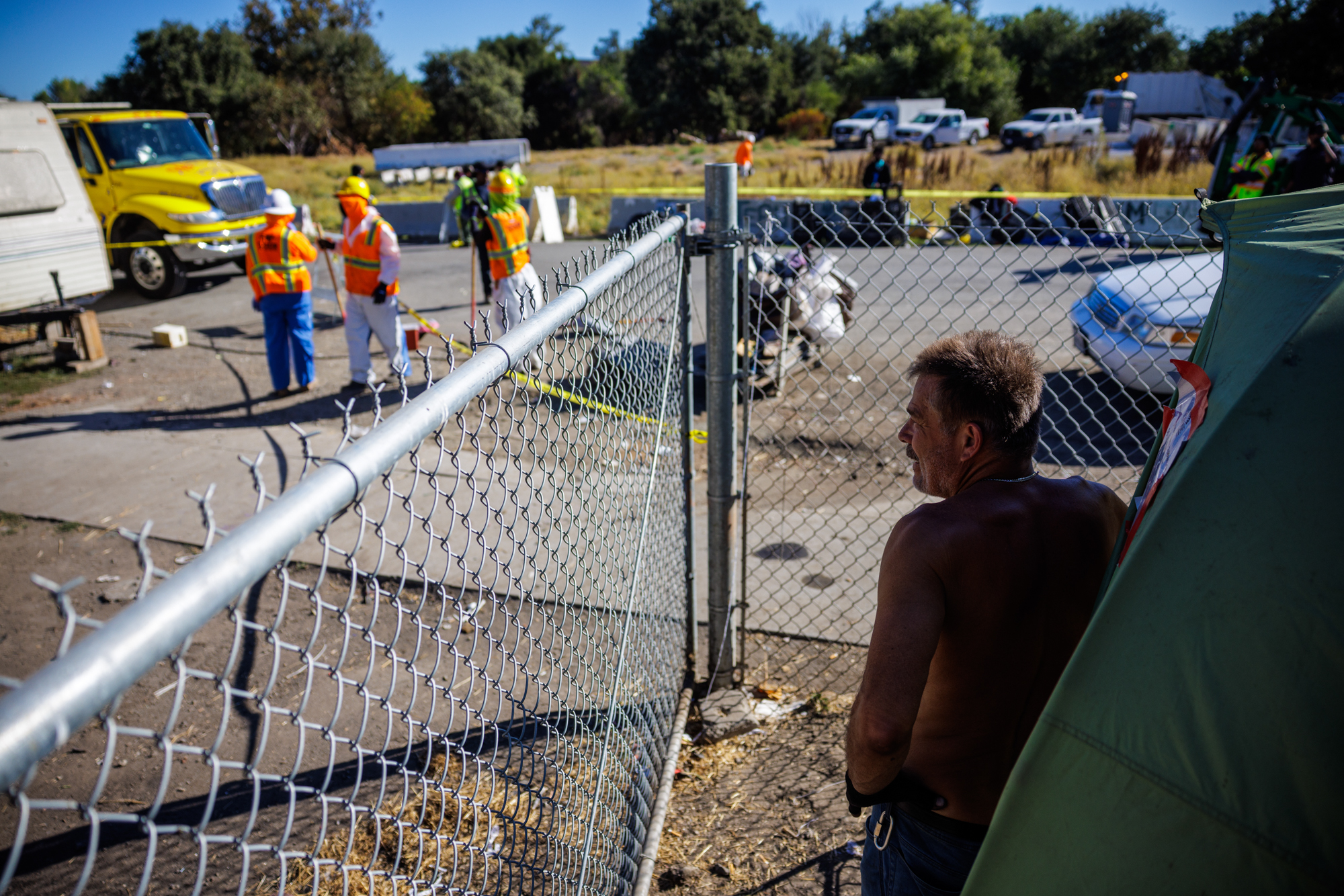
"caption": "Rob Lowe watches from his tent as workers clear RVs from Irene Street at Columbus Park in San José on Aug. 18, 2025.",
"credit": "Martin do Nascimento/KQED",
"altTag": null,
"description": null,
"imgSizes": {
"thumbnail": {
"file": "https://cdn.kqed.org/wp-content/uploads/sites/10/2025/08/250818-COLUMBUS-PARK-MD-07-KQED-KQED-160x107.jpg",
"width": 160,
"height": 107,
"mimeType": "image/jpeg"
},
"1536x1536": {
"file": "https://cdn.kqed.org/wp-content/uploads/sites/10/2025/08/250818-COLUMBUS-PARK-MD-07-KQED-KQED-1536x1025.jpg",
"width": 1536,
"height": 1025,
"mimeType": "image/jpeg"
},
"post-thumbnail": {
"file": "https://cdn.kqed.org/wp-content/uploads/sites/10/2025/08/250818-COLUMBUS-PARK-MD-07-KQED-KQED-672x372.jpg",
"width": 672,
"height": 372,
"mimeType": "image/jpeg"
},
"twentyfourteen-full-width": {
"file": "https://cdn.kqed.org/wp-content/uploads/sites/10/2025/08/250818-COLUMBUS-PARK-MD-07-KQED-KQED-1038x576.jpg",
"width": 1038,
"height": 576,
"mimeType": "image/jpeg"
},
"kqedFullSize": {
"file": "https://cdn.kqed.org/wp-content/uploads/sites/10/2025/08/250818-COLUMBUS-PARK-MD-07-KQED-KQED.jpg",
"width": 2000,
"height": 1334
}
},
"isLoading": false,
"fetchFailed": false
},
"news_12051894": {
"type": "attachments",
"id": "news_12051894",
"meta": {
"index": "attachments_1716263798",
"site": "news",
"id": "12051894",
"found": true
},
"title": "250623-VTAWESTPORTAL-JG-5_qed",
"publishDate": 1755026070,
"status": "inherit",
"parent": 0,
"modified": 1755026105,
"caption": "A massive cutter soil-mixing rig injects materials into soil at the West Portal construction site in San José on June 23, 2025.",
"credit": "Joseph Geha/KQED",
"altTag": null,
"description": null,
"imgSizes": {
"thumbnail": {
"file": "https://cdn.kqed.org/wp-content/uploads/sites/10/2025/08/250623-VTAWESTPORTAL-JG-5_qed-160x107.jpg",
"width": 160,
"height": 107,
"mimeType": "image/jpeg"
},
"1536x1536": {
"file": "https://cdn.kqed.org/wp-content/uploads/sites/10/2025/08/250623-VTAWESTPORTAL-JG-5_qed-1536x1024.jpg",
"width": 1536,
"height": 1024,
"mimeType": "image/jpeg"
},
"post-thumbnail": {
"file": "https://cdn.kqed.org/wp-content/uploads/sites/10/2025/08/250623-VTAWESTPORTAL-JG-5_qed-672x372.jpg",
"width": 672,
"height": 372,
"mimeType": "image/jpeg"
},
"twentyfourteen-full-width": {
"file": "https://cdn.kqed.org/wp-content/uploads/sites/10/2025/08/250623-VTAWESTPORTAL-JG-5_qed-1038x576.jpg",
"width": 1038,
"height": 576,
"mimeType": "image/jpeg"
},
"kqedFullSize": {
"file": "https://cdn.kqed.org/wp-content/uploads/sites/10/2025/08/250623-VTAWESTPORTAL-JG-5_qed.jpg",
"width": 1999,
"height": 1333
}
},
"isLoading": false,
"fetchFailed": false
}
},
"audioPlayerReducer": {
"postId": "stream_live",
"isPaused": true,
"isPlaying": false,
"pfsActive": false,
"pledgeModalIsOpen": true,
"playerDrawerIsOpen": false,
"liveAudioPlayStartedAt": 0,
"liveAudioPlayContext": ""
},
"authorsReducer": {
"hmcdede": {
"type": "authors",
"id": "11635",
"meta": {
"index": "authors_1716337520",
"id": "11635",
"found": true
},
"name": "Holly McDede",
"firstName": "Holly",
"lastName": "McDede",
"slug": "hmcdede",
"email": "hmcdede@KQED.org",
"display_author_email": false,
"staff_mastheads": [],
"title": "KQED Contributor",
"bio": null,
"avatar": "https://secure.gravatar.com/avatar/999d9bf31bb3a2f0511932d99526cb3e?s=600&d=blank&r=g",
"twitter": null,
"facebook": null,
"instagram": null,
"linkedin": null,
"sites": [
{
"site": "arts",
"roles": [
"editor"
]
},
{
"site": "news",
"roles": [
"edit_others_posts",
"editor"
]
},
{
"site": "science",
"roles": [
"editor"
]
},
{
"site": "forum",
"roles": [
"editor"
]
},
{
"site": "perspectives",
"roles": [
"administrator"
]
}
],
"headData": {
"title": "Holly McDede | KQED",
"description": "KQED Contributor",
"ogImgSrc": "https://secure.gravatar.com/avatar/999d9bf31bb3a2f0511932d99526cb3e?s=600&d=blank&r=g",
"twImgSrc": "https://secure.gravatar.com/avatar/999d9bf31bb3a2f0511932d99526cb3e?s=600&d=blank&r=g"
},
"isLoading": false,
"link": "/author/hmcdede"
},
"ebaldassari": {
"type": "authors",
"id": "11652",
"meta": {
"index": "authors_1716337520",
"id": "11652",
"found": true
},
"name": "Erin Baldassari",
"firstName": "Erin",
"lastName": "Baldassari",
"slug": "ebaldassari",
"email": "ebaldassari@KQED.org",
"display_author_email": true,
"staff_mastheads": [
"news"
],
"title": "Staff Writer",
"bio": "Erin Baldassari covers housing for KQED. She's a former print journalist and most recently worked as the transportation reporter for the \u003cem>Mercury News\u003c/em> and \u003cem>East Bay Times. \u003c/em>There, she focused on how the Bay Area’s housing shortage has changed the way people move around the region. She also served on the \u003cem>East Bay Times\u003c/em>’ 2017 Pulitzer Prize-winning team for coverage of the Ghost Ship Fire in Oakland. Prior to that, Erin worked as a breaking news and general assignment reporter for a variety of outlets in the Bay Area and the greater Boston area. A Tufts University alumna, Erin grew up in the foothills of the Sierra Nevada mountains and in Sonoma County. She is a life-long KQED listener.",
"avatar": "https://secure.gravatar.com/avatar/5e95cad64a8ca08288082212e199d2b0cbeb4fd8e8ef5339395f361032bbe005?s=600&d=blank&r=g",
"twitter": "e_baldi",
"bluesky": null,
"facebook": null,
"instagram": null,
"linkedin": null,
"sites": [
{
"site": "news",
"roles": [
"edit_others_posts",
"editor"
]
},
{
"site": "science",
"roles": [
"editor"
]
},
{
"site": "liveblog",
"roles": [
"editor"
]
}
],
"headData": {
"title": "Erin Baldassari | KQED",
"description": "Staff Writer",
"ogImgSrc": "https://secure.gravatar.com/avatar/5e95cad64a8ca08288082212e199d2b0cbeb4fd8e8ef5339395f361032bbe005?s=600&d=blank&r=g",
"twImgSrc": "https://secure.gravatar.com/avatar/5e95cad64a8ca08288082212e199d2b0cbeb4fd8e8ef5339395f361032bbe005?s=600&d=blank&r=g"
},
"isLoading": false,
"link": "/author/ebaldassari"
},
"jgeha": {
"type": "authors",
"id": "11906",
"meta": {
"index": "authors_1716337520",
"id": "11906",
"found": true
},
"name": "Joseph Geha",
"firstName": "Joseph",
"lastName": "Geha",
"slug": "jgeha",
"email": "jgeha@kqed.org",
"display_author_email": false,
"staff_mastheads": [
"news",
"science"
],
"title": "KQED Contributor",
"bio": null,
"avatar": "https://secure.gravatar.com/avatar/ea84d2b6dd93d6369d453edf19dd583f117cd1759d2d9c9c92f9de77017354fe?s=600&d=blank&r=g",
"twitter": null,
"bluesky": null,
"facebook": null,
"instagram": null,
"linkedin": null,
"sites": [
{
"site": "news",
"roles": [
"editor"
]
},
{
"site": "liveblog",
"roles": [
"author"
]
}
],
"headData": {
"title": "Joseph Geha | KQED",
"description": "KQED Contributor",
"ogImgSrc": "https://secure.gravatar.com/avatar/ea84d2b6dd93d6369d453edf19dd583f117cd1759d2d9c9c92f9de77017354fe?s=600&d=blank&r=g",
"twImgSrc": "https://secure.gravatar.com/avatar/ea84d2b6dd93d6369d453edf19dd583f117cd1759d2d9c9c92f9de77017354fe?s=600&d=blank&r=g"
},
"isLoading": false,
"link": "/author/jgeha"
}
},
"pagesReducer": {
"news_tag_south-bay": {
"type": "terms",
"id": "news_21285",
"meta": {
"index": "terms_1716263798",
"site": "news",
"id": "21285",
"score": 7.0833073
},
"featImg": null,
"name": "South Bay",
"description": null,
"taxonomy": "tag",
"headData": {
"twImgId": null,
"twTitle": null,
"ogTitle": null,
"ogImgId": null,
"twDescription": null,
"description": null,
"title": "South Bay Archives | KQED News",
"ogDescription": null
},
"ttid": 21302,
"slug": "south-bay",
"isLoading": false,
"title": "South Bay",
"pageMeta": {
"site": "news",
"WpPageTemplate": "page-topic-editorial",
"currentPage": 14
},
"blocks": [
{
"blockName": "kqed/post-list",
"attrs": {
"layout": "cardArticle2",
"query": "posts/news?tag=south-bay",
"seeMore": false,
"paginated": true,
"page": 14
}
},
{
"blockName": "kqed/ad"
}
]
}
},
"pfsSessionReducer": {},
"postsReducer": {
"stream_live": {
"type": "live",
"id": "stream_live",
"audioUrl": "https://streams.kqed.org/kqedradio",
"title": "Live Stream",
"excerpt": "Live Stream information currently unavailable.",
"link": "/radio",
"featImg": "",
"label": {
"name": "KQED Live",
"link": "/"
}
},
"stream_kqedNewscast": {
"type": "posts",
"id": "stream_kqedNewscast",
"audioUrl": "https://www.kqed.org/.stream/anon/radio/RDnews/newscast.mp3?_=1",
"title": "KQED Newscast",
"featImg": "",
"label": {
"name": "88.5 FM",
"link": "/"
}
},
"news_12054798": {
"type": "posts",
"id": "news_12054798",
"meta": {
"index": "posts_1716263798",
"site": "news",
"id": "12054798",
"score": null,
"sort": [
1757116591000
]
},
"guestAuthors": [],
"slug": "san-jose-joins-the-growing-call-to-unmask-ice-agents",
"title": "San José Joins the Growing Call to Unmask ICE Agents",
"publishDate": 1757116591,
"format": "standard",
"headTitle": "San José Joins the Growing Call to Unmask ICE Agents | KQED",
"labelTerm": {
"site": "news"
},
"content": "\u003cp>Elected leaders in the \u003ca href=\"https://www.kqed.org/news/tag/bay-area\">Bay Area\u003c/a>’s largest city are proposing a policy that would ban federal immigration officers from concealing their identities during enforcement actions within its borders, taking a cue from lawmakers in the state and elsewhere.\u003c/p>\n\u003cp>San José Councilmember Peter Ortiz, who represents a large chunk of the city’s east side, said the proposed ordinance is about restoring trust.\u003c/p>\n\u003cp>“When federal law enforcement officers, or any law enforcement officers, are covering their face or refusing to identify themselves — like we’ve seen across the state and across the country in regard to ICE and federal immigration enforcement — it creates fear and uncertainty, especially in our immigrant communities,” Ortiz told KQED in an interview on Friday.\u003c/p>\n\u003cp>[ad fullwidth]\u003c/p>\n\u003cp>“I believe people, regardless of citizenship, deserve to know who’s approaching them and whether that person is a legitimate law enforcement officer, not someone impersonating them.”\u003c/p>\n\u003cp>The policy, which has also drawn support from Council members David Cohen, Pamela Campos and Rosemary Kamei, will be heard at the city’s Rules and Open Government Committee on Wednesday. If it finds enough support there, the ordinance could be considered by the full council in about two months, Ortiz said.\u003c/p>\n\u003cfigure id=\"attachment_11987727\" class=\"wp-caption aligncenter\" style=\"max-width: 1920px\">\u003cimg loading=\"lazy\" decoding=\"async\" class=\"size-full wp-image-11987727\" src=\"https://cdn.kqed.org/wp-content/uploads/sites/10/2024/05/240524-REGIONALMEDICAL-JG-5_qut.jpg\" alt=\"\" width=\"1920\" height=\"1280\" srcset=\"https://cdn.kqed.org/wp-content/uploads/sites/10/2024/05/240524-REGIONALMEDICAL-JG-5_qut.jpg 1920w, https://cdn.kqed.org/wp-content/uploads/sites/10/2024/05/240524-REGIONALMEDICAL-JG-5_qut-800x533.jpg 800w, https://cdn.kqed.org/wp-content/uploads/sites/10/2024/05/240524-REGIONALMEDICAL-JG-5_qut-1020x680.jpg 1020w, https://cdn.kqed.org/wp-content/uploads/sites/10/2024/05/240524-REGIONALMEDICAL-JG-5_qut-160x107.jpg 160w, https://cdn.kqed.org/wp-content/uploads/sites/10/2024/05/240524-REGIONALMEDICAL-JG-5_qut-1536x1024.jpg 1536w\" sizes=\"auto, (max-width: 1920px) 100vw, 1920px\">\u003cfigcaption class=\"wp-caption-text\">San José City Councilmember Peter Ortiz speaks during a rally outside of Regional Medical Center in East San José on May 24. Ortiz and others called on Attorney General Rob Bonta to halt service cuts planned by the hospital’s ownership. \u003ccite>(Joseph Geha/KQED)\u003c/cite>\u003c/figcaption>\u003c/figure>\n\u003cp>San José, which is home to nearly 1 million people, has large Asian and Latino populations, and about 40% of the city’s residents are immigrants, according to the US Census.\u003c/p>\n\u003cp>“I believe it’s a responsibility of this council to make sure that our immigrant community is being protected, is being represented properly, and that any sort of immigration enforcement … is done in accordance with the law and respects the human rights of all residents,” Ortiz said.\u003c/p>\n\u003cp>While the city has not seen Immigration and Customs Enforcement raids on the scale of the Los Angeles County area, enforcement actions in San José earlier this year and around the Bay Area have \u003ca href=\"https://www.kqed.org/news/12043139/san-jose-immigrant-advocates-protest-sweeping-ice-arrests\">prompted protests\u003c/a> against the Trump administration’s aggressive escalation of tactics.\u003c/p>\n\u003cp>\u003ca href=\"https://www.kqed.org/news/12043787/as-ice-fears-grow-san-jose-approves-1-5-million-to-support-immigrants\">San José and Santa Clara County leaders\u003c/a> responded by bolstering funding for legal aid and financial relief for families whose loved ones have been detained, as \u003ca href=\"https://www.kqed.org/news/12045336/growing-south-bay-ice-fears-lead-to-surge-in-immigrant-hotline-calls\">spiking fear of ICE roundups\u003c/a> has kept some home from work or school. [aside postID=news_12054668 hero='https://cdn.kqed.org/wp-content/uploads/sites/10/2025/09/GettyImages-2220320695-2000x1334.jpg']Legislators in California, New York and Pennsylvania and supervisors in \u003ca href=\"https://www.latimes.com/california/story/2025-07-29/well-see-you-in-court-l-a-county-plans-to-bar-federal-immigration-agents-from-concealing-their-identity\">Los Angeles\u003c/a> County are among some of the electeds pushing similar policies sometimes referred to as \u003ca href=\"https://www.kqed.org/news/12044570/california-bill-would-prohibit-ice-officers-from-wearing-masks-in-the-state\">“No Secret Police” laws\u003c/a>, even as the legal landscape around such rules is murky.\u003c/p>\n\u003cp>San José City Attorney Nora Frimann said it’s unclear whether local or state laws will hold any sway over federal agents or officers, be they from ICE, Border Patrol, or another agency.\u003c/p>\n\u003cp>“But it is also significantly troubling to many in the community that masking and other efforts to hide identity can endanger residents, and not allow our residents to know if legitimate law enforcement is occurring and by which agency or branch of government,” Frimann said in an email.\u003c/p>\n\u003cp>A spokesperson for ICE did not immediately respond to a request for comment about San José’s proposal. The agency has previously told KQED in response to similar legislation proposed by state Sens. Scott Weiner, D-San Francisco, and Jesse Arreguín, D-Berkeley, that officers wear masks and use other methods to avoid identification to prevent “doxxing,” or the publishing of someone’s personal information online to publicly shame or harass them.\u003c/p>\n\u003cp>Ortiz acknowledged his policy proposal could result in a courtroom fight.\u003c/p>\n\u003cp>“It may come to a legal argument that we may have to support in partnership with the state of California and other jurisdictions, but I believe that San José has a moral obligation to lead that conversation and to lead in that battle for our immigrant community,” he said.\u003c/p>\n\u003cp>If the proposal makes it to the full council, there will likely be a discussion of the merits of the policy and any legal implications, Frimann said.\u003c/p>\n\u003cp>\u003c/p>\n",
"blocks": [],
"excerpt": "“People, regardless of citizenship, deserve to know who's approaching them,” said San José Councilmember Peter Ortiz, who is backing the ordinance.",
"status": "publish",
"parent": 0,
"modified": 1757120394,
"stats": {
"hasAudio": false,
"hasVideo": false,
"hasChartOrMap": false,
"iframeSrcs": [],
"hasGoogleForm": false,
"hasGallery": false,
"hasHearkenModule": false,
"hasPolis": false,
"paragraphCount": 17,
"wordCount": 747
},
"headData": {
"title": "San José Joins the Growing Call to Unmask ICE Agents | KQED",
"description": "“People, regardless of citizenship, deserve to know who's approaching them,” said San José Councilmember Peter Ortiz, who is backing the ordinance.",
"ogTitle": "",
"ogDescription": "",
"ogImgId": "",
"twTitle": "",
"twDescription": "",
"twImgId": "",
"schema": {
"@context": "https://schema.org",
"@type": "NewsArticle",
"headline": "San José Joins the Growing Call to Unmask ICE Agents",
"datePublished": "2025-09-05T16:56:31-07:00",
"dateModified": "2025-09-05T17:59:54-07:00",
"image": "https://cdn.kqed.org/wp-content/uploads/2020/02/KQED-OG-Image@1x.png",
"isAccessibleForFree": "True",
"publisher": {
"@type": "NewsMediaOrganization",
"@id": "https://www.kqed.org/#organization",
"name": "KQED",
"logo": "https://cdn.kqed.org/wp-content/uploads/2020/02/KQED-OG-Image@1x.png",
"url": "https://www.kqed.org",
"sameAs": [
"https://www.facebook.com/KQED",
"https://twitter.com/KQED",
"https://www.instagram.com/kqed/",
"https://www.tiktok.com/@kqedofficial",
"https://www.linkedin.com/company/kqed",
"https://www.youtube.com/channel/UCeC0IOo7i1P_61zVUWbJ4nw"
]
}
}
},
"primaryCategory": {
"termId": 1169,
"slug": "immigration",
"name": "Immigration"
},
"sticky": false,
"nprStoryId": "kqed-12054798",
"templateType": "standard",
"featuredImageType": "standard",
"excludeFromSiteSearch": "Include",
"articleAge": "0",
"path": "/news/12054798/san-jose-joins-the-growing-call-to-unmask-ice-agents",
"audioTrackLength": null,
"parsedContent": [
{
"type": "contentString",
"content": "\u003cdiv class=\"post-body\">\u003cp>\u003cp>Elected leaders in the \u003ca href=\"https://www.kqed.org/news/tag/bay-area\">Bay Area\u003c/a>’s largest city are proposing a policy that would ban federal immigration officers from concealing their identities during enforcement actions within its borders, taking a cue from lawmakers in the state and elsewhere.\u003c/p>\n\u003cp>San José Councilmember Peter Ortiz, who represents a large chunk of the city’s east side, said the proposed ordinance is about restoring trust.\u003c/p>\n\u003cp>“When federal law enforcement officers, or any law enforcement officers, are covering their face or refusing to identify themselves — like we’ve seen across the state and across the country in regard to ICE and federal immigration enforcement — it creates fear and uncertainty, especially in our immigrant communities,” Ortiz told KQED in an interview on Friday.\u003c/p>\n\u003cp>\u003c/p>\u003c/div>",
"attributes": {
"named": {},
"numeric": []
}
},
{
"type": "component",
"content": "",
"name": "ad",
"attributes": {
"named": {
"label": "fullwidth"
},
"numeric": [
"fullwidth"
]
}
},
{
"type": "contentString",
"content": "\u003cdiv class=\"post-body\">\u003cp>\u003c/p>\n\u003cp>“I believe people, regardless of citizenship, deserve to know who’s approaching them and whether that person is a legitimate law enforcement officer, not someone impersonating them.”\u003c/p>\n\u003cp>The policy, which has also drawn support from Council members David Cohen, Pamela Campos and Rosemary Kamei, will be heard at the city’s Rules and Open Government Committee on Wednesday. If it finds enough support there, the ordinance could be considered by the full council in about two months, Ortiz said.\u003c/p>\n\u003cfigure id=\"attachment_11987727\" class=\"wp-caption aligncenter\" style=\"max-width: 1920px\">\u003cimg loading=\"lazy\" decoding=\"async\" class=\"size-full wp-image-11987727\" src=\"https://cdn.kqed.org/wp-content/uploads/sites/10/2024/05/240524-REGIONALMEDICAL-JG-5_qut.jpg\" alt=\"\" width=\"1920\" height=\"1280\" srcset=\"https://cdn.kqed.org/wp-content/uploads/sites/10/2024/05/240524-REGIONALMEDICAL-JG-5_qut.jpg 1920w, https://cdn.kqed.org/wp-content/uploads/sites/10/2024/05/240524-REGIONALMEDICAL-JG-5_qut-800x533.jpg 800w, https://cdn.kqed.org/wp-content/uploads/sites/10/2024/05/240524-REGIONALMEDICAL-JG-5_qut-1020x680.jpg 1020w, https://cdn.kqed.org/wp-content/uploads/sites/10/2024/05/240524-REGIONALMEDICAL-JG-5_qut-160x107.jpg 160w, https://cdn.kqed.org/wp-content/uploads/sites/10/2024/05/240524-REGIONALMEDICAL-JG-5_qut-1536x1024.jpg 1536w\" sizes=\"auto, (max-width: 1920px) 100vw, 1920px\">\u003cfigcaption class=\"wp-caption-text\">San José City Councilmember Peter Ortiz speaks during a rally outside of Regional Medical Center in East San José on May 24. Ortiz and others called on Attorney General Rob Bonta to halt service cuts planned by the hospital’s ownership. \u003ccite>(Joseph Geha/KQED)\u003c/cite>\u003c/figcaption>\u003c/figure>\n\u003cp>San José, which is home to nearly 1 million people, has large Asian and Latino populations, and about 40% of the city’s residents are immigrants, according to the US Census.\u003c/p>\n\u003cp>“I believe it’s a responsibility of this council to make sure that our immigrant community is being protected, is being represented properly, and that any sort of immigration enforcement … is done in accordance with the law and respects the human rights of all residents,” Ortiz said.\u003c/p>\n\u003cp>While the city has not seen Immigration and Customs Enforcement raids on the scale of the Los Angeles County area, enforcement actions in San José earlier this year and around the Bay Area have \u003ca href=\"https://www.kqed.org/news/12043139/san-jose-immigrant-advocates-protest-sweeping-ice-arrests\">prompted protests\u003c/a> against the Trump administration’s aggressive escalation of tactics.\u003c/p>\n\u003cp>\u003ca href=\"https://www.kqed.org/news/12043787/as-ice-fears-grow-san-jose-approves-1-5-million-to-support-immigrants\">San José and Santa Clara County leaders\u003c/a> responded by bolstering funding for legal aid and financial relief for families whose loved ones have been detained, as \u003ca href=\"https://www.kqed.org/news/12045336/growing-south-bay-ice-fears-lead-to-surge-in-immigrant-hotline-calls\">spiking fear of ICE roundups\u003c/a> has kept some home from work or school. \u003c/p>\u003c/div>",
"attributes": {
"named": {},
"numeric": []
}
},
{
"type": "component",
"content": "",
"name": "aside",
"attributes": {
"named": {
"postid": "news_12054668",
"hero": "https://cdn.kqed.org/wp-content/uploads/sites/10/2025/09/GettyImages-2220320695-2000x1334.jpg",
"label": ""
},
"numeric": []
}
},
{
"type": "contentString",
"content": "\u003cdiv class=\"post-body\">\u003cp>Legislators in California, New York and Pennsylvania and supervisors in \u003ca href=\"https://www.latimes.com/california/story/2025-07-29/well-see-you-in-court-l-a-county-plans-to-bar-federal-immigration-agents-from-concealing-their-identity\">Los Angeles\u003c/a> County are among some of the electeds pushing similar policies sometimes referred to as \u003ca href=\"https://www.kqed.org/news/12044570/california-bill-would-prohibit-ice-officers-from-wearing-masks-in-the-state\">“No Secret Police” laws\u003c/a>, even as the legal landscape around such rules is murky.\u003c/p>\n\u003cp>San José City Attorney Nora Frimann said it’s unclear whether local or state laws will hold any sway over federal agents or officers, be they from ICE, Border Patrol, or another agency.\u003c/p>\n\u003cp>“But it is also significantly troubling to many in the community that masking and other efforts to hide identity can endanger residents, and not allow our residents to know if legitimate law enforcement is occurring and by which agency or branch of government,” Frimann said in an email.\u003c/p>\n\u003cp>A spokesperson for ICE did not immediately respond to a request for comment about San José’s proposal. The agency has previously told KQED in response to similar legislation proposed by state Sens. Scott Weiner, D-San Francisco, and Jesse Arreguín, D-Berkeley, that officers wear masks and use other methods to avoid identification to prevent “doxxing,” or the publishing of someone’s personal information online to publicly shame or harass them.\u003c/p>\n\u003cp>Ortiz acknowledged his policy proposal could result in a courtroom fight.\u003c/p>\n\u003cp>“It may come to a legal argument that we may have to support in partnership with the state of California and other jurisdictions, but I believe that San José has a moral obligation to lead that conversation and to lead in that battle for our immigrant community,” he said.\u003c/p>\n\u003cp>If the proposal makes it to the full council, there will likely be a discussion of the merits of the policy and any legal implications, Frimann said.\u003c/p>\n\u003cp>\u003c/p>\n\u003c/div>\u003c/p>",
"attributes": {
"named": {},
"numeric": []
}
}
],
"link": "/news/12054798/san-jose-joins-the-growing-call-to-unmask-ice-agents",
"authors": [
"11906"
],
"categories": [
"news_31795",
"news_1169",
"news_8",
"news_13"
],
"tags": [
"news_1386",
"news_20202",
"news_20857",
"news_18541",
"news_21285",
"news_244"
],
"featImg": "news_12054806",
"label": "news"
},
"news_12054705": {
"type": "posts",
"id": "news_12054705",
"meta": {
"index": "posts_1716263798",
"site": "news",
"id": "12054705",
"score": null,
"sort": [
1757025524000
]
},
"guestAuthors": [],
"slug": "waymo-knows-the-way-to-san-jose-airport",
"title": "Waymo Knows the Way to San José (Airport)",
"publishDate": 1757025524,
"format": "standard",
"headTitle": "Waymo Knows the Way to San José (Airport) | KQED",
"labelTerm": {
"site": "news"
},
"content": "\u003cp>Waymo’s driverless taxis are expected to begin offering rides to and from \u003ca href=\"https://www.kqed.org/news/tag/san-jose\">San José\u003c/a> Mineta International Airport later this year, making the South Bay hub the first commercial airport in the state where the cars will roam.\u003c/p>\n\u003cp>Airport officials and the Google-owned company announced Thursday that Waymo’s autonomous vehicles gained approval to operate commercially on airport premises. Phoenix’s Sky Harbor International Airport was the first commercial hub to include the service.\u003c/p>\n\u003cp>The company plans to begin testing at SJC in the fall and offer rides to customers via its app later in the year, Waymo said in a statement.\u003c/p>\n\u003cp>[ad fullwidth]\u003c/p>\n\u003cp>“SJC couldn’t be happier that Waymo has received its official permit to operate here in San José, and we’re pleased that Waymo chose our Airport as only the second major airport in the world to offer its services to travelers,” Mookie Patel, the airport’s director of aviation, said in a statement.\u003c/p>\n\u003cp>The company \u003ca href=\"https://www.kqed.org/news/12040828/waymo-gets-green-light-for-driverless-taxis-in-san-jose\">announced in May\u003c/a> that it got a green light from state regulators to begin commercial service in San José, as well as Los Gatos, Milpitas and larger portions of the Peninsula, but the company and city officials at the time didn’t share details on when service would begin.\u003c/p>\n\u003cp>A Waymo spokesperson told KQED on Thursday in an email that when commercial service begins at SJC later this year, “riders will be able to ride across an expanded territory from San José to San Francisco,” but didn’t offer specifics about what portions of the South Bay will be accessible via the service.[aside postID=news_12040828 hero='https://cdn.kqed.org/wp-content/uploads/sites/10/2025/05/GETTYIMAGES-1788126569-KQED-1020x680.jpg']“It’s the perfect time for Waymo’s autonomous vehicles to begin to roll into San José, the Capital of Silicon Valley,” San José Mayor Matt Mahan said in a statement. “For decades, our region has shaped the future — and Waymo embodies our region’s spirit of innovation. With San José at the epicenter of the biggest sporting events of 2026, Waymo is an ideal mode of transportation that will help visitors move around the area smoothly and safely.”\u003c/p>\n\u003cp>Santa Clara’s Levi’s Stadium will be hosting Super Bowl LX in February, as well as some FIFA World Cup matches in the summer of 2026, and the SAP Center in downtown San José will host NCAA Men’s Basketball Tournament West Regional matches in March.\u003c/p>\n\u003cp>“Waymo was born in Silicon Valley, and our testing and eventual commercial deployment at the airport will help us offer a valuable service to travelers in San José and more of the Bay Area, as we help keep innovation on the move,” Annabel Chang, Waymo’s head of U.S. state and local public policy, said in the company statement.\u003c/p>\n\u003cp>San Francisco International Airport has also been working toward authorizing Waymo service recently, with Mayor Daniel Lurie’s office \u003ca href=\"https://www.sf.gov/news-mayor-lurie-gives-waymo-green-light-to-map-roadways-around-san-francisco-international-airport\">announcing\u003c/a> in March an agreement allowing the company to map SFO’s roadways.\u003c/p>\n\u003cp>“We continue to meet with Waymo on the terms of a permit for operations at SFO,” Doug Yakel, a spokesperson for SFO, said in an email. “No set timeline for this, but we are meeting actively on this.”\u003c/p>\n\u003cp>Waymo’s service area already includes the Palo Alto Airport, a publicly-owned, non-commercial single runway airport on the edge of the Baylands.\u003c/p>\n\u003cp>\u003c/p>\n",
"blocks": [],
"excerpt": "Ahead of next year’s Super Bowl and World Cup games in the South Bay, San José Mineta International Airport will become the second commercial hub in the world with Waymo service.",
"status": "publish",
"parent": 0,
"modified": 1757026606,
"stats": {
"hasAudio": false,
"hasVideo": false,
"hasChartOrMap": false,
"iframeSrcs": [],
"hasGoogleForm": false,
"hasGallery": false,
"hasHearkenModule": false,
"hasPolis": false,
"paragraphCount": 13,
"wordCount": 606
},
"headData": {
"title": "Waymo Knows the Way to San José (Airport) | KQED",
"description": "Ahead of next year’s Super Bowl and World Cup games in the South Bay, San José Mineta International Airport will become the second commercial hub in the world with Waymo service.",
"ogTitle": "",
"ogDescription": "",
"ogImgId": "",
"twTitle": "",
"twDescription": "",
"twImgId": "",
"schema": {
"@context": "https://schema.org",
"@type": "NewsArticle",
"headline": "Waymo Knows the Way to San José (Airport)",
"datePublished": "2025-09-04T15:38:44-07:00",
"dateModified": "2025-09-04T15:56:46-07:00",
"image": "https://cdn.kqed.org/wp-content/uploads/2020/02/KQED-OG-Image@1x.png",
"isAccessibleForFree": "True",
"publisher": {
"@type": "NewsMediaOrganization",
"@id": "https://www.kqed.org/#organization",
"name": "KQED",
"logo": "https://cdn.kqed.org/wp-content/uploads/2020/02/KQED-OG-Image@1x.png",
"url": "https://www.kqed.org",
"sameAs": [
"https://www.facebook.com/KQED",
"https://twitter.com/KQED",
"https://www.instagram.com/kqed/",
"https://www.tiktok.com/@kqedofficial",
"https://www.linkedin.com/company/kqed",
"https://www.youtube.com/channel/UCeC0IOo7i1P_61zVUWbJ4nw"
]
}
}
},
"primaryCategory": {
"termId": 1397,
"slug": "transportation",
"name": "Transportation"
},
"sticky": false,
"nprStoryId": "kqed-12054705",
"templateType": "standard",
"featuredImageType": "standard",
"excludeFromSiteSearch": "Include",
"articleAge": "0",
"path": "/news/12054705/waymo-knows-the-way-to-san-jose-airport",
"audioTrackLength": null,
"parsedContent": [
{
"type": "contentString",
"content": "\u003cdiv class=\"post-body\">\u003cp>\u003cp>Waymo’s driverless taxis are expected to begin offering rides to and from \u003ca href=\"https://www.kqed.org/news/tag/san-jose\">San José\u003c/a> Mineta International Airport later this year, making the South Bay hub the first commercial airport in the state where the cars will roam.\u003c/p>\n\u003cp>Airport officials and the Google-owned company announced Thursday that Waymo’s autonomous vehicles gained approval to operate commercially on airport premises. Phoenix’s Sky Harbor International Airport was the first commercial hub to include the service.\u003c/p>\n\u003cp>The company plans to begin testing at SJC in the fall and offer rides to customers via its app later in the year, Waymo said in a statement.\u003c/p>\n\u003cp>\u003c/p>\u003c/div>",
"attributes": {
"named": {},
"numeric": []
}
},
{
"type": "component",
"content": "",
"name": "ad",
"attributes": {
"named": {
"label": "fullwidth"
},
"numeric": [
"fullwidth"
]
}
},
{
"type": "contentString",
"content": "\u003cdiv class=\"post-body\">\u003cp>\u003c/p>\n\u003cp>“SJC couldn’t be happier that Waymo has received its official permit to operate here in San José, and we’re pleased that Waymo chose our Airport as only the second major airport in the world to offer its services to travelers,” Mookie Patel, the airport’s director of aviation, said in a statement.\u003c/p>\n\u003cp>The company \u003ca href=\"https://www.kqed.org/news/12040828/waymo-gets-green-light-for-driverless-taxis-in-san-jose\">announced in May\u003c/a> that it got a green light from state regulators to begin commercial service in San José, as well as Los Gatos, Milpitas and larger portions of the Peninsula, but the company and city officials at the time didn’t share details on when service would begin.\u003c/p>\n\u003cp>A Waymo spokesperson told KQED on Thursday in an email that when commercial service begins at SJC later this year, “riders will be able to ride across an expanded territory from San José to San Francisco,” but didn’t offer specifics about what portions of the South Bay will be accessible via the service.\u003c/p>\u003c/div>",
"attributes": {
"named": {},
"numeric": []
}
},
{
"type": "component",
"content": "",
"name": "aside",
"attributes": {
"named": {
"postid": "news_12040828",
"hero": "https://cdn.kqed.org/wp-content/uploads/sites/10/2025/05/GETTYIMAGES-1788126569-KQED-1020x680.jpg",
"label": ""
},
"numeric": []
}
},
{
"type": "contentString",
"content": "\u003cdiv class=\"post-body\">\u003cp>“It’s the perfect time for Waymo’s autonomous vehicles to begin to roll into San José, the Capital of Silicon Valley,” San José Mayor Matt Mahan said in a statement. “For decades, our region has shaped the future — and Waymo embodies our region’s spirit of innovation. With San José at the epicenter of the biggest sporting events of 2026, Waymo is an ideal mode of transportation that will help visitors move around the area smoothly and safely.”\u003c/p>\n\u003cp>Santa Clara’s Levi’s Stadium will be hosting Super Bowl LX in February, as well as some FIFA World Cup matches in the summer of 2026, and the SAP Center in downtown San José will host NCAA Men’s Basketball Tournament West Regional matches in March.\u003c/p>\n\u003cp>“Waymo was born in Silicon Valley, and our testing and eventual commercial deployment at the airport will help us offer a valuable service to travelers in San José and more of the Bay Area, as we help keep innovation on the move,” Annabel Chang, Waymo’s head of U.S. state and local public policy, said in the company statement.\u003c/p>\n\u003cp>San Francisco International Airport has also been working toward authorizing Waymo service recently, with Mayor Daniel Lurie’s office \u003ca href=\"https://www.sf.gov/news-mayor-lurie-gives-waymo-green-light-to-map-roadways-around-san-francisco-international-airport\">announcing\u003c/a> in March an agreement allowing the company to map SFO’s roadways.\u003c/p>\n\u003cp>“We continue to meet with Waymo on the terms of a permit for operations at SFO,” Doug Yakel, a spokesperson for SFO, said in an email. “No set timeline for this, but we are meeting actively on this.”\u003c/p>\n\u003cp>Waymo’s service area already includes the Palo Alto Airport, a publicly-owned, non-commercial single runway airport on the edge of the Baylands.\u003c/p>\n\u003cp>\u003c/p>\n\u003c/div>\u003c/p>",
"attributes": {
"named": {},
"numeric": []
}
}
],
"link": "/news/12054705/waymo-knows-the-way-to-san-jose-airport",
"authors": [
"11906"
],
"categories": [
"news_28250",
"news_8",
"news_1397"
],
"tags": [
"news_33010",
"news_18541",
"news_20112",
"news_21285",
"news_20517",
"news_20576"
],
"featImg": "news_11897653",
"label": "news"
},
"news_12054576": {
"type": "posts",
"id": "news_12054576",
"meta": {
"index": "posts_1716263798",
"site": "news",
"id": "12054576",
"score": null,
"sort": [
1756944949000
]
},
"guestAuthors": [],
"slug": "santa-clara-police-fatally-shoot-stabbing-suspect",
"title": "Santa Clara Police Fatally Shoot Stabbing Suspect",
"publishDate": 1756944949,
"format": "standard",
"headTitle": "Santa Clara Police Fatally Shoot Stabbing Suspect | KQED",
"labelTerm": {
"site": "news"
},
"content": "\u003cp>\u003ca href=\"https://www.kqed.org/news/tag/santa-clara\">Santa Clara\u003c/a> police fatally shot someone while responding to a report of a stabbing on Wednesday morning, according to the department.\u003c/p>\n\u003cp>Officers responded to a home in the 1800 block of Eisenhower Drive in north Santa Clara around 6:18 a.m., after someone called police to report a stabbing in the home.\u003c/p>\n\u003cp>[ad fullwidth]\u003c/p>\n\u003cp>Officers arrived and shot the suspect. The person was taken to a hospital and later pronounced deceased, police said in a press release on Wednesday.\u003c/p>\n\u003cp>“The officer was not injured as a result of the incident,” the statement said. The victim of the stabbing was hospitalized and is being treated for their injuries.\u003c/p>\n\u003cp>Police released no other details, but department officials said they expect to provide an update on the incident on Thursday afternoon.\u003c/p>\n\u003cp>The Santa Clara County District Attorney’s Office and the Santa Clara Police Department are conducting a joint investigation.\u003c/p>\n\u003cp>\u003c/p>\n",
"blocks": [],
"excerpt": "A person shot by Santa Clara police was transported to a hospital and pronounced dead. ",
"status": "publish",
"parent": 0,
"modified": 1756946754,
"stats": {
"hasAudio": false,
"hasVideo": false,
"hasChartOrMap": false,
"iframeSrcs": [],
"hasGoogleForm": false,
"hasGallery": false,
"hasHearkenModule": false,
"hasPolis": false,
"paragraphCount": 8,
"wordCount": 151
},
"headData": {
"title": "Santa Clara Police Fatally Shoot Stabbing Suspect | KQED",
"description": "A person shot by Santa Clara police was transported to a hospital and pronounced dead. ",
"ogTitle": "",
"ogDescription": "",
"ogImgId": "",
"twTitle": "",
"twDescription": "",
"twImgId": "",
"schema": {
"@context": "https://schema.org",
"@type": "NewsArticle",
"headline": "Santa Clara Police Fatally Shoot Stabbing Suspect",
"datePublished": "2025-09-03T17:15:49-07:00",
"dateModified": "2025-09-03T17:45:54-07:00",
"image": "https://cdn.kqed.org/wp-content/uploads/2020/02/KQED-OG-Image@1x.png",
"isAccessibleForFree": "True",
"publisher": {
"@type": "NewsMediaOrganization",
"@id": "https://www.kqed.org/#organization",
"name": "KQED",
"logo": "https://cdn.kqed.org/wp-content/uploads/2020/02/KQED-OG-Image@1x.png",
"url": "https://www.kqed.org",
"sameAs": [
"https://www.facebook.com/KQED",
"https://twitter.com/KQED",
"https://www.instagram.com/kqed/",
"https://www.tiktok.com/@kqedofficial",
"https://www.linkedin.com/company/kqed",
"https://www.youtube.com/channel/UCeC0IOo7i1P_61zVUWbJ4nw"
]
}
}
},
"primaryCategory": {
"termId": 34167,
"slug": "criminal-justice",
"name": "Criminal Justice"
},
"sticky": false,
"nprStoryId": "kqed-12054576",
"templateType": "standard",
"featuredImageType": "standard",
"excludeFromSiteSearch": "Include",
"articleAge": "0",
"path": "/news/12054576/santa-clara-police-fatally-shoot-stabbing-suspect",
"audioTrackLength": null,
"parsedContent": [
{
"type": "contentString",
"content": "\u003cdiv class=\"post-body\">\u003cp>\u003cp>\u003ca href=\"https://www.kqed.org/news/tag/santa-clara\">Santa Clara\u003c/a> police fatally shot someone while responding to a report of a stabbing on Wednesday morning, according to the department.\u003c/p>\n\u003cp>Officers responded to a home in the 1800 block of Eisenhower Drive in north Santa Clara around 6:18 a.m., after someone called police to report a stabbing in the home.\u003c/p>\n\u003cp>\u003c/p>\u003c/div>",
"attributes": {
"named": {},
"numeric": []
}
},
{
"type": "component",
"content": "",
"name": "ad",
"attributes": {
"named": {
"label": "fullwidth"
},
"numeric": [
"fullwidth"
]
}
},
{
"type": "contentString",
"content": "\u003cdiv class=\"post-body\">\u003cp>\u003c/p>\n\u003cp>Officers arrived and shot the suspect. The person was taken to a hospital and later pronounced deceased, police said in a press release on Wednesday.\u003c/p>\n\u003cp>“The officer was not injured as a result of the incident,” the statement said. The victim of the stabbing was hospitalized and is being treated for their injuries.\u003c/p>\n\u003cp>Police released no other details, but department officials said they expect to provide an update on the incident on Thursday afternoon.\u003c/p>\n\u003cp>The Santa Clara County District Attorney’s Office and the Santa Clara Police Department are conducting a joint investigation.\u003c/p>\n\u003cp>\u003c/p>\n\u003c/div>\u003c/p>",
"attributes": {
"named": {},
"numeric": []
}
}
],
"link": "/news/12054576/santa-clara-police-fatally-shoot-stabbing-suspect",
"authors": [
"11906"
],
"categories": [
"news_34167",
"news_28250",
"news_8"
],
"tags": [
"news_1386",
"news_17725",
"news_19954",
"news_22850",
"news_22456",
"news_1749",
"news_18188",
"news_21285"
],
"featImg": "news_12054579",
"label": "news"
},
"news_12054245": {
"type": "posts",
"id": "news_12054245",
"meta": {
"index": "posts_1716263798",
"site": "news",
"id": "12054245",
"score": null,
"sort": [
1756501004000
]
},
"guestAuthors": [],
"slug": "former-san-jose-councilmember-omar-torres-sentenced-to-18-years-in-prison",
"title": "Former San José Councilmember Omar Torres Sentenced to 18 Years in Prison",
"publishDate": 1756501004,
"format": "standard",
"headTitle": "Former San José Councilmember Omar Torres Sentenced to 18 Years in Prison | KQED",
"labelTerm": {
"site": "news"
},
"content": "\u003cp>Former \u003ca href=\"https://www.kqed.org/news/tag/san-jose\">San José\u003c/a> City Councilmember Omar Torres has been sentenced to 18 years in prison after he was convicted earlier this year of sexually assaulting his teenage relative more than 20 years ago.\u003c/p>\n\u003cp>Torres, who served as the District 3 council member for San José’s downtown and northside neighborhoods from 2023 through most of 2024, was charged in November with sodomy, oral copulation and lewd and lascivious acts on a minor under the age of 14.\u003c/p>\n\u003cp>He resigned from the council and was \u003ca href=\"https://www.kqed.org/news/12013122/san-jose-councilmember-omar-torres-resigns-arrested\">arrested\u003c/a> on Nov. 5, 2024, election day, and pleaded no contest to the charges in \u003ca href=\"https://www.kqed.org/news/12035071/former-san-jose-council-member-pleads-no-contest-to-child-sexual-abuse\">April\u003c/a>.\u003c/p>\n\u003cp>[ad fullwidth]\u003c/p>\n\u003cp>“Today’s sentence holds Omar Torres accountable for perpetrating horrendous crimes against a child,” District Attorney Jeff Rosen said in a \u003ca href=\"https://da.santaclaracounty.gov/former-san-jose-city-councilman-sentenced-18-years-molesting-minor\">statement\u003c/a> on Friday. “This sentence sends a strong message that no one is above the law, and it is never too late for justice. We admire the victim’s courage to come forward to report the abuse he suffered.”\u003c/p>\n\u003cp>The district attorney’s office also said Torres will need to register as a sex offender for life.\u003c/p>\n\u003cp>He was accused of abusing his relative for years, starting when Torres and his victim were both minors, and continuing after Torres turned 18 in 1999.[aside postID=news_12053938 hero='https://cdn.kqed.org/wp-content/uploads/sites/10/2025/08/20230608_ksuzuki_adelanteschool-172_qed.jpg']The district attorney’s office, in a statement, said Torres only stopped the abuse when he “became concerned he would be caught.”\u003c/p>\n\u003cp>Nelson McElmurry, Torres’ attorney, wasn’t immediately available for comment on Friday afternoon.\u003c/p>\n\u003cp>The victim in the case came forward in November after reports surfaced of a separate police investigation into Torres over allegations of sexual abuse of a minor. No charges were filed from that investigation.\u003c/p>\n\u003cp>Police recorded a phone call from the relative to Torres in early November, during which investigators said Torres admitted to the crimes.\u003c/p>\n\u003cp>“From the bottom of my heart, I’m so sorry that I hurt you,” Torres said to the victim during the call, according to the police report. “I’m in intense therapy right now to, you know, to work on myself, and I haven’t stopped thinking about the harm that I caused you.”\u003c/p>\n\u003cp>Following Torres’ resignation, the San José City Council appointed businessman Carl Salas to hold the District 3 seat while a special election was held. Former Planning Commission Chair Anthony Tordillos \u003ca href=\"https://www.kqed.org/news/12045682/tordillos-cites-desire-for-new-type-of-politics-in-san-jose-in-apparent-council-win\">won the seat\u003c/a> in a late June runoff.\u003c/p>\n\u003cp>This story will be updated.\u003c/p>\n\u003cp>\u003c/p>\n",
"blocks": [],
"excerpt": "Omar Torres, the disgraced former San José City Council member, received a sentence of 18 years on Friday for sexually assaulting a teenage relative more than 20 years ago. ",
"status": "publish",
"parent": 0,
"modified": 1756501931,
"stats": {
"hasAudio": false,
"hasVideo": false,
"hasChartOrMap": false,
"iframeSrcs": [],
"hasGoogleForm": false,
"hasGallery": false,
"hasHearkenModule": false,
"hasPolis": false,
"paragraphCount": 14,
"wordCount": 436
},
"headData": {
"title": "Former San José Councilmember Omar Torres Sentenced to 18 Years in Prison | KQED",
"description": "Omar Torres, the disgraced former San José City Council member, received a sentence of 18 years on Friday for sexually assaulting a teenage relative more than 20 years ago. ",
"ogTitle": "",
"ogDescription": "",
"ogImgId": "",
"twTitle": "",
"twDescription": "",
"twImgId": "",
"schema": {
"@context": "https://schema.org",
"@type": "NewsArticle",
"headline": "Former San José Councilmember Omar Torres Sentenced to 18 Years in Prison",
"datePublished": "2025-08-29T13:56:44-07:00",
"dateModified": "2025-08-29T14:12:11-07:00",
"image": "https://cdn.kqed.org/wp-content/uploads/2020/02/KQED-OG-Image@1x.png",
"isAccessibleForFree": "True",
"publisher": {
"@type": "NewsMediaOrganization",
"@id": "https://www.kqed.org/#organization",
"name": "KQED",
"logo": "https://cdn.kqed.org/wp-content/uploads/2020/02/KQED-OG-Image@1x.png",
"url": "https://www.kqed.org",
"sameAs": [
"https://www.facebook.com/KQED",
"https://twitter.com/KQED",
"https://www.instagram.com/kqed/",
"https://www.tiktok.com/@kqedofficial",
"https://www.linkedin.com/company/kqed",
"https://www.youtube.com/channel/UCeC0IOo7i1P_61zVUWbJ4nw"
]
}
}
},
"primaryCategory": {
"termId": 8,
"slug": "news",
"name": "News"
},
"sticky": false,
"nprStoryId": "kqed-12054245",
"templateType": "standard",
"featuredImageType": "standard",
"excludeFromSiteSearch": "Include",
"articleAge": "0",
"path": "/news/12054245/former-san-jose-councilmember-omar-torres-sentenced-to-18-years-in-prison",
"audioTrackLength": null,
"parsedContent": [
{
"type": "contentString",
"content": "\u003cdiv class=\"post-body\">\u003cp>\u003cp>Former \u003ca href=\"https://www.kqed.org/news/tag/san-jose\">San José\u003c/a> City Councilmember Omar Torres has been sentenced to 18 years in prison after he was convicted earlier this year of sexually assaulting his teenage relative more than 20 years ago.\u003c/p>\n\u003cp>Torres, who served as the District 3 council member for San José’s downtown and northside neighborhoods from 2023 through most of 2024, was charged in November with sodomy, oral copulation and lewd and lascivious acts on a minor under the age of 14.\u003c/p>\n\u003cp>He resigned from the council and was \u003ca href=\"https://www.kqed.org/news/12013122/san-jose-councilmember-omar-torres-resigns-arrested\">arrested\u003c/a> on Nov. 5, 2024, election day, and pleaded no contest to the charges in \u003ca href=\"https://www.kqed.org/news/12035071/former-san-jose-council-member-pleads-no-contest-to-child-sexual-abuse\">April\u003c/a>.\u003c/p>\n\u003cp>\u003c/p>\u003c/div>",
"attributes": {
"named": {},
"numeric": []
}
},
{
"type": "component",
"content": "",
"name": "ad",
"attributes": {
"named": {
"label": "fullwidth"
},
"numeric": [
"fullwidth"
]
}
},
{
"type": "contentString",
"content": "\u003cdiv class=\"post-body\">\u003cp>\u003c/p>\n\u003cp>“Today’s sentence holds Omar Torres accountable for perpetrating horrendous crimes against a child,” District Attorney Jeff Rosen said in a \u003ca href=\"https://da.santaclaracounty.gov/former-san-jose-city-councilman-sentenced-18-years-molesting-minor\">statement\u003c/a> on Friday. “This sentence sends a strong message that no one is above the law, and it is never too late for justice. We admire the victim’s courage to come forward to report the abuse he suffered.”\u003c/p>\n\u003cp>The district attorney’s office also said Torres will need to register as a sex offender for life.\u003c/p>\n\u003cp>He was accused of abusing his relative for years, starting when Torres and his victim were both minors, and continuing after Torres turned 18 in 1999.\u003c/p>\u003c/div>",
"attributes": {
"named": {},
"numeric": []
}
},
{
"type": "component",
"content": "",
"name": "aside",
"attributes": {
"named": {
"postid": "news_12053938",
"hero": "https://cdn.kqed.org/wp-content/uploads/sites/10/2025/08/20230608_ksuzuki_adelanteschool-172_qed.jpg",
"label": ""
},
"numeric": []
}
},
{
"type": "contentString",
"content": "\u003cdiv class=\"post-body\">\u003cp>The district attorney’s office, in a statement, said Torres only stopped the abuse when he “became concerned he would be caught.”\u003c/p>\n\u003cp>Nelson McElmurry, Torres’ attorney, wasn’t immediately available for comment on Friday afternoon.\u003c/p>\n\u003cp>The victim in the case came forward in November after reports surfaced of a separate police investigation into Torres over allegations of sexual abuse of a minor. No charges were filed from that investigation.\u003c/p>\n\u003cp>Police recorded a phone call from the relative to Torres in early November, during which investigators said Torres admitted to the crimes.\u003c/p>\n\u003cp>“From the bottom of my heart, I’m so sorry that I hurt you,” Torres said to the victim during the call, according to the police report. “I’m in intense therapy right now to, you know, to work on myself, and I haven’t stopped thinking about the harm that I caused you.”\u003c/p>\n\u003cp>Following Torres’ resignation, the San José City Council appointed businessman Carl Salas to hold the District 3 seat while a special election was held. Former Planning Commission Chair Anthony Tordillos \u003ca href=\"https://www.kqed.org/news/12045682/tordillos-cites-desire-for-new-type-of-politics-in-san-jose-in-apparent-council-win\">won the seat\u003c/a> in a late June runoff.\u003c/p>\n\u003cp>This story will be updated.\u003c/p>\n\u003cp>\u003c/p>\n\u003c/div>\u003c/p>",
"attributes": {
"named": {},
"numeric": []
}
}
],
"link": "/news/12054245/former-san-jose-councilmember-omar-torres-sentenced-to-18-years-in-prison",
"authors": [
"11906"
],
"categories": [
"news_34167",
"news_28250",
"news_8",
"news_13"
],
"tags": [
"news_17725",
"news_18541",
"news_2700",
"news_1527",
"news_21285"
],
"featImg": "news_12009735",
"label": "news"
},
"news_12054015": {
"type": "posts",
"id": "news_12054015",
"meta": {
"index": "posts_1716263798",
"site": "news",
"id": "12054015",
"score": null,
"sort": [
1756418805000
]
},
"guestAuthors": [],
"slug": "san-jose-councilmember-pushes-30-million-revitalization-fund-for-east-side",
"title": "San José Council Member Pushes $30 Million Revitalization Fund for East Side",
"publishDate": 1756418805,
"format": "standard",
"headTitle": "San José Council Member Pushes $30 Million Revitalization Fund for East Side | KQED",
"labelTerm": {
"site": "news"
},
"content": "\u003cp>\u003ca href=\"https://www.kqed.org/news/tag/san-jose\">San José\u003c/a> Councilmember Peter Ortiz is pushing the city to create a $30 million fund to support a wide-ranging revitalization plan in the East Side, an area he says has suffered for decades from racism-driven redlining, underinvestment and neglect.\u003c/p>\n\u003cp>The city’s Rules and Open Government Committee voted unanimously Wednesday to advance Ortiz’s proposal, directing staff to draft a framework for the fund as part of the budget process next spring.\u003c/p>\n\u003cp>“East San José has been left behind for far too long,” Ortiz said Wednesday afternoon during a press conference outside City Hall. “Families, workers and small businesses on the East Side have carried this city on their shoulders. But they have never received the level of commitment and investment that other neighborhoods enjoy.”\u003c/p>\n\u003cp>[ad fullwidth]\u003c/p>\n\u003cp>East San José includes some of the most diverse and economically disadvantaged neighborhoods in the city and the county, with large Latino and Asian populations.\u003c/p>\n\u003cp>Earlier this month, Ortiz launched what he calls the “East San José Economic Revitalization Plan.” He said the plan and the fund are part of what he expects will be an ongoing campaign to boost public safety, support cleanliness, small businesses, economic activity and infrastructure improvements.\u003c/p>\n\u003cp>With support of other East Side leaders, Ortiz has also introduced proposals to pilot a fee-waiver program for new or expanding small businesses in growth areas of the city — similar to one in San Francisco — and back higher fines for owners of blighted properties.\u003c/p>\n\u003cp>He noted the city has often prioritized marquee areas like downtown, where Ortiz estimates San José has invested about $18 million in San Pedro Square for sidewalks, a pedestrian mall and public art.\u003c/p>\n\u003cp>The San José City Council this week \u003ca href=\"https://www.kqed.org/news/12052529/san-jose-sharks-would-stay-in-silicon-valley-through-2051-under-new-deal\">approved $325 million in upgrades\u003c/a> to SAP Center — the downtown arena where the NHL’s Sharks have played since 1993 — as part of a deal to keep the team in town through 2050, which Ortiz supported.[aside postID=news_12052645 hero='https://cdn.kqed.org/wp-content/uploads/sites/10/2025/08/250818-COLUMBUS-PARK-MD-07-KQED-KQED.jpg']The deal drew criticism because the city faces a roughly \u003ca href=\"https://www.kqed.org/news/11989926/san-jose-council-approves-budget-with-historic-shift-in-unhoused-spending\">$30 million budget deficit\u003c/a> next year, and how the arena improvements will be paid for remains unclear, though bonds and increased hotel taxes are possible.\u003c/p>\n\u003cp>“But if we could come together to spend $325 million on an arena, how can we not also come together to invest in the neighborhoods and communities with the greatest need?” Ortiz said.\u003c/p>\n\u003cp>The future East Side fund, Ortiz said, would combine city dollars with state and federal grants, philanthropic support and corporate partnerships.\u003c/p>\n\u003cp>Danny Garza, a longtime community booster and the head of the Plata Arroyo Neighborhood Association, said this is about offering dignity to residents on the East Side.\u003c/p>\n\u003cp>“Families in East San José deserve the same quality of parks, infrastructure and city services that other parts of our city have had for ages. That’s why this proposal matters,” Garza said at the press conference.\u003c/p>\n\u003cp>“This fund gives us the chance to bring into our neighborhoods pickleball courts, fitness areas and benches. This might sound small, but to people who don’t have it, it’s mighty,” Garza said.\u003c/p>\n\u003cp>In a \u003ca href=\"https://sanjose.legistar.com/View.ashx?M=F&ID=14618204&GUID=C144A029-EB20-4FC0-B83E-C58DF5536773\">memo\u003c/a> this week, Ortiz said the fund must be sustainable and ongoing. He outlined possible uses, including more city crews to clear illegal dumping, new murals and public art, repairs to playgrounds, courts and fields, \u003ca href=\"https://www.kqed.org/news/12052645/san-jose-begins-clearing-columbus-park-the-citys-biggest-homeless-encampment\">expanded homeless outreach\u003c/a> and stronger enforcement against \u003ca href=\"https://www.kqed.org/news/12041847/san-jose-could-temporarily-ban-smoke-shops-citing-health-inequities\">problem businesses\u003c/a> and absentee landlords.\u003c/p>\n\u003cp>Ortiz said his team and city staff will focus on outreach and hosting town halls to gather community input before any money is allocated.\u003c/p>\n\u003cp>“We’re talking about leveraging every available resource to make sure East San José finally gets its fair share, because our families on the East Side matter,” Ortiz said. “This isn’t about money; this is about justice. This is about correcting a historical wrong.\u003c/p>\n\u003cp>“Our residents are watching. They will remember who chose to invest in their future and who chose to look away.”\u003c/p>\n\u003cp>\u003c/p>\n",
"blocks": [],
"excerpt": "San José Councilmember Peter Ortiz is pushing for a fund to revitalize long-neglected East San José with investments in safety, small businesses and community spaces. ",
"status": "publish",
"parent": 0,
"modified": 1756421284,
"stats": {
"hasAudio": false,
"hasVideo": false,
"hasChartOrMap": false,
"iframeSrcs": [],
"hasGoogleForm": false,
"hasGallery": false,
"hasHearkenModule": false,
"hasPolis": false,
"paragraphCount": 19,
"wordCount": 706
},
"headData": {
"title": "San José Council Member Pushes $30 Million Revitalization Fund for East Side | KQED",
"description": "San José Councilmember Peter Ortiz is pushing for a fund to revitalize long-neglected East San José with investments in safety, small businesses and community spaces. ",
"ogTitle": "",
"ogDescription": "",
"ogImgId": "",
"twTitle": "",
"twDescription": "",
"twImgId": "",
"schema": {
"@context": "https://schema.org",
"@type": "NewsArticle",
"headline": "San José Council Member Pushes $30 Million Revitalization Fund for East Side",
"datePublished": "2025-08-28T15:06:45-07:00",
"dateModified": "2025-08-28T15:48:04-07:00",
"image": "https://cdn.kqed.org/wp-content/uploads/2020/02/KQED-OG-Image@1x.png",
"isAccessibleForFree": "True",
"publisher": {
"@type": "NewsMediaOrganization",
"@id": "https://www.kqed.org/#organization",
"name": "KQED",
"logo": "https://cdn.kqed.org/wp-content/uploads/2020/02/KQED-OG-Image@1x.png",
"url": "https://www.kqed.org",
"sameAs": [
"https://www.facebook.com/KQED",
"https://twitter.com/KQED",
"https://www.instagram.com/kqed/",
"https://www.tiktok.com/@kqedofficial",
"https://www.linkedin.com/company/kqed",
"https://www.youtube.com/channel/UCeC0IOo7i1P_61zVUWbJ4nw"
]
}
}
},
"primaryCategory": {
"termId": 8,
"slug": "news",
"name": "News"
},
"sticky": false,
"nprStoryId": "kqed-12054015",
"templateType": "standard",
"featuredImageType": "standard",
"excludeFromSiteSearch": "Include",
"articleAge": "0",
"path": "/news/12054015/san-jose-councilmember-pushes-30-million-revitalization-fund-for-east-side",
"audioTrackLength": null,
"parsedContent": [
{
"type": "contentString",
"content": "\u003cdiv class=\"post-body\">\u003cp>\u003cp>\u003ca href=\"https://www.kqed.org/news/tag/san-jose\">San José\u003c/a> Councilmember Peter Ortiz is pushing the city to create a $30 million fund to support a wide-ranging revitalization plan in the East Side, an area he says has suffered for decades from racism-driven redlining, underinvestment and neglect.\u003c/p>\n\u003cp>The city’s Rules and Open Government Committee voted unanimously Wednesday to advance Ortiz’s proposal, directing staff to draft a framework for the fund as part of the budget process next spring.\u003c/p>\n\u003cp>“East San José has been left behind for far too long,” Ortiz said Wednesday afternoon during a press conference outside City Hall. “Families, workers and small businesses on the East Side have carried this city on their shoulders. But they have never received the level of commitment and investment that other neighborhoods enjoy.”\u003c/p>\n\u003cp>\u003c/p>\u003c/div>",
"attributes": {
"named": {},
"numeric": []
}
},
{
"type": "component",
"content": "",
"name": "ad",
"attributes": {
"named": {
"label": "fullwidth"
},
"numeric": [
"fullwidth"
]
}
},
{
"type": "contentString",
"content": "\u003cdiv class=\"post-body\">\u003cp>\u003c/p>\n\u003cp>East San José includes some of the most diverse and economically disadvantaged neighborhoods in the city and the county, with large Latino and Asian populations.\u003c/p>\n\u003cp>Earlier this month, Ortiz launched what he calls the “East San José Economic Revitalization Plan.” He said the plan and the fund are part of what he expects will be an ongoing campaign to boost public safety, support cleanliness, small businesses, economic activity and infrastructure improvements.\u003c/p>\n\u003cp>With support of other East Side leaders, Ortiz has also introduced proposals to pilot a fee-waiver program for new or expanding small businesses in growth areas of the city — similar to one in San Francisco — and back higher fines for owners of blighted properties.\u003c/p>\n\u003cp>He noted the city has often prioritized marquee areas like downtown, where Ortiz estimates San José has invested about $18 million in San Pedro Square for sidewalks, a pedestrian mall and public art.\u003c/p>\n\u003cp>The San José City Council this week \u003ca href=\"https://www.kqed.org/news/12052529/san-jose-sharks-would-stay-in-silicon-valley-through-2051-under-new-deal\">approved $325 million in upgrades\u003c/a> to SAP Center — the downtown arena where the NHL’s Sharks have played since 1993 — as part of a deal to keep the team in town through 2050, which Ortiz supported.\u003c/p>\u003c/div>",
"attributes": {
"named": {},
"numeric": []
}
},
{
"type": "component",
"content": "",
"name": "aside",
"attributes": {
"named": {
"postid": "news_12052645",
"hero": "https://cdn.kqed.org/wp-content/uploads/sites/10/2025/08/250818-COLUMBUS-PARK-MD-07-KQED-KQED.jpg",
"label": ""
},
"numeric": []
}
},
{
"type": "contentString",
"content": "\u003cdiv class=\"post-body\">\u003cp>The deal drew criticism because the city faces a roughly \u003ca href=\"https://www.kqed.org/news/11989926/san-jose-council-approves-budget-with-historic-shift-in-unhoused-spending\">$30 million budget deficit\u003c/a> next year, and how the arena improvements will be paid for remains unclear, though bonds and increased hotel taxes are possible.\u003c/p>\n\u003cp>“But if we could come together to spend $325 million on an arena, how can we not also come together to invest in the neighborhoods and communities with the greatest need?” Ortiz said.\u003c/p>\n\u003cp>The future East Side fund, Ortiz said, would combine city dollars with state and federal grants, philanthropic support and corporate partnerships.\u003c/p>\n\u003cp>Danny Garza, a longtime community booster and the head of the Plata Arroyo Neighborhood Association, said this is about offering dignity to residents on the East Side.\u003c/p>\n\u003cp>“Families in East San José deserve the same quality of parks, infrastructure and city services that other parts of our city have had for ages. That’s why this proposal matters,” Garza said at the press conference.\u003c/p>\n\u003cp>“This fund gives us the chance to bring into our neighborhoods pickleball courts, fitness areas and benches. This might sound small, but to people who don’t have it, it’s mighty,” Garza said.\u003c/p>\n\u003cp>In a \u003ca href=\"https://sanjose.legistar.com/View.ashx?M=F&ID=14618204&GUID=C144A029-EB20-4FC0-B83E-C58DF5536773\">memo\u003c/a> this week, Ortiz said the fund must be sustainable and ongoing. He outlined possible uses, including more city crews to clear illegal dumping, new murals and public art, repairs to playgrounds, courts and fields, \u003ca href=\"https://www.kqed.org/news/12052645/san-jose-begins-clearing-columbus-park-the-citys-biggest-homeless-encampment\">expanded homeless outreach\u003c/a> and stronger enforcement against \u003ca href=\"https://www.kqed.org/news/12041847/san-jose-could-temporarily-ban-smoke-shops-citing-health-inequities\">problem businesses\u003c/a> and absentee landlords.\u003c/p>\n\u003cp>Ortiz said his team and city staff will focus on outreach and hosting town halls to gather community input before any money is allocated.\u003c/p>\n\u003cp>“We’re talking about leveraging every available resource to make sure East San José finally gets its fair share, because our families on the East Side matter,” Ortiz said. “This isn’t about money; this is about justice. This is about correcting a historical wrong.\u003c/p>\n\u003cp>“Our residents are watching. They will remember who chose to invest in their future and who chose to look away.”\u003c/p>\n\u003cp>\u003c/p>\n\u003c/div>\u003c/p>",
"attributes": {
"named": {},
"numeric": []
}
}
],
"link": "/news/12054015/san-jose-councilmember-pushes-30-million-revitalization-fund-for-east-side",
"authors": [
"11906"
],
"categories": [
"news_8"
],
"tags": [
"news_18541",
"news_21285"
],
"featImg": "news_12054095",
"label": "news"
},
"news_12053938": {
"type": "posts",
"id": "news_12053938",
"meta": {
"index": "posts_1716263798",
"site": "news",
"id": "12053938",
"score": null,
"sort": [
1756400654000
]
},
"guestAuthors": [],
"slug": "former-san-jose-principal-sues-alum-rock-school-district-alleging-retaliation-over-abuse-report",
"title": "Former San José Principal Sues Alum Rock School District, Alleging Retaliation Over Abuse Report",
"publishDate": 1756400654,
"format": "standard",
"headTitle": "Former San José Principal Sues Alum Rock School District, Alleging Retaliation Over Abuse Report | KQED",
"labelTerm": {
"site": "news"
},
"content": "\u003cp>More than two years ago, parents of children at Adelante Dual Language Academy in San José called on the district to bring back their principal, Maria Gutierrez. Now, Gutierrez is suing Alum Rock Union School District, alleging she was placed on leave and eventually terminated in retaliation for \u003ca href=\"https://www.kqed.org/news/11990571/east-san-jose-school-conspired-to-hide-teachers-sexual-abuse-11-victims-allege-in-lawsuit\">reporting the school’s music teacher\u003c/a>, Israel Santiago, to authorities for suspected abuse.\u003c/p>\n\u003cp>Gutierrez said she was a well-respected principal, known for her dedication to student success and fostering a supportive school culture. But she claims district administrators responded with hostility, engaging in a systemic effort to discredit, intimidate and isolate her.\u003c/p>\n\u003cp>The Alum Rock Union School District declined to comment on pending litigation.\u003c/p>\n\u003cp>According to the complaint, Gutierrez reported Santiago to Child Protective Services and law enforcement in November 2022, triggering a criminal investigation that led to his arrest for multiple counts of molestation and lewd acts on a child by force. Santiago is currently serving a prison sentence for the abuse.\u003c/p>\n\u003cp>[ad fullwidth]\u003c/p>\n\u003cp>Days after reporting Santiago, Gutierrez said she was placed on administrative leave and later terminated. She alleges the district reported her to the Commission on Teacher Credentialing in an effort to damage her career prospects and prevent future employment in education.\u003c/p>\n\u003cp>“Defendants made Plaintiff a scapegoat for their systemic failures in addressing Santiago’s misconduct,” the suit reads. “Rather than taking accountability, they shifted blame onto Plaintiff to protect their reputations and evade responsibility for their inaction.”\u003c/p>\n\u003cfigure id=\"attachment_12053963\" class=\"wp-caption aligncenter\" style=\"max-width: 2000px\">\u003cimg loading=\"lazy\" decoding=\"async\" class=\"size-full wp-image-12053963\" src=\"https://cdn.kqed.org/wp-content/uploads/sites/10/2025/08/20230608_ksuzuki_adelanteschool-081_qed.jpg\" alt=\"\" width=\"2000\" height=\"1331\" srcset=\"https://cdn.kqed.org/wp-content/uploads/sites/10/2025/08/20230608_ksuzuki_adelanteschool-081_qed.jpg 2000w, https://cdn.kqed.org/wp-content/uploads/sites/10/2025/08/20230608_ksuzuki_adelanteschool-081_qed-160x106.jpg 160w, https://cdn.kqed.org/wp-content/uploads/sites/10/2025/08/20230608_ksuzuki_adelanteschool-081_qed-1536x1022.jpg 1536w\" sizes=\"auto, (max-width: 2000px) 100vw, 2000px\">\u003cfigcaption class=\"wp-caption-text\">A sign outside Adelante Dual Language Academy is pictured in San José, California on June 8 2023. Records obtained by KQED show a music teacher arrested this year for sexually abusing 10 students at Adelante Academy had complaints at a different school for inappropriately touching students before he was transferred. \u003ccite>(Kori Suzuki/KQED)\u003c/cite>\u003c/figcaption>\u003c/figure>\n\u003cp>Records obtained by KQED show that students at two other district schools had reported Santiago’s behavior from 2012 through 2014. Despite repeated complaints of inappropriate touching, the district issued a letter of reprimand and transferred him to another school.\u003c/p>\n\u003cp>After transferring Santiago to Adelante, the district did not inform site leadership or parents about his history of complaints, according to the lawsuit. Gutierrez alleges she was punished for exposing the district’s institutional failures, while those who failed to report or shielded Santiago were not disciplined.\u003c/p>\n\u003cp>Imee Almazan, the former Sheppard Middle School principal who investigated Santiago in 2014, was appointed interim superintendent in 2024, though she is no longer with the district, according to her LinkedIn.[aside postID=news_11990571 hero='https://cdn.kqed.org/wp-content/uploads/sites/10/2023/06/RS66175_20230608_ksuzuki_adelanteschool-111-KQED-1020x678.jpg']The Alum Rock school board is also facing scrutiny over its decision to close or consolidate schools, and the abrupt firing of its most recent superintendent. In an interview with \u003ca href=\"https://sanjosespotlight.com/east-san-jose-alum-rock-union-school-district-leader-fired-for-looking-into-questionable-expenses/\">\u003cem>San José Spotlight\u003c/em>\u003c/a>, former superintendent German Cerda said he was let go after asking board members to reimburse questionable expenses billed to the district. Cerda said Board Vice President Andres Quintero received more than $27,000 in reimbursements from the district for an online doctorate program.\u003c/p>\n\u003cp>In a written statement, Quintero called the claims “baseless,” saying every reimbursement request he submitted followed proper procedures and was approved by district administration.\u003c/p>\n\u003cp>He is calling on Cerda to release his own personnel file.\u003c/p>\n\u003cp>“The Alum Rock community deserves facts, not insinuations. While I remain committed to transparency and accountability, I will not be silent in the face of false and damaging accusations,” Quintero wrote.\u003c/p>\n\u003cp>The Santa Clara County Office of Education has \u003ca href=\"https://www.sccoe.org/news/NR/Pages/audit-request-ARUSD.aspx\">requested an audit\u003c/a> of the Alum Rock Union School District in response to concerns regarding the “reimbursement of board members for education and training.”\u003c/p>\n\u003cp>The next Alum Rock board meeting is scheduled for Thursday night.\u003c/p>\n\u003cp>\u003c/p>\n",
"blocks": [],
"excerpt": "The lawsuit highlights alleged retaliation against a principal who reported child abuse, raising questions about district oversight, board accountability and student safety in San José schools.",
"status": "publish",
"parent": 0,
"modified": 1756402247,
"stats": {
"hasAudio": false,
"hasVideo": false,
"hasChartOrMap": false,
"iframeSrcs": [],
"hasGoogleForm": false,
"hasGallery": false,
"hasHearkenModule": false,
"hasPolis": false,
"paragraphCount": 16,
"wordCount": 634
},
"headData": {
"title": "Former San José Principal Sues Alum Rock School District, Alleging Retaliation Over Abuse Report | KQED",
"description": "The lawsuit highlights alleged retaliation against a principal who reported child abuse, raising questions about district oversight, board accountability and student safety in San José schools.",
"ogTitle": "",
"ogDescription": "",
"ogImgId": "",
"twTitle": "",
"twDescription": "",
"twImgId": "",
"schema": {
"@context": "https://schema.org",
"@type": "NewsArticle",
"headline": "Former San José Principal Sues Alum Rock School District, Alleging Retaliation Over Abuse Report",
"datePublished": "2025-08-28T10:04:14-07:00",
"dateModified": "2025-08-28T10:30:47-07:00",
"image": "https://cdn.kqed.org/wp-content/uploads/2020/02/KQED-OG-Image@1x.png",
"isAccessibleForFree": "True",
"publisher": {
"@type": "NewsMediaOrganization",
"@id": "https://www.kqed.org/#organization",
"name": "KQED",
"logo": "https://cdn.kqed.org/wp-content/uploads/2020/02/KQED-OG-Image@1x.png",
"url": "https://www.kqed.org",
"sameAs": [
"https://www.facebook.com/KQED",
"https://twitter.com/KQED",
"https://www.instagram.com/kqed/",
"https://www.tiktok.com/@kqedofficial",
"https://www.linkedin.com/company/kqed",
"https://www.youtube.com/channel/UCeC0IOo7i1P_61zVUWbJ4nw"
]
}
}
},
"primaryCategory": {
"termId": 8,
"slug": "news",
"name": "News"
},
"sticky": false,
"nprStoryId": "kqed-12053938",
"templateType": "standard",
"featuredImageType": "standard",
"excludeFromSiteSearch": "Include",
"articleAge": "0",
"path": "/news/12053938/former-san-jose-principal-sues-alum-rock-school-district-alleging-retaliation-over-abuse-report",
"audioTrackLength": null,
"parsedContent": [
{
"type": "contentString",
"content": "\u003cdiv class=\"post-body\">\u003cp>\u003cp>More than two years ago, parents of children at Adelante Dual Language Academy in San José called on the district to bring back their principal, Maria Gutierrez. Now, Gutierrez is suing Alum Rock Union School District, alleging she was placed on leave and eventually terminated in retaliation for \u003ca href=\"https://www.kqed.org/news/11990571/east-san-jose-school-conspired-to-hide-teachers-sexual-abuse-11-victims-allege-in-lawsuit\">reporting the school’s music teacher\u003c/a>, Israel Santiago, to authorities for suspected abuse.\u003c/p>\n\u003cp>Gutierrez said she was a well-respected principal, known for her dedication to student success and fostering a supportive school culture. But she claims district administrators responded with hostility, engaging in a systemic effort to discredit, intimidate and isolate her.\u003c/p>\n\u003cp>The Alum Rock Union School District declined to comment on pending litigation.\u003c/p>\n\u003cp>According to the complaint, Gutierrez reported Santiago to Child Protective Services and law enforcement in November 2022, triggering a criminal investigation that led to his arrest for multiple counts of molestation and lewd acts on a child by force. Santiago is currently serving a prison sentence for the abuse.\u003c/p>\n\u003cp>\u003c/p>\u003c/div>",
"attributes": {
"named": {},
"numeric": []
}
},
{
"type": "component",
"content": "",
"name": "ad",
"attributes": {
"named": {
"label": "fullwidth"
},
"numeric": [
"fullwidth"
]
}
},
{
"type": "contentString",
"content": "\u003cdiv class=\"post-body\">\u003cp>\u003c/p>\n\u003cp>Days after reporting Santiago, Gutierrez said she was placed on administrative leave and later terminated. She alleges the district reported her to the Commission on Teacher Credentialing in an effort to damage her career prospects and prevent future employment in education.\u003c/p>\n\u003cp>“Defendants made Plaintiff a scapegoat for their systemic failures in addressing Santiago’s misconduct,” the suit reads. “Rather than taking accountability, they shifted blame onto Plaintiff to protect their reputations and evade responsibility for their inaction.”\u003c/p>\n\u003cfigure id=\"attachment_12053963\" class=\"wp-caption aligncenter\" style=\"max-width: 2000px\">\u003cimg loading=\"lazy\" decoding=\"async\" class=\"size-full wp-image-12053963\" src=\"https://cdn.kqed.org/wp-content/uploads/sites/10/2025/08/20230608_ksuzuki_adelanteschool-081_qed.jpg\" alt=\"\" width=\"2000\" height=\"1331\" srcset=\"https://cdn.kqed.org/wp-content/uploads/sites/10/2025/08/20230608_ksuzuki_adelanteschool-081_qed.jpg 2000w, https://cdn.kqed.org/wp-content/uploads/sites/10/2025/08/20230608_ksuzuki_adelanteschool-081_qed-160x106.jpg 160w, https://cdn.kqed.org/wp-content/uploads/sites/10/2025/08/20230608_ksuzuki_adelanteschool-081_qed-1536x1022.jpg 1536w\" sizes=\"auto, (max-width: 2000px) 100vw, 2000px\">\u003cfigcaption class=\"wp-caption-text\">A sign outside Adelante Dual Language Academy is pictured in San José, California on June 8 2023. Records obtained by KQED show a music teacher arrested this year for sexually abusing 10 students at Adelante Academy had complaints at a different school for inappropriately touching students before he was transferred. \u003ccite>(Kori Suzuki/KQED)\u003c/cite>\u003c/figcaption>\u003c/figure>\n\u003cp>Records obtained by KQED show that students at two other district schools had reported Santiago’s behavior from 2012 through 2014. Despite repeated complaints of inappropriate touching, the district issued a letter of reprimand and transferred him to another school.\u003c/p>\n\u003cp>After transferring Santiago to Adelante, the district did not inform site leadership or parents about his history of complaints, according to the lawsuit. Gutierrez alleges she was punished for exposing the district’s institutional failures, while those who failed to report or shielded Santiago were not disciplined.\u003c/p>\n\u003cp>Imee Almazan, the former Sheppard Middle School principal who investigated Santiago in 2014, was appointed interim superintendent in 2024, though she is no longer with the district, according to her LinkedIn.\u003c/p>\u003c/div>",
"attributes": {
"named": {},
"numeric": []
}
},
{
"type": "component",
"content": "",
"name": "aside",
"attributes": {
"named": {
"postid": "news_11990571",
"hero": "https://cdn.kqed.org/wp-content/uploads/sites/10/2023/06/RS66175_20230608_ksuzuki_adelanteschool-111-KQED-1020x678.jpg",
"label": ""
},
"numeric": []
}
},
{
"type": "contentString",
"content": "\u003cdiv class=\"post-body\">\u003cp>The Alum Rock school board is also facing scrutiny over its decision to close or consolidate schools, and the abrupt firing of its most recent superintendent. In an interview with \u003ca href=\"https://sanjosespotlight.com/east-san-jose-alum-rock-union-school-district-leader-fired-for-looking-into-questionable-expenses/\">\u003cem>San José Spotlight\u003c/em>\u003c/a>, former superintendent German Cerda said he was let go after asking board members to reimburse questionable expenses billed to the district. Cerda said Board Vice President Andres Quintero received more than $27,000 in reimbursements from the district for an online doctorate program.\u003c/p>\n\u003cp>In a written statement, Quintero called the claims “baseless,” saying every reimbursement request he submitted followed proper procedures and was approved by district administration.\u003c/p>\n\u003cp>He is calling on Cerda to release his own personnel file.\u003c/p>\n\u003cp>“The Alum Rock community deserves facts, not insinuations. While I remain committed to transparency and accountability, I will not be silent in the face of false and damaging accusations,” Quintero wrote.\u003c/p>\n\u003cp>The Santa Clara County Office of Education has \u003ca href=\"https://www.sccoe.org/news/NR/Pages/audit-request-ARUSD.aspx\">requested an audit\u003c/a> of the Alum Rock Union School District in response to concerns regarding the “reimbursement of board members for education and training.”\u003c/p>\n\u003cp>The next Alum Rock board meeting is scheduled for Thursday night.\u003c/p>\n\u003cp>\u003c/p>\n\u003c/div>\u003c/p>",
"attributes": {
"named": {},
"numeric": []
}
}
],
"link": "/news/12053938/former-san-jose-principal-sues-alum-rock-school-district-alleging-retaliation-over-abuse-report",
"authors": [
"11635"
],
"categories": [
"news_34167",
"news_18540",
"news_8"
],
"tags": [
"news_17725",
"news_20013",
"news_27626",
"news_19904",
"news_18541",
"news_2700",
"news_21285"
],
"featImg": "news_12053962",
"label": "news"
},
"news_12053738": {
"type": "posts",
"id": "news_12053738",
"meta": {
"index": "posts_1716263798",
"site": "news",
"id": "12053738",
"score": null,
"sort": [
1756243545000
]
},
"guestAuthors": [],
"slug": "bart-slams-vta-for-cost-cutting-secrecy-in-12-7b-silicon-valley-extension",
"title": "BART Slams VTA for Cost-Cutting Secrecy in $12.7 Billion Silicon Valley Extension",
"publishDate": 1756243545,
"format": "standard",
"headTitle": "BART Slams VTA for Cost-Cutting Secrecy in $12.7 Billion Silicon Valley Extension | KQED",
"labelTerm": {
"site": "news"
},
"content": "\u003cp>In the midst of a critical moment for BART’s long-delayed $12.7 billion Silicon Valley extension, the agency’s leadership is calling out \u003ca href=\"https://www.kqed.org/news/tag/south-bay\">South Bay\u003c/a> transit officials for a lack of communication about cost-cutting measures and other key elements of the project.\u003c/p>\n\u003cp>Shane Edwards, BART’s assistant general manager, wrote a scathing Aug. 15 letter to Carolyn Gonot, general manager of the Santa Clara Valley Transportation Authority, which is building the six-mile extension through downtown San José and into Santa Clara for BART.\u003c/p>\n\u003cp>Edwards wrote that his agency is “gravely concerned” that VTA failed to alert BART of an Aug. 11 press release about a report of the costs of a potential twin-tunnel design for the extension. VTA managers used the report to justify \u003ca href=\"https://www.kqed.org/news/12051730/the-vta-is-all-in-on-one-tunnel-to-connect-san-jose-by-bart\">doubling down\u003c/a> on a single-tunnel approach for the project, despite concerns from some independent experts.\u003c/p>\n\u003cp>[ad fullwidth]\u003c/p>\n\u003cp>Edwards also said VTA publicly presented the project’s oversight committee board members with a cost-saving proposal to significantly scale down the planned Newhall Yard in Santa Clara without having advanced discussions with BART.\u003c/p>\n\u003cp>“Both actions violate established protocols, undermine the trust and coordination that have guided this partnership, and represent serious breaches of process,” Edwards wrote in a letter obtained by KQED. \u003ca href=\"https://sanjosespotlight.com/bart-voices-frustrations-about-lack-of-transparency-from-vta/\">\u003cem>San José Spotlight \u003c/em>first reported \u003c/a>news of the letter to VTA.\u003c/p>\n\u003cfigure id=\"attachment_12051900\" class=\"wp-caption aligncenter\" style=\"max-width: 2000px\">\u003cimg loading=\"lazy\" decoding=\"async\" class=\"size-full wp-image-12051900\" src=\"https://cdn.kqed.org/wp-content/uploads/sites/10/2025/08/250623-VTAWESTPORTAL-JG-3_qed.jpg\" alt=\"\" width=\"2000\" height=\"1333\" srcset=\"https://cdn.kqed.org/wp-content/uploads/sites/10/2025/08/250623-VTAWESTPORTAL-JG-3_qed.jpg 2000w, https://cdn.kqed.org/wp-content/uploads/sites/10/2025/08/250623-VTAWESTPORTAL-JG-3_qed-160x107.jpg 160w, https://cdn.kqed.org/wp-content/uploads/sites/10/2025/08/250623-VTAWESTPORTAL-JG-3_qed-1536x1024.jpg 1536w\" sizes=\"auto, (max-width: 2000px) 100vw, 2000px\">\u003cfigcaption class=\"wp-caption-text\">Workers and machinery are seen at VTA’s West Portal construction site in San José on June 23, 2025. \u003ccite>(Joseph Geha/KQED)\u003c/cite>\u003c/figcaption>\u003c/figure>\n\u003cp>“These lapses are incompatible with the level of transparency and cooperation expected between primary project partners,” Edwards continued, saying VTA’s actions could affect BART’s ability to safely operate the extension.\u003c/p>\n\u003cp>“Given the scale, complexity, and visibility of this project, these failures are not minor oversights; they are unacceptable breaches of trust,” he said.\u003c/p>\n\u003cp>The VTA is nearing the final stages of a nearly yearlong process to look for ways to cut as much as $1 billion off its total project cost, to bring the extension in line with an approximately $12.1 billion budget, including a \u003ca href=\"https://www.kqed.org/news/11998646/feds-commit-5-1-billion-to-south-bay-bart-extension\">$5 billion pledge\u003c/a> from the federal government. The agency originally hoped to receive as much as $6.3 billion in federal money.\u003c/p>\n\u003cp>The agency also announced earlier this summer that it \u003ca href=\"https://www.kqed.org/news/12043328/vta-officials-want-to-ditch-contractor-on-south-bay-bart-extension\">plans to ditch\u003c/a> its primary tunneling and trackwork contractor to find a new one, due to a dispute over cost.[aside postID=news_12051730 hero='https://cdn.kqed.org/wp-content/uploads/sites/10/2025/08/250623-VTAWESTPORTAL-JG-5_qed.jpg']Edwards also said he was “formally notifying VTA” that BART rejected the yard redesign that was floated at the oversight meeting.\u003c/p>\n\u003cp>In an emailed statement, VTA said it “remains committed to a strong partnership with BART and to delivering the BART Silicon Valley Phase II project to the highest standards of safety, efficiency, and fiscal responsibility.”\u003c/p>\n\u003cp>The statement said VTA takes communication concerns seriously, and highlighted regular updates made to its oversight committee and detailed monthly reports on the progress and finances of the project.\u003c/p>\n\u003cp>“We are addressing the concerns raised in BART’s August 15 letter and are ensuring the Newhall yard design fully supports BART’s safe and efficient operations,” the statement said.\u003c/p>\n\u003cp>Barney Smits, a retired engineer who worked for BART for 25 years, said “it’s about time that BART management stepped up” to raise concerns about communication, transparency and the apparently stressed partnership between the two agencies.\u003c/p>\n\u003cp>“They always, for either political reasons or whatever, paint it as they’re getting along,” Smits told KQED. “But VTA has not followed the BART standards, and does not comply with the comprehensive agreement” between the two agencies focused on safety, convenience and customer service standards.\u003c/p>\n\u003cp>“Assistant General Manager Edwards slammed them, but unfortunately, it’s too little too late, if you ask me,” he said, adding that BART’s rejection of the Newhall Yard redesign is significant.\u003c/p>\n\u003cp>“That’s a pretty strong stand from this partner that supposedly you always work with hand in hand,” Smits said.\u003c/p>\n\u003cp>VTA, in its statement, said the two agencies “continue to work closely, with BART staff embedded in the project office and BART has been actively involved in the design process.”\u003c/p>\n\u003cp>\u003c/p>\n",
"blocks": [],
"excerpt": "A new letter reveals growing tension between BART and the Santa Clara Valley Transportation Authority over design changes, cost-cutting measures and transparency in the Silicon Valley extension project.",
"status": "publish",
"parent": 0,
"modified": 1756252468,
"stats": {
"hasAudio": false,
"hasVideo": false,
"hasChartOrMap": false,
"iframeSrcs": [],
"hasGoogleForm": false,
"hasGallery": false,
"hasHearkenModule": false,
"hasPolis": false,
"paragraphCount": 19,
"wordCount": 736
},
"headData": {
"title": "BART Slams VTA for Cost-Cutting Secrecy in $12.7 Billion Silicon Valley Extension | KQED",
"description": "A new letter reveals growing tension between BART and the Santa Clara Valley Transportation Authority over design changes, cost-cutting measures and transparency in the Silicon Valley extension project.",
"ogTitle": "",
"ogDescription": "",
"ogImgId": "",
"twTitle": "",
"twDescription": "",
"twImgId": "",
"schema": {
"@context": "https://schema.org",
"@type": "NewsArticle",
"headline": "BART Slams VTA for Cost-Cutting Secrecy in $12.7 Billion Silicon Valley Extension",
"datePublished": "2025-08-26T14:25:45-07:00",
"dateModified": "2025-08-26T16:54:28-07:00",
"image": "https://cdn.kqed.org/wp-content/uploads/2020/02/KQED-OG-Image@1x.png",
"isAccessibleForFree": "True",
"publisher": {
"@type": "NewsMediaOrganization",
"@id": "https://www.kqed.org/#organization",
"name": "KQED",
"logo": "https://cdn.kqed.org/wp-content/uploads/2020/02/KQED-OG-Image@1x.png",
"url": "https://www.kqed.org",
"sameAs": [
"https://www.facebook.com/KQED",
"https://twitter.com/KQED",
"https://www.instagram.com/kqed/",
"https://www.tiktok.com/@kqedofficial",
"https://www.linkedin.com/company/kqed",
"https://www.youtube.com/channel/UCeC0IOo7i1P_61zVUWbJ4nw"
]
}
}
},
"primaryCategory": {
"termId": 8,
"slug": "news",
"name": "News"
},
"sticky": false,
"nprStoryId": "kqed-12053738",
"templateType": "standard",
"featuredImageType": "standard",
"excludeFromSiteSearch": "Include",
"articleAge": "0",
"path": "/news/12053738/bart-slams-vta-for-cost-cutting-secrecy-in-12-7b-silicon-valley-extension",
"audioTrackLength": null,
"parsedContent": [
{
"type": "contentString",
"content": "\u003cdiv class=\"post-body\">\u003cp>\u003cp>In the midst of a critical moment for BART’s long-delayed $12.7 billion Silicon Valley extension, the agency’s leadership is calling out \u003ca href=\"https://www.kqed.org/news/tag/south-bay\">South Bay\u003c/a> transit officials for a lack of communication about cost-cutting measures and other key elements of the project.\u003c/p>\n\u003cp>Shane Edwards, BART’s assistant general manager, wrote a scathing Aug. 15 letter to Carolyn Gonot, general manager of the Santa Clara Valley Transportation Authority, which is building the six-mile extension through downtown San José and into Santa Clara for BART.\u003c/p>\n\u003cp>Edwards wrote that his agency is “gravely concerned” that VTA failed to alert BART of an Aug. 11 press release about a report of the costs of a potential twin-tunnel design for the extension. VTA managers used the report to justify \u003ca href=\"https://www.kqed.org/news/12051730/the-vta-is-all-in-on-one-tunnel-to-connect-san-jose-by-bart\">doubling down\u003c/a> on a single-tunnel approach for the project, despite concerns from some independent experts.\u003c/p>\n\u003cp>\u003c/p>\u003c/div>",
"attributes": {
"named": {},
"numeric": []
}
},
{
"type": "component",
"content": "",
"name": "ad",
"attributes": {
"named": {
"label": "fullwidth"
},
"numeric": [
"fullwidth"
]
}
},
{
"type": "contentString",
"content": "\u003cdiv class=\"post-body\">\u003cp>\u003c/p>\n\u003cp>Edwards also said VTA publicly presented the project’s oversight committee board members with a cost-saving proposal to significantly scale down the planned Newhall Yard in Santa Clara without having advanced discussions with BART.\u003c/p>\n\u003cp>“Both actions violate established protocols, undermine the trust and coordination that have guided this partnership, and represent serious breaches of process,” Edwards wrote in a letter obtained by KQED. \u003ca href=\"https://sanjosespotlight.com/bart-voices-frustrations-about-lack-of-transparency-from-vta/\">\u003cem>San José Spotlight \u003c/em>first reported \u003c/a>news of the letter to VTA.\u003c/p>\n\u003cfigure id=\"attachment_12051900\" class=\"wp-caption aligncenter\" style=\"max-width: 2000px\">\u003cimg loading=\"lazy\" decoding=\"async\" class=\"size-full wp-image-12051900\" src=\"https://cdn.kqed.org/wp-content/uploads/sites/10/2025/08/250623-VTAWESTPORTAL-JG-3_qed.jpg\" alt=\"\" width=\"2000\" height=\"1333\" srcset=\"https://cdn.kqed.org/wp-content/uploads/sites/10/2025/08/250623-VTAWESTPORTAL-JG-3_qed.jpg 2000w, https://cdn.kqed.org/wp-content/uploads/sites/10/2025/08/250623-VTAWESTPORTAL-JG-3_qed-160x107.jpg 160w, https://cdn.kqed.org/wp-content/uploads/sites/10/2025/08/250623-VTAWESTPORTAL-JG-3_qed-1536x1024.jpg 1536w\" sizes=\"auto, (max-width: 2000px) 100vw, 2000px\">\u003cfigcaption class=\"wp-caption-text\">Workers and machinery are seen at VTA’s West Portal construction site in San José on June 23, 2025. \u003ccite>(Joseph Geha/KQED)\u003c/cite>\u003c/figcaption>\u003c/figure>\n\u003cp>“These lapses are incompatible with the level of transparency and cooperation expected between primary project partners,” Edwards continued, saying VTA’s actions could affect BART’s ability to safely operate the extension.\u003c/p>\n\u003cp>“Given the scale, complexity, and visibility of this project, these failures are not minor oversights; they are unacceptable breaches of trust,” he said.\u003c/p>\n\u003cp>The VTA is nearing the final stages of a nearly yearlong process to look for ways to cut as much as $1 billion off its total project cost, to bring the extension in line with an approximately $12.1 billion budget, including a \u003ca href=\"https://www.kqed.org/news/11998646/feds-commit-5-1-billion-to-south-bay-bart-extension\">$5 billion pledge\u003c/a> from the federal government. The agency originally hoped to receive as much as $6.3 billion in federal money.\u003c/p>\n\u003cp>The agency also announced earlier this summer that it \u003ca href=\"https://www.kqed.org/news/12043328/vta-officials-want-to-ditch-contractor-on-south-bay-bart-extension\">plans to ditch\u003c/a> its primary tunneling and trackwork contractor to find a new one, due to a dispute over cost.\u003c/p>\u003c/div>",
"attributes": {
"named": {},
"numeric": []
}
},
{
"type": "component",
"content": "",
"name": "aside",
"attributes": {
"named": {
"postid": "news_12051730",
"hero": "https://cdn.kqed.org/wp-content/uploads/sites/10/2025/08/250623-VTAWESTPORTAL-JG-5_qed.jpg",
"label": ""
},
"numeric": []
}
},
{
"type": "contentString",
"content": "\u003cdiv class=\"post-body\">\u003cp>Edwards also said he was “formally notifying VTA” that BART rejected the yard redesign that was floated at the oversight meeting.\u003c/p>\n\u003cp>In an emailed statement, VTA said it “remains committed to a strong partnership with BART and to delivering the BART Silicon Valley Phase II project to the highest standards of safety, efficiency, and fiscal responsibility.”\u003c/p>\n\u003cp>The statement said VTA takes communication concerns seriously, and highlighted regular updates made to its oversight committee and detailed monthly reports on the progress and finances of the project.\u003c/p>\n\u003cp>“We are addressing the concerns raised in BART’s August 15 letter and are ensuring the Newhall yard design fully supports BART’s safe and efficient operations,” the statement said.\u003c/p>\n\u003cp>Barney Smits, a retired engineer who worked for BART for 25 years, said “it’s about time that BART management stepped up” to raise concerns about communication, transparency and the apparently stressed partnership between the two agencies.\u003c/p>\n\u003cp>“They always, for either political reasons or whatever, paint it as they’re getting along,” Smits told KQED. “But VTA has not followed the BART standards, and does not comply with the comprehensive agreement” between the two agencies focused on safety, convenience and customer service standards.\u003c/p>\n\u003cp>“Assistant General Manager Edwards slammed them, but unfortunately, it’s too little too late, if you ask me,” he said, adding that BART’s rejection of the Newhall Yard redesign is significant.\u003c/p>\n\u003cp>“That’s a pretty strong stand from this partner that supposedly you always work with hand in hand,” Smits said.\u003c/p>\n\u003cp>VTA, in its statement, said the two agencies “continue to work closely, with BART staff embedded in the project office and BART has been actively involved in the design process.”\u003c/p>\n\u003cp>\u003c/p>\n\u003c/div>\u003c/p>",
"attributes": {
"named": {},
"numeric": []
}
}
],
"link": "/news/12053738/bart-slams-vta-for-cost-cutting-secrecy-in-12-7b-silicon-valley-extension",
"authors": [
"11906"
],
"categories": [
"news_28250",
"news_8",
"news_1397"
],
"tags": [
"news_269",
"news_17768",
"news_27626",
"news_1764",
"news_1533",
"news_18188",
"news_29087",
"news_34586",
"news_21285",
"news_20517",
"news_20675"
],
"featImg": "news_12051898",
"label": "news"
},
"news_12053558": {
"type": "posts",
"id": "news_12053558",
"meta": {
"index": "posts_1716263798",
"site": "news",
"id": "12053558",
"score": null,
"sort": [
1756148820000
]
},
"guestAuthors": [],
"slug": "santa-clara-county-da-drops-arson-case-against-richard-tillman-as-federal-case-continues",
"title": "Santa Clara County DA Drops Arson Case Against Richard Tillman as Federal Case Continues",
"publishDate": 1756148820,
"format": "standard",
"headTitle": "Santa Clara County DA Drops Arson Case Against Richard Tillman as Federal Case Continues | KQED",
"labelTerm": {
"site": "news"
},
"content": "\u003cp>Santa Clara County prosecutors on Monday dismissed their arson case against Richard Tillman in connection with a San José post office fire, in light of an ongoing \u003ca href=\"https://www.kqed.org/news/12053206/richard-tillman-pleads-not-guilty-to-federal-arson-in-san-jose-post-office-fire\">federal case against him\u003c/a> for the same incident.\u003c/p>\n\u003cp>Tillman, the younger brother of late NFL player and Army Ranger Pat Tillman Jr., was facing three state felony charges in county court, including arson and vandalism, after he was arrested July 20 near a burning post office in South San José.\u003c/p>\n\u003cp>On Friday, Tillman was formally arraigned in federal court in San José on one count of malicious destruction of government property by fire stemming from the same alleged actions, following his Aug. 7 indictment by a grand jury. He entered a plea of \u003ca href=\"https://www.kqed.org/news/12053206/richard-tillman-pleads-not-guilty-to-federal-arson-in-san-jose-post-office-fire\">not guilty\u003c/a> through his attorney.\u003c/p>\n\u003cp>[ad fullwidth]\u003c/p>\n\u003cp>The federal charge carries a minimum of five years in prison if convicted, and a maximum of 20 years, along with possible fines and penalties. He is scheduled to appear in federal court again on Oct. 20.\u003c/p>\n\u003cp>Emily Lessard, a deputy district attorney in Santa Clara County, moved to dismiss the state case in a San José courtroom this morning, in light of the federal prosecution for the same alleged conduct.\u003c/p>\n\u003cp>“The goal is to ensure accountability while preserving judicial economy,” Lessard told KQED in an emailed statement.[aside postID=news_12053206 hero='https://cdn.kqed.org/wp-content/uploads/sites/10/2025/08/SanJoseCourthouse.jpg']Tillman’s case in Santa Clara County was \u003ca href=\"https://www.kqed.org/news/12049354/richard-tillman-used-fireplace-logs-to-ignite-san-jose-post-office-prosecutors-say\">suspended\u003c/a> in late July by a judge until doctors could evaluate Tillman to determine whether he was competent enough to stand trial for his alleged actions.\u003c/p>\n\u003cp>In investigative documents filed in court, both federal postal inspectors and local authorities have alleged that Tillman loaded his car with fireplace “insta-logs” he bought from a grocery store, soaked them in lighter fluid, and backed his car into the post office in the early morning hours of July 20.\u003c/p>\n\u003cp>He then used a match to light the car on fire, causing significant damage to the building, officials said.\u003c/p>\n\u003cp>Police said that when an officer spoke to Tillman, he was \u003ca href=\"https://www.kqed.org/news/12049042/pat-tillmans-brother-arrested-in-san-jose-post-office-fire-had-alarming-posts-online\">livestreaming\u003c/a> the incident from his phone to his YouTube account and was “trying to make a statement to the United States Government.”\u003c/p>\n\u003cp>While his family and attorneys at both the local and federal levels have declined to comment on the case, his brother, Kevin Tillman, issued a statement on his family’s behalf shortly after the arrest in July, saying Richard Tillman has been dealing with “severe mental health issues” for years.\u003c/p>\n\u003cp>“He has been livestreaming, what I’ll call, his altered self on social media for anyone to witness. Unfortunately, securing the proper care and support for him has proven incredibly difficult — or rather, impossible. As a result, none of this is as shocking as it should be,” the statement said.\u003c/p>\n\u003cp>\u003c/p>\n",
"blocks": [],
"excerpt": "County prosecutors said they dropped their case in light of the ongoing federal case and in the name of “judicial economy.”",
"status": "publish",
"parent": 0,
"modified": 1756149980,
"stats": {
"hasAudio": false,
"hasVideo": false,
"hasChartOrMap": false,
"iframeSrcs": [],
"hasGoogleForm": false,
"hasGallery": false,
"hasHearkenModule": false,
"hasPolis": false,
"paragraphCount": 13,
"wordCount": 487
},
"headData": {
"title": "Santa Clara County DA Drops Arson Case Against Richard Tillman as Federal Case Continues | KQED",
"description": "County prosecutors said they dropped their case in light of the ongoing federal case and in the name of “judicial economy.”",
"ogTitle": "",
"ogDescription": "",
"ogImgId": "",
"twTitle": "",
"twDescription": "",
"twImgId": "",
"schema": {
"@context": "https://schema.org",
"@type": "NewsArticle",
"headline": "Santa Clara County DA Drops Arson Case Against Richard Tillman as Federal Case Continues",
"datePublished": "2025-08-25T12:07:00-07:00",
"dateModified": "2025-08-25T12:26:20-07:00",
"image": "https://cdn.kqed.org/wp-content/uploads/2020/02/KQED-OG-Image@1x.png",
"isAccessibleForFree": "True",
"publisher": {
"@type": "NewsMediaOrganization",
"@id": "https://www.kqed.org/#organization",
"name": "KQED",
"logo": "https://cdn.kqed.org/wp-content/uploads/2020/02/KQED-OG-Image@1x.png",
"url": "https://www.kqed.org",
"sameAs": [
"https://www.facebook.com/KQED",
"https://twitter.com/KQED",
"https://www.instagram.com/kqed/",
"https://www.tiktok.com/@kqedofficial",
"https://www.linkedin.com/company/kqed",
"https://www.youtube.com/channel/UCeC0IOo7i1P_61zVUWbJ4nw"
]
}
}
},
"primaryCategory": {
"termId": 8,
"slug": "news",
"name": "News"
},
"sticky": false,
"nprStoryId": "kqed-12053558",
"templateType": "standard",
"featuredImageType": "standard",
"excludeFromSiteSearch": "Include",
"articleAge": "0",
"path": "/news/12053558/santa-clara-county-da-drops-arson-case-against-richard-tillman-as-federal-case-continues",
"audioTrackLength": null,
"parsedContent": [
{
"type": "contentString",
"content": "\u003cdiv class=\"post-body\">\u003cp>\u003cp>Santa Clara County prosecutors on Monday dismissed their arson case against Richard Tillman in connection with a San José post office fire, in light of an ongoing \u003ca href=\"https://www.kqed.org/news/12053206/richard-tillman-pleads-not-guilty-to-federal-arson-in-san-jose-post-office-fire\">federal case against him\u003c/a> for the same incident.\u003c/p>\n\u003cp>Tillman, the younger brother of late NFL player and Army Ranger Pat Tillman Jr., was facing three state felony charges in county court, including arson and vandalism, after he was arrested July 20 near a burning post office in South San José.\u003c/p>\n\u003cp>On Friday, Tillman was formally arraigned in federal court in San José on one count of malicious destruction of government property by fire stemming from the same alleged actions, following his Aug. 7 indictment by a grand jury. He entered a plea of \u003ca href=\"https://www.kqed.org/news/12053206/richard-tillman-pleads-not-guilty-to-federal-arson-in-san-jose-post-office-fire\">not guilty\u003c/a> through his attorney.\u003c/p>\n\u003cp>\u003c/p>\u003c/div>",
"attributes": {
"named": {},
"numeric": []
}
},
{
"type": "component",
"content": "",
"name": "ad",
"attributes": {
"named": {
"label": "fullwidth"
},
"numeric": [
"fullwidth"
]
}
},
{
"type": "contentString",
"content": "\u003cdiv class=\"post-body\">\u003cp>\u003c/p>\n\u003cp>The federal charge carries a minimum of five years in prison if convicted, and a maximum of 20 years, along with possible fines and penalties. He is scheduled to appear in federal court again on Oct. 20.\u003c/p>\n\u003cp>Emily Lessard, a deputy district attorney in Santa Clara County, moved to dismiss the state case in a San José courtroom this morning, in light of the federal prosecution for the same alleged conduct.\u003c/p>\n\u003cp>“The goal is to ensure accountability while preserving judicial economy,” Lessard told KQED in an emailed statement.\u003c/p>\u003c/div>",
"attributes": {
"named": {},
"numeric": []
}
},
{
"type": "component",
"content": "",
"name": "aside",
"attributes": {
"named": {
"postid": "news_12053206",
"hero": "https://cdn.kqed.org/wp-content/uploads/sites/10/2025/08/SanJoseCourthouse.jpg",
"label": ""
},
"numeric": []
}
},
{
"type": "contentString",
"content": "\u003cdiv class=\"post-body\">\u003cp>Tillman’s case in Santa Clara County was \u003ca href=\"https://www.kqed.org/news/12049354/richard-tillman-used-fireplace-logs-to-ignite-san-jose-post-office-prosecutors-say\">suspended\u003c/a> in late July by a judge until doctors could evaluate Tillman to determine whether he was competent enough to stand trial for his alleged actions.\u003c/p>\n\u003cp>In investigative documents filed in court, both federal postal inspectors and local authorities have alleged that Tillman loaded his car with fireplace “insta-logs” he bought from a grocery store, soaked them in lighter fluid, and backed his car into the post office in the early morning hours of July 20.\u003c/p>\n\u003cp>He then used a match to light the car on fire, causing significant damage to the building, officials said.\u003c/p>\n\u003cp>Police said that when an officer spoke to Tillman, he was \u003ca href=\"https://www.kqed.org/news/12049042/pat-tillmans-brother-arrested-in-san-jose-post-office-fire-had-alarming-posts-online\">livestreaming\u003c/a> the incident from his phone to his YouTube account and was “trying to make a statement to the United States Government.”\u003c/p>\n\u003cp>While his family and attorneys at both the local and federal levels have declined to comment on the case, his brother, Kevin Tillman, issued a statement on his family’s behalf shortly after the arrest in July, saying Richard Tillman has been dealing with “severe mental health issues” for years.\u003c/p>\n\u003cp>“He has been livestreaming, what I’ll call, his altered self on social media for anyone to witness. Unfortunately, securing the proper care and support for him has proven incredibly difficult — or rather, impossible. As a result, none of this is as shocking as it should be,” the statement said.\u003c/p>\n\u003cp>\u003c/p>\n\u003c/div>\u003c/p>",
"attributes": {
"named": {},
"numeric": []
}
}
],
"link": "/news/12053558/santa-clara-county-da-drops-arson-case-against-richard-tillman-as-federal-case-continues",
"authors": [
"11906"
],
"categories": [
"news_34167",
"news_28250",
"news_8"
],
"tags": [
"news_24350",
"news_1386",
"news_17626",
"news_17725",
"news_2109",
"news_34926",
"news_22456",
"news_18541",
"news_21285"
],
"featImg": "news_12049066",
"label": "news"
},
"news_12052050": {
"type": "posts",
"id": "news_12052050",
"meta": {
"index": "posts_1716263798",
"site": "news",
"id": "12052050",
"score": null,
"sort": [
1755879865000
]
},
"guestAuthors": [],
"slug": "san-jose-developers-pioneer-new-california-law-selling-adus-as-condos",
"title": "How ADUs Could Help Californians Break Into Homeownership",
"publishDate": 1755879865,
"format": "standard",
"headTitle": "How ADUs Could Help Californians Break Into Homeownership | KQED",
"labelTerm": {
"site": "news"
},
"content": "\u003cp>\u003cem>Updated 1:21 p.m. Thursday\u003c/em>\u003c/p>\n\u003cp>For years, Bob Hughes had been eyeing a corner lot just down the street from his \u003ca href=\"https://www.kqed.org/news/tag/san-jose\">San José\u003c/a> office, where he runs a building firm.\u003c/p>\n\u003cp>The single-family property at Lantz and Foxworthy avenues — shrouded by trees and sitting on just under 12,000 square feet in a quiet residential neighborhood near Cambrian Park — seemed ripe for development. So when he got the opportunity to purchase it, Hughes immediately began thinking about how to split the lot.\u003c/p>\n\u003cp>“The original house here was just covered with foliage all across the front — large trees and plants,” he said. “You couldn’t even see the house.”\u003c/p>\n\u003cp>[ad fullwidth]\u003c/p>\n\u003cp>Now, nearly three years later, Hughes is a few weeks away from becoming the second developer in the state to successfully take advantage of a new law that allows homeowners to sell ADUs as condos.\u003c/p>\n\u003cp>The first, on Josefa Street near San José’s downtown by developer AlphaX RE Capital, got its official certification from the city in a public ceremony on Thursday. Standing in front of a white backyard cottage with a sloping roof, Mayor Matt Mahan said the home represented “history in the making.”\u003c/p>\n\u003cp>“ADUs are affordable by design and growing in popularity across the state. And now, they can offer the most accessible form of homeownership, as well,” he said. “We are offering a proof of concept for California and hope that other cities follow San José’s lead.”\u003c/p>\n\u003cp>The law, \u003ca href=\"https://leginfo.legislature.ca.gov/faces/billNavClient.xhtml?bill_id=202320240AB1033\">AB 1033\u003c/a> by former San Francisco Assemblymember Phil Ting, went into effect in 2024 and allows cities to opt into the new rules. San José became the \u003ca href=\"https://www.sjmayormatt.com/news-room/san-jose-becomes-first-city-in-california-to-implement-new-ordinance-that-opens-the-door-to-affordable-home-ownership\">first city\u003c/a> last year to adopt them. Since then, at least a handful of other cities have followed, including \u003ca href=\"https://santamonicacityca.iqm2.com/Citizens/FileOpen.aspx?Type=15&ID=1421&Inline=True\">Santa Monica\u003c/a>, \u003ca href=\"https://ecm.cityofsantacruz.com/OnBaseAgendaOnline/Meetings/ViewMeeting?id=2405&doctype=2\">Santa Cruz,\u003c/a> San Francisco and \u003ca href=\"https://www.insidesandiego.org/city-council-adopts-reforms-accessory-dwelling-unit-program\">San Diego\u003c/a>. Berkeley planning officials expect to \u003ca href=\"https://www.berkeleyside.org/2024/05/21/adus-in-berkeley-may-soon-be-sold-as-condos-under-newly-adopted-state-policy\">put forward an ordinance\u003c/a> in September to allow condo sales.\u003c/p>\n\u003cfigure id=\"attachment_12052160\" class=\"wp-caption aligncenter\" style=\"max-width: 2000px\">\u003cimg loading=\"lazy\" decoding=\"async\" class=\"wp-image-12052160 size-full\" src=\"https://cdn.kqed.org/wp-content/uploads/sites/10/2025/08/250813-ADUSASCONDOS_00238_TV-KQED.jpg\" alt=\"\" width=\"2000\" height=\"1333\" srcset=\"https://cdn.kqed.org/wp-content/uploads/sites/10/2025/08/250813-ADUSASCONDOS_00238_TV-KQED.jpg 2000w, https://cdn.kqed.org/wp-content/uploads/sites/10/2025/08/250813-ADUSASCONDOS_00238_TV-KQED-160x107.jpg 160w, https://cdn.kqed.org/wp-content/uploads/sites/10/2025/08/250813-ADUSASCONDOS_00238_TV-KQED-1536x1024.jpg 1536w\" sizes=\"auto, (max-width: 2000px) 100vw, 2000px\">\u003cfigcaption class=\"wp-caption-text\">Robert Hughes, a long-time developer from the South Bay, stands outside of a condominium for sale in San José on Aug. 13, 2025. \u003ccite>(Tâm Vũ/KQED)\u003c/cite>\u003c/figcaption>\u003c/figure>\n\u003cp>The goal, supporters say, is to encourage more affordable ownership opportunities in a state where just \u003ca href=\"https://www.car.org/marketdata/data/haitraditional/\">15% of households\u003c/a> could reasonably afford to purchase the median-priced single-family home, according to the California Association of Realtors.\u003c/p>\n\u003cp>Rafael Perez, board chair of the Casita Coalition, which championed the law, lauded California for making significant strides in permitting new ADUs — with over \u003ca href=\"https://www.hcd.ca.gov/planning-and-community-development/housing-element-implementation-and-apr-dashboard\">30,000 permitted last year\u003c/a>, representing a quarter of California’s projected housing stock.\u003c/p>\n\u003cp>But early iterations of the law had prohibited selling them as condos, with some exceptions. Two surveys, from UC Berkeley’s \u003ca href=\"https://www.aducalifornia.org/wp-content/uploads/2021/04/Implementing-the-Backyard-Revolution.pdf\">Terner Center for Housing Innovation\u003c/a> and the \u003ca href=\"https://southbaycities.org/south-bay-cities-council-of-governments-survey-indicates-low-percentage-of-accessory-dwelling-units-adus-in-south-bay-rental-market-affordable/\">South Bay Cities Council of Government\u003c/a>, found that about 65% of ADUs are offered as long-term rentals, either on the private market or to family and friends for free.[aside postID=news_12045685 hero='https://cdn.kqed.org/wp-content/uploads/sites/10/2025/06/250623-BERKELEYMIDDLEHOUSING-03-BL-KQED.jpg']“ADUs weren’t moving the needle on homeownership as much as we would like,” Perez said. “ADU condos open up that door of possibility.”\u003c/p>\n\u003cp>But so far, city officials in Santa Monica and Santa Cruz, which adopted their versions of the law in October and January, respectively, said they had not yet received any applications. In San José, just two developers have filed applications to convert ADUs to condos — though, on Thursday, AlphaX committed to completing dozens more.\u003c/p>\n\u003cp>The paucity of enthusiasm — either from other cities looking to implement it or other property owners hoping to take advantage of it — isn’t entirely surprising, several observers said.\u003c/p>\n\u003cp>For owners with mortgages, the conversion not only requires securing lenders’ approval but also potentially devaluing the existing home, since condos are typically valued less, said Martina Davis, a planning division manager for the city of San José.\u003c/p>\n\u003cp>“If you have a big mortgage, your bank might not be OK with that,” Davis said. “Or you may look at it and say, ‘Wait, hold on, I need to retain the full value of the house.’”\u003c/p>\n\u003cp>Anecdotally, Davis said most of the interest in converting ADUs to condos in San José has come from developers for whom those obstacles may not apply. Though Hughes said the newness of the law, along with some of its provisions, has presented its own challenges.\u003c/p>\n\u003cfigure id=\"attachment_12052158\" class=\"wp-caption aligncenter\" style=\"max-width: 2000px\">\u003cimg loading=\"lazy\" decoding=\"async\" class=\"size-full wp-image-12052158\" src=\"https://cdn.kqed.org/wp-content/uploads/sites/10/2025/08/250813-ADUSASCONDOS_00141_TV-KQED.jpg\" alt=\"\" width=\"2000\" height=\"1333\" srcset=\"https://cdn.kqed.org/wp-content/uploads/sites/10/2025/08/250813-ADUSASCONDOS_00141_TV-KQED.jpg 2000w, https://cdn.kqed.org/wp-content/uploads/sites/10/2025/08/250813-ADUSASCONDOS_00141_TV-KQED-160x107.jpg 160w, https://cdn.kqed.org/wp-content/uploads/sites/10/2025/08/250813-ADUSASCONDOS_00141_TV-KQED-1536x1024.jpg 1536w\" sizes=\"auto, (max-width: 2000px) 100vw, 2000px\">\u003cfigcaption class=\"wp-caption-text\">The kitchen at 2985 Lantz Ave. in San José on Aug. 13, 2025. \u003ccite>(Tâm Vũ/KQED)\u003c/cite>\u003c/figcaption>\u003c/figure>\n\u003cp>Unlike traditional condos, the law requires the ADU to receive a certificate of occupancy before undergoing condominium mapping — a process that’s taken Hughes about six months of precious time sitting on two vacant homes. And after San José officials certify the units as condos, they’ll need approval from the county, as well.\u003c/p>\n\u003cp>“I’ve got a lot of money tied up here,” he said. “I want to hurry this along.”\u003c/p>\n\u003cp>For AlphaX, the decision to use the law was more of an experiment to test whether it could work. The company had already purchased the lot and had renters living in both the main home and ADU.\u003c/p>\n\u003cp>“We are not afraid to be the pioneer,” said Jia Li, the company’s chief asset manager. “If you solve this problem, or we explore the options, then there’s all these other opportunities that could come.”[aside postID=news_11980785 hero='https://cdn.kqed.org/wp-content/uploads/sites/10/2024/03/240313-SB-9-SanJose-KSM-6_qut-1020x680.jpg']But Jane Lin, chief investment officer for AlphaX, said it’s a model they think has promise. “At the end of the day, it’s just providing more housing. It’s one possible solution to help create more housing.”\u003c/p>\n\u003cp>Her company on Thursday said it hoped to complete another 85 ADU condos over the next year, which could be built for existing homeowners on lots they already own, or on lots the company purchases. Once it secures the land, Lin said, “ADUs go up fast.”\u003c/p>\n\u003cp>In Seattle, about 60% of all ADUs were sold as condos in 2024, according to a \u003ca href=\"https://seattlecitygis.maps.arcgis.com/apps/dashboards/1111d274c85e4ca48af719da4b26fe9f\">city dashboard\u003c/a>. Nick Welch, a senior planner at Seattle’s Office of Planning and Community Development, said those figures may be even higher this year because the share of ADU condos has been rising, indicating strong demand for more affordable homeownership options.\u003c/p>\n\u003cp>According to a \u003ca href=\"https://www.seattle.gov/documents/Departments/OPCD/OngoingInitiatives/EncouragingBackyardCottages/OPCD-ADU-Report-2023.pdf\">city report\u003c/a> analyzing data from 2023, the median ADU sold at about 60% of the price of the associated main home and about half as much as a new, detached home.\u003c/p>\n\u003cp>“Plenty of people want to buy homes and are priced out of the market,” Welch said. “ADUs — just by virtue of being smaller and having a smaller lot area — are obviously sold for less than a new 4,000 square-foot single-family home. And so there’s plenty of demand for that type of ownership housing.”\u003c/p>\n\u003cp>However, Perez sees scenarios where existing homeowners could also benefit from converting their home and backyard cottage into condominiums. The law makes it possible to access their home’s equity, without taking on additional debt, he said. “They can sell off the ADU and with the proceeds, pay off what was left of that mortgage and be mortgage-free, right?”\u003c/p>\n\u003cfigure id=\"attachment_12052157\" class=\"wp-caption aligncenter\" style=\"max-width: 2000px\">\u003cimg loading=\"lazy\" decoding=\"async\" class=\"size-full wp-image-12052157\" src=\"https://cdn.kqed.org/wp-content/uploads/sites/10/2025/08/250813-ADUSASCONDOS_00044_TV-KQED.jpg\" alt=\"\" width=\"2000\" height=\"1333\" srcset=\"https://cdn.kqed.org/wp-content/uploads/sites/10/2025/08/250813-ADUSASCONDOS_00044_TV-KQED.jpg 2000w, https://cdn.kqed.org/wp-content/uploads/sites/10/2025/08/250813-ADUSASCONDOS_00044_TV-KQED-160x107.jpg 160w, https://cdn.kqed.org/wp-content/uploads/sites/10/2025/08/250813-ADUSASCONDOS_00044_TV-KQED-1536x1024.jpg 1536w\" sizes=\"auto, (max-width: 2000px) 100vw, 2000px\">\u003cfigcaption class=\"wp-caption-text\">The main home property associated with the condominium for sale at 2985 Lantz Ave., in San José, on Aug. 13, 2025. \u003ccite>(Tâm Vũ/KQED)\u003c/cite>\u003c/figcaption>\u003c/figure>\n\u003cp>Or, they can sell to a family member. “For families that are seeing displacement, the ability to create an entry point in the backyard that’s more affordable than the homes they can’t afford is also a way that people are able to stay in the state.”\u003c/p>\n\u003cp>Hughes said he already has a buyer for the ADU he built in San José. The three-bedroom, two-bath, nearly 1,200 square-foot home will go for just under $1.6 million, as soon as the condominium map is approved.\u003c/p>\n\u003cp>The primary home, with five bedrooms, three bathrooms and nearly 2,900 square feet, is listed for more than $3 million.\u003c/p>\n\u003cp>While certainly not cheap, Hughes said, “No place in San José is, though. I mean, realistically, they are not.”\u003c/p>\n\u003cp>Hughes had the advantage of starting with a relatively big lot, which allowed him to build two units with separate entrances and utilities, making them more akin to single-family homes than condos.\u003c/p>\n\u003cp>“It’s unique because it’s on the corner, and the lot was big enough that I could build a 1,200 square-foot ADU,” Hughes said, noting that most lots will be smaller and have shared utilities. “It’s going to be down in a lower price range just by the size. So, therefore, it is creating that affordable home for somebody to go in there.”\u003c/p>\n\u003cp>More typical is the lot on Josefa Street, where AlphaX is recording the city’s first ADU-condominium-conversion map. The main home takes over most of the lot, with the ADU at the rear of the property. The two homes share a long driveway.\u003c/p>\n\u003cp>Lin said she wasn’t sure whether the company would ultimately sell the units as condos or continue to rent them out.\u003c/p>\n\u003cp>“It’s just the beginning,” she said. “So that’s why we’re all very happy and very excited to try.”\u003c/p>\n\u003cp>[ad floatright]\u003c/p>\n",
"blocks": [],
"excerpt": "San José was the first city to implement the 2024 law, AB 1033. Now, it’s poised to approve the first conversion of an accessory dwelling unit into a condominium.",
"status": "publish",
"parent": 0,
"modified": 1755879887,
"stats": {
"hasAudio": false,
"hasVideo": false,
"hasChartOrMap": false,
"iframeSrcs": [],
"hasGoogleForm": false,
"hasGallery": false,
"hasHearkenModule": false,
"hasPolis": false,
"paragraphCount": 36,
"wordCount": 1657
},
"headData": {
"title": "How ADUs Could Help Californians Break Into Homeownership | KQED",
"description": "San José was the first city to implement the 2024 law, AB 1033. Now, it’s poised to approve the first conversion of an accessory dwelling unit into a condominium.",
"ogTitle": "",
"ogDescription": "",
"ogImgId": "",
"twTitle": "",
"twDescription": "",
"twImgId": "",
"schema": {
"@context": "https://schema.org",
"@type": "NewsArticle",
"headline": "How ADUs Could Help Californians Break Into Homeownership",
"datePublished": "2025-08-22T09:24:25-07:00",
"dateModified": "2025-08-22T09:24:47-07:00",
"image": "https://cdn.kqed.org/wp-content/uploads/2020/02/KQED-OG-Image@1x.png",
"isAccessibleForFree": "True",
"publisher": {
"@type": "NewsMediaOrganization",
"@id": "https://www.kqed.org/#organization",
"name": "KQED",
"logo": "https://cdn.kqed.org/wp-content/uploads/2020/02/KQED-OG-Image@1x.png",
"url": "https://www.kqed.org",
"sameAs": [
"https://www.facebook.com/KQED",
"https://twitter.com/KQED",
"https://www.instagram.com/kqed/",
"https://www.tiktok.com/@kqedofficial",
"https://www.linkedin.com/company/kqed",
"https://www.youtube.com/channel/UCeC0IOo7i1P_61zVUWbJ4nw"
]
}
}
},
"primaryCategory": {
"termId": 8,
"slug": "news",
"name": "News"
},
"audioUrl": "https://traffic.omny.fm/d/clips/0af137ef-751e-4b19-a055-aaef00d2d578/ffca7e9f-6831-41c5-bcaf-aaef00f5a073/b463d205-f77a-498c-b601-b33e0113e8c6/audio.mp3",
"sticky": false,
"nprStoryId": "kqed-12052050",
"templateType": "standard",
"featuredImageType": "standard",
"excludeFromSiteSearch": "Include",
"articleAge": "0",
"path": "/news/12052050/san-jose-developers-pioneer-new-california-law-selling-adus-as-condos",
"audioTrackLength": null,
"parsedContent": [
{
"type": "contentString",
"content": "\u003cdiv class=\"post-body\">\u003cp>\u003cp>\u003cem>Updated 1:21 p.m. Thursday\u003c/em>\u003c/p>\n\u003cp>For years, Bob Hughes had been eyeing a corner lot just down the street from his \u003ca href=\"https://www.kqed.org/news/tag/san-jose\">San José\u003c/a> office, where he runs a building firm.\u003c/p>\n\u003cp>The single-family property at Lantz and Foxworthy avenues — shrouded by trees and sitting on just under 12,000 square feet in a quiet residential neighborhood near Cambrian Park — seemed ripe for development. So when he got the opportunity to purchase it, Hughes immediately began thinking about how to split the lot.\u003c/p>\n\u003cp>“The original house here was just covered with foliage all across the front — large trees and plants,” he said. “You couldn’t even see the house.”\u003c/p>\n\u003cp>\u003c/p>\u003c/div>",
"attributes": {
"named": {},
"numeric": []
}
},
{
"type": "component",
"content": "",
"name": "ad",
"attributes": {
"named": {
"label": "fullwidth"
},
"numeric": [
"fullwidth"
]
}
},
{
"type": "contentString",
"content": "\u003cdiv class=\"post-body\">\u003cp>\u003c/p>\n\u003cp>Now, nearly three years later, Hughes is a few weeks away from becoming the second developer in the state to successfully take advantage of a new law that allows homeowners to sell ADUs as condos.\u003c/p>\n\u003cp>The first, on Josefa Street near San José’s downtown by developer AlphaX RE Capital, got its official certification from the city in a public ceremony on Thursday. Standing in front of a white backyard cottage with a sloping roof, Mayor Matt Mahan said the home represented “history in the making.”\u003c/p>\n\u003cp>“ADUs are affordable by design and growing in popularity across the state. And now, they can offer the most accessible form of homeownership, as well,” he said. “We are offering a proof of concept for California and hope that other cities follow San José’s lead.”\u003c/p>\n\u003cp>The law, \u003ca href=\"https://leginfo.legislature.ca.gov/faces/billNavClient.xhtml?bill_id=202320240AB1033\">AB 1033\u003c/a> by former San Francisco Assemblymember Phil Ting, went into effect in 2024 and allows cities to opt into the new rules. San José became the \u003ca href=\"https://www.sjmayormatt.com/news-room/san-jose-becomes-first-city-in-california-to-implement-new-ordinance-that-opens-the-door-to-affordable-home-ownership\">first city\u003c/a> last year to adopt them. Since then, at least a handful of other cities have followed, including \u003ca href=\"https://santamonicacityca.iqm2.com/Citizens/FileOpen.aspx?Type=15&ID=1421&Inline=True\">Santa Monica\u003c/a>, \u003ca href=\"https://ecm.cityofsantacruz.com/OnBaseAgendaOnline/Meetings/ViewMeeting?id=2405&doctype=2\">Santa Cruz,\u003c/a> San Francisco and \u003ca href=\"https://www.insidesandiego.org/city-council-adopts-reforms-accessory-dwelling-unit-program\">San Diego\u003c/a>. Berkeley planning officials expect to \u003ca href=\"https://www.berkeleyside.org/2024/05/21/adus-in-berkeley-may-soon-be-sold-as-condos-under-newly-adopted-state-policy\">put forward an ordinance\u003c/a> in September to allow condo sales.\u003c/p>\n\u003cfigure id=\"attachment_12052160\" class=\"wp-caption aligncenter\" style=\"max-width: 2000px\">\u003cimg loading=\"lazy\" decoding=\"async\" class=\"wp-image-12052160 size-full\" src=\"https://cdn.kqed.org/wp-content/uploads/sites/10/2025/08/250813-ADUSASCONDOS_00238_TV-KQED.jpg\" alt=\"\" width=\"2000\" height=\"1333\" srcset=\"https://cdn.kqed.org/wp-content/uploads/sites/10/2025/08/250813-ADUSASCONDOS_00238_TV-KQED.jpg 2000w, https://cdn.kqed.org/wp-content/uploads/sites/10/2025/08/250813-ADUSASCONDOS_00238_TV-KQED-160x107.jpg 160w, https://cdn.kqed.org/wp-content/uploads/sites/10/2025/08/250813-ADUSASCONDOS_00238_TV-KQED-1536x1024.jpg 1536w\" sizes=\"auto, (max-width: 2000px) 100vw, 2000px\">\u003cfigcaption class=\"wp-caption-text\">Robert Hughes, a long-time developer from the South Bay, stands outside of a condominium for sale in San José on Aug. 13, 2025. \u003ccite>(Tâm Vũ/KQED)\u003c/cite>\u003c/figcaption>\u003c/figure>\n\u003cp>The goal, supporters say, is to encourage more affordable ownership opportunities in a state where just \u003ca href=\"https://www.car.org/marketdata/data/haitraditional/\">15% of households\u003c/a> could reasonably afford to purchase the median-priced single-family home, according to the California Association of Realtors.\u003c/p>\n\u003cp>Rafael Perez, board chair of the Casita Coalition, which championed the law, lauded California for making significant strides in permitting new ADUs — with over \u003ca href=\"https://www.hcd.ca.gov/planning-and-community-development/housing-element-implementation-and-apr-dashboard\">30,000 permitted last year\u003c/a>, representing a quarter of California’s projected housing stock.\u003c/p>\n\u003cp>But early iterations of the law had prohibited selling them as condos, with some exceptions. Two surveys, from UC Berkeley’s \u003ca href=\"https://www.aducalifornia.org/wp-content/uploads/2021/04/Implementing-the-Backyard-Revolution.pdf\">Terner Center for Housing Innovation\u003c/a> and the \u003ca href=\"https://southbaycities.org/south-bay-cities-council-of-governments-survey-indicates-low-percentage-of-accessory-dwelling-units-adus-in-south-bay-rental-market-affordable/\">South Bay Cities Council of Government\u003c/a>, found that about 65% of ADUs are offered as long-term rentals, either on the private market or to family and friends for free.\u003c/p>\u003c/div>",
"attributes": {
"named": {},
"numeric": []
}
},
{
"type": "component",
"content": "",
"name": "aside",
"attributes": {
"named": {
"postid": "news_12045685",
"hero": "https://cdn.kqed.org/wp-content/uploads/sites/10/2025/06/250623-BERKELEYMIDDLEHOUSING-03-BL-KQED.jpg",
"label": ""
},
"numeric": []
}
},
{
"type": "contentString",
"content": "\u003cdiv class=\"post-body\">\u003cp>“ADUs weren’t moving the needle on homeownership as much as we would like,” Perez said. “ADU condos open up that door of possibility.”\u003c/p>\n\u003cp>But so far, city officials in Santa Monica and Santa Cruz, which adopted their versions of the law in October and January, respectively, said they had not yet received any applications. In San José, just two developers have filed applications to convert ADUs to condos — though, on Thursday, AlphaX committed to completing dozens more.\u003c/p>\n\u003cp>The paucity of enthusiasm — either from other cities looking to implement it or other property owners hoping to take advantage of it — isn’t entirely surprising, several observers said.\u003c/p>\n\u003cp>For owners with mortgages, the conversion not only requires securing lenders’ approval but also potentially devaluing the existing home, since condos are typically valued less, said Martina Davis, a planning division manager for the city of San José.\u003c/p>\n\u003cp>“If you have a big mortgage, your bank might not be OK with that,” Davis said. “Or you may look at it and say, ‘Wait, hold on, I need to retain the full value of the house.’”\u003c/p>\n\u003cp>Anecdotally, Davis said most of the interest in converting ADUs to condos in San José has come from developers for whom those obstacles may not apply. Though Hughes said the newness of the law, along with some of its provisions, has presented its own challenges.\u003c/p>\n\u003cfigure id=\"attachment_12052158\" class=\"wp-caption aligncenter\" style=\"max-width: 2000px\">\u003cimg loading=\"lazy\" decoding=\"async\" class=\"size-full wp-image-12052158\" src=\"https://cdn.kqed.org/wp-content/uploads/sites/10/2025/08/250813-ADUSASCONDOS_00141_TV-KQED.jpg\" alt=\"\" width=\"2000\" height=\"1333\" srcset=\"https://cdn.kqed.org/wp-content/uploads/sites/10/2025/08/250813-ADUSASCONDOS_00141_TV-KQED.jpg 2000w, https://cdn.kqed.org/wp-content/uploads/sites/10/2025/08/250813-ADUSASCONDOS_00141_TV-KQED-160x107.jpg 160w, https://cdn.kqed.org/wp-content/uploads/sites/10/2025/08/250813-ADUSASCONDOS_00141_TV-KQED-1536x1024.jpg 1536w\" sizes=\"auto, (max-width: 2000px) 100vw, 2000px\">\u003cfigcaption class=\"wp-caption-text\">The kitchen at 2985 Lantz Ave. in San José on Aug. 13, 2025. \u003ccite>(Tâm Vũ/KQED)\u003c/cite>\u003c/figcaption>\u003c/figure>\n\u003cp>Unlike traditional condos, the law requires the ADU to receive a certificate of occupancy before undergoing condominium mapping — a process that’s taken Hughes about six months of precious time sitting on two vacant homes. And after San José officials certify the units as condos, they’ll need approval from the county, as well.\u003c/p>\n\u003cp>“I’ve got a lot of money tied up here,” he said. “I want to hurry this along.”\u003c/p>\n\u003cp>For AlphaX, the decision to use the law was more of an experiment to test whether it could work. The company had already purchased the lot and had renters living in both the main home and ADU.\u003c/p>\n\u003cp>“We are not afraid to be the pioneer,” said Jia Li, the company’s chief asset manager. “If you solve this problem, or we explore the options, then there’s all these other opportunities that could come.”\u003c/p>\u003c/div>",
"attributes": {
"named": {},
"numeric": []
}
},
{
"type": "component",
"content": "",
"name": "aside",
"attributes": {
"named": {
"postid": "news_11980785",
"hero": "https://cdn.kqed.org/wp-content/uploads/sites/10/2024/03/240313-SB-9-SanJose-KSM-6_qut-1020x680.jpg",
"label": ""
},
"numeric": []
}
},
{
"type": "contentString",
"content": "\u003cdiv class=\"post-body\">\u003cp>But Jane Lin, chief investment officer for AlphaX, said it’s a model they think has promise. “At the end of the day, it’s just providing more housing. It’s one possible solution to help create more housing.”\u003c/p>\n\u003cp>Her company on Thursday said it hoped to complete another 85 ADU condos over the next year, which could be built for existing homeowners on lots they already own, or on lots the company purchases. Once it secures the land, Lin said, “ADUs go up fast.”\u003c/p>\n\u003cp>In Seattle, about 60% of all ADUs were sold as condos in 2024, according to a \u003ca href=\"https://seattlecitygis.maps.arcgis.com/apps/dashboards/1111d274c85e4ca48af719da4b26fe9f\">city dashboard\u003c/a>. Nick Welch, a senior planner at Seattle’s Office of Planning and Community Development, said those figures may be even higher this year because the share of ADU condos has been rising, indicating strong demand for more affordable homeownership options.\u003c/p>\n\u003cp>According to a \u003ca href=\"https://www.seattle.gov/documents/Departments/OPCD/OngoingInitiatives/EncouragingBackyardCottages/OPCD-ADU-Report-2023.pdf\">city report\u003c/a> analyzing data from 2023, the median ADU sold at about 60% of the price of the associated main home and about half as much as a new, detached home.\u003c/p>\n\u003cp>“Plenty of people want to buy homes and are priced out of the market,” Welch said. “ADUs — just by virtue of being smaller and having a smaller lot area — are obviously sold for less than a new 4,000 square-foot single-family home. And so there’s plenty of demand for that type of ownership housing.”\u003c/p>\n\u003cp>However, Perez sees scenarios where existing homeowners could also benefit from converting their home and backyard cottage into condominiums. The law makes it possible to access their home’s equity, without taking on additional debt, he said. “They can sell off the ADU and with the proceeds, pay off what was left of that mortgage and be mortgage-free, right?”\u003c/p>\n\u003cfigure id=\"attachment_12052157\" class=\"wp-caption aligncenter\" style=\"max-width: 2000px\">\u003cimg loading=\"lazy\" decoding=\"async\" class=\"size-full wp-image-12052157\" src=\"https://cdn.kqed.org/wp-content/uploads/sites/10/2025/08/250813-ADUSASCONDOS_00044_TV-KQED.jpg\" alt=\"\" width=\"2000\" height=\"1333\" srcset=\"https://cdn.kqed.org/wp-content/uploads/sites/10/2025/08/250813-ADUSASCONDOS_00044_TV-KQED.jpg 2000w, https://cdn.kqed.org/wp-content/uploads/sites/10/2025/08/250813-ADUSASCONDOS_00044_TV-KQED-160x107.jpg 160w, https://cdn.kqed.org/wp-content/uploads/sites/10/2025/08/250813-ADUSASCONDOS_00044_TV-KQED-1536x1024.jpg 1536w\" sizes=\"auto, (max-width: 2000px) 100vw, 2000px\">\u003cfigcaption class=\"wp-caption-text\">The main home property associated with the condominium for sale at 2985 Lantz Ave., in San José, on Aug. 13, 2025. \u003ccite>(Tâm Vũ/KQED)\u003c/cite>\u003c/figcaption>\u003c/figure>\n\u003cp>Or, they can sell to a family member. “For families that are seeing displacement, the ability to create an entry point in the backyard that’s more affordable than the homes they can’t afford is also a way that people are able to stay in the state.”\u003c/p>\n\u003cp>Hughes said he already has a buyer for the ADU he built in San José. The three-bedroom, two-bath, nearly 1,200 square-foot home will go for just under $1.6 million, as soon as the condominium map is approved.\u003c/p>\n\u003cp>The primary home, with five bedrooms, three bathrooms and nearly 2,900 square feet, is listed for more than $3 million.\u003c/p>\n\u003cp>While certainly not cheap, Hughes said, “No place in San José is, though. I mean, realistically, they are not.”\u003c/p>\n\u003cp>Hughes had the advantage of starting with a relatively big lot, which allowed him to build two units with separate entrances and utilities, making them more akin to single-family homes than condos.\u003c/p>\n\u003cp>“It’s unique because it’s on the corner, and the lot was big enough that I could build a 1,200 square-foot ADU,” Hughes said, noting that most lots will be smaller and have shared utilities. “It’s going to be down in a lower price range just by the size. So, therefore, it is creating that affordable home for somebody to go in there.”\u003c/p>\n\u003cp>More typical is the lot on Josefa Street, where AlphaX is recording the city’s first ADU-condominium-conversion map. The main home takes over most of the lot, with the ADU at the rear of the property. The two homes share a long driveway.\u003c/p>\n\u003cp>Lin said she wasn’t sure whether the company would ultimately sell the units as condos or continue to rent them out.\u003c/p>\n\u003cp>“It’s just the beginning,” she said. “So that’s why we’re all very happy and very excited to try.”\u003c/p>\n\u003cp>\u003c/p>\u003c/div>",
"attributes": {
"named": {},
"numeric": []
}
},
{
"type": "component",
"content": "",
"name": "ad",
"attributes": {
"named": {
"label": "floatright"
},
"numeric": [
"floatright"
]
}
},
{
"type": "contentString",
"content": "\u003cdiv class=\"post-body\">\u003cp>\u003c/p>\n\u003c/div>\u003c/p>",
"attributes": {
"named": {},
"numeric": []
}
}
],
"link": "/news/12052050/san-jose-developers-pioneer-new-california-law-selling-adus-as-condos",
"authors": [
"11652"
],
"categories": [
"news_31795",
"news_6266",
"news_28250",
"news_8"
],
"tags": [
"news_33444",
"news_3921",
"news_1386",
"news_18538",
"news_20472",
"news_22307",
"news_27626",
"news_1775",
"news_18541",
"news_21285"
],
"featImg": "news_12052165",
"label": "news"
},
"news_12053206": {
"type": "posts",
"id": "news_12053206",
"meta": {
"index": "posts_1716263798",
"site": "news",
"id": "12053206",
"score": null,
"sort": [
1755818559000
]
},
"guestAuthors": [],
"slug": "richard-tillman-pleads-not-guilty-to-federal-arson-in-san-jose-post-office-fire",
"title": "Richard Tillman Pleads Not Guilty to Federal Arson in San José Post Office Fire",
"publishDate": 1755818559,
"format": "standard",
"headTitle": "Richard Tillman Pleads Not Guilty to Federal Arson in San José Post Office Fire | KQED",
"labelTerm": {
"site": "news"
},
"content": "\u003cp>Richard Tillman, the younger brother of late NFL player and Army Ranger Pat Tillman Jr., pleaded not guilty Thursday to a federal arson charge, about a month after he was arrested near a burning post office in South \u003ca href=\"https://www.kqed.org/news/tag/san-jose\">San José\u003c/a>.\u003c/p>\n\u003cp>Tillman entered the plea in federal court in San José, about two weeks after a grand jury indicted him on one count of malicious destruction of government property by fire.\u003c/p>\n\u003cp>He was \u003ca href=\"https://www.kqed.org/news/12049042/pat-tillmans-brother-arrested-in-san-jose-post-office-fire-had-alarming-posts-online\">arrested\u003c/a> by San José police in the early morning hours of July 20 outside the Almaden Valley U.S. Post Office branch on Crown Boulevard.\u003c/p>\n\u003cp>[ad fullwidth]\u003c/p>\n\u003cp>Federal postal inspectors say he drove a car full of fireplace logs soaked in lighter fluid into the building, then used a match to light the car on fire.\u003c/p>\n\u003cp>According to investigative documents filed with the court, Tillman told San José police officers he live-streamed the incident on YouTube using his phone.\u003c/p>\n\u003cfigure id=\"attachment_12049066\" class=\"wp-caption aligncenter\" style=\"max-width: 2000px\">\u003cimg loading=\"lazy\" decoding=\"async\" class=\"size-full wp-image-12049066\" src=\"https://cdn.kqed.org/wp-content/uploads/sites/10/2025/07/SanJosePostOfficeFireTwitter.jpg\" alt=\"\" width=\"2000\" height=\"1599\" srcset=\"https://cdn.kqed.org/wp-content/uploads/sites/10/2025/07/SanJosePostOfficeFireTwitter.jpg 2000w, https://cdn.kqed.org/wp-content/uploads/sites/10/2025/07/SanJosePostOfficeFireTwitter-160x128.jpg 160w, https://cdn.kqed.org/wp-content/uploads/sites/10/2025/07/SanJosePostOfficeFireTwitter-1536x1228.jpg 1536w\" sizes=\"auto, (max-width: 2000px) 100vw, 2000px\">\u003cfigcaption class=\"wp-caption-text\">San José Fire Department firefighters respond to a fire after a car crashed into a Post Office on Sunday, July 20, 2025, in San José, California. \u003ccite>(Courtesy of San José Fire Department via X)\u003c/cite>\u003c/figcaption>\u003c/figure>\n\u003cp>He allegedly told officers he did so because he was “trying to make a statement to the United States Government.”\u003c/p>\n\u003cp>The federal felony charge carries a minimum of five years in prison if convicted, and a maximum of 20 years, along with possible fines and penalties. He is scheduled to appear in federal court again on Oct. 20.\u003c/p>\n\u003cp>His attorney, Assistant Federal Public Defender Varell Fuller, has not responded to requests for comment from KQED during the case. Tillman’s immediate family members have also declined interview requests.\u003c/p>\n\u003cp>His brother, Kevin Tillman, issued a statement on the family’s behalf shortly after the arrest in July, saying Richard Tillman has been dealing with “severe mental health issues” for years.[aside postID=news_12049042 hero='https://cdn.kqed.org/wp-content/uploads/sites/10/2025/07/SanJosePostOfficeFireAP1.jpg']“He has been livestreaming, what I’ll call, his altered self on social media for anyone to witness. Unfortunately, securing the proper care and support for him has proven incredibly difficult — or rather, impossible. As a result, none of this is as shocking as it should be,” the statement said.\u003c/p>\n\u003cp>Richard Tillman also faces three state felony charges in Santa Clara County — arson, vandalism and possession of combustible material or incendiary device for malicious use — stemming from the same incident.\u003c/p>\n\u003cp>His state case was \u003ca href=\"https://www.kqed.org/news/12049354/richard-tillman-used-fireplace-logs-to-ignite-san-jose-post-office-prosecutors-say\">suspended\u003c/a> in July until doctors can evaluate his competency to stand trial. His next state court hearing is set for Aug. 25.\u003c/p>\n\u003cp>It’s unclear whether the federal case will affect the state case, which has run concurrently to date. In an emailed statement to KQED on Thursday, the Santa Clara County District Attorney’s Office said the matter “will be determined at a later date.”\u003c/p>\n\u003cp>He is being held in Santa Clara County Main Jail, according to county records, but is technically in custody of the U.S. Marshals and is not eligible for bail.\u003c/p>\n\u003cp>Pat Tillman Jr. was killed in Afghanistan in 2004 when members of his U.S. platoon mistakenly fired on him and an Afghan militia member, thinking they were enemy fighters. The U.S. government subsequently attempted to cover up the truth about his death, including instructing an officer to lie to the family about the circumstances.\u003c/p>\n\u003cp>In recent years, Richard Tillman frequently livestreamed from inside a car on his YouTube account. He referred to himself as a god-like figure named “Yeshua,” and often railed against the government or the “Hollywood elite.”\u003c/p>\n\u003cp>A caption of a post on Tillman’s Facebook profile from 2023 included apparent threats to the families of postal workers and other delivery companies.\u003c/p>\n\u003cp>YouTube terminated his account shortly after the news of the fire became public.\u003c/p>\n\u003cp>\u003c/p>\n",
"blocks": [],
"excerpt": "Federal prosecutors say Richard Tillman livestreamed himself igniting a car full of logs at a San José post office, an act that could carry up to 20 years in prison if he’s convicted.",
"status": "publish",
"parent": 0,
"modified": 1755824138,
"stats": {
"hasAudio": false,
"hasVideo": false,
"hasChartOrMap": false,
"iframeSrcs": [],
"hasGoogleForm": false,
"hasGallery": false,
"hasHearkenModule": false,
"hasPolis": false,
"paragraphCount": 19,
"wordCount": 660
},
"headData": {
"title": "Richard Tillman Pleads Not Guilty to Federal Arson in San José Post Office Fire | KQED",
"description": "Federal prosecutors say Richard Tillman livestreamed himself igniting a car full of logs at a San José post office, an act that could carry up to 20 years in prison if he’s convicted.",
"ogTitle": "",
"ogDescription": "",
"ogImgId": "",
"twTitle": "",
"twDescription": "",
"twImgId": "",
"schema": {
"@context": "https://schema.org",
"@type": "NewsArticle",
"headline": "Richard Tillman Pleads Not Guilty to Federal Arson in San José Post Office Fire",
"datePublished": "2025-08-21T16:22:39-07:00",
"dateModified": "2025-08-21T17:55:38-07:00",
"image": "https://cdn.kqed.org/wp-content/uploads/2020/02/KQED-OG-Image@1x.png",
"isAccessibleForFree": "True",
"publisher": {
"@type": "NewsMediaOrganization",
"@id": "https://www.kqed.org/#organization",
"name": "KQED",
"logo": "https://cdn.kqed.org/wp-content/uploads/2020/02/KQED-OG-Image@1x.png",
"url": "https://www.kqed.org",
"sameAs": [
"https://www.facebook.com/KQED",
"https://twitter.com/KQED",
"https://www.instagram.com/kqed/",
"https://www.tiktok.com/@kqedofficial",
"https://www.linkedin.com/company/kqed",
"https://www.youtube.com/channel/UCeC0IOo7i1P_61zVUWbJ4nw"
]
}
}
},
"primaryCategory": {
"termId": 8,
"slug": "news",
"name": "News"
},
"sticky": false,
"nprStoryId": "kqed-12053206",
"templateType": "standard",
"featuredImageType": "standard",
"excludeFromSiteSearch": "Include",
"articleAge": "0",
"path": "/news/12053206/richard-tillman-pleads-not-guilty-to-federal-arson-in-san-jose-post-office-fire",
"audioTrackLength": null,
"parsedContent": [
{
"type": "contentString",
"content": "\u003cdiv class=\"post-body\">\u003cp>\u003cp>Richard Tillman, the younger brother of late NFL player and Army Ranger Pat Tillman Jr., pleaded not guilty Thursday to a federal arson charge, about a month after he was arrested near a burning post office in South \u003ca href=\"https://www.kqed.org/news/tag/san-jose\">San José\u003c/a>.\u003c/p>\n\u003cp>Tillman entered the plea in federal court in San José, about two weeks after a grand jury indicted him on one count of malicious destruction of government property by fire.\u003c/p>\n\u003cp>He was \u003ca href=\"https://www.kqed.org/news/12049042/pat-tillmans-brother-arrested-in-san-jose-post-office-fire-had-alarming-posts-online\">arrested\u003c/a> by San José police in the early morning hours of July 20 outside the Almaden Valley U.S. Post Office branch on Crown Boulevard.\u003c/p>\n\u003cp>\u003c/p>\u003c/div>",
"attributes": {
"named": {},
"numeric": []
}
},
{
"type": "component",
"content": "",
"name": "ad",
"attributes": {
"named": {
"label": "fullwidth"
},
"numeric": [
"fullwidth"
]
}
},
{
"type": "contentString",
"content": "\u003cdiv class=\"post-body\">\u003cp>\u003c/p>\n\u003cp>Federal postal inspectors say he drove a car full of fireplace logs soaked in lighter fluid into the building, then used a match to light the car on fire.\u003c/p>\n\u003cp>According to investigative documents filed with the court, Tillman told San José police officers he live-streamed the incident on YouTube using his phone.\u003c/p>\n\u003cfigure id=\"attachment_12049066\" class=\"wp-caption aligncenter\" style=\"max-width: 2000px\">\u003cimg loading=\"lazy\" decoding=\"async\" class=\"size-full wp-image-12049066\" src=\"https://cdn.kqed.org/wp-content/uploads/sites/10/2025/07/SanJosePostOfficeFireTwitter.jpg\" alt=\"\" width=\"2000\" height=\"1599\" srcset=\"https://cdn.kqed.org/wp-content/uploads/sites/10/2025/07/SanJosePostOfficeFireTwitter.jpg 2000w, https://cdn.kqed.org/wp-content/uploads/sites/10/2025/07/SanJosePostOfficeFireTwitter-160x128.jpg 160w, https://cdn.kqed.org/wp-content/uploads/sites/10/2025/07/SanJosePostOfficeFireTwitter-1536x1228.jpg 1536w\" sizes=\"auto, (max-width: 2000px) 100vw, 2000px\">\u003cfigcaption class=\"wp-caption-text\">San José Fire Department firefighters respond to a fire after a car crashed into a Post Office on Sunday, July 20, 2025, in San José, California. \u003ccite>(Courtesy of San José Fire Department via X)\u003c/cite>\u003c/figcaption>\u003c/figure>\n\u003cp>He allegedly told officers he did so because he was “trying to make a statement to the United States Government.”\u003c/p>\n\u003cp>The federal felony charge carries a minimum of five years in prison if convicted, and a maximum of 20 years, along with possible fines and penalties. He is scheduled to appear in federal court again on Oct. 20.\u003c/p>\n\u003cp>His attorney, Assistant Federal Public Defender Varell Fuller, has not responded to requests for comment from KQED during the case. Tillman’s immediate family members have also declined interview requests.\u003c/p>\n\u003cp>His brother, Kevin Tillman, issued a statement on the family’s behalf shortly after the arrest in July, saying Richard Tillman has been dealing with “severe mental health issues” for years.\u003c/p>\u003c/div>",
"attributes": {
"named": {},
"numeric": []
}
},
{
"type": "component",
"content": "",
"name": "aside",
"attributes": {
"named": {
"postid": "news_12049042",
"hero": "https://cdn.kqed.org/wp-content/uploads/sites/10/2025/07/SanJosePostOfficeFireAP1.jpg",
"label": ""
},
"numeric": []
}
},
{
"type": "contentString",
"content": "\u003cdiv class=\"post-body\">\u003cp>“He has been livestreaming, what I’ll call, his altered self on social media for anyone to witness. Unfortunately, securing the proper care and support for him has proven incredibly difficult — or rather, impossible. As a result, none of this is as shocking as it should be,” the statement said.\u003c/p>\n\u003cp>Richard Tillman also faces three state felony charges in Santa Clara County — arson, vandalism and possession of combustible material or incendiary device for malicious use — stemming from the same incident.\u003c/p>\n\u003cp>His state case was \u003ca href=\"https://www.kqed.org/news/12049354/richard-tillman-used-fireplace-logs-to-ignite-san-jose-post-office-prosecutors-say\">suspended\u003c/a> in July until doctors can evaluate his competency to stand trial. His next state court hearing is set for Aug. 25.\u003c/p>\n\u003cp>It’s unclear whether the federal case will affect the state case, which has run concurrently to date. In an emailed statement to KQED on Thursday, the Santa Clara County District Attorney’s Office said the matter “will be determined at a later date.”\u003c/p>\n\u003cp>He is being held in Santa Clara County Main Jail, according to county records, but is technically in custody of the U.S. Marshals and is not eligible for bail.\u003c/p>\n\u003cp>Pat Tillman Jr. was killed in Afghanistan in 2004 when members of his U.S. platoon mistakenly fired on him and an Afghan militia member, thinking they were enemy fighters. The U.S. government subsequently attempted to cover up the truth about his death, including instructing an officer to lie to the family about the circumstances.\u003c/p>\n\u003cp>In recent years, Richard Tillman frequently livestreamed from inside a car on his YouTube account. He referred to himself as a god-like figure named “Yeshua,” and often railed against the government or the “Hollywood elite.”\u003c/p>\n\u003cp>A caption of a post on Tillman’s Facebook profile from 2023 included apparent threats to the families of postal workers and other delivery companies.\u003c/p>\n\u003cp>YouTube terminated his account shortly after the news of the fire became public.\u003c/p>\n\u003cp>\u003c/p>\n\u003c/div>\u003c/p>",
"attributes": {
"named": {},
"numeric": []
}
}
],
"link": "/news/12053206/richard-tillman-pleads-not-guilty-to-federal-arson-in-san-jose-post-office-fire",
"authors": [
"11906"
],
"categories": [
"news_34167",
"news_28250",
"news_8"
],
"tags": [
"news_24350",
"news_17626",
"news_17725",
"news_18541",
"news_21285"
],
"featImg": "news_12053221",
"label": "news"
},
"news_12052645": {
"type": "posts",
"id": "news_12052645",
"meta": {
"index": "posts_1716263798",
"site": "news",
"id": "12052645",
"score": null,
"sort": [
1755601224000
]
},
"guestAuthors": [],
"slug": "san-jose-begins-clearing-columbus-park-the-citys-biggest-homeless-encampment",
"title": "San José Begins Clearing Columbus Park, the City’s Biggest Homeless Encampment",
"publishDate": 1755601224,
"format": "standard",
"headTitle": "San José Begins Clearing Columbus Park, the City’s Biggest Homeless Encampment | KQED",
"labelTerm": {
"site": "news"
},
"content": "\u003cp>Under a bright morning sun, garbage trucks, tow trucks and law enforcement poured into \u003ca href=\"https://www.kqed.org/news/tag/san-jose\">San José\u003c/a>’s Columbus Park on Monday.\u003c/p>\n\u003cp>Crews of city workers wearing bright vests began taping off sections of sidewalk, raking up piles of debris and trash, disassembling tents and even ripping microwaves, solar panels and other materials out of RVs.\u003c/p>\n\u003cp>Monday morning marked the zero hour for what city officials say is a three-month plan to completely clear out the more than 100 RVs, many more tents and other forms of soft shelter from the park, where hundreds of people have lived for years.\u003c/p>\n\u003cp>[ad fullwidth]\u003c/p>\n\u003cp>Columbus Park is the largest single encampment in San José since The Jungle — a sprawling community that hundreds of people called home along Coyote Creek near Story and Senter roads — was dismantled in 2015.\u003c/p>\n\u003cp>City officials say the conditions at the park, which lies just south of the San José Mineta International Airport, had become untenable.\u003c/p>\n\u003cp>“Every day this encampment is allowed to persist, it puts lives at risk, especially the lives of those who call it home. The lives of children, seniors, the most vulnerable,” Mayor Matt Mahan said Monday during a press conference inside City Hall, about a six-minute drive from the park.\u003c/p>\n\u003cfigure id=\"attachment_12052738\" class=\"wp-caption aligncenter\" style=\"max-width: 2000px\">\u003cimg loading=\"lazy\" decoding=\"async\" class=\"wp-image-12052738 size-full\" src=\"https://cdn.kqed.org/wp-content/uploads/sites/10/2025/08/250818-COLUMBUS-PARK-MD-02-KQED.jpg\" alt=\"\" width=\"2000\" height=\"1334\" srcset=\"https://cdn.kqed.org/wp-content/uploads/sites/10/2025/08/250818-COLUMBUS-PARK-MD-02-KQED.jpg 2000w, https://cdn.kqed.org/wp-content/uploads/sites/10/2025/08/250818-COLUMBUS-PARK-MD-02-KQED-160x107.jpg 160w, https://cdn.kqed.org/wp-content/uploads/sites/10/2025/08/250818-COLUMBUS-PARK-MD-02-KQED-1536x1025.jpg 1536w\" sizes=\"auto, (max-width: 2000px) 100vw, 2000px\">\u003cfigcaption class=\"wp-caption-text\">Rosemary Pineda rakes the ground near where the she lives in Columbus Park in San José on Aug. 18, 2025.\u003c/figcaption>\u003c/figure>\n\u003cp>The crush of RVs, vehicles and tents has dominated the space for several years, with the streets in and around the camp lined with loose trash and debris, making it unusable for recreation.\u003c/p>\n\u003cp>The conditions, city officials said, only added to the risks for people living there in close quarters, many of whom were already facing difficult and desperate situations in pricey Silicon Valley.\u003c/p>\n\u003cp>“Our homeless neighbors are living in increasingly unsafe, unmanaged conditions, including a homicide in the park last year, a pedestrian fatality just last month, and a suicide just last week. That’s why we’re moving with urgency and resolve,” Mahan said.[aside postID=news_12051236 hero='https://cdn.kqed.org/wp-content/uploads/sites/10/2025/07/250626-GRANTSPASSDECISIONANNI-03-BL-KQED.jpg']The process of clearing the park has followed more than two months of in-person outreach to residents, city officials said. City workers offered park residents temporary spaces in motel rooms around the city, only about 42 of which are move-in ready now. Mahan said he expects nearly 400 will be ready within about a month.\u003c/p>\n\u003cp>The city is also building nearly 400 spaces for people that should be ready by year’s end, officials said, in the form of clusters of tiny homes or sanctioned safe camping sites, in addition to an existing safe parking site for people in RVs in the Berryessa neighborhood.\u003c/p>\n\u003cp>Some residents of the park are also being offered a roughly $2,000 buyback of their RVs in exchange for an agreement to accept temporary shelter in one of the city’s hotels or managed sites.\u003c/p>\n\u003cp>“This is a thoughtful, methodical, multi-month process of standing up safe, dignified interim housing,” Mahan said of the plan, which will include meals, case management and security.\u003c/p>\n\u003cp>“And if people are unwilling to accept that option, they will not be allowed to continue to camp in a public park. It’s as simple as that.”\u003c/p>\n\u003cfigure id=\"attachment_12052741\" class=\"wp-caption aligncenter\" style=\"max-width: 2000px\">\u003cimg loading=\"lazy\" decoding=\"async\" class=\"wp-image-12052741 size-full\" src=\"https://cdn.kqed.org/wp-content/uploads/sites/10/2025/08/250818-COLUMBUS-PARK-MD-06-KQED-1.jpg\" alt=\"\" width=\"2000\" height=\"1334\" srcset=\"https://cdn.kqed.org/wp-content/uploads/sites/10/2025/08/250818-COLUMBUS-PARK-MD-06-KQED-1.jpg 2000w, https://cdn.kqed.org/wp-content/uploads/sites/10/2025/08/250818-COLUMBUS-PARK-MD-06-KQED-1-160x107.jpg 160w, https://cdn.kqed.org/wp-content/uploads/sites/10/2025/08/250818-COLUMBUS-PARK-MD-06-KQED-1-1536x1025.jpg 1536w\" sizes=\"auto, (max-width: 2000px) 100vw, 2000px\">\u003cfigcaption class=\"wp-caption-text\">Workers remove the belongings from an RV at Columbus Park in San José on Aug. 18, 2025. \u003ccite>(Martin do Nascimento/KQED)\u003c/cite>\u003c/figcaption>\u003c/figure>\n\u003cp>In the last few years, San José has worked to cordon off sections of the nearby open grasslands where residents camped before, and which the city said must remain vacant due to federal aviation rules near airports.\u003c/p>\n\u003cp>But without enough shelter beds or homes for the residents, the several sweeps, cleanups and relocations have mostly shuffled around people facing homelessness onto a smaller footprint of the park, such as the former baseball diamonds and soccer fields.\u003c/p>\n\u003cp>Some Columbus Park residents told KQED on Monday they have accepted shelter offers and are happy to have the chance to move.\u003c/p>\n\u003cfigure id=\"attachment_12052680\" class=\"wp-caption aligncenter\" style=\"max-width: 2000px\">\u003cimg loading=\"lazy\" decoding=\"async\" class=\"wp-image-12052680 size-full\" src=\"https://cdn.kqed.org/wp-content/uploads/sites/10/2025/08/250818-COLUMBUS-PARK-MD-11-KQED-KQED.jpg\" alt=\"\" width=\"2000\" height=\"1334\" srcset=\"https://cdn.kqed.org/wp-content/uploads/sites/10/2025/08/250818-COLUMBUS-PARK-MD-11-KQED-KQED.jpg 2000w, https://cdn.kqed.org/wp-content/uploads/sites/10/2025/08/250818-COLUMBUS-PARK-MD-11-KQED-KQED-160x107.jpg 160w, https://cdn.kqed.org/wp-content/uploads/sites/10/2025/08/250818-COLUMBUS-PARK-MD-11-KQED-KQED-1536x1025.jpg 1536w\" sizes=\"auto, (max-width: 2000px) 100vw, 2000px\">\u003cfigcaption class=\"wp-caption-text\">Emily V. packs up her belongings at Columbus Park in San José on Aug. 18, 2025. \u003ccite>(Martin do Nascimento/KQED)\u003c/cite>\u003c/figcaption>\u003c/figure>\n\u003cp>“Yeah, of course. I am looking forward to being able to be in a hotel,” Emily V., a 33-year-old who has been living at Columbus Park for about a year, said, while packing up tentpoles and a suitcase on the sidewalk.\u003c/p>\n\u003cp>“I mean, nobody really wants to camp forever, you know? It’s just one of those things that happens to you. Life happens to everybody.”\u003c/p>\n\u003cp>Others, like Fernando Alcantara, said he wasn’t given clear information about his options. Alcantara prepared to leave the park with his trailer on Monday, but instead, city crews dismantled it in front of him and hastily hoisted the shell onto a flatbed tow truck.\u003c/p>\n\u003cfigure id=\"attachment_12052674\" class=\"wp-caption aligncenter\" style=\"max-width: 2000px\">\u003cimg loading=\"lazy\" decoding=\"async\" class=\"wp-image-12052674 size-full\" src=\"https://cdn.kqed.org/wp-content/uploads/sites/10/2025/08/250818-COLUMBUS-PARK-MD-05-KQED-KQED.jpg\" alt=\"\" width=\"2000\" height=\"1334\" srcset=\"https://cdn.kqed.org/wp-content/uploads/sites/10/2025/08/250818-COLUMBUS-PARK-MD-05-KQED-KQED.jpg 2000w, https://cdn.kqed.org/wp-content/uploads/sites/10/2025/08/250818-COLUMBUS-PARK-MD-05-KQED-KQED-160x107.jpg 160w, https://cdn.kqed.org/wp-content/uploads/sites/10/2025/08/250818-COLUMBUS-PARK-MD-05-KQED-KQED-1536x1025.jpg 1536w\" sizes=\"auto, (max-width: 2000px) 100vw, 2000px\">\u003cfigcaption class=\"wp-caption-text\">Fernando Alcantara speaks with a city official in front of his RV shortly before it was towed at Columbus Park in San José on Aug. 18, 2025. \u003ccite>(Martin do Nascimento/KQED)\u003c/cite>\u003c/figcaption>\u003c/figure>\n\u003cp>“At least, can I take my stuff out? Because I have my wallet, I have money, I have everything,” in the trailer, he said. “They didn’t let me take anything. No I.D., no nothing.”\u003c/p>\n\u003cp>Alcantara’s situation highlighted some of the confusion and disarray on the ground during the large and sprawling operation. Only after his RV was confiscated did city workers determine he wasn’t offered shelter, and said they would try to connect him with an option for housing in one of the motel spaces.\u003c/p>\n\u003cp>Others who have agreed to accept a motel or tiny home space will be allowed to remain at the site until Sept. 5, or until such shelter is ready for them.\u003c/p>\n\u003cfigure id=\"attachment_12052679\" class=\"wp-caption aligncenter\" style=\"max-width: 2000px\">\u003cimg loading=\"lazy\" decoding=\"async\" class=\"wp-image-12052679 size-full\" src=\"https://cdn.kqed.org/wp-content/uploads/sites/10/2025/08/250818-COLUMBUS-PARK-MD-10-KQED-KQED.jpg\" alt=\"\" width=\"2000\" height=\"1334\" srcset=\"https://cdn.kqed.org/wp-content/uploads/sites/10/2025/08/250818-COLUMBUS-PARK-MD-10-KQED-KQED.jpg 2000w, https://cdn.kqed.org/wp-content/uploads/sites/10/2025/08/250818-COLUMBUS-PARK-MD-10-KQED-KQED-160x107.jpg 160w, https://cdn.kqed.org/wp-content/uploads/sites/10/2025/08/250818-COLUMBUS-PARK-MD-10-KQED-KQED-1536x1025.jpg 1536w\" sizes=\"auto, (max-width: 2000px) 100vw, 2000px\">\u003cfigcaption class=\"wp-caption-text\">Fernando Alcantara watches as his RV is towed at Columbus Park in San José on Aug. 18, 2025. \u003ccite>(Martin do Nascimento/KQED)\u003c/cite>\u003c/figcaption>\u003c/figure>\n\u003cp>Shaunn Cartwright, an advocate for unhoused people and a frequent critic of Mahan’s policies that prioritize interim housing instead of building permanent affordable housing, said the city’s plan to inform people fell far short of what was needed.\u003c/p>\n\u003cp>She said many people didn’t receive detailed information, including herself, about what people should do to prepare, and what choices they had, so it could be shared with residents to avoid panic.\u003c/p>\n\u003cp>“The city intentionally left everybody in the dark here. And then it made it where it was so much easier for rumors to start,” she told KQED.\u003c/p>\n\u003cfigure id=\"attachment_12052678\" class=\"wp-caption aligncenter\" style=\"max-width: 2000px\">\u003cimg loading=\"lazy\" decoding=\"async\" class=\"wp-image-12052678 size-full\" src=\"https://cdn.kqed.org/wp-content/uploads/sites/10/2025/08/250818-COLUMBUS-PARK-MD-09-KQED-KQED.jpg\" alt=\"\" width=\"2000\" height=\"1334\" srcset=\"https://cdn.kqed.org/wp-content/uploads/sites/10/2025/08/250818-COLUMBUS-PARK-MD-09-KQED-KQED.jpg 2000w, https://cdn.kqed.org/wp-content/uploads/sites/10/2025/08/250818-COLUMBUS-PARK-MD-09-KQED-KQED-160x107.jpg 160w, https://cdn.kqed.org/wp-content/uploads/sites/10/2025/08/250818-COLUMBUS-PARK-MD-09-KQED-KQED-1536x1025.jpg 1536w\" sizes=\"auto, (max-width: 2000px) 100vw, 2000px\">\u003cfigcaption class=\"wp-caption-text\">Shawn Spencer relocates his belongings from where he’d been staying at Columbus Park in San José on Aug. 18, 2025. \u003ccite>(Martin do Nascimento/KQED)\u003c/cite>\u003c/figcaption>\u003c/figure>\n\u003cp>“There’s people that work nine to five, and if you assume they take the bus, so they’re seven to seven, and they missed everything. So they didn’t get to apply for the buyback program, they didn’t get to go to the hotels or anything.”\u003c/p>\n\u003cp>The city’s director of housing, Erik Soliván, said the city is facing a “dynamic” situation, and emphasized that the park’s fluctuating population made informing all residents — a count estimated at 370 people last weekend — a challenge.\u003c/p>\n\u003cp>“We’re going to capture as many people as we can to ensure we can give them offers of shelter and service,” Soliván told KQED.\u003c/p>\n\u003cfigure id=\"attachment_12052736\" class=\"wp-caption aligncenter\" style=\"max-width: 2000px\">\u003cimg loading=\"lazy\" decoding=\"async\" class=\"wp-image-12052736 size-full\" src=\"https://cdn.kqed.org/wp-content/uploads/sites/10/2025/08/250818-COLUMBUS-PARK-MD-20-KQED.jpg\" alt=\"\" width=\"2000\" height=\"1334\" srcset=\"https://cdn.kqed.org/wp-content/uploads/sites/10/2025/08/250818-COLUMBUS-PARK-MD-20-KQED.jpg 2000w, https://cdn.kqed.org/wp-content/uploads/sites/10/2025/08/250818-COLUMBUS-PARK-MD-20-KQED-160x107.jpg 160w, https://cdn.kqed.org/wp-content/uploads/sites/10/2025/08/250818-COLUMBUS-PARK-MD-20-KQED-1536x1025.jpg 1536w\" sizes=\"auto, (max-width: 2000px) 100vw, 2000px\">\u003cfigcaption class=\"wp-caption-text\">Workers clear the homeless encampment at Columbus Park in San José on Aug. 18, 2025. \u003ccite>(Martin do Nascimento/KQED)\u003c/cite>\u003c/figcaption>\u003c/figure>\n\u003cp>Mahan said he understands the plans may not be perfect when trying to address the individual needs of people who may be struggling in different ways, but said a change must happen soon.\u003c/p>\n\u003cp>“We have to end unsheltered homelessness. We cannot, in a modern city, have thousands of people living in unmanaged conditions all over the city with trash and fires and crime. So we’ve got to get people indoors,” Mahan said.\u003c/p>\n\u003cp>“Can I promise you that as we move people indoors, none of those problems will come? No, of course not,” he said. “But it’s a lot better than the status quo today in terms of human suffering, cost, community impacts and environmental impacts.”\u003c/p>\n\u003cp>Following the cleanup work, the city plans to renovate the park with new soccer fields, pickleball and basketball courts, as well as spaces for futsal and horseshoes, officials said.\u003c/p>\n\u003cp>[ad floatright]\u003c/p>\n",
"blocks": [],
"excerpt": "The city is beginning to remove RVs and tents from Columbus Park in North San José, where hundreds of homeless people have lived for years. ",
"status": "publish",
"parent": 0,
"modified": 1755622072,
"stats": {
"hasAudio": false,
"hasVideo": false,
"hasChartOrMap": false,
"iframeSrcs": [],
"hasGoogleForm": false,
"hasGallery": false,
"hasHearkenModule": false,
"hasPolis": false,
"paragraphCount": 34,
"wordCount": 1454
},
"headData": {
"title": "San José Begins Clearing Columbus Park, the City’s Biggest Homeless Encampment | KQED",
"description": "The city is beginning to remove RVs and tents from Columbus Park in North San José, where hundreds of homeless people have lived for years. ",
"ogTitle": "",
"ogDescription": "",
"ogImgId": "",
"twTitle": "",
"twDescription": "",
"twImgId": "",
"schema": {
"@context": "https://schema.org",
"@type": "NewsArticle",
"headline": "San José Begins Clearing Columbus Park, the City’s Biggest Homeless Encampment",
"datePublished": "2025-08-19T04:00:24-07:00",
"dateModified": "2025-08-19T09:47:52-07:00",
"image": "https://cdn.kqed.org/wp-content/uploads/2020/02/KQED-OG-Image@1x.png",
"isAccessibleForFree": "True",
"publisher": {
"@type": "NewsMediaOrganization",
"@id": "https://www.kqed.org/#organization",
"name": "KQED",
"logo": "https://cdn.kqed.org/wp-content/uploads/2020/02/KQED-OG-Image@1x.png",
"url": "https://www.kqed.org",
"sameAs": [
"https://www.facebook.com/KQED",
"https://twitter.com/KQED",
"https://www.instagram.com/kqed/",
"https://www.tiktok.com/@kqedofficial",
"https://www.linkedin.com/company/kqed",
"https://www.youtube.com/channel/UCeC0IOo7i1P_61zVUWbJ4nw"
]
}
}
},
"primaryCategory": {
"termId": 8,
"slug": "news",
"name": "News"
},
"sticky": false,
"nprStoryId": "kqed-12052645",
"templateType": "standard",
"featuredImageType": "standard",
"excludeFromSiteSearch": "Include",
"articleAge": "0",
"path": "/news/12052645/san-jose-begins-clearing-columbus-park-the-citys-biggest-homeless-encampment",
"audioTrackLength": null,
"parsedContent": [
{
"type": "contentString",
"content": "\u003cdiv class=\"post-body\">\u003cp>\u003cp>Under a bright morning sun, garbage trucks, tow trucks and law enforcement poured into \u003ca href=\"https://www.kqed.org/news/tag/san-jose\">San José\u003c/a>’s Columbus Park on Monday.\u003c/p>\n\u003cp>Crews of city workers wearing bright vests began taping off sections of sidewalk, raking up piles of debris and trash, disassembling tents and even ripping microwaves, solar panels and other materials out of RVs.\u003c/p>\n\u003cp>Monday morning marked the zero hour for what city officials say is a three-month plan to completely clear out the more than 100 RVs, many more tents and other forms of soft shelter from the park, where hundreds of people have lived for years.\u003c/p>\n\u003cp>\u003c/p>\u003c/div>",
"attributes": {
"named": {},
"numeric": []
}
},
{
"type": "component",
"content": "",
"name": "ad",
"attributes": {
"named": {
"label": "fullwidth"
},
"numeric": [
"fullwidth"
]
}
},
{
"type": "contentString",
"content": "\u003cdiv class=\"post-body\">\u003cp>\u003c/p>\n\u003cp>Columbus Park is the largest single encampment in San José since The Jungle — a sprawling community that hundreds of people called home along Coyote Creek near Story and Senter roads — was dismantled in 2015.\u003c/p>\n\u003cp>City officials say the conditions at the park, which lies just south of the San José Mineta International Airport, had become untenable.\u003c/p>\n\u003cp>“Every day this encampment is allowed to persist, it puts lives at risk, especially the lives of those who call it home. The lives of children, seniors, the most vulnerable,” Mayor Matt Mahan said Monday during a press conference inside City Hall, about a six-minute drive from the park.\u003c/p>\n\u003cfigure id=\"attachment_12052738\" class=\"wp-caption aligncenter\" style=\"max-width: 2000px\">\u003cimg loading=\"lazy\" decoding=\"async\" class=\"wp-image-12052738 size-full\" src=\"https://cdn.kqed.org/wp-content/uploads/sites/10/2025/08/250818-COLUMBUS-PARK-MD-02-KQED.jpg\" alt=\"\" width=\"2000\" height=\"1334\" srcset=\"https://cdn.kqed.org/wp-content/uploads/sites/10/2025/08/250818-COLUMBUS-PARK-MD-02-KQED.jpg 2000w, https://cdn.kqed.org/wp-content/uploads/sites/10/2025/08/250818-COLUMBUS-PARK-MD-02-KQED-160x107.jpg 160w, https://cdn.kqed.org/wp-content/uploads/sites/10/2025/08/250818-COLUMBUS-PARK-MD-02-KQED-1536x1025.jpg 1536w\" sizes=\"auto, (max-width: 2000px) 100vw, 2000px\">\u003cfigcaption class=\"wp-caption-text\">Rosemary Pineda rakes the ground near where the she lives in Columbus Park in San José on Aug. 18, 2025.\u003c/figcaption>\u003c/figure>\n\u003cp>The crush of RVs, vehicles and tents has dominated the space for several years, with the streets in and around the camp lined with loose trash and debris, making it unusable for recreation.\u003c/p>\n\u003cp>The conditions, city officials said, only added to the risks for people living there in close quarters, many of whom were already facing difficult and desperate situations in pricey Silicon Valley.\u003c/p>\n\u003cp>“Our homeless neighbors are living in increasingly unsafe, unmanaged conditions, including a homicide in the park last year, a pedestrian fatality just last month, and a suicide just last week. That’s why we’re moving with urgency and resolve,” Mahan said.\u003c/p>\u003c/div>",
"attributes": {
"named": {},
"numeric": []
}
},
{
"type": "component",
"content": "",
"name": "aside",
"attributes": {
"named": {
"postid": "news_12051236",
"hero": "https://cdn.kqed.org/wp-content/uploads/sites/10/2025/07/250626-GRANTSPASSDECISIONANNI-03-BL-KQED.jpg",
"label": ""
},
"numeric": []
}
},
{
"type": "contentString",
"content": "\u003cdiv class=\"post-body\">\u003cp>The process of clearing the park has followed more than two months of in-person outreach to residents, city officials said. City workers offered park residents temporary spaces in motel rooms around the city, only about 42 of which are move-in ready now. Mahan said he expects nearly 400 will be ready within about a month.\u003c/p>\n\u003cp>The city is also building nearly 400 spaces for people that should be ready by year’s end, officials said, in the form of clusters of tiny homes or sanctioned safe camping sites, in addition to an existing safe parking site for people in RVs in the Berryessa neighborhood.\u003c/p>\n\u003cp>Some residents of the park are also being offered a roughly $2,000 buyback of their RVs in exchange for an agreement to accept temporary shelter in one of the city’s hotels or managed sites.\u003c/p>\n\u003cp>“This is a thoughtful, methodical, multi-month process of standing up safe, dignified interim housing,” Mahan said of the plan, which will include meals, case management and security.\u003c/p>\n\u003cp>“And if people are unwilling to accept that option, they will not be allowed to continue to camp in a public park. It’s as simple as that.”\u003c/p>\n\u003cfigure id=\"attachment_12052741\" class=\"wp-caption aligncenter\" style=\"max-width: 2000px\">\u003cimg loading=\"lazy\" decoding=\"async\" class=\"wp-image-12052741 size-full\" src=\"https://cdn.kqed.org/wp-content/uploads/sites/10/2025/08/250818-COLUMBUS-PARK-MD-06-KQED-1.jpg\" alt=\"\" width=\"2000\" height=\"1334\" srcset=\"https://cdn.kqed.org/wp-content/uploads/sites/10/2025/08/250818-COLUMBUS-PARK-MD-06-KQED-1.jpg 2000w, https://cdn.kqed.org/wp-content/uploads/sites/10/2025/08/250818-COLUMBUS-PARK-MD-06-KQED-1-160x107.jpg 160w, https://cdn.kqed.org/wp-content/uploads/sites/10/2025/08/250818-COLUMBUS-PARK-MD-06-KQED-1-1536x1025.jpg 1536w\" sizes=\"auto, (max-width: 2000px) 100vw, 2000px\">\u003cfigcaption class=\"wp-caption-text\">Workers remove the belongings from an RV at Columbus Park in San José on Aug. 18, 2025. \u003ccite>(Martin do Nascimento/KQED)\u003c/cite>\u003c/figcaption>\u003c/figure>\n\u003cp>In the last few years, San José has worked to cordon off sections of the nearby open grasslands where residents camped before, and which the city said must remain vacant due to federal aviation rules near airports.\u003c/p>\n\u003cp>But without enough shelter beds or homes for the residents, the several sweeps, cleanups and relocations have mostly shuffled around people facing homelessness onto a smaller footprint of the park, such as the former baseball diamonds and soccer fields.\u003c/p>\n\u003cp>Some Columbus Park residents told KQED on Monday they have accepted shelter offers and are happy to have the chance to move.\u003c/p>\n\u003cfigure id=\"attachment_12052680\" class=\"wp-caption aligncenter\" style=\"max-width: 2000px\">\u003cimg loading=\"lazy\" decoding=\"async\" class=\"wp-image-12052680 size-full\" src=\"https://cdn.kqed.org/wp-content/uploads/sites/10/2025/08/250818-COLUMBUS-PARK-MD-11-KQED-KQED.jpg\" alt=\"\" width=\"2000\" height=\"1334\" srcset=\"https://cdn.kqed.org/wp-content/uploads/sites/10/2025/08/250818-COLUMBUS-PARK-MD-11-KQED-KQED.jpg 2000w, https://cdn.kqed.org/wp-content/uploads/sites/10/2025/08/250818-COLUMBUS-PARK-MD-11-KQED-KQED-160x107.jpg 160w, https://cdn.kqed.org/wp-content/uploads/sites/10/2025/08/250818-COLUMBUS-PARK-MD-11-KQED-KQED-1536x1025.jpg 1536w\" sizes=\"auto, (max-width: 2000px) 100vw, 2000px\">\u003cfigcaption class=\"wp-caption-text\">Emily V. packs up her belongings at Columbus Park in San José on Aug. 18, 2025. \u003ccite>(Martin do Nascimento/KQED)\u003c/cite>\u003c/figcaption>\u003c/figure>\n\u003cp>“Yeah, of course. I am looking forward to being able to be in a hotel,” Emily V., a 33-year-old who has been living at Columbus Park for about a year, said, while packing up tentpoles and a suitcase on the sidewalk.\u003c/p>\n\u003cp>“I mean, nobody really wants to camp forever, you know? It’s just one of those things that happens to you. Life happens to everybody.”\u003c/p>\n\u003cp>Others, like Fernando Alcantara, said he wasn’t given clear information about his options. Alcantara prepared to leave the park with his trailer on Monday, but instead, city crews dismantled it in front of him and hastily hoisted the shell onto a flatbed tow truck.\u003c/p>\n\u003cfigure id=\"attachment_12052674\" class=\"wp-caption aligncenter\" style=\"max-width: 2000px\">\u003cimg loading=\"lazy\" decoding=\"async\" class=\"wp-image-12052674 size-full\" src=\"https://cdn.kqed.org/wp-content/uploads/sites/10/2025/08/250818-COLUMBUS-PARK-MD-05-KQED-KQED.jpg\" alt=\"\" width=\"2000\" height=\"1334\" srcset=\"https://cdn.kqed.org/wp-content/uploads/sites/10/2025/08/250818-COLUMBUS-PARK-MD-05-KQED-KQED.jpg 2000w, https://cdn.kqed.org/wp-content/uploads/sites/10/2025/08/250818-COLUMBUS-PARK-MD-05-KQED-KQED-160x107.jpg 160w, https://cdn.kqed.org/wp-content/uploads/sites/10/2025/08/250818-COLUMBUS-PARK-MD-05-KQED-KQED-1536x1025.jpg 1536w\" sizes=\"auto, (max-width: 2000px) 100vw, 2000px\">\u003cfigcaption class=\"wp-caption-text\">Fernando Alcantara speaks with a city official in front of his RV shortly before it was towed at Columbus Park in San José on Aug. 18, 2025. \u003ccite>(Martin do Nascimento/KQED)\u003c/cite>\u003c/figcaption>\u003c/figure>\n\u003cp>“At least, can I take my stuff out? Because I have my wallet, I have money, I have everything,” in the trailer, he said. “They didn’t let me take anything. No I.D., no nothing.”\u003c/p>\n\u003cp>Alcantara’s situation highlighted some of the confusion and disarray on the ground during the large and sprawling operation. Only after his RV was confiscated did city workers determine he wasn’t offered shelter, and said they would try to connect him with an option for housing in one of the motel spaces.\u003c/p>\n\u003cp>Others who have agreed to accept a motel or tiny home space will be allowed to remain at the site until Sept. 5, or until such shelter is ready for them.\u003c/p>\n\u003cfigure id=\"attachment_12052679\" class=\"wp-caption aligncenter\" style=\"max-width: 2000px\">\u003cimg loading=\"lazy\" decoding=\"async\" class=\"wp-image-12052679 size-full\" src=\"https://cdn.kqed.org/wp-content/uploads/sites/10/2025/08/250818-COLUMBUS-PARK-MD-10-KQED-KQED.jpg\" alt=\"\" width=\"2000\" height=\"1334\" srcset=\"https://cdn.kqed.org/wp-content/uploads/sites/10/2025/08/250818-COLUMBUS-PARK-MD-10-KQED-KQED.jpg 2000w, https://cdn.kqed.org/wp-content/uploads/sites/10/2025/08/250818-COLUMBUS-PARK-MD-10-KQED-KQED-160x107.jpg 160w, https://cdn.kqed.org/wp-content/uploads/sites/10/2025/08/250818-COLUMBUS-PARK-MD-10-KQED-KQED-1536x1025.jpg 1536w\" sizes=\"auto, (max-width: 2000px) 100vw, 2000px\">\u003cfigcaption class=\"wp-caption-text\">Fernando Alcantara watches as his RV is towed at Columbus Park in San José on Aug. 18, 2025. \u003ccite>(Martin do Nascimento/KQED)\u003c/cite>\u003c/figcaption>\u003c/figure>\n\u003cp>Shaunn Cartwright, an advocate for unhoused people and a frequent critic of Mahan’s policies that prioritize interim housing instead of building permanent affordable housing, said the city’s plan to inform people fell far short of what was needed.\u003c/p>\n\u003cp>She said many people didn’t receive detailed information, including herself, about what people should do to prepare, and what choices they had, so it could be shared with residents to avoid panic.\u003c/p>\n\u003cp>“The city intentionally left everybody in the dark here. And then it made it where it was so much easier for rumors to start,” she told KQED.\u003c/p>\n\u003cfigure id=\"attachment_12052678\" class=\"wp-caption aligncenter\" style=\"max-width: 2000px\">\u003cimg loading=\"lazy\" decoding=\"async\" class=\"wp-image-12052678 size-full\" src=\"https://cdn.kqed.org/wp-content/uploads/sites/10/2025/08/250818-COLUMBUS-PARK-MD-09-KQED-KQED.jpg\" alt=\"\" width=\"2000\" height=\"1334\" srcset=\"https://cdn.kqed.org/wp-content/uploads/sites/10/2025/08/250818-COLUMBUS-PARK-MD-09-KQED-KQED.jpg 2000w, https://cdn.kqed.org/wp-content/uploads/sites/10/2025/08/250818-COLUMBUS-PARK-MD-09-KQED-KQED-160x107.jpg 160w, https://cdn.kqed.org/wp-content/uploads/sites/10/2025/08/250818-COLUMBUS-PARK-MD-09-KQED-KQED-1536x1025.jpg 1536w\" sizes=\"auto, (max-width: 2000px) 100vw, 2000px\">\u003cfigcaption class=\"wp-caption-text\">Shawn Spencer relocates his belongings from where he’d been staying at Columbus Park in San José on Aug. 18, 2025. \u003ccite>(Martin do Nascimento/KQED)\u003c/cite>\u003c/figcaption>\u003c/figure>\n\u003cp>“There’s people that work nine to five, and if you assume they take the bus, so they’re seven to seven, and they missed everything. So they didn’t get to apply for the buyback program, they didn’t get to go to the hotels or anything.”\u003c/p>\n\u003cp>The city’s director of housing, Erik Soliván, said the city is facing a “dynamic” situation, and emphasized that the park’s fluctuating population made informing all residents — a count estimated at 370 people last weekend — a challenge.\u003c/p>\n\u003cp>“We’re going to capture as many people as we can to ensure we can give them offers of shelter and service,” Soliván told KQED.\u003c/p>\n\u003cfigure id=\"attachment_12052736\" class=\"wp-caption aligncenter\" style=\"max-width: 2000px\">\u003cimg loading=\"lazy\" decoding=\"async\" class=\"wp-image-12052736 size-full\" src=\"https://cdn.kqed.org/wp-content/uploads/sites/10/2025/08/250818-COLUMBUS-PARK-MD-20-KQED.jpg\" alt=\"\" width=\"2000\" height=\"1334\" srcset=\"https://cdn.kqed.org/wp-content/uploads/sites/10/2025/08/250818-COLUMBUS-PARK-MD-20-KQED.jpg 2000w, https://cdn.kqed.org/wp-content/uploads/sites/10/2025/08/250818-COLUMBUS-PARK-MD-20-KQED-160x107.jpg 160w, https://cdn.kqed.org/wp-content/uploads/sites/10/2025/08/250818-COLUMBUS-PARK-MD-20-KQED-1536x1025.jpg 1536w\" sizes=\"auto, (max-width: 2000px) 100vw, 2000px\">\u003cfigcaption class=\"wp-caption-text\">Workers clear the homeless encampment at Columbus Park in San José on Aug. 18, 2025. \u003ccite>(Martin do Nascimento/KQED)\u003c/cite>\u003c/figcaption>\u003c/figure>\n\u003cp>Mahan said he understands the plans may not be perfect when trying to address the individual needs of people who may be struggling in different ways, but said a change must happen soon.\u003c/p>\n\u003cp>“We have to end unsheltered homelessness. We cannot, in a modern city, have thousands of people living in unmanaged conditions all over the city with trash and fires and crime. So we’ve got to get people indoors,” Mahan said.\u003c/p>\n\u003cp>“Can I promise you that as we move people indoors, none of those problems will come? No, of course not,” he said. “But it’s a lot better than the status quo today in terms of human suffering, cost, community impacts and environmental impacts.”\u003c/p>\n\u003cp>Following the cleanup work, the city plans to renovate the park with new soccer fields, pickleball and basketball courts, as well as spaces for futsal and horseshoes, officials said.\u003c/p>\n\u003cp>\u003c/p>\u003c/div>",
"attributes": {
"named": {},
"numeric": []
}
},
{
"type": "component",
"content": "",
"name": "ad",
"attributes": {
"named": {
"label": "floatright"
},
"numeric": [
"floatright"
]
}
},
{
"type": "contentString",
"content": "\u003cdiv class=\"post-body\">\u003cp>\u003c/p>\n\u003c/div>\u003c/p>",
"attributes": {
"named": {},
"numeric": []
}
}
],
"link": "/news/12052645/san-jose-begins-clearing-columbus-park-the-citys-biggest-homeless-encampment",
"authors": [
"11906"
],
"categories": [
"news_6266",
"news_28250",
"news_8"
],
"tags": [
"news_3921",
"news_35095",
"news_27626",
"news_21214",
"news_4020",
"news_1775",
"news_2672",
"news_18541",
"news_21285",
"news_29607"
],
"featImg": "news_12052676",
"label": "news"
},
"news_12051730": {
"type": "posts",
"id": "news_12051730",
"meta": {
"index": "posts_1716263798",
"site": "news",
"id": "12051730",
"score": null,
"sort": [
1755037664000
]
},
"guestAuthors": [],
"slug": "the-vta-is-all-in-on-one-tunnel-to-connect-san-jose-by-bart",
"title": "The VTA Is All in on 1 Tunnel to Connect San José By BART",
"publishDate": 1755037664,
"format": "standard",
"headTitle": "The VTA Is All in on 1 Tunnel to Connect San José By BART | KQED",
"labelTerm": {
"site": "news"
},
"content": "\u003cp>\u003ca href=\"https://www.kqed.org/news/tag/south-bay\">South Bay\u003c/a> transit officials in charge of building the $12.7 billion \u003ca href=\"https://www.kqed.org/news/tag/bart\">BART\u003c/a> extension through downtown San José are doubling down on a single-tunnel design for the long-delayed megaproject, despite concerns from some engineering experts that conclusions made in a newly released report may lack “validity.”\u003c/p>\n\u003cp>Managers of the Santa Clara Valley Transportation Authority, which is building the 6-mile, four-station project for BART, say their plan to dig one of the largest underground tunnels on earth to house the train tracks and its platforms 80 feet below ground is still the best option.\u003c/p>\n\u003cp>They reaffirmed that determination on Monday, after the agency released what it called an independent cost, risk and impact analysis of a previously considered design that would use two smaller tunnels at a shallower depth — a more conventional approach to building subways in line with most of the existing BART system.\u003c/p>\n\u003cp>[ad fullwidth]\u003c/p>\n\u003cp>“This report was prepared in direct response to inquiries from our board of directors and reflects VTA’s ongoing commitment to transparency, fiscal responsibility, and thoughtful data-driven decision-making,” Carolyn Gonot, VTA’s general manager, said Monday during a press briefing on the analysis.\u003c/p>\n\u003cp>Tom Maguire, head of megaprojects for VTA, said the report highlighted a higher cost and additional time required to construct a twin-bore design.\u003c/p>\n\u003cfigure id=\"attachment_11990511\" class=\"wp-caption aligncenter\" style=\"max-width: 1920px\">\u003cimg loading=\"lazy\" decoding=\"async\" class=\"wp-image-11990511 size-full\" src=\"https://cdn.kqed.org/wp-content/uploads/sites/10/2024/06/240614-VTAGROUNDBREAKING-JG-09_qut.jpg\" alt=\"\" width=\"1920\" height=\"1280\" srcset=\"https://cdn.kqed.org/wp-content/uploads/sites/10/2024/06/240614-VTAGROUNDBREAKING-JG-09_qut.jpg 1920w, https://cdn.kqed.org/wp-content/uploads/sites/10/2024/06/240614-VTAGROUNDBREAKING-JG-09_qut-800x533.jpg 800w, https://cdn.kqed.org/wp-content/uploads/sites/10/2024/06/240614-VTAGROUNDBREAKING-JG-09_qut-1020x680.jpg 1020w, https://cdn.kqed.org/wp-content/uploads/sites/10/2024/06/240614-VTAGROUNDBREAKING-JG-09_qut-160x107.jpg 160w, https://cdn.kqed.org/wp-content/uploads/sites/10/2024/06/240614-VTAGROUNDBREAKING-JG-09_qut-1536x1024.jpg 1536w\" sizes=\"auto, (max-width: 1920px) 100vw, 1920px\">\u003cfigcaption class=\"wp-caption-text\">VTA General Manager Carolyn Gonot speaks during the agency’s BART to Silicon Valley Phase II project groundbreaking event on June 14, 2024. \u003ccite>(Joseph Geha/KQED)\u003c/cite>\u003c/figcaption>\u003c/figure>\n\u003cp>“Changing the design of the BART Silicon Valley extension from its current single-bore back to a twin-bore design would increase the cost of the project by at least $600 million, and would not allow us to open the project any sooner than the 2037 date, which we are currently on track to deliver,” Maguire said.\u003c/p>\n\u003cp>In 2014, the project was expected to cost $4.7 billion, with an intended completion date in 2026.\u003c/p>\n\u003cp>Maguire said updating plans and environmental reviews for the original twin-bore blueprints that were partially completed in 2008 — when BART’s extension into Santa Clara County was first being planned — risks pushing back the project timeline even more. Building underground “boxes” to house stations around the two smaller tunnels would drive significant cost increases, he said.[aside postID=news_11990508 hero='https://cdn.kqed.org/wp-content/uploads/sites/10/2024/06/240614-VTAGROUNDBREAKING-JG-01_qut-1020x680.jpg']The single-bore option would also be less disruptive, Maguire said, and requires less tearing up of surface streets like San José’s downtown thoroughfare, Santa Clara Street — as opposed to digging to build the shallower stations, or “cut-and-cover” construction.\u003c/p>\n\u003cp>The report, assembled by three different teams of VTA consultants, responded to critics, transit advocates and some VTA board members who say the twin-bore design might have been dismissed too quickly in 2018 by VTA because of concerns about the impacts of cut-and-cover construction.\u003c/p>\n\u003cp>However, a consultant for the VTA board’s project oversight committee, tasked with reviewing the report and offering feedback, questioned the agency’s conclusions and calculations about the twin-bore model.\u003c/p>\n\u003cp>Nasri Munfah, a principal at engineering firm Gall Zeidler, told VTA managers in a written memo that the cost estimate of the twin-bore design “appears to be overinflated” due to overly conservative timelines and nonessential design additions.\u003c/p>\n\u003cp>“These results invite questions of the validity of the cost estimate,” Munfah wrote in his response to the report.\u003c/p>\n\u003cfigure id=\"attachment_12051900\" class=\"wp-caption aligncenter\" style=\"max-width: 2000px\">\u003cimg loading=\"lazy\" decoding=\"async\" class=\"size-full wp-image-12051900\" src=\"https://cdn.kqed.org/wp-content/uploads/sites/10/2025/08/250623-VTAWESTPORTAL-JG-3_qed.jpg\" alt=\"\" width=\"2000\" height=\"1333\" srcset=\"https://cdn.kqed.org/wp-content/uploads/sites/10/2025/08/250623-VTAWESTPORTAL-JG-3_qed.jpg 2000w, https://cdn.kqed.org/wp-content/uploads/sites/10/2025/08/250623-VTAWESTPORTAL-JG-3_qed-160x107.jpg 160w, https://cdn.kqed.org/wp-content/uploads/sites/10/2025/08/250623-VTAWESTPORTAL-JG-3_qed-1536x1024.jpg 1536w\" sizes=\"auto, (max-width: 2000px) 100vw, 2000px\">\u003cfigcaption class=\"wp-caption-text\">Workers and machinery are seen at VTA’s West Portal construction site in San José on June 23, 2025. \u003ccite>(Joseph Geha/KQED)\u003c/cite>\u003c/figcaption>\u003c/figure>\n\u003cp>Munfah wrote that the report fell short because it did “not compare the twin-bore vs the large single-bore concepts nor does it provide advantages/disadvantages of either of the two methods, or address risk assessment of either method.”\u003c/p>\n\u003cp>Barney Smits, a retired engineer who worked for BART for 25 years, told KQED the comments from Gall Zeidler are “right on target,” and said the VTA report seems “completely inaccurate.”\u003c/p>\n\u003cp>“They deliberately added things to the twin-bore design to make it more expensive and deliberately removed things from the single-bore design to try and make it look less expensive,” Smits said, of the VTA.\u003c/p>\n\u003cp>In a response, the VTA pushed back against much of Gall Zeidler’s critiques about project schedules, saying they “appear to be opinion-based rather than analysis-based.” The agency said its teams made “conservative but reasonable” assumptions in their analysis.\u003c/p>\n\u003cp>Gall Zeidler needed to include more “specific examples and details” to support concerns raised about the estimated cost of stations, the agency continued, and said VTA staff “takes exception to certain statements such as ‘overinflated’ and ‘questioning the validity.’”\u003c/p>\n\u003cfigure id=\"attachment_12051898\" class=\"wp-caption aligncenter\" style=\"max-width: 1999px\">\u003cimg loading=\"lazy\" decoding=\"async\" class=\"size-full wp-image-12051898\" src=\"https://cdn.kqed.org/wp-content/uploads/sites/10/2025/08/250623-VTAWESTPORTAL-JG-4_qed.jpg\" alt=\"\" width=\"1999\" height=\"1333\" srcset=\"https://cdn.kqed.org/wp-content/uploads/sites/10/2025/08/250623-VTAWESTPORTAL-JG-4_qed.jpg 1999w, https://cdn.kqed.org/wp-content/uploads/sites/10/2025/08/250623-VTAWESTPORTAL-JG-4_qed-160x107.jpg 160w, https://cdn.kqed.org/wp-content/uploads/sites/10/2025/08/250623-VTAWESTPORTAL-JG-4_qed-1536x1024.jpg 1536w\" sizes=\"auto, (max-width: 1999px) 100vw, 1999px\">\u003cfigcaption class=\"wp-caption-text\">An excavator operator moves material during early work on VTA’s BART to Silicon Valley Phase II Extension project at the West Portal construction site in San José on June 23, 2025. \u003ccite>(Joseph Geha/KQED)\u003c/cite>\u003c/figcaption>\u003c/figure>\n\u003cp>As of Monday, the VTA said it isn’t planning to do any further analysis of the twin-bore design. It appears transit officials are hopeful this report will put to bed any skepticism of the agency’s decision.\u003c/p>\n\u003cp>Sudhanshu “Suds” Jain, a Santa Clara council member and a VTA board member, said Monday in an interview with KQED that he has “a great deal of skepticism” about the report, and is concerned overall about a lack of transparency from VTA higher-ups to the board and the public.\u003c/p>\n\u003cp>He said the project has been marred by questionable decision-making by VTA managers, such as waiting too long to \u003ca href=\"https://www.kqed.org/news/12043328/vta-officials-want-to-ditch-contractor-on-south-bay-bart-extension\">ditch the project’s primary \u003c/a>contractor earlier this year, which is expected to delay the start of tunneling by roughly a year and a half.\u003c/p>\n\u003cp>Jain also sits on the VTA board’s project oversight committee, which will review the report at its meeting on Thursday at noon.\u003c/p>\n\u003cp>Smits, the retired BART engineer, said the latest twin-bore report is “certainly not responsive to what the board and the public had requested,” and he expects the board members will have concerns with the way the report was prepared.\u003c/p>\n\u003cp>“The questions should continue,” Smits said, “because this report is not independent, it’s not a true apples-to-apples comparison.”\u003c/p>\n\u003cp>\u003c/p>\n",
"blocks": [],
"excerpt": "Some engineering experts raised questions about projected costs and construction timelines in a new VTA report about the long-awaited plans to connect more of the South Bay by BART. ",
"status": "publish",
"parent": 0,
"modified": 1755043846,
"stats": {
"hasAudio": false,
"hasVideo": false,
"hasChartOrMap": false,
"iframeSrcs": [],
"hasGoogleForm": false,
"hasGallery": false,
"hasHearkenModule": false,
"hasPolis": false,
"paragraphCount": 25,
"wordCount": 1104
},
"headData": {
"title": "The VTA Is All in on 1 Tunnel to Connect San José By BART | KQED",
"description": "Some engineering experts raised questions about projected costs and construction timelines in a new VTA report about the long-awaited plans to connect more of the South Bay by BART. ",
"ogTitle": "",
"ogDescription": "",
"ogImgId": "",
"twTitle": "",
"twDescription": "",
"twImgId": "",
"schema": {
"@context": "https://schema.org",
"@type": "NewsArticle",
"headline": "The VTA Is All in on 1 Tunnel to Connect San José By BART",
"datePublished": "2025-08-12T15:27:44-07:00",
"dateModified": "2025-08-12T17:10:46-07:00",
"image": "https://cdn.kqed.org/wp-content/uploads/2020/02/KQED-OG-Image@1x.png",
"isAccessibleForFree": "True",
"publisher": {
"@type": "NewsMediaOrganization",
"@id": "https://www.kqed.org/#organization",
"name": "KQED",
"logo": "https://cdn.kqed.org/wp-content/uploads/2020/02/KQED-OG-Image@1x.png",
"url": "https://www.kqed.org",
"sameAs": [
"https://www.facebook.com/KQED",
"https://twitter.com/KQED",
"https://www.instagram.com/kqed/",
"https://www.tiktok.com/@kqedofficial",
"https://www.linkedin.com/company/kqed",
"https://www.youtube.com/channel/UCeC0IOo7i1P_61zVUWbJ4nw"
]
}
}
},
"primaryCategory": {
"termId": 8,
"slug": "news",
"name": "News"
},
"sticky": false,
"nprStoryId": "kqed-12051730",
"templateType": "standard",
"featuredImageType": "standard",
"excludeFromSiteSearch": "Include",
"articleAge": "0",
"path": "/news/12051730/the-vta-is-all-in-on-one-tunnel-to-connect-san-jose-by-bart",
"audioTrackLength": null,
"parsedContent": [
{
"type": "contentString",
"content": "\u003cdiv class=\"post-body\">\u003cp>\u003cp>\u003ca href=\"https://www.kqed.org/news/tag/south-bay\">South Bay\u003c/a> transit officials in charge of building the $12.7 billion \u003ca href=\"https://www.kqed.org/news/tag/bart\">BART\u003c/a> extension through downtown San José are doubling down on a single-tunnel design for the long-delayed megaproject, despite concerns from some engineering experts that conclusions made in a newly released report may lack “validity.”\u003c/p>\n\u003cp>Managers of the Santa Clara Valley Transportation Authority, which is building the 6-mile, four-station project for BART, say their plan to dig one of the largest underground tunnels on earth to house the train tracks and its platforms 80 feet below ground is still the best option.\u003c/p>\n\u003cp>They reaffirmed that determination on Monday, after the agency released what it called an independent cost, risk and impact analysis of a previously considered design that would use two smaller tunnels at a shallower depth — a more conventional approach to building subways in line with most of the existing BART system.\u003c/p>\n\u003cp>\u003c/p>\u003c/div>",
"attributes": {
"named": {},
"numeric": []
}
},
{
"type": "component",
"content": "",
"name": "ad",
"attributes": {
"named": {
"label": "fullwidth"
},
"numeric": [
"fullwidth"
]
}
},
{
"type": "contentString",
"content": "\u003cdiv class=\"post-body\">\u003cp>\u003c/p>\n\u003cp>“This report was prepared in direct response to inquiries from our board of directors and reflects VTA’s ongoing commitment to transparency, fiscal responsibility, and thoughtful data-driven decision-making,” Carolyn Gonot, VTA’s general manager, said Monday during a press briefing on the analysis.\u003c/p>\n\u003cp>Tom Maguire, head of megaprojects for VTA, said the report highlighted a higher cost and additional time required to construct a twin-bore design.\u003c/p>\n\u003cfigure id=\"attachment_11990511\" class=\"wp-caption aligncenter\" style=\"max-width: 1920px\">\u003cimg loading=\"lazy\" decoding=\"async\" class=\"wp-image-11990511 size-full\" src=\"https://cdn.kqed.org/wp-content/uploads/sites/10/2024/06/240614-VTAGROUNDBREAKING-JG-09_qut.jpg\" alt=\"\" width=\"1920\" height=\"1280\" srcset=\"https://cdn.kqed.org/wp-content/uploads/sites/10/2024/06/240614-VTAGROUNDBREAKING-JG-09_qut.jpg 1920w, https://cdn.kqed.org/wp-content/uploads/sites/10/2024/06/240614-VTAGROUNDBREAKING-JG-09_qut-800x533.jpg 800w, https://cdn.kqed.org/wp-content/uploads/sites/10/2024/06/240614-VTAGROUNDBREAKING-JG-09_qut-1020x680.jpg 1020w, https://cdn.kqed.org/wp-content/uploads/sites/10/2024/06/240614-VTAGROUNDBREAKING-JG-09_qut-160x107.jpg 160w, https://cdn.kqed.org/wp-content/uploads/sites/10/2024/06/240614-VTAGROUNDBREAKING-JG-09_qut-1536x1024.jpg 1536w\" sizes=\"auto, (max-width: 1920px) 100vw, 1920px\">\u003cfigcaption class=\"wp-caption-text\">VTA General Manager Carolyn Gonot speaks during the agency’s BART to Silicon Valley Phase II project groundbreaking event on June 14, 2024. \u003ccite>(Joseph Geha/KQED)\u003c/cite>\u003c/figcaption>\u003c/figure>\n\u003cp>“Changing the design of the BART Silicon Valley extension from its current single-bore back to a twin-bore design would increase the cost of the project by at least $600 million, and would not allow us to open the project any sooner than the 2037 date, which we are currently on track to deliver,” Maguire said.\u003c/p>\n\u003cp>In 2014, the project was expected to cost $4.7 billion, with an intended completion date in 2026.\u003c/p>\n\u003cp>Maguire said updating plans and environmental reviews for the original twin-bore blueprints that were partially completed in 2008 — when BART’s extension into Santa Clara County was first being planned — risks pushing back the project timeline even more. Building underground “boxes” to house stations around the two smaller tunnels would drive significant cost increases, he said.\u003c/p>\u003c/div>",
"attributes": {
"named": {},
"numeric": []
}
},
{
"type": "component",
"content": "",
"name": "aside",
"attributes": {
"named": {
"postid": "news_11990508",
"hero": "https://cdn.kqed.org/wp-content/uploads/sites/10/2024/06/240614-VTAGROUNDBREAKING-JG-01_qut-1020x680.jpg",
"label": ""
},
"numeric": []
}
},
{
"type": "contentString",
"content": "\u003cdiv class=\"post-body\">\u003cp>The single-bore option would also be less disruptive, Maguire said, and requires less tearing up of surface streets like San José’s downtown thoroughfare, Santa Clara Street — as opposed to digging to build the shallower stations, or “cut-and-cover” construction.\u003c/p>\n\u003cp>The report, assembled by three different teams of VTA consultants, responded to critics, transit advocates and some VTA board members who say the twin-bore design might have been dismissed too quickly in 2018 by VTA because of concerns about the impacts of cut-and-cover construction.\u003c/p>\n\u003cp>However, a consultant for the VTA board’s project oversight committee, tasked with reviewing the report and offering feedback, questioned the agency’s conclusions and calculations about the twin-bore model.\u003c/p>\n\u003cp>Nasri Munfah, a principal at engineering firm Gall Zeidler, told VTA managers in a written memo that the cost estimate of the twin-bore design “appears to be overinflated” due to overly conservative timelines and nonessential design additions.\u003c/p>\n\u003cp>“These results invite questions of the validity of the cost estimate,” Munfah wrote in his response to the report.\u003c/p>\n\u003cfigure id=\"attachment_12051900\" class=\"wp-caption aligncenter\" style=\"max-width: 2000px\">\u003cimg loading=\"lazy\" decoding=\"async\" class=\"size-full wp-image-12051900\" src=\"https://cdn.kqed.org/wp-content/uploads/sites/10/2025/08/250623-VTAWESTPORTAL-JG-3_qed.jpg\" alt=\"\" width=\"2000\" height=\"1333\" srcset=\"https://cdn.kqed.org/wp-content/uploads/sites/10/2025/08/250623-VTAWESTPORTAL-JG-3_qed.jpg 2000w, https://cdn.kqed.org/wp-content/uploads/sites/10/2025/08/250623-VTAWESTPORTAL-JG-3_qed-160x107.jpg 160w, https://cdn.kqed.org/wp-content/uploads/sites/10/2025/08/250623-VTAWESTPORTAL-JG-3_qed-1536x1024.jpg 1536w\" sizes=\"auto, (max-width: 2000px) 100vw, 2000px\">\u003cfigcaption class=\"wp-caption-text\">Workers and machinery are seen at VTA’s West Portal construction site in San José on June 23, 2025. \u003ccite>(Joseph Geha/KQED)\u003c/cite>\u003c/figcaption>\u003c/figure>\n\u003cp>Munfah wrote that the report fell short because it did “not compare the twin-bore vs the large single-bore concepts nor does it provide advantages/disadvantages of either of the two methods, or address risk assessment of either method.”\u003c/p>\n\u003cp>Barney Smits, a retired engineer who worked for BART for 25 years, told KQED the comments from Gall Zeidler are “right on target,” and said the VTA report seems “completely inaccurate.”\u003c/p>\n\u003cp>“They deliberately added things to the twin-bore design to make it more expensive and deliberately removed things from the single-bore design to try and make it look less expensive,” Smits said, of the VTA.\u003c/p>\n\u003cp>In a response, the VTA pushed back against much of Gall Zeidler’s critiques about project schedules, saying they “appear to be opinion-based rather than analysis-based.” The agency said its teams made “conservative but reasonable” assumptions in their analysis.\u003c/p>\n\u003cp>Gall Zeidler needed to include more “specific examples and details” to support concerns raised about the estimated cost of stations, the agency continued, and said VTA staff “takes exception to certain statements such as ‘overinflated’ and ‘questioning the validity.’”\u003c/p>\n\u003cfigure id=\"attachment_12051898\" class=\"wp-caption aligncenter\" style=\"max-width: 1999px\">\u003cimg loading=\"lazy\" decoding=\"async\" class=\"size-full wp-image-12051898\" src=\"https://cdn.kqed.org/wp-content/uploads/sites/10/2025/08/250623-VTAWESTPORTAL-JG-4_qed.jpg\" alt=\"\" width=\"1999\" height=\"1333\" srcset=\"https://cdn.kqed.org/wp-content/uploads/sites/10/2025/08/250623-VTAWESTPORTAL-JG-4_qed.jpg 1999w, https://cdn.kqed.org/wp-content/uploads/sites/10/2025/08/250623-VTAWESTPORTAL-JG-4_qed-160x107.jpg 160w, https://cdn.kqed.org/wp-content/uploads/sites/10/2025/08/250623-VTAWESTPORTAL-JG-4_qed-1536x1024.jpg 1536w\" sizes=\"auto, (max-width: 1999px) 100vw, 1999px\">\u003cfigcaption class=\"wp-caption-text\">An excavator operator moves material during early work on VTA’s BART to Silicon Valley Phase II Extension project at the West Portal construction site in San José on June 23, 2025. \u003ccite>(Joseph Geha/KQED)\u003c/cite>\u003c/figcaption>\u003c/figure>\n\u003cp>As of Monday, the VTA said it isn’t planning to do any further analysis of the twin-bore design. It appears transit officials are hopeful this report will put to bed any skepticism of the agency’s decision.\u003c/p>\n\u003cp>Sudhanshu “Suds” Jain, a Santa Clara council member and a VTA board member, said Monday in an interview with KQED that he has “a great deal of skepticism” about the report, and is concerned overall about a lack of transparency from VTA higher-ups to the board and the public.\u003c/p>\n\u003cp>He said the project has been marred by questionable decision-making by VTA managers, such as waiting too long to \u003ca href=\"https://www.kqed.org/news/12043328/vta-officials-want-to-ditch-contractor-on-south-bay-bart-extension\">ditch the project’s primary \u003c/a>contractor earlier this year, which is expected to delay the start of tunneling by roughly a year and a half.\u003c/p>\n\u003cp>Jain also sits on the VTA board’s project oversight committee, which will review the report at its meeting on Thursday at noon.\u003c/p>\n\u003cp>Smits, the retired BART engineer, said the latest twin-bore report is “certainly not responsive to what the board and the public had requested,” and he expects the board members will have concerns with the way the report was prepared.\u003c/p>\n\u003cp>“The questions should continue,” Smits said, “because this report is not independent, it’s not a true apples-to-apples comparison.”\u003c/p>\n\u003cp>\u003c/p>\n\u003c/div>\u003c/p>",
"attributes": {
"named": {},
"numeric": []
}
}
],
"link": "/news/12051730/the-vta-is-all-in-on-one-tunnel-to-connect-san-jose-by-bart",
"authors": [
"11906"
],
"categories": [
"news_28250",
"news_8",
"news_13",
"news_1397"
],
"tags": [
"news_269",
"news_1386",
"news_17768",
"news_27626",
"news_1764",
"news_1533",
"news_18541",
"news_34586",
"news_21285",
"news_20517",
"news_20675"
],
"featImg": "news_12051894",
"label": "news"
}
},
"podcastsReducer": {
"isFetching": false,
"fetchFailed": false,
"hasFetched": false,
"podcasts": {}
},
"radioProgramsReducer": {
"isFetching": false,
"fetchFailed": false,
"hasFetched": false,
"radioPrograms": {}
},
"radioSearchSegmentsReducer": {},
"programsReducer": {
"all-things-considered": {
"id": "all-things-considered",
"title": "All Things Considered",
"info": "Every weekday, \u003cem>All Things Considered\u003c/em> hosts Robert Siegel, Audie Cornish, Ari Shapiro, and Kelly McEvers present the program's trademark mix of news, interviews, commentaries, reviews, and offbeat features. Michel Martin hosts on the weekends.",
"airtime": "MON-FRI 1pm-2pm, 4:30pm-6:30pm\u003cbr />SAT-SUN 5pm-6pm",
"imageSrc": "https://cdn.kqed.org/wp-content/uploads/2024/04/All-Things-Considered-Podcast-Tile-360x360-1.jpg",
"officialWebsiteLink": "https://www.npr.org/programs/all-things-considered/",
"meta": {
"site": "news",
"source": "npr"
},
"link": "/radio/program/all-things-considered"
},
"american-suburb-podcast": {
"id": "american-suburb-podcast",
"title": "American Suburb: The Podcast",
"tagline": "The flip side of gentrification, told through one town",
"info": "Gentrification is changing cities across America, forcing people from neighborhoods they have long called home. Call them the displaced. Now those priced out of the Bay Area are looking for a better life in an unlikely place. American Suburb follows this migration to one California town along the Delta, 45 miles from San Francisco. But is this once sleepy suburb ready for them?",
"imageSrc": "https://cdn.kqed.org/wp-content/uploads/2024/04/American-Suburb-Podcast-Tile-703x703-1.jpg",
"officialWebsiteLink": "/news/series/american-suburb-podcast",
"meta": {
"site": "news",
"source": "kqed",
"order": 19
},
"link": "/news/series/american-suburb-podcast/",
"subscribe": {
"npr": "https://rpb3r.app.goo.gl/RBrW",
"apple": "https://itunes.apple.com/WebObjects/MZStore.woa/wa/viewPodcast?mt=2&id=1287748328",
"tuneIn": "https://tunein.com/radio/American-Suburb-p1086805/",
"rss": "https://ww2.kqed.org/news/series/american-suburb-podcast/feed/podcast",
"google": "https://podcasts.google.com/feed/aHR0cHM6Ly9mZWVkcy5tZWdhcGhvbmUuZm0vS1FJTkMzMDExODgxNjA5"
}
},
"baycurious": {
"id": "baycurious",
"title": "Bay Curious",
"tagline": "Exploring the Bay Area, one question at a time",
"info": "KQED’s new podcast, Bay Curious, gets to the bottom of the mysteries — both profound and peculiar — that give the Bay Area its unique identity. And we’ll do it with your help! You ask the questions. You decide what Bay Curious investigates. And you join us on the journey to find the answers.",
"imageSrc": "https://cdn.kqed.org/wp-content/uploads/2024/04/Bay-Curious-Podcast-Tile-703x703-1.jpg",
"imageAlt": "KQED Bay Curious",
"officialWebsiteLink": "/news/series/baycurious",
"meta": {
"site": "news",
"source": "kqed",
"order": 3
},
"link": "/podcasts/baycurious",
"subscribe": {
"apple": "https://podcasts.apple.com/us/podcast/bay-curious/id1172473406",
"npr": "https://www.npr.org/podcasts/500557090/bay-curious",
"rss": "https://ww2.kqed.org/news/category/bay-curious-podcast/feed/podcast",
"amazon": "https://music.amazon.com/podcasts/9a90d476-aa04-455d-9a4c-0871ed6216d4/bay-curious",
"stitcher": "https://www.stitcher.com/podcast/kqed/bay-curious",
"spotify": "https://open.spotify.com/show/6O76IdmhixfijmhTZLIJ8k"
}
},
"bbc-world-service": {
"id": "bbc-world-service",
"title": "BBC World Service",
"info": "The day's top stories from BBC News compiled twice daily in the week, once at weekends.",
"airtime": "MON-FRI 9pm-10pm, TUE-FRI 1am-2am",
"imageSrc": "https://cdn.kqed.org/wp-content/uploads/2024/04/BBC-World-Service-Podcast-Tile-360x360-1.jpg",
"officialWebsiteLink": "https://www.bbc.co.uk/sounds/play/live:bbc_world_service",
"meta": {
"site": "news",
"source": "BBC World Service"
},
"link": "/radio/program/bbc-world-service",
"subscribe": {
"apple": "https://itunes.apple.com/us/podcast/global-news-podcast/id135067274?mt=2",
"tuneIn": "https://tunein.com/radio/BBC-World-Service-p455581/",
"rss": "https://podcasts.files.bbci.co.uk/p02nq0gn.rss"
}
},
"californiareport": {
"id": "californiareport",
"title": "The California Report",
"tagline": "California, day by day",
"info": "KQED’s statewide radio news program providing daily coverage of issues, trends and public policy decisions.",
"imageSrc": "https://cdn.kqed.org/wp-content/uploads/2024/04/The-California-Report-Podcast-Tile-703x703-1.jpg",
"imageAlt": "KQED The California Report",
"officialWebsiteLink": "/californiareport",
"meta": {
"site": "news",
"source": "kqed",
"order": 8
},
"link": "/californiareport",
"subscribe": {
"apple": "https://podcasts.apple.com/us/podcast/kqeds-the-california-report/id79681292",
"amazon": "https://music.amazon.com/podcasts/26099305-72af-4542-9dde-ac1807fe36d5/kqed-s-the-california-report",
"npr": "https://www.npr.org/podcasts/432285393/the-california-report",
"stitcher": "https://www.stitcher.com/podcast/kqedfm-kqeds-the-california-report-podcast-8838",
"rss": "https://ww2.kqed.org/news/tag/tcram/feed/podcast"
}
},
"californiareportmagazine": {
"id": "californiareportmagazine",
"title": "The California Report Magazine",
"tagline": "Your state, your stories",
"info": "Every week, The California Report Magazine takes you on a road trip for the ears: to visit the places and meet the people who make California unique. The in-depth storytelling podcast from the California Report.",
"airtime": "FRI 4:30pm-5pm, 6:30pm-7pm, 11pm-11:30pm",
"imageSrc": "https://cdn.kqed.org/wp-content/uploads/2024/04/The-California-Report-Magazine-Podcast-Tile-703x703-1.jpg",
"imageAlt": "KQED The California Report Magazine",
"officialWebsiteLink": "/californiareportmagazine",
"meta": {
"site": "news",
"source": "kqed",
"order": 10
},
"link": "/californiareportmagazine",
"subscribe": {
"apple": "https://podcasts.apple.com/us/podcast/the-california-report-magazine/id1314750545",
"google": "https://podcasts.google.com/feed/aHR0cHM6Ly9mZWVkcy5tZWdhcGhvbmUuZm0vS1FJTkM3NjkwNjk1OTAz",
"npr": "https://www.npr.org/podcasts/564733126/the-california-report-magazine",
"stitcher": "https://www.stitcher.com/podcast/kqed/the-california-report-magazine",
"rss": "https://ww2.kqed.org/news/tag/tcrmag/feed/podcast"
}
},
"city-arts": {
"id": "city-arts",
"title": "City Arts & Lectures",
"info": "A one-hour radio program to hear celebrated writers, artists and thinkers address contemporary ideas and values, often discussing the creative process. Please note: tapes or transcripts are not available",
"imageSrc": "https://ww2.kqed.org/radio/wp-content/uploads/sites/50/2018/05/cityartsandlecture-300x300.jpg",
"officialWebsiteLink": "https://www.cityarts.net/",
"airtime": "SUN 1pm-2pm, TUE 10pm, WED 1am",
"meta": {
"site": "news",
"source": "City Arts & Lectures"
},
"link": "https://www.cityarts.net",
"subscribe": {
"tuneIn": "https://tunein.com/radio/City-Arts-and-Lectures-p692/",
"rss": "https://www.cityarts.net/feed/"
}
},
"closealltabs": {
"id": "closealltabs",
"title": "Close All Tabs",
"tagline": "Your irreverent guide to the trends redefining our world",
"info": "Close All Tabs breaks down how digital culture shapes our world through thoughtful insights and irreverent humor.",
"imageSrc": "https://cdn.kqed.org/wp-content/uploads/2025/02/CAT_2_Tile-scaled.jpg",
"imageAlt": "KQED Close All Tabs",
"officialWebsiteLink": "/podcasts/closealltabs",
"meta": {
"site": "news",
"source": "kqed",
"order": 1
},
"link": "/podcasts/closealltabs",
"subscribe": {
"apple": "https://podcasts.apple.com/us/podcast/close-all-tabs/id214663465",
"rss": "https://feeds.megaphone.fm/KQINC6993880386",
"amazon": "https://music.amazon.com/podcasts/92d9d4ac-67a3-4eed-b10a-fb45d45b1ef2/close-all-tabs",
"spotify": "https://open.spotify.com/show/6LAJFHnGK1pYXYzv6SIol6?si=deb0cae19813417c"
}
},
"code-switch-life-kit": {
"id": "code-switch-life-kit",
"title": "Code Switch / Life Kit",
"info": "\u003cem>Code Switch\u003c/em>, which listeners will hear in the first part of the hour, has fearless and much-needed conversations about race. Hosted by journalists of color, the show tackles the subject of race head-on, exploring how it impacts every part of society — from politics and pop culture to history, sports and more.\u003cbr />\u003cbr />\u003cem>Life Kit\u003c/em>, which will be in the second part of the hour, guides you through spaces and feelings no one prepares you for — from finances to mental health, from workplace microaggressions to imposter syndrome, from relationships to parenting. The show features experts with real world experience and shares their knowledge. Because everyone needs a little help being human.\u003cbr />\u003cbr />\u003ca href=\"https://www.npr.org/podcasts/510312/codeswitch\">\u003cem>Code Switch\u003c/em> offical site and podcast\u003c/a>\u003cbr />\u003ca href=\"https://www.npr.org/lifekit\">\u003cem>Life Kit\u003c/em> offical site and podcast\u003c/a>\u003cbr />",
"airtime": "SUN 9pm-10pm",
"imageSrc": "https://cdn.kqed.org/wp-content/uploads/2024/04/Code-Switch-Life-Kit-Podcast-Tile-360x360-1.jpg",
"meta": {
"site": "radio",
"source": "npr"
},
"link": "/radio/program/code-switch-life-kit",
"subscribe": {
"apple": "https://podcasts.apple.com/podcast/1112190608?mt=2&at=11l79Y&ct=nprdirectory",
"google": "https://podcasts.google.com/feed/aHR0cHM6Ly93d3cubnByLm9yZy9yc3MvcG9kY2FzdC5waHA_aWQ9NTEwMzEy",
"spotify": "https://open.spotify.com/show/3bExJ9JQpkwNhoHvaIIuyV",
"rss": "https://feeds.npr.org/510312/podcast.xml"
}
},
"commonwealth-club": {
"id": "commonwealth-club",
"title": "Commonwealth Club of California Podcast",
"info": "The Commonwealth Club of California is the nation's oldest and largest public affairs forum. As a non-partisan forum, The Club brings to the public airwaves diverse viewpoints on important topics. The Club's weekly radio broadcast - the oldest in the U.S., dating back to 1924 - is carried across the nation on public radio stations and is now podcasting. Our website archive features audio of our recent programs, as well as selected speeches from our long and distinguished history. This podcast feed is usually updated twice a week and is always un-edited.",
"airtime": "THU 10pm, FRI 1am",
"imageSrc": "https://cdn.kqed.org/wp-content/uploads/2024/04/Commonwealth-Club-Podcast-Tile-360x360-1.jpg",
"officialWebsiteLink": "https://www.commonwealthclub.org/podcasts",
"meta": {
"site": "news",
"source": "Commonwealth Club of California"
},
"link": "/radio/program/commonwealth-club",
"subscribe": {
"apple": "https://itunes.apple.com/us/podcast/commonwealth-club-of-california-podcast/id976334034?mt=2",
"google": "https://podcasts.google.com/feed/aHR0cDovL3d3dy5jb21tb253ZWFsdGhjbHViLm9yZy9hdWRpby9wb2RjYXN0L3dlZWtseS54bWw",
"tuneIn": "https://tunein.com/radio/Commonwealth-Club-of-California-p1060/"
}
},
"forum": {
"id": "forum",
"title": "Forum",
"tagline": "The conversation starts here",
"info": "KQED’s live call-in program discussing local, state, national and international issues, as well as in-depth interviews.",
"airtime": "MON-FRI 9am-11am, 10pm-11pm",
"imageSrc": "https://cdn.kqed.org/wp-content/uploads/2024/04/Forum-Podcast-Tile-703x703-1.jpg",
"imageAlt": "KQED Forum with Mina Kim and Alexis Madrigal",
"officialWebsiteLink": "/forum",
"meta": {
"site": "news",
"source": "kqed",
"order": 9
},
"link": "/forum",
"subscribe": {
"apple": "https://podcasts.apple.com/us/podcast/kqeds-forum/id73329719",
"google": "https://podcasts.google.com/feed/aHR0cHM6Ly9mZWVkcy5tZWdhcGhvbmUuZm0vS1FJTkM5NTU3MzgxNjMz",
"npr": "https://www.npr.org/podcasts/432307980/forum",
"stitcher": "https://www.stitcher.com/podcast/kqedfm-kqeds-forum-podcast",
"rss": "https://feeds.megaphone.fm/KQINC9557381633"
}
},
"freakonomics-radio": {
"id": "freakonomics-radio",
"title": "Freakonomics Radio",
"info": "Freakonomics Radio is a one-hour award-winning podcast and public-radio project hosted by Stephen Dubner, with co-author Steve Levitt as a regular guest. It is produced in partnership with WNYC.",
"imageSrc": "https://ww2.kqed.org/news/wp-content/uploads/sites/10/2018/05/freakonomicsRadio.png",
"officialWebsiteLink": "http://freakonomics.com/",
"airtime": "SUN 1am-2am, SAT 3pm-4pm",
"meta": {
"site": "radio",
"source": "WNYC"
},
"link": "/radio/program/freakonomics-radio",
"subscribe": {
"npr": "https://rpb3r.app.goo.gl/4s8b",
"apple": "https://itunes.apple.com/us/podcast/freakonomics-radio/id354668519",
"tuneIn": "https://tunein.com/podcasts/WNYC-Podcasts/Freakonomics-Radio-p272293/",
"rss": "https://feeds.feedburner.com/freakonomicsradio"
}
},
"fresh-air": {
"id": "fresh-air",
"title": "Fresh Air",
"info": "Hosted by Terry Gross, \u003cem>Fresh Air from WHYY\u003c/em> is the Peabody Award-winning weekday magazine of contemporary arts and issues. One of public radio's most popular programs, Fresh Air features intimate conversations with today's biggest luminaries.",
"airtime": "MON-FRI 7pm-8pm",
"imageSrc": "https://cdn.kqed.org/wp-content/uploads/2024/04/Fresh-Air-Podcast-Tile-360x360-1.jpg",
"officialWebsiteLink": "https://www.npr.org/programs/fresh-air/",
"meta": {
"site": "radio",
"source": "npr"
},
"link": "/radio/program/fresh-air",
"subscribe": {
"npr": "https://rpb3r.app.goo.gl/4s8b",
"apple": "https://itunes.apple.com/WebObjects/MZStore.woa/wa/viewPodcast?s=143441&mt=2&id=214089682&at=11l79Y&ct=nprdirectory",
"tuneIn": "https://tunein.com/radio/Fresh-Air-p17/",
"rss": "https://feeds.npr.org/381444908/podcast.xml"
}
},
"here-and-now": {
"id": "here-and-now",
"title": "Here & Now",
"info": "A live production of NPR and WBUR Boston, in collaboration with stations across the country, Here & Now reflects the fluid world of news as it's happening in the middle of the day, with timely, in-depth news, interviews and conversation. Hosted by Robin Young, Jeremy Hobson and Tonya Mosley.",
"airtime": "MON-THU 11am-12pm",
"imageSrc": "https://cdn.kqed.org/wp-content/uploads/2024/04/Here-And-Now-Podcast-Tile-360x360-1.jpg",
"officialWebsiteLink": "http://www.wbur.org/hereandnow",
"meta": {
"site": "news",
"source": "npr"
},
"link": "/radio/program/here-and-now",
"subsdcribe": {
"apple": "https://itunes.apple.com/WebObjects/MZStore.woa/wa/viewPodcast?mt=2&id=426698661",
"tuneIn": "https://tunein.com/radio/Here--Now-p211/",
"rss": "https://feeds.npr.org/510051/podcast.xml"
}
},
"hidden-brain": {
"id": "hidden-brain",
"title": "Hidden Brain",
"info": "Shankar Vedantam uses science and storytelling to reveal the unconscious patterns that drive human behavior, shape our choices and direct our relationships.",
"imageSrc": "https://ww2.kqed.org/radio/wp-content/uploads/sites/50/2018/05/hiddenbrain.jpg",
"officialWebsiteLink": "https://www.npr.org/series/423302056/hidden-brain",
"airtime": "SUN 7pm-8pm",
"meta": {
"site": "news",
"source": "NPR"
},
"link": "/radio/program/hidden-brain",
"subscribe": {
"apple": "https://itunes.apple.com/us/podcast/hidden-brain/id1028908750?mt=2",
"tuneIn": "https://tunein.com/podcasts/Science-Podcasts/Hidden-Brain-p787503/",
"rss": "https://feeds.npr.org/510308/podcast.xml"
}
},
"how-i-built-this": {
"id": "how-i-built-this",
"title": "How I Built This with Guy Raz",
"info": "Guy Raz dives into the stories behind some of the world's best known companies. How I Built This weaves a narrative journey about innovators, entrepreneurs and idealists—and the movements they built.",
"imageSrc": "https://ww2.kqed.org/news/wp-content/uploads/sites/10/2018/05/howIBuiltThis.png",
"officialWebsiteLink": "https://www.npr.org/podcasts/510313/how-i-built-this",
"airtime": "SUN 7:30pm-8pm",
"meta": {
"site": "news",
"source": "npr"
},
"link": "/radio/program/how-i-built-this",
"subscribe": {
"npr": "https://rpb3r.app.goo.gl/3zxy",
"apple": "https://itunes.apple.com/us/podcast/how-i-built-this-with-guy-raz/id1150510297?mt=2",
"tuneIn": "https://tunein.com/podcasts/Arts--Culture-Podcasts/How-I-Built-This-p910896/",
"rss": "https://feeds.npr.org/510313/podcast.xml"
}
},
"hyphenacion": {
"id": "hyphenacion",
"title": "Hyphenación",
"tagline": "Where conversation and cultura meet",
"info": "What kind of no sabo word is Hyphenación? For us, it’s about living within a hyphenation. Like being a third-gen Mexican-American from the Texas border now living that Bay Area Chicano life. Like Xorje! Each week we bring together a couple of hyphenated Latinos to talk all about personal life choices: family, careers, relationships, belonging … everything is on the table. ",
"imageSrc": "https://cdn.kqed.org/wp-content/uploads/2025/03/Hyphenacion_FinalAssets_PodcastTile.png",
"imageAlt": "KQED Hyphenación",
"officialWebsiteLink": "/podcasts/hyphenacion",
"meta": {
"site": "news",
"source": "kqed",
"order": 15
},
"link": "/podcasts/hyphenacion",
"subscribe": {
"apple": "https://podcasts.apple.com/us/podcast/hyphenaci%C3%B3n/id1191591838",
"spotify": "https://open.spotify.com/show/2p3Fifq96nw9BPcmFdIq0o?si=39209f7b25774f38",
"youtube": "https://www.youtube.com/c/kqedarts",
"amazon": "https://music.amazon.com/podcasts/6c3dd23c-93fb-4aab-97ba-1725fa6315f1/hyphenaci%C3%B3n",
"rss": "https://feeds.megaphone.fm/KQINC2275451163"
}
},
"jerrybrown": {
"id": "jerrybrown",
"title": "The Political Mind of Jerry Brown",
"tagline": "Lessons from a lifetime in politics",
"info": "The Political Mind of Jerry Brown brings listeners the wisdom of the former Governor, Mayor, and presidential candidate. Scott Shafer interviewed Brown for more than 40 hours, covering the former governor's life and half-century in the political game – and Brown has some lessons he'd like to share. ",
"imageSrc": "https://cdn.kqed.org/wp-content/uploads/2024/04/The-Political-Mind-of-Jerry-Brown-Podcast-Tile-703x703-1.jpg",
"imageAlt": "KQED The Political Mind of Jerry Brown",
"officialWebsiteLink": "/podcasts/jerrybrown",
"meta": {
"site": "news",
"source": "kqed",
"order": 18
},
"link": "/podcasts/jerrybrown",
"subscribe": {
"npr": "https://www.npr.org/podcasts/790253322/the-political-mind-of-jerry-brown",
"apple": "https://itunes.apple.com/us/podcast/id1492194549",
"rss": "https://ww2.kqed.org/news/series/jerrybrown/feed/podcast/",
"tuneIn": "http://tun.in/pjGcK",
"stitcher": "https://www.stitcher.com/podcast/kqed/the-political-mind-of-jerry-brown",
"spotify": "https://open.spotify.com/show/54C1dmuyFyKMFttY6X2j6r?si=K8SgRCoISNK6ZbjpXrX5-w",
"amazon": "https://music.amazon.com/podcasts/44420f75-3b0e-4301-ab3b-16da6b09e543/the-political-mind-of-jerry-brown"
}
},
"latino-usa": {
"id": "latino-usa",
"title": "Latino USA",
"airtime": "MON 1am-2am, SUN 6pm-7pm",
"info": "Latino USA, the radio journal of news and culture, is the only national, English-language radio program produced from a Latino perspective.",
"imageSrc": "https://ww2.kqed.org/radio/wp-content/uploads/sites/50/2018/04/latinoUsa.jpg",
"officialWebsiteLink": "http://latinousa.org/",
"meta": {
"site": "news",
"source": "npr"
},
"link": "/radio/program/latino-usa",
"subscribe": {
"npr": "https://rpb3r.app.goo.gl/xtTd",
"apple": "https://itunes.apple.com/WebObjects/MZStore.woa/wa/viewPodcast?s=143441&mt=2&id=79681317&at=11l79Y&ct=nprdirectory",
"tuneIn": "https://tunein.com/radio/Latino-USA-p621/",
"rss": "https://feeds.npr.org/510016/podcast.xml"
}
},
"marketplace": {
"id": "marketplace",
"title": "Marketplace",
"info": "Our flagship program, helmed by Kai Ryssdal, examines what the day in money delivered, through stories, conversations, newsworthy numbers and more. Updated Monday through Friday at about 3:30 p.m. PT.",
"airtime": "MON-FRI 4pm-4:30pm, MON-WED 6:30pm-7pm",
"imageSrc": "https://cdn.kqed.org/wp-content/uploads/2024/04/Marketplace-Podcast-Tile-360x360-1.jpg",
"officialWebsiteLink": "https://www.marketplace.org/",
"meta": {
"site": "news",
"source": "American Public Media"
},
"link": "/radio/program/marketplace",
"subscribe": {
"apple": "https://itunes.apple.com/WebObjects/MZStore.woa/wa/viewPodcast?s=143441&mt=2&id=201853034&at=11l79Y&ct=nprdirectory",
"tuneIn": "https://tunein.com/radio/APM-Marketplace-p88/",
"rss": "https://feeds.publicradio.org/public_feeds/marketplace-pm/rss/rss"
}
},
"masters-of-scale": {
"id": "masters-of-scale",
"title": "Masters of Scale",
"info": "Masters of Scale is an original podcast in which LinkedIn co-founder and Greylock Partner Reid Hoffman sets out to describe and prove theories that explain how great entrepreneurs take their companies from zero to a gazillion in ingenious fashion.",
"airtime": "Every other Wednesday June 12 through October 16 at 8pm (repeats Thursdays at 2am)",
"imageSrc": "https://cdn.kqed.org/wp-content/uploads/2024/04/Masters-of-Scale-Podcast-Tile-360x360-1.jpg",
"officialWebsiteLink": "https://mastersofscale.com/",
"meta": {
"site": "radio",
"source": "WaitWhat"
},
"link": "/radio/program/masters-of-scale",
"subscribe": {
"apple": "http://mastersofscale.app.link/",
"rss": "https://rss.art19.com/masters-of-scale"
}
},
"mindshift": {
"id": "mindshift",
"title": "MindShift",
"tagline": "A podcast about the future of learning and how we raise our kids",
"info": "The MindShift podcast explores the innovations in education that are shaping how kids learn. Hosts Ki Sung and Katrina Schwartz introduce listeners to educators, researchers, parents and students who are developing effective ways to improve how kids learn. We cover topics like how fed-up administrators are developing surprising tactics to deal with classroom disruptions; how listening to podcasts are helping kids develop reading skills; the consequences of overparenting; and why interdisciplinary learning can engage students on all ends of the traditional achievement spectrum. This podcast is part of the MindShift education site, a division of KQED News. KQED is an NPR/PBS member station based in San Francisco. You can also visit the MindShift website for episodes and supplemental blog posts or tweet us \u003ca href=\"https://twitter.com/MindShiftKQED\">@MindShiftKQED\u003c/a> or visit us at \u003ca href=\"/mindshift\">MindShift.KQED.org\u003c/a>",
"imageSrc": "https://cdn.kqed.org/wp-content/uploads/2024/04/Mindshift-Podcast-Tile-703x703-1.jpg",
"imageAlt": "KQED MindShift: How We Will Learn",
"officialWebsiteLink": "/mindshift/",
"meta": {
"site": "news",
"source": "kqed",
"order": 12
},
"link": "/podcasts/mindshift",
"subscribe": {
"apple": "https://podcasts.apple.com/us/podcast/mindshift-podcast/id1078765985",
"google": "https://podcasts.google.com/feed/aHR0cHM6Ly9mZWVkcy5tZWdhcGhvbmUuZm0vS1FJTkM1NzY0NjAwNDI5",
"npr": "https://www.npr.org/podcasts/464615685/mind-shift-podcast",
"stitcher": "https://www.stitcher.com/podcast/kqed/stories-teachers-share",
"spotify": "https://open.spotify.com/show/0MxSpNYZKNprFLCl7eEtyx"
}
},
"morning-edition": {
"id": "morning-edition",
"title": "Morning Edition",
"info": "\u003cem>Morning Edition\u003c/em> takes listeners around the country and the world with multi-faceted stories and commentaries every weekday. Hosts Steve Inskeep, David Greene and Rachel Martin bring you the latest breaking news and features to prepare you for the day.",
"airtime": "MON-FRI 3am-9am",
"imageSrc": "https://cdn.kqed.org/wp-content/uploads/2024/04/Morning-Edition-Podcast-Tile-360x360-1.jpg",
"officialWebsiteLink": "https://www.npr.org/programs/morning-edition/",
"meta": {
"site": "news",
"source": "npr"
},
"link": "/radio/program/morning-edition"
},
"onourwatch": {
"id": "onourwatch",
"title": "On Our Watch",
"tagline": "Deeply-reported investigative journalism",
"info": "For decades, the process for how police police themselves has been inconsistent – if not opaque. In some states, like California, these proceedings were completely hidden. After a new police transparency law unsealed scores of internal affairs files, our reporters set out to examine these cases and the shadow world of police discipline. On Our Watch brings listeners into the rooms where officers are questioned and witnesses are interrogated to find out who this system is really protecting. Is it the officers, or the public they've sworn to serve?",
"imageSrc": "https://cdn.kqed.org/wp-content/uploads/2024/04/On-Our-Watch-Podcast-Tile-703x703-1.jpg",
"imageAlt": "On Our Watch from NPR and KQED",
"officialWebsiteLink": "/podcasts/onourwatch",
"meta": {
"site": "news",
"source": "kqed",
"order": 11
},
"link": "/podcasts/onourwatch",
"subscribe": {
"apple": "https://podcasts.apple.com/podcast/id1567098962",
"google": "https://podcasts.google.com/feed/aHR0cHM6Ly9mZWVkcy5ucHIub3JnLzUxMDM2MC9wb2RjYXN0LnhtbD9zYz1nb29nbGVwb2RjYXN0cw",
"npr": "https://rpb3r.app.goo.gl/onourwatch",
"spotify": "https://open.spotify.com/show/0OLWoyizopu6tY1XiuX70x",
"tuneIn": "https://tunein.com/radio/On-Our-Watch-p1436229/",
"stitcher": "https://www.stitcher.com/show/on-our-watch",
"rss": "https://feeds.npr.org/510360/podcast.xml"
}
},
"on-the-media": {
"id": "on-the-media",
"title": "On The Media",
"info": "Our weekly podcast explores how the media 'sausage' is made, casts an incisive eye on fluctuations in the marketplace of ideas, and examines threats to the freedom of information and expression in America and abroad. For one hour a week, the show tries to lift the veil from the process of \"making media,\" especially news media, because it's through that lens that we see the world and the world sees us",
"airtime": "SUN 2pm-3pm, MON 12am-1am",
"imageSrc": "https://ww2.kqed.org/radio/wp-content/uploads/sites/50/2018/04/onTheMedia.png",
"officialWebsiteLink": "https://www.wnycstudios.org/shows/otm",
"meta": {
"site": "news",
"source": "wnyc"
},
"link": "/radio/program/on-the-media",
"subscribe": {
"apple": "https://itunes.apple.com/us/podcast/on-the-media/id73330715?mt=2",
"tuneIn": "https://tunein.com/radio/On-the-Media-p69/",
"rss": "http://feeds.wnyc.org/onthemedia"
}
},
"pbs-newshour": {
"id": "pbs-newshour",
"title": "PBS NewsHour",
"info": "Analysis, background reports and updates from the PBS NewsHour putting today's news in context.",
"airtime": "MON-FRI 3pm-4pm",
"imageSrc": "https://cdn.kqed.org/wp-content/uploads/2024/04/PBS-News-Hour-Podcast-Tile-360x360-1.jpg",
"officialWebsiteLink": "https://www.pbs.org/newshour/",
"meta": {
"site": "news",
"source": "pbs"
},
"link": "/radio/program/pbs-newshour",
"subscribe": {
"apple": "https://itunes.apple.com/us/podcast/pbs-newshour-full-show/id394432287?mt=2",
"tuneIn": "https://tunein.com/radio/PBS-NewsHour---Full-Show-p425698/",
"rss": "https://www.pbs.org/newshour/feeds/rss/podcasts/show"
}
},
"perspectives": {
"id": "perspectives",
"title": "Perspectives",
"tagline": "KQED's series of daily listener commentaries since 1991",
"info": "KQED's series of daily listener commentaries since 1991.",
"imageSrc": "https://cdn.kqed.org/wp-content/uploads/2025/01/Perspectives_Tile_Final.jpg",
"imageAlt": "KQED Perspectives",
"officialWebsiteLink": "/perspectives/",
"meta": {
"site": "radio",
"source": "kqed",
"order": 14
},
"link": "/perspectives",
"subscribe": {
"apple": "https://podcasts.apple.com/us/podcast/id73801135",
"npr": "https://www.npr.org/podcasts/432309616/perspectives",
"rss": "https://ww2.kqed.org/perspectives/category/perspectives/feed/",
"google": "https://podcasts.google.com/feed/aHR0cHM6Ly93dzIua3FlZC5vcmcvcGVyc3BlY3RpdmVzL2NhdGVnb3J5L3BlcnNwZWN0aXZlcy9mZWVkLw"
}
},
"planet-money": {
"id": "planet-money",
"title": "Planet Money",
"info": "The economy explained. Imagine you could call up a friend and say, Meet me at the bar and tell me what's going on with the economy. Now imagine that's actually a fun evening.",
"airtime": "SUN 3pm-4pm",
"imageSrc": "https://ww2.kqed.org/radio/wp-content/uploads/sites/50/2018/04/planetmoney.jpg",
"officialWebsiteLink": "https://www.npr.org/sections/money/",
"meta": {
"site": "news",
"source": "npr"
},
"link": "/radio/program/planet-money",
"subscribe": {
"npr": "https://rpb3r.app.goo.gl/M4f5",
"apple": "https://itunes.apple.com/us/podcast/planet-money/id290783428?mt=2",
"tuneIn": "https://tunein.com/podcasts/Business--Economics-Podcasts/Planet-Money-p164680/",
"rss": "https://feeds.npr.org/510289/podcast.xml"
}
},
"politicalbreakdown": {
"id": "politicalbreakdown",
"title": "Political Breakdown",
"tagline": "Politics from a personal perspective",
"info": "Political Breakdown is a new series that explores the political intersection of California and the nation. Each week hosts Scott Shafer and Marisa Lagos are joined with a new special guest to unpack politics -- with personality — and offer an insider’s glimpse at how politics happens.",
"airtime": "THU 6:30pm-7pm",
"imageSrc": "https://cdn.kqed.org/wp-content/uploads/2024/04/Political-Breakdown-2024-Podcast-Tile-703x703-1.jpg",
"imageAlt": "KQED Political Breakdown",
"officialWebsiteLink": "/podcasts/politicalbreakdown",
"meta": {
"site": "radio",
"source": "kqed",
"order": 5
},
"link": "/podcasts/politicalbreakdown",
"subscribe": {
"apple": "https://podcasts.apple.com/us/podcast/political-breakdown/id1327641087",
"amazon": "https://music.amazon.com/podcasts/e0c2d153-ad36-4c8d-901d-f1da6a724824/political-breakdown",
"npr": "https://www.npr.org/podcasts/572155894/political-breakdown",
"stitcher": "https://www.stitcher.com/podcast/kqed/political-breakdown",
"spotify": "https://open.spotify.com/show/07RVyIjIdk2WDuVehvBMoN",
"rss": "https://ww2.kqed.org/news/tag/political-breakdown/feed/podcast"
}
},
"possible": {
"id": "possible",
"title": "Possible",
"info": "Possible is hosted by entrepreneur Reid Hoffman and writer Aria Finger. Together in Possible, Hoffman and Finger lead enlightening discussions about building a brighter collective future. The show features interviews with visionary guests like Trevor Noah, Sam Altman and Janette Sadik-Khan. Possible paints an optimistic portrait of the world we can create through science, policy, business, art and our shared humanity. It asks: What if everything goes right for once? How can we get there? Each episode also includes a short fiction story generated by advanced AI GPT-4, serving as a thought-provoking springboard to speculate how humanity could leverage technology for good.",
"airtime": "SUN 2pm",
"imageSrc": "https://cdn.kqed.org/wp-content/uploads/2024/04/Possible-Podcast-Tile-360x360-1.jpg",
"officialWebsiteLink": "https://www.possible.fm/",
"meta": {
"site": "news",
"source": "Possible"
},
"link": "/radio/program/possible",
"subscribe": {
"apple": "https://podcasts.apple.com/us/podcast/possible/id1677184070",
"spotify": "https://open.spotify.com/show/730YpdUSNlMyPQwNnyjp4k"
}
},
"pri-the-world": {
"id": "pri-the-world",
"title": "PRI's The World: Latest Edition",
"info": "Each weekday, host Marco Werman and his team of producers bring you the world's most interesting stories in an hour of radio that reminds us just how small our planet really is.",
"airtime": "MON-FRI 2pm-3pm",
"imageSrc": "https://cdn.kqed.org/wp-content/uploads/2024/04/The-World-Podcast-Tile-360x360-1.jpg",
"officialWebsiteLink": "https://www.pri.org/programs/the-world",
"meta": {
"site": "news",
"source": "PRI"
},
"link": "/radio/program/pri-the-world",
"subscribe": {
"apple": "https://itunes.apple.com/us/podcast/pris-the-world-latest-edition/id278196007?mt=2",
"tuneIn": "https://tunein.com/podcasts/News--Politics-Podcasts/PRIs-The-World-p24/",
"rss": "http://feeds.feedburner.com/pri/theworld"
}
},
"radiolab": {
"id": "radiolab",
"title": "Radiolab",
"info": "A two-time Peabody Award-winner, Radiolab is an investigation told through sounds and stories, and centered around one big idea. In the Radiolab world, information sounds like music and science and culture collide. Hosted by Jad Abumrad and Robert Krulwich, the show is designed for listeners who demand skepticism, but appreciate wonder. WNYC Studios is the producer of other leading podcasts including Freakonomics Radio, Death, Sex & Money, On the Media and many more.",
"airtime": "SUN 12am-1am, SAT 2pm-3pm",
"imageSrc": "https://ww2.kqed.org/radio/wp-content/uploads/sites/50/2018/04/radiolab1400.png",
"officialWebsiteLink": "https://www.wnycstudios.org/shows/radiolab/",
"meta": {
"site": "science",
"source": "WNYC"
},
"link": "/radio/program/radiolab",
"subscribe": {
"apple": "https://itunes.apple.com/us/podcast/radiolab/id152249110?mt=2",
"tuneIn": "https://tunein.com/radio/RadioLab-p68032/",
"rss": "https://feeds.wnyc.org/radiolab"
}
},
"reveal": {
"id": "reveal",
"title": "Reveal",
"info": "Created by The Center for Investigative Reporting and PRX, Reveal is public radios first one-hour weekly radio show and podcast dedicated to investigative reporting. Credible, fact based and without a partisan agenda, Reveal combines the power and artistry of driveway moment storytelling with data-rich reporting on critically important issues. The result is stories that inform and inspire, arming our listeners with information to right injustices, hold the powerful accountable and improve lives.Reveal is hosted by Al Letson and showcases the award-winning work of CIR and newsrooms large and small across the nation. In a radio and podcast market crowded with choices, Reveal focuses on important and often surprising stories that illuminate the world for our listeners.",
"airtime": "SAT 4pm-5pm",
"imageSrc": "https://ww2.kqed.org/radio/wp-content/uploads/sites/50/2018/04/reveal300px.png",
"officialWebsiteLink": "https://www.revealnews.org/episodes/",
"meta": {
"site": "news",
"source": "npr"
},
"link": "/radio/program/reveal",
"subscribe": {
"apple": "https://itunes.apple.com/us/podcast/reveal/id886009669",
"tuneIn": "https://tunein.com/radio/Reveal-p679597/",
"rss": "http://feeds.revealradio.org/revealpodcast"
}
},
"rightnowish": {
"id": "rightnowish",
"title": "Rightnowish",
"tagline": "Art is where you find it",
"info": "Rightnowish digs into life in the Bay Area right now… ish. Journalist Pendarvis Harshaw takes us to galleries painted on the sides of liquor stores in West Oakland. We'll dance in warehouses in the Bayview, make smoothies with kids in South Berkeley, and listen to classical music in a 1984 Cutlass Supreme in Richmond. Every week, Pen talks to movers and shakers about how the Bay Area shapes what they create, and how they shape the place we call home.",
"imageSrc": "https://cdn.kqed.org/wp-content/uploads/2024/04/Rightnowish-Podcast-Tile-500x500-1.jpg",
"imageAlt": "KQED Rightnowish with Pendarvis Harshaw",
"officialWebsiteLink": "/podcasts/rightnowish",
"meta": {
"site": "arts",
"source": "kqed",
"order": 16
},
"link": "/podcasts/rightnowish",
"subscribe": {
"npr": "https://www.npr.org/podcasts/721590300/rightnowish",
"rss": "https://ww2.kqed.org/arts/programs/rightnowish/feed/podcast",
"apple": "https://podcasts.apple.com/us/podcast/rightnowish/id1482187648",
"stitcher": "https://www.stitcher.com/podcast/kqed/rightnowish",
"google": "https://podcasts.google.com/feed/aHR0cHM6Ly9mZWVkcy5tZWdhcGhvbmUuZm0vS1FJTkMxMjU5MTY3NDc4",
"spotify": "https://open.spotify.com/show/7kEJuafTzTVan7B78ttz1I"
}
},
"science-friday": {
"id": "science-friday",
"title": "Science Friday",
"info": "Science Friday is a weekly science talk show, broadcast live over public radio stations nationwide. Each week, the show focuses on science topics that are in the news and tries to bring an educated, balanced discussion to bear on the scientific issues at hand. Panels of expert guests join host Ira Flatow, a veteran science journalist, to discuss science and to take questions from listeners during the call-in portion of the program.",
"airtime": "FRI 11am-1pm",
"imageSrc": "https://cdn.kqed.org/wp-content/uploads/2024/04/Science-Friday-Podcast-Tile-360x360-1.jpg",
"officialWebsiteLink": "https://www.wnycstudios.org/shows/science-friday",
"meta": {
"site": "news",
"source": "npr"
},
"link": "/radio/program/science-friday",
"subscribe": {
"apple": "https://itunes.apple.com/WebObjects/MZStore.woa/wa/viewPodcast?s=143441&mt=2&id=73329284&at=11l79Y&ct=nprdirectory",
"tuneIn": "https://tunein.com/radio/Science-Friday-p394/",
"rss": "http://feeds.wnyc.org/science-friday"
}
},
"snap-judgment": {
"id": "snap-judgment",
"title": "Snap Judgment",
"tagline": "Real stories with killer beats",
"info": "The Snap Judgment radio show and podcast mixes real stories with killer beats to produce cinematic, dramatic radio. Snap's musical brand of storytelling dares listeners to see the world through the eyes of another. This is storytelling... with a BEAT!! Snap first aired on public radio stations nationwide in July 2010. Today, Snap Judgment airs on over 450 public radio stations and is brought to the airwaves by KQED & PRX.",
"airtime": "SAT 1pm-2pm, 9pm-10pm",
"imageSrc": "https://cdn.kqed.org/wp-content/uploads/2024/05/Snap-Judgment-Podcast-Tile-703x703-1.jpg",
"imageAlt": "KQED Snap Judgment",
"officialWebsiteLink": "https://snapjudgment.org",
"meta": {
"site": "arts",
"source": "kqed",
"order": 4
},
"link": "https://snapjudgment.org",
"subscribe": {
"apple": "https://podcasts.apple.com/us/podcast/snap-judgment/id283657561",
"npr": "https://www.npr.org/podcasts/449018144/snap-judgment",
"stitcher": "https://www.pandora.com/podcast/snap-judgment/PC:241?source=stitcher-sunset",
"spotify": "https://open.spotify.com/show/3Cct7ZWmxHNAtLgBTqjC5v",
"rss": "https://snap.feed.snapjudgment.org/"
}
},
"soldout": {
"id": "soldout",
"title": "SOLD OUT: Rethinking Housing in America",
"tagline": "A new future for housing",
"info": "Sold Out: Rethinking Housing in America",
"imageSrc": "https://cdn.kqed.org/wp-content/uploads/2024/04/Sold-Out-Podcast-Tile-703x703-1.jpg",
"imageAlt": "KQED Sold Out: Rethinking Housing in America",
"officialWebsiteLink": "/podcasts/soldout",
"meta": {
"site": "news",
"source": "kqed",
"order": 13
},
"link": "/podcasts/soldout",
"subscribe": {
"npr": "https://www.npr.org/podcasts/911586047/s-o-l-d-o-u-t-a-new-future-for-housing",
"apple": "https://podcasts.apple.com/us/podcast/introducing-sold-out-rethinking-housing-in-america/id1531354937",
"rss": "https://feeds.megaphone.fm/soldout",
"spotify": "https://open.spotify.com/show/38dTBSk2ISFoPiyYNoKn1X",
"stitcher": "https://www.stitcher.com/podcast/kqed/sold-out-rethinking-housing-in-america",
"tunein": "https://tunein.com/radio/SOLD-OUT-Rethinking-Housing-in-America-p1365871/"
}
},
"spooked": {
"id": "spooked",
"title": "Spooked",
"tagline": "True-life supernatural stories",
"info": "",
"imageSrc": "https://cdn.kqed.org/wp-content/uploads/2024/10/Spooked-Podcast-Tile-703x703-1.jpg",
"imageAlt": "KQED Spooked",
"officialWebsiteLink": "https://spookedpodcast.org/",
"meta": {
"site": "news",
"source": "kqed",
"order": 7
},
"link": "https://spookedpodcast.org/",
"subscribe": {
"apple": "https://podcasts.apple.com/us/podcast/spooked/id1279361017",
"npr": "https://www.npr.org/podcasts/549547848/snap-judgment-presents-spooked",
"spotify": "https://open.spotify.com/show/76571Rfl3m7PLJQZKQIGCT",
"rss": "https://feeds.simplecast.com/TBotaapn"
}
},
"tech-nation": {
"id": "tech-nation",
"title": "Tech Nation Radio Podcast",
"info": "Tech Nation is a weekly public radio program, hosted by Dr. Moira Gunn. Founded in 1993, it has grown from a simple interview show to a multi-faceted production, featuring conversations with noted technology and science leaders, and a weekly science and technology-related commentary.",
"airtime": "FRI 10pm",
"imageSrc": "https://cdn.kqed.org/wp-content/uploads/2024/04/Tech-Nation-Radio-Podcast-Tile-360x360-1.jpg",
"officialWebsiteLink": "http://technation.podomatic.com/",
"meta": {
"site": "science",
"source": "Tech Nation Media"
},
"link": "/radio/program/tech-nation",
"subscribe": {
"rss": "https://technation.podomatic.com/rss2.xml"
}
},
"ted-radio-hour": {
"id": "ted-radio-hour",
"title": "TED Radio Hour",
"info": "The TED Radio Hour is a journey through fascinating ideas, astonishing inventions, fresh approaches to old problems, and new ways to think and create.",
"airtime": "SUN 3pm-4pm, SAT 10pm-11pm",
"imageSrc": "https://ww2.kqed.org/radio/wp-content/uploads/sites/50/2018/04/tedRadioHour.jpg",
"officialWebsiteLink": "https://www.npr.org/programs/ted-radio-hour/?showDate=2018-06-22",
"meta": {
"site": "news",
"source": "npr"
},
"link": "/radio/program/ted-radio-hour",
"subscribe": {
"npr": "https://rpb3r.app.goo.gl/8vsS",
"apple": "https://itunes.apple.com/WebObjects/MZStore.woa/wa/viewPodcast?s=143441&mt=2&id=523121474&at=11l79Y&ct=nprdirectory",
"tuneIn": "https://tunein.com/radio/TED-Radio-Hour-p418021/",
"rss": "https://feeds.npr.org/510298/podcast.xml"
}
},
"thebay": {
"id": "thebay",
"title": "The Bay",
"tagline": "Local news to keep you rooted",
"info": "Host Devin Katayama walks you through the biggest story of the day with reporters and newsmakers.",
"imageSrc": "https://cdn.kqed.org/wp-content/uploads/2024/04/The-Bay-Podcast-Tile-703x703-1.jpg",
"imageAlt": "KQED The Bay",
"officialWebsiteLink": "/podcasts/thebay",
"meta": {
"site": "radio",
"source": "kqed",
"order": 2
},
"link": "/podcasts/thebay",
"subscribe": {
"apple": "https://podcasts.apple.com/us/podcast/the-bay/id1350043452",
"amazon": "https://music.amazon.com/podcasts/d800ea4c-7a2c-42f2-b861-edaf78a5db0b/the-bay",
"npr": "https://www.npr.org/podcasts/586725995/the-bay",
"stitcher": "https://www.stitcher.com/podcast/kqed/the-bay",
"spotify": "https://open.spotify.com/show/4BIKBKIujizLHlIlBNaAqQ",
"rss": "https://feeds.megaphone.fm/KQINC8259786327"
}
},
"thelatest": {
"id": "thelatest",
"title": "The Latest",
"tagline": "Trusted local news in real time",
"info": "",
"imageSrc": "https://cdn.kqed.org/wp-content/uploads/2025/05/The-Latest-2025-Podcast-Tile-703x703-1.jpg",
"imageAlt": "KQED The Latest",
"officialWebsiteLink": "/thelatest",
"meta": {
"site": "news",
"source": "kqed",
"order": 6
},
"link": "/thelatest",
"subscribe": {
"apple": "https://podcasts.apple.com/us/podcast/the-latest-from-kqed/id1197721799",
"npr": "https://www.npr.org/podcasts/1257949365/the-latest-from-k-q-e-d",
"spotify": "https://open.spotify.com/show/5KIIXMgM9GTi5AepwOYvIZ?si=bd3053fec7244dba",
"rss": "https://feeds.megaphone.fm/KQINC9137121918"
}
},
"theleap": {
"id": "theleap",
"title": "The Leap",
"tagline": "What if you closed your eyes, and jumped?",
"info": "Stories about people making dramatic, risky changes, told by award-winning public radio reporter Judy Campbell.",
"imageSrc": "https://cdn.kqed.org/wp-content/uploads/2024/04/The-Leap-Podcast-Tile-703x703-1.jpg",
"imageAlt": "KQED The Leap",
"officialWebsiteLink": "/podcasts/theleap",
"meta": {
"site": "news",
"source": "kqed",
"order": 17
},
"link": "/podcasts/theleap",
"subscribe": {
"apple": "https://podcasts.apple.com/us/podcast/the-leap/id1046668171",
"npr": "https://www.npr.org/podcasts/447248267/the-leap",
"stitcher": "https://www.stitcher.com/podcast/kqed/the-leap",
"spotify": "https://open.spotify.com/show/3sSlVHHzU0ytLwuGs1SD1U",
"rss": "https://ww2.kqed.org/news/programs/the-leap/feed/podcast"
}
},
"the-moth-radio-hour": {
"id": "the-moth-radio-hour",
"title": "The Moth Radio Hour",
"info": "Since its launch in 1997, The Moth has presented thousands of true stories, told live and without notes, to standing-room-only crowds worldwide. Moth storytellers stand alone, under a spotlight, with only a microphone and a roomful of strangers. The storyteller and the audience embark on a high-wire act of shared experience which is both terrifying and exhilarating. Since 2008, The Moth podcast has featured many of our favorite stories told live on Moth stages around the country. For information on all of our programs and live events, visit themoth.org.",
"airtime": "SAT 8pm-9pm and SUN 11am-12pm",
"imageSrc": "https://ww2.kqed.org/radio/wp-content/uploads/sites/50/2018/04/theMoth.jpg",
"officialWebsiteLink": "https://themoth.org/",
"meta": {
"site": "arts",
"source": "prx"
},
"link": "/radio/program/the-moth-radio-hour",
"subscribe": {
"apple": "https://itunes.apple.com/us/podcast/the-moth-podcast/id275699983?mt=2",
"tuneIn": "https://tunein.com/radio/The-Moth-p273888/",
"rss": "http://feeds.themoth.org/themothpodcast"
}
},
"the-new-yorker-radio-hour": {
"id": "the-new-yorker-radio-hour",
"title": "The New Yorker Radio Hour",
"info": "The New Yorker Radio Hour is a weekly program presented by the magazine's editor, David Remnick, and produced by WNYC Studios and The New Yorker. Each episode features a diverse mix of interviews, profiles, storytelling, and an occasional burst of humor inspired by the magazine, and shaped by its writers, artists, and editors. This isn't a radio version of a magazine, but something all its own, reflecting the rich possibilities of audio storytelling and conversation. Theme music for the show was composed and performed by Merrill Garbus of tUnE-YArDs.",
"airtime": "SAT 10am-11am",
"imageSrc": "https://cdn.kqed.org/wp-content/uploads/2024/04/The-New-Yorker-Podcast-Tile-360x360-1.jpg",
"officialWebsiteLink": "https://www.wnycstudios.org/shows/tnyradiohour",
"meta": {
"site": "arts",
"source": "WNYC"
},
"link": "/radio/program/the-new-yorker-radio-hour",
"subscribe": {
"apple": "https://itunes.apple.com/us/podcast/id1050430296",
"tuneIn": "https://tunein.com/podcasts/WNYC-Podcasts/New-Yorker-Radio-Hour-p803804/",
"rss": "https://feeds.feedburner.com/newyorkerradiohour"
}
},
"the-sam-sanders-show": {
"id": "the-sam-sanders-show",
"title": "The Sam Sanders Show",
"info": "One of public radio's most dynamic voices, Sam Sanders helped launch The NPR Politics Podcast and hosted NPR's hit show It's Been A Minute. Now, the award-winning host returns with something brand new, The Sam Sanders Show. Every week, Sam Sanders and friends dig into the culture that shapes our lives: what's driving the biggest trends, how artists really think, and even the memes you can't stop scrolling past. Sam is beloved for his way of unpacking the world and bringing you up close to fresh currents and engaging conversations. The Sam Sanders Show is smart, funny and always a good time.",
"airtime": "FRI 12-1pm AND SAT 11am-12pm",
"imageSrc": "https://cdn.kqed.org/wp-content/uploads/2025/11/The-Sam-Sanders-Show-Podcast-Tile-400x400-1.jpg",
"officialWebsiteLink": "https://www.kcrw.com/shows/the-sam-sanders-show/latest",
"meta": {
"site": "arts",
"source": "KCRW"
},
"link": "https://www.kcrw.com/shows/the-sam-sanders-show/latest",
"subscribe": {
"rss": "https://feed.cdnstream1.com/zjb/feed/download/ac/28/59/ac28594c-e1d0-4231-8728-61865cdc80e8.xml"
}
},
"the-splendid-table": {
"id": "the-splendid-table",
"title": "The Splendid Table",
"info": "\u003cem>The Splendid Table\u003c/em> hosts our nation's conversations about cooking, sustainability and food culture.",
"imageSrc": "https://cdn.kqed.org/wp-content/uploads/2024/04/The-Splendid-Table-Podcast-Tile-360x360-1.jpg",
"officialWebsiteLink": "https://www.splendidtable.org/",
"airtime": "SUN 10-11 pm",
"meta": {
"site": "radio",
"source": "npr"
},
"link": "/radio/program/the-splendid-table"
},
"this-american-life": {
"id": "this-american-life",
"title": "This American Life",
"info": "This American Life is a weekly public radio show, heard by 2.2 million people on more than 500 stations. Another 2.5 million people download the weekly podcast. It is hosted by Ira Glass, produced in collaboration with Chicago Public Media, delivered to stations by PRX The Public Radio Exchange, and has won all of the major broadcasting awards.",
"airtime": "SAT 12pm-1pm, 7pm-8pm",
"imageSrc": "https://ww2.kqed.org/radio/wp-content/uploads/sites/50/2018/04/thisAmericanLife.png",
"officialWebsiteLink": "https://www.thisamericanlife.org/",
"meta": {
"site": "news",
"source": "wbez"
},
"link": "/radio/program/this-american-life",
"subscribe": {
"apple": "https://itunes.apple.com/WebObjects/MZStore.woa/wa/viewPodcast?s=143441&mt=2&id=201671138&at=11l79Y&ct=nprdirectory",
"rss": "https://www.thisamericanlife.org/podcast/rss.xml"
}
},
"tinydeskradio": {
"id": "tinydeskradio",
"title": "Tiny Desk Radio",
"info": "We're bringing the best of Tiny Desk to the airwaves, only on public radio.",
"airtime": "SUN 8pm and SAT 9pm",
"imageSrc": "https://cdn.kqed.org/wp-content/uploads/2025/04/300x300-For-Member-Station-Logo-Tiny-Desk-Radio-@2x.png",
"officialWebsiteLink": "https://www.npr.org/series/g-s1-52030/tiny-desk-radio",
"meta": {
"site": "news",
"source": "npr"
},
"link": "/radio/program/tinydeskradio",
"subscribe": {
"rss": "https://feeds.npr.org/g-s1-52030/rss.xml"
}
},
"wait-wait-dont-tell-me": {
"id": "wait-wait-dont-tell-me",
"title": "Wait Wait... Don't Tell Me!",
"info": "Peter Sagal and Bill Kurtis host the weekly NPR News quiz show alongside some of the best and brightest news and entertainment personalities.",
"airtime": "SUN 10am-11am, SAT 11am-12pm, SAT 6pm-7pm",
"imageSrc": "https://cdn.kqed.org/wp-content/uploads/2024/04/Wait-Wait-Podcast-Tile-300x300-1.jpg",
"officialWebsiteLink": "https://www.npr.org/programs/wait-wait-dont-tell-me/",
"meta": {
"site": "news",
"source": "npr"
},
"link": "/radio/program/wait-wait-dont-tell-me",
"subscribe": {
"npr": "https://rpb3r.app.goo.gl/Xogv",
"apple": "https://itunes.apple.com/WebObjects/MZStore.woa/wa/viewPodcast?s=143441&mt=2&id=121493804&at=11l79Y&ct=nprdirectory",
"tuneIn": "https://tunein.com/radio/Wait-Wait-Dont-Tell-Me-p46/",
"rss": "https://feeds.npr.org/344098539/podcast.xml"
}
},
"weekend-edition-saturday": {
"id": "weekend-edition-saturday",
"title": "Weekend Edition Saturday",
"info": "Weekend Edition Saturday wraps up the week's news and offers a mix of analysis and features on a wide range of topics, including arts, sports, entertainment, and human interest stories. The two-hour program is hosted by NPR's Peabody Award-winning Scott Simon.",
"airtime": "SAT 5am-10am",
"imageSrc": "https://cdn.kqed.org/wp-content/uploads/2024/04/Weekend-Edition-Podcast-Tile-360x360-1.jpg",
"officialWebsiteLink": "https://www.npr.org/programs/weekend-edition-saturday/",
"meta": {
"site": "news",
"source": "npr"
},
"link": "/radio/program/weekend-edition-saturday"
},
"weekend-edition-sunday": {
"id": "weekend-edition-sunday",
"title": "Weekend Edition Sunday",
"info": "Weekend Edition Sunday features interviews with newsmakers, artists, scientists, politicians, musicians, writers, theologians and historians. The program has covered news events from Nelson Mandela's 1990 release from a South African prison to the capture of Saddam Hussein.",
"airtime": "SUN 5am-10am",
"imageSrc": "https://cdn.kqed.org/wp-content/uploads/2024/04/Weekend-Edition-Podcast-Tile-360x360-1.jpg",
"officialWebsiteLink": "https://www.npr.org/programs/weekend-edition-sunday/",
"meta": {
"site": "news",
"source": "npr"
},
"link": "/radio/program/weekend-edition-sunday"
}
},
"racesReducer": {},
"racesGenElectionReducer": {},
"racesGenElection2026Reducer": {},
"radioSchedulesReducer": {},
"listsReducer": {
"posts/news?tag=south-bay": {
"isFetching": false,
"latestQuery": {
"from": 156,
"size": 12
},
"vitalsOnly": false,
"totalRequested": 12,
"isLoading": false,
"isLoadingMore": true,
"total": {
"value": 319,
"relation": "eq"
},
"items": [
"news_12054798",
"news_12054705",
"news_12054576",
"news_12054245",
"news_12054015",
"news_12053938",
"news_12053738",
"news_12053558",
"news_12052050",
"news_12053206",
"news_12052645",
"news_12051730"
],
"complete": true
}
},
"recallGuideReducer": {
"intros": {},
"policy": {},
"candidates": {}
},
"savedArticleReducer": {
"articles": [],
"status": {}
},
"newslettersReducer": {
"isFetching": false,
"fetchFailed": false,
"hasFetched": false,
"newsletters": {},
"isSubscribing": false,
"isUnsubscribing": false,
"subscribedNewsletters": {}
},
"termsReducer": {
"about": {
"name": "About",
"type": "terms",
"id": "about",
"slug": "about",
"link": "/about",
"taxonomy": "site"
},
"arts": {
"name": "Arts & Culture",
"grouping": [
"arts",
"pop",
"trulyca"
],
"description": "KQED Arts provides daily in-depth coverage of the Bay Area's music, art, film, performing arts, literature and arts news, as well as cultural commentary and criticism.",
"type": "terms",
"id": "arts",
"slug": "arts",
"link": "/arts",
"taxonomy": "site"
},
"artschool": {
"name": "Art School",
"parent": "arts",
"type": "terms",
"id": "artschool",
"slug": "artschool",
"link": "/artschool",
"taxonomy": "site"
},
"bayareabites": {
"name": "KQED food",
"grouping": [
"food",
"bayareabites",
"checkplease"
],
"parent": "food",
"type": "terms",
"id": "bayareabites",
"slug": "bayareabites",
"link": "/food",
"taxonomy": "site"
},
"bayareahiphop": {
"name": "Bay Area Hiphop",
"type": "terms",
"id": "bayareahiphop",
"slug": "bayareahiphop",
"link": "/bayareahiphop",
"taxonomy": "site"
},
"campaign21": {
"name": "Campaign 21",
"type": "terms",
"id": "campaign21",
"slug": "campaign21",
"link": "/campaign21",
"taxonomy": "site"
},
"careers": {
"name": "Careers",
"type": "terms",
"id": "careers",
"slug": "careers",
"link": "/careers",
"taxonomy": "site"
},
"checkplease": {
"name": "KQED food",
"grouping": [
"food",
"bayareabites",
"checkplease"
],
"parent": "food",
"type": "terms",
"id": "checkplease",
"slug": "checkplease",
"link": "/food",
"taxonomy": "site"
},
"education": {
"name": "Education",
"grouping": [
"education"
],
"type": "terms",
"id": "education",
"slug": "education",
"link": "/education",
"taxonomy": "site"
},
"elections": {
"name": "Elections",
"type": "terms",
"id": "elections",
"slug": "elections",
"link": "/elections",
"taxonomy": "site"
},
"events": {
"name": "Events",
"type": "terms",
"id": "events",
"slug": "events",
"link": "/events",
"taxonomy": "site"
},
"event": {
"name": "Event",
"alias": "events",
"type": "terms",
"id": "event",
"slug": "event",
"link": "/event",
"taxonomy": "site"
},
"filmschoolshorts": {
"name": "Film School Shorts",
"type": "terms",
"id": "filmschoolshorts",
"slug": "filmschoolshorts",
"link": "/filmschoolshorts",
"taxonomy": "site"
},
"food": {
"name": "KQED food",
"grouping": [
"food",
"bayareabites",
"checkplease"
],
"type": "terms",
"id": "food",
"slug": "food",
"link": "/food",
"taxonomy": "site"
},
"forum": {
"name": "Forum",
"relatedContentQuery": "posts/forum?",
"parent": "news",
"type": "terms",
"id": "forum",
"slug": "forum",
"link": "/forum",
"taxonomy": "site"
},
"futureofyou": {
"name": "Future of You",
"grouping": [
"science",
"futureofyou"
],
"parent": "science",
"type": "terms",
"id": "futureofyou",
"slug": "futureofyou",
"link": "/futureofyou",
"taxonomy": "site"
},
"jpepinheart": {
"name": "KQED food",
"relatedContentQuery": "posts/food,bayareabites,checkplease",
"parent": "food",
"type": "terms",
"id": "jpepinheart",
"slug": "jpepinheart",
"link": "/food",
"taxonomy": "site"
},
"liveblog": {
"name": "Live Blog",
"type": "terms",
"id": "liveblog",
"slug": "liveblog",
"link": "/liveblog",
"taxonomy": "site"
},
"livetv": {
"name": "Live TV",
"parent": "tv",
"type": "terms",
"id": "livetv",
"slug": "livetv",
"link": "/livetv",
"taxonomy": "site"
},
"lowdown": {
"name": "The Lowdown",
"relatedContentQuery": "posts/lowdown?",
"parent": "news",
"type": "terms",
"id": "lowdown",
"slug": "lowdown",
"link": "/lowdown",
"taxonomy": "site"
},
"mindshift": {
"name": "Mindshift",
"parent": "news",
"description": "MindShift explores the future of education by highlighting the innovative – and sometimes counterintuitive – ways educators and parents are helping all children succeed.",
"type": "terms",
"id": "mindshift",
"slug": "mindshift",
"link": "/mindshift",
"taxonomy": "site"
},
"news": {
"name": "News",
"grouping": [
"news",
"forum"
],
"type": "terms",
"id": "news",
"slug": "news",
"link": "/news",
"taxonomy": "site"
},
"newsletters": {
"name": "newsletters",
"type": "terms",
"id": "newsletters",
"slug": "newsletters",
"link": "/newsletters",
"taxonomy": "site"
},
"perspectives": {
"name": "Perspectives",
"parent": "radio",
"type": "terms",
"id": "perspectives",
"slug": "perspectives",
"link": "/perspectives",
"taxonomy": "site"
},
"podcasts": {
"name": "Podcasts",
"type": "terms",
"id": "podcasts",
"slug": "podcasts",
"link": "/podcasts",
"taxonomy": "site"
},
"pop": {
"name": "Pop",
"parent": "arts",
"type": "terms",
"id": "pop",
"slug": "pop",
"link": "/pop",
"taxonomy": "site"
},
"pressroom": {
"name": "Pressroom",
"type": "terms",
"id": "pressroom",
"slug": "pressroom",
"link": "/pressroom",
"taxonomy": "site"
},
"quest": {
"name": "Quest",
"parent": "science",
"type": "terms",
"id": "quest",
"slug": "quest",
"link": "/quest",
"taxonomy": "site"
},
"radio": {
"name": "Radio",
"grouping": [
"forum",
"perspectives"
],
"description": "Listen to KQED Public Radio – home of Forum and The California Report – on 88.5 FM in San Francisco, 89.3 FM in Sacramento, 88.3 FM in Santa Rosa and 88.1 FM in Martinez.",
"type": "terms",
"id": "radio",
"slug": "radio",
"link": "/radio",
"taxonomy": "site"
},
"root": {
"name": "KQED",
"image": "https://ww2.kqed.org/app/uploads/2020/02/KQED-OG-Image@1x.png",
"imageWidth": 1200,
"imageHeight": 630,
"headData": {
"title": "KQED | News, Radio, Podcasts, TV | Public Media for Northern California",
"description": "KQED provides public radio, television, and independent reporting on issues that matter to the Bay Area. We’re the NPR and PBS member station for Northern California."
},
"type": "terms",
"id": "root",
"slug": "root",
"link": "/root",
"taxonomy": "site"
},
"science": {
"name": "Science",
"grouping": [
"science",
"futureofyou"
],
"description": "KQED Science brings you award-winning science and environment coverage from the Bay Area and beyond.",
"type": "terms",
"id": "science",
"slug": "science",
"link": "/science",
"taxonomy": "site"
},
"stateofhealth": {
"name": "State of Health",
"parent": "science",
"type": "terms",
"id": "stateofhealth",
"slug": "stateofhealth",
"link": "/stateofhealth",
"taxonomy": "site"
},
"support": {
"name": "Support",
"type": "terms",
"id": "support",
"slug": "support",
"link": "/support",
"taxonomy": "site"
},
"thedolist": {
"name": "The Do List",
"parent": "arts",
"type": "terms",
"id": "thedolist",
"slug": "thedolist",
"link": "/thedolist",
"taxonomy": "site"
},
"trulyca": {
"name": "Truly CA",
"grouping": [
"arts",
"pop",
"trulyca"
],
"parent": "arts",
"type": "terms",
"id": "trulyca",
"slug": "trulyca",
"link": "/trulyca",
"taxonomy": "site"
},
"tv": {
"name": "TV",
"type": "terms",
"id": "tv",
"slug": "tv",
"link": "/tv",
"taxonomy": "site"
},
"voterguide": {
"name": "Voter Guide",
"parent": "elections",
"alias": "elections",
"type": "terms",
"id": "voterguide",
"slug": "voterguide",
"link": "/voterguide",
"taxonomy": "site"
},
"guiaelectoral": {
"name": "Guia Electoral",
"parent": "elections",
"alias": "elections",
"type": "terms",
"id": "guiaelectoral",
"slug": "guiaelectoral",
"link": "/guiaelectoral",
"taxonomy": "site"
},
"news_tag_south-bay": {
"isLoading": true
},
"news_21285": {
"type": "terms",
"id": "news_21285",
"meta": {
"index": "terms_1716263798",
"site": "news",
"id": "21285",
"found": true
},
"relationships": {},
"featImg": null,
"name": "South Bay",
"description": null,
"taxonomy": "tag",
"headData": {
"twImgId": null,
"twTitle": null,
"ogTitle": null,
"ogImgId": null,
"twDescription": null,
"description": null,
"title": "South Bay Archives | KQED News",
"ogDescription": null
},
"ttid": 21302,
"slug": "south-bay",
"isLoading": false,
"link": "/news/tag/south-bay"
},
"news_31795": {
"type": "terms",
"id": "news_31795",
"meta": {
"index": "terms_1716263798",
"site": "news",
"id": "31795",
"found": true
},
"relationships": {},
"featImg": null,
"name": "California",
"description": null,
"taxonomy": "category",
"headData": {
"twImgId": null,
"twTitle": null,
"ogTitle": null,
"ogImgId": null,
"twDescription": null,
"description": null,
"title": "California Archives | KQED News",
"ogDescription": null
},
"ttid": 31812,
"slug": "california",
"isLoading": false,
"link": "/news/category/california"
},
"news_1169": {
"type": "terms",
"id": "news_1169",
"meta": {
"index": "terms_1716263798",
"site": "news",
"id": "1169",
"found": true
},
"relationships": {},
"featImg": null,
"name": "Immigration",
"description": null,
"taxonomy": "category",
"headData": {
"twImgId": null,
"twTitle": null,
"ogTitle": null,
"ogImgId": null,
"twDescription": null,
"description": null,
"title": "Immigration Archives | KQED News",
"ogDescription": null
},
"ttid": 1180,
"slug": "immigration",
"isLoading": false,
"link": "/news/category/immigration"
},
"news_8": {
"type": "terms",
"id": "news_8",
"meta": {
"index": "terms_1716263798",
"site": "news",
"id": "8",
"found": true
},
"relationships": {},
"featImg": null,
"name": "News",
"description": null,
"taxonomy": "category",
"headData": {
"twImgId": null,
"twTitle": null,
"ogTitle": null,
"ogImgId": null,
"twDescription": null,
"description": null,
"title": "News Archives | KQED News",
"ogDescription": null
},
"ttid": 8,
"slug": "news",
"isLoading": false,
"link": "/news/category/news"
},
"news_13": {
"type": "terms",
"id": "news_13",
"meta": {
"index": "terms_1716263798",
"site": "news",
"id": "13",
"found": true
},
"relationships": {},
"name": "Politics",
"slug": "politics",
"taxonomy": "category",
"description": null,
"featImg": null,
"headData": {
"title": "Politics | KQED News",
"description": null,
"ogTitle": null,
"ogDescription": null,
"ogImgId": null,
"twTitle": null,
"twDescription": null,
"twImgId": null
},
"ttid": 13,
"isLoading": false,
"link": "/news/category/politics"
},
"news_1386": {
"type": "terms",
"id": "news_1386",
"meta": {
"index": "terms_1716263798",
"site": "news",
"id": "1386",
"found": true
},
"relationships": {},
"featImg": null,
"name": "Bay Area",
"description": null,
"taxonomy": "tag",
"headData": {
"twImgId": null,
"twTitle": null,
"ogTitle": null,
"ogImgId": null,
"twDescription": null,
"description": null,
"title": "Bay Area Archives | KQED News",
"ogDescription": null
},
"ttid": 1398,
"slug": "bay-area",
"isLoading": false,
"link": "/news/tag/bay-area"
},
"news_20202": {
"type": "terms",
"id": "news_20202",
"meta": {
"index": "terms_1716263798",
"site": "news",
"id": "20202",
"found": true
},
"relationships": {},
"featImg": null,
"name": "immigration",
"description": null,
"taxonomy": "tag",
"headData": {
"twImgId": null,
"twTitle": null,
"ogTitle": null,
"ogImgId": null,
"twDescription": null,
"description": null,
"title": "immigration Archives | KQED News",
"ogDescription": null
},
"ttid": 20219,
"slug": "immigration",
"isLoading": false,
"link": "/news/tag/immigration"
},
"news_20857": {
"type": "terms",
"id": "news_20857",
"meta": {
"index": "terms_1716263798",
"site": "news",
"id": "20857",
"found": true
},
"relationships": {},
"featImg": null,
"name": "Immigration Customs and Enforcement",
"description": null,
"taxonomy": "tag",
"headData": {
"twImgId": null,
"twTitle": null,
"ogTitle": null,
"ogImgId": null,
"twDescription": null,
"description": null,
"title": "Immigration Customs and Enforcement Archives | KQED News",
"ogDescription": null
},
"ttid": 20874,
"slug": "immigration-customs-and-enforcement",
"isLoading": false,
"link": "/news/tag/immigration-customs-and-enforcement"
},
"news_18541": {
"type": "terms",
"id": "news_18541",
"meta": {
"index": "terms_1716263798",
"site": "news",
"id": "18541",
"found": true
},
"relationships": {},
"featImg": null,
"name": "San Jose",
"description": null,
"taxonomy": "tag",
"headData": {
"twImgId": null,
"twTitle": null,
"ogTitle": null,
"ogImgId": null,
"twDescription": null,
"description": null,
"title": "San Jose Archives | KQED News",
"ogDescription": null
},
"ttid": 91,
"slug": "san-jose",
"isLoading": false,
"link": "/news/tag/san-jose"
},
"news_244": {
"type": "terms",
"id": "news_244",
"meta": {
"index": "terms_1716263798",
"site": "news",
"id": "244",
"found": true
},
"relationships": {},
"featImg": null,
"name": "undocumented immigrants",
"description": null,
"taxonomy": "tag",
"headData": {
"twImgId": null,
"twTitle": null,
"ogTitle": null,
"ogImgId": null,
"twDescription": null,
"description": null,
"title": "undocumented immigrants Archives | KQED News",
"ogDescription": null
},
"ttid": 252,
"slug": "undocumented-immigrants",
"isLoading": false,
"link": "/news/tag/undocumented-immigrants"
},
"news_33748": {
"type": "terms",
"id": "news_33748",
"meta": {
"index": "terms_1716263798",
"site": "news",
"id": "33748",
"found": true
},
"relationships": {},
"featImg": null,
"name": "Immigration",
"description": null,
"taxonomy": "interest",
"headData": {
"twImgId": null,
"twTitle": null,
"ogTitle": null,
"ogImgId": null,
"twDescription": null,
"description": null,
"title": "Immigration Archives | KQED News",
"ogDescription": null
},
"ttid": 33765,
"slug": "immigration",
"isLoading": false,
"link": "/news/interest/immigration"
},
"news_33733": {
"type": "terms",
"id": "news_33733",
"meta": {
"index": "terms_1716263798",
"site": "news",
"id": "33733",
"found": true
},
"relationships": {},
"featImg": null,
"name": "News",
"description": null,
"taxonomy": "interest",
"headData": {
"twImgId": null,
"twTitle": null,
"ogTitle": null,
"ogImgId": null,
"twDescription": null,
"description": null,
"title": "News Archives | KQED News",
"ogDescription": null
},
"ttid": 33750,
"slug": "news",
"isLoading": false,
"link": "/news/interest/news"
},
"news_33731": {
"type": "terms",
"id": "news_33731",
"meta": {
"index": "terms_1716263798",
"site": "news",
"id": "33731",
"found": true
},
"relationships": {},
"featImg": null,
"name": "South Bay",
"description": null,
"taxonomy": "interest",
"headData": {
"twImgId": null,
"twTitle": null,
"ogTitle": null,
"ogImgId": null,
"twDescription": null,
"description": null,
"title": "South Bay Archives | KQED News",
"ogDescription": null
},
"ttid": 33748,
"slug": "south-bay",
"isLoading": false,
"link": "/news/interest/south-bay"
},
"news_28250": {
"type": "terms",
"id": "news_28250",
"meta": {
"index": "terms_1716263798",
"site": "news",
"id": "28250",
"found": true
},
"relationships": {},
"featImg": null,
"name": "Local",
"description": null,
"taxonomy": "category",
"headData": {
"twImgId": null,
"twTitle": null,
"ogTitle": null,
"ogImgId": null,
"twDescription": null,
"description": null,
"title": "Local Archives | KQED News",
"ogDescription": null
},
"ttid": 28267,
"slug": "local",
"isLoading": false,
"link": "/news/category/local"
},
"news_1397": {
"type": "terms",
"id": "news_1397",
"meta": {
"index": "terms_1716263798",
"site": "news",
"id": "1397",
"found": true
},
"relationships": {},
"featImg": null,
"name": "Transportation",
"description": null,
"taxonomy": "category",
"headData": {
"twImgId": null,
"twTitle": null,
"ogTitle": null,
"ogImgId": null,
"twDescription": null,
"description": null,
"title": "Transportation Archives | KQED News",
"ogDescription": null
},
"ttid": 1409,
"slug": "transportation",
"isLoading": false,
"link": "/news/category/transportation"
},
"news_33010": {
"type": "terms",
"id": "news_33010",
"meta": {
"index": "terms_1716263798",
"site": "news",
"id": "33010",
"found": true
},
"relationships": {},
"featImg": null,
"name": "driverless taxis",
"description": null,
"taxonomy": "tag",
"headData": {
"twImgId": null,
"twTitle": null,
"ogTitle": null,
"ogImgId": null,
"twDescription": null,
"description": null,
"title": "driverless taxis Archives | KQED News",
"ogDescription": null
},
"ttid": 33027,
"slug": "driverless-taxis",
"isLoading": false,
"link": "/news/tag/driverless-taxis"
},
"news_20112": {
"type": "terms",
"id": "news_20112",
"meta": {
"index": "terms_1716263798",
"site": "news",
"id": "20112",
"found": true
},
"relationships": {},
"name": "San Jose International Airport",
"slug": "san-jose-international-airport",
"taxonomy": "tag",
"description": null,
"featImg": null,
"headData": {
"title": "San Jose International Airport | KQED News",
"description": null,
"ogTitle": null,
"ogDescription": null,
"ogImgId": null,
"twTitle": null,
"twDescription": null,
"twImgId": null,
"metaRobotsNoIndex": "noindex"
},
"ttid": 20129,
"isLoading": false,
"link": "/news/tag/san-jose-international-airport"
},
"news_20517": {
"type": "terms",
"id": "news_20517",
"meta": {
"index": "terms_1716263798",
"site": "news",
"id": "20517",
"found": true
},
"relationships": {},
"featImg": null,
"name": "transportation",
"description": null,
"taxonomy": "tag",
"headData": {
"twImgId": null,
"twTitle": null,
"ogTitle": null,
"ogImgId": null,
"twDescription": null,
"description": null,
"title": "transportation Archives | KQED News",
"ogDescription": null
},
"ttid": 20534,
"slug": "transportation",
"isLoading": false,
"link": "/news/tag/transportation"
},
"news_20576": {
"type": "terms",
"id": "news_20576",
"meta": {
"index": "terms_1716263798",
"site": "news",
"id": "20576",
"found": true
},
"relationships": {},
"featImg": null,
"name": "Waymo",
"description": null,
"taxonomy": "tag",
"headData": {
"twImgId": null,
"twTitle": null,
"ogTitle": null,
"ogImgId": null,
"twDescription": null,
"description": null,
"title": "Waymo Archives | KQED News",
"ogDescription": null
},
"ttid": 20593,
"slug": "waymo",
"isLoading": false,
"link": "/news/tag/waymo"
},
"news_33732": {
"type": "terms",
"id": "news_33732",
"meta": {
"index": "terms_1716263798",
"site": "news",
"id": "33732",
"found": true
},
"relationships": {},
"featImg": null,
"name": "Technology",
"description": null,
"taxonomy": "interest",
"headData": {
"twImgId": null,
"twTitle": null,
"ogTitle": null,
"ogImgId": null,
"twDescription": null,
"description": null,
"title": "Technology Archives | KQED News",
"ogDescription": null
},
"ttid": 33749,
"slug": "technology",
"isLoading": false,
"link": "/news/interest/technology"
},
"news_34167": {
"type": "terms",
"id": "news_34167",
"meta": {
"index": "terms_1716263798",
"site": "news",
"id": "34167",
"found": true
},
"relationships": {},
"name": "Criminal Justice",
"slug": "criminal-justice",
"taxonomy": "category",
"description": null,
"featImg": null,
"headData": {
"title": "Criminal Justice Archives | KQED News",
"description": null,
"ogTitle": null,
"ogDescription": null,
"ogImgId": null,
"twTitle": null,
"twDescription": null,
"twImgId": null
},
"ttid": 34184,
"isLoading": false,
"link": "/news/category/criminal-justice"
},
"news_17725": {
"type": "terms",
"id": "news_17725",
"meta": {
"index": "terms_1716263798",
"site": "news",
"id": "17725",
"found": true
},
"relationships": {},
"featImg": null,
"name": "criminal justice",
"description": null,
"taxonomy": "tag",
"headData": {
"twImgId": null,
"twTitle": null,
"ogTitle": null,
"ogImgId": null,
"twDescription": null,
"description": null,
"title": "criminal justice Archives | KQED News",
"ogDescription": null
},
"ttid": 17759,
"slug": "criminal-justice",
"isLoading": false,
"link": "/news/tag/criminal-justice"
},
"news_19954": {
"type": "terms",
"id": "news_19954",
"meta": {
"index": "terms_1716263798",
"site": "news",
"id": "19954",
"found": true
},
"relationships": {},
"featImg": null,
"name": "Law and Justice",
"description": null,
"taxonomy": "tag",
"headData": {
"twImgId": null,
"twTitle": null,
"ogTitle": null,
"ogImgId": null,
"twDescription": null,
"description": null,
"title": "Law and Justice Archives | KQED News",
"ogDescription": null
},
"ttid": 19971,
"slug": "law-and-justice",
"isLoading": false,
"link": "/news/tag/law-and-justice"
},
"news_22850": {
"type": "terms",
"id": "news_22850",
"meta": {
"index": "terms_1716263798",
"site": "news",
"id": "22850",
"found": true
},
"relationships": {},
"featImg": null,
"name": "Police shooting",
"description": null,
"taxonomy": "tag",
"headData": {
"twImgId": null,
"twTitle": null,
"ogTitle": null,
"ogImgId": null,
"twDescription": null,
"description": null,
"title": "Police shooting Archives | KQED News",
"ogDescription": null
},
"ttid": 22867,
"slug": "police-shooting",
"isLoading": false,
"link": "/news/tag/police-shooting"
},
"news_22456": {
"type": "terms",
"id": "news_22456",
"meta": {
"index": "terms_1716263798",
"site": "news",
"id": "22456",
"found": true
},
"relationships": {},
"featImg": null,
"name": "public safety",
"description": null,
"taxonomy": "tag",
"headData": {
"twImgId": null,
"twTitle": null,
"ogTitle": null,
"ogImgId": null,
"twDescription": null,
"description": null,
"title": "public safety Archives | KQED News",
"ogDescription": null
},
"ttid": 22473,
"slug": "public-safety",
"isLoading": false,
"link": "/news/tag/public-safety"
},
"news_1749": {
"type": "terms",
"id": "news_1749",
"meta": {
"index": "terms_1716263798",
"site": "news",
"id": "1749",
"found": true
},
"relationships": {},
"featImg": null,
"name": "Santa Clara",
"description": null,
"taxonomy": "tag",
"headData": {
"twImgId": null,
"twTitle": null,
"ogTitle": null,
"ogImgId": null,
"twDescription": null,
"description": null,
"title": "Santa Clara Archives | KQED News",
"ogDescription": null
},
"ttid": 1761,
"slug": "santa-clara",
"isLoading": false,
"link": "/news/tag/santa-clara"
},
"news_18188": {
"type": "terms",
"id": "news_18188",
"meta": {
"index": "terms_1716263798",
"site": "news",
"id": "18188",
"found": true
},
"relationships": {},
"featImg": null,
"name": "Santa Clara County",
"description": null,
"taxonomy": "tag",
"headData": {
"twImgId": null,
"twTitle": null,
"ogTitle": null,
"ogImgId": null,
"twDescription": null,
"description": null,
"title": "Santa Clara County Archives | KQED News",
"ogDescription": null
},
"ttid": 18222,
"slug": "santa-clara-county",
"isLoading": false,
"link": "/news/tag/santa-clara-county"
},
"news_33745": {
"type": "terms",
"id": "news_33745",
"meta": {
"index": "terms_1716263798",
"site": "news",
"id": "33745",
"found": true
},
"relationships": {},
"featImg": null,
"name": "Criminal Justice",
"description": null,
"taxonomy": "interest",
"headData": {
"twImgId": null,
"twTitle": null,
"ogTitle": null,
"ogImgId": null,
"twDescription": null,
"description": null,
"title": "Criminal Justice Archives | KQED News",
"ogDescription": null
},
"ttid": 33762,
"slug": "criminal-justice",
"isLoading": false,
"link": "/news/interest/criminal-justice"
},
"news_2700": {
"type": "terms",
"id": "news_2700",
"meta": {
"index": "terms_1716263798",
"site": "news",
"id": "2700",
"found": true
},
"relationships": {},
"featImg": null,
"name": "sexual abuse",
"description": null,
"taxonomy": "tag",
"headData": {
"twImgId": null,
"twTitle": null,
"ogTitle": null,
"ogImgId": null,
"twDescription": null,
"description": null,
"title": "sexual abuse Archives | KQED News",
"ogDescription": null
},
"ttid": 2718,
"slug": "sexual-abuse",
"isLoading": false,
"link": "/news/tag/sexual-abuse"
},
"news_1527": {
"type": "terms",
"id": "news_1527",
"meta": {
"index": "terms_1716263798",
"site": "news",
"id": "1527",
"found": true
},
"relationships": {},
"featImg": null,
"name": "sexual assault",
"description": null,
"taxonomy": "tag",
"headData": {
"twImgId": null,
"twTitle": null,
"ogTitle": null,
"ogImgId": null,
"twDescription": null,
"description": null,
"title": "sexual assault Archives | KQED News",
"ogDescription": null
},
"ttid": 1539,
"slug": "sexual-assault",
"isLoading": false,
"link": "/news/tag/sexual-assault"
},
"news_18540": {
"type": "terms",
"id": "news_18540",
"meta": {
"index": "terms_1716263798",
"site": "news",
"id": "18540",
"found": true
},
"relationships": {},
"featImg": null,
"name": "Education",
"description": null,
"taxonomy": "category",
"headData": {
"twImgId": null,
"twTitle": null,
"ogTitle": null,
"ogImgId": null,
"twDescription": null,
"description": null,
"title": "Education Archives | KQED News",
"ogDescription": null
},
"ttid": 2595,
"slug": "education",
"isLoading": false,
"link": "/news/category/education"
},
"news_20013": {
"type": "terms",
"id": "news_20013",
"meta": {
"index": "terms_1716263798",
"site": "news",
"id": "20013",
"found": true
},
"relationships": {},
"featImg": null,
"name": "education",
"description": null,
"taxonomy": "tag",
"headData": {
"twImgId": null,
"twTitle": null,
"ogTitle": null,
"ogImgId": null,
"twDescription": null,
"description": null,
"title": "education Archives | KQED News",
"ogDescription": null
},
"ttid": 20030,
"slug": "education",
"isLoading": false,
"link": "/news/tag/education"
},
"news_27626": {
"type": "terms",
"id": "news_27626",
"meta": {
"index": "terms_1716263798",
"site": "news",
"id": "27626",
"found": true
},
"relationships": {},
"featImg": null,
"name": "featured-news",
"description": null,
"taxonomy": "tag",
"headData": {
"twImgId": null,
"twTitle": null,
"ogTitle": null,
"ogImgId": null,
"twDescription": null,
"description": null,
"title": "featured-news Archives | KQED News",
"ogDescription": null
},
"ttid": 27643,
"slug": "featured-news",
"isLoading": false,
"link": "/news/tag/featured-news"
},
"news_19904": {
"type": "terms",
"id": "news_19904",
"meta": {
"index": "terms_1716263798",
"site": "news",
"id": "19904",
"found": true
},
"relationships": {},
"name": "Labor",
"slug": "labor",
"taxonomy": "tag",
"description": null,
"featImg": null,
"headData": {
"title": "Labor | KQED News",
"description": null,
"ogTitle": null,
"ogDescription": null,
"ogImgId": null,
"twTitle": null,
"twDescription": null,
"twImgId": null
},
"ttid": 19921,
"isLoading": false,
"link": "/news/tag/labor"
},
"news_269": {
"type": "terms",
"id": "news_269",
"meta": {
"index": "terms_1716263798",
"site": "news",
"id": "269",
"found": true
},
"relationships": {},
"featImg": null,
"name": "BART",
"description": null,
"taxonomy": "tag",
"headData": {
"twImgId": null,
"twTitle": null,
"ogTitle": null,
"ogImgId": null,
"twDescription": null,
"description": null,
"title": "BART Archives | KQED News",
"ogDescription": null
},
"ttid": 277,
"slug": "bart",
"isLoading": false,
"link": "/news/tag/bart"
},
"news_17768": {
"type": "terms",
"id": "news_17768",
"meta": {
"index": "terms_1716263798",
"site": "news",
"id": "17768",
"found": true
},
"relationships": {},
"featImg": null,
"name": "commuting",
"description": null,
"taxonomy": "tag",
"headData": {
"twImgId": null,
"twTitle": null,
"ogTitle": null,
"ogImgId": null,
"twDescription": null,
"description": null,
"title": "commuting Archives | KQED News",
"ogDescription": null
},
"ttid": 17802,
"slug": "commuting",
"isLoading": false,
"link": "/news/tag/commuting"
},
"news_1764": {
"type": "terms",
"id": "news_1764",
"meta": {
"index": "terms_1716263798",
"site": "news",
"id": "1764",
"found": true
},
"relationships": {},
"featImg": null,
"name": "public transit",
"description": null,
"taxonomy": "tag",
"headData": {
"twImgId": null,
"twTitle": null,
"ogTitle": null,
"ogImgId": null,
"twDescription": null,
"description": null,
"title": "public transit Archives | KQED News",
"ogDescription": null
},
"ttid": 1777,
"slug": "public-transit",
"isLoading": false,
"link": "/news/tag/public-transit"
},
"news_1533": {
"type": "terms",
"id": "news_1533",
"meta": {
"index": "terms_1716263798",
"site": "news",
"id": "1533",
"found": true
},
"relationships": {},
"featImg": null,
"name": "public transportation",
"description": null,
"taxonomy": "tag",
"headData": {
"twImgId": null,
"twTitle": null,
"ogTitle": null,
"ogImgId": null,
"twDescription": null,
"description": null,
"title": "public transportation Archives | KQED News",
"ogDescription": null
},
"ttid": 1545,
"slug": "public-transportation",
"isLoading": false,
"link": "/news/tag/public-transportation"
},
"news_29087": {
"type": "terms",
"id": "news_29087",
"meta": {
"index": "terms_1716263798",
"site": "news",
"id": "29087",
"found": true
},
"relationships": {},
"featImg": null,
"name": "Santa Clara Valley Transportation Authority",
"description": null,
"taxonomy": "tag",
"headData": {
"twImgId": null,
"twTitle": null,
"ogTitle": null,
"ogImgId": null,
"twDescription": null,
"description": null,
"title": "Santa Clara Valley Transportation Authority Archives | KQED News",
"ogDescription": null
},
"ttid": 29104,
"slug": "santa-clara-valley-transportation-authority",
"isLoading": false,
"link": "/news/tag/santa-clara-valley-transportation-authority"
},
"news_34586": {
"type": "terms",
"id": "news_34586",
"meta": {
"index": "terms_1716263798",
"site": "news",
"id": "34586",
"found": true
},
"relationships": {},
"name": "Silicon Valley",
"slug": "silicon-valley",
"taxonomy": "tag",
"description": null,
"featImg": null,
"headData": {
"title": "Silicon Valley | KQED News",
"description": null,
"ogTitle": null,
"ogDescription": null,
"ogImgId": null,
"twTitle": null,
"twDescription": null,
"twImgId": null
},
"ttid": 34603,
"isLoading": false,
"link": "/news/tag/silicon-valley"
},
"news_20675": {
"type": "terms",
"id": "news_20675",
"meta": {
"index": "terms_1716263798",
"site": "news",
"id": "20675",
"found": true
},
"relationships": {},
"featImg": null,
"name": "VTA",
"description": null,
"taxonomy": "tag",
"headData": {
"twImgId": null,
"twTitle": null,
"ogTitle": null,
"ogImgId": null,
"twDescription": null,
"description": null,
"title": "VTA Archives | KQED News",
"ogDescription": null
},
"ttid": 20692,
"slug": "vta",
"isLoading": false,
"link": "/news/tag/vta"
},
"news_24350": {
"type": "terms",
"id": "news_24350",
"meta": {
"index": "terms_1716263798",
"site": "news",
"id": "24350",
"found": true
},
"relationships": {},
"featImg": null,
"name": "arson",
"description": null,
"taxonomy": "tag",
"headData": {
"twImgId": null,
"twTitle": null,
"ogTitle": null,
"ogImgId": null,
"twDescription": null,
"description": null,
"title": "arson Archives | KQED News",
"ogDescription": null
},
"ttid": 24367,
"slug": "arson",
"isLoading": false,
"link": "/news/tag/arson"
},
"news_17626": {
"type": "terms",
"id": "news_17626",
"meta": {
"index": "terms_1716263798",
"site": "news",
"id": "17626",
"found": true
},
"relationships": {},
"featImg": null,
"name": "crime",
"description": null,
"taxonomy": "tag",
"headData": {
"twImgId": null,
"twTitle": null,
"ogTitle": null,
"ogImgId": null,
"twDescription": null,
"description": null,
"title": "crime Archives | KQED News",
"ogDescription": null
},
"ttid": 17660,
"slug": "crime",
"isLoading": false,
"link": "/news/tag/crime"
},
"news_2109": {
"type": "terms",
"id": "news_2109",
"meta": {
"index": "terms_1716263798",
"site": "news",
"id": "2109",
"found": true
},
"relationships": {},
"featImg": null,
"name": "mental health",
"description": null,
"taxonomy": "tag",
"headData": {
"twImgId": null,
"twTitle": null,
"ogTitle": null,
"ogImgId": null,
"twDescription": null,
"description": null,
"title": "mental health Archives | KQED News",
"ogDescription": null
},
"ttid": 2124,
"slug": "mental-health",
"isLoading": false,
"link": "/news/tag/mental-health"
},
"news_34926": {
"type": "terms",
"id": "news_34926",
"meta": {
"index": "terms_1716263798",
"site": "news",
"id": "34926",
"found": true
},
"relationships": {},
"name": "post office",
"slug": "post-office",
"taxonomy": "tag",
"description": null,
"featImg": null,
"headData": {
"title": "post office | KQED News",
"description": null,
"ogTitle": null,
"ogDescription": null,
"ogImgId": null,
"twTitle": null,
"twDescription": null,
"twImgId": null
},
"ttid": 34943,
"isLoading": false,
"link": "/news/tag/post-office"
},
"news_6266": {
"type": "terms",
"id": "news_6266",
"meta": {
"index": "terms_1716263798",
"site": "news",
"id": "6266",
"found": true
},
"relationships": {},
"featImg": null,
"name": "Housing",
"description": null,
"taxonomy": "category",
"headData": {
"twImgId": null,
"twTitle": null,
"ogTitle": null,
"ogImgId": null,
"twDescription": null,
"description": null,
"title": "Housing Archives | KQED News",
"ogDescription": null
},
"ttid": 6290,
"slug": "housing",
"isLoading": false,
"link": "/news/category/housing"
},
"news_33444": {
"type": "terms",
"id": "news_33444",
"meta": {
"index": "terms_1716263798",
"site": "news",
"id": "33444",
"found": true
},
"relationships": {},
"name": "ADU",
"slug": "adu",
"taxonomy": "tag",
"description": null,
"featImg": null,
"headData": {
"title": "ADU | KQED News",
"description": null,
"ogTitle": null,
"ogDescription": null,
"ogImgId": null,
"twTitle": null,
"twDescription": null,
"twImgId": null,
"metaRobotsNoIndex": "noindex"
},
"ttid": 33461,
"isLoading": false,
"link": "/news/tag/adu"
},
"news_3921": {
"type": "terms",
"id": "news_3921",
"meta": {
"index": "terms_1716263798",
"site": "news",
"id": "3921",
"found": true
},
"relationships": {},
"featImg": null,
"name": "affordable housing",
"description": null,
"taxonomy": "tag",
"headData": {
"twImgId": null,
"twTitle": null,
"ogTitle": null,
"ogImgId": null,
"twDescription": null,
"description": null,
"title": "affordable housing Archives | KQED News",
"ogDescription": null
},
"ttid": 3940,
"slug": "affordable-housing",
"isLoading": false,
"link": "/news/tag/affordable-housing"
},
"news_18538": {
"type": "terms",
"id": "news_18538",
"meta": {
"index": "terms_1716263798",
"site": "news",
"id": "18538",
"found": true
},
"relationships": {},
"featImg": null,
"name": "California",
"description": null,
"taxonomy": "tag",
"headData": {
"twImgId": null,
"twTitle": null,
"ogTitle": null,
"ogImgId": null,
"twDescription": null,
"description": null,
"title": "California Archives | KQED News",
"ogDescription": null
},
"ttid": 31,
"slug": "california",
"isLoading": false,
"link": "/news/tag/california"
},
"news_20472": {
"type": "terms",
"id": "news_20472",
"meta": {
"index": "terms_1716263798",
"site": "news",
"id": "20472",
"found": true
},
"relationships": {},
"featImg": null,
"name": "california housing",
"description": null,
"taxonomy": "tag",
"headData": {
"twImgId": null,
"twTitle": null,
"ogTitle": null,
"ogImgId": null,
"twDescription": null,
"description": null,
"title": "california housing Archives | KQED News",
"ogDescription": null
},
"ttid": 20489,
"slug": "california-housing",
"isLoading": false,
"link": "/news/tag/california-housing"
},
"news_22307": {
"type": "terms",
"id": "news_22307",
"meta": {
"index": "terms_1716263798",
"site": "news",
"id": "22307",
"found": true
},
"relationships": {},
"featImg": null,
"name": "california laws",
"description": null,
"taxonomy": "tag",
"headData": {
"twImgId": null,
"twTitle": null,
"ogTitle": null,
"ogImgId": null,
"twDescription": null,
"description": null,
"title": "california laws Archives | KQED News",
"ogDescription": null
},
"ttid": 22324,
"slug": "california-laws",
"isLoading": false,
"link": "/news/tag/california-laws"
},
"news_1775": {
"type": "terms",
"id": "news_1775",
"meta": {
"index": "terms_1716263798",
"site": "news",
"id": "1775",
"found": true
},
"relationships": {},
"featImg": null,
"name": "housing",
"description": null,
"taxonomy": "tag",
"headData": {
"twImgId": null,
"twTitle": null,
"ogTitle": null,
"ogImgId": null,
"twDescription": null,
"description": null,
"title": "housing Archives | KQED News",
"ogDescription": null
},
"ttid": 1790,
"slug": "housing",
"isLoading": false,
"link": "/news/tag/housing"
},
"news_33738": {
"type": "terms",
"id": "news_33738",
"meta": {
"index": "terms_1716263798",
"site": "news",
"id": "33738",
"found": true
},
"relationships": {},
"featImg": null,
"name": "California",
"description": null,
"taxonomy": "interest",
"headData": {
"twImgId": null,
"twTitle": null,
"ogTitle": null,
"ogImgId": null,
"twDescription": null,
"description": null,
"title": "California Archives | KQED News",
"ogDescription": null
},
"ttid": 33755,
"slug": "california",
"isLoading": false,
"link": "/news/interest/california"
},
"news_33739": {
"type": "terms",
"id": "news_33739",
"meta": {
"index": "terms_1716263798",
"site": "news",
"id": "33739",
"found": true
},
"relationships": {},
"featImg": null,
"name": "Housing",
"description": null,
"taxonomy": "interest",
"headData": {
"twImgId": null,
"twTitle": null,
"ogTitle": null,
"ogImgId": null,
"twDescription": null,
"description": null,
"title": "Housing Archives | KQED News",
"ogDescription": null
},
"ttid": 33756,
"slug": "housing",
"isLoading": false,
"link": "/news/interest/housing"
},
"news_35095": {
"type": "terms",
"id": "news_35095",
"meta": {
"index": "terms_1716263798",
"site": "news",
"id": "35095",
"found": true
},
"relationships": {},
"name": "encampments",
"slug": "encampments",
"taxonomy": "tag",
"description": null,
"featImg": null,
"headData": {
"title": "encampments | KQED News",
"description": null,
"ogTitle": null,
"ogDescription": null,
"ogImgId": null,
"twTitle": null,
"twDescription": null,
"twImgId": null
},
"ttid": 35112,
"isLoading": false,
"link": "/news/tag/encampments"
},
"news_21214": {
"type": "terms",
"id": "news_21214",
"meta": {
"index": "terms_1716263798",
"site": "news",
"id": "21214",
"found": true
},
"relationships": {},
"featImg": null,
"name": "homeless encampments",
"description": null,
"taxonomy": "tag",
"headData": {
"twImgId": null,
"twTitle": null,
"ogTitle": null,
"ogImgId": null,
"twDescription": null,
"description": null,
"title": "homeless encampments Archives | KQED News",
"ogDescription": null
},
"ttid": 21231,
"slug": "homeless-encampments",
"isLoading": false,
"link": "/news/tag/homeless-encampments"
},
"news_4020": {
"type": "terms",
"id": "news_4020",
"meta": {
"index": "terms_1716263798",
"site": "news",
"id": "4020",
"found": true
},
"relationships": {},
"name": "Homelessness",
"slug": "homelessness",
"taxonomy": "tag",
"description": null,
"featImg": null,
"headData": {
"title": "Homelessness | KQED News",
"description": null,
"ogTitle": null,
"ogDescription": null,
"ogImgId": null,
"twTitle": null,
"twDescription": null,
"twImgId": null,
"metaRobotsNoIndex": "index"
},
"ttid": 4039,
"isLoading": false,
"link": "/news/tag/homelessness"
},
"news_2672": {
"type": "terms",
"id": "news_2672",
"meta": {
"index": "terms_1716263798",
"site": "news",
"id": "2672",
"found": true
},
"relationships": {},
"featImg": null,
"name": "Photography",
"description": "Witness the Bay Area through captivating images and compelling narratives. Explore the latest visually-driven storytelling by KQED and immerse yourself in the heart of our community.",
"taxonomy": "tag",
"headData": {
"twImgId": null,
"twTitle": null,
"ogTitle": null,
"ogImgId": null,
"twDescription": null,
"description": "Witness the Bay Area through captivating images and compelling narratives. Explore the latest visually-driven storytelling by KQED and immerse yourself in the heart of our community.",
"title": "Photography Archives | KQED News",
"ogDescription": null
},
"ttid": 2689,
"slug": "photography",
"isLoading": false,
"link": "/news/tag/photography"
},
"news_29607": {
"type": "terms",
"id": "news_29607",
"meta": {
"index": "terms_1716263798",
"site": "news",
"id": "29607",
"found": true
},
"relationships": {},
"featImg": null,
"name": "unhoused",
"description": null,
"taxonomy": "tag",
"headData": {
"twImgId": null,
"twTitle": null,
"ogTitle": null,
"ogImgId": null,
"twDescription": null,
"description": null,
"title": "unhoused Archives | KQED News",
"ogDescription": null
},
"ttid": 29624,
"slug": "unhoused",
"isLoading": false,
"link": "/news/tag/unhoused"
},
"news_33734": {
"type": "terms",
"id": "news_33734",
"meta": {
"index": "terms_1716263798",
"site": "news",
"id": "33734",
"found": true
},
"relationships": {},
"featImg": null,
"name": "Local Politics",
"description": null,
"taxonomy": "interest",
"headData": {
"twImgId": null,
"twTitle": null,
"ogTitle": null,
"ogImgId": null,
"twDescription": null,
"description": null,
"title": "Local Politics Archives | KQED News",
"ogDescription": null
},
"ttid": 33751,
"slug": "local-politics",
"isLoading": false,
"link": "/news/interest/local-politics"
}
},
"userPermissionsReducer": {
"wpLoggedIn": false
},
"eventsReducer": {},
"fssReducer": {},
"tvDailyScheduleReducer": {},
"tvWeeklyScheduleReducer": {},
"tvPrimetimeScheduleReducer": {},
"tvMonthlyScheduleReducer": {},
"userAccountReducer": {
"user": {
"email": null,
"emailStatus": "EMAIL_UNVALIDATED",
"loggedStatus": "LOGGED_OUT",
"loggingChecked": false,
"articles": [],
"firstName": null,
"lastName": null,
"phoneNumber": null,
"fetchingMembership": false,
"membershipError": false,
"memberships": [
{
"id": null,
"startDate": null,
"firstName": null,
"lastName": null,
"familyNumber": null,
"memberNumber": null,
"memberSince": null,
"expirationDate": null,
"pfsEligible": false,
"isSustaining": false,
"membershipLevel": "Prospect",
"membershipStatus": "Non Member",
"lastGiftDate": null,
"renewalDate": null,
"lastDonationAmount": null
}
]
},
"authModal": {
"isOpen": false,
"view": "LANDING_VIEW"
},
"error": null
},
"youthMediaReducer": {},
"checkPleaseReducer": {
"filterData": {
"region": {
"key": "Restaurant Region",
"filters": [
"Any Region"
]
},
"cuisine": {
"key": "Restaurant Cuisine",
"filters": [
"Any Cuisine"
]
}
},
"restaurantDataById": {},
"restaurantIdsSorted": [],
"error": null
},
"userAgentReducer": {
"userAgent": "Mozilla/5.0 AppleWebKit/537.36 (KHTML, like Gecko; compatible; ClaudeBot/1.0; +claudebot@anthropic.com)",
"isBot": true
},
"requestOutcomesReducer": {
"notFound": []
}
}