window.__IS_SSR__=true
window.__INITIAL_STATE__={
"attachmentsReducer": {
"audio_0": {
"type": "attachments",
"id": "audio_0",
"imgSizes": {
"kqedFullSize": {
"file": "https://ww2.kqed.org/news/wp-content/themes/KQED-unified/img/audio_bgs/background0.jpg"
}
}
},
"audio_1": {
"type": "attachments",
"id": "audio_1",
"imgSizes": {
"kqedFullSize": {
"file": "https://ww2.kqed.org/news/wp-content/themes/KQED-unified/img/audio_bgs/background1.jpg"
}
}
},
"audio_2": {
"type": "attachments",
"id": "audio_2",
"imgSizes": {
"kqedFullSize": {
"file": "https://ww2.kqed.org/news/wp-content/themes/KQED-unified/img/audio_bgs/background2.jpg"
}
}
},
"audio_3": {
"type": "attachments",
"id": "audio_3",
"imgSizes": {
"kqedFullSize": {
"file": "https://ww2.kqed.org/news/wp-content/themes/KQED-unified/img/audio_bgs/background3.jpg"
}
}
},
"audio_4": {
"type": "attachments",
"id": "audio_4",
"imgSizes": {
"kqedFullSize": {
"file": "https://ww2.kqed.org/news/wp-content/themes/KQED-unified/img/audio_bgs/background4.jpg"
}
}
},
"placeholder": {
"type": "attachments",
"id": "placeholder",
"imgSizes": {
"thumbnail": {
"file": "https://cdn.kqed.org/wp-content/uploads/2024/12/KQED-Default-Image-816638274-2000x1333-1-160x107.jpg",
"width": 160,
"height": 107,
"mimeType": "image/jpeg"
},
"medium": {
"file": "https://cdn.kqed.org/wp-content/uploads/2024/12/KQED-Default-Image-816638274-2000x1333-1-800x533.jpg",
"width": 800,
"height": 533,
"mimeType": "image/jpeg"
},
"medium_large": {
"file": "https://cdn.kqed.org/wp-content/uploads/2024/12/KQED-Default-Image-816638274-2000x1333-1-768x512.jpg",
"width": 768,
"height": 512,
"mimeType": "image/jpeg"
},
"large": {
"file": "https://cdn.kqed.org/wp-content/uploads/2024/12/KQED-Default-Image-816638274-2000x1333-1-1020x680.jpg",
"width": 1020,
"height": 680,
"mimeType": "image/jpeg"
},
"1536x1536": {
"file": "https://cdn.kqed.org/wp-content/uploads/2024/12/KQED-Default-Image-816638274-2000x1333-1-1536x1024.jpg",
"width": 1536,
"height": 1024,
"mimeType": "image/jpeg"
},
"fd-lrg": {
"file": "https://cdn.kqed.org/wp-content/uploads/2024/12/KQED-Default-Image-816638274-2000x1333-1-1536x1024.jpg",
"width": 1536,
"height": 1024,
"mimeType": "image/jpeg"
},
"fd-med": {
"file": "https://cdn.kqed.org/wp-content/uploads/2024/12/KQED-Default-Image-816638274-2000x1333-1-1020x680.jpg",
"width": 1020,
"height": 680,
"mimeType": "image/jpeg"
},
"fd-sm": {
"file": "https://cdn.kqed.org/wp-content/uploads/2024/12/KQED-Default-Image-816638274-2000x1333-1-800x533.jpg",
"width": 800,
"height": 533,
"mimeType": "image/jpeg"
},
"post-thumbnail": {
"file": "https://cdn.kqed.org/wp-content/uploads/2024/12/KQED-Default-Image-816638274-2000x1333-1-672x372.jpg",
"width": 672,
"height": 372,
"mimeType": "image/jpeg"
},
"twentyfourteen-full-width": {
"file": "https://cdn.kqed.org/wp-content/uploads/2024/12/KQED-Default-Image-816638274-2000x1333-1-1038x576.jpg",
"width": 1038,
"height": 576,
"mimeType": "image/jpeg"
},
"xxsmall": {
"file": "https://cdn.kqed.org/wp-content/uploads/2024/12/KQED-Default-Image-816638274-2000x1333-1-160x107.jpg",
"width": 160,
"height": 107,
"mimeType": "image/jpeg"
},
"xsmall": {
"file": "https://cdn.kqed.org/wp-content/uploads/2024/12/KQED-Default-Image-816638274-2000x1333-1-672x372.jpg",
"width": 672,
"height": 372,
"mimeType": "image/jpeg"
},
"small": {
"file": "https://cdn.kqed.org/wp-content/uploads/2024/12/KQED-Default-Image-816638274-2000x1333-1-672x372.jpg",
"width": 672,
"height": 372,
"mimeType": "image/jpeg"
},
"xlarge": {
"file": "https://cdn.kqed.org/wp-content/uploads/2024/12/KQED-Default-Image-816638274-2000x1333-1-1020x680.jpg",
"width": 1020,
"height": 680,
"mimeType": "image/jpeg"
},
"full-width": {
"file": "https://cdn.kqed.org/wp-content/uploads/2024/12/KQED-Default-Image-816638274-2000x1333-1-1920x1280.jpg",
"width": 1920,
"height": 1280,
"mimeType": "image/jpeg"
},
"guest-author-32": {
"file": "https://cdn.kqed.org/wp-content/uploads/2025/01/KQED-Default-Image-816638274-1333x1333-1-160x160.jpg",
"width": 32,
"height": 32,
"mimeType": "image/jpeg"
},
"guest-author-50": {
"file": "https://cdn.kqed.org/wp-content/uploads/2025/01/KQED-Default-Image-816638274-1333x1333-1-160x160.jpg",
"width": 50,
"height": 50,
"mimeType": "image/jpeg"
},
"guest-author-64": {
"file": "https://cdn.kqed.org/wp-content/uploads/2025/01/KQED-Default-Image-816638274-1333x1333-1-160x160.jpg",
"width": 64,
"height": 64,
"mimeType": "image/jpeg"
},
"guest-author-96": {
"file": "https://cdn.kqed.org/wp-content/uploads/2025/01/KQED-Default-Image-816638274-1333x1333-1-160x160.jpg",
"width": 96,
"height": 96,
"mimeType": "image/jpeg"
},
"guest-author-128": {
"file": "https://cdn.kqed.org/wp-content/uploads/2025/01/KQED-Default-Image-816638274-1333x1333-1-160x160.jpg",
"width": 128,
"height": 128,
"mimeType": "image/jpeg"
},
"detail": {
"file": "https://cdn.kqed.org/wp-content/uploads/2025/01/KQED-Default-Image-816638274-1333x1333-1-160x160.jpg",
"width": 160,
"height": 160,
"mimeType": "image/jpeg"
},
"kqedFullSize": {
"file": "https://cdn.kqed.org/wp-content/uploads/2024/12/KQED-Default-Image-816638274-2000x1333-1.jpg",
"width": 2000,
"height": 1333
}
}
},
"news_12011138": {
"type": "attachments",
"id": "news_12011138",
"meta": {
"index": "attachments_1716263798",
"site": "news",
"id": "12011138",
"found": true
},
"title": "241025-FATAL UCSF DUMP TRUCK CRASH-MD-02-KQED",
"publishDate": 1729882394,
"status": "inherit",
"parent": 0,
"modified": 1729953336,
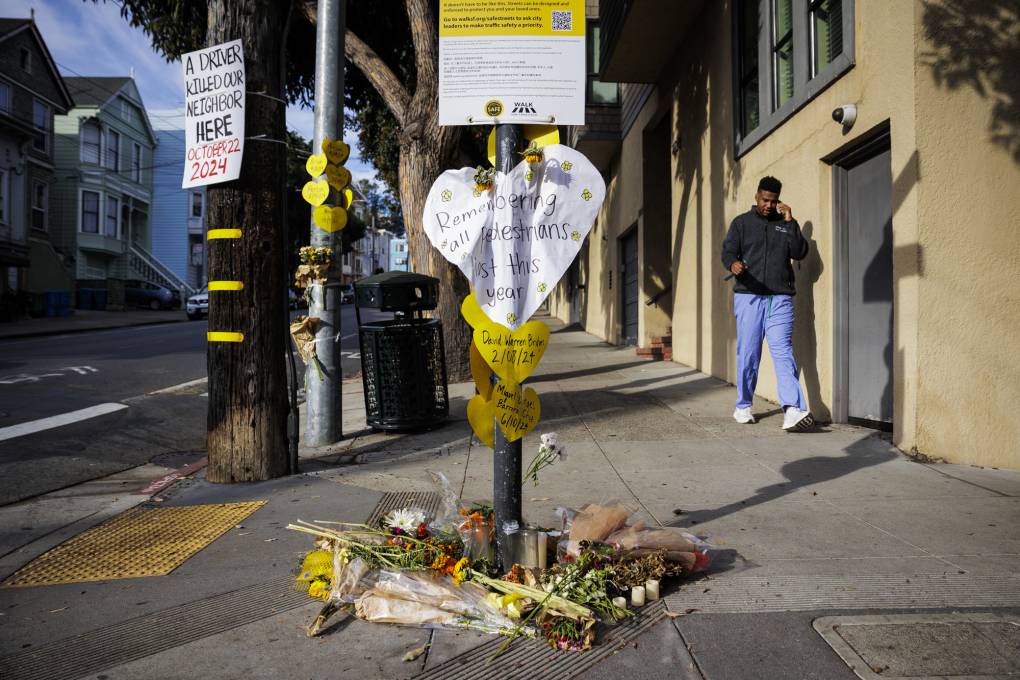
"caption": "A memorial at the intersection of Stanyan Street and Parnassus Avenue, where a pedestrian was recently hit and killed by a dump truck, on Oct. 25, 2024.",
"credit": "Martin do Nascimento/KQED",
"altTag": null,
"description": null,
"imgSizes": {
"medium": {
"file": "https://cdn.kqed.org/wp-content/uploads/sites/10/2024/10/241025-FATAL-UCSF-DUMP-TRUCK-CRASH-MD-02-KQED-800x533.jpg",
"width": 800,
"height": 533,
"mimeType": "image/jpeg"
},
"large": {
"file": "https://cdn.kqed.org/wp-content/uploads/sites/10/2024/10/241025-FATAL-UCSF-DUMP-TRUCK-CRASH-MD-02-KQED-1020x680.jpg",
"width": 1020,
"height": 680,
"mimeType": "image/jpeg"
},
"thumbnail": {
"file": "https://cdn.kqed.org/wp-content/uploads/sites/10/2024/10/241025-FATAL-UCSF-DUMP-TRUCK-CRASH-MD-02-KQED-160x107.jpg",
"width": 160,
"height": 107,
"mimeType": "image/jpeg"
},
"1536x1536": {
"file": "https://cdn.kqed.org/wp-content/uploads/sites/10/2024/10/241025-FATAL-UCSF-DUMP-TRUCK-CRASH-MD-02-KQED-1536x1024.jpg",
"width": 1536,
"height": 1024,
"mimeType": "image/jpeg"
},
"post-thumbnail": {
"file": "https://cdn.kqed.org/wp-content/uploads/sites/10/2024/10/241025-FATAL-UCSF-DUMP-TRUCK-CRASH-MD-02-KQED-672x372.jpg",
"width": 672,
"height": 372,
"mimeType": "image/jpeg"
},
"twentyfourteen-full-width": {
"file": "https://cdn.kqed.org/wp-content/uploads/sites/10/2024/10/241025-FATAL-UCSF-DUMP-TRUCK-CRASH-MD-02-KQED-1038x576.jpg",
"width": 1038,
"height": 576,
"mimeType": "image/jpeg"
},
"full-width": {
"file": "https://cdn.kqed.org/wp-content/uploads/sites/10/2024/10/241025-FATAL-UCSF-DUMP-TRUCK-CRASH-MD-02-KQED-1920x1280.jpg",
"width": 1920,
"height": 1280,
"mimeType": "image/jpeg"
},
"kqedFullSize": {
"file": "https://cdn.kqed.org/wp-content/uploads/sites/10/2024/10/241025-FATAL-UCSF-DUMP-TRUCK-CRASH-MD-02-KQED.jpg",
"width": 2000,
"height": 1333
}
},
"isLoading": false,
"fetchFailed": false
},
"news_11965074": {
"type": "attachments",
"id": "news_11965074",
"meta": {
"index": "attachments_1716263798",
"site": "news",
"id": "11965074",
"found": true
},
"parent": 11983146,
"imgSizes": {
"twentyfourteen-full-width": {
"file": "https://cdn.kqed.org/wp-content/uploads/sites/10/2023/10/231017-LakeMercedRVs-023-BL-KQED-1038x576.jpg",
"width": 1038,
"mimeType": "image/jpeg",
"height": 576
},
"thumbnail": {
"file": "https://cdn.kqed.org/wp-content/uploads/sites/10/2023/10/231017-LakeMercedRVs-023-BL-KQED-160x107.jpg",
"width": 160,
"mimeType": "image/jpeg",
"height": 107
},
"post-thumbnail": {
"file": "https://cdn.kqed.org/wp-content/uploads/sites/10/2023/10/231017-LakeMercedRVs-023-BL-KQED-672x372.jpg",
"width": 672,
"mimeType": "image/jpeg",
"height": 372
},
"kqedFullSize": {
"file": "https://cdn.kqed.org/wp-content/uploads/sites/10/2023/10/231017-LakeMercedRVs-023-BL-KQED.jpg",
"width": 2000,
"height": 1333
},
"large": {
"file": "https://cdn.kqed.org/wp-content/uploads/sites/10/2023/10/231017-LakeMercedRVs-023-BL-KQED-1020x680.jpg",
"width": 1020,
"mimeType": "image/jpeg",
"height": 680
},
"1536x1536": {
"file": "https://cdn.kqed.org/wp-content/uploads/sites/10/2023/10/231017-LakeMercedRVs-023-BL-KQED-1536x1024.jpg",
"width": 1536,
"mimeType": "image/jpeg",
"height": 1024
},
"full-width": {
"file": "https://cdn.kqed.org/wp-content/uploads/sites/10/2023/10/231017-LakeMercedRVs-023-BL-KQED-1920x1280.jpg",
"width": 1920,
"mimeType": "image/jpeg",
"height": 1280
},
"medium": {
"file": "https://cdn.kqed.org/wp-content/uploads/sites/10/2023/10/231017-LakeMercedRVs-023-BL-KQED-800x533.jpg",
"width": 800,
"mimeType": "image/jpeg",
"height": 533
}
},
"publishDate": 1697758902,
"modified": 1713301571,
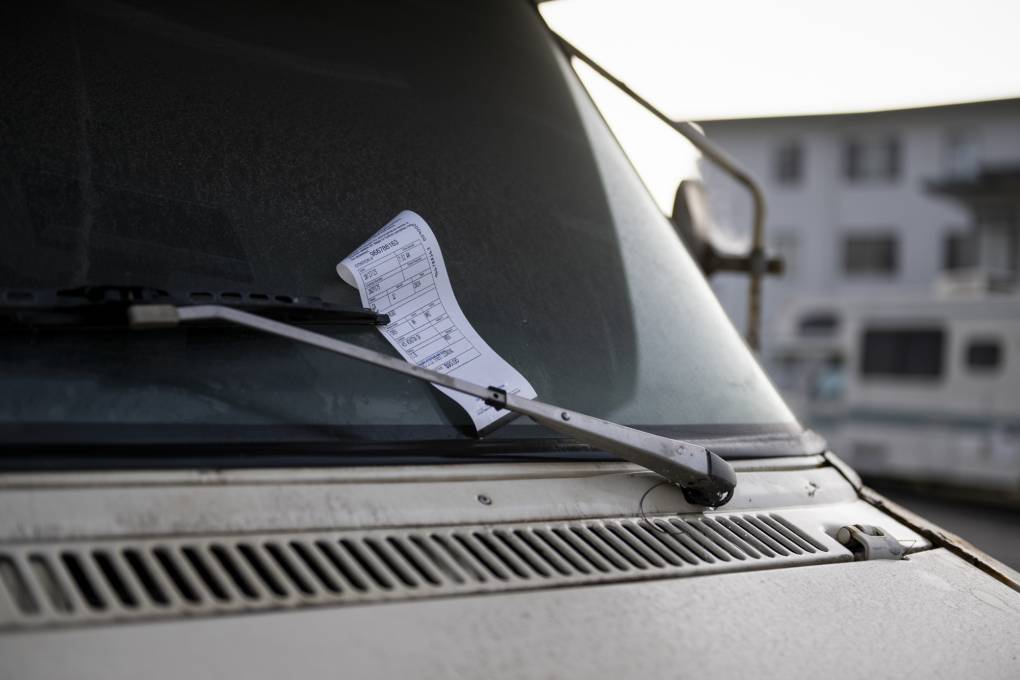
"caption": "An SFMTA parking ticket for street cleaning sits on the windshield of an RV along Winston Drive in San Francisco, Calif., on Oct. 17, 2023, near San Francisco State University.",
"description": null,
"title": "231017-LakeMercedRVs-023-BL-KQED",
"credit": "Beth LaBerge/KQED",
"status": "inherit",
"altTag": "A ticket on a windshield of a vehicle.",
"isLoading": false,
"fetchFailed": false
},
"news_11962331": {
"type": "attachments",
"id": "news_11962331",
"meta": {
"index": "attachments_1716263798",
"site": "news",
"id": "11962331",
"found": true
},
"parent": 11970450,
"imgSizes": {
"twentyfourteen-full-width": {
"file": "https://cdn.kqed.org/wp-content/uploads/sites/10/2023/09/230921-ValenciaBikeway-015-BL-KQED-1038x576.jpg",
"width": 1038,
"mimeType": "image/jpeg",
"height": 576
},
"thumbnail": {
"file": "https://cdn.kqed.org/wp-content/uploads/sites/10/2023/09/230921-ValenciaBikeway-015-BL-KQED-160x107.jpg",
"width": 160,
"mimeType": "image/jpeg",
"height": 107
},
"post-thumbnail": {
"file": "https://cdn.kqed.org/wp-content/uploads/sites/10/2023/09/230921-ValenciaBikeway-015-BL-KQED-672x372.jpg",
"width": 672,
"mimeType": "image/jpeg",
"height": 372
},
"kqedFullSize": {
"file": "https://cdn.kqed.org/wp-content/uploads/sites/10/2023/09/230921-ValenciaBikeway-015-BL-KQED.jpg",
"width": 2000,
"height": 1333
},
"large": {
"file": "https://cdn.kqed.org/wp-content/uploads/sites/10/2023/09/230921-ValenciaBikeway-015-BL-KQED-1020x680.jpg",
"width": 1020,
"mimeType": "image/jpeg",
"height": 680
},
"1536x1536": {
"file": "https://cdn.kqed.org/wp-content/uploads/sites/10/2023/09/230921-ValenciaBikeway-015-BL-KQED-1536x1024.jpg",
"width": 1536,
"mimeType": "image/jpeg",
"height": 1024
},
"full-width": {
"file": "https://cdn.kqed.org/wp-content/uploads/sites/10/2023/09/230921-ValenciaBikeway-015-BL-KQED-1920x1280.jpg",
"width": 1920,
"mimeType": "image/jpeg",
"height": 1280
},
"medium": {
"file": "https://cdn.kqed.org/wp-content/uploads/sites/10/2023/09/230921-ValenciaBikeway-015-BL-KQED-800x533.jpg",
"width": 800,
"mimeType": "image/jpeg",
"height": 533
}
},
"publishDate": 1695666424,
"modified": 1703026547,
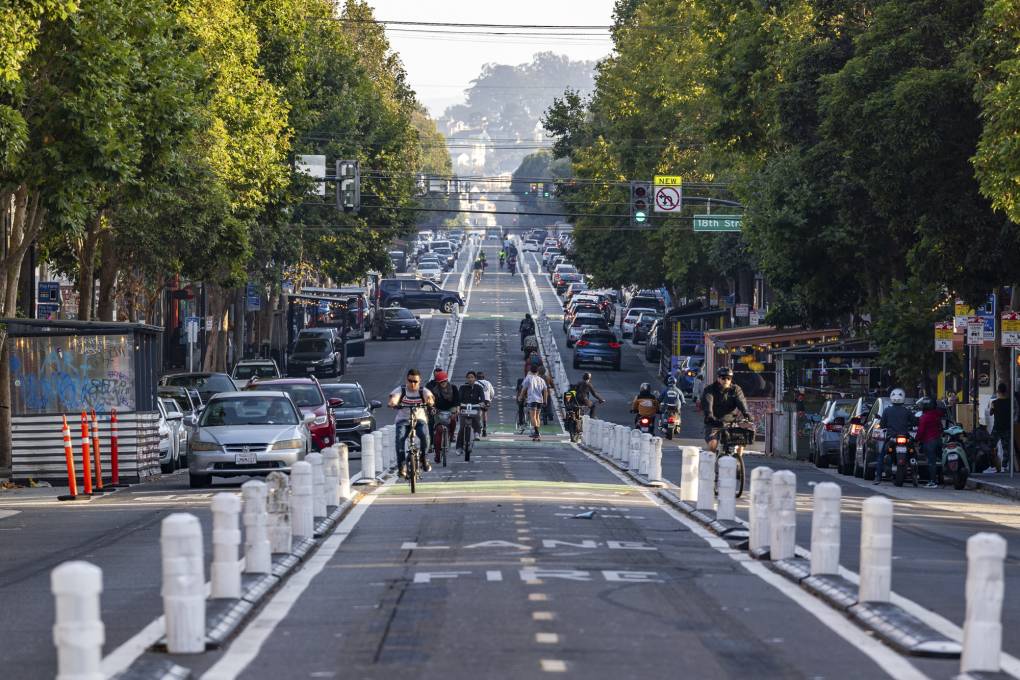
"caption": "Bicyclists ride on the Valencia Street bike lane in San Francisco's Mission District on Sept. 21, 2023.",
"description": null,
"title": "230921-ValenciaBikeway-015-BL-KQED",
"credit": "Beth LaBerge/KQED",
"status": "inherit",
"altTag": "People on bikes and skateboards ride down a bike path in the middle of a city street.",
"isLoading": false,
"fetchFailed": false
},
"news_11962330": {
"type": "attachments",
"id": "news_11962330",
"meta": {
"index": "attachments_1716263798",
"site": "news",
"id": "11962330",
"found": true
},
"parent": 11962992,
"imgSizes": {
"twentyfourteen-full-width": {
"file": "https://ww2.kqed.org/app/uploads/sites/10/2023/09/230921-ValenciaBikeway-014-BL-KQED-1038x576.jpg",
"width": 1038,
"mimeType": "image/jpeg",
"height": 576
},
"thumbnail": {
"file": "https://ww2.kqed.org/app/uploads/sites/10/2023/09/230921-ValenciaBikeway-014-BL-KQED-160x107.jpg",
"width": 160,
"mimeType": "image/jpeg",
"height": 107
},
"post-thumbnail": {
"file": "https://ww2.kqed.org/app/uploads/sites/10/2023/09/230921-ValenciaBikeway-014-BL-KQED-672x372.jpg",
"width": 672,
"mimeType": "image/jpeg",
"height": 372
},
"kqedFullSize": {
"file": "https://ww2.kqed.org/app/uploads/sites/10/2023/09/230921-ValenciaBikeway-014-BL-KQED.jpg",
"width": 2000,
"height": 1333
},
"large": {
"file": "https://ww2.kqed.org/app/uploads/sites/10/2023/09/230921-ValenciaBikeway-014-BL-KQED-1020x680.jpg",
"width": 1020,
"mimeType": "image/jpeg",
"height": 680
},
"1536x1536": {
"file": "https://ww2.kqed.org/app/uploads/sites/10/2023/09/230921-ValenciaBikeway-014-BL-KQED-1536x1024.jpg",
"width": 1536,
"mimeType": "image/jpeg",
"height": 1024
},
"full-width": {
"file": "https://ww2.kqed.org/app/uploads/sites/10/2023/09/230921-ValenciaBikeway-014-BL-KQED-1920x1280.jpg",
"width": 1920,
"mimeType": "image/jpeg",
"height": 1280
},
"medium": {
"file": "https://ww2.kqed.org/app/uploads/sites/10/2023/09/230921-ValenciaBikeway-014-BL-KQED-800x533.jpg",
"width": 800,
"mimeType": "image/jpeg",
"height": 533
}
},
"publishDate": 1695666416,
"modified": 1696095652,
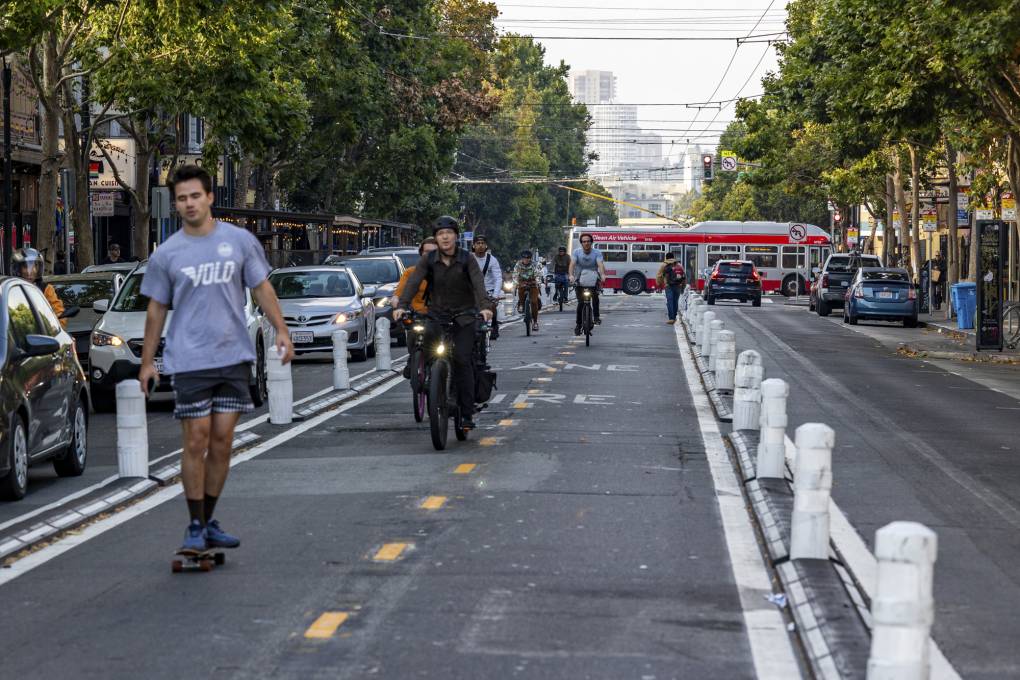
"caption": "Bicyclists ride on the Valencia Street bike lane in San Francisco's Mission District on Sept. 21, 2023.",
"description": null,
"title": "230921-ValenciaBikeway-014-BL-KQED",
"credit": "Beth LaBerge/KQED",
"status": "inherit",
"altTag": "People on bikes and skateboards ride down a bike path in the middle of a city street.",
"isLoading": false,
"fetchFailed": false
},
"news_11958863": {
"type": "attachments",
"id": "news_11958863",
"meta": {
"index": "attachments_1716263798",
"site": "news",
"id": "11958863",
"found": true
},
"parent": 0,
"imgSizes": {
"twentyfourteen-full-width": {
"file": "https://ww2.kqed.org/app/uploads/sites/10/2023/08/RS68207_230822-SafeStreetsProtest-15-BL-KQED-1038x576.jpg",
"width": 1038,
"mimeType": "image/jpeg",
"height": 576
},
"thumbnail": {
"file": "https://ww2.kqed.org/app/uploads/sites/10/2023/08/RS68207_230822-SafeStreetsProtest-15-BL-KQED-160x107.jpg",
"width": 160,
"mimeType": "image/jpeg",
"height": 107
},
"post-thumbnail": {
"file": "https://ww2.kqed.org/app/uploads/sites/10/2023/08/RS68207_230822-SafeStreetsProtest-15-BL-KQED-672x372.jpg",
"width": 672,
"mimeType": "image/jpeg",
"height": 372
},
"kqedFullSize": {
"file": "https://ww2.kqed.org/app/uploads/sites/10/2023/08/RS68207_230822-SafeStreetsProtest-15-BL-KQED.jpg",
"width": 2000,
"height": 1333
},
"large": {
"file": "https://ww2.kqed.org/app/uploads/sites/10/2023/08/RS68207_230822-SafeStreetsProtest-15-BL-KQED-1020x680.jpg",
"width": 1020,
"mimeType": "image/jpeg",
"height": 680
},
"1536x1536": {
"file": "https://ww2.kqed.org/app/uploads/sites/10/2023/08/RS68207_230822-SafeStreetsProtest-15-BL-KQED-1536x1024.jpg",
"width": 1536,
"mimeType": "image/jpeg",
"height": 1024
},
"full-width": {
"file": "https://ww2.kqed.org/app/uploads/sites/10/2023/08/RS68207_230822-SafeStreetsProtest-15-BL-KQED-1920x1280.jpg",
"width": 1920,
"mimeType": "image/jpeg",
"height": 1280
},
"medium": {
"file": "https://ww2.kqed.org/app/uploads/sites/10/2023/08/RS68207_230822-SafeStreetsProtest-15-BL-KQED-800x533.jpg",
"width": 800,
"mimeType": "image/jpeg",
"height": 533
}
},
"publishDate": 1692812487,
"modified": 1692826170,
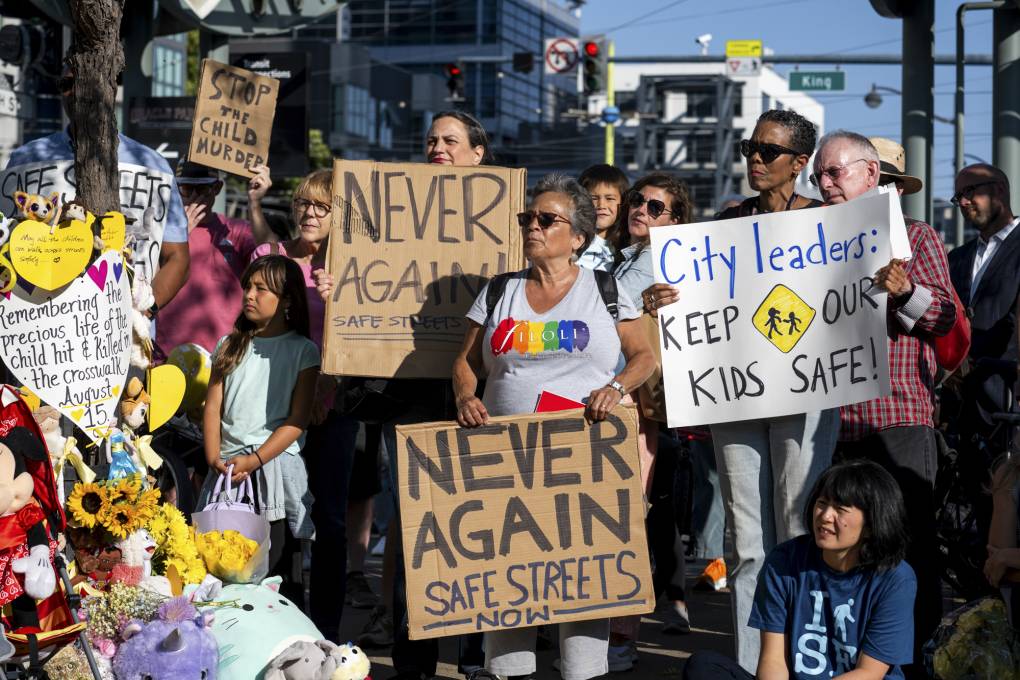
"caption": "Protesters gather to demand safe streets during a rally on 4th and King streets in San Francisco on Aug. 22, 2023, after a driver at the intersection killed a 4-year-old girl on Aug. 15, 2023.",
"description": null,
"title": "RS68207_230822-SafeStreetsProtest-15-BL-KQED",
"credit": "Beth LaBerge/KQED",
"status": "inherit",
"altTag": "A group of people holds signs that read \"Never Again, Safe Streets Now\" in an outdoor setting.",
"isLoading": false,
"fetchFailed": false
},
"news_11939509": {
"type": "attachments",
"id": "news_11939509",
"meta": {
"index": "attachments_1716263798",
"site": "news",
"id": "11939509",
"found": true
},
"parent": 11939501,
"imgSizes": {
"twentyfourteen-full-width": {
"file": "https://ww2.kqed.org/app/uploads/sites/10/2023/01/RS60333_DSC09495-1-1038x576.jpg",
"width": 1038,
"mimeType": "image/jpeg",
"height": 576
},
"thumbnail": {
"file": "https://ww2.kqed.org/app/uploads/sites/10/2023/01/RS60333_DSC09495-1-160x107.jpg",
"width": 160,
"mimeType": "image/jpeg",
"height": 107
},
"post-thumbnail": {
"file": "https://ww2.kqed.org/app/uploads/sites/10/2023/01/RS60333_DSC09495-1-672x372.jpg",
"width": 672,
"mimeType": "image/jpeg",
"height": 372
},
"kqedFullSize": {
"file": "https://ww2.kqed.org/app/uploads/sites/10/2023/01/RS60333_DSC09495-1-scaled.jpg",
"width": 2560,
"height": 1707
},
"2048x2048": {
"file": "https://ww2.kqed.org/app/uploads/sites/10/2023/01/RS60333_DSC09495-1-2048x1365.jpg",
"width": 2048,
"mimeType": "image/jpeg",
"height": 1365
},
"large": {
"file": "https://ww2.kqed.org/app/uploads/sites/10/2023/01/RS60333_DSC09495-1-1020x680.jpg",
"width": 1020,
"mimeType": "image/jpeg",
"height": 680
},
"1536x1536": {
"file": "https://ww2.kqed.org/app/uploads/sites/10/2023/01/RS60333_DSC09495-1-1536x1024.jpg",
"width": 1536,
"mimeType": "image/jpeg",
"height": 1024
},
"full-width": {
"file": "https://ww2.kqed.org/app/uploads/sites/10/2023/01/RS60333_DSC09495-1-1920x1280.jpg",
"width": 1920,
"mimeType": "image/jpeg",
"height": 1280
},
"medium": {
"file": "https://ww2.kqed.org/app/uploads/sites/10/2023/01/RS60333_DSC09495-1-800x533.jpg",
"width": 800,
"mimeType": "image/jpeg",
"height": 533
}
},
"publishDate": 1674864242,
"modified": 1674864242,
"caption": null,
"description": null,
"title": "RS60333_DSC09495 (1)",
"credit": null,
"status": "inherit",
"altTag": null,
"isLoading": false,
"fetchFailed": false
},
"news_11932852": {
"type": "attachments",
"id": "news_11932852",
"meta": {
"index": "attachments_1716263798",
"site": "news",
"id": "11932852",
"found": true
},
"parent": 11932838,
"imgSizes": {
"twentyfourteen-full-width": {
"file": "https://ww2.kqed.org/app/uploads/sites/10/2022/11/RS60320_DSC09369-qut-1038x576.jpg",
"width": 1038,
"mimeType": "image/jpeg",
"height": 576
},
"thumbnail": {
"file": "https://ww2.kqed.org/app/uploads/sites/10/2022/11/RS60320_DSC09369-qut-160x107.jpg",
"width": 160,
"mimeType": "image/jpeg",
"height": 107
},
"post-thumbnail": {
"file": "https://ww2.kqed.org/app/uploads/sites/10/2022/11/RS60320_DSC09369-qut-672x372.jpg",
"width": 672,
"mimeType": "image/jpeg",
"height": 372
},
"kqedFullSize": {
"file": "https://ww2.kqed.org/app/uploads/sites/10/2022/11/RS60320_DSC09369-qut.jpg",
"width": 1920,
"height": 1280
},
"large": {
"file": "https://ww2.kqed.org/app/uploads/sites/10/2022/11/RS60320_DSC09369-qut-1020x680.jpg",
"width": 1020,
"mimeType": "image/jpeg",
"height": 680
},
"1536x1536": {
"file": "https://ww2.kqed.org/app/uploads/sites/10/2022/11/RS60320_DSC09369-qut-1536x1024.jpg",
"width": 1536,
"mimeType": "image/jpeg",
"height": 1024
},
"medium": {
"file": "https://ww2.kqed.org/app/uploads/sites/10/2022/11/RS60320_DSC09369-qut-800x533.jpg",
"width": 800,
"mimeType": "image/jpeg",
"height": 533
}
},
"publishDate": 1668908313,
"modified": 1669060839,
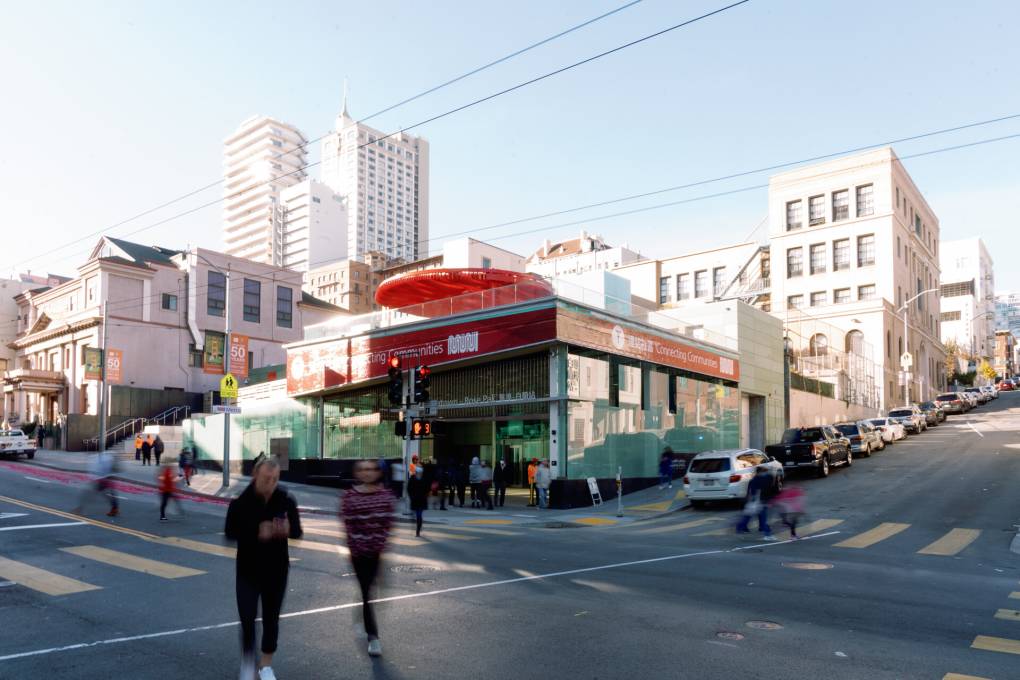
"caption": "A street view of Chinatown's brand-new Rose Pak SFMTA subway station in San Francisco on Nov. 19, 2022.",
"description": null,
"title": "RS60320_DSC09369-qut",
"credit": "Aryk Copley/KQED",
"status": "inherit",
"altTag": "Two people cross the street at a busy intersection with the new Rose Pak SFMTA station on the diagonal corner with a city skyline backdrop.",
"isLoading": false,
"fetchFailed": false
},
"news_11904554": {
"type": "attachments",
"id": "news_11904554",
"meta": {
"index": "attachments_1716263798",
"site": "news",
"id": "11904554",
"found": true
},
"parent": 11904449,
"imgSizes": {
"twentyfourteen-full-width": {
"file": "https://ww2.kqed.org/app/uploads/sites/10/2022/02/51736828813_614b70b3f6_k-1038x576.jpg",
"width": 1038,
"mimeType": "image/jpeg",
"height": 576
},
"thumbnail": {
"file": "https://ww2.kqed.org/app/uploads/sites/10/2022/02/51736828813_614b70b3f6_k-160x127.jpg",
"width": 160,
"mimeType": "image/jpeg",
"height": 127
},
"post-thumbnail": {
"file": "https://ww2.kqed.org/app/uploads/sites/10/2022/02/51736828813_614b70b3f6_k-672x372.jpg",
"width": 672,
"mimeType": "image/jpeg",
"height": 372
},
"kqedFullSize": {
"file": "https://ww2.kqed.org/app/uploads/sites/10/2022/02/51736828813_614b70b3f6_k-e1644435950461.jpg",
"width": 1920,
"height": 1523
},
"large": {
"file": "https://ww2.kqed.org/app/uploads/sites/10/2022/02/51736828813_614b70b3f6_k-1020x809.jpg",
"width": 1020,
"mimeType": "image/jpeg",
"height": 809
},
"1536x1536": {
"file": "https://ww2.kqed.org/app/uploads/sites/10/2022/02/51736828813_614b70b3f6_k-1536x1219.jpg",
"width": 1536,
"mimeType": "image/jpeg",
"height": 1219
},
"full-width": {
"file": "https://ww2.kqed.org/app/uploads/sites/10/2022/02/51736828813_614b70b3f6_k-1920x1523.jpg",
"width": 1920,
"mimeType": "image/jpeg",
"height": 1523
},
"medium": {
"file": "https://ww2.kqed.org/app/uploads/sites/10/2022/02/51736828813_614b70b3f6_k-800x635.jpg",
"width": 800,
"mimeType": "image/jpeg",
"height": 635
}
},
"publishDate": 1644372508,
"modified": 1644439111,
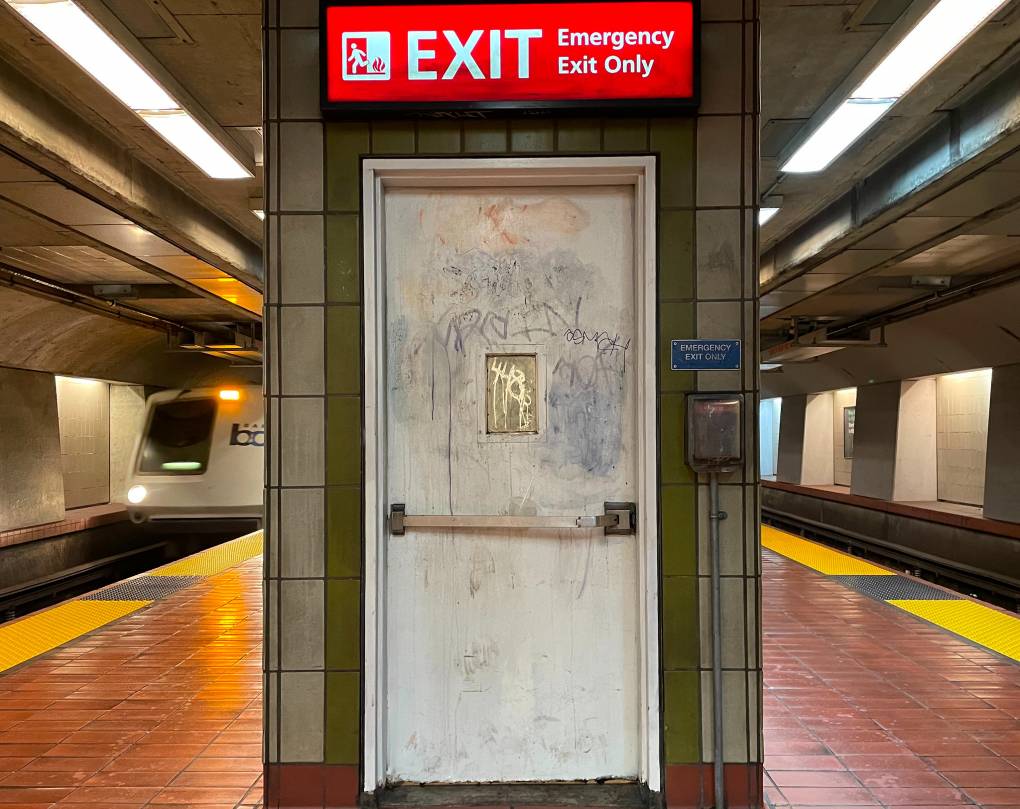
"caption": "An emergency exit on the platform of BART's 16th Street/Mission Station in San Francisco, on Dec. 9, 2021.",
"description": null,
"title": "BART Emergency Exit",
"credit": "Dan Brekke/KQED",
"status": "inherit",
"altTag": "An emergency exit as BART's 16th Street/Mission station in San Francisco.",
"isLoading": false,
"fetchFailed": false
},
"news_11900906": {
"type": "attachments",
"id": "news_11900906",
"meta": {
"index": "attachments_1716263798",
"site": "news",
"id": "11900906",
"found": true
},
"title": "San Francisco Mayor London Breed And Essential Workers Mark One-Year Since Covid Lockdowns In Bay Area",
"publishDate": 1641424316,
"status": "inherit",
"parent": 11900729,
"modified": 1641429538,
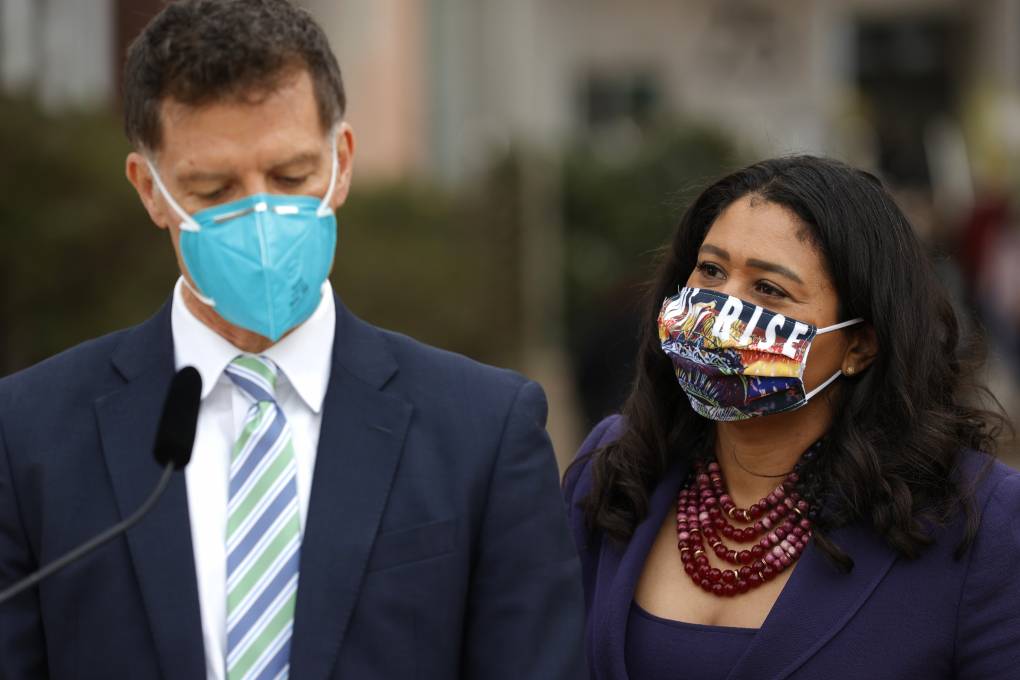
"caption": "San Francisco Mayor London Breed (right) looks on as Dr. Grant Colfax, director of health for San Francisco, speaks during a news conference outside Zuckerberg San Francisco General Hospital with essential workers to mark the one-year anniversary of the COVID-19 lockdown, on March 17, 2021, in San Francisco.",
"credit": "Justin Sullivan/Getty Images",
"altTag": "A man and woman stand next to each other. The man is wearing a business suit and light blue mask in front of a microphone and the woman is wearing a navy blue jacket with a red beaded necklace and multicolored mask.",
"description": null,
"imgSizes": {
"medium": {
"file": "https://cdn.kqed.org/wp-content/uploads/sites/10/2022/01/GettyImages-1307622423-800x533.jpg",
"width": 800,
"height": 533,
"mimeType": "image/jpeg"
},
"large": {
"file": "https://cdn.kqed.org/wp-content/uploads/sites/10/2022/01/GettyImages-1307622423-1020x680.jpg",
"width": 1020,
"height": 680,
"mimeType": "image/jpeg"
},
"thumbnail": {
"file": "https://cdn.kqed.org/wp-content/uploads/sites/10/2022/01/GettyImages-1307622423-160x107.jpg",
"width": 160,
"height": 107,
"mimeType": "image/jpeg"
},
"1536x1536": {
"file": "https://cdn.kqed.org/wp-content/uploads/sites/10/2022/01/GettyImages-1307622423-1536x1024.jpg",
"width": 1536,
"height": 1024,
"mimeType": "image/jpeg"
},
"2048x2048": {
"file": "https://cdn.kqed.org/wp-content/uploads/sites/10/2022/01/GettyImages-1307622423-2048x1365.jpg",
"width": 2048,
"height": 1365,
"mimeType": "image/jpeg"
},
"post-thumbnail": {
"file": "https://cdn.kqed.org/wp-content/uploads/sites/10/2022/01/GettyImages-1307622423-672x372.jpg",
"width": 672,
"height": 372,
"mimeType": "image/jpeg"
},
"twentyfourteen-full-width": {
"file": "https://cdn.kqed.org/wp-content/uploads/sites/10/2022/01/GettyImages-1307622423-1038x576.jpg",
"width": 1038,
"height": 576,
"mimeType": "image/jpeg"
},
"full-width": {
"file": "https://cdn.kqed.org/wp-content/uploads/sites/10/2022/01/GettyImages-1307622423-1920x1280.jpg",
"width": 1920,
"height": 1280,
"mimeType": "image/jpeg"
},
"kqedFullSize": {
"file": "https://cdn.kqed.org/wp-content/uploads/sites/10/2022/01/GettyImages-1307622423-scaled-e1737076380340.jpg",
"width": 2000,
"height": 1334
}
},
"isLoading": false,
"fetchFailed": false
},
"news_11895999": {
"type": "attachments",
"id": "news_11895999",
"meta": {
"index": "attachments_1716263798",
"site": "news",
"id": "11895999",
"found": true
},
"parent": 11895998,
"imgSizes": {
"twentyfourteen-full-width": {
"file": "https://ww2.kqed.org/app/uploads/sites/10/2021/11/GettyImages-1217663387-1038x576.jpg",
"width": 1038,
"mimeType": "image/jpeg",
"height": 576
},
"thumbnail": {
"file": "https://ww2.kqed.org/app/uploads/sites/10/2021/11/GettyImages-1217663387-160x107.jpg",
"width": 160,
"mimeType": "image/jpeg",
"height": 107
},
"post-thumbnail": {
"file": "https://ww2.kqed.org/app/uploads/sites/10/2021/11/GettyImages-1217663387-672x372.jpg",
"width": 672,
"mimeType": "image/jpeg",
"height": 372
},
"kqedFullSize": {
"file": "https://ww2.kqed.org/app/uploads/sites/10/2021/11/GettyImages-1217663387-scaled.jpg",
"width": 2560,
"height": 1706
},
"2048x2048": {
"file": "https://ww2.kqed.org/app/uploads/sites/10/2021/11/GettyImages-1217663387-2048x1365.jpg",
"width": 2048,
"mimeType": "image/jpeg",
"height": 1365
},
"large": {
"file": "https://ww2.kqed.org/app/uploads/sites/10/2021/11/GettyImages-1217663387-1020x680.jpg",
"width": 1020,
"mimeType": "image/jpeg",
"height": 680
},
"1536x1536": {
"file": "https://ww2.kqed.org/app/uploads/sites/10/2021/11/GettyImages-1217663387-1536x1024.jpg",
"width": 1536,
"mimeType": "image/jpeg",
"height": 1024
},
"full-width": {
"file": "https://ww2.kqed.org/app/uploads/sites/10/2021/11/GettyImages-1217663387-1920x1280.jpg",
"width": 1920,
"mimeType": "image/jpeg",
"height": 1280
},
"medium": {
"file": "https://ww2.kqed.org/app/uploads/sites/10/2021/11/GettyImages-1217663387-800x533.jpg",
"width": 800,
"mimeType": "image/jpeg",
"height": 533
}
},
"publishDate": 1636669306,
"modified": 1636781274,
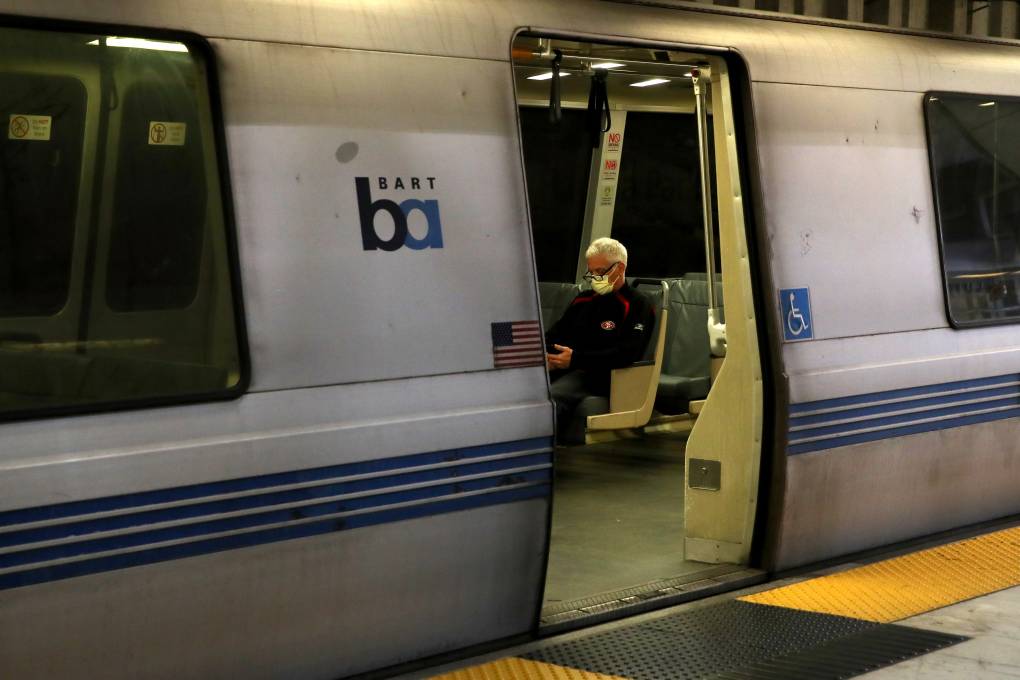
"caption": "A BART passenger rides in an empty train car on April 8, 2020, in San Francisco. At the start of the pandemic, BART announced that it would slash daily service as ridership dramatically dropped due to the COVID-19 shelter-in-place order.",
"description": "A BART passenger rides in an empty train car on April 8, 2020 in San Francisco.",
"title": "BART Cuts Train Service In Bay Area During Coronavirus Shutdown",
"credit": "Justin Sullivan/Getty Images",
"status": "inherit",
"altTag": "The BART passenger wears a facemask and is the only passenger visible within the train.",
"isLoading": false,
"fetchFailed": false
},
"news_11881123": {
"type": "attachments",
"id": "news_11881123",
"meta": {
"index": "attachments_1716263798",
"site": "news",
"id": "11881123",
"found": true
},
"parent": 11881120,
"imgSizes": {
"twentyfourteen-full-width": {
"file": "https://ww2.kqed.org/app/uploads/sites/10/2021/07/RS46276_028_KQED_SanFrancisco_COVIDShutdown_12042020-qut-1038x576.jpg",
"width": 1038,
"mimeType": "image/jpeg",
"height": 576
},
"thumbnail": {
"file": "https://ww2.kqed.org/app/uploads/sites/10/2021/07/RS46276_028_KQED_SanFrancisco_COVIDShutdown_12042020-qut-160x107.jpg",
"width": 160,
"mimeType": "image/jpeg",
"height": 107
},
"post-thumbnail": {
"file": "https://ww2.kqed.org/app/uploads/sites/10/2021/07/RS46276_028_KQED_SanFrancisco_COVIDShutdown_12042020-qut-672x372.jpg",
"width": 672,
"mimeType": "image/jpeg",
"height": 372
},
"kqedFullSize": {
"file": "https://ww2.kqed.org/app/uploads/sites/10/2021/07/RS46276_028_KQED_SanFrancisco_COVIDShutdown_12042020-qut.jpg",
"width": 1920,
"height": 1280
},
"large": {
"file": "https://ww2.kqed.org/app/uploads/sites/10/2021/07/RS46276_028_KQED_SanFrancisco_COVIDShutdown_12042020-qut-1020x680.jpg",
"width": 1020,
"mimeType": "image/jpeg",
"height": 680
},
"1536x1536": {
"file": "https://ww2.kqed.org/app/uploads/sites/10/2021/07/RS46276_028_KQED_SanFrancisco_COVIDShutdown_12042020-qut-1536x1024.jpg",
"width": 1536,
"mimeType": "image/jpeg",
"height": 1024
},
"medium": {
"file": "https://ww2.kqed.org/app/uploads/sites/10/2021/07/RS46276_028_KQED_SanFrancisco_COVIDShutdown_12042020-qut-800x533.jpg",
"width": 800,
"mimeType": "image/jpeg",
"height": 533
}
},
"publishDate": 1626226119,
"modified": 1626226297,
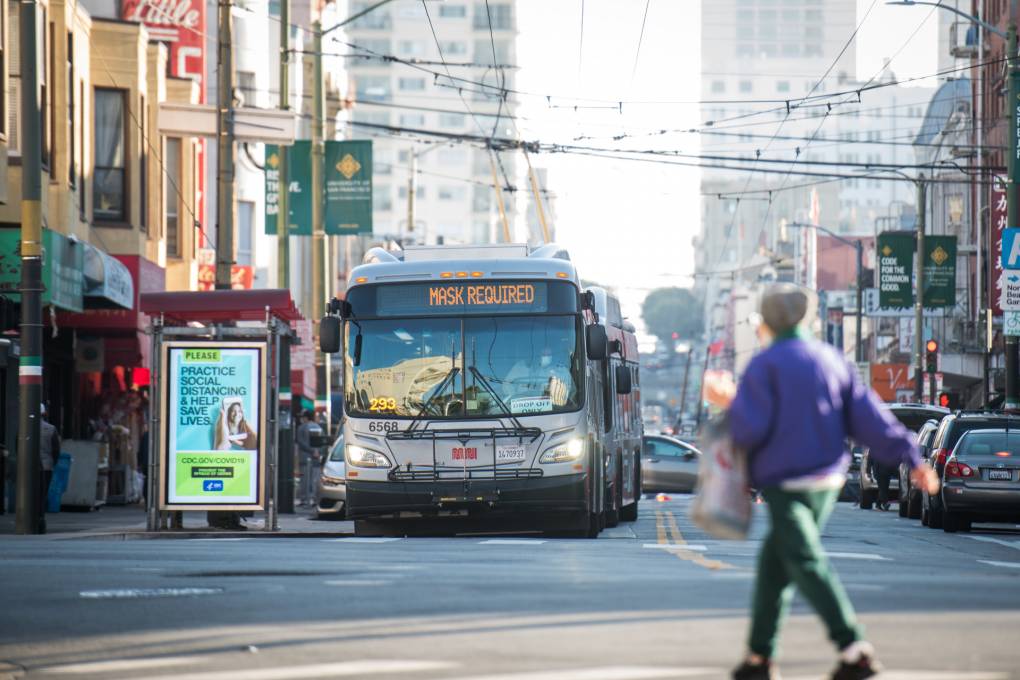
"caption": "A Muni bus in San Francisco's North Beach neighborhood on Dec. 4, 2020. The one-year expansion of Free Muni could cover around 100,000 youth in the city.",
"description": "A Muni bus with a marquee that says, \"Mask Required\" in San Francisco's North Beach neighborhood on Dec. 4, 2020.",
"title": "RS46276_028_KQED_SanFrancisco_COVIDShutdown_12042020-qut",
"credit": "Beth LaBerge/KQED",
"status": "inherit",
"altTag": "A pedestrian crosses a crowded street in the foreground while in the background, a Muni bus is visible.",
"isLoading": false,
"fetchFailed": false
},
"news_11849238": {
"type": "attachments",
"id": "news_11849238",
"meta": {
"index": "attachments_1716263798",
"site": "news",
"id": "11849238",
"found": true
},
"parent": 11849228,
"imgSizes": {
"apple_news_ca_landscape_5_5": {
"file": "https://ww2.kqed.org/app/uploads/sites/10/2020/12/munilayoffs_120120_final-1044x783.png",
"width": 1044,
"mimeType": "image/png",
"height": 783
},
"apple_news_ca_square_4_0": {
"file": "https://ww2.kqed.org/app/uploads/sites/10/2020/12/munilayoffs_120120_final-470x470.png",
"width": 470,
"mimeType": "image/png",
"height": 470
},
"twentyfourteen-full-width": {
"file": "https://ww2.kqed.org/app/uploads/sites/10/2020/12/munilayoffs_120120_final-1038x576.png",
"width": 1038,
"mimeType": "image/png",
"height": 576
},
"thumbnail": {
"file": "https://ww2.kqed.org/app/uploads/sites/10/2020/12/munilayoffs_120120_final-160x93.png",
"width": 160,
"mimeType": "image/png",
"height": 93
},
"post-thumbnail": {
"file": "https://ww2.kqed.org/app/uploads/sites/10/2020/12/munilayoffs_120120_final-672x372.png",
"width": 672,
"mimeType": "image/png",
"height": 372
},
"kqedFullSize": {
"file": "https://ww2.kqed.org/app/uploads/sites/10/2020/12/munilayoffs_120120_final.png",
"width": 1920,
"height": 1116
},
"apple_news_ca_landscape_4_7": {
"file": "https://ww2.kqed.org/app/uploads/sites/10/2020/12/munilayoffs_120120_final-632x474.png",
"width": 632,
"mimeType": "image/png",
"height": 474
},
"large": {
"file": "https://ww2.kqed.org/app/uploads/sites/10/2020/12/munilayoffs_120120_final-1020x593.png",
"width": 1020,
"mimeType": "image/png",
"height": 593
},
"apple_news_ca_landscape_4_0": {
"file": "https://ww2.kqed.org/app/uploads/sites/10/2020/12/munilayoffs_120120_final-536x402.png",
"width": 536,
"mimeType": "image/png",
"height": 402
},
"apple_news_ca_portrait_12_9": {
"file": "https://ww2.kqed.org/app/uploads/sites/10/2020/12/munilayoffs_120120_final-1122x1116.png",
"width": 1122,
"mimeType": "image/png",
"height": 1116
},
"medium": {
"file": "https://ww2.kqed.org/app/uploads/sites/10/2020/12/munilayoffs_120120_final-800x465.png",
"width": 800,
"mimeType": "image/png",
"height": 465
},
"apple_news_ca_portrait_4_0": {
"file": "https://ww2.kqed.org/app/uploads/sites/10/2020/12/munilayoffs_120120_final-354x472.png",
"width": 354,
"mimeType": "image/png",
"height": 472
},
"apple_news_ca_portrait_9_7": {
"file": "https://ww2.kqed.org/app/uploads/sites/10/2020/12/munilayoffs_120120_final-840x1116.png",
"width": 840,
"mimeType": "image/png",
"height": 1116
},
"apple_news_ca_landscape_12_9": {
"file": "https://ww2.kqed.org/app/uploads/sites/10/2020/12/munilayoffs_120120_final-1832x1116.png",
"width": 1832,
"mimeType": "image/png",
"height": 1116
},
"apple_news_ca_square_9_7": {
"file": "https://ww2.kqed.org/app/uploads/sites/10/2020/12/munilayoffs_120120_final-1104x1104.png",
"width": 1104,
"mimeType": "image/png",
"height": 1104
},
"1536x1536": {
"file": "https://ww2.kqed.org/app/uploads/sites/10/2020/12/munilayoffs_120120_final-1536x893.png",
"width": 1536,
"mimeType": "image/png",
"height": 893
},
"apple_news_ca_portrait_4_7": {
"file": "https://ww2.kqed.org/app/uploads/sites/10/2020/12/munilayoffs_120120_final-414x552.png",
"width": 414,
"mimeType": "image/png",
"height": 552
},
"apple_news_ca_square_12_9": {
"file": "https://ww2.kqed.org/app/uploads/sites/10/2020/12/munilayoffs_120120_final-1472x1116.png",
"width": 1472,
"mimeType": "image/png",
"height": 1116
},
"apple_news_ca_portrait_5_5": {
"file": "https://ww2.kqed.org/app/uploads/sites/10/2020/12/munilayoffs_120120_final-687x916.png",
"width": 687,
"mimeType": "image/png",
"height": 916
},
"apple_news_ca_square_4_7": {
"file": "https://ww2.kqed.org/app/uploads/sites/10/2020/12/munilayoffs_120120_final-550x550.png",
"width": 550,
"mimeType": "image/png",
"height": 550
},
"apple_news_ca_landscape_9_7": {
"file": "https://ww2.kqed.org/app/uploads/sites/10/2020/12/munilayoffs_120120_final-1376x1032.png",
"width": 1376,
"mimeType": "image/png",
"height": 1032
},
"apple_news_ca_square_5_5": {
"file": "https://ww2.kqed.org/app/uploads/sites/10/2020/12/munilayoffs_120120_final-912x912.png",
"width": 912,
"mimeType": "image/png",
"height": 912
}
},
"publishDate": 1606860420,
"modified": 1606861280,
"caption": null,
"description": null,
"title": "munilayoffs_120120_final",
"credit": null,
"status": "inherit",
"isLoading": false,
"fetchFailed": false
}
},
"audioPlayerReducer": {
"postId": "stream_live",
"isPaused": true,
"isPlaying": false,
"pfsActive": false,
"pledgeModalIsOpen": true,
"playerDrawerIsOpen": false,
"liveAudioPlayStartedAt": 0,
"liveAudioPlayContext": ""
},
"authorsReducer": {
"byline_news_11932838": {
"type": "authors",
"id": "byline_news_11932838",
"meta": {
"override": true
},
"slug": "byline_news_11932838",
"name": "KQED News Staff",
"isLoading": false
},
"byline_news_11895998": {
"type": "authors",
"id": "byline_news_11895998",
"meta": {
"override": true
},
"slug": "byline_news_11895998",
"name": "The Associated Press",
"isLoading": false
},
"danbrekke": {
"type": "authors",
"id": "222",
"meta": {
"index": "authors_1716337520",
"id": "222",
"found": true
},
"name": "Dan Brekke",
"firstName": "Dan",
"lastName": "Brekke",
"slug": "danbrekke",
"email": "dbrekke@kqed.org",
"display_author_email": true,
"staff_mastheads": [
"news",
"science"
],
"title": "KQED Editor and Reporter",
"bio": "Dan Brekke is a reporter and editor for KQED News, responsible for coverage of topics ranging from California water issues to the Bay Area's transportation challenges. In a newsroom career that began in Chicago in 1972, Dan has worked for \u003cem>The San Francisco Examiner,\u003c/em> Wired and TechTV and has been published in The New York Times, The New York Times Magazine, Business 2.0, Salon and elsewhere.\r\n\r\nSince joining KQED in 2007, Dan has reported, edited and produced both radio and online features and breaking news pieces. He has shared as both editor and reporter in four Society of Professional Journalists Norcal Excellence in Journalism awards and one Edward R. Murrow regional award. He was chosen for a spring 2017 residency at the Mesa Refuge to advance his research on California salmon.\r\n\r\nEmail Dan at: \u003ca href=\"mailto:dbrekke@kqed.org\">dbrekke@kqed.org\u003c/a>\r\n\r\n\u003cstrong>Twitter:\u003c/strong> \u003ca href=\"https://twitter.com/danbrekke\" rel=\"noopener noreferrer\">twitter.com/danbrekke\u003c/a>\r\n\u003cstrong>Facebook:\u003c/strong> \u003ca href=\"https://www.facebook.com/danbrekke\" rel=\"noopener noreferrer\">www.facebook.com/danbrekke\u003c/a>\r\n\u003cstrong>LinkedIn:\u003c/strong> \u003ca href=\"https://www.linkedin.com/in/danbrekke\" rel=\"noopener noreferrer\">www.linkedin.com/in/danbrekke\u003c/a>",
"avatar": "https://secure.gravatar.com/avatar/8f1f0d2a978fb3b23426c922c7e2af558fa36905b49c4ce76a97dc3c72d27226?s=600&d=mm&r=g",
"twitter": "danbrekke",
"bluesky": null,
"facebook": null,
"instagram": "https://www.instagram.com/dan.brekke/",
"linkedin": "https://www.linkedin.com/in/danbrekke/",
"sites": [
{
"site": "news",
"roles": [
"administrator",
"create_posts"
]
},
{
"site": "stateofhealth",
"roles": [
"editor"
]
},
{
"site": "science",
"roles": [
"editor"
]
},
{
"site": "quest",
"roles": [
"contributor"
]
},
{
"site": "food",
"roles": [
"contributor"
]
},
{
"site": "forum",
"roles": [
"contributor"
]
},
{
"site": "elections",
"roles": [
"editor"
]
},
{
"site": "liveblog",
"roles": [
"editor"
]
}
],
"headData": {
"title": "Dan Brekke | KQED",
"description": "KQED Editor and Reporter",
"ogImgSrc": "https://secure.gravatar.com/avatar/8f1f0d2a978fb3b23426c922c7e2af558fa36905b49c4ce76a97dc3c72d27226?s=600&d=mm&r=g",
"twImgSrc": "https://secure.gravatar.com/avatar/8f1f0d2a978fb3b23426c922c7e2af558fa36905b49c4ce76a97dc3c72d27226?s=600&d=mm&r=g"
},
"isLoading": false,
"link": "/author/danbrekke"
},
"kqed": {
"type": "authors",
"id": "236",
"meta": {
"index": "authors_1716337520",
"id": "236",
"found": true
},
"name": "KQED News Staff",
"firstName": "KQED News Staff",
"lastName": null,
"slug": "kqed",
"email": "faq@kqed.org",
"display_author_email": false,
"staff_mastheads": [],
"title": null,
"bio": null,
"avatar": "https://secure.gravatar.com/avatar/ef0e801a68c4c54afa9180db14084167?s=600&d=blank&r=g",
"twitter": null,
"facebook": null,
"instagram": null,
"linkedin": null,
"sites": [
{
"site": "arts",
"roles": [
"contributor"
]
},
{
"site": "news",
"roles": [
"editor"
]
},
{
"site": "futureofyou",
"roles": [
"author"
]
}
],
"headData": {
"title": "KQED News Staff | KQED",
"description": null,
"ogImgSrc": "https://secure.gravatar.com/avatar/ef0e801a68c4c54afa9180db14084167?s=600&d=blank&r=g",
"twImgSrc": "https://secure.gravatar.com/avatar/ef0e801a68c4c54afa9180db14084167?s=600&d=blank&r=g"
},
"isLoading": false,
"link": "/author/kqed"
},
"kqednewsstaffandwires": {
"type": "authors",
"id": "237",
"meta": {
"index": "authors_1716337520",
"id": "237",
"found": true
},
"name": "KQED News Staff and Wires",
"firstName": "KQED News Staff and Wires",
"lastName": null,
"slug": "kqednewsstaffandwires",
"email": "onlinenewsstaff@kqed.org",
"display_author_email": false,
"staff_mastheads": [],
"title": null,
"bio": null,
"avatar": "https://secure.gravatar.com/avatar/72295af8ebbfbd19a4948f5271285664?s=600&d=blank&r=g",
"twitter": null,
"facebook": null,
"instagram": null,
"linkedin": null,
"sites": [
{
"site": "arts",
"roles": [
"contributor"
]
},
{
"site": "news",
"roles": [
"contributor"
]
},
{
"site": "lowdown",
"roles": [
"author"
]
},
{
"site": "stateofhealth",
"roles": [
"contributor"
]
},
{
"site": "food",
"roles": [
"author"
]
}
],
"headData": {
"title": "KQED News Staff and Wires | KQED",
"description": null,
"ogImgSrc": "https://secure.gravatar.com/avatar/72295af8ebbfbd19a4948f5271285664?s=600&d=blank&r=g",
"twImgSrc": "https://secure.gravatar.com/avatar/72295af8ebbfbd19a4948f5271285664?s=600&d=blank&r=g"
},
"isLoading": false,
"link": "/author/kqednewsstaffandwires"
},
"ninathorsen": {
"type": "authors",
"id": "246",
"meta": {
"index": "authors_1716337520",
"id": "246",
"found": true
},
"name": "Nina Thorsen",
"firstName": "Nina",
"lastName": "Thorsen",
"slug": "ninathorsen",
"email": "nthorsen@kqed.org",
"display_author_email": false,
"staff_mastheads": [
"news"
],
"title": "Producer, Radio",
"bio": "\u003cspan style=\"color: #000000;\">Nina Thorsen is a KQED radio producer, and frequently reports on sports and culture. \u003c/span>\u003cspan style=\"color: #000000;\">She co-created and produced KQED's \u003cem>Pacific Time, \u003c/em> a weekly radio program on Asian and Asian American issues that aired from 2000 to 2007. Before coming to KQED, Thorsen was the deputy foreign editor for \u003cem>Marketplace, \u003c/em>and in her home state of Minnesota, worked for \u003cem>A Prairie Home Companion\u003c/em> and for Public Radio International. \u003c/span>",
"avatar": "https://secure.gravatar.com/avatar/e13dc7282cec33c15d973ebb56d57ead?s=600&d=blank&r=g",
"twitter": "NinaKQED",
"facebook": null,
"instagram": null,
"linkedin": null,
"sites": [
{
"site": "news",
"roles": [
"editor"
]
},
{
"site": "podcasts",
"roles": [
"editor"
]
}
],
"headData": {
"title": "Nina Thorsen | KQED",
"description": "Producer, Radio",
"ogImgSrc": "https://secure.gravatar.com/avatar/e13dc7282cec33c15d973ebb56d57ead?s=600&d=blank&r=g",
"twImgSrc": "https://secure.gravatar.com/avatar/e13dc7282cec33c15d973ebb56d57ead?s=600&d=blank&r=g"
},
"isLoading": false,
"link": "/author/ninathorsen"
},
"markfiore": {
"type": "authors",
"id": "3236",
"meta": {
"index": "authors_1716337520",
"id": "3236",
"found": true
},
"name": "Mark Fiore",
"firstName": "Mark",
"lastName": "Fiore",
"slug": "markfiore",
"email": "mark@markfiore.com",
"display_author_email": false,
"staff_mastheads": [
"news"
],
"title": "KQED News Cartoonist",
"bio": "\u003ca href=\"http://www.MarkFiore.com\">MarkFiore.com\u003c/a> | \u003ca href=\"https://twitter.com/markfiore\">Follow on Twitter\u003c/a> | \u003ca href=\"https://www.facebook.com/pages/Mark-Fiore-Animated-Political-Cartoons/94451707396?ref=bookmarks\">Facebook\u003c/a> | \u003ca href=\"mailto:mark@markfiore.com\">email\u003c/a>\r\n\r\nPulitzer Prize-winner, Mark Fiore, who the Wall Street Journal has called “the undisputed guru of the form,” creates animated political cartoons in San Francisco, where his work has been featured regularly on the San Francisco Chronicle’s web site, SFGate.com. His work has appeared on Newsweek.com, Slate.com, CBSNews.com, MotherJones.com, DailyKos.com and NPR’s web site. Fiore’s political animation has appeared on CNN, Frontline, Bill Moyers Journal, Salon.com and cable and broadcast outlets across the globe.\r\n\r\nBeginning his professional life by drawing traditional political cartoons for newspapers, Fiore’s work appeared in publications ranging from the Washington Post to the Los Angeles Times. In the late 1990s, he began to experiment with animating political cartoons and, after a short stint at the San Jose Mercury News as their staff cartoonist, Fiore devoted all his energies to animation.\r\nGrowing up in California, Fiore also spent a good portion of his life in the backwoods of Idaho. It was this combination that shaped him politically. Mark majored in political science at Colorado College, where, in a perfect send-off for a cartoonist, he received his diploma in 1991 as commencement speaker Dick Cheney smiled approvingly.\r\nMark Fiore was awarded the Pulitzer Prize for political cartooning in 2010, a Robert F. Kennedy Journalism Award in 2004 and has twice received an Online Journalism Award for commentary from the Online News Association (2002, 2008). Fiore has received two awards for his work in new media from the National Cartoonists Society (2001, 2002), and in 2006 received The James Madison Freedom of Information Award from The Society of Professional Journalists.",
"avatar": "https://secure.gravatar.com/avatar/fc4e2a612b15b67bad0c6f0e1db4ca9b?s=600&d=blank&r=g",
"twitter": "MarkFiore",
"facebook": null,
"instagram": "https://www.instagram.com/markfiore/?hl=en",
"linkedin": null,
"sites": [
{
"site": "arts",
"roles": [
"contributor"
]
},
{
"site": "news",
"roles": [
"editor"
]
},
{
"site": "futureofyou",
"roles": [
"editor"
]
},
{
"site": "science",
"roles": [
"editor"
]
}
],
"headData": {
"title": "Mark Fiore | KQED",
"description": "KQED News Cartoonist",
"ogImgSrc": "https://secure.gravatar.com/avatar/fc4e2a612b15b67bad0c6f0e1db4ca9b?s=600&d=blank&r=g",
"twImgSrc": "https://secure.gravatar.com/avatar/fc4e2a612b15b67bad0c6f0e1db4ca9b?s=600&d=blank&r=g"
},
"isLoading": false,
"link": "/author/markfiore"
},
"abandlamudi": {
"type": "authors",
"id": "11672",
"meta": {
"index": "authors_1716337520",
"id": "11672",
"found": true
},
"name": "Adhiti Bandlamudi",
"firstName": "Adhiti",
"lastName": "Bandlamudi",
"slug": "abandlamudi",
"email": "abandlamudi@kqed.org",
"display_author_email": false,
"staff_mastheads": [
"news"
],
"title": "KQED Housing Reporter",
"bio": "Adhiti Bandlamudi reports for KQED's Housing desk. She focuses on how housing gets built across the Bay Area. Before joining KQED in 2020, she reported for WUNC in Durham, North Carolina, WABE in Atlanta, Georgia and Capital Public Radio in Sacramento. In 2017, she was awarded a Kroc Fellowship at NPR where she reported on everything from sprinkles to the Golden State Killer's arrest. When she's not reporting, she's baking new recipes in her kitchen or watching movies with friends and family. She's originally from Georgia and has strong opinions about Great British Bake Off.",
"avatar": "https://secure.gravatar.com/avatar/868129c8b257bb99a3500e2c86a65400?s=600&d=mm&r=g",
"twitter": "oddity_adhiti",
"facebook": null,
"instagram": null,
"linkedin": null,
"sites": [
{
"site": "arts",
"roles": [
"author"
]
},
{
"site": "news",
"roles": [
"editor"
]
},
{
"site": "liveblog",
"roles": [
"author"
]
}
],
"headData": {
"title": "Adhiti Bandlamudi | KQED",
"description": "KQED Housing Reporter",
"ogImgSrc": "https://secure.gravatar.com/avatar/868129c8b257bb99a3500e2c86a65400?s=600&d=mm&r=g",
"twImgSrc": "https://secure.gravatar.com/avatar/868129c8b257bb99a3500e2c86a65400?s=600&d=mm&r=g"
},
"isLoading": false,
"link": "/author/abandlamudi"
},
"ccabreralomeli": {
"type": "authors",
"id": "11708",
"meta": {
"index": "authors_1716337520",
"id": "11708",
"found": true
},
"name": "Carlos Cabrera-Lomelí",
"firstName": "Carlos",
"lastName": "Cabrera-Lomelí",
"slug": "ccabreralomeli",
"email": "ccabreralomeli@KQED.org",
"display_author_email": true,
"staff_mastheads": [
"news"
],
"title": "Community Reporter",
"bio": "Carlos Cabrera-Lomelí is a community reporter with KQED's digital engagement team. He also reports and co-produces for KQED's bilingual news hub KQED en Español. He grew up in San Francisco's Mission District and has previously worked with Univision, 48 Hills and REFORMA in Mexico City.",
"avatar": "https://secure.gravatar.com/avatar/c309be9665e484f887b818c89e273ecc673004f426f36b24d00a4d813a2e0518?s=600&d=blank&r=g",
"twitter": "@LomeliCabrera",
"bluesky": null,
"facebook": null,
"instagram": null,
"linkedin": null,
"sites": [
{
"site": "arts",
"roles": [
"editor"
]
},
{
"site": "news",
"roles": [
"editor"
]
},
{
"site": "about",
"roles": [
"editor"
]
},
{
"site": "science",
"roles": [
"editor"
]
},
{
"site": "perspectives",
"roles": [
"editor"
]
},
{
"site": "elections",
"roles": [
"editor"
]
},
{
"site": "liveblog",
"roles": [
"contributor"
]
}
],
"headData": {
"title": "Carlos Cabrera-Lomelí | KQED",
"description": "Community Reporter",
"ogImgSrc": "https://secure.gravatar.com/avatar/c309be9665e484f887b818c89e273ecc673004f426f36b24d00a4d813a2e0518?s=600&d=blank&r=g",
"twImgSrc": "https://secure.gravatar.com/avatar/c309be9665e484f887b818c89e273ecc673004f426f36b24d00a4d813a2e0518?s=600&d=blank&r=g"
},
"isLoading": false,
"link": "/author/ccabreralomeli"
},
"swhitney": {
"type": "authors",
"id": "11784",
"meta": {
"index": "authors_1716337520",
"id": "11784",
"found": true
},
"name": "Spencer Whitney",
"firstName": "Spencer",
"lastName": "Whitney",
"slug": "swhitney",
"email": "swhitney@kqed.org",
"display_author_email": false,
"staff_mastheads": [],
"title": "KQED Digital Editor",
"bio": "Spencer Whitney is currently a Digital Editor for KQED News. Prior to joining KQED News, Spencer worked as the Multimedia Editor at the Oakland Post and an Assistant Editor in the Editorial department at the San Francisco Chronicle. He attended Howard University as an undergraduate and interned with SiriusXM. He also attended UC Berkeley's Graduate School of Journalism and had the opportunity to write for the hyperlocal news sites Richmond Confidential and Oakland North.",
"avatar": "https://secure.gravatar.com/avatar/e33ff4fd8b8f0d2796f36472fb32607ca8fc46ef5e537dcfdbdee688d8ea5b80?s=600&d=mm&r=g",
"twitter": null,
"bluesky": null,
"facebook": null,
"instagram": null,
"linkedin": null,
"sites": [
{
"site": "arts",
"roles": [
"editor"
]
},
{
"site": "news",
"roles": [
"editor"
]
},
{
"site": "science",
"roles": [
"editor"
]
},
{
"site": "perspectives",
"roles": [
"editor"
]
}
],
"headData": {
"title": "Spencer Whitney | KQED",
"description": "KQED Digital Editor",
"ogImgSrc": "https://secure.gravatar.com/avatar/e33ff4fd8b8f0d2796f36472fb32607ca8fc46ef5e537dcfdbdee688d8ea5b80?s=600&d=mm&r=g",
"twImgSrc": "https://secure.gravatar.com/avatar/e33ff4fd8b8f0d2796f36472fb32607ca8fc46ef5e537dcfdbdee688d8ea5b80?s=600&d=mm&r=g"
},
"isLoading": false,
"link": "/author/swhitney"
},
"adahlstromeckman": {
"type": "authors",
"id": "11785",
"meta": {
"index": "authors_1716337520",
"id": "11785",
"found": true
},
"name": "Azul Dahlstrom-Eckman",
"firstName": "Azul",
"lastName": "Dahlstrom-Eckman",
"slug": "adahlstromeckman",
"email": "adahlstrom-eckman@kqed.org",
"display_author_email": true,
"staff_mastheads": [],
"title": "Reporter",
"bio": "Azul is a reporter for KQED focusing on transportation and features. He joined KQED in 2021 as an alumna of KALW's Audio Academy radio journalism training program.",
"avatar": "https://secure.gravatar.com/avatar/9cb750298435add7815a777f55bf1f46845c1386bb8452555c60a7b820b5aba3?s=600&d=blank&r=g",
"twitter": "@zuliemann",
"bluesky": "@azul415.bsky.social",
"facebook": null,
"instagram": null,
"linkedin": null,
"sites": [
{
"site": "arts",
"roles": [
"editor"
]
},
{
"site": "news",
"roles": [
"editor"
]
},
{
"site": "science",
"roles": [
"editor"
]
},
{
"site": "liveblog",
"roles": [
"author"
]
}
],
"headData": {
"title": "Azul Dahlstrom-Eckman | KQED",
"description": "Reporter",
"ogImgSrc": "https://secure.gravatar.com/avatar/9cb750298435add7815a777f55bf1f46845c1386bb8452555c60a7b820b5aba3?s=600&d=blank&r=g",
"twImgSrc": "https://secure.gravatar.com/avatar/9cb750298435add7815a777f55bf1f46845c1386bb8452555c60a7b820b5aba3?s=600&d=blank&r=g"
},
"isLoading": false,
"link": "/author/adahlstromeckman"
},
"emanoukian": {
"type": "authors",
"id": "11925",
"meta": {
"index": "authors_1716337520",
"id": "11925",
"found": true
},
"name": "Elize Manoukian",
"firstName": "Elize",
"lastName": "Manoukian",
"slug": "emanoukian",
"email": "emanoukian@KQED.org",
"display_author_email": false,
"staff_mastheads": [
"news"
],
"title": "Digital News Editor",
"bio": "Elize Manoukian is an award-winning audio producer and Senior Editor on the Express Desk, KQED's digital news platform. Her work has appeared on KPFA, Interlochen Public Radio, Oregon Public Broadcast, the New York Daily News, LA Times and the San Diego Union-Tribune.",
"avatar": "https://secure.gravatar.com/avatar/4525f1a8e46ccb30933b32653d9772064cfefe3fa655eb45b3b3a80341f6bdad?s=600&d=blank&r=g",
"twitter": null,
"bluesky": null,
"facebook": null,
"instagram": null,
"linkedin": null,
"sites": [
{
"site": "arts",
"roles": [
"editor"
]
},
{
"site": "news",
"roles": [
"editor"
]
},
{
"site": "science",
"roles": [
"editor"
]
}
],
"headData": {
"title": "Elize Manoukian | KQED",
"description": "Digital News Editor",
"ogImgSrc": "https://secure.gravatar.com/avatar/4525f1a8e46ccb30933b32653d9772064cfefe3fa655eb45b3b3a80341f6bdad?s=600&d=blank&r=g",
"twImgSrc": "https://secure.gravatar.com/avatar/4525f1a8e46ccb30933b32653d9772064cfefe3fa655eb45b3b3a80341f6bdad?s=600&d=blank&r=g"
},
"isLoading": false,
"link": "/author/emanoukian"
}
},
"pagesReducer": {
"news_tag_sfmta": {
"type": "terms",
"id": "news_1334",
"meta": {
"index": "terms_1716263798",
"site": "news",
"id": "1334",
"score": 9.55733
},
"featImg": null,
"name": "SFMTA",
"description": null,
"taxonomy": "tag",
"headData": {
"twImgId": null,
"twTitle": null,
"ogTitle": null,
"ogImgId": null,
"twDescription": null,
"description": null,
"title": "SFMTA Archives | KQED News",
"ogDescription": null
},
"ttid": 1346,
"slug": "sfmta",
"isLoading": false,
"title": "SFMTA",
"pageMeta": {
"site": "news",
"WpPageTemplate": "page-topic-editorial",
"currentPage": 4
},
"blocks": [
{
"blockName": "kqed/post-list",
"attrs": {
"layout": "cardArticle2",
"query": "posts/news?tag=sfmta",
"seeMore": false,
"paginated": true,
"page": 4
}
},
{
"blockName": "kqed/ad"
}
]
}
},
"pfsSessionReducer": {},
"postsReducer": {
"stream_live": {
"type": "live",
"id": "stream_live",
"audioUrl": "https://streams.kqed.org/kqedradio",
"title": "Live Stream",
"excerpt": "Live Stream information currently unavailable.",
"link": "/radio",
"featImg": "",
"label": {
"name": "KQED Live",
"link": "/"
}
},
"stream_kqedNewscast": {
"type": "posts",
"id": "stream_kqedNewscast",
"audioUrl": "https://www.kqed.org/.stream/anon/radio/RDnews/newscast.mp3?_=1",
"title": "KQED Newscast",
"featImg": "",
"label": {
"name": "88.5 FM",
"link": "/"
}
},
"news_12010882": {
"type": "posts",
"id": "news_12010882",
"meta": {
"index": "posts_1716263798",
"site": "news",
"id": "12010882",
"score": null,
"sort": [
1729953009000
]
},
"guestAuthors": [],
"slug": "tragic-sf-pedestrian-death-raises-question-vision-zero-failure",
"title": "Another Tragic SF Pedestrian Death Raises the Question: Is Vision Zero a Failure?",
"publishDate": 1729953009,
"format": "standard",
"headTitle": "Another Tragic SF Pedestrian Death Raises the Question: Is Vision Zero a Failure? | KQED",
"labelTerm": {
"site": "news"
},
"content": "\u003cp>\u003cem>Updated 1:30 p.m. Monday, Oct. 28\u003c/em>\u003c/p>\n\u003cp>Fairuz Qari still feels the shock of what she heard on Tuesday morning.\u003c/p>\n\u003cp>“Screaming people,” said Qari, the owner of Tabroun, a Palestinian restaurant on the picturesque corner where \u003ca href=\"https://www.kqed.org/news/tag/san-francisco\">San Francisco\u003c/a>’s Cole Valley meets Parnassus Heights.\u003c/p>\n\u003cp>Qari followed the sounds outside to a gruesome scene. Across the street, a dump truck making a right turn from Stanyan Street had struck a 70-year-old man crossing Parnassus Avenue. First responders pronounced the man dead and covered his body with a tarp.\u003c/p>\n\u003cp>“I wish I could unsee this,” she told KQED the day after the collision. “Because until now, my body is very sad.”\u003c/p>\n\u003cp>[ad fullwidth]\u003c/p>\n\u003cp>The crash marked the city’s 20th \u003ca href=\"https://www.kqed.org/news/11981195/in-wake-of-deadly-west-portal-collision-breed-announces-initiatives-to-improve-traffic-safety\">pedestrian fatality\u003c/a> this year and was followed days later by the 21st, when a man was killed Friday morning \toutside a hospital on Geary Boulevard near Divisadero Street. They come at the end of a decade-long initiative to eliminate traffic deaths by 2024, a grim reminder that San Francisco is about as far as it’s ever been from its \u003ca href=\"https://www.kqed.org/news/11958918/advocates-rally-at-fatal-crash-site-in-soma-demand-safety-changes\">Vision Zero goal\u003c/a>.\u003c/p>\n\u003cp>“Twenty is too many,” said Jodie Medeiros, executive director of advocacy group Walk SF. “We always say that we can’t imagine what San Francisco would be like if we didn’t adopt Vision Zero. But things just haven’t gone far enough.”\u003c/p>\n\u003cfigure id=\"attachment_12011142\" class=\"wp-caption aligncenter\" style=\"max-width: 2000px\">\u003cimg loading=\"lazy\" decoding=\"async\" class=\"wp-image-12011142 size-full\" src=\"https://cdn.kqed.org/wp-content/uploads/sites/10/2024/10/241025-FATAL-UCSF-DUMP-TRUCK-CRASH-MD-06-KQED.jpg\" alt=\"\" width=\"2000\" height=\"1333\" srcset=\"https://cdn.kqed.org/wp-content/uploads/sites/10/2024/10/241025-FATAL-UCSF-DUMP-TRUCK-CRASH-MD-06-KQED.jpg 2000w, https://cdn.kqed.org/wp-content/uploads/sites/10/2024/10/241025-FATAL-UCSF-DUMP-TRUCK-CRASH-MD-06-KQED-800x533.jpg 800w, https://cdn.kqed.org/wp-content/uploads/sites/10/2024/10/241025-FATAL-UCSF-DUMP-TRUCK-CRASH-MD-06-KQED-1020x680.jpg 1020w, https://cdn.kqed.org/wp-content/uploads/sites/10/2024/10/241025-FATAL-UCSF-DUMP-TRUCK-CRASH-MD-06-KQED-160x107.jpg 160w, https://cdn.kqed.org/wp-content/uploads/sites/10/2024/10/241025-FATAL-UCSF-DUMP-TRUCK-CRASH-MD-06-KQED-1536x1024.jpg 1536w, https://cdn.kqed.org/wp-content/uploads/sites/10/2024/10/241025-FATAL-UCSF-DUMP-TRUCK-CRASH-MD-06-KQED-1920x1280.jpg 1920w\" sizes=\"(max-width: 2000px) 100vw, 2000px\">\u003cfigcaption class=\"wp-caption-text\">A dump truck is filled at the construction site at UCSF on Oct. 25, 2024. \u003ccite>(Martin do Nascimento/KQED)\u003c/cite>\u003c/figcaption>\u003c/figure>\n\u003cp>Pedestrians now make up 70% of the city’s traffic fatalities this year — up 5 percentage points from the average. According to city data, 2024 is the deadliest year for pedestrians since 2014, when 21 were killed. And since the pandemic, small streets — like the intersection of Stanyan and Parnassus — are becoming more dangerous.\u003c/p>\n\u003cp>“We have seen such a shift in where crashes are happening,” said Marta Lindsay, a spokesperson for Walk SF. “And to me, it’s really scary because now every street is becoming high risk. It’s because of this deadly combination of aggressive driving, speeding, larger, heavier vehicles and more traffic. It’s turned little streets into ones where someone could die tomorrow.”\u003c/p>\n\u003cp>Those problems are especially concerning in the area of this week’s deadly crash on Parnassus, where neighbors said large trucks often drive through the hilly, residential streets on their way to and from a construction site at UC San Francisco.\u003c/p>\n\u003cp>A construction worker who asked not to be named confirmed that the dump truck involved in the crash was contracted to remove dirt from the ongoing hospital project site at Parnassus and Hill Point Avenue. The truck was identified by \u003ca href=\"https://www.ktvu.com/news/pedestrian-dies-san-francisco-near-ucsf\">KTVU \u003c/a>footage as operated by Lally Trucking Inc., which is based in Modesto. While the phone line at Lally appeared to be disconnected, safety reports published on the company’s website show zero involvement in past reportable crashes.\u003c/p>\n\u003cfigure id=\"attachment_12011139\" class=\"wp-caption aligncenter\" style=\"max-width: 2000px\">\u003cimg loading=\"lazy\" decoding=\"async\" class=\"size-full wp-image-12011139\" src=\"https://cdn.kqed.org/wp-content/uploads/sites/10/2024/10/241025-FATAL-UCSF-DUMP-TRUCK-CRASH-MD-03-KQED.jpg\" alt=\"\" width=\"2000\" height=\"1333\" srcset=\"https://cdn.kqed.org/wp-content/uploads/sites/10/2024/10/241025-FATAL-UCSF-DUMP-TRUCK-CRASH-MD-03-KQED.jpg 2000w, https://cdn.kqed.org/wp-content/uploads/sites/10/2024/10/241025-FATAL-UCSF-DUMP-TRUCK-CRASH-MD-03-KQED-800x533.jpg 800w, https://cdn.kqed.org/wp-content/uploads/sites/10/2024/10/241025-FATAL-UCSF-DUMP-TRUCK-CRASH-MD-03-KQED-1020x680.jpg 1020w, https://cdn.kqed.org/wp-content/uploads/sites/10/2024/10/241025-FATAL-UCSF-DUMP-TRUCK-CRASH-MD-03-KQED-160x107.jpg 160w, https://cdn.kqed.org/wp-content/uploads/sites/10/2024/10/241025-FATAL-UCSF-DUMP-TRUCK-CRASH-MD-03-KQED-1536x1024.jpg 1536w, https://cdn.kqed.org/wp-content/uploads/sites/10/2024/10/241025-FATAL-UCSF-DUMP-TRUCK-CRASH-MD-03-KQED-1920x1280.jpg 1920w\" sizes=\"(max-width: 2000px) 100vw, 2000px\">\u003cfigcaption class=\"wp-caption-text\">Ilya Kaltman looks at the memorial at the intersection of Stanyan Street and Parnassus Avenue. “I’m 71 years old, and it could have been me,” Kaltman said. \u003ccite>(Martin do Nascimento/KQED)\u003c/cite>\u003c/figcaption>\u003c/figure>\n\u003cp>The truck’s driver remained on the scene and did not appear to be under the influence, police said in a statement. The medical examiner’s office identified the victim as Jose Chow, 70, of San Francisco.\u003c/p>\n\u003cp>On Wednesday morning, Lydia Byers and her husband, Neil, paused at a memorial on the street corner where Chow was killed. Walk SF and community members held a vigil the night of the crash and left yellow paper hearts, marigolds and a handwritten sign that read: “A driver killed our neighbor here, Oct. 22, 2024.”\u003c/p>\n\u003cp>Across the street, at Sunny Country market, bright sunflower bouquets bloomed out of barrels, with more flowers displayed in rows in front of the store’s tall windows. Bunches of woven baskets hung for sale under the market’s burgundy awning. As trucks and other large construction vehicles rumbled by, the couple looked both ways at the crosswalk and tried to understand how the crash could have happened.\u003c/p>\n\u003cp>“This is our neighborhood,” said Byers, who said she has lived in the area much of her life. “This is my intersection that I frequent. It’s really scary that your life could be gone in a flash due to someone making a turn and not paying attention.”\u003c/p>\n\u003cfigure id=\"attachment_12011141\" class=\"wp-caption aligncenter\" style=\"max-width: 2000px\">\u003cimg loading=\"lazy\" decoding=\"async\" class=\"size-full wp-image-12011141\" src=\"https://cdn.kqed.org/wp-content/uploads/sites/10/2024/10/241025-FATAL-UCSF-DUMP-TRUCK-CRASH-MD-05-KQED.jpg\" alt=\"\" width=\"2000\" height=\"1333\" srcset=\"https://cdn.kqed.org/wp-content/uploads/sites/10/2024/10/241025-FATAL-UCSF-DUMP-TRUCK-CRASH-MD-05-KQED.jpg 2000w, https://cdn.kqed.org/wp-content/uploads/sites/10/2024/10/241025-FATAL-UCSF-DUMP-TRUCK-CRASH-MD-05-KQED-800x533.jpg 800w, https://cdn.kqed.org/wp-content/uploads/sites/10/2024/10/241025-FATAL-UCSF-DUMP-TRUCK-CRASH-MD-05-KQED-1020x680.jpg 1020w, https://cdn.kqed.org/wp-content/uploads/sites/10/2024/10/241025-FATAL-UCSF-DUMP-TRUCK-CRASH-MD-05-KQED-160x107.jpg 160w, https://cdn.kqed.org/wp-content/uploads/sites/10/2024/10/241025-FATAL-UCSF-DUMP-TRUCK-CRASH-MD-05-KQED-1536x1024.jpg 1536w, https://cdn.kqed.org/wp-content/uploads/sites/10/2024/10/241025-FATAL-UCSF-DUMP-TRUCK-CRASH-MD-05-KQED-1920x1280.jpg 1920w\" sizes=\"(max-width: 2000px) 100vw, 2000px\">\u003cfigcaption class=\"wp-caption-text\">Pedestrians cross the street in front of construction at UCSF on Oct. 25, 2024. \u003ccite>(Martin do Nascimento/KQED)\u003c/cite>\u003c/figcaption>\u003c/figure>\n\u003cp>“Just cut out right turns,” her husband added. “What’s a couple of seconds?”\u003c/p>\n\u003cp>Erica Kato, a spokesperson for the San Francisco Municipal Transportation Agency, said in an email that the intersection has “painted daylighting” in the direction the truck was driving. Daylighting uses markers or red paint to prevent cars from parking near crosswalks to make sure drivers’ views of pedestrians are not obstructed.\u003c/p>\n\u003cp>However, on Wednesday, a red SUV was parked at the top of the steep hill approaching Parnassus, next to the red curb.\u003c/p>\n\u003cp>Although the intersection has not had a pedestrian collision in the last 10 years, Medeiros said neighbors described plenty of close calls, as well as a lack of pedestrian signals at the crosswalk. Both the driver and the victim had a green light.\u003c/p>\n\u003cp>“We need something,” Qari said. “In the morning, this is a very busy area. We have two schools [nearby — Haight Ashbury Cooperative and Grattan Elementary —] and a lot of kids. Traffic drives very fast, and you see a lot of trucks at the corner. We have to do something and put an extra light up to slow down the traffic.”\u003c/p>\n\u003cp>Kato said the MTA is conducting a “rapid response review” of the deadly crash to evaluate the existing site and make recommendations for improvements. The location is on a list for future pedestrian signal upgrades.\u003c/p>\n\u003cp>[aside postID=news_12008419 hero='https://cdn.kqed.org/wp-content/uploads/sites/10/2024/10/GettyImages-1280030498-1020x680.jpg']\u003c/p>\n\u003cp>Supervisor Rafael Mandelman, who represents Cole Valley, visited the vigil and promised improvements to the city’s roads.\u003c/p>\n\u003cp>“My office has been in touch with SFPD, the MTA, UCSF and concerned neighbors since yesterday morning,” Mandelman \u003ca href=\"https://x.com/RafaelMandelman/status/1849240420926329144\">posted\u003c/a> Wednesday on social media platform X, “and we will continue working with stakeholders both to understand what could have been done to avoid this particular tragedy and to prevent future crashes and deaths at this intersection and elsewhere.”\u003c/p>\n\u003cp>Still, improvements at the intersection would add it to a long list of streets where it took a tragedy to spur change. Transportation advocates have long argued for a more proactive approach to making streets safer for all.\u003c/p>\n\u003cp>Since San Francisco \u003ca href=\"https://www.kqed.org/news/10413631/san-francisco-fire-department-signs-on-to-vision-zero-pedestrian-safety-plan\">committed to Vision Zero\u003c/a> in 2014, advocates say the city has made considerable improvements to public safety, especially in the city’s “high-injury network,” or the 12% of streets where more than two-thirds of its traffic collisions occur.\u003c/p>\n\u003cp>But in that time, 326 people have been killed by traffic violence on San Francisco streets, according to the Department of Public Health. That equates to a traffic-related fatality, which includes cyclists and motorcyclists, every 12.11 days.\u003c/p>\n\u003cfigure id=\"attachment_12011296\" class=\"wp-caption aligncenter\" style=\"max-width: 2000px\">\u003cimg loading=\"lazy\" decoding=\"async\" class=\"size-full wp-image-12011296\" src=\"https://cdn.kqed.org/wp-content/uploads/sites/10/2024/10/241025-FATAL-UCSF-DUMP-TRUCK-CRASH-MD-01-KQED.jpg\" alt=\"\" width=\"2000\" height=\"1333\" srcset=\"https://cdn.kqed.org/wp-content/uploads/sites/10/2024/10/241025-FATAL-UCSF-DUMP-TRUCK-CRASH-MD-01-KQED.jpg 2000w, https://cdn.kqed.org/wp-content/uploads/sites/10/2024/10/241025-FATAL-UCSF-DUMP-TRUCK-CRASH-MD-01-KQED-800x533.jpg 800w, https://cdn.kqed.org/wp-content/uploads/sites/10/2024/10/241025-FATAL-UCSF-DUMP-TRUCK-CRASH-MD-01-KQED-1020x680.jpg 1020w, https://cdn.kqed.org/wp-content/uploads/sites/10/2024/10/241025-FATAL-UCSF-DUMP-TRUCK-CRASH-MD-01-KQED-160x107.jpg 160w, https://cdn.kqed.org/wp-content/uploads/sites/10/2024/10/241025-FATAL-UCSF-DUMP-TRUCK-CRASH-MD-01-KQED-1536x1024.jpg 1536w, https://cdn.kqed.org/wp-content/uploads/sites/10/2024/10/241025-FATAL-UCSF-DUMP-TRUCK-CRASH-MD-01-KQED-1920x1280.jpg 1920w\" sizes=\"(max-width: 2000px) 100vw, 2000px\">\u003cfigcaption class=\"wp-caption-text\">Pedestrians wait to cross the intersection at Stanyan Street and Parnassus Avenue on Oct. 25, 2024. \u003ccite>(Martin do Nascimento/KQED)\u003c/cite>\u003c/figcaption>\u003c/figure>\n\u003cp>In San Francisco, where speeding drivers are one of the leading causes of pedestrian deaths, city officials are working to \u003ca href=\"https://www.kqed.org/news/11976252/as-traffic-fatalities-rise-more-cities-and-states-consider-automated-speed-cameras\">install speed cameras\u003c/a> in areas with the highest crash rates as part of a statewide pilot program \u003ca href=\"https://www.kqed.org/news/11956244/controversial-speeding-ticket-cameras-could-come-to-3-bay-area-cities-under-proposed-california-bill\">funded by Assembly Bill 645\u003c/a>. Starting next year, drivers will be ticketed for going 11 mph or more over the speed limit in 25 mph zones, according to the MTA.\u003c/p>\n\u003cp>Proponents have said cities like New York have already embraced speed safety cameras with dramatic success. They say detection systems shift behavior and can reduce the number of severe and fatal crashes by as much as 58%.\u003c/p>\n\u003cp>However, advocates say it will take more funding and urgency from city officials to truly end traffic fatalities.\u003c/p>\n\u003cp>“We’re in an election year right now,” Medeiros said. “Our decision-makers need to talk about it as the crisis it is.”\u003c/p>\n\u003cp>\u003cem>KQED’s \u003c/em>\u003ca href=\"https://www.kqed.org/author/gzada\">\u003cem>Gilare Zada\u003c/em>\u003c/a>\u003cem> contributed to this report.\u003c/em>\u003c/p>\n\u003cp>[ad floatright]\u003c/p>\n",
"blocks": [],
"excerpt": "Ten years ago, San Francisco committed to eliminating traffic deaths by 2024. After the year's 20th and 21st pedestrian deaths came this week, advocates demand safer streets.",
"status": "publish",
"parent": 0,
"modified": 1730148829,
"stats": {
"hasAudio": false,
"hasVideo": false,
"hasChartOrMap": false,
"iframeSrcs": [],
"hasGoogleForm": false,
"hasGallery": false,
"hasHearkenModule": false,
"hasPolis": false,
"paragraphCount": 34,
"wordCount": 1428
},
"headData": {
"title": "Another Tragic SF Pedestrian Death Raises the Question: Is Vision Zero a Failure? | KQED",
"description": "Ten years ago, San Francisco committed to eliminating traffic deaths by 2024. After the year's 20th and 21st pedestrian deaths came this week, advocates demand safer streets.",
"ogTitle": "",
"ogDescription": "",
"ogImgId": "",
"twTitle": "",
"twDescription": "",
"twImgId": "",
"schema": {
"@context": "https://schema.org",
"@type": "NewsArticle",
"headline": "Another Tragic SF Pedestrian Death Raises the Question: Is Vision Zero a Failure?",
"datePublished": "2024-10-26T07:30:09-07:00",
"dateModified": "2024-10-28T13:53:49-07:00",
"image": "https://cdn.kqed.org/wp-content/uploads/2020/02/KQED-OG-Image@1x.png",
"isAccessibleForFree": "True",
"publisher": {
"@type": "NewsMediaOrganization",
"@id": "https://www.kqed.org/#organization",
"name": "KQED",
"logo": "https://cdn.kqed.org/wp-content/uploads/2020/02/KQED-OG-Image@1x.png",
"url": "https://www.kqed.org",
"sameAs": [
"https://www.facebook.com/KQED",
"https://twitter.com/KQED",
"https://www.instagram.com/kqed/",
"https://www.tiktok.com/@kqedofficial",
"https://www.linkedin.com/company/kqed",
"https://www.youtube.com/channel/UCeC0IOo7i1P_61zVUWbJ4nw"
]
}
}
},
"sticky": false,
"nprStoryId": "kqed-12010882",
"excludeFromSiteSearch": "Include",
"articleAge": "0",
"path": "/news/12010882/tragic-sf-pedestrian-death-raises-question-vision-zero-failure",
"audioTrackLength": null,
"parsedContent": [
{
"type": "contentString",
"content": "\u003cdiv class=\"post-body\">\u003cp>\u003cp>\u003cem>Updated 1:30 p.m. Monday, Oct. 28\u003c/em>\u003c/p>\n\u003cp>Fairuz Qari still feels the shock of what she heard on Tuesday morning.\u003c/p>\n\u003cp>“Screaming people,” said Qari, the owner of Tabroun, a Palestinian restaurant on the picturesque corner where \u003ca href=\"https://www.kqed.org/news/tag/san-francisco\">San Francisco\u003c/a>’s Cole Valley meets Parnassus Heights.\u003c/p>\n\u003cp>Qari followed the sounds outside to a gruesome scene. Across the street, a dump truck making a right turn from Stanyan Street had struck a 70-year-old man crossing Parnassus Avenue. First responders pronounced the man dead and covered his body with a tarp.\u003c/p>\n\u003cp>“I wish I could unsee this,” she told KQED the day after the collision. “Because until now, my body is very sad.”\u003c/p>\n\u003cp>\u003c/p>\u003c/div>",
"attributes": {
"named": {},
"numeric": []
}
},
{
"type": "component",
"content": "",
"name": "ad",
"attributes": {
"named": {
"label": "fullwidth"
},
"numeric": [
"fullwidth"
]
}
},
{
"type": "contentString",
"content": "\u003cdiv class=\"post-body\">\u003cp>\u003c/p>\n\u003cp>The crash marked the city’s 20th \u003ca href=\"https://www.kqed.org/news/11981195/in-wake-of-deadly-west-portal-collision-breed-announces-initiatives-to-improve-traffic-safety\">pedestrian fatality\u003c/a> this year and was followed days later by the 21st, when a man was killed Friday morning \toutside a hospital on Geary Boulevard near Divisadero Street. They come at the end of a decade-long initiative to eliminate traffic deaths by 2024, a grim reminder that San Francisco is about as far as it’s ever been from its \u003ca href=\"https://www.kqed.org/news/11958918/advocates-rally-at-fatal-crash-site-in-soma-demand-safety-changes\">Vision Zero goal\u003c/a>.\u003c/p>\n\u003cp>“Twenty is too many,” said Jodie Medeiros, executive director of advocacy group Walk SF. “We always say that we can’t imagine what San Francisco would be like if we didn’t adopt Vision Zero. But things just haven’t gone far enough.”\u003c/p>\n\u003cfigure id=\"attachment_12011142\" class=\"wp-caption aligncenter\" style=\"max-width: 2000px\">\u003cimg loading=\"lazy\" decoding=\"async\" class=\"wp-image-12011142 size-full\" src=\"https://cdn.kqed.org/wp-content/uploads/sites/10/2024/10/241025-FATAL-UCSF-DUMP-TRUCK-CRASH-MD-06-KQED.jpg\" alt=\"\" width=\"2000\" height=\"1333\" srcset=\"https://cdn.kqed.org/wp-content/uploads/sites/10/2024/10/241025-FATAL-UCSF-DUMP-TRUCK-CRASH-MD-06-KQED.jpg 2000w, https://cdn.kqed.org/wp-content/uploads/sites/10/2024/10/241025-FATAL-UCSF-DUMP-TRUCK-CRASH-MD-06-KQED-800x533.jpg 800w, https://cdn.kqed.org/wp-content/uploads/sites/10/2024/10/241025-FATAL-UCSF-DUMP-TRUCK-CRASH-MD-06-KQED-1020x680.jpg 1020w, https://cdn.kqed.org/wp-content/uploads/sites/10/2024/10/241025-FATAL-UCSF-DUMP-TRUCK-CRASH-MD-06-KQED-160x107.jpg 160w, https://cdn.kqed.org/wp-content/uploads/sites/10/2024/10/241025-FATAL-UCSF-DUMP-TRUCK-CRASH-MD-06-KQED-1536x1024.jpg 1536w, https://cdn.kqed.org/wp-content/uploads/sites/10/2024/10/241025-FATAL-UCSF-DUMP-TRUCK-CRASH-MD-06-KQED-1920x1280.jpg 1920w\" sizes=\"(max-width: 2000px) 100vw, 2000px\">\u003cfigcaption class=\"wp-caption-text\">A dump truck is filled at the construction site at UCSF on Oct. 25, 2024. \u003ccite>(Martin do Nascimento/KQED)\u003c/cite>\u003c/figcaption>\u003c/figure>\n\u003cp>Pedestrians now make up 70% of the city’s traffic fatalities this year — up 5 percentage points from the average. According to city data, 2024 is the deadliest year for pedestrians since 2014, when 21 were killed. And since the pandemic, small streets — like the intersection of Stanyan and Parnassus — are becoming more dangerous.\u003c/p>\n\u003cp>“We have seen such a shift in where crashes are happening,” said Marta Lindsay, a spokesperson for Walk SF. “And to me, it’s really scary because now every street is becoming high risk. It’s because of this deadly combination of aggressive driving, speeding, larger, heavier vehicles and more traffic. It’s turned little streets into ones where someone could die tomorrow.”\u003c/p>\n\u003cp>Those problems are especially concerning in the area of this week’s deadly crash on Parnassus, where neighbors said large trucks often drive through the hilly, residential streets on their way to and from a construction site at UC San Francisco.\u003c/p>\n\u003cp>A construction worker who asked not to be named confirmed that the dump truck involved in the crash was contracted to remove dirt from the ongoing hospital project site at Parnassus and Hill Point Avenue. The truck was identified by \u003ca href=\"https://www.ktvu.com/news/pedestrian-dies-san-francisco-near-ucsf\">KTVU \u003c/a>footage as operated by Lally Trucking Inc., which is based in Modesto. While the phone line at Lally appeared to be disconnected, safety reports published on the company’s website show zero involvement in past reportable crashes.\u003c/p>\n\u003cfigure id=\"attachment_12011139\" class=\"wp-caption aligncenter\" style=\"max-width: 2000px\">\u003cimg loading=\"lazy\" decoding=\"async\" class=\"size-full wp-image-12011139\" src=\"https://cdn.kqed.org/wp-content/uploads/sites/10/2024/10/241025-FATAL-UCSF-DUMP-TRUCK-CRASH-MD-03-KQED.jpg\" alt=\"\" width=\"2000\" height=\"1333\" srcset=\"https://cdn.kqed.org/wp-content/uploads/sites/10/2024/10/241025-FATAL-UCSF-DUMP-TRUCK-CRASH-MD-03-KQED.jpg 2000w, https://cdn.kqed.org/wp-content/uploads/sites/10/2024/10/241025-FATAL-UCSF-DUMP-TRUCK-CRASH-MD-03-KQED-800x533.jpg 800w, https://cdn.kqed.org/wp-content/uploads/sites/10/2024/10/241025-FATAL-UCSF-DUMP-TRUCK-CRASH-MD-03-KQED-1020x680.jpg 1020w, https://cdn.kqed.org/wp-content/uploads/sites/10/2024/10/241025-FATAL-UCSF-DUMP-TRUCK-CRASH-MD-03-KQED-160x107.jpg 160w, https://cdn.kqed.org/wp-content/uploads/sites/10/2024/10/241025-FATAL-UCSF-DUMP-TRUCK-CRASH-MD-03-KQED-1536x1024.jpg 1536w, https://cdn.kqed.org/wp-content/uploads/sites/10/2024/10/241025-FATAL-UCSF-DUMP-TRUCK-CRASH-MD-03-KQED-1920x1280.jpg 1920w\" sizes=\"(max-width: 2000px) 100vw, 2000px\">\u003cfigcaption class=\"wp-caption-text\">Ilya Kaltman looks at the memorial at the intersection of Stanyan Street and Parnassus Avenue. “I’m 71 years old, and it could have been me,” Kaltman said. \u003ccite>(Martin do Nascimento/KQED)\u003c/cite>\u003c/figcaption>\u003c/figure>\n\u003cp>The truck’s driver remained on the scene and did not appear to be under the influence, police said in a statement. The medical examiner’s office identified the victim as Jose Chow, 70, of San Francisco.\u003c/p>\n\u003cp>On Wednesday morning, Lydia Byers and her husband, Neil, paused at a memorial on the street corner where Chow was killed. Walk SF and community members held a vigil the night of the crash and left yellow paper hearts, marigolds and a handwritten sign that read: “A driver killed our neighbor here, Oct. 22, 2024.”\u003c/p>\n\u003cp>Across the street, at Sunny Country market, bright sunflower bouquets bloomed out of barrels, with more flowers displayed in rows in front of the store’s tall windows. Bunches of woven baskets hung for sale under the market’s burgundy awning. As trucks and other large construction vehicles rumbled by, the couple looked both ways at the crosswalk and tried to understand how the crash could have happened.\u003c/p>\n\u003cp>“This is our neighborhood,” said Byers, who said she has lived in the area much of her life. “This is my intersection that I frequent. It’s really scary that your life could be gone in a flash due to someone making a turn and not paying attention.”\u003c/p>\n\u003cfigure id=\"attachment_12011141\" class=\"wp-caption aligncenter\" style=\"max-width: 2000px\">\u003cimg loading=\"lazy\" decoding=\"async\" class=\"size-full wp-image-12011141\" src=\"https://cdn.kqed.org/wp-content/uploads/sites/10/2024/10/241025-FATAL-UCSF-DUMP-TRUCK-CRASH-MD-05-KQED.jpg\" alt=\"\" width=\"2000\" height=\"1333\" srcset=\"https://cdn.kqed.org/wp-content/uploads/sites/10/2024/10/241025-FATAL-UCSF-DUMP-TRUCK-CRASH-MD-05-KQED.jpg 2000w, https://cdn.kqed.org/wp-content/uploads/sites/10/2024/10/241025-FATAL-UCSF-DUMP-TRUCK-CRASH-MD-05-KQED-800x533.jpg 800w, https://cdn.kqed.org/wp-content/uploads/sites/10/2024/10/241025-FATAL-UCSF-DUMP-TRUCK-CRASH-MD-05-KQED-1020x680.jpg 1020w, https://cdn.kqed.org/wp-content/uploads/sites/10/2024/10/241025-FATAL-UCSF-DUMP-TRUCK-CRASH-MD-05-KQED-160x107.jpg 160w, https://cdn.kqed.org/wp-content/uploads/sites/10/2024/10/241025-FATAL-UCSF-DUMP-TRUCK-CRASH-MD-05-KQED-1536x1024.jpg 1536w, https://cdn.kqed.org/wp-content/uploads/sites/10/2024/10/241025-FATAL-UCSF-DUMP-TRUCK-CRASH-MD-05-KQED-1920x1280.jpg 1920w\" sizes=\"(max-width: 2000px) 100vw, 2000px\">\u003cfigcaption class=\"wp-caption-text\">Pedestrians cross the street in front of construction at UCSF on Oct. 25, 2024. \u003ccite>(Martin do Nascimento/KQED)\u003c/cite>\u003c/figcaption>\u003c/figure>\n\u003cp>“Just cut out right turns,” her husband added. “What’s a couple of seconds?”\u003c/p>\n\u003cp>Erica Kato, a spokesperson for the San Francisco Municipal Transportation Agency, said in an email that the intersection has “painted daylighting” in the direction the truck was driving. Daylighting uses markers or red paint to prevent cars from parking near crosswalks to make sure drivers’ views of pedestrians are not obstructed.\u003c/p>\n\u003cp>However, on Wednesday, a red SUV was parked at the top of the steep hill approaching Parnassus, next to the red curb.\u003c/p>\n\u003cp>Although the intersection has not had a pedestrian collision in the last 10 years, Medeiros said neighbors described plenty of close calls, as well as a lack of pedestrian signals at the crosswalk. Both the driver and the victim had a green light.\u003c/p>\n\u003cp>“We need something,” Qari said. “In the morning, this is a very busy area. We have two schools [nearby — Haight Ashbury Cooperative and Grattan Elementary —] and a lot of kids. Traffic drives very fast, and you see a lot of trucks at the corner. We have to do something and put an extra light up to slow down the traffic.”\u003c/p>\n\u003cp>Kato said the MTA is conducting a “rapid response review” of the deadly crash to evaluate the existing site and make recommendations for improvements. The location is on a list for future pedestrian signal upgrades.\u003c/p>\n\u003cp>\u003c/p>\u003c/div>",
"attributes": {
"named": {},
"numeric": []
}
},
{
"type": "component",
"content": "",
"name": "aside",
"attributes": {
"named": {
"postid": "news_12008419",
"hero": "https://cdn.kqed.org/wp-content/uploads/sites/10/2024/10/GettyImages-1280030498-1020x680.jpg",
"label": ""
},
"numeric": []
}
},
{
"type": "contentString",
"content": "\u003cdiv class=\"post-body\">\u003cp>\u003c/p>\n\u003cp>Supervisor Rafael Mandelman, who represents Cole Valley, visited the vigil and promised improvements to the city’s roads.\u003c/p>\n\u003cp>“My office has been in touch with SFPD, the MTA, UCSF and concerned neighbors since yesterday morning,” Mandelman \u003ca href=\"https://x.com/RafaelMandelman/status/1849240420926329144\">posted\u003c/a> Wednesday on social media platform X, “and we will continue working with stakeholders both to understand what could have been done to avoid this particular tragedy and to prevent future crashes and deaths at this intersection and elsewhere.”\u003c/p>\n\u003cp>Still, improvements at the intersection would add it to a long list of streets where it took a tragedy to spur change. Transportation advocates have long argued for a more proactive approach to making streets safer for all.\u003c/p>\n\u003cp>Since San Francisco \u003ca href=\"https://www.kqed.org/news/10413631/san-francisco-fire-department-signs-on-to-vision-zero-pedestrian-safety-plan\">committed to Vision Zero\u003c/a> in 2014, advocates say the city has made considerable improvements to public safety, especially in the city’s “high-injury network,” or the 12% of streets where more than two-thirds of its traffic collisions occur.\u003c/p>\n\u003cp>But in that time, 326 people have been killed by traffic violence on San Francisco streets, according to the Department of Public Health. That equates to a traffic-related fatality, which includes cyclists and motorcyclists, every 12.11 days.\u003c/p>\n\u003cfigure id=\"attachment_12011296\" class=\"wp-caption aligncenter\" style=\"max-width: 2000px\">\u003cimg loading=\"lazy\" decoding=\"async\" class=\"size-full wp-image-12011296\" src=\"https://cdn.kqed.org/wp-content/uploads/sites/10/2024/10/241025-FATAL-UCSF-DUMP-TRUCK-CRASH-MD-01-KQED.jpg\" alt=\"\" width=\"2000\" height=\"1333\" srcset=\"https://cdn.kqed.org/wp-content/uploads/sites/10/2024/10/241025-FATAL-UCSF-DUMP-TRUCK-CRASH-MD-01-KQED.jpg 2000w, https://cdn.kqed.org/wp-content/uploads/sites/10/2024/10/241025-FATAL-UCSF-DUMP-TRUCK-CRASH-MD-01-KQED-800x533.jpg 800w, https://cdn.kqed.org/wp-content/uploads/sites/10/2024/10/241025-FATAL-UCSF-DUMP-TRUCK-CRASH-MD-01-KQED-1020x680.jpg 1020w, https://cdn.kqed.org/wp-content/uploads/sites/10/2024/10/241025-FATAL-UCSF-DUMP-TRUCK-CRASH-MD-01-KQED-160x107.jpg 160w, https://cdn.kqed.org/wp-content/uploads/sites/10/2024/10/241025-FATAL-UCSF-DUMP-TRUCK-CRASH-MD-01-KQED-1536x1024.jpg 1536w, https://cdn.kqed.org/wp-content/uploads/sites/10/2024/10/241025-FATAL-UCSF-DUMP-TRUCK-CRASH-MD-01-KQED-1920x1280.jpg 1920w\" sizes=\"(max-width: 2000px) 100vw, 2000px\">\u003cfigcaption class=\"wp-caption-text\">Pedestrians wait to cross the intersection at Stanyan Street and Parnassus Avenue on Oct. 25, 2024. \u003ccite>(Martin do Nascimento/KQED)\u003c/cite>\u003c/figcaption>\u003c/figure>\n\u003cp>In San Francisco, where speeding drivers are one of the leading causes of pedestrian deaths, city officials are working to \u003ca href=\"https://www.kqed.org/news/11976252/as-traffic-fatalities-rise-more-cities-and-states-consider-automated-speed-cameras\">install speed cameras\u003c/a> in areas with the highest crash rates as part of a statewide pilot program \u003ca href=\"https://www.kqed.org/news/11956244/controversial-speeding-ticket-cameras-could-come-to-3-bay-area-cities-under-proposed-california-bill\">funded by Assembly Bill 645\u003c/a>. Starting next year, drivers will be ticketed for going 11 mph or more over the speed limit in 25 mph zones, according to the MTA.\u003c/p>\n\u003cp>Proponents have said cities like New York have already embraced speed safety cameras with dramatic success. They say detection systems shift behavior and can reduce the number of severe and fatal crashes by as much as 58%.\u003c/p>\n\u003cp>However, advocates say it will take more funding and urgency from city officials to truly end traffic fatalities.\u003c/p>\n\u003cp>“We’re in an election year right now,” Medeiros said. “Our decision-makers need to talk about it as the crisis it is.”\u003c/p>\n\u003cp>\u003cem>KQED’s \u003c/em>\u003ca href=\"https://www.kqed.org/author/gzada\">\u003cem>Gilare Zada\u003c/em>\u003c/a>\u003cem> contributed to this report.\u003c/em>\u003c/p>\n\u003cp>\u003c/p>\u003c/div>",
"attributes": {
"named": {},
"numeric": []
}
},
{
"type": "component",
"content": "",
"name": "ad",
"attributes": {
"named": {
"label": "floatright"
},
"numeric": [
"floatright"
]
}
},
{
"type": "contentString",
"content": "\u003cdiv class=\"post-body\">\u003cp>\u003c/p>\n\u003c/div>\u003c/p>",
"attributes": {
"named": {},
"numeric": []
}
}
],
"link": "/news/12010882/tragic-sf-pedestrian-death-raises-question-vision-zero-failure",
"authors": [
"11925"
],
"categories": [
"news_28250",
"news_8",
"news_1397"
],
"tags": [
"news_22434",
"news_27626",
"news_34377",
"news_17968",
"news_1334",
"news_92",
"news_20517",
"news_922"
],
"featImg": "news_12011138",
"label": "news"
},
"news_12007425": {
"type": "posts",
"id": "news_12007425",
"meta": {
"index": "posts_1716263798",
"site": "news",
"id": "12007425",
"score": null,
"sort": [
1727878234000
]
},
"guestAuthors": [],
"slug": "san-francisco-bans-overnight-parking-for-rvs-on-most-city-streets",
"title": "San Francisco Bans Overnight Parking for RVs on Most City Streets",
"publishDate": 1727878234,
"format": "standard",
"headTitle": "San Francisco Bans Overnight Parking for RVs on Most City Streets | KQED",
"labelTerm": {
"site": "news"
},
"content": "\u003cp>\u003ca href=\"https://www.kqed.org/news/tag/san-francisco\">San Francisco\u003c/a> transportation officials will begin taking aggressive steps to \u003ca href=\"https://www.kqed.org/news/11983146/san-franciscos-new-parking-rules-set-to-displace-rv-community-near-sf-state\">stop oversized vehicles from parking overnight\u003c/a> on city streets.\u003c/p>\n\u003cp>The city’s Municipal Transportation Authority’s board approved the policy change, which allows the city to tow oversized vehicles if the people living inside them reject offers of shelter, housing or services. The Tuesday board meeting, which stretched into the night, was filled with residents united in their opposition to the proposal.\u003c/p>\n\u003cp>“This decision is clearly an attack on our most vulnerable communities and is not a solution,” Yessica Hernandez, a housing justice organizer with the Coalition on Homelessness, said during public comment. “Hiding a problem doesn’t solve it.”\u003c/p>\n\u003cp>[ad fullwidth]\u003c/p>\n\u003cp>Mayor London Breed proposed the policy change. It comes as she and officials in other California cities crack down on encampments and unhoused people living on the streets. For years, vocal residents have urged officials to address blight and public safety issues sometimes caused by homeless encampments. Several San Francisco Supervisors, including Joel Engardio, Rafael Mandelman, Matt Dorsey and Catherine Stefani, support the proposal.\u003c/p>\n\u003cp>In July, Gov. Gavin Newsom \u003ca href=\"https://www.kqed.org/news/11997352/newsom-orders-state-agencies-to-dismantle-homeless-encampments-across-california\">issued an executive order\u003c/a> directing state officials to dismantle homeless encampments in public areas.\u003c/p>\n\u003cfigure id=\"attachment_12000146\" class=\"wp-caption aligncenter\" style=\"max-width: 2000px\">\u003cimg loading=\"lazy\" decoding=\"async\" class=\"size-full wp-image-12000146\" src=\"https://cdn.kqed.org/wp-content/uploads/sites/10/2024/08/231017-LakeMercedRVs-020-BL_qed.jpg\" alt=\"\" width=\"2000\" height=\"1333\" srcset=\"https://cdn.kqed.org/wp-content/uploads/sites/10/2024/08/231017-LakeMercedRVs-020-BL_qed.jpg 2000w, https://cdn.kqed.org/wp-content/uploads/sites/10/2024/08/231017-LakeMercedRVs-020-BL_qed-800x533.jpg 800w, https://cdn.kqed.org/wp-content/uploads/sites/10/2024/08/231017-LakeMercedRVs-020-BL_qed-1020x680.jpg 1020w, https://cdn.kqed.org/wp-content/uploads/sites/10/2024/08/231017-LakeMercedRVs-020-BL_qed-160x107.jpg 160w, https://cdn.kqed.org/wp-content/uploads/sites/10/2024/08/231017-LakeMercedRVs-020-BL_qed-1536x1024.jpg 1536w, https://cdn.kqed.org/wp-content/uploads/sites/10/2024/08/231017-LakeMercedRVs-020-BL_qed-1920x1280.jpg 1920w\" sizes=\"(max-width: 2000px) 100vw, 2000px\">\u003cfigcaption class=\"wp-caption-text\">RVs line Winston Drive in San Francisco on Oct. 17, 2023, near San Francisco State University. \u003ccite>(Beth LaBerge/KQED)\u003c/cite>\u003c/figcaption>\u003c/figure>\n\u003cp>During the meeting, officials from the city’s Department of Homelessness and Supportive Housing insisted the policy would only be used as a last resort when dealing with RV dwellers who refuse offers for shelter or services.\u003c/p>\n\u003cp>“Nobody wants to see anybody on the streets and everybody, whether they live in an RV or not, want safe and clean and well maintained streets,” Dominica Henderson, a board member, said. “Doing nothing is not an option.”\u003c/p>\n\u003cp>The city’s current law does not allow RVs to park overnight on certain streets, while other streets allow it. More than 8,323 people are unhoused, according to \u003ca href=\"https://hsh.sfgov.org/about/research-and-reports/pit/#PIT-Count-Dashboard\">the city’s 2024 count\u003c/a>. About 9% of the 4,354 people who are unsheltered in San Francisco live in their vehicles.\u003c/p>\n\u003cp>MTA officials and the San Francisco Police Department will enforce the policy.\u003c/p>\n\u003cp>[aside postID=news_12006541 hero='https://cdn.kqed.org/wp-content/uploads/sites/10/2024/09/240405-District5BOSRedistricting-001-BL_qed-1020x680.jpg']\u003c/p>\n\u003cp>“City workers are out on the streets every day offering shelter and housing to people living in recreational vehicles,” Jeff Tumlin, SFMTA’s director of transportation, said in a statement. “This legislation will allow for parking enforcement if and when all those offers have been refused.\u003c/p>\n\u003cp>According to the Department of Homelessness and Supportive Housing, city officials have already moved 50 households from vehicles on \u003ca href=\"https://www.kqed.org/news/11965352/san-francisco-rv-community-fears-new-parking-rules-could-push-them-closer-to-homelessness\">Winston Drive near Stonestown Mall\u003c/a> and Zoo Road near Lake Merced into long-term housing since June after threatening to tow their vehicles.\u003c/p>\n\u003cp>Affordable housing activists and critics argue the proposed law does nothing to fix the lack of affordable housing in the city or access to safe parking sites.\u003c/p>\n\u003cp>“If the conversation was, ‘Give up your RV for permanent shelter,’ it would be a completely different conversation,” Lukas Illa, an organizer with the Coalition on Homelessness, said. “Shelter is so temporary. So many folks I have talked to desperately want permanent solutions. But that is not what’s being offered by the city.”\u003c/p>\n\u003ch2>What other housing questions do you have for KQED?\u003c/h2>\n\u003cp>Housing is one of the most crucial — and contentious — issues in the Bay Area, and here at KQED, we have a whole team dedicated to exploring \u003ca href=\"https://www.kqed.org/housing\">stories about housing affordability\u003c/a>.\u003c/p>\n\u003cp>As part of our work, we also want to bring you explainers and guides about housing in the region, offering practical advice and insight for renters, homeowners and unhoused folks on a wide range of housing situations. We also want you to send us your story ideas and tips, share your personal experience with housing in the Bay Area or volunteer to be one of the KQED readers and listeners we consult about housing stories.\u003c/p>\n\u003cp>\u003cstrong>So tell us: What housing question should we answer next?\u003c/strong>\u003c/p>\n\u003cp>You can use the comment box below to submit your question about housing in the Bay Area or California more widely. Or, maybe there’s a housing program you want explained or investigated. Whatever’s on your mind, use the Google Form below to talk to us. The information you provide here will be shared with the folks who work on KQED’s housing coverage, and we may follow up with you directly through the contact details you provide. (We’ll never share your information outside of KQED without your permission.) We won’t be able to reply to everyone who submits a question, but what you tell us will make our reporting stronger on KQED.org, KQED Public Radio and our social media channels.\u003c/p>\n\u003cp>https://docs.google.com/forms/d/e/1FAIpQLSfZ-ZKtuSHdeWqxooQwfEcr-oiOpdpJcf2RLZInU7aqjjQlRQ/viewform?embedded=true\u003c/p>\n\u003cp>\u003c/p>\n",
"blocks": [],
"excerpt": "The policy change to San Francisco’s code, introduced by Mayor London Breed, allows the city to tow RVs and other oversized vehicles parked on city streets. ",
"status": "publish",
"parent": 0,
"modified": 1727893562,
"stats": {
"hasAudio": false,
"hasVideo": false,
"hasChartOrMap": false,
"iframeSrcs": [],
"hasGoogleForm": true,
"hasGallery": false,
"hasHearkenModule": false,
"hasPolis": false,
"paragraphCount": 20,
"wordCount": 836
},
"headData": {
"title": "San Francisco Bans Overnight Parking for RVs on Most City Streets | KQED",
"description": "The policy change to San Francisco’s code, introduced by Mayor London Breed, allows the city to tow RVs and other oversized vehicles parked on city streets. ",
"ogTitle": "",
"ogDescription": "",
"ogImgId": "",
"twTitle": "",
"twDescription": "",
"twImgId": "",
"schema": {
"@context": "https://schema.org",
"@type": "NewsArticle",
"headline": "San Francisco Bans Overnight Parking for RVs on Most City Streets",
"datePublished": "2024-10-02T07:10:34-07:00",
"dateModified": "2024-10-02T11:26:02-07:00",
"image": "https://cdn.kqed.org/wp-content/uploads/2020/02/KQED-OG-Image@1x.png",
"isAccessibleForFree": "True",
"publisher": {
"@type": "NewsMediaOrganization",
"@id": "https://www.kqed.org/#organization",
"name": "KQED",
"logo": "https://cdn.kqed.org/wp-content/uploads/2020/02/KQED-OG-Image@1x.png",
"url": "https://www.kqed.org",
"sameAs": [
"https://www.facebook.com/KQED",
"https://twitter.com/KQED",
"https://www.instagram.com/kqed/",
"https://www.tiktok.com/@kqedofficial",
"https://www.linkedin.com/company/kqed",
"https://www.youtube.com/channel/UCeC0IOo7i1P_61zVUWbJ4nw"
]
}
}
},
"sticky": false,
"nprStoryId": "kqed-12007425",
"excludeFromSiteSearch": "Include",
"articleAge": "0",
"path": "/news/12007425/san-francisco-bans-overnight-parking-for-rvs-on-most-city-streets",
"audioTrackLength": null,
"parsedContent": [
{
"type": "contentString",
"content": "\u003cdiv class=\"post-body\">\u003cp>\u003cp>\u003ca href=\"https://www.kqed.org/news/tag/san-francisco\">San Francisco\u003c/a> transportation officials will begin taking aggressive steps to \u003ca href=\"https://www.kqed.org/news/11983146/san-franciscos-new-parking-rules-set-to-displace-rv-community-near-sf-state\">stop oversized vehicles from parking overnight\u003c/a> on city streets.\u003c/p>\n\u003cp>The city’s Municipal Transportation Authority’s board approved the policy change, which allows the city to tow oversized vehicles if the people living inside them reject offers of shelter, housing or services. The Tuesday board meeting, which stretched into the night, was filled with residents united in their opposition to the proposal.\u003c/p>\n\u003cp>“This decision is clearly an attack on our most vulnerable communities and is not a solution,” Yessica Hernandez, a housing justice organizer with the Coalition on Homelessness, said during public comment. “Hiding a problem doesn’t solve it.”\u003c/p>\n\u003cp>\u003c/p>\u003c/div>",
"attributes": {
"named": {},
"numeric": []
}
},
{
"type": "component",
"content": "",
"name": "ad",
"attributes": {
"named": {
"label": "fullwidth"
},
"numeric": [
"fullwidth"
]
}
},
{
"type": "contentString",
"content": "\u003cdiv class=\"post-body\">\u003cp>\u003c/p>\n\u003cp>Mayor London Breed proposed the policy change. It comes as she and officials in other California cities crack down on encampments and unhoused people living on the streets. For years, vocal residents have urged officials to address blight and public safety issues sometimes caused by homeless encampments. Several San Francisco Supervisors, including Joel Engardio, Rafael Mandelman, Matt Dorsey and Catherine Stefani, support the proposal.\u003c/p>\n\u003cp>In July, Gov. Gavin Newsom \u003ca href=\"https://www.kqed.org/news/11997352/newsom-orders-state-agencies-to-dismantle-homeless-encampments-across-california\">issued an executive order\u003c/a> directing state officials to dismantle homeless encampments in public areas.\u003c/p>\n\u003cfigure id=\"attachment_12000146\" class=\"wp-caption aligncenter\" style=\"max-width: 2000px\">\u003cimg loading=\"lazy\" decoding=\"async\" class=\"size-full wp-image-12000146\" src=\"https://cdn.kqed.org/wp-content/uploads/sites/10/2024/08/231017-LakeMercedRVs-020-BL_qed.jpg\" alt=\"\" width=\"2000\" height=\"1333\" srcset=\"https://cdn.kqed.org/wp-content/uploads/sites/10/2024/08/231017-LakeMercedRVs-020-BL_qed.jpg 2000w, https://cdn.kqed.org/wp-content/uploads/sites/10/2024/08/231017-LakeMercedRVs-020-BL_qed-800x533.jpg 800w, https://cdn.kqed.org/wp-content/uploads/sites/10/2024/08/231017-LakeMercedRVs-020-BL_qed-1020x680.jpg 1020w, https://cdn.kqed.org/wp-content/uploads/sites/10/2024/08/231017-LakeMercedRVs-020-BL_qed-160x107.jpg 160w, https://cdn.kqed.org/wp-content/uploads/sites/10/2024/08/231017-LakeMercedRVs-020-BL_qed-1536x1024.jpg 1536w, https://cdn.kqed.org/wp-content/uploads/sites/10/2024/08/231017-LakeMercedRVs-020-BL_qed-1920x1280.jpg 1920w\" sizes=\"(max-width: 2000px) 100vw, 2000px\">\u003cfigcaption class=\"wp-caption-text\">RVs line Winston Drive in San Francisco on Oct. 17, 2023, near San Francisco State University. \u003ccite>(Beth LaBerge/KQED)\u003c/cite>\u003c/figcaption>\u003c/figure>\n\u003cp>During the meeting, officials from the city’s Department of Homelessness and Supportive Housing insisted the policy would only be used as a last resort when dealing with RV dwellers who refuse offers for shelter or services.\u003c/p>\n\u003cp>“Nobody wants to see anybody on the streets and everybody, whether they live in an RV or not, want safe and clean and well maintained streets,” Dominica Henderson, a board member, said. “Doing nothing is not an option.”\u003c/p>\n\u003cp>The city’s current law does not allow RVs to park overnight on certain streets, while other streets allow it. More than 8,323 people are unhoused, according to \u003ca href=\"https://hsh.sfgov.org/about/research-and-reports/pit/#PIT-Count-Dashboard\">the city’s 2024 count\u003c/a>. About 9% of the 4,354 people who are unsheltered in San Francisco live in their vehicles.\u003c/p>\n\u003cp>MTA officials and the San Francisco Police Department will enforce the policy.\u003c/p>\n\u003cp>\u003c/p>\u003c/div>",
"attributes": {
"named": {},
"numeric": []
}
},
{
"type": "component",
"content": "",
"name": "aside",
"attributes": {
"named": {
"postid": "news_12006541",
"hero": "https://cdn.kqed.org/wp-content/uploads/sites/10/2024/09/240405-District5BOSRedistricting-001-BL_qed-1020x680.jpg",
"label": ""
},
"numeric": []
}
},
{
"type": "contentString",
"content": "\u003cdiv class=\"post-body\">\u003cp>\u003c/p>\n\u003cp>“City workers are out on the streets every day offering shelter and housing to people living in recreational vehicles,” Jeff Tumlin, SFMTA’s director of transportation, said in a statement. “This legislation will allow for parking enforcement if and when all those offers have been refused.\u003c/p>\n\u003cp>According to the Department of Homelessness and Supportive Housing, city officials have already moved 50 households from vehicles on \u003ca href=\"https://www.kqed.org/news/11965352/san-francisco-rv-community-fears-new-parking-rules-could-push-them-closer-to-homelessness\">Winston Drive near Stonestown Mall\u003c/a> and Zoo Road near Lake Merced into long-term housing since June after threatening to tow their vehicles.\u003c/p>\n\u003cp>Affordable housing activists and critics argue the proposed law does nothing to fix the lack of affordable housing in the city or access to safe parking sites.\u003c/p>\n\u003cp>“If the conversation was, ‘Give up your RV for permanent shelter,’ it would be a completely different conversation,” Lukas Illa, an organizer with the Coalition on Homelessness, said. “Shelter is so temporary. So many folks I have talked to desperately want permanent solutions. But that is not what’s being offered by the city.”\u003c/p>\n\u003ch2>What other housing questions do you have for KQED?\u003c/h2>\n\u003cp>Housing is one of the most crucial — and contentious — issues in the Bay Area, and here at KQED, we have a whole team dedicated to exploring \u003ca href=\"https://www.kqed.org/housing\">stories about housing affordability\u003c/a>.\u003c/p>\n\u003cp>As part of our work, we also want to bring you explainers and guides about housing in the region, offering practical advice and insight for renters, homeowners and unhoused folks on a wide range of housing situations. We also want you to send us your story ideas and tips, share your personal experience with housing in the Bay Area or volunteer to be one of the KQED readers and listeners we consult about housing stories.\u003c/p>\n\u003cp>\u003cstrong>So tell us: What housing question should we answer next?\u003c/strong>\u003c/p>\n\u003cp>You can use the comment box below to submit your question about housing in the Bay Area or California more widely. Or, maybe there’s a housing program you want explained or investigated. Whatever’s on your mind, use the Google Form below to talk to us. The information you provide here will be shared with the folks who work on KQED’s housing coverage, and we may follow up with you directly through the contact details you provide. (We’ll never share your information outside of KQED without your permission.) We won’t be able to reply to everyone who submits a question, but what you tell us will make our reporting stronger on KQED.org, KQED Public Radio and our social media channels.\u003c/p>\u003c/p>\u003cp>\u003cdiv class='utils-parseShortcode-shortcodes-__shortcodes__shortcodeWrapper'>\n \u003ciframe\n src='https://docs.google.com/forms/d/e/1FAIpQLSfZ-ZKtuSHdeWqxooQwfEcr-oiOpdpJcf2RLZInU7aqjjQlRQ/viewform?embedded=true?embedded=true'\n title='https://docs.google.com/forms/d/e/1FAIpQLSfZ-ZKtuSHdeWqxooQwfEcr-oiOpdpJcf2RLZInU7aqjjQlRQ/viewform?embedded=true'\n width='760' height='500'\n frameborder='0'\n marginheight='0' marginwidth='0'>\u003c/iframe>\u003c/div>\u003c/p>\u003cp>\u003cp>\u003c/p>\n\u003c/div>\u003c/p>",
"attributes": {
"named": {},
"numeric": []
}
}
],
"link": "/news/12007425/san-francisco-bans-overnight-parking-for-rvs-on-most-city-streets",
"authors": [
"11672"
],
"categories": [
"news_31795",
"news_6266",
"news_8"
],
"tags": [
"news_1775",
"news_21358",
"news_6931",
"news_24635",
"news_38",
"news_1334"
],
"featImg": "news_11965074",
"label": "news"
},
"news_11976185": {
"type": "posts",
"id": "news_11976185",
"meta": {
"index": "posts_1716263798",
"site": "news",
"id": "11976185",
"score": null,
"sort": [
1708120831000
]
},
"parent": 0,
"labelTerm": {
"site": "news"
},
"blocks": [],
"publishDate": 1708120831,
"format": "standard",
"title": "SFMTA Cites Improved Road Safety With Valencia Street Bike Lane, but Some Disagree",
"headTitle": "SFMTA Cites Improved Road Safety With Valencia Street Bike Lane, but Some Disagree | KQED",
"content": "\u003cp>The center-running bike lane in the business and nightlife hub of Valencia Street in San Francisco — which has drawn heavy criticism from many business owners in the area and avid cyclists — has shown to improve road safety, according to an initial progress report from the San Francisco Municipal Transportation Agency.\u003c/p>\n\u003cp>“We basically eliminated the conflicts between double-parking motorists and bikes. We provided safe spaces for cyclists, and we significantly reduced the types of collisions that we had been seeing pre-COVID,” said Jeffrey Tumlin, SFMTA director, during a media roundtable Thursday.\u003c/p>\n\u003cp>[pullquote align=\"right\" size=\"medium\" citation=\"Jeffrey Tumlin, director, SFMTA\"]‘We basically eliminated the conflicts between double-parking motorists and bikes. We provided safe spaces for cyclists, and we significantly reduced the types of collisions that we had been seeing pre-COVID.’[/pullquote]The \u003ca href=\"https://protect-us.mimecast.com/s/SJv-CJ6PLruKlZWlSGvLXR?domain=sfmta.com\">agency’s report\u003c/a> analyzes the first three months of traffic data on Valencia Street since the center-running bike lane \u003ca href=\"https://www.kqed.org/news/11962992/cyclists-and-businesses-reflect-on-2-months-with-the-valencia-street-bikeway\">launched as part of a pilot\u003c/a>, which began in August 2023. This project also changed traffic and parking rules on the corridor from 15th to 23rd streets.\u003c/p>\n\u003cp>SFMTA embarked on the pilot to address safety concerns on the corridor. Valencia Street is on the city’s \u003ca href=\"https://sfgov.maps.arcgis.com/apps/webappviewer/index.html?id=b2743a3fc0b14dd9814cf6668fc34773\">high-injury network\u003c/a> for serious traffic injuries and deaths, and before the mid-Valencia pilot, the former side-running bike lane was often used as a de facto loading zone for double-parked drivers working for app-based delivery and ride-hailing services. Since drivers often blocked the bike lanes, cyclists were forced to swerve into traffic, causing an average of two collisions a month, according to the agency.\u003c/p>\n\u003cp>The strategy of converting the bike lane has led to a 77% reduction in double parking in the pilot area over the first three months, according to the latest SFMTA report.\u003c/p>\n\u003cp>But Tumlin also acknowledged that the pilot has created new issues. According to SFMTA’s report, there were 20 collisions in the pilot area from August through December, and drivers making illegal left or U-turns caused seven of those collisions. To make the center-running bikeway feasible, left-turn restrictions had to be put in place throughout the pilot area.\u003c/p>\n\u003cp>[ad fullwidth]\u003c/p>\n\u003cp>“So we’re working right now on design changes, as well as partnering with the San Francisco Police Department in order to reduce the amount of illegal turning movements by motorists in the corridor that have created some early concern for us in the data,” Tumlin said.\u003c/p>\n\u003cp>While some commuters have said they feel safer with the bike lane’s current configuration, many cyclists have voiced strong opposition.\u003c/p>\n\u003cp>[aside label=\"Related Stories\" postID=\"news_11971747,news_11962992,news_11941576\"]“SFMTA should take immediate action to replace the center bikeway with curbside protected bike lanes in order to help local businesses, reduce car traffic, and make Valencia more appealing for people to visit.” said Luke Bornheimer, a sustainable transportation advocate who has called the center-running bike lanes design “dangerous” and “unintuitive.”\u003c/p>\n\u003cp>Some small business owners along the hub of Valencia Street have also organized against the bike lane. They say the pilot’s conversion of general parking spaces to a new kind of dual-use loading zone has decreased would-be customers visiting their shops. Many businesses on the corridor now sports signs in their front windows reading: “This bike lane is killing small businesses and our vibrant community.”\u003c/p>\n\u003cp>“If the goal was to systematically destroy the livelihood of the Valencia corridor, then it has been a complete success for the SFMTA,” said Kevin Ortiz, co-president of the San Francisco Latinx Democratic Club. “Any new design must be carefully vetted with community and business stakeholders, not in the top-down approach SFMTA usually approaches these ‘pilot’ projects with.”\u003c/p>\n\u003cp>From the beginning, SFMTA officials have been adamant that they would rip up the pilot project and implement a new design if the current pilot was not working. Tumlin said the agency is currently in conversations with merchants and other stakeholders on the corridor to figure out potential next steps.\u003c/p>\n\u003cp>[pullquote align=\"right\" size=\"medium\" citation=\"Kevin Ortiz, co-president, San Francisco Latinx Democratic Club\"]‘If the goal was to systematically destroy the livelihood of the Valencia corridor, then it has been a complete success for the SFMTA.’[/pullquote]“We’re getting the sense that there is a lot of interest in pivoting to a side-running protected bike lane,” Tumlin said.\u003c/p>\n\u003cp>This could mean a change to the current center-running bike lane that would preserve restaurant parklets — mirroring a design on Telegraph Avenue in Oakland and in Manhattan. In this kind of design, the bike lane hugs the sidewalk on one side, and parklets and parking for cars are on the other side, thereby protecting cyclists from moving traffic.\u003c/p>\n\u003cp>However, any significant change to the street would require an SFMTA Board of Directors vote and around seven months of planning and construction. For now, the agency is asking the public to be patient with the new design.\u003c/p>\n\u003cp>SFMTA staff will present their findings Tuesday to its Board of Directors, and there will be public comment.\u003c/p>\n\u003cp>\u003c/p>\n",
"stats": {
"hasVideo": false,
"hasChartOrMap": false,
"hasAudio": false,
"hasPolis": false,
"wordCount": 883,
"hasGoogleForm": false,
"hasGallery": false,
"hasHearkenModule": false,
"iframeSrcs": [],
"paragraphCount": 18
},
"modified": 1708127854,
"excerpt": "According to the first 3 months of data by San Francisco transit officials, the pilot Valencia Bikeway Improvement Project in San Francisco has shown to achieve the agency’s goals.",
"headData": {
"twImgId": "",
"twTitle": "",
"ogTitle": "",
"ogImgId": "",
"twDescription": "",
"description": "According to the first 3 months of data by San Francisco transit officials, the pilot Valencia Bikeway Improvement Project in San Francisco has shown to achieve the agency’s goals.",
"title": "SFMTA Cites Improved Road Safety With Valencia Street Bike Lane, but Some Disagree | KQED",
"ogDescription": "",
"schema": {
"@context": "https://schema.org",
"@type": "NewsArticle",
"headline": "SFMTA Cites Improved Road Safety With Valencia Street Bike Lane, but Some Disagree",
"datePublished": "2024-02-16T14:00:31-08:00",
"dateModified": "2024-02-16T15:57:34-08:00",
"image": "https://cdn.kqed.org/wp-content/uploads/2020/02/KQED-OG-Image@1x.png",
"isAccessibleForFree": "True",
"publisher": {
"@type": "NewsMediaOrganization",
"@id": "https://www.kqed.org/#organization",
"name": "KQED",
"logo": "https://cdn.kqed.org/wp-content/uploads/2020/02/KQED-OG-Image@1x.png",
"url": "https://www.kqed.org",
"sameAs": [
"https://www.facebook.com/KQED",
"https://twitter.com/KQED",
"https://www.instagram.com/kqed/",
"https://www.tiktok.com/@kqedofficial",
"https://www.linkedin.com/company/kqed",
"https://www.youtube.com/channel/UCeC0IOo7i1P_61zVUWbJ4nw"
]
}
}
},
"guestAuthors": [],
"slug": "sfmta-cites-improved-road-safety-with-valencia-street-bike-lane-but-some-disagree",
"status": "publish",
"excludeFromSiteSearch": "Include",
"sticky": false,
"articleAge": "0",
"path": "/news/11976185/sfmta-cites-improved-road-safety-with-valencia-street-bike-lane-but-some-disagree",
"audioTrackLength": null,
"parsedContent": [
{
"type": "contentString",
"content": "\u003cdiv class=\"post-body\">\u003cp>\u003cp>The center-running bike lane in the business and nightlife hub of Valencia Street in San Francisco — which has drawn heavy criticism from many business owners in the area and avid cyclists — has shown to improve road safety, according to an initial progress report from the San Francisco Municipal Transportation Agency.\u003c/p>\n\u003cp>“We basically eliminated the conflicts between double-parking motorists and bikes. We provided safe spaces for cyclists, and we significantly reduced the types of collisions that we had been seeing pre-COVID,” said Jeffrey Tumlin, SFMTA director, during a media roundtable Thursday.\u003c/p>\n\u003cp>\u003c/p>\u003c/div>",
"attributes": {
"named": {},
"numeric": []
}
},
{
"type": "component",
"content": "‘We basically eliminated the conflicts between double-parking motorists and bikes. We provided safe spaces for cyclists, and we significantly reduced the types of collisions that we had been seeing pre-COVID.’",
"name": "pullquote",
"attributes": {
"named": {
"align": "right",
"size": "medium",
"citation": "Jeffrey Tumlin, director, SFMTA",
"label": ""
},
"numeric": []
}
},
{
"type": "contentString",
"content": "\u003cdiv class=\"post-body\">\u003cp>The \u003ca href=\"https://protect-us.mimecast.com/s/SJv-CJ6PLruKlZWlSGvLXR?domain=sfmta.com\">agency’s report\u003c/a> analyzes the first three months of traffic data on Valencia Street since the center-running bike lane \u003ca href=\"https://www.kqed.org/news/11962992/cyclists-and-businesses-reflect-on-2-months-with-the-valencia-street-bikeway\">launched as part of a pilot\u003c/a>, which began in August 2023. This project also changed traffic and parking rules on the corridor from 15th to 23rd streets.\u003c/p>\n\u003cp>SFMTA embarked on the pilot to address safety concerns on the corridor. Valencia Street is on the city’s \u003ca href=\"https://sfgov.maps.arcgis.com/apps/webappviewer/index.html?id=b2743a3fc0b14dd9814cf6668fc34773\">high-injury network\u003c/a> for serious traffic injuries and deaths, and before the mid-Valencia pilot, the former side-running bike lane was often used as a de facto loading zone for double-parked drivers working for app-based delivery and ride-hailing services. Since drivers often blocked the bike lanes, cyclists were forced to swerve into traffic, causing an average of two collisions a month, according to the agency.\u003c/p>\n\u003cp>The strategy of converting the bike lane has led to a 77% reduction in double parking in the pilot area over the first three months, according to the latest SFMTA report.\u003c/p>\n\u003cp>But Tumlin also acknowledged that the pilot has created new issues. According to SFMTA’s report, there were 20 collisions in the pilot area from August through December, and drivers making illegal left or U-turns caused seven of those collisions. To make the center-running bikeway feasible, left-turn restrictions had to be put in place throughout the pilot area.\u003c/p>\n\u003cp>\u003c/p>\u003c/div>",
"attributes": {
"named": {},
"numeric": []
}
},
{
"type": "component",
"content": "",
"name": "ad",
"attributes": {
"named": {
"label": "fullwidth"
},
"numeric": [
"fullwidth"
]
}
},
{
"type": "contentString",
"content": "\u003cdiv class=\"post-body\">\u003cp>\u003c/p>\n\u003cp>“So we’re working right now on design changes, as well as partnering with the San Francisco Police Department in order to reduce the amount of illegal turning movements by motorists in the corridor that have created some early concern for us in the data,” Tumlin said.\u003c/p>\n\u003cp>While some commuters have said they feel safer with the bike lane’s current configuration, many cyclists have voiced strong opposition.\u003c/p>\n\u003cp>\u003c/p>\u003c/div>",
"attributes": {
"named": {},
"numeric": []
}
},
{
"type": "component",
"content": "",
"name": "aside",
"attributes": {
"named": {
"label": "Related Stories ",
"postid": "news_11971747,news_11962992,news_11941576"
},
"numeric": []
}
},
{
"type": "contentString",
"content": "\u003cdiv class=\"post-body\">\u003cp>“SFMTA should take immediate action to replace the center bikeway with curbside protected bike lanes in order to help local businesses, reduce car traffic, and make Valencia more appealing for people to visit.” said Luke Bornheimer, a sustainable transportation advocate who has called the center-running bike lanes design “dangerous” and “unintuitive.”\u003c/p>\n\u003cp>Some small business owners along the hub of Valencia Street have also organized against the bike lane. They say the pilot’s conversion of general parking spaces to a new kind of dual-use loading zone has decreased would-be customers visiting their shops. Many businesses on the corridor now sports signs in their front windows reading: “This bike lane is killing small businesses and our vibrant community.”\u003c/p>\n\u003cp>“If the goal was to systematically destroy the livelihood of the Valencia corridor, then it has been a complete success for the SFMTA,” said Kevin Ortiz, co-president of the San Francisco Latinx Democratic Club. “Any new design must be carefully vetted with community and business stakeholders, not in the top-down approach SFMTA usually approaches these ‘pilot’ projects with.”\u003c/p>\n\u003cp>From the beginning, SFMTA officials have been adamant that they would rip up the pilot project and implement a new design if the current pilot was not working. Tumlin said the agency is currently in conversations with merchants and other stakeholders on the corridor to figure out potential next steps.\u003c/p>\n\u003cp>\u003c/p>\u003c/div>",
"attributes": {
"named": {},
"numeric": []
}
},
{
"type": "component",
"content": "‘If the goal was to systematically destroy the livelihood of the Valencia corridor, then it has been a complete success for the SFMTA.’",
"name": "pullquote",
"attributes": {
"named": {
"align": "right",
"size": "medium",
"citation": "Kevin Ortiz, co-president, San Francisco Latinx Democratic Club",
"label": ""
},
"numeric": []
}
},
{
"type": "contentString",
"content": "\u003cdiv class=\"post-body\">\u003cp>“We’re getting the sense that there is a lot of interest in pivoting to a side-running protected bike lane,” Tumlin said.\u003c/p>\n\u003cp>This could mean a change to the current center-running bike lane that would preserve restaurant parklets — mirroring a design on Telegraph Avenue in Oakland and in Manhattan. In this kind of design, the bike lane hugs the sidewalk on one side, and parklets and parking for cars are on the other side, thereby protecting cyclists from moving traffic.\u003c/p>\n\u003cp>However, any significant change to the street would require an SFMTA Board of Directors vote and around seven months of planning and construction. For now, the agency is asking the public to be patient with the new design.\u003c/p>\n\u003cp>SFMTA staff will present their findings Tuesday to its Board of Directors, and there will be public comment.\u003c/p>\n\u003cp>\u003c/p>\n\u003c/div>\u003c/p>",
"attributes": {
"named": {},
"numeric": []
}
}
],
"link": "/news/11976185/sfmta-cites-improved-road-safety-with-valencia-street-bike-lane-but-some-disagree",
"authors": [
"11785"
],
"categories": [
"news_8",
"news_1397"
],
"tags": [
"news_2851",
"news_33270",
"news_27626",
"news_1334",
"news_33269"
],
"featImg": "news_11962331",
"label": "news"
},
"news_11971747": {
"type": "posts",
"id": "news_11971747",
"meta": {
"index": "posts_1716263798",
"site": "news",
"id": "11971747",
"score": null,
"sort": [
1704481374000
]
},
"parent": 0,
"labelTerm": {
"site": "news"
},
"blocks": [],
"publishDate": 1704481374,
"format": "standard",
"title": "SF Officials Say Cycling Is Up on Valencia Street, Not Down, Since Installation of Bikeway",
"headTitle": "SF Officials Say Cycling Is Up on Valencia Street, Not Down, Since Installation of Bikeway | KQED",
"content": "\u003cp>San Francisco transportation officials say a recently released draft report showing a sharp drop in cyclists, drivers and pedestrians along Valencia Street since the installation of a controversial bike lane last summer doesn’t accurately represent the current state of traffic on the corridor.\u003c/p>\n\u003cp>The \u003ca href=\"https://www.documentcloud.org/documents/24254002-sfmta-draft-report-mid-valencia-pilot-1-month\" target=\"_blank\" rel=\"noopener\">draft report\u003c/a> from the city’s Municipal Transportation Agency, released via a public records request on Wednesday, was the first snapshot of data showing how the Mid-Valencia Pilot has changed use of the corridor. The pilot installed a center-running bike lane and changed driving and parking restrictions on the street.\u003c/p>\n\u003cp>The data in the draft report measures vehicle, bicycle and pedestrian traffic at certain intersections on the corridor for a single month last September and compares it to conditions nearly a year earlier, in October 2022.\u003c/p>\n\u003cp>[aside label=\"Related Stories\" postID=\"news_11962992,news_11941576,news_11755352\"]The report shows that bike traffic along Valencia Street declined by as much as 53% in September compared to the previous October. It also shows a significant drop in daily motor vehicle volume, as much as a 42% decline, especially in the northern portion of the corridor. Peak pedestrian volumes also declined as much as 42% in some locations, with an overall 18% decline.\u003c/p>\n\u003cp>In \u003ca href=\"https://www.sfmta.com/project-updates/valencia-bikeway-improvements-january-2024-project-update\" target=\"_blank\" rel=\"noopener\">a press release\u003c/a> Thursday, SFMTA said the draft report “only accounts for a small portion of our evaluation period during which cyclists were returning to Valencia Street after the pilot construction period.”\u003c/p>\n\u003cp>The agency says it is finalizing a three-month evaluation report and added that it estimates average daily bike volume is about 3% higher than before the pilot began. The agency says the September drop in drivers, cyclists and pedestrians seen in the draft report was due to cyclists slowly returning to the street after the bike lane was completed. Construction began in mid-April, but the center-running bikeway didn’t open until Aug. 1.\u003c/p>\n\u003cp>When the draft report was first released Wednesday, opponents of the Mid-Valencia Pilot say the decline in bike traffic shows the pilot is failing to achieve its goals.\u003c/p>\n\u003cp>The data was reportedly obtained through an anonymous public records request and released by Luke Bornheimer, an independent safe streets advocate and a leading critic of the bike lane.\u003c/p>\n\u003cp>“This unprecedented decrease in people biking on Valencia Street should be a wake-up call to Mayor Breed and the SFMTA Board of Directors,” Bornheimer says in a press release.\u003c/p>\n\u003cp>Improving traffic safety was also a major priority of the pilot. Valencia Street is on the city’s high-injury network. Three pedestrians have been struck and killed on Valencia Street since 2020. One, 80-year-old Jian Huang of San Francisco, was struck and killed last September by a driver who was turning left onto Valencia.\u003c/p>\n\u003cp>Some aspects of the draft report show the pilot was achieving some of the SFMTA’s goals.\u003c/p>\n\u003cp>The report shows a steep decrease in vehicles double-parking and loading in the bike lane, one of the project’s major goals. Before the pilot, people working for ride-hailing apps and app-based delivery services would often double-park in the existing bike lane, forcing cyclists to make a dangerous merge into the vehicle lane. In instituting the pilot, SFMTA says it’s tried to walk a line between improving traffic safety and preserving business access.\u003c/p>\n\u003cp>But a growing chorus of business owners on Valencia Street have complained that the pilot has led to a steep drop in sales.\u003c/p>\n\u003cp>The live music venue Amado’s, which had been in operation for eight years at 21st and Valencia, closed in November and blamed the pilot for an 80% drop in revenue. As part of the pilot, SFMTA eliminated 71 metered parking spots and converted them into loading zones.\u003c/p>\n\u003cp>“It became completely untenable for artists, staff trying to find parking, and mainly, any kind of customer that would like to come and enjoy our venue,” says Amado’s owner, David Quinby, in an interview.\u003c/p>\n\u003cp>[ad fullwidth]\u003c/p>\n\u003cp>Since the start of the pilot, SFMTA says it has responded to complaints like these from businesses by converting seven loading zone spaces per block back to general parking.\u003c/p>\n\u003cp>The agency says it is exploring an alternative design to the center-running bikeway pilot that would relocate the bike lane to the side of the street, between the sidewalk and parked cars.\u003c/p>\n\u003cp>But to business owners like Quinby — the small slice of data in the draft report proves that the current street configuration is a failed experiment.\u003c/p>\n\u003cp>“The public is actively avoiding Valencia Street, which is killing our community,” Quinby says.\u003c/p>\n\u003cp>\u003c/p>\n",
"stats": {
"hasVideo": false,
"hasChartOrMap": false,
"hasAudio": false,
"hasPolis": false,
"wordCount": 781,
"hasGoogleForm": false,
"hasGallery": false,
"hasHearkenModule": false,
"iframeSrcs": [],
"paragraphCount": 21
},
"modified": 1705430962,
"excerpt": "City transportation officials say they're still studying the impact of a center-running bikeway that merchants and some street-safety advocated have criticized. ",
"headData": {
"twImgId": "",
"twTitle": "",
"ogTitle": "",
"ogImgId": "",
"twDescription": "",
"description": "City transportation officials say they're still studying the impact of a center-running bikeway that merchants and some street-safety advocated have criticized. ",
"title": "SF Officials Say Cycling Is Up on Valencia Street, Not Down, Since Installation of Bikeway | KQED",
"ogDescription": "",
"schema": {
"@context": "https://schema.org",
"@type": "NewsArticle",
"headline": "SF Officials Say Cycling Is Up on Valencia Street, Not Down, Since Installation of Bikeway",
"datePublished": "2024-01-05T11:02:54-08:00",
"dateModified": "2024-01-16T10:49:22-08:00",
"image": "https://cdn.kqed.org/wp-content/uploads/2020/02/KQED-OG-Image@1x.png",
"isAccessibleForFree": "True",
"publisher": {
"@type": "NewsMediaOrganization",
"@id": "https://www.kqed.org/#organization",
"name": "KQED",
"logo": "https://cdn.kqed.org/wp-content/uploads/2020/02/KQED-OG-Image@1x.png",
"url": "https://www.kqed.org",
"sameAs": [
"https://www.facebook.com/KQED",
"https://twitter.com/KQED",
"https://www.instagram.com/kqed/",
"https://www.tiktok.com/@kqedofficial",
"https://www.linkedin.com/company/kqed",
"https://www.youtube.com/channel/UCeC0IOo7i1P_61zVUWbJ4nw"
]
}
}
},
"guestAuthors": [],
"slug": "sf-officials-say-cycling-is-up-on-valencia-street-not-down-since-installation-of-bikeway",
"status": "publish",
"audioUrl": "https://traffic.omny.fm/d/clips/0af137ef-751e-4b19-a055-aaef00d2d578/ffca7e9f-6831-41c5-bcaf-aaef00f5a073/e4cf31a3-9ddd-4fb4-b5cc-b0f501159064/audio.mp3",
"excludeFromSiteSearch": "Include",
"sticky": false,
"articleAge": "0",
"path": "/news/11971747/sf-officials-say-cycling-is-up-on-valencia-street-not-down-since-installation-of-bikeway",
"audioTrackLength": null,
"parsedContent": [
{
"type": "contentString",
"content": "\u003cdiv class=\"post-body\">\u003cp>\u003cp>San Francisco transportation officials say a recently released draft report showing a sharp drop in cyclists, drivers and pedestrians along Valencia Street since the installation of a controversial bike lane last summer doesn’t accurately represent the current state of traffic on the corridor.\u003c/p>\n\u003cp>The \u003ca href=\"https://www.documentcloud.org/documents/24254002-sfmta-draft-report-mid-valencia-pilot-1-month\" target=\"_blank\" rel=\"noopener\">draft report\u003c/a> from the city’s Municipal Transportation Agency, released via a public records request on Wednesday, was the first snapshot of data showing how the Mid-Valencia Pilot has changed use of the corridor. The pilot installed a center-running bike lane and changed driving and parking restrictions on the street.\u003c/p>\n\u003cp>The data in the draft report measures vehicle, bicycle and pedestrian traffic at certain intersections on the corridor for a single month last September and compares it to conditions nearly a year earlier, in October 2022.\u003c/p>\n\u003cp>\u003c/p>\u003c/div>",
"attributes": {
"named": {},
"numeric": []
}
},
{
"type": "component",
"content": "",
"name": "aside",
"attributes": {
"named": {
"label": "Related Stories ",
"postid": "news_11962992,news_11941576,news_11755352"
},
"numeric": []
}
},
{
"type": "contentString",
"content": "\u003cdiv class=\"post-body\">\u003cp>The report shows that bike traffic along Valencia Street declined by as much as 53% in September compared to the previous October. It also shows a significant drop in daily motor vehicle volume, as much as a 42% decline, especially in the northern portion of the corridor. Peak pedestrian volumes also declined as much as 42% in some locations, with an overall 18% decline.\u003c/p>\n\u003cp>In \u003ca href=\"https://www.sfmta.com/project-updates/valencia-bikeway-improvements-january-2024-project-update\" target=\"_blank\" rel=\"noopener\">a press release\u003c/a> Thursday, SFMTA said the draft report “only accounts for a small portion of our evaluation period during which cyclists were returning to Valencia Street after the pilot construction period.”\u003c/p>\n\u003cp>The agency says it is finalizing a three-month evaluation report and added that it estimates average daily bike volume is about 3% higher than before the pilot began. The agency says the September drop in drivers, cyclists and pedestrians seen in the draft report was due to cyclists slowly returning to the street after the bike lane was completed. Construction began in mid-April, but the center-running bikeway didn’t open until Aug. 1.\u003c/p>\n\u003cp>When the draft report was first released Wednesday, opponents of the Mid-Valencia Pilot say the decline in bike traffic shows the pilot is failing to achieve its goals.\u003c/p>\n\u003cp>The data was reportedly obtained through an anonymous public records request and released by Luke Bornheimer, an independent safe streets advocate and a leading critic of the bike lane.\u003c/p>\n\u003cp>“This unprecedented decrease in people biking on Valencia Street should be a wake-up call to Mayor Breed and the SFMTA Board of Directors,” Bornheimer says in a press release.\u003c/p>\n\u003cp>Improving traffic safety was also a major priority of the pilot. Valencia Street is on the city’s high-injury network. Three pedestrians have been struck and killed on Valencia Street since 2020. One, 80-year-old Jian Huang of San Francisco, was struck and killed last September by a driver who was turning left onto Valencia.\u003c/p>\n\u003cp>Some aspects of the draft report show the pilot was achieving some of the SFMTA’s goals.\u003c/p>\n\u003cp>The report shows a steep decrease in vehicles double-parking and loading in the bike lane, one of the project’s major goals. Before the pilot, people working for ride-hailing apps and app-based delivery services would often double-park in the existing bike lane, forcing cyclists to make a dangerous merge into the vehicle lane. In instituting the pilot, SFMTA says it’s tried to walk a line between improving traffic safety and preserving business access.\u003c/p>\n\u003cp>But a growing chorus of business owners on Valencia Street have complained that the pilot has led to a steep drop in sales.\u003c/p>\n\u003cp>The live music venue Amado’s, which had been in operation for eight years at 21st and Valencia, closed in November and blamed the pilot for an 80% drop in revenue. As part of the pilot, SFMTA eliminated 71 metered parking spots and converted them into loading zones.\u003c/p>\n\u003cp>“It became completely untenable for artists, staff trying to find parking, and mainly, any kind of customer that would like to come and enjoy our venue,” says Amado’s owner, David Quinby, in an interview.\u003c/p>\n\u003cp>\u003c/p>\u003c/div>",
"attributes": {
"named": {},
"numeric": []
}
},
{
"type": "component",
"content": "",
"name": "ad",
"attributes": {
"named": {
"label": "fullwidth"
},
"numeric": [
"fullwidth"
]
}
},
{
"type": "contentString",
"content": "\u003cdiv class=\"post-body\">\u003cp>\u003c/p>\n\u003cp>Since the start of the pilot, SFMTA says it has responded to complaints like these from businesses by converting seven loading zone spaces per block back to general parking.\u003c/p>\n\u003cp>The agency says it is exploring an alternative design to the center-running bikeway pilot that would relocate the bike lane to the side of the street, between the sidewalk and parked cars.\u003c/p>\n\u003cp>But to business owners like Quinby — the small slice of data in the draft report proves that the current street configuration is a failed experiment.\u003c/p>\n\u003cp>“The public is actively avoiding Valencia Street, which is killing our community,” Quinby says.\u003c/p>\n\u003cp>\u003c/p>\n\u003c/div>\u003c/p>",
"attributes": {
"named": {},
"numeric": []
}
}
],
"link": "/news/11971747/sf-officials-say-cycling-is-up-on-valencia-street-not-down-since-installation-of-bikeway",
"authors": [
"11785"
],
"categories": [
"news_8",
"news_1397"
],
"tags": [
"news_578",
"news_33270",
"news_18555",
"news_38",
"news_1334"
],
"featImg": "news_11962330",
"label": "news"
},
"news_11958918": {
"type": "posts",
"id": "news_11958918",
"meta": {
"index": "posts_1716263798",
"site": "news",
"id": "11958918",
"score": null,
"sort": [
1692828174000
]
},
"guestAuthors": [],
"slug": "advocates-rally-at-fatal-crash-site-in-soma-demand-safety-changes",
"title": "Advocates Rally at Fatal Crash Site in SoMa, Demanding Safer Streets",
"publishDate": 1692828174,
"format": "standard",
"headTitle": "Advocates Rally at Fatal Crash Site in SoMa, Demanding Safer Streets | KQED",
"labelTerm": {
"site": "news"
},
"content": "\u003cp>A week after a 4-year-old girl in a stroller was struck and killed by a car just blocks from Oracle Park in San Francisco, over a hundred advocates on Tuesday evening gathered at the crosswalk where the crash occurred, many pushing empty strollers and chanting “never again,” demanding local leaders take immediate action to improve pedestrian safety in the city.[pullquote size=\"medium\" align=\"right\" citation=\"Jodie Medeiros, executive director, Walk SF\"]‘Our streets are designed for people, for people’s safety, for safe streets.’[/pullquote]Last week’s tragic incident — at the intersection of Fourth and King streets in the South of Market neighborhood — marks the 11th pedestrian death in San Francisco so far this year, according to the advocacy group Walk San Francisco, which organized the rally. Last year, \u003ca href=\"https://sfgov.org/scorecards/transportation/traffic-fatalities\">20 people on foot\u003c/a> were struck and killed by vehicles. At Tuesday’s rally and memorial, Walk SF Executive Director Jodie Medeiros called on the city to take swift, decisive action to prevent future tragedies.\u003c/p>\n\u003cp>“We are all here today to make sure that something finally and truly changes,” she said. “Our streets are designed for people, for people’s safety, for safe streets.”\u003c/p>\n\u003cfigure id=\"attachment_11958867\" class=\"wp-caption aligncenter\" style=\"max-width: 800px\">\u003ca href=\"https://ww2.kqed.org/app/uploads/sites/10/2023/08/RS68198_230822-SafeStreetsProtest-05-BL-KQED.jpg\">\u003cimg loading=\"lazy\" decoding=\"async\" class=\"size-medium wp-image-11958867\" src=\"https://ww2.kqed.org/app/uploads/sites/10/2023/08/RS68198_230822-SafeStreetsProtest-05-BL-KQED-800x533.jpg\" alt='A memorial in an outdoor setting combining stuffed animals and signage including one reading \"May all the children can walk across streets safely.\"' width=\"800\" height=\"533\" srcset=\"https://cdn.kqed.org/wp-content/uploads/sites/10/2023/08/RS68198_230822-SafeStreetsProtest-05-BL-KQED-800x533.jpg 800w, https://cdn.kqed.org/wp-content/uploads/sites/10/2023/08/RS68198_230822-SafeStreetsProtest-05-BL-KQED-1020x680.jpg 1020w, https://cdn.kqed.org/wp-content/uploads/sites/10/2023/08/RS68198_230822-SafeStreetsProtest-05-BL-KQED-160x107.jpg 160w, https://cdn.kqed.org/wp-content/uploads/sites/10/2023/08/RS68198_230822-SafeStreetsProtest-05-BL-KQED-1536x1024.jpg 1536w, https://cdn.kqed.org/wp-content/uploads/sites/10/2023/08/RS68198_230822-SafeStreetsProtest-05-BL-KQED-1920x1280.jpg 1920w, https://cdn.kqed.org/wp-content/uploads/sites/10/2023/08/RS68198_230822-SafeStreetsProtest-05-BL-KQED.jpg 2000w\" sizes=\"(max-width: 800px) 100vw, 800px\">\u003c/a>\u003cfigcaption class=\"wp-caption-text\">Jodie Medeiros, executive director of Walk SF, speaks during a protest to demand safe streets on Fourth and King streets in San Francisco on Aug. 22, 2023. \u003ccite>(Beth LaBerge/KQED)\u003c/cite>\u003c/figcaption>\u003c/figure>\n\u003cp>[aside postID=\"news_11956244,news_11927758,news_11929172\" label=\"Related Stories\"]The rally comes a day after Mayor London Breed instructed the San Francisco Municipal Transportation Agency to quickly eliminate one right-turn lane at the Fourth and King street intersection and change the turn signal from green to yellow, among other safety measures. Breed also directed the agency to submit a plan to markedly improve safety conditions at all intersections listed in the city’s \u003ca href=\"https://sfgov.maps.arcgis.com/apps/webappviewer/index.html?id=b2743a3fc0b14dd9814cf6668fc34773\">High Injury Network\u003c/a>, before the end of 2024. Possible safety measures would likely include allowing pedestrians more time to cross streets, increasing crosswalk visibility by using thick vertical striping and installing barriers that would force turning cars to slow down.\u003c/p>\n\u003cp>“This is a heartbreaking incident that took the life of an innocent child, leaving a family changed forever and our community deeply saddened. I know I speak for every San Franciscan in continuing to hold this family in our thoughts and prayers,” Breed said in a statement. “Our streets and roads in San Francisco should be safe for everyone to enjoy without feeling their lives are in danger, which is why I have directed the SFMTA to take immediate action to prevent this from happening again.”\u003c/p>\n\u003cfigure id=\"attachment_11958865\" class=\"wp-caption alignnone\" style=\"max-width: 2000px\">\u003cimg loading=\"lazy\" decoding=\"async\" class=\"size-full wp-image-11958865\" src=\"https://ww2.kqed.org/app/uploads/sites/10/2023/08/RS68217_230822-SafeStreetsProtest-33-BL-KQED.jpg\" alt=\"A person with long hair and a child beside them speaks to a crowd in an outdoor space.\" width=\"2000\" height=\"1333\" srcset=\"https://cdn.kqed.org/wp-content/uploads/sites/10/2023/08/RS68217_230822-SafeStreetsProtest-33-BL-KQED.jpg 2000w, https://cdn.kqed.org/wp-content/uploads/sites/10/2023/08/RS68217_230822-SafeStreetsProtest-33-BL-KQED-800x533.jpg 800w, https://cdn.kqed.org/wp-content/uploads/sites/10/2023/08/RS68217_230822-SafeStreetsProtest-33-BL-KQED-1020x680.jpg 1020w, https://cdn.kqed.org/wp-content/uploads/sites/10/2023/08/RS68217_230822-SafeStreetsProtest-33-BL-KQED-160x107.jpg 160w, https://cdn.kqed.org/wp-content/uploads/sites/10/2023/08/RS68217_230822-SafeStreetsProtest-33-BL-KQED-1536x1024.jpg 1536w, https://cdn.kqed.org/wp-content/uploads/sites/10/2023/08/RS68217_230822-SafeStreetsProtest-33-BL-KQED-1920x1280.jpg 1920w\" sizes=\"(max-width: 2000px) 100vw, 2000px\">\u003cfigcaption class=\"wp-caption-text\">Lian Chikako Chang, from Walk SF, alongside her son Jay, 6, speaks during a rally to demand safe streets on Fourth and King Streets in San Francisco on Aug. 22, 2023. \u003ccite>(Beth LaBerge/KQED)\u003c/cite>\u003c/figcaption>\u003c/figure>\n\u003cp>The incident occurred in the early evening of Aug. 15, when a silver SUV in one of two right-turn lanes, plowed into the girl, who was being pushed in a stroller by her parents. The girl, whose name has not been released, was pronounced dead after arriving at San Francisco General Hospital. Her father, who was also struck by the vehicle, suffered serious injuries.\u003c/p>\n\u003cp>The driver was identified as a 71-year-old woman, who police arrested for \u003ca class=\"c-link\" href=\"https://www.sfchronicle.com/sf/article/intersection-death-4-year-old-arrest-18301658.php\" target=\"_blank\" rel=\"noopener noreferrer\" data-stringify-link=\"https://www.sfchronicle.com/sf/article/intersection-death-4-year-old-arrest-18301658.php\" data-sk=\"tooltip_parent\">vehicular manslaughter and three counts of failure to yield to pedestrians\u003c/a>, according to the department. Police said she was cooperative and did not appear to be under the influence of drugs or alcohol.\u003c/p>\n\u003cp>San Francisco Municipal Transportation Agency chief Jeffrey Tumlin addressed demonstrators on Tuesday, pledging that his agency’s rapid response team would complete the safety improvements to the intersection within three weeks — which he said would also include removing one of the two right turn lanes.\u003c/p>\n\u003cp>“No family should ever have to endure a tragedy like [what] happened here a week ago,” said Jeffrey Tumlin, SFMTA’s transportation director during the rally. “In fact, it should just be a basic fact of life in any normal city that any family should feel safe and comfortable bringing a child out in every street in San Francisco.”\u003c/p>\n\u003cfigure id=\"attachment_11958866\" class=\"wp-caption aligncenter\" style=\"max-width: 800px\">\u003ca href=\"https://ww2.kqed.org/app/uploads/sites/10/2023/08/RS68229_230822-SafeStreetsProtest-45-BL-KQED.jpg\">\u003cimg loading=\"lazy\" decoding=\"async\" class=\"size-medium wp-image-11958866\" src=\"https://ww2.kqed.org/app/uploads/sites/10/2023/08/RS68229_230822-SafeStreetsProtest-45-BL-KQED-800x533.jpg\" alt=\"People cross a city intersection.\" width=\"800\" height=\"533\" srcset=\"https://cdn.kqed.org/wp-content/uploads/sites/10/2023/08/RS68229_230822-SafeStreetsProtest-45-BL-KQED-800x533.jpg 800w, https://cdn.kqed.org/wp-content/uploads/sites/10/2023/08/RS68229_230822-SafeStreetsProtest-45-BL-KQED-1020x680.jpg 1020w, https://cdn.kqed.org/wp-content/uploads/sites/10/2023/08/RS68229_230822-SafeStreetsProtest-45-BL-KQED-160x107.jpg 160w, https://cdn.kqed.org/wp-content/uploads/sites/10/2023/08/RS68229_230822-SafeStreetsProtest-45-BL-KQED-1536x1024.jpg 1536w, https://cdn.kqed.org/wp-content/uploads/sites/10/2023/08/RS68229_230822-SafeStreetsProtest-45-BL-KQED-1920x1280.jpg 1920w, https://cdn.kqed.org/wp-content/uploads/sites/10/2023/08/RS68229_230822-SafeStreetsProtest-45-BL-KQED.jpg 2000w\" sizes=\"(max-width: 800px) 100vw, 800px\">\u003c/a>\u003cfigcaption class=\"wp-caption-text\">People cross the intersection at Fourth and King streets in San Francisco on Aug. 22, 2023, while traffic enforcement officers help guide traffic. \u003ccite>(Beth LaBerge/KQED)\u003c/cite>\u003c/figcaption>\u003c/figure>\n\u003cdiv class=\"c-message_kit__attachments\">\n\u003cdiv class=\"c-message_attachment__delete_container\">\u003c/div>\n\u003c/div>\n\u003cp>But some advocates said that while the city’s action is a good first step, it doesn’t go far enough to ensure the safety of pedestrians crossing many of the city’s most dangerous streets.\u003c/p>\n\u003cp>“The city needs to move quickly to not just fix [the Fourth and King street] intersection, but all 900 intersections on the High Injury Network,” Janelle Wong, executive director of the San Francisco Bicycle Coalition, told demonstrators. “There are over 30 neighborhood streets in San Francisco that feed into a freeway entrance or an exit. And these streets need to be treated as neighborhood streets. Designed for people’s safety is the priority, and not traffic flow.”\u003c/p>\n\u003cp>Shortly after Tuesday’s rally, a group of activists took matters into their own hands and used traffic cones and other barriers to \u003ca href=\"https://twitter.com/SafeStreetRebel/status/1694221866091901343\">shut down the turning lane\u003c/a> where the accident occurred.\u003c/p>\n\u003cp>“Today at the vigil, SFMTA said it would take 3 weeks to do a ‘quick build’ to make the intersection safer,” the group Safe Street Rebel said on X, formerly known as Twitter. “That’s too long to wait. So we did our own quick build tonight and closed one of the turn lanes.”\u003c/p>\n\u003cp>https://twitter.com/SafeStreetRebel/status/1694221866091901343\u003c/p>\n\u003cp>Walk SF has previously called attention to this and other intersections in the city that it says are among the most dangerous for pedestrians. The group leads the \u003ca href=\"https://walksf.org/our-work/campaigns/vision-zero/vision-zero-coalition/\">Vision Zero Coalition\u003c/a>, which includes over 35 nonprofit organizations representing communities across the city most impacted by traffic deaths.\u003c/p>\n\u003cp>The Vision Zero plan, which was adopted as a policy by the city in 2014, calls for using speed cameras, building protected bike lanes, and designing transportation systems that reduce the risk of severe injury or death.\u003c/p>\n\u003cp>Despite the effort, 39 people were killed in traffic crashes in San Francisco in 2022 — including pedestrians, drivers and bikers — the highest number of deaths since 2007.\u003c/p>\n\u003cp>[ad fullwidth]\u003c/p>\n\u003cp>\u003c/p>\n",
"blocks": [],
"excerpt": "A week after an SUV struck and killed a 4-year-old girl in a stroller at a busy intersection in San Francisco’s SoMa neighborhood, pedestrian safety advocates rallied to demand the city immediately improve safety conditions.",
"status": "publish",
"parent": 0,
"modified": 1727719301,
"stats": {
"hasAudio": false,
"hasVideo": false,
"hasChartOrMap": false,
"iframeSrcs": [],
"hasGoogleForm": false,
"hasGallery": false,
"hasHearkenModule": false,
"hasPolis": false,
"paragraphCount": 17,
"wordCount": 1065
},
"headData": {
"title": "Advocates Rally at Fatal Crash Site in SoMa, Demanding Safer Streets | KQED",
"description": "A week after an SUV struck and killed a 4-year-old girl in a stroller at a busy intersection in San Francisco’s SoMa neighborhood, pedestrian safety advocates rallied to demand the city immediately improve safety conditions.",
"ogTitle": "",
"ogDescription": "",
"ogImgId": "",
"twTitle": "",
"twDescription": "",
"twImgId": "",
"schema": {
"@context": "https://schema.org",
"@type": "NewsArticle",
"headline": "Advocates Rally at Fatal Crash Site in SoMa, Demanding Safer Streets",
"datePublished": "2023-08-23T15:02:54-07:00",
"dateModified": "2024-09-30T11:01:41-07:00",
"image": "https://cdn.kqed.org/wp-content/uploads/2020/02/KQED-OG-Image@1x.png",
"isAccessibleForFree": "True",
"publisher": {
"@type": "NewsMediaOrganization",
"@id": "https://www.kqed.org/#organization",
"name": "KQED",
"logo": "https://cdn.kqed.org/wp-content/uploads/2020/02/KQED-OG-Image@1x.png",
"url": "https://www.kqed.org",
"sameAs": [
"https://www.facebook.com/KQED",
"https://twitter.com/KQED",
"https://www.instagram.com/kqed/",
"https://www.tiktok.com/@kqedofficial",
"https://www.linkedin.com/company/kqed",
"https://www.youtube.com/channel/UCeC0IOo7i1P_61zVUWbJ4nw"
]
}
}
},
"sticky": false,
"excludeFromSiteSearch": "Include",
"articleAge": "0",
"path": "/news/11958918/advocates-rally-at-fatal-crash-site-in-soma-demand-safety-changes",
"audioTrackLength": null,
"parsedContent": [
{
"type": "contentString",
"content": "\u003cdiv class=\"post-body\">\u003cp>\u003cp>A week after a 4-year-old girl in a stroller was struck and killed by a car just blocks from Oracle Park in San Francisco, over a hundred advocates on Tuesday evening gathered at the crosswalk where the crash occurred, many pushing empty strollers and chanting “never again,” demanding local leaders take immediate action to improve pedestrian safety in the city.\u003c/p>\u003c/div>",
"attributes": {
"named": {},
"numeric": []
}
},
{
"type": "component",
"content": "‘Our streets are designed for people, for people’s safety, for safe streets.’",
"name": "pullquote",
"attributes": {
"named": {
"size": "medium",
"align": "right",
"citation": "Jodie Medeiros, executive director, Walk SF",
"label": ""
},
"numeric": []
}
},
{
"type": "contentString",
"content": "\u003cdiv class=\"post-body\">\u003cp>Last week’s tragic incident — at the intersection of Fourth and King streets in the South of Market neighborhood — marks the 11th pedestrian death in San Francisco so far this year, according to the advocacy group Walk San Francisco, which organized the rally. Last year, \u003ca href=\"https://sfgov.org/scorecards/transportation/traffic-fatalities\">20 people on foot\u003c/a> were struck and killed by vehicles. At Tuesday’s rally and memorial, Walk SF Executive Director Jodie Medeiros called on the city to take swift, decisive action to prevent future tragedies.\u003c/p>\n\u003cp>“We are all here today to make sure that something finally and truly changes,” she said. “Our streets are designed for people, for people’s safety, for safe streets.”\u003c/p>\n\u003cfigure id=\"attachment_11958867\" class=\"wp-caption aligncenter\" style=\"max-width: 800px\">\u003ca href=\"https://ww2.kqed.org/app/uploads/sites/10/2023/08/RS68198_230822-SafeStreetsProtest-05-BL-KQED.jpg\">\u003cimg loading=\"lazy\" decoding=\"async\" class=\"size-medium wp-image-11958867\" src=\"https://ww2.kqed.org/app/uploads/sites/10/2023/08/RS68198_230822-SafeStreetsProtest-05-BL-KQED-800x533.jpg\" alt='A memorial in an outdoor setting combining stuffed animals and signage including one reading \"May all the children can walk across streets safely.\"' width=\"800\" height=\"533\" srcset=\"https://cdn.kqed.org/wp-content/uploads/sites/10/2023/08/RS68198_230822-SafeStreetsProtest-05-BL-KQED-800x533.jpg 800w, https://cdn.kqed.org/wp-content/uploads/sites/10/2023/08/RS68198_230822-SafeStreetsProtest-05-BL-KQED-1020x680.jpg 1020w, https://cdn.kqed.org/wp-content/uploads/sites/10/2023/08/RS68198_230822-SafeStreetsProtest-05-BL-KQED-160x107.jpg 160w, https://cdn.kqed.org/wp-content/uploads/sites/10/2023/08/RS68198_230822-SafeStreetsProtest-05-BL-KQED-1536x1024.jpg 1536w, https://cdn.kqed.org/wp-content/uploads/sites/10/2023/08/RS68198_230822-SafeStreetsProtest-05-BL-KQED-1920x1280.jpg 1920w, https://cdn.kqed.org/wp-content/uploads/sites/10/2023/08/RS68198_230822-SafeStreetsProtest-05-BL-KQED.jpg 2000w\" sizes=\"(max-width: 800px) 100vw, 800px\">\u003c/a>\u003cfigcaption class=\"wp-caption-text\">Jodie Medeiros, executive director of Walk SF, speaks during a protest to demand safe streets on Fourth and King streets in San Francisco on Aug. 22, 2023. \u003ccite>(Beth LaBerge/KQED)\u003c/cite>\u003c/figcaption>\u003c/figure>\n\u003cp>\u003c/p>\u003c/div>",
"attributes": {
"named": {},
"numeric": []
}
},
{
"type": "component",
"content": "",
"name": "aside",
"attributes": {
"named": {
"postid": "news_11956244,news_11927758,news_11929172",
"label": "Related Stories "
},
"numeric": []
}
},
{
"type": "contentString",
"content": "\u003cdiv class=\"post-body\">\u003cp>The rally comes a day after Mayor London Breed instructed the San Francisco Municipal Transportation Agency to quickly eliminate one right-turn lane at the Fourth and King street intersection and change the turn signal from green to yellow, among other safety measures. Breed also directed the agency to submit a plan to markedly improve safety conditions at all intersections listed in the city’s \u003ca href=\"https://sfgov.maps.arcgis.com/apps/webappviewer/index.html?id=b2743a3fc0b14dd9814cf6668fc34773\">High Injury Network\u003c/a>, before the end of 2024. Possible safety measures would likely include allowing pedestrians more time to cross streets, increasing crosswalk visibility by using thick vertical striping and installing barriers that would force turning cars to slow down.\u003c/p>\n\u003cp>“This is a heartbreaking incident that took the life of an innocent child, leaving a family changed forever and our community deeply saddened. I know I speak for every San Franciscan in continuing to hold this family in our thoughts and prayers,” Breed said in a statement. “Our streets and roads in San Francisco should be safe for everyone to enjoy without feeling their lives are in danger, which is why I have directed the SFMTA to take immediate action to prevent this from happening again.”\u003c/p>\n\u003cfigure id=\"attachment_11958865\" class=\"wp-caption alignnone\" style=\"max-width: 2000px\">\u003cimg loading=\"lazy\" decoding=\"async\" class=\"size-full wp-image-11958865\" src=\"https://ww2.kqed.org/app/uploads/sites/10/2023/08/RS68217_230822-SafeStreetsProtest-33-BL-KQED.jpg\" alt=\"A person with long hair and a child beside them speaks to a crowd in an outdoor space.\" width=\"2000\" height=\"1333\" srcset=\"https://cdn.kqed.org/wp-content/uploads/sites/10/2023/08/RS68217_230822-SafeStreetsProtest-33-BL-KQED.jpg 2000w, https://cdn.kqed.org/wp-content/uploads/sites/10/2023/08/RS68217_230822-SafeStreetsProtest-33-BL-KQED-800x533.jpg 800w, https://cdn.kqed.org/wp-content/uploads/sites/10/2023/08/RS68217_230822-SafeStreetsProtest-33-BL-KQED-1020x680.jpg 1020w, https://cdn.kqed.org/wp-content/uploads/sites/10/2023/08/RS68217_230822-SafeStreetsProtest-33-BL-KQED-160x107.jpg 160w, https://cdn.kqed.org/wp-content/uploads/sites/10/2023/08/RS68217_230822-SafeStreetsProtest-33-BL-KQED-1536x1024.jpg 1536w, https://cdn.kqed.org/wp-content/uploads/sites/10/2023/08/RS68217_230822-SafeStreetsProtest-33-BL-KQED-1920x1280.jpg 1920w\" sizes=\"(max-width: 2000px) 100vw, 2000px\">\u003cfigcaption class=\"wp-caption-text\">Lian Chikako Chang, from Walk SF, alongside her son Jay, 6, speaks during a rally to demand safe streets on Fourth and King Streets in San Francisco on Aug. 22, 2023. \u003ccite>(Beth LaBerge/KQED)\u003c/cite>\u003c/figcaption>\u003c/figure>\n\u003cp>The incident occurred in the early evening of Aug. 15, when a silver SUV in one of two right-turn lanes, plowed into the girl, who was being pushed in a stroller by her parents. The girl, whose name has not been released, was pronounced dead after arriving at San Francisco General Hospital. Her father, who was also struck by the vehicle, suffered serious injuries.\u003c/p>\n\u003cp>The driver was identified as a 71-year-old woman, who police arrested for \u003ca class=\"c-link\" href=\"https://www.sfchronicle.com/sf/article/intersection-death-4-year-old-arrest-18301658.php\" target=\"_blank\" rel=\"noopener noreferrer\" data-stringify-link=\"https://www.sfchronicle.com/sf/article/intersection-death-4-year-old-arrest-18301658.php\" data-sk=\"tooltip_parent\">vehicular manslaughter and three counts of failure to yield to pedestrians\u003c/a>, according to the department. Police said she was cooperative and did not appear to be under the influence of drugs or alcohol.\u003c/p>\n\u003cp>San Francisco Municipal Transportation Agency chief Jeffrey Tumlin addressed demonstrators on Tuesday, pledging that his agency’s rapid response team would complete the safety improvements to the intersection within three weeks — which he said would also include removing one of the two right turn lanes.\u003c/p>\n\u003cp>“No family should ever have to endure a tragedy like [what] happened here a week ago,” said Jeffrey Tumlin, SFMTA’s transportation director during the rally. “In fact, it should just be a basic fact of life in any normal city that any family should feel safe and comfortable bringing a child out in every street in San Francisco.”\u003c/p>\n\u003cfigure id=\"attachment_11958866\" class=\"wp-caption aligncenter\" style=\"max-width: 800px\">\u003ca href=\"https://ww2.kqed.org/app/uploads/sites/10/2023/08/RS68229_230822-SafeStreetsProtest-45-BL-KQED.jpg\">\u003cimg loading=\"lazy\" decoding=\"async\" class=\"size-medium wp-image-11958866\" src=\"https://ww2.kqed.org/app/uploads/sites/10/2023/08/RS68229_230822-SafeStreetsProtest-45-BL-KQED-800x533.jpg\" alt=\"People cross a city intersection.\" width=\"800\" height=\"533\" srcset=\"https://cdn.kqed.org/wp-content/uploads/sites/10/2023/08/RS68229_230822-SafeStreetsProtest-45-BL-KQED-800x533.jpg 800w, https://cdn.kqed.org/wp-content/uploads/sites/10/2023/08/RS68229_230822-SafeStreetsProtest-45-BL-KQED-1020x680.jpg 1020w, https://cdn.kqed.org/wp-content/uploads/sites/10/2023/08/RS68229_230822-SafeStreetsProtest-45-BL-KQED-160x107.jpg 160w, https://cdn.kqed.org/wp-content/uploads/sites/10/2023/08/RS68229_230822-SafeStreetsProtest-45-BL-KQED-1536x1024.jpg 1536w, https://cdn.kqed.org/wp-content/uploads/sites/10/2023/08/RS68229_230822-SafeStreetsProtest-45-BL-KQED-1920x1280.jpg 1920w, https://cdn.kqed.org/wp-content/uploads/sites/10/2023/08/RS68229_230822-SafeStreetsProtest-45-BL-KQED.jpg 2000w\" sizes=\"(max-width: 800px) 100vw, 800px\">\u003c/a>\u003cfigcaption class=\"wp-caption-text\">People cross the intersection at Fourth and King streets in San Francisco on Aug. 22, 2023, while traffic enforcement officers help guide traffic. \u003ccite>(Beth LaBerge/KQED)\u003c/cite>\u003c/figcaption>\u003c/figure>\n\u003cdiv class=\"c-message_kit__attachments\">\n\u003cdiv class=\"c-message_attachment__delete_container\">\u003c/div>\n\u003c/div>\n\u003cp>But some advocates said that while the city’s action is a good first step, it doesn’t go far enough to ensure the safety of pedestrians crossing many of the city’s most dangerous streets.\u003c/p>\n\u003cp>“The city needs to move quickly to not just fix [the Fourth and King street] intersection, but all 900 intersections on the High Injury Network,” Janelle Wong, executive director of the San Francisco Bicycle Coalition, told demonstrators. “There are over 30 neighborhood streets in San Francisco that feed into a freeway entrance or an exit. And these streets need to be treated as neighborhood streets. Designed for people’s safety is the priority, and not traffic flow.”\u003c/p>\n\u003cp>Shortly after Tuesday’s rally, a group of activists took matters into their own hands and used traffic cones and other barriers to \u003ca href=\"https://twitter.com/SafeStreetRebel/status/1694221866091901343\">shut down the turning lane\u003c/a> where the accident occurred.\u003c/p>\n\u003cp>“Today at the vigil, SFMTA said it would take 3 weeks to do a ‘quick build’ to make the intersection safer,” the group Safe Street Rebel said on X, formerly known as Twitter. “That’s too long to wait. So we did our own quick build tonight and closed one of the turn lanes.”\u003c/p>\u003c/p>\u003c/div>",
"attributes": {
"named": {},
"numeric": []
}
},
{
"type": "component",
"content": "",
"name": "singleTwitterStatus",
"attributes": {
"named": {
"id": "1694221866091901343"
},
"numeric": []
}
},
{
"type": "contentString",
"content": "\u003cdiv class=\"post-body\">\u003cp>\n\u003cp>Walk SF has previously called attention to this and other intersections in the city that it says are among the most dangerous for pedestrians. The group leads the \u003ca href=\"https://walksf.org/our-work/campaigns/vision-zero/vision-zero-coalition/\">Vision Zero Coalition\u003c/a>, which includes over 35 nonprofit organizations representing communities across the city most impacted by traffic deaths.\u003c/p>\n\u003cp>The Vision Zero plan, which was adopted as a policy by the city in 2014, calls for using speed cameras, building protected bike lanes, and designing transportation systems that reduce the risk of severe injury or death.\u003c/p>\n\u003cp>Despite the effort, 39 people were killed in traffic crashes in San Francisco in 2022 — including pedestrians, drivers and bikers — the highest number of deaths since 2007.\u003c/p>\n\u003cp>\u003c/p>\u003c/div>",
"attributes": {
"named": {},
"numeric": []
}
},
{
"type": "component",
"content": "",
"name": "ad",
"attributes": {
"named": {
"label": "fullwidth"
},
"numeric": [
"fullwidth"
]
}
},
{
"type": "contentString",
"content": "\u003cdiv class=\"post-body\">\u003cp>\u003c/p>\n\u003cp>\u003c/p>\n\u003c/div>\u003c/p>",
"attributes": {
"named": {},
"numeric": []
}
}
],
"link": "/news/11958918/advocates-rally-at-fatal-crash-site-in-soma-demand-safety-changes",
"authors": [
"11784"
],
"categories": [
"news_8"
],
"tags": [
"news_27626",
"news_6931",
"news_5535",
"news_1334",
"news_20517",
"news_31838"
],
"featImg": "news_11958863",
"label": "news"
},
"news_11939501": {
"type": "posts",
"id": "news_11939501",
"meta": {
"index": "posts_1716263798",
"site": "news",
"id": "11939501",
"score": null,
"sort": [
1674865394000
]
},
"guestAuthors": [],
"slug": "sfmtas-jeffrey-tumlin-ca-gun-violence",
"title": "SFMTA's Jeffrey Tumlin | CA Gun Violence",
"publishDate": 1674865394,
"format": "video",
"headTitle": "SFMTA’s Jeffrey Tumlin | CA Gun Violence | KQED",
"labelTerm": {
"term": 7052,
"site": "news"
},
"content": "\u003cp>\u003cb>California Gun Violence\u003c/b>\u003c/p>\n\u003cp>\u003cspan style=\"font-weight: 400\">Multiple waves of gun violence have left at least \u003c/span>\u003cspan style=\"font-weight: 400\">25 people dead in four mass shootings over two weeks, \u003c/span>\u003cspan style=\"font-weight: 400\">from Southern California to the Bay Area. While the motives behind the shootings are varied and murky, the trail of devastation left behind in the wake of these tragedies is clear. We focus on the violence and rise in gun ownership in the AAPI community. \u003c/span>\u003c/p>\n\u003cp> \u003c/p>\n\u003cp>\u003cspan style=\"font-weight: 400\">Guests:\u003c/span>\u003c/p>\n\u003cul>\n\u003cli style=\"font-weight: 400\">\u003cspan style=\"font-weight: 400\">Madi Bolaños, KQED co-host of The California Report\u003c/span>\u003c/li>\n\u003cli style=\"font-weight: 400\">\u003cspan style=\"font-weight: 400\">Guy Marzorati, KQED politics and government reporter\u003c/span>\u003c/li>\n\u003cli style=\"font-weight: 400\">\u003cspan style=\"font-weight: 400\">Varun Nikore, AAPI Victory Alliance executive director \u003c/span>\u003c/li>\n\u003c/ul>\n\u003cp> \u003c/p>\n\u003cp>[ad fullwidth]\u003c/p>\n\u003cp>\u003cb>SFMTA Director of Transportation\u003c/b>\u003c/p>\n\u003cp>\u003cspan style=\"font-weight: 400\">The San Francisco \u003c/span>\u003cspan style=\"font-weight: 400\">Municipal Transportation\u003c/span>\u003cspan style=\"font-weight: 400\"> Agency, commonly known as Muni, is already dealing with lower revenues caused by the pandemic. With the agency still in recovery mode, will San Francisco’s looming budget shortfall threaten them further? We discuss this time of change with SFMTA Director of Transportation Jeffrey Tumlin.\u003c/span>\u003c/p>\n\u003cp> \u003c/p>\n\u003cp>\u003cb>Something Beautiful: Ramses the Great and the Gold of the Pharaohs\u003c/b>\u003c/p>\n\u003cp>\u003c/p>\n\u003cp>\u003cspan style=\"font-weight: 400\">The de Young Museum is currently showcasing an exhibit 3,000 years in the making. As it comes to a close on Feb.12, we take one last peek at the ancient artifacts and glittering splendor of this week’s Something Beautiful: Ramses the Great and the Gold of the Pharaohs.\u003c/span>\u003c/p>\n\n",
"blocks": [],
"excerpt": null,
"status": "publish",
"parent": 0,
"modified": 1721145798,
"stats": {
"hasAudio": false,
"hasVideo": false,
"hasChartOrMap": false,
"iframeSrcs": [],
"hasGoogleForm": false,
"hasGallery": false,
"hasHearkenModule": false,
"hasPolis": false,
"paragraphCount": 9,
"wordCount": 218
},
"headData": {
"title": "SFMTA's Jeffrey Tumlin | CA Gun Violence | KQED",
"description": "California Gun Violence Multiple waves of gun violence have left at least 25 people dead in four mass shootings over two weeks, from Southern California to the Bay Area. While the motives behind the shootings are varied and murky, the trail of devastation left behind in the wake of these tragedies is clear. We focus",
"ogTitle": "",
"ogDescription": "",
"ogImgId": "",
"twTitle": "",
"twDescription": "",
"twImgId": "",
"schema": {
"@context": "https://schema.org",
"@type": "NewsArticle",
"headline": "SFMTA's Jeffrey Tumlin | CA Gun Violence",
"datePublished": "2023-01-27T16:23:14-08:00",
"dateModified": "2024-07-16T09:03:18-07:00",
"image": "https://cdn.kqed.org/wp-content/uploads/2020/02/KQED-OG-Image@1x.png",
"isAccessibleForFree": "True",
"publisher": {
"@type": "NewsMediaOrganization",
"@id": "https://www.kqed.org/#organization",
"name": "KQED",
"logo": "https://cdn.kqed.org/wp-content/uploads/2020/02/KQED-OG-Image@1x.png",
"url": "https://www.kqed.org",
"sameAs": [
"https://www.facebook.com/KQED",
"https://twitter.com/KQED",
"https://www.instagram.com/kqed/",
"https://www.tiktok.com/@kqedofficial",
"https://www.linkedin.com/company/kqed",
"https://www.youtube.com/channel/UCeC0IOo7i1P_61zVUWbJ4nw"
]
}
}
},
"videoEmbed": "https://youtu.be/Cp2RVhepuRU",
"sticky": false,
"excludeFromSiteSearch": "Include",
"articleAge": "0",
"path": "/news/11939501/sfmtas-jeffrey-tumlin-ca-gun-violence",
"audioTrackLength": null,
"parsedContent": [
{
"type": "contentString",
"content": "\u003cdiv class=\"post-body\">\u003cp>\u003cp>\u003cb>California Gun Violence\u003c/b>\u003c/p>\n\u003cp>\u003cspan style=\"font-weight: 400\">Multiple waves of gun violence have left at least \u003c/span>\u003cspan style=\"font-weight: 400\">25 people dead in four mass shootings over two weeks, \u003c/span>\u003cspan style=\"font-weight: 400\">from Southern California to the Bay Area. While the motives behind the shootings are varied and murky, the trail of devastation left behind in the wake of these tragedies is clear. We focus on the violence and rise in gun ownership in the AAPI community. \u003c/span>\u003c/p>\n\u003cp> \u003c/p>\n\u003cp>\u003cspan style=\"font-weight: 400\">Guests:\u003c/span>\u003c/p>\n\u003cul>\n\u003cli style=\"font-weight: 400\">\u003cspan style=\"font-weight: 400\">Madi Bolaños, KQED co-host of The California Report\u003c/span>\u003c/li>\n\u003cli style=\"font-weight: 400\">\u003cspan style=\"font-weight: 400\">Guy Marzorati, KQED politics and government reporter\u003c/span>\u003c/li>\n\u003cli style=\"font-weight: 400\">\u003cspan style=\"font-weight: 400\">Varun Nikore, AAPI Victory Alliance executive director \u003c/span>\u003c/li>\n\u003c/ul>\n\u003cp> \u003c/p>\n\u003cp>\u003c/p>\u003c/div>",
"attributes": {
"named": {},
"numeric": []
}
},
{
"type": "component",
"content": "",
"name": "ad",
"attributes": {
"named": {
"label": "fullwidth"
},
"numeric": [
"fullwidth"
]
}
},
{
"type": "contentString",
"content": "\u003cdiv class=\"post-body\">\u003cp>\u003c/p>\n\u003cp>\u003cb>SFMTA Director of Transportation\u003c/b>\u003c/p>\n\u003cp>\u003cspan style=\"font-weight: 400\">The San Francisco \u003c/span>\u003cspan style=\"font-weight: 400\">Municipal Transportation\u003c/span>\u003cspan style=\"font-weight: 400\"> Agency, commonly known as Muni, is already dealing with lower revenues caused by the pandemic. With the agency still in recovery mode, will San Francisco’s looming budget shortfall threaten them further? We discuss this time of change with SFMTA Director of Transportation Jeffrey Tumlin.\u003c/span>\u003c/p>\n\u003cp> \u003c/p>\n\u003cp>\u003cb>Something Beautiful: Ramses the Great and the Gold of the Pharaohs\u003c/b>\u003c/p>\n\u003cp>\u003c/p>\n\u003cp>\u003cspan style=\"font-weight: 400\">The de Young Museum is currently showcasing an exhibit 3,000 years in the making. As it comes to a close on Feb.12, we take one last peek at the ancient artifacts and glittering splendor of this week’s Something Beautiful: Ramses the Great and the Gold of the Pharaohs.\u003c/span>\u003c/p>\n\n\u003c/div>\u003c/p>",
"attributes": {
"named": {},
"numeric": []
}
}
],
"link": "/news/11939501/sfmtas-jeffrey-tumlin-ca-gun-violence",
"authors": [
"236"
],
"programs": [
"news_7052"
],
"categories": [
"news_31795",
"news_1169",
"news_6188",
"news_28250",
"news_8",
"news_13",
"news_1397"
],
"tags": [
"news_29182",
"news_19133",
"news_16",
"news_2795",
"news_1103",
"news_32332",
"news_32324",
"news_1334",
"news_20517"
],
"featImg": "news_11939509",
"label": "news_7052"
},
"news_11932838": {
"type": "posts",
"id": "news_11932838",
"meta": {
"index": "posts_1716263798",
"site": "news",
"id": "11932838",
"score": null,
"sort": [
1668998177000
]
},
"guestAuthors": [],
"slug": "central-subway-opening-marks-a-milestone-for-sf-and-chinatown",
"title": "Central Subway Opening Marks a Milestone for San Francisco and Chinatown",
"publishDate": 1668998177,
"format": "standard",
"headTitle": "Central Subway Opening Marks a Milestone for San Francisco and Chinatown | KQED",
"labelTerm": {
"site": "news"
},
"content": "\u003cp>After years of controversy, delays, political rancor, costly errors and going over budget, San Francisco’s Municipal Transportation Agency on Saturday \u003ca href=\"https://www.sfchronicle.com/sf/article/muni-central-subway-17593546.php\">opened the long-awaited Central Subway\u003c/a> that will eventually connect Sunnydale to Chinatown on the Muni 3rd Street line in what is being hailed as a historic accomplishment for the city.[pullquote size=\"medium\" align=\"right\" citation=\"Malcolm Yeung, executive director, Chinatown Community Development Center\"]‘I think this sends a signal to the city and the world that Chinatown is a permanent part of the fabric of San Francisco and it needs to be valued as such — and is valued as such.’[/pullquote]\u003c/p>\n\u003cp>“It means a lot, because as someone who grew up taking trips to Chinatown with my grandparents, it wasn’t an easy trip — having to walk through hills and having to take multiple bus rides — and I think this really centralizes it and gives people, like my younger self and my grandparents, an opportunity to reach places that they previously had a lot more trouble reaching,” said Adrianna Zhang, who serves as the District 7 representative on the San Francisco Youth Commission.\u003c/p>\n\u003cp>The original line will run weekends between Chinatown-Rose Pak Station, and 4th and Brannan streets. On Jan. 7, however, the line will run its full course seven days a week, direct from Sunnydale, Bayview and Visitacion Valley all the way to SoMa, Union Square and Chinatown, extending the Muni Metro T-3rd Street line on 3rd Street.\u003c/p>\n\u003cp>SFMTA’s Central Subway Project was always expected to be a complex and difficult undertaking, going underneath the Union Square area and Chinatown — not only one of the densest parts of the city, but one of the densest residential areas in the entire U.S.\u003c/p>\n\u003cp>Those expectations proved to be well-founded. The project ended up costing $2 billion and went significantly over budget due to various construction delays. All in all, it was completed four years later than planned.\u003c/p>\n\u003cfigure id=\"attachment_11932880\" class=\"wp-caption aligncenter\" style=\"max-width: 800px\">\u003ca href=\"https://ww2.kqed.org/app/uploads/sites/10/2023/11/IMG_0665-scaled.jpeg\">\u003cimg loading=\"lazy\" decoding=\"async\" class=\"size-medium wp-image-11932880\" src=\"https://ww2.kqed.org/app/uploads/sites/10/2023/11/IMG_0665-800x450.jpeg\" alt=\"Bright blue and bright pink ornamented dragon costumes are seen on the street with several children holding up decorated poles.\" width=\"800\" height=\"450\" srcset=\"https://cdn.kqed.org/wp-content/uploads/sites/10/2023/11/IMG_0665-800x450.jpeg 800w, https://cdn.kqed.org/wp-content/uploads/sites/10/2023/11/IMG_0665-1020x574.jpeg 1020w, https://cdn.kqed.org/wp-content/uploads/sites/10/2023/11/IMG_0665-160x90.jpeg 160w, https://cdn.kqed.org/wp-content/uploads/sites/10/2023/11/IMG_0665-1536x864.jpeg 1536w, https://cdn.kqed.org/wp-content/uploads/sites/10/2023/11/IMG_0665-2048x1152.jpeg 2048w, https://cdn.kqed.org/wp-content/uploads/sites/10/2023/11/IMG_0665-1920x1080.jpeg 1920w\" sizes=\"(max-width: 800px) 100vw, 800px\">\u003c/a>\u003cfigcaption class=\"wp-caption-text\">Lion dancers from the Yau Kung Moon school are seen celebrating the opening of the Chinatown-Rose Pak Station on Grant Avenue and Stockton Street, Nov. 19, 2022. \u003ccite>(Ekene Okobi/KQED)\u003c/cite>\u003c/figcaption>\u003c/figure>\n\u003cp>The project finally overcame those hurdles with the Nov. 19 opening, and is being hailed as a monumental accomplishment for San Francisco in terms of its commitment to transit over fossil-fuel vehicles, its commitment to a community where 80% of residents are estimated to be transit-dependent, and its overall commitment to moving people in the least environmentally harmful way possible.\u003c/p>\n\u003cfigure id=\"attachment_11932853\" class=\"wp-caption alignnone\" style=\"max-width: 1920px\">\u003cimg loading=\"lazy\" decoding=\"async\" class=\"size-full wp-image-11932853\" src=\"https://ww2.kqed.org/app/uploads/sites/10/2022/11/RS60338_DSC09557-qut.jpg\" alt=\"Families in line to board the train at Rose Pak station.\" width=\"1920\" height=\"1280\" srcset=\"https://cdn.kqed.org/wp-content/uploads/sites/10/2022/11/RS60338_DSC09557-qut.jpg 1920w, https://cdn.kqed.org/wp-content/uploads/sites/10/2022/11/RS60338_DSC09557-qut-800x533.jpg 800w, https://cdn.kqed.org/wp-content/uploads/sites/10/2022/11/RS60338_DSC09557-qut-1020x680.jpg 1020w, https://cdn.kqed.org/wp-content/uploads/sites/10/2022/11/RS60338_DSC09557-qut-160x107.jpg 160w, https://cdn.kqed.org/wp-content/uploads/sites/10/2022/11/RS60338_DSC09557-qut-1536x1024.jpg 1536w\" sizes=\"(max-width: 1920px) 100vw, 1920px\">\u003cfigcaption class=\"wp-caption-text\">Locals used the Central Subway for the first time on Nov. 19, 2022. An estimated 80% of Chinatown residents rely on public transit. \u003ccite>(Aryk Copley/KQED)\u003c/cite>\u003c/figcaption>\u003c/figure>\n\u003cp>But the Central Subway has meant a great deal for one neighborhood in particular, where Saturday’s opening was seen and celebrated as a victory: Chinatown.\u003c/p>\n\u003cp>Residents, business owners and community leaders in Chinatown fought hard for years to bring the Central Subway project to their neighborhood after it was initially slated to go to the Financial District, with various local organizations lending their weight, including the Chinese Chamber of Commerce and the Chinatown Community Development Center, among others.\u003c/p>\n\u003cp>“I think this sends a signal to the city and the world that Chinatown is a permanent part of the fabric of San Francisco and it needs to be valued as such — and \u003cem>is\u003c/em> valued as such,” said Malcolm Yeung, executive director of the Chinatown Community Development Center, adding that the Central Subway is an important part of Chinatown history and that the opening of this new line is the start of a new chapter for the community.\u003c/p>\n\u003cp>“We can think of Chinatown as a place where we can build upon the culture and the anchor that this has brought for generations of immigrants and San Franciscans,” Yeung said.\u003c/p>\n\u003cfigure id=\"attachment_11932845\" class=\"wp-caption alignnone\" style=\"max-width: 1200px\">\u003cimg loading=\"lazy\" decoding=\"async\" class=\"size-full wp-image-11932845\" src=\"https://ww2.kqed.org/app/uploads/sites/10/2022/11/muni-1022-metro.jpeg\" alt=\"A map of the Central Subway line effective January 2023.\" width=\"1200\" height=\"1200\" srcset=\"https://cdn.kqed.org/wp-content/uploads/sites/10/2022/11/muni-1022-metro.jpeg 1200w, https://cdn.kqed.org/wp-content/uploads/sites/10/2022/11/muni-1022-metro-800x800.jpeg 800w, https://cdn.kqed.org/wp-content/uploads/sites/10/2022/11/muni-1022-metro-1020x1020.jpeg 1020w, https://cdn.kqed.org/wp-content/uploads/sites/10/2022/11/muni-1022-metro-160x160.jpeg 160w\" sizes=\"(max-width: 1200px) 100vw, 1200px\">\u003cfigcaption class=\"wp-caption-text\">A map of the Muni lines in San Francisco, including the 3rd Street line that will be effective on January 2023. \u003ccite>(Courtesy of SFMTA)\u003c/cite>\u003c/figcaption>\u003c/figure>\n\u003cp>But the political fight to bring the line to Chinatown was actually led by \u003ca href=\"https://www.kqed.org/news/11768712/chinatown-subway-station-to-be-named-after-rose-pak-controversial-s-f-power-broker\">an unlikely and controversial figure after whom the Chinatown station was eventually renamed\u003c/a> on Aug. 20, 2019: Rose Pak.\u003c/p>\n\u003cp>Pak, who died in 2016 at age 68, had a penchant for the dramatic and a brusque, unapologetic style that won her as many opponents as it did supporters. But, love her or hate her, it was Pak’s passionate drive that won the day and brought the Central Subway to Chinatown.\u003c/p>\n\u003cfigure id=\"attachment_11932879\" class=\"wp-caption aligncenter\" style=\"max-width: 800px\">\u003ca href=\"https://ww2.kqed.org/app/uploads/sites/10/2023/11/IMG_0681-scaled.jpeg\">\u003cimg loading=\"lazy\" decoding=\"async\" class=\"size-medium wp-image-11932879\" src=\"https://ww2.kqed.org/app/uploads/sites/10/2023/11/IMG_0681-800x600.jpeg\" alt='Three display boards showing various pictures of people and a red banner that says \"Chinatown Rose Park Station.\"' width=\"800\" height=\"600\" srcset=\"https://cdn.kqed.org/wp-content/uploads/sites/10/2023/11/IMG_0681-800x600.jpeg 800w, https://cdn.kqed.org/wp-content/uploads/sites/10/2023/11/IMG_0681-1020x765.jpeg 1020w, https://cdn.kqed.org/wp-content/uploads/sites/10/2023/11/IMG_0681-160x120.jpeg 160w, https://cdn.kqed.org/wp-content/uploads/sites/10/2023/11/IMG_0681-1536x1152.jpeg 1536w, https://cdn.kqed.org/wp-content/uploads/sites/10/2023/11/IMG_0681-2048x1536.jpeg 2048w, https://cdn.kqed.org/wp-content/uploads/sites/10/2023/11/IMG_0681-1920x1440.jpeg 1920w\" sizes=\"(max-width: 800px) 100vw, 800px\">\u003c/a>\u003cfigcaption class=\"wp-caption-text\">A photo display of various stages of the development of Rose Pak Station, Nov. 19, 2022. \u003ccite>(Ekene Okobi/KQED)\u003c/cite>\u003c/figcaption>\u003c/figure>\n\u003cp>“I’m happy for Chinatown,” said Donald Luu, president of the San Francisco Chinese Chamber of Commerce. “We waited 30 years for this day. The thing that everyone touched on today was the impact of Rose Pak, how this launched the legacy, and the legend continues in Chinatown with the name of the station in Chinatown, Rose Pak Station. This day and the celebration will be in the history books for Chinatown and the Chinese community of San Francisco.”\u003c/p>\n\u003cp>Pak was a former consultant for the Chinese Chamber of Commerce and organizer of the Chinese New Year Parade in San Francisco, but never held an elective office. Nevertheless, she was a force to be reckoned with in the Chinatown community, considered by many to be a power broker and an effective fundraiser, with her support making — and sometimes breaking — electoral campaigns in local politics. \u003csup id=\"cite_ref-Wildermuth_2-1\" class=\"reference\">\u003c/sup>\u003c/p>\n\u003cp>Born in Henan, China, Pak moved to Hong Kong as a child and then to San Francisco in 1967. After studying communications at the San Francisco College for Women and receiving her master’s degree in journalism from Columbia University in New York City, Pak returned to San Francisco in 1974 to work as a reporter for The San Francisco Chronicle, taking on the Chinatown beat and immersing herself in the city’s Asian community — until she went from reporting news to making it.\u003c/p>\n\u003cfigure id=\"attachment_11932854\" class=\"wp-caption alignnone\" style=\"max-width: 1920px\">\u003cimg loading=\"lazy\" decoding=\"async\" class=\"size-full wp-image-11932854\" src=\"https://ww2.kqed.org/app/uploads/sites/10/2022/11/RS60333_DSC09495-qut.jpg\" alt=\"A train departs in the subway as passengers stand by on the platform.\" width=\"1920\" height=\"1280\" srcset=\"https://cdn.kqed.org/wp-content/uploads/sites/10/2022/11/RS60333_DSC09495-qut.jpg 1920w, https://cdn.kqed.org/wp-content/uploads/sites/10/2022/11/RS60333_DSC09495-qut-800x533.jpg 800w, https://cdn.kqed.org/wp-content/uploads/sites/10/2022/11/RS60333_DSC09495-qut-1020x680.jpg 1020w, https://cdn.kqed.org/wp-content/uploads/sites/10/2022/11/RS60333_DSC09495-qut-160x107.jpg 160w, https://cdn.kqed.org/wp-content/uploads/sites/10/2022/11/RS60333_DSC09495-qut-1536x1024.jpg 1536w\" sizes=\"(max-width: 1920px) 100vw, 1920px\">\u003cfigcaption class=\"wp-caption-text\">The Central Subway will run from Chinatown-Rose Pak Station to 4th and Brannan on weekends until January when the full 3rd St. line will open, extending from Chinatown all the way to Sunnydale. \u003ccite>(Aryk Copley/KQED)\u003c/cite>\u003c/figcaption>\u003c/figure>\n\u003cp>Pak led fundraising and community leadership efforts on a number of issues and projects — many controversial — including Chinese Hospital, the 8 Washington condominium project in Embarcadero, and the Embarcadero Freeway. But when the freeway came down in the 1989 Loma Prieta earthquake, Pak began advocating for the construction of Central Subway, an idea of hers that went all the way back to the 1980s, four decades before the project was finally completed and opened on Saturday.\u003c/p>\n\u003cp>“We needed another transit corridor, another way of connecting to Chinatown, and it was Rose Pak who was that visionary leader who led the charge,” said Yeung.\u003c/p>\n\u003cp>\u003cem>KQED’s Dan Brekke, Ekene Okobi, Spencer Whitney and Attila Pelit contributed to this story.\u003c/em>\u003c/p>\n\u003cp>[ad fullwidth]\u003c/p>\n\u003cp>[ad floatright]\u003c/p>\n",
"blocks": [],
"excerpt": "After years of controversy, setbacks, delays and political struggle, the Central Subway line opened on Saturday, hailed as a victory for SF in general and Chinatown in particular.",
"status": "publish",
"parent": 0,
"modified": 1721135679,
"stats": {
"hasAudio": false,
"hasVideo": false,
"hasChartOrMap": false,
"iframeSrcs": [],
"hasGoogleForm": false,
"hasGallery": false,
"hasHearkenModule": false,
"hasPolis": false,
"paragraphCount": 20,
"wordCount": 1181
},
"headData": {
"title": "Central Subway Opening Marks a Milestone for San Francisco and Chinatown | KQED",
"description": "After years of controversy, setbacks, delays and political struggle, the Central Subway line opened on Saturday, hailed as a victory for SF in general and Chinatown in particular.",
"ogTitle": "",
"ogDescription": "",
"ogImgId": "",
"twTitle": "",
"twDescription": "",
"twImgId": "",
"schema": {
"@context": "https://schema.org",
"@type": "NewsArticle",
"headline": "Central Subway Opening Marks a Milestone for San Francisco and Chinatown",
"datePublished": "2022-11-20T18:36:17-08:00",
"dateModified": "2024-07-16T06:14:39-07:00",
"image": "https://cdn.kqed.org/wp-content/uploads/2020/02/KQED-OG-Image@1x.png",
"isAccessibleForFree": "True",
"publisher": {
"@type": "NewsMediaOrganization",
"@id": "https://www.kqed.org/#organization",
"name": "KQED",
"logo": "https://cdn.kqed.org/wp-content/uploads/2020/02/KQED-OG-Image@1x.png",
"url": "https://www.kqed.org",
"sameAs": [
"https://www.facebook.com/KQED",
"https://twitter.com/KQED",
"https://www.instagram.com/kqed/",
"https://www.tiktok.com/@kqedofficial",
"https://www.linkedin.com/company/kqed",
"https://www.youtube.com/channel/UCeC0IOo7i1P_61zVUWbJ4nw"
]
}
}
},
"sticky": false,
"nprByline": "KQED News Staff",
"excludeFromSiteSearch": "Include",
"showOnAuthorArchivePages": "No",
"path": "/news/11932838/central-subway-opening-marks-a-milestone-for-sf-and-chinatown",
"audioTrackLength": null,
"parsedContent": [
{
"type": "contentString",
"content": "\u003cdiv class=\"post-body\">\u003cp>\u003cp>After years of controversy, delays, political rancor, costly errors and going over budget, San Francisco’s Municipal Transportation Agency on Saturday \u003ca href=\"https://www.sfchronicle.com/sf/article/muni-central-subway-17593546.php\">opened the long-awaited Central Subway\u003c/a> that will eventually connect Sunnydale to Chinatown on the Muni 3rd Street line in what is being hailed as a historic accomplishment for the city.\u003c/p>\u003c/div>",
"attributes": {
"named": {},
"numeric": []
}
},
{
"type": "component",
"content": "‘I think this sends a signal to the city and the world that Chinatown is a permanent part of the fabric of San Francisco and it needs to be valued as such — and is valued as such.’",
"name": "pullquote",
"attributes": {
"named": {
"size": "medium",
"align": "right",
"citation": "Malcolm Yeung, executive director, Chinatown Community Development Center",
"label": ""
},
"numeric": []
}
},
{
"type": "contentString",
"content": "\u003cdiv class=\"post-body\">\u003cp>\u003c/p>\n\u003cp>“It means a lot, because as someone who grew up taking trips to Chinatown with my grandparents, it wasn’t an easy trip — having to walk through hills and having to take multiple bus rides — and I think this really centralizes it and gives people, like my younger self and my grandparents, an opportunity to reach places that they previously had a lot more trouble reaching,” said Adrianna Zhang, who serves as the District 7 representative on the San Francisco Youth Commission.\u003c/p>\n\u003cp>The original line will run weekends between Chinatown-Rose Pak Station, and 4th and Brannan streets. On Jan. 7, however, the line will run its full course seven days a week, direct from Sunnydale, Bayview and Visitacion Valley all the way to SoMa, Union Square and Chinatown, extending the Muni Metro T-3rd Street line on 3rd Street.\u003c/p>\n\u003cp>SFMTA’s Central Subway Project was always expected to be a complex and difficult undertaking, going underneath the Union Square area and Chinatown — not only one of the densest parts of the city, but one of the densest residential areas in the entire U.S.\u003c/p>\n\u003cp>Those expectations proved to be well-founded. The project ended up costing $2 billion and went significantly over budget due to various construction delays. All in all, it was completed four years later than planned.\u003c/p>\n\u003cfigure id=\"attachment_11932880\" class=\"wp-caption aligncenter\" style=\"max-width: 800px\">\u003ca href=\"https://ww2.kqed.org/app/uploads/sites/10/2023/11/IMG_0665-scaled.jpeg\">\u003cimg loading=\"lazy\" decoding=\"async\" class=\"size-medium wp-image-11932880\" src=\"https://ww2.kqed.org/app/uploads/sites/10/2023/11/IMG_0665-800x450.jpeg\" alt=\"Bright blue and bright pink ornamented dragon costumes are seen on the street with several children holding up decorated poles.\" width=\"800\" height=\"450\" srcset=\"https://cdn.kqed.org/wp-content/uploads/sites/10/2023/11/IMG_0665-800x450.jpeg 800w, https://cdn.kqed.org/wp-content/uploads/sites/10/2023/11/IMG_0665-1020x574.jpeg 1020w, https://cdn.kqed.org/wp-content/uploads/sites/10/2023/11/IMG_0665-160x90.jpeg 160w, https://cdn.kqed.org/wp-content/uploads/sites/10/2023/11/IMG_0665-1536x864.jpeg 1536w, https://cdn.kqed.org/wp-content/uploads/sites/10/2023/11/IMG_0665-2048x1152.jpeg 2048w, https://cdn.kqed.org/wp-content/uploads/sites/10/2023/11/IMG_0665-1920x1080.jpeg 1920w\" sizes=\"(max-width: 800px) 100vw, 800px\">\u003c/a>\u003cfigcaption class=\"wp-caption-text\">Lion dancers from the Yau Kung Moon school are seen celebrating the opening of the Chinatown-Rose Pak Station on Grant Avenue and Stockton Street, Nov. 19, 2022. \u003ccite>(Ekene Okobi/KQED)\u003c/cite>\u003c/figcaption>\u003c/figure>\n\u003cp>The project finally overcame those hurdles with the Nov. 19 opening, and is being hailed as a monumental accomplishment for San Francisco in terms of its commitment to transit over fossil-fuel vehicles, its commitment to a community where 80% of residents are estimated to be transit-dependent, and its overall commitment to moving people in the least environmentally harmful way possible.\u003c/p>\n\u003cfigure id=\"attachment_11932853\" class=\"wp-caption alignnone\" style=\"max-width: 1920px\">\u003cimg loading=\"lazy\" decoding=\"async\" class=\"size-full wp-image-11932853\" src=\"https://ww2.kqed.org/app/uploads/sites/10/2022/11/RS60338_DSC09557-qut.jpg\" alt=\"Families in line to board the train at Rose Pak station.\" width=\"1920\" height=\"1280\" srcset=\"https://cdn.kqed.org/wp-content/uploads/sites/10/2022/11/RS60338_DSC09557-qut.jpg 1920w, https://cdn.kqed.org/wp-content/uploads/sites/10/2022/11/RS60338_DSC09557-qut-800x533.jpg 800w, https://cdn.kqed.org/wp-content/uploads/sites/10/2022/11/RS60338_DSC09557-qut-1020x680.jpg 1020w, https://cdn.kqed.org/wp-content/uploads/sites/10/2022/11/RS60338_DSC09557-qut-160x107.jpg 160w, https://cdn.kqed.org/wp-content/uploads/sites/10/2022/11/RS60338_DSC09557-qut-1536x1024.jpg 1536w\" sizes=\"(max-width: 1920px) 100vw, 1920px\">\u003cfigcaption class=\"wp-caption-text\">Locals used the Central Subway for the first time on Nov. 19, 2022. An estimated 80% of Chinatown residents rely on public transit. \u003ccite>(Aryk Copley/KQED)\u003c/cite>\u003c/figcaption>\u003c/figure>\n\u003cp>But the Central Subway has meant a great deal for one neighborhood in particular, where Saturday’s opening was seen and celebrated as a victory: Chinatown.\u003c/p>\n\u003cp>Residents, business owners and community leaders in Chinatown fought hard for years to bring the Central Subway project to their neighborhood after it was initially slated to go to the Financial District, with various local organizations lending their weight, including the Chinese Chamber of Commerce and the Chinatown Community Development Center, among others.\u003c/p>\n\u003cp>“I think this sends a signal to the city and the world that Chinatown is a permanent part of the fabric of San Francisco and it needs to be valued as such — and \u003cem>is\u003c/em> valued as such,” said Malcolm Yeung, executive director of the Chinatown Community Development Center, adding that the Central Subway is an important part of Chinatown history and that the opening of this new line is the start of a new chapter for the community.\u003c/p>\n\u003cp>“We can think of Chinatown as a place where we can build upon the culture and the anchor that this has brought for generations of immigrants and San Franciscans,” Yeung said.\u003c/p>\n\u003cfigure id=\"attachment_11932845\" class=\"wp-caption alignnone\" style=\"max-width: 1200px\">\u003cimg loading=\"lazy\" decoding=\"async\" class=\"size-full wp-image-11932845\" src=\"https://ww2.kqed.org/app/uploads/sites/10/2022/11/muni-1022-metro.jpeg\" alt=\"A map of the Central Subway line effective January 2023.\" width=\"1200\" height=\"1200\" srcset=\"https://cdn.kqed.org/wp-content/uploads/sites/10/2022/11/muni-1022-metro.jpeg 1200w, https://cdn.kqed.org/wp-content/uploads/sites/10/2022/11/muni-1022-metro-800x800.jpeg 800w, https://cdn.kqed.org/wp-content/uploads/sites/10/2022/11/muni-1022-metro-1020x1020.jpeg 1020w, https://cdn.kqed.org/wp-content/uploads/sites/10/2022/11/muni-1022-metro-160x160.jpeg 160w\" sizes=\"(max-width: 1200px) 100vw, 1200px\">\u003cfigcaption class=\"wp-caption-text\">A map of the Muni lines in San Francisco, including the 3rd Street line that will be effective on January 2023. \u003ccite>(Courtesy of SFMTA)\u003c/cite>\u003c/figcaption>\u003c/figure>\n\u003cp>But the political fight to bring the line to Chinatown was actually led by \u003ca href=\"https://www.kqed.org/news/11768712/chinatown-subway-station-to-be-named-after-rose-pak-controversial-s-f-power-broker\">an unlikely and controversial figure after whom the Chinatown station was eventually renamed\u003c/a> on Aug. 20, 2019: Rose Pak.\u003c/p>\n\u003cp>Pak, who died in 2016 at age 68, had a penchant for the dramatic and a brusque, unapologetic style that won her as many opponents as it did supporters. But, love her or hate her, it was Pak’s passionate drive that won the day and brought the Central Subway to Chinatown.\u003c/p>\n\u003cfigure id=\"attachment_11932879\" class=\"wp-caption aligncenter\" style=\"max-width: 800px\">\u003ca href=\"https://ww2.kqed.org/app/uploads/sites/10/2023/11/IMG_0681-scaled.jpeg\">\u003cimg loading=\"lazy\" decoding=\"async\" class=\"size-medium wp-image-11932879\" src=\"https://ww2.kqed.org/app/uploads/sites/10/2023/11/IMG_0681-800x600.jpeg\" alt='Three display boards showing various pictures of people and a red banner that says \"Chinatown Rose Park Station.\"' width=\"800\" height=\"600\" srcset=\"https://cdn.kqed.org/wp-content/uploads/sites/10/2023/11/IMG_0681-800x600.jpeg 800w, https://cdn.kqed.org/wp-content/uploads/sites/10/2023/11/IMG_0681-1020x765.jpeg 1020w, https://cdn.kqed.org/wp-content/uploads/sites/10/2023/11/IMG_0681-160x120.jpeg 160w, https://cdn.kqed.org/wp-content/uploads/sites/10/2023/11/IMG_0681-1536x1152.jpeg 1536w, https://cdn.kqed.org/wp-content/uploads/sites/10/2023/11/IMG_0681-2048x1536.jpeg 2048w, https://cdn.kqed.org/wp-content/uploads/sites/10/2023/11/IMG_0681-1920x1440.jpeg 1920w\" sizes=\"(max-width: 800px) 100vw, 800px\">\u003c/a>\u003cfigcaption class=\"wp-caption-text\">A photo display of various stages of the development of Rose Pak Station, Nov. 19, 2022. \u003ccite>(Ekene Okobi/KQED)\u003c/cite>\u003c/figcaption>\u003c/figure>\n\u003cp>“I’m happy for Chinatown,” said Donald Luu, president of the San Francisco Chinese Chamber of Commerce. “We waited 30 years for this day. The thing that everyone touched on today was the impact of Rose Pak, how this launched the legacy, and the legend continues in Chinatown with the name of the station in Chinatown, Rose Pak Station. This day and the celebration will be in the history books for Chinatown and the Chinese community of San Francisco.”\u003c/p>\n\u003cp>Pak was a former consultant for the Chinese Chamber of Commerce and organizer of the Chinese New Year Parade in San Francisco, but never held an elective office. Nevertheless, she was a force to be reckoned with in the Chinatown community, considered by many to be a power broker and an effective fundraiser, with her support making — and sometimes breaking — electoral campaigns in local politics. \u003csup id=\"cite_ref-Wildermuth_2-1\" class=\"reference\">\u003c/sup>\u003c/p>\n\u003cp>Born in Henan, China, Pak moved to Hong Kong as a child and then to San Francisco in 1967. After studying communications at the San Francisco College for Women and receiving her master’s degree in journalism from Columbia University in New York City, Pak returned to San Francisco in 1974 to work as a reporter for The San Francisco Chronicle, taking on the Chinatown beat and immersing herself in the city’s Asian community — until she went from reporting news to making it.\u003c/p>\n\u003cfigure id=\"attachment_11932854\" class=\"wp-caption alignnone\" style=\"max-width: 1920px\">\u003cimg loading=\"lazy\" decoding=\"async\" class=\"size-full wp-image-11932854\" src=\"https://ww2.kqed.org/app/uploads/sites/10/2022/11/RS60333_DSC09495-qut.jpg\" alt=\"A train departs in the subway as passengers stand by on the platform.\" width=\"1920\" height=\"1280\" srcset=\"https://cdn.kqed.org/wp-content/uploads/sites/10/2022/11/RS60333_DSC09495-qut.jpg 1920w, https://cdn.kqed.org/wp-content/uploads/sites/10/2022/11/RS60333_DSC09495-qut-800x533.jpg 800w, https://cdn.kqed.org/wp-content/uploads/sites/10/2022/11/RS60333_DSC09495-qut-1020x680.jpg 1020w, https://cdn.kqed.org/wp-content/uploads/sites/10/2022/11/RS60333_DSC09495-qut-160x107.jpg 160w, https://cdn.kqed.org/wp-content/uploads/sites/10/2022/11/RS60333_DSC09495-qut-1536x1024.jpg 1536w\" sizes=\"(max-width: 1920px) 100vw, 1920px\">\u003cfigcaption class=\"wp-caption-text\">The Central Subway will run from Chinatown-Rose Pak Station to 4th and Brannan on weekends until January when the full 3rd St. line will open, extending from Chinatown all the way to Sunnydale. \u003ccite>(Aryk Copley/KQED)\u003c/cite>\u003c/figcaption>\u003c/figure>\n\u003cp>Pak led fundraising and community leadership efforts on a number of issues and projects — many controversial — including Chinese Hospital, the 8 Washington condominium project in Embarcadero, and the Embarcadero Freeway. But when the freeway came down in the 1989 Loma Prieta earthquake, Pak began advocating for the construction of Central Subway, an idea of hers that went all the way back to the 1980s, four decades before the project was finally completed and opened on Saturday.\u003c/p>\n\u003cp>“We needed another transit corridor, another way of connecting to Chinatown, and it was Rose Pak who was that visionary leader who led the charge,” said Yeung.\u003c/p>\n\u003cp>\u003cem>KQED’s Dan Brekke, Ekene Okobi, Spencer Whitney and Attila Pelit contributed to this story.\u003c/em>\u003c/p>\n\u003cp>\u003c/p>\u003c/div>",
"attributes": {
"named": {},
"numeric": []
}
},
{
"type": "component",
"content": "",
"name": "ad",
"attributes": {
"named": {
"label": "fullwidth"
},
"numeric": [
"fullwidth"
]
}
},
{
"type": "contentString",
"content": "\u003cdiv class=\"post-body\">\u003cp>\u003c/p>\n\u003cp>\u003c/p>\u003c/div>",
"attributes": {
"named": {},
"numeric": []
}
},
{
"type": "component",
"content": "",
"name": "ad",
"attributes": {
"named": {
"label": "floatright"
},
"numeric": [
"floatright"
]
}
},
{
"type": "contentString",
"content": "\u003cdiv class=\"post-body\">\u003cp>\u003c/p>\n\u003c/div>\u003c/p>",
"attributes": {
"named": {},
"numeric": []
}
}
],
"link": "/news/11932838/central-subway-opening-marks-a-milestone-for-sf-and-chinatown",
"authors": [
"byline_news_11932838"
],
"categories": [
"news_8"
],
"tags": [
"news_1659",
"news_393",
"news_27626",
"news_562",
"news_1334",
"news_20517"
],
"featImg": "news_11932852",
"label": "news"
},
"news_11904449": {
"type": "posts",
"id": "news_11904449",
"meta": {
"index": "posts_1716263798",
"site": "news",
"id": "11904449",
"score": null,
"sort": [
1644436077000
]
},
"guestAuthors": [],
"slug": "transit-breakdown-literally-barts-big-budget-trouble-anemic-ridership-and-whether-the-normal-commute-will-ever-return",
"title": "Transit Breakdown (Literally): BART's Big Budget Trouble, Anemic Ridership and Whether the 'Normal' Commute Will Ever Return",
"publishDate": 1644436077,
"format": "standard",
"headTitle": "Transit Breakdown (Literally): BART’s Big Budget Trouble, Anemic Ridership and Whether the ‘Normal’ Commute Will Ever Return | KQED",
"labelTerm": {
"site": "news"
},
"content": "\u003cp>\u003cem>Updated 8:30 a.m. Thursday, Feb. 10, 2022\u003c/em>\u003c/p>\n\u003cp>[dropcap]A[/dropcap]s far as we know, the coronavirus can’t get inside the machinery of a train or bus or ferry boat and actually shut them down. But it might as well be able to. By disrupting the world of work and our travel routines, COVID-19 in all its endless variants is proving to be an affliction from which it will take public transportation years and years to recover.\u003c/p>\n\u003cp>The latest example of the malady — you could call it “long transit COVID” — will be on display Thursday and Friday when BART will give the world a glimpse of what its bleak fiscal future holds. Some details, and related transit developments:\u003c/p>\n\u003ch2>Will ridership (and revenues and budgets) ever return to ‘normal’?\u003c/h2>\n\u003cp>The BART board of directors will hear \u003ca href=\"https://s3.documentcloud.org/documents/21199224/bart-fiscal-outlook-february-2022-presentation.pdf\">a presentation Thursday\u003c/a> showing that due in large part to the continued very slow return of ridership, the district will exhaust federal emergency funding over the next two fiscal years.\u003c/p>\n\u003cp>Going forward, BART doesn’t see ridership numbers recovering to pre-pandemic levels for many years. Under its best-case projection, that won’t happen until 2029-30. The “base case” budget assumption — midway between the worst-case and best-case scenarios — doesn’t forecast that happening within the next decade, period, even with the addition of new service to downtown San Jose sometime around 2030. In terms of budget forecasts, BART staff says that without some major new revenue sources, the agency will begin running a deficit sometime in the first half of 2024.\u003c/p>\n\u003ch2>Search for transit cash\u003c/h2>\n\u003cfigure id=\"attachment_11900732\" class=\"wp-caption aligncenter\" style=\"max-width: 1024px\">\u003ca href=\"https://ww2.kqed.org/app/uploads/sites/10/2022/01/GettyImages-2576287.jpg\">\u003cimg loading=\"lazy\" decoding=\"async\" class=\"wp-image-11900732 size-full\" src=\"https://ww2.kqed.org/app/uploads/sites/10/2022/01/GettyImages-2576287.jpg\" alt=\"A large white building seen from a distance with trees and people around the outside.\" width=\"1024\" height=\"667\" srcset=\"https://cdn.kqed.org/wp-content/uploads/sites/10/2022/01/GettyImages-2576287.jpg 1024w, https://cdn.kqed.org/wp-content/uploads/sites/10/2022/01/GettyImages-2576287-800x521.jpg 800w, https://cdn.kqed.org/wp-content/uploads/sites/10/2022/01/GettyImages-2576287-1020x664.jpg 1020w, https://cdn.kqed.org/wp-content/uploads/sites/10/2022/01/GettyImages-2576287-160x104.jpg 160w\" sizes=\"(max-width: 1024px) 100vw, 1024px\">\u003c/a>\u003cfigcaption class=\"wp-caption-text\">The California state Capitol building. \u003ccite>(David Paul Morris/Getty Images)\u003c/cite>\u003c/figcaption>\u003c/figure>\n\u003cp>Near term, BART and other transit agencies are looking for more bailouts like the repeated cash infusions they’ve received from the federal government over the past two years. California, for instance, has a big general fund surplus, and BART and other operators hope the Newsom administration and state Legislature can be persuaded to provide additional resources.\u003c/p>\n\u003cp>[ad fullwidth]\u003c/p>\n\u003cp>In the longer term, a handful of Bay Area agencies, including BART and the Metropolitan Transportation Commission, have started making noise about a 2024 ballot measure that would include some form of tax to sustain regional transit long into the future. But Bay Area voters seem hostile to the idea. Recent polling shows more than \u003ca href=\"https://mtc.ca.gov/sites/default/files/documents/2021-12/Metropolitan_Transportation_Commission_Listening_Session_Packet.pdf\">60% of voters think “taxes are high enough”\u003c/a> and would “vote against any tax increase.” At the same time, public transportation ranked last among 11 issues likely voters were asked about, with only 22% ranking it a “very high” priority. In fact, a former incarnation of this idea, a “mega-measure” known as \u003ca href=\"https://fasterbayarea.org/\" target=\"_blank\" rel=\"noreferrer noopener\">FASTER Bay Area\u003c/a>, would have raised $100 billion or more over the next couple of decades, but was scrubbed from the 2020 ballot after failing to attract widespread support.\u003c/p>\n\u003ch2>BART ridership is anemic\u003c/h2>\n\u003cfigure id=\"attachment_11895999\" class=\"wp-caption aligncenter\" style=\"max-width: 2560px\">\u003ca href=\"https://ww2.kqed.org/app/uploads/sites/10/2021/11/GettyImages-1217663387-scaled.jpg\">\u003cimg loading=\"lazy\" decoding=\"async\" class=\"size-full wp-image-11895999\" src=\"https://ww2.kqed.org/app/uploads/sites/10/2021/11/GettyImages-1217663387-scaled.jpg\" alt=\"The BART passenger wears a facemask and is the only passenger visible within the train.\" width=\"2560\" height=\"1706\" srcset=\"https://cdn.kqed.org/wp-content/uploads/sites/10/2021/11/GettyImages-1217663387-scaled.jpg 2560w, https://cdn.kqed.org/wp-content/uploads/sites/10/2021/11/GettyImages-1217663387-800x533.jpg 800w, https://cdn.kqed.org/wp-content/uploads/sites/10/2021/11/GettyImages-1217663387-1020x680.jpg 1020w, https://cdn.kqed.org/wp-content/uploads/sites/10/2021/11/GettyImages-1217663387-160x107.jpg 160w, https://cdn.kqed.org/wp-content/uploads/sites/10/2021/11/GettyImages-1217663387-1536x1024.jpg 1536w, https://cdn.kqed.org/wp-content/uploads/sites/10/2021/11/GettyImages-1217663387-2048x1365.jpg 2048w, https://cdn.kqed.org/wp-content/uploads/sites/10/2021/11/GettyImages-1217663387-1920x1280.jpg 1920w\" sizes=\"(max-width: 2560px) 100vw, 2560px\">\u003c/a>\u003cfigcaption class=\"wp-caption-text\">A BART passenger rides in an empty train car on April 8, 2020, in San Francisco. At the start of the pandemic, BART announced that it would slash daily service as ridership dramatically dropped due to the COVID-19 shelter-in-place order. \u003ccite>(Justin Sullivan/Getty Images)\u003c/cite>\u003c/figcaption>\u003c/figure>\n\u003cp>In January, overall BART ridership was down 76% from its pre-pandemic baseline. And the recent month-to-month trend is even more depressing, with January ridership down 18% from December, and December ridership down 4% from November.\u003c/p>\n\u003cp>Part of the initial drop was probably due to December’s continually wet weather. BART is also attributing the sharp January decline to the omicron surge. If you’re looking for a sliver of good news, BART ridership is looking like it’s bouncing back from its recent nadir.\u003c/p>\n\u003ch2>But all transit ridership is anemic\u003c/h2>\n\u003cfigure id=\"attachment_11904525\" class=\"wp-caption aligncenter\" style=\"max-width: 1240px\">\u003ca href=\"https://ww2.kqed.org/app/uploads/sites/10/2022/02/200316-coronavirus-san-francisco-se-613p.jpeg\">\u003cimg loading=\"lazy\" decoding=\"async\" class=\"wp-image-11904525 size-full\" src=\"https://ww2.kqed.org/app/uploads/sites/10/2022/02/200316-coronavirus-san-francisco-se-613p.jpeg\" alt=\"A largely empty wide, hilly San Francisco street with cable car tracks.\" width=\"1240\" height=\"802\" srcset=\"https://cdn.kqed.org/wp-content/uploads/sites/10/2022/02/200316-coronavirus-san-francisco-se-613p.jpeg 1240w, https://cdn.kqed.org/wp-content/uploads/sites/10/2022/02/200316-coronavirus-san-francisco-se-613p-800x517.jpeg 800w, https://cdn.kqed.org/wp-content/uploads/sites/10/2022/02/200316-coronavirus-san-francisco-se-613p-1020x660.jpeg 1020w, https://cdn.kqed.org/wp-content/uploads/sites/10/2022/02/200316-coronavirus-san-francisco-se-613p-160x103.jpeg 160w\" sizes=\"(max-width: 1240px) 100vw, 1240px\">\u003c/a>\u003cfigcaption class=\"wp-caption-text\">Few pedestrians walk along Powell Street during commute hours in San Francisco on March 16, 2020, at the onset of the coronavirus pandemic. \u003ccite>(Justin Sullivan/Getty Images)\u003c/cite>\u003c/figcaption>\u003c/figure>\n\u003cp>Companies continuing to delay a return to the office — \u003cem>really \u003c/em>returning to the office — is the long-term issue suppressing ridership and one that doesn’t seem likely to change in the foreseeable future. In the Bay Area Council’s \u003ca href=\"https://public.flourish.studio/story/1114459/\" target=\"_blank\" rel=\"noopener noreferrer\">January employer survey\u003c/a>, more than two-thirds of respondents said they expected their workers will be on site three days per week or fewer “once the pandemic is behind us.”\u003c/p>\n\u003cp>\u003ca href=\"https://www.bayareacouncil.org/transportation/survey-fewer-days-at-the-office-more-traffic/\" target=\"_blank\" rel=\"noopener noreferrer\">An earlier council analysis\u003c/a> said that could mean a lasting cut of 1.1 million daily commute trips region-wide.\u003c/p>\n\u003ch2>Muni: ‘Expect extended waits and likely crowding’\u003c/h2>\n\u003cfigure id=\"attachment_11894599\" class=\"wp-caption aligncenter\" style=\"max-width: 1024px\">\u003ca href=\"https://ww2.kqed.org/app/uploads/sites/10/2021/11/GettyImages-1217248287.jpg\">\u003cimg loading=\"lazy\" decoding=\"async\" class=\"size-full wp-image-11894599\" src=\"https://ww2.kqed.org/app/uploads/sites/10/2021/11/GettyImages-1217248287.jpg\" alt=\"People wear masks as they wait in a bus shelter as a red and gray bus pulls up.\" width=\"1024\" height=\"661\" srcset=\"https://cdn.kqed.org/wp-content/uploads/sites/10/2021/11/GettyImages-1217248287.jpg 1024w, https://cdn.kqed.org/wp-content/uploads/sites/10/2021/11/GettyImages-1217248287-800x516.jpg 800w, https://cdn.kqed.org/wp-content/uploads/sites/10/2021/11/GettyImages-1217248287-1020x658.jpg 1020w, https://cdn.kqed.org/wp-content/uploads/sites/10/2021/11/GettyImages-1217248287-160x103.jpg 160w\" sizes=\"(max-width: 1024px) 100vw, 1024px\">\u003c/a>\u003cfigcaption class=\"wp-caption-text\">People wear masks as they wait in a shelter for a San Francisco MUNI bus on April 6, 2020. \u003ccite>(Justin Sullivan/Getty Images)\u003c/cite>\u003c/figcaption>\u003c/figure>\n\u003cp>The Bay Area’s busiest transit system began experiencing staff shortages early in the omicron surge, and the problem has intensified in the last couple of weeks amid Lunar New Year celebrations. In its daily rider alerts, the agency has recently named as many as 30 lines (of 50 or so that are currently running) that would experience “extended waits and likely crowding.”\u003c/p>\n\u003cp>The staffing shortages are due to “regular old sick calls,” according to agency spokesperson Erica Kato, who said the agency is attempting to fill schedule gaps by offering overtime to operators. And just how many sick calls is Muni getting, and how many bus and train runs are being missed? On Monday of last week, it reported 355 sick calls, with 268 “open” runs — scheduled runs for which no operator was available. Last Tuesday it was 259 sick calls and 220 open runs.\u003c/p>\n\u003ch2>A new and improved CEQA exemption for transportation projects\u003c/h2>\n\u003cfigure id=\"attachment_11904532\" class=\"wp-caption aligncenter\" style=\"max-width: 800px\">\u003ca href=\"https://ww2.kqed.org/app/uploads/sites/10/2022/02/04Project-Management-SVBX-copy-2.jpeg\">\u003cimg loading=\"lazy\" decoding=\"async\" class=\"wp-image-11904532 size-full\" src=\"https://ww2.kqed.org/app/uploads/sites/10/2022/02/04Project-Management-SVBX-copy-2.jpeg\" alt=\"A large underground transit construction site\" width=\"800\" height=\"600\" srcset=\"https://cdn.kqed.org/wp-content/uploads/sites/10/2022/02/04Project-Management-SVBX-copy-2.jpeg 800w, https://cdn.kqed.org/wp-content/uploads/sites/10/2022/02/04Project-Management-SVBX-copy-2-160x120.jpeg 160w\" sizes=\"(max-width: 800px) 100vw, 800px\">\u003c/a>\u003cfigcaption class=\"wp-caption-text\">Construction on the BART Silicon Valley Berryessa extension. \u003ccite>(Courtesy of Transmetrics)\u003c/cite>\u003c/figcaption>\u003c/figure>\n\u003cp>San Francisco state Sen. Scott Wiener’s \u003ca href=\"https://leginfo.legislature.ca.gov/faces/billNavClient.xhtml?bill_id=202120220SB922\" target=\"_blank\" rel=\"noopener noreferrer\">SB 922\u003c/a> is a follow-up to his \u003ca href=\"https://leginfo.legislature.ca.gov/faces/billNavClient.xhtml?bill_id=201920200SB288\" target=\"_blank\" rel=\"noopener noreferrer\">SB 288\u003c/a>, legislation that succeeded in speeding up transit and bike projects by making most of them exempt from review under the California Environmental Quality Act.\u003c/p>\n\u003cp>Under SB 288, the exemption ends next Jan. 1; the new bill would make the exemption permanent and expand its scope to new pedestrian projects — think programs like “slow streets” in San Francisco and Oakland, bus-only freeway lanes (under discussion, but still far from reality, on the Bay Bridge) and new carpool lanes on city streets. The bill would also extend the exemption to projects in non-urbanized areas and require a new equity analysis for exempted transit projects slated for areas with a high potential for community displacement.\u003c/p>\n\u003ch2>Caltrain ‘governance’ struggle drags on\u003c/h2>\n\u003cfigure id=\"attachment_11254007\" class=\"wp-caption aligncenter\" style=\"max-width: 1920px\">\u003ca href=\"https://ww2.kqed.org/app/uploads/sites/10/2017/01/31909760916_d88814d339_o-e1483581327477.jpg\">\u003cimg loading=\"lazy\" decoding=\"async\" class=\"size-full wp-image-11254007\" src=\"https://ww2.kqed.org/app/uploads/sites/10/2017/01/31909760916_d88814d339_o-e1483581327477.jpg\" alt=\"The side of a Caltrain train as it enters a station.\" width=\"1920\" height=\"1440\">\u003c/a>\u003cfigcaption class=\"wp-caption-text\">Caltrain cars at San Jose’s Diridon Station, Dec. 28, 2016. \u003ccite>(Dan Brekke/KQED)\u003c/cite>\u003c/figcaption>\u003c/figure>\n\u003cp>The saga continues.\u003c/p>\n\u003cp>An ad hoc committee of the Peninsula Corridor Joint Powers Board, aka the Caltrain board, is working with a March 3 deadline to produce an agreement that will resolve outstanding governance issues. One sticking point: San Mateo County’s recent announcement that it will require a $15.2 million payment as part of settling the governance dispute. That sum, along with $19.6 million from the Metropolitan Transportation Commission, would finally settle a debt incurred by San Francisco and Santa Clara counties when San Mateo fronted the cash for buying Caltrain’s right-of-way from Southern Pacific more than three decades ago.\u003c/p>\n\u003cp>Another sticking point: how a more independent Caltrain will share staff with SamTrans, which has managed the railroad since its long-ago acquisition. Meantime, Caltrain’s ridership in December was down 82% from pre-pandemic levels, and the agency is looking for $410 million to finish its electrification project.\u003c/p>\n\u003ch2>In court next week\u003c/h2>\n\u003cp>The Amalgamated Transit Union and the Biden administration’s Department of Transportation face off in a Sacramento courtroom next Thursday (Feb. 17) over the DOT’s plan, announced abruptly in late October, to block release of emergency operating funds to BART, AC Transit and other agencies because of an ongoing dispute over a 2013 California law that limits pension benefits for newly hired union workers.\u003c/p>\n\u003cp>U.S. District Judge Kimberly Mueller granted a preliminary injunction to the state in late December that cleared the way for release of emergency funds. At stake now is whether the DOT may block future funding.\u003c/p>\n\u003cp>[ad floatright]\u003c/p>\n",
"blocks": [],
"excerpt": "By disrupting the world of work and our travel routines, COVID-19 in all its endless variants is proving to be an affliction from which it will take public transportation years and years to recover.",
"status": "publish",
"parent": 0,
"modified": 1721132339,
"stats": {
"hasAudio": false,
"hasVideo": false,
"hasChartOrMap": false,
"iframeSrcs": [],
"hasGoogleForm": false,
"hasGallery": false,
"hasHearkenModule": false,
"hasPolis": false,
"paragraphCount": 22,
"wordCount": 1404
},
"headData": {
"title": "Transit Breakdown (Literally): BART's Big Budget Trouble, Anemic Ridership and Whether the 'Normal' Commute Will Ever Return | KQED",
"description": "By disrupting the world of work and our travel routines, COVID-19 in all its endless variants is proving to be an affliction from which it will take public transportation years and years to recover.",
"ogTitle": "",
"ogDescription": "",
"ogImgId": "",
"twTitle": "",
"twDescription": "",
"twImgId": "",
"schema": {
"@context": "https://schema.org",
"@type": "NewsArticle",
"headline": "Transit Breakdown (Literally): BART's Big Budget Trouble, Anemic Ridership and Whether the 'Normal' Commute Will Ever Return",
"datePublished": "2022-02-09T11:47:57-08:00",
"dateModified": "2024-07-16T05:18:59-07:00",
"image": "https://cdn.kqed.org/wp-content/uploads/2020/02/KQED-OG-Image@1x.png",
"isAccessibleForFree": "True",
"publisher": {
"@type": "NewsMediaOrganization",
"@id": "https://www.kqed.org/#organization",
"name": "KQED",
"logo": "https://cdn.kqed.org/wp-content/uploads/2020/02/KQED-OG-Image@1x.png",
"url": "https://www.kqed.org",
"sameAs": [
"https://www.facebook.com/KQED",
"https://twitter.com/KQED",
"https://www.instagram.com/kqed/",
"https://www.tiktok.com/@kqedofficial",
"https://www.linkedin.com/company/kqed",
"https://www.youtube.com/channel/UCeC0IOo7i1P_61zVUWbJ4nw"
]
}
}
},
"sticky": false,
"excludeFromSiteSearch": "Include",
"path": "/news/11904449/transit-breakdown-literally-barts-big-budget-trouble-anemic-ridership-and-whether-the-normal-commute-will-ever-return",
"audioTrackLength": null,
"parsedContent": [
{
"type": "contentString",
"content": "\u003cdiv class=\"post-body\">\u003cp>\u003cp>\u003cem>Updated 8:30 a.m. Thursday, Feb. 10, 2022\u003c/em>\u003c/p>\n\u003cp>\u003c/p>\u003cp>\u003cspan class=\"utils-parseShortcode-shortcodes-__dropcapShortcode__dropcap\">A\u003c/span>\u003c/p>\u003cp>s far as we know, the coronavirus can’t get inside the machinery of a train or bus or ferry boat and actually shut them down. But it might as well be able to. By disrupting the world of work and our travel routines, COVID-19 in all its endless variants is proving to be an affliction from which it will take public transportation years and years to recover.\u003c/p>\n\u003cp>The latest example of the malady — you could call it “long transit COVID” — will be on display Thursday and Friday when BART will give the world a glimpse of what its bleak fiscal future holds. Some details, and related transit developments:\u003c/p>\n\u003ch2>Will ridership (and revenues and budgets) ever return to ‘normal’?\u003c/h2>\n\u003cp>The BART board of directors will hear \u003ca href=\"https://s3.documentcloud.org/documents/21199224/bart-fiscal-outlook-february-2022-presentation.pdf\">a presentation Thursday\u003c/a> showing that due in large part to the continued very slow return of ridership, the district will exhaust federal emergency funding over the next two fiscal years.\u003c/p>\n\u003cp>Going forward, BART doesn’t see ridership numbers recovering to pre-pandemic levels for many years. Under its best-case projection, that won’t happen until 2029-30. The “base case” budget assumption — midway between the worst-case and best-case scenarios — doesn’t forecast that happening within the next decade, period, even with the addition of new service to downtown San Jose sometime around 2030. In terms of budget forecasts, BART staff says that without some major new revenue sources, the agency will begin running a deficit sometime in the first half of 2024.\u003c/p>\n\u003ch2>Search for transit cash\u003c/h2>\n\u003cfigure id=\"attachment_11900732\" class=\"wp-caption aligncenter\" style=\"max-width: 1024px\">\u003ca href=\"https://ww2.kqed.org/app/uploads/sites/10/2022/01/GettyImages-2576287.jpg\">\u003cimg loading=\"lazy\" decoding=\"async\" class=\"wp-image-11900732 size-full\" src=\"https://ww2.kqed.org/app/uploads/sites/10/2022/01/GettyImages-2576287.jpg\" alt=\"A large white building seen from a distance with trees and people around the outside.\" width=\"1024\" height=\"667\" srcset=\"https://cdn.kqed.org/wp-content/uploads/sites/10/2022/01/GettyImages-2576287.jpg 1024w, https://cdn.kqed.org/wp-content/uploads/sites/10/2022/01/GettyImages-2576287-800x521.jpg 800w, https://cdn.kqed.org/wp-content/uploads/sites/10/2022/01/GettyImages-2576287-1020x664.jpg 1020w, https://cdn.kqed.org/wp-content/uploads/sites/10/2022/01/GettyImages-2576287-160x104.jpg 160w\" sizes=\"(max-width: 1024px) 100vw, 1024px\">\u003c/a>\u003cfigcaption class=\"wp-caption-text\">The California state Capitol building. \u003ccite>(David Paul Morris/Getty Images)\u003c/cite>\u003c/figcaption>\u003c/figure>\n\u003cp>Near term, BART and other transit agencies are looking for more bailouts like the repeated cash infusions they’ve received from the federal government over the past two years. California, for instance, has a big general fund surplus, and BART and other operators hope the Newsom administration and state Legislature can be persuaded to provide additional resources.\u003c/p>\n\u003cp>\u003c/p>\u003c/div>",
"attributes": {
"named": {},
"numeric": []
}
},
{
"type": "component",
"content": "",
"name": "ad",
"attributes": {
"named": {
"label": "fullwidth"
},
"numeric": [
"fullwidth"
]
}
},
{
"type": "contentString",
"content": "\u003cdiv class=\"post-body\">\u003cp>\u003c/p>\n\u003cp>In the longer term, a handful of Bay Area agencies, including BART and the Metropolitan Transportation Commission, have started making noise about a 2024 ballot measure that would include some form of tax to sustain regional transit long into the future. But Bay Area voters seem hostile to the idea. Recent polling shows more than \u003ca href=\"https://mtc.ca.gov/sites/default/files/documents/2021-12/Metropolitan_Transportation_Commission_Listening_Session_Packet.pdf\">60% of voters think “taxes are high enough”\u003c/a> and would “vote against any tax increase.” At the same time, public transportation ranked last among 11 issues likely voters were asked about, with only 22% ranking it a “very high” priority. In fact, a former incarnation of this idea, a “mega-measure” known as \u003ca href=\"https://fasterbayarea.org/\" target=\"_blank\" rel=\"noreferrer noopener\">FASTER Bay Area\u003c/a>, would have raised $100 billion or more over the next couple of decades, but was scrubbed from the 2020 ballot after failing to attract widespread support.\u003c/p>\n\u003ch2>BART ridership is anemic\u003c/h2>\n\u003cfigure id=\"attachment_11895999\" class=\"wp-caption aligncenter\" style=\"max-width: 2560px\">\u003ca href=\"https://ww2.kqed.org/app/uploads/sites/10/2021/11/GettyImages-1217663387-scaled.jpg\">\u003cimg loading=\"lazy\" decoding=\"async\" class=\"size-full wp-image-11895999\" src=\"https://ww2.kqed.org/app/uploads/sites/10/2021/11/GettyImages-1217663387-scaled.jpg\" alt=\"The BART passenger wears a facemask and is the only passenger visible within the train.\" width=\"2560\" height=\"1706\" srcset=\"https://cdn.kqed.org/wp-content/uploads/sites/10/2021/11/GettyImages-1217663387-scaled.jpg 2560w, https://cdn.kqed.org/wp-content/uploads/sites/10/2021/11/GettyImages-1217663387-800x533.jpg 800w, https://cdn.kqed.org/wp-content/uploads/sites/10/2021/11/GettyImages-1217663387-1020x680.jpg 1020w, https://cdn.kqed.org/wp-content/uploads/sites/10/2021/11/GettyImages-1217663387-160x107.jpg 160w, https://cdn.kqed.org/wp-content/uploads/sites/10/2021/11/GettyImages-1217663387-1536x1024.jpg 1536w, https://cdn.kqed.org/wp-content/uploads/sites/10/2021/11/GettyImages-1217663387-2048x1365.jpg 2048w, https://cdn.kqed.org/wp-content/uploads/sites/10/2021/11/GettyImages-1217663387-1920x1280.jpg 1920w\" sizes=\"(max-width: 2560px) 100vw, 2560px\">\u003c/a>\u003cfigcaption class=\"wp-caption-text\">A BART passenger rides in an empty train car on April 8, 2020, in San Francisco. At the start of the pandemic, BART announced that it would slash daily service as ridership dramatically dropped due to the COVID-19 shelter-in-place order. \u003ccite>(Justin Sullivan/Getty Images)\u003c/cite>\u003c/figcaption>\u003c/figure>\n\u003cp>In January, overall BART ridership was down 76% from its pre-pandemic baseline. And the recent month-to-month trend is even more depressing, with January ridership down 18% from December, and December ridership down 4% from November.\u003c/p>\n\u003cp>Part of the initial drop was probably due to December’s continually wet weather. BART is also attributing the sharp January decline to the omicron surge. If you’re looking for a sliver of good news, BART ridership is looking like it’s bouncing back from its recent nadir.\u003c/p>\n\u003ch2>But all transit ridership is anemic\u003c/h2>\n\u003cfigure id=\"attachment_11904525\" class=\"wp-caption aligncenter\" style=\"max-width: 1240px\">\u003ca href=\"https://ww2.kqed.org/app/uploads/sites/10/2022/02/200316-coronavirus-san-francisco-se-613p.jpeg\">\u003cimg loading=\"lazy\" decoding=\"async\" class=\"wp-image-11904525 size-full\" src=\"https://ww2.kqed.org/app/uploads/sites/10/2022/02/200316-coronavirus-san-francisco-se-613p.jpeg\" alt=\"A largely empty wide, hilly San Francisco street with cable car tracks.\" width=\"1240\" height=\"802\" srcset=\"https://cdn.kqed.org/wp-content/uploads/sites/10/2022/02/200316-coronavirus-san-francisco-se-613p.jpeg 1240w, https://cdn.kqed.org/wp-content/uploads/sites/10/2022/02/200316-coronavirus-san-francisco-se-613p-800x517.jpeg 800w, https://cdn.kqed.org/wp-content/uploads/sites/10/2022/02/200316-coronavirus-san-francisco-se-613p-1020x660.jpeg 1020w, https://cdn.kqed.org/wp-content/uploads/sites/10/2022/02/200316-coronavirus-san-francisco-se-613p-160x103.jpeg 160w\" sizes=\"(max-width: 1240px) 100vw, 1240px\">\u003c/a>\u003cfigcaption class=\"wp-caption-text\">Few pedestrians walk along Powell Street during commute hours in San Francisco on March 16, 2020, at the onset of the coronavirus pandemic. \u003ccite>(Justin Sullivan/Getty Images)\u003c/cite>\u003c/figcaption>\u003c/figure>\n\u003cp>Companies continuing to delay a return to the office — \u003cem>really \u003c/em>returning to the office — is the long-term issue suppressing ridership and one that doesn’t seem likely to change in the foreseeable future. In the Bay Area Council’s \u003ca href=\"https://public.flourish.studio/story/1114459/\" target=\"_blank\" rel=\"noopener noreferrer\">January employer survey\u003c/a>, more than two-thirds of respondents said they expected their workers will be on site three days per week or fewer “once the pandemic is behind us.”\u003c/p>\n\u003cp>\u003ca href=\"https://www.bayareacouncil.org/transportation/survey-fewer-days-at-the-office-more-traffic/\" target=\"_blank\" rel=\"noopener noreferrer\">An earlier council analysis\u003c/a> said that could mean a lasting cut of 1.1 million daily commute trips region-wide.\u003c/p>\n\u003ch2>Muni: ‘Expect extended waits and likely crowding’\u003c/h2>\n\u003cfigure id=\"attachment_11894599\" class=\"wp-caption aligncenter\" style=\"max-width: 1024px\">\u003ca href=\"https://ww2.kqed.org/app/uploads/sites/10/2021/11/GettyImages-1217248287.jpg\">\u003cimg loading=\"lazy\" decoding=\"async\" class=\"size-full wp-image-11894599\" src=\"https://ww2.kqed.org/app/uploads/sites/10/2021/11/GettyImages-1217248287.jpg\" alt=\"People wear masks as they wait in a bus shelter as a red and gray bus pulls up.\" width=\"1024\" height=\"661\" srcset=\"https://cdn.kqed.org/wp-content/uploads/sites/10/2021/11/GettyImages-1217248287.jpg 1024w, https://cdn.kqed.org/wp-content/uploads/sites/10/2021/11/GettyImages-1217248287-800x516.jpg 800w, https://cdn.kqed.org/wp-content/uploads/sites/10/2021/11/GettyImages-1217248287-1020x658.jpg 1020w, https://cdn.kqed.org/wp-content/uploads/sites/10/2021/11/GettyImages-1217248287-160x103.jpg 160w\" sizes=\"(max-width: 1024px) 100vw, 1024px\">\u003c/a>\u003cfigcaption class=\"wp-caption-text\">People wear masks as they wait in a shelter for a San Francisco MUNI bus on April 6, 2020. \u003ccite>(Justin Sullivan/Getty Images)\u003c/cite>\u003c/figcaption>\u003c/figure>\n\u003cp>The Bay Area’s busiest transit system began experiencing staff shortages early in the omicron surge, and the problem has intensified in the last couple of weeks amid Lunar New Year celebrations. In its daily rider alerts, the agency has recently named as many as 30 lines (of 50 or so that are currently running) that would experience “extended waits and likely crowding.”\u003c/p>\n\u003cp>The staffing shortages are due to “regular old sick calls,” according to agency spokesperson Erica Kato, who said the agency is attempting to fill schedule gaps by offering overtime to operators. And just how many sick calls is Muni getting, and how many bus and train runs are being missed? On Monday of last week, it reported 355 sick calls, with 268 “open” runs — scheduled runs for which no operator was available. Last Tuesday it was 259 sick calls and 220 open runs.\u003c/p>\n\u003ch2>A new and improved CEQA exemption for transportation projects\u003c/h2>\n\u003cfigure id=\"attachment_11904532\" class=\"wp-caption aligncenter\" style=\"max-width: 800px\">\u003ca href=\"https://ww2.kqed.org/app/uploads/sites/10/2022/02/04Project-Management-SVBX-copy-2.jpeg\">\u003cimg loading=\"lazy\" decoding=\"async\" class=\"wp-image-11904532 size-full\" src=\"https://ww2.kqed.org/app/uploads/sites/10/2022/02/04Project-Management-SVBX-copy-2.jpeg\" alt=\"A large underground transit construction site\" width=\"800\" height=\"600\" srcset=\"https://cdn.kqed.org/wp-content/uploads/sites/10/2022/02/04Project-Management-SVBX-copy-2.jpeg 800w, https://cdn.kqed.org/wp-content/uploads/sites/10/2022/02/04Project-Management-SVBX-copy-2-160x120.jpeg 160w\" sizes=\"(max-width: 800px) 100vw, 800px\">\u003c/a>\u003cfigcaption class=\"wp-caption-text\">Construction on the BART Silicon Valley Berryessa extension. \u003ccite>(Courtesy of Transmetrics)\u003c/cite>\u003c/figcaption>\u003c/figure>\n\u003cp>San Francisco state Sen. Scott Wiener’s \u003ca href=\"https://leginfo.legislature.ca.gov/faces/billNavClient.xhtml?bill_id=202120220SB922\" target=\"_blank\" rel=\"noopener noreferrer\">SB 922\u003c/a> is a follow-up to his \u003ca href=\"https://leginfo.legislature.ca.gov/faces/billNavClient.xhtml?bill_id=201920200SB288\" target=\"_blank\" rel=\"noopener noreferrer\">SB 288\u003c/a>, legislation that succeeded in speeding up transit and bike projects by making most of them exempt from review under the California Environmental Quality Act.\u003c/p>\n\u003cp>Under SB 288, the exemption ends next Jan. 1; the new bill would make the exemption permanent and expand its scope to new pedestrian projects — think programs like “slow streets” in San Francisco and Oakland, bus-only freeway lanes (under discussion, but still far from reality, on the Bay Bridge) and new carpool lanes on city streets. The bill would also extend the exemption to projects in non-urbanized areas and require a new equity analysis for exempted transit projects slated for areas with a high potential for community displacement.\u003c/p>\n\u003ch2>Caltrain ‘governance’ struggle drags on\u003c/h2>\n\u003cfigure id=\"attachment_11254007\" class=\"wp-caption aligncenter\" style=\"max-width: 1920px\">\u003ca href=\"https://ww2.kqed.org/app/uploads/sites/10/2017/01/31909760916_d88814d339_o-e1483581327477.jpg\">\u003cimg loading=\"lazy\" decoding=\"async\" class=\"size-full wp-image-11254007\" src=\"https://ww2.kqed.org/app/uploads/sites/10/2017/01/31909760916_d88814d339_o-e1483581327477.jpg\" alt=\"The side of a Caltrain train as it enters a station.\" width=\"1920\" height=\"1440\">\u003c/a>\u003cfigcaption class=\"wp-caption-text\">Caltrain cars at San Jose’s Diridon Station, Dec. 28, 2016. \u003ccite>(Dan Brekke/KQED)\u003c/cite>\u003c/figcaption>\u003c/figure>\n\u003cp>The saga continues.\u003c/p>\n\u003cp>An ad hoc committee of the Peninsula Corridor Joint Powers Board, aka the Caltrain board, is working with a March 3 deadline to produce an agreement that will resolve outstanding governance issues. One sticking point: San Mateo County’s recent announcement that it will require a $15.2 million payment as part of settling the governance dispute. That sum, along with $19.6 million from the Metropolitan Transportation Commission, would finally settle a debt incurred by San Francisco and Santa Clara counties when San Mateo fronted the cash for buying Caltrain’s right-of-way from Southern Pacific more than three decades ago.\u003c/p>\n\u003cp>Another sticking point: how a more independent Caltrain will share staff with SamTrans, which has managed the railroad since its long-ago acquisition. Meantime, Caltrain’s ridership in December was down 82% from pre-pandemic levels, and the agency is looking for $410 million to finish its electrification project.\u003c/p>\n\u003ch2>In court next week\u003c/h2>\n\u003cp>The Amalgamated Transit Union and the Biden administration’s Department of Transportation face off in a Sacramento courtroom next Thursday (Feb. 17) over the DOT’s plan, announced abruptly in late October, to block release of emergency operating funds to BART, AC Transit and other agencies because of an ongoing dispute over a 2013 California law that limits pension benefits for newly hired union workers.\u003c/p>\n\u003cp>U.S. District Judge Kimberly Mueller granted a preliminary injunction to the state in late December that cleared the way for release of emergency funds. At stake now is whether the DOT may block future funding.\u003c/p>\n\u003cp>\u003c/p>\u003c/div>",
"attributes": {
"named": {},
"numeric": []
}
},
{
"type": "component",
"content": "",
"name": "ad",
"attributes": {
"named": {
"label": "floatright"
},
"numeric": [
"floatright"
]
}
},
{
"type": "contentString",
"content": "\u003cdiv class=\"post-body\">\u003cp>\u003c/p>\n\u003c/div>\u003c/p>",
"attributes": {
"named": {},
"numeric": []
}
}
],
"link": "/news/11904449/transit-breakdown-literally-barts-big-budget-trouble-anemic-ridership-and-whether-the-normal-commute-will-ever-return",
"authors": [
"222"
],
"categories": [
"news_8",
"news_1397"
],
"tags": [
"news_269",
"news_510",
"news_4248",
"news_27504",
"news_20008",
"news_320",
"news_1217",
"news_1334",
"news_2684",
"news_20517"
],
"featImg": "news_11904554",
"label": "news"
},
"news_11900729": {
"type": "posts",
"id": "news_11900729",
"meta": {
"index": "posts_1716263798",
"site": "news",
"id": "11900729",
"score": null,
"sort": [
1641424922000
]
},
"parent": 0,
"labelTerm": {
"site": "news"
},
"blocks": [],
"publishDate": 1641424922,
"format": "standard",
"disqusTitle": "Omicron Leaves SF With Hundreds of Public Employees Out Sick",
"title": "Omicron Leaves SF With Hundreds of Public Employees Out Sick",
"headTitle": "KQED News",
"content": "\u003cp>With the number of new COVID-19 cases rapidly increasing once again, San Francisco is seeing its public services short-staffed, city officials said at a virtual press conference on Tuesday. The surge, directly linked to the omicron variant, has affected key city agencies, from Muni to the police department.\u003c/p>\n\u003cp>As of Tuesday, 167 police officers were reported to be in quarantine — \u003ca href=\"https://www.sanfranciscopolice.org/your-sfpd/published-reports/demographics\">that's roughly 8% of the city's police force\u003c/a>. One hundred and thirty-five members of the fire department and 68 SFMTA employees also are isolating due to COVID-19 infections. And the United Educators of San Francisco (UESF) confirmed separately with KQED that 626 educators across the city's public schools called in sick on Tuesday.\u003c/p>\n\u003cp>Mayor London Breed said during the conference that the current challenge is keeping the city's workforce numbers up through the surge. But she stressed that public services will continue to operate as normal and that the city is not planning to impose any new restrictions on indoor dining, shopping or social events despite the uptick in cases.\u003c/p>\n\u003cp>[aside postID=\"news_11896107\" hero=\"https://ww2.kqed.org/app/uploads/sites/10/2021/11/GettyImages-1234850823-1020x680.jpg\"]\"Frontline workers will be putting in overtime to make up for their quarantined colleagues,\" she said. \"Trash is still being picked up, police are still on patrol and firefighters stand ready to respond.\"\u003c/p>\n\u003cp>But Muni users could see longer wait times, SFMTA officials shared. Twenty-eight Muni operators are in quarantine while others are out supporting family members affected by the surge. At the moment, no announcement has been made of any bus lines being canceled or route schedules permanently changing.\u003c/p>\n\u003cp>On Wednesday, the city registered a weekly average of 941 new cases per day — \u003ca href=\"https://sf.gov/data/covid-19-cases-and-deaths\">an all-time high that is more than double what public officials registered during the surge of January 2021\u003c/a>, when the city still had in place strict restrictions on indoor public spaces.\u003c/p>\n\u003cp>Breed added that San Francisco finds itself in a very different situation from past surges thanks to its high vaccination rate — \u003ca href=\"https://sf.gov/data/covid-19-vaccinations\">85% of the city's eligible population has been vaccinated\u003c/a>, and \u003ca href=\"https://sf.gov/data/covid-19-vaccine-boosters\">59% have already received their booster shot as of Wednesday\u003c/a>. While researchers have found that omicron has the ability to bypass immune protection and cause breakthrough infections, vaccines and booster shots are still highly successful at preventing serious illness and hospitalization.\u003c/p>\n\u003cp>[pullquote align=\"right\" size=\"medium\" citation=\"San Francisco Mayor London Breed\"]'Frontline workers will be putting in overtime to make up for their quarantined colleagues.'[/pullquote]\"Omicron is facing a wall of immunity as it moves through the city,\" said City Health Director Dr. Grant Colfax. \"Our vaccinations and boosters are doing what we need them to do right now, which is preventing many people from getting sick and being hospitalized.\"\u003c/p>\n\u003cp>But the sheer number of new infections does affect hospitalizations, he explained. According to the latest city data on Wednesday, 91 patients are receiving intensive care. That's much fewer than the historic peak of 256 from January 2021 \u003ca href=\"https://sf.gov/data/covid-19-hospitalizations\">but still represents a 54% increase from the week prior\u003c/a>.\u003c/p>\n\u003cp>The city currently has enough beds to manage this volume, said Colfax, and added that health officials expect cases to peak in the next couple of weeks, partly due to gatherings during the holiday season.\u003c/p>\n\u003cp>\"The large number of people contracting COVID has an impact on our hospitals, businesses, schools and essential city services,\" he said.\u003c/p>\n\u003cp>[aside label ='related Coverage' tag='omicron']However, many essential workers have expressed their frustration with city officials at what they feel is a lack of preparedness and attention to the risks of omicron.\u003c/p>\n\u003cp>Despite the Department of Public Health conducting approximately 25,000 coronavirus tests last week — nearly double its capacity from the start of December — many testing sites are still struggling with an increased demand for tests that results in long lines and waiting times that can stretch for hours.\u003c/p>\n\u003cp>UESF officials \u003ca href=\"https://twitter.com/UESF/status/1478478513606848513\">announced via Twitter that they are ready to negotiate with the school district\u003c/a> to secure COVID-19 sick leave and improve access to testing and KN95 masks. The union expects to meet with district officials on Thursday morning.\u003cbr>\nhttps://twitter.com/UESF/status/1478478513606848513\u003cbr>\nFor now, SFUSD does not plan a return to distance learning. Colfax announced his support of this decision at Tuesday's conference.\u003c/p>\n\u003cp>\"Even with the increase of additional cases, we have learned that the mental health and educational impacts on students due to social isolation far outweigh the challenges of in-person learning,\" he said.\u003c/p>\n\u003cp>Breed, for her part, insisted that the current surge will be brief and asked residents to avoid activities that may result in COVID-19 exposure.\u003c/p>\n\u003cp>\"To put it simply,\" she said, \"right now, we're learning what it means to live with COVID.\"\u003c/p>\n\u003cp>[ad fullwidth]\u003c/p>\n\u003cp>\u003c/p>\n",
"disqusIdentifier": "11900729 https://ww2.kqed.org/news/?p=11900729",
"disqusUrl": "https://ww2.kqed.org/news/2022/01/05/omicron-leaves-sf-with-hundreds-of-public-employees-out-sick/",
"stats": {
"hasVideo": false,
"hasChartOrMap": false,
"hasAudio": false,
"hasPolis": false,
"wordCount": 804,
"hasGoogleForm": false,
"hasGallery": false,
"hasHearkenModule": false,
"iframeSrcs": [],
"paragraphCount": 19
},
"modified": 1641429801,
"excerpt": "With COVID-19 cases on the rise, San Francisco is seeing its public services short-staffed, from Muni to the police department. Mayor London Breed said the city is not planning to impose any new restrictions, despite the uptick in cases.",
"headData": {
"twImgId": "",
"twTitle": "",
"ogTitle": "",
"ogImgId": "",
"twDescription": "",
"description": "With COVID-19 cases on the rise, San Francisco is seeing its public services short-staffed, from Muni to the police department. Mayor London Breed said the city is not planning to impose any new restrictions, despite the uptick in cases.",
"title": "Omicron Leaves SF With Hundreds of Public Employees Out Sick | KQED",
"ogDescription": "",
"schema": {
"@context": "https://schema.org",
"@type": "NewsArticle",
"headline": "Omicron Leaves SF With Hundreds of Public Employees Out Sick",
"datePublished": "2022-01-05T15:22:02-08:00",
"dateModified": "2022-01-05T16:43:21-08:00",
"image": "https://cdn.kqed.org/wp-content/uploads/2020/02/KQED-OG-Image@1x.png",
"isAccessibleForFree": "True",
"publisher": {
"@type": "NewsMediaOrganization",
"@id": "https://www.kqed.org/#organization",
"name": "KQED",
"logo": "https://cdn.kqed.org/wp-content/uploads/2020/02/KQED-OG-Image@1x.png",
"url": "https://www.kqed.org",
"sameAs": [
"https://www.facebook.com/KQED",
"https://twitter.com/KQED",
"https://www.instagram.com/kqed/",
"https://www.tiktok.com/@kqedofficial",
"https://www.linkedin.com/company/kqed",
"https://www.youtube.com/channel/UCeC0IOo7i1P_61zVUWbJ4nw"
]
}
}
},
"guestAuthors": [],
"slug": "omicron-leaves-sf-with-hundreds-of-public-employees-out-sick",
"status": "publish",
"excludeFromSiteSearch": "Include",
"path": "/news/11900729/omicron-leaves-sf-with-hundreds-of-public-employees-out-sick",
"audioTrackLength": null,
"parsedContent": [
{
"type": "contentString",
"content": "\u003cdiv class=\"post-body\">\u003cp>\u003cp>With the number of new COVID-19 cases rapidly increasing once again, San Francisco is seeing its public services short-staffed, city officials said at a virtual press conference on Tuesday. The surge, directly linked to the omicron variant, has affected key city agencies, from Muni to the police department.\u003c/p>\n\u003cp>As of Tuesday, 167 police officers were reported to be in quarantine — \u003ca href=\"https://www.sanfranciscopolice.org/your-sfpd/published-reports/demographics\">that's roughly 8% of the city's police force\u003c/a>. One hundred and thirty-five members of the fire department and 68 SFMTA employees also are isolating due to COVID-19 infections. And the United Educators of San Francisco (UESF) confirmed separately with KQED that 626 educators across the city's public schools called in sick on Tuesday.\u003c/p>\n\u003cp>Mayor London Breed said during the conference that the current challenge is keeping the city's workforce numbers up through the surge. But she stressed that public services will continue to operate as normal and that the city is not planning to impose any new restrictions on indoor dining, shopping or social events despite the uptick in cases.\u003c/p>\n\u003cp>\u003c/p>\u003c/div>",
"attributes": {
"named": {},
"numeric": []
}
},
{
"type": "component",
"content": "",
"name": "aside",
"attributes": {
"named": {
"postid": "news_11896107",
"hero": "https://ww2.kqed.org/app/uploads/sites/10/2021/11/GettyImages-1234850823-1020x680.jpg",
"label": ""
},
"numeric": []
}
},
{
"type": "contentString",
"content": "\u003cdiv class=\"post-body\">\u003cp>\"Frontline workers will be putting in overtime to make up for their quarantined colleagues,\" she said. \"Trash is still being picked up, police are still on patrol and firefighters stand ready to respond.\"\u003c/p>\n\u003cp>But Muni users could see longer wait times, SFMTA officials shared. Twenty-eight Muni operators are in quarantine while others are out supporting family members affected by the surge. At the moment, no announcement has been made of any bus lines being canceled or route schedules permanently changing.\u003c/p>\n\u003cp>On Wednesday, the city registered a weekly average of 941 new cases per day — \u003ca href=\"https://sf.gov/data/covid-19-cases-and-deaths\">an all-time high that is more than double what public officials registered during the surge of January 2021\u003c/a>, when the city still had in place strict restrictions on indoor public spaces.\u003c/p>\n\u003cp>Breed added that San Francisco finds itself in a very different situation from past surges thanks to its high vaccination rate — \u003ca href=\"https://sf.gov/data/covid-19-vaccinations\">85% of the city's eligible population has been vaccinated\u003c/a>, and \u003ca href=\"https://sf.gov/data/covid-19-vaccine-boosters\">59% have already received their booster shot as of Wednesday\u003c/a>. While researchers have found that omicron has the ability to bypass immune protection and cause breakthrough infections, vaccines and booster shots are still highly successful at preventing serious illness and hospitalization.\u003c/p>\n\u003cp>\u003c/p>\u003c/div>",
"attributes": {
"named": {},
"numeric": []
}
},
{
"type": "component",
"content": "'Frontline workers will be putting in overtime to make up for their quarantined colleagues.'",
"name": "pullquote",
"attributes": {
"named": {
"align": "right",
"size": "medium",
"citation": "San Francisco Mayor London Breed",
"label": ""
},
"numeric": []
}
},
{
"type": "contentString",
"content": "\u003cdiv class=\"post-body\">\u003cp>\"Omicron is facing a wall of immunity as it moves through the city,\" said City Health Director Dr. Grant Colfax. \"Our vaccinations and boosters are doing what we need them to do right now, which is preventing many people from getting sick and being hospitalized.\"\u003c/p>\n\u003cp>But the sheer number of new infections does affect hospitalizations, he explained. According to the latest city data on Wednesday, 91 patients are receiving intensive care. That's much fewer than the historic peak of 256 from January 2021 \u003ca href=\"https://sf.gov/data/covid-19-hospitalizations\">but still represents a 54% increase from the week prior\u003c/a>.\u003c/p>\n\u003cp>The city currently has enough beds to manage this volume, said Colfax, and added that health officials expect cases to peak in the next couple of weeks, partly due to gatherings during the holiday season.\u003c/p>\n\u003cp>\"The large number of people contracting COVID has an impact on our hospitals, businesses, schools and essential city services,\" he said.\u003c/p>\n\u003cp>\u003c/p>\u003c/div>",
"attributes": {
"named": {},
"numeric": []
}
},
{
"type": "component",
"content": "",
"name": "aside",
"attributes": {
"named": {
"label": "related Coverage ",
"tag": "omicron"
},
"numeric": []
}
},
{
"type": "contentString",
"content": "\u003cdiv class=\"post-body\">\u003cp>However, many essential workers have expressed their frustration with city officials at what they feel is a lack of preparedness and attention to the risks of omicron.\u003c/p>\n\u003cp>Despite the Department of Public Health conducting approximately 25,000 coronavirus tests last week — nearly double its capacity from the start of December — many testing sites are still struggling with an increased demand for tests that results in long lines and waiting times that can stretch for hours.\u003c/p>\n\u003cp>UESF officials \u003ca href=\"https://twitter.com/UESF/status/1478478513606848513\">announced via Twitter that they are ready to negotiate with the school district\u003c/a> to secure COVID-19 sick leave and improve access to testing and KN95 masks. The union expects to meet with district officials on Thursday morning.\u003cbr>\u003c/p>\u003c/div>",
"attributes": {
"named": {},
"numeric": []
}
},
{
"type": "component",
"content": "",
"name": "singleTwitterStatus",
"attributes": {
"named": {
"id": "1478478513606848513"
},
"numeric": []
}
},
{
"type": "contentString",
"content": "\u003cdiv class=\"post-body\">\u003cp>\u003cbr>\nFor now, SFUSD does not plan a return to distance learning. Colfax announced his support of this decision at Tuesday's conference.\u003c/p>\n\u003cp>\"Even with the increase of additional cases, we have learned that the mental health and educational impacts on students due to social isolation far outweigh the challenges of in-person learning,\" he said.\u003c/p>\n\u003cp>Breed, for her part, insisted that the current surge will be brief and asked residents to avoid activities that may result in COVID-19 exposure.\u003c/p>\n\u003cp>\"To put it simply,\" she said, \"right now, we're learning what it means to live with COVID.\"\u003c/p>\n\u003cp>\u003c/p>\u003c/div>",
"attributes": {
"named": {},
"numeric": []
}
},
{
"type": "component",
"content": "",
"name": "ad",
"attributes": {
"named": {
"label": "fullwidth"
},
"numeric": [
"fullwidth"
]
}
},
{
"type": "contentString",
"content": "\u003cdiv class=\"post-body\">\u003cp>\u003c/p>\n\u003cp>\u003c/p>\n\u003c/div>\u003c/p>",
"attributes": {
"named": {},
"numeric": []
}
}
],
"link": "/news/11900729/omicron-leaves-sf-with-hundreds-of-public-employees-out-sick",
"authors": [
"246",
"11708"
],
"categories": [
"news_457",
"news_28250",
"news_8"
],
"tags": [
"news_27350",
"news_27989",
"news_27504",
"news_27626",
"news_2388",
"news_6931",
"news_320",
"news_30305",
"news_30306",
"news_38",
"news_1334",
"news_20331"
],
"featImg": "news_11900906",
"label": "news"
},
"news_11895998": {
"type": "posts",
"id": "news_11895998",
"meta": {
"index": "posts_1716263798",
"site": "news",
"id": "11895998",
"score": null,
"sort": [
1636671607000
]
},
"guestAuthors": [],
"slug": "federal-government-blocks-billions-in-public-transit-relief-funds-for-california-over-pension-dispute",
"title": "Federal Government Blocks Billions in Public Transit Relief Funds for California Over Pension Dispute",
"publishDate": 1636671607,
"format": "standard",
"headTitle": "Federal Government Blocks Billions in Public Transit Relief Funds for California Over Pension Dispute | KQED",
"labelTerm": {
"site": "news"
},
"content": "\u003cp>The federal government says California is ineligible for about $12 billion in public transit funding because of a long-running dispute over changes to the state’s public pension law that the Biden administration recently determined are improper.\u003c/p>\n\u003cp>Federal law says state and local agencies must protect the interests of their employees to be eligible for federal public transit grants. A \u003ca href=\"https://www.calpers.ca.gov/page/about/laws-legislation-regulations/public-employees-pension-reform-act\">state law that took effect in 2013\u003c/a> made changes to California’s public pension system, including making pensions less generous for new employees.\u003c/p>\n\u003cp>[pullquote align=\"right\" size=\"medium\" citation=\"Michael Pimentel, California Transit Association\"]‘In the absence of these federal dollars flowing to California transit agencies, we will absolutely see a reduction in service.’[/pullquote]The Sacramento Bee reports the \u003ca href=\"https://www.sacbee.com/news/politics-government/the-state-worker/article255720896.html?ac_cid=DM561699&ac_bid=-1997988967\">U.S. Department of Labor recently determined those changes were improper\u003c/a> because they were imposed by law instead of collectively bargained with public employee unions.\u003c/p>\n\u003cp>The federal government’s latest decision means the state would be ineligible for about $9.5 billion in money set aside for California public transit agencies in the infrastructure bill Congress approved last week. California would also forfeit about $2.5 billion in grants for public transit that were part of the most recent federal coronavirus relief legislation.\u003c/p>\n\u003cp>“This relief funding has served as a lifeline for them, and in the absence of these federal dollars flowing to California transit agencies, we will absolutely see a reduction in service and losses in our workforce, making it more difficult for agencies to rebound,” said Michael Pimentel, executive director of the California Transit Association, a nonprofit representing public transit agencies in the state.\u003c/p>\n\u003cp>[aside postID=\"news_11895470\" hero=\"https://ww2.kqed.org/app/uploads/sites/10/2014/12/bay-bridge-concerns.jpg\"]Across the state, \u003ca href=\"https://www.kqed.org/news//what-bidens-congressional-infrastructure-bill-might-help-fund-in-california\">16% of transit vehicles are past their useful lives\u003c/a> but still in use. In San Francisco, MUNI’s parent agency, SFMTA, has more than $3 billion worth of needs identified for a five-year period through 2023, and more than $30 billion in infrastructure needs over the next 20 years. The Bay Area is host to 27 transit agencies.\u003c/p>\n\u003cp>State and federal officials have been arguing over this funding since the pension law was passed nearly a decade ago. After former President Barack Obama’s administration blocked grant funding for two California transit agencies, the state sued and won. But that decision only applied to the Sacramento Regional Transit District and Monterey-Salinas Transit.\u003c/p>\n\u003cp>In 2019, former Republican President Donald Trump’s administration ruled the state’s pension law did not make it ineligible for public transit grants. But Democratic President Joe Biden’s administration reversed that decision on Oct. 28.\u003c/p>\n\u003cp>[aside label ='Related Coverage' tag='public-transit']California U.S. Sens. Dianne Feinstein and Alex Padilla, both Democrats, have urged the Biden administration to overturn the decision, saying it was “at odds with multiple state and federal court decisions and past Labor Department precedent.”\u003c/p>\n\u003cp>California Gov. Gavin Newsom, a Democrat, called the Labor Department’s decision “extremely concerning.” In a letter to U.S. Labor Secretary Marty Walsh on Wednesday, Newsom argued the pension changes did not impede labor unions’ collective bargaining rights, noting unions have negotiated new contracts since the 2013 state law took effect.\u003c/p>\n\u003cp>A letter from the U.S. Department of Labor says the state pension law “continues to interfere with the collective bargaining process regardless of the specific terms of workers’ collective bargaining agreements now in existence.”\u003cbr>\n[ad fullwidth]\u003c/p>\n\u003cp>\u003c/p>\n",
"blocks": [],
"excerpt": "The Biden administration recently determined that changes to California's public pension law are improper and the state is no longer eligible for about $12 billion in public transit relief funding from the recently approved infrastructure bill.",
"status": "publish",
"parent": 0,
"modified": 1721131430,
"stats": {
"hasAudio": false,
"hasVideo": false,
"hasChartOrMap": false,
"iframeSrcs": [],
"hasGoogleForm": false,
"hasGallery": false,
"hasHearkenModule": false,
"hasPolis": false,
"paragraphCount": 12,
"wordCount": 593
},
"headData": {
"title": "Federal Government Blocks Billions in Public Transit Relief Funds for California Over Pension Dispute | KQED",
"description": "The Biden administration recently determined that changes to California's public pension law are improper and the state is no longer eligible for about $12 billion in public transit relief funding from the recently approved infrastructure bill.",
"ogTitle": "Feds Block Billions in Public Transit Relief Funds for California Over Pension Dispute",
"ogDescription": "",
"ogImgId": "",
"twTitle": "Feds Block Billions in Public Transit Relief Funds for California Over Pension Dispute",
"twDescription": "",
"twImgId": "",
"schema": {
"@context": "https://schema.org",
"@type": "NewsArticle",
"headline": "Federal Government Blocks Billions in Public Transit Relief Funds for California Over Pension Dispute",
"datePublished": "2021-11-11T15:00:07-08:00",
"dateModified": "2024-07-16T05:03:50-07:00",
"image": "https://cdn.kqed.org/wp-content/uploads/2020/02/KQED-OG-Image@1x.png",
"isAccessibleForFree": "True",
"publisher": {
"@type": "NewsMediaOrganization",
"@id": "https://www.kqed.org/#organization",
"name": "KQED",
"logo": "https://cdn.kqed.org/wp-content/uploads/2020/02/KQED-OG-Image@1x.png",
"url": "https://www.kqed.org",
"sameAs": [
"https://www.facebook.com/KQED",
"https://twitter.com/KQED",
"https://www.instagram.com/kqed/",
"https://www.tiktok.com/@kqedofficial",
"https://www.linkedin.com/company/kqed",
"https://www.youtube.com/channel/UCeC0IOo7i1P_61zVUWbJ4nw"
]
}
}
},
"sticky": false,
"nprByline": "The Associated Press",
"excludeFromSiteSearch": "Include",
"path": "/news/11895998/federal-government-blocks-billions-in-public-transit-relief-funds-for-california-over-pension-dispute",
"audioTrackLength": null,
"parsedContent": [
{
"type": "contentString",
"content": "\u003cdiv class=\"post-body\">\u003cp>\u003cp>The federal government says California is ineligible for about $12 billion in public transit funding because of a long-running dispute over changes to the state’s public pension law that the Biden administration recently determined are improper.\u003c/p>\n\u003cp>Federal law says state and local agencies must protect the interests of their employees to be eligible for federal public transit grants. A \u003ca href=\"https://www.calpers.ca.gov/page/about/laws-legislation-regulations/public-employees-pension-reform-act\">state law that took effect in 2013\u003c/a> made changes to California’s public pension system, including making pensions less generous for new employees.\u003c/p>\n\u003cp>\u003c/p>\u003c/div>",
"attributes": {
"named": {},
"numeric": []
}
},
{
"type": "component",
"content": "‘In the absence of these federal dollars flowing to California transit agencies, we will absolutely see a reduction in service.’",
"name": "pullquote",
"attributes": {
"named": {
"align": "right",
"size": "medium",
"citation": "Michael Pimentel, California Transit Association",
"label": ""
},
"numeric": []
}
},
{
"type": "contentString",
"content": "\u003cdiv class=\"post-body\">\u003cp>The Sacramento Bee reports the \u003ca href=\"https://www.sacbee.com/news/politics-government/the-state-worker/article255720896.html?ac_cid=DM561699&ac_bid=-1997988967\">U.S. Department of Labor recently determined those changes were improper\u003c/a> because they were imposed by law instead of collectively bargained with public employee unions.\u003c/p>\n\u003cp>The federal government’s latest decision means the state would be ineligible for about $9.5 billion in money set aside for California public transit agencies in the infrastructure bill Congress approved last week. California would also forfeit about $2.5 billion in grants for public transit that were part of the most recent federal coronavirus relief legislation.\u003c/p>\n\u003cp>“This relief funding has served as a lifeline for them, and in the absence of these federal dollars flowing to California transit agencies, we will absolutely see a reduction in service and losses in our workforce, making it more difficult for agencies to rebound,” said Michael Pimentel, executive director of the California Transit Association, a nonprofit representing public transit agencies in the state.\u003c/p>\n\u003cp>\u003c/p>\u003c/div>",
"attributes": {
"named": {},
"numeric": []
}
},
{
"type": "component",
"content": "",
"name": "aside",
"attributes": {
"named": {
"postid": "news_11895470",
"hero": "https://ww2.kqed.org/app/uploads/sites/10/2014/12/bay-bridge-concerns.jpg",
"label": ""
},
"numeric": []
}
},
{
"type": "contentString",
"content": "\u003cdiv class=\"post-body\">\u003cp>Across the state, \u003ca href=\"https://www.kqed.org/news//what-bidens-congressional-infrastructure-bill-might-help-fund-in-california\">16% of transit vehicles are past their useful lives\u003c/a> but still in use. In San Francisco, MUNI’s parent agency, SFMTA, has more than $3 billion worth of needs identified for a five-year period through 2023, and more than $30 billion in infrastructure needs over the next 20 years. The Bay Area is host to 27 transit agencies.\u003c/p>\n\u003cp>State and federal officials have been arguing over this funding since the pension law was passed nearly a decade ago. After former President Barack Obama’s administration blocked grant funding for two California transit agencies, the state sued and won. But that decision only applied to the Sacramento Regional Transit District and Monterey-Salinas Transit.\u003c/p>\n\u003cp>In 2019, former Republican President Donald Trump’s administration ruled the state’s pension law did not make it ineligible for public transit grants. But Democratic President Joe Biden’s administration reversed that decision on Oct. 28.\u003c/p>\n\u003cp>\u003c/p>\u003c/div>",
"attributes": {
"named": {},
"numeric": []
}
},
{
"type": "component",
"content": "",
"name": "aside",
"attributes": {
"named": {
"label": "Related Coverage ",
"tag": "public-transit"
},
"numeric": []
}
},
{
"type": "contentString",
"content": "\u003cdiv class=\"post-body\">\u003cp>California U.S. Sens. Dianne Feinstein and Alex Padilla, both Democrats, have urged the Biden administration to overturn the decision, saying it was “at odds with multiple state and federal court decisions and past Labor Department precedent.”\u003c/p>\n\u003cp>California Gov. Gavin Newsom, a Democrat, called the Labor Department’s decision “extremely concerning.” In a letter to U.S. Labor Secretary Marty Walsh on Wednesday, Newsom argued the pension changes did not impede labor unions’ collective bargaining rights, noting unions have negotiated new contracts since the 2013 state law took effect.\u003c/p>\n\u003cp>A letter from the U.S. Department of Labor says the state pension law “continues to interfere with the collective bargaining process regardless of the specific terms of workers’ collective bargaining agreements now in existence.”\u003cbr>\n\u003c/p>\u003c/div>",
"attributes": {
"named": {},
"numeric": []
}
},
{
"type": "component",
"content": "",
"name": "ad",
"attributes": {
"named": {
"label": "fullwidth"
},
"numeric": [
"fullwidth"
]
}
},
{
"type": "contentString",
"content": "\u003cdiv class=\"post-body\">\u003cp>\u003c/p>\n\u003cp>\u003c/p>\n\u003c/div>\u003c/p>",
"attributes": {
"named": {},
"numeric": []
}
}
],
"link": "/news/11895998/federal-government-blocks-billions-in-public-transit-relief-funds-for-california-over-pension-dispute",
"authors": [
"byline_news_11895998"
],
"categories": [
"news_8"
],
"tags": [
"news_20546",
"news_16",
"news_320",
"news_908",
"news_1764",
"news_1533",
"news_1334",
"news_20517"
],
"featImg": "news_11895999",
"label": "news"
},
"news_11881120": {
"type": "posts",
"id": "news_11881120",
"meta": {
"index": "posts_1716263798",
"site": "news",
"id": "11881120",
"score": null,
"sort": [
1626228054000
]
},
"guestAuthors": [],
"slug": "free-muni-for-all-youth-ages-18-and-under-to-begin-on-august-15",
"title": "Youth Can Ride SF Muni for Free Starting Mid-August",
"publishDate": 1626228054,
"format": "standard",
"headTitle": "Youth Can Ride SF Muni for Free Starting Mid-August | KQED",
"labelTerm": {
"site": "news"
},
"content": "\u003cp>A program providing free rides on San Francisco Municipal Transportation Agency buses, trains and cable cars for people under age 19 will expand to last the entire 2021-2022 school year, city leaders \u003ca href=\"https://sfmayor.org/article/mayor-london-breed-and-supervisor-myrna-melgar-announce-expansion-free-muni-all-youth\">announced on Monday\u003c/a>.\u003c/p>\n\u003cp>The expanded Free Muni for Youth program is set to take effect on Aug. 15, a day before San Francisco Unified School District schools will reopen for all students.\u003c/p>\n\u003cp>The one-year program is expected to provide some 100,000 youth free access on Muni. According to Mayor London Breed’s office, $2 million in the upcoming budget has been allocated to cover this initiative.\u003c/p>\n\u003cp>With the program’s expansion, youth under 19 won’t need to fill out an application for the program and can simply hop aboard a Muni bus without having to tag their Clipper card.\u003c/p>\n\u003cp>Fare inspectors won’t request proof of payment for people who are visibly under 19 years old, however, youth above 16 are encouraged to carry their student ID or other form of identification, city officials said.\u003c/p>\n\u003cblockquote class=\"twitter-tweet\">\n\u003cp dir=\"ltr\" lang=\"en\">Our expansion of Free Muni for Youth will launch on August 15th to coincide with the start of the school year.\u003c/p>\n\u003cp>No application needed. If you’re 18 or under, Muni will be free. \u003ca href=\"https://t.co/UqbRtuGN4t\">https://t.co/UqbRtuGN4t\u003c/a>\u003c/p>\n\u003cp>— London Breed (@LondonBreed) \u003ca href=\"https://twitter.com/LondonBreed/status/1414640936596893696?ref_src=twsrc%5Etfw\">July 12, 2021\u003c/a>\u003c/p>\u003c/blockquote>\n\u003cp>“So many of our youth depend on Muni to get around the city, and these fares have a significant impact on their budgets,” said Breed in a statement. “I can’t wait to see Muni buses packed with students eager to return to the classroom this fall. This expansion will make San Francisco more accessible for all of our youth and, hopefully, foster a new generation of Muni riders.”\u003c/p>\n\u003cp>For cable car service, however, San Francisco youth will need to obtain a pass, which is provided by the SFMTA.\u003cbr>\n[ad fullwidth]\u003cbr>\n“Lowering the entry barrier to children and youth ensures access for everyone and will develop a generation of public transit riders, while we focus on improving Muni’s reliability and service in the recovery,” said Supervisor Myrna Melgar, an advocate for the program.\u003c/p>\n\u003cp>The Free Muni for Youth program began in 2013 for moderate- to low-income youth, and previously required an application process.\u003c/p>\n\u003cp>[aside label ='Related Coverage' tag='muni']In April 2020, the SFMTA Board of Directors approved expanding Free Muni for Youth beyond disadvantaged youth to all youth, but the COVID-19 pandemic made funding for the program scarce. At the moment, there are 39,350 residents who benefit from the Free Muni program, representing approximately 72% of those who are eligible.\u003c/p>\n\u003cp>SFMTA Director of Transportation Jeffrey Tumlin said he welcomed the expanded program, since it falls in line with Muni’s commitment to equity and boosting the city’s economic recovery.\u003c/p>\n\u003cp>“By welcoming San Francisco’s youngest residents aboard Muni free of charge, we are fostering the next generation of transit riders,” he said.\u003c/p>\n\u003cp>For more information about the program, you can \u003ca href=\"https://www.sfmta.com/fares/free-muni-all-youth-under-age-19\">visit the SFMTA website\u003c/a>.\u003c/p>\n\u003cp>\u003cem>Reporting from Daniel Montes of Bay City News was used in this post.\u003c/em>\u003cbr>\n[ad fullwidth]\u003c/p>\n\u003cp>\u003c/p>\n",
"blocks": [],
"excerpt": "The expanded Free Muni for Youth program will begin on Aug. 15, a day before San Francisco public schools will reopen for all students. The one-year program is expected to provide access to free Muni rides to some 100,000 youth.",
"status": "publish",
"parent": 0,
"modified": 1721129993,
"stats": {
"hasAudio": false,
"hasVideo": false,
"hasChartOrMap": false,
"iframeSrcs": [],
"hasGoogleForm": false,
"hasGallery": false,
"hasHearkenModule": false,
"hasPolis": false,
"paragraphCount": 16,
"wordCount": 529
},
"headData": {
"title": "Youth Can Ride SF Muni for Free Starting Mid-August | KQED",
"description": "The expanded Free Muni for Youth program will begin on Aug. 15, a day before San Francisco public schools will reopen for all students. The one-year program is expected to provide access to free Muni rides to some 100,000 youth.",
"ogTitle": "",
"ogDescription": "",
"ogImgId": "",
"twTitle": "",
"twDescription": "",
"twImgId": "",
"schema": {
"@context": "https://schema.org",
"@type": "NewsArticle",
"headline": "Youth Can Ride SF Muni for Free Starting Mid-August",
"datePublished": "2021-07-13T19:00:54-07:00",
"dateModified": "2024-07-16T04:39:53-07:00",
"image": "https://cdn.kqed.org/wp-content/uploads/2020/02/KQED-OG-Image@1x.png",
"isAccessibleForFree": "True",
"publisher": {
"@type": "NewsMediaOrganization",
"@id": "https://www.kqed.org/#organization",
"name": "KQED",
"logo": "https://cdn.kqed.org/wp-content/uploads/2020/02/KQED-OG-Image@1x.png",
"url": "https://www.kqed.org",
"sameAs": [
"https://www.facebook.com/KQED",
"https://twitter.com/KQED",
"https://www.instagram.com/kqed/",
"https://www.tiktok.com/@kqedofficial",
"https://www.linkedin.com/company/kqed",
"https://www.youtube.com/channel/UCeC0IOo7i1P_61zVUWbJ4nw"
]
}
}
},
"sticky": false,
"path": "/news/11881120/free-muni-for-all-youth-ages-18-and-under-to-begin-on-august-15",
"audioTrackLength": null,
"parsedContent": [
{
"type": "contentString",
"content": "\u003cdiv class=\"post-body\">\u003cp>\u003cp>A program providing free rides on San Francisco Municipal Transportation Agency buses, trains and cable cars for people under age 19 will expand to last the entire 2021-2022 school year, city leaders \u003ca href=\"https://sfmayor.org/article/mayor-london-breed-and-supervisor-myrna-melgar-announce-expansion-free-muni-all-youth\">announced on Monday\u003c/a>.\u003c/p>\n\u003cp>The expanded Free Muni for Youth program is set to take effect on Aug. 15, a day before San Francisco Unified School District schools will reopen for all students.\u003c/p>\n\u003cp>The one-year program is expected to provide some 100,000 youth free access on Muni. According to Mayor London Breed’s office, $2 million in the upcoming budget has been allocated to cover this initiative.\u003c/p>\n\u003cp>With the program’s expansion, youth under 19 won’t need to fill out an application for the program and can simply hop aboard a Muni bus without having to tag their Clipper card.\u003c/p>\n\u003cp>Fare inspectors won’t request proof of payment for people who are visibly under 19 years old, however, youth above 16 are encouraged to carry their student ID or other form of identification, city officials said.\u003c/p>\n\u003cblockquote class=\"twitter-tweet\">\n\u003cp dir=\"ltr\" lang=\"en\">Our expansion of Free Muni for Youth will launch on August 15th to coincide with the start of the school year.\u003c/p>\n\u003cp>No application needed. If you’re 18 or under, Muni will be free. \u003ca href=\"https://t.co/UqbRtuGN4t\">https://t.co/UqbRtuGN4t\u003c/a>\u003c/p>\n\u003cp>— London Breed (@LondonBreed) \u003ca href=\"https://twitter.com/LondonBreed/status/1414640936596893696?ref_src=twsrc%5Etfw\">July 12, 2021\u003c/a>\u003c/p>\u003c/blockquote>\n\u003cp>“So many of our youth depend on Muni to get around the city, and these fares have a significant impact on their budgets,” said Breed in a statement. “I can’t wait to see Muni buses packed with students eager to return to the classroom this fall. This expansion will make San Francisco more accessible for all of our youth and, hopefully, foster a new generation of Muni riders.”\u003c/p>\n\u003cp>For cable car service, however, San Francisco youth will need to obtain a pass, which is provided by the SFMTA.\u003cbr>\n\u003c/p>\u003c/div>",
"attributes": {
"named": {},
"numeric": []
}
},
{
"type": "component",
"content": "",
"name": "ad",
"attributes": {
"named": {
"label": "fullwidth"
},
"numeric": [
"fullwidth"
]
}
},
{
"type": "contentString",
"content": "\u003cdiv class=\"post-body\">\u003cp>\u003cbr>\n“Lowering the entry barrier to children and youth ensures access for everyone and will develop a generation of public transit riders, while we focus on improving Muni’s reliability and service in the recovery,” said Supervisor Myrna Melgar, an advocate for the program.\u003c/p>\n\u003cp>The Free Muni for Youth program began in 2013 for moderate- to low-income youth, and previously required an application process.\u003c/p>\n\u003cp>\u003c/p>\u003c/div>",
"attributes": {
"named": {},
"numeric": []
}
},
{
"type": "component",
"content": "",
"name": "aside",
"attributes": {
"named": {
"label": "Related Coverage ",
"tag": "muni"
},
"numeric": []
}
},
{
"type": "contentString",
"content": "\u003cdiv class=\"post-body\">\u003cp>In April 2020, the SFMTA Board of Directors approved expanding Free Muni for Youth beyond disadvantaged youth to all youth, but the COVID-19 pandemic made funding for the program scarce. At the moment, there are 39,350 residents who benefit from the Free Muni program, representing approximately 72% of those who are eligible.\u003c/p>\n\u003cp>SFMTA Director of Transportation Jeffrey Tumlin said he welcomed the expanded program, since it falls in line with Muni’s commitment to equity and boosting the city’s economic recovery.\u003c/p>\n\u003cp>“By welcoming San Francisco’s youngest residents aboard Muni free of charge, we are fostering the next generation of transit riders,” he said.\u003c/p>\n\u003cp>For more information about the program, you can \u003ca href=\"https://www.sfmta.com/fares/free-muni-all-youth-under-age-19\">visit the SFMTA website\u003c/a>.\u003c/p>\n\u003cp>\u003cem>Reporting from Daniel Montes of Bay City News was used in this post.\u003c/em>\u003cbr>\n\u003c/p>\u003c/div>",
"attributes": {
"named": {},
"numeric": []
}
},
{
"type": "component",
"content": "",
"name": "ad",
"attributes": {
"named": {
"label": "fullwidth"
},
"numeric": [
"fullwidth"
]
}
},
{
"type": "contentString",
"content": "\u003cdiv class=\"post-body\">\u003cp>\u003c/p>\n\u003cp>\u003c/p>\n\u003c/div>\u003c/p>",
"attributes": {
"named": {},
"numeric": []
}
}
],
"link": "/news/11881120/free-muni-for-all-youth-ages-18-and-under-to-begin-on-august-15",
"authors": [
"237"
],
"categories": [
"news_8"
],
"tags": [
"news_6931",
"news_320",
"news_17968",
"news_1334",
"news_98"
],
"featImg": "news_11881123",
"label": "news"
},
"news_11849228": {
"type": "posts",
"id": "news_11849228",
"meta": {
"index": "posts_1716263798",
"site": "news",
"id": "11849228",
"score": null,
"sort": [
1606861289000
]
},
"parent": 0,
"labelTerm": {
"site": "news",
"term": 18515
},
"blocks": [],
"publishDate": 1606861289,
"format": "standard",
"disqusTitle": "Pray for Parking Tickets and Federal Relief",
"title": "Pray for Parking Tickets and Federal Relief",
"headTitle": "Mark Fiore: Drawn to the Bay | KQED News",
"content": "\u003cp>The pandemic has created a fiscal crisis for the San Francisco Municipal Transportation Agency that may lead to \u003ca href=\"https://bit.ly/fioremunilayoffs\">layoffs for more than 1,200 employees\u003c/a>.\u003c/p>\n\u003cp>With a 70% decline in ridership, Muni has already dramatically reduced service, and had managed to avoid huge budget cuts thanks to federal relief that was approved in March.\u003c/p>\n\u003cp>Barring any change of heart from \u003ca href=\"https://www.cnbc.com/2020/12/01/coronavirus-stimulus-update-senators-to-unveil-relief-bill.html\">Senate Majority Leader Mitch McConnell\u003c/a>, it appears that more cuts and layoffs are now on the way.\u003c/p>\n\u003cp>To make matters worse, a sizeable portion of SFMTA's revenue usually comes from parking fees and fines, but when the agency eased up on enforcement amid shelter-in-place orders, that revenue stream slowed to a trickle.\u003c/p>\n\u003cp>When the head of a transit agency describes \"sobbing on Zoom calls,\" it doesn't look good.\u003c/p>\n\u003cp>[ad fullwidth]\u003c/p>\n\u003cp>\u003c/p>\n",
"disqusIdentifier": "11849228 https://ww2.kqed.org/news/?p=11849228",
"disqusUrl": "https://ww2.kqed.org/news/2020/12/01/pray-for-parking-tickets-and-federal-relief/",
"stats": {
"hasVideo": false,
"hasChartOrMap": false,
"hasAudio": false,
"hasPolis": false,
"wordCount": 134,
"hasGoogleForm": false,
"hasGallery": false,
"hasHearkenModule": false,
"iframeSrcs": [],
"paragraphCount": 7
},
"modified": 1606863231,
"excerpt": "The pandemic has created a fiscal crisis for the San Francisco Municipal Transportation Agency that may lead to layoffs for more than 1,200 employees.",
"headData": {
"twImgId": "",
"twTitle": "",
"ogTitle": "",
"ogImgId": "",
"twDescription": "",
"description": "The pandemic has created a fiscal crisis for the San Francisco Municipal Transportation Agency that may lead to layoffs for more than 1,200 employees.",
"title": "Pray for Parking Tickets and Federal Relief | KQED",
"ogDescription": "",
"schema": {
"@context": "https://schema.org",
"@type": "NewsArticle",
"headline": "Pray for Parking Tickets and Federal Relief",
"datePublished": "2020-12-01T14:21:29-08:00",
"dateModified": "2020-12-01T14:53:51-08:00",
"image": "https://cdn.kqed.org/wp-content/uploads/2020/02/KQED-OG-Image@1x.png",
"isAccessibleForFree": "True",
"publisher": {
"@type": "NewsMediaOrganization",
"@id": "https://www.kqed.org/#organization",
"name": "KQED",
"logo": "https://cdn.kqed.org/wp-content/uploads/2020/02/KQED-OG-Image@1x.png",
"url": "https://www.kqed.org",
"sameAs": [
"https://www.facebook.com/KQED",
"https://twitter.com/KQED",
"https://www.instagram.com/kqed/",
"https://www.tiktok.com/@kqedofficial",
"https://www.linkedin.com/company/kqed",
"https://www.youtube.com/channel/UCeC0IOo7i1P_61zVUWbJ4nw"
]
}
}
},
"guestAuthors": [],
"slug": "pray-for-parking-tickets-and-federal-relief",
"status": "publish",
"path": "/news/11849228/pray-for-parking-tickets-and-federal-relief",
"audioTrackLength": null,
"parsedContent": [
{
"type": "contentString",
"content": "\u003cdiv class=\"post-body\">\u003cp>\u003cp>The pandemic has created a fiscal crisis for the San Francisco Municipal Transportation Agency that may lead to \u003ca href=\"https://bit.ly/fioremunilayoffs\">layoffs for more than 1,200 employees\u003c/a>.\u003c/p>\n\u003cp>With a 70% decline in ridership, Muni has already dramatically reduced service, and had managed to avoid huge budget cuts thanks to federal relief that was approved in March.\u003c/p>\n\u003cp>Barring any change of heart from \u003ca href=\"https://www.cnbc.com/2020/12/01/coronavirus-stimulus-update-senators-to-unveil-relief-bill.html\">Senate Majority Leader Mitch McConnell\u003c/a>, it appears that more cuts and layoffs are now on the way.\u003c/p>\n\u003cp>To make matters worse, a sizeable portion of SFMTA's revenue usually comes from parking fees and fines, but when the agency eased up on enforcement amid shelter-in-place orders, that revenue stream slowed to a trickle.\u003c/p>\n\u003cp>When the head of a transit agency describes \"sobbing on Zoom calls,\" it doesn't look good.\u003c/p>\n\u003cp>\u003c/p>\u003c/div>",
"attributes": {
"named": {},
"numeric": []
}
},
{
"type": "component",
"content": "",
"name": "ad",
"attributes": {
"named": {
"label": "fullwidth"
},
"numeric": [
"fullwidth"
]
}
},
{
"type": "contentString",
"content": "\u003cdiv class=\"post-body\">\u003cp>\u003c/p>\n\u003cp>\u003c/p>\n\u003c/div>\u003c/p>",
"attributes": {
"named": {},
"numeric": []
}
}
],
"link": "/news/11849228/pray-for-parking-tickets-and-federal-relief",
"authors": [
"3236"
],
"series": [
"news_18515"
],
"categories": [
"news_1758",
"news_13",
"news_1397"
],
"tags": [
"news_27350",
"news_27504",
"news_20949",
"news_320",
"news_4096",
"news_1334"
],
"featImg": "news_11849238",
"label": "news_18515"
}
},
"podcastsReducer": {
"isFetching": false,
"fetchFailed": false,
"hasFetched": false,
"podcasts": {}
},
"radioProgramsReducer": {
"isFetching": false,
"fetchFailed": false,
"hasFetched": false,
"radioPrograms": {}
},
"radioSearchSegmentsReducer": {},
"programsReducer": {
"all-things-considered": {
"id": "all-things-considered",
"title": "All Things Considered",
"info": "Every weekday, \u003cem>All Things Considered\u003c/em> hosts Robert Siegel, Audie Cornish, Ari Shapiro, and Kelly McEvers present the program's trademark mix of news, interviews, commentaries, reviews, and offbeat features. Michel Martin hosts on the weekends.",
"airtime": "MON-FRI 1pm-2pm, 4:30pm-6:30pm\u003cbr />SAT-SUN 5pm-6pm",
"imageSrc": "https://cdn.kqed.org/wp-content/uploads/2024/04/All-Things-Considered-Podcast-Tile-360x360-1.jpg",
"officialWebsiteLink": "https://www.npr.org/programs/all-things-considered/",
"meta": {
"site": "news",
"source": "npr"
},
"link": "/radio/program/all-things-considered"
},
"american-suburb-podcast": {
"id": "american-suburb-podcast",
"title": "American Suburb: The Podcast",
"tagline": "The flip side of gentrification, told through one town",
"info": "Gentrification is changing cities across America, forcing people from neighborhoods they have long called home. Call them the displaced. Now those priced out of the Bay Area are looking for a better life in an unlikely place. American Suburb follows this migration to one California town along the Delta, 45 miles from San Francisco. But is this once sleepy suburb ready for them?",
"imageSrc": "https://cdn.kqed.org/wp-content/uploads/2024/04/American-Suburb-Podcast-Tile-703x703-1.jpg",
"officialWebsiteLink": "/news/series/american-suburb-podcast",
"meta": {
"site": "news",
"source": "kqed",
"order": 19
},
"link": "/news/series/american-suburb-podcast/",
"subscribe": {
"npr": "https://rpb3r.app.goo.gl/RBrW",
"apple": "https://itunes.apple.com/WebObjects/MZStore.woa/wa/viewPodcast?mt=2&id=1287748328",
"tuneIn": "https://tunein.com/radio/American-Suburb-p1086805/",
"rss": "https://ww2.kqed.org/news/series/american-suburb-podcast/feed/podcast",
"google": "https://podcasts.google.com/feed/aHR0cHM6Ly9mZWVkcy5tZWdhcGhvbmUuZm0vS1FJTkMzMDExODgxNjA5"
}
},
"baycurious": {
"id": "baycurious",
"title": "Bay Curious",
"tagline": "Exploring the Bay Area, one question at a time",
"info": "KQED’s new podcast, Bay Curious, gets to the bottom of the mysteries — both profound and peculiar — that give the Bay Area its unique identity. And we’ll do it with your help! You ask the questions. You decide what Bay Curious investigates. And you join us on the journey to find the answers.",
"imageSrc": "https://cdn.kqed.org/wp-content/uploads/2024/04/Bay-Curious-Podcast-Tile-703x703-1.jpg",
"imageAlt": "KQED Bay Curious",
"officialWebsiteLink": "/news/series/baycurious",
"meta": {
"site": "news",
"source": "kqed",
"order": 3
},
"link": "/podcasts/baycurious",
"subscribe": {
"apple": "https://podcasts.apple.com/us/podcast/bay-curious/id1172473406",
"npr": "https://www.npr.org/podcasts/500557090/bay-curious",
"rss": "https://ww2.kqed.org/news/category/bay-curious-podcast/feed/podcast",
"amazon": "https://music.amazon.com/podcasts/9a90d476-aa04-455d-9a4c-0871ed6216d4/bay-curious",
"stitcher": "https://www.stitcher.com/podcast/kqed/bay-curious",
"spotify": "https://open.spotify.com/show/6O76IdmhixfijmhTZLIJ8k"
}
},
"bbc-world-service": {
"id": "bbc-world-service",
"title": "BBC World Service",
"info": "The day's top stories from BBC News compiled twice daily in the week, once at weekends.",
"airtime": "MON-FRI 9pm-10pm, TUE-FRI 1am-2am",
"imageSrc": "https://cdn.kqed.org/wp-content/uploads/2024/04/BBC-World-Service-Podcast-Tile-360x360-1.jpg",
"officialWebsiteLink": "https://www.bbc.co.uk/sounds/play/live:bbc_world_service",
"meta": {
"site": "news",
"source": "BBC World Service"
},
"link": "/radio/program/bbc-world-service",
"subscribe": {
"apple": "https://itunes.apple.com/us/podcast/global-news-podcast/id135067274?mt=2",
"tuneIn": "https://tunein.com/radio/BBC-World-Service-p455581/",
"rss": "https://podcasts.files.bbci.co.uk/p02nq0gn.rss"
}
},
"californiareport": {
"id": "californiareport",
"title": "The California Report",
"tagline": "California, day by day",
"info": "KQED’s statewide radio news program providing daily coverage of issues, trends and public policy decisions.",
"imageSrc": "https://cdn.kqed.org/wp-content/uploads/2024/04/The-California-Report-Podcast-Tile-703x703-1.jpg",
"imageAlt": "KQED The California Report",
"officialWebsiteLink": "/californiareport",
"meta": {
"site": "news",
"source": "kqed",
"order": 8
},
"link": "/californiareport",
"subscribe": {
"apple": "https://podcasts.apple.com/us/podcast/kqeds-the-california-report/id79681292",
"amazon": "https://music.amazon.com/podcasts/26099305-72af-4542-9dde-ac1807fe36d5/kqed-s-the-california-report",
"npr": "https://www.npr.org/podcasts/432285393/the-california-report",
"stitcher": "https://www.stitcher.com/podcast/kqedfm-kqeds-the-california-report-podcast-8838",
"rss": "https://ww2.kqed.org/news/tag/tcram/feed/podcast"
}
},
"californiareportmagazine": {
"id": "californiareportmagazine",
"title": "The California Report Magazine",
"tagline": "Your state, your stories",
"info": "Every week, The California Report Magazine takes you on a road trip for the ears: to visit the places and meet the people who make California unique. The in-depth storytelling podcast from the California Report.",
"airtime": "FRI 4:30pm-5pm, 6:30pm-7pm, 11pm-11:30pm",
"imageSrc": "https://cdn.kqed.org/wp-content/uploads/2024/04/The-California-Report-Magazine-Podcast-Tile-703x703-1.jpg",
"imageAlt": "KQED The California Report Magazine",
"officialWebsiteLink": "/californiareportmagazine",
"meta": {
"site": "news",
"source": "kqed",
"order": 10
},
"link": "/californiareportmagazine",
"subscribe": {
"apple": "https://podcasts.apple.com/us/podcast/the-california-report-magazine/id1314750545",
"google": "https://podcasts.google.com/feed/aHR0cHM6Ly9mZWVkcy5tZWdhcGhvbmUuZm0vS1FJTkM3NjkwNjk1OTAz",
"npr": "https://www.npr.org/podcasts/564733126/the-california-report-magazine",
"stitcher": "https://www.stitcher.com/podcast/kqed/the-california-report-magazine",
"rss": "https://ww2.kqed.org/news/tag/tcrmag/feed/podcast"
}
},
"city-arts": {
"id": "city-arts",
"title": "City Arts & Lectures",
"info": "A one-hour radio program to hear celebrated writers, artists and thinkers address contemporary ideas and values, often discussing the creative process. Please note: tapes or transcripts are not available",
"imageSrc": "https://ww2.kqed.org/radio/wp-content/uploads/sites/50/2018/05/cityartsandlecture-300x300.jpg",
"officialWebsiteLink": "https://www.cityarts.net/",
"airtime": "SUN 1pm-2pm, TUE 10pm, WED 1am",
"meta": {
"site": "news",
"source": "City Arts & Lectures"
},
"link": "https://www.cityarts.net",
"subscribe": {
"tuneIn": "https://tunein.com/radio/City-Arts-and-Lectures-p692/",
"rss": "https://www.cityarts.net/feed/"
}
},
"closealltabs": {
"id": "closealltabs",
"title": "Close All Tabs",
"tagline": "Your irreverent guide to the trends redefining our world",
"info": "Close All Tabs breaks down how digital culture shapes our world through thoughtful insights and irreverent humor.",
"imageSrc": "https://cdn.kqed.org/wp-content/uploads/2025/02/CAT_2_Tile-scaled.jpg",
"imageAlt": "KQED Close All Tabs",
"officialWebsiteLink": "/podcasts/closealltabs",
"meta": {
"site": "news",
"source": "kqed",
"order": 1
},
"link": "/podcasts/closealltabs",
"subscribe": {
"apple": "https://podcasts.apple.com/us/podcast/close-all-tabs/id214663465",
"rss": "https://feeds.megaphone.fm/KQINC6993880386",
"amazon": "https://music.amazon.com/podcasts/92d9d4ac-67a3-4eed-b10a-fb45d45b1ef2/close-all-tabs",
"spotify": "https://open.spotify.com/show/6LAJFHnGK1pYXYzv6SIol6?si=deb0cae19813417c"
}
},
"code-switch-life-kit": {
"id": "code-switch-life-kit",
"title": "Code Switch / Life Kit",
"info": "\u003cem>Code Switch\u003c/em>, which listeners will hear in the first part of the hour, has fearless and much-needed conversations about race. Hosted by journalists of color, the show tackles the subject of race head-on, exploring how it impacts every part of society — from politics and pop culture to history, sports and more.\u003cbr />\u003cbr />\u003cem>Life Kit\u003c/em>, which will be in the second part of the hour, guides you through spaces and feelings no one prepares you for — from finances to mental health, from workplace microaggressions to imposter syndrome, from relationships to parenting. The show features experts with real world experience and shares their knowledge. Because everyone needs a little help being human.\u003cbr />\u003cbr />\u003ca href=\"https://www.npr.org/podcasts/510312/codeswitch\">\u003cem>Code Switch\u003c/em> offical site and podcast\u003c/a>\u003cbr />\u003ca href=\"https://www.npr.org/lifekit\">\u003cem>Life Kit\u003c/em> offical site and podcast\u003c/a>\u003cbr />",
"airtime": "SUN 9pm-10pm",
"imageSrc": "https://cdn.kqed.org/wp-content/uploads/2024/04/Code-Switch-Life-Kit-Podcast-Tile-360x360-1.jpg",
"meta": {
"site": "radio",
"source": "npr"
},
"link": "/radio/program/code-switch-life-kit",
"subscribe": {
"apple": "https://podcasts.apple.com/podcast/1112190608?mt=2&at=11l79Y&ct=nprdirectory",
"google": "https://podcasts.google.com/feed/aHR0cHM6Ly93d3cubnByLm9yZy9yc3MvcG9kY2FzdC5waHA_aWQ9NTEwMzEy",
"spotify": "https://open.spotify.com/show/3bExJ9JQpkwNhoHvaIIuyV",
"rss": "https://feeds.npr.org/510312/podcast.xml"
}
},
"commonwealth-club": {
"id": "commonwealth-club",
"title": "Commonwealth Club of California Podcast",
"info": "The Commonwealth Club of California is the nation's oldest and largest public affairs forum. As a non-partisan forum, The Club brings to the public airwaves diverse viewpoints on important topics. The Club's weekly radio broadcast - the oldest in the U.S., dating back to 1924 - is carried across the nation on public radio stations and is now podcasting. Our website archive features audio of our recent programs, as well as selected speeches from our long and distinguished history. This podcast feed is usually updated twice a week and is always un-edited.",
"airtime": "THU 10pm, FRI 1am",
"imageSrc": "https://cdn.kqed.org/wp-content/uploads/2024/04/Commonwealth-Club-Podcast-Tile-360x360-1.jpg",
"officialWebsiteLink": "https://www.commonwealthclub.org/podcasts",
"meta": {
"site": "news",
"source": "Commonwealth Club of California"
},
"link": "/radio/program/commonwealth-club",
"subscribe": {
"apple": "https://itunes.apple.com/us/podcast/commonwealth-club-of-california-podcast/id976334034?mt=2",
"google": "https://podcasts.google.com/feed/aHR0cDovL3d3dy5jb21tb253ZWFsdGhjbHViLm9yZy9hdWRpby9wb2RjYXN0L3dlZWtseS54bWw",
"tuneIn": "https://tunein.com/radio/Commonwealth-Club-of-California-p1060/"
}
},
"forum": {
"id": "forum",
"title": "Forum",
"tagline": "The conversation starts here",
"info": "KQED’s live call-in program discussing local, state, national and international issues, as well as in-depth interviews.",
"airtime": "MON-FRI 9am-11am, 10pm-11pm",
"imageSrc": "https://cdn.kqed.org/wp-content/uploads/2024/04/Forum-Podcast-Tile-703x703-1.jpg",
"imageAlt": "KQED Forum with Mina Kim and Alexis Madrigal",
"officialWebsiteLink": "/forum",
"meta": {
"site": "news",
"source": "kqed",
"order": 9
},
"link": "/forum",
"subscribe": {
"apple": "https://podcasts.apple.com/us/podcast/kqeds-forum/id73329719",
"google": "https://podcasts.google.com/feed/aHR0cHM6Ly9mZWVkcy5tZWdhcGhvbmUuZm0vS1FJTkM5NTU3MzgxNjMz",
"npr": "https://www.npr.org/podcasts/432307980/forum",
"stitcher": "https://www.stitcher.com/podcast/kqedfm-kqeds-forum-podcast",
"rss": "https://feeds.megaphone.fm/KQINC9557381633"
}
},
"freakonomics-radio": {
"id": "freakonomics-radio",
"title": "Freakonomics Radio",
"info": "Freakonomics Radio is a one-hour award-winning podcast and public-radio project hosted by Stephen Dubner, with co-author Steve Levitt as a regular guest. It is produced in partnership with WNYC.",
"imageSrc": "https://ww2.kqed.org/news/wp-content/uploads/sites/10/2018/05/freakonomicsRadio.png",
"officialWebsiteLink": "http://freakonomics.com/",
"airtime": "SUN 1am-2am, SAT 3pm-4pm",
"meta": {
"site": "radio",
"source": "WNYC"
},
"link": "/radio/program/freakonomics-radio",
"subscribe": {
"npr": "https://rpb3r.app.goo.gl/4s8b",
"apple": "https://itunes.apple.com/us/podcast/freakonomics-radio/id354668519",
"tuneIn": "https://tunein.com/podcasts/WNYC-Podcasts/Freakonomics-Radio-p272293/",
"rss": "https://feeds.feedburner.com/freakonomicsradio"
}
},
"fresh-air": {
"id": "fresh-air",
"title": "Fresh Air",
"info": "Hosted by Terry Gross, \u003cem>Fresh Air from WHYY\u003c/em> is the Peabody Award-winning weekday magazine of contemporary arts and issues. One of public radio's most popular programs, Fresh Air features intimate conversations with today's biggest luminaries.",
"airtime": "MON-FRI 7pm-8pm",
"imageSrc": "https://cdn.kqed.org/wp-content/uploads/2024/04/Fresh-Air-Podcast-Tile-360x360-1.jpg",
"officialWebsiteLink": "https://www.npr.org/programs/fresh-air/",
"meta": {
"site": "radio",
"source": "npr"
},
"link": "/radio/program/fresh-air",
"subscribe": {
"npr": "https://rpb3r.app.goo.gl/4s8b",
"apple": "https://itunes.apple.com/WebObjects/MZStore.woa/wa/viewPodcast?s=143441&mt=2&id=214089682&at=11l79Y&ct=nprdirectory",
"tuneIn": "https://tunein.com/radio/Fresh-Air-p17/",
"rss": "https://feeds.npr.org/381444908/podcast.xml"
}
},
"here-and-now": {
"id": "here-and-now",
"title": "Here & Now",
"info": "A live production of NPR and WBUR Boston, in collaboration with stations across the country, Here & Now reflects the fluid world of news as it's happening in the middle of the day, with timely, in-depth news, interviews and conversation. Hosted by Robin Young, Jeremy Hobson and Tonya Mosley.",
"airtime": "MON-THU 11am-12pm",
"imageSrc": "https://cdn.kqed.org/wp-content/uploads/2024/04/Here-And-Now-Podcast-Tile-360x360-1.jpg",
"officialWebsiteLink": "http://www.wbur.org/hereandnow",
"meta": {
"site": "news",
"source": "npr"
},
"link": "/radio/program/here-and-now",
"subsdcribe": {
"apple": "https://itunes.apple.com/WebObjects/MZStore.woa/wa/viewPodcast?mt=2&id=426698661",
"tuneIn": "https://tunein.com/radio/Here--Now-p211/",
"rss": "https://feeds.npr.org/510051/podcast.xml"
}
},
"hidden-brain": {
"id": "hidden-brain",
"title": "Hidden Brain",
"info": "Shankar Vedantam uses science and storytelling to reveal the unconscious patterns that drive human behavior, shape our choices and direct our relationships.",
"imageSrc": "https://ww2.kqed.org/radio/wp-content/uploads/sites/50/2018/05/hiddenbrain.jpg",
"officialWebsiteLink": "https://www.npr.org/series/423302056/hidden-brain",
"airtime": "SUN 7pm-8pm",
"meta": {
"site": "news",
"source": "NPR"
},
"link": "/radio/program/hidden-brain",
"subscribe": {
"apple": "https://itunes.apple.com/us/podcast/hidden-brain/id1028908750?mt=2",
"tuneIn": "https://tunein.com/podcasts/Science-Podcasts/Hidden-Brain-p787503/",
"rss": "https://feeds.npr.org/510308/podcast.xml"
}
},
"how-i-built-this": {
"id": "how-i-built-this",
"title": "How I Built This with Guy Raz",
"info": "Guy Raz dives into the stories behind some of the world's best known companies. How I Built This weaves a narrative journey about innovators, entrepreneurs and idealists—and the movements they built.",
"imageSrc": "https://ww2.kqed.org/news/wp-content/uploads/sites/10/2018/05/howIBuiltThis.png",
"officialWebsiteLink": "https://www.npr.org/podcasts/510313/how-i-built-this",
"airtime": "SUN 7:30pm-8pm",
"meta": {
"site": "news",
"source": "npr"
},
"link": "/radio/program/how-i-built-this",
"subscribe": {
"npr": "https://rpb3r.app.goo.gl/3zxy",
"apple": "https://itunes.apple.com/us/podcast/how-i-built-this-with-guy-raz/id1150510297?mt=2",
"tuneIn": "https://tunein.com/podcasts/Arts--Culture-Podcasts/How-I-Built-This-p910896/",
"rss": "https://feeds.npr.org/510313/podcast.xml"
}
},
"hyphenacion": {
"id": "hyphenacion",
"title": "Hyphenación",
"tagline": "Where conversation and cultura meet",
"info": "What kind of no sabo word is Hyphenación? For us, it’s about living within a hyphenation. Like being a third-gen Mexican-American from the Texas border now living that Bay Area Chicano life. Like Xorje! Each week we bring together a couple of hyphenated Latinos to talk all about personal life choices: family, careers, relationships, belonging … everything is on the table. ",
"imageSrc": "https://cdn.kqed.org/wp-content/uploads/2025/03/Hyphenacion_FinalAssets_PodcastTile.png",
"imageAlt": "KQED Hyphenación",
"officialWebsiteLink": "/podcasts/hyphenacion",
"meta": {
"site": "news",
"source": "kqed",
"order": 15
},
"link": "/podcasts/hyphenacion",
"subscribe": {
"apple": "https://podcasts.apple.com/us/podcast/hyphenaci%C3%B3n/id1191591838",
"spotify": "https://open.spotify.com/show/2p3Fifq96nw9BPcmFdIq0o?si=39209f7b25774f38",
"youtube": "https://www.youtube.com/c/kqedarts",
"amazon": "https://music.amazon.com/podcasts/6c3dd23c-93fb-4aab-97ba-1725fa6315f1/hyphenaci%C3%B3n",
"rss": "https://feeds.megaphone.fm/KQINC2275451163"
}
},
"jerrybrown": {
"id": "jerrybrown",
"title": "The Political Mind of Jerry Brown",
"tagline": "Lessons from a lifetime in politics",
"info": "The Political Mind of Jerry Brown brings listeners the wisdom of the former Governor, Mayor, and presidential candidate. Scott Shafer interviewed Brown for more than 40 hours, covering the former governor's life and half-century in the political game – and Brown has some lessons he'd like to share. ",
"imageSrc": "https://cdn.kqed.org/wp-content/uploads/2024/04/The-Political-Mind-of-Jerry-Brown-Podcast-Tile-703x703-1.jpg",
"imageAlt": "KQED The Political Mind of Jerry Brown",
"officialWebsiteLink": "/podcasts/jerrybrown",
"meta": {
"site": "news",
"source": "kqed",
"order": 18
},
"link": "/podcasts/jerrybrown",
"subscribe": {
"npr": "https://www.npr.org/podcasts/790253322/the-political-mind-of-jerry-brown",
"apple": "https://itunes.apple.com/us/podcast/id1492194549",
"rss": "https://ww2.kqed.org/news/series/jerrybrown/feed/podcast/",
"tuneIn": "http://tun.in/pjGcK",
"stitcher": "https://www.stitcher.com/podcast/kqed/the-political-mind-of-jerry-brown",
"spotify": "https://open.spotify.com/show/54C1dmuyFyKMFttY6X2j6r?si=K8SgRCoISNK6ZbjpXrX5-w",
"amazon": "https://music.amazon.com/podcasts/44420f75-3b0e-4301-ab3b-16da6b09e543/the-political-mind-of-jerry-brown"
}
},
"latino-usa": {
"id": "latino-usa",
"title": "Latino USA",
"airtime": "MON 1am-2am, SUN 6pm-7pm",
"info": "Latino USA, the radio journal of news and culture, is the only national, English-language radio program produced from a Latino perspective.",
"imageSrc": "https://ww2.kqed.org/radio/wp-content/uploads/sites/50/2018/04/latinoUsa.jpg",
"officialWebsiteLink": "http://latinousa.org/",
"meta": {
"site": "news",
"source": "npr"
},
"link": "/radio/program/latino-usa",
"subscribe": {
"npr": "https://rpb3r.app.goo.gl/xtTd",
"apple": "https://itunes.apple.com/WebObjects/MZStore.woa/wa/viewPodcast?s=143441&mt=2&id=79681317&at=11l79Y&ct=nprdirectory",
"tuneIn": "https://tunein.com/radio/Latino-USA-p621/",
"rss": "https://feeds.npr.org/510016/podcast.xml"
}
},
"marketplace": {
"id": "marketplace",
"title": "Marketplace",
"info": "Our flagship program, helmed by Kai Ryssdal, examines what the day in money delivered, through stories, conversations, newsworthy numbers and more. Updated Monday through Friday at about 3:30 p.m. PT.",
"airtime": "MON-FRI 4pm-4:30pm, MON-WED 6:30pm-7pm",
"imageSrc": "https://cdn.kqed.org/wp-content/uploads/2024/04/Marketplace-Podcast-Tile-360x360-1.jpg",
"officialWebsiteLink": "https://www.marketplace.org/",
"meta": {
"site": "news",
"source": "American Public Media"
},
"link": "/radio/program/marketplace",
"subscribe": {
"apple": "https://itunes.apple.com/WebObjects/MZStore.woa/wa/viewPodcast?s=143441&mt=2&id=201853034&at=11l79Y&ct=nprdirectory",
"tuneIn": "https://tunein.com/radio/APM-Marketplace-p88/",
"rss": "https://feeds.publicradio.org/public_feeds/marketplace-pm/rss/rss"
}
},
"masters-of-scale": {
"id": "masters-of-scale",
"title": "Masters of Scale",
"info": "Masters of Scale is an original podcast in which LinkedIn co-founder and Greylock Partner Reid Hoffman sets out to describe and prove theories that explain how great entrepreneurs take their companies from zero to a gazillion in ingenious fashion.",
"airtime": "Every other Wednesday June 12 through October 16 at 8pm (repeats Thursdays at 2am)",
"imageSrc": "https://cdn.kqed.org/wp-content/uploads/2024/04/Masters-of-Scale-Podcast-Tile-360x360-1.jpg",
"officialWebsiteLink": "https://mastersofscale.com/",
"meta": {
"site": "radio",
"source": "WaitWhat"
},
"link": "/radio/program/masters-of-scale",
"subscribe": {
"apple": "http://mastersofscale.app.link/",
"rss": "https://rss.art19.com/masters-of-scale"
}
},
"mindshift": {
"id": "mindshift",
"title": "MindShift",
"tagline": "A podcast about the future of learning and how we raise our kids",
"info": "The MindShift podcast explores the innovations in education that are shaping how kids learn. Hosts Ki Sung and Katrina Schwartz introduce listeners to educators, researchers, parents and students who are developing effective ways to improve how kids learn. We cover topics like how fed-up administrators are developing surprising tactics to deal with classroom disruptions; how listening to podcasts are helping kids develop reading skills; the consequences of overparenting; and why interdisciplinary learning can engage students on all ends of the traditional achievement spectrum. This podcast is part of the MindShift education site, a division of KQED News. KQED is an NPR/PBS member station based in San Francisco. You can also visit the MindShift website for episodes and supplemental blog posts or tweet us \u003ca href=\"https://twitter.com/MindShiftKQED\">@MindShiftKQED\u003c/a> or visit us at \u003ca href=\"/mindshift\">MindShift.KQED.org\u003c/a>",
"imageSrc": "https://cdn.kqed.org/wp-content/uploads/2024/04/Mindshift-Podcast-Tile-703x703-1.jpg",
"imageAlt": "KQED MindShift: How We Will Learn",
"officialWebsiteLink": "/mindshift/",
"meta": {
"site": "news",
"source": "kqed",
"order": 12
},
"link": "/podcasts/mindshift",
"subscribe": {
"apple": "https://podcasts.apple.com/us/podcast/mindshift-podcast/id1078765985",
"google": "https://podcasts.google.com/feed/aHR0cHM6Ly9mZWVkcy5tZWdhcGhvbmUuZm0vS1FJTkM1NzY0NjAwNDI5",
"npr": "https://www.npr.org/podcasts/464615685/mind-shift-podcast",
"stitcher": "https://www.stitcher.com/podcast/kqed/stories-teachers-share",
"spotify": "https://open.spotify.com/show/0MxSpNYZKNprFLCl7eEtyx"
}
},
"morning-edition": {
"id": "morning-edition",
"title": "Morning Edition",
"info": "\u003cem>Morning Edition\u003c/em> takes listeners around the country and the world with multi-faceted stories and commentaries every weekday. Hosts Steve Inskeep, David Greene and Rachel Martin bring you the latest breaking news and features to prepare you for the day.",
"airtime": "MON-FRI 3am-9am",
"imageSrc": "https://cdn.kqed.org/wp-content/uploads/2024/04/Morning-Edition-Podcast-Tile-360x360-1.jpg",
"officialWebsiteLink": "https://www.npr.org/programs/morning-edition/",
"meta": {
"site": "news",
"source": "npr"
},
"link": "/radio/program/morning-edition"
},
"onourwatch": {
"id": "onourwatch",
"title": "On Our Watch",
"tagline": "Deeply-reported investigative journalism",
"info": "For decades, the process for how police police themselves has been inconsistent – if not opaque. In some states, like California, these proceedings were completely hidden. After a new police transparency law unsealed scores of internal affairs files, our reporters set out to examine these cases and the shadow world of police discipline. On Our Watch brings listeners into the rooms where officers are questioned and witnesses are interrogated to find out who this system is really protecting. Is it the officers, or the public they've sworn to serve?",
"imageSrc": "https://cdn.kqed.org/wp-content/uploads/2024/04/On-Our-Watch-Podcast-Tile-703x703-1.jpg",
"imageAlt": "On Our Watch from NPR and KQED",
"officialWebsiteLink": "/podcasts/onourwatch",
"meta": {
"site": "news",
"source": "kqed",
"order": 11
},
"link": "/podcasts/onourwatch",
"subscribe": {
"apple": "https://podcasts.apple.com/podcast/id1567098962",
"google": "https://podcasts.google.com/feed/aHR0cHM6Ly9mZWVkcy5ucHIub3JnLzUxMDM2MC9wb2RjYXN0LnhtbD9zYz1nb29nbGVwb2RjYXN0cw",
"npr": "https://rpb3r.app.goo.gl/onourwatch",
"spotify": "https://open.spotify.com/show/0OLWoyizopu6tY1XiuX70x",
"tuneIn": "https://tunein.com/radio/On-Our-Watch-p1436229/",
"stitcher": "https://www.stitcher.com/show/on-our-watch",
"rss": "https://feeds.npr.org/510360/podcast.xml"
}
},
"on-the-media": {
"id": "on-the-media",
"title": "On The Media",
"info": "Our weekly podcast explores how the media 'sausage' is made, casts an incisive eye on fluctuations in the marketplace of ideas, and examines threats to the freedom of information and expression in America and abroad. For one hour a week, the show tries to lift the veil from the process of \"making media,\" especially news media, because it's through that lens that we see the world and the world sees us",
"airtime": "SUN 2pm-3pm, MON 12am-1am",
"imageSrc": "https://ww2.kqed.org/radio/wp-content/uploads/sites/50/2018/04/onTheMedia.png",
"officialWebsiteLink": "https://www.wnycstudios.org/shows/otm",
"meta": {
"site": "news",
"source": "wnyc"
},
"link": "/radio/program/on-the-media",
"subscribe": {
"apple": "https://itunes.apple.com/us/podcast/on-the-media/id73330715?mt=2",
"tuneIn": "https://tunein.com/radio/On-the-Media-p69/",
"rss": "http://feeds.wnyc.org/onthemedia"
}
},
"pbs-newshour": {
"id": "pbs-newshour",
"title": "PBS NewsHour",
"info": "Analysis, background reports and updates from the PBS NewsHour putting today's news in context.",
"airtime": "MON-FRI 3pm-4pm",
"imageSrc": "https://cdn.kqed.org/wp-content/uploads/2024/04/PBS-News-Hour-Podcast-Tile-360x360-1.jpg",
"officialWebsiteLink": "https://www.pbs.org/newshour/",
"meta": {
"site": "news",
"source": "pbs"
},
"link": "/radio/program/pbs-newshour",
"subscribe": {
"apple": "https://itunes.apple.com/us/podcast/pbs-newshour-full-show/id394432287?mt=2",
"tuneIn": "https://tunein.com/radio/PBS-NewsHour---Full-Show-p425698/",
"rss": "https://www.pbs.org/newshour/feeds/rss/podcasts/show"
}
},
"perspectives": {
"id": "perspectives",
"title": "Perspectives",
"tagline": "KQED's series of daily listener commentaries since 1991",
"info": "KQED's series of daily listener commentaries since 1991.",
"imageSrc": "https://cdn.kqed.org/wp-content/uploads/2025/01/Perspectives_Tile_Final.jpg",
"imageAlt": "KQED Perspectives",
"officialWebsiteLink": "/perspectives/",
"meta": {
"site": "radio",
"source": "kqed",
"order": 14
},
"link": "/perspectives",
"subscribe": {
"apple": "https://podcasts.apple.com/us/podcast/id73801135",
"npr": "https://www.npr.org/podcasts/432309616/perspectives",
"rss": "https://ww2.kqed.org/perspectives/category/perspectives/feed/",
"google": "https://podcasts.google.com/feed/aHR0cHM6Ly93dzIua3FlZC5vcmcvcGVyc3BlY3RpdmVzL2NhdGVnb3J5L3BlcnNwZWN0aXZlcy9mZWVkLw"
}
},
"planet-money": {
"id": "planet-money",
"title": "Planet Money",
"info": "The economy explained. Imagine you could call up a friend and say, Meet me at the bar and tell me what's going on with the economy. Now imagine that's actually a fun evening.",
"airtime": "SUN 3pm-4pm",
"imageSrc": "https://ww2.kqed.org/radio/wp-content/uploads/sites/50/2018/04/planetmoney.jpg",
"officialWebsiteLink": "https://www.npr.org/sections/money/",
"meta": {
"site": "news",
"source": "npr"
},
"link": "/radio/program/planet-money",
"subscribe": {
"npr": "https://rpb3r.app.goo.gl/M4f5",
"apple": "https://itunes.apple.com/us/podcast/planet-money/id290783428?mt=2",
"tuneIn": "https://tunein.com/podcasts/Business--Economics-Podcasts/Planet-Money-p164680/",
"rss": "https://feeds.npr.org/510289/podcast.xml"
}
},
"politicalbreakdown": {
"id": "politicalbreakdown",
"title": "Political Breakdown",
"tagline": "Politics from a personal perspective",
"info": "Political Breakdown is a new series that explores the political intersection of California and the nation. Each week hosts Scott Shafer and Marisa Lagos are joined with a new special guest to unpack politics -- with personality — and offer an insider’s glimpse at how politics happens.",
"airtime": "THU 6:30pm-7pm",
"imageSrc": "https://cdn.kqed.org/wp-content/uploads/2024/04/Political-Breakdown-2024-Podcast-Tile-703x703-1.jpg",
"imageAlt": "KQED Political Breakdown",
"officialWebsiteLink": "/podcasts/politicalbreakdown",
"meta": {
"site": "radio",
"source": "kqed",
"order": 5
},
"link": "/podcasts/politicalbreakdown",
"subscribe": {
"apple": "https://podcasts.apple.com/us/podcast/political-breakdown/id1327641087",
"amazon": "https://music.amazon.com/podcasts/e0c2d153-ad36-4c8d-901d-f1da6a724824/political-breakdown",
"npr": "https://www.npr.org/podcasts/572155894/political-breakdown",
"stitcher": "https://www.stitcher.com/podcast/kqed/political-breakdown",
"spotify": "https://open.spotify.com/show/07RVyIjIdk2WDuVehvBMoN",
"rss": "https://ww2.kqed.org/news/tag/political-breakdown/feed/podcast"
}
},
"possible": {
"id": "possible",
"title": "Possible",
"info": "Possible is hosted by entrepreneur Reid Hoffman and writer Aria Finger. Together in Possible, Hoffman and Finger lead enlightening discussions about building a brighter collective future. The show features interviews with visionary guests like Trevor Noah, Sam Altman and Janette Sadik-Khan. Possible paints an optimistic portrait of the world we can create through science, policy, business, art and our shared humanity. It asks: What if everything goes right for once? How can we get there? Each episode also includes a short fiction story generated by advanced AI GPT-4, serving as a thought-provoking springboard to speculate how humanity could leverage technology for good.",
"airtime": "SUN 2pm",
"imageSrc": "https://cdn.kqed.org/wp-content/uploads/2024/04/Possible-Podcast-Tile-360x360-1.jpg",
"officialWebsiteLink": "https://www.possible.fm/",
"meta": {
"site": "news",
"source": "Possible"
},
"link": "/radio/program/possible",
"subscribe": {
"apple": "https://podcasts.apple.com/us/podcast/possible/id1677184070",
"spotify": "https://open.spotify.com/show/730YpdUSNlMyPQwNnyjp4k"
}
},
"pri-the-world": {
"id": "pri-the-world",
"title": "PRI's The World: Latest Edition",
"info": "Each weekday, host Marco Werman and his team of producers bring you the world's most interesting stories in an hour of radio that reminds us just how small our planet really is.",
"airtime": "MON-FRI 2pm-3pm",
"imageSrc": "https://cdn.kqed.org/wp-content/uploads/2024/04/The-World-Podcast-Tile-360x360-1.jpg",
"officialWebsiteLink": "https://www.pri.org/programs/the-world",
"meta": {
"site": "news",
"source": "PRI"
},
"link": "/radio/program/pri-the-world",
"subscribe": {
"apple": "https://itunes.apple.com/us/podcast/pris-the-world-latest-edition/id278196007?mt=2",
"tuneIn": "https://tunein.com/podcasts/News--Politics-Podcasts/PRIs-The-World-p24/",
"rss": "http://feeds.feedburner.com/pri/theworld"
}
},
"radiolab": {
"id": "radiolab",
"title": "Radiolab",
"info": "A two-time Peabody Award-winner, Radiolab is an investigation told through sounds and stories, and centered around one big idea. In the Radiolab world, information sounds like music and science and culture collide. Hosted by Jad Abumrad and Robert Krulwich, the show is designed for listeners who demand skepticism, but appreciate wonder. WNYC Studios is the producer of other leading podcasts including Freakonomics Radio, Death, Sex & Money, On the Media and many more.",
"airtime": "SUN 12am-1am, SAT 2pm-3pm",
"imageSrc": "https://ww2.kqed.org/radio/wp-content/uploads/sites/50/2018/04/radiolab1400.png",
"officialWebsiteLink": "https://www.wnycstudios.org/shows/radiolab/",
"meta": {
"site": "science",
"source": "WNYC"
},
"link": "/radio/program/radiolab",
"subscribe": {
"apple": "https://itunes.apple.com/us/podcast/radiolab/id152249110?mt=2",
"tuneIn": "https://tunein.com/radio/RadioLab-p68032/",
"rss": "https://feeds.wnyc.org/radiolab"
}
},
"reveal": {
"id": "reveal",
"title": "Reveal",
"info": "Created by The Center for Investigative Reporting and PRX, Reveal is public radios first one-hour weekly radio show and podcast dedicated to investigative reporting. Credible, fact based and without a partisan agenda, Reveal combines the power and artistry of driveway moment storytelling with data-rich reporting on critically important issues. The result is stories that inform and inspire, arming our listeners with information to right injustices, hold the powerful accountable and improve lives.Reveal is hosted by Al Letson and showcases the award-winning work of CIR and newsrooms large and small across the nation. In a radio and podcast market crowded with choices, Reveal focuses on important and often surprising stories that illuminate the world for our listeners.",
"airtime": "SAT 4pm-5pm",
"imageSrc": "https://ww2.kqed.org/radio/wp-content/uploads/sites/50/2018/04/reveal300px.png",
"officialWebsiteLink": "https://www.revealnews.org/episodes/",
"meta": {
"site": "news",
"source": "npr"
},
"link": "/radio/program/reveal",
"subscribe": {
"apple": "https://itunes.apple.com/us/podcast/reveal/id886009669",
"tuneIn": "https://tunein.com/radio/Reveal-p679597/",
"rss": "http://feeds.revealradio.org/revealpodcast"
}
},
"rightnowish": {
"id": "rightnowish",
"title": "Rightnowish",
"tagline": "Art is where you find it",
"info": "Rightnowish digs into life in the Bay Area right now… ish. Journalist Pendarvis Harshaw takes us to galleries painted on the sides of liquor stores in West Oakland. We'll dance in warehouses in the Bayview, make smoothies with kids in South Berkeley, and listen to classical music in a 1984 Cutlass Supreme in Richmond. Every week, Pen talks to movers and shakers about how the Bay Area shapes what they create, and how they shape the place we call home.",
"imageSrc": "https://cdn.kqed.org/wp-content/uploads/2024/04/Rightnowish-Podcast-Tile-500x500-1.jpg",
"imageAlt": "KQED Rightnowish with Pendarvis Harshaw",
"officialWebsiteLink": "/podcasts/rightnowish",
"meta": {
"site": "arts",
"source": "kqed",
"order": 16
},
"link": "/podcasts/rightnowish",
"subscribe": {
"npr": "https://www.npr.org/podcasts/721590300/rightnowish",
"rss": "https://ww2.kqed.org/arts/programs/rightnowish/feed/podcast",
"apple": "https://podcasts.apple.com/us/podcast/rightnowish/id1482187648",
"stitcher": "https://www.stitcher.com/podcast/kqed/rightnowish",
"google": "https://podcasts.google.com/feed/aHR0cHM6Ly9mZWVkcy5tZWdhcGhvbmUuZm0vS1FJTkMxMjU5MTY3NDc4",
"spotify": "https://open.spotify.com/show/7kEJuafTzTVan7B78ttz1I"
}
},
"science-friday": {
"id": "science-friday",
"title": "Science Friday",
"info": "Science Friday is a weekly science talk show, broadcast live over public radio stations nationwide. Each week, the show focuses on science topics that are in the news and tries to bring an educated, balanced discussion to bear on the scientific issues at hand. Panels of expert guests join host Ira Flatow, a veteran science journalist, to discuss science and to take questions from listeners during the call-in portion of the program.",
"airtime": "FRI 11am-1pm",
"imageSrc": "https://cdn.kqed.org/wp-content/uploads/2024/04/Science-Friday-Podcast-Tile-360x360-1.jpg",
"officialWebsiteLink": "https://www.wnycstudios.org/shows/science-friday",
"meta": {
"site": "news",
"source": "npr"
},
"link": "/radio/program/science-friday",
"subscribe": {
"apple": "https://itunes.apple.com/WebObjects/MZStore.woa/wa/viewPodcast?s=143441&mt=2&id=73329284&at=11l79Y&ct=nprdirectory",
"tuneIn": "https://tunein.com/radio/Science-Friday-p394/",
"rss": "http://feeds.wnyc.org/science-friday"
}
},
"snap-judgment": {
"id": "snap-judgment",
"title": "Snap Judgment",
"tagline": "Real stories with killer beats",
"info": "The Snap Judgment radio show and podcast mixes real stories with killer beats to produce cinematic, dramatic radio. Snap's musical brand of storytelling dares listeners to see the world through the eyes of another. This is storytelling... with a BEAT!! Snap first aired on public radio stations nationwide in July 2010. Today, Snap Judgment airs on over 450 public radio stations and is brought to the airwaves by KQED & PRX.",
"airtime": "SAT 1pm-2pm, 9pm-10pm",
"imageSrc": "https://cdn.kqed.org/wp-content/uploads/2024/05/Snap-Judgment-Podcast-Tile-703x703-1.jpg",
"imageAlt": "KQED Snap Judgment",
"officialWebsiteLink": "https://snapjudgment.org",
"meta": {
"site": "arts",
"source": "kqed",
"order": 4
},
"link": "https://snapjudgment.org",
"subscribe": {
"apple": "https://podcasts.apple.com/us/podcast/snap-judgment/id283657561",
"npr": "https://www.npr.org/podcasts/449018144/snap-judgment",
"stitcher": "https://www.pandora.com/podcast/snap-judgment/PC:241?source=stitcher-sunset",
"spotify": "https://open.spotify.com/show/3Cct7ZWmxHNAtLgBTqjC5v",
"rss": "https://snap.feed.snapjudgment.org/"
}
},
"soldout": {
"id": "soldout",
"title": "SOLD OUT: Rethinking Housing in America",
"tagline": "A new future for housing",
"info": "Sold Out: Rethinking Housing in America",
"imageSrc": "https://cdn.kqed.org/wp-content/uploads/2024/04/Sold-Out-Podcast-Tile-703x703-1.jpg",
"imageAlt": "KQED Sold Out: Rethinking Housing in America",
"officialWebsiteLink": "/podcasts/soldout",
"meta": {
"site": "news",
"source": "kqed",
"order": 13
},
"link": "/podcasts/soldout",
"subscribe": {
"npr": "https://www.npr.org/podcasts/911586047/s-o-l-d-o-u-t-a-new-future-for-housing",
"apple": "https://podcasts.apple.com/us/podcast/introducing-sold-out-rethinking-housing-in-america/id1531354937",
"rss": "https://feeds.megaphone.fm/soldout",
"spotify": "https://open.spotify.com/show/38dTBSk2ISFoPiyYNoKn1X",
"stitcher": "https://www.stitcher.com/podcast/kqed/sold-out-rethinking-housing-in-america",
"tunein": "https://tunein.com/radio/SOLD-OUT-Rethinking-Housing-in-America-p1365871/"
}
},
"spooked": {
"id": "spooked",
"title": "Spooked",
"tagline": "True-life supernatural stories",
"info": "",
"imageSrc": "https://cdn.kqed.org/wp-content/uploads/2024/10/Spooked-Podcast-Tile-703x703-1.jpg",
"imageAlt": "KQED Spooked",
"officialWebsiteLink": "https://spookedpodcast.org/",
"meta": {
"site": "news",
"source": "kqed",
"order": 7
},
"link": "https://spookedpodcast.org/",
"subscribe": {
"apple": "https://podcasts.apple.com/us/podcast/spooked/id1279361017",
"npr": "https://www.npr.org/podcasts/549547848/snap-judgment-presents-spooked",
"spotify": "https://open.spotify.com/show/76571Rfl3m7PLJQZKQIGCT",
"rss": "https://feeds.simplecast.com/TBotaapn"
}
},
"tech-nation": {
"id": "tech-nation",
"title": "Tech Nation Radio Podcast",
"info": "Tech Nation is a weekly public radio program, hosted by Dr. Moira Gunn. Founded in 1993, it has grown from a simple interview show to a multi-faceted production, featuring conversations with noted technology and science leaders, and a weekly science and technology-related commentary.",
"airtime": "FRI 10pm",
"imageSrc": "https://cdn.kqed.org/wp-content/uploads/2024/04/Tech-Nation-Radio-Podcast-Tile-360x360-1.jpg",
"officialWebsiteLink": "http://technation.podomatic.com/",
"meta": {
"site": "science",
"source": "Tech Nation Media"
},
"link": "/radio/program/tech-nation",
"subscribe": {
"rss": "https://technation.podomatic.com/rss2.xml"
}
},
"ted-radio-hour": {
"id": "ted-radio-hour",
"title": "TED Radio Hour",
"info": "The TED Radio Hour is a journey through fascinating ideas, astonishing inventions, fresh approaches to old problems, and new ways to think and create.",
"airtime": "SUN 3pm-4pm, SAT 10pm-11pm",
"imageSrc": "https://ww2.kqed.org/radio/wp-content/uploads/sites/50/2018/04/tedRadioHour.jpg",
"officialWebsiteLink": "https://www.npr.org/programs/ted-radio-hour/?showDate=2018-06-22",
"meta": {
"site": "news",
"source": "npr"
},
"link": "/radio/program/ted-radio-hour",
"subscribe": {
"npr": "https://rpb3r.app.goo.gl/8vsS",
"apple": "https://itunes.apple.com/WebObjects/MZStore.woa/wa/viewPodcast?s=143441&mt=2&id=523121474&at=11l79Y&ct=nprdirectory",
"tuneIn": "https://tunein.com/radio/TED-Radio-Hour-p418021/",
"rss": "https://feeds.npr.org/510298/podcast.xml"
}
},
"thebay": {
"id": "thebay",
"title": "The Bay",
"tagline": "Local news to keep you rooted",
"info": "Host Devin Katayama walks you through the biggest story of the day with reporters and newsmakers.",
"imageSrc": "https://cdn.kqed.org/wp-content/uploads/2024/04/The-Bay-Podcast-Tile-703x703-1.jpg",
"imageAlt": "KQED The Bay",
"officialWebsiteLink": "/podcasts/thebay",
"meta": {
"site": "radio",
"source": "kqed",
"order": 2
},
"link": "/podcasts/thebay",
"subscribe": {
"apple": "https://podcasts.apple.com/us/podcast/the-bay/id1350043452",
"amazon": "https://music.amazon.com/podcasts/d800ea4c-7a2c-42f2-b861-edaf78a5db0b/the-bay",
"npr": "https://www.npr.org/podcasts/586725995/the-bay",
"stitcher": "https://www.stitcher.com/podcast/kqed/the-bay",
"spotify": "https://open.spotify.com/show/4BIKBKIujizLHlIlBNaAqQ",
"rss": "https://feeds.megaphone.fm/KQINC8259786327"
}
},
"thelatest": {
"id": "thelatest",
"title": "The Latest",
"tagline": "Trusted local news in real time",
"info": "",
"imageSrc": "https://cdn.kqed.org/wp-content/uploads/2025/05/The-Latest-2025-Podcast-Tile-703x703-1.jpg",
"imageAlt": "KQED The Latest",
"officialWebsiteLink": "/thelatest",
"meta": {
"site": "news",
"source": "kqed",
"order": 6
},
"link": "/thelatest",
"subscribe": {
"apple": "https://podcasts.apple.com/us/podcast/the-latest-from-kqed/id1197721799",
"npr": "https://www.npr.org/podcasts/1257949365/the-latest-from-k-q-e-d",
"spotify": "https://open.spotify.com/show/5KIIXMgM9GTi5AepwOYvIZ?si=bd3053fec7244dba",
"rss": "https://feeds.megaphone.fm/KQINC9137121918"
}
},
"theleap": {
"id": "theleap",
"title": "The Leap",
"tagline": "What if you closed your eyes, and jumped?",
"info": "Stories about people making dramatic, risky changes, told by award-winning public radio reporter Judy Campbell.",
"imageSrc": "https://cdn.kqed.org/wp-content/uploads/2024/04/The-Leap-Podcast-Tile-703x703-1.jpg",
"imageAlt": "KQED The Leap",
"officialWebsiteLink": "/podcasts/theleap",
"meta": {
"site": "news",
"source": "kqed",
"order": 17
},
"link": "/podcasts/theleap",
"subscribe": {
"apple": "https://podcasts.apple.com/us/podcast/the-leap/id1046668171",
"npr": "https://www.npr.org/podcasts/447248267/the-leap",
"stitcher": "https://www.stitcher.com/podcast/kqed/the-leap",
"spotify": "https://open.spotify.com/show/3sSlVHHzU0ytLwuGs1SD1U",
"rss": "https://ww2.kqed.org/news/programs/the-leap/feed/podcast"
}
},
"the-moth-radio-hour": {
"id": "the-moth-radio-hour",
"title": "The Moth Radio Hour",
"info": "Since its launch in 1997, The Moth has presented thousands of true stories, told live and without notes, to standing-room-only crowds worldwide. Moth storytellers stand alone, under a spotlight, with only a microphone and a roomful of strangers. The storyteller and the audience embark on a high-wire act of shared experience which is both terrifying and exhilarating. Since 2008, The Moth podcast has featured many of our favorite stories told live on Moth stages around the country. For information on all of our programs and live events, visit themoth.org.",
"airtime": "SAT 8pm-9pm and SUN 11am-12pm",
"imageSrc": "https://ww2.kqed.org/radio/wp-content/uploads/sites/50/2018/04/theMoth.jpg",
"officialWebsiteLink": "https://themoth.org/",
"meta": {
"site": "arts",
"source": "prx"
},
"link": "/radio/program/the-moth-radio-hour",
"subscribe": {
"apple": "https://itunes.apple.com/us/podcast/the-moth-podcast/id275699983?mt=2",
"tuneIn": "https://tunein.com/radio/The-Moth-p273888/",
"rss": "http://feeds.themoth.org/themothpodcast"
}
},
"the-new-yorker-radio-hour": {
"id": "the-new-yorker-radio-hour",
"title": "The New Yorker Radio Hour",
"info": "The New Yorker Radio Hour is a weekly program presented by the magazine's editor, David Remnick, and produced by WNYC Studios and The New Yorker. Each episode features a diverse mix of interviews, profiles, storytelling, and an occasional burst of humor inspired by the magazine, and shaped by its writers, artists, and editors. This isn't a radio version of a magazine, but something all its own, reflecting the rich possibilities of audio storytelling and conversation. Theme music for the show was composed and performed by Merrill Garbus of tUnE-YArDs.",
"airtime": "SAT 10am-11am",
"imageSrc": "https://cdn.kqed.org/wp-content/uploads/2024/04/The-New-Yorker-Podcast-Tile-360x360-1.jpg",
"officialWebsiteLink": "https://www.wnycstudios.org/shows/tnyradiohour",
"meta": {
"site": "arts",
"source": "WNYC"
},
"link": "/radio/program/the-new-yorker-radio-hour",
"subscribe": {
"apple": "https://itunes.apple.com/us/podcast/id1050430296",
"tuneIn": "https://tunein.com/podcasts/WNYC-Podcasts/New-Yorker-Radio-Hour-p803804/",
"rss": "https://feeds.feedburner.com/newyorkerradiohour"
}
},
"the-sam-sanders-show": {
"id": "the-sam-sanders-show",
"title": "The Sam Sanders Show",
"info": "One of public radio's most dynamic voices, Sam Sanders helped launch The NPR Politics Podcast and hosted NPR's hit show It's Been A Minute. Now, the award-winning host returns with something brand new, The Sam Sanders Show. Every week, Sam Sanders and friends dig into the culture that shapes our lives: what's driving the biggest trends, how artists really think, and even the memes you can't stop scrolling past. Sam is beloved for his way of unpacking the world and bringing you up close to fresh currents and engaging conversations. The Sam Sanders Show is smart, funny and always a good time.",
"airtime": "FRI 12-1pm AND SAT 11am-12pm",
"imageSrc": "https://cdn.kqed.org/wp-content/uploads/2025/11/The-Sam-Sanders-Show-Podcast-Tile-400x400-1.jpg",
"officialWebsiteLink": "https://www.kcrw.com/shows/the-sam-sanders-show/latest",
"meta": {
"site": "arts",
"source": "KCRW"
},
"link": "https://www.kcrw.com/shows/the-sam-sanders-show/latest",
"subscribe": {
"rss": "https://feed.cdnstream1.com/zjb/feed/download/ac/28/59/ac28594c-e1d0-4231-8728-61865cdc80e8.xml"
}
},
"the-splendid-table": {
"id": "the-splendid-table",
"title": "The Splendid Table",
"info": "\u003cem>The Splendid Table\u003c/em> hosts our nation's conversations about cooking, sustainability and food culture.",
"imageSrc": "https://cdn.kqed.org/wp-content/uploads/2024/04/The-Splendid-Table-Podcast-Tile-360x360-1.jpg",
"officialWebsiteLink": "https://www.splendidtable.org/",
"airtime": "SUN 10-11 pm",
"meta": {
"site": "radio",
"source": "npr"
},
"link": "/radio/program/the-splendid-table"
},
"this-american-life": {
"id": "this-american-life",
"title": "This American Life",
"info": "This American Life is a weekly public radio show, heard by 2.2 million people on more than 500 stations. Another 2.5 million people download the weekly podcast. It is hosted by Ira Glass, produced in collaboration with Chicago Public Media, delivered to stations by PRX The Public Radio Exchange, and has won all of the major broadcasting awards.",
"airtime": "SAT 12pm-1pm, 7pm-8pm",
"imageSrc": "https://ww2.kqed.org/radio/wp-content/uploads/sites/50/2018/04/thisAmericanLife.png",
"officialWebsiteLink": "https://www.thisamericanlife.org/",
"meta": {
"site": "news",
"source": "wbez"
},
"link": "/radio/program/this-american-life",
"subscribe": {
"apple": "https://itunes.apple.com/WebObjects/MZStore.woa/wa/viewPodcast?s=143441&mt=2&id=201671138&at=11l79Y&ct=nprdirectory",
"rss": "https://www.thisamericanlife.org/podcast/rss.xml"
}
},
"tinydeskradio": {
"id": "tinydeskradio",
"title": "Tiny Desk Radio",
"info": "We're bringing the best of Tiny Desk to the airwaves, only on public radio.",
"airtime": "SUN 8pm and SAT 9pm",
"imageSrc": "https://cdn.kqed.org/wp-content/uploads/2025/04/300x300-For-Member-Station-Logo-Tiny-Desk-Radio-@2x.png",
"officialWebsiteLink": "https://www.npr.org/series/g-s1-52030/tiny-desk-radio",
"meta": {
"site": "news",
"source": "npr"
},
"link": "/radio/program/tinydeskradio",
"subscribe": {
"rss": "https://feeds.npr.org/g-s1-52030/rss.xml"
}
},
"wait-wait-dont-tell-me": {
"id": "wait-wait-dont-tell-me",
"title": "Wait Wait... Don't Tell Me!",
"info": "Peter Sagal and Bill Kurtis host the weekly NPR News quiz show alongside some of the best and brightest news and entertainment personalities.",
"airtime": "SUN 10am-11am, SAT 11am-12pm, SAT 6pm-7pm",
"imageSrc": "https://cdn.kqed.org/wp-content/uploads/2024/04/Wait-Wait-Podcast-Tile-300x300-1.jpg",
"officialWebsiteLink": "https://www.npr.org/programs/wait-wait-dont-tell-me/",
"meta": {
"site": "news",
"source": "npr"
},
"link": "/radio/program/wait-wait-dont-tell-me",
"subscribe": {
"npr": "https://rpb3r.app.goo.gl/Xogv",
"apple": "https://itunes.apple.com/WebObjects/MZStore.woa/wa/viewPodcast?s=143441&mt=2&id=121493804&at=11l79Y&ct=nprdirectory",
"tuneIn": "https://tunein.com/radio/Wait-Wait-Dont-Tell-Me-p46/",
"rss": "https://feeds.npr.org/344098539/podcast.xml"
}
},
"weekend-edition-saturday": {
"id": "weekend-edition-saturday",
"title": "Weekend Edition Saturday",
"info": "Weekend Edition Saturday wraps up the week's news and offers a mix of analysis and features on a wide range of topics, including arts, sports, entertainment, and human interest stories. The two-hour program is hosted by NPR's Peabody Award-winning Scott Simon.",
"airtime": "SAT 5am-10am",
"imageSrc": "https://cdn.kqed.org/wp-content/uploads/2024/04/Weekend-Edition-Podcast-Tile-360x360-1.jpg",
"officialWebsiteLink": "https://www.npr.org/programs/weekend-edition-saturday/",
"meta": {
"site": "news",
"source": "npr"
},
"link": "/radio/program/weekend-edition-saturday"
},
"weekend-edition-sunday": {
"id": "weekend-edition-sunday",
"title": "Weekend Edition Sunday",
"info": "Weekend Edition Sunday features interviews with newsmakers, artists, scientists, politicians, musicians, writers, theologians and historians. The program has covered news events from Nelson Mandela's 1990 release from a South African prison to the capture of Saddam Hussein.",
"airtime": "SUN 5am-10am",
"imageSrc": "https://cdn.kqed.org/wp-content/uploads/2024/04/Weekend-Edition-Podcast-Tile-360x360-1.jpg",
"officialWebsiteLink": "https://www.npr.org/programs/weekend-edition-sunday/",
"meta": {
"site": "news",
"source": "npr"
},
"link": "/radio/program/weekend-edition-sunday"
}
},
"racesReducer": {},
"racesGenElectionReducer": {},
"racesGenElection2026Reducer": {},
"racesGenElection2026PresidentialReducer": {},
"radioSchedulesReducer": {},
"listsReducer": {
"posts/news?tag=sfmta": {
"isFetching": false,
"latestQuery": {
"from": 36,
"size": 12
},
"vitalsOnly": false,
"totalRequested": 12,
"isLoading": false,
"isLoadingMore": true,
"total": {
"value": 94,
"relation": "eq"
},
"items": [
"news_12010882",
"news_12007425",
"news_11976185",
"news_11971747",
"news_11958918",
"news_11939501",
"news_11932838",
"news_11904449",
"news_11900729",
"news_11895998",
"news_11881120",
"news_11849228"
],
"complete": true
}
},
"recallGuideReducer": {
"intros": {},
"policy": {},
"candidates": {}
},
"savedArticleReducer": {
"articles": [],
"status": {}
},
"newslettersReducer": {
"isFetching": false,
"fetchFailed": false,
"hasFetched": false,
"newsletters": {},
"isSubscribing": false,
"isUnsubscribing": false,
"subscribedNewsletters": {}
},
"termsReducer": {
"about": {
"name": "About",
"type": "terms",
"id": "about",
"slug": "about",
"link": "/about",
"taxonomy": "site"
},
"arts": {
"name": "Arts & Culture",
"grouping": [
"arts",
"pop",
"trulyca"
],
"description": "KQED Arts provides daily in-depth coverage of the Bay Area's music, art, film, performing arts, literature and arts news, as well as cultural commentary and criticism.",
"type": "terms",
"id": "arts",
"slug": "arts",
"link": "/arts",
"taxonomy": "site"
},
"artschool": {
"name": "Art School",
"parent": "arts",
"type": "terms",
"id": "artschool",
"slug": "artschool",
"link": "/artschool",
"taxonomy": "site"
},
"bayareabites": {
"name": "KQED food",
"grouping": [
"food",
"bayareabites",
"checkplease"
],
"parent": "food",
"type": "terms",
"id": "bayareabites",
"slug": "bayareabites",
"link": "/food",
"taxonomy": "site"
},
"bayareahiphop": {
"name": "Bay Area Hiphop",
"type": "terms",
"id": "bayareahiphop",
"slug": "bayareahiphop",
"link": "/bayareahiphop",
"taxonomy": "site"
},
"campaign21": {
"name": "Campaign 21",
"type": "terms",
"id": "campaign21",
"slug": "campaign21",
"link": "/campaign21",
"taxonomy": "site"
},
"careers": {
"name": "Careers",
"type": "terms",
"id": "careers",
"slug": "careers",
"link": "/careers",
"taxonomy": "site"
},
"checkplease": {
"name": "KQED food",
"grouping": [
"food",
"bayareabites",
"checkplease"
],
"parent": "food",
"type": "terms",
"id": "checkplease",
"slug": "checkplease",
"link": "/food",
"taxonomy": "site"
},
"education": {
"name": "Education",
"grouping": [
"education"
],
"type": "terms",
"id": "education",
"slug": "education",
"link": "/education",
"taxonomy": "site"
},
"elections": {
"name": "Elections",
"type": "terms",
"id": "elections",
"slug": "elections",
"link": "/elections",
"taxonomy": "site"
},
"events": {
"name": "Events",
"type": "terms",
"id": "events",
"slug": "events",
"link": "/events",
"taxonomy": "site"
},
"event": {
"name": "Event",
"alias": "events",
"type": "terms",
"id": "event",
"slug": "event",
"link": "/event",
"taxonomy": "site"
},
"filmschoolshorts": {
"name": "Film School Shorts",
"type": "terms",
"id": "filmschoolshorts",
"slug": "filmschoolshorts",
"link": "/filmschoolshorts",
"taxonomy": "site"
},
"food": {
"name": "KQED food",
"grouping": [
"food",
"bayareabites",
"checkplease"
],
"type": "terms",
"id": "food",
"slug": "food",
"link": "/food",
"taxonomy": "site"
},
"forum": {
"name": "Forum",
"relatedContentQuery": "posts/forum?",
"parent": "news",
"type": "terms",
"id": "forum",
"slug": "forum",
"link": "/forum",
"taxonomy": "site"
},
"futureofyou": {
"name": "Future of You",
"grouping": [
"science",
"futureofyou"
],
"parent": "science",
"type": "terms",
"id": "futureofyou",
"slug": "futureofyou",
"link": "/futureofyou",
"taxonomy": "site"
},
"jpepinheart": {
"name": "KQED food",
"relatedContentQuery": "posts/food,bayareabites,checkplease",
"parent": "food",
"type": "terms",
"id": "jpepinheart",
"slug": "jpepinheart",
"link": "/food",
"taxonomy": "site"
},
"liveblog": {
"name": "Live Blog",
"type": "terms",
"id": "liveblog",
"slug": "liveblog",
"link": "/liveblog",
"taxonomy": "site"
},
"livetv": {
"name": "Live TV",
"parent": "tv",
"type": "terms",
"id": "livetv",
"slug": "livetv",
"link": "/livetv",
"taxonomy": "site"
},
"lowdown": {
"name": "The Lowdown",
"relatedContentQuery": "posts/lowdown?",
"parent": "news",
"type": "terms",
"id": "lowdown",
"slug": "lowdown",
"link": "/lowdown",
"taxonomy": "site"
},
"mindshift": {
"name": "Mindshift",
"parent": "news",
"description": "MindShift explores the future of education by highlighting the innovative – and sometimes counterintuitive – ways educators and parents are helping all children succeed.",
"type": "terms",
"id": "mindshift",
"slug": "mindshift",
"link": "/mindshift",
"taxonomy": "site"
},
"news": {
"name": "News",
"grouping": [
"news",
"forum"
],
"type": "terms",
"id": "news",
"slug": "news",
"link": "/news",
"taxonomy": "site"
},
"newsletters": {
"name": "newsletters",
"type": "terms",
"id": "newsletters",
"slug": "newsletters",
"link": "/newsletters",
"taxonomy": "site"
},
"perspectives": {
"name": "Perspectives",
"parent": "radio",
"type": "terms",
"id": "perspectives",
"slug": "perspectives",
"link": "/perspectives",
"taxonomy": "site"
},
"podcasts": {
"name": "Podcasts",
"type": "terms",
"id": "podcasts",
"slug": "podcasts",
"link": "/podcasts",
"taxonomy": "site"
},
"pop": {
"name": "Pop",
"parent": "arts",
"type": "terms",
"id": "pop",
"slug": "pop",
"link": "/pop",
"taxonomy": "site"
},
"pressroom": {
"name": "Pressroom",
"type": "terms",
"id": "pressroom",
"slug": "pressroom",
"link": "/pressroom",
"taxonomy": "site"
},
"quest": {
"name": "Quest",
"parent": "science",
"type": "terms",
"id": "quest",
"slug": "quest",
"link": "/quest",
"taxonomy": "site"
},
"radio": {
"name": "Radio",
"grouping": [
"forum",
"perspectives"
],
"description": "Listen to KQED Public Radio – home of Forum and The California Report – on 88.5 FM in San Francisco, 89.3 FM in Sacramento, 88.3 FM in Santa Rosa and 88.1 FM in Martinez.",
"type": "terms",
"id": "radio",
"slug": "radio",
"link": "/radio",
"taxonomy": "site"
},
"root": {
"name": "KQED",
"image": "https://ww2.kqed.org/app/uploads/2020/02/KQED-OG-Image@1x.png",
"imageWidth": 1200,
"imageHeight": 630,
"headData": {
"title": "KQED | News, Radio, Podcasts, TV | Public Media for Northern California",
"description": "KQED provides public radio, television, and independent reporting on issues that matter to the Bay Area. We’re the NPR and PBS member station for Northern California."
},
"type": "terms",
"id": "root",
"slug": "root",
"link": "/root",
"taxonomy": "site"
},
"science": {
"name": "Science",
"grouping": [
"science",
"futureofyou"
],
"description": "KQED Science brings you award-winning science and environment coverage from the Bay Area and beyond.",
"type": "terms",
"id": "science",
"slug": "science",
"link": "/science",
"taxonomy": "site"
},
"stateofhealth": {
"name": "State of Health",
"parent": "science",
"type": "terms",
"id": "stateofhealth",
"slug": "stateofhealth",
"link": "/stateofhealth",
"taxonomy": "site"
},
"support": {
"name": "Support",
"type": "terms",
"id": "support",
"slug": "support",
"link": "/support",
"taxonomy": "site"
},
"thedolist": {
"name": "The Do List",
"parent": "arts",
"type": "terms",
"id": "thedolist",
"slug": "thedolist",
"link": "/thedolist",
"taxonomy": "site"
},
"trulyca": {
"name": "Truly CA",
"grouping": [
"arts",
"pop",
"trulyca"
],
"parent": "arts",
"type": "terms",
"id": "trulyca",
"slug": "trulyca",
"link": "/trulyca",
"taxonomy": "site"
},
"tv": {
"name": "TV",
"type": "terms",
"id": "tv",
"slug": "tv",
"link": "/tv",
"taxonomy": "site"
},
"voterguide": {
"name": "Voter Guide",
"parent": "elections",
"alias": "elections",
"type": "terms",
"id": "voterguide",
"slug": "voterguide",
"link": "/voterguide",
"taxonomy": "site"
},
"guiaelectoral": {
"name": "Guia Electoral",
"parent": "elections",
"alias": "elections",
"type": "terms",
"id": "guiaelectoral",
"slug": "guiaelectoral",
"link": "/guiaelectoral",
"taxonomy": "site"
},
"news_tag_sfmta": {
"isLoading": true
},
"news_1334": {
"type": "terms",
"id": "news_1334",
"meta": {
"index": "terms_1716263798",
"site": "news",
"id": "1334",
"found": true
},
"relationships": {},
"featImg": null,
"name": "SFMTA",
"description": null,
"taxonomy": "tag",
"headData": {
"twImgId": null,
"twTitle": null,
"ogTitle": null,
"ogImgId": null,
"twDescription": null,
"description": null,
"title": "SFMTA Archives | KQED News",
"ogDescription": null
},
"ttid": 1346,
"slug": "sfmta",
"isLoading": false,
"link": "/news/tag/sfmta"
},
"news_28250": {
"type": "terms",
"id": "news_28250",
"meta": {
"index": "terms_1716263798",
"site": "news",
"id": "28250",
"found": true
},
"relationships": {},
"featImg": null,
"name": "Local",
"description": null,
"taxonomy": "category",
"headData": {
"twImgId": null,
"twTitle": null,
"ogTitle": null,
"ogImgId": null,
"twDescription": null,
"description": null,
"title": "Local Archives | KQED News",
"ogDescription": null
},
"ttid": 28267,
"slug": "local",
"isLoading": false,
"link": "/news/category/local"
},
"news_8": {
"type": "terms",
"id": "news_8",
"meta": {
"index": "terms_1716263798",
"site": "news",
"id": "8",
"found": true
},
"relationships": {},
"featImg": null,
"name": "News",
"description": null,
"taxonomy": "category",
"headData": {
"twImgId": null,
"twTitle": null,
"ogTitle": null,
"ogImgId": null,
"twDescription": null,
"description": null,
"title": "News Archives | KQED News",
"ogDescription": null
},
"ttid": 8,
"slug": "news",
"isLoading": false,
"link": "/news/category/news"
},
"news_1397": {
"type": "terms",
"id": "news_1397",
"meta": {
"index": "terms_1716263798",
"site": "news",
"id": "1397",
"found": true
},
"relationships": {},
"featImg": null,
"name": "Transportation",
"description": null,
"taxonomy": "category",
"headData": {
"twImgId": null,
"twTitle": null,
"ogTitle": null,
"ogImgId": null,
"twDescription": null,
"description": null,
"title": "Transportation Archives | KQED News",
"ogDescription": null
},
"ttid": 1409,
"slug": "transportation",
"isLoading": false,
"link": "/news/category/transportation"
},
"news_22434": {
"type": "terms",
"id": "news_22434",
"meta": {
"index": "terms_1716263798",
"site": "news",
"id": "22434",
"found": true
},
"relationships": {},
"featImg": null,
"name": "death",
"description": null,
"taxonomy": "tag",
"headData": {
"twImgId": null,
"twTitle": null,
"ogTitle": null,
"ogImgId": null,
"twDescription": null,
"description": null,
"title": "death Archives | KQED News",
"ogDescription": null
},
"ttid": 22451,
"slug": "death",
"isLoading": false,
"link": "/news/tag/death"
},
"news_27626": {
"type": "terms",
"id": "news_27626",
"meta": {
"index": "terms_1716263798",
"site": "news",
"id": "27626",
"found": true
},
"relationships": {},
"featImg": null,
"name": "featured-news",
"description": null,
"taxonomy": "tag",
"headData": {
"twImgId": null,
"twTitle": null,
"ogTitle": null,
"ogImgId": null,
"twDescription": null,
"description": null,
"title": "featured-news Archives | KQED News",
"ogDescription": null
},
"ttid": 27643,
"slug": "featured-news",
"isLoading": false,
"link": "/news/tag/featured-news"
},
"news_34377": {
"type": "terms",
"id": "news_34377",
"meta": {
"index": "terms_1716263798",
"site": "news",
"id": "34377",
"found": true
},
"relationships": {},
"name": "featured-politics",
"slug": "featured-politics",
"taxonomy": "tag",
"description": null,
"featImg": null,
"headData": {
"title": "featured-politics Archives | KQED News",
"description": null,
"ogTitle": null,
"ogDescription": null,
"ogImgId": null,
"twTitle": null,
"twDescription": null,
"twImgId": null
},
"ttid": 34394,
"isLoading": false,
"link": "/news/tag/featured-politics"
},
"news_17968": {
"type": "terms",
"id": "news_17968",
"meta": {
"index": "terms_1716263798",
"site": "news",
"id": "17968",
"found": true
},
"relationships": {},
"name": "Politics",
"slug": "politics",
"taxonomy": "tag",
"description": null,
"featImg": null,
"headData": {
"title": "Politics | KQED News",
"description": null,
"ogTitle": null,
"ogDescription": null,
"ogImgId": null,
"twTitle": null,
"twDescription": null,
"twImgId": null
},
"ttid": 18002,
"isLoading": false,
"link": "/news/tag/politics"
},
"news_92": {
"type": "terms",
"id": "news_92",
"meta": {
"index": "terms_1716263798",
"site": "news",
"id": "92",
"found": true
},
"relationships": {},
"featImg": null,
"name": "traffic",
"description": null,
"taxonomy": "tag",
"headData": {
"twImgId": null,
"twTitle": null,
"ogTitle": null,
"ogImgId": null,
"twDescription": null,
"description": null,
"title": "traffic Archives | KQED News",
"ogDescription": null
},
"ttid": 95,
"slug": "traffic",
"isLoading": false,
"link": "/news/tag/traffic"
},
"news_20517": {
"type": "terms",
"id": "news_20517",
"meta": {
"index": "terms_1716263798",
"site": "news",
"id": "20517",
"found": true
},
"relationships": {},
"featImg": null,
"name": "transportation",
"description": null,
"taxonomy": "tag",
"headData": {
"twImgId": null,
"twTitle": null,
"ogTitle": null,
"ogImgId": null,
"twDescription": null,
"description": null,
"title": "transportation Archives | KQED News",
"ogDescription": null
},
"ttid": 20534,
"slug": "transportation",
"isLoading": false,
"link": "/news/tag/transportation"
},
"news_922": {
"type": "terms",
"id": "news_922",
"meta": {
"index": "terms_1716263798",
"site": "news",
"id": "922",
"found": true
},
"relationships": {},
"featImg": null,
"name": "ucsf",
"description": null,
"taxonomy": "tag",
"headData": {
"twImgId": null,
"twTitle": null,
"ogTitle": null,
"ogImgId": null,
"twDescription": null,
"description": null,
"title": "ucsf Archives | KQED News",
"ogDescription": null
},
"ttid": 932,
"slug": "ucsf",
"isLoading": false,
"link": "/news/tag/ucsf"
},
"news_33734": {
"type": "terms",
"id": "news_33734",
"meta": {
"index": "terms_1716263798",
"site": "news",
"id": "33734",
"found": true
},
"relationships": {},
"featImg": null,
"name": "Local Politics",
"description": null,
"taxonomy": "interest",
"headData": {
"twImgId": null,
"twTitle": null,
"ogTitle": null,
"ogImgId": null,
"twDescription": null,
"description": null,
"title": "Local Politics Archives | KQED News",
"ogDescription": null
},
"ttid": 33751,
"slug": "local-politics",
"isLoading": false,
"link": "/news/interest/local-politics"
},
"news_33733": {
"type": "terms",
"id": "news_33733",
"meta": {
"index": "terms_1716263798",
"site": "news",
"id": "33733",
"found": true
},
"relationships": {},
"featImg": null,
"name": "News",
"description": null,
"taxonomy": "interest",
"headData": {
"twImgId": null,
"twTitle": null,
"ogTitle": null,
"ogImgId": null,
"twDescription": null,
"description": null,
"title": "News Archives | KQED News",
"ogDescription": null
},
"ttid": 33750,
"slug": "news",
"isLoading": false,
"link": "/news/interest/news"
},
"news_33729": {
"type": "terms",
"id": "news_33729",
"meta": {
"index": "terms_1716263798",
"site": "news",
"id": "33729",
"found": true
},
"relationships": {},
"featImg": null,
"name": "San Francisco",
"description": null,
"taxonomy": "interest",
"headData": {
"twImgId": null,
"twTitle": null,
"ogTitle": null,
"ogImgId": null,
"twDescription": null,
"description": null,
"title": "San Francisco Archives | KQED News",
"ogDescription": null
},
"ttid": 33746,
"slug": "san-francisco",
"isLoading": false,
"link": "/news/interest/san-francisco"
},
"news_31795": {
"type": "terms",
"id": "news_31795",
"meta": {
"index": "terms_1716263798",
"site": "news",
"id": "31795",
"found": true
},
"relationships": {},
"featImg": null,
"name": "California",
"description": null,
"taxonomy": "category",
"headData": {
"twImgId": null,
"twTitle": null,
"ogTitle": null,
"ogImgId": null,
"twDescription": null,
"description": null,
"title": "California Archives | KQED News",
"ogDescription": null
},
"ttid": 31812,
"slug": "california",
"isLoading": false,
"link": "/news/category/california"
},
"news_6266": {
"type": "terms",
"id": "news_6266",
"meta": {
"index": "terms_1716263798",
"site": "news",
"id": "6266",
"found": true
},
"relationships": {},
"featImg": null,
"name": "Housing",
"description": null,
"taxonomy": "category",
"headData": {
"twImgId": null,
"twTitle": null,
"ogTitle": null,
"ogImgId": null,
"twDescription": null,
"description": null,
"title": "Housing Archives | KQED News",
"ogDescription": null
},
"ttid": 6290,
"slug": "housing",
"isLoading": false,
"link": "/news/category/housing"
},
"news_1775": {
"type": "terms",
"id": "news_1775",
"meta": {
"index": "terms_1716263798",
"site": "news",
"id": "1775",
"found": true
},
"relationships": {},
"featImg": null,
"name": "housing",
"description": null,
"taxonomy": "tag",
"headData": {
"twImgId": null,
"twTitle": null,
"ogTitle": null,
"ogImgId": null,
"twDescription": null,
"description": null,
"title": "housing Archives | KQED News",
"ogDescription": null
},
"ttid": 1790,
"slug": "housing",
"isLoading": false,
"link": "/news/tag/housing"
},
"news_21358": {
"type": "terms",
"id": "news_21358",
"meta": {
"index": "terms_1716263798",
"site": "news",
"id": "21358",
"found": true
},
"relationships": {},
"featImg": null,
"name": "housing crisis",
"description": null,
"taxonomy": "tag",
"headData": {
"twImgId": null,
"twTitle": null,
"ogTitle": null,
"ogImgId": null,
"twDescription": null,
"description": null,
"title": "housing crisis Archives | KQED News",
"ogDescription": null
},
"ttid": 21375,
"slug": "housing-crisis",
"isLoading": false,
"link": "/news/tag/housing-crisis"
},
"news_6931": {
"type": "terms",
"id": "news_6931",
"meta": {
"index": "terms_1716263798",
"site": "news",
"id": "6931",
"found": true
},
"relationships": {},
"featImg": null,
"name": "London Breed",
"description": null,
"taxonomy": "tag",
"headData": {
"twImgId": null,
"twTitle": null,
"ogTitle": null,
"ogImgId": null,
"twDescription": null,
"description": null,
"title": "London Breed Archives | KQED News",
"ogDescription": null
},
"ttid": 6955,
"slug": "london-breed",
"isLoading": false,
"link": "/news/tag/london-breed"
},
"news_24635": {
"type": "terms",
"id": "news_24635",
"meta": {
"index": "terms_1716263798",
"site": "news",
"id": "24635",
"found": true
},
"relationships": {},
"featImg": null,
"name": "RVs",
"description": null,
"taxonomy": "tag",
"headData": {
"twImgId": null,
"twTitle": null,
"ogTitle": null,
"ogImgId": null,
"twDescription": null,
"description": null,
"title": "RVs Archives | KQED News",
"ogDescription": null
},
"ttid": 24652,
"slug": "rvs",
"isLoading": false,
"link": "/news/tag/rvs"
},
"news_38": {
"type": "terms",
"id": "news_38",
"meta": {
"index": "terms_1716263798",
"site": "news",
"id": "38",
"found": true
},
"relationships": {},
"featImg": null,
"name": "San Francisco",
"description": null,
"taxonomy": "tag",
"headData": {
"twImgId": null,
"twTitle": null,
"ogTitle": null,
"ogImgId": null,
"twDescription": null,
"description": null,
"title": "San Francisco Archives | KQED News",
"ogDescription": null
},
"ttid": 58,
"slug": "san-francisco",
"isLoading": false,
"link": "/news/tag/san-francisco"
},
"news_33739": {
"type": "terms",
"id": "news_33739",
"meta": {
"index": "terms_1716263798",
"site": "news",
"id": "33739",
"found": true
},
"relationships": {},
"featImg": null,
"name": "Housing",
"description": null,
"taxonomy": "interest",
"headData": {
"twImgId": null,
"twTitle": null,
"ogTitle": null,
"ogImgId": null,
"twDescription": null,
"description": null,
"title": "Housing Archives | KQED News",
"ogDescription": null
},
"ttid": 33756,
"slug": "housing",
"isLoading": false,
"link": "/news/interest/housing"
},
"news_2851": {
"type": "terms",
"id": "news_2851",
"meta": {
"index": "terms_1716263798",
"site": "news",
"id": "2851",
"found": true
},
"relationships": {},
"featImg": null,
"name": "bicycling",
"description": null,
"taxonomy": "tag",
"headData": {
"twImgId": null,
"twTitle": null,
"ogTitle": null,
"ogImgId": null,
"twDescription": null,
"description": null,
"title": "bicycling Archives | KQED News",
"ogDescription": null
},
"ttid": 2869,
"slug": "bicycling",
"isLoading": false,
"link": "/news/tag/bicycling"
},
"news_33270": {
"type": "terms",
"id": "news_33270",
"meta": {
"index": "terms_1716263798",
"site": "news",
"id": "33270",
"found": true
},
"relationships": {},
"featImg": null,
"name": "bike lanes",
"description": null,
"taxonomy": "tag",
"headData": {
"twImgId": null,
"twTitle": null,
"ogTitle": null,
"ogImgId": null,
"twDescription": null,
"description": null,
"title": "bike lanes Archives | KQED News",
"ogDescription": null
},
"ttid": 33287,
"slug": "bike-lanes",
"isLoading": false,
"link": "/news/tag/bike-lanes"
},
"news_33269": {
"type": "terms",
"id": "news_33269",
"meta": {
"index": "terms_1716263798",
"site": "news",
"id": "33269",
"found": true
},
"relationships": {},
"featImg": null,
"name": "Valencia Street",
"description": null,
"taxonomy": "tag",
"headData": {
"twImgId": null,
"twTitle": null,
"ogTitle": null,
"ogImgId": null,
"twDescription": null,
"description": null,
"title": "Valencia Street Archives | KQED News",
"ogDescription": null
},
"ttid": 33286,
"slug": "valencia-street",
"isLoading": false,
"link": "/news/tag/valencia-street"
},
"news_578": {
"type": "terms",
"id": "news_578",
"meta": {
"index": "terms_1716263798",
"site": "news",
"id": "578",
"found": true
},
"relationships": {},
"featImg": null,
"name": "bicycles",
"description": null,
"taxonomy": "tag",
"headData": {
"twImgId": null,
"twTitle": null,
"ogTitle": null,
"ogImgId": null,
"twDescription": null,
"description": null,
"title": "bicycles Archives | KQED News",
"ogDescription": null
},
"ttid": 587,
"slug": "bicycles",
"isLoading": false,
"link": "/news/tag/bicycles"
},
"news_18555": {
"type": "terms",
"id": "news_18555",
"meta": {
"index": "terms_1716263798",
"site": "news",
"id": "18555",
"found": true
},
"relationships": {},
"featImg": null,
"name": "cycling",
"description": null,
"taxonomy": "tag",
"headData": {
"twImgId": null,
"twTitle": null,
"ogTitle": null,
"ogImgId": null,
"twDescription": null,
"description": null,
"title": "cycling Archives | KQED News",
"ogDescription": null
},
"ttid": 18572,
"slug": "cycling",
"isLoading": false,
"link": "/news/tag/cycling"
},
"news_5535": {
"type": "terms",
"id": "news_5535",
"meta": {
"index": "terms_1716263798",
"site": "news",
"id": "5535",
"found": true
},
"relationships": {},
"featImg": null,
"name": "pedestrian safety",
"description": null,
"taxonomy": "tag",
"headData": {
"twImgId": null,
"twTitle": null,
"ogTitle": null,
"ogImgId": null,
"twDescription": null,
"description": null,
"title": "pedestrian safety Archives | KQED News",
"ogDescription": null
},
"ttid": 5558,
"slug": "pedestrian-safety",
"isLoading": false,
"link": "/news/tag/pedestrian-safety"
},
"news_31838": {
"type": "terms",
"id": "news_31838",
"meta": {
"index": "terms_1716263798",
"site": "news",
"id": "31838",
"found": true
},
"relationships": {},
"featImg": null,
"name": "Vision Zero SF",
"description": null,
"taxonomy": "tag",
"headData": {
"twImgId": null,
"twTitle": null,
"ogTitle": null,
"ogImgId": null,
"twDescription": null,
"description": null,
"title": "Vision Zero SF Archives | KQED News",
"ogDescription": null
},
"ttid": 31855,
"slug": "vision-zero-sf",
"isLoading": false,
"link": "/news/tag/vision-zero-sf"
},
"news_7052": {
"type": "terms",
"id": "news_7052",
"meta": {
"index": "terms_1716263798",
"site": "news",
"id": "7052",
"found": true
},
"relationships": {
"ogImgId": {
"data": {
"type": "attachments",
"id": "news_117396"
}
}
},
"featImg": "https://ww2.kqed.org/app/uploads/sites/10/2014/10/KQED-Newsroom-Logo-Web-Banners-051.png",
"name": "KQED Newsroom",
"description": null,
"taxonomy": "program",
"headData": {
"twImgId": null,
"twTitle": null,
"ogTitle": "KQED Newsroom",
"ogImgId": "news_117396",
"twDescription": null,
"description": "KQED Newsroom airs every Friday on KQED-9",
"title": "KQED Newsroom | KQED Arts",
"ogDescription": "KQED Newsroom is our weekly show highlighting the issues that matter most to the people of Northern California."
},
"ttid": 7078,
"slug": "kqed-newsroom",
"isLoading": false,
"link": "/news/program/kqed-newsroom"
},
"news_1169": {
"type": "terms",
"id": "news_1169",
"meta": {
"index": "terms_1716263798",
"site": "news",
"id": "1169",
"found": true
},
"relationships": {},
"featImg": null,
"name": "Immigration",
"description": null,
"taxonomy": "category",
"headData": {
"twImgId": null,
"twTitle": null,
"ogTitle": null,
"ogImgId": null,
"twDescription": null,
"description": null,
"title": "Immigration Archives | KQED News",
"ogDescription": null
},
"ttid": 1180,
"slug": "immigration",
"isLoading": false,
"link": "/news/category/immigration"
},
"news_6188": {
"type": "terms",
"id": "news_6188",
"meta": {
"index": "terms_1716263798",
"site": "news",
"id": "6188",
"found": true
},
"relationships": {},
"featImg": null,
"name": "Law and Justice",
"description": null,
"taxonomy": "category",
"headData": {
"twImgId": null,
"twTitle": null,
"ogTitle": null,
"ogImgId": null,
"twDescription": null,
"description": null,
"title": "Law and Justice Archives | KQED News",
"ogDescription": null
},
"ttid": 6212,
"slug": "law-and-justice",
"isLoading": false,
"link": "/news/category/law-and-justice"
},
"news_13": {
"type": "terms",
"id": "news_13",
"meta": {
"index": "terms_1716263798",
"site": "news",
"id": "13",
"found": true
},
"relationships": {},
"name": "Politics",
"slug": "politics",
"taxonomy": "category",
"description": null,
"featImg": null,
"headData": {
"title": "Politics | KQED News",
"description": null,
"ogTitle": null,
"ogDescription": null,
"ogImgId": null,
"twTitle": null,
"twDescription": null,
"twImgId": null
},
"ttid": 13,
"isLoading": false,
"link": "/news/category/politics"
},
"news_29182": {
"type": "terms",
"id": "news_29182",
"meta": {
"index": "terms_1716263798",
"site": "news",
"id": "29182",
"found": true
},
"relationships": {},
"featImg": null,
"name": "AAPI",
"description": null,
"taxonomy": "tag",
"headData": {
"twImgId": null,
"twTitle": null,
"ogTitle": null,
"ogImgId": null,
"twDescription": null,
"description": null,
"title": "AAPI Archives | KQED News",
"ogDescription": null
},
"ttid": 29199,
"slug": "aapi",
"isLoading": false,
"link": "/news/tag/aapi"
},
"news_19133": {
"type": "terms",
"id": "news_19133",
"meta": {
"index": "terms_1716263798",
"site": "news",
"id": "19133",
"found": true
},
"relationships": {},
"featImg": null,
"name": "Arts",
"description": null,
"taxonomy": "tag",
"headData": {
"twImgId": null,
"twTitle": null,
"ogTitle": null,
"ogImgId": null,
"twDescription": null,
"description": null,
"title": "Arts Archives | KQED News",
"ogDescription": null
},
"ttid": 19150,
"slug": "arts",
"isLoading": false,
"link": "/news/tag/arts"
},
"news_16": {
"type": "terms",
"id": "news_16",
"meta": {
"index": "terms_1716263798",
"site": "news",
"id": "16",
"found": true
},
"relationships": {},
"featImg": null,
"name": "Gavin Newsom",
"description": null,
"taxonomy": "tag",
"headData": {
"twImgId": null,
"twTitle": null,
"ogTitle": null,
"ogImgId": null,
"twDescription": null,
"description": null,
"title": "Gavin Newsom Archives | KQED News",
"ogDescription": null
},
"ttid": 16,
"slug": "gavin-newsom",
"isLoading": false,
"link": "/news/tag/gavin-newsom"
},
"news_2795": {
"type": "terms",
"id": "news_2795",
"meta": {
"index": "terms_1716263798",
"site": "news",
"id": "2795",
"found": true
},
"relationships": {},
"featImg": null,
"name": "gun control",
"description": null,
"taxonomy": "tag",
"headData": {
"twImgId": null,
"twTitle": null,
"ogTitle": null,
"ogImgId": null,
"twDescription": null,
"description": null,
"title": "gun control Archives | KQED News",
"ogDescription": null
},
"ttid": 2813,
"slug": "gun-control",
"isLoading": false,
"link": "/news/tag/gun-control"
},
"news_1103": {
"type": "terms",
"id": "news_1103",
"meta": {
"index": "terms_1716263798",
"site": "news",
"id": "1103",
"found": true
},
"relationships": {},
"featImg": null,
"name": "guns",
"description": null,
"taxonomy": "tag",
"headData": {
"twImgId": null,
"twTitle": null,
"ogTitle": null,
"ogImgId": null,
"twDescription": null,
"description": null,
"title": "guns Archives | KQED News",
"ogDescription": null
},
"ttid": 1114,
"slug": "guns",
"isLoading": false,
"link": "/news/tag/guns"
},
"news_32332": {
"type": "terms",
"id": "news_32332",
"meta": {
"index": "terms_1716263798",
"site": "news",
"id": "32332",
"found": true
},
"relationships": {},
"featImg": null,
"name": "half moon bay shooting",
"description": null,
"taxonomy": "tag",
"headData": {
"twImgId": null,
"twTitle": null,
"ogTitle": null,
"ogImgId": null,
"twDescription": null,
"description": null,
"title": "half moon bay shooting Archives | KQED News",
"ogDescription": null
},
"ttid": 32349,
"slug": "half-moon-bay-shooting",
"isLoading": false,
"link": "/news/tag/half-moon-bay-shooting"
},
"news_32324": {
"type": "terms",
"id": "news_32324",
"meta": {
"index": "terms_1716263798",
"site": "news",
"id": "32324",
"found": true
},
"relationships": {},
"featImg": null,
"name": "monterey park",
"description": null,
"taxonomy": "tag",
"headData": {
"twImgId": null,
"twTitle": null,
"ogTitle": null,
"ogImgId": null,
"twDescription": null,
"description": null,
"title": "monterey park Archives | KQED News",
"ogDescription": null
},
"ttid": 32341,
"slug": "monterey-park",
"isLoading": false,
"link": "/news/tag/monterey-park"
},
"news_1659": {
"type": "terms",
"id": "news_1659",
"meta": {
"index": "terms_1716263798",
"site": "news",
"id": "1659",
"found": true
},
"relationships": {},
"featImg": null,
"name": "Central Subway",
"description": null,
"taxonomy": "tag",
"headData": {
"twImgId": null,
"twTitle": null,
"ogTitle": null,
"ogImgId": null,
"twDescription": null,
"description": null,
"title": "Central Subway Archives | KQED News",
"ogDescription": null
},
"ttid": 1671,
"slug": "central-subway",
"isLoading": false,
"link": "/news/tag/central-subway"
},
"news_393": {
"type": "terms",
"id": "news_393",
"meta": {
"index": "terms_1716263798",
"site": "news",
"id": "393",
"found": true
},
"relationships": {},
"featImg": null,
"name": "Chinatown",
"description": null,
"taxonomy": "tag",
"headData": {
"twImgId": null,
"twTitle": null,
"ogTitle": null,
"ogImgId": null,
"twDescription": null,
"description": null,
"title": "Chinatown Archives | KQED News",
"ogDescription": null
},
"ttid": 401,
"slug": "chinatown",
"isLoading": false,
"link": "/news/tag/chinatown"
},
"news_562": {
"type": "terms",
"id": "news_562",
"meta": {
"index": "terms_1716263798",
"site": "news",
"id": "562",
"found": true
},
"relationships": {},
"featImg": null,
"name": "Rose Pak",
"description": null,
"taxonomy": "tag",
"headData": {
"twImgId": null,
"twTitle": null,
"ogTitle": null,
"ogImgId": null,
"twDescription": null,
"description": null,
"title": "Rose Pak Archives | KQED News",
"ogDescription": null
},
"ttid": 571,
"slug": "rose-pak",
"isLoading": false,
"link": "/news/tag/rose-pak"
},
"news_269": {
"type": "terms",
"id": "news_269",
"meta": {
"index": "terms_1716263798",
"site": "news",
"id": "269",
"found": true
},
"relationships": {},
"featImg": null,
"name": "BART",
"description": null,
"taxonomy": "tag",
"headData": {
"twImgId": null,
"twTitle": null,
"ogTitle": null,
"ogImgId": null,
"twDescription": null,
"description": null,
"title": "BART Archives | KQED News",
"ogDescription": null
},
"ttid": 277,
"slug": "bart",
"isLoading": false,
"link": "/news/tag/bart"
},
"news_510": {
"type": "terms",
"id": "news_510",
"meta": {
"index": "terms_1716263798",
"site": "news",
"id": "510",
"found": true
},
"relationships": {},
"featImg": null,
"name": "Caltrain",
"description": null,
"taxonomy": "tag",
"headData": {
"twImgId": null,
"twTitle": null,
"ogTitle": null,
"ogImgId": null,
"twDescription": null,
"description": null,
"title": "Caltrain Archives | KQED News",
"ogDescription": null
},
"ttid": 519,
"slug": "caltrain",
"isLoading": false,
"link": "/news/tag/caltrain"
},
"news_4248": {
"type": "terms",
"id": "news_4248",
"meta": {
"index": "terms_1716263798",
"site": "news",
"id": "4248",
"found": true
},
"relationships": {},
"featImg": null,
"name": "ceqa",
"description": null,
"taxonomy": "tag",
"headData": {
"twImgId": null,
"twTitle": null,
"ogTitle": null,
"ogImgId": null,
"twDescription": null,
"description": null,
"title": "ceqa Archives | KQED News",
"ogDescription": null
},
"ttid": 4267,
"slug": "ceqa",
"isLoading": false,
"link": "/news/tag/ceqa"
},
"news_27504": {
"type": "terms",
"id": "news_27504",
"meta": {
"index": "terms_1716263798",
"site": "news",
"id": "27504",
"found": true
},
"relationships": {},
"featImg": null,
"name": "covid-19",
"description": null,
"taxonomy": "tag",
"headData": {
"twImgId": null,
"twTitle": null,
"ogTitle": null,
"ogImgId": null,
"twDescription": null,
"description": null,
"title": "covid-19 Archives | KQED News",
"ogDescription": null
},
"ttid": 27521,
"slug": "covid-19",
"isLoading": false,
"link": "/news/tag/covid-19"
},
"news_20008": {
"type": "terms",
"id": "news_20008",
"meta": {
"index": "terms_1716263798",
"site": "news",
"id": "20008",
"found": true
},
"relationships": {},
"featImg": null,
"name": "Metropolitan Transportation Commission",
"description": null,
"taxonomy": "tag",
"headData": {
"twImgId": null,
"twTitle": null,
"ogTitle": null,
"ogImgId": null,
"twDescription": null,
"description": null,
"title": "Metropolitan Transportation Commission Archives | KQED News",
"ogDescription": null
},
"ttid": 20025,
"slug": "metropolitan-transportation-commission",
"isLoading": false,
"link": "/news/tag/metropolitan-transportation-commission"
},
"news_320": {
"type": "terms",
"id": "news_320",
"meta": {
"index": "terms_1716263798",
"site": "news",
"id": "320",
"found": true
},
"relationships": {},
"featImg": null,
"name": "Muni",
"description": null,
"taxonomy": "tag",
"headData": {
"twImgId": null,
"twTitle": null,
"ogTitle": null,
"ogImgId": null,
"twDescription": null,
"description": null,
"title": "Muni Archives | KQED News",
"ogDescription": null
},
"ttid": 328,
"slug": "muni",
"isLoading": false,
"link": "/news/tag/muni"
},
"news_1217": {
"type": "terms",
"id": "news_1217",
"meta": {
"index": "terms_1716263798",
"site": "news",
"id": "1217",
"found": true
},
"relationships": {},
"featImg": null,
"name": "Scott Wiener",
"description": null,
"taxonomy": "tag",
"headData": {
"twImgId": null,
"twTitle": null,
"ogTitle": null,
"ogImgId": null,
"twDescription": null,
"description": null,
"title": "Scott Wiener Archives | KQED News",
"ogDescription": null
},
"ttid": 1229,
"slug": "scott-wiener",
"isLoading": false,
"link": "/news/tag/scott-wiener"
},
"news_2684": {
"type": "terms",
"id": "news_2684",
"meta": {
"index": "terms_1716263798",
"site": "news",
"id": "2684",
"found": true
},
"relationships": {},
"featImg": null,
"name": "transit",
"description": null,
"taxonomy": "tag",
"headData": {
"twImgId": null,
"twTitle": null,
"ogTitle": null,
"ogImgId": null,
"twDescription": null,
"description": null,
"title": "transit Archives | KQED News",
"ogDescription": null
},
"ttid": 2701,
"slug": "transit",
"isLoading": false,
"link": "/news/tag/transit"
},
"news_457": {
"type": "terms",
"id": "news_457",
"meta": {
"index": "terms_1716263798",
"site": "news",
"id": "457",
"found": true
},
"relationships": {},
"featImg": null,
"name": "Health",
"description": null,
"taxonomy": "category",
"headData": {
"twImgId": null,
"twTitle": null,
"ogTitle": null,
"ogImgId": null,
"twDescription": null,
"description": null,
"title": "Health Archives | KQED News",
"ogDescription": null
},
"ttid": 16998,
"slug": "health",
"isLoading": false,
"link": "/news/category/health"
},
"news_27350": {
"type": "terms",
"id": "news_27350",
"meta": {
"index": "terms_1716263798",
"site": "news",
"id": "27350",
"found": true
},
"relationships": {},
"featImg": null,
"name": "coronavirus",
"description": null,
"taxonomy": "tag",
"headData": {
"twImgId": null,
"twTitle": null,
"ogTitle": null,
"ogImgId": null,
"twDescription": null,
"description": null,
"title": "coronavirus Archives | KQED News",
"ogDescription": null
},
"ttid": 27367,
"slug": "coronavirus",
"isLoading": false,
"link": "/news/tag/coronavirus"
},
"news_27989": {
"type": "terms",
"id": "news_27989",
"meta": {
"index": "terms_1716263798",
"site": "news",
"id": "27989",
"found": true
},
"relationships": {},
"featImg": null,
"name": "covid",
"description": null,
"taxonomy": "tag",
"headData": {
"twImgId": null,
"twTitle": null,
"ogTitle": null,
"ogImgId": null,
"twDescription": null,
"description": null,
"title": "covid Archives | KQED News",
"ogDescription": null
},
"ttid": 28006,
"slug": "covid",
"isLoading": false,
"link": "/news/tag/covid"
},
"news_2388": {
"type": "terms",
"id": "news_2388",
"meta": {
"index": "terms_1716263798",
"site": "news",
"id": "2388",
"found": true
},
"relationships": {},
"featImg": null,
"name": "Grant Colfax",
"description": null,
"taxonomy": "tag",
"headData": {
"twImgId": null,
"twTitle": null,
"ogTitle": null,
"ogImgId": null,
"twDescription": null,
"description": null,
"title": "Grant Colfax Archives | KQED News",
"ogDescription": null
},
"ttid": 2403,
"slug": "grant-colfax",
"isLoading": false,
"link": "/news/tag/grant-colfax"
},
"news_30305": {
"type": "terms",
"id": "news_30305",
"meta": {
"index": "terms_1716263798",
"site": "news",
"id": "30305",
"found": true
},
"relationships": {},
"featImg": null,
"name": "omicron",
"description": null,
"taxonomy": "tag",
"headData": {
"twImgId": null,
"twTitle": null,
"ogTitle": null,
"ogImgId": null,
"twDescription": null,
"description": null,
"title": "omicron Archives | KQED News",
"ogDescription": null
},
"ttid": 30322,
"slug": "omicron",
"isLoading": false,
"link": "/news/tag/omicron"
},
"news_30306": {
"type": "terms",
"id": "news_30306",
"meta": {
"index": "terms_1716263798",
"site": "news",
"id": "30306",
"found": true
},
"relationships": {},
"featImg": null,
"name": "omicron variant",
"description": null,
"taxonomy": "tag",
"headData": {
"twImgId": null,
"twTitle": null,
"ogTitle": null,
"ogImgId": null,
"twDescription": null,
"description": null,
"title": "omicron variant Archives | KQED News",
"ogDescription": null
},
"ttid": 30323,
"slug": "omicron-variant",
"isLoading": false,
"link": "/news/tag/omicron-variant"
},
"news_20331": {
"type": "terms",
"id": "news_20331",
"meta": {
"index": "terms_1716263798",
"site": "news",
"id": "20331",
"found": true
},
"relationships": {},
"featImg": null,
"name": "SFPD",
"description": null,
"taxonomy": "tag",
"headData": {
"twImgId": null,
"twTitle": null,
"ogTitle": null,
"ogImgId": null,
"twDescription": null,
"description": null,
"title": "SFPD Archives | KQED News",
"ogDescription": null
},
"ttid": 20348,
"slug": "sfpd",
"isLoading": false,
"link": "/news/tag/sfpd"
},
"news_20546": {
"type": "terms",
"id": "news_20546",
"meta": {
"index": "terms_1716263798",
"site": "news",
"id": "20546",
"found": true
},
"relationships": {},
"featImg": null,
"name": "Department of Labor",
"description": null,
"taxonomy": "tag",
"headData": {
"twImgId": null,
"twTitle": null,
"ogTitle": null,
"ogImgId": null,
"twDescription": null,
"description": null,
"title": "Department of Labor Archives | KQED News",
"ogDescription": null
},
"ttid": 20563,
"slug": "department-of-labor",
"isLoading": false,
"link": "/news/tag/department-of-labor"
},
"news_908": {
"type": "terms",
"id": "news_908",
"meta": {
"index": "terms_1716263798",
"site": "news",
"id": "908",
"found": true
},
"relationships": {},
"featImg": null,
"name": "pension reform",
"description": null,
"taxonomy": "tag",
"headData": {
"twImgId": null,
"twTitle": null,
"ogTitle": null,
"ogImgId": null,
"twDescription": null,
"description": null,
"title": "pension reform Archives | KQED News",
"ogDescription": null
},
"ttid": 918,
"slug": "pension-reform-2",
"isLoading": false,
"link": "/news/tag/pension-reform-2"
},
"news_1764": {
"type": "terms",
"id": "news_1764",
"meta": {
"index": "terms_1716263798",
"site": "news",
"id": "1764",
"found": true
},
"relationships": {},
"featImg": null,
"name": "public transit",
"description": null,
"taxonomy": "tag",
"headData": {
"twImgId": null,
"twTitle": null,
"ogTitle": null,
"ogImgId": null,
"twDescription": null,
"description": null,
"title": "public transit Archives | KQED News",
"ogDescription": null
},
"ttid": 1777,
"slug": "public-transit",
"isLoading": false,
"link": "/news/tag/public-transit"
},
"news_1533": {
"type": "terms",
"id": "news_1533",
"meta": {
"index": "terms_1716263798",
"site": "news",
"id": "1533",
"found": true
},
"relationships": {},
"featImg": null,
"name": "public transportation",
"description": null,
"taxonomy": "tag",
"headData": {
"twImgId": null,
"twTitle": null,
"ogTitle": null,
"ogImgId": null,
"twDescription": null,
"description": null,
"title": "public transportation Archives | KQED News",
"ogDescription": null
},
"ttid": 1545,
"slug": "public-transportation",
"isLoading": false,
"link": "/news/tag/public-transportation"
},
"news_98": {
"type": "terms",
"id": "news_98",
"meta": {
"index": "terms_1716263798",
"site": "news",
"id": "98",
"found": true
},
"relationships": {},
"featImg": null,
"name": "Youth",
"description": null,
"taxonomy": "tag",
"headData": {
"twImgId": null,
"twTitle": null,
"ogTitle": null,
"ogImgId": null,
"twDescription": null,
"description": null,
"title": "Youth Archives | KQED News",
"ogDescription": null
},
"ttid": 101,
"slug": "youth",
"isLoading": false,
"link": "/news/tag/youth"
},
"news_18515": {
"type": "terms",
"id": "news_18515",
"meta": {
"index": "terms_1716263798",
"site": "news",
"id": "18515",
"found": true
},
"relationships": {},
"featImg": "https://ww2.kqed.org/app/uploads/sites/10/2015/09/DrawnBayHeader.jpg",
"name": "Mark Fiore: Drawn to the Bay",
"description": "\"Mark Fiore: Drawn to the Bay\" is a look at the Bay Area through the eyes of a longtime local cartoonist. Sometimes current, sometimes quirky, always interesting and engaging, you can find Drawn to the Bay here and on KQED’s Facebook, Twitter and Instagram feeds Monday through Friday. Mark Fiore is a Pulitzer Prize-winning political animator and cartoonist who hatched in California before the Intertubes were even invented.\r\n",
"taxonomy": "series",
"headData": {
"twImgId": null,
"twTitle": null,
"ogTitle": null,
"ogImgId": null,
"twDescription": null,
"description": "\"Mark Fiore: Drawn to the Bay\" is a look at the Bay Area through the eyes of a longtime local cartoonist. Sometimes current, sometimes quirky, always interesting and engaging, you can find Drawn to the Bay here and on KQED’s Facebook, Twitter and Instagram feeds Monday through Friday. Mark Fiore is a Pulitzer Prize-winning political animator and cartoonist who hatched in California before the Intertubes were even invented.",
"title": "Mark Fiore: Drawn to the Bay Archives | KQED News",
"ogDescription": null
},
"ttid": 18549,
"slug": "mark-fiore-drawn-to-the-bay",
"isLoading": false,
"link": "/news/series/mark-fiore-drawn-to-the-bay"
},
"news_1758": {
"type": "terms",
"id": "news_1758",
"meta": {
"index": "terms_1716263798",
"site": "news",
"id": "1758",
"found": true
},
"relationships": {},
"featImg": null,
"name": "Economy",
"description": null,
"taxonomy": "category",
"headData": {
"twImgId": null,
"twTitle": null,
"ogTitle": null,
"ogImgId": null,
"twDescription": null,
"description": "Full coverage of the economy",
"title": "Economy Archives | KQED News",
"ogDescription": null
},
"ttid": 2648,
"slug": "economy",
"isLoading": false,
"link": "/news/category/economy"
},
"news_20949": {
"type": "terms",
"id": "news_20949",
"meta": {
"index": "terms_1716263798",
"site": "news",
"id": "20949",
"found": true
},
"relationships": {},
"featImg": null,
"name": "mark-fiore-drawn-to-the-bay-featured",
"description": null,
"taxonomy": "tag",
"headData": {
"twImgId": null,
"twTitle": null,
"ogTitle": null,
"ogImgId": null,
"twDescription": null,
"description": null,
"title": "mark-fiore-drawn-to-the-bay-featured Archives | KQED News",
"ogDescription": null
},
"ttid": 20966,
"slug": "mark-fiore-drawn-to-the-bay-featured",
"isLoading": false,
"link": "/news/tag/mark-fiore-drawn-to-the-bay-featured"
},
"news_4096": {
"type": "terms",
"id": "news_4096",
"meta": {
"index": "terms_1716263798",
"site": "news",
"id": "4096",
"found": true
},
"relationships": {},
"featImg": null,
"name": "San Francisco Municipal Transportation Agency",
"description": null,
"taxonomy": "tag",
"headData": {
"twImgId": null,
"twTitle": null,
"ogTitle": null,
"ogImgId": null,
"twDescription": null,
"description": null,
"title": "San Francisco Municipal Transportation Agency Archives | KQED News",
"ogDescription": null
},
"ttid": 4115,
"slug": "san-francisco-municipal-transportation-agency",
"isLoading": false,
"link": "/news/tag/san-francisco-municipal-transportation-agency"
}
},
"userPermissionsReducer": {
"wpLoggedIn": false
},
"eventsReducer": {},
"fssReducer": {},
"tvDailyScheduleReducer": {},
"tvWeeklyScheduleReducer": {},
"tvPrimetimeScheduleReducer": {},
"tvMonthlyScheduleReducer": {},
"userAccountReducer": {
"user": {
"email": null,
"emailStatus": "EMAIL_UNVALIDATED",
"loggedStatus": "LOGGED_OUT",
"loggingChecked": false,
"articles": [],
"firstName": null,
"lastName": null,
"phoneNumber": null,
"fetchingMembership": false,
"membershipError": false,
"memberships": [
{
"id": null,
"startDate": null,
"firstName": null,
"lastName": null,
"familyNumber": null,
"memberNumber": null,
"memberSince": null,
"expirationDate": null,
"pfsEligible": false,
"isSustaining": false,
"membershipLevel": "Prospect",
"membershipStatus": "Non Member",
"lastGiftDate": null,
"renewalDate": null,
"lastDonationAmount": null
}
]
},
"authModal": {
"isOpen": false,
"view": "LANDING_VIEW"
},
"error": null
},
"youthMediaReducer": {},
"checkPleaseReducer": {
"filterData": {
"region": {
"key": "Restaurant Region",
"filters": [
"Any Region"
]
},
"cuisine": {
"key": "Restaurant Cuisine",
"filters": [
"Any Cuisine"
]
}
},
"restaurantDataById": {},
"restaurantIdsSorted": [],
"error": null
},
"userAgentReducer": {
"userAgent": "Mozilla/5.0 AppleWebKit/537.36 (KHTML, like Gecko; compatible; ClaudeBot/1.0; +claudebot@anthropic.com)",
"isBot": true
},
"requestOutcomesReducer": {
"notFound": []
}
}