window.__IS_SSR__=true
window.__INITIAL_STATE__={
"attachmentsReducer": {
"audio_0": {
"type": "attachments",
"id": "audio_0",
"imgSizes": {
"kqedFullSize": {
"file": "https://ww2.kqed.org/news/wp-content/themes/KQED-unified/img/audio_bgs/background0.jpg"
}
}
},
"audio_1": {
"type": "attachments",
"id": "audio_1",
"imgSizes": {
"kqedFullSize": {
"file": "https://ww2.kqed.org/news/wp-content/themes/KQED-unified/img/audio_bgs/background1.jpg"
}
}
},
"audio_2": {
"type": "attachments",
"id": "audio_2",
"imgSizes": {
"kqedFullSize": {
"file": "https://ww2.kqed.org/news/wp-content/themes/KQED-unified/img/audio_bgs/background2.jpg"
}
}
},
"audio_3": {
"type": "attachments",
"id": "audio_3",
"imgSizes": {
"kqedFullSize": {
"file": "https://ww2.kqed.org/news/wp-content/themes/KQED-unified/img/audio_bgs/background3.jpg"
}
}
},
"audio_4": {
"type": "attachments",
"id": "audio_4",
"imgSizes": {
"kqedFullSize": {
"file": "https://ww2.kqed.org/news/wp-content/themes/KQED-unified/img/audio_bgs/background4.jpg"
}
}
},
"placeholder": {
"type": "attachments",
"id": "placeholder",
"imgSizes": {
"thumbnail": {
"file": "https://cdn.kqed.org/wp-content/uploads/2024/12/KQED-Default-Image-816638274-2000x1333-1-160x107.jpg",
"width": 160,
"height": 107,
"mimeType": "image/jpeg"
},
"medium": {
"file": "https://cdn.kqed.org/wp-content/uploads/2024/12/KQED-Default-Image-816638274-2000x1333-1-800x533.jpg",
"width": 800,
"height": 533,
"mimeType": "image/jpeg"
},
"medium_large": {
"file": "https://cdn.kqed.org/wp-content/uploads/2024/12/KQED-Default-Image-816638274-2000x1333-1-768x512.jpg",
"width": 768,
"height": 512,
"mimeType": "image/jpeg"
},
"large": {
"file": "https://cdn.kqed.org/wp-content/uploads/2024/12/KQED-Default-Image-816638274-2000x1333-1-1020x680.jpg",
"width": 1020,
"height": 680,
"mimeType": "image/jpeg"
},
"1536x1536": {
"file": "https://cdn.kqed.org/wp-content/uploads/2024/12/KQED-Default-Image-816638274-2000x1333-1-1536x1024.jpg",
"width": 1536,
"height": 1024,
"mimeType": "image/jpeg"
},
"fd-lrg": {
"file": "https://cdn.kqed.org/wp-content/uploads/2024/12/KQED-Default-Image-816638274-2000x1333-1-1536x1024.jpg",
"width": 1536,
"height": 1024,
"mimeType": "image/jpeg"
},
"fd-med": {
"file": "https://cdn.kqed.org/wp-content/uploads/2024/12/KQED-Default-Image-816638274-2000x1333-1-1020x680.jpg",
"width": 1020,
"height": 680,
"mimeType": "image/jpeg"
},
"fd-sm": {
"file": "https://cdn.kqed.org/wp-content/uploads/2024/12/KQED-Default-Image-816638274-2000x1333-1-800x533.jpg",
"width": 800,
"height": 533,
"mimeType": "image/jpeg"
},
"post-thumbnail": {
"file": "https://cdn.kqed.org/wp-content/uploads/2024/12/KQED-Default-Image-816638274-2000x1333-1-672x372.jpg",
"width": 672,
"height": 372,
"mimeType": "image/jpeg"
},
"twentyfourteen-full-width": {
"file": "https://cdn.kqed.org/wp-content/uploads/2024/12/KQED-Default-Image-816638274-2000x1333-1-1038x576.jpg",
"width": 1038,
"height": 576,
"mimeType": "image/jpeg"
},
"xxsmall": {
"file": "https://cdn.kqed.org/wp-content/uploads/2024/12/KQED-Default-Image-816638274-2000x1333-1-160x107.jpg",
"width": 160,
"height": 107,
"mimeType": "image/jpeg"
},
"xsmall": {
"file": "https://cdn.kqed.org/wp-content/uploads/2024/12/KQED-Default-Image-816638274-2000x1333-1-672x372.jpg",
"width": 672,
"height": 372,
"mimeType": "image/jpeg"
},
"small": {
"file": "https://cdn.kqed.org/wp-content/uploads/2024/12/KQED-Default-Image-816638274-2000x1333-1-672x372.jpg",
"width": 672,
"height": 372,
"mimeType": "image/jpeg"
},
"xlarge": {
"file": "https://cdn.kqed.org/wp-content/uploads/2024/12/KQED-Default-Image-816638274-2000x1333-1-1020x680.jpg",
"width": 1020,
"height": 680,
"mimeType": "image/jpeg"
},
"full-width": {
"file": "https://cdn.kqed.org/wp-content/uploads/2024/12/KQED-Default-Image-816638274-2000x1333-1-1920x1280.jpg",
"width": 1920,
"height": 1280,
"mimeType": "image/jpeg"
},
"guest-author-32": {
"file": "https://cdn.kqed.org/wp-content/uploads/2025/01/KQED-Default-Image-816638274-1333x1333-1-160x160.jpg",
"width": 32,
"height": 32,
"mimeType": "image/jpeg"
},
"guest-author-50": {
"file": "https://cdn.kqed.org/wp-content/uploads/2025/01/KQED-Default-Image-816638274-1333x1333-1-160x160.jpg",
"width": 50,
"height": 50,
"mimeType": "image/jpeg"
},
"guest-author-64": {
"file": "https://cdn.kqed.org/wp-content/uploads/2025/01/KQED-Default-Image-816638274-1333x1333-1-160x160.jpg",
"width": 64,
"height": 64,
"mimeType": "image/jpeg"
},
"guest-author-96": {
"file": "https://cdn.kqed.org/wp-content/uploads/2025/01/KQED-Default-Image-816638274-1333x1333-1-160x160.jpg",
"width": 96,
"height": 96,
"mimeType": "image/jpeg"
},
"guest-author-128": {
"file": "https://cdn.kqed.org/wp-content/uploads/2025/01/KQED-Default-Image-816638274-1333x1333-1-160x160.jpg",
"width": 128,
"height": 128,
"mimeType": "image/jpeg"
},
"detail": {
"file": "https://cdn.kqed.org/wp-content/uploads/2025/01/KQED-Default-Image-816638274-1333x1333-1-160x160.jpg",
"width": 160,
"height": 160,
"mimeType": "image/jpeg"
},
"kqedFullSize": {
"file": "https://cdn.kqed.org/wp-content/uploads/2024/12/KQED-Default-Image-816638274-2000x1333-1.jpg",
"width": 2000,
"height": 1333
}
}
},
"news_11565997": {
"type": "attachments",
"id": "news_11565997",
"meta": {
"index": "attachments_1716263798",
"site": "news",
"id": "11565997",
"found": true
},
"parent": 11565988,
"imgSizes": {
"small": {
"file": "https://ww2.kqed.org/app/uploads/sites/10/2017/07/CowellSarf-520x359.jpg",
"width": 520,
"mimeType": "image/jpeg",
"height": 359
},
"twentyfourteen-full-width": {
"file": "https://ww2.kqed.org/app/uploads/sites/10/2017/07/CowellSarf-1038x576.jpg",
"width": 1038,
"mimeType": "image/jpeg",
"height": 576
},
"thumbnail": {
"file": "https://ww2.kqed.org/app/uploads/sites/10/2017/07/CowellSarf-160x111.jpg",
"width": 160,
"mimeType": "image/jpeg",
"height": 111
},
"fd-sm": {
"file": "https://ww2.kqed.org/app/uploads/sites/10/2017/07/CowellSarf-960x664.jpg",
"width": 960,
"mimeType": "image/jpeg",
"height": 664
},
"post-thumbnail": {
"file": "https://ww2.kqed.org/app/uploads/sites/10/2017/07/CowellSarf-672x372.jpg",
"width": 672,
"mimeType": "image/jpeg",
"height": 372
},
"xsmall": {
"file": "https://ww2.kqed.org/app/uploads/sites/10/2017/07/CowellSarf-375x259.jpg",
"width": 375,
"mimeType": "image/jpeg",
"height": 259
},
"kqedFullSize": {
"file": "https://ww2.kqed.org/app/uploads/sites/10/2017/07/CowellSarf.jpg",
"width": 1920,
"height": 1327
},
"large": {
"file": "https://ww2.kqed.org/app/uploads/sites/10/2017/07/CowellSarf-1020x705.jpg",
"width": 1020,
"mimeType": "image/jpeg",
"height": 705
},
"xlarge": {
"file": "https://ww2.kqed.org/app/uploads/sites/10/2017/07/CowellSarf-1180x816.jpg",
"width": 1180,
"mimeType": "image/jpeg",
"height": 816
},
"guest-author-50": {
"file": "https://ww2.kqed.org/app/uploads/sites/10/2017/07/CowellSarf-50x50.jpg",
"width": 50,
"mimeType": "image/jpeg",
"height": 50
},
"guest-author-96": {
"file": "https://ww2.kqed.org/app/uploads/sites/10/2017/07/CowellSarf-96x96.jpg",
"width": 96,
"mimeType": "image/jpeg",
"height": 96
},
"medium": {
"file": "https://ww2.kqed.org/app/uploads/sites/10/2017/07/CowellSarf-800x553.jpg",
"width": 800,
"mimeType": "image/jpeg",
"height": 553
},
"guest-author-64": {
"file": "https://ww2.kqed.org/app/uploads/sites/10/2017/07/CowellSarf-64x64.jpg",
"width": 64,
"mimeType": "image/jpeg",
"height": 64
},
"guest-author-32": {
"file": "https://ww2.kqed.org/app/uploads/sites/10/2017/07/CowellSarf-32x32.jpg",
"width": 32,
"mimeType": "image/jpeg",
"height": 32
},
"fd-lrg": {
"file": "https://ww2.kqed.org/app/uploads/sites/10/2017/07/CowellSarf-1920x1327.jpg",
"width": 1920,
"mimeType": "image/jpeg",
"height": 1327
},
"fd-med": {
"file": "https://ww2.kqed.org/app/uploads/sites/10/2017/07/CowellSarf-1180x816.jpg",
"width": 1180,
"mimeType": "image/jpeg",
"height": 816
},
"full-width": {
"file": "https://ww2.kqed.org/app/uploads/sites/10/2017/07/CowellSarf-1920x1327.jpg",
"width": 1920,
"mimeType": "image/jpeg",
"height": 1327
},
"detail": {
"file": "https://ww2.kqed.org/app/uploads/sites/10/2017/07/CowellSarf-150x150.jpg",
"width": 150,
"mimeType": "image/jpeg",
"height": 150
},
"guest-author-128": {
"file": "https://ww2.kqed.org/app/uploads/sites/10/2017/07/CowellSarf-128x128.jpg",
"width": 128,
"mimeType": "image/jpeg",
"height": 128
},
"xxsmall": {
"file": "https://ww2.kqed.org/app/uploads/sites/10/2017/07/CowellSarf-240x166.jpg",
"width": 240,
"mimeType": "image/jpeg",
"height": 166
}
},
"publishDate": 1499981415,
"modified": 1499981870,
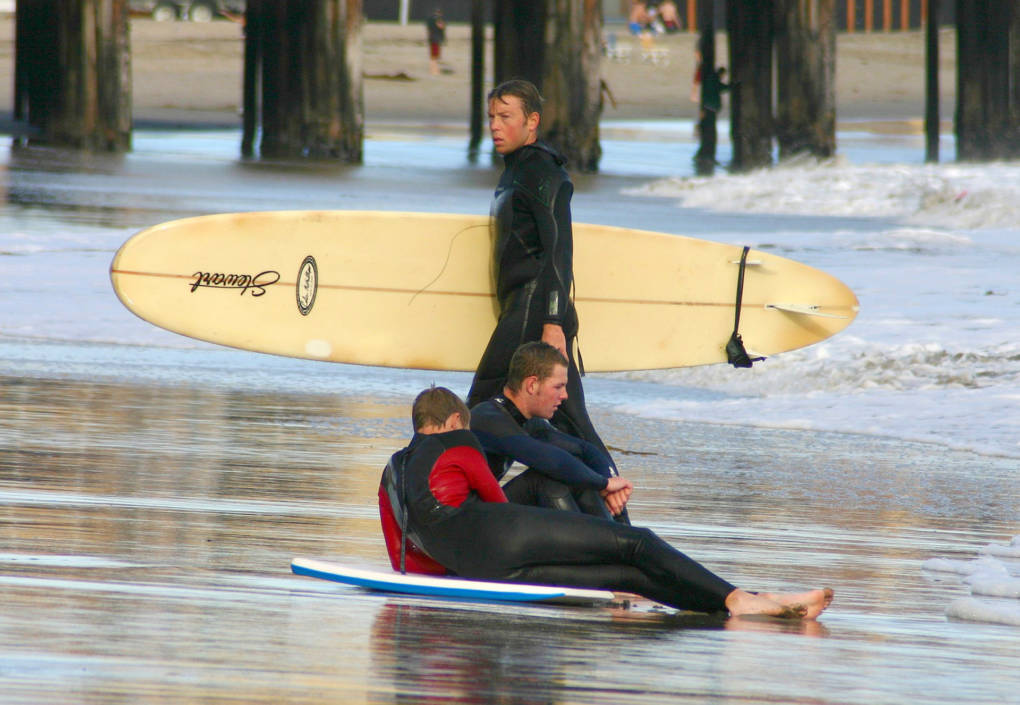
"caption": "Surfers rest at Cowell Beach in Santa Cruz, one of the beaches where all water activities have been prohibited following Tuesday's shark attack on a kayaker.",
"description": "Surfers rest at Cowell Beach in Santa Cruz, one of the beaches where all water activities have been prohibited following Tuesday's shark attack on a kayaker.",
"title": "CowellSarf",
"credit": "Richard Masoner/Flickr",
"status": "inherit",
"isLoading": false,
"fetchFailed": false
},
"arts_12857734": {
"type": "attachments",
"id": "arts_12857734",
"meta": {
"index": "attachments_1716263798",
"site": "arts",
"id": "12857734",
"found": true
},
"parent": 12856496,
"imgSizes": {
"small": {
"file": "https://ww2.kqed.org/app/uploads/sites/2/2017/03/Hung.Liu_.Luzao_.MAIN_-520x300.jpg",
"width": 520,
"mimeType": "image/jpeg",
"height": 300
},
"twentyfourteen-full-width": {
"file": "https://ww2.kqed.org/app/uploads/sites/2/2017/03/Hung.Liu_.Luzao_.MAIN_-1038x576.jpg",
"width": 1038,
"mimeType": "image/jpeg",
"height": 576
},
"thumbnail": {
"file": "https://ww2.kqed.org/app/uploads/sites/2/2017/03/Hung.Liu_.Luzao_.MAIN_-160x92.jpg",
"width": 160,
"mimeType": "image/jpeg",
"height": 92
},
"fd-sm": {
"file": "https://ww2.kqed.org/app/uploads/sites/2/2017/03/Hung.Liu_.Luzao_.MAIN_-960x555.jpg",
"width": 960,
"mimeType": "image/jpeg",
"height": 555
},
"post-thumbnail": {
"file": "https://ww2.kqed.org/app/uploads/sites/2/2017/03/Hung.Liu_.Luzao_.MAIN_-672x372.jpg",
"width": 672,
"mimeType": "image/jpeg",
"height": 372
},
"xsmall": {
"file": "https://ww2.kqed.org/app/uploads/sites/2/2017/03/Hung.Liu_.Luzao_.MAIN_-375x217.jpg",
"width": 375,
"mimeType": "image/jpeg",
"height": 217
},
"kqedFullSize": {
"file": "https://ww2.kqed.org/app/uploads/sites/2/2017/03/Hung.Liu_.Luzao_.MAIN_.jpg",
"width": 1920,
"height": 1109
},
"large": {
"file": "https://ww2.kqed.org/app/uploads/sites/2/2017/03/Hung.Liu_.Luzao_.MAIN_-1020x589.jpg",
"width": 1020,
"mimeType": "image/jpeg",
"height": 589
},
"xlarge": {
"file": "https://ww2.kqed.org/app/uploads/sites/2/2017/03/Hung.Liu_.Luzao_.MAIN_-1180x682.jpg",
"width": 1180,
"mimeType": "image/jpeg",
"height": 682
},
"guest-author-50": {
"file": "https://ww2.kqed.org/app/uploads/sites/2/2017/03/Hung.Liu_.Luzao_.MAIN_-50x50.jpg",
"width": 50,
"mimeType": "image/jpeg",
"height": 50
},
"guest-author-96": {
"file": "https://ww2.kqed.org/app/uploads/sites/2/2017/03/Hung.Liu_.Luzao_.MAIN_-96x96.jpg",
"width": 96,
"mimeType": "image/jpeg",
"height": 96
},
"medium": {
"file": "https://ww2.kqed.org/app/uploads/sites/2/2017/03/Hung.Liu_.Luzao_.MAIN_-800x462.jpg",
"width": 800,
"mimeType": "image/jpeg",
"height": 462
},
"guest-author-64": {
"file": "https://ww2.kqed.org/app/uploads/sites/2/2017/03/Hung.Liu_.Luzao_.MAIN_-64x64.jpg",
"width": 64,
"mimeType": "image/jpeg",
"height": 64
},
"guest-author-32": {
"file": "https://ww2.kqed.org/app/uploads/sites/2/2017/03/Hung.Liu_.Luzao_.MAIN_-32x32.jpg",
"width": 32,
"mimeType": "image/jpeg",
"height": 32
},
"fd-lrg": {
"file": "https://ww2.kqed.org/app/uploads/sites/2/2017/03/Hung.Liu_.Luzao_.MAIN_-1920x1109.jpg",
"width": 1920,
"mimeType": "image/jpeg",
"height": 1109
},
"fd-med": {
"file": "https://ww2.kqed.org/app/uploads/sites/2/2017/03/Hung.Liu_.Luzao_.MAIN_-1180x682.jpg",
"width": 1180,
"mimeType": "image/jpeg",
"height": 682
},
"full-width": {
"file": "https://ww2.kqed.org/app/uploads/sites/2/2017/03/Hung.Liu_.Luzao_.MAIN_-1920x1109.jpg",
"width": 1920,
"mimeType": "image/jpeg",
"height": 1109
},
"detail": {
"file": "https://ww2.kqed.org/app/uploads/sites/2/2017/03/Hung.Liu_.Luzao_.MAIN_-150x150.jpg",
"width": 150,
"mimeType": "image/jpeg",
"height": 150
},
"medium_large": {
"file": "https://ww2.kqed.org/app/uploads/sites/2/2017/03/Hung.Liu_.Luzao_.MAIN_-768x444.jpg",
"width": 768,
"mimeType": "image/jpeg",
"height": 444
},
"guest-author-128": {
"file": "https://ww2.kqed.org/app/uploads/sites/2/2017/03/Hung.Liu_.Luzao_.MAIN_-128x128.jpg",
"width": 128,
"mimeType": "image/jpeg",
"height": 128
},
"xxsmall": {
"file": "https://ww2.kqed.org/app/uploads/sites/2/2017/03/Hung.Liu_.Luzao_.MAIN_-240x139.jpg",
"width": 240,
"mimeType": "image/jpeg",
"height": 139
}
},
"publishDate": 1488781190,
"modified": 1488781221,
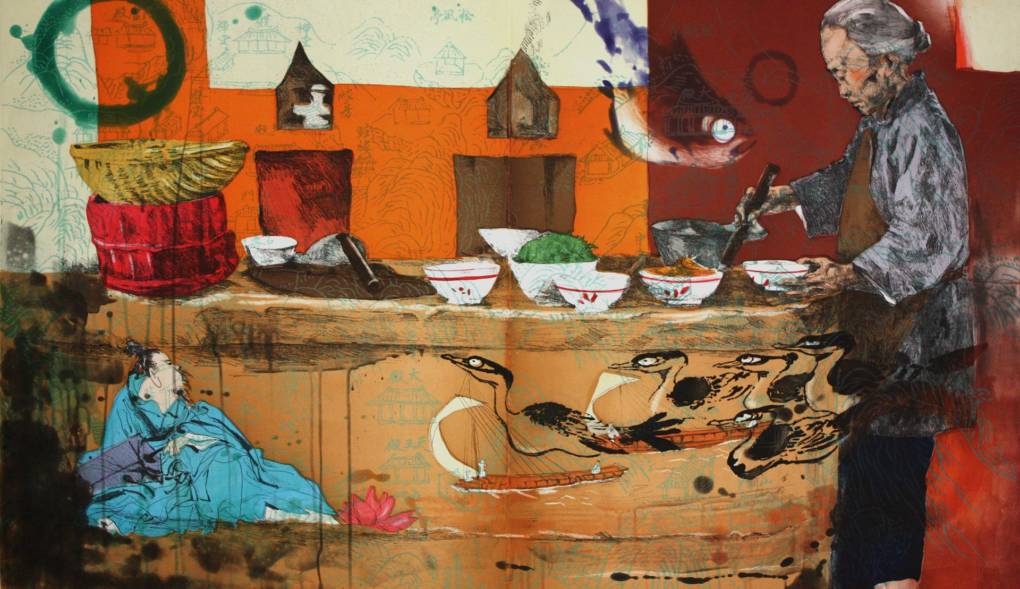
"caption": "'Luzao (Stove)' (2008), by Hung Liu. It's one of the paintings that speak to the dignity of labor in 'We Who Work' at the Santa Cruz Museum of Art and History. ",
"description": "'Luzao (Stove)' (2008), by Hung Liu. It's one of the paintings that speak to the dignity of labor in 'We Who Work' at the Santa Cruz Museum of Art and History. ",
"title": "Hung.Liu.Luzao.MAIN",
"credit": "Photo: Courtesy of Hung Liu",
"status": "inherit",
"isLoading": false,
"fetchFailed": false
},
"news_11331667": {
"type": "attachments",
"id": "news_11331667",
"meta": {
"index": "attachments_1716263798",
"site": "news",
"id": "11331667",
"found": true
},
"parent": 11331663,
"imgSizes": {
"small": {
"file": "https://ww2.kqed.org/app/uploads/sites/10/2017/02/VogelSantaCruz-520x343.jpg",
"width": 520,
"mimeType": "image/jpeg",
"height": 343
},
"twentyfourteen-full-width": {
"file": "https://ww2.kqed.org/app/uploads/sites/10/2017/02/VogelSantaCruz-1038x576.jpg",
"width": 1038,
"mimeType": "image/jpeg",
"height": 576
},
"thumbnail": {
"file": "https://ww2.kqed.org/app/uploads/sites/10/2017/02/VogelSantaCruz-160x106.jpg",
"width": 160,
"mimeType": "image/jpeg",
"height": 106
},
"fd-sm": {
"file": "https://ww2.kqed.org/app/uploads/sites/10/2017/02/VogelSantaCruz-960x634.jpg",
"width": 960,
"mimeType": "image/jpeg",
"height": 634
},
"post-thumbnail": {
"file": "https://ww2.kqed.org/app/uploads/sites/10/2017/02/VogelSantaCruz-672x372.jpg",
"width": 672,
"mimeType": "image/jpeg",
"height": 372
},
"xsmall": {
"file": "https://ww2.kqed.org/app/uploads/sites/10/2017/02/VogelSantaCruz-375x247.jpg",
"width": 375,
"mimeType": "image/jpeg",
"height": 247
},
"kqedFullSize": {
"file": "https://ww2.kqed.org/app/uploads/sites/10/2017/02/VogelSantaCruz.jpg",
"width": 1920,
"height": 1267
},
"large": {
"file": "https://ww2.kqed.org/app/uploads/sites/10/2017/02/VogelSantaCruz-1020x673.jpg",
"width": 1020,
"mimeType": "image/jpeg",
"height": 673
},
"xlarge": {
"file": "https://ww2.kqed.org/app/uploads/sites/10/2017/02/VogelSantaCruz-1180x779.jpg",
"width": 1180,
"mimeType": "image/jpeg",
"height": 779
},
"guest-author-50": {
"file": "https://ww2.kqed.org/app/uploads/sites/10/2017/02/VogelSantaCruz-50x50.jpg",
"width": 50,
"mimeType": "image/jpeg",
"height": 50
},
"guest-author-96": {
"file": "https://ww2.kqed.org/app/uploads/sites/10/2017/02/VogelSantaCruz-96x96.jpg",
"width": 96,
"mimeType": "image/jpeg",
"height": 96
},
"medium": {
"file": "https://ww2.kqed.org/app/uploads/sites/10/2017/02/VogelSantaCruz-800x528.jpg",
"width": 800,
"mimeType": "image/jpeg",
"height": 528
},
"guest-author-64": {
"file": "https://ww2.kqed.org/app/uploads/sites/10/2017/02/VogelSantaCruz-64x64.jpg",
"width": 64,
"mimeType": "image/jpeg",
"height": 64
},
"guest-author-32": {
"file": "https://ww2.kqed.org/app/uploads/sites/10/2017/02/VogelSantaCruz-32x32.jpg",
"width": 32,
"mimeType": "image/jpeg",
"height": 32
},
"fd-lrg": {
"file": "https://ww2.kqed.org/app/uploads/sites/10/2017/02/VogelSantaCruz-1920x1267.jpg",
"width": 1920,
"mimeType": "image/jpeg",
"height": 1267
},
"fd-med": {
"file": "https://ww2.kqed.org/app/uploads/sites/10/2017/02/VogelSantaCruz-1180x779.jpg",
"width": 1180,
"mimeType": "image/jpeg",
"height": 779
},
"full-width": {
"file": "https://ww2.kqed.org/app/uploads/sites/10/2017/02/VogelSantaCruz-1920x1267.jpg",
"width": 1920,
"mimeType": "image/jpeg",
"height": 1267
},
"detail": {
"file": "https://ww2.kqed.org/app/uploads/sites/10/2017/02/VogelSantaCruz-150x150.jpg",
"width": 150,
"mimeType": "image/jpeg",
"height": 150
},
"guest-author-128": {
"file": "https://ww2.kqed.org/app/uploads/sites/10/2017/02/VogelSantaCruz-128x128.jpg",
"width": 128,
"mimeType": "image/jpeg",
"height": 128
},
"xxsmall": {
"file": "https://ww2.kqed.org/app/uploads/sites/10/2017/02/VogelSantaCruz-240x158.jpg",
"width": 240,
"mimeType": "image/jpeg",
"height": 158
}
},
"publishDate": 1487957593,
"modified": 1487957721,
"caption": "Santa Cruz Police Chief Kevin Vogel says federal officials lied when they said a Feb. 13 joint operation ostensibly targeting gang members would not include immigration-related arrests.",
"description": "Santa Cruz Police Chief Kevin Vogel says federal officials lied when they said a Feb. 13 joint operation ostensibly targeting gang members would not include immigration-related arrests.",
"title": "VogelSantaCruz",
"credit": "Santa Cruz Police/Flickr",
"status": "inherit",
"isLoading": false,
"fetchFailed": false
},
"arts_12686212": {
"type": "attachments",
"id": "arts_12686212",
"meta": {
"index": "attachments_1716263798",
"site": "arts",
"id": "12686212",
"found": true
},
"parent": 12685435,
"imgSizes": {
"small": {
"file": "https://ww2.kqed.org/app/uploads/sites/2/2017/01/Photo-Jan-23-7-24-06-PM-520x292.jpg",
"width": 520,
"mimeType": "image/jpeg",
"height": 292
},
"twentyfourteen-full-width": {
"file": "https://ww2.kqed.org/app/uploads/sites/2/2017/01/Photo-Jan-23-7-24-06-PM-1038x576.jpg",
"width": 1038,
"mimeType": "image/jpeg",
"height": 576
},
"thumbnail": {
"file": "https://ww2.kqed.org/app/uploads/sites/2/2017/01/Photo-Jan-23-7-24-06-PM-160x90.jpg",
"width": 160,
"mimeType": "image/jpeg",
"height": 90
},
"fd-sm": {
"file": "https://ww2.kqed.org/app/uploads/sites/2/2017/01/Photo-Jan-23-7-24-06-PM-960x540.jpg",
"width": 960,
"mimeType": "image/jpeg",
"height": 540
},
"post-thumbnail": {
"file": "https://ww2.kqed.org/app/uploads/sites/2/2017/01/Photo-Jan-23-7-24-06-PM-672x372.jpg",
"width": 672,
"mimeType": "image/jpeg",
"height": 372
},
"xsmall": {
"file": "https://ww2.kqed.org/app/uploads/sites/2/2017/01/Photo-Jan-23-7-24-06-PM-375x211.jpg",
"width": 375,
"mimeType": "image/jpeg",
"height": 211
},
"kqedFullSize": {
"file": "https://ww2.kqed.org/app/uploads/sites/2/2017/01/Photo-Jan-23-7-24-06-PM.jpg",
"width": 2048,
"height": 1151
},
"large": {
"file": "https://ww2.kqed.org/app/uploads/sites/2/2017/01/Photo-Jan-23-7-24-06-PM-1020x573.jpg",
"width": 1020,
"mimeType": "image/jpeg",
"height": 573
},
"xlarge": {
"file": "https://ww2.kqed.org/app/uploads/sites/2/2017/01/Photo-Jan-23-7-24-06-PM-1180x663.jpg",
"width": 1180,
"mimeType": "image/jpeg",
"height": 663
},
"guest-author-50": {
"file": "https://ww2.kqed.org/app/uploads/sites/2/2017/01/Photo-Jan-23-7-24-06-PM-50x50.jpg",
"width": 50,
"mimeType": "image/jpeg",
"height": 50
},
"guest-author-96": {
"file": "https://ww2.kqed.org/app/uploads/sites/2/2017/01/Photo-Jan-23-7-24-06-PM-96x96.jpg",
"width": 96,
"mimeType": "image/jpeg",
"height": 96
},
"medium": {
"file": "https://ww2.kqed.org/app/uploads/sites/2/2017/01/Photo-Jan-23-7-24-06-PM-800x450.jpg",
"width": 800,
"mimeType": "image/jpeg",
"height": 450
},
"guest-author-64": {
"file": "https://ww2.kqed.org/app/uploads/sites/2/2017/01/Photo-Jan-23-7-24-06-PM-64x64.jpg",
"width": 64,
"mimeType": "image/jpeg",
"height": 64
},
"guest-author-32": {
"file": "https://ww2.kqed.org/app/uploads/sites/2/2017/01/Photo-Jan-23-7-24-06-PM-32x32.jpg",
"width": 32,
"mimeType": "image/jpeg",
"height": 32
},
"fd-lrg": {
"file": "https://ww2.kqed.org/app/uploads/sites/2/2017/01/Photo-Jan-23-7-24-06-PM-1920x1079.jpg",
"width": 1920,
"mimeType": "image/jpeg",
"height": 1079
},
"fd-med": {
"file": "https://ww2.kqed.org/app/uploads/sites/2/2017/01/Photo-Jan-23-7-24-06-PM-1180x663.jpg",
"width": 1180,
"mimeType": "image/jpeg",
"height": 663
},
"full-width": {
"file": "https://ww2.kqed.org/app/uploads/sites/2/2017/01/Photo-Jan-23-7-24-06-PM-1920x1079.jpg",
"width": 1920,
"mimeType": "image/jpeg",
"height": 1079
},
"detail": {
"file": "https://ww2.kqed.org/app/uploads/sites/2/2017/01/Photo-Jan-23-7-24-06-PM-150x150.jpg",
"width": 150,
"mimeType": "image/jpeg",
"height": 150
},
"medium_large": {
"file": "https://ww2.kqed.org/app/uploads/sites/2/2017/01/Photo-Jan-23-7-24-06-PM-768x432.jpg",
"width": 768,
"mimeType": "image/jpeg",
"height": 432
},
"guest-author-128": {
"file": "https://ww2.kqed.org/app/uploads/sites/2/2017/01/Photo-Jan-23-7-24-06-PM-128x128.jpg",
"width": 128,
"mimeType": "image/jpeg",
"height": 128
},
"xxsmall": {
"file": "https://ww2.kqed.org/app/uploads/sites/2/2017/01/Photo-Jan-23-7-24-06-PM-240x135.jpg",
"width": 240,
"mimeType": "image/jpeg",
"height": 135
}
},
"publishDate": 1485550557,
"modified": 1485550575,
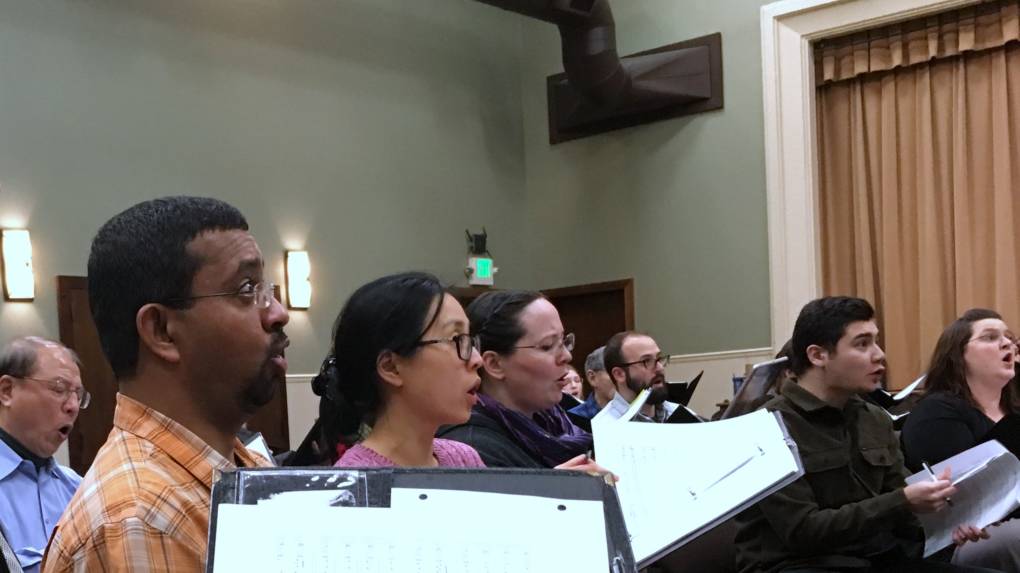
"caption": "The Choral Project rehearses Street Requiem at Willow Glen United Methodist Church in San Jose. \"It was such a moving work,\" says baritone Wilfred Matthews (far left), who's performed the piece before. \"I felt like I could contribute in a little way to spreading the message of hope for the marginalized in our society.\"",
"description": "The Choral Project rehearses Street Requiem at Willow Glen United Methodist Church in San Jose. \"It was such a moving work,\" says baritone Wilfred Matthews (far left), who's performed the piece before. \"I felt like I could contribute in a little way to spreading the message of hope for the marginalized in our society.\"",
"title": "Photo Jan 23, 7 24 06 PM",
"credit": "Photo: Rachael Myrow/KQED",
"status": "inherit",
"isLoading": false,
"fetchFailed": false
},
"science_1346431": {
"type": "attachments",
"id": "science_1346431",
"meta": {
"index": "attachments_1716263798",
"site": "science",
"id": "1346431",
"found": true
},
"parent": 1346204,
"imgSizes": {
"small": {
"file": "https://ww2.kqed.org/app/uploads/sites/35/2017/01/24626497412_3a7fa255af_k-520x298.jpg",
"width": 520,
"mimeType": "image/jpeg",
"height": 298
},
"twentyfourteen-full-width": {
"file": "https://ww2.kqed.org/app/uploads/sites/35/2017/01/24626497412_3a7fa255af_k-1038x576.jpg",
"width": 1038,
"mimeType": "image/jpeg",
"height": 576
},
"thumbnail": {
"file": "https://ww2.kqed.org/app/uploads/sites/35/2017/01/24626497412_3a7fa255af_k-160x92.jpg",
"width": 160,
"mimeType": "image/jpeg",
"height": 92
},
"fd-sm": {
"file": "https://ww2.kqed.org/app/uploads/sites/35/2017/01/24626497412_3a7fa255af_k-960x549.jpg",
"width": 960,
"mimeType": "image/jpeg",
"height": 549
},
"post-thumbnail": {
"file": "https://ww2.kqed.org/app/uploads/sites/35/2017/01/24626497412_3a7fa255af_k-672x372.jpg",
"width": 672,
"mimeType": "image/jpeg",
"height": 372
},
"xsmall": {
"file": "https://ww2.kqed.org/app/uploads/sites/35/2017/01/24626497412_3a7fa255af_k-375x215.jpg",
"width": 375,
"mimeType": "image/jpeg",
"height": 215
},
"kqedFullSize": {
"file": "https://ww2.kqed.org/app/uploads/sites/35/2017/01/24626497412_3a7fa255af_k.jpg",
"width": 2048,
"height": 1172
},
"large": {
"file": "https://ww2.kqed.org/app/uploads/sites/35/2017/01/24626497412_3a7fa255af_k-1020x584.jpg",
"width": 1020,
"mimeType": "image/jpeg",
"height": 584
},
"xlarge": {
"file": "https://ww2.kqed.org/app/uploads/sites/35/2017/01/24626497412_3a7fa255af_k-1180x675.jpg",
"width": 1180,
"mimeType": "image/jpeg",
"height": 675
},
"guest-author-50": {
"file": "https://ww2.kqed.org/app/uploads/sites/35/2017/01/24626497412_3a7fa255af_k-50x50.jpg",
"width": 50,
"mimeType": "image/jpeg",
"height": 50
},
"guest-author-96": {
"file": "https://ww2.kqed.org/app/uploads/sites/35/2017/01/24626497412_3a7fa255af_k-96x96.jpg",
"width": 96,
"mimeType": "image/jpeg",
"height": 96
},
"medium": {
"file": "https://ww2.kqed.org/app/uploads/sites/35/2017/01/24626497412_3a7fa255af_k-800x458.jpg",
"width": 800,
"mimeType": "image/jpeg",
"height": 458
},
"guest-author-64": {
"file": "https://ww2.kqed.org/app/uploads/sites/35/2017/01/24626497412_3a7fa255af_k-64x64.jpg",
"width": 64,
"mimeType": "image/jpeg",
"height": 64
},
"guest-author-32": {
"file": "https://ww2.kqed.org/app/uploads/sites/35/2017/01/24626497412_3a7fa255af_k-32x32.jpg",
"width": 32,
"mimeType": "image/jpeg",
"height": 32
},
"fd-lrg": {
"file": "https://ww2.kqed.org/app/uploads/sites/35/2017/01/24626497412_3a7fa255af_k-1920x1099.jpg",
"width": 1920,
"mimeType": "image/jpeg",
"height": 1099
},
"fd-med": {
"file": "https://ww2.kqed.org/app/uploads/sites/35/2017/01/24626497412_3a7fa255af_k-1180x675.jpg",
"width": 1180,
"mimeType": "image/jpeg",
"height": 675
},
"full-width": {
"file": "https://ww2.kqed.org/app/uploads/sites/35/2017/01/24626497412_3a7fa255af_k-1920x1099.jpg",
"width": 1920,
"mimeType": "image/jpeg",
"height": 1099
},
"detail": {
"file": "https://ww2.kqed.org/app/uploads/sites/35/2017/01/24626497412_3a7fa255af_k-150x150.jpg",
"width": 150,
"mimeType": "image/jpeg",
"height": 150
},
"medium_large": {
"file": "https://ww2.kqed.org/app/uploads/sites/35/2017/01/24626497412_3a7fa255af_k-768x440.jpg",
"width": 768,
"mimeType": "image/jpeg",
"height": 440
},
"guest-author-128": {
"file": "https://ww2.kqed.org/app/uploads/sites/35/2017/01/24626497412_3a7fa255af_k-128x128.jpg",
"width": 128,
"mimeType": "image/jpeg",
"height": 128
},
"xxsmall": {
"file": "https://ww2.kqed.org/app/uploads/sites/35/2017/01/24626497412_3a7fa255af_k-240x137.jpg",
"width": 240,
"mimeType": "image/jpeg",
"height": 137
}
},
"publishDate": 1485199163,
"modified": 1485199388,
"caption": "Strong waves broke the S.S. Palo Alto's stern from the rest of the boat on Saturday during the weekend storm.",
"description": null,
"title": "24626497412_3a7fa255af_k",
"credit": "Dan R/flickr",
"status": "inherit",
"isLoading": false,
"fetchFailed": false
},
"news_11125660": {
"type": "attachments",
"id": "news_11125660",
"meta": {
"index": "attachments_1716263798",
"site": "news",
"id": "11125660",
"found": true
},
"parent": 11120008,
"imgSizes": {
"twentyfourteen-full-width": {
"file": "https://ww2.kqed.org/app/uploads/sites/10/2016/10/RS21378_DannyCrop-1-1038x576.jpg",
"width": 1038,
"mimeType": "image/jpeg",
"height": 576
},
"thumbnail": {
"file": "https://ww2.kqed.org/app/uploads/sites/10/2016/10/RS21378_DannyCrop-1-400x312.jpg",
"width": 400,
"mimeType": "image/jpeg",
"height": 312
},
"fd-sm": {
"file": "https://ww2.kqed.org/app/uploads/sites/10/2016/10/RS21378_DannyCrop-1-960x750.jpg",
"width": 960,
"mimeType": "image/jpeg",
"height": 750
},
"post-thumbnail": {
"file": "https://ww2.kqed.org/app/uploads/sites/10/2016/10/RS21378_DannyCrop-1-672x372.jpg",
"width": 672,
"mimeType": "image/jpeg",
"height": 372
},
"kqedFullSize": {
"file": "https://ww2.kqed.org/app/uploads/sites/10/2016/10/RS21378_DannyCrop-1.jpg",
"width": 2299,
"height": 1796
},
"large": {
"file": "https://ww2.kqed.org/app/uploads/sites/10/2016/10/RS21378_DannyCrop-1-1920x1500.jpg",
"width": 1920,
"mimeType": "image/jpeg",
"height": 1500
},
"guest-author-50": {
"file": "https://ww2.kqed.org/app/uploads/sites/10/2016/10/RS21378_DannyCrop-1-50x50.jpg",
"width": 50,
"mimeType": "image/jpeg",
"height": 50
},
"guest-author-96": {
"file": "https://ww2.kqed.org/app/uploads/sites/10/2016/10/RS21378_DannyCrop-1-96x96.jpg",
"width": 96,
"mimeType": "image/jpeg",
"height": 96
},
"medium": {
"file": "https://ww2.kqed.org/app/uploads/sites/10/2016/10/RS21378_DannyCrop-1-800x625.jpg",
"width": 800,
"mimeType": "image/jpeg",
"height": 625
},
"guest-author-64": {
"file": "https://ww2.kqed.org/app/uploads/sites/10/2016/10/RS21378_DannyCrop-1-64x64.jpg",
"width": 64,
"mimeType": "image/jpeg",
"height": 64
},
"guest-author-32": {
"file": "https://ww2.kqed.org/app/uploads/sites/10/2016/10/RS21378_DannyCrop-1-32x32.jpg",
"width": 32,
"mimeType": "image/jpeg",
"height": 32
},
"jmtc-small-thumb": {
"file": "https://ww2.kqed.org/app/uploads/sites/10/2016/10/RS21378_DannyCrop-1-280x150.jpg",
"width": 280,
"mimeType": "image/jpeg",
"height": 150
},
"fd-lrg": {
"file": "https://ww2.kqed.org/app/uploads/sites/10/2016/10/RS21378_DannyCrop-1-1920x1500.jpg",
"width": 1920,
"mimeType": "image/jpeg",
"height": 1500
},
"fd-med": {
"file": "https://ww2.kqed.org/app/uploads/sites/10/2016/10/RS21378_DannyCrop-1-1180x922.jpg",
"width": 1180,
"mimeType": "image/jpeg",
"height": 922
},
"detail": {
"file": "https://ww2.kqed.org/app/uploads/sites/10/2016/10/RS21378_DannyCrop-1-150x150.jpg",
"width": 150,
"mimeType": "image/jpeg",
"height": 150
},
"guest-author-128": {
"file": "https://ww2.kqed.org/app/uploads/sites/10/2016/10/RS21378_DannyCrop-1-128x128.jpg",
"width": 128,
"mimeType": "image/jpeg",
"height": 128
}
},
"publishDate": 1476226224,
"modified": 1476226245,
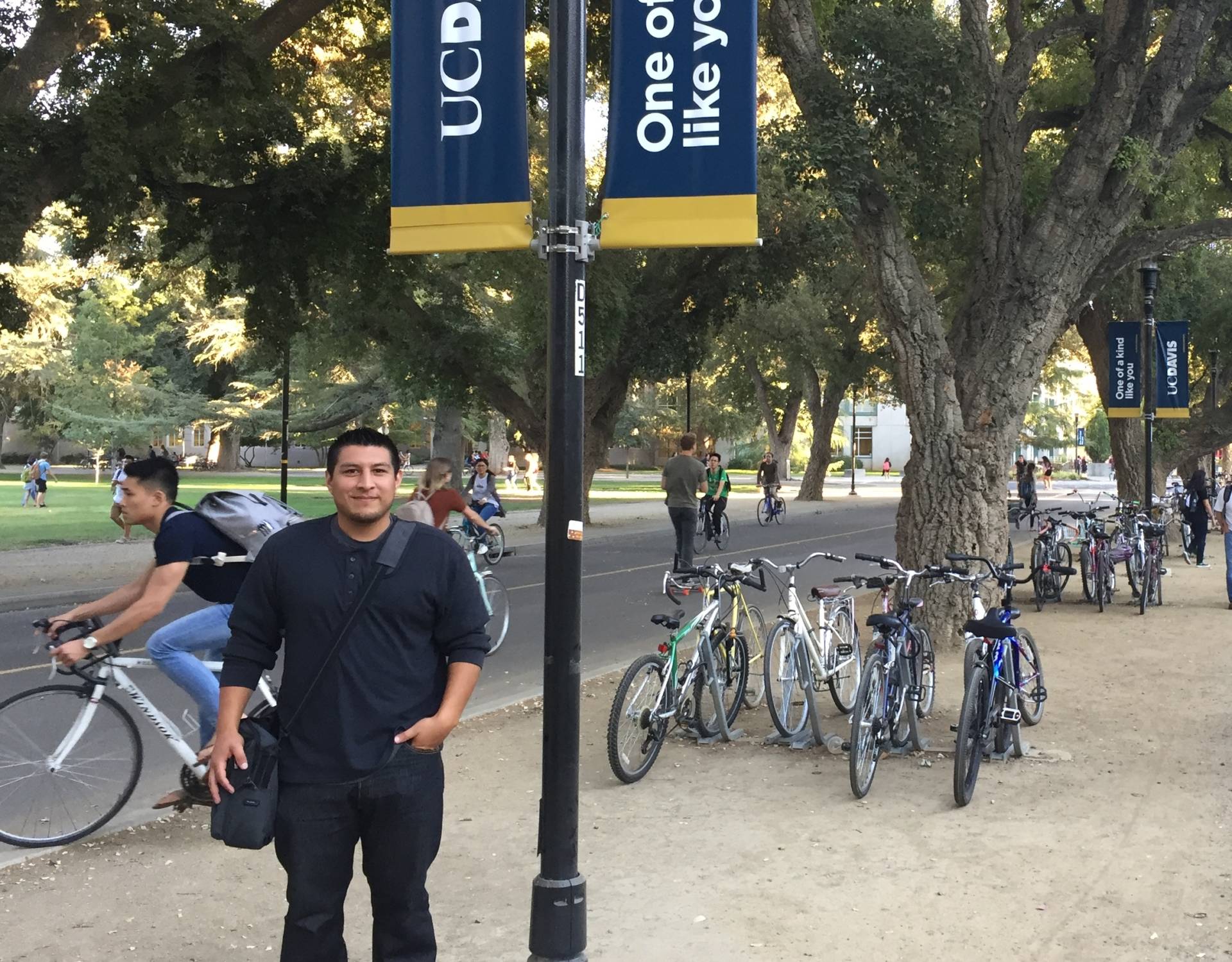
"caption": "Daniel Mendoza, a junior at UC Davis, is grateful that he's on a college campus and not behind bars.",
"description": "Daniel Mendoza, a junior at UC Davis, is grateful that he's on a college campus and not behind bars.",
"title": "RS21378_DannyCrop",
"credit": "Laura Klivans/KQED",
"status": "inherit",
"isLoading": false,
"fetchFailed": false
},
"news_10868508": {
"type": "attachments",
"id": "news_10868508",
"meta": {
"index": "attachments_1716263798",
"site": "news",
"id": "10868508",
"found": true
},
"parent": 10868506,
"imgSizes": {
"twentyfourteen-full-width": {
"file": "https://ww2.kqed.org/app/uploads/sites/10/2016/02/Santa_Cruz_Sentinel_Fri__Aug_18__1961_-e1455750287130-1038x576.jpg",
"width": 1038,
"mimeType": "image/jpeg",
"height": 576
},
"thumbnail": {
"file": "https://ww2.kqed.org/app/uploads/sites/10/2016/02/Santa_Cruz_Sentinel_Fri__Aug_18__1961_-e1455750287130-400x316.jpg",
"width": 400,
"mimeType": "image/jpeg",
"height": 316
},
"fd-sm": {
"file": "https://ww2.kqed.org/app/uploads/sites/10/2016/02/Santa_Cruz_Sentinel_Fri__Aug_18__1961_-e1455750287130-960x758.jpg",
"width": 960,
"mimeType": "image/jpeg",
"height": 758
},
"post-thumbnail": {
"file": "https://ww2.kqed.org/app/uploads/sites/10/2016/02/Santa_Cruz_Sentinel_Fri__Aug_18__1961_-e1455750287130-672x372.jpg",
"width": 672,
"mimeType": "image/jpeg",
"height": 372
},
"kqedFullSize": {
"file": "https://ww2.kqed.org/app/uploads/sites/10/2016/02/Santa_Cruz_Sentinel_Fri__Aug_18__1961_-e1455750287130.jpg",
"width": 1920,
"height": 1516
},
"large": {
"file": "https://ww2.kqed.org/app/uploads/sites/10/2016/02/Santa_Cruz_Sentinel_Fri__Aug_18__1961_-e1455750287130-1440x1137.jpg",
"width": 1440,
"mimeType": "image/jpeg",
"height": 1137
},
"guest-author-96": {
"file": "https://ww2.kqed.org/app/uploads/sites/10/2016/02/Santa_Cruz_Sentinel_Fri__Aug_18__1961_-e1455750287130-96x96.jpg",
"width": 96,
"mimeType": "image/jpeg",
"height": 96
},
"medium": {
"file": "https://ww2.kqed.org/app/uploads/sites/10/2016/02/Santa_Cruz_Sentinel_Fri__Aug_18__1961_-e1455750287130-800x632.jpg",
"width": 800,
"mimeType": "image/jpeg",
"height": 632
},
"guest-author-64": {
"file": "https://ww2.kqed.org/app/uploads/sites/10/2016/02/Santa_Cruz_Sentinel_Fri__Aug_18__1961_-e1455750287130-64x64.jpg",
"width": 64,
"mimeType": "image/jpeg",
"height": 64
},
"guest-author-32": {
"file": "https://ww2.kqed.org/app/uploads/sites/10/2016/02/Santa_Cruz_Sentinel_Fri__Aug_18__1961_-e1455750287130-32x32.jpg",
"width": 32,
"mimeType": "image/jpeg",
"height": 32
},
"jmtc-small-thumb": {
"file": "https://ww2.kqed.org/app/uploads/sites/10/2016/02/Santa_Cruz_Sentinel_Fri__Aug_18__1961_-e1455750287130-280x150.jpg",
"width": 280,
"mimeType": "image/jpeg",
"height": 150
},
"fd-lrg": {
"file": "https://ww2.kqed.org/app/uploads/sites/10/2016/02/Santa_Cruz_Sentinel_Fri__Aug_18__1961_-e1455750287130-1920x1516.jpg",
"width": 1920,
"mimeType": "image/jpeg",
"height": 1516
},
"fd-med": {
"file": "https://ww2.kqed.org/app/uploads/sites/10/2016/02/Santa_Cruz_Sentinel_Fri__Aug_18__1961_-e1455750287130-1180x932.jpg",
"width": 1180,
"mimeType": "image/jpeg",
"height": 932
},
"detail": {
"file": "https://ww2.kqed.org/app/uploads/sites/10/2016/02/Santa_Cruz_Sentinel_Fri__Aug_18__1961_-e1455750287130-75x75.jpg",
"width": 75,
"mimeType": "image/jpeg",
"height": 75
},
"medium_large": {
"file": "https://ww2.kqed.org/app/uploads/sites/10/2016/02/Santa_Cruz_Sentinel_Fri__Aug_18__1961_-e1455750287130-768x606.jpg",
"width": 768,
"mimeType": "image/jpeg",
"height": 606
},
"guest-author-128": {
"file": "https://ww2.kqed.org/app/uploads/sites/10/2016/02/Santa_Cruz_Sentinel_Fri__Aug_18__1961_-e1455750287130-128x128.jpg",
"width": 128,
"mimeType": "image/jpeg",
"height": 128
}
},
"publishDate": 1455750145,
"modified": 1455750374,
"caption": "The Aug. 18, 1961, front page from the Santa Cruz Sentinel bannered news of a bird invasion.",
"description": null,
"title": "Santa Cruz Sentinel-Bird Invasion",
"credit": "Newspapers.com",
"status": "inherit",
"isLoading": false,
"fetchFailed": false
},
"science_10038": {
"type": "attachments",
"id": "science_10038",
"meta": {
"index": "attachments_1716263798",
"site": "science",
"id": "10038",
"found": true
},
"parent": 9996,
"imgSizes": {
"kqedFullSize": {
"file": "https://ww2.kqed.org/app/uploads/sites/35/2013/10/frackingprotest.jpg",
"width": 640,
"height": 360
}
},
"publishDate": 1381799651,
"modified": 1381799651,
"caption": "The group Californians Against Fracking staged a protest outside of California Gov. Jerry Brown's San Francisco offices demanding that Gov. Brown ban fracking in the state. (Justin Sullivan/Getty Images)",
"description": "SAN FRANCISCO, CA - MAY 30: Protestors stage a demonstration against fracking in California outside of the Hiram W. Johnson State Office Building on May 30, 2013 in San Francisco, California. Dozens of protesters with the group Californians Against Fracking staged a protest outside of California Gov. Jerry Brown's San Francisco offices demanding that Gov. Brown ban fracking in the state. (Photo by Justin Sullivan/Getty Images)",
"title": "169770907JS001_ACTIVISTS_PR",
"credit": null,
"status": "inherit",
"isLoading": false,
"fetchFailed": false
},
"news_121948": {
"type": "attachments",
"id": "news_121948",
"meta": {
"index": "attachments_1716263798",
"site": "news",
"id": "121948",
"found": true
},
"parent": 121919,
"imgSizes": {
"kqedFullSize": {
"file": "https://ww2.kqed.org/app/uploads/sites/10/2013/12/RS549_104161743-scr1-e1387920439776.jpg",
"width": 640,
"height": 401
}
},
"publishDate": 1387920351,
"modified": 1387920351,
"caption": "Volunteers prepare meals for the needy at the St. Anthony foundation dining room in San Francisco. (Justin Sullivan/Getty Images)",
"description": "Volunteers prepare meals for the needy at the St. Anthony foundation dining room in San Francisco. (Justin Sullivan/Getty Images)",
"title": "RS549_104161743-scr",
"credit": null,
"status": "inherit",
"isLoading": false,
"fetchFailed": false
}
},
"audioPlayerReducer": {
"postId": "stream_live",
"isPaused": true,
"isPlaying": false,
"pfsActive": false,
"pledgeModalIsOpen": true,
"playerDrawerIsOpen": false,
"liveAudioPlayStartedAt": 0,
"liveAudioPlayContext": ""
},
"authorsReducer": {
"byline_news_11565988": {
"type": "authors",
"id": "byline_news_11565988",
"meta": {
"override": true
},
"slug": "byline_news_11565988",
"name": "Associated Press",
"isLoading": false
},
"byline_science_1346204": {
"type": "authors",
"id": "byline_science_1346204",
"meta": {
"override": true
},
"slug": "byline_science_1346204",
"name": "Associated Press",
"isLoading": false
},
"dmarks": {
"type": "authors",
"id": "182",
"meta": {
"index": "authors_1716337520",
"id": "182",
"found": true
},
"name": "David Marks",
"firstName": "David",
"lastName": "Marks",
"slug": "dmarks",
"email": "dmarks@kqed.org",
"display_author_email": false,
"staff_mastheads": [],
"title": "KQED Editor",
"bio": "David Marks is a senior digital editor for KQED News. \u003c/a>Reach him at dmarks@kqed.org.",
"avatar": "https://secure.gravatar.com/avatar/b88bd6227ce6cb96ae33fefaf42b2a29?s=600&d=mm&r=g",
"twitter": "divadskram",
"facebook": null,
"instagram": null,
"linkedin": null,
"sites": [
{
"site": "news",
"roles": []
},
{
"site": "science",
"roles": []
},
{
"site": "perspectives",
"roles": []
},
{
"site": "liveblog",
"roles": []
}
],
"headData": {
"title": "David Marks | KQED",
"description": "KQED Editor",
"ogImgSrc": "https://secure.gravatar.com/avatar/b88bd6227ce6cb96ae33fefaf42b2a29?s=600&d=mm&r=g",
"twImgSrc": "https://secure.gravatar.com/avatar/b88bd6227ce6cb96ae33fefaf42b2a29?s=600&d=mm&r=g"
},
"isLoading": false,
"link": "/author/dmarks"
},
"danbrekke": {
"type": "authors",
"id": "222",
"meta": {
"index": "authors_1716337520",
"id": "222",
"found": true
},
"name": "Dan Brekke",
"firstName": "Dan",
"lastName": "Brekke",
"slug": "danbrekke",
"email": "dbrekke@kqed.org",
"display_author_email": true,
"staff_mastheads": [
"news",
"science"
],
"title": "KQED Editor and Reporter",
"bio": "Dan Brekke is a reporter and editor for KQED News, responsible for coverage of topics ranging from California water issues to the Bay Area's transportation challenges. In a newsroom career that began in Chicago in 1972, Dan has worked for \u003cem>The San Francisco Examiner,\u003c/em> Wired and TechTV and has been published in The New York Times, The New York Times Magazine, Business 2.0, Salon and elsewhere.\r\n\r\nSince joining KQED in 2007, Dan has reported, edited and produced both radio and online features and breaking news pieces. He has shared as both editor and reporter in four Society of Professional Journalists Norcal Excellence in Journalism awards and one Edward R. Murrow regional award. He was chosen for a spring 2017 residency at the Mesa Refuge to advance his research on California salmon.\r\n\r\nEmail Dan at: \u003ca href=\"mailto:dbrekke@kqed.org\">dbrekke@kqed.org\u003c/a>\r\n\r\n\u003cstrong>Twitter:\u003c/strong> \u003ca href=\"https://twitter.com/danbrekke\" rel=\"noopener noreferrer\">twitter.com/danbrekke\u003c/a>\r\n\u003cstrong>Facebook:\u003c/strong> \u003ca href=\"https://www.facebook.com/danbrekke\" rel=\"noopener noreferrer\">www.facebook.com/danbrekke\u003c/a>\r\n\u003cstrong>LinkedIn:\u003c/strong> \u003ca href=\"https://www.linkedin.com/in/danbrekke\" rel=\"noopener noreferrer\">www.linkedin.com/in/danbrekke\u003c/a>",
"avatar": "https://secure.gravatar.com/avatar/c8126230345efca3f7aa89b1a402be45?s=600&d=mm&r=g",
"twitter": "danbrekke",
"facebook": null,
"instagram": "https://www.instagram.com/dan.brekke/",
"linkedin": "https://www.linkedin.com/in/danbrekke/",
"sites": [
{
"site": "news",
"roles": [
"administrator",
"create_posts"
]
},
{
"site": "stateofhealth",
"roles": [
"editor"
]
},
{
"site": "science",
"roles": [
"editor"
]
},
{
"site": "quest",
"roles": [
"contributor"
]
},
{
"site": "food",
"roles": [
"contributor"
]
},
{
"site": "forum",
"roles": [
"contributor"
]
},
{
"site": "liveblog",
"roles": [
"editor"
]
}
],
"headData": {
"title": "Dan Brekke | KQED",
"description": "KQED Editor and Reporter",
"ogImgSrc": "https://secure.gravatar.com/avatar/c8126230345efca3f7aa89b1a402be45?s=600&d=mm&r=g",
"twImgSrc": "https://secure.gravatar.com/avatar/c8126230345efca3f7aa89b1a402be45?s=600&d=mm&r=g"
},
"isLoading": false,
"link": "/author/danbrekke"
},
"katrinaschwartz": {
"type": "authors",
"id": "234",
"meta": {
"index": "authors_1716337520",
"id": "234",
"found": true
},
"name": "Katrina Schwartz",
"firstName": "Katrina",
"lastName": "Schwartz",
"slug": "katrinaschwartz",
"email": "kschwartz@kqed.org",
"display_author_email": false,
"staff_mastheads": [
"news"
],
"title": "Producer",
"bio": "Katrina Schwartz is a journalist based in San Francisco. She's worked at KPCC public radio in LA and has reported on air and online for KQED since 2010. She covered how teaching and learning is changing for MindShift between 2012 and 2020. She is the co-host of the MindShift podcast and now produces KQED's Bay Curious podcast.",
"avatar": "https://secure.gravatar.com/avatar/edb4ee79070447a018538c9aae6eeecf28786515b8a0c30e43b6b7dce5aa44c8?s=600&d=blank&r=g",
"twitter": "kschwart",
"bluesky": null,
"facebook": null,
"instagram": null,
"linkedin": null,
"sites": [
{
"site": "news",
"roles": [
"editor"
]
},
{
"site": "mindshift",
"roles": [
"administrator"
]
},
{
"site": "stateofhealth",
"roles": [
"author"
]
},
{
"site": "science",
"roles": [
"editor"
]
}
],
"headData": {
"title": "Katrina Schwartz | KQED",
"description": "Producer",
"ogImgSrc": "https://secure.gravatar.com/avatar/edb4ee79070447a018538c9aae6eeecf28786515b8a0c30e43b6b7dce5aa44c8?s=600&d=blank&r=g",
"twImgSrc": "https://secure.gravatar.com/avatar/edb4ee79070447a018538c9aae6eeecf28786515b8a0c30e43b6b7dce5aa44c8?s=600&d=blank&r=g"
},
"isLoading": false,
"link": "/author/katrinaschwartz"
},
"kqednewsstaffandwires": {
"type": "authors",
"id": "237",
"meta": {
"index": "authors_1716337520",
"id": "237",
"found": true
},
"name": "KQED News Staff and Wires",
"firstName": "KQED News Staff and Wires",
"lastName": null,
"slug": "kqednewsstaffandwires",
"email": "onlinenewsstaff@kqed.org",
"display_author_email": false,
"staff_mastheads": [],
"title": null,
"bio": null,
"avatar": "https://secure.gravatar.com/avatar/72295af8ebbfbd19a4948f5271285664?s=600&d=blank&r=g",
"twitter": null,
"facebook": null,
"instagram": null,
"linkedin": null,
"sites": [
{
"site": "arts",
"roles": [
"contributor"
]
},
{
"site": "news",
"roles": [
"contributor"
]
},
{
"site": "lowdown",
"roles": [
"author"
]
},
{
"site": "stateofhealth",
"roles": [
"contributor"
]
},
{
"site": "food",
"roles": [
"author"
]
}
],
"headData": {
"title": "KQED News Staff and Wires | KQED",
"description": null,
"ogImgSrc": "https://secure.gravatar.com/avatar/72295af8ebbfbd19a4948f5271285664?s=600&d=blank&r=g",
"twImgSrc": "https://secure.gravatar.com/avatar/72295af8ebbfbd19a4948f5271285664?s=600&d=blank&r=g"
},
"isLoading": false,
"link": "/author/kqednewsstaffandwires"
},
"rachael-myrow": {
"type": "authors",
"id": "251",
"meta": {
"index": "authors_1716337520",
"id": "251",
"found": true
},
"name": "Rachael Myrow",
"firstName": "Rachael",
"lastName": "Myrow",
"slug": "rachael-myrow",
"email": "rmyrow@kqed.org",
"display_author_email": true,
"staff_mastheads": [
"news"
],
"title": "Senior Editor of KQED's Silicon Valley News Desk",
"bio": "• I write and edit stories about how Silicon Valley power and policies shape everyday life in California. I’m also passionate about making Bay Area history and culture more accessible to a broad public. • I’ve been a journalist for most of my life, starting in high school with The Franklin Press in Los Angeles, where I grew up. While earning my first degree in English at UC Berkeley, I got my start in public radio at KALX-FM. After completing a second degree in journalism at Cal, I landed my first professional job at Marketplace, then moved on to KPCC (now LAist), and then KQED, where I hosted The California Report for more than seven years. • My reporting has appeared on NPR, The World, WBUR’s \u003ci>Here & Now\u003c/i>, and the BBC. I also guest host for KQED’s \u003ci>Forum\u003c/i>, as well as the Commonwealth Club in San Francisco. • I speak periodically on media, democracy and technology issues, and do voiceover work for documentaries and educational video projects. • Outside of the studio, you'll find me hiking Bay Area trails and whipping up Insta-ready meals in my kitchen. • I do not accept gifts, money, or favors from anyone connected to my reporting, I don't pay people for information, and I do not support or donate to political causes. • I strive to treat the people I report on with fairness, honesty, and respect. I also recognize there are often multiple sides to a story and work to verify information through multiple sources and documentation. If I get something wrong, I correct it.",
"avatar": "https://secure.gravatar.com/avatar/87bf8cb5874e045cdff430523a6d48b1?s=600&d=blank&r=g",
"twitter": "rachaelmyrow",
"facebook": null,
"instagram": null,
"linkedin": "https://www.linkedin.com/in/rachaelmyrow/",
"sites": [
{
"site": "arts",
"roles": [
"administrator"
]
},
{
"site": "news",
"roles": [
"edit_others_posts",
"editor"
]
},
{
"site": "futureofyou",
"roles": [
"editor"
]
},
{
"site": "bayareabites",
"roles": [
"editor"
]
},
{
"site": "stateofhealth",
"roles": [
"editor"
]
},
{
"site": "science",
"roles": [
"editor"
]
},
{
"site": "food",
"roles": [
"editor"
]
},
{
"site": "forum",
"roles": [
"editor"
]
},
{
"site": "liveblog",
"roles": [
"author"
]
}
],
"headData": {
"title": "Rachael Myrow | KQED",
"description": "Senior Editor of KQED's Silicon Valley News Desk",
"ogImgSrc": "https://secure.gravatar.com/avatar/87bf8cb5874e045cdff430523a6d48b1?s=600&d=blank&r=g",
"twImgSrc": "https://secure.gravatar.com/avatar/87bf8cb5874e045cdff430523a6d48b1?s=600&d=blank&r=g"
},
"isLoading": false,
"link": "/author/rachael-myrow"
},
"lairdharrison": {
"type": "authors",
"id": "1367",
"meta": {
"index": "authors_1716337520",
"id": "1367",
"found": true
},
"name": "Laird Harrison",
"firstName": "Laird",
"lastName": "Harrison",
"slug": "lairdharrison",
"email": "laird_harrison@yahoo.com",
"display_author_email": false,
"staff_mastheads": [],
"title": null,
"bio": null,
"avatar": "https://secure.gravatar.com/avatar/cd1a94b071427a71ecfcbc115c6b0efe?s=600&d=blank&r=g",
"twitter": null,
"facebook": null,
"instagram": null,
"linkedin": null,
"sites": [
{
"site": "news",
"roles": [
"subscriber"
]
}
],
"headData": {
"title": "Laird Harrison | KQED",
"description": null,
"ogImgSrc": "https://secure.gravatar.com/avatar/cd1a94b071427a71ecfcbc115c6b0efe?s=600&d=blank&r=g",
"twImgSrc": "https://secure.gravatar.com/avatar/cd1a94b071427a71ecfcbc115c6b0efe?s=600&d=blank&r=g"
},
"isLoading": false,
"link": "/author/lairdharrison"
},
"katharinefong": {
"type": "authors",
"id": "1479",
"meta": {
"index": "authors_1716337520",
"id": "1479",
"found": true
},
"name": "Katharine Fong",
"firstName": "Katharine",
"lastName": "Fong",
"slug": "katharinefong",
"email": "katharinefong@gmail.com",
"display_author_email": false,
"staff_mastheads": [],
"title": null,
"bio": null,
"avatar": "https://secure.gravatar.com/avatar/7ee290207889c71d9adcaf3591853a92?s=600&d=blank&r=g",
"twitter": null,
"facebook": null,
"instagram": null,
"linkedin": null,
"sites": [
{
"site": "news",
"roles": [
"subscriber"
]
},
{
"site": "lowdown",
"roles": [
"editor"
]
},
{
"site": "stateofhealth",
"roles": [
"subscriber"
]
}
],
"headData": {
"title": "Katharine Fong | KQED",
"description": null,
"ogImgSrc": "https://secure.gravatar.com/avatar/7ee290207889c71d9adcaf3591853a92?s=600&d=blank&r=g",
"twImgSrc": "https://secure.gravatar.com/avatar/7ee290207889c71d9adcaf3591853a92?s=600&d=blank&r=g"
},
"isLoading": false,
"link": "/author/katharinefong"
},
"kqedscience": {
"type": "authors",
"id": "6387",
"meta": {
"index": "authors_1716337520",
"id": "6387",
"found": true
},
"name": "KQED Science",
"firstName": "KQED",
"lastName": "Science",
"slug": "kqedscience",
"email": "kqedscience@gmail.com",
"display_author_email": false,
"staff_mastheads": [],
"title": null,
"bio": "KQED Science brings you award-winning science and environment coverage from the Bay Area and beyond by the flagship Northern California PBS and NPR affiliate.",
"avatar": "https://secure.gravatar.com/avatar/5a295ff49cf82a8c0f30937d3f788b2f?s=600&d=blank&r=g",
"twitter": null,
"facebook": null,
"instagram": null,
"linkedin": null,
"sites": [
{
"site": "science",
"roles": [
"contributor"
]
},
{
"site": "quest",
"roles": [
"editor"
]
},
{
"site": "food",
"roles": [
"contributor"
]
}
],
"headData": {
"title": "KQED Science | KQED",
"description": null,
"ogImgSrc": "https://secure.gravatar.com/avatar/5a295ff49cf82a8c0f30937d3f788b2f?s=600&d=blank&r=g",
"twImgSrc": "https://secure.gravatar.com/avatar/5a295ff49cf82a8c0f30937d3f788b2f?s=600&d=blank&r=g"
},
"isLoading": false,
"link": "/author/kqedscience"
},
"lklivans": {
"type": "authors",
"id": "8648",
"meta": {
"index": "authors_1716337520",
"id": "8648",
"found": true
},
"name": "Laura Klivans",
"firstName": "Laura",
"lastName": "Klivans",
"slug": "lklivans",
"email": "lklivans@kqed.org",
"display_author_email": true,
"staff_mastheads": [
"news",
"science"
],
"title": "Reporter",
"bio": "Laura Klivans is an award-winning science reporter for KQED News, where she covers climate change with an eye on both groundbreaking progress and gaps in action. She is the former host of KQED's blockbuster video series about tiny, amazing animals, \u003cem>Deep Look\u003c/em>. Her work reaches national audiences through NPR, \u003cem>Here & Now, \u003c/em>PRI, and other major outlets. \r\n\r\nLaura’s won five Northern California Area Emmy Awards for Deep Look and First Place in the Greater Bay Area Journalism Awards for a podcast exploring how one Oakland neighborhood teamed up to reduce planet-heating pollution.\r\n\r\nBeyond her reporting, she hosts and moderates events. In the past, she taught audio storytelling at the UC Berkeley Graduate School of Journalism, led international education programs, worked with immigrants and refugees along the Thai-Burmese border, taught high schoolers sex ed, and was an actress. \r\n\r\nShe's a former UC Berkeley Human Rights Fellow, USC Center for Health Journalism's California Fellow and Coro Fellow in Public Affairs. Laura has a master’s in journalism from UC Berkeley, a master’s in education from Harvard, and an undergraduate degree from Northwestern University.\r\n\r\nShe loves trying to riddle the meaning out of vanity license plates.",
"avatar": "https://secure.gravatar.com/avatar/af8e757bb8ce7b7fee6160ba66e37327?s=600&d=blank&r=g",
"twitter": "lauraklivans",
"facebook": null,
"instagram": null,
"linkedin": null,
"sites": [
{
"site": "news",
"roles": [
"editor"
]
},
{
"site": "stateofhealth",
"roles": [
"contributor",
"editor"
]
},
{
"site": "science",
"roles": [
"editor"
]
},
{
"site": "forum",
"roles": [
"editor"
]
}
],
"headData": {
"title": "Laura Klivans | KQED",
"description": "Reporter",
"ogImgSrc": "https://secure.gravatar.com/avatar/af8e757bb8ce7b7fee6160ba66e37327?s=600&d=blank&r=g",
"twImgSrc": "https://secure.gravatar.com/avatar/af8e757bb8ce7b7fee6160ba66e37327?s=600&d=blank&r=g"
},
"isLoading": false,
"link": "/author/lklivans"
}
},
"pagesReducer": {
"news_tag_santa-cruz": {
"type": "terms",
"id": "news_721",
"meta": {
"index": "terms_1716263798",
"site": "news",
"id": "721",
"score": 8.791621
},
"featImg": null,
"name": "Santa Cruz",
"description": null,
"taxonomy": "tag",
"headData": {
"twImgId": null,
"twTitle": null,
"ogTitle": null,
"ogImgId": null,
"twDescription": null,
"description": null,
"title": "Santa Cruz Archives | KQED News",
"ogDescription": null
},
"ttid": 730,
"slug": "santa-cruz",
"isLoading": false,
"title": "Santa Cruz",
"pageMeta": {
"site": "news",
"WpPageTemplate": "page-topic-editorial",
"currentPage": 5
},
"blocks": [
{
"blockName": "kqed/post-list",
"attrs": {
"layout": "cardArticle2",
"query": "posts/news?tag=santa-cruz",
"seeMore": false,
"paginated": true,
"page": 5
}
},
{
"blockName": "kqed/ad"
}
]
}
},
"pfsSessionReducer": {},
"postsReducer": {
"stream_live": {
"type": "live",
"id": "stream_live",
"audioUrl": "https://streams.kqed.org/kqedradio",
"title": "Live Stream",
"excerpt": "Live Stream information currently unavailable.",
"link": "/radio",
"featImg": "",
"label": {
"name": "KQED Live",
"link": "/"
}
},
"stream_kqedNewscast": {
"type": "posts",
"id": "stream_kqedNewscast",
"audioUrl": "https://www.kqed.org/.stream/anon/radio/RDnews/newscast.mp3?_=1",
"title": "KQED Newscast",
"featImg": "",
"label": {
"name": "88.5 FM",
"link": "/"
}
},
"news_11565988": {
"type": "posts",
"id": "news_11565988",
"meta": {
"index": "posts_1716263798",
"site": "news",
"id": "11565988",
"score": null,
"sort": [
1499981773000
]
},
"guestAuthors": [],
"slug": "stretch-of-santa-cruz-beach-remains-closed-after-shark-attack",
"title": "Stretch of Santa Cruz Beach Remains Closed After Shark Attack",
"publishDate": 1499981773,
"format": "standard",
"headTitle": "Stretch of Santa Cruz Beach Remains Closed After Shark Attack | KQED",
"labelTerm": {
"term": 72,
"site": "news"
},
"content": "\u003cp>SANTA CRUZ — A large shark attacked a kayak Tuesday near Santa Cruz, leaving large bite marks on the boat, though the kayaker escaped without injury.\u003c/p>\n\u003cp>Police in Santa Cruz investigated and confirmed the attack, then shut down all water activities at beaches within a 1-mile radius — including Main Beach and Cowell Beach — until sunrise Saturday morning.\u003c/p>\n\u003cp>But according to accounts on social media, surfers have so far been ignoring the ban:\u003c/p>\n\u003cp>https://twitter.com/KRON4RFladeboe/status/885581477383028736\u003c/p>\n\u003cp>Experienced kayaker Steve Lawson was paddling past a kelp bed at the city’s popular surf spot, Steamer Lane, when he felt a jolt to his kayak. He looked down and saw what he believes was a great white.\u003c/p>\n\u003cp>[ad fullwidth]\u003c/p>\n\u003cp>“I saw the shark hanging on the front end of my boat,” Lawson told KSBW-TV.\u003c/p>\n\u003cp>The shark bit the front of the boat and sent Lawson into the water. He used a radio to call for a rescue from the Harbor Patrol, but he had to tread water in terror for a few minutes.\u003c/p>\n\u003cp>“I spent a little time in the water swimming around. I panicked, everyone panics,” Lawson said. “There’s a shark in the water, but he didn’t come back. He wasn’t interested in me.”\u003c/p>\n\u003cp>https://twitter.com/janellewang/status/884951694089404416\u003c/p>\n\u003cp>The Harbor Patrol showed up within about 90 seconds.\u003c/p>\n\u003cp>“They got out there and pulled him to safety,” Santa Cruz Fire Chief Jim Frawley said.\u003c/p>\n\u003cp>Lawson’s experience helped him.\u003c/p>\n\u003cp>“This was someone who knows what he’s doing,” Frawley said. “He’s very well versed.”\u003c/p>\n\u003cp>The bottom of the kayak showed shallow cracks and damage from the shark’s bite.\u003c/p>\n\u003cp>“Attacks like these are extremely rare in Santa Cruz County, and we are so thankful that the kayaker wasn’t injured,” Frawley said.\u003c/p>\n\u003cp>https://twitter.com/SantaCruzPolice/status/884894314215514113\u003c/p>\n\u003cp>\u003c/p>\n\u003cp>Lawson told KGO-TV that he has no plans to stop kayaking after 25 years because of the attack.\u003c/p>\n\n",
"blocks": [],
"excerpt": "There were no injuries in Tuesday's shark attack on a kayaker, but a 1-mile stretch of beach remains closed until Saturday.",
"status": "publish",
"parent": 0,
"modified": 1721102701,
"stats": {
"hasAudio": false,
"hasVideo": false,
"hasChartOrMap": false,
"iframeSrcs": [],
"hasGoogleForm": false,
"hasGallery": false,
"hasHearkenModule": false,
"hasPolis": false,
"paragraphCount": 16,
"wordCount": 350
},
"headData": {
"title": "Stretch of Santa Cruz Beach Remains Closed After Shark Attack | KQED",
"description": "There were no injuries in Tuesday's shark attack on a kayaker, but a 1-mile stretch of beach remains closed until Saturday.",
"ogTitle": "",
"ogDescription": "",
"ogImgId": "",
"twTitle": "",
"twDescription": "",
"twImgId": "",
"schema": {
"@context": "https://schema.org",
"@type": "NewsArticle",
"headline": "Stretch of Santa Cruz Beach Remains Closed After Shark Attack",
"datePublished": "2017-07-13T14:36:13-07:00",
"dateModified": "2024-07-15T21:05:01-07:00",
"image": "https://cdn.kqed.org/wp-content/uploads/2020/02/KQED-OG-Image@1x.png",
"isAccessibleForFree": "True",
"publisher": {
"@type": "NewsMediaOrganization",
"@id": "https://www.kqed.org/#organization",
"name": "KQED",
"logo": "https://cdn.kqed.org/wp-content/uploads/2020/02/KQED-OG-Image@1x.png",
"url": "https://www.kqed.org",
"sameAs": [
"https://www.facebook.com/KQED",
"https://twitter.com/KQED",
"https://www.instagram.com/kqed/",
"https://www.tiktok.com/@kqedofficial",
"https://www.linkedin.com/company/kqed",
"https://www.youtube.com/channel/UCeC0IOo7i1P_61zVUWbJ4nw"
]
}
}
},
"sticky": false,
"nprByline": "Associated Press",
"path": "/news/11565988/stretch-of-santa-cruz-beach-remains-closed-after-shark-attack",
"audioTrackLength": null,
"parsedContent": [
{
"type": "contentString",
"content": "\u003cdiv class=\"post-body\">\u003cp>\u003cp>SANTA CRUZ — A large shark attacked a kayak Tuesday near Santa Cruz, leaving large bite marks on the boat, though the kayaker escaped without injury.\u003c/p>\n\u003cp>Police in Santa Cruz investigated and confirmed the attack, then shut down all water activities at beaches within a 1-mile radius — including Main Beach and Cowell Beach — until sunrise Saturday morning.\u003c/p>\n\u003cp>But according to accounts on social media, surfers have so far been ignoring the ban:\u003c/p>\u003c/p>\u003c/div>",
"attributes": {
"named": {},
"numeric": []
}
},
{
"type": "component",
"content": "",
"name": "singleTwitterStatus",
"attributes": {
"named": {
"id": "885581477383028736"
},
"numeric": []
}
},
{
"type": "contentString",
"content": "\u003cdiv class=\"post-body\">\u003cp>\n\u003cp>Experienced kayaker Steve Lawson was paddling past a kelp bed at the city’s popular surf spot, Steamer Lane, when he felt a jolt to his kayak. He looked down and saw what he believes was a great white.\u003c/p>\n\u003cp>\u003c/p>\u003c/div>",
"attributes": {
"named": {},
"numeric": []
}
},
{
"type": "component",
"content": "",
"name": "ad",
"attributes": {
"named": {
"label": "fullwidth"
},
"numeric": [
"fullwidth"
]
}
},
{
"type": "contentString",
"content": "\u003cdiv class=\"post-body\">\u003cp>\u003c/p>\n\u003cp>“I saw the shark hanging on the front end of my boat,” Lawson told KSBW-TV.\u003c/p>\n\u003cp>The shark bit the front of the boat and sent Lawson into the water. He used a radio to call for a rescue from the Harbor Patrol, but he had to tread water in terror for a few minutes.\u003c/p>\n\u003cp>“I spent a little time in the water swimming around. I panicked, everyone panics,” Lawson said. “There’s a shark in the water, but he didn’t come back. He wasn’t interested in me.”\u003c/p>\u003c/p>\u003c/div>",
"attributes": {
"named": {},
"numeric": []
}
},
{
"type": "component",
"content": "",
"name": "singleTwitterStatus",
"attributes": {
"named": {
"id": "884951694089404416"
},
"numeric": []
}
},
{
"type": "contentString",
"content": "\u003cdiv class=\"post-body\">\u003cp>\n\u003cp>The Harbor Patrol showed up within about 90 seconds.\u003c/p>\n\u003cp>“They got out there and pulled him to safety,” Santa Cruz Fire Chief Jim Frawley said.\u003c/p>\n\u003cp>Lawson’s experience helped him.\u003c/p>\n\u003cp>“This was someone who knows what he’s doing,” Frawley said. “He’s very well versed.”\u003c/p>\n\u003cp>The bottom of the kayak showed shallow cracks and damage from the shark’s bite.\u003c/p>\n\u003cp>“Attacks like these are extremely rare in Santa Cruz County, and we are so thankful that the kayaker wasn’t injured,” Frawley said.\u003c/p>\u003c/p>\u003c/div>",
"attributes": {
"named": {},
"numeric": []
}
},
{
"type": "component",
"content": "",
"name": "singleTwitterStatus",
"attributes": {
"named": {
"id": "884894314215514113"
},
"numeric": []
}
},
{
"type": "contentString",
"content": "\u003cdiv class=\"post-body\">\u003cp>\n\u003cp>\u003c/p>\n\u003cp>Lawson told KGO-TV that he has no plans to stop kayaking after 25 years because of the attack.\u003c/p>\n\n\u003c/div>\u003c/p>",
"attributes": {
"named": {},
"numeric": []
}
}
],
"link": "/news/11565988/stretch-of-santa-cruz-beach-remains-closed-after-shark-attack",
"authors": [
"byline_news_11565988"
],
"programs": [
"news_6944",
"news_72"
],
"categories": [
"news_19906",
"news_8",
"news_356"
],
"tags": [
"news_18132",
"news_721",
"news_4444",
"news_17286"
],
"featImg": "news_11565997",
"label": "news_72"
},
"arts_12856496": {
"type": "posts",
"id": "arts_12856496",
"meta": {
"index": "posts_1716263798",
"site": "arts",
"id": "12856496",
"score": null,
"sort": [
1488808832000
]
},
"parent": 0,
"labelTerm": {
"site": "arts"
},
"blocks": [],
"publishDate": 1488808832,
"format": "image",
"title": "'We Who Work' Pays Tribute to Those Laboring in Santa Cruz and Beyond",
"headTitle": "‘We Who Work’ Pays Tribute to Those Laboring in Santa Cruz and Beyond | KQED",
"content": "\u003cp>A lot of \u003ca href=\"http://www.hungliu.com/\" target=\"_blank\" rel=\"noopener noreferrer\">Hung Liu\u003c/a>’s art starts with an old, black and white photograph from China. Most of the subjects in the photos are anonymous.\u003c/p>\n\u003cp>“You don’t know anything about this person,” says the Chinese-American artist from Oakland. The anonymity, she explains, gives her the freedom to take something specific and universalize it. “I will never know her name, but her image will be enshrined, in a way.”\u003c/p>\n\u003cp>\u003ca href=\"http://ww2.kqed.org/arts/2017/01/18/first-100-days-art-in-the-age-of-trump/\">\u003cimg loading=\"lazy\" decoding=\"async\" class=\"alignright size-full wp-image-12667846\" src=\"https://ww2.kqed.org/arts/wp-content/uploads/sites/2/2017/01/100Days_300x300z-1.jpg\" alt=\"100Days_300x300z\" width=\"300\" height=\"300\" srcset=\"https://cdn.kqed.org/wp-content/uploads/sites/2/2017/01/100Days_300x300z-1.jpg 300w, https://cdn.kqed.org/wp-content/uploads/sites/2/2017/01/100Days_300x300z-1-160x160.jpg 160w, https://cdn.kqed.org/wp-content/uploads/sites/2/2017/01/100Days_300x300z-1-240x240.jpg 240w, https://cdn.kqed.org/wp-content/uploads/sites/2/2017/01/100Days_300x300z-1-32x32.jpg 32w, https://cdn.kqed.org/wp-content/uploads/sites/2/2017/01/100Days_300x300z-1-50x50.jpg 50w, https://cdn.kqed.org/wp-content/uploads/sites/2/2017/01/100Days_300x300z-1-64x64.jpg 64w, https://cdn.kqed.org/wp-content/uploads/sites/2/2017/01/100Days_300x300z-1-96x96.jpg 96w, https://cdn.kqed.org/wp-content/uploads/sites/2/2017/01/100Days_300x300z-1-128x128.jpg 128w, https://cdn.kqed.org/wp-content/uploads/sites/2/2017/01/100Days_300x300z-1-150x150.jpg 150w\" sizes=\"(max-width: 300px) 100vw, 300px\">\u003c/a>\u003c/p>\n\u003cp>Take one photo of an old woman cooking on a big stove that became the inspiration for \u003cem>Luzao (Stove)\u003c/em>, pictured above. “Definitely, she’s not cooking for herself,” Liu says. “Reminds me a little of my grandma. She made shoes, but she cooked every day, day in, day out.”\u003c/p>\n\u003cp>The image of the woman is laid over an old map, to suggest she’s cooking for the world. Geese and fish fly by, and an old scholar waits in the corner for his dinner. Liu chuckles, looking at him. He’s every arrogant, effete intellectual humbled by the rumble in his belly. “Without women cooking, nothing can exist,” she says.\u003c/p>\n\u003cfigure id=\"attachment_12856704\" class=\"wp-caption aligncenter\" style=\"max-width: 800px\">\u003cimg loading=\"lazy\" decoding=\"async\" class=\"size-medium wp-image-12856704\" src=\"https://ww2.kqed.org/arts/wp-content/uploads/sites/2/2017/03/RS24487_5219499-qut-800x456.jpg\" alt=\"Mother, Daughter, and the River, 2016 by Hung Liu. A Chinese mother and daughter pull a boat upstream with ropes tied to their backs. Liu often drips linseed oil over her paintings, in this case, signifying rain, tears and sweat.\" width=\"800\" height=\"456\" srcset=\"https://cdn.kqed.org/wp-content/uploads/sites/2/2017/03/RS24487_5219499-qut-800x456.jpg 800w, https://cdn.kqed.org/wp-content/uploads/sites/2/2017/03/RS24487_5219499-qut-160x91.jpg 160w, https://cdn.kqed.org/wp-content/uploads/sites/2/2017/03/RS24487_5219499-qut-768x437.jpg 768w, https://cdn.kqed.org/wp-content/uploads/sites/2/2017/03/RS24487_5219499-qut-960x547.jpg 960w, https://cdn.kqed.org/wp-content/uploads/sites/2/2017/03/RS24487_5219499-qut-240x137.jpg 240w, https://cdn.kqed.org/wp-content/uploads/sites/2/2017/03/RS24487_5219499-qut-375x214.jpg 375w, https://cdn.kqed.org/wp-content/uploads/sites/2/2017/03/RS24487_5219499-qut-520x296.jpg 520w, https://cdn.kqed.org/wp-content/uploads/sites/2/2017/03/RS24487_5219499-qut.jpg 962w\" sizes=\"(max-width: 800px) 100vw, 800px\">\u003cfigcaption class=\"wp-caption-text\">‘Mother, Daughter, and the River’ (2016), by Hung Liu. A Chinese mother and daughter pull a boat upstream with ropes tied to their backs. Liu often drips linseed oil over her paintings, in this case, signifying rain, tears and sweat. \u003ccite>(Photo: Courtesy of Hung Liu)\u003c/cite>\u003c/figcaption>\u003c/figure>\n\u003cp>The paintings, prints and tapestries of \u003cem>We Who Work\u003c/em>, now showing at the \u003ca href=\"https://santacruzmah.org/2016/we-at-work-the-art-of-hung-liu-march-3rd-2017-june-6th-2017/\" target=\"_blank\" rel=\"noopener noreferrer\">Santa Cruz Museum of Art & History\u003c/a>, are both dreamy and provocative, surreal yet grounded in Liu’s respect for hard labor.\u003c/p>\n\u003cp>[ad fullwidth]\u003c/p>\n\u003cp>The idea is to make the invisible visible: “The people who actually work in the field, on the street, in the back of the kitchen,” Liu says. “They need to be returned to their dignity, to be honored,” adding with a wry smile, “maybe more important than rich and famous people.”\u003c/p>\n\u003cp>“All work is beautiful, in its own way,” says curator Nora Grant, adding that Liu “animates and enlarges” the struggle of the lives she depicts, “creating a new kind of truth.”\u003c/p>\n\u003cfigure id=\"attachment_12856909\" class=\"wp-caption aligncenter\" style=\"max-width: 800px\">\u003cimg loading=\"lazy\" decoding=\"async\" class=\"wp-image-12856909 size-medium\" src=\"https://ww2.kqed.org/arts/wp-content/uploads/sites/2/2017/03/RS24484_Zhuangjia-Crop-003-qut-800x450.jpg\" alt=\"Detail of Zhuangjia (Crop), 2008, by Hung Liu. A peasant woman carries corn across a field. A majority of Liu's pieces in "We Who Work" depict women. "They suffer, but they also stand for their dignity."\" width=\"800\" height=\"450\" srcset=\"https://cdn.kqed.org/wp-content/uploads/sites/2/2017/03/RS24484_Zhuangjia-Crop-003-qut-800x450.jpg 800w, https://cdn.kqed.org/wp-content/uploads/sites/2/2017/03/RS24484_Zhuangjia-Crop-003-qut-160x90.jpg 160w, https://cdn.kqed.org/wp-content/uploads/sites/2/2017/03/RS24484_Zhuangjia-Crop-003-qut-768x432.jpg 768w, https://cdn.kqed.org/wp-content/uploads/sites/2/2017/03/RS24484_Zhuangjia-Crop-003-qut-1020x574.jpg 1020w, https://cdn.kqed.org/wp-content/uploads/sites/2/2017/03/RS24484_Zhuangjia-Crop-003-qut.jpg 1920w, https://cdn.kqed.org/wp-content/uploads/sites/2/2017/03/RS24484_Zhuangjia-Crop-003-qut-1180x664.jpg 1180w, https://cdn.kqed.org/wp-content/uploads/sites/2/2017/03/RS24484_Zhuangjia-Crop-003-qut-960x540.jpg 960w, https://cdn.kqed.org/wp-content/uploads/sites/2/2017/03/RS24484_Zhuangjia-Crop-003-qut-240x135.jpg 240w, https://cdn.kqed.org/wp-content/uploads/sites/2/2017/03/RS24484_Zhuangjia-Crop-003-qut-375x211.jpg 375w, https://cdn.kqed.org/wp-content/uploads/sites/2/2017/03/RS24484_Zhuangjia-Crop-003-qut-520x293.jpg 520w\" sizes=\"(max-width: 800px) 100vw, 800px\">\u003cfigcaption class=\"wp-caption-text\">Detail of Zhuangjia (Crop), 2008, by Hung Liu. A peasant woman carries corn across a field. A majority of Liu’s pieces in “We Who Work” depict women. “They suffer, but they also stand for their dignity.” \u003ccite>(Photo: Courtesy of Hung Liu)\u003c/cite>\u003c/figcaption>\u003c/figure>\n\u003cp>If that’s the intended effect, it worked for those I talked to visiting the exhibition. Cynthia Begin of Santa Cruz describes Liu’s work as “Profound. I see pain and perseverance, and humanity’s ability to move out of that and create beauty. That’s what she’s [Liu’s] doing.”\u003c/p>\n\u003ch3>An immigrant “like so many immigrants.”\u003c/h3>\n\u003cp>Born in China in 1948, Liu grew up during Chairman Mao’s regime. During the Cultural Revolution, she worked in rice fields for four years. She immigrated to California in 1984 to study at UC San Diego.\u003c/p>\n\u003cp>Now a celebrated artist, her works have been collected by the San Francisco Museum of Modern Art, the Metropolitan Museum of Art and the Whitney Museum of American Art, among others.\u003c/p>\n\u003cp>[soundcloud url=”https://api.soundcloud.com/tracks/311005606″ params=”color=ff5500&auto_play=false&hide_related=false&show_comments=true&show_user=true&show_reposts=false” width=”100%” height=”166″ iframe=”true” /]\u003c/p>\n\u003cp>\u003cem>We Who Work\u003c/em> is not Liu’s first foray into political communication through art, but she feels a heightened sense of urgency in this political moment, when the Trump Administration is cracking down on a variety of immigrants.\u003c/p>\n\u003cp>“I’m an immigrant,” says Liu, who’s an American citizen now. “I’m part of the country, like so many immigrants from all over the world. We made [the U.S.] home.”\u003c/p>\n\u003cfigure id=\"attachment_12856908\" class=\"wp-caption aligncenter\" style=\"max-width: 800px\">\u003cimg loading=\"lazy\" decoding=\"async\" class=\"size-medium wp-image-12856908\" src=\"https://ww2.kqed.org/arts/wp-content/uploads/sites/2/2017/03/RS24486_DWC2-001-qut-800x450.jpg\" alt=\"Detail of a portrait of a housecleaning couple by Edward Ramirez (UCSC graduate in Fine Art and Sociology 2015).\" width=\"800\" height=\"450\" srcset=\"https://cdn.kqed.org/wp-content/uploads/sites/2/2017/03/RS24486_DWC2-001-qut-800x450.jpg 800w, https://cdn.kqed.org/wp-content/uploads/sites/2/2017/03/RS24486_DWC2-001-qut-160x90.jpg 160w, https://cdn.kqed.org/wp-content/uploads/sites/2/2017/03/RS24486_DWC2-001-qut-768x432.jpg 768w, https://cdn.kqed.org/wp-content/uploads/sites/2/2017/03/RS24486_DWC2-001-qut-1020x574.jpg 1020w, https://cdn.kqed.org/wp-content/uploads/sites/2/2017/03/RS24486_DWC2-001-qut-1180x664.jpg 1180w, https://cdn.kqed.org/wp-content/uploads/sites/2/2017/03/RS24486_DWC2-001-qut-960x540.jpg 960w, https://cdn.kqed.org/wp-content/uploads/sites/2/2017/03/RS24486_DWC2-001-qut-240x135.jpg 240w, https://cdn.kqed.org/wp-content/uploads/sites/2/2017/03/RS24486_DWC2-001-qut-375x211.jpg 375w, https://cdn.kqed.org/wp-content/uploads/sites/2/2017/03/RS24486_DWC2-001-qut-520x293.jpg 520w, https://cdn.kqed.org/wp-content/uploads/sites/2/2017/03/RS24486_DWC2-001-qut.jpg 1269w\" sizes=\"(max-width: 800px) 100vw, 800px\">\u003cfigcaption class=\"wp-caption-text\">Detail of a portrait of a housecleaning couple by Edward Ramirez (UCSC graduate in Fine Art and Sociology 2015). \u003ccite>(Photo: Courtesy of Edward Ramirez)\u003c/cite>\u003c/figcaption>\u003c/figure>\n\u003cp>Liu says she feels responsible as an American citizen to use her tools as an artist to influence the political discussion over the value of immigrant labor. “Labor issues overall is human issues, especially in this time.”\u003c/p>\n\u003ch3>Physical labor doesn’t just happen overseas.\u003c/h3>\n\u003cp>The museum has paired Liu’s work with photographs of working people from Santa Cruz County, along with a table full of their tools, and statistics explaining who they are and how they’re treated — and mistreated — by employers.\u003c/p>\n\u003cp>That’s all courtesy of \u003ca href=\"https://workingfordignity.ucsc.edu/\" target=\"_blank\" rel=\"noopener noreferrer\">Working for Dignity\u003c/a>, an advocacy group at UC Santa Cruz. Associate Sociology Professor Steve McKay directs the \u003ca href=\"https://labor.ucsc.edu/\" target=\"_blank\" rel=\"noopener noreferrer\">Center for Labor Studies\u003c/a> there.\u003c/p>\n\u003cp>“The numbers tell a certain story, but images of workers move people, humanizing this kind of invisible work,” McKay says. “People see that this is our community.”\u003c/p>\n\u003cfigure id=\"attachment_12856910\" class=\"wp-caption aligncenter\" style=\"max-width: 800px\">\u003cimg loading=\"lazy\" decoding=\"async\" class=\"size-medium wp-image-12856910\" src=\"https://ww2.kqed.org/arts/wp-content/uploads/sites/2/2017/03/RS24488_IMG_2916-001-qut-800x450.jpg\" alt=\"Window washer Augustin Garcia says "Behind these tools is sweat from my forehead. These tools help me pay the bills and my daughter's education."\" width=\"800\" height=\"450\" srcset=\"https://cdn.kqed.org/wp-content/uploads/sites/2/2017/03/RS24488_IMG_2916-001-qut-800x450.jpg 800w, https://cdn.kqed.org/wp-content/uploads/sites/2/2017/03/RS24488_IMG_2916-001-qut-160x90.jpg 160w, https://cdn.kqed.org/wp-content/uploads/sites/2/2017/03/RS24488_IMG_2916-001-qut-768x432.jpg 768w, https://cdn.kqed.org/wp-content/uploads/sites/2/2017/03/RS24488_IMG_2916-001-qut-1020x574.jpg 1020w, https://cdn.kqed.org/wp-content/uploads/sites/2/2017/03/RS24488_IMG_2916-001-qut.jpg 1920w, https://cdn.kqed.org/wp-content/uploads/sites/2/2017/03/RS24488_IMG_2916-001-qut-1180x664.jpg 1180w, https://cdn.kqed.org/wp-content/uploads/sites/2/2017/03/RS24488_IMG_2916-001-qut-960x541.jpg 960w, https://cdn.kqed.org/wp-content/uploads/sites/2/2017/03/RS24488_IMG_2916-001-qut-240x135.jpg 240w, https://cdn.kqed.org/wp-content/uploads/sites/2/2017/03/RS24488_IMG_2916-001-qut-375x211.jpg 375w, https://cdn.kqed.org/wp-content/uploads/sites/2/2017/03/RS24488_IMG_2916-001-qut-520x293.jpg 520w\" sizes=\"(max-width: 800px) 100vw, 800px\">\u003cfigcaption class=\"wp-caption-text\">Window washer Augustin Garcia says, “Behind these tools is sweat from my forehead. These tools help me pay the bills and my daughter’s education.” \u003ccite>(Photo Rachael Myrow/KQED)\u003c/cite>\u003c/figcaption>\u003c/figure>\n\u003cp>The truth of that statement is not just limited to the artifacts on the walls and tables. Some of those visiting the exhibition can attest to life on the lower rungs of the economic ladder.\u003c/p>\n\u003cp>UC Santa Cruz sociology student Danielle Spahr has worked in restaurants where she’s been denied her legally mandated rest breaks, one of the hardships detailed on the walls in the museum. Staring at the statistic that 50 percent of working people surveyed have been denied their rest breaks, she nods her head. “Unfortunately, that’s how it is right now.”\u003c/p>\n\u003cp>\u003cimg loading=\"lazy\" decoding=\"async\" class=\"aligncenter size-medium wp-image-12127869\" src=\"https://ww2.kqed.org/arts/wp-content/uploads/sites/2/2016/09/Q.Logo_.Break_-800x78.jpg\" alt=\"Q.Logo.Break\" width=\"800\" height=\"78\" srcset=\"https://cdn.kqed.org/wp-content/uploads/sites/2/2016/09/Q.Logo_.Break_.jpg 800w, https://cdn.kqed.org/wp-content/uploads/sites/2/2016/09/Q.Logo_.Break_-400x39.jpg 400w, https://cdn.kqed.org/wp-content/uploads/sites/2/2016/09/Q.Logo_.Break_-768x75.jpg 768w\" sizes=\"(max-width: 800px) 100vw, 800px\">\u003c/p>\n\u003cp>\u003c/p>\n\u003cp>\u003cem>‘We Who Work’ runs through Sunday, June 25. More info \u003ca href=\"https://santacruzmah.org/2016/we-at-work-the-art-of-hung-liu-march-3rd-2017-june-6th-2017/\" target=\"_blank\" rel=\"noopener noreferrer\">\u003cstrong>here\u003c/strong>\u003c/a>.\u003c/em>\u003c/p>\n\n",
"stats": {
"hasVideo": false,
"hasChartOrMap": false,
"hasAudio": false,
"hasPolis": false,
"wordCount": 1014,
"hasGoogleForm": false,
"hasGallery": false,
"hasHearkenModule": false,
"iframeSrcs": [],
"paragraphCount": 24
},
"modified": 1705031340,
"excerpt": "A new exhibition by Hung Liu at the Santa Cruz Museum of Art & History pays tribute to the working class. ",
"headData": {
"twImgId": "",
"twTitle": "",
"ogTitle": "",
"ogImgId": "",
"twDescription": "",
"description": "A new exhibition by Hung Liu at the Santa Cruz Museum of Art & History pays tribute to the working class. ",
"title": "'We Who Work' Pays Tribute to Those Laboring in Santa Cruz and Beyond | KQED",
"ogDescription": "",
"schema": {
"@context": "https://schema.org",
"@type": "Article",
"headline": "'We Who Work' Pays Tribute to Those Laboring in Santa Cruz and Beyond",
"datePublished": "2017-03-06T06:00:32-08:00",
"dateModified": "2024-01-11T19:49:00-08:00",
"image": "https://cdn.kqed.org/wp-content/uploads/2020/02/KQED-OG-Image@1x.png"
}
},
"guestAuthors": [],
"slug": "we-who-work-pays-tribute-to-those-laboring-in-santa-cruz-and-beyond",
"status": "publish",
"sticky": false,
"path": "/arts/12856496/we-who-work-pays-tribute-to-those-laboring-in-santa-cruz-and-beyond",
"audioTrackLength": null,
"parsedContent": [
{
"type": "contentString",
"content": "\u003cdiv class=\"post-body\">\u003cp>\u003cp>A lot of \u003ca href=\"http://www.hungliu.com/\" target=\"_blank\" rel=\"noopener noreferrer\">Hung Liu\u003c/a>’s art starts with an old, black and white photograph from China. Most of the subjects in the photos are anonymous.\u003c/p>\n\u003cp>“You don’t know anything about this person,” says the Chinese-American artist from Oakland. The anonymity, she explains, gives her the freedom to take something specific and universalize it. “I will never know her name, but her image will be enshrined, in a way.”\u003c/p>\n\u003cp>\u003ca href=\"http://ww2.kqed.org/arts/2017/01/18/first-100-days-art-in-the-age-of-trump/\">\u003cimg loading=\"lazy\" decoding=\"async\" class=\"alignright size-full wp-image-12667846\" src=\"https://ww2.kqed.org/arts/wp-content/uploads/sites/2/2017/01/100Days_300x300z-1.jpg\" alt=\"100Days_300x300z\" width=\"300\" height=\"300\" srcset=\"https://cdn.kqed.org/wp-content/uploads/sites/2/2017/01/100Days_300x300z-1.jpg 300w, https://cdn.kqed.org/wp-content/uploads/sites/2/2017/01/100Days_300x300z-1-160x160.jpg 160w, https://cdn.kqed.org/wp-content/uploads/sites/2/2017/01/100Days_300x300z-1-240x240.jpg 240w, https://cdn.kqed.org/wp-content/uploads/sites/2/2017/01/100Days_300x300z-1-32x32.jpg 32w, https://cdn.kqed.org/wp-content/uploads/sites/2/2017/01/100Days_300x300z-1-50x50.jpg 50w, https://cdn.kqed.org/wp-content/uploads/sites/2/2017/01/100Days_300x300z-1-64x64.jpg 64w, https://cdn.kqed.org/wp-content/uploads/sites/2/2017/01/100Days_300x300z-1-96x96.jpg 96w, https://cdn.kqed.org/wp-content/uploads/sites/2/2017/01/100Days_300x300z-1-128x128.jpg 128w, https://cdn.kqed.org/wp-content/uploads/sites/2/2017/01/100Days_300x300z-1-150x150.jpg 150w\" sizes=\"(max-width: 300px) 100vw, 300px\">\u003c/a>\u003c/p>\n\u003cp>Take one photo of an old woman cooking on a big stove that became the inspiration for \u003cem>Luzao (Stove)\u003c/em>, pictured above. “Definitely, she’s not cooking for herself,” Liu says. “Reminds me a little of my grandma. She made shoes, but she cooked every day, day in, day out.”\u003c/p>\n\u003cp>The image of the woman is laid over an old map, to suggest she’s cooking for the world. Geese and fish fly by, and an old scholar waits in the corner for his dinner. Liu chuckles, looking at him. He’s every arrogant, effete intellectual humbled by the rumble in his belly. “Without women cooking, nothing can exist,” she says.\u003c/p>\n\u003cfigure id=\"attachment_12856704\" class=\"wp-caption aligncenter\" style=\"max-width: 800px\">\u003cimg loading=\"lazy\" decoding=\"async\" class=\"size-medium wp-image-12856704\" src=\"https://ww2.kqed.org/arts/wp-content/uploads/sites/2/2017/03/RS24487_5219499-qut-800x456.jpg\" alt=\"Mother, Daughter, and the River, 2016 by Hung Liu. A Chinese mother and daughter pull a boat upstream with ropes tied to their backs. Liu often drips linseed oil over her paintings, in this case, signifying rain, tears and sweat.\" width=\"800\" height=\"456\" srcset=\"https://cdn.kqed.org/wp-content/uploads/sites/2/2017/03/RS24487_5219499-qut-800x456.jpg 800w, https://cdn.kqed.org/wp-content/uploads/sites/2/2017/03/RS24487_5219499-qut-160x91.jpg 160w, https://cdn.kqed.org/wp-content/uploads/sites/2/2017/03/RS24487_5219499-qut-768x437.jpg 768w, https://cdn.kqed.org/wp-content/uploads/sites/2/2017/03/RS24487_5219499-qut-960x547.jpg 960w, https://cdn.kqed.org/wp-content/uploads/sites/2/2017/03/RS24487_5219499-qut-240x137.jpg 240w, https://cdn.kqed.org/wp-content/uploads/sites/2/2017/03/RS24487_5219499-qut-375x214.jpg 375w, https://cdn.kqed.org/wp-content/uploads/sites/2/2017/03/RS24487_5219499-qut-520x296.jpg 520w, https://cdn.kqed.org/wp-content/uploads/sites/2/2017/03/RS24487_5219499-qut.jpg 962w\" sizes=\"(max-width: 800px) 100vw, 800px\">\u003cfigcaption class=\"wp-caption-text\">‘Mother, Daughter, and the River’ (2016), by Hung Liu. A Chinese mother and daughter pull a boat upstream with ropes tied to their backs. Liu often drips linseed oil over her paintings, in this case, signifying rain, tears and sweat. \u003ccite>(Photo: Courtesy of Hung Liu)\u003c/cite>\u003c/figcaption>\u003c/figure>\n\u003cp>The paintings, prints and tapestries of \u003cem>We Who Work\u003c/em>, now showing at the \u003ca href=\"https://santacruzmah.org/2016/we-at-work-the-art-of-hung-liu-march-3rd-2017-june-6th-2017/\" target=\"_blank\" rel=\"noopener noreferrer\">Santa Cruz Museum of Art & History\u003c/a>, are both dreamy and provocative, surreal yet grounded in Liu’s respect for hard labor.\u003c/p>\n\u003cp>\u003c/p>\u003c/div>",
"attributes": {
"named": {},
"numeric": []
}
},
{
"type": "component",
"content": "",
"name": "ad",
"attributes": {
"named": {
"label": "fullwidth"
},
"numeric": [
"fullwidth"
]
}
},
{
"type": "contentString",
"content": "\u003cdiv class=\"post-body\">\u003cp>\u003c/p>\n\u003cp>The idea is to make the invisible visible: “The people who actually work in the field, on the street, in the back of the kitchen,” Liu says. “They need to be returned to their dignity, to be honored,” adding with a wry smile, “maybe more important than rich and famous people.”\u003c/p>\n\u003cp>“All work is beautiful, in its own way,” says curator Nora Grant, adding that Liu “animates and enlarges” the struggle of the lives she depicts, “creating a new kind of truth.”\u003c/p>\n\u003cfigure id=\"attachment_12856909\" class=\"wp-caption aligncenter\" style=\"max-width: 800px\">\u003cimg loading=\"lazy\" decoding=\"async\" class=\"wp-image-12856909 size-medium\" src=\"https://ww2.kqed.org/arts/wp-content/uploads/sites/2/2017/03/RS24484_Zhuangjia-Crop-003-qut-800x450.jpg\" alt=\"Detail of Zhuangjia (Crop), 2008, by Hung Liu. A peasant woman carries corn across a field. A majority of Liu's pieces in "We Who Work" depict women. "They suffer, but they also stand for their dignity."\" width=\"800\" height=\"450\" srcset=\"https://cdn.kqed.org/wp-content/uploads/sites/2/2017/03/RS24484_Zhuangjia-Crop-003-qut-800x450.jpg 800w, https://cdn.kqed.org/wp-content/uploads/sites/2/2017/03/RS24484_Zhuangjia-Crop-003-qut-160x90.jpg 160w, https://cdn.kqed.org/wp-content/uploads/sites/2/2017/03/RS24484_Zhuangjia-Crop-003-qut-768x432.jpg 768w, https://cdn.kqed.org/wp-content/uploads/sites/2/2017/03/RS24484_Zhuangjia-Crop-003-qut-1020x574.jpg 1020w, https://cdn.kqed.org/wp-content/uploads/sites/2/2017/03/RS24484_Zhuangjia-Crop-003-qut.jpg 1920w, https://cdn.kqed.org/wp-content/uploads/sites/2/2017/03/RS24484_Zhuangjia-Crop-003-qut-1180x664.jpg 1180w, https://cdn.kqed.org/wp-content/uploads/sites/2/2017/03/RS24484_Zhuangjia-Crop-003-qut-960x540.jpg 960w, https://cdn.kqed.org/wp-content/uploads/sites/2/2017/03/RS24484_Zhuangjia-Crop-003-qut-240x135.jpg 240w, https://cdn.kqed.org/wp-content/uploads/sites/2/2017/03/RS24484_Zhuangjia-Crop-003-qut-375x211.jpg 375w, https://cdn.kqed.org/wp-content/uploads/sites/2/2017/03/RS24484_Zhuangjia-Crop-003-qut-520x293.jpg 520w\" sizes=\"(max-width: 800px) 100vw, 800px\">\u003cfigcaption class=\"wp-caption-text\">Detail of Zhuangjia (Crop), 2008, by Hung Liu. A peasant woman carries corn across a field. A majority of Liu’s pieces in “We Who Work” depict women. “They suffer, but they also stand for their dignity.” \u003ccite>(Photo: Courtesy of Hung Liu)\u003c/cite>\u003c/figcaption>\u003c/figure>\n\u003cp>If that’s the intended effect, it worked for those I talked to visiting the exhibition. Cynthia Begin of Santa Cruz describes Liu’s work as “Profound. I see pain and perseverance, and humanity’s ability to move out of that and create beauty. That’s what she’s [Liu’s] doing.”\u003c/p>\n\u003ch3>An immigrant “like so many immigrants.”\u003c/h3>\n\u003cp>Born in China in 1948, Liu grew up during Chairman Mao’s regime. During the Cultural Revolution, she worked in rice fields for four years. She immigrated to California in 1984 to study at UC San Diego.\u003c/p>\n\u003cp>Now a celebrated artist, her works have been collected by the San Francisco Museum of Modern Art, the Metropolitan Museum of Art and the Whitney Museum of American Art, among others.\u003c/p>\n\u003cp>\u003c/p>\u003cp>\u003cdiv class='utils-parseShortcode-shortcodes-__shortcodes__shortcodeWrapper'>\n \u003ciframe width='”100%”' height='”166″'\n scrolling='no' frameborder='no'\n src='https://w.soundcloud.com/player/?url=”https://api.soundcloud.com/tracks/311005606″&visual=true&”color=ff5500&auto_play=false&hide_related=false&show_comments=true&show_user=true&show_reposts=false”'\n title='”https://api.soundcloud.com/tracks/311005606″'>\n \u003c/iframe>\n \u003c/div>\u003c/p>\u003cp>\u003c/p>\n\u003cp>\u003cem>We Who Work\u003c/em> is not Liu’s first foray into political communication through art, but she feels a heightened sense of urgency in this political moment, when the Trump Administration is cracking down on a variety of immigrants.\u003c/p>\n\u003cp>“I’m an immigrant,” says Liu, who’s an American citizen now. “I’m part of the country, like so many immigrants from all over the world. We made [the U.S.] home.”\u003c/p>\n\u003cfigure id=\"attachment_12856908\" class=\"wp-caption aligncenter\" style=\"max-width: 800px\">\u003cimg loading=\"lazy\" decoding=\"async\" class=\"size-medium wp-image-12856908\" src=\"https://ww2.kqed.org/arts/wp-content/uploads/sites/2/2017/03/RS24486_DWC2-001-qut-800x450.jpg\" alt=\"Detail of a portrait of a housecleaning couple by Edward Ramirez (UCSC graduate in Fine Art and Sociology 2015).\" width=\"800\" height=\"450\" srcset=\"https://cdn.kqed.org/wp-content/uploads/sites/2/2017/03/RS24486_DWC2-001-qut-800x450.jpg 800w, https://cdn.kqed.org/wp-content/uploads/sites/2/2017/03/RS24486_DWC2-001-qut-160x90.jpg 160w, https://cdn.kqed.org/wp-content/uploads/sites/2/2017/03/RS24486_DWC2-001-qut-768x432.jpg 768w, https://cdn.kqed.org/wp-content/uploads/sites/2/2017/03/RS24486_DWC2-001-qut-1020x574.jpg 1020w, https://cdn.kqed.org/wp-content/uploads/sites/2/2017/03/RS24486_DWC2-001-qut-1180x664.jpg 1180w, https://cdn.kqed.org/wp-content/uploads/sites/2/2017/03/RS24486_DWC2-001-qut-960x540.jpg 960w, https://cdn.kqed.org/wp-content/uploads/sites/2/2017/03/RS24486_DWC2-001-qut-240x135.jpg 240w, https://cdn.kqed.org/wp-content/uploads/sites/2/2017/03/RS24486_DWC2-001-qut-375x211.jpg 375w, https://cdn.kqed.org/wp-content/uploads/sites/2/2017/03/RS24486_DWC2-001-qut-520x293.jpg 520w, https://cdn.kqed.org/wp-content/uploads/sites/2/2017/03/RS24486_DWC2-001-qut.jpg 1269w\" sizes=\"(max-width: 800px) 100vw, 800px\">\u003cfigcaption class=\"wp-caption-text\">Detail of a portrait of a housecleaning couple by Edward Ramirez (UCSC graduate in Fine Art and Sociology 2015). \u003ccite>(Photo: Courtesy of Edward Ramirez)\u003c/cite>\u003c/figcaption>\u003c/figure>\n\u003cp>Liu says she feels responsible as an American citizen to use her tools as an artist to influence the political discussion over the value of immigrant labor. “Labor issues overall is human issues, especially in this time.”\u003c/p>\n\u003ch3>Physical labor doesn’t just happen overseas.\u003c/h3>\n\u003cp>The museum has paired Liu’s work with photographs of working people from Santa Cruz County, along with a table full of their tools, and statistics explaining who they are and how they’re treated — and mistreated — by employers.\u003c/p>\n\u003cp>That’s all courtesy of \u003ca href=\"https://workingfordignity.ucsc.edu/\" target=\"_blank\" rel=\"noopener noreferrer\">Working for Dignity\u003c/a>, an advocacy group at UC Santa Cruz. Associate Sociology Professor Steve McKay directs the \u003ca href=\"https://labor.ucsc.edu/\" target=\"_blank\" rel=\"noopener noreferrer\">Center for Labor Studies\u003c/a> there.\u003c/p>\n\u003cp>“The numbers tell a certain story, but images of workers move people, humanizing this kind of invisible work,” McKay says. “People see that this is our community.”\u003c/p>\n\u003cfigure id=\"attachment_12856910\" class=\"wp-caption aligncenter\" style=\"max-width: 800px\">\u003cimg loading=\"lazy\" decoding=\"async\" class=\"size-medium wp-image-12856910\" src=\"https://ww2.kqed.org/arts/wp-content/uploads/sites/2/2017/03/RS24488_IMG_2916-001-qut-800x450.jpg\" alt=\"Window washer Augustin Garcia says "Behind these tools is sweat from my forehead. These tools help me pay the bills and my daughter's education."\" width=\"800\" height=\"450\" srcset=\"https://cdn.kqed.org/wp-content/uploads/sites/2/2017/03/RS24488_IMG_2916-001-qut-800x450.jpg 800w, https://cdn.kqed.org/wp-content/uploads/sites/2/2017/03/RS24488_IMG_2916-001-qut-160x90.jpg 160w, https://cdn.kqed.org/wp-content/uploads/sites/2/2017/03/RS24488_IMG_2916-001-qut-768x432.jpg 768w, https://cdn.kqed.org/wp-content/uploads/sites/2/2017/03/RS24488_IMG_2916-001-qut-1020x574.jpg 1020w, https://cdn.kqed.org/wp-content/uploads/sites/2/2017/03/RS24488_IMG_2916-001-qut.jpg 1920w, https://cdn.kqed.org/wp-content/uploads/sites/2/2017/03/RS24488_IMG_2916-001-qut-1180x664.jpg 1180w, https://cdn.kqed.org/wp-content/uploads/sites/2/2017/03/RS24488_IMG_2916-001-qut-960x541.jpg 960w, https://cdn.kqed.org/wp-content/uploads/sites/2/2017/03/RS24488_IMG_2916-001-qut-240x135.jpg 240w, https://cdn.kqed.org/wp-content/uploads/sites/2/2017/03/RS24488_IMG_2916-001-qut-375x211.jpg 375w, https://cdn.kqed.org/wp-content/uploads/sites/2/2017/03/RS24488_IMG_2916-001-qut-520x293.jpg 520w\" sizes=\"(max-width: 800px) 100vw, 800px\">\u003cfigcaption class=\"wp-caption-text\">Window washer Augustin Garcia says, “Behind these tools is sweat from my forehead. These tools help me pay the bills and my daughter’s education.” \u003ccite>(Photo Rachael Myrow/KQED)\u003c/cite>\u003c/figcaption>\u003c/figure>\n\u003cp>The truth of that statement is not just limited to the artifacts on the walls and tables. Some of those visiting the exhibition can attest to life on the lower rungs of the economic ladder.\u003c/p>\n\u003cp>UC Santa Cruz sociology student Danielle Spahr has worked in restaurants where she’s been denied her legally mandated rest breaks, one of the hardships detailed on the walls in the museum. Staring at the statistic that 50 percent of working people surveyed have been denied their rest breaks, she nods her head. “Unfortunately, that’s how it is right now.”\u003c/p>\n\u003cp>\u003cimg loading=\"lazy\" decoding=\"async\" class=\"aligncenter size-medium wp-image-12127869\" src=\"https://ww2.kqed.org/arts/wp-content/uploads/sites/2/2016/09/Q.Logo_.Break_-800x78.jpg\" alt=\"Q.Logo.Break\" width=\"800\" height=\"78\" srcset=\"https://cdn.kqed.org/wp-content/uploads/sites/2/2016/09/Q.Logo_.Break_.jpg 800w, https://cdn.kqed.org/wp-content/uploads/sites/2/2016/09/Q.Logo_.Break_-400x39.jpg 400w, https://cdn.kqed.org/wp-content/uploads/sites/2/2016/09/Q.Logo_.Break_-768x75.jpg 768w\" sizes=\"(max-width: 800px) 100vw, 800px\">\u003c/p>\n\u003cp>\u003c/p>\n\u003cp>\u003cem>‘We Who Work’ runs through Sunday, June 25. More info \u003ca href=\"https://santacruzmah.org/2016/we-at-work-the-art-of-hung-liu-march-3rd-2017-june-6th-2017/\" target=\"_blank\" rel=\"noopener noreferrer\">\u003cstrong>here\u003c/strong>\u003c/a>.\u003c/em>\u003c/p>\n\n\u003c/div>\u003c/p>",
"attributes": {
"named": {},
"numeric": []
}
}
],
"link": "/arts/12856496/we-who-work-pays-tribute-to-those-laboring-in-santa-cruz-and-beyond",
"authors": [
"251"
],
"categories": [
"arts_1",
"arts_235",
"arts_70"
],
"tags": [
"arts_1642",
"arts_5391",
"arts_1119",
"arts_1118",
"arts_3181",
"arts_596",
"arts_1143",
"arts_4642",
"arts_1028"
],
"featImg": "arts_12857734",
"label": "arts"
},
"news_11331663": {
"type": "posts",
"id": "news_11331663",
"meta": {
"index": "posts_1716263798",
"site": "news",
"id": "11331663",
"score": null,
"sort": [
1487960851000
]
},
"parent": 0,
"labelTerm": {
"site": "news",
"term": 72
},
"blocks": [],
"publishDate": 1487960851,
"format": "audio",
"disqusTitle": "Santa Cruz Police: ICE Lied to Us About Immigration Arrests",
"title": "Santa Cruz Police: ICE Lied to Us About Immigration Arrests",
"headTitle": "The California Report | KQED News",
"content": "\u003cp>Santa Cruz police say they were misled by the Department of Homeland Security into helping make immigration arrests during a raid on suspected gang members.\u003c/p>\n\u003cp>Police Chief Kevin Vogel and Assistant Chief Dan Flippo said at a news conference on Thursday that federal officials lied when they assured them a Feb. 13 joint operation would not include immigration-related arrests during a raid on the El Salvador-based gang known by the names MS-13 and Mara Salvatrucha.\u003c/p>\n\u003cp>Flippo said he didn't learn of the immigration arrests until the next night, when dozens of protesters disrupted a City Council meeting to voice their displeasure.\u003c/p>\n\u003caside class=\"pullquote alignright\">'We can't cooperate with a law enforcement agency we cannot trust.'\u003ccite>Police Chief Kevin Vogel\u003c/cite>\u003c/aside>\n\u003cp>Vogel said the department no longer trusts the Department of Homeland Security, which includes Immigration and Customs Enforcement (ICE), and will no longer work with the agency.\u003c/p>\n\u003cp>\"I want to underscore that we would never have participated or cooperated in this operation if we had known that it included immigration enforcement,\" Vogel said. \"As a result of this betrayal of trust, we will be taking a long and hard look about whether we will cooperate with this federal agency in the future.\u003c/p>\n\u003cp>[ad fullwidth]\u003c/p>\n\u003cp>\"We can't cooperate with a law enforcement agency we cannot trust.\"\u003c/p>\n\u003cp>Agents arrested 10 people allegedly associated with the gang, some of whom have been connected to four Santa Cruz homicides, the chief said.\u003c/p>\n\u003cp>https://www.youtube.com/watch?v=yT4gaCwc2q0\u003c/p>\n\u003cp>Flippo said the gang-related arrests at about a dozen residences were the culmination of a five-year investigation launched when a Santa Cruz resident called police to complain about gang members extorting local businesses.\u003c/p>\n\u003cp>He said his department enlisted the help of DHS because of the gang's notoriety and global reach, and that the raids were made because it appeared gang members were planning another killing.\u003c/p>\n\u003cp>But Flippo also said 10 or more additional people who agents encountered at the residences were detained solely on immigration charges.\u003c/p>\n\u003cp>Federal immigration officials pushed back hard against the assertion that they duped Santa Cruz police.\u003c/p>\n\u003cp>They also denied that the aggressive immigration approach of President Donald Trump's administration had anything to do with their plans or actions.\u003c/p>\n\u003cp>\"We worked closely with the Santa Cruz Police Department over the last five years on this case,\" ICE spokesman James Schwab said. \"Allegations that the agency secretly planned an immigration enforcement action in hopes there would be new political leadership that would allow for an alleged 'secret' operation to take place are completely false, reckless and disturbing.\"\u003c/p>\n\u003cp>[contextly_sidebar id=\"CiDtthPBVgp1Xm5bRTgavyns8yvObGUd\"]\u003c/p>\n\u003cp>Schwab acknowledged that 11 people were detained on immigration charges, but said police had agreed before the raid that some foreign nationals might be briefly held until their identities and case histories could be determined.\u003c/p>\n\u003cp>Schwab said that's exactly what happened, and 10 of the 11 immigrants were released. One of them remains in custody because of his criminal history and possible ties to the gang investigation.\u003c/p>\n\u003cp>\"The chief acknowledged this possibility and it was agreed that no foreign nationals would enter the Santa Cruz Police Department's facility or their police vehicles,\" Schwab said.\u003c/p>\n\u003cp>Here is ICE's full statement on the operation:\u003c/p>\n\u003cblockquote>\u003cp>\nOn Feb. 13, U.S. Immigration and Customs Enforcement's (ICE) Homeland Security Investigations (HSI) led a multi-agency operation involving the execution of federal search and arrest warrants at 11 locations as part of an ongoing criminal investigation targeting alleged criminal activity by suspected members of a notorious transnational gang. The operation was the culmination of a 5-year investigation which resulted in the arrest of 10 criminal organization members on federal criminal charges in Santa Cruz, Daly City, and Watsonville. Additionally, during the enforcement action, authorities encountered 11 illegal aliens at the operational locations who were detained initially on administrative immigration violations due to their association with suspected members of a transnational street gang. Ultimately, 10 of those individuals were released. One remains in agency custody at this time due to his criminal history and possible ties to the ongoing investigation. At no time during the operation were minors were left unattended at any of the enforcement locations.\u003c/p>\n\u003cp>Several days prior to the operation, our Special Agent-in-Charge office notified the Santa Cruz Chief of Police that any non-targeted foreign nationals encountered during the enforcement actions at the search and arrest locations would be held briefly until determinations could be made about their identities and case histories. The Chief acknowledged this possibility and it was agreed that no foreign nationals would enter the Santa Cruz Police Department’s facility or their police vehicles.\u003c/p>\n\u003cp>We worked closely with the Santa Cruz Police Department over the last five years on this case. Allegations that the agency secretly planned an immigration enforcement action in hopes there would be new political leadership that would allow for an alleged “secret” operation to take place are completely false, reckless, and disturbing.\u003c/p>\n\u003cp>Ryan L. Spradlin, the Special Agent-in-Charge in San Francisco, has stated that “it’s unfortunate when politics get intertwined with a well planned and executed public safety operation. When politics undermine law and order, the only winners are the criminals.” Spradlin publicly reiterated that he understands the concerns of community members and the sensitive nature of the operation, but that it’s a sad day for the law enforcement community when some continue to make statements because they are worried about their jobs, while our special agents remain focused on doing theirs. “I told the Deputy Chief that rather than disparaging this operation, the community of Santa Cruz should understand that they are safer because of it,” said Spradlin.\u003c/p>\n\u003cp>Law enforcement operations are fluid, and unforeseen circumstances often arise that must be assessed and addressed on site. The goal of this operation was to arrest known members of a violent criminal organization and disrupt the dangerous activities of this organization. All of the arrests were conducted in accordance with agency policies and consistent with the special agents’ authorities under federal law.\n\u003c/p>\u003c/blockquote>\n\u003cp>Santa Cruz is a sanctuary city, which prohibits its police from cooperating with federal authorities investigating immigration violations.\u003c/p>\n\u003cp>The police chief and mayor each apologized to city residents for unwittingly violating the sanctuary policy of Santa Cruz.\u003c/p>\n\u003cp>\"I'm deeply disturbed and upset,\" Mayor Cynthia Chase said. \"I'm outraged.\"\u003c/p>\n\u003cp>[ad floatright]\u003c/p>\n\u003cp>\u003cem>This post includes reporting by Paul Elias of The Associated Press.\u003c/em>\u003c/p>\n\n",
"disqusIdentifier": "11331663 https://ww2.kqed.org/news/?p=11331663",
"disqusUrl": "https://ww2.kqed.org/news/2017/02/24/santa-cruz-police-ice-lied-to-us-about-immigration-arrests/",
"stats": {
"hasVideo": true,
"hasChartOrMap": false,
"hasAudio": false,
"hasPolis": false,
"wordCount": 1084,
"hasGoogleForm": false,
"hasGallery": false,
"hasHearkenModule": false,
"iframeSrcs": [],
"paragraphCount": 29
},
"modified": 1488173361,
"excerpt": "Police say they were duped into helping ICE make immigration arrests during a raid on suspected gang members. Federal officials are pushing back hard on the claims.",
"headData": {
"twImgId": "",
"twTitle": "",
"ogTitle": "",
"ogImgId": "",
"twDescription": "",
"description": "Police say they were duped into helping ICE make immigration arrests during a raid on suspected gang members. Federal officials are pushing back hard on the claims.",
"title": "Santa Cruz Police: ICE Lied to Us About Immigration Arrests | KQED",
"ogDescription": "",
"schema": {
"@context": "https://schema.org",
"@type": "NewsArticle",
"headline": "Santa Cruz Police: ICE Lied to Us About Immigration Arrests",
"datePublished": "2017-02-24T10:27:31-08:00",
"dateModified": "2017-02-26T21:29:21-08:00",
"image": "https://cdn.kqed.org/wp-content/uploads/2020/02/KQED-OG-Image@1x.png",
"isAccessibleForFree": "True",
"publisher": {
"@type": "NewsMediaOrganization",
"@id": "https://www.kqed.org/#organization",
"name": "KQED",
"logo": "https://cdn.kqed.org/wp-content/uploads/2020/02/KQED-OG-Image@1x.png",
"url": "https://www.kqed.org",
"sameAs": [
"https://www.facebook.com/KQED",
"https://twitter.com/KQED",
"https://www.instagram.com/kqed/",
"https://www.tiktok.com/@kqedofficial",
"https://www.linkedin.com/company/kqed",
"https://www.youtube.com/channel/UCeC0IOo7i1P_61zVUWbJ4nw"
]
}
}
},
"guestAuthors": [],
"slug": "santa-cruz-police-ice-lied-to-us-about-immigration-arrests",
"status": "publish",
"audioUrl": "http://www.kqed.org/.stream/anon/radio/tcr/2017/02/2017-02-24a-tcr.mp3",
"guestFields": "0",
"path": "/news/11331663/santa-cruz-police-ice-lied-to-us-about-immigration-arrests",
"audioTrackLength": null,
"parsedContent": [
{
"type": "contentString",
"content": "\u003cdiv class=\"post-body\">\u003cp>\u003cp>Santa Cruz police say they were misled by the Department of Homeland Security into helping make immigration arrests during a raid on suspected gang members.\u003c/p>\n\u003cp>Police Chief Kevin Vogel and Assistant Chief Dan Flippo said at a news conference on Thursday that federal officials lied when they assured them a Feb. 13 joint operation would not include immigration-related arrests during a raid on the El Salvador-based gang known by the names MS-13 and Mara Salvatrucha.\u003c/p>\n\u003cp>Flippo said he didn't learn of the immigration arrests until the next night, when dozens of protesters disrupted a City Council meeting to voice their displeasure.\u003c/p>\n\u003caside class=\"pullquote alignright\">'We can't cooperate with a law enforcement agency we cannot trust.'\u003ccite>Police Chief Kevin Vogel\u003c/cite>\u003c/aside>\n\u003cp>Vogel said the department no longer trusts the Department of Homeland Security, which includes Immigration and Customs Enforcement (ICE), and will no longer work with the agency.\u003c/p>\n\u003cp>\"I want to underscore that we would never have participated or cooperated in this operation if we had known that it included immigration enforcement,\" Vogel said. \"As a result of this betrayal of trust, we will be taking a long and hard look about whether we will cooperate with this federal agency in the future.\u003c/p>\n\u003cp>\u003c/p>\u003c/div>",
"attributes": {
"named": {},
"numeric": []
}
},
{
"type": "component",
"content": "",
"name": "ad",
"attributes": {
"named": {
"label": "fullwidth"
},
"numeric": [
"fullwidth"
]
}
},
{
"type": "contentString",
"content": "\u003cdiv class=\"post-body\">\u003cp>\u003c/p>\n\u003cp>\"We can't cooperate with a law enforcement agency we cannot trust.\"\u003c/p>\n\u003cp>Agents arrested 10 people allegedly associated with the gang, some of whom have been connected to four Santa Cruz homicides, the chief said.\u003c/p>\u003c/p>\u003cp>\u003cspan class='utils-parseShortcode-shortcodes-__youtubeShortcode__embedYoutube'>\n \u003cspan class='utils-parseShortcode-shortcodes-__youtubeShortcode__embedYoutubeInside'>\n \u003ciframe\n loading='lazy'\n class='utils-parseShortcode-shortcodes-__youtubeShortcode__youtubePlayer'\n type='text/html'\n src='//www.youtube.com/embed/yT4gaCwc2q0'\n title='//www.youtube.com/embed/yT4gaCwc2q0'\n allowfullscreen='true'\n style='border:0;'>\u003c/iframe>\n \u003c/span>\n \u003c/span>\u003c/p>\u003cp>\u003cp>Flippo said the gang-related arrests at about a dozen residences were the culmination of a five-year investigation launched when a Santa Cruz resident called police to complain about gang members extorting local businesses.\u003c/p>\n\u003cp>He said his department enlisted the help of DHS because of the gang's notoriety and global reach, and that the raids were made because it appeared gang members were planning another killing.\u003c/p>\n\u003cp>But Flippo also said 10 or more additional people who agents encountered at the residences were detained solely on immigration charges.\u003c/p>\n\u003cp>Federal immigration officials pushed back hard against the assertion that they duped Santa Cruz police.\u003c/p>\n\u003cp>They also denied that the aggressive immigration approach of President Donald Trump's administration had anything to do with their plans or actions.\u003c/p>\n\u003cp>\"We worked closely with the Santa Cruz Police Department over the last five years on this case,\" ICE spokesman James Schwab said. \"Allegations that the agency secretly planned an immigration enforcement action in hopes there would be new political leadership that would allow for an alleged 'secret' operation to take place are completely false, reckless and disturbing.\"\u003c/p>\n\u003cp>\u003c/p>\u003cp>\u003c/p>\u003cp>\u003c/p>\n\u003cp>Schwab acknowledged that 11 people were detained on immigration charges, but said police had agreed before the raid that some foreign nationals might be briefly held until their identities and case histories could be determined.\u003c/p>\n\u003cp>Schwab said that's exactly what happened, and 10 of the 11 immigrants were released. One of them remains in custody because of his criminal history and possible ties to the gang investigation.\u003c/p>\n\u003cp>\"The chief acknowledged this possibility and it was agreed that no foreign nationals would enter the Santa Cruz Police Department's facility or their police vehicles,\" Schwab said.\u003c/p>\n\u003cp>Here is ICE's full statement on the operation:\u003c/p>\n\u003cblockquote>\u003cp>\nOn Feb. 13, U.S. Immigration and Customs Enforcement's (ICE) Homeland Security Investigations (HSI) led a multi-agency operation involving the execution of federal search and arrest warrants at 11 locations as part of an ongoing criminal investigation targeting alleged criminal activity by suspected members of a notorious transnational gang. The operation was the culmination of a 5-year investigation which resulted in the arrest of 10 criminal organization members on federal criminal charges in Santa Cruz, Daly City, and Watsonville. Additionally, during the enforcement action, authorities encountered 11 illegal aliens at the operational locations who were detained initially on administrative immigration violations due to their association with suspected members of a transnational street gang. Ultimately, 10 of those individuals were released. One remains in agency custody at this time due to his criminal history and possible ties to the ongoing investigation. At no time during the operation were minors were left unattended at any of the enforcement locations.\u003c/p>\n\u003cp>Several days prior to the operation, our Special Agent-in-Charge office notified the Santa Cruz Chief of Police that any non-targeted foreign nationals encountered during the enforcement actions at the search and arrest locations would be held briefly until determinations could be made about their identities and case histories. The Chief acknowledged this possibility and it was agreed that no foreign nationals would enter the Santa Cruz Police Department’s facility or their police vehicles.\u003c/p>\n\u003cp>We worked closely with the Santa Cruz Police Department over the last five years on this case. Allegations that the agency secretly planned an immigration enforcement action in hopes there would be new political leadership that would allow for an alleged “secret” operation to take place are completely false, reckless, and disturbing.\u003c/p>\n\u003cp>Ryan L. Spradlin, the Special Agent-in-Charge in San Francisco, has stated that “it’s unfortunate when politics get intertwined with a well planned and executed public safety operation. When politics undermine law and order, the only winners are the criminals.” Spradlin publicly reiterated that he understands the concerns of community members and the sensitive nature of the operation, but that it’s a sad day for the law enforcement community when some continue to make statements because they are worried about their jobs, while our special agents remain focused on doing theirs. “I told the Deputy Chief that rather than disparaging this operation, the community of Santa Cruz should understand that they are safer because of it,” said Spradlin.\u003c/p>\n\u003cp>Law enforcement operations are fluid, and unforeseen circumstances often arise that must be assessed and addressed on site. The goal of this operation was to arrest known members of a violent criminal organization and disrupt the dangerous activities of this organization. All of the arrests were conducted in accordance with agency policies and consistent with the special agents’ authorities under federal law.\n\u003c/p>\u003c/blockquote>\n\u003cp>Santa Cruz is a sanctuary city, which prohibits its police from cooperating with federal authorities investigating immigration violations.\u003c/p>\n\u003cp>The police chief and mayor each apologized to city residents for unwittingly violating the sanctuary policy of Santa Cruz.\u003c/p>\n\u003cp>\"I'm deeply disturbed and upset,\" Mayor Cynthia Chase said. \"I'm outraged.\"\u003c/p>\n\u003cp>\u003c/p>\u003c/div>",
"attributes": {
"named": {},
"numeric": []
}
},
{
"type": "component",
"content": "",
"name": "ad",
"attributes": {
"named": {
"label": "floatright"
},
"numeric": [
"floatright"
]
}
},
{
"type": "contentString",
"content": "\u003cdiv class=\"post-body\">\u003cp>\u003c/p>\n\u003cp>\u003cem>This post includes reporting by Paul Elias of The Associated Press.\u003c/em>\u003c/p>\n\n\u003c/div>\u003c/p>",
"attributes": {
"named": {},
"numeric": []
}
}
],
"link": "/news/11331663/santa-cruz-police-ice-lied-to-us-about-immigration-arrests",
"authors": [
"182"
],
"programs": [
"news_6944",
"news_72"
],
"categories": [
"news_1169",
"news_6188",
"news_8",
"news_13"
],
"tags": [
"news_19542",
"news_721",
"news_17286",
"news_17041",
"news_20529",
"news_244"
],
"featImg": "news_11331667",
"label": "news_72"
},
"arts_12685435": {
"type": "posts",
"id": "arts_12685435",
"meta": {
"index": "posts_1716263798",
"site": "arts",
"id": "12685435",
"score": null,
"sort": [
1485561903000
]
},
"guestAuthors": [],
"slug": "street-requiem-inspires-choir-to-tackle-homeless-problem",
"title": "'Street Requiem' Inspires Choir to Tackle Homeless Problem",
"publishDate": 1485561903,
"format": "standard",
"headTitle": "‘Street Requiem’ Inspires Choir to Tackle Homeless Problem | KQED",
"labelTerm": {
"term": 140,
"site": "arts"
},
"content": "\u003cp>Like most of us living in the Bay Area who are lucky enough to have a roof over our heads, Daniel Hughes says he has looked away when walking past homeless people.\u003c/p>\n\u003cp>“What I observed in my own behavior, as well as people on the street, was just how difficult it was to confront how someone has fallen so low,” says Hughes, who serves as the artistic director and conductor of \u003ca href=\"http://www.choralproject.org/\" target=\"_blank\" rel=\"noopener\">The Choral Project\u003c/a>, a community choir in San Jose. “The regular man’s reaction to that is to try to ignore it and pretend it’s not there, because it really does force us to confront our own humanity.”\u003c/p>\n\u003cp>That response, or lack thereof, is exactly what \u003cem>Street Requiem\u003c/em> is designed to confront. Choral groups around the world have performed the work since its debut in 2014 — and donated proceeds to support the homeless in cities from Melbourne, Australia to San Francisco.\u003c/p>\n\u003cp>[soundcloud url=”https://api.soundcloud.com/tracks/304880949″ params=”color=ff5500&auto_play=false&hide_related=false&show_comments=true&show_user=true&show_reposts=false” width=”100%” height=”166″ iframe=”true” /]\u003c/p>\n\u003cp>Now the Choral Project is performing \u003cem>Street Requiem\u003c/em> in San Jose and Santa Cruz, two Silicon Valley cities with \u003ca href=\"https://www.hudexchange.info/resources/documents/2016-AHAR-Part-1.pdf\" target=\"_blank\" rel=\"noopener\">substantial homeless populations\u003c/a>. 10 percent of the net proceeds from the choir’s shows will be donated to the Office of Social Ministry at the \u003ca href=\"http://www.stjosephcathedral.org/\" target=\"_blank\" rel=\"noopener\">Saint Joseph Cathedral Basilica\u003c/a> in downtown San Jose.\u003c/p>\n\u003cp>[ad fullwidth]\u003c/p>\n\u003cp>Kathleen McGuire, one of the co-creators of \u003cem>Street Requiem\u003c/em>, spent 13 years in the San Francisco Bay Area. She led a number of high profile groups, including the \u003ca href=\"http://www.sfgmc.org/\" target=\"_blank\" rel=\"noopener\">San Francisco Gay Men’s Chorus\u003c/a> and a homeless choir in San Francisco called \u003ca href=\"http://www.singersofthestreet.org/\" target=\"_blank\" rel=\"noopener\">Singers of the Street\u003c/a> (SOS).\u003c/p>\n\u003cp>McGuire was inspired to launch SOS by a fellow Australian choral conductor, \u003ca href=\"http://www.jonathonwelch.com/\" target=\"_blank\" rel=\"noopener\">Jonathon Welch\u003c/a>, who’s started two homeless choirs himself, in Australia. He also came up with the idea for \u003cem>Street Requiem\u003c/em>.\u003c/p>\n\u003cp>[youtube https://www.youtube.com/watch?v=nf_exeHB9JA?list=PLwHx0O0gnxuj3Vnf5RZBtImSqzAGvjQrK]”There are so many people who die on the streets every year, who nobody mourns, and nobody knows their name,” McGuire says. \u003cem>Street Requiem,\u003c/em> she says, “is really about the experience of the person on the street, and yes, trying to put the audience, as well as the performers, into a different mindset.”\u003c/p>\n\u003cp>\u003cem>Street Requiem\u003c/em> draws from multiple musical traditions, foremost among them Roman Catholic religious music. The “Requiem Æternam” movement, or “Eternal Rest” in Latin, for instance, is a prayer asking God to hasten the journey souls take from purgatory to heaven.\u003c/p>\n\u003cp>“We’ve taken some core elements of the traditional requiem, but we’ve put it into modern vernacular,” McGuire says. “We’ve also taken out some of the very overtly Christian language to try and make it more accessible to people of faith but not a specific religion.”\u003c/p>\n\u003cblockquote>\u003cp>\u003cstrong>Excerpt from “Ubi Caritas – Charity and Love”\u003c/strong>\u003c/p>\n\u003cp>What is it that scares you when it’s change I’m looking for?\u003c/p>\n\u003cp>What is it that scares you that make you bar the door?\u003c/p>\n\u003cp>What is it that scares you when my hand’s stretched out this way?\u003c/p>\n\u003cp>What is it that scares you that makes you turn away?\u003c/p>\n\u003cp>Ubi caritas et amor deus ibi est.\u003c/p>\n\u003cp>\u003ci>(Where there is charity and love, there you will find the spirit of God.)\u003c/i>\u003c/p>\u003c/blockquote>\n\u003cp>\u003cem>Street Requiem\u003c/em> also addresses the multiple ways people die on the street across the world every day — not just as a result of exposure to the elements, but also through crime and government oppression. One of the most touching movements, “Gloria,” includes a phrase from the Zulu language commonly sung at South African funerals and demonstrations.\u003c/p>\n\u003cp>“Senzeni na means ‘What have I done?’ or ‘What have we done?'” McGuire says. “It also means, ‘What have we done, as a society, to each other?'”\u003c/p>\n\u003cp>McGuire is not the only musician involved in the project who feels the homeless crisis applies to all of us. That’s why the Bay Area-based, internationally renowned mezzo-soprano Frederica von Stade is involved in the San Jose and Santa Cruz performances of \u003cem>Street Requiem\u003c/em>.\u003c/p>\n\u003cfigure id=\"attachment_12685633\" class=\"wp-caption aligncenter\" style=\"max-width: 800px\">\u003cimg loading=\"lazy\" decoding=\"async\" class=\"size-medium wp-image-12685633\" src=\"https://ww2.kqed.org/arts/wp-content/uploads/sites/2/2017/01/RS23888_Photo-Jan-23-7-27-40-PM-001-qut-800x450.jpg\" alt='\"The more you go back to [Street Requiem], the more you discover new levels of depth,\" says Daniel Hughes, artistic director and conductor of The Choral Project in San Jose. \"The depth of emotions I have to this music and the issues just continues to increase.\"' width=\"800\" height=\"450\" srcset=\"https://cdn.kqed.org/wp-content/uploads/sites/2/2017/01/RS23888_Photo-Jan-23-7-27-40-PM-001-qut-800x450.jpg 800w, https://cdn.kqed.org/wp-content/uploads/sites/2/2017/01/RS23888_Photo-Jan-23-7-27-40-PM-001-qut-160x90.jpg 160w, https://cdn.kqed.org/wp-content/uploads/sites/2/2017/01/RS23888_Photo-Jan-23-7-27-40-PM-001-qut-768x432.jpg 768w, https://cdn.kqed.org/wp-content/uploads/sites/2/2017/01/RS23888_Photo-Jan-23-7-27-40-PM-001-qut-1020x574.jpg 1020w, https://cdn.kqed.org/wp-content/uploads/sites/2/2017/01/RS23888_Photo-Jan-23-7-27-40-PM-001-qut.jpg 1920w, https://cdn.kqed.org/wp-content/uploads/sites/2/2017/01/RS23888_Photo-Jan-23-7-27-40-PM-001-qut-1180x664.jpg 1180w, https://cdn.kqed.org/wp-content/uploads/sites/2/2017/01/RS23888_Photo-Jan-23-7-27-40-PM-001-qut-960x541.jpg 960w, https://cdn.kqed.org/wp-content/uploads/sites/2/2017/01/RS23888_Photo-Jan-23-7-27-40-PM-001-qut-240x135.jpg 240w, https://cdn.kqed.org/wp-content/uploads/sites/2/2017/01/RS23888_Photo-Jan-23-7-27-40-PM-001-qut-375x211.jpg 375w, https://cdn.kqed.org/wp-content/uploads/sites/2/2017/01/RS23888_Photo-Jan-23-7-27-40-PM-001-qut-520x293.jpg 520w\" sizes=\"(max-width: 800px) 100vw, 800px\">\u003cfigcaption class=\"wp-caption-text\">“The more you go back to [Street Requiem], the more you discover new levels of depth,” says Daniel Hughes, artistic director and conductor of The Choral Project in San Jose. “The depth of emotions I have to this music and the issues just continues to increase.” \u003ccite>(Photo: Rachael Myrow/KQED)\u003c/cite>\u003c/figcaption>\u003c/figure>\n\u003cp>“It’s not very hard to end up on the street.” says von Stade, who has performed \u003cem>Street Requiem\u003c/em> in Dallas, San Mateo, San Francisco and with an Australian choir at Carnegie Hall. “Nobody’s that different than we are. They’ve just had unbelievably tragic circumstances and they’re circumstances that are beyond people’s control.” Over the years, she’s also worked with a couple of organizations that provide opportunities for poor children to learn music, including the \u003ca href=\"http://www.youngmusiciansco.org/\" target=\"_blank\" rel=\"noopener\">Young Musicians Choral Orchestra\u003c/a>.\u003c/p>\n\u003cp>With real estate prices as high as they are in Silicon Valley, choir members can’t help but resonate with the thought that we’re all potentially one crisis away from the streets, and that any one of us could fall prey to a layoff, a health crisis, crime, or indifference from friends and family.\u003c/p>\n\u003cp>It’s heavy stuff, acknowledges Choral Project baritone Wilfred Matthews. He’s been singing with the community choir for 13 years, commuting from as far away as Sacramento at one point to be a part of the group.\u003c/p>\n\u003cfigure id=\"attachment_12685634\" class=\"wp-caption aligncenter\" style=\"max-width: 800px\">\u003cimg loading=\"lazy\" decoding=\"async\" class=\"size-medium wp-image-12685634\" src=\"https://ww2.kqed.org/arts/wp-content/uploads/sites/2/2017/01/RS23886_Photo-Jan-23-7-24-00-PM-001-qut-800x453.jpg\" alt='The Choral Project rehearses Street Requiem at Willow Glen United Methodist Church in San Jose. \"It’s very moving,\" says alto Kathy Armstrong, \"but also uplifting at the same time. It’s great fun to sing.\"' width=\"800\" height=\"453\" srcset=\"https://cdn.kqed.org/wp-content/uploads/sites/2/2017/01/RS23886_Photo-Jan-23-7-24-00-PM-001-qut-800x453.jpg 800w, https://cdn.kqed.org/wp-content/uploads/sites/2/2017/01/RS23886_Photo-Jan-23-7-24-00-PM-001-qut-160x91.jpg 160w, https://cdn.kqed.org/wp-content/uploads/sites/2/2017/01/RS23886_Photo-Jan-23-7-24-00-PM-001-qut-768x435.jpg 768w, https://cdn.kqed.org/wp-content/uploads/sites/2/2017/01/RS23886_Photo-Jan-23-7-24-00-PM-001-qut-1020x578.jpg 1020w, https://cdn.kqed.org/wp-content/uploads/sites/2/2017/01/RS23886_Photo-Jan-23-7-24-00-PM-001-qut.jpg 1920w, https://cdn.kqed.org/wp-content/uploads/sites/2/2017/01/RS23886_Photo-Jan-23-7-24-00-PM-001-qut-1180x669.jpg 1180w, https://cdn.kqed.org/wp-content/uploads/sites/2/2017/01/RS23886_Photo-Jan-23-7-24-00-PM-001-qut-960x544.jpg 960w, https://cdn.kqed.org/wp-content/uploads/sites/2/2017/01/RS23886_Photo-Jan-23-7-24-00-PM-001-qut-240x136.jpg 240w, https://cdn.kqed.org/wp-content/uploads/sites/2/2017/01/RS23886_Photo-Jan-23-7-24-00-PM-001-qut-375x213.jpg 375w, https://cdn.kqed.org/wp-content/uploads/sites/2/2017/01/RS23886_Photo-Jan-23-7-24-00-PM-001-qut-520x295.jpg 520w\" sizes=\"(max-width: 800px) 100vw, 800px\">\u003cfigcaption class=\"wp-caption-text\">The Choral Project rehearses Street Requiem at Willow Glen United Methodist Church in San Jose. “It’s very moving,” says alto Kathy Armstrong, “but also uplifting at the same time. It’s great fun to sing.” \u003ccite>(Photo: Rachael Myrow/KQED)\u003c/cite>\u003c/figcaption>\u003c/figure>\n\u003cp>Matthews sang \u003cem>Street Requiem\u003c/em> two years ago when it was performed in San Francisco and San Mateo. “It was such a moving work,” Matthews says. “I felt like I could contribute in a little way, you know, even with my own small voice, to spreading the message of hope for the marginalized in our society.”\u003c/p>\n\u003cp>Matthews says the work has helped to change the way he interacts with people living on the streets. “I actually look at them in the eye,” he says. “I don’t walk away like I used to before.”\u003c/p>\n\u003cp>\u003cimg loading=\"lazy\" decoding=\"async\" class=\"aligncenter size-full wp-image-12127869\" src=\"https://ww2.kqed.org/arts/wp-content/uploads/sites/2/2016/09/Q.Logo_.Break_.jpg\" alt=\"Q.Logo.Break\" width=\"800\" height=\"78\" srcset=\"https://cdn.kqed.org/wp-content/uploads/sites/2/2016/09/Q.Logo_.Break_.jpg 800w, https://cdn.kqed.org/wp-content/uploads/sites/2/2016/09/Q.Logo_.Break_-400x39.jpg 400w, https://cdn.kqed.org/wp-content/uploads/sites/2/2016/09/Q.Logo_.Break_-768x75.jpg 768w\" sizes=\"(max-width: 800px) 100vw, 800px\">\u003c/p>\n\u003cp>[ad floatright]\u003c/p>\n\u003cp>\u003ci>The \u003cstrong>Choral Project\u003c/strong> performs \u003cstrong>Street Requiem\u003c/strong> on Wednesday, Feb. 15, at the \u003cem>Saint Joseph Cathedral Basilica\u003c/em> in San Jose; and Saturday, Feb. 18, 2017 at Peace United Church of Christ in Santa Cruz. \u003ca href=\"http://www.choralproject.org/categories/street-requiem/\" target=\"_blank\" rel=\"noopener\">Details here.\u003c/a>\u003c/i>\u003c/p>\n\n",
"blocks": [],
"excerpt": "With its performances of the contemporary choral work in San Jose and Santa Cruz in mid February, the Choral Project of Silicon Valley aims to raise funds for local charities that help homeless people.",
"status": "publish",
"parent": 0,
"modified": 1726701119,
"stats": {
"hasAudio": false,
"hasVideo": true,
"hasChartOrMap": false,
"iframeSrcs": [],
"hasGoogleForm": false,
"hasGallery": false,
"hasHearkenModule": false,
"hasPolis": false,
"paragraphCount": 29,
"wordCount": 1183
},
"headData": {
"title": "'Street Requiem' Inspires Choir to Tackle Homeless Problem | KQED",
"description": "With its performances of the contemporary choral work in San Jose and Santa Cruz in mid February, the Choral Project of Silicon Valley aims to raise funds for local charities that help homeless people.",
"ogTitle": "",
"ogDescription": "",
"ogImgId": "",
"twTitle": "",
"twDescription": "",
"twImgId": "",
"schema": {
"@context": "https://schema.org",
"@type": "Article",
"headline": "'Street Requiem' Inspires Choir to Tackle Homeless Problem",
"datePublished": "2017-01-27T16:05:03-08:00",
"dateModified": "2024-09-18T16:11:59-07:00",
"image": "https://cdn.kqed.org/wp-content/uploads/2020/02/KQED-OG-Image@1x.png"
}
},
"guestFields": "0",
"sticky": false,
"path": "/arts/12685435/street-requiem-inspires-choir-to-tackle-homeless-problem",
"audioTrackLength": null,
"parsedContent": [
{
"type": "contentString",
"content": "\u003cdiv class=\"post-body\">\u003cp>\u003cp>Like most of us living in the Bay Area who are lucky enough to have a roof over our heads, Daniel Hughes says he has looked away when walking past homeless people.\u003c/p>\n\u003cp>“What I observed in my own behavior, as well as people on the street, was just how difficult it was to confront how someone has fallen so low,” says Hughes, who serves as the artistic director and conductor of \u003ca href=\"http://www.choralproject.org/\" target=\"_blank\" rel=\"noopener\">The Choral Project\u003c/a>, a community choir in San Jose. “The regular man’s reaction to that is to try to ignore it and pretend it’s not there, because it really does force us to confront our own humanity.”\u003c/p>\n\u003cp>That response, or lack thereof, is exactly what \u003cem>Street Requiem\u003c/em> is designed to confront. Choral groups around the world have performed the work since its debut in 2014 — and donated proceeds to support the homeless in cities from Melbourne, Australia to San Francisco.\u003c/p>\n\u003cp>\u003c/p>\u003cp>\u003cdiv class='utils-parseShortcode-shortcodes-__shortcodes__shortcodeWrapper'>\n \u003ciframe width='”100%”' height='”166″'\n scrolling='no' frameborder='no'\n src='https://w.soundcloud.com/player/?url=”https://api.soundcloud.com/tracks/304880949″&visual=true&”color=ff5500&auto_play=false&hide_related=false&show_comments=true&show_user=true&show_reposts=false”'\n title='”https://api.soundcloud.com/tracks/304880949″'>\n \u003c/iframe>\n \u003c/div>\u003c/p>\u003cp>\u003c/p>\n\u003cp>Now the Choral Project is performing \u003cem>Street Requiem\u003c/em> in San Jose and Santa Cruz, two Silicon Valley cities with \u003ca href=\"https://www.hudexchange.info/resources/documents/2016-AHAR-Part-1.pdf\" target=\"_blank\" rel=\"noopener\">substantial homeless populations\u003c/a>. 10 percent of the net proceeds from the choir’s shows will be donated to the Office of Social Ministry at the \u003ca href=\"http://www.stjosephcathedral.org/\" target=\"_blank\" rel=\"noopener\">Saint Joseph Cathedral Basilica\u003c/a> in downtown San Jose.\u003c/p>\n\u003cp>\u003c/p>\u003c/div>",
"attributes": {
"named": {},
"numeric": []
}
},
{
"type": "component",
"content": "",
"name": "ad",
"attributes": {
"named": {
"label": "fullwidth"
},
"numeric": [
"fullwidth"
]
}
},
{
"type": "contentString",
"content": "\u003cdiv class=\"post-body\">\u003cp>\u003c/p>\n\u003cp>Kathleen McGuire, one of the co-creators of \u003cem>Street Requiem\u003c/em>, spent 13 years in the San Francisco Bay Area. She led a number of high profile groups, including the \u003ca href=\"http://www.sfgmc.org/\" target=\"_blank\" rel=\"noopener\">San Francisco Gay Men’s Chorus\u003c/a> and a homeless choir in San Francisco called \u003ca href=\"http://www.singersofthestreet.org/\" target=\"_blank\" rel=\"noopener\">Singers of the Street\u003c/a> (SOS).\u003c/p>\n\u003cp>McGuire was inspired to launch SOS by a fellow Australian choral conductor, \u003ca href=\"http://www.jonathonwelch.com/\" target=\"_blank\" rel=\"noopener\">Jonathon Welch\u003c/a>, who’s started two homeless choirs himself, in Australia. He also came up with the idea for \u003cem>Street Requiem\u003c/em>.\u003c/p>\n\u003cp>\u003c/p>\u003cp>\u003cspan class='utils-parseShortcode-shortcodes-__youtubeShortcode__embedYoutube'>\n \u003cspan class='utils-parseShortcode-shortcodes-__youtubeShortcode__embedYoutubeInside'>\n \u003ciframe\n loading='lazy'\n class='utils-parseShortcode-shortcodes-__youtubeShortcode__youtubePlayer'\n type='text/html'\n src='//www.youtube.com/embed/nf_exeHB9JA?list=PLwHx0O0gnxuj3Vnf5RZBtImSqzAGvjQrK'\n title='//www.youtube.com/embed/nf_exeHB9JA?list=PLwHx0O0gnxuj3Vnf5RZBtImSqzAGvjQrK'\n allowfullscreen='true'\n style='border:0;'>\u003c/iframe>\n \u003c/span>\n \u003c/span>\u003c/p>\u003cp>”There are so many people who die on the streets every year, who nobody mourns, and nobody knows their name,” McGuire says. \u003cem>Street Requiem,\u003c/em> she says, “is really about the experience of the person on the street, and yes, trying to put the audience, as well as the performers, into a different mindset.”\u003c/p>\n\u003cp>\u003cem>Street Requiem\u003c/em> draws from multiple musical traditions, foremost among them Roman Catholic religious music. The “Requiem Æternam” movement, or “Eternal Rest” in Latin, for instance, is a prayer asking God to hasten the journey souls take from purgatory to heaven.\u003c/p>\n\u003cp>“We’ve taken some core elements of the traditional requiem, but we’ve put it into modern vernacular,” McGuire says. “We’ve also taken out some of the very overtly Christian language to try and make it more accessible to people of faith but not a specific religion.”\u003c/p>\n\u003cblockquote>\u003cp>\u003cstrong>Excerpt from “Ubi Caritas – Charity and Love”\u003c/strong>\u003c/p>\n\u003cp>What is it that scares you when it’s change I’m looking for?\u003c/p>\n\u003cp>What is it that scares you that make you bar the door?\u003c/p>\n\u003cp>What is it that scares you when my hand’s stretched out this way?\u003c/p>\n\u003cp>What is it that scares you that makes you turn away?\u003c/p>\n\u003cp>Ubi caritas et amor deus ibi est.\u003c/p>\n\u003cp>\u003ci>(Where there is charity and love, there you will find the spirit of God.)\u003c/i>\u003c/p>\u003c/blockquote>\n\u003cp>\u003cem>Street Requiem\u003c/em> also addresses the multiple ways people die on the street across the world every day — not just as a result of exposure to the elements, but also through crime and government oppression. One of the most touching movements, “Gloria,” includes a phrase from the Zulu language commonly sung at South African funerals and demonstrations.\u003c/p>\n\u003cp>“Senzeni na means ‘What have I done?’ or ‘What have we done?'” McGuire says. “It also means, ‘What have we done, as a society, to each other?'”\u003c/p>\n\u003cp>McGuire is not the only musician involved in the project who feels the homeless crisis applies to all of us. That’s why the Bay Area-based, internationally renowned mezzo-soprano Frederica von Stade is involved in the San Jose and Santa Cruz performances of \u003cem>Street Requiem\u003c/em>.\u003c/p>\n\u003cfigure id=\"attachment_12685633\" class=\"wp-caption aligncenter\" style=\"max-width: 800px\">\u003cimg loading=\"lazy\" decoding=\"async\" class=\"size-medium wp-image-12685633\" src=\"https://ww2.kqed.org/arts/wp-content/uploads/sites/2/2017/01/RS23888_Photo-Jan-23-7-27-40-PM-001-qut-800x450.jpg\" alt='\"The more you go back to [Street Requiem], the more you discover new levels of depth,\" says Daniel Hughes, artistic director and conductor of The Choral Project in San Jose. \"The depth of emotions I have to this music and the issues just continues to increase.\"' width=\"800\" height=\"450\" srcset=\"https://cdn.kqed.org/wp-content/uploads/sites/2/2017/01/RS23888_Photo-Jan-23-7-27-40-PM-001-qut-800x450.jpg 800w, https://cdn.kqed.org/wp-content/uploads/sites/2/2017/01/RS23888_Photo-Jan-23-7-27-40-PM-001-qut-160x90.jpg 160w, https://cdn.kqed.org/wp-content/uploads/sites/2/2017/01/RS23888_Photo-Jan-23-7-27-40-PM-001-qut-768x432.jpg 768w, https://cdn.kqed.org/wp-content/uploads/sites/2/2017/01/RS23888_Photo-Jan-23-7-27-40-PM-001-qut-1020x574.jpg 1020w, https://cdn.kqed.org/wp-content/uploads/sites/2/2017/01/RS23888_Photo-Jan-23-7-27-40-PM-001-qut.jpg 1920w, https://cdn.kqed.org/wp-content/uploads/sites/2/2017/01/RS23888_Photo-Jan-23-7-27-40-PM-001-qut-1180x664.jpg 1180w, https://cdn.kqed.org/wp-content/uploads/sites/2/2017/01/RS23888_Photo-Jan-23-7-27-40-PM-001-qut-960x541.jpg 960w, https://cdn.kqed.org/wp-content/uploads/sites/2/2017/01/RS23888_Photo-Jan-23-7-27-40-PM-001-qut-240x135.jpg 240w, https://cdn.kqed.org/wp-content/uploads/sites/2/2017/01/RS23888_Photo-Jan-23-7-27-40-PM-001-qut-375x211.jpg 375w, https://cdn.kqed.org/wp-content/uploads/sites/2/2017/01/RS23888_Photo-Jan-23-7-27-40-PM-001-qut-520x293.jpg 520w\" sizes=\"(max-width: 800px) 100vw, 800px\">\u003cfigcaption class=\"wp-caption-text\">“The more you go back to [Street Requiem], the more you discover new levels of depth,” says Daniel Hughes, artistic director and conductor of The Choral Project in San Jose. “The depth of emotions I have to this music and the issues just continues to increase.” \u003ccite>(Photo: Rachael Myrow/KQED)\u003c/cite>\u003c/figcaption>\u003c/figure>\n\u003cp>“It’s not very hard to end up on the street.” says von Stade, who has performed \u003cem>Street Requiem\u003c/em> in Dallas, San Mateo, San Francisco and with an Australian choir at Carnegie Hall. “Nobody’s that different than we are. They’ve just had unbelievably tragic circumstances and they’re circumstances that are beyond people’s control.” Over the years, she’s also worked with a couple of organizations that provide opportunities for poor children to learn music, including the \u003ca href=\"http://www.youngmusiciansco.org/\" target=\"_blank\" rel=\"noopener\">Young Musicians Choral Orchestra\u003c/a>.\u003c/p>\n\u003cp>With real estate prices as high as they are in Silicon Valley, choir members can’t help but resonate with the thought that we’re all potentially one crisis away from the streets, and that any one of us could fall prey to a layoff, a health crisis, crime, or indifference from friends and family.\u003c/p>\n\u003cp>It’s heavy stuff, acknowledges Choral Project baritone Wilfred Matthews. He’s been singing with the community choir for 13 years, commuting from as far away as Sacramento at one point to be a part of the group.\u003c/p>\n\u003cfigure id=\"attachment_12685634\" class=\"wp-caption aligncenter\" style=\"max-width: 800px\">\u003cimg loading=\"lazy\" decoding=\"async\" class=\"size-medium wp-image-12685634\" src=\"https://ww2.kqed.org/arts/wp-content/uploads/sites/2/2017/01/RS23886_Photo-Jan-23-7-24-00-PM-001-qut-800x453.jpg\" alt='The Choral Project rehearses Street Requiem at Willow Glen United Methodist Church in San Jose. \"It’s very moving,\" says alto Kathy Armstrong, \"but also uplifting at the same time. It’s great fun to sing.\"' width=\"800\" height=\"453\" srcset=\"https://cdn.kqed.org/wp-content/uploads/sites/2/2017/01/RS23886_Photo-Jan-23-7-24-00-PM-001-qut-800x453.jpg 800w, https://cdn.kqed.org/wp-content/uploads/sites/2/2017/01/RS23886_Photo-Jan-23-7-24-00-PM-001-qut-160x91.jpg 160w, https://cdn.kqed.org/wp-content/uploads/sites/2/2017/01/RS23886_Photo-Jan-23-7-24-00-PM-001-qut-768x435.jpg 768w, https://cdn.kqed.org/wp-content/uploads/sites/2/2017/01/RS23886_Photo-Jan-23-7-24-00-PM-001-qut-1020x578.jpg 1020w, https://cdn.kqed.org/wp-content/uploads/sites/2/2017/01/RS23886_Photo-Jan-23-7-24-00-PM-001-qut.jpg 1920w, https://cdn.kqed.org/wp-content/uploads/sites/2/2017/01/RS23886_Photo-Jan-23-7-24-00-PM-001-qut-1180x669.jpg 1180w, https://cdn.kqed.org/wp-content/uploads/sites/2/2017/01/RS23886_Photo-Jan-23-7-24-00-PM-001-qut-960x544.jpg 960w, https://cdn.kqed.org/wp-content/uploads/sites/2/2017/01/RS23886_Photo-Jan-23-7-24-00-PM-001-qut-240x136.jpg 240w, https://cdn.kqed.org/wp-content/uploads/sites/2/2017/01/RS23886_Photo-Jan-23-7-24-00-PM-001-qut-375x213.jpg 375w, https://cdn.kqed.org/wp-content/uploads/sites/2/2017/01/RS23886_Photo-Jan-23-7-24-00-PM-001-qut-520x295.jpg 520w\" sizes=\"(max-width: 800px) 100vw, 800px\">\u003cfigcaption class=\"wp-caption-text\">The Choral Project rehearses Street Requiem at Willow Glen United Methodist Church in San Jose. “It’s very moving,” says alto Kathy Armstrong, “but also uplifting at the same time. It’s great fun to sing.” \u003ccite>(Photo: Rachael Myrow/KQED)\u003c/cite>\u003c/figcaption>\u003c/figure>\n\u003cp>Matthews sang \u003cem>Street Requiem\u003c/em> two years ago when it was performed in San Francisco and San Mateo. “It was such a moving work,” Matthews says. “I felt like I could contribute in a little way, you know, even with my own small voice, to spreading the message of hope for the marginalized in our society.”\u003c/p>\n\u003cp>Matthews says the work has helped to change the way he interacts with people living on the streets. “I actually look at them in the eye,” he says. “I don’t walk away like I used to before.”\u003c/p>\n\u003cp>\u003cimg loading=\"lazy\" decoding=\"async\" class=\"aligncenter size-full wp-image-12127869\" src=\"https://ww2.kqed.org/arts/wp-content/uploads/sites/2/2016/09/Q.Logo_.Break_.jpg\" alt=\"Q.Logo.Break\" width=\"800\" height=\"78\" srcset=\"https://cdn.kqed.org/wp-content/uploads/sites/2/2016/09/Q.Logo_.Break_.jpg 800w, https://cdn.kqed.org/wp-content/uploads/sites/2/2016/09/Q.Logo_.Break_-400x39.jpg 400w, https://cdn.kqed.org/wp-content/uploads/sites/2/2016/09/Q.Logo_.Break_-768x75.jpg 768w\" sizes=\"(max-width: 800px) 100vw, 800px\">\u003c/p>\n\u003cp>\u003c/p>\u003c/div>",
"attributes": {
"named": {},
"numeric": []
}
},
{
"type": "component",
"content": "",
"name": "ad",
"attributes": {
"named": {
"label": "floatright"
},
"numeric": [
"floatright"
]
}
},
{
"type": "contentString",
"content": "\u003cdiv class=\"post-body\">\u003cp>\u003c/p>\n\u003cp>\u003ci>The \u003cstrong>Choral Project\u003c/strong> performs \u003cstrong>Street Requiem\u003c/strong> on Wednesday, Feb. 15, at the \u003cem>Saint Joseph Cathedral Basilica\u003c/em> in San Jose; and Saturday, Feb. 18, 2017 at Peace United Church of Christ in Santa Cruz. \u003ca href=\"http://www.choralproject.org/categories/street-requiem/\" target=\"_blank\" rel=\"noopener\">Details here.\u003c/a>\u003c/i>\u003c/p>\n\n\u003c/div>\u003c/p>",
"attributes": {
"named": {},
"numeric": []
}
}
],
"link": "/arts/12685435/street-requiem-inspires-choir-to-tackle-homeless-problem",
"authors": [
"251"
],
"programs": [
"arts_140"
],
"categories": [
"arts_69",
"arts_235"
],
"tags": [
"arts_1119",
"arts_1118",
"arts_596"
],
"featImg": "arts_12686212",
"label": "arts_140"
},
"science_1346204": {
"type": "posts",
"id": "science_1346204",
"meta": {
"index": "posts_1716263798",
"site": "science",
"id": "1346204",
"score": null,
"sort": [
1485199662000
]
},
"parent": 0,
"labelTerm": {
"site": "science"
},
"blocks": [],
"publishDate": 1485199662,
"format": "standard",
"title": "World War I-Era California Ship Torn Apart By Massive Waves",
"headTitle": "World War I-Era California Ship Torn Apart By Massive Waves | KQED",
"content": "\u003cp>A historic ship from the World War I era was broken up by massive waves that have slammed the California coast during this weekend’s storm.\u003c/p>\n\u003cp>The \u003ca href=\"http://bayareane.ws/2jNWmuH\" target=\"_blank\" rel=\"noopener\">East Bay Times reports\u003c/a> that strong waves on Saturday broke the S.S. Palo Alto’s stern from the rest of the boat.\u003c/p>\n\u003cp>https://twitter.com/nbcbayarea/status/823593228247171073\u003c/p>\n\u003cp>https://twitter.com/CBSSF/status/823312341135720448\u003c/p>\n\u003cp>https://twitter.com/FreelanceRoad/status/822614660776153088\u003c/p>\n\u003cp>[ad fullwidth]\u003c/p>\n\u003cp>The ship, also known as “The Cement Boat,” is docked at a pier in Seacliff State Beach, south of Santa Cruz.\u003c/p>\n\u003cp>National Weather Service meteorologist Steve Anderson said that swells in Monterey Bay reached about 34 feet on Saturday, setting a record over the previous swell height of 32 feet in 2008.\u003c/p>\n\u003cp>On Sunday there was a high surf advisory in effect through early Tuesday, with waves forecast at 15 to 19 feet.\u003c/p>\n\u003cp>\u003c/p>\n\u003cp>The S.S. Palo Alto was built in 1919 as an oil tanker by the San Francisco Shipbuilding Company, but it never went into wartime service. It was later bought by the Seacliff Amusement Corporation and towed to Seacliff State Beach, where it was refitted as an amusement ship with a casino and dance hall. It has been closed for decades and left in place as an artificial reef for marine life and a highly photographed landmark.\u003c/p>\n\n",
"stats": {
"hasVideo": false,
"hasChartOrMap": false,
"hasAudio": false,
"hasPolis": false,
"wordCount": 225,
"hasGoogleForm": false,
"hasGallery": false,
"hasHearkenModule": false,
"iframeSrcs": [],
"paragraphCount": 8
},
"modified": 1704929168,
"excerpt": "Strong waves broke the S.S. Palo Alto's stern from the rest of the boat on Saturday during the weekend storm. ",
"headData": {
"twImgId": "",
"twTitle": "",
"ogTitle": "",
"ogImgId": "",
"twDescription": "",
"description": "Strong waves broke the S.S. Palo Alto's stern from the rest of the boat on Saturday during the weekend storm. ",
"title": "World War I-Era California Ship Torn Apart By Massive Waves | KQED",
"ogDescription": "",
"schema": {
"@context": "https://schema.org",
"@type": "Article",
"headline": "World War I-Era California Ship Torn Apart By Massive Waves",
"datePublished": "2017-01-23T11:27:42-08:00",
"dateModified": "2024-01-10T15:26:08-08:00",
"image": "https://cdn.kqed.org/wp-content/uploads/2020/02/KQED-OG-Image@1x.png"
}
},
"guestAuthors": [],
"slug": "world-war-i-era-california-ship-torn-apart-by-massive-waves",
"status": "publish",
"nprByline": "Associated Press",
"sticky": false,
"path": "/science/1346204/world-war-i-era-california-ship-torn-apart-by-massive-waves",
"audioTrackLength": null,
"parsedContent": [
{
"type": "contentString",
"content": "\u003cdiv class=\"post-body\">\u003cp>\u003cp>A historic ship from the World War I era was broken up by massive waves that have slammed the California coast during this weekend’s storm.\u003c/p>\n\u003cp>The \u003ca href=\"http://bayareane.ws/2jNWmuH\" target=\"_blank\" rel=\"noopener\">East Bay Times reports\u003c/a> that strong waves on Saturday broke the S.S. Palo Alto’s stern from the rest of the boat.\u003c/p>\u003c/p>\u003c/div>",
"attributes": {
"named": {},
"numeric": []
}
},
{
"type": "component",
"content": "",
"name": "singleTwitterStatus",
"attributes": {
"named": {
"id": "823593228247171073"
},
"numeric": []
}
},
{
"type": "contentString",
"content": "\u003cdiv class=\"post-body\">\u003cp>\u003c/p>\u003c/div>",
"attributes": {
"named": {},
"numeric": []
}
},
{
"type": "component",
"content": "",
"name": "singleTwitterStatus",
"attributes": {
"named": {
"id": "823312341135720448"
},
"numeric": []
}
},
{
"type": "contentString",
"content": "\u003cdiv class=\"post-body\">\u003cp>\u003c/p>\u003c/div>",
"attributes": {
"named": {},
"numeric": []
}
},
{
"type": "component",
"content": "",
"name": "singleTwitterStatus",
"attributes": {
"named": {
"id": "822614660776153088"
},
"numeric": []
}
},
{
"type": "contentString",
"content": "\u003cdiv class=\"post-body\">\u003cp>\n\u003cp>\u003c/p>\u003c/div>",
"attributes": {
"named": {},
"numeric": []
}
},
{
"type": "component",
"content": "",
"name": "ad",
"attributes": {
"named": {
"label": "fullwidth"
},
"numeric": [
"fullwidth"
]
}
},
{
"type": "contentString",
"content": "\u003cdiv class=\"post-body\">\u003cp>\u003c/p>\n\u003cp>The ship, also known as “The Cement Boat,” is docked at a pier in Seacliff State Beach, south of Santa Cruz.\u003c/p>\n\u003cp>National Weather Service meteorologist Steve Anderson said that swells in Monterey Bay reached about 34 feet on Saturday, setting a record over the previous swell height of 32 feet in 2008.\u003c/p>\n\u003cp>On Sunday there was a high surf advisory in effect through early Tuesday, with waves forecast at 15 to 19 feet.\u003c/p>\n\u003cp>\u003c/p>\n\u003cp>The S.S. Palo Alto was built in 1919 as an oil tanker by the San Francisco Shipbuilding Company, but it never went into wartime service. It was later bought by the Seacliff Amusement Corporation and towed to Seacliff State Beach, where it was refitted as an amusement ship with a casino and dance hall. It has been closed for decades and left in place as an artificial reef for marine life and a highly photographed landmark.\u003c/p>\n\n\u003c/div>\u003c/p>",
"attributes": {
"named": {},
"numeric": []
}
}
],
"link": "/science/1346204/world-war-i-era-california-ship-torn-apart-by-massive-waves",
"authors": [
"byline_science_1346204"
],
"categories": [
"science_40",
"science_2873"
],
"featImg": "science_1346431",
"label": "science"
},
"news_11120008": {
"type": "posts",
"id": "news_11120008",
"meta": {
"index": "posts_1716263798",
"site": "news",
"id": "11120008",
"score": null,
"sort": [
1476234955000
]
},
"guestAuthors": [],
"slug": "can-a-14-year-old-convicted-of-first-degree-murder-rehabilitate-himself",
"title": "Can a 14-Year-Old Convicted of First-Degree Murder Rehabilitate Himself?",
"publishDate": 1476234955,
"format": "standard",
"headTitle": "Can a 14-Year-Old Convicted of First-Degree Murder Rehabilitate Himself? | KQED",
"labelTerm": {
"term": 72,
"site": "news"
},
"content": "\u003cp>\u003cem>Updated Monday, October 24, 10:15 a.m. to include more information on the initial crime.\u003c/em>\u003c/p>\n\u003cp>One night in 2009, in his hometown of Watsonville, California, Daniel Mendoza and his friends got into a fight with an older man. According to the \u003ca href=\"http://www.santacruzsentinel.com/article/ZZ/20090804/NEWS/908049870\" target=\"_blank\" rel=\"noopener\">Santa Cruz Sentinel\u003c/a>, the group was accused of “chasing, then beating and stabbing” the victim. The victim ultimately died in what the publication called a “brutal gang killing.”\u003c/p>\n\u003cp>“It was only after the fact that I sat down in my room and just kind of couldn’t believe what I had done,” Mendoza says.\u003c/p>\n\u003cp>What happened next was hard for the 14-year-old to understand. Instead of being tried in juvenile court, his case was sent to adult court by Santa Cruz County’s district attorney.\u003c/p>\n\u003cp>This process is called direct file, and in November Californians are voting on whether to reform it.\u003c/p>\n\u003cp>[ad fullwidth]\u003c/p>\n\u003cp>[soundcloud url=”https://api.soundcloud.com/tracks/287019539″ params=”color=ff5500&auto_play=false&hide_related=false&show_comments=true&show_user=true&show_reposts=false” width=”100%” height=”166″ iframe=”true” /]\u003c/p>\n\u003cp>Among the 17 measures on this year’s ballot is Proposition 57, consisting of two main sections:\u003c/p>\n\u003cp>One section allows eligible nonviolent inmates to be considered for early release if they participate in educational programs and exercise good behavior while in prison.\u003c/p>\n\u003cp>The other half of the proposition is aimed at reforming the practice of direct file — when a minor between the ages of 14 and 17 is transferred to adult court without a hearing in front of a judge, meaning the prosecutor is the one making the decision.\u003c/p>\n\u003cp>Youth advocates argue that direct file hinders due process. The decision to send a young person’s case to adult court is made privately by the county district attorney’s office. Those supporting reform say it would be more just to have a hearing in front of a judge where both the prosecution and defense can present their sides, and the judge would make the decision.\u003c/p>\n\u003cp>This type of hearing is used in some circumstances, and if Proposition 57 passes, it would be required for all juvenile cases transferred to adult court.\u003c/p>\n\u003cp>Supporters of Proposition 57 also say the impacts of sending a young person to adult court, rather than remaining in juvenile court, are huge: The youth will likely get a longer sentence, be more likely to commit another crime when released, and more likely to experience violence while incarcerated.\u003c/p>\n\u003cp>District attorneys say direct file is reserved for only the most serious cases, which they believe would end up in adult court regardless. It can be a helpful tool that can save time and resources in an already bogged-down legal system. And in counties with limited rehabilitative options, district attorneys may feel direct file is the best way to keep the larger community safe.\u003c/p>\n\u003cp>[contextly_sidebar id=”RG5bEvcEOeFcAjodBOwpUK4RGErmajQw”]\u003c/p>\n\u003cp>Mendoza was a 14-year-old when his case was sent to adult court. There, the prosecutor proposed a sentence of 50 years to life in prison. But Mendoza’s lawyer fought it.\u003c/p>\n\u003cp>In the meantime, Mendoza was in Santa Cruz’s juvenile hall. There, slowly, he changed.\u003c/p>\n\u003cp>“Slowly, I was investing in my education,” he says. “I started not only to show up but do the work. One of the lead teachers got me to take college courses. Where I come from we don’t think about graduating high school, let alone going to college.”\u003c/p>\n\u003cp>He graduated from high school while in juvenile hall, and took more college courses. He built positive relationships with mentors and staff.\u003c/p>\n\u003cp>Four and a half years in, while Mendoza’s trial was still going on, the teenager got a surprise: His case was bumped back to juvenile court, where he was convicted of first-degree murder as a juvenile. This meant his sentence would be a lot shorter than the 50 years he could have gotten in adult court.\u003c/p>\n\u003cp>Additionally, in part because he had changed so much while in juvenile hall, he was released a few months later, spending less than five years incarcerated.\u003c/p>\n\u003cp>“I saw the trees, I saw grass,” he recalls. “Inside the institution there was no grass at all. My feet forgot what it was like to step on grass.”\u003c/p>\n\u003cp>Today Mendoza is 21 years old and a junior at University of California, Davis. He wants to work on policy reform in the juvenile justice system.\u003c/p>\n\u003cp>“I think what helped my situation is I was given rehabilitative services,” he says. “I was given school, programs, mentors. And that changed the whole picture.”\u003c/p>\n\u003cp>\u003c/p>\n\u003cp>\u003cem>Additional support for this reporting comes from the \u003ca href=\"https://www.law.berkeley.edu/research/human-rights-center/\" target=\"_blank\" rel=\"noopener\">Human Rights Center\u003c/a> at the UC Berkeley School of Law and the\u003ca href=\"http://investigativereportingprogram.com/\" target=\"_blank\" rel=\"noopener\"> Investigative Reporting Program\u003c/a>.\u003c/em>\u003c/p>\n\n",
"blocks": [],
"excerpt": "In part, Daniel Mendoza credits the rehabilitative services of the juvenile justice system with making him who he is now: a junior at UC Davis who plans to work on policy reform.",
"status": "publish",
"parent": 0,
"modified": 1721151436,
"stats": {
"hasAudio": false,
"hasVideo": false,
"hasChartOrMap": false,
"iframeSrcs": [],
"hasGoogleForm": false,
"hasGallery": false,
"hasHearkenModule": false,
"hasPolis": false,
"paragraphCount": 26,
"wordCount": 838
},
"headData": {
"title": "Can a 14-Year-Old Convicted of First-Degree Murder Rehabilitate Himself? | KQED",
"description": "In part, Daniel Mendoza credits the rehabilitative services of the juvenile justice system with making him who he is now: a junior at UC Davis who plans to work on policy reform.",
"ogTitle": "",
"ogDescription": "",
"ogImgId": "",
"twTitle": "",
"twDescription": "",
"twImgId": "",
"schema": {
"@context": "https://schema.org",
"@type": "NewsArticle",
"headline": "Can a 14-Year-Old Convicted of First-Degree Murder Rehabilitate Himself?",
"datePublished": "2016-10-11T18:15:55-07:00",
"dateModified": "2024-07-16T10:37:16-07:00",
"image": "https://cdn.kqed.org/wp-content/uploads/2020/02/KQED-OG-Image@1x.png",
"isAccessibleForFree": "True",
"publisher": {
"@type": "NewsMediaOrganization",
"@id": "https://www.kqed.org/#organization",
"name": "KQED",
"logo": "https://cdn.kqed.org/wp-content/uploads/2020/02/KQED-OG-Image@1x.png",
"url": "https://www.kqed.org",
"sameAs": [
"https://www.facebook.com/KQED",
"https://twitter.com/KQED",
"https://www.instagram.com/kqed/",
"https://www.tiktok.com/@kqedofficial",
"https://www.linkedin.com/company/kqed",
"https://www.youtube.com/channel/UCeC0IOo7i1P_61zVUWbJ4nw"
]
}
}
},
"sticky": false,
"customPermalink": "2016/10/07/can-a-14-year-old-convicted-of-first-degree-murder-rehabilitate-himself/",
"path": "/news/11120008/can-a-14-year-old-convicted-of-first-degree-murder-rehabilitate-himself",
"audioTrackLength": null,
"parsedContent": [
{
"type": "contentString",
"content": "\u003cdiv class=\"post-body\">\u003cp>\u003cp>\u003cem>Updated Monday, October 24, 10:15 a.m. to include more information on the initial crime.\u003c/em>\u003c/p>\n\u003cp>One night in 2009, in his hometown of Watsonville, California, Daniel Mendoza and his friends got into a fight with an older man. According to the \u003ca href=\"http://www.santacruzsentinel.com/article/ZZ/20090804/NEWS/908049870\" target=\"_blank\" rel=\"noopener\">Santa Cruz Sentinel\u003c/a>, the group was accused of “chasing, then beating and stabbing” the victim. The victim ultimately died in what the publication called a “brutal gang killing.”\u003c/p>\n\u003cp>“It was only after the fact that I sat down in my room and just kind of couldn’t believe what I had done,” Mendoza says.\u003c/p>\n\u003cp>What happened next was hard for the 14-year-old to understand. Instead of being tried in juvenile court, his case was sent to adult court by Santa Cruz County’s district attorney.\u003c/p>\n\u003cp>This process is called direct file, and in November Californians are voting on whether to reform it.\u003c/p>\n\u003cp>\u003c/p>\u003c/div>",
"attributes": {
"named": {},
"numeric": []
}
},
{
"type": "component",
"content": "",
"name": "ad",
"attributes": {
"named": {
"label": "fullwidth"
},
"numeric": [
"fullwidth"
]
}
},
{
"type": "contentString",
"content": "\u003cdiv class=\"post-body\">\u003cp>\u003c/p>\n\u003cp>\u003c/p>\u003cp>\u003cdiv class='utils-parseShortcode-shortcodes-__shortcodes__shortcodeWrapper'>\n \u003ciframe width='”100%”' height='”166″'\n scrolling='no' frameborder='no'\n src='https://w.soundcloud.com/player/?url=”https://api.soundcloud.com/tracks/287019539″&visual=true&”color=ff5500&auto_play=false&hide_related=false&show_comments=true&show_user=true&show_reposts=false”'\n title='”https://api.soundcloud.com/tracks/287019539″'>\n \u003c/iframe>\n \u003c/div>\u003c/p>\u003cp>\u003c/p>\n\u003cp>Among the 17 measures on this year’s ballot is Proposition 57, consisting of two main sections:\u003c/p>\n\u003cp>One section allows eligible nonviolent inmates to be considered for early release if they participate in educational programs and exercise good behavior while in prison.\u003c/p>\n\u003cp>The other half of the proposition is aimed at reforming the practice of direct file — when a minor between the ages of 14 and 17 is transferred to adult court without a hearing in front of a judge, meaning the prosecutor is the one making the decision.\u003c/p>\n\u003cp>Youth advocates argue that direct file hinders due process. The decision to send a young person’s case to adult court is made privately by the county district attorney’s office. Those supporting reform say it would be more just to have a hearing in front of a judge where both the prosecution and defense can present their sides, and the judge would make the decision.\u003c/p>\n\u003cp>This type of hearing is used in some circumstances, and if Proposition 57 passes, it would be required for all juvenile cases transferred to adult court.\u003c/p>\n\u003cp>Supporters of Proposition 57 also say the impacts of sending a young person to adult court, rather than remaining in juvenile court, are huge: The youth will likely get a longer sentence, be more likely to commit another crime when released, and more likely to experience violence while incarcerated.\u003c/p>\n\u003cp>District attorneys say direct file is reserved for only the most serious cases, which they believe would end up in adult court regardless. It can be a helpful tool that can save time and resources in an already bogged-down legal system. And in counties with limited rehabilitative options, district attorneys may feel direct file is the best way to keep the larger community safe.\u003c/p>\n\u003cp>\u003c/p>\u003cp>\u003c/p>\u003cp>\u003c/p>\n\u003cp>Mendoza was a 14-year-old when his case was sent to adult court. There, the prosecutor proposed a sentence of 50 years to life in prison. But Mendoza’s lawyer fought it.\u003c/p>\n\u003cp>In the meantime, Mendoza was in Santa Cruz’s juvenile hall. There, slowly, he changed.\u003c/p>\n\u003cp>“Slowly, I was investing in my education,” he says. “I started not only to show up but do the work. One of the lead teachers got me to take college courses. Where I come from we don’t think about graduating high school, let alone going to college.”\u003c/p>\n\u003cp>He graduated from high school while in juvenile hall, and took more college courses. He built positive relationships with mentors and staff.\u003c/p>\n\u003cp>Four and a half years in, while Mendoza’s trial was still going on, the teenager got a surprise: His case was bumped back to juvenile court, where he was convicted of first-degree murder as a juvenile. This meant his sentence would be a lot shorter than the 50 years he could have gotten in adult court.\u003c/p>\n\u003cp>Additionally, in part because he had changed so much while in juvenile hall, he was released a few months later, spending less than five years incarcerated.\u003c/p>\n\u003cp>“I saw the trees, I saw grass,” he recalls. “Inside the institution there was no grass at all. My feet forgot what it was like to step on grass.”\u003c/p>\n\u003cp>Today Mendoza is 21 years old and a junior at University of California, Davis. He wants to work on policy reform in the juvenile justice system.\u003c/p>\n\u003cp>“I think what helped my situation is I was given rehabilitative services,” he says. “I was given school, programs, mentors. And that changed the whole picture.”\u003c/p>\n\u003cp>\u003c/p>\n\u003cp>\u003cem>Additional support for this reporting comes from the \u003ca href=\"https://www.law.berkeley.edu/research/human-rights-center/\" target=\"_blank\" rel=\"noopener\">Human Rights Center\u003c/a> at the UC Berkeley School of Law and the\u003ca href=\"http://investigativereportingprogram.com/\" target=\"_blank\" rel=\"noopener\"> Investigative Reporting Program\u003c/a>.\u003c/em>\u003c/p>\n\n\u003c/div>\u003c/p>",
"attributes": {
"named": {},
"numeric": []
}
}
],
"link": "/news/11120008/can-a-14-year-old-convicted-of-first-degree-murder-rehabilitate-himself",
"authors": [
"8648"
],
"programs": [
"news_6944",
"news_72"
],
"series": [
"news_19101"
],
"categories": [
"news_6188",
"news_8",
"news_13"
],
"tags": [
"news_1107",
"news_18418",
"news_721",
"news_17286",
"news_20035"
],
"featImg": "news_11125660",
"label": "news_72"
},
"news_10868506": {
"type": "posts",
"id": "news_10868506",
"meta": {
"index": "posts_1716263798",
"site": "news",
"id": "10868506",
"score": null,
"sort": [
1456533007000
]
},
"parent": 0,
"labelTerm": {
"site": "news",
"term": 72
},
"blocks": [],
"publishDate": 1456533007,
"format": "standard",
"disqusTitle": "Acid Flashback: Santa Cruz Bird Frenzy, Hitchcock and a Biological Whodunit",
"title": "Acid Flashback: Santa Cruz Bird Frenzy, Hitchcock and a Biological Whodunit",
"headTitle": "The California Report | KQED News",
"content": "\u003cp>Long before \u003ca href=\"http://www.nwfsc.noaa.gov/hab/habs_toxins/marine_biotoxins/da/\" target=\"_blank\">domoic acid\u003c/a> ruined Northern California's \u003ca href=\"http://ww2.kqed.org/science/2015/11/05/why-is-an-algae-bloom-closing-crab-season-in-california/\" target=\"_blank\">2015-16 Dungeness crab season\u003c/a>, it was responsible for a panic along the Santa Cruz County seashore, which in turn informed a classic piece of creepy California cinema.\u003c/p>\n\u003cp>Flashback to August 1961: In Germany, an enduring symbol of the Cold War -- \u003ca href=\"http://www.bbc.co.uk/history/places/berlin_wall\" target=\"_blank\">the Berlin Wall\u003c/a> -- is under construction. Barack Obama is born in Honolulu. No one but a handful of Japanese researchers has ever heard of domoic acid. And in beachside communities near Santa Cruz, birds are going nuts.\u003c/p>\n\u003cp>[soundcloud url=\"https://api.soundcloud.com/tracks/249102907\" params=\"color=ff5500&auto_play=false&hide_related=false&show_comments=true&show_user=true&show_reposts=false\" width=\"100%\" height=\"166\" iframe=\"true\" /]\u003c/p>\n\u003cp>The Great Bird Frenzy took place early the morning of Friday, Aug. 18, 1961. Here's how longtime \u003ca href=\"http://www.santacruzsentinel.com/article/zz/20120115/NEWS/120117661\" target=\"_blank\">Santa Cruz Sentinel reporter and columnist Wally Trabing\u003c/a> described the scene that unfolded along the shoreline just east of Santa Cruz:\u003c/p>\n\u003cblockquote>\u003cp>A massive flight of \u003ca href=\"http://currents.ucsc.edu/06-07/08-14/shearwaters.asp\" target=\"_blank\">sooty shearwaters\u003c/a>, fresh from a feast of anchovies, collided with shoreside structures from Pleasure Point to Rio del Mar during the night.\u003c/p>\n\u003cp>Residents, especially in the Pleasure Point and Capitola area, were awakened about 3 a.m. today by the rain of birds slamming against their homes.\u003c/p>\n\u003cp>Dead and stunned seabirds littered the streets and roads in the foggy, early dawn. Startled by the invasion, residents rushed out on their lawns with flashlights, then rushed back inside, as the birds flew toward their light.\u003c/p>\n\u003cp>Television aerial supports were severed, and one power line was shorted out about 4 a.m. on Merrill Avenue when the birds hitting the lines slapped them together.\u003c/p>\u003c/blockquote>\n\u003cfigure id=\"attachment_10871218\" class=\"wp-caption alignright\" style=\"max-width: 300px\">\u003ca href=\"http://ww2.kqed.org/news/wp-content/uploads/sites/10/2016/02/hitchcockbirds.jpg\" rel=\"attachment wp-att-10871218\">\u003cimg class=\"size-thumbnail wp-image-10871218\" src=\"http://ww2.kqed.org/news/wp-content/uploads/sites/10/2016/02/hitchcockbirds-400x1042.jpg\" alt=\"Item from the Aug. 21, 1961, edition of the Santa Cruz Sentinel reporting Alfred Hitchcock's interest in the local bird 'invasion.'\" width=\"300\" height=\"781\" srcset=\"https://ww2.kqed.org/app/uploads/sites/10/2016/02/hitchcockbirds-400x1042.jpg 400w, https://ww2.kqed.org/app/uploads/sites/10/2016/02/hitchcockbirds.jpg 546w\" sizes=\"(max-width: 300px) 100vw, 300px\">\u003c/a>\u003cfigcaption class=\"wp-caption-text\">Item from the Aug. 21, 1961, edition of the Santa Cruz Sentinel reporting Alfred Hitchcock's interest in the local bird 'invasion.' \u003ccite>(Newspapers.com)\u003c/cite>\u003c/figcaption>\u003c/figure>\n\u003cp>In the following days, the Sentinel reported crews picking up truckloads of dead birds from streets and lawns in the area. For an explanation of the avian behavior, the paper turned to \u003ca href=\"http://www.oac.cdlib.org/findaid/ark:/13030/c84b332g/\" target=\"_blank\">Ward Russell\u003c/a>, a specimen collector and preparator at UC Berkeley's Museum of Vertebrate Zoology. (Russell's \u003ca href=\"http://blogrr.blogspot.com/2009/06/meet-beetles.html\" target=\"_blank\">claim to fame\u003c/a>, it appears, is that he promoted the use of \u003ca href=\"http://voices.nationalgeographic.com/2013/01/17/flesh-eating-beetles-explained/\" target=\"_blank\">flesh-eating beetles\u003c/a> -- or dermestid beetles -- to clean skeletons.)\u003c/p>\n\u003cp>[ad fullwidth]\u003c/p>\n\u003cp>Russell opined that the sooty shearwaters, which fly tens of thousands of miles around the Pacific basin each year, became confused by a thick fog and flapped in a blind panic toward lights onshore. Others thought the sound of gunfire from the Army's Fort Ord might have spooked the birds.\u003c/p>\n\u003cp>One of those who took note of the sooty shearwater episode was movie director Alfred Hitchcock, who owned \u003ca href=\"http://www.santacruzpl.org/history/articles/299/\" target=\"_blank\">a 200-acre estate\u003c/a> at the end of a narrow, winding road in the Santa Cruz Mountains. Three days after the invasion, the Sentinel buried an item on page 4: Hitchcock had read the paper's account of the invasion and planned to use it in his adaptation of the Daphne Du Maurier \u003ca href=\"https://northviewulrich.files.wordpress.com/2014/11/the-birds-full-text.pdf\" target=\"_blank\">short story\u003c/a> \"The Birds.\"\u003c/p>\n\u003cp>And in fact, the Santa Cruz incident and Ward Russell's theory both made it into Hitchcock's \u003ca href=\"http://the.hitchcock.zone/wiki/Scripts:_The_Birds_(final_draft,_2nd_rev,_02/Mar/1962)\" target=\"_blank\">final script\u003c/a>, set in Bodega Bay. In the film version of \"The Birds,\" Mitch Brenner, the character played by Rod Taylor, is trying to think of a way to drive away flocks of crows and gulls that have begun terrorizing the locals. Brenner has the following exchange with several other characters and a bird sympathizer identified only as Mrs. Bundy:\u003c/p>\n\u003cblockquote>\u003cp>\u003cstrong>Mitch:\u003c/strong> Mrs. Bundy, you said something about Santa Cruz. About seagulls getting lost in the fog, and heading in for the lights.\u003c/p>\n\u003cp>\u003cstrong>Deke:\u003c/strong> We don't have any fog this time of year, Mitch.\u003c/p>\n\u003cp>\u003cstrong>Mitch:\u003c/strong> We'll make our own fog.\u003c/p>\n\u003cp>\u003cstrong>Sholes:\u003c/strong> How do you plan to do that?\u003c/p>\n\u003cp>\u003cstrong>Mitch\u003c/strong>: With smoke.\u003c/p>\n\u003cp>\u003cstrong>Malone:\u003c/strong> There's an ordinance against burning anything in this town, unless it's...\u003c/p>\n\u003cp>\u003cstrong>Mitch:\u003c/strong> We'll use smoke pots. Like the Army uses.\u003c/p>\n\u003cp>\u003cstrong>Deke:\u003c/strong> What good'll that do? Smoke's as bad as birds.\u003c/p>\n\u003cp>\u003cstrong>Mrs. Bundy:\u003c/strong> Birds are not bad!\u003c/p>\n\u003cp>\u003cstrong>Sholes:\u003c/strong> How can we go on living here if we blanket the town with smoke?\u003c/p>\n\u003cp>\u003cstrong>Mitch:\u003c/strong> Can we go on living here otherwise?\u003c/p>\u003c/blockquote>\n\u003cp>For decades, there was no better explanation for the the 1961 Santa Cruz bird mystery than they'd gotten lost in the fog.\u003c/p>\n\u003cp>But in 1991, a clue appeared. Hundreds of brown pelicans and cormorants were found sick or dead along the Monterey Bay shoreline. \u003ca href=\"http://www.jstor.org/stable/20460314?seq=1#page_scan_tab_contents\" target=\"_blank\">Veterinary researchers\u003c/a> eliminated viruses, bacteria or heavy-metal poisoning as the cause, then determined the birds had suffered acute poisoning by domoic acid. The toxin was found both in anchovies the birds had fed on and in plankton the fish had consumed.\u003c/p>\n\u003cp>UC Santa Cruz marine biologist David Garrison studied the 1991 incident and speculated several years later that domoic acid might have been responsible for the 1961 bird invasion. It wasn't until 2012, more than half a century after the episode, that researchers from UC San Diego's Scripps Institution of Oceanography found direct evidence that the sooty shearwaters had indeed suffered domoic acid poisoning.\u003c/p>\n\u003cp>The Scripps scientists used an archive of biological samples from California Cooperative Oceanic Fisheries Investigations, a marine monitoring program in operation since 1949, to try to investigate the conditions the birds would have encountered in Monterey Bay in the summer of 1961. Specifically, the team was looking for samples that might show the presence of Pseudo-nitzschia, a genus of diatoms that includes species known to produce domoic acid.\u003c/p>\n\u003cp>In a summary of the research published in Nature Geoscience, the Scripps oceanographers reported that Monterey Bay zooplankton collected in 1961 showed high levels of the toxin-producing diatoms. Here's the mildly worded conclusion to the Scripps team's findings:\u003c/p>\n\u003cblockquote>\u003cp>Given the similarities between events in 1961 and the domoic acid-induced poisoning of 1991, we suggest that toxic Pseudo-nitzschia were probably responsible for the odd behaviour and death of Sooty shearwaters in August 1961. This brief study therefore supports the contention that domoic acid caused the seabird frenzy ... and strongly suggests that domoic-acid-producing phytoplankton have been an agent of marine animal mortality in the California Current system for at least the past fifty years.\u003c/p>\u003c/blockquote>\n\u003cp>\u003c/p>\n\u003cp>OK -- maybe not quite \u003ca href=\"http://www.metv.com/shows/perry-mason\" target=\"_blank\">Perry Mason\u003c/a> stuff. But case closed.\u003c/p>\n\n",
"disqusIdentifier": "10868506 http://ww2.kqed.org/news/?p=10868506",
"disqusUrl": "https://ww2.kqed.org/news/2016/02/26/acid-flashback-santa-cruz-bird-frenzy-hitchcock-and-a-biological-whodunit/",
"stats": {
"hasVideo": false,
"hasChartOrMap": false,
"hasAudio": false,
"hasPolis": false,
"wordCount": 1040,
"hasGoogleForm": false,
"hasGallery": false,
"hasHearkenModule": false,
"iframeSrcs": [],
"paragraphCount": 32
},
"modified": 1456536336,
"excerpt": "Long before domoic acid ruined this year's crab season, it was responsible for a panic along the Santa Cruz County seashore, which in turn informed a classic piece of California cinema.",
"headData": {
"twImgId": "",
"twTitle": "",
"ogTitle": "",
"ogImgId": "",
"twDescription": "",
"description": "Long before domoic acid ruined this year's crab season, it was responsible for a panic along the Santa Cruz County seashore, which in turn informed a classic piece of California cinema.",
"title": "Acid Flashback: Santa Cruz Bird Frenzy, Hitchcock and a Biological Whodunit | KQED",
"ogDescription": "",
"schema": {
"@context": "https://schema.org",
"@type": "NewsArticle",
"headline": "Acid Flashback: Santa Cruz Bird Frenzy, Hitchcock and a Biological Whodunit",
"datePublished": "2016-02-26T16:30:07-08:00",
"dateModified": "2016-02-26T17:25:36-08:00",
"image": "https://cdn.kqed.org/wp-content/uploads/2020/02/KQED-OG-Image@1x.png",
"isAccessibleForFree": "True",
"publisher": {
"@type": "NewsMediaOrganization",
"@id": "https://www.kqed.org/#organization",
"name": "KQED",
"logo": "https://cdn.kqed.org/wp-content/uploads/2020/02/KQED-OG-Image@1x.png",
"url": "https://www.kqed.org",
"sameAs": [
"https://www.facebook.com/KQED",
"https://twitter.com/KQED",
"https://www.instagram.com/kqed/",
"https://www.tiktok.com/@kqedofficial",
"https://www.linkedin.com/company/kqed",
"https://www.youtube.com/channel/UCeC0IOo7i1P_61zVUWbJ4nw"
]
}
}
},
"guestAuthors": [],
"slug": "acid-flashback-santa-cruz-bird-frenzy-hitchcock-and-a-biological-whodunit",
"status": "publish",
"customPermalink": "2016/02/19/acid-flashback-santa-cruz-bird-frenzy-hitchcock-and-a-biological-whodunit/",
"path": "/news/10868506/acid-flashback-santa-cruz-bird-frenzy-hitchcock-and-a-biological-whodunit",
"audioTrackLength": null,
"parsedContent": [
{
"type": "contentString",
"content": "\u003cdiv class=\"post-body\">\u003cp>\u003cp>Long before \u003ca href=\"http://www.nwfsc.noaa.gov/hab/habs_toxins/marine_biotoxins/da/\" target=\"_blank\">domoic acid\u003c/a> ruined Northern California's \u003ca href=\"http://ww2.kqed.org/science/2015/11/05/why-is-an-algae-bloom-closing-crab-season-in-california/\" target=\"_blank\">2015-16 Dungeness crab season\u003c/a>, it was responsible for a panic along the Santa Cruz County seashore, which in turn informed a classic piece of creepy California cinema.\u003c/p>\n\u003cp>Flashback to August 1961: In Germany, an enduring symbol of the Cold War -- \u003ca href=\"http://www.bbc.co.uk/history/places/berlin_wall\" target=\"_blank\">the Berlin Wall\u003c/a> -- is under construction. Barack Obama is born in Honolulu. No one but a handful of Japanese researchers has ever heard of domoic acid. And in beachside communities near Santa Cruz, birds are going nuts.\u003c/p>\n\u003cp>\u003c/p>\u003cp>\u003cdiv class='utils-parseShortcode-shortcodes-__shortcodes__shortcodeWrapper'>\n \u003ciframe width='100%' height='166'\n scrolling='no' frameborder='no'\n src='https://w.soundcloud.com/player/?url=https://api.soundcloud.com/tracks/249102907&visual=true&color=ff5500&auto_play=false&hide_related=false&show_comments=true&show_user=true&show_reposts=false'\n title='https://api.soundcloud.com/tracks/249102907'>\n \u003c/iframe>\n \u003c/div>\u003c/p>\u003cp>\u003c/p>\n\u003cp>The Great Bird Frenzy took place early the morning of Friday, Aug. 18, 1961. Here's how longtime \u003ca href=\"http://www.santacruzsentinel.com/article/zz/20120115/NEWS/120117661\" target=\"_blank\">Santa Cruz Sentinel reporter and columnist Wally Trabing\u003c/a> described the scene that unfolded along the shoreline just east of Santa Cruz:\u003c/p>\n\u003cblockquote>\u003cp>A massive flight of \u003ca href=\"http://currents.ucsc.edu/06-07/08-14/shearwaters.asp\" target=\"_blank\">sooty shearwaters\u003c/a>, fresh from a feast of anchovies, collided with shoreside structures from Pleasure Point to Rio del Mar during the night.\u003c/p>\n\u003cp>Residents, especially in the Pleasure Point and Capitola area, were awakened about 3 a.m. today by the rain of birds slamming against their homes.\u003c/p>\n\u003cp>Dead and stunned seabirds littered the streets and roads in the foggy, early dawn. Startled by the invasion, residents rushed out on their lawns with flashlights, then rushed back inside, as the birds flew toward their light.\u003c/p>\n\u003cp>Television aerial supports were severed, and one power line was shorted out about 4 a.m. on Merrill Avenue when the birds hitting the lines slapped them together.\u003c/p>\u003c/blockquote>\n\u003cfigure id=\"attachment_10871218\" class=\"wp-caption alignright\" style=\"max-width: 300px\">\u003ca href=\"http://ww2.kqed.org/news/wp-content/uploads/sites/10/2016/02/hitchcockbirds.jpg\" rel=\"attachment wp-att-10871218\">\u003cimg class=\"size-thumbnail wp-image-10871218\" src=\"http://ww2.kqed.org/news/wp-content/uploads/sites/10/2016/02/hitchcockbirds-400x1042.jpg\" alt=\"Item from the Aug. 21, 1961, edition of the Santa Cruz Sentinel reporting Alfred Hitchcock's interest in the local bird 'invasion.'\" width=\"300\" height=\"781\" srcset=\"https://ww2.kqed.org/app/uploads/sites/10/2016/02/hitchcockbirds-400x1042.jpg 400w, https://ww2.kqed.org/app/uploads/sites/10/2016/02/hitchcockbirds.jpg 546w\" sizes=\"(max-width: 300px) 100vw, 300px\">\u003c/a>\u003cfigcaption class=\"wp-caption-text\">Item from the Aug. 21, 1961, edition of the Santa Cruz Sentinel reporting Alfred Hitchcock's interest in the local bird 'invasion.' \u003ccite>(Newspapers.com)\u003c/cite>\u003c/figcaption>\u003c/figure>\n\u003cp>In the following days, the Sentinel reported crews picking up truckloads of dead birds from streets and lawns in the area. For an explanation of the avian behavior, the paper turned to \u003ca href=\"http://www.oac.cdlib.org/findaid/ark:/13030/c84b332g/\" target=\"_blank\">Ward Russell\u003c/a>, a specimen collector and preparator at UC Berkeley's Museum of Vertebrate Zoology. (Russell's \u003ca href=\"http://blogrr.blogspot.com/2009/06/meet-beetles.html\" target=\"_blank\">claim to fame\u003c/a>, it appears, is that he promoted the use of \u003ca href=\"http://voices.nationalgeographic.com/2013/01/17/flesh-eating-beetles-explained/\" target=\"_blank\">flesh-eating beetles\u003c/a> -- or dermestid beetles -- to clean skeletons.)\u003c/p>\n\u003cp>\u003c/p>\u003c/div>",
"attributes": {
"named": {},
"numeric": []
}
},
{
"type": "component",
"content": "",
"name": "ad",
"attributes": {
"named": {
"label": "fullwidth"
},
"numeric": [
"fullwidth"
]
}
},
{
"type": "contentString",
"content": "\u003cdiv class=\"post-body\">\u003cp>\u003c/p>\n\u003cp>Russell opined that the sooty shearwaters, which fly tens of thousands of miles around the Pacific basin each year, became confused by a thick fog and flapped in a blind panic toward lights onshore. Others thought the sound of gunfire from the Army's Fort Ord might have spooked the birds.\u003c/p>\n\u003cp>One of those who took note of the sooty shearwater episode was movie director Alfred Hitchcock, who owned \u003ca href=\"http://www.santacruzpl.org/history/articles/299/\" target=\"_blank\">a 200-acre estate\u003c/a> at the end of a narrow, winding road in the Santa Cruz Mountains. Three days after the invasion, the Sentinel buried an item on page 4: Hitchcock had read the paper's account of the invasion and planned to use it in his adaptation of the Daphne Du Maurier \u003ca href=\"https://northviewulrich.files.wordpress.com/2014/11/the-birds-full-text.pdf\" target=\"_blank\">short story\u003c/a> \"The Birds.\"\u003c/p>\n\u003cp>And in fact, the Santa Cruz incident and Ward Russell's theory both made it into Hitchcock's \u003ca href=\"http://the.hitchcock.zone/wiki/Scripts:_The_Birds_(final_draft,_2nd_rev,_02/Mar/1962)\" target=\"_blank\">final script\u003c/a>, set in Bodega Bay. In the film version of \"The Birds,\" Mitch Brenner, the character played by Rod Taylor, is trying to think of a way to drive away flocks of crows and gulls that have begun terrorizing the locals. Brenner has the following exchange with several other characters and a bird sympathizer identified only as Mrs. Bundy:\u003c/p>\n\u003cblockquote>\u003cp>\u003cstrong>Mitch:\u003c/strong> Mrs. Bundy, you said something about Santa Cruz. About seagulls getting lost in the fog, and heading in for the lights.\u003c/p>\n\u003cp>\u003cstrong>Deke:\u003c/strong> We don't have any fog this time of year, Mitch.\u003c/p>\n\u003cp>\u003cstrong>Mitch:\u003c/strong> We'll make our own fog.\u003c/p>\n\u003cp>\u003cstrong>Sholes:\u003c/strong> How do you plan to do that?\u003c/p>\n\u003cp>\u003cstrong>Mitch\u003c/strong>: With smoke.\u003c/p>\n\u003cp>\u003cstrong>Malone:\u003c/strong> There's an ordinance against burning anything in this town, unless it's...\u003c/p>\n\u003cp>\u003cstrong>Mitch:\u003c/strong> We'll use smoke pots. Like the Army uses.\u003c/p>\n\u003cp>\u003cstrong>Deke:\u003c/strong> What good'll that do? Smoke's as bad as birds.\u003c/p>\n\u003cp>\u003cstrong>Mrs. Bundy:\u003c/strong> Birds are not bad!\u003c/p>\n\u003cp>\u003cstrong>Sholes:\u003c/strong> How can we go on living here if we blanket the town with smoke?\u003c/p>\n\u003cp>\u003cstrong>Mitch:\u003c/strong> Can we go on living here otherwise?\u003c/p>\u003c/blockquote>\n\u003cp>For decades, there was no better explanation for the the 1961 Santa Cruz bird mystery than they'd gotten lost in the fog.\u003c/p>\n\u003cp>But in 1991, a clue appeared. Hundreds of brown pelicans and cormorants were found sick or dead along the Monterey Bay shoreline. \u003ca href=\"http://www.jstor.org/stable/20460314?seq=1#page_scan_tab_contents\" target=\"_blank\">Veterinary researchers\u003c/a> eliminated viruses, bacteria or heavy-metal poisoning as the cause, then determined the birds had suffered acute poisoning by domoic acid. The toxin was found both in anchovies the birds had fed on and in plankton the fish had consumed.\u003c/p>\n\u003cp>UC Santa Cruz marine biologist David Garrison studied the 1991 incident and speculated several years later that domoic acid might have been responsible for the 1961 bird invasion. It wasn't until 2012, more than half a century after the episode, that researchers from UC San Diego's Scripps Institution of Oceanography found direct evidence that the sooty shearwaters had indeed suffered domoic acid poisoning.\u003c/p>\n\u003cp>The Scripps scientists used an archive of biological samples from California Cooperative Oceanic Fisheries Investigations, a marine monitoring program in operation since 1949, to try to investigate the conditions the birds would have encountered in Monterey Bay in the summer of 1961. Specifically, the team was looking for samples that might show the presence of Pseudo-nitzschia, a genus of diatoms that includes species known to produce domoic acid.\u003c/p>\n\u003cp>In a summary of the research published in Nature Geoscience, the Scripps oceanographers reported that Monterey Bay zooplankton collected in 1961 showed high levels of the toxin-producing diatoms. Here's the mildly worded conclusion to the Scripps team's findings:\u003c/p>\n\u003cblockquote>\u003cp>Given the similarities between events in 1961 and the domoic acid-induced poisoning of 1991, we suggest that toxic Pseudo-nitzschia were probably responsible for the odd behaviour and death of Sooty shearwaters in August 1961. This brief study therefore supports the contention that domoic acid caused the seabird frenzy ... and strongly suggests that domoic-acid-producing phytoplankton have been an agent of marine animal mortality in the California Current system for at least the past fifty years.\u003c/p>\u003c/blockquote>\n\u003cp>\u003c/p>\n\u003cp>OK -- maybe not quite \u003ca href=\"http://www.metv.com/shows/perry-mason\" target=\"_blank\">Perry Mason\u003c/a> stuff. But case closed.\u003c/p>\n\n\u003c/div>\u003c/p>",
"attributes": {
"named": {},
"numeric": []
}
}
],
"link": "/news/10868506/acid-flashback-santa-cruz-bird-frenzy-hitchcock-and-a-biological-whodunit",
"authors": [
"222"
],
"programs": [
"news_72"
],
"categories": [
"news_223",
"news_19906",
"news_356"
],
"tags": [
"news_19190",
"news_721",
"news_17286"
],
"featImg": "news_10868508",
"label": "news_72"
},
"science_17616": {
"type": "posts",
"id": "science_17616",
"meta": {
"index": "posts_1716263798",
"site": "science",
"id": "17616",
"score": null,
"sort": [
1400616404000
]
},
"parent": 0,
"labelTerm": {
"site": "science",
"term": 1022
},
"blocks": [],
"publishDate": 1400616404,
"format": "aside",
"title": "Santa Cruz Is First California County to Ban Fracking",
"headTitle": "Santa Cruz Is First California County to Ban Fracking | KQED",
"content": "\u003cp>\u003cstrong>By Peter Jon Shuler and Molly Samuel\u003c/strong>\u003c/p>\n\u003cfigure id=\"attachment_10038\" class=\"wp-caption aligncenter\" style=\"max-width: 640px\">\u003cimg loading=\"lazy\" decoding=\"async\" class=\"size-full wp-image-10038\" src=\"http://ww2.kqed.org/science/wp-content/uploads/sites/35/2013/10/frackingprotest.jpg\" alt=\"The group Californians Against Fracking protested outside the San Francisco office of Gov. Jerry Brown, demanding that he support a ban on hydraulic fracturing in oil and gas exploration. (Justin Sullivan/Getty Images)\" width=\"640\" height=\"360\">\u003cfigcaption class=\"wp-caption-text\">The group Californians Against Fracking protested outside the San Francisco office of Gov. Jerry Brown, demanding that he support a ban on hydraulic fracturing in oil and gas exploration. (Justin Sullivan/Getty Images)\u003c/figcaption>\u003c/figure>\n\u003cp>Santa Cruz County has become the first county in California to impose a “permanent” ban on fracking, as well as all other on-shore oil and gas development. Tuesday morning the Board of Supervisors unanimously approved the pre-emptive move against hydraulic fracturing, a technology that uses water and chemicals to unlock oil and gas underground.\u003c/p>\n\u003cp>“Some would say this is a symbolic gesture,” said Supervisor Bruce McPherson. “But I think it’s a message that needs to be sent out and listened to, especially on our quality of life and particularly about the impact it might have on our water supply, whether it occurs inside this county or in adjacent counties.”\u003c/p>\n\u003cp>[contextly_sidebar id=”76bba43104b6094f9b4efd10a78caeee”]\u003c/p>\n\u003cp>Butte and \u003ca href=\"http://www.mendocinobeacon.com/latest-local/ci_25722116/supervisors-working-fracking-ban\">Mendocino counties\u003c/a> are considering similar moves. And \u003ca href=\"http://ballotpedia.org/Butte_County_Fracking_Ban_Initiative_%28November_2014%29\">Butte\u003c/a>, \u003ca href=\"http://ballotpedia.org/San_Benito_County_Fracking_Ban_Initiative_%28November_2014%29\">San Benito\u003c/a> and \u003ca href=\"http://ballotpedia.org/Santa_Barbara_County_Fracking_Ban_Initiative_%28November_2014%29\">Santa Barbara\u003c/a> counties may all have fracking restrictions on the November ballot. A state bill that would \u003ca href=\"http://leginfo.legislature.ca.gov/faces/billNavClient.xhtml?bill_id=201320140SB1132\">ban fracking\u003c/a> until there is more scientific study is in limbo, having been relegated to the Appropriations Committee suspense file on Monday.\u003c/p>\n\u003cp>[ad fullwidth]\u003c/p>\n\u003cp>The oil industry insists that fracking is safe and has made the United States less dependent on foreign energy.\u003c/p>\n\u003cp style=\"margin: 12px auto 6px auto;font-family: Helvetica,Arial,Sans-serif;font-style: normal;font-variant: normal;font-weight: normal;font-size: 14px;line-height: normal\">\u003ca style=\"text-decoration: underline\" title=\"View Santa Cruz County Fracking Ban on Scribd\" href=\"http://www.scribd.com/doc/225318322/Santa-Cruz-County-Fracking-Ban\">Santa Cruz County Fracking Ban\u003c/a>\u003c/p>\n\u003cp>\u003c/p>\n\u003cp>\u003c!-- iframe plugin v.4.3 wordpress.org/plugins/iframe/ -->\u003cbr>\n\u003ciframe loading=\"lazy\" id=\"doc_18804\" class=\"scribd_iframe_embed\" src=\"//www.scribd.com/embeds/225318322/content?start_page=1&view_mode=scroll&show_recommendations=true\" width=\"100%\" height=\"600\" frameborder=\"0\" scrolling=\"no\">\u003c/iframe>\u003c/p>\n\n",
"stats": {
"hasVideo": false,
"hasChartOrMap": true,
"hasAudio": false,
"hasPolis": false,
"wordCount": 242,
"hasGoogleForm": false,
"hasGallery": false,
"hasHearkenModule": false,
"iframeSrcs": [
"//www.scribd.com/embeds/225318322/content"
],
"paragraphCount": 9
},
"modified": 1704933625,
"excerpt": "Tuesday morning the Board of Supervisors unanimously approved the pre-emptive move against hydraulic fracturing. A state bill that would ban fracking until there is more scientific study is in limbo.",
"headData": {
"twImgId": "",
"twTitle": "",
"ogTitle": "",
"ogImgId": "",
"twDescription": "",
"description": "Tuesday morning the Board of Supervisors unanimously approved the pre-emptive move against hydraulic fracturing. A state bill that would ban fracking until there is more scientific study is in limbo.",
"title": "Santa Cruz Is First California County to Ban Fracking | KQED",
"ogDescription": "",
"schema": {
"@context": "https://schema.org",
"@type": "Article",
"headline": "Santa Cruz Is First California County to Ban Fracking",
"datePublished": "2014-05-20T13:06:44-07:00",
"dateModified": "2024-01-10T16:40:25-08:00",
"image": "https://cdn.kqed.org/wp-content/uploads/2020/02/KQED-OG-Image@1x.png"
}
},
"guestAuthors": [],
"slug": "santa-cruz-is-first-california-county-to-ban-fracking",
"status": "publish",
"sticky": false,
"path": "/science/17616/santa-cruz-is-first-california-county-to-ban-fracking",
"audioTrackLength": null,
"parsedContent": [
{
"type": "contentString",
"content": "\u003cdiv class=\"post-body\">\u003cp>\u003cp>\u003cstrong>By Peter Jon Shuler and Molly Samuel\u003c/strong>\u003c/p>\n\u003cfigure id=\"attachment_10038\" class=\"wp-caption aligncenter\" style=\"max-width: 640px\">\u003cimg loading=\"lazy\" decoding=\"async\" class=\"size-full wp-image-10038\" src=\"http://ww2.kqed.org/science/wp-content/uploads/sites/35/2013/10/frackingprotest.jpg\" alt=\"The group Californians Against Fracking protested outside the San Francisco office of Gov. Jerry Brown, demanding that he support a ban on hydraulic fracturing in oil and gas exploration. (Justin Sullivan/Getty Images)\" width=\"640\" height=\"360\">\u003cfigcaption class=\"wp-caption-text\">The group Californians Against Fracking protested outside the San Francisco office of Gov. Jerry Brown, demanding that he support a ban on hydraulic fracturing in oil and gas exploration. (Justin Sullivan/Getty Images)\u003c/figcaption>\u003c/figure>\n\u003cp>Santa Cruz County has become the first county in California to impose a “permanent” ban on fracking, as well as all other on-shore oil and gas development. Tuesday morning the Board of Supervisors unanimously approved the pre-emptive move against hydraulic fracturing, a technology that uses water and chemicals to unlock oil and gas underground.\u003c/p>\n\u003cp>“Some would say this is a symbolic gesture,” said Supervisor Bruce McPherson. “But I think it’s a message that needs to be sent out and listened to, especially on our quality of life and particularly about the impact it might have on our water supply, whether it occurs inside this county or in adjacent counties.”\u003c/p>\n\u003cp>\u003c/p>\u003cp>\u003c/p>\u003cp>\u003c/p>\n\u003cp>Butte and \u003ca href=\"http://www.mendocinobeacon.com/latest-local/ci_25722116/supervisors-working-fracking-ban\">Mendocino counties\u003c/a> are considering similar moves. And \u003ca href=\"http://ballotpedia.org/Butte_County_Fracking_Ban_Initiative_%28November_2014%29\">Butte\u003c/a>, \u003ca href=\"http://ballotpedia.org/San_Benito_County_Fracking_Ban_Initiative_%28November_2014%29\">San Benito\u003c/a> and \u003ca href=\"http://ballotpedia.org/Santa_Barbara_County_Fracking_Ban_Initiative_%28November_2014%29\">Santa Barbara\u003c/a> counties may all have fracking restrictions on the November ballot. A state bill that would \u003ca href=\"http://leginfo.legislature.ca.gov/faces/billNavClient.xhtml?bill_id=201320140SB1132\">ban fracking\u003c/a> until there is more scientific study is in limbo, having been relegated to the Appropriations Committee suspense file on Monday.\u003c/p>\n\u003cp>\u003c/p>\u003c/div>",
"attributes": {
"named": {},
"numeric": []
}
},
{
"type": "component",
"content": "",
"name": "ad",
"attributes": {
"named": {
"label": "fullwidth"
},
"numeric": [
"fullwidth"
]
}
},
{
"type": "contentString",
"content": "\u003cdiv class=\"post-body\">\u003cp>\u003c/p>\n\u003cp>The oil industry insists that fracking is safe and has made the United States less dependent on foreign energy.\u003c/p>\n\u003cp style=\"margin: 12px auto 6px auto;font-family: Helvetica,Arial,Sans-serif;font-style: normal;font-variant: normal;font-weight: normal;font-size: 14px;line-height: normal\">\u003ca style=\"text-decoration: underline\" title=\"View Santa Cruz County Fracking Ban on Scribd\" href=\"http://www.scribd.com/doc/225318322/Santa-Cruz-County-Fracking-Ban\">Santa Cruz County Fracking Ban\u003c/a>\u003c/p>\n\u003cp>\u003c/p>\n\u003cp>\u003c!-- iframe plugin v.4.3 wordpress.org/plugins/iframe/ -->\u003cbr>\n\u003ciframe loading=\"lazy\" id=\"doc_18804\" class=\"scribd_iframe_embed\" src=\"//www.scribd.com/embeds/225318322/content?start_page=1&view_mode=scroll&show_recommendations=true\" width=\"100%\" height=\"600\" frameborder=\"0\" scrolling=\"no\">\u003c/iframe>\u003c/p>\n\n\u003c/div>\u003c/p>",
"attributes": {
"named": {},
"numeric": []
}
}
],
"link": "/science/17616/santa-cruz-is-first-california-county-to-ban-fracking",
"authors": [
"6387"
],
"series": [
"science_1022"
],
"categories": [
"science_33",
"science_35",
"science_40"
],
"tags": [
"science_429",
"science_64"
],
"featImg": "science_10038",
"label": "science_1022"
},
"news_121919": {
"type": "posts",
"id": "news_121919",
"meta": {
"index": "posts_1716263798",
"site": "news",
"id": "121919",
"score": null,
"sort": [
1387933255000
]
},
"parent": 0,
"labelTerm": {
"site": "news",
"term": 6944
},
"blocks": [],
"publishDate": 1387933255,
"format": "aside",
"disqusTitle": "Make It Special: Where to Help Out on Christmas Day",
"title": "Make It Special: Where to Help Out on Christmas Day",
"headTitle": "News Fix | KQED News",
"content": "\u003cfigure id=\"attachment_121948\" class=\"wp-caption alignnone\" style=\"max-width: 640px\">\u003ca href=\"http://ww2.kqed.org/news/2013/12/24/121919/volunteer-Christmas-Day-Bay-Area/rs549_104161743-scr-2/\" rel=\"attachment wp-att-121948\">\u003cimg class=\"size-full wp-image-121948\" src=\"http://ww2.kqed.org/news/wp-content/uploads/sites/10/2013/12/RS549_104161743-scr1-e1387920439776.jpg\" alt=\"Volunteers prepare meals for the needy at the St. Anthony foundation dining room in San Francisco. (Justin Sullivan/Getty Images)\" width=\"640\" height=\"401\">\u003c/a>\u003cfigcaption class=\"wp-caption-text\">Volunteers prepare meals for the needy at the St. Anthony foundation dining room in San Francisco. Volunteer shifts at St. Anthony's on Christmas Day are already full, but other agencies may still need help. (Justin Sullivan/Getty Images)\u003c/figcaption>\u003c/figure>\n\u003cp>Nothing to do on Christmas Day? Before you open presents and sit down for the holiday feast, you could volunteer a few hours of your time.\u003c/p>\n\u003cp>There still may be openings to deliver meals to people, or help prepare and serve meals, and clean up. But sign up as soon as possible:\u003c/p>\n\u003cul>\n\u003cli>Singers, musicians, magicians, puppeteers, face painters and more are needed at \u003ca href=\"http://www.christmasforeveryone.com/php/volunteer.php\">Christmas for Everyone\u003c/a> in Concord on Dec. 25. CFE, which will serve meals, hand out gifts and gently used clothing, also needs help in the dining room, present room, in the clothing room, on the safety team, etc. Sign up with the volunteer form \u003ca href=\"http://www.christmasforeveryone.com/php/volunteer.php\">here\u003c/a>.\u003c/li>\n\u003cli>\u003ca href=\"https://www.indybay.org/newsitems/2013/12/20/18748204.php\">Santa Cruz Food Not Bombs\u003c/a> and FNB founder Keith McHenry will serve a vegan meal for 1,000 people in the community on Dec. 25. Volunteers are needed beginning at 9 a.m.; dinner will be served at 2 p.m. downtown, across from the post office. Call (575) 770-3377.\u003c/li>\n\u003cli>There are a few slots left to help deliver meals to homebound individuals in San Francisco with the \u003ca href=\"http://www1.usw.salvationarmy.org/usw/www_usw_goldenstate20.nsf/vw-dynamic-index/5A8A3B4BDEDFFC1C882578ED005EFEB5?Opendocument#.UrnlS_RDt8E\">Salvation Army\u003c/a>. Volunteers should have a vehicle, and a passenger to help drop off the meals. Three-hour shifts begin at 8, 8:30 and 9 a.m.\u003c/li>\n\u003cli>Prep help is still needed 9:30-11:30 a.m. at \u003ca href=\"http://www.glide.org/holidayvolunteer2013\">Glide Memorial\u003c/a> in San Francisco, which serves thousands of homeless and needy families meals during Christmas week. Most slots to help prepare and serve meals are filled tomorrow, but check this \u003ca href=\"http://volunteer.glide.org/welcome/2013-12\">calendar\u003c/a> for availability later in the week.\u003c/li>\n\u003cli>Support San Francisco's Tenderloin neighborhood with \u003ca href=\"http://sfcityimpact.com/\">SF City Impact\u003c/a>. Pay a $25 registration fee (kids under 10 are free), which underwrites the event, and help deliver 5,000 hot meals and 500 bags of groceries to homes, serve 300 sit-down Christmas dinners, and hand out toys to 300 children. Registration starts at 8:30 a.m. Get details and sign up \u003ca href=\"https://www.eventbrite.com/e/christmas-day-outreach-2013-tickets-6625074777\">here\u003c/a>.\u003c/li>\n\u003c/ul>\n\u003cp>[ad fullwidth]\u003c/p>\u003cp>\u003c/p>\n",
"disqusIdentifier": "121919 http://ww2.kqed.org/news/?p=121919",
"disqusUrl": "https://ww2.kqed.org/news/2013/12/24/make-it-special-where-to-help-out-on-christmas-day/",
"stats": {
"hasVideo": false,
"hasChartOrMap": false,
"hasAudio": false,
"hasPolis": false,
"wordCount": 361,
"hasGoogleForm": false,
"hasGallery": false,
"hasHearkenModule": false,
"iframeSrcs": [],
"paragraphCount": 4
},
"modified": 1398474609,
"excerpt": "Nothing to do on Christmas Day? Here's where you can volunteer a few hours of your time.",
"headData": {
"twImgId": "",
"twTitle": "",
"ogTitle": "",
"ogImgId": "",
"twDescription": "",
"description": "Nothing to do on Christmas Day? Here's where you can volunteer a few hours of your time.",
"title": "Make It Special: Where to Help Out on Christmas Day | KQED",
"ogDescription": "",
"schema": {
"@context": "https://schema.org",
"@type": "NewsArticle",
"headline": "Make It Special: Where to Help Out on Christmas Day",
"datePublished": "2013-12-24T17:00:55-08:00",
"dateModified": "2014-04-25T18:10:09-07:00",
"image": "https://cdn.kqed.org/wp-content/uploads/2020/02/KQED-OG-Image@1x.png",
"isAccessibleForFree": "True",
"publisher": {
"@type": "NewsMediaOrganization",
"@id": "https://www.kqed.org/#organization",
"name": "KQED",
"logo": "https://cdn.kqed.org/wp-content/uploads/2020/02/KQED-OG-Image@1x.png",
"url": "https://www.kqed.org",
"sameAs": [
"https://www.facebook.com/KQED",
"https://twitter.com/KQED",
"https://www.instagram.com/kqed/",
"https://www.tiktok.com/@kqedofficial",
"https://www.linkedin.com/company/kqed",
"https://www.youtube.com/channel/UCeC0IOo7i1P_61zVUWbJ4nw"
]
}
}
},
"guestAuthors": [],
"slug": "make-it-special-where-to-help-out-on-christmas-day",
"status": "publish",
"customPermalink": "2013/12/24/121919/volunteer-Christmas-Day-Bay-Area/",
"path": "/news/121919/make-it-special-where-to-help-out-on-christmas-day",
"audioTrackLength": null,
"parsedContent": [
{
"type": "contentString",
"content": "\u003cdiv class=\"post-body\">\u003cp>\u003cfigure id=\"attachment_121948\" class=\"wp-caption alignnone\" style=\"max-width: 640px\">\u003ca href=\"http://ww2.kqed.org/news/2013/12/24/121919/volunteer-Christmas-Day-Bay-Area/rs549_104161743-scr-2/\" rel=\"attachment wp-att-121948\">\u003cimg class=\"size-full wp-image-121948\" src=\"http://ww2.kqed.org/news/wp-content/uploads/sites/10/2013/12/RS549_104161743-scr1-e1387920439776.jpg\" alt=\"Volunteers prepare meals for the needy at the St. Anthony foundation dining room in San Francisco. (Justin Sullivan/Getty Images)\" width=\"640\" height=\"401\">\u003c/a>\u003cfigcaption class=\"wp-caption-text\">Volunteers prepare meals for the needy at the St. Anthony foundation dining room in San Francisco. Volunteer shifts at St. Anthony's on Christmas Day are already full, but other agencies may still need help. (Justin Sullivan/Getty Images)\u003c/figcaption>\u003c/figure>\n\u003cp>Nothing to do on Christmas Day? Before you open presents and sit down for the holiday feast, you could volunteer a few hours of your time.\u003c/p>\n\u003cp>There still may be openings to deliver meals to people, or help prepare and serve meals, and clean up. But sign up as soon as possible:\u003c/p>\n\u003cul>\n\u003cli>Singers, musicians, magicians, puppeteers, face painters and more are needed at \u003ca href=\"http://www.christmasforeveryone.com/php/volunteer.php\">Christmas for Everyone\u003c/a> in Concord on Dec. 25. CFE, which will serve meals, hand out gifts and gently used clothing, also needs help in the dining room, present room, in the clothing room, on the safety team, etc. Sign up with the volunteer form \u003ca href=\"http://www.christmasforeveryone.com/php/volunteer.php\">here\u003c/a>.\u003c/li>\n\u003cli>\u003ca href=\"https://www.indybay.org/newsitems/2013/12/20/18748204.php\">Santa Cruz Food Not Bombs\u003c/a> and FNB founder Keith McHenry will serve a vegan meal for 1,000 people in the community on Dec. 25. Volunteers are needed beginning at 9 a.m.; dinner will be served at 2 p.m. downtown, across from the post office. Call (575) 770-3377.\u003c/li>\n\u003cli>There are a few slots left to help deliver meals to homebound individuals in San Francisco with the \u003ca href=\"http://www1.usw.salvationarmy.org/usw/www_usw_goldenstate20.nsf/vw-dynamic-index/5A8A3B4BDEDFFC1C882578ED005EFEB5?Opendocument#.UrnlS_RDt8E\">Salvation Army\u003c/a>. Volunteers should have a vehicle, and a passenger to help drop off the meals. Three-hour shifts begin at 8, 8:30 and 9 a.m.\u003c/li>\n\u003cli>Prep help is still needed 9:30-11:30 a.m. at \u003ca href=\"http://www.glide.org/holidayvolunteer2013\">Glide Memorial\u003c/a> in San Francisco, which serves thousands of homeless and needy families meals during Christmas week. Most slots to help prepare and serve meals are filled tomorrow, but check this \u003ca href=\"http://volunteer.glide.org/welcome/2013-12\">calendar\u003c/a> for availability later in the week.\u003c/li>\n\u003cli>Support San Francisco's Tenderloin neighborhood with \u003ca href=\"http://sfcityimpact.com/\">SF City Impact\u003c/a>. Pay a $25 registration fee (kids under 10 are free), which underwrites the event, and help deliver 5,000 hot meals and 500 bags of groceries to homes, serve 300 sit-down Christmas dinners, and hand out toys to 300 children. Registration starts at 8:30 a.m. Get details and sign up \u003ca href=\"https://www.eventbrite.com/e/christmas-day-outreach-2013-tickets-6625074777\">here\u003c/a>.\u003c/li>\n\u003c/ul>\n\u003cp>\u003c/p>\u003c/div>",
"attributes": {
"named": {},
"numeric": []
}
},
{
"type": "component",
"content": "",
"name": "ad",
"attributes": {
"named": {
"label": "fullwidth"
},
"numeric": [
"fullwidth"
]
}
},
{
"type": "contentString",
"content": "\u003cdiv class=\"post-body\">\u003cp>\u003c/p>\u003cp>\u003c/p>\n\u003c/div>\u003c/p>",
"attributes": {
"named": {},
"numeric": []
}
}
],
"link": "/news/121919/make-it-special-where-to-help-out-on-christmas-day",
"authors": [
"1479"
],
"programs": [
"news_6944"
],
"categories": [
"news_8"
],
"tags": [
"news_333",
"news_854",
"news_38",
"news_721"
],
"featImg": "news_121948",
"label": "news_6944"
},
"news_106321": {
"type": "posts",
"id": "news_106321",
"meta": {
"index": "posts_1716263798",
"site": "news",
"id": "106321",
"score": null,
"sort": [
1376076459000
]
},
"parent": 0,
"labelTerm": {
"site": "news",
"term": 6944
},
"blocks": [],
"publishDate": 1376076459,
"format": "aside",
"disqusTitle": "Most Expensive Cities for Baby's First Year Are, Yes, Right Here",
"title": "Most Expensive Cities for Baby's First Year Are, Yes, Right Here",
"headTitle": "News Fix | KQED News",
"content": "\u003cfigure id=\"attachment_106337\" class=\"wp-caption alignright\" style=\"max-width: 300px\">\u003ca href=\"http://ww2.kqed.org/news/2013/08/09/most-expensive-cities-for-babies-first-year/rs5767_174290723-scr/\" rel=\"attachment wp-att-106337\">\u003cimg class=\"size-medium wp-image-106337 \" src=\"http://ww2.kqed.org/news/wp-content/uploads/sites/10/2013/08/RS5767_174290723-scr-300x210.jpg\" alt=\"Prince William, Duke of Cambridge, and Catherine, Duchess of Cambridge, won't have to worry about expense with their baby, Prince George. (Oli Scarff/Getty Images)\" width=\"300\" height=\"210\">\u003c/a>\u003cfigcaption class=\"wp-caption-text\">Prince William, Duke of Cambridge, and Catherine, Duchess of Cambridge, with new baby Prince George. (Oli Scarff/Getty Images)\u003c/figcaption>\u003c/figure>\n\u003cp>We're not surprised, but still. With a nod to England's new royal infant, real estate listing service \u003ca href=\"http://blog.redfin.com/blog/2013/08/baby-youre-expensive.html#.UgUjF2Sgkcd\">Redfin \u003c/a>came out with the most expensive American cities for baby's first year this week. San Jose ranked No.1, with a total cost of $41,600. Santa Cruz (2), San Francisco (4) and Santa Rosa (7) were close behind.\u003c/p>\n\u003cp>In fact, California cities accounted for seven out of the top 10: San Diego (6), Oxnard (8), Los Angeles (9).\u003c/p>\n\u003cp>The study focused on housing (single-family homes only), child care, baby gear, health care and energy. Specifically, it zeroed in on: the cost of adding an additional bedroom to the house; nine months of child care; out-of-pocket expenses for prenatal, childbirth and first year; diapers, food, toys, strollers and other supplies; and cost for more laundry, a warmer home, etc.\u003c/p>\n\u003cp>Of course, what drove our fair cities high up on the list was the cost of housing. In San Jose, where the median sold price in June 2013 for single-family homes was $690,000, you'll pay $19,900 to add that extra bedroom. Adding a room in San Francisco (the median list price for a single-family home in June 2013 was $875,000) costs less -- just $15,300.\u003c/p>\n\u003cp>[ad fullwidth]\u003c/p>\u003cp>\u003c/p>\n",
"disqusIdentifier": "106321 http://ww2.kqed.org/news/?p=106321",
"disqusUrl": "https://ww2.kqed.org/news/2013/08/09/most-expensive-cities-for-babys-first-year-are-yes-right-here/",
"stats": {
"hasVideo": false,
"hasChartOrMap": false,
"hasAudio": false,
"hasPolis": false,
"wordCount": 236,
"hasGoogleForm": false,
"hasGallery": false,
"hasHearkenModule": false,
"iframeSrcs": [],
"paragraphCount": 6
},
"modified": 1376320143,
"excerpt": null,
"headData": {
"twImgId": "",
"twTitle": "",
"ogTitle": "",
"ogImgId": "",
"twDescription": "",
"description": "We're not surprised, but still. With a nod to England's new royal infant, real estate listing service Redfin came out with the most expensive American cities for baby's first year this week. San Jose ranked No.1, with a total cost of $41,600. Santa Cruz (2), San Francisco (4) and Santa Rosa (7) were close behind.",
"title": "Most Expensive Cities for Baby's First Year Are, Yes, Right Here | KQED",
"ogDescription": "",
"schema": {
"@context": "https://schema.org",
"@type": "NewsArticle",
"headline": "Most Expensive Cities for Baby's First Year Are, Yes, Right Here",
"datePublished": "2013-08-09T12:27:39-07:00",
"dateModified": "2013-08-12T08:09:03-07:00",
"image": "https://cdn.kqed.org/wp-content/uploads/2020/02/KQED-OG-Image@1x.png",
"isAccessibleForFree": "True",
"publisher": {
"@type": "NewsMediaOrganization",
"@id": "https://www.kqed.org/#organization",
"name": "KQED",
"logo": "https://cdn.kqed.org/wp-content/uploads/2020/02/KQED-OG-Image@1x.png",
"url": "https://www.kqed.org",
"sameAs": [
"https://www.facebook.com/KQED",
"https://twitter.com/KQED",
"https://www.instagram.com/kqed/",
"https://www.tiktok.com/@kqedofficial",
"https://www.linkedin.com/company/kqed",
"https://www.youtube.com/channel/UCeC0IOo7i1P_61zVUWbJ4nw"
]
}
}
},
"guestAuthors": [],
"slug": "most-expensive-cities-for-babys-first-year-are-yes-right-here",
"status": "publish",
"customPermalink": "2013/08/09/most-expensive-cities-for-babies-first-year/",
"path": "/news/106321/most-expensive-cities-for-babys-first-year-are-yes-right-here",
"audioTrackLength": null,
"parsedContent": [
{
"type": "contentString",
"content": "\u003cdiv class=\"post-body\">\u003cp>\u003cfigure id=\"attachment_106337\" class=\"wp-caption alignright\" style=\"max-width: 300px\">\u003ca href=\"http://ww2.kqed.org/news/2013/08/09/most-expensive-cities-for-babies-first-year/rs5767_174290723-scr/\" rel=\"attachment wp-att-106337\">\u003cimg class=\"size-medium wp-image-106337 \" src=\"http://ww2.kqed.org/news/wp-content/uploads/sites/10/2013/08/RS5767_174290723-scr-300x210.jpg\" alt=\"Prince William, Duke of Cambridge, and Catherine, Duchess of Cambridge, won't have to worry about expense with their baby, Prince George. (Oli Scarff/Getty Images)\" width=\"300\" height=\"210\">\u003c/a>\u003cfigcaption class=\"wp-caption-text\">Prince William, Duke of Cambridge, and Catherine, Duchess of Cambridge, with new baby Prince George. (Oli Scarff/Getty Images)\u003c/figcaption>\u003c/figure>\n\u003cp>We're not surprised, but still. With a nod to England's new royal infant, real estate listing service \u003ca href=\"http://blog.redfin.com/blog/2013/08/baby-youre-expensive.html#.UgUjF2Sgkcd\">Redfin \u003c/a>came out with the most expensive American cities for baby's first year this week. San Jose ranked No.1, with a total cost of $41,600. Santa Cruz (2), San Francisco (4) and Santa Rosa (7) were close behind.\u003c/p>\n\u003cp>In fact, California cities accounted for seven out of the top 10: San Diego (6), Oxnard (8), Los Angeles (9).\u003c/p>\n\u003cp>The study focused on housing (single-family homes only), child care, baby gear, health care and energy. Specifically, it zeroed in on: the cost of adding an additional bedroom to the house; nine months of child care; out-of-pocket expenses for prenatal, childbirth and first year; diapers, food, toys, strollers and other supplies; and cost for more laundry, a warmer home, etc.\u003c/p>\n\u003cp>Of course, what drove our fair cities high up on the list was the cost of housing. In San Jose, where the median sold price in June 2013 for single-family homes was $690,000, you'll pay $19,900 to add that extra bedroom. Adding a room in San Francisco (the median list price for a single-family home in June 2013 was $875,000) costs less -- just $15,300.\u003c/p>\n\u003cp>\u003c/p>\u003c/div>",
"attributes": {
"named": {},
"numeric": []
}
},
{
"type": "component",
"content": "",
"name": "ad",
"attributes": {
"named": {
"label": "fullwidth"
},
"numeric": [
"fullwidth"
]
}
},
{
"type": "contentString",
"content": "\u003cdiv class=\"post-body\">\u003cp>\u003c/p>\u003cp>\u003c/p>\n\u003c/div>\u003c/p>",
"attributes": {
"named": {},
"numeric": []
}
}
],
"link": "/news/106321/most-expensive-cities-for-babys-first-year-are-yes-right-here",
"authors": [
"237"
],
"programs": [
"news_6944"
],
"categories": [
"news_1758",
"news_6266"
],
"tags": [
"news_1775",
"news_4611",
"news_38",
"news_18541",
"news_721"
],
"label": "news_6944"
},
"news_90845": {
"type": "posts",
"id": "news_90845",
"meta": {
"index": "posts_1716263798",
"site": "news",
"id": "90845",
"score": null,
"sort": [
1362675819000
]
},
"guestAuthors": [],
"slug": "massive-memorial-underway-for-slain-santa-cruz-officers",
"title": "Massive Memorial Held for Slain Santa Cruz Officers",
"publishDate": 1362675819,
"format": "aside",
"headTitle": "Massive Memorial Held for Slain Santa Cruz Officers | KQED",
"labelTerm": {
"term": 6944,
"site": "news"
},
"content": "\u003cp>The city government shut down in Santa Cruz on Thursday as workers joined a massive memorial for two slain police officers.\u003c/p>\n\u003cp>A procession of 200 vehicles left at 8:45 a.m. from the town’s Boardwalk and traveled through Santa Cruz, heading over Highway 17 to the HP Pavilion in San Jose.\u003c/p>\n\u003cp>Genelle King Heim shared the photo through Twitter:\u003c/p>\n\u003cblockquote class=\"twitter-tweet\">\u003cp>100s line overpass to say goodbye to fallen officers in Santa Cruz \u003ca title=\"http://twitter.com/CornellBarnard/status/309712721195196416/photo/1\" href=\"http://t.co/c72wGMVMhA\">twitter.com/CornellBarnard…\u003c/a> \u003ca href=\"https://twitter.com/search/%23scpdfallenofficers\">#scpdfallenofficers\u003c/a>\u003c/p>\n\u003cp>— Genelle King Heim (@genellekh) \u003ca href=\"https://twitter.com/genellekh/status/309719188157644801\">March 7, 2013\u003c/a>\u003c/p>\u003c/blockquote>\n\u003cp> \u003c/p>\n\u003cp>At the pavilion, local pop idol James Durbin sang, former U.S. Defense Secretary Leon Panetta spoke, and California Gov. Jerry Brown attended a ceremony that attracted emergency responders from around the world\u003c!--more-->\u003c/p>\n\u003cp>[ad fullwidth]\u003c/p>\n\u003cp>Here are some more photos and observations tweeted from the scene:\u003cbr>\nhttp://storify.com/deborapetersen/santa-cruz-police-memorial-reaction-we-mourn-toget\u003c/p>\n\u003cp>Here’s the background from The Associated Press:\u003c/p>\n\u003cp>SAN JOSE, Calif. (AP) — Gov. Jerry Brown is joining hundreds of law enforcement officers and community members at a memorial for two Santa Cruz police detectives who were shot and killed during what they had expected to be a routine investigation.\u003c/p>\n\u003cp>Sgt. Loran “Butch” Baker, 51, and Officer Elizabeth Butler, 38, were at the doorstep of Jeremy Goulet residence last Tuesday, trying to interview him as part of a misdemeanor sexual assault case.\u003c/p>\n\u003cp>Authorities allege that instead of answering his door, Goulet, who had spent two years in prison and had a lengthy criminal history, went out another door and ambushed them, opening fire with a 45 caliber handgun.\u003c/p>\n\u003cp>Goulet, 35, was killed about 20 minutes later after a chase and shootout. Laid off just days earlier, Goulet was in the process of moving out of the house where he had rented a room, and had a passport and an airplane ticket to New Mexico on his when he died.\u003c/p>\n\u003cp>The afternoon shootings rocked the small beach town, prompting calls for more funding for public safety.\u003c/p>\n\u003cp>At the request of the families, Santa Cruz local American Idol star James Durbin will be singing at the service.\u003c/p>\n\u003cp>Baker, who had been with the department for 28 years, is survived by his wife, son and two daughters. His son is a Santa Cruz police officer.\u003c/p>\n\u003cp>Butler, a 10 year veteran of the department, is survived by her partner, Peter Wu, and their two young sons.\u003c/p>\n\u003cp>They were the first Santa Cruz Police officers killed in the line of duty.\u003c/p>\n\u003cp>\u003c/p>\n\u003cp>Santa Cruz county law enforcement agencies, as well as firefighters and emergency medical responders, arranged a procession to drive to Thursday’s memorial, scheduled from Noon to 3 p.m. at San Jose’s HP Pavilion. A scholarship fund launched for the families at www.cityofsantacruz.com.\u003c/p>\n\n",
"blocks": [],
"excerpt": null,
"status": "publish",
"parent": 0,
"modified": 1721104632,
"stats": {
"hasAudio": false,
"hasVideo": false,
"hasChartOrMap": false,
"iframeSrcs": [],
"hasGoogleForm": false,
"hasGallery": false,
"hasHearkenModule": false,
"hasPolis": false,
"paragraphCount": 20,
"wordCount": 464
},
"headData": {
"title": "Massive Memorial Held for Slain Santa Cruz Officers | KQED",
"description": "The city government shut down in Santa Cruz on Thursday as workers joined a massive memorial for two slain police officers. A procession of 200 vehicles left at 8:45 a.m. from the town’s Boardwalk and traveled through Santa Cruz, heading over Highway 17 to the HP Pavilion in San Jose. Genelle King Heim shared the",
"ogTitle": "",
"ogDescription": "",
"ogImgId": "",
"twTitle": "",
"twDescription": "",
"twImgId": "",
"schema": {
"@context": "https://schema.org",
"@type": "NewsArticle",
"headline": "Massive Memorial Held for Slain Santa Cruz Officers",
"datePublished": "2013-03-07T09:03:39-08:00",
"dateModified": "2024-07-15T21:37:12-07:00",
"image": "https://cdn.kqed.org/wp-content/uploads/2020/02/KQED-OG-Image@1x.png",
"isAccessibleForFree": "True",
"publisher": {
"@type": "NewsMediaOrganization",
"@id": "https://www.kqed.org/#organization",
"name": "KQED",
"logo": "https://cdn.kqed.org/wp-content/uploads/2020/02/KQED-OG-Image@1x.png",
"url": "https://www.kqed.org",
"sameAs": [
"https://www.facebook.com/KQED",
"https://twitter.com/KQED",
"https://www.instagram.com/kqed/",
"https://www.tiktok.com/@kqedofficial",
"https://www.linkedin.com/company/kqed",
"https://www.youtube.com/channel/UCeC0IOo7i1P_61zVUWbJ4nw"
]
}
}
},
"sticky": false,
"path": "/news/90845/massive-memorial-underway-for-slain-santa-cruz-officers",
"audioTrackLength": null,
"parsedContent": [
{
"type": "contentString",
"content": "\u003cdiv class=\"post-body\">\u003cp>\u003cp>The city government shut down in Santa Cruz on Thursday as workers joined a massive memorial for two slain police officers.\u003c/p>\n\u003cp>A procession of 200 vehicles left at 8:45 a.m. from the town’s Boardwalk and traveled through Santa Cruz, heading over Highway 17 to the HP Pavilion in San Jose.\u003c/p>\n\u003cp>Genelle King Heim shared the photo through Twitter:\u003c/p>\n\u003cblockquote class=\"twitter-tweet\">\u003cp>100s line overpass to say goodbye to fallen officers in Santa Cruz \u003ca title=\"http://twitter.com/CornellBarnard/status/309712721195196416/photo/1\" href=\"http://t.co/c72wGMVMhA\">twitter.com/CornellBarnard…\u003c/a> \u003ca href=\"https://twitter.com/search/%23scpdfallenofficers\">#scpdfallenofficers\u003c/a>\u003c/p>\n\u003cp>— Genelle King Heim (@genellekh) \u003ca href=\"https://twitter.com/genellekh/status/309719188157644801\">March 7, 2013\u003c/a>\u003c/p>\u003c/blockquote>\n\u003cp> \u003c/p>\n\u003cp>At the pavilion, local pop idol James Durbin sang, former U.S. Defense Secretary Leon Panetta spoke, and California Gov. Jerry Brown attended a ceremony that attracted emergency responders from around the world\u003c!--more-->\u003c/p>\n\u003cp>\u003c/p>\u003c/div>",
"attributes": {
"named": {},
"numeric": []
}
},
{
"type": "component",
"content": "",
"name": "ad",
"attributes": {
"named": {
"label": "fullwidth"
},
"numeric": [
"fullwidth"
]
}
},
{
"type": "contentString",
"content": "\u003cdiv class=\"post-body\">\u003cp>\u003c/p>\n\u003cp>Here are some more photos and observations tweeted from the scene:\u003cbr>\nhttp://storify.com/deborapetersen/santa-cruz-police-memorial-reaction-we-mourn-toget\u003c/p>\n\u003cp>Here’s the background from The Associated Press:\u003c/p>\n\u003cp>SAN JOSE, Calif. (AP) — Gov. Jerry Brown is joining hundreds of law enforcement officers and community members at a memorial for two Santa Cruz police detectives who were shot and killed during what they had expected to be a routine investigation.\u003c/p>\n\u003cp>Sgt. Loran “Butch” Baker, 51, and Officer Elizabeth Butler, 38, were at the doorstep of Jeremy Goulet residence last Tuesday, trying to interview him as part of a misdemeanor sexual assault case.\u003c/p>\n\u003cp>Authorities allege that instead of answering his door, Goulet, who had spent two years in prison and had a lengthy criminal history, went out another door and ambushed them, opening fire with a 45 caliber handgun.\u003c/p>\n\u003cp>Goulet, 35, was killed about 20 minutes later after a chase and shootout. Laid off just days earlier, Goulet was in the process of moving out of the house where he had rented a room, and had a passport and an airplane ticket to New Mexico on his when he died.\u003c/p>\n\u003cp>The afternoon shootings rocked the small beach town, prompting calls for more funding for public safety.\u003c/p>\n\u003cp>At the request of the families, Santa Cruz local American Idol star James Durbin will be singing at the service.\u003c/p>\n\u003cp>Baker, who had been with the department for 28 years, is survived by his wife, son and two daughters. His son is a Santa Cruz police officer.\u003c/p>\n\u003cp>Butler, a 10 year veteran of the department, is survived by her partner, Peter Wu, and their two young sons.\u003c/p>\n\u003cp>They were the first Santa Cruz Police officers killed in the line of duty.\u003c/p>\n\u003cp>\u003c/p>\n\u003cp>Santa Cruz county law enforcement agencies, as well as firefighters and emergency medical responders, arranged a procession to drive to Thursday’s memorial, scheduled from Noon to 3 p.m. at San Jose’s HP Pavilion. A scholarship fund launched for the families at www.cityofsantacruz.com.\u003c/p>\n\n\u003c/div>\u003c/p>",
"attributes": {
"named": {},
"numeric": []
}
}
],
"link": "/news/90845/massive-memorial-underway-for-slain-santa-cruz-officers",
"authors": [
"1367"
],
"programs": [
"news_6944"
],
"categories": [
"news_6188"
],
"tags": [
"news_4007",
"news_4008",
"news_116",
"news_721",
"news_4004",
"news_6342"
],
"label": "news_6944"
},
"news_89945": {
"type": "posts",
"id": "news_89945",
"meta": {
"index": "posts_1716263798",
"site": "news",
"id": "89945",
"score": null,
"sort": [
1361563904000
]
},
"parent": 0,
"labelTerm": {
"site": "news",
"term": 6944
},
"blocks": [],
"publishDate": 1361563904,
"format": "aside",
"disqusTitle": "News Pix: Police Escort Oakland Students to Library, Burrowing Owls in Berkeley, Protests Brew Around the Bay",
"title": "News Pix: Police Escort Oakland Students to Library, Burrowing Owls in Berkeley, Protests Brew Around the Bay",
"headTitle": "News Fix | KQED News",
"content": "\u003cp>\u003ca href=\"http://ww2.kqed.org/news/2013/02/22/news-pix-police-escort-oakland-students-to-library-burrowing-owls-in-berkeley-protests-brew-around-the-bay/photoweek130222libraryprote-2/\" rel=\"attachment wp-att-89948\">\u003cimg class=\"aligncenter size-full wp-image-89948\" src=\"http://ww2.kqed.org/news/wp-content/uploads/sites/10/2013/02/PhotoWeek130222libraryprote.jpg\" alt=\"PhotoWeek130222libraryprote\" width=\"640\" height=\"450\">\u003c/a>Second and third graders from Oakland's New Highland Academy \u003ca href=\"http://ww2.kqed.org/news/2013/02/21/second-and-third-graders-protest-gun-violence/\">marched to the library \u003c/a>with a police escort on Thursday, February 21 to protest the gun violence that halted their weekly trips. (Deborah Svoboda/KQED)\u003c/p>\n\u003cp>\u003ca href=\"http://ww2.kqed.org/news/2013/02/22/news-pix-police-escort-oakland-students-to-library-burrowing-owls-in-berkeley-protests-brew-around-the-bay/photoweek130222shu/\" rel=\"attachment wp-att-89952\">\u003cimg class=\"aligncenter size-full wp-image-89952\" src=\"http://ww2.kqed.org/news/wp-content/uploads/sites/10/2013/02/PhotoWeek130222SHU.jpg\" alt=\"PhotoWeek130222SHU\" width=\"640\" height=\"450\">\u003c/a>Jeremy Beasley is a 43-year-old inmate who spent 15 years in California's highest-security lockup, Pelican Bay State Prison's Security Housing Unit. At Pelican Bay inmates like Beasley are locked around the clock in a small cell, except for a 90-minute period when they are placed in a concrete pen. There are no windows.(KQED, Center for Investigative Reporting)\u003c/p>\n\u003cp>\u003ca href=\"http://ww2.kqed.org/news/2013/02/22/news-pix-police-escort-oakland-students-to-library-burrowing-owls-in-berkeley-protests-brew-around-the-bay/photoweek130222owls/\" rel=\"attachment wp-att-89949\">\u003cimg class=\"aligncenter size-full wp-image-89949\" src=\"http://ww2.kqed.org/news/wp-content/uploads/sites/10/2013/02/PhotoWeek130222owls.gif\" alt=\"PhotoWeek130222owls\" width=\"640\" height=\"450\">\u003c/a>It's \u003ca href=\"http://www.berkeleyside.com/2013/02/19/cant-get-enough-of-them-berkeleys-burrowing-owls/\">burrowing owl season\u003c/a> in Berkeley. The town has dedicated Cesar Chavez Park on the Marina a safe spot for these birds, designated a \"species of special concern.\" Docents are sometimes on hand to educate visitors about the camouflage-savvy owls. (Neil Mishalov/\u003ca href=\"http://www.berkeleyside.com/\">Berkeleyside\u003c/a>)\u003cbr>\n\u003c!--more-->\u003cbr>\n\u003ca href=\"http://ww2.kqed.org/news/2013/02/22/news-pix-police-escort-oakland-students-to-library-burrowing-owls-in-berkeley-protests-brew-around-the-bay/photoweek130222ccfprotest/\" rel=\"attachment wp-att-89950\">\u003cimg class=\"aligncenter size-full wp-image-89950\" src=\"http://ww2.kqed.org/news/wp-content/uploads/sites/10/2013/02/PhotoWeek130222CCFprotest.jpg\" alt=\"PhotoWeek130222CCFprotest\" width=\"640\" height=\"450\">\u003c/a>A crowd of about 100 students and faculty at City College of San Francisco \u003ca href=\"http://ww2.kqed.org/news/2013/02/22/protesters-occupy-san-francisco-city-college/\" target=\"_blank\">marched\u003c/a> into the college's administration building Thursday, Feb. 21 to deliver a list of demands to interim Chancellor Thelma Scott-Skillman. They are calling for administrators to fight for equal access to education even as an accreditation crisis threatens to close the school. (Deborah Svoboda/KQED)\u003c/p>\n\u003cp>\u003ca href=\"http://ww2.kqed.org/news/2013/02/22/news-pix-police-escort-oakland-students-to-library-burrowing-owls-in-berkeley-protests-brew-around-the-bay/photoweek130222map/\" rel=\"attachment wp-att-89951\">\u003cimg class=\"aligncenter size-full wp-image-89951\" src=\"http://ww2.kqed.org/news/wp-content/uploads/sites/10/2013/02/PhotoWeek130222MAP.jpg\" alt=\"PhotoWeek130222MAP\" width=\"640\" height=\"450\">\u003c/a>An aerial photo of \u003ca href=\"http://blogs.kqed.org/bayareabites/2013/02/21/my-american-pantry-map-celebrates-local-food-producers/\">Santa Cruz-area food and drink makers\u003c/a>. Andrea Blum has always been curious about the people behind our food, which led her to create \u003ca href=\"http://myamericanpantry.com/\">My American Pantry\u003c/a> (MAP), a start-up company that promotes regional food and drink producers across the country. Blum is laying the groundwork for an online marketplace with a series of aerial photos of food artisans with their goods. (Photo by Andrea Blum of My American Pantry and Kenny Blum Photography)\u003c/p>\n\u003cp>\u003ca href=\"http://ww2.kqed.org/news/2013/02/22/news-pix-police-escort-oakland-students-to-library-burrowing-owls-in-berkeley-protests-brew-around-the-bay/photoweek130222climaterally/\" rel=\"attachment wp-att-89953\">\u003cimg class=\"aligncenter size-full wp-image-89953\" src=\"http://ww2.kqed.org/news/wp-content/uploads/sites/10/2013/02/PhotoWeek130222climaterally.jpg\" alt=\"PhotoWeek130222climaterally\" width=\"640\" height=\"450\">\u003c/a>A young girl waves a protest sign at the San Francisco Forward on Climate rally on Sunday, Feb. 17. More than 3,000 protesters gathered outside One Market to demand President Obama take immediate action on climate change and reject plans for the \u003ca href=\"http://ww2.kqed.org/news/2013/02/13/sierra-club-chief-arrested-at-keystone-xl-pipeline-protest/\">controversial Keystone XL pipeline\u003c/a>, which would carry tar sands oil from Alberta, Canada down to refineries on the Gulf of Mexico. (Sean Greene/KQED)\u003c/p>\n\u003cp>[ad fullwidth]\u003c/p>\n\u003cp>\u003c/p>\n\u003cp>\u003ca href=\"http://ww2.kqed.org/news/2013/02/22/news-pix-police-escort-oakland-students-to-library-burrowing-owls-in-berkeley-protests-brew-around-the-bay/photoweek130222list-2/\" rel=\"attachment wp-att-89958\">\u003cimg class=\"aligncenter size-full wp-image-89958\" src=\"http://ww2.kqed.org/news/wp-content/uploads/sites/10/2013/02/PhotoWeek130222list.jpg\" alt=\"PhotoWeek130222list\" width=\"640\" height=\"750\">\u003c/a>Students at New Highland Academy made a \u003ca href=\"http://ww2.kqed.org/news/2013/02/21/second-and-third-graders-protest-gun-violence/\">pro-con list for walking to the library\u003c/a> after a recent shooting in the neighborhood. Pros included \"fancy books\" and \"toilet paper.\" Cons include \"gunshots,\" \"disrespect\" and \"gangs.\" (Caitlin Esch/KQED)\u003c/p>\n\n",
"disqusIdentifier": "89945 http://ww2.kqed.org/news/?p=89945",
"disqusUrl": "https://ww2.kqed.org/news/2013/02/22/news-pix-police-escort-oakland-students-to-library-burrowing-owls-in-berkeley-protests-brew-around-the-bay/",
"stats": {
"hasVideo": false,
"hasChartOrMap": false,
"hasAudio": false,
"hasPolis": false,
"wordCount": 392,
"hasGoogleForm": false,
"hasGallery": false,
"hasHearkenModule": false,
"iframeSrcs": [],
"paragraphCount": 8
},
"modified": 1361582626,
"excerpt": null,
"headData": {
"twImgId": "",
"twTitle": "",
"ogTitle": "",
"ogImgId": "",
"twDescription": "",
"description": "Second and third graders from Oakland's New Highland Academy marched to the library with a police escort on Thursday, February 21 to protest the gun violence that halted their weekly trips. (Deborah Svoboda/KQED) Jeremy Beasley is a 43-year-old inmate who spent 15 years in California's highest-security lockup, Pelican Bay State Prison's Security Housing Unit. At",
"title": "News Pix: Police Escort Oakland Students to Library, Burrowing Owls in Berkeley, Protests Brew Around the Bay | KQED",
"ogDescription": "",
"schema": {
"@context": "https://schema.org",
"@type": "NewsArticle",
"headline": "News Pix: Police Escort Oakland Students to Library, Burrowing Owls in Berkeley, Protests Brew Around the Bay",
"datePublished": "2013-02-22T12:11:44-08:00",
"dateModified": "2013-02-22T17:23:46-08:00",
"image": "https://cdn.kqed.org/wp-content/uploads/2020/02/KQED-OG-Image@1x.png",
"isAccessibleForFree": "True",
"publisher": {
"@type": "NewsMediaOrganization",
"@id": "https://www.kqed.org/#organization",
"name": "KQED",
"logo": "https://cdn.kqed.org/wp-content/uploads/2020/02/KQED-OG-Image@1x.png",
"url": "https://www.kqed.org",
"sameAs": [
"https://www.facebook.com/KQED",
"https://twitter.com/KQED",
"https://www.instagram.com/kqed/",
"https://www.tiktok.com/@kqedofficial",
"https://www.linkedin.com/company/kqed",
"https://www.youtube.com/channel/UCeC0IOo7i1P_61zVUWbJ4nw"
]
}
}
},
"guestAuthors": [],
"slug": "news-pix-police-escort-oakland-students-to-library-burrowing-owls-in-berkeley-protests-brew-around-the-bay",
"status": "publish",
"path": "/news/89945/news-pix-police-escort-oakland-students-to-library-burrowing-owls-in-berkeley-protests-brew-around-the-bay",
"audioTrackLength": null,
"parsedContent": [
{
"type": "contentString",
"content": "\u003cdiv class=\"post-body\">\u003cp>\u003cp>\u003ca href=\"http://ww2.kqed.org/news/2013/02/22/news-pix-police-escort-oakland-students-to-library-burrowing-owls-in-berkeley-protests-brew-around-the-bay/photoweek130222libraryprote-2/\" rel=\"attachment wp-att-89948\">\u003cimg class=\"aligncenter size-full wp-image-89948\" src=\"http://ww2.kqed.org/news/wp-content/uploads/sites/10/2013/02/PhotoWeek130222libraryprote.jpg\" alt=\"PhotoWeek130222libraryprote\" width=\"640\" height=\"450\">\u003c/a>Second and third graders from Oakland's New Highland Academy \u003ca href=\"http://ww2.kqed.org/news/2013/02/21/second-and-third-graders-protest-gun-violence/\">marched to the library \u003c/a>with a police escort on Thursday, February 21 to protest the gun violence that halted their weekly trips. (Deborah Svoboda/KQED)\u003c/p>\n\u003cp>\u003ca href=\"http://ww2.kqed.org/news/2013/02/22/news-pix-police-escort-oakland-students-to-library-burrowing-owls-in-berkeley-protests-brew-around-the-bay/photoweek130222shu/\" rel=\"attachment wp-att-89952\">\u003cimg class=\"aligncenter size-full wp-image-89952\" src=\"http://ww2.kqed.org/news/wp-content/uploads/sites/10/2013/02/PhotoWeek130222SHU.jpg\" alt=\"PhotoWeek130222SHU\" width=\"640\" height=\"450\">\u003c/a>Jeremy Beasley is a 43-year-old inmate who spent 15 years in California's highest-security lockup, Pelican Bay State Prison's Security Housing Unit. At Pelican Bay inmates like Beasley are locked around the clock in a small cell, except for a 90-minute period when they are placed in a concrete pen. There are no windows.(KQED, Center for Investigative Reporting)\u003c/p>\n\u003cp>\u003ca href=\"http://ww2.kqed.org/news/2013/02/22/news-pix-police-escort-oakland-students-to-library-burrowing-owls-in-berkeley-protests-brew-around-the-bay/photoweek130222owls/\" rel=\"attachment wp-att-89949\">\u003cimg class=\"aligncenter size-full wp-image-89949\" src=\"http://ww2.kqed.org/news/wp-content/uploads/sites/10/2013/02/PhotoWeek130222owls.gif\" alt=\"PhotoWeek130222owls\" width=\"640\" height=\"450\">\u003c/a>It's \u003ca href=\"http://www.berkeleyside.com/2013/02/19/cant-get-enough-of-them-berkeleys-burrowing-owls/\">burrowing owl season\u003c/a> in Berkeley. The town has dedicated Cesar Chavez Park on the Marina a safe spot for these birds, designated a \"species of special concern.\" Docents are sometimes on hand to educate visitors about the camouflage-savvy owls. (Neil Mishalov/\u003ca href=\"http://www.berkeleyside.com/\">Berkeleyside\u003c/a>)\u003cbr>\n\u003c!--more-->\u003cbr>\n\u003ca href=\"http://ww2.kqed.org/news/2013/02/22/news-pix-police-escort-oakland-students-to-library-burrowing-owls-in-berkeley-protests-brew-around-the-bay/photoweek130222ccfprotest/\" rel=\"attachment wp-att-89950\">\u003cimg class=\"aligncenter size-full wp-image-89950\" src=\"http://ww2.kqed.org/news/wp-content/uploads/sites/10/2013/02/PhotoWeek130222CCFprotest.jpg\" alt=\"PhotoWeek130222CCFprotest\" width=\"640\" height=\"450\">\u003c/a>A crowd of about 100 students and faculty at City College of San Francisco \u003ca href=\"http://ww2.kqed.org/news/2013/02/22/protesters-occupy-san-francisco-city-college/\" target=\"_blank\">marched\u003c/a> into the college's administration building Thursday, Feb. 21 to deliver a list of demands to interim Chancellor Thelma Scott-Skillman. They are calling for administrators to fight for equal access to education even as an accreditation crisis threatens to close the school. (Deborah Svoboda/KQED)\u003c/p>\n\u003cp>\u003ca href=\"http://ww2.kqed.org/news/2013/02/22/news-pix-police-escort-oakland-students-to-library-burrowing-owls-in-berkeley-protests-brew-around-the-bay/photoweek130222map/\" rel=\"attachment wp-att-89951\">\u003cimg class=\"aligncenter size-full wp-image-89951\" src=\"http://ww2.kqed.org/news/wp-content/uploads/sites/10/2013/02/PhotoWeek130222MAP.jpg\" alt=\"PhotoWeek130222MAP\" width=\"640\" height=\"450\">\u003c/a>An aerial photo of \u003ca href=\"http://blogs.kqed.org/bayareabites/2013/02/21/my-american-pantry-map-celebrates-local-food-producers/\">Santa Cruz-area food and drink makers\u003c/a>. Andrea Blum has always been curious about the people behind our food, which led her to create \u003ca href=\"http://myamericanpantry.com/\">My American Pantry\u003c/a> (MAP), a start-up company that promotes regional food and drink producers across the country. Blum is laying the groundwork for an online marketplace with a series of aerial photos of food artisans with their goods. (Photo by Andrea Blum of My American Pantry and Kenny Blum Photography)\u003c/p>\n\u003cp>\u003ca href=\"http://ww2.kqed.org/news/2013/02/22/news-pix-police-escort-oakland-students-to-library-burrowing-owls-in-berkeley-protests-brew-around-the-bay/photoweek130222climaterally/\" rel=\"attachment wp-att-89953\">\u003cimg class=\"aligncenter size-full wp-image-89953\" src=\"http://ww2.kqed.org/news/wp-content/uploads/sites/10/2013/02/PhotoWeek130222climaterally.jpg\" alt=\"PhotoWeek130222climaterally\" width=\"640\" height=\"450\">\u003c/a>A young girl waves a protest sign at the San Francisco Forward on Climate rally on Sunday, Feb. 17. More than 3,000 protesters gathered outside One Market to demand President Obama take immediate action on climate change and reject plans for the \u003ca href=\"http://ww2.kqed.org/news/2013/02/13/sierra-club-chief-arrested-at-keystone-xl-pipeline-protest/\">controversial Keystone XL pipeline\u003c/a>, which would carry tar sands oil from Alberta, Canada down to refineries on the Gulf of Mexico. (Sean Greene/KQED)\u003c/p>\n\u003cp>\u003c/p>\u003c/div>",
"attributes": {
"named": {},
"numeric": []
}
},
{
"type": "component",
"content": "",
"name": "ad",
"attributes": {
"named": {
"label": "fullwidth"
},
"numeric": [
"fullwidth"
]
}
},
{
"type": "contentString",
"content": "\u003cdiv class=\"post-body\">\u003cp>\u003c/p>\n\u003cp>\u003c/p>\n\u003cp>\u003ca href=\"http://ww2.kqed.org/news/2013/02/22/news-pix-police-escort-oakland-students-to-library-burrowing-owls-in-berkeley-protests-brew-around-the-bay/photoweek130222list-2/\" rel=\"attachment wp-att-89958\">\u003cimg class=\"aligncenter size-full wp-image-89958\" src=\"http://ww2.kqed.org/news/wp-content/uploads/sites/10/2013/02/PhotoWeek130222list.jpg\" alt=\"PhotoWeek130222list\" width=\"640\" height=\"750\">\u003c/a>Students at New Highland Academy made a \u003ca href=\"http://ww2.kqed.org/news/2013/02/21/second-and-third-graders-protest-gun-violence/\">pro-con list for walking to the library\u003c/a> after a recent shooting in the neighborhood. Pros included \"fancy books\" and \"toilet paper.\" Cons include \"gunshots,\" \"disrespect\" and \"gangs.\" (Caitlin Esch/KQED)\u003c/p>\n\n\u003c/div>\u003c/p>",
"attributes": {
"named": {},
"numeric": []
}
}
],
"link": "/news/89945/news-pix-police-escort-oakland-students-to-library-burrowing-owls-in-berkeley-protests-brew-around-the-bay",
"authors": [
"234"
],
"programs": [
"news_6944"
],
"categories": [
"news_18540",
"news_19906",
"news_356"
],
"tags": [
"news_333",
"news_2865",
"news_3094",
"news_18",
"news_38",
"news_721",
"news_98"
],
"label": "news_6944"
}
},
"podcastsReducer": {
"isFetching": false,
"fetchFailed": false,
"hasFetched": false,
"podcasts": {}
},
"radioProgramsReducer": {
"isFetching": false,
"fetchFailed": false,
"hasFetched": false,
"radioPrograms": {}
},
"programsReducer": {
"all-things-considered": {
"id": "all-things-considered",
"title": "All Things Considered",
"info": "Every weekday, \u003cem>All Things Considered\u003c/em> hosts Robert Siegel, Audie Cornish, Ari Shapiro, and Kelly McEvers present the program's trademark mix of news, interviews, commentaries, reviews, and offbeat features. Michel Martin hosts on the weekends.",
"airtime": "MON-FRI 1pm-2pm, 4:30pm-6:30pm\u003cbr />SAT-SUN 5pm-6pm",
"imageSrc": "https://cdn.kqed.org/wp-content/uploads/2024/04/All-Things-Considered-Podcast-Tile-360x360-1.jpg",
"officialWebsiteLink": "https://www.npr.org/programs/all-things-considered/",
"meta": {
"site": "news",
"source": "npr"
},
"link": "/radio/program/all-things-considered"
},
"american-suburb-podcast": {
"id": "american-suburb-podcast",
"title": "American Suburb: The Podcast",
"tagline": "The flip side of gentrification, told through one town",
"info": "Gentrification is changing cities across America, forcing people from neighborhoods they have long called home. Call them the displaced. Now those priced out of the Bay Area are looking for a better life in an unlikely place. American Suburb follows this migration to one California town along the Delta, 45 miles from San Francisco. But is this once sleepy suburb ready for them?",
"imageSrc": "https://cdn.kqed.org/wp-content/uploads/2024/04/American-Suburb-Podcast-Tile-703x703-1.jpg",
"officialWebsiteLink": "/news/series/american-suburb-podcast",
"meta": {
"site": "news",
"source": "kqed",
"order": 19
},
"link": "/news/series/american-suburb-podcast/",
"subscribe": {
"npr": "https://rpb3r.app.goo.gl/RBrW",
"apple": "https://itunes.apple.com/WebObjects/MZStore.woa/wa/viewPodcast?mt=2&id=1287748328",
"tuneIn": "https://tunein.com/radio/American-Suburb-p1086805/",
"rss": "https://ww2.kqed.org/news/series/american-suburb-podcast/feed/podcast",
"google": "https://podcasts.google.com/feed/aHR0cHM6Ly9mZWVkcy5tZWdhcGhvbmUuZm0vS1FJTkMzMDExODgxNjA5"
}
},
"baycurious": {
"id": "baycurious",
"title": "Bay Curious",
"tagline": "Exploring the Bay Area, one question at a time",
"info": "KQED’s new podcast, Bay Curious, gets to the bottom of the mysteries — both profound and peculiar — that give the Bay Area its unique identity. And we’ll do it with your help! You ask the questions. You decide what Bay Curious investigates. And you join us on the journey to find the answers.",
"imageSrc": "https://cdn.kqed.org/wp-content/uploads/2024/04/Bay-Curious-Podcast-Tile-703x703-1.jpg",
"imageAlt": "KQED Bay Curious",
"officialWebsiteLink": "/news/series/baycurious",
"meta": {
"site": "news",
"source": "kqed",
"order": 3
},
"link": "/podcasts/baycurious",
"subscribe": {
"apple": "https://podcasts.apple.com/us/podcast/bay-curious/id1172473406",
"npr": "https://www.npr.org/podcasts/500557090/bay-curious",
"rss": "https://ww2.kqed.org/news/category/bay-curious-podcast/feed/podcast",
"amazon": "https://music.amazon.com/podcasts/9a90d476-aa04-455d-9a4c-0871ed6216d4/bay-curious",
"stitcher": "https://www.stitcher.com/podcast/kqed/bay-curious",
"spotify": "https://open.spotify.com/show/6O76IdmhixfijmhTZLIJ8k"
}
},
"bbc-world-service": {
"id": "bbc-world-service",
"title": "BBC World Service",
"info": "The day's top stories from BBC News compiled twice daily in the week, once at weekends.",
"airtime": "MON-FRI 9pm-10pm, TUE-FRI 1am-2am",
"imageSrc": "https://cdn.kqed.org/wp-content/uploads/2024/04/BBC-World-Service-Podcast-Tile-360x360-1.jpg",
"officialWebsiteLink": "https://www.bbc.co.uk/sounds/play/live:bbc_world_service",
"meta": {
"site": "news",
"source": "BBC World Service"
},
"link": "/radio/program/bbc-world-service",
"subscribe": {
"apple": "https://itunes.apple.com/us/podcast/global-news-podcast/id135067274?mt=2",
"tuneIn": "https://tunein.com/radio/BBC-World-Service-p455581/",
"rss": "https://podcasts.files.bbci.co.uk/p02nq0gn.rss"
}
},
"californiareport": {
"id": "californiareport",
"title": "The California Report",
"tagline": "California, day by day",
"info": "KQED’s statewide radio news program providing daily coverage of issues, trends and public policy decisions.",
"imageSrc": "https://cdn.kqed.org/wp-content/uploads/2024/04/The-California-Report-Podcast-Tile-703x703-1.jpg",
"imageAlt": "KQED The California Report",
"officialWebsiteLink": "/californiareport",
"meta": {
"site": "news",
"source": "kqed",
"order": 8
},
"link": "/californiareport",
"subscribe": {
"apple": "https://podcasts.apple.com/us/podcast/kqeds-the-california-report/id79681292",
"amazon": "https://music.amazon.com/podcasts/26099305-72af-4542-9dde-ac1807fe36d5/kqed-s-the-california-report",
"npr": "https://www.npr.org/podcasts/432285393/the-california-report",
"stitcher": "https://www.stitcher.com/podcast/kqedfm-kqeds-the-california-report-podcast-8838",
"rss": "https://ww2.kqed.org/news/tag/tcram/feed/podcast"
}
},
"californiareportmagazine": {
"id": "californiareportmagazine",
"title": "The California Report Magazine",
"tagline": "Your state, your stories",
"info": "Every week, The California Report Magazine takes you on a road trip for the ears: to visit the places and meet the people who make California unique. The in-depth storytelling podcast from the California Report.",
"airtime": "FRI 4:30pm-5pm, 6:30pm-7pm, 11pm-11:30pm",
"imageSrc": "https://cdn.kqed.org/wp-content/uploads/2024/04/The-California-Report-Magazine-Podcast-Tile-703x703-1.jpg",
"imageAlt": "KQED The California Report Magazine",
"officialWebsiteLink": "/californiareportmagazine",
"meta": {
"site": "news",
"source": "kqed",
"order": 10
},
"link": "/californiareportmagazine",
"subscribe": {
"apple": "https://podcasts.apple.com/us/podcast/the-california-report-magazine/id1314750545",
"google": "https://podcasts.google.com/feed/aHR0cHM6Ly9mZWVkcy5tZWdhcGhvbmUuZm0vS1FJTkM3NjkwNjk1OTAz",
"npr": "https://www.npr.org/podcasts/564733126/the-california-report-magazine",
"stitcher": "https://www.stitcher.com/podcast/kqed/the-california-report-magazine",
"rss": "https://ww2.kqed.org/news/tag/tcrmag/feed/podcast"
}
},
"city-arts": {
"id": "city-arts",
"title": "City Arts & Lectures",
"info": "A one-hour radio program to hear celebrated writers, artists and thinkers address contemporary ideas and values, often discussing the creative process. Please note: tapes or transcripts are not available",
"imageSrc": "https://ww2.kqed.org/radio/wp-content/uploads/sites/50/2018/05/cityartsandlecture-300x300.jpg",
"officialWebsiteLink": "https://www.cityarts.net/",
"airtime": "SUN 1pm-2pm, TUE 10pm, WED 1am",
"meta": {
"site": "news",
"source": "City Arts & Lectures"
},
"link": "https://www.cityarts.net",
"subscribe": {
"tuneIn": "https://tunein.com/radio/City-Arts-and-Lectures-p692/",
"rss": "https://www.cityarts.net/feed/"
}
},
"closealltabs": {
"id": "closealltabs",
"title": "Close All Tabs",
"tagline": "Your irreverent guide to the trends redefining our world",
"info": "Close All Tabs breaks down how digital culture shapes our world through thoughtful insights and irreverent humor.",
"imageSrc": "https://cdn.kqed.org/wp-content/uploads/2025/02/CAT_2_Tile-scaled.jpg",
"imageAlt": "KQED Close All Tabs",
"officialWebsiteLink": "/podcasts/closealltabs",
"meta": {
"site": "news",
"source": "kqed",
"order": 1
},
"link": "/podcasts/closealltabs",
"subscribe": {
"apple": "https://podcasts.apple.com/us/podcast/close-all-tabs/id214663465",
"rss": "https://feeds.megaphone.fm/KQINC6993880386",
"amazon": "https://music.amazon.com/podcasts/92d9d4ac-67a3-4eed-b10a-fb45d45b1ef2/close-all-tabs",
"spotify": "https://open.spotify.com/show/6LAJFHnGK1pYXYzv6SIol6?si=deb0cae19813417c"
}
},
"code-switch-life-kit": {
"id": "code-switch-life-kit",
"title": "Code Switch / Life Kit",
"info": "\u003cem>Code Switch\u003c/em>, which listeners will hear in the first part of the hour, has fearless and much-needed conversations about race. Hosted by journalists of color, the show tackles the subject of race head-on, exploring how it impacts every part of society — from politics and pop culture to history, sports and more.\u003cbr />\u003cbr />\u003cem>Life Kit\u003c/em>, which will be in the second part of the hour, guides you through spaces and feelings no one prepares you for — from finances to mental health, from workplace microaggressions to imposter syndrome, from relationships to parenting. The show features experts with real world experience and shares their knowledge. Because everyone needs a little help being human.\u003cbr />\u003cbr />\u003ca href=\"https://www.npr.org/podcasts/510312/codeswitch\">\u003cem>Code Switch\u003c/em> offical site and podcast\u003c/a>\u003cbr />\u003ca href=\"https://www.npr.org/lifekit\">\u003cem>Life Kit\u003c/em> offical site and podcast\u003c/a>\u003cbr />",
"airtime": "SUN 9pm-10pm",
"imageSrc": "https://cdn.kqed.org/wp-content/uploads/2024/04/Code-Switch-Life-Kit-Podcast-Tile-360x360-1.jpg",
"meta": {
"site": "radio",
"source": "npr"
},
"link": "/radio/program/code-switch-life-kit",
"subscribe": {
"apple": "https://podcasts.apple.com/podcast/1112190608?mt=2&at=11l79Y&ct=nprdirectory",
"google": "https://podcasts.google.com/feed/aHR0cHM6Ly93d3cubnByLm9yZy9yc3MvcG9kY2FzdC5waHA_aWQ9NTEwMzEy",
"spotify": "https://open.spotify.com/show/3bExJ9JQpkwNhoHvaIIuyV",
"rss": "https://feeds.npr.org/510312/podcast.xml"
}
},
"commonwealth-club": {
"id": "commonwealth-club",
"title": "Commonwealth Club of California Podcast",
"info": "The Commonwealth Club of California is the nation's oldest and largest public affairs forum. As a non-partisan forum, The Club brings to the public airwaves diverse viewpoints on important topics. The Club's weekly radio broadcast - the oldest in the U.S., dating back to 1924 - is carried across the nation on public radio stations and is now podcasting. Our website archive features audio of our recent programs, as well as selected speeches from our long and distinguished history. This podcast feed is usually updated twice a week and is always un-edited.",
"airtime": "THU 10pm, FRI 1am",
"imageSrc": "https://cdn.kqed.org/wp-content/uploads/2024/04/Commonwealth-Club-Podcast-Tile-360x360-1.jpg",
"officialWebsiteLink": "https://www.commonwealthclub.org/podcasts",
"meta": {
"site": "news",
"source": "Commonwealth Club of California"
},
"link": "/radio/program/commonwealth-club",
"subscribe": {
"apple": "https://itunes.apple.com/us/podcast/commonwealth-club-of-california-podcast/id976334034?mt=2",
"google": "https://podcasts.google.com/feed/aHR0cDovL3d3dy5jb21tb253ZWFsdGhjbHViLm9yZy9hdWRpby9wb2RjYXN0L3dlZWtseS54bWw",
"tuneIn": "https://tunein.com/radio/Commonwealth-Club-of-California-p1060/"
}
},
"forum": {
"id": "forum",
"title": "Forum",
"tagline": "The conversation starts here",
"info": "KQED’s live call-in program discussing local, state, national and international issues, as well as in-depth interviews.",
"airtime": "MON-FRI 9am-11am, 10pm-11pm",
"imageSrc": "https://cdn.kqed.org/wp-content/uploads/2024/04/Forum-Podcast-Tile-703x703-1.jpg",
"imageAlt": "KQED Forum with Mina Kim and Alexis Madrigal",
"officialWebsiteLink": "/forum",
"meta": {
"site": "news",
"source": "kqed",
"order": 9
},
"link": "/forum",
"subscribe": {
"apple": "https://podcasts.apple.com/us/podcast/kqeds-forum/id73329719",
"google": "https://podcasts.google.com/feed/aHR0cHM6Ly9mZWVkcy5tZWdhcGhvbmUuZm0vS1FJTkM5NTU3MzgxNjMz",
"npr": "https://www.npr.org/podcasts/432307980/forum",
"stitcher": "https://www.stitcher.com/podcast/kqedfm-kqeds-forum-podcast",
"rss": "https://feeds.megaphone.fm/KQINC9557381633"
}
},
"freakonomics-radio": {
"id": "freakonomics-radio",
"title": "Freakonomics Radio",
"info": "Freakonomics Radio is a one-hour award-winning podcast and public-radio project hosted by Stephen Dubner, with co-author Steve Levitt as a regular guest. It is produced in partnership with WNYC.",
"imageSrc": "https://ww2.kqed.org/news/wp-content/uploads/sites/10/2018/05/freakonomicsRadio.png",
"officialWebsiteLink": "http://freakonomics.com/",
"airtime": "SUN 1am-2am, SAT 3pm-4pm",
"meta": {
"site": "radio",
"source": "WNYC"
},
"link": "/radio/program/freakonomics-radio",
"subscribe": {
"npr": "https://rpb3r.app.goo.gl/4s8b",
"apple": "https://itunes.apple.com/us/podcast/freakonomics-radio/id354668519",
"tuneIn": "https://tunein.com/podcasts/WNYC-Podcasts/Freakonomics-Radio-p272293/",
"rss": "https://feeds.feedburner.com/freakonomicsradio"
}
},
"fresh-air": {
"id": "fresh-air",
"title": "Fresh Air",
"info": "Hosted by Terry Gross, \u003cem>Fresh Air from WHYY\u003c/em> is the Peabody Award-winning weekday magazine of contemporary arts and issues. One of public radio's most popular programs, Fresh Air features intimate conversations with today's biggest luminaries.",
"airtime": "MON-FRI 7pm-8pm",
"imageSrc": "https://cdn.kqed.org/wp-content/uploads/2024/04/Fresh-Air-Podcast-Tile-360x360-1.jpg",
"officialWebsiteLink": "https://www.npr.org/programs/fresh-air/",
"meta": {
"site": "radio",
"source": "npr"
},
"link": "/radio/program/fresh-air",
"subscribe": {
"npr": "https://rpb3r.app.goo.gl/4s8b",
"apple": "https://itunes.apple.com/WebObjects/MZStore.woa/wa/viewPodcast?s=143441&mt=2&id=214089682&at=11l79Y&ct=nprdirectory",
"tuneIn": "https://tunein.com/radio/Fresh-Air-p17/",
"rss": "https://feeds.npr.org/381444908/podcast.xml"
}
},
"here-and-now": {
"id": "here-and-now",
"title": "Here & Now",
"info": "A live production of NPR and WBUR Boston, in collaboration with stations across the country, Here & Now reflects the fluid world of news as it's happening in the middle of the day, with timely, in-depth news, interviews and conversation. Hosted by Robin Young, Jeremy Hobson and Tonya Mosley.",
"airtime": "MON-THU 11am-12pm",
"imageSrc": "https://cdn.kqed.org/wp-content/uploads/2024/04/Here-And-Now-Podcast-Tile-360x360-1.jpg",
"officialWebsiteLink": "http://www.wbur.org/hereandnow",
"meta": {
"site": "news",
"source": "npr"
},
"link": "/radio/program/here-and-now",
"subsdcribe": {
"apple": "https://itunes.apple.com/WebObjects/MZStore.woa/wa/viewPodcast?mt=2&id=426698661",
"tuneIn": "https://tunein.com/radio/Here--Now-p211/",
"rss": "https://feeds.npr.org/510051/podcast.xml"
}
},
"hidden-brain": {
"id": "hidden-brain",
"title": "Hidden Brain",
"info": "Shankar Vedantam uses science and storytelling to reveal the unconscious patterns that drive human behavior, shape our choices and direct our relationships.",
"imageSrc": "https://ww2.kqed.org/radio/wp-content/uploads/sites/50/2018/05/hiddenbrain.jpg",
"officialWebsiteLink": "https://www.npr.org/series/423302056/hidden-brain",
"airtime": "SUN 7pm-8pm",
"meta": {
"site": "news",
"source": "NPR"
},
"link": "/radio/program/hidden-brain",
"subscribe": {
"apple": "https://itunes.apple.com/us/podcast/hidden-brain/id1028908750?mt=2",
"tuneIn": "https://tunein.com/podcasts/Science-Podcasts/Hidden-Brain-p787503/",
"rss": "https://feeds.npr.org/510308/podcast.xml"
}
},
"how-i-built-this": {
"id": "how-i-built-this",
"title": "How I Built This with Guy Raz",
"info": "Guy Raz dives into the stories behind some of the world's best known companies. How I Built This weaves a narrative journey about innovators, entrepreneurs and idealists—and the movements they built.",
"imageSrc": "https://ww2.kqed.org/news/wp-content/uploads/sites/10/2018/05/howIBuiltThis.png",
"officialWebsiteLink": "https://www.npr.org/podcasts/510313/how-i-built-this",
"airtime": "SUN 7:30pm-8pm",
"meta": {
"site": "news",
"source": "npr"
},
"link": "/radio/program/how-i-built-this",
"subscribe": {
"npr": "https://rpb3r.app.goo.gl/3zxy",
"apple": "https://itunes.apple.com/us/podcast/how-i-built-this-with-guy-raz/id1150510297?mt=2",
"tuneIn": "https://tunein.com/podcasts/Arts--Culture-Podcasts/How-I-Built-This-p910896/",
"rss": "https://feeds.npr.org/510313/podcast.xml"
}
},
"hyphenacion": {
"id": "hyphenacion",
"title": "Hyphenación",
"tagline": "Where conversation and cultura meet",
"info": "What kind of no sabo word is Hyphenación? For us, it’s about living within a hyphenation. Like being a third-gen Mexican-American from the Texas border now living that Bay Area Chicano life. Like Xorje! Each week we bring together a couple of hyphenated Latinos to talk all about personal life choices: family, careers, relationships, belonging … everything is on the table. ",
"imageSrc": "https://cdn.kqed.org/wp-content/uploads/2025/03/Hyphenacion_FinalAssets_PodcastTile.png",
"imageAlt": "KQED Hyphenación",
"officialWebsiteLink": "/podcasts/hyphenacion",
"meta": {
"site": "news",
"source": "kqed",
"order": 15
},
"link": "/podcasts/hyphenacion",
"subscribe": {
"apple": "https://podcasts.apple.com/us/podcast/hyphenaci%C3%B3n/id1191591838",
"spotify": "https://open.spotify.com/show/2p3Fifq96nw9BPcmFdIq0o?si=39209f7b25774f38",
"youtube": "https://www.youtube.com/c/kqedarts",
"amazon": "https://music.amazon.com/podcasts/6c3dd23c-93fb-4aab-97ba-1725fa6315f1/hyphenaci%C3%B3n",
"rss": "https://feeds.megaphone.fm/KQINC2275451163"
}
},
"jerrybrown": {
"id": "jerrybrown",
"title": "The Political Mind of Jerry Brown",
"tagline": "Lessons from a lifetime in politics",
"info": "The Political Mind of Jerry Brown brings listeners the wisdom of the former Governor, Mayor, and presidential candidate. Scott Shafer interviewed Brown for more than 40 hours, covering the former governor's life and half-century in the political game – and Brown has some lessons he'd like to share. ",
"imageSrc": "https://cdn.kqed.org/wp-content/uploads/2024/04/The-Political-Mind-of-Jerry-Brown-Podcast-Tile-703x703-1.jpg",
"imageAlt": "KQED The Political Mind of Jerry Brown",
"officialWebsiteLink": "/podcasts/jerrybrown",
"meta": {
"site": "news",
"source": "kqed",
"order": 18
},
"link": "/podcasts/jerrybrown",
"subscribe": {
"npr": "https://www.npr.org/podcasts/790253322/the-political-mind-of-jerry-brown",
"apple": "https://itunes.apple.com/us/podcast/id1492194549",
"rss": "https://ww2.kqed.org/news/series/jerrybrown/feed/podcast/",
"tuneIn": "http://tun.in/pjGcK",
"stitcher": "https://www.stitcher.com/podcast/kqed/the-political-mind-of-jerry-brown",
"spotify": "https://open.spotify.com/show/54C1dmuyFyKMFttY6X2j6r?si=K8SgRCoISNK6ZbjpXrX5-w",
"amazon": "https://music.amazon.com/podcasts/44420f75-3b0e-4301-ab3b-16da6b09e543/the-political-mind-of-jerry-brown"
}
},
"latino-usa": {
"id": "latino-usa",
"title": "Latino USA",
"airtime": "MON 1am-2am, SUN 6pm-7pm",
"info": "Latino USA, the radio journal of news and culture, is the only national, English-language radio program produced from a Latino perspective.",
"imageSrc": "https://ww2.kqed.org/radio/wp-content/uploads/sites/50/2018/04/latinoUsa.jpg",
"officialWebsiteLink": "http://latinousa.org/",
"meta": {
"site": "news",
"source": "npr"
},
"link": "/radio/program/latino-usa",
"subscribe": {
"npr": "https://rpb3r.app.goo.gl/xtTd",
"apple": "https://itunes.apple.com/WebObjects/MZStore.woa/wa/viewPodcast?s=143441&mt=2&id=79681317&at=11l79Y&ct=nprdirectory",
"tuneIn": "https://tunein.com/radio/Latino-USA-p621/",
"rss": "https://feeds.npr.org/510016/podcast.xml"
}
},
"marketplace": {
"id": "marketplace",
"title": "Marketplace",
"info": "Our flagship program, helmed by Kai Ryssdal, examines what the day in money delivered, through stories, conversations, newsworthy numbers and more. Updated Monday through Friday at about 3:30 p.m. PT.",
"airtime": "MON-FRI 4pm-4:30pm, MON-WED 6:30pm-7pm",
"imageSrc": "https://cdn.kqed.org/wp-content/uploads/2024/04/Marketplace-Podcast-Tile-360x360-1.jpg",
"officialWebsiteLink": "https://www.marketplace.org/",
"meta": {
"site": "news",
"source": "American Public Media"
},
"link": "/radio/program/marketplace",
"subscribe": {
"apple": "https://itunes.apple.com/WebObjects/MZStore.woa/wa/viewPodcast?s=143441&mt=2&id=201853034&at=11l79Y&ct=nprdirectory",
"tuneIn": "https://tunein.com/radio/APM-Marketplace-p88/",
"rss": "https://feeds.publicradio.org/public_feeds/marketplace-pm/rss/rss"
}
},
"masters-of-scale": {
"id": "masters-of-scale",
"title": "Masters of Scale",
"info": "Masters of Scale is an original podcast in which LinkedIn co-founder and Greylock Partner Reid Hoffman sets out to describe and prove theories that explain how great entrepreneurs take their companies from zero to a gazillion in ingenious fashion.",
"airtime": "Every other Wednesday June 12 through October 16 at 8pm (repeats Thursdays at 2am)",
"imageSrc": "https://cdn.kqed.org/wp-content/uploads/2024/04/Masters-of-Scale-Podcast-Tile-360x360-1.jpg",
"officialWebsiteLink": "https://mastersofscale.com/",
"meta": {
"site": "radio",
"source": "WaitWhat"
},
"link": "/radio/program/masters-of-scale",
"subscribe": {
"apple": "http://mastersofscale.app.link/",
"rss": "https://rss.art19.com/masters-of-scale"
}
},
"mindshift": {
"id": "mindshift",
"title": "MindShift",
"tagline": "A podcast about the future of learning and how we raise our kids",
"info": "The MindShift podcast explores the innovations in education that are shaping how kids learn. Hosts Ki Sung and Katrina Schwartz introduce listeners to educators, researchers, parents and students who are developing effective ways to improve how kids learn. We cover topics like how fed-up administrators are developing surprising tactics to deal with classroom disruptions; how listening to podcasts are helping kids develop reading skills; the consequences of overparenting; and why interdisciplinary learning can engage students on all ends of the traditional achievement spectrum. This podcast is part of the MindShift education site, a division of KQED News. KQED is an NPR/PBS member station based in San Francisco. You can also visit the MindShift website for episodes and supplemental blog posts or tweet us \u003ca href=\"https://twitter.com/MindShiftKQED\">@MindShiftKQED\u003c/a> or visit us at \u003ca href=\"/mindshift\">MindShift.KQED.org\u003c/a>",
"imageSrc": "https://cdn.kqed.org/wp-content/uploads/2024/04/Mindshift-Podcast-Tile-703x703-1.jpg",
"imageAlt": "KQED MindShift: How We Will Learn",
"officialWebsiteLink": "/mindshift/",
"meta": {
"site": "news",
"source": "kqed",
"order": 12
},
"link": "/podcasts/mindshift",
"subscribe": {
"apple": "https://podcasts.apple.com/us/podcast/mindshift-podcast/id1078765985",
"google": "https://podcasts.google.com/feed/aHR0cHM6Ly9mZWVkcy5tZWdhcGhvbmUuZm0vS1FJTkM1NzY0NjAwNDI5",
"npr": "https://www.npr.org/podcasts/464615685/mind-shift-podcast",
"stitcher": "https://www.stitcher.com/podcast/kqed/stories-teachers-share",
"spotify": "https://open.spotify.com/show/0MxSpNYZKNprFLCl7eEtyx"
}
},
"morning-edition": {
"id": "morning-edition",
"title": "Morning Edition",
"info": "\u003cem>Morning Edition\u003c/em> takes listeners around the country and the world with multi-faceted stories and commentaries every weekday. Hosts Steve Inskeep, David Greene and Rachel Martin bring you the latest breaking news and features to prepare you for the day.",
"airtime": "MON-FRI 3am-9am",
"imageSrc": "https://cdn.kqed.org/wp-content/uploads/2024/04/Morning-Edition-Podcast-Tile-360x360-1.jpg",
"officialWebsiteLink": "https://www.npr.org/programs/morning-edition/",
"meta": {
"site": "news",
"source": "npr"
},
"link": "/radio/program/morning-edition"
},
"onourwatch": {
"id": "onourwatch",
"title": "On Our Watch",
"tagline": "Deeply-reported investigative journalism",
"info": "For decades, the process for how police police themselves has been inconsistent – if not opaque. In some states, like California, these proceedings were completely hidden. After a new police transparency law unsealed scores of internal affairs files, our reporters set out to examine these cases and the shadow world of police discipline. On Our Watch brings listeners into the rooms where officers are questioned and witnesses are interrogated to find out who this system is really protecting. Is it the officers, or the public they've sworn to serve?",
"imageSrc": "https://cdn.kqed.org/wp-content/uploads/2024/04/On-Our-Watch-Podcast-Tile-703x703-1.jpg",
"imageAlt": "On Our Watch from NPR and KQED",
"officialWebsiteLink": "/podcasts/onourwatch",
"meta": {
"site": "news",
"source": "kqed",
"order": 11
},
"link": "/podcasts/onourwatch",
"subscribe": {
"apple": "https://podcasts.apple.com/podcast/id1567098962",
"google": "https://podcasts.google.com/feed/aHR0cHM6Ly9mZWVkcy5ucHIub3JnLzUxMDM2MC9wb2RjYXN0LnhtbD9zYz1nb29nbGVwb2RjYXN0cw",
"npr": "https://rpb3r.app.goo.gl/onourwatch",
"spotify": "https://open.spotify.com/show/0OLWoyizopu6tY1XiuX70x",
"tuneIn": "https://tunein.com/radio/On-Our-Watch-p1436229/",
"stitcher": "https://www.stitcher.com/show/on-our-watch",
"rss": "https://feeds.npr.org/510360/podcast.xml"
}
},
"on-the-media": {
"id": "on-the-media",
"title": "On The Media",
"info": "Our weekly podcast explores how the media 'sausage' is made, casts an incisive eye on fluctuations in the marketplace of ideas, and examines threats to the freedom of information and expression in America and abroad. For one hour a week, the show tries to lift the veil from the process of \"making media,\" especially news media, because it's through that lens that we see the world and the world sees us",
"airtime": "SUN 2pm-3pm, MON 12am-1am",
"imageSrc": "https://ww2.kqed.org/radio/wp-content/uploads/sites/50/2018/04/onTheMedia.png",
"officialWebsiteLink": "https://www.wnycstudios.org/shows/otm",
"meta": {
"site": "news",
"source": "wnyc"
},
"link": "/radio/program/on-the-media",
"subscribe": {
"apple": "https://itunes.apple.com/us/podcast/on-the-media/id73330715?mt=2",
"tuneIn": "https://tunein.com/radio/On-the-Media-p69/",
"rss": "http://feeds.wnyc.org/onthemedia"
}
},
"pbs-newshour": {
"id": "pbs-newshour",
"title": "PBS NewsHour",
"info": "Analysis, background reports and updates from the PBS NewsHour putting today's news in context.",
"airtime": "MON-FRI 3pm-4pm",
"imageSrc": "https://cdn.kqed.org/wp-content/uploads/2024/04/PBS-News-Hour-Podcast-Tile-360x360-1.jpg",
"officialWebsiteLink": "https://www.pbs.org/newshour/",
"meta": {
"site": "news",
"source": "pbs"
},
"link": "/radio/program/pbs-newshour",
"subscribe": {
"apple": "https://itunes.apple.com/us/podcast/pbs-newshour-full-show/id394432287?mt=2",
"tuneIn": "https://tunein.com/radio/PBS-NewsHour---Full-Show-p425698/",
"rss": "https://www.pbs.org/newshour/feeds/rss/podcasts/show"
}
},
"perspectives": {
"id": "perspectives",
"title": "Perspectives",
"tagline": "KQED's series of daily listener commentaries since 1991",
"info": "KQED's series of daily listener commentaries since 1991.",
"imageSrc": "https://cdn.kqed.org/wp-content/uploads/2025/01/Perspectives_Tile_Final.jpg",
"imageAlt": "KQED Perspectives",
"officialWebsiteLink": "/perspectives/",
"meta": {
"site": "radio",
"source": "kqed",
"order": 14
},
"link": "/perspectives",
"subscribe": {
"apple": "https://podcasts.apple.com/us/podcast/id73801135",
"npr": "https://www.npr.org/podcasts/432309616/perspectives",
"rss": "https://ww2.kqed.org/perspectives/category/perspectives/feed/",
"google": "https://podcasts.google.com/feed/aHR0cHM6Ly93dzIua3FlZC5vcmcvcGVyc3BlY3RpdmVzL2NhdGVnb3J5L3BlcnNwZWN0aXZlcy9mZWVkLw"
}
},
"planet-money": {
"id": "planet-money",
"title": "Planet Money",
"info": "The economy explained. Imagine you could call up a friend and say, Meet me at the bar and tell me what's going on with the economy. Now imagine that's actually a fun evening.",
"airtime": "SUN 3pm-4pm",
"imageSrc": "https://ww2.kqed.org/radio/wp-content/uploads/sites/50/2018/04/planetmoney.jpg",
"officialWebsiteLink": "https://www.npr.org/sections/money/",
"meta": {
"site": "news",
"source": "npr"
},
"link": "/radio/program/planet-money",
"subscribe": {
"npr": "https://rpb3r.app.goo.gl/M4f5",
"apple": "https://itunes.apple.com/us/podcast/planet-money/id290783428?mt=2",
"tuneIn": "https://tunein.com/podcasts/Business--Economics-Podcasts/Planet-Money-p164680/",
"rss": "https://feeds.npr.org/510289/podcast.xml"
}
},
"politicalbreakdown": {
"id": "politicalbreakdown",
"title": "Political Breakdown",
"tagline": "Politics from a personal perspective",
"info": "Political Breakdown is a new series that explores the political intersection of California and the nation. Each week hosts Scott Shafer and Marisa Lagos are joined with a new special guest to unpack politics -- with personality — and offer an insider’s glimpse at how politics happens.",
"airtime": "THU 6:30pm-7pm",
"imageSrc": "https://cdn.kqed.org/wp-content/uploads/2024/04/Political-Breakdown-2024-Podcast-Tile-703x703-1.jpg",
"imageAlt": "KQED Political Breakdown",
"officialWebsiteLink": "/podcasts/politicalbreakdown",
"meta": {
"site": "radio",
"source": "kqed",
"order": 5
},
"link": "/podcasts/politicalbreakdown",
"subscribe": {
"apple": "https://podcasts.apple.com/us/podcast/political-breakdown/id1327641087",
"amazon": "https://music.amazon.com/podcasts/e0c2d153-ad36-4c8d-901d-f1da6a724824/political-breakdown",
"npr": "https://www.npr.org/podcasts/572155894/political-breakdown",
"stitcher": "https://www.stitcher.com/podcast/kqed/political-breakdown",
"spotify": "https://open.spotify.com/show/07RVyIjIdk2WDuVehvBMoN",
"rss": "https://ww2.kqed.org/news/tag/political-breakdown/feed/podcast"
}
},
"possible": {
"id": "possible",
"title": "Possible",
"info": "Possible is hosted by entrepreneur Reid Hoffman and writer Aria Finger. Together in Possible, Hoffman and Finger lead enlightening discussions about building a brighter collective future. The show features interviews with visionary guests like Trevor Noah, Sam Altman and Janette Sadik-Khan. Possible paints an optimistic portrait of the world we can create through science, policy, business, art and our shared humanity. It asks: What if everything goes right for once? How can we get there? Each episode also includes a short fiction story generated by advanced AI GPT-4, serving as a thought-provoking springboard to speculate how humanity could leverage technology for good.",
"airtime": "SUN 2pm",
"imageSrc": "https://cdn.kqed.org/wp-content/uploads/2024/04/Possible-Podcast-Tile-360x360-1.jpg",
"officialWebsiteLink": "https://www.possible.fm/",
"meta": {
"site": "news",
"source": "Possible"
},
"link": "/radio/program/possible",
"subscribe": {
"apple": "https://podcasts.apple.com/us/podcast/possible/id1677184070",
"spotify": "https://open.spotify.com/show/730YpdUSNlMyPQwNnyjp4k"
}
},
"pri-the-world": {
"id": "pri-the-world",
"title": "PRI's The World: Latest Edition",
"info": "Each weekday, host Marco Werman and his team of producers bring you the world's most interesting stories in an hour of radio that reminds us just how small our planet really is.",
"airtime": "MON-FRI 2pm-3pm",
"imageSrc": "https://cdn.kqed.org/wp-content/uploads/2024/04/The-World-Podcast-Tile-360x360-1.jpg",
"officialWebsiteLink": "https://www.pri.org/programs/the-world",
"meta": {
"site": "news",
"source": "PRI"
},
"link": "/radio/program/pri-the-world",
"subscribe": {
"apple": "https://itunes.apple.com/us/podcast/pris-the-world-latest-edition/id278196007?mt=2",
"tuneIn": "https://tunein.com/podcasts/News--Politics-Podcasts/PRIs-The-World-p24/",
"rss": "http://feeds.feedburner.com/pri/theworld"
}
},
"radiolab": {
"id": "radiolab",
"title": "Radiolab",
"info": "A two-time Peabody Award-winner, Radiolab is an investigation told through sounds and stories, and centered around one big idea. In the Radiolab world, information sounds like music and science and culture collide. Hosted by Jad Abumrad and Robert Krulwich, the show is designed for listeners who demand skepticism, but appreciate wonder. WNYC Studios is the producer of other leading podcasts including Freakonomics Radio, Death, Sex & Money, On the Media and many more.",
"airtime": "SUN 12am-1am, SAT 2pm-3pm",
"imageSrc": "https://ww2.kqed.org/radio/wp-content/uploads/sites/50/2018/04/radiolab1400.png",
"officialWebsiteLink": "https://www.wnycstudios.org/shows/radiolab/",
"meta": {
"site": "science",
"source": "WNYC"
},
"link": "/radio/program/radiolab",
"subscribe": {
"apple": "https://itunes.apple.com/us/podcast/radiolab/id152249110?mt=2",
"tuneIn": "https://tunein.com/radio/RadioLab-p68032/",
"rss": "https://feeds.wnyc.org/radiolab"
}
},
"reveal": {
"id": "reveal",
"title": "Reveal",
"info": "Created by The Center for Investigative Reporting and PRX, Reveal is public radios first one-hour weekly radio show and podcast dedicated to investigative reporting. Credible, fact based and without a partisan agenda, Reveal combines the power and artistry of driveway moment storytelling with data-rich reporting on critically important issues. The result is stories that inform and inspire, arming our listeners with information to right injustices, hold the powerful accountable and improve lives.Reveal is hosted by Al Letson and showcases the award-winning work of CIR and newsrooms large and small across the nation. In a radio and podcast market crowded with choices, Reveal focuses on important and often surprising stories that illuminate the world for our listeners.",
"airtime": "SAT 4pm-5pm",
"imageSrc": "https://ww2.kqed.org/radio/wp-content/uploads/sites/50/2018/04/reveal300px.png",
"officialWebsiteLink": "https://www.revealnews.org/episodes/",
"meta": {
"site": "news",
"source": "npr"
},
"link": "/radio/program/reveal",
"subscribe": {
"apple": "https://itunes.apple.com/us/podcast/reveal/id886009669",
"tuneIn": "https://tunein.com/radio/Reveal-p679597/",
"rss": "http://feeds.revealradio.org/revealpodcast"
}
},
"rightnowish": {
"id": "rightnowish",
"title": "Rightnowish",
"tagline": "Art is where you find it",
"info": "Rightnowish digs into life in the Bay Area right now… ish. Journalist Pendarvis Harshaw takes us to galleries painted on the sides of liquor stores in West Oakland. We'll dance in warehouses in the Bayview, make smoothies with kids in South Berkeley, and listen to classical music in a 1984 Cutlass Supreme in Richmond. Every week, Pen talks to movers and shakers about how the Bay Area shapes what they create, and how they shape the place we call home.",
"imageSrc": "https://cdn.kqed.org/wp-content/uploads/2024/04/Rightnowish-Podcast-Tile-500x500-1.jpg",
"imageAlt": "KQED Rightnowish with Pendarvis Harshaw",
"officialWebsiteLink": "/podcasts/rightnowish",
"meta": {
"site": "arts",
"source": "kqed",
"order": 16
},
"link": "/podcasts/rightnowish",
"subscribe": {
"npr": "https://www.npr.org/podcasts/721590300/rightnowish",
"rss": "https://ww2.kqed.org/arts/programs/rightnowish/feed/podcast",
"apple": "https://podcasts.apple.com/us/podcast/rightnowish/id1482187648",
"stitcher": "https://www.stitcher.com/podcast/kqed/rightnowish",
"google": "https://podcasts.google.com/feed/aHR0cHM6Ly9mZWVkcy5tZWdhcGhvbmUuZm0vS1FJTkMxMjU5MTY3NDc4",
"spotify": "https://open.spotify.com/show/7kEJuafTzTVan7B78ttz1I"
}
},
"science-friday": {
"id": "science-friday",
"title": "Science Friday",
"info": "Science Friday is a weekly science talk show, broadcast live over public radio stations nationwide. Each week, the show focuses on science topics that are in the news and tries to bring an educated, balanced discussion to bear on the scientific issues at hand. Panels of expert guests join host Ira Flatow, a veteran science journalist, to discuss science and to take questions from listeners during the call-in portion of the program.",
"airtime": "FRI 11am-1pm",
"imageSrc": "https://cdn.kqed.org/wp-content/uploads/2024/04/Science-Friday-Podcast-Tile-360x360-1.jpg",
"officialWebsiteLink": "https://www.wnycstudios.org/shows/science-friday",
"meta": {
"site": "news",
"source": "npr"
},
"link": "/radio/program/science-friday",
"subscribe": {
"apple": "https://itunes.apple.com/WebObjects/MZStore.woa/wa/viewPodcast?s=143441&mt=2&id=73329284&at=11l79Y&ct=nprdirectory",
"tuneIn": "https://tunein.com/radio/Science-Friday-p394/",
"rss": "http://feeds.wnyc.org/science-friday"
}
},
"snap-judgment": {
"id": "snap-judgment",
"title": "Snap Judgment",
"tagline": "Real stories with killer beats",
"info": "The Snap Judgment radio show and podcast mixes real stories with killer beats to produce cinematic, dramatic radio. Snap's musical brand of storytelling dares listeners to see the world through the eyes of another. This is storytelling... with a BEAT!! Snap first aired on public radio stations nationwide in July 2010. Today, Snap Judgment airs on over 450 public radio stations and is brought to the airwaves by KQED & PRX.",
"airtime": "SAT 1pm-2pm, 9pm-10pm",
"imageSrc": "https://cdn.kqed.org/wp-content/uploads/2024/05/Snap-Judgment-Podcast-Tile-703x703-1.jpg",
"imageAlt": "KQED Snap Judgment",
"officialWebsiteLink": "https://snapjudgment.org",
"meta": {
"site": "arts",
"source": "kqed",
"order": 4
},
"link": "https://snapjudgment.org",
"subscribe": {
"apple": "https://podcasts.apple.com/us/podcast/snap-judgment/id283657561",
"npr": "https://www.npr.org/podcasts/449018144/snap-judgment",
"stitcher": "https://www.pandora.com/podcast/snap-judgment/PC:241?source=stitcher-sunset",
"spotify": "https://open.spotify.com/show/3Cct7ZWmxHNAtLgBTqjC5v",
"rss": "https://snap.feed.snapjudgment.org/"
}
},
"soldout": {
"id": "soldout",
"title": "SOLD OUT: Rethinking Housing in America",
"tagline": "A new future for housing",
"info": "Sold Out: Rethinking Housing in America",
"imageSrc": "https://cdn.kqed.org/wp-content/uploads/2024/04/Sold-Out-Podcast-Tile-703x703-1.jpg",
"imageAlt": "KQED Sold Out: Rethinking Housing in America",
"officialWebsiteLink": "/podcasts/soldout",
"meta": {
"site": "news",
"source": "kqed",
"order": 13
},
"link": "/podcasts/soldout",
"subscribe": {
"npr": "https://www.npr.org/podcasts/911586047/s-o-l-d-o-u-t-a-new-future-for-housing",
"apple": "https://podcasts.apple.com/us/podcast/introducing-sold-out-rethinking-housing-in-america/id1531354937",
"rss": "https://feeds.megaphone.fm/soldout",
"spotify": "https://open.spotify.com/show/38dTBSk2ISFoPiyYNoKn1X",
"stitcher": "https://www.stitcher.com/podcast/kqed/sold-out-rethinking-housing-in-america",
"tunein": "https://tunein.com/radio/SOLD-OUT-Rethinking-Housing-in-America-p1365871/"
}
},
"spooked": {
"id": "spooked",
"title": "Spooked",
"tagline": "True-life supernatural stories",
"info": "",
"imageSrc": "https://cdn.kqed.org/wp-content/uploads/2024/10/Spooked-Podcast-Tile-703x703-1.jpg",
"imageAlt": "KQED Spooked",
"officialWebsiteLink": "https://spookedpodcast.org/",
"meta": {
"site": "news",
"source": "kqed",
"order": 7
},
"link": "https://spookedpodcast.org/",
"subscribe": {
"apple": "https://podcasts.apple.com/us/podcast/spooked/id1279361017",
"npr": "https://www.npr.org/podcasts/549547848/snap-judgment-presents-spooked",
"spotify": "https://open.spotify.com/show/76571Rfl3m7PLJQZKQIGCT",
"rss": "https://feeds.simplecast.com/TBotaapn"
}
},
"tech-nation": {
"id": "tech-nation",
"title": "Tech Nation Radio Podcast",
"info": "Tech Nation is a weekly public radio program, hosted by Dr. Moira Gunn. Founded in 1993, it has grown from a simple interview show to a multi-faceted production, featuring conversations with noted technology and science leaders, and a weekly science and technology-related commentary.",
"airtime": "FRI 10pm",
"imageSrc": "https://cdn.kqed.org/wp-content/uploads/2024/04/Tech-Nation-Radio-Podcast-Tile-360x360-1.jpg",
"officialWebsiteLink": "http://technation.podomatic.com/",
"meta": {
"site": "science",
"source": "Tech Nation Media"
},
"link": "/radio/program/tech-nation",
"subscribe": {
"rss": "https://technation.podomatic.com/rss2.xml"
}
},
"ted-radio-hour": {
"id": "ted-radio-hour",
"title": "TED Radio Hour",
"info": "The TED Radio Hour is a journey through fascinating ideas, astonishing inventions, fresh approaches to old problems, and new ways to think and create.",
"airtime": "SUN 3pm-4pm, SAT 10pm-11pm",
"imageSrc": "https://ww2.kqed.org/radio/wp-content/uploads/sites/50/2018/04/tedRadioHour.jpg",
"officialWebsiteLink": "https://www.npr.org/programs/ted-radio-hour/?showDate=2018-06-22",
"meta": {
"site": "news",
"source": "npr"
},
"link": "/radio/program/ted-radio-hour",
"subscribe": {
"npr": "https://rpb3r.app.goo.gl/8vsS",
"apple": "https://itunes.apple.com/WebObjects/MZStore.woa/wa/viewPodcast?s=143441&mt=2&id=523121474&at=11l79Y&ct=nprdirectory",
"tuneIn": "https://tunein.com/radio/TED-Radio-Hour-p418021/",
"rss": "https://feeds.npr.org/510298/podcast.xml"
}
},
"thebay": {
"id": "thebay",
"title": "The Bay",
"tagline": "Local news to keep you rooted",
"info": "Host Devin Katayama walks you through the biggest story of the day with reporters and newsmakers.",
"imageSrc": "https://cdn.kqed.org/wp-content/uploads/2024/04/The-Bay-Podcast-Tile-703x703-1.jpg",
"imageAlt": "KQED The Bay",
"officialWebsiteLink": "/podcasts/thebay",
"meta": {
"site": "radio",
"source": "kqed",
"order": 2
},
"link": "/podcasts/thebay",
"subscribe": {
"apple": "https://podcasts.apple.com/us/podcast/the-bay/id1350043452",
"amazon": "https://music.amazon.com/podcasts/d800ea4c-7a2c-42f2-b861-edaf78a5db0b/the-bay",
"npr": "https://www.npr.org/podcasts/586725995/the-bay",
"stitcher": "https://www.stitcher.com/podcast/kqed/the-bay",
"spotify": "https://open.spotify.com/show/4BIKBKIujizLHlIlBNaAqQ",
"rss": "https://feeds.megaphone.fm/KQINC8259786327"
}
},
"thelatest": {
"id": "thelatest",
"title": "The Latest",
"tagline": "Trusted local news in real time",
"info": "",
"imageSrc": "https://cdn.kqed.org/wp-content/uploads/2025/05/The-Latest-2025-Podcast-Tile-703x703-1.jpg",
"imageAlt": "KQED The Latest",
"officialWebsiteLink": "/thelatest",
"meta": {
"site": "news",
"source": "kqed",
"order": 6
},
"link": "/thelatest",
"subscribe": {
"apple": "https://podcasts.apple.com/us/podcast/the-latest-from-kqed/id1197721799",
"npr": "https://www.npr.org/podcasts/1257949365/the-latest-from-k-q-e-d",
"spotify": "https://open.spotify.com/show/5KIIXMgM9GTi5AepwOYvIZ?si=bd3053fec7244dba",
"rss": "https://feeds.megaphone.fm/KQINC9137121918"
}
},
"theleap": {
"id": "theleap",
"title": "The Leap",
"tagline": "What if you closed your eyes, and jumped?",
"info": "Stories about people making dramatic, risky changes, told by award-winning public radio reporter Judy Campbell.",
"imageSrc": "https://cdn.kqed.org/wp-content/uploads/2024/04/The-Leap-Podcast-Tile-703x703-1.jpg",
"imageAlt": "KQED The Leap",
"officialWebsiteLink": "/podcasts/theleap",
"meta": {
"site": "news",
"source": "kqed",
"order": 17
},
"link": "/podcasts/theleap",
"subscribe": {
"apple": "https://podcasts.apple.com/us/podcast/the-leap/id1046668171",
"npr": "https://www.npr.org/podcasts/447248267/the-leap",
"stitcher": "https://www.stitcher.com/podcast/kqed/the-leap",
"spotify": "https://open.spotify.com/show/3sSlVHHzU0ytLwuGs1SD1U",
"rss": "https://ww2.kqed.org/news/programs/the-leap/feed/podcast"
}
},
"the-moth-radio-hour": {
"id": "the-moth-radio-hour",
"title": "The Moth Radio Hour",
"info": "Since its launch in 1997, The Moth has presented thousands of true stories, told live and without notes, to standing-room-only crowds worldwide. Moth storytellers stand alone, under a spotlight, with only a microphone and a roomful of strangers. The storyteller and the audience embark on a high-wire act of shared experience which is both terrifying and exhilarating. Since 2008, The Moth podcast has featured many of our favorite stories told live on Moth stages around the country. For information on all of our programs and live events, visit themoth.org.",
"airtime": "SAT 8pm-9pm and SUN 11am-12pm",
"imageSrc": "https://ww2.kqed.org/radio/wp-content/uploads/sites/50/2018/04/theMoth.jpg",
"officialWebsiteLink": "https://themoth.org/",
"meta": {
"site": "arts",
"source": "prx"
},
"link": "/radio/program/the-moth-radio-hour",
"subscribe": {
"apple": "https://itunes.apple.com/us/podcast/the-moth-podcast/id275699983?mt=2",
"tuneIn": "https://tunein.com/radio/The-Moth-p273888/",
"rss": "http://feeds.themoth.org/themothpodcast"
}
},
"the-new-yorker-radio-hour": {
"id": "the-new-yorker-radio-hour",
"title": "The New Yorker Radio Hour",
"info": "The New Yorker Radio Hour is a weekly program presented by the magazine's editor, David Remnick, and produced by WNYC Studios and The New Yorker. Each episode features a diverse mix of interviews, profiles, storytelling, and an occasional burst of humor inspired by the magazine, and shaped by its writers, artists, and editors. This isn't a radio version of a magazine, but something all its own, reflecting the rich possibilities of audio storytelling and conversation. Theme music for the show was composed and performed by Merrill Garbus of tUnE-YArDs.",
"airtime": "SAT 10am-11am",
"imageSrc": "https://cdn.kqed.org/wp-content/uploads/2024/04/The-New-Yorker-Podcast-Tile-360x360-1.jpg",
"officialWebsiteLink": "https://www.wnycstudios.org/shows/tnyradiohour",
"meta": {
"site": "arts",
"source": "WNYC"
},
"link": "/radio/program/the-new-yorker-radio-hour",
"subscribe": {
"apple": "https://itunes.apple.com/us/podcast/id1050430296",
"tuneIn": "https://tunein.com/podcasts/WNYC-Podcasts/New-Yorker-Radio-Hour-p803804/",
"rss": "https://feeds.feedburner.com/newyorkerradiohour"
}
},
"the-sam-sanders-show": {
"id": "the-sam-sanders-show",
"title": "The Sam Sanders Show",
"info": "One of public radio's most dynamic voices, Sam Sanders helped launch The NPR Politics Podcast and hosted NPR's hit show It's Been A Minute. Now, the award-winning host returns with something brand new, The Sam Sanders Show. Every week, Sam Sanders and friends dig into the culture that shapes our lives: what's driving the biggest trends, how artists really think, and even the memes you can't stop scrolling past. Sam is beloved for his way of unpacking the world and bringing you up close to fresh currents and engaging conversations. The Sam Sanders Show is smart, funny and always a good time.",
"airtime": "FRI 12-1pm AND SAT 11am-12pm",
"imageSrc": "https://cdn.kqed.org/wp-content/uploads/2025/11/The-Sam-Sanders-Show-Podcast-Tile-400x400-1.jpg",
"officialWebsiteLink": "https://www.kcrw.com/shows/the-sam-sanders-show/latest",
"meta": {
"site": "arts",
"source": "KCRW"
},
"link": "https://www.kcrw.com/shows/the-sam-sanders-show/latest",
"subscribe": {
"rss": "https://feed.cdnstream1.com/zjb/feed/download/ac/28/59/ac28594c-e1d0-4231-8728-61865cdc80e8.xml"
}
},
"the-splendid-table": {
"id": "the-splendid-table",
"title": "The Splendid Table",
"info": "\u003cem>The Splendid Table\u003c/em> hosts our nation's conversations about cooking, sustainability and food culture.",
"imageSrc": "https://cdn.kqed.org/wp-content/uploads/2024/04/The-Splendid-Table-Podcast-Tile-360x360-1.jpg",
"officialWebsiteLink": "https://www.splendidtable.org/",
"airtime": "SUN 10-11 pm",
"meta": {
"site": "radio",
"source": "npr"
},
"link": "/radio/program/the-splendid-table"
},
"this-american-life": {
"id": "this-american-life",
"title": "This American Life",
"info": "This American Life is a weekly public radio show, heard by 2.2 million people on more than 500 stations. Another 2.5 million people download the weekly podcast. It is hosted by Ira Glass, produced in collaboration with Chicago Public Media, delivered to stations by PRX The Public Radio Exchange, and has won all of the major broadcasting awards.",
"airtime": "SAT 12pm-1pm, 7pm-8pm",
"imageSrc": "https://ww2.kqed.org/radio/wp-content/uploads/sites/50/2018/04/thisAmericanLife.png",
"officialWebsiteLink": "https://www.thisamericanlife.org/",
"meta": {
"site": "news",
"source": "wbez"
},
"link": "/radio/program/this-american-life",
"subscribe": {
"apple": "https://itunes.apple.com/WebObjects/MZStore.woa/wa/viewPodcast?s=143441&mt=2&id=201671138&at=11l79Y&ct=nprdirectory",
"rss": "https://www.thisamericanlife.org/podcast/rss.xml"
}
},
"tinydeskradio": {
"id": "tinydeskradio",
"title": "Tiny Desk Radio",
"info": "We're bringing the best of Tiny Desk to the airwaves, only on public radio.",
"airtime": "SUN 8pm and SAT 9pm",
"imageSrc": "https://cdn.kqed.org/wp-content/uploads/2025/04/300x300-For-Member-Station-Logo-Tiny-Desk-Radio-@2x.png",
"officialWebsiteLink": "https://www.npr.org/series/g-s1-52030/tiny-desk-radio",
"meta": {
"site": "news",
"source": "npr"
},
"link": "/radio/program/tinydeskradio",
"subscribe": {
"rss": "https://feeds.npr.org/g-s1-52030/rss.xml"
}
},
"wait-wait-dont-tell-me": {
"id": "wait-wait-dont-tell-me",
"title": "Wait Wait... Don't Tell Me!",
"info": "Peter Sagal and Bill Kurtis host the weekly NPR News quiz show alongside some of the best and brightest news and entertainment personalities.",
"airtime": "SUN 10am-11am, SAT 11am-12pm, SAT 6pm-7pm",
"imageSrc": "https://cdn.kqed.org/wp-content/uploads/2024/04/Wait-Wait-Podcast-Tile-300x300-1.jpg",
"officialWebsiteLink": "https://www.npr.org/programs/wait-wait-dont-tell-me/",
"meta": {
"site": "news",
"source": "npr"
},
"link": "/radio/program/wait-wait-dont-tell-me",
"subscribe": {
"npr": "https://rpb3r.app.goo.gl/Xogv",
"apple": "https://itunes.apple.com/WebObjects/MZStore.woa/wa/viewPodcast?s=143441&mt=2&id=121493804&at=11l79Y&ct=nprdirectory",
"tuneIn": "https://tunein.com/radio/Wait-Wait-Dont-Tell-Me-p46/",
"rss": "https://feeds.npr.org/344098539/podcast.xml"
}
},
"weekend-edition-saturday": {
"id": "weekend-edition-saturday",
"title": "Weekend Edition Saturday",
"info": "Weekend Edition Saturday wraps up the week's news and offers a mix of analysis and features on a wide range of topics, including arts, sports, entertainment, and human interest stories. The two-hour program is hosted by NPR's Peabody Award-winning Scott Simon.",
"airtime": "SAT 5am-10am",
"imageSrc": "https://cdn.kqed.org/wp-content/uploads/2024/04/Weekend-Edition-Podcast-Tile-360x360-1.jpg",
"officialWebsiteLink": "https://www.npr.org/programs/weekend-edition-saturday/",
"meta": {
"site": "news",
"source": "npr"
},
"link": "/radio/program/weekend-edition-saturday"
},
"weekend-edition-sunday": {
"id": "weekend-edition-sunday",
"title": "Weekend Edition Sunday",
"info": "Weekend Edition Sunday features interviews with newsmakers, artists, scientists, politicians, musicians, writers, theologians and historians. The program has covered news events from Nelson Mandela's 1990 release from a South African prison to the capture of Saddam Hussein.",
"airtime": "SUN 5am-10am",
"imageSrc": "https://cdn.kqed.org/wp-content/uploads/2024/04/Weekend-Edition-Podcast-Tile-360x360-1.jpg",
"officialWebsiteLink": "https://www.npr.org/programs/weekend-edition-sunday/",
"meta": {
"site": "news",
"source": "npr"
},
"link": "/radio/program/weekend-edition-sunday"
}
},
"racesReducer": {},
"racesGenElectionReducer": {},
"racesGenElection2026Reducer": {},
"radioSchedulesReducer": {},
"listsReducer": {
"posts/news?tag=santa-cruz": {
"isFetching": false,
"latestQuery": {
"from": 48,
"size": 12
},
"vitalsOnly": false,
"totalRequested": 12,
"isLoading": false,
"isLoadingMore": true,
"total": {
"value": 76,
"relation": "eq"
},
"items": [
"news_11565988",
"arts_12856496",
"news_11331663",
"arts_12685435",
"science_1346204",
"news_11120008",
"news_10868506",
"science_17616",
"news_121919",
"news_106321",
"news_90845",
"news_89945"
],
"complete": true
}
},
"recallGuideReducer": {
"intros": {},
"policy": {},
"candidates": {}
},
"savedArticleReducer": {
"articles": [],
"status": {}
},
"newslettersReducer": {
"isFetching": false,
"fetchFailed": false,
"hasFetched": false,
"newsletters": {},
"isSubscribing": false,
"isUnsubscribing": false,
"subscribedNewsletters": {}
},
"termsReducer": {
"about": {
"name": "About",
"type": "terms",
"id": "about",
"slug": "about",
"link": "/about",
"taxonomy": "site"
},
"arts": {
"name": "Arts & Culture",
"grouping": [
"arts",
"pop",
"trulyca"
],
"description": "KQED Arts provides daily in-depth coverage of the Bay Area's music, art, film, performing arts, literature and arts news, as well as cultural commentary and criticism.",
"type": "terms",
"id": "arts",
"slug": "arts",
"link": "/arts",
"taxonomy": "site"
},
"artschool": {
"name": "Art School",
"parent": "arts",
"type": "terms",
"id": "artschool",
"slug": "artschool",
"link": "/artschool",
"taxonomy": "site"
},
"bayareabites": {
"name": "KQED food",
"grouping": [
"food",
"bayareabites",
"checkplease"
],
"parent": "food",
"type": "terms",
"id": "bayareabites",
"slug": "bayareabites",
"link": "/food",
"taxonomy": "site"
},
"bayareahiphop": {
"name": "Bay Area Hiphop",
"type": "terms",
"id": "bayareahiphop",
"slug": "bayareahiphop",
"link": "/bayareahiphop",
"taxonomy": "site"
},
"campaign21": {
"name": "Campaign 21",
"type": "terms",
"id": "campaign21",
"slug": "campaign21",
"link": "/campaign21",
"taxonomy": "site"
},
"careers": {
"name": "Careers",
"type": "terms",
"id": "careers",
"slug": "careers",
"link": "/careers",
"taxonomy": "site"
},
"checkplease": {
"name": "KQED food",
"grouping": [
"food",
"bayareabites",
"checkplease"
],
"parent": "food",
"type": "terms",
"id": "checkplease",
"slug": "checkplease",
"link": "/food",
"taxonomy": "site"
},
"education": {
"name": "Education",
"grouping": [
"education"
],
"type": "terms",
"id": "education",
"slug": "education",
"link": "/education",
"taxonomy": "site"
},
"elections": {
"name": "Elections",
"type": "terms",
"id": "elections",
"slug": "elections",
"link": "/elections",
"taxonomy": "site"
},
"events": {
"name": "Events",
"type": "terms",
"id": "events",
"slug": "events",
"link": "/events",
"taxonomy": "site"
},
"event": {
"name": "Event",
"alias": "events",
"type": "terms",
"id": "event",
"slug": "event",
"link": "/event",
"taxonomy": "site"
},
"filmschoolshorts": {
"name": "Film School Shorts",
"type": "terms",
"id": "filmschoolshorts",
"slug": "filmschoolshorts",
"link": "/filmschoolshorts",
"taxonomy": "site"
},
"food": {
"name": "KQED food",
"grouping": [
"food",
"bayareabites",
"checkplease"
],
"type": "terms",
"id": "food",
"slug": "food",
"link": "/food",
"taxonomy": "site"
},
"forum": {
"name": "Forum",
"relatedContentQuery": "posts/forum?",
"parent": "news",
"type": "terms",
"id": "forum",
"slug": "forum",
"link": "/forum",
"taxonomy": "site"
},
"futureofyou": {
"name": "Future of You",
"grouping": [
"science",
"futureofyou"
],
"parent": "science",
"type": "terms",
"id": "futureofyou",
"slug": "futureofyou",
"link": "/futureofyou",
"taxonomy": "site"
},
"jpepinheart": {
"name": "KQED food",
"relatedContentQuery": "posts/food,bayareabites,checkplease",
"parent": "food",
"type": "terms",
"id": "jpepinheart",
"slug": "jpepinheart",
"link": "/food",
"taxonomy": "site"
},
"liveblog": {
"name": "Live Blog",
"type": "terms",
"id": "liveblog",
"slug": "liveblog",
"link": "/liveblog",
"taxonomy": "site"
},
"livetv": {
"name": "Live TV",
"parent": "tv",
"type": "terms",
"id": "livetv",
"slug": "livetv",
"link": "/livetv",
"taxonomy": "site"
},
"lowdown": {
"name": "The Lowdown",
"relatedContentQuery": "posts/lowdown?",
"parent": "news",
"type": "terms",
"id": "lowdown",
"slug": "lowdown",
"link": "/lowdown",
"taxonomy": "site"
},
"mindshift": {
"name": "Mindshift",
"parent": "news",
"description": "MindShift explores the future of education by highlighting the innovative – and sometimes counterintuitive – ways educators and parents are helping all children succeed.",
"type": "terms",
"id": "mindshift",
"slug": "mindshift",
"link": "/mindshift",
"taxonomy": "site"
},
"news": {
"name": "News",
"grouping": [
"news",
"forum"
],
"type": "terms",
"id": "news",
"slug": "news",
"link": "/news",
"taxonomy": "site"
},
"newsletters": {
"name": "newsletters",
"type": "terms",
"id": "newsletters",
"slug": "newsletters",
"link": "/newsletters",
"taxonomy": "site"
},
"perspectives": {
"name": "Perspectives",
"parent": "radio",
"type": "terms",
"id": "perspectives",
"slug": "perspectives",
"link": "/perspectives",
"taxonomy": "site"
},
"podcasts": {
"name": "Podcasts",
"type": "terms",
"id": "podcasts",
"slug": "podcasts",
"link": "/podcasts",
"taxonomy": "site"
},
"pop": {
"name": "Pop",
"parent": "arts",
"type": "terms",
"id": "pop",
"slug": "pop",
"link": "/pop",
"taxonomy": "site"
},
"pressroom": {
"name": "Pressroom",
"type": "terms",
"id": "pressroom",
"slug": "pressroom",
"link": "/pressroom",
"taxonomy": "site"
},
"quest": {
"name": "Quest",
"parent": "science",
"type": "terms",
"id": "quest",
"slug": "quest",
"link": "/quest",
"taxonomy": "site"
},
"radio": {
"name": "Radio",
"grouping": [
"forum",
"perspectives"
],
"description": "Listen to KQED Public Radio – home of Forum and The California Report – on 88.5 FM in San Francisco, 89.3 FM in Sacramento, 88.3 FM in Santa Rosa and 88.1 FM in Martinez.",
"type": "terms",
"id": "radio",
"slug": "radio",
"link": "/radio",
"taxonomy": "site"
},
"root": {
"name": "KQED",
"image": "https://ww2.kqed.org/app/uploads/2020/02/KQED-OG-Image@1x.png",
"imageWidth": 1200,
"imageHeight": 630,
"headData": {
"title": "KQED | News, Radio, Podcasts, TV | Public Media for Northern California",
"description": "KQED provides public radio, television, and independent reporting on issues that matter to the Bay Area. We’re the NPR and PBS member station for Northern California."
},
"type": "terms",
"id": "root",
"slug": "root",
"link": "/root",
"taxonomy": "site"
},
"science": {
"name": "Science",
"grouping": [
"science",
"futureofyou"
],
"description": "KQED Science brings you award-winning science and environment coverage from the Bay Area and beyond.",
"type": "terms",
"id": "science",
"slug": "science",
"link": "/science",
"taxonomy": "site"
},
"stateofhealth": {
"name": "State of Health",
"parent": "science",
"type": "terms",
"id": "stateofhealth",
"slug": "stateofhealth",
"link": "/stateofhealth",
"taxonomy": "site"
},
"support": {
"name": "Support",
"type": "terms",
"id": "support",
"slug": "support",
"link": "/support",
"taxonomy": "site"
},
"thedolist": {
"name": "The Do List",
"parent": "arts",
"type": "terms",
"id": "thedolist",
"slug": "thedolist",
"link": "/thedolist",
"taxonomy": "site"
},
"trulyca": {
"name": "Truly CA",
"grouping": [
"arts",
"pop",
"trulyca"
],
"parent": "arts",
"type": "terms",
"id": "trulyca",
"slug": "trulyca",
"link": "/trulyca",
"taxonomy": "site"
},
"tv": {
"name": "TV",
"type": "terms",
"id": "tv",
"slug": "tv",
"link": "/tv",
"taxonomy": "site"
},
"voterguide": {
"name": "Voter Guide",
"parent": "elections",
"alias": "elections",
"type": "terms",
"id": "voterguide",
"slug": "voterguide",
"link": "/voterguide",
"taxonomy": "site"
},
"guiaelectoral": {
"name": "Guia Electoral",
"parent": "elections",
"alias": "elections",
"type": "terms",
"id": "guiaelectoral",
"slug": "guiaelectoral",
"link": "/guiaelectoral",
"taxonomy": "site"
},
"news_tag_santa-cruz": {
"isLoading": true
},
"news_721": {
"type": "terms",
"id": "news_721",
"meta": {
"index": "terms_1716263798",
"site": "news",
"id": "721",
"found": true
},
"relationships": {},
"featImg": null,
"name": "Santa Cruz",
"description": null,
"taxonomy": "tag",
"headData": {
"twImgId": null,
"twTitle": null,
"ogTitle": null,
"ogImgId": null,
"twDescription": null,
"description": null,
"title": "Santa Cruz Archives | KQED News",
"ogDescription": null
},
"ttid": 730,
"slug": "santa-cruz",
"isLoading": false,
"link": "/news/tag/santa-cruz"
},
"news_6944": {
"type": "terms",
"id": "news_6944",
"meta": {
"index": "terms_1716263798",
"site": "news",
"id": "6944",
"found": true
},
"relationships": {},
"featImg": "https://ww2.kqed.org/app/uploads/sites/10/2014/10/News-Fix-Logo-Web-Banners-04.png",
"name": "News Fix",
"description": null,
"taxonomy": "program",
"headData": {
"twImgId": null,
"twTitle": null,
"ogTitle": null,
"ogImgId": null,
"twDescription": null,
"description": "The News Fix is a daily news podcast from KQED that breaks down the latest headlines and provides in-depth analysis of the stories that matter to the Bay Area.",
"title": "News Fix - Daily Dose of Bay Area News | KQED",
"ogDescription": null
},
"ttid": 6968,
"slug": "news-fix",
"isLoading": false,
"link": "/news/program/news-fix"
},
"news_72": {
"type": "terms",
"id": "news_72",
"meta": {
"index": "terms_1716263798",
"site": "news",
"id": "72",
"found": true
},
"relationships": {},
"featImg": "https://ww2.kqed.org/app/uploads/sites/10/2014/10/TCR-2-Logo-Web-Banners-03.png",
"name": "The California Report",
"description": null,
"taxonomy": "program",
"headData": {
"twImgId": null,
"twTitle": null,
"ogTitle": null,
"ogImgId": null,
"twDescription": null,
"description": null,
"title": "The California Report Archives | KQED News",
"ogDescription": null
},
"ttid": 6969,
"slug": "the-california-report",
"isLoading": false,
"link": "/news/program/the-california-report"
},
"news_19906": {
"type": "terms",
"id": "news_19906",
"meta": {
"index": "terms_1716263798",
"site": "news",
"id": "19906",
"found": true
},
"relationships": {},
"featImg": null,
"name": "Environment",
"description": null,
"taxonomy": "category",
"headData": {
"twImgId": null,
"twTitle": null,
"ogTitle": null,
"ogImgId": null,
"twDescription": null,
"description": null,
"title": "Environment Archives | KQED News",
"ogDescription": null
},
"ttid": 19923,
"slug": "environment",
"isLoading": false,
"link": "/news/category/environment"
},
"news_8": {
"type": "terms",
"id": "news_8",
"meta": {
"index": "terms_1716263798",
"site": "news",
"id": "8",
"found": true
},
"relationships": {},
"featImg": null,
"name": "News",
"description": null,
"taxonomy": "category",
"headData": {
"twImgId": null,
"twTitle": null,
"ogTitle": null,
"ogImgId": null,
"twDescription": null,
"description": null,
"title": "News Archives | KQED News",
"ogDescription": null
},
"ttid": 8,
"slug": "news",
"isLoading": false,
"link": "/news/category/news"
},
"news_356": {
"type": "terms",
"id": "news_356",
"meta": {
"index": "terms_1716263798",
"site": "news",
"id": "356",
"found": true
},
"relationships": {},
"featImg": null,
"name": "Science",
"description": null,
"taxonomy": "category",
"headData": {
"twImgId": null,
"twTitle": null,
"ogTitle": null,
"ogImgId": null,
"twDescription": null,
"description": null,
"title": "Science Archives | KQED News",
"ogDescription": null
},
"ttid": 364,
"slug": "science",
"isLoading": false,
"link": "/news/category/science"
},
"news_18132": {
"type": "terms",
"id": "news_18132",
"meta": {
"index": "terms_1716263798",
"site": "news",
"id": "18132",
"found": true
},
"relationships": {},
"featImg": null,
"name": "animals",
"description": null,
"taxonomy": "tag",
"headData": {
"twImgId": null,
"twTitle": null,
"ogTitle": null,
"ogImgId": null,
"twDescription": null,
"description": null,
"title": "animals Archives | KQED News",
"ogDescription": null
},
"ttid": 18166,
"slug": "animals",
"isLoading": false,
"link": "/news/tag/animals"
},
"news_4444": {
"type": "terms",
"id": "news_4444",
"meta": {
"index": "terms_1716263798",
"site": "news",
"id": "4444",
"found": true
},
"relationships": {},
"featImg": null,
"name": "Sharks",
"description": null,
"taxonomy": "tag",
"headData": {
"twImgId": null,
"twTitle": null,
"ogTitle": null,
"ogImgId": null,
"twDescription": null,
"description": null,
"title": "Sharks Archives | KQED News",
"ogDescription": null
},
"ttid": 4463,
"slug": "sharks",
"isLoading": false,
"link": "/news/tag/sharks"
},
"news_17286": {
"type": "terms",
"id": "news_17286",
"meta": {
"index": "terms_1716263798",
"site": "news",
"id": "17286",
"found": true
},
"relationships": {},
"featImg": null,
"name": "tcr",
"description": null,
"taxonomy": "tag",
"headData": {
"twImgId": null,
"twTitle": null,
"ogTitle": null,
"ogImgId": null,
"twDescription": null,
"description": null,
"title": "tcr Archives | KQED News",
"ogDescription": null
},
"ttid": 17318,
"slug": "tcr",
"isLoading": false,
"link": "/news/tag/tcr"
},
"arts_1": {
"type": "terms",
"id": "arts_1",
"meta": {
"index": "terms_1716263798",
"site": "arts",
"id": "1",
"found": true
},
"relationships": {},
"featImg": null,
"name": "Arts",
"description": null,
"taxonomy": "category",
"headData": {
"twImgId": null,
"twTitle": null,
"ogTitle": null,
"ogImgId": null,
"twDescription": null,
"description": null,
"title": "Arts Archives | KQED Arts",
"ogDescription": null
},
"ttid": 1,
"slug": "arts",
"isLoading": false,
"link": "/arts/category/arts"
},
"arts_235": {
"type": "terms",
"id": "arts_235",
"meta": {
"index": "terms_1716263798",
"site": "arts",
"id": "235",
"found": true
},
"relationships": {},
"featImg": null,
"name": "News",
"description": null,
"taxonomy": "category",
"headData": {
"twImgId": null,
"twTitle": null,
"ogTitle": null,
"ogImgId": null,
"twDescription": null,
"description": null,
"title": "News Archives | KQED Arts",
"ogDescription": null
},
"ttid": 236,
"slug": "news",
"isLoading": false,
"link": "/arts/category/news"
},
"arts_70": {
"type": "terms",
"id": "arts_70",
"meta": {
"index": "terms_1716263798",
"site": "arts",
"id": "70",
"found": true
},
"relationships": {},
"featImg": null,
"name": "Visual Arts",
"description": null,
"taxonomy": "category",
"headData": {
"twImgId": null,
"twTitle": null,
"ogTitle": null,
"ogImgId": null,
"twDescription": null,
"description": null,
"title": "Visual Arts Archives | KQED Arts",
"ogDescription": null
},
"ttid": 71,
"slug": "visualarts",
"isLoading": false,
"link": "/arts/category/visualarts"
},
"arts_1642": {
"type": "terms",
"id": "arts_1642",
"meta": {
"index": "terms_1716263798",
"site": "arts",
"id": "1642",
"found": true
},
"relationships": {},
"featImg": null,
"name": "#100daysart",
"description": null,
"taxonomy": "tag",
"headData": {
"twImgId": null,
"twTitle": null,
"ogTitle": null,
"ogImgId": null,
"twDescription": null,
"description": null,
"title": "#100daysart Archives | KQED Arts",
"ogDescription": null
},
"ttid": 1654,
"slug": "100daysart",
"isLoading": false,
"link": "/arts/tag/100daysart"
},
"arts_5391": {
"type": "terms",
"id": "arts_5391",
"meta": {
"index": "terms_1716263798",
"site": "arts",
"id": "5391",
"found": true
},
"relationships": {},
"featImg": null,
"name": "china",
"description": null,
"taxonomy": "tag",
"headData": {
"twImgId": null,
"twTitle": null,
"ogTitle": null,
"ogImgId": null,
"twDescription": null,
"description": null,
"title": "china Archives | KQED Arts",
"ogDescription": null
},
"ttid": 5403,
"slug": "china",
"isLoading": false,
"link": "/arts/tag/china"
},
"arts_1119": {
"type": "terms",
"id": "arts_1119",
"meta": {
"index": "terms_1716263798",
"site": "arts",
"id": "1119",
"found": true
},
"relationships": {},
"featImg": null,
"name": "feature",
"description": null,
"taxonomy": "tag",
"headData": {
"twImgId": null,
"twTitle": null,
"ogTitle": null,
"ogImgId": null,
"twDescription": null,
"description": null,
"title": "feature Archives | KQED Arts",
"ogDescription": null
},
"ttid": 1136,
"slug": "feature",
"isLoading": false,
"link": "/arts/tag/feature"
},
"arts_1118": {
"type": "terms",
"id": "arts_1118",
"meta": {
"index": "terms_1716263798",
"site": "arts",
"id": "1118",
"found": true
},
"relationships": {},
"featImg": null,
"name": "featured",
"description": null,
"taxonomy": "tag",
"headData": {
"twImgId": null,
"twTitle": null,
"ogTitle": null,
"ogImgId": null,
"twDescription": null,
"description": null,
"title": "featured Archives | KQED Arts",
"ogDescription": null
},
"ttid": 1135,
"slug": "featured",
"isLoading": false,
"link": "/arts/tag/featured"
},
"arts_3181": {
"type": "terms",
"id": "arts_3181",
"meta": {
"index": "terms_1716263798",
"site": "arts",
"id": "3181",
"found": true
},
"relationships": {},
"featImg": null,
"name": "Hung Liu",
"description": null,
"taxonomy": "tag",
"headData": {
"twImgId": null,
"twTitle": null,
"ogTitle": null,
"ogImgId": null,
"twDescription": null,
"description": null,
"title": "Hung Liu Archives | KQED Arts",
"ogDescription": null
},
"ttid": 3193,
"slug": "hung-liu",
"isLoading": false,
"link": "/arts/tag/hung-liu"
},
"arts_596": {
"type": "terms",
"id": "arts_596",
"meta": {
"index": "terms_1716263798",
"site": "arts",
"id": "596",
"found": true
},
"relationships": {},
"featImg": null,
"name": "ntv",
"description": null,
"taxonomy": "tag",
"headData": {
"twImgId": null,
"twTitle": null,
"ogTitle": null,
"ogImgId": null,
"twDescription": null,
"description": null,
"title": "ntv Archives | KQED Arts",
"ogDescription": null
},
"ttid": 602,
"slug": "ntv",
"isLoading": false,
"link": "/arts/tag/ntv"
},
"arts_1143": {
"type": "terms",
"id": "arts_1143",
"meta": {
"index": "terms_1716263798",
"site": "arts",
"id": "1143",
"found": true
},
"relationships": {},
"featImg": null,
"name": "Oakland",
"description": null,
"taxonomy": "tag",
"headData": {
"twImgId": null,
"twTitle": null,
"ogTitle": null,
"ogImgId": null,
"twDescription": null,
"description": null,
"title": "Oakland Archives | KQED Arts",
"ogDescription": null
},
"ttid": 692,
"slug": "oakland",
"isLoading": false,
"link": "/arts/tag/oakland"
},
"arts_4642": {
"type": "terms",
"id": "arts_4642",
"meta": {
"index": "terms_1716263798",
"site": "arts",
"id": "4642",
"found": true
},
"relationships": {},
"featImg": null,
"name": "Rachael Myrow",
"description": null,
"taxonomy": "tag",
"headData": {
"twImgId": null,
"twTitle": null,
"ogTitle": null,
"ogImgId": null,
"twDescription": null,
"description": null,
"title": "Rachael Myrow Archives | KQED Arts",
"ogDescription": null
},
"ttid": 4654,
"slug": "rachael-myrow",
"isLoading": false,
"link": "/arts/tag/rachael-myrow"
},
"arts_1028": {
"type": "terms",
"id": "arts_1028",
"meta": {
"index": "terms_1716263798",
"site": "arts",
"id": "1028",
"found": true
},
"relationships": {},
"featImg": null,
"name": "Santa Cruz",
"description": null,
"taxonomy": "tag",
"headData": {
"twImgId": null,
"twTitle": null,
"ogTitle": null,
"ogImgId": null,
"twDescription": null,
"description": null,
"title": "Santa Cruz Archives | KQED Arts",
"ogDescription": null
},
"ttid": 1045,
"slug": "santa-cruz",
"isLoading": false,
"link": "/arts/tag/santa-cruz"
},
"news_1169": {
"type": "terms",
"id": "news_1169",
"meta": {
"index": "terms_1716263798",
"site": "news",
"id": "1169",
"found": true
},
"relationships": {},
"featImg": null,
"name": "Immigration",
"description": null,
"taxonomy": "category",
"headData": {
"twImgId": null,
"twTitle": null,
"ogTitle": null,
"ogImgId": null,
"twDescription": null,
"description": null,
"title": "Immigration Archives | KQED News",
"ogDescription": null
},
"ttid": 1180,
"slug": "immigration",
"isLoading": false,
"link": "/news/category/immigration"
},
"news_6188": {
"type": "terms",
"id": "news_6188",
"meta": {
"index": "terms_1716263798",
"site": "news",
"id": "6188",
"found": true
},
"relationships": {},
"featImg": null,
"name": "Law and Justice",
"description": null,
"taxonomy": "category",
"headData": {
"twImgId": null,
"twTitle": null,
"ogTitle": null,
"ogImgId": null,
"twDescription": null,
"description": null,
"title": "Law and Justice Archives | KQED News",
"ogDescription": null
},
"ttid": 6212,
"slug": "law-and-justice",
"isLoading": false,
"link": "/news/category/law-and-justice"
},
"news_13": {
"type": "terms",
"id": "news_13",
"meta": {
"index": "terms_1716263798",
"site": "news",
"id": "13",
"found": true
},
"relationships": {},
"name": "Politics",
"slug": "politics",
"taxonomy": "category",
"description": null,
"featImg": null,
"headData": {
"title": "Politics | KQED News",
"description": null,
"ogTitle": null,
"ogDescription": null,
"ogImgId": null,
"twTitle": null,
"twDescription": null,
"twImgId": null
},
"ttid": 13,
"isLoading": false,
"link": "/news/category/politics"
},
"news_19542": {
"type": "terms",
"id": "news_19542",
"meta": {
"index": "terms_1716263798",
"site": "news",
"id": "19542",
"found": true
},
"relationships": {},
"featImg": null,
"name": "featured",
"description": null,
"taxonomy": "tag",
"headData": {
"twImgId": null,
"twTitle": null,
"ogTitle": null,
"ogImgId": null,
"twDescription": null,
"description": null,
"title": "featured Archives | KQED News",
"ogDescription": null
},
"ttid": 19559,
"slug": "featured",
"isLoading": false,
"link": "/news/tag/featured"
},
"news_17041": {
"type": "terms",
"id": "news_17041",
"meta": {
"index": "terms_1716263798",
"site": "news",
"id": "17041",
"found": true
},
"relationships": {},
"featImg": null,
"name": "the-california-report-featured",
"description": null,
"taxonomy": "tag",
"headData": {
"twImgId": null,
"twTitle": null,
"ogTitle": null,
"ogImgId": null,
"twDescription": null,
"description": null,
"title": "the-california-report-featured Archives | KQED News",
"ogDescription": null
},
"ttid": 17067,
"slug": "the-california-report-featured",
"isLoading": false,
"link": "/news/tag/the-california-report-featured"
},
"news_20529": {
"type": "terms",
"id": "news_20529",
"meta": {
"index": "terms_1716263798",
"site": "news",
"id": "20529",
"found": true
},
"relationships": {},
"featImg": null,
"name": "U.S. Immigration and Customs Enforcement",
"description": null,
"taxonomy": "tag",
"headData": {
"twImgId": null,
"twTitle": null,
"ogTitle": null,
"ogImgId": null,
"twDescription": null,
"description": null,
"title": "U.S. Immigration and Customs Enforcement Archives | KQED News",
"ogDescription": null
},
"ttid": 20546,
"slug": "u-s-immigration-and-customs-enforcement",
"isLoading": false,
"link": "/news/tag/u-s-immigration-and-customs-enforcement"
},
"news_244": {
"type": "terms",
"id": "news_244",
"meta": {
"index": "terms_1716263798",
"site": "news",
"id": "244",
"found": true
},
"relationships": {},
"featImg": null,
"name": "undocumented immigrants",
"description": null,
"taxonomy": "tag",
"headData": {
"twImgId": null,
"twTitle": null,
"ogTitle": null,
"ogImgId": null,
"twDescription": null,
"description": null,
"title": "undocumented immigrants Archives | KQED News",
"ogDescription": null
},
"ttid": 252,
"slug": "undocumented-immigrants",
"isLoading": false,
"link": "/news/tag/undocumented-immigrants"
},
"arts_140": {
"type": "terms",
"id": "arts_140",
"meta": {
"index": "terms_1716263798",
"site": "arts",
"id": "140",
"found": true
},
"relationships": {},
"name": "The Do List",
"slug": "the-do-list",
"taxonomy": "program",
"description": null,
"featImg": "https://cdn.kqed.org/wp-content/uploads/sites/2/2015/11/The-Do-LIst-logo-2014-horizontal-015.png",
"headData": {
"title": "The Do List Archives | KQED Arts",
"description": null,
"ogTitle": null,
"ogDescription": null,
"ogImgId": null,
"twTitle": null,
"twDescription": null,
"twImgId": null
},
"ttid": 141,
"isLoading": false,
"link": "/arts/program/the-do-list"
},
"arts_69": {
"type": "terms",
"id": "arts_69",
"meta": {
"index": "terms_1716263798",
"site": "arts",
"id": "69",
"found": true
},
"relationships": {},
"featImg": null,
"name": "Music",
"description": null,
"taxonomy": "category",
"headData": {
"twImgId": null,
"twTitle": null,
"ogTitle": null,
"ogImgId": null,
"twDescription": null,
"description": null,
"title": "Music Archives | KQED Arts",
"ogDescription": null
},
"ttid": 70,
"slug": "music",
"isLoading": false,
"link": "/arts/category/music"
},
"science_40": {
"type": "terms",
"id": "science_40",
"meta": {
"index": "terms_1716263798",
"site": "science",
"id": "40",
"found": true
},
"relationships": {},
"featImg": null,
"name": "News",
"description": null,
"taxonomy": "category",
"headData": {
"twImgId": null,
"twTitle": null,
"ogTitle": null,
"ogImgId": null,
"twDescription": null,
"description": null,
"title": "News Archives | KQED Science",
"ogDescription": null
},
"ttid": 42,
"slug": "news",
"isLoading": false,
"link": "/science/category/news"
},
"science_2873": {
"type": "terms",
"id": "science_2873",
"meta": {
"index": "terms_1716263798",
"site": "science",
"id": "2873",
"found": true
},
"relationships": {},
"featImg": null,
"name": "Oceans",
"description": null,
"taxonomy": "category",
"headData": {
"twImgId": null,
"twTitle": null,
"ogTitle": null,
"ogImgId": null,
"twDescription": null,
"description": null,
"title": "Oceans Archives | KQED Science",
"ogDescription": null
},
"ttid": 2873,
"slug": "oceans",
"isLoading": false,
"link": "/science/category/oceans"
},
"news_19101": {
"type": "terms",
"id": "news_19101",
"meta": {
"index": "terms_1716263798",
"site": "news",
"id": "19101",
"found": true
},
"relationships": {},
"featImg": "https://ww2.kqed.org/app/uploads/sites/10/2016/04/election2016_hor.png",
"name": "Election 2016",
"description": null,
"taxonomy": "series",
"headData": {
"twImgId": null,
"twTitle": null,
"ogTitle": null,
"ogImgId": null,
"twDescription": null,
"description": null,
"title": "Election 2016 Archives | KQED News",
"ogDescription": null
},
"ttid": 19118,
"slug": "election-2016",
"isLoading": false,
"link": "/news/series/election-2016"
},
"news_1107": {
"type": "terms",
"id": "news_1107",
"meta": {
"index": "terms_1716263798",
"site": "news",
"id": "1107",
"found": true
},
"relationships": {},
"featImg": null,
"name": "juvenile justice",
"description": null,
"taxonomy": "tag",
"headData": {
"twImgId": null,
"twTitle": null,
"ogTitle": null,
"ogImgId": null,
"twDescription": null,
"description": null,
"title": "juvenile justice Archives | KQED News",
"ogDescription": null
},
"ttid": 1118,
"slug": "juvenile-justice",
"isLoading": false,
"link": "/news/tag/juvenile-justice"
},
"news_18418": {
"type": "terms",
"id": "news_18418",
"meta": {
"index": "terms_1716263798",
"site": "news",
"id": "18418",
"found": true
},
"relationships": {},
"featImg": null,
"name": "Proposition 57",
"description": null,
"taxonomy": "tag",
"headData": {
"twImgId": null,
"twTitle": null,
"ogTitle": null,
"ogImgId": null,
"twDescription": null,
"description": null,
"title": "Proposition 57 Archives | KQED News",
"ogDescription": null
},
"ttid": 18452,
"slug": "proposition-57",
"isLoading": false,
"link": "/news/tag/proposition-57"
},
"news_20035": {
"type": "terms",
"id": "news_20035",
"meta": {
"index": "terms_1716263798",
"site": "news",
"id": "20035",
"found": true
},
"relationships": {},
"featImg": null,
"name": "Watsonville",
"description": null,
"taxonomy": "tag",
"headData": {
"twImgId": null,
"twTitle": null,
"ogTitle": null,
"ogImgId": null,
"twDescription": null,
"description": null,
"title": "Watsonville Archives | KQED News",
"ogDescription": null
},
"ttid": 20052,
"slug": "watsonville",
"isLoading": false,
"link": "/news/tag/watsonville"
},
"news_223": {
"type": "terms",
"id": "news_223",
"meta": {
"index": "terms_1716263798",
"site": "news",
"id": "223",
"found": true
},
"relationships": {},
"featImg": null,
"name": "Arts and Culture",
"description": null,
"taxonomy": "category",
"headData": {
"twImgId": null,
"twTitle": null,
"ogTitle": null,
"ogImgId": null,
"twDescription": null,
"description": null,
"title": "Arts and Culture Archives | KQED News",
"ogDescription": null
},
"ttid": 231,
"slug": "arts-and-culture",
"isLoading": false,
"link": "/news/category/arts-and-culture"
},
"news_19190": {
"type": "terms",
"id": "news_19190",
"meta": {
"index": "terms_1716263798",
"site": "news",
"id": "19190",
"found": true
},
"relationships": {},
"featImg": null,
"name": "domoic acid",
"description": null,
"taxonomy": "tag",
"headData": {
"twImgId": null,
"twTitle": null,
"ogTitle": null,
"ogImgId": null,
"twDescription": null,
"description": null,
"title": "domoic acid Archives | KQED News",
"ogDescription": null
},
"ttid": 19207,
"slug": "domoic-acid",
"isLoading": false,
"link": "/news/tag/domoic-acid"
},
"science_1022": {
"type": "terms",
"id": "science_1022",
"meta": {
"index": "terms_1716263798",
"site": "science",
"id": "1022",
"found": true
},
"relationships": {},
"featImg": null,
"name": "Fracking in California",
"description": "[caption id=\"attachment_13657\" align=\"alignright\" width=\"351\"]\u003ca href=\"http://blogs.kqed.org/science/files/2014/01/Fracking-main.jpg\">\u003cimg class=\"size-full wp-image-13657\" src=\"https://ww2.kqed.org/science/files/2014/01/Fracking-main.jpg\" alt=\"Just over 2,000 wells have been fracked in California, according to industry data. (Craig Miller/KQED)\" width=\"351\" height=\"263\" />\u003c/a> Just over 2,000 wells have been fracked in California, according to industry data. (Craig Miller/KQED)[/caption]\r\n\r\nHydraulic fracturing, or fracking, has been used for more than 30 years in California, but it’s attracting attention and scrutiny because of renewed interest in the state’s large oil reserve, known as the \u003ca href=\"https://ww2.kqed.org/science/2014/05/21/californias-monterey-shale-bonanza-or-bust-nobody-really-knows/\">Monterey Shale\u003c/a>.\r\n\r\nIn California, fracking is done mainly for oil, while in other states with recent fracking booms, like Pennsylvania and Texas, it’s used largely for natural gas.\r\n\r\n\u003cstrong>What is it?\u003c/strong>\r\n\r\nFracking is just one phase of the process used to bring an oil or gas well into production. The technique is used to release oil from rocks deep underground. Water, mixed with sand and chemicals, is injected down the well bore at high pressure to create tiny fractures in the rock. \u003ca href=\"http://fracfocus.org/\">According to the oil industry\u003c/a>, more than 2,000 wells have been fracked in the state.\r\n\r\n\u003cstrong>Concerns\u003c/strong>\r\n\r\nEnvironmental groups have called for a moratorium on fracking until the state does a comprehensive review of potential impacts on both water and air quality. A chief concern is the chemicals used, some of which are carcinogens, and potential contamination of groundwater. Fracking also \u003ca href=\"http://blogs.kqed.org/science/audio/with-drought-new-scrutiny-over-frackings-water-use/\">uses large volumes of freshwater\u003c/a>. Industry sources say it uses less freshwater in California than is used in other states and no cases of groundwater contamination have been found.\r\n\r\n\u003cstrong>Where it Stands\r\n\u003c/strong>\r\n\r\nIn November 2013, state regulators \u003ca href=\"http://blogs.kqed.org/science/2013/11/15/what-californias-new-fracking-rules-would-do-and-not-do/\">released draft rules for fracking\u003c/a> that are now \u003ca href=\"http://blogs.kqed.org/science/2014/07/11/californias-new-fracking-regulations-delayed-half-a-year/\">expected to go into effect in July 2015\u003c/a>. They followed passage of \u003ca href=\"http://ww2.kqed.org/news/2013/09/11/110875/fracking-bill-caifornia-senate-vote\">SB 4\u003c/a>, a bill signed by Governor Jerry Brown, that spelled out what the regulations should cover.\r\n\r\nUnder the rules, oil and gas operators would be required to apply for a permit prior to fracking a well, and to provide written notice to nearby landowners. Operators would have to disclose what chemicals they use, but not the specific concentrations if they consider those a trade secret. State water regulators are also developing a groundwater monitoring program. The regulations are expected to be finalized by the end of 2014.",
"taxonomy": "series",
"headData": {
"twImgId": null,
"twTitle": null,
"ogTitle": null,
"ogImgId": null,
"twDescription": null,
"description": "[caption id=\"attachment_13657\" align=\"alignright\" width=\"351\"] Just over 2,000 wells have been fracked in California, according to industry data. (Craig Miller/KQED)[/caption] Hydraulic fracturing, or fracking, has been used for more than 30 years in California, but it’s attracting attention and scrutiny because of renewed interest in the state’s large oil reserve, known as the Monterey Shale. In California, fracking is done mainly for oil, while in other states with recent fracking booms, like Pennsylvania and Texas, it’s used largely for natural gas. What is it? Fracking is just one phase of the process used to bring an oil or gas well into production. The technique is used to release oil from rocks deep underground. Water, mixed with sand and chemicals, is injected down the well bore at high pressure to create tiny fractures in the rock. According to the oil industry, more than 2,000 wells have been fracked in the state. Concerns Environmental groups have called for a moratorium on fracking until the state does a comprehensive review of potential impacts on both water and air quality. A chief concern is the chemicals used, some of which are carcinogens, and potential contamination of groundwater. Fracking also uses large volumes of freshwater. Industry sources say it uses less freshwater in California than is used in other states and no cases of groundwater contamination have been found. Where it Stands In November 2013, state regulators released draft rules for fracking that are now expected to go into effect in July 2015. They followed passage of SB 4, a bill signed by Governor Jerry Brown, that spelled out what the regulations should cover. Under the rules, oil and gas operators would be required to apply for a permit prior to fracking a well, and to provide written notice to nearby landowners. Operators would have to disclose what chemicals they use, but not the specific concentrations if they consider those a trade secret. State water regulators are also developing a groundwater monitoring program. The regulations are expected to be finalized by the end of 2014.",
"title": "Fracking in California Archives | KQED Science",
"ogDescription": null
},
"ttid": 1030,
"slug": "fracking-california",
"isLoading": false,
"link": "/science/series/fracking-california"
},
"science_33": {
"type": "terms",
"id": "science_33",
"meta": {
"index": "terms_1716263798",
"site": "science",
"id": "33",
"found": true
},
"relationships": {},
"featImg": null,
"name": "Energy",
"description": null,
"taxonomy": "category",
"headData": {
"twImgId": null,
"twTitle": null,
"ogTitle": null,
"ogImgId": null,
"twDescription": null,
"description": null,
"title": "Energy Archives | KQED Science",
"ogDescription": null
},
"ttid": 35,
"slug": "energy",
"isLoading": false,
"link": "/science/category/energy"
},
"science_35": {
"type": "terms",
"id": "science_35",
"meta": {
"index": "terms_1716263798",
"site": "science",
"id": "35",
"found": true
},
"relationships": {},
"featImg": null,
"name": "Environment",
"description": null,
"taxonomy": "category",
"headData": {
"twImgId": null,
"twTitle": null,
"ogTitle": null,
"ogImgId": null,
"twDescription": null,
"description": null,
"title": "Environment Archives | KQED Science",
"ogDescription": null
},
"ttid": 37,
"slug": "environment",
"isLoading": false,
"link": "/science/category/environment"
},
"science_429": {
"type": "terms",
"id": "science_429",
"meta": {
"index": "terms_1716263798",
"site": "science",
"id": "429",
"found": true
},
"relationships": {},
"featImg": null,
"name": "fracking",
"description": null,
"taxonomy": "tag",
"headData": {
"twImgId": null,
"twTitle": null,
"ogTitle": null,
"ogImgId": null,
"twDescription": null,
"description": null,
"title": "fracking Archives | KQED Science",
"ogDescription": null
},
"ttid": 435,
"slug": "fracking",
"isLoading": false,
"link": "/science/tag/fracking"
},
"science_64": {
"type": "terms",
"id": "science_64",
"meta": {
"index": "terms_1716263798",
"site": "science",
"id": "64",
"found": true
},
"relationships": {},
"featImg": null,
"name": "full-image",
"description": null,
"taxonomy": "tag",
"headData": {
"twImgId": null,
"twTitle": null,
"ogTitle": null,
"ogImgId": null,
"twDescription": null,
"description": null,
"title": "full-image Archives | KQED Science",
"ogDescription": null
},
"ttid": 67,
"slug": "full-image",
"isLoading": false,
"link": "/science/tag/full-image"
},
"news_333": {
"type": "terms",
"id": "news_333",
"meta": {
"index": "terms_1716263798",
"site": "news",
"id": "333",
"found": true
},
"relationships": {},
"featImg": null,
"name": "Food",
"description": null,
"taxonomy": "tag",
"headData": {
"twImgId": null,
"twTitle": null,
"ogTitle": null,
"ogImgId": null,
"twDescription": null,
"description": null,
"title": "Food Archives | KQED News",
"ogDescription": null
},
"ttid": 341,
"slug": "food",
"isLoading": false,
"link": "/news/tag/food"
},
"news_854": {
"type": "terms",
"id": "news_854",
"meta": {
"index": "terms_1716263798",
"site": "news",
"id": "854",
"found": true
},
"relationships": {},
"featImg": null,
"name": "Poverty Issues",
"description": null,
"taxonomy": "tag",
"headData": {
"twImgId": null,
"twTitle": null,
"ogTitle": null,
"ogImgId": null,
"twDescription": null,
"description": null,
"title": "Poverty Issues Archives | KQED News",
"ogDescription": null
},
"ttid": 864,
"slug": "poverty-issues",
"isLoading": false,
"link": "/news/tag/poverty-issues"
},
"news_38": {
"type": "terms",
"id": "news_38",
"meta": {
"index": "terms_1716263798",
"site": "news",
"id": "38",
"found": true
},
"relationships": {},
"featImg": null,
"name": "San Francisco",
"description": null,
"taxonomy": "tag",
"headData": {
"twImgId": null,
"twTitle": null,
"ogTitle": null,
"ogImgId": null,
"twDescription": null,
"description": null,
"title": "San Francisco Archives | KQED News",
"ogDescription": null
},
"ttid": 58,
"slug": "san-francisco",
"isLoading": false,
"link": "/news/tag/san-francisco"
},
"news_1758": {
"type": "terms",
"id": "news_1758",
"meta": {
"index": "terms_1716263798",
"site": "news",
"id": "1758",
"found": true
},
"relationships": {},
"featImg": null,
"name": "Economy",
"description": null,
"taxonomy": "category",
"headData": {
"twImgId": null,
"twTitle": null,
"ogTitle": null,
"ogImgId": null,
"twDescription": null,
"description": "Full coverage of the economy",
"title": "Economy Archives | KQED News",
"ogDescription": null
},
"ttid": 2648,
"slug": "economy",
"isLoading": false,
"link": "/news/category/economy"
},
"news_6266": {
"type": "terms",
"id": "news_6266",
"meta": {
"index": "terms_1716263798",
"site": "news",
"id": "6266",
"found": true
},
"relationships": {},
"featImg": null,
"name": "Housing",
"description": null,
"taxonomy": "category",
"headData": {
"twImgId": null,
"twTitle": null,
"ogTitle": null,
"ogImgId": null,
"twDescription": null,
"description": null,
"title": "Housing Archives | KQED News",
"ogDescription": null
},
"ttid": 6290,
"slug": "housing",
"isLoading": false,
"link": "/news/category/housing"
},
"news_1775": {
"type": "terms",
"id": "news_1775",
"meta": {
"index": "terms_1716263798",
"site": "news",
"id": "1775",
"found": true
},
"relationships": {},
"featImg": null,
"name": "housing",
"description": null,
"taxonomy": "tag",
"headData": {
"twImgId": null,
"twTitle": null,
"ogTitle": null,
"ogImgId": null,
"twDescription": null,
"description": null,
"title": "housing Archives | KQED News",
"ogDescription": null
},
"ttid": 1790,
"slug": "housing",
"isLoading": false,
"link": "/news/tag/housing"
},
"news_4611": {
"type": "terms",
"id": "news_4611",
"meta": {
"index": "terms_1716263798",
"site": "news",
"id": "4611",
"found": true
},
"relationships": {},
"featImg": null,
"name": "housing prices",
"description": null,
"taxonomy": "tag",
"headData": {
"twImgId": null,
"twTitle": null,
"ogTitle": null,
"ogImgId": null,
"twDescription": null,
"description": null,
"title": "housing prices Archives | KQED News",
"ogDescription": null
},
"ttid": 4630,
"slug": "housing-prices",
"isLoading": false,
"link": "/news/tag/housing-prices"
},
"news_18541": {
"type": "terms",
"id": "news_18541",
"meta": {
"index": "terms_1716263798",
"site": "news",
"id": "18541",
"found": true
},
"relationships": {},
"featImg": null,
"name": "San Jose",
"description": null,
"taxonomy": "tag",
"headData": {
"twImgId": null,
"twTitle": null,
"ogTitle": null,
"ogImgId": null,
"twDescription": null,
"description": null,
"title": "San Jose Archives | KQED News",
"ogDescription": null
},
"ttid": 91,
"slug": "san-jose",
"isLoading": false,
"link": "/news/tag/san-jose"
},
"news_4007": {
"type": "terms",
"id": "news_4007",
"meta": {
"index": "terms_1716263798",
"site": "news",
"id": "4007",
"found": true
},
"relationships": {},
"name": "Butch Baker",
"slug": "butch-baker",
"taxonomy": "tag",
"description": null,
"featImg": null,
"headData": {
"title": "Butch Baker | KQED News",
"description": null,
"ogTitle": null,
"ogDescription": null,
"ogImgId": null,
"twTitle": null,
"twDescription": null,
"twImgId": null,
"metaRobotsNoIndex": "noindex"
},
"ttid": 4026,
"isLoading": false,
"link": "/news/tag/butch-baker"
},
"news_4008": {
"type": "terms",
"id": "news_4008",
"meta": {
"index": "terms_1716263798",
"site": "news",
"id": "4008",
"found": true
},
"relationships": {},
"name": "Elizabeth Butler",
"slug": "elizabeth-butler",
"taxonomy": "tag",
"description": null,
"featImg": null,
"headData": {
"title": "Elizabeth Butler | KQED News",
"description": null,
"ogTitle": null,
"ogDescription": null,
"ogImgId": null,
"twTitle": null,
"twDescription": null,
"twImgId": null,
"metaRobotsNoIndex": "noindex"
},
"ttid": 4027,
"isLoading": false,
"link": "/news/tag/elizabeth-butler"
},
"news_116": {
"type": "terms",
"id": "news_116",
"meta": {
"index": "terms_1716263798",
"site": "news",
"id": "116",
"found": true
},
"relationships": {},
"featImg": null,
"name": "police",
"description": null,
"taxonomy": "tag",
"headData": {
"twImgId": null,
"twTitle": null,
"ogTitle": null,
"ogImgId": null,
"twDescription": null,
"description": null,
"title": "police Archives | KQED News",
"ogDescription": null
},
"ttid": 120,
"slug": "police",
"isLoading": false,
"link": "/news/tag/police"
},
"news_4004": {
"type": "terms",
"id": "news_4004",
"meta": {
"index": "terms_1716263798",
"site": "news",
"id": "4004",
"found": true
},
"relationships": {},
"name": "Santa Cruz officers",
"slug": "santa-cruz-officers",
"taxonomy": "tag",
"description": null,
"featImg": null,
"headData": {
"title": "Santa Cruz officers | KQED News",
"description": null,
"ogTitle": null,
"ogDescription": null,
"ogImgId": null,
"twTitle": null,
"twDescription": null,
"twImgId": null,
"metaRobotsNoIndex": "noindex"
},
"ttid": 4023,
"isLoading": false,
"link": "/news/tag/santa-cruz-officers"
},
"news_6342": {
"type": "terms",
"id": "news_6342",
"meta": {
"index": "terms_1716263798",
"site": "news",
"id": "6342",
"found": true
},
"relationships": {},
"featImg": null,
"name": "Santa Cruz-2",
"description": null,
"taxonomy": "tag",
"headData": {
"twImgId": null,
"twTitle": null,
"ogTitle": null,
"ogImgId": null,
"twDescription": null,
"description": null,
"title": "Santa Cruz-2 Archives | KQED News",
"ogDescription": null
},
"ttid": 6366,
"slug": "santa-cruz-2",
"isLoading": false,
"link": "/news/tag/santa-cruz-2"
},
"news_18540": {
"type": "terms",
"id": "news_18540",
"meta": {
"index": "terms_1716263798",
"site": "news",
"id": "18540",
"found": true
},
"relationships": {},
"featImg": null,
"name": "Education",
"description": null,
"taxonomy": "category",
"headData": {
"twImgId": null,
"twTitle": null,
"ogTitle": null,
"ogImgId": null,
"twDescription": null,
"description": null,
"title": "Education Archives | KQED News",
"ogDescription": null
},
"ttid": 2595,
"slug": "education",
"isLoading": false,
"link": "/news/category/education"
},
"news_2865": {
"type": "terms",
"id": "news_2865",
"meta": {
"index": "terms_1716263798",
"site": "news",
"id": "2865",
"found": true
},
"relationships": {},
"featImg": null,
"name": "Gun Issues",
"description": null,
"taxonomy": "tag",
"headData": {
"twImgId": null,
"twTitle": null,
"ogTitle": null,
"ogImgId": null,
"twDescription": null,
"description": null,
"title": "Gun Issues Archives | KQED News",
"ogDescription": null
},
"ttid": 2883,
"slug": "gun-issues",
"isLoading": false,
"link": "/news/tag/gun-issues"
},
"news_3094": {
"type": "terms",
"id": "news_3094",
"meta": {
"index": "terms_1716263798",
"site": "news",
"id": "3094",
"found": true
},
"relationships": {},
"featImg": null,
"name": "News Pix",
"description": null,
"taxonomy": "tag",
"headData": {
"twImgId": null,
"twTitle": null,
"ogTitle": null,
"ogImgId": null,
"twDescription": null,
"description": null,
"title": "News Pix Archives | KQED News",
"ogDescription": null
},
"ttid": 3112,
"slug": "news-pix",
"isLoading": false,
"link": "/news/tag/news-pix"
},
"news_98": {
"type": "terms",
"id": "news_98",
"meta": {
"index": "terms_1716263798",
"site": "news",
"id": "98",
"found": true
},
"relationships": {},
"featImg": null,
"name": "Youth",
"description": null,
"taxonomy": "tag",
"headData": {
"twImgId": null,
"twTitle": null,
"ogTitle": null,
"ogImgId": null,
"twDescription": null,
"description": null,
"title": "Youth Archives | KQED News",
"ogDescription": null
},
"ttid": 101,
"slug": "youth",
"isLoading": false,
"link": "/news/tag/youth"
}
},
"userPermissionsReducer": {
"wpLoggedIn": false
},
"eventsReducer": {},
"fssReducer": {},
"tvDailyScheduleReducer": {},
"tvWeeklyScheduleReducer": {},
"tvPrimetimeScheduleReducer": {},
"tvMonthlyScheduleReducer": {},
"userAccountReducer": {
"user": {
"email": null,
"emailStatus": "EMAIL_UNVALIDATED",
"loggedStatus": "LOGGED_OUT",
"loggingChecked": false,
"articles": [],
"firstName": null,
"lastName": null,
"phoneNumber": null,
"fetchingMembership": false,
"membershipError": false,
"memberships": [
{
"id": null,
"startDate": null,
"firstName": null,
"lastName": null,
"familyNumber": null,
"memberNumber": null,
"memberSince": null,
"expirationDate": null,
"pfsEligible": false,
"isSustaining": false,
"membershipLevel": "Prospect",
"membershipStatus": "Non Member",
"lastGiftDate": null,
"renewalDate": null,
"lastDonationAmount": null
}
]
},
"authModal": {
"isOpen": false,
"view": "LANDING_VIEW"
},
"error": null
},
"youthMediaReducer": {},
"checkPleaseReducer": {
"filterData": {
"region": {
"key": "Restaurant Region",
"filters": [
"Any Region"
]
},
"cuisine": {
"key": "Restaurant Cuisine",
"filters": [
"Any Cuisine"
]
}
},
"restaurantDataById": {},
"restaurantIdsSorted": [],
"error": null
},
"userAgentReducer": {
"userAgent": "Mozilla/5.0 AppleWebKit/537.36 (KHTML, like Gecko; compatible; ClaudeBot/1.0; +claudebot@anthropic.com)",
"isBot": true
}
}